
If you’re an enthusiast, launching a new car is an exciting time. A new model is almost always cause for celebration – what has the manufacturer cooked up for this hyped up new model? What does it look like, how fast does it go, how much stuff can you fit in it, and so on. But what if the model is overhyped and it’s a disappointment, or worse, a sales failure?
Here are five cars that didn’t live up to their hype:
Nissan Z
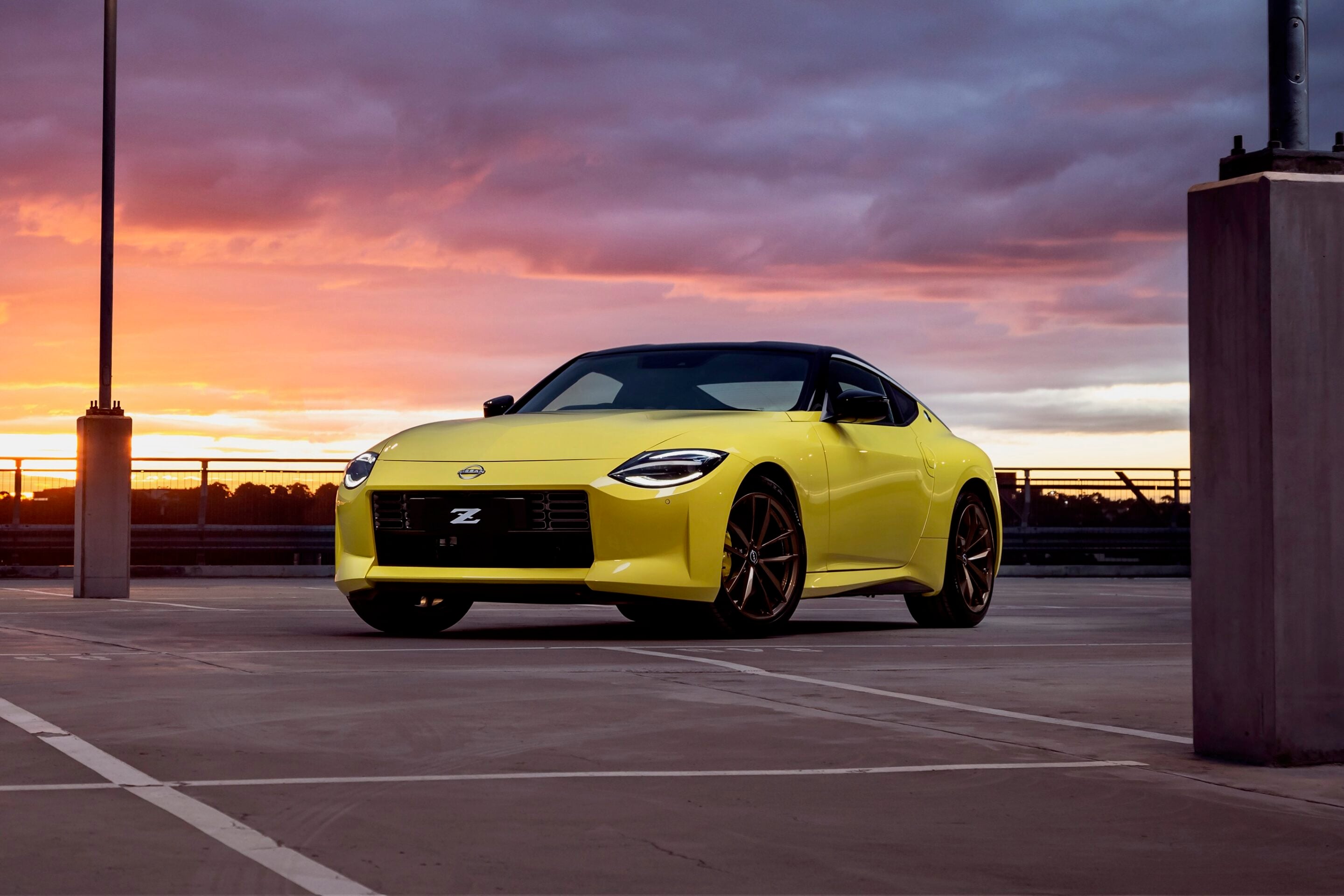
The Nissan Z is a legendary sports car that’s currently in its seventh generation and the current shape Z uses the same rear-wheel drive recipe that made its predecessors so fun to drive. Except, this time around it uses a twin-turbocharged 3.0-litre V6 engine making 298kW of power and 475Nm of torque, making it comfortably the most powerful Z ever built.
But the sales of the Z haven’t lived up to its hype with around just 1040 sold in Australia since it went on sale in mid-2022. Part of that is likely pricing, as the Z starts at $76,160 plus on-road costs, which is a lot higher than the $59,990 +ORC price that its 350Z predecessor – which the Z borrows a lot of parts from, including the platform and a lot of the interior – was priced from. The affordable part of the legendary Z lineage is not so affordable any longer, unfortunately.
BMW XM
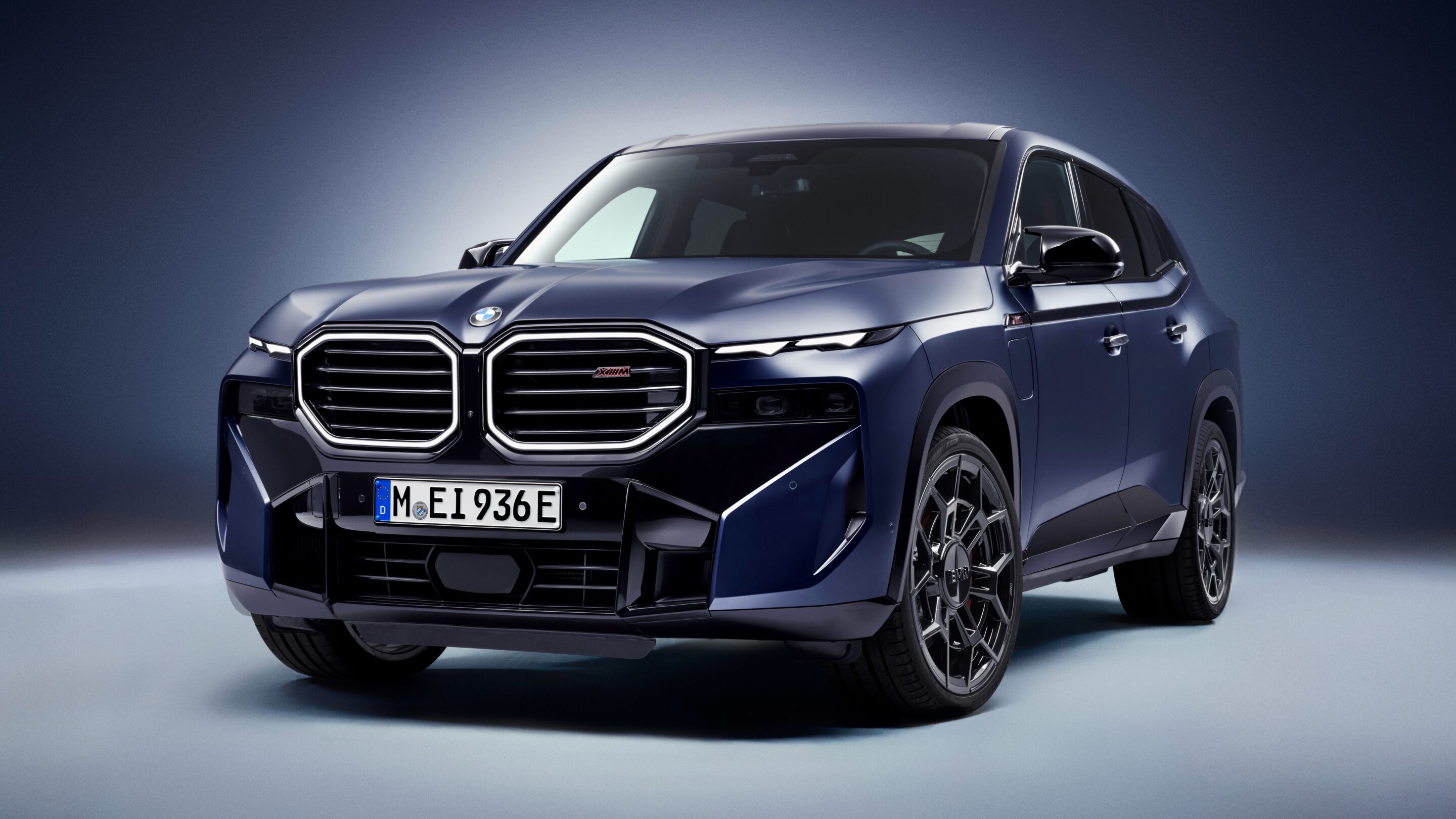
The BMW XM, the M division’s bespoke and brutish super SUV, isn’t short on aggression or performance – but it is short on sales. Perhaps it’s too aggressive or too expensive, but in 2024, BMW only sold 7813 units globally, which is well short on the Mercedes-Benz G-Wagen that it was conceived to compete mainly against – it sold 10,987 units in the USA alone in 2024.
It’s not that the XM is a bad car, far from it actually thanks to its very powerful drivetrain, luxurious interior and great dynamics for such a big and heavy product. But according to the sales figures, BMW purists know what they want and a plug-in hybrid super SUV is not it. BMW continues to sell the XM, with just a single specification available in Australia, for around $30,000 less than it used to cost. Will that boost sales? That’s unknown as yet, but the XM is not likely to receive a second generation model.
Kia Stinger
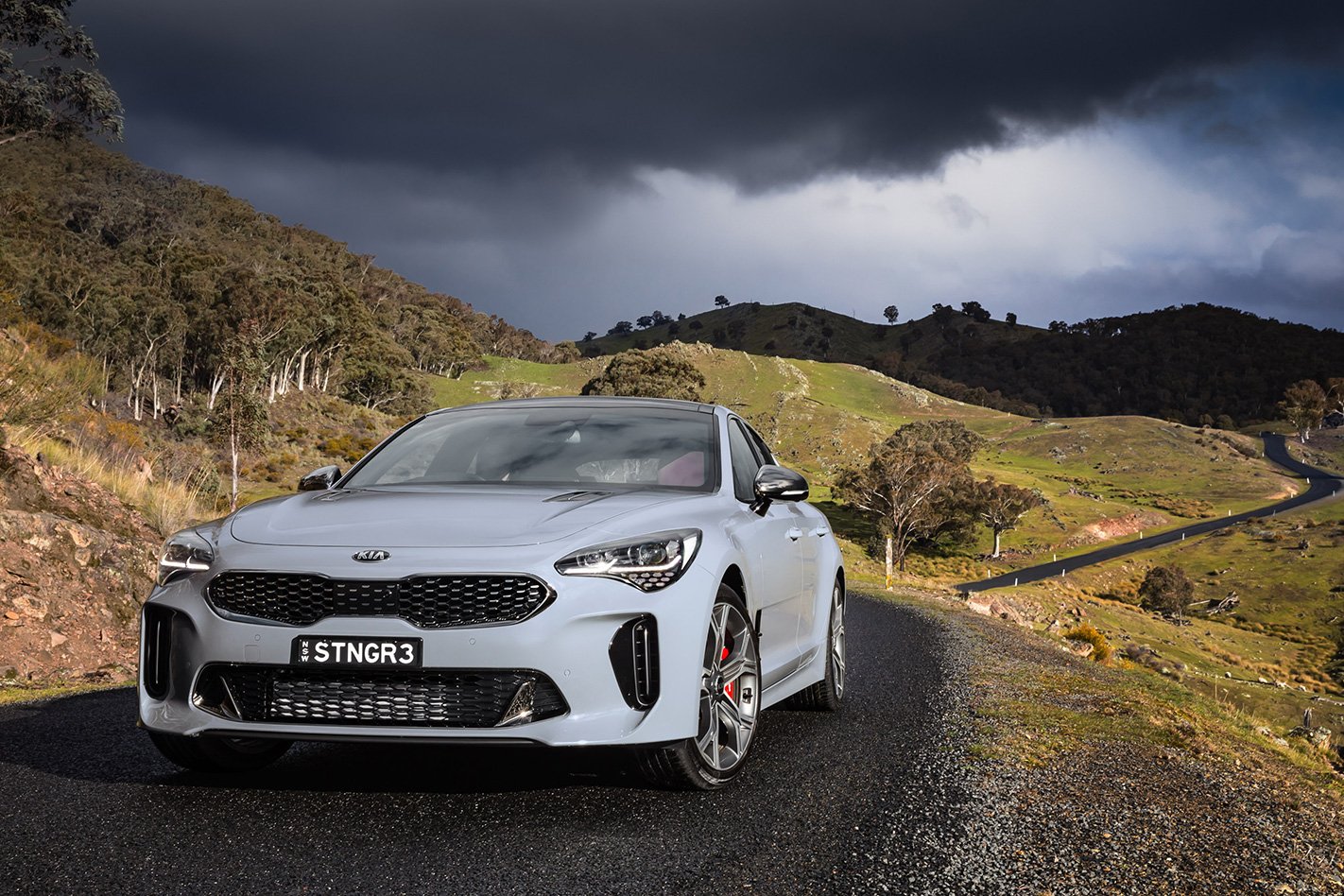
The ingredients for the Kia Stinger were tasty: a twin-turbo V6 engine, eight-speed automatic transmission, rear-wheel drive chassis, Brembo brakes and Michelin tyres and truthfully, it did a lot of positive work for Kia’s brand image. Its value positioning was strong too: it wasn’t cheap, but it was good value for money at $66,490 for the top-spec GT in 2023 (its last year in production). It was hyped up as a replacement for the V8 Holden Commodores and Ford Falcons and its 2018 release was well timed considering that production for those heroes had just ended.
But unfortunately for Kia, sales of the Stinger never lived up to its full potential. Globally, just over 138,000 units of the Stinger were produced over its life, or just over 17,000 per year, and a second-generation model was not produced. It’s a big shame because the Stinger was a great car – but for whatever reason, buyers just didn’t agree.
Honda NSX

The first-generation Ayrton Senna-honed Honda NSX is a legendary car, so making a follow up was always going to be difficult for Honda. Before production of the first NSX ended in 2006, Honda (and its North American luxury offshoot Acura, which sold the NXS in the US) had confirmed that another generation was in development for release in 2010, but that project was paused due to the Global Financial Crisis. But by the time the second-generation model had gone on sale in 2016, or 10 long years since it was first confirmed, many buyers had gotten fed up with waiting and gone elsewhere to brands such as McLaren.
The other big problem with NSX generation two was its pricing. In Australia, it was priced at $420,000 plus on-road costs, which made it more expensive than other supercars like the McLaren MP4-12C. The NSX wasn’t a bad car either, in fact, it was quite good – fast, communicative and fun, but against a McLaren? Honda had its work cut out and Australian total sales never reached double figures.
Mercedes-Benz X-Class
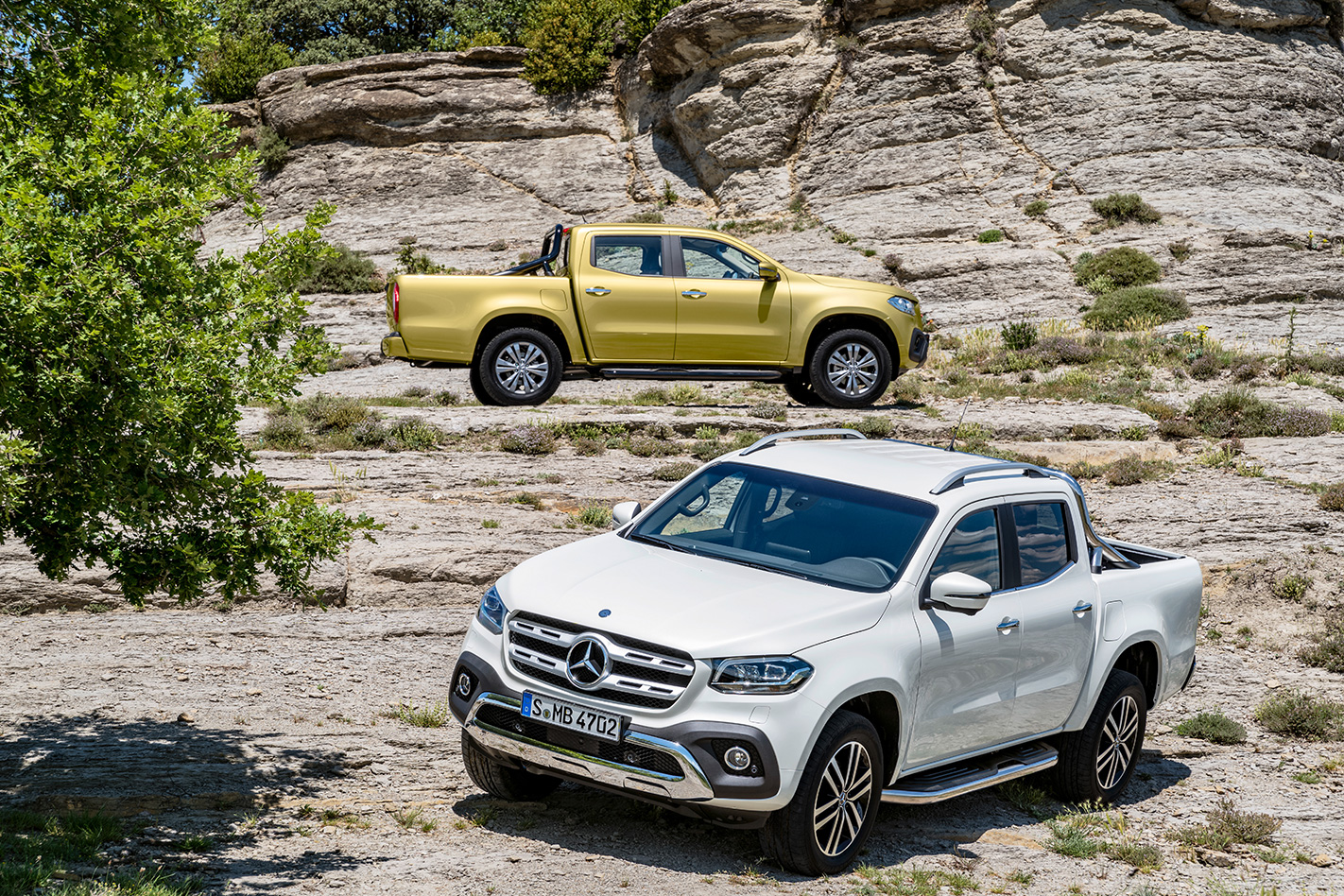
A rare mis-step from Mercedes-Benz is the X-Class ute, which had big hype from confirmation of its existence in 2015 to its 2017 on-sale date. Mercedes had seen how successful more luxurious utes like the Volkswagen Amarok and Ford Ranger Wildtrak were and wanted a piece of its own. Fair enough too, as there are thousands of both on our roads. Mercedes also has a strong commercial heritage, so everybody was expecting big things from the X-Class.
Except that the production X-Class didn’t borrow from Mercedes’ commercial heritage, it actually borrow a lot from Nissan. Yep, thanks to a deal between the two, the Nissan Navara was chosen as the basis of the X-Class. Even though the X-Class was promised as a proper Mercedes, it used the Nissan’s chassis, mechanicals, seats… basically the only Mercedes parts were the infotainment system, styling and later on, optional diesel V6 engine. Buyers noticed and just 16,700 were sold globally in its first full year on sale, and didn’t improve. X-Class production was cancelled in May 2020.
Bonus: Tata Nano
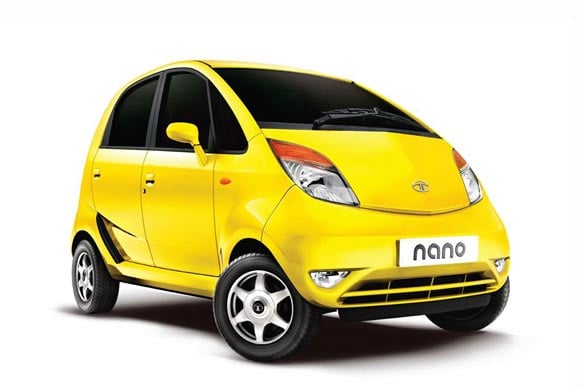
There was massive buzz around the car when it launched in India in 2009 because it was the first brand new car available in India for ₹100,000 (US $2000 at the time). Compared with used cars and motorbikes that the Nano was priced against, it was a revelation: it could carry four people dryly and with air-conditioning, and it opened many Indians to the option of buying a brand new car for the first time.
Unfortunately for Tata, buyers largely forgot about the Nano or were scared away by initial reports of fires and poor quality. The company had predicted annual sales of 250,000 units but its best year was in 2012 with a result of 75,000 units. By the Nano’s end in 2017, it was selling just 7500 units on average and Tata actually lost money on the project by the time production finished.
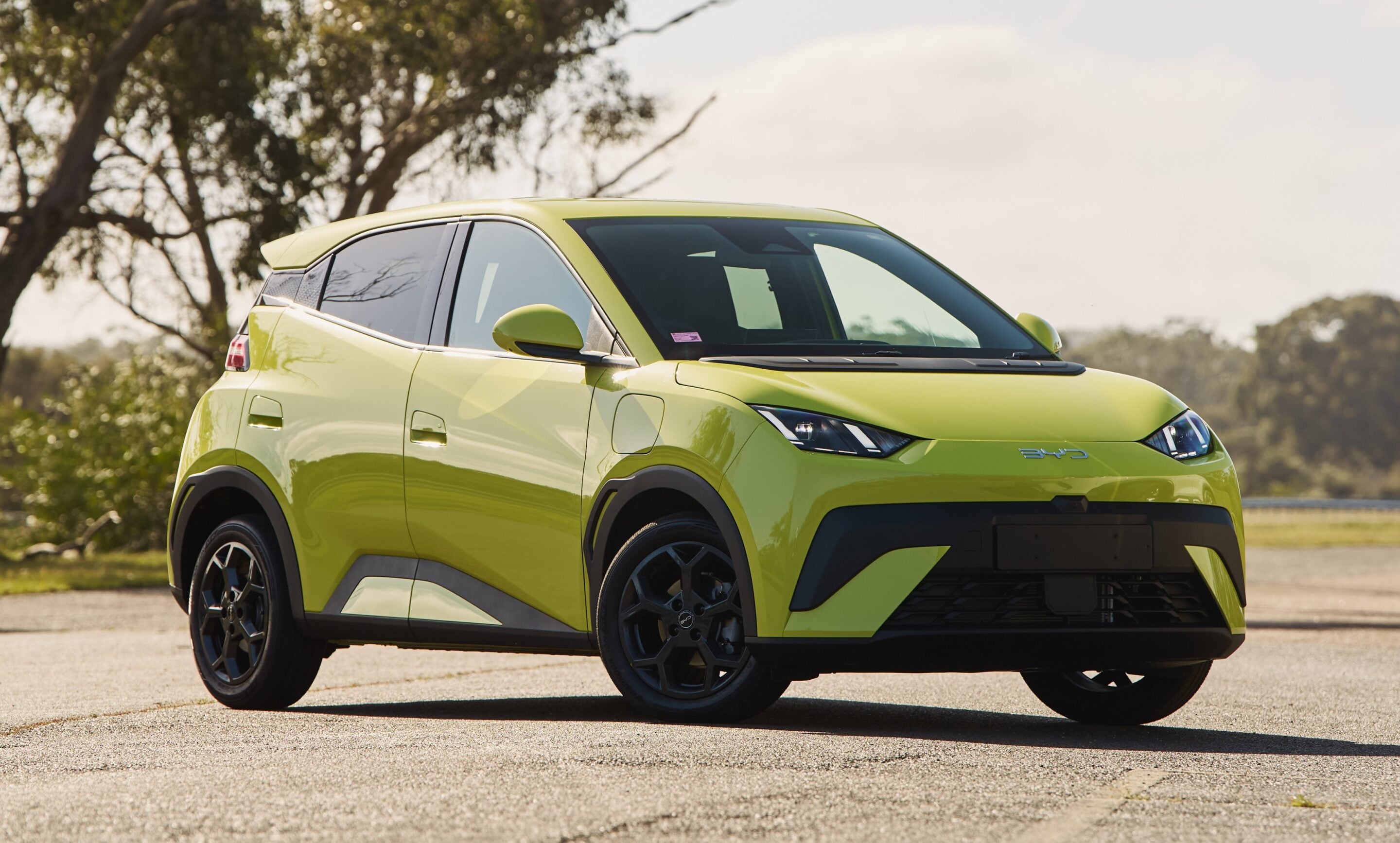
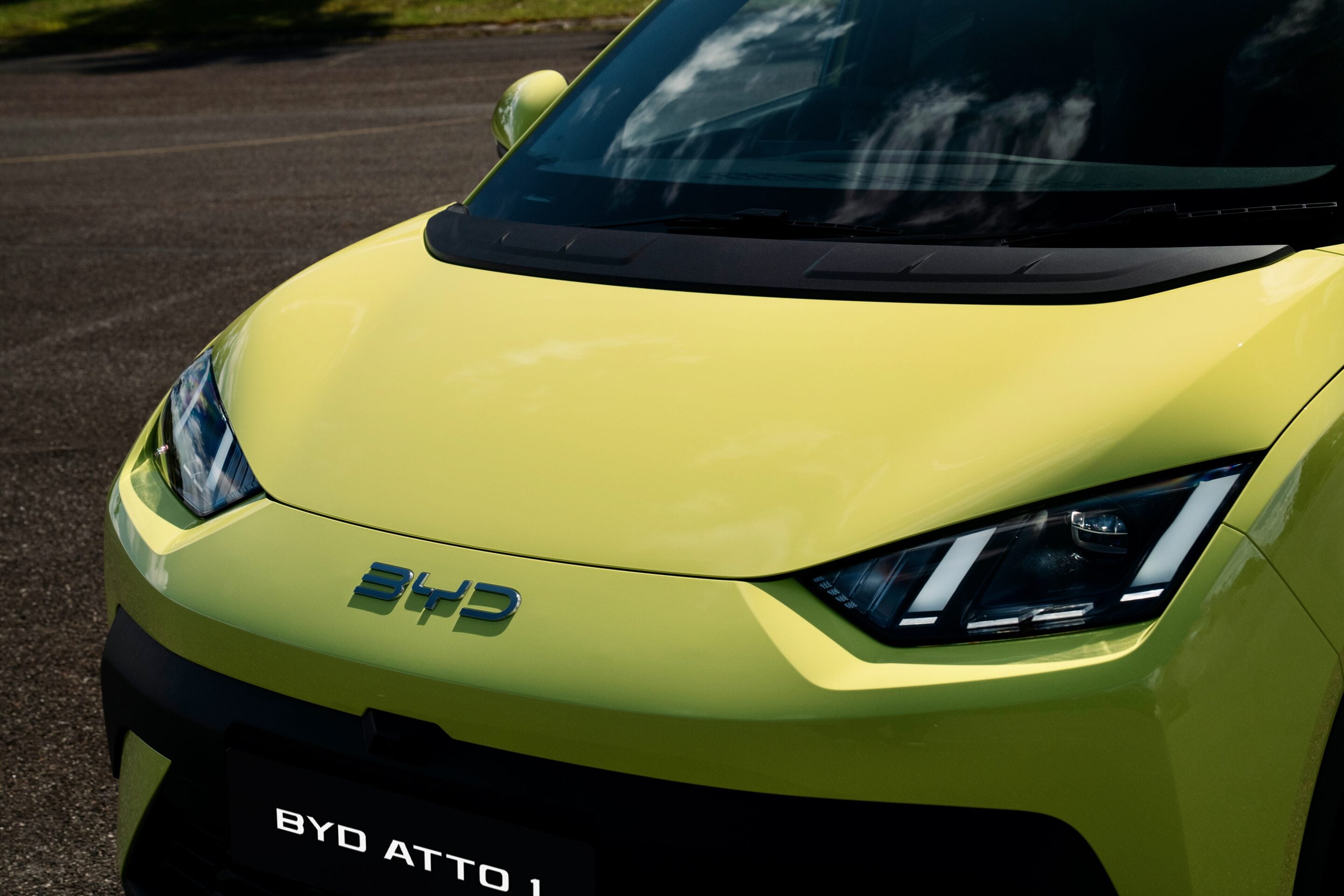
The BYD Atto 1 has rewritten the rulebook on electric vehicle pricing, launching in Australia from just $23,990 (plus on-road costs), but how does it stack up to the king of the light car segment, the MG3?
While purely petrol-powered at the entry level, a super-frugal hybrid version can still be had for less than $30,000 on the road, so if you want a new car for not much money, what are the pros and cons of each?
Pricing
As it happens, the BYD Atto 1 Premium and MG3 Hybrid Excite line up perfectly at $27,990 (plus on-road costs), though this is the top-spec Atto and mid-spec MG3 Hybrid, so it’s not quite like-for-like.
It’s somewhat tit-for-tat in terms of after-sales care. MG has the warranty advantage, with a standard seven-year/unlimited kilometre offering that extends to 10 years or 250,000km if you service with an authorised MG dealer.
Roadside assistance is also included for the length of the warranty period and servicing costs $2045 over the first five visits with attention required every 12 months or 10,000km.
Over at BYD there’s a six-year/unlimited kilometre warranty for the vehicle with eight years of cover for the battery, but complimentary roadside assistance is limited to just 12 months.
On the plus side, service intervals are 12 months or 20,000km and while BYD hasn’t announced servicing costs as yet, its Dolphin bigger (but still small) brother costs $1628 over the first five visits which is probably indicative.
| BYD Atto 1 | Pricing* | MG3 Hybrid | Pricing* |
|---|---|---|---|
| Essential | $23,990 | Excite | $27,990 |
| Premium | $27,990 | Essence | $29,990 |
*plus on-road costs
Dimensions
At 3990mm long the BYD Atto 1 is truly tiny by modern standards, though with a 2500mm wheelbase and a 308-litre boot it should manage to offer decent accommodation relative to its overall size.
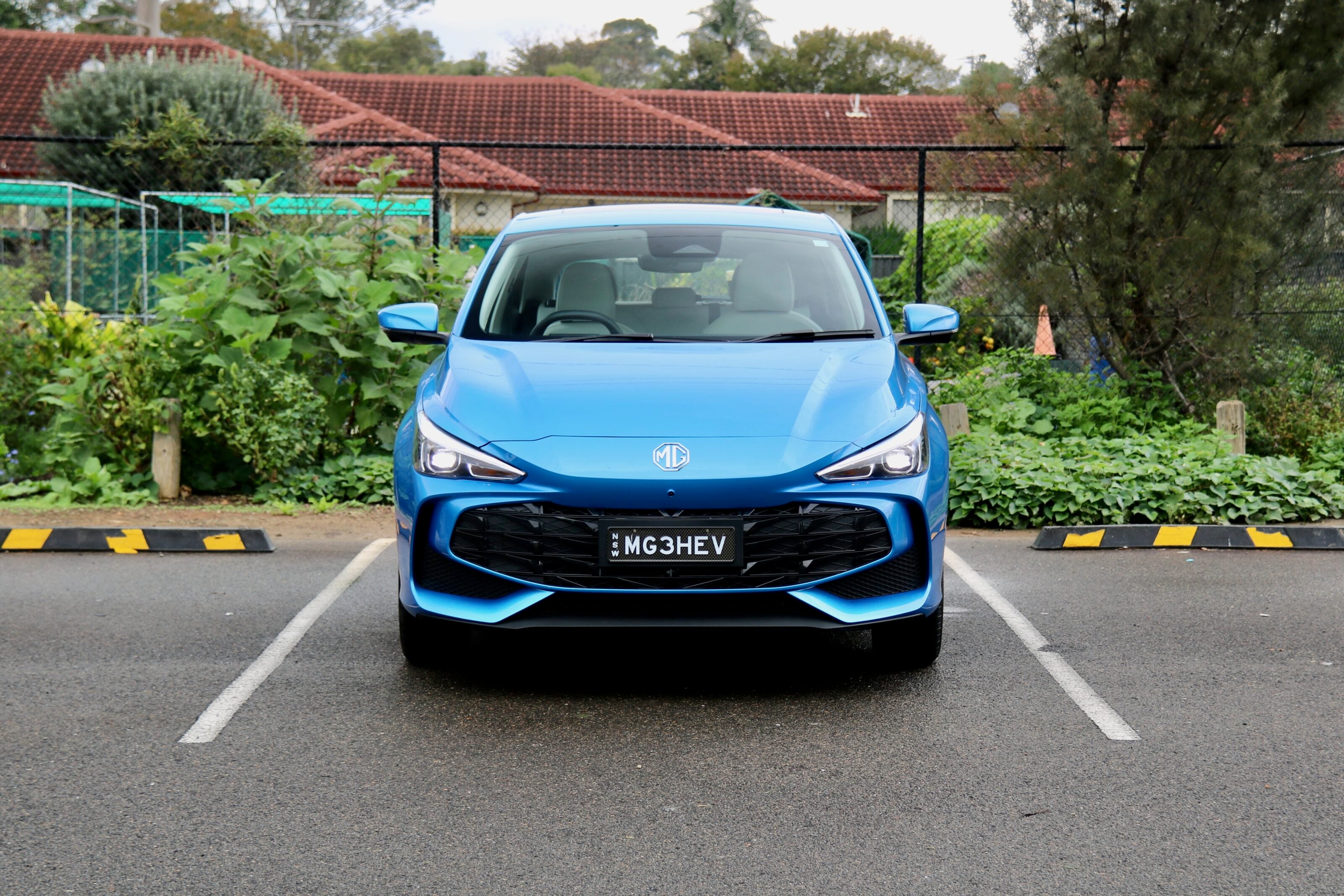
The MG3 is bigger in every dimension bar height (though it’s also 100kg lighter) but has a slightly smaller boot. Still, if outright space is a concern, these probably aren’t the cars for you.
| Dimensions | BYD Atto 1 | MG3 Hybrid |
|---|---|---|
| Length | 3990mm | 4113mm |
| Width | 1720mm | 1797mm |
| Height | 1590mm | 1502mm |
| Wheelbase | 2500mm | 2570mm |
| Weight | 1390kg | 1298kg |
| Luggage space | 308 litres | 293 litres |
Equipment
Given we’re comparing slightly different trim levels, it perhaps shouldn’t be surprising that the flagship BYD has the edge in equipment over the mid-spec MG3, but the Atto 1 Premium is an exceptionally well-equipped little car.
LED headlights, auto wipers and powered and heated leather front seats are all advantages it has over the MG, though the latter has USB ports and air vents for those in the rear. It also must be said you can have all the gear in the MG3, but you need to stump up another $2000 for the Essence; probably worthwhile if you can make the stretch.
The BYD’s four colours – white, yellow, black and blue – are standard, whereas at MG yellow and white are standard, with silver, grey, black, blue and red costing an extra $500.
| BYD Atto 1 | MG3 Hybrid | |
|---|---|---|
| Wheels | 16-inch alloy | 16-inch alloy |
| Headlights | LED | Halogen |
| Wipers | Rain-sensing | Manual |
| Seat adjustment | Six-way powered driver, four-way powered passenger | Six-way manual driver, four-way manual passenger |
| Upholstery | Synthetic leather | Cloth |
| Heated seats | Front | No |
| Push button start | Yes | Yes |
| Climate control | Not listed | Single-zone air-con |
| Stereo | Four-speaker | Six-speaker |
| USB ports | 1 x USB-A, 1 x USB-C (front) | 1 x USB-A, 1 x USB-C (front), 1 x USB-A (rear-view mirror), 1 x USB-A (rear) |
| Rear air vents | No | Yes |
Powertrains
Obviously, this is where our two protagonists differ most, with the BYD being pure electric and the MG3 a hybrid.
The bigger battery of the Atto 1 Premium gives it more than 300km of range and it can charge faster, too, with a minimum 10-80 per cent charge time of 30min at its 85kW DC maximum, while at its 11kW AC maximum you’re looking at five hours from 0-100 per cent.
It also supports V2L meaning you can power various appliances if the need arises.
The MG3 is very heavily hybrid, its 75kW/128Nm 1.5-litre four-cylinder engine boosted to 155kW/425Nm by an electric motor, fed by a 1.8kWh battery. The engine does require 95 RON fuel and the heavy use of electrification does make it best suited to urban duties.
In this instance the 4.3L/100km combined fuel consumption claim is misleading as the urban claim is just 0.9L/100km, whereas this increases to 6.3L/100km on the highway as the petrol engine is going to have to work a lot harder.
| BYD Atto 1 | MG3 Hybrid | |
|---|---|---|
| Engine | N/A | 1.5-litre four-cylinder petrol |
| Battery | 43.2kWh | 1.8kWh |
| Outputs | 115kW/220Nm | 155kW/425Nm |
| Transmission | Direct drive | Three-speed automatic |
| 0-100km/h | 9.1sec (claimed) | 8.0sec (claimed) |
| Fuel consumption/Range | 310km | 4.3L/100km |
*ADR combined claim
Safety
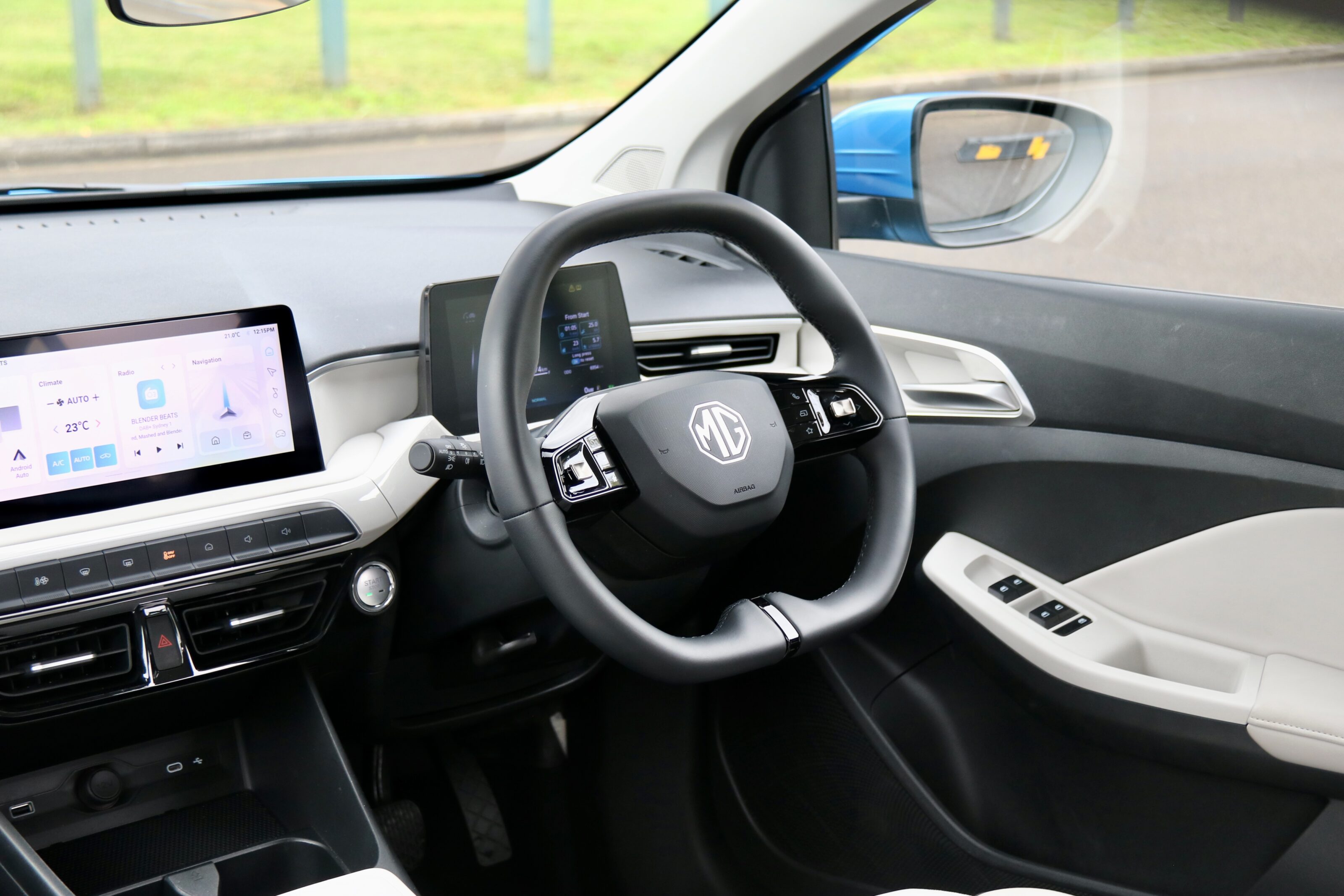
Despite their small size and price tags, neither of these two skimp on safety. The current MG3 has a five-star ANCAP rating from 2025, having scored 74 per cent for adult occupant protection, 75 per cent for child protection, 81 per cent for road user protection and 70 per cent for safety assist.
The BYD has not yet been given an ANCAP score, though the five-star Euro NCAP rating bodes well, but local cars do without blind-spot monitoring and rear cross-traffic alert. Still, there’s plenty of airbags, all the basic active safety equipment and a 360-degree camera is pretty swish at this price point.
| Safety | BYD Atto 1 | MG3 Hybrid |
|---|---|---|
| Airbags | Six | Six |
| Adaptive cruise control | Yes | Yes |
| Autonomous emergency braking | Yes | Yes |
| Lane-keep assist | Yes | Yes |
| Blind-spot monitoring | No | Yes |
| Rear cross-traffic alert | No | Yes |
| Driver attention monitoring | No | Yes |
| Parking sensors | Front and rear | Rear |
| 360-degree camera | Yes | No |
| ISOFIX | Outboard rear seats | Outboard rear seats |
Technology
Once again, MG keeps some goodies in hand for the top-spec Essence, such as sat-nav, app connectivity and digital radio, but the BYD has the upper hand regardless with wireless smartphone mirroring and charging and in-built sat-nav.
The Atto 1 also has native apps such as Amazon Books, YouTube and Disney+ for entertainment on the go (or, more likely, while waiting to charge).
Conclusion
The MG3 is rightly popular with Australian small-car buyers thanks to the value proposition it offers. While it’s not as cheap as its predecessor, it’s a much better car and the hybrid is well-suited to urban duties.
However, if buyers can accept the switch to full electrification, the BYD Atto 1 Premium is a very enticing proposition. Zippy performance, decent range and a stacked equipment list for less than $30,000 means Australia may well have a new micro king in due course.
The two-wheeled and four-wheeled worlds don’t come into contact that often, but when they do, the results can be incredible. Motorcycle engines, because of their small displacement and high-revving nature, are quite different from the ones usually found in cars. Typically, they make spectacular power per litre, but their torque figures aren’t as impressive as they carry a lot less weight than a car engine.
But that’s not to say that their characteristics can’t be useful in cars as well, as the below prove. Here are five times where motorcycle engines made their way into production cars, resulting in some memorable creations:
Peel P50
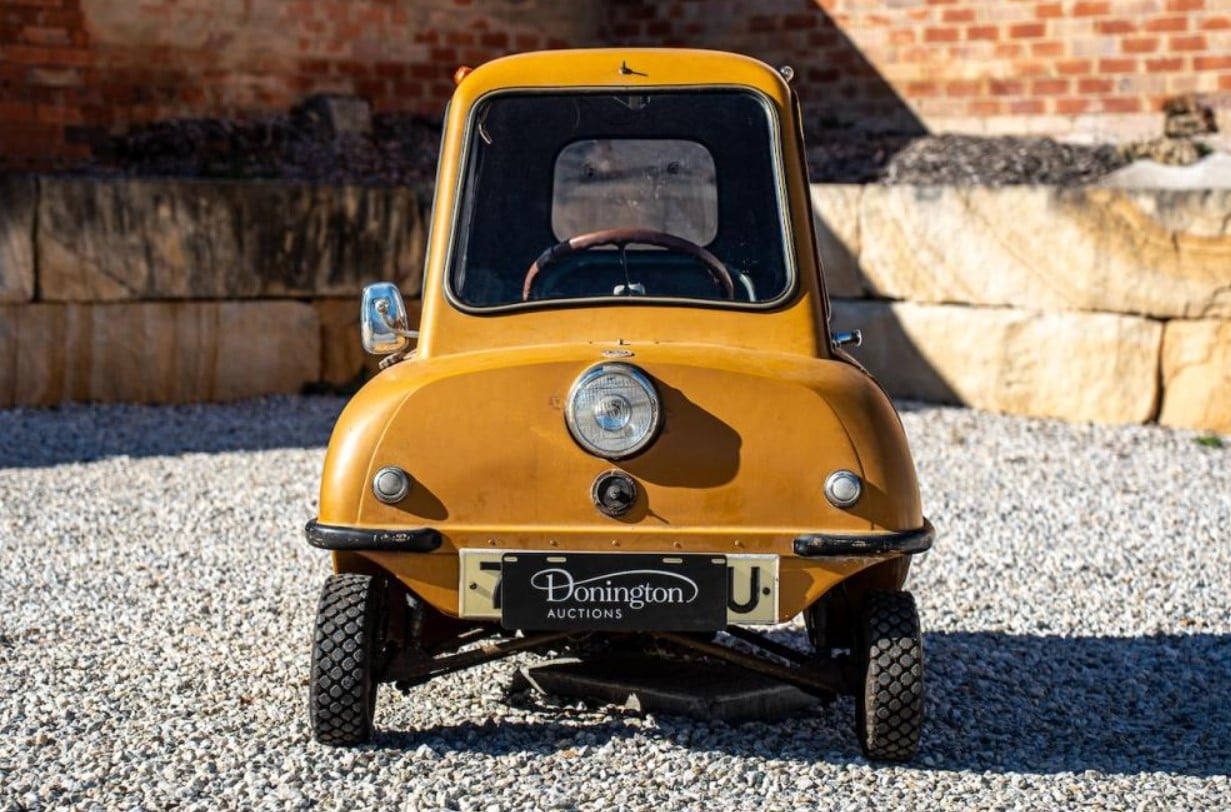
The Peel P50 is one of the most famous cars in the world and is listed in the Guinness World Records as the smallest production car ever made. Measuring just 137cm long, 99cm wide, 100cm tall and weighing just 59kg, the P50 was made between 1962 and 1965 on the Isle of Man. It used a 49cc moped engine that made a whopping 3.1kW of power, giving it a top speed of about 45km/h. Fifty units of the original were produced, of which 27 are believed to still exist.
In 2010, a new version of the P50 was launched by a company called Peel Engineering. Similar to the original with the same dimensions and weight, it now uses a 49cc four-stroke engine making 2.5kW – or an electric motor making 2.3kW. Since production started in 2011, around 15 examples have been made per year and pricing starts at around £15,000 (A$30,000), making it an expensive – but very characterful – runabout.
BMW Isetta
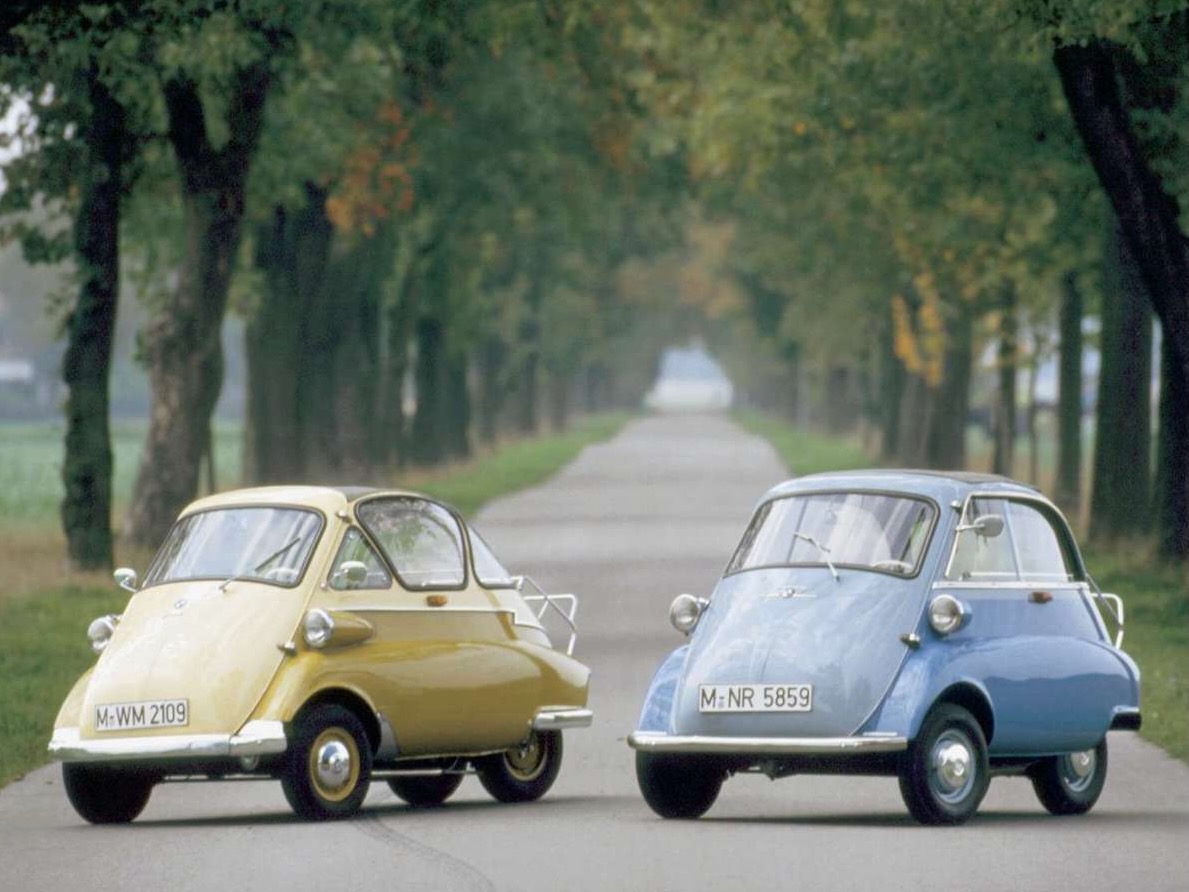
The BMW Isetta – the ‘bubble car’, as it was known – appeared in 1955 as a BMW-badged and engineered version of the Italian Iso Isetta, which it built for West Germany under licence. It differed a lot from the original, including fixed headlights on the side and the BMW badging. The BMW version also featured a one-cylinder four-stroke motorcycle engine that make 9kW of power, giving it a top speed of 85km/h.
There were several versions of the BMW Isetta produced, and it saved the company from bankruptcy. The original was called the 250, which was replaced by the 300 a few years later. A larger stretched-wheelbase version with four doors called the 600 was launched, too, and it featured a larger 582cc boxer motorcycle engine for 14.3kW of power and a top speed of 100km/h. Over 200,000 combined units of the Isetta and 600 were produced, making them one of the most successful single-cylidner engined cars ever made.
BMW i3 REx
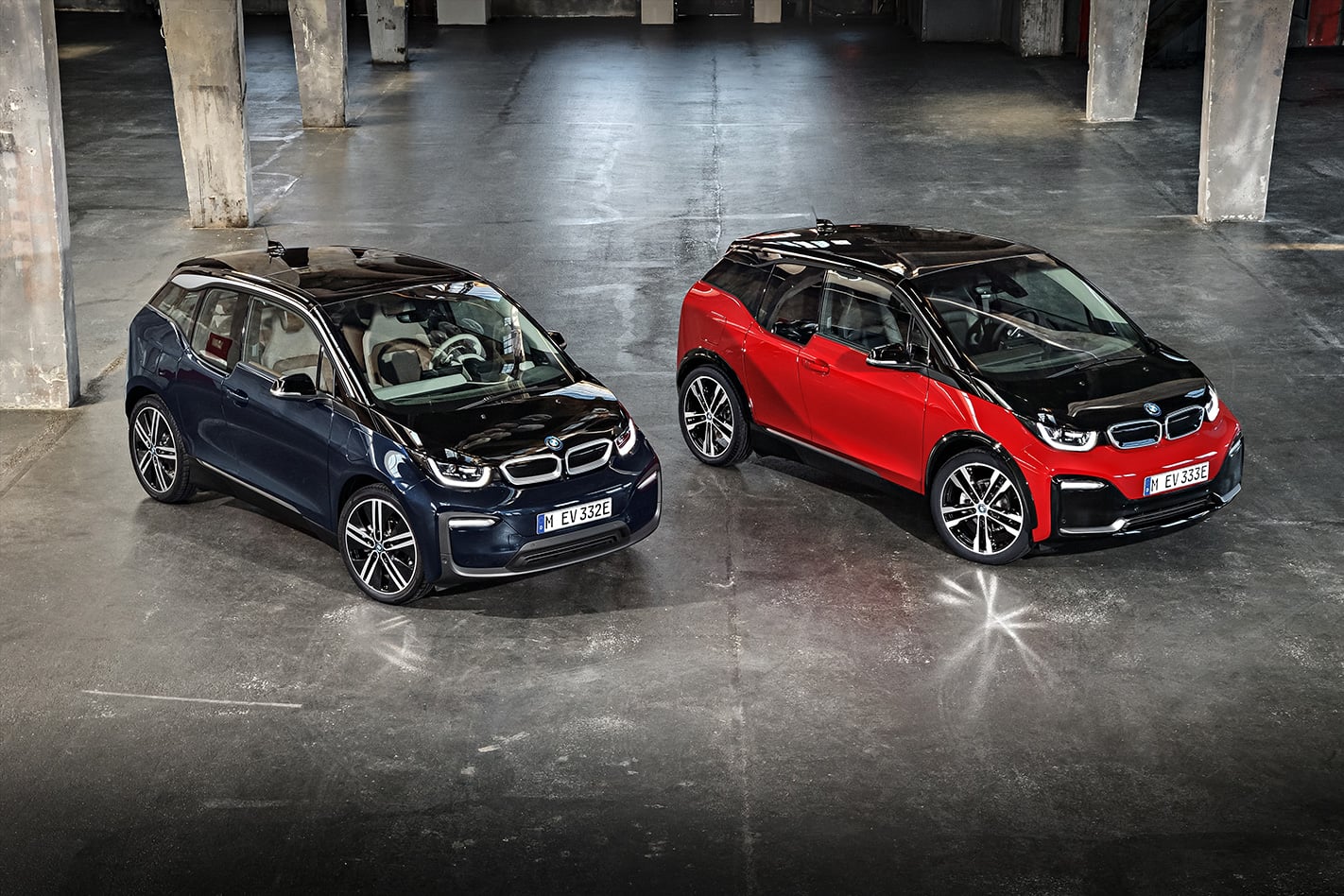
BMW’s first production electric vehicle was launched in 2013 and also launched the company’s ‘i’ zero emissions sub-brand, winning the Wheels Car of the Year award in 2014. It’s a very unusual-looking vehicle thanks to its tall-and-thin dimensions and futuristic lighting. But what’s more unusual is that while it featured an electric drivetrain, making it one of the first mass-produced EVs, there was actually a ‘REx’ range-extender version available that used a 647cc inline two-cylinder engine that was fitted to a BMW scooter.
The range extender engine operated once the i3’s battery level got below a certain level, and charged the battery to provide propulsion. This allowed for an extended range that was unavailable in the electric version, and its nine-litre fuel tank allowed for a total range of 320km, or around 120km more than the EV. The i3 was discontinued in 2022 with over 250,000 units produced.
Ariel Atom V8
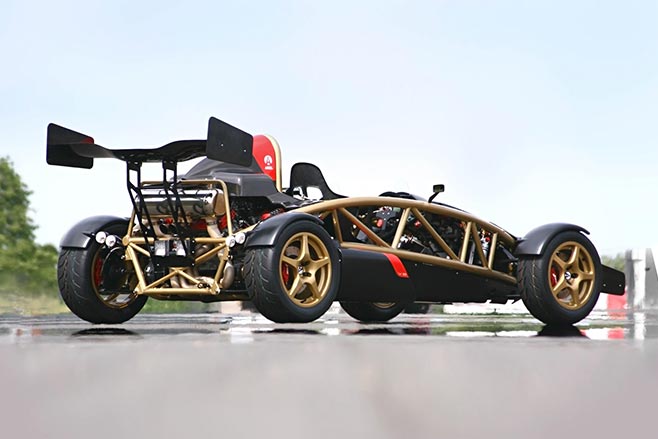
The Atom V8 is a little unusual – duh, just look at it – in that it doesn’t use just one motorcycle engine but two. That’s correct, two 1.5-litre four-cylinder Suzuki motorcycle engines were combined to make a 3.0-litre V8 engine, which made 373kW (500hp) of power. Combined with the Atom V8’s light 550kg kerb weight, it had a power-to-weight ratio of 678kW per tonne – or more than a Bugatti Veyron.
The standard Ariel Atom was already one of the quickest cars ever made with its supercharged Honda engine, but the V8 made it even quicker with a 0-100km/h time of just 2.3 seconds – and that was in 2008, or before fast EVs like the Tesla Model S came along. In 2011, it set a lap record on the Top Gear test track of 1.15.1, a record that stood for another two years until the Pagani Huayra beat it. Just 25 units of the Atom V8 were produced.
Morgan 3-Wheeler
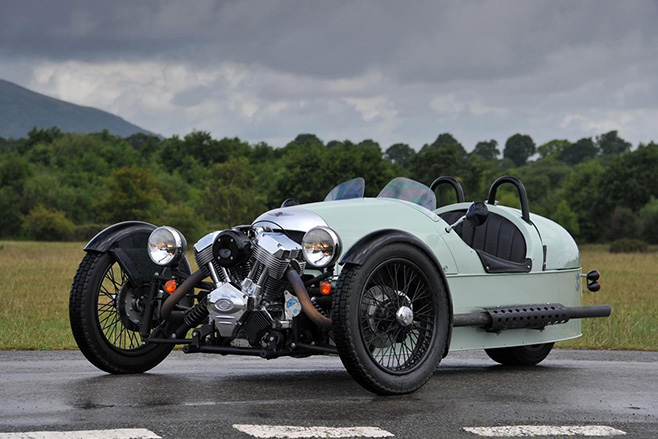
The Morgan 3-Wheeler is the latest car that featured a motorcycle engine, having ended production as recently as 2021. A reincarnation of the previous Morgan 3-Wheeler made from the 1932 to 1952, the modern version used a 2.0-litre V-twin engine from American company S&S that made 60kW of power and 140Nm of torque. Thanks to the 3-Wheeler’s light 550kg kerb weight, it launched to 100km/h in 6.0 seconds seconds and on to a top speed of 185km/h.
The 3-Wheeler is much loved thanks to its excellent handling and huge fun factor, and more than 2,500 units were built in its 10-year production run. The 3-Wheeler was replaced by the Super 3, which was launched in 2022. The Super 3 looks not too dissimilar to the 3-Wheeler, though no longer uses a motorcycle engine – instead, an 85kW 1.5-litre three-cylinder engine from Ford provides propulsion.
Bonus: Almost-production Volkswagen XL Sport
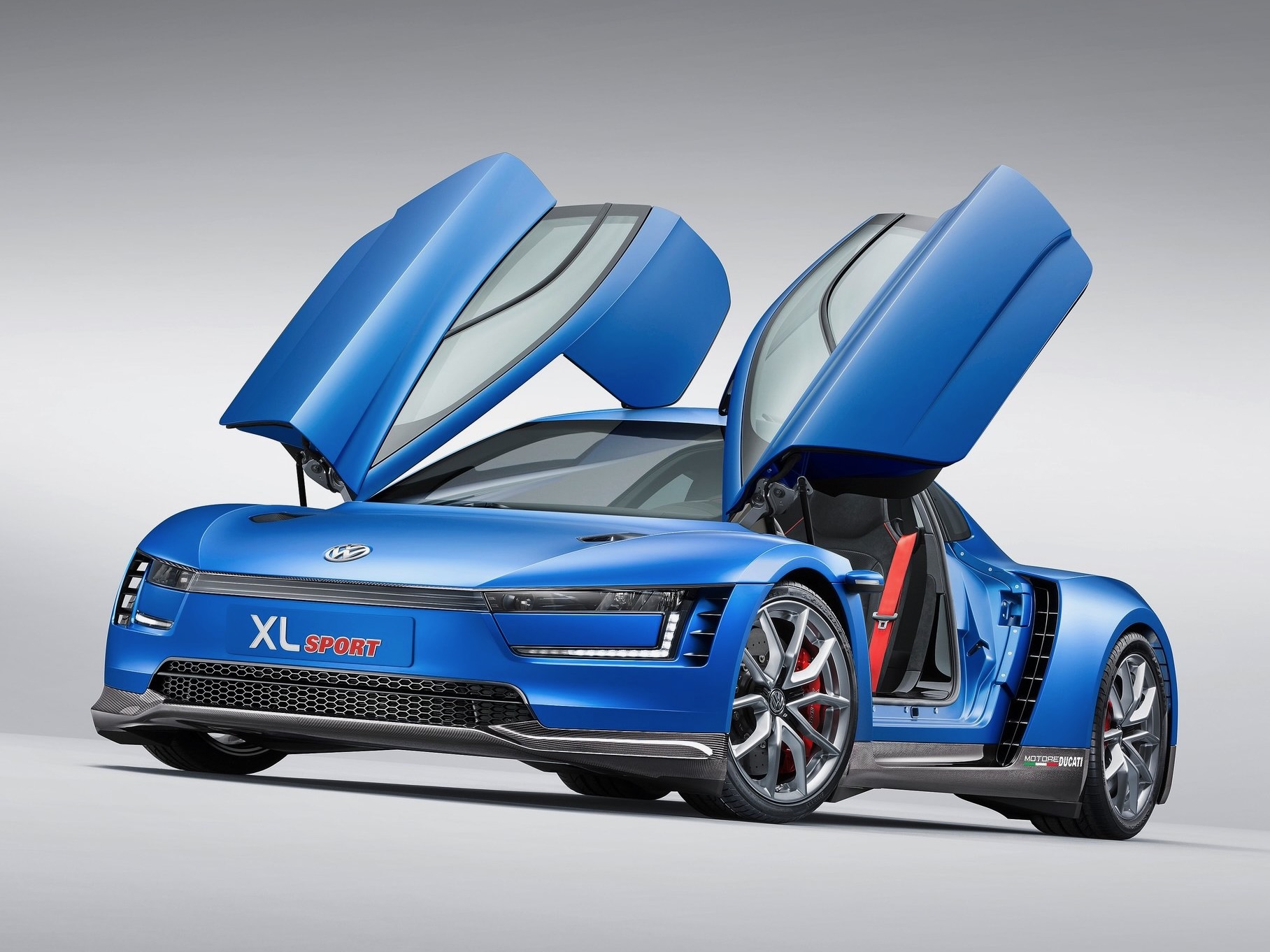
The Volkswagen XL Sport was a concept version of the XL1 two-seater production car, which used a two-cylinder turbo-diesel plug-in hybrid drivetrain to use just 0.9L/100km of fuel. For the XL Sport concept, Volkswagen canned the XL1’s diesel drivetrain and instead installed a high-revving 1199cc V-twin engine from the Ducati 1199 Superleggera. Volkswagen had just purchased Ducati, and the XL Sport was seen as a celebration of the union.
That gave the XL Sport significantly better performance than the XL1, with a claimed 0-100km/h time of 5.7 seconds and a top speed of 270km/h. The XL Sport was built using the XL1’s carbon fibre monocoque, but was longer and wider, and even featured ceramic brakes. Alas, although it appeared to be production-ready, the XL Sport was sadly never put into production.
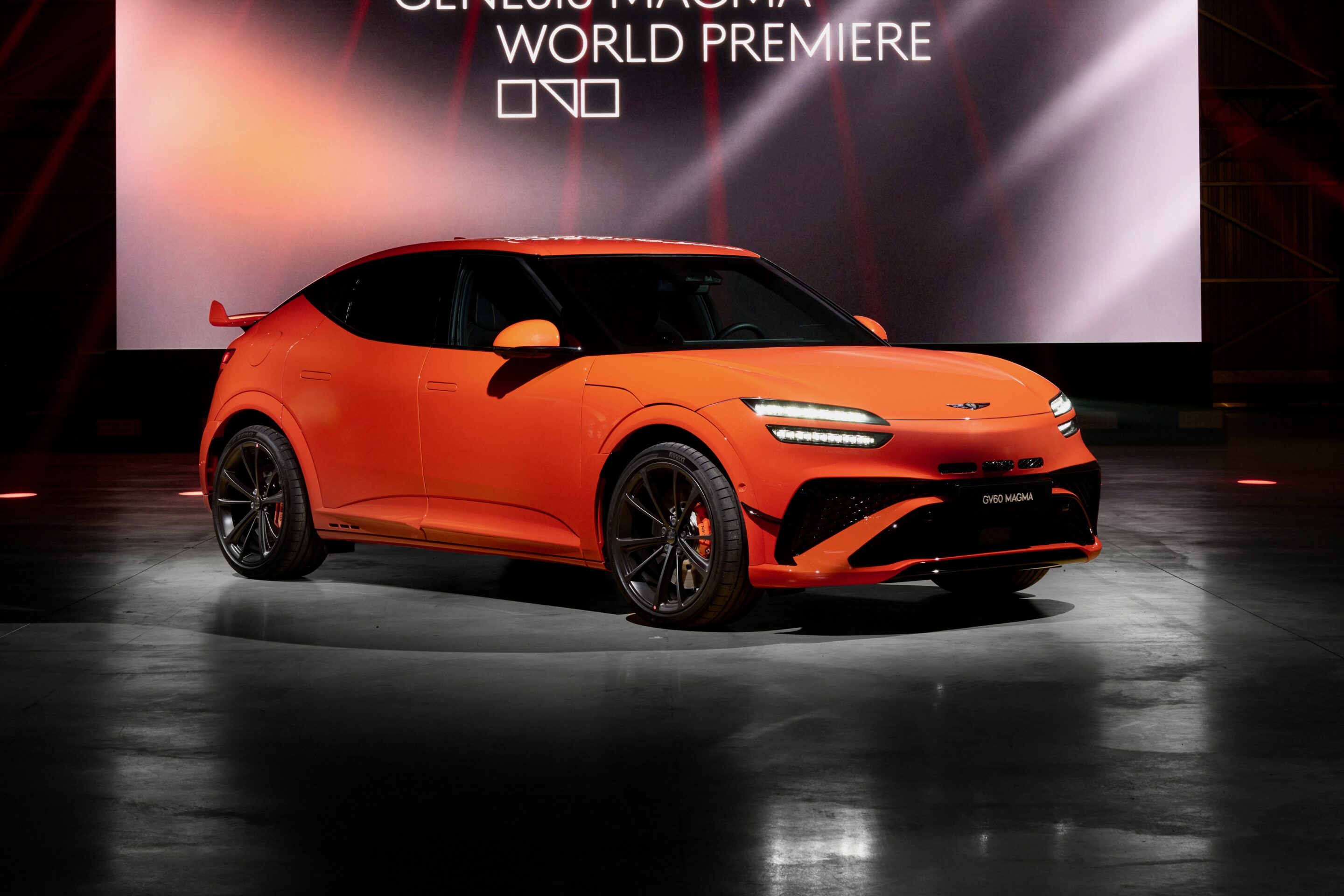
The first production car from Genesis’ new performance sub-brand Magma has been revealed and confirmed for Australian sales in early 2026. Borrowing much from the Hyundai Ioniq 5 N, the new Genesis GV60 Magma has been revealed overnight, signalling a much racier future for the South Korean luxury brand as it launches its equivalent of BMW M and Mercedes-AMG.
The GV60 Magma is a rival to the likes of the Tesla Model Y Performance, Alpine A390 and even the Porsche Macan Electric. It’s powered by the same dual-motor, all-wheel drive set-up found in the Ioniq 5 N.
With Boost mode activated, the car produces 478kW of power and 790Nm of torque – 20Nm more than the Ioniq 5 N. Combine that with its launch control, and the GV60 Magma will do 0-100km/h in close to three seconds and rocket to 200km/h in just 10.9 seconds. Top speed stands at 264km/h.
As well as the powertrain, the GV60 Magma has borrowed the virtual gearshift system from its siblings. This adjusts the e-motors’ output, torque delivery and regenerative braking so when the driver pulls the paddle behind the steering wheel it feels like they’re changing gears in a petrol-powered performance car – a feature we love in the Ioniq 5 N.
When you’re not trying to embarrass supercar owners away from the lights, the car’s two e-motors produce a combined 448kW of power and 740Nm of torque. A range figure hasn’t been confirmed yet, but we expect the 84kWh battery will be good for around 450km, while a maximum charging speed of 240kW means a 10 to 80 per cent top-up will take as little as 18 minutes.
There are three main drive modes: Sprint, GT and My. With My Mode, drivers can customise settings for the electronic limited-slip differential (e-LSD), stability control system and other tech. There’s also a Drift mode, which adjusts the e-motors’ output and the e-LSD to make the car more rear-biased for better sliding, and a special Magma mode.
However, this car is not designed to be a total hooligan. Genesis says the GV60 Magma has been set up to deliver an ideal balance between cornering stability and ride comfort. The chassis features adaptive dampers, plus hydro-bushings to help absorb impacts from potholes and other road imperfections. It also uses active noise-cancelling technology, sound-insulating glass and reinforced door seals to create a serene environment, as you’d expect from a “luxury high-performance car”, which is how the brand describes the GV60 Magma.
Compared with the regular GV60, the suspension geometry and roll centre have been tweaked. Meanwhile, the braking system has been upgraded, including monoblock calipers and large-diameter discs up front that are apparently optimised for the car’s bespoke 21-inch wheels. There’s also a bespoke bumper design with larger air ducts on either side to help cool the brakes.
The three holes on the nose are new too, and these not only improve airflow and cooling, but will be one of the styling cues that distinguishes this and future Magma models. The Magma is 20mm lower than the regular model, and features flared wheel arches that will have helped accommodate the wider 275mm tyres. Finally, there is a huge rear spoiler that Genesis insists is functional and generates downforce, not just attention.
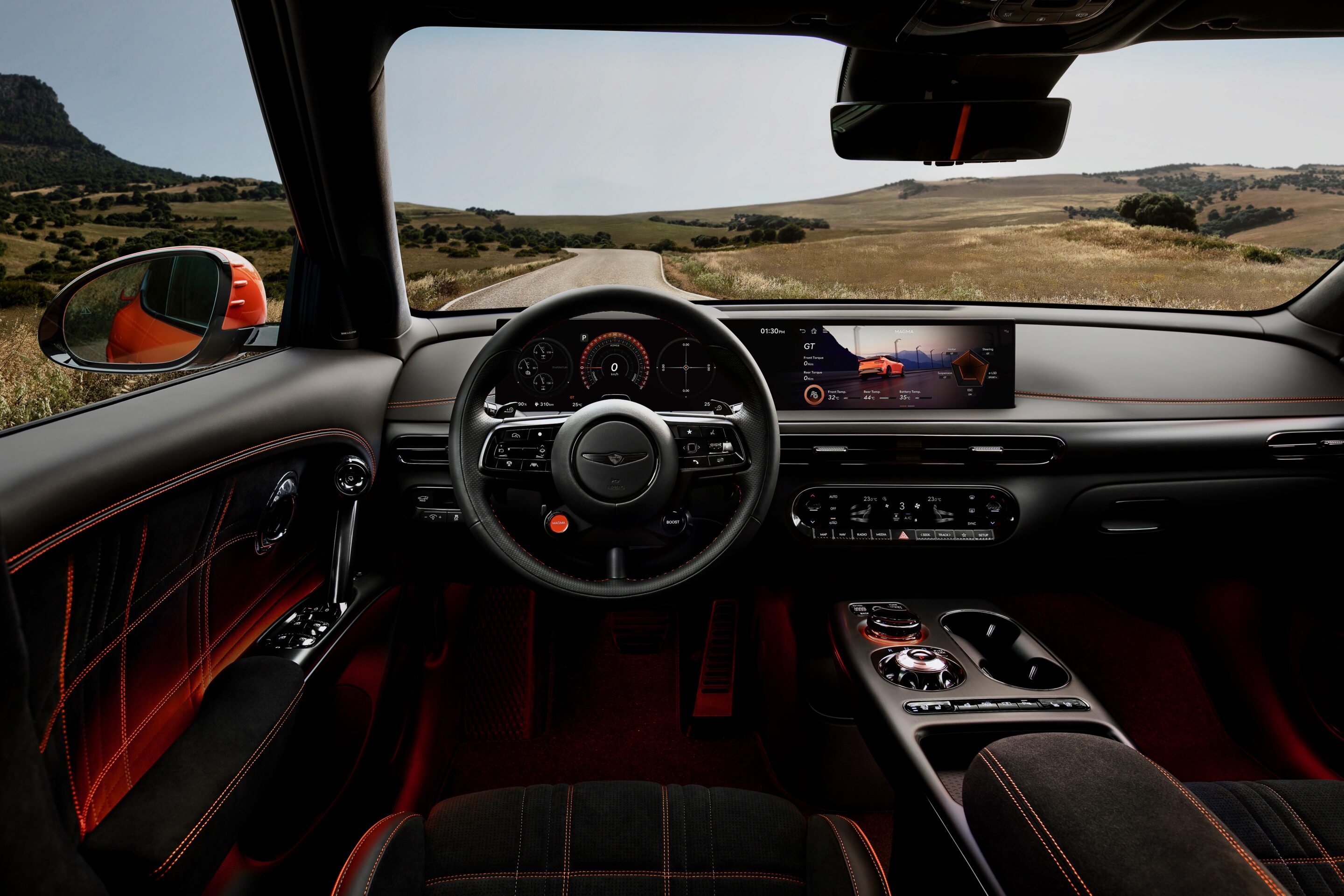
Inside, the seats, door and centre console are trimmed in a premium suede-like material, with the signature Magma orange used for the contrast stitching. There’s a unique steering wheel too, featuring vibrant orange buttons for the drive modes and activating boost.
The Genesis GV60 Magma will arrive in Australia in early 2026, with local pricing yet to be confirmed.
GAC (Guangzhou Automobile Group) has just launched in Australia with big ambitions to become one of the top 10 best selling car brands locally by 2028. But what’s the GAC back story, a brand that has been dubbed the “Chinese Toyota”?
GAC is one of China’s biggest automotive manufacturers, currently placed fourth in annual sales in its domestic market. Headquartered in Guangzhou in south-eastern China, it produces passenger cars, commercial vehicles, EVs, and automotive components. It operates its own brands, as well as joint-venture brands with western manufacturers such as Toyota and Honda.
GAC traces its routes back to 1954, when Guangzhou established its first automotive repair and manufacturing workshops. In that same year, the Guangzhou Bus Repair built its first products – hand made iron-wood buses – that started the rise of the company. At this time, China’s auto industry was extremely small, and much activity revolved around repairing imported or military vehicles.
In the 1960s, the first Hongwei-branded truck was launched, while the production of cars started in the early 1970s, according to GAC. Guangzhou’s regional government supported industrialisation, laying groundwork for a future automotive group.

In the mid-1980s, Guangzhou Peugeot was established, one of the first joint ventures with a western manufacturer in China. Locally producing models such as the Peugeot 505, Guangzhou Peugeot quickly became one of the top three best-selling brands in China and the 505 was considered a hot commodity in the country. By now, Guangzhou was also producing motorbikes, buses and small commercial vehicles.
In 1997, Guangzhou Automobile Group Co. was formally established as an independent state-owned automotive manufacturer, and formed GAC Honda in 1998 to sell Honda products in the Chinese market, such as the Accord sedan, later expanding to the City, Odyssey and Vezel (HR-V). By 2005, GAC Honda was selling 203,200 units annually in China, making it the fifth best-selling car maker, and it had become one of the most profitable automotive joint ventures in China.
In 2004, GAC added another Japanese maker to its line-up, Toyota, and GAC Toyota was formed. Producing products such as the Camry and Kluger in China from 2006, producing both Honda and Toyota products meant that GAC’s growth expanded rapidly. In 2008, GAC Hino was formed to sell trucks and buses, and this period established GAC as a major regional automaker with strong foreign ties, but no homegrown cars yet.
In 2009, GAC acquired 29 per cent of Chinese SUV maker Changfeng Automobile, and purchased the remaining portion in 2011. In 2010, it also purchased a 51 per cent share of another company called Gonow, which also made SUVs and commercial vehicles. GAC’s sales in 2010 hit 724,200, which gained it sixth place on the Chinese domestic sales chart.
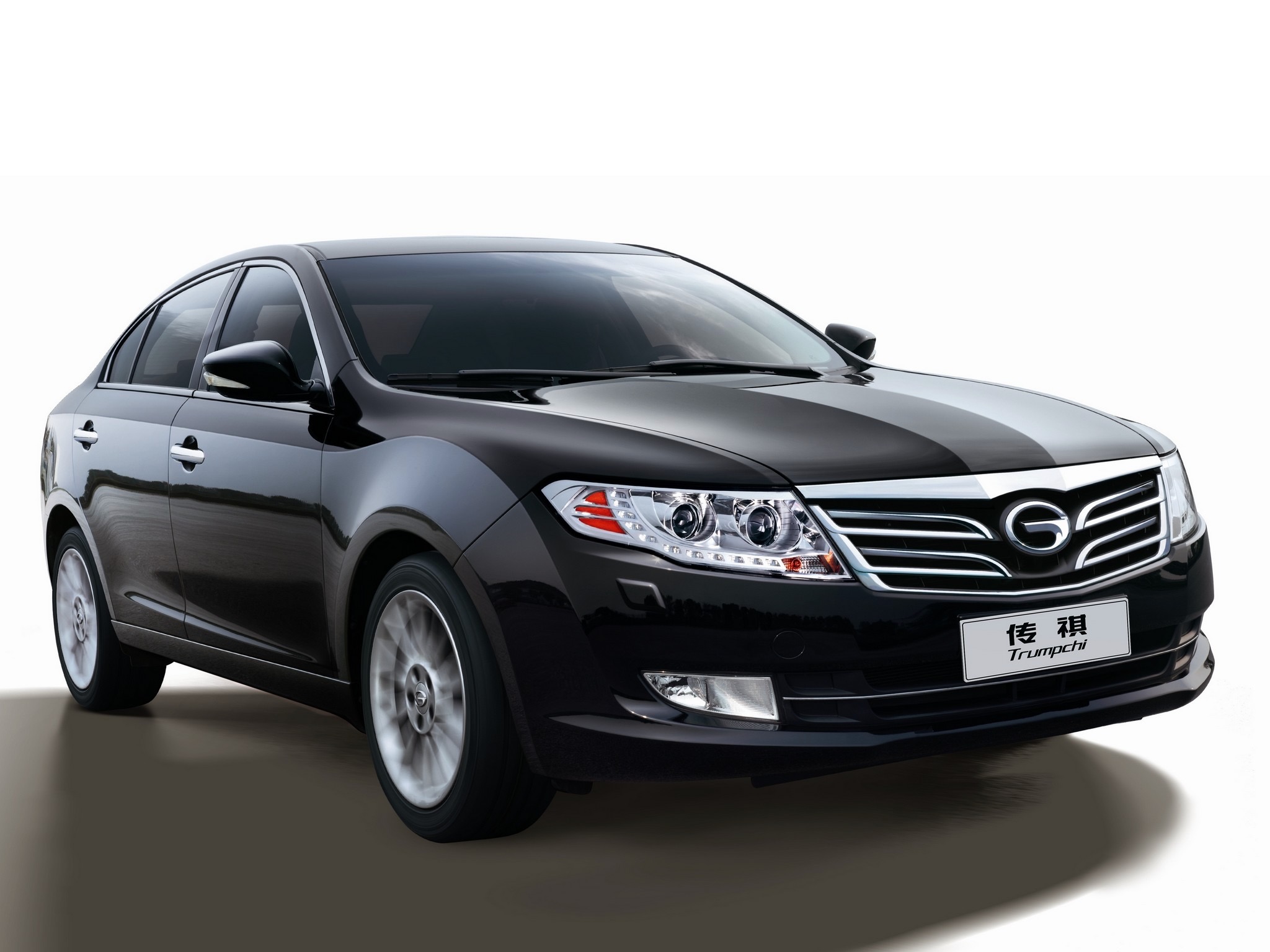
Not long after, GAC decided to start producing its own cars for the domestic market, with the Trumpchi marque first to launch. The Trumpchi GA5 sedan was its first product, which it was actually based on the Alfa Romeo 166, and Trumpchi’s reputation for quality was established. From 2012, an SUV version of the GA5 called the GS5 was produced, and a compact sedan called the GA3 was unveiled in 2013. By the late 2010s, the brand had launched major sellers, including the GS4 SUV that reportedly made Trumpchi a household name in China.
GAC formed another joint venture in 2012 with Mitsubishi, producing cars such as the ASX, Outlander and Pajero for the Chinese market.
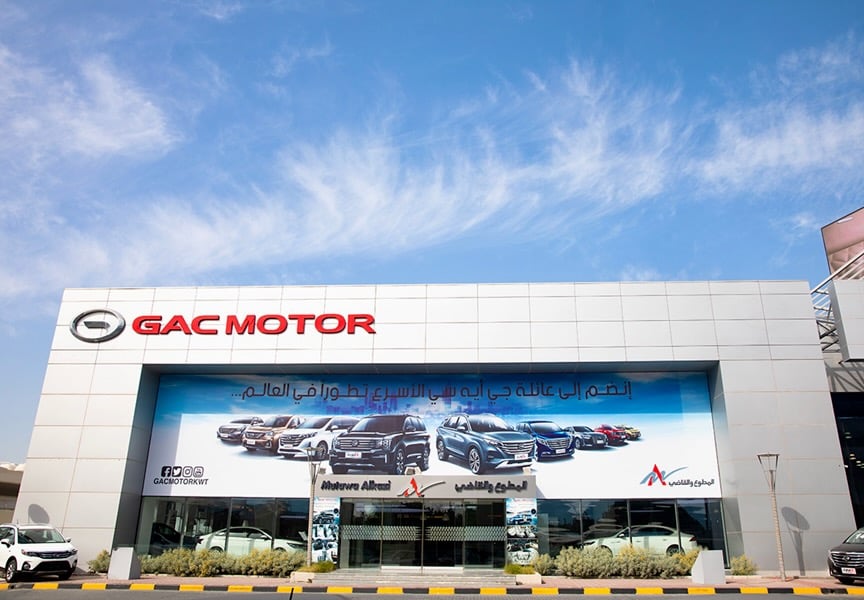
In 2013, GAC launched in its first export market: Kuwait, with Lebanon, Nigeria, Bahrain, the UAE, Philippines, Saudi Arabia, Ecuador, Cambodia, Laos, Panama and Russia all part of GAC’s exports by 2020.
From that point, GAC’s rapid product expansion started with a slew of new products and even some new brands, including Aion as the new energy brand in the GAC Group. Aion was spun off as an independent company focusing on new forms of manufacturing, pure electric architectures, new battery technology and autonomous driving.
In 2015, GAC sold almost 1.2 million cars, almost doubling sales in just five years. In 2016, sales rose to 1.65 million, then 1.9 million in 2017 and to over 2 million in 2019.
Since 2020, GAC has invested heavily in solid-state battery development, hydrogen tech and autonomous driving systems, while also expanding further to markets such as Thailand, Malaysia and Brazil. The Aion brand has become one of the biggest-selling new energy brands in China, and is often compared with rivals such as Zeekr, XPeng and BYD, all of which already have a presence in Australia.
Today, GAC’s key brands include GAC Motor, its export-focused ICE/Hybrid vehicles, Trumpchi (domestic ICE/hybrid brand) and Aion (EV specialist), as well as its joint ventures with Hino (commercial) and both Honda and Toyota. In China, GAC is reportedly known for strong joint-venture reliability (Toyota/Honda quality), EV innovation, better build quality compared with many domestic brands, and its ambition towards global expansion.
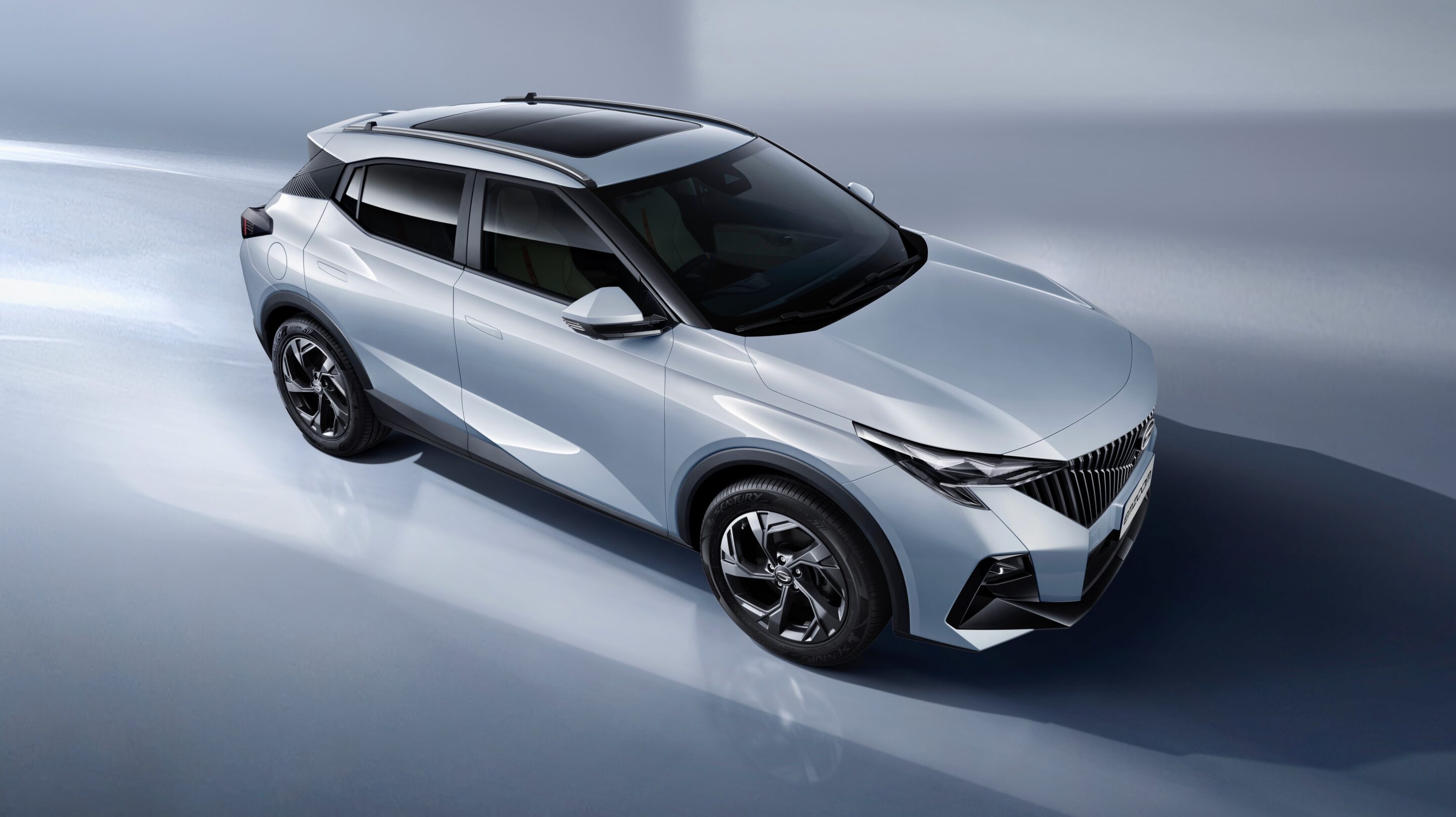
GAC has recently launched in Australia with the Emzoom small SUV (above, priced from $25,590 +ORC), Aion V electric mid-size SUV ($42,990 +ORC) and M8 PHEV MPV ($76,990 +ORC). It has ambitions of becoming a top 10-selling brand by 2028, and plans to introduce more than 10 new models across sedans, SUVs, pickup trucks, and MPVs to our shores in the next few years.
TAG Heuer has introduced a new version of its famous Monaco Chronograph, unveiling a limited-production model that draws heavily on the atmosphere of Formula 1 night racing. The watch, capped at 600 units globally, is the latest evolution of a design first made famous more than 50 years ago.
The Monaco name has long been tied to motorsport culture and popularised well beyond watch-collecting circles thanks to Steve McQueen, who wore one in the 1971 film Le Mans. TAG Heuer has since continued to update the line with modern materials and movements, and the newest release extends that tradition with a focus on bold colour, exposed mechanics and high-contrast nighttime visibility.
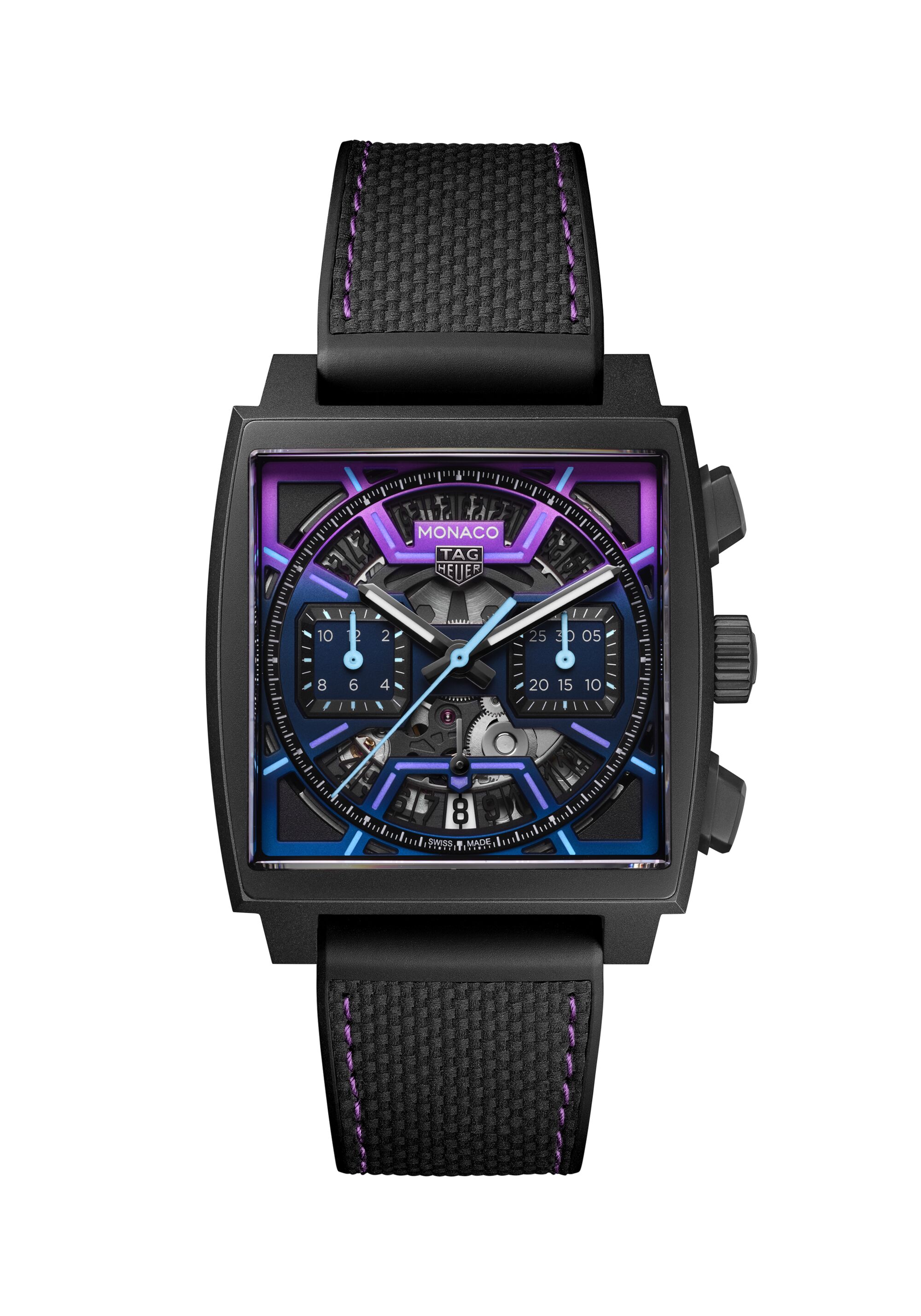
The new edition centres on a 39mm case made from black DLC-coated titanium – lightweight, scratch-resistant and markedly different from the steel cases that defined early Monaco models. The dial is fully skeletonised, revealing the movement beneath while fading from violet to deep blue. TAG Heuer says the gradient is meant to evoke the transition from dusk to darkness, similar to the setting of night races in cities such as Singapore or Las Vegas.
Legibility in low light is a key theme. The chronograph’s hands and markers use multiple colours of Super-LumiNova to create distinct layers of illumination. Blue luminescence highlights the stopwatch function, while green is reserved for timekeeping. Purple lighting elements in the minute track and blue accents around the outer dial add further depth when viewed in the dark. The caseback carries the same colour palette, with an iridescent sapphire window shifting between blue and purple tones.
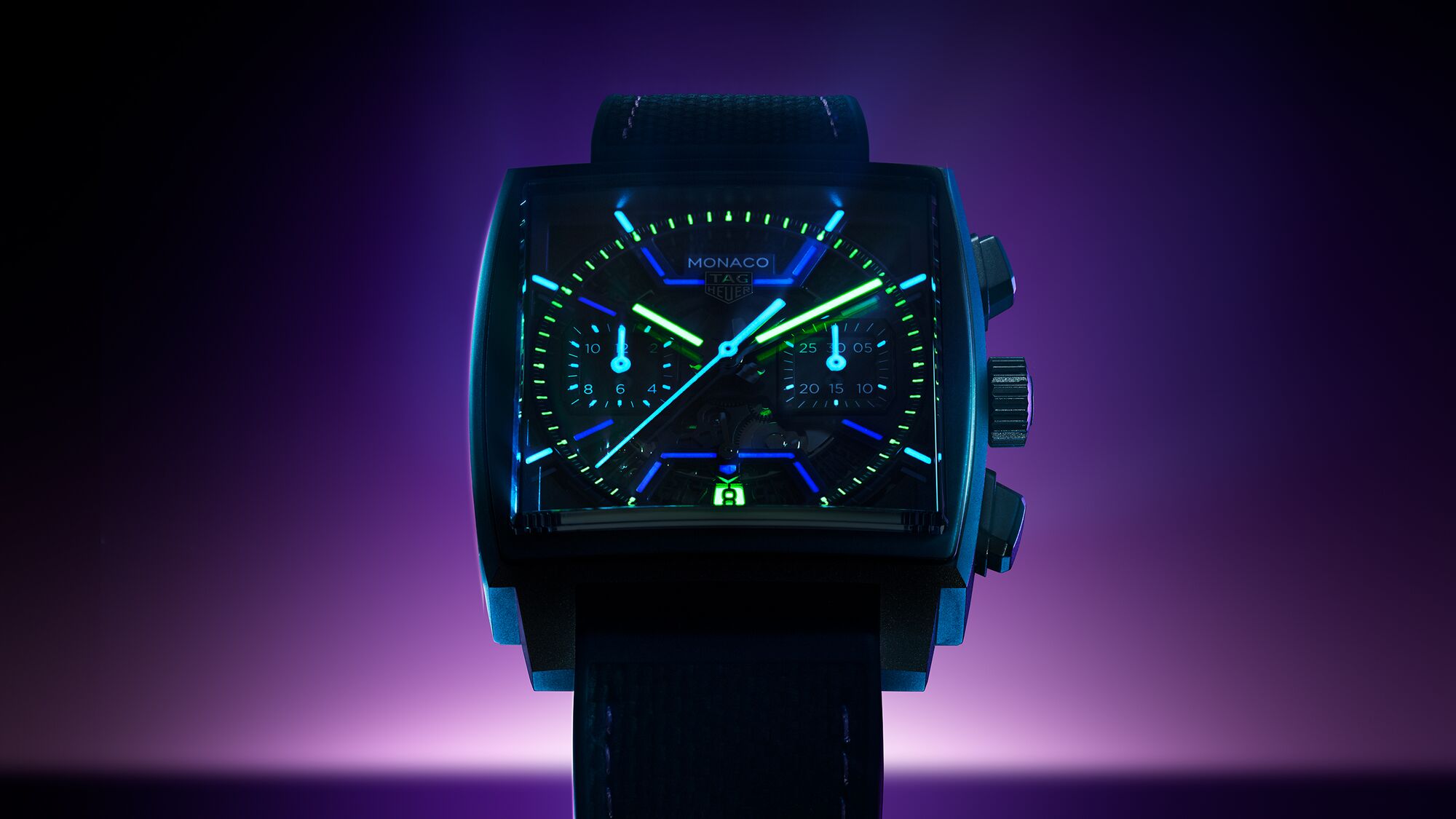
Inside, the watch runs on TAG Heuer’s in-house Calibre TH20-00 automatic movement, visible from both the front and rear thanks to the open-worked architecture. The movement is designed for improved efficiency and offers bidirectional winding for more consistent power delivery.
The strap mixes rubber with embossed leather and includes purple stitching to align with the dial’s colour theme. Each watch is individually numbered and delivered in special packaging created exclusively for the edition.
While the Monaco collection has taken many forms over the years, TAG Heuer’s latest release positions the watch squarely within the spectacle of modern motorsport, offering a highly stylised interpretation aimed at collectors drawn to the visual drama of racing after dark.
Kia Australia has announced local pricing and specifications for the upgraded 2026 Kia K4 range, which will enter local Kia dealerships soon.
Priced from $32,090 plus on-road costs, the K4 range starts $1500 higher than before, but naturally aspirated models have gained a new 2.0-litre petrol engine that’s a lot more efficient than the one it replaces. The K4 hatchback is also now available, and is priced identically to the sedan that’s already on sale.
Under the bonnet of the non-GT Line models in the K4 range is a new 2.0-litre Atkinson Cycle four-cylinder petrol engine making 110kW of power and 180Nm of torque (-2kW and 12Nm on the older engine). It’s now mated to a CVT automatic transmission, which replaces the former six-speed auto, and its combined fuel consumption is now rated at 6.0L/100km (6.1L/100km for the hatchback), which is down a significant 1.4L/100km. Its claimed CO2 emissions of 139g/km (143g/km) are also a big improvement of 28g/km.
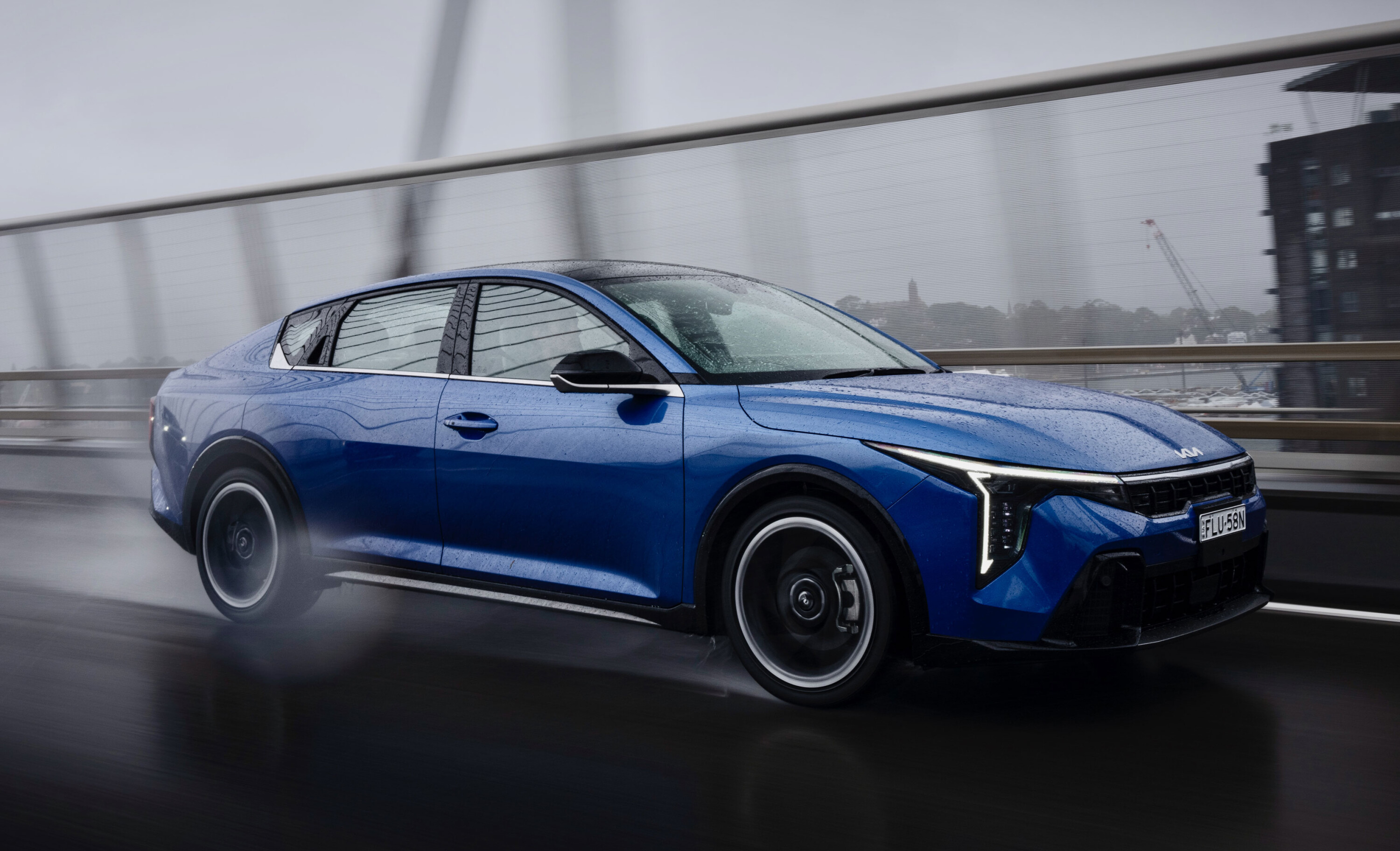
The 142kW/265Nm 1.6-litre turbo-petrol and eight-speed automatic transmission in the K4 GT-Line remains as before. It uses as little as 6.7L/100km of fuel on the combined cycle and emits 158g/km of CO2.
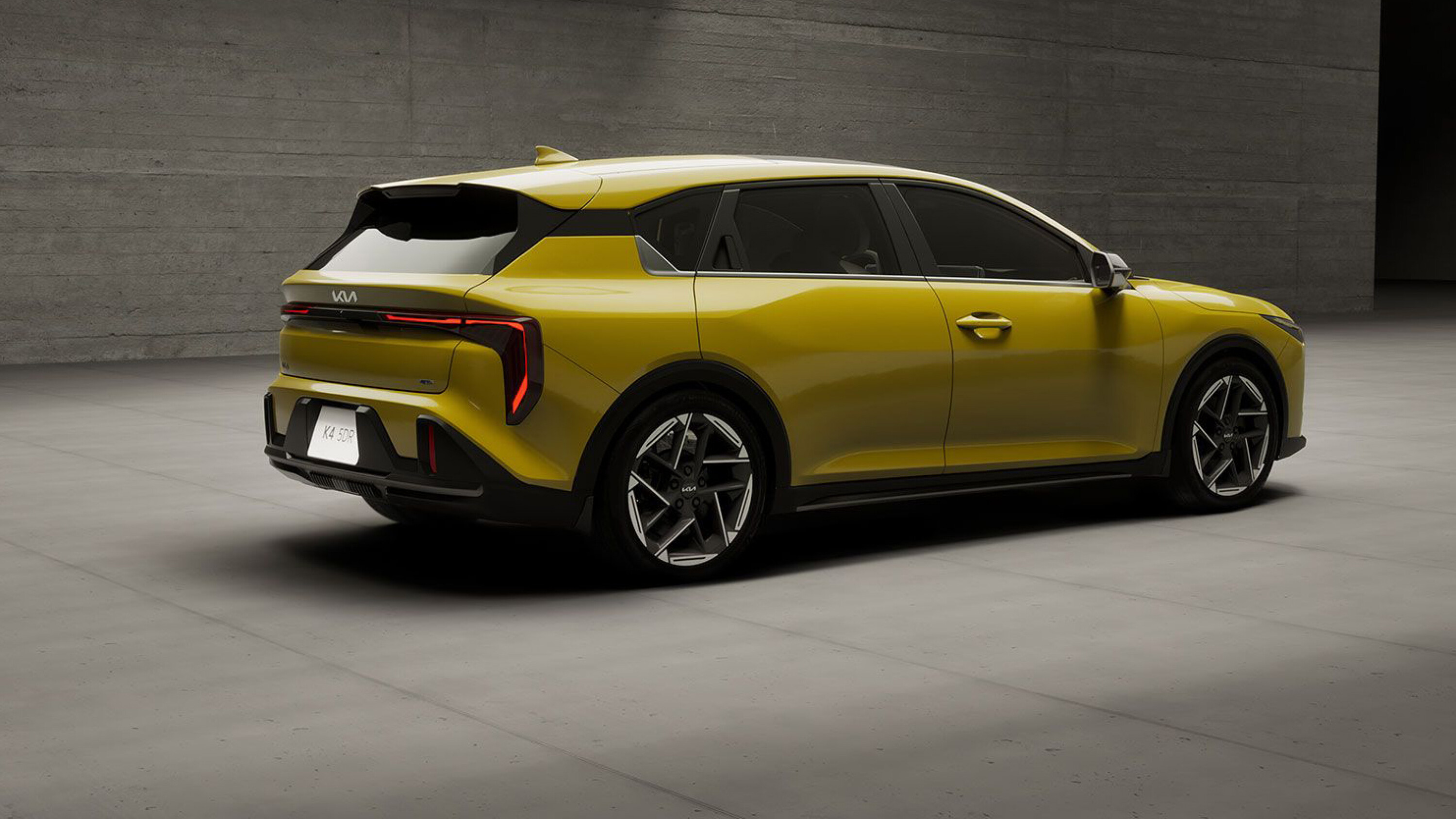
The K4 hatchback is new to the range having been revealed later than the sedan. It measures 4440mm long, 1850mm wide, 1435mm tall and rides on the same 2720mm long wheelbase as the sedan, making it 270mm shorter and 10mm taller than the sedan. Its bootspace measures 438 litres with the seats up, making it 70 litres smaller than the sedan. The K4 hatchback is equipped identically to the sedan, aside from the addition of a rear wiper.
2026 Kia K4 pricing (plus on-road costs):
| S | $32,090 (+ $1500) |
|---|---|
| S Safety Pack | $34,190 (+ $1500) |
| Sport | $36,690 (+ $1500) |
| Sport+ | $39,090 (+ $1500) |
| GT-Line | $43,790 (+ $800) |
Kia K4 S standard features:
- 16-inch alloy wheels
- Automatic LED headlights
- Heated/auto-folding mirrors
- Keyless entry with push button start
- Height-adjustable front seats
- Cloth upholstery
- Manual air-conditioning with rear air vents
- 12.3-inch touchscreen with over-the-air updates
- Wireless Apple CarPlay and Android Auto
- AM/FM/DAB+ digital radio
- Six-speaker sound system
K4 S safety features:
- 7x airbags
- Autonomous emergency braking with car, pedestrian, cyclist and intersection assistance
- Adaptive cruise control with stop and go functionality
- Adaptive lane guidance
- Lane keeping assistance with lane departure alert
- Blind-spot monitoring (with braking)
- Rear cross-traffic alert (with braking)
- Rear occupant alert
- Safe exit warning
- Auto high beam
- Traffic sign recognition
- Front and rear parking sensors
- Reversing camera
- Anti-burglar alarm
- Tyre pressure monitoring
K4 S Safety Pack adds:
- Upgraded autonomous emergency braking (AEB) system with junction crossing and direct/oncoming lane change detection
- Dual-zone automatic climate control with a 5.0-inch touch panel
- Auto defog system
- 12.3-inch digital driver’s display
K4 Sport adds:
- 17-inch alloy wheels
- Highway driving assistance
- Satellite navigation with 10 years of traffic and map information
K4 Sport+ adds:
- Auto-dimming rear mirror
- Rain-sensing automatic wipers with aero blades
- Synthetic leather upholstery
- Upgraded interior materials
- Heated front seats
K4 GT-Line adds:
- 18-inch alloy wheels
- Multi-link independent rear suspension
- Projector LED headlights and full LED tailights
- 8-way electric driver’s seat with memory and lumbar adjustment
- Sportier exterior styling
- Sunroof
- Heated synthetic leather steering wheel with paddle shifters
- Wireless phone charger
- 8-speaker Harman Kardon sound system
- Ventilated front seats
The 2026 Kia K4 model range is now available to order with the first deliveries commencing soon.
Driving safe in a secondhand car can be surprisingly affordable, the latest Used Car Safety rankings show.
The Mazda3 and similar compact cars are highlighted as a smart choice for bargain buyers in the latest Used Car Safety Ratings. The annual scoring of secondhand safety is done by the Accident Research Centre at Monash University (MUARC) and, like the new-car rankings compiled by the Australasian New-Car Assessment Program, gives a star rating.
But the MUARC results are a sharp contrast to the laboratory-based safety scores from ANCAP because, as well as scoring how a vehicle protects its occupants in a crash, they also include how it avoids potential crashes and its impact on other road users in the real world.
The 2025 ratings cover 546 vehicles produced from 1983 to 2023 using real-world research from more than 9.5 million vehicles and 2.6 million injured road users in police-reported crashes between 1987 and 2025. A 5-Star score was awarded to 130 vehicles and 72 earned the coveted ’Safer Pick’ status from MUARC. But buying safe doesn’t have to be a budget breaker, according to the program director at MUARC, Professor Stuart Newstead.

The cost of safety continues to fall, as almost all Safer Pick vehicles are available for less than $25,000 and more than half have a secondhand price below $10,000.
“It shows a secondhand Mazda3 for under twenty grand will perform really well for you. And that’s what people need to know,” he told Wheels.
He said the latest year-on-year results showed widespread improvements in vehicle safety, as well as the gap between the best and worst performers in the MUARC research.
“The difference between the best and worst is about 15 times. It (the ratings) absolutely shows you what to stay away from,” he said.
He also highlighted the value of ESP – electronic stability control – in road safety, particularly for young and old drivers.
“Stability control should be a must for every novice driver,” he said.
For the first time the MUARC ratings include a 5-Star score for an electric vehicle, while large SUVs and utes continue to under-perform again old-school passenger cars.
“It is the Tesla Model 3,” he said. “It’s a good example of a medium-style car where the basic geometry is good. And it’s not too heavy as an electric car. It manages to score quite well – five stars across the board. It’s a good thing.”
The overall improvement in the safety of Australia’s secondhand fleet shows a jump of more than 50 per cent since it began, as the risk of death or serious injury is 43 per cent lower in 2023 models than in vehicles manufactured in 2001. Even so, Professor Newstead warned about emerging concerns about increasing vehicle sizes and mass and their effect on overall secondhand safety.
Full details of the 2025 Used Car Safety Ratings are available here.
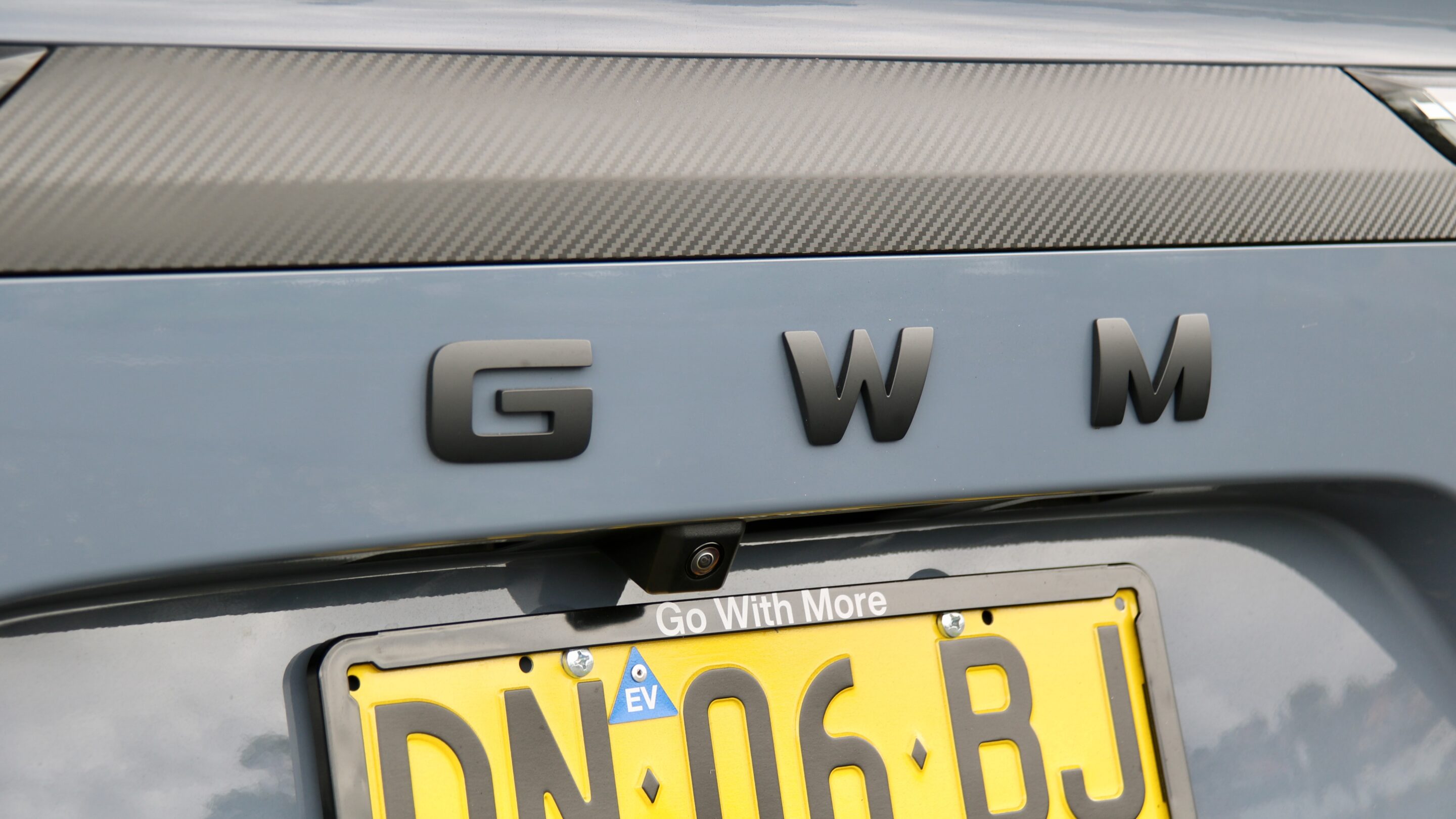
Way back in June 2009, local distribution company Ateco shocked Australian consumers by launching the first Chinese brand on to the local market. GWM – or Great Wall Motors as it was then known – launched with two products in Australia. It’s now quite a distance from its first incarnation and as of June 2025, is now the top-selling Chinese brand in Australia.
Great Wall Motors is headquartered in Baoding in the Hebei Province in China. It was founded in 1984, though has roots as far back as 1976 with an agricultural vehicle workshop in Baoding started by Wei Deliang, who is the uncle of the current GWM chairman Wei Jianjun, through a collaboration with the local government of the Nandayuan Township.
By 1984, the workshop started to produce its own commercial vehicles, and the workshop’s name was changed to Great Wall Industry Company.
Jianjun had started with the company in 1989 and by 1993, it was producing several models, including the CC1020S sedan, but a change in national vehicle regulations forced Great Wall to shift towards commercial vehicles, including the 1996 Deer ute.
The Deer was a big success for the company and enabled it to export its products for the first time in 1997 to the Middle East. The Nandayuan Township privatised the company in 1998, forming the Great Wall Motor Group with Jianjun owning a 25 per cent stake.
In 2003, GWM became the first private Chinese car manufacturer to become a public company through the Hong Kong Stock Exchange and in 2006, entered the European market for the first time with a series of small vans, and in Australia in 2009.
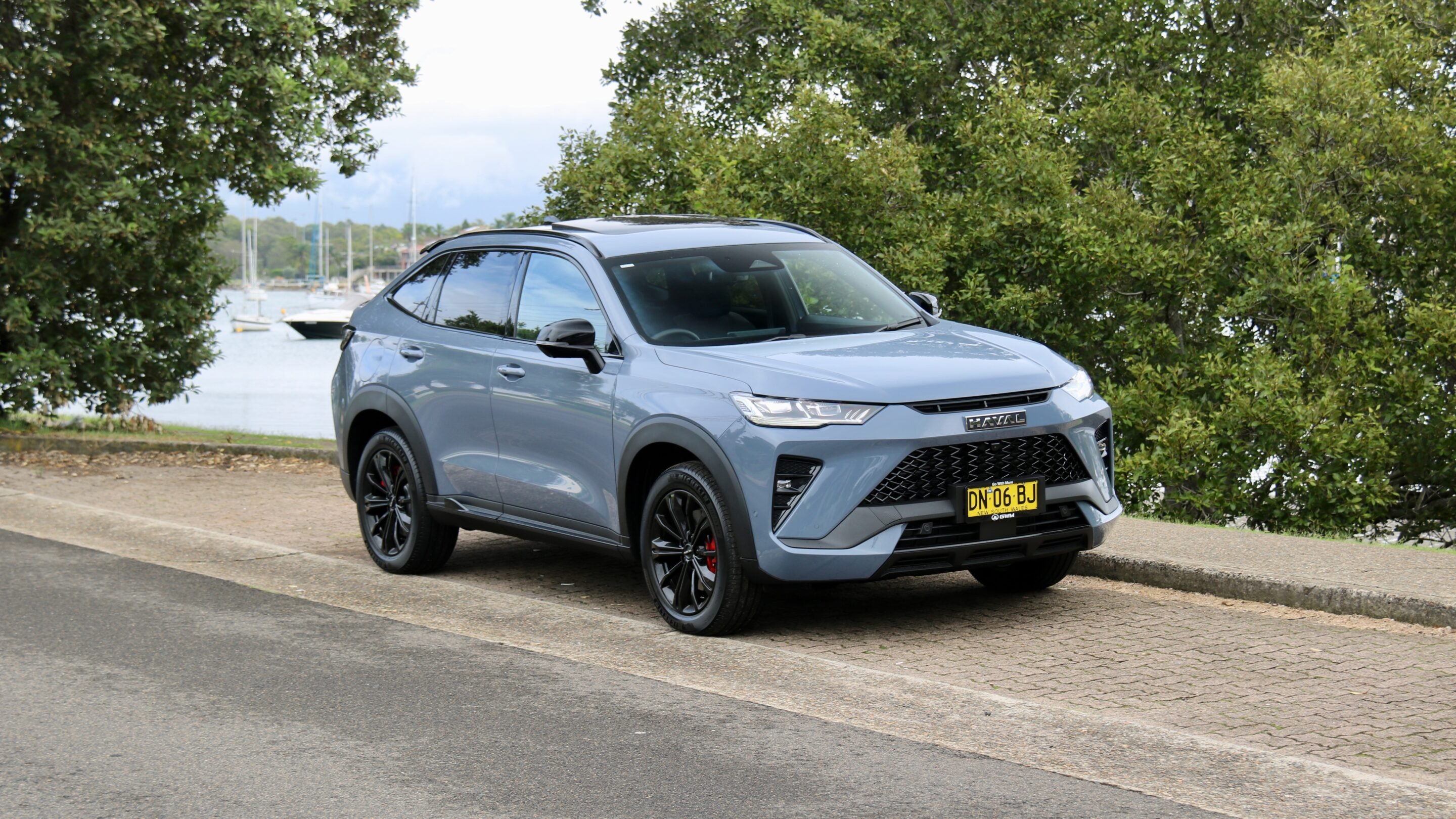
The first-generation Haval H6 was launched in 2011, immediately becoming China’s best-selling SUV for eight consecutive years. Its success contributed massively to GWM’s profits, leading the company to focus on SUVs. To the end of 2024, more than four million H6s have been produced. Even though it only launched in Australia in 2020 in third-generation form, the H6 has sold almost 50,000 units locally.
In 2011, GWM was listed on the Shanghai Stock Exchange and went public again, merging the ownerships of the Wei family and Nandayuan Township into a single investment fund, which is the current corporate structure of the company.
While its focus was on internal combustion engined products, GWM introduced its first EV in China in 2016 and acquired a 25 per cent stake in the Hebei Yujie Vehicle Industry company in 2017, which was a key player in China’s EV market. GWM spun off its battery business into an independent battery manufacture in 2018 and in the same year, established the Ora EV brand as well as signing a joint venture agreement with BMW to produce electric Mini products in China.
In 2020, GWM purchased General Motors’ Thailand plant – the factory where the Holden Colorado used to be produced for Australia – and Great Wall Motors’ official rebranding to GWM also occurred.
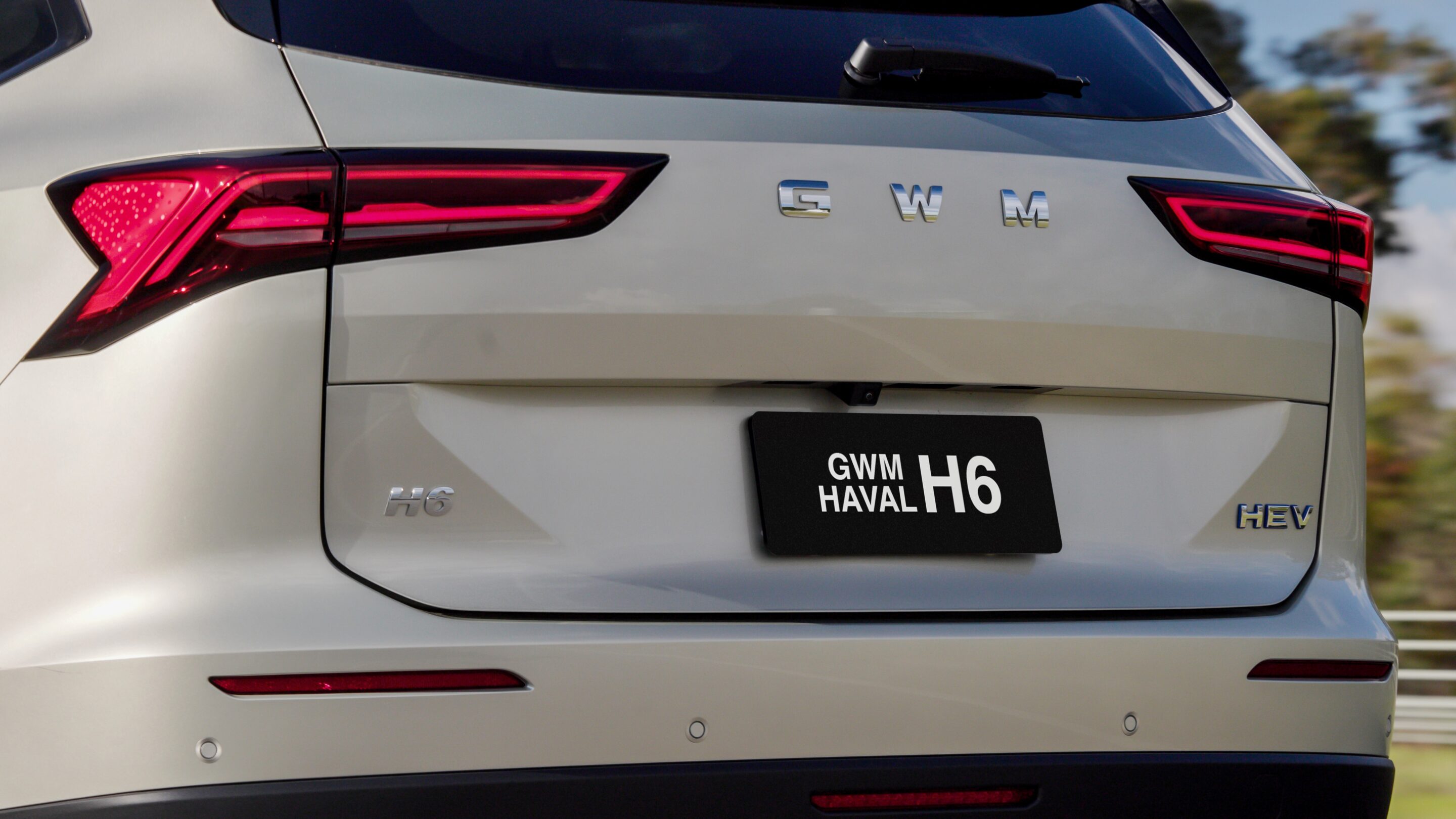
In 2023, GWM announced that it would be adjusting its multi-brand strategy for export markets. Under the new strategy, GWM was the parent company and previously-standalone brands such as Haval, Ora, Tank and Wey were now sub-brands. This change made it easier for export markets, which received select products from all the brands, with – for example – the Haval H6 becoming the GWM Haval H6. Instead of a Haval logo, a new GWM badge appeared.
As of 2025, GWM has 10 production facilities across China, Thailand, Brazil and Russia, and plants in countries such as Pakistan assembling vehicles from knock-down kits.
The brand has also just employed former-Holden ride and handling guru Rob Trubiani to enhance the way its products feel on the road in a number of areas, including active safety systems and even towing. Trubiani’s knowledge in those areas will eventually be applied to global GWM products.
GWM’s total 2024 sales tally reached 1,233,292 units in 2024, with the Haval brand selling 706,234 units and 453,141 units exported. In Australia to the end of June 2025, GWM has sold 25,189 units, an increase of 17 per cent over the same period in 2024 and puts the brand in a good position to hit its 50,000 sales target for the whole of this year.
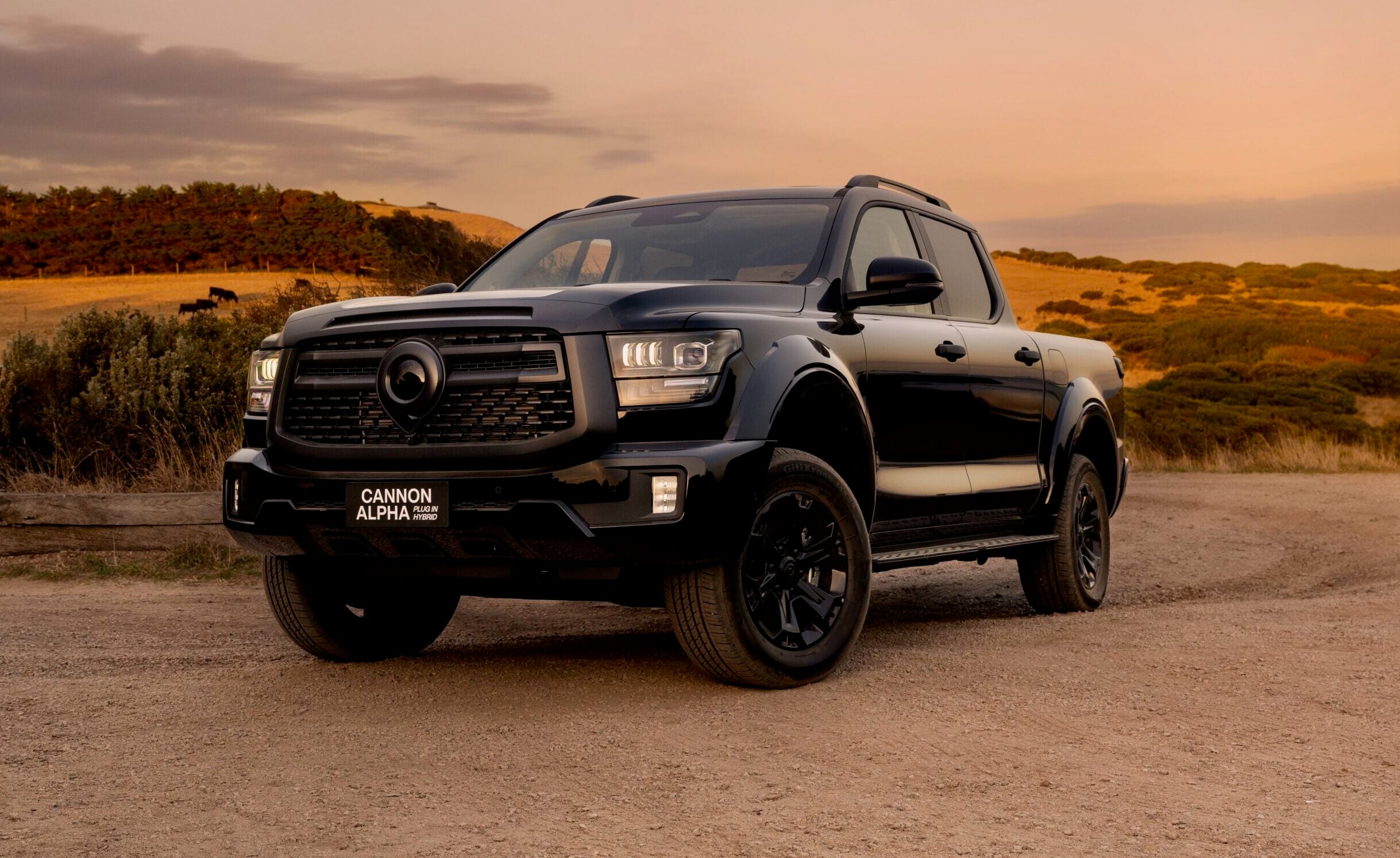
Healthy sales should come as no surprise as it’s been a busy period for the brand in Australia. It’s recently launched a new plug-in hybrid variant of the Cannon Alpha ute (above), a diesel variant of the popular Tank 300 off-roader and the updated Haval H6 mid-size SUV, which has just gone on sale.
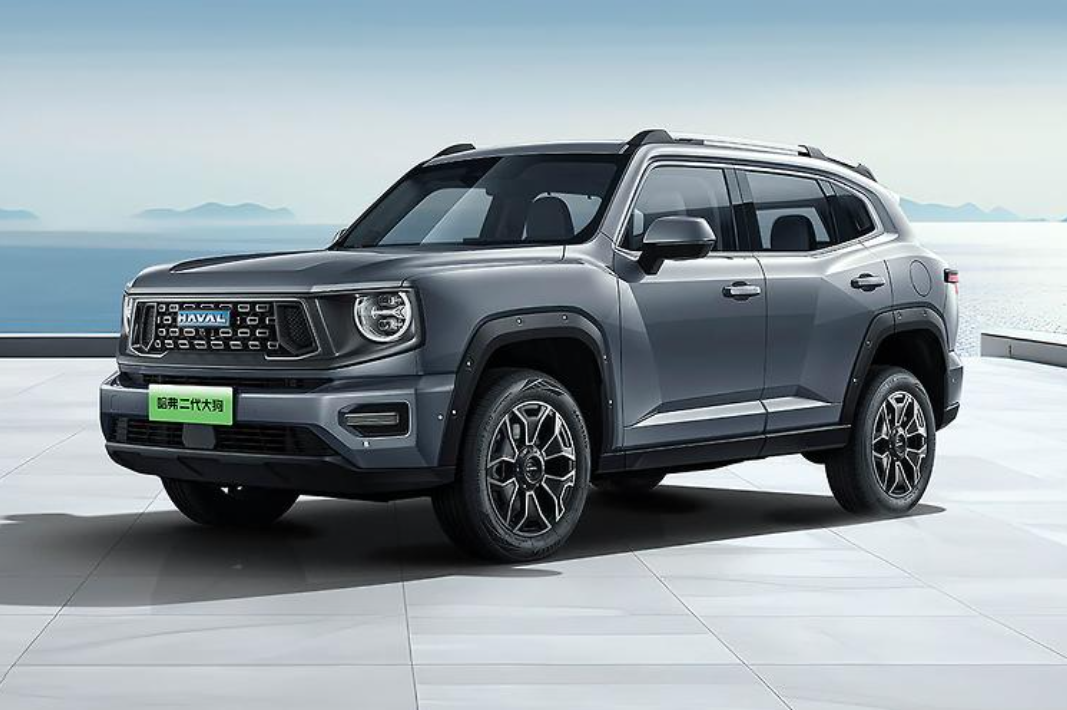
What’s next for GWM in Australia? First cab off the rank is the new Haval H7 mid-size SUV (above), which will be launching in the third quarter of 2025 to sit in between the H6 and Tank 300 SUVs. Afterwards, a new plug-in hybrid version of the Tank 500 large SUV will also be launched.
The brand will reportedly have three EVs in its showrooms by the end of 2026, while new hybrid and plug-in hybrids will also be added to the range to further bolster its NVES compliance.
Looking further into the future, the brand recently revealed a new plug-in hybrid powertrain with a V8 engine that may also allow it to develop a larger ute than the Cannon Alpha, potentially for the North American market.
According to local GWM staff, the brand is at the beginning of its journey, with “plenty more to come”.
Who owns GWM?
GWM (Great Wall Motors) is a Chinese automotive manufacturer founded by the Wei family and later combined its ownership into an investment fund, which now controls the company. Wei Jianjun started the company as a small repair shop in 1984
Where are GWM cars made?
Aside from its home market China, where all Australian-spec products are produced, GWM produces cars around the world, including places such as Thailand, Bulgaria, Russia and Brazil with a facility in Spain planned for the future.
Are GWM and Haval the same company?
Haval is one of GWM’s sub brands, much like Tank and Ora. In China, these brands are sold under the GWM umbrella with many products for each brand, but in export markets like Australia, all are sold under the GWM brand.
How many cars does GWM sell each year in Australia?
GWM sold 42,782 cars in Australia in 2024, a record number that placed the brand in the top 10 for sales for the first time. So far in 2025, GWM’s sales are even stronger and are sitting at around 35,000 sales to the end of October 2025 for a predicted 52,000 unit result by the end of December.
Which cars does GWM sell in Australia?
GWM Haval Jolion
The Jolion is GWM’s small SUV product that appeals to small families and those looking for a second car. Pricing starts at $26,990 drive away for the base Premium model. Both 1.5-litre turbo-petrol and 1.5-litre hybrid drivetrains are on offer and the hybrid is one of the cheapest on sale in Australia.
GWM Haval H6
The H6 has been one of the best-selling GWM products in Australia since it launched in 2021. Competing in the mid-size SUV segment, the H6 is priced from $35,990 drive away and it has a wide range of powertrain options: a 2.0-litre turbo-petrol, 1.5-litre turbo hybrid and two forms of 1.5-litre turbo plug-in hybrid with the most powerful capable of a 4.9-second 0-100km/h sprint time.
GWM Haval H6GT
The H6GT is the sportier-looking coupe version of the H6, and is available with either the 2.0-litre turbo-petrol or a 321kW 1.5-litre turbo-petrol plug-in hybrid. Pricing starts from $45,990 drive away, and the H6GT line-up is quite well equipped as standard.
GWM Haval H7
The H7 is the newcomer to the GWM Australia range. It takes the underpinnings of the H6 and H6GT but puts them underneath a boxier and more rugged-looking body. The H7 is only available with the 1.5-litre turbo hybrid in Australia, giving it good performance (it makes 179kW of power and 530Nm of torque) yet good claimed fuel economy too (it’s rated at 5.7L/100km).
GWM Tank 300
The Tank 300 is one of GWM’s biggest success stories in Australia as it provides rugged styling, strong four-wheel drive ability and excellent value for money. It’s priced from $47,990 drive away and offers 2.4-litre turbo-diesel, 2.0-litre turbo-petrol or 2.0-litre turbo-petrol hybrid drivetrain options, as well as generous standard equipment.
GWM Tank 500
The Tank 500 is GWM’s large SUV in Australia, offering seating for seven and the choice of either a 2.0-litre turbo-petrol hybrid or plug-in hybrid drivetrain, the latter making a serious 300kW of power but also capable of travelling 120km on electric power.
GWM Cannon
The Cannon is GWM’s ute offering in Australia. Pricing starts at $36,490 drive away for the single cab chassis variant, ranging to $51,990 drive away for the top-spec off-road themed XSR. Engine choices are either a 2.0-litre or larger 2.4-litre turbo-diesel, and a nine-speed automatic transmission is standard with the larger engine.
GWM Cannon Alpha
GWM is unusual in that it offers not one but two mid-size utes in Australia, and the larger Cannon Alpha is one of the most luxurious utes you can buy. It’s available with a 2.4-litre turbo-diesel engine or a 2.0-litre turbo plug-in hybrid drivetrain, as well as features like a panoramic sunroof, a split-opening tailgate and even electric-reclining rear seats.
GWM Ora
The Ora is GWM’s electric car in Australia. It’s a small hatchback that’s priced from $35,990 drive away, making it one of the cheapest new EVs on sale. It features a 57.7kWh battery for a claimed WLTP driving range of 400km, as well as a long list of standard features.
KGM Australia has announced pricing and specifications for the KGM Torres Hybrid, which is its first hybrid offering locally, ahead of first deliveries commencing in December. Priced from $45,000 drive away, KGM has made the Torres Hybrid is $7000 more expensive than the equivalent petrol model, but is both more powerful and more fuel efficient – plus, it also includes more standard equipment.
The Torres will compete against other hybrid mid-size SUVs like the Toyota RAV4, Hyundai Tucson and GWM Haval H6.
The KGM Torres Hybrid pairs a 1.5-litre turbo-petrol engine with two electric motors and a 1.8kWh LFP battery powering the front wheels via a dedicated hybrid transmission. Total system output is 150kW, made up of 110kW/220Nm outputs from the petrol engine and 130kW/300Nm from the electric motors.
Combined fuel consumption for the Torres Hybrid is rated at 5.6L/100km – 1.8L/100km less than the less powerful petrol Torres – and with CO2 emissions of 127g/km.
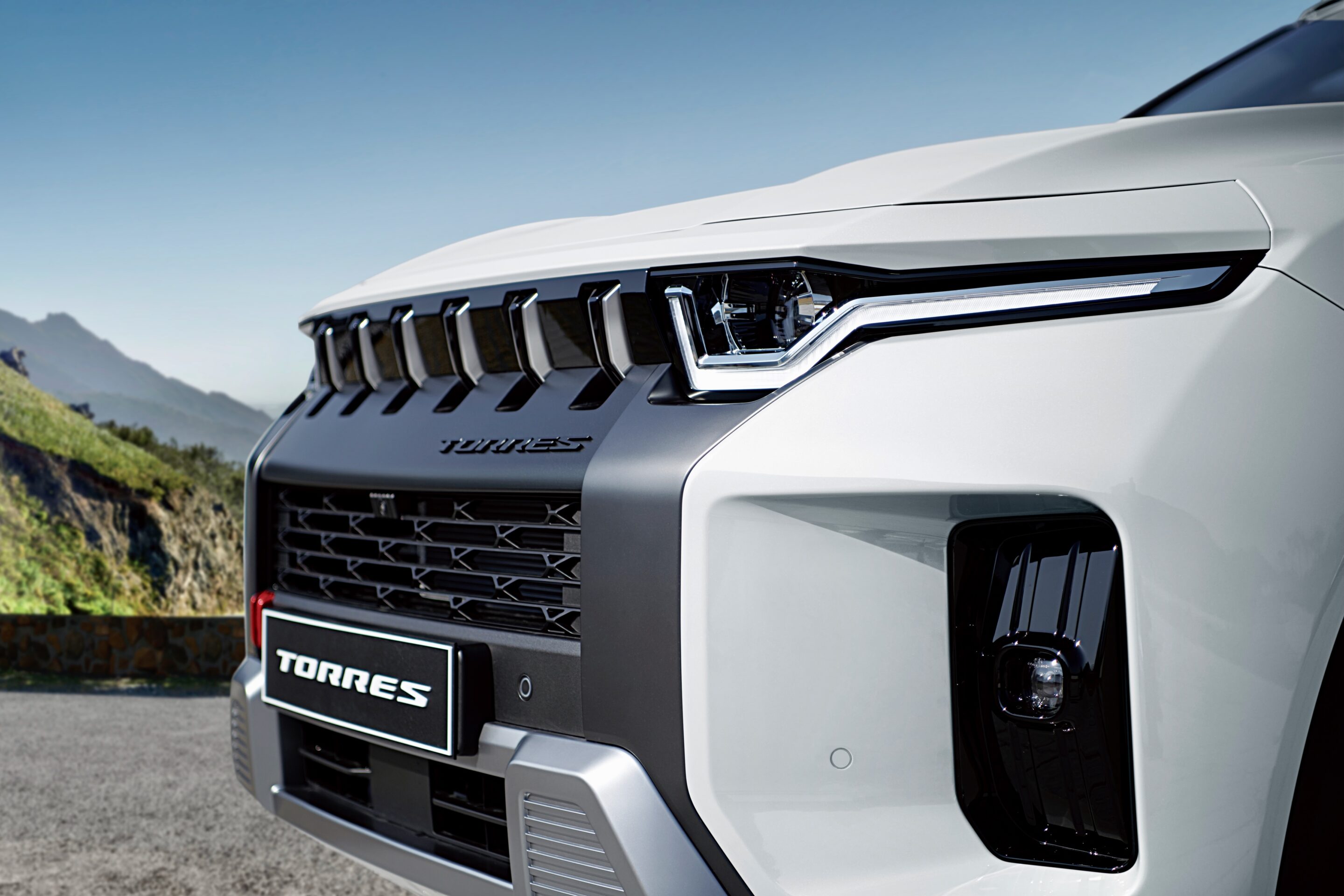
Pricing for the Torres Hybrid starts at $45,000 drive away for the entry-level K30, which is $7000 higher than the petrol Torres ELX that it lines up with. However, the hybrid is better equipped with features such as a leather steering wheel and adaptive cruise control.
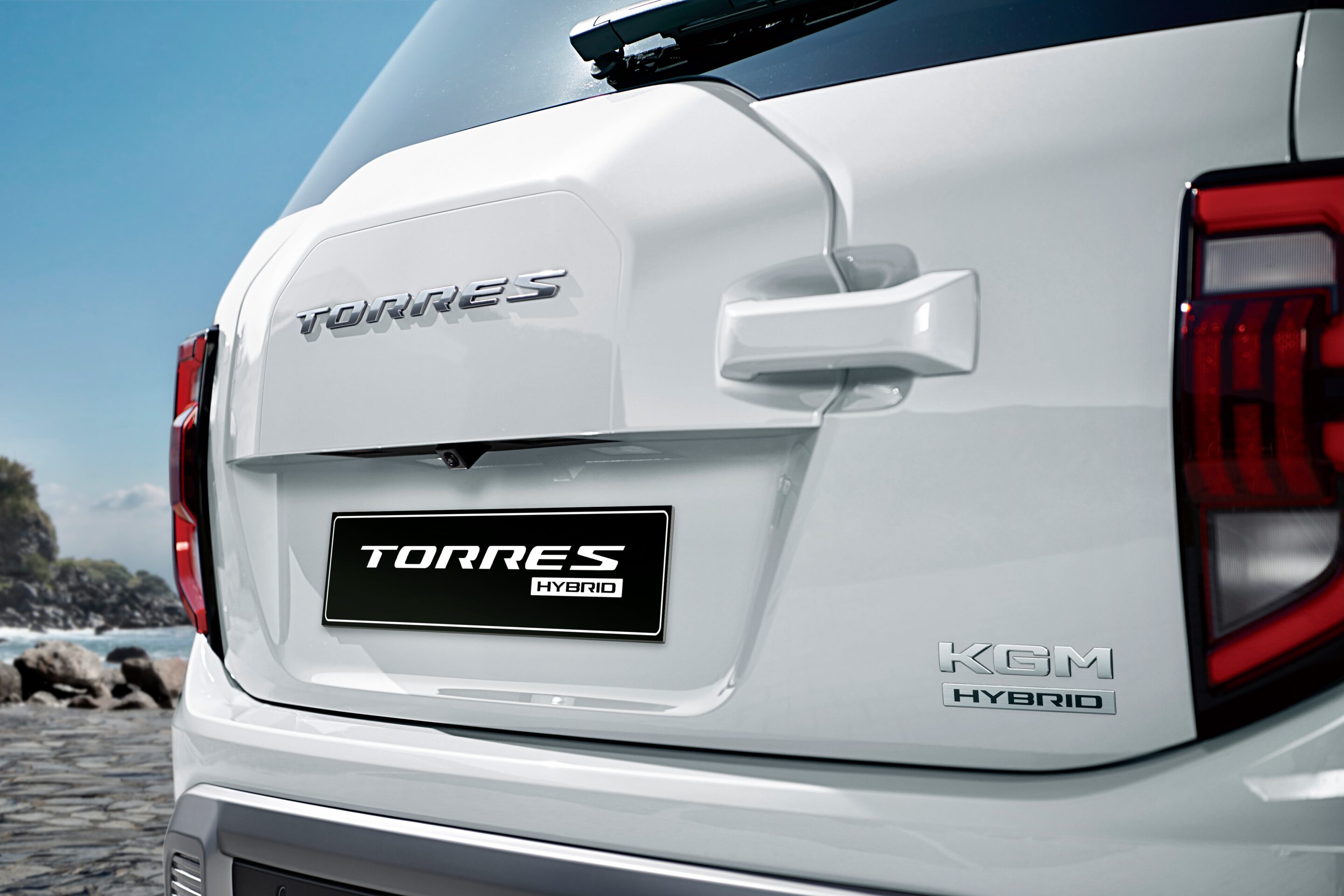
Unlike some other hybrid mid-size SUVs, the Torres Hybrid doesn’t lose bootspace compared to the petrol model, with KGM still claiming 465 litres with the seats up (703 litres to the ceiling) and 1526 litres with the rear seats folded. However, its 1300kg braked towing capacity is 200kg less than the petrol model.
2026 KGM Torres pricing (drive away):
| K30 | $45,000 |
|---|---|
| K40 | $48,000 |
KGM Torres K30 standard features:
- 18-inch alloy wheels
- Automatic LED headlights and front and rear daytime running lights
- Rain-sensing automatic wipers
- Heated/auto-folding mirrors
- Keyless entry with push button start
- Cloth upholstery
- Dual-zone climate control
- Leather steering wheel
- 12.3-inch digital driver’s display
- 12.3-inch touchscreen
- Apple CarPlay and Android Auto
- Interior ambient lighting
Torres K30 safety features:
- 8x airbags
- Adaptive cruise control
- Autonomous emergency braking with forward collision warning
- Lane keeping assistance with lane departure warning
- Front vehicle start alert
- Auto high beam
- Driver attention alert
- Front and rear parking sensors
- Reversing camera
Torres K40 model adds:
- Power tailgate
- 20-inch alloy wheels
- Leather-look seats
- Heated front seats
- Heated steering wheel
- Rear door sun blinds
- LED front fog lights
- Blind-spot monitoring with rear cross-traffic alert
- Lane change-collision warning
The KGM Torres Hybrid will go on sale in Australia on December 1, with local deliveries due to commence then.
