
Pricing excludes on-road costs, Tesla’s $400 order fee and $1400 delivery charge, and any eligible EV incentives. Figures are current as at the time of publication.
Korean carmaker Kia is looking at 2024 as a watershed moment for its electrification plans, with a host of new and updated EVs bound for Australia.
Snapshot
- New models: EV3, EV4, EV5
- Updates: EV6 facelift
- Here now: Niro, EV6, EV9
Kia’s Australian EV range already includes the small but deceptively spacious Niro, the large EV6 (Wheels Car of the Year 2022) and the massive seven-seat EV9.
Over the coming year and change, Kia will add to its Australian electric car roster with the Sportage-sized EV5 and a pair of new-generation small EVs – and a facelifted EV6 looks likely, too.
More than half of all Kia vehicles produced in 2030 will be all-electric, according to an updated plan released by the Korean brand.
Now, here’s everything we can expect from Kia’s EV plans in 2024, with links to our in-depth coverage of each new model!
JUMP AHEAD
New models
Here now
Kia EV3: Small electric SUV
The upcoming new 2024 Kia EV3 was previewed during the company’s EV Day in October, showcased as a small electric SUV concept that will likely skate through to production with very few changes.
| Model | Segment | Seats | Expected |
|---|---|---|---|
| Kia EV3 | Small Electric SUV | 5 | Late 2024 (speculated) |
What the EV3’s launch will mean for Kia’s existing small EV, the Niro, is currently unclear. An early retirement, in some markets if not all? A price repositioning below the EV3? We’ve heard talk that the EV3 will actually be cheaper than the Niro.
Kia EV4: ‘Small’ electric sedan
The lifted EV4 sedan, which gives off Polestar 2 vibes, is part of Kia’s ‘attainable EV’ push and one of 14 new electric models due by 2027.
| Model | Segment | Seats | Expected |
|---|---|---|---|
| Kia EV4 | Small Electric Sedan | 4 / 5 (unconfirmed) | Late 2024 (speculated) |
Kia says the EV4, along with the small EV3 and midsized EV5, will form part of an affordable global offering with prices starting from AU$55,000.
Kia EV5: Medium electric SUV
Only recently unveiled as a sleek concept, the Sportage-sized EV5 has now been shown in its final form – and it’ll be here in 2024.
| Model | Segment | Seats | Expected |
|---|---|---|---|
| Kia EV5 | Medium Electric Sedan | 5 | Early – mid 2024 (speculated) |
The EV5 will come to Australia from China as the first Kia to be sourced from the People’s Republic, but don’t expect it to engage with the likes of MG, BYD and GWM in a price war.
Kia is aiming to push its smaller range of EVs at between $55,000-$80,000 – but the EV5 is surely to be closer to the top end of that range.
Kia Australia has confirmed a 2024 launch for the EV5, but exact timing is still to be revealed.
Kia EV6 facelift: Large electric SUV
| Model | Segment | Seats | Expected |
|---|---|---|---|
| Kia EV6 | Large Electric SUV | 5 | Late 2024 (speculated) |
The facelifted 2025 Kia EV6 electric SUV has been spotted in South Korea.
Exactly what we can expect from the facelift is unclear, but the likes of CarScoops and NY Mammoth have had a crack at imagining how it might look.
As for when it will be revealed and get to Australia… the EV6 launched in Australia in 2021, as the South Korean carmaker’s first ground-up electric vehicle. If Kia sticks to the usual life cycle, we’d expect to see the new-look EV6 in Australia by late 2024 or early 2025.
Kia’s current Australian EV range
These are the electric Kia models you can buy right now.
Kia Niro: Small electric SUV
The second-generation Niro is offered in hybrid, plug-in hybrid EV, and full EV forms.
| Model | Segment | Seats | Expected |
|---|---|---|---|
| Kia Niro EV | Small electric SUV | 5 | Here now |
Following its local launch in 2022, the Niro line-up has already suffered a moderate price rise this year, ranging from $260 to $1290. The brand seems to have made up for it, however, by blessing the entry-level EV S model with a bigger 10.25-inch touchscreen, sat-nav & connected-car tech.
Read our Niro reviews here, and learn about the latest pricing and features at the linked story below.
Kia EV6: Large electric SUV
The EV6 is Kia’s first model on its dedicated E-GMP EV platform, impressing our judges with a Wheels COTY win in 2022.
| Model | Segment | Seats | Expected |
|---|---|---|---|
| Kia EV6 | Large Electric SUV | 5 | Here now |
The EV6 launched with three variants, including Air and GT-Line rear-wheel drive (RWD) and GT-Line all-wheel drive (AWD), and the high-powered GT flagship joined the line-up a year later.
Kia EV9: Upper Large electric SUV
The EV9 is unique in Australia as the only seven-seat electric SUV from a volume-selling brand – making it the only ‘affordable’ model in that segment.
| Model | Segment | Seats | Expected |
|---|---|---|---|
| Kia EV9 | Upper Large Electric SUV | 7 | Here now |
Of course, with a price that kicks off in the mid $90k range, your concept of affordable may vary. Luckily, our first experience with the big seven-seater suggests those who do spend up will be more than satisfied.
Get everything you need to know about EVs in Australia
? MORE: All new incoming Kia models, including the Tasman ute!
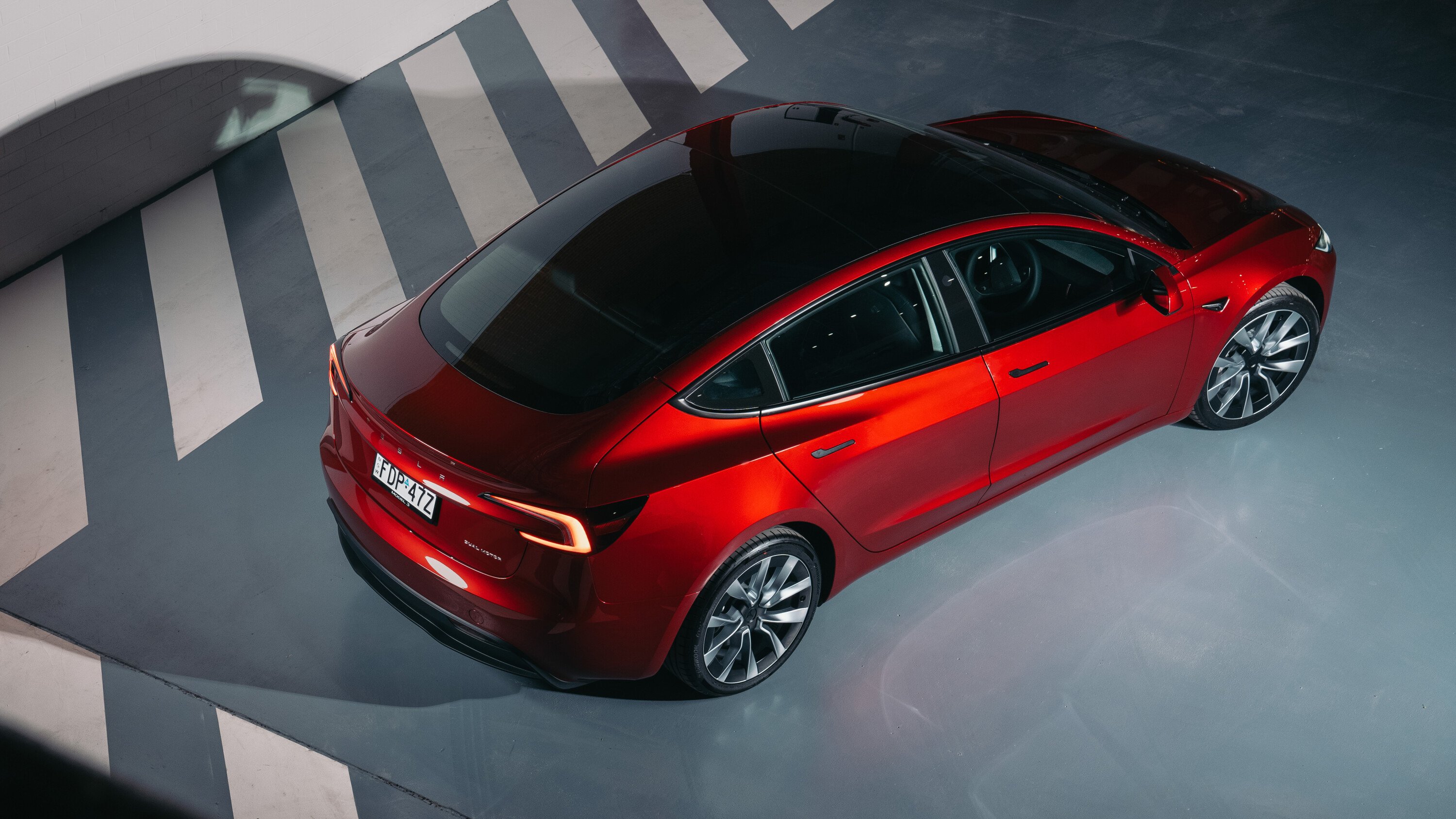
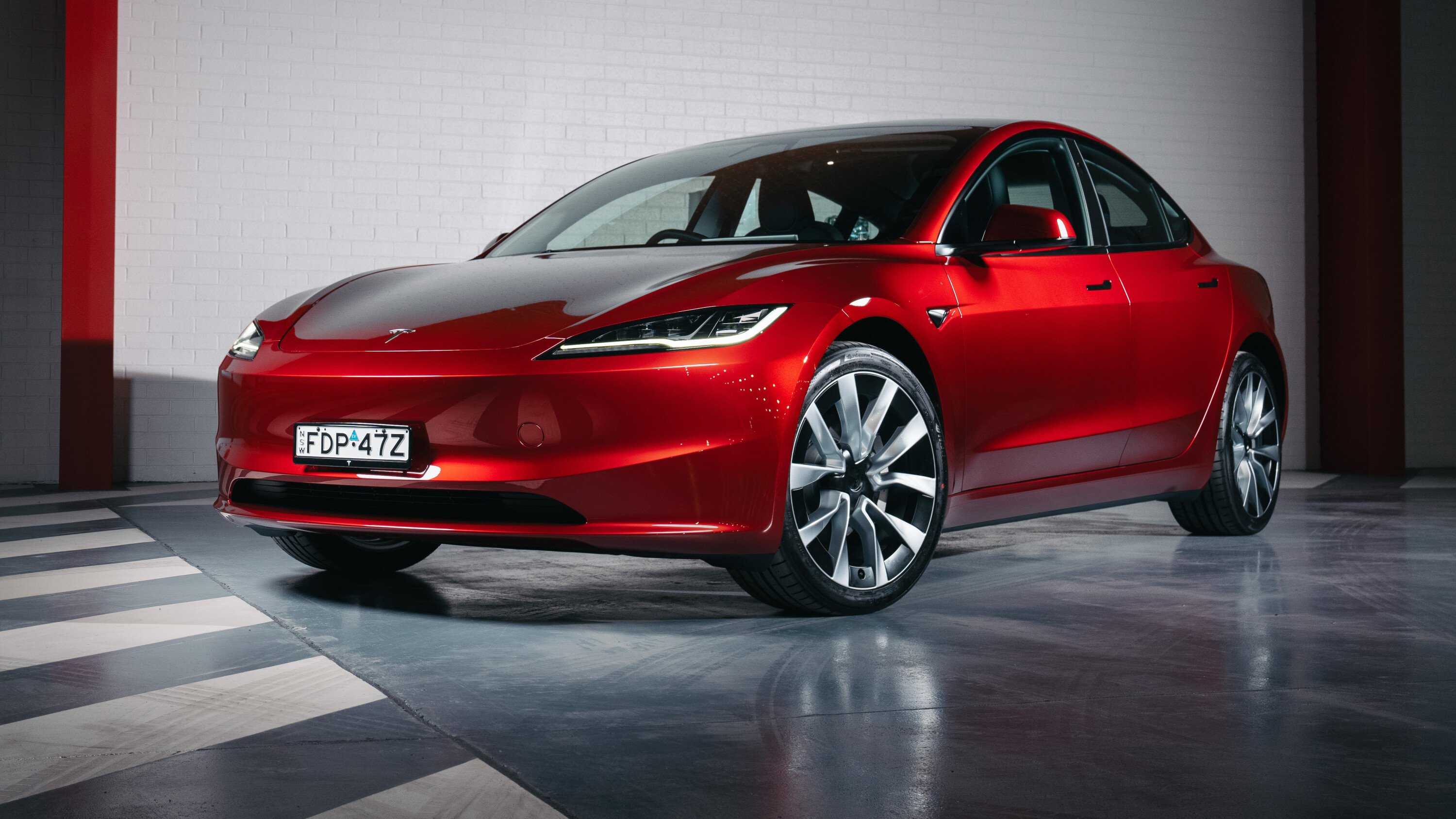
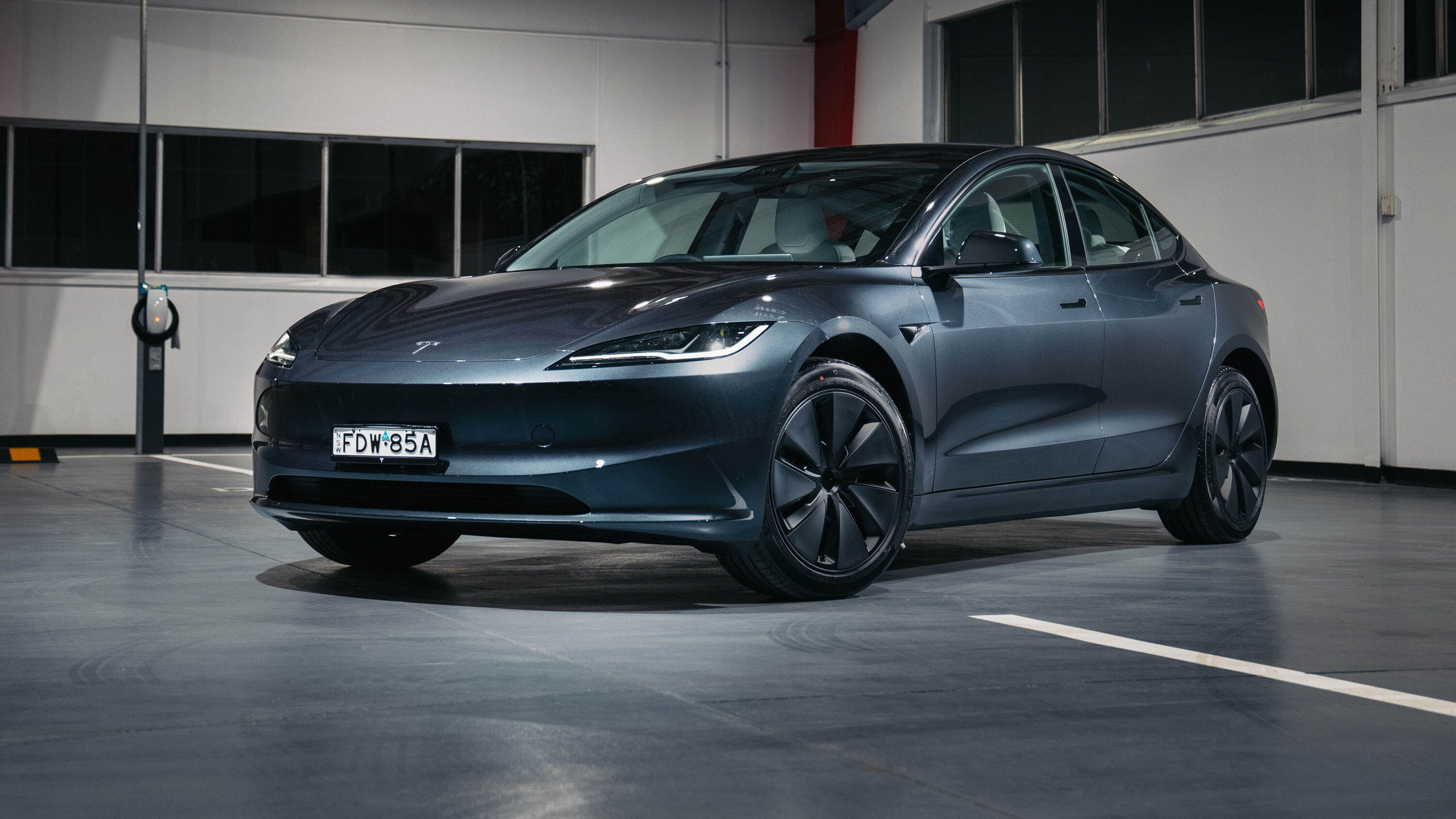
The 2024 Tesla Model 3 has been refreshed with a more upmarket design, new technology and slightly better driving range.
Snapshot
- Popular Model 3 updated with sharper Euro-style design
- New tech, more range, quieter and comfier ride
- Deliveries to start next year in Oz, Performance to join later
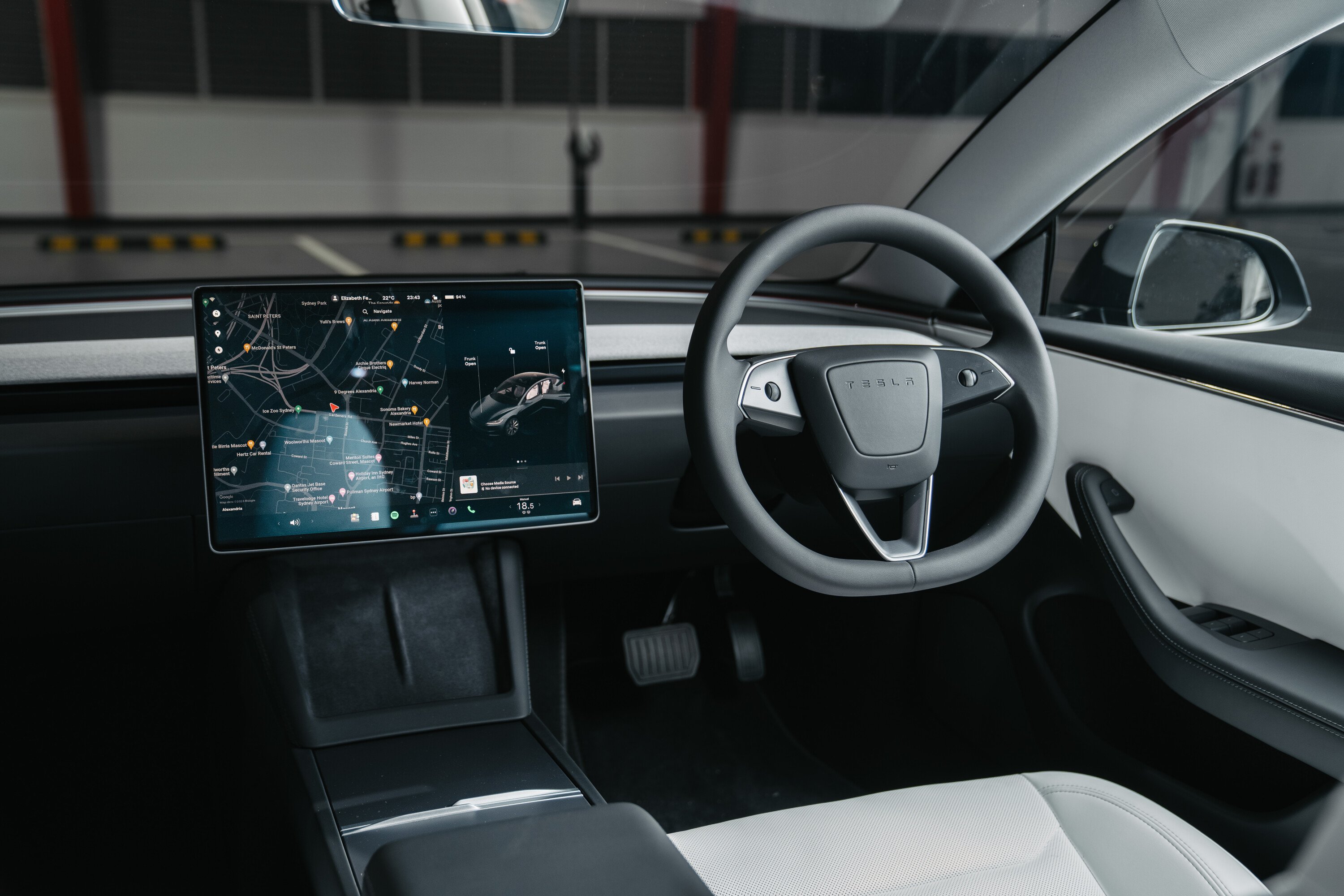
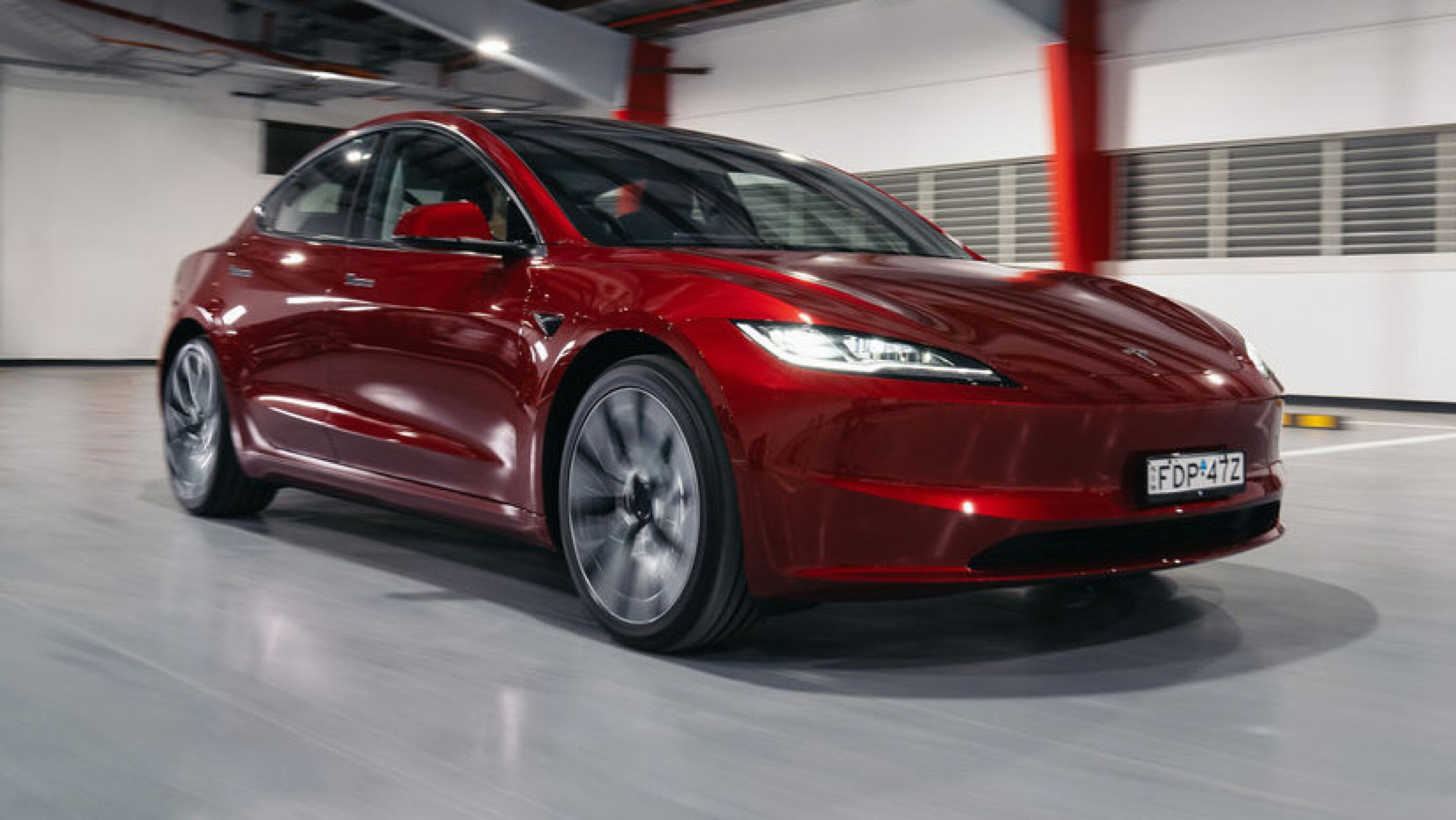
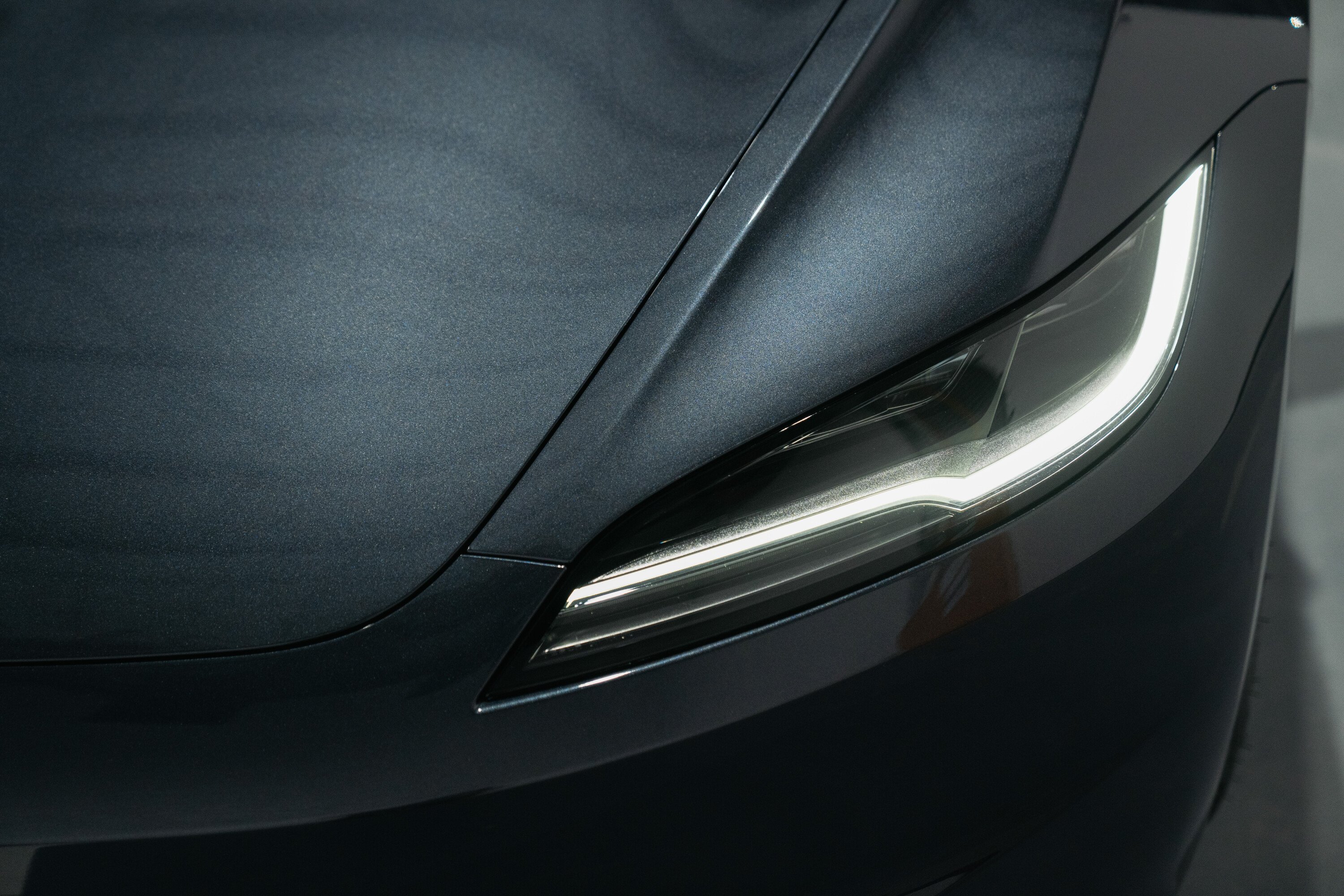
After a long rumour mill, the popular electric sedan is officially now on sale with a restyled front and rear, new interior with softer materials and ambient lighting, technology additions, and refinements to driving comfort, noise isolation and driving range – despite no changes to the batteries and powertrains.
Pricing – at least compared to the latest outgoing 2023 Model 3 price – has increased by up to $4500 and the flagship Performance variant is missing at launch, but will join sometime in 2024.
The Model 3 electric sedan has become one of Australia’s best-selling cars, displacing the Toyota Camry. But, with regular pricing changes – unusual for the new-car market – it has proven tricky to keep track of how much the Model 3 costs in Australia.
Here, you’ll find the exact price of every Tesla Model 3 variant at the time of publication – and how it’s changed over the years.
JUMP AHEAD
- Current pricing
- Pricing history
- Features
- Colours
- Options
- Powertrains, charging, and driving range
- Safety
- Dimensions
- Warranty and servicing
- Availability
1
2024 Tesla Model 3 pricing
September 2023
| Model | Price (before on-road costs) | Change (vs 2023 model) |
|---|---|---|
| RWD | $61,900 | up $4500 |
| Long Range | $71,900 | up $1500 |
Tesla Model 3 price history charted
Here’s an illustration of how Model 3 pricing has changed since its September 2019 launch. It peaked in April 2020, but has inconsistently fluctuated since.
Tesla introduced a 2021 update in October 2020 and 2024 facelift in September 2023.
As per Tesla style, it makes continuous ‘running changes’ without notice, improves manufacturing processes and vertically integrates its supply chain to cut costs. It claimed to have reduced manufacturing costs of the related Model 3 sedan and Model Y SUV by around 30 per cent between 2018 to 2022.
1
2024 Tesla Model 3 features
We endeavour to keep this story up-to-date, but Tesla tends to make minor ‘running changes’ without notice and public disclosure compared to other brands. The features below are correct as at the time of publication.
The base Tesla Model 3 rear-wheel drive (RWD) includes most features as standard.
1
| 2024 Tesla Model 3 RWD features | |
|---|---|
| 18-inch u2018Photonu2019 aero covered alloy wheels | Fixed tinted panoramic glass roof |
| Animal hide-free black interior | Acoustic glass (front, side and rear) |
| 15.4-inch touchscreen with over-the-air (OTA) software update capability | Ambient lighting dashboard and door strips (200+ colour combinations) |
| 8.0-inch rear passenger climate and entertainment touchscreen | u2018Tesla Visionu2019 camera-only u2018Basic Autopilotu2019 active safety assistance features |
| Built-in Google Maps with automatic Supercharging stop planning | Reversing camera with blind-spot view side cameras |
| Music and video streaming apps, arcade games, Bluetooth, and voice control | Heated and ventilated front seats |
| Tesla mobile app connectivity with ultra-wideband (UWB) support for phone key | Heated rear seats |
| Standard Connectivity for up to eight years, Premium Connectivity trial for first 30 days | Heated steering wheel |
| Built-in Dashcam and Sentry Mode recording (128GB USB stick included) | Electrically adjustable driver and front passenger seat |
| Nine-speakers with amplifier | Full LED headlights with auto high beam and integrated fog lights |
| Dual Qi wireless charging pads | Full LED tail-lights with rear fog lights |
| 65-watt USB-C charging ports | Auto power folding, dimming, heated wing mirrors |
| Dual-zone climate control with hidden front and rear air vents, Keep Climate On, camp mode and dog mode | Power tailgate |
| Pedestrian warning u2018Boomboxu2019 external speaker | Camera-based automatic wipers |
| Flush exterior door handles with matte black exterior trim | |
The Tesla Model 3 Long Range gains a more powerful speaker system and different interior door cards.
| 2024 Tesla Model 3 Long Range features (In addition to RWD) | ||
|---|---|---|
| 17-speakers with dual subwoofers and amplifiers | Black artificial suede interior door material | |
A flagship refreshed Tesla Model 3 Performance is also confirmed to debut next year.
1
Colours
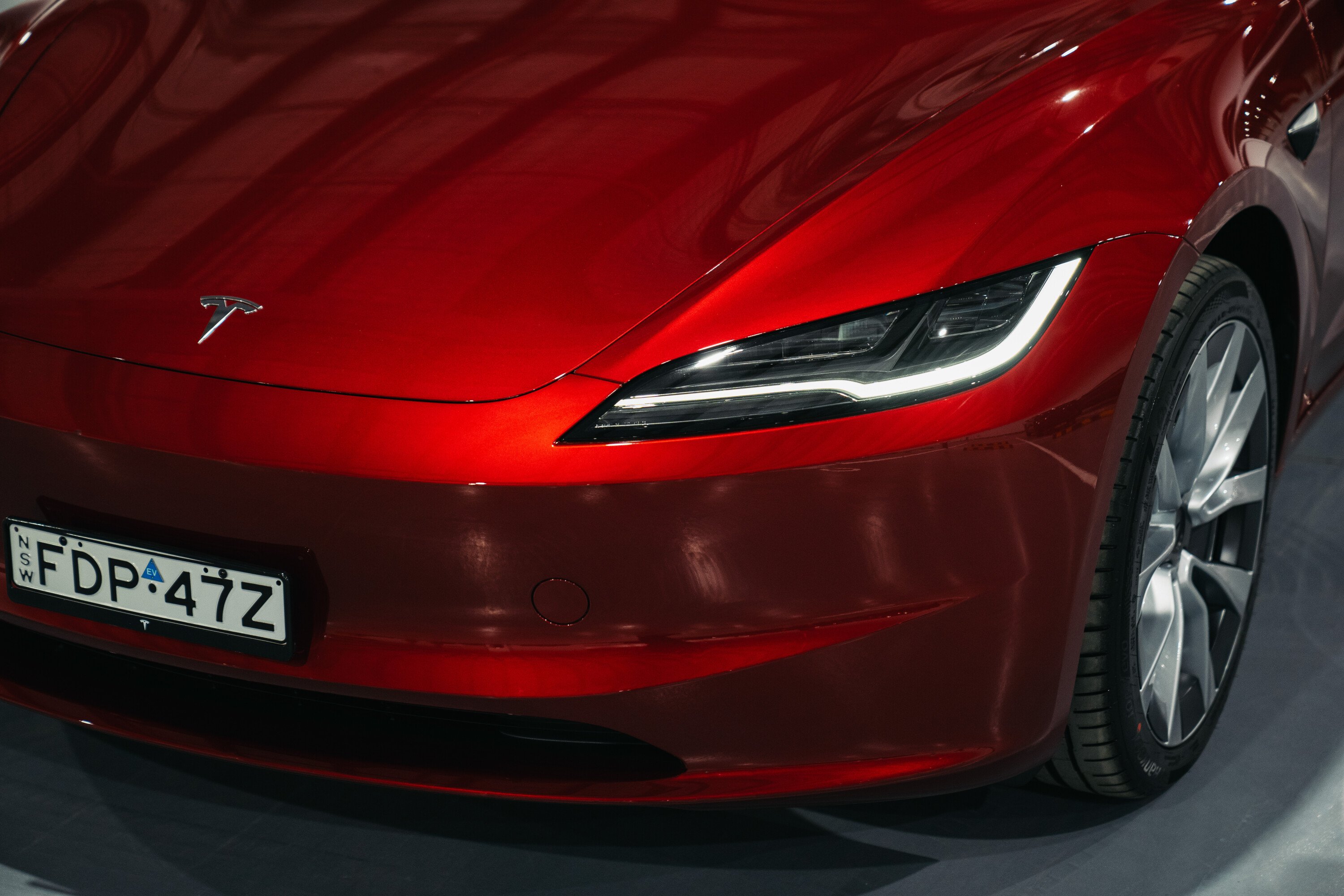
The refreshed 2024 Model 3 introduces Stealth Grey and Ultra Red exterior colour options (replacing Midnight Silver and Red Multi-Coat respectively) – but they come at a higher cost.
| 2024 Tesla Model 3 exterior colours | |
|---|---|
| Pearl White Multi-Coat | Standard |
| Solid Black | $1500 |
| Deep Blue Metallic | $1500 |
| Stealth Grey | $2300 |
| Ultra Red | $2600 |
1
Options
- 19-inch Nova wheels – $1800
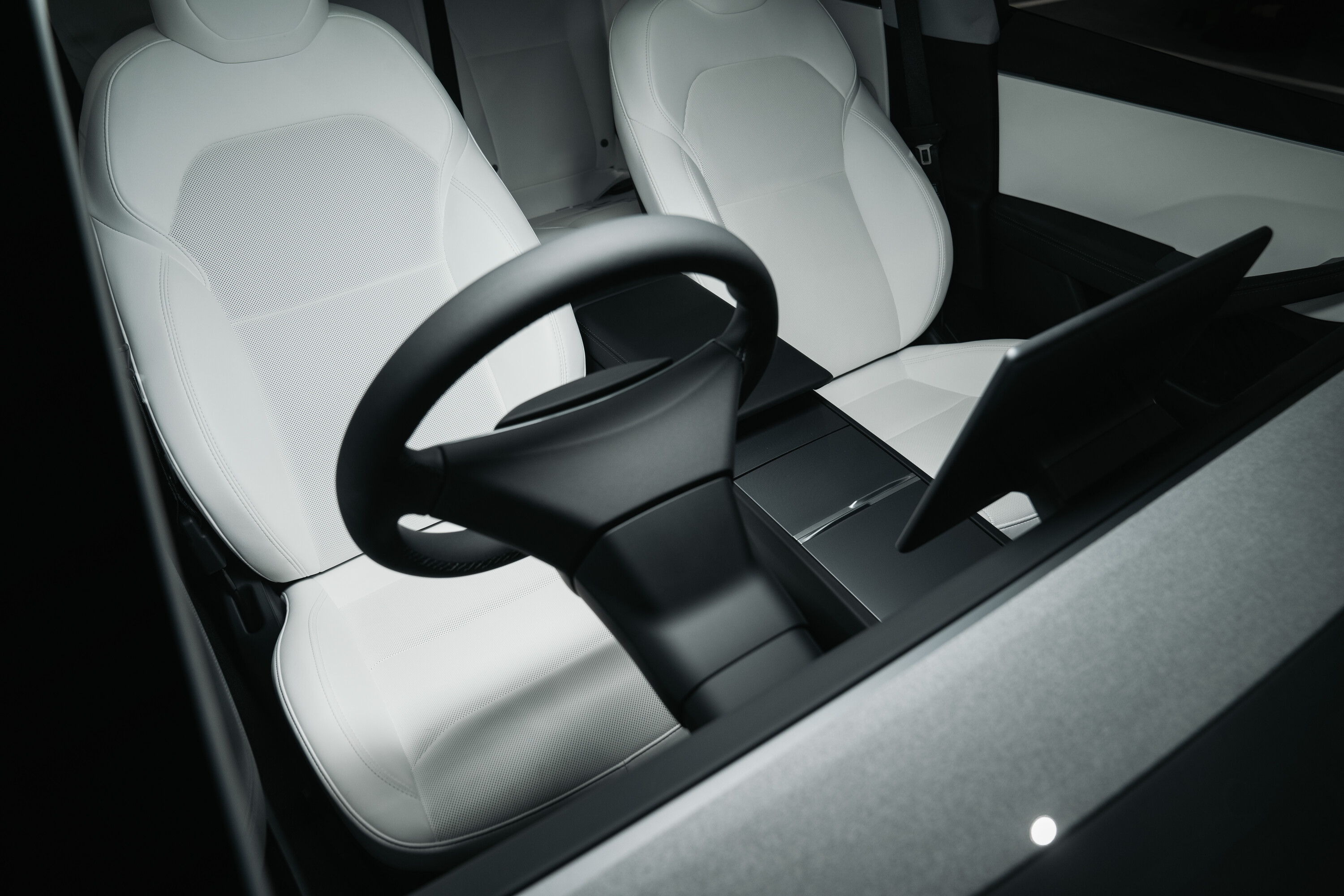
- White and black interior – $1500
- Tesla Mobile Connector trickle charging cable – $550
- Tesla Gen 3 11kW AC Wall Connector – $750 (excludes installation fees)
1
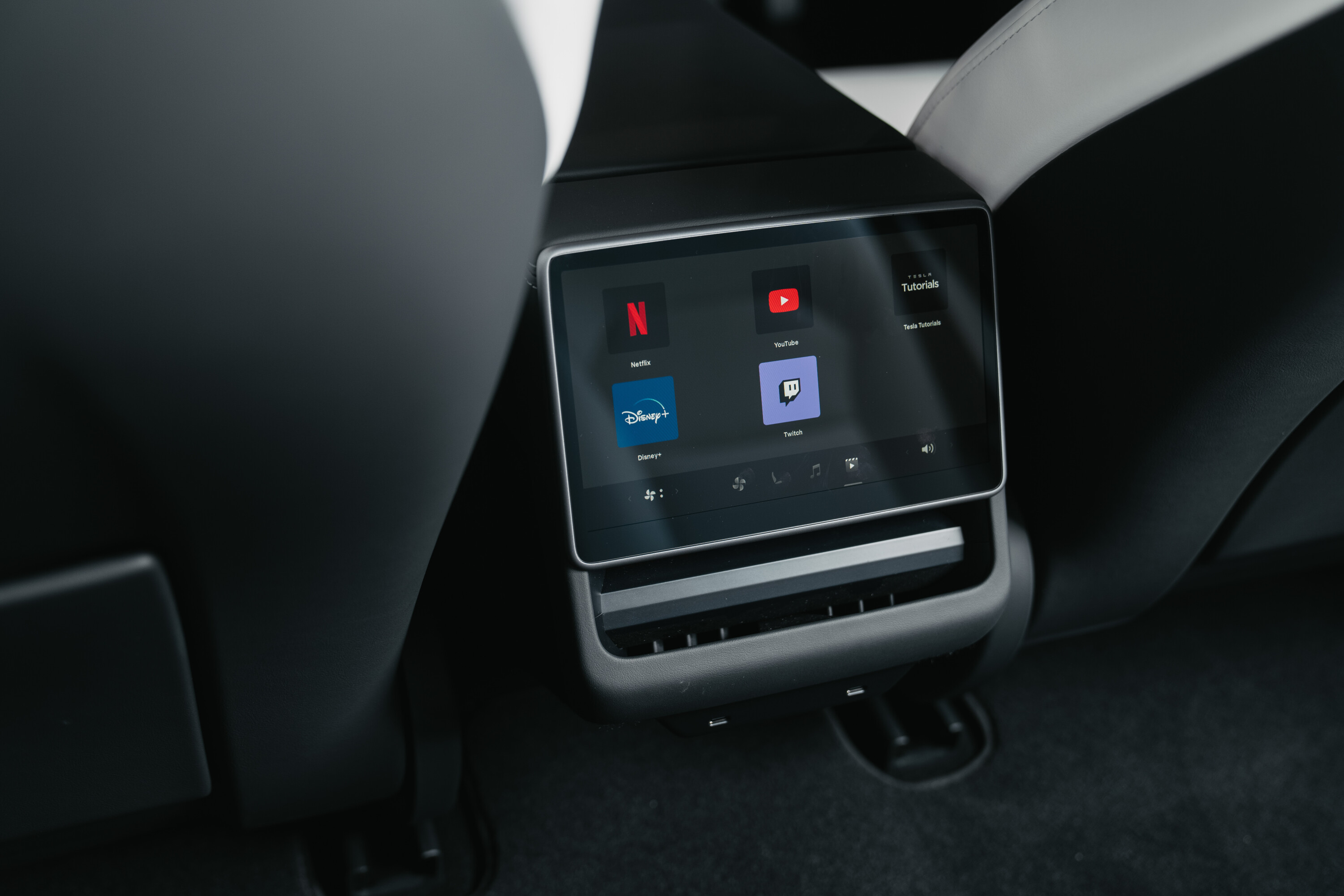
- Premium Connectivity – $9.99 per month
| Premium Connectivity subscription adds | |
|---|---|
| Satellite-view maps with live traffic lines | Karaoke* |
| Video streaming services* | Internet browser* |
| Music streaming services* | Live camera monitoring via mobile app |
| *Features can still be used via connected Wi-Fi hotspot without subscription | |
- Enhanced Autopilot – $5100
| Enhanced Autopilot adds | |
|---|---|
| Automatic lane change assist | Summon (move vehicle forwards/backwards via mobile app) |
| Automatic parking | Smart Summon (move vehicle to user via mobile app) |
| Navigate on Autopilot | |
| Note: Software package can be added during ownership via mobile app | |
- ‘Full Self-Driving’ Capability – $10,100
| u2018Full Self-Drivingu2019 Capability adds | |
|---|---|
| Enhanced Autopilot features | Supposed u2018promiseu2019 of Level 2 autonomous driving driver assist function in the future |
| Traffic light and stop sign control (when adaptive cruise is enabled) | |
| Note: Software package can be added during ownership via mobile app | |
1
Powertrains, charging, and driving range
The 2024 Tesla Model 3 carries the same battery and drivetrain as before – split by either standard-range single-motor and long-range dual-motor configurations.
| RWD | Long Range | |
|---|---|---|
| Battery size | 57.5kWh usable (60kWh gross) estimated* | 75kWh usable (78.1kWh gross) estimated* |
| Battery cathode type | LFP | NMC lithium-ion |
| Claimed driving range (WLTP) | 513km | 629km |
| Claimed energy consumption (WLTP) | 11.2kWh/100km* | 11.9kWh/100km* |
| Drive type | RWD | AWD |
| Max AC / DC charging speed | 11kW / 170kW | 11kW / 250kW |
| Recommended daily charging limit | 100% | 90% |
| *Figures according to EV Database, since Tesla doesnu2019t disclose battery and powertrain specs | ||
The Model 3 RWD features an unchanged 57.5kWh usable (estimated) lithium-iron-phosphate (LFP) battery pack (estimated according to EV Database [↗]) delivering up to 513km claimed WLTP driving range.
Meanwhile, the Long Range nets a larger 75kWh usable (estimated) nickel-manganese-cobalt (NMC) battery (according to EV Database [↗]) providing up to 629km claimed WLTP driving range.
Compared to the outgoing 2023 model, claimed driving range on the combined WLTP test cycle has been slightly improved by 22km on the RWD and 27km on the Long Range.
That’s thanks to a range of aerodynamic optimisations to bodywork surfaces, sharper body lines, and new wheel designs aimed at reducing drag and maximise range.
Softer materials in the cabin, all-round acoustic glass (now on the rear windows and windscreen) and new springs, dampers, bushings, subframe mounting points, and dedicated tyres claim result in a quieter and more comfortable ride, too.
The base Model 3 RWD is powered by an unchanged single rear-mounted electric motor that can accelerate the electric sedan from 0-100km/h in a claimed 6.1 seconds.
Tesla doesn’t provide power figures, but the latest official filing to the Australian Government’s road vehicle regulator [↗] and EV Database [↗] confirms 208kW of power. The latter suggests 420Nm of torque.
Meanwhile, the Long Range has two electric motors for all-wheel drive and a claimed 0-100km/h time in 4.4 seconds. According to EV Database [↗], it produces 366kW and 493Nm.
A flagship refreshed Tesla Model 3 Performance is set to join next year.
1
Safety
The 2024 Tesla Model 3 hasn’t been tested by the Australasian New Car Assessment Program (ANCAP) yet, but it did receive the full five-star safety rating [↗] under the 2019 testing criteria.
Tesla claims around 50 per cent of parts are changed compared to the outgoing model
It features a new front bumper and redesigned doors with anchors that slot into the chassis to improve stability, so it’s unknown whether the current ANCAP rating will still apply.
According to the Model 3 owner’s manual [↗], there are six airbags, but it lacks a front-centre airbag.
The Tesla electric car comes with a Cabin Overheat Protection feature, which automatically turns on the climate control to try to keep the interior cool under 40-degrees Celsius when parked. It also offers ‘Keep Climate On’, camp and dog modes.
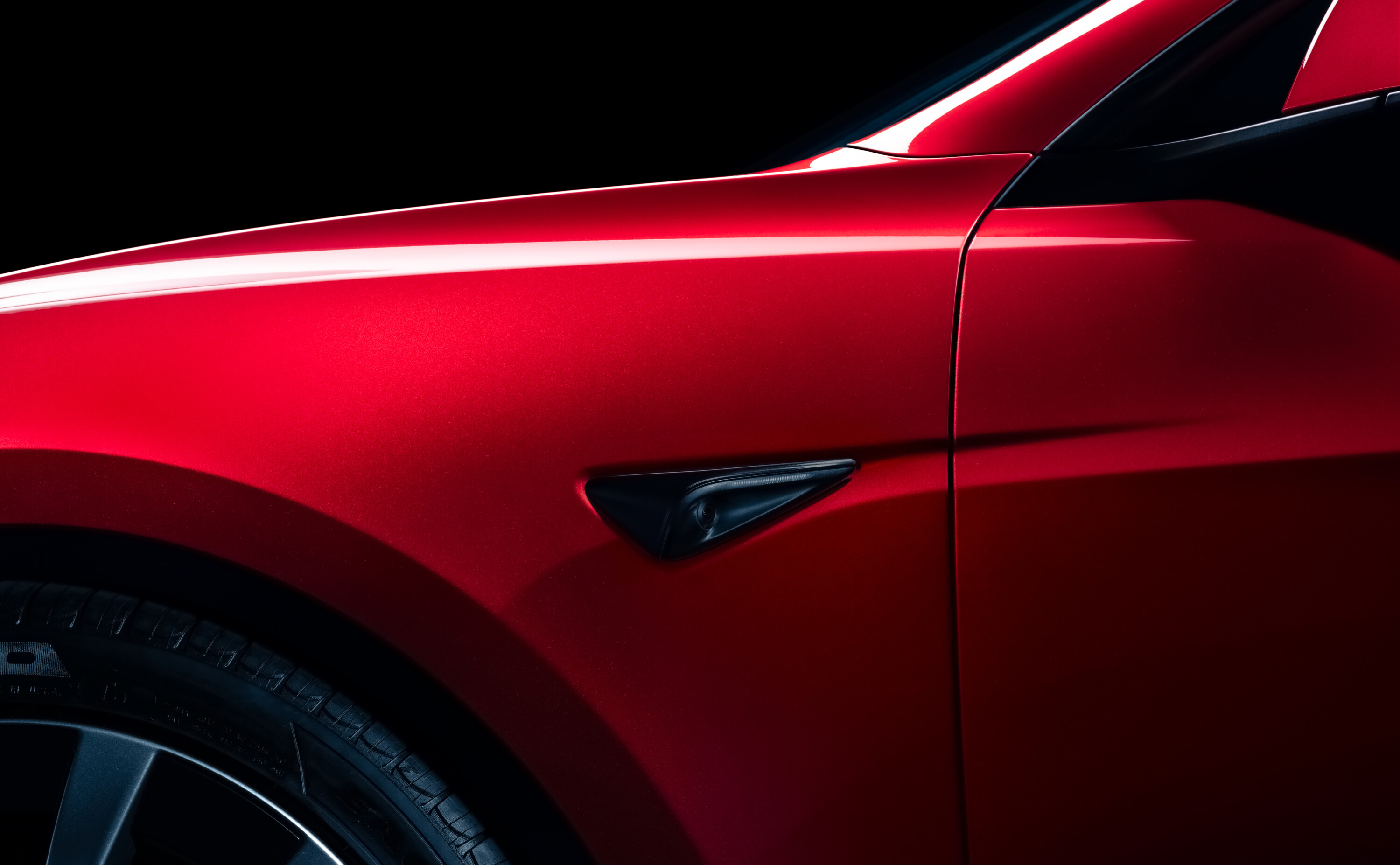
1
The Model 3’s safety assistance technologies are powered by all-round cameras only, called ‘Tesla Vision’.
| 2024 Tesla Model 3 Basic Autopilot standard active safety features | |
|---|---|
| Front auto emergency braking (AEB) with vehicle/pedestrian/cyclist/junction detection | Lane-keep assist |
| Rear AEB | Blind-spot monitoring with blind-spot view cameras |
| Adaptive cruise control with lane-centring assist | Reversing camera |
About those ultrasonic sensors…
With new front and rear bumpers, the facelifted Tesla Model 3 has removed sonar-based parking sensors for all countries, including Australia.
Instead, it utilises all-round cameras to estimate the proximity to nearby objects, which detects each side of the vehicle for the first time.
Tesla [↗] has been phasing out ultrasonic and radar sensors globally since 2021 in favour of a camera-only system.
- Enhanced Autopilot – $5100
| Enhanced Autopilot adds | |
|---|---|
| Automatic lane change assist | Summon (move vehicle forwards/backwards via mobile app) |
| Automatic parking | Smart Summon (move vehicle to user via mobile app) |
| Navigate on Autopilot | |
| Note: Software package can be added during ownership via mobile app | |
- ‘Full Self-Driving’ Capability – $10,100
| u2018Full Self-Drivingu2019 Capability adds | |
|---|---|
| Enhanced Autopilot features | Supposed u2018promiseu2019 of Level 2 autonomous driving driver assist function in the future |
| Traffic light and stop sign control (when adaptive cruise is enabled) | |
| Note: Software package can be added during ownership via mobile app | |
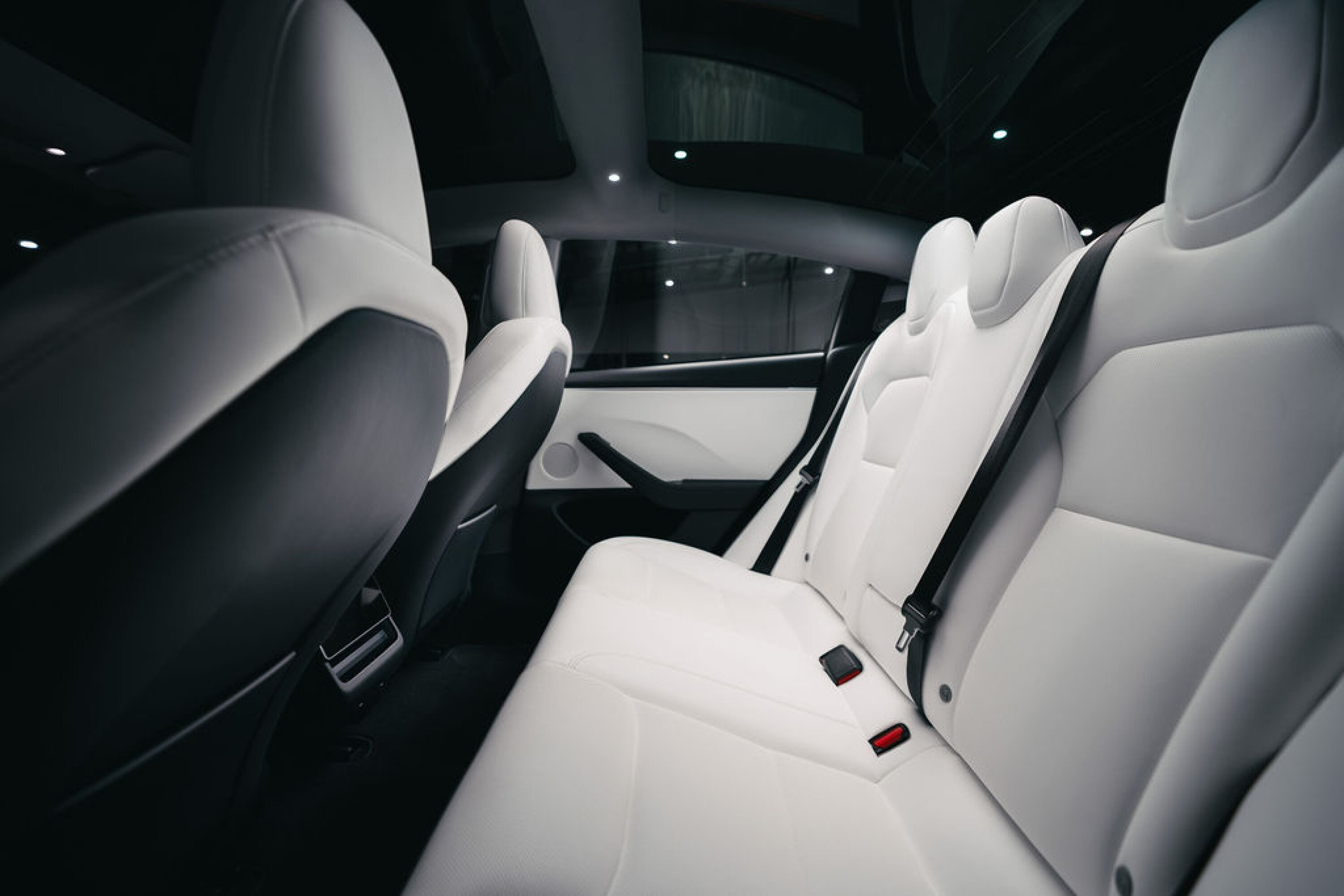
1
Dimensions
The facelifted 2024 Tesla Model 3 is classed as a medium sedan.
| RWD | Long Range | |
|---|---|---|
| Length x width x height | 4720 x 2089 x 1441mm | |
| Wheelbase | 2875mm | |
| Ground clearance | 138mm | |
| Boot / frunk | 594 / 88-litres | |
| Weight | 1765kg | 1828kg |
While it uses the same Tesla second-generation ground-up EV platform, it appears the new bumper has stretched the front nose, resulting in a 25mm longer overall length than the previous 2023 model.
The boot is now 33-litres larger than the outgoing Model 3, but retains the same 88-litre frunk volume under the bonnet.
While the electric sedan is rated to tow overseas, the Australian 2023 Model 3 owner’s manual [↗] warns:
“Do not use Model 3 for towing purposes… Using Model 3 for towing without Tesla-approved towing components and accessories may void the warranty.”
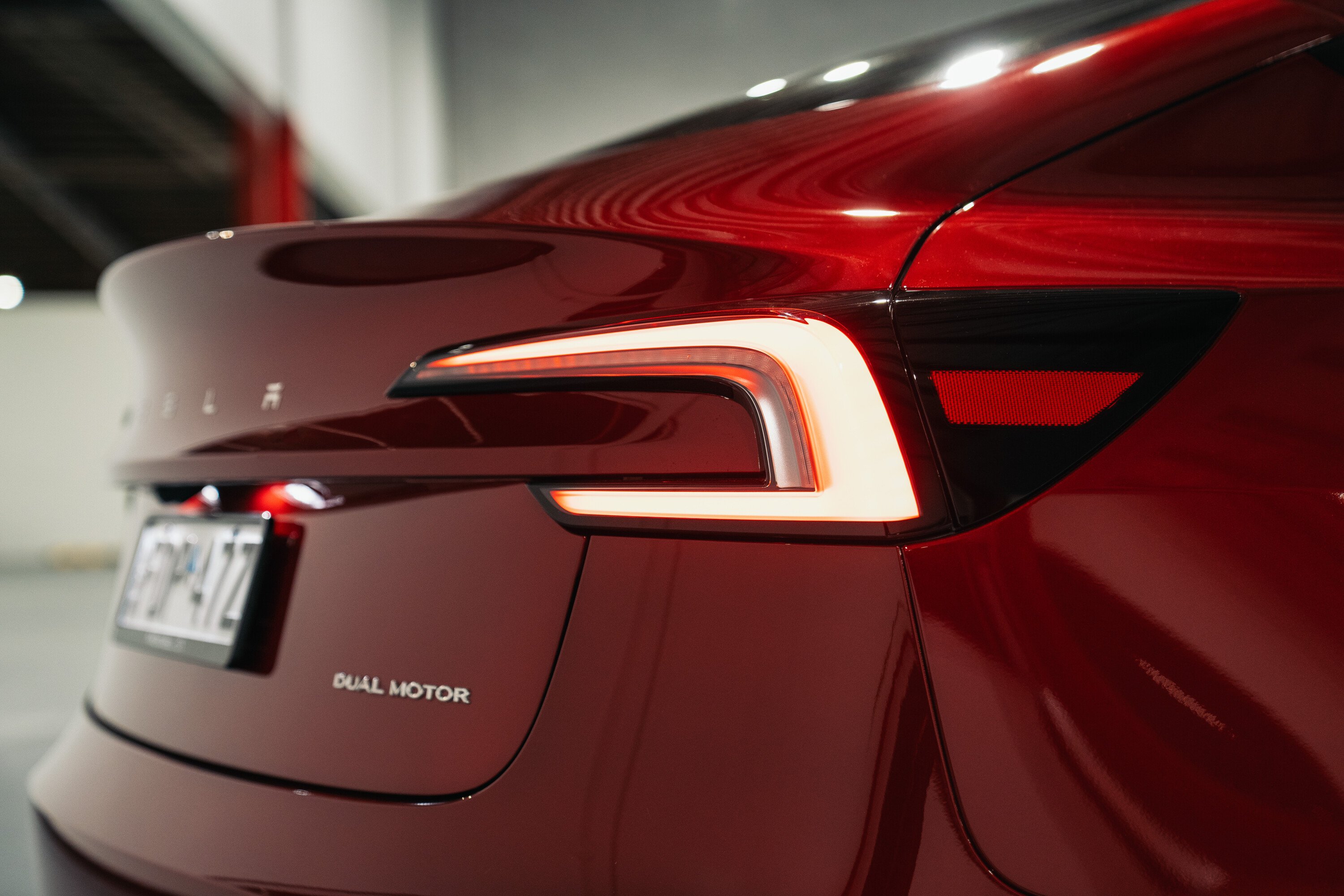
1
Warranty and servicing
The 2024 Tesla Model 3 electric sedan is covered by a four-year/80,000km vehicle warranty – which is shorter than the industry standard.
The battery warranty differs depending on the variant. The base RWD’s LFP battery pack is backed for eight-years/160,000km, while the Long Range’s NMC battery goes for up to eight-years/192,000km.
Both promise the pack won’t degrade by more than 30 per cent within the battery warranty period.
The touchscreen and media control unit are covered by a separate two-year/40,000 km warranty. Standard Connectivity for the touchscreen and mobile app is included for the first eight years.
Tesla uses a condition-based servicing scheme, instead of traditional scheduled logbook servicing.
The vehicle’s sensors detect when specific parts need maintenance based on usage and time, and notifies the owner via the touchscreen or mobile app to schedule a checkup. Tesla also recommends a range of routine maintenance tasks, which are listed here [↗].
Roadside assistance is included during the vehicle warranty.
The company offers a mobile service for general maintenance tasks, but some may require a service centre visit.
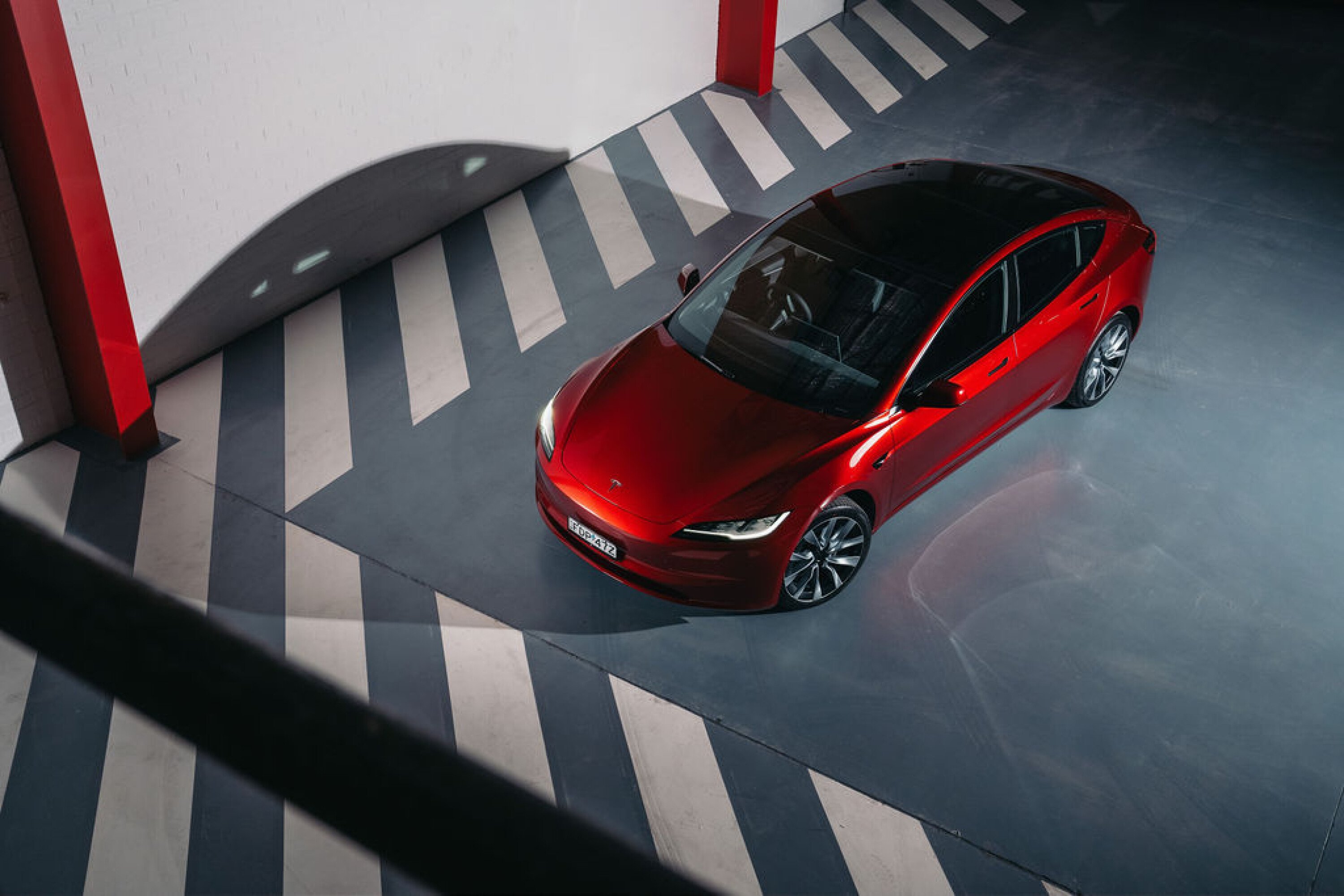
1
Availability
The facelifted 2024 Tesla Model 3 is expected to start Australian deliveries between January to March 2024.
Reservations are open now via the Tesla website with an online-only, fixed-price purchasing model.
The Model 3 directly competes with the Hyundai Ioniq 6 sedan, cheaper BYD Seal, and upmarket Polestar 2 liftback. It’s also priced in line with the Volvo EX30 small SUV, Cupra Born hatch, and Renault Megane E-Tech crossover.
MORE
Everything Tesla
Below: Outgoing 2023 Tesla Model 3
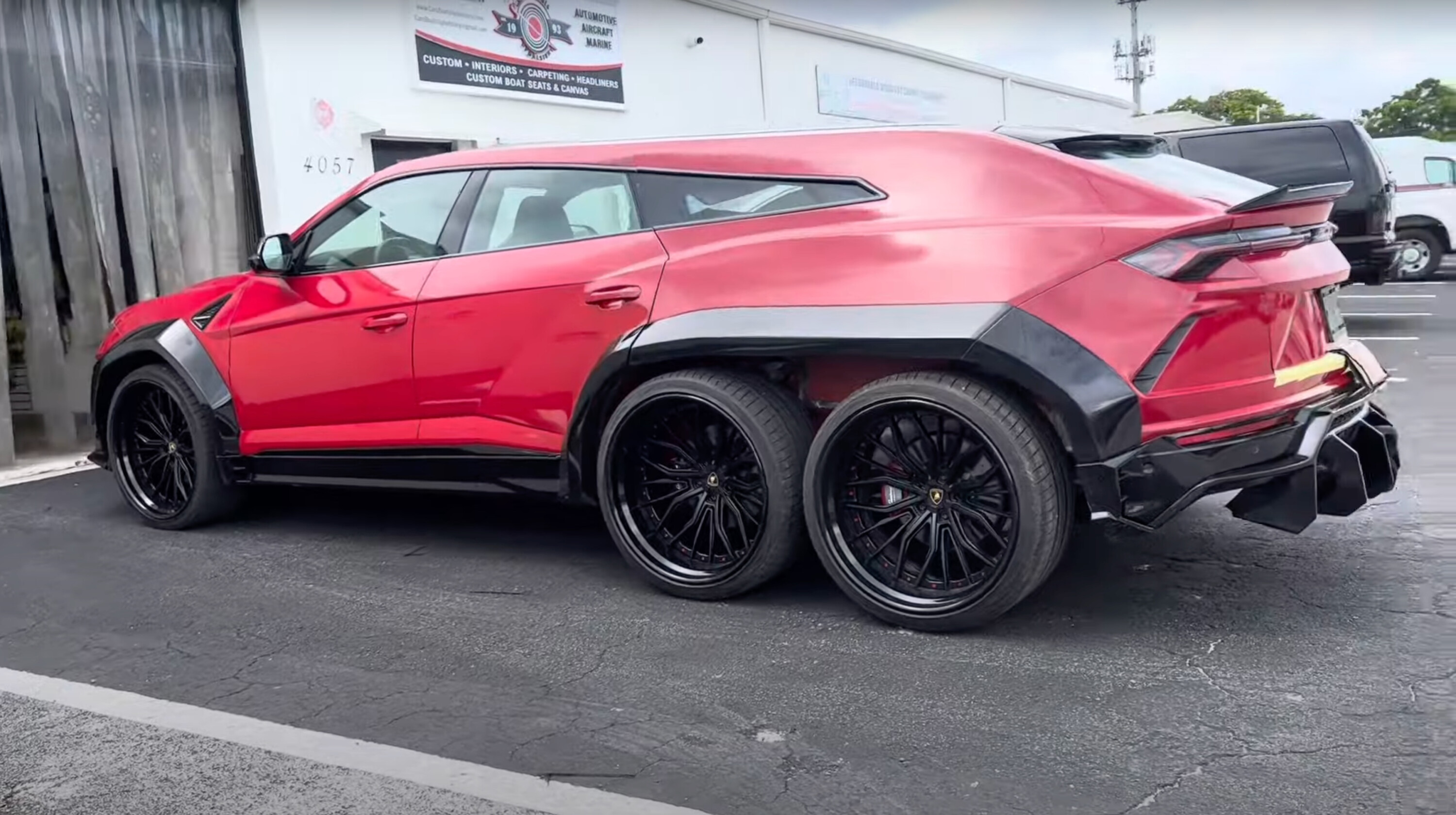
We’ve had the Mercedes-AMG G63 6X6, there are 6X6 versions of the Ford F-150 and RAM 1500 and now we have arguably the craziest of them all…the Lamborghini Urus 6X6.
First thing to note is that unlike the AMG, this Urus isn’t an official Lamborghini product. Instead it’s a regular Urus that has reportedly been modified by South Florida Jeeps, an American company that has form when it comes to 6X6 builds.
Ever heard of the Apocalypse Hellfire 6X6? It’s worth a Google…
Videos of the Urus build have recently been captured by YouTubers [↗] outside South Florida Jeeps and while they don’t include any official technical information they do show the extensive modifications that have been made.
The roofline has been heavily extended, there’s a new rear diffuser, wider rear wheel arches, additional windows and black aftermarket wheels.
What’s unclear is whether the additional axle is actually driven or simply there for show. Either way, it’s unlikely the modified Urus will be as capable as a Mercedes-AMG G63 6X6 off-road.
As for the design… You’d be hard-pressed to call it better-looking than a regular Urus, though it’ll undoubtedly attract more attention. Whether it’s the right kind of attention remains to be seen.
We’ll update this story if official details come to light but for now, what are your thoughts on the Lamborghini Urus 6X6? Magnificent? Or a monstrosity?
1
Have you ever missed a postal delivery and felt a twinge of frustration, knowing you’re stuck with a narrow window on Saturday morning to visit your local post office?
That feeling is quite similar to what many experience when buying a car, after finding out there’s only one day they can make their visit.
It’s an already tense ordeal, what with forking over a significant amount of cash or committing to a lengthy contract for a car that might not be in your driveway for months, or even years.
Now, picture a scenario where you can’t go to a dealership on a Saturday and need to take time off work for your visit.
While most major retailers buzz with activity on Sundays, some car dealerships continue to keep their doors shut. But why do these automotive spots choose to dim their lights on a day when nearly every other shop is open?
The practice of car dealerships remaining closed on Sundays in Australia, as in other parts of the world, is rooted in a blend of historical, cultural, economic and practical reasons.
Australian retail laws
Let’s get some context and delve into the retail laws governing car dealerships in Australia.
In NSW and Victoria it’s legal to trade on a Sunday, with some dealerships choosing to do so. However in Queensland, South Australia and Western Australia, car dealerships are not authorised to be open under state trading laws for ‘non-exempt shops’.
In a recent interview on 4BC drive, CEO of the Australian Automotive Dealer Association (AADA), James Voortman said car dealerships are overwhelmingly opposed to the idea of opening on Sundays after a proposal to overturn the state laws currently prohibiting Sunday trade.
The AADA backs this sentiment, which highlights that opening on Sundays incurs additional costs without a guaranteed increase in sales.
Voortman said it makes working at dealerships less attractive due to the requirement of a seven-day work roster, potentially exacerbating the existing skills shortage in the industry.
Blue Laws
This phenomenon can be traced back to the early 1620s in the United States, where Sunday was traditionally observed as a day of rest and worship through the ‘Blue Laws’. Over time, their scope and enforcement have varied greatly.
Although these customs are no longer strictly enforced, they have become ingrained in the culture of the automotive industry, with many dealerships choosing to remain closed on Sundays out of respect for tradition and to give employees time with their families or for leisure activities.
Work-life balance
In recent years, the industry has seen shifts in consumer patterns and workplace culture, challenging the traditional practice of Sunday closures. Some dealerships that experimented with Sunday operations reported an increase in gross revenue.
However, this has also led to concerns about sales staff burnout, as many dealership employees already work long hours and six-day weeks.
In the modern era, where flexibility is prized, imposing a roster-based, seven-day work week on dealership employees seems counterintuitive – with many Australians asking our their employers for flexible working and then want that taken away from others.
Maintaining a day off on Sundays for dealership employees is viewed as a perk, and contributes to a healthy work-life balance. It boosts employee morale and retention rates, showing a respect for the balance between work responsibilities and personal time.
Financial closures
Then there’s the practical side of things.
With banks taking a day off too, sorting out the nitty-gritty financial details of buying a car would be even more challenging. I’m no finance expert, but I’m pretty sure you need money to buy a car.
So, while some may argue that Sunday closures mean missed sales opportunities, it seems like the industry is saying, “Let’s just hit the brakes for a day, shall we?” After all, there’s something nice about keeping one day a week a little less commercial and a little more chill.
MORE
Car buying guides
Need help understanding how car financing and leasing works?
- How does car leasing work and should you do it?
- How to get a car loan
- Financing your car is about to get fairer
- What if I can’t pay my car loan?
- How to get the best deal on a new car
- 10 questions you should ask the car dealer
- Buy new or used?
- How to test drive a car
- Should you get your car serviced at the dealership?
When do electric car batteries need replacing?
Snapshot
- Real-world studies demonstrate degradation is minimal, but varies
- Depends on the model, climate, owner driving and charging habits
- Manufacturers offer dedicated battery warranties
Battery life. It’s the key source of fear and hesitancy when considering the electric vehicle switch, but is it valid?
Think of a smartphone, wireless earbuds or even a car’s 12-volt electronics module, and batteries have long had a reputation for a short lifespan.
However, it’s different EV battery packs. Yes, they do naturally degrade over time with more use, but they are more advanced, are composed of different materials, and have the backing of sophisticated cooling and heating systems.
Do EV batteries really last beyond ‘a few years’, when do they need to be replaced, and how much does it cost (if needed)? Let’s look at the evidence…
JUMP AHEAD
- ⏰ How long do EV batteries last?
- ? EV battery life tested
- ? What is the EV battery warranty?
- ? How to avoid EV battery degradation
- ? How much does it cost to replace an EV battery?
- ♻️ What happens to degraded batteries?
- ? Do EV batteries last long?
- ? Time to make the electric switch?
1
⏰ How long do EV batteries last?
There’s no definitive answer, but generally, EV batteries are designed to last the lifetime of the vehicle – and are able to be repurposed afterwards.
EV battery health depends on a variety of factors, including the individual owners’ charging habits (learn more below), how much the vehicle is driven, in what conditions, and the battery manufacturer, cell type, and vehicle model.
According to Green NCAP [↗] and the University of Technology Sydney [ABC ↗], both project a typical lithium-ion EV battery pack will last for an average of 16 years, with the former estimating 240,000 kilometres driven.
Additionally, a study of 15,000 EVs by American battery research company Recurrent [↗] found most lithium-ion battery models generally retain at least 90 per cent capacity after driving 160,000 kilometres (or around 10 years for the typical Australian driver).
For most EVs, the reduced driving range should still not be a major impediment even after a decade, as the typical driver travels 30 to 40km everyday.
However, it does mean that long-distance trips may require more charging stops down the line.
What is degradation?
Degradation is a natural process where the battery gradually loses an amount of its full energy storage capacity, compared to when new.
This results in gradually reduced driving range, with usually a higher drop in the early years of a new battery before levelling out over time.
Generally, batteries degrade depending on the number of charging cycle counts (0 to 100 per cent) in the lifetime of the vehicle and the battery temperature.
1
Battery technology has also significantly improved to extend longevity.
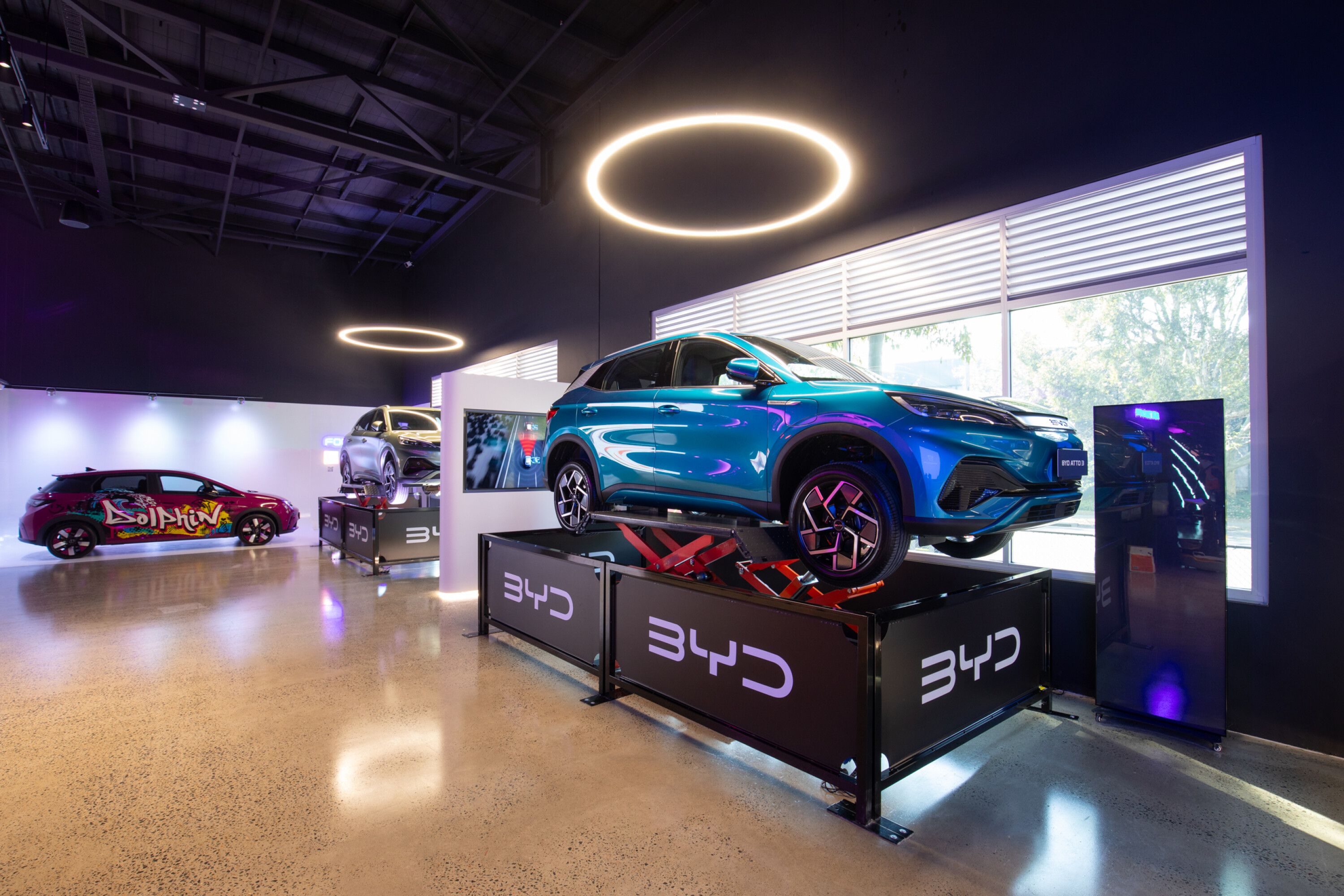
Lithium-iron-phosphate (LFP) batteries have emerged as a lower cost, less environmentally contentious, and thermally safer alternative to lithium-ion – used in EVs such as the base MG 4 Excite 51, BYD Atto 3, and Tesla Model Y RWD.
While it also has its own range, charging and weight disadvantages, LFP benefits from about double the lifespan compared to lithium-ion type batteries, with an estimated 3000 to 5000 full charge cycle counts before experiencing a significant degradation hit.
Similarly, battery management systems (BMS) have improved, with battery suppliers and automakers continuously learning to implement better module and cell designs, and there are more active and passive cooling methods to regulate and keep cells in their optimum temperature range – a key factor of degradation.
Importantly, battery buffers are also in place, which activate unused cells to offset the range hit over time.
Therefore, data from an old first-generation Nissan Leaf – which only has a passive air-cooled lithium-ion battery – isn’t comparable to a new EV model with a more sophisticated pack design, BMS calibration and active liquid cooling.
1
? EV battery life tested
Real-world data highlight that electric cars can last the lifetime of the vehicle.
Independent EV content creator Bjørn Nyland has debunked degradation range concerns by testing real-world owners’ cars in Norway, the world’s EV capital:
- Despite older-generation battery technology, the original 2012 Nissan Leaf degraded by 24 per cent (5kWh or 42km claimed NEDC range) after nine years, more than 105,500km and 1010 charge cycles [YouTube ↗].
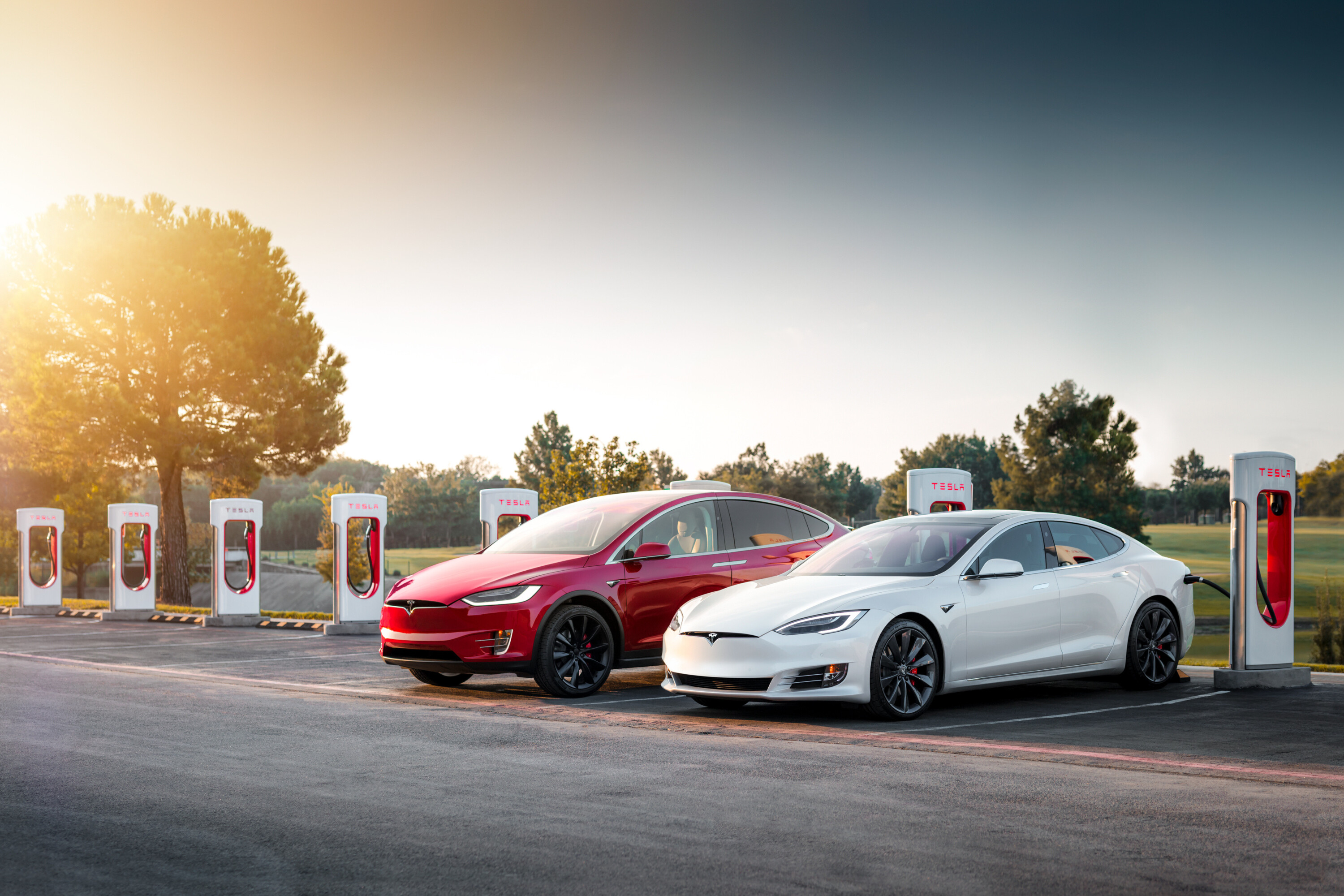
- A 2013 Tesla Model S P85 only lost 12 per cent capacity (8.1kWh or 60km claimed NEDC range) after seven years, 270,000km driven and roughly 1000 charge cycles [YouTube ↗].
- A 2019 Tesla Model 3 Long Range degraded by eight per cent (6kWh or 45km claimed WLTP range) after three years, an unusually long 165,000km and 601 charge cycles [YouTube ↗].
However, the degradation rate can vary significantly depending on how the EV is used and charged.
Nyland’s test of a 2021 Tesla Model 3 Long Range [YouTube ↗] found its lithium-ion battery degraded by 16 per cent in two years with only 98,000km – more than a nine-year-old Model S with more kilometres driven.
However, the electric sedan was used as a taxi and the majority of the 245 full charge cycles was on DC fast charging stations.
He suspected the degradation impact was higher because the driver regularly charged to 100 per cent (instead of the recommended 90 per cent limit), combined with high battery temperatures from fast charging, and keeping in a high or low percentage for extended periods.
Similarly, the German ADAC [↗] automotive association’s 2021 Volkswagen ID.3 lost seven per cent of its net battery capacity after two years and more than 100,000km.
Contrary to the brand’s recommendations, the lithium-ion battery was frequently fast charged to 100 per cent (instead of 80 per cent) and was sometimes left at the full charge state for several days.
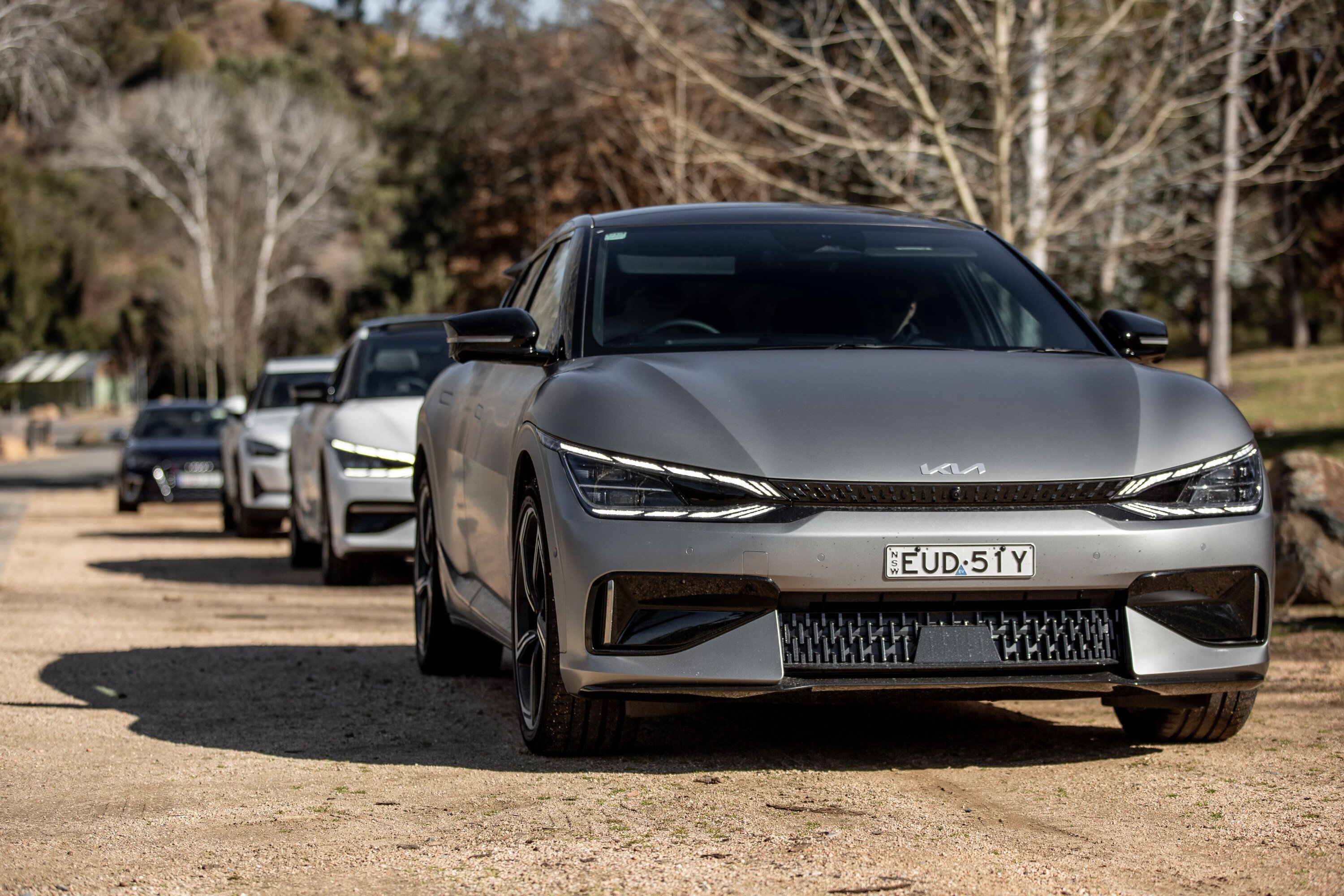
As for LFP batteries, Build Your Dreams (BYD) claims its proprietary Blade Battery – found on models including the Dolphin hatch, Atto 3 SUV and Seal sedan – can last at least 500,000km or even 1.2 million kilometres after 3000 charge cycles in ‘standard conditions’.
1
? What is the EV battery warranty?
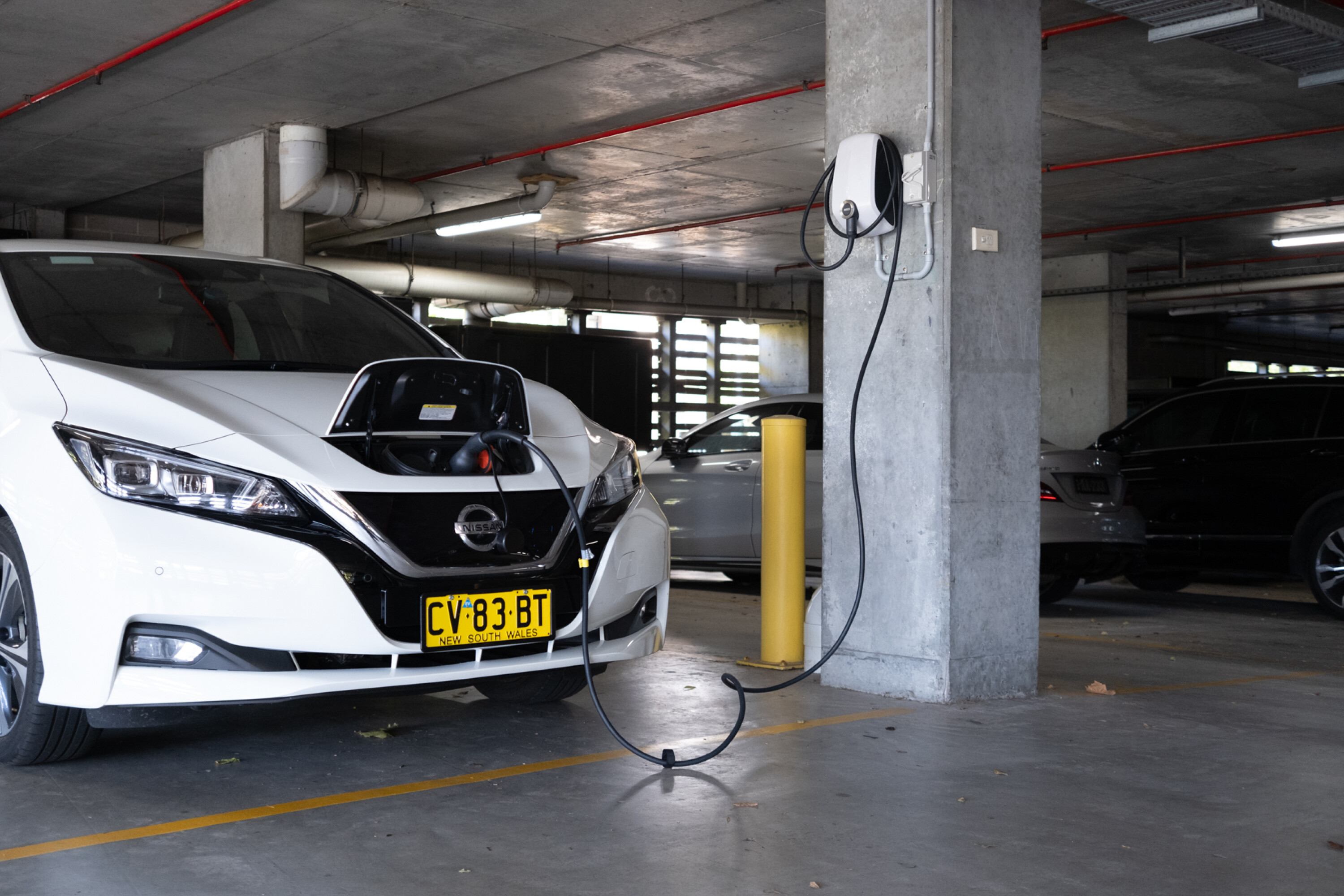
All car brands include a dedicated electric car battery warranty, separate to the coverage on the rest of the vehicle, to allay concerns.
The industry standard is eight-years/160,000 kilometres (whichever occurs first).
The EV battery warranty covers for any defects or wear under normal use – determined by the manufacturer – and may be eligible for a free repair or replacement (usually with refurbished modules or a pack).
Importantly, select car brands explicitly promise a certain battery capacity retention percentage (typically no more than 30 per cent degradation) during the coverage period, so it’s worth checking the fineprint.
But, as highlighted above, this does not mean EV batteries won’t last after the warranty period.
1
? How to avoid EV battery degradation
It’s impossible to avoid battery degradation entirely, but there are ways to prevent accelerated degradation during ownership.
Firstly, when buying, choose a longer lifespan LFP battery-equipped model if it suits your needs.
Additionally, if your budget can stretch higher, pick a bigger EV battery, so there’s less of a chance degradation will become an impediment in the long-run for everyday driving.
How to limit degradation
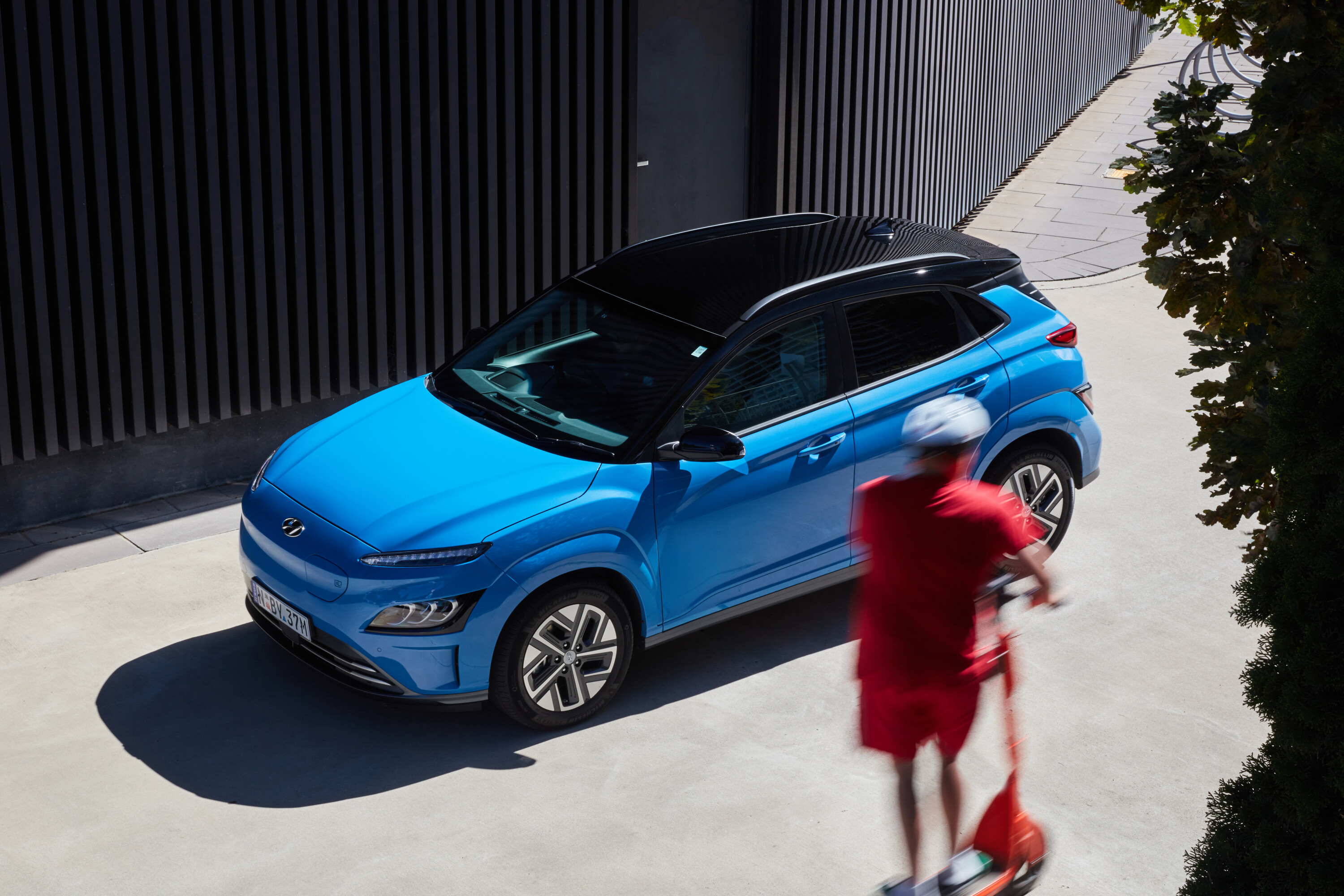
- Limit public DC fast charging – mainly plug in at home and at slow AC charging stations to reduce the stress on the battery, unless a fast recharge is necessary.
- Follow everyday charging limit recommendations – refer to the manufacturer’s touchscreen settings or owner’s manual for best-practice daily charging limits and habits to calibrate the cells. Owners can charge beyond the limit occasionally when the extra range is needed.
- Don’t go too low or too high for long – avoid discharging the battery to near-empty (below 10 per cent), which’ll subject it to a deep charging cycle. Likewise, don’t keep the battery in a low or high percentage state (beyond the recommended limit) for extended periods.
- Avoid extreme temperatures – if able, park the vehicle undercover or in a garage for long-term periods to keep the battery in its optimum temperature range.
- Servicing – while EVs have significantly fewer parts than combustion engine vehicles, they still share many ‘consumables’ and require routine maintenance. Follow the manufacturer’s recommendations to ensure checks are conducted on the battery health and physical condition.
- Stay up-to-date – if equipped, install over-the-air (OTA) software updates when available as it may improve the BMS and energy efficiency of the EV.
1
? How much does it cost to replace an EV battery?
It’s true: if the EV battery degrades to the point that it’s a daily nuisance and is no longer covered by the battery warranty, it can be expensive to replace.
According to Recurrent [↗], whole battery pack replacement costs can range between US$5000 to US$20,000 (AU$7,500 to AU$30,000) depending on the vehicle model and battery size.
However, it notes out of the 15,000 EVs surveyed in the United States, only 1.5 per cent have needed a replacement (excluding defective battery recalls).
Importantly, the most-affected modules and cells can be replaced individually (instead of the whole pack), and reusing or ‘remanufacturing’ batteries from used or salvaged EVs to reduce repair costs.
Market battery prices are gradually falling as more lithium refineries are opened, including in Australia, to alleviate the high demand and cost-of-replacement, and LFP is already cheaper than lithium-ion technology.
Likewise, the availability of third-party EV technicians are growing – reducing repair costs thanks to the new ‘right to repair’ laws introduced locally.
1
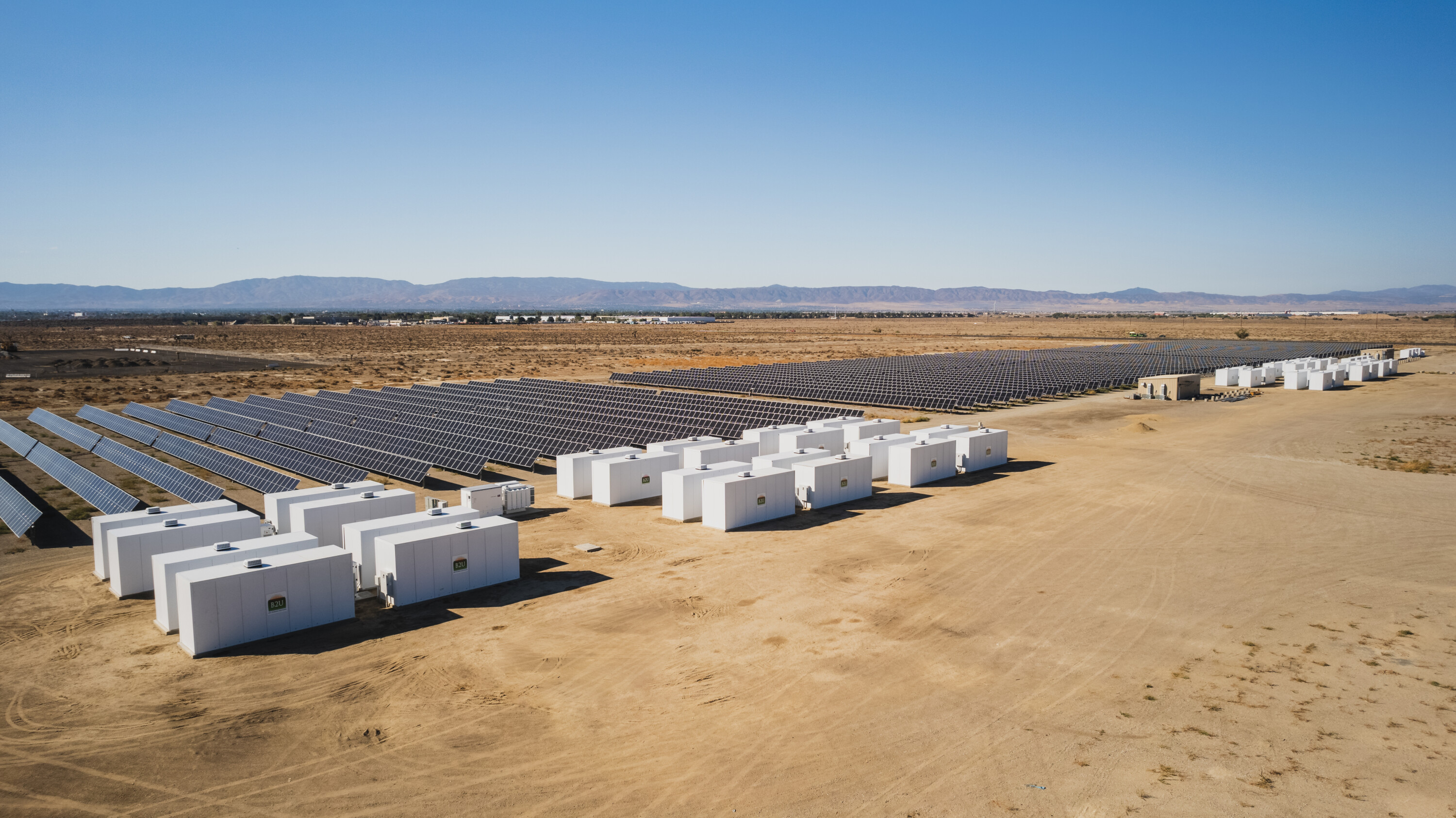
♻️ What happens to degraded EV batteries?
EV batteries will eventually reach their end-of-life, but they can still be repurposed for battery storage systems, and some materials can be recycled thereafter. Check out our detailed story below to learn more.
1
? Do EV batteries last long?
Based on the evidence above, it’s clear that fears of short-lived EV batteries don’t hold true.
Yes, EV batteries do degrade over time, but by the time you want to sell – about 10 years on average – the reduced driving range still shouldn’t be a dramatic impediment to most Australians’ everyday driving needs.
However, as the vehicle goes through multiple owners, it can be a challenge for used EV buyers – with no standard for monitoring and displaying the battery health yet.
EV batteries – regardless of what type – will eventually reach their end-of-life.
This is true for combustion cars, too. There’s no guarantee that an old petrol or diesel car will be less expensive to get back on the road than an EV with a few degraded battery cells, which can be individually replaced.
Of course, it’s still early days for EV batteries. More time and data is still needed to comprehensively understand model-by-model, battery-by-battery degradation.
If you’re a regular long-distance driver, constantly fast charge and keep the battery in low and high percentages for extended periods, degradation can be accelerated.
But, as long as owners follow manufacturer battery care and charge limit recommendations, electric car batteries are designed to last the vehicle’s lifetime.
1
? Is it time to make the electric switch?
EVs are not for everyone (for now), but they are right for most.
Driving range, price, and charging reliability remain key perceived issues. For more, check out our /Electric hub guides below.
Hey, we get it. With dozens of news and reviews stories published every week, it can be hard to keep up with all the latest in the automotive world.
Obviously we reckon every story we run is a banger, but if you’re looking for the highlights reel, this is it. Read on and click away!
REVIEW: NEW TRITON! Could it be a Ranger rival?
New Triton sheds its value stigma to take the fight to the segment’s heavy hitters.
Grenadier, the born-again Defender driven!
The Ineos Grenadier is a much-needed addition to the off-road ranks of 4×4 wagons worldwide.
REVIEW: New-look 70 Series tested
The revised 70 Series is here, but can the four-pot live up to the legendary nameplate?
PRICING: Ford’s Mustang Mach-E gets cheaper
The Ford Mustang Mach-E has landed in Australia. Here’s everything you need to know about the electric SUV.
Ultimate Christmas Special!
The perfect gift this Christmas just got a little sweeter.
*Offer valid until January 31st 2024 or while stock lasts. Prices shown are in AUD and available for Australia delivery only.
BYD thinks it can overtake Toyota in Australia!
China’s BYD reveals plans to open 30 new “retail outlets” over the next 18 months as it declares ambition to become the No.1 brand in Australia.
REVEALED: Australia’s best-selling cars in 2023
It’s no surprise that Australians love the Toyota HiLux and Ford Ranger, but rising EV demand and supply constraints write an interesting tale for the nation’s top 10 best-selling cars.
REVIEW: 5-door Jimny XL driven in Oz
Stretched Jimny is more practical and usable, though the list of positives isn’t as long as we’d hoped.
M4 v CLE 53: Which fast 2-door German wins?
AMG has revealed a new, angry-looking coupe with a high-output six-cylinder engine. But hang on, aren’t straight sixes BMW’s thing?
New Kona ‘lucky to avoid 3 stars’
Hyundai’s second-generation small SUV criticised by Euro NCAP after a disappointing crash test result, while the Honda ZR-V also missed a five-star result.
Are electric cars unsafe?
Snapshot
- EV battery fires are less likely to occur than ICE vehicles
- However, when alight, thermal runaway is intense and challenging
- LFP batteries have lower fire risk than typical lithium-ion
Media reports and videos of seemingly spontaneous electric vehicle fires regularly blow a cloud over battery safety.
Whether it’s a burned down home, car park or shipping vessel, the safety of EVs continue to be questioned – with often erroneous assumptions drawn at first glance.
In addition to perceived concerns around the purchase price, driving range and charging availability, this adds another layer to the fear and hesitancy of making the electric switch.
Yes, EV batteries can cause catastrophic fires when alight.
But, how likely (or unlikely) do EVs catch on fire compared to traditional internal combustion engines (ICE)? Let’s look at the evidence…
JUMP AHEAD
- ? How likely do EVs catch on fire?
- ? What is thermal runaway?
- ? Can EV battery fires be extinguished?
- ⚠️ Are ICE vehicles safer?
- ? How to prevent a potential EV fire
- ⚡️ EVs are becoming safer
- ? Time to make the electric switch?
1
? How likely do EVs catch on fire?
According to research firm EV FireSafe [↗], six lithium-ion battery EV fires have been reported in Australia – out of more than 100,000 in circulation.
The Australian Government Department of Defence-backed company revealed all cases were attributed to damage to the battery as the causal factor:
- External fire (from surrounding structure) – 3
- Collision – 1
- Arson – 1
- Road debris – 1
There’s also the possibility of an internal short circuit due to improper battery sealing or poorly calibrated battery management system (BMS), as demonstrated by some car brands issuing voluntary recalls.
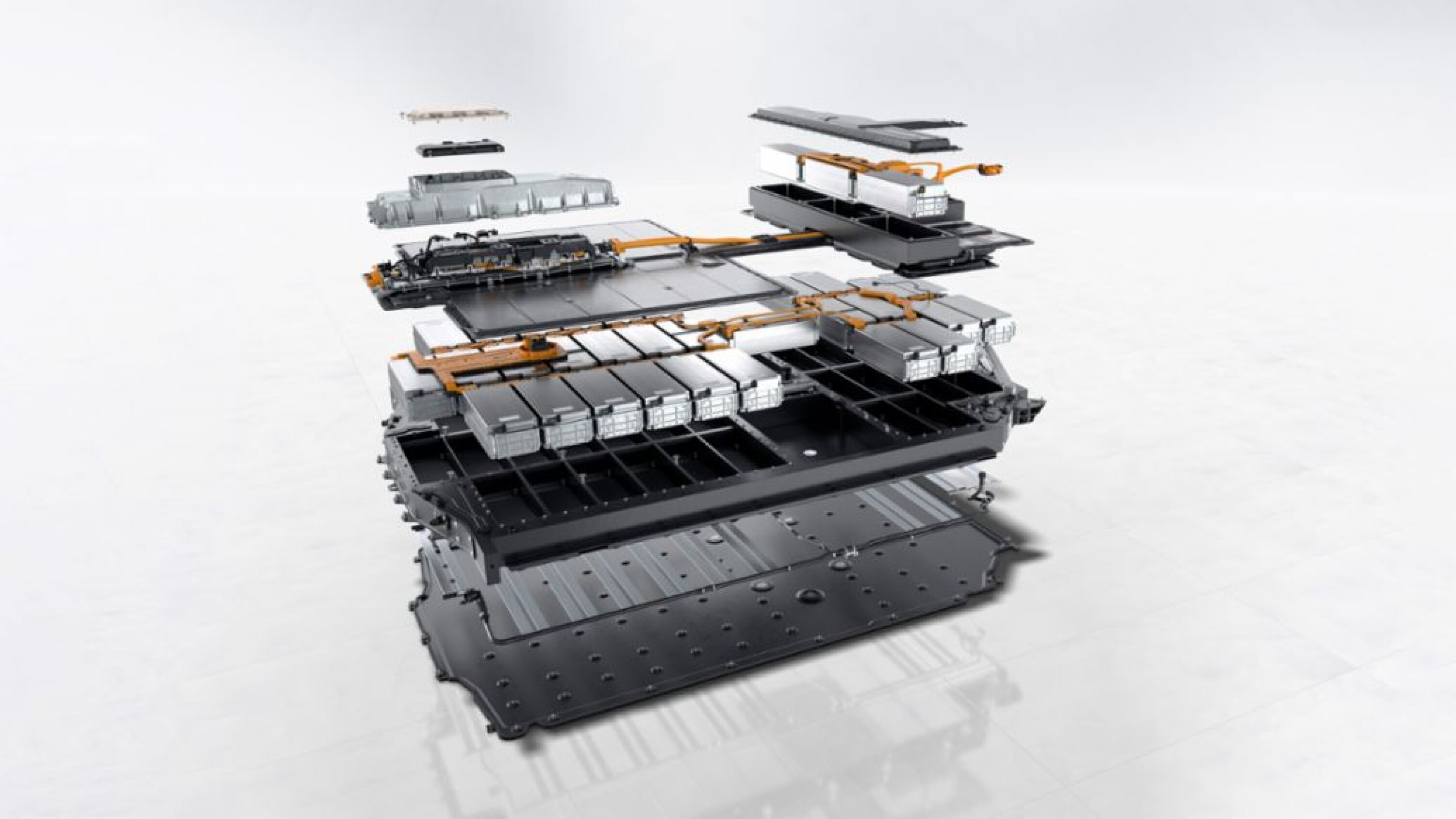
Unlike light and portable batteries (eg: smartphones, e-scooters and e-bikes), EVs have much bigger batteries and more advanced battery management systems (BMS) to ensure safe operation.
There are a range of active and passive thermal management provisions – including liquid cooling – and battery buffers in place to prevent ‘overcharging’, hence net (usable) and gross (nominal) battery numbers.
For any vehicle to be sold globally, battery suppliers and car manufacturers rigorously test their products internally and, locally, they must comply with strict Australian Design Rule (ADR) regulations to ensure that a car is safe for occupants and other road users.
Therefore, EVs are no different. It is safe to drive around with a large high-voltage battery under the vehicle floor.
1
? What is thermal runaway?
While the risk of an EV battery fire is low, if liquid electrolytes do catch alight, the consequence is an intense, difficult-to-extinguish chain heating reaction called thermal runaway.
According to a joint peer-reviewed study by the Dalian Jiaotong University and Tsinghua University [↗], thermal runaway is triggered on the most common lithium-ion battery type with a nickel-manganese-cobalt (NMC) cathode when it reaches around 130- to 140-degrees Celsius.
Meanwhile, the less environmentally contentious, longer-lasting and cheaper-to-produce lithium-iron-phosphate (LFP) battery type triggered thermal runaway at around 180°C.
The Australasian New Car Assessment Program (ANCAP) and counterpart the European New Car Assessment Programme (Euro NCAP) also assess the EV battery after each crash test.
The safety authorities check if the safety cut-out feature is automatically triggered (as intended), for any fluid leaks, abnormal heat or fire, and physical battery damage.
It has reported no battery fires from any crash test – with 50-plus full electric models assessed since 2011 – demonstrating the durability of battery casings. This has been reinforced by Mercedes-Benz crashing two EVs head-to-head.
Furthermore, Chinese automaker Build Your Dreams (BYD) boasts its in-house developed ‘Blade Battery’ LFP cells having stronger safety credentials than other LFP batteries.
It claims to survive rigorous internal tests – including nail penetration, crushing, bending, extreme high temperature and overcharging tests – without causing any smoke, fire, explosion or thermal runaway reaction.
Manufacturers are also dividing the battery into smaller cells with separating fire-walls. If one cell catches fire, it at least delays it from spreading to neighbouring parts of the battery.
“[EVs are] very safe technology”
? Case in point
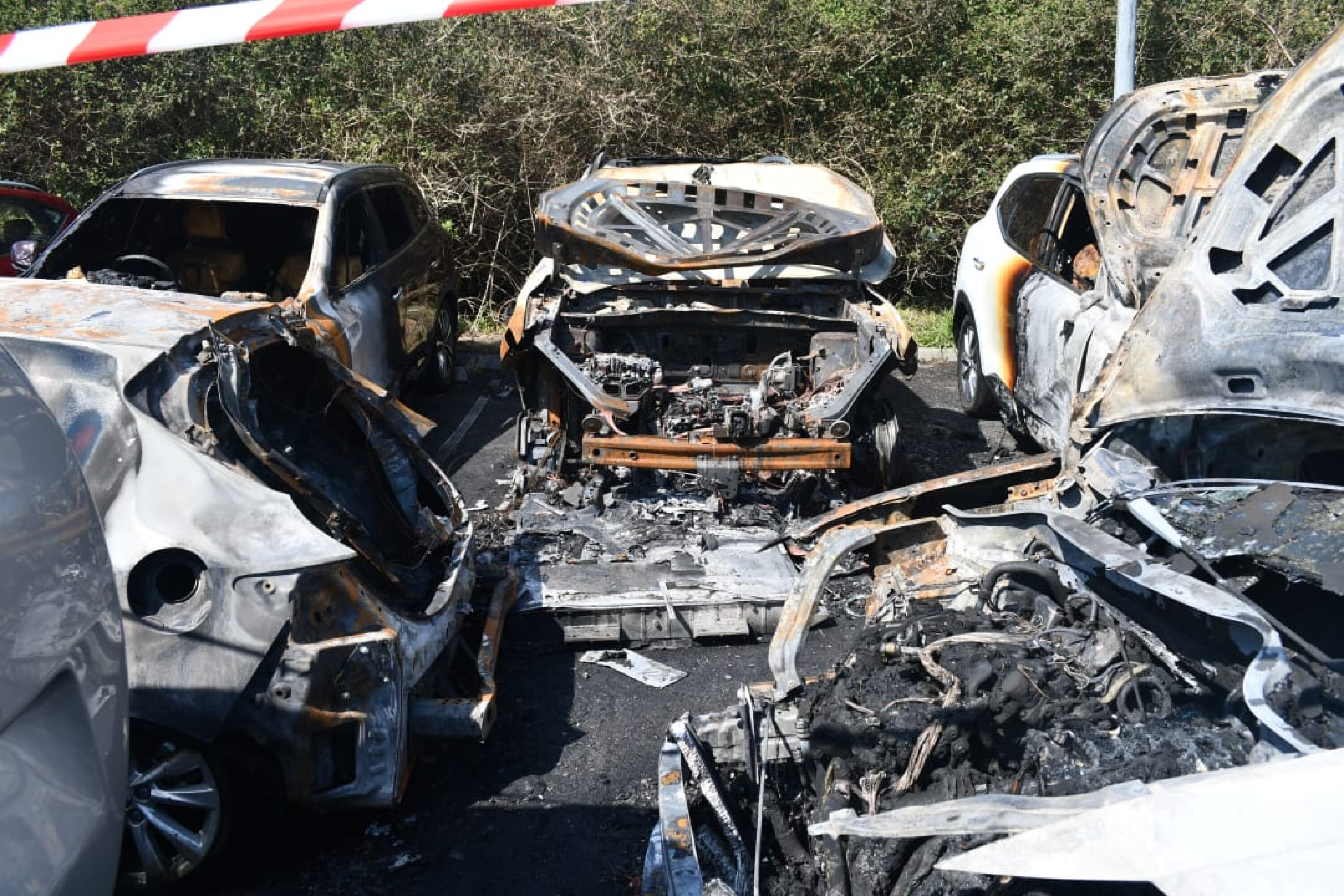
In September 2023, an MG ZS EV’s lithium-ion battery caught fire at a Sydney Airport holding yard. It destroyed four adjacent vehicles under the airport’s control tower.
However, as New South Wales Fire and Rescue Superintendent Adam Dewberry told the Today Show [YouTube ↗], this was a perplexing case where the battery pack was damaged and detached from the vehicle sitting on the ground.
“The vehicle was broken down and someone… removed the battery from some time ago, and that battery had suffered from damage,” Dewberry said.
“It was then left next to [underneath] the vehicle, which had caught fire. The battery had been ruptured or was open during impact somewhere, and water was able to get in.
“Electric, petrol, diesel – they ignite. Once they’re ignited, they burn hot and can spread rapidly.”
Despite the media headlines, Superintendent Dewberry said they are “very safe technology” and “very rarely do we have anything with electric vehicles”.
1
? Can EV battery fires be extinguished?
If thermal runaway does occur, it can take days to completely extinguish. Even if it appears to have been doused, it can still re-ignite afterwards.
Batteries are positioned deep under the vehicle floor and as low as possible. Emerging new ‘structural batteries’ even embed cells within the chassis and are essentially inaccessible.
Emergency fire services have recognised this challenge, and are adapting to the unique challenge with best-response techniques and even special equipment.
This includes; a water drill to directly go into the pack and eliminate the thermal runaway risk, a high-pressure water mist tray that slots underneath the vehicle, and a water container bath [Bjørn Nyland YouTube ↗].
? Case in point
➡️ In March 2019, the Dutch fire department’s specially-built truck was dispatched to put out a BMW i8 plug-in hybrid electric vehicle (PHEV) fire.
Instead of dousing the smoking car in water and foam, it was lowered into a container of water for 24 hours.
➡️ Similarly, in July 2023, the Fremantle Highway car carrier was engulfed in fire that spread from the top of the 11-deck ship. One crew member died.
While the cause is still unknown, there were 3783 cars onboard – including 498 EVs – according to the BBC [↗].
One month after the incident, authorities started removing the vehicles. While some were seemingly undamaged, a burned Mercedes-Benz EQS was seen lifted directly into a water container as its lithium-ion battery started to re-ignite [Eemskrant YouTube ↗].
1
To ensure the safety of emergency respondents, the BMS instantly disconnects the high-voltage battery when the airbags are deployed in a collision – similar to a petrol or diesel fuel pump automatically shutting off.
In Australia, most states require hybrid, PHEV, full electric, and hydrogen vehicles to wear a sticker on the licence plate that indicates to emergency responders to be cautious around high-voltage components.
Not displaying the powertrain label risks incurring a fine for owners. But, these tiny triangular stickers may not be visible in a crash situation, so:
- Education needs to improve for first responders to identify an EV and know how to manually isolate the battery (via pulling a cut loop or pull fuse), rather than only relying on the automatic cut-off from triggering, according to EV FireSafe [↗]
- ANCAP provides manufacturer-supplied documentation to understand each EV model’s structure and potential hazards in order to safely free an occupant
- Hyundai Australia labels its EVs with multiple QR code stickers to help guide rescuers
Some fire services overseas are using personal protective equipment (PPF) as a precaution.
1
⚠️ Are ICE vehicles safer?
There is always a safety risk with any car. Traditional combustion engine vehicles are powered by a tank of highly combustible and constantly igniting fuel.
Driving with a high-voltage EV battery isn’t too dissimilar.
Countless petrol and diesel cars have also been recalled for fire risks concerning a range of defects – including the 12-volt electronics battery, mild-hybrid and traditional hybrid batteries, anti-lock braking system (ABS), diesel particulate filter (DPF), and fuel leakages.
For conventional combustion engines, liquid fuel can leak and flow away from the vehicle, spreading the engulfed area. Petrol and diesel also require special foam and chemicals to adequately combat when on fire.
Of course, if a fire does occur, it is far less intense and easier to completely extinguish than an EV battery’s thermal runaway.
? Case in point
In October 2023, the popular four-storey London Luton Airport car park engulfed in fire and destroyed more than 1400 vehicles [BBC ↗].
While investigations are still ongoing as at the time of publication, early findings reveal it originated from a diesel-engined Range Rover – instead of initial unsubstantiated claims that it was from an electric car.
1
Ultimately, EVs are less likely to start a fire than combustion engines, but when they do, they are much harder to extinguish.
According to an analysis by Auto Insurance EZ [↗] – which used official data from the United States National Transportation Safety Board and Bureau of Transportation Statistics – there were significantly fewer reported fires for full EVs than ICE and hybrid vehicles.
The car insurer found EVs were about 61 times less likely to be involved in a fire than ICE cars or around 138 times less likely than hybrids, according to the American data to the end of November 2023.
This aligns with reported reliability issues, with PHEVs in particular experiencing more problems due to the inclusion of both ICE and EV drivetrains.
Are LPG vehicles safe?
New liquid petroleum gas (LPG) vehicles are no longer sold in Australia, but have been mooted as being more sustainable and cheaper to run than EVs.
According to SafeWork New South Wales [↗], LPG vapour is highly flammable. Exposing two to 10 per cent of it mixed with 98 per cent of air will cause it to ignite and explode. LPG vehicles also need a licence plate sticker in most states in Australia for first responders.
Two cylinder explosion cases forced the Brisbane City Council to phase out natural gas powered public buses by 2027, after it mandated half-filled tanks only since 2012 [ABC ↗].
1
? How to prevent a potential EV fire
There’s no guaranteed solution to stop an EV battery fire from occurring, but there are ways to reduce the risk.
As demonstrated by the MG ZS EV lithium-ion battery fire at Sydney Airport in September 2023, EV batteries must not be damaged, detached and left precariously exposed.
☣️ How to reduce the fire risks
- Follow manufacturer-recommended everyday charging limits
- Abide by manufacturer-suggested servicing requirements – EVs still need routine maintenance
- Never tamper or remove an EV battery, without a trained technician and proper handling methods
- Comply with manufacturer-issued EV recalls as soon as possible
1
? Case in point
Recalls for EV battery fire risk concerns are uncommon, but they can happen just like an ICE car. Manufacturers have also issued recalls due to battery manufacturing defects or poorly calibrated software:
- 2018-2020 Hyundai Kona EV recalled again
- 2018-23 Jaguar I-Pace recalled
- 2022-23 Porsche Taycan recalled
- BMW i4 and iX recalled
- 2021-22 MG HS Plus EV plug-in hybrid recalled
- 2022-23 Alfa Romeo Tonale mild-hybrid recalled
Additionally, the Australian Building Codes Board [PDF ↗] has recommended a range of safety measures for installing EV charging equipment.
It is in response to the 2022 National Construction Code (NCC), which requires all newly-constructed buildings – including apartments – from October 2023 to have electrical distribution boards ready for installing EV charging units.
1
⚡️ EVs are becoming safer
There’s no refuting the reality that, when alight, EV battery fires can be intense and catastrophic. However, the evidence highlights that the probability of one occurring is far less than an ICE vehicle.
It’s still early days for EV battery technology and some automakers have had to issue major global recalls, requiring complete pack replacements.
But, as demonstrated by countless voluntarily-issued recalls, petrol, diesel and LPG cars also have fire risks with highly combustible and constantly igniting fuel or gas.
Smartphone, e-bike and e-cigarette fires simply cannot be compared to electric vehicle batteries – especially the cheaply-made generic products – and emergency services are tackling the challenge of thermal runaway with more training and new specialist equipment.
If you’re still concerned about EV safety, an LFP battery model – including the BYD Dolphin, Atto 3, Seal, MG 4 Excite 51, GWM Ora Standard Range, Tesla Model 3 RWD, Model Y RWD, and Ford Mustang Mach-E Select – are better choices with a wider operating temperature range and lower thermal runaway risk.
New technologies are also emerging, including sodium-ion and solid-state batteries. The latter is expected to appear in pricier EVs around 2030, with a non-flammable solid electrolyte (instead of liquid) and wider temperature window to further reduce the risk of thermal runaway.
However, no vehicle is immune from a fire risk – regardless of what is powering it.
1
? Is it time to make the electric switch?
EVs are not for everyone (for now), but they are right for most.
Battery technology, longevity, and charging times remain key perceived issues. For more, check out our /Electric hub guides below.
Wheels Media thanks Daniel Gardner for the original version of this story.
Now that he’s done building out the Ioniq 5 range with the rapid 5 N flagship, Hyundai’s semi-retired ‘consultant’ Albert Biermann has set his sights on a smaller and more affordable-ish electric N hero.
An Ioniq 3 N, perhaps?
The company has already confirmed it won’t do another Kona N: not in petrol form, because all future N cars will be electric – but not in electric form either, because those future N EVs will be exclusively 800V, and the new Kona Electric uses a 400V architecture.
Never fear, though – something’s coming. Speaking with media in November, ‘executive technical advisor’ Biermann described a sub-5 N hero EV as a critical product to serve Hyundai’s newly rabid performance fans.
“That small N-car EV – that is something we have to do,” Biermann told the UK’s Auto Express. [↗] “Otherwise, we leave our customers in the dark. We have to come down with something smaller and more affordable.”
The trick, of course, will be cost. Speaking to N owners at last week’s Hyundai N Festival in Australia, Biermann reiterated earlier comments that a 400V system is not appropriate for a fulfilling track experience, because the vehicle will not run long enough and will take even longer to charger.
Giving fans a lesson in electrical engineering, Biermann said that 400V “doubles the current, causing four times the heat dissipation. This is bad for efficiency,” he said.
The advantage to 800V, Biermann claims, is that – in the Ioniq 5 N, at least – you can have a good track session, go charge for 20 minutes, and then get back out there.
Adding some important context, Biermann added that during testing, the 5 N completed a sub-8-minute lap of the 20.832km Nurburgring Nordschleife with its i30 N-inspired fake noise blaring in the cabin, charged for 20 minutes, and then did it again.
So, that effectively seals it: whatever compact Ioniq model is on the cards, Biermann’s plan for an N model means an 800V architecture is a sure thing.
1
That leaves a few questions, of course. It’ll surely have to be more expensive than the 400V Kona Electric (which still has no Australian price at the time of publishing), but the big Ioniq 5 now starts from $65,000… so just where this smaller new Ioniq will fit in the line-up’s pricing is unclear.
Still, pricing is Hyundai’s problem. We’re just here to imagine how that new model might look!
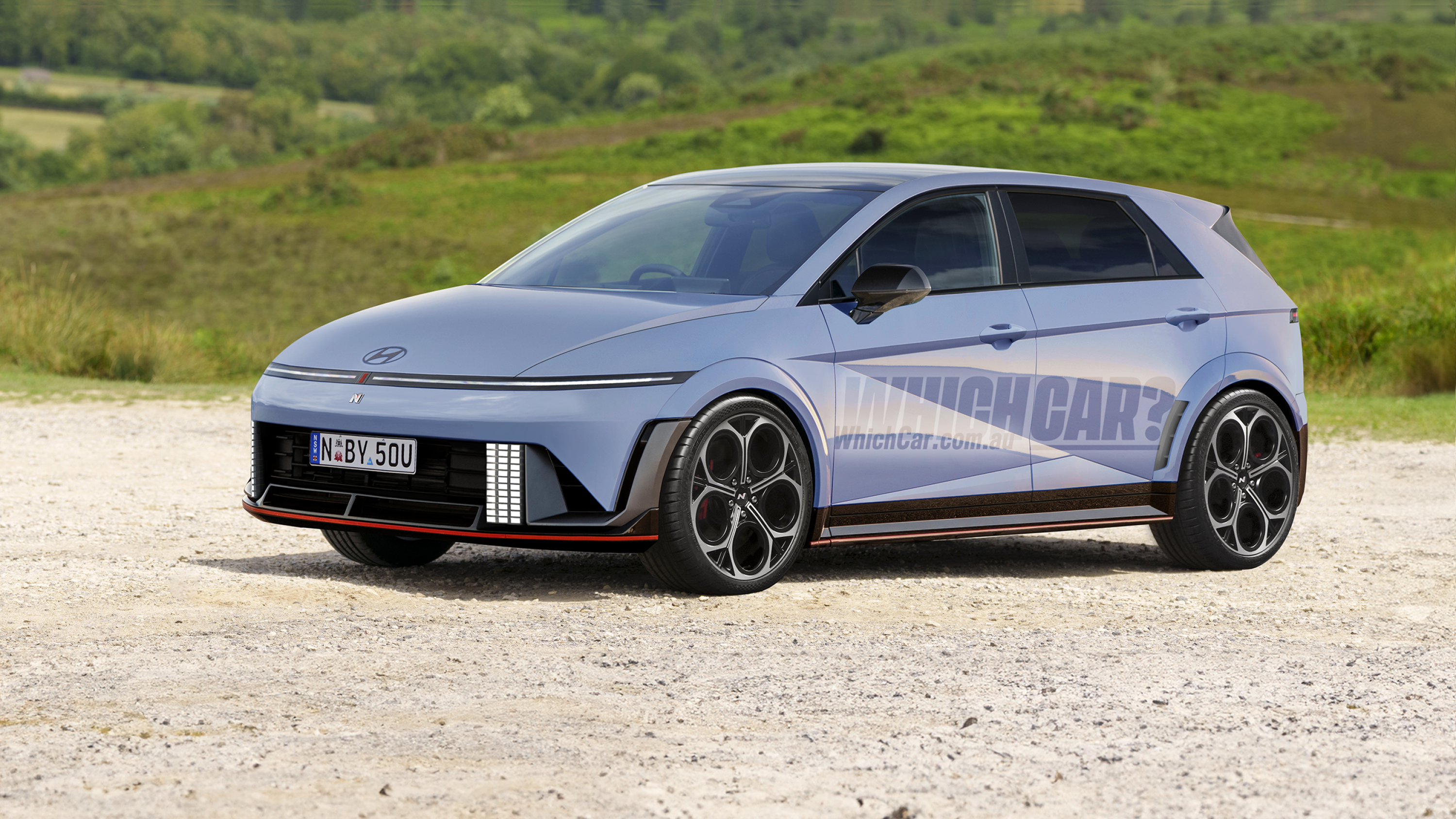
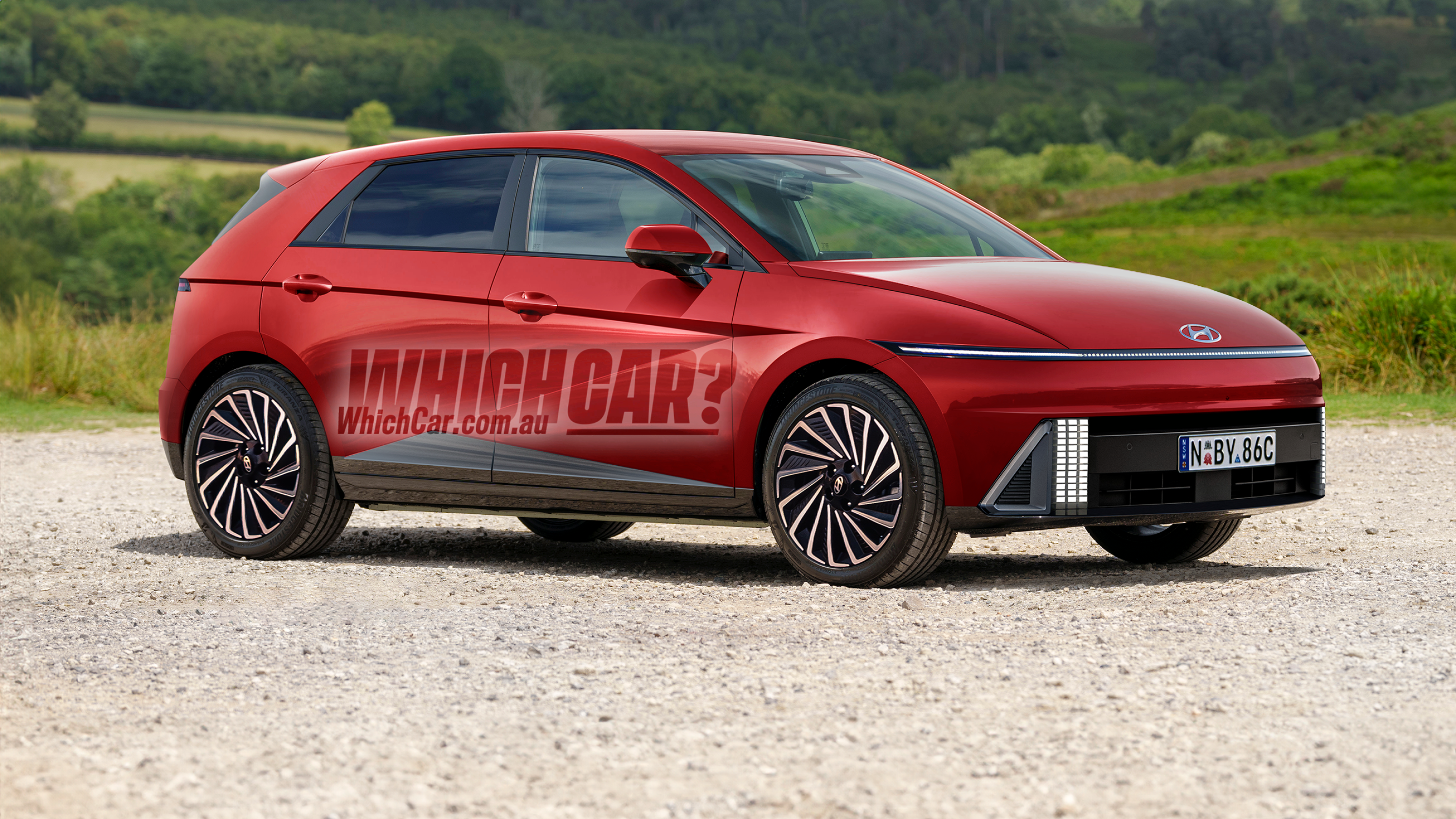
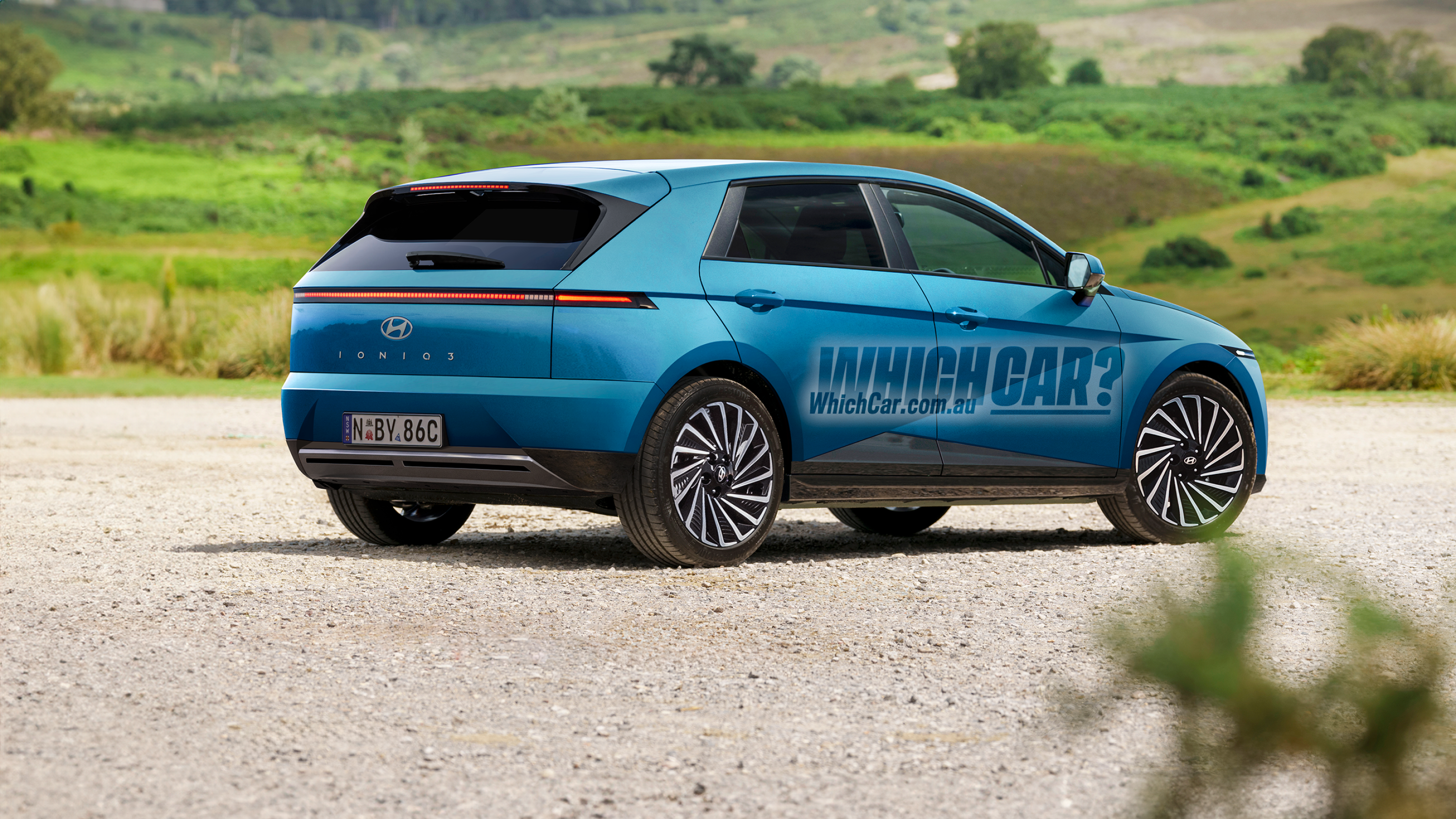
Imagining the new entry model as an Ioniq 3, we tasked our mate Theottle with stitching together the styling themes from the Ioniq 5 and the new Kona – which Hyundai says was styled as an EV ‘first and foremost’.
1
1
One Hyundai insider has told us our imagined Ioniq 3 looks ‘kind of freaky, very shark-like’. We’re taking it as a compliment.
And of course, we’ve given it more of a hatch look – because, even though it’ll likely be a small SUV (like the Kia EV3) rather than a conventional hatch, we just couldn’t resist hoping for the best.
What do you think of the look? Tell us in the comments below!
MORE
Everything Hyundai
After a new Toyota, but not sure how long you’ll have to wait?
Issues such as semiconductor chip shortages and shipping problems have affected the ability of manufacturers like Toyota to keep cars flowing into Australia.
As such, the Japanese brand’s models are experiencing some delays.
It’s worth noting that some models are in greater supply than others, with flexibility around powertrains, specification and vehicle colour likely to see a vehicle in your driveway sooner.

1
December 8: Wait times expected to drop dramatically, RAV4 a big winner
Toyota Australia says wait times on a host of new models should drop dramatically over the next five months.
The encouraging news includes popular models like the HiLux dual-cab ute, which currently has a wait time of just three months, and the always-in-demand RAV4 which should have its wait time halved by the middle of 2024.
Speaking to Wheels, Toyota’s vice president for sales and marketing Sean Hanley said that while the RAV4 currently has around a 12 month wait for both petrol and hybrid versions, that lead time should drop to six months by mid-2024.
Hanley also predicted wait times for the Fortuner should tumble to just three months by April next year.
Wait times for the Corolla Cross small SUV currently sit at four months.
The Toyota Kluger is another model where improved supply should see wait times tumble. Hanley said that while the Kluger hybrid currently has an 11 month wait, that should “drop dramatically” in early 2024.
Things aren’t so rosy for the just-launched LandCruiser 70 Series, though, which has at least a 12 month waiting period for both engine options. Order books are still closed for the LandCruiser V8, too, and won’t open until Toyota clears its long list of backorders which currently sits at 12 months. Once those order are met, Toyota says wait times on the V8 should be around nine months.
Alex Inwood
August 1: Tough times still, but slowly improving
Times are surely but slowly improving for frustrated Toyota buyers, with average wait times falling by an average of five per cent at the end of July over the beginning of the year.
From a model-by-model perspective, the wait for a C-HR is now 94 days, marking a huge improvement from January at 379 days.
The Corolla now stands at 225 days, a slight lift over the beginning of the year (205 days).
Fortuner times, meanwhile, have blown out to 230 days, up from 82 in March and 147 in January.
If you’re looking for a new HiAce van, ait times are now at 175 days, down from 254 in January. HiLux, meanwhile, stands at 162, down from 228 in January.
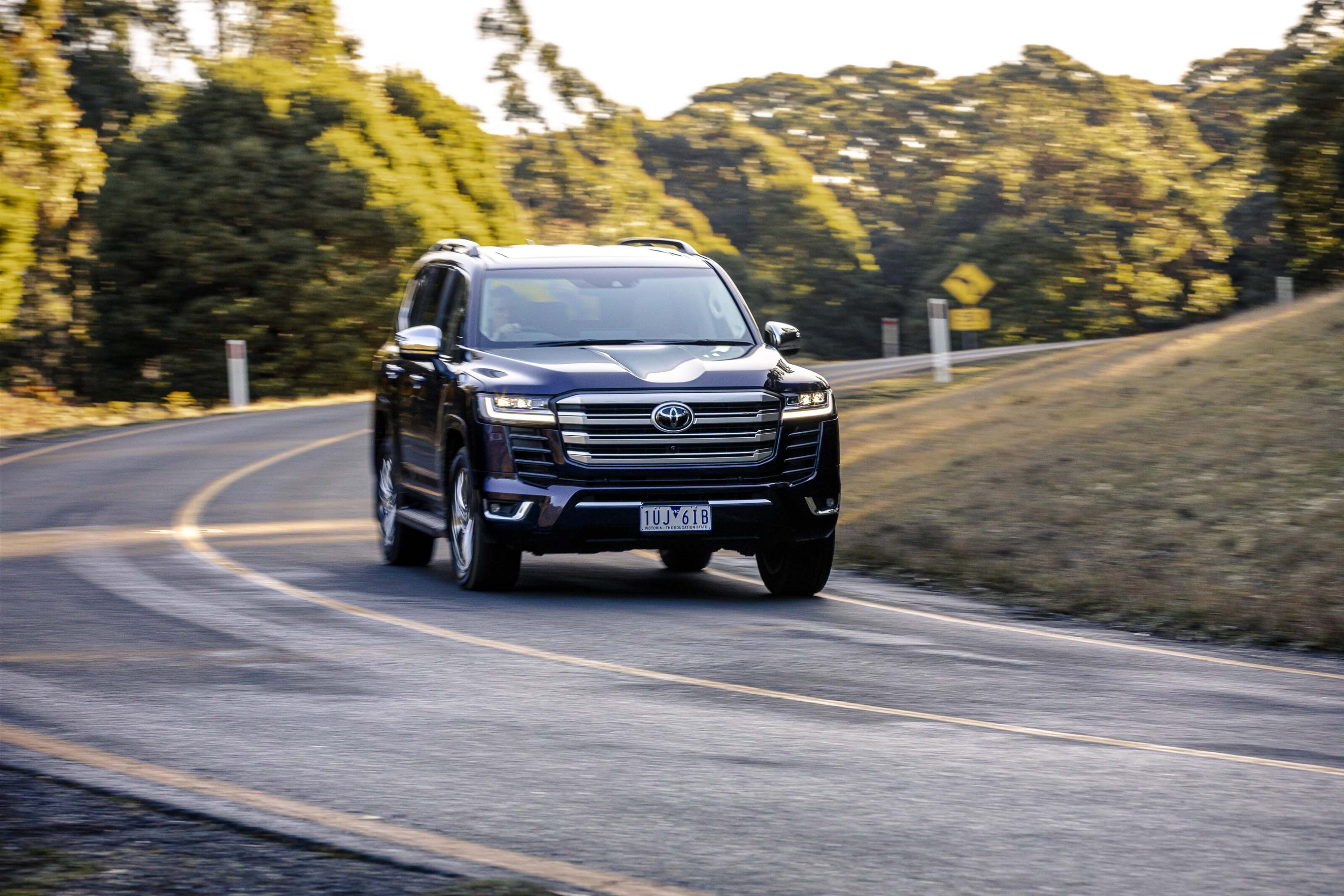
Toyota’s big LandCruiser now sits at 150 days, well down from the 285-day wait in January.
The RAV4, meanwhile, is still out at almost a year at 334 days, which is the second-longest of all the models in the range. It fell to 218 in March before rising again and stood at 352 in January.
Tim Robson
May 2023: The latest on Toyota delays
Overall, according to Price My Car, the average wait time in August for a Toyota was 198 days – compared to 242 days in January 2023.
The quickest to get hold of is the Fortuner SUV at 82 days, followed by the HiLux with a 190-day average wait and Camry sedan/hatch with a 211-day delay.
The worst affected is the Yaris – which buyers have to wait, on average, 319 days for.
According to Toyota, supply in particular of the Camry and RAV4 hybrids is currently constrained, and wait times remain long for the LandCruiser models – with a stop sale continuing on the LandCruiser 70 Series ute.
Toyota average model wait times 2023
| Model | Wait time |
|---|---|
| C-HR | 94 days |
| Camry | 211 days (as of May 2023) |
| Coaster | Not available |
| Corolla | 225 days |
| Corolla Cross | Not available |
| Fortuner | 230 days |
| GR Yaris | Not available |
| GR86 | Not available |
| Granvia | Not available |
| HiAce | 175 days |
| Kluger | 218 days (as of May 2023) |
| LandCruiser 300 | 150 days |
| LandCruiser 70 | Not available |
| LandCruiser Prado | Not available |
| Supra | Not available |
| Yaris | 319 days (as of May 2023) |
| Yaris Cross | Not available |
| RAV4 | 334 days |
| HiLux | 162 days |
NOTE: This information is current as of September 8, 2023. This article will be reviewed and amended as new details come to light.
1
A spokesperson for Toyota Australia previously told us: “Demand for new vehicles is at unprecedented levels. In Australia, to support the strong demand, Toyota has been continuing to work closely with our global production teams to secure as many vehicles for our market as possible, and minimise any impact.
“Wait times will vary depending on the model, variant and specification requirements of each customer. Due to the ever-evolving nature of this situation, Toyota dealers are best placed to continue to provide updates to our customers on delivery timeframes for individual orders.”
With all of the above in mind, it is important to consider this article a guide only.
MORE
Everything Toyota
The Rodin FZero New Zealand hypercar exclusively revealed by Wheels has taken to the track for the first in its bid to be one of the fastest cars in the world.
Rodin Cars’ billionaire founder, Aussie David Dicker, took the wheel of the track-only single-seater for the prototype’s debut test at the company’s Mount Lyford facility on New Zealand’s South Island.
The company confirmed the FZero will be powered by a 755kW/700Nm twin-turbo 4.0-litre hybrid V10 that has been built in-house and has a targeted top speed of 360km/h.
1
That would edge the FZero past the 354km/h top speed of its benchmark rival, the Aston Martin Valkyrie.
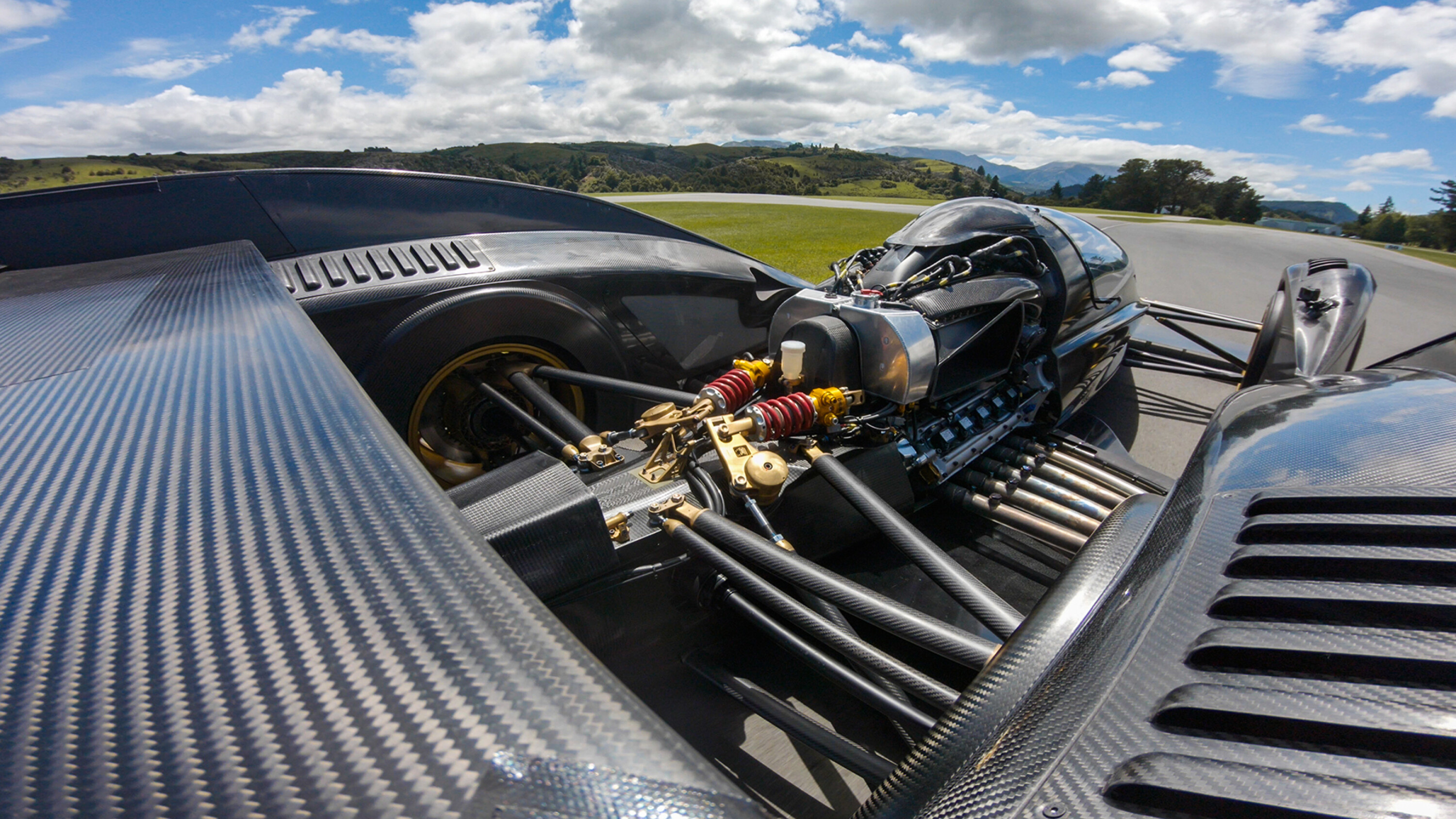
The powertrain features a “direct crankshaft drive” 130kW electric motor, dry-sump lubrication, and 10 direct injectors supplying 200 bar (2900psi) of fuel pressure.
It’s mated to an eight-speed titanium sequential paddleshift gearbox jointly developed by Rodin and engineering consultancy firm Ricardo.
A normally aspirated version of the V10 dubbed the RC-Ten is planned, and Rodin says it intends to offer the engine as a crate motor for “motorsport application”.
1
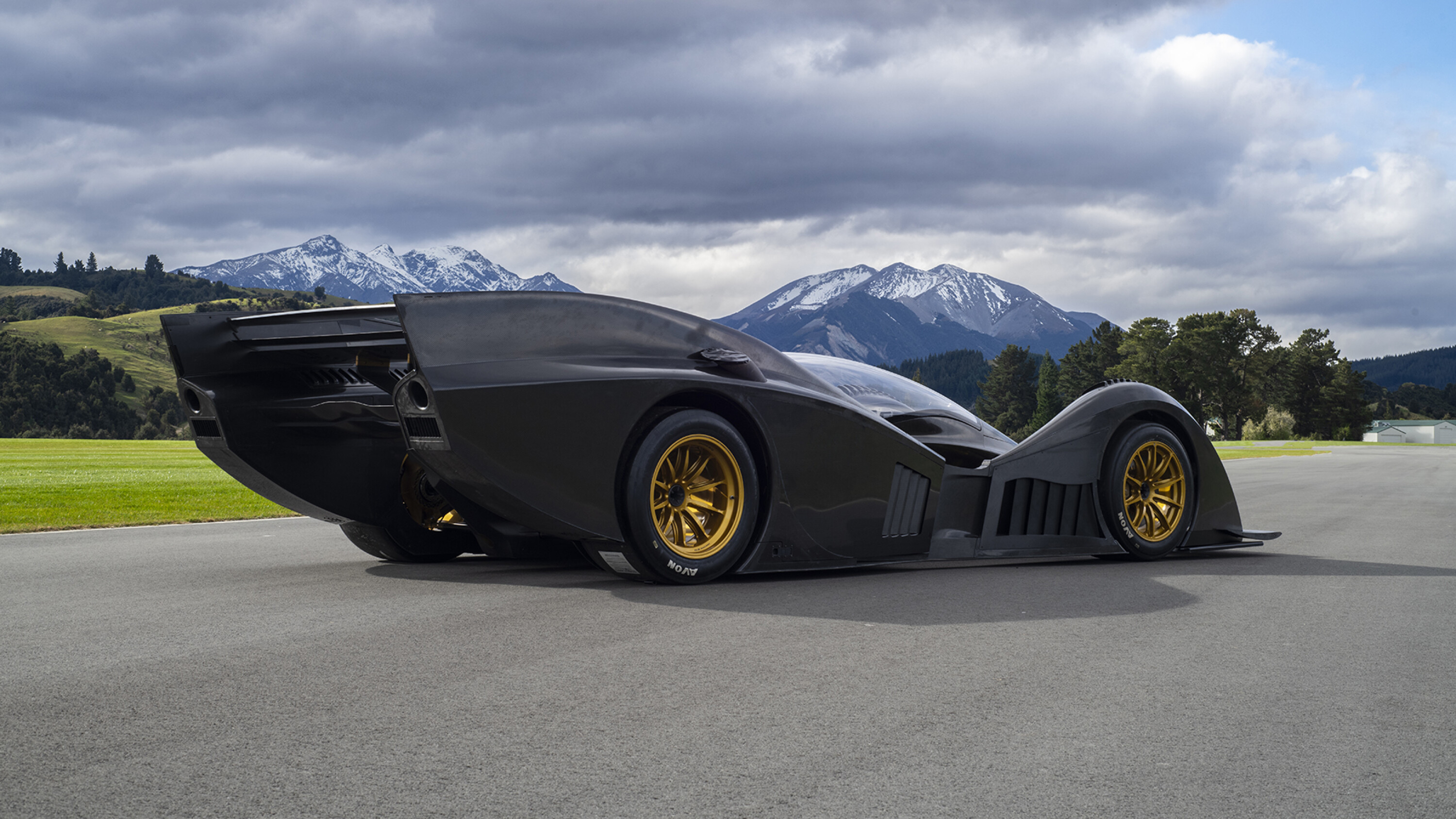
With its dramatic bewinged rear end and enclosed front wheels, the FZero is uncannily reminiscent of the Batmobile driven by Michael Keaton in Tim Burton’s late 80s and early 90s Batman movies.
“While there’s a long road ahead of testing and development, running the FZero for the first time gives me immense pride in what everyone at Rodin Cars has achieved in bringing this programme to life,” said Dicker.
“The test went very well and we were able to work through our programme. We’re excited as the FZero project enters its next phase. It really is a car like no other.”
The carbonfibre-bodied FZero is 5.5 metres long and more than 2.2 metres wide. Rodin says the front, rear and floor wing produced four tonnes of downforce in simulations.
Rodin has previously talked about producing a road car version of the FZero.
The FZero follows the Rodin RZed open-wheeler racing car, which was powered by a 3.8L Cosworth V8 engine and had a top speed of 300km/h.

1
