2023 Best Large SUV series
Looking to get into a brand-new large SUV? Our stories below will guide you to the model that best suits your needs!

These days, it gets you an SUV for hauling around spouse and spawn, and not even a top-spec one.
While of course the best salary your parents could aspire to earn would be considered unliveable in 2023, cars have come a long way. The standard equipment list of a car of yesteryear would be lucky to fill a piece of A4, whereas today’s run-of-the-mill SUVs pack more equipment and technology than the most advanced vehicles of a generation ago. And we know which one we’d rather have a crash in.
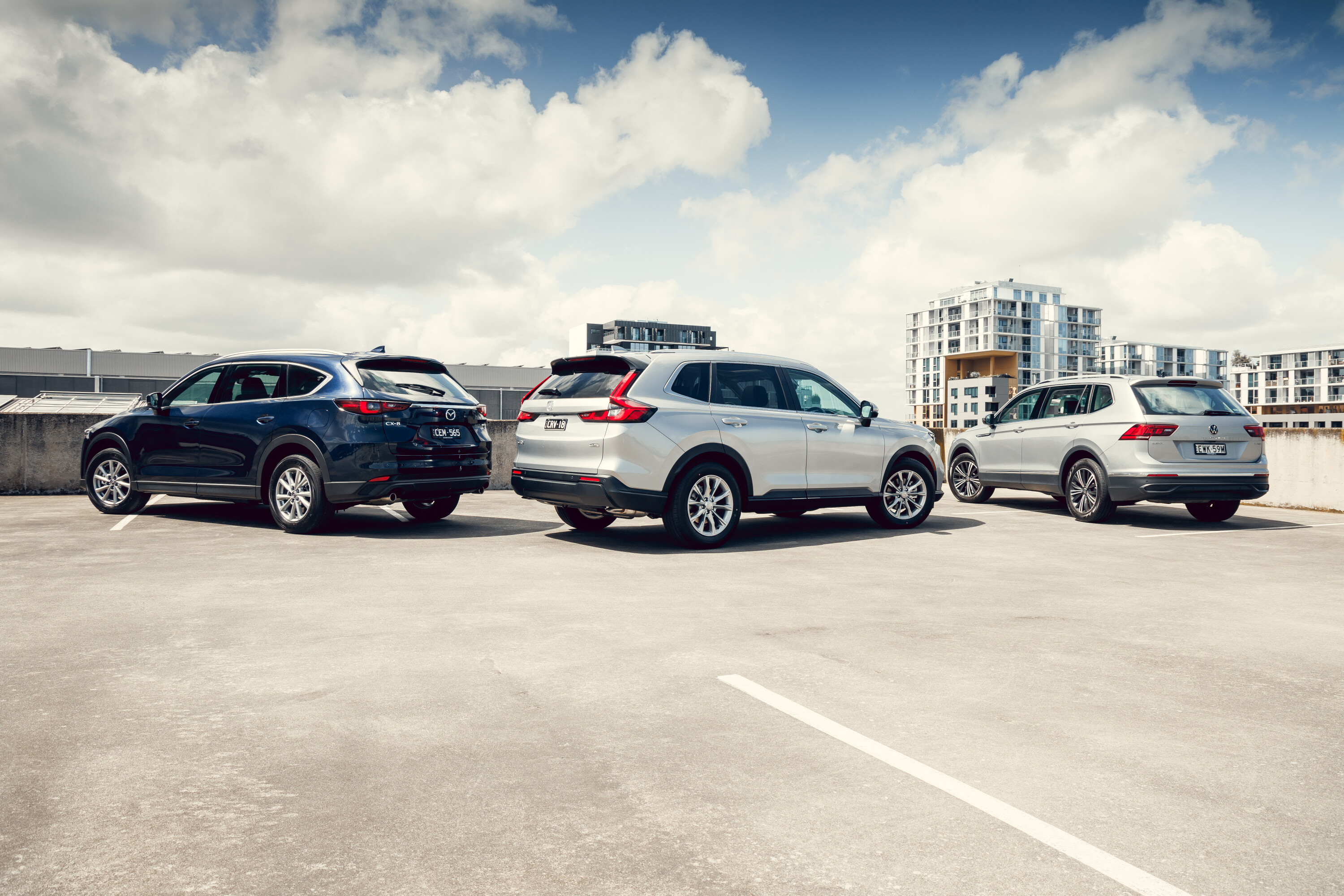
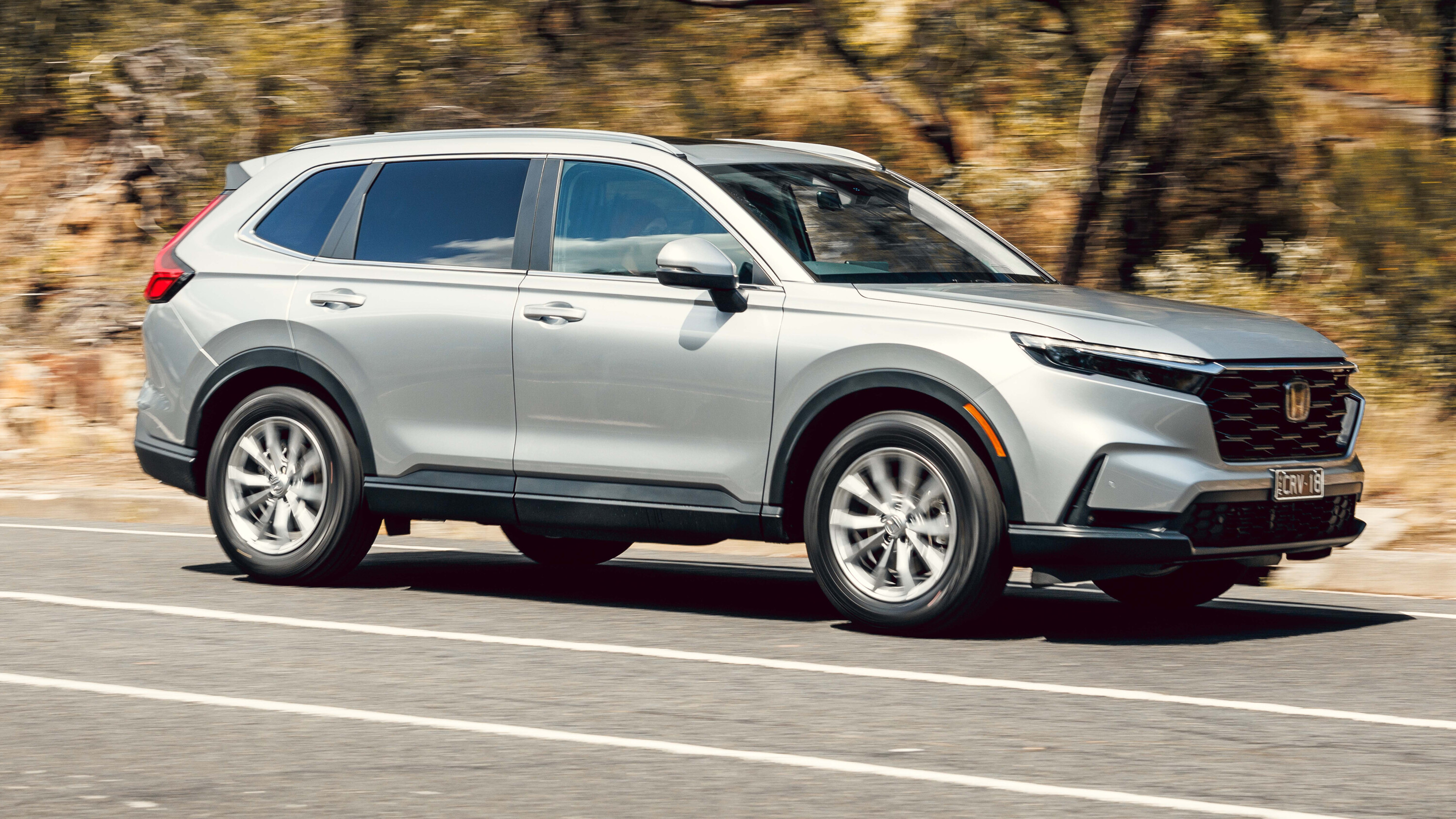
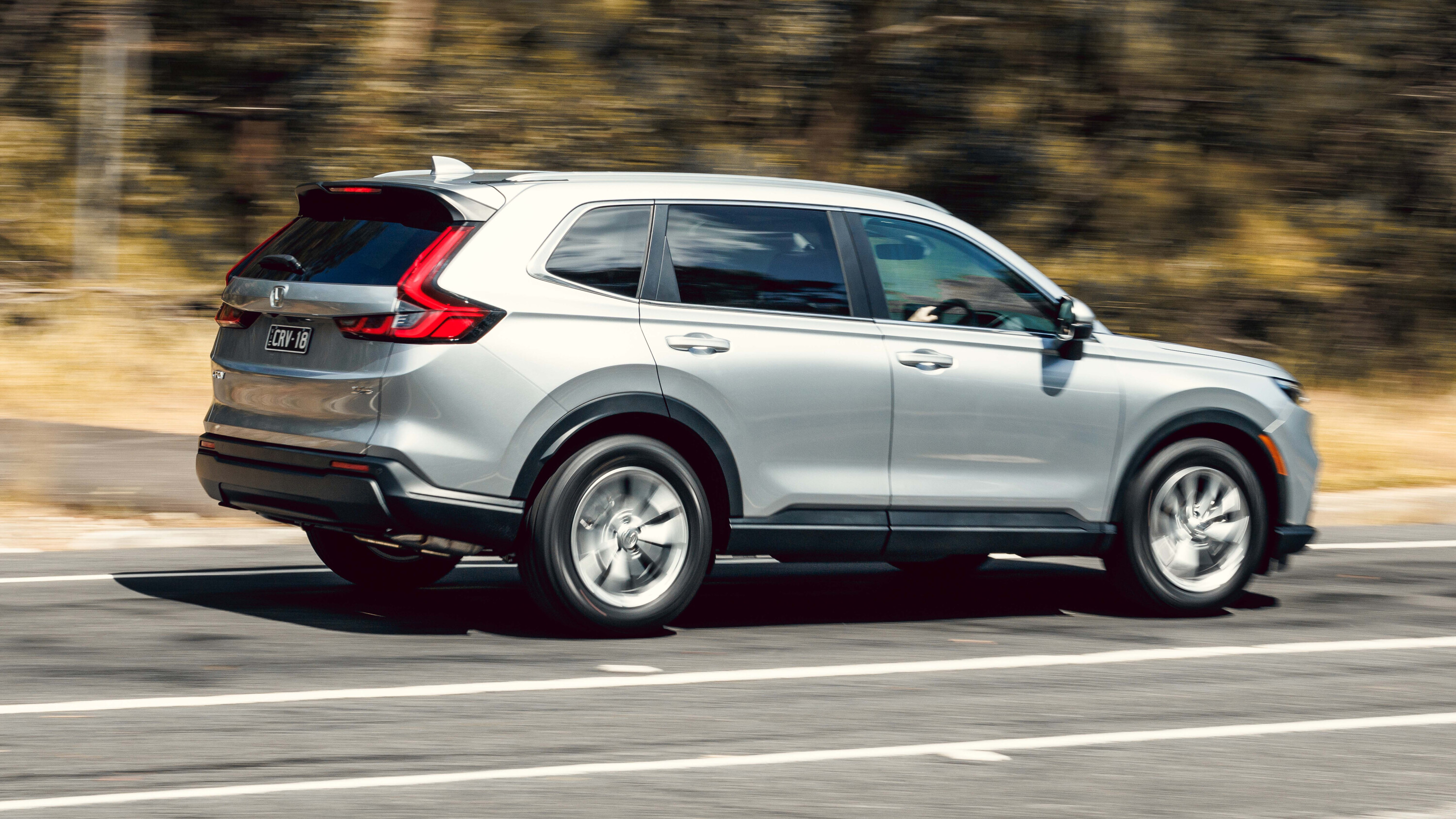
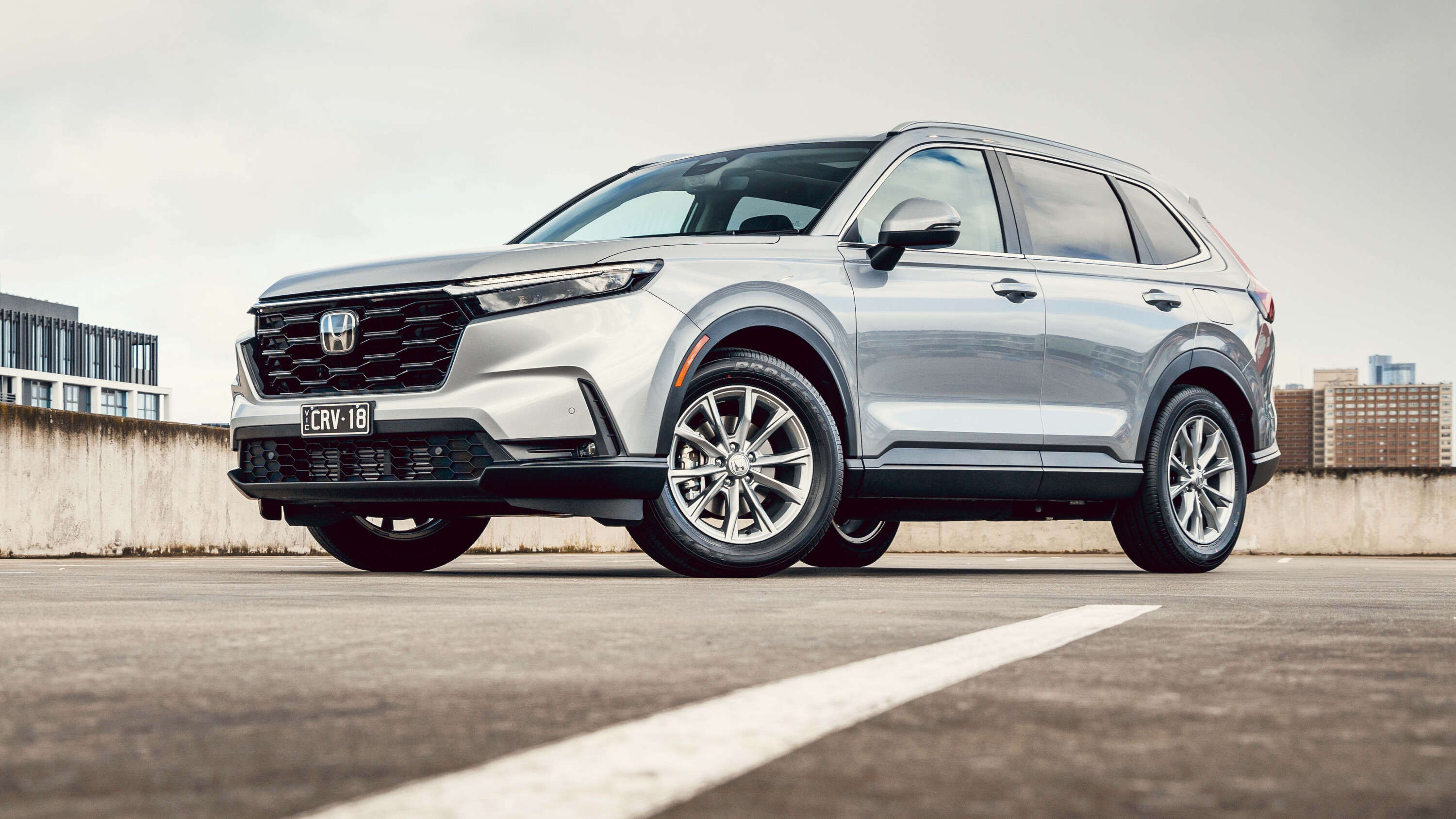
The new Honda CR-V is the latest release of our trio – and it looks it. At 4.7 metres long, it makes the original 1997 CR-V look like a model car, and blurs the line between mid-size and large SUV. Not just its first-generation forebear, it also eclipses the previous model at 69mm longer, 11mm wider and with a 40mm-longer wheelbase.
With its handsomely long bonnet and sculpted styling, the one we have today is the VTi L7 – the one with a pair of seats in the boot. A turbocharged 1.5-litre four-cylinder supplies 140kW and 240Nm to the front wheels only, via a CVT (continuously variable transmission) auto.
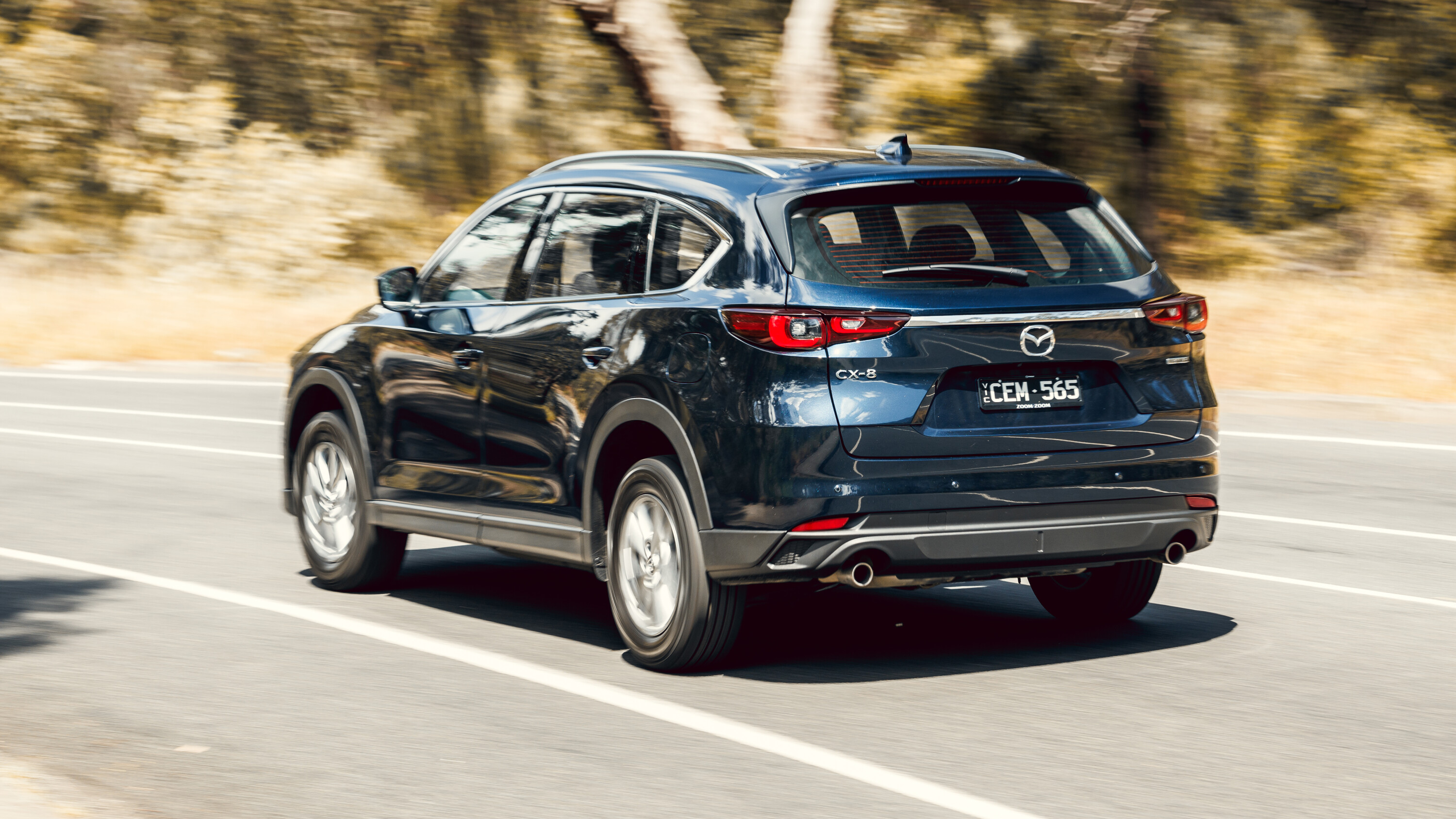
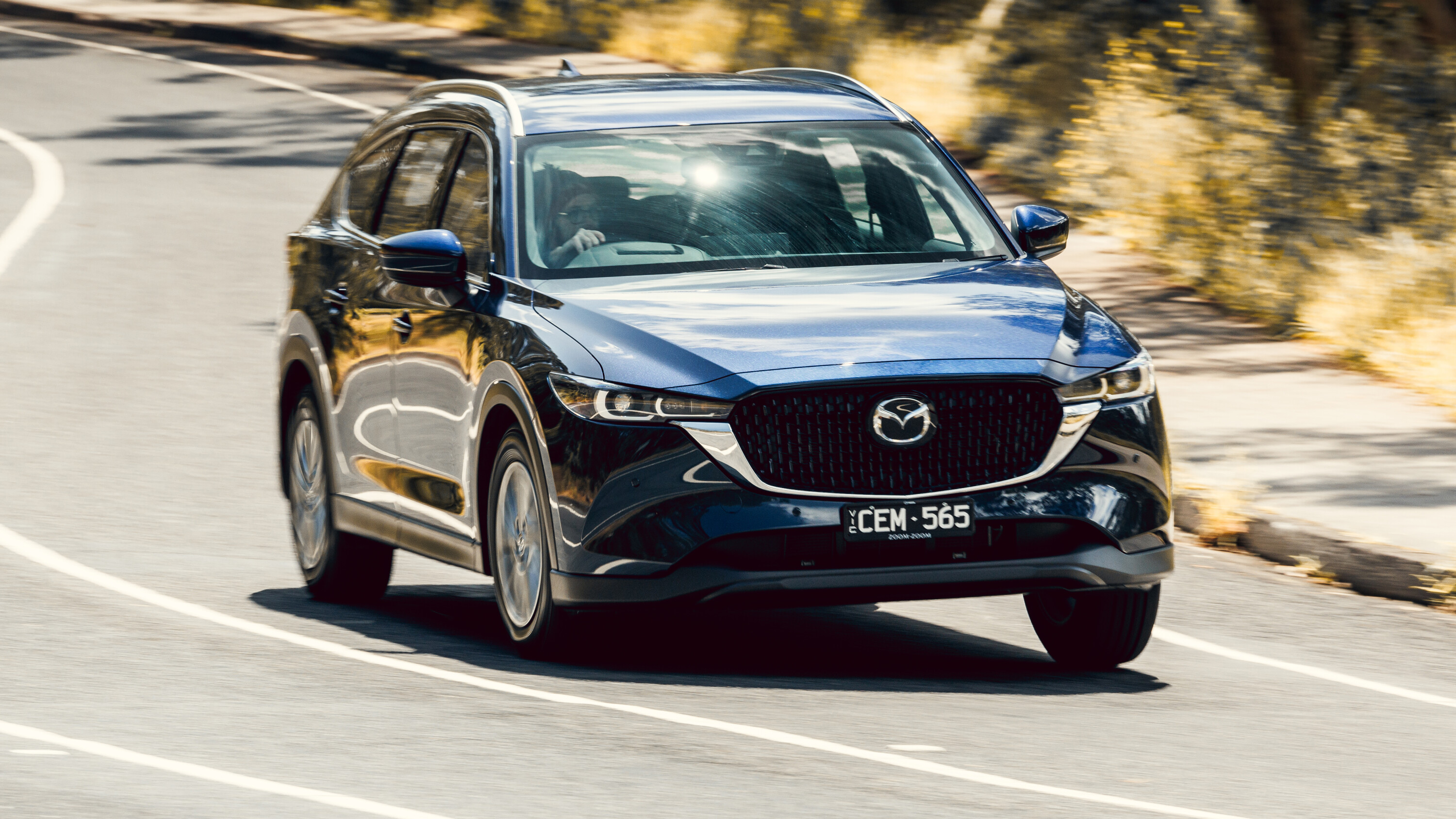
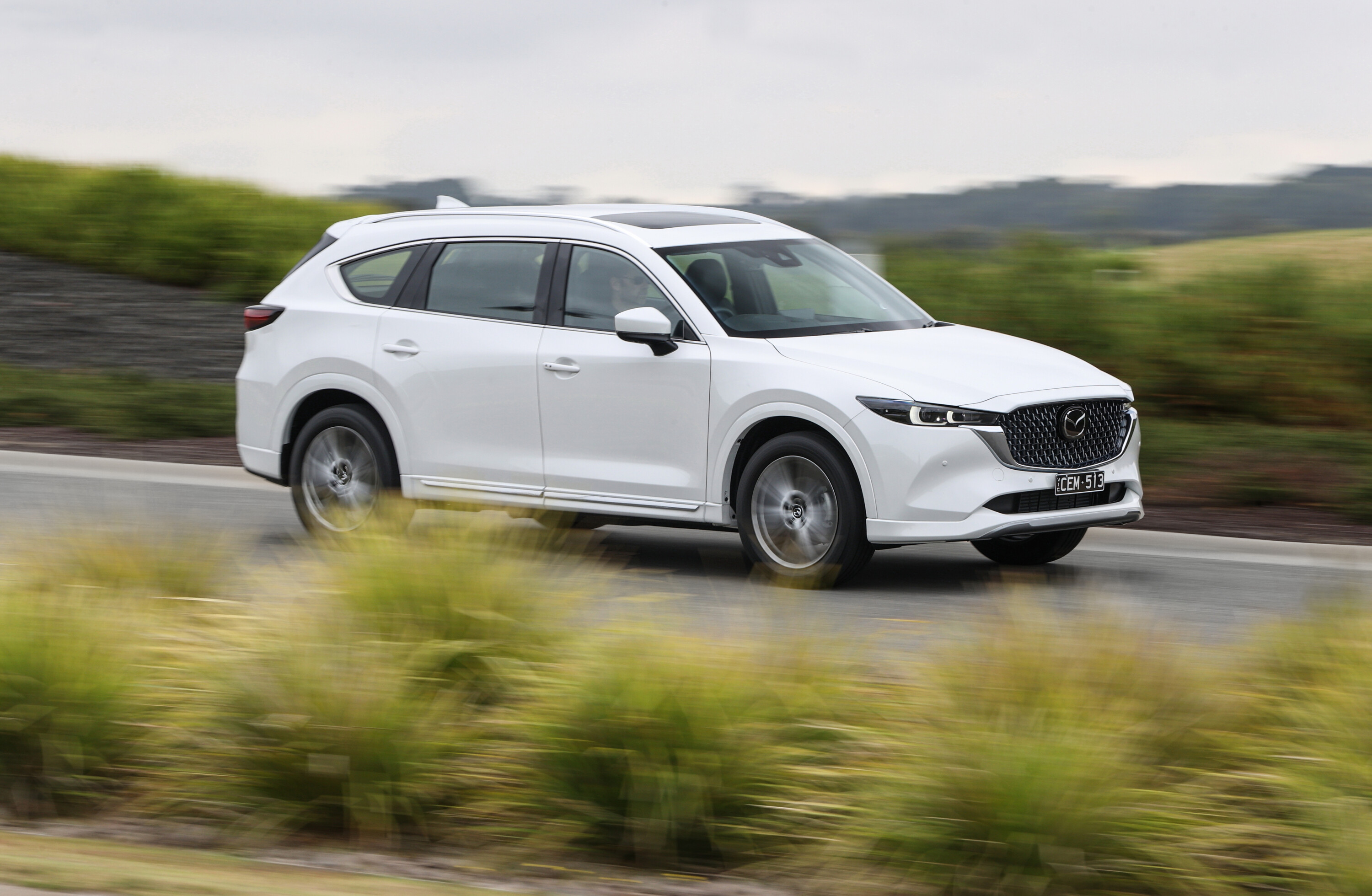
Next up, having existed since 2017, the Mazda CX-8 is now an old car – and since this comparison was conducted the vehicle that is essentially a long-wheelbase CX-5 has been confirmed for the chop by the end of 2023.
Shame, as it’s still a very good SUV, though arriving at our photography location I’m embarrassed to admit I thought the CX-8, parked anonymously in a car park, belonged to a member of the public.
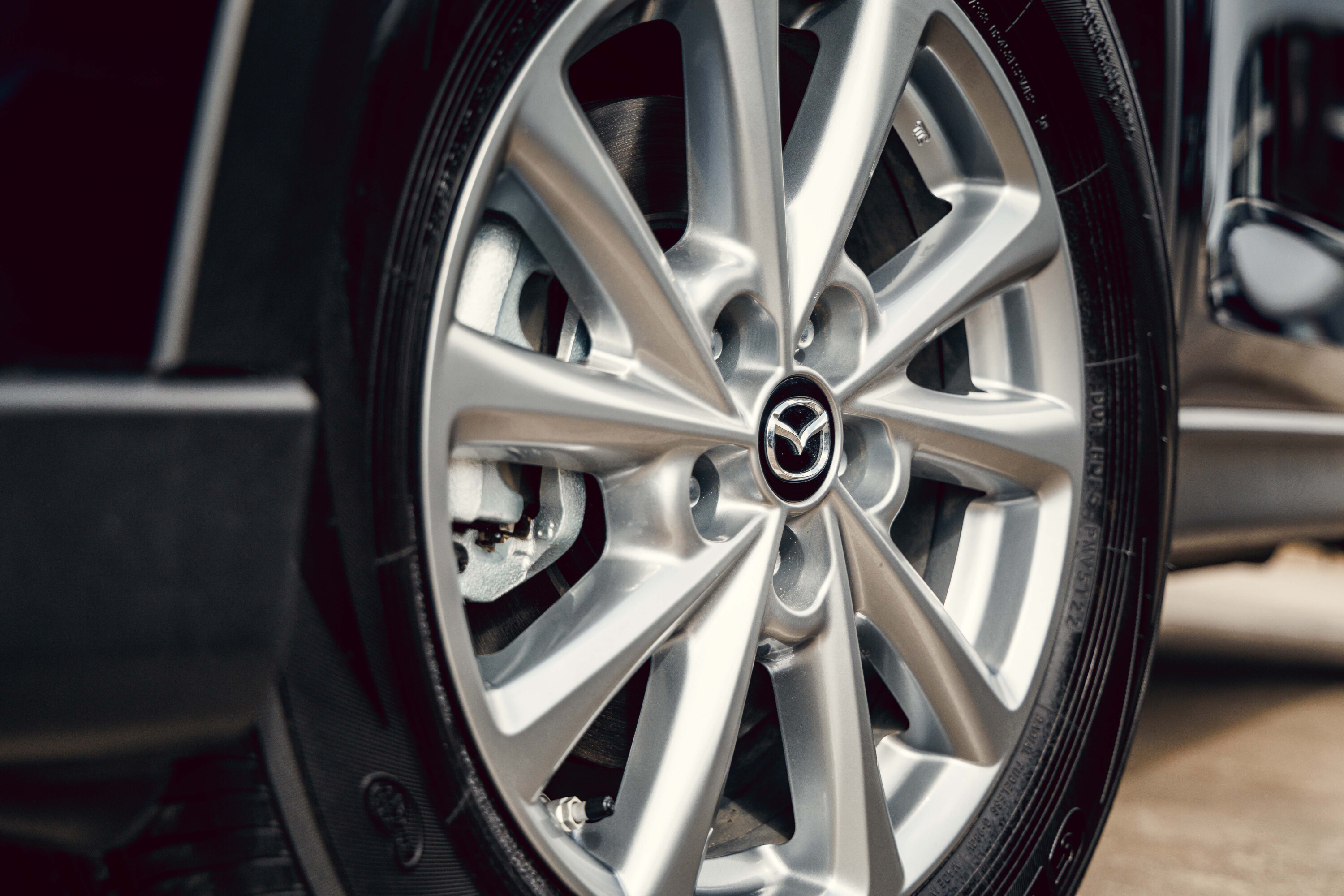
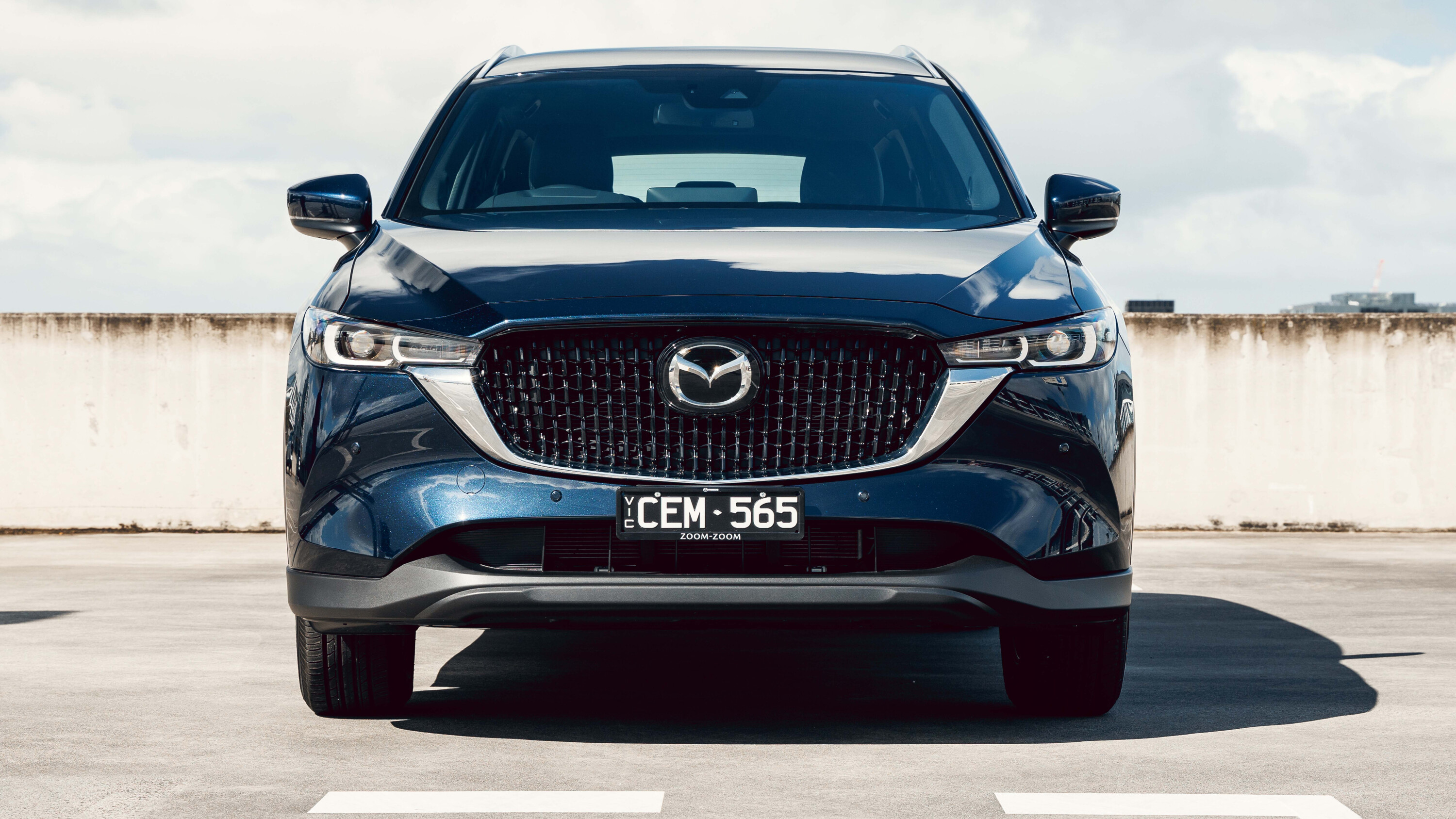
Compared with the Honda, which has proper presence, the CX-8 is almost invisible – especially on the 17-inch wheels of our Touring FWD test car. Its $49,560 list price sneaks just under our $50K RRP cap – it’d be about $54,500 drive-away – while under the skin there’s a six-speed auto, and a peaky 2.5-litre naturally aspirated inline-four dishing up 140kW and 252Nm.
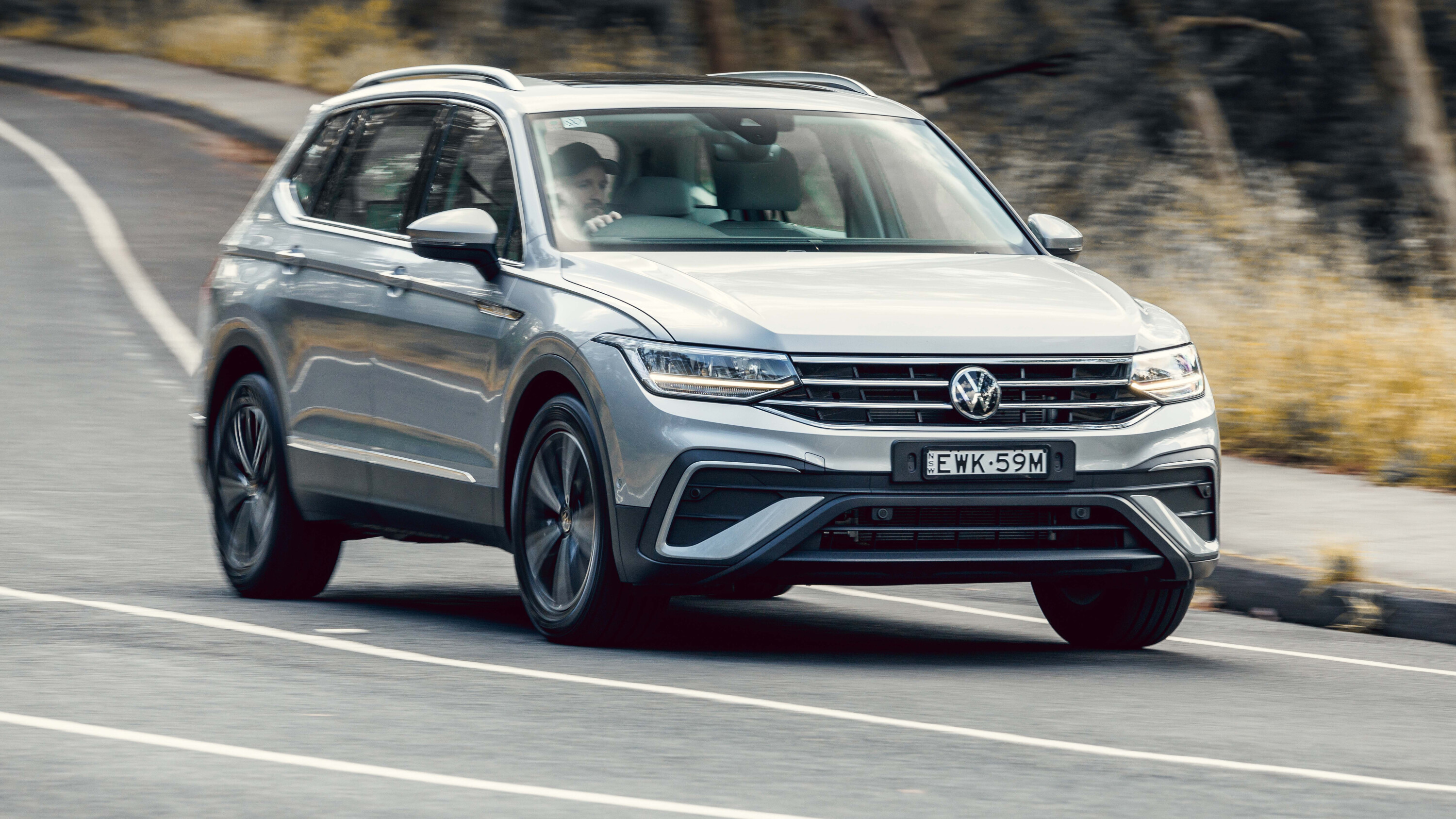
While, like the Mazda, it’s almost ready for the motoring retirement village – this generation Tiguan goes back to 2016 – it’s still a mighty good car.
This one has a 2.0-litre turbo inline-four with 132kW, a grunty 320Nm, and the much-desired – or much-maligned, depending on your past experiences – seven-speed dual-clutch automatic. Unlike the other two cars here, this one is all-wheel drive.
And if value is what you’re after, the Honda CR-V takes an early win, being cheaper than both rivals. While all three cars come with lengthy standard equipment lists, the Honda offers a few things standard the other cars don’t, namely its hands-free electric tailgate, panoramic sunroof, and driver’s seat memory.
Somewhat criminally for a premium marque, you have to pay extra for heated seats in the Volkswagen, something standard on both the Honda and Mazda.
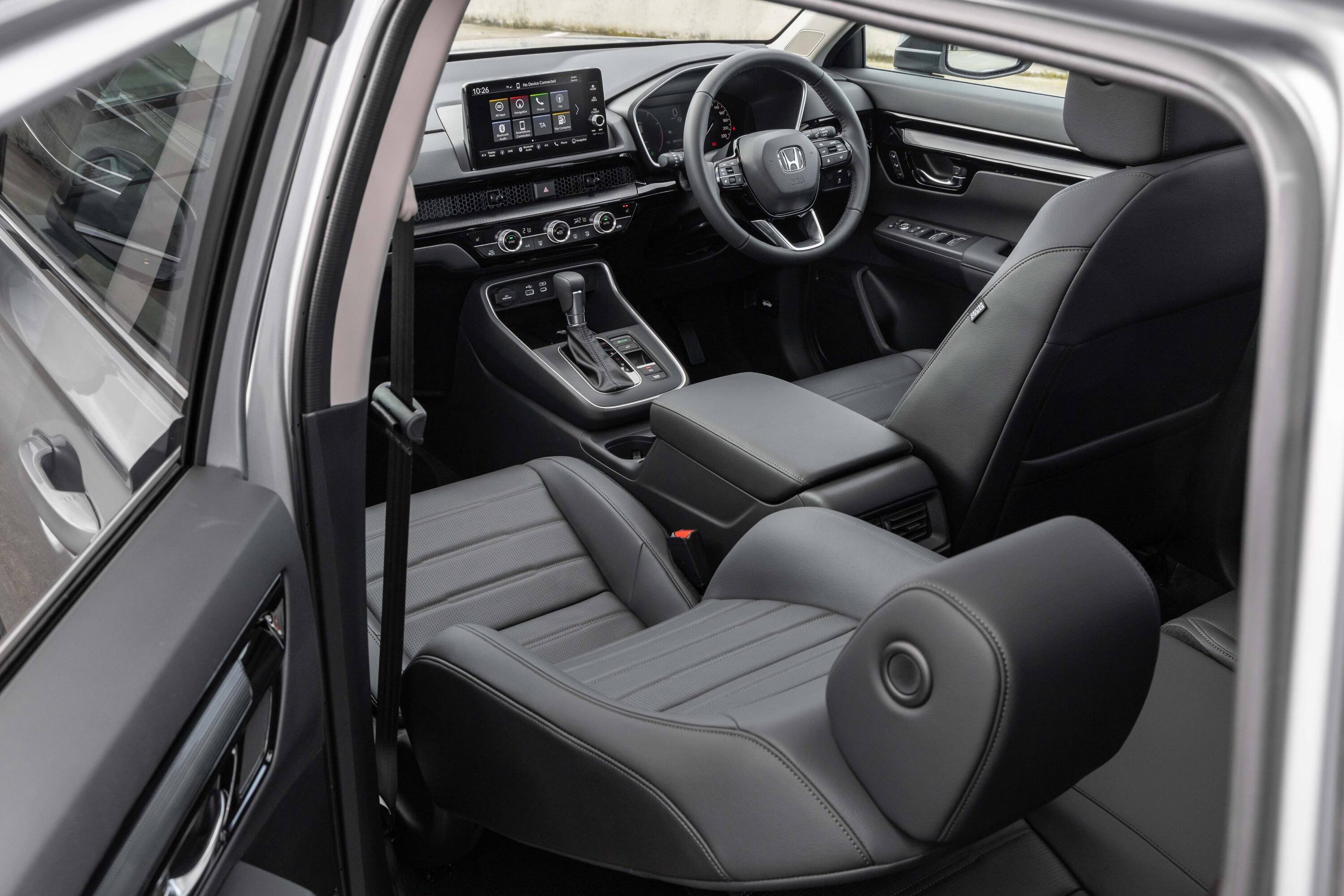
Compared to Honda interiors of only a generation ago, the CR-V’s is more mature, restrained and classy
Meanwhile the CX-8 – if it hadn’t already showed its age – can’t come with a wireless phone charger at all, something standard on the VW and Honda, although unlike those two, the Mazda does give you an old-school, basic head-up display.
Getting into the CR-V, it’s also evident the Honda design department has popped the triangle and trapezoidal stencils in the bottom drawer, replacing them with rulers. Compared to Honda interiors of only a generation ago, the CR-V’s is more mature, restrained and classy, to the point that existing owners – lured by the quirkiness of previous designs – might find the new one a bit plain.
At least in an ergonomic sense, it’s better off for it, whacky controls for things like the volume replaced with a simple, timeless dial. Materials are decent quality while storage space is also good, while we like the bright, clear, contemporary look of the infotainment and instruments.
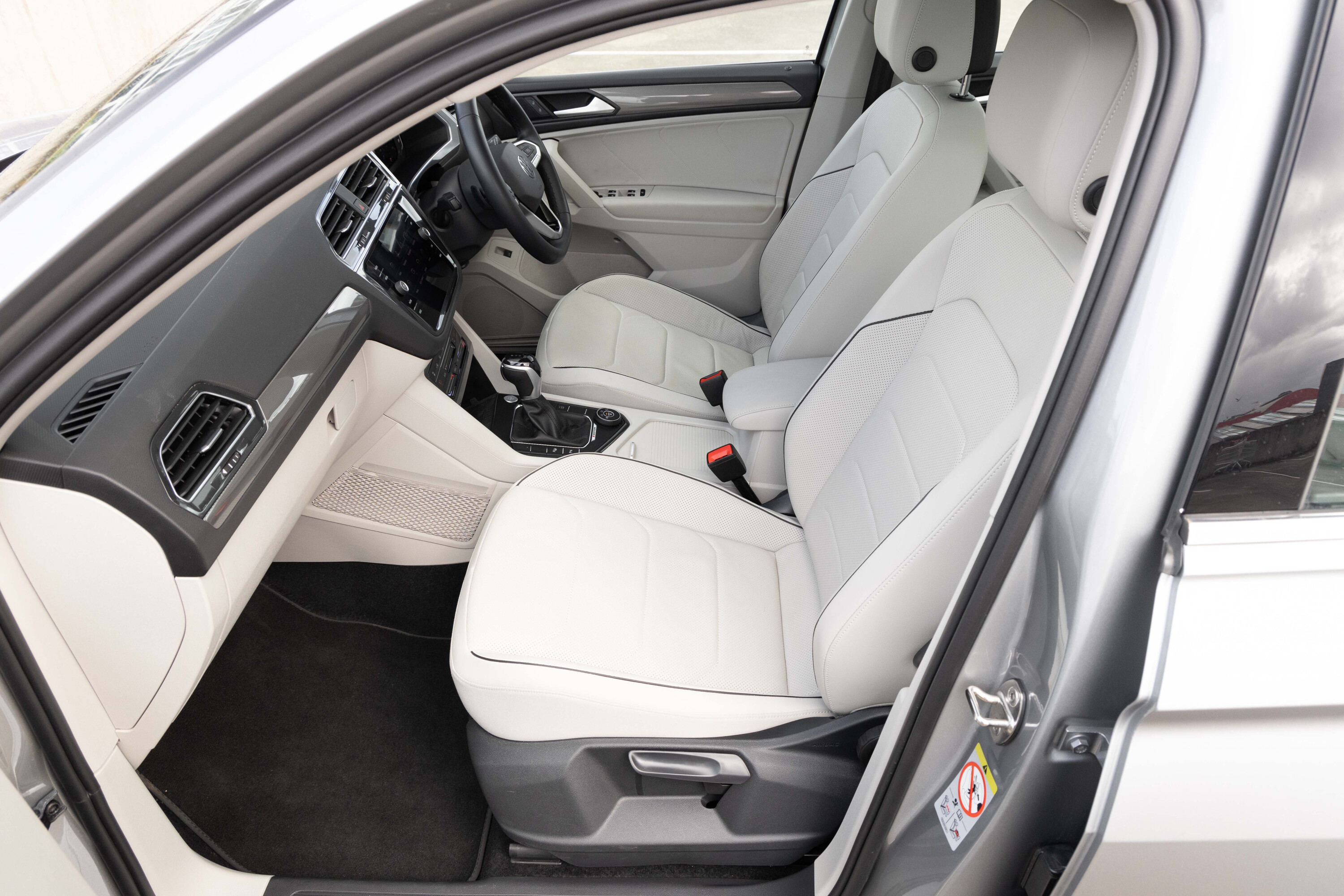
While the slim, 10.25-inch infotainment display is plenty modern, its native interface looks dated and, exasperatingly, is non-touchscreen for the Apple CarPlay.
Why Mazda persists with forcing you to use the hand-controller – when the screen is within easy reach – is one of the biggest continuing own-goals in the world of new car interior design.
In the absence of a sunroof like the other two cars, the CX-8’s interior – trimmed entirely in black, with minimal brightwork – is also oppressively dark, like you’re in a little cave and need to open the curtains a little. This sensation is especially stark if you’re coming straight from the Volkswagen.
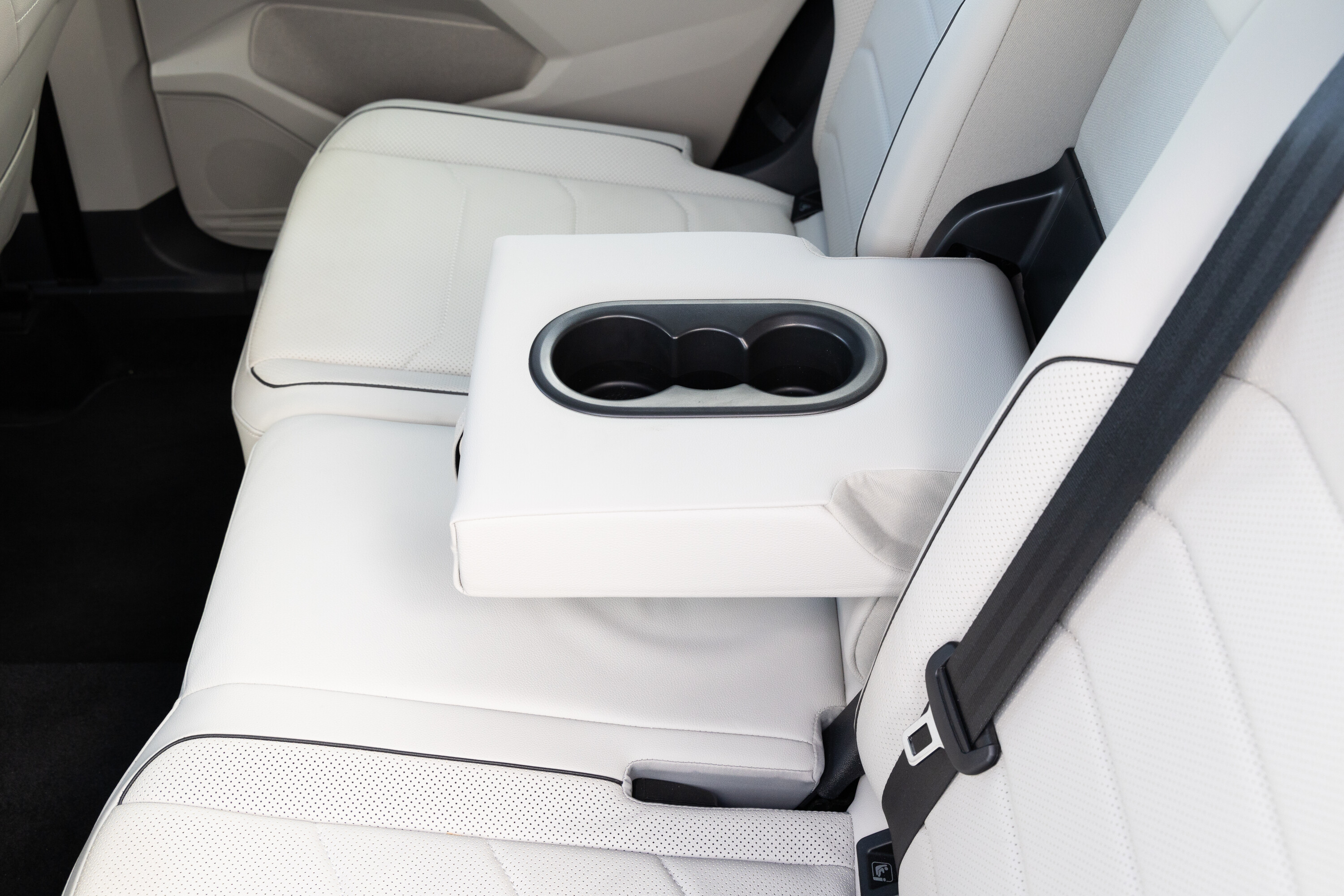
Even though this generation Tiguan is about to be replaced, the interior is still a premium, upmarket place to be, only its relatively small 8.0-inch central touchscreen giving away its age. (And maybe also its antiquated, tall gear shifter.)
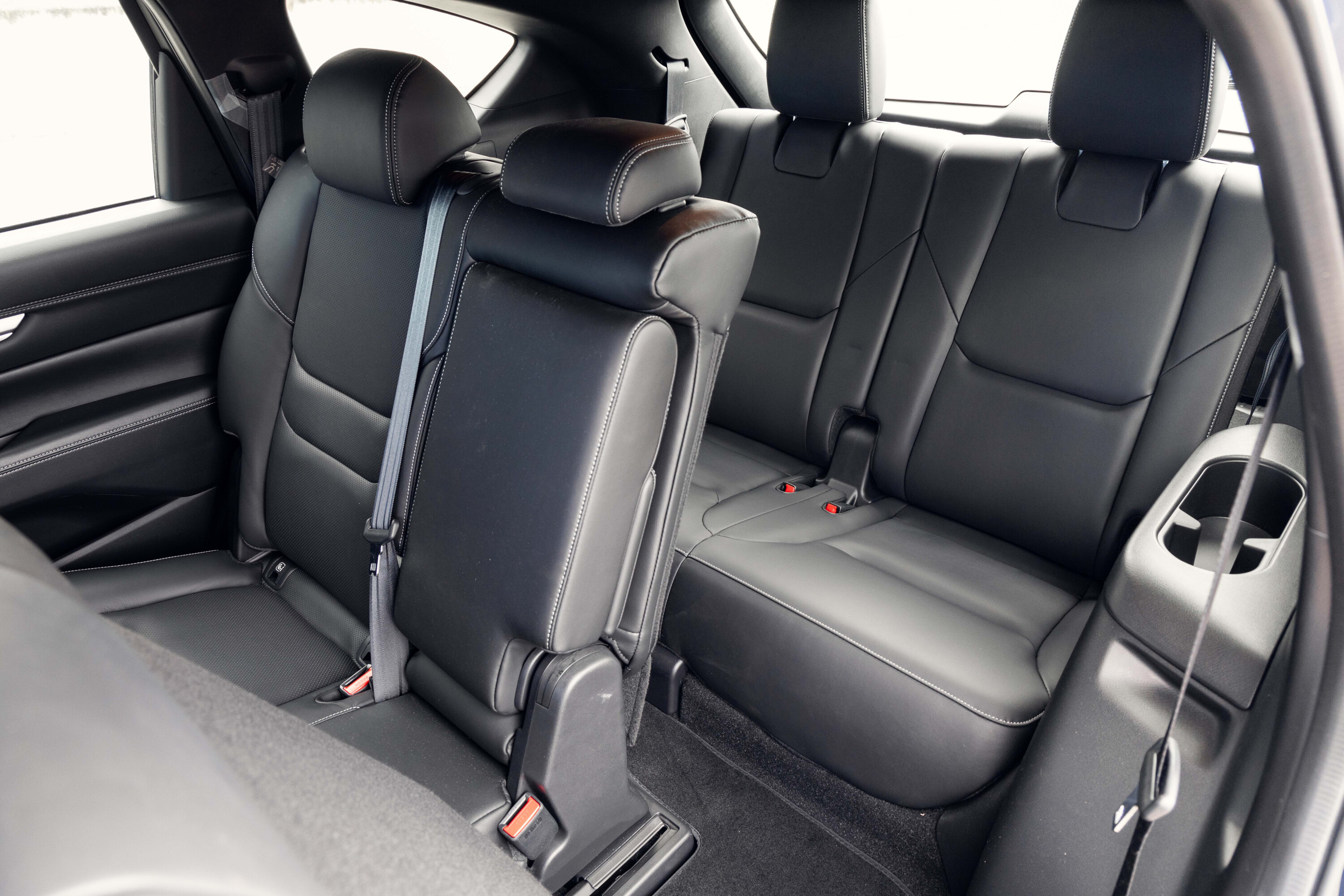
All three cars boast spacious second rows, although the CX-8’s is the best, with tonnes of room and great tri-zone air-conditioning. The VW also has tri-zone, but the CR-V has plain, old manual rear vents. The Honda scores some points for its rear doors, which open so wide it’s like they disappear.
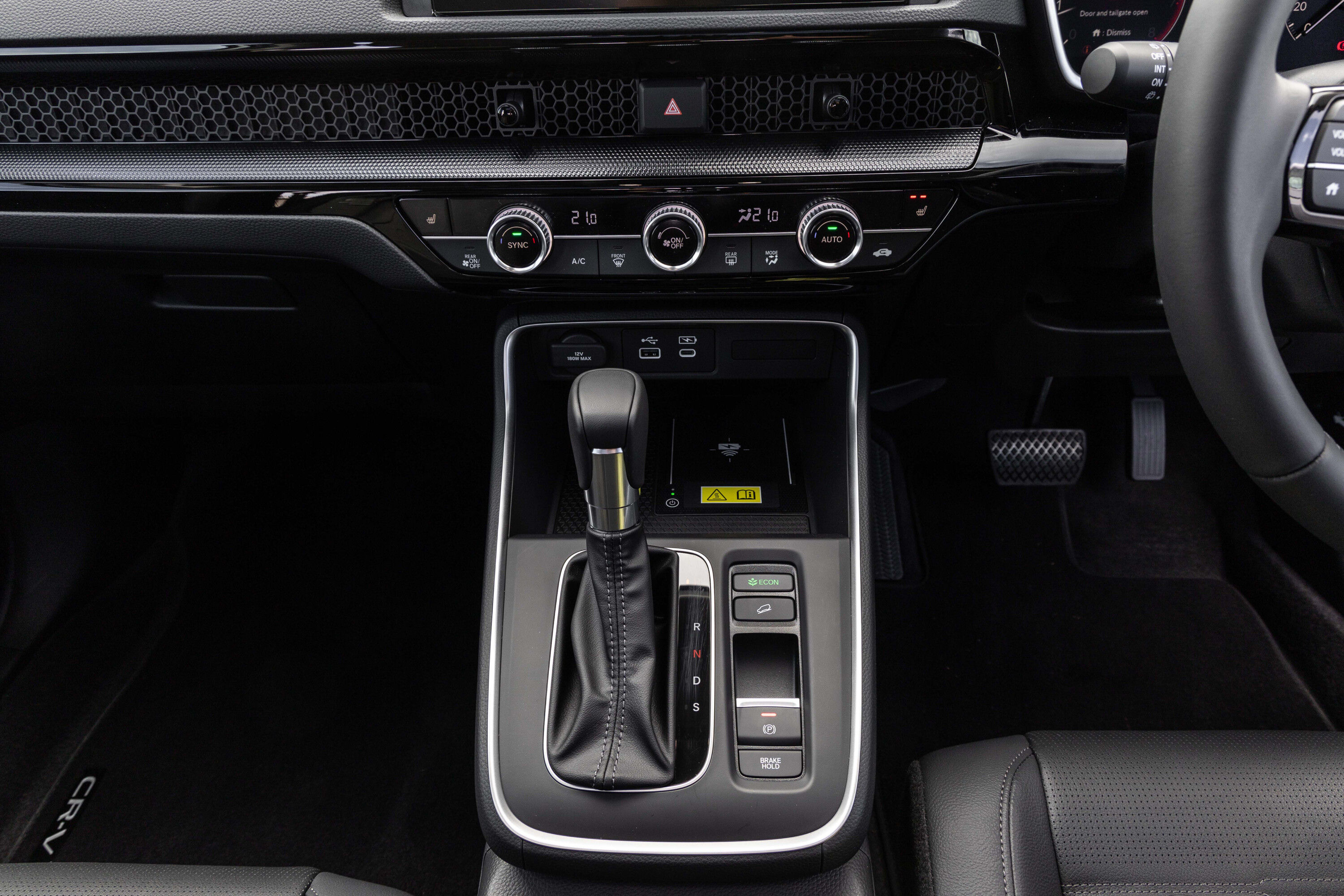
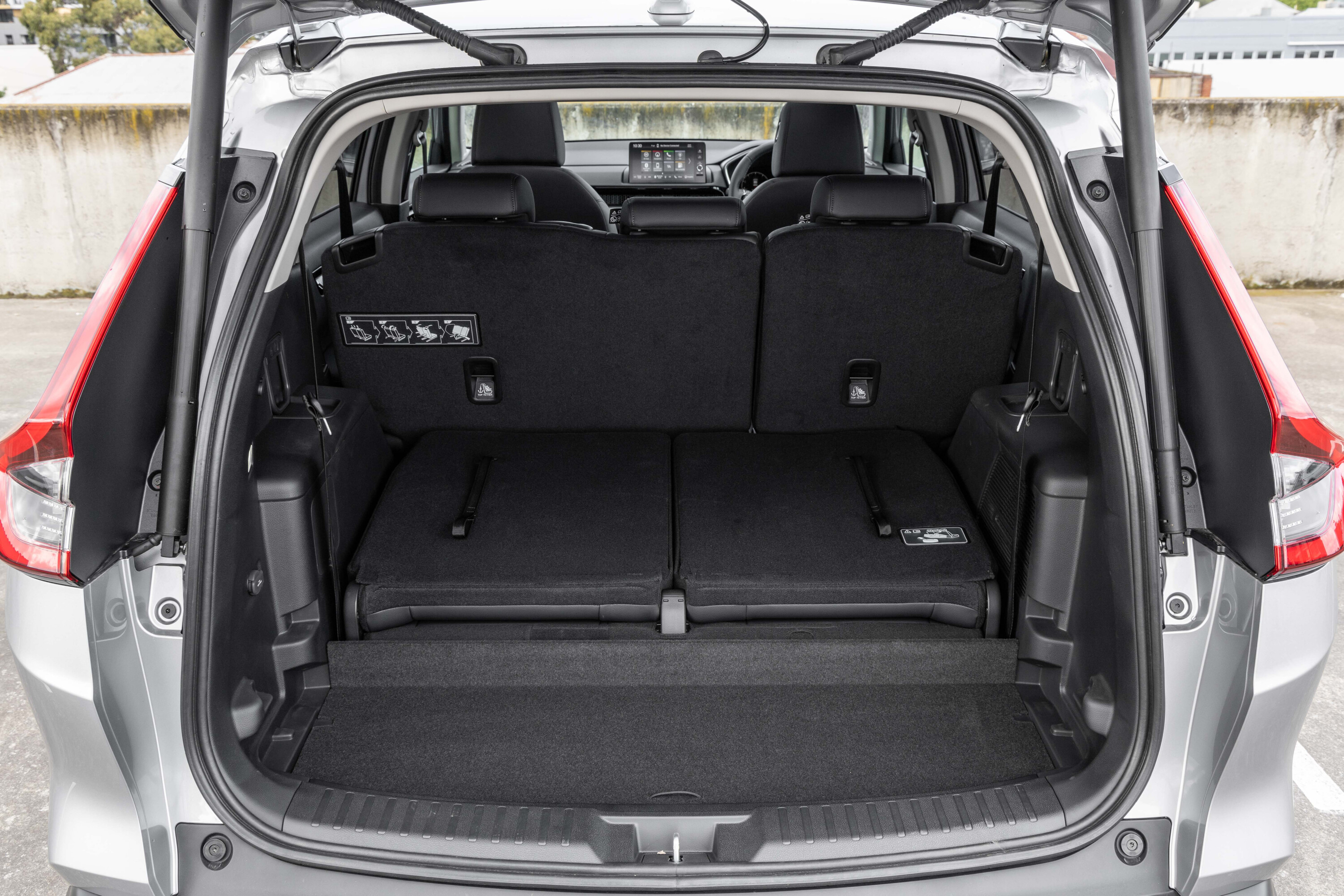
You could reasonably subject an adult to the boot of the CX-8, while the Honda and Volkswagen are child-only zones. At least the Honda gives third-row occupants air-vents – the others don’t.
With back-of-the-bus seats stowed away, all three have great big boots – and all have sliding second rows. Extra points go the Honda here, though, with its standard electric tailgate – something not available on the Mazda at all. Although points are in turn deducted as the CR-V’s boot is almost non-existent in seven-seat mode, while with the third row up, the VW and Mazda still offer something.
The CR-V is a lovely companion for the urban grind, with perfectly calibrated steering and brakes – not too heavy, not too light – while the engine is responsive without being hyper.
Refinement is also good, the CR-V now surprisingly well-insulated from tyre noise, however the engine could pipe down a bit at low speeds (especially when paired with the CVT).
Jump into the Tiguan and forward visibility is so good, you almost feel like you’re sitting in a glass capsule. While the Tiguan’s small-ish infotainment and instrument displays seem a bit pokey while driving, the car itself is effortless and easy to drive, with very light, direct steering. The suspension is beautifully soft, although hit a speed bump too quickly and it clunks loudly, as if something’s just broken.
Curiously, the Tiguan Allspace feels much longer than it is wide, sort of making it feel like you’re driving a van or MPV.
There’s an overall butteriness to the Tiguan that would be improved with a torque converter transmission, the DSG still the tiniest bit taut and sensitive, like occasionally, when getting back into the throttle, you’re taking up a bit of slack. But otherwise, it feels engineered like a Tag Heuer watch.
Curiously, the Tiguan Allspace feels much longer than it is wide, sort of making it feel like you’re driving a van or MPV. After driving the Volkswagen, doing a U-turn in the Honda – with its much shorter wheelbase – almost feels like it’s got rear-wheel-steer.
This is not all to say the CX-8 is a dud. It’s still great to drive, even by 2023 standards. The ride quality feels expensive, the thin-rim leather steering wheel great in your hands, while the powertrain, like that of the Honda, is responsive without ever feeling surprised.
On a winding road, the Honda’s handling gets better the harder you push, to the point that this would be an excellent basis for a Type R hot SUV. Especially if that included junking the 1.5-litre engine and CVT for a powertrain hotter and better, as it falls far short of matching the sparkle that Honda has given the CR-V’s chassis.
It’s like Honda has given its turbo engine the personality of a naturally aspirated engine
Hearing ‘turbo engine’, you might think muscular, low-down torque, but boot it in the CR-V and the CVT ‘kicks down’ to about 4500rpm, skipping where the turbo presumably gives its best. It’s like Honda has given its turbo engine the personality of a naturally aspirated engine.
The Tiguan’s handling has an enjoyable fluidity, but ultimately its agility is blunted by its near three-metre wheelbase. Punting the Tiguan hard is more about enjoying the powertrain.
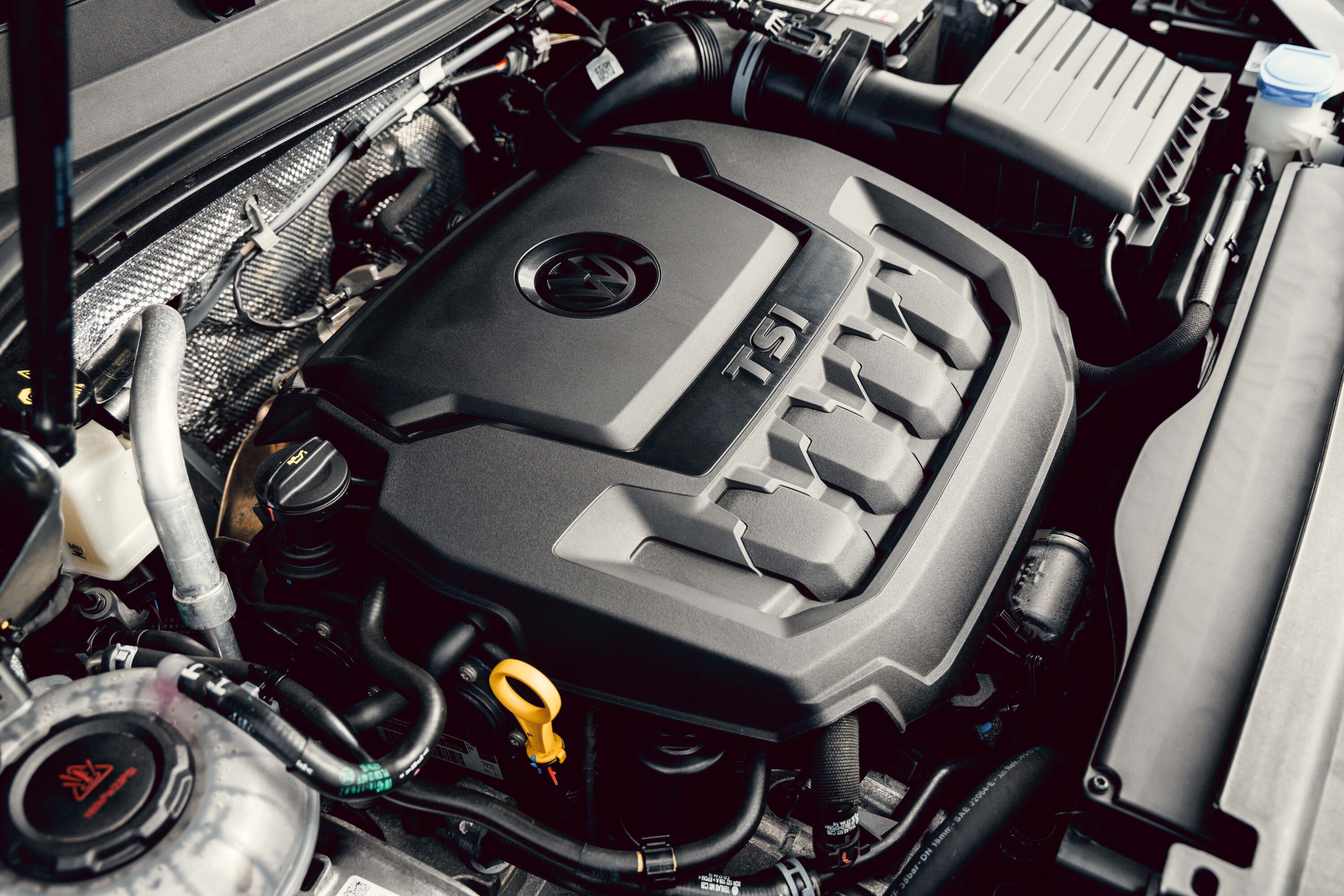
There’s a bit of Golf GTI about the Tiguan’s engine, its turbo engine pulling solidly from about 4000rpm and sounding rorty around its 6000rpm redline. The twin-clutch changes gears very quickly using the flappy-paddles, making for a warm-hatch-like powertrain that almost seems confused to find itself in such a long, heavy SUV.
As for the Mazda, punting it hard feels like you’re making it do something it doesn’t really want to do. It’s much happier loping along, and we’re sure the five kids in the back won’t disagree.
All three cars come with a five-year, unlimited kilometre warranty, but for five-year ownership cost, the CR-V is gentlest on the bank account by a long way. Five services will cost $995 over five years, while the CX-8 is more like $2168 and the Volkswagen, a stinging $3200.
We didn’t get a chance to properly test fuel economy, but using the ADR 81/02 benchmark you could expect the Honda to be most efficient (7.3L/100km combined), followed by the Mazda (8.1L) then the Tiguan (8.9L).
Given their vintages, you’d be tempted by the used market for both the Mazda and Volkswagen, too, pocketing more than a few thousand – or you would with the Japanese car at least, given buying a second-hand, dual-clutch Volkswagen without a warranty would take a bit of derring-do.
You won’t be tempted by a second-hand CR-V, as the new one is a big improvement over the old.
While Honda’s new interiors lack a bit of the funk and personality of those before it, they’re much smarter, more intuitive, more usable – and in the CR’V’s case, more spacious.
While we’re sure the CVT hides some of the magic of the new turbo engine, the CR-V seriously impresses for its build quality, refinement, and all-round offer. It’s our winner here, demonstrating that while $50K can no longer buy a house, it can get you a damn good car.
| 2023 Volkswagen Tiguan Allspace 132TSI Life specifications | 2023 Mazda CX-8 Touring FWD specifications | 2023 Honda CR-V VTi L7 specifications | |
|---|---|---|---|
| Body | 5-door, 7-seat SUV | 5-door, 7-seat SUV | 5-door, 7-seat SUV |
| Engine | 1984cc inline 4cyl, 16v, DOHC, turbo | 2488cc inline 4cyl, 16v, DOHC | 1498cc inline 4cyl, 16v, DOHC, turbo |
| Power @rpm | 132kW @ 4387-6000rpm | 140kW @ 6000rpm | 140kW @ 6000rpm |
| Torque @rpm | 320Nm @ 1500-4387rpm | 252Nm @ 4000rpm | 240Nm @ 1700-5000rpm |
| Transmission | 7-speed dual-clutch automatic | 6-speed automatic | Continuously Variable |
| 0-100km/h | 8.2 seconds (claimed) | 9.0 seconds (estimate) | 9.0 seconds (estimate) |
| L/W/H | 4734/1839/1688mm | 4925/1845/1720mm | 4704/1866/1681mm |
| Wheelbase | 2791mm | 2930mm | 2701mm |
| Track width | 1575/1565mm (f/r) | 1595/1600mm (f/r) | 1611/1627mm |
| Boot space | 700/230L | 775/242L | 840/150L |
| Weight | 1750kg (tare) | 1799kg | 1700kg |
| Fuel / tank | 95RON / 60 litres | 91RON / 72 litres | 91RON / 57 litres |
| Fuel use L/100km | 8.9L/100km (combined, claimed) | 8.1L/100km (combined, claimed) | 7.3L/100km (combined, claimed) |
| Suspension | struts, coil springs, anti-roll bar (f) multi-links, coil springs, anti-roll bar (r) | struts, coil springs, anti-roll bar (f) multi-links, coil springs, anti-roll bar (r) | struts, coil springs, anti-roll bar (f) multi-links, coil springs, anti-roll bar (r) |
| Steering | Electric rack-and-pinion | Electric rack-and-pinion | Electric rack-and-pinion |
| Brakes | ventilated discs (f) solid discs (r) | ventilated discs (f) solid discs (r) | ventilated discs (f) solid discs (r) |
| Wheels | 7.0 x 18 (f/r) | 7.0 x 17 (f/r) | 7.0 x 18 (f/r) |
| Tyres | Pirelli Scorpion 235/55 R18 (f/r) | Yokohama Geolandar G98 225/65 R17 (f/r) | Toyo Proxes C100 235/60 R18 (f/r) |
| Price | $54,990 (as-tested, before on-road costs) | $49,560 (as-tested, before on-road costs) | $53,000 (as-tested, drive-away) |
Looking to get into a brand-new large SUV? Our stories below will guide you to the model that best suits your needs!
It’s apparently also a phrase that resonates within the hallways of Mazda’s Hiroshima HQ, because the freshly-minted CX-90 flaunts sheetmetal that’s Versace instead of Tarocash, draped over a frame with handsome proportions and the confident air of an athlete – and a thrusty turbo inline-six housed within it.
The CX-90 is a bold play by Mazda, being its first longitudinally-engined large SUV and its first non-sports car to play in the $100K+ realm. But does it really deserve to stand shoulder-to-shoulder with the established members of the large luxe SUV club? The CX-90 certainly looks like it should.
Yet looks can only take you so far. Luxury is about much more than appearances – there are other targets to hit in refinement, cabin quality, technology and performance that are just as critical – and competition gets thick when you start shelling out six figures.
Is the CX-90 wheat or chaff? We’ve assembled a cross-section of luxe and near-luxe large SUV rivals for the big Mazda to square up to. Some, like the Genesis GV80, are propelled by the same sort of premium ambitions and aspirations as the CX-90.
At the other end, the BMW X5 is virtually a founding member of this particular country club.
In between are contenders like the Lexus RX, the mainstay model of a brand that successfully took on the Euro establishment 30-odd years ago (and which some might say has been resting on those laurels ever since), and the Volvo XC90 – a masterclass in elegant understatement, but whose lack of braggadocio may count against it in a market that preferences bling.
Rounding out the sextet is Volkswagen’s Touareg, which has common ground with the CX-90 given both are born of modest brands yet also possess the on-paper credentials to warrant consideration for bona-fide premium status.
Should the bouncer part the velvet rope for them?
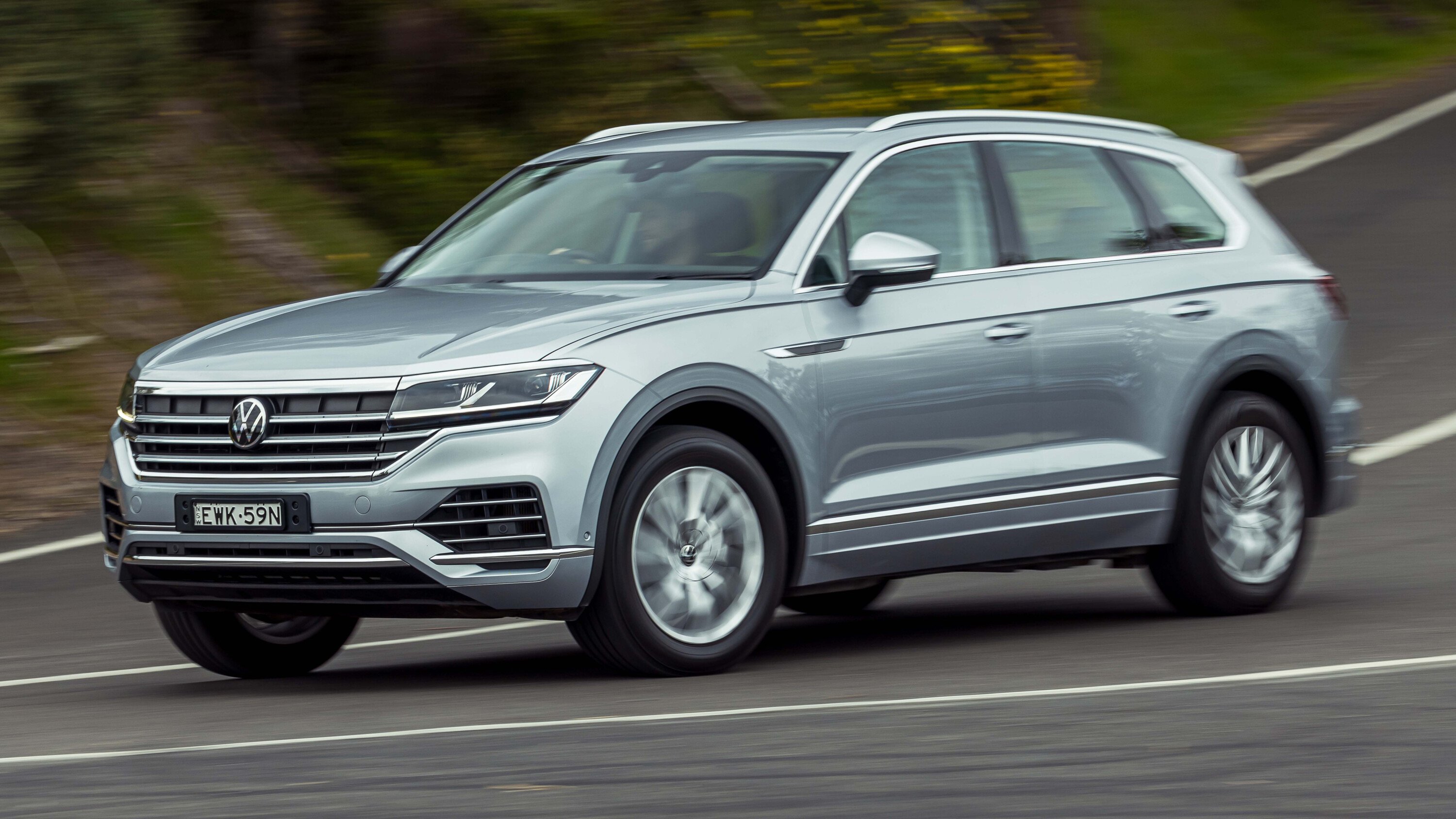
Due for a facelift next year – before some sort of EV behemoth replaces it altogether in the coming years – the Touareg even in its current guise is still an eminently pleasing vehicle.
Under the bonnet is a 3.0-litre turbocharged diesel V6 twisting out 170kW and 500Nm – the latter from just 1750rpm. There’s an eight-speed torque converter auto and all-wheel-drive, while its $87,990 list price, before any options, doesn’t look quite so scary after a few inflationary years.
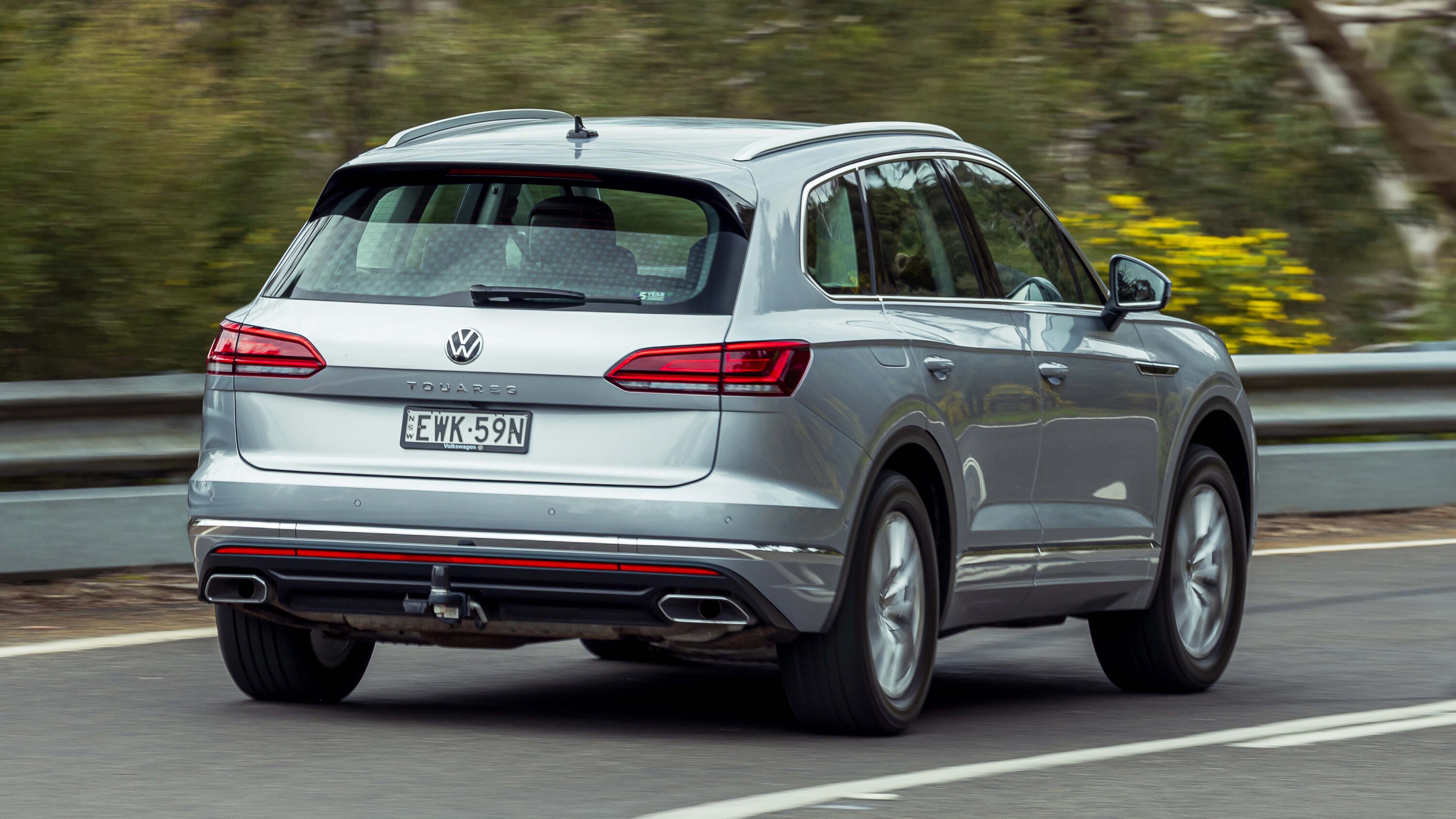
At 15.0 inches, the centre infotainment touchscreen – part of the $8600 Innovision option package – looks as if someone’s fitted a TV to the middle of the dashboard.
The gigantic, beautifully crisp and bright, high resolution native sat-nav map view is hard not to love – less so the compressed Apple CarPlay display which, irritatingly, only fills about half the screen. It’s also wired-only.
Netflix streaming not available on the Touaregs huge centre screen, unfortunately
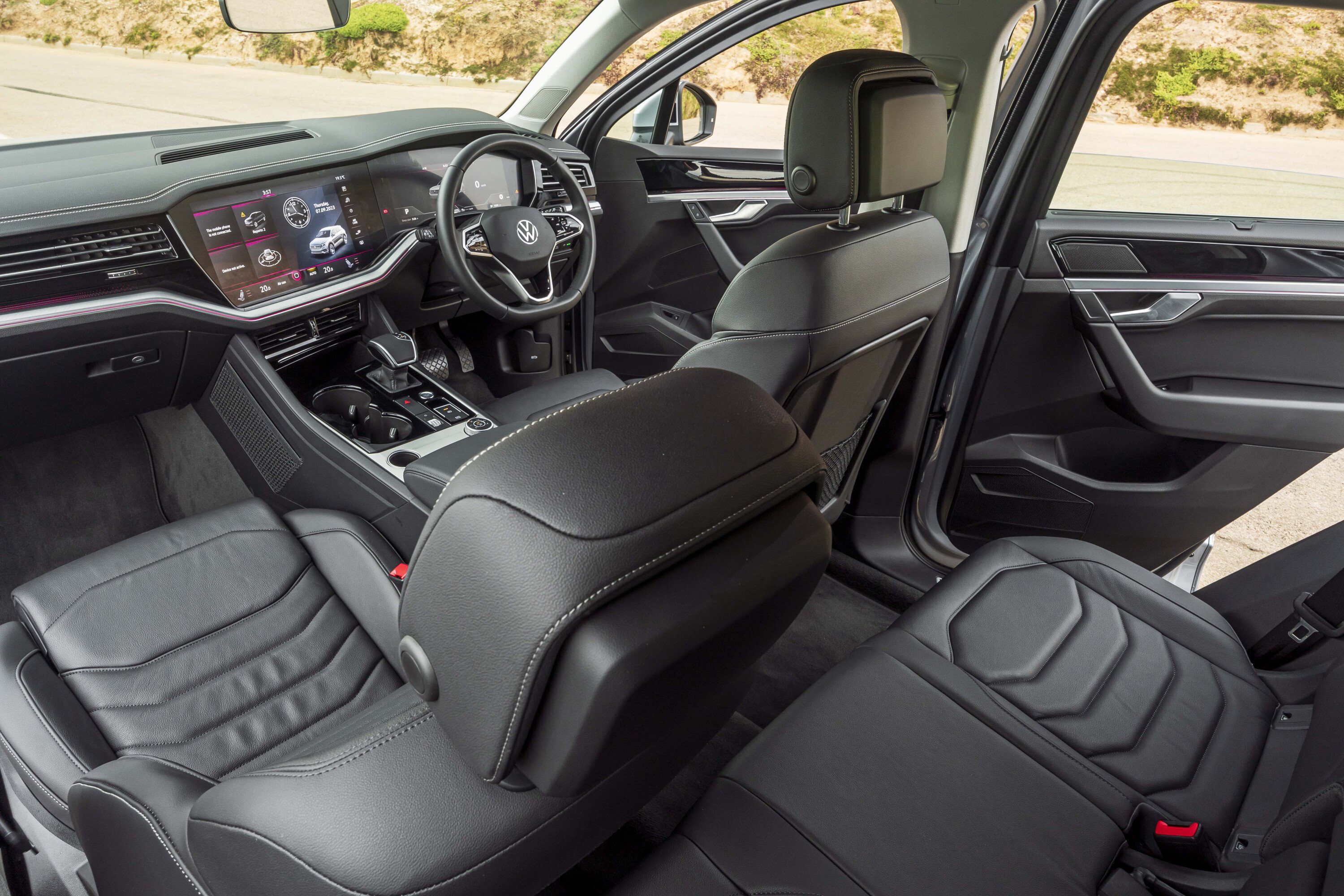
While the giant display lends the otherwise ageing Touareg interior a high-tech feel, the absence of HVAC hard buttons and dials can make it feel an empty, plain place – especially at night, where the centre stack is strangely dark. Forget that only until recently VW produced some of the most terrific physical HVAC controls of any carmaker, lest you feel swindled now that they’re all in a touchscreen.
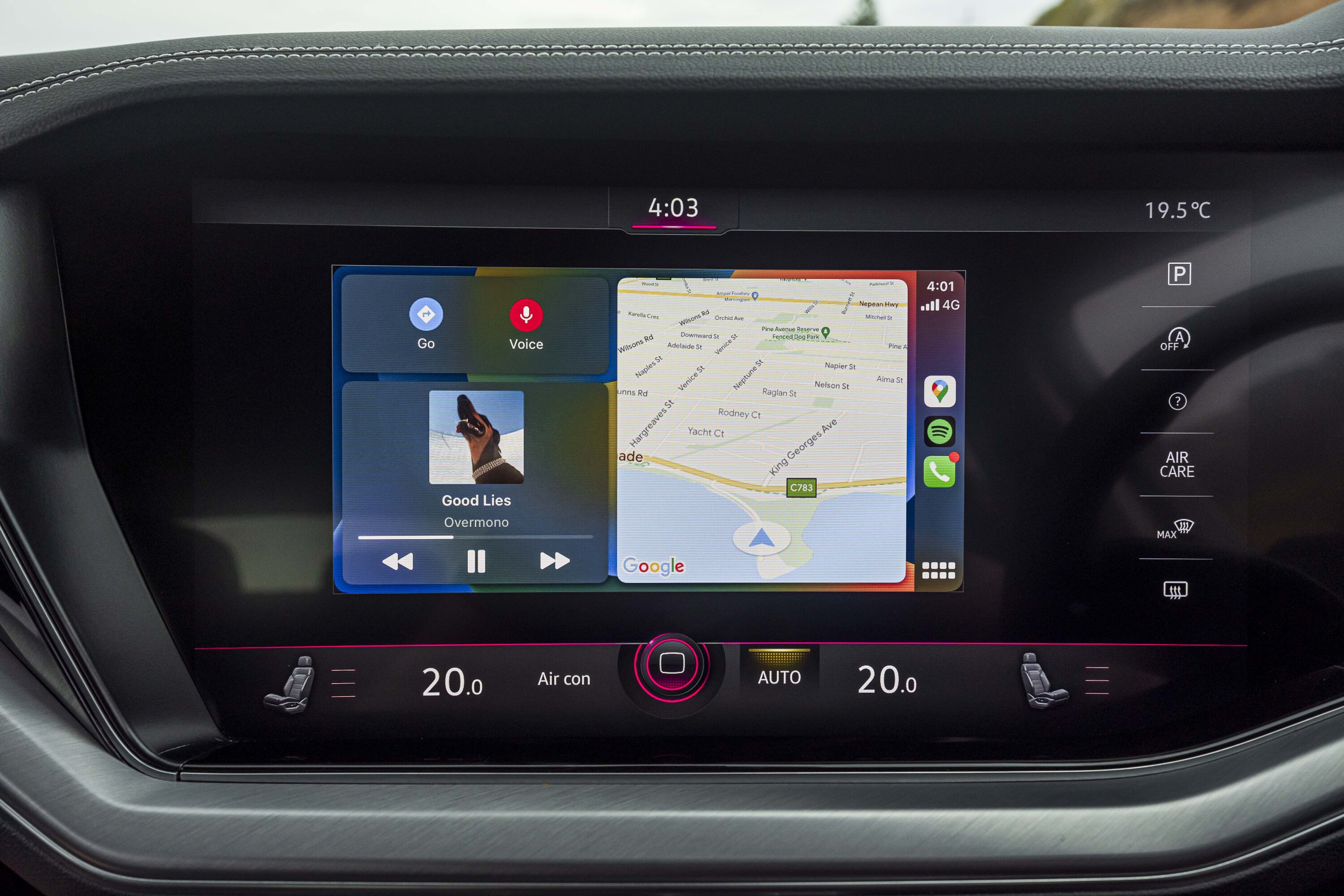
With a generous, fat vein of turbo-diesel torque just off throttle tip-in, the Touareg 170TDI is an effortless car for the everyday grind. It’s quiet, refined, and feels engineered like a chronograph watch.
While the 170TDI misses out on the air suspension of richer grades, ride quality is still good, and the overall drive a breeze. Parking, with its myriad cameras and views, is also a doddle for such a large car.
That’s even if you’ll be hunting around for the ESC ‘off’ button, as the system’s strategy of stabbing suddenly at the brakes, mid-corner, is not a pleasant one.
In the final reckoning, the Touareg is a lovely car to drive, feeling premium without trying (unlike other cars here), with impressive fuel economy and a spacious second row. It’s the pick for towing and long-distance cruising, and being German seems to imbue it with an additional fathom of engineering depth and build quality other cars here could only dream of matching.
But where it falls down is that, in this company, and around this price point, it feels like a base model competing against top-spec grades – because it is.
Even at $98,790 as-tested, it’s missing the panoramic sunroof of other cars here, and tri-zone air-conditioning. The haptic steering wheel is, at best, an ergonomic step sideways from plain, old buttons; and just in general, the interior doesn’t feel special enough.
The inside of the Genesis, for example, feels like it’s been fussed over by a team of stylists for months; while a design committee ticked off the Touareg 170TDI’s cabin in a few weeks. While an entry-level Touareg is still a pleasant place to be, for outright luxury and making its occupants feel spoiled, the other cars simply try harder.
Dylan Campbell
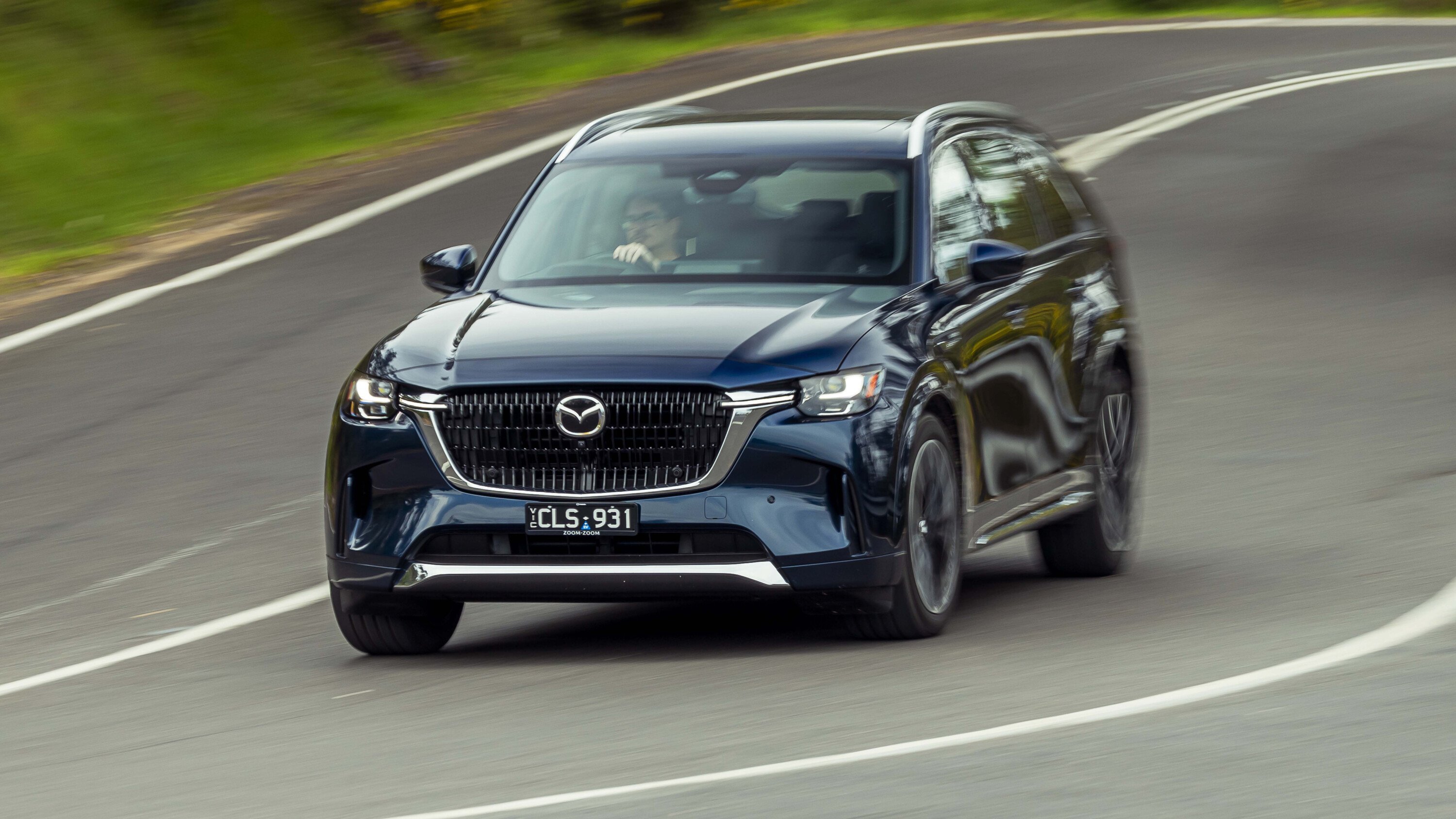
Glance around Mazda’s new SUV and there are multiple echoes of BMW. The tail-lights have a hint of BMW XM while G50e, denoting the CX-90 model grade, has a certain Munich ring to it. Mazda’s rotary infotainment controller, meanwhile, is more than a little iDrive; while someone’s plonked a 254kW 3.3-litre turbo straight-six under the bonnet.
Mazda would doubtless appreciate our comparisons to one of the world’s most accomplished premium brands, given that it’s aspiring to a more premium positioning – and price.
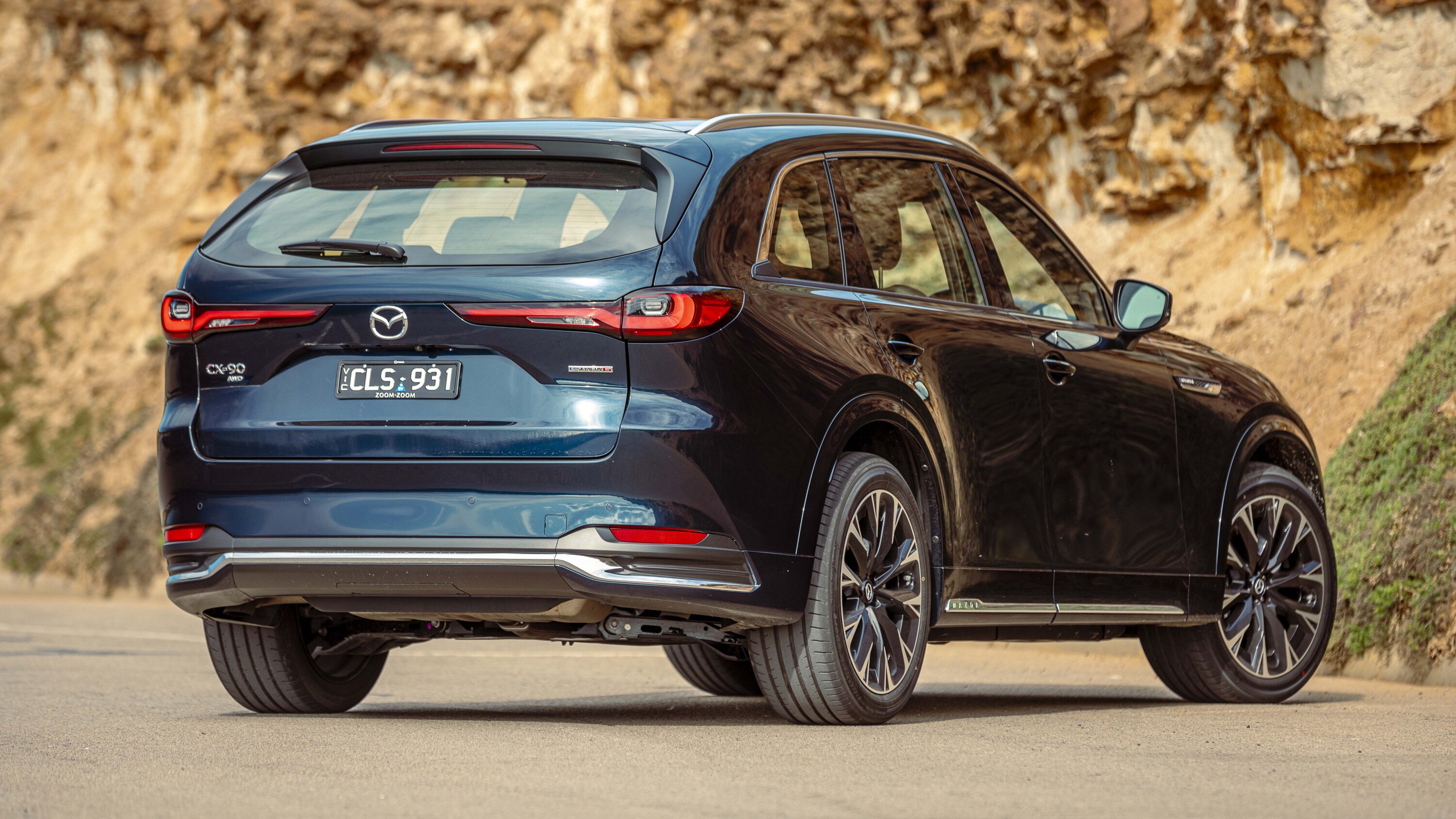
The ‘Kodo’ design language translates well to the large CX-90, with its long wheelbase and generous length between the front axle line and A-pillar base.
The front overhang is also so short, any shorter and it would almost look a bit too blunt, like it’s been driven at low speed into the back of something.
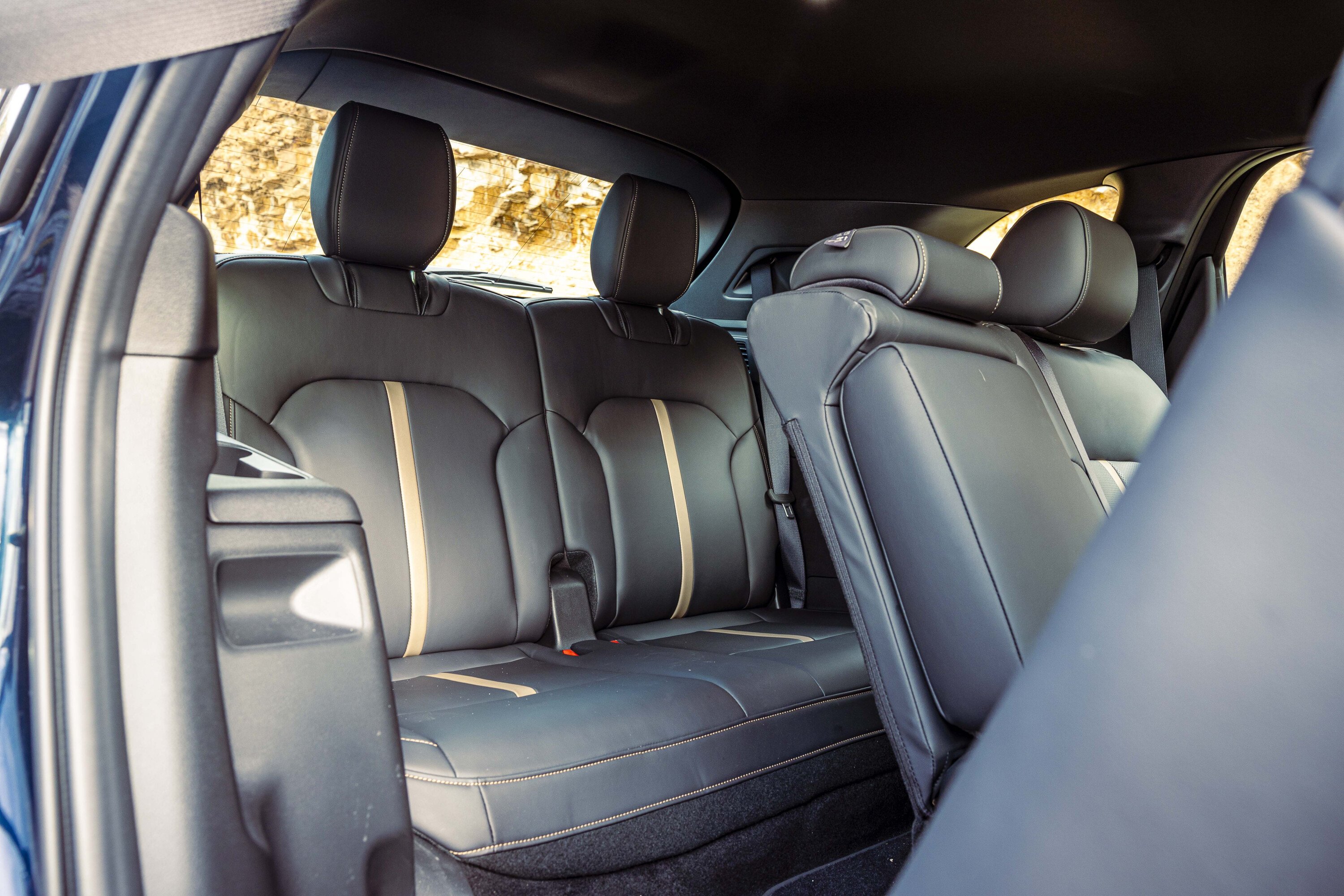
Inside presents just as well – depending on the grade. Our top-spec Azami is lush enough with its black Nappa leather, but at your local Mazda dealer you should avoid sitting in any CX-90 with the Takumi or SP Packs, the latter of which upholsters the cabin with quilted tan leather and suede headlining making for an irresistible options box to tick. (Even if doing so means a $5000-lighter wallet.)
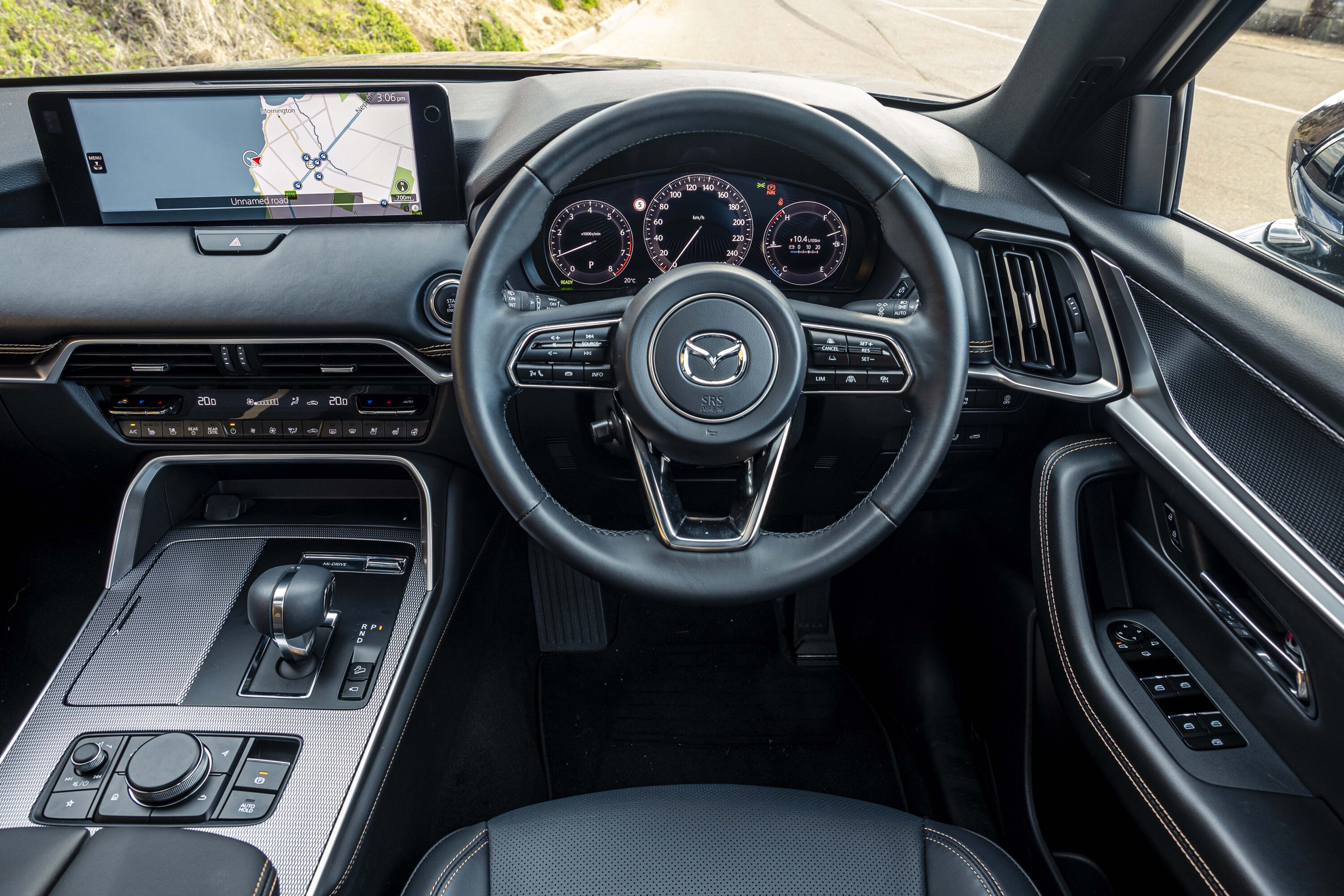
The back seats are also very good, the rear doors opening extra wide, while second row occupants enjoy stadium seating with great visibility and quad-zone climate control with rear seat heaters. The second row itself is tilt-and-slide, while there’s a 220-volt outlet in the boot – so you could sit in the back and use your laptop, while it’s charging, on the fly.
Back in the driver’s seat, that straight-six itself is very likeable. Crack a window and there’s a bit of turbo hiss as it comes on boost, while torque – 500Nm from just 2000rpm – is also delectably meaty.
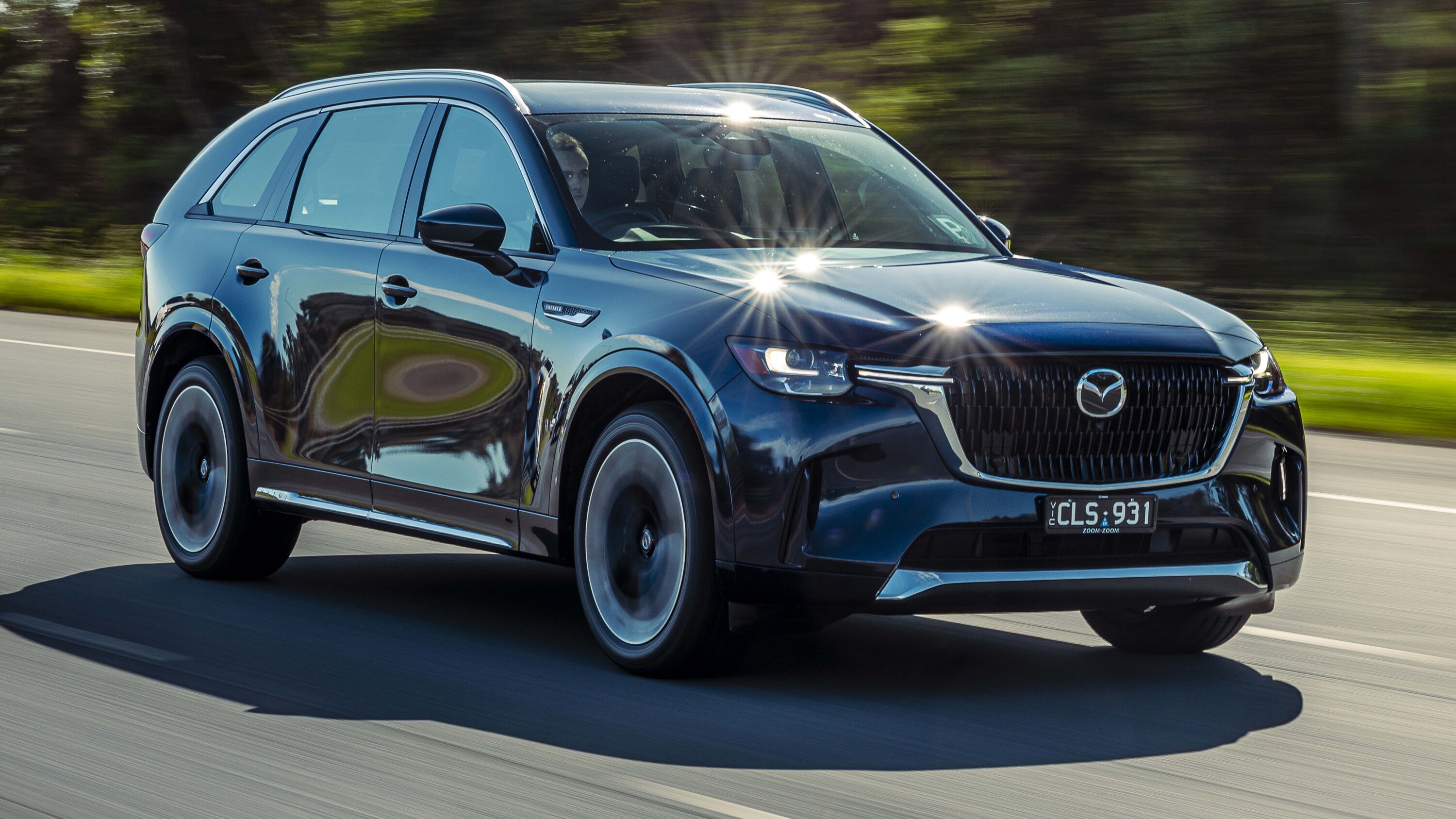
While the ride quality is good in isolation, it’s hardly plush and wafting, and the purpose of its tautness is revealed when you get on a winding road. With simple, direct steering, the CX-90 can carry impressive mid-corner speed for its size – and 2275kg weight – owing also to its generously wide, 275-section tyres.
It’s a pity, then, that the CX-90 feels a bit unpolished. Lift off and the engine shuts off and coasts, but then can feel surprised to be woken back up when you want to go again. A feature shouldn’t have you immediately hunting for the off button.
Feeling oddly highly strung, even occasionally flustered – like it’s had too much caffeine – it can even clunk into first gear so audibly and obviously that you wonder how engineers signed it off.
The CX-90 is a delightful car, but at more than $100,000 drive-away, you’re left wondering if it’s best to wait for the update, where hopefully the few too many minor wrinkles are ironed out.
Besides that, some might prefer softer suspension, while others will be perturbed by the inexplicable lack of touchscreen Apple CarPlay (forcing you to use the hand controller, even though the infotainment screen is within easy reach). Unlike a lot else about the CX-90, that’s not very BMW at all.
Dylan Campbell
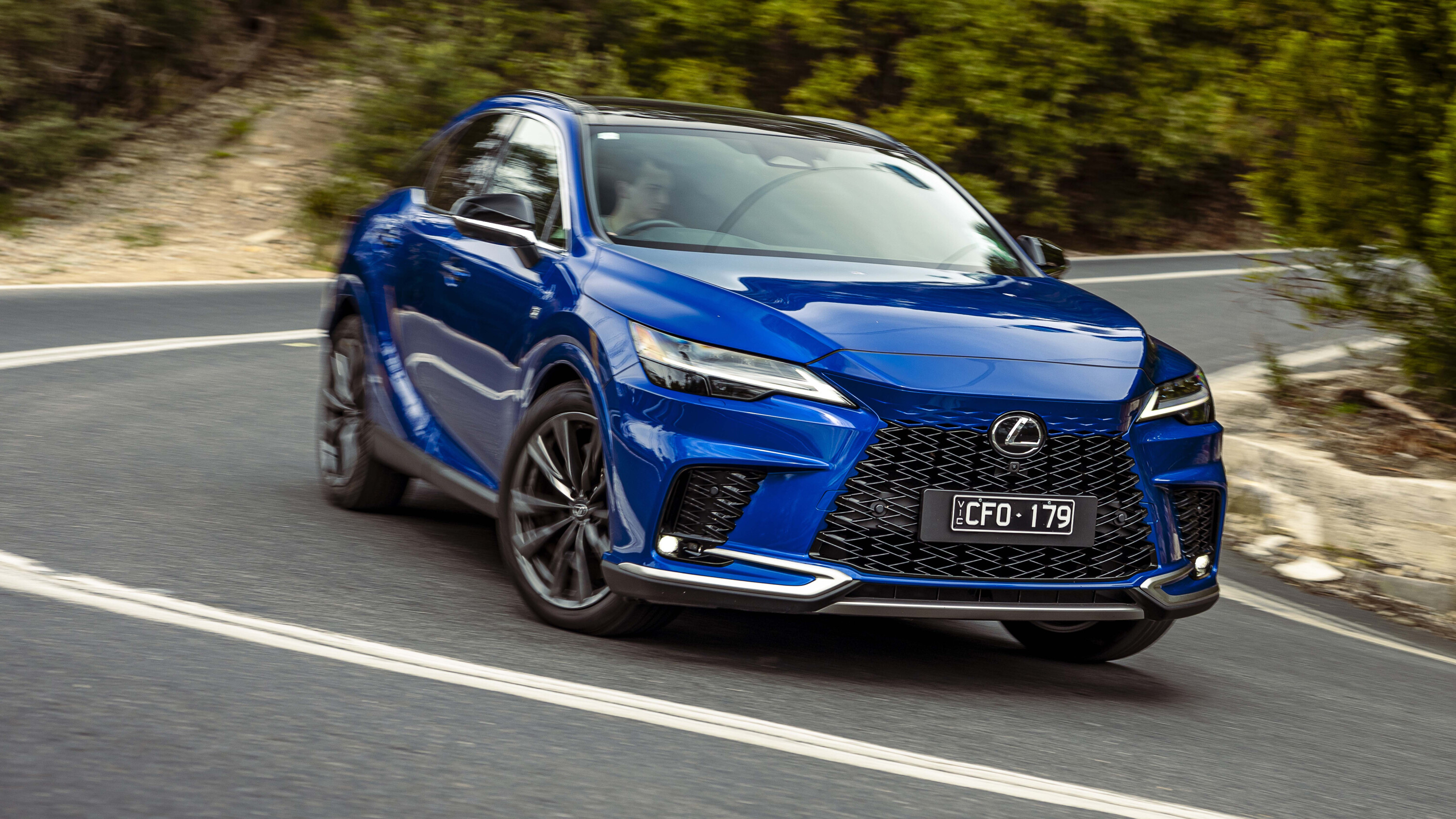
First introduced in Australia in the early noughties, the RX quickly became Lexus’s most popular model and has steadily built a reputation as the thinking man’s alternative to the established Germans. Cheaper to buy and thriftier to run, yet absolutely bursting with equipment and high-quality, luxurious touches –that’s long been the Lexus RX MO.
The version you see here is the fifth-gen RX, an all-new model that sauntered onto Aussie roads earlier this year.
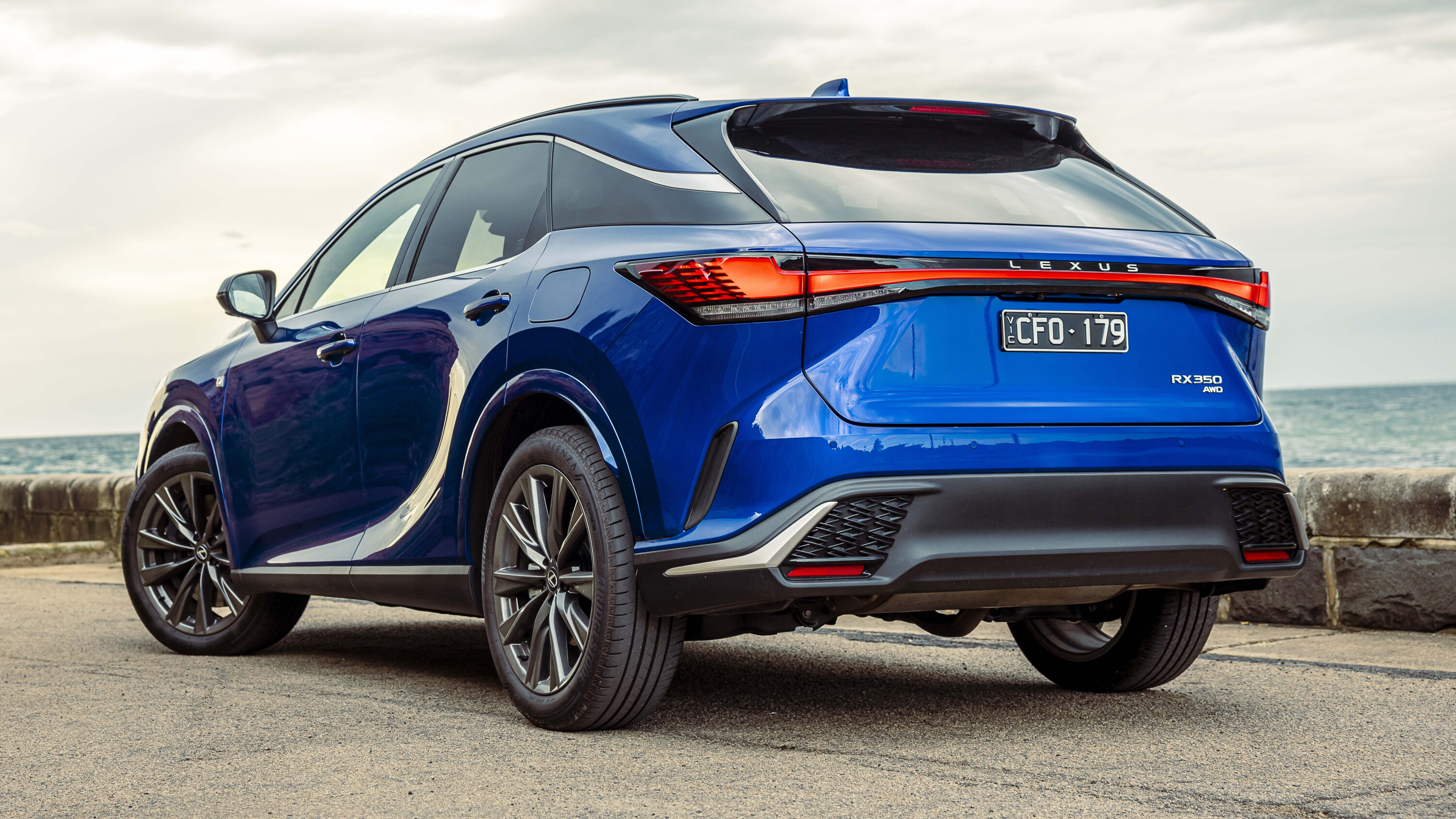
Longer, wider, lower and rolling on a stretched wheelbase, it’s the biggest RX yet and also offers buyers a boggling array of choice thanks to four engines, four trim levels, multiple option packs and the choice of front- or all-wheel drive.
Our particular tester is the RX350 F Sport, which retails for $98,370, and doesn’t only score a host of sporty detailing such as unique 21-inch wheels, more aggressive bumper designs and an F-Sport steering wheel, but it’s also one of the few offerings in the line-up not to use a hybrid powertrain.
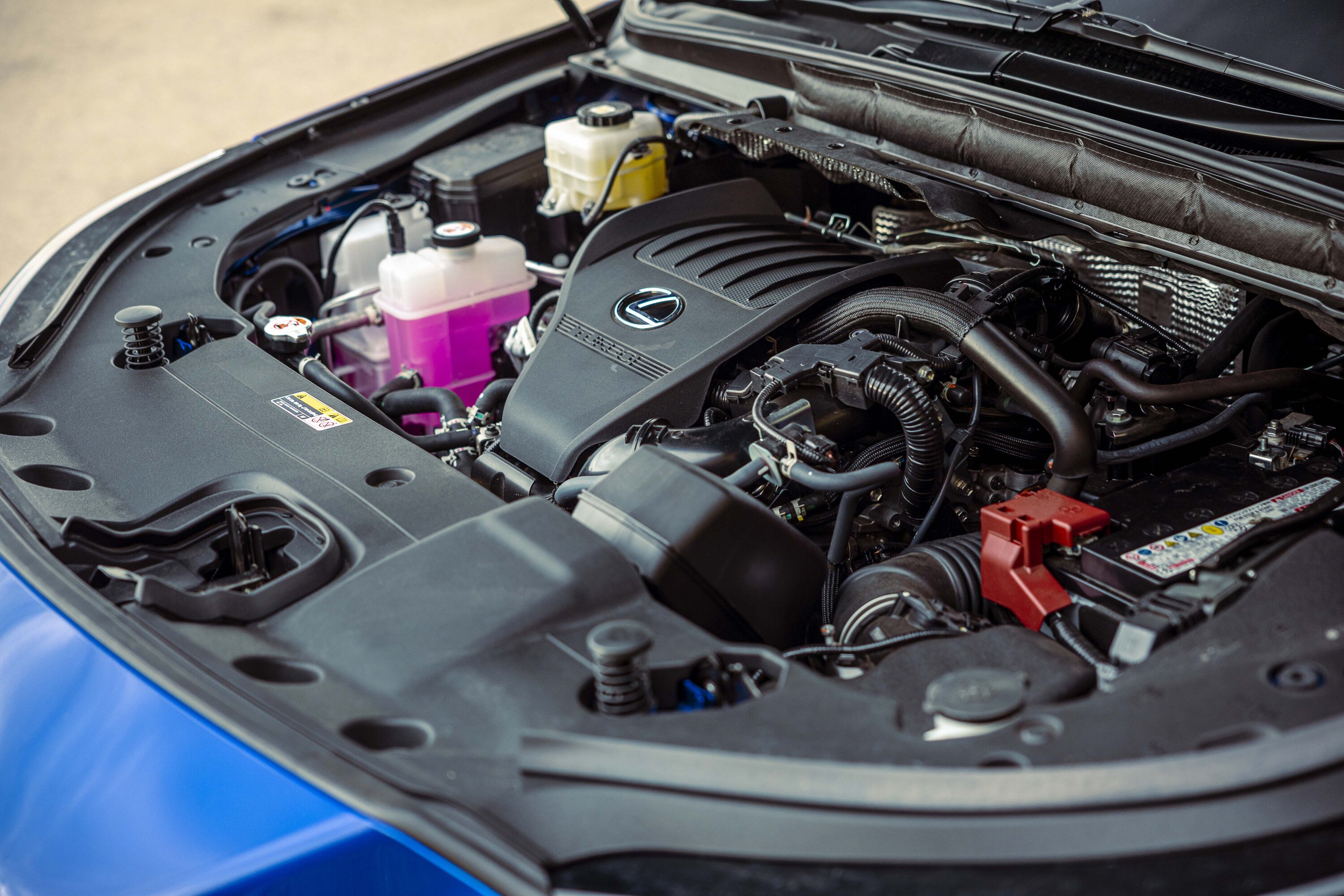
Instead, propulsion comes from a 2.4-litre four-cylinder turbo petrol that makes a healthy 205kW/430Nm and sends its grunt to both axles through an eight-speed torque converter auto.
The steering is light, the ride quality on large 21-inch alloys is relaxed and comfortable, and the cabin is impressively refined and quiet at a highway cruise.
The cabin makes an equally strong first impression. The snug and supportive front seats, which are part of the F Sport treatment, are especially fabulous, as is the soft and tactile leather steering wheel and high-end 21-speaker Mark Levinson stereo.
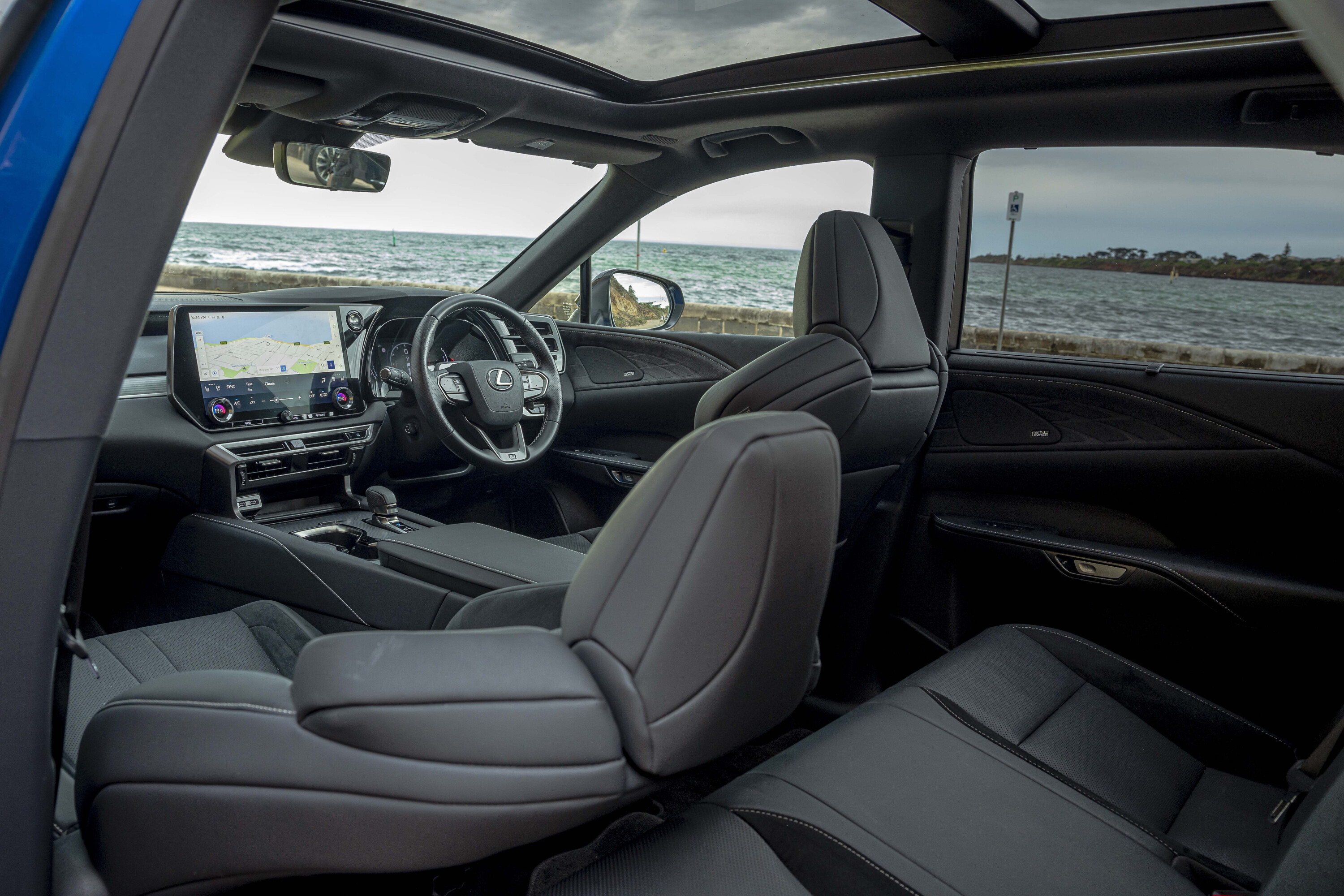
There are a few weak points, however. The biggest and most confronting is the huge slab of piano-black plastic that surrounds the 14.0-inch centre touchscreen. It dominates the dash design and looks and feels on the cheap side, which erodes the cabin’s overarching sense of luxury. Hard, scratchy plastics can also be found on the doors and the rear of the centre console.
Happily, the cabin’s core ergonomics are hard to fault – the dreaded Lexus touchpad has been banished! – and the centre touchscreen itself is large, bright and integrates well with Apple CarPlay and Android Auto, although only Apple users will enjoy a wireless connection, which is a drag in 2023.
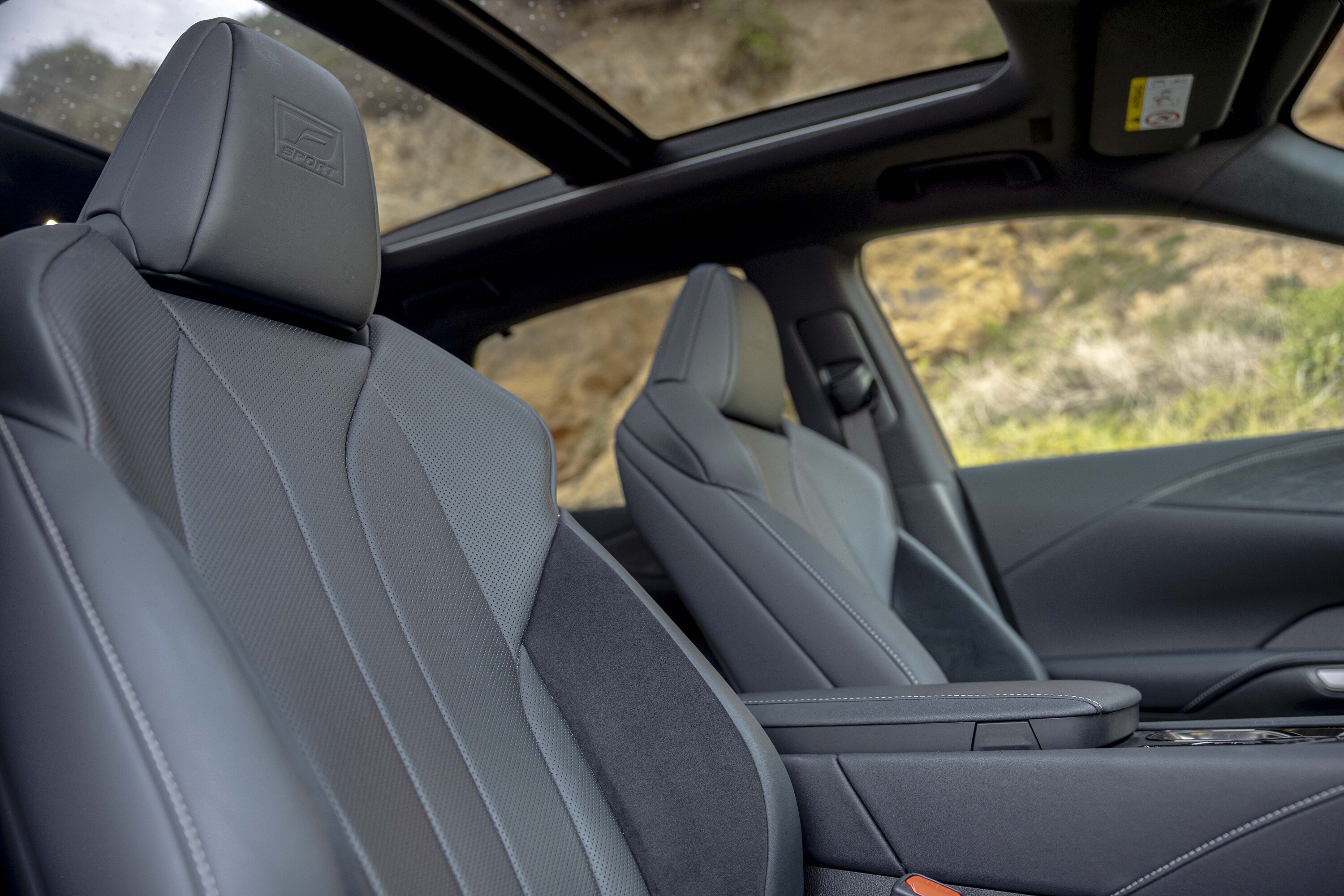
Rear seat space has grown, thanks in part to the 60mm wheelbase stretch, and there’s ample knee and toe room, although taller passengers might find headroom a little tight. There’s loads in the way of amenity, though, thanks to a reclineable backrest, dedicated air vents with temp control, two USB-C ports and a centre arm rest with twin cupholders.
The boot is generous, too, at 612L and offers a wide and low aperture, two bag hooks, electric releases for the rear seats and a 12V socket. A space saver spare and additional storage cubby are housed beneath the boot floor.
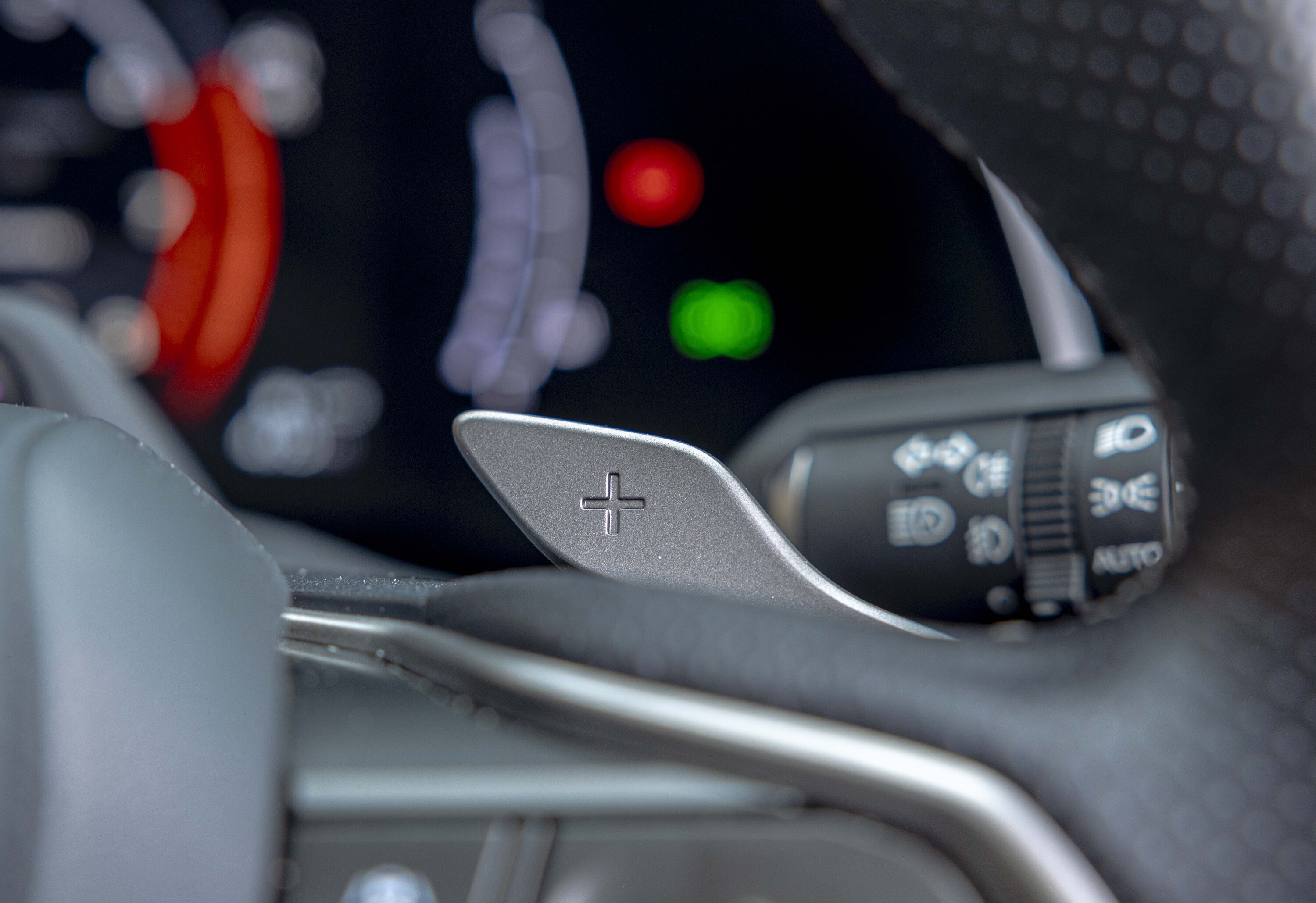
There’s also a decent amount of dynamic cohesion for keen drivers to explore. While the adaptive suspension is undoubtedly softly set-up with plenty of travel and suppleness, body control is impressive on a twisty section of road and the steering is accurate, if a little too light and lifeless.
Performance from the 2.4-litre engine is quick rather than fast, yet the turbo unit is quiet and ably supported by the eight-speed auto which is smooth and unobtrusive. Unfortunately, though, this non-hybridised powertrain is relatively thirsty when driven hard.
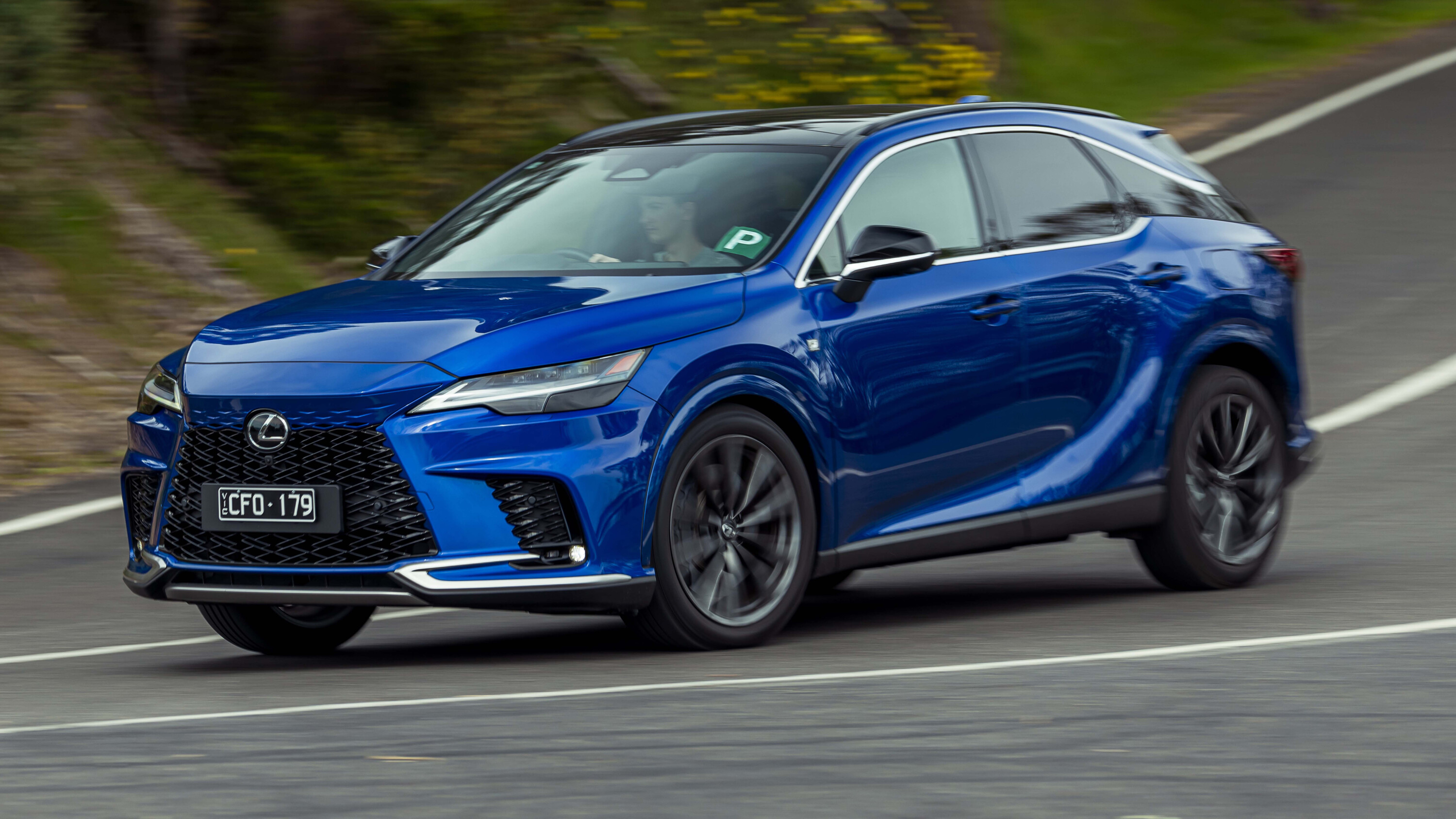
So there’s lots to like about the new RX. It’s quiet, refined and should be the kind of SUV that slips seamlessly into your life as you relish its effortless powertrain, silken ride quality and sublimely comfortable seats.
But for all its goodness, the heavy handed dash design, inconsistent cabin materials and high fuel use were enough to rule out a podium finish.
Alex Inwood
On the other side of the coin, building brand reputation isn’t easy. Up to the end of October, Hyundai’s luxe offshoot has sold just over 1600 cars. In comparison, nearly 13,000 new Lexus models have been registered, with the German brands even further ahead.
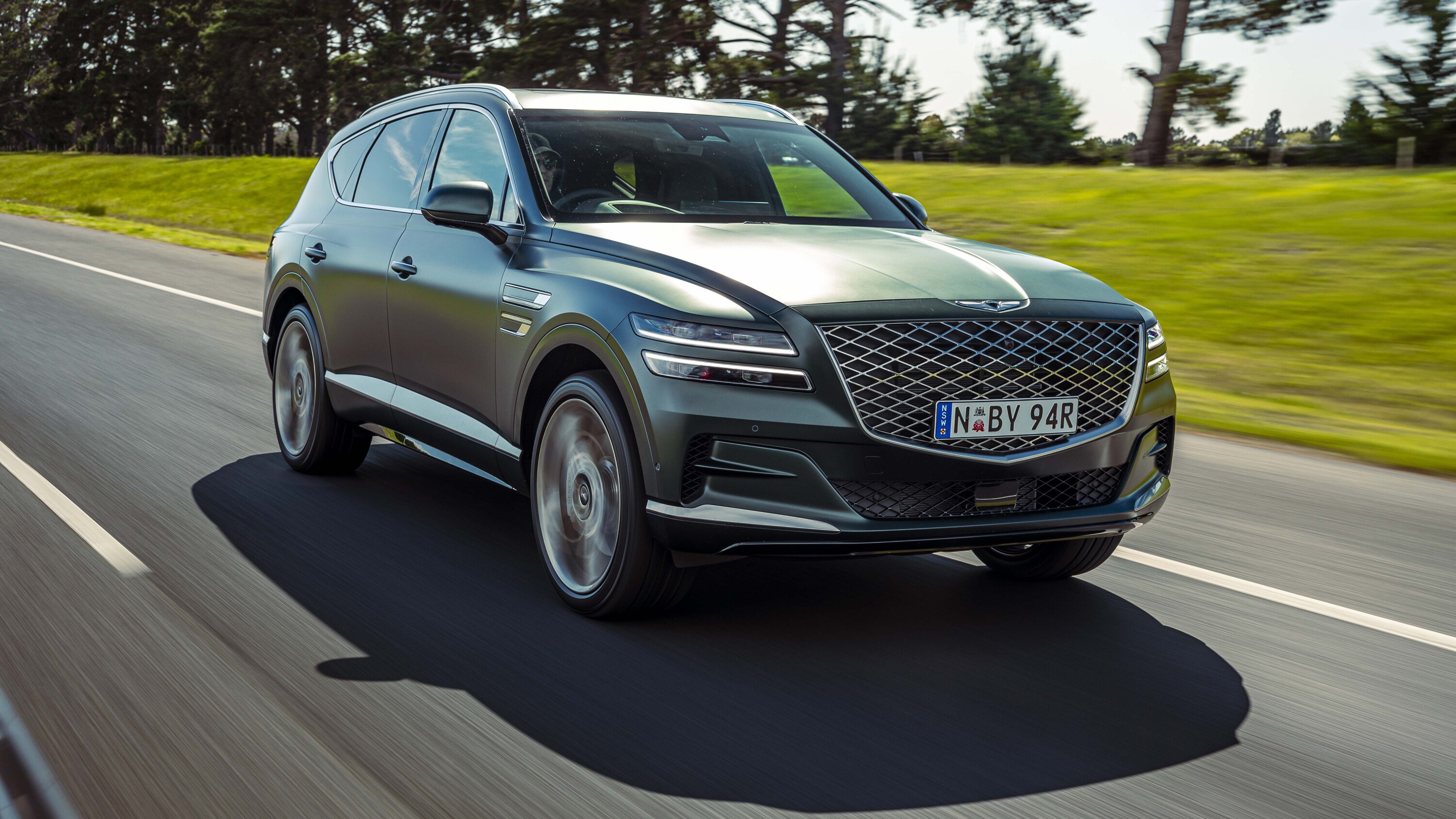
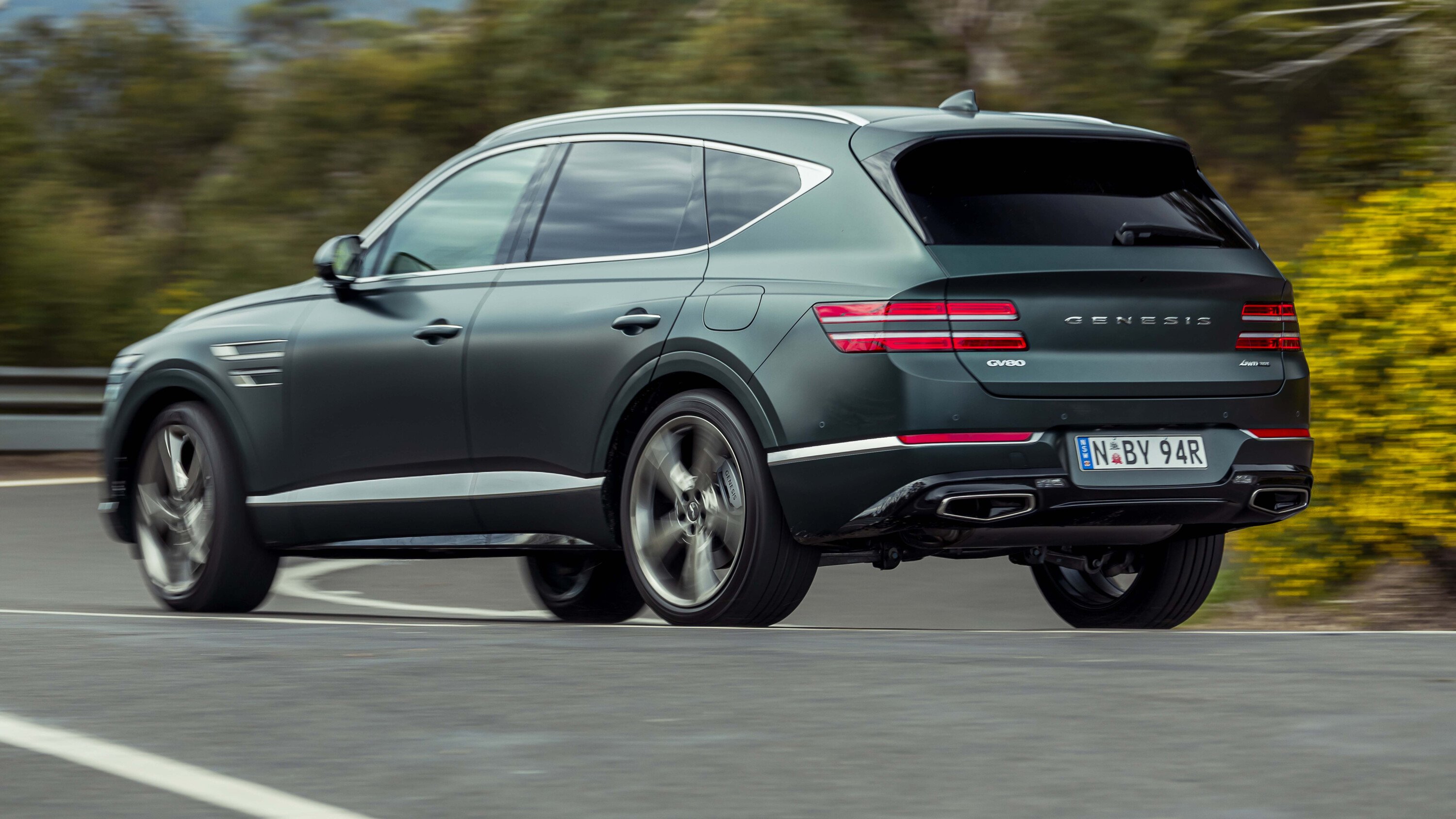
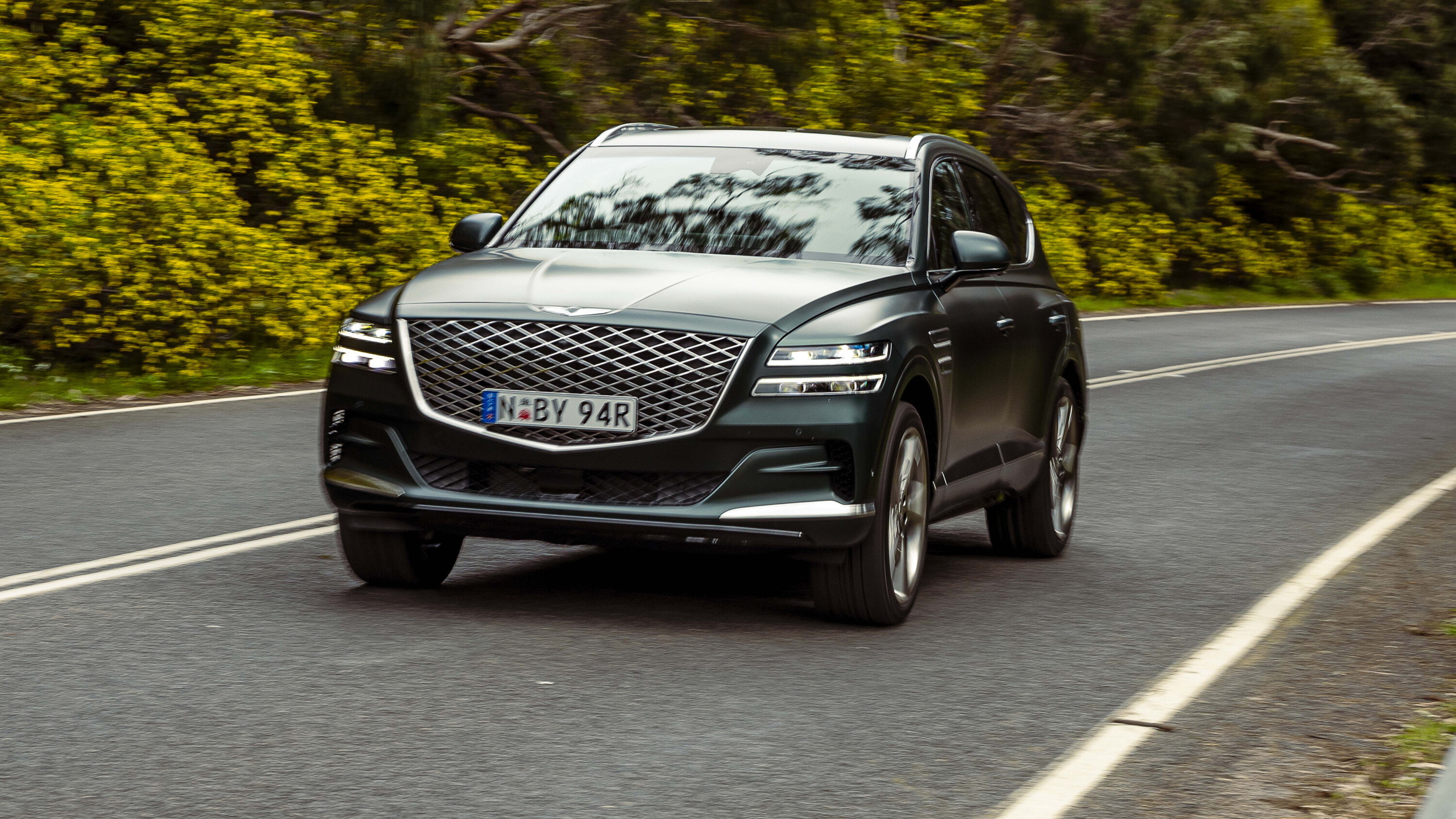
Is premium-ness measured by sales metrics, though? Gauging from the reactions of bystanders, the answer is “no”. The GV80 had pull among the punters, the matte Brunswick Green paintjob (a $2000 option) and broad-shouldered sheetmetal of our tester working to swivel more heads than any other car on this comparo.
The cabin follows a similar theme. In Luxury spec (which adds $10,500 over the base grade) it sports a high-end aura, borrowing heavily from upper-echelon Euros with its lush leather (supple Nappa hide in the Luxury) and diamond-stitched upholstery.
Silver/chrome highlights and fine knurling around switchgear and knobs are a nice touch, but could be better executed on the bigger dials – such as the rotary transmission selector and mode dial – where the moulding seam can be felt by roving fingertips.
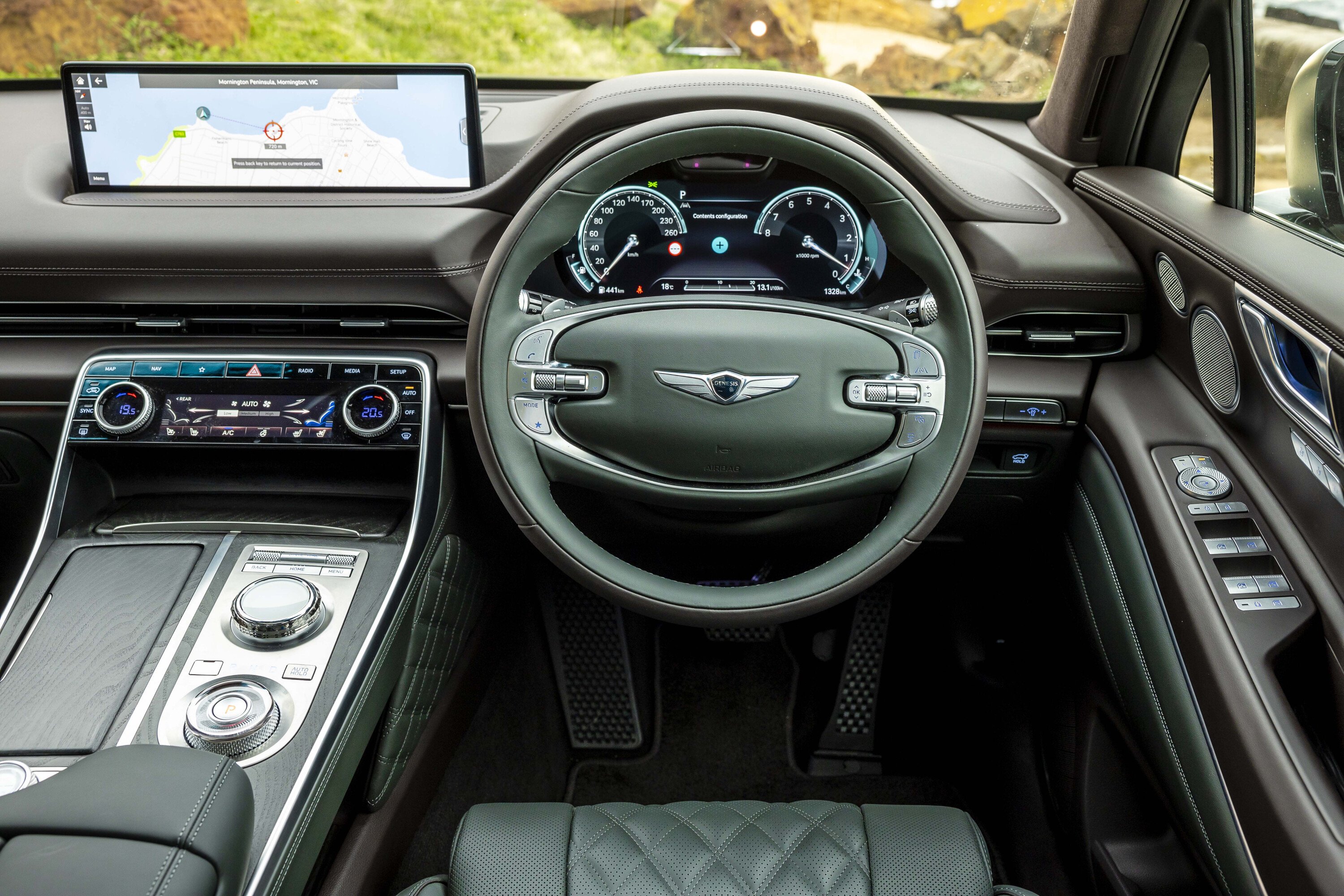
For material quality and presentation the GV80 ranks incredibly well, and the way it insulates occupants from outside noises, mechanical vibes and wind rustle deserves recognition too.
The feature set is also bougie, with the 14.5-inch infotainment screen being accompanied by a slick quasi-3D LCD instrument panel, a glass sunroof, noise-cancelling tech for the 21-speaker Lexicon audio, massage front seats, heated and ventilated first and outboard second-row seats, soft-close doors, plus roof-mounted vanity mirrors and power recline and seat angle adjustment for the second row occupants.
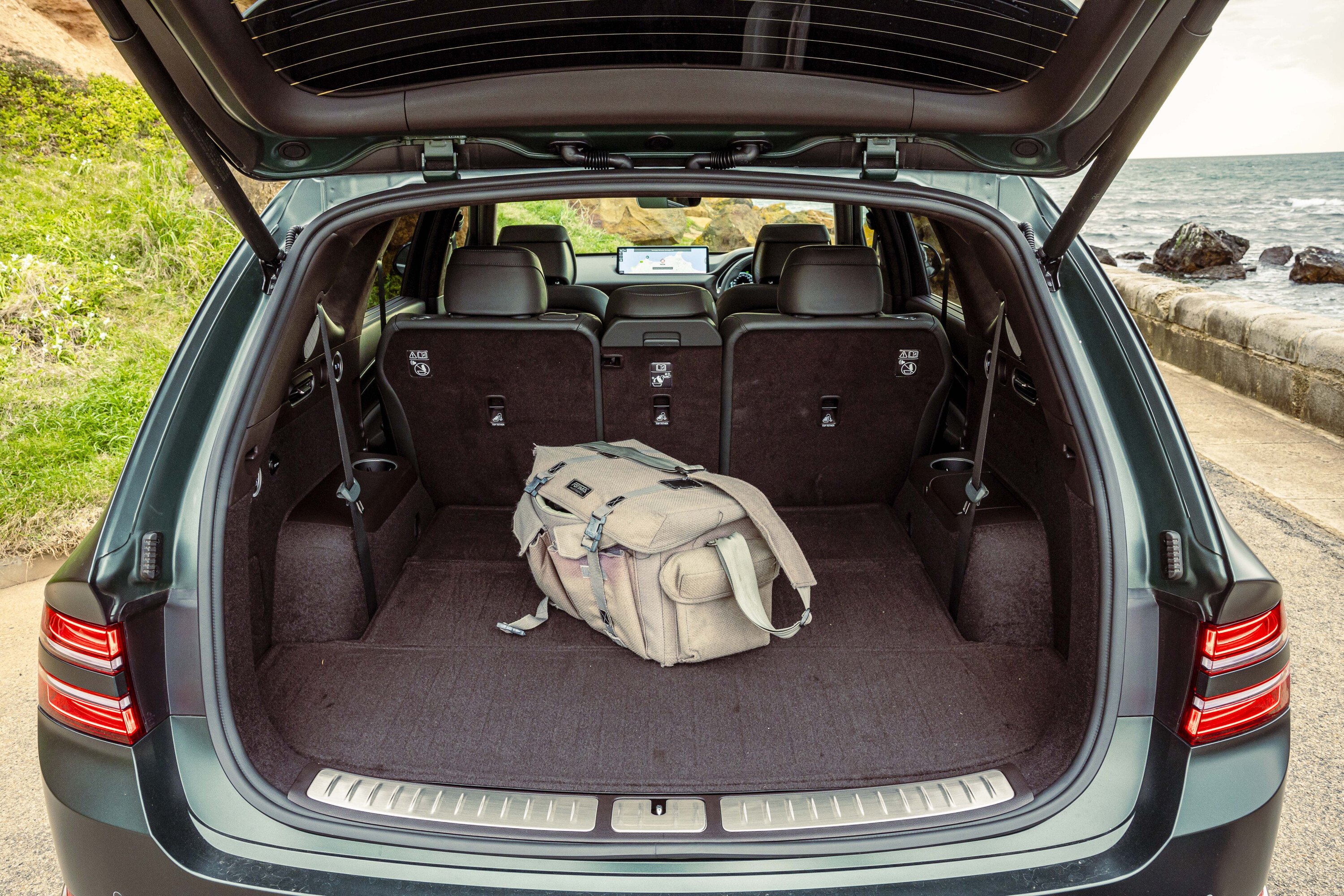
There’s also a power-folding third row, which makes unfurling occasional seats a cinch, but for all its glitz and glam the GV80’s cabin falls down in one fundamental way: space. And really, it’s the vertical dimension that’s the one in shortest supply.
In the second row, the elevated seat position does give great vision past the front passengers and through the side glass, but even my 5’8” self found headroom to be more limited than the other contenders.
The rearmost seats are strictly for kids, but at least there’s third-row air vents
Clambering into the third row required a spinal scrunch to retract most of my neck into my torso, turtle-style, in order to achieve adequate clearance from that luscious suede headliner – the rearmost seats are strictly for kids, but at least there’s third-row air vents, lidded storage, cup-holders and USB power.
It’s smaller than it looks – at 4945mm long with a 2955mm wheelbase, it’s a shorter thing than the 5120mm long CX-90. Interestingly, that relationship gets flipped when you examine cargo space: with 727 litres with the third row flattened and 2144 litres when the third and second row are stowed, the GV80 can swallow up more cargo than the bigger Mazda.
With such a capacious cabin and superb first-row comfort, it’s disappointing that there’s simply not enough distance between the rear seat bases and the roof to carry larger adults.
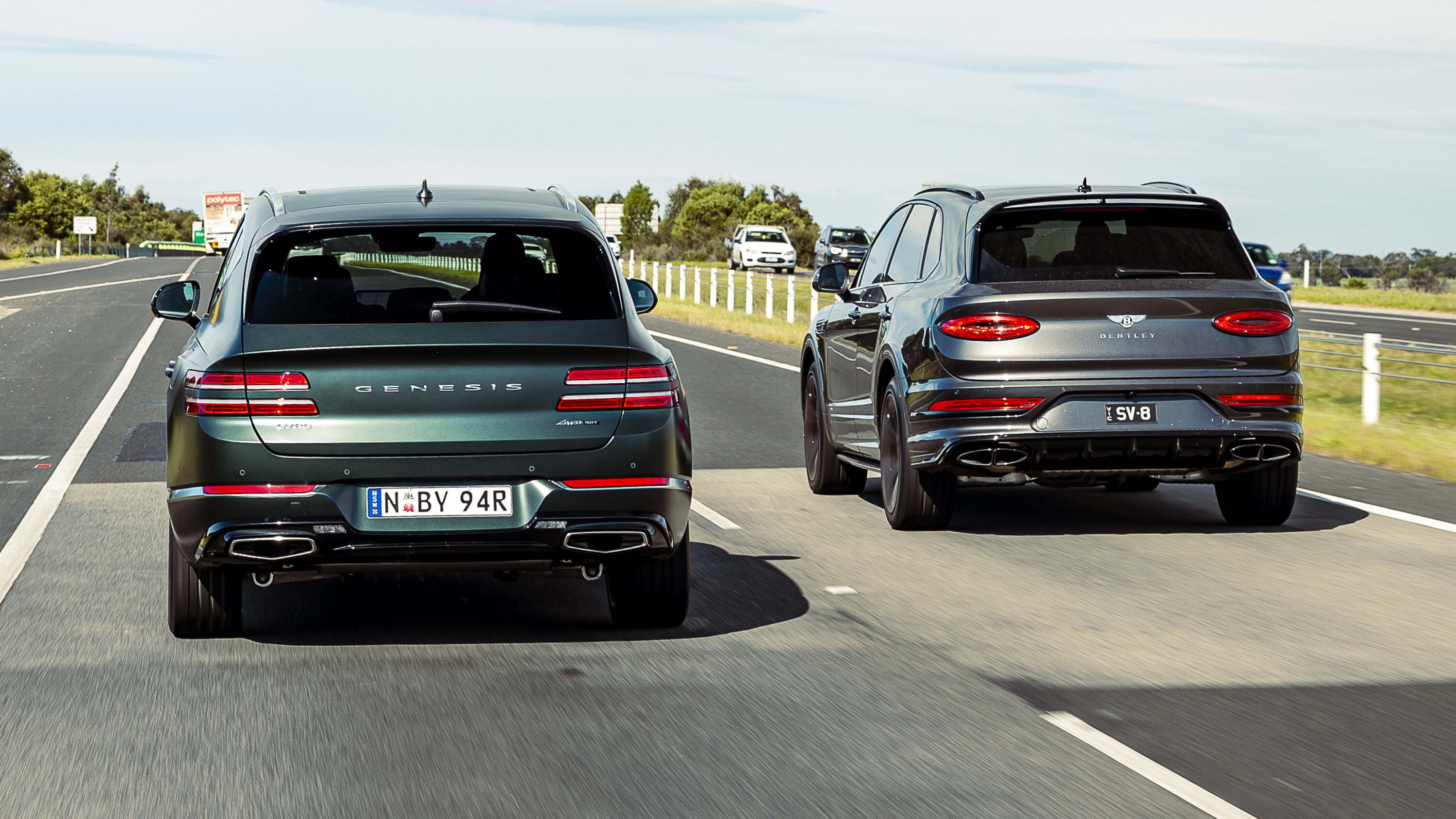
The more alert engine and trans calibration of Sport mode gives its straight-line performance an even sharper feel, and there’s no reason to doubt the factory claim of a 5.5-second zero-to-hundred. It’s rapid in a straight line – thirsty too, with the highest average fuel burn in the group – but a mushy suspension and high mass blunt the edge of its surprisingly direct steering.
The gigantic 22-inch wheels and their sporty Michelin Pilot Sport 4s confer good roadholding regardless, but the GV80 is predictably best deployed as a boulevard steamroller, serenely wafting you around town with its muscular engine thrumming away at low revs, the rest of the world drowned out by that 21-speaker stereo.
Tony O’Kane
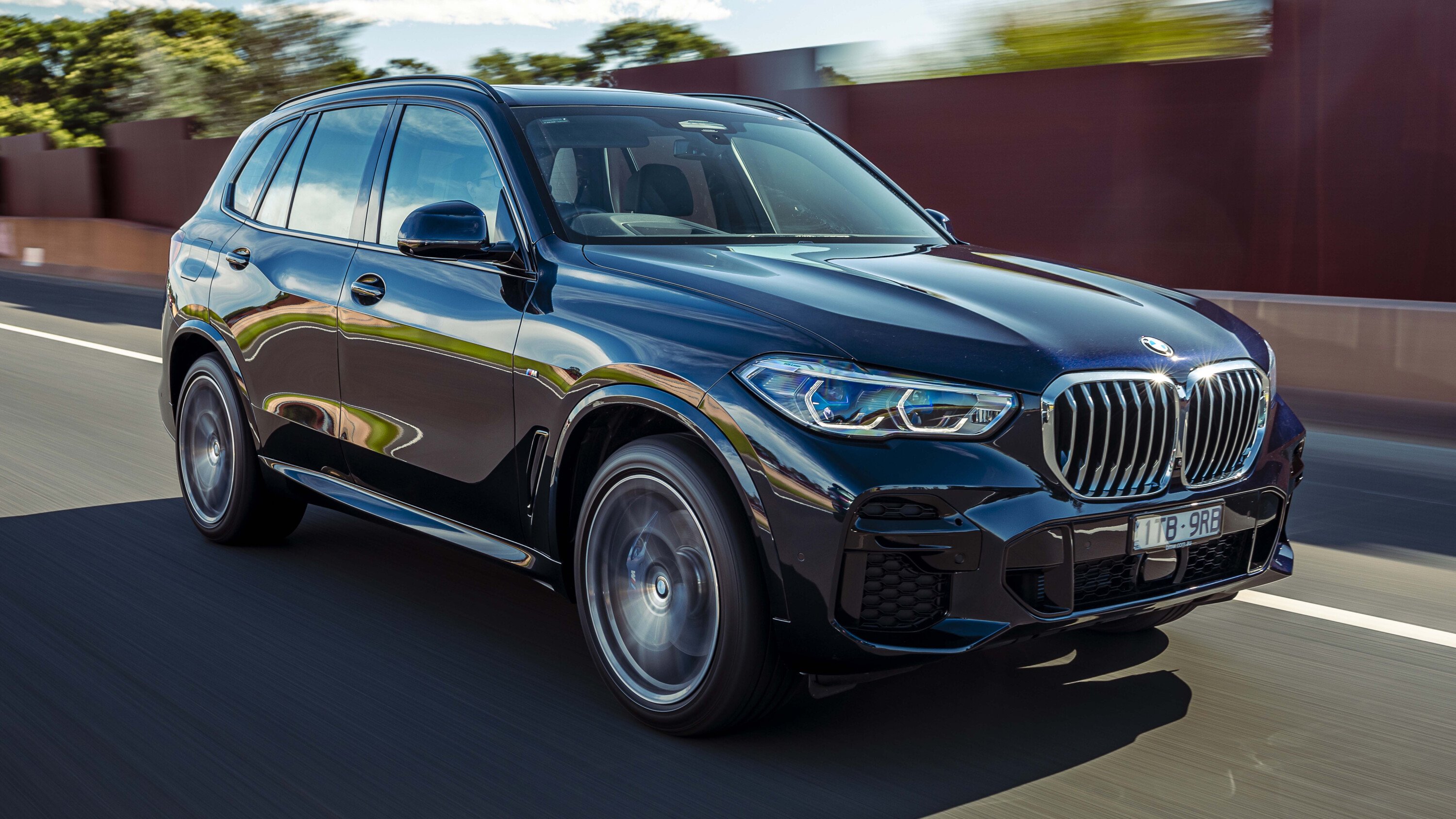
Fuel: 11.7L/100km as-tested, 9.2L/100km claimed
Since launching at the turn of the millennium, BMW’s family-sized SUV quickly became a firm favourite among the upper-middle class, and now, four generations on, that popularity has endured.
It’s not difficult to understand why. For one, it’s attractive. We talk about the CX-90 having good proportions… Well, that’s arguably because it copies the X5’s format, with front wheel wells pushed well forward to make room for an inline six in the middle, in turn producing a long bonnet that balances out the visual heft of the wagon box on the back.
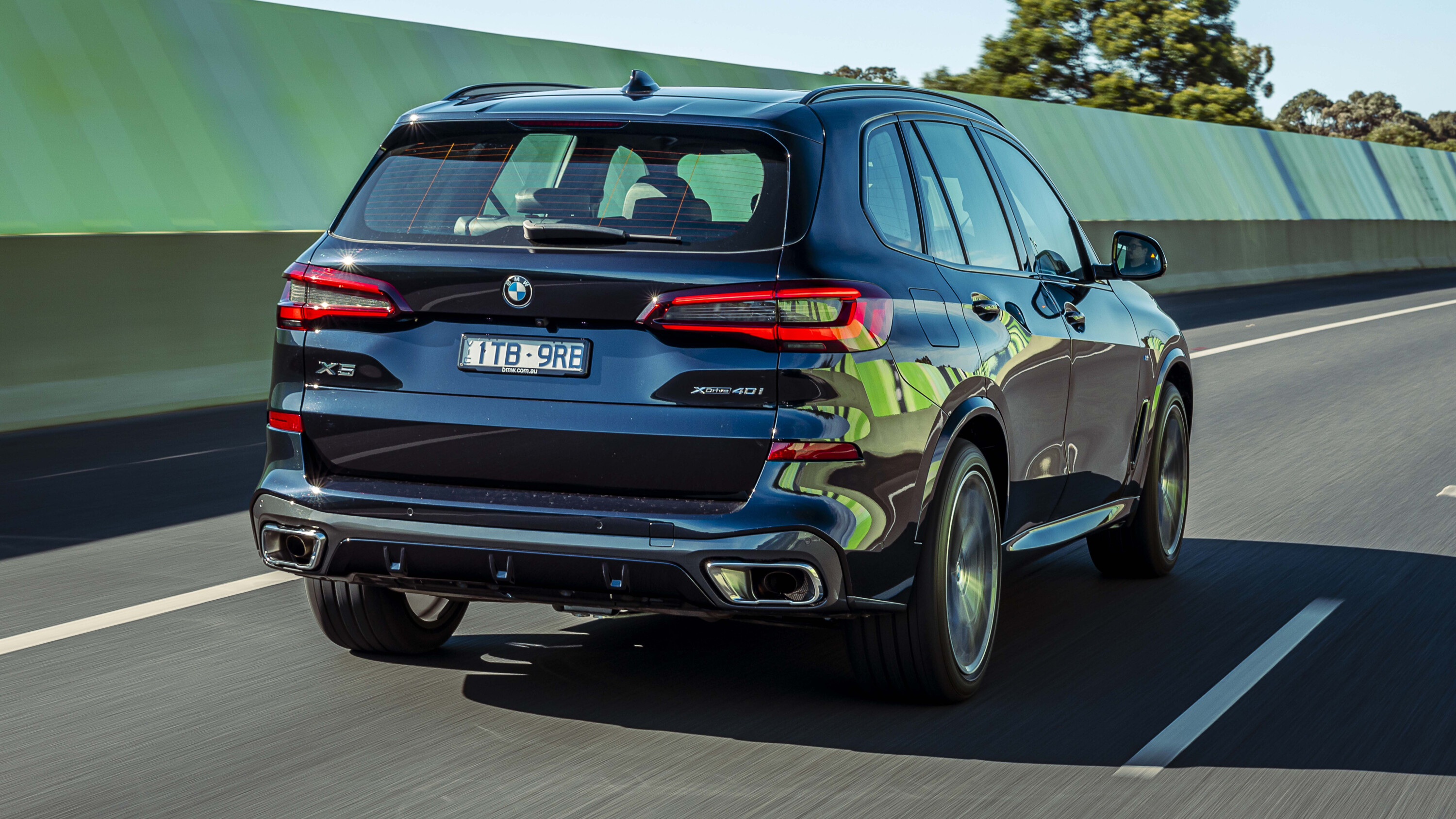
On the inside, the X5 is classically German. Cleanly presented with well-crafted materials throughout, it’s difficult to find surfaces that look or feel unpleasant, or out of place – even the standard ‘Verino’ leather feels high-end. Switchgear and closures all operate smoothly with a pleasing tactility to them, and it’s genuinely hard to find a rough edge, figurative or literal.
Space utilisation could be better though: the centre box houses a good volume beneath its bi-fold lid, but the cubby ahead of it which contains the cupholders and phone charging pad is hemmed-in by the shape of its recess and lid.

In the back, the stadium-style elevated H-point of the second row bench give backseaters a good view around the front passengers, while the X5’s generous glasshouse – including a panoramic glass sunroof that’s standard-issue – lets light flood in.
With a wide cabin and a very low transmission hump the X5 can even take three adults across the rear bench, but there’s no third-row capability in the X5 anymore – even as an option. On the plus side, a 640-litre seats-up boot capacity should swallow up prams, groceries and other cargo with ease, and the X5’s power-operated split-fold tailgate is far more manageable in cramped shopping centre carparks.

With a powerful 250kW/450Nm 3.0-litre turbo petrol six driving all four wheels through an excellent eight-speed automatic, the X5 is a rocket on a mountain road. The massive contact patch provided by its Pirelli P-Zeros (275/40R21 up front, 315/35R21 at the rear) confers a tenacious hold on the pavement despite a 2060kg kerb weight, and the explosive energy of its engine is good enough for a 5.5-second zero-to-hundred claim.
The steering is pretty ordinary, with scarcely any feel or feedback, even in Sport mode, but in every other way the X5 is a true performer. What’s equally as impressive is when you prod the ‘Comfort’ mode button on the centre console, the X5’s adaptive dampers slacken and the transmission calibration eases up to make it a very civilised machine for day-to-day urban schlepping.

Opting for the diesel inline six of the X5 xDrive30d instead of the petrol xDrive40i only trims $4000 from the price which, considering this 40i retails at $138,900 before options and on-roads, isn’t much of a discount. A four-cylinder diesel disappeared from the range last year, making the X5 a six-pot-only proposition in Australia, and a pretty pricey one at that.
However, the X5 you see here isn’t exactly representative of what you can buy right now. When we conducted our comparison, BMW Australia was still waiting on stock of its updated X5 family to arrive, which left us with the about-to-be-superseded model instead.

Which is a shame, because not only does the update bring a substantial exterior facelift, but it also adds 30kW and 70Nm to the petrol six’s output, revises the gearbox, and grafts a completely new fascia to the dash centered around a gargantuan 14.9-inch main display running BMW’s latest infotainment operating system. The price hasn’t moved, either, in a rare win for the consumer.
The X5 is far from cheap, but excellence rarely is.
Tony O’Kane
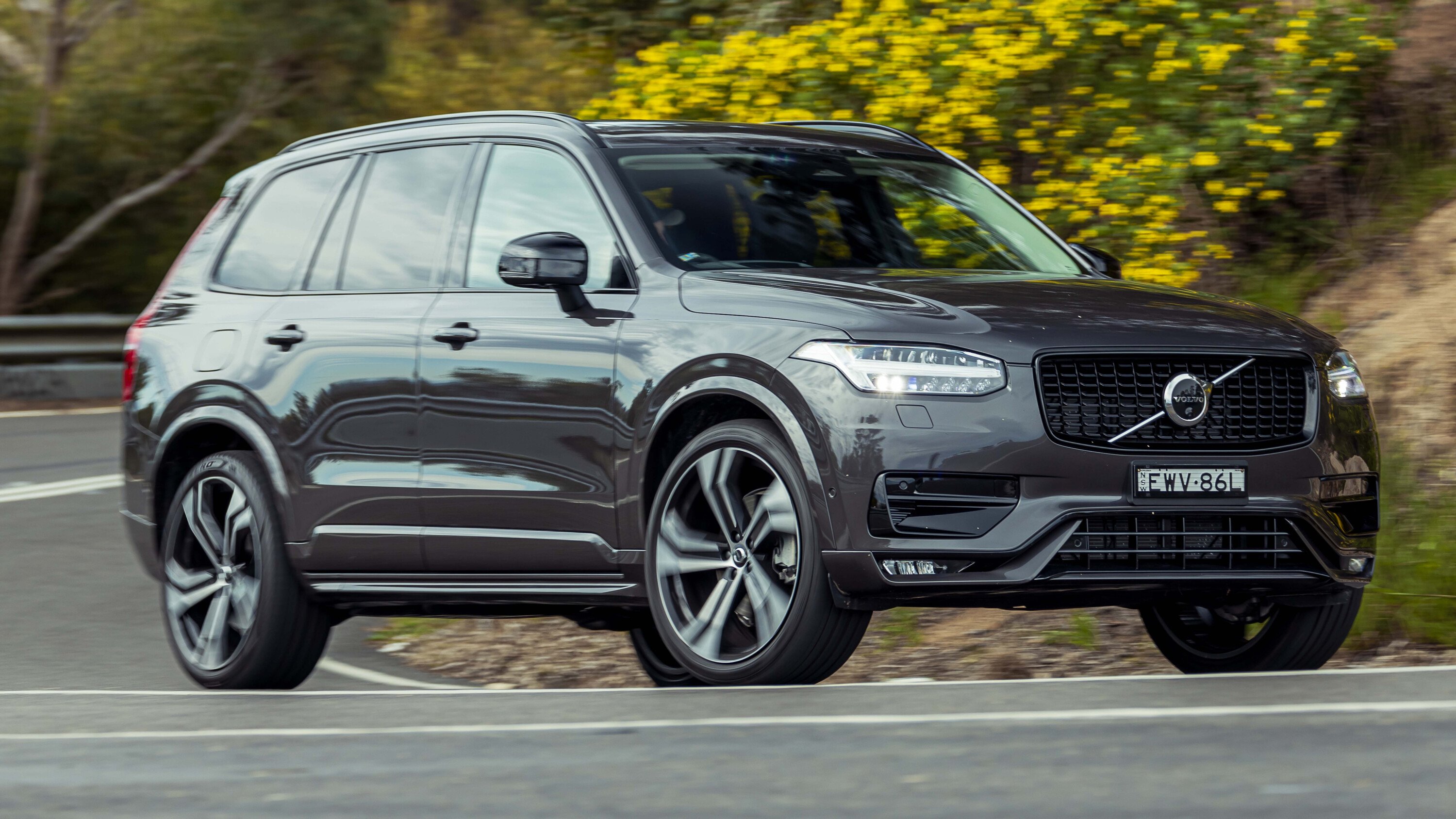
Launched way back in 2015, the second-gen XC90 was one of the first cars to ride on Volvo’s new modular platform and the first to benefit from the cash injection brought by fresh owners Geely.
Svelte, beautifully made and with tidy ride/handling, the XC90 came within a whisper of winning Wheels COTY. And now, almost a full 10 years later, it has edged out much fresher competition to win our gong for the best luxury large SUV. Talk about ageing like a fine wine…
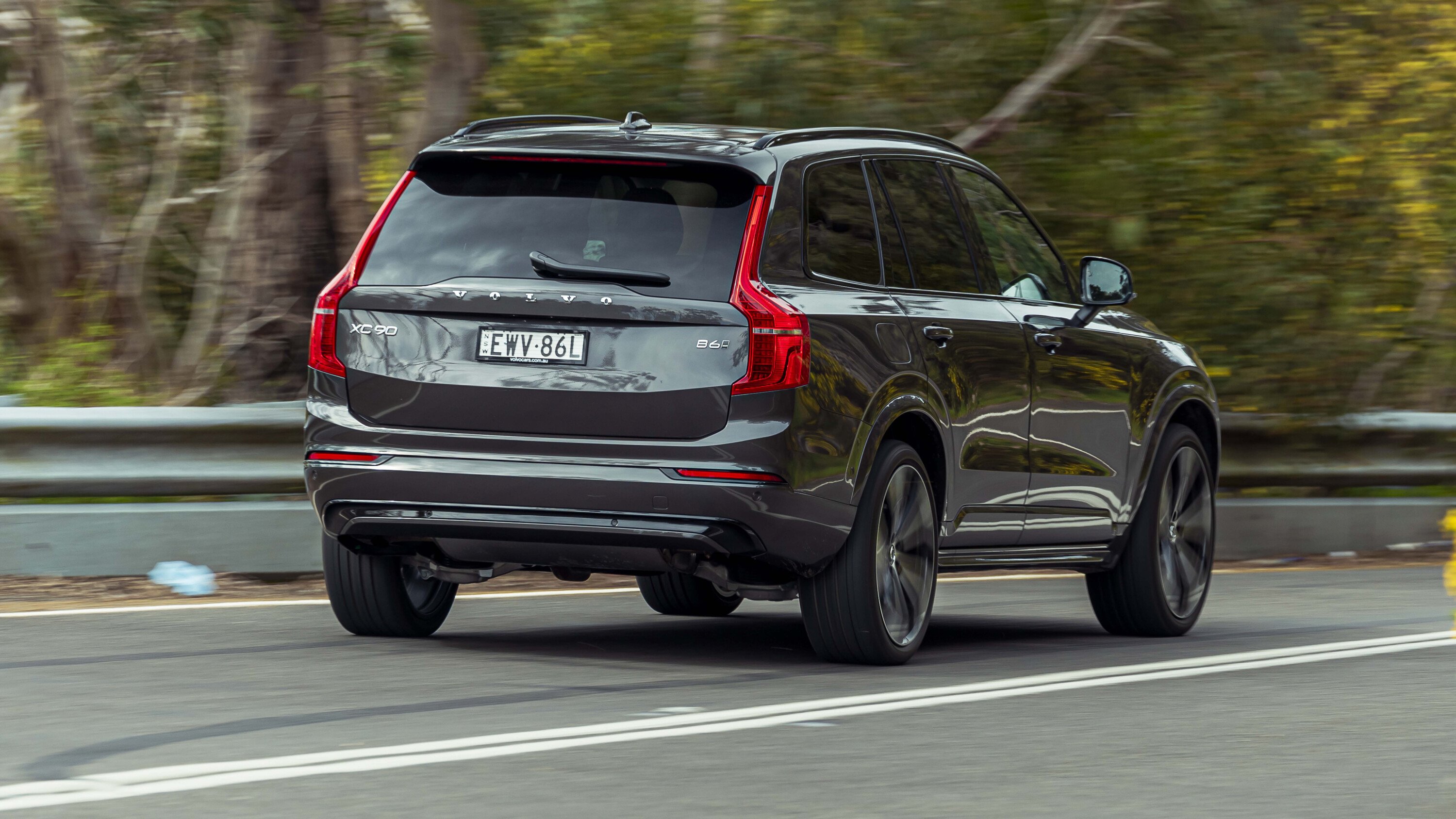
That update brought a rejigging of the model range (the existing trim levels of Momentum, Inscription, R-Design and Recharge were replaced by Plus, Bright, Dark and Ultimate T8 respectively) and the injection of Volvo’s latest Android-based infotainment system, which now includes Apple CarPlay.
For this test, we’re driving the high-spec B6 Dark which uses a fizzy 2.0-litre four-cylinder turbo that produces 220kW/420Nm and is supplemented by an electric supercharger and a 48-volt sub-system.
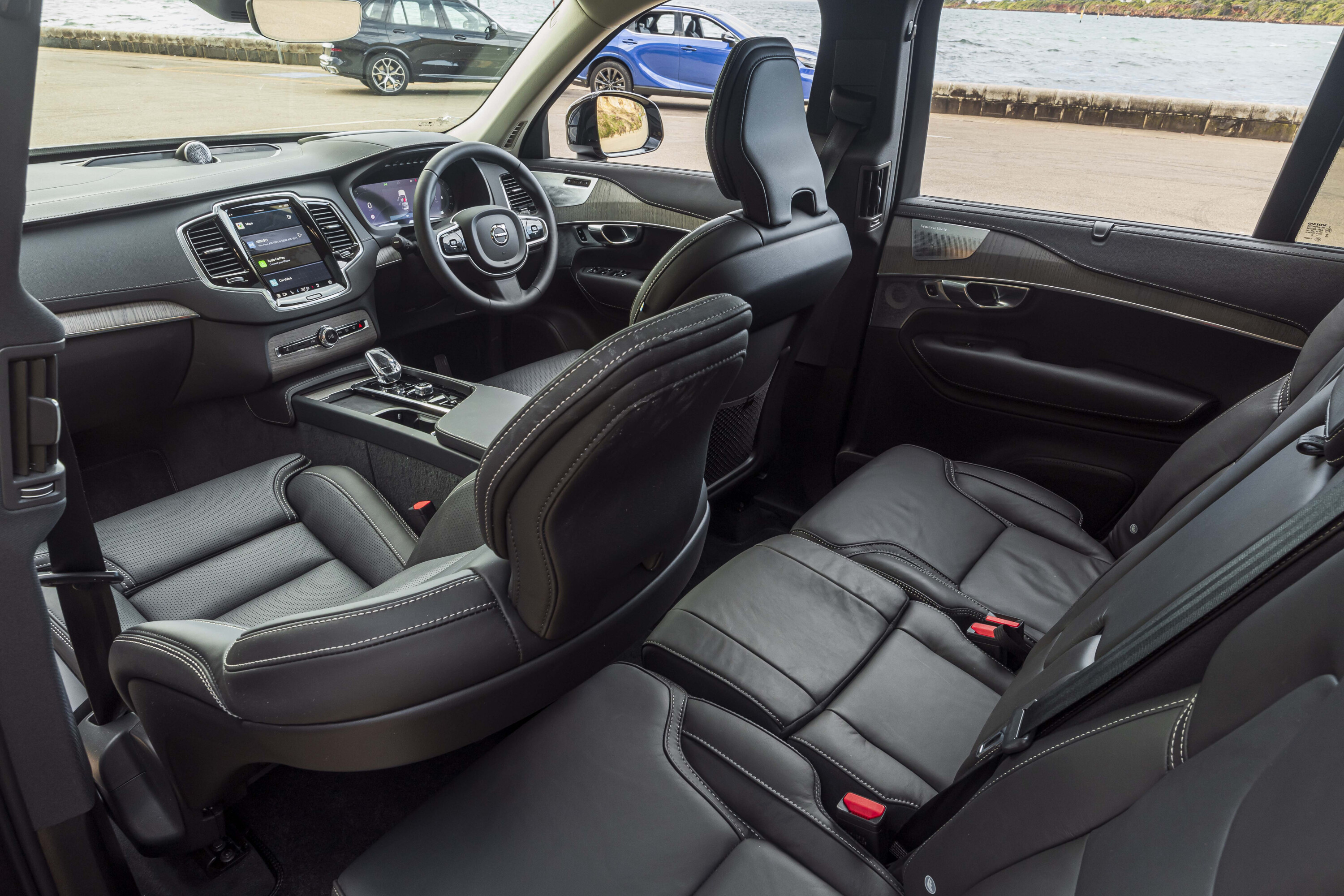
XC90’s Scandi interior delivers impeccable build quality and heightened sense of luxury.
It retails for $107,990, which plonks the XC90 smack bang in the middle of our six contenders for price, but our particular tester is bristling with desirable options like air suspension ($3750) and a truly fantastic Bowers and Wilkins sound system ($4550) that deliver an ‘as tested’ price of $118,690.
That’s still cheaper than the Genesis and BMW, mind, and our XC90 looks every cent of that outlay. We know beauty is in the eye of the beholder but you’d have to be a harsh marker to deny the XC90 is a deeply handsome thing. Chiselled and broad shouldered, it looks taut and perfectly proportioned for what is, essentially, a family bus.
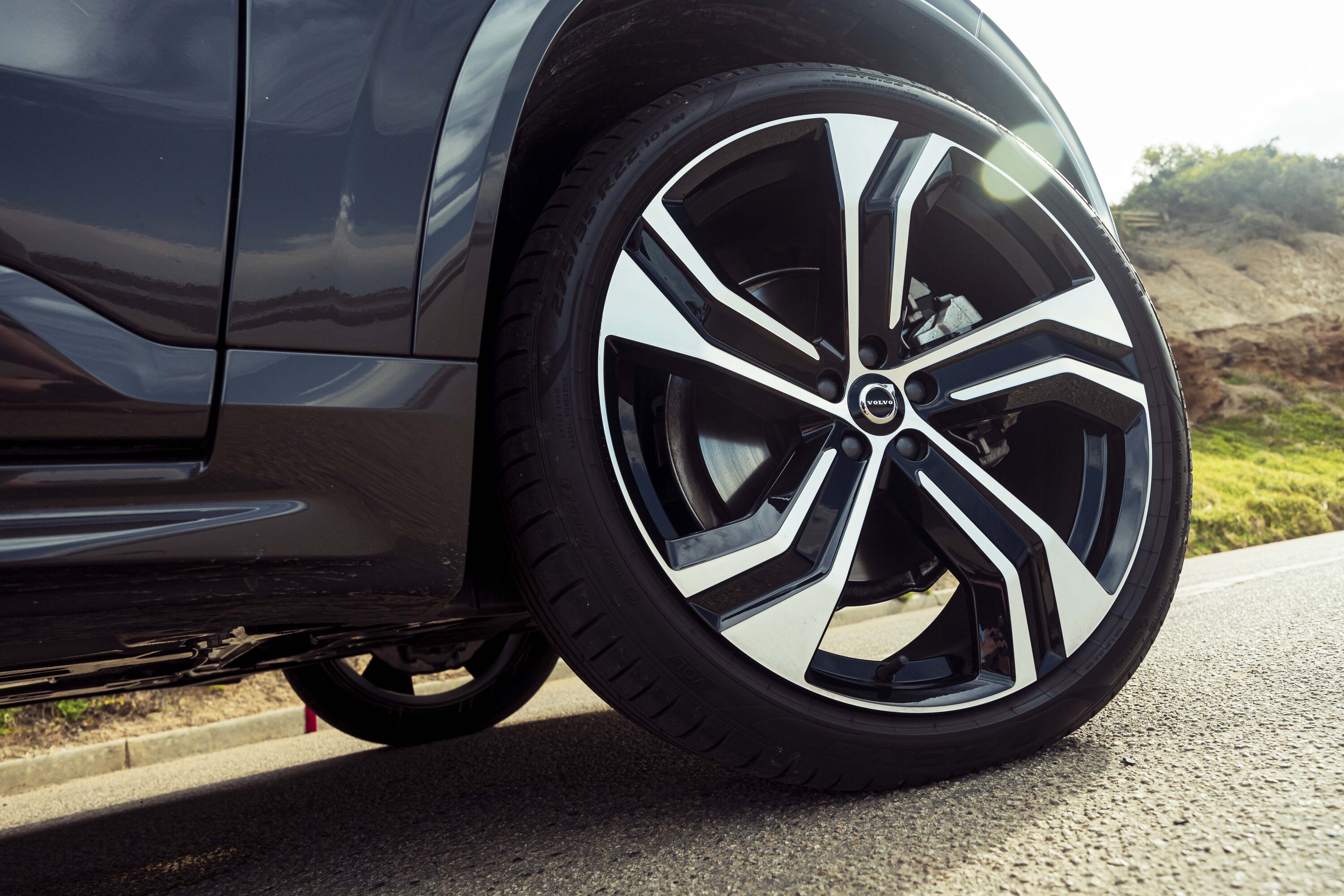
The huge 22-inch diamond-cut alloys help, of course, as does the optional air suspension which slowly lowers the body when parked to give it lightly ‘slammed’ appearance.
The seats, in particular, are superbly comfortable, and boy is this cabin functional.
The XC90’s form factor is longer and narrower than other luxe SUVs like a BMW X5 and Audi Q7 and it makes full use of its extra length with plenty of cabin space and a third row that’s roomy enough for most adults. Third row passengers also score face-level air vents, cup holders and their own storage, though notably there are no top-tether anchor points for child seats back there.
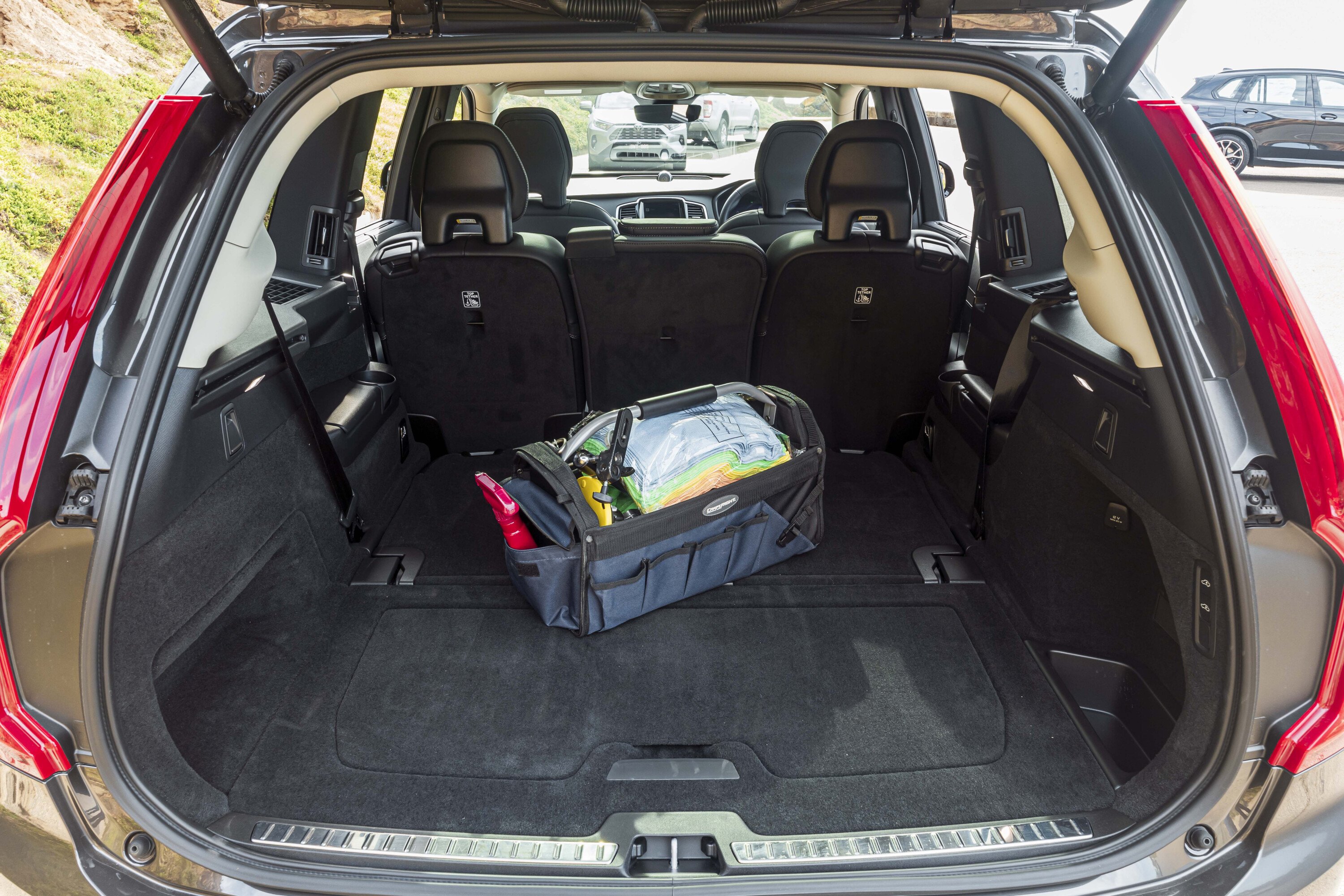
Throw in a sliding second row, four-zone climate control, plenty of USB-C charging points and retractable window blinds and there’s nary a chink in the XC90’s armour when it comes to hauling about seven people in comfort.
The one thing that betrays the Volvo’s age is the size of its portrait-style touchscreen. At 9.0-inches it looks small by modern standards, yet its functionality is excellent. The software is Google based, and now includes Google Maps and Google Assistant, and the layout of the key controls and menus is easy to wrap your head around.
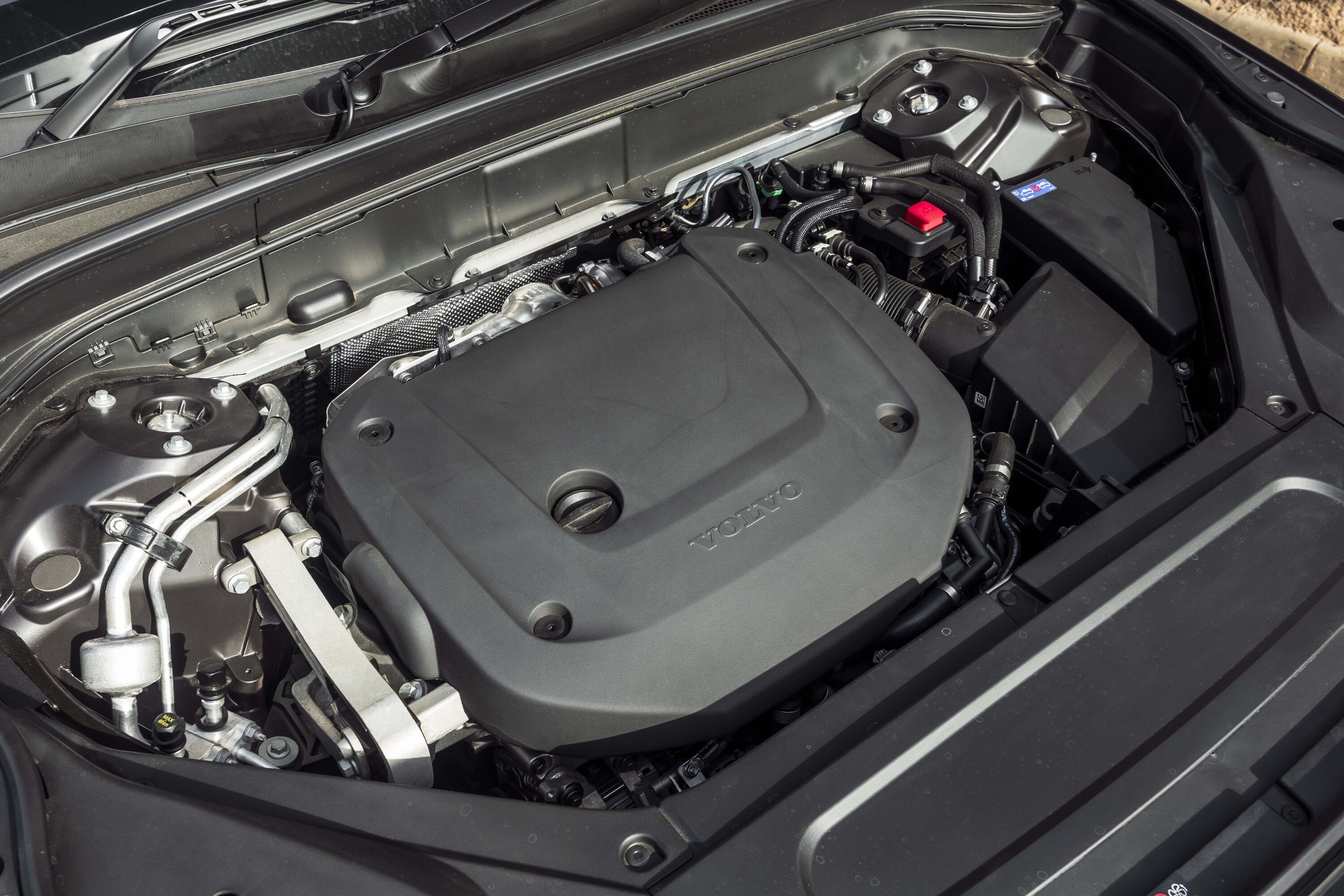
One annoyance is the need to dive into multiple menus to change the AC or seat heaters, yet the screen’s resolution and response is hard to fault.
The centre screen pairs with a 12.0-inch digital instrument cluster and head-up display, plus there’s a 360 surround view camera which sends a high-res video feed to the centre screen to ensure you don’t kerb those massive alloys.
The XC90’s light steering also aids low-speed manoeuvrability and once you’re on the move, there’s little to disrupt the Volvo’s overarching sense of calm and serenity. A big part of our tester’s phenomenal comfort and control is down to the optional air suspension, which is a must have inclusion.
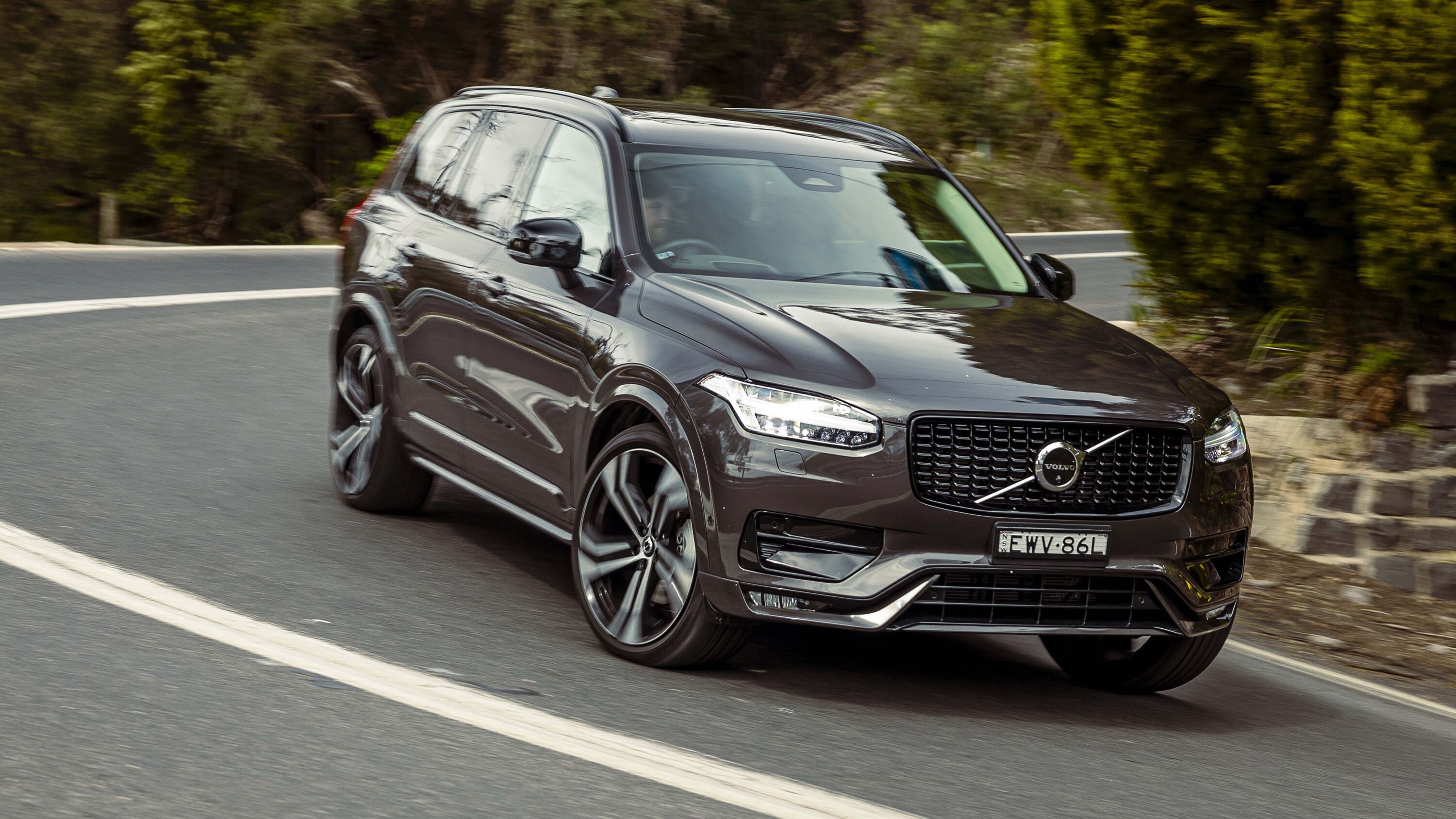
On our dynamic loop, the way the XC90 absorbed and recovered from big bumps was mighty impressive.
Those big alloys are surprisingly grippy, too, and while the overall experience isn’t what you’d call sporty, there’s plenty of talent and poise to the XC90’s dynamics.
Yet there’s no escaping that the Volvo’s true genius lies in its focus on comfort, space and functionality. This is an impressively practical family SUV, – one that nails its fundamentals with an uncommon layer of finesse and flair.
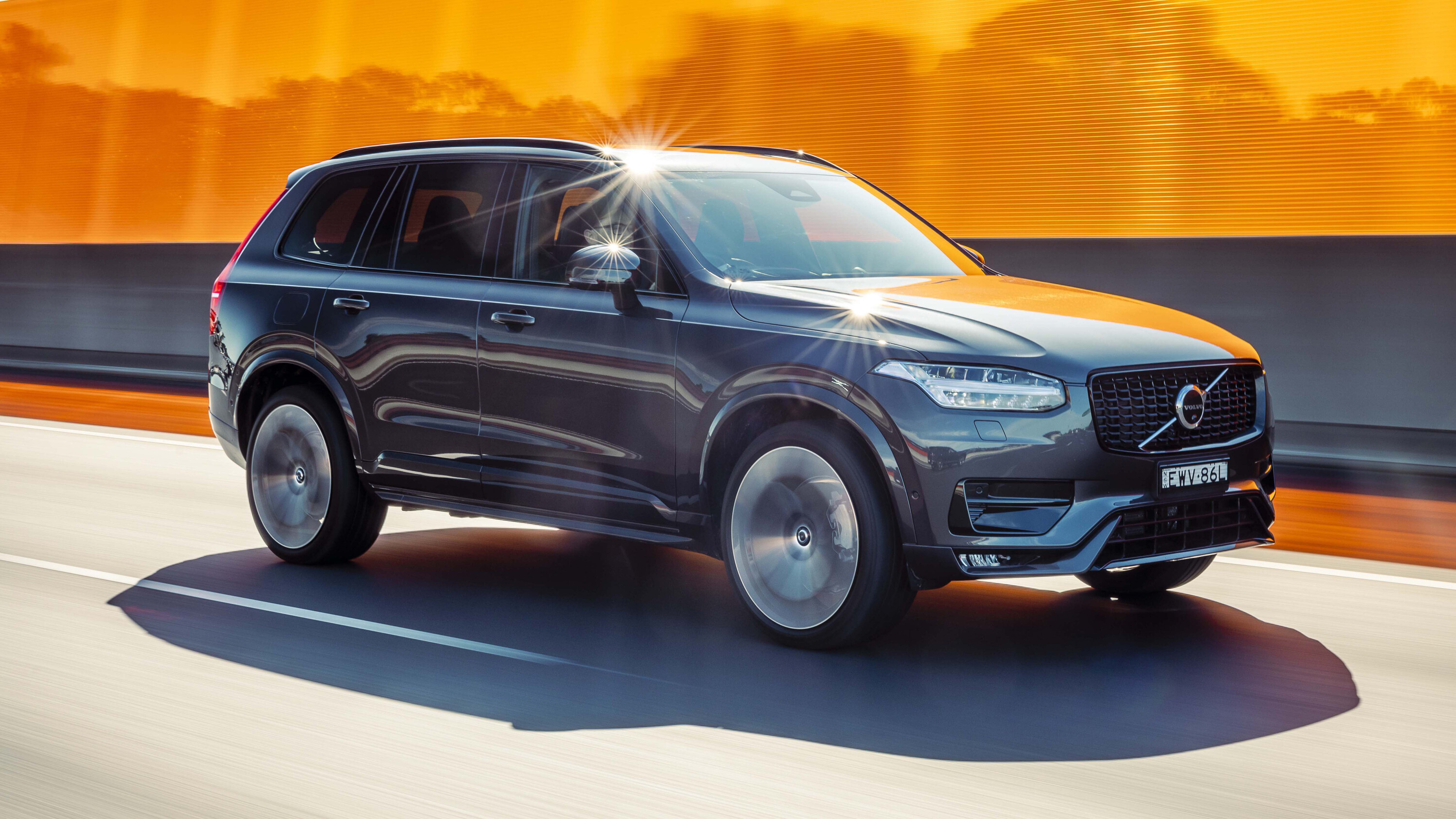
Although they fell short of a podium step, the Lexus RX350, Mazda CX-90 and VW Touareg 170TDI each has a wealth of merits.
The RX350 has a lovely ride quality, beautifully big and bright Apple CarPlay integration and easily the best seats here, but fell down with its oddly clumsy dash design, hit-and-miss cabin materials and vague steering.
We wanted to love the new Mazda CX-90. We rate its handsome exterior styling, engrossing handling, elegant cabin and spacious third row – and it would have finished higher if not for its weirdly jerky transmission, overly-sporting ride quality, and the fact it needs $5000 splashed on an optional interior pack to be considered anywhere close to ‘luxe’.
The VW Touareg 170TDI is an excellent car in its own right, and you’ll be cleaning cobwebs from inside the fuel filler cap at every servo stop. But we were looking for luxury in this test, and the Touareg’s interior doesn’t surprise, delight and outright spoil as much as the other cars here.
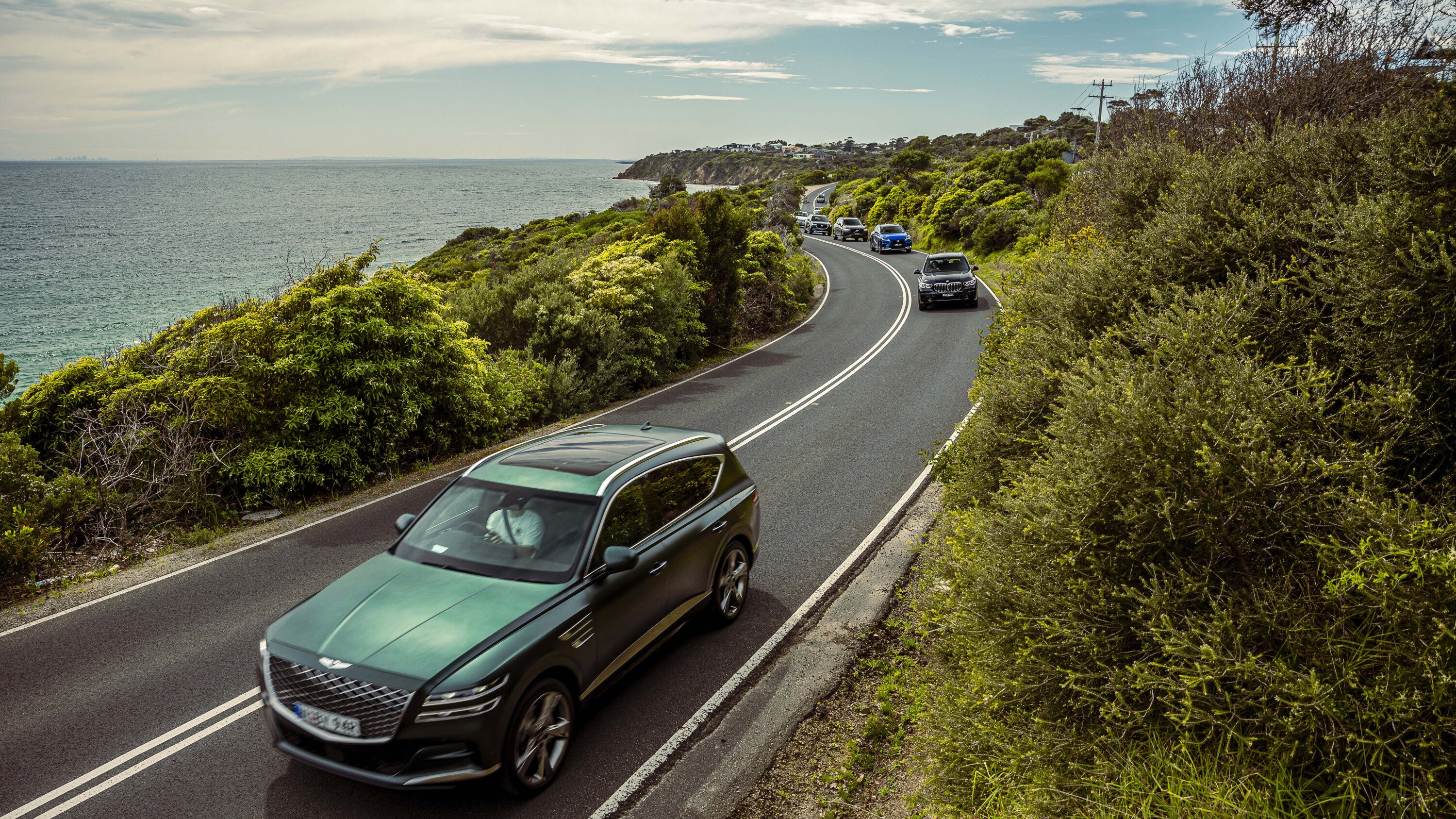
If you’re the kind of person who would love to trick your neighbours into believing you own a posh and expensive British SUV, you might like the Genesis GV80, our third-place finisher.
Its blingy interior bristles with novel touches that are fun to discover, and it tries hard to spoil its occupants. It’s not really the driver’s choice, however, with a laggy, anodyne twin-turbo V6 and nautical dynamics.
Of course, if this was a test of best driver’s luxury-performance SUVs, the BMW X5 and its rip-snorting B58 turbocharged straight-six would romp it home.
Around a track, it would easily be the fastest here, even despite its oddly lifeless steering. It would also have seen the chequered flag first if we merely ranked our contenders by price, the BMW costing a wince-inducing $144,600 as-tested.
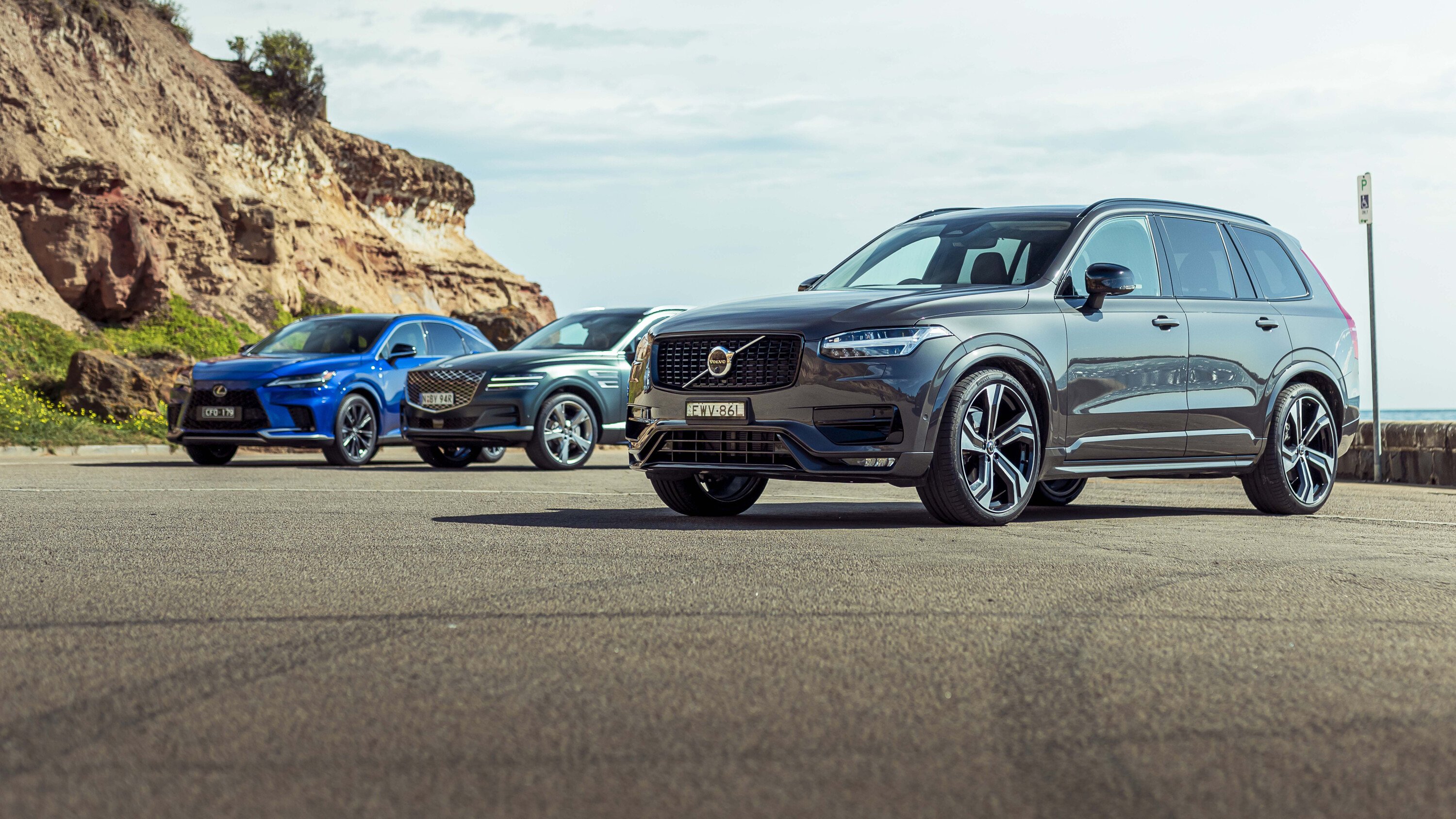
At $118,690 as-tested, it was one of the priciest cars on-test, but there wouldn’t be a day or drive where you won’t consider every dollar well spent. Its wagon vibe cuts an original figure in a car park of SUVs, and we can’t believe how well it rides for a vehicle on 22-inch wheels.
While its relatively small 9.0-inch infotainment touchscreen betrays its age – the second-generation XC90 first appeared in 2015 – it’s matured like a fine cabernet sauvignon, of which we’d happily take an extra tall glass.
Looking to get into a brand-new large SUV? Our stories below will guide you to the model that best suits your needs!
Sized above the compact HR-V at close to 4.6 metres long, the first-ever ZR-V is a natural size rival for the Mazda CX-5 and Volkswagen Tiguan and consequently squeezes a figurative bunk bed into the CR-V’s bedroom.
Honda’s mainstay midsize SUV will have to learn to share its space with its newest sibling. Except the CR-V has been making moves of its own.
An all-new sixth-gen CR-V sees it get a growth spurt in length, width, wheelbase, equipment, capability and price – meaning it now straddles the Medium- and Large-SUV segments.
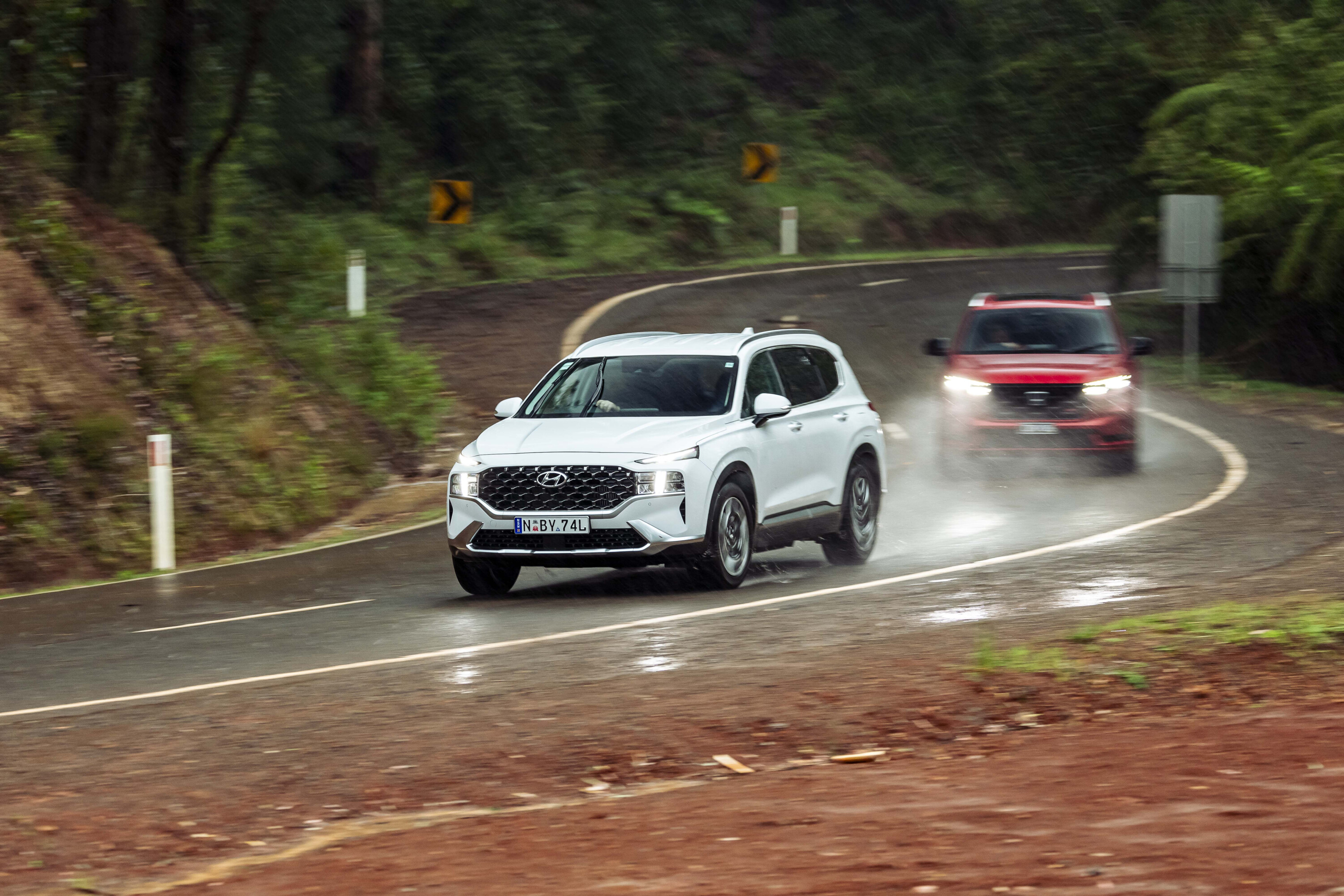
And with the new CR-V’s footprint now within mere millimetres of Mitsubishi’s Outlander, another vehicle that truly tests the boundaries of what ‘midsize’ means, could Honda’s once-traditional midsizer hold its own against traditional large SUV stalwarts?
With the petrol/electric powertrain also being new territory for the CR-V in Australia, we took the opportunity to examine whether this box-fresh Honda is the David to a similarly-positioned L-SUV Goliath: Hyundai’s Santa Fe hybrid.
(If you’re wondering why a Toyota Kluger Hybrid or Kia Sorento Hybrid aren’t featured here… Well, the Kia beat the Toyota in a previous comparison test, while a petrol-electric Sorento test car wasn’t available ahead of an impending update to the Korean large SUV.)
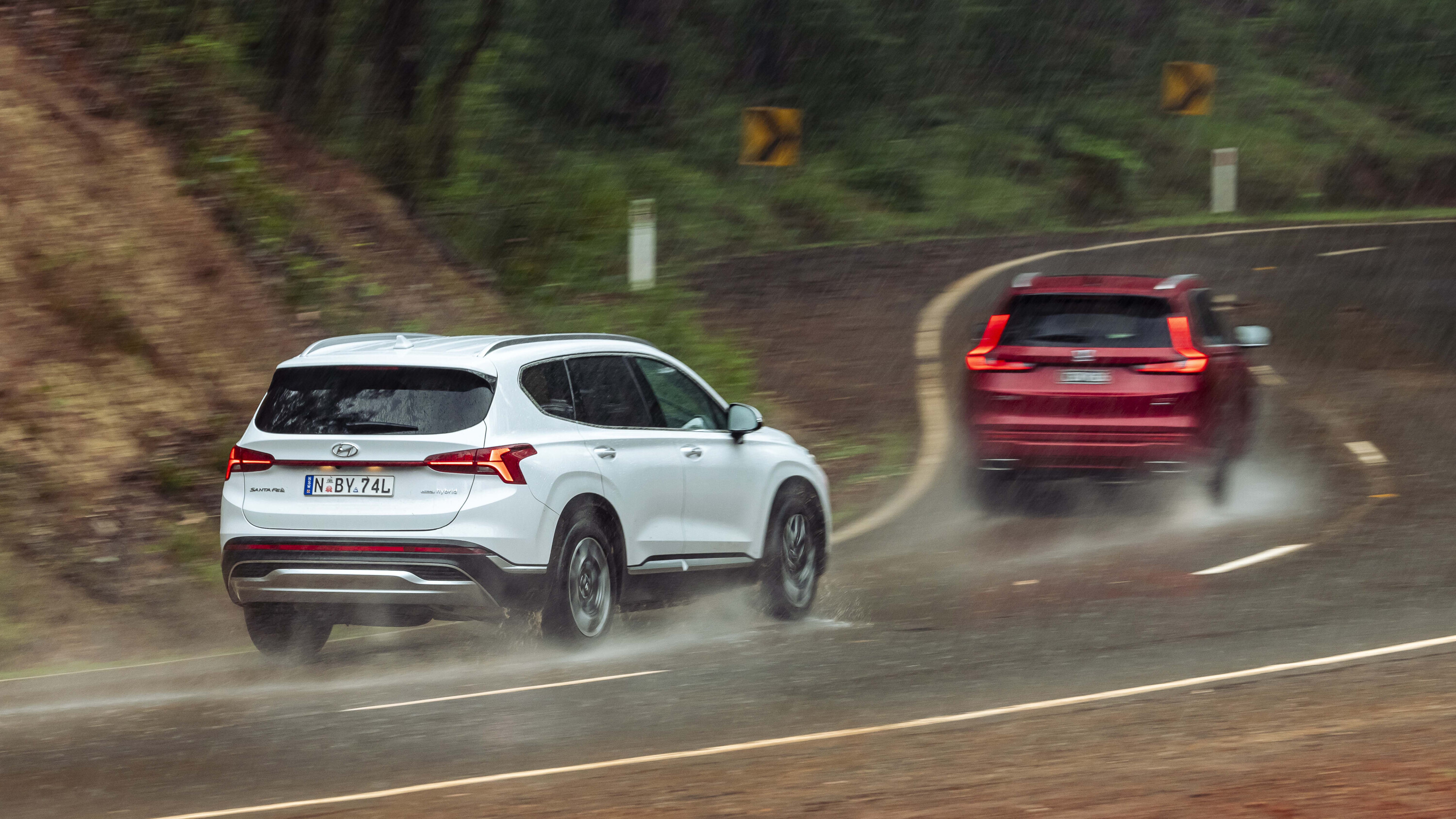
Then again, given the size differences it’s not quite an apples-to-apples comparison to begin with – particularly as the 8cm-longer Santa Fe packs a third row of seats, while the range-topping CR-V RS is strictly a five-seater (seven-seat CR-V variants are available lower in the range).
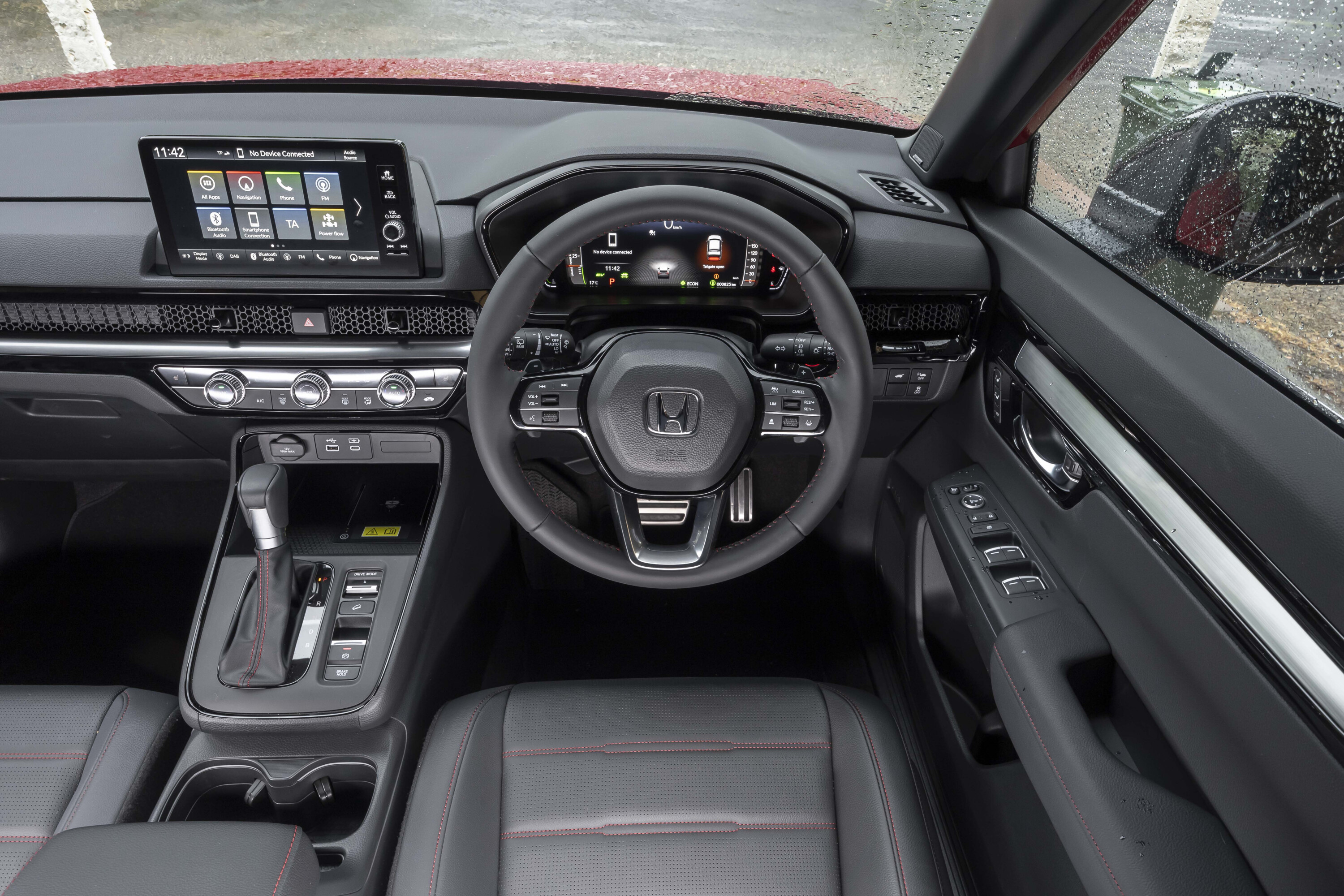
There are also some equipment shortfalls in the Honda: the CR-V’s infotainment screen is 9.0 inches across versus the Hyundai’s 10.25, and while the RS grade scores a bright and crisp 10.2-inch digi-dash, the Santa Fe Elite trumps it again with a 12.3-inch driver display.
But the Santa Fe is showing its age, with a new-generation model due next year.
There are only USB-A jacks in its cabin – two up front, three in the rear – while the Honda provides three more modern USB-C connections in addition to a single USB-A.
The CR-V also has a panoramic glass sunroof and a 12-speaker Bose audio, which pips the 10-speaker system in the Santa Fe and sounds better too.
In other respects, there’s significant commonality. Both have heated front seats, climate control, power-operated tailgates, built-in sat-nav, adaptive cruise control, 19-inch alloys, wireless phone chargers and wireless Apple CarPlay (but only wired Android Auto).
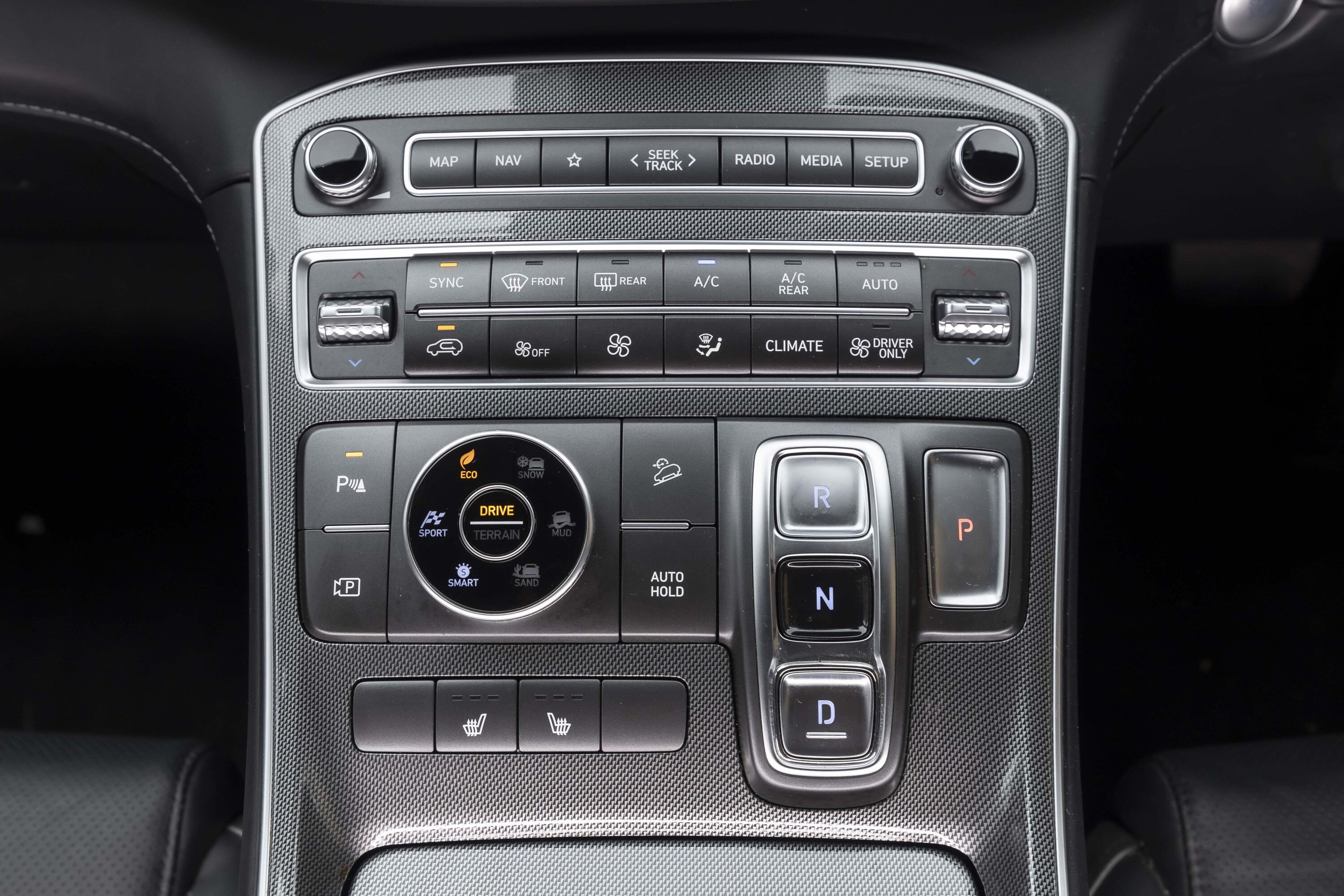
There’s also a greater utilisation of the space available, with a handy mid-dash shelf and an under-console cubby for stashing small things, as well as integrated retractable sunshades in the rear doors. What the Honda does, however, is provide a better way of transporting people than the Hyundai.
The qualitative difference between the two is vast, with the fancier furnishings of the Honda holding greater tactile and visual appeal than the shiny polymers of the Santa Fe’s cabin. And while the seats may appear flatter in the Honda, their cushioning conforms better and provides a more natural, comfortable posture.
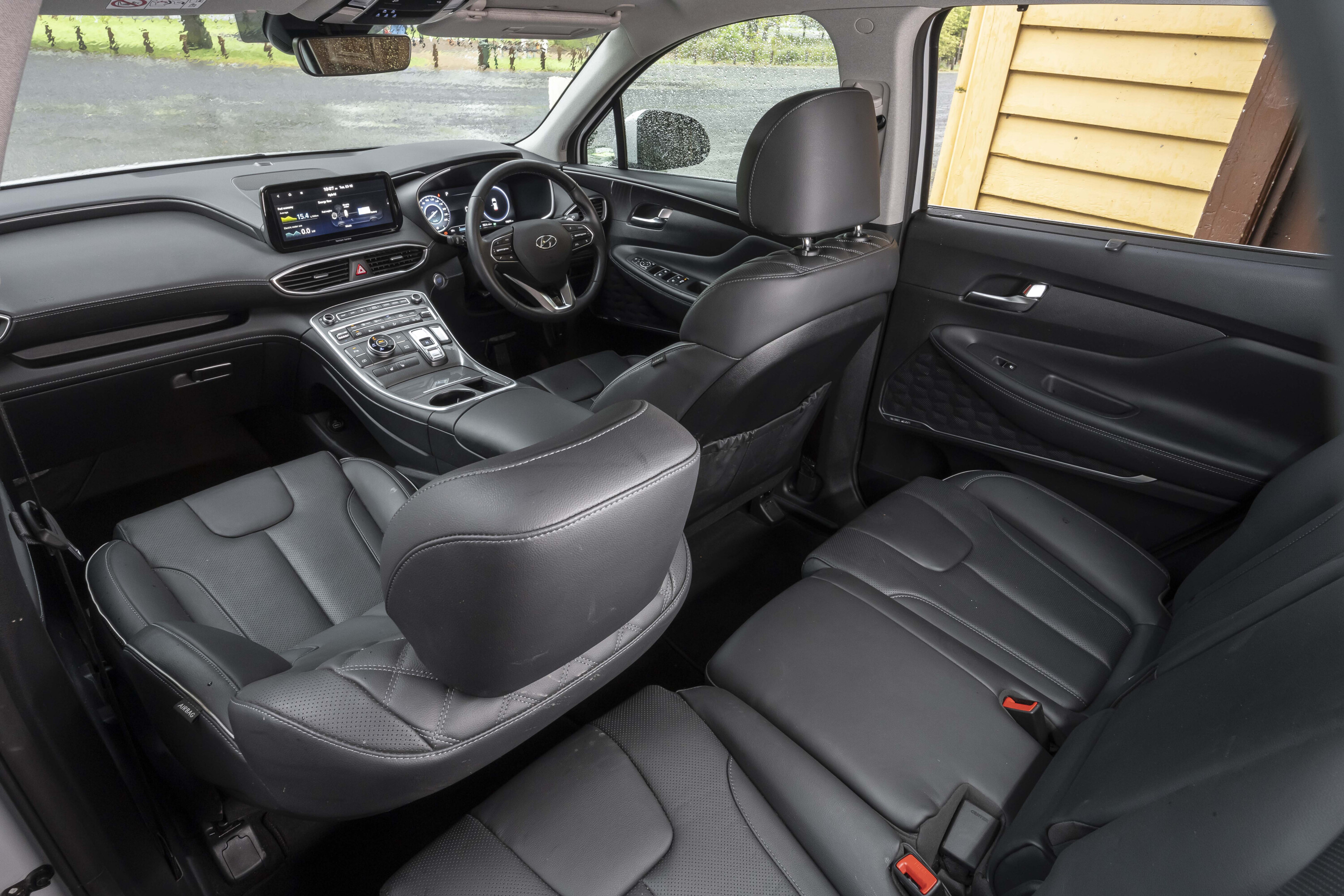
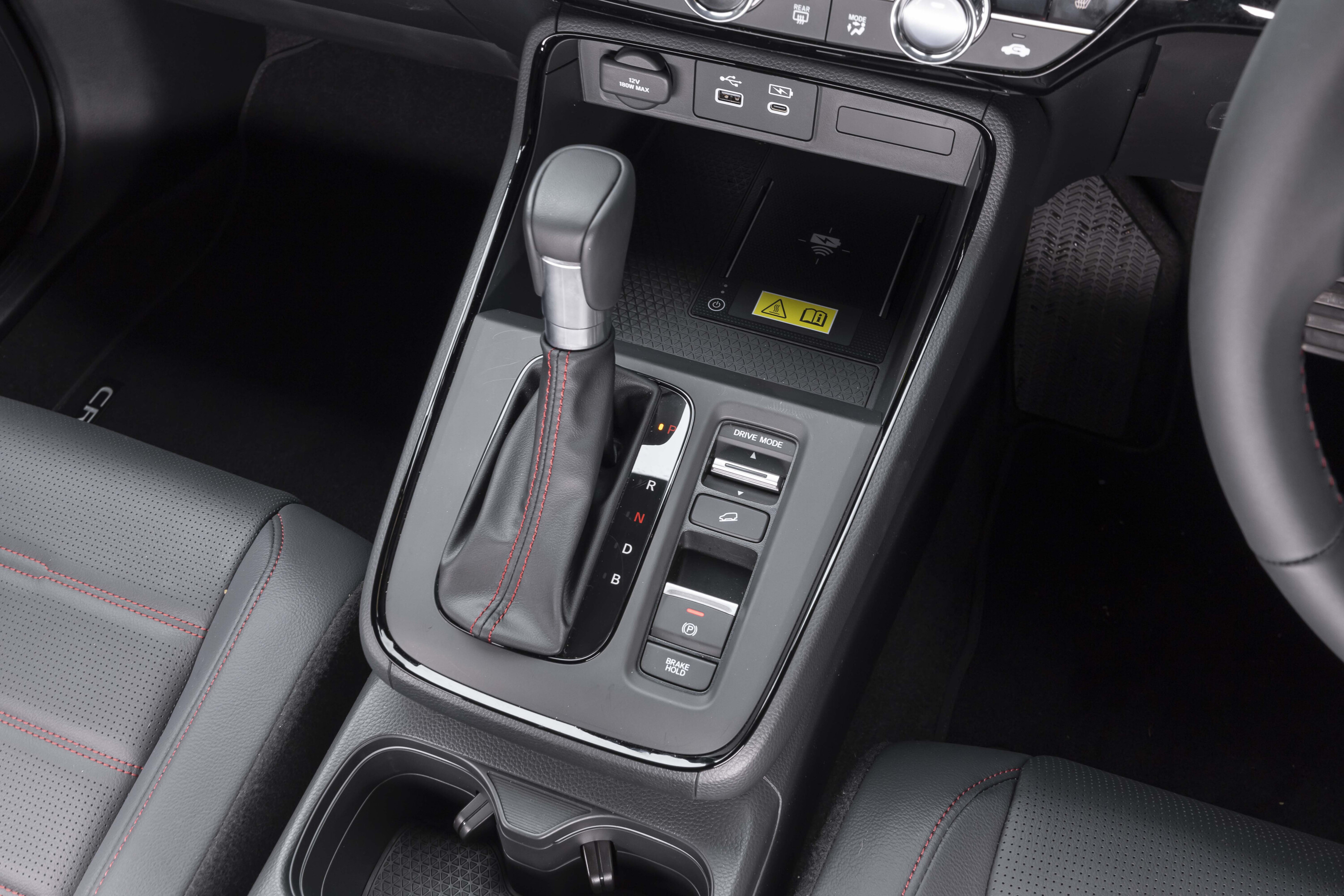
The Honda, with more clear air between the front seats, feels more commodious as a result (though that stick shifter just takes up space and would be better replaced with something lower-profile).
The CR-V’s rear seat now benefits from fore-aft sliders, giving additional flexibility when it comes to carrying passengers and cargo. Racked all the way to the rear, there’s also stacks of legroom to enjoy, as well as abundant headroom and plenty of light when the sunroof’s fabric shade is retracted.
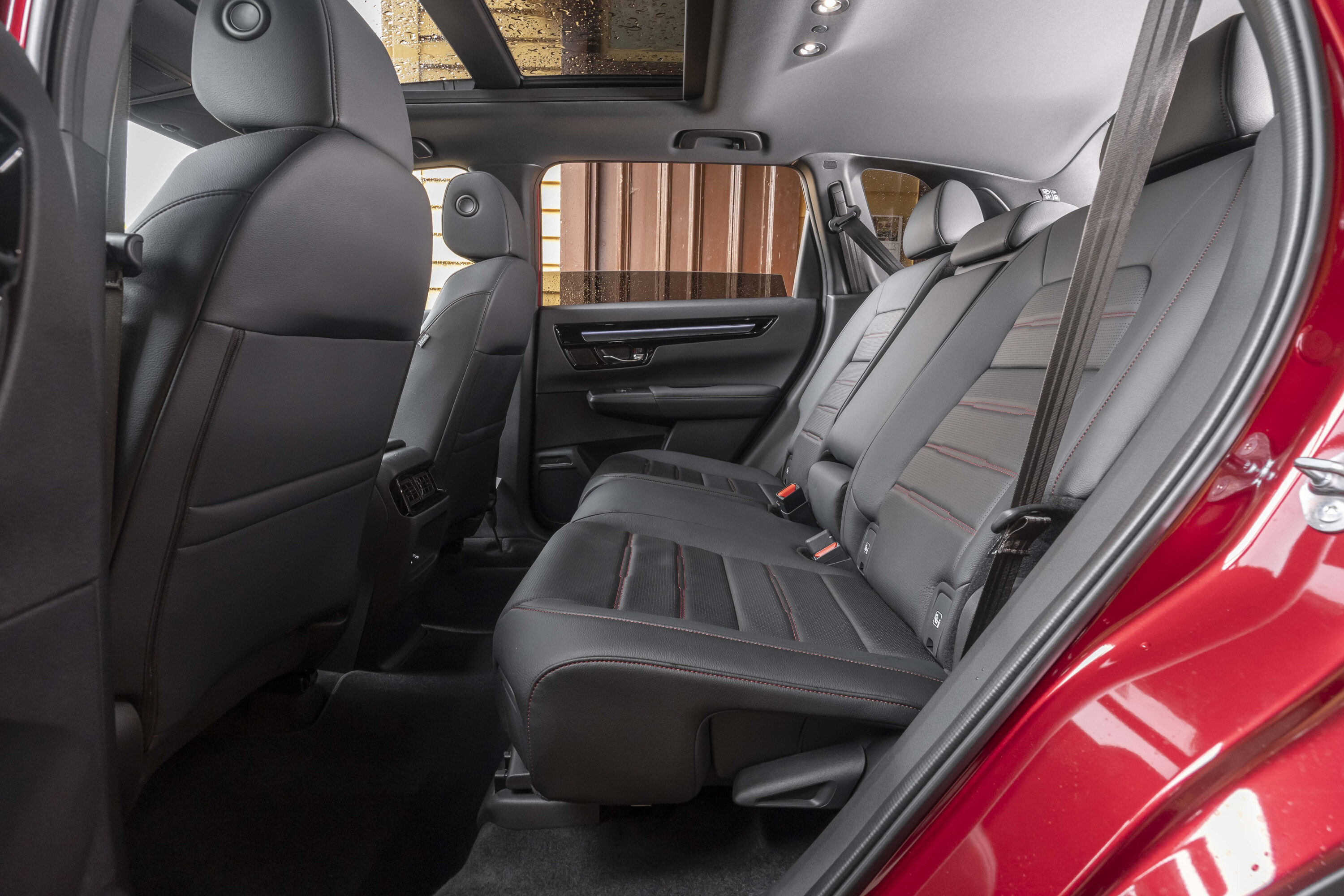
The Hyundai also provides a top tether for its middle seat as well as the outboard positions – the narrower CR-V only has the outer two seats so equipped.
So the CR-V is a dud for families, then? Not exactly. While its child seat capability isn’t as generous as the Santa Fe and the RS grade lacks a third row, the CR-V’s rear doors open almost to 90 degrees from the body, while the Hyundai’s doors stop well short.
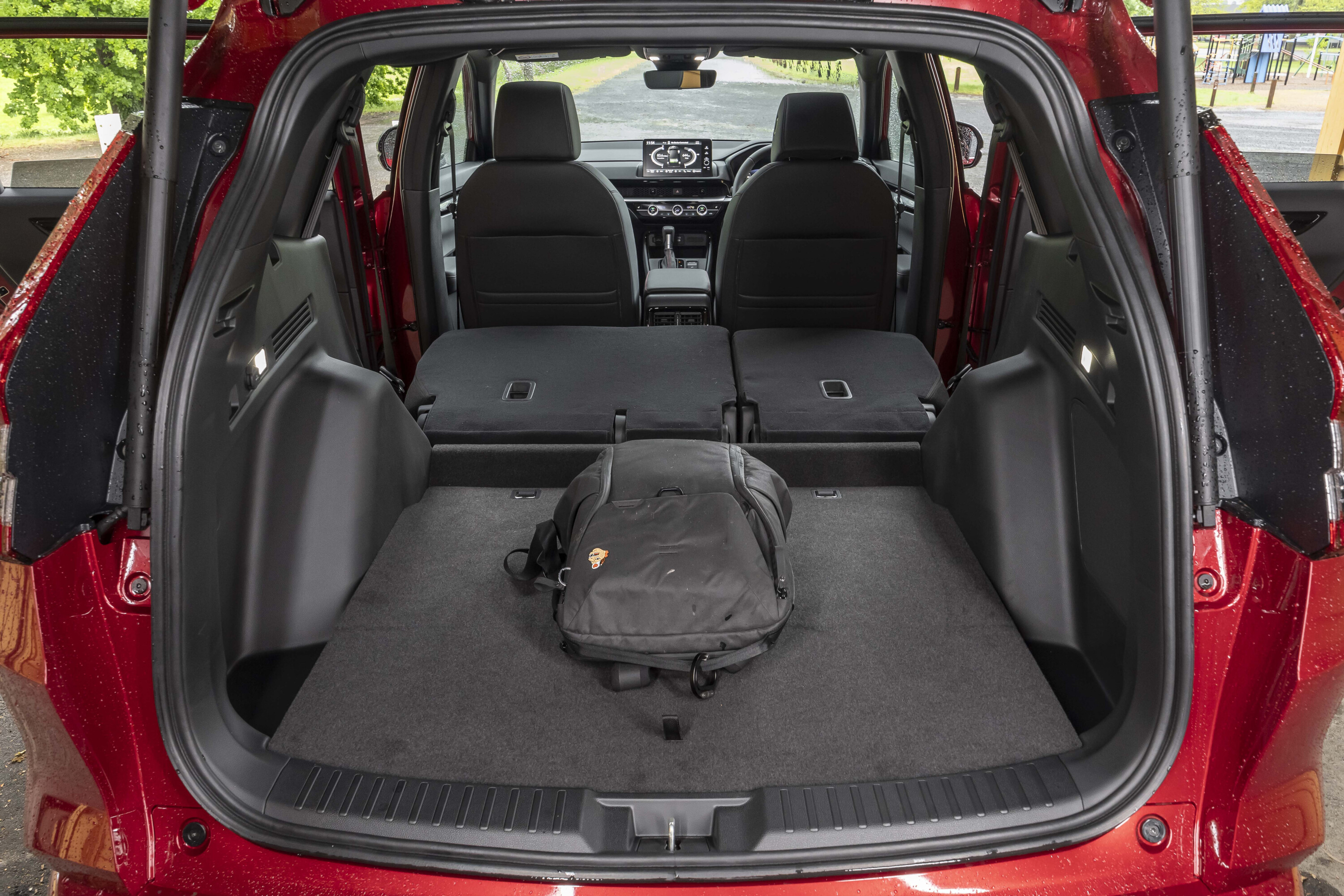
It’s a feature that may be overlooked by many (and isn’t really mentioned in Honda’s marketing material), but coupled with a generously-sized door aperture, the Honda is definitely easier to load kids into.
Other thoughtful CR-V touches include the retractable fisheye mirror so both front-seaters can see what’s going on in the back seat, and the height-adjustable rear seatbelts.
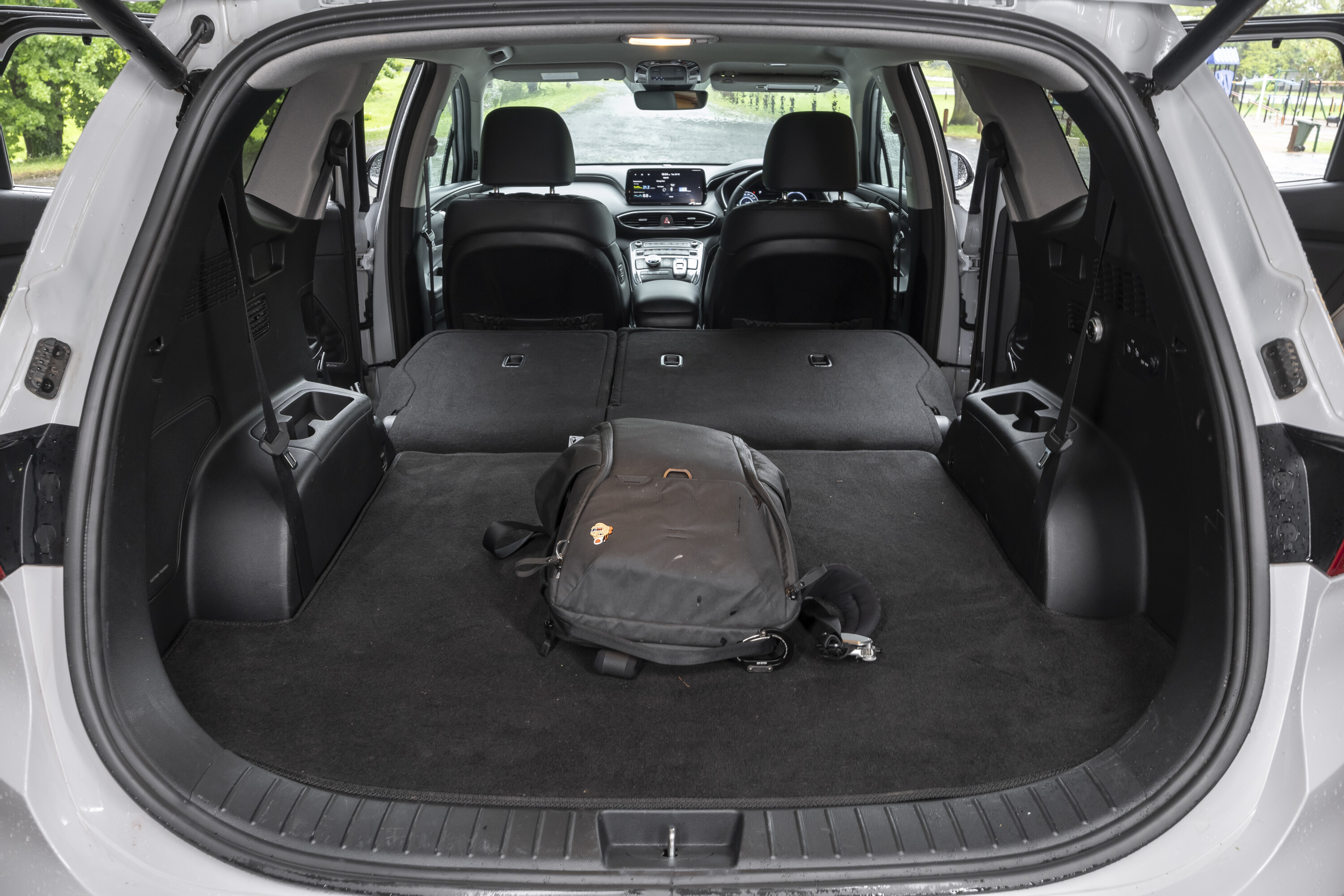
The CR-V is also far easier to load with cargo. Thanks to its large boot opening and very low boot floor, it offers up to 589 litres with the second row in place, and 1072 litres when they’re folded down.
A prominent ramp between the boot floor and the folded down seatbacks impinges slightly on its load-taking versatility, but with the bigger Santa Fe only delivering 571L of seats-up capacity, the CR-V’s packaging is admirable.
It should, however, be pointed out that the CR-V in hybrid form has no spare tyre, while the Santa Fe slings a full-size under its boot floor.
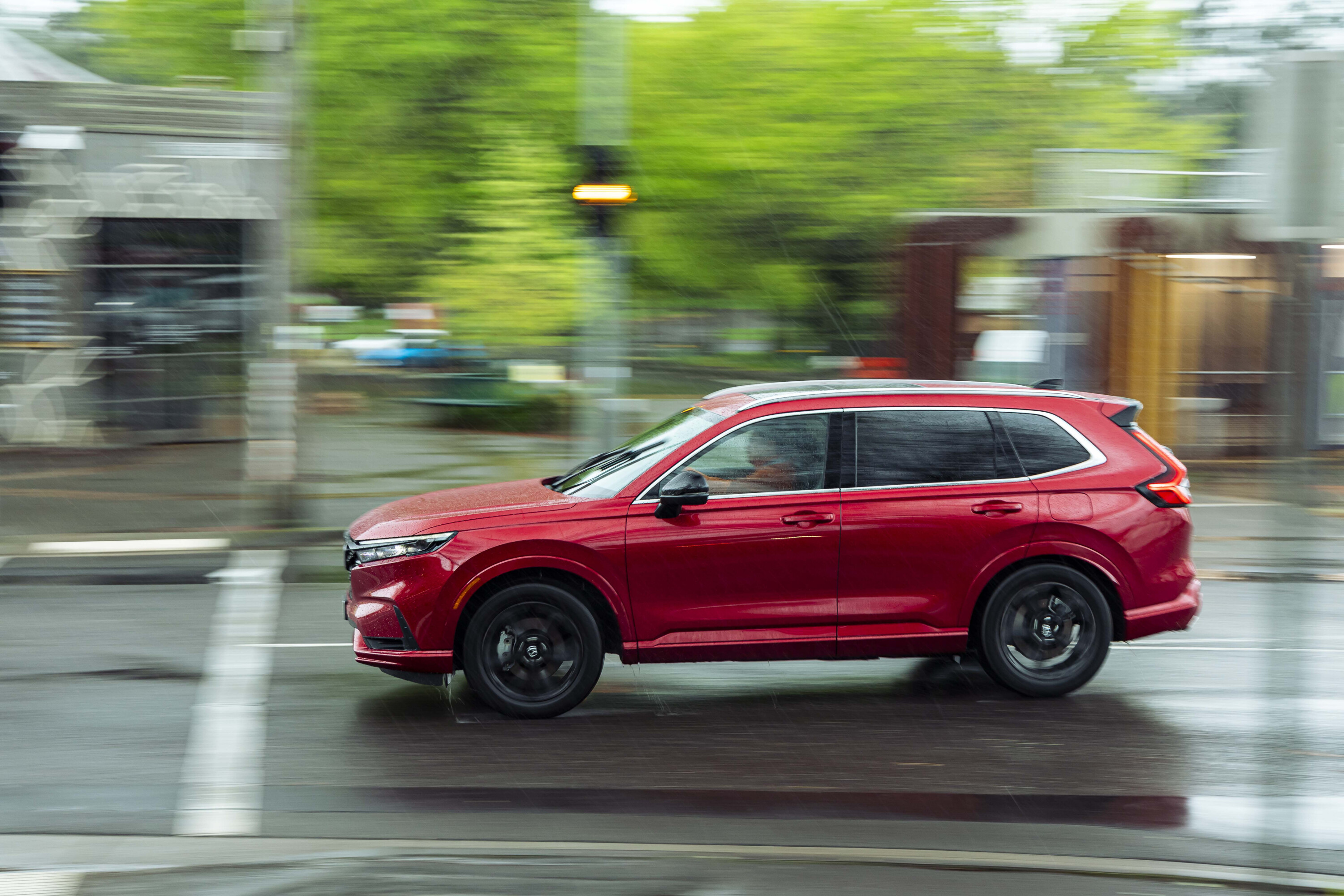
The CR-V, which shares its bones with the Civic hatch, feels profoundly car-like on both urban streets and mountain roads: agile, willing, and a joy to steer hard. The only thing holding it back is its FWD-only layout, which can’t put the full 152kW and 335Nm outputs of the 2.0-litre Atkinson-cycle petrol/electric powertrain to the ground cleanly if there’s a smidge of moisture or looseness.
Otherwise, with its crisp steering, supple ride comfort, excellent bump suppression and resistance to body roll and understeer, the CR-V RS is one of the most dynamically satisfying options in its segment.
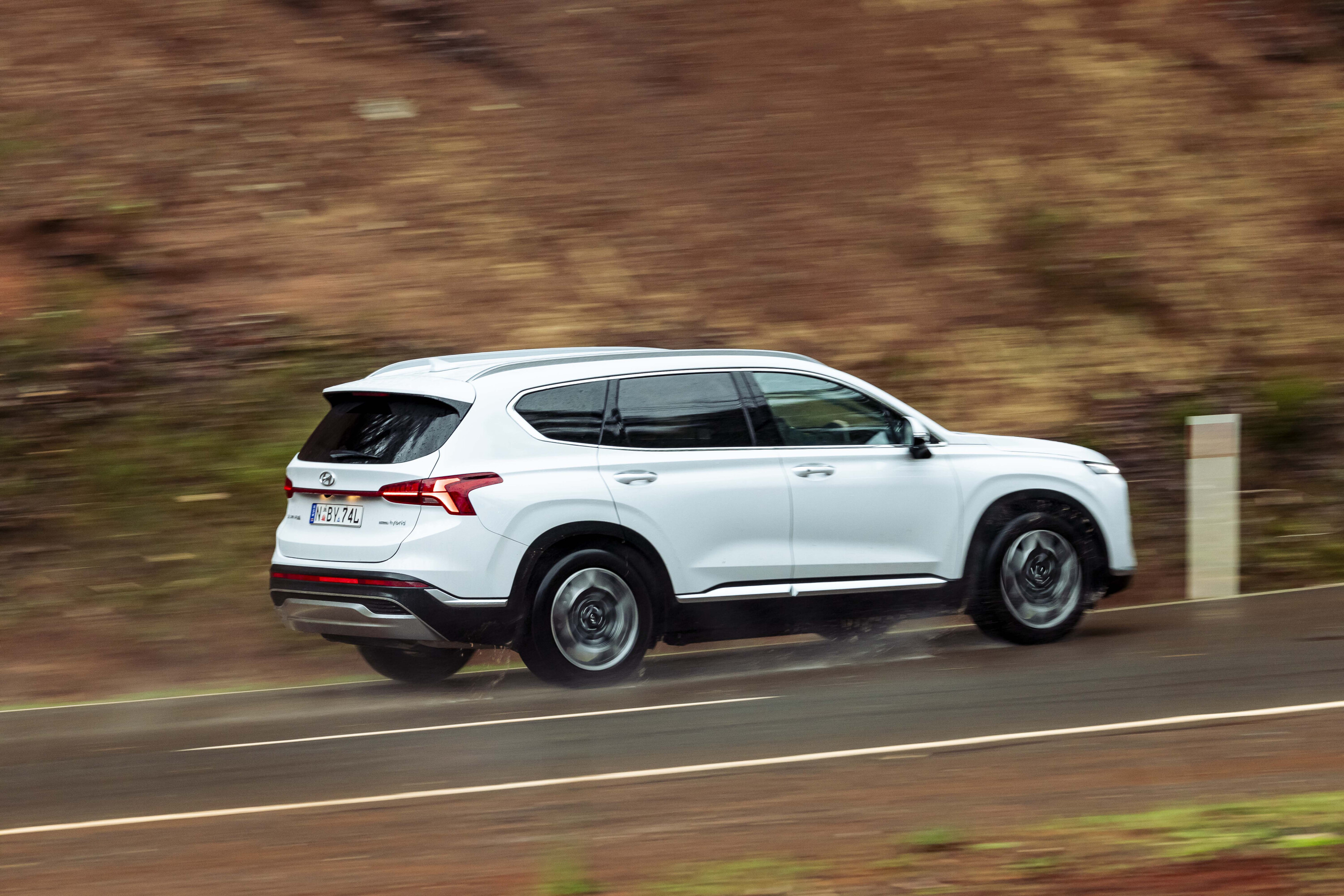
With 169kW and 350Nm of combined output from its 1.6-litre turbo petrol/electric setup, and the tractive benefit of all-wheel drive, it should, on paper, at least have a straight-line advantage on the Honda.
It does, in purely accelerative terms, but it’s a ragged thing with abrupt throttle response that makes it hard to be smooth and progressive even when the drive mode dial is twisted to ‘Eco’.
The ride also has a harshness to it that wasn’t expected, given its Continentals have the exact same sizing as the CR-V’s Michelin Latitude Sport 3s, but a peek at the tyre placard shows the Hyundai needs to run higher pressures all round – in excess of 40psi, even – which explains the stiff response to sharp-edged bumps.
Both of those results are good, considering the factory claims of 5.5L/100km for the CR-V RS e:Hybrid and 6.0L/100km for the Santa Fe Hybrid, but the Honda impresses more not just for its lower outright number, but also the fact it undershot its claim by a greater margin.
Both will happily run on 91RON unleaded petrol.
Nevertheless, the Honda offers a broad suite of safety aids, such as active cruise control, autonomous emergency braking, lane-keep assist, blind spot monitoring, driver fatigue monitoring, and an 11-airbag fitout that also includes a centre bag between the front seats, passenger and driver knee bags, and torso-protecting side bags for the front and rear seats, in addition to the usual frontal and curtain airbags.
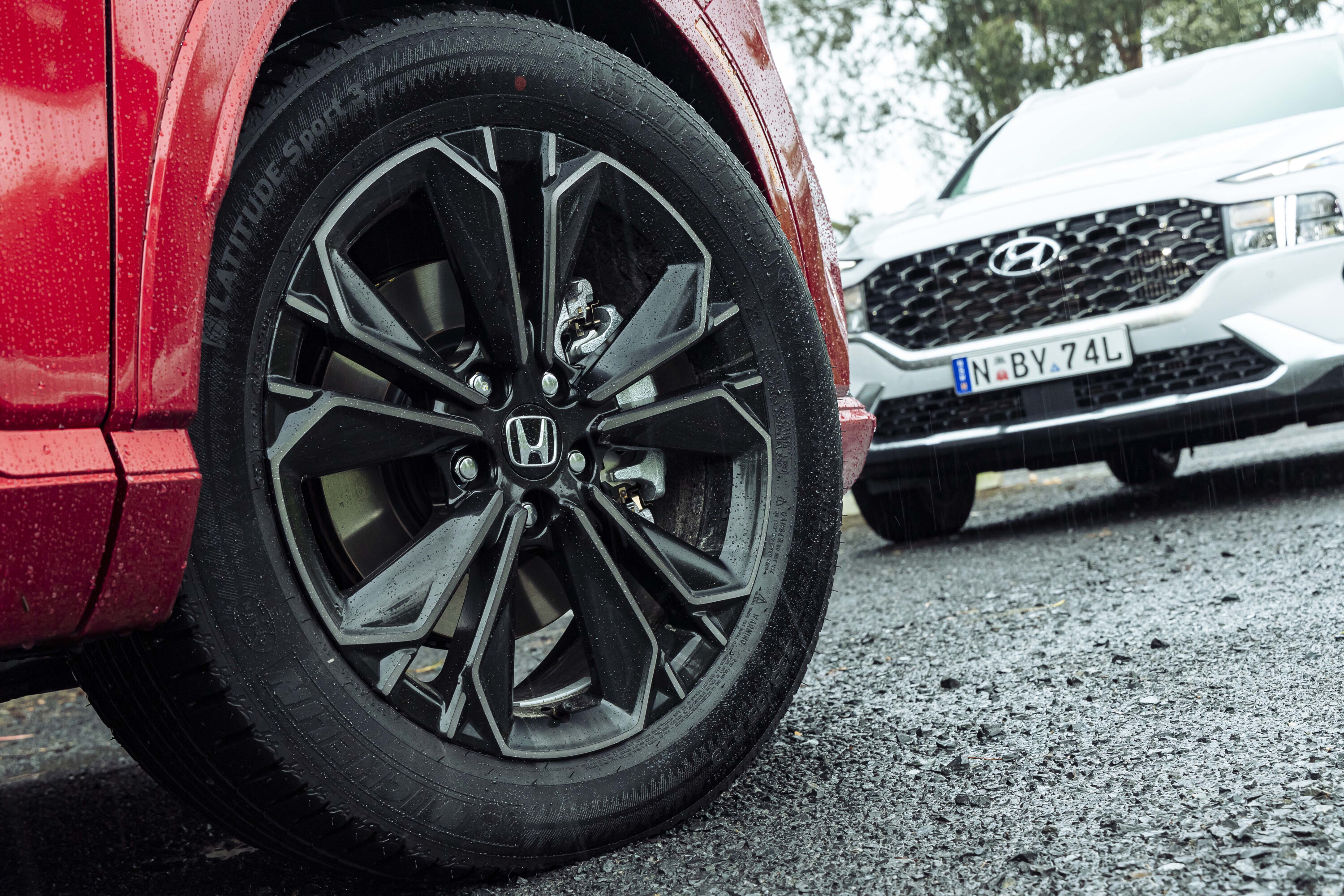
Hyundai offers only one year of complimentary roadside assistance, but will extend that coverage indefinitely provided you have all scheduled maintenance performed within their dealer network.
Service intervals are set for every 12 months or 10,000km for both of them, with Honda pricing the first 5 services at a flat $199 rate per visit. Contrast that with the Santa Fe Elite Hybrid’s pre-paid servicing plans that cost $1377 for three years, $1836 for four years, or $2295 for five years, and the running cost advantage – both for fuel and servicing – easily belongs to the Honda.
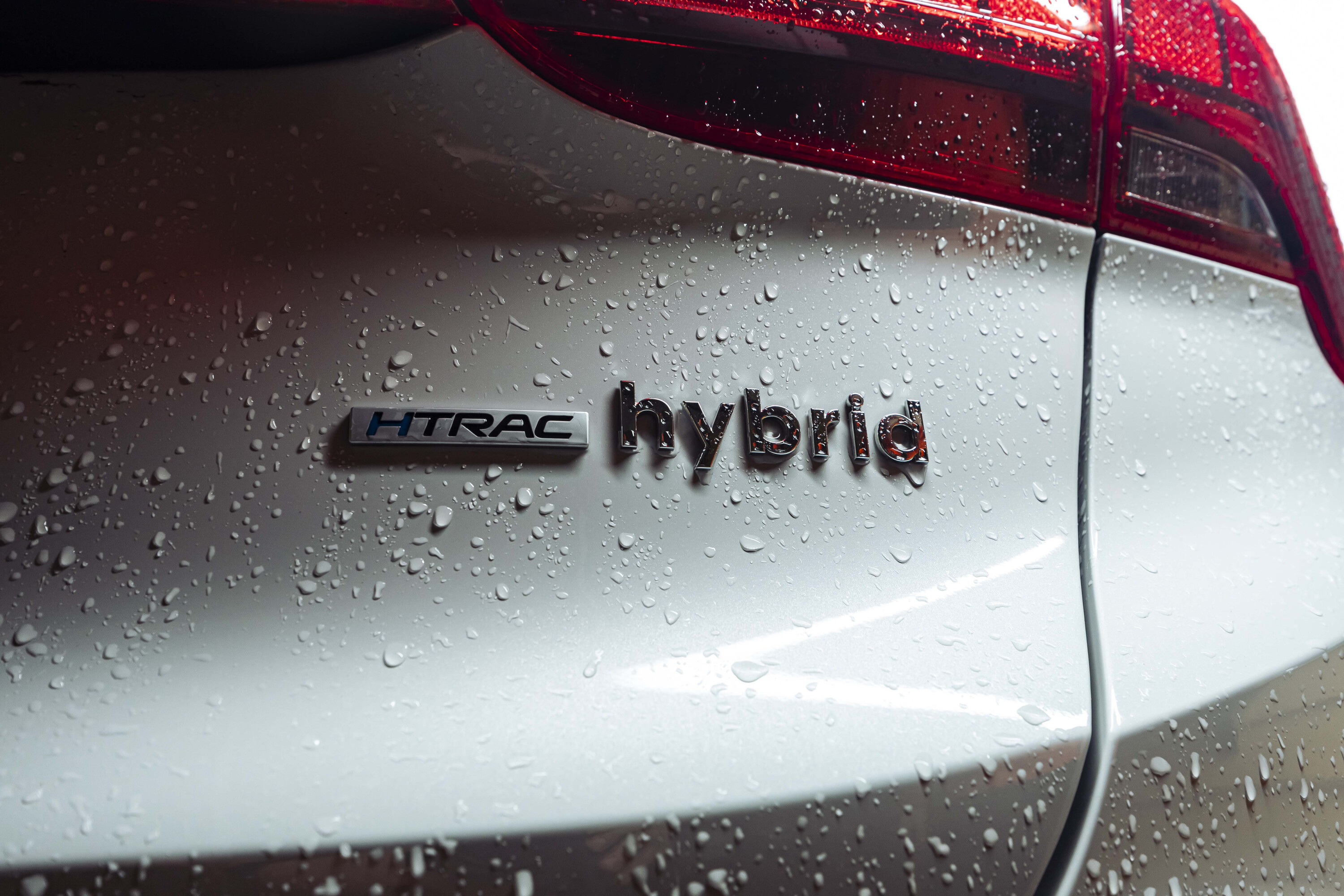
If you absolutely value space or need to transport more than four or five people on a regular basis, the choice between these two is obvious: it’s the Santa Fe. You can’t argue with the tape measure, and the Hyundai is simply the bigger thing.
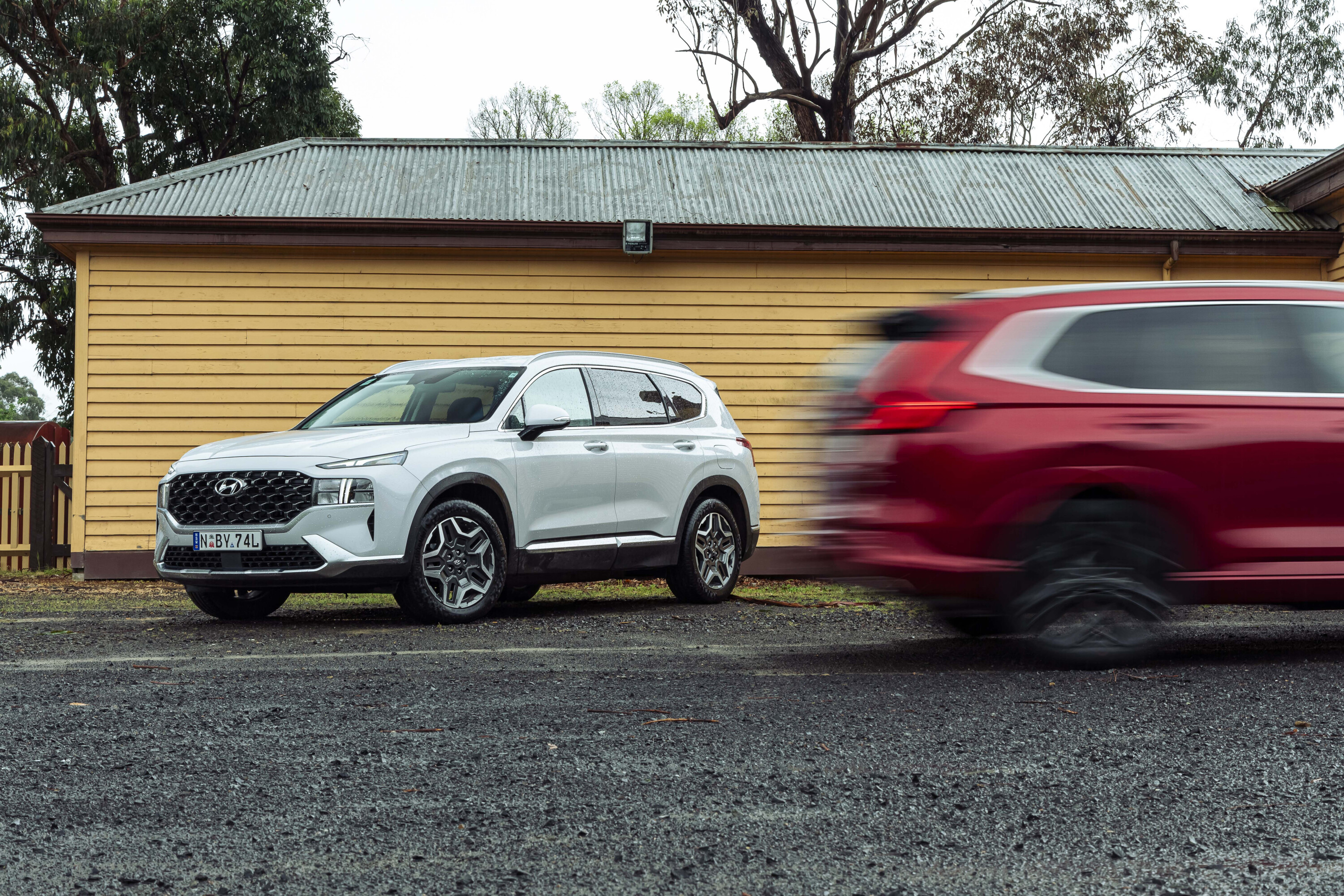
But subtract that requirement, and the rational mind gravitates to the CR-V RS.
Sure, $60K is a fair whack to spend on a vehicle that is officially classified as a medium SUV, yet far more reasonable when considered as a vehicle on the shorter end of the large-SUV spectrum.
And the CR-V’s value proposition is solid.
Above that, it provides a level of polish in its presentation and performance that isn’t present in the Santa Fe Hybrid (though the imminent arrival of the all-new next generation Santa Fe next year will arguably close that gap… if not flip it entirely).
We would also recommend checking out the MY24 Kia Sorento Hybrid from early next year, but for 2023 it’s Honda’s is-it-medium-or-is-it-large that gets our petrol-electric nod.
Just on efficiency alone – a vital aspect for any hybrid-vehicle comparison – it’s where the CR-V’s more compact dimensions that also work in its favour.
We’ve crunched the value equations of every seven-seat SUV on the market right now, from smaller new entrants such as Honda’s new CR-V up to segment stalwarts like Kia’s Sorento and Hyundai’s jumbo Palisade.
In this comparison, we’ve kept things streamlined limiting entrants to those with monocoque bodies focused on occupant comfort and practicality rather than outright off-road or towing capability.
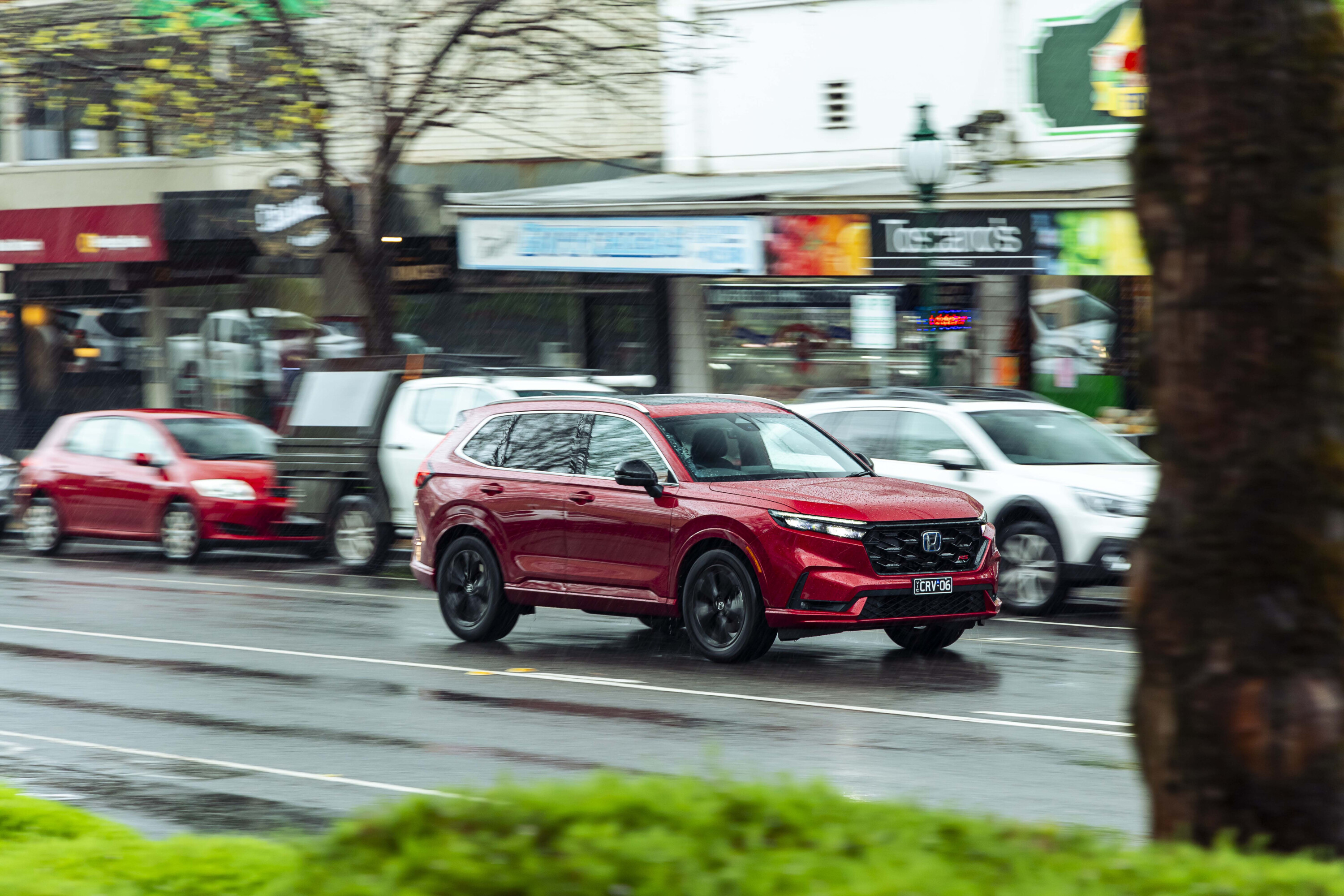
The goal is to look beyond the purchase price and provide a clearer overall indication of how much each SUV will cost in your driveway. We’ve taken depreciation, servicing, insurance premiums, and fuel use into account and, as you can see, the results are surprising…
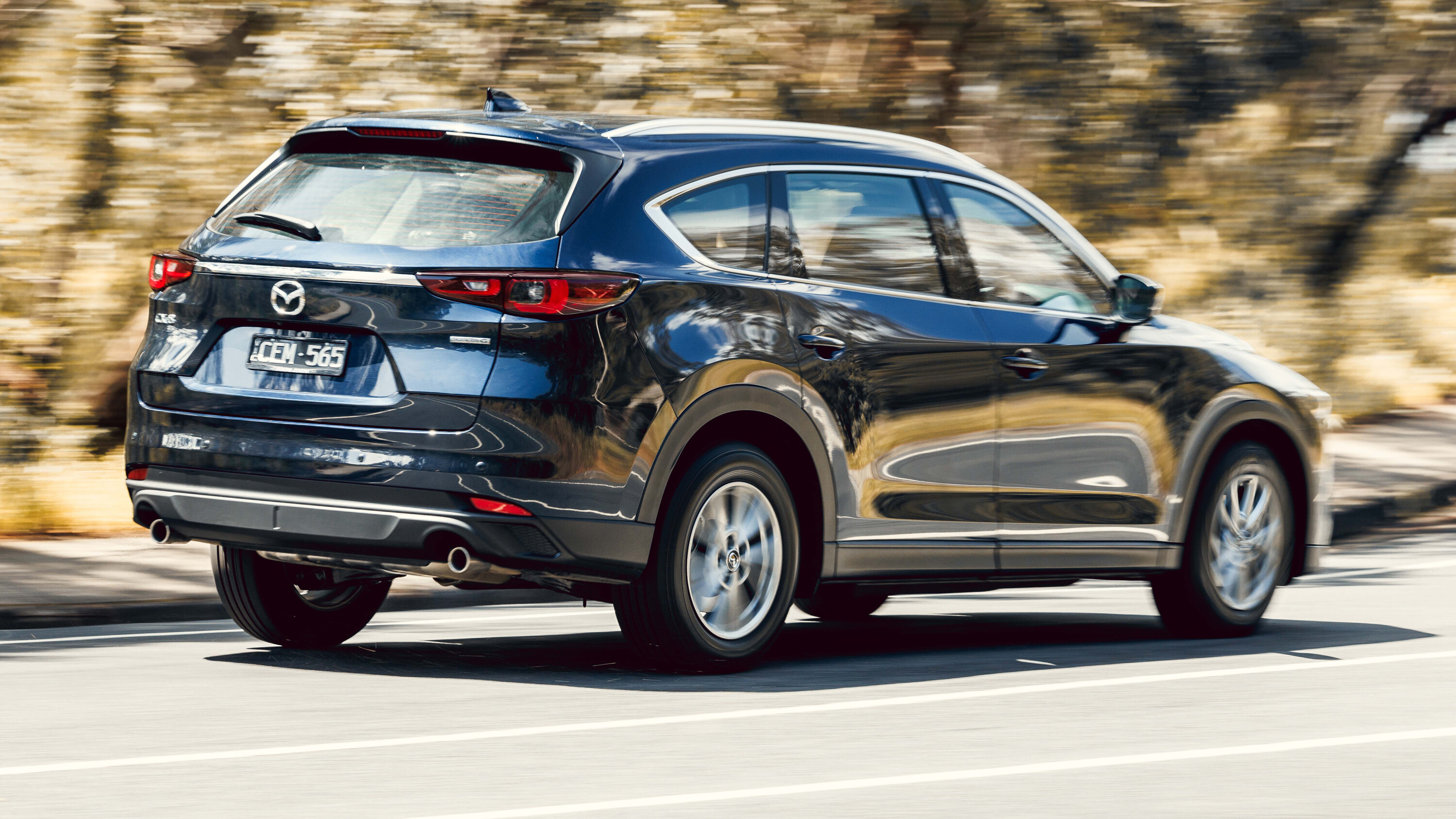
The Mazda’s drive-away price is $2657 lower than the Volkswagen, yet the CX-8’s excellent residual value, low insurance premiums, and decent fuel economy see it creep further away over three years, costing $4292.03 less overall.
Nissan’s Pathfinder is the biggest car here and so, perhaps expectedly, it walked home with the wooden spoon. That could be justified by size, but a total ownership cost of $21,000 – and $6590 dearer than the similar size Palisade – more than our winner is significant.
It doesn’t help that the Pathfinder is only available in high-spec trims but big fuel bills (with its thirst for premium petrol), and poor resale value also contributed.
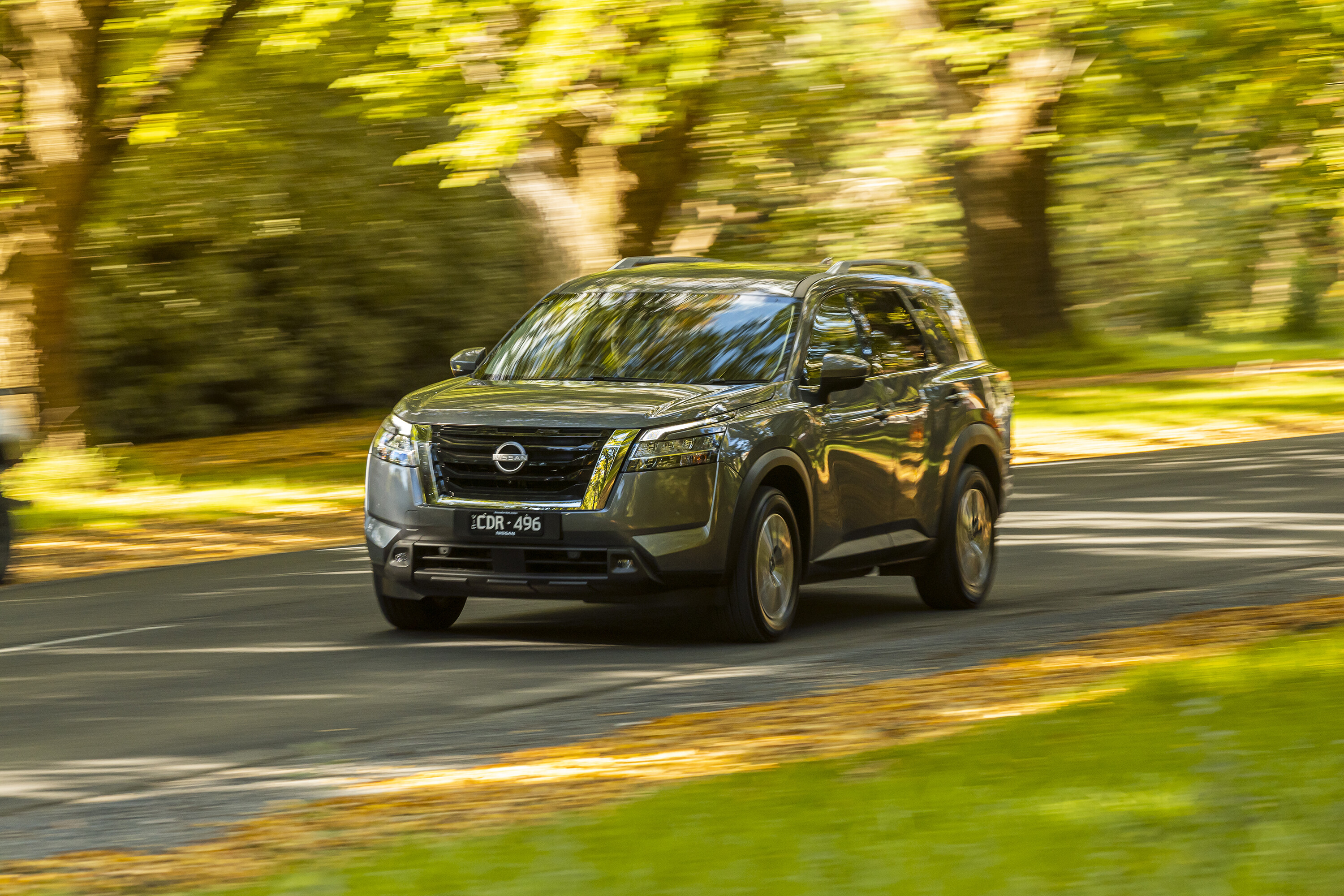
But first, an explanation of how we calculated our ownership figures.
We focused on the cheapest seven-seat variants on offer and used drive-away pricing for vehicles delivered in Sydney with no options fitted.
Fuel bills were calculated based on each contender’s combined economy figure and the assumption that owners will drive 12,100km per year – the Aussie average, according to the Australian Bureau of Statistics. Diesel and 91 RON unleaded were $2.00 and premium 95 RON at $2.10 per litre in our calculations
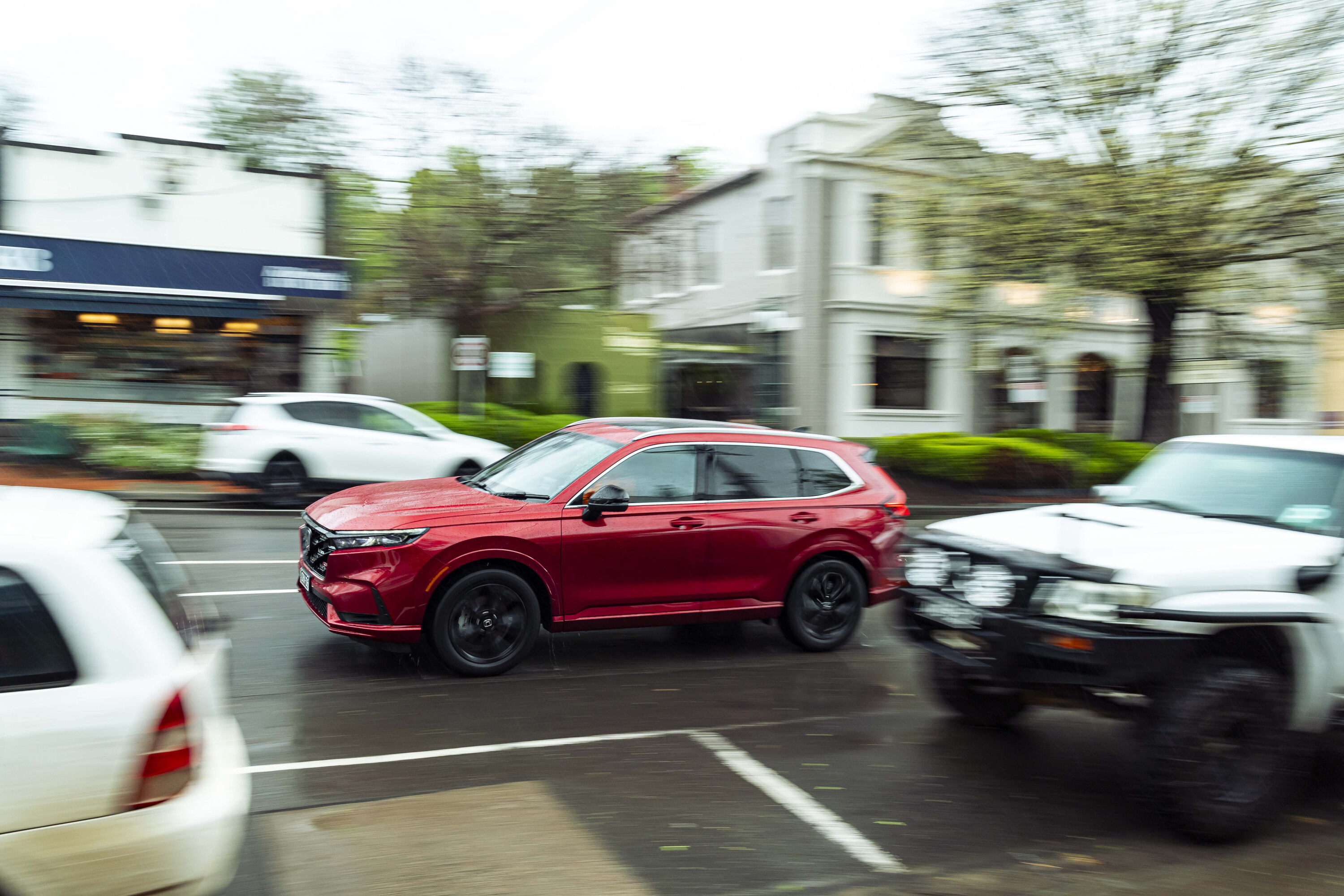
While they’re based on historical data and official manufacturer figures, they will change depending on where you live, how far you drive, and other market forces such as the swings in used-car values experienced during and after COVID.
But if value is a high priority, here are three top picks and some extra considerations…

Along with an affordable entry price, the well-equipped CX-8 has the best residual value of the bunch at 69.3 per cent. It also has a low fuel consumption rating and proved affordable to insure with middling service pricing.
If you’re looking deeper than the lowest possible price, you can move up the CX-8 trim tree to a Touring variant and still reap many of the rewards that make the Sport our winner.
Along with the responsive engines and a great chassis, you can now add unbeatable value to the list of the CX-8’s talents.
Mazda has officially discontinued CX-8 production, but we’re informed that there’s still a good number of vehicles left to at least carry through into the first quarter of next year.
Plus, if you walk into a dealer with your negotiating boots on (especially around Black Friday) you might even score a better deal with a couple of extras thrown in.
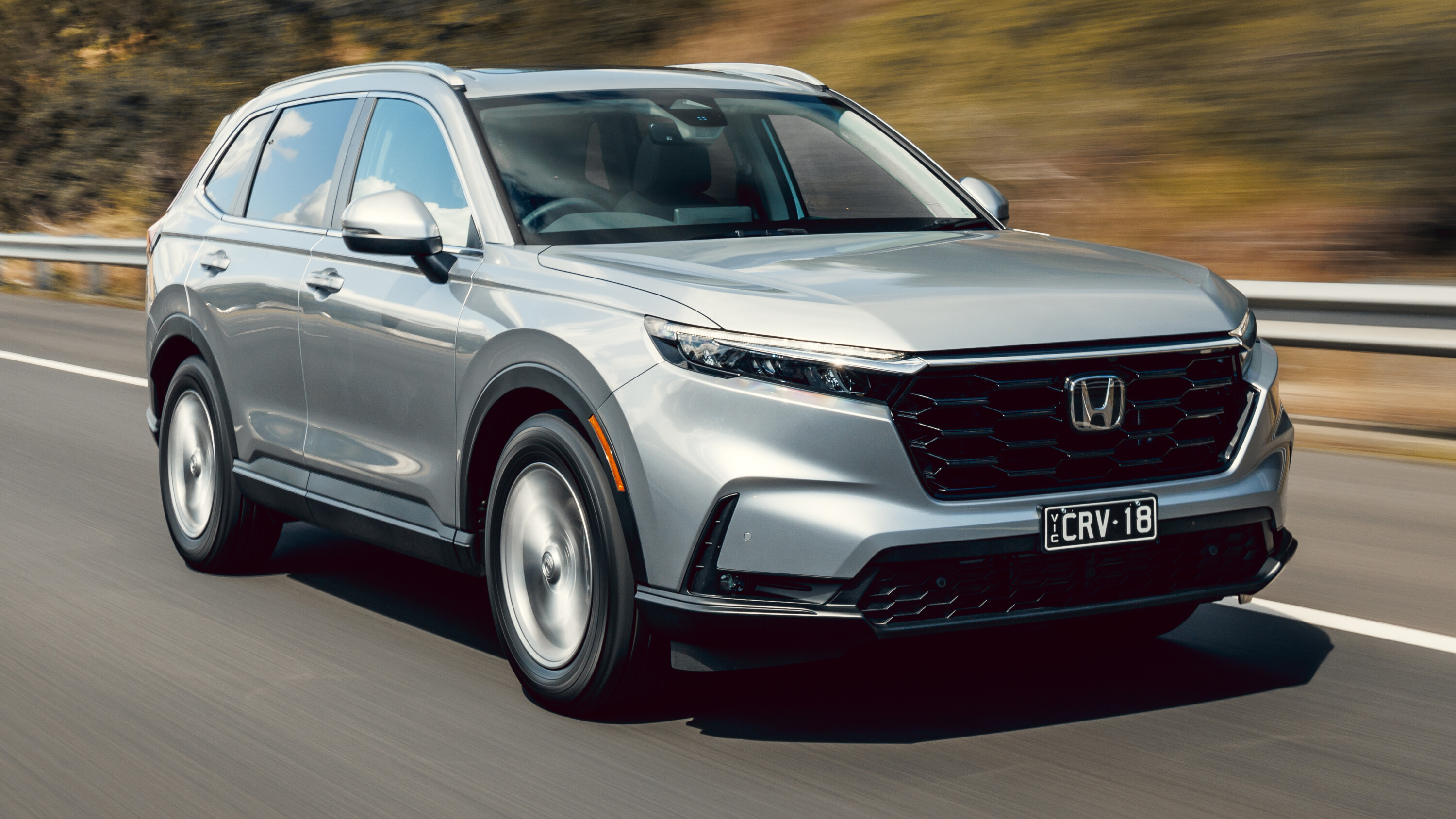
Honda’s clearly pushing its new entrant as a value-oriented option with streamlined ownership. Servicing is just $199/visit, a small turbo-petrol makes for low fuel consumption and it’s relatively affordable to insure.
Looking beyond price alone, the base CR-V does miss out on safety equipment such as rear cross-traffic alert and blind-spot monitoring that the CX-8 Sport boasts as standard.
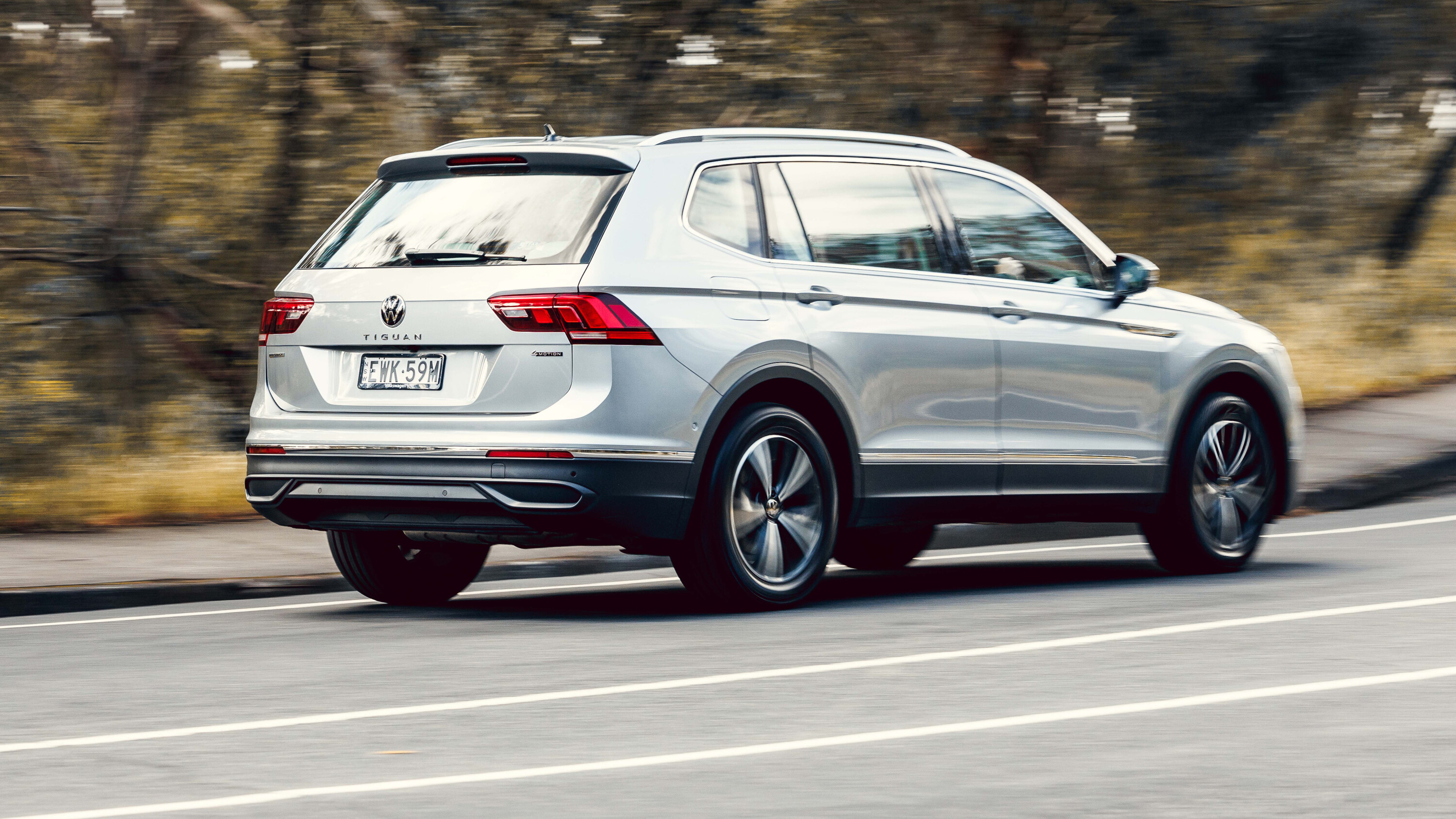
Its technology is more up-to-date than the CX-8’s and the 1.4-litre turbo-petrol 110TSI engine’s 250Nm of torque figure is spread from 1500-3500 rpm making this tractable SUV – with an excellent chassis to boot – a great drive.
The Tiguan, like the CX-8 and CR-V, has a more intimate interior than its pricier rivals. If you’re regularly carrying more than five passengers it may be wise to spend a little more on bigger rivals as outlined below.
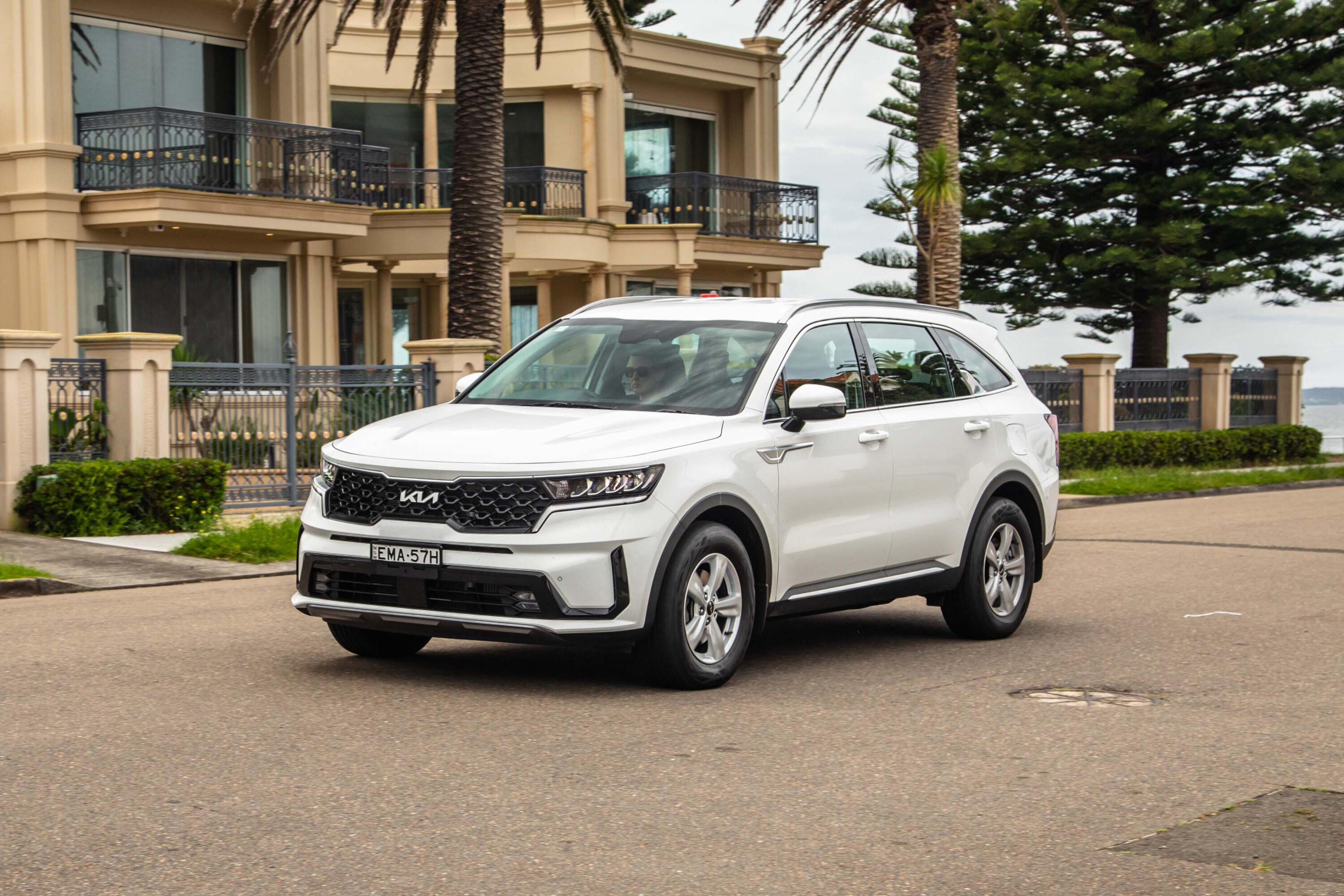
It’s no secret that the comparison-winning Sorento is a great choice and relatively affordable, given its proportions. The Hyundai Santa Fe, too, is worth a look though it is hit by worse residual value than its Kia relation.
Note: scroll across table to reveal full results
| RANK | Vehicle | Total 3yr ownership cost | Purchase price (including on-road costs for 2067) | Redbook 3yr resale | Depreciation cost after 3yrs | Servicing intervals | 3yr servicing costs | Combined fuel consumption | Fuel bills 1yr/3yr | Insurance premium 1yr/3yr |
|---|---|---|---|---|---|---|---|---|---|---|
| 1 | Mazda CX-8 Sport FWD | $25,250.45 | $47,249.00 | 69.30% | $14,505.45 | 12 months/15,000km | $1285.00 | 8.1L/100km | $1960.20 / $5880.60 | $1193.15 / $3579.45 |
| 2 | Honda CR-V VTi X | $26,635.06 | $46,800.00 | 61.50% | $17,132.50 | 12 months/10,000km | $597.00 | 7.3L/100km | $1766.40 / $5299.20 | $1202.12 / $3606.36 |
| 3 | Volkswagen Tiguan Allspace 110TSI Life | $29,542.48 | $49,906.00 | 63.00% | $18,465.22 | 12 months/15,000km | $1500.00 | 7.7L/100km* | $1956.57 / $5869.71 | $1235.85 / $3707.55 |
| 4 | Kia Sorento S V6 | $30,342.83 | $50,790.00 | 64.00% | $18,284.40 | 12 months/15,000km | $1304.00 | 9.7L/100km | $2347.40 / $7043.10 | $1237.11 / $3711.33 |
| 5 | Hyundai Santa Fe Base V6 | $32.140.02 | $50,493.30 | 61.50% | $19,440.11 | 12 months/15,000km | $1297.00 | 10.5L/100km | $2541.00 / $7623.00 | $1259.97 / $3779.91 |
| 7 | Toyota Kluger GX 2.4T | $33,614.99 | $57,235.00 | 65.00% | $23,032.25 | 12 months/15,000km | $795.00 | 8.5L/100km | $2008.60 / $6025.80 | $1253.98 / $3761.94 |
| 8 | Mazda CX-9 Sport FWD | $35,277.34 | $52,426.00 | 54.00% | $24,115.96 | 12 months/10,000km | $1203.00 | 8.4L/100km | $2032.80 / $6098.40 | $1286.66 / $3859.98 |
| 9 | Skoda Kodiaq 132TSI Style | $35,365.04 | $56,490.00 | 58.50% | $23,443.35 | 12 months/15,000km | $1406.00 | 8.2L/100km* | $2083.62 / $6250.86 | $1421.61 / $4264.83 |
| 11 | Hyundai Palisade Elite FWD | $39,742.17 | $72,278.30 | 64.30% | $25,803.36 | 12 months/15,000km | $1377.00 | 10.7L/100km | $2589.40 / $7768.20 | $1597.87 / $4793.61 |
| 12 | Nissan Pathfinder Ti | $46,332.51 | $77,115.00 | 58.30% | $32,156.95 | 12 months/15,000km | $1433.00 | 10.5L/100km* | $2668.05 / $8004.15 | $1579.47 / $4738.41 |
Note: scroll across table to reveal full results
| Specification | Honda CR-V VTi X7 | Hyundai Palisade Elite FWD | Hyundai Santa Fe V6 FWD | Kia Sorento S V6 | Mazda CX-8 Sport FWD | Mazda CX-9 Sport FWD | Nissan Pathfinder Ti | Skoda Kodiaq 132TSI Style | Toyota Kluger GX 2.4T | Volkswagen Tiguan Allspace 110TSI Life |
| Price (drive-away for 2067) | $46,800.00 | $72,278.30 | $50,493.30 | $50,790.00 | $47,249.00 | $52,426.00 | $77,115.00 | $56,490 | $57,235.00 | $49,906.00 |
| Engine | 1.5T I4 petrol | 3.8L V6 petrol | 3.5L V6 petrol | 3.5L V6 petrol | 2.5L I4 petrol | 2.5T I4 petrol | 3.5L V6 petrol | 2.0T I4 petrol | 2.4T I4 petrol | 1.4T I4 petrol |
| Max power | 140kW @ 6000 rpm | 217kW @ 6000 rpm | 200kW @ 6400 rpm | 200kW @ 6400 rpm | 140kW @ 6000 rpm | 170kW @ 5000 rpm | 202kW @ 6400 rpm | 132kW @ 3900-6000 rpm | 198kW @ 6000 rpm | 110kW @ 5000-6000 rpm |
| Max torque | 240Nm @ 1700-5000 rpm | 355Nm @ 5200 rpm | 331Nm @ 5000 rpm | 331Nm @ 5000 rpm | 252Nm @ 4000 rpm | 420 Nm @ 2000rpm | 340Nm @ 4800 rpm | 320Nm @ 1400-3940 rpm | 420Nm @ 1700-3600 rpm | 250Nm @ 1500-3500 rpm |
| Drive | Front-wheel | Front-wheel | Front-wheel | Front-wheel | Front-wheel | Front-wheel | Four-wheel drive | Four-wheel drive | Front-wheel | Front-wheel |
| Transmission | CVT automatic | 8 spd automatic | 8 spd automatic | 8 spd automatic | 6 spd automatic | 6 spd automatic | 9 spd automatic | 7spd dual-clutch automatic | 8 spd automatic | 6spd dual-clutch automatic |
| Body | 5-door 7-seat SUV | 5-door 8-seat SUV | 5-door 7-seat SUV | 5-door 7-seat SUV | 5-door 7-seat SUV | 5-door 7-seat SUV | 5-door 7-seat SUV | 5-door 7-seat SUV | 5-door 7-seat SUV | 5-door 7-seat SUV |
| Front Suspension | MacPherson strut, coil springs | MacPherson strut, coil springs | MacPherson strut, coil springs | MacPherson strut, coil springs | MacPherson strut, coil springs | MacPherson strut, coil springs | MacPherson strut, coil springs | MacPherson strut, coil springs | MacPherson strut, coil springs | MacPherson strut, coil springs |
| Rear suspension | Mulit-link, coil springs | Mulit-link, coil springs | Mulit-link, coil springs | Mulit-link, coil springs | Mulit-link, coil springs | Mulit-link, coil springs | Mulit-link, coil springs | Mulit-link, coil springs | Mulit-link, coil springs | Mulit-link, coil springs |
| Length/width/height | 4704 / 1866 / 1681mm | 4995 / 1975 / 1750mm | 4785 / 1900 / 1685mm | 4810 /1900 / 1700mm | 4925 / 1845 / 1720mm | 5075 / 1969 / 1747mm | 5004 / 1978 / 1802mm | 4699 / 1882 / 1655mm | 4966 / 1930 / 1755mm | 4734 / 1839 / 1689mm |
| Wheelbase | 2701mm | 2900mm | 2765mm | 2815mm | 2930mm | 2930mm | 2900mm | 2791mm | 2850mm | 2791mm |
| Cargo capacity (2/5/7 seats) | 1488L / 589L / 150L | NA / 704L / 311L | NA / 571-782L / 130L | 2011L / 616L / 187L | 1727L / 775L / 242L | NA / 810 / 230L | 782L / 584L / 205L | 2005L / 765L / 270L | 1150L / 552L / 241L | 1775L / 700L / 230L |
| Weight | 1665kg | 1911kg | 1735kg | 1835kg | 1799kg | 1882kg | 2044kg | 1750kg | 1900kg | 1597kg |
| Towing capacity (braked) | 1000kg | 2200kg | 2500kg | 2000kg | 1800kg | 2000kg | 2700kg | 2000kg | 2000kg | 1800kg |
| Seats | 7 | 7 or 8 | 7 | 7 | 7 | 7 | 8 | 7 | 7 | 7 |
| Fuel / tank | 91 / 57L | 91 / 71L | 91 / 67L | 91 / 67L | 91 / 72L | 91 / 72L | 95 / 71L | 95 / 60L | 91 / 68L | 95 / 60L |
| Fuel use (ADR) | 7.3L/100km | 10.7L/100km | 10.5L/100km | 9.7L/100km | 8.1L/100km | 8.4L/100km | 10.5L/100km | 8.2L/100km | 8.3L/100km | 7.7L/100km |
Looking to get into a brand-new large SUV? Our stories below will guide you to the model that best suits your needs!
Ford has announced it will invest R5.2 billion (AU$439 million) in the Silverton Assembly Plant to build the Ranger plug-in hybrid (PHEV) due in Australia in early 2025.
The investment will cover the construction of a battery pack assembly plant and upgrades to Ford’s chassis plant “to accommodate the unique chassis configuration for this model, including changes to the robots, welding equipment, control systems, conveyors and skids”.
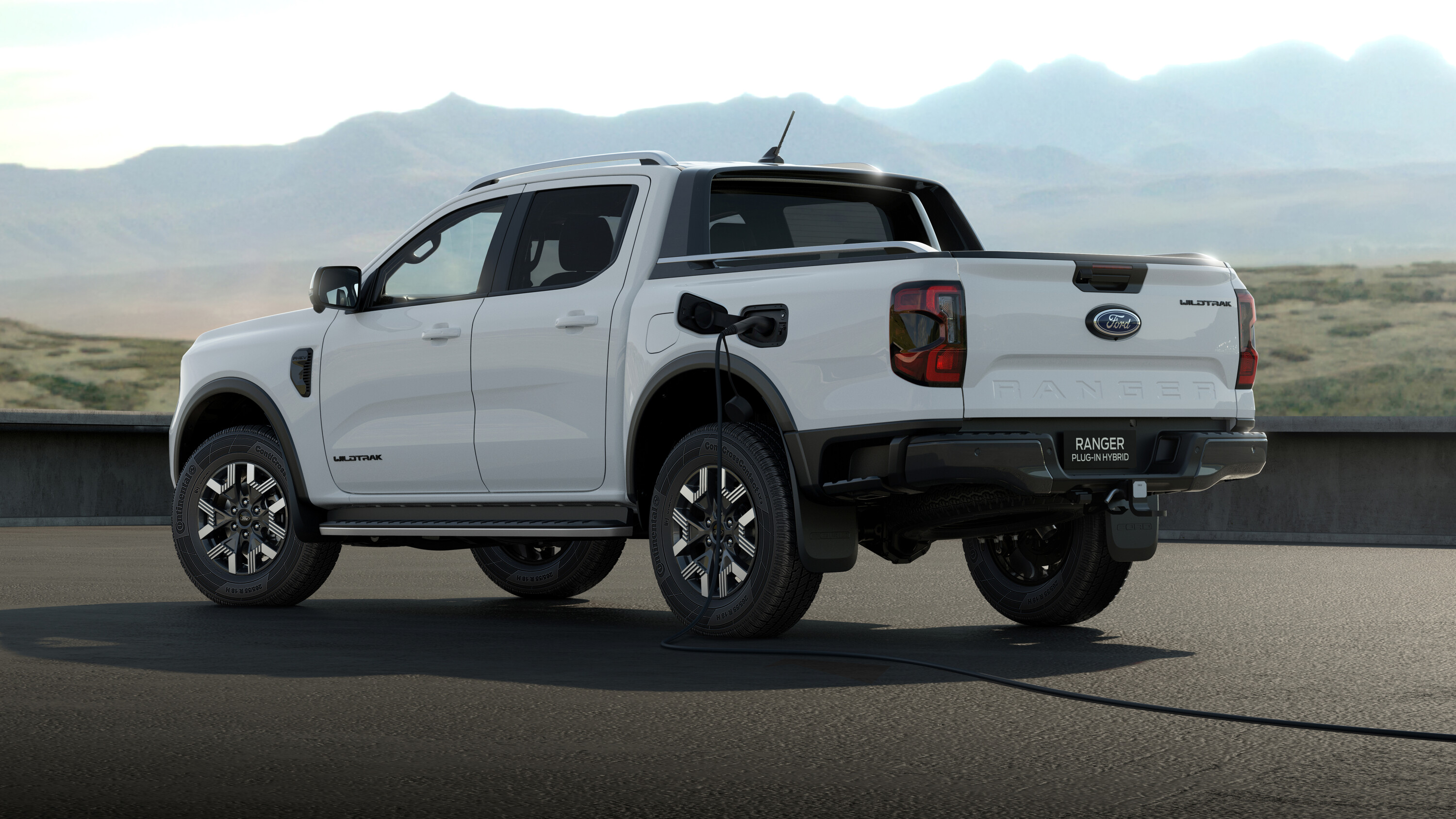
The Silverton Assembly Plant currently produces the Ranger and Everest for select markets, and the Volkswagen Amarok for all markets – including Australia. Existing Australian-market versions of the Ranger and Everest are sourced from Thailand.
“As with the current Ranger models, the new Ranger Plug-in Hybrid will be exported to Europe as part of our commitment to offer a wide range of powertrain options for customers in this important mid-size pickup segment,” said Ford International Markets Group operations director Andrea Cavallaro.
“For the first time in about two decades, the Silverton plant will also be supplying vehicles to Australia and New Zealand, as it will be the source market for the Ranger Plug-in Hybrid for these countries.”
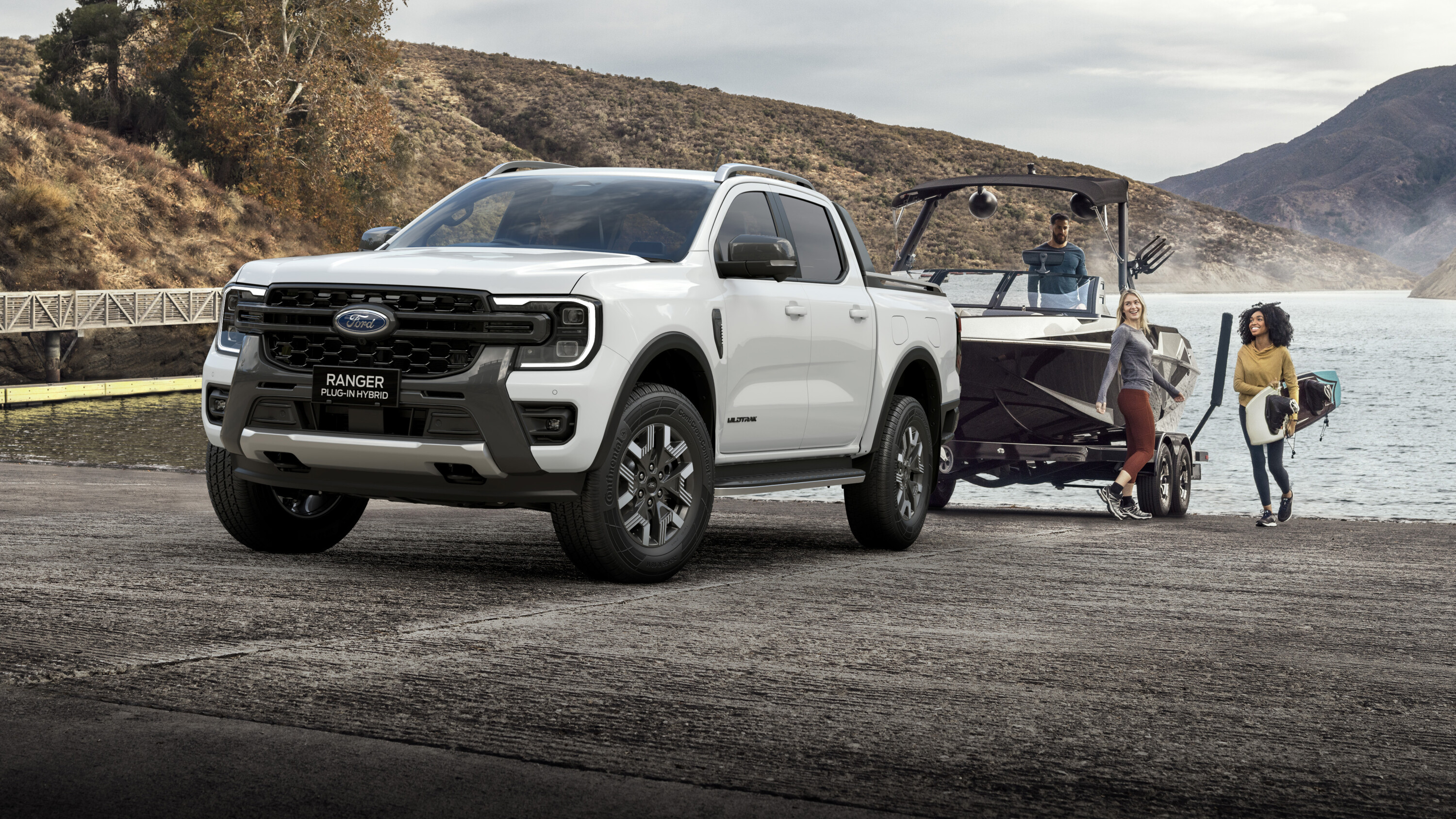
Unlike Thailand, which benefits from a free trade agreement with Australia, vehicles sourced from South Africa incur a five per cent import tariff.
The import tariff, combined with the added cost of the battery and electric motor, means the Ranger PHEV could become the most expensive model sold in Australia – a title currently held by the $86,790 before on-roads Raptor twin-turbo petrol V6.
As detailed in September, the Ranger PHEV is powered by a 2.3-litre turbo-petrol four-cylinder motor and a single electric motor. It is claimed to have the most torque of any Ranger ever – more than 600Nm – and an electric-only driving range “in excess of” 45 kilometres.
It will retain the 3.5-tonne braked towing capacity offered by diesel Rangers, while the ‘Pro Power Onboard’ system will power tools and other accessories with 240-volt/10-amp outlets in the tray and cabin.
“You’ll be able to power a wide variety of equipment from power tools like circular saws, compressors and drills to consumer electronics like TVs, stereos, refrigerators and lighting systems,” said Rob Sharples, chief engineer for Ranger PHEV.
Ford is yet to confirm further specifications, including exact power/torque outputs, battery size, fuel efficiency, kerb weight, charging times, and maximum charging rates.
The Ranger PHEV completes Ford’s promise to offer five electrified models in Australia by the end of 2024, joining the all-electric Mustang Mach-E, the E-Transit full-size van, E-Transit Custom mid-size van and the Puma EV small SUV.
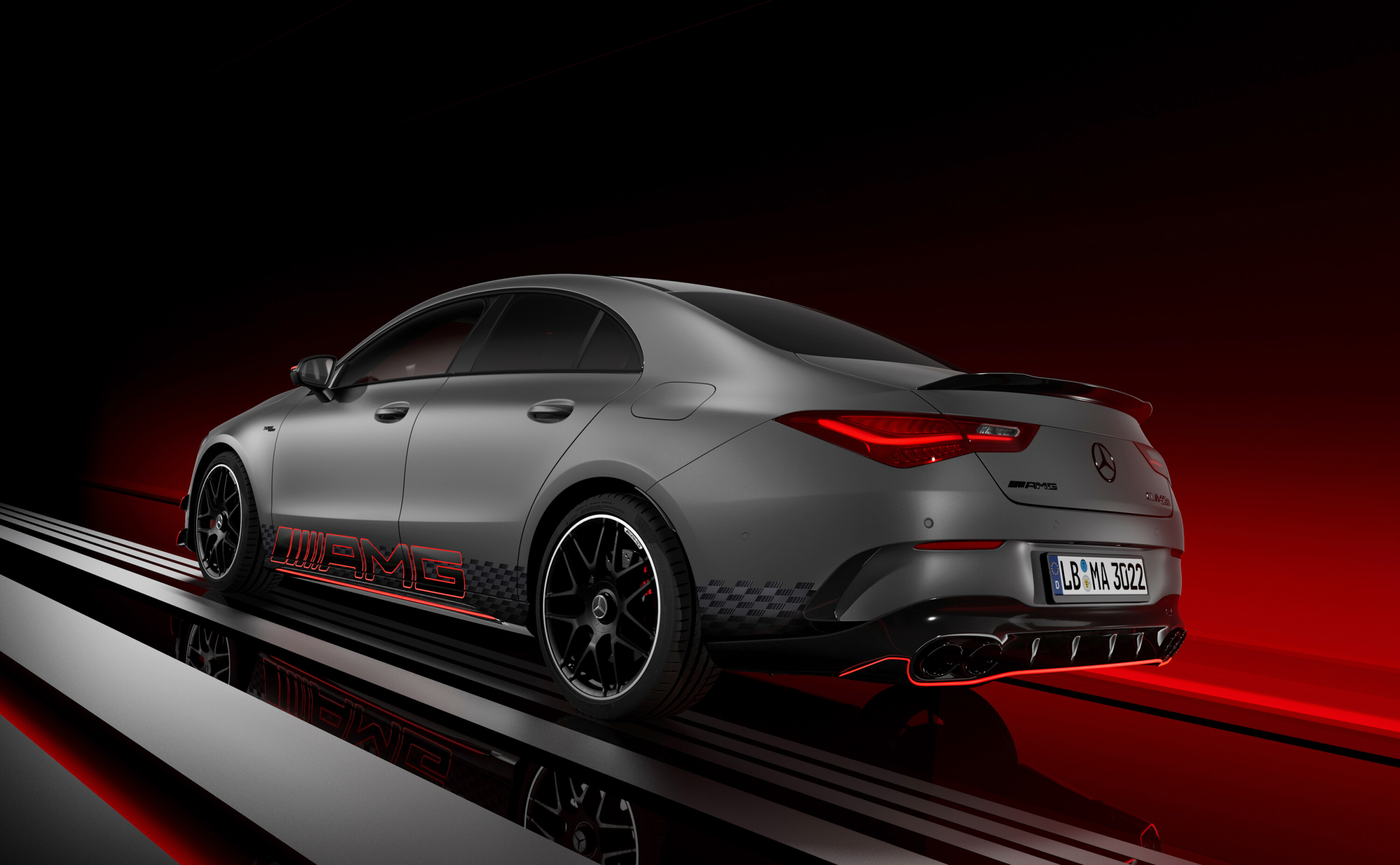
Mirroring the updated A-Class launched in mid-2023, design changes include redesigned headlight internals, modified tail-lights, and new alloy wheel designs.
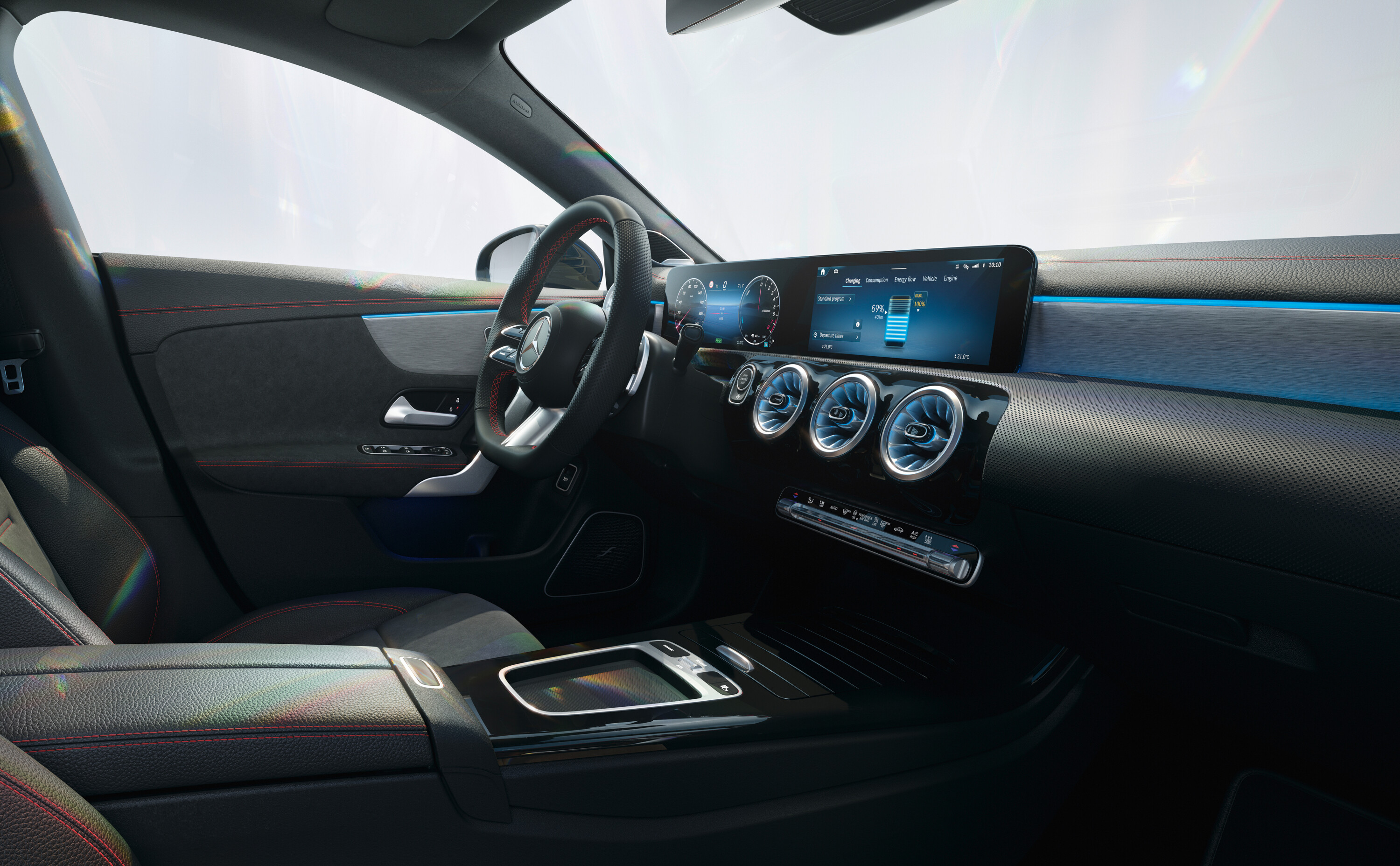
Inside, the new CLA features an AMG twin-spoke steering wheel, a simplified centre console with the touchpad removed and repositioned controls, along with an additional USB-C port.
While the current 10.25-inch MBUX infotainment system remains, it has been revised with new features, including wireless Apple CarPlay and Android Auto and a higher-resolution 360-degree camera.
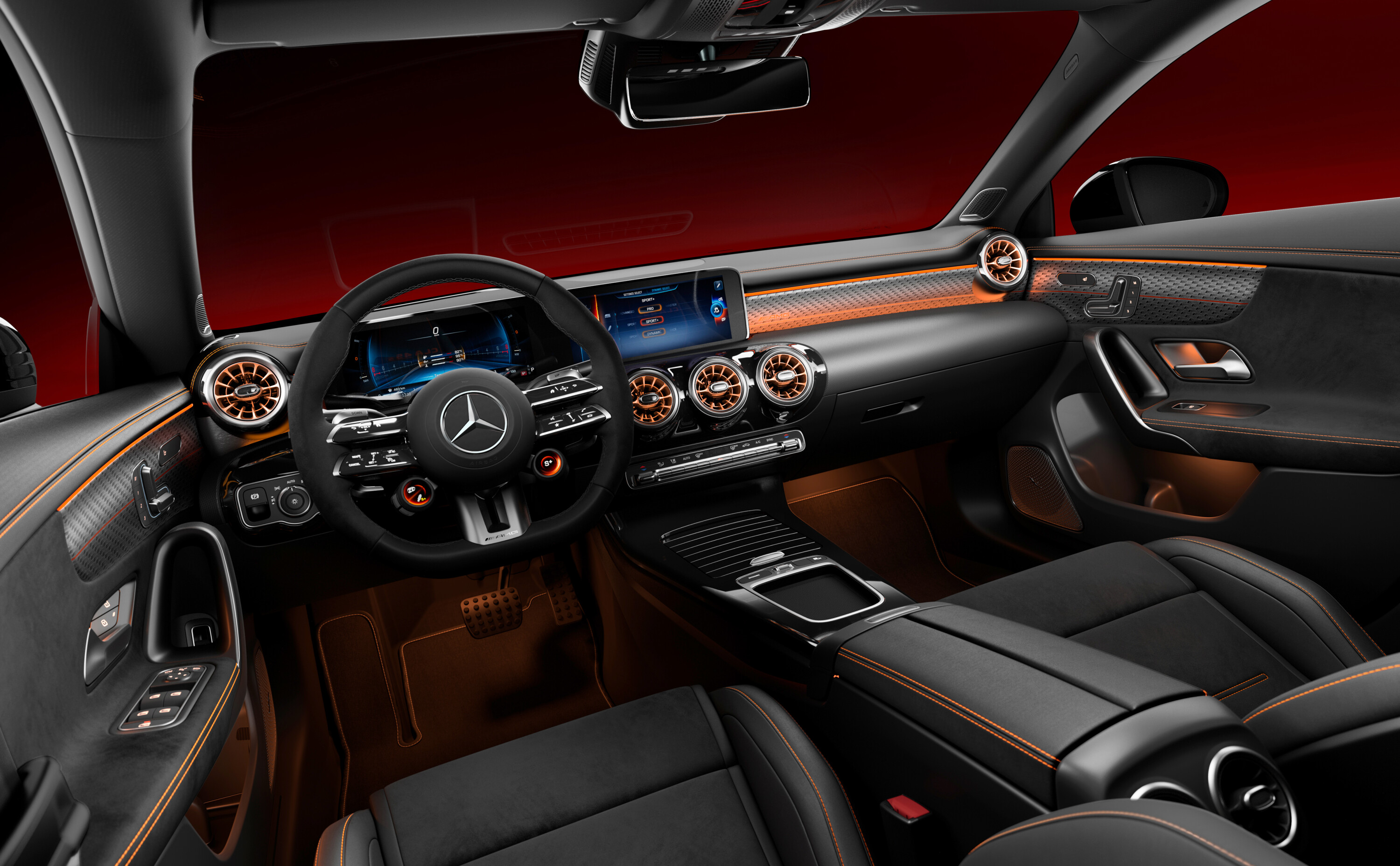
There are also newly designed display styles, machine learning, and the ability to speak to the voice assistant without saying ‘Hey, Mercedes’ first in some instances.
A fingerprint sensor on the centre console to identify and authenticate the driver is not available in Australia.
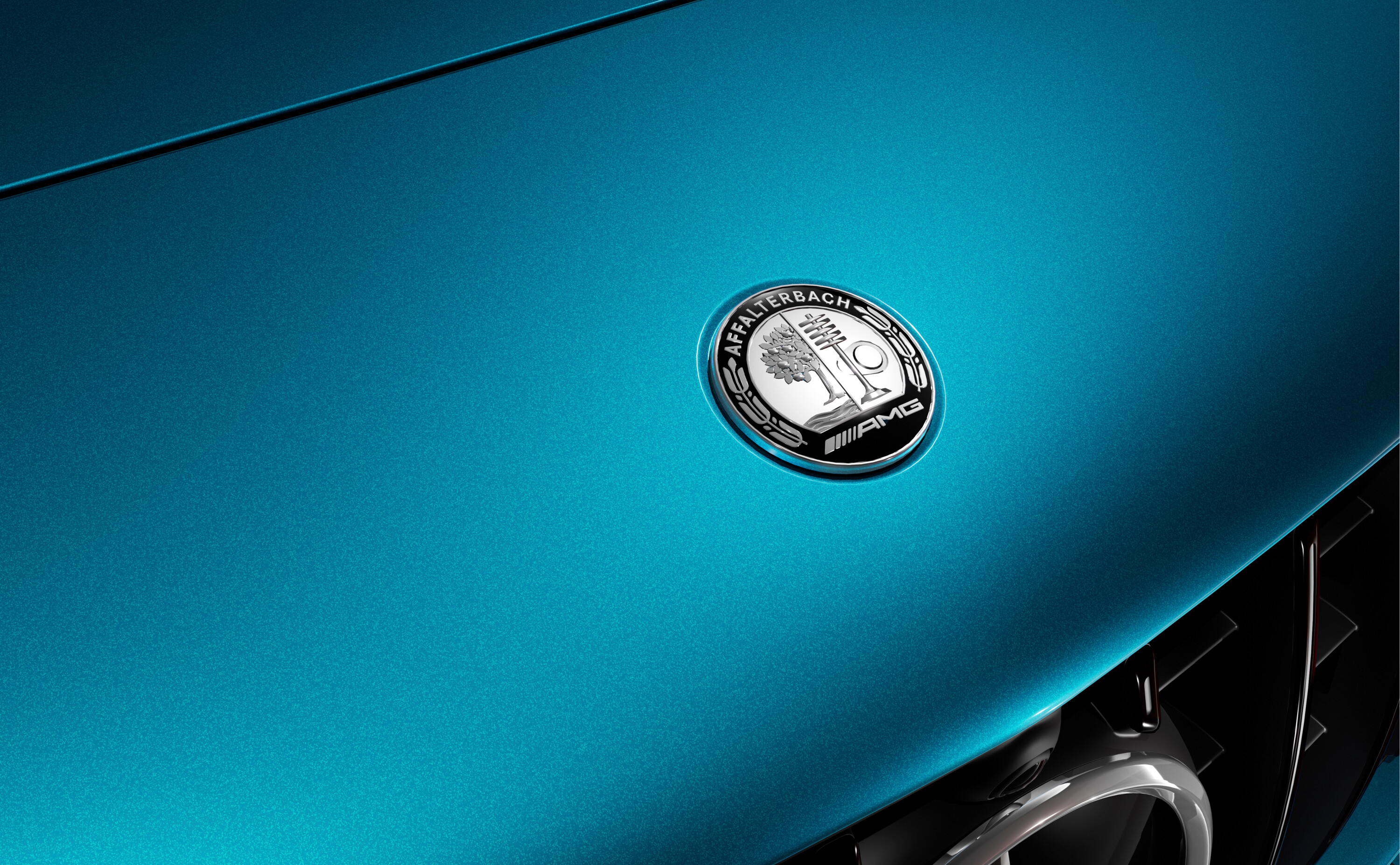
Mercedes-AMG versions – the CLA 35 and CLA 45 S – pick up the round AMG emblem to replace the Mercedes star with a laurel wreath that remains fixed to the bonnet on non-AMG variants.
Pricing for most CLA variants has increased between $1300 and $7000, now starting from $76,900 before on-road costs. The flagship AMG CLA 45 is now $1500 less expensive, topping the line-up at $126,500 plus on-roads.
Prices exclude on-road costs.
| Model | Pricing | Change |
|---|---|---|
| CLA 200 | $76,900 | up $7000 |
| CLA 250 AWD | $85,900 | up $5800 |
| AMG CLA 35 | $99,900 | up $1300 |
| AMG CLA 45 S | $126,500 | down $1500 |
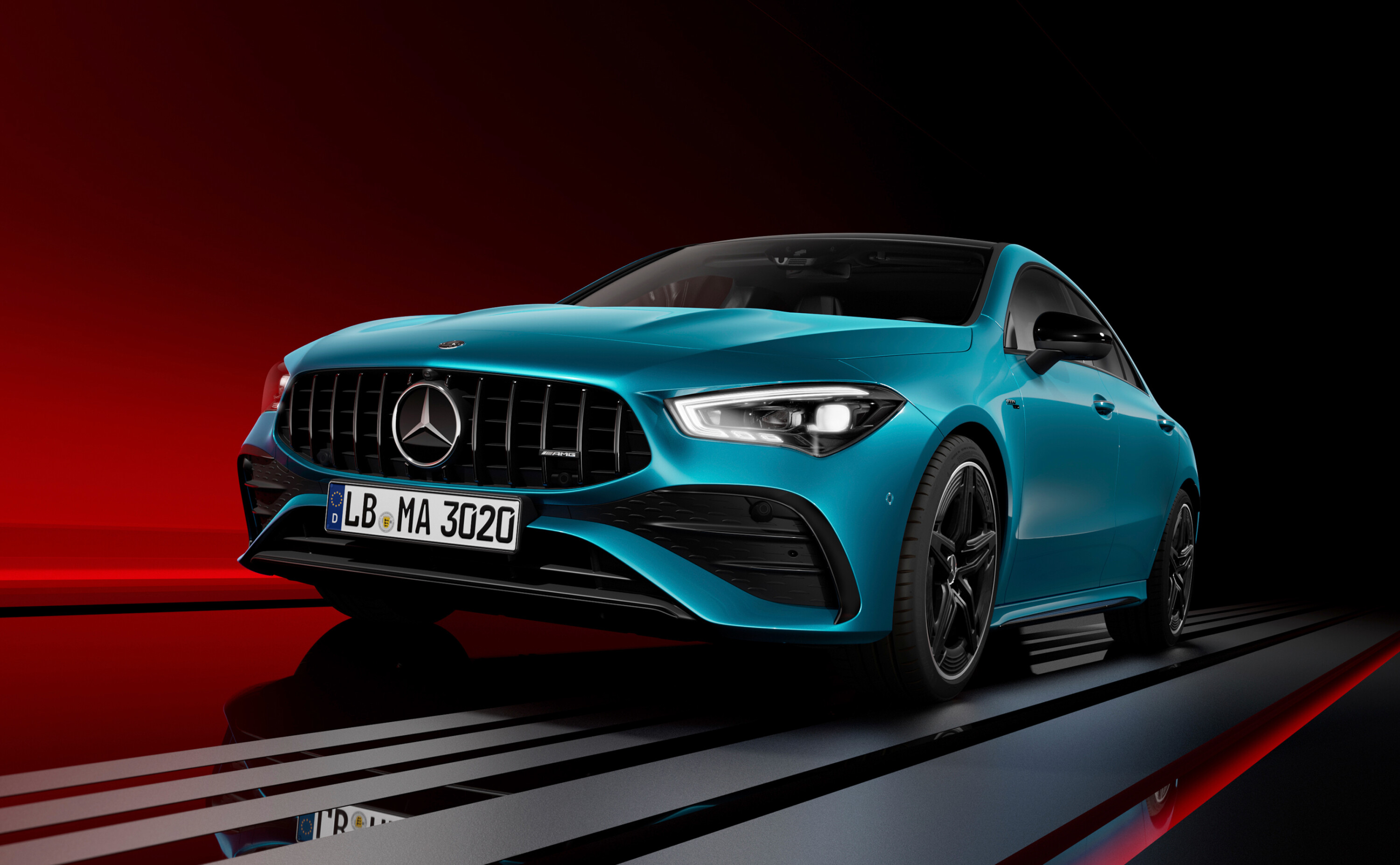
| 2024 Mercedes-Benz CLA 200 features | |
|---|---|
| 18-inch alloy wheels | Power-adjustable driveru2019s seat with three-position memory and four-way lumbar support |
| 10.25-inch MBUX infotainment system | Power-adjustable passenger seat |
| Wireless Apple CarPlay and Android Auto (new) | Wireless phone charger |
| Built-in satellite navigation | Black leather-accented/suede upholstery |
| Mercedes Me connected-car service | Paddle shifters |
| DAB+ digital radio | 64-colour interior ambient lighting |
| Single-zone climate control | Rain-sensing wipers |
| Reflector-type LED headlights | Keyless entry and push-button start |
| Heated front seats (new) | Automatic parking |
| Panoramic sunroof (new) | 360-degree camera (new) |
| AMG Line body kit | Auto-dimming rear-view mirror |
| Nappa leather-wrapped steering wheel | Tyre pressure loss warning |
| In addition to CLA 200 | |
|---|---|
| All-wheel drive | Multi-link independent rear suspension |
| Dual-zone climate control | Rear privacy glass |
| In addition to CLA 250 | |
|---|---|
| 19-inch AMG alloy wheels | Traffic sign recognition |
| Black leather upholstery | Intelligent speed limit assist |
| AMG-specific front grille | AMG illuminated front door sills |
| 12-speaker, 590-watt Burmester surround-sound audio system (new) | Adaptive dampers |
| Adaptive projector-type LED headlights | Remote theft protection system (new) |
| Head-up display | Rear privacy glass |
| Active lane change assist | Black-painted side mirrors |
| Front cross-traffic alert | Tyre pressure monitoring |
| Augmented reality satellite navigation | Tyre inflation kit |
| Traffic jam assist | |
| In addition to AMG CLA 35 | |
|---|---|
| 19-inch cross-spoke forged alloy wheels | AMG Track Pace function |
| Red-painted brake calipers | Increased maximum speed limit |
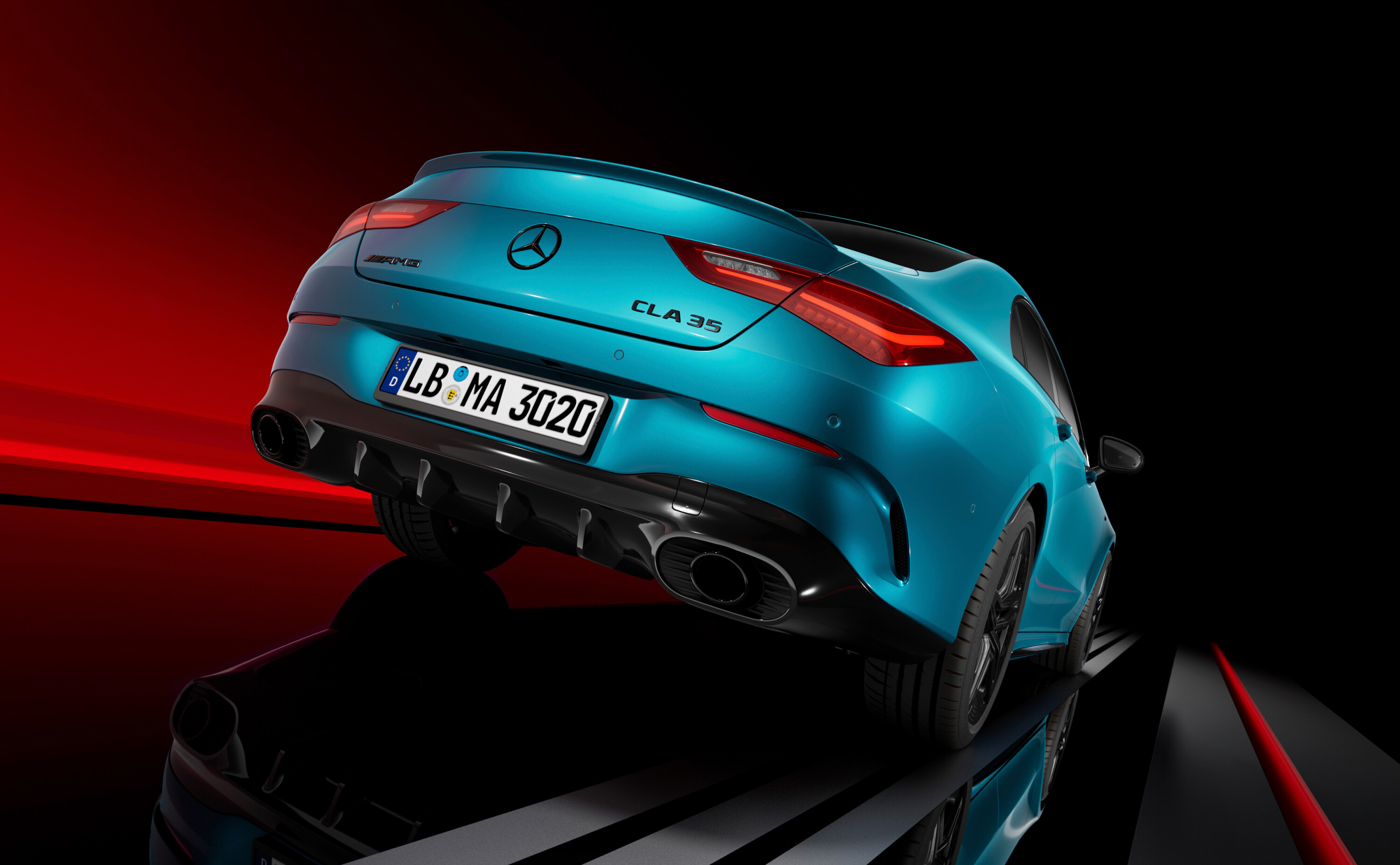
| 12-speaker, 590-watt Burmester surround-sound audio system | Augmented reality satellite navigation |
| Adaptive projector-type LED headlights | Traffic jam assist |
| Head-up display | Gesture control |
| Dual-zone climate control | Traffic sign recognition |
| Front cross-traffic alert | Route-based speed adaptation |
| Active lane-change assist | AMG illuminated front door sills |
| Larger front splitter | Lateral rear air outlets |
| High-gloss black rear spoiler | Black rear diffuser blade |
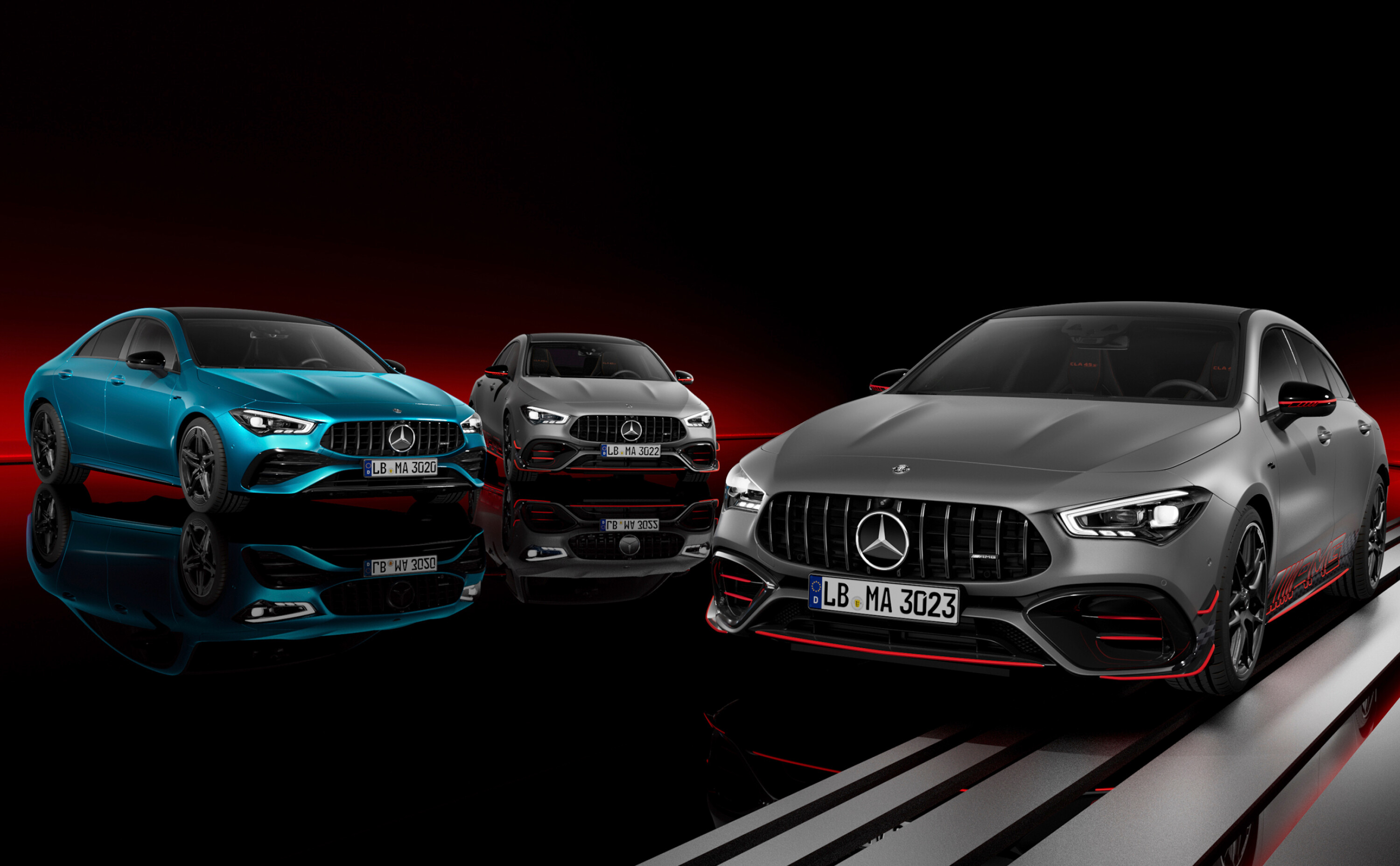
| Digital white | Cosmos black |
| Iridium silver | Mountain grey |
| Spectral blue | Hyper blue |
| Patagonia red |
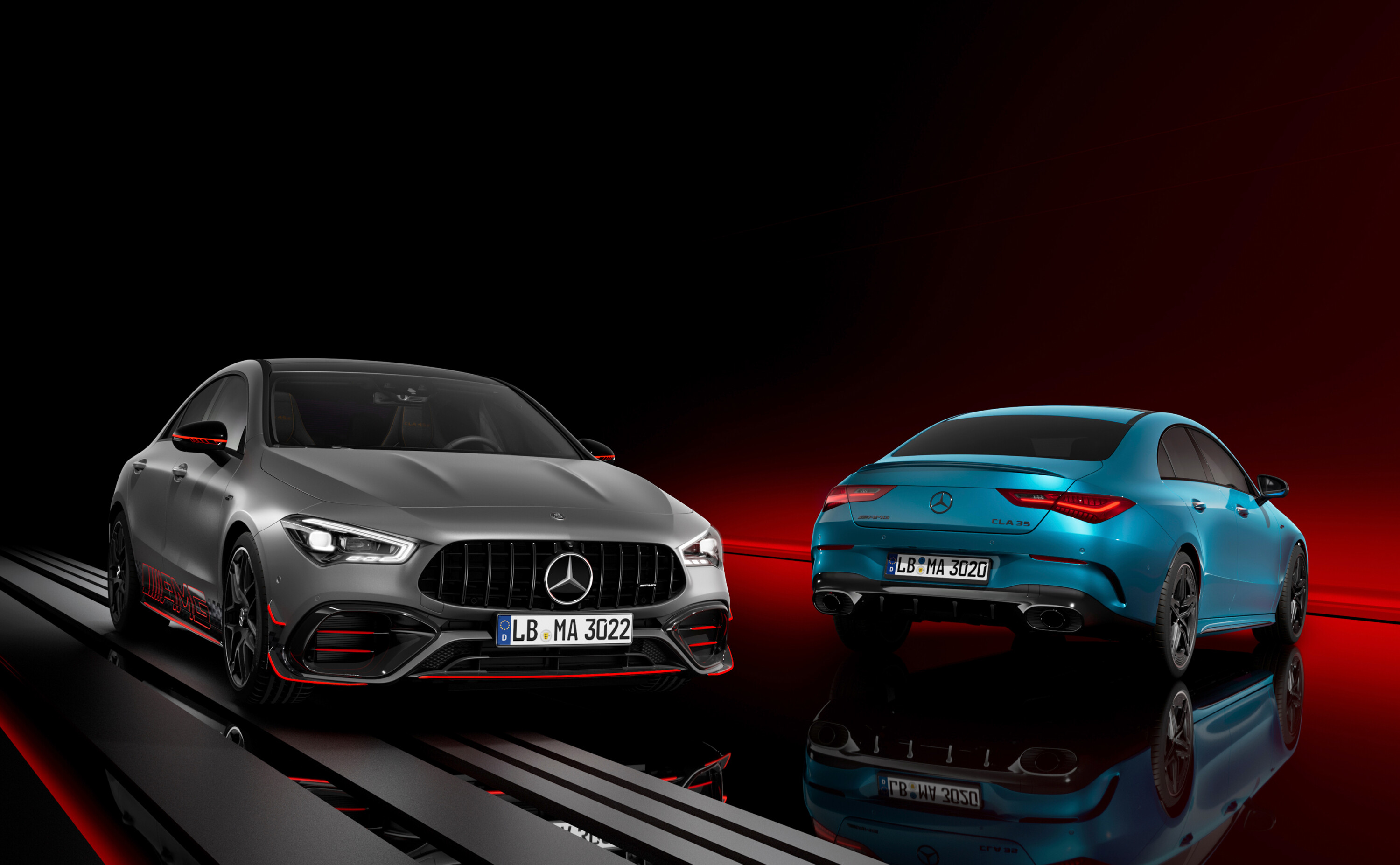
The CLA 200 features a 1.3-litre turbocharged mild-hybrid four-cylinder petrol engine producing 120kW and 270Nm. It is matched to a seven-speed dual-clutch automatic transmission, sending power to the front wheels.
Mercedes-Benz claims an 8.2-second 0-100km/h sprint time.
The CLA 250 has a 2.0-litre mild-hybrid turbo-petrol four, with 165kW and 350Nm, all-wheel-drive, and a 6.3 second 0-100km/h sprint time.
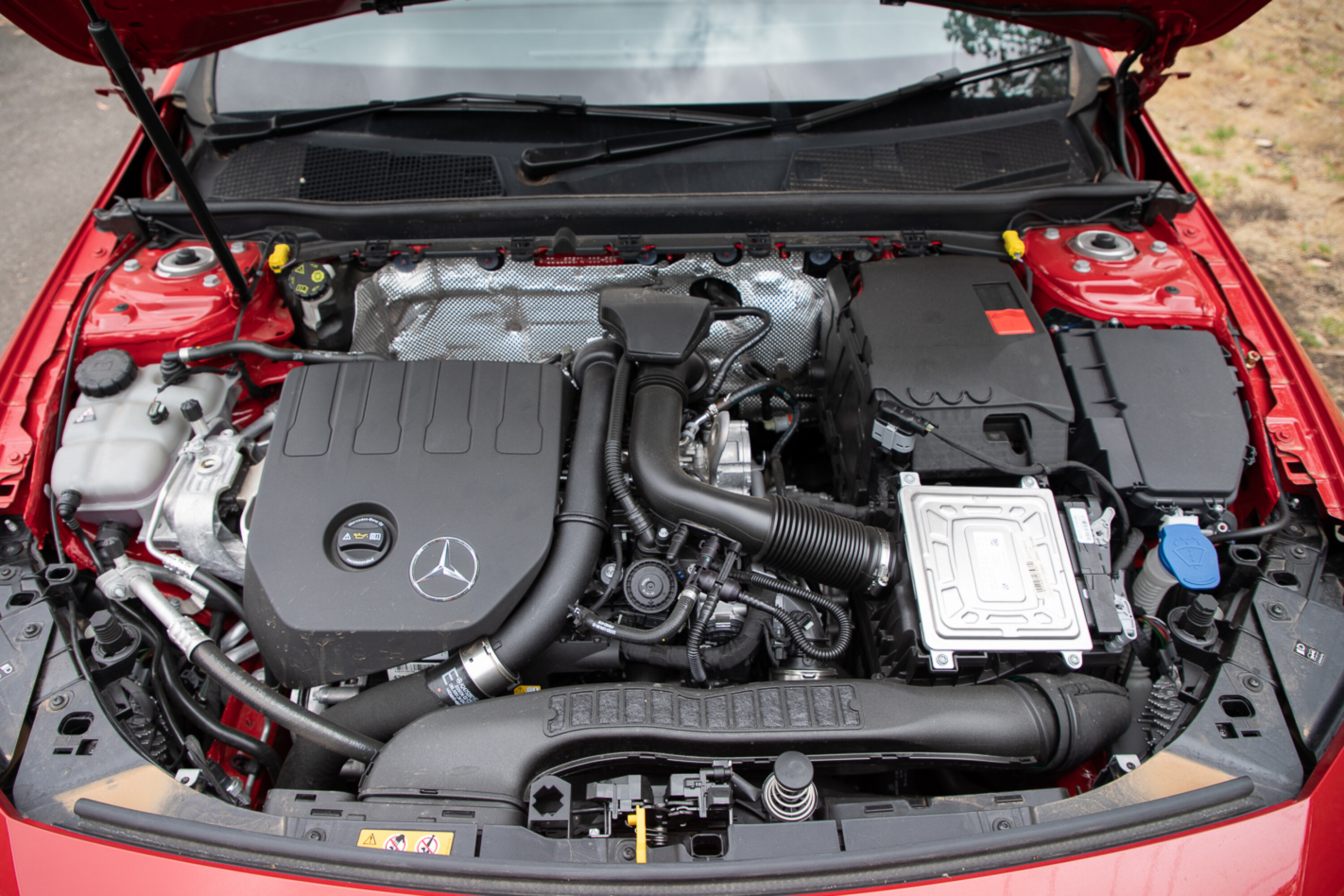
In the AMG CLA 35, the 2.0-litre turbo is uprated to 225kW and 400Nm, with a new eight-speed dual-clutch automatic transmission replacing the seven-speed unit and a revised front radiator for improved cooling.
It has a 4.7-second 0-100km/h sprint time.
The flagship CLA 45 S has a 310kW/500Nm turbocharged 2.0-litre four-cylinder, completing the 0-100km/h sprint in 4.0 seconds – 0.1s faster than an automatic BMW M2, but 0.2s less than an Audi RS3.
Front-wheel drive variants have a 50-litre fuel tank, while all-wheel drive models have a 51-litre fuel tank. All variants sport multi-link independent rear suspension.
CLA 200 and CLA 250 require premium unleaded (95 RON or higher), while AMG variants require 98RON.
| 2024 Mercedes-Benz CLA fuel economy | ||
|---|---|---|
| CLA 200 | 5.7L/100kmu00a0 | 130g/km |
| CLA 250 AWD | 6.7L/100km | 151g/km |
| AMG CLA 35 | 7.5L/100km | 169g/km |
| AMG CLA 45 S | 8.9L/100km | 202g/km |
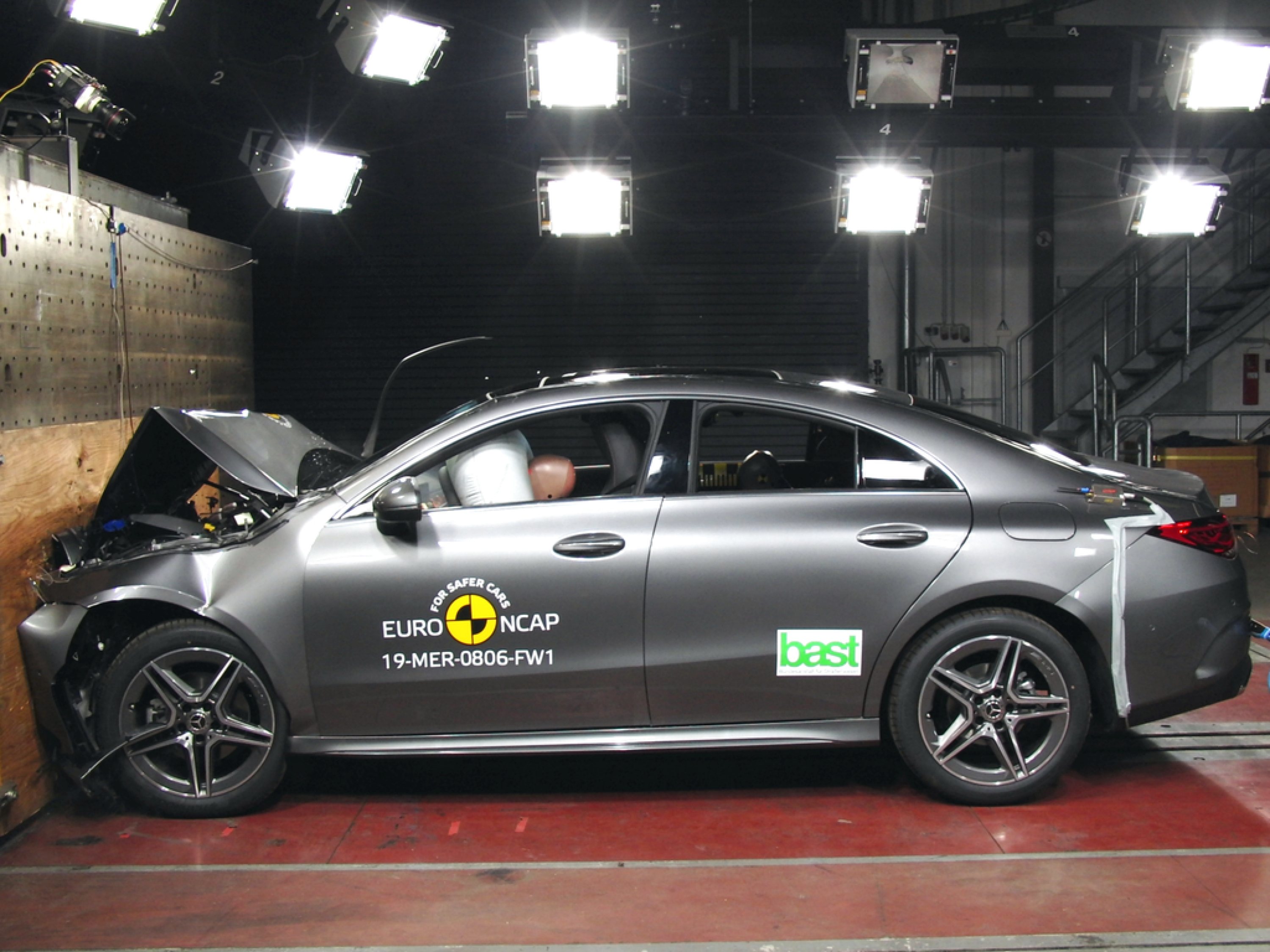
The Mercedes-Benz CLA is covered by a five-star ANCAP safety rating, based on testing conducted in 2019. The AMG CLA 35 is unrated.
It scored 96 per cent for adult occupant protection, 92 per cent for child occupant protection, 91 per cent for vulnerable road user protection, and 76 per cent for safety assistance.
Nine airbags (dual front, rear head, front and rear side, and front knee) are fitted as standard.
| 2024 Mercedes-Benz CLA active safety features | |
|---|---|
| Autonomous emergency braking (vehicle, pedestrian, cyclist) | Rear cross-traffic alert |
| Lane-keep assist | Side exit assist |
| Lane departure warning | Adaptive cruise control (new) |
| Blind-spot alert | Auto high beam. |
The Mercedes-Benz CLA measures 4688 millimetres long, 1999mm wide and 1439mm tall, with a 2729mm wheelbase.
The Mercedes-Benz CLA sedan has a 460-litre boot.
The Mercedes-Benz CLA is covered by the brand’s five-year/unlimited-kilometre warranty.
A complimentary roadside assistance program during the vehicle’s warranty period. The program can be extended for $149.60 per year.
Service pricing can be pre-purchased, consisting of three-, four- or five-year packages with 12-month/25,000km intervals for the CLA 200, CLA 250 and AMG CLA 35.
Maintenance for AMG CLA 45 S is required every 12 months or 20,000 kilometres, whichever occurs first.
| Model | Three-year | Four-year | Five-year |
|---|---|---|---|
| CLA 200, CLA 250 | $2965 | $3880 | $5325 |
| AMG CLA 35 | $3500 | $4400 | $5885 |
| AMG CLA 45 S | $4250 | $5295 | $6135 |
The updated 2024 Mercedes-Benz CLA is due in Australian showrooms later this month.
The details of each recall, as published, are posted below.
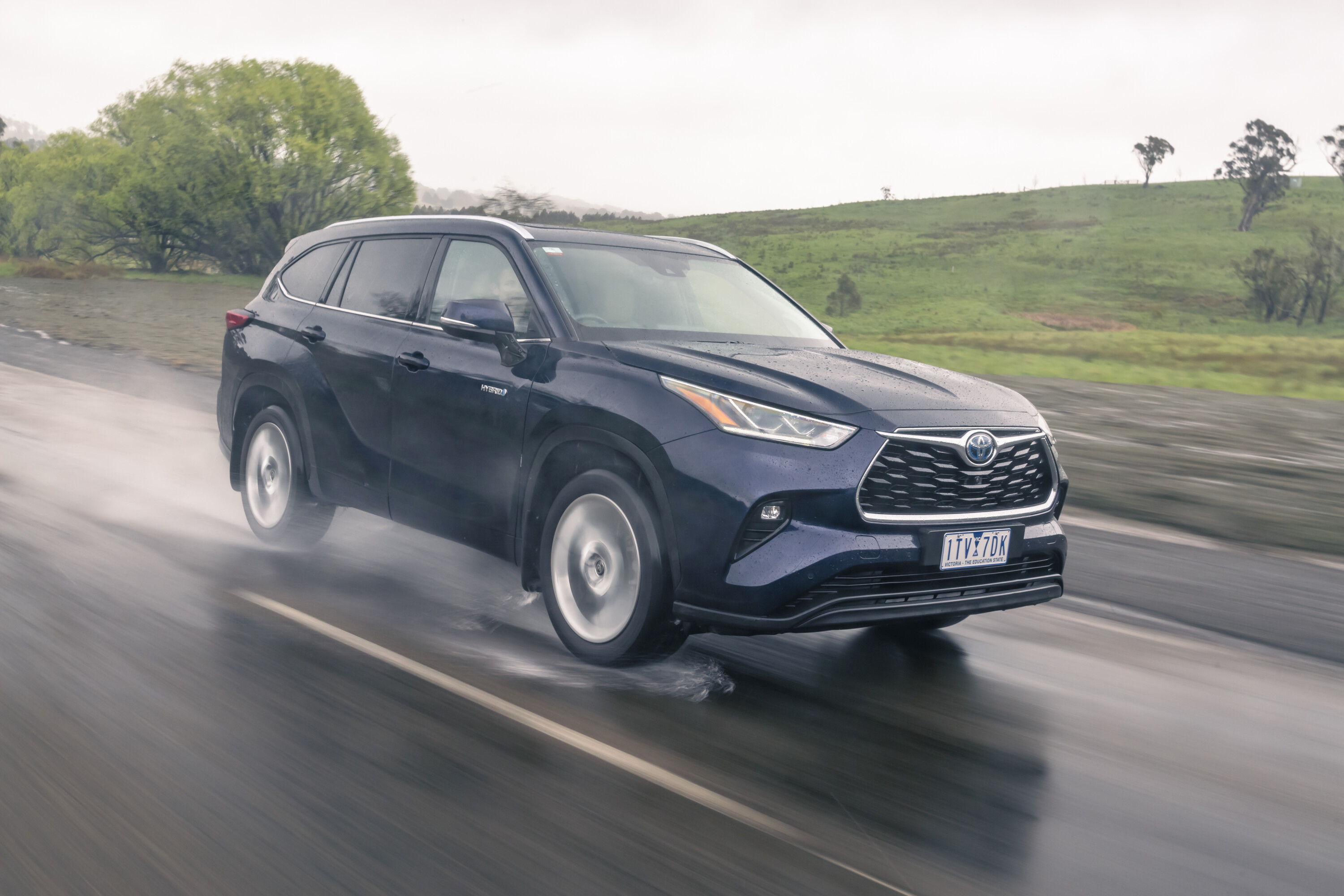
The lower resin bumper cover may detach if damaged during vehicle operation.
If the lower bumper detaches, it could cause a potential road hazard and increase the risk of an accident and serious injury or death to vehicle occupants and/or other road users.
Toyota will contact affected owners in writing, requesting they make an appointment at their preferred Toyota dealer who will inspect and install improved fasteners, free of charge.
To find a local dealer visit, https://www.toyota.com.au/find-a-dealer [↗] or to make an appointment visit, https://www.toyota.com.au/owners/service/online-service-booking [↗].
For further information, consumers should contact the Toyota Recall Assist helpline on 1800 987 366 (Monday to Friday, 8am – 6pm AEDT).
TOYOTA MOTOR CORPORATION AUSTRALIA LIMITED
Toyota Recall Assist Support Line
\n
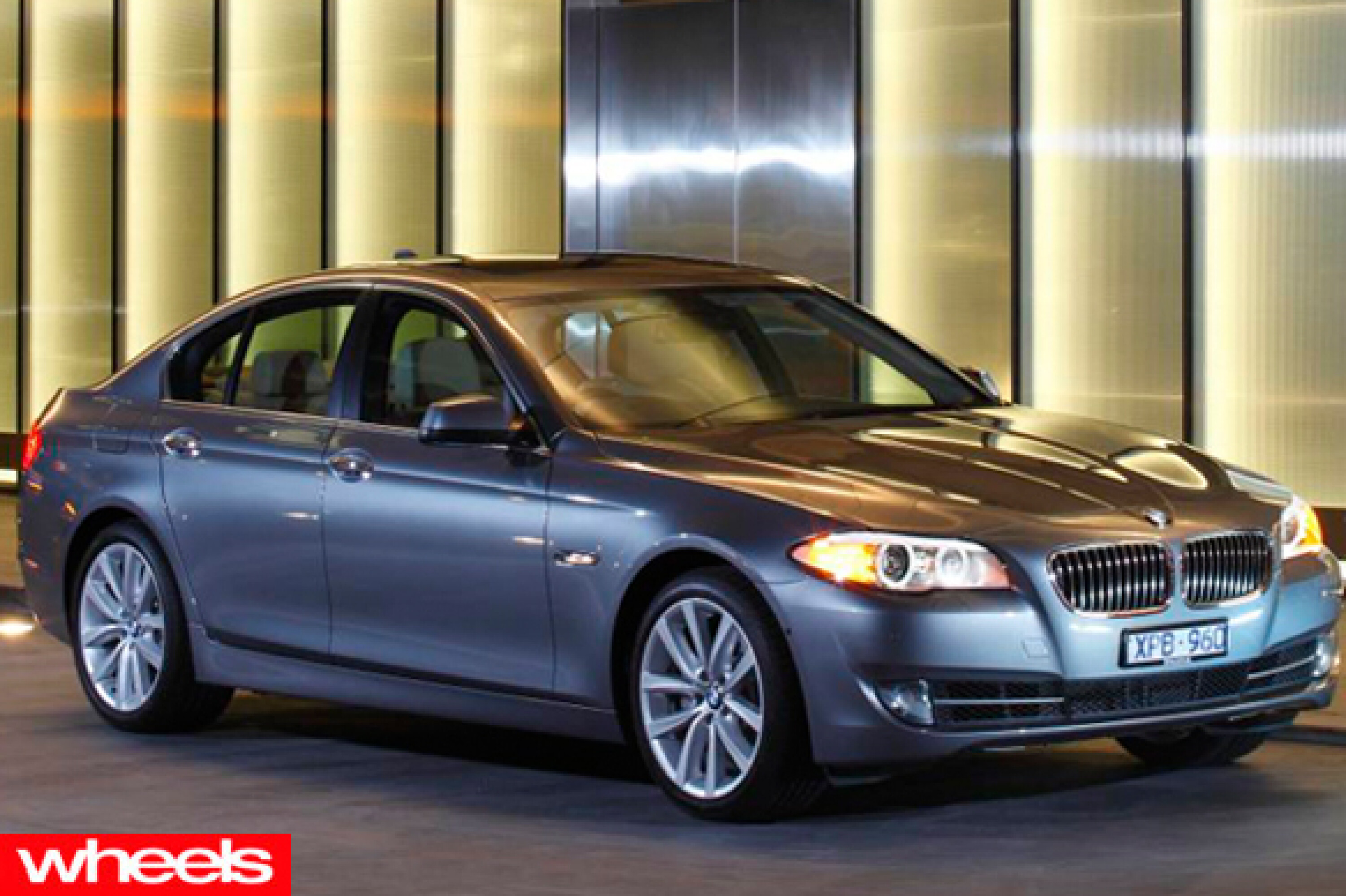
The bolts connecting the variable camshaft timing unit to the engine may break. This may activate the limp home mode safety feature and potentially cause the engine warning light to illuminate and the vehicle to lose motive power.
A loss of motive power while driving increases the risk of an accident, causing serious injury or death to vehicle occupants and other road users.
Owners should immediately contact their preferred authorised BMW dealer or BMW Australia on 1800 243 675 to have the vehicle rectified, free of charge.
B M W AUSTRALIA LTD.
BMW Australia’s Recall Hotline
\n
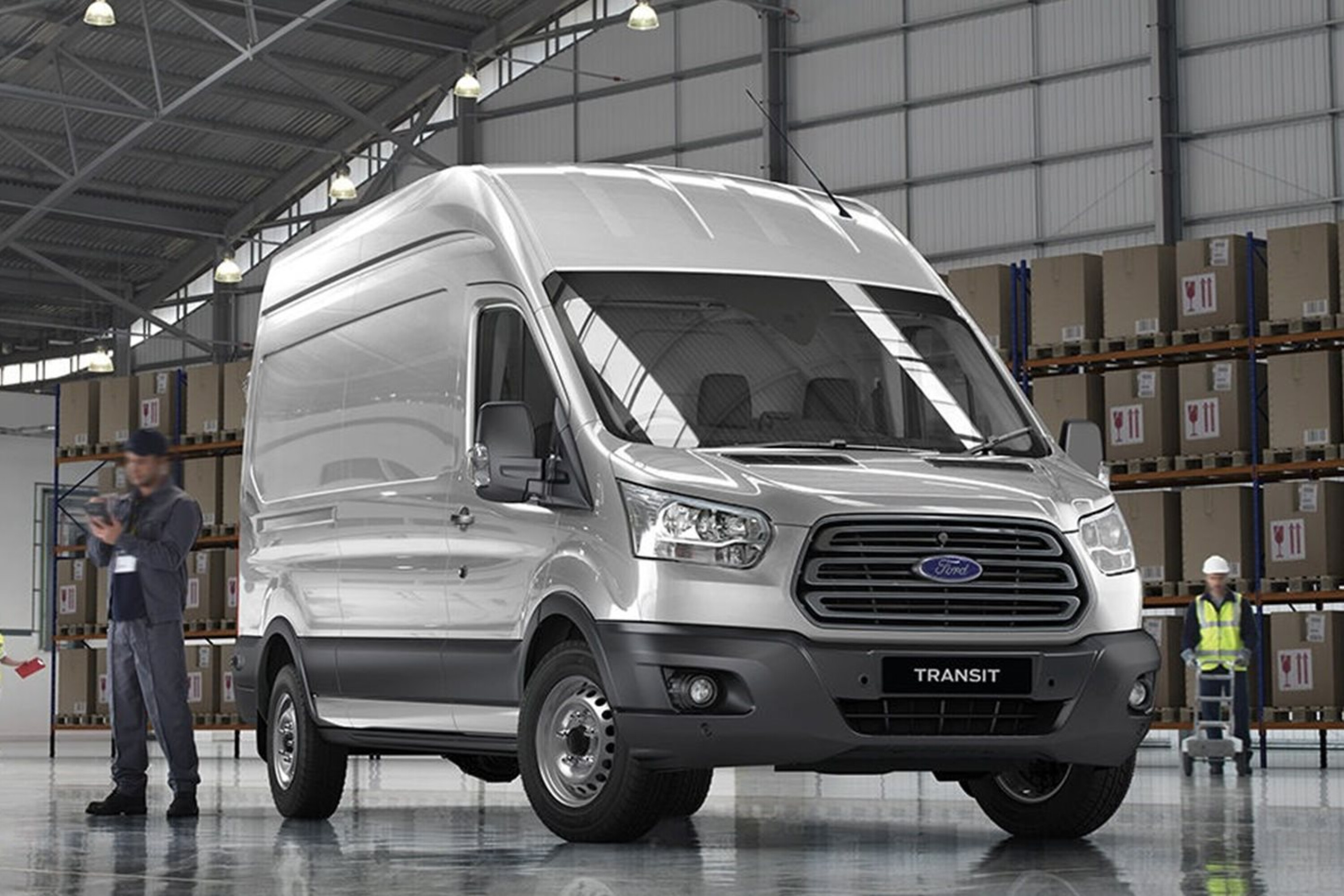
The rear-view camera may not display the rear-view image whilst reversing as intended.
If the rear-view camera display does not continually display the rear-view image whilst reversing the vehicle it could increase the risk of an accident, causing serious injury or death to any persons located behind the vehicle.
Ford will contact affected owners in writing requesting they make an appointment at their preferred Ford Authorised Dealership for inspection and repair, free of charge.
FORD MOTOR COMPANY OF AUSTRALIA PTY LTD
Ford Customer Relationship Centre
\n
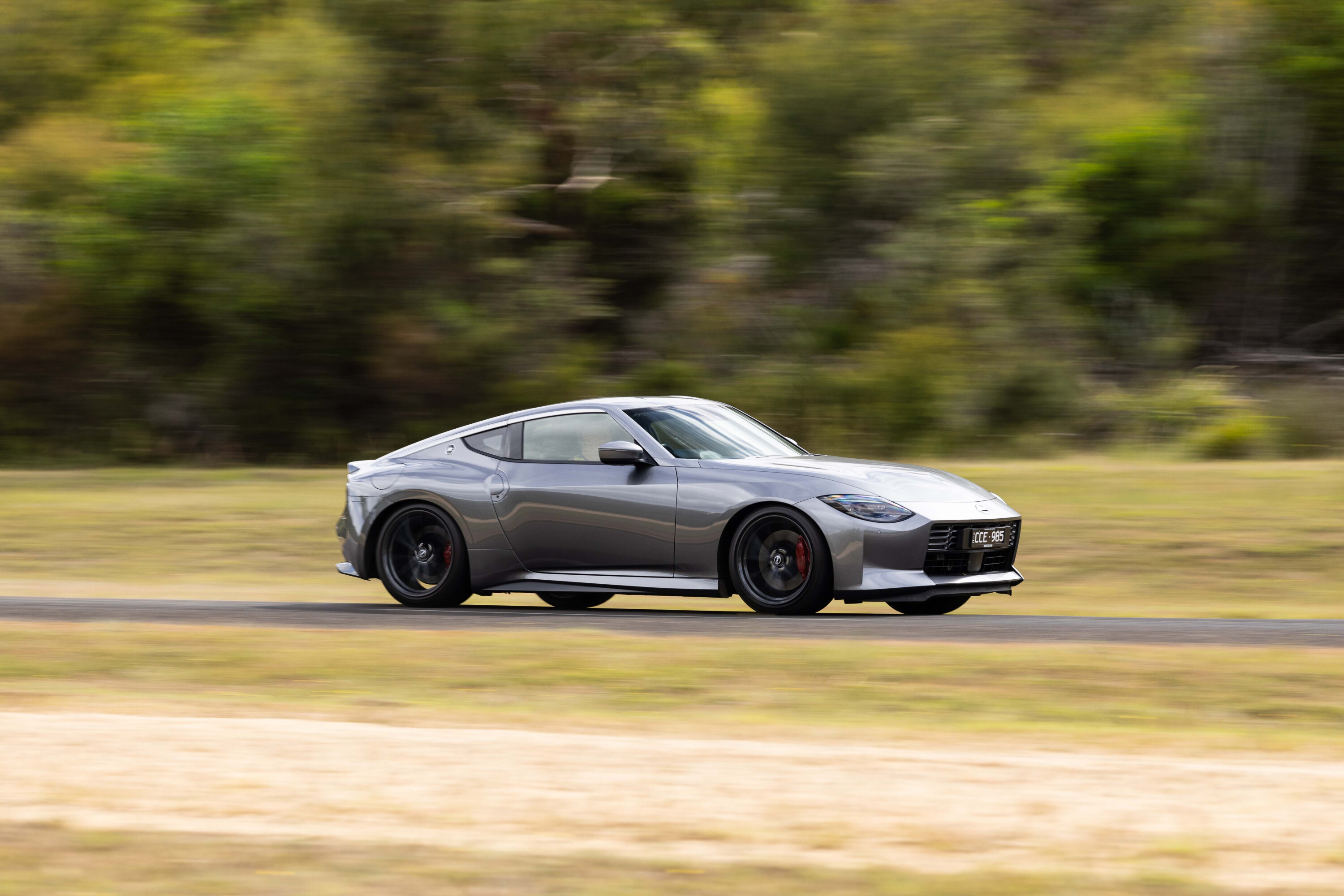
Due to a manufacturing issue, the mounting screws on the left-hand side front bumper reinforcement bracket may not have been tightened sufficiently. As a result, the pedestrian detection sensor may not function as intended.
In the event of an accident, if the pedestrian detection pop-up hood feature does not operate as intended, it could increase the risk of injury or death to the pedestrian.
Customers should contact their local Nissan Dealership and schedule an appointment to have the mounting screws on the front bumper reinforcement bracket tightened to the appropriate specification, free of charge.
NISSAN MOTOR CO. (AUSTRALIA) PTY. LTD.
Nissan Australia
\n
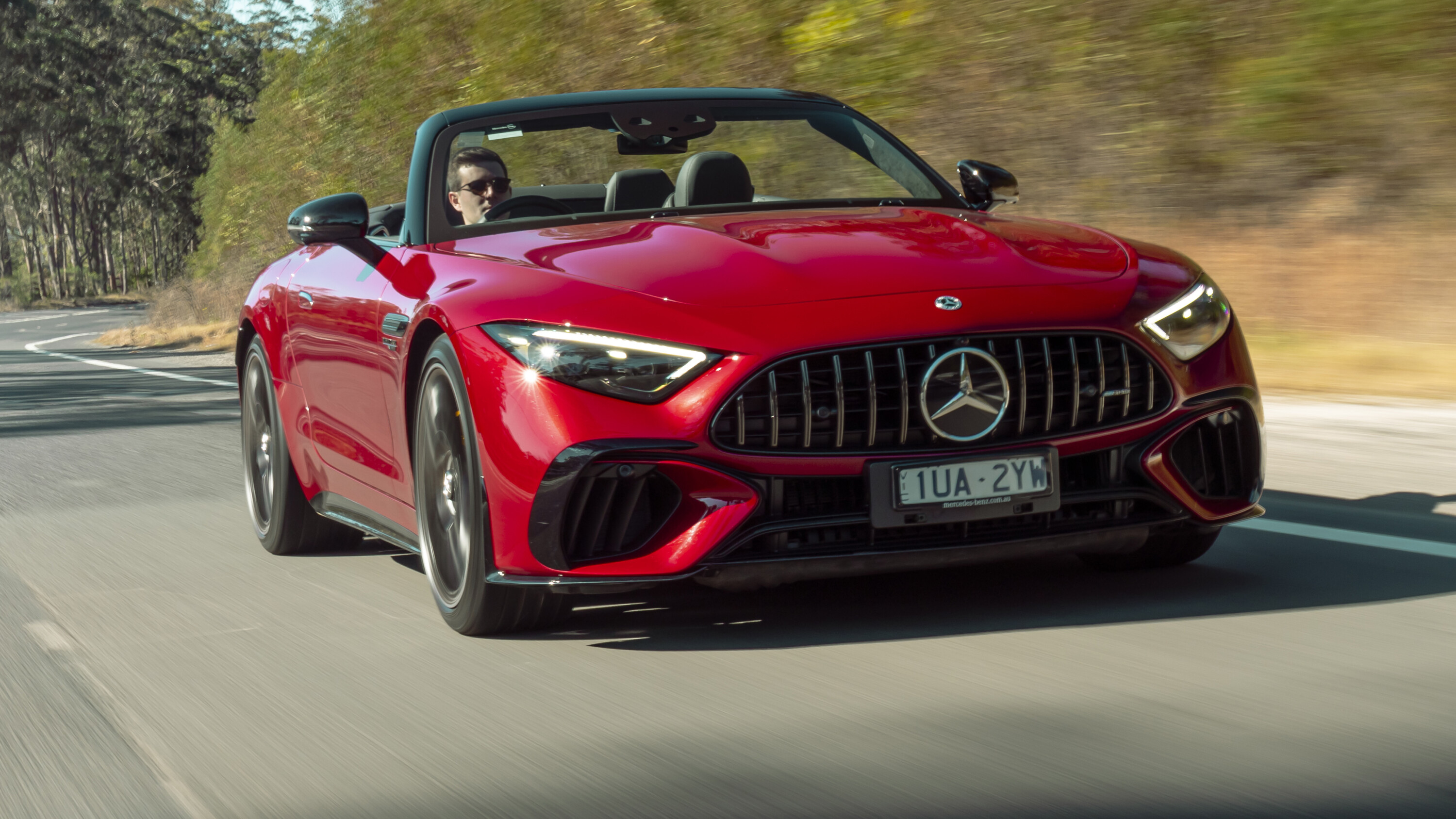
Due to a manufacturing defect the 12 Volt alternator wiring harness may come in contact with the transmission drive shaft. As a result, the wiring harness could become damaged causing an electrical short circuit which may lead to a loss of motive power and/or a vehicle fire.
A loss of motive power or a vehicle fire could increase the risk an accident causing serious injury or death to vehicle occupants, other road users, bystanders and/or damage to property.
Owners of affected vehicles can contact their most convenient Mercedes-Benz dealership to have the work carried out as soon as possible, free of charge.
A full list of authorised dealerships can be found at:
www.mercedes-benz.com.au [↗]
Alternatively, please use the Mercedes-Benz online booking service.
www.mercedes-benz.com.au/servicebooking [↗]
MERCEDES-BENZ AUSTRALIA/PACIFIC PTY LTD
Customer Assistance Centre
\n
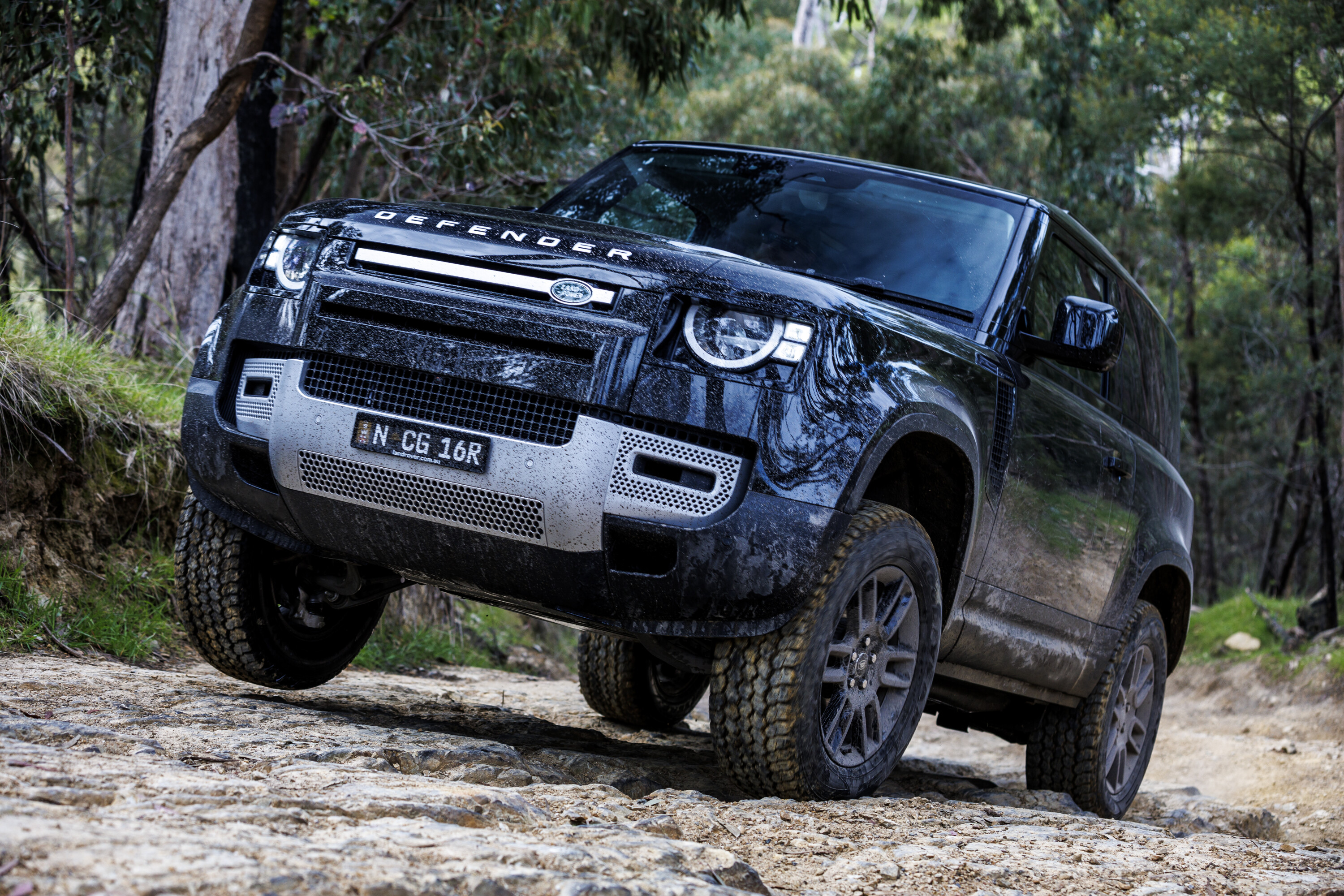
Due to a software issue, the Powertrain Control Module (PCM) may not activate as intended. As a result, the internal combustion engine will not start when required resulting in a reduced or a loss of vehicle performance.
A reduction or a loss of vehicle performance whilst driving, could increase the risk of an accident causing injury or death to vehicle occupants and/or other road users.
Owners of affected vehicles should contact their preferred Jaguar Land Rover authorised dealer to have their Powertrain Control Module (PCM) software updated either through a wired connection or, where permitted, via an over-the-air delivery free of charge.
JAGUAR LAND ROVER AUSTRALIA PTY LTD
Customer Relationship Centre
\n
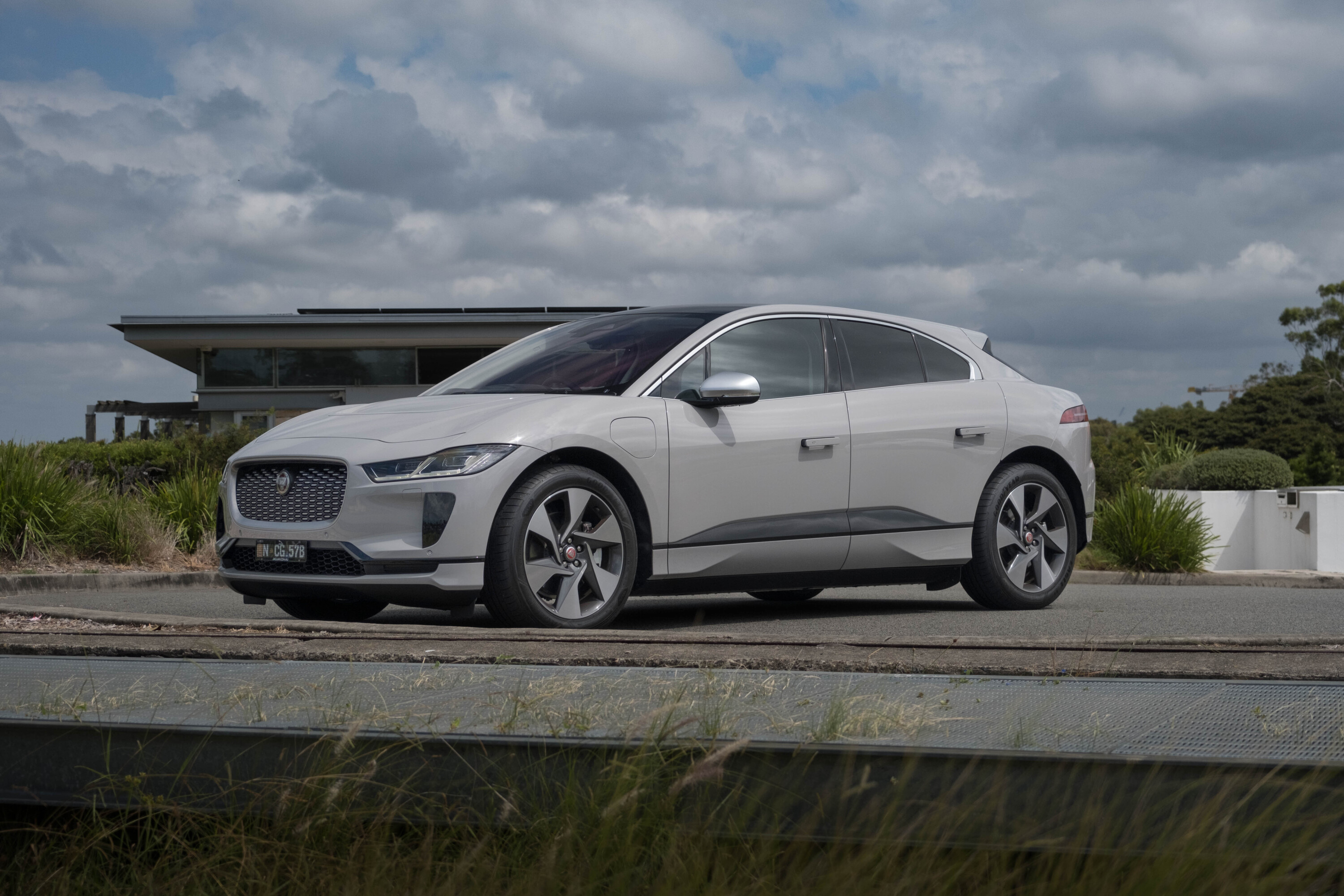
Due to a software issue, some vehicles may experience a thermal overload. If this occurs, vehicle occupants may identify smoke or fire emanating from underneath the vehicle.
A vehicle fire may increase the risk of serious injury or death to vehicle occupants, other road users, bystanders, and/or damage to property.
Note: This recall is a re-notification and extension of previous recall REC-005700.
Owners of affected vehicles will be contacted directly by their Jaguar Land Rover retailer to arrange a software update, free of charge.
JAGUAR LAND ROVER AUSTRALIA PTY LTD
Customer Relationship Centre
\n
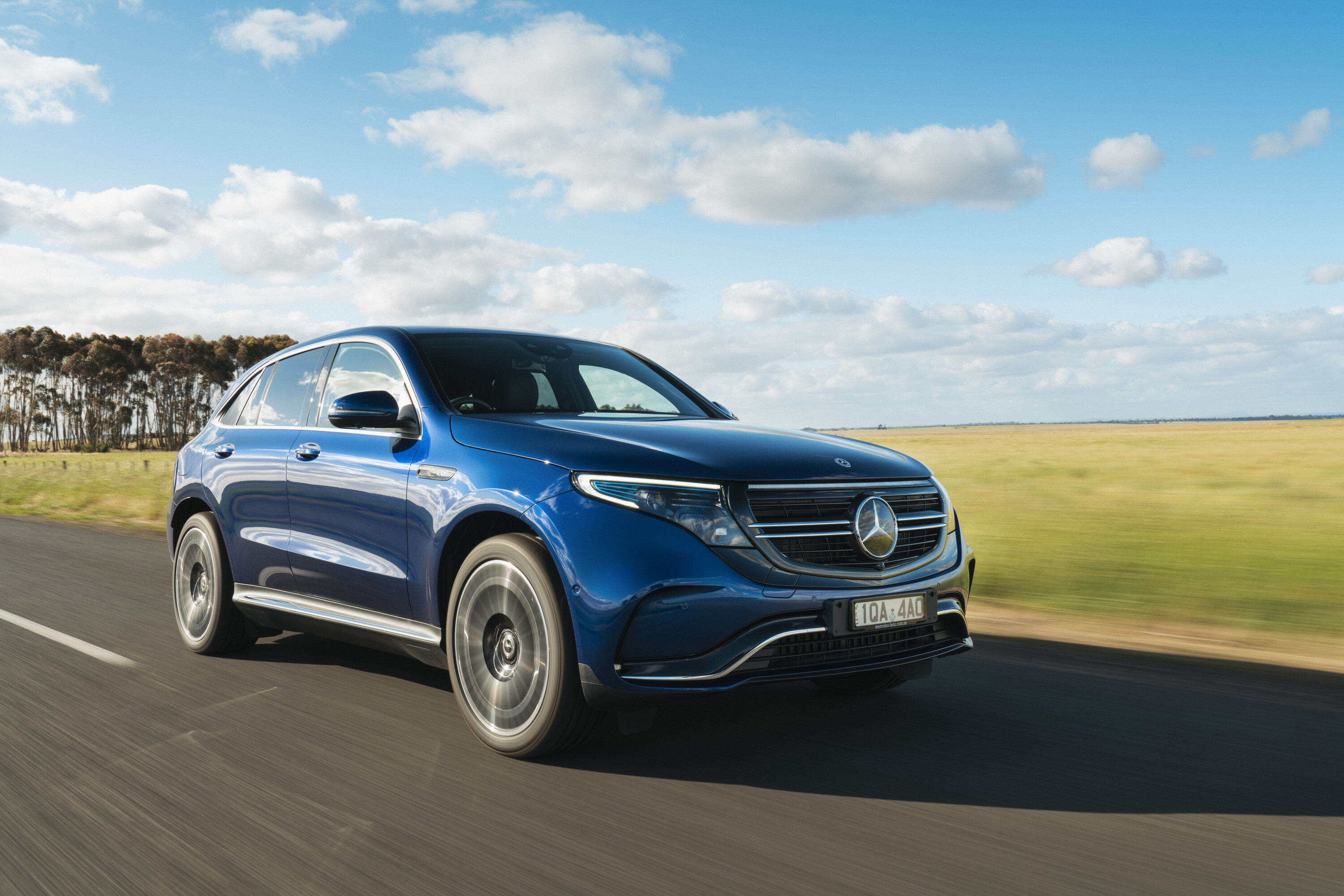
Due to a manufacturing issue, the headlamps may not be adjusted correctly. This could cause an incorrect headlamp range function of the vehicle.
If the vehicle headlamps do not operate as intended it could increase the risk of an accident causing injury or death to vehicle occupants and other road users.
Owners of affected vehicles will be contacted by Mercedes-Benz and are asked to make an arrangement with their nearest authorised Mercedes-Benz dealership to have the work carried out as soon as possible.
A full list of authorised dealerships can be found at:
www.mercedes-benz.com.au/passengercars/mercedes-benz-cars/dealer-locator [↗]
Alternatively, please use the Mercedes-Benz online booking service, by visiting
www.mercedes-benz.com.au/servicebooking [↗]
MERCEDES-BENZ AUSTRALIA/PACIFIC PTY LTD
Customer Assistance Centre
\n
Once a dominant force in the midsize sedan market, the Honda Accord’s sales have dwindled over the years, along with the segment as whole.
Despite its diminished market presence, Honda has chosen to keep the Accord in its lineup due to its enduring appeal among loyal customers who have a deep-seated affinity for the brand.
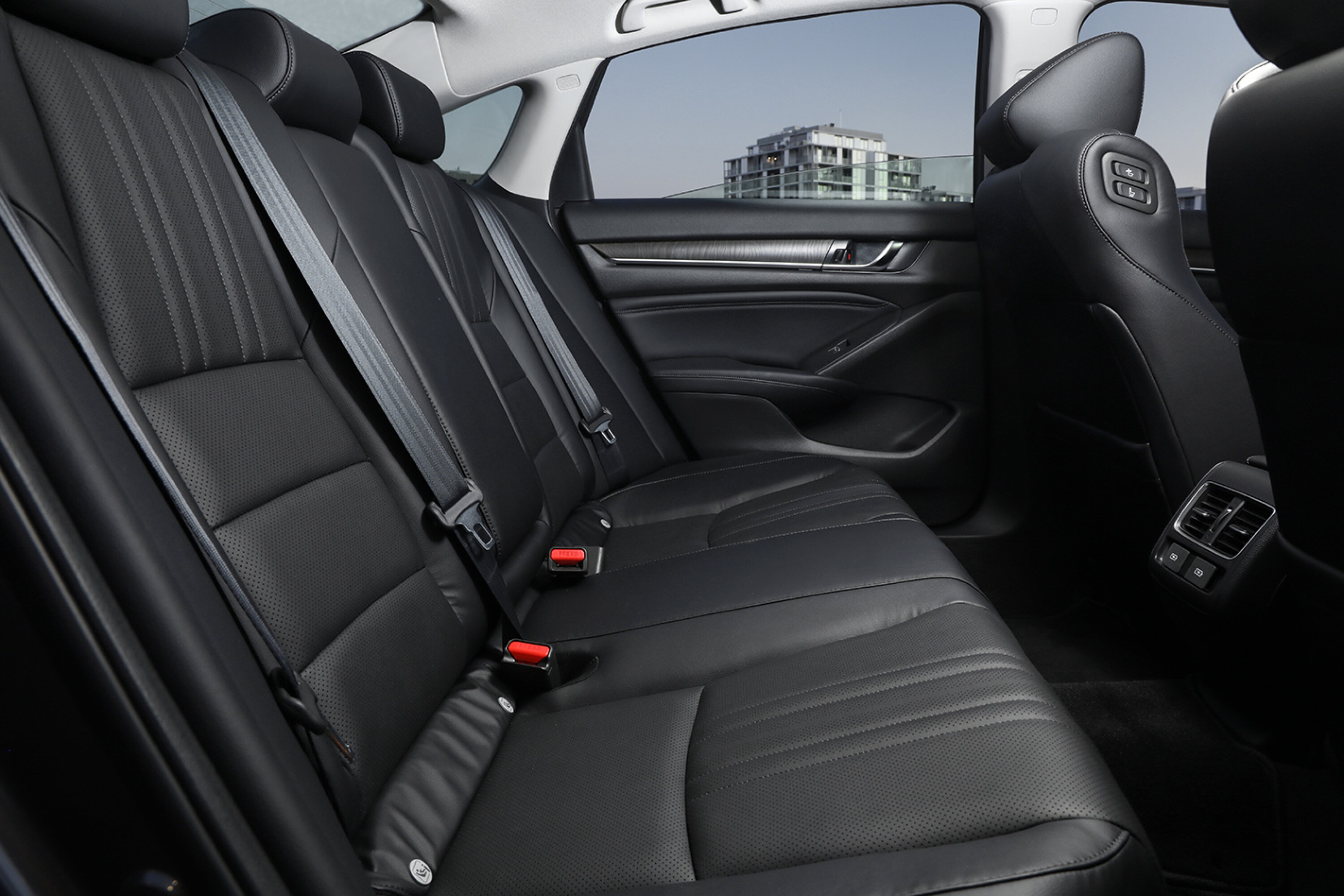
In an era dominated by SUVs, passenger cars like the Accord have become increasingly scarce. However, the Accord’s striking design manages to stand out and resonate with those who appreciate its aesthetic charm.
But the Accord’s strengths extend beyond its visual appeal. It excels in various aspects, offering a wealth of features and finely tuned driving dynamics that cater to the discerning tastes of its loyal following.
Let’s delve into what you can expect from the current generation sedan.
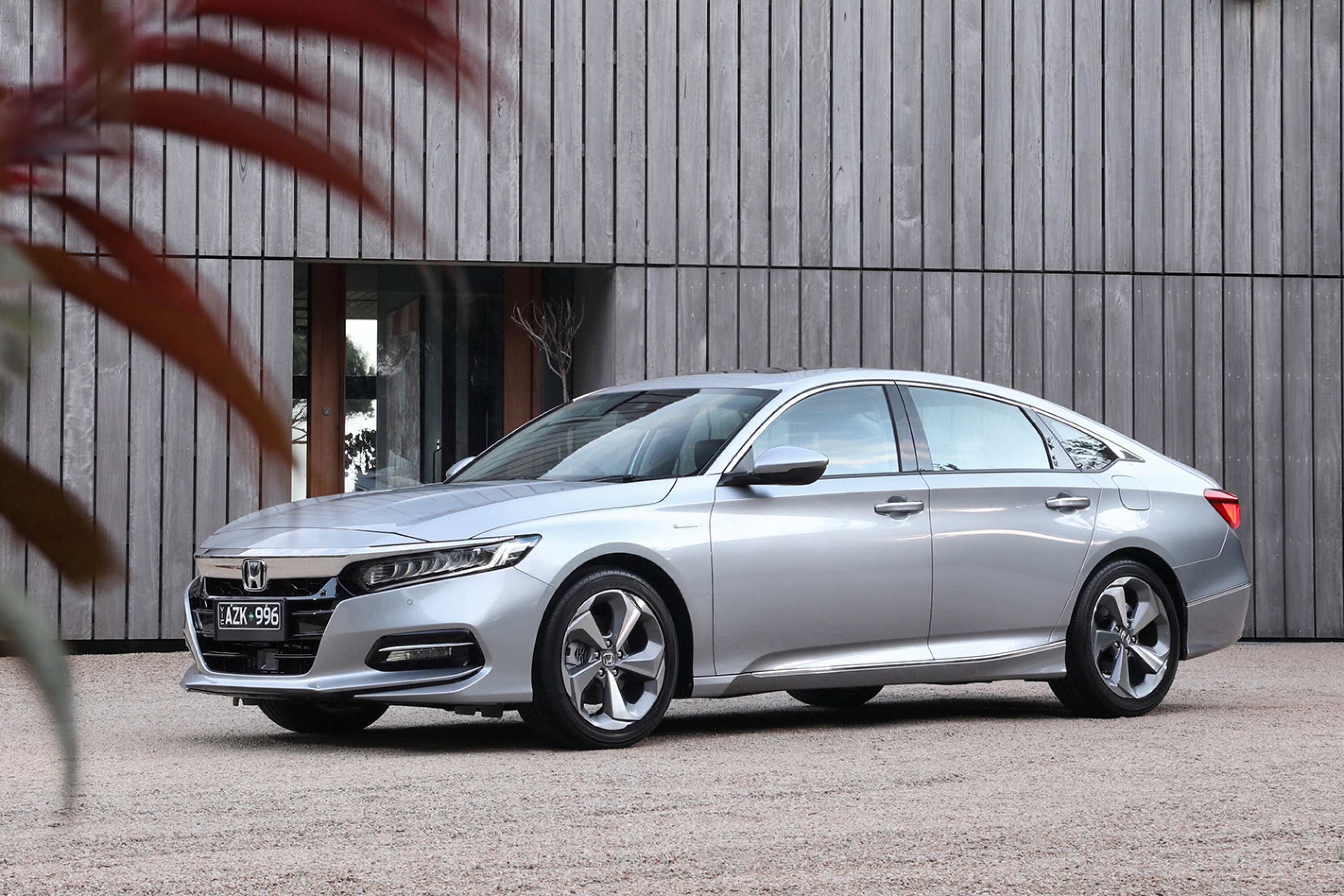
In an effort to simplify the car-buying process, Honda Australia has recently introduced drive-away pricing across all its showrooms via their new agency model.
The single specification level for the Honda Accord is the VTi-LX, which comes with a drive-away price tag of $57,400. For those interested in the electrified hybrid variant, the cost rises to $60,400.
As with other key Honda models the brand now has focused its offerings on what were previously top of the range variants. So you’re getting a spec-full vehicle, that obviously will come at a higher cost.
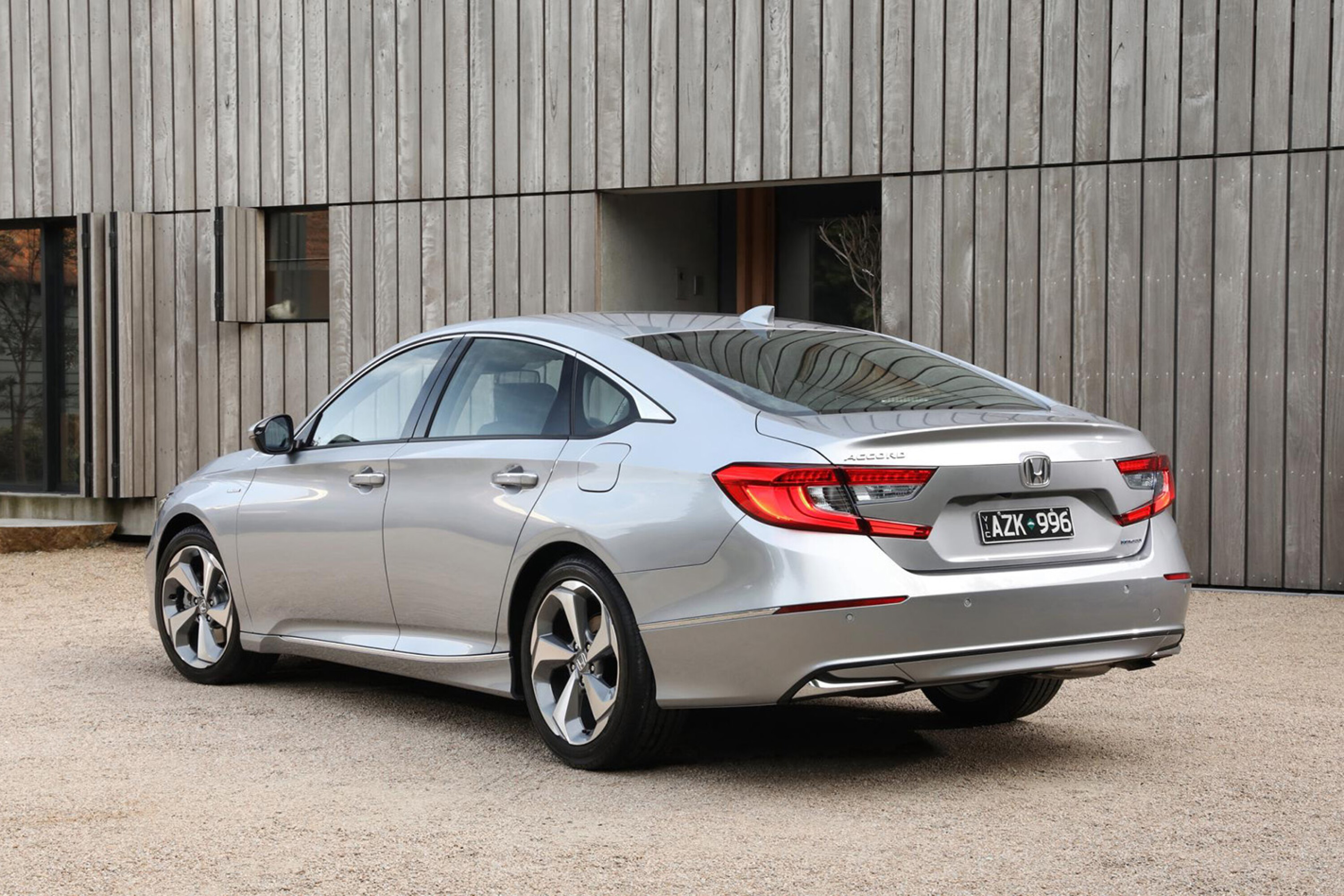
| 10- speaker audio system | LED headlights, fog lights and DRLs |
| 18-inch alloy wheels | Multiview camera system |
| 8-inch infortainment screen | Rainsensing front wipers |
| Apple Carplay and Android Auto | Remote engine start |
| Automatic dusksensing headlights | Satellite navigation |
| Dual zone climate control | Smart keyless entry with push button start |
| Electric parking brake | Sunroof |
| Heated and power front seats | Wireless charger |
| Leather accented seat trim | Woodgrain look interior finishes (dash and door) |
| Leather steering wheel and gear knob |
The hybrid adds additional features such as EV mode, a chrome garnish on the rear bumper, blue tints across the headlights and hybrid badging.
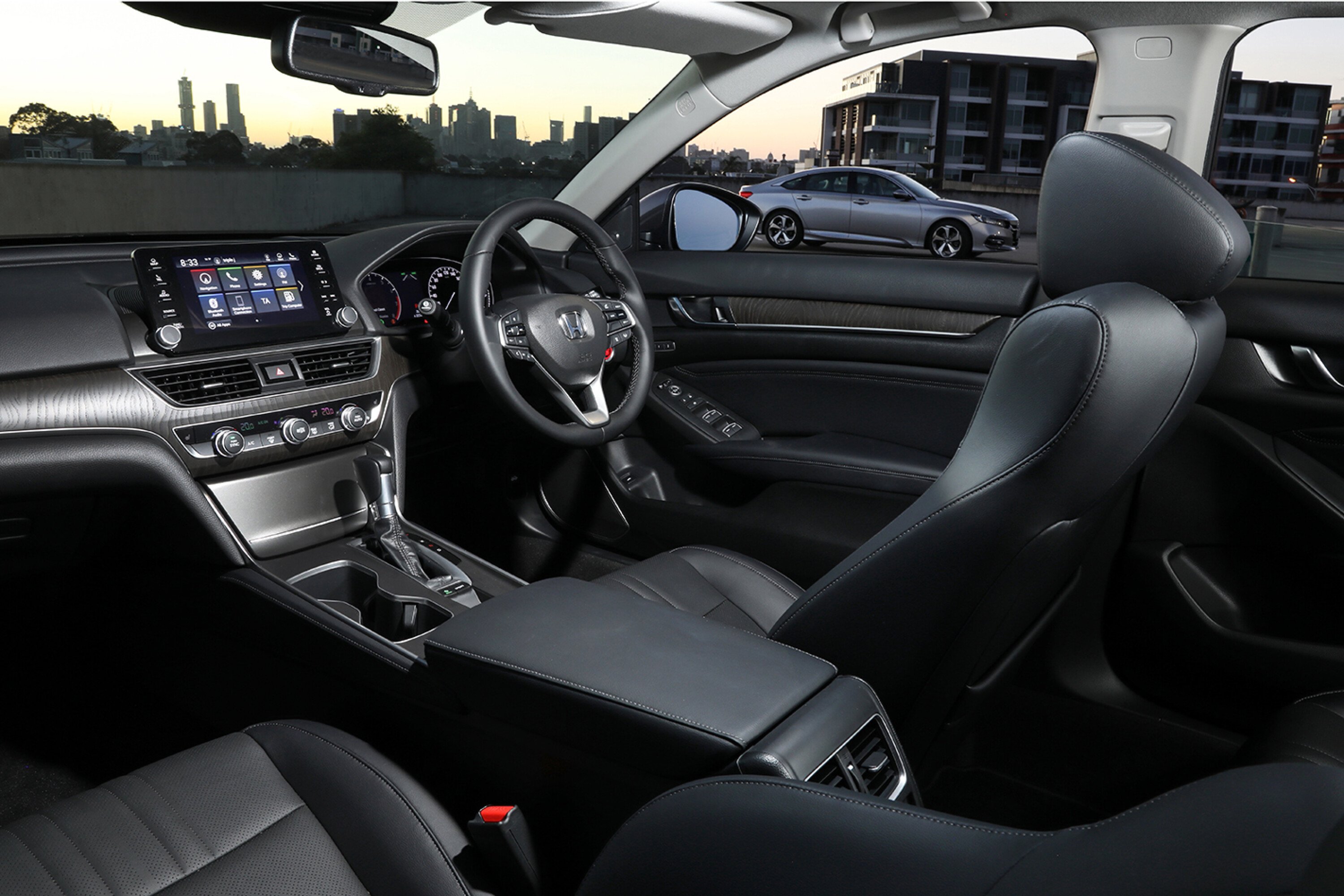
The Accord lineup offers a selection of five colours, all of which come at no additional cost:
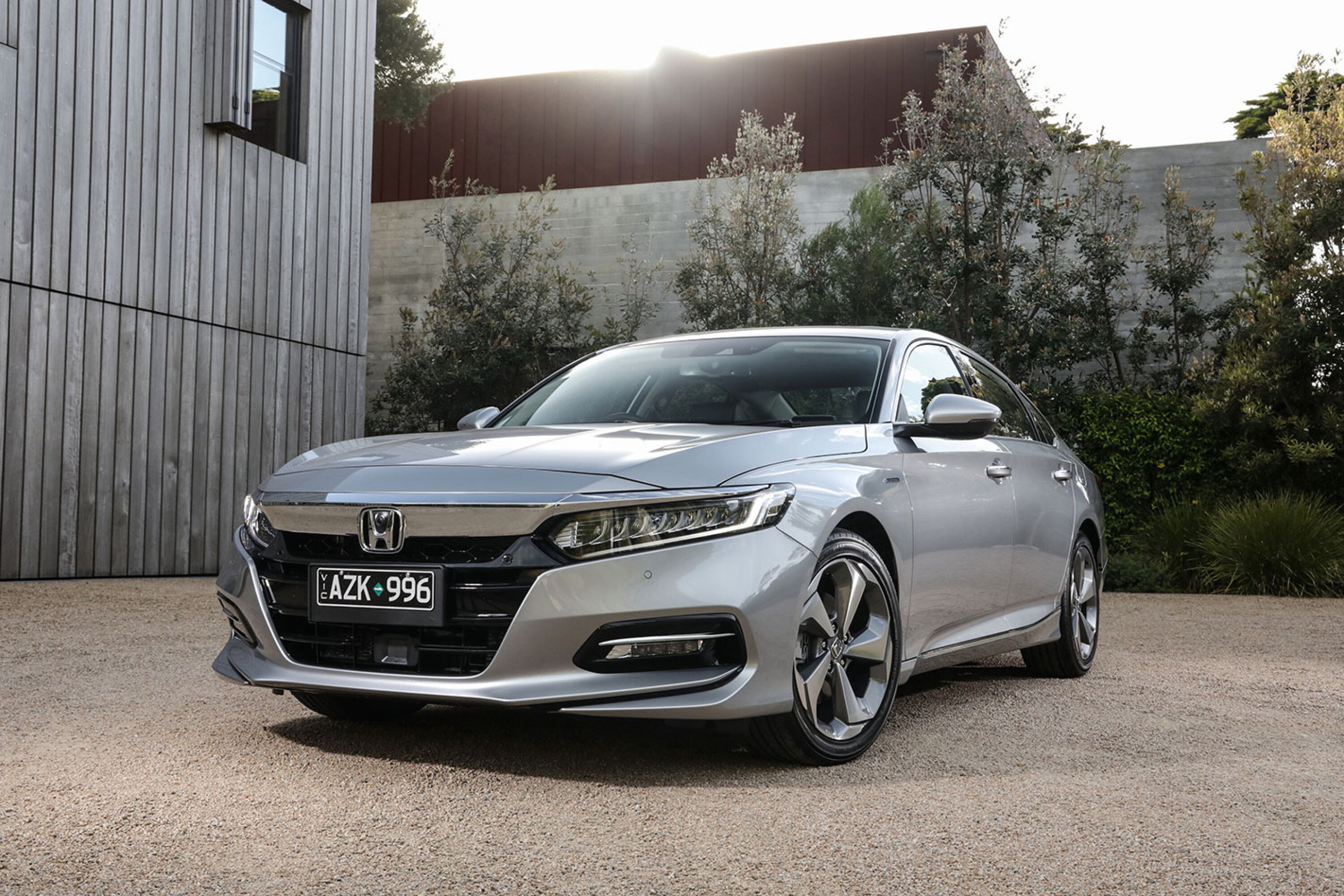
As a benchmark however other models in the Honda range launched recently have received between four star rating such as the HR-V.
The Accord has plenty of standard safety, found in these other Honda models, including:
| Adaptive Cruise Control | Hill Start Assist |
| Antilock Braking System (ABS) with Brake Assist (BA) | Lane Departure Warning |
| Auto dimming rear view mirror | Lane Keep Assist System |
| Automatic high beam S | LED cornering lights |
| Child restraint anchorage point x3, ISOFIX x2 | Parking sensors u2013 front and rear |
| Collision Mitigation Braking System | Rear Cross traffic monitoring system |
| Driver attention monitoring system | Smart Parking Assist |
| Electronic Brakeforce Distribution (EBD) | Space saver spare wheel |
| Forward Collision Warning | SRS airbags (dual front, side and fulllength curtain) |
| Head up display | Tyre pressure monitoring system |
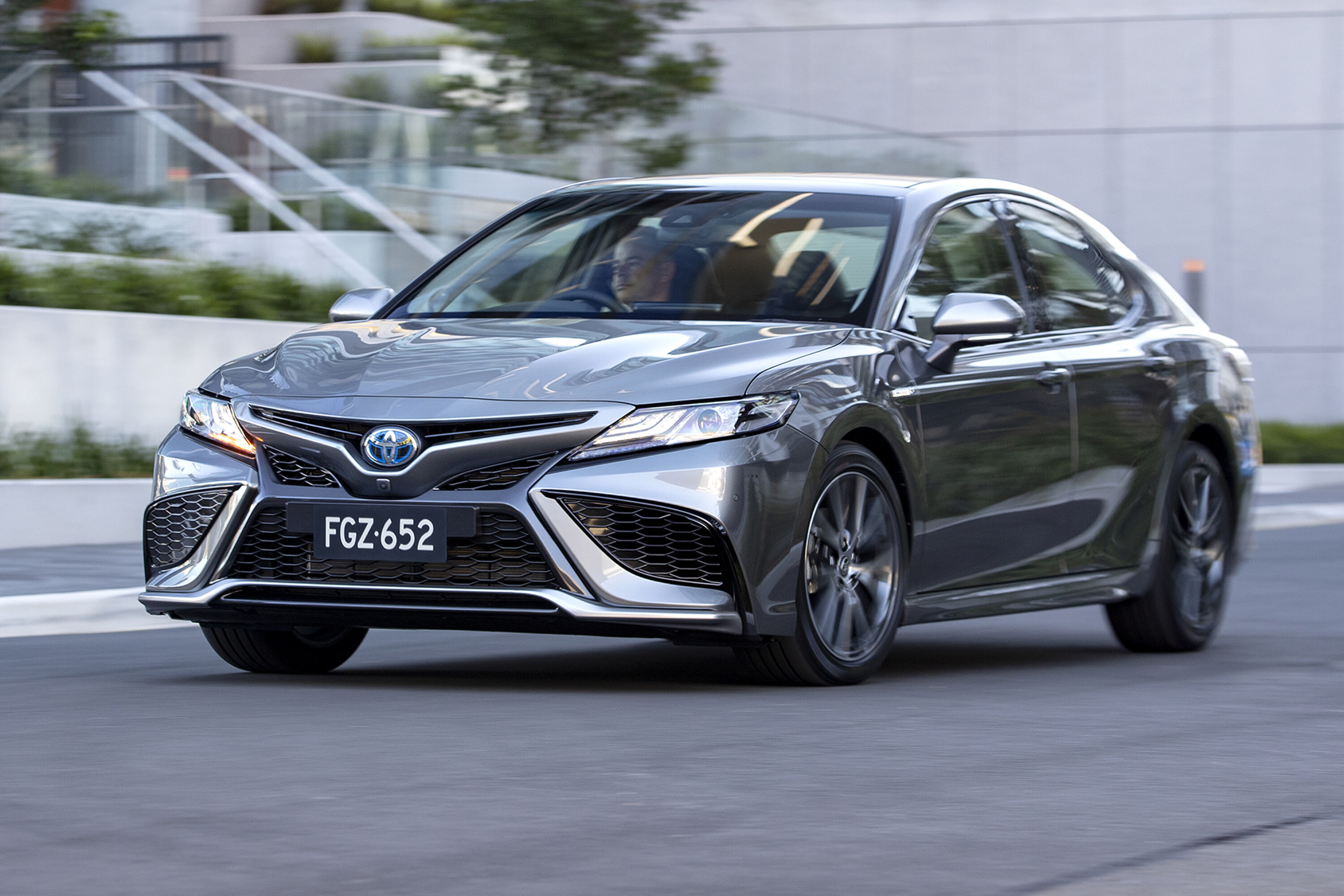
In comparison to the Accord, you can opt for the flagship Toyota Camry hybrid SL at $51,728 drive-away (based on a Melbourne postcode) or the most premium Mazda 6 Atenza, available at $57,537.
That being said, the Toyota Camry and Mazda 6 are also available in cheaper options unlike the single-option Accord.
The midsize sedan segment was once the market leader in Australia, and has since slowly been pushed down the list by small and medium SUVs.
With that being said, there are cheaper rivals in the same segment.
The 2024 Honda Accord is a fantastic overall sedan. With strong driving dynamics and an array of creature comforts, its offers plenty for your family needs.
However, in an already diminishing segment the Accord fails to meet the mark with pricing, with key competitors having hybrid technology available at a cheaper price-point. They’re also able to haggle at those dealerships.
But the Honda Accord, although slow-selling, is a car that is easy to fall for. And if you fall in love with it enough to justify the price-tag, then it’s your money well spent.
The Suzuki Japan website has confirmed that the Swift Concept shown at the recent Japan motor show was very much the actual production car.
Suzuki’s public website this week went live with promotions for its next-generation city car, encouraging buyers to head to their nearest dealer for more information.
Several images of the new Suzuki Swift show the evolutionary styling changes over the current model.
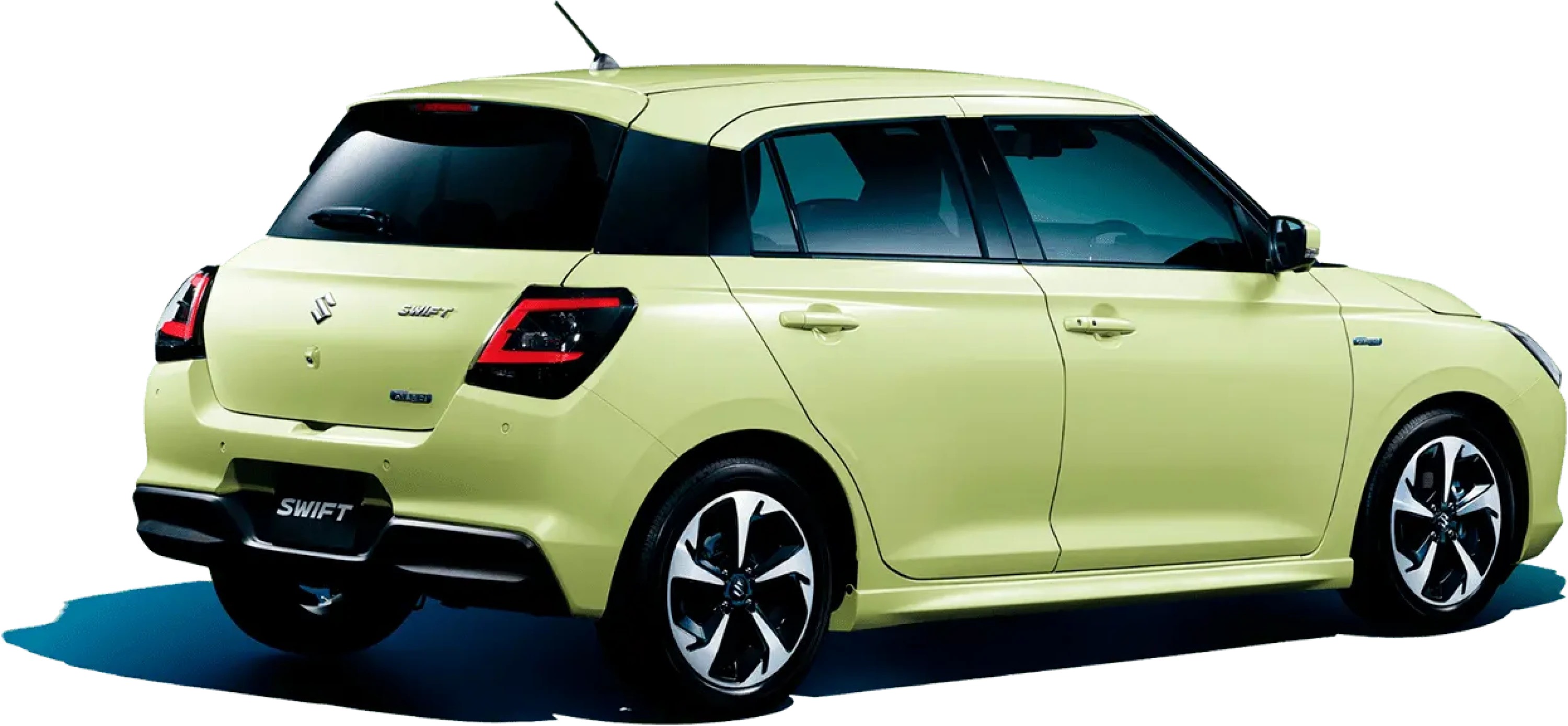
These include a clamshell bonnet, LED projector headlights with hockey-stick LED daytime runnning lights, conventional rear door handles instead of the current model’s hidden handles, a thick blacked-out C-pillar that joins black-out A and B pillars to continue the Swift’s ‘floating roof’ design, and squarer tail-lights with embedded C-shaped LEDs.
Inside, there’s a carry-over steering wheel, though key dashboard changes include a digital climate control system with buttons and toggles instead of the current Swift’s physical circular dials, and there’s a bigger, 9.0-inch “omnidirectional” infotainment display that floats above the dash.
The instrument dials remain analogue but lose their binnacle hoods.
The Swift also adopts an electronic park brake.
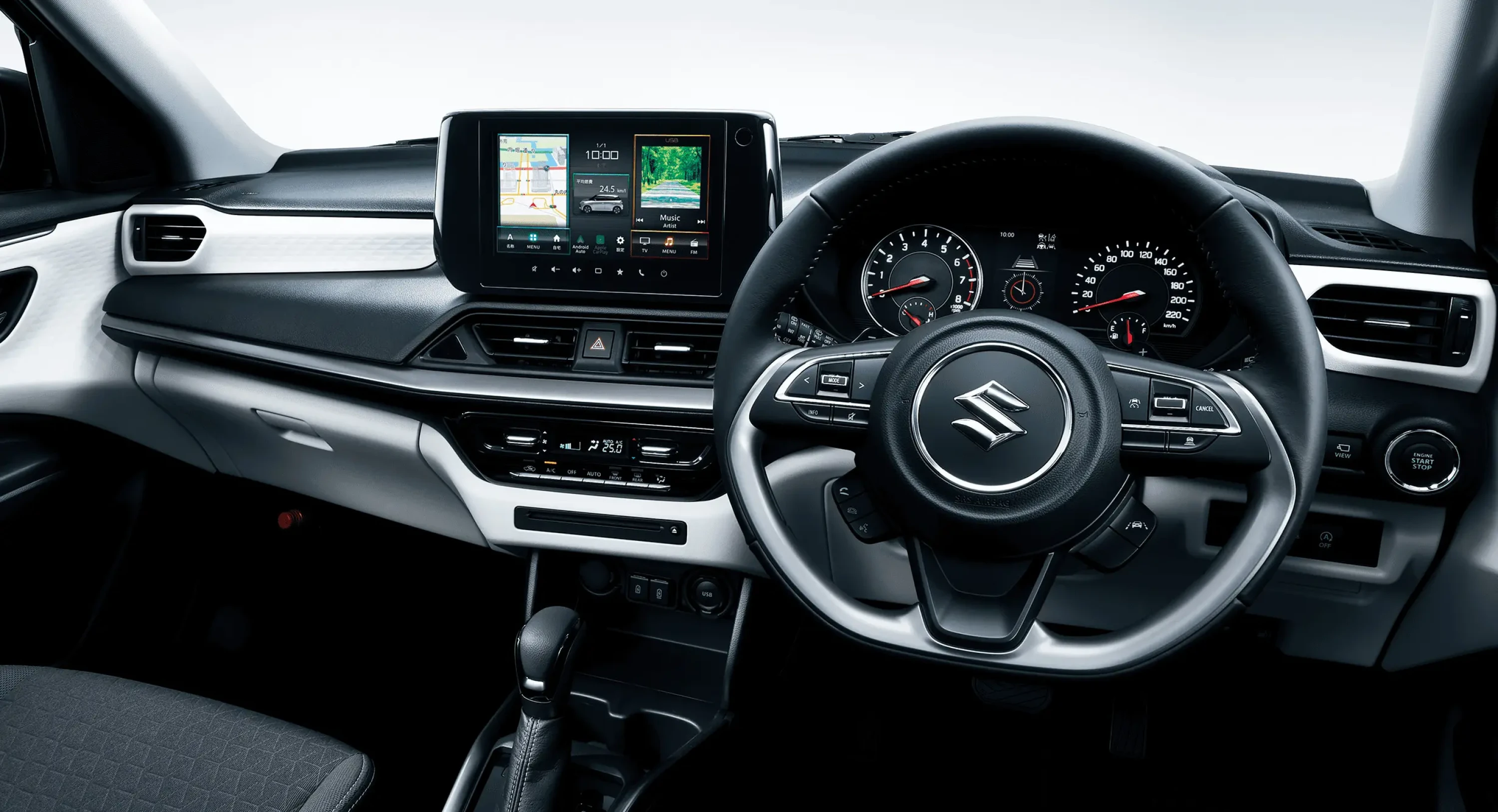
There’s more interesting news under the bonnet, with the Suzuki Japan website confirming the front-wheel-drive Swift will move to a 1.2-litre three-cylinder petrol engine with CVT auto and mild-hybrid “generator with motor function”.
The engine may well be the same 1.2L engine with 12-volt mild-hybrid that’s installed in the current Swift in Europe, with 61kW and 107Nm.
Suzuki Australia has previously said it planned to bring models with mild-hybrid or full hybrid technology here.
The production Swift should be identical in size to the Concept, which is 20mm longer than the outgoing model at 3860mm. It’s about 40mm narrower and 5mm higher.
An unchanged 2450mm wheelbase points to what is expected to be a carry-over platform.
There are no details yet for a more powerful Sport variant, while the frustrating wait for a GTi hot-hatch successor is likely to continue indefinitely.
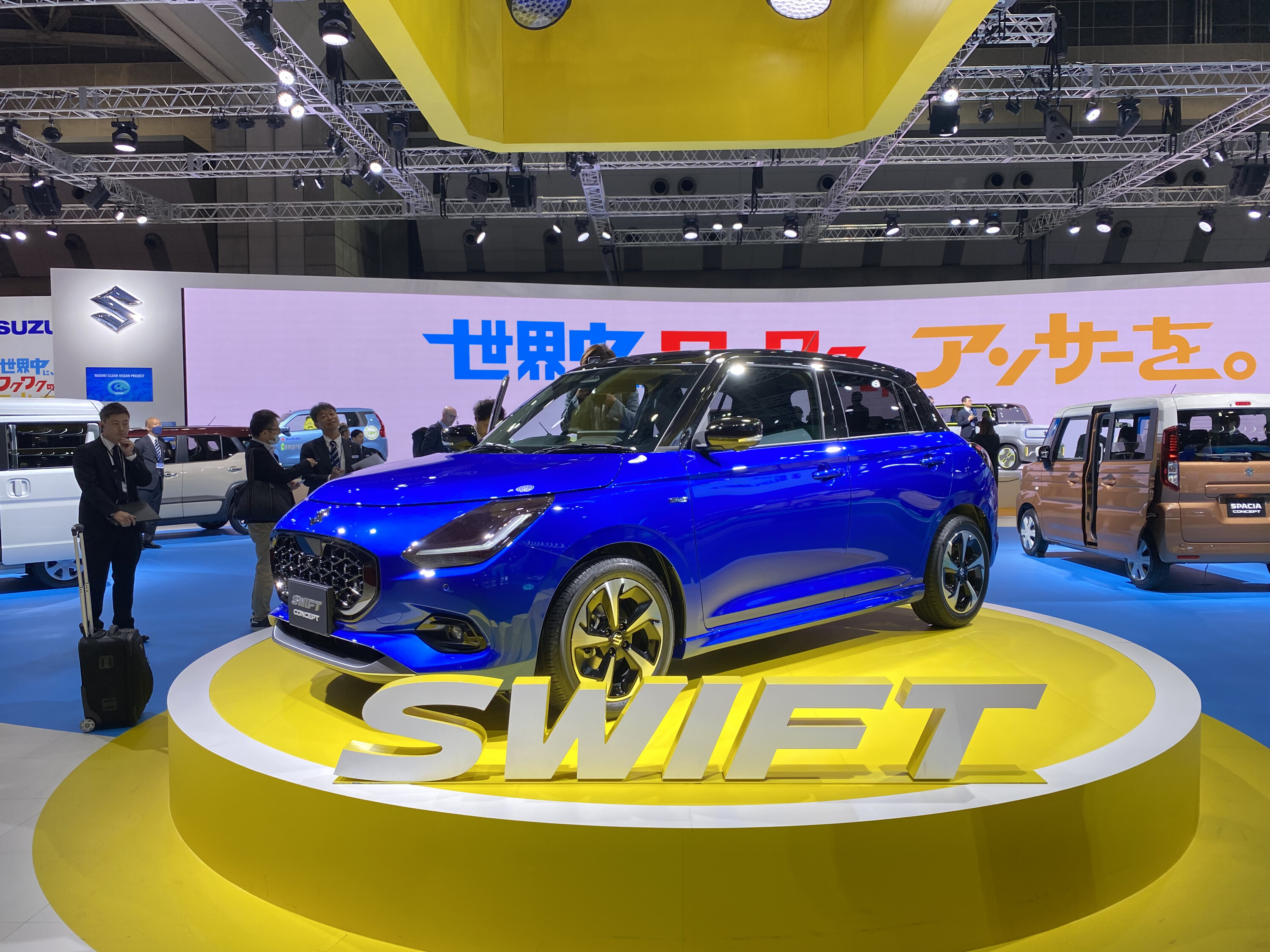
Above: Swift Concept at Japan Mobility Show was essentially the production car.
We’ve railed in the past about the nonsense of coupe-SUVs. Well this is a $366,200 (plus on-roads) example of that ilk that emits 319g/km on a good day, weighs more than 2.2 tonnes, has one heck of a thirst for 98RON when you’re on it and, sitting on its huge gold alloy wheels, appears a wholly obnoxious statement of excess in these straitened times. And I love it.
I love its chutzpah, its ridiculous pace, its otherworldly dynamics, its depth of engineering and its ability to never appear fazed by any sort of road conditions.
Those who don’t have particularly long memories may well recall we drove the pre-facelift Turbo GT Coupe on an extended drive feature last year so what we’re doing here is assessing quite how effective the updates are and maybe once again attempt to figure out how this patently excessive SUV has managed to worm its way quite so frustratingly into my affections.
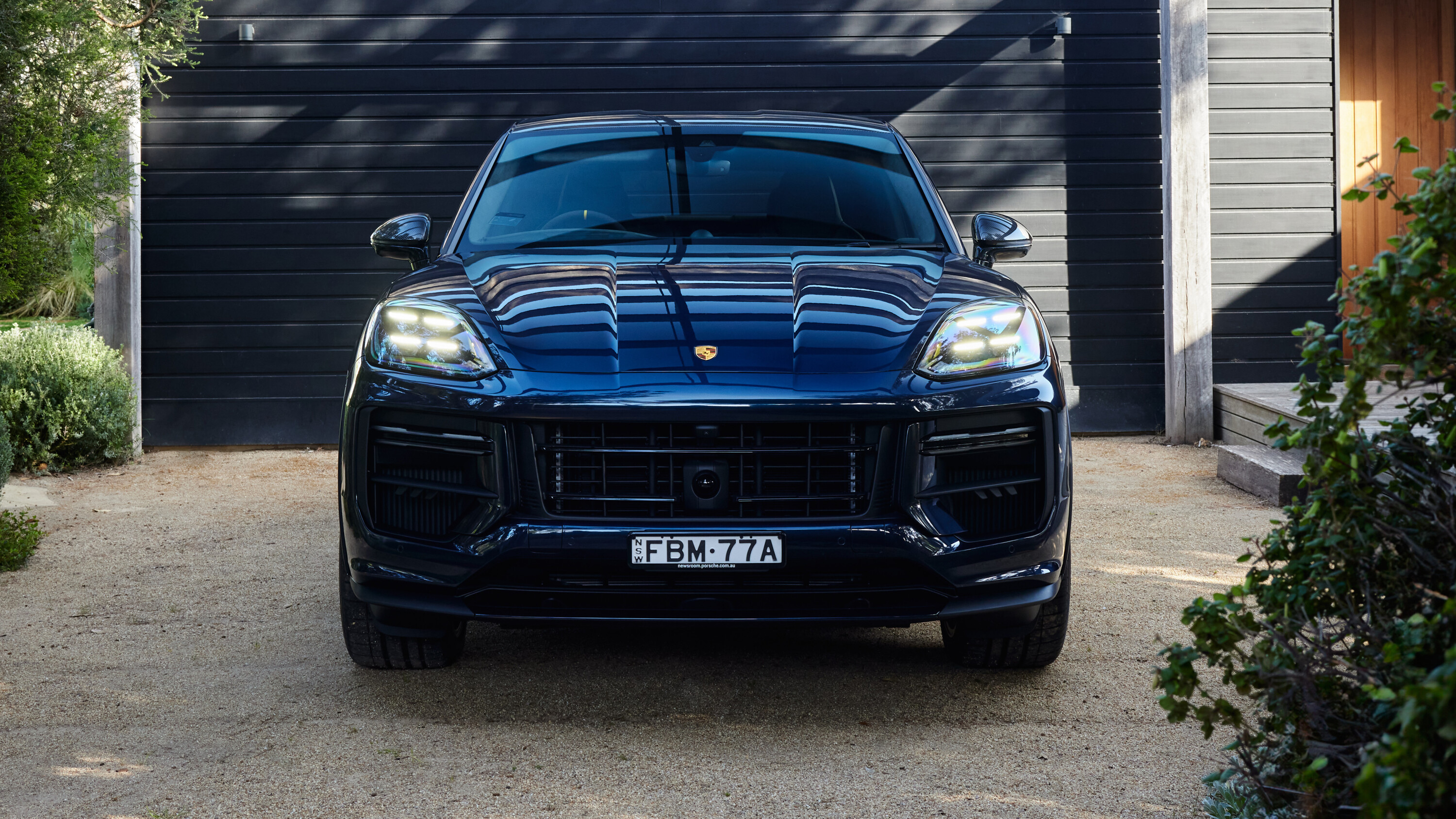
The GTS and Turbo models that were a fixture have quietly disappeared, with the range walk-up going from base model to E-Hybrid, S and then Turbo GT positioned as the apex predator.
This has now addressed the somewhat awkward anomaly in the old Cayenne line up where the flagship turbo GT model wasn’t the most powerful: that honour went to the less focused and now deleted 500kW/900Nm Turbo S-E Hybrid Coupe.
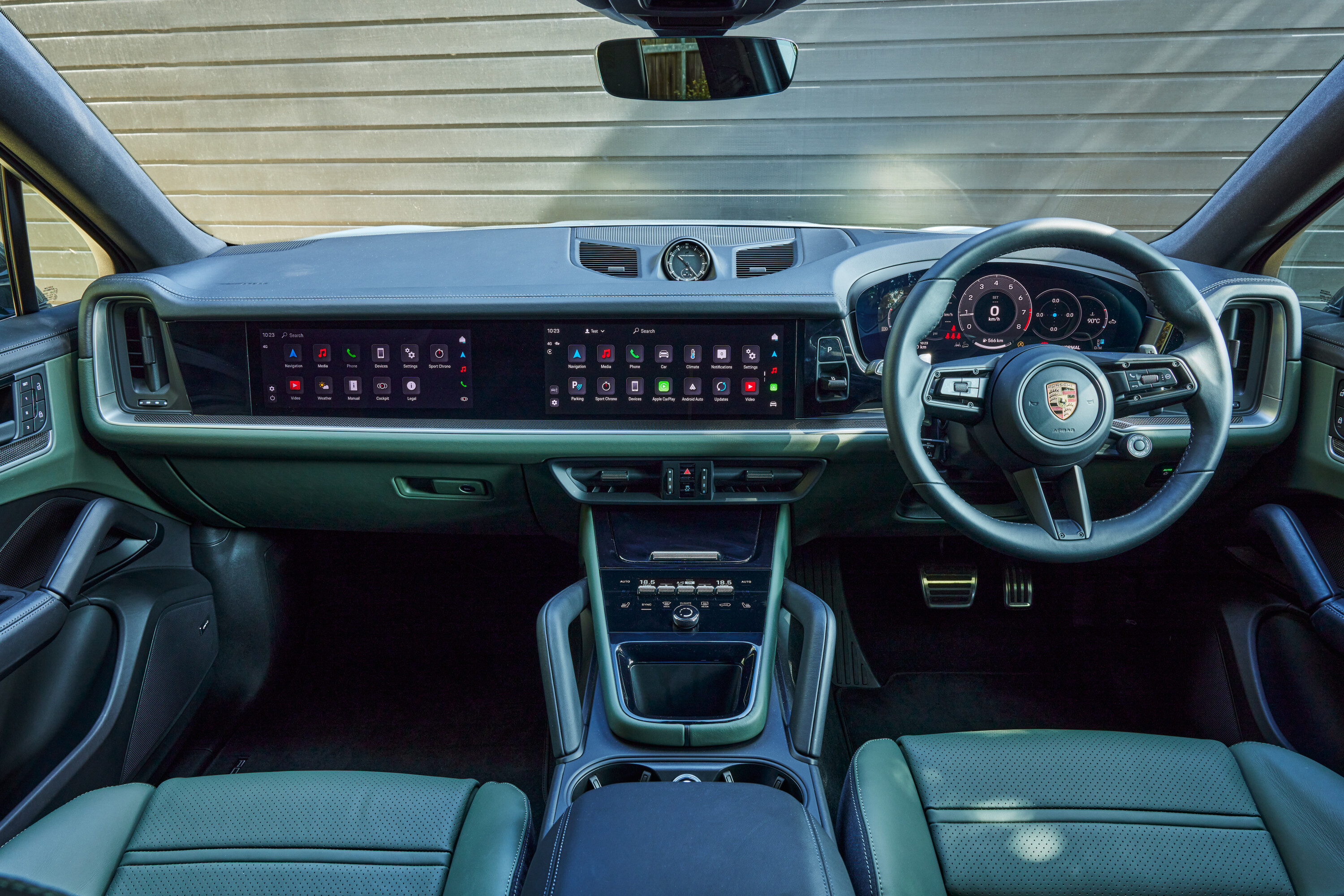
This would appear to suggest that that vast gulf will eventually be backfilled with other models (a GTS is an obvious fit) but for the time being, the Turbo GT finds its sticker price maybe looking a little conspicuous.
Although most would finger this as a mid-life refresh for a body first seen in 2019, Zuffenhausen is at pains to underscore the extensive nature of the update, calling it “one of the most extensive product upgrades in the history of Porsche”.
That upgrade isn’t applied completely uniformly across the line up. The S, for example, gets a whole new powerplant, ditching its V6 for a biturbo V8, while the e-Hybrid features a whole new electric motor. In fact, the Turbo GT may well have changed the least. Not that a whole lot needed fixing.
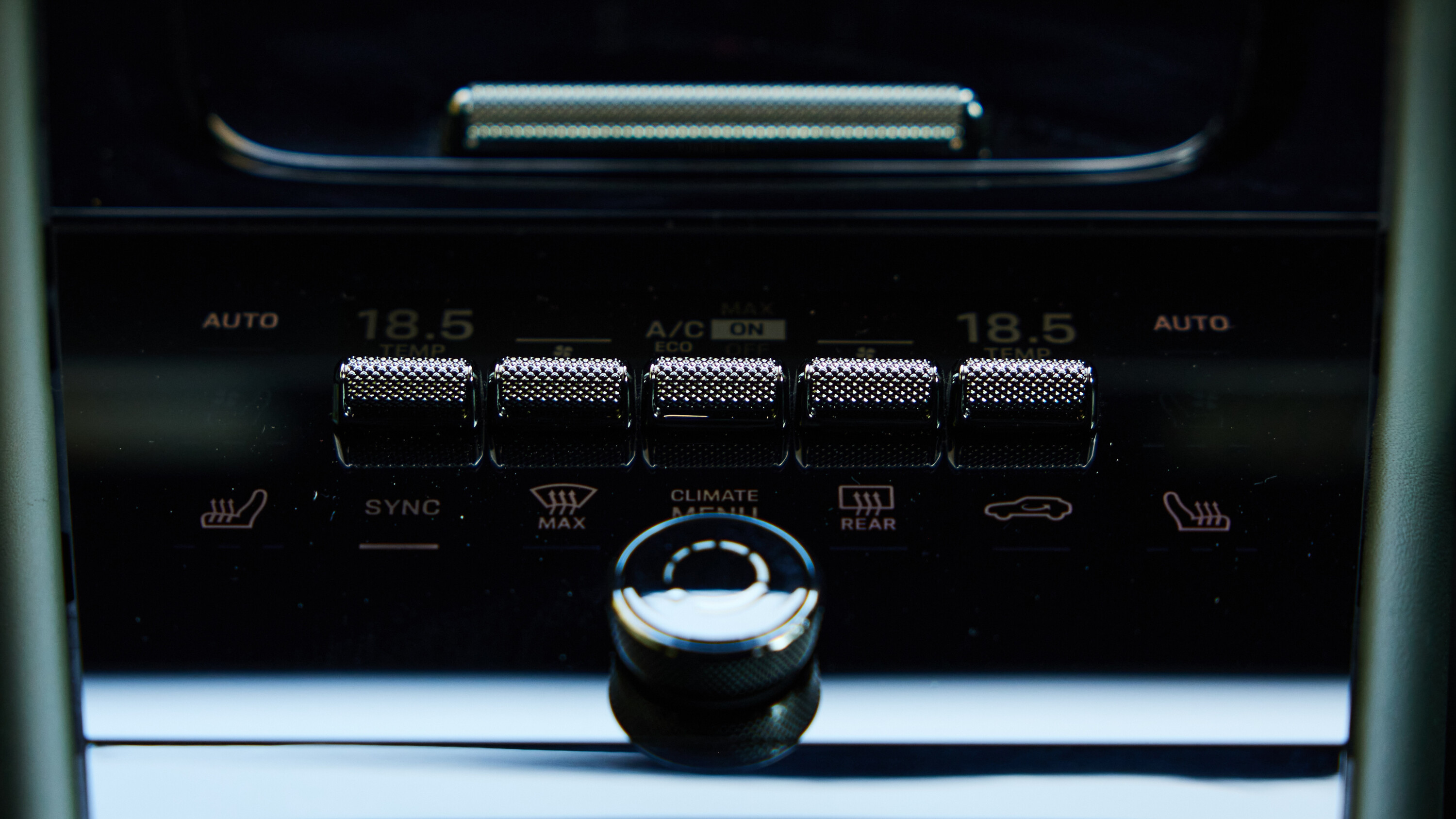
Audi’s $220K/441kW RS Q8 represents a convincing cut-price alternative, while BMW’s $248K/460kW X6 M Competition also has the muscle to force its way into the conversation.
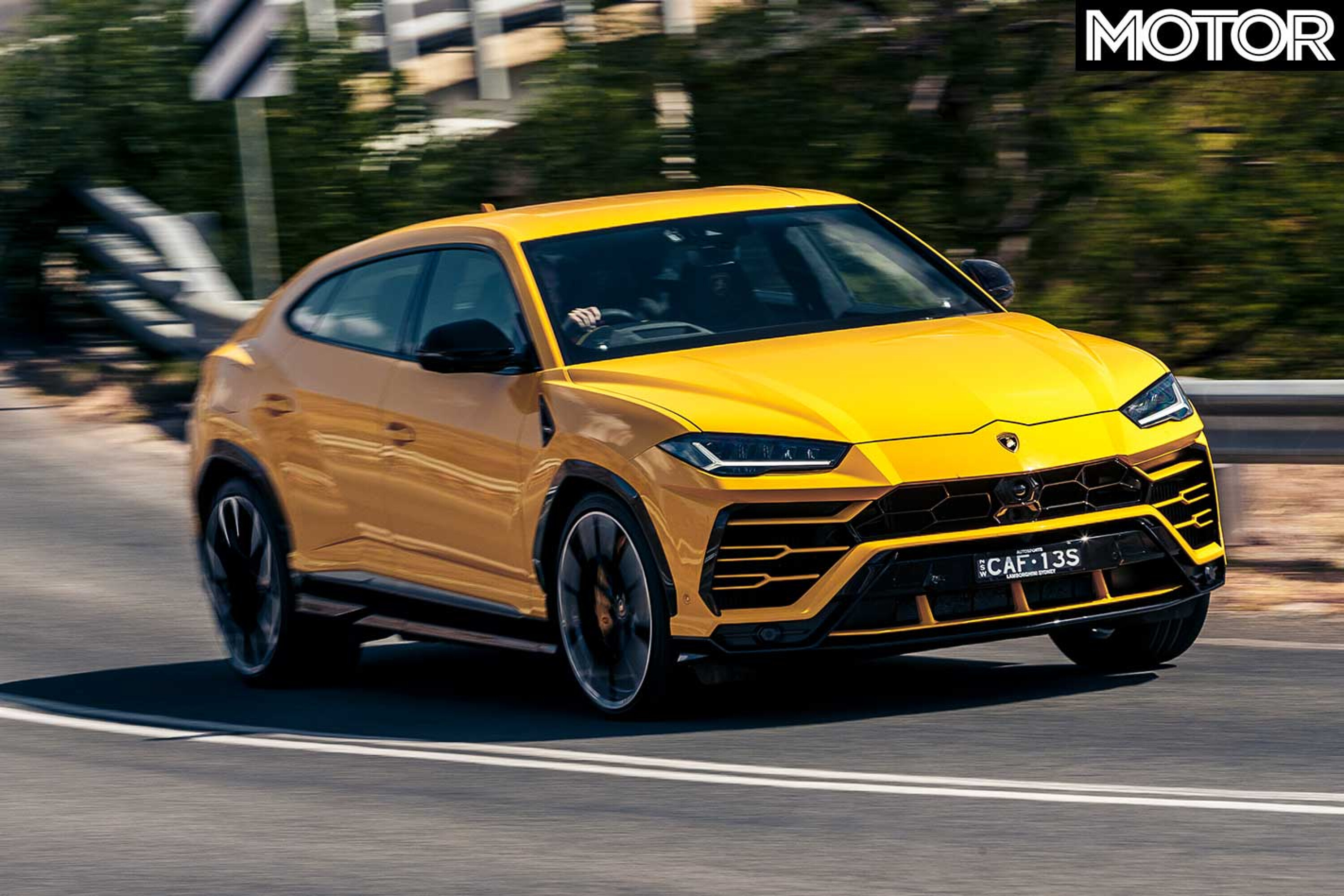
In other words, Porsche certainly doesn’t have this part of the market to itself. In order to eke a niche for itself, the Turbo GT needs to deliver a combination of qualities that the rest will find impossible to equal.
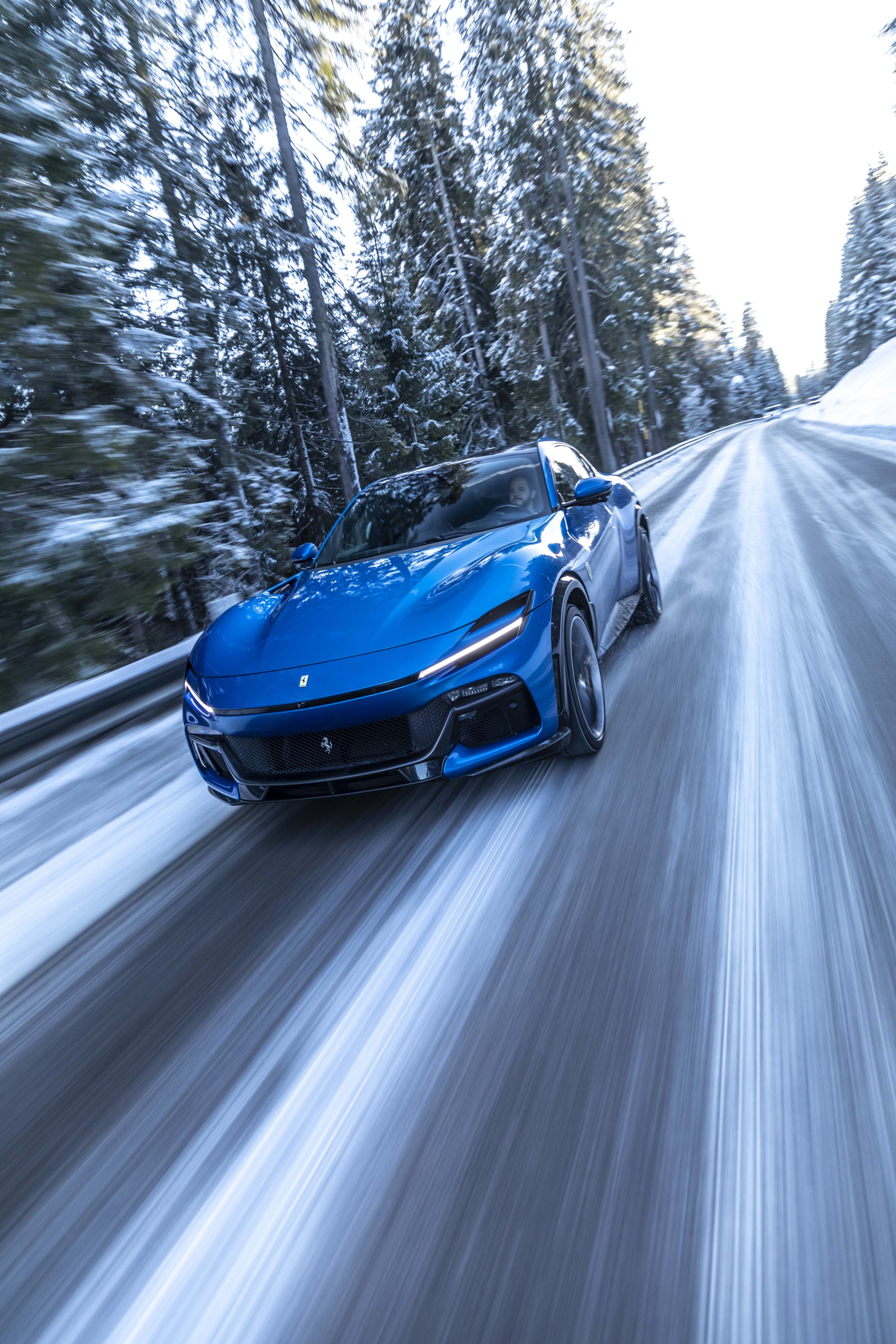
The ‘Porsche Driver Experience’ features a curved digital instrument cluster, a redesigned centre console and a 911-style gear selector that’s now mounted on the dash just behind your left knuckle. The engine start button sits to the right of the steering wheel.
Three screens stretch across the width of the dash. There’s a set of digital clocks housed in the main instrument binnacle, a 12.3-inch centre touchscreen and the option of a 10.9-inch passenger display at $2860. A special coating ensures that this isn’t visible from the driver’s seat and front-seat passengers can stream content to this display.
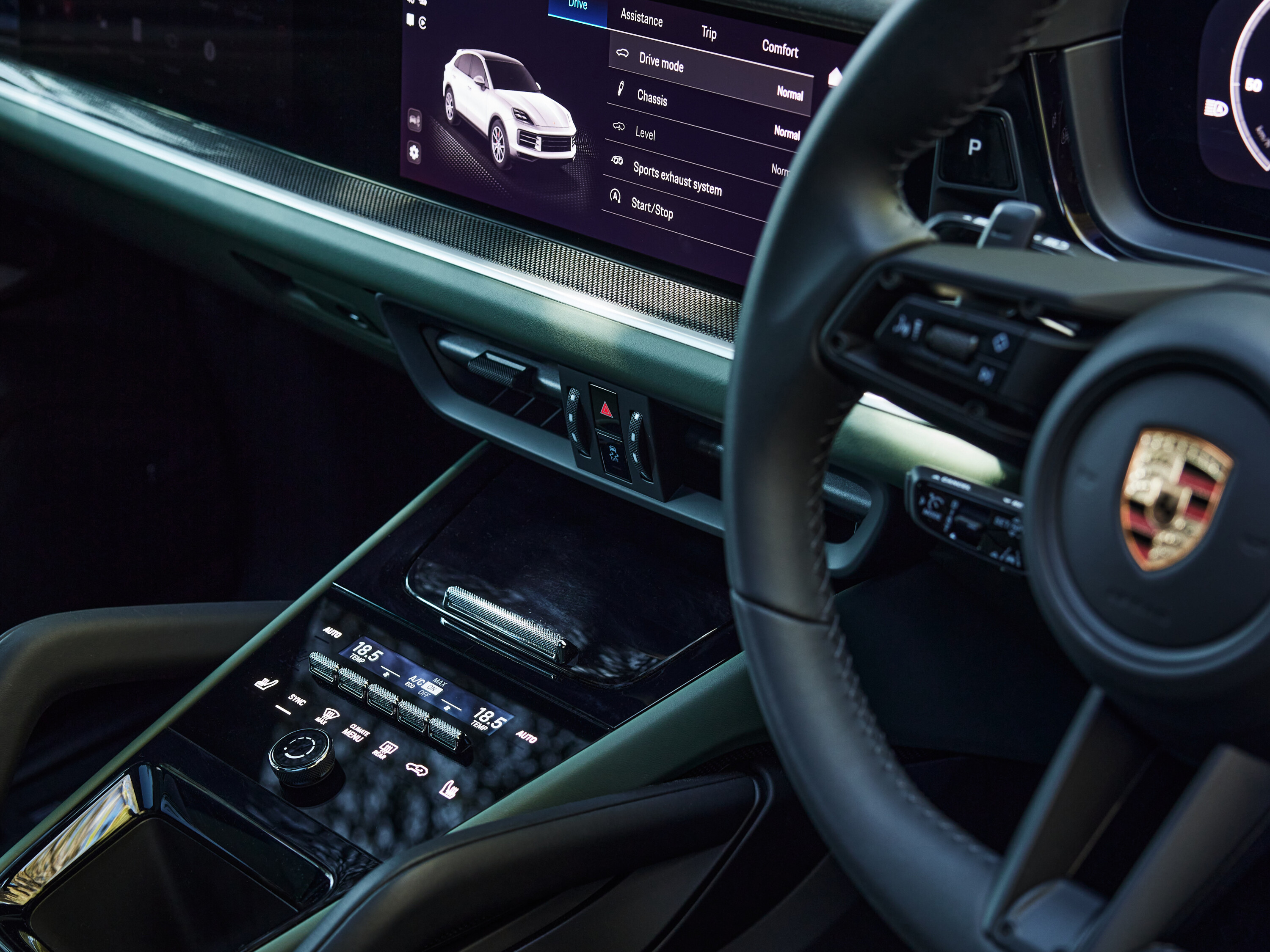
You get used to it, but the first time it happens you wonder if something’s come unclipped in the dash. No, they all do that. Likewise, on our test car, the footrest would slide up and down by a few millimetres which was moderately irritating.
Otherwise interior quality seems extremely good. Carbon fibre trim pieces mix with Race Tex artificial suede for a resolutely racy vibe, although your mileage may well vary on the authenticity of this combo in a 2.2-tonne SUV.
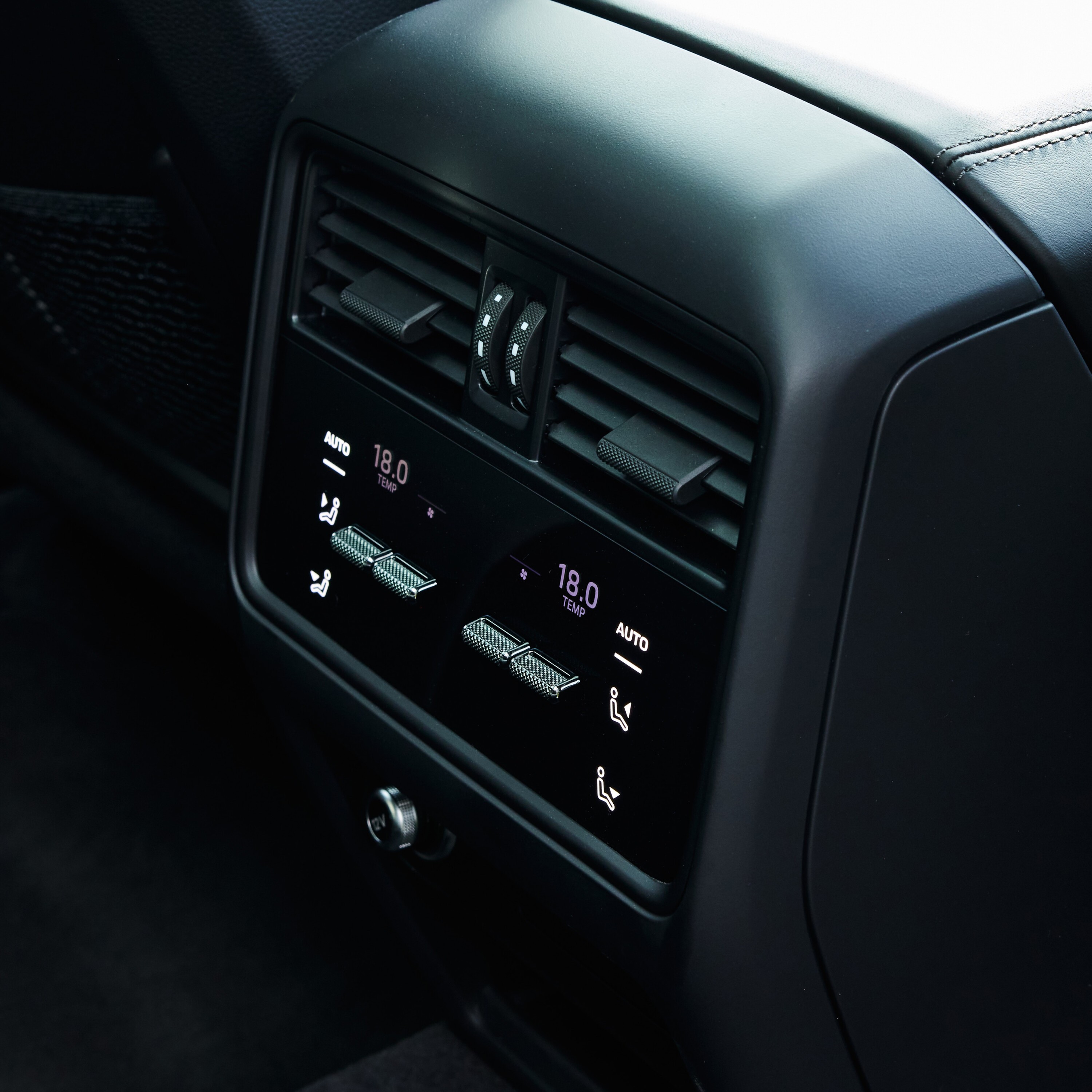
The main display is multi-configurable, with a wall-to-wall map if required
The multifunction sports steering wheel looks very 911 and features a manettino dial hanging from the right-hand spoke with not only a suite of Normal, Off-road, Sport and Sport Plus driving modes but also a Sport Response function, a red button that allows you to instantly ‘push-to-pass’ even if the Cayenne is set into its most relaxed mode. It puts the suspension straight into Sport mode and preps the engine and transmission for instant response.
The main display is multi-configurable, with a wall-to-wall map if required and there’s also a considerable amount of customisation that can be applied to the bright and clear head-up display.
There are physical buttons for the air-con which means you won’t have to go digging in the main screen to change the temperature. The air-con system has become very clever indeed, with a GPS-linked function.
A fixed glass panoramic roof is fitted as standard as is a 14-speaker BOSE sound system good for 710 watts. If this is deemed inadequate, Porsche will happily relieve you of $9630 and fit a Burmester 21-speaker setup that cranks out 1455 watts.
This will bite into the 538-litre luggage compartment due to its below-floor subwoofer. You even got a cooled smartphone wireless charger. Wireless Android Auto and Apple CarPlay are standard and, praise all that is holy, this version of Porsche’s infotainment no longer tries to hijack every function of your smartphone.
There’s a respectable amount of room in the back seats, but taller drivers will find the view out compromised by that sloping roofline. Visibility out of the car is something of a weak spot, with broad B-pillars and a slot-like rear window that gets narrower still when the rear spoiler pops up at speed.
The boot’s decently shaped, but it’s not any larger than what you’d find on something far smaller like a Hyundai Tucson, another consequence of the Cayenne Coupe’s tapered rear. Lift the floor and there’s a space saver spare. One nice touch? Soft close doors all round on this range-topper.
Despite wielding a 3.3-second sprint to 100km/h capability, it doesn’t feel EV-style concussive in that first second as you sink the clog. From there on, it’s an exercise in ladling on kinetic energy like almost nothing else.
Switch the mode dial into Sport Plus and the exhausts will give a guttural bark, banging on upshifts and it all gets very serious, very quickly. The massive carbon ceramic stoppers do their best work when given a big clout. Try to modulate them with any degree of subtlety and they can feel a little skatey.
Porsche has instead been quite hilariously German about the process and has instead modified the pistons, connecting rods, crankshaft and timing chain drive, claiming that only by undergoing this exercise of absolute engineering rectitude can the Cayenne reliably deliver on and off track. Yes, they mentioned the t-word.
What’s more impressive than the go and stop is the Cayenne GT Turbo’s ability to deliver a decent serving of fun through the bends. This isn’t something you just launch straight into.
Then there’s the sheer bulk of the car to consider. Threading a vehicle that’s 2194mm wide (including mirrors) down a narrow country lane requires some concentration.
Of course, the steering is great. It’s a Porsche. What was the last Porsche we drove with duff steering? There’s a respectable amount of weighting, the Race-Tex-trimmed wheel hums with a pleasantly analogue vibe (even if it is largely sly artifice), and the big Cayenne is surprisingly easy to position.
On one or two occasions, when accelerating from corners, the GT Turbo lapsed into a surprising slug of power oversteer when I’d assumed the big Pirelli P Zero Corsas (285/40 ZR22 front and 315/35 ZR22 rear) would be able to accommodate a particular combo of tyre warmth, torque input and steering angle. Reassuringly, the stability control on this vehicle is excellent.
A widened track and an increased camber on the front axle of help during aggressive cornering. A 15mm lowering of ride height in its most focused drive mode also nudges down the CofG.
You’ll be astonished at just how flat the Turbo GT corners, which, upon reflection, may well contribute to that slight lack of communication when it’s at the limit of grip. Sometimes a little roll is a good thing.
Ride quality is surprisingly supple in Normal mode. In contrast to the previous version, the latest Turbo GT has broadened the spread of the effective spring rates in the new two-chamber air suspension. The firm setting isn’t really any firmer than the old model, but the relaxed setting allows the car to breathe with the road that much more soothingly.
Porsche claims a combined figure of 12.5L/100km but that’d require a wholly unnatural sort of restraint that we’d find suspicious and probably un-Australian.
On test, on mixed roads, we averaged 20L/100km. The fuel tank measures a decent 90 litres.
Special mention should go to the jaw-dropping headlights. LED matrix units are now standard across the Cayenne range blending speed, camera and navigation data feeds to ensure ideal illumination. The 11-point matrix of the main beam area does the usual trick of not dazzling oncoming drivers but the Turbo GT model has a few additional tricks up its sleeve.
This gets the high-resolution HD-Matrix LED lights. These lights adjust and recalibrate their power and throw every 16 milliseconds and can perform all sorts of clever adaptive functions such lane brightening, construction-site and bottleneck light or dedicated freeway high-beam.
These chips are governed by a control module, much like a PC graphics card, can set one of 1024 brightness steps for each of the diodes. Dial everything up to 1024 and the Turbo GT is throwing out 2500 lumens, or enough light to illuminate the road up to 600m ahead.
In case you were wondering, the sun kicks out around 127,000 lumens, so you’re not turning night into day (and don’t get me started on lux versus lumens) but suffice to say, they’re extremely good lights when they’re on main beam, that is.
What’s more, it seems as if the algorithm needs a little finessing, as they can drop to dipped beam on a pitch-black deserted country road for no apparent reason and then take a very long time (in some instances around 30 seconds) to decide that the coast is clear and resume the light show.
When it does, it’s very dramatic, with the beam swishing outwards like a pair of opening curtains.
While three years might seem a bit mean given that much of the new car market has moved to five-year warranties, there’s still a bit of lag at the top end of town. The likes of Aston Martin, Bentley, Ferrari, Lamborghini, Lotus, and Maserati all offer a similar three-year deal.
Main service intervals are at 15,000km/1 year, there’s a three-year paint warranty and a 12-year anti rust warranty.
Aside from fuel, it’s worth bearing in mind that set of rear boots for the Cayenne will retail at just over $1000 per corner.
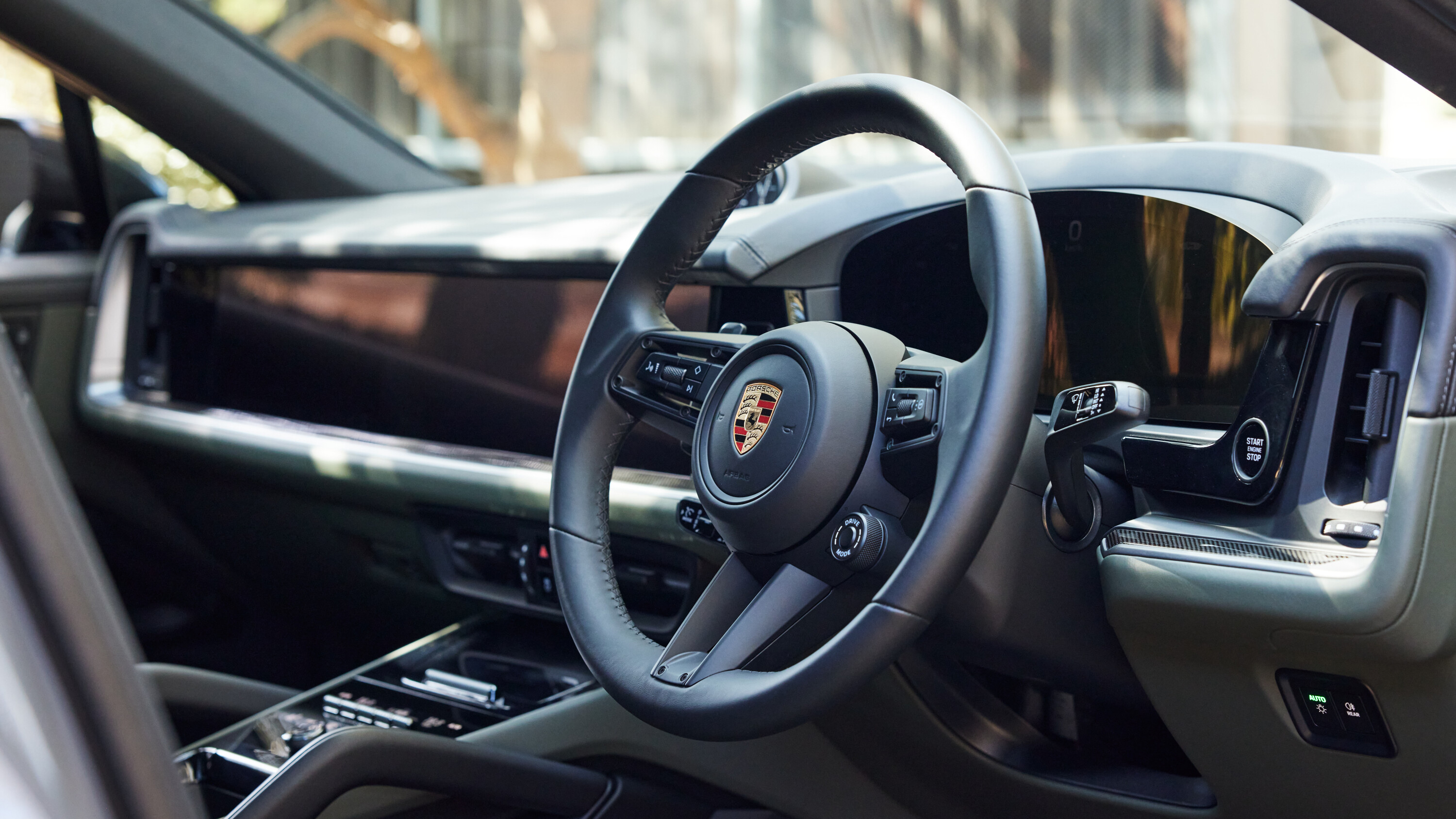
This is a car which can turn a lap of the ‘Ring quicker than a 997 GT3 yet features an off-road mode which can see it wading through 460mm of water. The updates to the latest version have usefully refreshed its utility and added some much-needed subtlety to its palette of flavours.
The Turbo GT is a genuinely phenomenal piece of engineering which, by rights, ought to be enough to endear it to ‘proper’ car enthusiasts, many of whom will turn their nose up at the idea of a huge and heavy SUV, no matter what it’s capable of. And therein lies the rub. The Turbo GT doesn’t get the respect it deserves and, truth be told, likely never will.
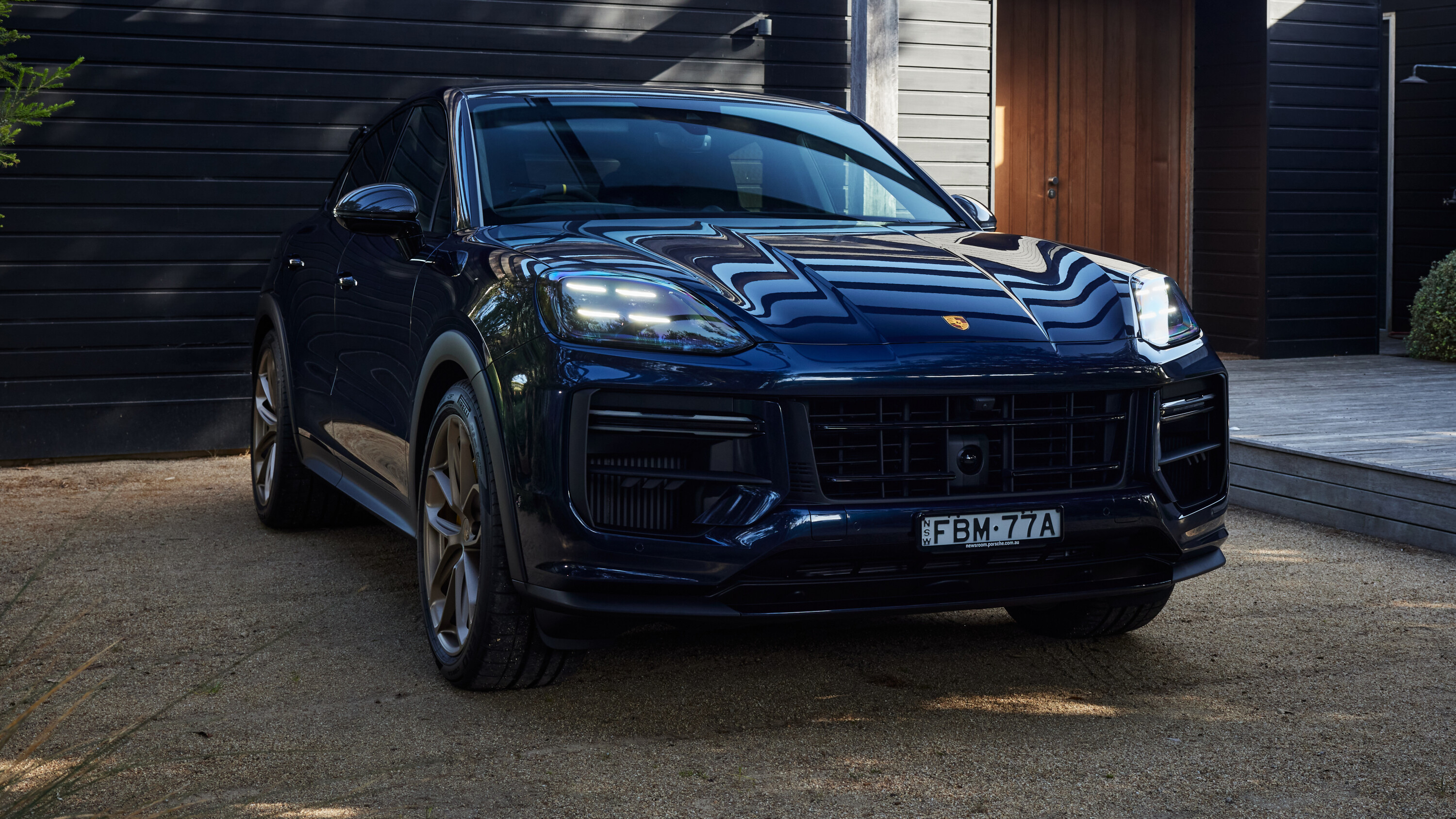
All of which means it’s easy to lean into its extreme attributes and have a great time doing so. Yes, it’s wholly unsustainable, but this is the last fling of great internal combustion engines and we might as well enjoy them while we still can.
If you have the means, the Cayenne Turbo GT earns a solid recommendation. Life is short and opportunities to have this sort of fun are not long for this world. This or an Aston Martin DBX707? In terms of fun, there’s little to separate them, but chances are there will be little overlap in the buyer set. Think of the Cayenne as the unlikely joker in the pack.
| 2024 Porsche Cayenne Turbo GT specifications | |
|---|---|
| Body | 5-door, 5-seat coupe SUV |
| Engine | 3996cc V8, 32v, DOHC, petrol |
| Power | 485kW @ 6000rpm |
| Torque | 850Nm @ 2300-4500rpm |
| Transmission | 8-speed automatic |
| 0-100km/h | 3.3 seconds (claimed) |
| L/W/H | 4932/1995/1648mm |
| Wheelbase | 2895mm |
| Boot space | 538L (1486L seats folded) |
| Weight | 2245kg |
| Fuel / tank | 98 RON / 90 litres |
| Fuel use L/100km | L/100km 12.5L/100km (combined) |
| Suspension | Struts, air springs, adaptive dampers, anti-roll bar (front) Multi-links, air springs, adaptive dampers, anti-roll bar (r) |
| Steering | Electric rack-and-pinion |
| Tyres | Pirelli P Zero Corsa 285/40 ZR22 (f) 315/35 ZR22 (r) |
| Price | $336,200 + on-road costs |
