
Wheels’ long term McLaren 720S could effortlessly clock big numbers. We had to watch that one. That said, tools for staying within the speed limit have never been better
Wheels magazine has always had a passionate audience, with a thriving letters section. Here’s the latest from our readers.
And while we’re talking about the mag, have you subscribed?
1
Bussed a move
?️ Parminder Gill, via email
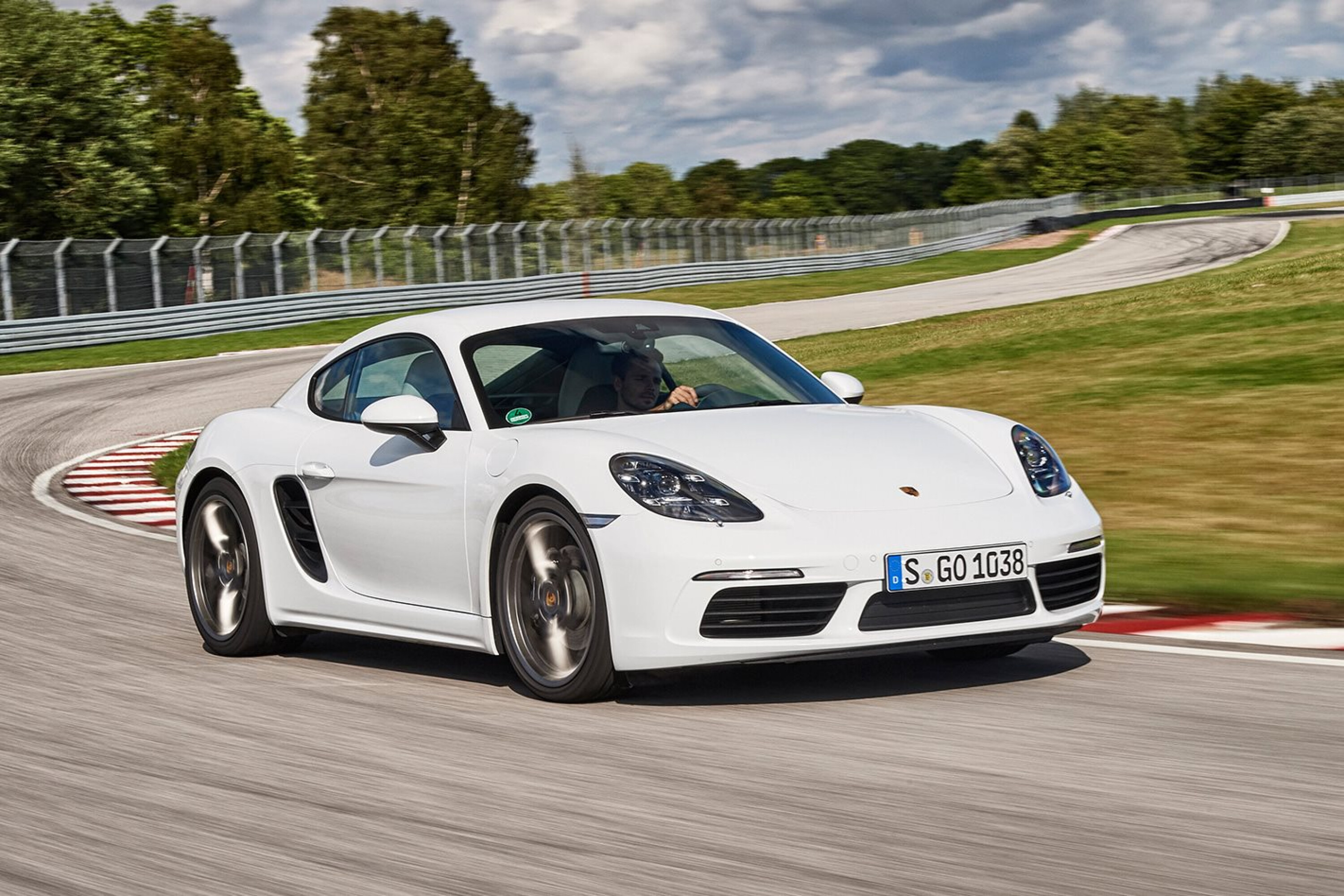
I got banned from driving a couple of months back. No, I wasn’t high on meth or drunk as a skunk. Instead, I was enjoying my car on a very quiet rural road and was clocked driving at more than 45km/h over the limit by police.
It sounds a lot, doesn’t it? 45km/h over the limit seems a terrible speeding offence. What I hadn’t realised was that the speed limit had changed from 80km/h to 60km/h since the last time I’d driven this particular stretch of road and that my car would reach over 105km/h in second gear.
So the 108km/h I was clocked at really didn’t feel an outrageous velocity. But I knew as soon as I saw the police car that I might be in trouble.
1
I understand that this sounds like a bunch of ‘poor me’ excuses but I have accepted responsibility and taken it on the chin. That’s not to say that it doesn’t smart. I had a clean driving licence for more than 10 years prior to this incident, but it seems that this counts for little to nothing if you’re placed in this bracket of speeding offence.
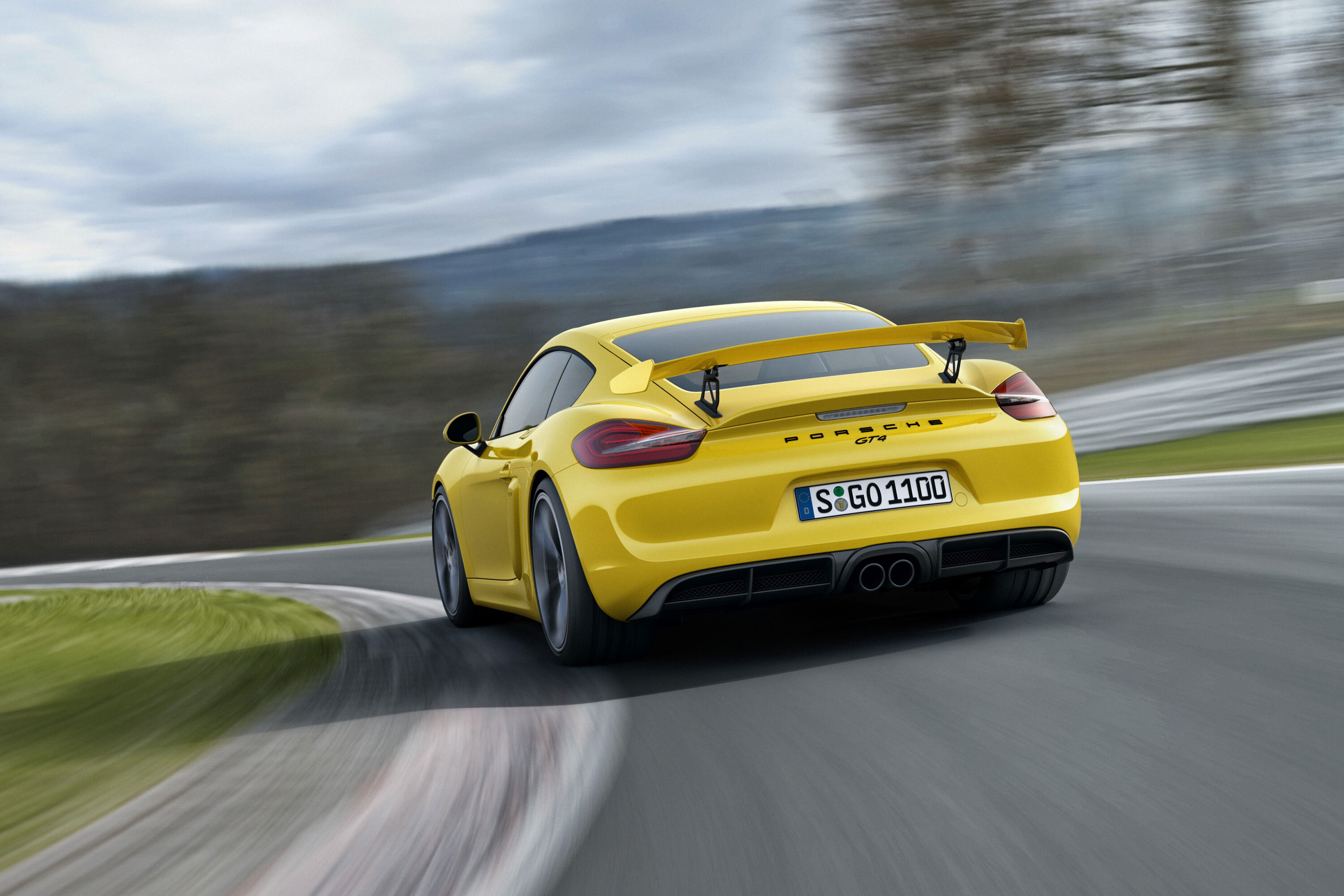
I’d just like to appeal to Wheels readers to really be careful in today’s effortlessly rapid cars. My Cayman is enjoying a rest in the garage and I’m on the bus to work. I wouldn’t wish that on anyone.
ud83dudede Editor Andy
1
Lies, damn lies…
?️ Bryan Winship, via email
It was hugely heartening to read the story on Wheels’ readership lifting by 41 percent according to the latest Roy Morgan figures.
It’s long been taken as a given that magazine sales are on the slide. My partner worked in the publishing industry for 20 years and prior to that she was in the metropolitan police force in London.
She always used to joke that being a copper was far less stressful than trying to keep a magazine afloat! Celebrate your victories because they’re certainly hard won.
ud83dudede Editor Andy
The Roy Morgan survey takes a huge sample of over 66,000 respondents, but we can’t get ahead of ourselves. Translating readers into buyers is the genuine mark of success

1
Barely covered
?️ Name supplied, via email
I recently went to renew my car insurance policy with AAMI and was pretty disillusioned with the whole experience. I’ve been with them for nearly 10 years now and have never made a claim or had any convictions.
This year, the premium went up by 20 percent. What’s more, with the rise in the price of used cars, their Red Book valuation of my car is about 15 percent off what it would cost to replace. You guessed it, I can pay more to get that valuation up, but why should I have to? The insurance is supposed to be ‘comprehensive’.
When I called to complain, they instantly knocked almost 20 percent off as a ‘goodwill gesture’ which shows how much fat is built into the quote. If the government is looking to cap inflation, it should be clamping down on businesses like these that are dudding Aussie consumers.
ud83dudede Editor Andy
There’s been too much egregious price gouging by Aussie businesses enjoying record profits
1
Subtotal recall
?️ C. Baccino, via email
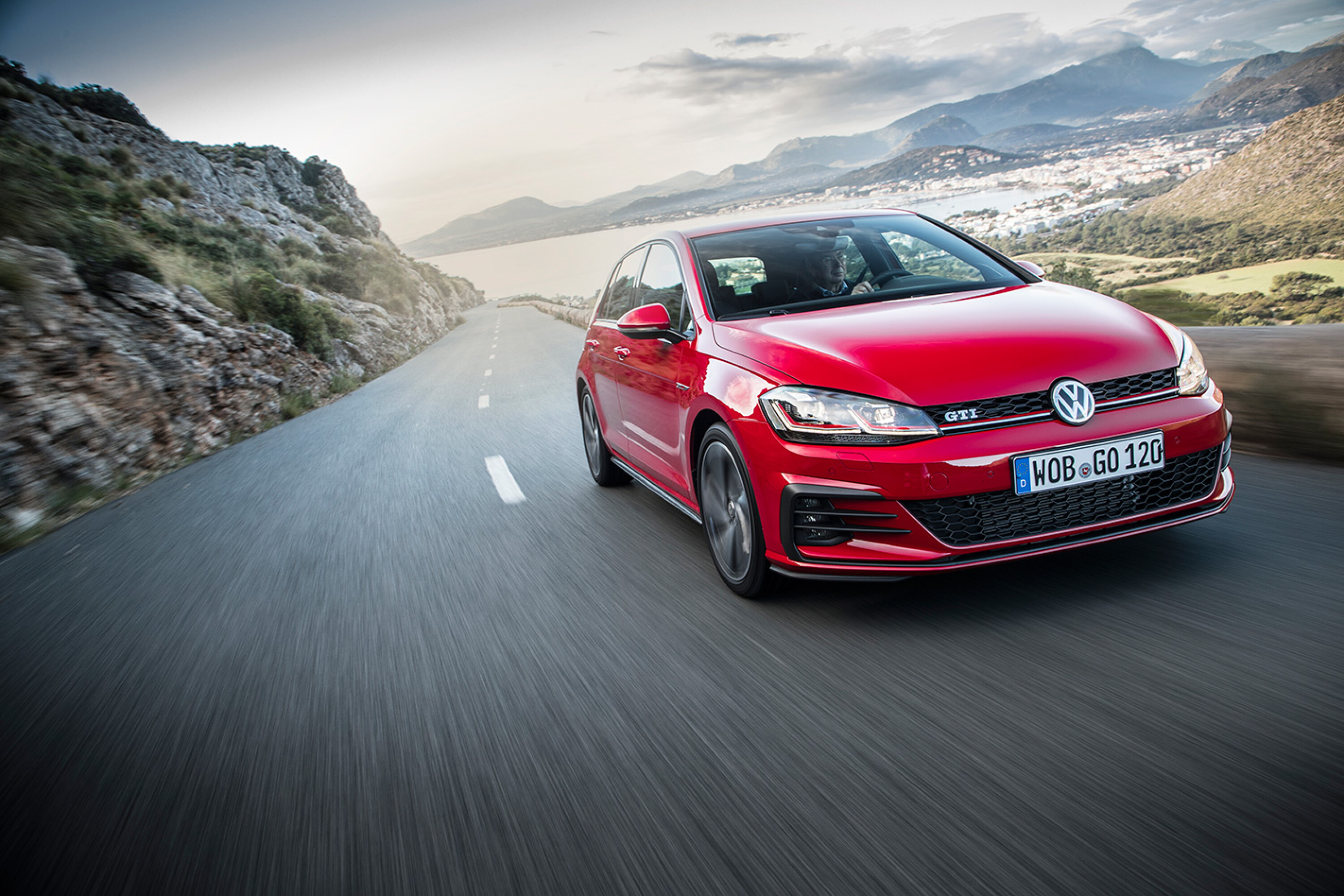
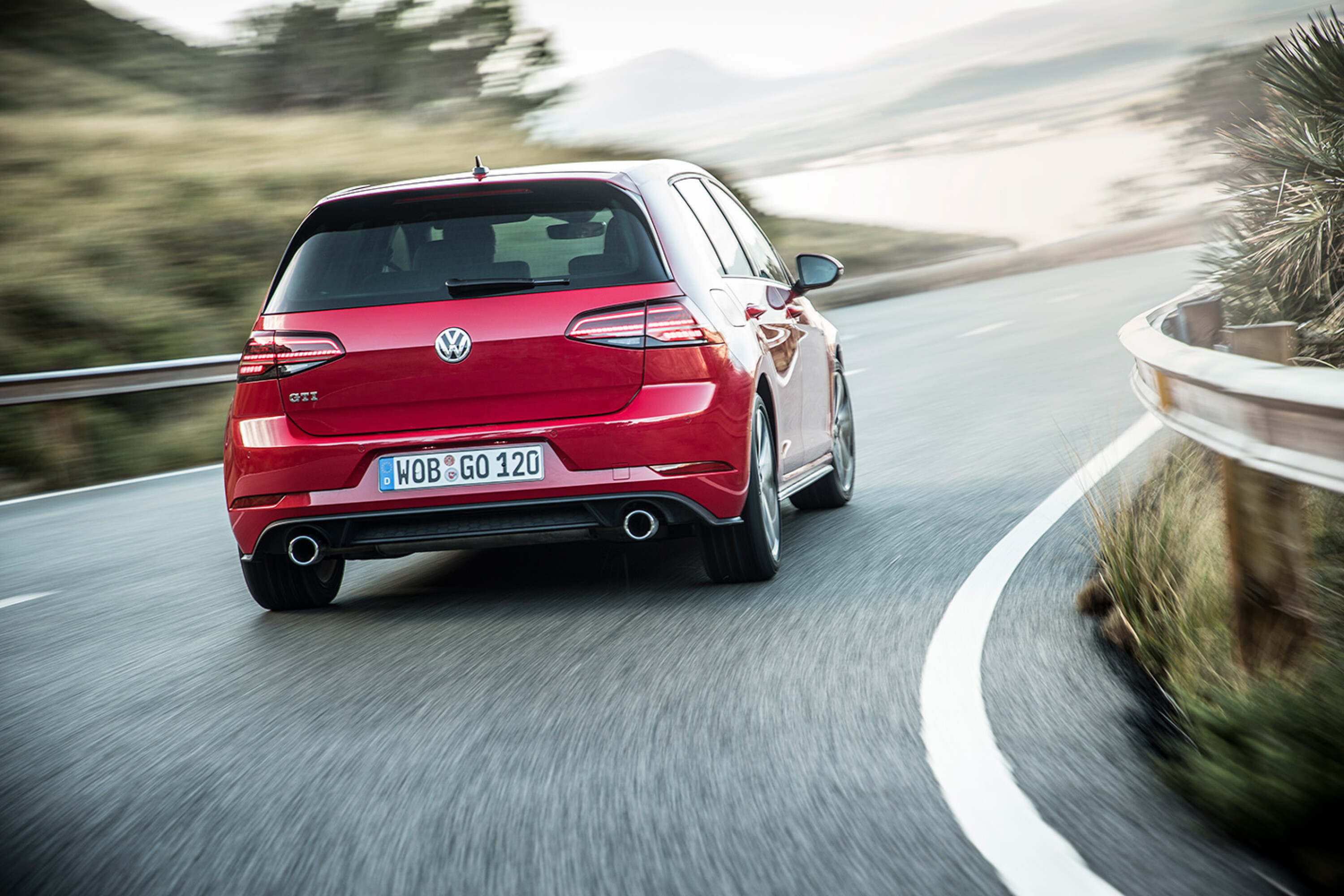
I’ve owned my Volkswagen Golf MK VII from new and have had it serviced at the same main dealer.
Imagine my surprise when I booked it in for a service and they told me that recall work that was due on the car hadn’t been done. It turns out that VW had been sending the recall notice letters to my old postal address.
I’d blithely assumed that if the dealer had my new address then Volkswagen’s head office would have it too. It seems not. Just something I thought your readers ought to know.
1
ud83dudede Editor Andy
That’s a very good point that will have escaped many. I’m sure Volkswagen isn’t the only manufacturer that operates in this way, but if you move house, here’s another thing to check off
Podcast recs?
?️ Steve Boruc, via Facebook
Love listening to a good car-themed podcast on the way to work. Can I get some recommendations from you to see if I’m missing any?
ud83dudede Editor Andy
I love Smith and Sniff, the Intercooler, the Race F1 and the Collecting Addicts show, even if it frequently meanders off into the realms of which limited edition Singer/Ferrari you should buy as part of your twelve-car garage. Pommy roots showing badly here
1
No love for R33?
?️ lan Brown, via Facebook
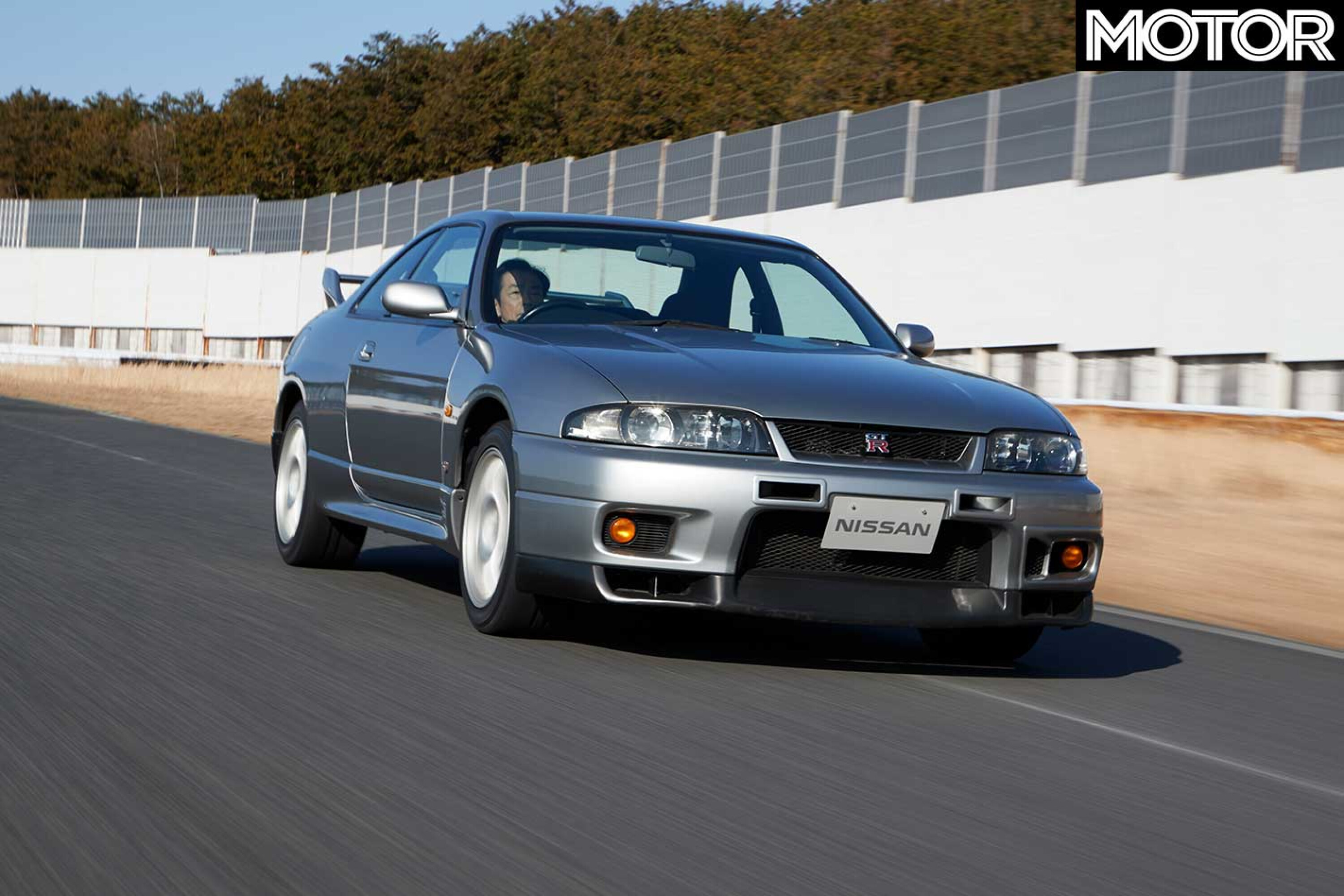
I was browsing through back copies of Wheels online last week and realised that you’d covered the R32 and R34 generations of the Nissan Skyline GT-R in Modern Classic, but have overlooked the R33.
As a proud R33 owner, I’m standing up for the forgotten generation of Skylines. Can we see it featured soon? Not mine, by the way, it’s a bit ratty.
ud83dudede Editor Andy
Okay, people. Let’s help Ian out here. If you’ve got a tidy R33 GT-R and want to see it featured in Wheels magazine, you know what to do
1
The Wheels question to you
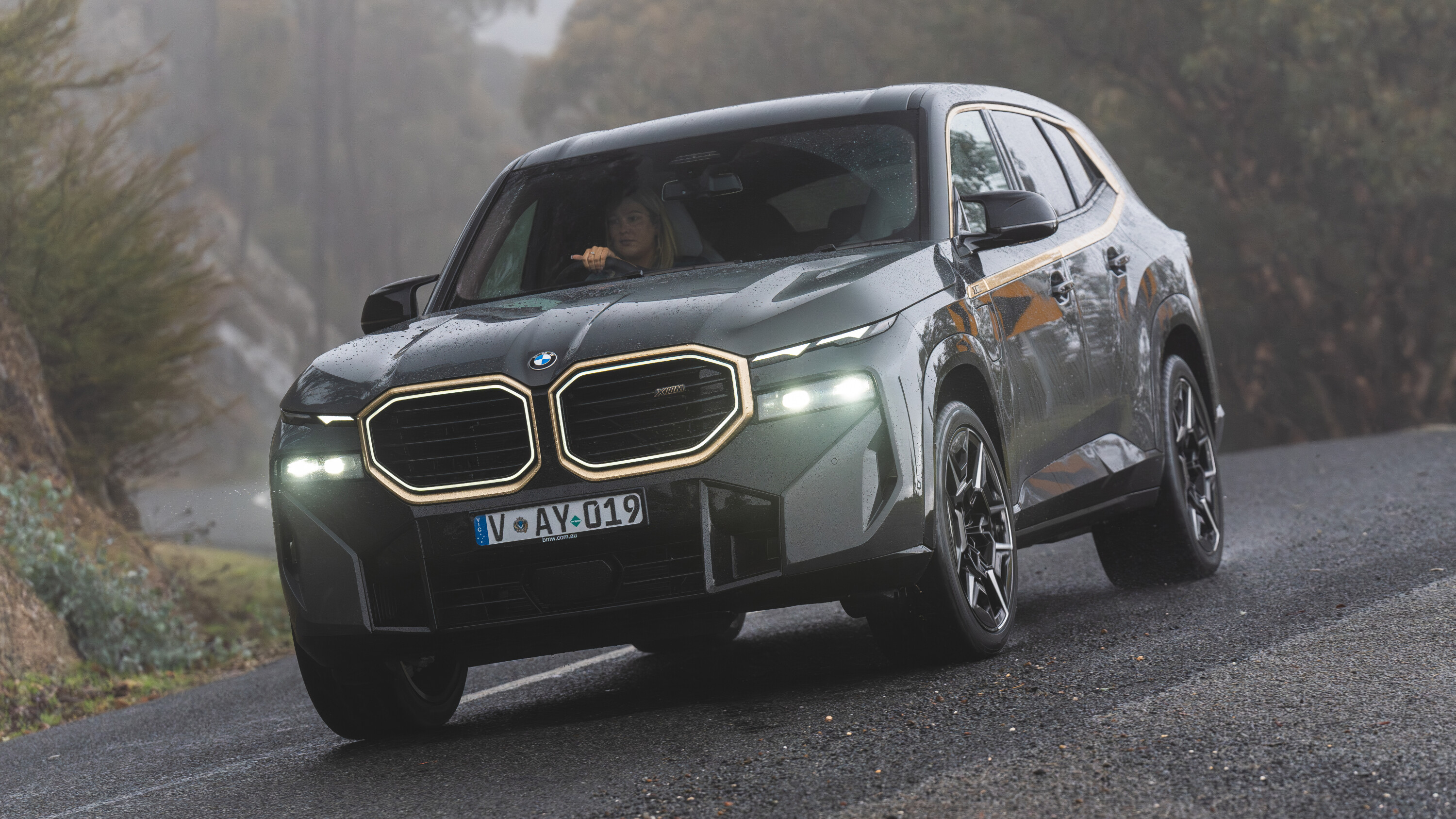
New BMW XM – an apt 50th birthday present for M?
I’m okay with it
- I think the point most are missing is that this is just a vehicle to demonstrate Mu2019s capabilities. It isnu2019t trying to say anything bigger than that. People need to stop with the hysterical reactions to it. Sarah Standish, via Facebook
Hell noes
- OMG. Talk about a face only a mother could love. With all the resources available to it, BMW felt an oafish bloater was the best way to demonstrate the way ahead for the M division? Why? N. Jones, via Facebook
Want to have your say? Keep it tight (no more than 200 words) and include your suburb if via email: [email protected]. You can also chime in on Facebook & Instagram.
2023 Nissan X-Trail E-Power Ti-L
Things we like
- Spaaaaaaacccceee
- Interesting hybrid solution
- Great cruiser
Not so much…
- Flaky wireless Apple CarPlay
- No spare tyre
- Not hugely more efficient
2023 Honda ZR-V e:HEV LX
Things we like
- Looks good
- Better driving dynamics
- Efficient drivetrain
Not so much…
- Road noise
- Feels heavier than the petrol
One of the things I hear a lot, is that all cars are the same now.
But, actually, I could reach back into the Wheels catalogue to find letters and columns claiming the same thing for decades. These days, everything is an SUV (which is sort of true) and they’re all the same, people say.
Well, I’m here to tell you, they’re not all the same.
1
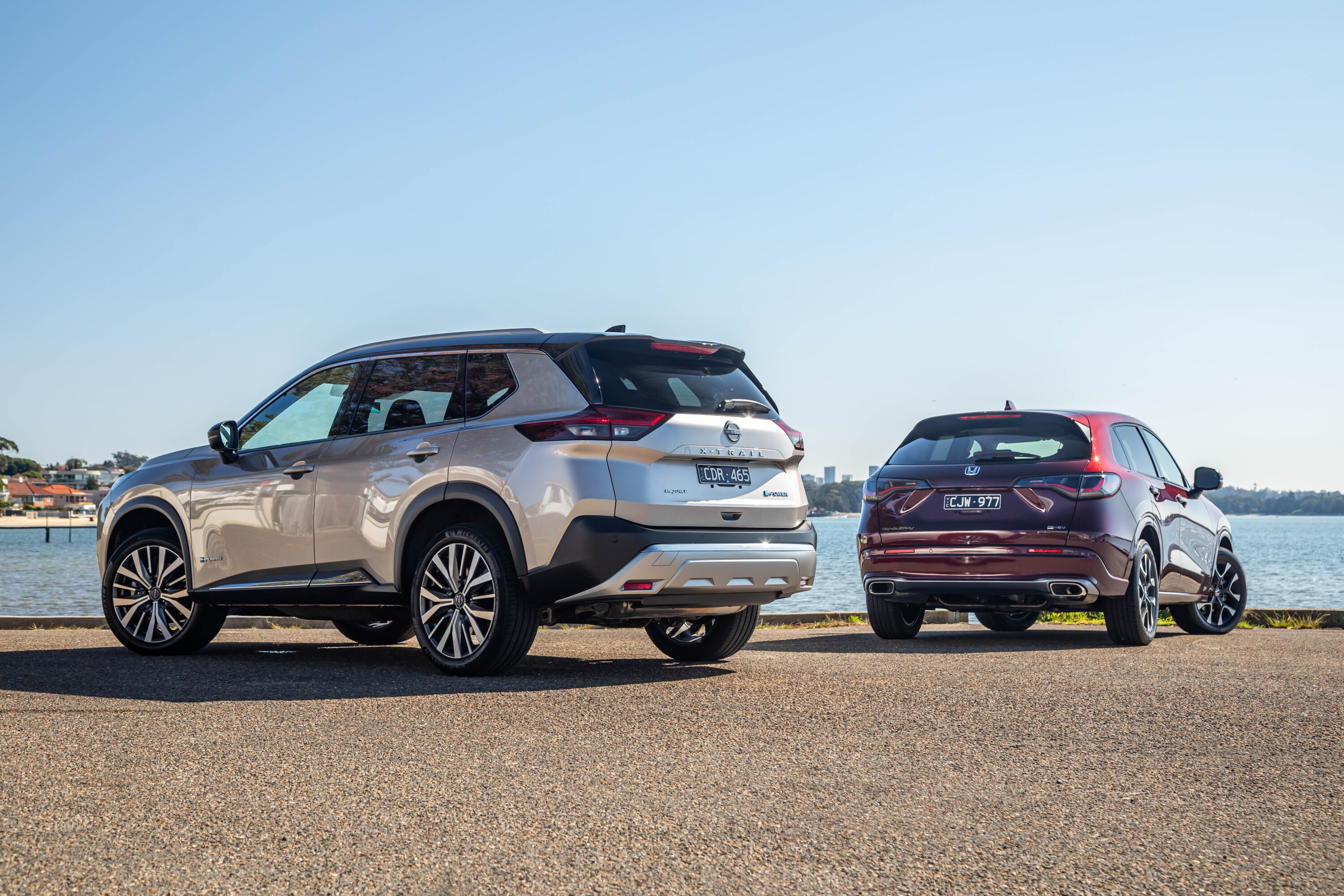
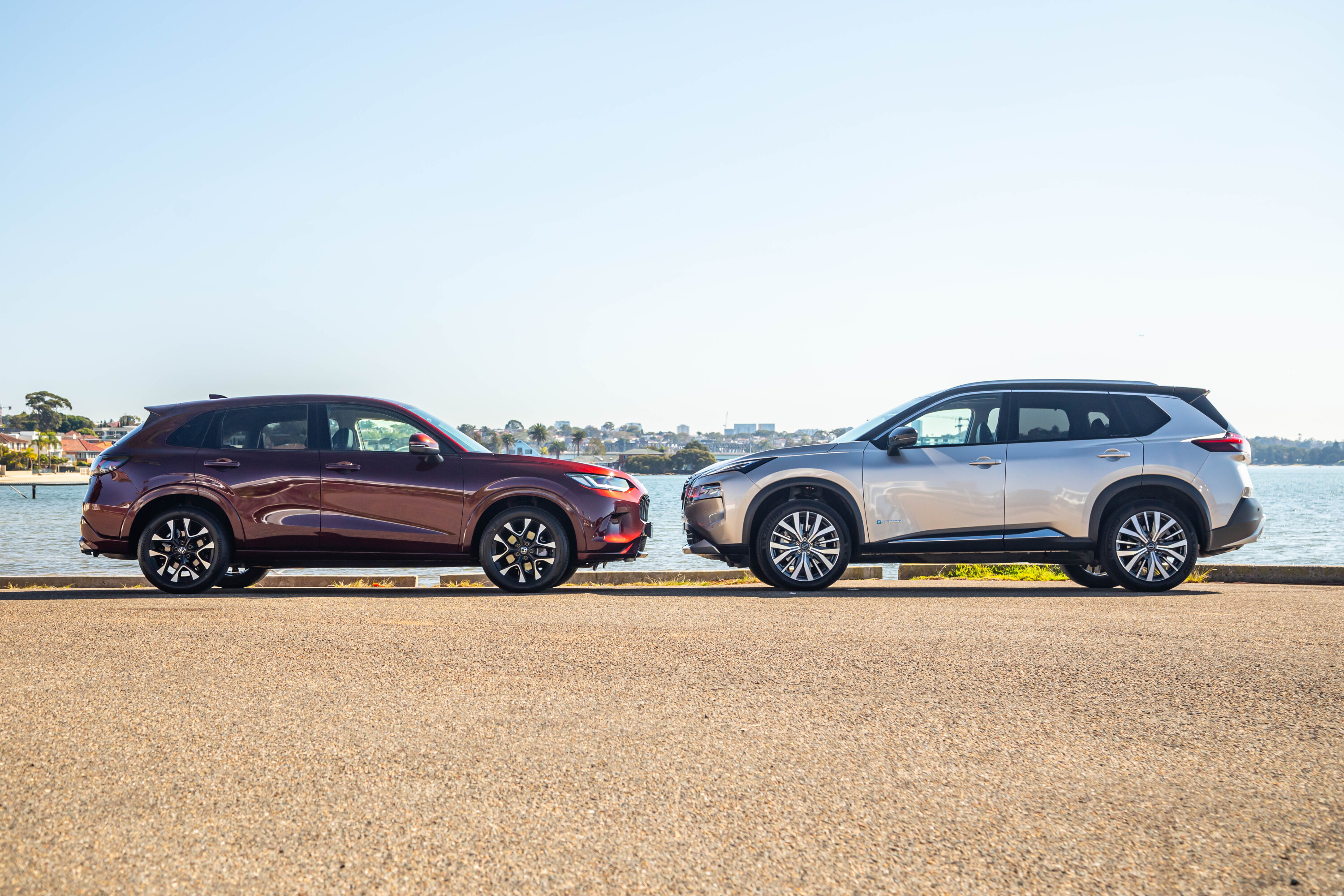
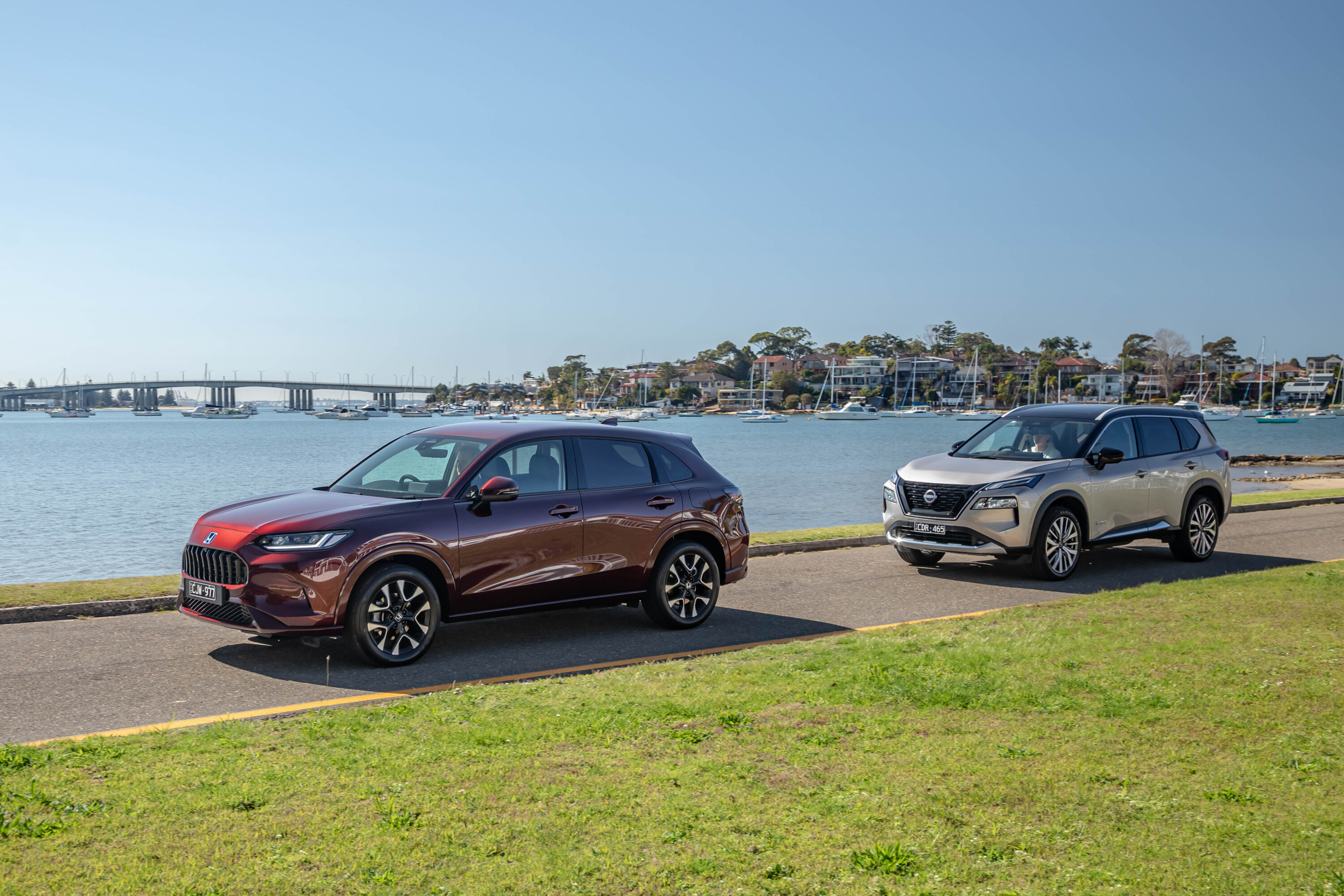
Here we have two cars – the Honda ZR-V and the Nissan X-Trail – both 2023 arrivals, both SUVs, but very, very different to each other. You can look at them both as hybrids taking on the Toyota RAV4, but they manage to form a pincer movement rather than a united front.
We’ve put these two together because despite being very different sizes and shapes, they’re also close in price. And when you add electrification, they land on the same shopping lists because of that.
1
JUMP AHEAD
- How much are they, and what do you get?
- How do rivals compare on value?
- Interior comfort, space and storage
- What are they like to drive?
- How are they on fuel?
- How safe are they?
- Warranty and running costs
- VERDICT
- Specifications
How much are they, and what do you get?
The ZR-V and X-Trail look close-ish on paper, but the Honda’s no-haggle drive-away price works out a fair bit cheaper than the X-Trail’s eventual on-the-road price of about $62,000 depending on where you live.
You can save a few bucks on the X-Trail Ti which brings price and spec closer to the Honda’s and, let’s be honest, you’re not losing much if you.
1
| Honda ZR-V e:HEV LX | Nissan X-Trail E-Power Ti-L | |
|---|---|---|
| Wheels | 18-inch alloy | 19-inch alloy |
| Stereo | 12 speakers, Bose branded | 10 speakers, Bose branded |
| Satellite navigation | Y | Y |
| Wireless phone charger | Y | Y |
| Headlights | Auto adaptive LED | Auto matrix LED |
| Sunroof | N | Y |
| 360-degree camera system | Y | Y |
| Heated steering wheel | Y | Y |
| Upholstery | Leather | Leather |
| Tailgate | Powered | Powered |
| Digital dashboard | Y | Y |
| Parking sensors | Front and rear | Front and rear |
| Touchscreen | 9.0-inch | 12.5-inch |
| Mobile integration | Wireless Apple CarPlay, Wired Android Auto | Wireless Apple CarPlay, Wired Android Auto |
| Auto wipers | Y | Y |
| Reversing camera | Y | Y |
| Head-up display | Y | Y |
| Active noise cancelling | N | Y |
| Climate control | Two zone | Three zone |
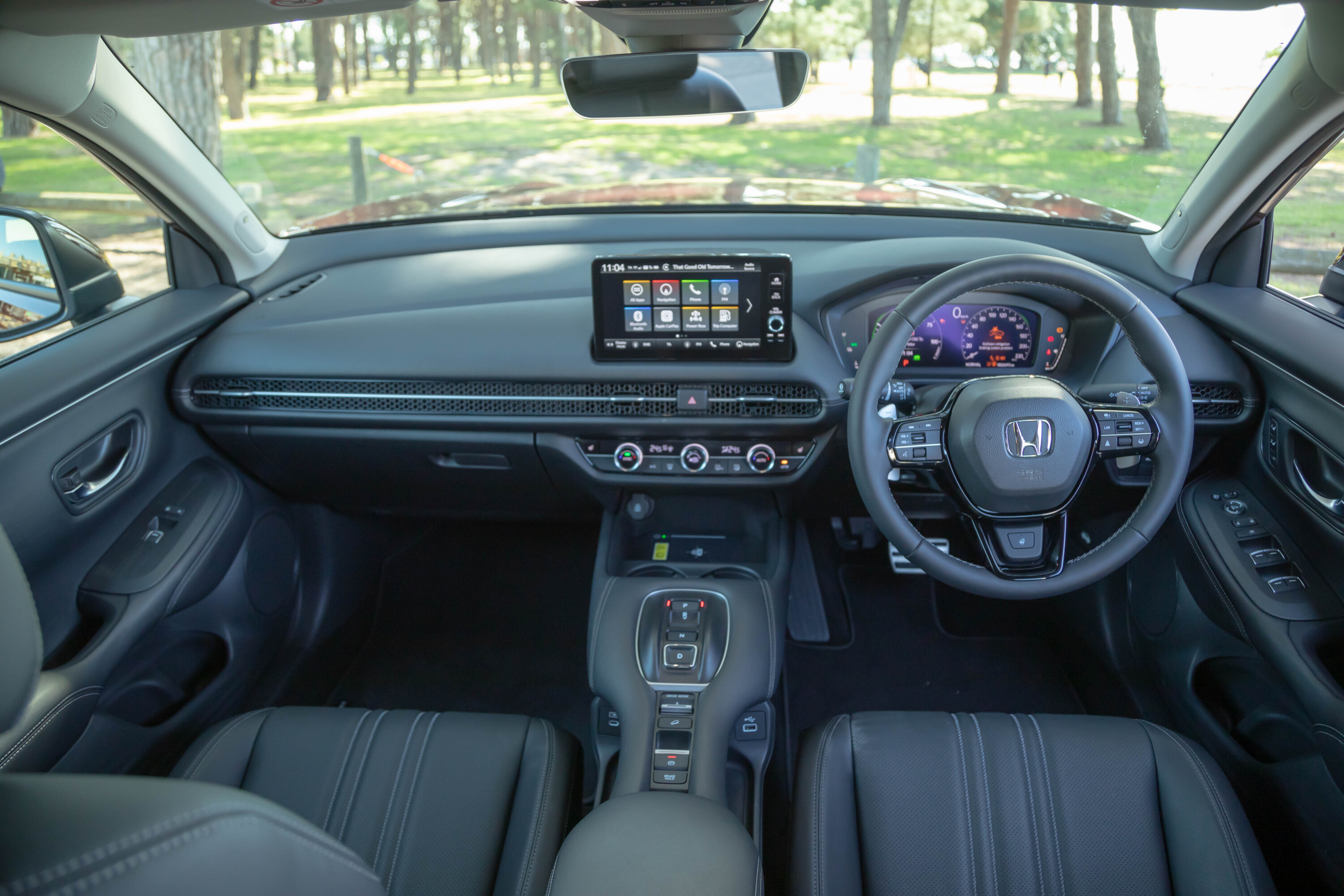
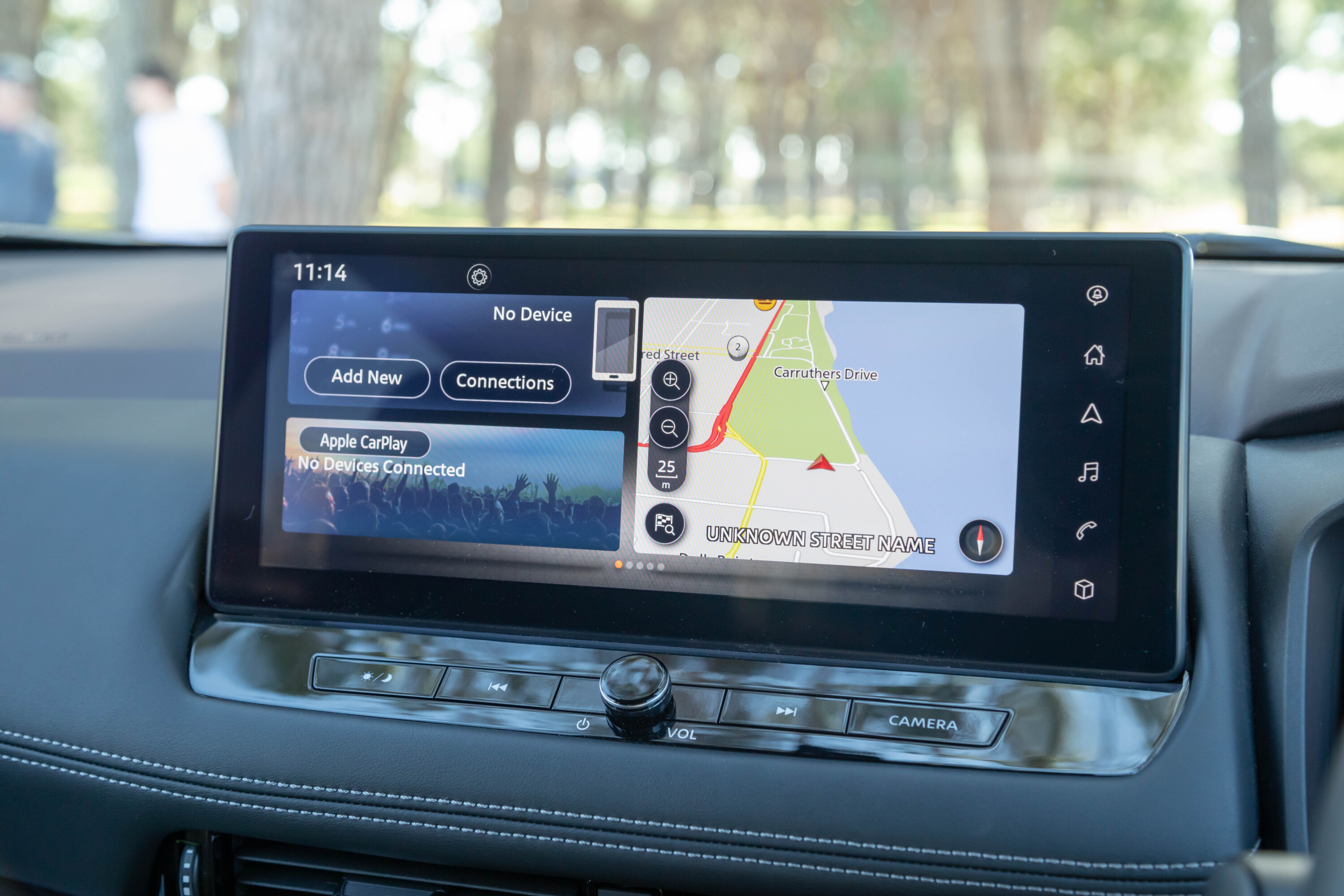
Neither of these cars has a particularly good media system, although the Nissan’s is preferable purely for its slightly better software and bigger screen. Both experienced niggles with the wireless Apple CarPlay (I can’t speak for Android Auto) but few systems manage that feature perfectly.
The X-Trail Ti-L’s higher price is offset by the sunroof (only of value if you want one), a few extra bits and pieces like Matrix LEDs, Nappa leather, three-zone climate control and heated rear seats. None of this stuff is earth-shattering.
1
How do rivals compare on value?
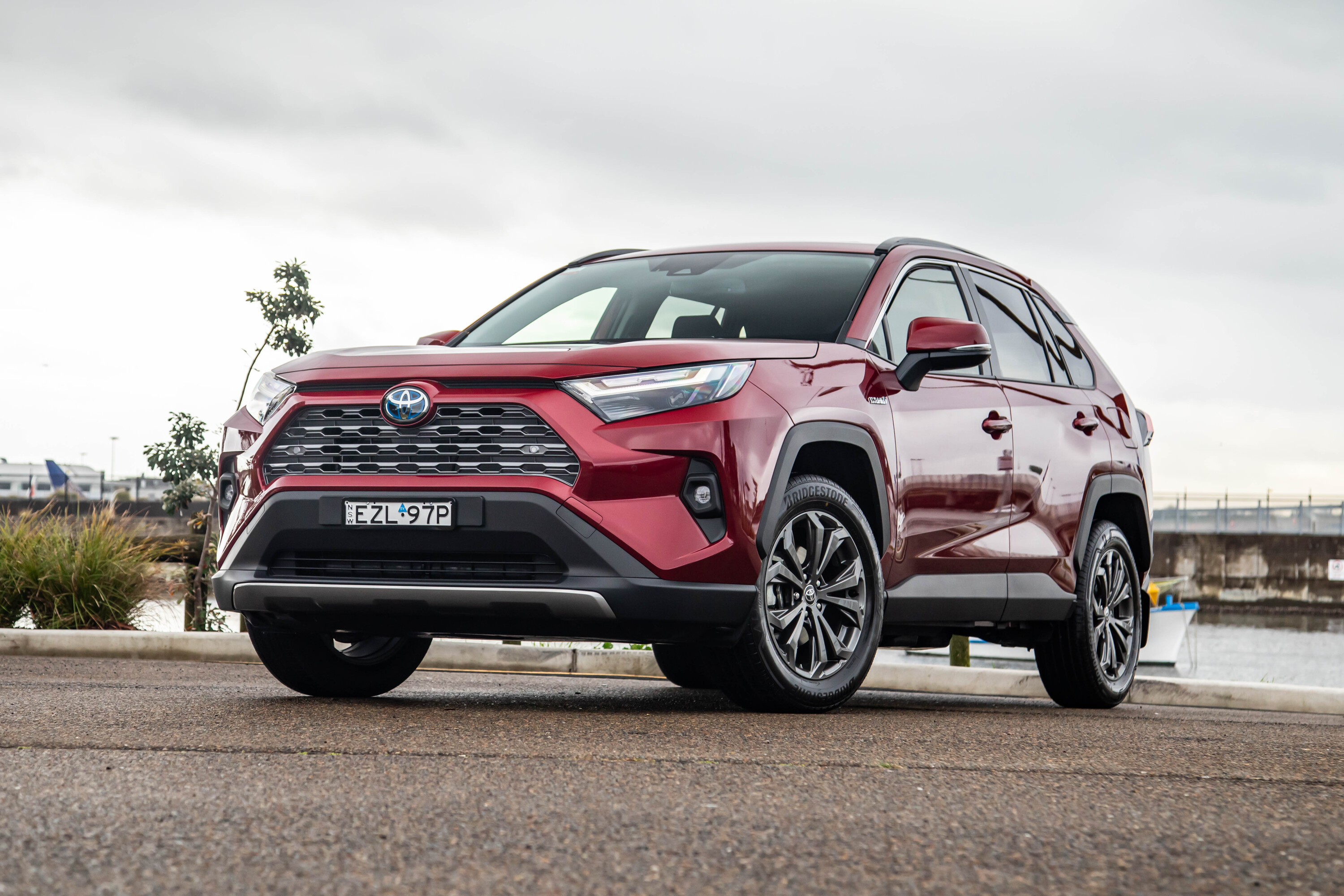
The Toyota RAV4 dominates this segment and you can have a RAV4 Edge Hybrid for more than the X-Trail Ti-L (around $63,000 drive-away) sometime in 2025.
I’m only half-joking as I do expect RAV4 supply to improve as the economy touches down/crash lands (over to you Reserve Bank), but it doesn’t look like amazing value compared to either of these.
You also could look at the MG HS PHEV. It’s a reasonable performer with a fairly dowdy chassis and less convincing interior, it’s a tenner under fifty grand and has a proper electric-only range courtesy of its plug-in architecture and much bigger battery.
1
Interior comfort, space and storage
It will come as no surprise that the Nissan takes a clear win for interior space and storage.
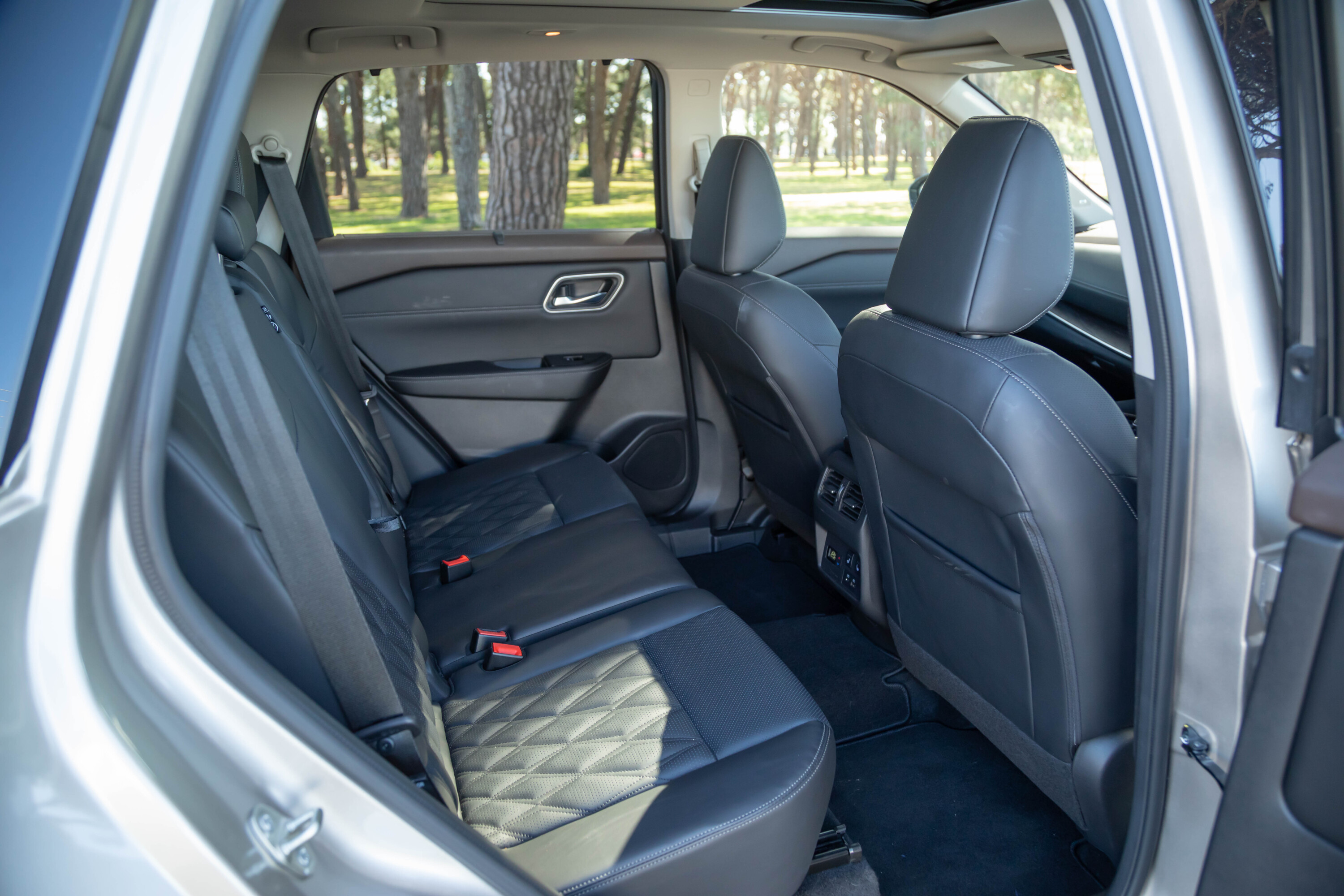
A couple of areas where I expected the Honda to take a bit of a beating were closer than I thought. The first was rear seat space. While the Nissan is a little wider and the seats overall more comfortable, the Honda’s legroom was surprisingly closer to the Nissan than I had expected.
The X-Trail’s seat does roll forward and back but the ZR-V offers competitive lazing room for even tall folks like our resident totem pole John Law. Both cars also feature an armrest with cup holders.
1
Nissan may claim better rear seat honours, but as I say, not by as far as its extra heft in all directions would suggest. It will be more comfortable for a long journey and the amount of light pouring into the cabin from the big windows means it’s rather pleasant in there.
Getting in is also easy, especially for parents loading kids. The doors open very wide indeed, Nissan saying they go to 85 degrees, which is near as dammit to perpendicular to the car. Loading bulky capsules or wrangling struggling kids into the back seat has never been so easy.
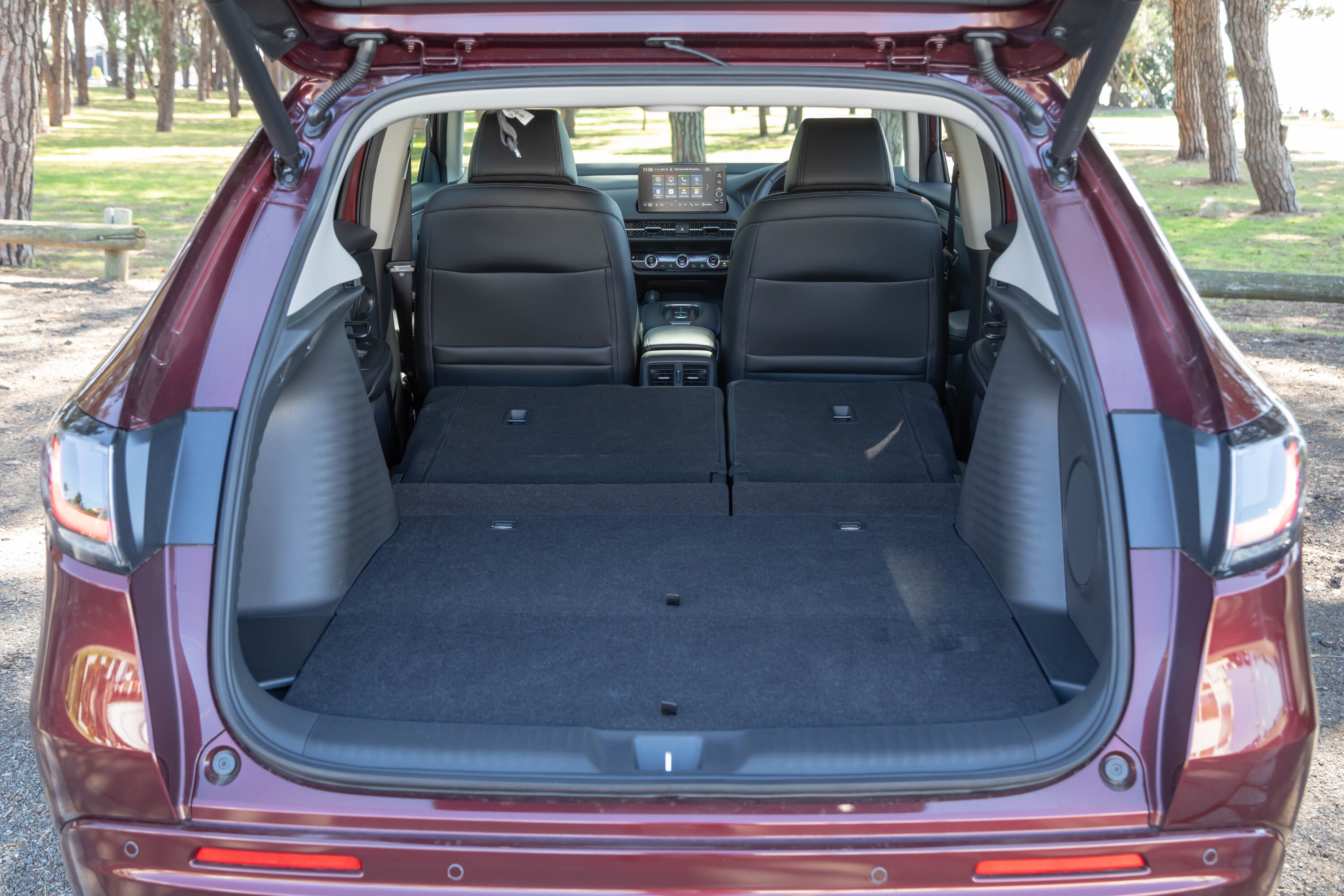
Cargo space is where the Nissan takes the lead – the Honda’s 380 litres is useful but hardly amazing in this category, with even the perennial tiddly-booted CX-5 offering an extra 60-odd litres. It’s a good boot, though, with a flat floor and no snags or silliness along the edges.
1
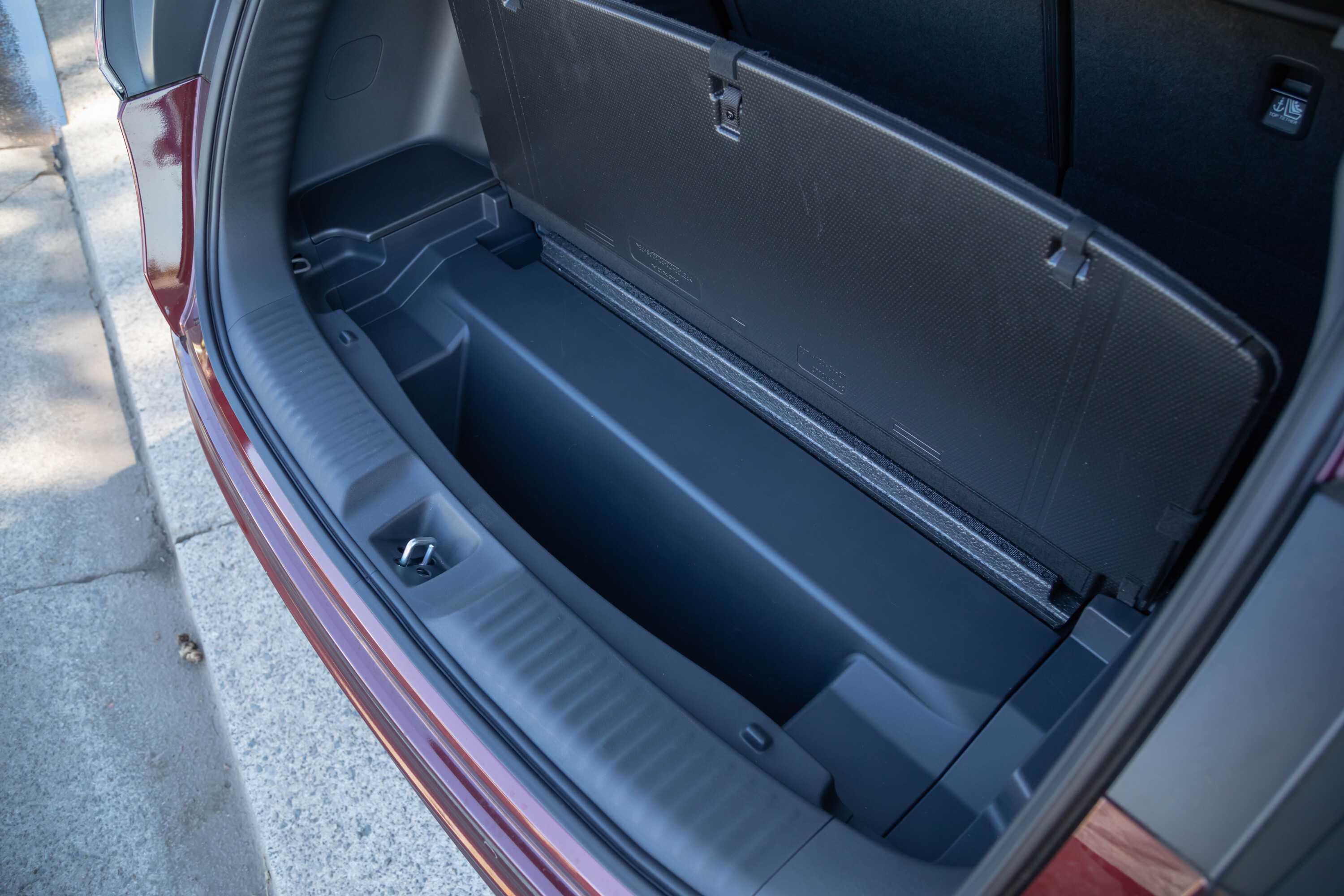
Although the X-Trail’s boot is a hefty 575 litres, there are two things you need to know.
It’s ten litres smaller than the petrol-only car and while that’s fine, it’s only because there isn’t a spare tyre.
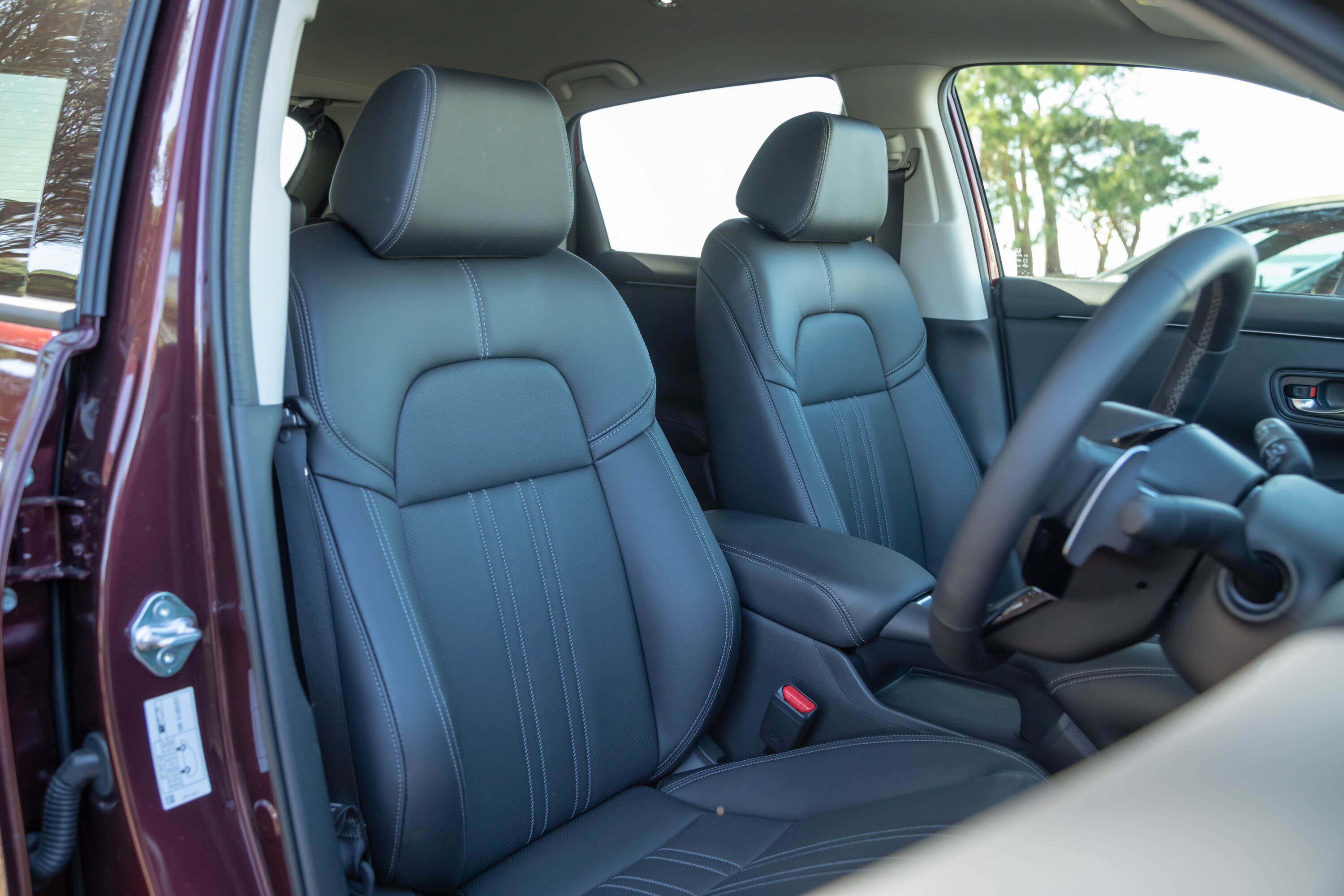
The front seats are where things get interesting. In the Nissan, you’ve got two big screens, a head-up display and a majestic view out. The Honda’s two smaller screens (but with a head-up display) feature in a much sleeker dash design.
Both also have an under-console storage bin, but the Nissan’s is enough for a small backpack or handbag while the Honda’s will only take small items like phones and keys. Each has a pair of cup holders but the Honda’s is a much tighter feeling layout while the X-Trail’s is more generously proportioned.
2
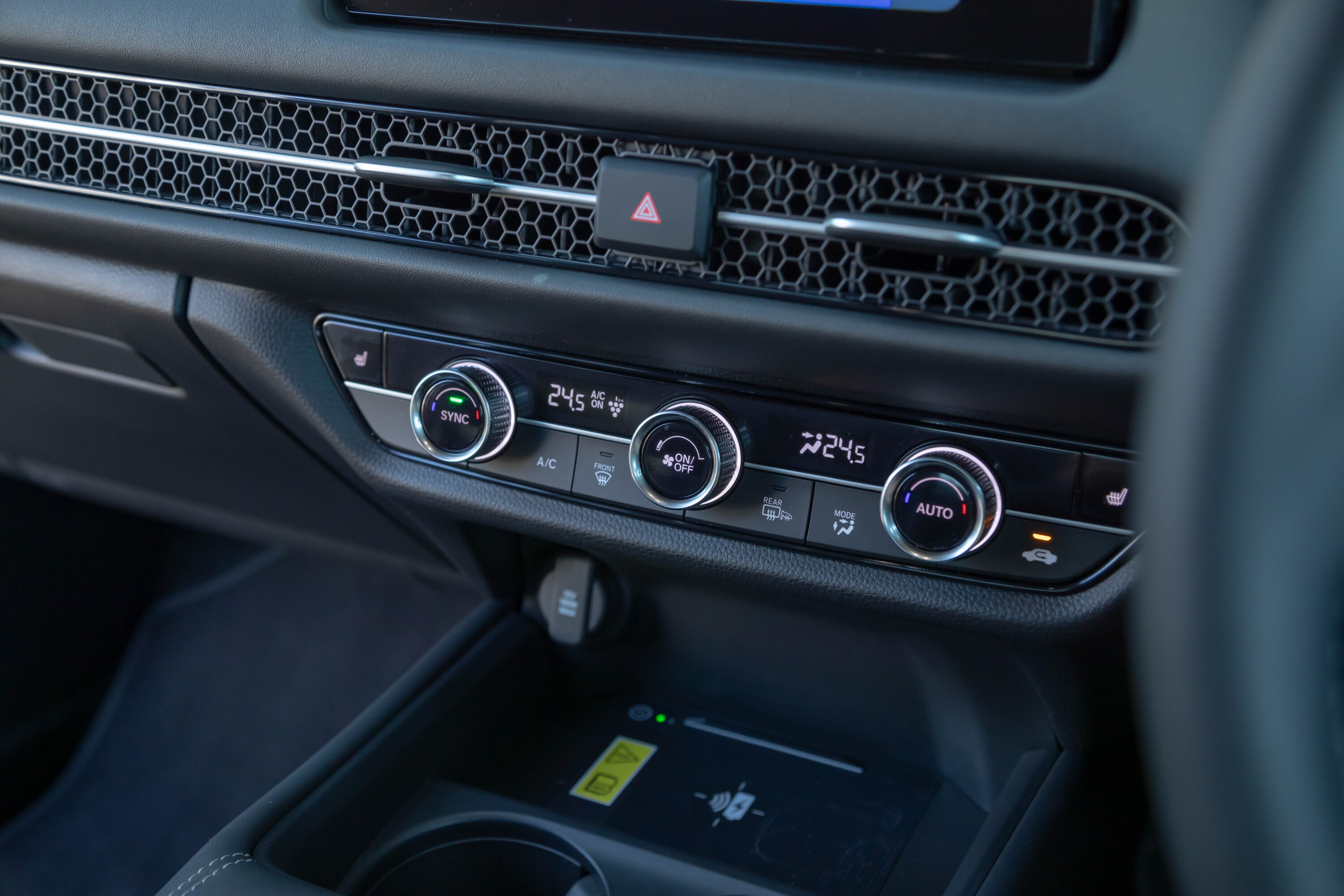
Honda took a more minimalist approach and it’s quite nice, especially the strip of hexagonal-shaped perforated plastic that breaks up the dash. It’s got a bit of a Mazda button-lite vibe to it, which makes it a very calm place to be. That doesn’t mean the Nissan isn’t calm, but the Honda feels very sleek and elegant inside while the X-Trail is more functional.
Traditionally Honda-firm seating is present and correct in the ZE-V and the Nissan’s plusher, more comfortable chairs are my pick for a long journey.
1
What are they like to drive?
The likely reason you’re looking at these cars is their electrified drivetrains.
Both Nissan and Honda sell identically specified petrol-only models; the X-Trail just comes in many more guises.
The two drivetrains are quite different from what most of us know of hybrids.
| Honda ZR-V e:HEV LX | Nissan X-Trail E-Power Ti-L | |
|---|---|---|
| Power | 104kW | 106kW |
| Torque | 182Nm | 250Nm |
| Electric motor | front | front and rear |
| Electric power and torque | 135kW/315Nm | 150kW/330Nm front, 100kW/195Nm rear |
| Combined power | 135kW | 157kW |
| Combined torque | 320Nm | NA |
| Battery | 1.05kWh lithium ion | 2.1kWh lithium ion |
| Transmission | continuously variable | single-speed reduction gear |
Let’s take on the Honda first – it appears to be a fairly straightforward series hybrid and feels a lot like the one in the HR-V.
That’s both good and bad as the HR-V felt underpowered in our small SUV test but it’s also very smooth and gives you a nice kick off the line before the engine roars into life. The 135kW/320Nm outputs aren’t exactly stratospheric but the ZR-V gets along pretty well.
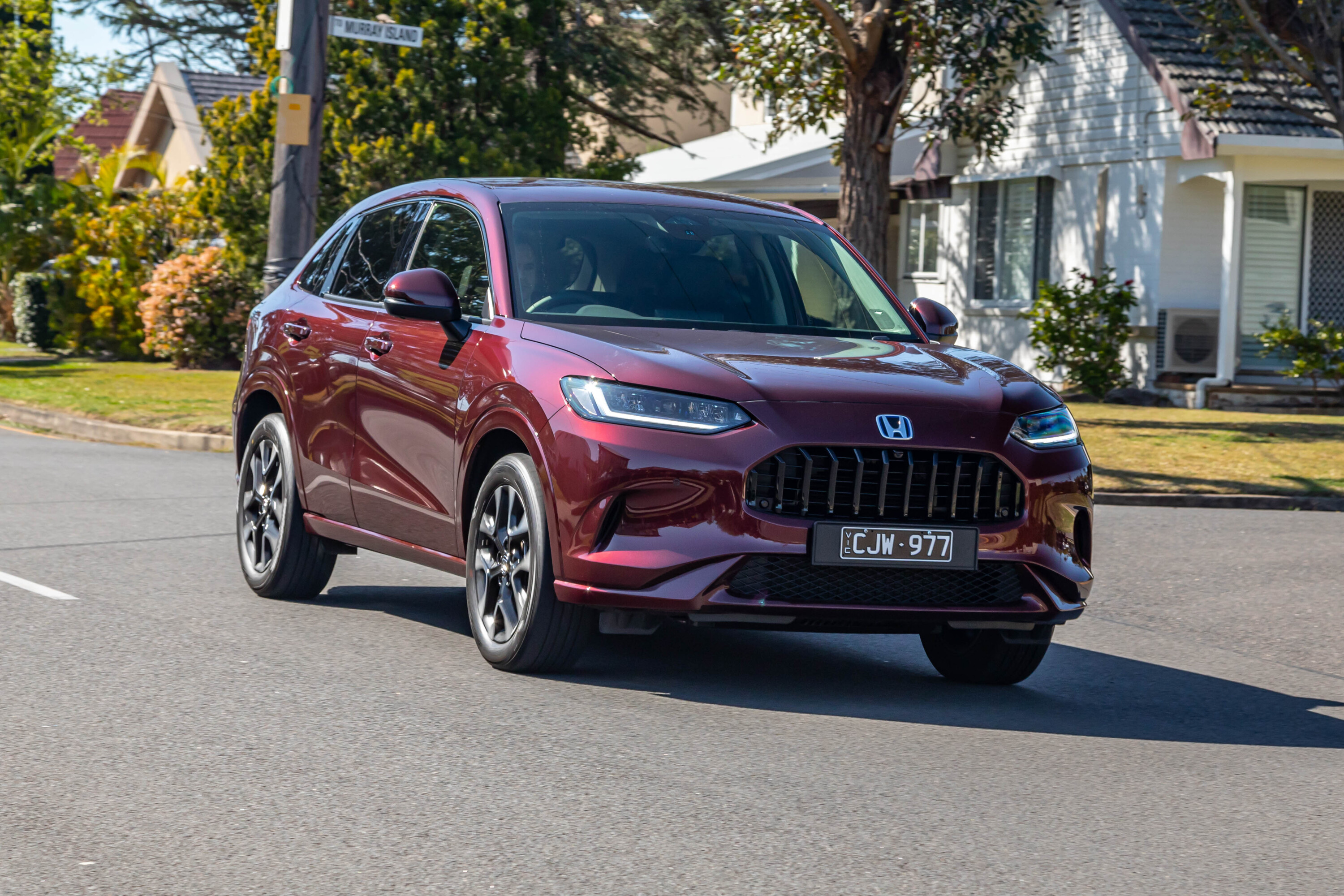
1
The Honda features two electric motors, one which acts as a generator to recover kinetic energy via regenerative braking which it then feeds to a small battery or the electric motor that drives the wheels on its own.
It’s quite clever and you can even choose how much regen you get by pulling the steering wheel paddles but it keeps resetting itself. It’s energetic enough around town but as soon as you’re on the freeway, the 1.5-litre turbo is pretty much on its own, generating power fed to the electric motor as well as driving the wheels directly.
And the thing is, in company with the Nissan, it’s a little uncouth. Road and engine noise made front-to-rear seat discussion difficult compared to the X-Trail, the latter when pressing on. The rear seat ride was also less settled.
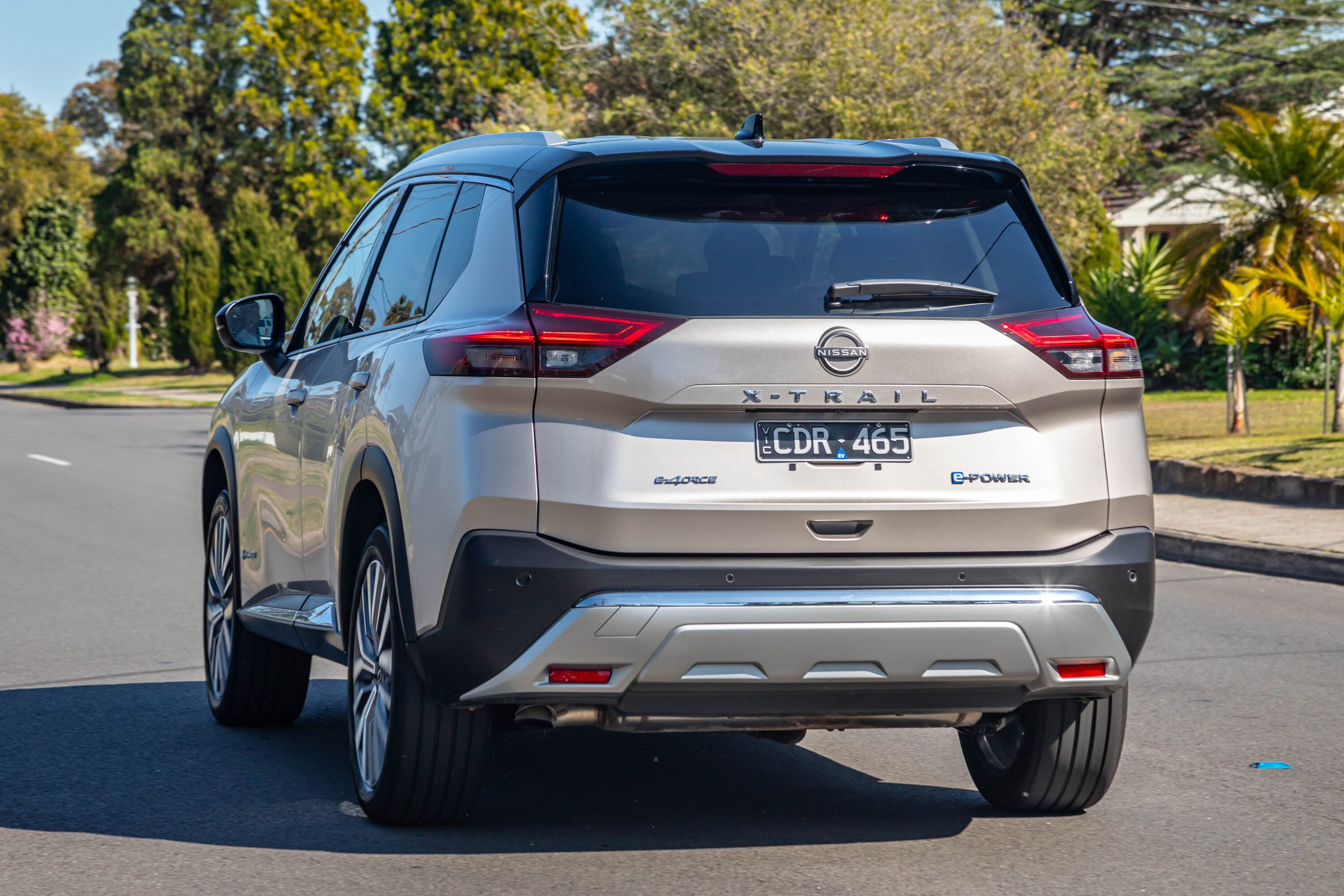
1
From the driver’s seat, it is obvious that this is a heavier car than its petrol siblings, two of which I’ve driven extensively. The extra weight of the battery and electric motor dulls the turn-in and the ride isn’t as well resolved. While the petrol car’s steering is relatively sharp, the hybrid’s is less accurate and requires a fair bit of correction when cornering hard.
Flat-to-the-floor acceleration starts well but the electric motor runs out of battery and puff remarkably quickly – as in quickly enough for me to remark upon it – and reminds me of F1 drivers’ complaints of clipping as the battery assistance falls away. That’s why the ZR-V feels similarly underpowered to the HR-V – the same thing happens in that car.
Lighter acceleration delivered a Toyota-like electric-only experience up to 40 or 50km/h which is especially useful in heavy traffic and suburban bombing about.
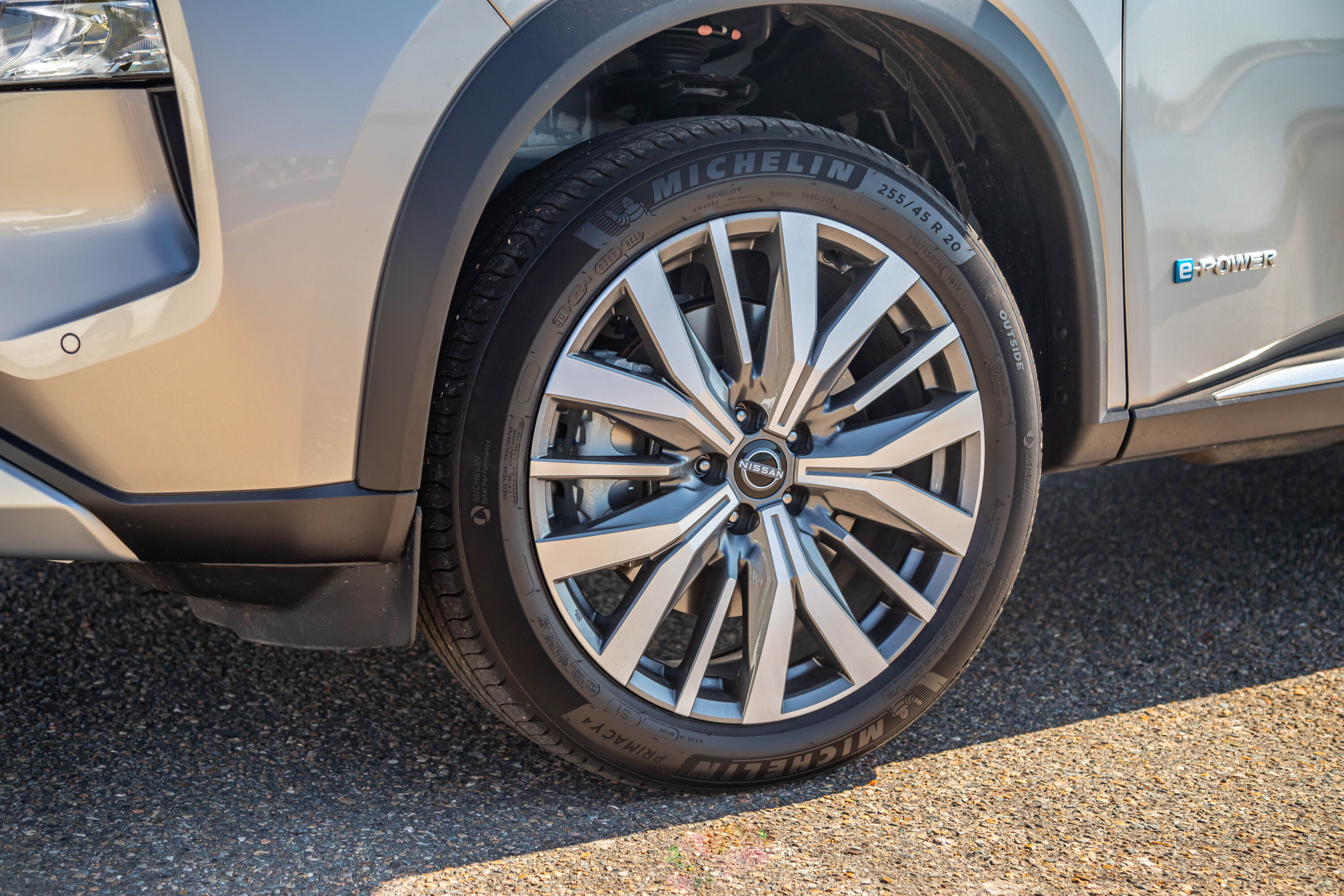
1
Despite all that, the front-wheel-drive Honda is more of a dynamic affair than the all-wheel-drive Nissan.
The X-Trail doesn’t bother too much with treading the line, it’s very much on the comfort side of the ledger. Gentle, safe understeer is the order of the day and it’s clear the front end has more power and torque than the rear.
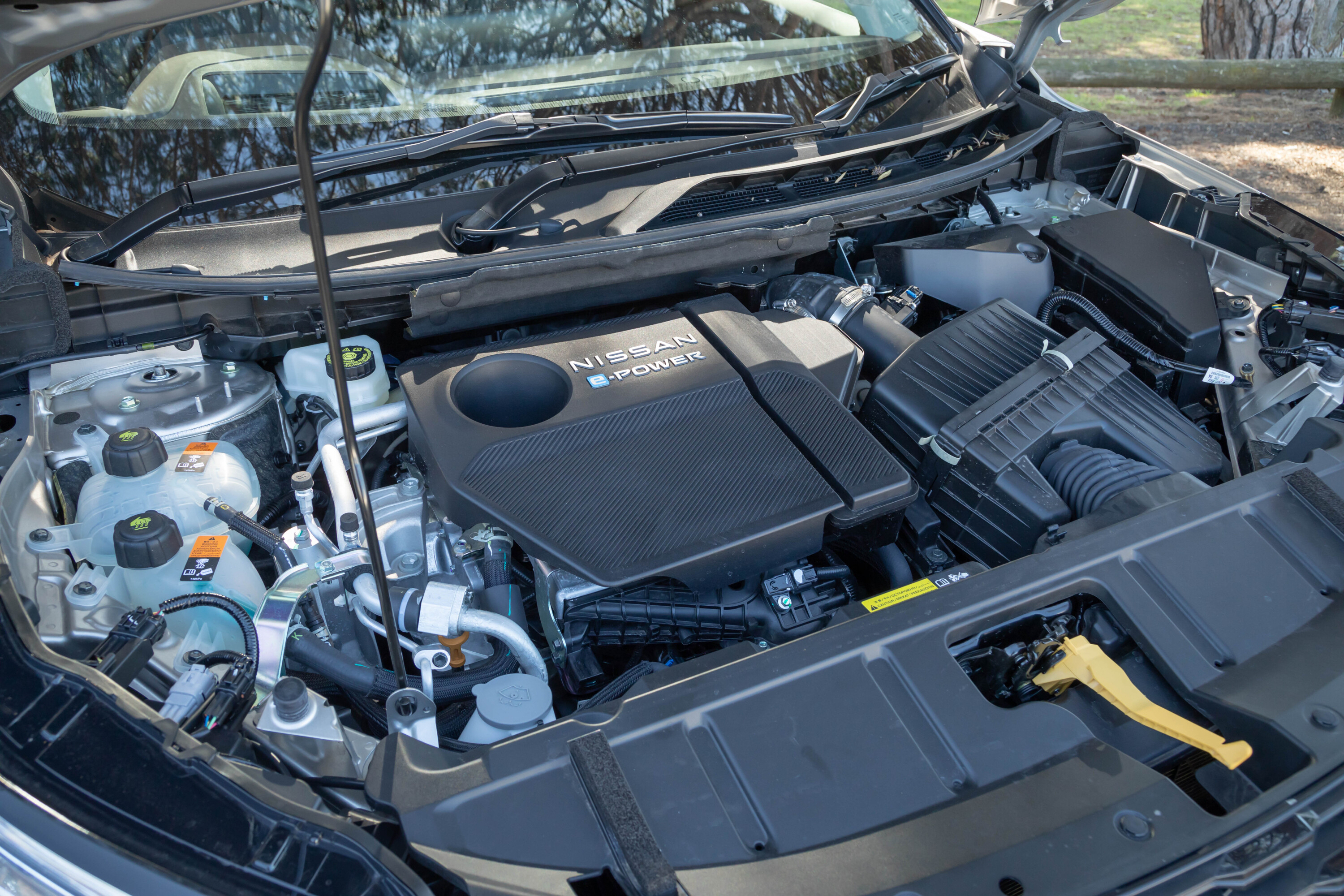
Acceleration is fairly linear to about 70km/h when the oomph starts to fall slowly away. It’s nowhere near as noticeable as the Honda, though. Also less noticeable is the intervention of the petrol engine which acts solely as a generator in the X-Trail to supply electrons to the motors via an inverter.
It’s an interesting way to do it and it makes the Nissan feel like an EV, just with noise coming out from under the bonnet. Whether you think that’s a worthwhile thing is entirely up to you.
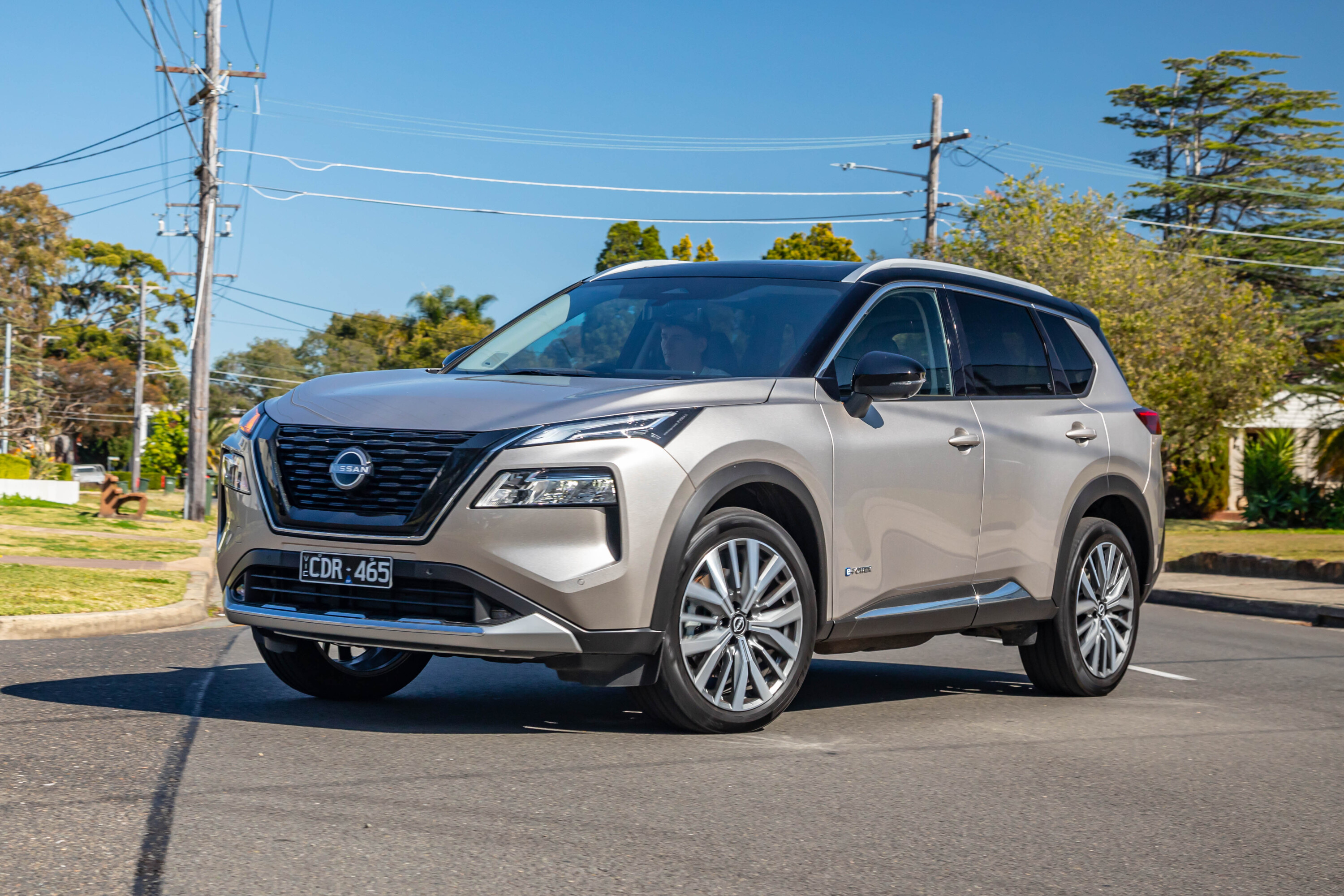
1
As is whether you think the fuel savings are worth the cost compared to the petrol-only X-Trail.
It’s a particularly interesting drivetrain as the three-cylinder turbo three-cylinder has a variable compression ratio that emits an amusing farting sound when the car is cold. Nothing to worry about and it soon fades away.
No physical connection exists between the petrol engine and transmission, just electricity finding its way to the 2.1kWh battery and the two motors via an inverter to deliver a combined 157kW (no total torque figure is quoted, although the front motor alone is 10Nm gruntier than the Honda’s combined outputs).
The X-Trail also features an E-Pedal mode, which is helped by the two hefty electric motors. E-pedal means almost one-pedal driving so you rarely resort to the brake pedal in traffic except to pull you to a stop. Nissan reckons that’s what people want but I would like it to bring you all the way to zero. It’s a bit strong when you’re on the freeway – and cruise control disables it – but it’s an all-or-nothing option.
1
One slightly annoying thing about E-Pedal mode is that if you’re not paying attention and go for the brake as you’re rolling towards a stop, the pedal won’t necessarily be where you think it should be. As the E-Pedal system takes over some of the braking, it moves the pedal.
When you do find it, it feels a bit wooden. It’s something you’ll get used to but as this function isn’t the default, it might surprise you on occasion.
The X-Trail is quieter in pretty much all situations, with better insulation from road noise and just a rustling around the A-pillars. Neither of these cars is an exemplar, but front-to-rear seat chatter was much less strained in the Nissan.
It’s always fascinating putting two cars together like this because, on its own, the Honda doesn’t seem that noisy.
If any of the terms in this section have left you scratching your head, these articles will help bring you up to speed!
1
How are they on fuel?
Both cars are impressively restrained drinkers.
We took the two cars across the same drive loop, swapping drivers to ensure both cars got the same treatment across the same roads.
The ZR-V excelled with a 5.9L/100km result, just 20 per cent off the official number while the X-Trail knocked out 6.9L/100km. The only problem is that it’s not a remarkably better result than the 2.5-litre petrol (when driven gently, anyway).
| Honda ZR-V e:HEV LX | Nissan X-Trail E-Power Ti-L | |
|---|---|---|
| Fuel consumption (claimed) | 5.0L/100km | 6.1L/100km |
| Fuel consumption (on test, indicated) | 5.9L/100km | 6.9L/100km |
| Fuel tank capacity | 57 litres | 55 litres |
| Real-world range | 966km | 797km |
| Fuel type | 91 RON | 95 RON |
2
How safe are they?
Both have fresh five-star ANCAP safety ratings, the Honda’s just a couple of months old.
| Honda ZR-V e:HEV LX | Nissan X-Trail E-Power Ti-L | |
|---|---|---|
| Airbags | 11 | 7 |
| Traffic sign recognition | Y | N |
| Driver attention detection | Y | Y |
| Road departure mitigation | Y | Y |
| Lane-keep assist | Y | Y |
| Reverse cross-traffic alert. | Y | Y |
| Traction and stability controls | Y | Y |
| Lane departure warning | Y | Y |
| Rear seat reminder | Y | Y |
| Forward AEB | pedestrian/cyclist detection | pedestrian/cyclist/junction detection |
| Blind-spot monitoring | Y | Y |
Both have impressive safety equipment lists, the Nissan adding junction detection on top of pedestrian and cyclist detection.
1
Warranty and running costs
The clear winner here is the Honda.
Both offer a five-year/unlimited-kilometre warranty and capped-price servicing. Honda out-prices even Toyota here, with $199 per service. In light of that, it probably wouldn’t matter what the Nissan costs, but it’s a lot.
I mean, a real lot. Over five years you’ll shell out a whopping $3056 compared to the Honda’s $995. That’s more expensive than even the VW Tiguan, Subaru Forester and Kia Sportage, none of which are shrinking violets on service pricing.
Both share annoyingly short 12-month/10,000km service intervals too. At least the Honda is cheap. Not just cheaper, actually cheap.
1
VERDICT
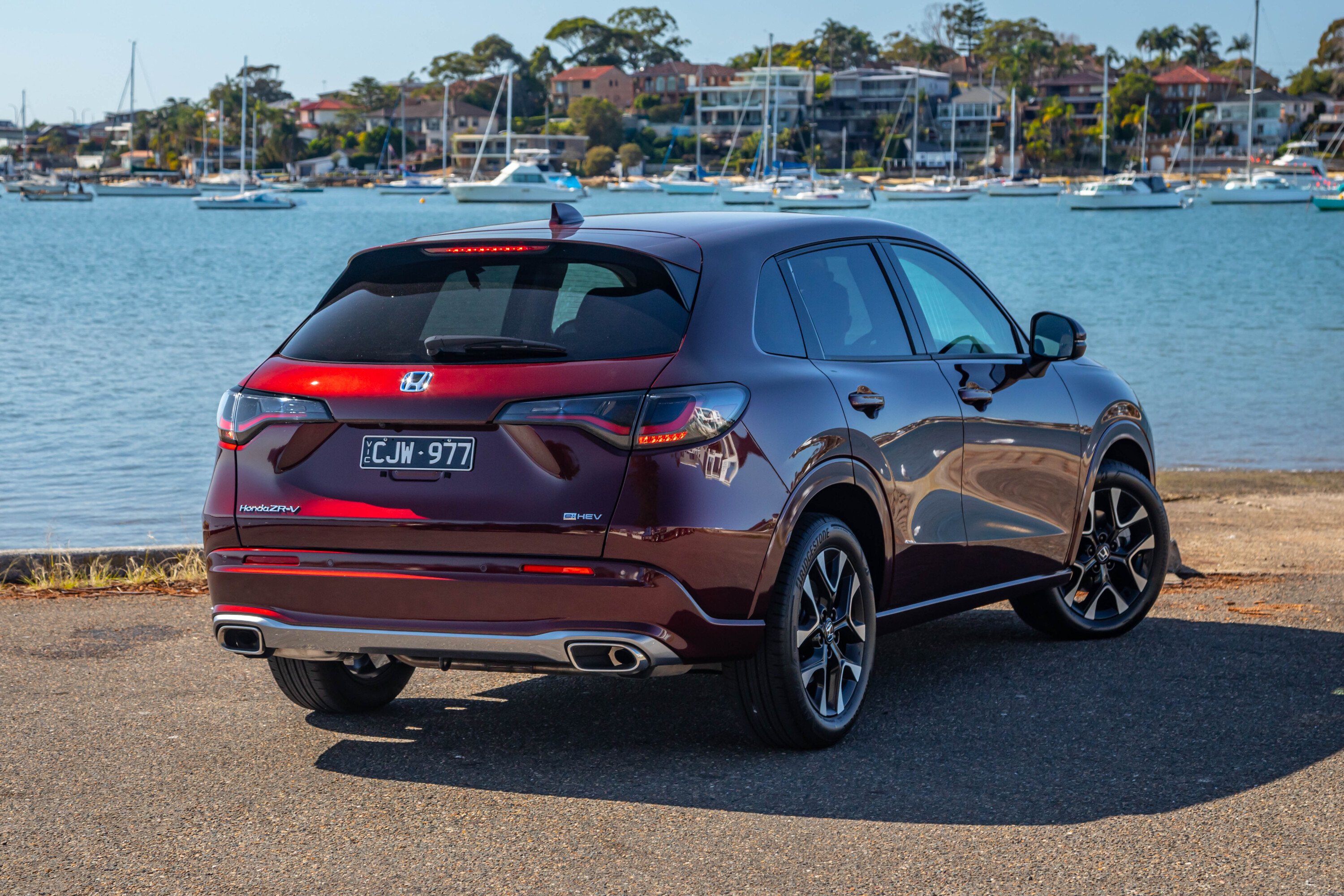
Overall, the Nissan comes out a long way ahead – which is saying something, because the ZR-V is a very good car.
The Honda is athletic, looks great and for a lot of people is the right size because the X-Trail is a monster in the mid-size segment. The smaller car’s interior is also calm, cool and collected and there are many good things to say about it. It’s a great car.
Next to the ZR-V, the Nissan is better at just about everything, is better value for money and really only loses on service costs and dynamic abilities. The Nissan is comfortable, roomier, more refined and nails down a lot of what people want in this segment.
1
| Honda ZR-V e:HEV LX | Nissan X-Trail E-Power Ti-L | |
|---|---|---|
| Safety, value and features | 8 | 8 |
| Comfort and space | 7 | 8 |
| Engine and gearbox | 7.5 | 8 |
| Ride and handling | 7 | 8 |
| Technology | 7.5 | 8.5 |
| OVERALL (average of above) | 7.4 | 8.1 |
MORE
Everything Nissan
MORE
Everything Honda
MORE
Midsize SUVs
| Honda ZR-V e:HEV LX | Nissan X-Trail E-Power Ti-L | |
|---|---|---|
| Price | $54,900 drive-away | $57,190 + on-road costs |
| Drivetrain | ||
| Engine | 1.5L 4-cyl turbo-petrol | 1.5L 3-cyl variable compression turbo-petrol |
| Drive | front-wheel | all-wheel |
| Combined power | 135kW | 157kW |
| Combined torque | 320Nm | not quoted |
| Transmission | continuously variable | single-speed reduction gear |
| Battery | 1.05kWh | 2.1kWh |
| Chassis | ||
| L/W/H/Wu2013B | 4568/1840/1620/2655mm | 4680/2065/1725/2705mm |
| Track (F/R) | 1591/1605mm | 1575/1580mm |
| Weight (tare) | 1439kg | 1903kg |
| Boot | 370L | 575L |
| Fuel tank | 57L | 55L |
| Economy (combined ADR 81/02) | 5.0L/100km | 6.1L/100km |
| Suspension | Front: struts, coil springs, anti-roll bar. Rear: multi-link, coil springs, anti-roll bar | |
| Steering | electric rack-and-pinion | electric rack-and-pinion |
| Front brakes | Ventilated discs | Ventilated discs |
| Rear brakes | Solid discs | Solid discs |
| Tyres | Yokohama Advan dB V552 | Michelin Primacy 4 |
| Tyre size | 225/55R18 | 255/40 R20 |
| Safety | ||
| ANCAP rating | 5 Stars | 5 stars |
| 0-100km/h | 9.0 seconds (est) | 8.5 seconds (est) |
In a landscape where electric vehicles (EVs) are surging in popularity, safety concerns haven’t exactly taken a backseat.
From high-profile cases of battery fires to questions around how well these new-age cars can protect their occupants in a crash, there’s a general air of uncertainty.
An EV battery fire at Sydney airport in September saw multiple nearby vehicles burned. The fire was described as an “unusual incident”, however, with the already damaged battery having been removed from the vehicle and “stored in the lot” for some time, exposed to the elements.
As Rivian founder RJ Scaringe told the audience at the recent Code Conference in America [↗], EV fires are proportionately less common than with combustion vehicles – but their position as a polarising new technology means they make headlines when fires do happen, and dealing with a battery fire is far more complex for emergency responders.
Against this backdrop, Mercedes-Benz has orchestrated a public crash test with two of its electric models, intended to demonstrate that when it comes to safety, its EVs are designed to meet the same rigorous standards as their petrol-fuelled counterparts.
The German automaker claims to go “above and beyond” legal requirements in its recent crash test between two electric vehicles.
More than just a marketing stunt?
Well, no, this is still a valuable marketing exercise for Mercedes – but it also helps in proving that EVs needn’t be seen as inherently more dangerous than combustion cars.
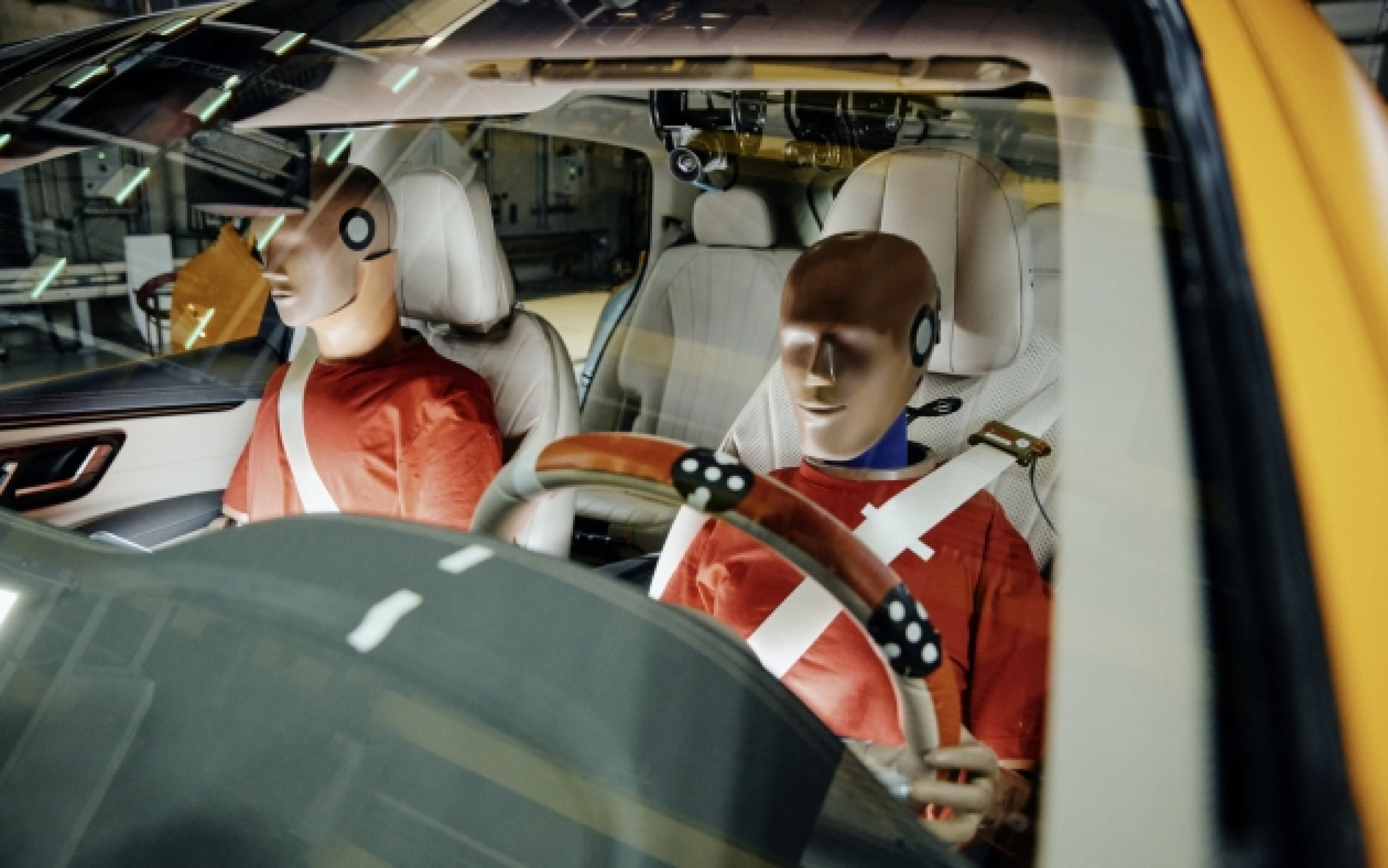
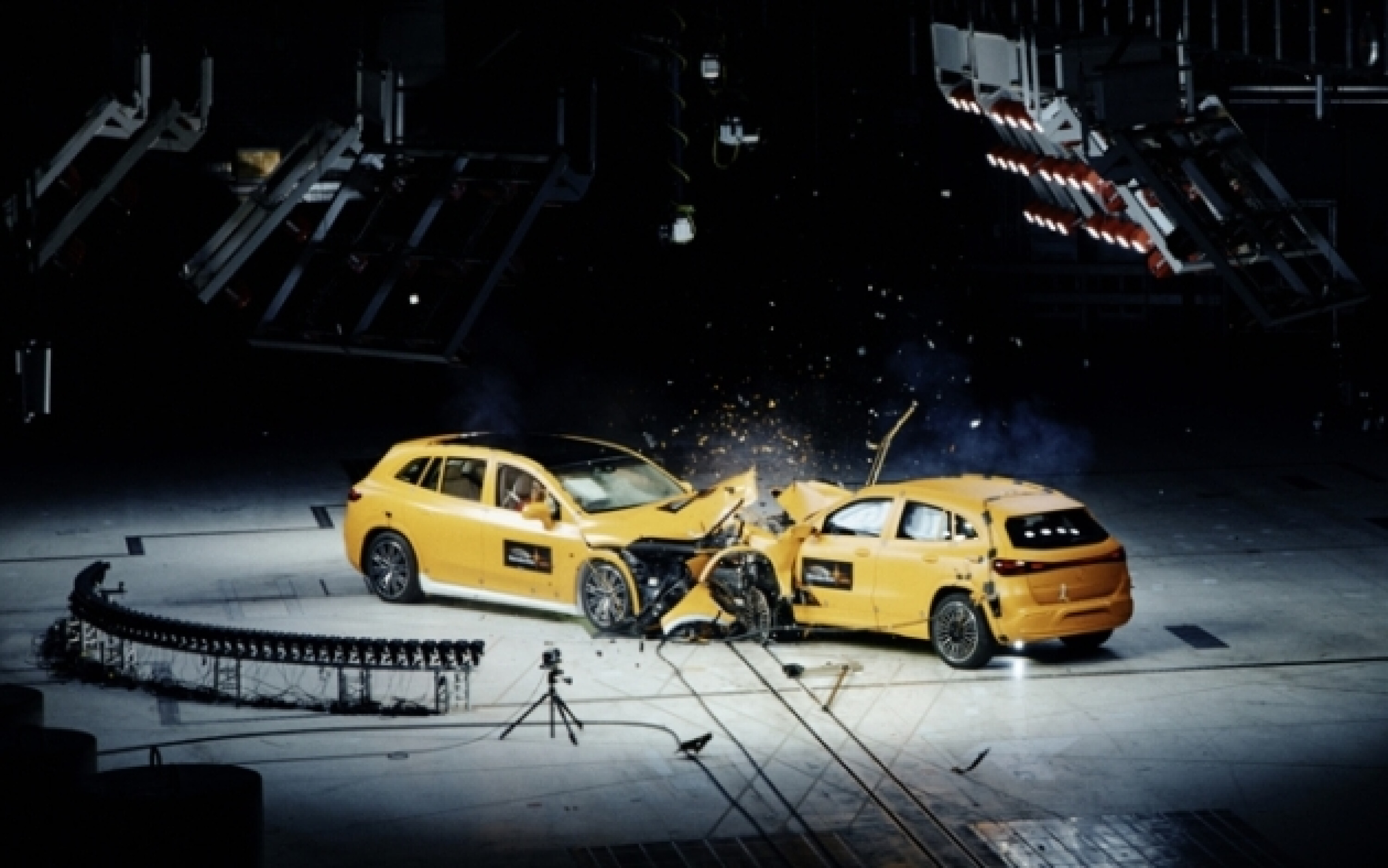
To achieve this, Mercedes-Benz has conducted a frontal offset crash test between two of its electric vehicles, the small EQA SUV and large EQS SUV. Both vehicles were travelling at 56 km/h, with a 50 percent overlap. This is a notable 6 km/h faster than the speed stipulated by legal requirements.
1
What the crash test revealed
Mercedes-Benz claims to surpass not only legal requirements but also those laid out by ratings industry group Euro NCAP.
The usual testing involves a 1400kg trolley with an aluminium honeycomb barrier replicating another vehicle’s front. Instead, Mercedes used actual vehicles for the crash, notably heavier than the trolley used in standard tests – around 2.2 tonnes for the EQA and 3 tonnes for the EQS.
According to the automaker, both the passenger cell and the high-voltage battery of the vehicles remained safely intact.
The doors could be opened, and the high-voltage systems switched off automatically on impact.
While the company indicates that these outcomes show the vehicles’ ability to absorb crash energy effectively, it’s important to remember that this is still within a controlled environment.
It’s also worth noting that this test was undertaken without any Euro NCAP representatives present to observe and validate the results.
1
Dummy readings
The EQA and EQS SUVs each carried two adult dummies among the four used, and Mercedes claims its preliminary analysis showed a low risk of serious to fatal injury.
This reflects well on the vehicle’s safety systems, but again it should be noted that these are internally validated results only.
The EQA and EQS both have five-star Euro NCAP ratings, however.
Will EVs save the planet?
If electric vehicles depend on unsustainable battery materials and electricity for charging, are they really any more eco-friendly than a petrol or diesel car?
Snapshot
- EVs are still more eco-friendly than ICE overall
- Renewable electricity is quickly growing, battery recycling and circular economy needs improving
- Only switching to EVs will not save the Earth on its own
Environmentalists have long lobbied for the urgent transition to a ‘greener’ and decarbonised electric transportation system, to avoid billions in health costs and further global warming.
On the other hand, sceptics argue EVs are worse for the planet since they have large battery packs made up resource-limited materials and are mainly charged off coal-fired electricity. Some also endorse liquefied petroleum gas (LPG) as a better and already well-established approach.
So, which ‘side’ is right?
This is a long read, but if you want to be sure you’ve got your facts straight when arguing on social media, this is the story for you.
JUMP AHEAD
- ? Charging with fossil-fuels
- ? Battery materials
- ? When will EVs break even?
- ?️ Battery waste issue
- ? Tyre and brake pollution
- ? Manufacturing and shipping
1
? Charging with fossil fuels
If electric cars are charged with power from high-emitting coal-fired stations, are they worse for the environment than petrol and diesel cars?
According to the Clean Energy Council [PDF pg. 7 ↗], renewable electricity sources (solar, wind and hydro) made up 35.9 per cent of Australia’s grid in 2022.
Therefore, residential and business buildings that don’t (or can’t) install solar panels to charge EVs already have some portion of electricity coming from renewables. Some electricity providers also offer a carbon-neutral offset option and ‘green energy’ plans.
It’s only improving.
New electricity demand in Australia is being met by the growing investment in large-scale renewable energy generation and battery storage infrastructure by the states – with the capital and Tasmania leading the transition.
| State | Renewable energy generation share (as at end of 2022) | Renewable energy share target |
|---|---|---|
| Queensland | 22.6% | 70% renewables by 2032, 80% by 2050 |
| New South Wales | 30.7% (incl ACT) | Halve emissions by 2030, net zero by 2050 |
| Australian Capital Territory | 100% | Net zero by 2045 |
| Victoria | 36.8% | 50% renewables by 2030 |
| South Australia | 71.5% | 100% renewables by 2030 |
| Northern Territory | Unknown | 50% renewables by 2030, net zero by 2050 |
| Western Australia | 35.2% | 80% emissions reduction by 2030 |
| Tasmania | 99.1% | 150% renewables and net zero by 2030 |
| Data according to the Clean Energy Councilu2019s 2023 report (pg. 20-21) | ||
As one of the sunniest countries in the world, more than 3.2 million Australian households already have solar photovoltaic panels installed as at mid-2022
Coal powerplants are even planned to close earlier than anticipated, so more EVs coming into the market will not result in plants running overtime (Clean Energy Regulator [↗]).
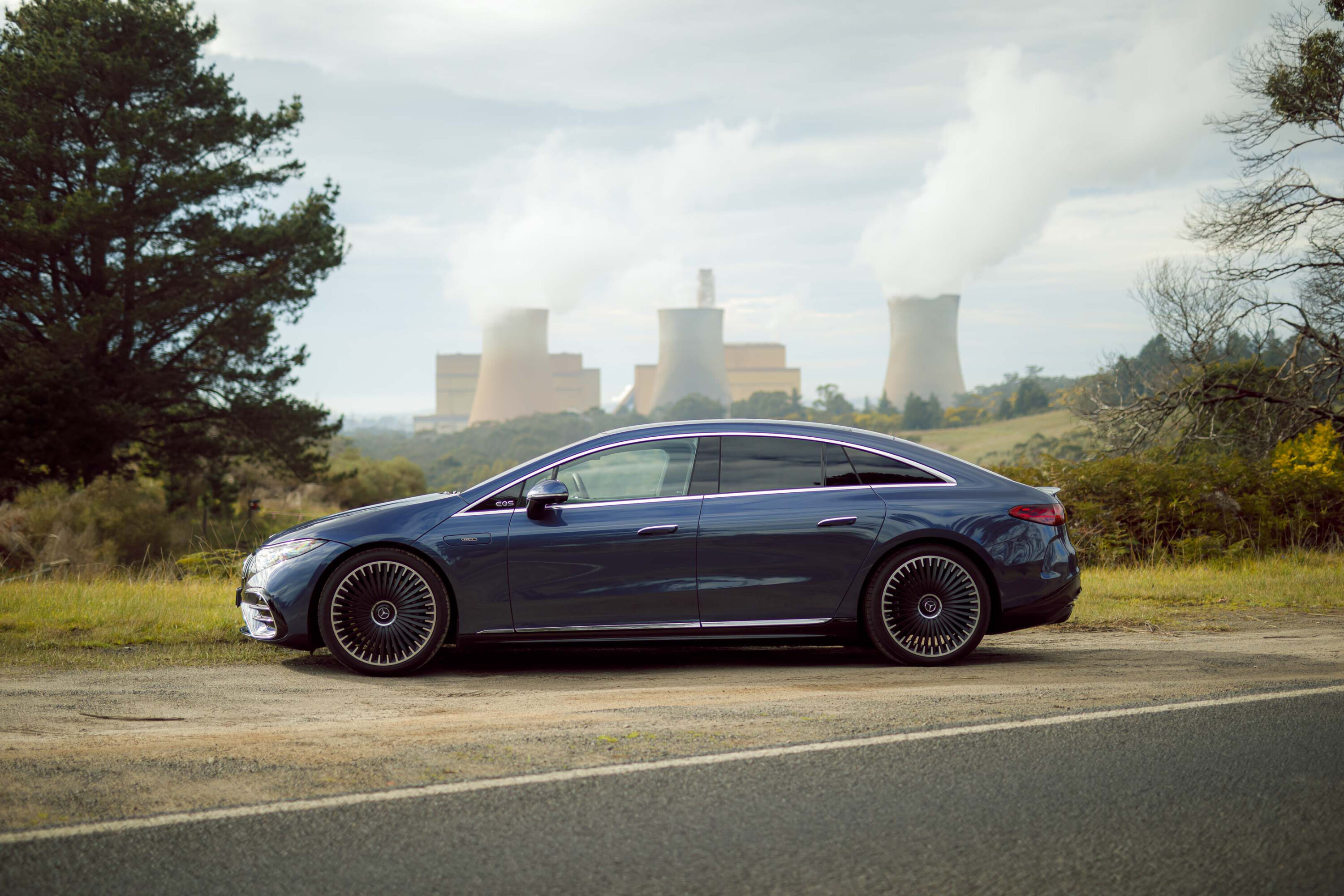
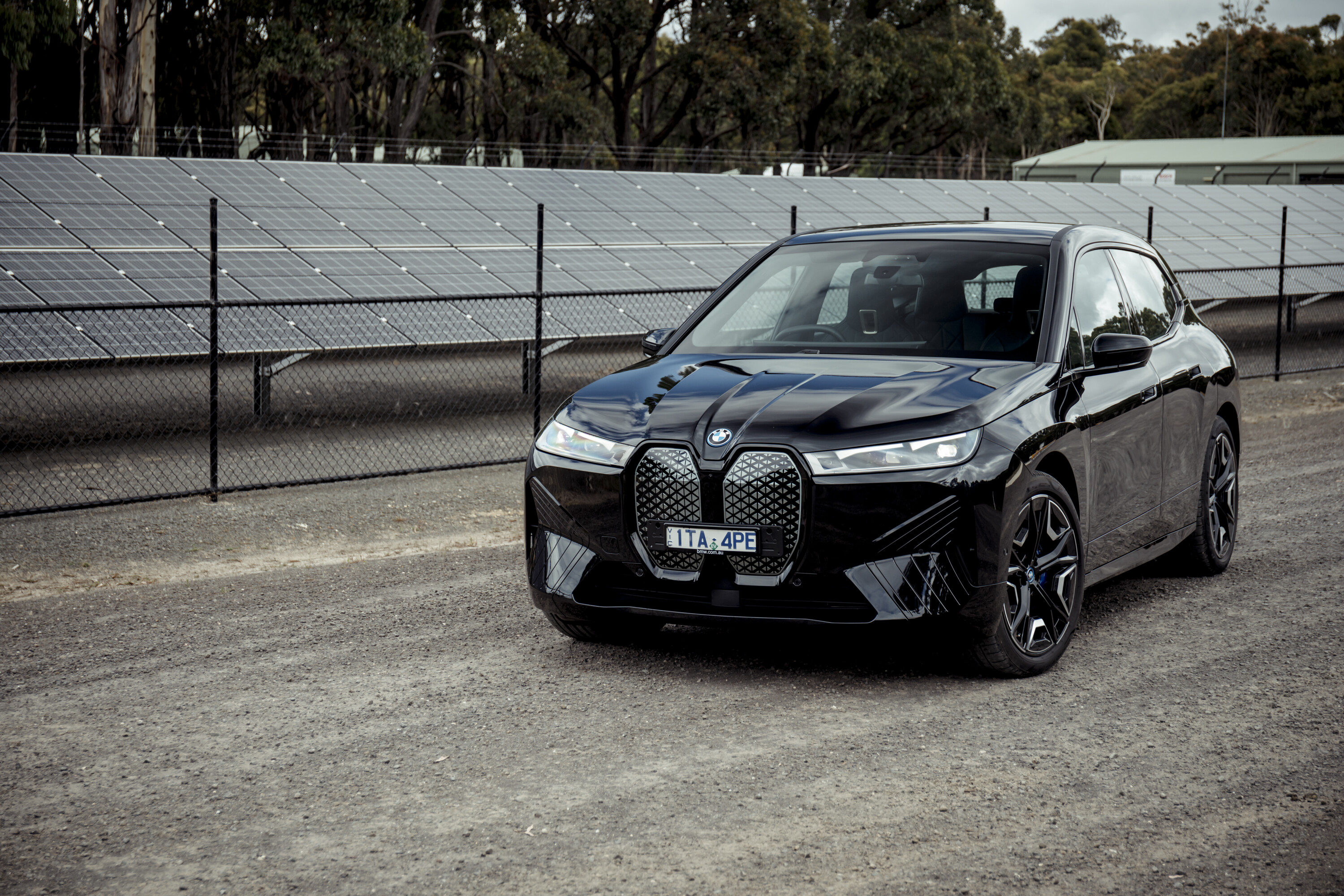
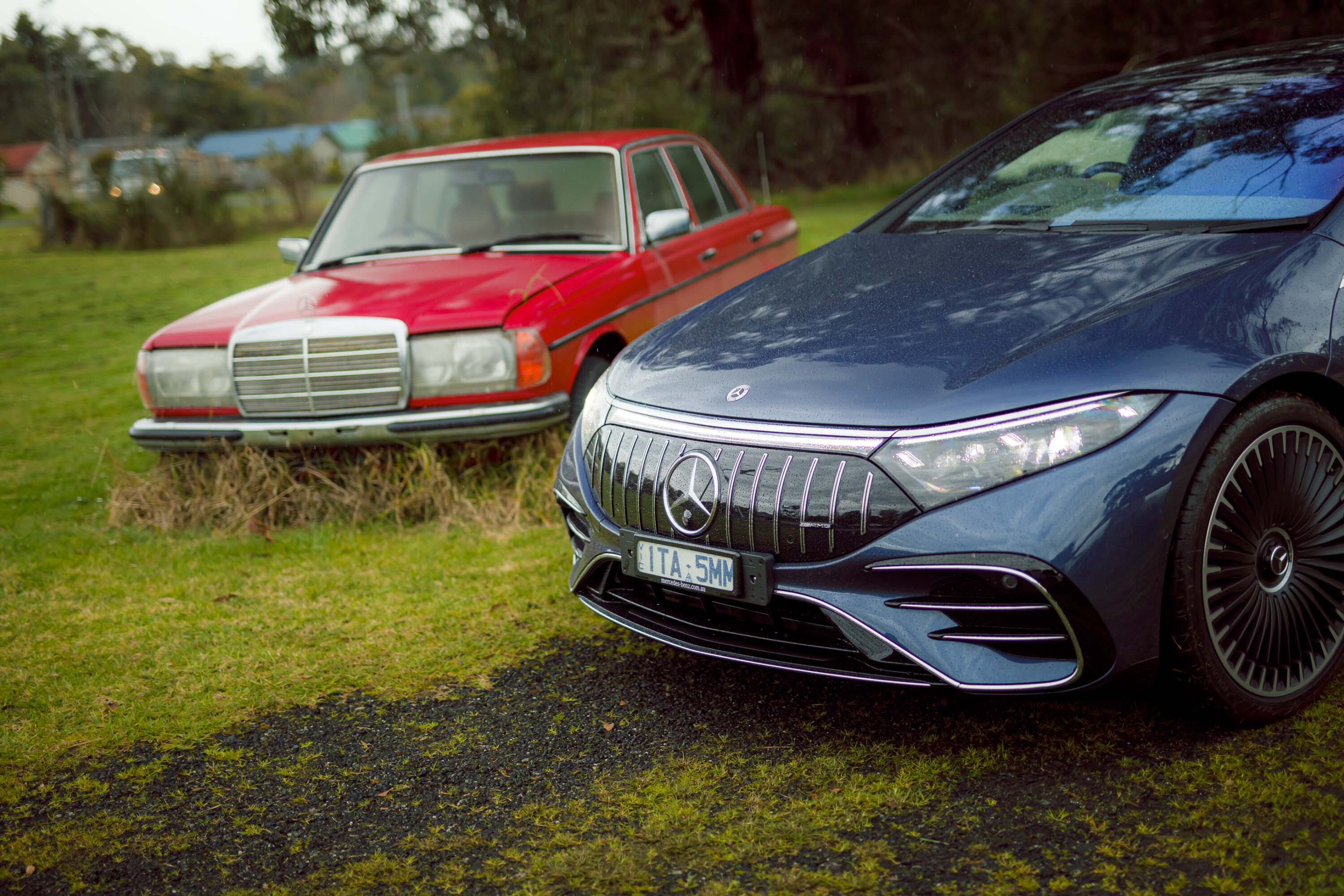
Our own Andy Enright did the sums and revealed that, even if the Mercedes-AMG EQS 53 was entirely charged off Australia’s dirtiest brown coal from the Yallourn power station in Victoria, the electric liftback would still only produce nearly half the CO2 emissions compared to the petrol-powered Mercedes-Benz S580 sedan on the same trip.
Yet, as one of the sunniest countries in the world, more than 3.2 million Australian households already have solar photovoltaic panels installed as at mid-2022, according to Roy Morgan Research [↗].
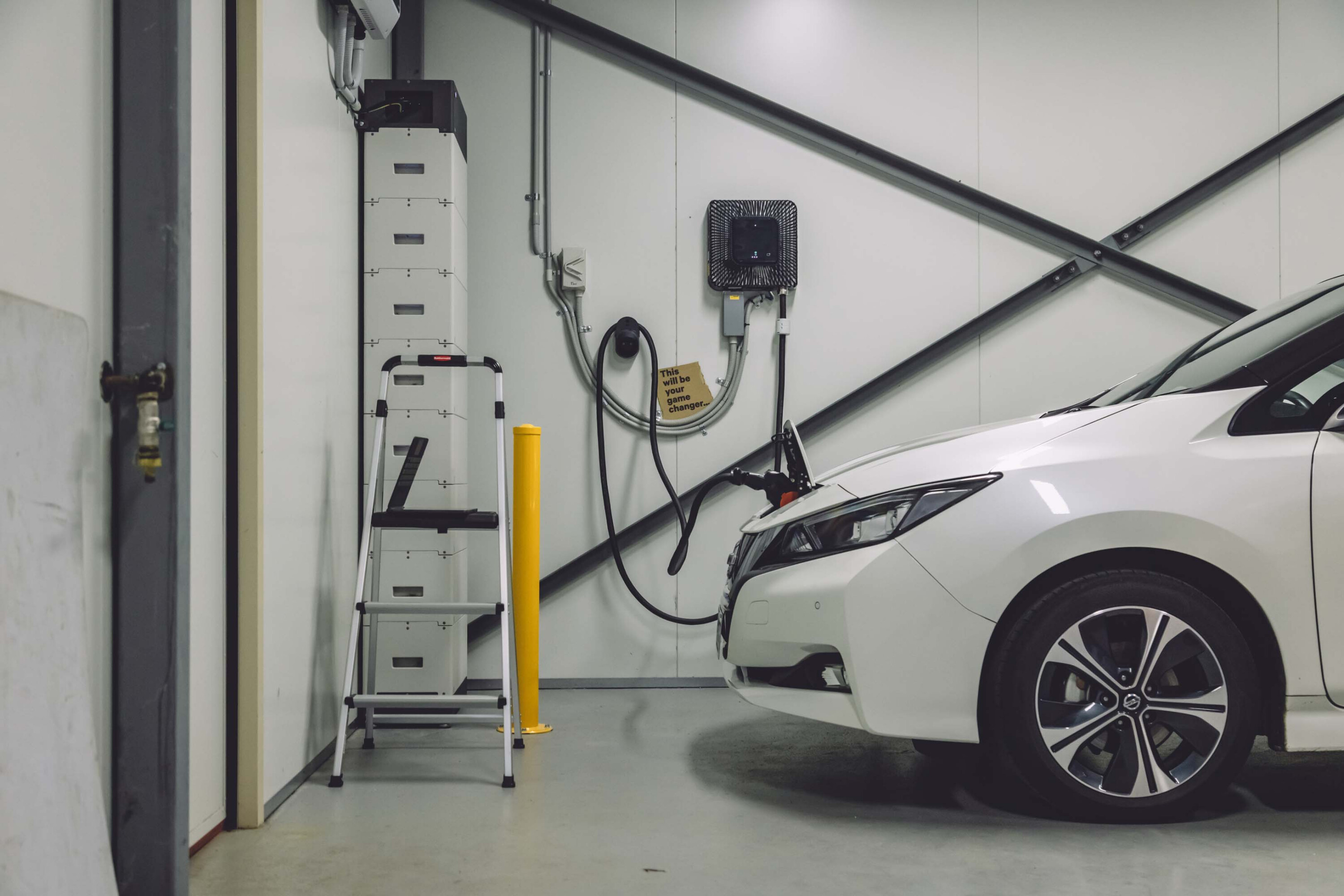
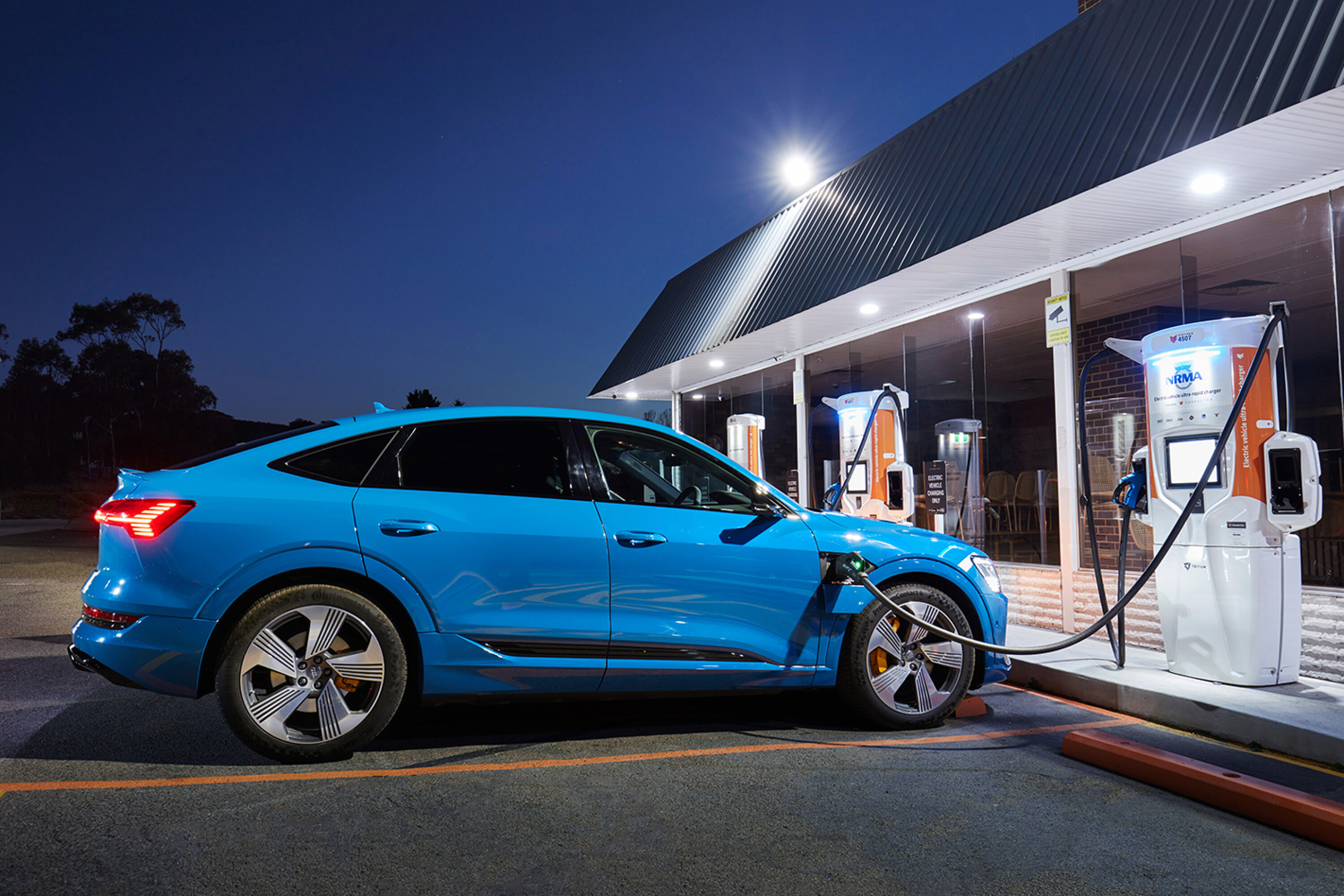
This means EV owners can plug in when there’s solar generation during the day (when working from home or after the school pickup) or at night if there’s excess energy stored in installed home battery storage systems to limit holistic lifetime emissions, while benefiting from free ‘fuel’.
How long do solar panels last?
According to Forbes Home [↗], solar panels have a lifespan of at least 25 years.
However, their efficiency does naturally degrade around half a per cent every year due to being exposed to the elements.
1
What about this ‘V2G’ we’ve been hearing about?
Vehicle-to-grid (V2G) bidirectional charging technology is emerging to power homes and workplaces using EV batteries during more expensive and grid-reliant peak periods, donate excess energy back to help stabilise the grid, and recharge the vehicle when there’s renewables during the day.
However, while there are some local trials underway, the only V2G inverter costs around $10,000 and very few EV models support V2G today besides the Nissan Leaf, Mitsubishi Eclipse Cross PHEV, and Outlander PHEV in Australia (but the list is growing overseas).
“One direction’s helping and it’s going to get better, more effective and more efficient over time. The other is only going one way; it is staying where it is.”
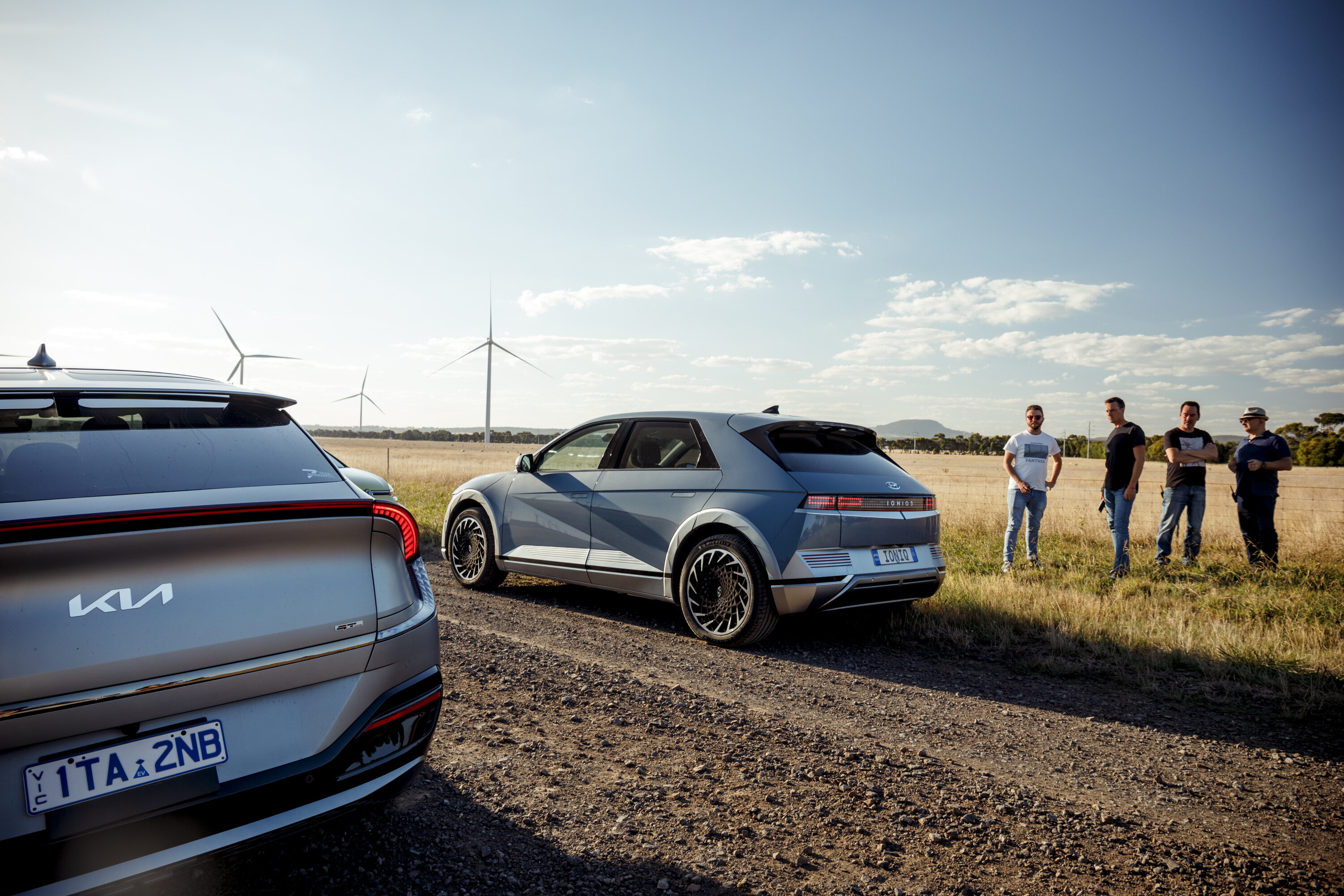
As for public EV charging stations, major networks including Chargefox, Evie Networks, BP Pulse, Ampol AmpCharge, and Tesla claim to power all owned and operated sites with either 100 per cent renewable energy or purchase carbon-offset certificates.
Chargefox CEO John Sullivan told WhichCar: “Drive a petrol or diesel car all you like. It’s not going to get any better.”
“But, if you were to drive an electric vehicle, at least a third of the energy that you put in that car today will come from a sustainable means,” Sullivan said. “One direction’s helping and it’s going to get better, more effective and more efficient over time. The other is only going one way; it is staying where it is.”
LPG vs electric?
Some believe liquefied petroleum gas (LPG) combustion engine vehicles are more sustainable and cheaper to run than EVs, given it is a ‘low-carbon’ type fossil-fuel.
While there’s no data to definitively resolve this debate, LPG vehicles still emit local exhaust pollutants, there are still questions around harmful extraction methods, and its safety is contentious.
Importantly, there are currently no new LPG-powered models on sale in Australia from any original equipment vehicle manufacturer.
1
? Battery materials
Since EV batteries require a range of raw materials such as lithium, cobalt and nickel, do they have a bigger carbon footprint than combustion cars?
Initially yes, that can’t be denied – but it falls off over time, and that time is only getting shorter as brands reorganise to be more sustainable.
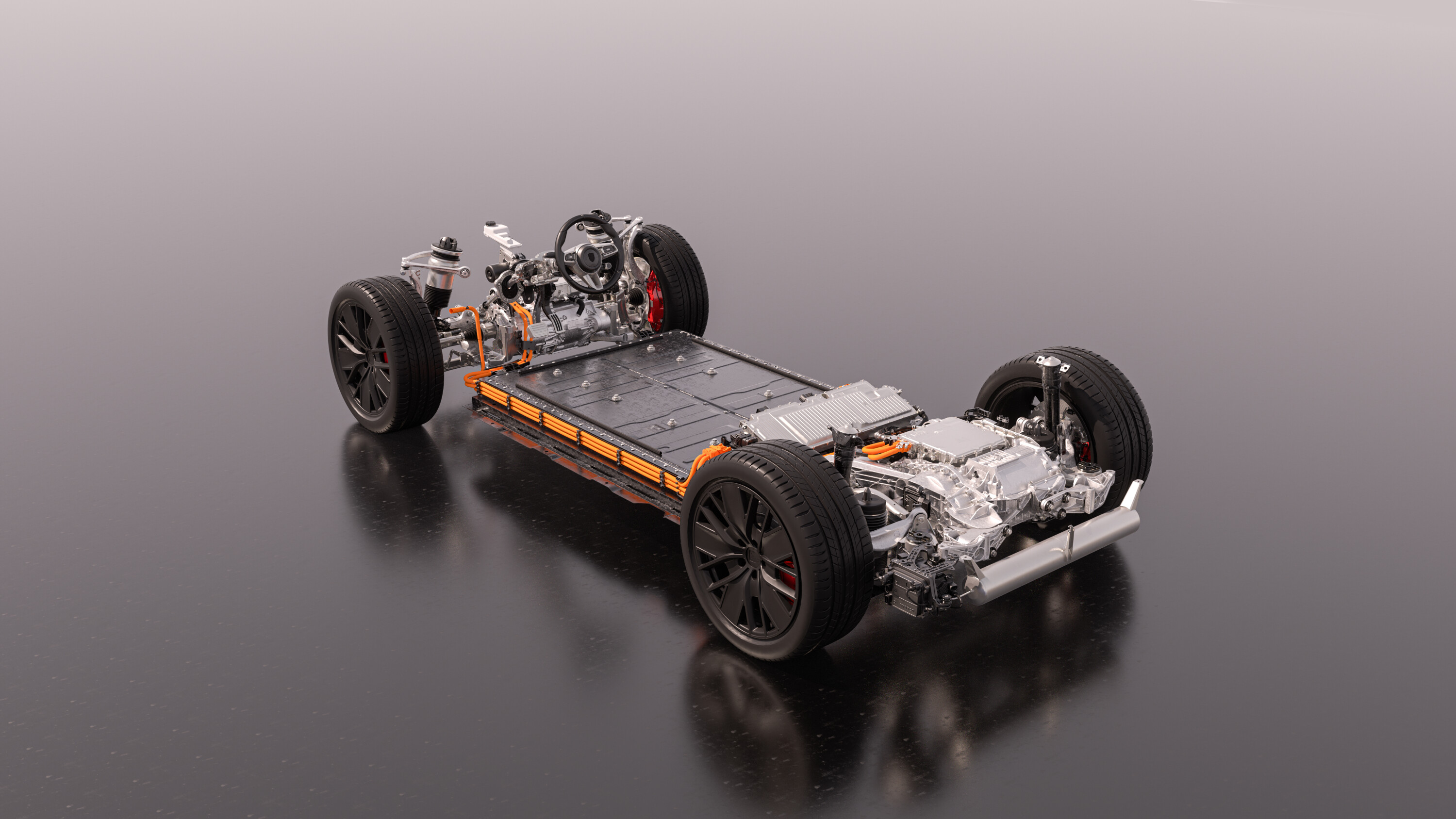
Current battery technologies require expensive and resource-limited materials, alongside magnets in electric motors composed of rare earth metals.
Both use intensive mining and processing methods that often depend on heavy diesel-fuelled machines – with cobalt extraction in particular being associated with contaminating waterways, damaging ecosystems in developing countries, and human rights issues in the Democratic Republic of the Congo. All bad things.
However, the proportion of contentious raw materials isn’t a large share when the average EV weighs around 1500 to 2000kg. According to the Argonne National Laboratory [via Nature Journal ↗], a typical lithium-ion battery only includes around 8kg lithium, 14kg cobalt, 20kg manganese, and 35kg nickel.
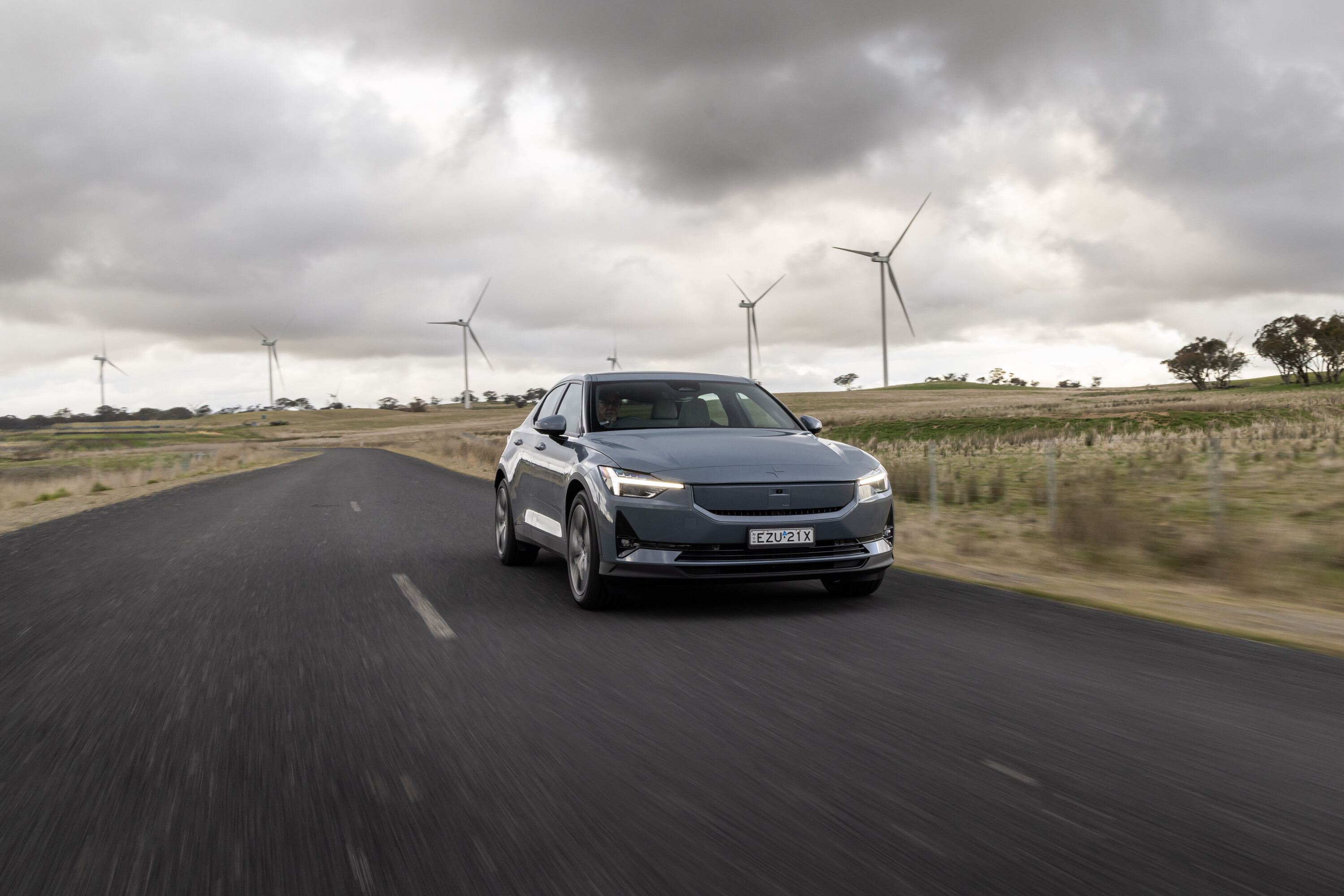
Some models, including the Renault Megane E-Tech and upcoming cut-price Tesla ‘Model 2’, don’t require rare earths, by using a magnet-free motor.
Some car brands also claim to trace the origin of some critical materials used to ensure ethical processes are maintained in the supply chain.
Combustion vehicles also need heavy cobalt use – in the refinement of oil for fuel
Cobalt is used in the refinement process of crude oil to extract sulphur to form cleaner, higher-quality fuels. The need for cobalt will increase by the end of 2024 in Australia, with the federal government mandating lower-sulphur fuel standards in line with other developed continents.
ICE vehicles also require rare earth metals for catalytic converters, which is responsible for filtering harmful pollutants.
Additionally, traditional hybrids and plug-in hybrids use a lithium-ion battery as per pure EVs, albeit being much smaller in size.
Australian-favourite Toyota hybrids, including the current top-selling RAV4 medium SUV and Kluger large SUV, use older nickel-metal hydride (NiMH) batteries – which has more of a “significant environmental impact” than typical lithium-ion packs since it uses more toxic chemicals, according to Macquarie University research [↗].
The Japanese carmaker now adopts lithium-ion batteries in newer models, such as the Toyota Yaris hatch, Corolla small car and Camry sedan.
1
? When will EVs break even?
Despite an initially higher manufacturing carbon footprint, total lifetime greenhouse gas emissions are still ultimately lower for EVs over time than ICE.
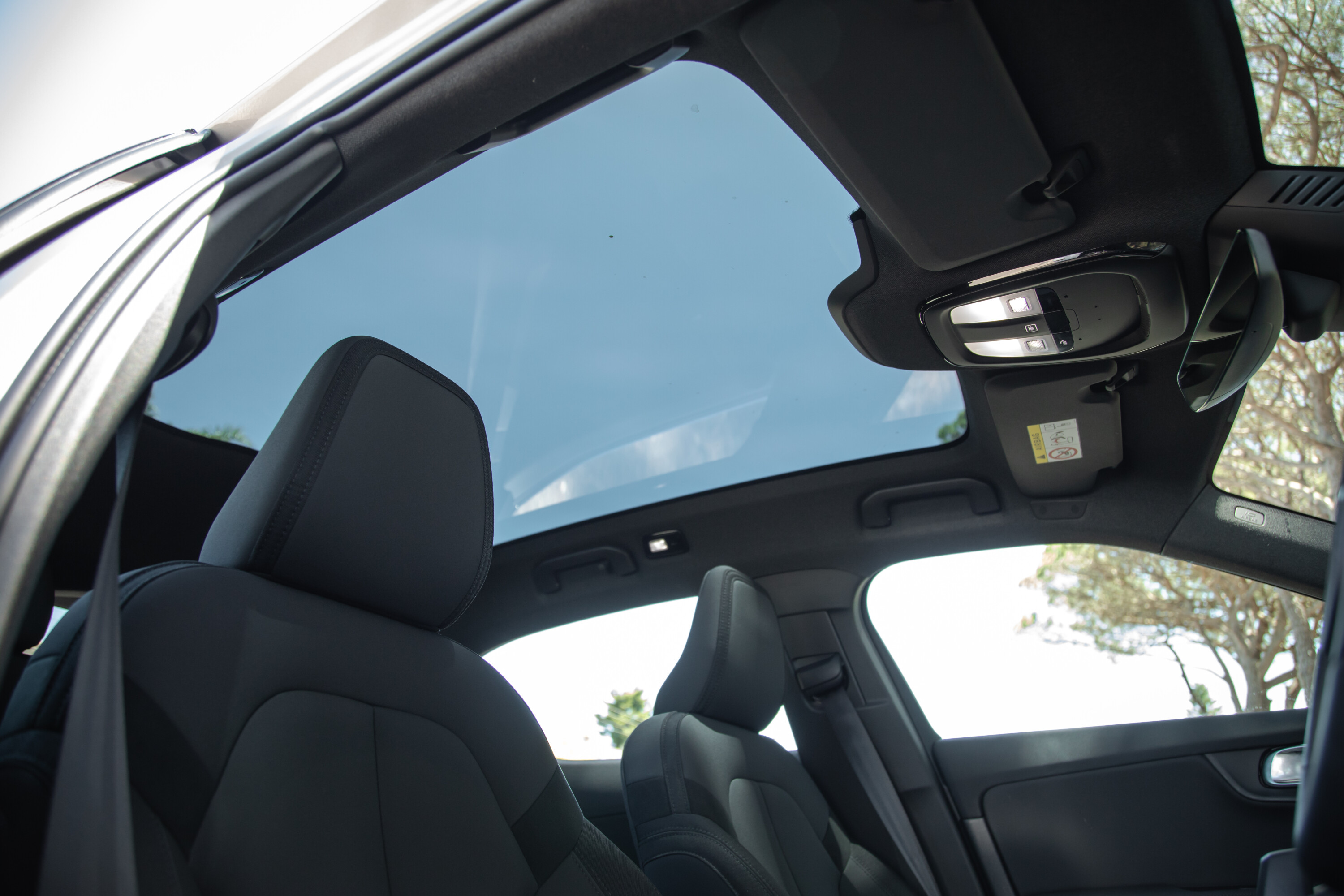
According to Polestar’s 2021 life cycle assessment report [PDF pg. 22 ↗], the pre-update Polestar 2 electric liftback in base Standard Range Single Motor guise has around 10 tonnes of CO2 emitted more from the factory than the related petrol-powered XC40 SUV.
It’s primarily due to the lithium-ion battery modules in its 67kWh usable (69kWh gross) nickel-cobalt-manganese (NMC) pack and requires more materials.
However, at the end-of-life (after driving 200,000 kilometres), the EV has a lower holistic footprint at 45 tonnes of CO2 versus its ICE counterpart at 58 tonnes of CO2 – even when the former is charged off a ‘global electricity mix’.
In this case, the holistic environmental footprint ‘break even’ point for the Polestar 2 EV compared to the XC40 ICE would be achieved after travelling 79,000 kilometres.
1
But, the EV gets to break-even faster than the ICE vehicle – if charged more responsibly.
If the Polestar 2 is charged exclusively from wind-generated renewable energy, its carbon footprint is reduced to only 25 tonnes of CO2 due to almost stagnant ‘use phase’ emissions.
In this case, the environmental break even point is earlier, after driving about 40,000 kilometres.
This also applies to using solar-generated energy – which is already possible today, as long as you have panels installed with enough generation capacity to charge an EV while powering the household or workplace, and can plug in during daytime.
Polestar’s own analysis is supported by Europe’s Green NCAP [↗] testing authority, which highlights all pure EVs have a lower lifetime greenhouse gas emissions footprint than ICE vehicles (assumed after 16 years and 240,000km of ownership charged on Europe’s electricity mix).
1
Of course, it’s even better if you buy a used EV, since you’re not contributing to additional manufacturing emissions.
If buying new, a smaller battery would be even better for the environment. Opting for larger battery and dual-motor variants increase the initial carbon footprint and extend the break-even point longer, but can still be achieved in the vehicle’s lifetime.
Keep in mind that the Polestar 2 uses more contentious raw materials, since its battery is based on the NMC lithium-ion chemistry.
Lithium-iron-phosphate (LFP) battery cathodes have emerged in entry-level EVs, which don’t use cobalt and nickel, to have up to 45 per cent lower manufacturing footprint compared to lithium-ion, according to the Journal of Cleaner Production [↗].
Sodium-ion tech is also appearing as an even more sustainable alternative, but is yet-to-be adopted in a global mass-market EV.
1
Is it better to keep your old ICE car?
According to Engineering Explained [YouTube ↗], switching from an inefficient ICE vehicle to a new EV is still generally more environmentally sustainable than keeping the former over time, with the break even point occurring within a few years, depending on how far owners drive.
While EVs have a higher CO2 emissions footprint from the factory, they are more sustainable to recharge than refuelling an ICE vehicle thanks to being powered at least part-renewable energy sources.
However, it all depends on how much you drive. If owners constantly upgrade to a new EV model with little use every time, it is of course more sustainable to keep the old ICE vehicle.
1
?️ Battery waste issue
While electric vehicle batteries are designed to last more than 10 years and for the lifetime of the vehicle, when they do reach their end-of-life, will the raw materials pile up in landfill?
The CSIRO Energy’s senior research scientist and leader in electrochemical energy storage, Dr Thomas Ruether, told WhichCar only 10 per cent of lithium-ion batteries are recycled in Australia, as at 2021. (No more recent data was available at the time of writing.)
However, currently 50 to 95 per cent of materials contained within lithium-ion batteries can be recovered, depending on which technologies are applied in existing battery recycling operations.
End-of-life lithium-ion batteries are processed locally up to a certain level called ‘black mass’, which is “a composite powder of electrode materials contained in lithium-ion batteries consisting of mainly the metal oxides [cathode] and graphite [anode],” Dr Ruether said.
“This black mass can be safely exported off-shore for further processing, for example the selective extraction [and] separation of valuable components, such as cobalt, nickel, and lithium.”

1
“Governmental subsidies and policy settings are making a substantial difference”
Dr Ruether added around 90 per cent of recycling capacity is in Europe and East Asia, with some movements to support LFP batteries.
This is because those continents have “larger volumes of end-of-life lithium-ion batteries, but other socio-economic factors such as substantial governmental subsidies and policy settings are making a substantial difference,” Dr Ruether told WhichCar.
Automotive industries in China and Europe have a “recycling solution embedded in their business models” for producing EVs and therefore better support, or they partner with recycling companies, according to the CSIRO Energy scientist.
The European Union is already set to mandate stricter recyclable battery content rules from 2024 for domestically-made packs.
Preventing electronic waste is critical, as a study from the University of Technology Sydney [ABC ↗] – which assumed a 16-year EV battery pack lifespan – warned 30,000 tonnes of EV batteries will reach their end-of-life by 2030.
It is estimated to grow to 360,000 tonnes by 2040 and 1.6 million tonnes by 2050 – reinforcing the importance for policymakers and car manufacturers to ensure packs are responsibly repurposed and recycled.
However, EV batteries don’t need to be recycled immediately if they’re only part-degraded.
Companies such as Infinitev are first replacing degraded modules to be reused in existing vehicles, second repurposing it as battery storage when no longer suitable for driving, and then finally recycling select materials for use in future EVs.
The ‘circular economy’ is gradually being established – from the supply chain, to manufacturing, and end-of-life vehicles and batteries – to ensure as many materials can be reused without resorting to waste.
It will continue to be a key challenge for the industry.
WhichCar contacted Infinitev, the Battery Stewardship Council and other sustainability experts, but they did not respond for comment.
1
? Tyre and brake pollution
Since EVs are heavier and feature instant torque – potentially putting more wear on the wheels – does it increase tyre and brake pollution?
According to EV battery electrochemist Dr Euan McTurk [RAC ↗], tyre particulate matter can be slightly higher, but only when driven harder. Electric cars aren’t too much heavier than modern petrol and diesel cars as they become bigger, and buyers favour larger and heavier SUVs and utes.
For example, the Tesla Model Y electric SUV is about 400kg heavier than the Toyota RAV4, yet it’s roughly 400kg lighter than the top-selling dual-cab Ford Ranger 4×4 ute.
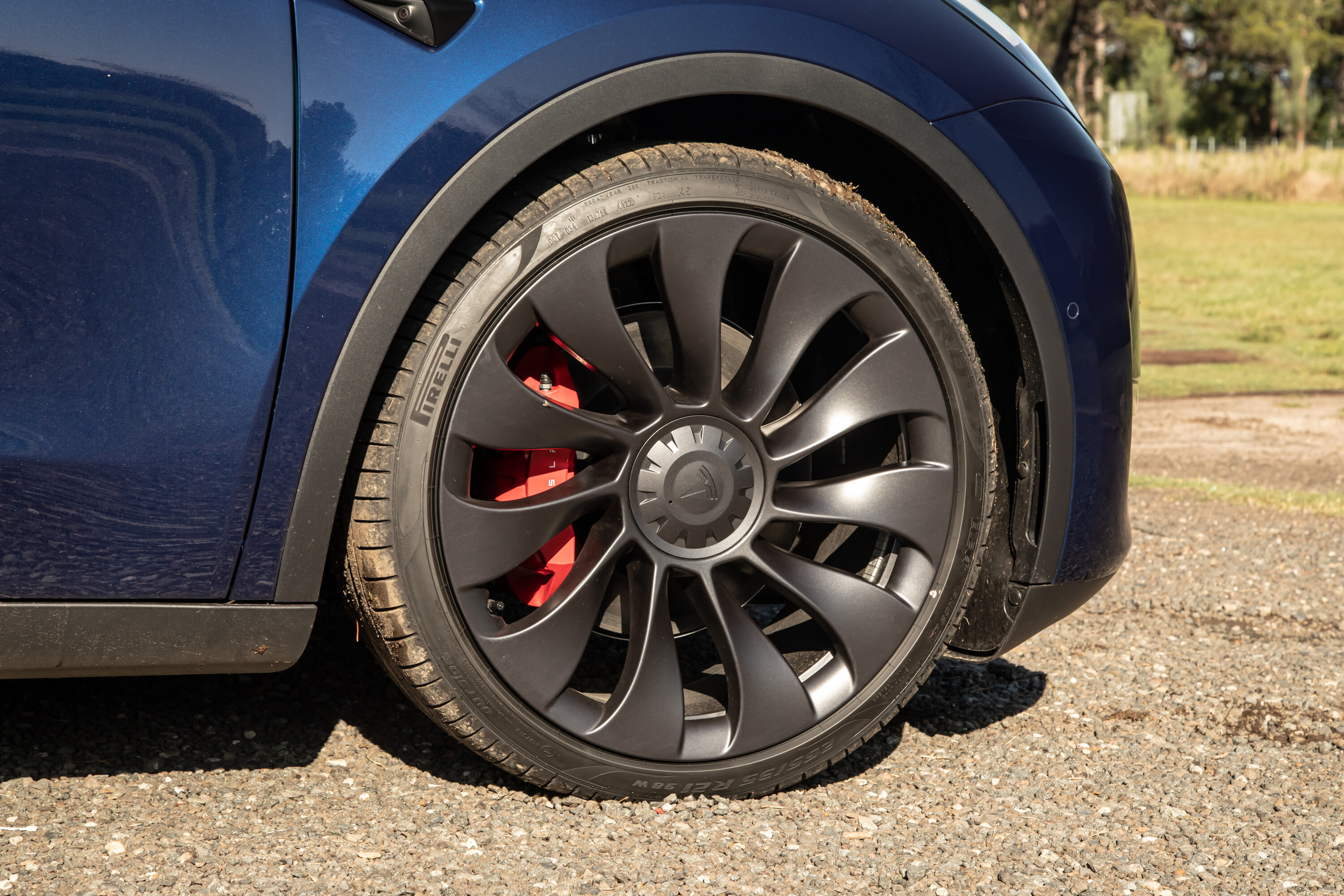
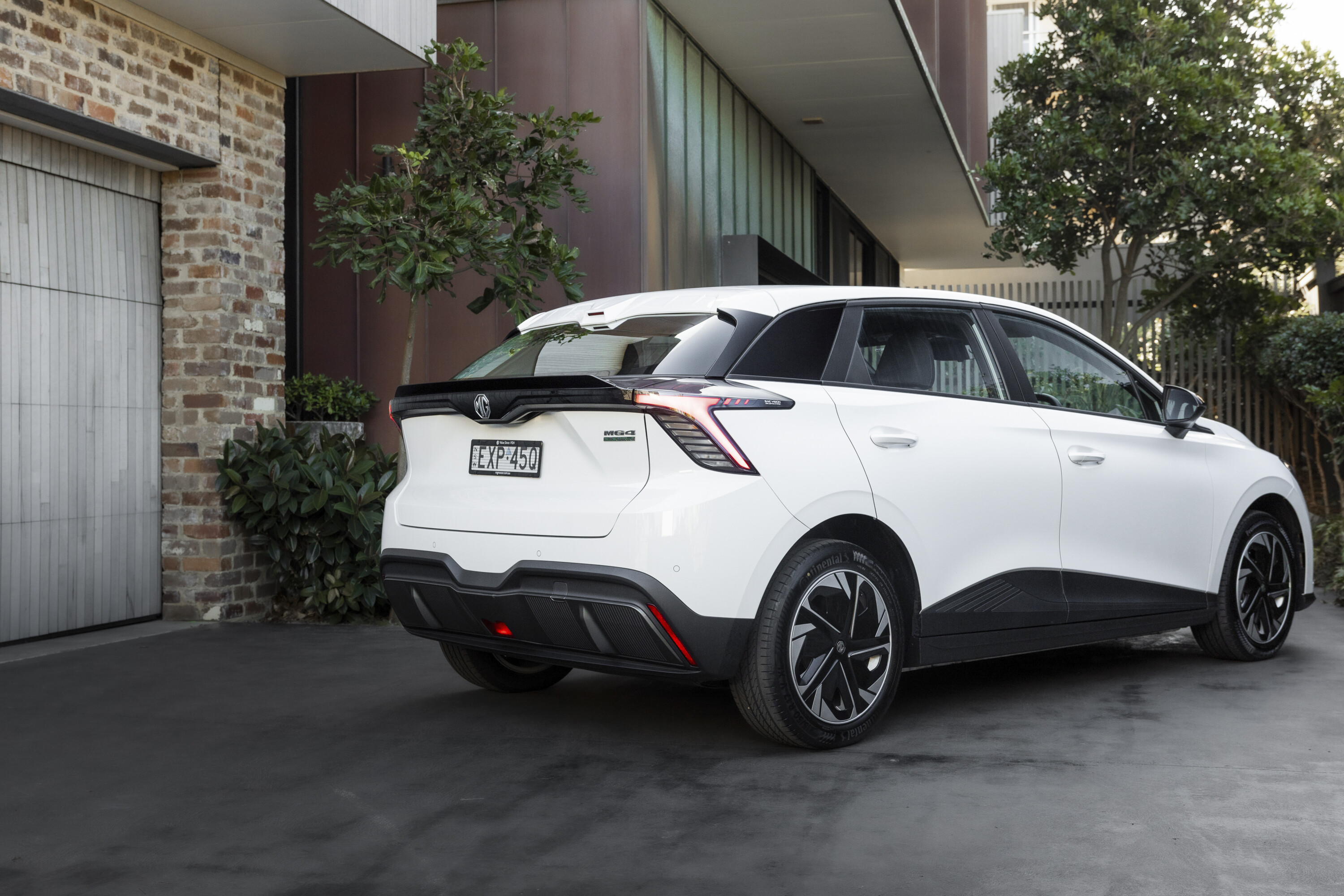
Most car brands artificially limit the initial torque delivery – especially on front-wheel drive EVs – to reduce wheel slip, and most models adopt EV-specific tyres designed to handle the load and wear less, resulting in theoretically reduced particulate matter emissions.
1
Meanwhile, regenerative braking – where the electric motor is inversed to slow down the vehicle and recoup some energy back into the battery – limits fine brake particulate matter compared to ICE cars, since there’s less demand for using the physical brake discs.
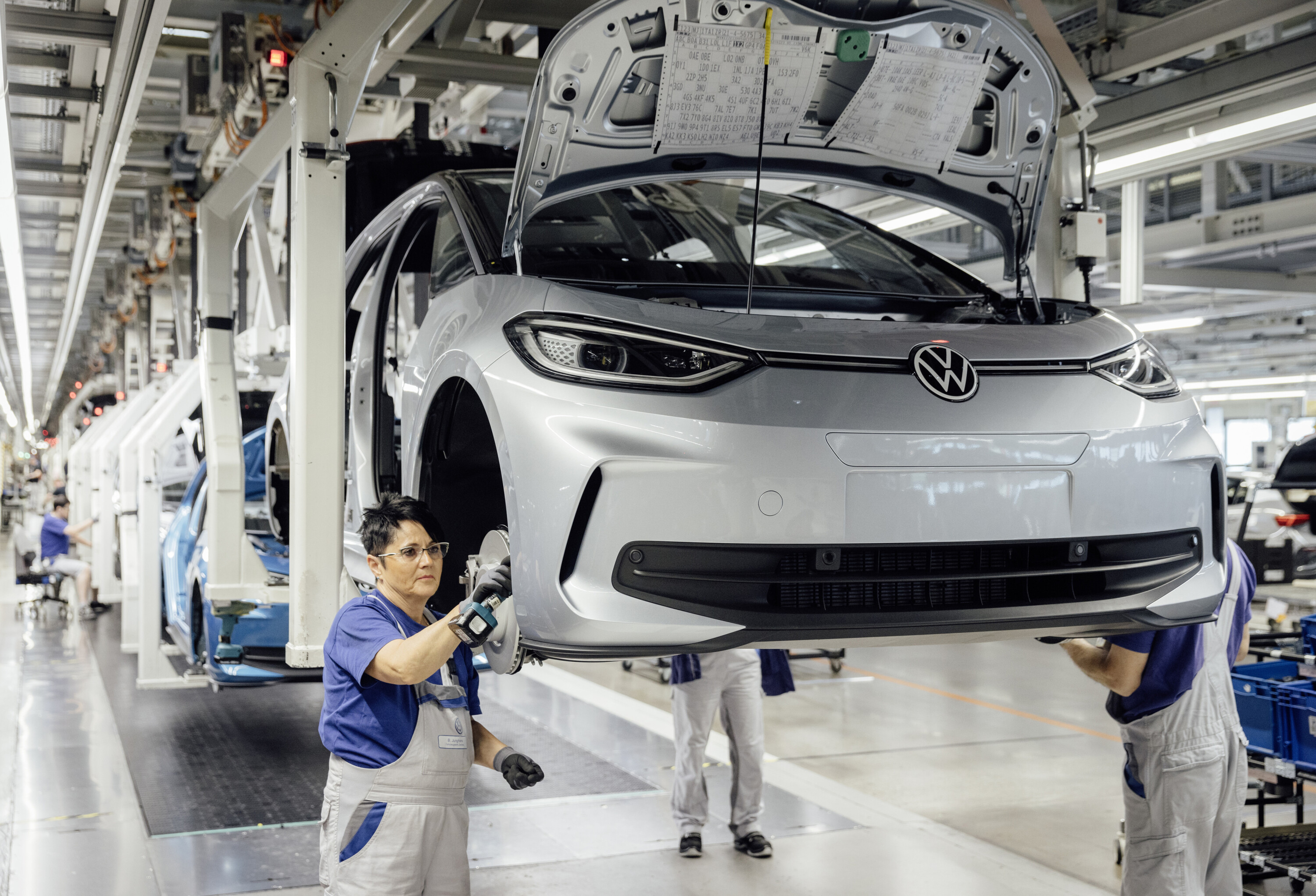
This is the key reason some carmakers, such as Volkswagen, have opted to use more basic rear drum brakes in electric models, because the use of regenerative braking doesn’t result in significant heat build-up.
Drum brakes are also enclosed, so any particulates produced aren’t released into the environment.
1
? Manufacturing and shipping
If EVs are produced and shipped to showrooms using unsustainable methods, they’re still harmful to the environment, right?
Yes, but an industry-wide shift towards a more eco-friendly circular economy is already happening, with the ultimate goal to reach net-zero by 2050 at the latest for most automakers.
Most automakers including Tesla, Geely, the Volkswagen Group, Hyundai Motor Group and BMW Group already employ complete or part animal-free seats, and part-recycled materials in new car interiors – instead of unethically-sourced leathers and toxic synthetic polyvinyl chloride (PVC).
For example, by using a smaller body style and incorporating more recycled components across the bodywork and interior, Volvo claims its EX30 electric SUV has reduced the total lifetime carbon footprint by 25 per cent compared to the larger XC40 Recharge (resulting in less than 30 tonnes of CO2 after 200,000km).
Some carmakers have even showcased concept vehicle models that can be entirely recycled at the end-of-life.

1
Major vehicle and battery factories globally are also transitioning to renewable energy power, reducing water use, and recycling waste materials.
As for car shipping and delivery logistics, the transition is slower but in progress. Some newer ocean-going cargo vessels are using more fuel-efficient diesel engines, some powered by biofuels, and boasting larger cargo capacities to take fewer trips.
Similarly, heavy battery-electric and hydrogen trucks are gradually coming onto the market, but it will take some time for the commercial sector to decarbonise since today’s technologies and charging infrastructure still needs to develop to suit long hauls.
? Will EVs really save the planet?
According to the CSIRO [↗], the transportation industry is the third-largest carbon emitter in Australia.
Therefore, 17.6 per cent of reductions would come from completely switching to electric vehicles.
While that is still a substantial number, it needs to be combined with moving away from burning fossil fuels for the electricity grid (33.6 per cent) and stationary energy, such as gas (20.4 per cent), to truly limit further global warming.
A report commissioned by Polestar and Rivian stressed that the automotive industry is set to overshoot the United Nations’ 1.5-degree Celsius global warming threshold by at least 75 per cent by 2050.
It highlighted that switching EVs isn’t enough to meet carbon-neutrality targets, with the need for a complete renewable electricity grid and a responsibly-sourced supply chain, too.
Social change is also needed, with a shift to using more active (walking and cycling), shared (e-bike and car-sharing platforms) and public transport modes – rather than constantly driving a private vehicle that often carries one or two people.
After all, regardless of what’s powering a vehicle, there will always be some kind of pollution (tyre and brake particulates, road noise, light emissions, etc.).
1
Yes, EVs initially have a higher carbon footprint. But, by looking at whole-of-lifetime emissions, the data confirms that EVs are still greener than traditional ICE vehicles over time.
As with justifying the initial EV price premium (if applicable), the more you drive, the better it is from an environmental perspective.
EVs don’t emit any local exhaust pollutants and are charged off at least part-renewables, while ICE vehicles emit fumes and run on poor-quality fuels (though legislation will improve sulphur standards in 2024). Call us biased, but the ‘arc of justice’ clearly bends towards EVs over time.
And, with advancements in battery technology, the expansion of renewable energy in Australia’s grid and improvements in manufacturing and supply chains, the environmental footprint will only shrink in the coming years.
Then, there’s the immediate personal human benefit, often overlooked: our health.
Because EVs don’t emit any local exhaust pollutants (with diesel in particular classed as a harmful group 1 carcinogen to human health), it results in less toxic risk to humans at the local level – whether it’s inhaling fumes in your garage, walking by traffic in the city, or even in your own car through the air vents when stuck in constricted drive-throughs.
1
? Is it time to make the electric switch?
If you’ve ever been convinced that the media are biased towards electric cars, it’s unlikely we’ve softened that opinion here – but the data is the data. For more on electric cars, check out the links below.
Snapshot
- Wakefield Park to live on as One Raceway
- More noise control using tall banks improves spectating
- Bi-directional layout will make for new challenges
Shrouded in conjecture and mystery since it was shut down in September 2021, Wakefield Park’s future is looking bright as new owner Steve Shelley breathes life back into the New South Wales racetrack.
This is the first real news we’ve heard since the racetrack changed hands three months ago as the new owners promise Wakefield Park will reopen as One Raceway in the first half of 2024.
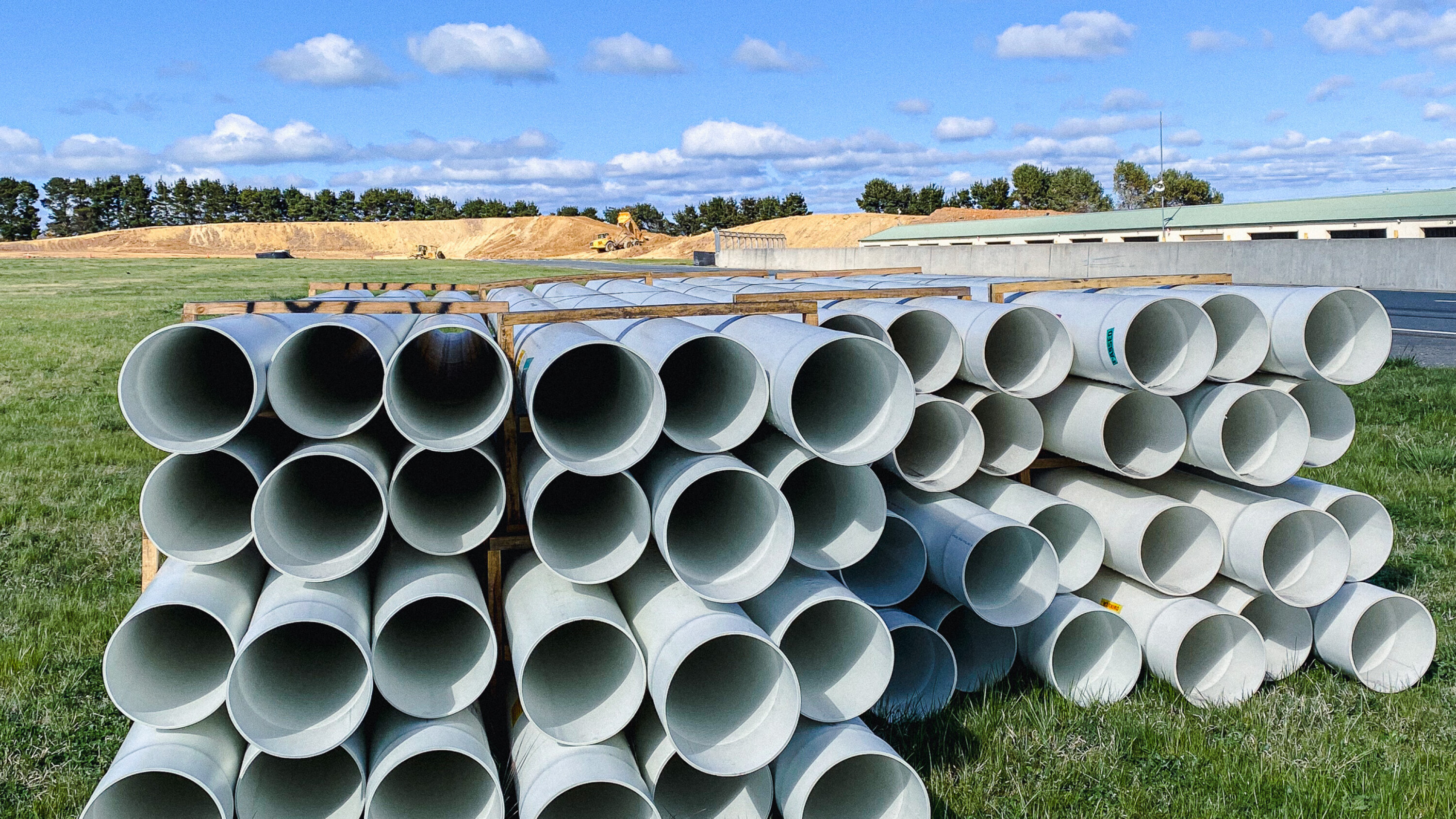
More than some fresh paint and surface patches, Wakefield is getting a thorough revamp as One Raceway.
About Wakefield Park ud83cudfce
Located just outside Goulburn, Wakefield Park is just two hours from Sydney and is a mecca for track day enthusiasts and a place for young talent alike.
The circuit was opened in 1995 as a track for amateur races and is named after Castrol founder, Charles Wakefield. It has hosted V8 Supercars rounds in the past, but is now used for production car racing, grassroots endurance evens, and track days.

1
Wakefield Park had various configurations that were occasionally used for rally sprints and drift days; the main 2.2-kilometre 10-corner configuration was the only one used for regular racing.
With some corner reprofiling, additional kerbing and run-off, the new circuit will open up the possibility of forward and reverse configurations – a first for an Australian permanent racetrack.
One Raceway promises that the two directions will have “unique names, individual records, and distinct vibes”, rather than just a rinse and reverse scenario.
1
Higher sound mounds are being built around the circuit – also great for spectators, something for which Wakefield has always been known – and the completely resurfaced racetrack will get much-needed drainage improvements. Anyone who’s previously driven Wakefield in the wet will be familiar with the T1-T2 river and occasional slug crossings.
While the track facility was set for a major revamp of pitlane, the first stage of One Raceway’s refresh will start with a new paddock surface and lick of paint. Fresh timing systems and “international-grade” panels will build on Wakefield’s current excellent electronic flag system.
In the lead-up to One Raceway’s opening, the team is calling on community volunteers to get stuck in and help speed up the project. YouTube creators Mighty Car Mods have already been involved in the project – you can watch the video below.
Toyota has confirmed pricing for the second-gen C-HR small SUV ahead of its Q1 2024 local release.
Snapshot
- Three-strong hybrid-only range here Q1 next year
- European-built small crossover offers a small SUV option
- Starts from $42,990 and runs to $54,990
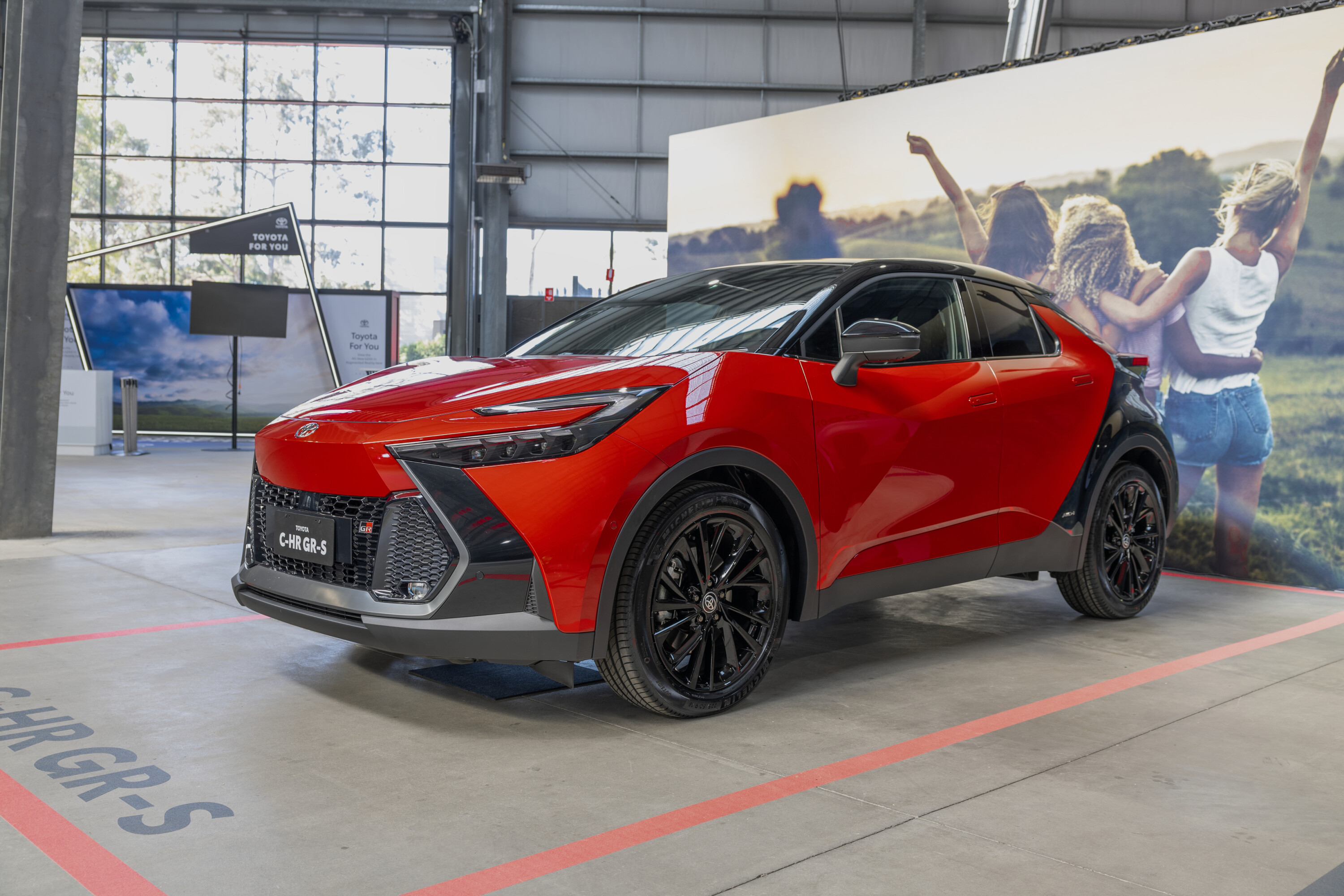
The C-HR range opens with the GXL from $42,990, with a mid-spec Koba commanding $49,990, and the flagship all-wheel drive GR Sport $54,990 (all before on-road costs). All are powered exclusively by hybrid powertrains.
Those are big increases – the all-new model starts at $11,275 more than before, while the mid-spec Koba is $11,500 dearer.
No longer is the C-HR a price-point small SUV purchase. In fact, the C-HR GR Sport is not only more costly than a Corolla Cross, it’s also steeper than a RAV4 Cruiser hybrid ($54,410).
1
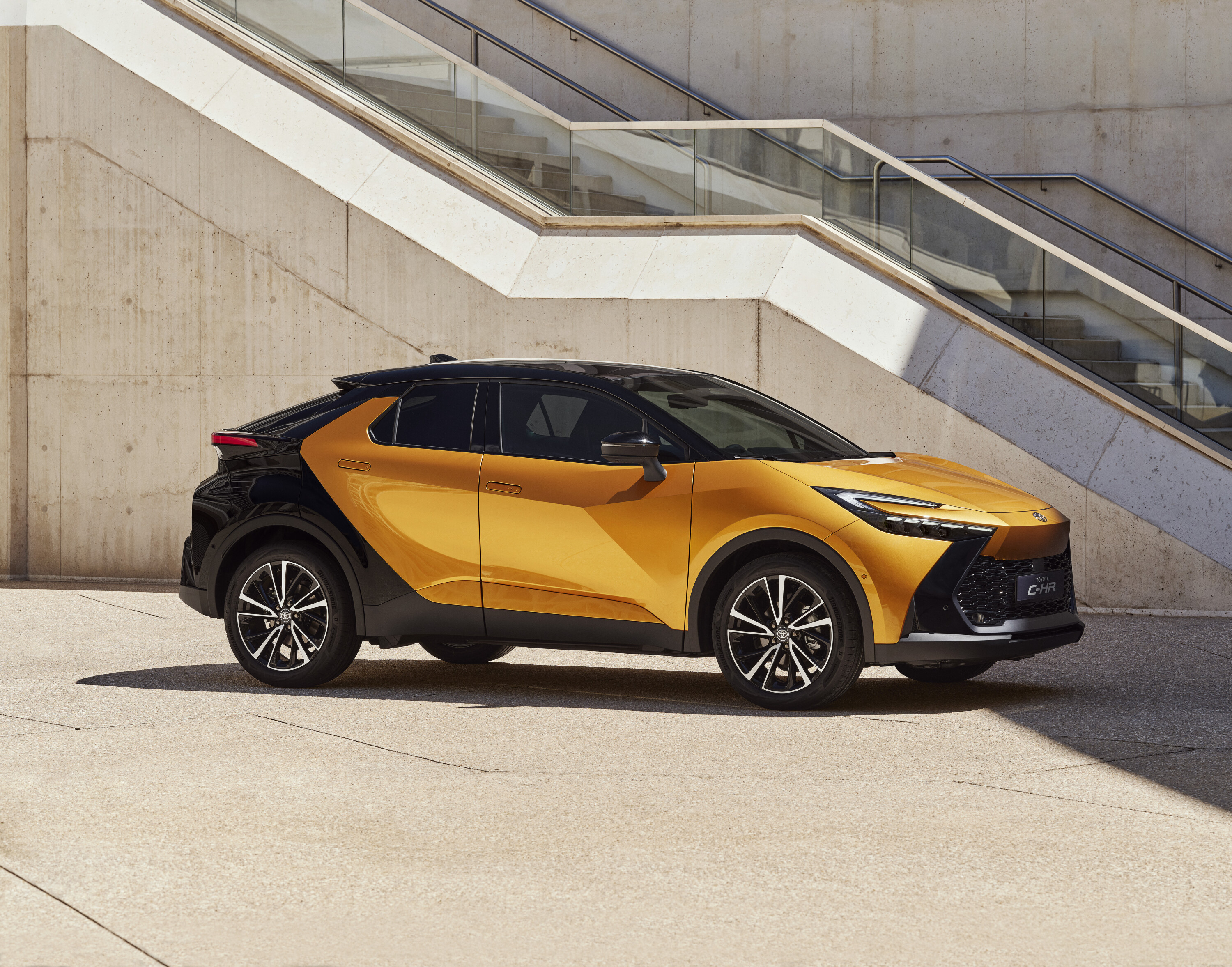
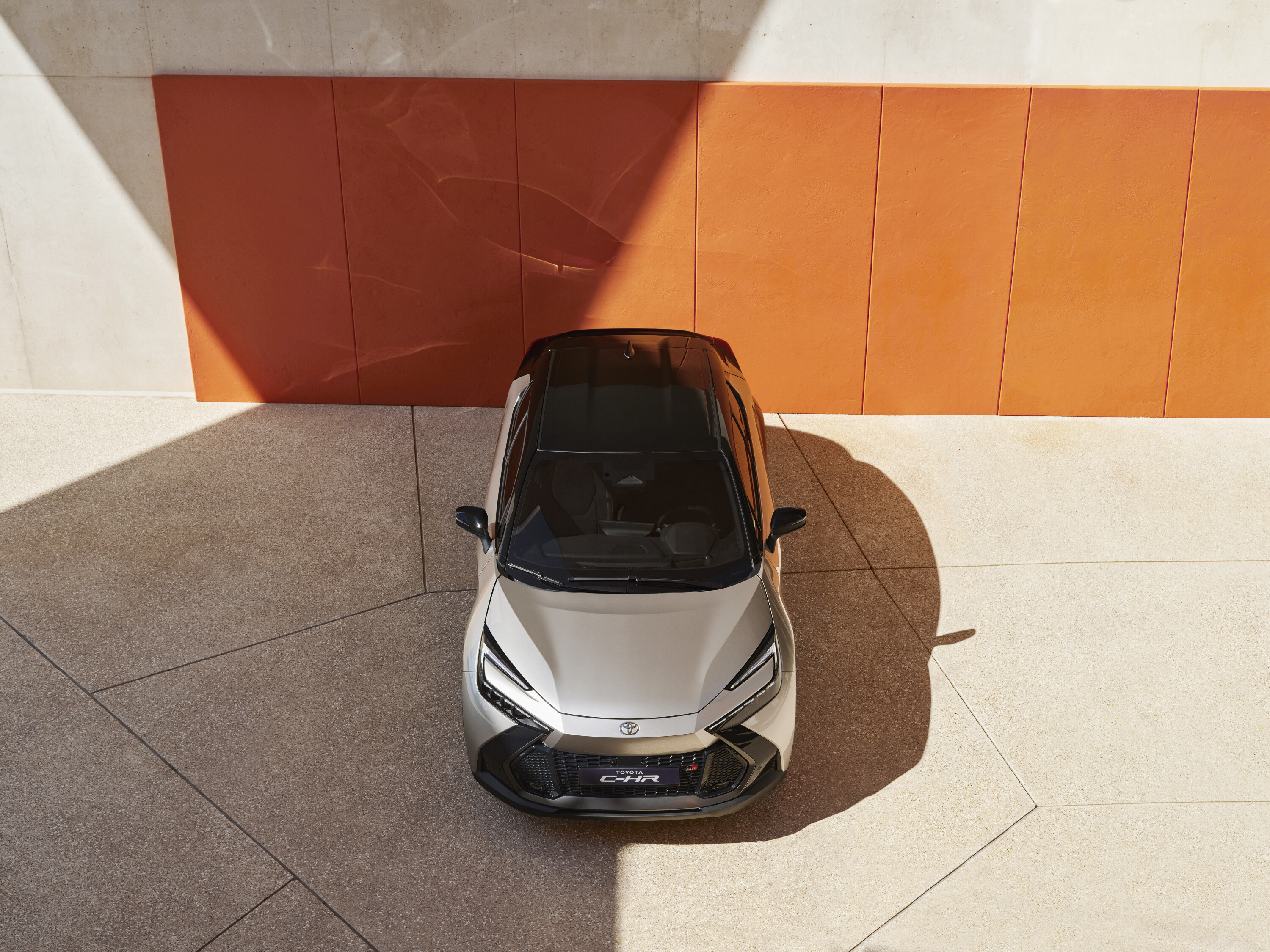
What the C-HR has lost in value points, the new model makes up for in visual excitement with striking concept-car-like styling.
Crisp LED lighting features invigorate unconventional proportions – the C-HR is 35mm wider and 30mm shorter than before despite maintaining the same wheelbase.
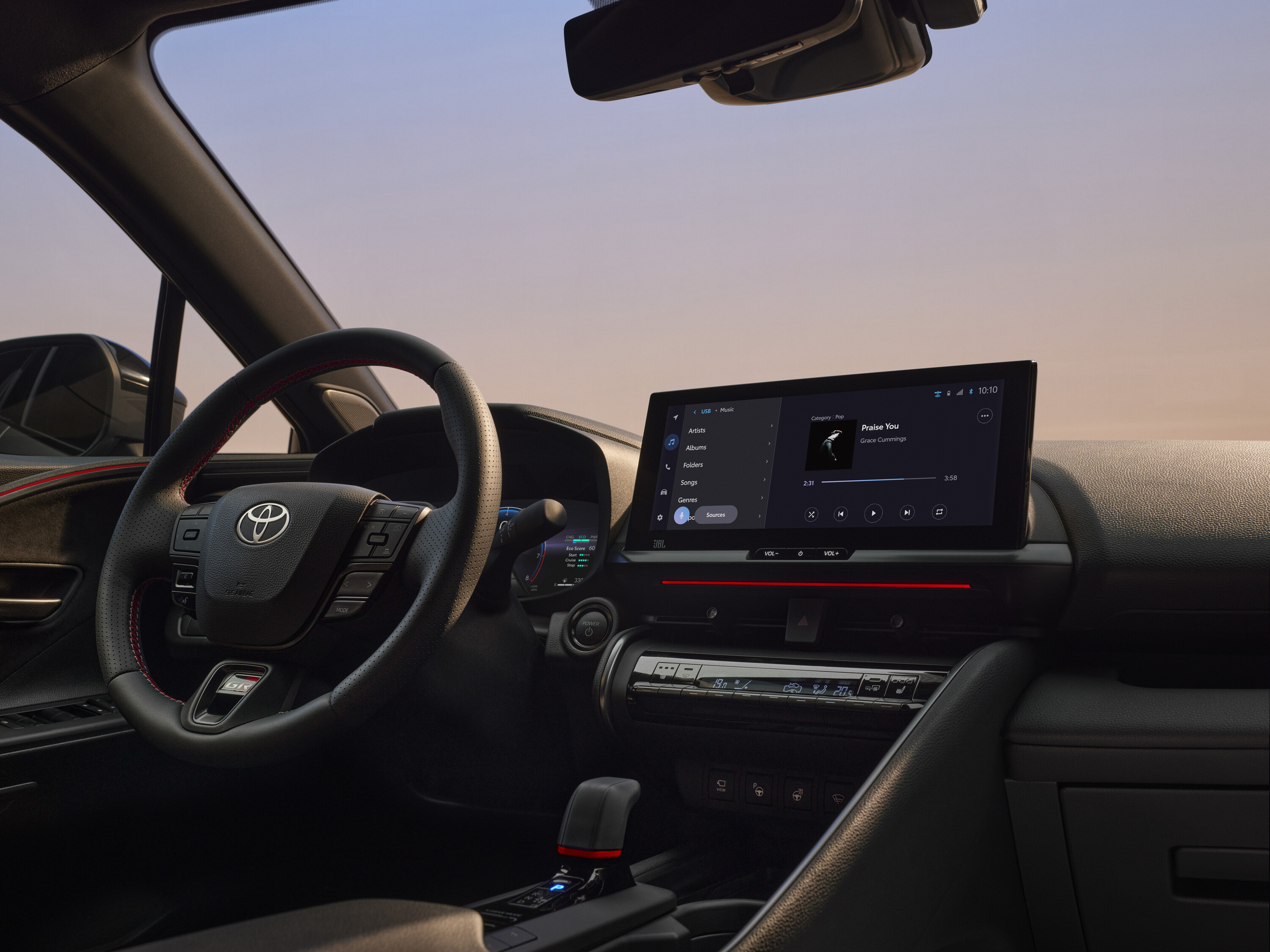
The price increase is again somewhat softened by Toyota’s latestt fifth-gen hybrid technology and the inclusion of generous cabin gizmos, such as the 12.3-inch central touchscreen and digital driver’s display.
The new C-HR is also now built in Europe for our market, with longer shipping routes pushing costs up compared to the previous Japanese-made car.
“The new C-HR brings a new level of premium luxury to the small SUV segment, blending dynamic design and strong technology with a high level of specification and low fuel consumption”, said vice president sales, marketing and franchise operations Sean Hanley.
https://www.instagram.com/reel/Cwjb5SQIrXL/
JUMP AHEAD
- 2024 Toyota C-HR pricing
- 2024 Toyota C-HR features
- Options
- Colours
- Engine, drivetrain, and fuel economy
- Safety
- Dimensions
- Warranty and servicing
- Availability
2024 Toyota C-HR pricing
Prices listed are before on-road costs
| Variant | Pricing | Change |
|---|---|---|
| GXL 2WD hybrid | $42,990 | Up $11,275 |
| Koba 2WD hybrid | $49,990 | Up $11,525 |
| GR Sport AWD hybrid | $54,990 | New variant |
1
2024 Toyota C-HR features
| C-HR GXL features | |
|---|---|
| 17-inch alloy wheels | Manual adjust sports seats with fabric upholstery |
| LED interior lamps | 7.0-inch colour multi-information display |
| 12.3-inch touchscreen | Wireless Apple CarPlay/wired Android Auto |
| Six-speaker audio system | Automatic dual-zone climate control |
| Rain-sensing wipers | Smart entry & start |
| Panoramic view monitor | Toyota Safety Sense active safety technologies |
2024 Toyota C-HR Koba features
| C-HR Koba features, in addition to GXL | |
|---|---|
| 19-inch alloy wheels | Bi-LED headlights with auto highbeam |
| Heated front sports seats with fabric/suede upholstery and power driveru2019s seat adjustment | 12.3-inch digital instrument display |
| Nine-speaker JBL premium audio system | Head-up display |
| Wireless smartphone charger | Colour-selectable ambient lighting |
| Power tailgate | |
2024 Toyota C-HR GR Sport features
| C-HR GR Sport features, in addition to Koba | |
|---|---|
| GR Sport 19-inch alloy wheels | GR Sport exterior styling package |
| Upgraded brakes | Heated steering wheel |
| GR Sport front seats with synthetic leather/suede upholstery | GR branded floor mats, steering wheel and scuff plates |
1
Options
| Two-Tone premium paint | $775 |
| Two-Tone Plus premium paint | $1550 |
| Two-Tone Plus premium paint + panoramic roof (GR Sport) | $2700 |
1
Colours
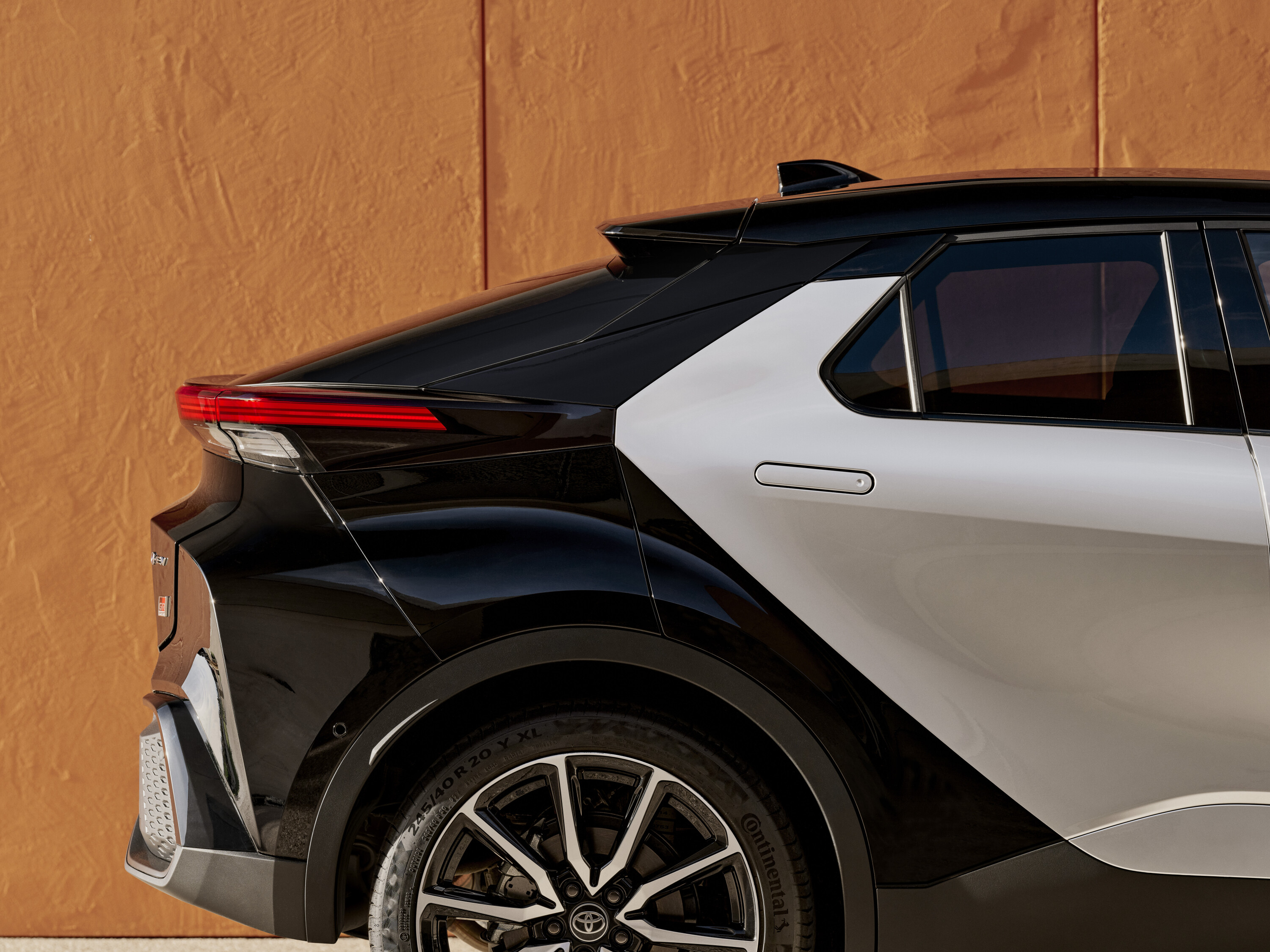
Toyota is yet to name the full colour range for Australian C-HRs, though there will eventually be six single-tone for GXL and six two-tone colourways for Koba and GR Sport.
Two-tone plus (pictured here) sees the contrast black encircle the rear of the C-HR.
| Sunglow Yellow two-tone |
| Feverish Red two-tone |
| Glacier White two-ton |
Engine, drivetrain, and fuel economy
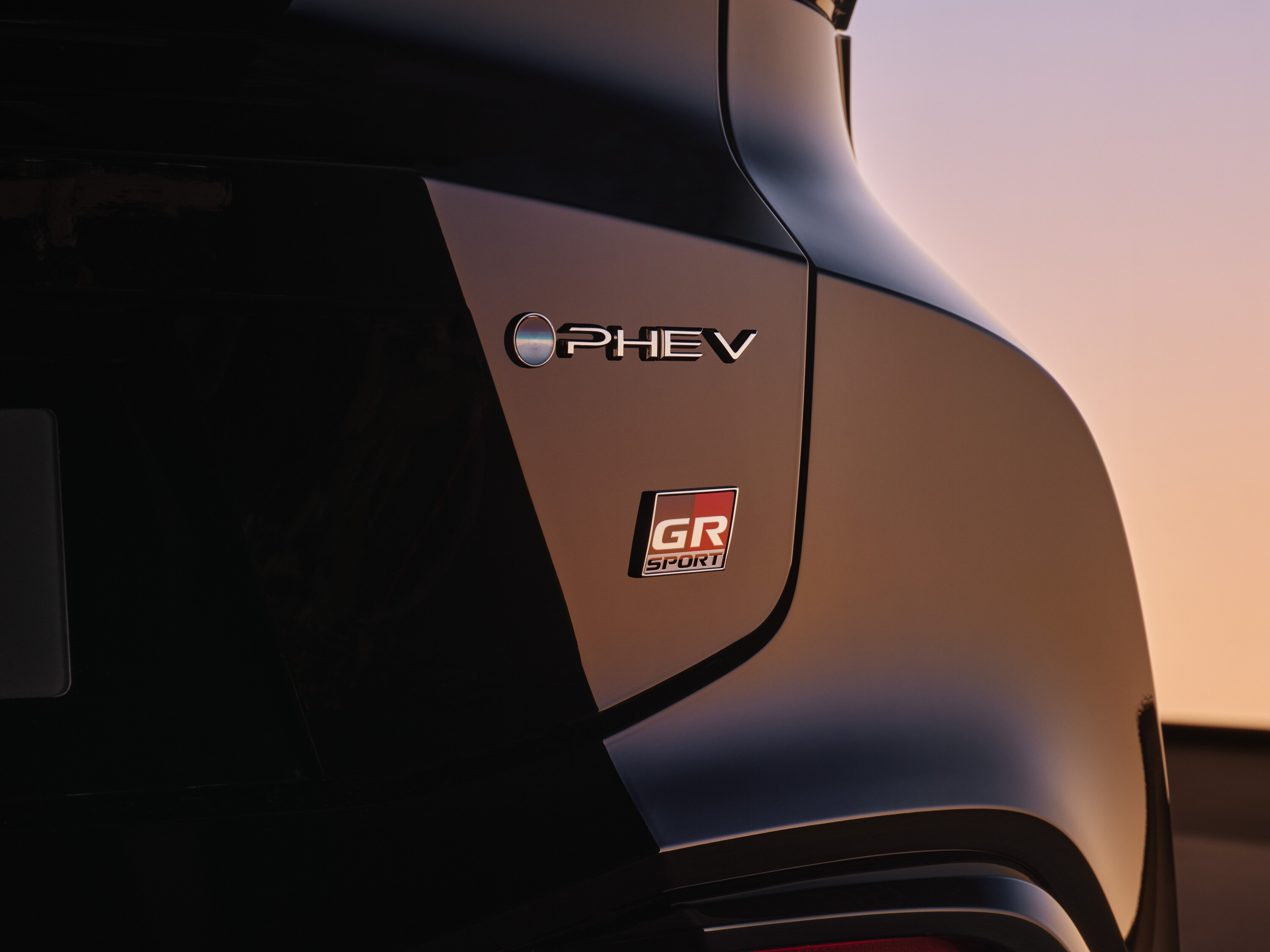
Following the new Corolla Cross, the C-HR will arrive with fifth-generation hybrid powertrains in front- and all-wheel drive.
The GXL and Koba pair an Atkinson cycle 1.8-litre four-cylinder petrol with a 70kW/142Nm electric motor (17kW more than before thanks to twice as many motor magnets) for 103kW – there’s no combined torque figure quoted.
1
All-wheel drive variants get a 2.0-litre hybrid, the same as found in the Corolla Cross but with one less kilowatt.
Producing 145kW in total, the AWD GR Sport gets a punchier 83kW front axle electric motor and 30kW rear-mounted drive unit for added stability.
Toyota has not made any performance claims or detailed fuel efficiency for the new C-HR. Given it’s more compact than the Corolla Cross, expect the lighter coupe-styled crossover to be a little nippier to 100km/h.
Safety
Awarded a 5-Star ANCAP safety rating, the new C-HR has an abundant standard safety kit.
This includes 10 airbags, autonomous emergency braking with pedestrian, cyclist, junction and head-on detection, adaptive cruise control, lane keeping assistance, and a driver monitoring camera.
Helping with a lack of outward vision are front and rear parking sensors with low-speed auto braking, and there’s a surround-view camera, plus blind-spot monitoring and rear cross-traffic alert.
1
Dimensions
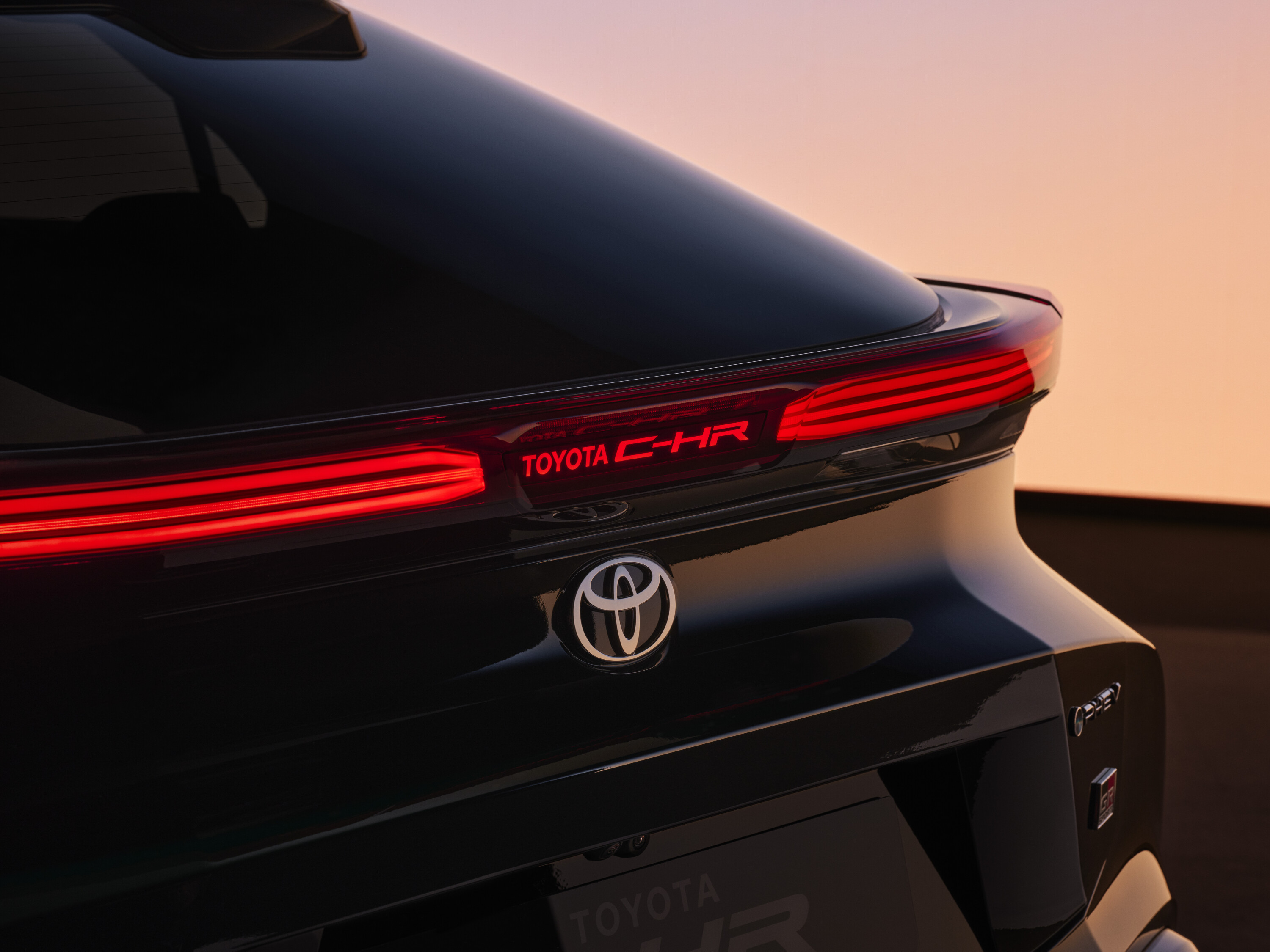
The new C-HR is actually 30mm shorter than before, measuring a stubby 4360mm long. Its 1830mm width is 35mm more than before, and the 1558-1564mm height figure is roughly the same.
It rides on a 2640mm wheelbase – identical to the Corolla Cross – which bodes well for cabin space.
1
Warranty and servicing
Toyota is yet to detail service pricing for the new C-HR.
It will be covered by a five-year/unlimited-kilometre warranty.
Availability
The outgoing C-HR is no longer available to purchase, so you’ll have to wait for the new vehicle’s arrival in the first quarter (April-March inclusive) of 2024.
MORE
Everything Ssangyong
Kia has revealed a new EV4 electric concept at its 2023 EV Day.
Snapshot
- Kia EV4 concept revealed at 2023 EV day
- An electric sedan for a new era, says Kia
- Sustainable materials and innovative cabin design
- Part of Kiau2019s attainable EV push u2013 donu2019t expect EV4 to break the bank
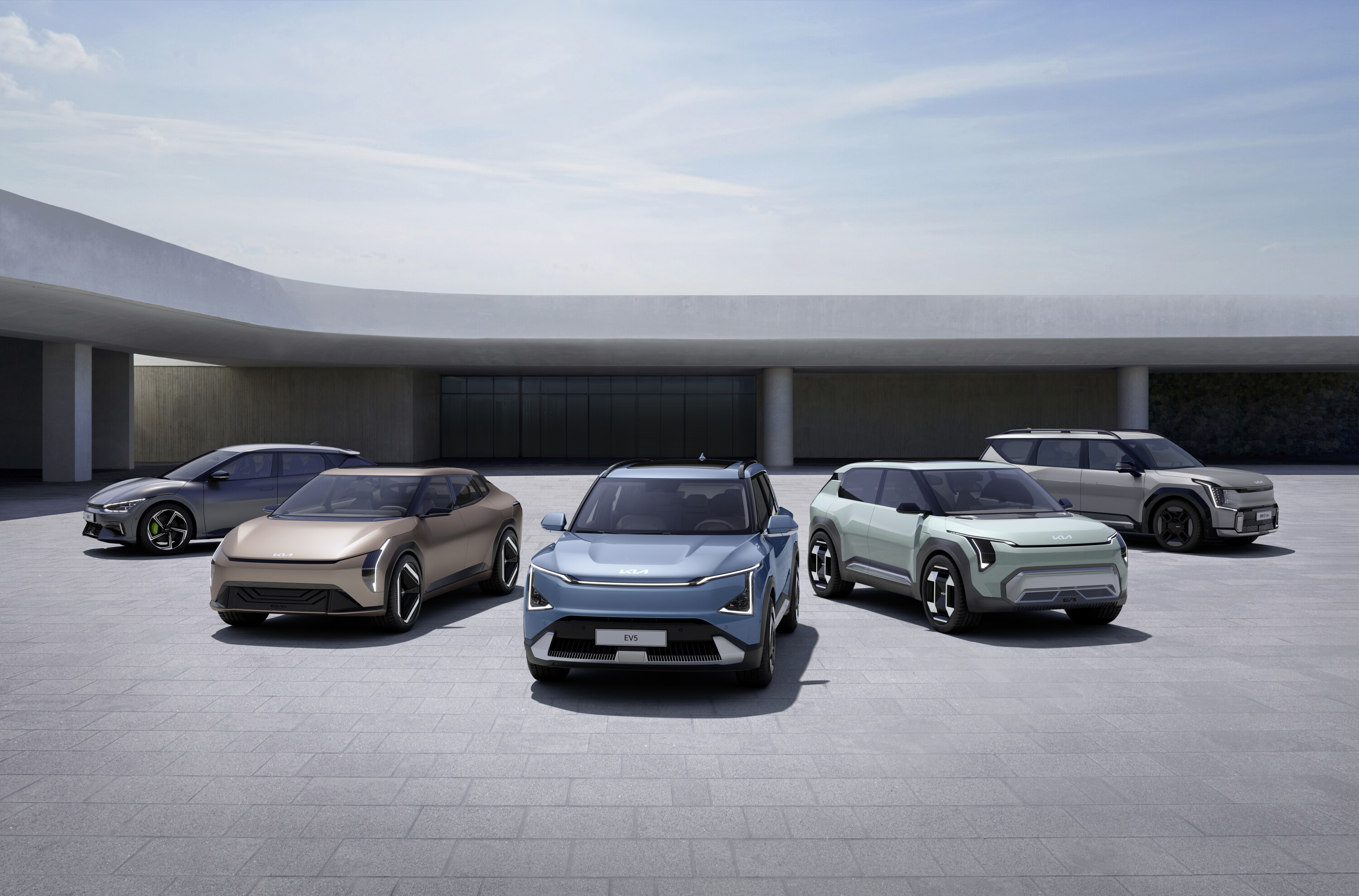
The lifted sedan – which gives off Polestar 2 vibes – is part of Kia’s attainable EV push and one of 14 new electric models due by 2027.
The South Korean carmaker promises that, along with the EV3 small SUV concept and EV5, the EV4 will form part of an affordable global offering with prices between AU$55,000-$80,000.
It’s no mistake that’s the exact segment of the market that Tesla is currently dominating with the Model 3 and Model Y – Kia is looking for a slice of that action with these new concepts, and it’ll accomplish the prices by looking to more localised manufacturing.
1
Design language previews production EV4
Building on Kia’s ‘Opposites United’ philosophy defined by the EV9 and EV6 large SUVs, the EV4 is informed by the ‘Power to Progress’ pillar, according to Kia.
The carmaker reckons the EV4 concept is an “entirely new type of sedan that stands as a symbol of innovation.”
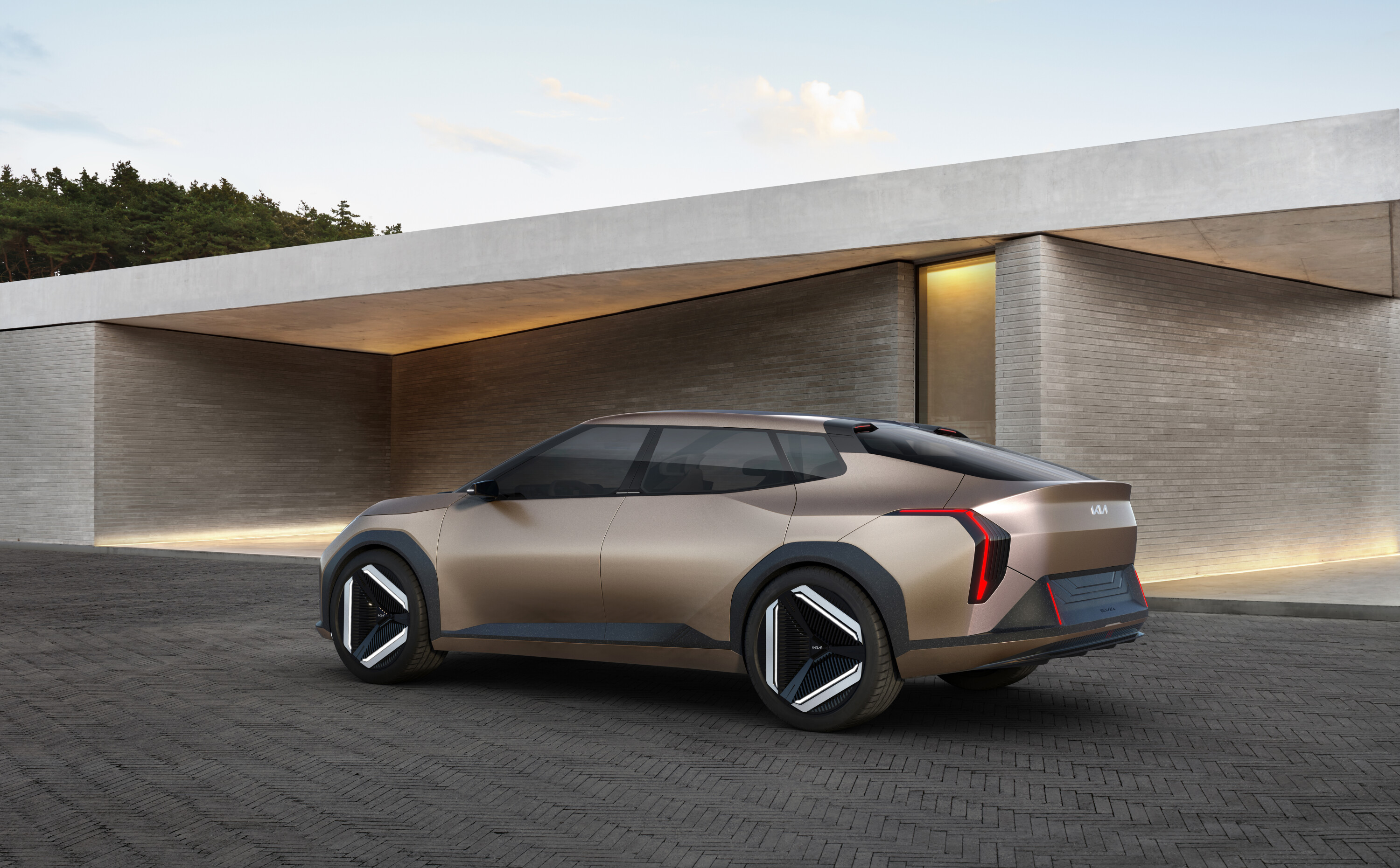
Taking inspiration from the EV6 in profile, the EV4’s blacked-out A-Pillar gives way to a plunging roofline with an elongated rear window and truncated deck.
1
Directly front on, its narrow yet tall vertical headlights are pushed right out to the edges, emphasising its generous width. With no physical grille, Kia’s Digital Tiger Nose grille provides a visual link to electric siblings.
The EV4’s chunky ‘tri-spoke’ aero design wheels push Kia’s rim design further than ever before – that these look will make production seems unlikely.
Sustainable materials and innovative cabin design
Inside, the EV4’s design language fits into the Korean brand’s latest interior concepts.
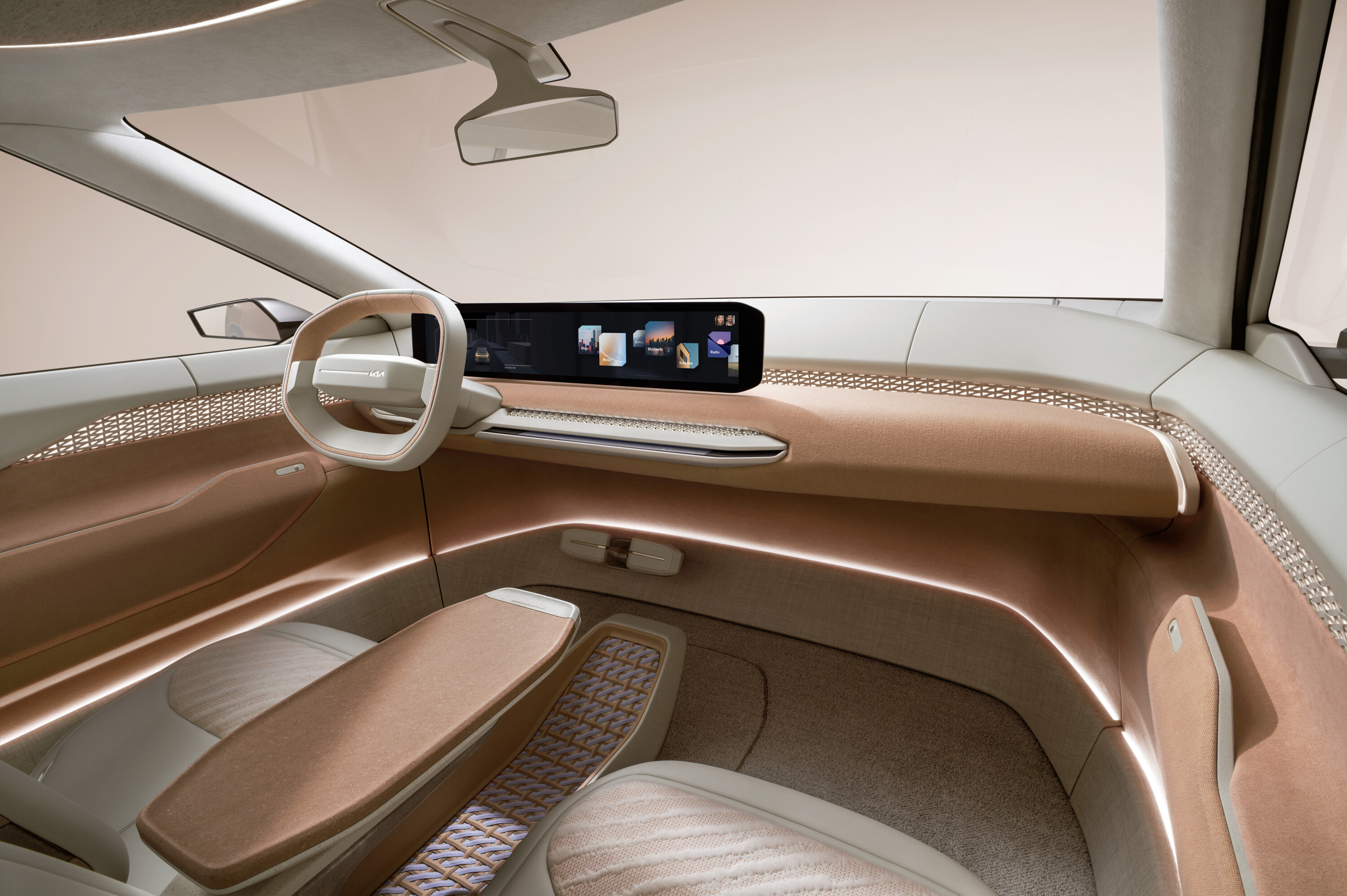
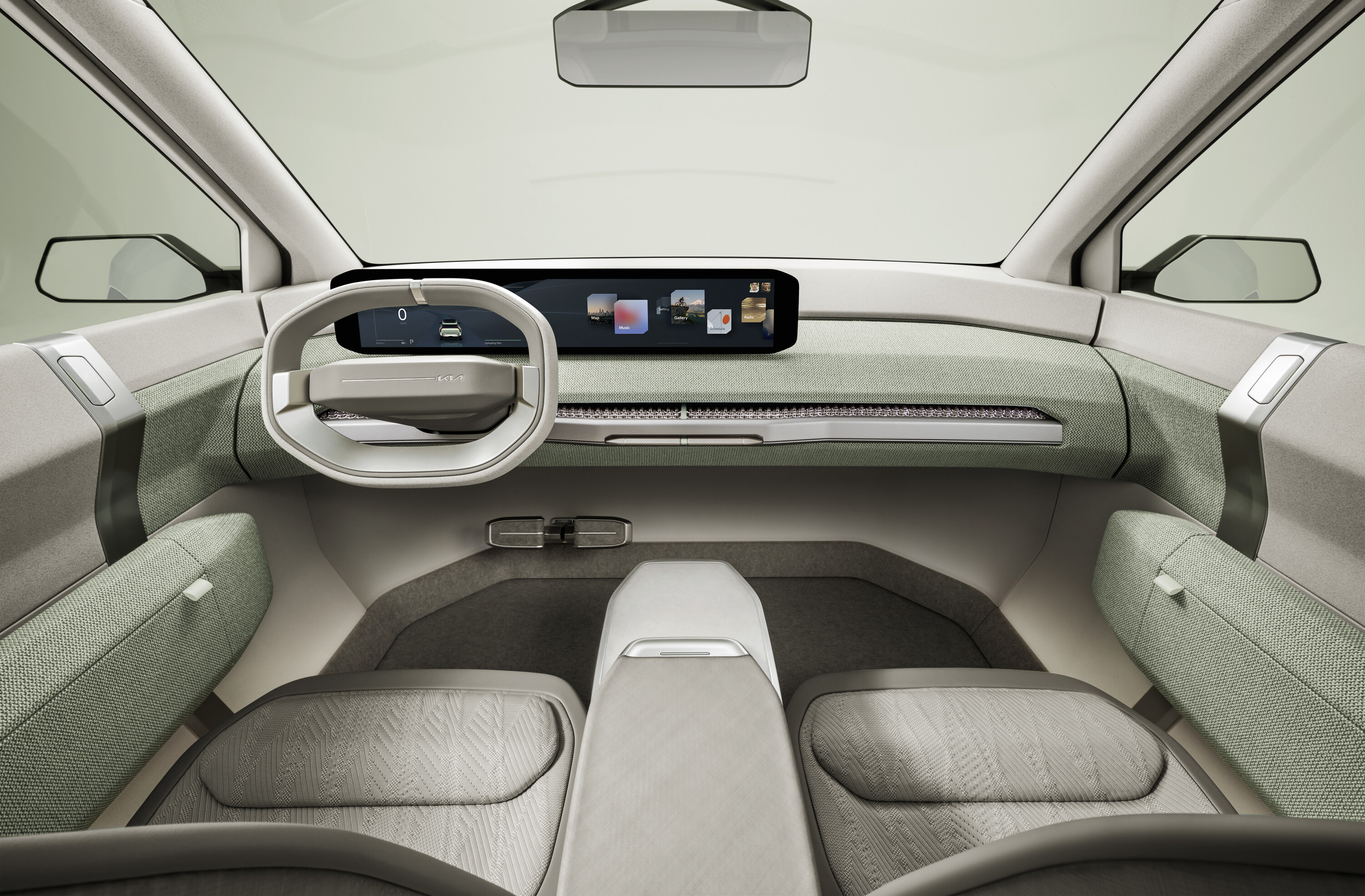
Minimal without being excessively so, there’s a focus on light fabrics and a spacious, undivided front compartment.
Sustainability was a big area of concern, so the EV4 concept’s cabin upholstery uses 100 per cent recycled cotton dyed with natural materials such as madder roots and walnut shells. Woven 3D-knit fabrics are used around the cabin as visual highlights, while the centre console table is constructed from renewable hemp fibres.
2
Innovations in the EV4 include HVAC controls that can be stored in the centre console when not needed and air vents with customisable patterns. Kia describes the cabin as having a ‘cocoon-like ambience’, rather than the EV5 and EV3 concept’s airy feeling.
There are also ‘Mind Modes’ which tweak ventilation and ambient lighting settings to suit the driver’s mood. Perform mode gives lots of driving information and invigorating lights, while Serenity minimises information clutter and provides more subtle ventilation and lighting.
Artificial intelligence coming to EV4
Kia will integrate AI technology into its ownership experience next year with its new smartphone application.
Along with digital key functionality, the Kia App will incorporate an AI chatbot that will help drivers should they have queries about their vehicles.
The Korean carmaker will also incorporate generative AI technology, starting with the 2024 model year EV3 which will get rolled out into the EV4 in over-the-air software updates.
Platform and construction
Kia is yet to detail the EV4’s vitals such as dimensions, power, range, and battery size.
Given the EV4 is pitched as a mass-market product, it’s likely to move onto Kia/Hyundai’s forthcoming eM architecture though there’s no confirmation on that yet. Like the EV5, the EV4 could end up a version of the existing E-GMP architecture.
As seen in the EV5, we may see the EV4 constructed in different countries.

1
If it comes to Australia, the EV4 may be sourced from China and utilise more affordable lithium-iron-phosphate (LFP) battery chemistry – just like EV5 – with driving ranges between 450km and 600km.
Along with standard single-motor and twin-motor models, it’s likely Kia will offer a high-performance EV4 GT in the future, too.
Expect a production EV4 to arrive shortly after the EV5 launches in 2024.
Snapshot
- Kia confirms EV5 local release for 2024
- Australian models will be built in China, likely giving a price advantage
- Expect 450-600km driving range, depending on variant
- EV5 models could start from $60K or less locally
Kia has revealed further details of the 2024 EV5 electric SUV – including that an EV5 GT is coming – and has confirmed the model will arrive in Australia next year.
All EV5s for Australia will be sourced from China, though that’s the extent of local info at the moment.
EV5 electric driving range will start around 440km (converted from CLTC to WLTP) with the Long Range variants likely to hit 600km in WLTP figures.
The burgeoning electric medium SUV segment will continue to hot up in 2024 with the addition of Kia’s EV5 along with the Volkswagen ID.4 and Skoda Enyaq to face off against the Hyundai Ioniq 5, Tesla Model Y and Ford Mustang Mach-E.
https://www.facebook.com/WheelsAustralia/videos/1684332665639858/
Although Kia has not engaged in price wars with Chinese brands yet, that could change with the EV5. Along with the EV3 and EV4 also revealed today, the EV5 is the start of Kia’s attainable electric vehicle range.
Kia is aiming to push its smaller range of EVs at between $55,000-$80,000 on its way to selling 1.6 million electric cars annually by 2030. it’ll accomplish this by expanding manufacturing with the goal of eight non-Korean plants with India and North America key targets.
“The Kia EV5 is not just the next addition to our rapidly expanding EV line-up, but also the embodiment of how we will accelerate the EV revolution. For us, it is the perfect representation of both our future EV strategy and our commitment to accelerating the worldwide transition to EVs”, said head of global business planning sub-division Spencer Cho.
Jump ahead
1
Kia EV5 range, charging and power
Though the Kia EV5 sits on a version of the E-GMP platform shared between Hyundai and Kia, the medium SUV gets different battery configurations.
The basic single front-mounted motor cars use a 64kWh battery pack and 160kW motor. Given the EV5 was designed with China in mind first, the standard range’s 530km driving range is quoted in the Combined Charging and Load Cycle (CLTC).
CLTC figures are typically 15-20 per cent more optimistic than WLTP, so we’re expecting a 430-460km WLTP figure from the base car.
The two Long Range variants are fitted with 88kWh battery packs. The single motor is rated at 720km (CLTC), so expect a generous 580-620km from WLTP figure.
The 230kW all-wheel drive model adds a 70kW motor to the rear axle, dropping its range figure to 650km CLTC (or about 510-550km WLTP).
Reports suggest that China-made models coming to Australia will be fitted with lithium-iron-phosphate (LFP) battery packs rather than the nickel-manganese-cobalt (NMC) items that Korean cars will get.
This appears to have affected charge speeds. Kia has yet to confirm average DC rapid-charging speeds but claims the EV5’s larger battery goes from 30-80 per cent SOC in 27 minutes, against the 800-volt EV6’s 18 minutes from 10-80 per cent.
Korean-made cars will have smaller 58kWh and 81kWh NMC battery packs, with ranges yet to be revealed. A heat pump is standard, and the EV5 will get a version of the existing regenerative braking system including i-Pedal single-pedal drive mode.
The initial models will be followed by a high-performance GT variant in the future, likely developing nearly 400kW from two motors.
Spacious, airy and food-friendly cabin
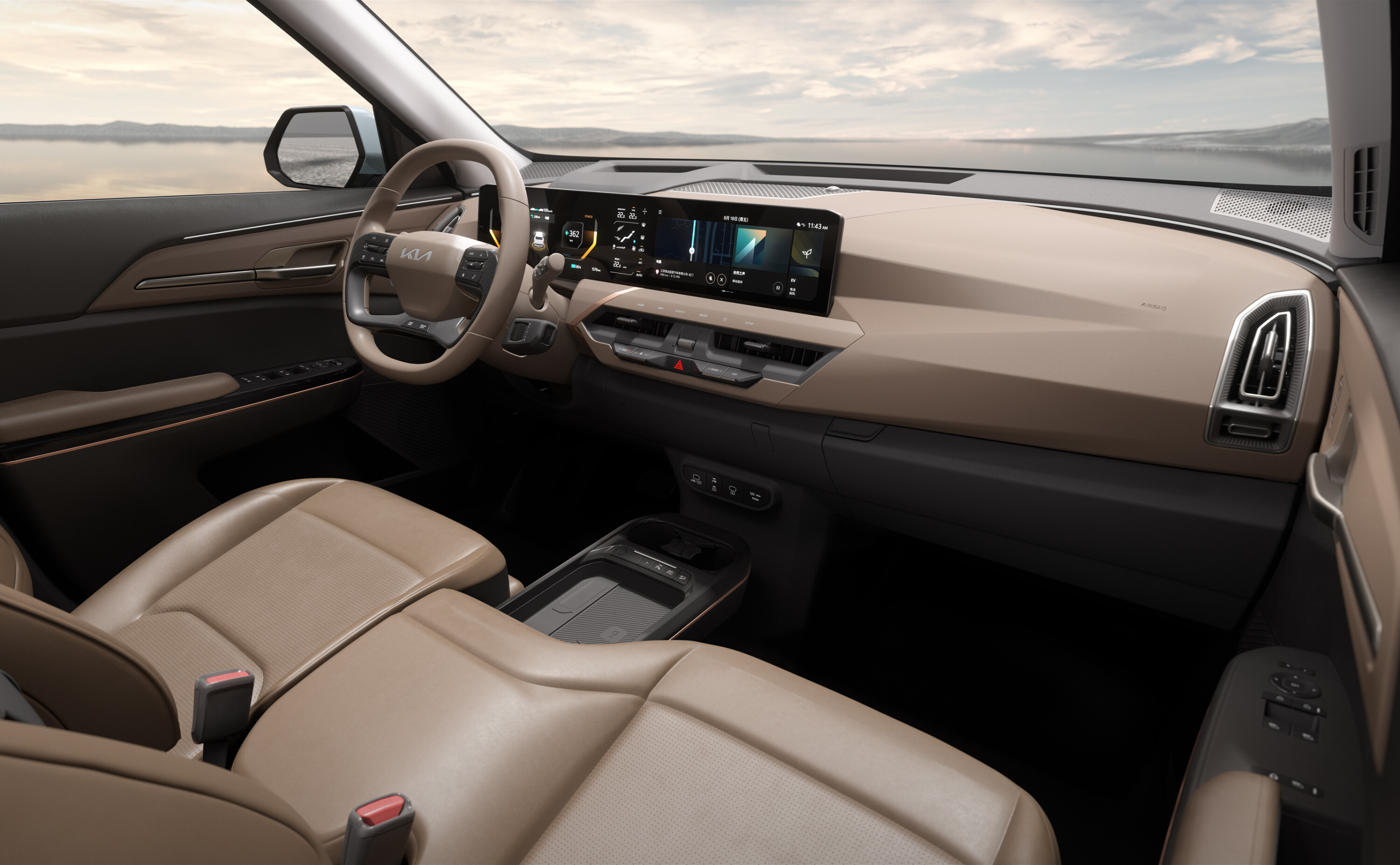
Unlike the existing EV6, the EV6 moves to a more open and airy cabin design, more similar to the Hyundai Ioniq 5 and Kia EV9 in execution.
A pair of integrated 12.3-inch screens form the digital driver’s display and main HMI touchscreen, which boasts over-the-air software updates and Kia Connect service (in select markets).
Below that is a 5.0-inch HVAC touchscreen, while there are four hidden physical buttons for on/off and various heating and ventilation functions for the tri-zone climate control you may not want to use the touchscreen for.
Upholstery is eco-friendly with recycled PET fabric in lower-grade cars and bio polyurethane for upper trims. Kia says this, along with the added airiness, elevates the EV5’s cabin “into an ultra-comfortable, highly practical, and inspiring environment that meets the needs of millennial families”.
1
China-market models get the option of a three-wide bench seat, though our cars will get individual front seats. The upmarket ‘Relaxation’ chairs have four-mode massage, heating and ventilation, and adjustable lumbar support.
The EV5 concept’s swivelling captain’s chairs have evolved into a second-row seat that can fold fully flat – Kia’s calling it the camping seat.
Escapism continues to be built in with an optional four-litre cooler/heater box that can fluctuate temperatures between five and 55 degrees.
For those on the go it’s sold as being able to keep takeaway brekkie and coffee hot on the way to work or keeping beverages cold in hotter months and “summer camping trips”.
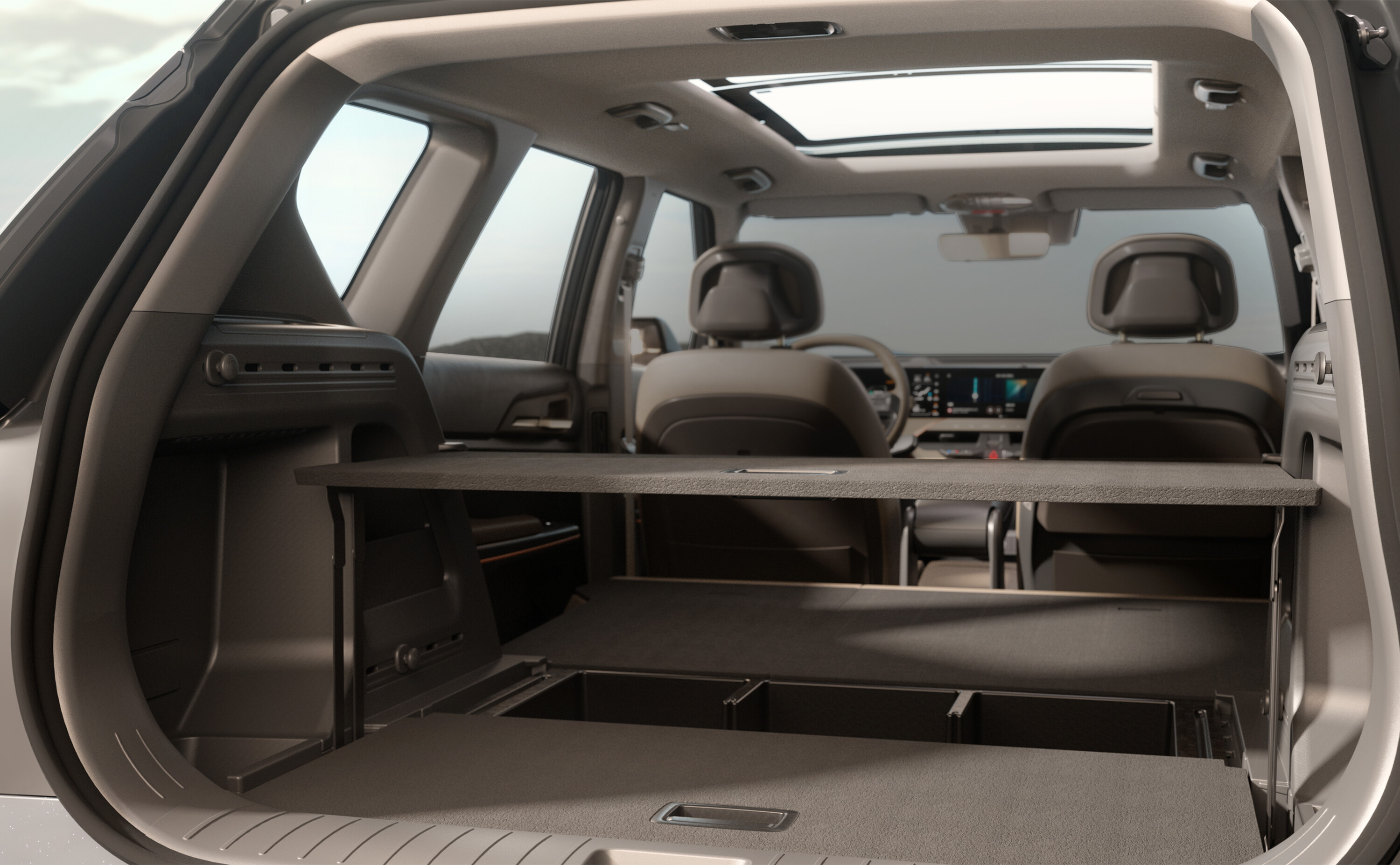
A table is integrated into the front centre console for snacking and working, while the ‘Multi Table’ luggage board also provides a place to consume some delicious morsels.
1
Dimensions
The Kia EV6 sits firmly in the medium SUV segment. It measures 4615mm long, 1875mm wide, 1715mm tall, and rides on a 2750mm wheelbase – shorter than the Ioniq 5, model Y and EV6.
Safety
The EV5 is yet to be evaluated by an independent safety testing body.
Kia says the new EV features seven airbags and a strong body for crash-worthiness.
It’s also packed with driver assistance features including ‘Highway Driving Assist’ that combines adaptive cruise control with stop & go with lane-trace assist.
Rea cross-traffic alert, blind-spot monitoring and AEB are fitted to the EV5, as well as a remote smart parking assist that allows you to get into or out of a spot in the EV5 using a smartphone app.
1
Pricing and availability
Kia is yet to confirm pricing or features for Australia, however, reports have suggested it will start at around 50 Million Won in Korea or AU$59,000.
That Australian EV5s will be made in China using more affordable LFP battery technology bodes very well for local pricing, too. If Kia can offer a family-sized EV with all the technology and decent range for under $60,000, it could be onto a winner.
Kia has only said the EV5 will arrive in 2024 with no specific date targeted yet. We expect sometime around mid-late next year for arrivals.
1
Our original story, below, continues unchanged
August 2022: Kia EV5 revealed as Sportage-sized EV
Unveiled at the Chengdu motor show in China, the EV5 mid-size electric SUV will arrive in China later this year before a global version launches in 2024.
Kia said more product information for the EV5 will be announced at an ‘EV day’ event scheduled for October, where it will detail its “global vision for electrification”.
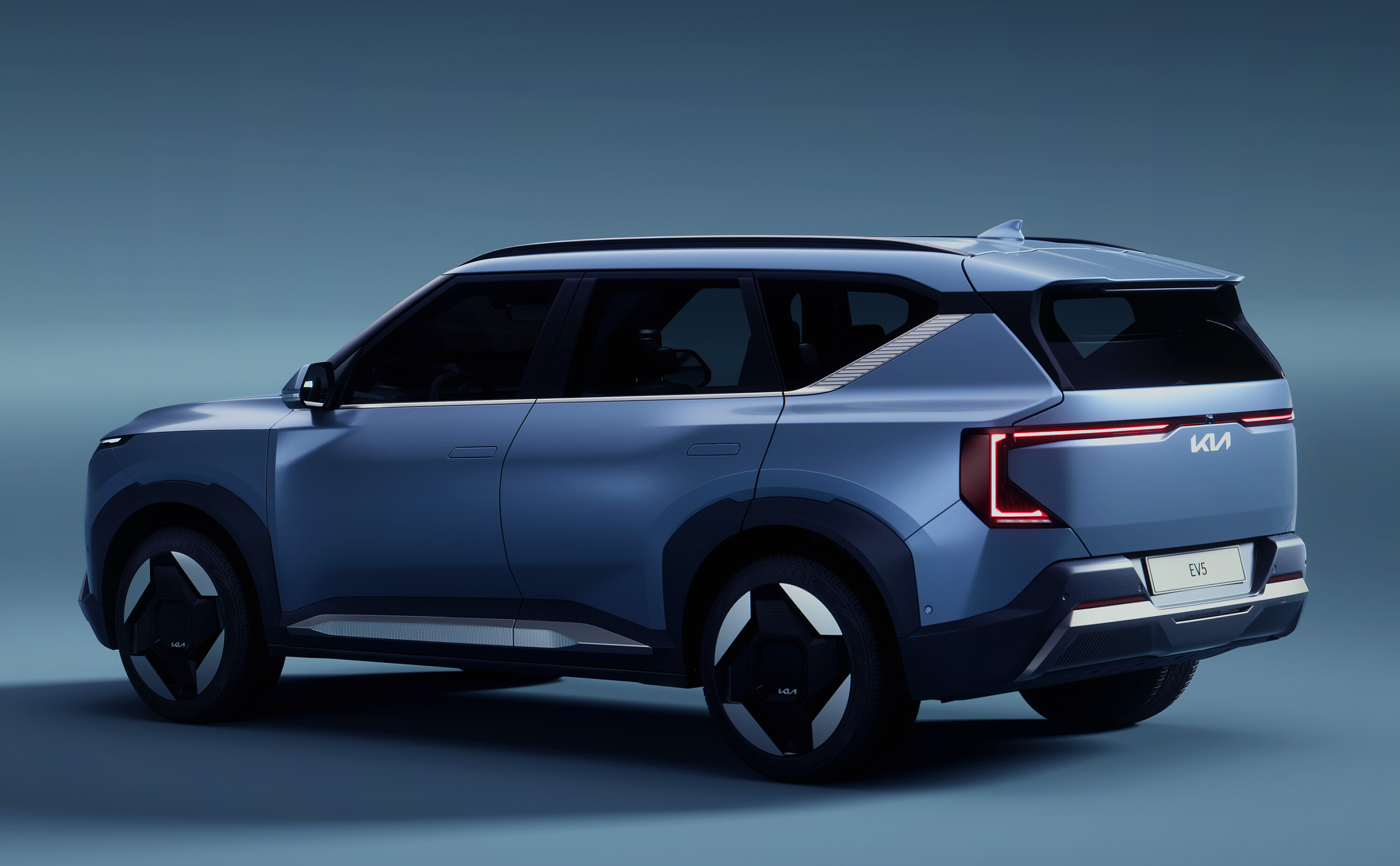
Measuring 4615mm long, 1875mm wide and 1715mm tall, the five-seat EV5 is similar in size to the internal-combustion Sportage mid-size SUV and its Tesla Model Y rival.
1
Technical details for the EV5 have yet to be announced.
Earlier this month, the Korean Car Blog [↗] reported that Chinese-market versions will feature a lithium-iron-phosphate (LFP) battery pack, while overseas models will reportedly have nickel-manganese-cobalt (NMC) batteries.
The report also said the Kia EV5 will be priced at 50 million won (AU$59,000) for the standard range variant and 57 million won (AU$67,000) for the long-range, with the latter said to have a 600km driving range.
1
In many ways, the Kia EV5 is a shrunken take on the full-size EV9 due in Australia in October with a similar design, including its ‘digital tiger nose’ and ‘signature star map’ front end.
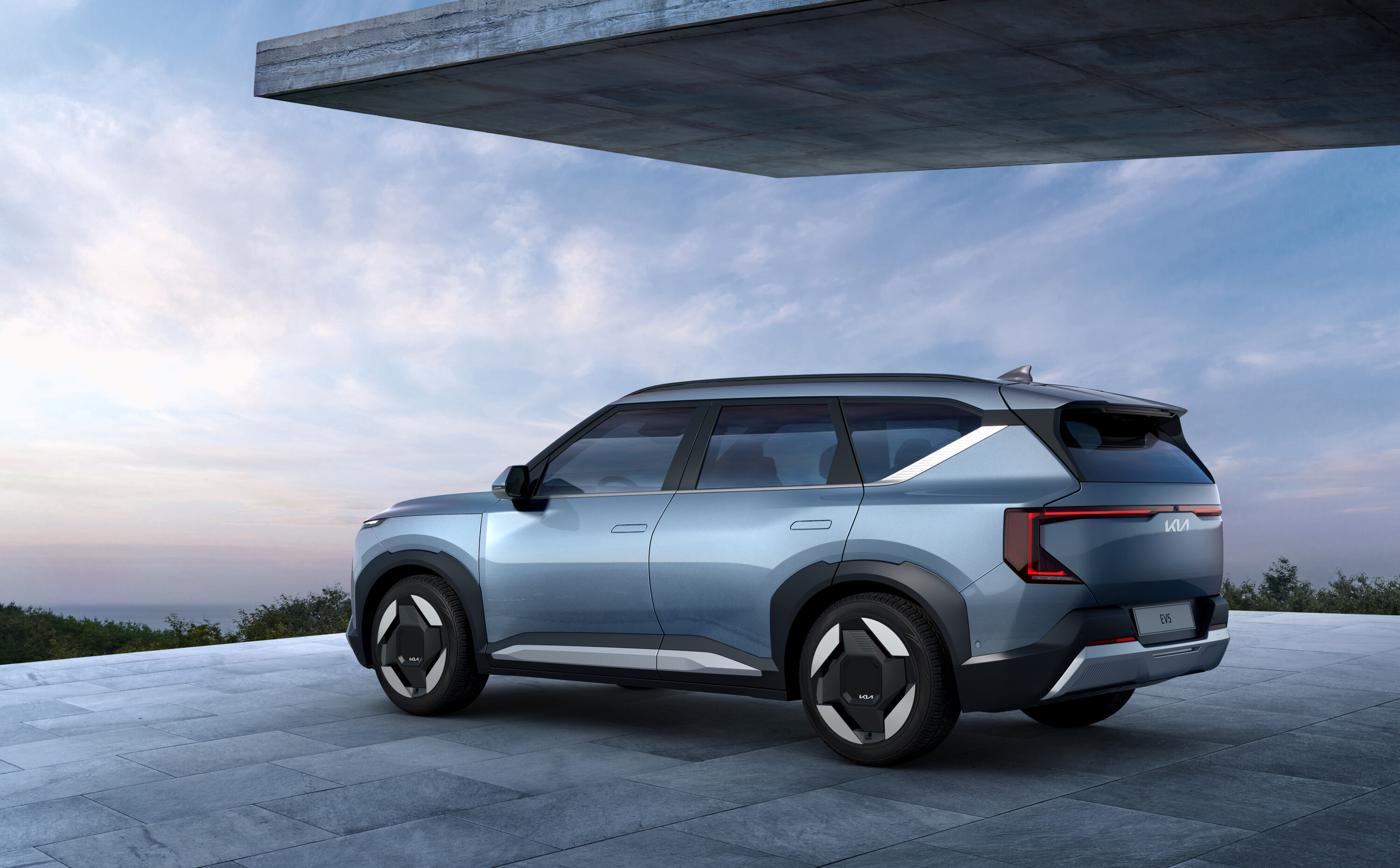
The side profile is also similar to the EV9, with “pushed-back” D-pillars said to improve visibility.
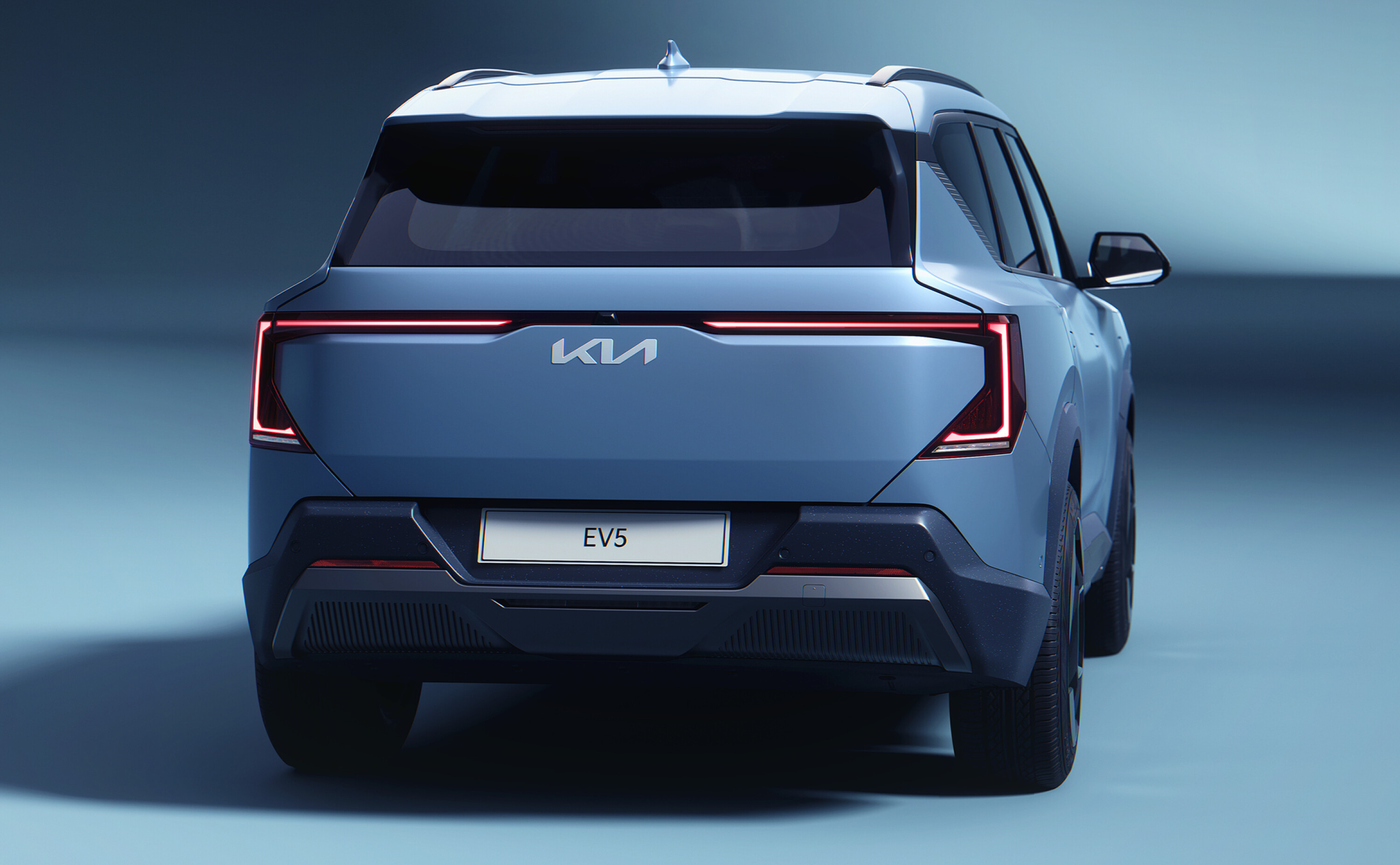
However, the rear end differs with a full-width light strip connecting the tail-lights, rather than adopting the EV9’s vertical look.
Nine gloss and one matte colours will be offered for the EV5, including snow white pearl, clear white, starry night black, magma red, ivory silver, frost blue, iceberg green, tide blue, shale grey, and ivory silver matte.
1
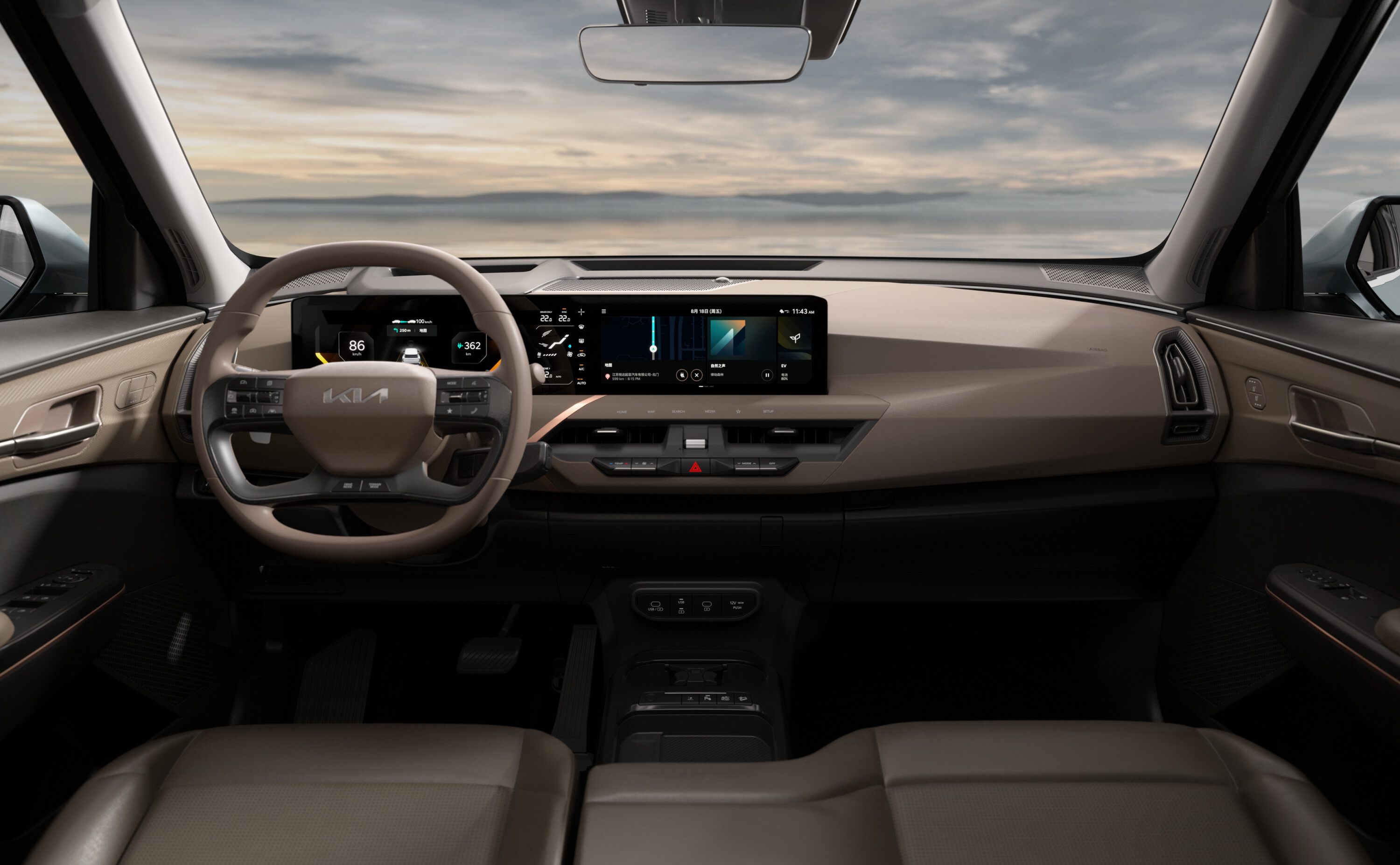
Inside, the design similarities continue with a single-piece display for the infotainment system, climate control setting, and full-digital infotainment cluster.
“Drawing additional inspiration from the recently launched larger EV9 SUV, they have endowed the EV5 with an extensive interior space that is closer in concept and execution to a home lounge than a traditional car cabin,” said Kia.
Kia has confirmed the EV5 will feature 64-colour interior ambient lighting, heated and ventilated front seats, heated rear seats, heated and cooled cupholders, a moving centre console similar to the Hyundai Ioniq 5, aeroplane-style rear fold-down trays, and a lift-up shelf in the boot.
1
Four interior colours and five upholstery options are available, with the seat patterns including two woven options and one artificial leather option for the base model.
The 2024 Kia EV5 will launch in China later this year, with the brand confirming it will “debut in select global markets” in 2024.
Kia has confirmed more information will be released at its EV event in October.
Last year, Kia Australia product planning boss, Roland Rivero, said the firm has its hand up to receive as many EVs as possible, telling Wheels it hopes to soon launch at least two additional models in two completely different segments – one of which is the EV9 due by Christmas.
MORE
Everything Kia
More EV stories to help you choose the best car for your needs
- ? EV news, reviews, advice & guides
- ❓ Short & sweet: Your EV questions answered
- ⚡ New EVs: Everything coming to Australia
- ? Australia’s EVs with the longest driving range
- ⚖️ Best-value EVs by driving range
- ? How much do EVs cost in Australia?
- ? How much more expensive are EVs?
- ⚖️ Number crunching: Is it time to switch to an EV?
- ♻ Should you buy a used EV?
- ?️ Are EVs more expensive to insure?
- ? Costs compared: Charging an EV vs fueling a car
- ? EV charging guide
- ? Are there enough EV chargers in Oz?
- ?? EV servicing explained
- ? EV battery types explained
- ? When do EV batteries need replacing?
- ? Hydrogen v EVs: What’s best for Oz?
- ✋? Mind your manners! EV charging etiquette tips
- ? How sustainable are EVs, really?
MORE advice stories to help you with buying and owning a car
To many, this year’s explosion of artificially intelligent software platforms and chatbots is nothing more than a solution looking for a problem, while others are excited for the ways it might improve our work and our quality of life.
From ChatGPT’s writing smarts to Midjourney’s artistic riffing (and the concern that both are simply lifting from the work of real human creators), AI is already all around.
No surprise, many car brands are working to get in the game, and quickly. BMW was among the first, with its new Proactive Care bot designed to self-diagnose faults and damage, and arrange an appointment or assistance as needed.
BMW’s British-born brand Mini is getting in on the action too, revealing a playful new animated assistant named Spike for the upcoming new Mini.
Now, here comes Kia.
At today’s Kia EV Day, the Korean brand revealed it will launch a new Kia App for phones in 2024, with an onboard AI chatbot “to help customers with their questions and provide quick responses”.
The chatbot is intended to serve a variety of purchasing and ownership purposes, including the ability to scout insurance premium discounts. (This is literally the first function Kia describes in its announcement, which included no images of the app at the time of writing.)
The more valuable function in an ongoing sense will be the ‘E-Routing’ feature, offering a Tesla-like ability for monitoring battery status to then suggest best routes and nearest chargers as needed.
Kia will launch a new Kia App for phones in 2024, with an onboard AI chatbot “to help customers with their questions and provide quick responses”.
As with most of today’s connected apps, including the Kia Connect app only recently launched in Australia, it will also “display location-based information, like nearby restaurants, to improve the user experience. Customers can conveniently manage the charging port and monitor real-time charging status on the home screen using the ‘Handle Layer’ feature in the app.”
1
ChatGPT (or something like it) in the car
The Kia App’s capabilities will carry over into the car, too, and the upcoming 2024 Kia EV3 compact SUV will be the first to feature an AI assistant.
Kia says the platform will use “top generative AI model providers”, which is sure to be OpenAI – the makers of ChatGPT – but might also point to others like Google’s competing Bard system, Meta’s new eponymous Meta AI, or the lesser-known Anthropic platform, a more specifically safety-focused rival to OpenAI.
“This will allow customers to access a wide range of services like schedule management, electric vehicle route optimization, travel planning, entertainment, and emergency support by simply engaging in conversations with the generative AI assistant.”
Will AI assistants in cars be a solution to an actual problem?
It actually could. Wait, don’t hang up!
While you’d be right in saying that we’ve all ‘got along just fine’ with physical controls, cars are becoming more complex than ever before – and far more capable.
Just about every traditional feature in a modern car is now more richly enabled, whether it’s multi-zone climate control, seat heating and massaging, or the main infotainment experience itself.
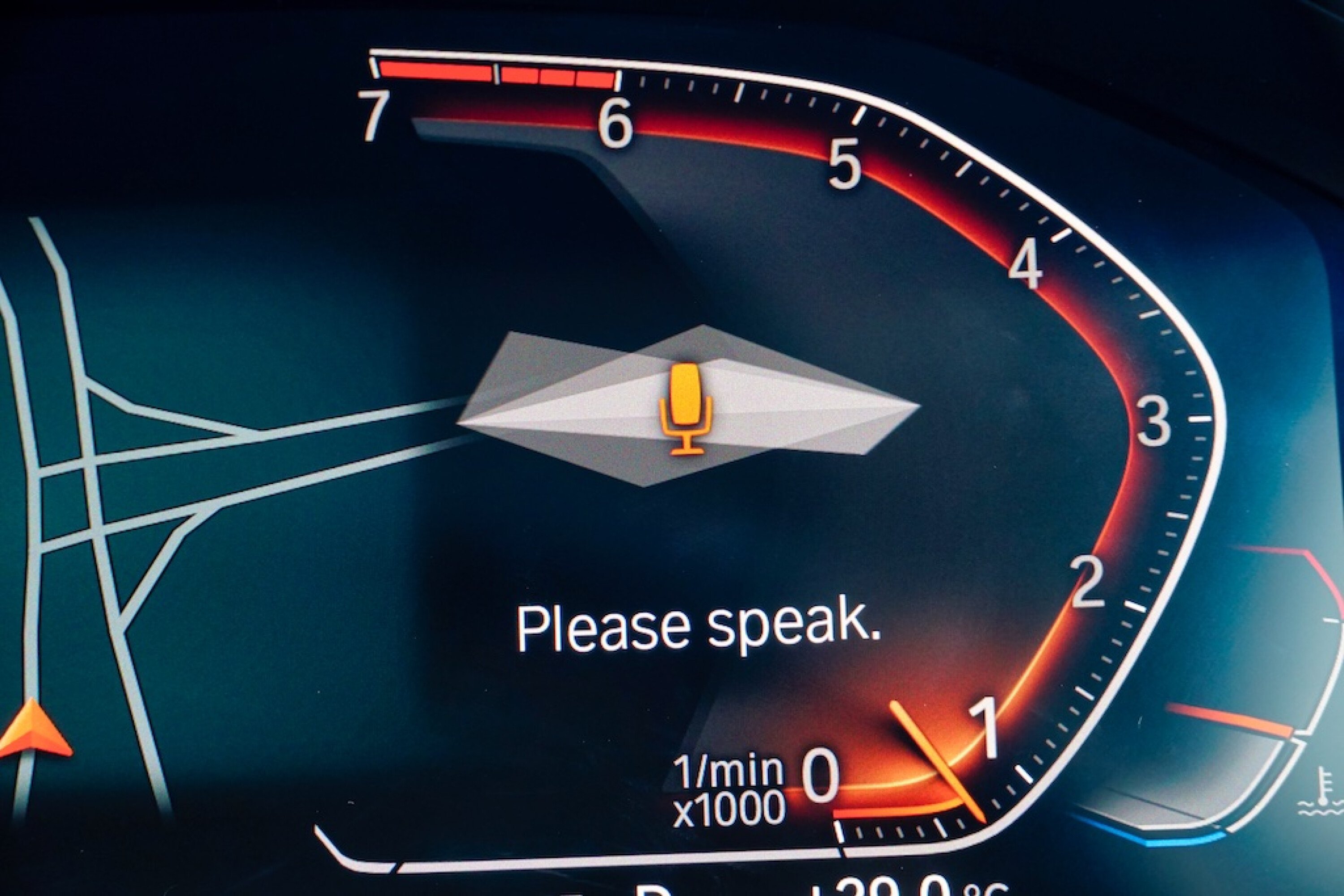
Up to now, adding voice control has resulted in less than pleasant encounters.
Even on our phones and smart speakers, Google Assistant and Apple’s Siri have both proven inconsistent if not downright infuriating over the years, with little to no improvement – if not a marked deterioration in their capability.
Bard will likely be integrated with Google Assistant soon, of course, which will make for a welcome upgrade.
1
As for car brands, none have managed to launch a voice assistant I haven’t wanted to tear out of the dash and hurl out the window.
But! We’re clearly in a time of change. Having good, reliable and natural voice control over our cars’ interior functions – which means not having to nail specific keywords and phrases to get today’s dumb assistants to understand your request, but rather a bot trained on millions of iterations of spoken requests – will likely prove indispensable and second-nature over the next few years.
I’ve been using a paid ChatGPT 4 subscription for a while, and it now has the ability to accept dictated voice messages. It is… incredibly good at understanding my conversational tone, and providing an equally conversational answer – if that’s the tone I want. Best of all, OpenAI has confirmed it will very soon be able to respond by voice, too.
What about my data privacy?
What privacy?
The sooner you start to think of your phone as just a big phone on wheels – and all that entails, as far as privacy and security on your phones goes – the less you’ll be shocked.
As we covered in our racily titled story on carmaker digital privacy policies, brands have been fairly upfront with their intentions – as required by law – and be not mistaken, they’ll all be selling your data. And, yes, you can probably expect that to be more in the ‘intense collection and sharing with partners for marketing’ Android model than the ‘we collect and share some data but, err, not for marketing… [↗]‘ Apple model.
Read more about that at the linked story above.
UPDATE: “No plans” for Ssangyong to become KG Mobility in Australia
Ssangyong Australia has confirmed it still has no plans to rebrand locally, following the decision to become KG Mobility in its South Korean home market.
“We will continue as SsangYong Australia for the foreseeable future with no plans to rebrand at this stage,” said a spokesperson for the brand.
In April, SsangYong Motor Company announced it would update its corporate name and identity to KG Mobility, after KG Group acquired the carmaker in November 2022.
In Korea, the Tivoli small SUV has been updated, now known as the KG Mobility Tivoli, with Ssangyong lettering removed. However, it continues to be marketed as a Ssangyong in Europe.
Our earlier story, below, continues unchanged.
April 1: SsangYong Motor Company confirms rebrand to KG Mobility
SsangYong Motor Company, hailing from South Korea, confirmed the transformation of its corporate name and identity to KG Mobility, at a shareholders meeting in its native Pyeongtaek, Gyeonggi Province, South Korea.
The future growth of the company will be based on a move towards electrification, starting with the international launch of the brand’s new electric Torres SUV model.”
Kevin Griffin, managing director of SsangYong Motor UK, commented: “Whilst the last few years have been unsettled for SsangYong, the future is bright.
“The KG Group has accelerated early management normalisation by increasing sales and making profit… with regards to the company change of name, we will confirm more detail around the impact to the UK in due course”.
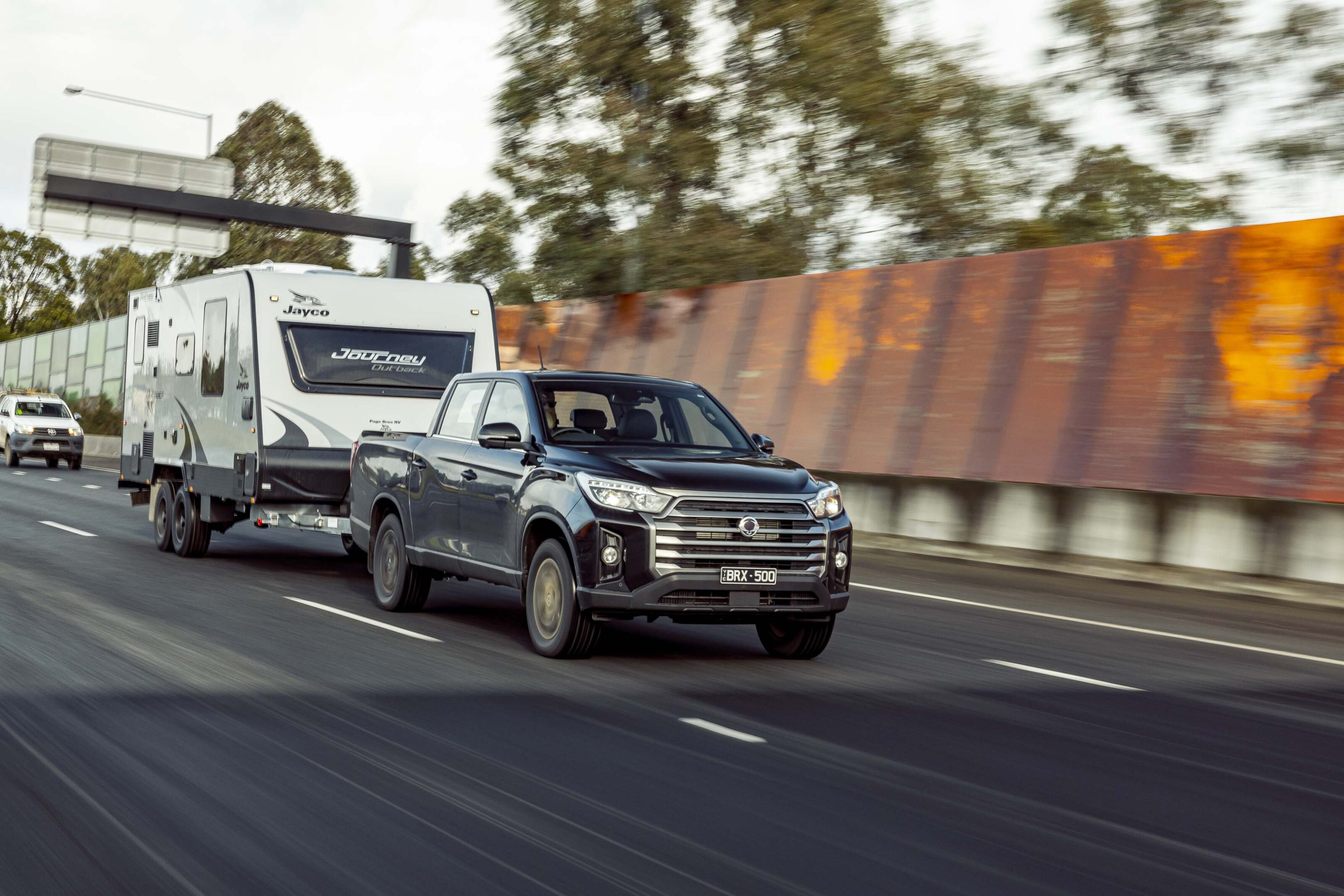
1
When asked what the change in identity means for Australia, a local spokesperson for SsangYong said: “Initial commentary about the name change is focused on the domestic [Korean] market, the impact on overseas markets will be known in late April.”
SsangYong Motor Company was first established in 1954 as Ha Dong-Hwan Motor Company. The name SsangYong appeared in 1988 and after numerous investors, Mahindra and Mahindra took a controlling stake in 2010.
In November of 2022, its majority shareholding was acquired by the KG Group – a large industrial conglomerate formed in 2003 by SsangYong CEO, Kwak Jae-Sun, initially dealing in chemicals and fertiliser.
In subsequent years, through numerous mergers and acquisitions, Chairman Kwak built up a loose and complex, but extremely powerful and profitable group of KG (“Korean Green”) companies, the largest of which include its core KG Chemical company, as well as KG Steel (which turned over AU$3.8 billion in 2021 revenue).
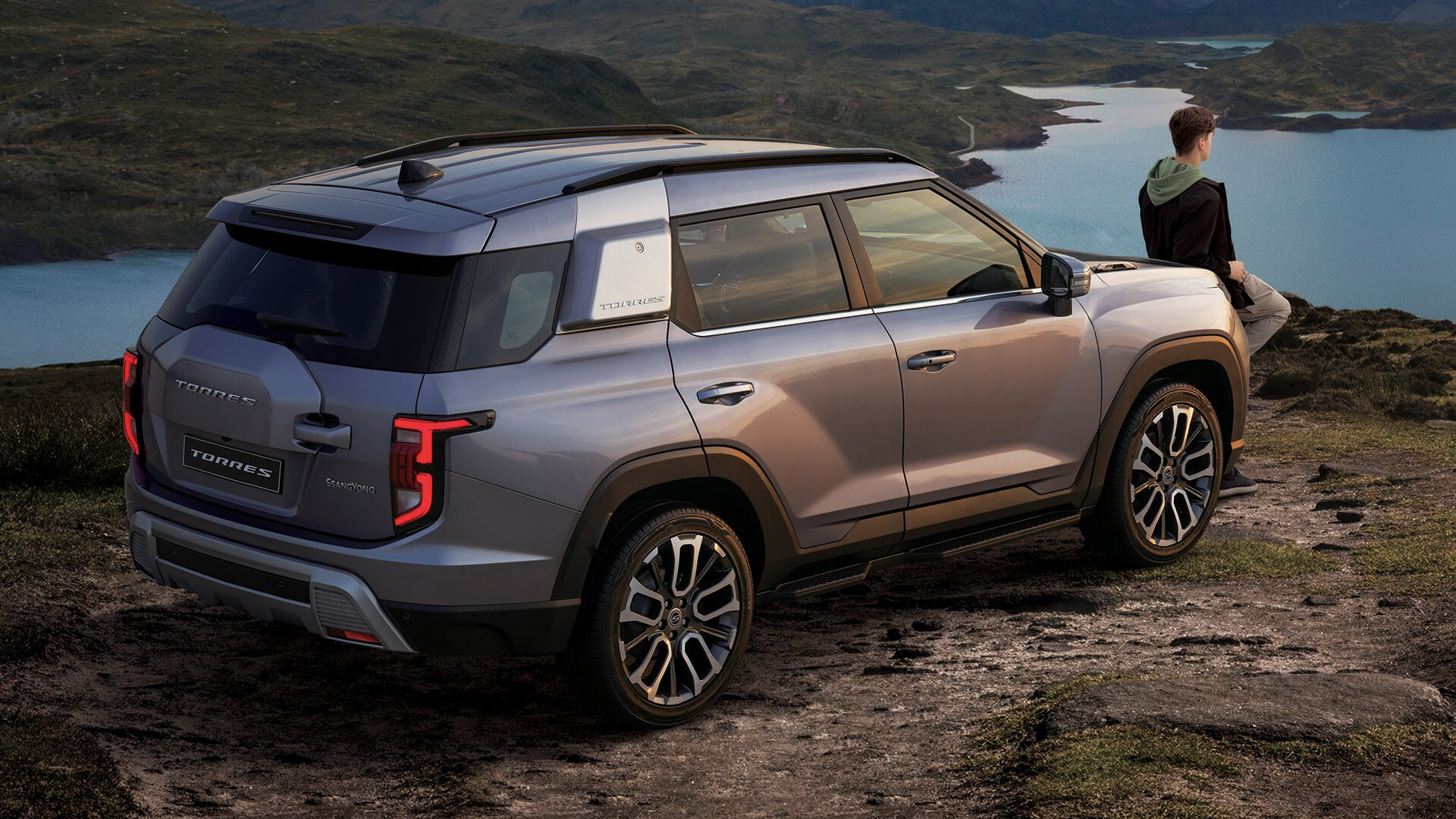
1
As a family-owned company, KG Group, and its stakeholders, are considered to be among South Korea’s ultra-wealthy and powerful Chaebol.
Looking to the future, KG Mobility plans to focus on new mobility technologies such as EV-dedicated platforms, software-defined vehicles (SDV), autonomous vehicles and AI in line with the paradigm shift. A spokesperson for KG Mobility said, “we have changed our name after 35-years and have taken the first step towards change and development into a future mobility company.”
“By focusing on the design and development of future vehicles using new technologies such as EV-dedicated platforms, software-defined vehicles, autonomous vehicles and AI etc., the company is really embracing change, and we will grow and develop as a proud and respected future automotive mobility partner.”
Stay tuned for more news as it breaks.
MORE
Everything Ssangyong
