
GWM has expanded its presence in Australia’s increasingly competitive medium SUV segment with the unveiling of the all-new Haval H7, a five-seat hybrid SUV positioned between the Haval H6 and the more rugged Tank 300.
Arriving at local dealerships from August 2025, the H7 will carry drive-away pricing starting at $46,990, testing the waters in the segment for the brand.
Initially offered in one grade – the Vanta trim – the Haval H7 features a blacked-out exterior aesthetic, boxy silhouette, upright proportions, round LED headlights and squared-off bumpers. Vanta-grade enhancements include 19-inch machined alloy wheels and black finishes across the grille, badging, mirror caps, window trims, roof rails, and taillights.
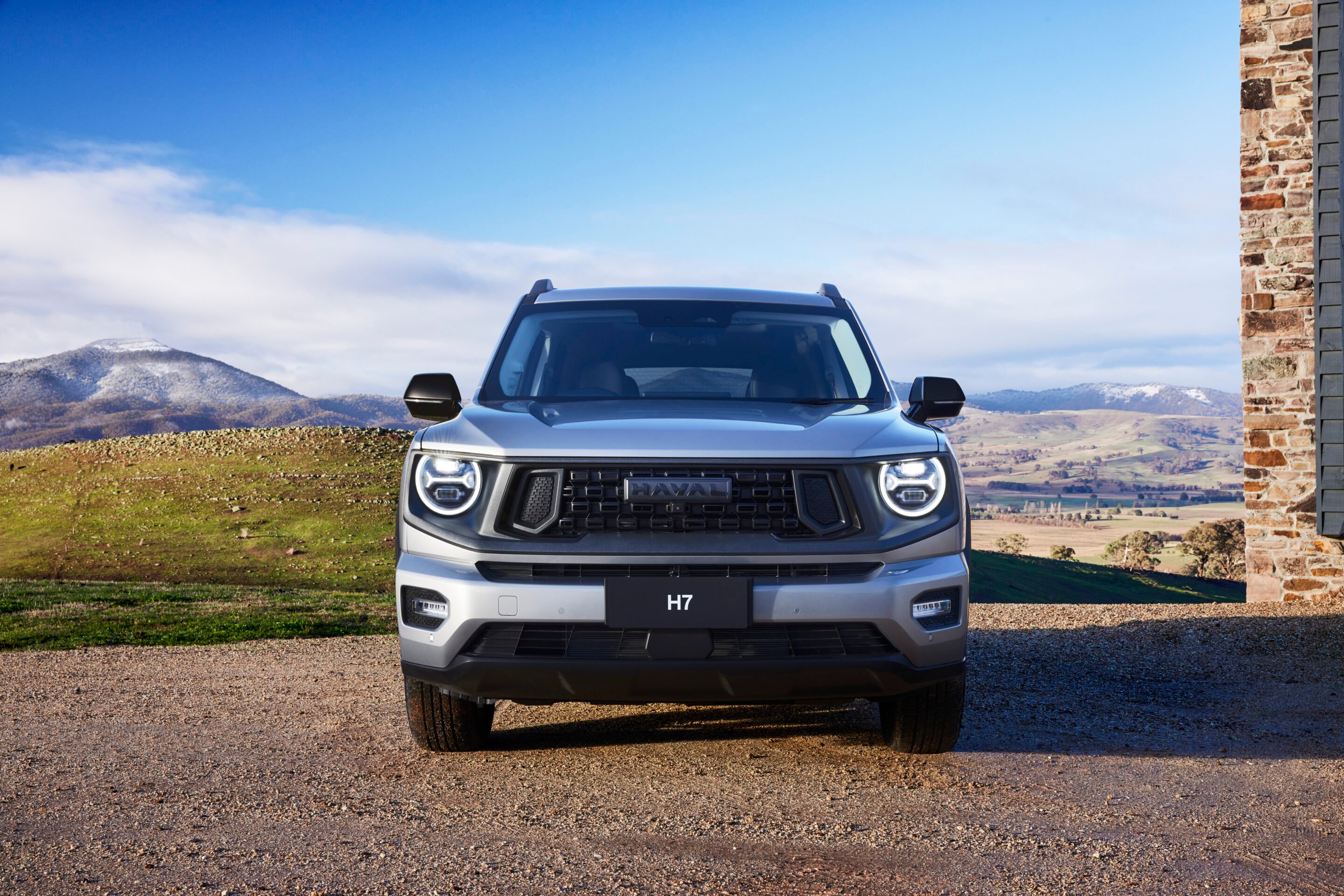
Under the bonnet, the Haval H7 houses GWM’s latest 1.5-litre turbocharged petrol-electric hybrid powertrain. Mated to a dedicated hybrid transmission, the system delivers 179kW of power and 530Nm of torque. Front-wheel drive only, the H7 balances urban fuel efficiency – a claimed 5.7L/100km – with ample performance for longer highway journeys.
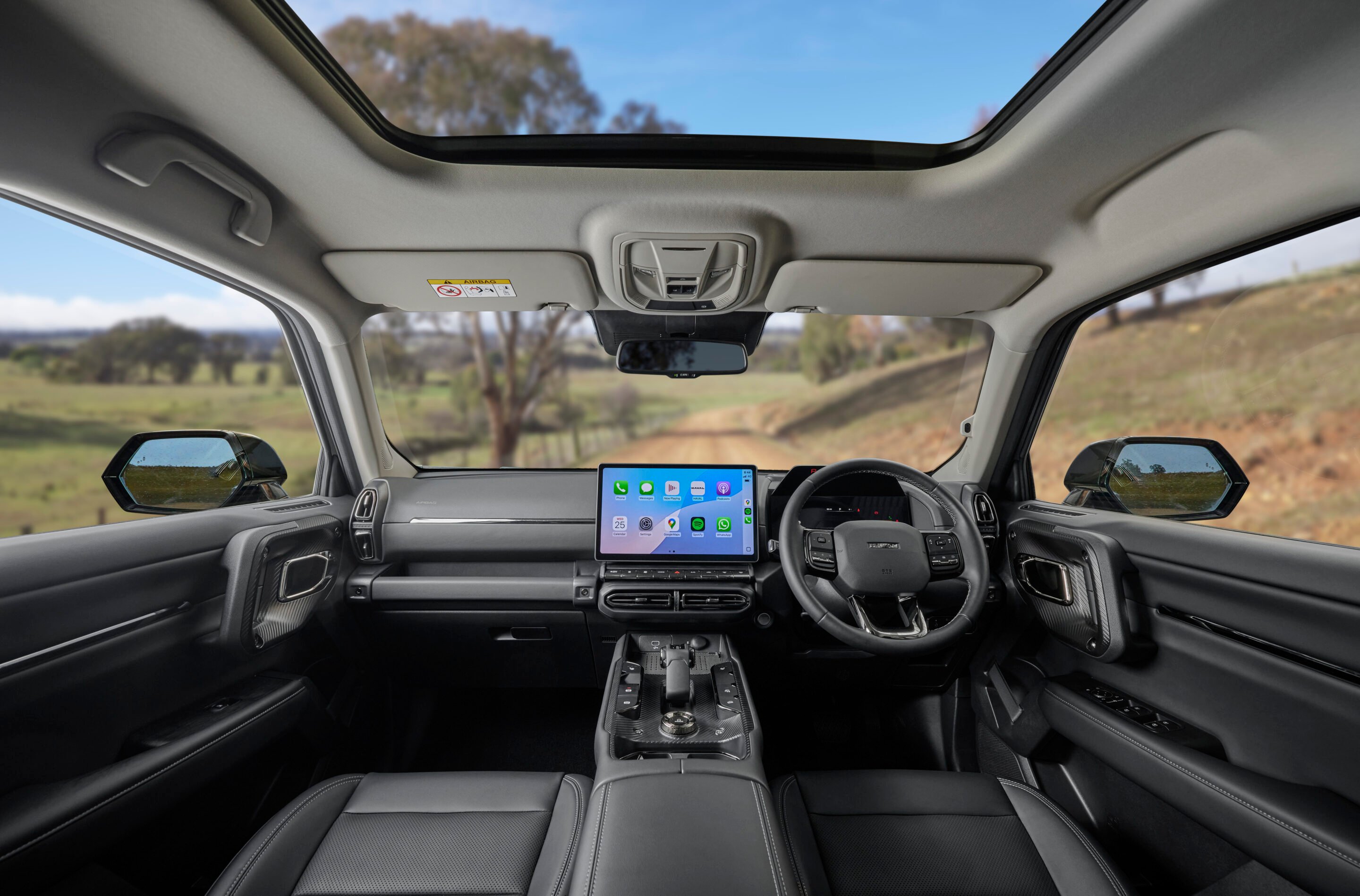
Inside, the H7 is pitched directly at families and adventure enthusiasts. A panoramic sunroof, configurable digital instrument cluster, large touchscreen infotainment system with wireless Apple CarPlay and Android Auto, and a head-up display are all standard. A removable boot floor neatly doubles as a picnic table as an example of its versatility.
Safety comprises seven airbags and a full suite of advanced driver assistance systems, including Autonomous Emergency Braking, Lane Keep Assist, Blind Spot Monitoring, and a 360-degree camera system with transparent chassis view. Auto Parking Assist and Reverse Assist functions boost low-speed convenience.
The Haval H7 comes backed by the GWM Care program, which includes a seven-year/unlimited-kilometre warranty, an eight-year battery warranty, five years of capped-price servicing, and 24/7 roadside assistance.
With distinctive styling, practical interior and strong value proposition, the new Haval H7 signals GWM’s intent to compete seriously in the heart of Australia’s SUV market, taking on the likes of the Hyundai Tucson, Mistubishi Outlander, Toyota RAV4 and Nissan X-Trail.
Features
Exterior
- 19” machined alloy wheels
- Auto LED headlights with DRL
- Auto high beam
- Front fog light (with steering assist)
- LED taillights
- LED rear fog light
- Auto fold exterior mirrors
- Heated door mirrors
- Shark fin antenna
- Smart keyless entry
- Kick sensing electric tailgate
- Panoramic sunroof
Interior
- Leather accented seats
- Driver 8-way electric adjustable seat
- Driver memory seat x3
- Driver 2-way lumbar support
- Front passenger 4-way electric adjustable seat
- Microfibre leather steering wheel
- Heated & ventilated front seats
- Dual zone climate control
- Rear A/C vent
- Power windows – auto windows + anti pinch (all)
- Ambient lighting
- Sun visors – illuminated vanity mirror
- Auto dimming rear view mirror
- Front 12v socket
- Cargo cover
Driver
- 10.25” digital instrument cluster
- 4-way steering column adjustment
- Auto electronic park brake + auto hold
- Multi-function steering wheel
- Head Up Display (HUD)
- Push-button start
Infotainment
- 14.6” touchscreen with wireless Apple CarPlay® and Android Auto™
- Bluetooth®
- 8 speaker audio
- Voice command
- Front & rear USB outlets
- Wireless phone charger
Safety
- 7 airbags – 2x front, 2x side, 2x curtain, 1x centre
- 360° surround view camera
- 180° transparent chassis
- Front parking sensors
- Rear parking sensors
- Automatic rain-sensing front wipers
- Follow me home lighting
- Tyre pressure monitoring system (TPMS)
- Trailer sway mitigation
- Hill ascent / descent control
- Adaptive & Intelligent cruise control
- Collision Mitigation (ESC, AEB, LKA, LDW, LCK, ELK)
- Roll Movement Intervention (RMI)
- AEB junction assist
- Front Collision Warning (FCW) (pedestrian + cyclist)
- Traffic sign recognition
- Traffic jam assist
- Intelligent turning
- Smart dodge
- Emergency signal system (hazards)
- Driver fatigue monitoring system
- Tyre repair kit
Since its launch in 2022 the latest generation Ford Ranger has sat comfortably atop the dual-cab pile, setting new benchmarks in terms of safety, technology and driving dynamics.
This excellence has been rewarded with sales success, the Ranger regularly enjoying the accolade of Australia’s best-selling vehicle.
But time stands still for no one, especially in such a fiercely competitive segment, with new arrivals from the likes of GWM and BYD adding to the familiar foes from Toyota, Mitsubishi and Isuzu.
Here’s how the volume-selling XLT stacks up in 2025.
Price and equipment
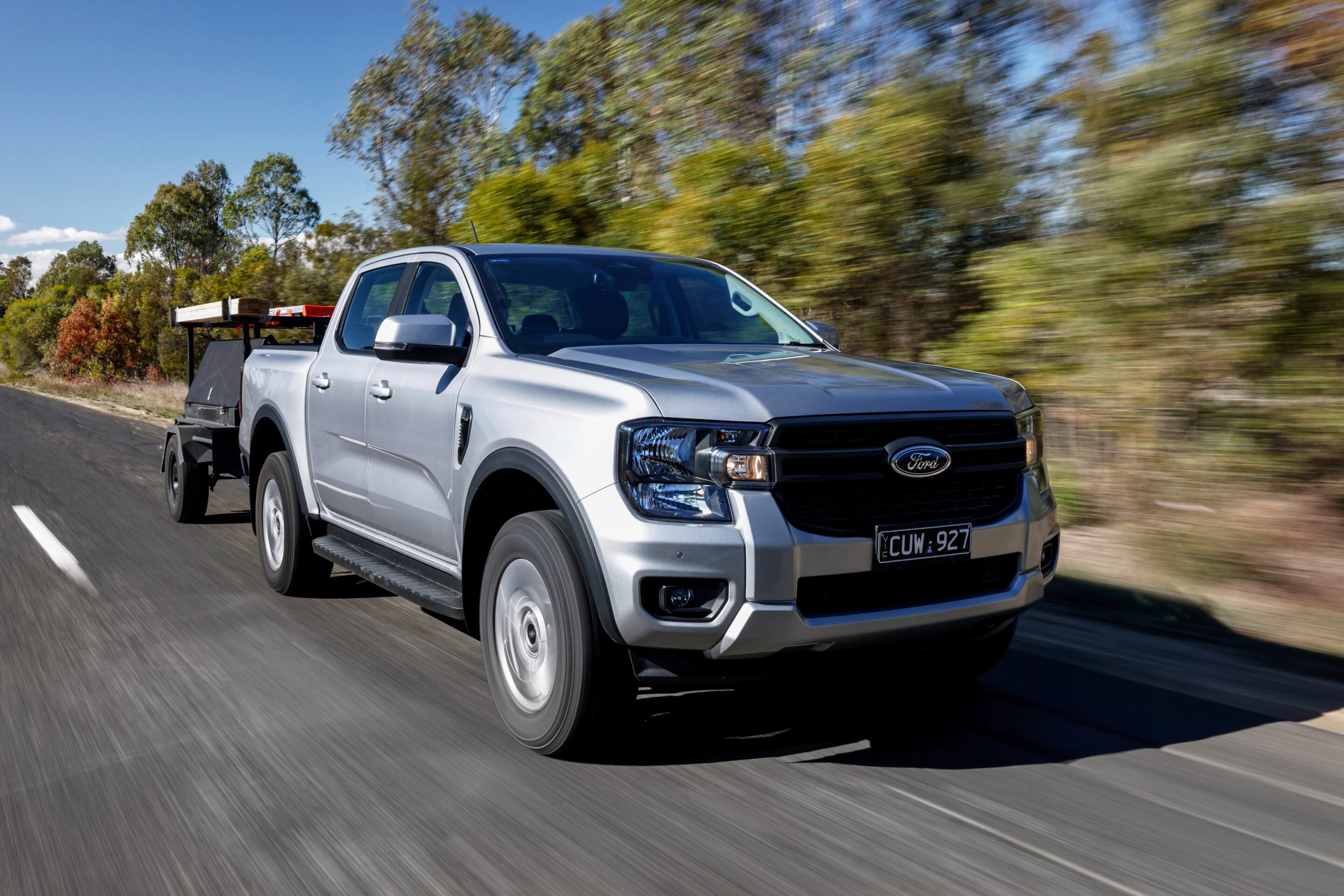
Pricing for the Ford Ranger XLT kicks off at $63,890 plus on-road costs for the 2.0-litre bi-turbo diesel while optioning the V6 will set you back $69,090 (+ORCs). However, there is now a third XLT option with the arrival of the PHEV, which lists at $71,990 (+ORCs).
All variants come in Frozen White as standard, with prestige paint an extra $750. Blue Lightning is also available on all variants, while the diesels can be had in Meteor Grey, Aluminium or Shadow Black and the PHEV in Iconic Silver, Carbonized Grey, Agate Black or Lucid Red.
At base level, the Ranger XLT is in the same ballpark as the Isuzu D-Max X-Terrain, Toyota Hilux SR5 and Mitsubishi Triton GSR, while the V6 lines up against the Nissan Navara PRO-4X Warrior and Volkswagen Amarok Style TDI600.
Ranger XLT standard features
- 17-inch alloy wheels
- All-season tyres
- LED headlights (bar PHEV)
- LED daytime running lamps (bar PHEV)
- LED front fog lights (V6 only)
- LED taillights
- Power adjustable mirrors
- Steel underbody protection
- Side steps
- Sports bar
- Premium cloth upholstery
- Eight-way manually adjustable driver’s seat
- Four-way manually adjustable passenger’s seat
- ISOFIX points on outboard rear seats
- Carpet floor covering
- Dual-zone climate control
- Rear air vents
- 400W socket on rear of centre console
- Rain-sensing wipers
- Front and rear power windows
- Embedded modem
- FordPass Connect app connectivity
- 8.0-inch digital driver’s display
- 10.1-inch infotainment touchscreen (12.0-inch PHEV)
- Wireless Apple CarPlay and Android Auto
- Six-speaker stereo
- Satellite navigation with one year of Connected Navigation Services
- DAB+ digital radio
- SYNC 4A with voice-activated controls
- Perimeter alarm system
- Keyless entry with push-button start
- Tyre pressure monitoring
- Tow bar with integrated trailer brake controller
Ranger XLT optional equipment
- All-terrain tyres ($750)
- Commercial canopy ($4700)
- Stylish dual-lift canopy ($4700)
- Stylish lift and slide canopy ($4500)
- Touring Pack – cargo management system, auxiliary switch bank, 360-degree camera, puddle lamps, zone lighting and pro trailer back up assist ($1750)
A range of Ford-approved accessories is also available including bullbars, electric roller shutters, hard or soft tonneau covers, medium- or heavy-duty suspension kits and 20mm or 40mm lifts.
All Ford Rangers wear a five-star ANCAP safety rating from 2022 with scores of 84 per cent for adult occupant protection, 93 per cent for child occupant protection, 74 per cent for vulnerable road user protection and 83 per cent for safety assist.
Ranger XLT safety features
- Nine airbags
- Adaptive cruise control with stop & go, traffic sign recognition and lane centring (no TSR or lane centring on PHEV)
- Intelligent speed assist
- Blind spot monitoring with cross traffic alert and trailer coverage
- Stability control including roll over mitigation and trailer sway control
- Evasive steer assist
- Lane-keep assist with road edge detection and driver alert system
- Post impact braking
- Pre-collision assist with autonomous emergency braking
- Reverse brake assist
- Front and rear parking sensors
- Rear view camera
Interior, practicality and tray
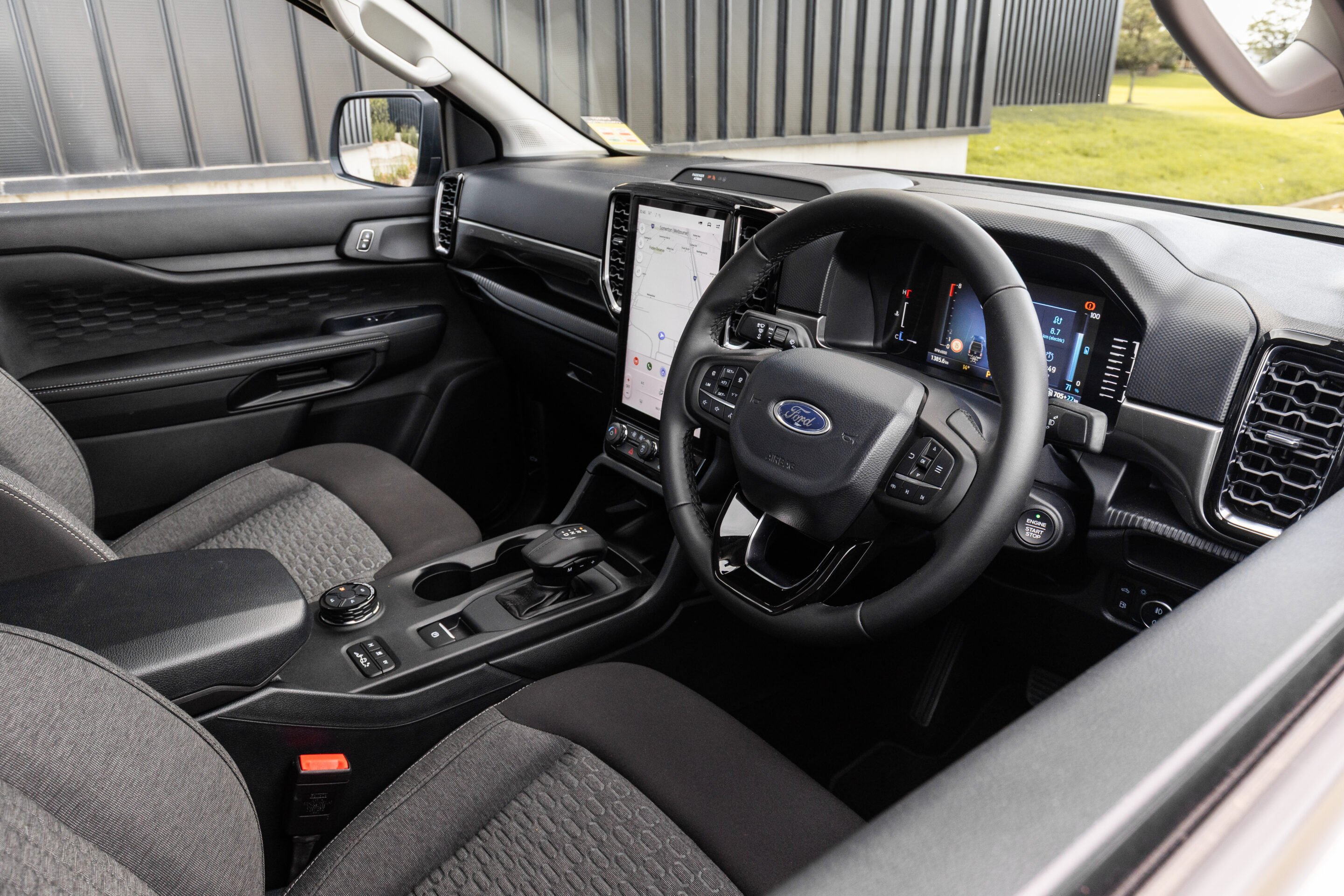
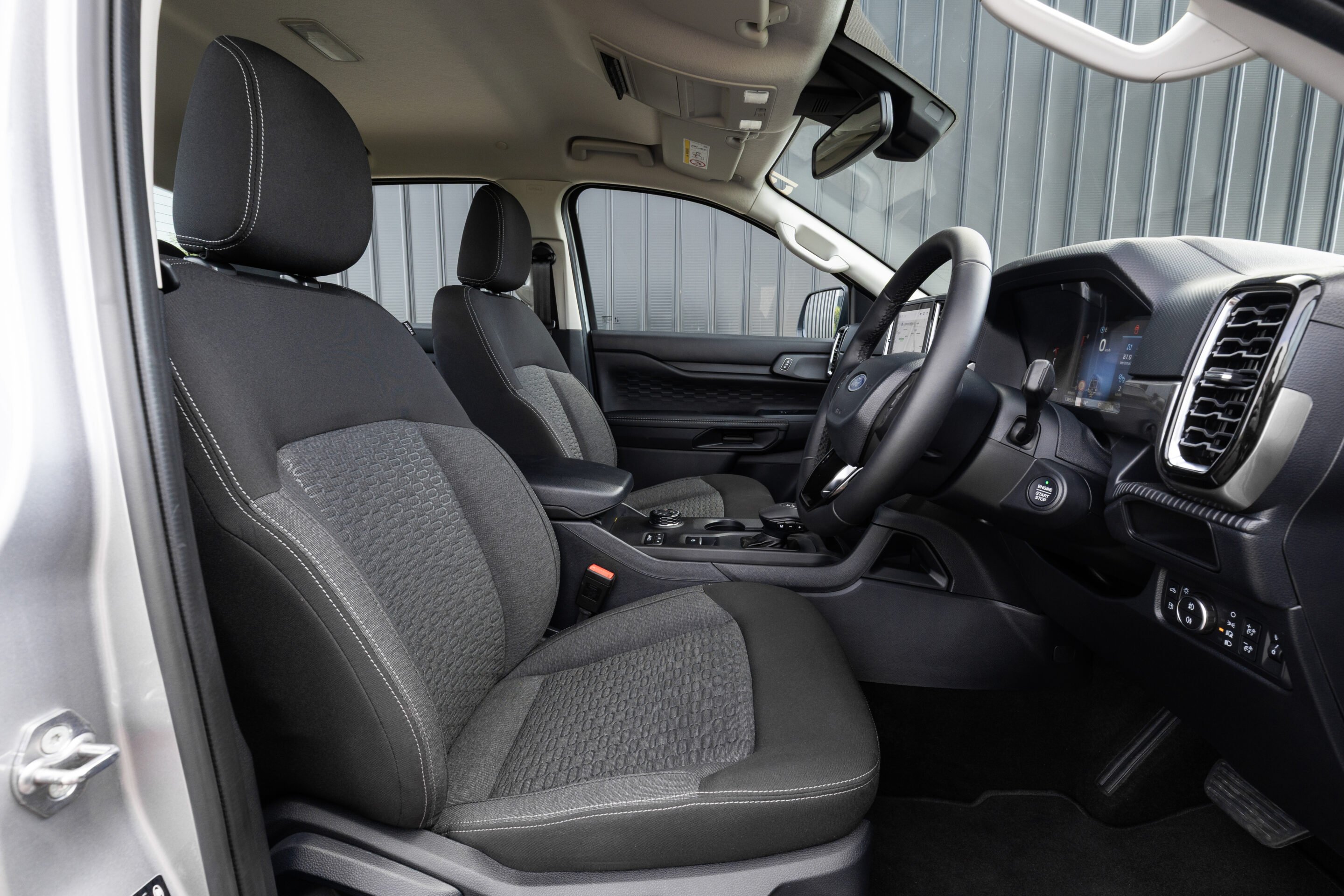
The XLT is the first variant on the Ford Ranger ladder intended for retail rather than commercial use. It’s a plain but comfortable cabin, lacking luxuries like the leather-padded door trims and heated electrically adjustable seats you’ll find in higher-spec variants such as the Wildtrak.
Nevertheless, the driving position is very good, the seats are comfortable, there’s a decent amount of space in the back row (and finally the 230v outlet has returned!) and it’s one of the few utes with proper individual top tethers for child seat attachment.
It must be said that the newer Chinese utes have somewhat rewritten the rulebook on what’s included at a certain price point, but the XLT has all the basics like dual-zone climate control and wireless smartphone mirroring, though no wireless charging.
Out back the tray measures 1464mm in length, 1520mm in width and 525mm in height with 1217mm between the wheel arches for the diesel models. The PHEV’s is shallower (498mm) thanks to the battery sitting beneath it but scooping out an alcove in the rear wall allows for a longer floor (1638mm) and it’s slightly wider both in total (1584mm) and between the wheel arches (1233mm).
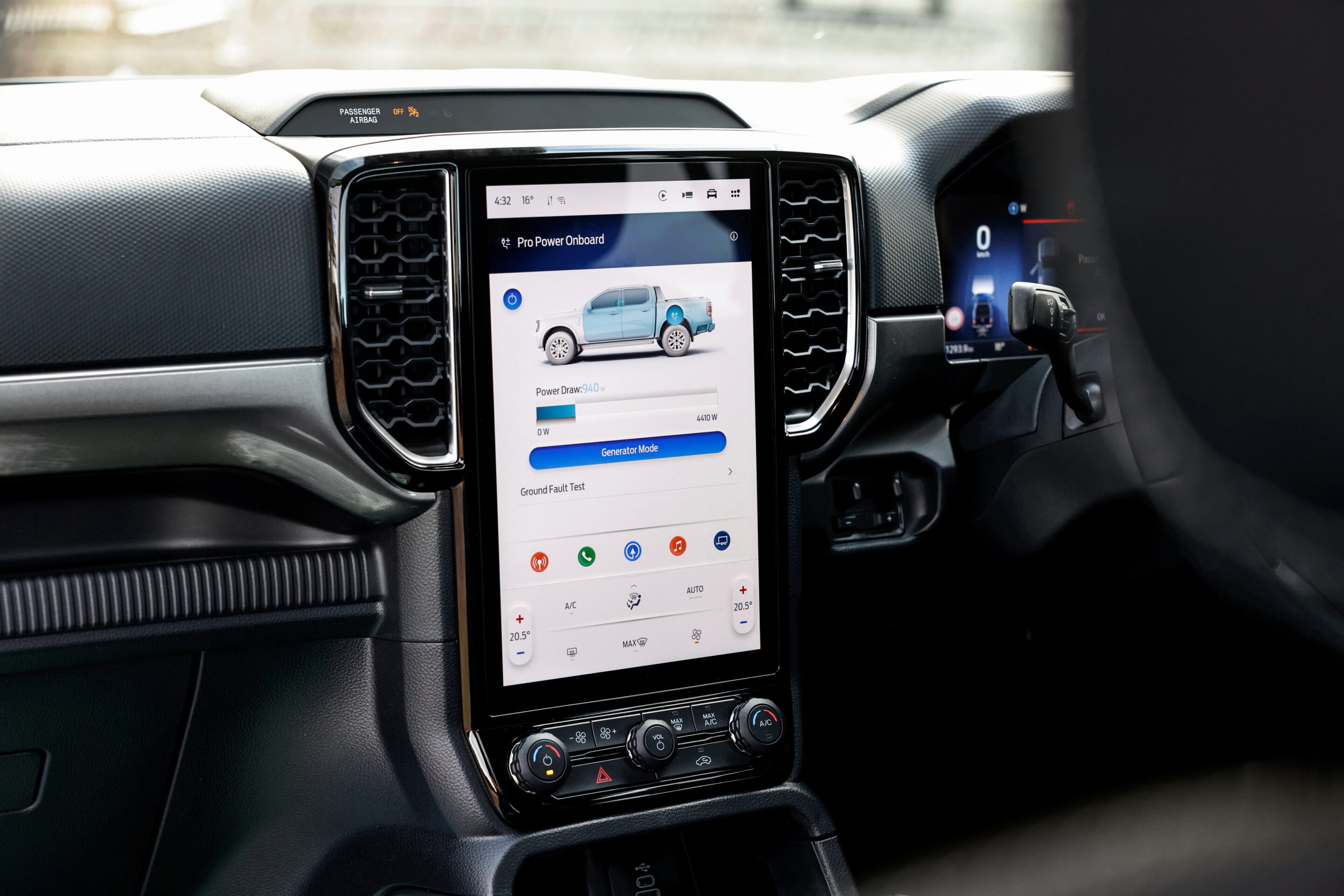
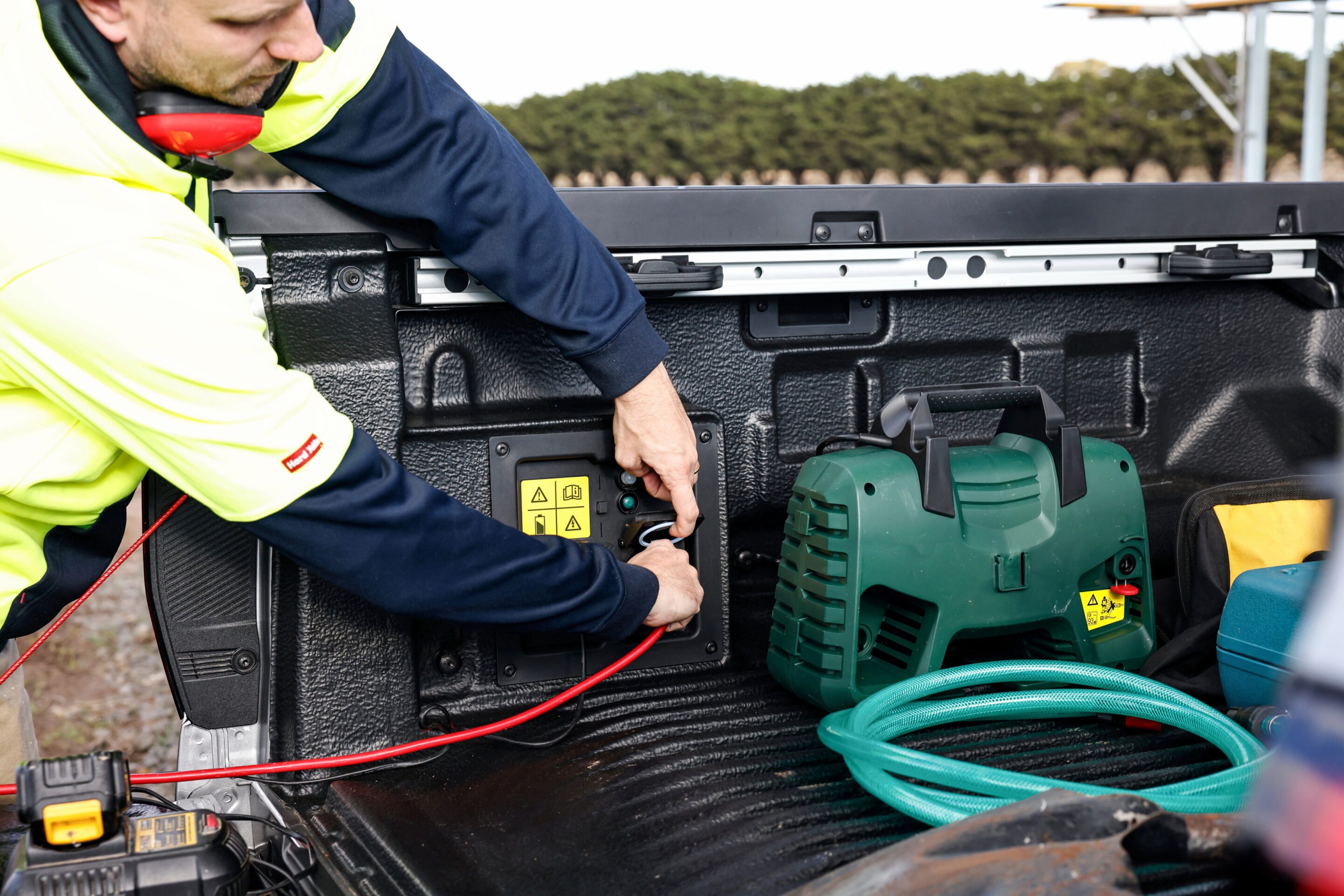
All variants feature a drop-in bed liner, LED lighting, tailgate cupholders for the morning tea break and rear steps to make accessing the tray easier. Diesel variants have a single 400W power inverter, while the PHEV’s ProPower system allows for a pair of 3.45kW 230v/15A sockets in the tray, opening up the possibility of powering all manner of appliances or power tools.
Performance and fuel efficiency
There isn’t a massive gulf between the two diesel engine options. The 2.0-litre bi-turbo four-cylinder diesel is a fine powertrain that gives the Ranger very respectable performance, aided by 10 closely stacked ratios in the automatic gearbox.
Under heavy load, whether that be towing or full-throttle overtakes, the extra power and torque of the V6 is certainly noticeable, but it’s the refinement that’s most impressive, the four-cylinder’s diesel clatter largely absent.
On paper the four-cylinder is around 15 per cent thriftier on fuel – 7.2L/100km vs 8.4L/100km – but in the real world there doesn’t tend to be a lot in it, with both engines typically returning between 9-10L/100km depending on your specific use case.
Speaking of use case, the Ranger XLT PHEV’s fuel consumption will vary wildly depending on your driving circumstances – the 2.9L/100km combined claim is a quirk of the testing procedure, nothing more. There’s a claimed 49km of electric-only range so short urban trips can be completed using no fuel, while on the open road it’ll be thirstier than the diesels.
On the road
The driving experience is where the Ford Ranger stands tall in the dual-cab fraternity. With the caveat that this is still a ladder-frame, leaf-sprung ute, its dynamics are as good as you’ll find in this class of vehicle.
Accurate steering, reasonable ride quality, useful performance and well-balanced handling mean the Ranger XLT isn’t a vehicle you need to wrestle with in an urban environment, nor is it one that’ll wear you out on longer drives, particularly as the active safety systems are very well calibrated.
One advantage of stretching to the V6 or the PHEV is the ability to run on sealed surfaces in four-wheel drive, which can be handy, especially in the bigger diesel, as 600Nm tends to easily overwhelm the rear tyres in the wet.
This ability is also handy on unsealed surfaces where the Ranger shines, being wieldy enough to make even winding forestry roads enjoyable rather than a chore and giving the driver confidence with its stability at higher speeds.
Off road the Ranger continues to impress, with reasonable ground clearance, a well-calibrated traction control system (not quite Hilux good but not far off) and a standard rear diff lock when things really get tough. As far as stock dual cabs go, it’s towards the top of the class when it comes to prowess in the rough stuff.
Towing and payload
All Ford Ranger XLT variants are rated to tow a braked maximum of 3500kg and unlike some manufacturers, that offer a blanket Gross Vehicle Mass (GVM) and Gross Combined Mass (GCM) across all model variants, Ford re-rates each car to account for differences in kerb weight.
| Ranger XLT | Ranger XLT V6 | Ranger XLT PHEV | |
|---|---|---|---|
| Kerb Weight | 2276kg | 2349kg | 2527kg |
| Gross Vehicle Mass | 3230kg | 3280kg | 3500kg |
| Maximum Payload | 954kg | 931kg | 973kg |
| Maximum Towing | 3500kg | 3500kg | 3500kg |
| Gross Combined Mass | 6350kg | 6400kg | 6580kg |
| Payload at Max Towing | 574kg | 551kg | 553kg |
Service and warranty
Like all Fords, the Ranger XLT is covered by a five-year/unlimited kilometre warranty and 12 months of roadside assistance, which is extended by a further 12 months after each service for up to seven years.
Ford also offers a capped price servicing program for the Ranger at $1516 for the first five visits – required every 12 months or 15,000km – though this will increase to $1596 for Model Year 26.
Verdict: should I buy a Ford Ranger XLT?
The Ford Ranger XLT makes a very strong case for itself if you want a top-drawer dual cab. It may not have the bells and whistles of some rivals, but its abilities and the quality of the driving experience are ample compensation if you’re happy to forgo some frills.
As such, it’s the 2.0-litre we’d most recommend as it’s a more polished performer than its similarly-priced rivals. For our money, the extra spend for the more refined V6 makes greater sense in the more luxurious Wildtrak or Platinum variants and it’s a similar story with the PHEV.
Nevertheless, it never hurts to have choice and its breadth of abilities means the Ranger XLT should have you covered whether you’re commuting, working or adventuring.
Ford Ranger XLT rivals
Specs
| Model | Ford Ranger XLT | Ford Ranger XLT V6 | Ford Ranger XLT PHEV |
|---|---|---|---|
| Engine | 1995cc 4-cylinder twin-turbo diesel | 2993cc V6 turbo-diesel | 2261cc 4-cylinder turbo petrol |
| Power | 154kW @ 3750rpm | 184kW @ 3250rpm | 138kW @ 4600rpm |
| Torque | 500Nm @ 1750-2000rpm | 600Nm @ 1750-2250rpm | 411Nm @ 2700rpm |
| Electric motor | N/A | N/A | 75kW |
| Combined output | N/A | N/A | 207kW/697Nm |
| Battery size | N/A | N/A | 11.8kWh |
| Transmission | 10-speed automatic | 10-speed automatic | 10-speed automatic |
| Fuel consumption (combined claim) | 7.2L/100km (2.0TTD) | 8.4L/100km | 2.9L/100km |
| CO2 emissions | 189g/km | 222g/km | 66g/km |
| Fuel tank size | 80 litres | 80 litres | 70 litres |
| Dimensions (L/W/H/W-B) | 5370/2015/1886/3270mm | 5370/2015/1886/3270mm | 5350/2015/1871/3270mm |
| Kerb weight | 2276kg | 2349kg | 2527kg |
| GVM/GCM | 3230/6350kg | 3280/6400kg | 3500/6580kg |
| Maximum payload | 954kg | 931kg | 973kg |
| Braked towing capacity | 3500kg | 3500kg | 3500kg |
| Warranty | Five-year/unlimited kilometres | Five-year/unlimited kilometres | Five-year/unlimited kilometres |
| 5-year service cost | $1516 | $1516 | $1516 |
| On-sale | Now | Now | Now |
Omoda Jaecoo Australia – a sub-brand of Chery – has revealed local pricing and specifications for the Omoda 9 plug-in hybrid large SUV, which is due to arrive in dealers in August.
Using a 1.5-litre turbocharged plug-in hybrid drivetrain with three electric motors, the Omoda 9 makes 395kW of power and travels up to a claimed 169km on a charge. The 9 is the first product to launch underneath the Omoda brand locally.
The Omoda 9 uses a 1.5-litre turbocharged four-cylinder petrol engine mated to three electric motors (two at the front making 75kW/170Nm and 90kW/220Nm and one at the rear making 175kW/310Nm) to produce 395kW of power for a claimed 4.9 second 0-100km/h sprint time.
All-wheel drive is achieved through an electric motor powering the rear axle and power is sent to the front wheels via a three-speed Dedicated Hybrid Transmission (DHT).
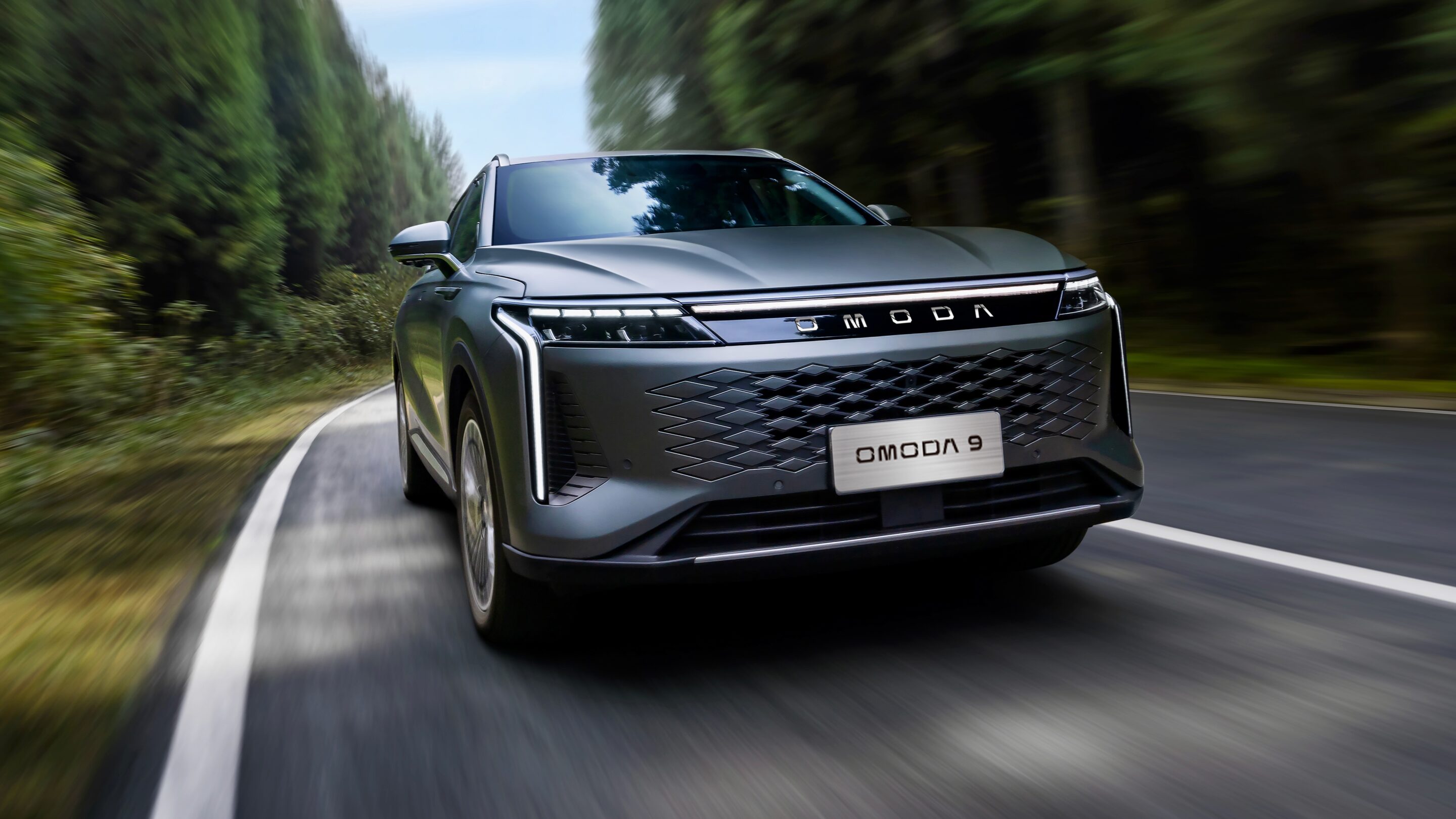
A 34kWh NMC battery provides up to 169km of all-electric range (NEDC) and can be charged at up to 70kW on a DC fast charger for a 30-80 per cent charge in as little as 25 minutes.
Omoda says that over 1100km of total range is achievable in both electric and hybrid driving modes.
The Omoda 9 measures 4775mm long, 1920mm wide, 1671mm tall and rides on a 2800mm long wheelbase, making it a similar size to the Mazda CX-60.
As with other vehicles in the Omoda Jaecoo brand, the Omoda 9 is covered by an eight-year/unlimited km warranty with eight years of battery coverage, roadside assistance capped price servicing.
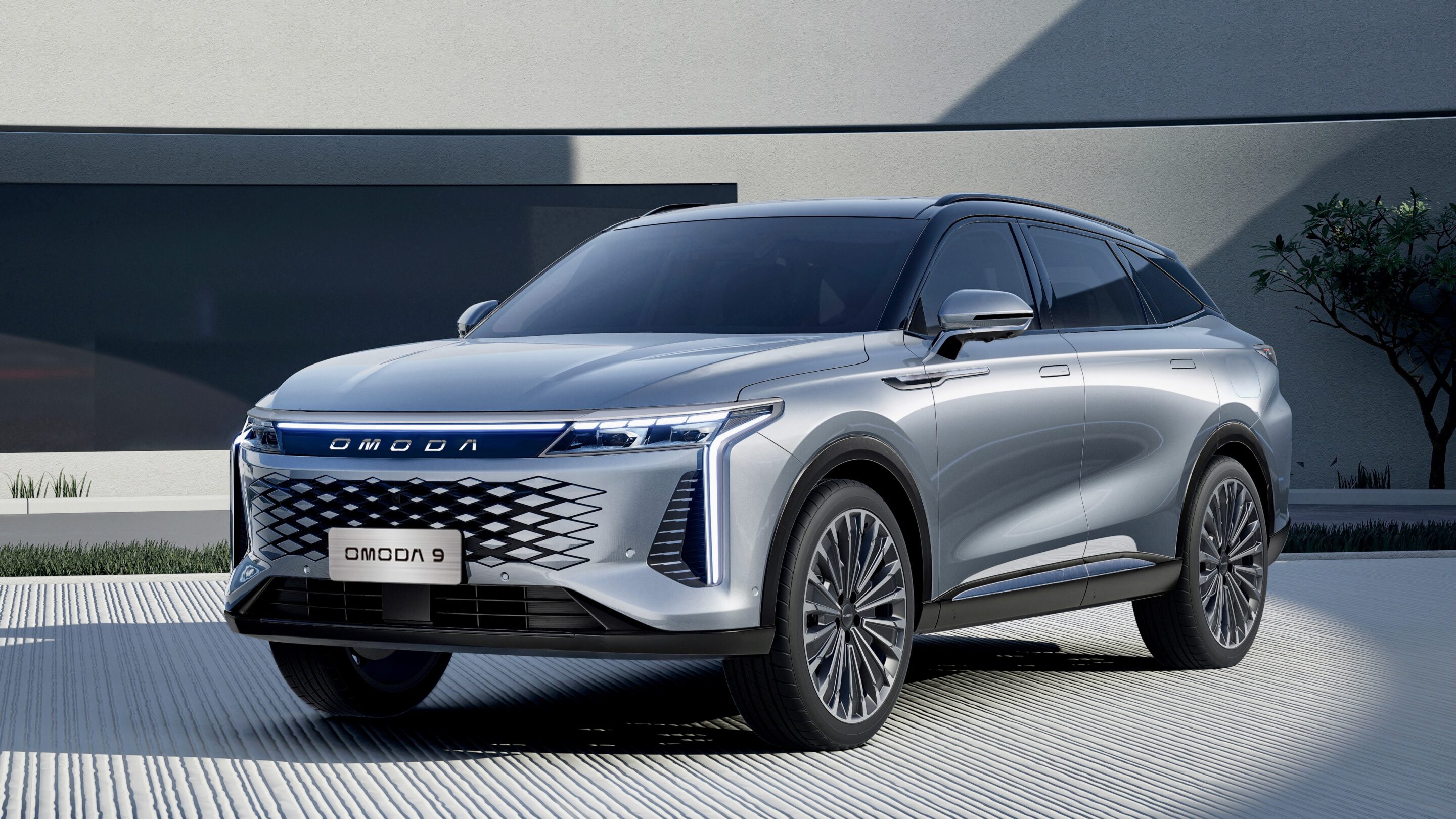
Omoda 9 pricing (plus on-road costs):
- Virtue SHS: $61,990
Omoda 9 standard features:
- 20-inch alloy wheels
- Automatic LED exterior lighting
- Panoramic sunroof
- Power tailgate
- Dual 12.3-inch screens (touchscreen and digital driver’s display)
- Satellite navigation
- Wired and wireless Apple CarPlay and Android Auto
- 14-speaker Sony sound system
- 50W wireless phone charger
- Inbuilt fragrance system
- Heated and ventilated front and outboard rear seats
- Heated steering wheel
- Colour selectable cabin ambient lighting
- 8x airbags
- Autonomous emergency braking (AEB)
- Adaptive cruise control
- Lane keeping assistance
- Blind-spot monitoring with rear cross-traffic alert
- 360-degree camera
The Omoda 9 will launch locally in August, with the first local deliveries due to commence then.
Here in Australia, Subaru has been in a bit of a spot recently. It deleted its diesel engines in 2020, to coincide perfectly with a global pandemic, hoping that its range of underbaked hybrid powerplants would take up the slack. They didn’t.
It then suffered a long tail from well-publicised supply chain issues, was walloped by a subsequent cost of living crisis that meant that it couldn’t deliver the cars that Australians wanted, and the result has been a predictable sales slide over the last couple of years as its best-selling vehicle, the Forester, entered its fifth-gen dotage.
But hear that sound? It’s the cavalry arriving in the shape of the new sixth-generation Forester, and one that has a heck of an opportunity to capitalise, arriving as it does with the volume champ Toyota RAV4 on run-out.
The formula is, for the most part, straightforward. You get the trademark boxy body, symmetrical all-wheel drive system and cabin that majors on space at the expense of sexiness, but this time round the hybrid assistance has significantly more heft to it or, if you prefer, you can opt for a petrol version that uses the same 2.5-litre boxer four, but without the benefit of the electrical boost.
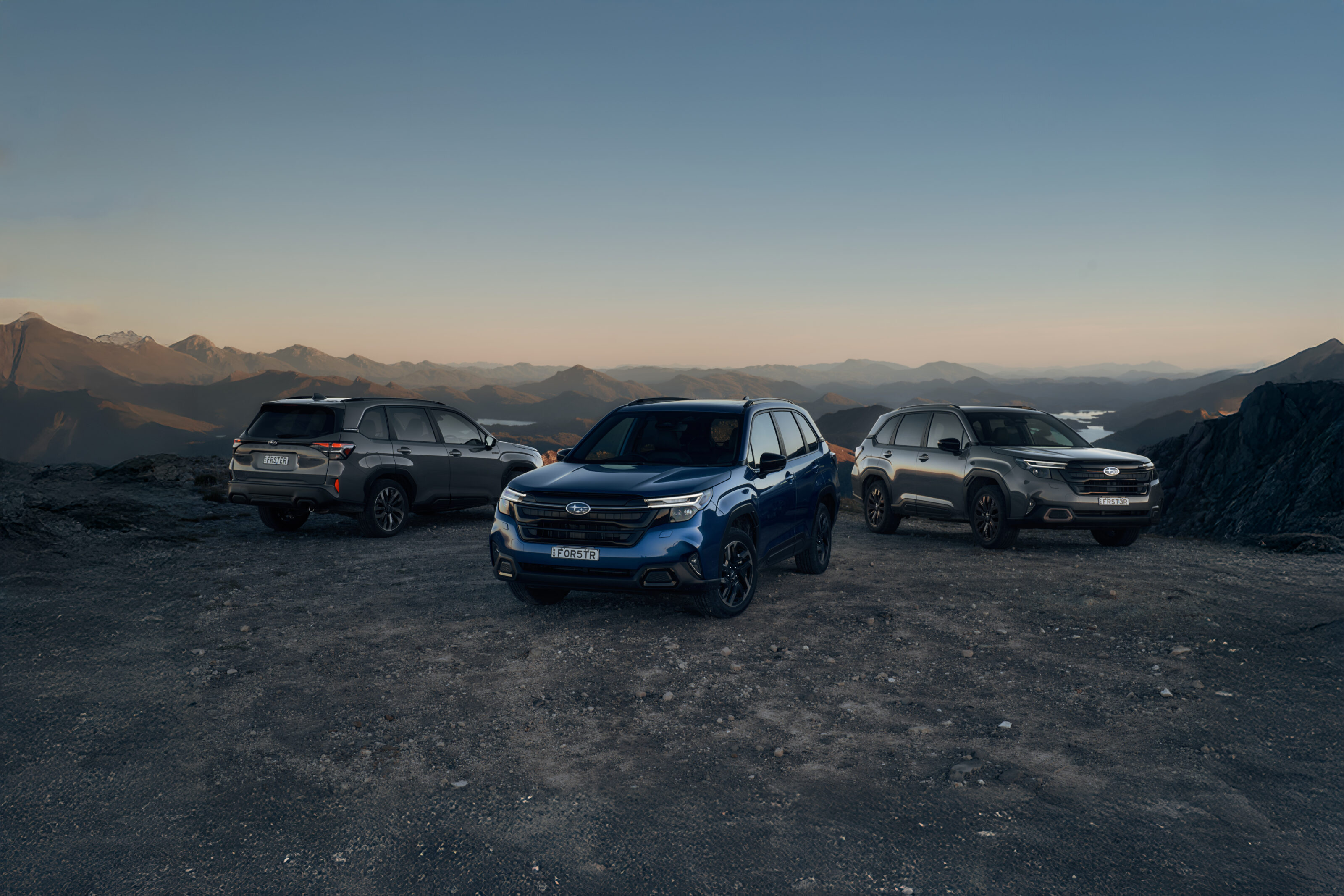
The petrol versions start at $43,490 and step up through four models, base, the $46,490 Premium, the $48,490 Sport and tops out with the $50,990 Touring. All are mechanically identical aside from wheel size, so the difference between them is just how many toys you get.
Choose the ‘e-Boxer’ hybrid instead and opening book is $46,490 for the base car (+$3000 over the petrol), stepping up to $54,990 for the Hybrid Sport (+$6500) and summiting with the $55,990 Hybrid Touring (+$5000).
We’ve done the sums so you don’t have to regarding fuel consumption. The combined fuel figure for the hybrid version is 6.2L/100km and the petrol is rated at 7.9L/100km so, in theory, the fuel cost payback distance for the hybrid base car is 48,000km, for the Sport is 104,000km and for the Touring is 80,000km, assuming a price of $1.80 for petrol. Yes, that’s a crude calculation and there are clearly other financial factors to consider such as residuals, fuel price fluctuations and standard equipment differences between the two powertrains, but if you’re planning to choose the hybrid purely in terms of what it’ll save you at the bowser, it’ll give you a rough framework. It’s also worth remembering that both drive systems are quite happy on 91RON juice, which is a welcome bonus.
There are arguments to be made for both powertrains. The petrol is simple and rugged, features a superior braked towing capacity (1800kg vs 1200kg), will tie up less of your capital, and due to the fact that it’s around 100kg lighter, will be a little easier on its tyres. The hybrid offers a silky boosted throttle tip-in, a little more in the way of low-end torque fill and, given that both use the same 63-litre fuel tank, offers a better overall range. It’s also a bit punchier when you clog the right-hand pedal, with 145kW of system output versus 136kW for the petrol. The hybrid chips in with up to 88kW of boost when called upon, which is a vast improvement on the feeble 12.3kW assist from the old version. You can just about drive the hybrid version on electric power alone by forcing it into EV mode, but the battery depletes very rapidly and the internal combustion engine will re-engage at anything much over 30km/h.
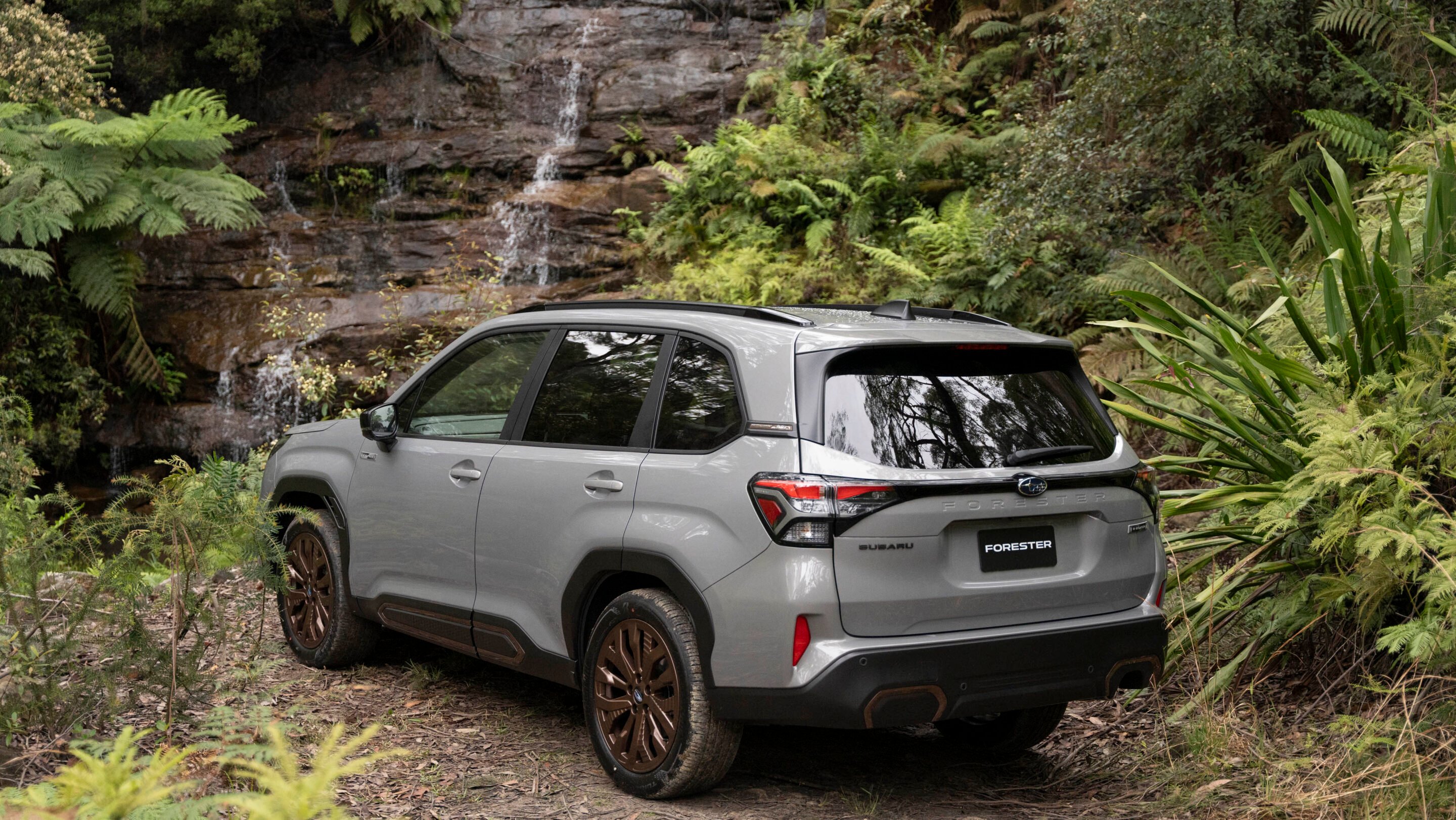
Aside from the addition of a 1.1kWh lithium-ion battery pack, the key difference between the two vehicles under the skin is the transmission. The petrol car features Subaru’s stepped eight-speed Lineartronic CVT, which now features both a lower first gear and a higher top gear for highway economy. Choose the hybrid and there’s a very Toyota planetary gearset (power split device) and dual motor-generators. One motor drives the wheels and provides regenerative braking, while the other manages engine starts and battery recharging. The engineering knowledge share between Toyota and Subaru is probably long overdue given that Toyota holds more than 20 percent of Subaru’s stock.
The 2.5-litre boxer can get a bit vocal when pushed beyond 4000rpm, which you’ll typically notice while overtaking or accelerating uphill. Subaru has worked at reducing cabin noise by fitting thicker front side glass, adding more high damping mastic materials and more insulating material between the cabin and the engine. It claims that clarity of conversation is fully 12.5 percent clearer in the back seats and 3.4 percent clearer in front. It’s been partially successful, but switching to the bigger 19-inch alloys of the flagship Forester Sport trim does introduce a bit more low frequency road noise into the passenger cell. All models have a noticeable wind rustle around the A-pillars and door mirrors, but it’s nothing too intrusive.
Another area for improvement over the old car has been steering, and the Forester’s wheel takes a little while to get used to. The steering’s electric motor assist has been re-geared, and the dual pinion motor now works on the rack rather than the column. At first the wheel feels weirdly inert, with very little detailed feedback from the road surface filtering back. Overcome that and it’s accurate and well-weighted.
The Forester also rolls less in corners than before, and the combination of the somewhat taciturn steering and the lack of cueing that drivers will pick up from body roll at first makes it difficult to gauge the limits of the car’s handling envelope. Push harder and you begin to realise that this is an uncommonly talented medium SUV to hustle through a series of bends. That’s hardly priority one for a vehicle like this, but so few cars in this class reward the driver in any particular regard that it’s a standout when you find one that does. Greater resistance to roll helps reduce head toss in the vehicle, which makes journeys less fatiguing.
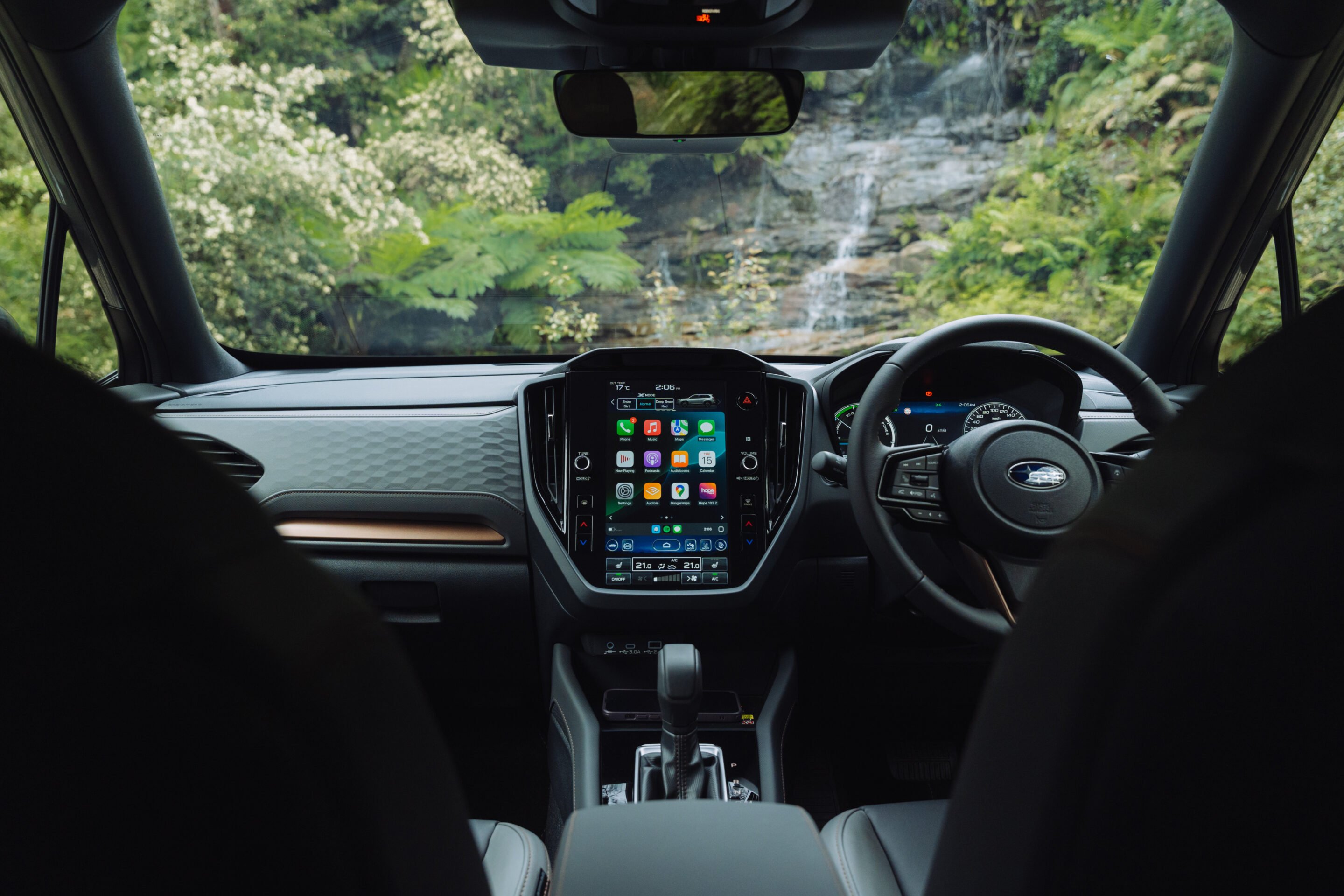
One example of the marginal gains Subaru has extracted in terms of making the driver feel connected is that the front seat mechanisms are now body mounted rather than to a bracket. This allows a lower hip point in the car and reduces flex through a bracket. Overall torsional rigidity of the body has increased by 10 percent, helped by the adoption of a full inner frame construction to beef up the old chassis.
With 220mm of ground clearance (about the same as a Toyota Prado) and that rapid response symmetrical all-wheel drive system, it’s also fairly respectable off road. The X-mode software helps sniff out any grip, and electronics are doing a fair bit of the traction help. With no mechanical limited slip differential, the Forester relies on brake torque vectoring to stop an unladen wheel spinning.
The cabin isn’t going to win any prizes for sleek styling, but it’s admirably functional. There are few areas for genuine complaint. The door pockets could be a little more capacious, there’s no head-up display fitted to any model and mobile phone storage could be better, especially as there’s just two wired connections up front, one USB-A and a USB-C. On the whole, the cabin is extremely practical.
There’s a stack of headroom, although it should be noted that the passenger seat height is fairly elevated in the base model. All round visibility is very good, the minor controls are sensibly located, with physical buttons for temperature control. I actually preferred the cloth seats of the base car, as they offer more lateral grip than a shinier material and the seat heaters activated quicker.
Move round to the back and there’s acres of legroom, helped by the fact that rear passengers can get an entire foot under the front seats. There’s a set of low-level air vents and a USB-A and USB-C connection for the back seats, which are fairly flat and fold 60/40, with top tethers on all three positions and ISOFIX fittings on the outer seats. The seats can be folded by pressing a button in the luggage bay and because the cabin is so spacious, you won’t need to drop the headrests to get them to drop flat.
The luggage bay opens to reveal a very low and flat loading floor, with a 12v power outlet and some limited underfloor storage. There’s 498 litres of space available in five-seat format and 1719 litres with the second row folded. In five-seat configuration, that’s not quite as much as the 542 litres afforded in the back of a Toyota RAV4 hybrid, the 543 litres that you’d get in a Kia Sportage or the 546 litres in a Hyundai Tucson, so if it looks as if you’re going to be really squeezed for space in a car in this class, the Forester could rule itself out of contention with its slightly smaller boot. It’s also worth remembering that while the petrol models come with a space-saver spare, the hybrid has to make do with a mobility kit.
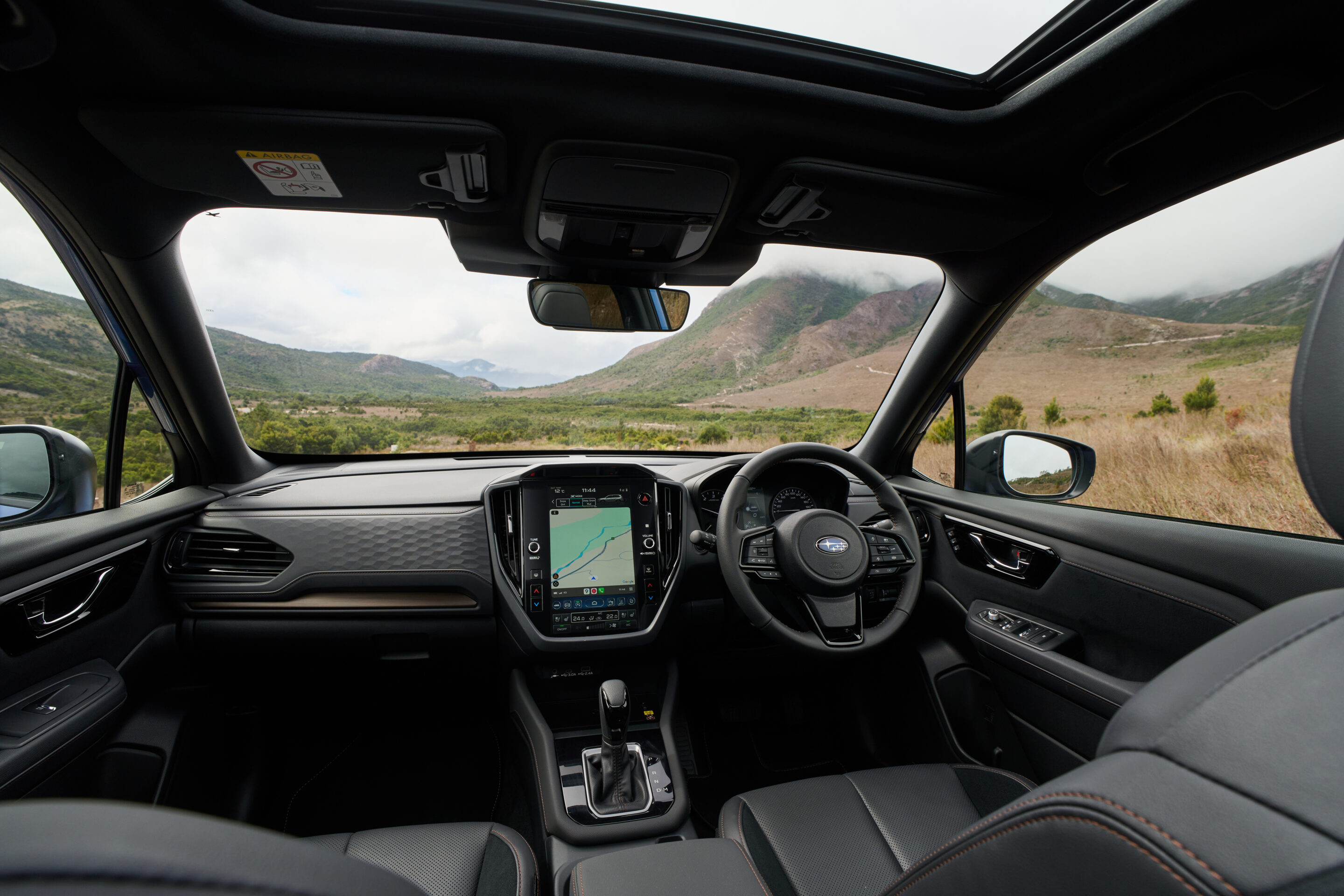
Equipment decisions are interesting. Subaru always hate me for pointing this out, but the Forester is one of the very few cars in its class where the base model is something you would actually buy. All of the incredibly comprehensive safety suite is included, as is wireless Apple CarPlay and Android Auto, the wireless phone charger, dusk-sensing LED headlights, the big central touchscreen, dual-zone climate control, heated front seats, heated and power folding door mirrors, and a leather-trimmed steering wheel.
Stepping up to other models in the range just adds features such as different seat materials, body-coloured exterior bits, a Harmon Kardon branded stereo, memory functions for the seats and so on. The key material changes between the trim levels comes with the addition of native satnav from the petrol premium and the hybrid Sport, and the big 12.3-inch LCD screen replacing the traditional dial pack from hybrid Sport and up. Other than that, it’s largely just tinsel, but the fact remains that the sweet spot in terms of value definitely seems to be with the entry-level hybrid.
The EyeSight safety suite fitted to all versions is incredibly comprehensive and includes everything you’d expect, including adaptive cruise control, speed sign recognition, an intelligent speed limiter, lane keep assist and brake light recognition. New for this year is Emergency Driving Stop System, which will respond if it thinks a driver is incapacitated, first by sounding an audible warning, then by shaking the wheel and finally by engaging the hazard lights and then pulling the vehicle safely to a stop at the side of the road.
Subaru VisionAssist includes all of the sensor-related safety gear such as parking sensors and a front-side radar, while there’s also a Driver Monitoring System inside the car that can be a little over-zealous. In one of the cars on test, it was constantly reminding me to stay alert every couple of minutes, and the nag screen to keep your eyes on the road is also a little too keen for my liking.
This sixth-gen Forester emerges as a very likeable and well engineered medium SUV. You’ll buy it if you want a car that feels rugged and airy inside and you like the idea of good value and decent equipment provision without a big options spend. The new hybrid system is a welcome improvement, finally offering Subaru customers a modicum of muscle without crucifying them at the fuel bowsers as a consequence.
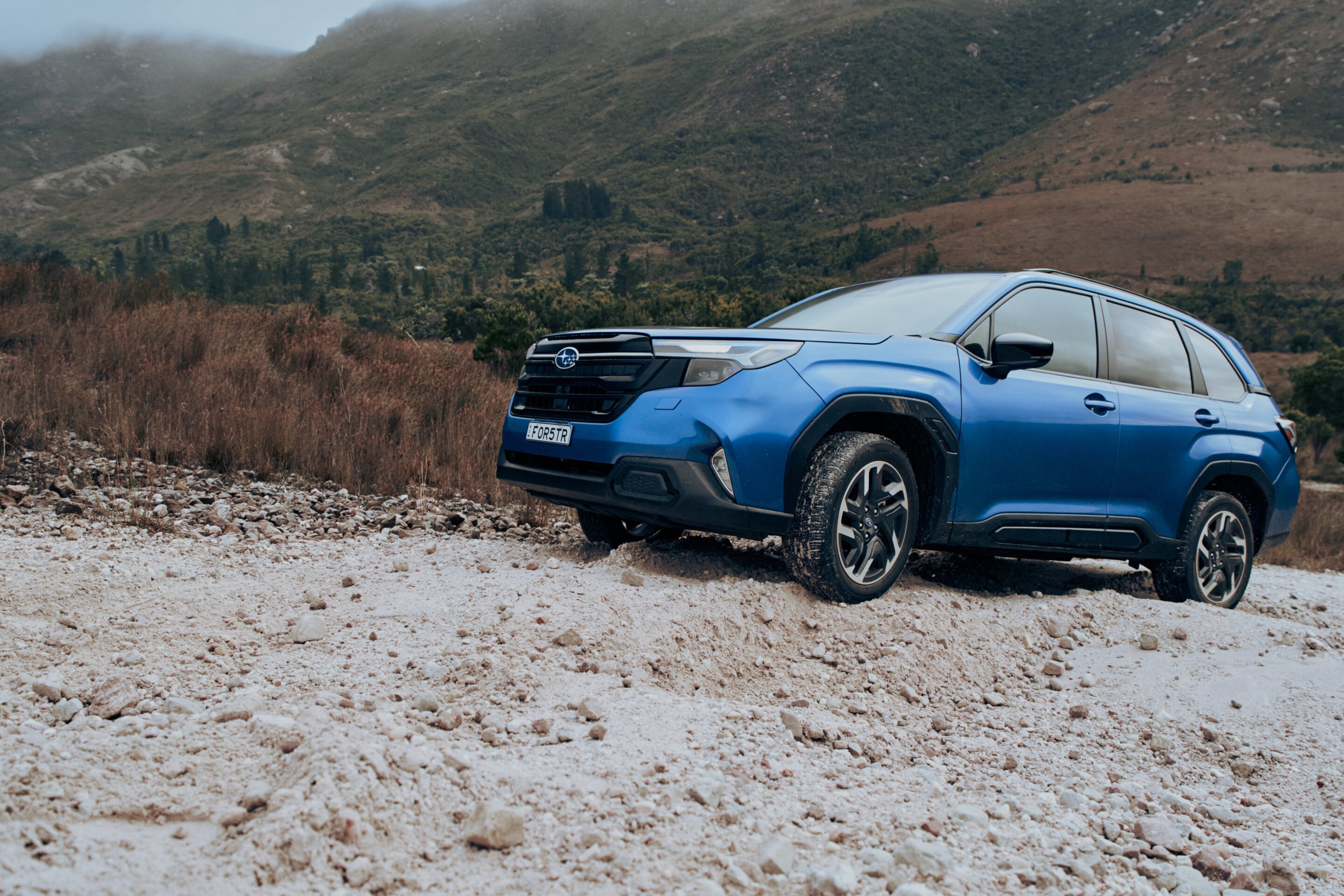
There’s a charming blend of appealingly old-school and considerately modern about the Forester that’s both endearing and practical. The doors lock with a reassuring thunk. There’s a refreshing lack of tedious gimmickry that afflicts many new entrant medium SUVs attempting to establish a USP. It’s good to drive, easy to live with and packed to the gunwales with safety gear, even at the very base of the range.
Its downsides are that the boot is far from the biggest in class, towing capacity is modest, and that even with its undoubted improvements in refinement, it’s not always the quietest. It’s also far from a sexy shape and some might find its driver monitoring system a bit overzealous. But now we’re reaching a bit. For the most part, the new Forester gets so much right that it’s easy to overlook a few of its foibles. It’s a significantly better car than its predecessor and introduces a welcome measure of rugged capability to a class that can sometimes tend towards the superficial.
What’s more it introduces this all-weather, extended-terrain utility without exacting a marked penalty in terms of how it drives on the blacktop. Not too many car manufacturers have managed to square that particular circle, but Subaru has worked the Forester’s compromises very smartly. For less than fifty grand the entry-level hybrid might just be the one-size-fits-all vehicle you never knew you needed.
Specs
| Model | Subaru Forester AWD Hybrid |
|---|---|
| Drivetrain | 2498cc, DOHC, four-cylinder, petrol-electric hybrid |
| Peak power | 145kW |
| Transmission | Single-speed reduction gear |
| 0-100km/h | 9.1 sec (tested) |
| Combined fuel economy | 6.2L/100km (claimed) / 7.6L/100km (tested) |
| L/W/H/WB | 4655/1830/1730/2670mm |
| Boot capacity | 498-1730L |
| Warranty | Five year/unlimited km |
| Five-year service cost | $2299 |
| Price | $46,490 plus on-road costs |
Toyota has offered the most revealing glimpse yet of its long-rumoured next-generation supercar, with a disguised prototype making a dramatic appearance at the UK’s recent 2025 Goodwood Festival of Speed.
The vehicle marks Toyota’s first foray into true supercar territory since the revered Lexus LFA, and it appears the Japanese giant is aiming high once again – on both the road and the racetrack.
Appearing alongside its GT3-class racing sibling, the camouflaged prototype hints at Toyota’s dual-pronged approach to performance: a halo road car and a purpose-built motorsport contender. While official details remain scarce, the Festival appearance confirmed one major development – the new Toyota supercar is powered by a V8 engine, likely turbocharged, and possibly supported by a hybrid system in the road-going version.
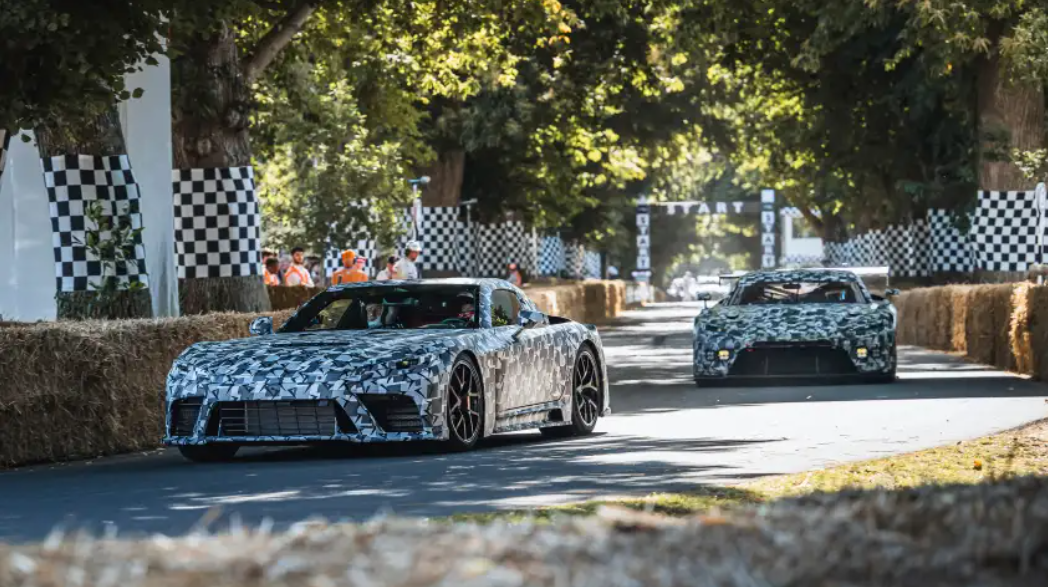
Although exact performance figures are under wraps, Toyota is undoubtedly targeting the 700bhp benchmark now typical among supercar rivals. Visually, the car’s sleek and aggressive stance suggests a front-mid-engine layout, with the engine sitting behind the front axle – echoing the design of the previous-generation Mercedes-AMG GT.
Additional clues point to a transaxle drivetrain setup, potentially housing a limited-slip differential and fast-shifting automatic transmission. Whether this will be a dual-clutch system, torque converter, or something new remains to be seen. The chassis is believed to be constructed from carbon fibre, offering lightweight strength and rigidity – much like the Lexus LFA before it.
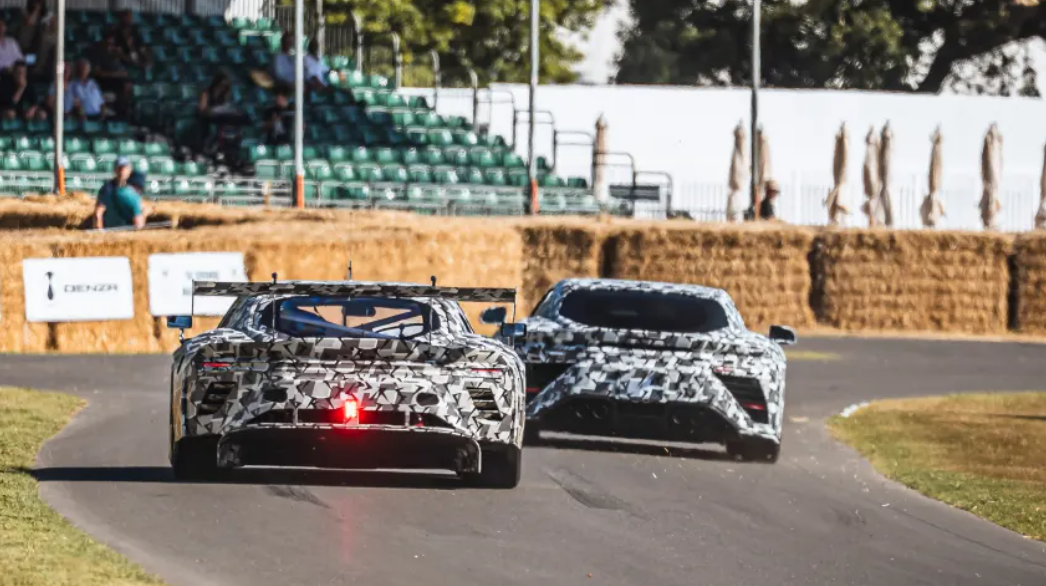
Of equal importance is the GT3 racing variant, which will serve as Toyota’s entry into one of the most hotly contested categories in motorsport. With rivals including Porsche, Ferrari, Lamborghini, and Aston Martin, the GT3 version is expected to play a key role in Toyota’s Gazoo Racing program.
Whether the final product will wear a Toyota, Gazoo Racing, or even Lexus badge remains unclear. What is certain, however, is that both the road and race versions are edging closer to full unveiling – likely within the next 12 months.
The combination of ‘hybrid’ and ‘SUV’ is a currently very popular one in the automotive world, with a rash of new models marrying the two in the pursuit of greater fuel economy.
Toyota has made a name for itself as a byword for hybrid drivetrains, combining both electric and internal combustion power to lower both fuel consumption and emissions – so much so that in Australia at least, all of its mainstream passenger cars such as the Camry and RAV4 are now only available as a hybrid.
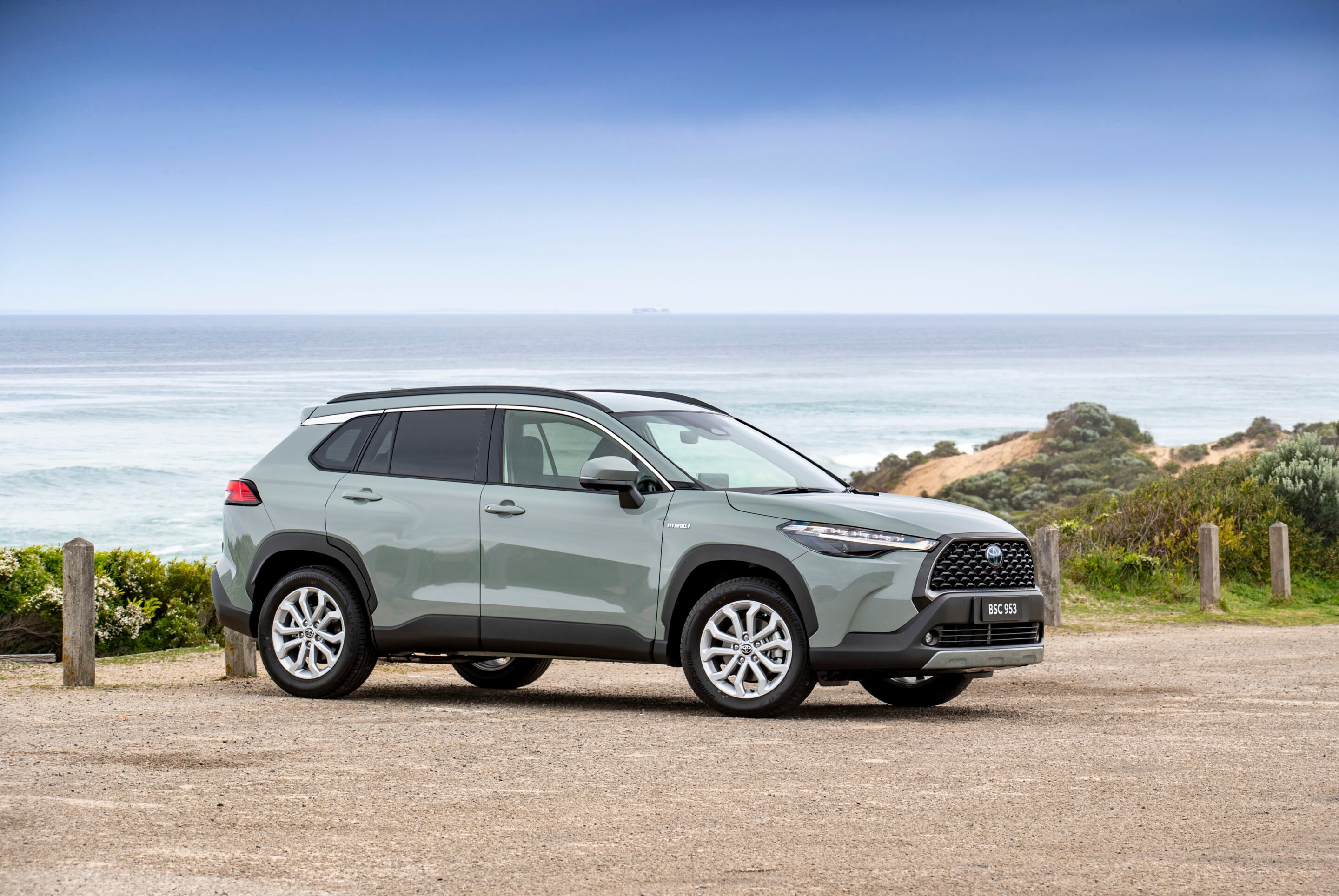
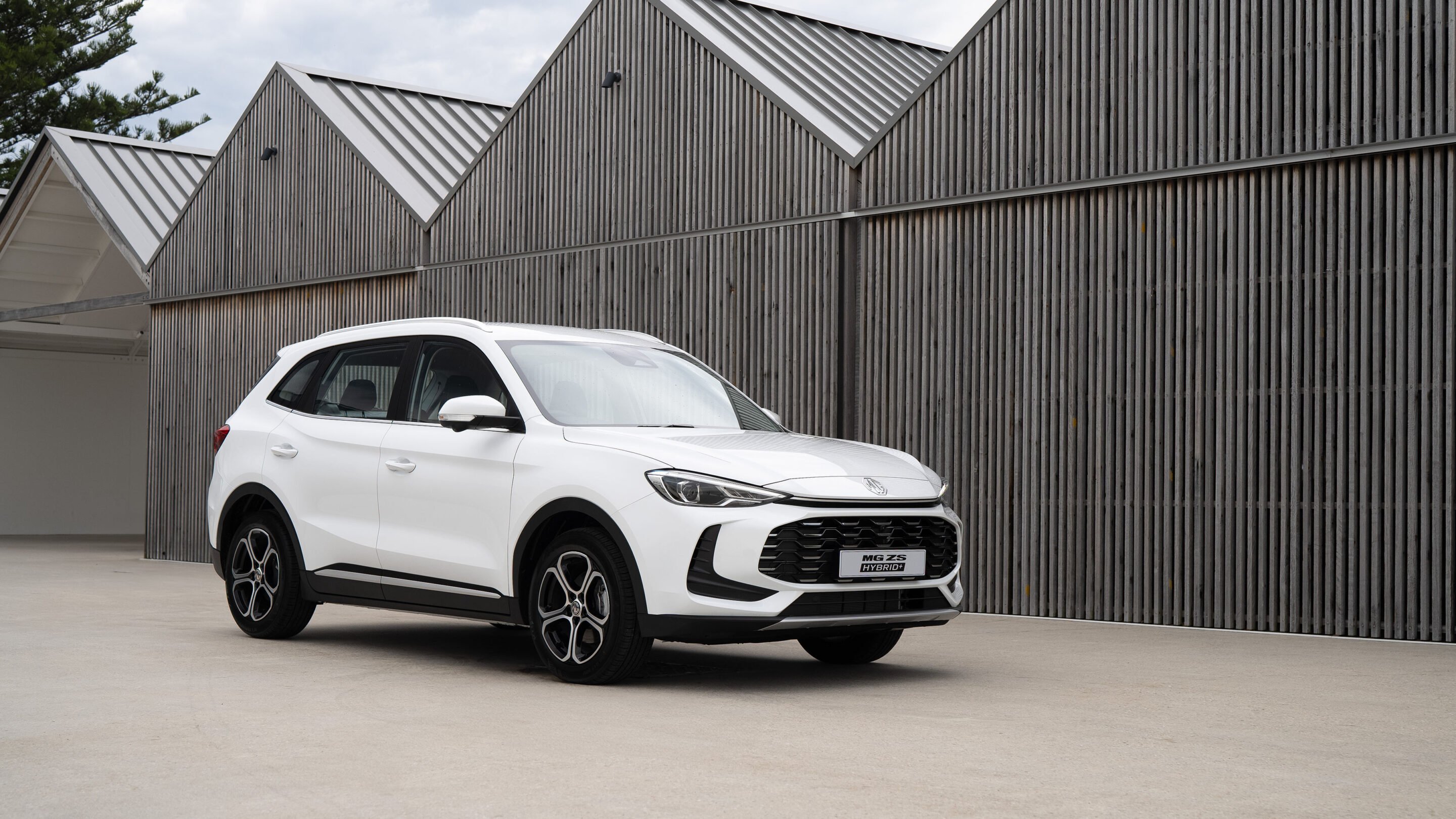
Clearly, demand from Australians is there and other manufacturers are finally catching on. MG has launched a local hybrid assault over the past year with the 3 light hatch, HS mid-size SUV and ZS small SUV all now available with hybrid power. How does MG’s hybrid small SUV compare with Toyota’s on paper?
Pricing
Part of modern day MG’s popularity in Australia is its low pricing and the ZS Hybrid+ starts at just $33,990 drive away. The Corolla Cross, however, starts at $37,440 plus on-road costs, so you’re likely looking at over $41,000 once those pesky on-road costs are added.
The ZS Hybrid+ is available in two models: base Excite and top-spec Essence, and even with its panoramic roof, synthetic leather trim and heated front seats, the latter is only $36,990 drive away – a big chunk of cash less than even the entry-level Corolla Cross.
The Corolla Cross is offered in entry-level GX, mid-spec GXL and two top spec models, the Atmos, and the sporty new GR Sport with the latter two versions priced at $50,990 plus on-road costs.
Premium paint costs an extra $575 on the Corolla Cross and $700 on the ZS Hybrid+.
| MG ZS Hybrid+ | Toyota Corolla Cross |
|---|---|
| Excite: $33,990 drive away | GX 2WD: $37,440 plus on-road costs |
| Essence: $36,990 drive away | GXL 2WD: $41,190 +ORC |
| GXL AWD: $44,190 +ORC | |
| Atmos 2WD: $47,990 +ORC | |
| Atmos AWD: $50,990 +ORC | |
| GR Sport AWD: $50,990 +ORC |
Equipment
It’s clear that the Toyota Corolla Cross offers the wider model range in this comparison, with six model variants versus the two for the MG ZS Hybrid+. But while the Toyota features more standard equipment comparing both top-spec models, the MG is priced a lot lower.
| MG ZS Hybrid+ Essence | Toyota Corolla Cross Atmos | |
|---|---|---|
| Price | $36,990 drive away | $50,990 plus on-road costs |
| Wheels | 18-inch, no spare wheel | 18-inch, space-saver spare |
| Lighting | LED headlights, dusk-sensing | LED headlights, dusk-sensing, sequential front turn signals |
| Wipers | Rain-sensing automatic | Rain-sensing automatic |
| Sunroof | Yes, opening, see-through cover | Glass roof, full cover |
| Seats | 6-way electric driver’s, 4-way manual passenger, heated front | 10-way electric driver’s, 4-way manual passenger, heated and ventilated front |
| Upholstery | Synthetic leather | Leather |
| Climate control | Single-zone automatic, rear air vents | Dual-zone automatic, rear air vents |
| Electric tailgate | No | Yes (with kick-to-open functionality) |
| All-wheel drive | No | Optional |
| ANCAP safety rating | Four stars (tested in 2024) | Five stars (tested in 2022) |
| Airbags | 6 | 8 |
| Autonomous emergency braking | Yes | Yes with pedestrian, cyclist and intersection assistance |
| Adaptive cruise control | Yes | Yes with traffic jam assist |
| Lane keeping assistance | Yes with adaptive lane guidance | Yes with adaptive lane guidance |
| Blind-spot monitoring | Yes with rear cross-traffic alert | Yes with rear cross-traffic alert with braking |
| Driver attention monitoring | Yes | Yes |
| Cameras | 360-degree | 360-degree with ‘see-through’ functionality |
| Parking sensors | Rear | Front and rear with automatic parking functionality |
Service and warranty
Both the ZS Hybrid+ and Corolla Cross offer warranty packages that are extendable with dealer servicing. MG covers its new products with a seven-year/unlimited km warranty that is extendable to 10 years/250,000km in total through dealership servicing.
Toyota’s standard warranty is five years/unlimited km, but dealer servicing and annual battery checks will see the mechanical warranty extended to seven years and the battery warranty to 10 years.
MG’s hybrid battery warranty is seven years/150,000km, which is one year and 10,000km less than Toyota.
For roadside assistance, MG will provide it as long as the warranty lasts – so, up to 10 years through dealer servicing – while Toyota offers none at all, though it’s available to optionally purchase from $99 per year.
Both the ZS Hybrid+ and Corolla Cross need to be serviced annually or every 15,000km (whichever comes first). Five years/75,000km of servicing the ZS Hybrid+ costs $1232 and the same for the Corolla Cross is slightly more over that time at $1275.
| MG ZS Hybrid+ | Toyota Corolla Cross | |
|---|---|---|
| Warranty | 7-years/unlimited km, extendable to 10-years/250,000km with dealer servicing | 5-year/unlimited km, mechanical extendable to 7 years and battery to 10 years with dealer servicing |
| Roadside assistance | Yes for warranty length | No ($99 extra annually) |
| Service intervals | Every 12 months or 15,000km | Every 12 months or 15,000km |
| 5-year/75,000km service cost | $1232 | $1275 |
| Hybrid battery warranty | 7-year/150,000km | 8-year/160,000km |
Dimensions
It’s no secret that small SUVs are loved for their relatively compact dimensions, yet interiors that are capable of carrying four adults in comfort. Both the ZS and Corolla Cross sit at the larger end of the segment, with the Corolla Cross just 30mm longer in overall length and 7mm in width. The ZS is the taller of the two by 15mm, providing superior rear headroom, while their wheelbases are also just 30mm apart with the Corolla Cross providing a smidge more rear legroom than the ZS.
For bootspace, it’s a close contest as well, with the ZS offering 443 litres of space with the rear seats up and 1457L with them folded. How much bootspace you get in the Corolla Cross depends on which model you choose, with the GX and GXL 2WD offering the most at 425 litres, the Atmos 2WD at 414L, the GXL AWD at 390L and the Atmos AWD at 380L.
Toyota doesn’t quote a figure for the Corolla Cross with the rear seats folded, though it’s less practical thanks to the big gap between the seat and boot floor – the ZS’s dual-level floor allows it to have a continuous level with its rear seats folded. However, while 2WD Corolla Cross variants feature a space-saver spare wheel, no ZS Hybrid+ has a spare wheel.
| MG ZS Hybrid+ | Toyota Corolla Cross | |
|---|---|---|
| Length | 4430mm | 4460mm |
| Width | 1818mm | 1825mm |
| Height | 1635mm | 1620mm |
| Wheelbase | 2610mm | 2640mm |
| Kerb weight | 1420kg | 1435kg – 1550kg |
| Boot space | 443 litres | 380 litres – 425 litres |
Powertrains
Both the MG ZS Hybrid+ and Toyota Corolla Cross use four-cylinder petrol engines combined with electric motors, with both providing more than adequate performance and fuel consumption. Toyota’s hybrid expertise is its strength here, with lower fuel consumption than the ZS Hybrid+ and despite lower outputs, a similarly punchy feel on the open road.
| MG ZS Hybrid+ | Toyota Corolla Cross | |
|---|---|---|
| Drivetrain | 1.5L four-cylinder + electric motor | 2.0L four-cylinder + electric motor |
| Engine outputs | 75kW/128Nm | 112kW/190Nm |
| Combined outputs | 156kW | 146kW |
| Combined fuel consumption | 4.7L/100km | 4.2L/100km (2WD) – 4.4L/100km (AWD) |
| CO2 emissions | 110g/km | 97g/km (2WD) – 101g/km (AWD) |
| Fuel type | 95RON premium unleaded | 91RON regular unleaded |
| Fuel tank size | 41 litres | 36 litres (2WD), 43 litres (AWD) |
| 0-100km/h | 8.7 seconds | 7.5 – 7.7 seconds |
In-car technology
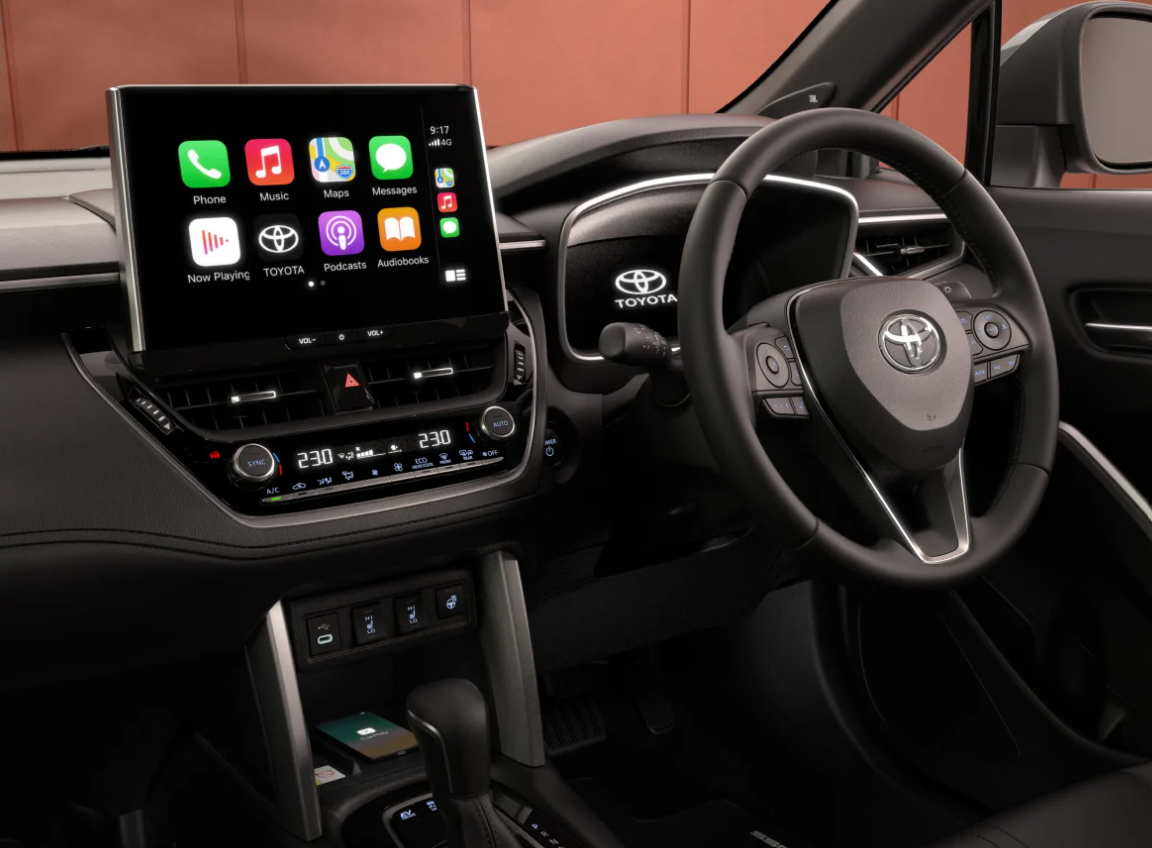
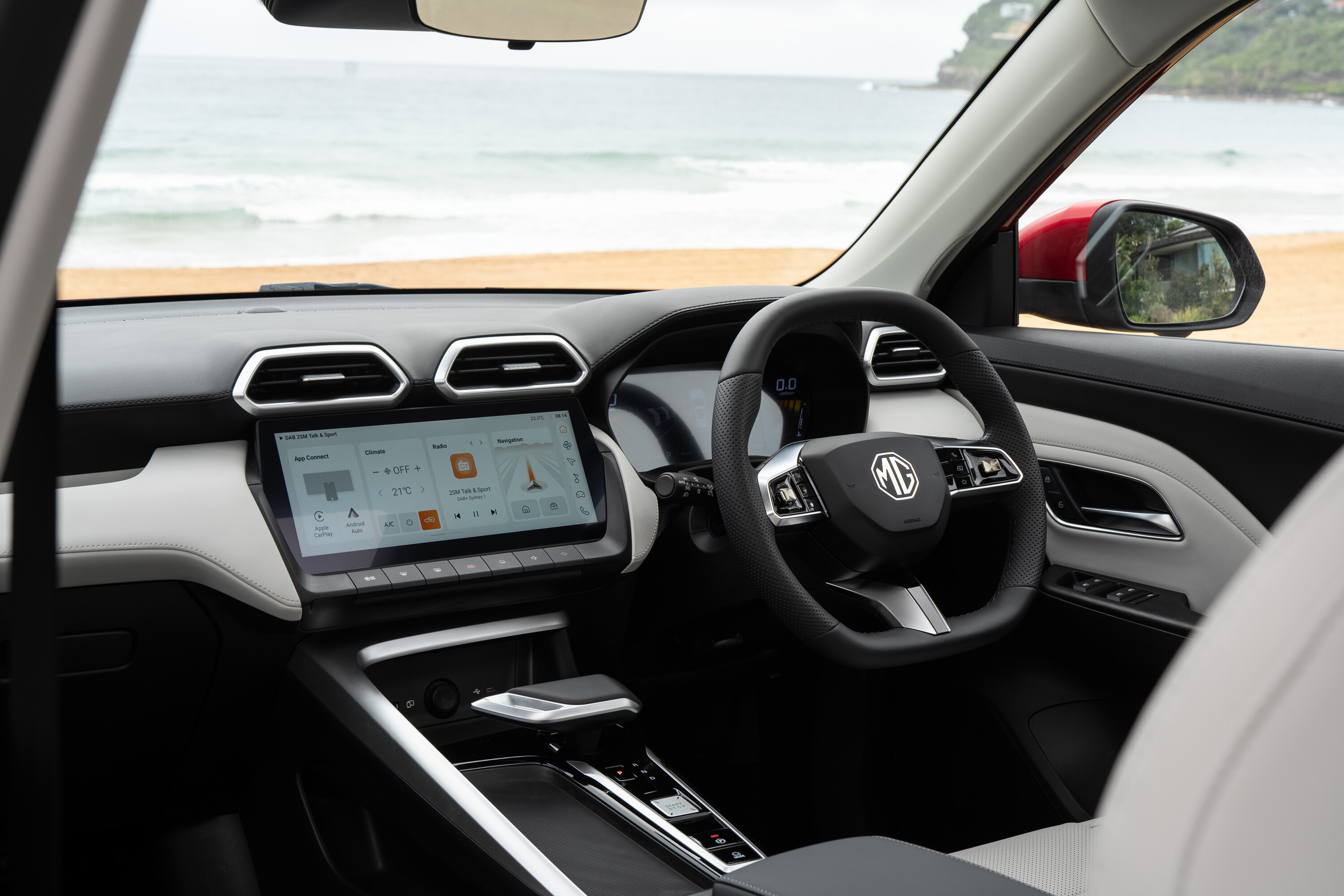
Both the MG ZS Hybrid+ and Toyota Corolla Cross feature modern in-car tech that will more than satisfy small SUV buyers. But in this regard, the MG has the Toyota beaten thanks to its standard 12.3-inch touchscreen across the range – the entry-level Corolla Cross GX has a small 8.0-inch touchscreen, which is upgraded to a larger 10.5-inch unit in the mid-spec GXL.
For driver’s displays, MG says that the ZS Hybrid+ range uses a 12.3-inch unit, though only the middle 7.0-inches is a screen with gauges surrounding it. The Corolla Cross also features a 7.0-inch digital unit across the range, though the top-spec Atmos and GR Sport both use a 12.3-inch unit that is, unlike the MG, fully digital.
| MG ZS Hybrid+ | Toyota Corolla Cross | |
|---|---|---|
| Touchscreen | 12.3-inch | 7.0-inch (GX), 10.5-inch (GXL, Atmos and GR Sport) |
| Driver’s display | 12.3-inch (7.0-inch digital portion) | 7.0-inch (GX and GXL), 12.3-inch (Atmos and GR Sport) |
| Apple CarPlay and Android Auto | Wired | Wired and wireless |
| Satellite navigation | Yes (with live traffic) | No (GX), yes (GXL, Atmos and GR Sport) |
| DAB+ digital radio | Yes | Yes |
| Speakers | 6 | 6 (GX and GXL), 9 x JBL premium (Atmos and GR Sport) |
| USB ports | 4 USB-A (2x front, 1x rear, 1x rear view mirror for dashcam) | 2 (GX), 4 (GXL, Atmos and GR Sport) |
| Wireless phone charger | No | No (GX), yes (GXL, Atmos and GR Sport) |
| Live services | Yes (12 months, paid subscription afterwards) | Yes (12 months, paid subscription afterwards) |
MG ZS Hybrid+ or Toyota Corolla Cross?
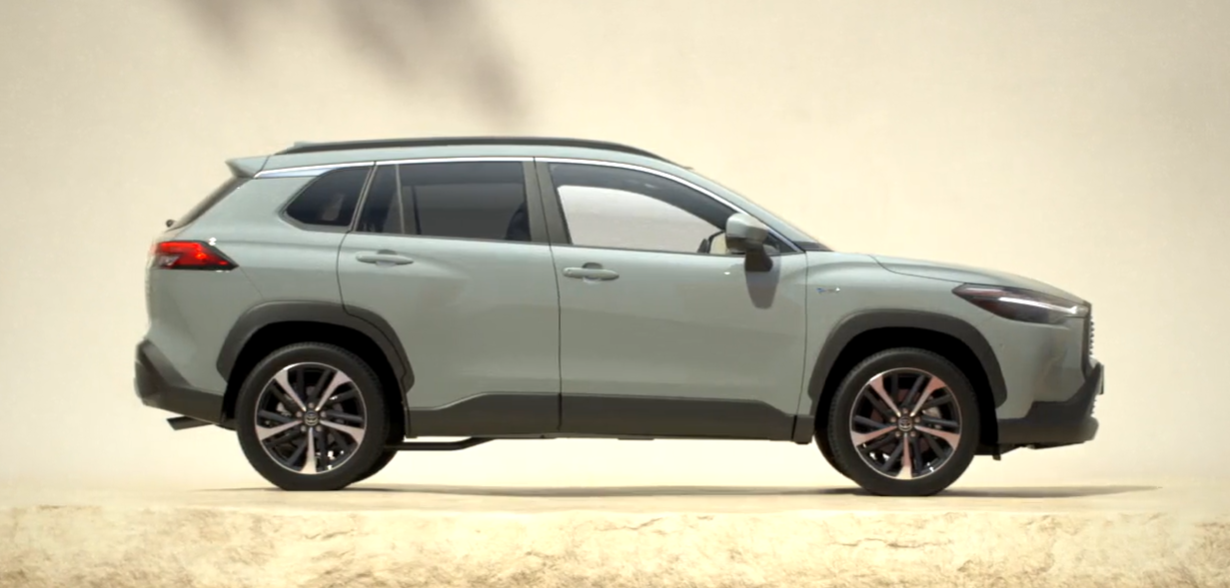
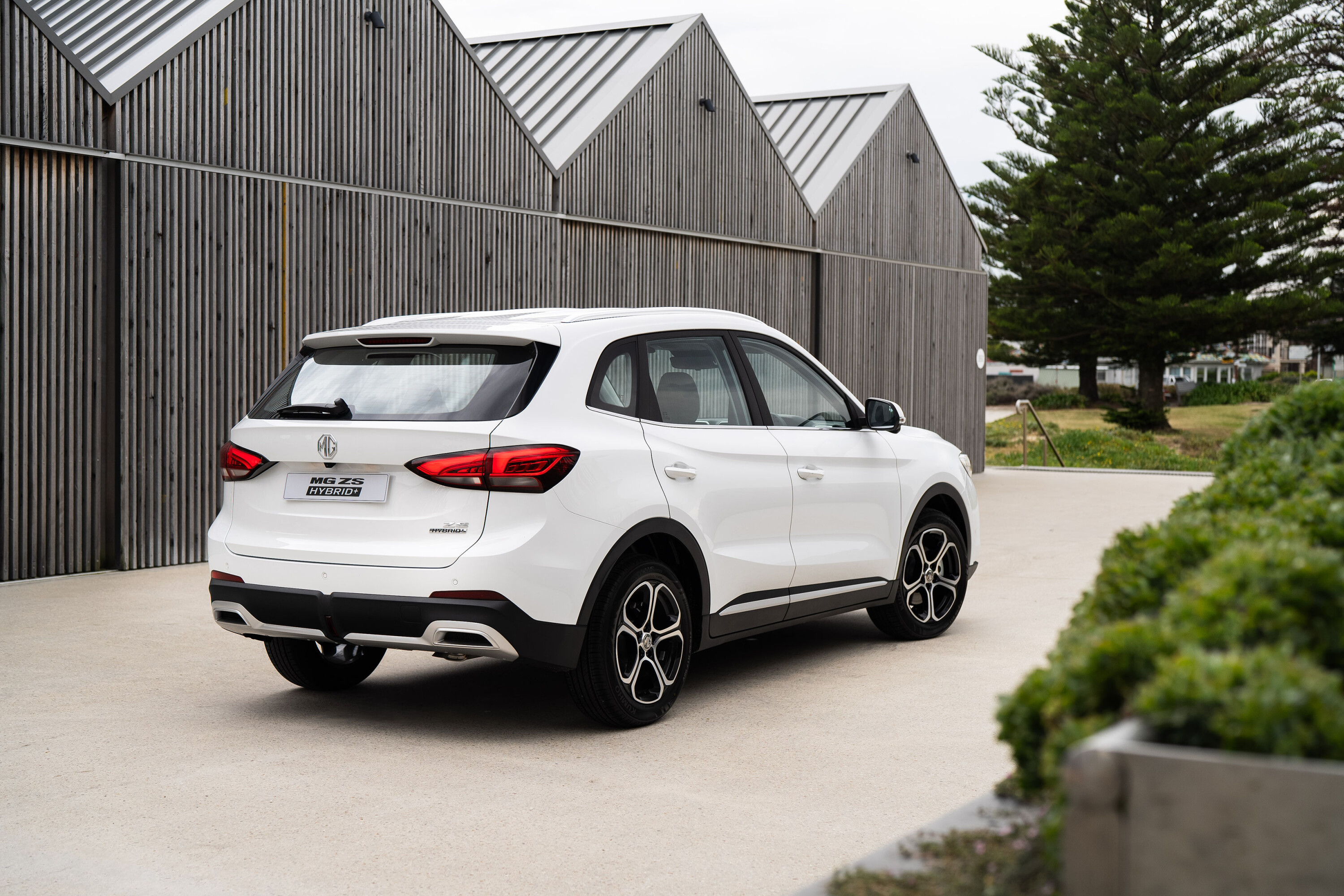
Comparing the MG ZS Hybrid+ and Toyota Corolla Cross makes it easy to see why these small SUVs have become so popular: they’re a good size for modern day life, well equipped with plenty of luxury and safety features to ensure a comfortable driving experience and both use powerful hybrid drivetrains to lessen damage to both the planet and your wallet.
Based on the specifications, the Corolla Cross Atmos is better equipped than the ZS Hybrid+ Essence. While its drivetrain isn’t as powerful on paper, it is more fuel efficient and can run on regular unleaded fuel, helping lessen running costs even further.
But the MG’s standard and extended warranties are longer than Toyota’s, its service costs are slightly less for the first five years/75,000km and its purchase price is a lot less as well, with the ZS Hybrid+ Essence’s price even less than the entry-level Corolla Cross. There are no bad choices here, but as you’d expect from a modern day MG product, the ZS Hybrid+ offers superior value for money over the Toyota Corolla Cross.
Australia may still have a strong automotive engineering industry but the fact we no longer create cars from initial concept all the way through to final production is still a profound loss.
Right until the very end – in fact, especially at the very end – Australia was producing excellent vehicles that were perfectly suited to our unique roads and conditions, usually on a fraction of the budgets enjoyed globally.
To celebrate this feat, below you’ll find our top 10 greatest Australian cars. With any list like this it’s important to establish the ground rules. This is a ‘greatest’ list rather than a ‘best’. The difference? Greatness requires the car to have had a lasting impact on the industry at large, a game changer if you will.
We’re also talking complete ranges, so some iconic cars that were otherwise part of relatively forgettable ranges (step forward Charger R/T E49) are absent – that’s a list you’ll find here.
10. Bolwell Nagari
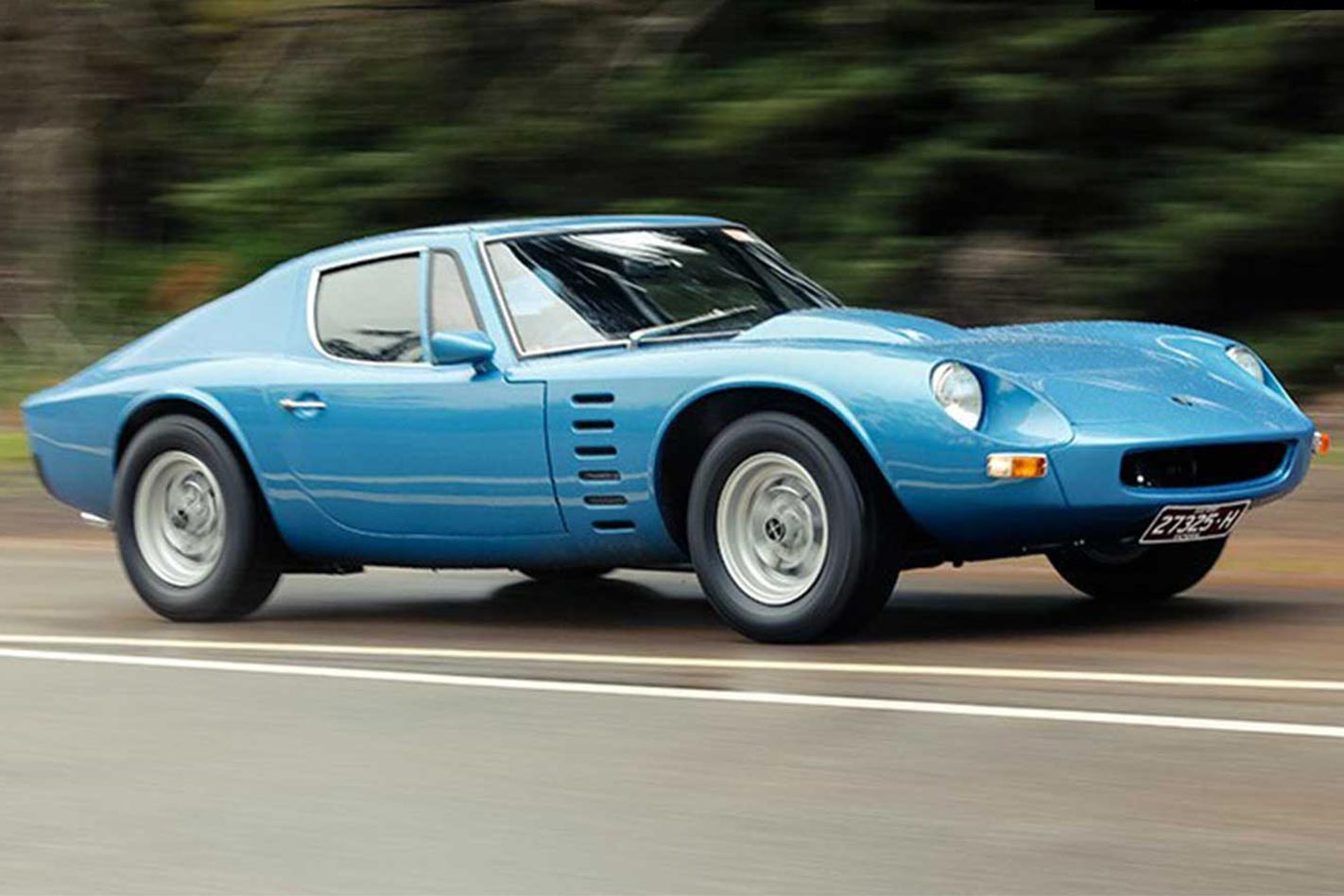
Full disclosure, the Bolwell Nagari wasn’t on the first draft of this list, but when you run it by Peter Robinson and he says the Nagari should be on it, you put the Nagari on it. The closest Australia has come to producing a European-style sports car, it used the engineering nous of brothers Campbell and Graeme Bolwell to create a compact, lightweight (915kg) and powerful (164kW/407Nm) machine capable of easily dusting a contemporary Falcon GT.
9. Holden Monaro
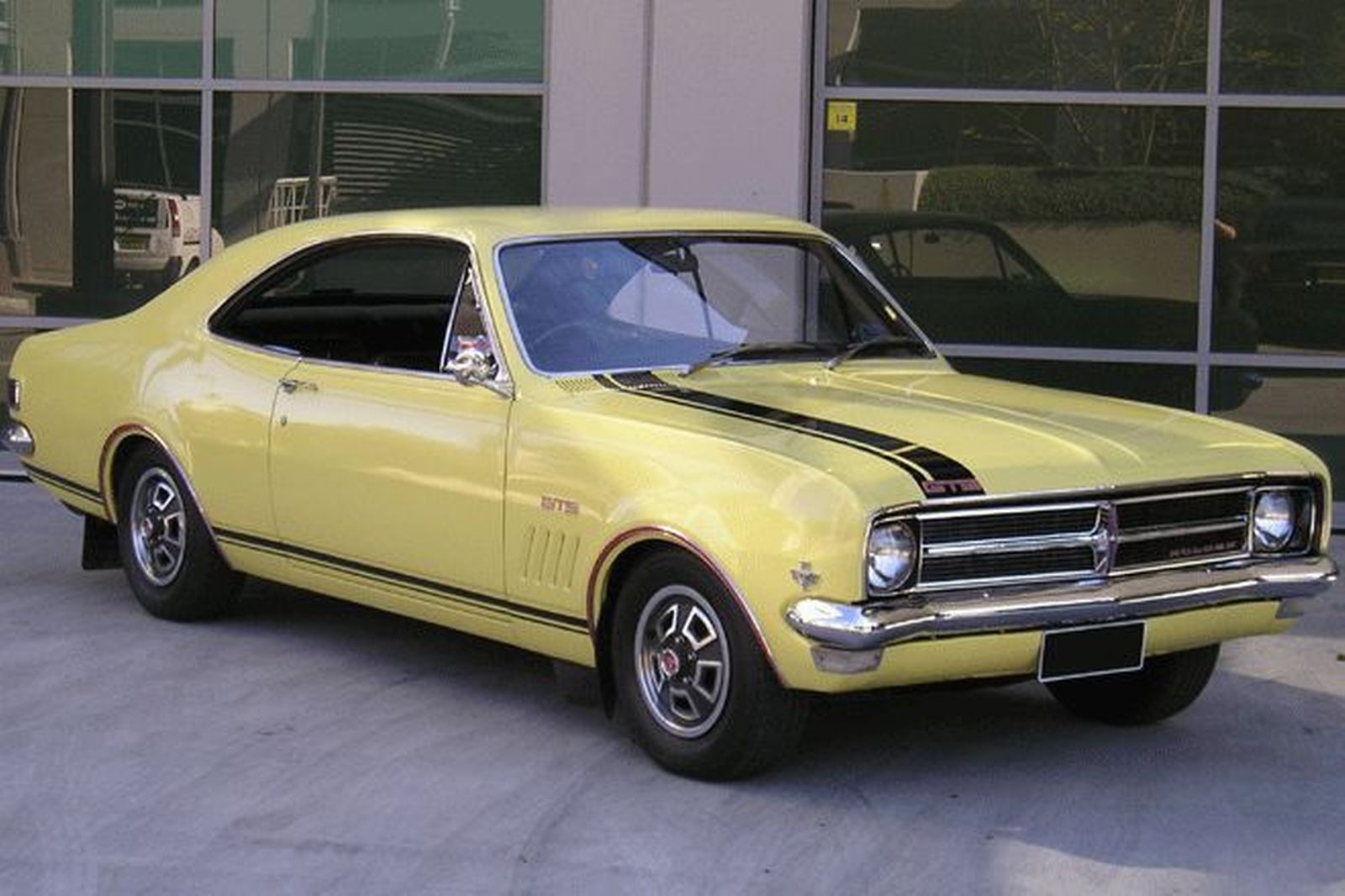
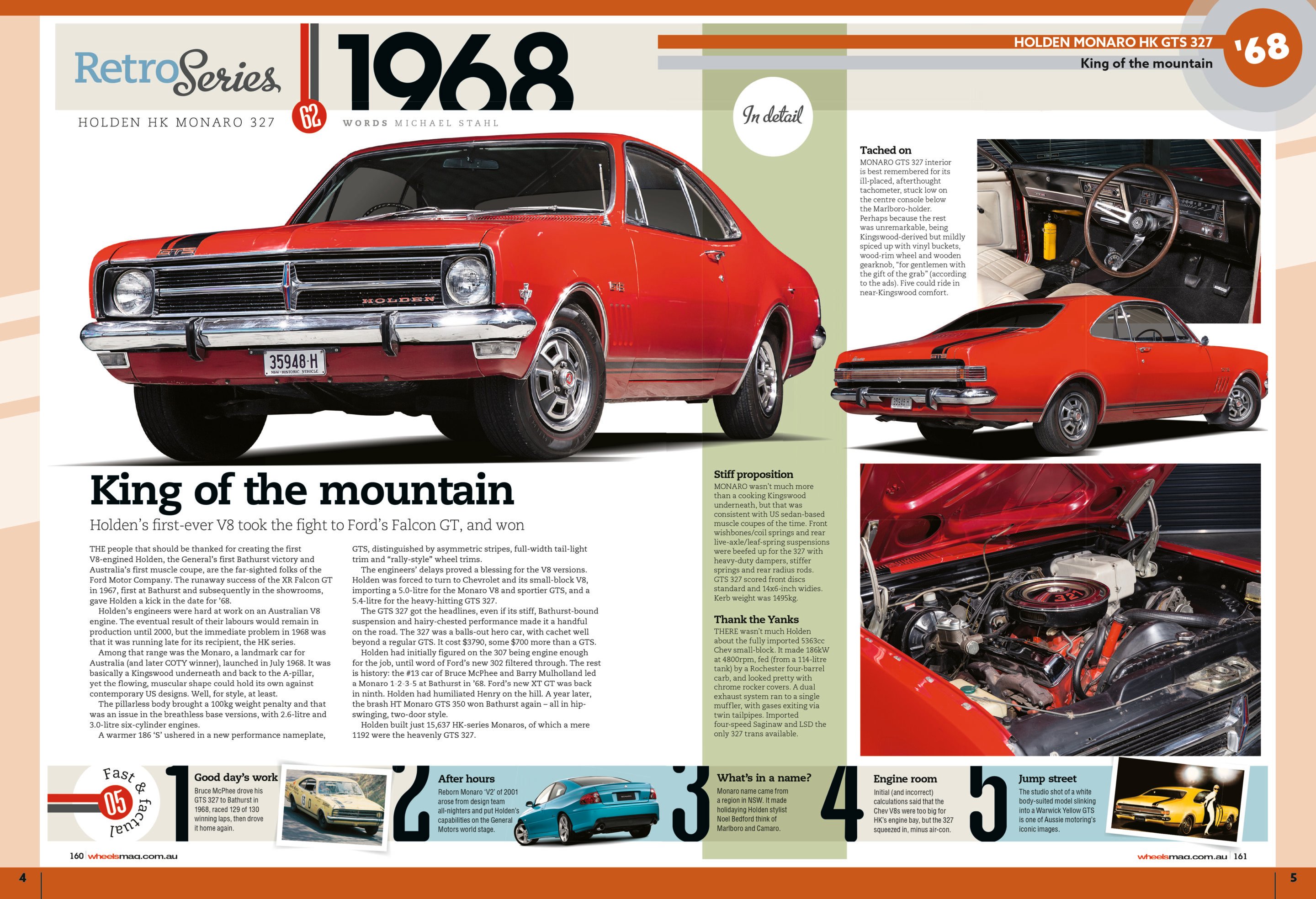
In 1967 the Ford XR Falcon GT kicked off Australia’s muscle car era (more on this later) but it still looked, well, like a sedan. The Holden Monaro added show to the go with a shapely two-door body that predated Valiant’s Charger by three years and Ford’s XA Coupe by five. You could have the show without the go, the base engine being a 161ci (2.6-litre) straight-six, but every Monaro buyer wanted one of the V8s whether they could afford it or not. It was more than a pretty face, too, capturing the 1968 Wheels’ Car of the Year award and locking out the podium at that year’s Bathurst 500. An icon was born, one that was successfully reinvented in the early 21st century.
8. Mitsubishi TM Magna
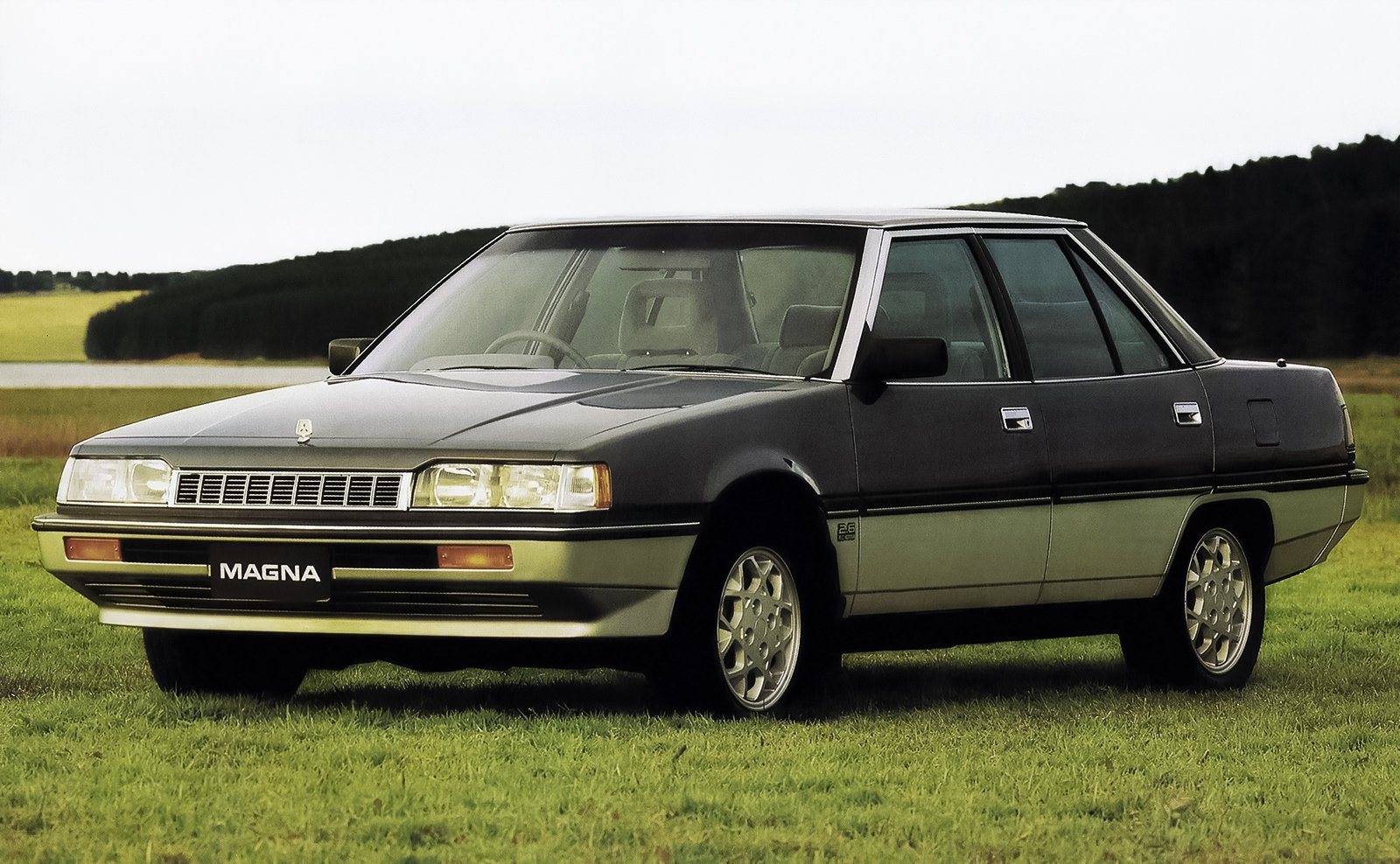
You could make a case for the Sigma to sit here, as it really established Mitsubishi as a major player in Australia, but it was the Magna that gave Aussie buyers a genuine alternative to the Falcon and Commodore. As is typically the case, ingenuity played a key role. Mitsubishi Australia couldn’t afford to develop a full-size car yet knew the narrow-body Japanese market Galant wouldn’t cut it locally. The solution was to add 65mm in the middle which, combined with the front-drive layout, gave it exceptional interior space for its size. The segment-straddling dimensions meant it cleverly nabbed sales from mid-size competitors as well as traditional Ford and Holden big car buyers.
7. Holden VB Commodore
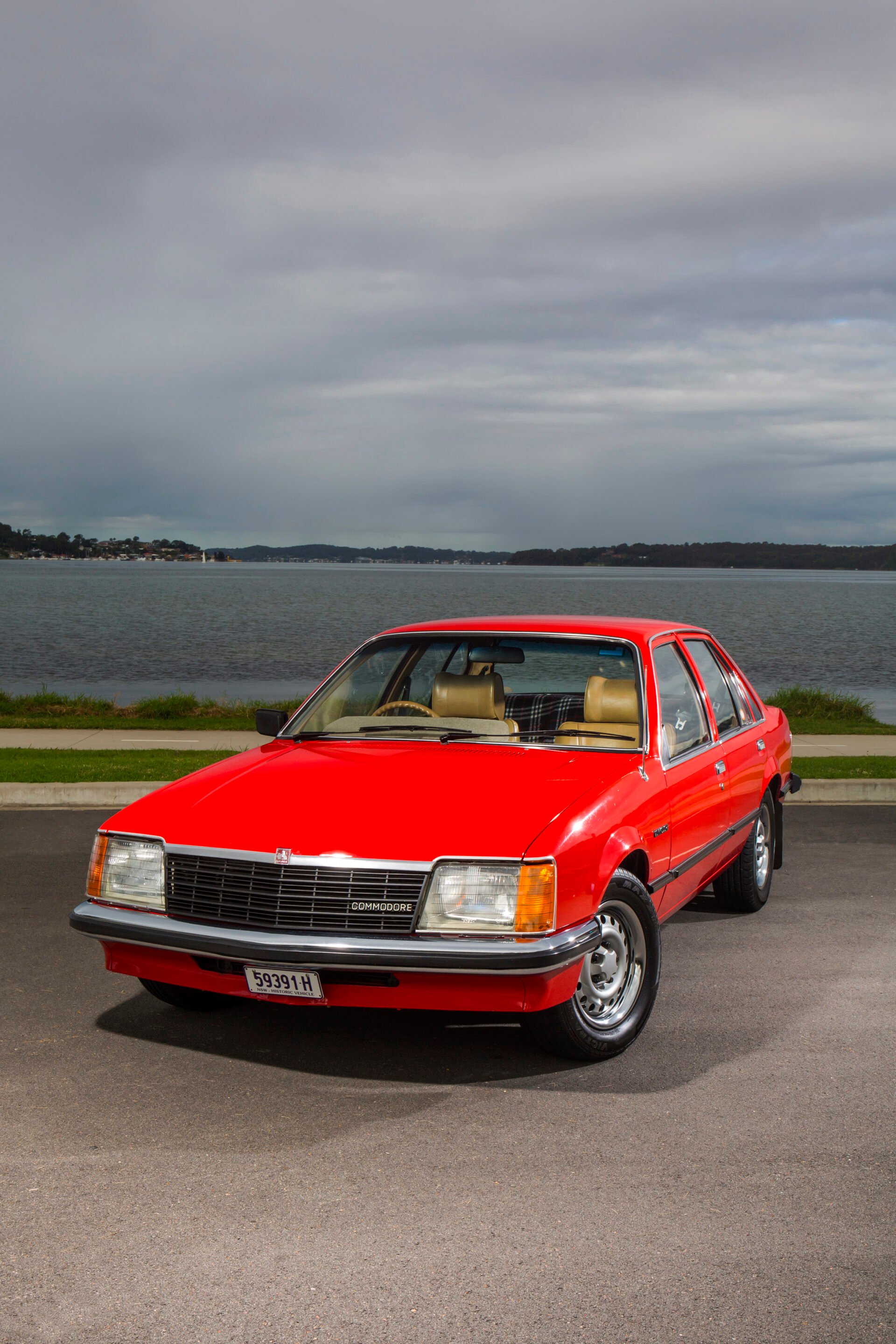
The VB Commodore was up against it. Replacing the beloved Kingswood (“not the Kingswood!”), it looked like an Opel and it looked small. The latter meant plenty of buyers – especially fleets – turned to the full-size Falcon, but they didn’t reckon on the Holden’s clever packaging that gave it far more interior space than the exterior dimensions suggested. Nor did they get to enjoy the excellent comfort and dynamics and substantial re-engineering that ensured the Commodore’s Opel DNA could withstand Australia’s brutal roads. A 1-2-3 in the Repco Round Australia trial was Holden’s reward for its local engineering efforts.
6. Ford BA Falcon
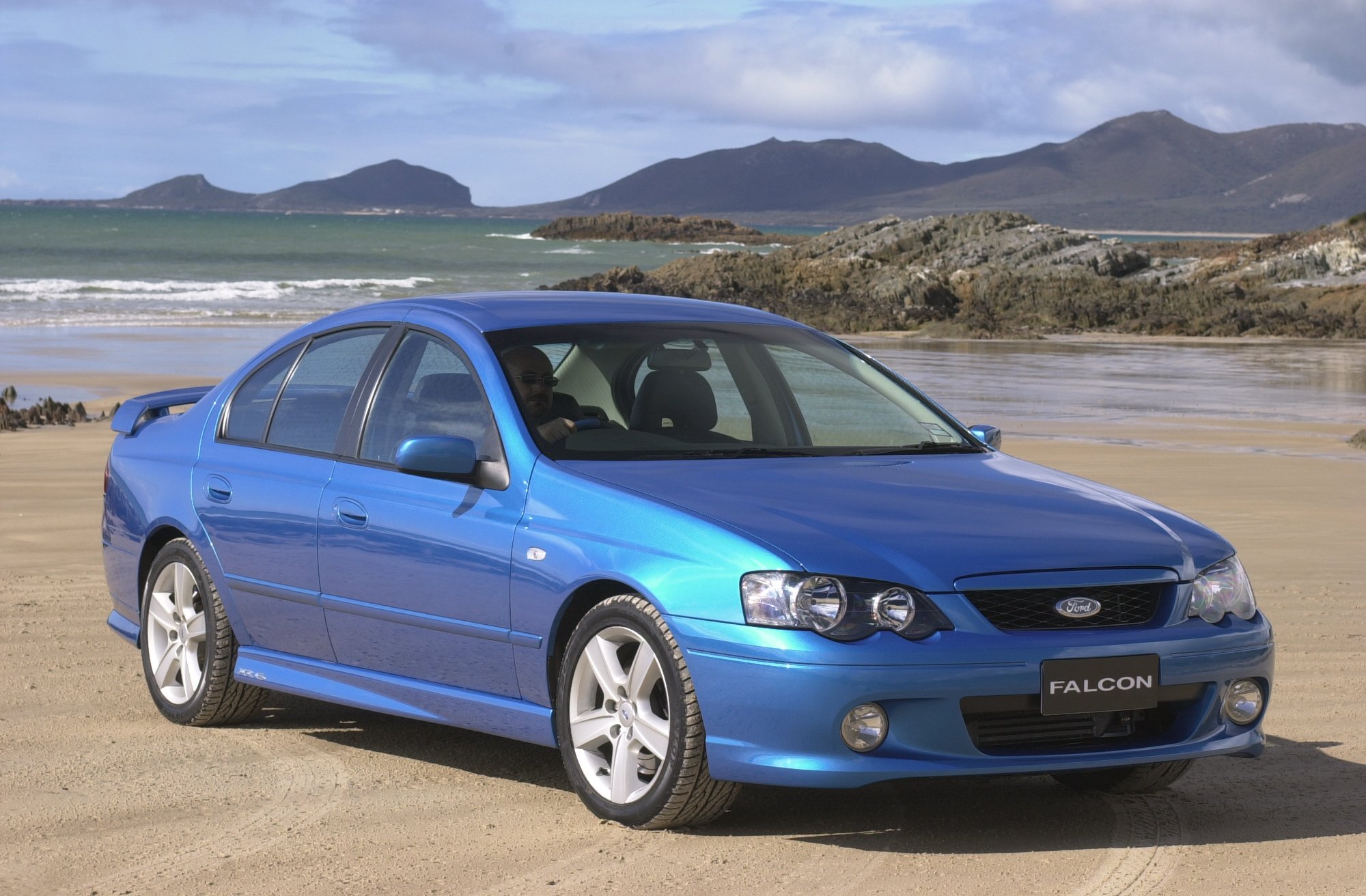
At the time of the millennium, Holden was kicking Ford’s butt. The VT et al Commodores were easily winning the sales race, the Gen III V8 was winning the power race and the Monaro was winning the fashion race. But an enemy that appears to be in retreat may merely be biding its time and Ford was working away feverishly on a car that would banish any memories of the AU. The BA may have had AU bones but a new engine – the mighty Barra – a new independent rear end and stiffer bodyshell gave it talents an equivalent Commodore couldn’t match. And in the XR6 Turbo, a new performance hero was born, giving the traditional V8s a boosted battering.
5. Ford Ute
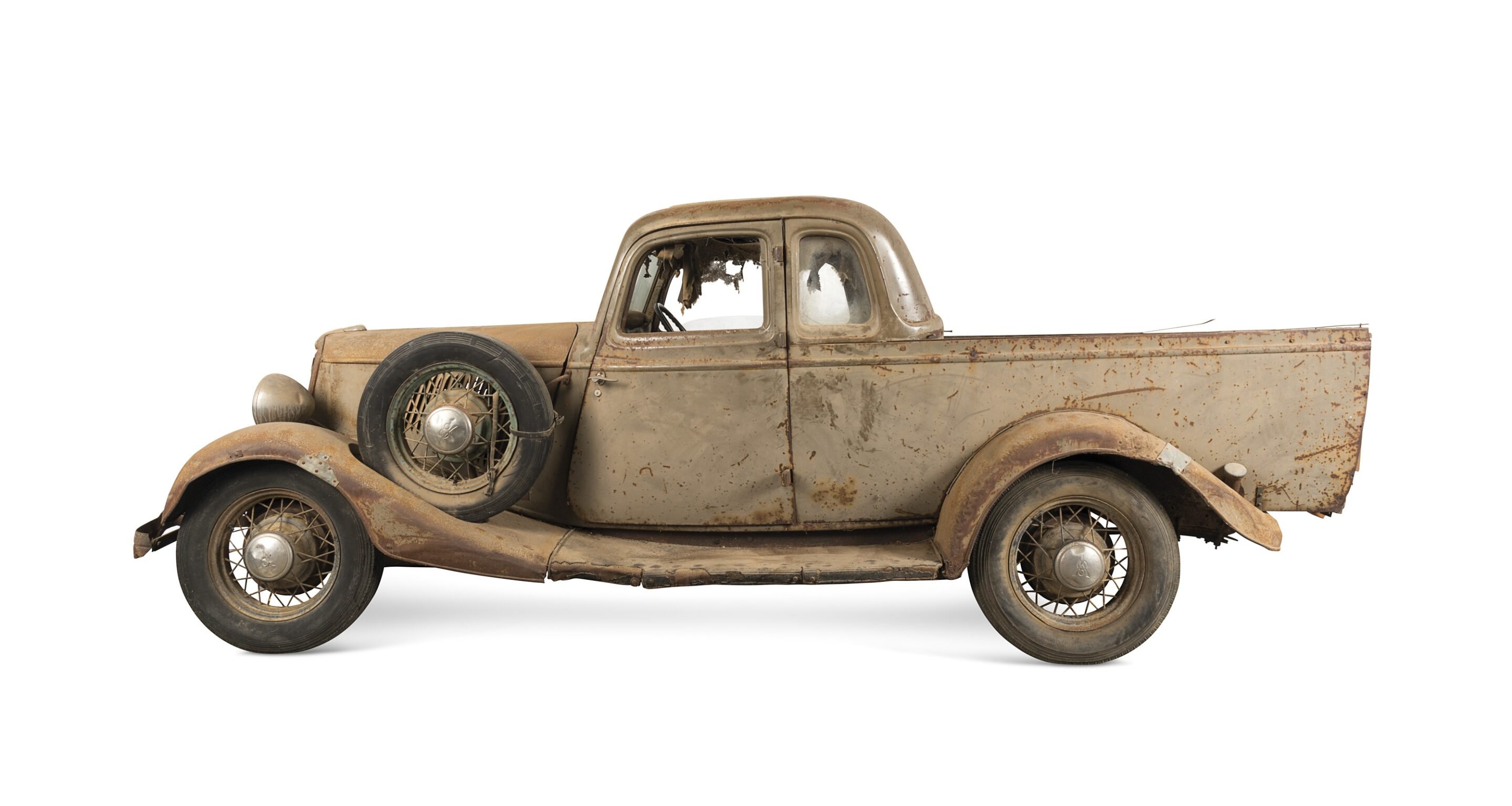
Sometimes the greatest ideas come from solving a personal need. The famous Gippsland farmer’s wife wasn’t looking to create a new vehicle genre that would become an integral part of Australian culture, she just needed something that could carry passengers in comfort and produce to market. At the behest of Ford Australia general manager Hubert French, designer Lewis Bandt created the coupe utility, which would evolve into a uniquely Australian machine with a third string to its bow – shredding rear tyres with V8 grunt. While our beloved Falcon and Commodore utes are no more, you can draw a straight line from that original request to the nation’s current dual-cab love affair.
4. Ford XR Falcon
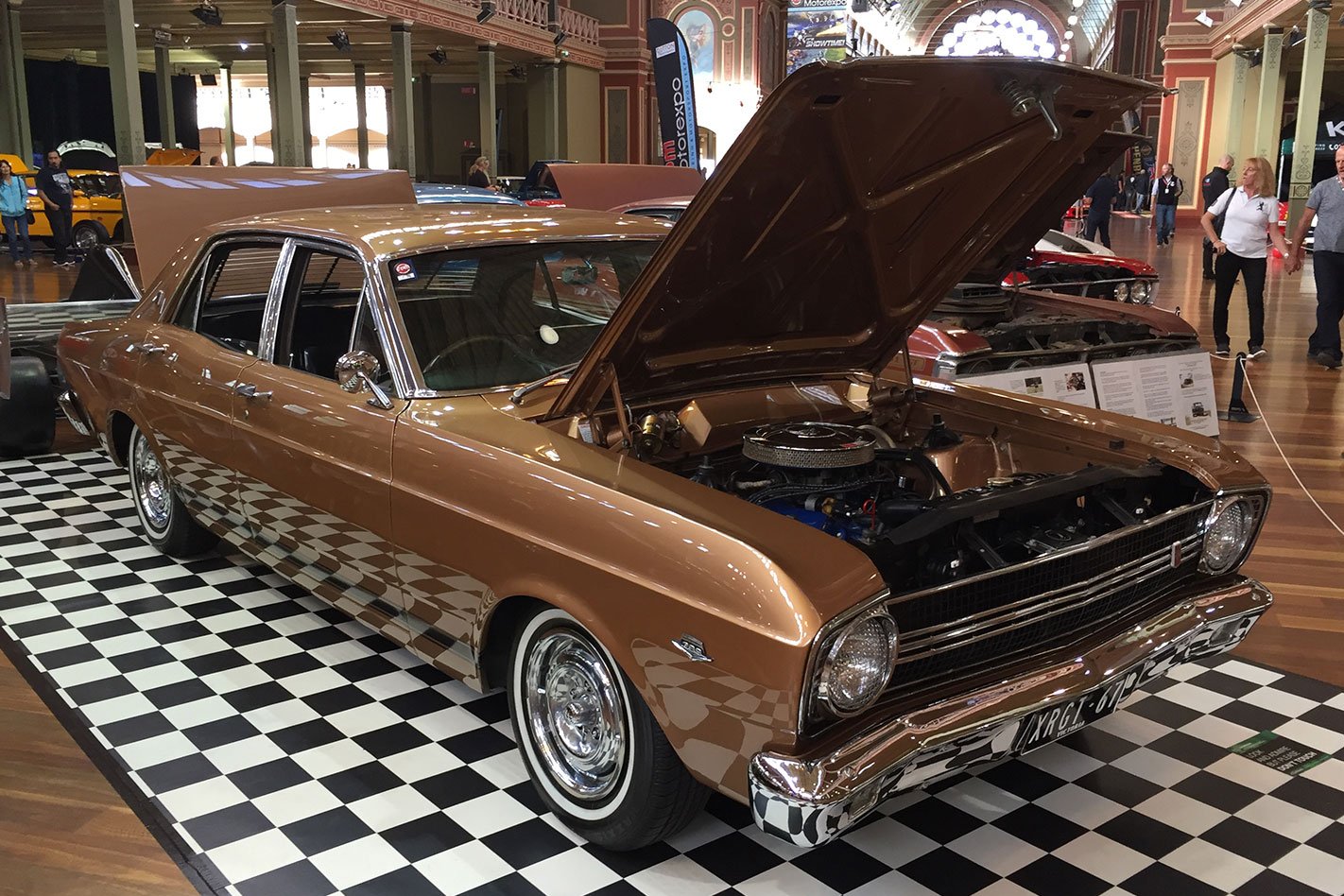
It would be incorrect to call the Ford XR Falcon GT Australia’s first performance car. There was the Harry Firth-fettled Cortina GT, though perhaps the Holden EH S4 has a greater claim. What the XR GT did do, however, was establish the template that would dominate the local performance scene for the next five decades: ample interior space, rear-wheel drive and stonking great V8 under the bonnet. Oh, and a trophy at Bathurst in October. It was the opening salvo in the arms race that would ensue between Ford and General Motors leading to the creation of some of this country’s most treasured vehicles.
3. Holden VE Commodore
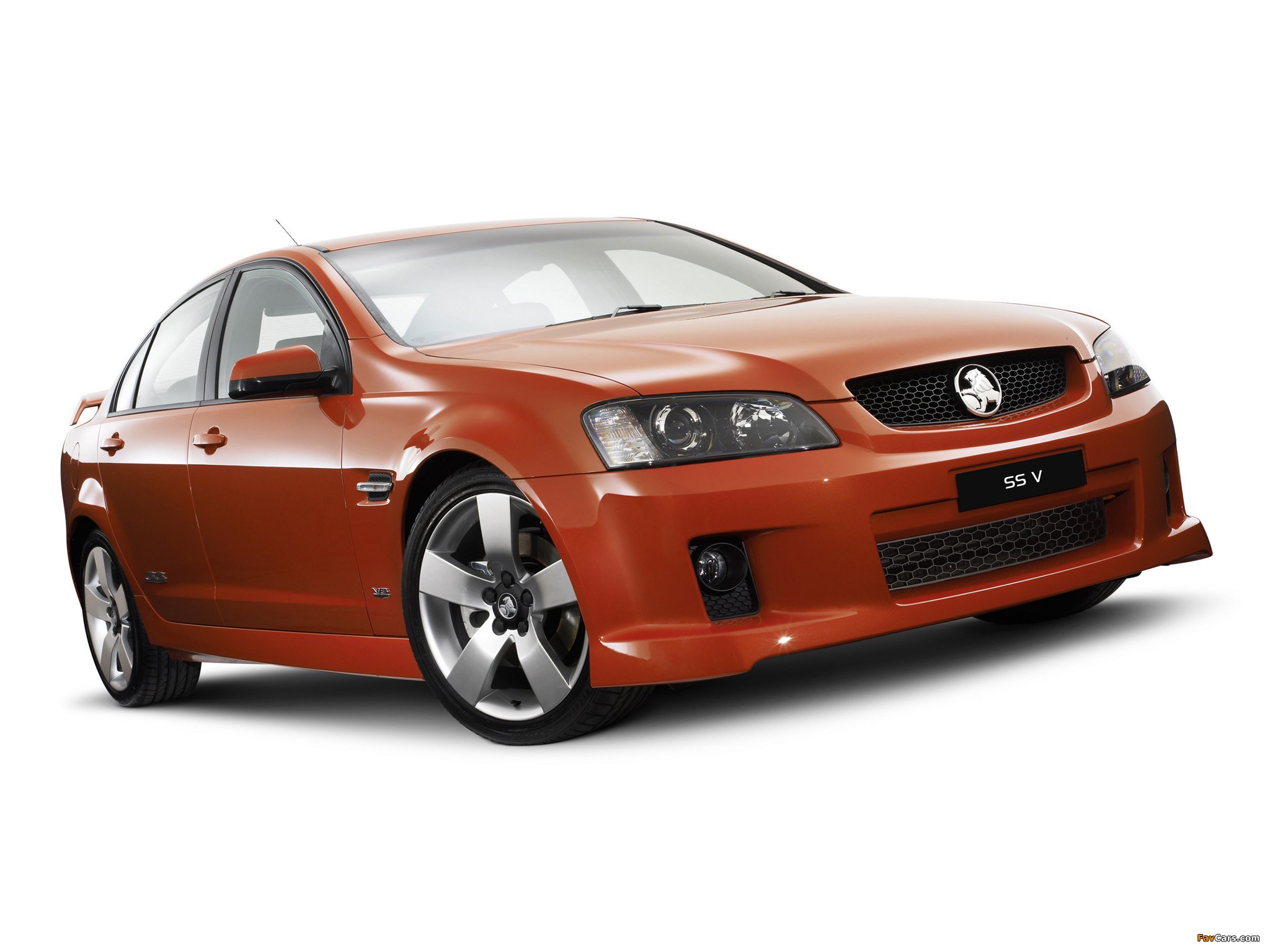
Throughout virtually its entire existence, the Australian automotive industry – almost regardless of manufacturer – became synonymous with punching above its weight, achieving remarkable results with a fraction of international budgets. Many of the vehicles on this list attest to that. With the VE Commodore – Holden’s ‘Billion Dollar Baby’ – General Motors’ antipodean arm finally had a chance to flex its muscles and delivered in spades. The crisp exterior design, penned by Michael Simcoe and Peter Hughes, the ride, handling and steering that was the equal of anything from Europe and unprecedented refinement for a local car. General Motors’ Chapter 11 bankruptcy would stifle its export potential, but the VE’s excellence would stand the Commodore in good stead all the way to the VF II and end of production.
2. Ford Territory
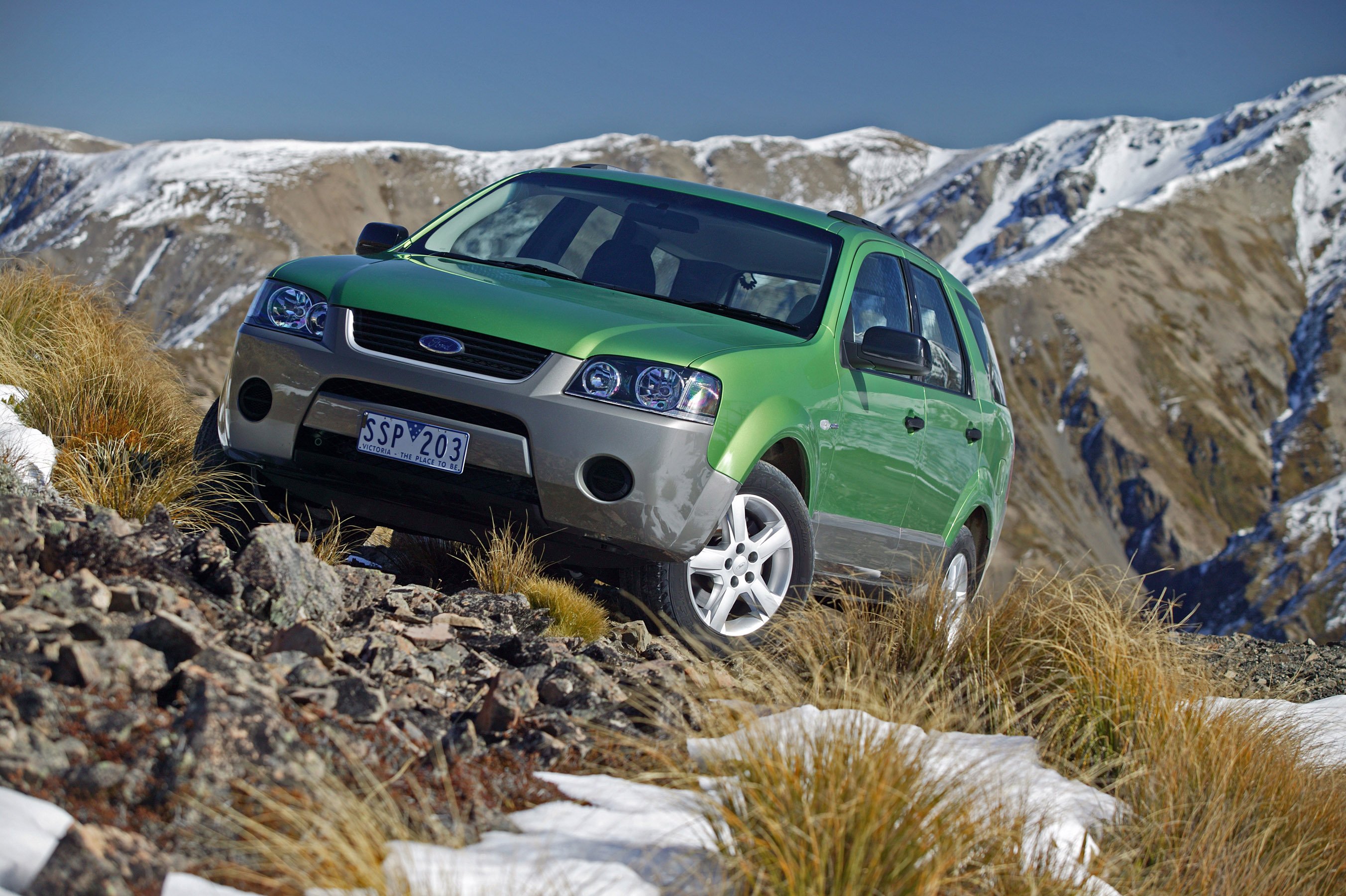
The Territory is the true measure of the quality of Australia’s car industry. It knew how to do sedans, had been doing them successfully for 50 years, but when the Territory became a glint in Ford’s eye the term SUV had barely entered the automotive lexicon. It not only carried over the excellent ride and handling from the Falcon on which it was based, easily setting a new standard for the segment, it improved passenger space and refinement and offered a supremely clever interior, full of storage and flexibility with seating for seven. It was an outstanding family car, fuel economy its only real demerit, a situation made worse by Ford’s decision to prioritize a high-performance Turbo variant over a diesel early in its lifespan. How would it fare in today’s SUV-obsessed market?
1. Holden 48-215
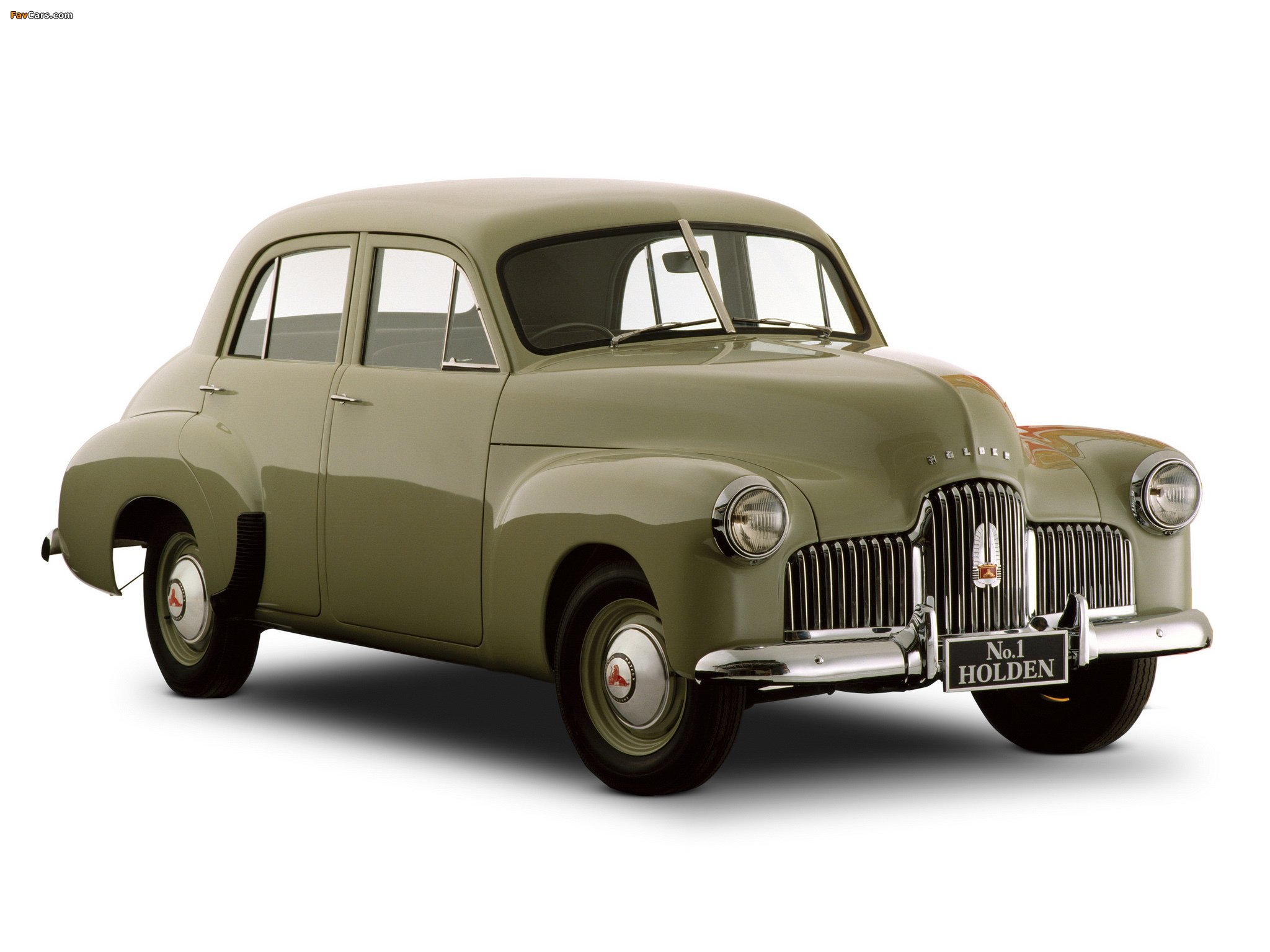
Even the mightiest tree needs a seed to grow from and every vehicle on this list owes its existence to some degree to the 48-215, or as it was simply known at the time, the ‘Holden’. Australians fell over themselves to own the first locally engineered and manufactured car, resulting in extensive wait lists. Happily, they also bought themselves a fine vehicle. It was undoubtedly simple but occupied a unique niche in size while offering full-blooded performance by the standards of the day. As Holden design guru Richard Ferlazzo put it in Wheels’ feature drive of the first and last locally made Holdens, “It was an A-size car with a B-size engine”. The success of the 48-215 is best illustrated by the fact its layout – a four-door sedan with room for a family and luggage, powered by a six-cylinder engine driving the rear wheels – would continue unchanged until the very last VF II Commodore rolled off the line in 2017.
German technology group Rheinmetall has taken a major step toward solving one of the biggest challenges in urban electric vehicle adoption: where to charge.
After a successful 12-month pilot program in Cologne, the company has officially commenced mass production of its discreet “Curb Charger” – an EV charger built directly into roadside kerbing.
Unlike traditional charging stations, which can be bulky and visually intrusive, the Curb Charger sits flush with the footpath. This preserves valuable public space, reduces visual clutter, and eliminates potential pedestrian obstructions – an issue frequently cited by city planners. During the pilot phase, the chargers performed reliably through over 2,800 individual charging sessions, delivering more than 50 megawatt-hours of electricity with a technical uptime exceeding 99 per cent.
Each unit features a weatherproof, IP68-rated design with built-in heating, ensuring durability and functionality in harsh conditions. Drivers can connect using a standard Type 2 cable and activate charging via smartphone app or RFID card. The charger includes 4G and Ethernet connectivity for real-time monitoring, with smart modular components that allow quick, tool-free electronic replacement in case of malfunction.

Rheinmetall’s innovative kerbside charging solution has already received accolades for its practical design, winning recognition at the Red Dot Awards. Its rollout is part of a broader strategy to support the growing demand for public EV infrastructure in space-constrained city environments. With plans for broader European deployment already underway, including interest from cities like Dublin, Rheinmetall is positioning its Curb Charger as a game-changing tool for the electrified future.
The system’s success highlights the growing need for flexible, integrated EV infrastructure that blends seamlessly with urban streetscapes. As more cities look to reduce emissions and ban petrol and diesel vehicles from inner areas, discreet, durable solutions like Rheinmetall’s Curb Charger could be key to enabling the transition.
By making EV charging more accessible without adding visual or spatial burden, this flush-fit solution could soon become a familiar feature on city streets around the world.
Australian motorists are being urged to keep their vehicles clean – especially their number plates – because obscured registration numbers could attract steep fines and even demerit points.
The warning comes after photos of a Kia SUV, caked in dirt and mud with virtually unreadable plates, surfaced online in Melbourne. What started as a tongue-in-cheek post by a Reddit user local asking if the car was “safe” from speed and mobile detection cameras, quickly evolved into a broader discussion about the legality and enforcement of dirty number plates.
While many Aussies debated whether a muddy car fresh from a camping trip should be penalised, Victoria Police have confirmed there is little wiggle room.
“Motorists are required to have their number plate affixed and displayed in accordance with regulations,” a police spokesperson told Yahoo News. “Police will actively intercept and enforce if a number plate is obscured.”
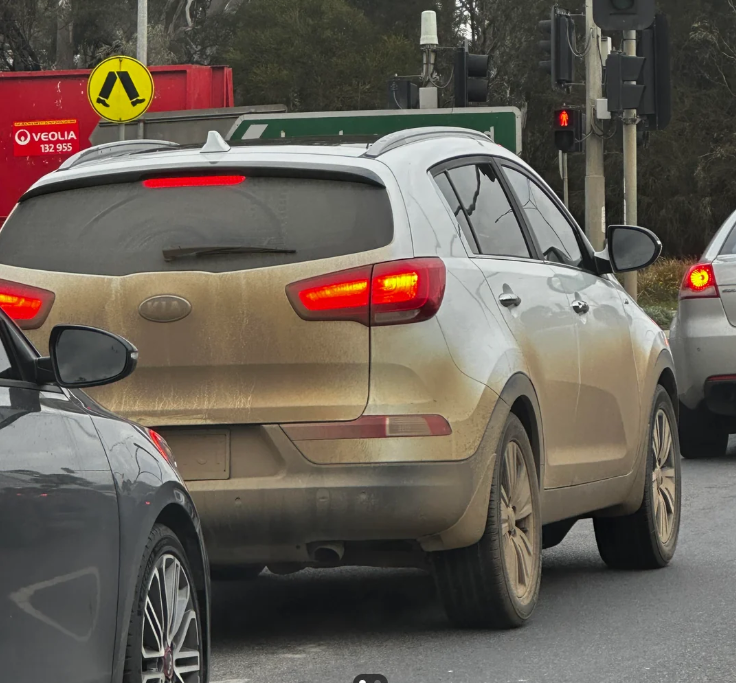
The standard fine for this offence in Victoria is $407 and three demerit points, though if taken to court, penalties can climb to a staggering $2,000.
Other states are even tougher. In New South Wales, the same offence can set drivers back $544, while in Queensland, it carries a $341 penalty. These regulations apply regardless of intent – whether the plate is covered by mud, dust, a bike rack, or even a cargo strap.
“‘”I live in the country, lots of cars here look like this almost permanently at this time of the year. Including rural cop cars,” wrote on commenter. “What are you meant to do, stop multiple times every trip and wipe the plate off as you leave the dirt?”
“If cops are feeling like pedants they can pull people like this over and force them to clean the plates to make them visible,” another person added.
Authorities stress that visible registration plates are essential for road safety enforcement, helping police detect speeding, toll evasion, and stolen vehicles. If a number plate can’t be read, it compromises enforcement systems and public safety.
A quick rinse after a weekend away could spare motorists a costly mistake.
Hyundai and Kia are taking a major leap forward in infotainment technology with the integration of new Google-based features into their embedded navigation systems, improving the connected experience for drivers.
Central to this update is the introduction of Google Places, a powerful tool that enhances the built-in navigation experience with real-time, online information about nearby locations. Drivers can now access comprehensive data on businesses, landmarks, and points of interest directly from the car’s native sat-nav – including user ratings, photos, contact details, and operating hours – all continuously updated via the internet.
This marks a significant shift in the way embedded infotainment systems function, helping to narrow the gap between traditional manufacturer navigation platforms and the more dynamic capabilities typically found in smartphone-based apps like Google Maps on Apple CarPlay or Android Auto.
The new system also features improved search functionality, including enhanced auto-complete and predictive search suggestions, along with upgraded text-to-speech support, allowing for more natural and accurate voice guidance.
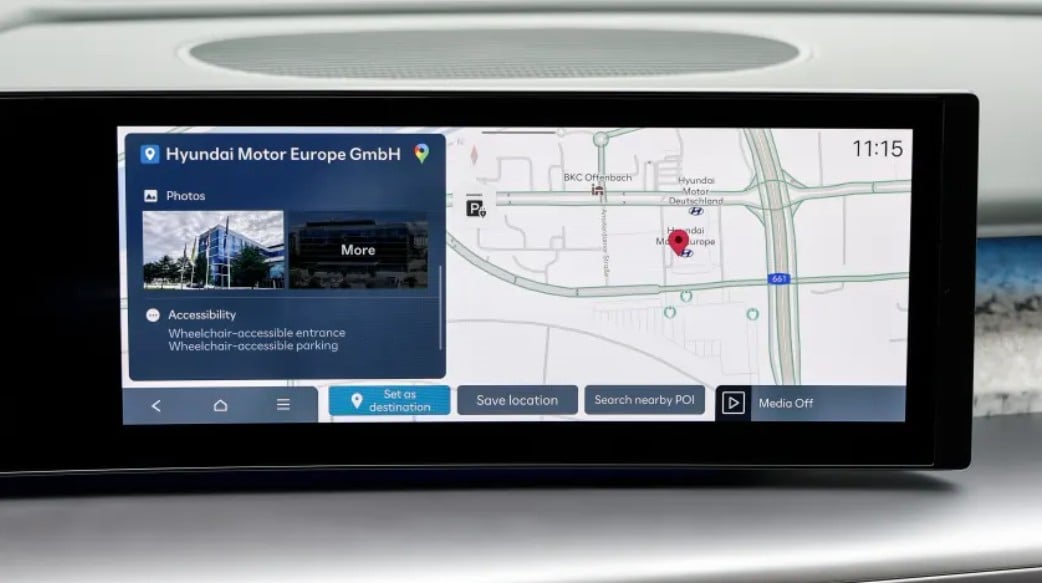
The rollout begins with Hyundai and Kia vehicles equipped with the ccNC infotainment platform, which includes models such as the Hyundai Kona, IONIQ 5 and 5N, IONIQ 9, Santa Fe, and Tucson. Kia’s upcoming EV4 will debut with the system, with more vehicles receiving access via over-the-air software updates.
Looking ahead, Hyundai has confirmed it will deepen its collaboration with Google for its next-generation infotainment architecture. While full details have yet to be revealed, insiders suggest a shift toward a more integrated, Google-based operating system – similar to Polestar’s Android Automotive – is likely on the horizon.
Despite this digital evolution, Hyundai says it has no plans to remove physical cabin controls entirely, promising a balanced interface between touchscreen innovation and tactile functionality.
The move underscores Hyundai and Kia’s ongoing commitment to improving digital connectivity and user experience across their rapidly evolving line-ups.
