
Getting the chance to own a racing icon is not something that comes up very often, and it’s what most of us dreamed of as kids glued to TV sets watching our hero’s belt around in dream machines.
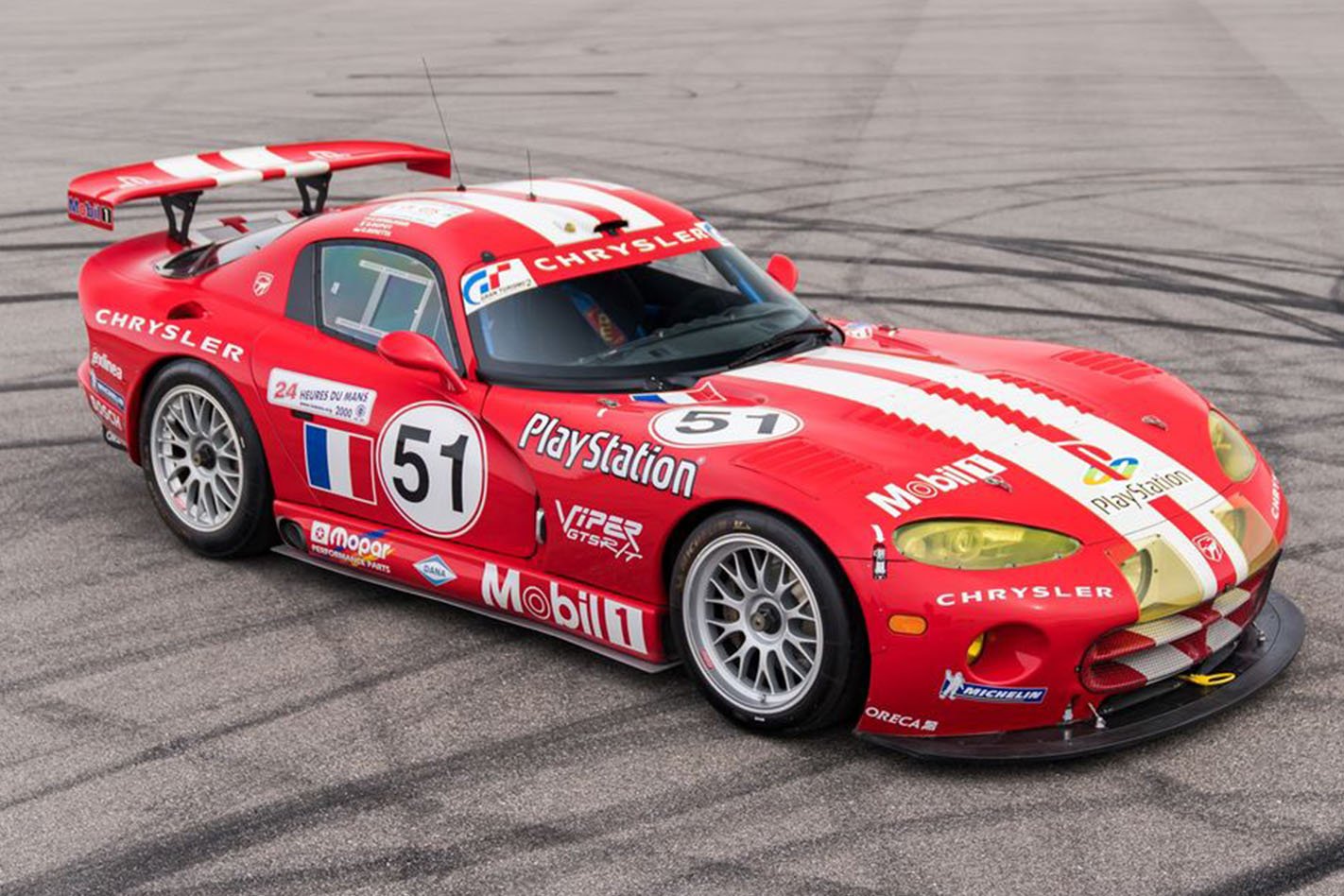
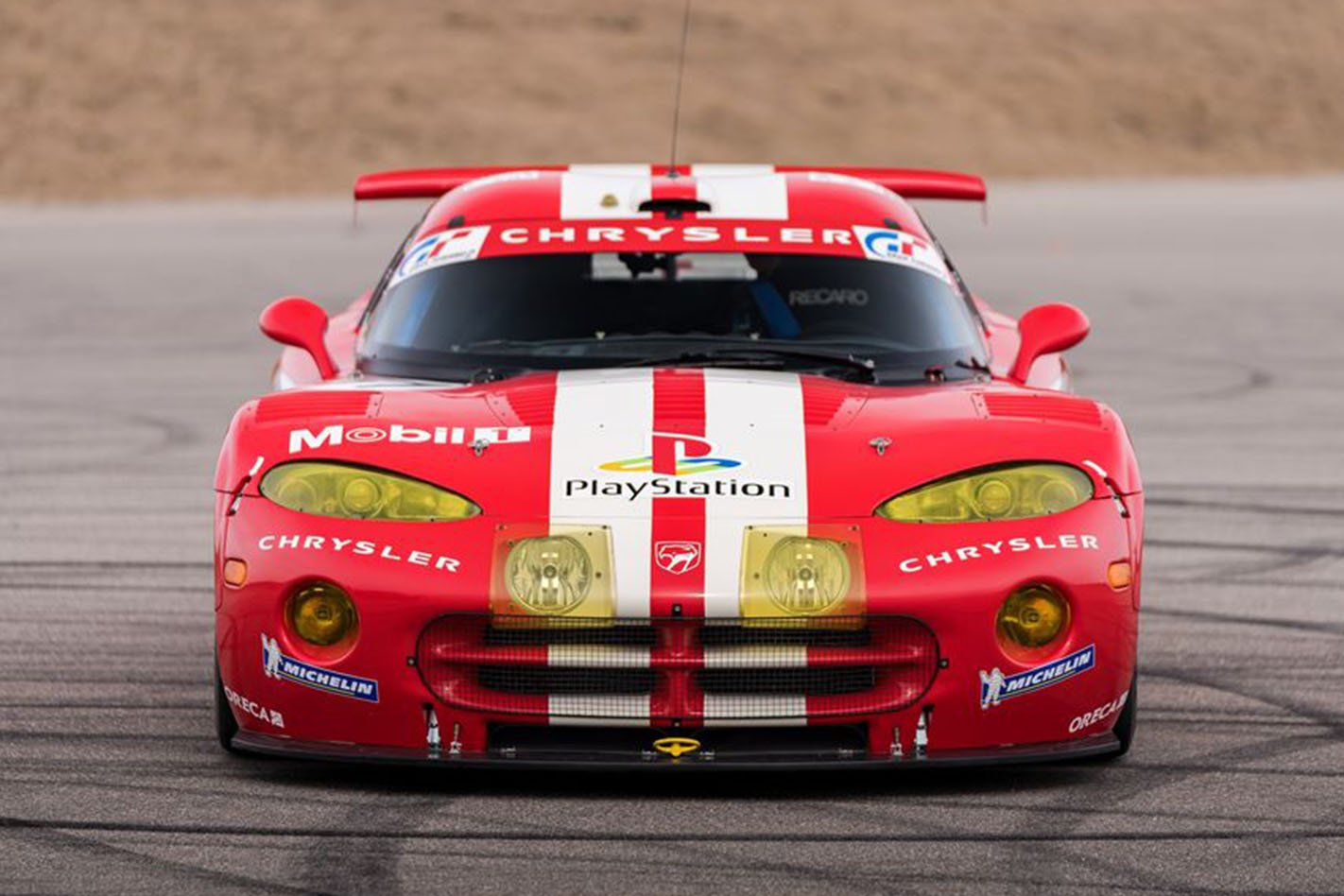
Now, one of the most recognisable and accomplished sports cars from the Chrysler stable is up for grabs, the white-striped Chrysler Viper GTS-R built by ORECA, and made famous by the Gran Turismo game series.
This particular car is one of the most successful Viper racing chassis in history. Built by factory-backed ORECA in France in early 1999, chassis number #C31 had a swag of success racing in the American Le Mans Series in 2000, taking GTS class wins in seven of the 10 races; which included the 12 Hours of Sebring.
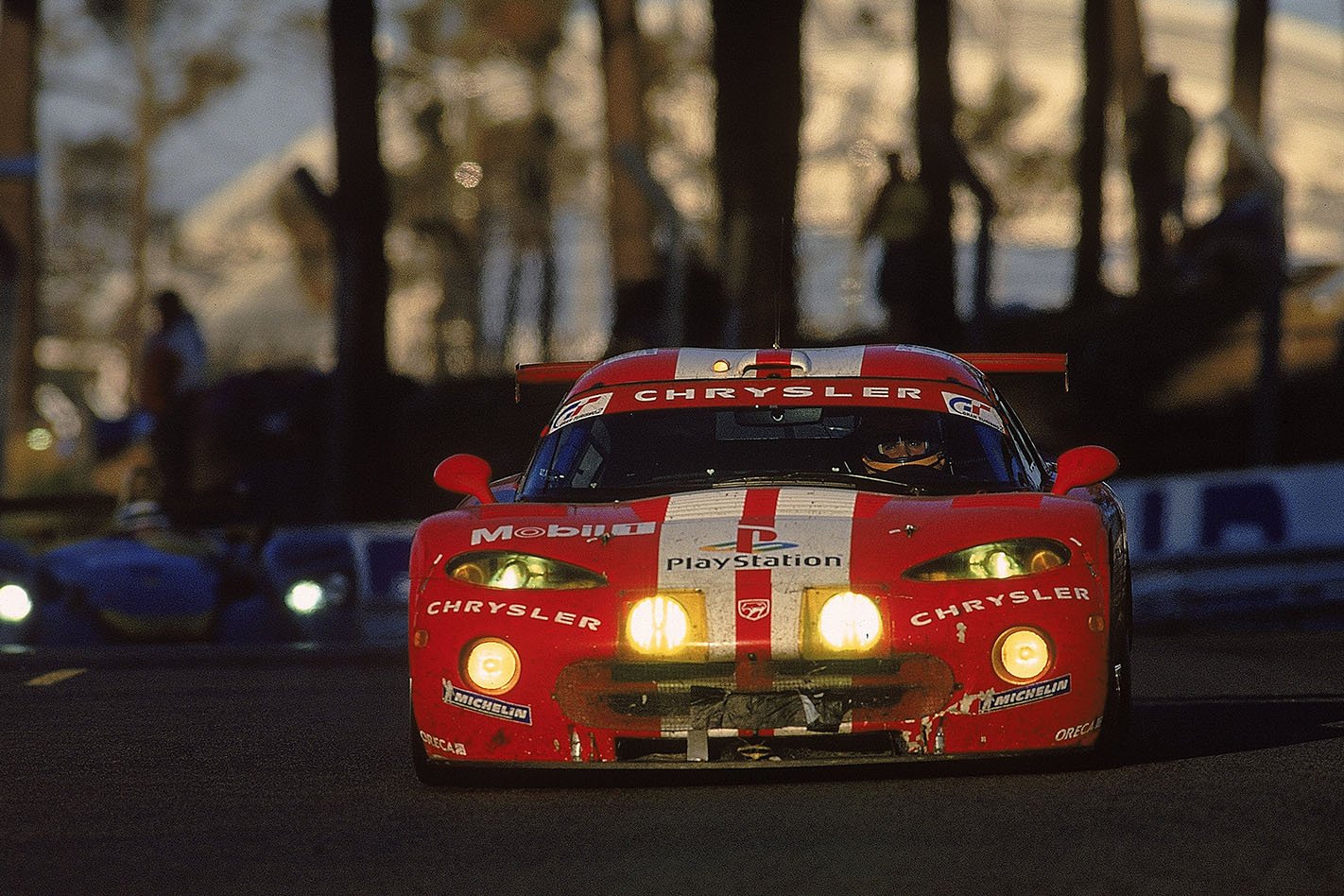
Its biggest achievement though was at the 24 Hours of Le Mans in the same year, taking out the LMGTS class in the hands of Dominique Dupuy, Olivier Beretta, and Karl Wendlinger, fending off a charge from another Viper and a freshly debuted Corvette C5-R.
While the on-track success is part of this cars legacy, one key thing to its memorable status is its poster boy roles in both the Le Mans racing game and cameos in the Gran Turismo franchise. If you wanted to make a car memorable during the early 2000s, that was one way to do it. Think of the BMW E46 M3 GTR from Need for Speed: Most Wanted as another example.
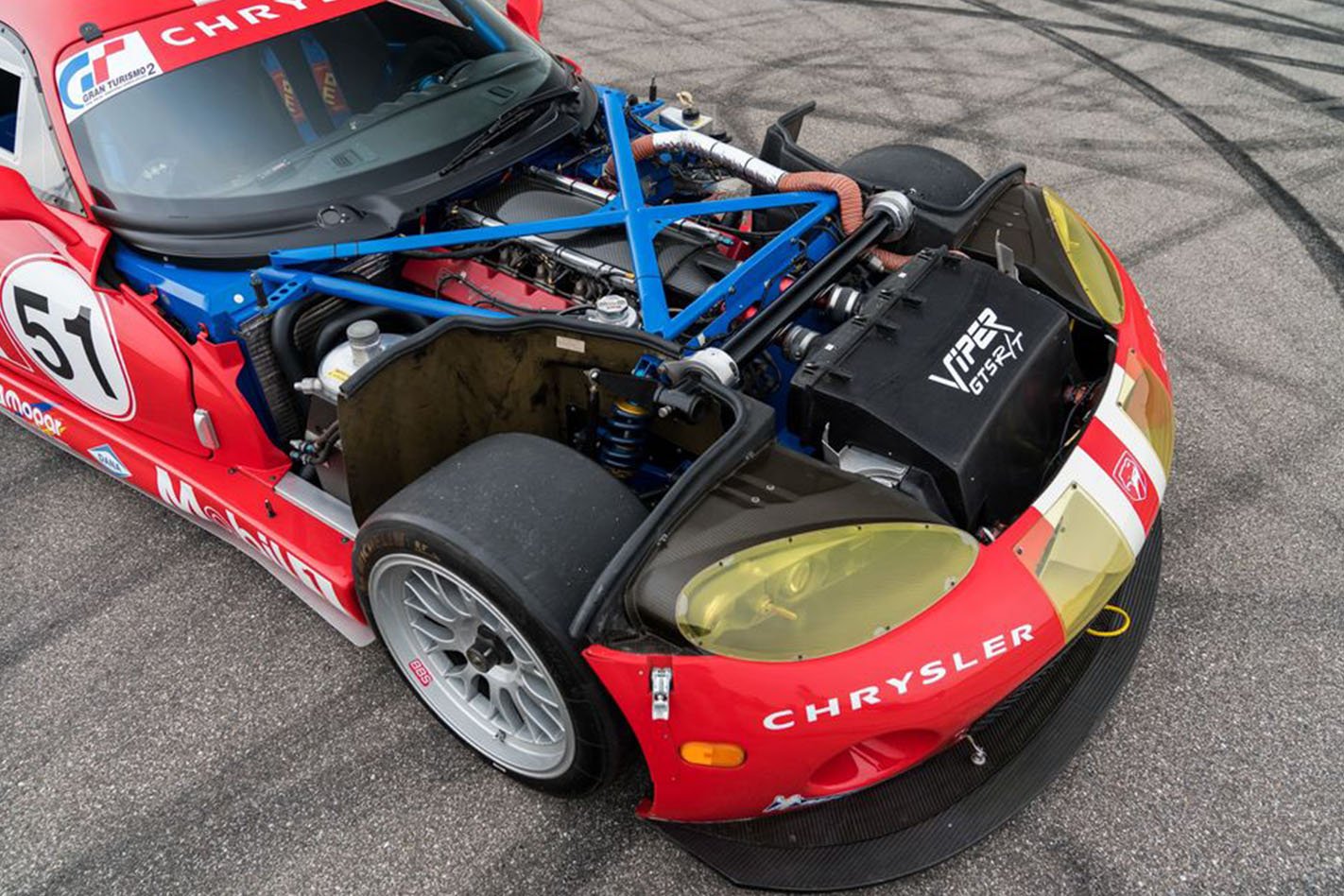
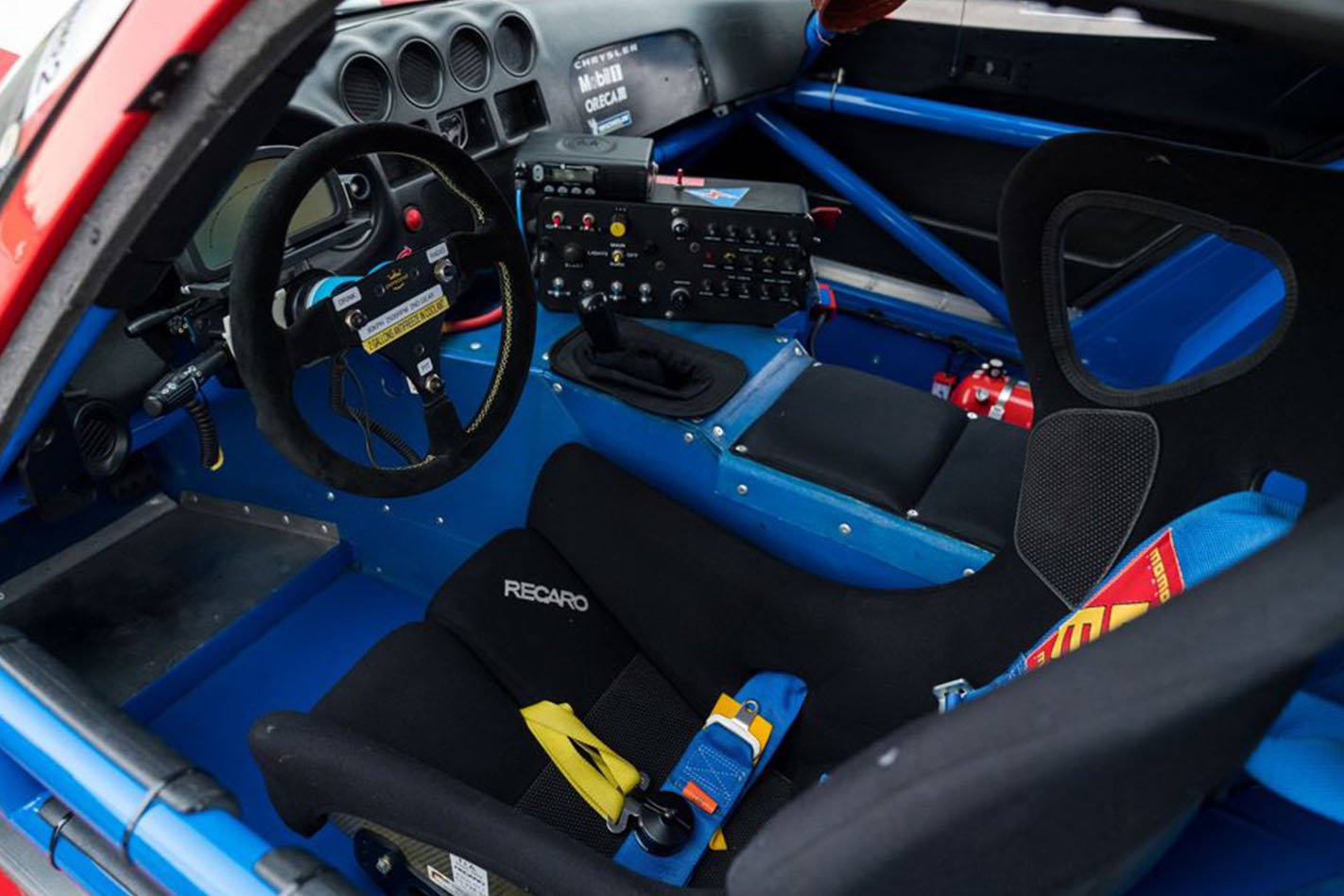
The biggest difference here is that this car actually exists, complete with its 8.0-litre, 447kW+ naturally aspirated V10 engine. After being sold to private hands at the end of 2000, chassis C31 raced on and off until 2005. It eventually underwent a full restoration to its original 2000 Le Mans winning spec, allegedly to the tune of US$500,000 (A$718,000).
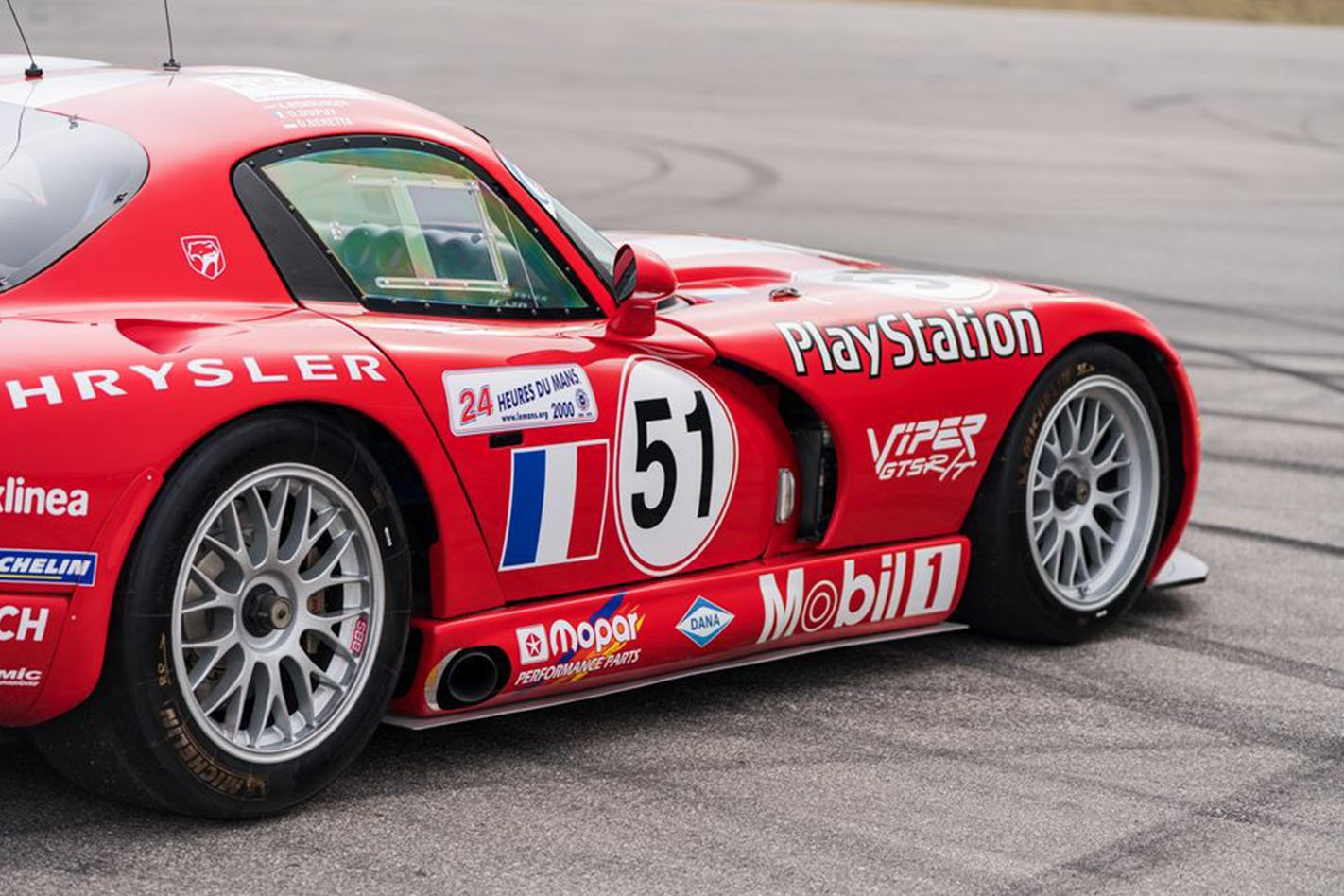
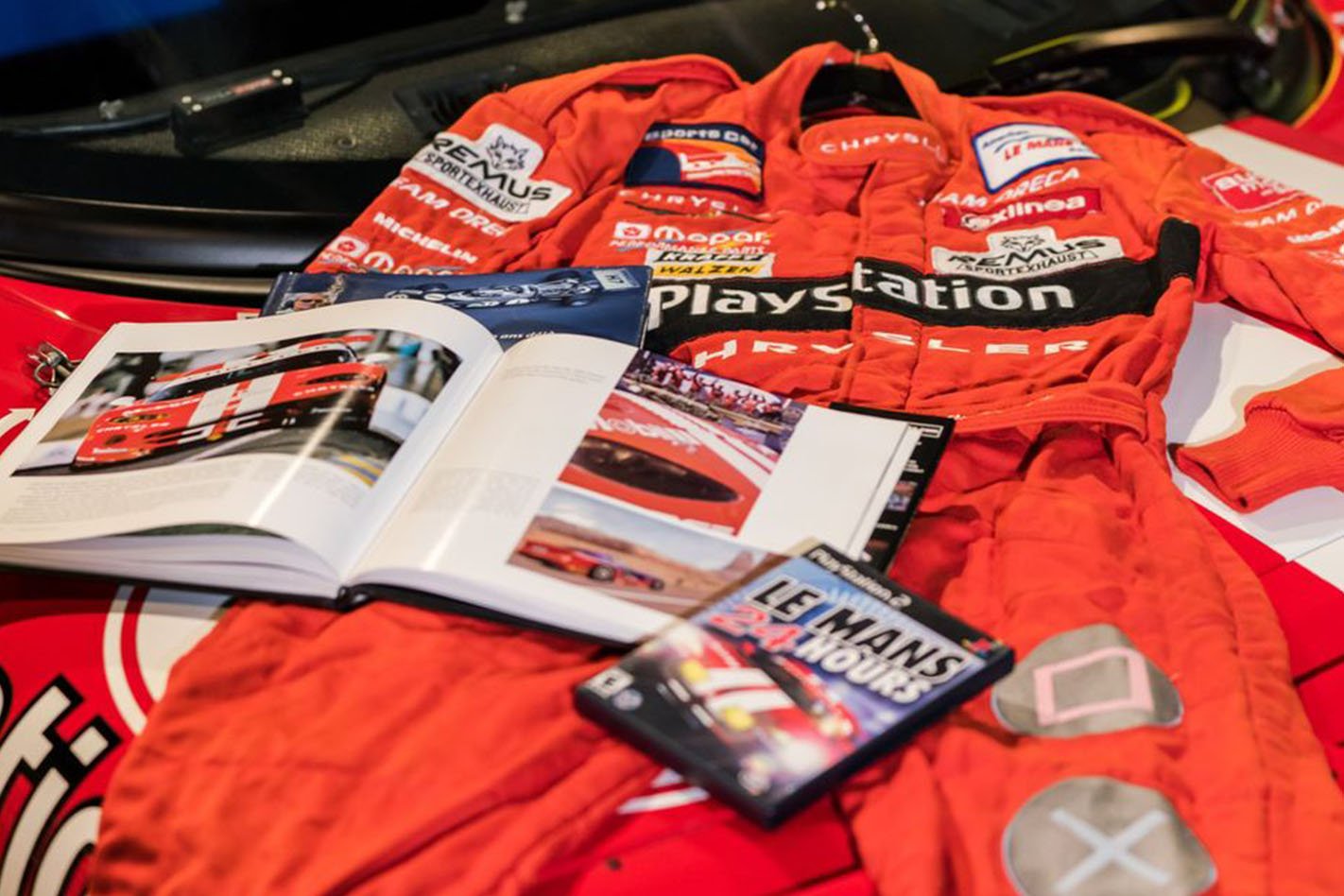
LBI Limited are the lucky ducks tasked with selling the car, speculating this is probably the only chance anyone will have to privately acquire a Le Mans winning Viper. It also comes with a few spares and Wendlinger’s Le Mans race suit for the man cave.
We’re crossing our fingers that such an iconic car isn’t wasted away in a museum for the rest of its life, and hope we see it at events like the Goodwood Festival of Speed in the future.
Can you imagine spending $80,000 on a new BMW but then being stung for additional ongoing subscription fees to use the heated seats?
That’s the way it’ll be if BMW gets its way, according to Autoblog.com, which reports the German car maker will move to a subscription-based model for its car features that allows drivers to only pay for them only when they’re used.
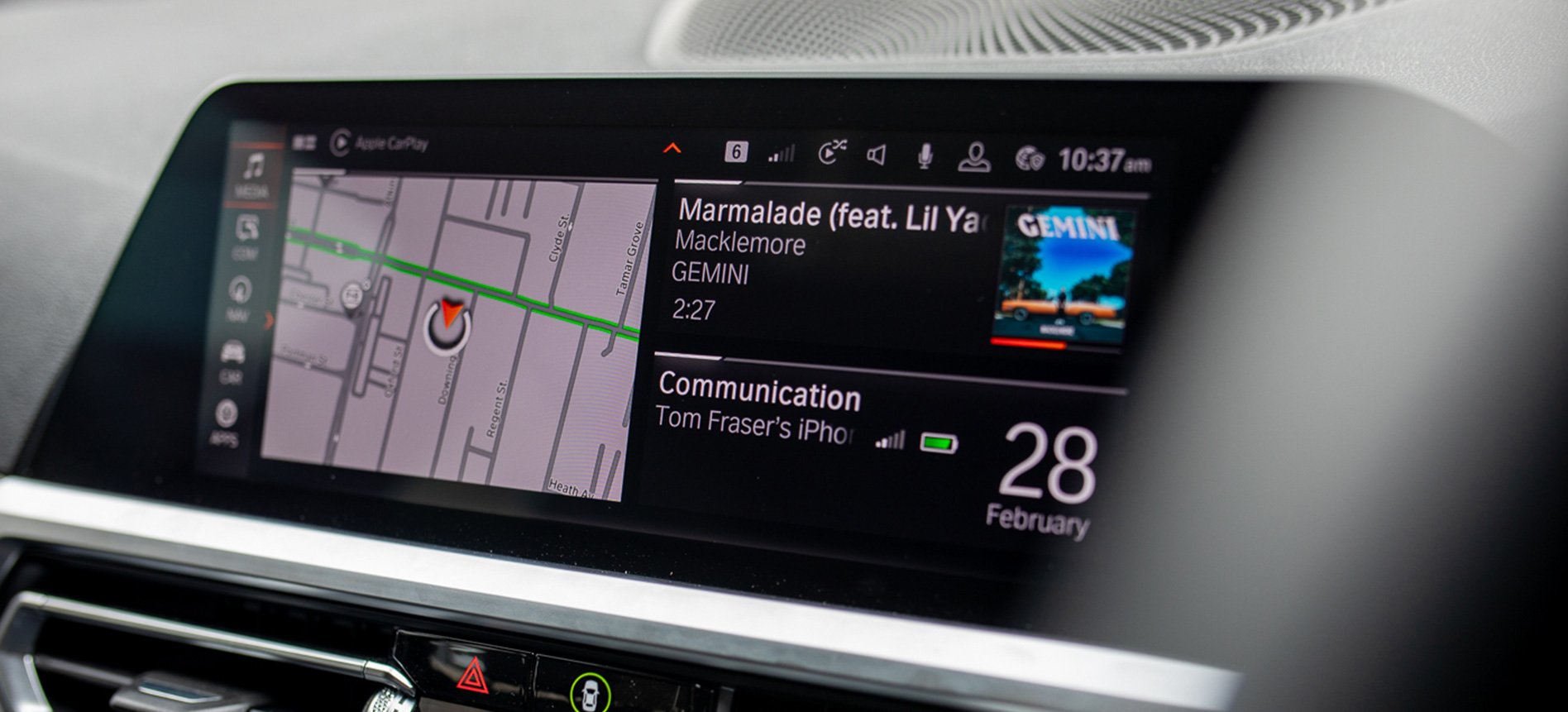
The announcement was made during the reveal of an over-the-air tech update for BMW iDrive 7.0, which will be sent out wirelessly to BMWs supporting the software. As well, the over-the-air install sends live Android Auto functionality, updates navigation systems, enhances the BMW voice control system as well as the Digital Key technology announced last month.
But it’s the news that BMW will introduce a subscription-based service for in-car comforts such as heated seats, active cruise control and a heated steering wheel that has caught the ire of future BMW buyers.
There’s little detail on how it would work, but cars would arrive pre-loaded with all creature comforts and owners would need to pay a time-based subscription fee in order to use them on a temporary basis.

It’s not the first time that BMW has introduced the idea. Apple CarPlay was introduced to BMW models a few years ago but owners had to continually pay a subscription fee in order to use it.
This system was in opposition to other manufacturers who either included Apple CarPlay as standard or charged a one-off option fee as is the case with other other add-on extras. BMW drew significant criticism for the subscription and has since included CarPlay as standard.
The difference (and perhaps more justifiable argument) in that case is that the option was utilising a third party’s proprietary software with little or no additional hardware required to support it.
In BMW’s latest cost option however, seat and steering wheel heating requires hardware that needs to be installed in the vehicle at the time of manufacturing. Whether this cost is passed onto the customer at the point of purchase is arguably the difference between an intriguing new car ownership model and customer gouging.
On the upside, BMW owners would have flexibility in which parts of their car are being used. For instance, heated seats would likely not get used in the summer and not draw a charge, likewise adaptive cruise control sees less use in the city and you wouldn’t have to pay for that unless needed during road trips, for example.
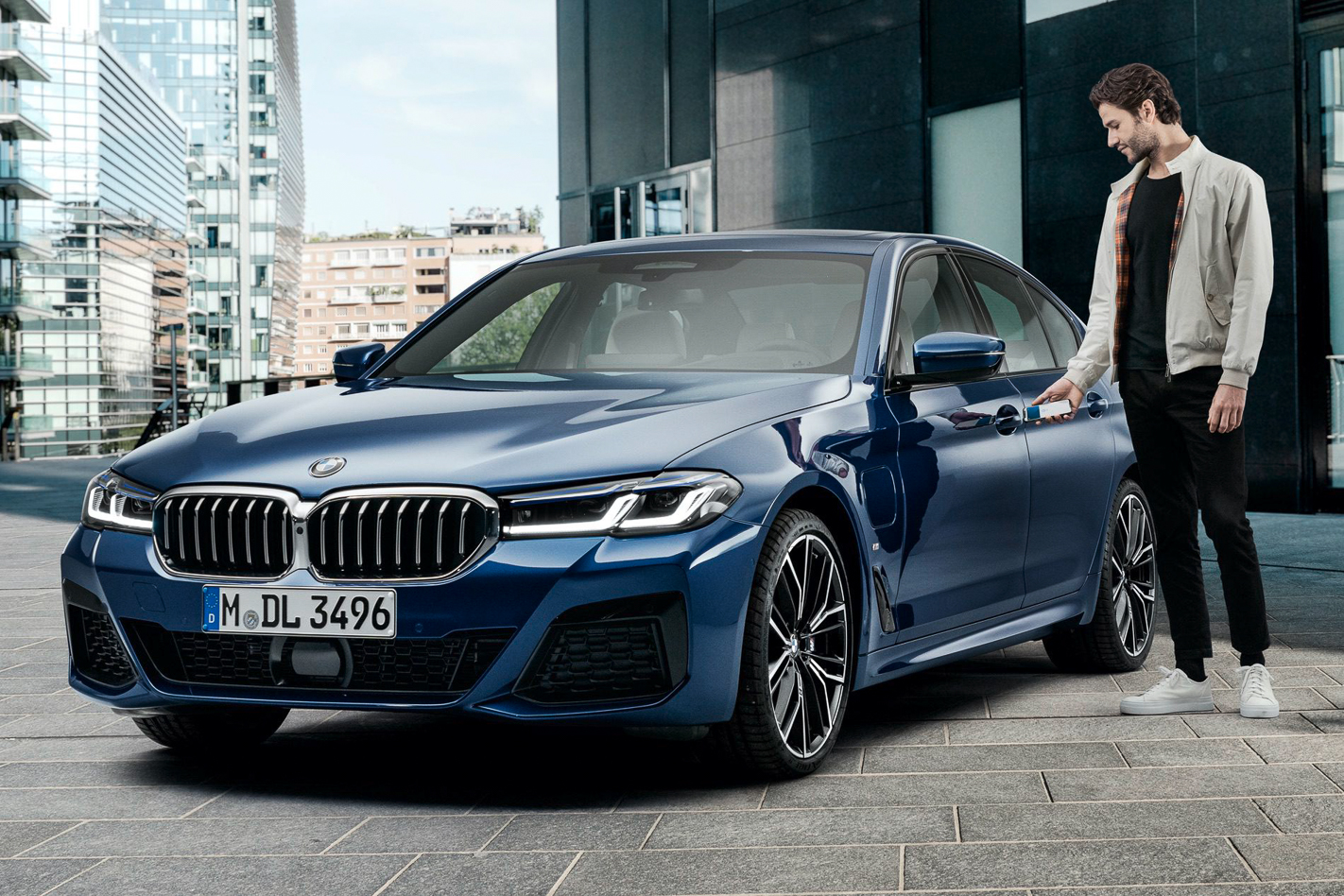
However, it’s unknown whether including all these in-car features from the factory would drive up the base cost of the car. Logic would state no, but we can’t be sure until BMW fully fleshes out the idea behind subscription-based car features.
Do you see any merit within BMW’s subscription idea? Let us know in the comments below.
No one sets out on a road trip expecting to be involved in a car accident and, even though the constant advancement of driver assistance technology, and passive and active safety systems are making cars safer than ever, scrapes, bingles and collisions are still a part of motoring life.
But, while you might not be planning to have a crash, you certainly should know what to do if the worst happens, and your trip ends in bent metal. Regardless of how many vehicles were involved, how serious, or who’s fault it appears to be, here’s what to do.
STOP
It may seem like the obvious thing to do following an incident and you may not even have a choice, but the first thing you need to do is stop your vehicle in the safest place, as soon as possible and turn on the hazard lights. It’s vital you make sure other drivers are able to see you clearly to minimise the chances of the situation becoming worse.
Next, assess the situation and whether it is safe to leave your vehicle. Signs of smoke and fire will warrant a speedy exit, whereas busy traffic or a worsening situation outside may make it safer to stay in the vehicle until help arrives.
Then check on the occupants of your vehicle and, if possible, any others involved. Seek medical attention for any injuries and don’t hesitate to call 000 if you suspect serious injuries or further danger.
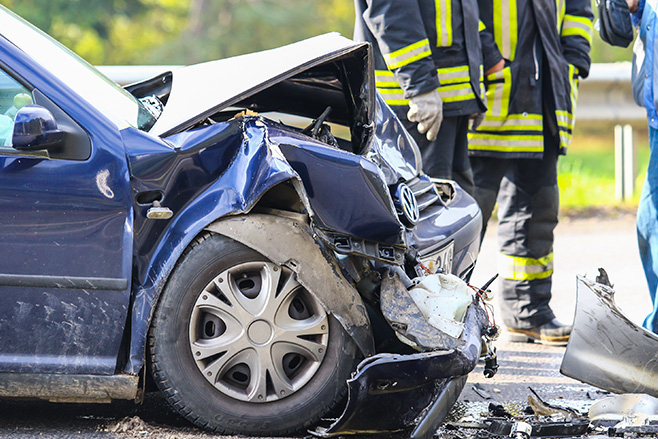
Apply first aid if you know how but remember the golden rule – don’t put yourself in danger to look after others.
You must not leave the scene of an incident if you are directly involved, until you have exchanged details with all others involved or until the police say so.
CALL EMERGENCY SERVICES
Depending on the circumstances, you may need to call for some or all of the emergency services. You’re only legally required to call the police if someone is seriously injured but a police presence is a good idea if you suspect anything illegal such as a drug or alcohol effected driver, or dangerous vehicle. The police are also well versed in recording and documenting road traffic accidents so you may prefer an officer to attend and make sure everything has been handled correctly before leaving.
If there is no serious damage to property, no serious injuries and all involved parties have exchanged details, you do not need the police to attend.
When calling the emergency services, make sure you give them as much information as possible. Location, number of people and vehicles involved, severity of injuries if any, and the time of the incident will all help deal with the situation faster and more effectively.
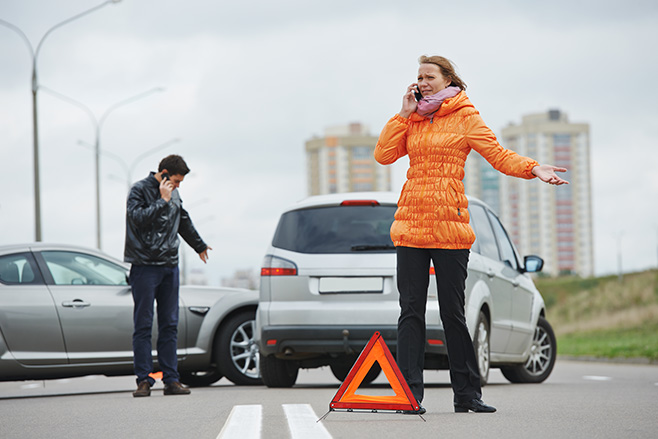
EXCHANGE DETAILS
Once you are sure everyone is safe, you will need to exchange details with any other involved parties. This does not mean you must decide who is at fault on the spot and you do not need to admit responsibility for the incident even if you feel you were at fault.
Make sure you have recorded the date, time and location of the crash, the other driver’s details (including full name and address), the rego, make, and model of the other vehicle, and the vehicle owner’s full name, address, and contact number (if the driver is not the owner).
Although not completely necessary, it is wise to also grab the name and contact details of a willing witness, the name, contact details and police station of an officer if they attend, and the name of the vehicle owner’s insurance company, type of policy, and policy number.
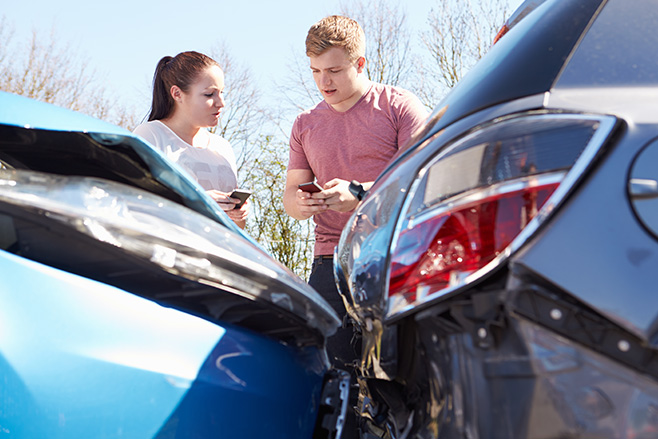
ARRANGE TOWING
A vehicle may be driven away from the scene of an accident only if it’s in roadworthy condition. If not, you’ll need to organise a tow truck. If you are in any doubt about the safety of a damaged vehicle, don’t drive it. You may not be aware of serious problems until it’s too late.
Tow truck drivers may already be at the scene before they are called, but do not let them remove your vehicle without your permission. It’s your decision who tows your vehicle, and where it goes. It’s wise to have a repairer or location in mind that you would like your car sent to and make sure to remove all your personal belongings from the vehicle before it is taken away.
NOTIFY YOUR INSURER
Contact your insurer as early as possible and explain what happened. This can often be done over the phone and without the hassle of paperwork. Insurance companies handle many incidents each day and will guide you through the process, but the more information you can provide, the better.
After that, keep track of the claim progress and repairs to make sure you are back on the road as soon as possible. If the other driver is uninsured or uncooperative, your insurance company will handle everything. That’s what you pay the premium for so make your insurer work for their fee.
Remembering all the important steps can be hard in the heat of the moment, so why not write down these five key steps and leave them in your glovebox just in case?
No matter how minor, a bingle is a stressful experience that almost everyone would prefer to avoid, but keeping calm and following some simple guidelines can stop this unfortunate but inevitable part of road use from ruining your week.
UPDATE:
Lamborghini has also released an image of what appears to be a small section of the new car’s rear, with the phrase ‘realizzata a Sant’Agata Bolognese’ printed on it, which translates to ‘Made in Sant’Agata Bolognese.’
The Italian brand also says to expect something “unlike anything the world may have seen before,” though if the new creation is the Sian Roadster we’re expecting, that’s a flat-out lie. It would be hard to argue that a Sian Roadster is unlike the Sian coupe, which we most certainly have seen before. Stay tuned for the reveal, which MOTOR will bring to you on July 9.
—
Another frustratingly vague teaser has been released by Lamborghini, with just the phrase “ahead of its time” and a clue regarding the brand’s “newest creation” as a guide.
But a hint in the design of the teaser ‘card’ itself points in the direction of a car that already exists, the Lamborghini Sian FKP 37. Surrounding the two main text blocks on the image are geometric graphics that resemble the headlights and other design elements of the Sian, leading to speculation that a Sian Roadster is around the corner.
Lamborghini is leaning into spruiking the technology in the Sian as the answer to hybrid performance cars in the future, matching up with the idea that a topless Sian would be “ahead of its time” even though the car already exists… sort of, at least.

Slated for reveal at July 8 at 6PM CEST, which is 2AM on July 9 for Australia’s eastern states, the new model is unlikely to be linked to Lamborghini’s already mostly-revealed SCV12 track car, which is in essence a V12 track beast reflecting comparatively traditional Lambo values.
The Sian, on the other hand, is powered by a 577kW atmo V12 engine assisted by a supercapacitor and electric motor combo, which add 25kW to the output for a total 602kW. The capacitors serve as an alternative to (much heavier) batteries used by most hybrid cars, and they can charge and use energy much faster.
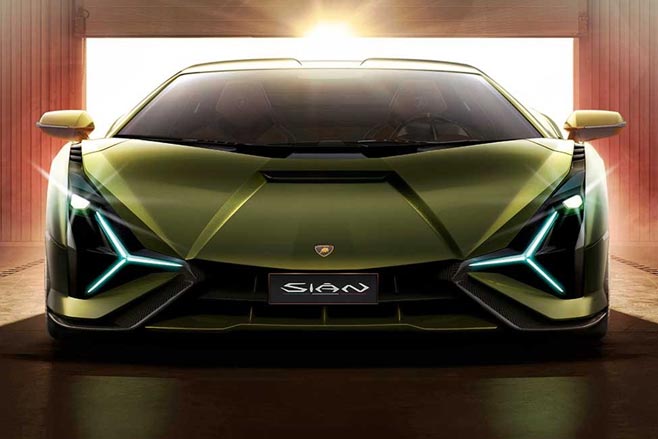
The Sian can use the motor, linked to its gearbox, to drive entirely on electric power for a (very) short distance at (also very) low speeds or to provide a power boost under acceleration. It can also fill the drop in torque which causes clunky movements during gearchanges.
Given the Sian is a preview for the replacement to the Aventador, it could be said the Sian and a Roadster version would indeed be ahead of their time. Either that, or it’s something related that Lamborghini is revealing before it originally planned to. Stay tuned.
When it comes to the current hot hatch market, customers are spoiled for choice – there is a glut of excellent options to choose from.
But here at Wheels HQ, the two traditionally viewed as the top of the table are the Hyundai i30 N and Honda Civic Type R.
We had both in for a three car comparison test against the Ford Focus ST (which you’ll be able to read very soon), but we wanted to find out which of the pair was quicker in a straight line.
So it was that we found ourselves at Heathcote Raceway with both the $51,990 Honda Civic Type R and $42,910 Hyundai i30 N Fastback.
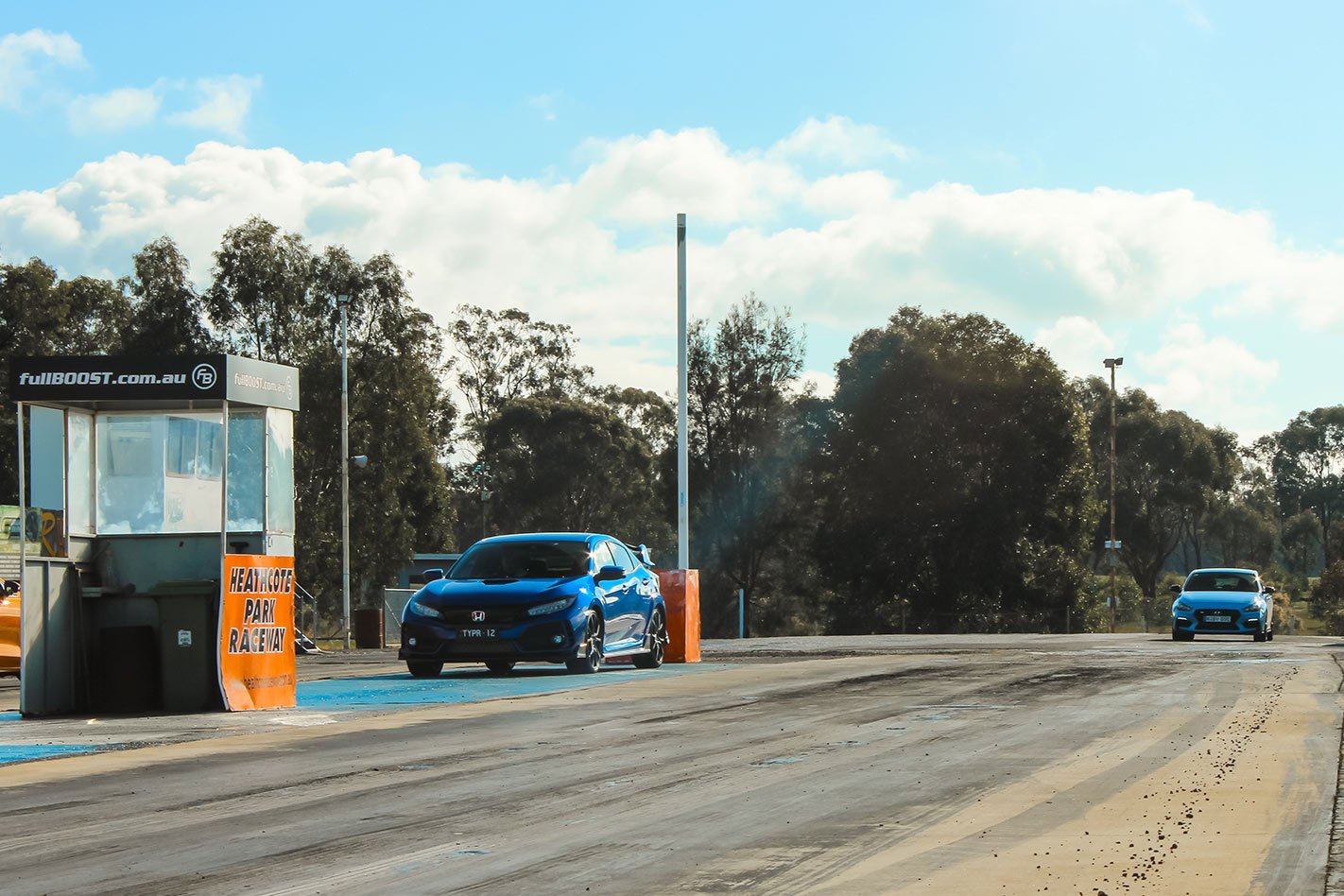
Both are powered by 2.0-litre turbocharged four-cylinder engines, transferring more than 200kW to the front tyres via a six-speed manual gearbox.
The Honda has the power advantage, with 228kW/400Nm, while the Hyundai has claimed outputs of 202kW/353Nm. The i30 achieves peak torque quicker, but the Honda has a larger tyre footprint.
This should be interesting.
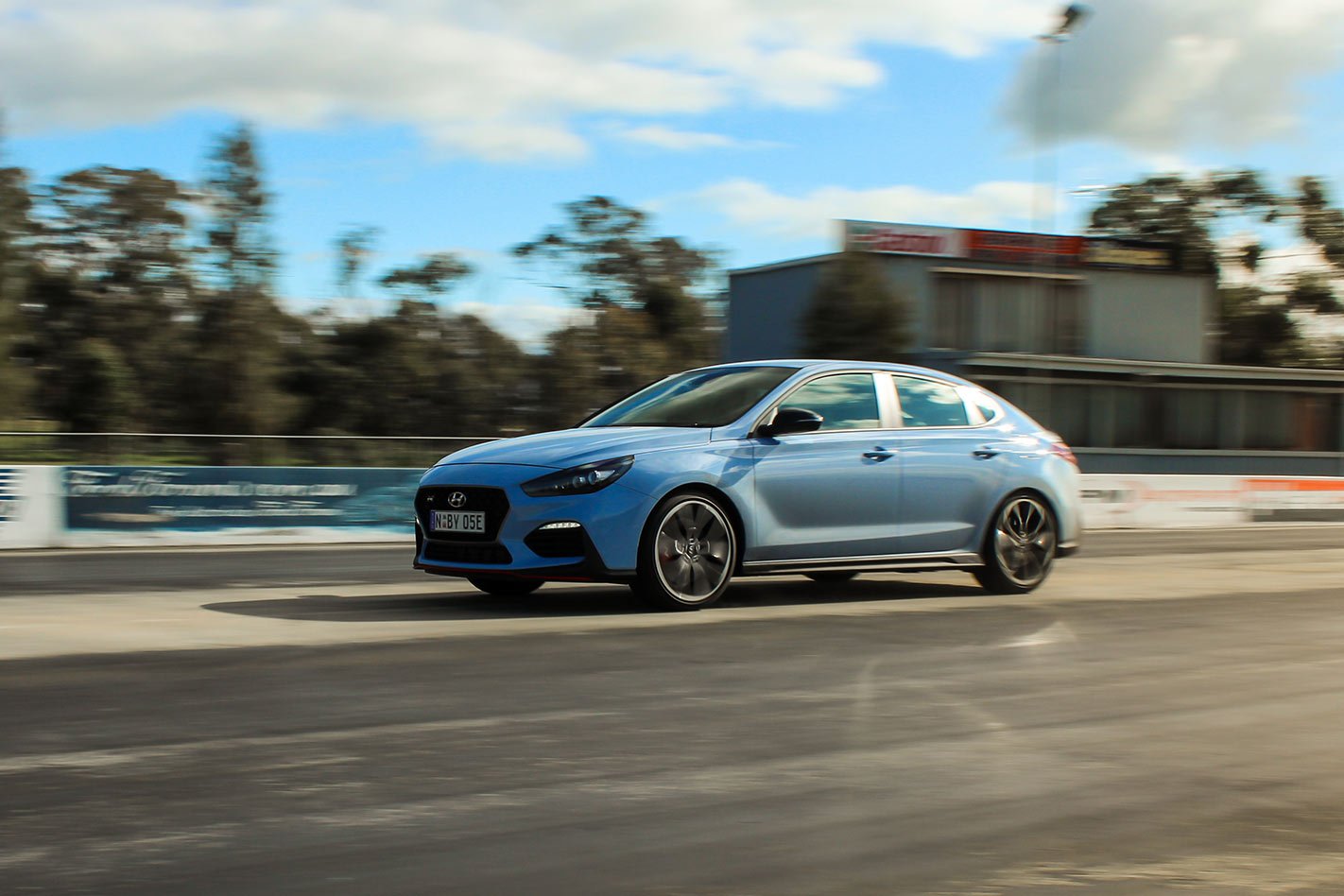
Off the line, it is the Hyundai that has a brief early advantage, cracking 20km/h a tenth faster than the Honda.
However, after that, the Civic Type R starts putting its power to the ground, and begins hauling itself into the lead.
The Honda is one tenth quicker to 60km/h, and by time three digits appear on the speedo, it’s earned an advantage of 0.3 seconds.
From a standing start, the Hyundai cracks 100km/h in a respectable 6.3 seconds, with the Honda taking just six seconds flat.
If you have no desire to hold onto your licence, the Type R will crack 140km/h in 10.1 seconds, while the Hyundai takes 10.7 seconds.
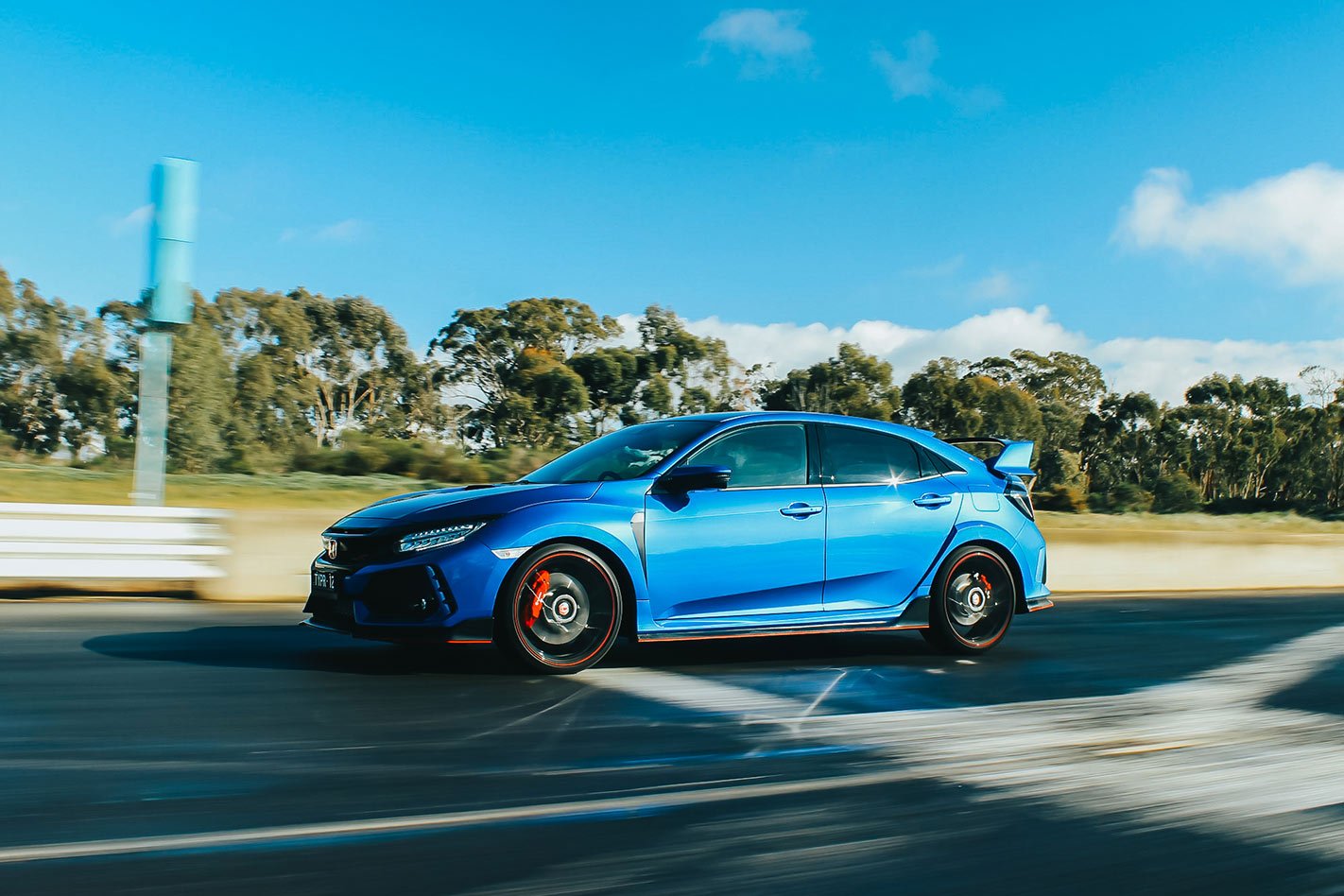
Just 13.8 seconds after launch the Civic Type R crosses the 400 metre beams, with a trap speed of 170.2km/h. The Hyundai is half a second behind at this point, and travelling 10km/h slower (14.3 seconds @ 161.1km/h).
While the drag race is over at that point, with the Honda taking a clear advantage, it’s not where Wheels’ performance testing stops.
Deputy editor Andy Enright was at the helm for our instrumented tests, keeping his right foot planted all the way to 200km/h+. The Honda managed to see the double tonne in 20.7 seconds, while the Hyundai cracked the same figure in 23.2 seconds.
The Heathcote circuit had been peppered with rain the morning of our scheduled testing, making things challenging for Enright.
“As exercises in frustration go, trying to launch powerful front-drive hot hatches on a damp and cold dragstrip is right up there,” he explained.
“Attempting to take the front tyres right up to the limit of adhesion and hold it in that paper-thin sweet spot through the first three gears resulted in more than a few aborted runs in both the Civic and the i30N.
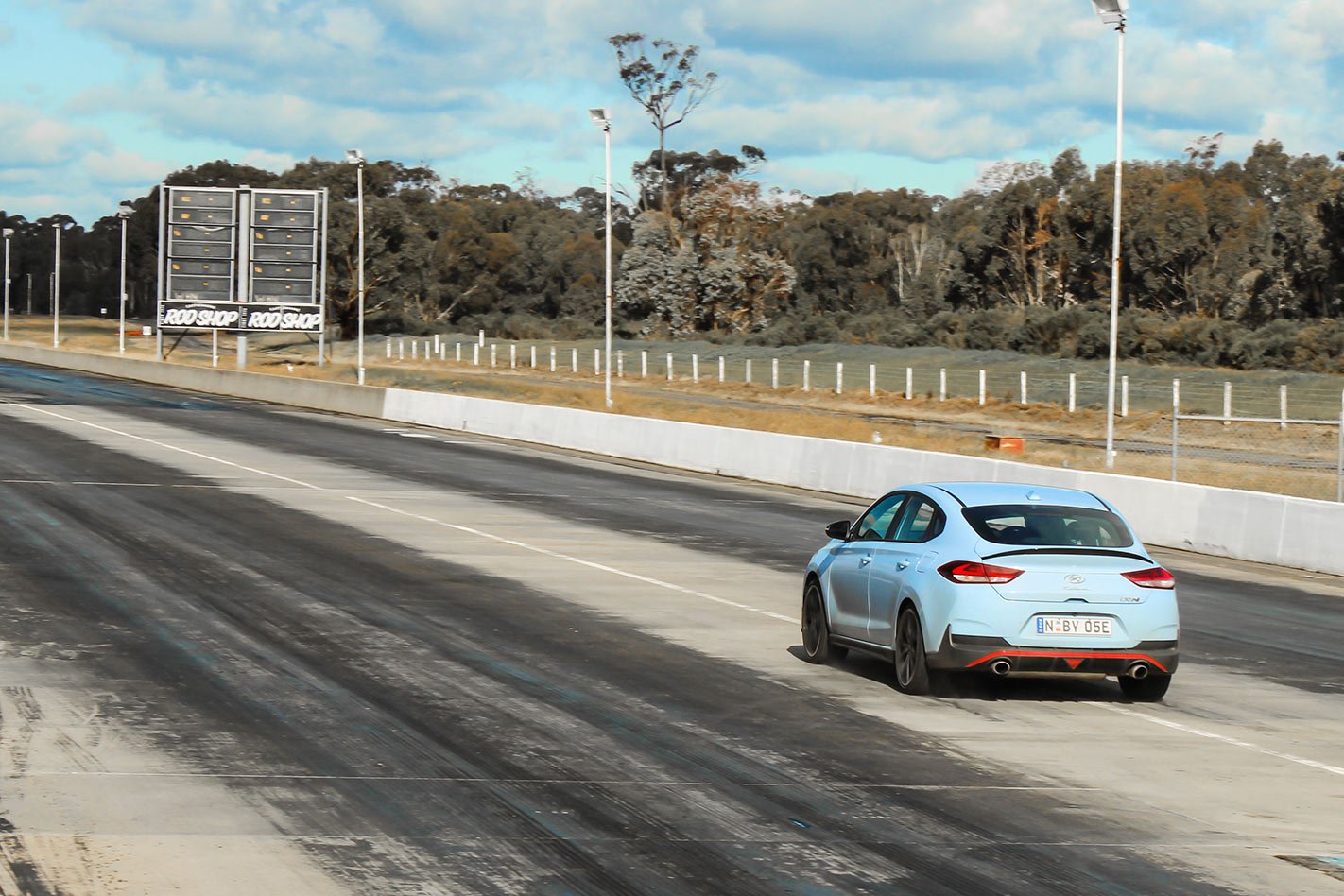
“Looking back at my first runs, the best I could get from the Hyundai was 7.6 seconds, a massive 1.4 seconds off the factory claim. Moving off the rubbered-in section of the strip to a piece of virgin concrete helped traction, and as the wind slowly dried the track to a patchwork of wet and dry, the times tumbled.
“It took the seventh run to log a 6.3sec run to 100km/h which, in these conditions, represented a mere 0.1sec down on the factory figure.
“I felt the i30N had excelled itself here. At high speed on the strip, it felt as if there was a slight lack of top-end grunt, and the feel of the gearbox was such that you were never 100 percent sure if the shift into third was good or not.
“Once the Civic’s Conti’s had warmed through a bit, it was actually an easier thing to get off the line cleanly, with the throttle pedal modulation better allowing you to keep it near the threshold of wheelspin. A best of 6.0sec to 100km/h saw it put clear air between it and the Hyundai, and the impression of potency only grew during the high-speed runs.
“Checking back on the figures was instructive. The Type R took 14.7sec to run from 100 to 200km/h whereas the Hyundai took more than two seconds longer for this increment at 16.9sec. It’s here more than anywhere that the Civic’s additional 26kW made itself apparent.
“Commonalities? Neither of the two hatches displayed much in terms of torque steer and neither had a traction control system so clever that you could lean on it for the best possible launch in the tricky conditions.
“There wasn’t a lot between the two cars’ braking performance, with their best stopping distances from 100km/h varying by a mere 400mm (i30 N 35.9m, the lighter Civic 35.5m). Of the two cars the Type R is the easier to get a respectable time out of when its tyres are warm, but the Pirelli P Zero rubber of the Hyundai seem to come into their window a bit quicker than the 20-inch ContiSport Contact 6 hoops of the Honda.”
Hyundai i30 N Fastback specs and performance data
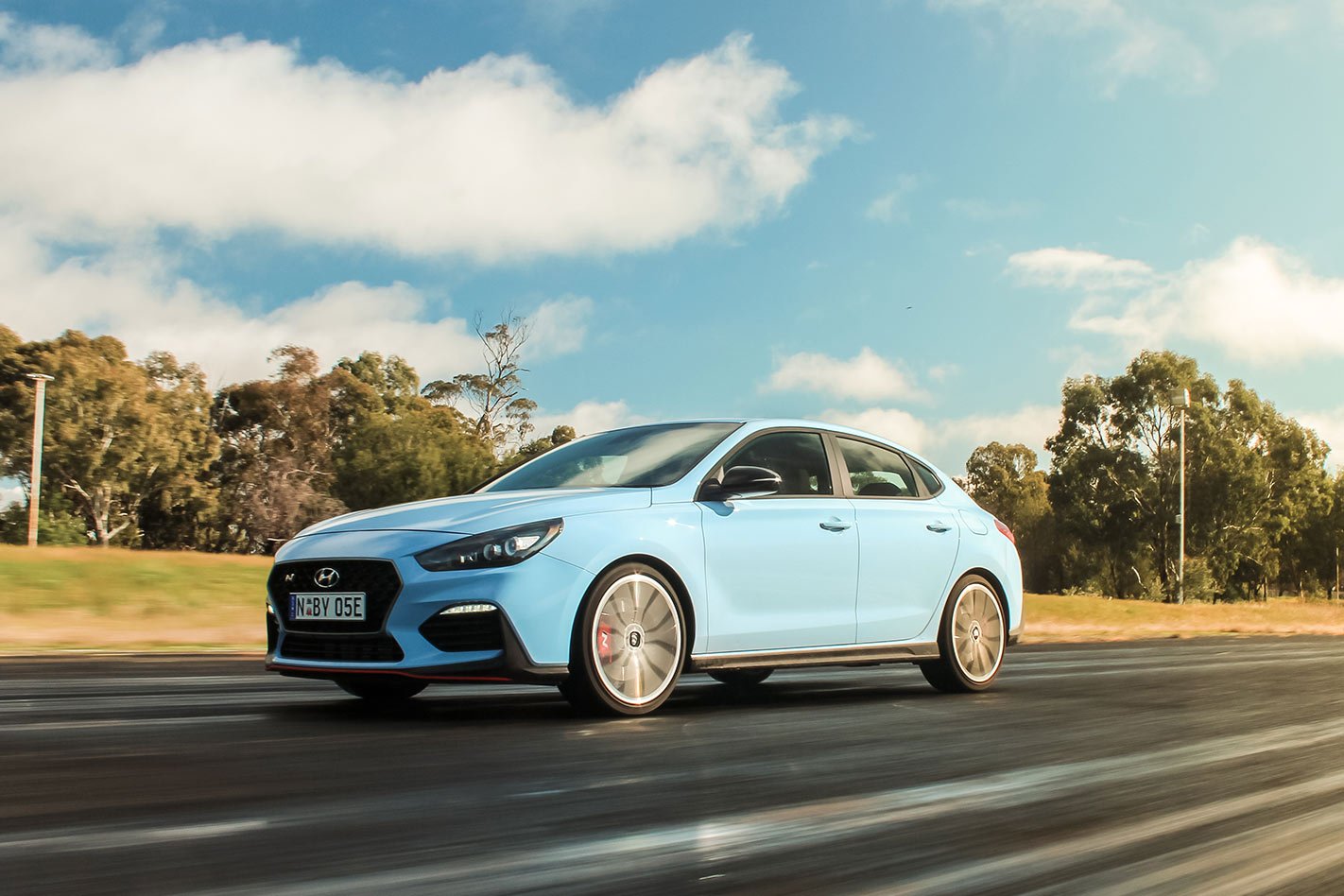
Price: $42,910
Engine: in-line 4cyl, dohc, 16v, turbo
Layout: front engine (east-west), front drive
Capacity: 1998cc
Power: 202kW @ 6000rpm
Torque: 353Nm @ 1450-4700rpm
Gearbox: 6-speed manual
Weight: 1441kg
Tyres: Pirelli P Zero (235/35/R19)
Power-to-weight: 140kW per tonne
Redline/cut-out: 6800/6800rpm
Speed at indicated 100km/h: 97
0-20km/h: 0.9sec
0-40km/h: 2.0sec
0-60km/h: 3.3sec
0-80km/h: 4.5sec
0-100km/h: 6.3sec
0-120km/h: 8.3sec
0-140km/h: 10.7sec
0-160km/h: 14.2sec
0-180km/h: 18.2sec
0-200km/h: 23.2sec
0-400m: 14.3sec @ 161.1km/h
80-120km/h: 3.8sec
100km/h-0: 35.9m
Honda Civic Type R specs and performance data
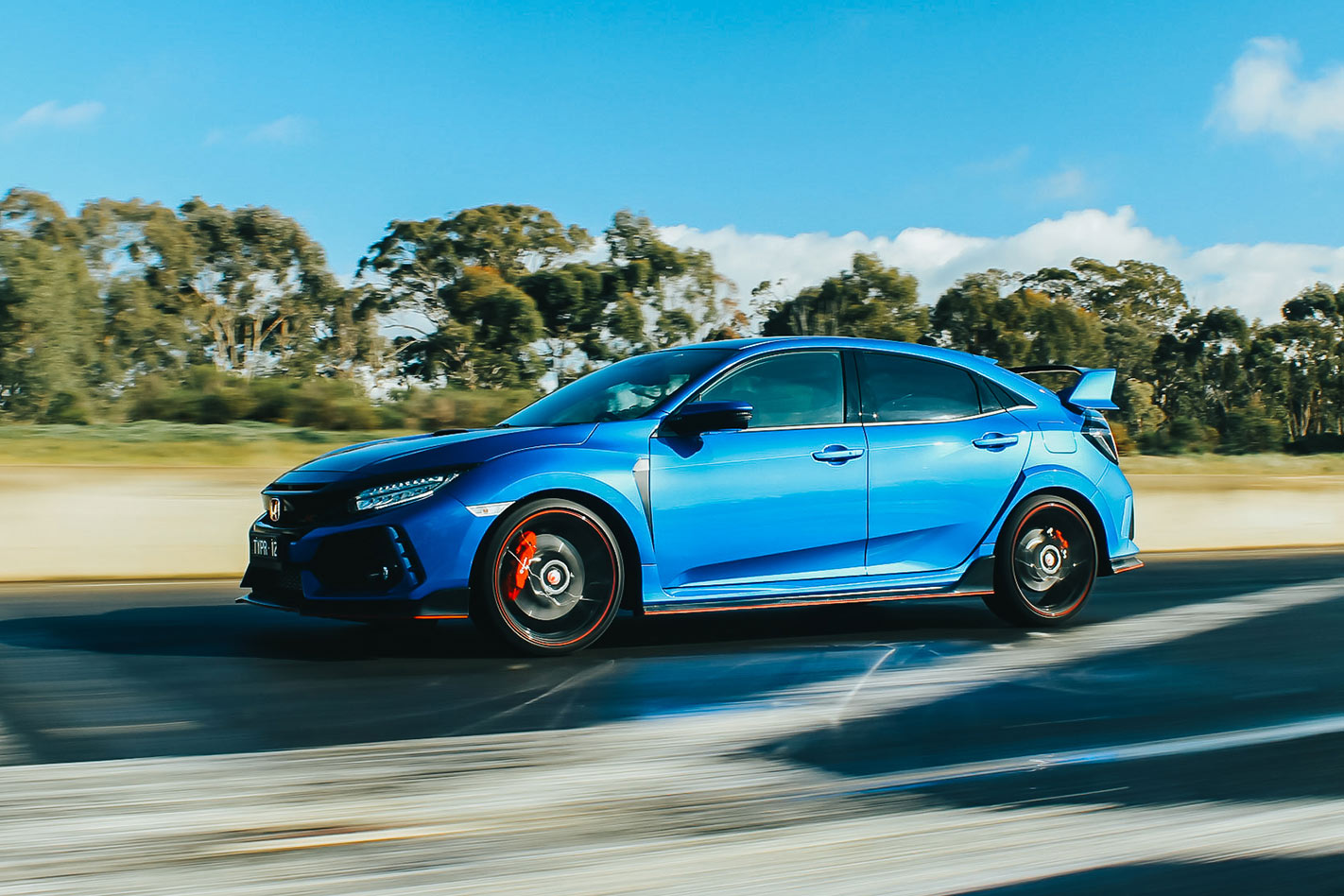
Price: $51,990
Engine: in-line 4cyl, dohc, 16v, turbo
Layout: front engine (east-west), front drive
Capacity: 1996cc
Power: 228kW @ 6500rpm
Torque: 400Nm @ 2500-4500rpm
Gearbox: 6-speed manual
Weight: 1396kg
Tyres: Continental ContiSport Contact 6 (245/30/ZR20)
Power-to-weight: 163kW per tonne
Redline/cut-out: 7000/7000rpm
Speed at indicated 100km/h: 94
Standing-start acceleration
0-20km/h: 1.0sec
0-40km/h: 1.9sec
0-60km/h: 3.2sec
0-80km/h: 4.4sec
0-100km/h: 6.0sec
0-120km/h: 7.6sec
0-140km/h: 10.1sec
0-160km/h: 12.4sec
0-180km/h: 16.2sec
0-200km/h: 20.7sec
0-400m: 13.8sec @ 170.2km/h
80-120km/h: 3.2sec
100km/h-0: 35.5m
It’s been many years since the game-changing Subaru Forester and Toyota RAV4 arrived, but even though they burst onto the SUV scene at about the same time, their respective USPs were at polar opposite ends of the spectrum.
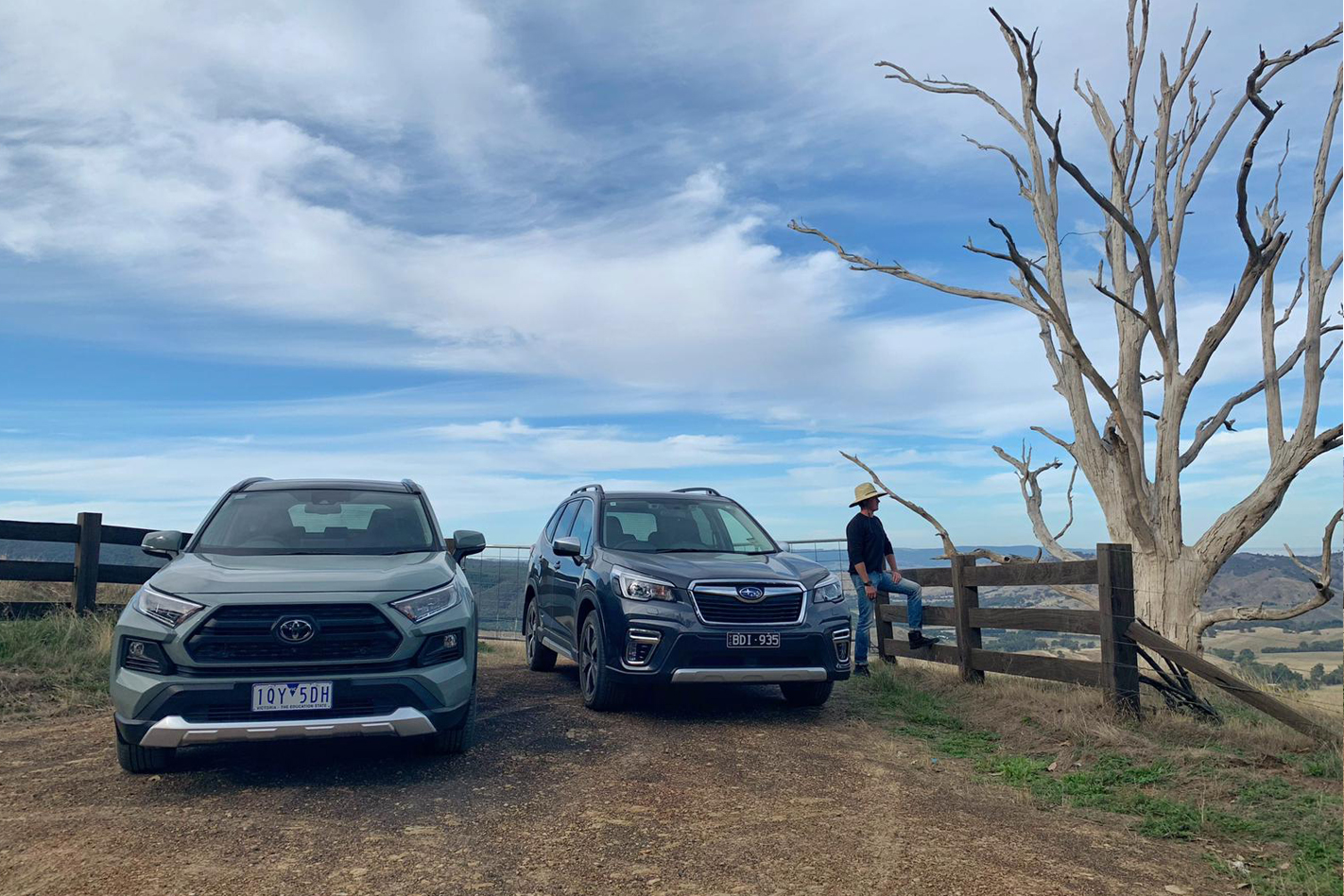
As it happened, the location couldn’t have turned out more perfectly.
How we shot the feature
Not only does the countryside surrounding Broadford in central Victoria provide the perfect backdrop of stunning rolling hills, it’s also home to some great driving roads and decent off-road trails.
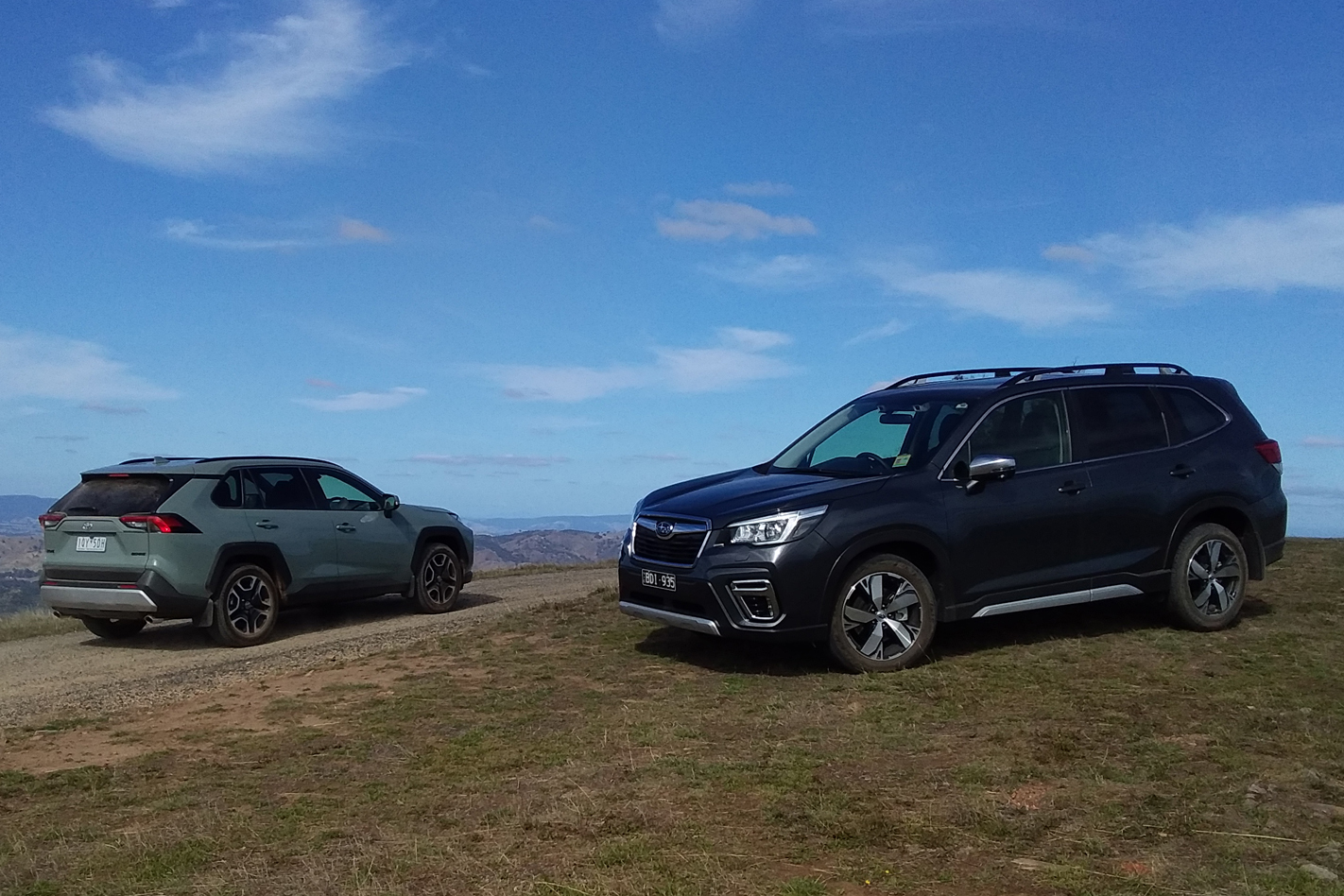
The protecting Armco barriers bore the signs of previous more enthusiastic drivers and, the site of one particularly unsuccessful attempt on a tightening right even had a message sprayed on the mangled metal – ouch.
But we were even luckier when it came to the off-road testing. By absolute chance, Subaru was hosting an event not 10km down the road at the Broadford Motorcycle Complex.
With a little inside help, we were kindly allowed to commandeer the excellent 4×4 track, while Subaru went about presenting its staff with the new XV Hybrid on the tight and twisting motorbike track.
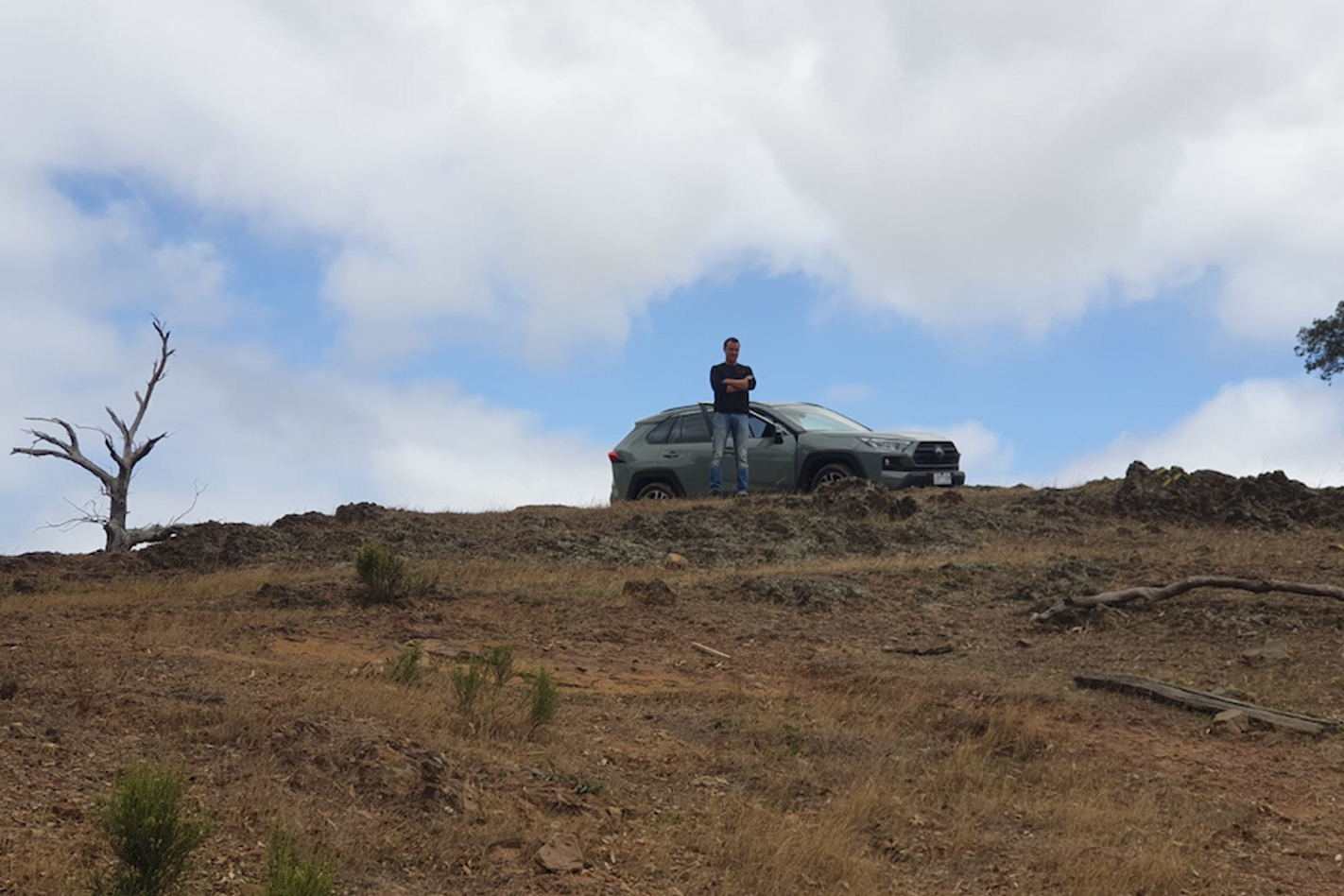
Our focus was, of course, the pair of Japanese SUVs, but it was sometimes difficult to explain that to director Matt who had brought along his heavily modified Ford Maverick as a support vehicle and was completely in his element.
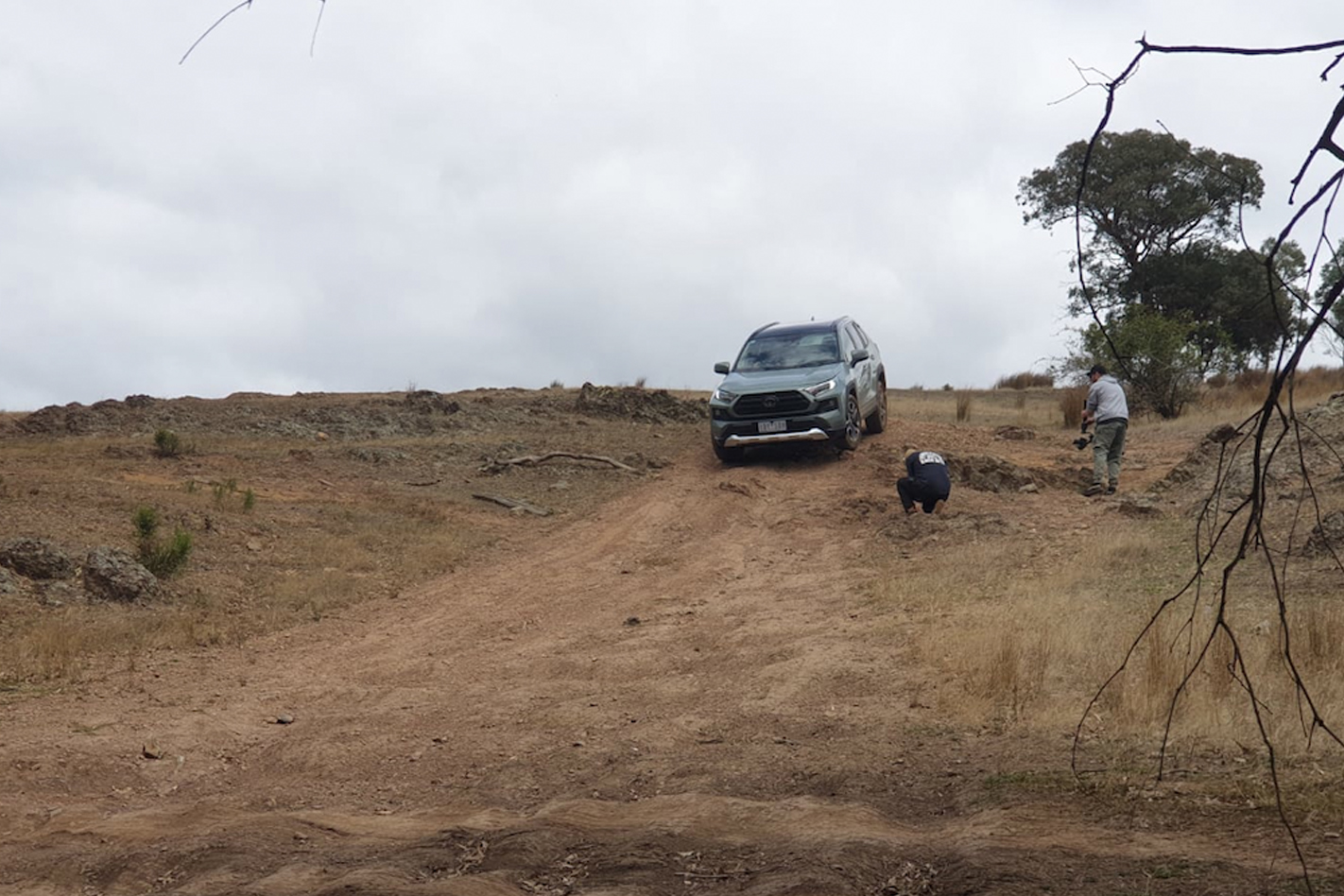
While it looks like we are at the end of a long and adventurous route through almost inaccessible trails, the McDougall Reservoir is actually less than a kilometre from the centre of Broadford township and accessed through a housing estate.
While I hope the water was safe enough for a dip, what you don’t see is the broken glass and a dumped washing machine I had to wade past to get the shot of me floating away on my inflatable llama.
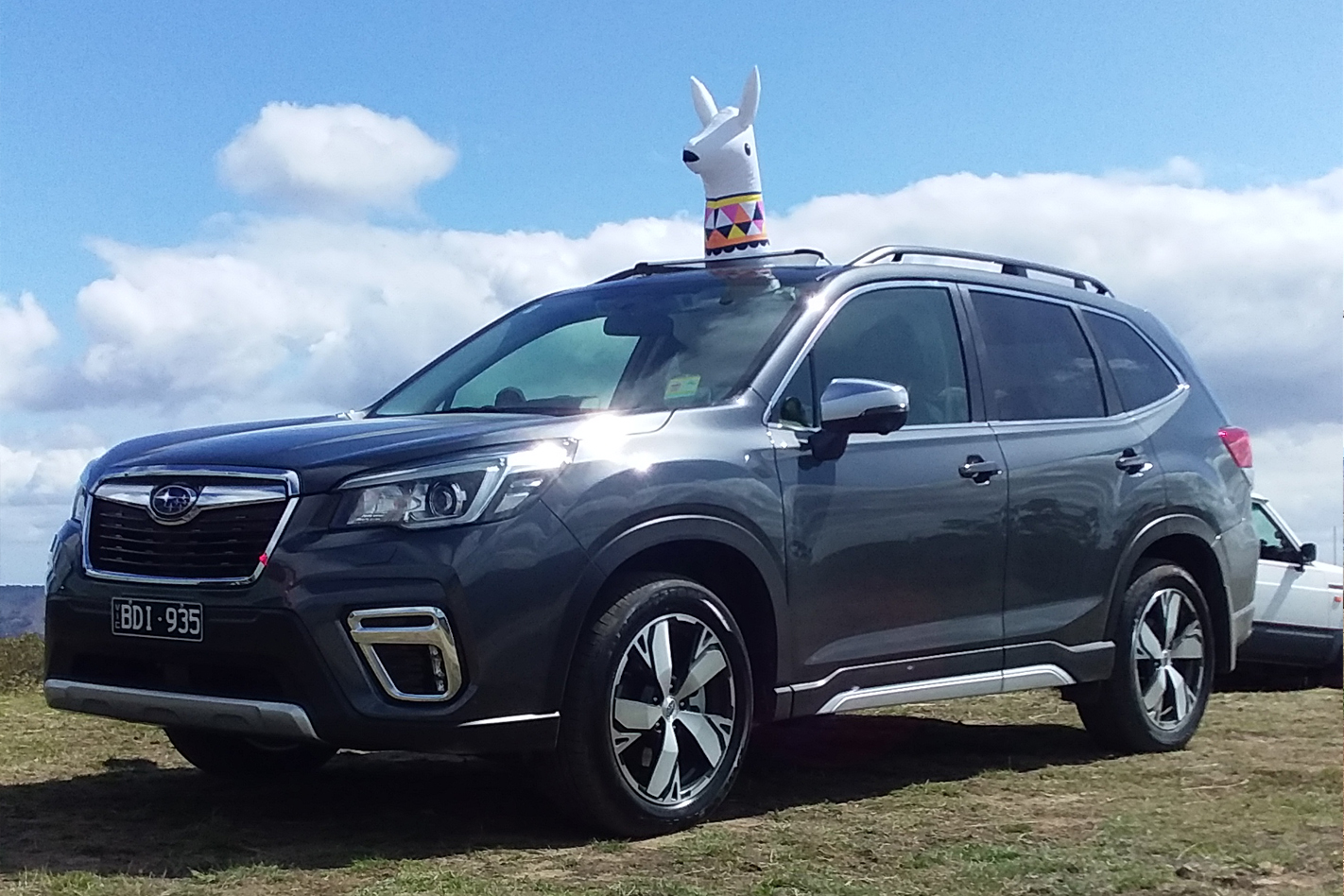
Clearly, pool floatie surfing is not my hidden talent.
It’s safe to say that 2020 is a year Marty McFly would never input into a time machine. Right now, the world is in desperate need of a bit of fun and if any new-car segment is ripe for the challenge, it’s the diminutive hot hatch class. Its remit is to excite and delight in all facets, whether you’re grimly hanging on at ten-tenths or hanging on grimly to the last bottle of hand sanitiser on your way home from Coles. This trio, then, could be the perfect antidote to the doom and gloom.
If you’re going to be so fashionably late that you almost miss the entire party, then you had better bring the goods. Luckily for Ford Australia, the $32,290 Fiesta ST does just that and more. Wheels first drove this second-generation car on European roads two years ago, so the waiting game has been a long one for Aussies. But at least it has all the ingredients for success; a thrummy three-cylinder turbo with 147kW/290Nm, a trick mechanical limited-slip differentual and a six-speed manual.
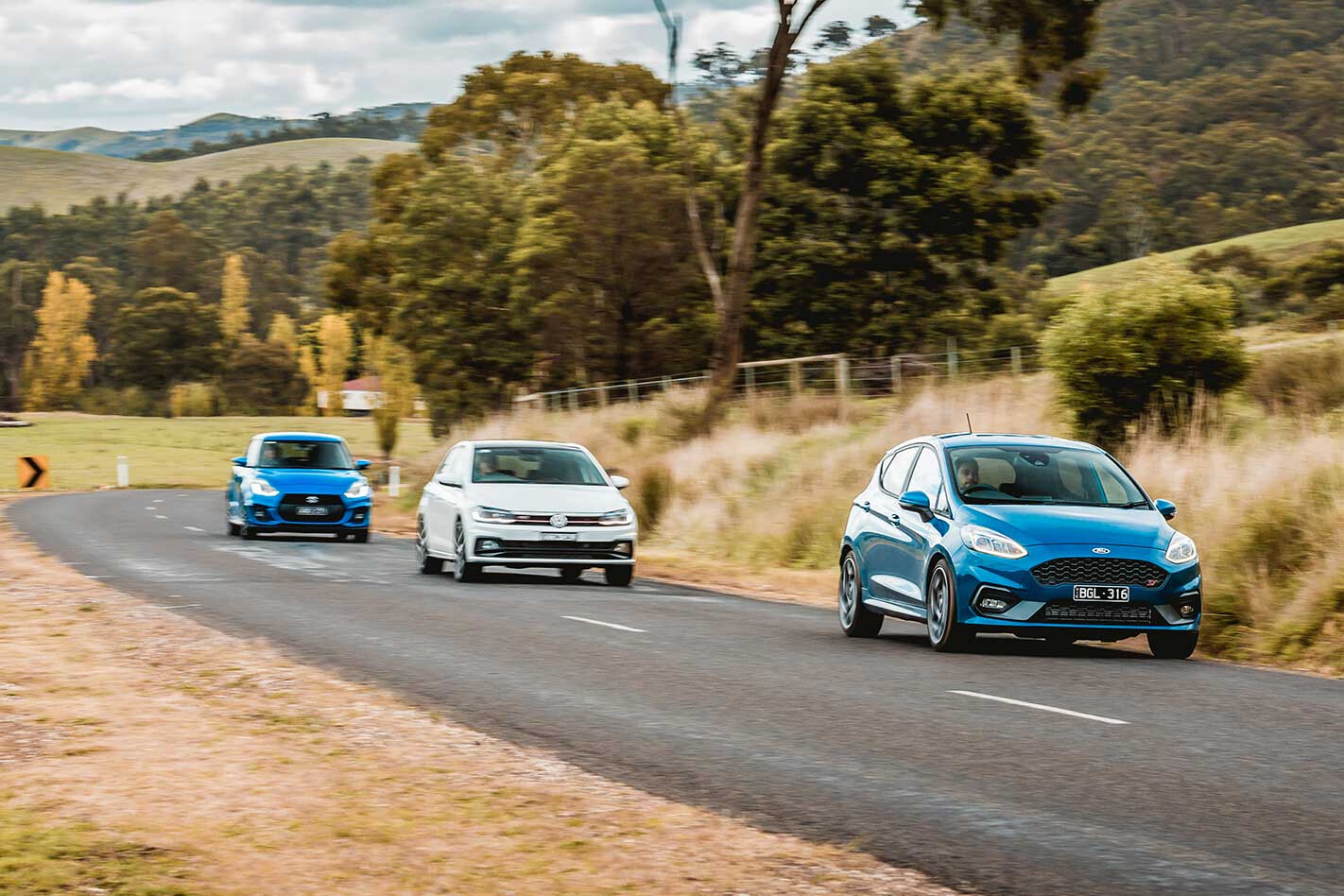
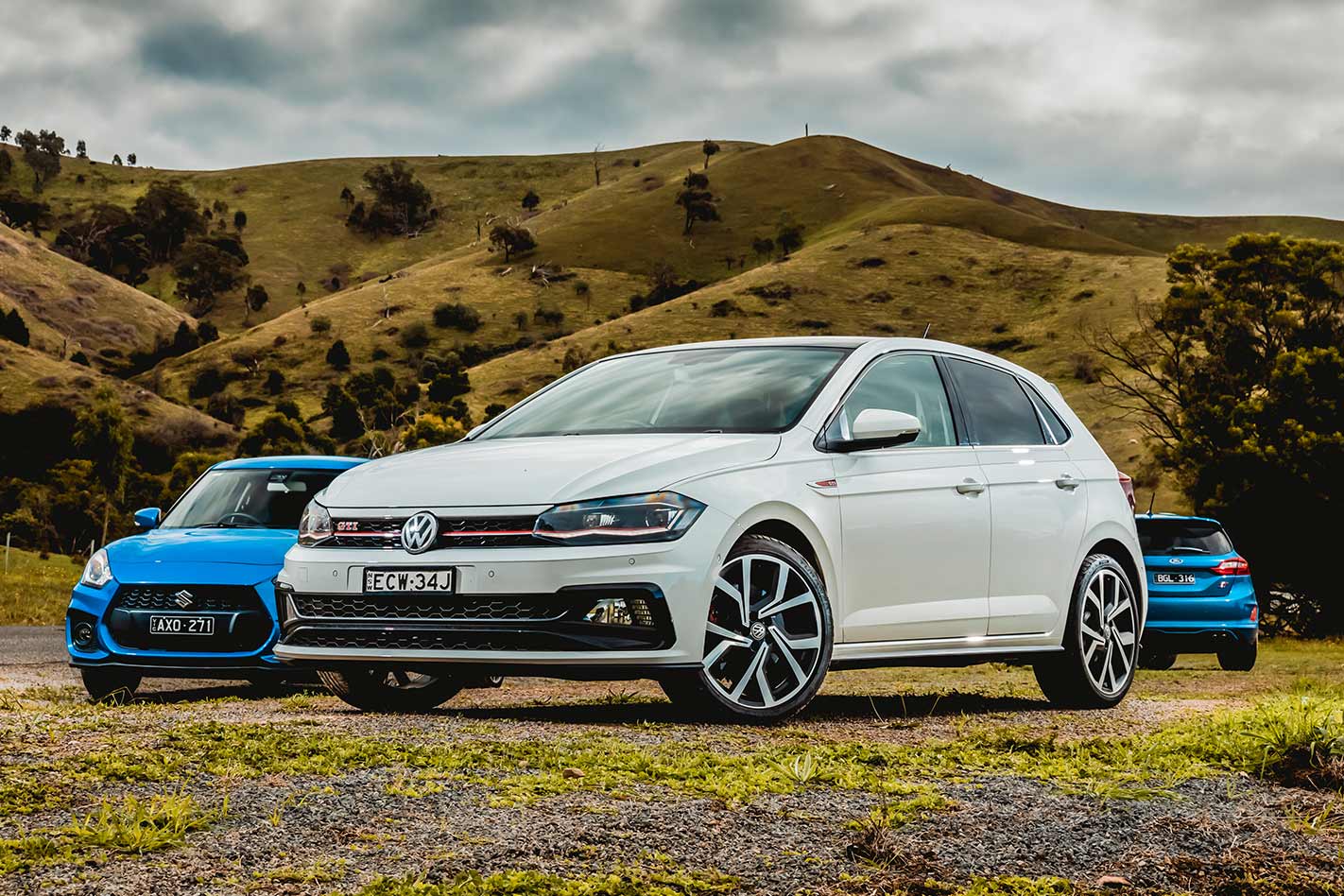
We’re pitting it against the ‘honey I shrunk the Golf’ Mk6 Polo GTI. Now flush with MQB underpinnings, the $32,490 Volkswagen is the most expensive of this trio by a few hundred dollars, but factor in the $7300 worth of options fitted to our test car and that number blows out significantly. Still, it feels premium thanks to a beautifully appointed and tech-rich cabin, and its proven EA888 2.0-litre boasts the highest outputs at 147kW/320Nm. A six-speed dual-clutch is the only gearbox available Down Under.
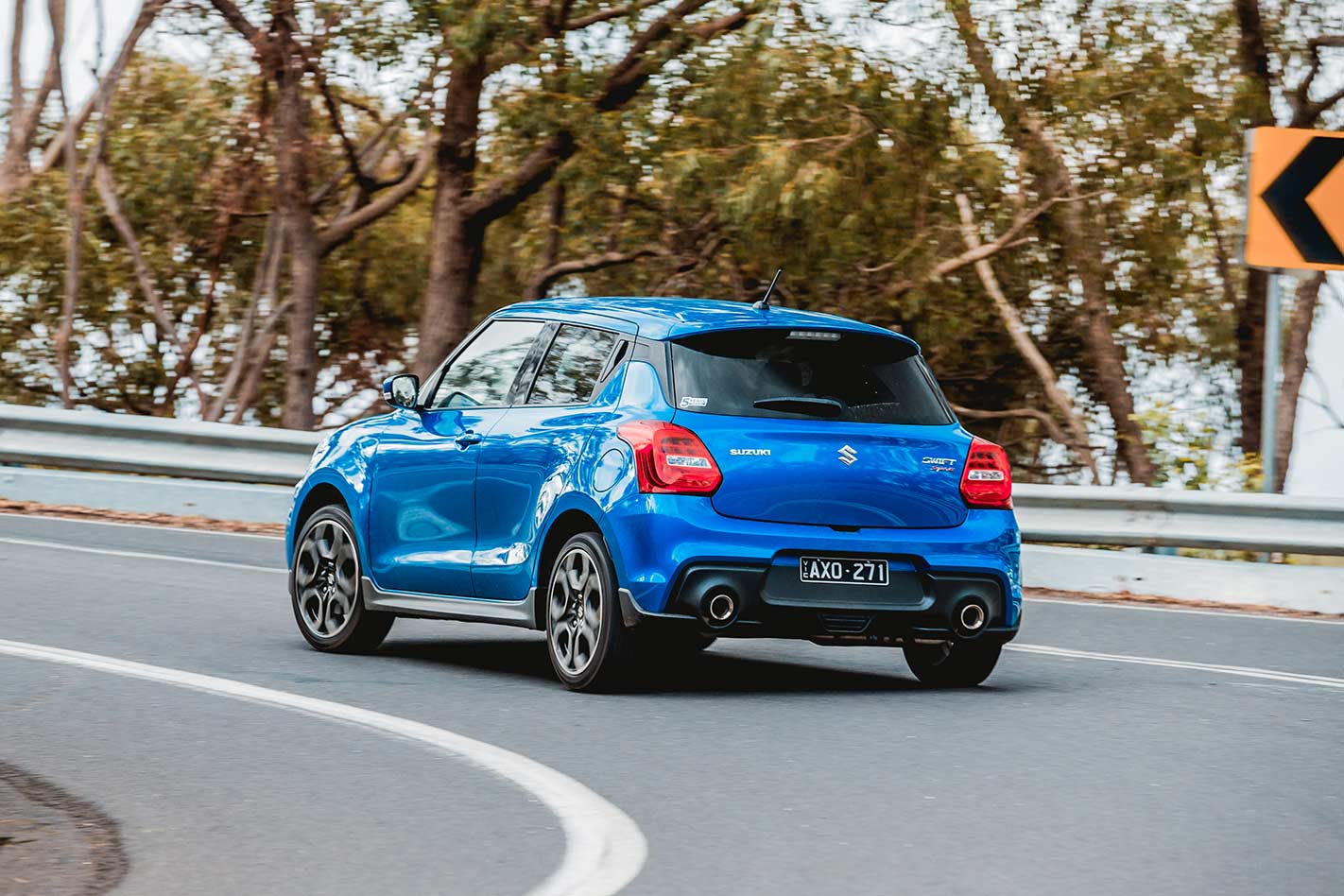
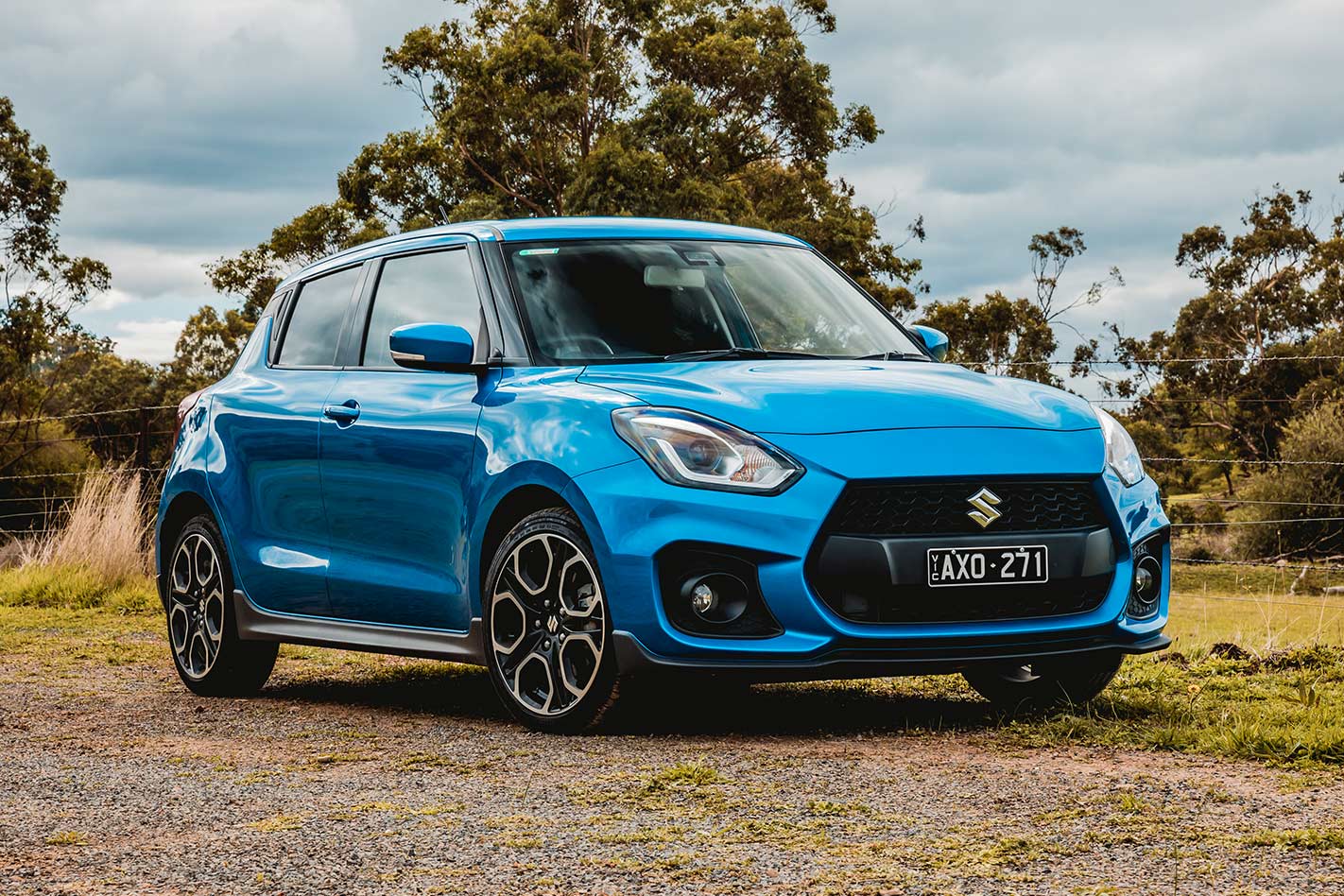
At $25,490 the Suzuki Swift Sport is a whopping 20 percent less expensive than the Ford and VW. And with ‘only’ 103kW and 230Nm to play with from its 1.4-litre turbo, it might seem a surprise inclusion. However, while it lacks the firepower of the other two, the plucky Swift (here in manual guise) weighs only 970kg, meaning its power-to-weight ratio isn’t as far behind as you might expect. It could very well spring a surprise.
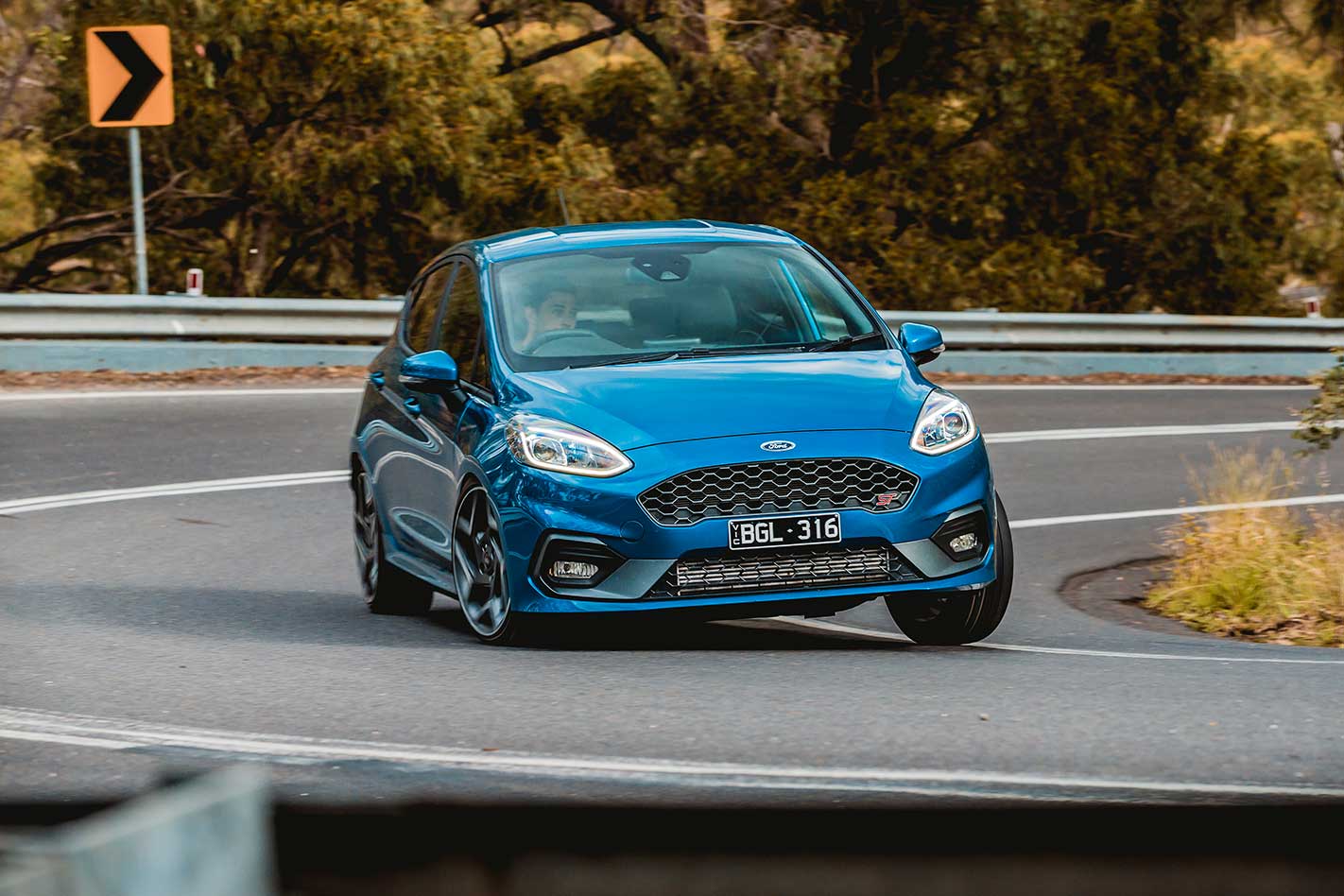
It’s no secret we’re fans of the Fiesta ST here at Wheels. To date our road test experiences have been remarkably positive, though editor Inwood stresses that fresh eyes need to be instated. This comparison is far from a foregone conclusion.
Our test loop is short and sweet, but one section in particular is brilliant. It comprises an almost 90-degree right-hander before a short uphill shoot where you can either bung it on redline in second or shift into third before a heavy heel-and-toe downshift in the manuals. At that point you arrive at a technical left-hand hairpin; one that coaxes you into braking as late as possible given it opens up past the apex as the gradient significantly ascends. Thereafter the climb continues into a fast left before a right-hand hairpin. It certainly highlights any dynamic flaws.
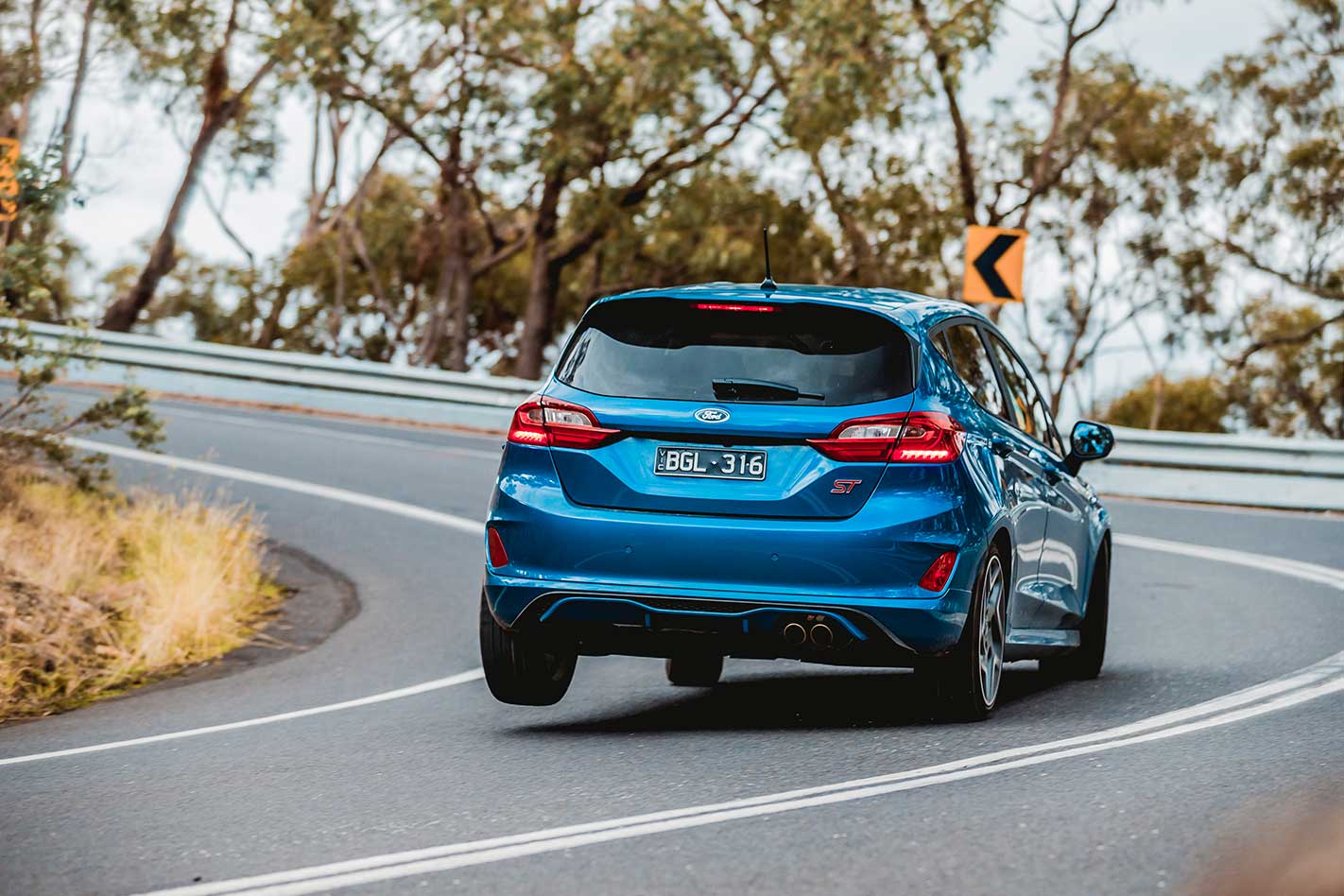
Spoiler alert, the Fiesta shines. It has a level of intent and competence that outstrips the competition here. Barrelling into the first left-hand hairpin with ambitious pace sends all the weight to the outside front, meaning the ST cocks its inside rear wheel like a crazed canine that’s finally been let off the leash. Go in too hot and it will push, but the threshold is high and you can feel the Quaife LSD driving the outside Michelin Pilot Sport 4 (205-section) out of the corner.
The highly developed twist-beam rear suspension and force-vectoring ‘banana’ springs have added control to the traditionally playful ST rear axle, but it hasn’t forgotten how to oversteer. The quick steering and confidence-inspiring front-end help when you feel like wagging the tail, and the rear-end now breaks away with greater progression than the old ST. There’s a new-found sense of maturity to the ride quality, too, with the mono-tube dampers rendering an adaptive setup largely unnecessary. It’s firm but controlled, resulting in a set-up that’s bearable for daily use.
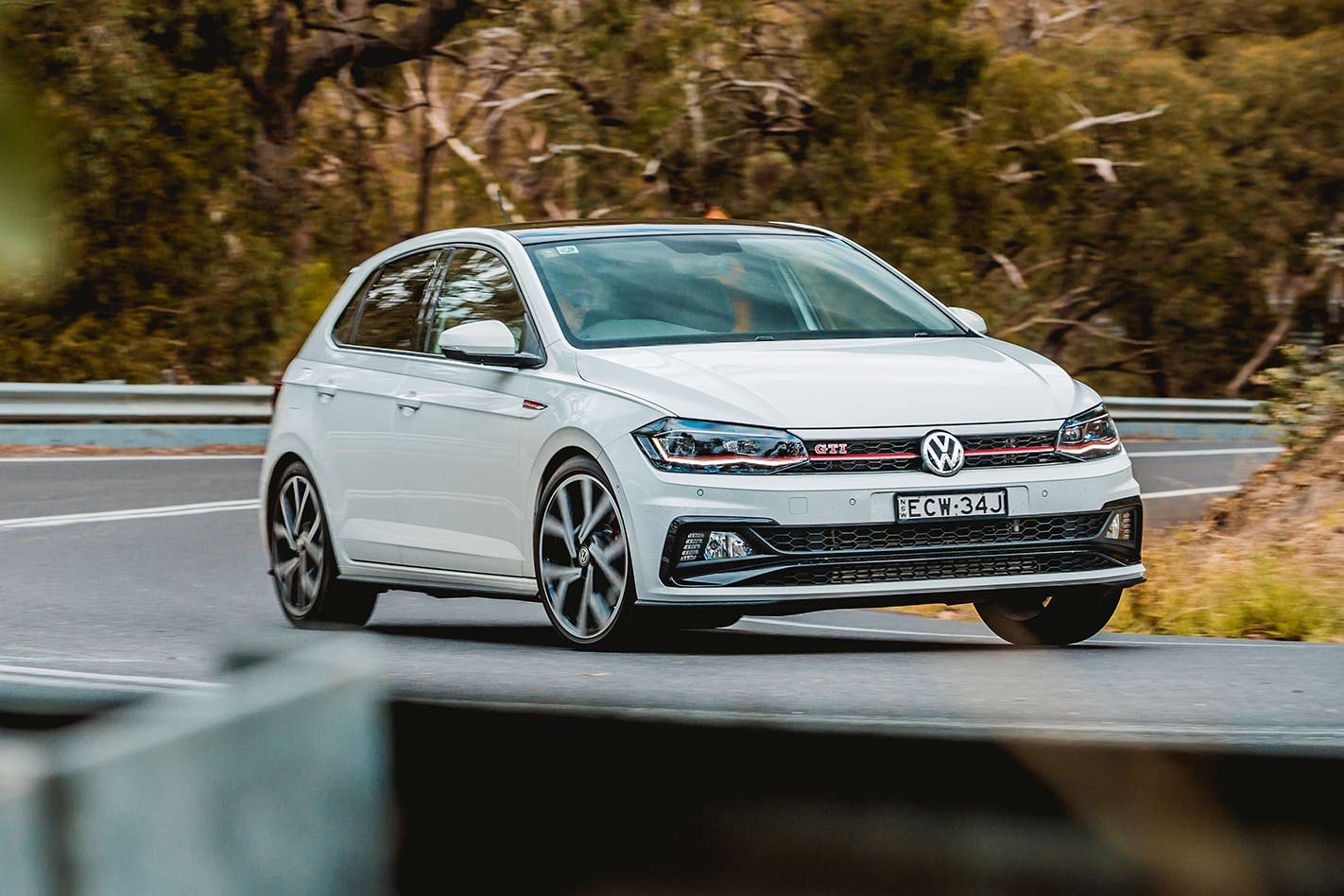
While the VW’s fun factor is never quite turned up to 11 like the Ford, the GTI is often harshly branded as a bit too dull. You just have to search harder within the layers of its refined persona to find its joie de vivre. Get the GTI onto its toes and it’s an engaging thing, and its punchy 2.0-litre ensures it covers ground at a surprisingly rapid rate. However, the un-killable electronic nannies are annoying, with the sometimes over-eager ESC and traction control calibration combining to cut power to the 215/40 Bridgestone Turanza front hoops. And through the left-hand hairpin, the GTI’s electronic braking system can’t fake the effectiveness of the ST’s fully mechanical unit.
The ride quality is impressive, though, thanks to adaptive dampers which are now included as standard. In Comfort mode the VW isn’t as restless as the Ford over broken surfaces, endowing the Polo with an effortless cross-country cruising vibe. The steering isn’t as quick either, and while it might lack the Ford’s tactility and connection, its lighter weighting and level of fluidity are appreciated when you just want to cruise to the shops. The Polo doesn’t always feel ‘on’ like the Fiesta can, and its duality of character will please some buyers more. Yet, when the red mist descends, it lacks that final sharpened edge.
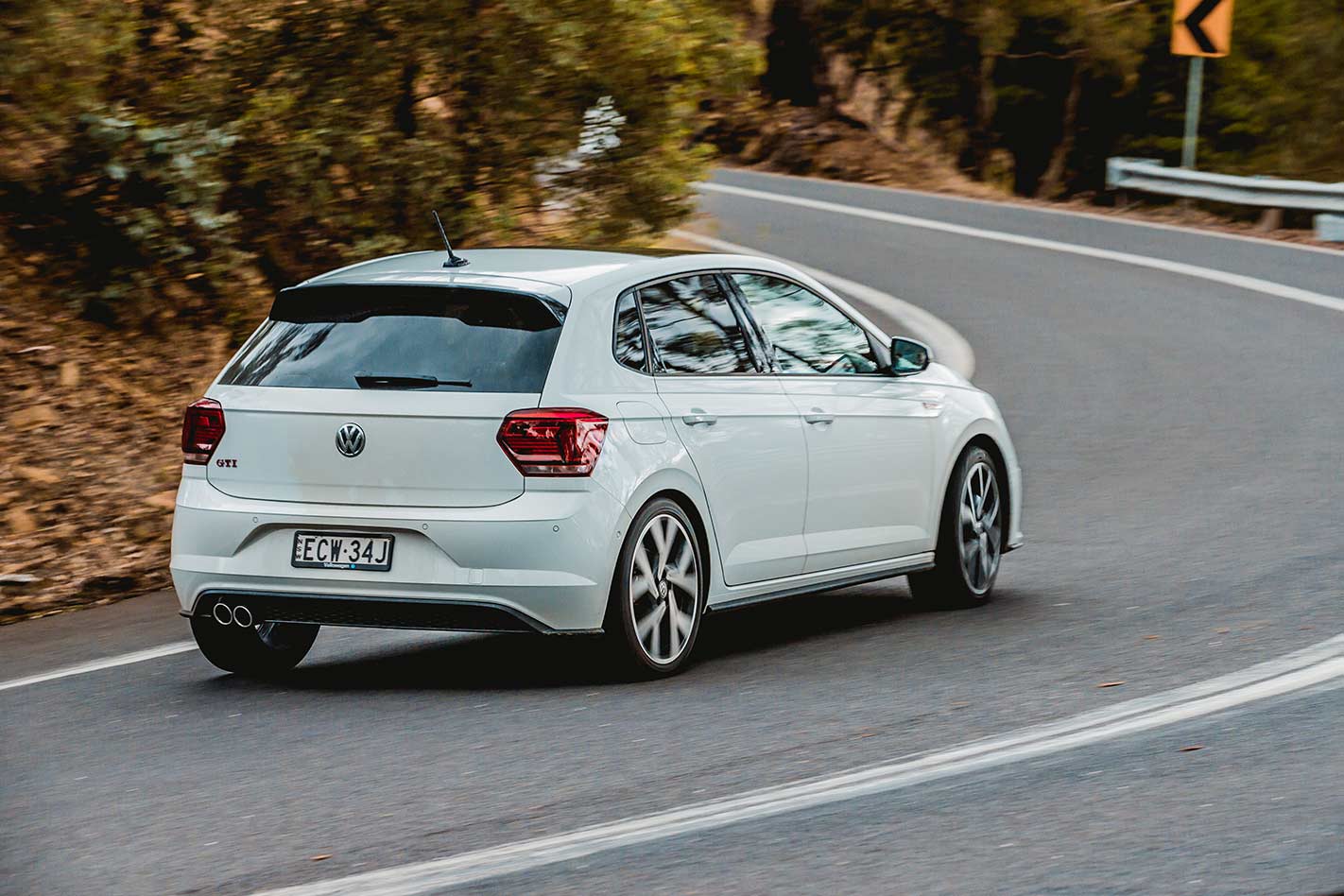
Still, the level of polish and competence VW has injected into the Polo is remarkable. It feels a notch above the Ford when it comes to perceived quality, and a gulf beyond what you find in the Suzuki. The problem the Swift faces is that, in isolation, the Sport is a fantastic $25K hatch with accessible performance. But put it up against two more expensive and talented players and there’s no escaping it feels out of its depth. Through the demanding left-hand hairpin the narrow 195-section inside front smokes up quicker than an unattended barbie despite the grippy Continental ContiSportContact 5 rubber. The Swift’s body control isn’t as taut as the others, either.
However, like a 1.5-litre Mazda MX-5, there is a level of pitch and lateral movement that, once you learn how to work with it, can be hugely enjoyable. The ride quality, too, benefits from the softer fixed-rate set-up, and a balance that errs on comfort is appreciated within city limits. The steering does suffer some kickback under load, however, and while the travel of the brake pedal is progressive, it feels spongy and doesn’t inspire the same level of confidence during hard driving as the other two.
In terms of powertrains, the Fiesta might be down a cylinder compared to the others but it’s certainly not down on performance. In fact, it feels the strongest thanks to a torque-rich bottom end. We’ve managed 6.5 seconds to 100km/h previously, but it’s the meaty torque that surprises; this is a car that feels significantly quicker than its numbers suggest. The six-speed manual is decent, if not brilliant, thanks to short throws and nicely judged ratios that marry well with the 1.5-litre triple. And yes, it sounds mega. Close your eyes and squeeze your ears a little and those Porsche 911 dreams almost become a reality…
VW’s venerable EA888 2.0-litre means it can be difficult to remember you’re in a Polo and not a Golf, but that’s no bad thing. A previously tested 6.4 seconds to 100km/h is testament to its straight-line prowess and this application has its own character, too, with a subdued but pleasingly hearty soundtrack. There are even turbo whistles and muted pops on the overrun. Yet, revving the four-pot out to redline doesn’t offer a meaningful return, so shifting up early via the steering wheel-mounted paddle is the best option. And yes, the six-speed DSG is great on the run, but can still be confused at slow speeds.
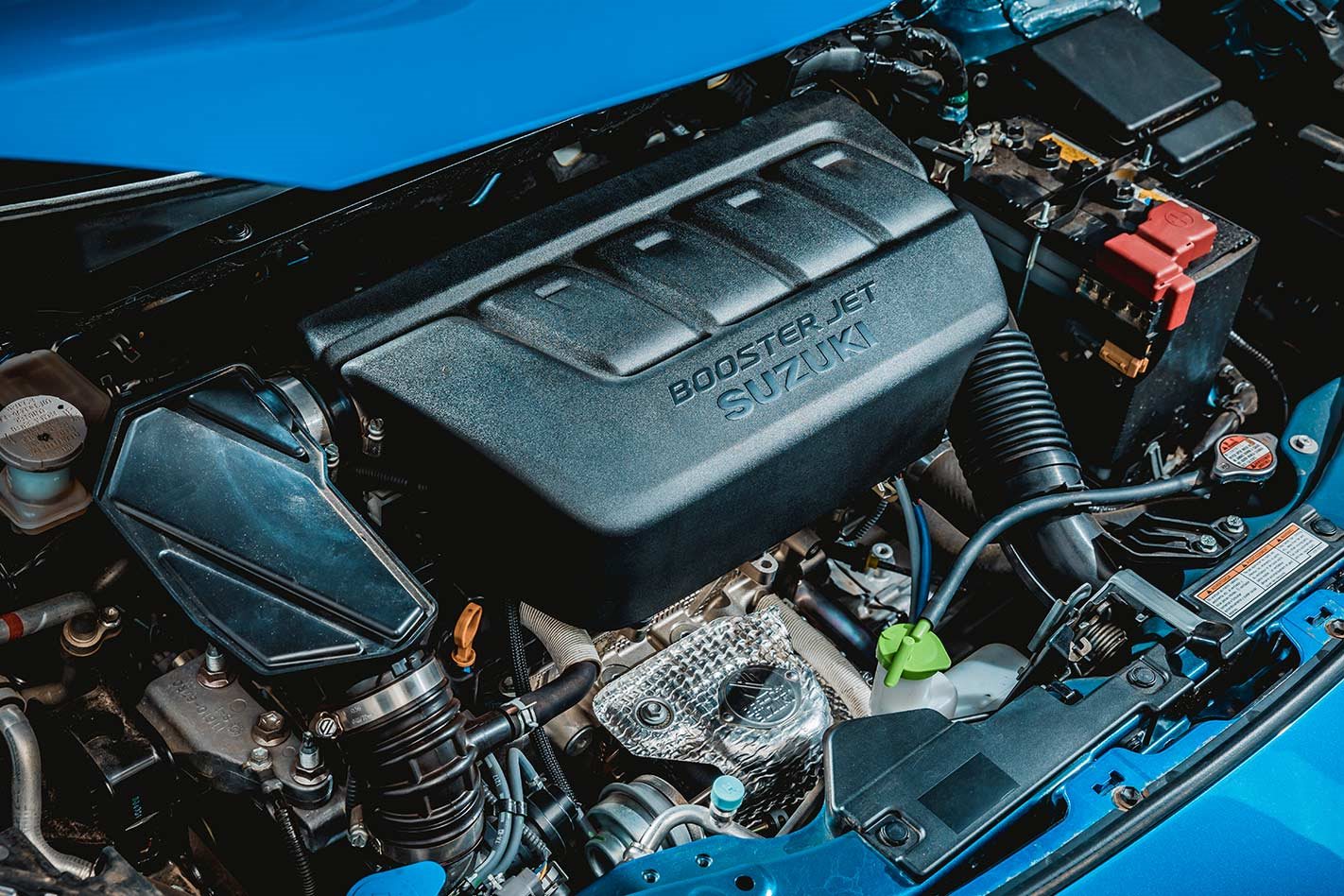
You’d think the Swift’s BoosterJet 1.4-litre turbo four-cylinder would be outgunned in this company. However, thanks to the lithe sub-tonne kerb weight (the Polo is 1285kg and the Fiesta 1208kg by comparison), the Sport feels pleasingly swift. There are no rorty exhaust or induction noises, however, and the party is definitely over by about 5000rpm, so there is little reason to search for the 6000rpm cut out. But the small turbo spools up early and it still feels quick, even though it will take you an extra 1.0sec or so to hit 100km/h. The benefit to the Swift’s small capacity and heft is a tested fuel consumption figure of 6.9L/100km, which is thriftier than the Polo’s 7.6 and Fiesta’s 8.4L/100km results.
However, the golden ticket for a small hot hatch doesn’t just lie in its ability to raise its leg on an apex. A hot hatch also has to be pragmatic. Thankfully the old Fiesta’s smartphone-style buttons have gone and the quality of the materials has risen for this new generation. The body-hugging Recaro bucket seats, with great side bolstering and comfort, have been lowered for a better driving position, while the thick-rimmed steering wheel is heated. The B&O sound system drowns out what road noise there is, but general NVH levels aren’t too high. Little guards pop out of the doors to prevent you causing dints, the rear seats fold in a 60/40 fashion and the boot is middle of the road at 311 litres.
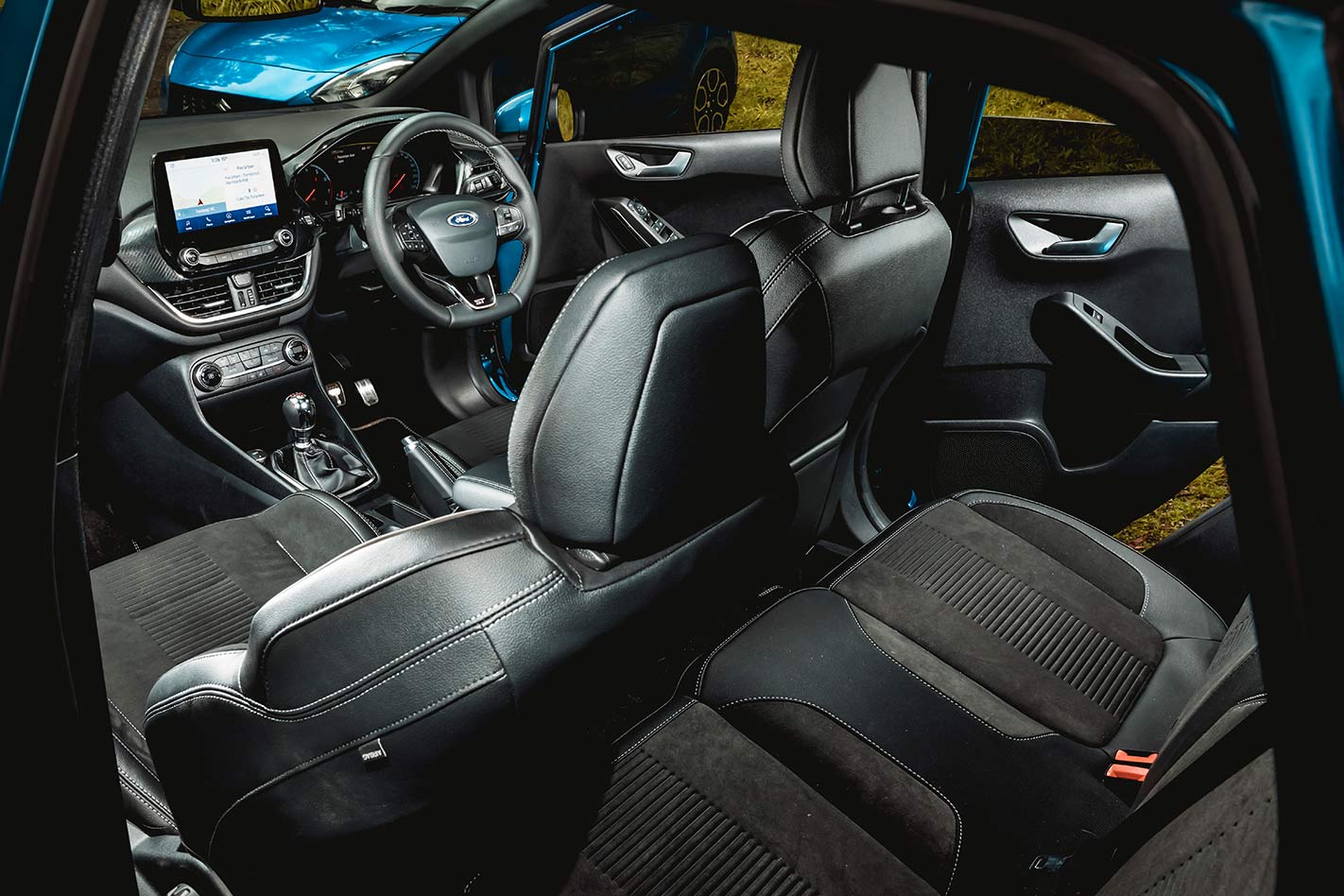
If the Fiesta hits the highest notes dynamically, it’s the Polo that wins for interior comfort and polish. It’s definitely head and shoulders above in terms of fit and finish, and while the optional digital instrument cluster is undoubtedly expensive at $1900 as part of the Sound and Vision pack, it’s money well spent if your budget can stretch that far. We’re less convinced by the comfort seats (part of the $3900 luxury package), which are a little too flat and lack lateral support. If you opt not to have the space-saver spare, the cargo capacity of the GTI is the biggest here at 351 litres – that shrinks to 305 litres with the fifth wheel. The Polo is the only one to offer dual rear USB charging points.
If the Swift is a step behind dynamically, it feels a class below inside. There’s no escaping this is a car based on a $16,990 budget hatch. Plastics are hard, the design isn’t as modern (there’s no digital speedo, though it is fitted to an imminent update), a lack of centre armrest grates and the road noise is the most intrusive. Yet it’s by far the roomiest. The Swift will easily accommodate four adults, though its boot is small-ish at 242L.Still, the Suzuki Swift Sport’s inclusion here is valid. It’s the cheeky runt of the trio that you just can’t help but love – and it’s a worthy choice if your budget can only stretch so far. It might be 20 percent less expensive than the others, but it’s certainly not 20 percent less car.
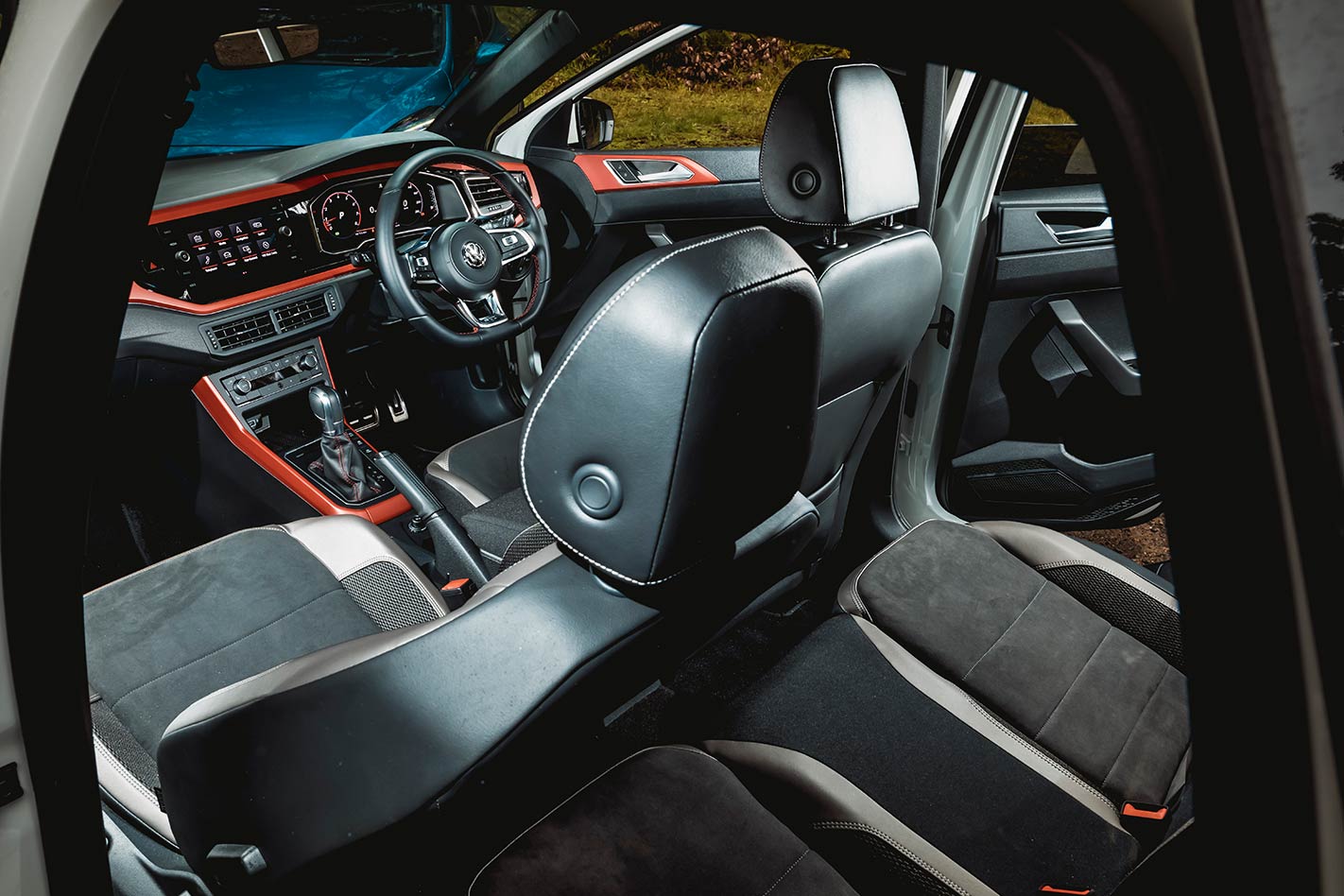
Which leaves the Polo and Focus. If duality of character is a high priority, then the Polo GTI is the grown-up that still knows how to party. And while it might be the most expensive, it’s also the most multi-talented of this trio. The chassis offers a sophisticated dynamic base and the EA888 four-pot delivers proficient punch, plus you’re ensconced in an almost Audi-style ambience. It’s a remarkably rounded performance hatch, but it’s missing something the feisty Ford has in droves – engagement.
For those with a more optimistic outlook, 2020 could be remembered as the year we finally got the Fiesta ST, not a global pandemic. Cars of this calibre are rare and although it lacks the final layer of polish you get in the VW, Ford has perfectly judged the trade off between performance and comfort. If you’re in the performance market, thrills don’t come much better than this. So yes, in uncertain times like these, the Fiesta ST is exactly the escape we all need.
ONE SIZE DOES NOT FIT ALL
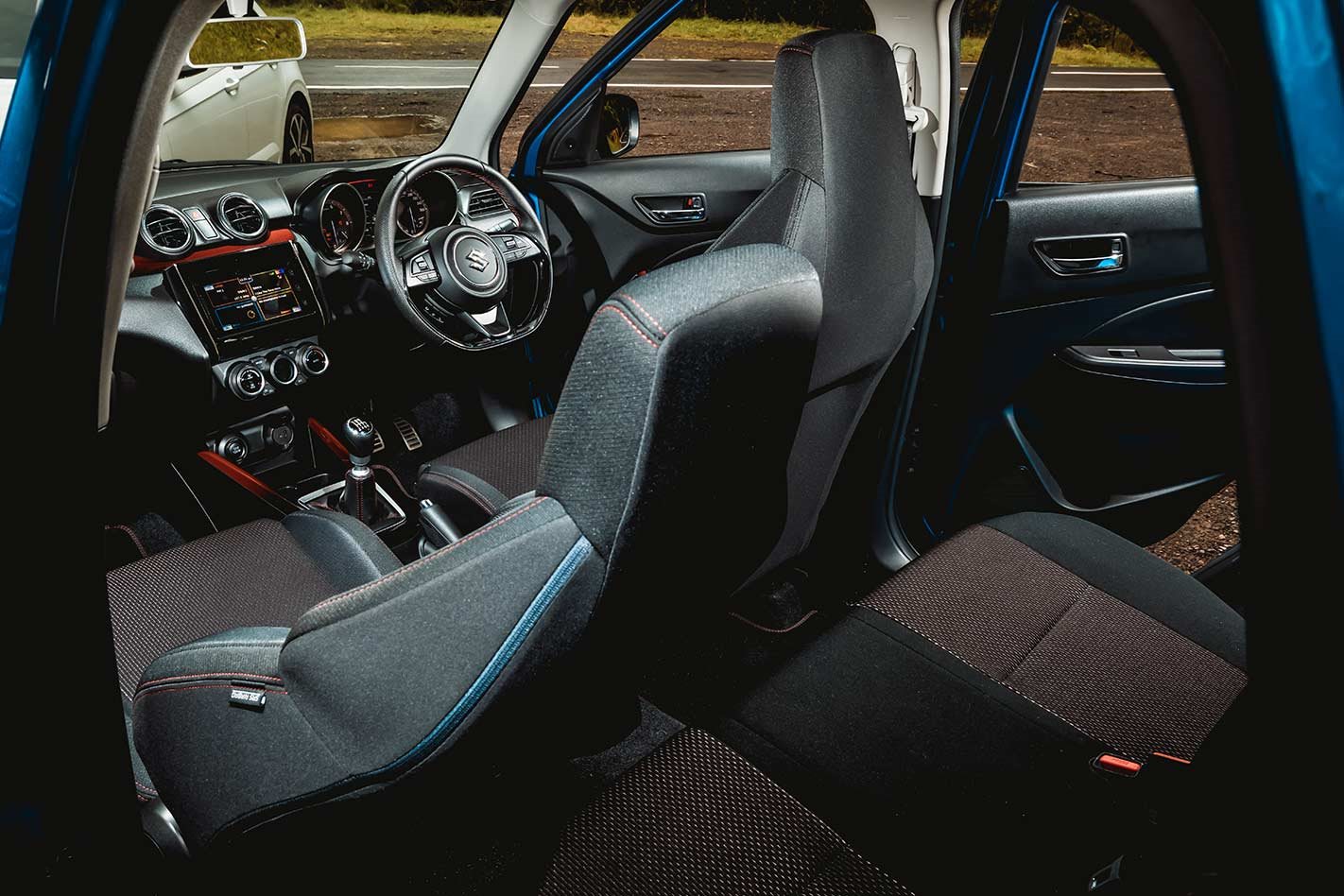
Swift is the shortest of the trio at 3890mm (Polo 4067mm, Fiesta 4068mm), but it easily has the roomiest rear seat (above). Headroom is also best in the little Suzuki. Fiesta has the tightest rear seat, though the cushions are excellent. All three lack a middle arm rest and rear air vents.
PAYING FOR UPGRADES
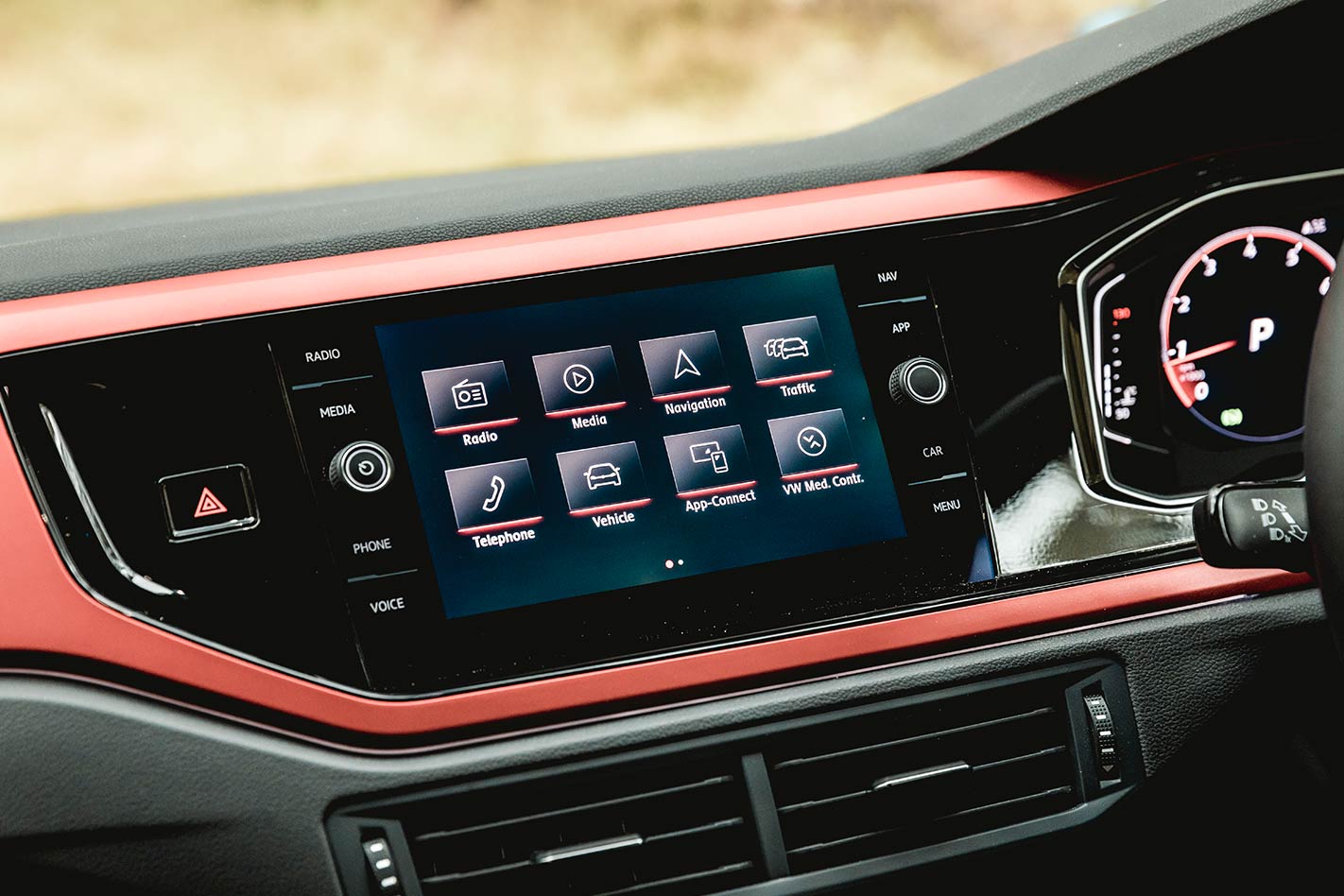
The Volkswagen Polo GTI offers the best in-car tech and infotainment, but there is a caveat – to get the full digital experience you have to pay $1900 for the Sound and Vision pack which upgrades the conventional dials to a fully configurable 10.25-inch display. If the Polo’s infotainment is fast and intuitive, the Swift’s smaller 7.0-inch touchscreen is easily the laziest and is hard to see when wearing polarised sunglasses. The Fiesta sits in the middle; not as flashy as the Polo but SYNC3 is fast and logical to use. All three offer Apple CarPlay/Android Auto connectivity.
VERDICT:
- Ford Fiesta ST – 9.5/10
- Volkswagen Polo GTI – 8.5/10
- Suzuki Swift Sport – 7.5/10

Price: $32,290 ($32,940* as tested)
Engine: in-line 3cyl, dohc, 12v, turbo
Layout: front engine (east-west), front drive
Capacity: 1497cc
Power: 147kW @ 6000rpm
Torque: 290Nm @ 1600-4000rpm
Gearbox: 6-speed manual
Body: steel, 5 doors, 5 seats
L/W/H/W–B: 4068/1783/1469/2493mm
Track (F/R): 1506/1476mm
Weight: 1208kg
Boot: 311 litres
Fuel/tank: 95 octane/42 litres
Economy: 8.4L/100km (test average)
Front suspension: struts, A-arms, coil springs, anti-roll bar
Rear suspension: torsion beam, coil springs, anti-roll bar
Steering: electric rack-and-pinion
Turning circle: 11.0m (1.9 turns lock-to-lock)
Front brakes: ventilated discs (278mm)
Rear brakes: solid discs (253mm)
Tyres: Michelin Pilot Sport 4
Tyre size: 205/40 R18
ANCAP rating: 5 stars
Warranty: 5yr/unlimited km
Service interval: 12 months/15,000km
Glass’s 3-year resale: N/A
AAMI Insurance: $1130.
*Options: Metallic paint ($650)
SUZUKI SWIFT SPORT SPECS
Price: $25,490 ($25,990* as tested)
Engine: in-line 4cyl, dohc, 16v, turbo
Layout: front engine (east-west), front drive
Capacity: 1373cc
Power: 103kW @ 5500rpm
Torque: 230Nm @ 2500-3000rpm
Gearbox: 6-speed manual
Body: steel, 5 doors, 5 seats
L/W/H/W-B: 3890/1735/1495/2450mm
Track (F/R): 1510/1510mm
Weight: 970kg
Boot: 242 litres
Fuel/tank: 95 octane/37 litres
Economy: 6.9L/100km (test average)
Front suspension: struts,A-arms, coil springs, anti-roll bar
Rear suspension: torsion beam, coil springs, anti-roll bar
Steering: electric rack-and-pinion
Turning circle: 10.2m (2.8 turns lock-to-lock)
Front brakes: ventilated discs (285mm)
Rear brakes: solid discs (252mm)
Tyres: Continental ContiSportContact5
Tyre size: 195/45 R17
ANCAP rating: 5 stars
Warranty: 5yr/unlimited km
Service interval: 6 months/10,000km
Glass’s 3-year resale: 55%.
AAMI Insurance: $819.
*Options: Metallic paint ($500)
VOLKSWAGEN POLO GTI SPECS
Price: $32,490 ($39,790* as tested)
Engine: in-line 4cyl, dohc, 16v, turbo
Layout: front engine (east-west), front drive
Capacity: 1984cc
Power: 147kW @ 4400-6000rpm
Torque: 320Nm @ 1500-4400rpm
Gearbox: 6-speed dual-clutch
Body: steel, 5 doors, 5 seats
L/W/H/W-B: 4067/1751/1438/2560mm
Track (F/R): 1510/1484mm
Weight: 1285kg
Boot: 305 litres
Fuel/tank: 95 octane/40 litres
Economy: 7.6L/100km (test average)
Front suspension: struts, A-arms, coil springs, adaptive dampers, anti-roll bar
Rear suspension: torsion beam, coil springs, adaptive dampers, anti-roll bar
Steering: electric rack-and-pinion
Turning circle: 10.6m (2.8 turns lock-to-lock)
Front brakes: ventilated discs (310mm)
Rear brakes: solid discs (272mm)
Tyres: Bridgestone Turanza T001
Tyre size: 215/40 R18
ANCAP safety: 5 stars
Warranty: 5yr/unlimited km
Service interval: 12 months/15,000km
Glass’s 3-year resale: 54%.
AAMI Insurance: $978.
*Options: Driver Assistance package ($1500), Sound and Vision package ($1900), Luxury package ($3900)
As Australian businesses emerge blinking into a post-COVID world, the massive impact on fuel sales – ergo emissions – over the last few months has been revealed in new data released this week.
And if you think the skies look a little bluer, you’re not mistaken. Almost five million tonnes of carbon dioxide, or almost two percent of Australia’s annual totals, was stripped from the atmosphere as private vehicle and aircraft use plummeted.
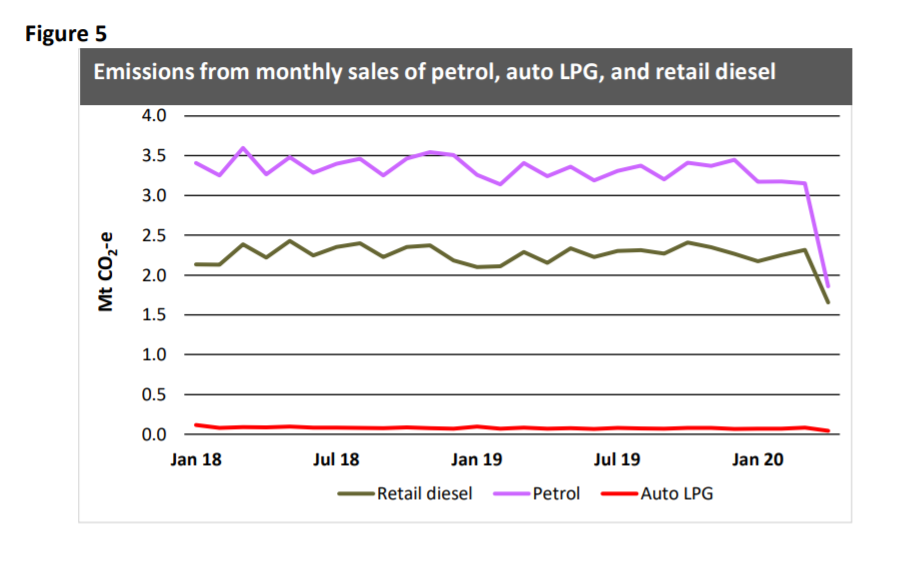
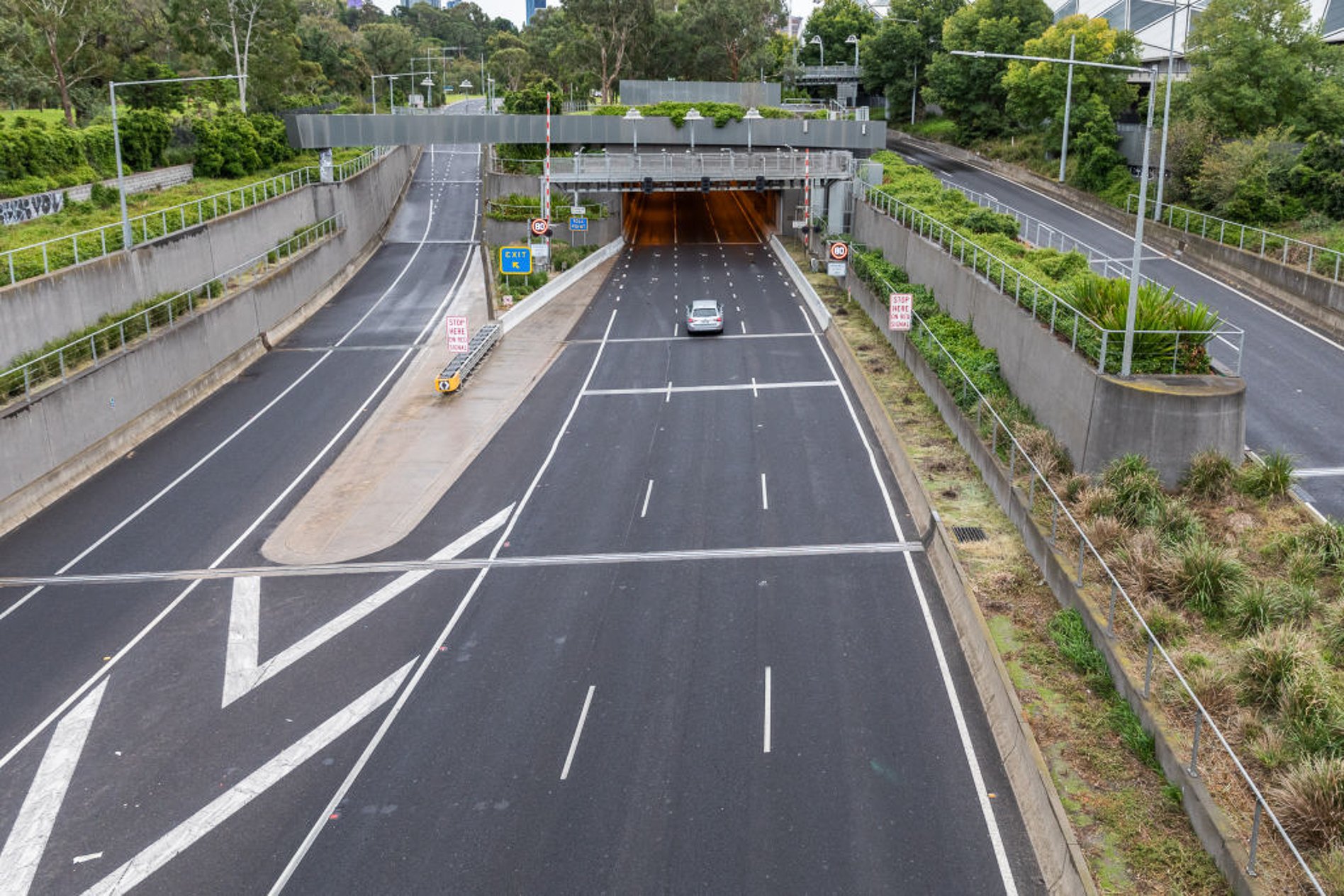
Retail petroleum sales fell by 36 percent in April while aviation fuel sales fell by 74 percent, leading to a reduction of around 2.5 million tonnes of carbon dioxide across the transport sector alone.
Another 2.5 million tonnes was saved in the electricity generation sector, where a coincidental rise in renewable energy production crossed paths with a fall in coal-fired electricity production.
“In total, the drop in sales volumes means a reduction of about five percent in annual domestic transport emissions and this number will keep growing, as the economy remains depressed and travel restrictions remain,” said Dr Hugh Saddler, author of The Australia Institute’s National Energy Emissions Audit.
“This demonstrates it is possible to quickly and effectively reduce domestic emissions in the transport sector, but it is obvious that as pandemic restrictions ease, policies incentives to increase electric vehicle uptake or investment in public transport will be needed for Australia to keep these emissions down.”
The institute also reports that emissions from the sales of petrol, auto LPG and retail diesel, which are used almost entirely for road transport, by passenger and light commercial vehicles, and some heavy freight vehicles, fell by a combined 36 per cent in April.
Emissions from bulk sales of diesel, together with the relatively small volumes of non-auto LPG and fuel oil, were almost unaffected. These are the fuels used in mining and heavy road transport, agriculture, rail transport, shipping and construction.
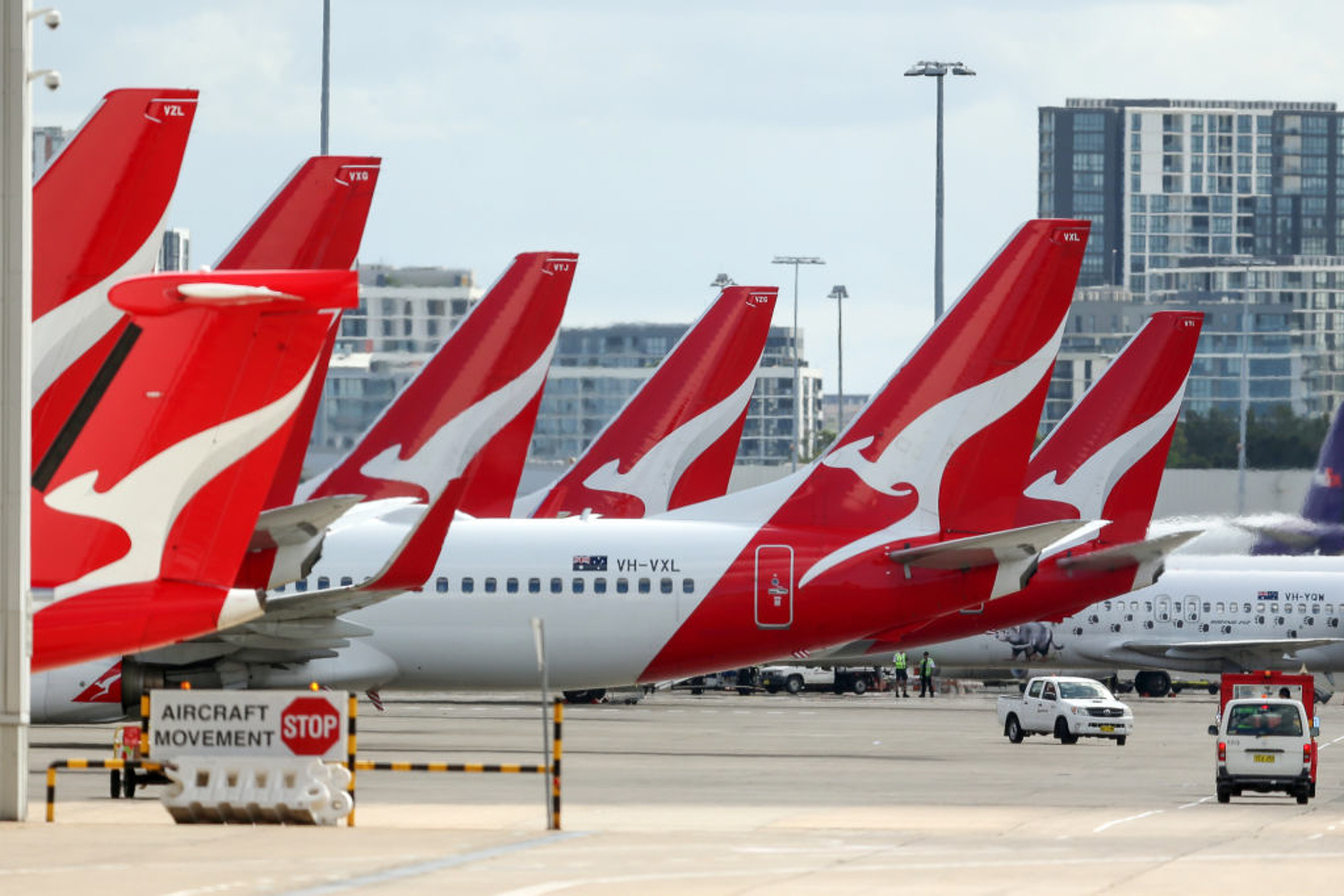
Sales of aviation fuels fell by 10 per cent in March, and a further 75 per cent in April, for domestic activity. Sales for international aviation use fell by 22 per cent in March, from an unusually high level in February, and a further 71 per cent in April.
The institute also noted the continual shift away from coal-fired electricity production, with emissions from electricity production falling sharply despite no decline in consumption.
Coal-fired energy production, in particular, fell to below 70 per cent of what’s known as grid-level generation (electricity generation minus rooftop solar production), a level it hasn’t been at since the 1980s.
A new high in wind energy production was also noted, as new wind farms in Victoria scale up to full operation, with renewable energy making up close to 20 percent of grid-level generation.
“Now is the ideal time to drive change in our transport sector by electrifying our cars and buses, so it’s disappointing the Federal Government has delayed its Electric Vehicle Strategy, due mid this year,” said Richie Merzian, the climate and energy program director at The Australia Institute.
“Australia is car-taker not maker, and most car manufacturers are moving to electric vehicles. The Federal Government could be investing in necessary infrastructure now to smooth the inevitable transition away from fossil-fuelled transport while building the know-how and jobs Australia needs into the future.”
There are only a handful of cars which can relay the precise difference between heads and tails as they run over a coin. The Mini JCW GP does not only happily oblige, it even hammers through the exact denomination and the year that particular piece of money was minted.
Although anybody can install dampers filled with lead and springs that barely spring, the BMW subdivision will in addition suggest diehards fit ambidextrous Hankook semi-slicks named Ventus TD, for Track Day. The 225/35 R18 tyres, marked by an artsy swoosh pattern, are allegedly made of rubber, but could also very well be Edwardian liquorice stored in the open since the King passed away in 1972.
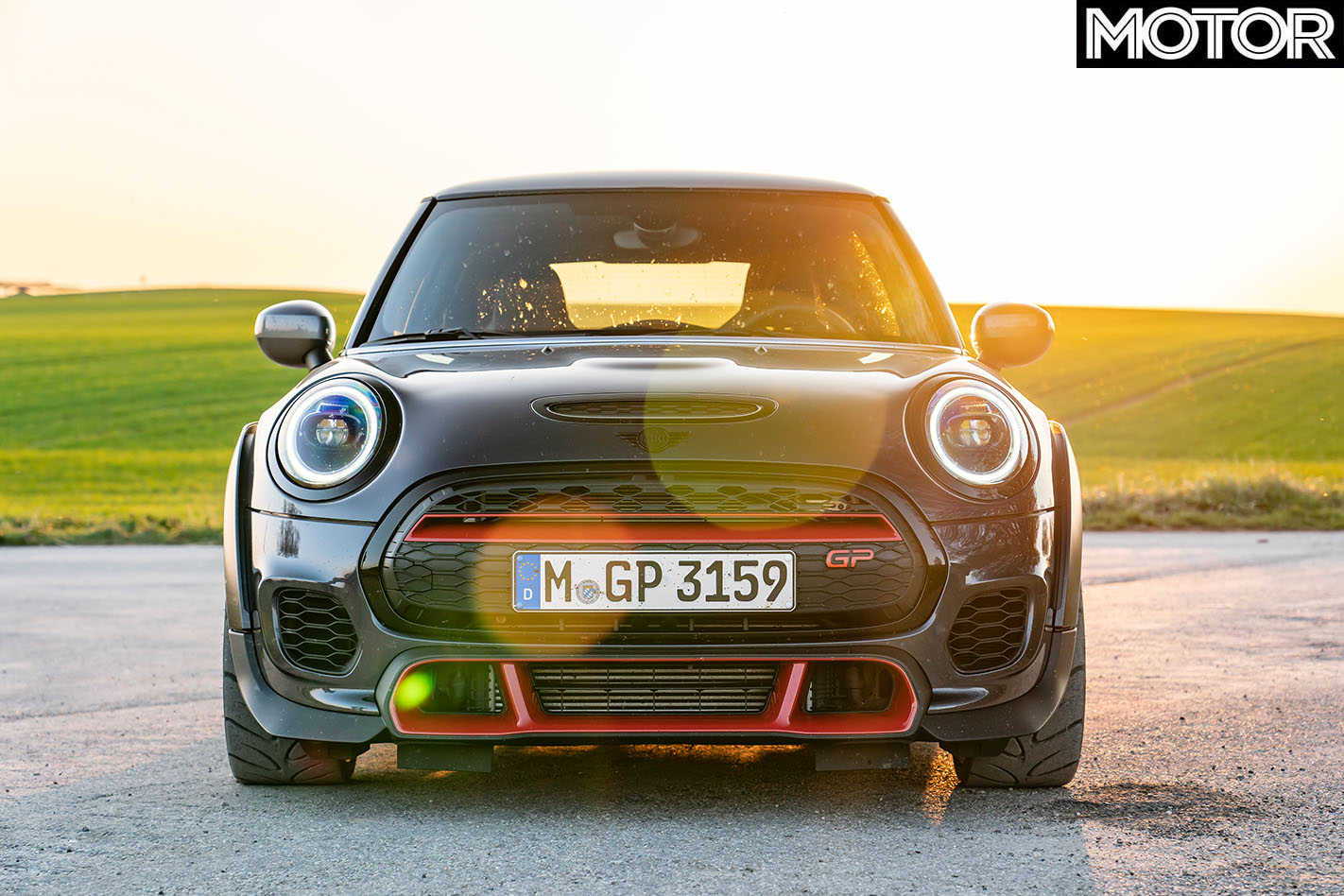
If suppleness is a prerequisite for dynamic well-being, the absence thereof might explain why our Anglo-German batmobile lives in the twilight zone between trick and treat. Just leaf through the bible of absolute automotive no-gos, and the vices are all there in abundance: steering fight, torque steer, waywardness at any speed, marginal ride comfort, man eventually succumbing to machine.
But you know what? We wouldn’t have it any other way. Because it is simply impossible not get a kick out of this doped Mini in Voldemort livery. A rather rough daily driver, the $63,900 limited-edition model is headed for Australia, 65 out of the 3000 global units reserved for the great southern land.
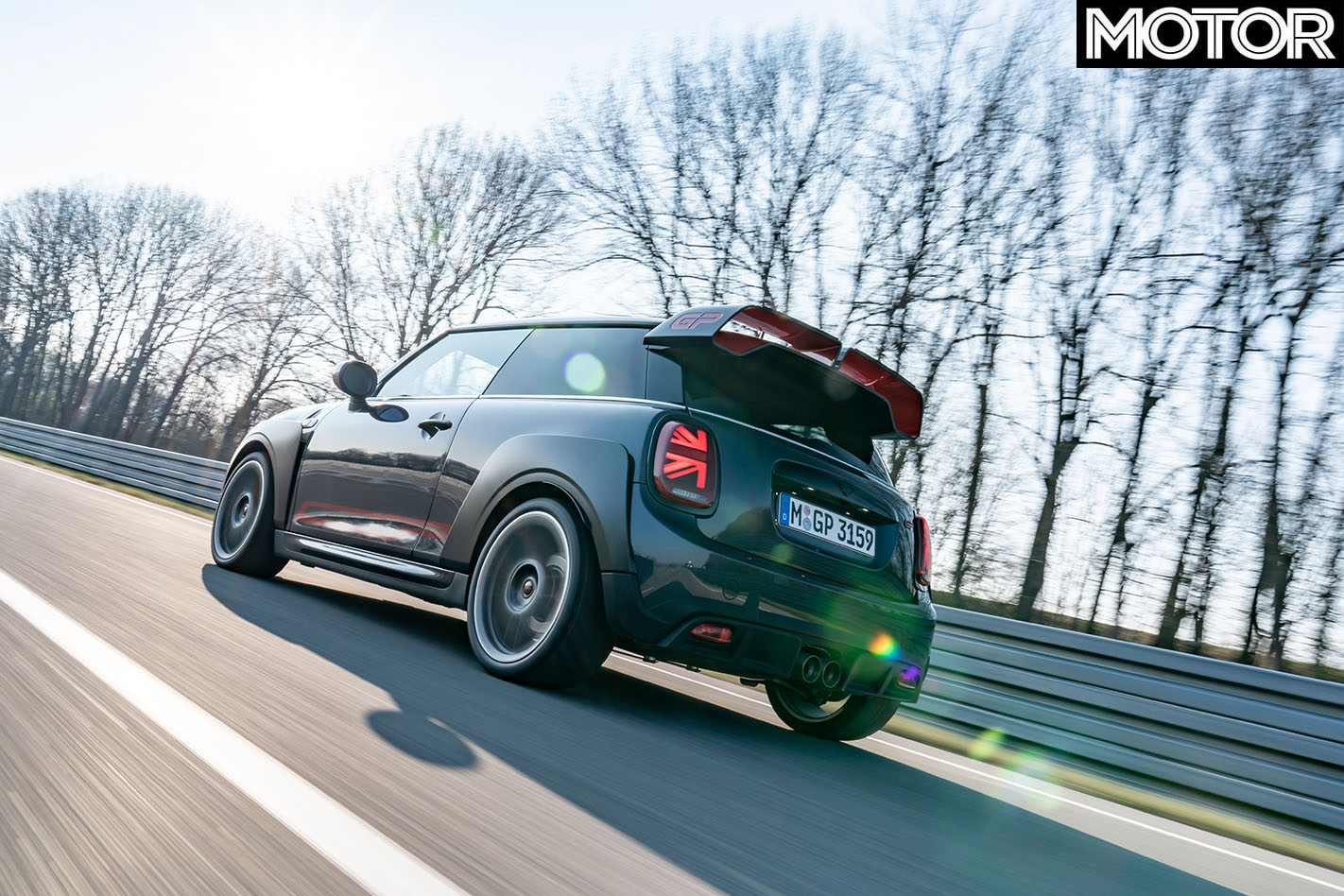
Introduced in 2014, the Mini III sits on an evolution of the second-generation platform which was in turn based on the first post-Rover model designed by Frank Stephensen. To prepare what began life as trendy urban runabout for such a colossal upgrade to GP specification, the body structure, chassis and driveline had to be practically reinvented. For a start, there are now four separate cooling circuits protecting the health of the engine, crankcase and transmission.
A high-performance fan and a modular coolant storage-and-distribution system assist in coping with high loads and critical temperatures. With the exception of all-wheel drive, the Mini GP shares its powertrain with the BMW M235i. Special engine upgrades include multiple reinforcements, a bespoke intake and exhaust, larger sump and bigger rear muffler which switches from tenor to bass in sync with revs, gear and throttle aperture.
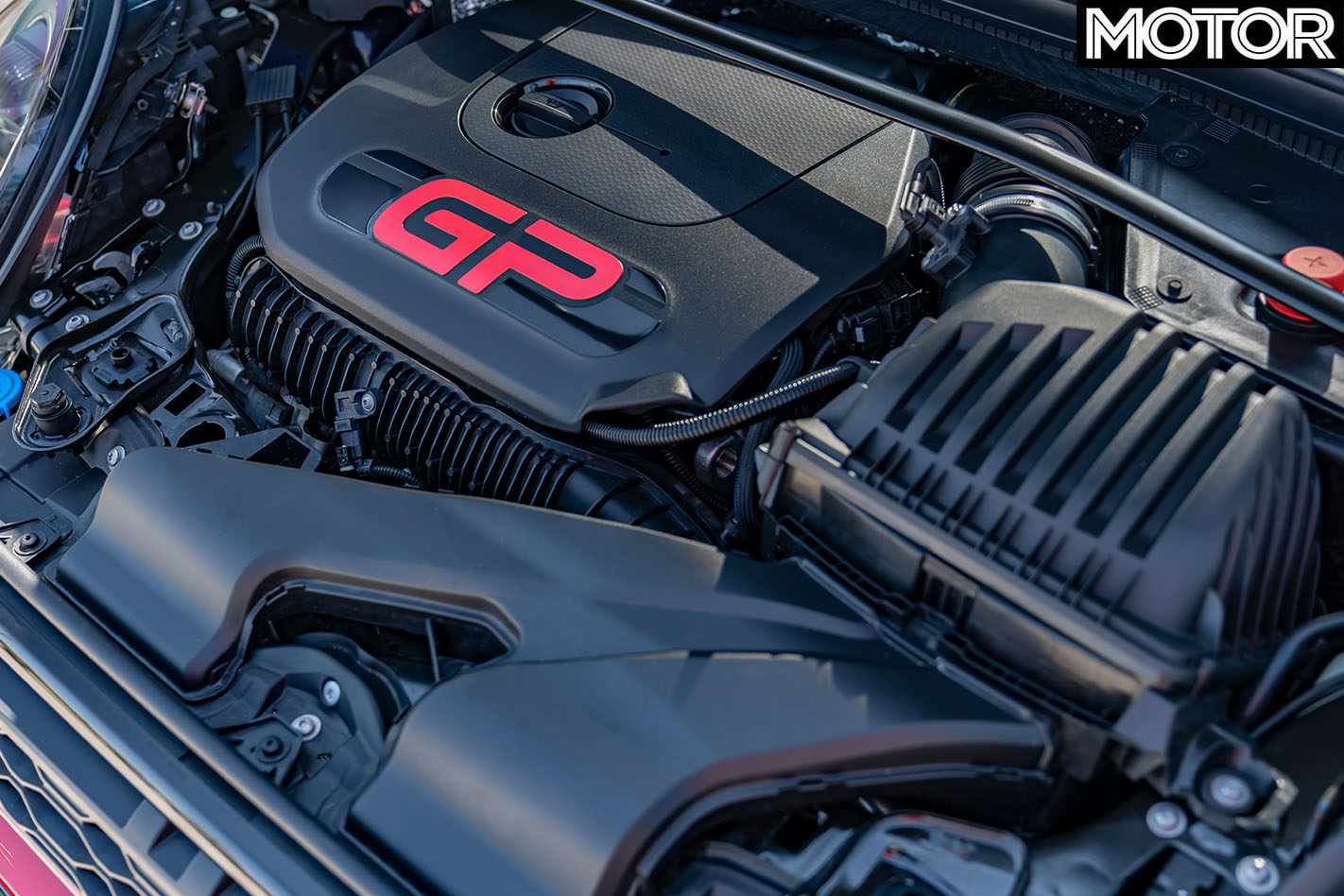
Torsional stiffness isn’t normally an issue for a run-of-the-mill three-door hatch. Add 55kW to the already brawny 170kW JCW pack, however, and you are in a different dynamic ball park altogether. Engine and transmission mounts were beefed up, rubber bushes either stiffened or replaced by metal ball joints, a rear subframe and a front strut brace also added.
Furthermore, the engineers dialled in more uncompromising kinematics and elasto-kinematics, lowered the ride by 10mm, widened the track, reprogrammed the steering and altered the calibration of springs, dampers and anti-roll bars. By increasing camber all-round, the chassis tricksters set out to enhance handling, roadholding and steering response.
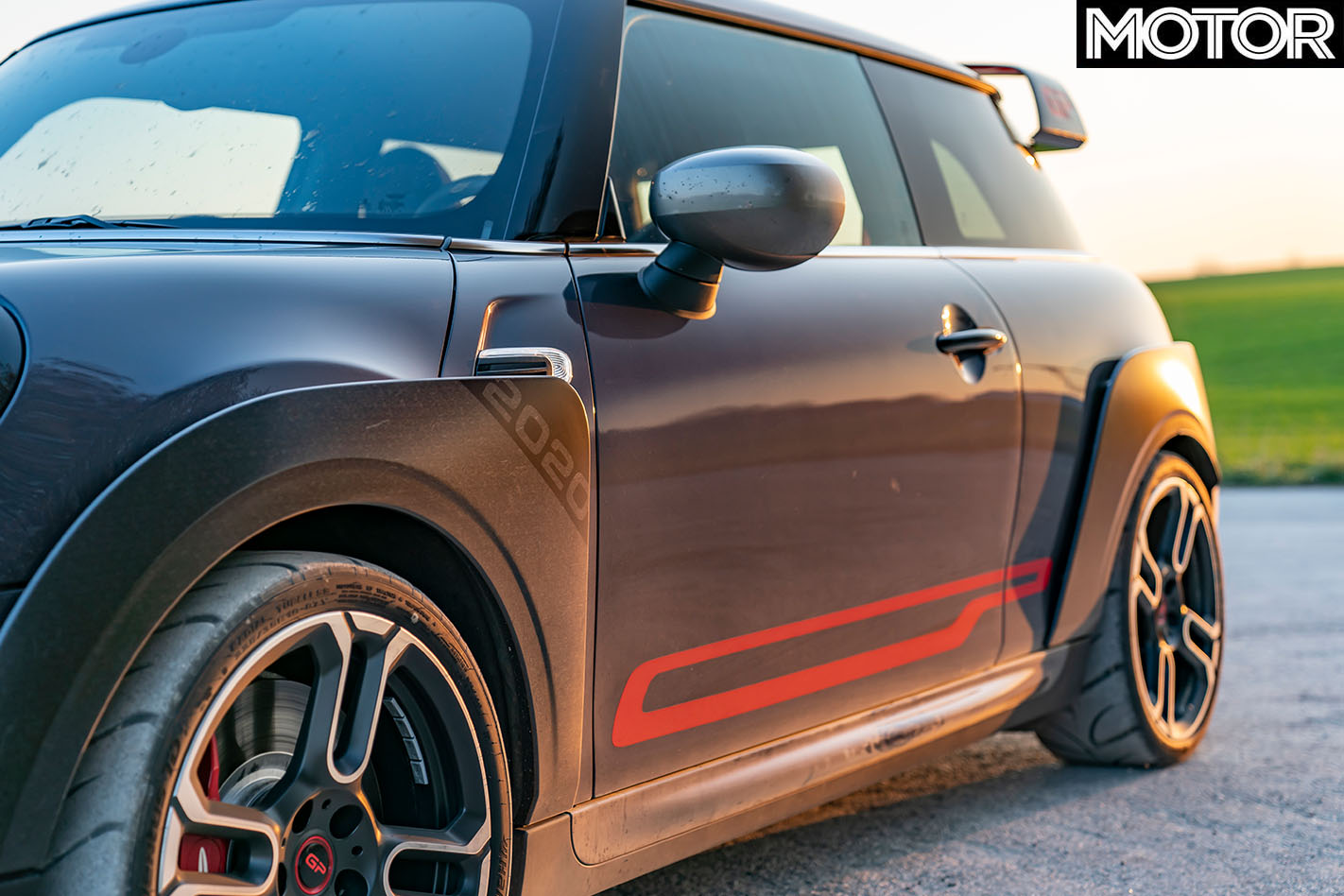
Fitted with large eye-catching wheel arch flares made from recycled matte-black carbon fibre shavings found in the i3 and i8 waste bin, forged four-spoke lightweight rims, and a rear wing inspired by the boxy turbojet housings of the supersonic Concorde aircraft, the gunmetal tarmac peeler is all muscle and zero body fat.
The single-purpose existence continues inside. Take for instance the near perfect driving position which makes you instantly feel in command. Relish the excellent seats, the generous adjustment range, the ideal distance to the pedals, the splendid visibility, the huge instruments, the unambiguous primary ergonomics. In contrast, the trademark central round display is primarily there for decoration, the wriggly control pod between the seats is best left alone, there is no air to be conditioned and no map to be displayed.
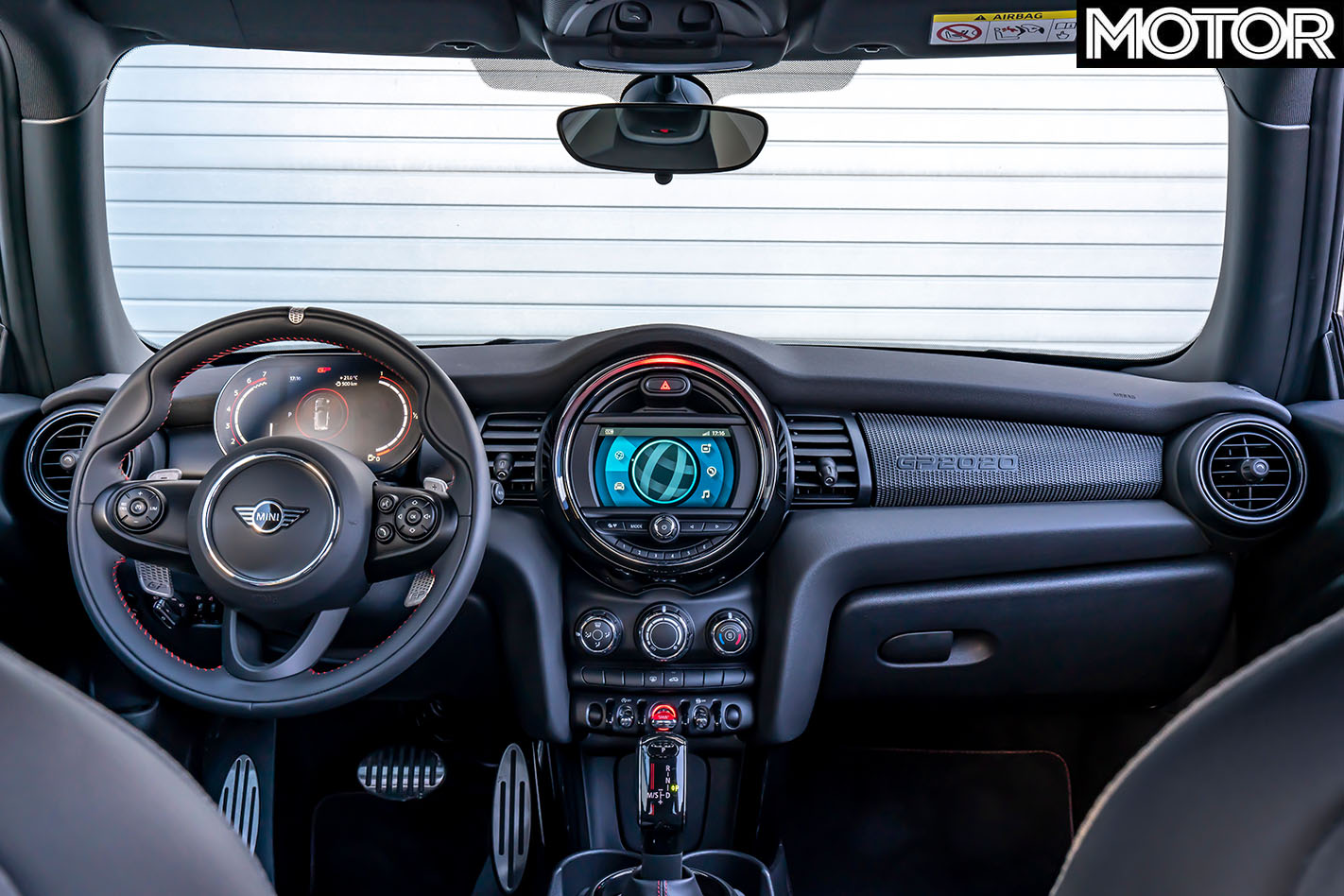
The lever operating the eight-speed torque converter automatic squats in a pod of its own and is dead simple to operate. (Even though a manual gearbox would be a more emotional alternative, right now Mini has none strong enough to cope with the ballsy momentum of the turbocharged 2.0-litre four – so it’s auto for now.)
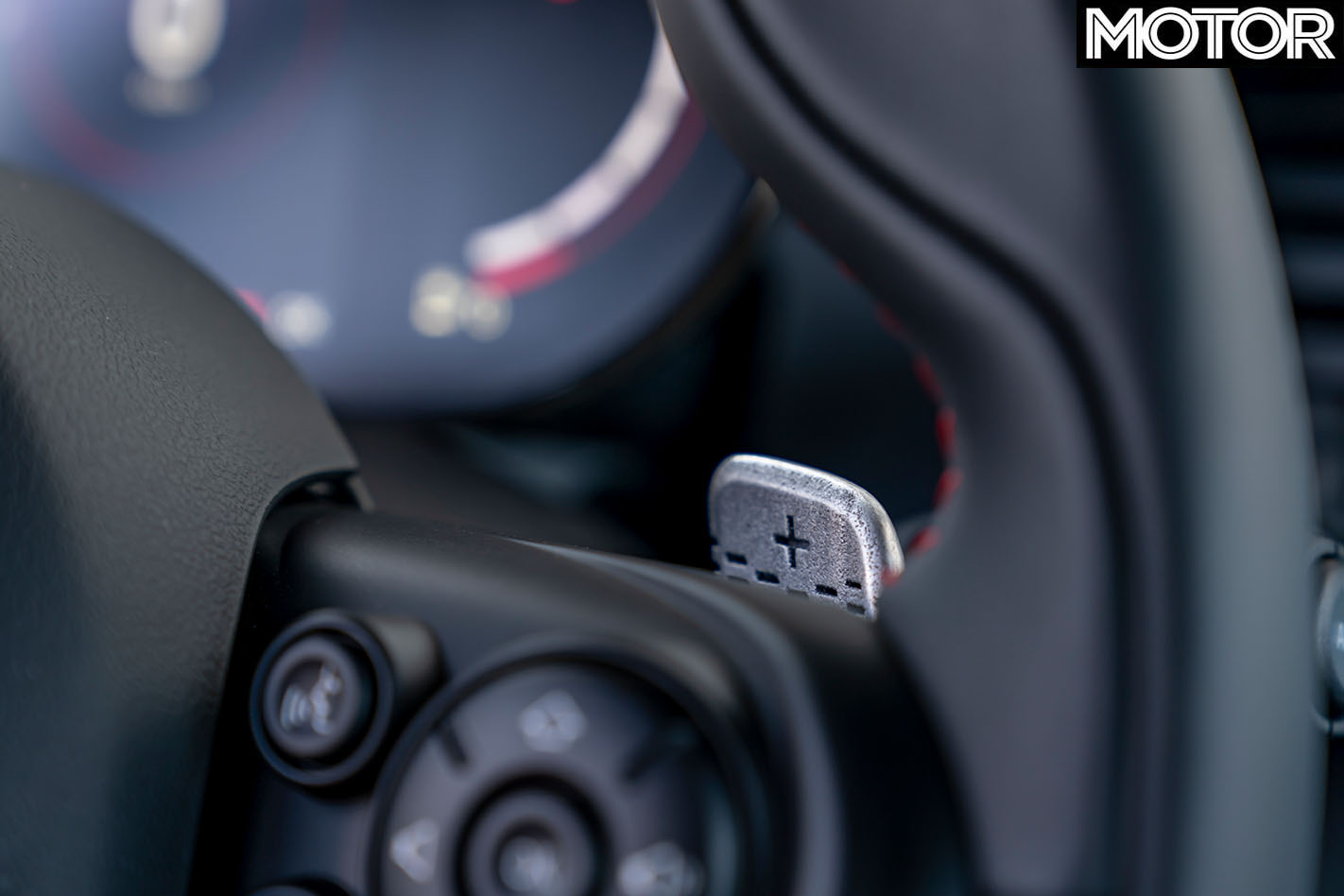
But when pulled to the left where the Sport and Manual modes can’t wait to take the game to the next level, your right knee will kick the joystick back into Drive through the very first left-hander taken at full speed. The only way out of this limbic dilemma is to frequently use the neat alloy shift paddles machined from a 3D printer.
In Germany where we find ourselves for this test, the B15n between Landshut and Regensburg is a brand-new dual carriageway with autobahn status – aka, no speed limit. In COVID-19 times, the north-south trunk road is a paradise for truckers playing cat and mouse with each other, which can be a hazard for season pass holders to the overtaking lane like our rigged up Mini GP.
The PR department gave us the no-frills version which lapped the Nürburgring-Nordschleife in under eight minutes. To do so, it nixed the air conditioning and the satnav which are no-cost options like heated seats, alarm and DAB radio. In contrast to the 170kW JCW which can reach a maximum speed of 235km/h, the claimed top speed of the 225kW GP is 266km/h. But governed by the laws of physics, not a computer – there’s no limiter. Which is an invitation.
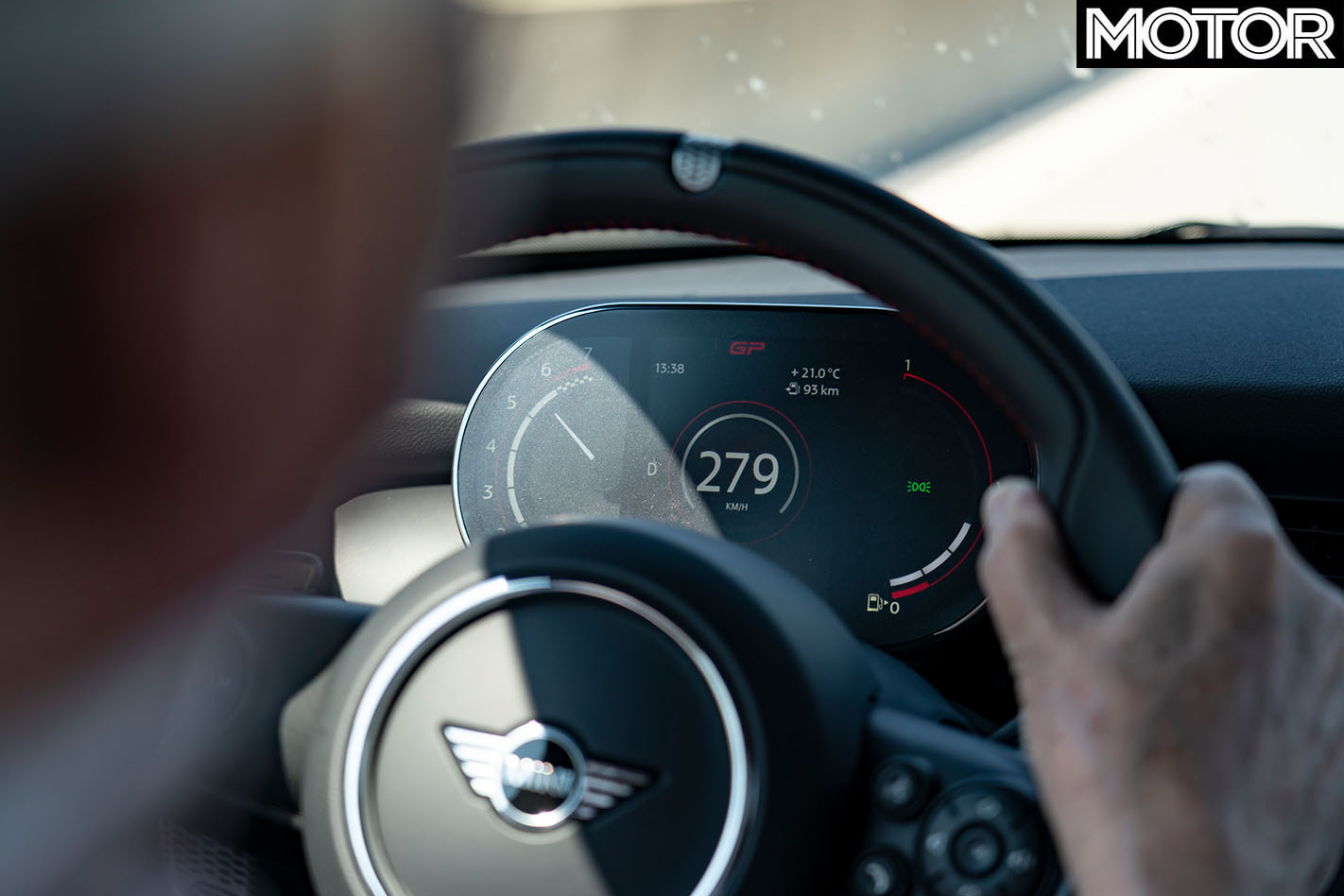
Top speed is second nature to a Porsche or Ferrari, but not necessarily a Mini, even if it does have four times the power of a base version. With an extra 0.2bar in the tyres, the 40-litre tank half empty, mirrors folded, it’s time to duck and give her stick. Never mind the added weight of the photographer in the back, tailwind and descents are actively sought out, headlights on for self-protection, fan off to save power. We patiently wait in a lay-by for a gap. Then it’s go, go, go!
Full throttle take-off is a Smokey and the Bandit flashback to the ’80s – think Golf I GTi, R5 Turbo, Fiesta XR2. Although early hot hatches were not exactly torque monsters, the arm-wrestling antics triggered by the absence of power steering and traction control are suddenly back with a déjà vu performance in the Mini GP. Unchain the 450Nm, and the front wheels immediately start scrambling for traction, grip, stability and, eventually, orientation.
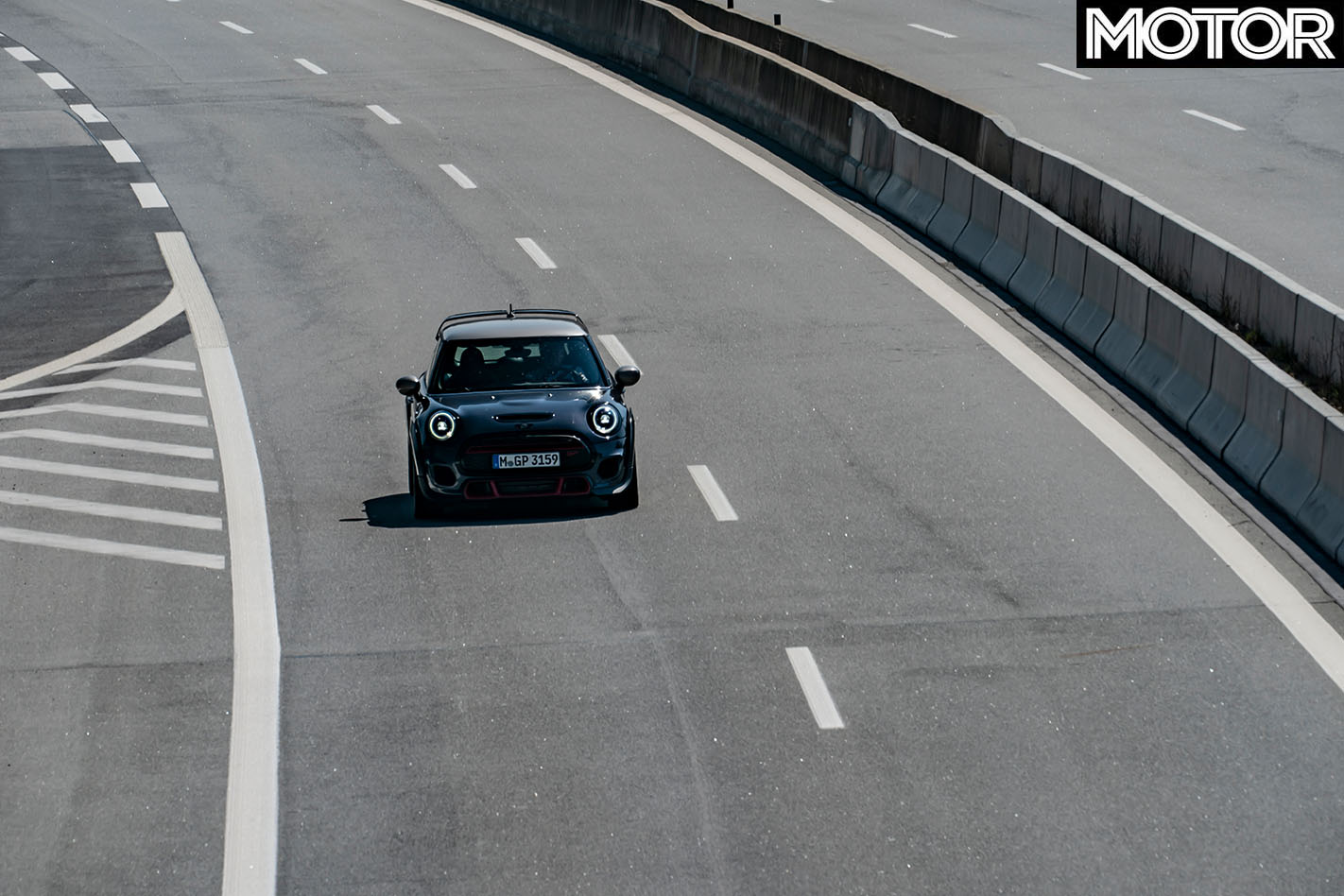
The standard mechanical diff lock does what it can to keep the car in a reasonably straight line, but on uneven turf the maximum locking ratio of 31 per cent yields only a mild low-gear taming effect.
The eight-speed Steptronic automatic is a swift and efficient shifter. With the throttle stapled to the floor, first, second and third come and go in seconds as the car passes 100km/h after only 5.2 seconds. The urge does not ease much in fourth and fifth while sixth and seventh are slightly longer legged to give the engine a brief breather before top gear – a proper driving gear, not a CO2 disciple – takes over at 6250rpm.
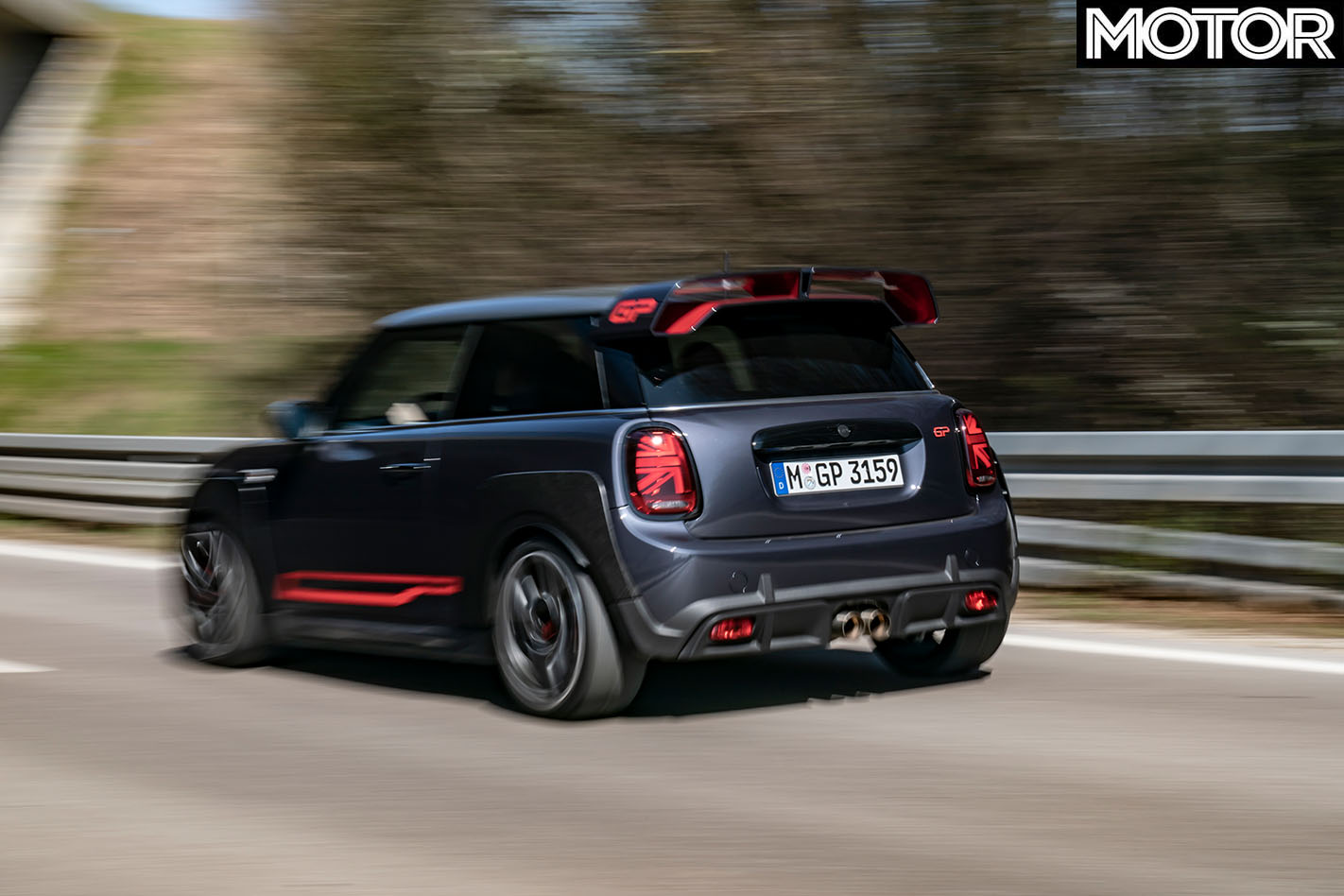
Since the torque curve plateaus from 1750 to 4500rpm, high revs are only of the essence when you’re chasing top speed which is, on this particular late spring Tuesday afternoon, an indicated 281km/h. It was very what you’d call exciting, too, working hyper-fast steering hard to follow the chosen line, briefly losing it, having to lift off momentarily before starting anew, fighting the way back before eventually rejoining it in the wake of minor but persistent deflections.
Ever wondered what intermittent understeer feels like at 240km/h? Not near as scary as a high-speed lift-off tail wriggle, but when it occurs you’d still wish for a bleeder valve to dispose of the sudden adrenalin outburst. The motion diagram of a high-speed autobahn corner addressed at the helm of the Mini GP would still resemble the seismic record of a minor earthquake.
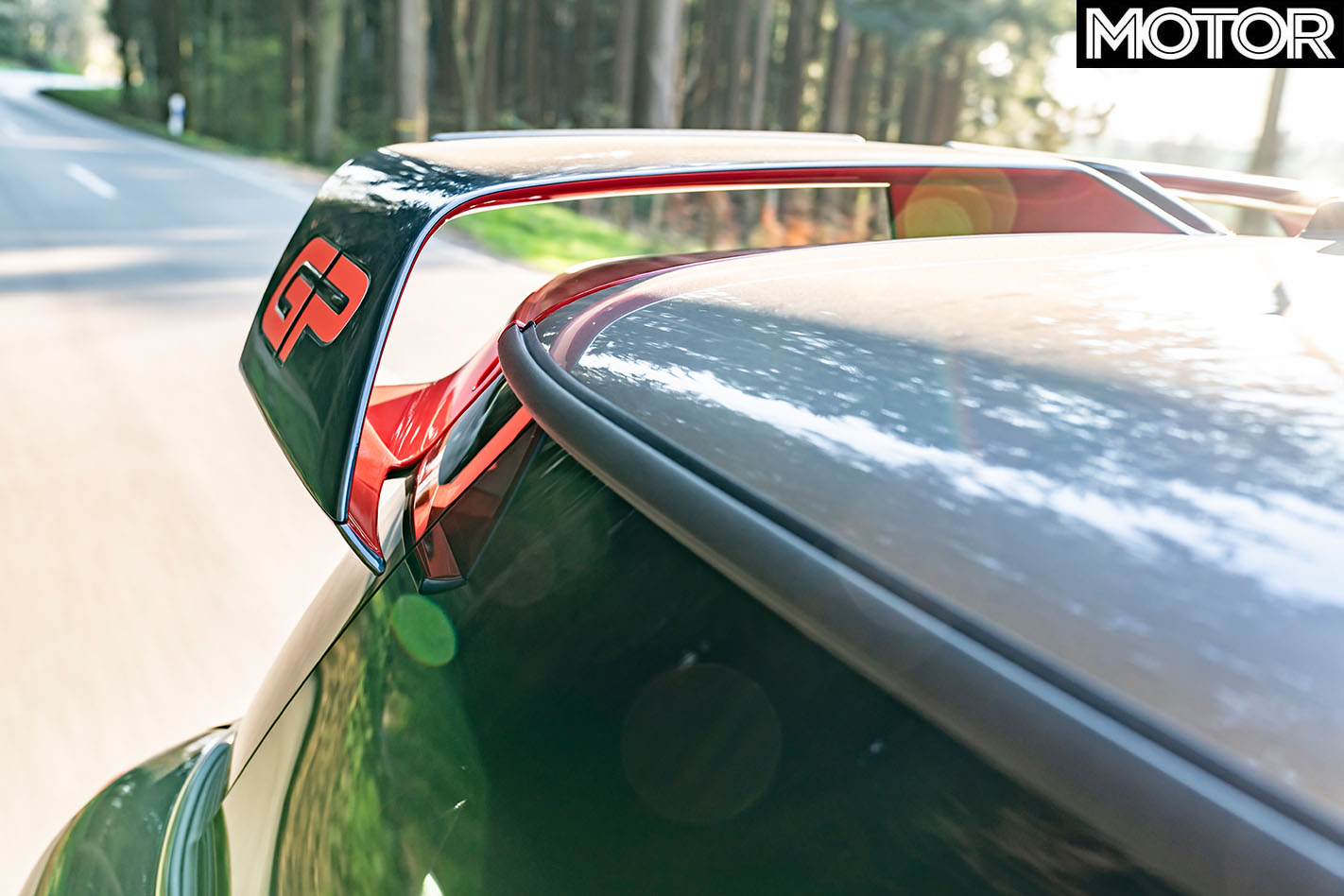
Somewhat irrelevant (particularly in Australia) test out of the way, it’s time to review the handling – long a Mini trait. Whether or not Mini has improved the handling of the somewhat disappointing JCW depends how you define enhancement. If the goal was to further sharpen an already trenchant razor blade so that it can even cut air into thin slices, we’d call it mission accomplished. In the course of its evolution, the GP has clearly become more of a track tool than a back-road bandit.
Although COVID banned us from putting the car to the real test on a circuit like the Salzburgring, Mini had fitted the aforementioned Hankook Ventus semi-slicks which are not officially an option but can be sourced from a friendly tyre dealer.
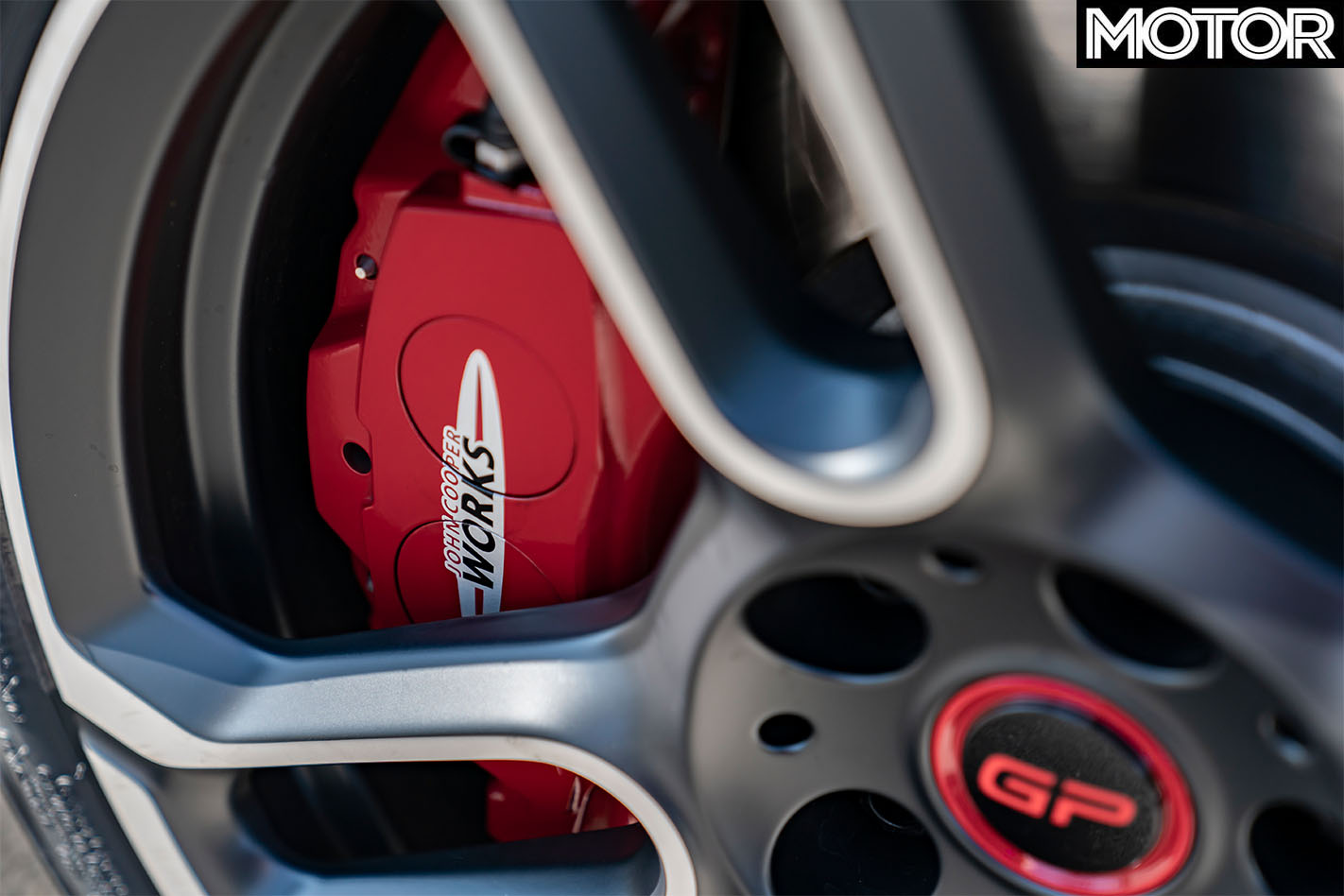
In normal traffic, the Korean rubber takes longer than expected to reach its proper working temperature which is absolutely essential for that legendary liquorice cornering grip. Even when the sun shines and the blacktop is as dry as an Arizona river bed in August, cold tyres can still induce lift-off snap oversteer, a mid-corner lateral offset sequence and intermittent morse-style torque steer.
After three solid hours of hard driving with the knife between the teeth, gentlemanly manners are still conspicuous by their absence from Mini’s most radical breed.
The flatter the road, the more benign the hot Mini’s attitude. With DSC in the GP position, there is almost always enough second- and third-gear wheel slip for a sweeping mid-corner tyre signature. Switching DSC off altogether produces even more front end smoke along with occasional dethrottle rear end fire, but as is so often the case, wildly overdriving the car draws an edgy, slower line which distracts the flow.
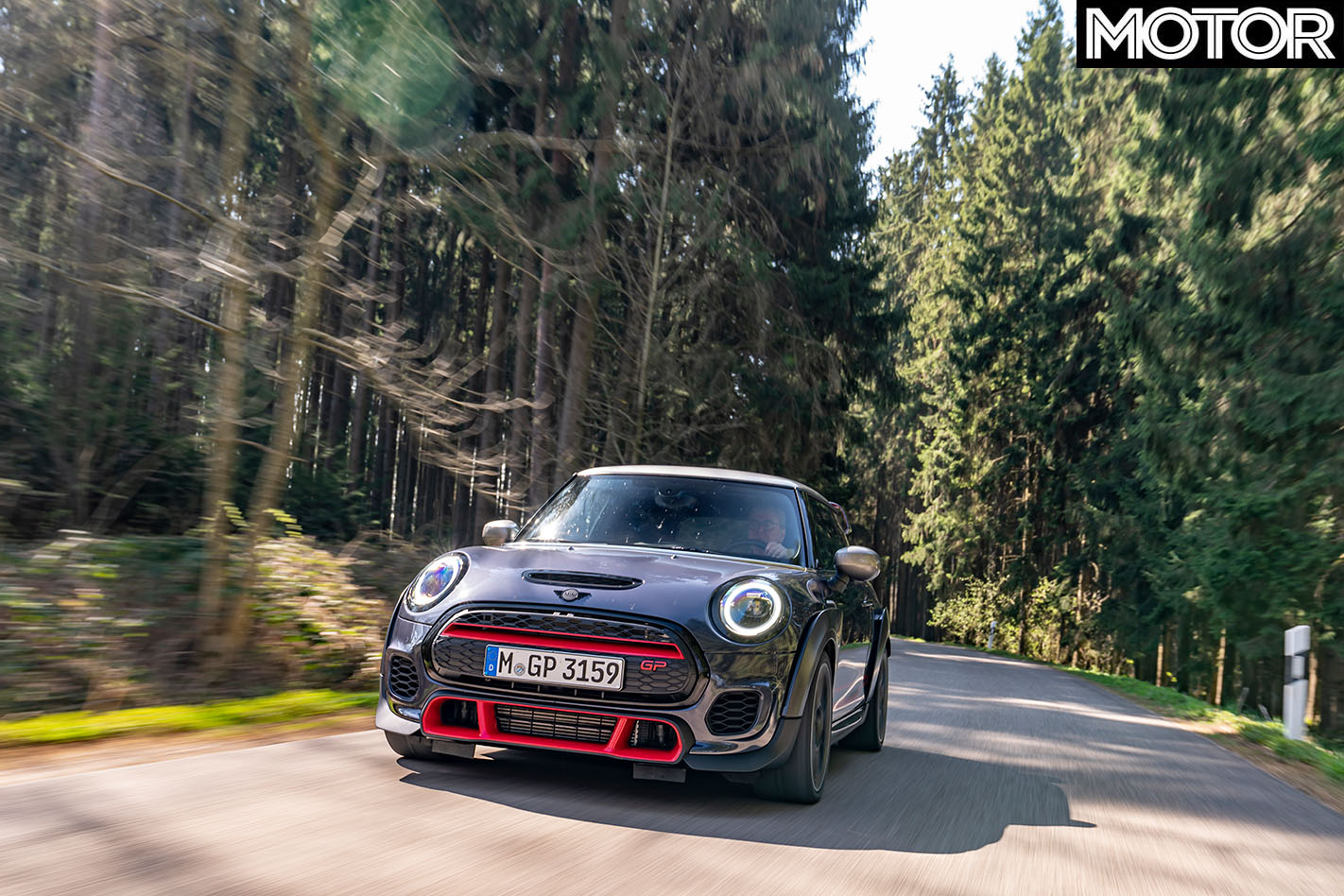
The one thing they don’t teach a car at John Cooper Works is how to relax. The GP in particular is delivered ex-factory pre-loaded and wound-up; this car is a live wire that needs to be earthed. Ride comfort, too, means nothing to this sinewy animal which instinctively hits back at every pothole, kicks every ridge, snaps at every expansion joint and counts the holes of every drain cover.
The only mental drive mode the GP knows is total attack, fusing manoeuvrability and twitchiness leaving plenty of room for driver satisfaction yet no room at all for driver error. Despite the minuscule footprint and weight, exploring the GP’s many talents and overpowering vices calls for a big portion of ability and respect.
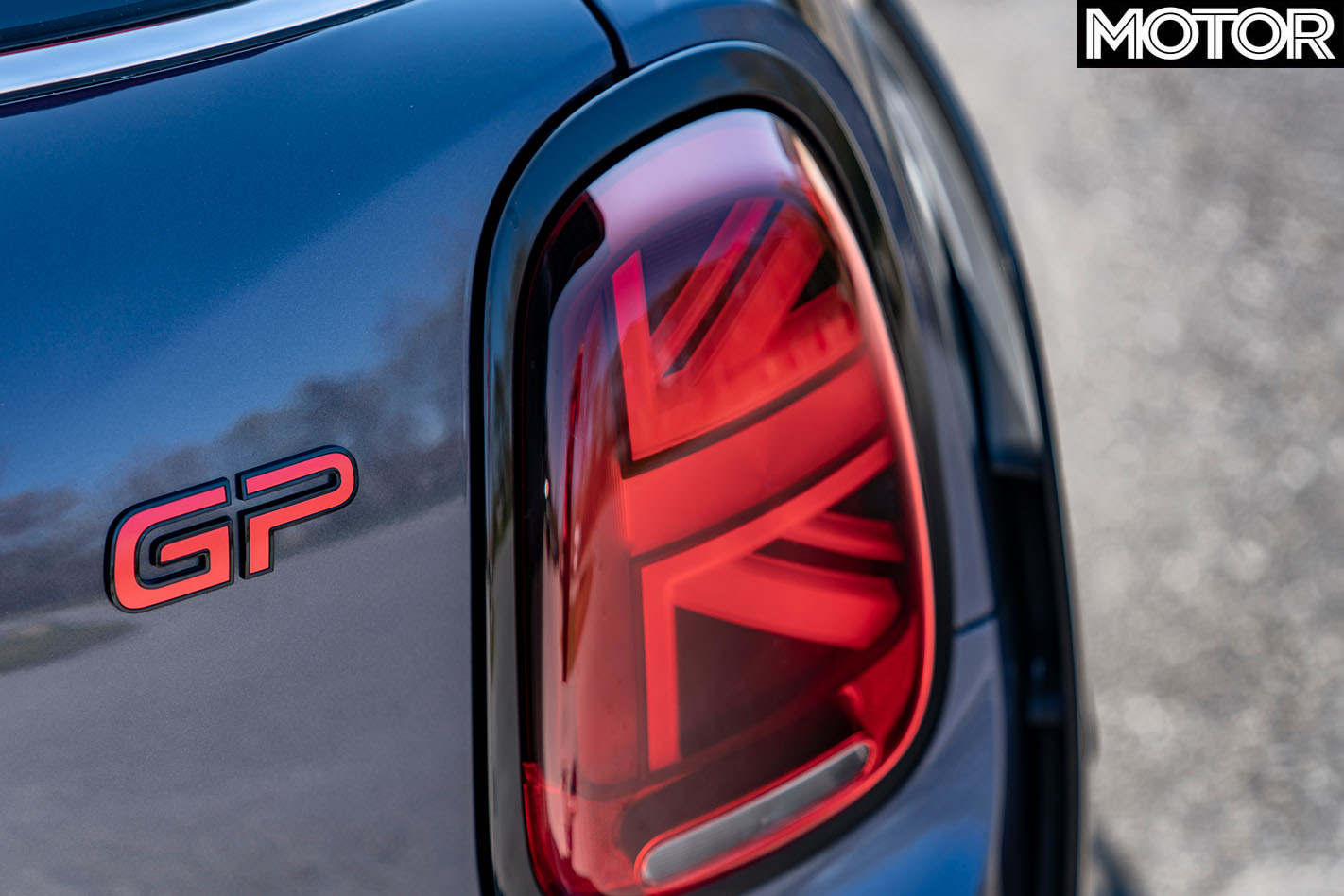
This all-or-nothing mentality appears somewhat less critical on slower, tighter roads; ideal for exploring the full spiel are roundabouts of varying diameter from tight, second-gear traffic circles to XXL, three-lane drift stadiums. Under pressure, though, the ultimate Mini tries very hard not to come across as excessively nose heavy, but eventually fails, unable to hide its vain attempts at masquerading as neutral, benign and balanced.
A firm stab at the accelerator is all it takes to make the rear axle act cocky at the limit, to mistake the near absence of roll for a guaranteed presence of cornering grip. Just as you think you are on top of it all comes the tipping point when the front tyres flare up, increasing tenfold the odds of sudden understeer chased by en suite oversteer.
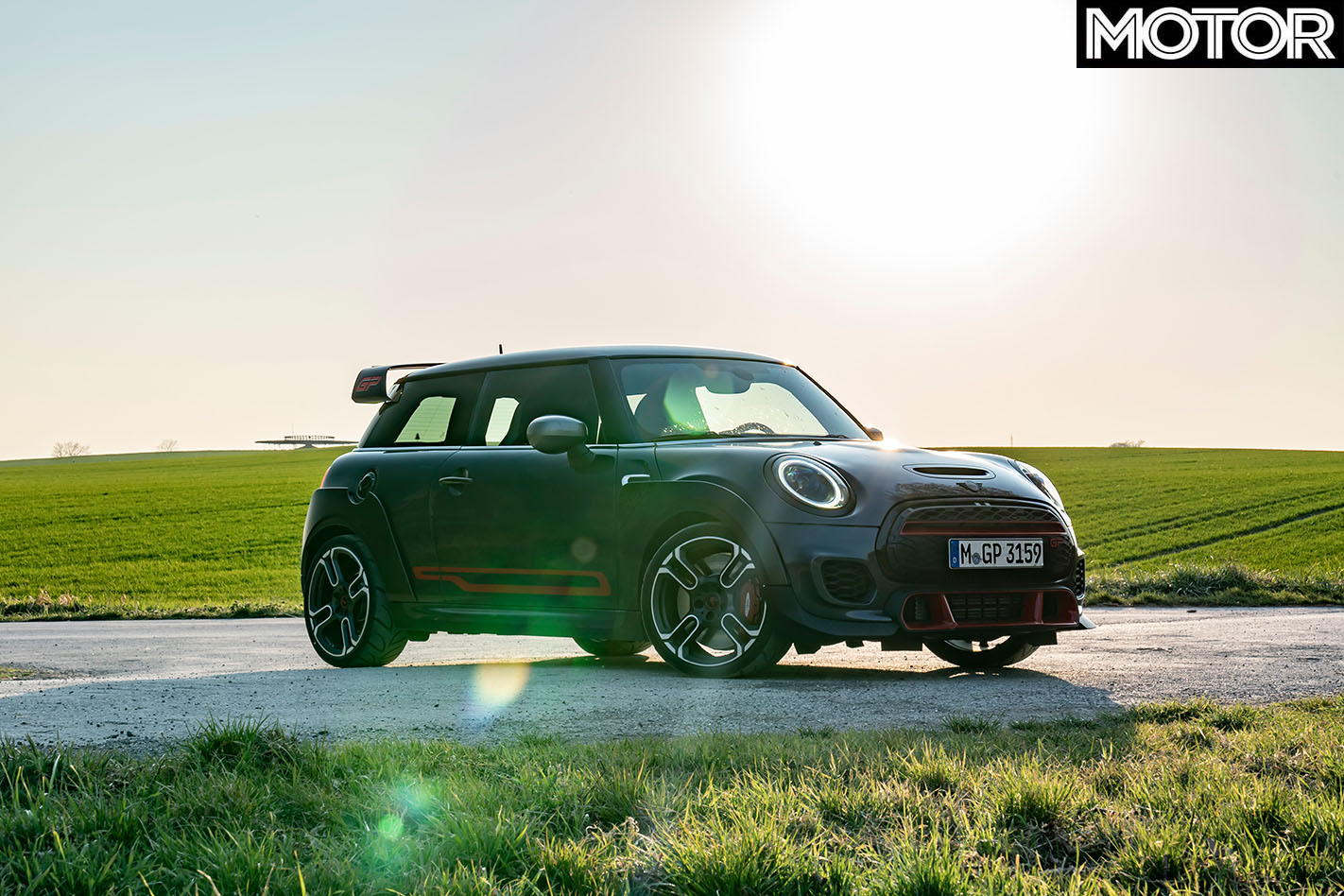
So why not compromise and check out rivals like the new Toyota GR Yaris (AWD included) or even MOTOR-favourite Honda Civic Type R. Because, starting with the number of doors, they don’t really compare. They may match the Mini GP in the street cred sweepstakes and against the stopwatch, but from behind the wheel, only the car that proudly bears John Cooper’s name is pure, high-dose venom. It must be tamed, not teased. Or it will sting.
u00a0SPECS | u00a0 |
Body: | 3-door, 2-seat hatch |
Drive: | Front-wheel |
Engine: | 1998cc inline-4, DOHC, 16v, turbocharger |
Bore x Stroke: | 82.0 x 94.6mm |
Compression: | 9.5:1 |
Power: | 225kW @ 5000-6250rpm |
Torque: | 450Nm @ 1750-4500rpm |
Power/Weight: | 179kW/tonne |
Transmission: | 8-speed automatic |
Weight: | 1255kg |
Suspension: | MacPherson struts, coil springs, anti-roll bar (f); multi-links, coil springs, anti-roll bar (r) |
L/W/H: | 3879/1762/1420mm |
Wheelbase: | 2495mm |
Tracks: | 1521/1509mm (f/r) |
Steering: | electrically assisted rack-and-pinion |
Brakes: | 360mm ventilated discs, 4-piston calipers (f); 330mm ventilated discs, single-piston calipers (r) |
Wheels: | 18.0 x 8.0-inch (f/r) |
Tyres: | 225/35 R18 87Y (f/r); Hankook Ventus TD |
Price: | $63,990 |
Pros: | Knife-edge excitement; grunt; tough styling; unique |
Cons: | Stiff ride; snappy on the limit; auto only; pricey |
3.5 stars out of 5
In our Fast Facts series, WhichCar delves deep into the history of automotive brands to bring you fascinating facts and intriguing information.
Here we focus on Jeep, the famous American 4×4 brand that’s been soldiering along for more than 75 years since it helped create World War II’s most iconic military vehicle.
WAR MACHINE WANTED
Willys-Overland was America’s second-largest car manufacturer, behind Ford, in the second decade of the 20th century, though it had limited success with its passenger cars before it responded to an industry-wide request in 1940 from the US Army for a “light reconnaissance vehicle”.
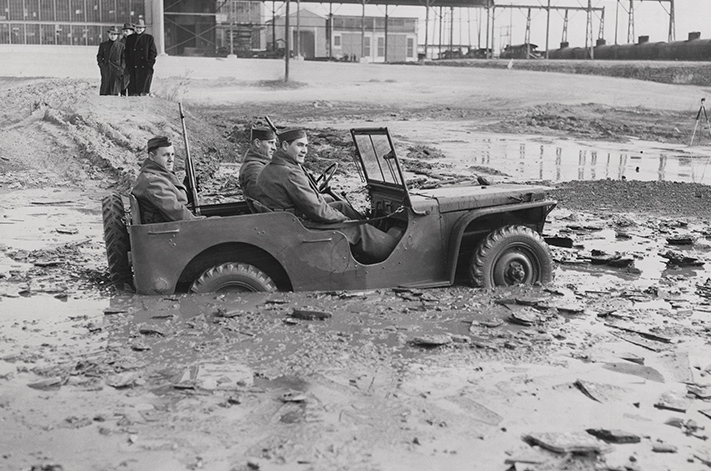
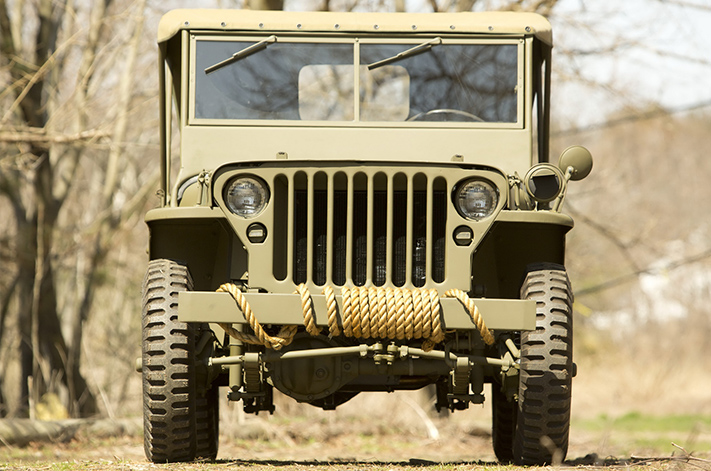
The vehicle requirements included a rectangular body shape, fold-down windscreen, three bucket seats, a smooth engine, a wheelbase less than 190cm, and a maximum weight of 590kg. American Bantam was first to build a prototype and was ultimately credited with its invention, though Willys won the contract to be primary manufacturer with a modified version of that vehicle – which it called the Quad before changing to MB.
WHAT’S IN A NAME?
Fellow contract competitor Ford ended up producing more than 275,000 units of the battle ‘taxi’ to help meet demand, calling its version the Model GPW (originally known as the Pygmy). The now-famous Jeep moniker began as a nickname of vague origins. Various theories range from a contraction of GP (for General Purpose vehicle) to a bizarre animal character called Eugene the Jeep from the Popeye cartoon.
TRADEMARK WAR
Willys filed to trademark the Jeep name in 1943, which it finally received in 1950 after American Bantam had gone bankrupt and Ford lost its legal fight. It hadn’t been hanging around, though, producing the first civilian ‘Jeep’ – the CJ-2A – in 1945. Featuring a tailgate and side-mounted spare wheel, the model was aimed at farmers who could use it as a load-carrying ute or an agile ‘tractor’ for pulling plows and mowers. The original, 1948 Land Rover Series 1 was inspired by the Jeep.
JEEPS FOR THE ROAD
The 1946 Willys Wagon encased occupants in an all-steel body, and with the Jeep’s 4WD underpinnings could be considered a forefather of the SUV – proving popular with America’s post-war suburban explosion. Jeep further focused on the passenger-car market with the 1948 Jeepster, which powered the rear wheels only and featured plastic side curtains instead of roll-up windows.
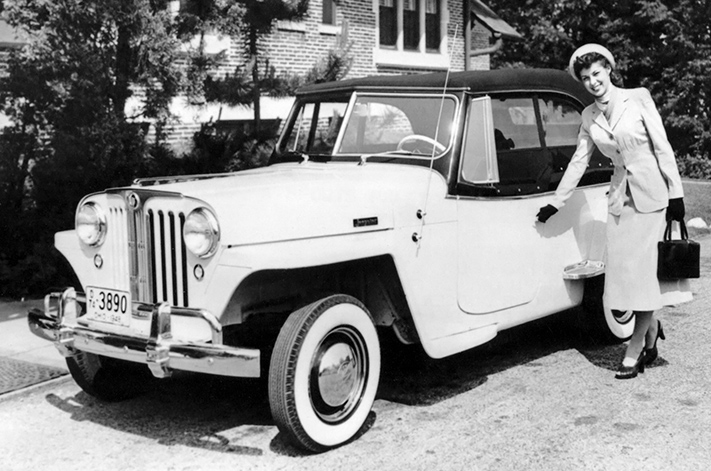
CREDIT WHERE CREDIT’S DUE
A seven-slot grille is one of a Jeep’s signature features – alongside trapezoidal wheel arches – yet it was inspired by Ford’s version of the MB, which featured a nine-slot vertical grille designed to save weight. The transfer case at the heart of the company’s four-wheel-drive system was also produced by Spicer Manufacturing – now known as Dana and which continues to supply 4WD hardware including specialised axles to Jeep.
Jeep Wagoneer Roadtrip concept
THE 28-YEAR JEEP
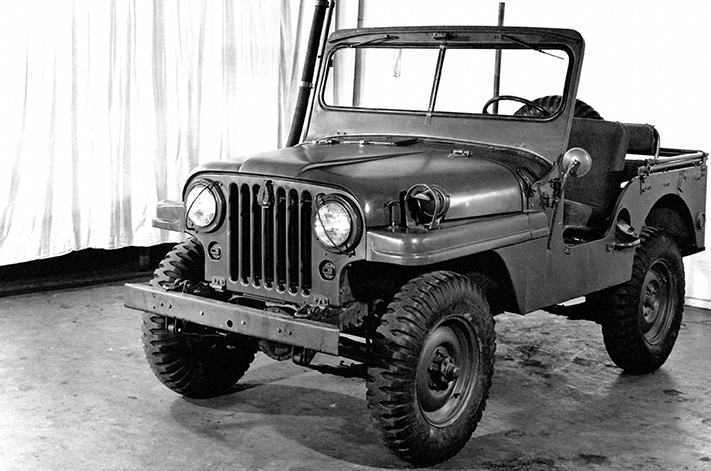
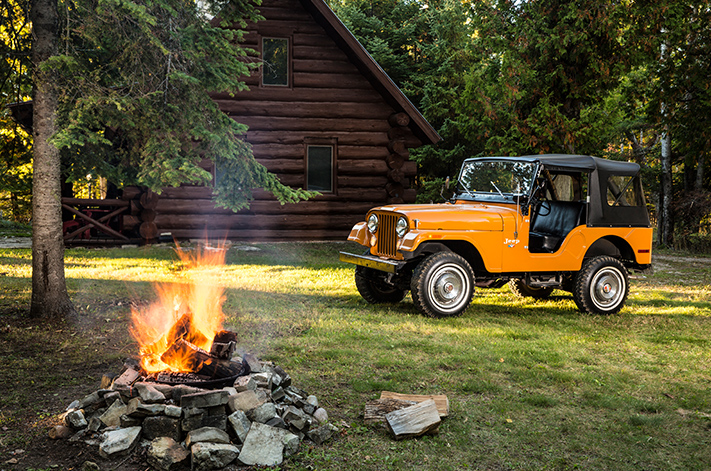
After various updates to the CJ and a US$60m takeover by the Kaiser Company in 1953 that led to the dropping of the Overland part of the name, the 1955 CJ-5 (and its long-wheelbase cousin, the CJ-6) brought much-improved mechanicals and cabin comfort to find popularity with buyers. The model lasted until 1983, with about 600,000 built.
WAGONEER PIONEER
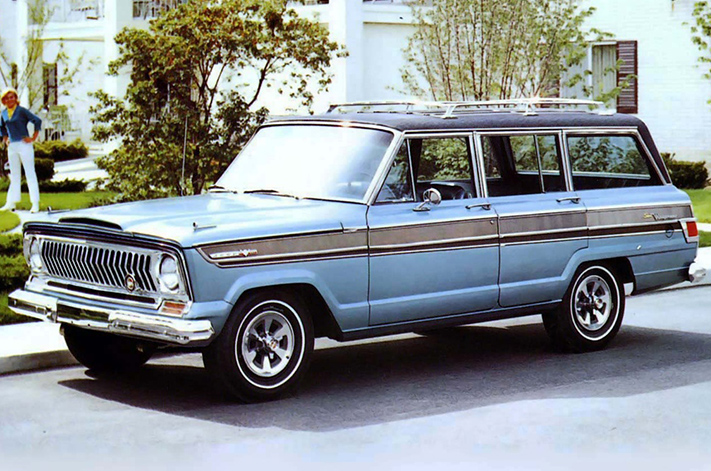
In 1963, the year Kaiser-Jeep was formed, the Wagoneer was released as the world’s first 4WD with an automatic transmission, while options included an independent front suspension. A decade later, the model added Quadra-Trac as an industry-first automatic permanent all-wheel-drive system.
AMERICA’S ANSWER TO THE RANGE ROVER
In 1984 – 14 years after Jeep had changed hands again, purchased by the American Motor Company (AMC) – the Grand Wagoneer took Jeep into luxury territory with features such as leather seats, air-conditioning, extra noise insulation, a powerful V8, and woodgrain exterior trim!
WORLD’S FIRST MODERN SUV
The first of the modern Jeep nameplates recognisable in showrooms today emerged in 1974 with the Cherokee – essentially a two-door variant of the Wagoneer aimed at younger buyers. But the second-generation model released in 1984 had greater significance. An all-new model featuring unibody rather than body-on-frame construction – as well as four doors – the Cherokee could lay claim to being the first of the modern SUV breed.
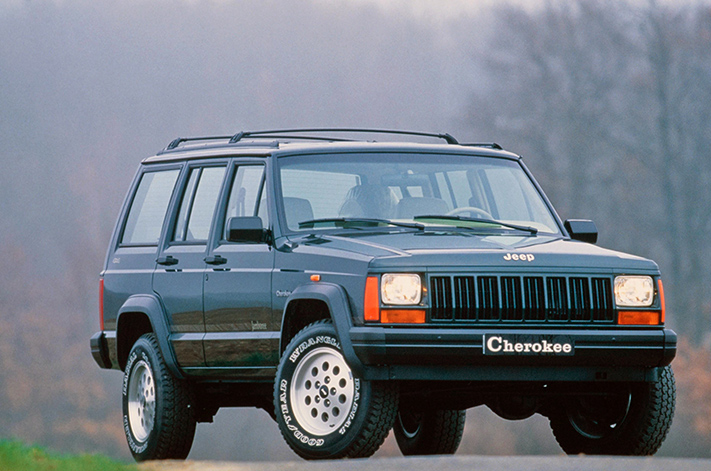
FRENCH AID; CHRYSLER RAID
AMC sales struggled during the 1970s, in contrast to Jeeps, and in 1979 Renault was approached to become a principal shareholder. Willys already had a link with the French brand, having built the Dauphine in Brazil from 1959 to 1968 under licence. The 1980s would prove to be a more challenging market for cars, however, and in 1987 AMC was purchased by Chrysler (now FiatChrysler but still the parent company).
WRANGLER
Jeep finally replaced its long-running CJ series with a model called the Wrangler. Visually it retained ties with its military origins (square headlights aside) and continued with leaf-sprung suspension, though mechanically it was more closely associated with the Cherokee. The 1997 TJ generation ramped up the comfort, switching to a coil-spring suspension based on the underpinnings of a bigger Cherokee model…
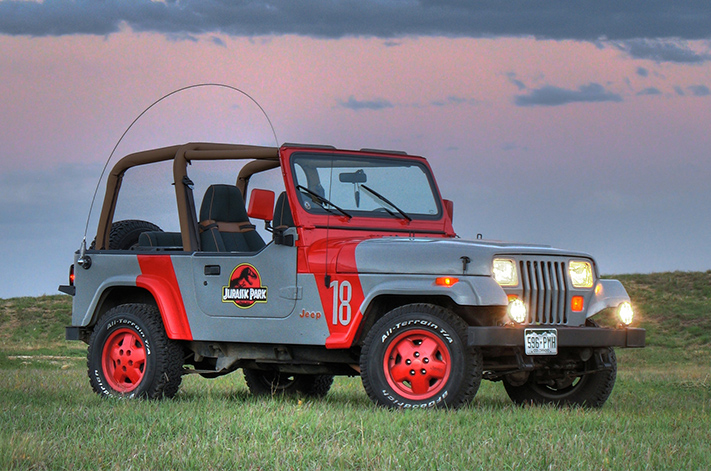
GRAND SCHEME
In the grand old days of Detroit Motor Shows – when manufacturers spent extravagant amounts of money on PR stunts – Jeep’s new Grand Cherokee made a smashing debut in 1992 by being driven through one of the convention centre’s glass windows. It was initially planned as the third-generation Cherokee before being created as a new model line with an increased luxury focus. It continues to be one of the world’s biggest-selling Jeeps.
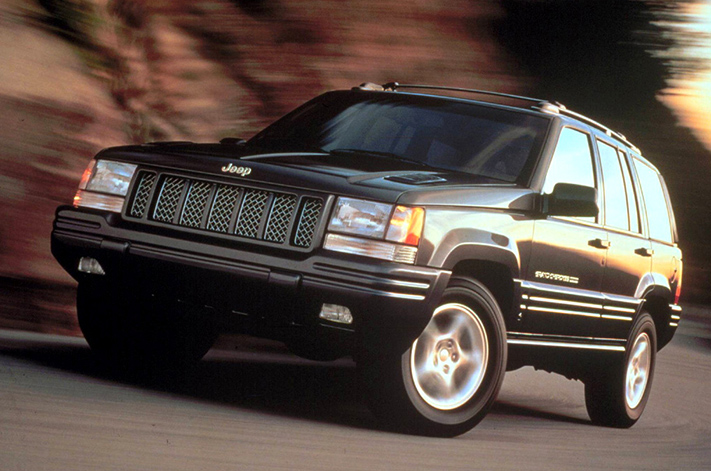
TRAIL RATED
When Jeep introduced a Trail Rated badge in 2003, it was applied to its most hardcore variants capable of tackling notorious trails such as the Rubicon. Today, though, it simply means a Jeep has proven its credentials in five areas: traction; water fording; manoeuvrability; axle articulation; ground clearance. Each Jeep model line currently offers a Trail Rated model. More recently, Jeep has been labelling variants with the highest capability ‘Trailhawk’.
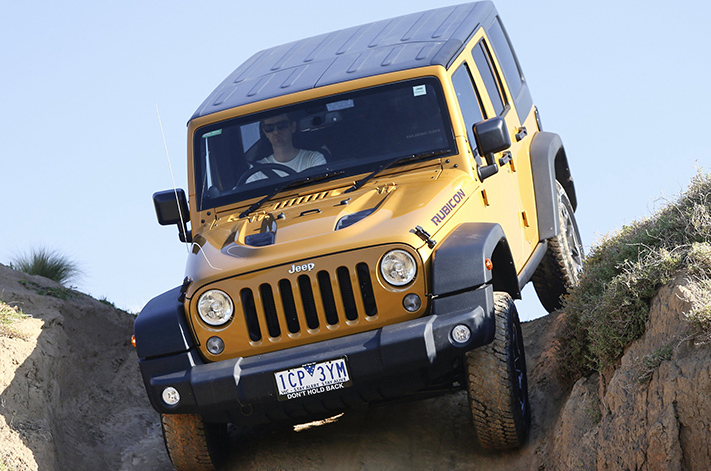
EASTER JEEP SAFARI
What started as a single-trail event in 1967 to attract new visitors to the Moab area in Utah, America, has expanded into a nine-day off-roading extravaganza involving more than 120 trails and about 2000 4WDs … and dominated by the Jeep brand. Last year marked the 50th running of the Easter Jeep Safari. It has become traditional for Jeep to unveil a range of concepts showcasing the brand’s off-roading credentials and design skills.
| Jeep says ‘Happy Easter Safari’ with six new off-roader concepts
FOR TRACKS NOT TRAILS
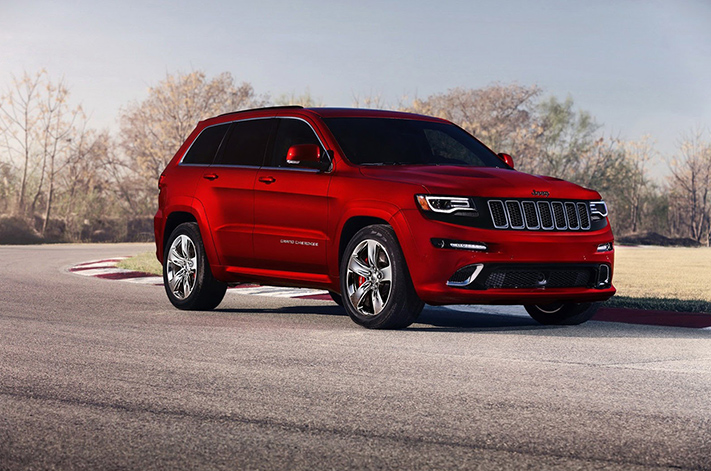
After flirting with high-performance SUVs with its Grand Cherokee SRT, in late 2017 Jeep launched what is the world’s fastest SUV. The Grand Cherokee Trackhawk is propelled by a 527kW V8 and capable of accelerating from rest to 100km/h in 3.6 seconds, and reaching a top speed of 290km/h.
RETURN OF THE UTE
Jeep revived the Gladiator name in 2019 to welcome a ute-based variant of the Wrangler. It was only a matter of time, considering the huge interest of utes in Australia – and in fact, the world.
