
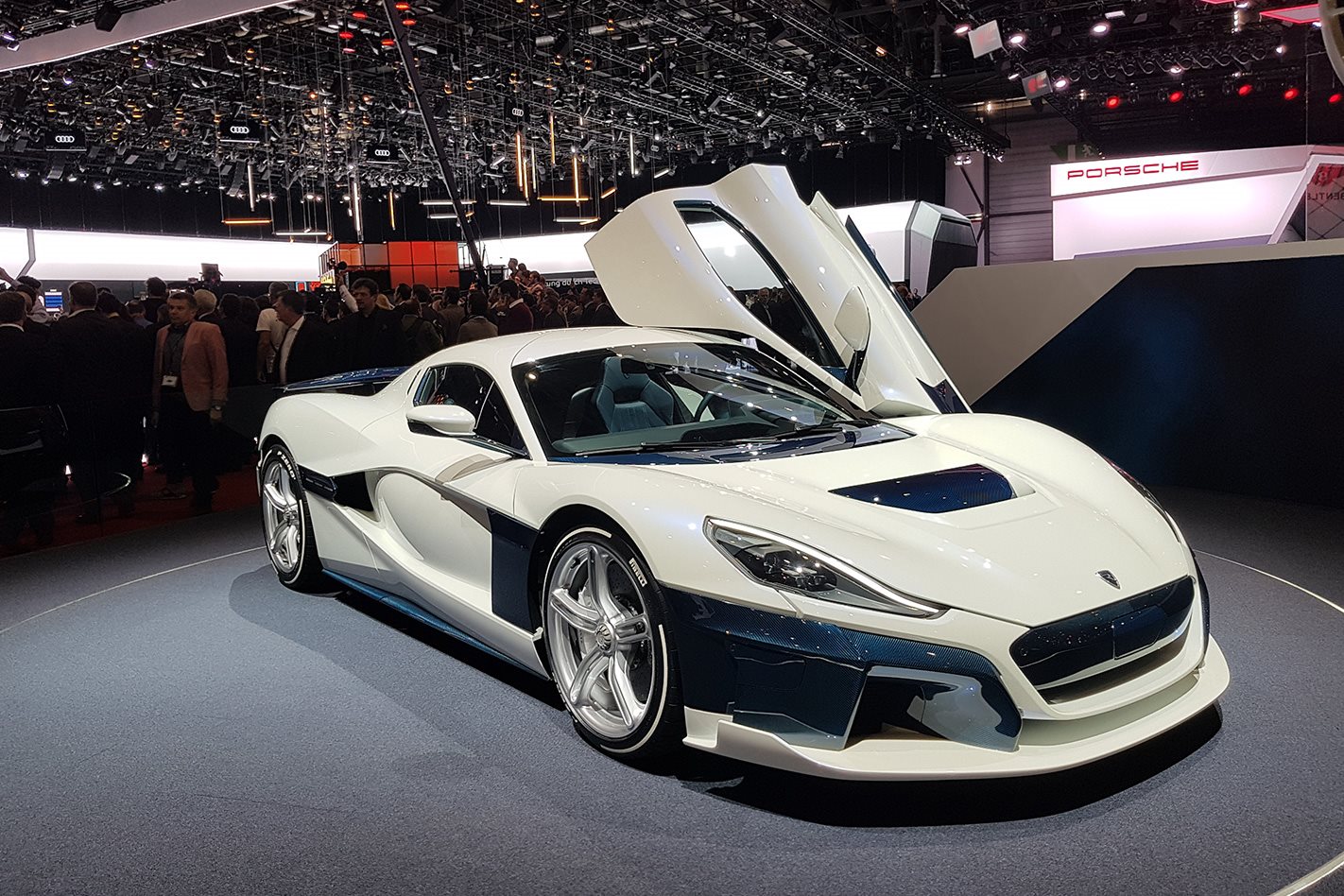
“The automotive sector is currently going through a difficult phase, and exhibitors need time to recover from the effects of the pandemic,” it said.“Furthermore, it is far from certain that the current health situation would permit the organisation of an event attracting more than 600,000 visitors and 10,000 journalists next spring.”
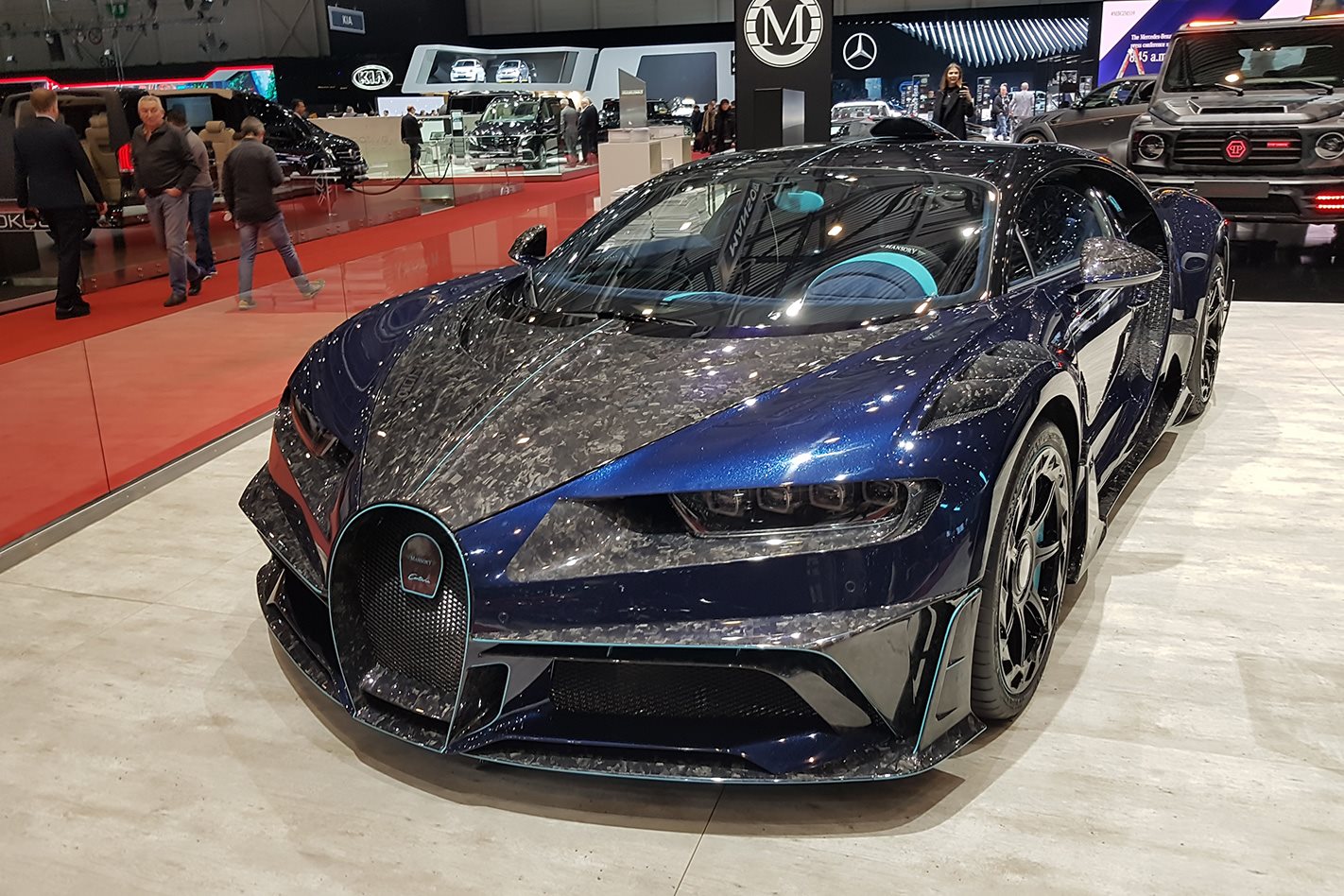
Adding insult to injury, complications surrounding Geneva’s cancellation and the subsequent massive cash deficit, a bailout loan originally approved by the Canton of Geneva and Grand Council has since been abandoned.Without the ability to raise funds from a 2021 show, the organisers would be forced to default on a hefty one-million Swiss franc (A$1.5m) repayment due in 12 months and, as a result, the board has agreed to the sale of the show to convention centre owners Palexpo SA.According to its current keeper, the show’s best chances of survival and a return from hiatus in 2022 are in the hands of a new owner.
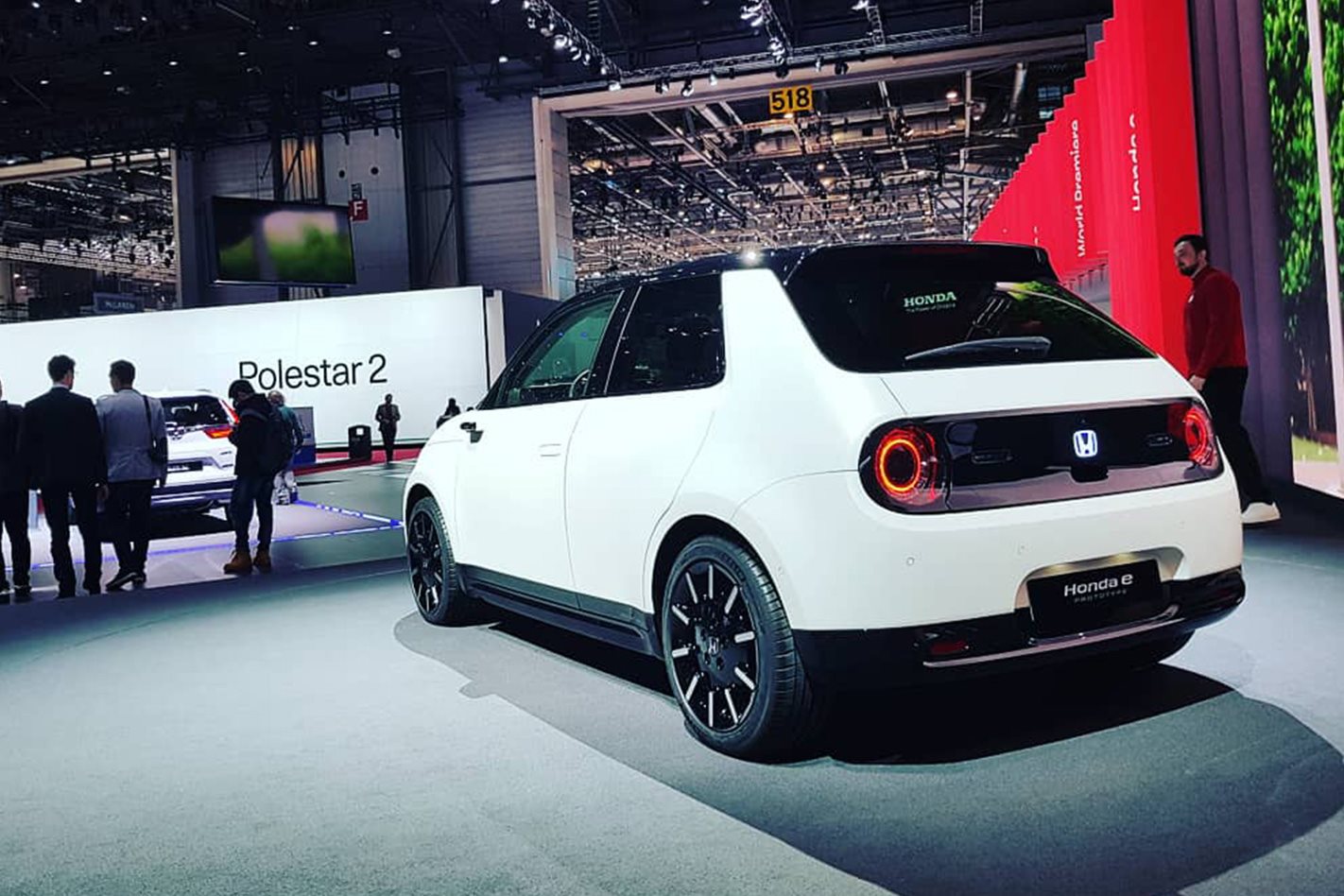
The announcement follows similar ominous statements from other international events with similarly devastating economical ramifications.Melbourne’s Grand Prix was axed not long after the 2020 Geneva show, followed by nine other F1 races, the Beijing auto show went the same way as did Paris and the Goodwood Festival of Speed among many others.
Commercials are one of the many effective ways car manufacturers push their brands into the public eye. Creating something memorable – whether it is clever, hilarious or crazy – is a sure-fire way to increase brand recognition and customer retention.Among the many channels, conduits and media to get the message across, TV advertising remains one of the most popular, effective and often among the most expensive.Some of our favourites you’ll find below aired during the US Superbowl – an ad slot renowned as having the highest price tag of them all. How does about US$5.6m (A$8.1m) per 30 seconds sound?You might be surprised to hear many car makers successfully build a business case for that kind of outlay and investment. TV advertising is truly a powerful thing.Here are some of our favourite car commercials that cover the gamut from awesome to wince-worthy, hilarious and downright WTF moments.
CITROEN
Citroen does strange like nobody else. Its cars are packed with quirks that are sometimes plain bizarre, and its promotions are little different.The 1970s Citroen DS is often voted as one of the most beautiful cars to date, but it’s equally renowned for its independent suspension and innovative use of hydraulics. Current Citroens continue that heritage of edgy styling, plus a little French ‘je ne sais quois’ on some of the packaging and internal detailing.So it makes sense that Citroen’s ads are as quirky as the cars. After all, Citroen isn’t seeking the average customer. Dancing robots with great moves but for no apparent reason? A Citroen driving out of the head of pop icon Grace Jones as she screams at nothing in particular? C’est la vie!These ads get to the heart of what sets Citroen apart from the herd.
FIAT
In Fiat’s Blue Pill ad, an ageing man howls in frustration as his ‘performance’ pill bounds from roof tile to downspout and into the fuel of a Fiat 500X, we feel his pain. Sort of.The pill works its magic to bulge up the little Fiat into an all-wheel version, and we totally get what Fiat is telling us. It’s that reach to the everyman that Fiat perfected in this, and many other TV commercials.
KIA
It was a risky move to use hamsters to sell a car – cute animals are scraping the bottom of the advertising bowl – but it worked for Kia. Maybe because, as creative directors, D&G commented after winning a string of awards for the campaign, “the hamsters always have their paws on the pulse of pop culture”.Kia needed to dramatically increase its international profile and emphasise the edgy cred of the Kia Soul, and the hamsters made it happen. It wasn’t enough to grab the attention of a youthful Australian audience as Kia would have liked, but the model is incredibly popular with America’s young drivers.
SUBARU
Oh, this is just gold. Close your ears to the American “Su-BAH-roo” twang and go straight to the crux: the car is “cheap and ugly”. Say what? You heard it. They went with it. (wait until you get to 1:30)
BMW
BMW prides itself on creating the pure driver’s car almost as much as it does creating the cleverest ads to promote them, so what better way to make the point than in a series of extreme driving shorts.
The Hire is a series of short movies using renowned directors and actors. High-profile stars including Clive Owen, James Brown, Madonna and Gary Oldman hammer the message home that BMW is cool.
But the German marque has previously produced another brilliant advert, this time for the launch of the 2000 E39 M5. At the time, the V8-powered four door was the world’s fastest sedan so what better way to demonstrate the achievement that with this wonderful act of misdirection?
FORD
Ford does a great job in the States exploiting their 1960s and 1970s muscle car heritage, with lots of dad-and-son drive stories. It also captured the Aussie experience in a more down-to-earth way with its controversial (and banned) cane toad ad.
Ford also nailed the hot hatch demographic when it partnered with Ken Block. Ford got Block to put a modified Fiesta through the cult-followed Gymkhana paces, which was a great way to showcase what a little hatch can do, albeit after a full rally preparation.
AUDI
Audi is all about bringing it to the traditional luxury car market and showing BMW and Mercedes-Benz up as old school. Its way of thumbing its nose at the opposition in this advertisement is direct and effective. The ad Release the Hounds is a classic example, while Doberhuahua is hilarious.Read next: Essential car accessories for dog people
MERCEDES-BENZ
Mercedes-Benz is about class, heritage and dependable luxury. Not In this Weather is a classic yet slightly naughty ad that emphasises the ability of a Benz.
And, with a completely different approach, the Uncrashable Cars campaign might be one of the most effective ads on the benefits of safety technology we’ve yet seen.
VOLKSWAGEN
Volkswagen loves to reference its dependable, Germanic character, but a warning comes with advert: YAYAYA will most likely be circulating in your head days later. Possibly months.
HONDA
The Cog is a fascinating Rube Goldberg sequence that epitomises the Honda byline: “Isn’t it nice when things just work”. It has even inspired a whole genre of copycat ads.Read next: Honda Accord pricing and features Beautifully, this incredibly clever ad was not a fake and used very little computer generated elements. The only post-production intervention was for minor adjustments including the removal of wires and other distracting visual elements.
Although it appears to be one continuous shot, the ad was, in fact, pieced together from just two 60-second pieces. Like a painstakingly prepared and perfectly executed domino rally, Honda really did set up and nail the entire ‘machine’ almost exactly as you see it. Incredible.
Update:
The Lamborghini Miura P400 sold for US$990,000, or around AU$1.44m, today with the buyer apparently an Italian car fan – owning a Ferrari 512 BBi and a Maserati Bora.
More details below in the original story, published June 26.
—
What a time to be alive.
If you thought we’d seen the most internet shopping had to offer during these strange times, you might’ve been wrong. Someone’s currently selling a 1968 Lamborghini Miura P400 on auction classified site Bring a Trailer, and that’s pretty much peak internet shopping as far as we’re concerned.
In fact, it’s peak BaT right now, with the next-most expensive car up for grabs a Ferrari 330 GTC listed as a ‘project’ for US$140,000 with two weeks left of auction.
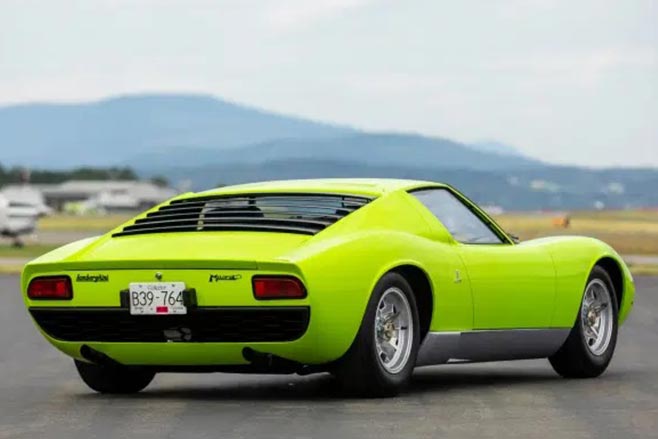
But in four days, someone new will own this Verde-coloured Lambo Miura, having paid more than US$803,000 as the bidding currently sits. That’s AU$1,166,000, by the way.
From what we’re able to see, and from memory, this is the only time a Miura has been offered on BaT.
The Italian Job Lamorghini Miura: Driven
Apparently the Miura is pretty legit, with fewer than 30K miles showing, and a matching-numbers V12 under the bonnet.
It’s had plenty of work done to restore it, too, including trimming the interior in an interesting colour choice, as the seller writes.
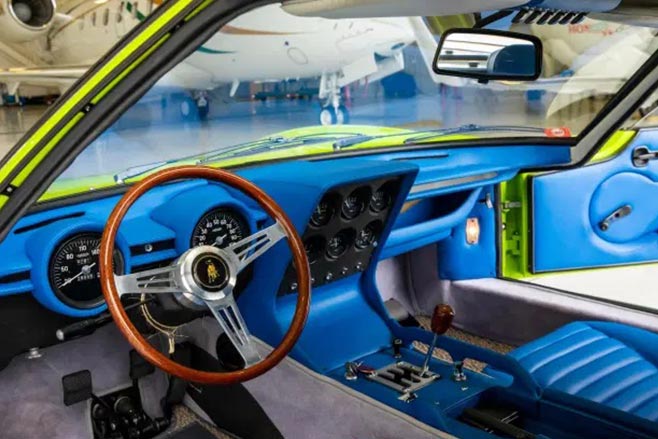
“Chassis 3357 was completed on March 6, 1968 and sold new in Italy, and reportedly spent time with a long-term owner in California before being acquired by marque specialist Bobileff Motorcar Company in 2014.
“The current owner purchased the car from Bobileff and commissioned a two-year restoration which included repainting the Bertone-styled aluminium body in Verde Miura, re-trimming the interior in blue leather, and rebuilding the original 3.9L quad-cam V12.”
https://www.youtube.com/watch?&v=b1gnD67St9c
It’s currently located in Canada, so if you’re feeling keen you can check out the listing here.
It’s go time for Hyundai’s hottest models, with confirmation the brand will launch seven new or updated vehicles with ‘N’ featuring prominently in the badge over the next 18 months.
Top of the hot-hatch pops is the news that the i20N has been officially confirmed for Australia, with the diminutive hatchback set to line up against the Ford Fiesta ST and Volkswagen Polo GTI.
Sourced from Turkey, final specs are still under wraps for the i20N, which forms the basis of Hyundai’s World Rally Car.
Speculation is rife that it will use a tuned-up version of the 1.6-litre turbocharged four-cylinder engine seen in N-Line products like the i30, driving the front wheels via a six-speed manual transmission.
The i20N will slot in below the successful i30N, which will undergo its third model update early in 2021 when it finally receives a long-promised eight-speed dual-clutch transmission.
Hyundai’s product planning manager Andrew Tuatahi refuted suggestions that the i30N would be moved up the ladder in terms of price and spec to accommodate the i20N, suggesting instead that the two cars would be complementary.
“We certainly expect it to follow on from the i30N in terms of feel and look and its place in the market relevant to its segment,” he told journalists, adding that he doesn’t see the i30N shifting its focus.
The i30N received minor updates when the Fastback version of the car was introduced early in 2019, and both body styles of the car will receive the eight-speed DCT.
However, the eight-speed DCT will make its Australian debut under the bonnet of the Sonata N-Line, which is expected to use a turbocharged version of Hyundai’s brand new 2.5-litre direct-injection four-cylinder engine, which produces around 216kW and 420Nm in overseas trim.
Even fewer details were forthcoming around the Sonata, though a review of a more pedestrian version confirms a digital dashboard, large multimedia screen and multiple driver safety aids will be part of the package, while its suspension and brake package will be tweaked to suit the extra power.
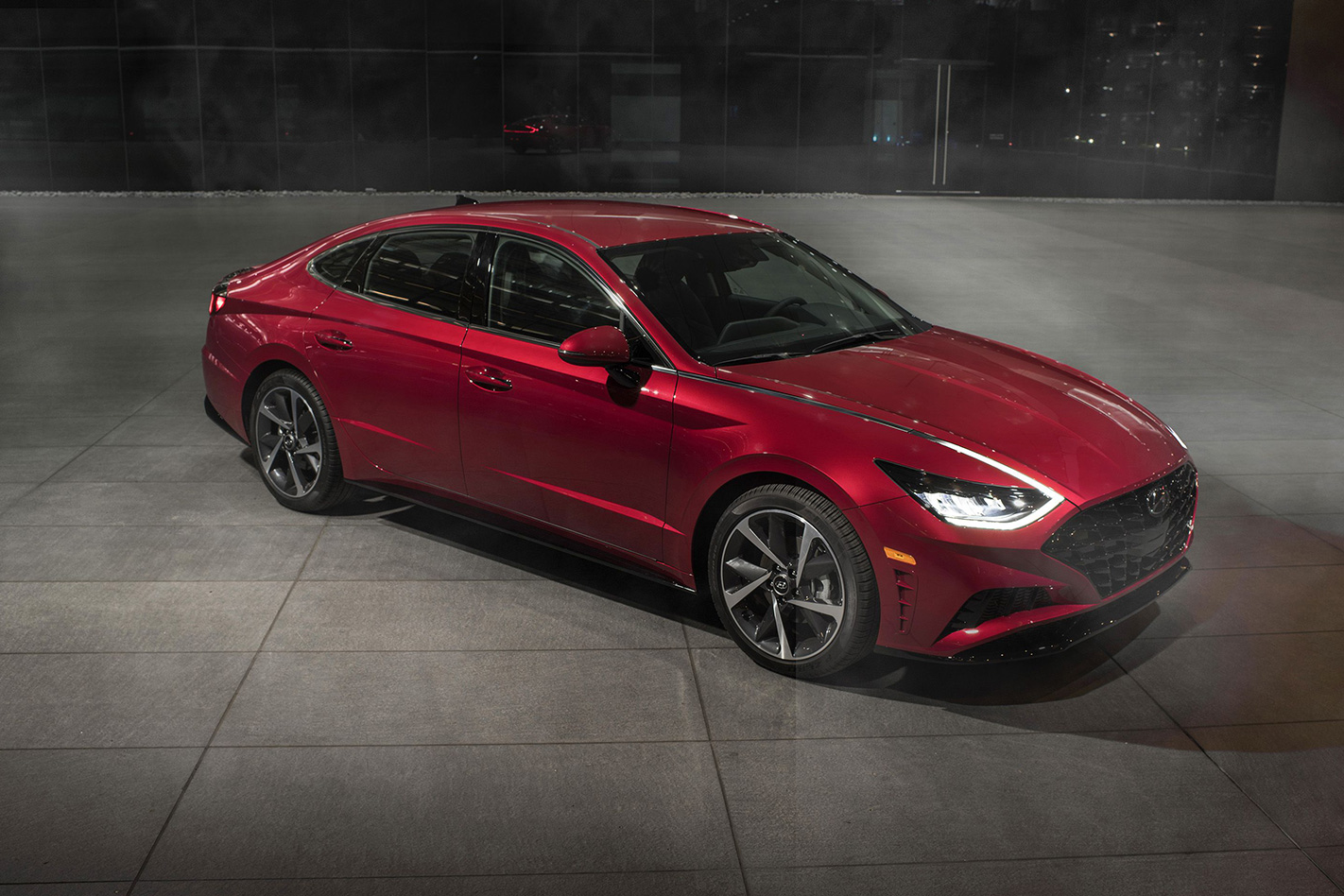
The Sonata N-Line has been previewed overseas, and is expected to be unveiled later this year.
Hyundai has also confirmed that it will replace the Elantra sedan with the i30 sedan, with the Elantra SR morphing into an i30 sedan N-Line.
It will use the same 1.6-litre turbocharged four-cylinder engine, and will wear a sportier bodykit to differentiate it from the lower grade cars.
Rumoured but not yet confirmed, as well, is an N version of the small Kona SUV, which has been spied overseas in various forms for a couple of years now.
Given that the Kona rides on the same platform as the current i30, expect a 2.0-litre turbocharged engine to power the front wheels, with manual and dual-clutch versions on offer.
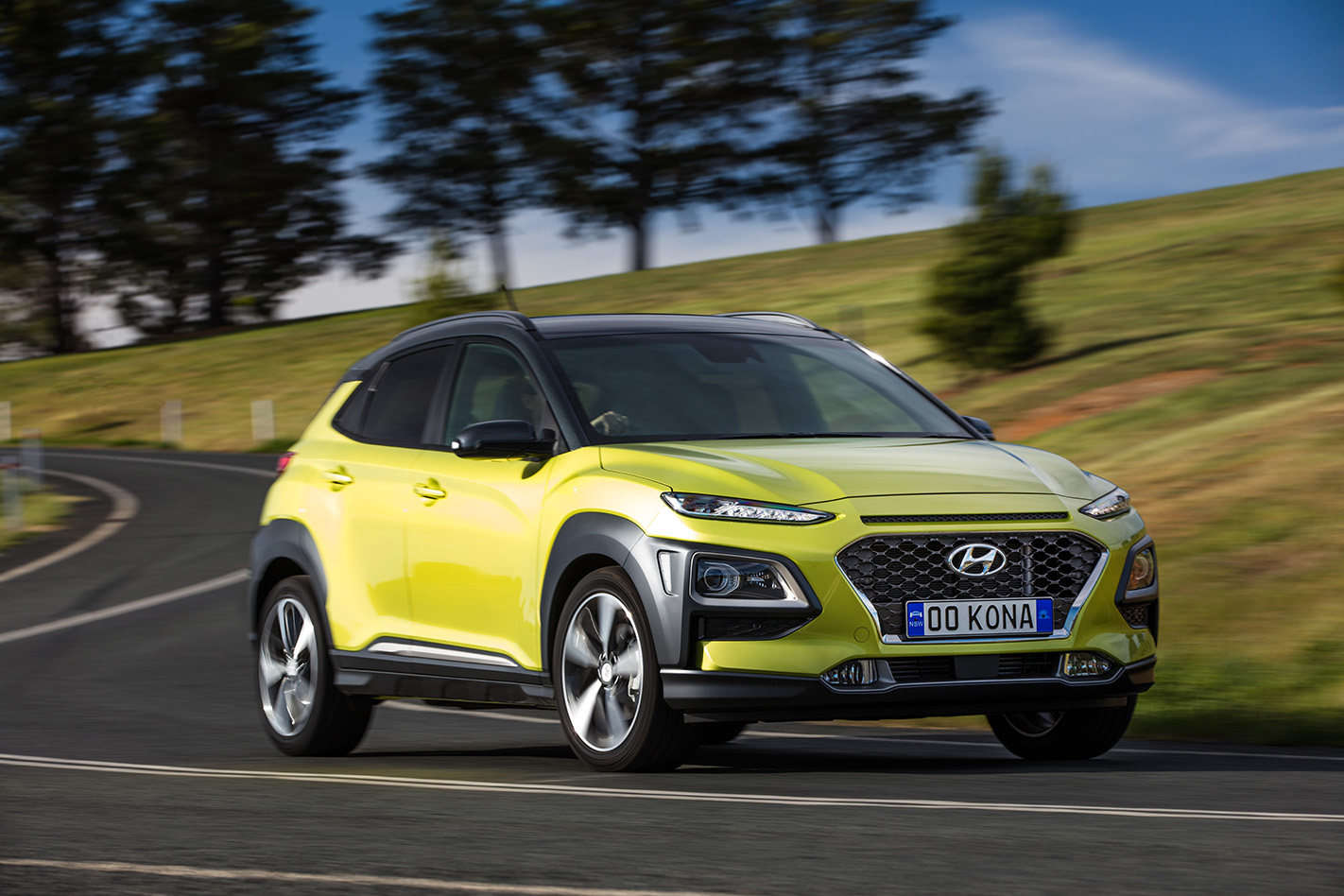
As well, an N-Line version of the small crossover is almost a formality, given that it’s already sold here with the same 1.6-litre turbocharged four-cylinder engine in AWD guise.
What we’re unlikely to ever see is a right-hand-drive of the Veloster N, which is reserved for the US market. The decision is made even more unusual because Australia is the only right-hand-drive market for the second-generation Veloster.
Why? Well, the i30 hatch is a poor seller for Hyundai in that market, hence its decision to produce the unusual triple-door coupe just for the American market.
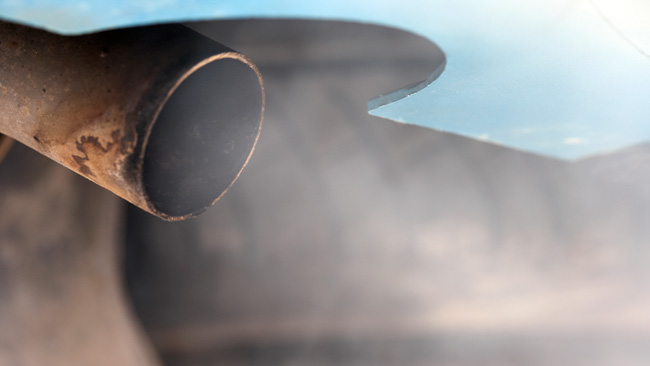
Your car’s engine loves to be warm as much as you do in the winter but do you know the best way to get a petrol or diesel donk from icy cold to optimum operating temperature?
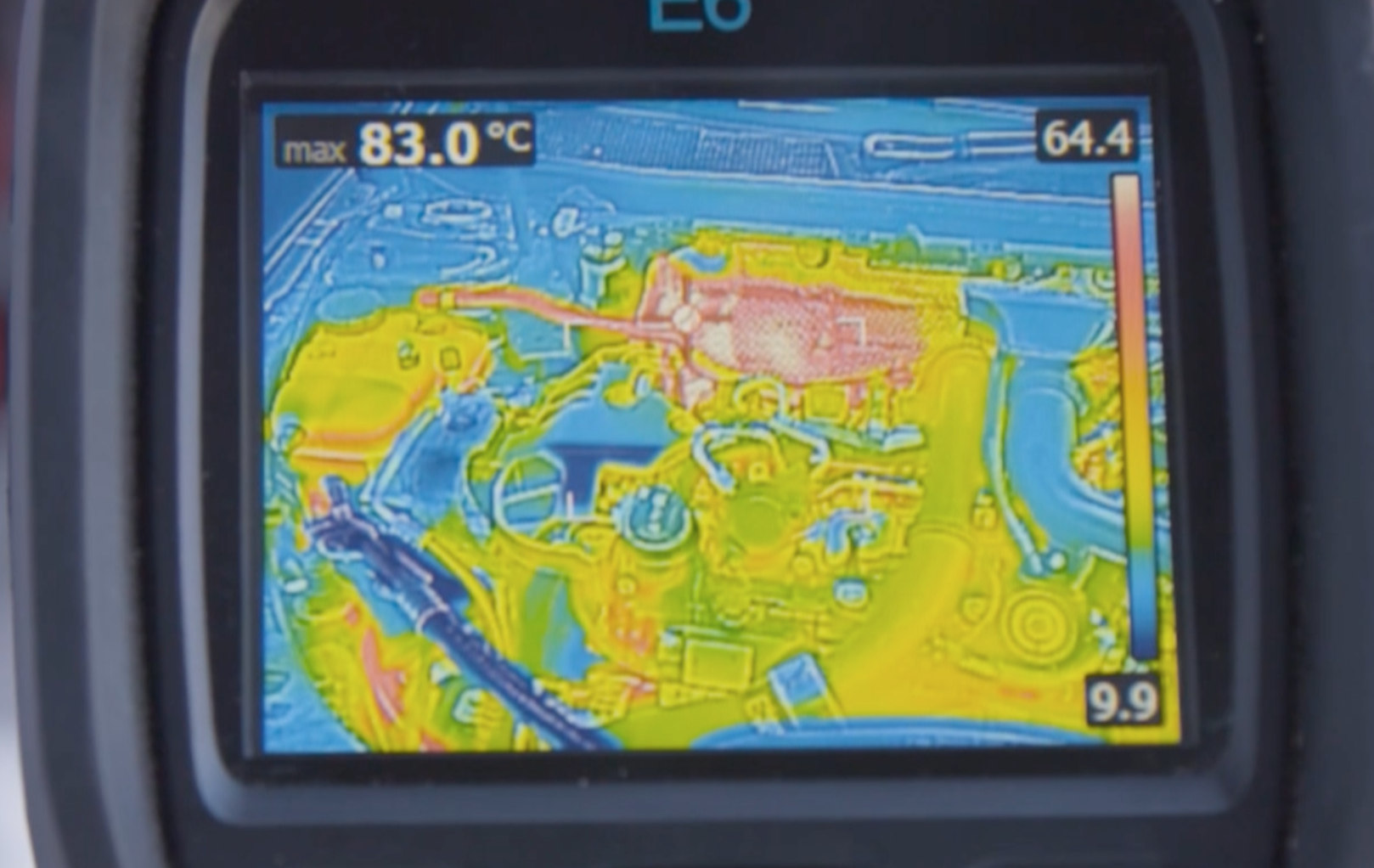
Regardless of the season, an average road car engine likes to spend its time at about 100 degrees where it can operate at peak fuel efficiency while producing minimum emissions.
With winter already well underway, here’s what you need to know about engine warm up as Australia cools down.
Why warm?
Like any sophisticated machine, the combustion engine under the bonnet of your car has an optimum operating temperature and, as engines naturally produce waste heat when running, it makes sense to set that operating temperature on the warmer side.
At the correct temperature, combustion is optimum which is kinder on your wallet and the environment and, as a side note, engine oil, catalytic converters and the finely engineered components in your engine are all developed to run hot. So heat is the key.
Furthermore, the heater in your car uses the liquid in the cooling system to heat the cabin, so the quicker your engine warms up, the quicker your toes can thaw out.
Gentle is best
As such an important part of engine operation, reaching the perfect temperature as fast possible is ideal. Indeed, modern engines use all manner of clever tricks such as electric coolant pumps, exhaust manifold coolant heaters and active radiator vents to speed up warming.
But your engine will not thank you for working it hard to increase heat quickly from cold. Full acceleration and high revs from cold can be extremely damaging.
Rapidly heating localised parts of the engine such as the cylinder head, while other bits warm up more gradually, puts massive strain on the components, while cold engine oil does not protect metallic components as effectively.
So is slow better? Some drivers like to start the engine and then return inside the house to finish making their sandwiches for the day while the car warms up at idle.
Sorry, that’s not ideal either. Allowing an engine to idle up to temperature from cold can cause a condition called bore-glazing, which is when a glass-like substance builds up on the inside of the cylinders.
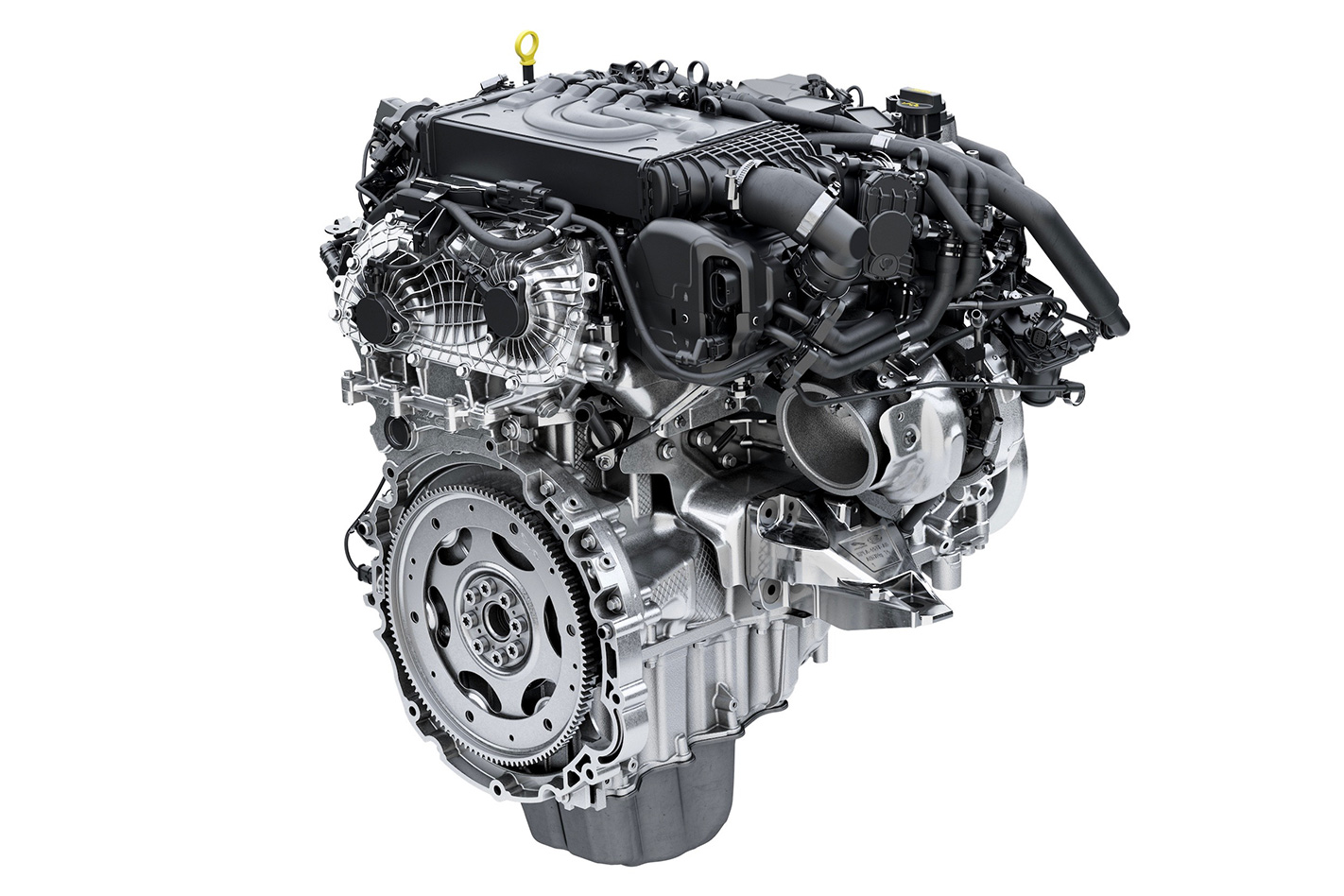
Over time, the coating can reduce compression which reduces engine efficiency.
The best way is the simplest
So far it may seem like there are a lot of wrong ways to get your car up to the right temperature but the good news is that the kindest method for your engine is also the easiest.
When you fire up the engine on a cold morning, the best way to safely warm your oily bits is to simply set off straight away and drive normally.
Fun F1 fact
When a Formula 1 race engine is cold, it won’t actually turn at all. The crankshaft and pistons remain seized solid until its team of engineers pump hot fluids through the cooling jacket like a life support system. Only then can it be started.
We come bearing some bad news. Reports out of Lexus’ native Japan claim that the high-performance version of the LC500 coupe, the LC F, has been put on hold.
We’re big fans of the LC500 and it’s naturally-aspirated V8 here at Wheels HQ, so we were quietly excited when news of a more focused twin-turbocharged version started to surface.
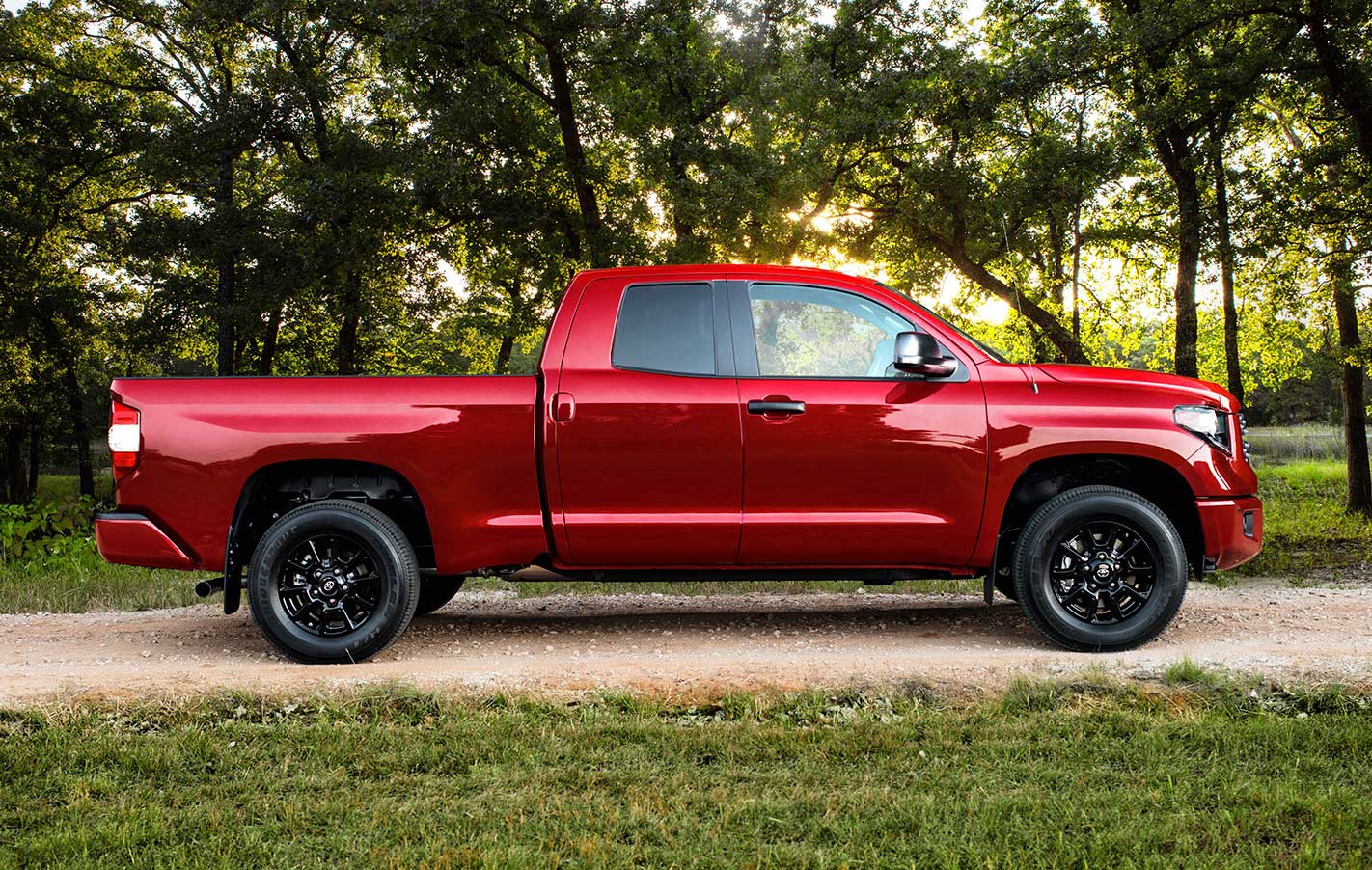
It’s not all doom and gloom however, as hidden at the bottom of the very same report is a silver lining, indicating that the development budget poured into the blown 4.0-litre V8 won’tgo to waste. It could be put to use powering a Ford F-150 rivalling Toyota Tundra.
The initial report from Car Sensor doesn’t quote a direct source, but claims the LC F project has ground to a standstill because of uncertainty surrounding the global economy.
However, instead of letting its talented engineers lay idle, the report claims Toyota and Lexus are already working on ways to make the most of the work that has gone into the LC F project.
Namely, the 4.0-litre twin-turbo V8. According to the report from Car Sensor, the twin-turbo V8 will continue to be developed, and it’s claimed the engine will then be used for large pick-ups and SUVs for North America.
This would make the Toyota Tundra a natural recipient of the powerful petrol unit.
Timing is excellent, with Ford nearing completion of its next F-150 Raptor, with the most popular car in America receiving an all-new update last week.
At the same time, FCA’s Ram Trucks division is expected to rip the covers of its TRX model before the year is out.
Where the F-150 Raptor is expected to make its power from a twin-turbo petrol V6, the Ram TRX is expected to make use of FCA’s venerable Hellcat engine.
The 6.2-litre supercharged Hemi V8 is capable of sending 522kW to all four wheels, and we have first-hand experience of its ferocious potential thanks to the Jeep Grand Cherokee Trackhawk.
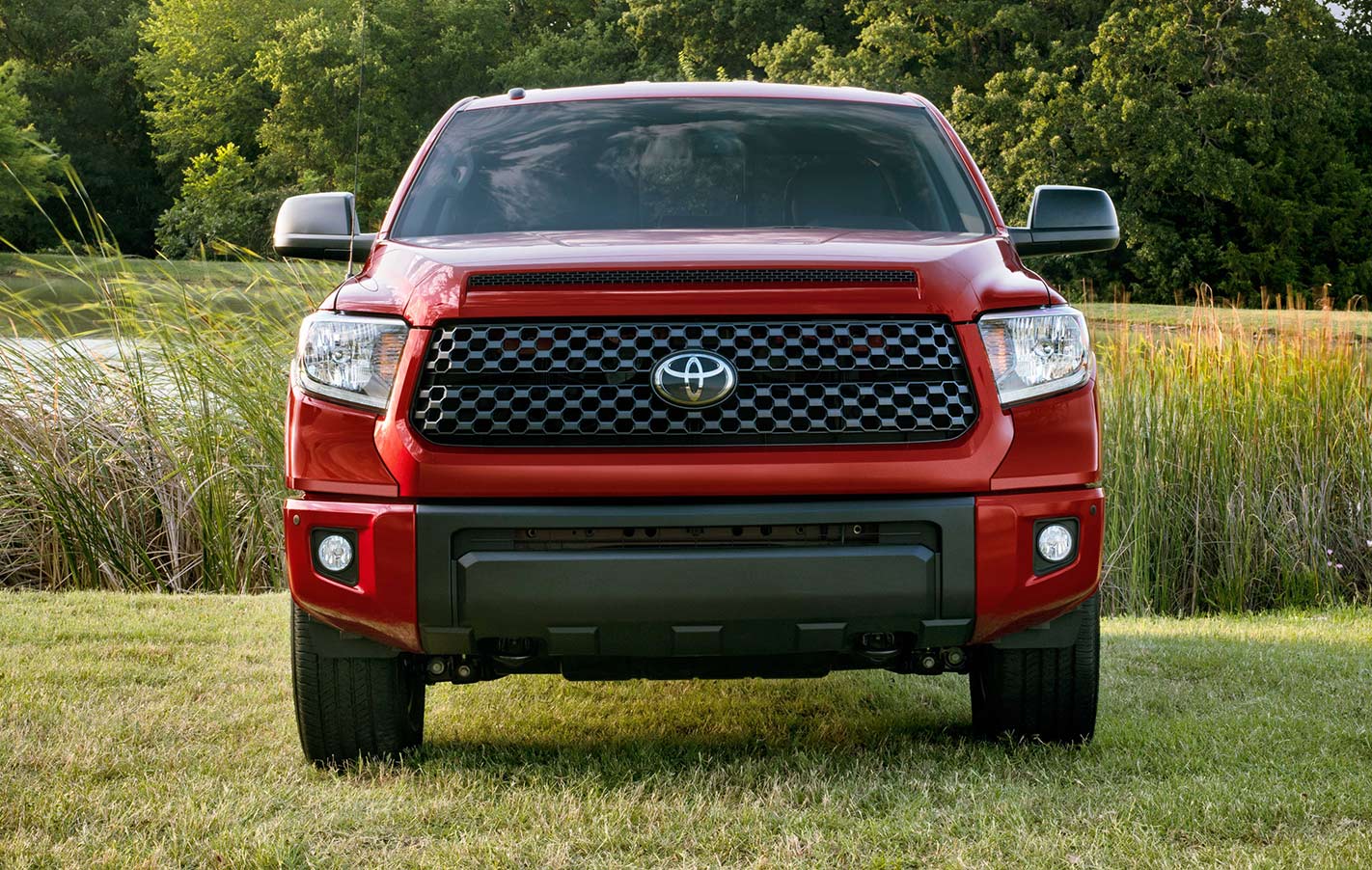
Currently, Toyota doesn’t have a Raptor/TRX-fighting version of its North America-only Tundra, with the 4.0-litre twin-turbo V8 the perfect engine to take the fight to the pair.
The ‘regular’ Tundra is powered by a 5.7-litre aluminium 32-valve petrol V8 good for 280kW and 544Nm, though rumours from earlier in the year suggest this could be replaced with a twin-turbo V6.
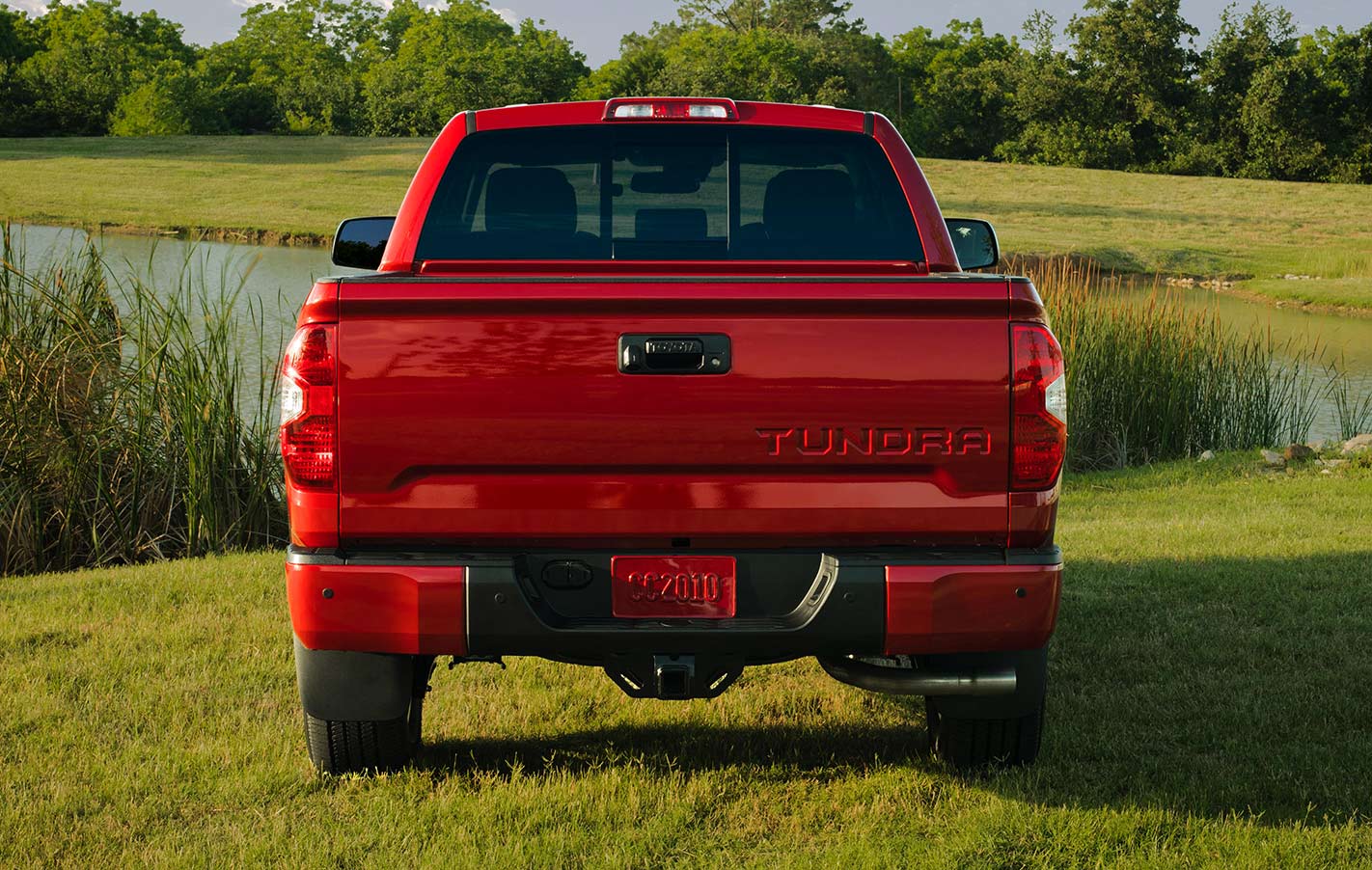
An all-new version of the Tundra is being developed, to be built on Toyota’s TNGA-F platform, with a reveal expected in 2021.
The TNGA-F platform opens up the possibility of right-hand drive production, which would bring the big American/Japanese pick-up Down Under.
Toyota Australia confirmed to Wheels earlier in the year that it wants to bring a model like the Tundra to Australia, but it needs to build a business case with Head Office first.
“If right-hand drive factory vehicles become available then it is something that we would very deeply study. Toyota Australia would be jumping up and down almost more than anyone else to bring that car here,” a spokesperson said.
“The big thing is that it needs a global business case to be put together, and the business case needs to be there for right-hand drive production from the factory.”
There are lots of variables currently at play, but there are some glimmers at hope which we can all take comfort in.
The Ferrari SF90 Stradale is a 735kWmid-engined supercar. So far, so good.
But it’s also a four-wheel drive plug-in hybrid. Is it a case over tech over talent? Thrashing it on road and track might help us answer that question…
The SF90 was first seen in 2019 and celebrates the 90th anniversary of Ferrari’s racing arm, Scuderia Ferrari. And even leaving the tech aside, it’s a new one for Ferrari. It doesn’t replace any current or historic cars, but at $846,888 it fits in the space between the F8 Tributo (the facelifted, upgraded 488) and hypercars like LaFerrari.
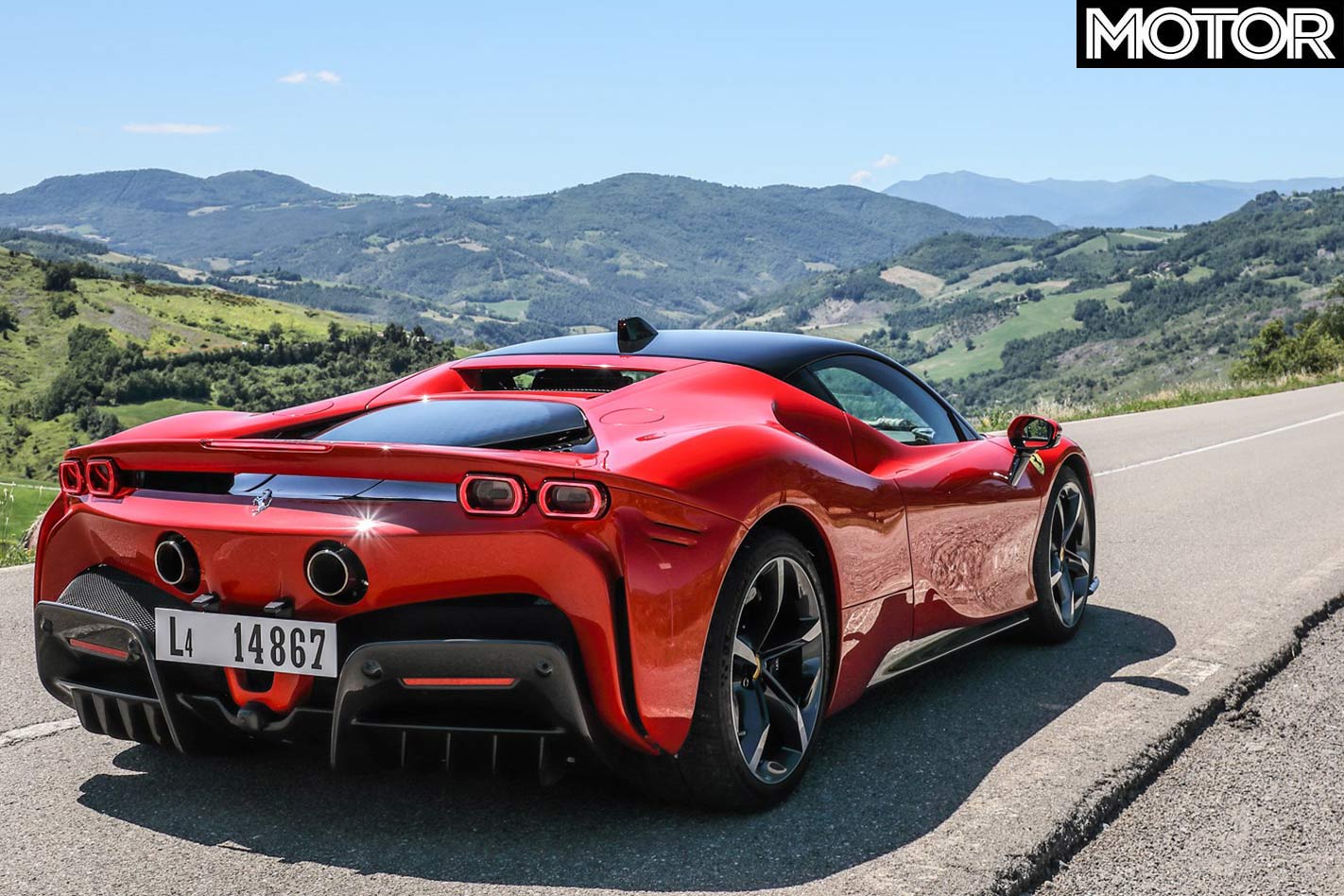
There aren’t many rivals at that price, except an Aventador…
Exactly. And while Lamborghini’s Aventador might have the fancy doors, carbon chassis and V12, in comparison it looks distinctly low on tech – and performance.
We’re over-simplifying, but imagine taking a 530kW F8 Tributo, tuning its twin-turbo V8 to deliver another 44kW, and then bolting on three electric motors for good measure. There’s one connected to each front wheel to allow torque vectoring, and another sandwiched between the engine and new eight-speed dual-clutch transmission.
Combine that lot and you’ve got a solid 1000 metric horsepower to play with. 1000bhp! Okay, 986 Inglese bhp. Imagine the thunder when you thumb that starter button and…
…nothing happens whatsoever.
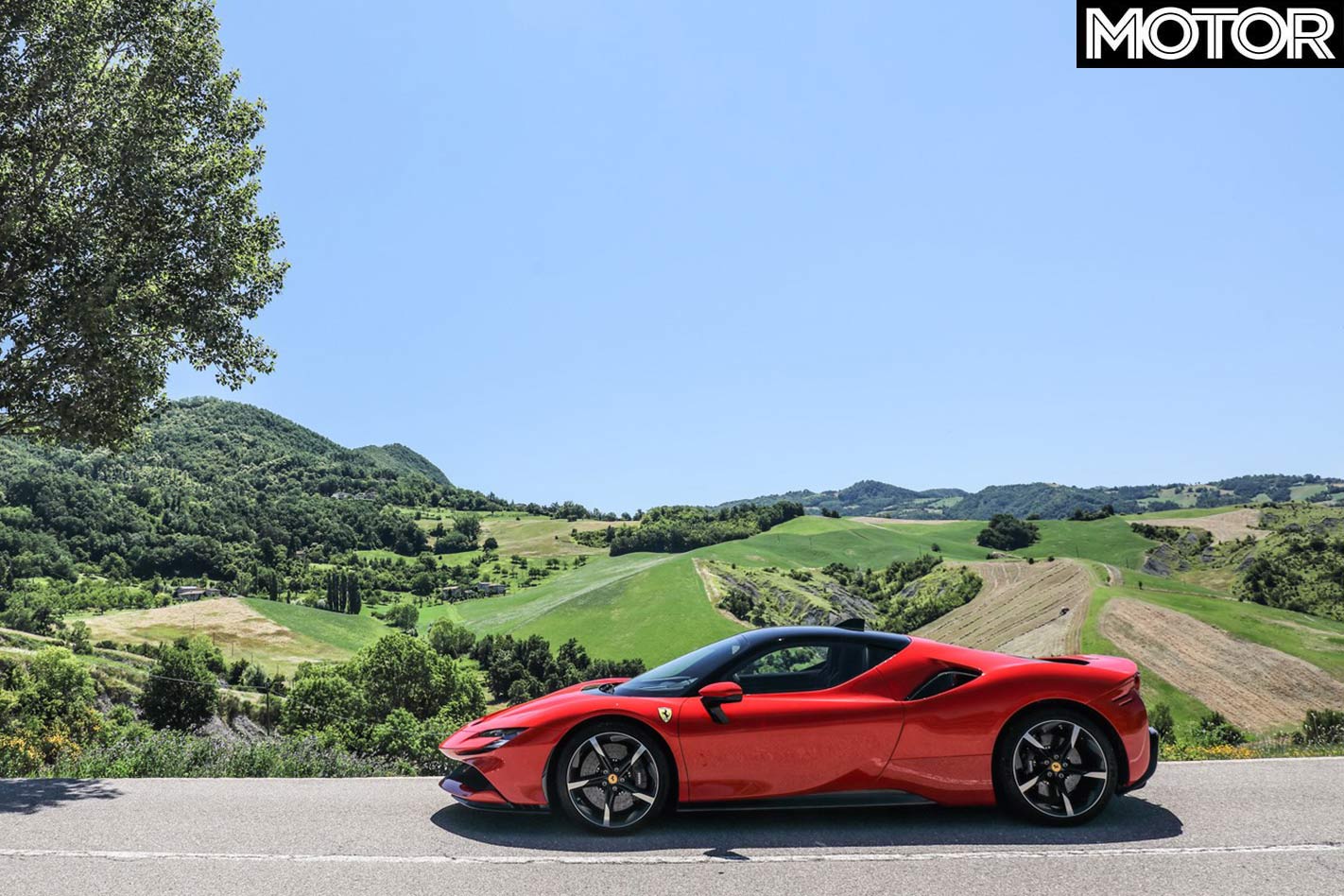
Unless you prime the ignition, then select Performance or Qualifying modes via the touchpad on the steering wheel, the SF90 defaults to hybrid mode. Which defaults to electric power at startup, meaning no noise.
Pull the right shift paddle, then pull out into traffic and you just get a familiar (but Leaf-familiar, not Ferrari-familiar) golf-kart electric whine. Step-off in full electric mode is surprisingly soft, and the petrol engine won’t cut in to help no matter how hard you mash the throttle. But it’ll do 135km on volts alone or get you a claimed 25km before you need to recharge. That takes two hours when wired to a charger, or just a handful of miles if you let the engine do the juicing.
Switch to Hybrid mode and the SF90 switches effortlessly between its power sources and spends a surprising amount of time as an EV. The integration is genuinely impressive, as is the brake feel, which is far more natural than on most hybrid or electric cars.
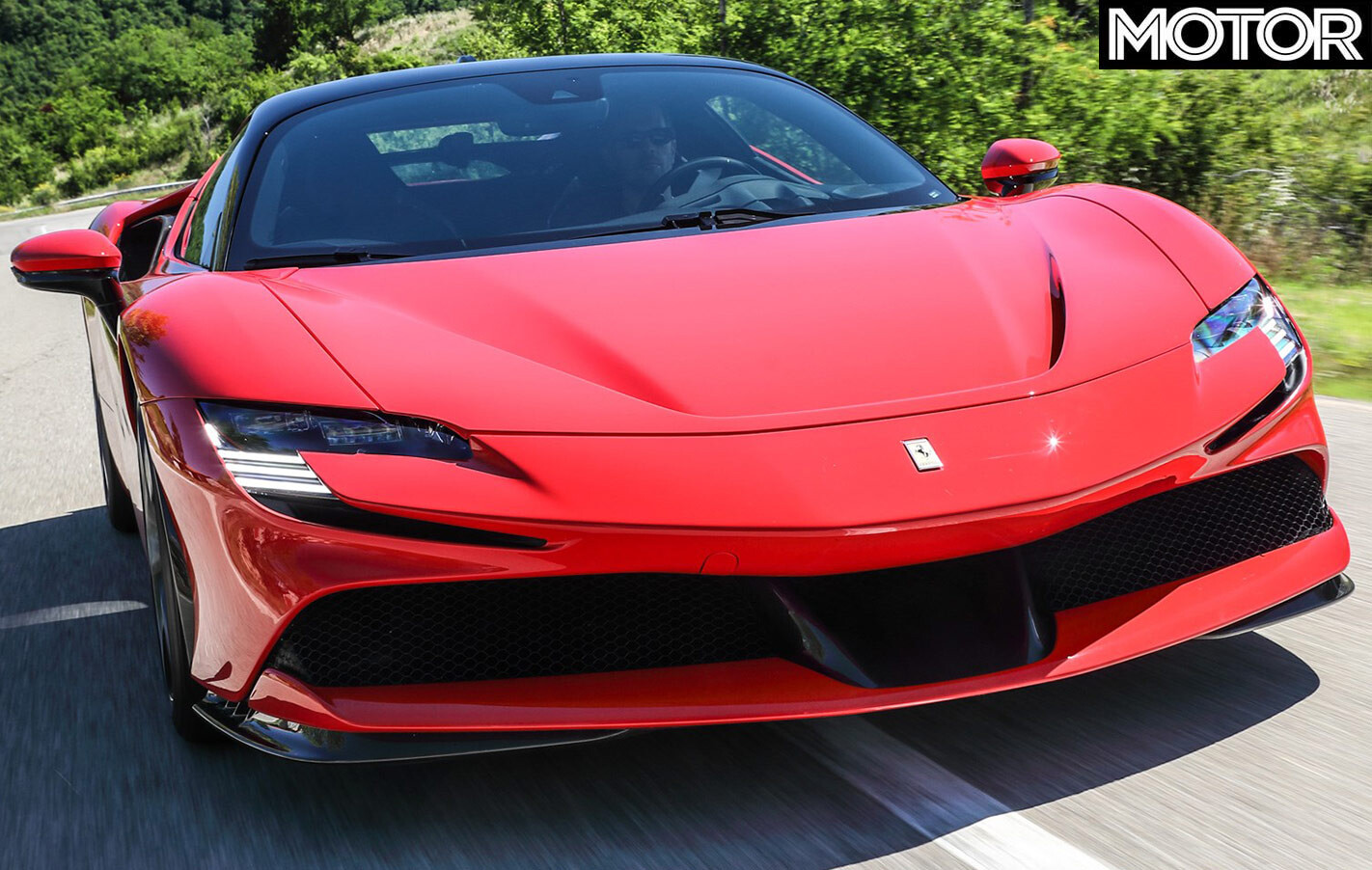
Mooch along in Hybrid mode in dawdling traffic and the SF90 feels like a proper GT, disguised as a 1000bhp hypercar. But it won’t feel like some people’s idea of a Ferrari. They’ll need Performance or Qualifying modes for that.
We weren’t. In Performance mode with the engine running full time and augmented by the electric powertrain, the F8’s already minimal turbo lag isn’t completely eradicated, but it’s damn close to it. Even from low engine revs the fourth and fifth gear go is colossal, and with all four wheels doing the work, traction is spectacular.
Lamborghini Sian supercapacitor explained
You could almost forget you had 735kW, if it wasn’t for the fact that with all four tyres hooked up you can get from 0-100km/h in 2.5sec and 0-160km/h in 6.5. For reference an F8 needs 2.9sec and 7.8sec for the same yardsticks. The SF90 is brutally fast.
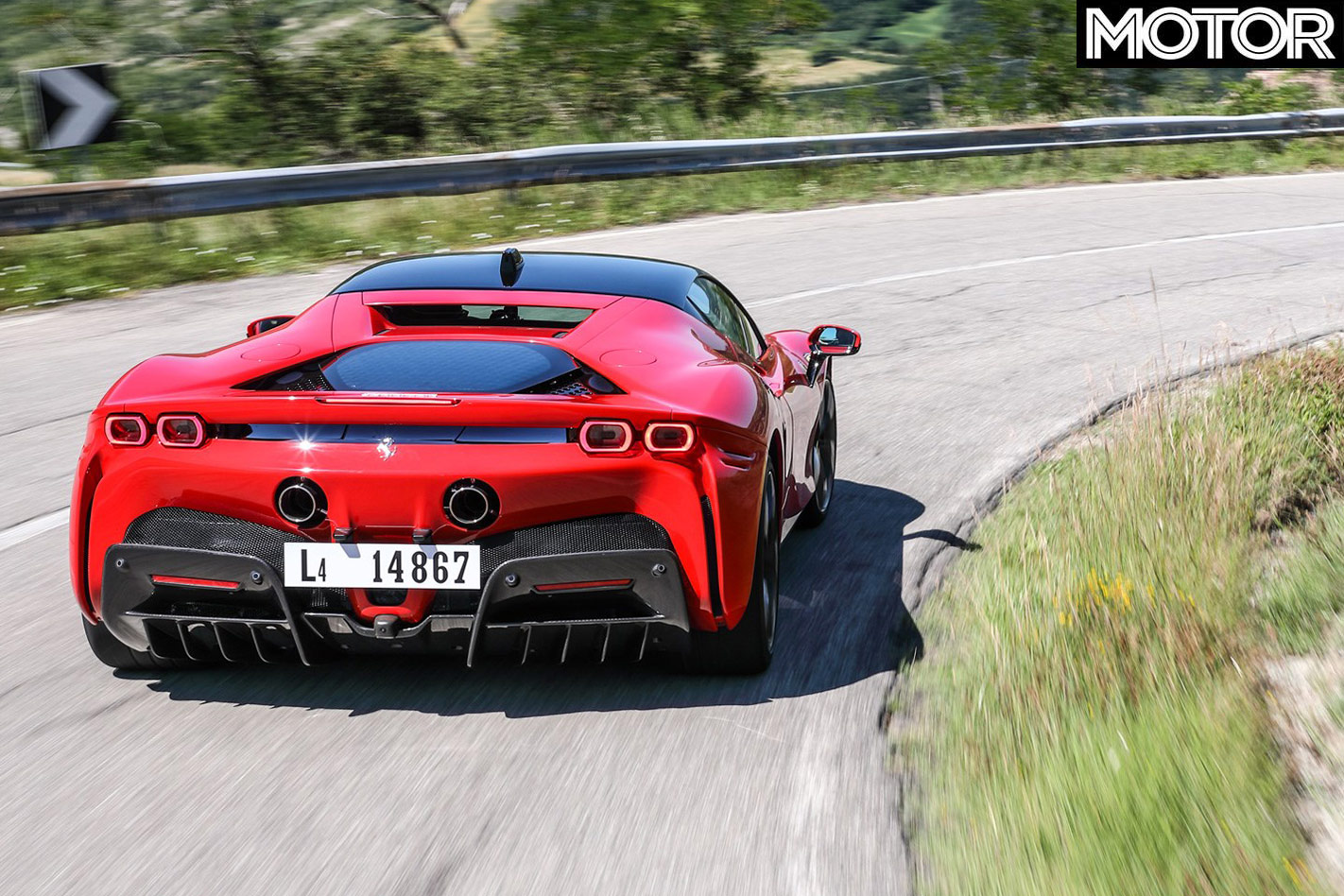
The most obvious advantage, and one of the reasons Ferrari switched to four-wheel drive, is the ability to put 735kW to the ground. Traction is incredible.
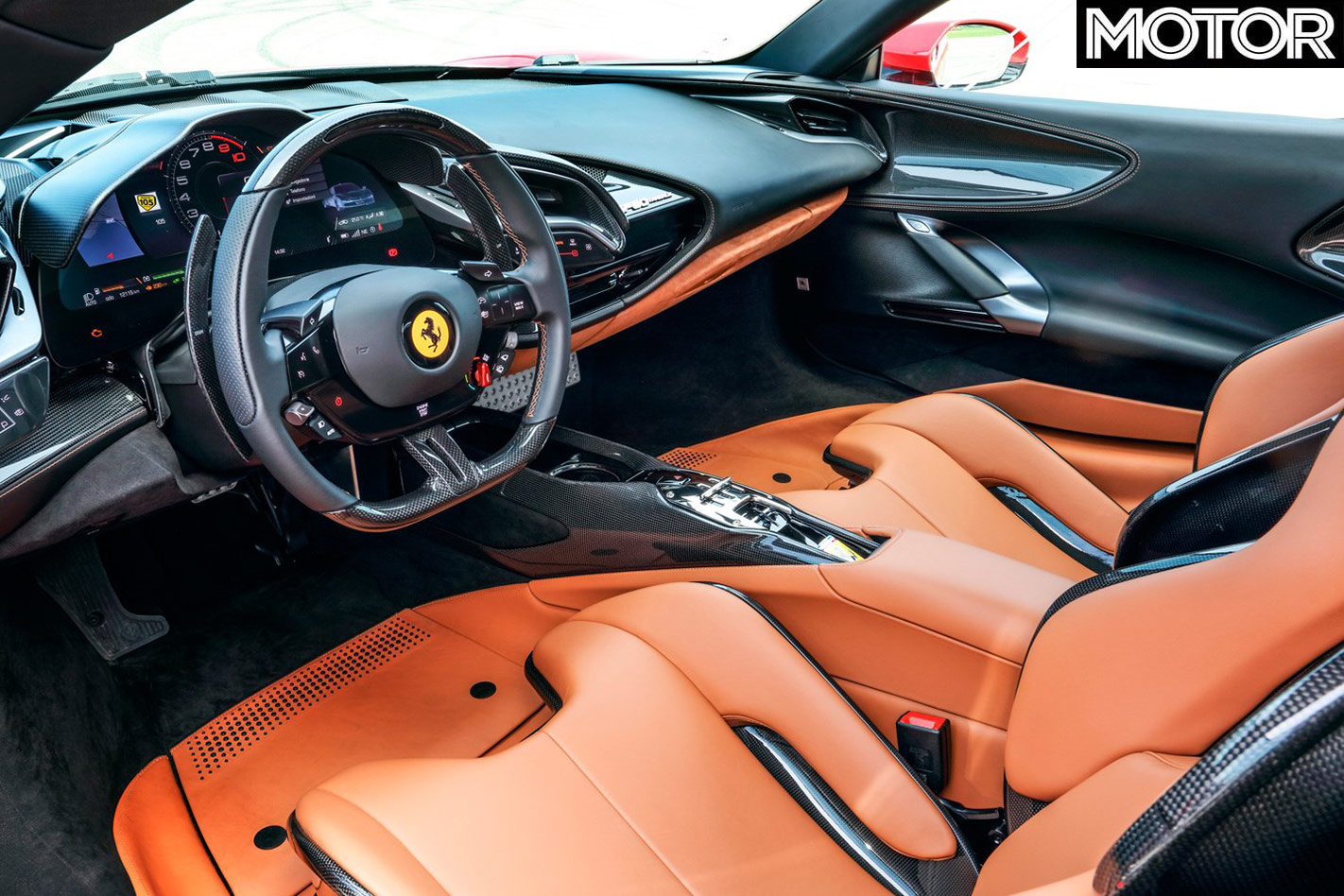
But that feeling of torque being fed to the front wheels, specifically coming out of very tight low-speed bends, takes some getting used to if you’re used to rear-drive Ferrari sports cars. Not pulling the car straight, exactly, but definitely pulling. That’s an unfamiliar sensation when you’re sitting in the cabin of a car that (fancy new widescreen TFT instrument pack aside), feels much like an F8 Tributo. At points, I wasn’t sure I’d have enjoyed the slower, simpler car less.
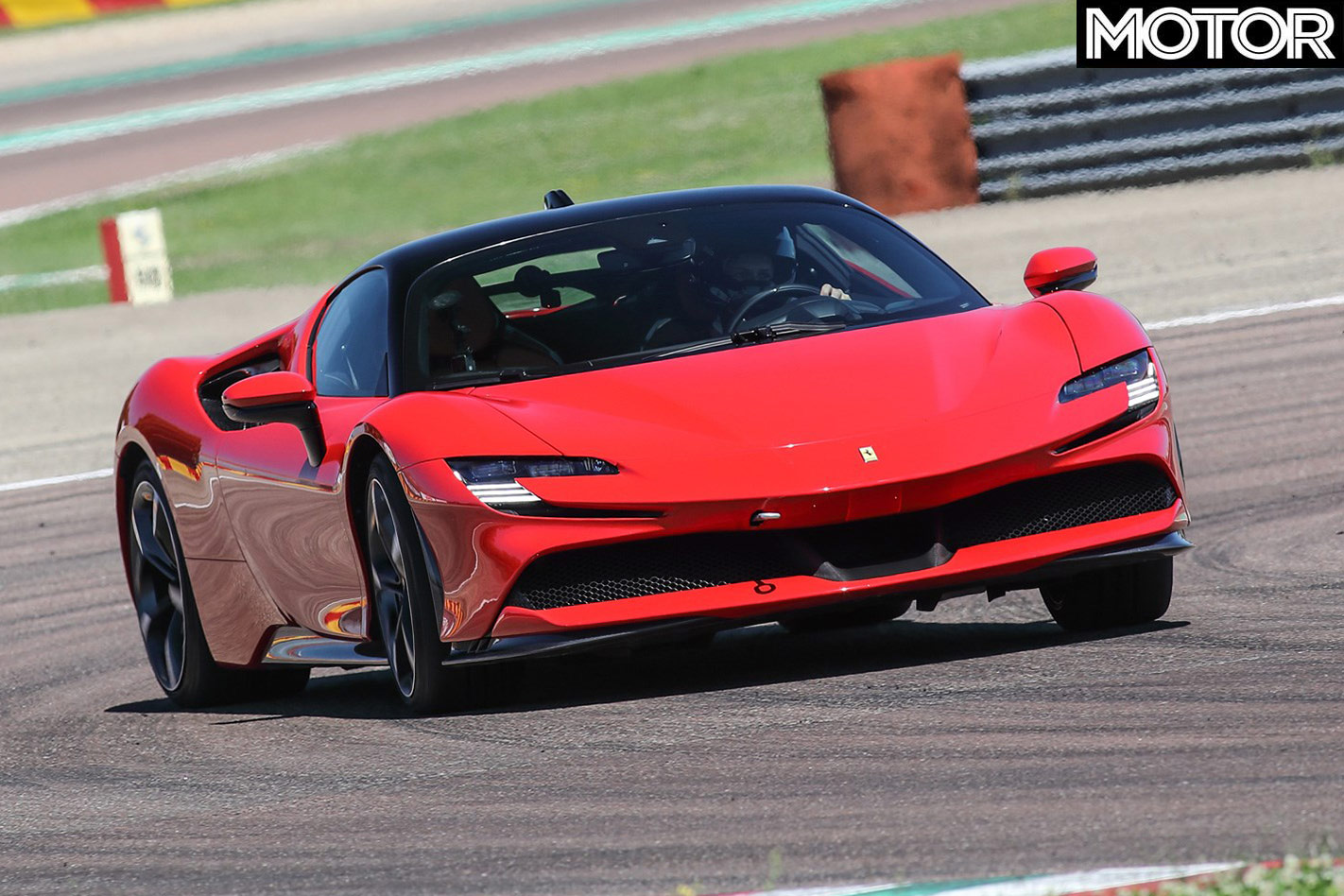
But on faster roads, and on Ferrari’s Fiorano circuit, the SF90 reveals its true genius. On track the ebb and flow of torque to the front wheels is less noticeable. Instead, you notice the extra steering precision and how well the chassis manages the disappointing, but inevitable, 240kg the 1570kg (damn near 1700kg in real terms) SF90 carries over the F8.
Race mode on the steering wheel-mounted manettino driving toggle delivers the kind of poise you want to start with to get comfortable in a car with this much power on a track you haven’t driven for a couple of years. It’s neat, precise and reassuring. No slip, no drama. Just a great opportunity to experience the performance in full.
But TC (traction control) off is more fun. It’s surprisingly oversteery (yeah, who’d have though it, eh?), but the breakaway is so gentle, and the chassis so flattering, you never feel remotely intimidated. Never mind the fact that it has 735kW. I’m struggling to think of any mid-engined car full-stop with the same ability to make a driver feel so comfortable at, and beyond, the limit.
Sound great? Okay, that’s a bit unfair. But with two turbos diluting the music, the SF90’s engine sounds exciting, but not spectacular, like an 812’s V12, or the old 458’s V8.
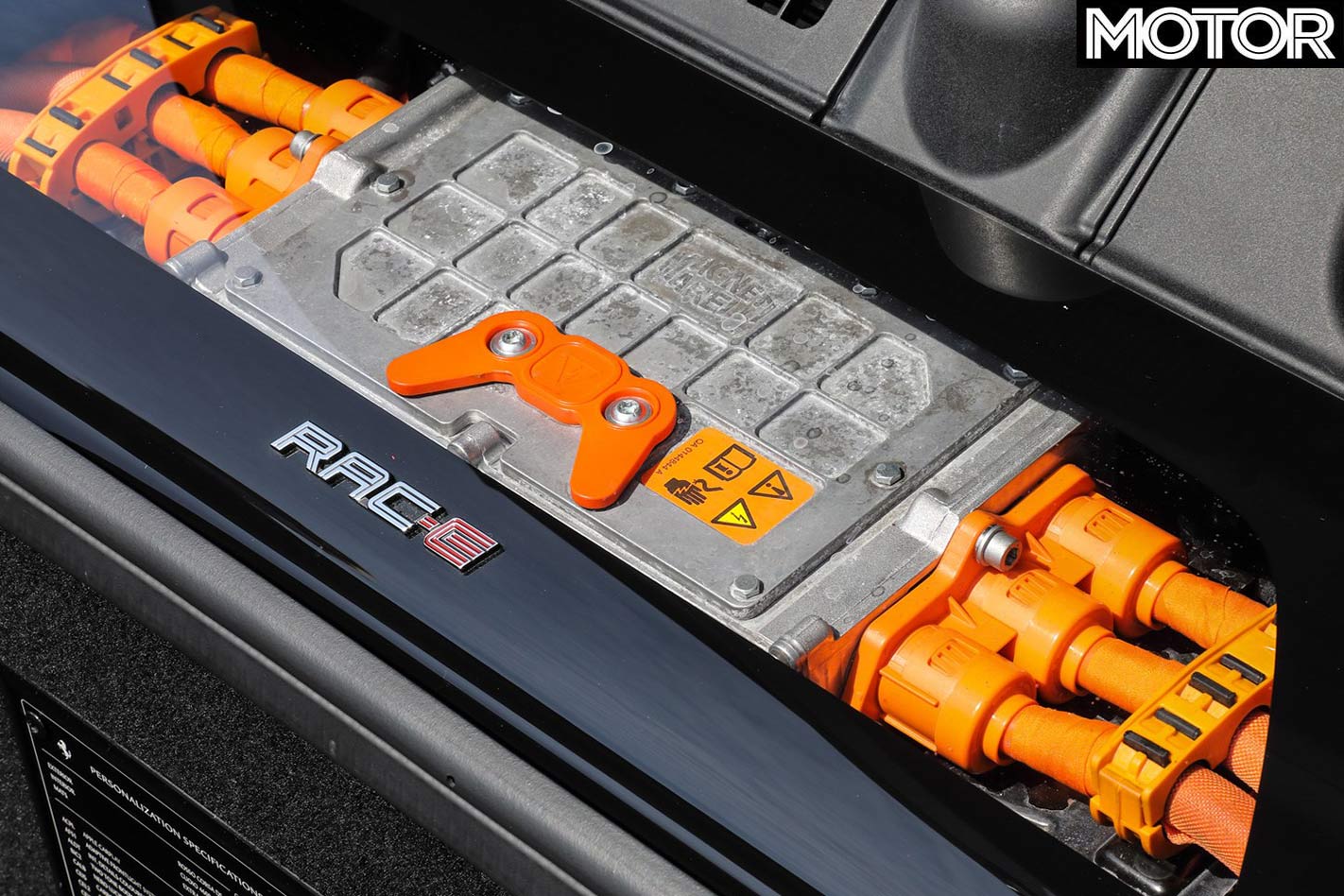
The SF90’s other problem is luggage space. The huge front luggage bays of Ferrari’s sports cars has long been a real strength for owners who like to use their cars for more than a few minutes at a time. But the SF90’s electric powertrain componentry savages boot space. You get 200 litres in an F8, but just 74 in the SF90. Enough for a smallish squashy bag, but that’s about it. That’s a shame, given its GT chops.
The SF90 is a complex car, and not just from a technical standpoint. It’s a car you struggle to do justice to in a couple of hours behind the wheel or a few hundred words of story.
And you can imagine plenty of people aren’t going to like it. If most people who buy supercars buy them to enjoy a concentrated hit of adrenaline on a brief Sunday drive what do they need with one that weighs 240kg more than an F8 and has an electric mode they don’t care about?
But it’s engineering like this that’s going to ensure the survival of the supercar when laws, and even the mindset of some owners, are changing to reflect a greater concern for the environment.
Fortunately, that’s not the only reason to love the fastest, most exploitable road-going Ferrari ever built.
This review also appears at CAR Magazine’s website.
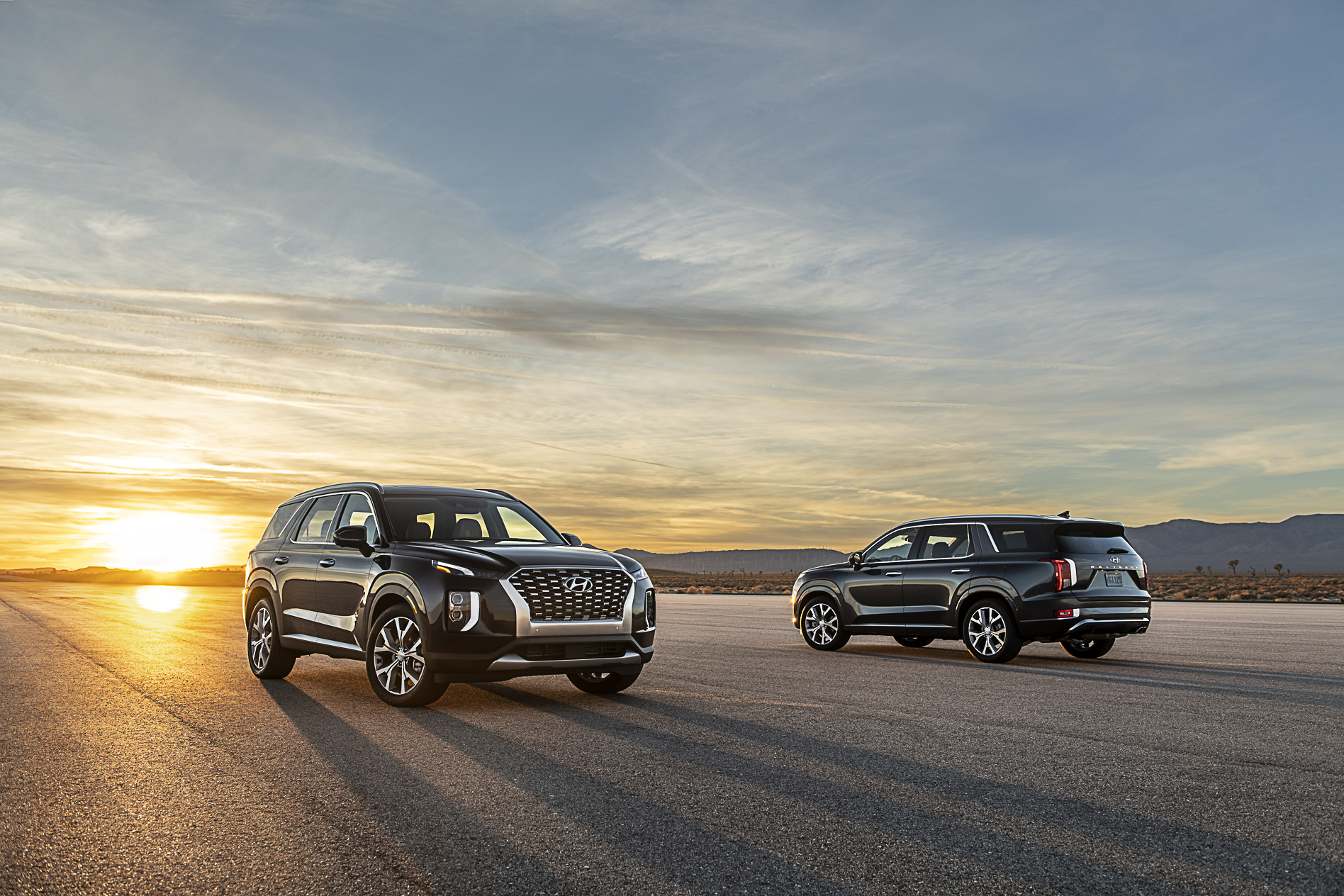
Hyundai will have a new headline act in 2021 in the boxy shape of the Palisade large SUV.
Set to take on established success stories in the large SUV category like the Mazda CX-9 and Toyota Kluger, the Hyundai Palisade will trump both with the option of an eight-seat layout.
It will hit Australian showrooms late in 2020, offering a blend of bold n’ brash US styling and pragmatic family inclusions in a package that will crown a Hyundai model line-up that’s in the midst of a massive refresh.
Eight seats on offer in the Palisade
The Palisade will also cross between worlds by offering both a seven- and eight-seat version, and will top a fleshed-out SUV range for Hyundai that includes the seven-seat Santa Fe, mid-sized Tucson, small Kona and compact Venue.
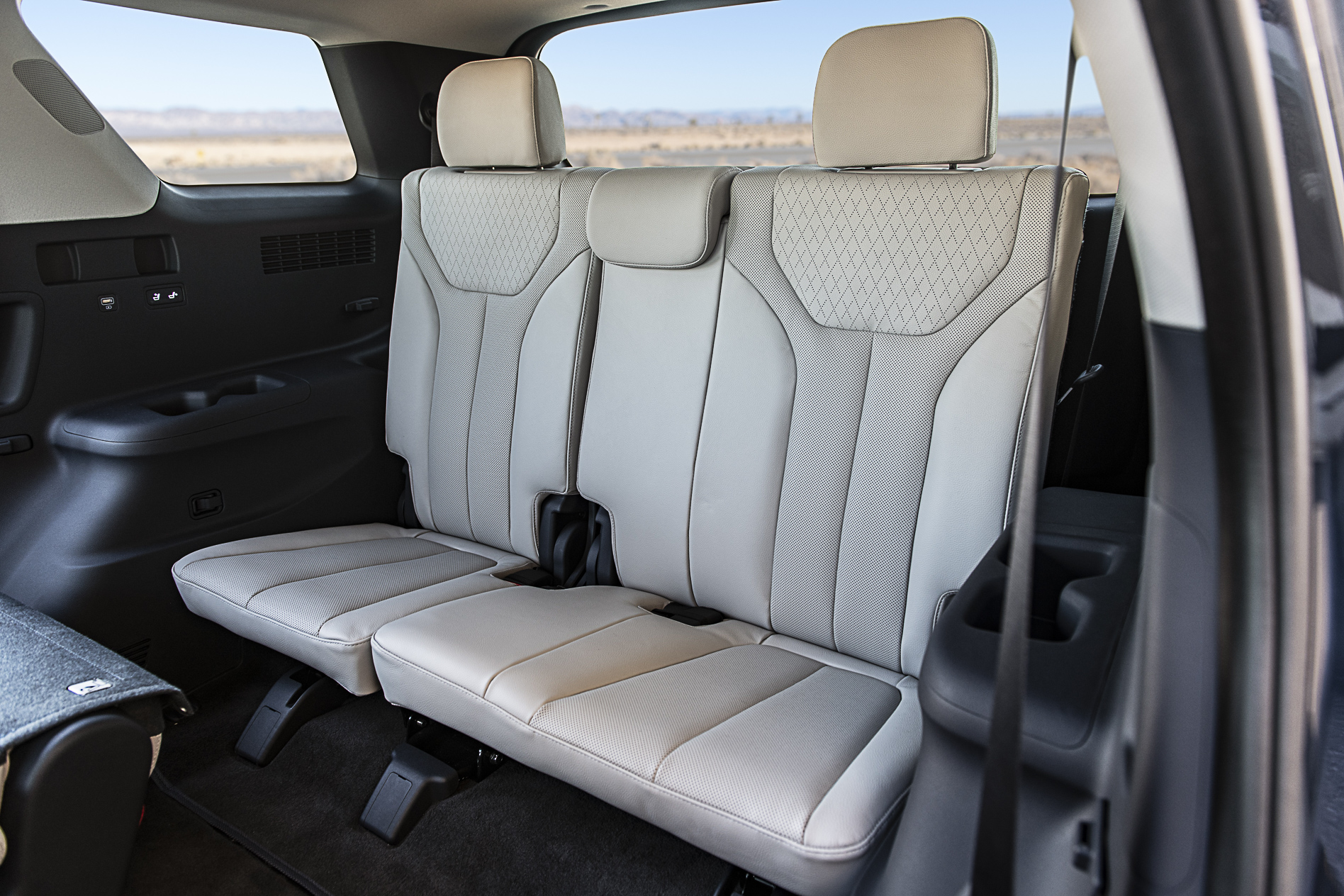
The three-row SUV will, depending on the variant, be able to be optioned with a pair of captain’s chairs for the second row to complement the full-size third row for a seven-seat layout, while a traditional second-row bench will bump accommodation up to eight.
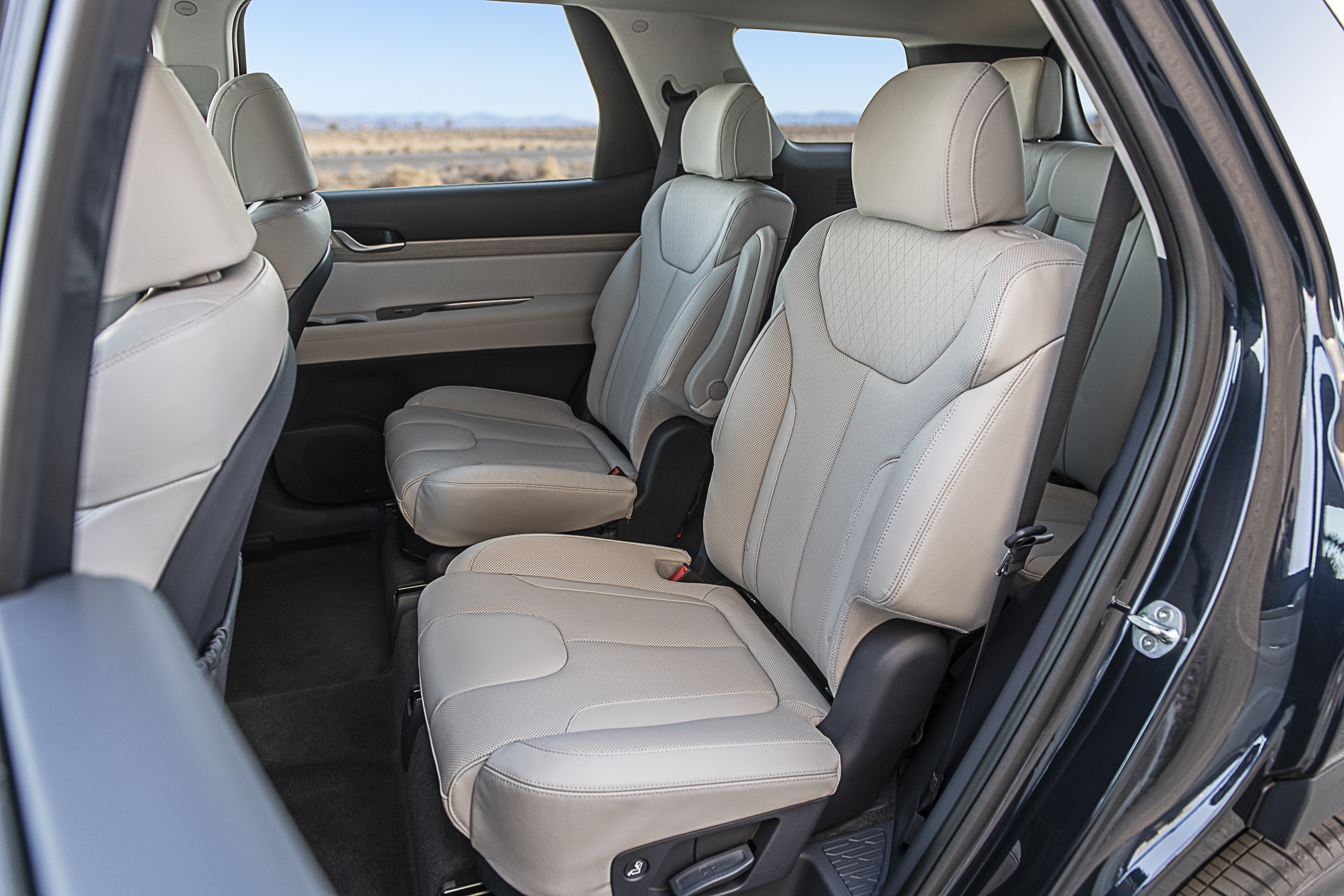
As well, the Palisade will offer three ISOFIX baby seat mounts; two on the outboard second row and one in the third row. What’s more, all seats can recline while the front two rows will be heated and cooled in top-spec variants.
Throw in 16 cupholders, seven USB chargers, driver mic system for speaking to passengers and air vents for all three rows, and the Palisade stacks up well for the large family.
The Palisade range hasn’t been locked down yet, but the Korean-built SUV will be offered here with both diesel and petrol powertrains.
Palisade offers petrol and diesel
Hyundai’s 147kW/440Nm 2.2-litre four-cylinder turbo-diesel will be teamed with all-wheel-drive, while a 3.8-litre naturally aspirated V6 petrol engine-equipped version will send 213kW and 355Nm to the front wheels.
Both powertrains will use a traditional eight-speed automatic transmission; there will be no manual transmission offered in the Palisade range.
Despite Hyundai’s fondness for retuning the suspension settings of every car it imports, the Palisade actually passed muster with the local development team right out of the box, and will remain unchanged.
A quick rummage around a left-hand-drive version of the Palisade at Hyundai’s Sydney HQ reveals a spacious, squared-off SUV that prioritises space over overt styling.
Large door apertures and wide ingress points for the third row make access easy, while a simple centre console and dashboard arrangement will be familiar territory for former and current Hyundai owners.
In fact, the simple twin-dial dash with a central digital screen and the relatively small multimedia screen is in stark contrast to the sharper, more current Sonata and i30 Sedan cockpits.
Hyundai assured WhichCar that the Palisade is likely to score a similar level of tech in the course of its model life.
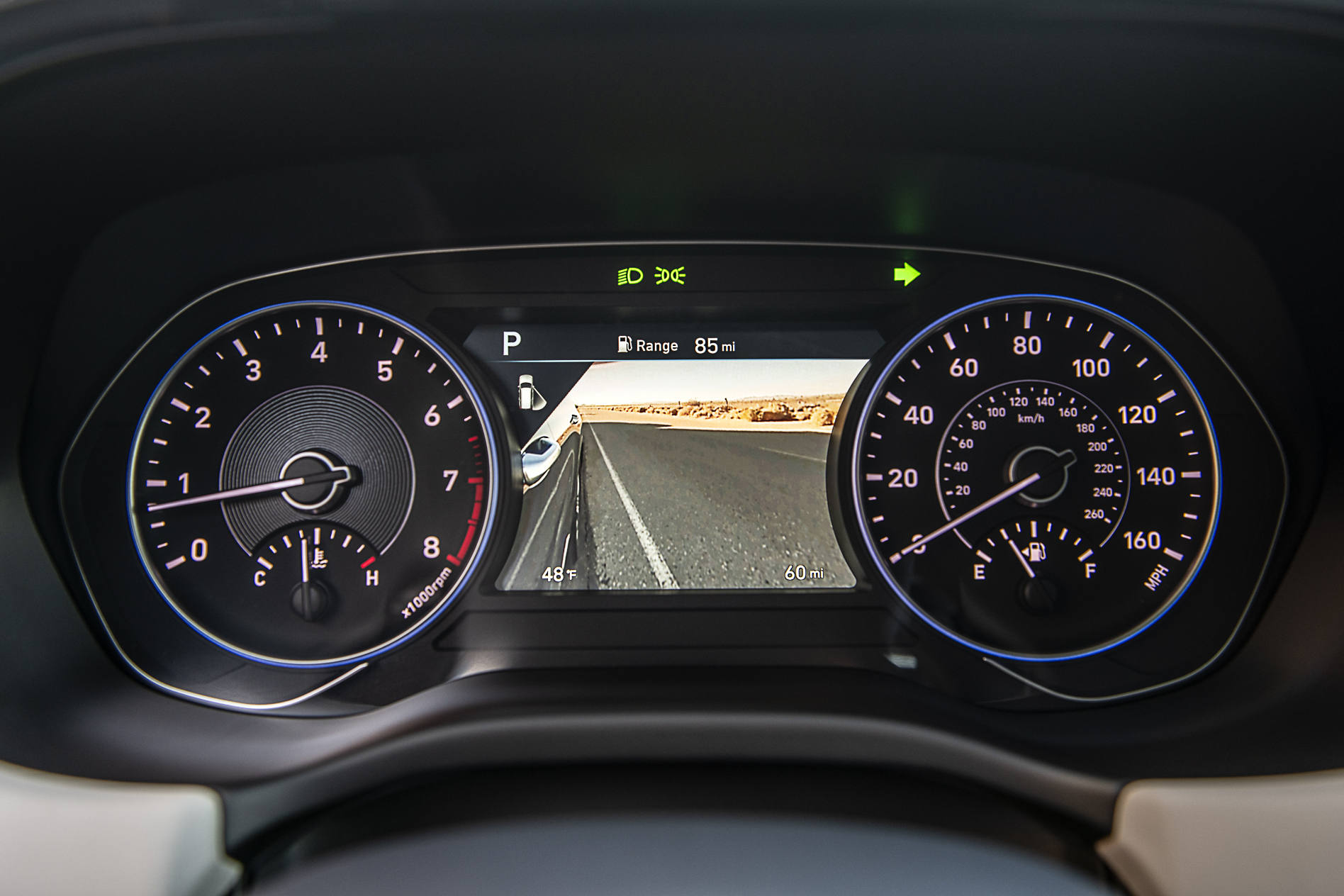
Rear cross-traffic alert, blind-spot monitoring with screen display and AEB will be added, while the multimedia system will offer Apple CarPlay and Android Auto as standard.
Hyundai Palisade pricing for Australia
In terms of the price of the Hyundai Palisade, the company is yet to lock in the final specs, but expect the range to kick off close to the $50,000 mark before extending to around $70,000 for high-spec versions.
There’s no denying the fact that Australian cities are becoming larger and our road networks are getting more congested because of it.
At the last census, 9.2 million Australians reported travelling to work everyday and a whopping 80 percent of them used their cars to get there.
In Melbourne, nearly 400,000 people travel to the city on an average weekday to conduct work, and that number is set to grow to over 500,000 by 2030.

Sydney already has over half a million people working in its city everyday and only a very small minority live there as well thanks to the prohibitive cost of inner-city real estate.
It may be for that reason then that alternative modes of transport like cycling are experiencing a resurgence in popularity as commuters try to find a quicker and greener way to get to work.
It’s that impetus that got us at the WhichCar office wondering… what would be a quicker way to cross Melbourne in the morning?
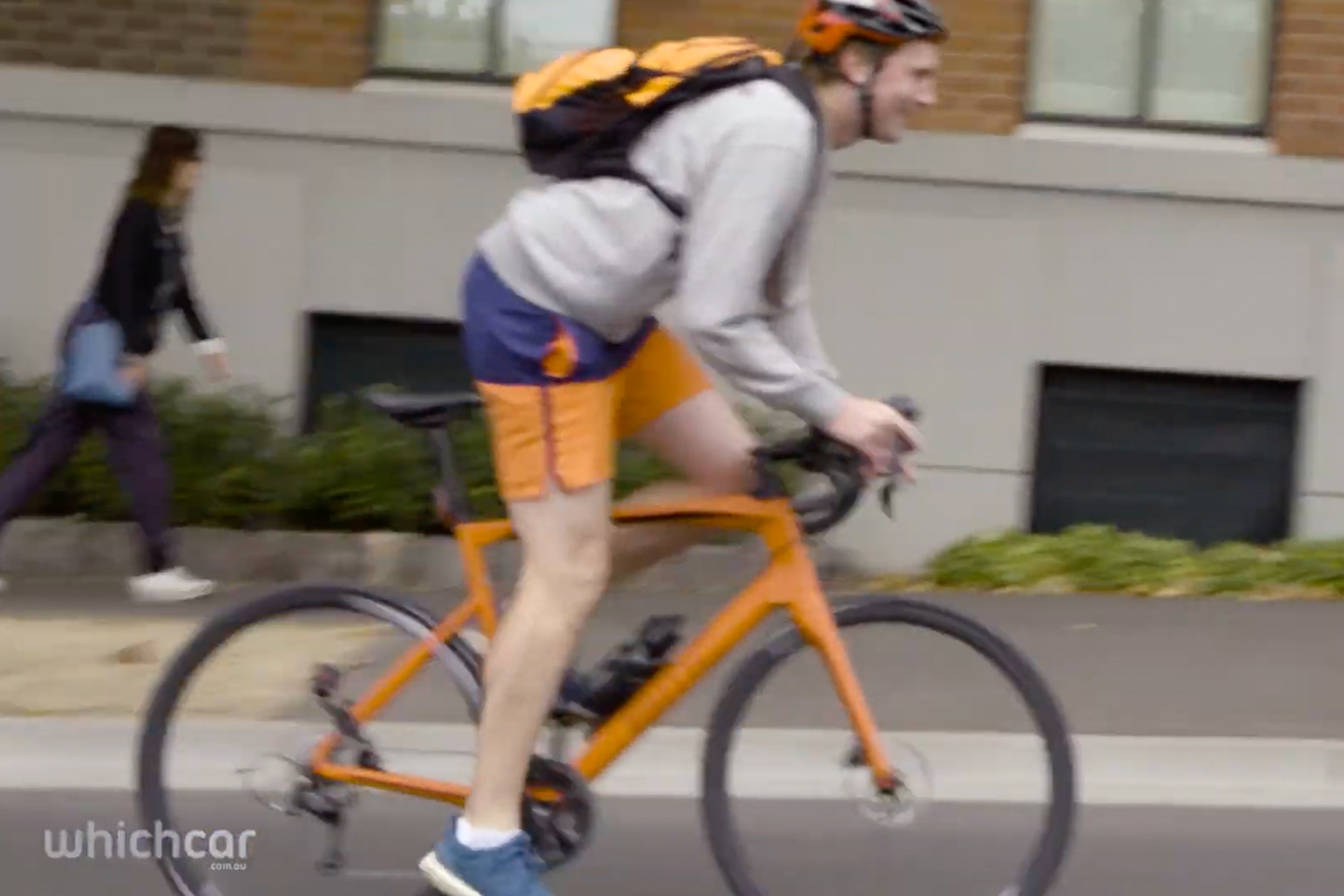
We polled the office to get a gauge on just which method consensus thinks would be the fastest – riding a bike or battling the traffic in a car. Surprisingly most decided the bike would win out, but we decided to put the idea to the test.
Originally the bike was to be piloted by avid cyclist and WhichCar editor Tim Robson, but scheduling conflicts deemed that the bike would be ridden by yours truly. Disclaimer: it has been some time since I’ve been on a bike, though I gave it my all in earnest!
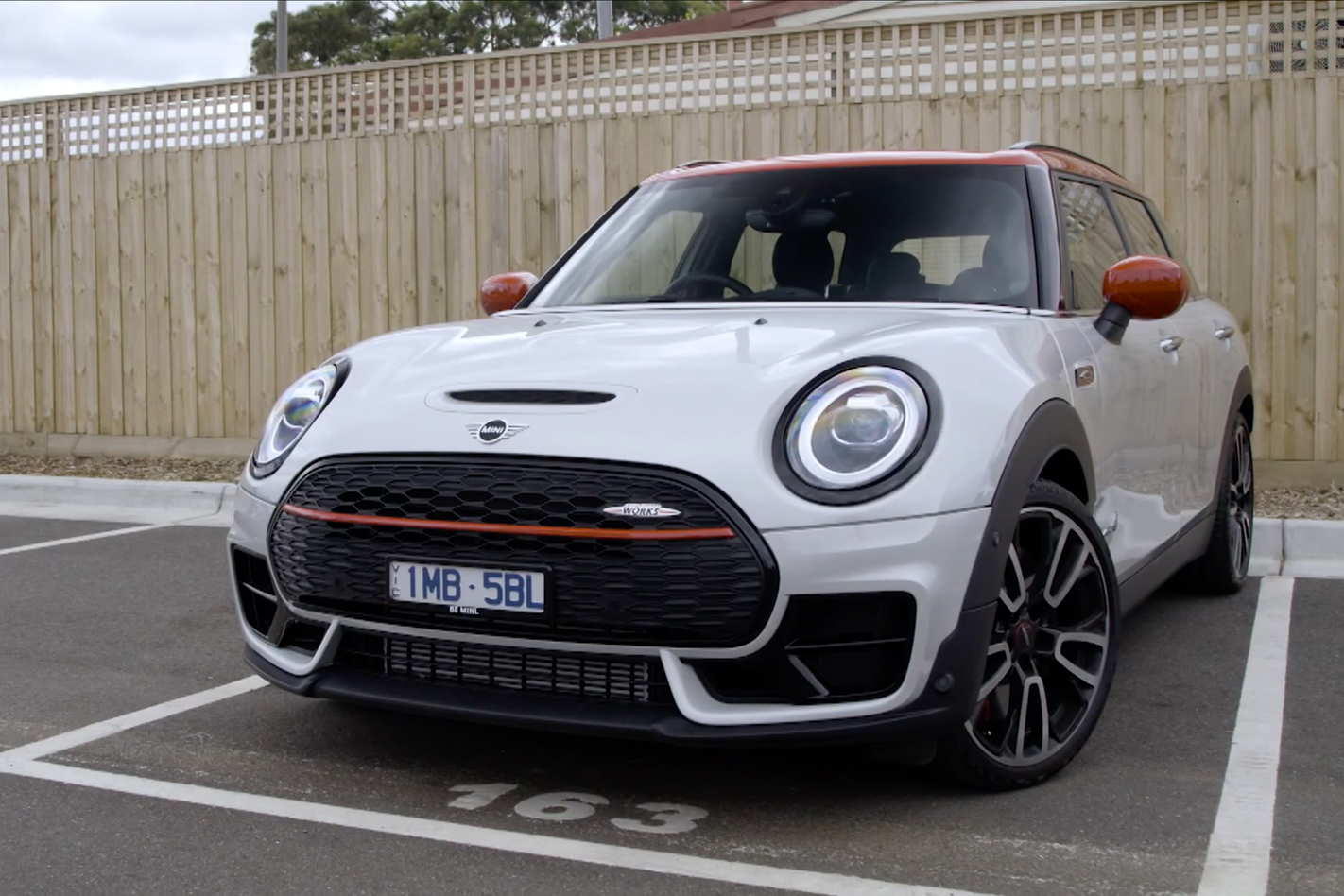
WhichCar journalist Tony O’Kane took the wheel of the car, and although it was a quick Mini Cooper S Clubman JCW, he could only go as fast as the traffic and speed limit would allow.
The race was set from the Melbourne Botanical Gardens to the Studley Park Boathouse in Kew, a distance of six kilometres.
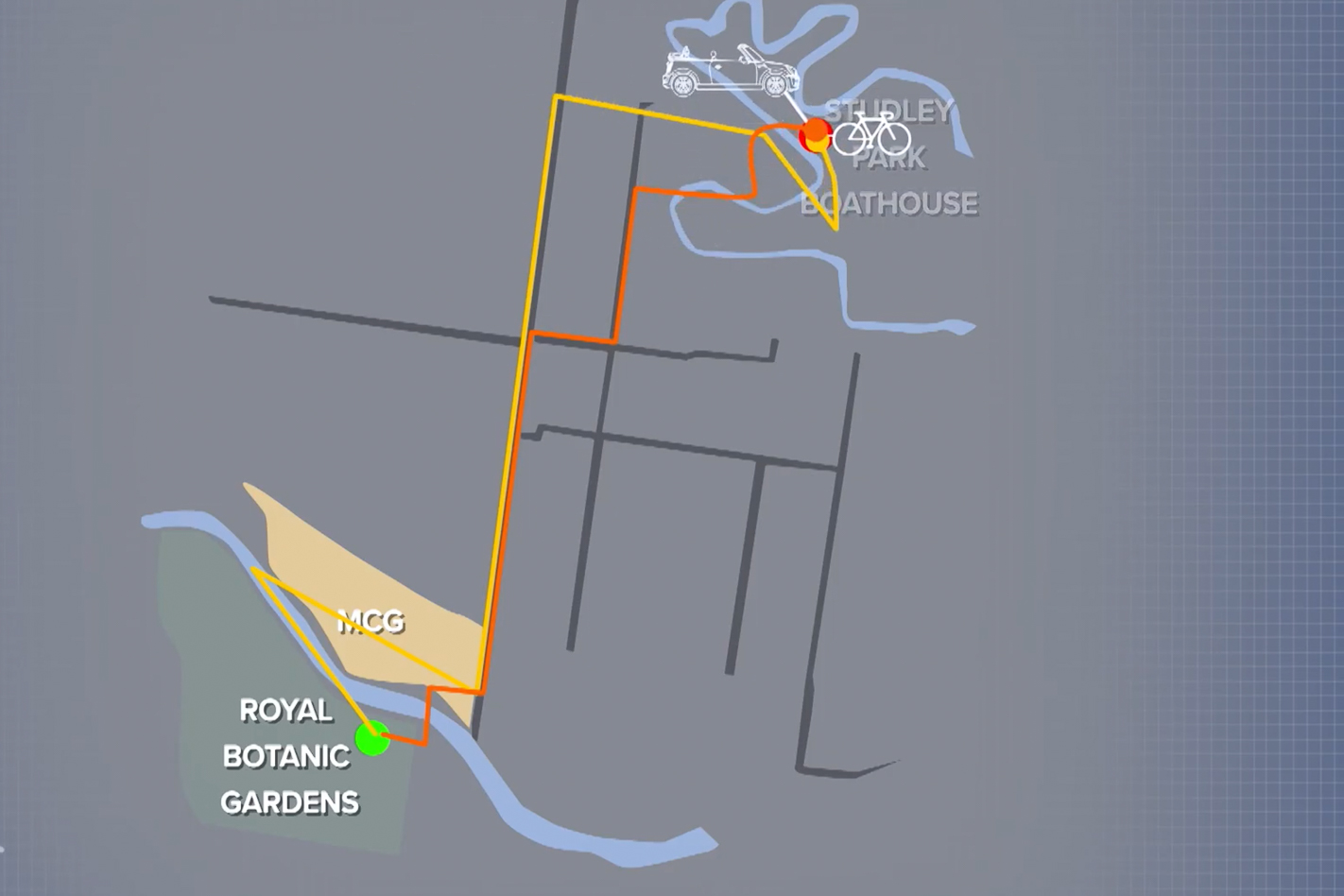
The odds may seem to be stacked in Tony’s favour from the get-go, but while Tony had to stick to roads, I was allowed to cut through parkways and be smart about finding the path of least resistance.
Tony also had two brief on-foot sprints away from the start line and towards the finish line, further evening out the odds.
After a quick look at the route I was meant to take and Tony tied his running shoes, Cameraman Sean Lander shouted ‘GO!’ and away we went.
I immediately set-off at full pace, a rookie mistake I soon found as I came to find a sizeable hill after rounding a corner that I was already out of puff for.
In any case, I knew Tony would have to muck around with running to his car, get inside and manoeuvre out of his tight parking space all the while I was making sweet progress across the Yarra River and into Richmond.
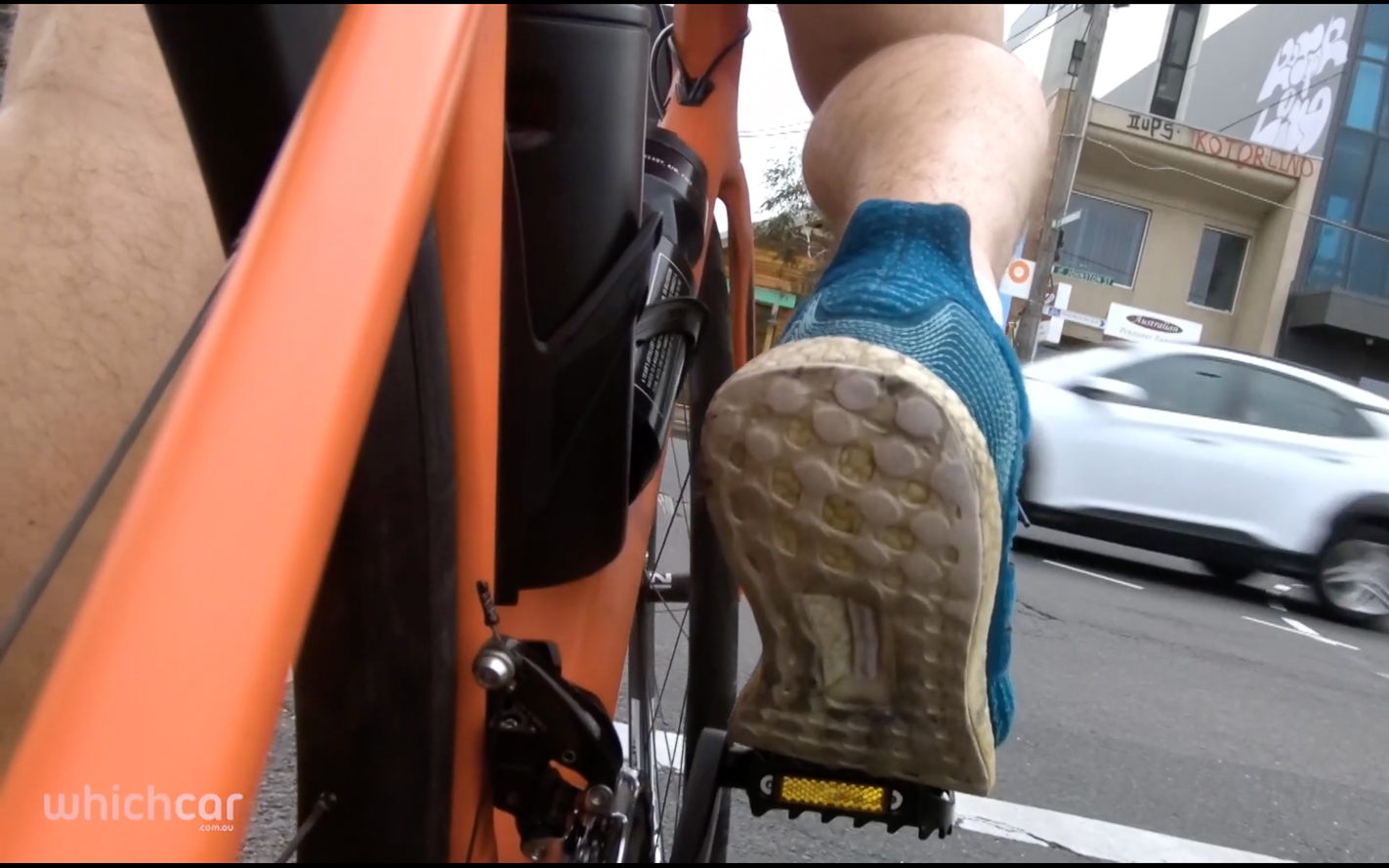
None of the interactions in which Tony spots me on camera are planned, and I was surprised that we crossed paths more than a couple times.
Tony quickly took the lead while we were both heading north on Punt Road, but he was unable to cut east as soon as I could and had to overshoot the turn-off where I could just cross the road at the lights like a law-abiding citizen.
Running through the backstreets of East Richmond was my time to shine, while Tony had to make-do with the slow-moving traffic.
Once again Tony and I crossed paths as we were both nearing the finish line, which was surprising to me as I figured he’d either be well ahead or far behind.
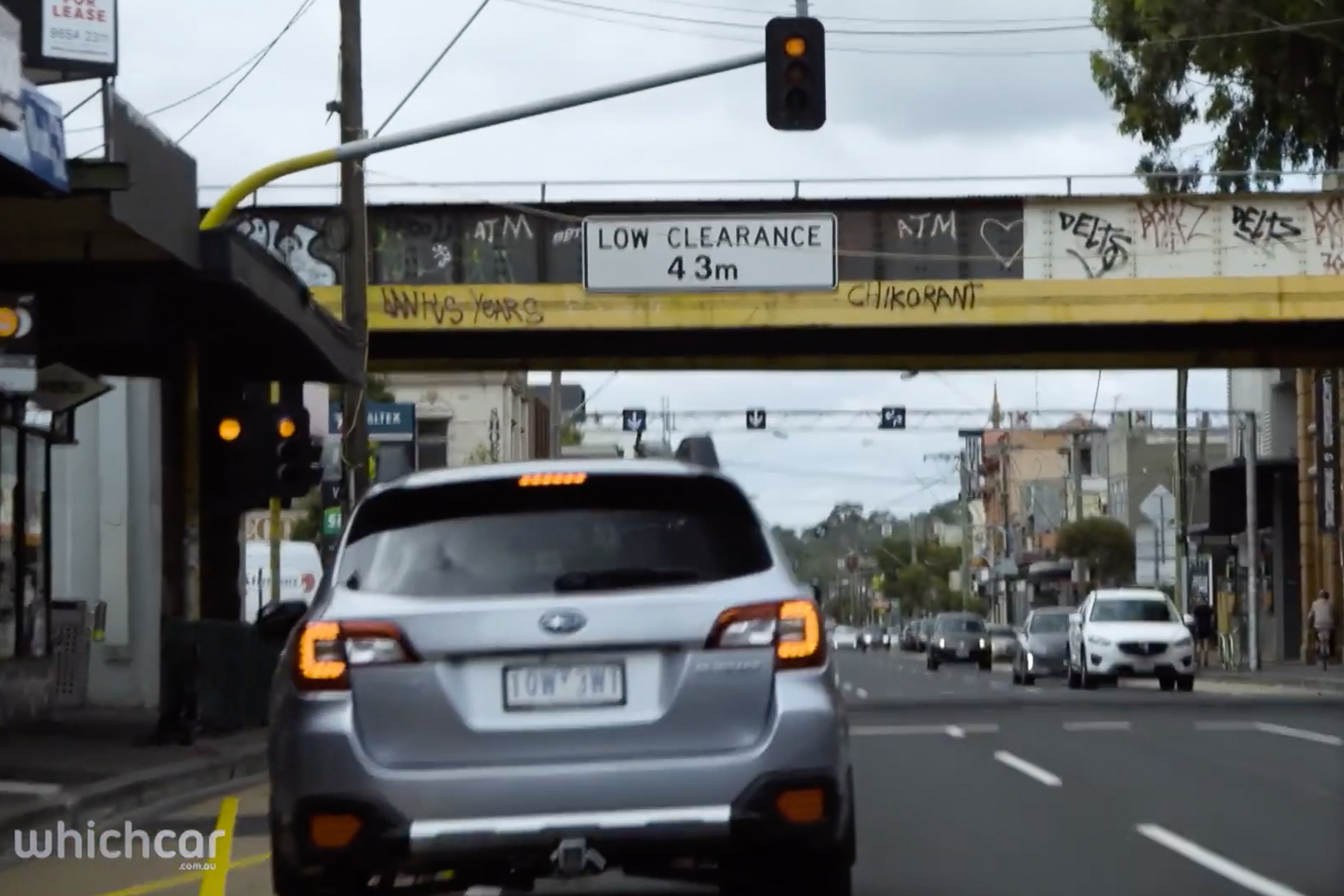
As we both descended on the Studley Park Boathouse I had the finish line in sight, just as Tony swooped in from a more approachable angle to take the flag.
You can see from the video that we were both surprised to have finished so close, but it was Tony and therefore the car that won the race over the bike and I.
Five ways cyclists and drivers can get along better
Many ‘what if’ scenarios were suggested in the aftermath, such as ‘what if we had had a practice run?’ or ‘what if the race was held closer to rush hour?’ but in the end we settled on the fact that either option could win under different circumstances.
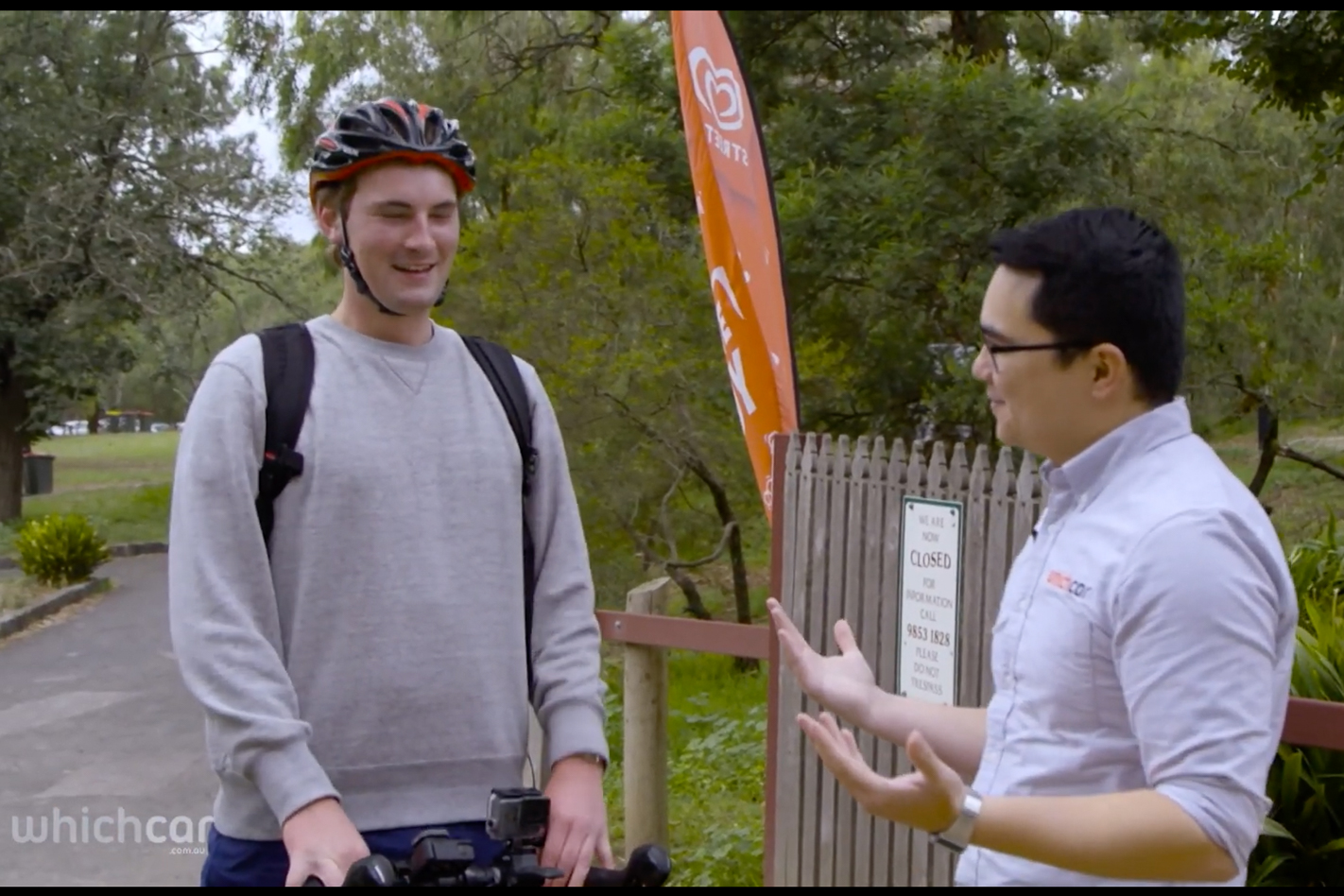
At the end of the day, the fact that I was tired, cold and sweaty and Tony was warm and ready for a day of work led us both to decide to take the car on the way home.
MORE CONTINENTAL CAR LABS
- Caring for your performance tyres
- How much do roof racks hurt fuel economy?
- Why driving on space savers is a bad idea
- What do car seat laws actually mean for parents?
In ancient Rome, there were certain fabrics so delicate and finely stitched they were called subtilis, literally ‘underwoven’. From that term came the English word ‘subtle’, the notion of qualities understated or concealed. By and large, production cars aren’t long on subtlety. In order for a complex product to communicate its appeal, it is often the case that a certain heavy-handedness is required to hammer home the sell. Take high-performance SUVs for instance. These usually benefit a sales proposition with the delicacy of an anvil.
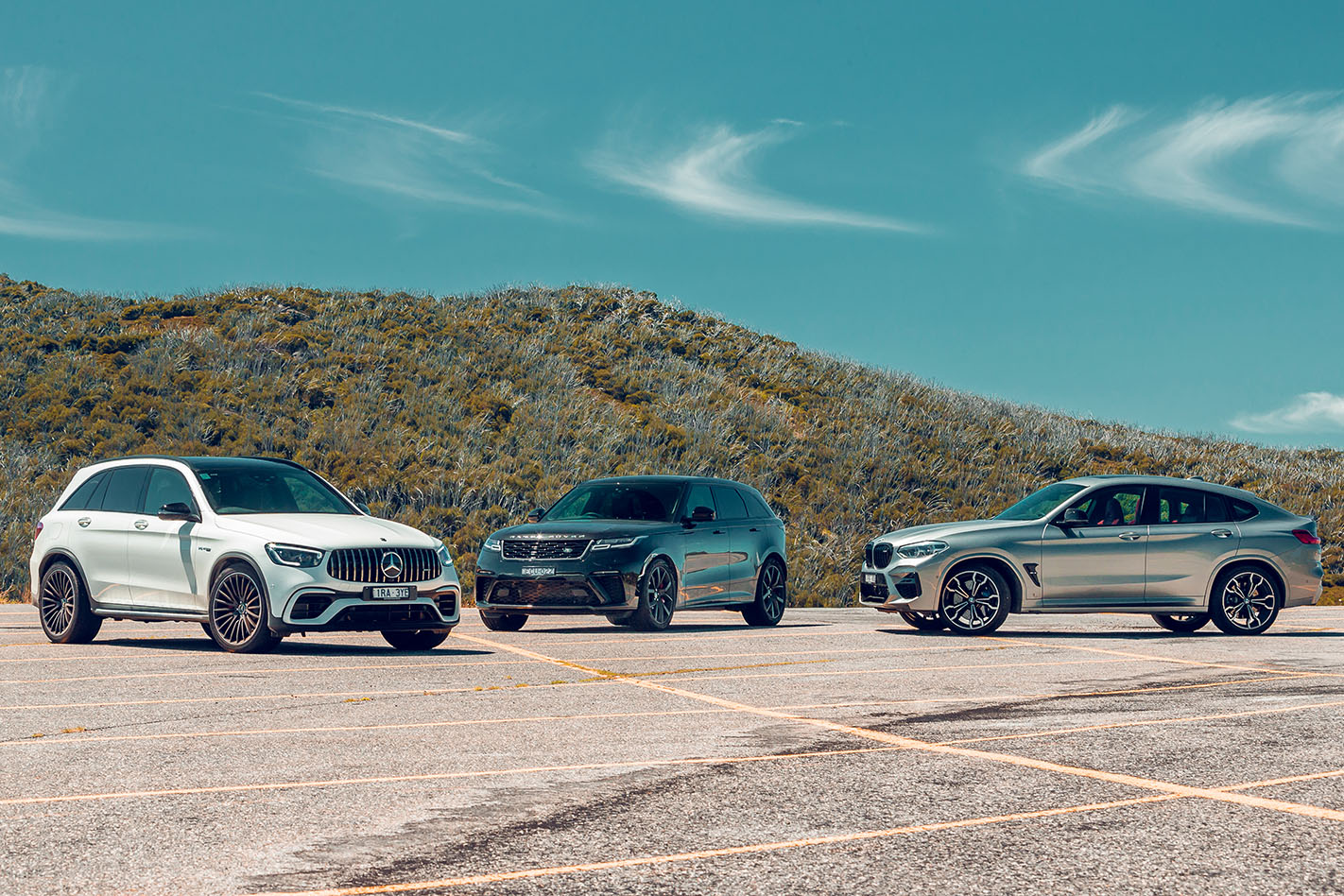
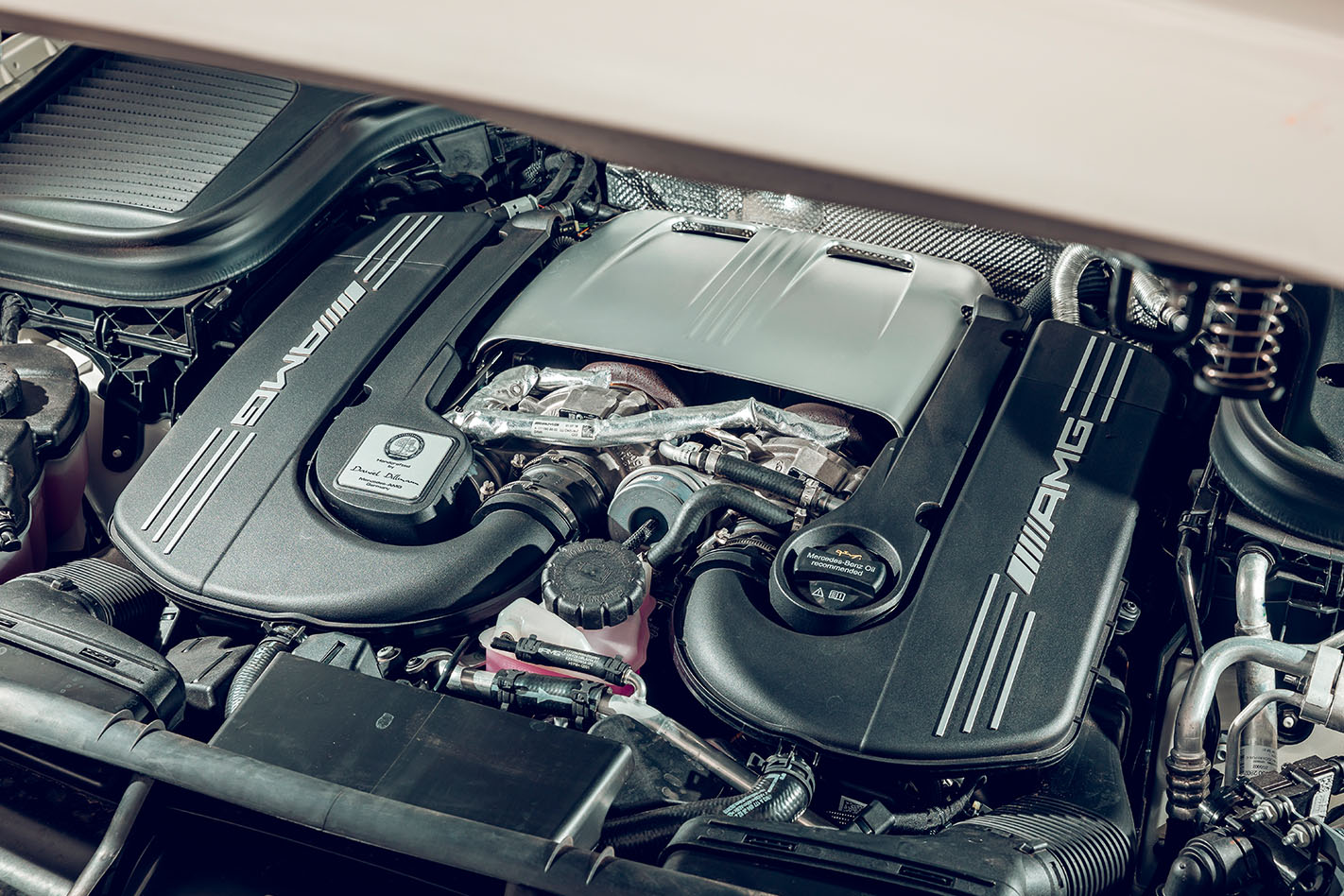
The 375kW/700Nm Mercedes-AMG GLC 63 S is a case in point. It doesn’t need to be notably clever because buyers in this market sector don’t demand anything particularly nuanced. The buyer requirements for a super-SUV are, in no particular order, the ability to look hugely expensive, sound ridiculously potent, and smoke almost anything away from a stoplight. That’s about it.
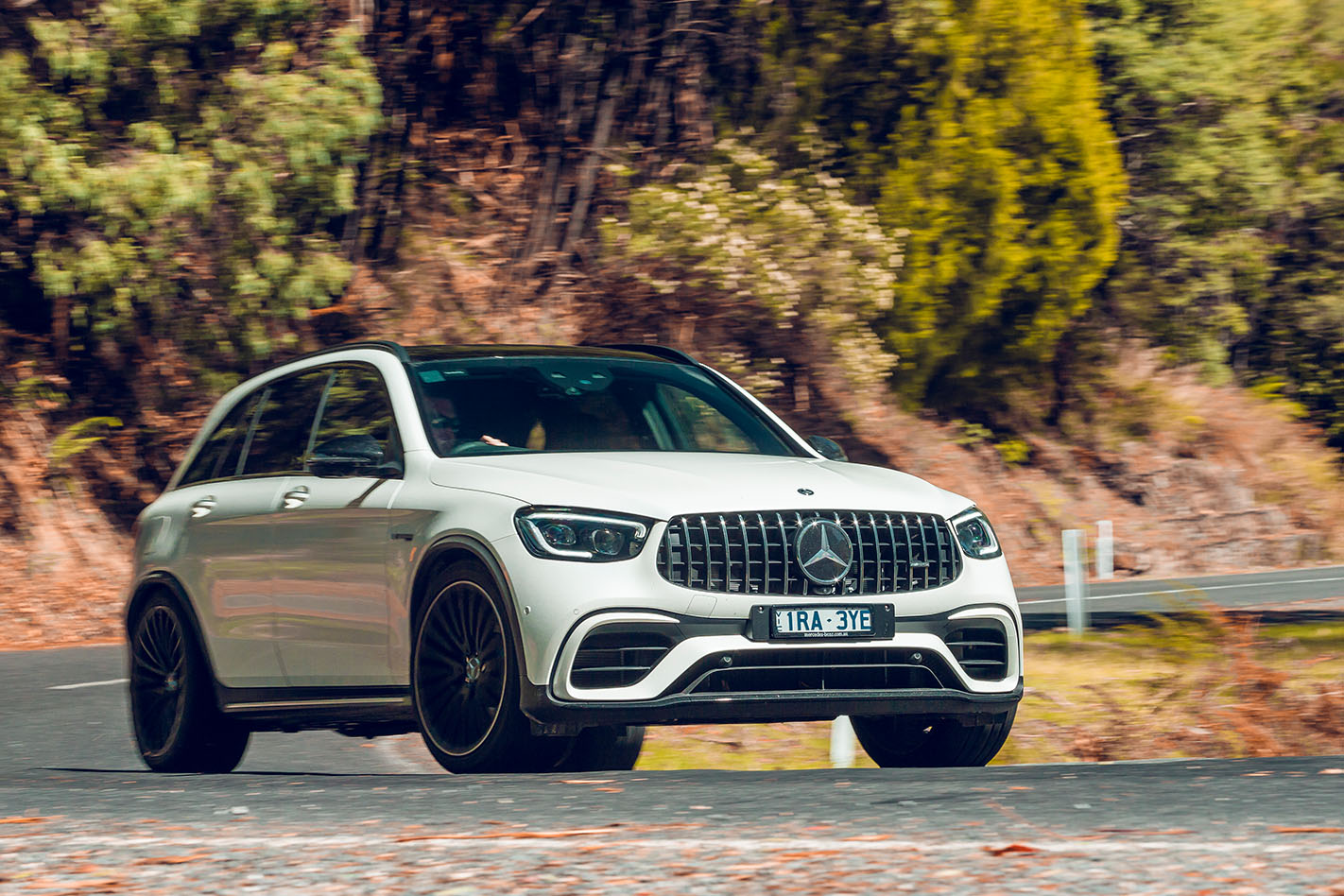
That the GLC can do a lot more is a credit to Mercedes-AMG but largely peripheral to the point. Affalterbach has figured out the motivations of the target customer with forensic precision and hit bullseye, hence the hot GLC’s rampant popularity. We have a comparison here, but it’s no spoiler to post upfront that the Mercedes is unmatched in acing those three criteria.
For quite some time, the GLC 63 was the only model in this class that shoehorned a V8 beneath its bonnet, but then the Jaguar F-Pace SVR arrived and now we have its ruggedised cousin, the Range Rover Velar SV Autobiography. This is effectively the last hurrah for the supercharged 5.0-litre bent-eight, with a 4.4-litre BMW-sourced N63 unit said to be next for JLR. Until that happens, we have 405kW/680Nm of the good stuff driving through four mud-and-snow tyres. Eek.
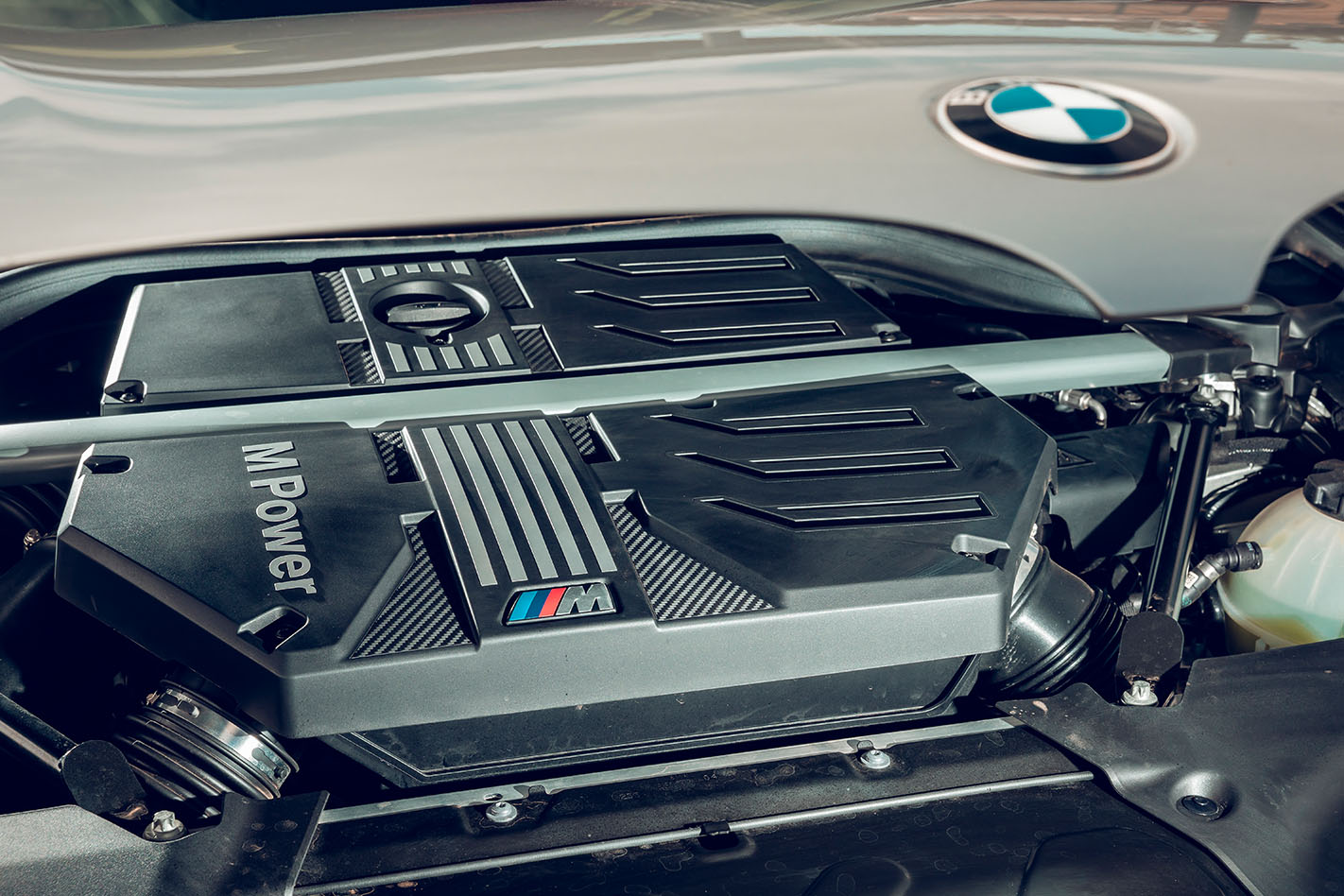
The third way here is represented by the BMW X4 M Competition. Lighter, lither and less a pair of cylinders, the straight-six S58 powerplant requires a pair of huffers to boost power up to 375kW and torque to 600Nm. This engine is set to find its way beneath the bonnet of the next M3, so we’re doubly keen to see if it’s capable of punching above its weight in this formidable company.
The Mercedes underscores its initial advantage by being the most affordable of the trio at $164,600 – just – before you start ticking options boxes. The BMW is priced at $164,900, while the Velar is a hefty $176,412. When forking over this sort of coin, we appreciate why buyers want to feel as if they’ve been compensated with a look and feel some way removed from the norm. The GLC’s the only one with a five-year warranty too, thanks to a recently inked upgrade to terms.
Before we get into details, it’s off to Heathcote and the brutish exercise of firing two tonnes of leather, luxe and lumbar massagers down the drag strip. Conditions are near perfect, and both the GLC and the Velar exactly match their factory claims to 100km/h of 3.8 and 4.5 seconds respectively. The AMG breaks the beam at the 400m mark in 12.1sec three runs in a row. The Velar’s not a great deal slower at the business end of the dragway, tripping the clock with a best of 12.3sec.
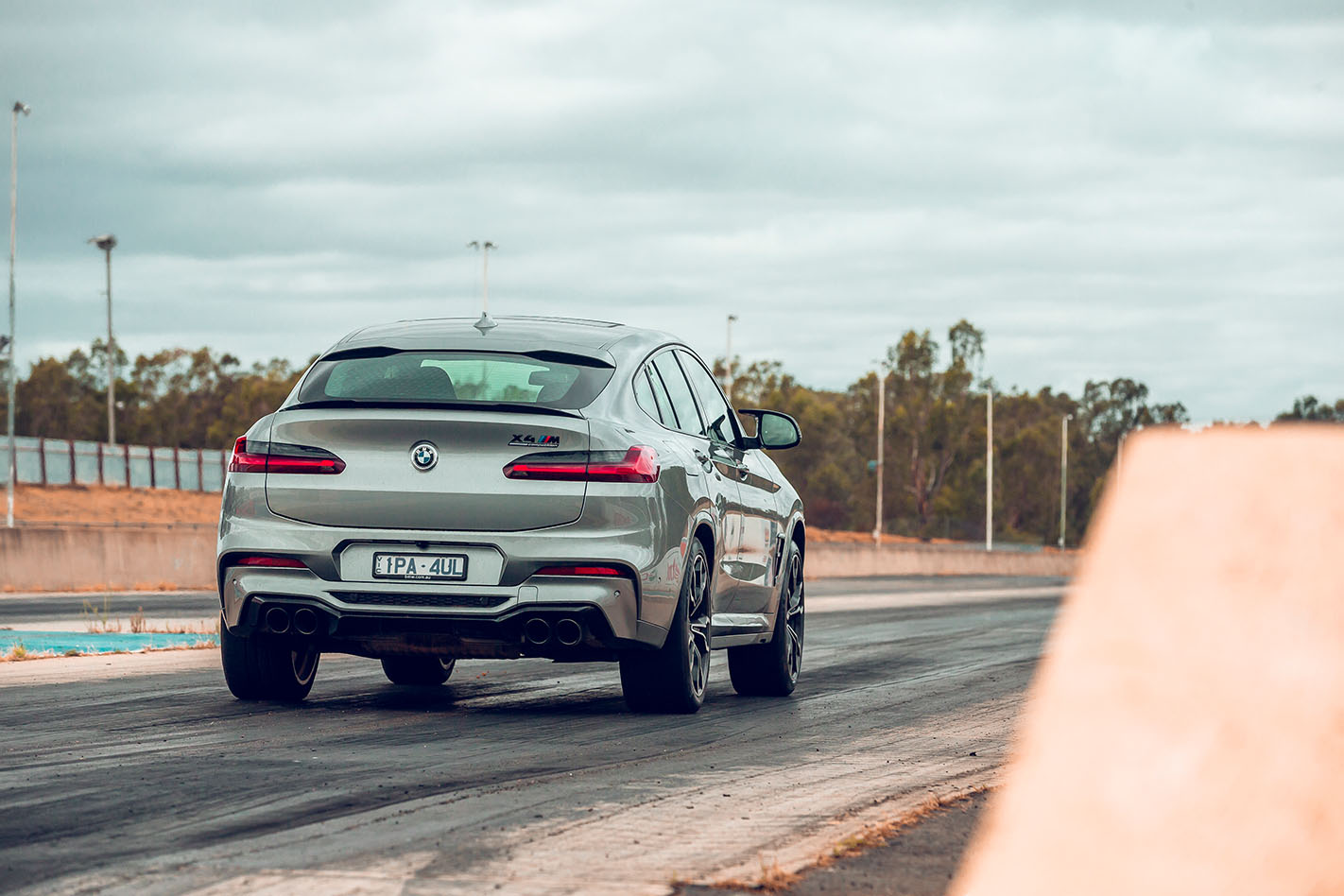
The BMW claims a 0-100 time of 4.1sec. Activate launch control, floor the throttle and, as the revs plateau, sidestep the brakes. You’ll get an unspectacular 4.4sec result. The trick is to wait. The revs will continue to climb, your teeth will probably grate at the lack of mechanical sympathy, but lift off the left-hand pedal at 4200rpm and the X4 will leap out of the blocks with a perfect chirrup of wheelspin for 3.7sec to 100km/h and a 400m time of 11.9 at 189.1km/h. It’s astonishingly potent. That 400m figure is lineball with a Porsche 911 GT3 RS 4.0, so you’d need something very serious to show it a clean pair of heels.
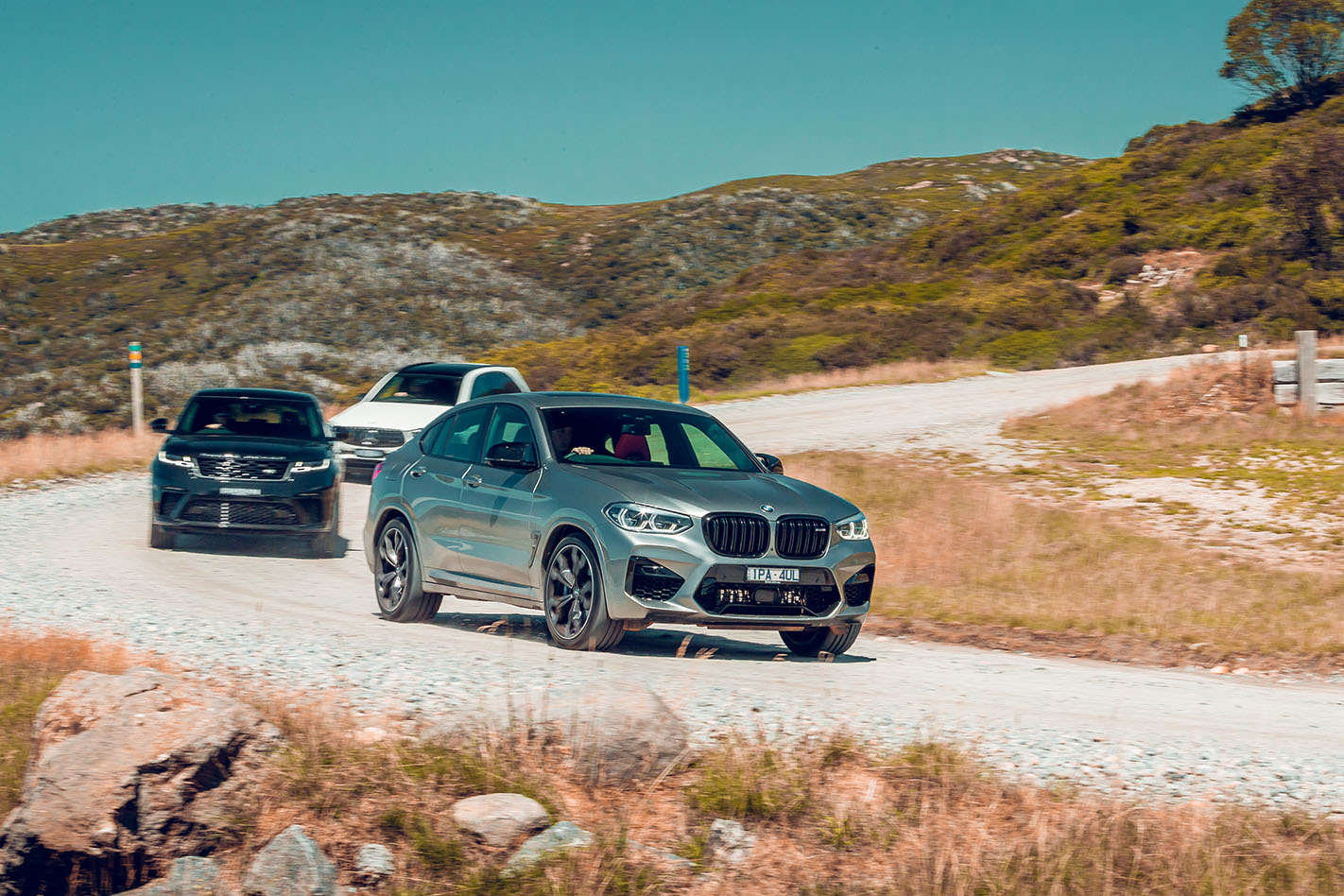
The X4 is helped by the most focused rubber of the trio. While all three feature 21-inch boots at the back, the BMW’s Conti SportContact6 tyres are a far grippier and more purposeful set of hoops than the more heavily grooved Conti CrossContact UHPs of the AMG and Pirelli Scorpion Zero mud-and-snows of the Velar.
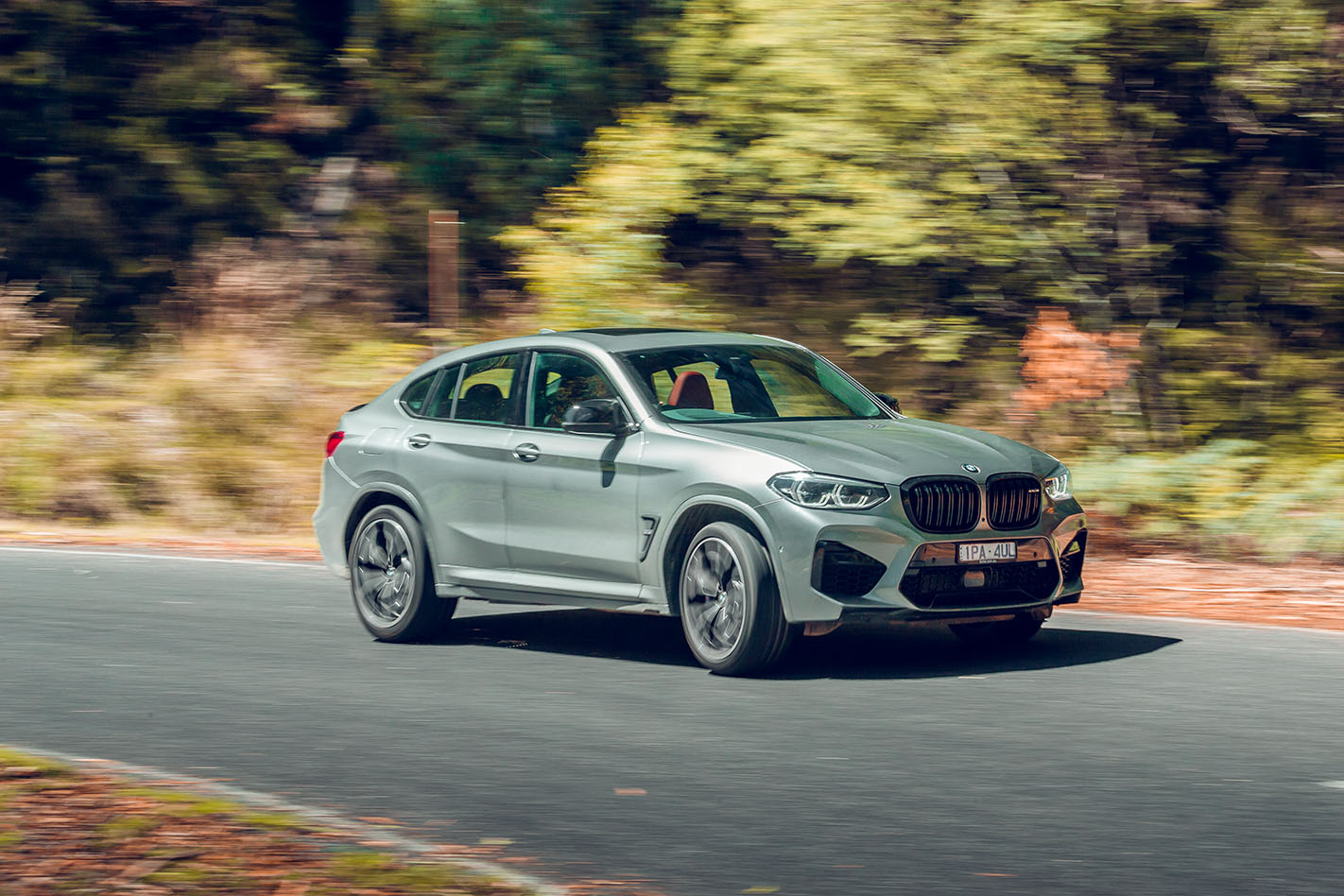
You sense that when attacking a bend, too. The BMW feels more athletic than the others. It’s also the only one of the trio on steel springs, aided here by a set of adaptive dampers that are largely redundant because the Comfort setting is all you’ll ever use. It’s firm but, given the focus of the vehicle, not unacceptably so. As well as the suspension, the throttle and steering can be switched through Comfort, Sport and Sport Plus modes, and you can save custom presets to the M1 and M2 tabs on the steering wheel.
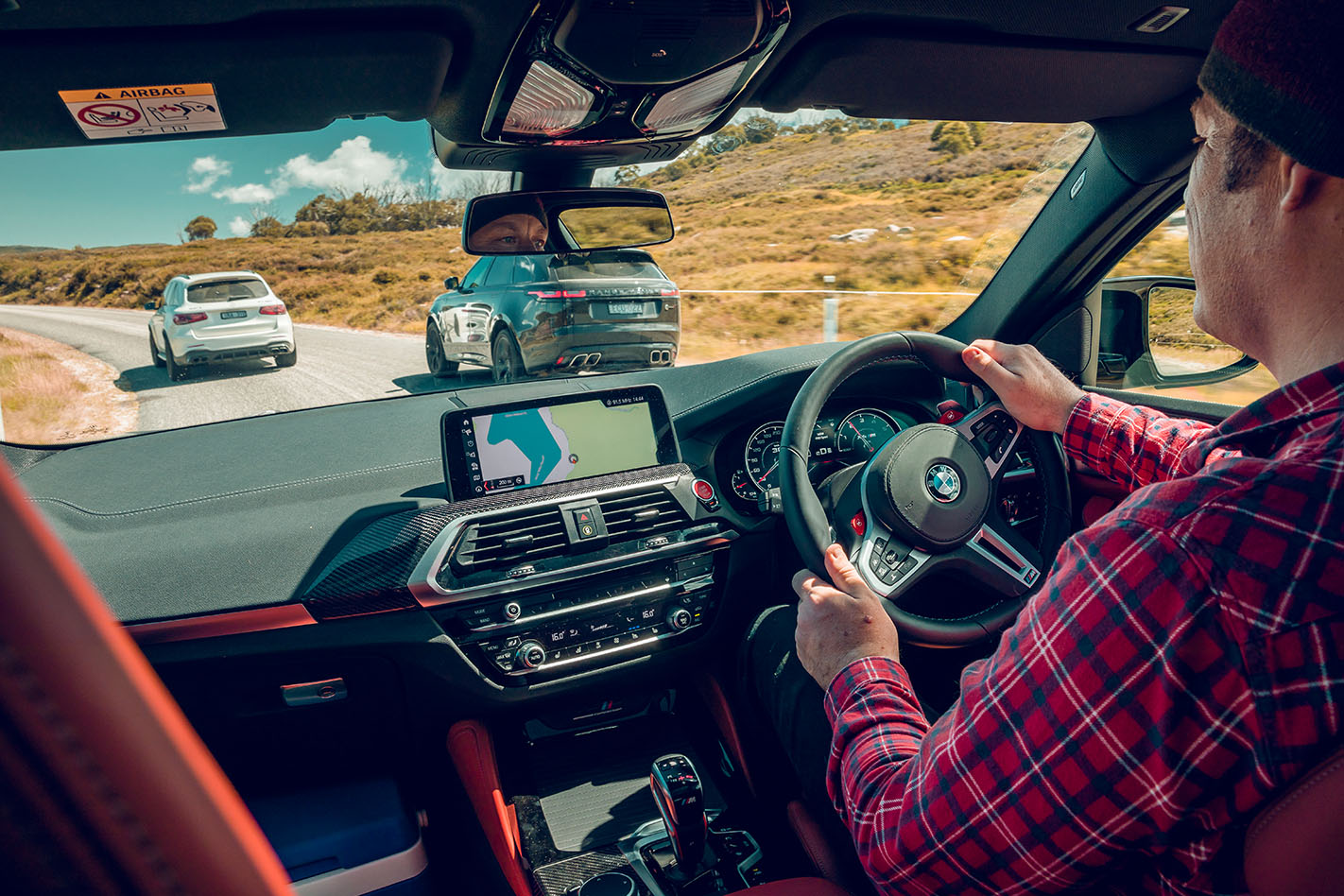
It’s the only one of the three cars you would want to drive flicking up and down the ’box using the rubberised shift paddles, partly because of two issues: there’s little meaningful go below 2500rpm; and the eight-speed ZF torque-converter gearshift’s logic isn’t the most polished, often plugging you into too high a gear mid-corner and then clumsily downshifting just as you’re trying to scribe a clean arc post-apex. Still, it keeps you involved, and there’s a delightful howl at the top end that’s not dissimilar to that of an Alfa Romeo Stelvio Q. The Sport setting is heavily rear-biased, but gathering up a slide can feel a little clumsy, the tall body whipping back into line without too much help from the front tyres.
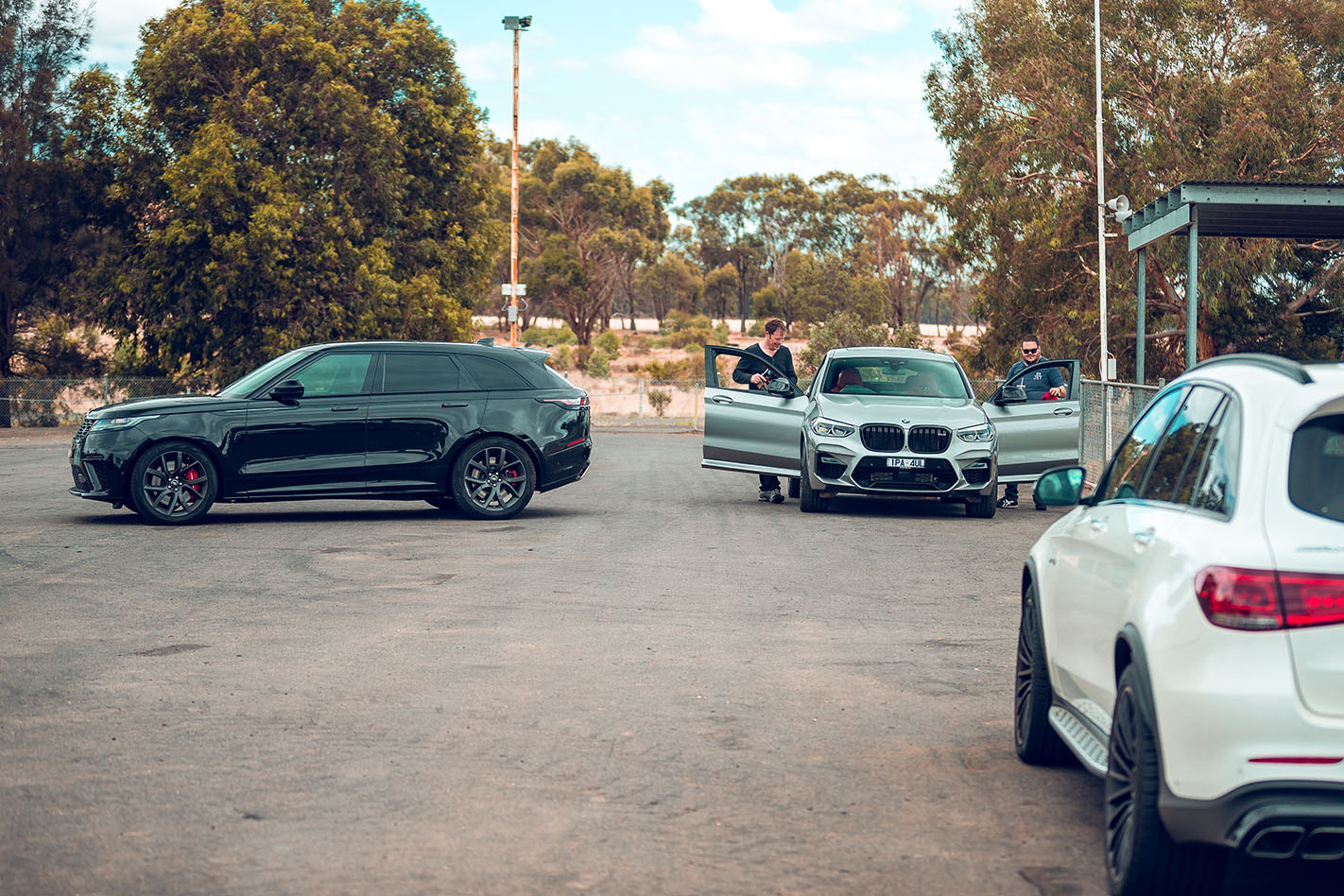
The brake pedal is relatively soft and benign in modulation, but the brakes held up well on a mountain descent at Falls Creek. The exhaust can be set into loud or quiet modes, but the difference isn’t hugely marked. While the car retains this setting when keyed off, it forgets the ride, throttle and steering preferences, reverting to Comfort everything.
After the agility of the BMW, the GLC 63 S feels as if it’s trying to bludgeon corners into submission. There’s little difference in kerb weight between the two Germans, but you’d swear the AMG was a couple of hundred kegs heavier. The engine is by far the most dominant of the trio, the chuntering 4.0-litre twin-turbo M177 lump unembarrassed by any halfway reasonable request for acceleration. The nine-speed ’box is therefore best left to its own devices.
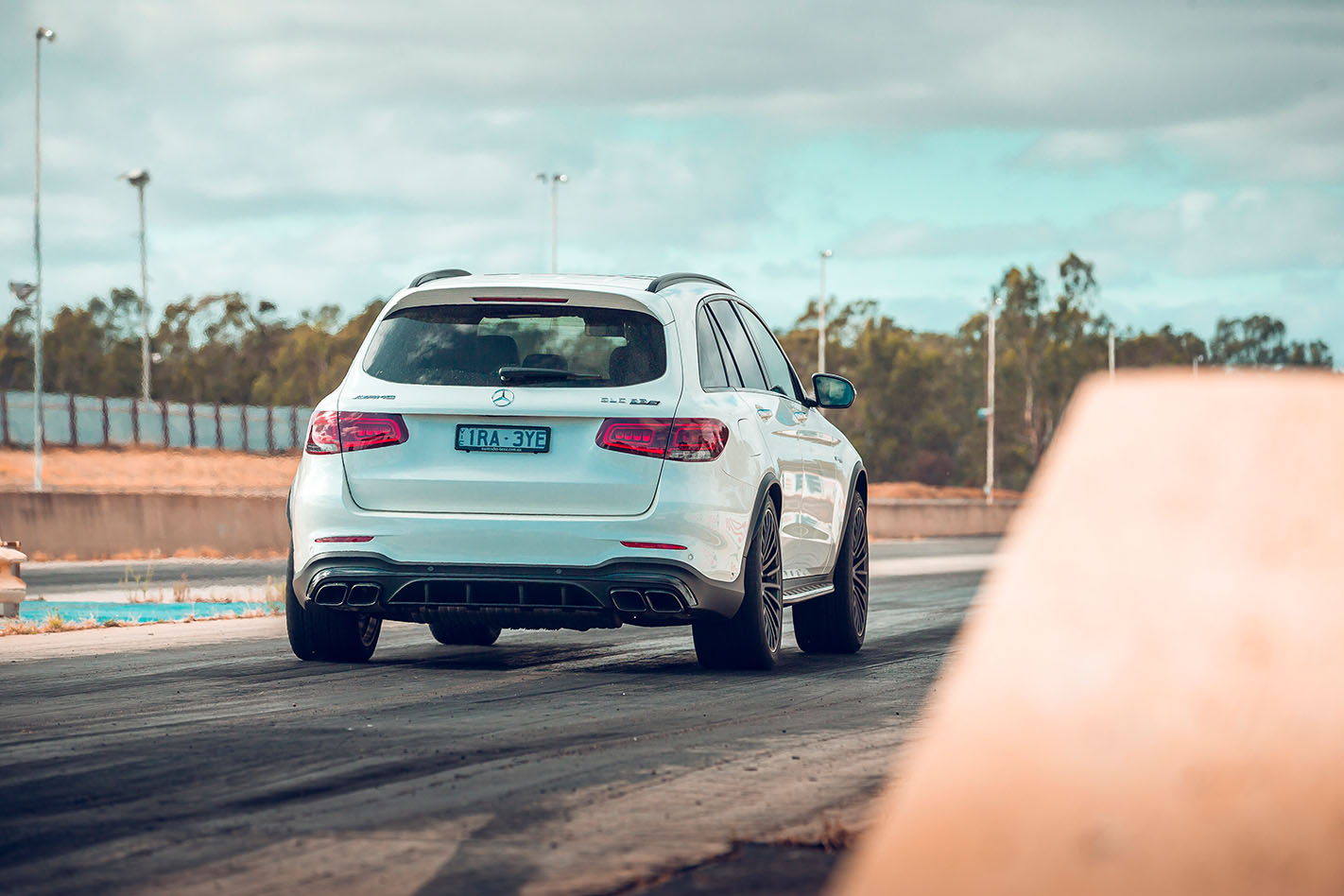
Fling the AMG at a bend and it corners with astonishing flatness. That, combined with meaty steering and the feeling there’s a virtually bottomless well of torque to pull you out of trouble, engenders an initial feeling of invincibility. There is, however, an element of artifice to it, the GLC’s dynamic engine mounts helping this all-of-a-piece impression. Push harder, into the realm where the BMW feels at its happiest, and the GLC’s stability control starts grabbing noisily at an outside front brake disc and the treadblocks feel as if they’re being mashed, warped and heat-stressed beyond their optimum operating envelope.
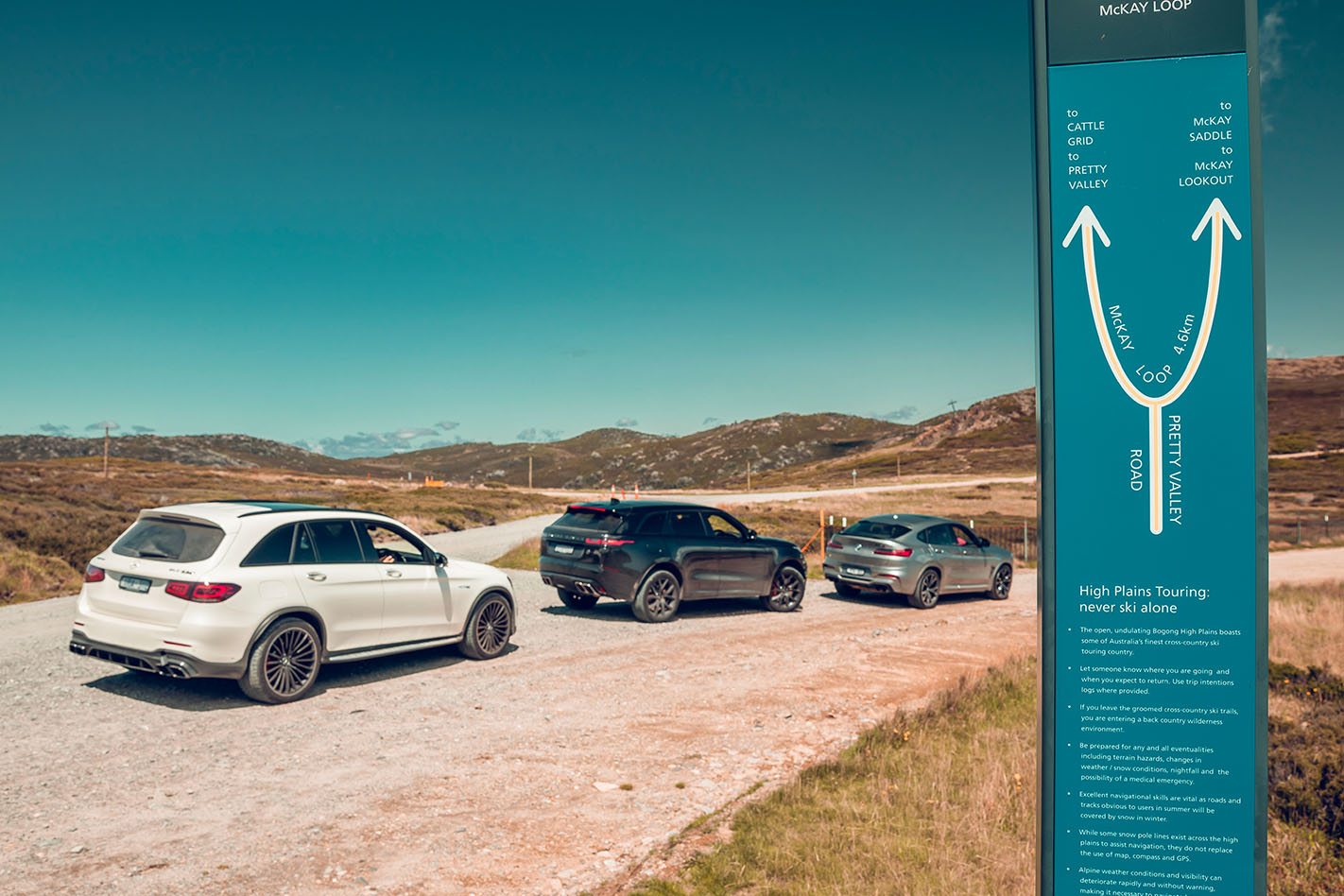
The Velar takes tyre torture to an even greater extreme. Chase the others and it soon gets out of its depth, the unloaded front tyre pattering through corners and the weight in the nose becoming apparent. Whereas the BMW shrinks around you, the Range Rover does the opposite; it drives bigger than it is. Back off a little and it’s a lot happier. Flick every setting into Dynamic and it’s fast and composed, with great gearshift logic, and there’s also a really strong, reassuring brake pedal feel.
The Comfort and Dynamic drive modes are genuinely well calibrated, the Velar being the only one here that offers a firmer suspension setting that’s workable on-road. It’s particularly impressive when you consider that the air-suspended Range Rover has markedly the best off-road ability and, when dialled into Comfort mode, easily the best ride quality too. So, while it’s no canyon-seeking corner carver, hampered largely by its overheating rubber, the Velar is nevertheless a very deft compromise.
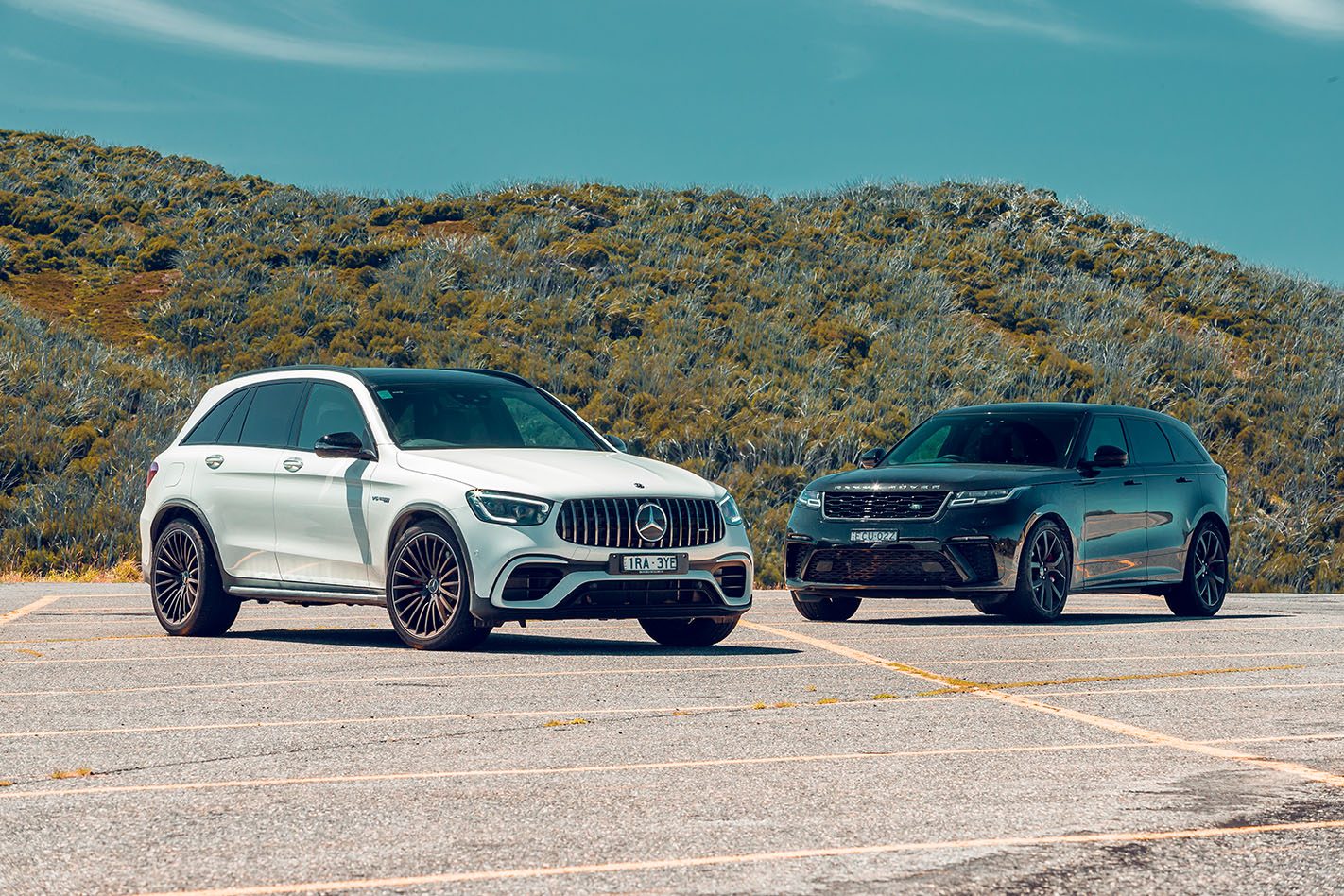
Our photoshoot takes us to the summit of Mount McKay, the highest driveable point in Australia, accessed via a long dirt access road. In the Velar it’s a breeze, your eyes scanning for more challenging lines to tackle. In the Mercedes and the BMW, you feel every pebble and corrugation through gritted teeth. Snapper Brook has brought tents and swags with him and seems genuinely disappointed at our insistence on ‘Bear Grylls camping’ (ie, the Allamar Motor Inn at Mount Beauty).
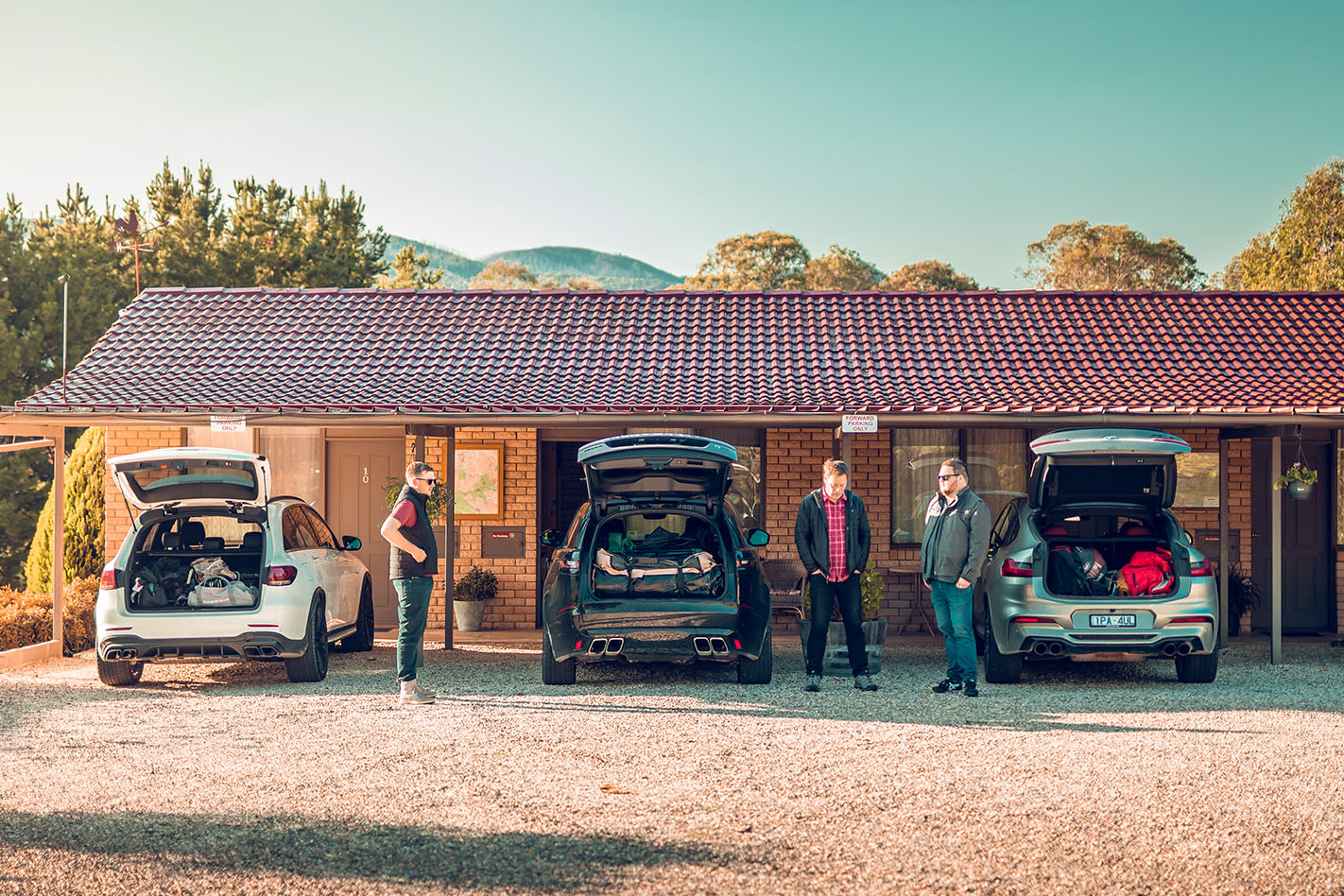
Our plan is to head over the Bogong High Plains down to Omeo and the communities affected by the bushfires, but the plan is foiled when the road is closed by tree debris brought onto the bitumen by high winds. Our convoy was almost struck by half a stringybark crashing to the roadway earlier in the day, so it’s clear that the consequences of the fires may well persist for some time in the more remote high country spots.
Arriving at some sort of decision on a finishing order is also creating a mental roadblock. The Mercedes-AMG GLC 63 S does exactly what buyers in this category want. It’s a loveable brute of a thing and it’s an easy and safe recommendation. Would you get bored once you had exhausted its somewhat one-dimensional personality? Maybe. But you’d have a whale of a time arriving at that conclusion.
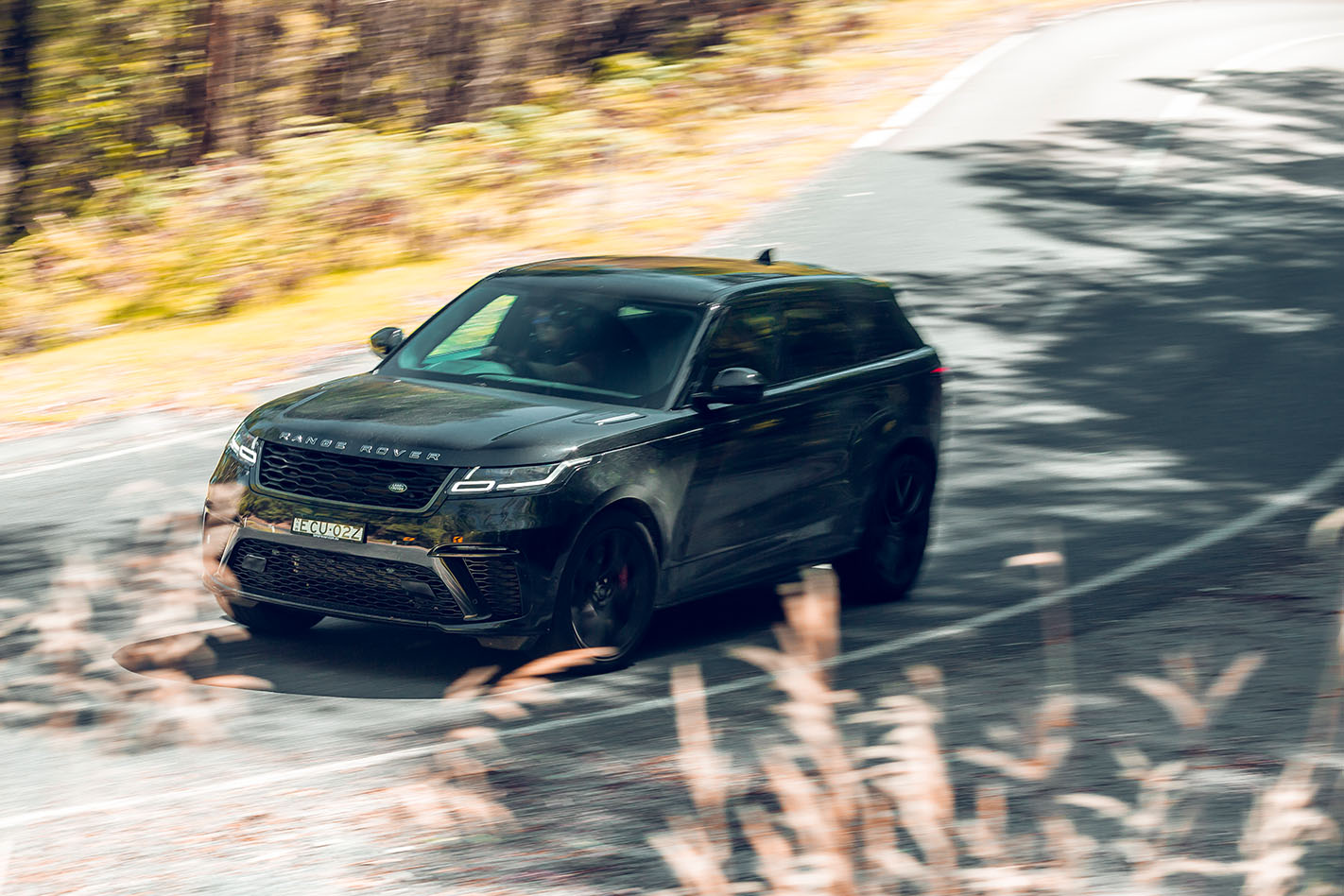
The Velar might not be quite as quick, but it feels even glitzier inside, and there’s something beguiling about a vehicle this fast that can also clamber up Falls Creek’s steepest ski runs, 21-inch alloys notwithstanding. With the most space inside and the best ride, it would be the easiest to live with day in, day out. There’s also a wry irony about the car that appears to be the most design-led also being the most ruggedly practical.
Which leaves the quickest, most agile, most rewarding and most economical vehicle here. The BMW X4 M Competition isn’t an easy car to initially bond with, but perseverance pays dividends. There are layers to its personality that only time, tenacity and testing reveal. It’s an intriguing and, yes, subtle thing, with genuine appeal as a driver’s car, but the fact remains that in this company it feels relatively ordinary inside. In other words, you’re being asked to invest in a quality – its keenly focused dynamics – that most customers won’t put a premium on. Subtlety doesn’t sell super-SUVs, but on a cold mountain road in autumn it gets a warm reception from us.
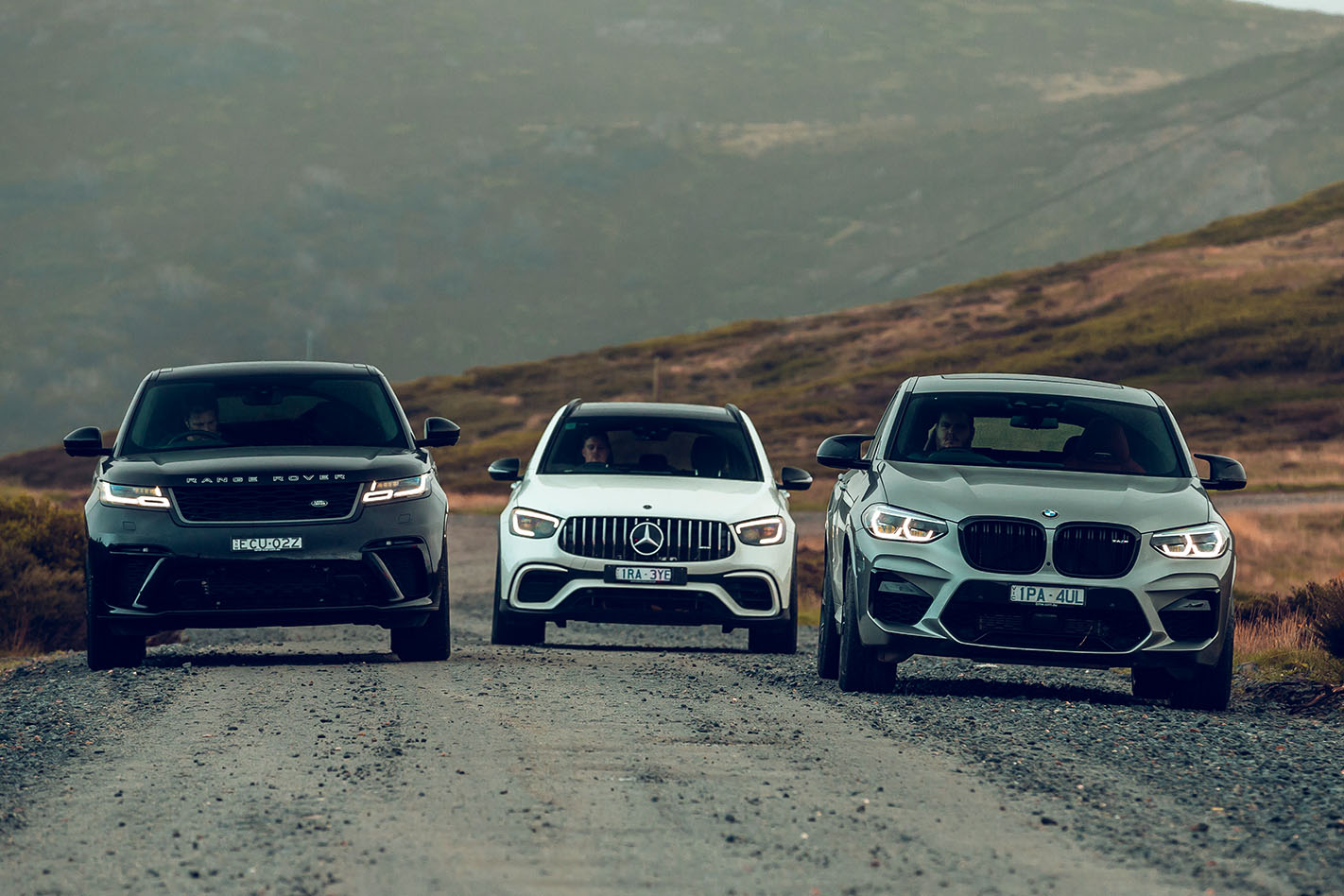
So how do you decide on which of these is the best? If it’s a case of best answering customer needs, it’s the Mercedes. Should you prefer more space, comfort and off-road ability, go Velar. For a purer corner-carving experience, the X4 M Competition shines. Each has its own sub-niche, but on this occasion we can’t argue with the popular vote. It’s the three-pointed star by the merest sliver.
TOUCH & GO
Best infotainment system? For response and intuitiveness, it’s BMW’s slightly ageing iDrive 6. Mercedes’ MBUX is excellent but takes time to learn. The touchpad is also a retrograde step. The lovely Burmester audio isn’t though. TouchPro Duo in the Velar is certainly comprehensive, but requires a lot of attention, often benefiting a co-driver. It also flaked on us intermittently during the test.
VERDICT
- 1st: Mercedes-AMG GLC 63 S – 8.5/10
- 2nd: BMW X4 M Competition – 8.5/10
- 3rd: Range Rover Velar SVAutobiography – 8.0/10
MERCEDES-AMG GLC 63 S SPECS
Price: $164,600 ($166,000* as tested)
Engine: V8, dohc, 32v, twin-turbo
Layout: front engine (north-south), AWD
Capacity: 3982cc
Power: 375kW @ 5500-6250rpm
Torque: 700Nm @ 1750-4500rpm
Transmission: 9-speed automatic
Body: steel, 5 doors, 5 seats
L/W/H/W-B: 4655/1890/1644/2873mm
Track (F/R): 1620/1621mm
Weight: 2095kg
Boot: 550 litres
Fuel/tank: 98 octane/66 litres
Economy: 11.1L/100km (test average)
Front suspension: multi-link, air springs, anti-roll bar
Rear suspension: multi-link, air springs, anti-roll bar
Steering: electric rack-and-pinion
Turning circle: 11.8m (2.0 turns lock-to-lock)
Front brakes: ventilated discs (390mm)
Rear brakes: ventilated discs (390mm)
Tyres: Continental CrossContact UHP
Tyre size: 265/40 R21 105Y (f) / 295/35 ZR21 107Y (r)
Safety: 5 stars (ANCAP)
Power-to-weight: 179kW per tonne
Redline/cut-out: 7000/6800rpm
Speed at indicated 100km/h: 96
0-20km/h: 0.6sec
0-40km/h: 1.1sec
0-60km/h: 1.8sec
0-80km/h: 2.7sec
0-100km/h: 3.8sec
0-120km/h: 5.2sec
0-140km/h: 6.9sec
0-160km/h: 8.9sec
0-180km/h: 11.4sec
0-200km/h: 14.7sec
0-400m: 12.1sec @ 184km/h
80-120km/h: 2.5sec
100km/h-0: 39.0m
Options*: Premium paint ($1400)
BMW X4 M COMPETITION
Price: $164,900 ($169,200* as tested)
Engine: in-line 6cyl, dohc, 24v, twin-turbo
Layout: front engine (north-south), AWD
Capacity: 2993cc
Power: 375kW @ 62500rpm
Torque: 600Nm @ 2600-5950rpm
Transmission: 8-speed automatic
Body: steel, 5 doors, 5 seats
L/W/H/W-B: 4758/1927/1620/2864mm
Track (F/R): 1617/1632mm
Weight: 2045kg
Boot: 525 litres
Fuel/tank: 98 octane/65 litres
Economy: 10.1L/100km (test average)
Front suspension: coil springs, adaptive dampers, anti-roll bar
Rear suspension: multi-link, coil springs, adaptive dampers, anti-roll bar
Steering: electric rack-and-pinion
Turning circle: 12.6m (2.2 turns lock-to-lock)
Front brakes: ventilated discs (395mm)
Rear brakes: ventilated discs (370mm)
Tyres: Continental SportContact 6
Tyre size: 255/40 ZR21 102Y (f) / 265/40 ZR21 105Y (r)
Safety: 5 stars (ANCAP)
Power-to-weight: 183kW per tonne
Redline/cut-out: 7200/7200rpm
Speed at indicated 100km/h: 98
0-20km/h: 0.6sec
0-40km/h: 1.2sec
0-60km/h: 2.0sec
0-80km/h: 2.7sec
0-100km/h: 3.7sec
0-120km/h: 5.0sec
0-140km/h: 6.5sec
0-160km/h: 8.3sec
0-180km/h: 10.5sec
0-200km/h: 13.6sec
0-400m: 11.9sec @ 189.1km/h
80-120km/h: 2.3sec
100km/h-0: 35.2m
Options*: Front and rear seat heating ($700), active seat ventilation ($1600), premium paint ($2000)
RANGE ROVER VELAR SVAUTOBIOGRAPHY SPECS
Price: $176,412/Tested $181,325*
Engine: V8, dohc, 32v, supercharger
Layout: front engine (north-south), AWD
Capacity: 5000cc
Power: 405kW @ 6000-6500rpm
Torque: 680Nm @ 2500-5500pm
Transmission: 8-speed automatic
Body: steel, 5 doors, 5 seats
L/W/H/W-B: 4806/2032/1676/2874mm
Track (F/R): 1644/1663mm
Weight: 2235kg
Boot: 558 litres
Fuel/tank: 98 octane/60 litres
Economy: 10.9L/100km (test average)
Front suspension: double A-arms, air springs, anti-roll bar
Rear suspension: double A-arms, air springs, anti-roll bar
Steering: electric rack-and-pinion
Turning circle: 12.0m (2.6 turns lock-to-lock)
Front brakes: ventilated discs (395mm)
Rear brakes: ventilated discs (396mm)
Tyres: Pirelli Scorpion Zero M+S
Tyre size: 265/45R21 108Y
Safety: 5 Stars (ANCAP)
Power-to-weight: 181kW per tonne
Redline/cut-out: 6800/6750rpm
Speed at indicated 100km/h: 96
0-20km/h: 0.8sec
0-40km/h: 1.5sec
0-60km/h: 2.3sec
0-80km/h: 3.3sec
0-100km/h: 4.5sec
0-120km/h: 5.9sec
0-140km/h: 7.5sec
0-160km/h: 9.5sec
0-180km/h: 12.2sec
0-200km/h: 15.6sec
0-400m: 12.3sec @ 182.1km/h
80-120km/h: 2.6sec
100km/h-0: 38.7m
Options*: Driver assist pack ($2223), ambient lighting ($540), privacy glass ($890), black veneer ($530), Terrain Response 2 with Dynamic program ($430), rear seat remote release levers ($300)
