
In ancient Rome, there were certain fabrics so delicate and finely stitched they were called subtilis, literally ‘underwoven’. From that term came the English word ‘subtle’, the notion of qualities understated or concealed. By and large, production cars aren’t long on subtlety. In order for a complex product to communicate its appeal, it is often the case that a certain heavy-handedness is required to hammer home the sell. Take high-performance SUVs for instance. These usually benefit a sales proposition with the delicacy of an anvil.
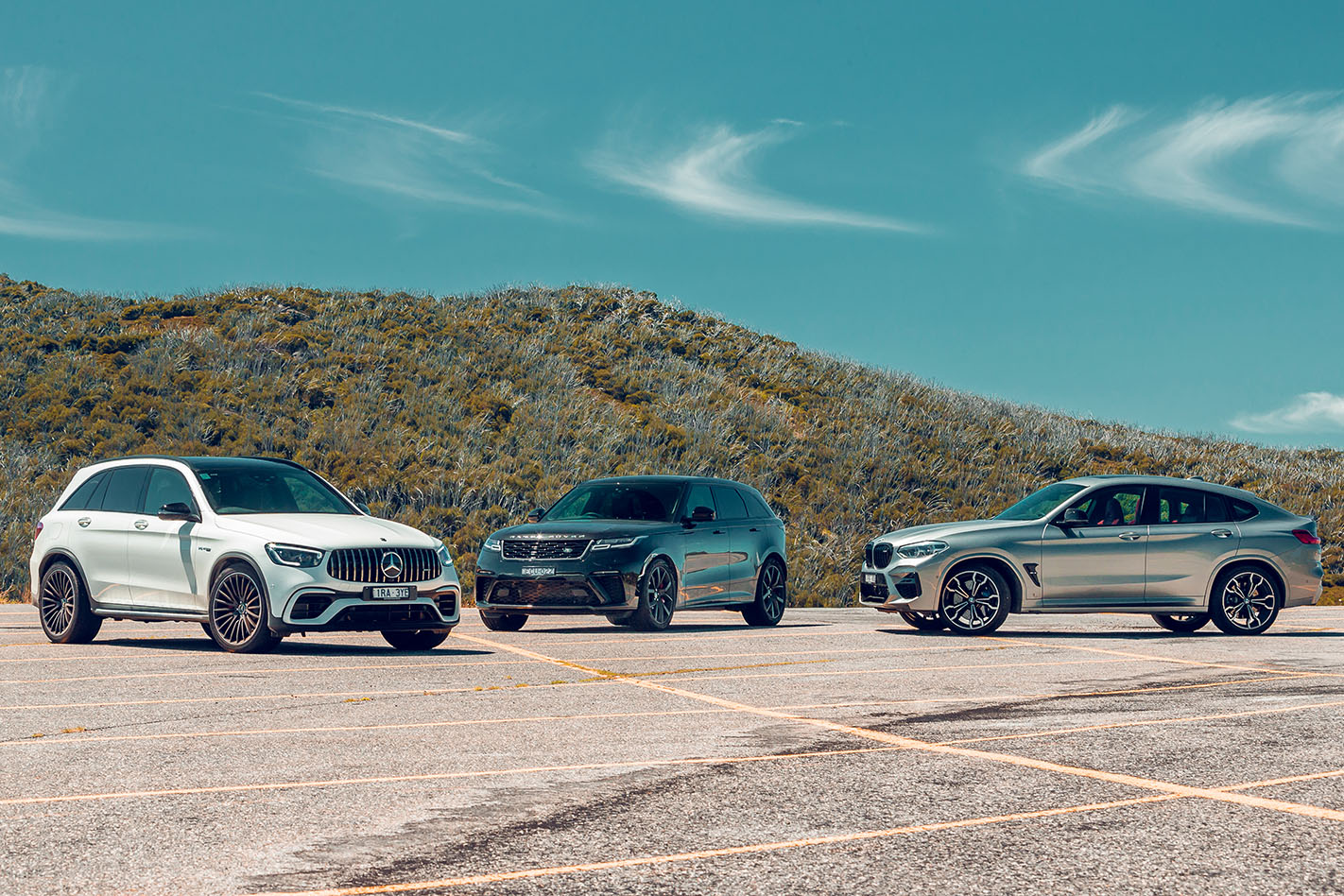
The 375kW/700Nm Mercedes-AMG GLC 63 S is a case in point. It doesn’t need to be notably clever because buyers in this market sector don’t demand anything particularly nuanced. The buyer requirements for a super-SUV are, in no particular order, the ability to look hugely expensive, sound ridiculously potent, and smoke almost anything away from a stoplight. That’s about it.
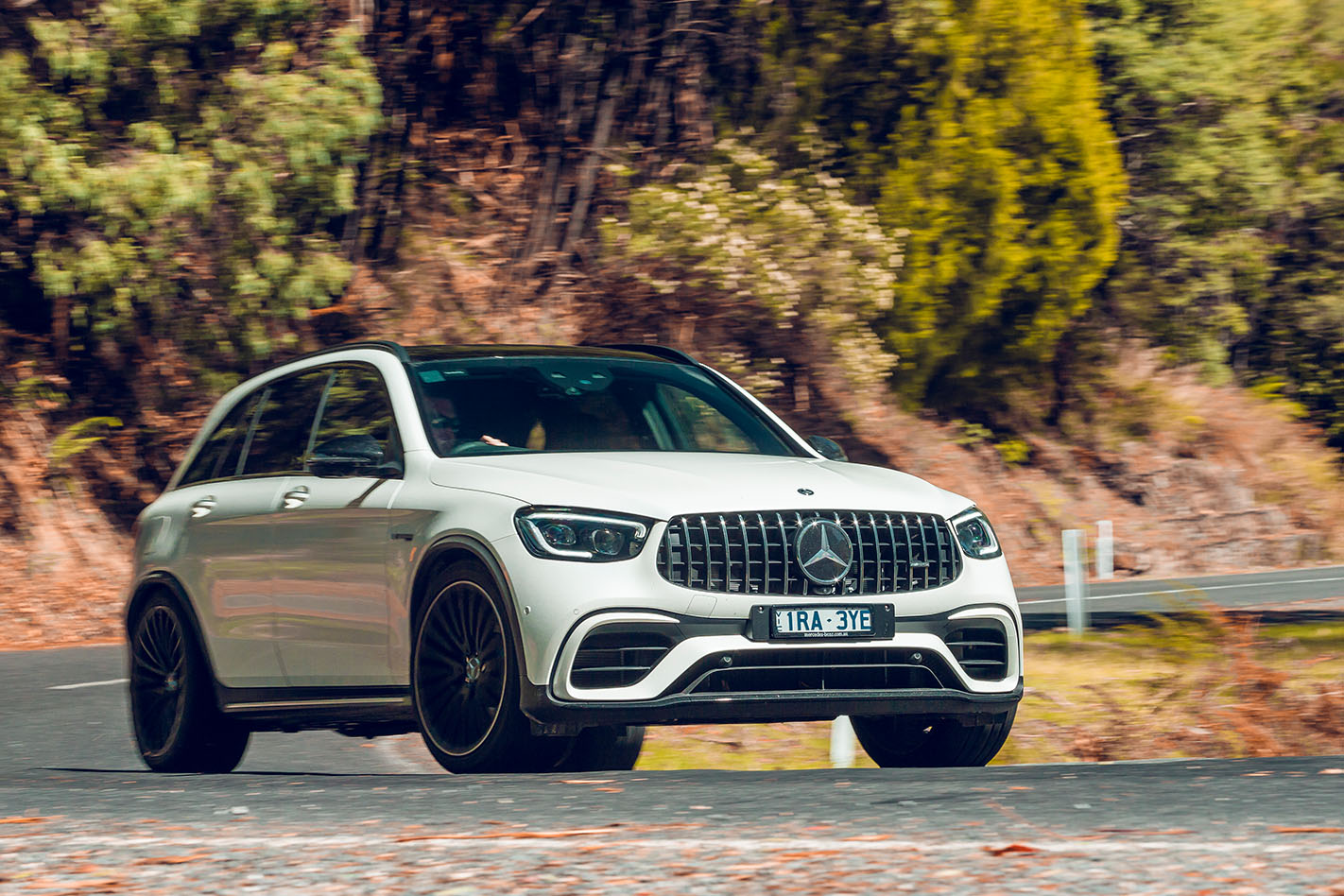
That the GLC can do a lot more is a credit to Mercedes-AMG but largely peripheral to the point. Affalterbach has figured out the motivations of the target customer with forensic precision and hit bullseye, hence the hot GLC’s rampant popularity. We have a comparison here, but it’s no spoiler to post upfront that the Mercedes is unmatched in acing those three criteria.
For quite some time, the GLC 63 was the only model in this class that shoehorned a V8 beneath its bonnet, but then the Jaguar F-Pace SVR arrived and now we have its ruggedised cousin, the Range Rover Velar SV Autobiography. This is effectively the last hurrah for the supercharged 5.0-litre bent-eight, with a 4.4-litre BMW-sourced N63 unit said to be next for JLR. Until that happens, we have 405kW/680Nm of the good stuff driving through four mud-and-snow tyres. Eek.
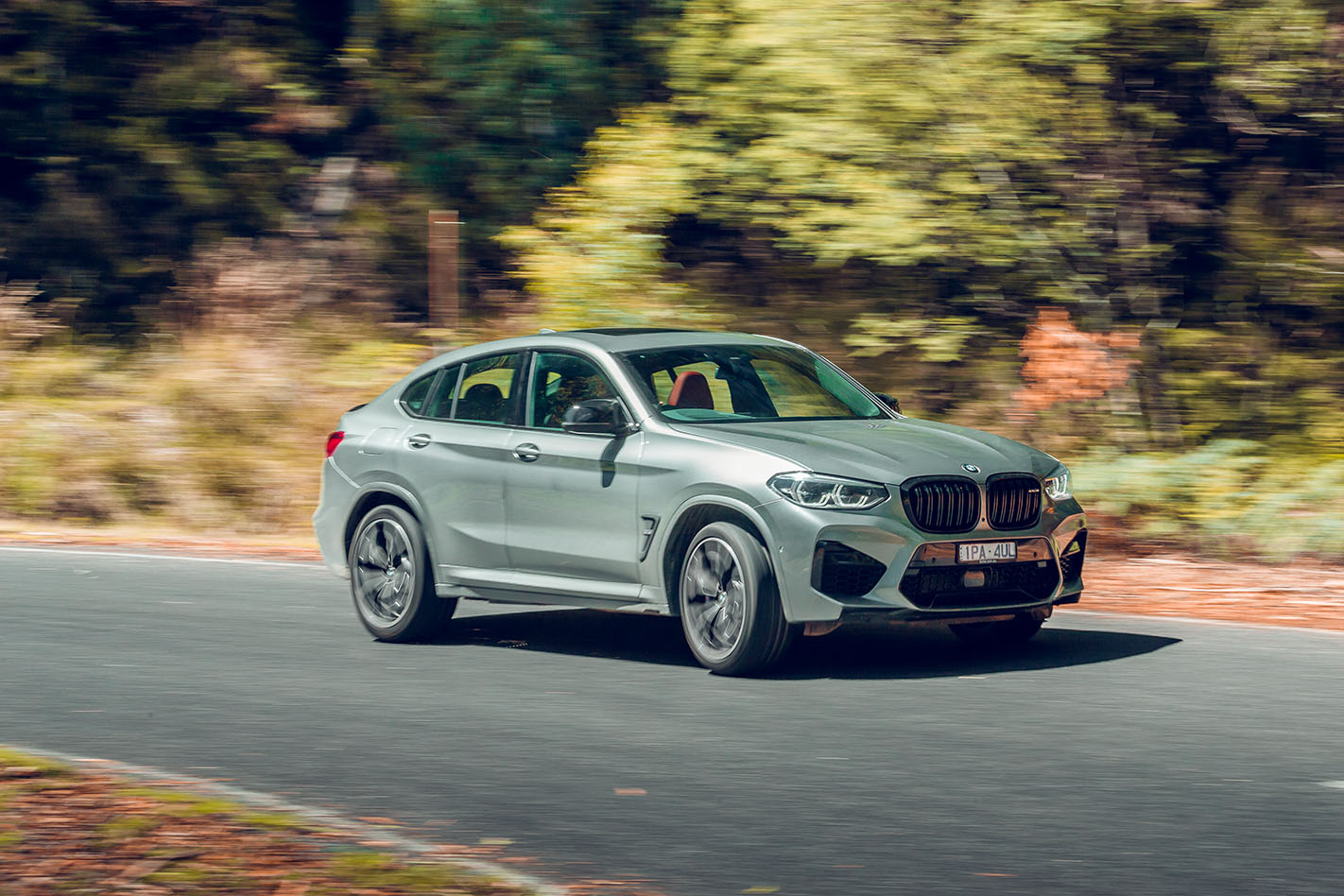
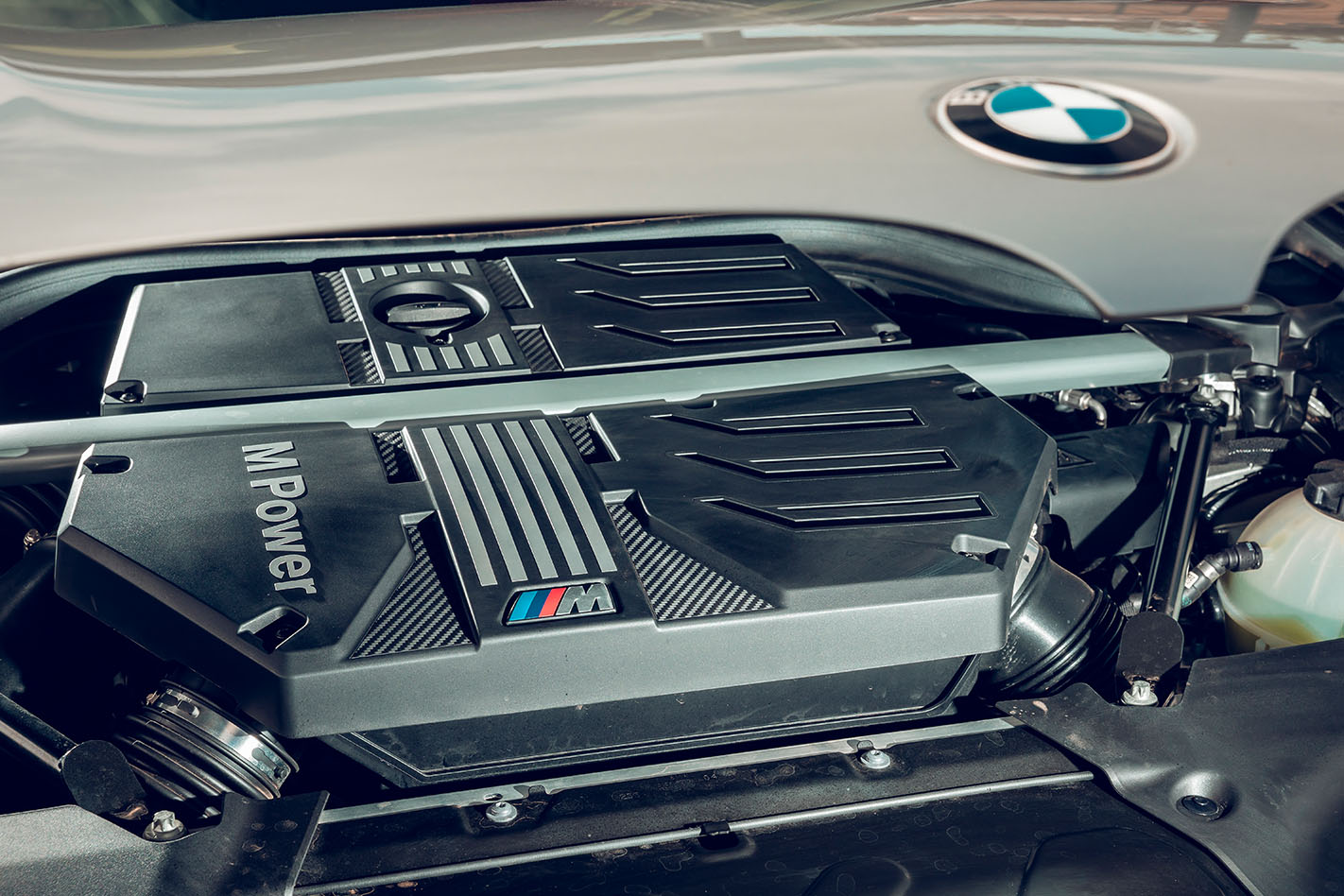
The third way here is represented by the BMW X4 M Competition. Lighter, lither and less a pair of cylinders, the straight-six S58 powerplant requires a pair of huffers to boost power up to 375kW and torque to 600Nm. This engine is set to find its way beneath the bonnet of the next M3, so we’re doubly keen to see if it’s capable of punching above its weight in this formidable company.
The Mercedes underscores its initial advantage by being the most affordable of the trio at $164,600 – just – before you start ticking options boxes. The BMW is priced at $164,900, while the Velar is a hefty $176,412. When forking over this sort of coin, we appreciate why buyers want to feel as if they’ve been compensated with a look and feel some way removed from the norm. The GLC’s the only one with a five-year warranty too, thanks to a recently inked upgrade to terms.
Before we get into details, it’s off to Heathcote and the brutish exercise of firing two tonnes of leather, luxe and lumbar massagers down the drag strip. Conditions are near perfect, and both the GLC and the Velar exactly match their factory claims to 100km/h of 3.8 and 4.5 seconds respectively. The AMG breaks the beam at the 400m mark in 12.1sec three runs in a row. The Velar’s not a great deal slower at the business end of the dragway, tripping the clock with a best of 12.3sec.
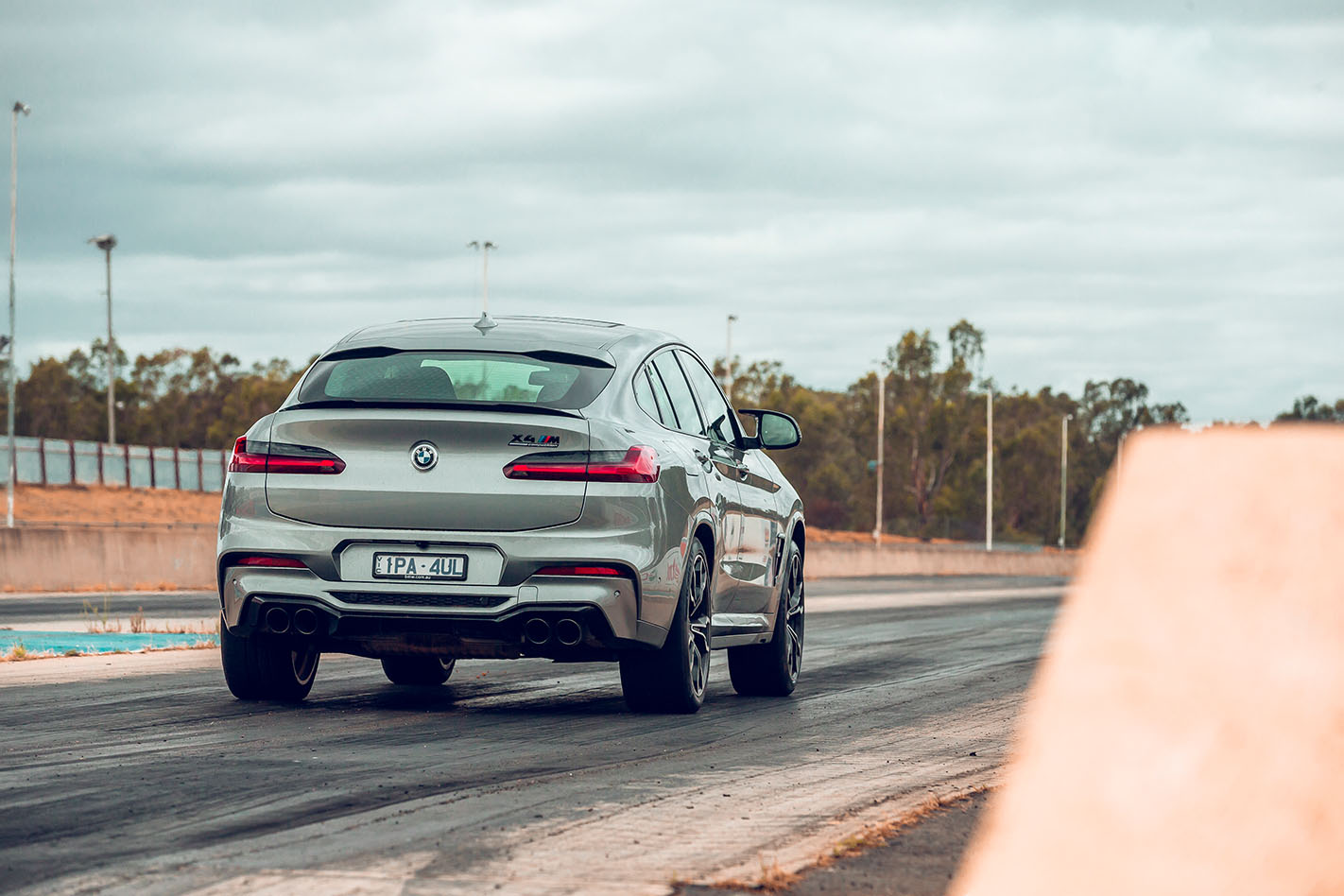
The BMW claims a 0-100 time of 4.1sec. Activate launch control, floor the throttle and, as the revs plateau, sidestep the brakes. You’ll get an unspectacular 4.4sec result. The trick is to wait. The revs will continue to climb, your teeth will probably grate at the lack of mechanical sympathy, but lift off the left-hand pedal at 4200rpm and the X4 will leap out of the blocks with a perfect chirrup of wheelspin for 3.7sec to 100km/h and a 400m time of 11.9 at 189.1km/h. It’s astonishingly potent. That 400m figure is lineball with a Porsche 911 GT3 RS 4.0, so you’d need something very serious to show it a clean pair of heels.
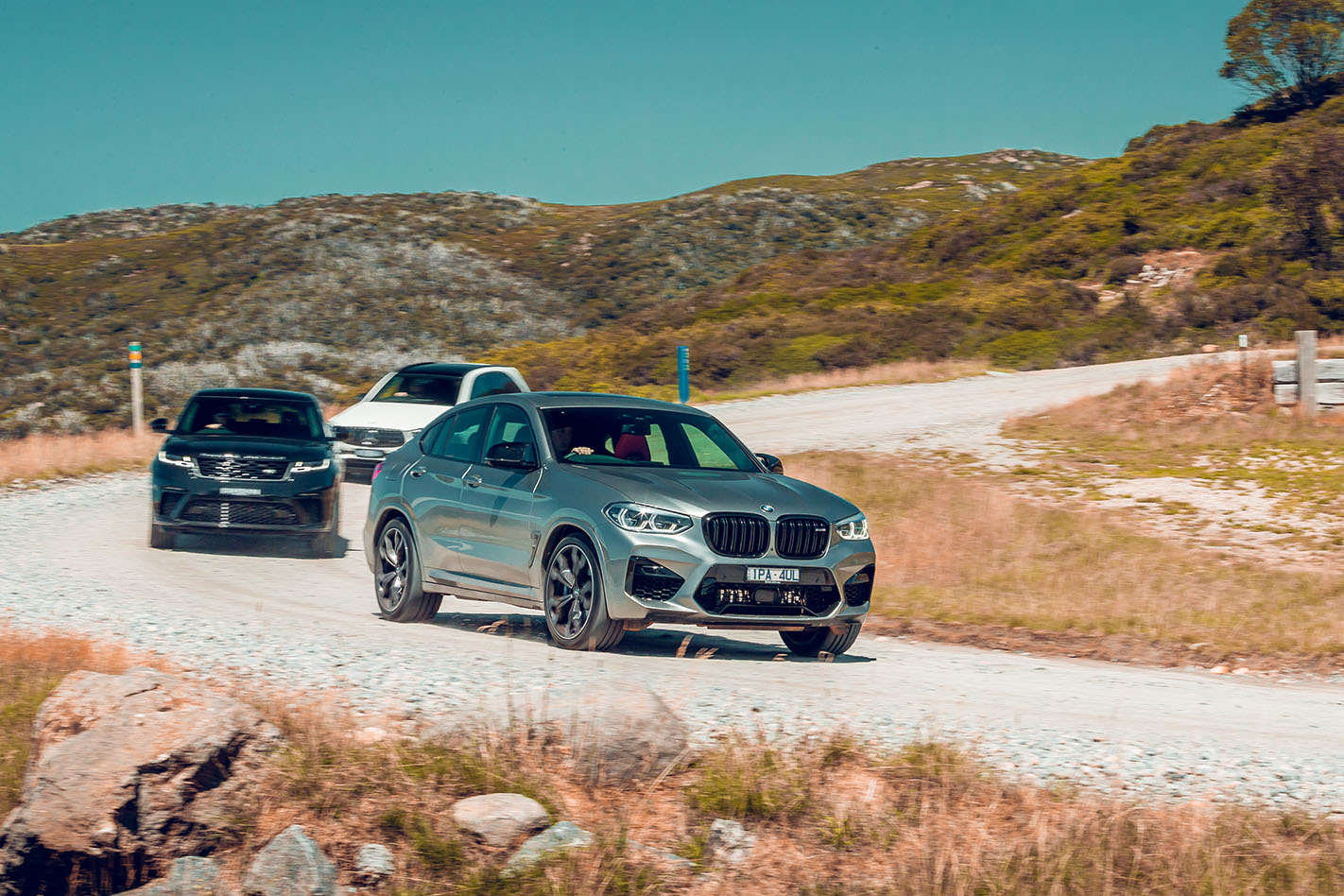
The X4 is helped by the most focused rubber of the trio. While all three feature 21-inch boots at the back, the BMW’s Conti SportContact6 tyres are a far grippier and more purposeful set of hoops than the more heavily grooved Conti CrossContact UHPs of the AMG and Pirelli Scorpion Zero mud-and-snows of the Velar.
You sense that when attacking a bend, too. The BMW feels more athletic than the others. It’s also the only one of the trio on steel springs, aided here by a set of adaptive dampers that are largely redundant because the Comfort setting is all you’ll ever use. It’s firm but, given the focus of the vehicle, not unacceptably so. As well as the suspension, the throttle and steering can be switched through Comfort, Sport and Sport Plus modes, and you can save custom presets to the M1 and M2 tabs on the steering wheel.
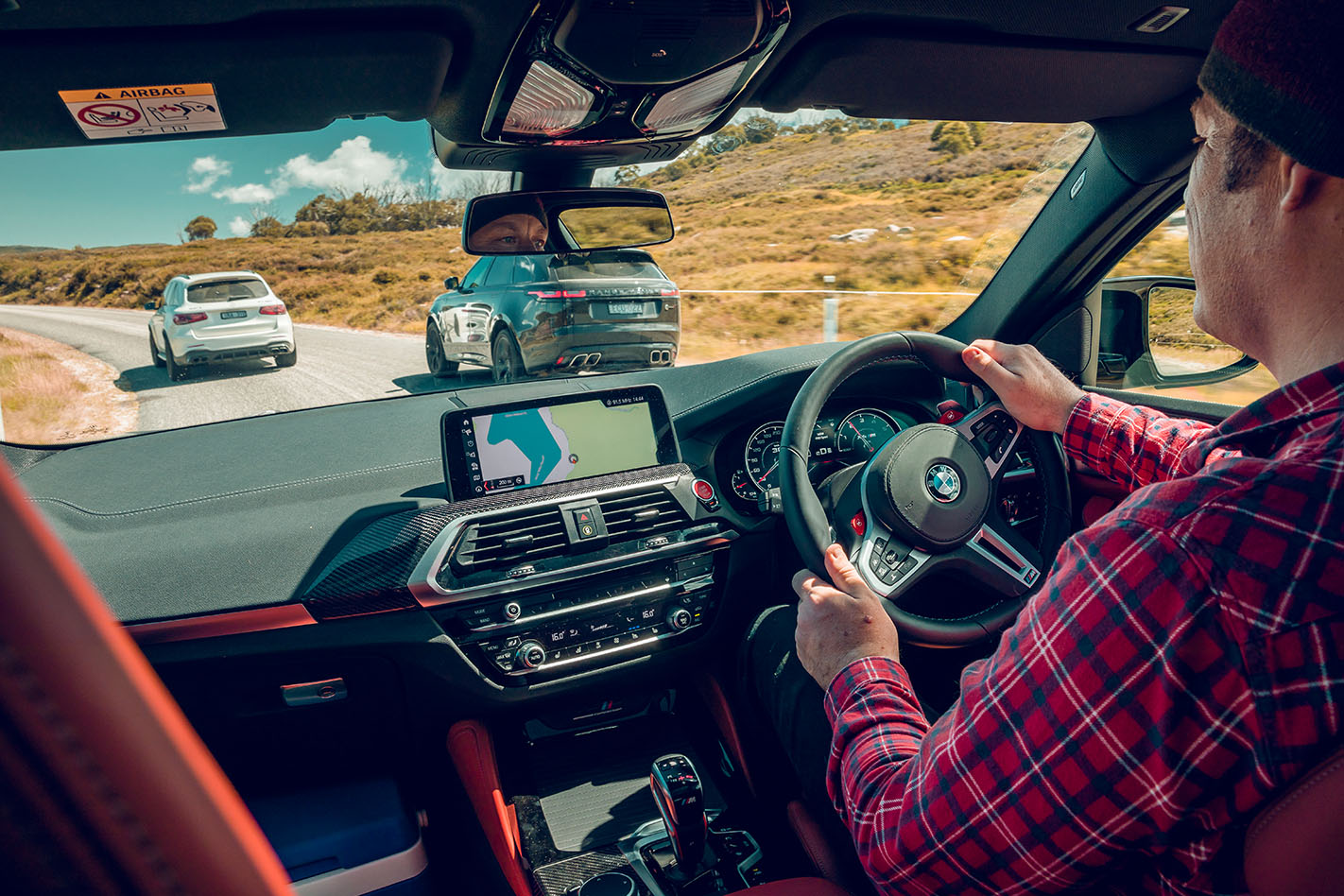
It’s the only one of the three cars you would want to drive flicking up and down the ’box using the rubberised shift paddles, partly because of two issues: there’s little meaningful go below 2500rpm; and the eight-speed ZF torque-converter gearshift’s logic isn’t the most polished, often plugging you into too high a gear mid-corner and then clumsily downshifting just as you’re trying to scribe a clean arc post-apex. Still, it keeps you involved, and there’s a delightful howl at the top end that’s not dissimilar to that of an Alfa Romeo Stelvio Q. The Sport setting is heavily rear-biased, but gathering up a slide can feel a little clumsy, the tall body whipping back into line without too much help from the front tyres.
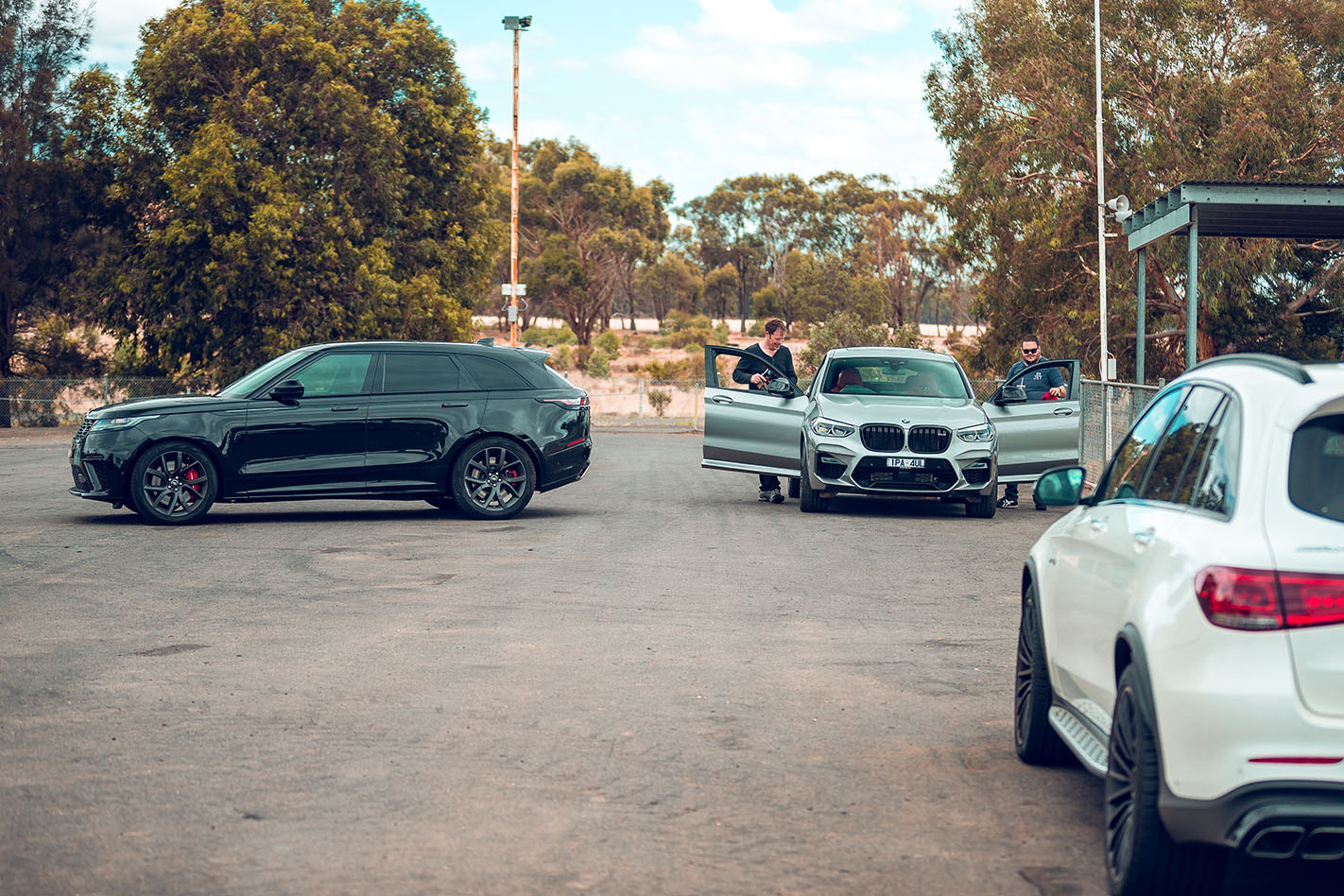
The brake pedal is relatively soft and benign in modulation, but the brakes held up well on a mountain descent at Falls Creek. The exhaust can be set into loud or quiet modes, but the difference isn’t hugely marked. While the car retains this setting when keyed off, it forgets the ride, throttle and steering preferences, reverting to Comfort everything.
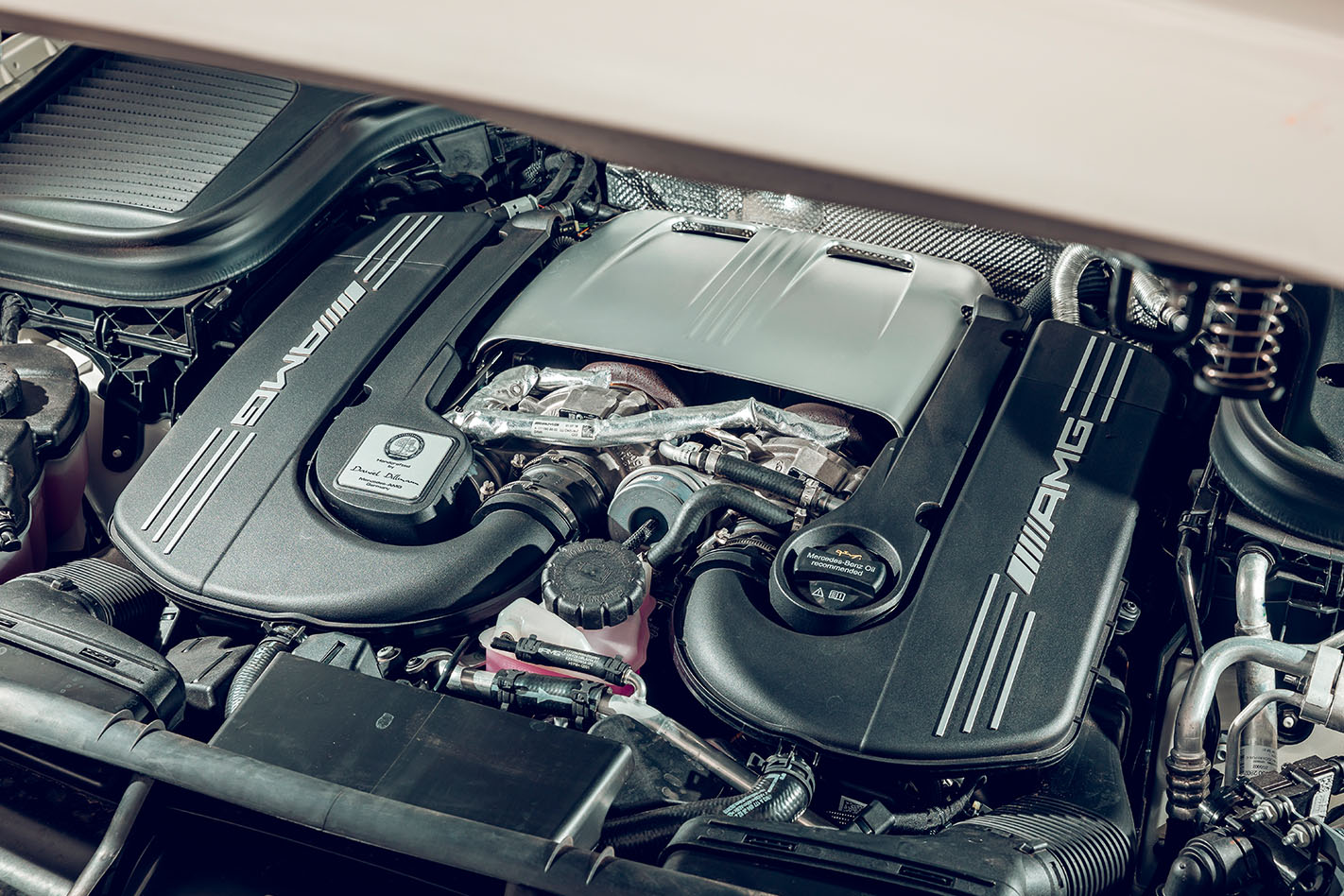
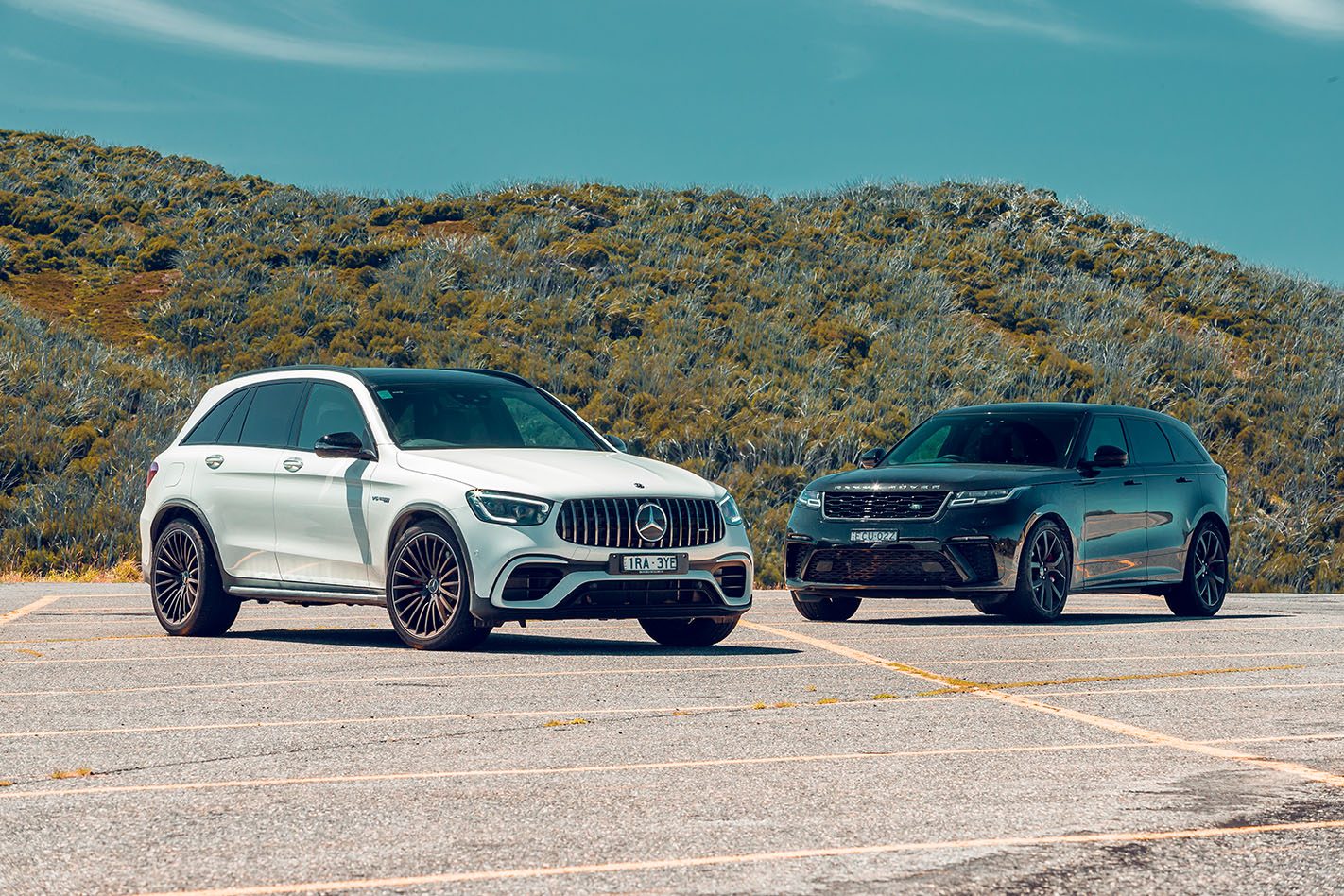
After the agility of the BMW, the GLC 63 S feels as if it’s trying to bludgeon corners into submission. There’s little difference in kerb weight between the two Germans, but you’d swear the AMG was a couple of hundred kegs heavier. The engine is by far the most dominant of the trio, the chuntering 4.0-litre twin-turbo M177 lump unembarrassed by any halfway reasonable request for acceleration. The nine-speed ’box is therefore best left to its own devices.
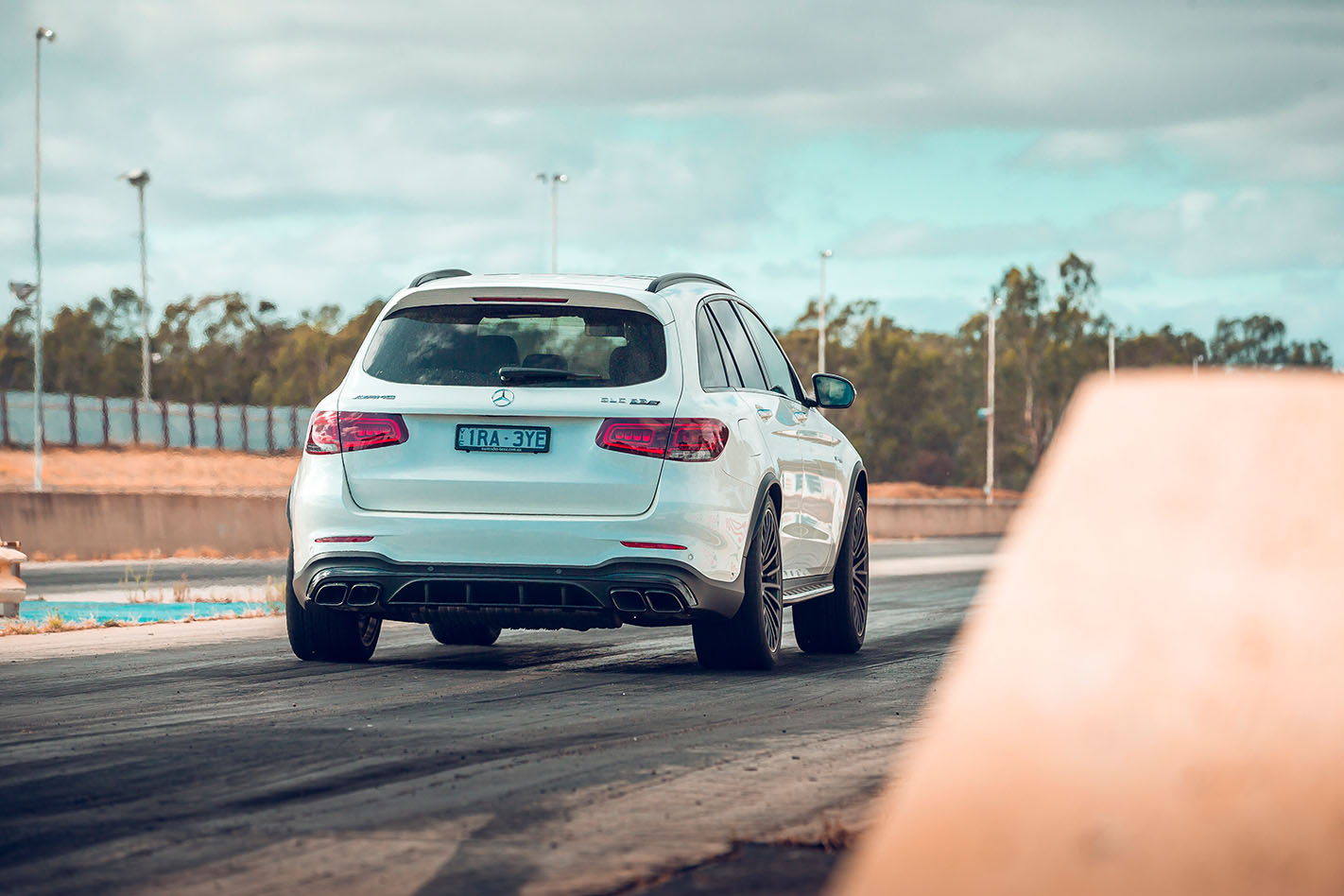
Fling the AMG at a bend and it corners with astonishing flatness. That, combined with meaty steering and the feeling there’s a virtually bottomless well of torque to pull you out of trouble, engenders an initial feeling of invincibility. There is, however, an element of artifice to it, the GLC’s dynamic engine mounts helping this all-of-a-piece impression. Push harder, into the realm where the BMW feels at its happiest, and the GLC’s stability control starts grabbing noisily at an outside front brake disc and the treadblocks feel as if they’re being mashed, warped and heat-stressed beyond their optimum operating envelope.
The Velar takes tyre torture to an even greater extreme. Chase the others and it soon gets out of its depth, the unloaded front tyre pattering through corners and the weight in the nose becoming apparent. Whereas the BMW shrinks around you, the Range Rover does the opposite; it drives bigger than it is. Back off a little and it’s a lot happier. Flick every setting into Dynamic and it’s fast and composed, with great gearshift logic, and there’s also a really strong, reassuring brake pedal feel.
The Comfort and Dynamic drive modes are genuinely well calibrated, the Velar being the only one here that offers a firmer suspension setting that’s workable on-road. It’s particularly impressive when you consider that the air-suspended Range Rover has markedly the best off-road ability and, when dialled into Comfort mode, easily the best ride quality too. So, while it’s no canyon-seeking corner carver, hampered largely by its overheating rubber, the Velar is nevertheless a very deft compromise.
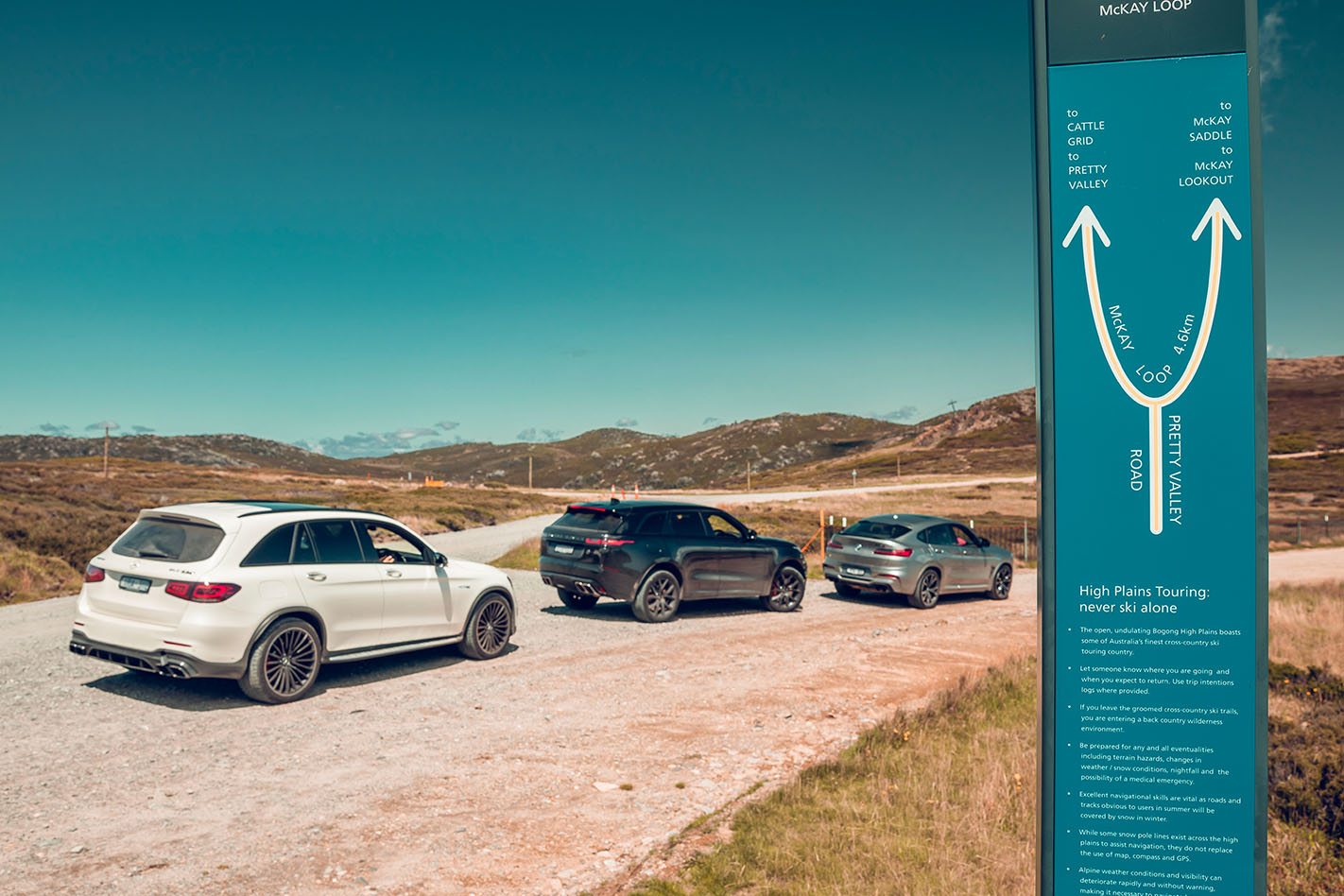
Our photoshoot takes us to the summit of Mount McKay, the highest driveable point in Australia, accessed via a long dirt access road. In the Velar it’s a breeze, your eyes scanning for more challenging lines to tackle. In the Mercedes and the BMW, you feel every pebble and corrugation through gritted teeth. Snapper Brook has brought tents and swags with him and seems genuinely disappointed at our insistence on ‘Bear Grylls camping’ (ie, the Allamar Motor Inn at Mount Beauty).
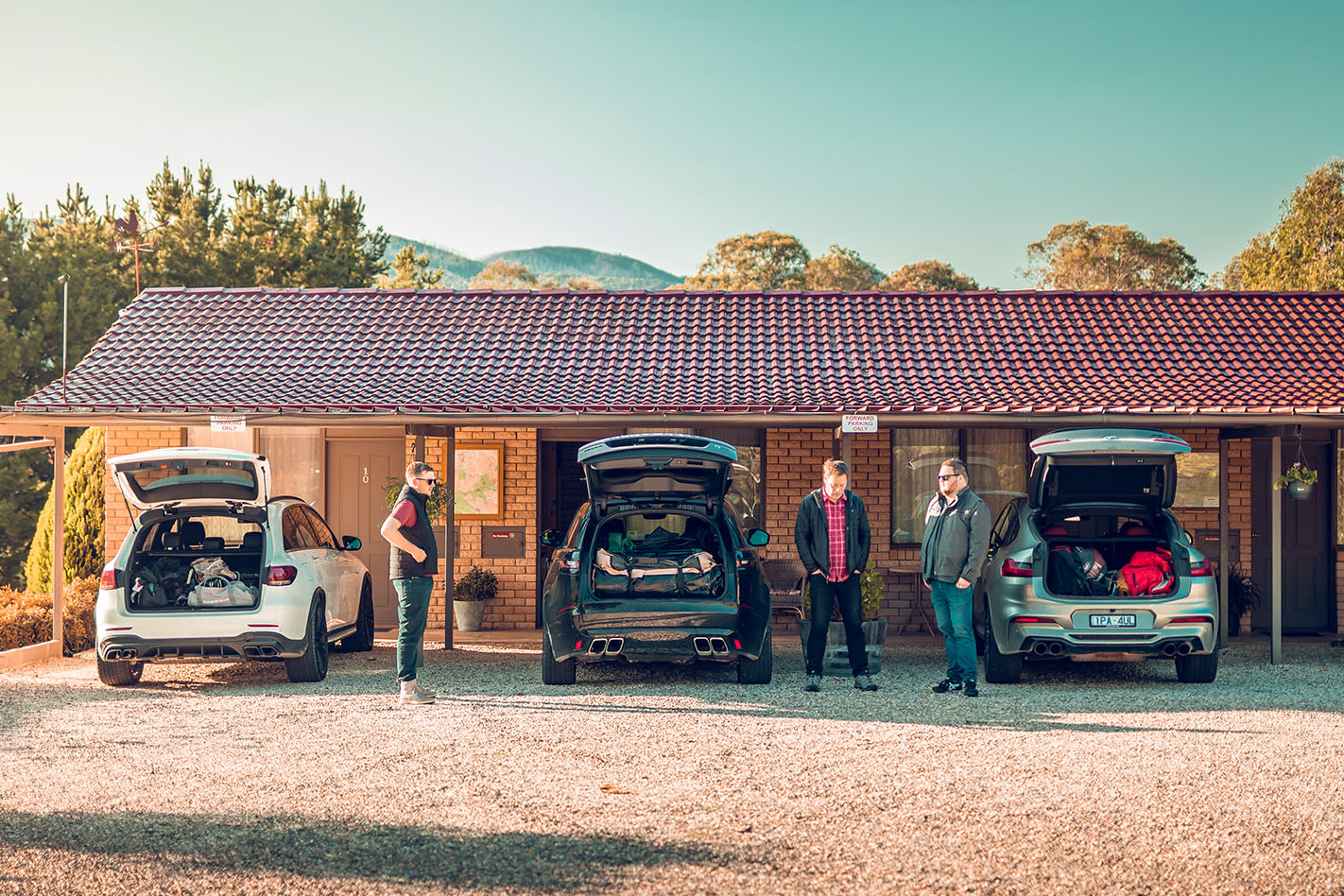
Our plan is to head over the Bogong High Plains down to Omeo and the communities affected by the bushfires, but the plan is foiled when the road is closed by tree debris brought onto the bitumen by high winds. Our convoy was almost struck by half a stringybark crashing to the roadway earlier in the day, so it’s clear that the consequences of the fires may well persist for some time in the more remote high country spots.
Arriving at some sort of decision on a finishing order is also creating a mental roadblock. The Mercedes-AMG GLC 63 S does exactly what buyers in this category want. It’s a loveable brute of a thing and it’s an easy and safe recommendation. Would you get bored once you had exhausted its somewhat one-dimensional personality? Maybe. But you’d have a whale of a time arriving at that conclusion.
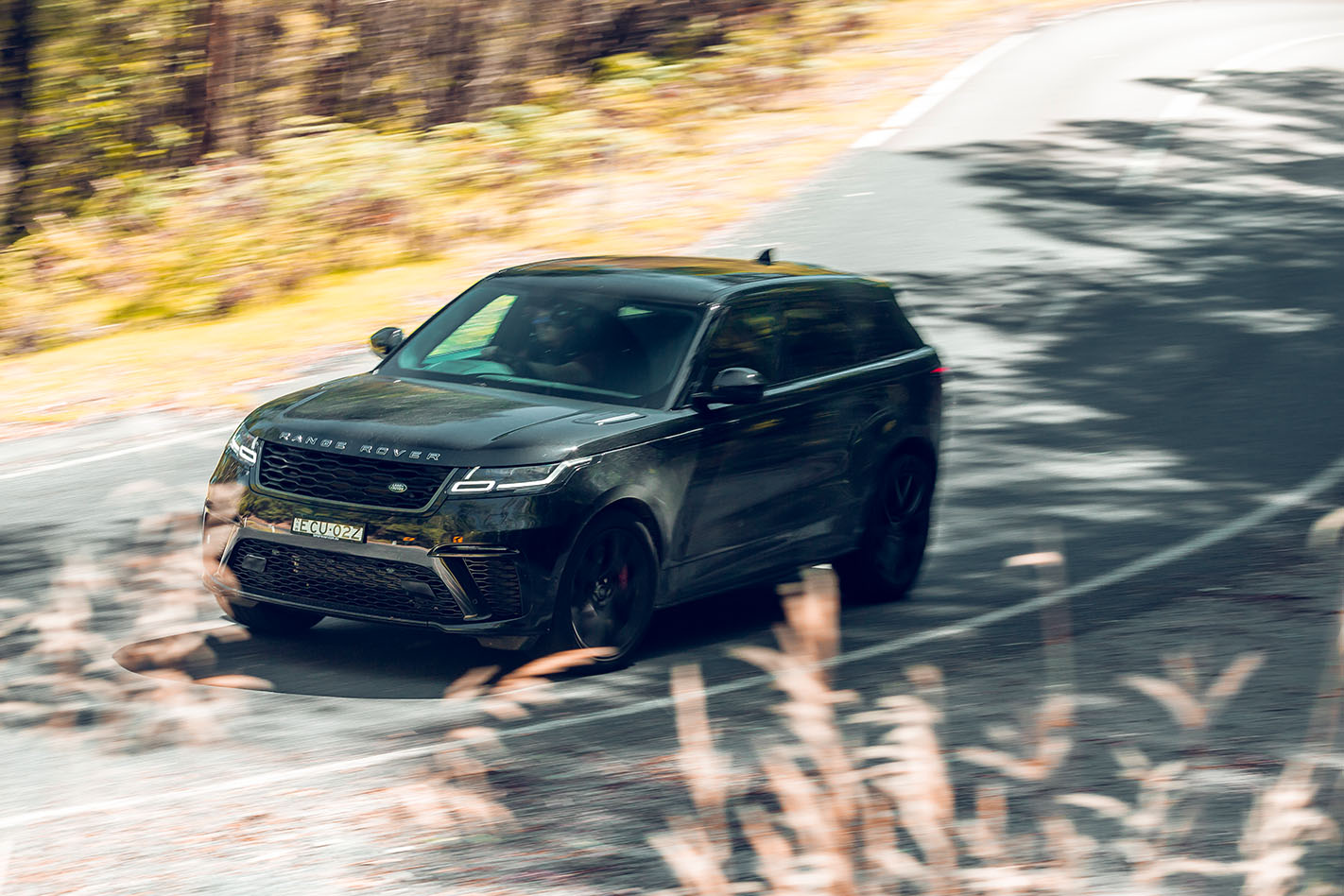
The Velar might not be quite as quick, but it feels even glitzier inside, and there’s something beguiling about a vehicle this fast that can also clamber up Falls Creek’s steepest ski runs, 21-inch alloys notwithstanding. With the most space inside and the best ride, it would be the easiest to live with day in, day out. There’s also a wry irony about the car that appears to be the most design-led also being the most ruggedly practical.
Which leaves the quickest, most agile, most rewarding and most economical vehicle here. The BMW X4 M Competition isn’t an easy car to initially bond with, but perseverance pays dividends. There are layers to its personality that only time, tenacity and testing reveal. It’s an intriguing and, yes, subtle thing, with genuine appeal as a driver’s car, but the fact remains that in this company it feels relatively ordinary inside. In other words, you’re being asked to invest in a quality – its keenly focused dynamics – that most customers won’t put a premium on. Subtlety doesn’t sell super-SUVs, but on a cold mountain road in autumn it gets a warm reception from us.
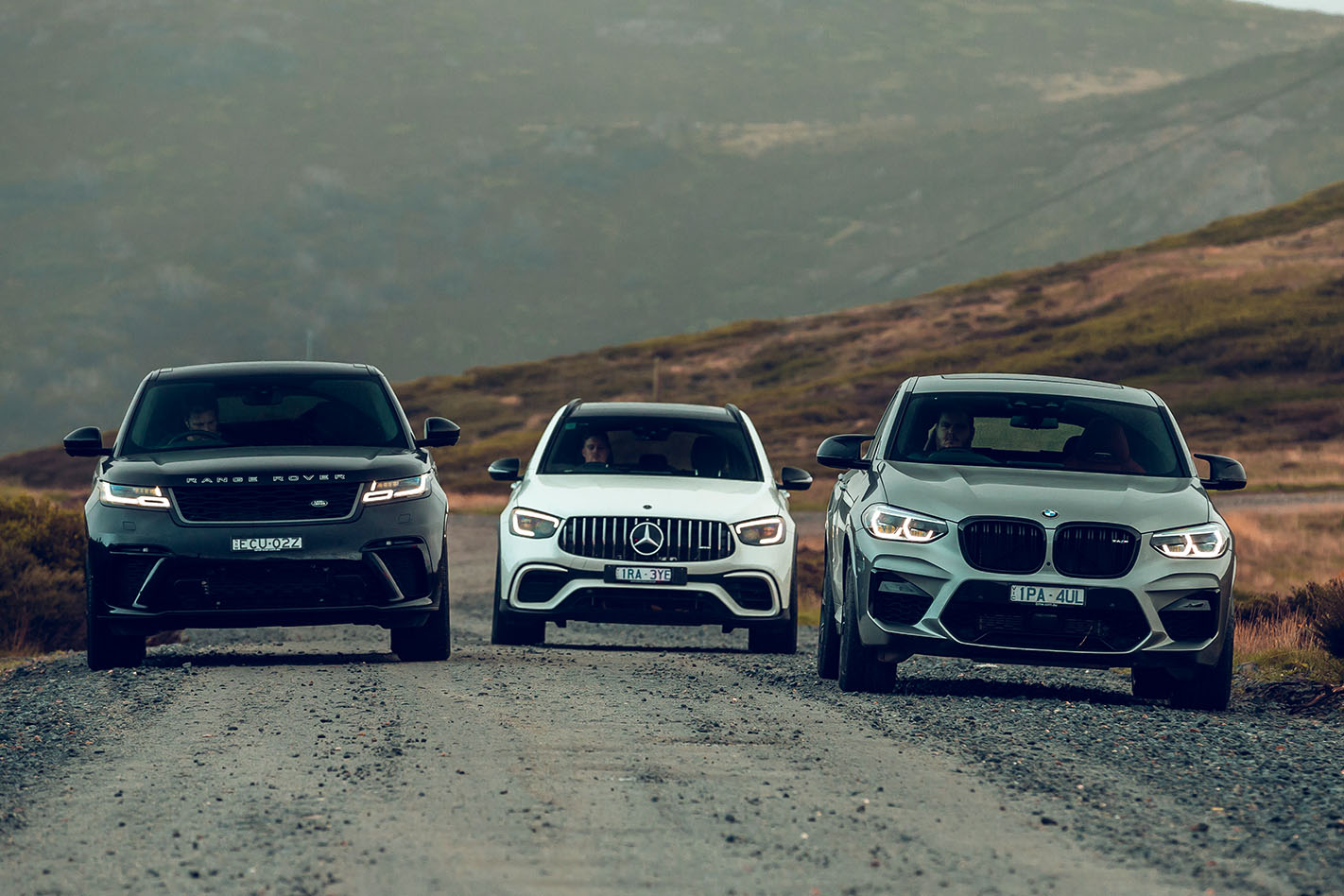
So how do you decide on which of these is the best? If it’s a case of best answering customer needs, it’s the Mercedes. Should you prefer more space, comfort and off-road ability, go Velar. For a purer corner-carving experience, the X4 M Competition shines. Each has its own sub-niche, but on this occasion we can’t argue with the popular vote. It’s the three-pointed star by the merest sliver.
TOUCH & GO
Best infotainment system? For response and intuitiveness, it’s BMW’s slightly ageing iDrive 6. Mercedes’ MBUX is excellent but takes time to learn. The touchpad is also a retrograde step. The lovely Burmester audio isn’t though. TouchPro Duo in the Velar is certainly comprehensive, but requires a lot of attention, often benefiting a co-driver. It also flaked on us intermittently during the test.
VERDICT
- 1st: Mercedes-AMG GLC 63 S – 8.5/10
- 2nd: BMW X4 M Competition – 8.5/10
- 3rd: Range Rover Velar SVAutobiography – 8.0/10
MERCEDES-AMG GLC 63 S SPECS
Price: $164,600 ($166,000* as tested)
Engine: V8, dohc, 32v, twin-turbo
Layout: front engine (north-south), AWD
Capacity: 3982cc
Power: 375kW @ 5500-6250rpm
Torque: 700Nm @ 1750-4500rpm
Transmission: 9-speed automatic
Body: steel, 5 doors, 5 seats
L/W/H/W-B: 4655/1890/1644/2873mm
Track (F/R): 1620/1621mm
Weight: 2095kg
Boot: 550 litres
Fuel/tank: 98 octane/66 litres
Economy: 11.1L/100km (test average)
Front suspension: multi-link, air springs, anti-roll bar
Rear suspension: multi-link, air springs, anti-roll bar
Steering: electric rack-and-pinion
Turning circle: 11.8m (2.0 turns lock-to-lock)
Front brakes: ventilated discs (390mm)
Rear brakes: ventilated discs (390mm)
Tyres: Continental CrossContact UHP
Tyre size: 265/40 R21 105Y (f) / 295/35 ZR21 107Y (r)
Safety: 5 stars (ANCAP)
Power-to-weight: 179kW per tonne
Redline/cut-out: 7000/6800rpm
Speed at indicated 100km/h: 96
0-20km/h: 0.6sec
0-40km/h: 1.1sec
0-60km/h: 1.8sec
0-80km/h: 2.7sec
0-100km/h: 3.8sec
0-120km/h: 5.2sec
0-140km/h: 6.9sec
0-160km/h: 8.9sec
0-180km/h: 11.4sec
0-200km/h: 14.7sec
0-400m: 12.1sec @ 184km/h
80-120km/h: 2.5sec
100km/h-0: 39.0m
Options*: Premium paint ($1400)
BMW X4 M COMPETITION
Price: $164,900 ($169,200* as tested)
Engine: in-line 6cyl, dohc, 24v, twin-turbo
Layout: front engine (north-south), AWD
Capacity: 2993cc
Power: 375kW @ 62500rpm
Torque: 600Nm @ 2600-5950rpm
Transmission: 8-speed automatic
Body: steel, 5 doors, 5 seats
L/W/H/W-B: 4758/1927/1620/2864mm
Track (F/R): 1617/1632mm
Weight: 2045kg
Boot: 525 litres
Fuel/tank: 98 octane/65 litres
Economy: 10.1L/100km (test average)
Front suspension: coil springs, adaptive dampers, anti-roll bar
Rear suspension: multi-link, coil springs, adaptive dampers, anti-roll bar
Steering: electric rack-and-pinion
Turning circle: 12.6m (2.2 turns lock-to-lock)
Front brakes: ventilated discs (395mm)
Rear brakes: ventilated discs (370mm)
Tyres: Continental SportContact 6
Tyre size: 255/40 ZR21 102Y (f) / 265/40 ZR21 105Y (r)
Safety: 5 stars (ANCAP)
Power-to-weight: 183kW per tonne
Redline/cut-out: 7200/7200rpm
Speed at indicated 100km/h: 98
0-20km/h: 0.6sec
0-40km/h: 1.2sec
0-60km/h: 2.0sec
0-80km/h: 2.7sec
0-100km/h: 3.7sec
0-120km/h: 5.0sec
0-140km/h: 6.5sec
0-160km/h: 8.3sec
0-180km/h: 10.5sec
0-200km/h: 13.6sec
0-400m: 11.9sec @ 189.1km/h
80-120km/h: 2.3sec
100km/h-0: 35.2m
Options*: Front and rear seat heating ($700), active seat ventilation ($1600), premium paint ($2000)
RANGE ROVER VELAR SVAUTOBIOGRAPHY SPECS
Price: $176,412/Tested $181,325*
Engine: V8, dohc, 32v, supercharger
Layout: front engine (north-south), AWD
Capacity: 5000cc
Power: 405kW @ 6000-6500rpm
Torque: 680Nm @ 2500-5500pm
Transmission: 8-speed automatic
Body: steel, 5 doors, 5 seats
L/W/H/W-B: 4806/2032/1676/2874mm
Track (F/R): 1644/1663mm
Weight: 2235kg
Boot: 558 litres
Fuel/tank: 98 octane/60 litres
Economy: 10.9L/100km (test average)
Front suspension: double A-arms, air springs, anti-roll bar
Rear suspension: double A-arms, air springs, anti-roll bar
Steering: electric rack-and-pinion
Turning circle: 12.0m (2.6 turns lock-to-lock)
Front brakes: ventilated discs (395mm)
Rear brakes: ventilated discs (396mm)
Tyres: Pirelli Scorpion Zero M+S
Tyre size: 265/45R21 108Y
Safety: 5 Stars (ANCAP)
Power-to-weight: 181kW per tonne
Redline/cut-out: 6800/6750rpm
Speed at indicated 100km/h: 96
0-20km/h: 0.8sec
0-40km/h: 1.5sec
0-60km/h: 2.3sec
0-80km/h: 3.3sec
0-100km/h: 4.5sec
0-120km/h: 5.9sec
0-140km/h: 7.5sec
0-160km/h: 9.5sec
0-180km/h: 12.2sec
0-200km/h: 15.6sec
0-400m: 12.3sec @ 182.1km/h
80-120km/h: 2.6sec
100km/h-0: 38.7m
Options*: Driver assist pack ($2223), ambient lighting ($540), privacy glass ($890), black veneer ($530), Terrain Response 2 with Dynamic program ($430), rear seat remote release levers ($300)
In this latest of our Fast Facts series, we focus on Honda, the company that has pioneered the fields of bikes, cars and engines since being formed in the aftermath of World War II.
The Japanese brand spent two decades establishing itself as the king of two wheels before developing into one of the car industry’s most innovative companies.
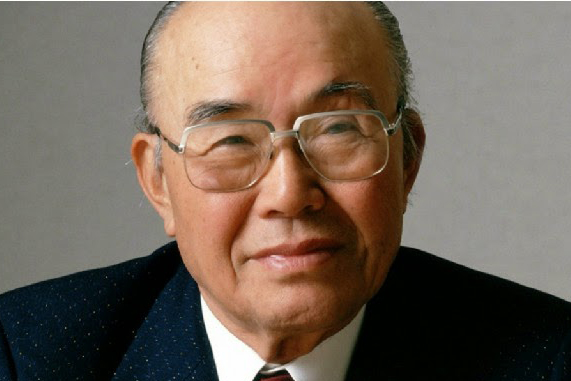
FROM TOYOTA TO TWO WHEELS Toyota supplier and repair mechanic Soichiro Honda had automotive ambitions of his own. After toying with various, unfulfilling product ideas, Honda was inspired to build a motorised bicycle.
While not an original idea at the time, he intended to make such a vehicle affordable to the masses. The Honda Technical Research Institute was started in Japan in 1946, becoming the Honda Motor Company two years later.
WORLD’S MOST POPULAR MOTORBIKES By the 1960s, Honda had established itself as the world’s largest motorcycle manufacturer.
While this article is focusing more on Honda’s four-wheeled history, legendary bikes would go on to include the 1969 CB750 Four four-cylinder performance bike; the versatile CT110 known in Australia as the ‘postie bike’ and produced since 1980; and the Goldwing that redefined long-distance two-wheeled touring.
Australian motorcycle legend Mick Doohan also won all five of his successive titles in the 1990s riding a Honda.
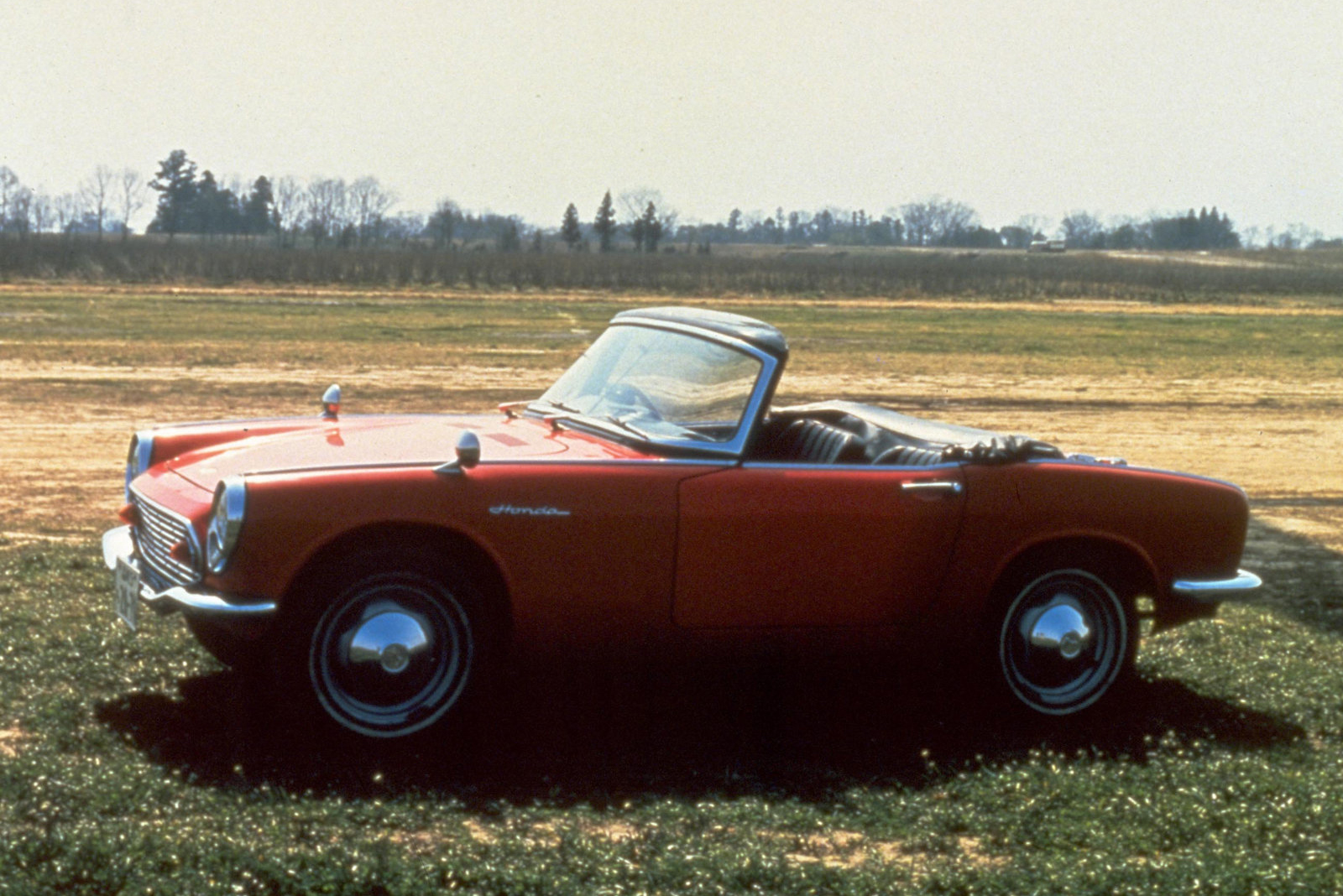
FIRST CAR Honda displayed it first car in 1962, though the S360 didn’t go into production. That makes its bigger-engined successor, the 1963 S500, the company’s first official car, though the first four-wheeled vehicle came a few months earlier in the form of the T360 mini-truck.
The S500’s engine was influenced by motorcycle design, though is eventually exported with bigger engines – with the S600 that came to Australia in 1964, and the 1965 S800 with a 0.8-litre.
SUPER SUZUKA Honda built the Suzuka circuit in 1962, which remains famous for its rare figure-of-eight layout. Built within funfair grounds, it staged a non-championship Formula 1 race the following year though didn’t replace the (Toyota-owned) Fuji circuit as the host of the official Japanese Grand Prix until 1987.
Except for a return to Fuji in 2007 and 2008, Suzuka has staged the race since – becoming famous for its rare, figure-of-eight layout and loved by F1 drivers and fans alike.
F1 DOMINANCE A Honda engine powered the McLaren racing team to what still stands as the most dominant season in Formula 1, when the Anglo-Japanese partnership – with renowned drivers Ayrton Senna and Alain Prost – claimed 15 of the year’s 16 races, and a 94 per cent win ratio.
CIVIC PRIDE Australia had already seen a cheeky little front-drive model in the N360 ‘Scamp’ before the arrival of the Civic in 1973, but the latter would become the enduring Honda model – the brand’s oldest nameplate and released in 2016 in its 10-generation guise.
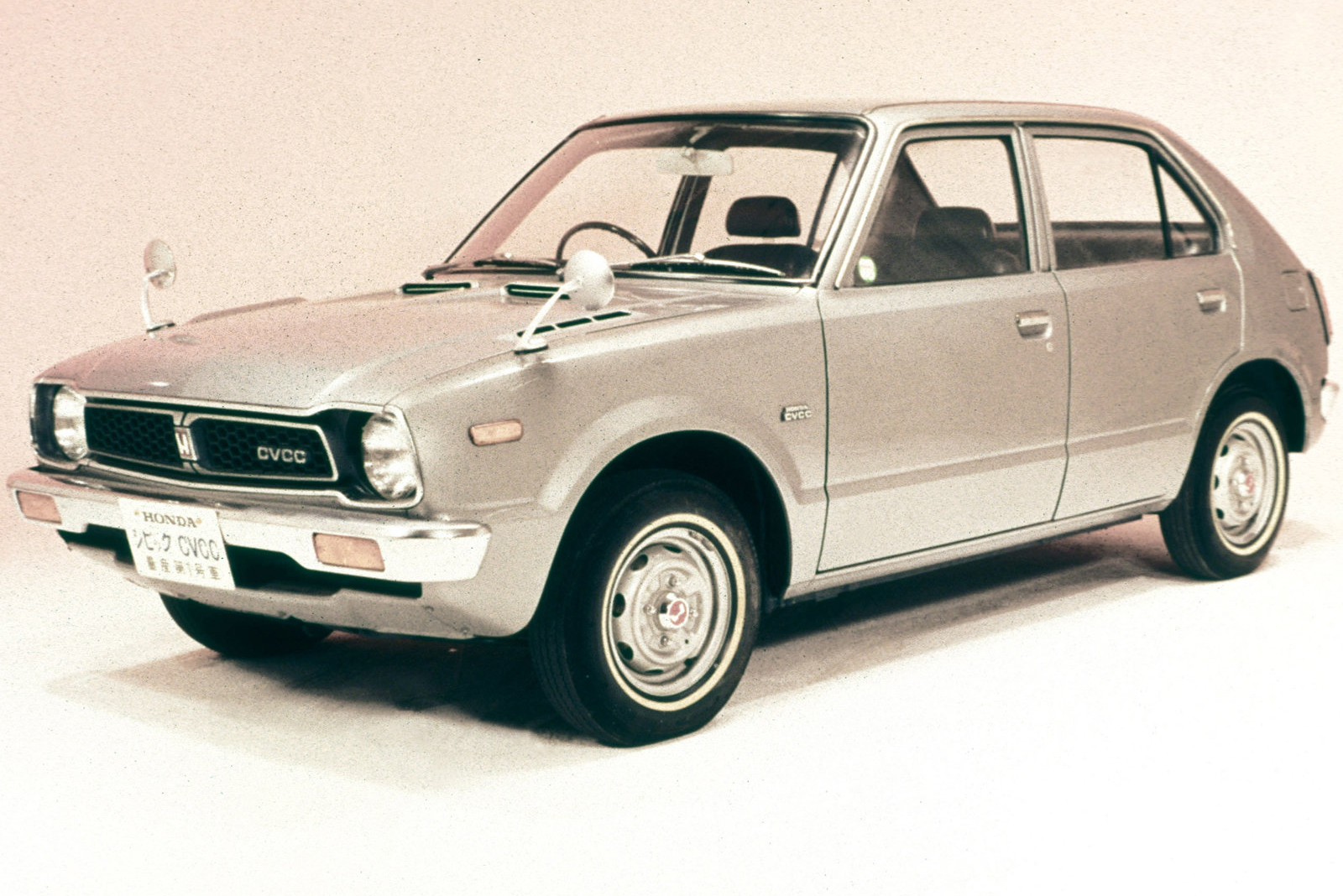
Borrowing a concept from the Mini with its transverse engine and front-wheel-drive layout, the original Civic’s launch coincided perfectly with the oil crisis. Efficiency wasn’t its only quality, either, as it was fun to drive and relatively spacious for its compact dimensions.
HONDA STRIKES A US CHORD WITH ACCORD
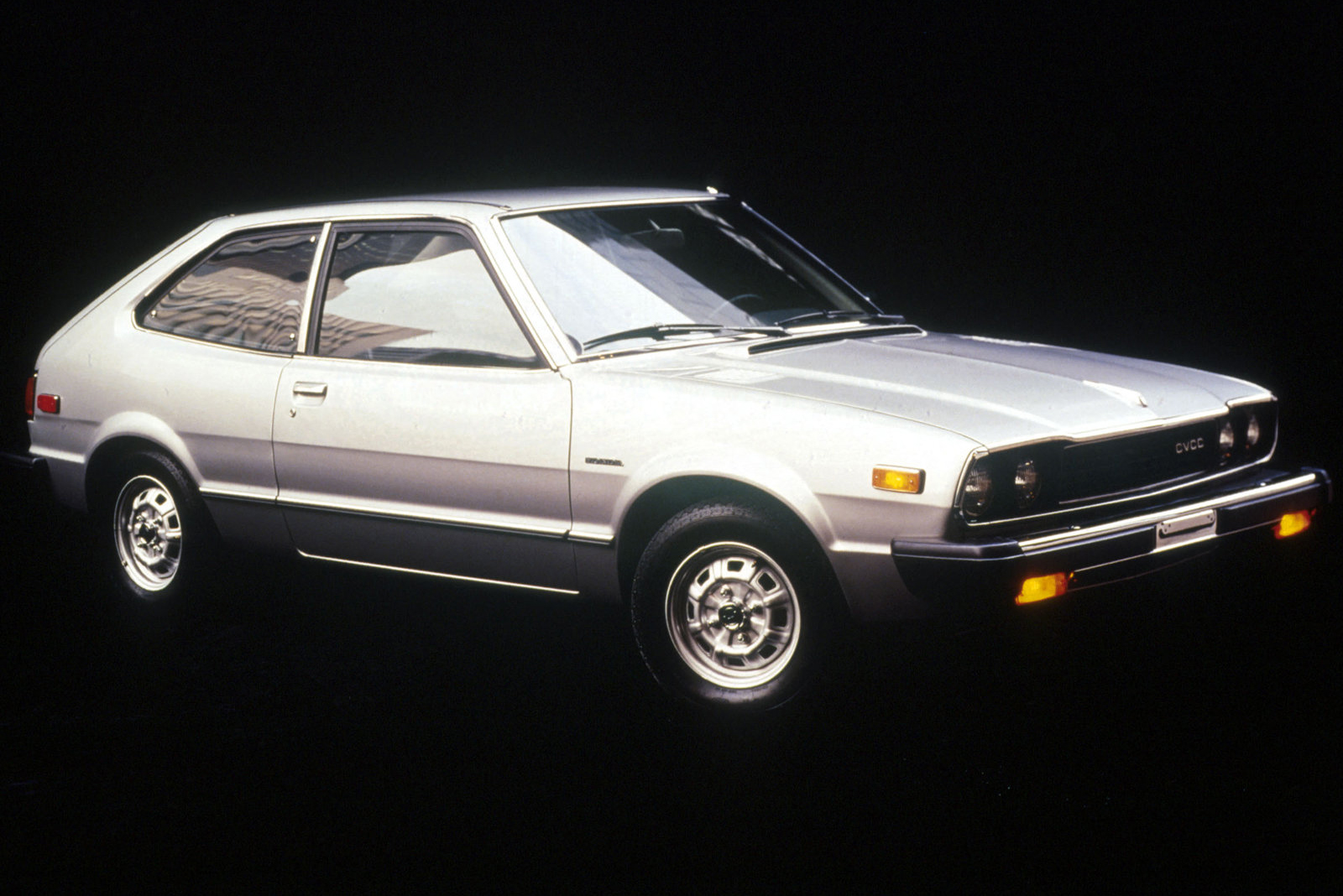
The Accord was born in 1976 and two years later it would mark the beginning of Honda’s hugely impressive foray into the crucial North American market.
It threw down the gauntlet to US rivals for quality and fuel efficiency, and from the second-generation model’s arrival in 1981, it would become the most popular Japanese nameplate for 15 years running. Accord also became the first Japanese car to be built in the US.
In 1977, the original Accord won Wheels magazine’s coveted Car of the Year award – the first of six awards for Honda models up to the 2011 CR-Z hybrid sports hatch.
WORLD’S FIRST IN-CAR NAV In 1981, the Accord became the first commercial car to be offered with the option of a navigation system.
It wasn’t a GPS system like today’s advanced navs – instead, it was a gyroscope-based system that blinked the car’s calculated position on plastic maps that drivers inserted into a dash-top display.
ACURA Honda’s US success – and improved US-Japan trade regulations – encouraged the company to establish a luxury spin-off marque, called Acura.
The hero car is the Legend, available in both sedan and coupe body styles, and it contributes to Honda’s North America sales outperforming BMW and Mercedes-Benz by 1990. By that point, Toyota and Nissan had already followed suit – with their Lexus and Infiniti brands, respectively.
TAKING ON FERRARI Arguably at the height of its innovative powers – and stature, after powering F1 cars to six consecutive constructors’ titles between 1986 and 1991 – Honda built its first supercar in 1990.
The NSX was more affordable than peers of the time, such as the Ferrari 348, yet won huge respect for being as user-friendly around town as it was on a racetrack, and its technical feats that included a 3.0-litre V6 that pioneered the use of variable valve control, as well as being the world’s first car with an all-aluminium monocoque construction.
FIRST TO HYBRID Ask someone the name of the world’s first hybrid car, and the majority would undoubtedly answer: Toyota Prius. Yet the Honda Insight pipped it to market by a year, in 1999.
Fuel consumption of 3.9 litres per 100km was noteworthy, aided by a sleek, aerodynamic shape and a lightweight aluminium structure. However, a $50,000 price tag and a two-seater-only cabin reduced its appeal.
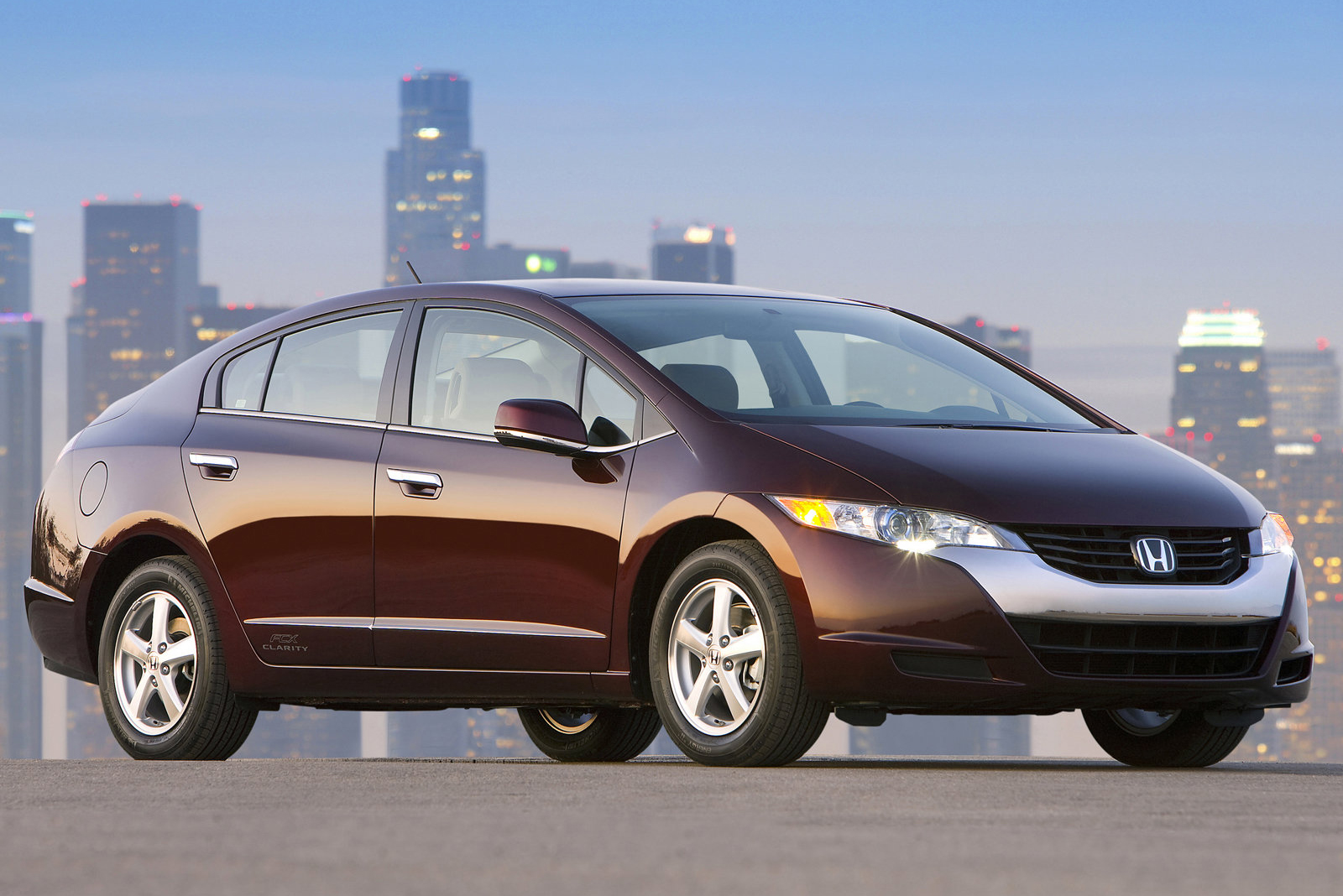
FIRST TO HYDROGEN The 2008 FCX Clarity was another tick in Honda’s quest to lead in automotive innovation, marking itself as the world’s showroom vehicle to convert hydrogen gas into electricity for powering the car – and producing zero emissions.
Honda committed to a second-generation model in 2016, though the lack of global hydrogen refuelling infrastructure means it remains restricted to a lease arrangement and available only in California, Japan and parts of Europe.
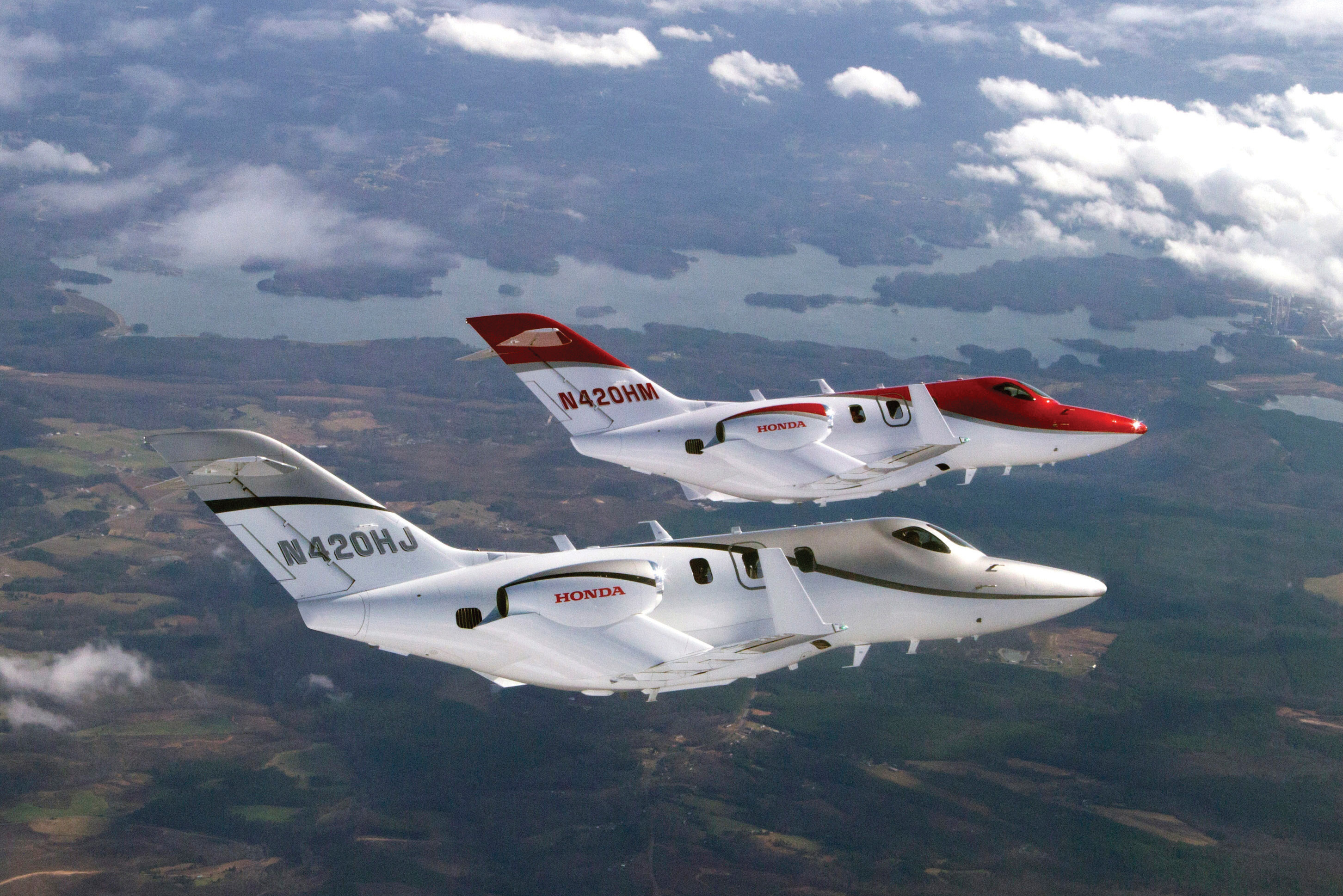
HONDA JET
Diversification is nothing new for a company that produces a vast range of mowers, blowers and boat motors, but a commercial jet is.
The Honda Jet claims plenty of benchmarks for its new light business jet: fastest in class (422 knots maximum cruising speed), highest maximum altitude (30,000m), plus best fuel efficiency (by up to 17 per cent).
Naturally, it’s powered by a Honda engine, developed in conjunction with General Electric.
ENGINE
With all the internal combustion motors it produces across the fields of cars, motorcycles, marine and power equipment, Honda is the world’s largest engine manufacturer.
In 2014, it produced more than 27 million engines.
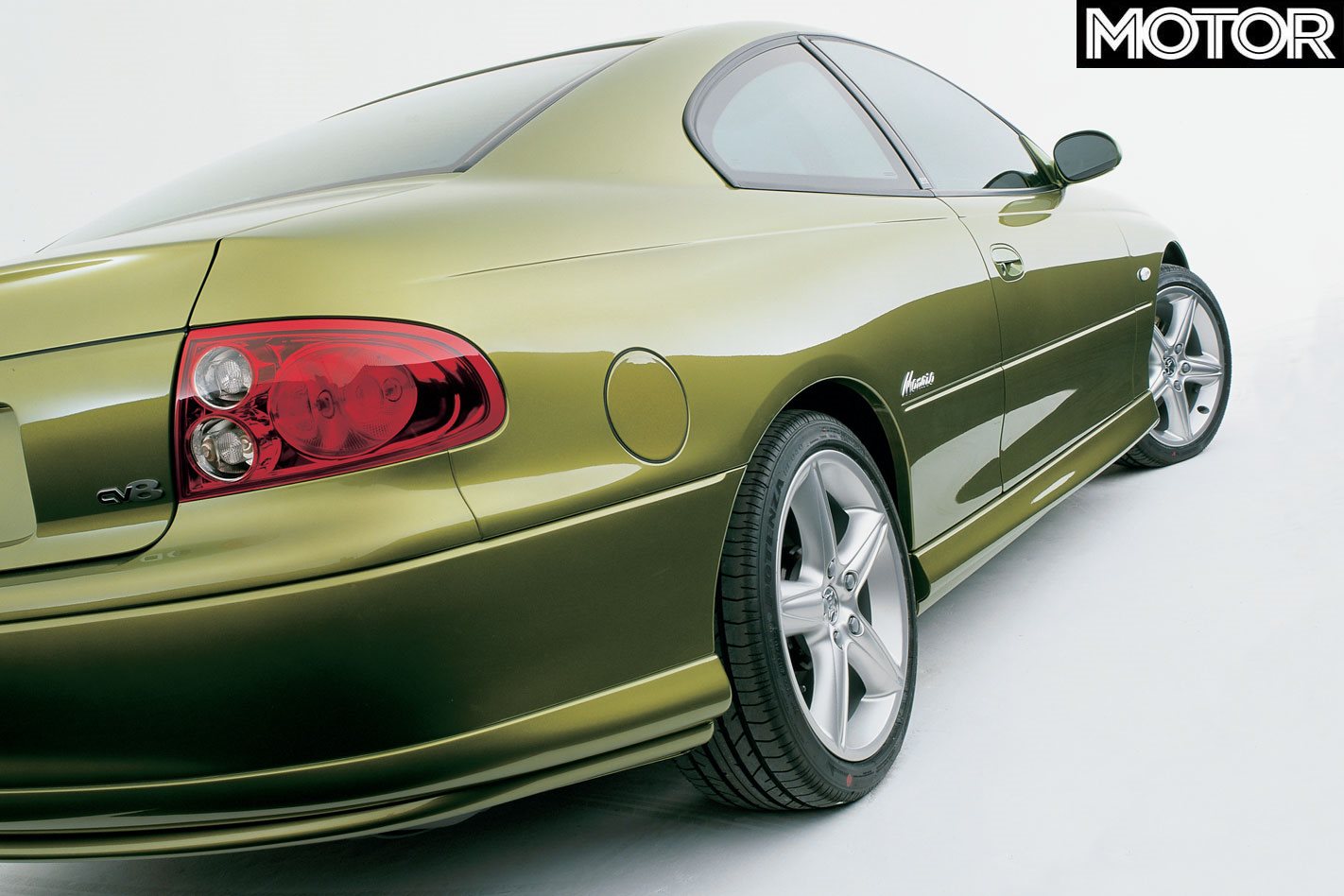
Few cars flexed Australia’s design muscle like the late Holden Monaro. Crafted after-hours by a crack team including GM’s design vice president Mike Simcoe, it stole the 1998 Aussie motor show and demanded a production greenlight.
The first-gen based on the VX Commodore burst onto the scene in 2001 with an LS1 V8 engine packing 225kW/460Nm. Imaginatively called the ‘CV8’, with a 3.8-litre blown V6 version alongside appropriately labelled ‘CV6’, a Series II followed in late 2002 with the VY Commodore’s improved dash and gear knob, while a limited run CV8-R injected 10kW, extra leather and new design 18-inch wheels.
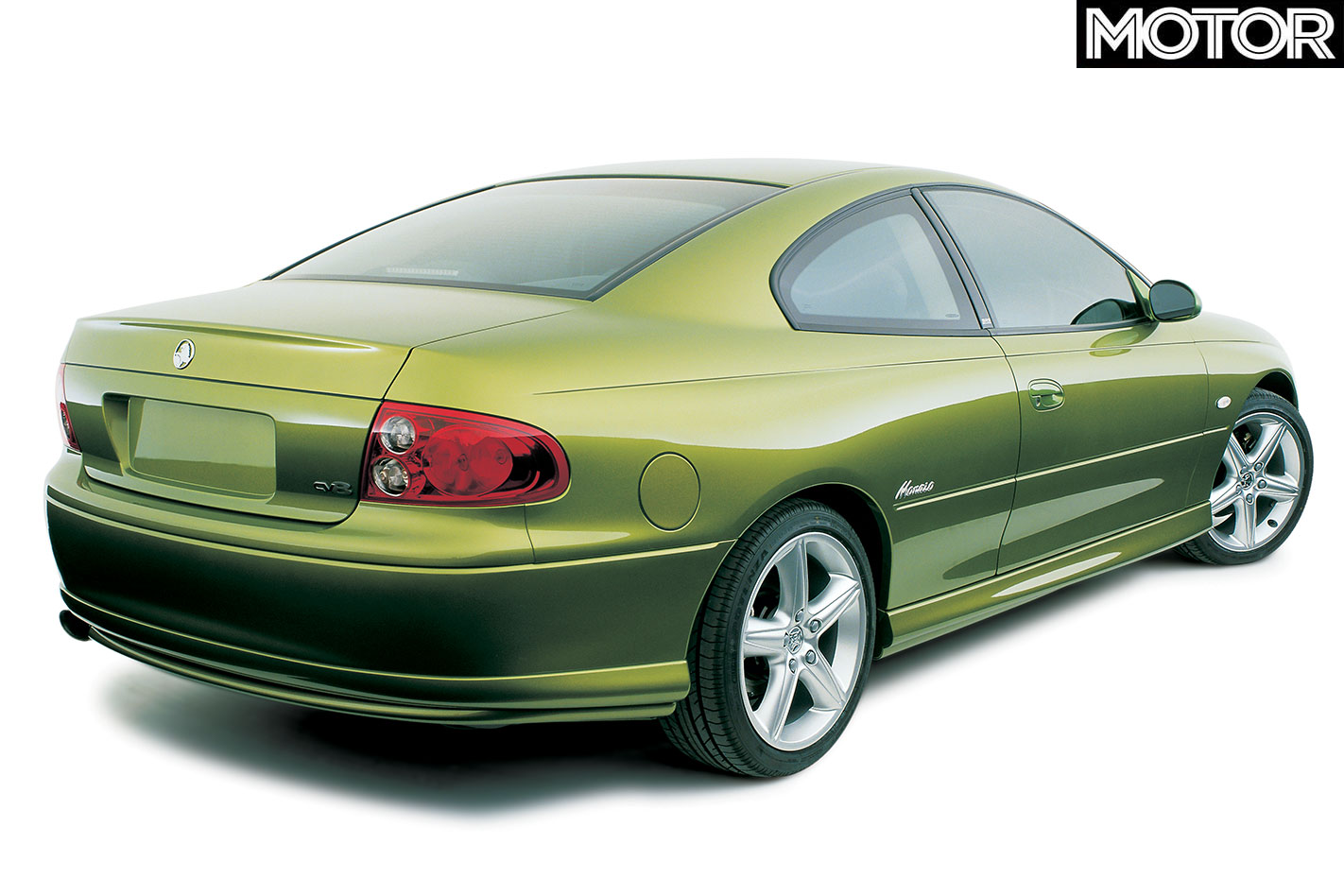
The Series III model integrated an aerial into the rear windscreen and offered 245kW, before the divisively styled VZ generation arrived in late 2004 with bonnet nostrils and bazooka exhaust tips to suit the US market’s, um, taste.
Want a reborn Monaro for yourself? It’ll pay to review our thorough rundown on the VX-VY CV8, given the CV8 outsold the CV6 almost 17-to-one in the first three years.
CV8 Monaro vital checks
Engine
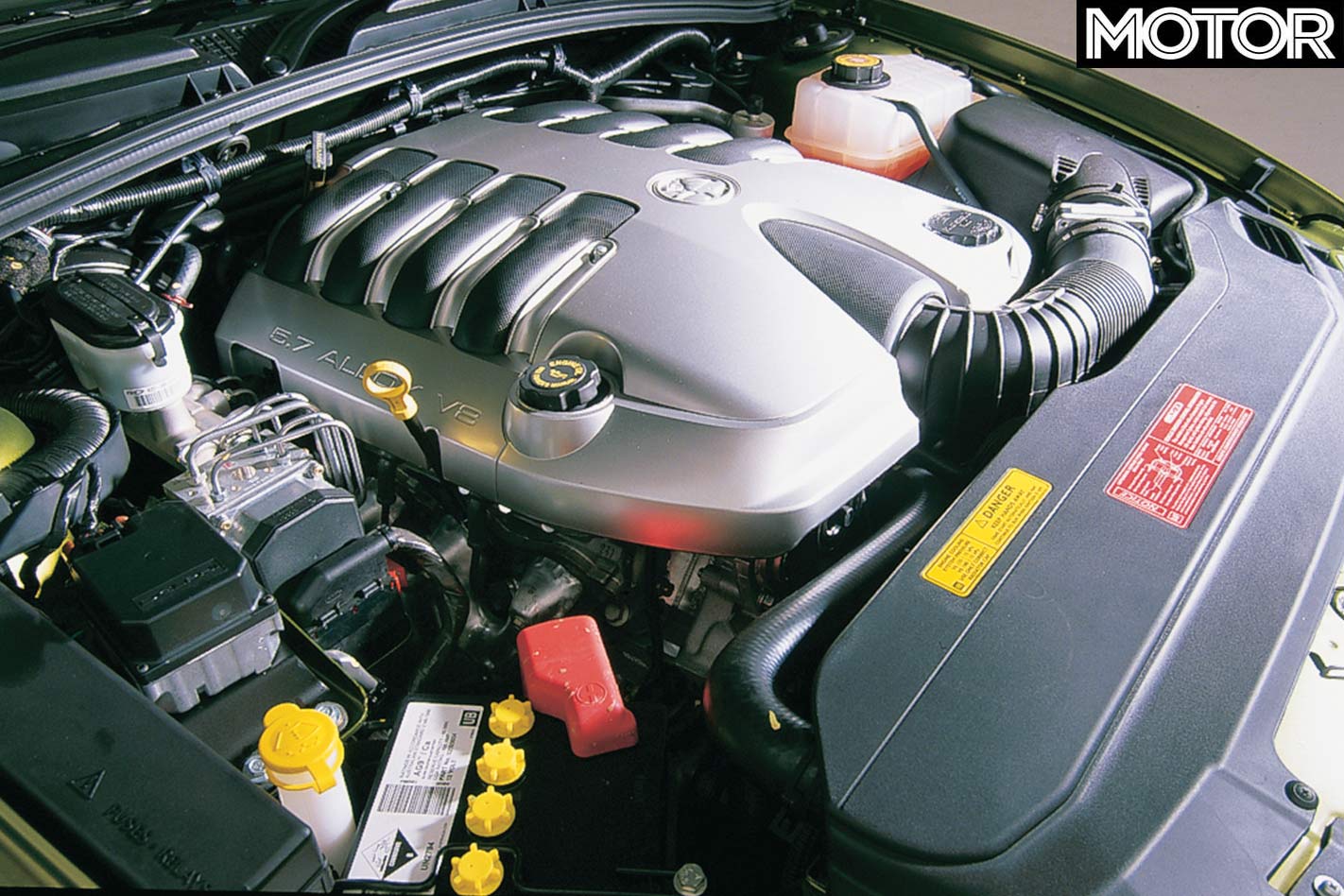
The Monaro packed Holden’s revvy all-alloy 5.7-litre V8 that debuted in the VT II Series Commodore SS in 1999. And although its pushrod operation kept things simple, it was not without its dramas. They’re well known for piston slap, thanks to a pressed gudgeon pin that would allow the piston to rock around in the bore until it expanded under heat after start-up. It’s not much to worry about, despite Holden going so far as to Teflon-coat the pistons in VYs and then install a floating gudgeon pin, which quietened it down somewhat. More important is quality oil being used on a frequent maintenance schedule. Small sump capacity meant otherwise normal oil consumption on longer service intervals could starve engines of oil pressure and equal spun bearings or failed lifters. Servicing every 5000km should see one easily last more than 200,000km. But aluminium sandwich gaskets in the knock sensor valley, around the sump, on the rear cover and front timing cover go after 10 years or 150,000km. So look out for leaks, or ask if they’ve been replaced. Expect to replace all of them for about $1500 including labour.
LS engine variants part one – Gen III
Transmission
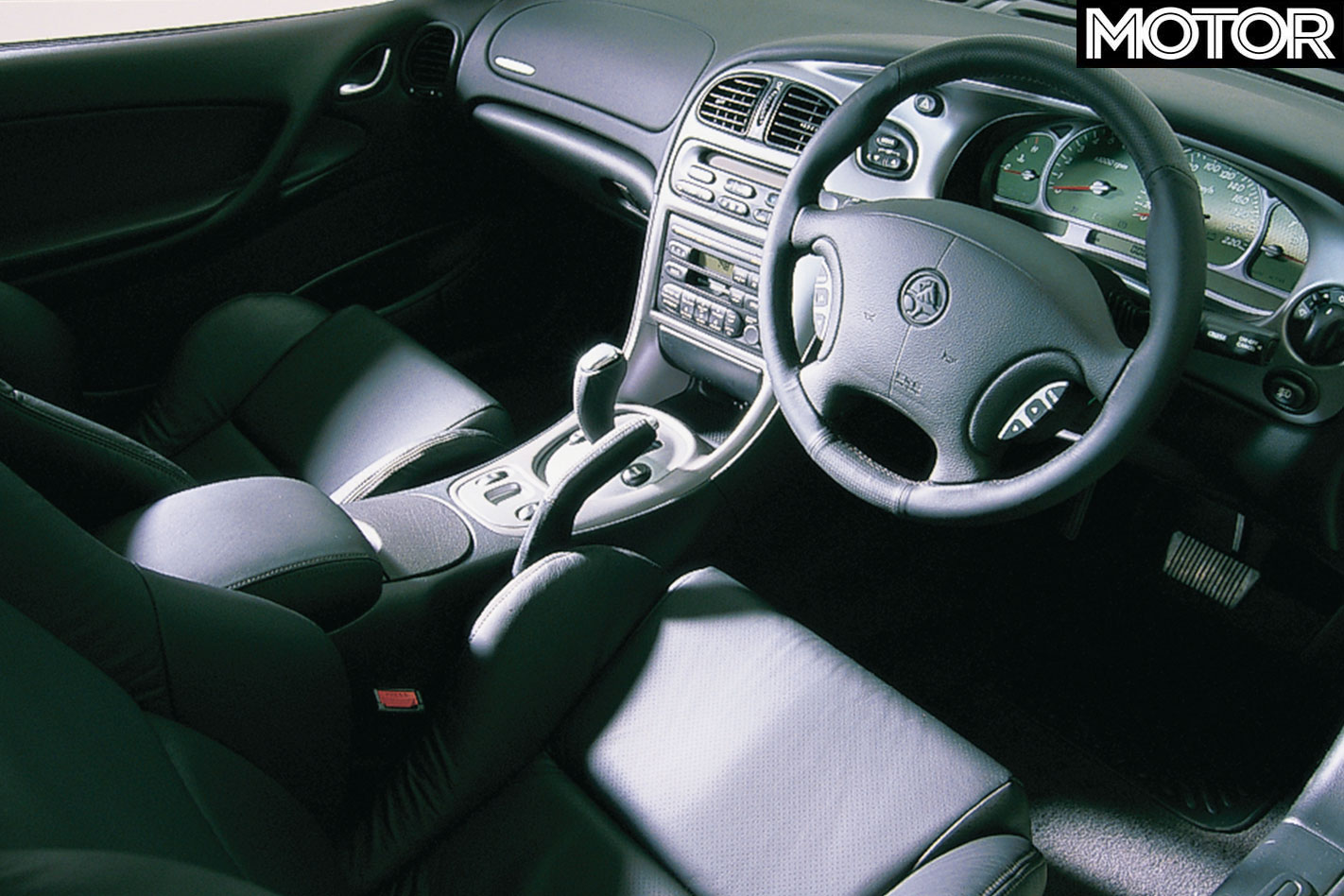
The options were a six-speed manual or four-speed 4L60 automatic. Both are fairly robust depending on what sort of life they’ve had. If you suspect the car’s had a hard life, then an auto transmission tune for higher line pressures in its history is a must. Autos on borrowed time will jump from first gear to third without selecting second – and a full rebuild will ask $2200. As for the manuals, check the clutch fluid reservoir next to the brake master cylinder. It’s small, and if the fluid’s black and gluggy, it’s in need of a service. Otherwise a stiff pedal signals a seized diaphragm and a need for a new sports clutch, which can cost $1400.
Suspension
The Monaro’s suspension was nothing new, sporting the Commodore SS’s front strut and A-arm arrangement backed by a semi-trailing arm at the rear. The shock absorbers last around 60,000km, so if the car struggles to hold its stance during cornering on a test drive, or won’t settle after pushing your body weight on a corner, then they’re probably nearing the end. Lowered cars tend to smash the bearing tops in the front strut towers. Inspect.
Body and structure
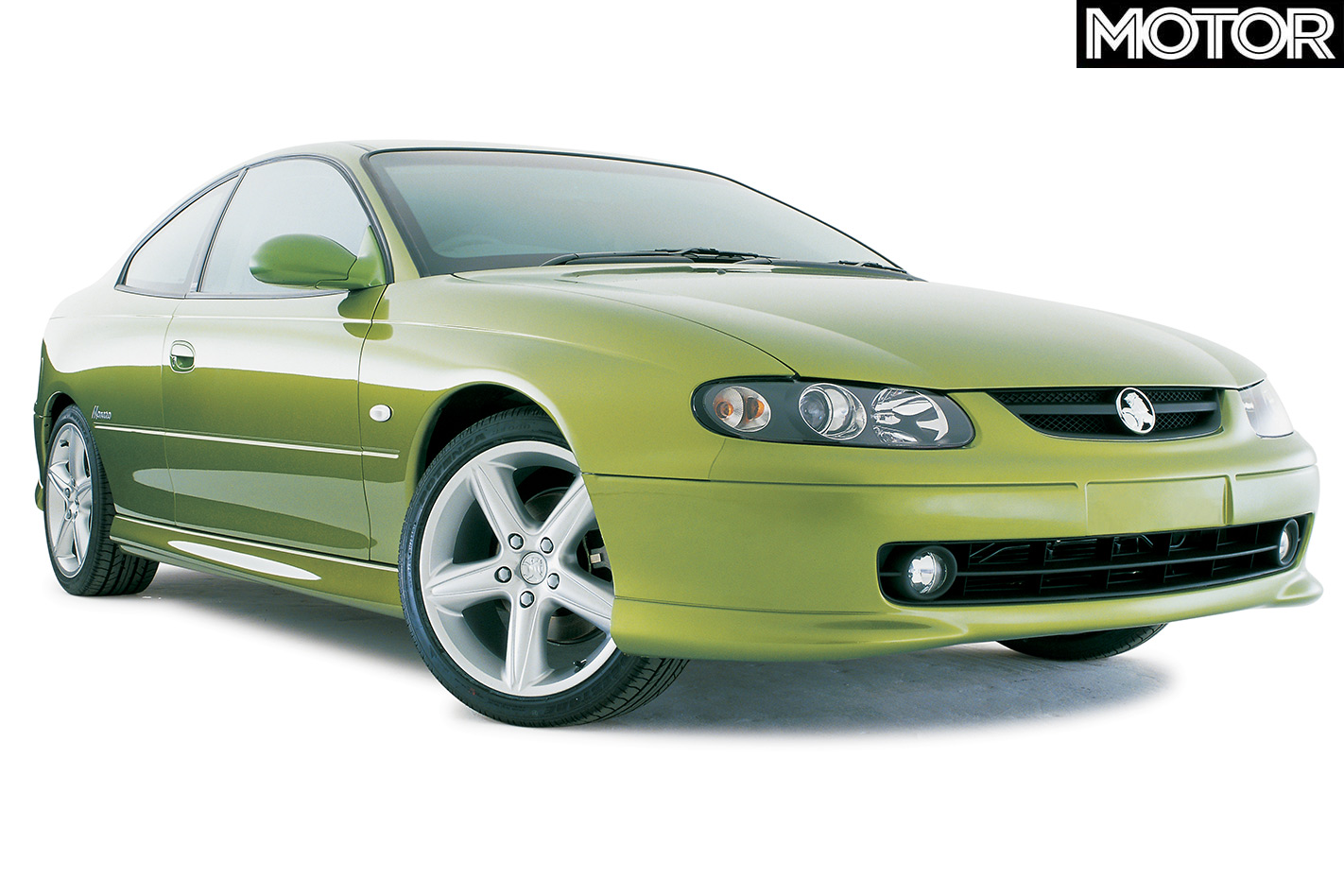
The body’s floorpan and front-end are shared with the Commodore and resist rust in dry low-salt climates. However, check drain holes for blockages. Meanwhile, the optional spoiler taxes the boot’s gas struts that are about $40 to replace. The Series III CV8-R introduced a sunroof and was recalled in 2011 as the bonding material deteriorated. Check it’s been done, or the glass might dislodge. Long heavy doors will wear out roll pins quicker than you’re used to with sedan doors. You’ll know they’re close if the door bumps up on the catch. They’re about $5 to replace excluding labour.
Most powerful Australian cars over the decades

Brakes and steering
Monaros employed a lower steering ratio and a stronger torsion bar to reduce what engineers called “phase delay”. While this theoretically should extend power steering pump life, they’ll leak from the rear O-ring when worn. Expect to pay $300 to replace with a quality item. Brake-wise, Monaros used a front ventilated disc and rear solid item, both sized 286mm and paired with sliding calipers, that present no real faults. Check pad life for wear.
Interior and trim
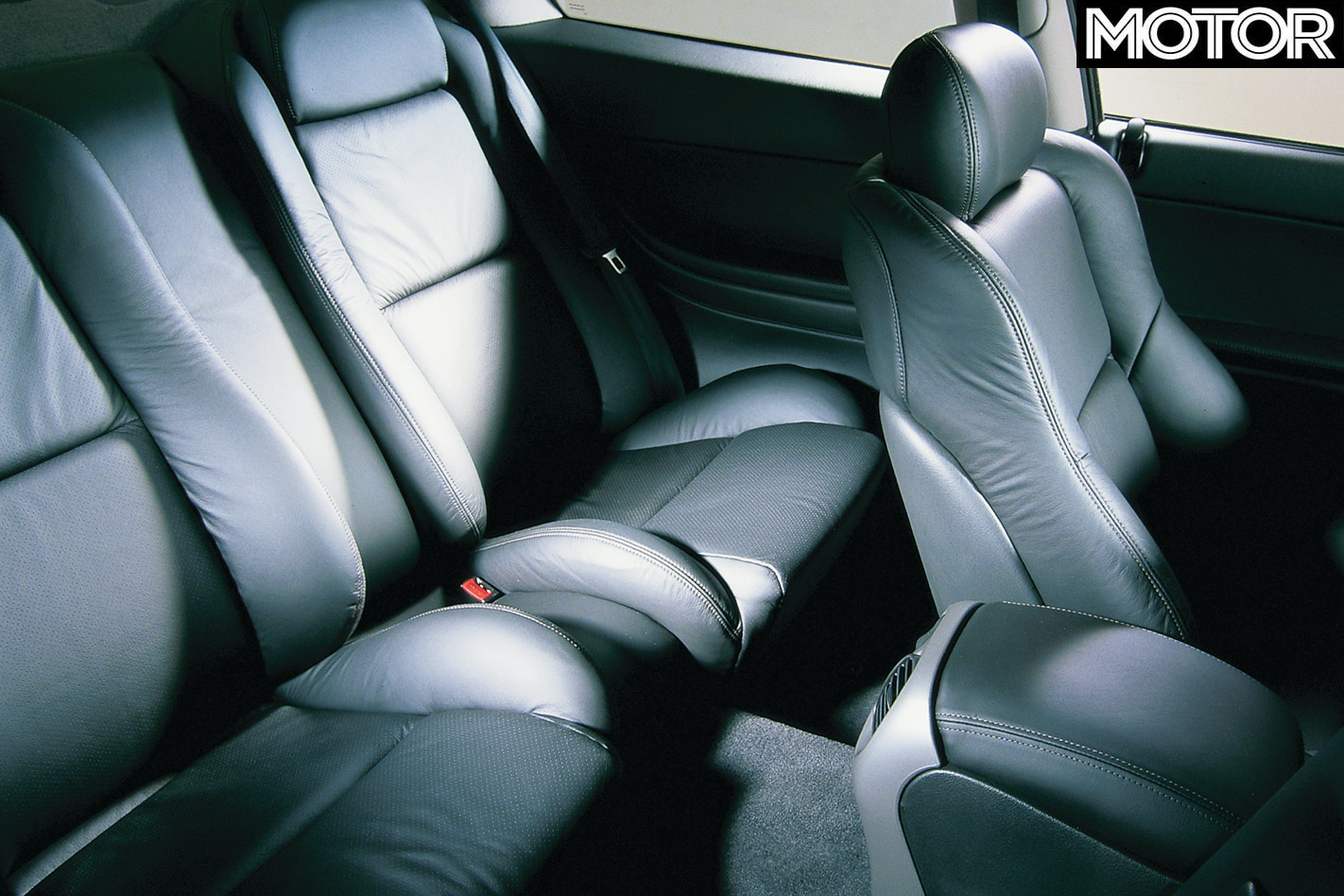
Interiors sported leather and power adjustable seats. The electronics are known to last a while, but the HVAC system can change temperature or air-angle under engine power. This is a VT-VZ Commodore bugbear. It’ll require replacing a vacuum actuator underneath the dash to fix for $100 before labour. Your mechanic should be able to access it without removing the dash.
Improving the breed

Given you’re starting with an example in good condition, $5K will buy an intake, camshaft and tune that, according to tuner gurus CSV Australia in Mildura, can take a stock LS1 from 210kW at the rear wheels to 285kW. For another $5K, an exhaust is recommended next and a transmission with a stronger clutch, or stronger converter and gears for autos, to improve acceleration. Next, the sky’s the limit with turbocharging or supercharging, but if you’re budgeting $20K for a blower, then look into an LSA 6.2-litre drop-in for 400kW at the wheels before driveline upgrades.
Other options you may want to consider:
1. Mercedes-Benz AMG CLK55
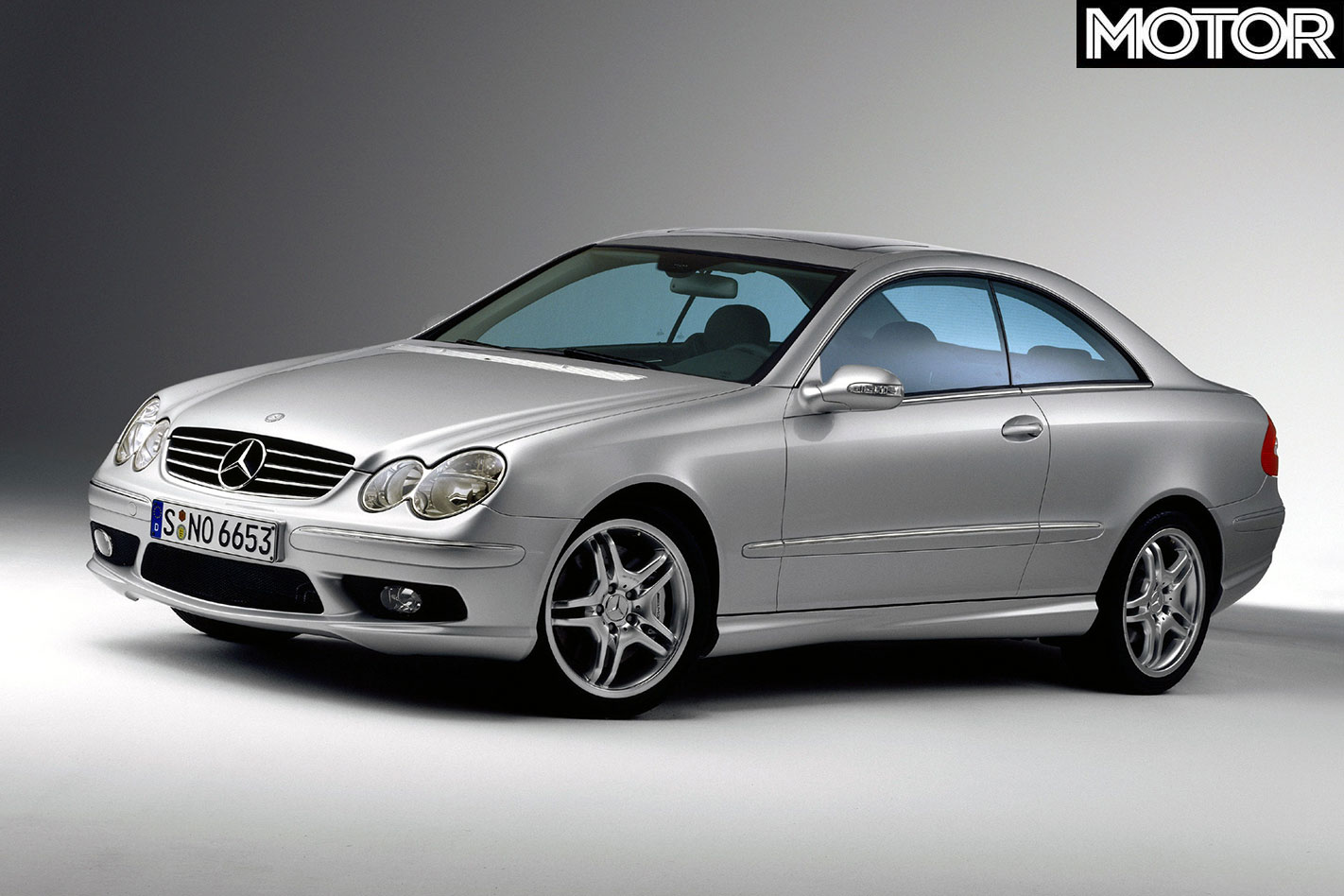
Benz’s CLK55 washes up as a rival in the classifieds, with high-kilometre 2003 examples asking as little as $20K (it cost $191K new). The SOHC 5.4-litre V8-powered 2+2 coupe put 270kW and 510Nm through a five-speed auto.
2. Ford Mustang cobra
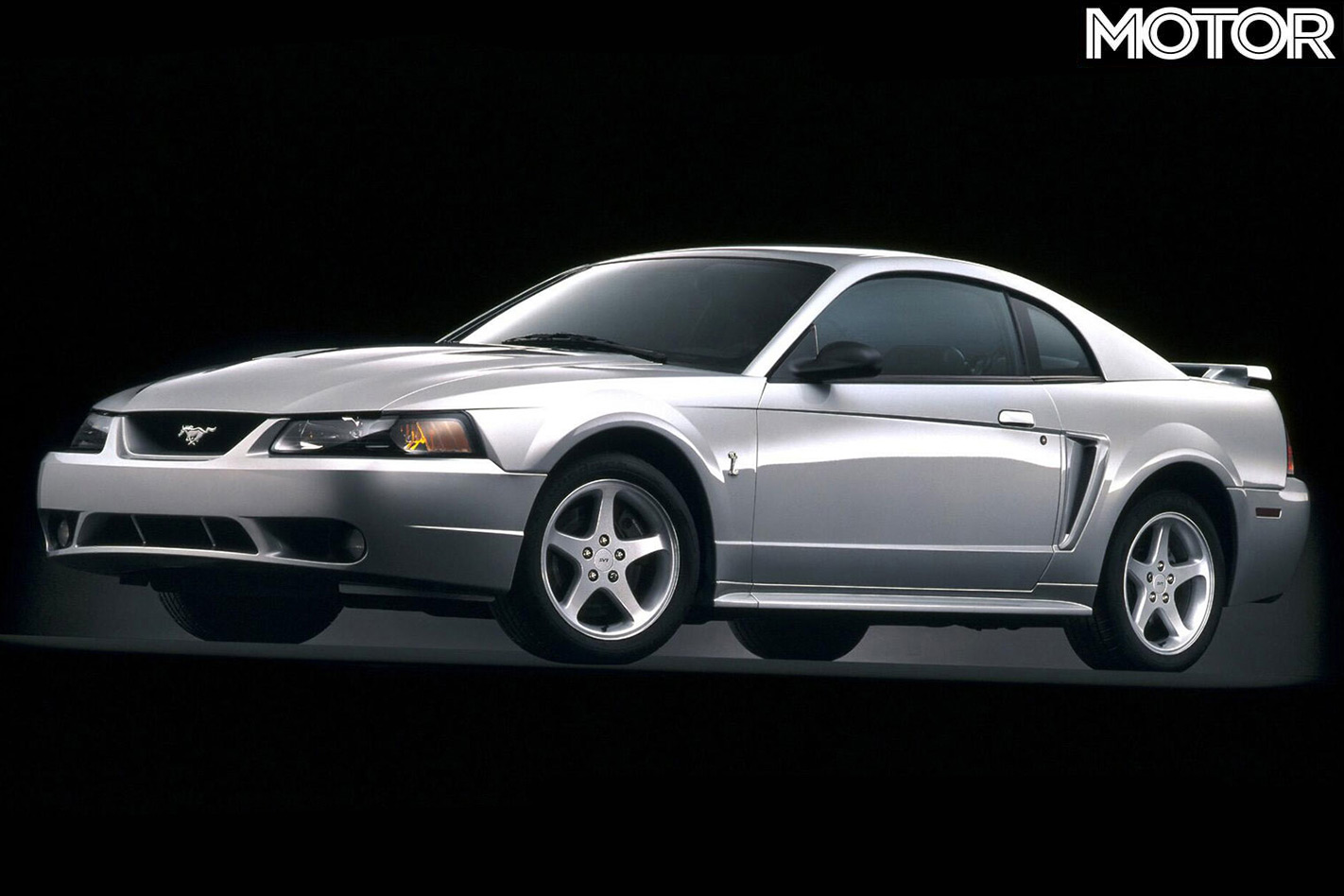
The Ford Mustang that sold here from 2001 to 2003 was drive-side swapped by Ford Oz’s Tickford operation. The 4.6-litre DOHC V8 is nice, yet while they’re not that much to drive, 2001 coupe manuals are still around $25K
3. HSV GTO
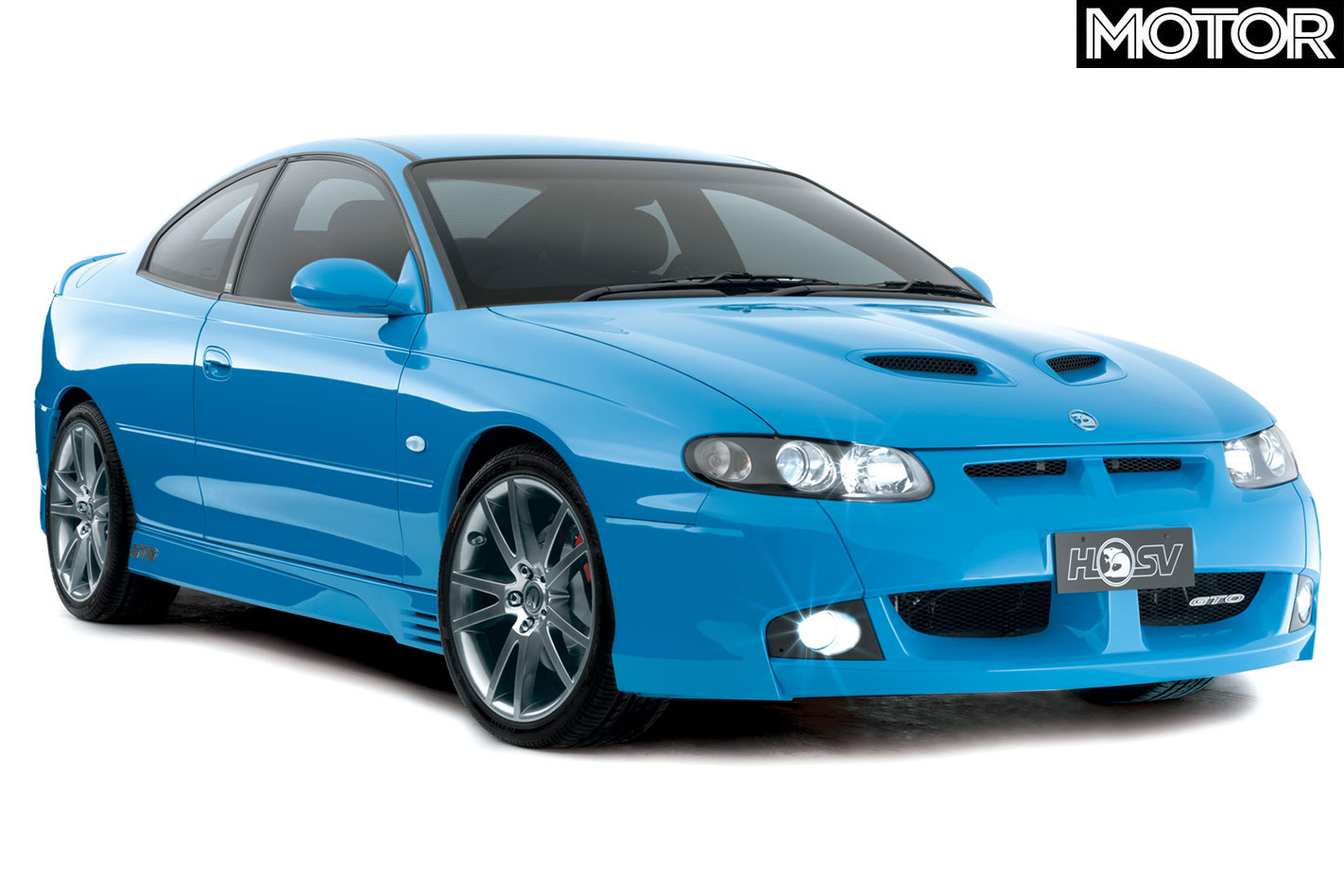
HSV’s take on the Monaro was less revered, but the LS1-powered GTO upped power to 255kW and had Mark Skaife tune the suspension. Its bodykit is a lairy point of difference, but manual versions still command at least $50K for a well used one.
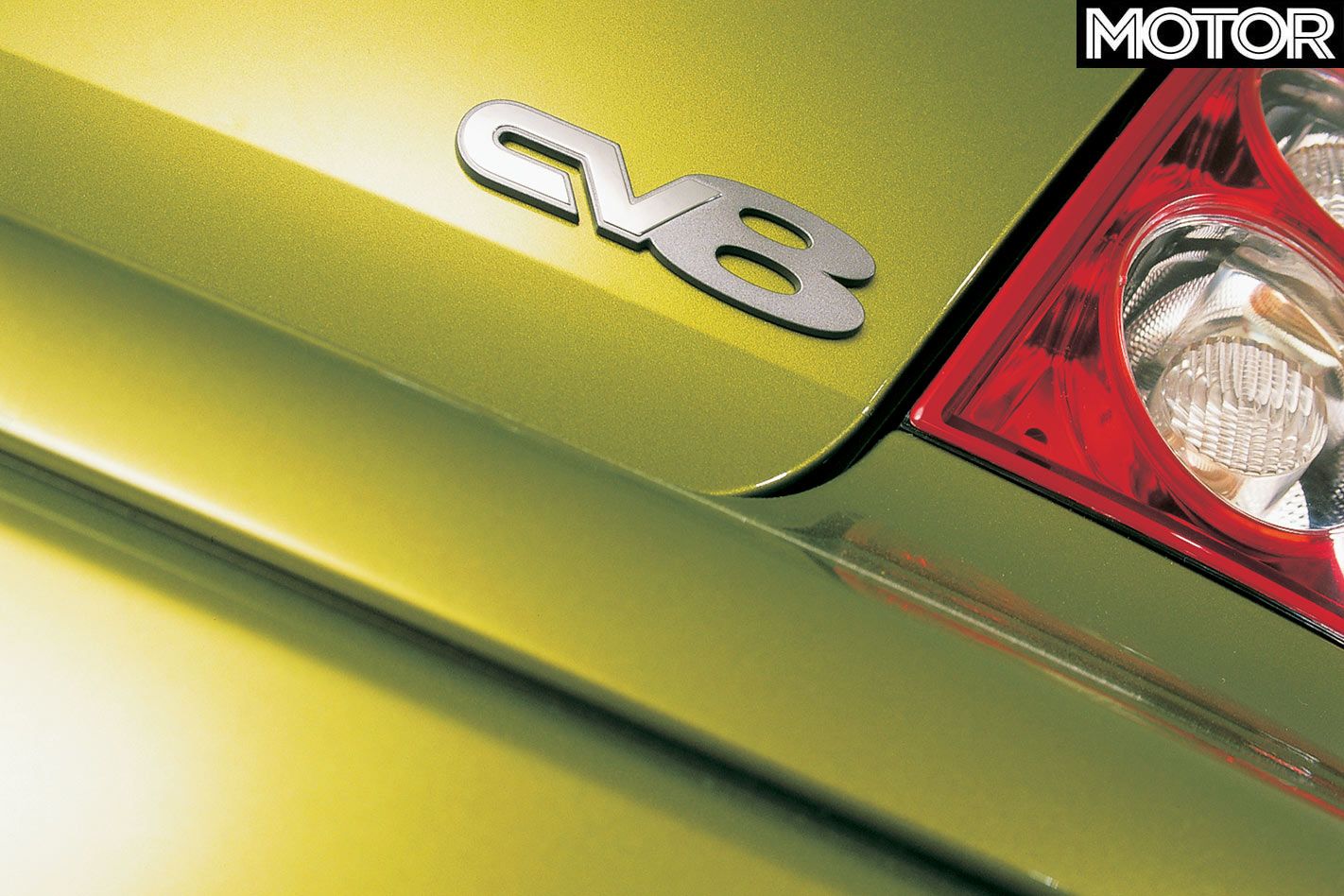
2001 Holden Monaro CV8
Body 2-door, 4-seat coupe Engine 5.7-litre V8, OHV, 16v Power 225kW @ 5200rpm Torque 460Nm @ 4400rpm Transmission 6-speed manual (4-speed auto optional) Used range $17,500 to $70,000
UPDATE:
The first HDT HT Monaro built for racing has sold at auction for three-quarters of a million dollars, seller Lloyds says, falling short of its seven-figure estimate.
While its ($715,000 reportedly) sale price still makes it one of the most valuable Holdens ever sold. One of Peter Brock’s VH Commodores sold for $2.1million in 2018.
Lloyds says seven bidders were whittled down to one, the successful buyer wishing to remain anonymous.
See full details from prior to the auction below, published June 24.
—
The 1969 HT, which was prepared for Spencer Martin and Kevin Bartlett, is credited with being the car that ‘launched’ HDT and, in turn, Holden’s prominent Australian motorsport story.
Though no specific price has been estimated for the car, its seller Lloyds believes the car is likely to reach the $1 million mark.

“We expect that this incredible piece of history will break seven figures, making it the most expensive Holden ever,” says Lloyds chief operations officer Lee Hames.
“The enquiry on this car is massive from all over the country, many people are even saying that it will reach 7 figures.”
While its provenance as the first HDT Monaro is sound, the sister car to this, another HT which was driven by Peter Brock, sold last year for less than half the seven-figure estimate.
The ‘43D’ Monaro sold for $455,209 at a Grays Online auction in September 2019.
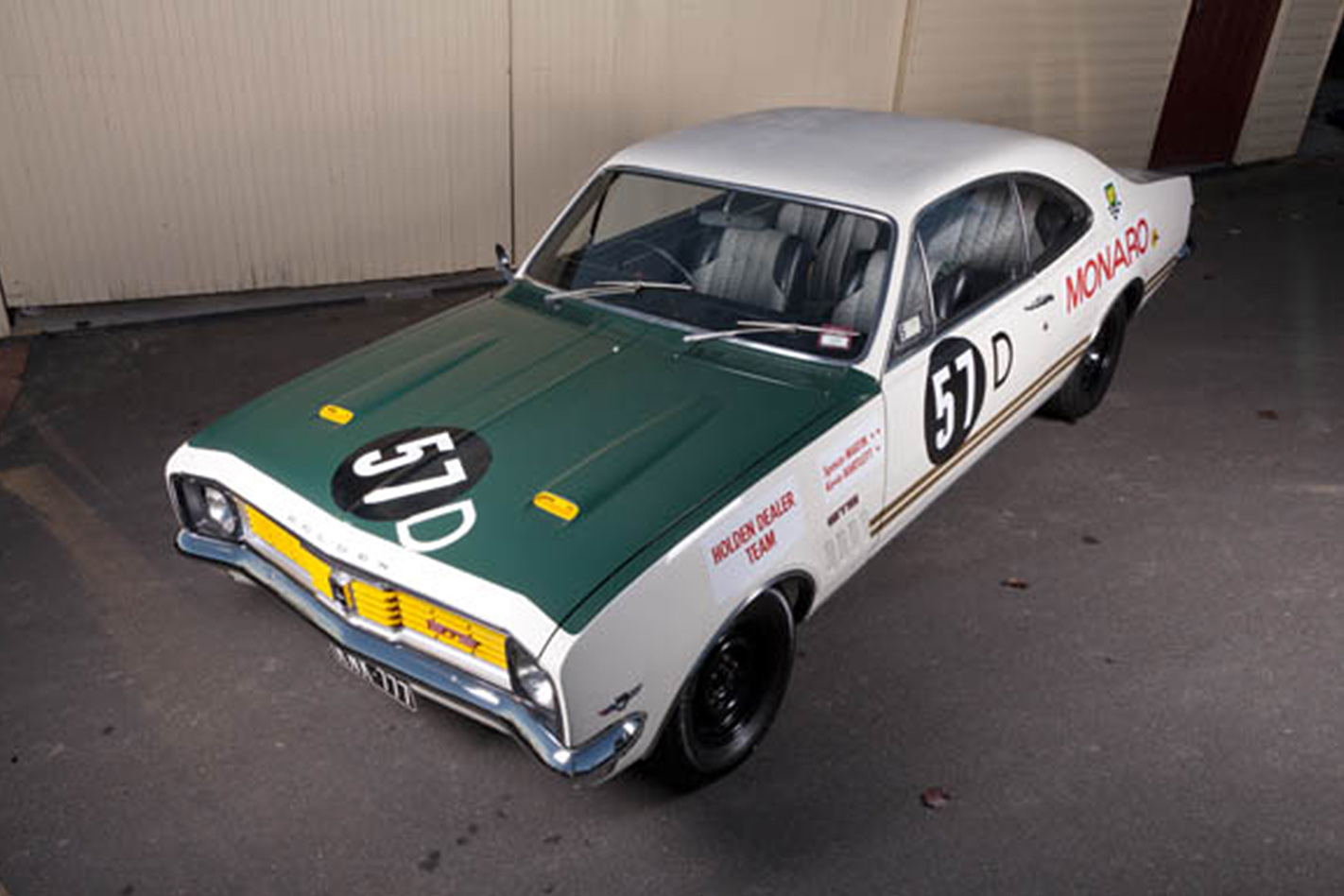
Still, there’s no doubting the car is especially important, and its story is a tumultuous one. On its debut in 1969 at Sandown, it ended up backwards and on fire into the armco at turn one after a brake failure 45 minutes into the race.
Its rebuild and the learnings from the crash were vital in Holden’s motorsport ventures in the period afterwards.
A video released by Lloyds, with commentary from many of the key personalities at the time, accompanies the auction listing. You can watch it below to get the car’s story first-hand.
The auction is set for June 27 at midday.
VOLKSWAGEN, like most of us, wanted the wild Golf R400 to live. It lured Friedrich Eichler, the man who designed the AMG A45’s world-beating four-cylinder engine, to Wolfsburg, then built a mean-looking concept car and hustled undisguised prototypes around the Nurburgring Nordschleife.
This review was first published in MOTOR’s September 2019 issue.
But then Dieselgate happened. VW forfeited billions of dollars, in fines, and among the wide-spanning consequences of this punishment, including a huge scale-back in racing, the reality of a 400-horsepower (294kW) production Golf R evaporated.
Since then, rumours have circled that the eighth-generation Golf R will target these sort of outputs, but it will rely on hybrid technology. So, as always in situations like these, the R400’s legacy to unlock the EA888 engine’s potential was entrusted to the aftermarket.
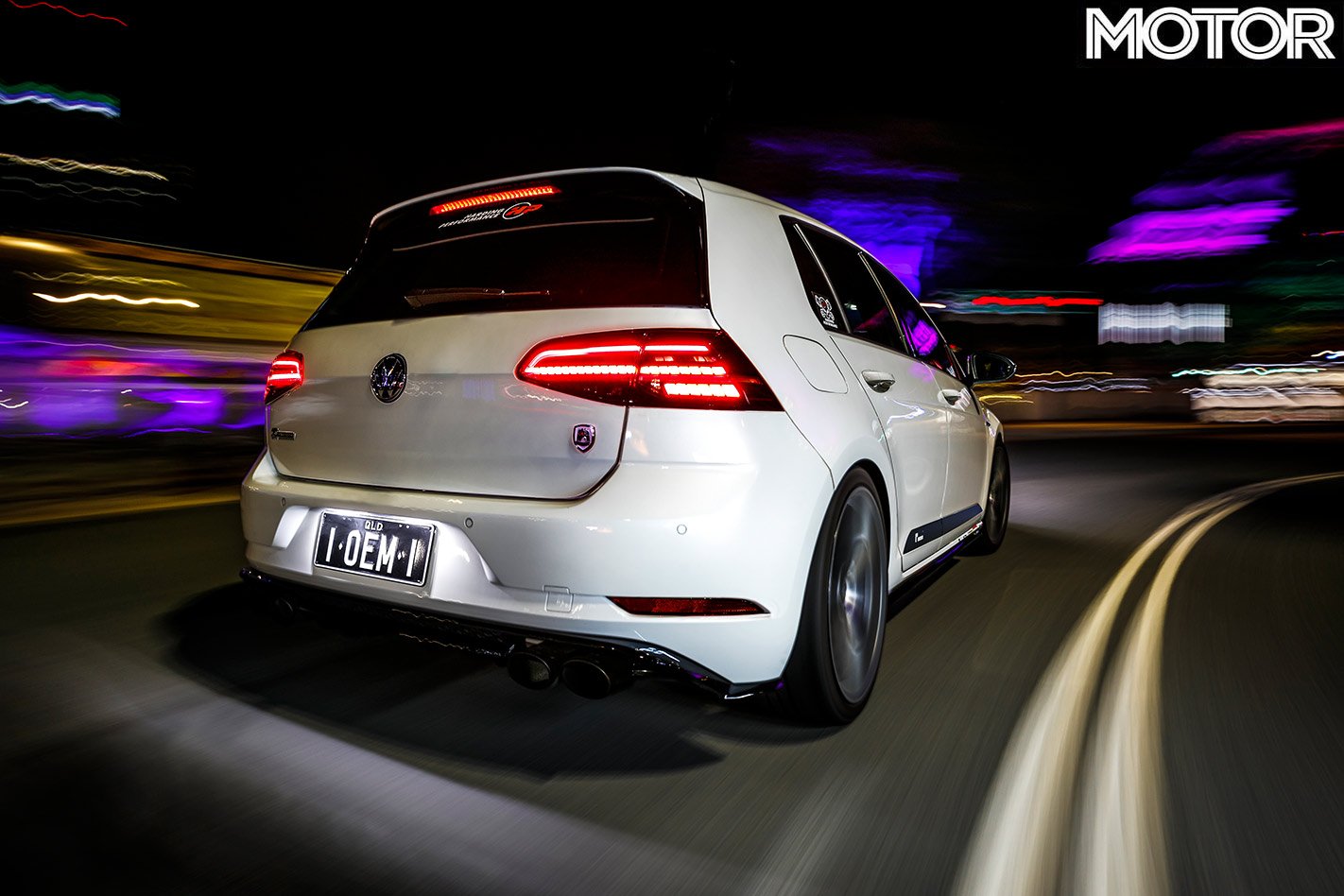
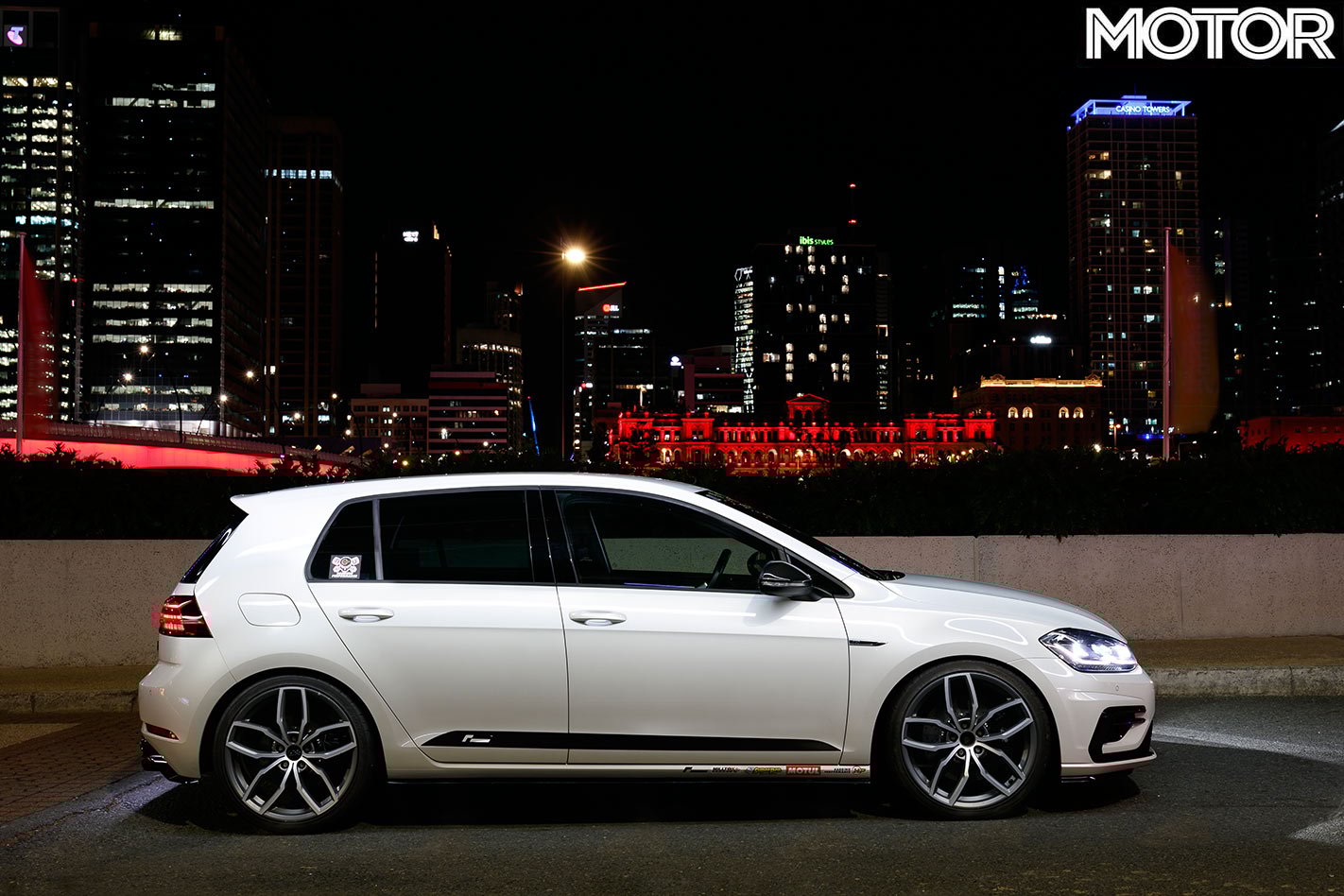
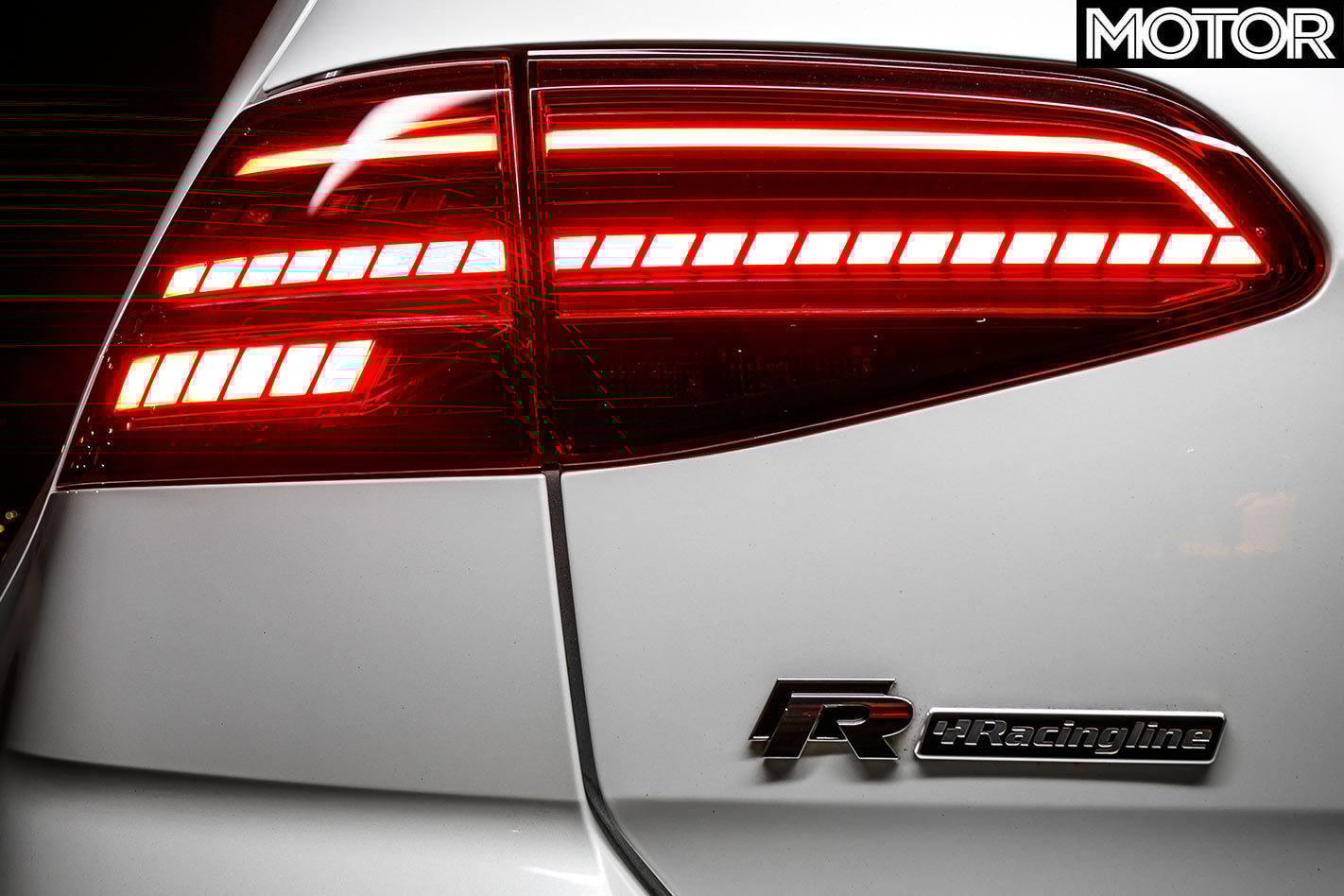
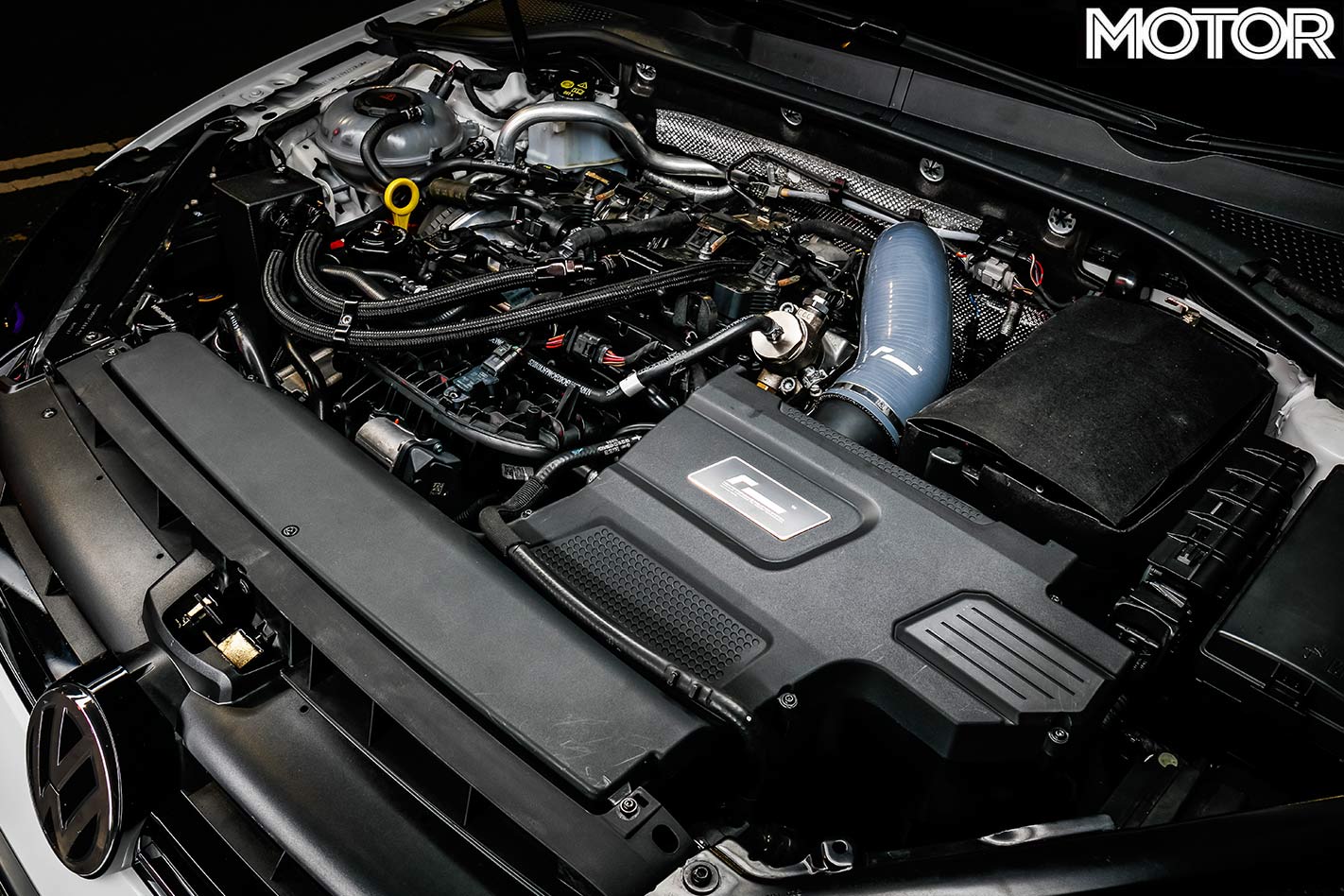
That’s why we’re in Brisbane, in an industrial district, to meet a Golf R Mk7.5 that has revived the R400 concept while, in classic tuner style, taking it even further. Harding Performance built it, you see, and as RacingLine’s main representative in Australia, it flaunts the aftermarket brand’s latest weapons-grade enhancements.
Key among them is a Stage 3 turbocharger kit that has inflated outputs to 362kW and 584Nm. That’s almost 500 horsepower. At the hubs. It could make more if you’re willing to crack open your motor and gearbox.
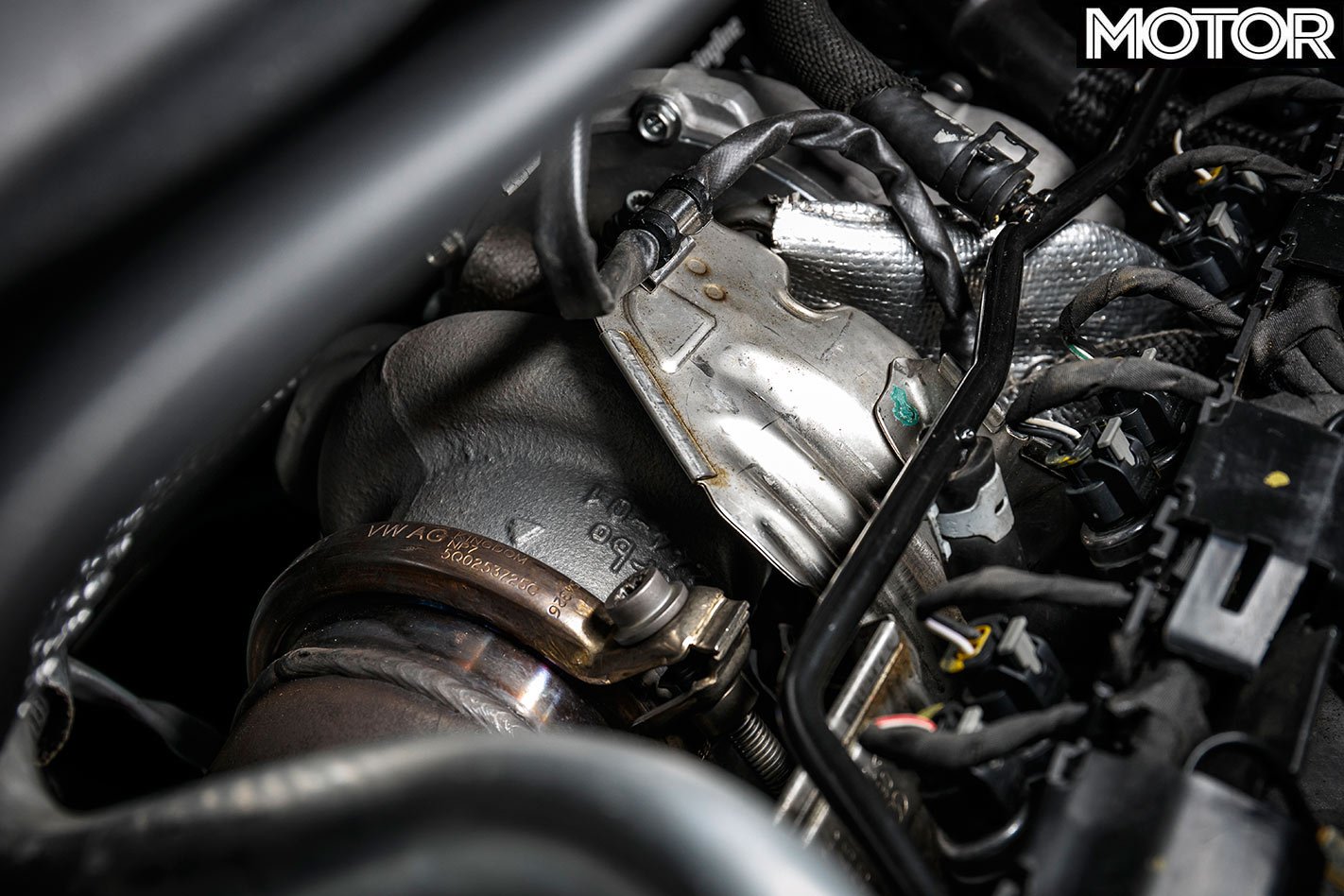
But there are a few modifications you’ll need to achieve these figures. First of them is an R600 intake kit that hides a snorkel in the top front grille to inhale more air. It feeds an IHI ‘hybrid’ turbocharger stuffed with internals designed to secret specs.
Boost is next – lots of it. The turbo runs at a massive 29psi, so you’ll also need an upgraded fuel pump, intercooler and a fatter exhaust that places a less restrictive catalytic converter downstream. Even the seven-speed DSG automatic needs its brain reflashed with software that can manage higher torque and employ a more aggro launch control.
As a rolling showroom for Harding Performance’s products, new 19-inch wheels slash weight and add style. They span an inch wider than the stock items and drop 2kg of important rotating mass from each corner.
They’re complemented by HP’s handling pack. Sport springs drop the car onto a menacing stance, and make sure the gummy Yokohama AD08Rs claw into the road like they’re supposed to. Swaybars, camber plates and alloy control arms round out the handling changes. But that’s not all.
Golf R single-piston sliding brake calipers have acquitted themselves admirably in past tests, but repeatedly uncorking this much energy on a racetrack, or even a winding pass, will quickly expose their flaws. So, to shore up the Golf R’s stopping power, HP has thrown their trust behind Chinese-owned LeMyth’s bolt-on carbon brake kit, which inserts carbon-ceramic discs and pads within the stock calipers.
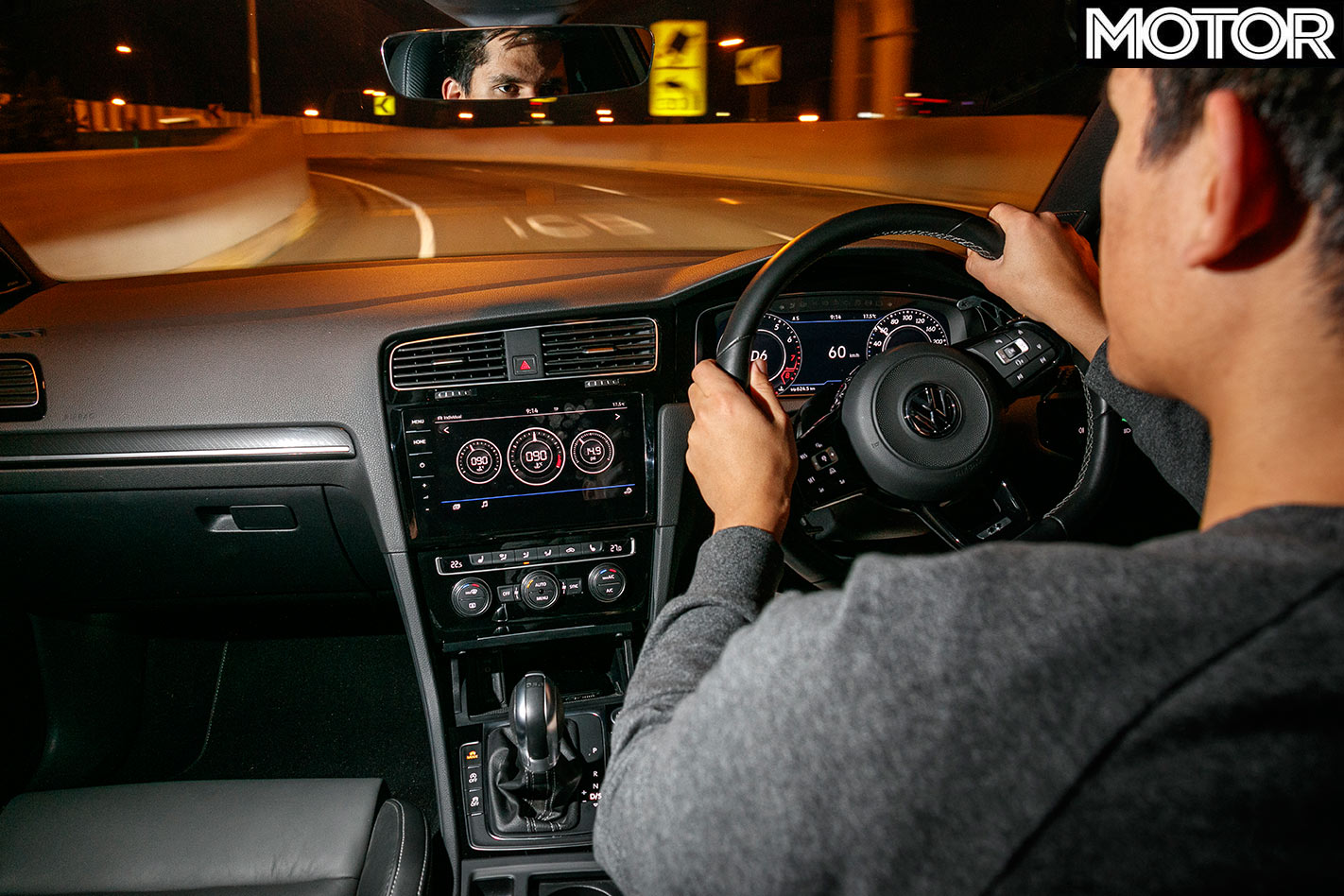
The interior disguises the car’s lurking potential even better than the exterior. It’s completely stock inside, save for upgraded paddles behind the steering wheel’s horizontal spokes. And starting the engine doesn’t rouse a loud exhaust tone, since it is adjustable and programmed to change with each driving mode.
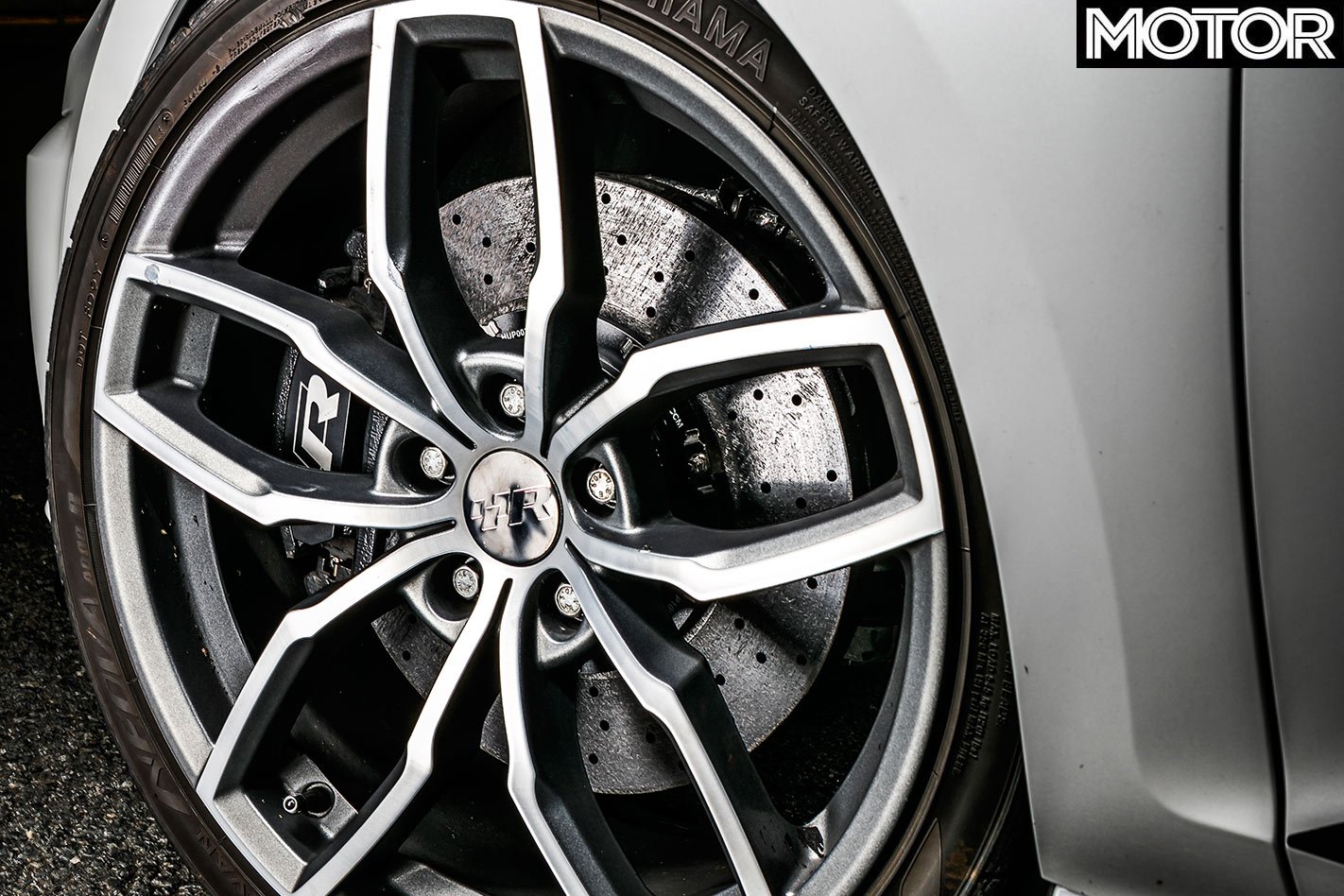
With the Golf’s nose aimed at the mountain ranges, we pull away and it’s still noticeably subdued and refined. There’s no boom, or drone, and the powertrain operates with OEM smoothness. Brake feel is a bit mute while the pads are cold, as most carbon-ceramic systems are, and the ride presents a worrying issue.
You’d hope the stock dampers would retain compliance, but their rates are mismatched to the springs. The dampers run out of travel before they can cushion the blow. It’s bearable for a while, but patience – and your vertebrae – will soon wear thin.
Luckily, the road soon clears and we get to focus on the launch control. The sequence is like any other Golf R: switch to Race mode, engage Sport DSG mode, relax the ESC, stomp the brake and throttle. The revs climb, then hold, and you clear the brake. The car hesitates as if it’s calculating how to deploy its grunt. Then suddenly the DSG clutches bite, the turbo sucks hard and the car launches forward.

It rapidly dispatches the first two gears, keeping you pinned in the seat, and booms with a deep growl. Sort of like a baby grizzly bear clearing its throat in anger. With the throttle pinned it continues at a phenomenal rate. Third and fourth gear reveal the savagery of its power, which builds like a wave. There’s a huge energy pushing you forward early in the rev range, but it’s most intimidating just before its peak at the redline.
While it feels like there’s enough grip to handle another 100kW and 100Nm, it’s clear the limiting factor in this whole equation is the stock motor.
The bigger turbo has clearly shifted the powerband along the rpm range and could keep hauling way past the 6750rpm rev limit – a scary thought when the speedo numbers already climb like a slot machine’s.
Guy Harding, the owner of Harding Performance, claims it will blast to 100km/h from rest in 3.2sec. That is with roll-out applied, so in reality it’s more like 3.4sec. You do have to manage the lag through the twisty bits as well, snicking down a gear on those lovely metal paddles to keep the turbo blowing hard. Thankfully, the retuned DSG is faultless through all this.
The brakes, to our surprise, are also fuss-free. Sure, they bite a little sudden, but the car repeatedly pulls up hard into corners.
A Civic Type R will outdazzle it in the twisties, but sticky tyres and a lower centre of gravity add welcome weight to the R’s light steering while tying it down better to the road. Meanwhile, the sway bars and springs make the rear easier to activate under brakes.
We’re not fans of the ride quality on offer, but some added body control, even if there’s a hint of unwelcome rebound at high speeds, helps settle a car with this much power. We would suggest ditching the springs from this $2290 handling pack altogether or trying to find dampers suited specifically to them.
And while the brakes are mighty impressive at fighting fade when unleashing this 500hp-odd 1450kg brick up and down mountains, the whopping $18,000 price tag is difficult to accept, especially when they lack a ’roided set of calipers. We reckon a big brake kit with steel rotors could do a similar job for a third of the price.
We’re also not sure about the effectiveness of its oil management system. Priced at $1995, with an oil cooler, it’s claimed to be used on VW TCR race cars. Still, we’re not driving anywhere near those kinds of extremes, and smoke leaks from the exhaust. We’re told high loads can force unemptied oil from the catch can into the cylinders. It’s apparently normal.
If you’re okay with that, we’d definitely recommend the turbocharger. Yes, it’s a little too big for the motor, but the power gain is remarkable considering the day-to-day driveability. We’d bet it’s spinning the flywheel with almost twice as much grunt as a stock Golf R, yet it would smoothly ferry the in-laws around.
At around $15K with supporting mods (installed), the Stage 3 Turbo kit is steep. But add an exhaust and some big steel brakes and it will easily stay with a stock Audi TT RS. Perhaps more importantly, though, it might rest your desires for a Golf R400.
Like: Monstrous top-end; strong brakes; solid traction; great driveability; refinement Dislike: Jarring ride; turbo lag; was blowing a bit of smoke during our test; brakes pricey
HP Volkswagen Golf R 7.5 specs Engine 1984cc inline-4, DOHC, 16v, turbo Power 362kW @ 6400rpm (at the hubs) Torque 584Nm @ 4810rpm (at the hubs) 0-100km/h 3.2sec (estimated) Weight 1450kg Price $97,185 (as tested)
Jujiro Matsuda’s lightbulb moment, it must be acknowledged, took a while to arrive.
The man who apprenticed as a foundry steel worker from age 14, and who would go on to be the founder of the Mazda car company, was 31 when his nimble mind conjured a pump specifically designed for chemicals.
The ‘Matsuda-type pump’ would be the basis for his first company.
Understanding the backstory of Mazda’s founder is pivotal to understanding the brand. It’s an unconventional path scattered with hallmarks and personality traits that would define the ‘dare to be different’ ethos which continues to permeate the company, even a century from its beginning.
Matsuda would later go on to establish a weapons manufacturing business, cracking the big time with a deal to supply Japanese, and later Russian military forces.
He was a wealthy self-made man of 46 when he took over the Toyo Cork Kogyo Co Ltd business, but running this manufacturing operation of artificial cork would prove a testing and pivotal period, as the market for the product collapsed and his factory later burned to the ground.
From its ashes rose a machine-tool manufacturing operation, and it was eventually via this business he would spot the demand for motorised delivery and commercial vehicles. Matsuda’s offering for this burgeoning segment was a three-wheeled motorcycle configured for rear-mounted cargo, the Mazda-Go Type DA. Powered by an air-cooled single and featuring a then-novel reverse gear, the Mazda-Go nailed the brief for an affordable, nimble and versatile delivery ‘trike’ and quickly found export success.
Tragedy was just around the corner, though, and the bombing of Hiroshima would do more than thwart the company’s car development ambitions. The atomic bomb was dropped on Matsuda’s 70th birthday, killing employees and one of his sons.
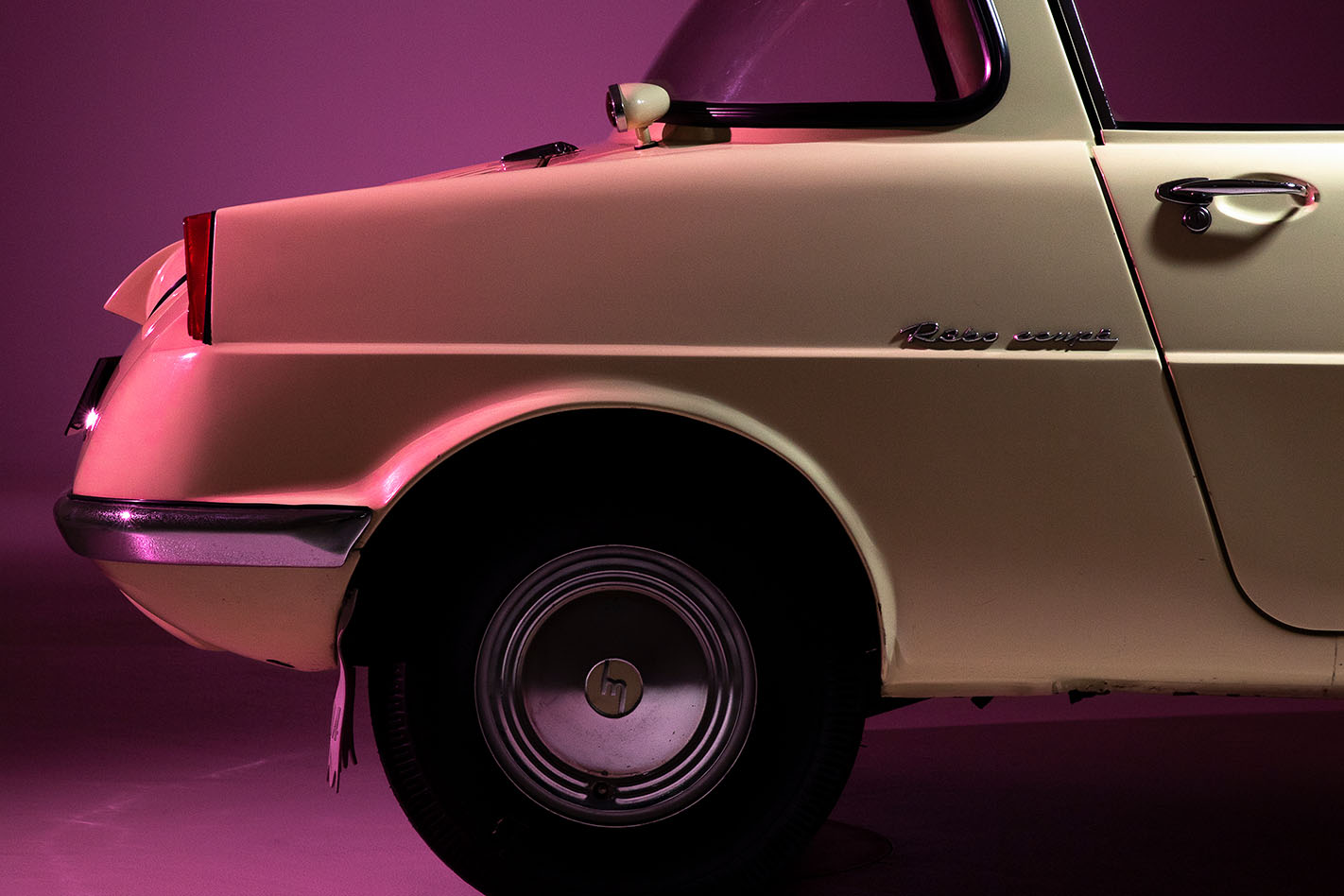
Production of commercial vehicles picked back up in the ’50s, but the breakthrough moment came in 1960 with the launch of the utterly huggable R360 coupe (pictured), the company’s first passenger car.
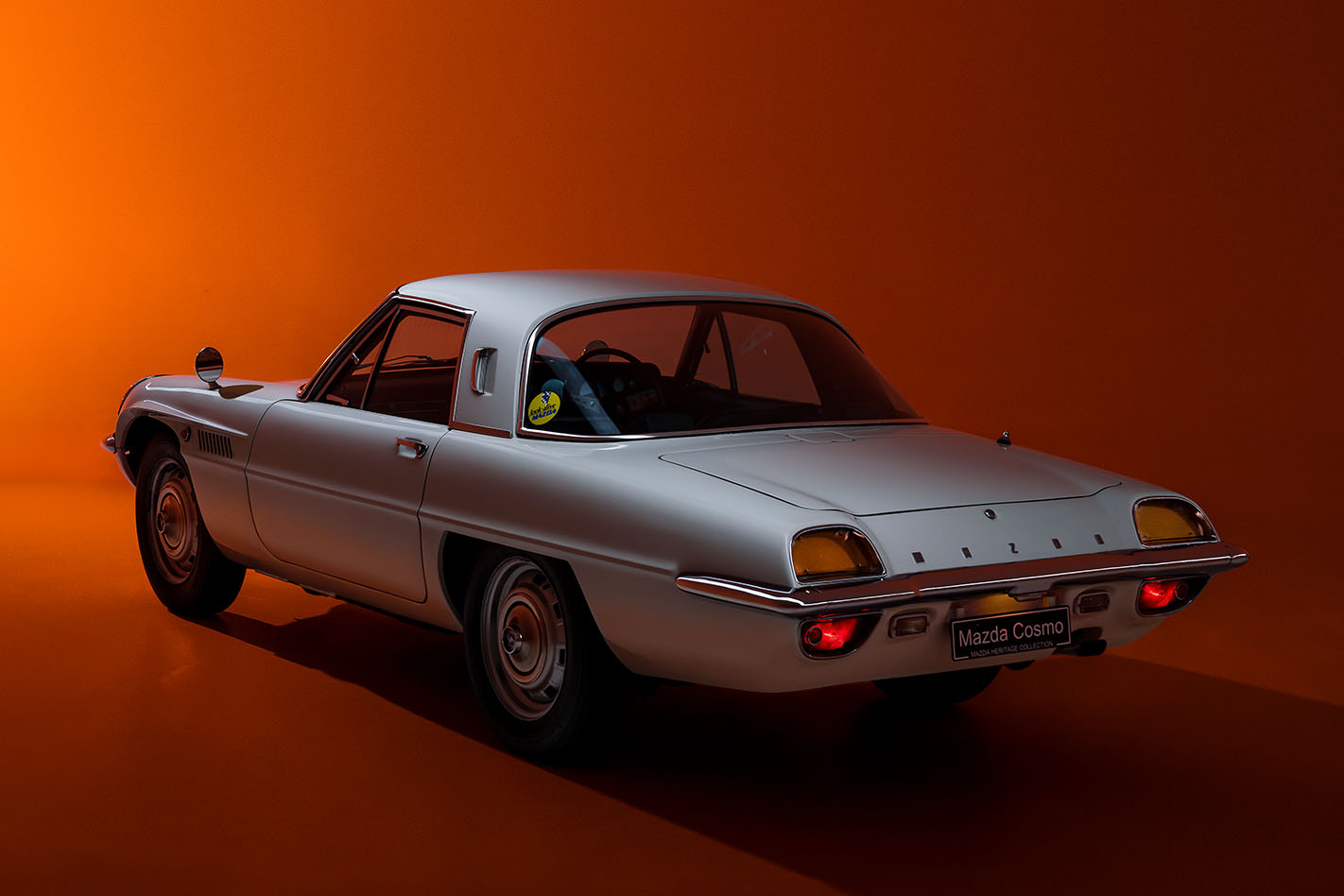
Seven years later the company had undergone a massive transformation, and the result, from a product point of view, was the rotary-engined Cosmo Sport 110S.
It’s well documented that Mazda’s history with the rotary goes back to the early 1960s when it licensed Wankel technology from West German automaker NSU. Mazda’s then-president Tsuneji Matsuda (son-in-law of founder Jujiro) believed that the company needed to come up with a notably differentiated technology to avoid the Japanese government forcing it into a corporate merger. Matsuda chose the Wankel rotary engine, and assigned Kenichi Yamamoto (who would later rise to company president) to head up a team of 47 young engineers to take the underdeveloped, problematic rotary design, and make it production ready. Allegedly Yamamoto instilled an almost Samurai-style dedication in this team, and told his engineers: “From now on, the rotary engine must be on your minds at all times, whether you are sleeping or awake.” Ah, sweet dreams at 8000rpm…
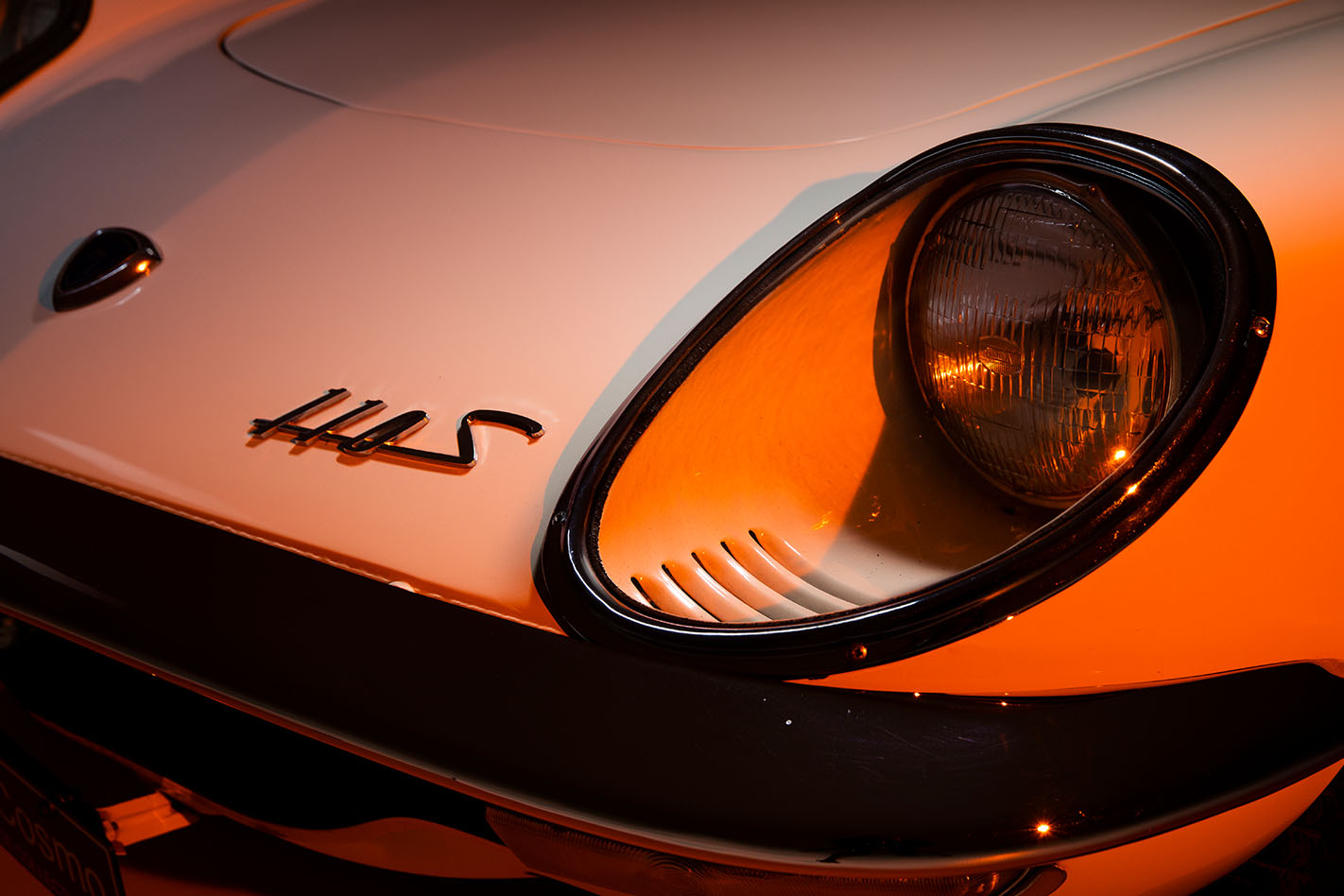
Just 1176 examples of the Cosmo Sport were built between 1967 and 1972, and while it stands as a beacon of Mazda’s stubborn corporate perseverance and overcoming engineering challenges, it was actually the R100 coupe that was the real breakthrough car; the volume model that upheld the company’s commitment to a non-piston USP with its debut in 1970 as the first mass-produced, rotary-powered car offered in North America.
Here in Australia, the Mazda backstory starts with importer Alex Findlay, who, in 1959, saw local potential in Mazda’s Romper four-wheel truck and other tri-wheeled models. He travelled to Japan with the intention of procuring a Mazda franchise in Australia, and his visit concluded with him appointed by Toyo Kogyo as the company’s unofficial Australian representative. A beachhead for the brand had been established.
From here the story gets a bit more convoluted, as several entrepreneurial types sought to establish state-based distributors’ rights, and cars like the Carol 600, Estate 800 and Luce 1500 started to find a following.
Towards the end of the ’60s, thanks to the likes of the Familia 1200, R100, Capella 1600 and RX-2, Mazda’s Australian sales broke the 10,000 per year barrier. Less than three years later in 1971, sales had done the unthinkable – nearly doubled to 19,174. Import tariff reductions came in 1973, and Mazda sales boomed again, topping 43,000 units in 1974, which represented a handy 7.4 percent market share, albeit well behind dominant Holden’s near-100,000.
Percolating in the Mazda boardroom back in Japan during this period was the ever-deepening relationship with Ford, and by 1979, the Blue Oval saw sufficient synergies and opportunities to open the chequebook and take a 25 percent stake in Mazda.
Just one year later, Mazda was about to have its Australian breakthrough moment, winning the first of its eight Wheels COTY awards with the company’s first mainstream front-drive model, the BD-generation Mazda 323.
Peter Robinson recalls that it wasn’t a difficult decision: “To discover the 1980 COTY winner we took the 323, along with the Honda Civic, Mitsubishi Colt and Nissan Pulsar on a three-day test through NSW. We also took along Holden’s 1975 COTY-winning Gemini as the small-car benchmark. Didn’t take long for us to realise that the 323 was a clear leader over the others … and vastly superior to the Gemini.”
The COTY victory even prompted a limited-edition model with ‘The Winner’ emblazoned on the side. (‘Chicken Dinner!’ decal optional…)
It only took until 1983 to prove the company really was on a roll, in terms of producing class-leading cars, again snaring Wheels COTY with the GC-series 626. Mazda’s mid-sizer was co-developed with the AR-series Ford Telstar, so for the first time in the award’s history, this magazine’s marketing department’s budget was blown apart when it learned it would have to commission two trophies…
In terms of historical significance, of course, this pair pales when we consider the end of the ’80s would see Mazda deliver a car that would not just become a smash hit for the company, but would effectively rebirth a largely dormant segment and go on to become a global icon.
The Mazda product planner recognised as the progenitor of the original MX-5 was an American working at the California Design Studio in 1981 who would later join Wheels as a journalist in the ’90s, Bob Hall.
It was Hall who convinced Kenichi Yamamoto, the head of R&D during his ascendancy to the company’s helm, of the potential for a lightweight, affordable two-seat roadster. When the green light was only semi-lit, Hall jumped at the chance, even though the proviso was he could only work on the project before and after work, and in his lunch break.
“I learned this was how Yamamoto tested people,” Hall told Peter Robinson recently. “It was to see how much they really believed in their ideas; that they would work on them in their own time. I guess I passed the test.”
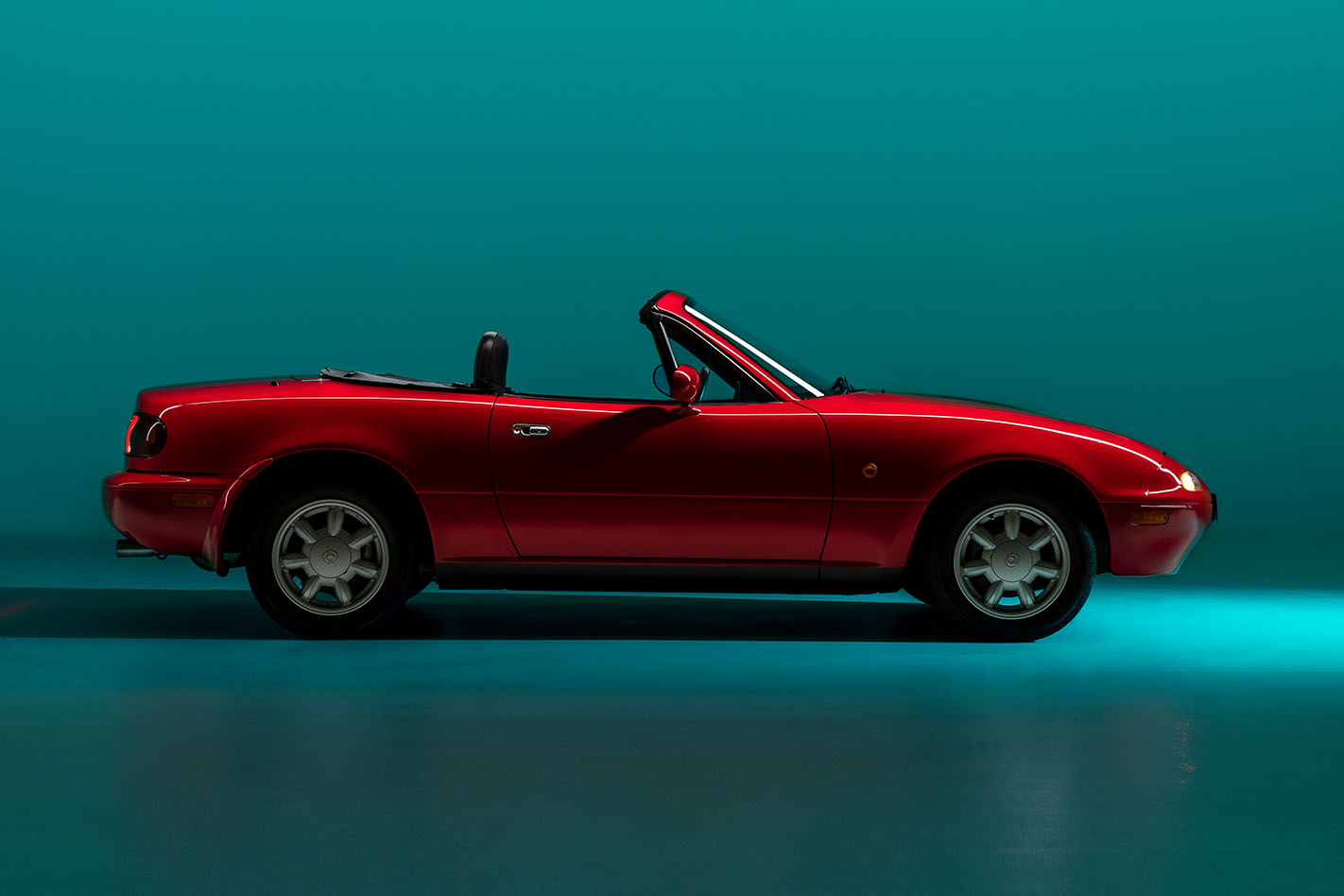
Of course, Hall’s thinking was bang on, and the NA MX-5 that resulted was a gem, imbued with a balance, involvement and feel-good factor that the world hadn’t seen in an affordable sports car for decades. It instantly cemented itself as a Wheels favourite, easily taking COTY in 1989, along with a string of international awards. Hall, meanwhile, is sad to report he is not the recipient of free MX-5s for life.
That aforementioned COTY-winning pair of 626 and Telstar – in GE guise for the Mazda and AX for the Ford – were back in the ring for another swing by 1992. Both cars introduced V6 engine options to the mid-size class, but this was very much a Mazda effort that secured the win for both brands.
One year earlier, though, had come the motorsport pinnacle that was somehow more than just a win for Mazda, but a triumph for Japan as a technological and engineering powerhouse. It’s hard to overstate the significance of the company’s epic victory in the 1991 Le Mans 24-Hour, with the green and orange 787B screaming at 9500rpm on its way to making Mazda the first Japanese manufacturer to win the legendary French endurance race.
Back here in Oz, the mid ’90s was a period where Mazda Australia flexed a bit of autonomous muscle, with former motorsport team manager Allan Horsley heading up Mazda Motorsport Australia. Horsley would be the force behind the turbocharged MX-5 SP of 2001, but well before that he secured the freedom and budget to develop a car specifically for the Australian market: the 1995 Series VI/FD RX-7 SP. Its mission was to compete in endurance production car racing, and homologation rules for the category would see 35 road-going models built, making the Australia-only RX-7 SP not just a rare and prized car, but a Japanese icon imbued with a dollop of Aussie go-fast know-how.
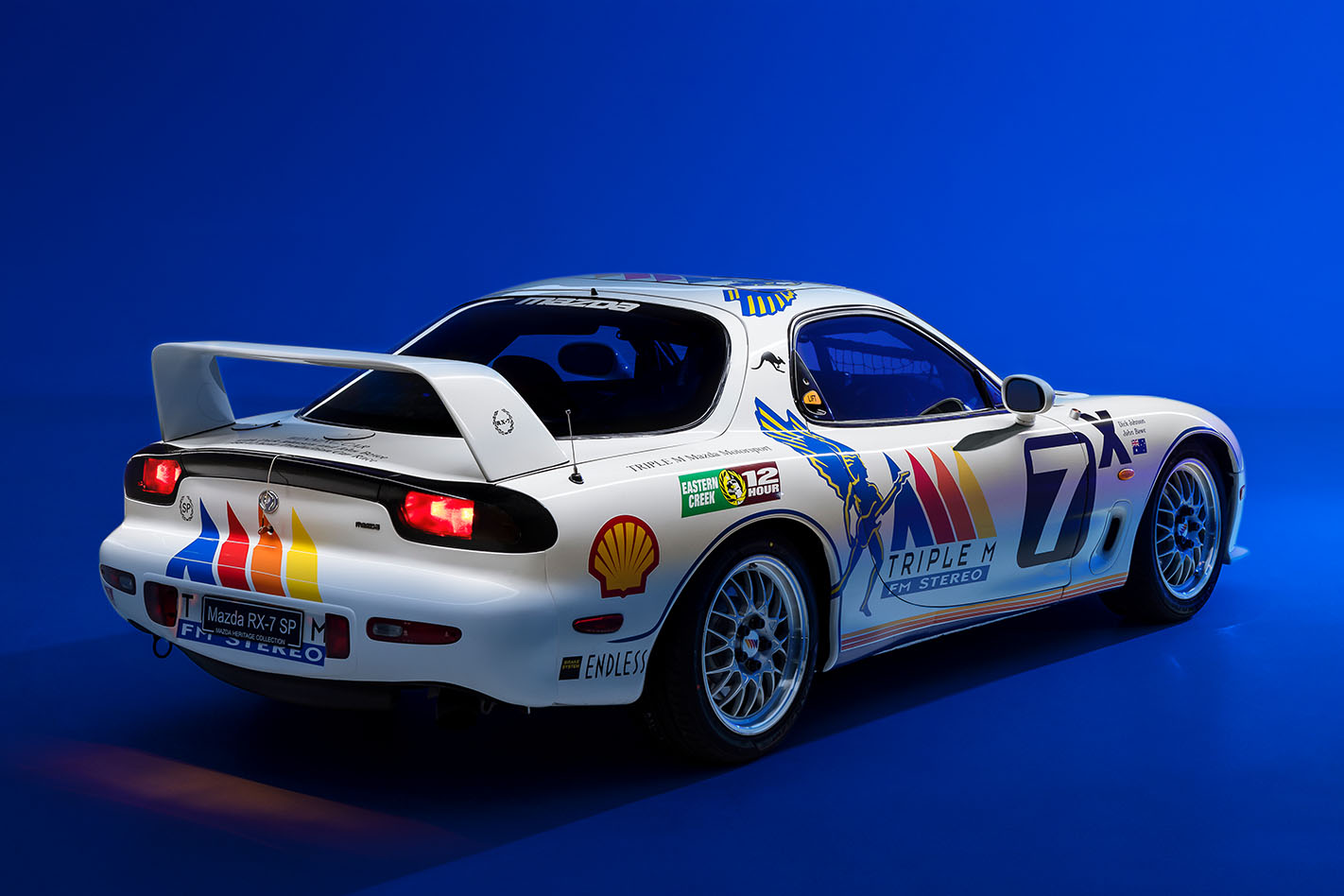
Former Wheels staffer Nathan Ponchard got a steer at Wakefield Park of the race car (pictured) driven to victory at the ’95 Eastern Creek 12-hour by John Bowe and Dick Johnson.
“I drove it on pretty tired Bridgestone semi-slicks,” Ponch recalls, “but it was still awesome. It made around 240kW, up from the standard SP’s 204. It was quite laggy at low revs, but its mid-range was monumental, and the back-slamming grunt on tap from 4800rpm to the 7500rpm cut-out was sensational. Great balance, too, but very easy to provoke into pretty instant oversteer when booting it out of the hairpin…”
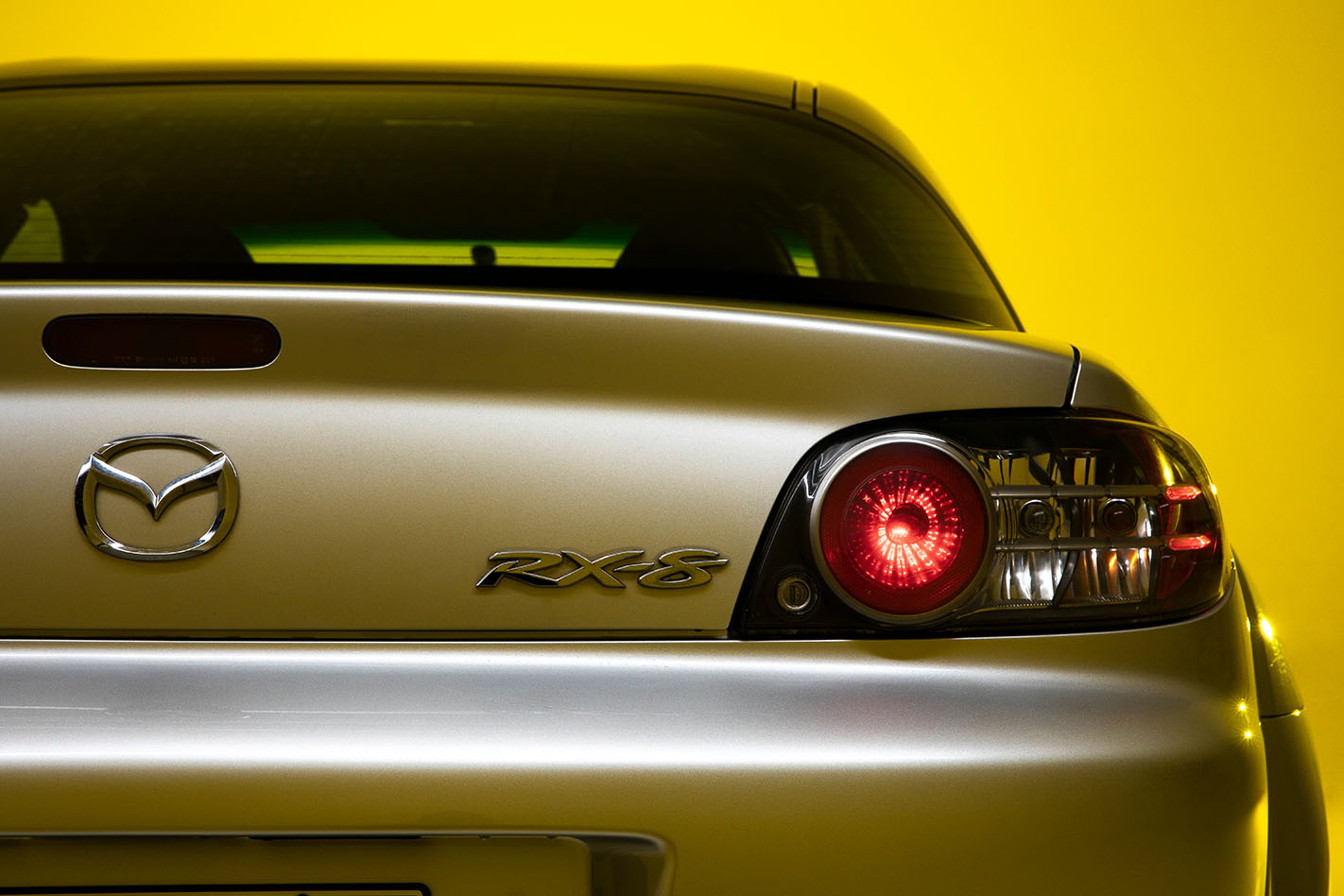
It would be nearly a decade before Mazda delivered another car Wheels considered worthy of its COTY award, but when it did arrive, the RX-8 blew in as a fresh-thinking breeze; a practical, four-door 2+2 sports car with delectable dynamics and an atmo rotary that felt as if it wanted to spin right through its rev limiter and into double digits.
There was further COTY success – the MX-5, twice (NC in 2005; ND in 2016) where Wheels rewarded the fact that Mazda stayed true to the car’s original ethos, and despite improving livability and adding safety on both generations, didn’t allow it to become a bloated, dulled-down pastiche. And the CX-9’s win in 2017 proved the company could produce an exceptional SUV.
Of course, there have been stinkers and missteps. The stillborn Amati luxury division from the early ’90s has been described as “an open wound that the company is still ashamed of”, and the Eunos premium sub-brand only fared marginally better. Then there was the Roadpacer AP; unforgettable for all the wrong reasons, while who even recalls the badge-engineered two-door version of the US Ford Explorer passed off as the Mazda Navajo? No, us neither.
Yet what this historical brush-stroke doesn’t fully convey is what makes Mazda different to its Japanese competitors. It’s more than the contemporary product strategy, like largely ignoring the turbo-downsizing movement; instead taking on the far more ambitious task of developing a compression-ignition petrol engine. No, it’s more fundamental than that. It’s by having a committed, overarching strategy to design and build cars aimed at people who actually enjoy driving them. To create cars that are more than just transport; rather, machines that connect, at least at some level, in an emotive way, not merely a rational one.
And, that, we hope you’d agree, is a goal worth pursuing for another 100 years.
SIX OF MAZDA’S BEST
1967 MAZDA COSMO
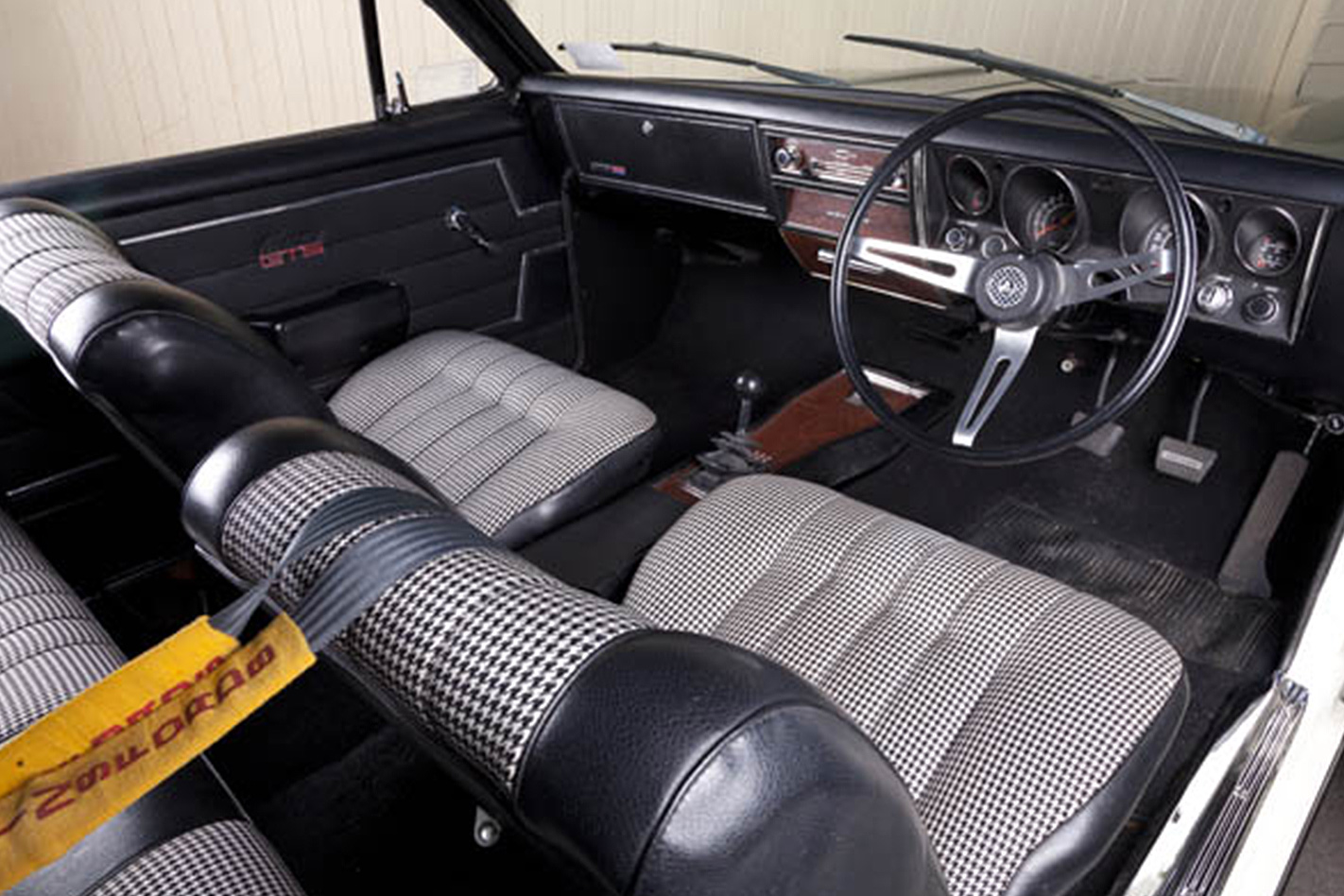
Cosmo’s twin-rotor engine pumped out a modest-sounding 81kW and 130Nm, but thanks to it weighing just 960kg, 0-100km/h in under 9.0 seconds was considered pretty swift for the period. Houndstooth upholstery and skinny wooden wheel rim the epitome of period-cool.
1967 MAZDA R360
A tiny four-seater two-door, the R360 featured a minuscule 1753mm wheelbase, weighed a feathery 380kg, and was powered by a rear-mounted air-cooled 356cc V-twin producing 12kW. It was an instant hit, with 4500 examples sold in Japan on the day it was launched.
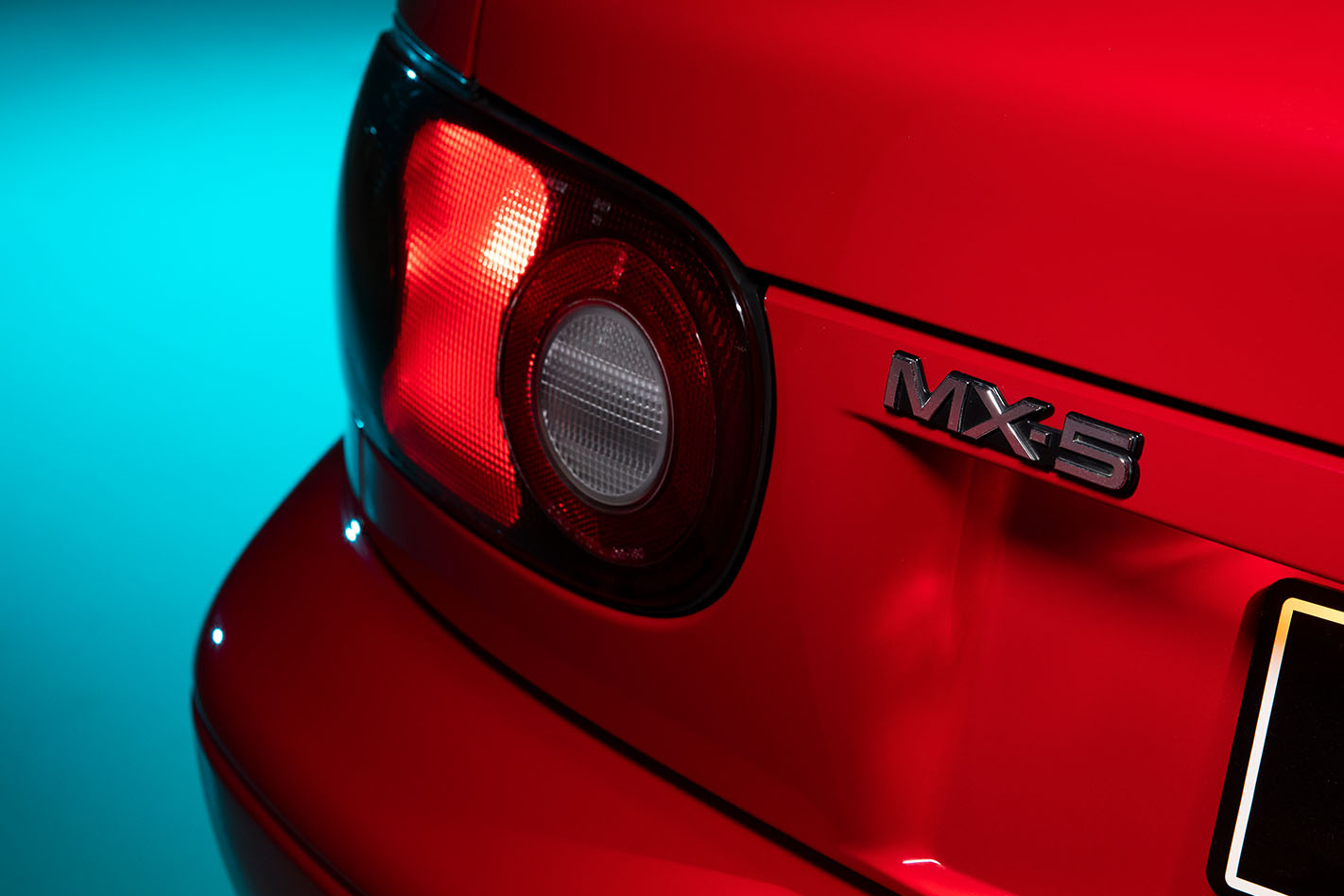
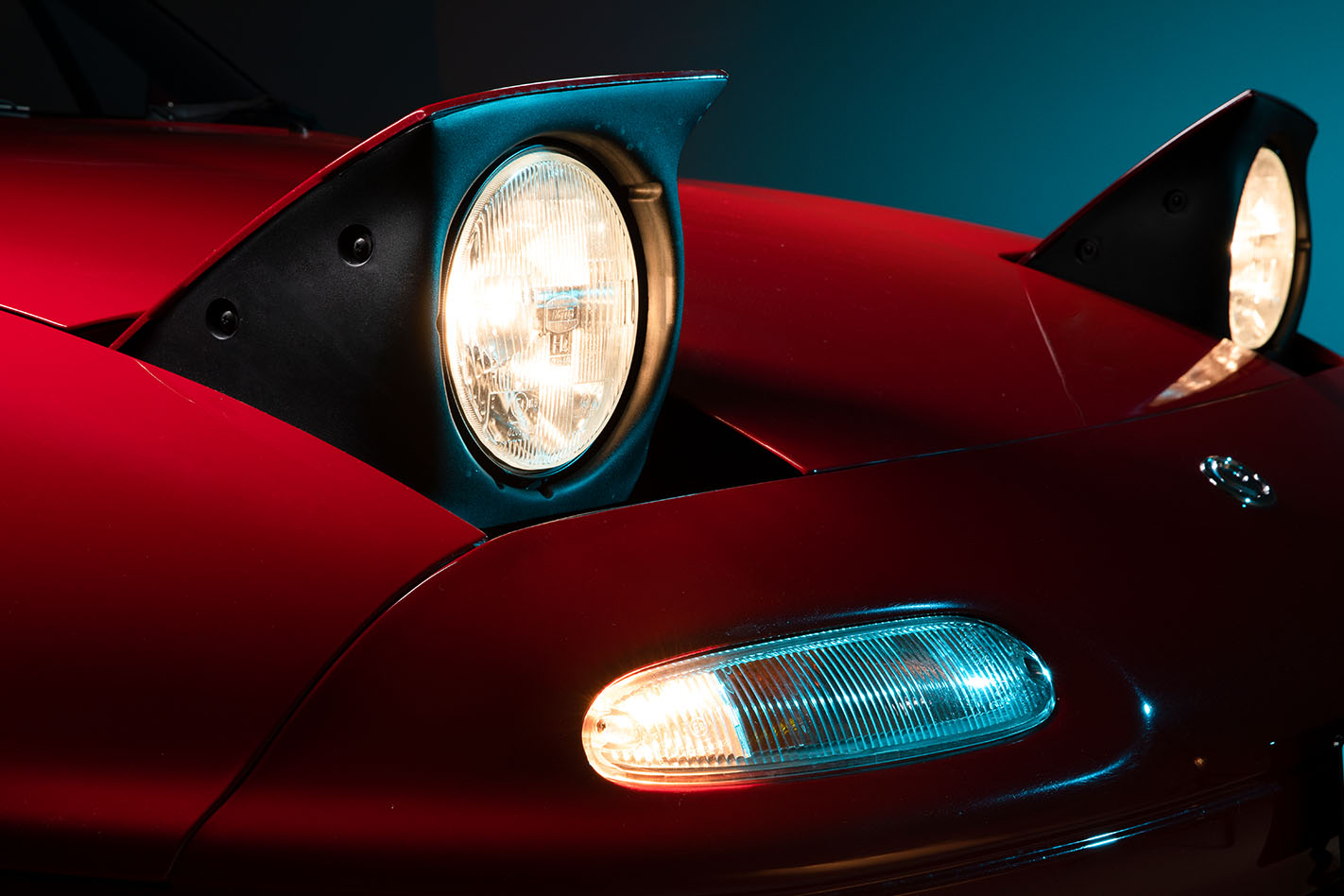
1989 MAZDA MX-5 (NA)
To ensure affordability, the original MX-5 kept the spec basic and concentrated on mechanical polish that the driver would appreciate on every drive, like the tactility of the steering, the willingness of the 86kW/136Nm 1.6-litre four, and the short-throw precision of the gearshift. In just the first year, 77,000 buyers lapped up these qualities.
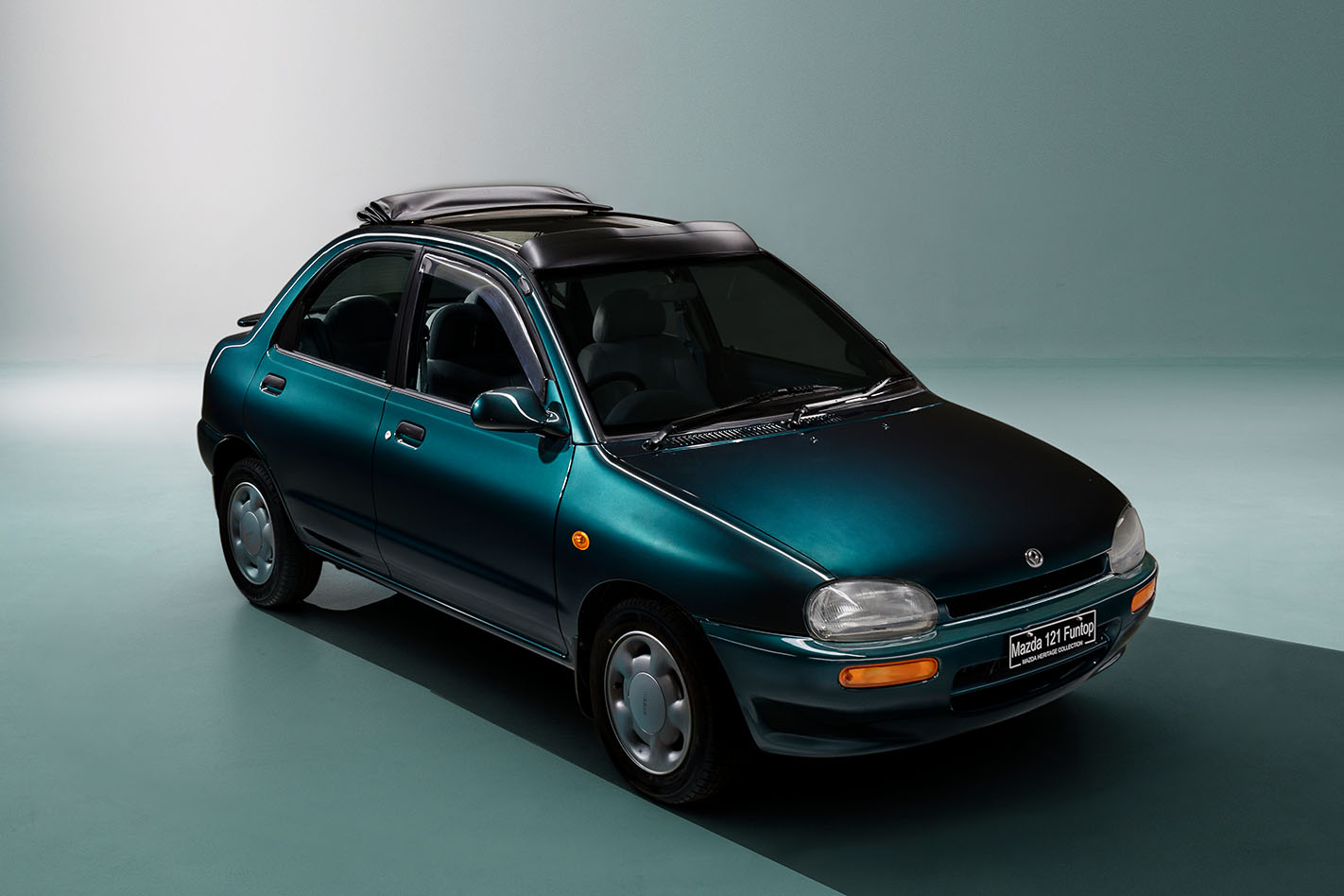
1993 MAZDA 121 FUN TOP
When it was launched in late 1990, the second-gen Mazda 121 elevated itself comfortably clear of its budget predecessor. Its 1.3-litre four was a 16-valve development of proven 323 and Laser B-series powerplants, while its curved, roomy cabin would hit peak cool for the period when canvas-roofed Fun Top arrived in 1993.
1995 MAZDA RX-7 SP
The 35 road cars Mazda Motorsport Australia produced were homologation specials for this race-winning RX-7 SP, and featured a carbon airbox, lower diff ratio, Kevlar-shelled Recaros, a bigger intercooler, larger brakes, a revised nose cone and spoiler, freer breathing exhaust and re-flashed ECU. Yours for $99,790 in ’95.
2003 MAZDA RX-8
Former Wheels road-test editor Nathan Ponchard recalls the impact the RX-8 instantly had at COTY 2003: “The dynamics were next-level. The steering crispness was beautiful, the ride was brilliantly judged. It had awesome balance; a real dynamic sophistication we hadn’t seen before in this segment.”
Scalextric is back, though in truth it never really left. Competition for our free time from smartphones, racing games and Lego sets has forced the slot car set to evolve – and in 2020 that means Scalextric now has a big dose of digital trickery.
So, what’s playing Scalextric like nowadays, what’s changed, and is it still as good/bad as you remember? Let’s take a look!
Which kit did we go for?
In order to get a proper taste of modern Scalextric, we went for a Sunset Speedway set. At $650, it’s very expensive, but is a showcase for everything Scalextric can do in 2020. You get three – yes, three – controllers, three cars and about seven metres of track, including pit-lane and lane-swap pieces. There’s also a stand for your smartphone or tablet – yes, it’s very digital now.

Setting up
Getting everything working is actually pretty simple, though just how much better it is will depend on when you stopped playing Scalextric. The lollipop-style track connectors have been replaced with simpler, more robust structures, and hooking up the power involves one simple cable and a powerbase. Again, it’s much easier than some of the older sets.
However, things get interesting when you need to put the cars on the track. The Sunset Speedway set uses Scalextrix’s new ARC Pro tech, and it basically means you can have more than one car on each lane – and up to six on the track at one time. Each car has a microchip and optical sensor to make it work, and clever bits of track have the trickery, underneath too.
After downloading the app on a smartphone or tablet and connecting it to the track via Bluetooth, pairing is relatively simple. Each step is sign posted on the app, and it takes about 2 minutes at the most for each car.

Digital racing
After everything’s set up, you have two options for starting a race. You can either get racing without an app – exactly like you used to – or you can take advantage of some of Scalextric’s new features. The app can be used to start a session, and there are a few on offer – from Grand Prix, to longer endurance races and practice sessions.
Each mode logs the fastest laps of each player, and also lots the laps completed. In Grand Prix mode, you can even enable tyre wear, fuel usage and rain – all which slow you down somewhat, and a KERS mode is also available if you bother to tick the box.
In practice, these modes genuinely add to the enjoyment of the racing. In less competitive sessions you find yourself pushing and comparing fastest times, but in Endurance mode you’ll take a more cautious consistent approach to pack in as many laps as possible.
A yellow flag mode also acts like a virtual safety car; whenever a car flies off the track, all the other cars slow right down, until it’s put back on the track. It’s a way of neutralizing the race while someone goes and retrieves the missing car, and it’s a very nice touch.

The digital aspect seeps into how you physically race, too. Players can choose different throttle map curves, giving you response towards the top and bottom ends of the trigger. It’s also possible to brake and change lanes, but in the kit we have, only one of those is useful.
The straights aren’t really long enough to warrant braking, but changing lanes is useful, and can be used for tactics and overall speed. Switching lanes is as simple as pressing a button on the controller and it can be used to block or pick the fastest route around the track.
Can you use your old cars and track?
You can use your old Scalextric cars if you like, but not with the new-fangled digital ones, and you lose the digital elements such as lane changing and fastest times, too. However, you keep the wireless controllers. Some more recent cars can be made Arc Pro compatible, but you’ll need to retrofit them with a microchip and optical sensor.
Old track can be merged with new track as well; you just need to buy a cheap adaptor to link to the two connection types together. And significantly, you keep most of the digital features when using both your new and old track together; lap times will be logged, and laps will be counted. If your original track is clean and in good order, it’s fine to use both.
Verdict
In some ways, Scalextric in 2020 is a very different animal to before. Digital tech means cars must be paired to the track, you can have the occasional technical problems, and not all older cars will work with all the modes available. However, it’s a better system on balance; intelligent lane-changing and lap time logging add a new level to the game, while the ability to change throttle maps lets you tweak your own driving further.
Is it enough to compete with driving games and after more modern hobbies? Not really, but in truth it doesn’t have to. Scalextric brings people together in a way that multiplayer racing or sims just can’t. It forces players to come together in person to experience the physical action on track, and it’s a key aspect to Scalextric that feels even more important in the current climate.
This article was originally published on carmagazine.co.uk.
Hyundai has revealed plans to update almost every vehicle it sells in the Australian market as it consolidates its place in the minds of the Australian car buying public.
The next 18 months will see the return of the Sonata sedan, the launch of the i30 sedan and Palisade eight-seat SUV, a reboot of the Tucson and i30, and a thorough makeover of Hyundai’s N and N-Line model roster.
That makeover of the N brand includes the release of the eagerly awaited i30N equipped with an eight-speed dual-clutch gearbox and the launch of the i20N supermini.
Hyundai’s CEO John Kett told journalists that Hyundai’s long-burn success had come on the back of a price-point driven mentality; the company was synonymous with low ‘driveaway’ retail pricing in the 1990s, which gave it volume at the expense of it brand image.
“Looking forward and looking at the challenges that we have, it’s also important to celebrate the progress of the past,” he said. “There’s a time for retailing and there’s a time for brand, and over the next year we’ll find a better balance.”
“When you think about our journey so far, it’s largely been characterised by being a renowned price leader and a creator of ‘driveaway no more to pay’ pricing in Australia … and we were very large partners with rental and super large fleets.”
This focus will shift in line with car buyer preferences, as Aussies continue to move away from sedans and towards SUVs and move their tastes upmarket when it comes to spec levels.
A surprise surge into the receding sedan segment will be spearheaded by the newest addition to the i30 roster, the sedan, which will give the company’s best-selling nameplate the firepower to go up against likes of Toyota’s Corolla and Mazda’s 3 range.
Replacing one of Hyundai’s oldest nameplates in the Elantra, the i30 Sedan will be based on an all-new architecture that WhichCar understands will be used for the next generation of i30 hatch.
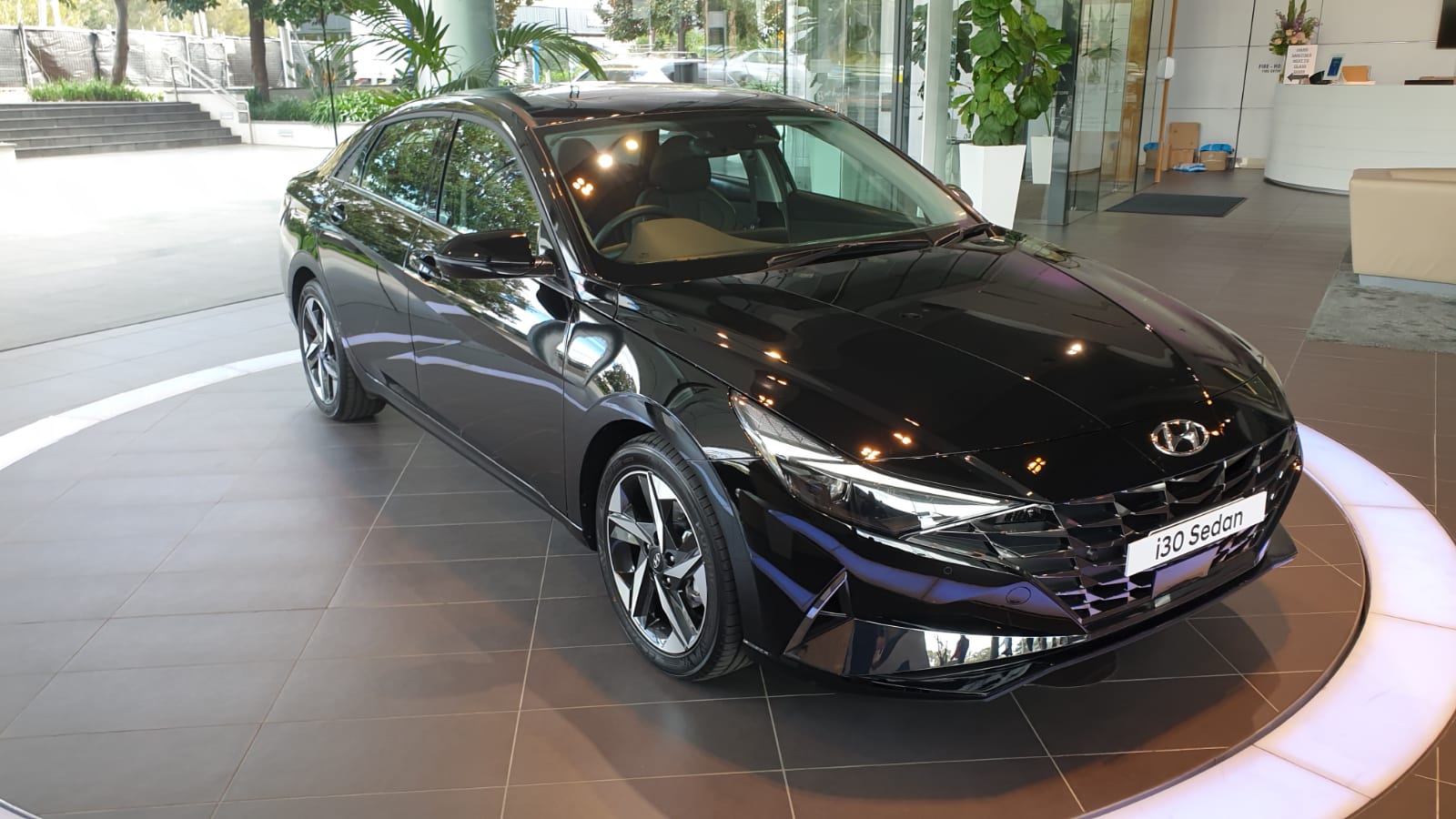
The i30 sedan will replicate the engine/transmission offerings of the hatch, with both a 2.0-litre naturally aspirated four-cylinder and 1.6-litre turbocharged four-cylinder petrol engines offered within a range that’s yet to be locked down.
Though it’s yet to be confirmed, an N-Line version of the i30 Sedan is all but a certainty to join the lineup alongside the hatch version.
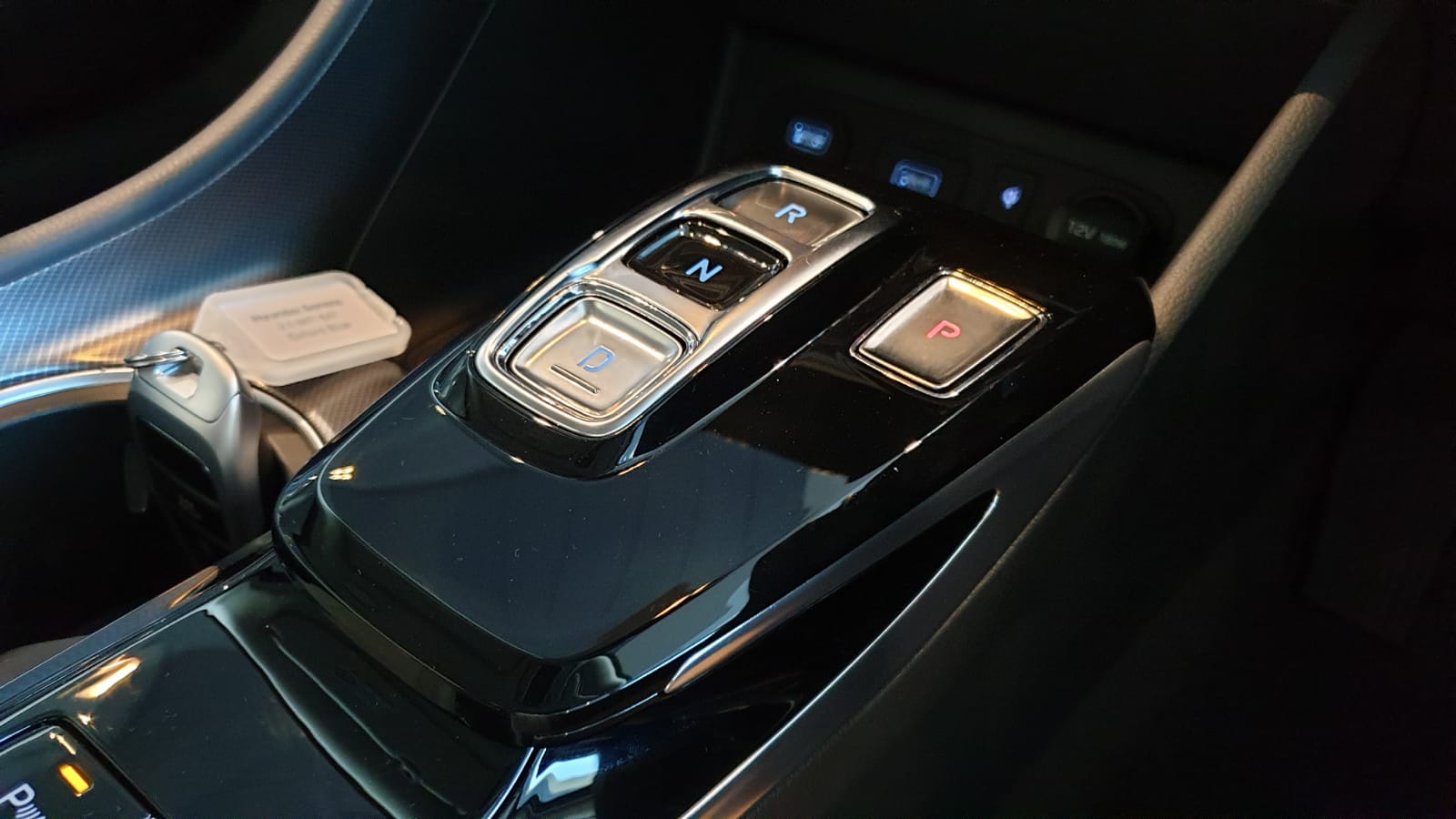
A pair of 10.25-inch digital screens for the dash and multimedia systems wrap around the driver, while a low-slung driver’s seat and central spar provide a cocooned space.
Rear passenger room in the i30 sedan – which has a longer wheelbase than the hatch – is greater than expected, too, with a scalloped headlining to eke out a few more crucial millimetres, decent knee room and acceptable toe room.
Despite a similar silhouette to the 130N fastback, the bootlid on the sedan gives the game away.
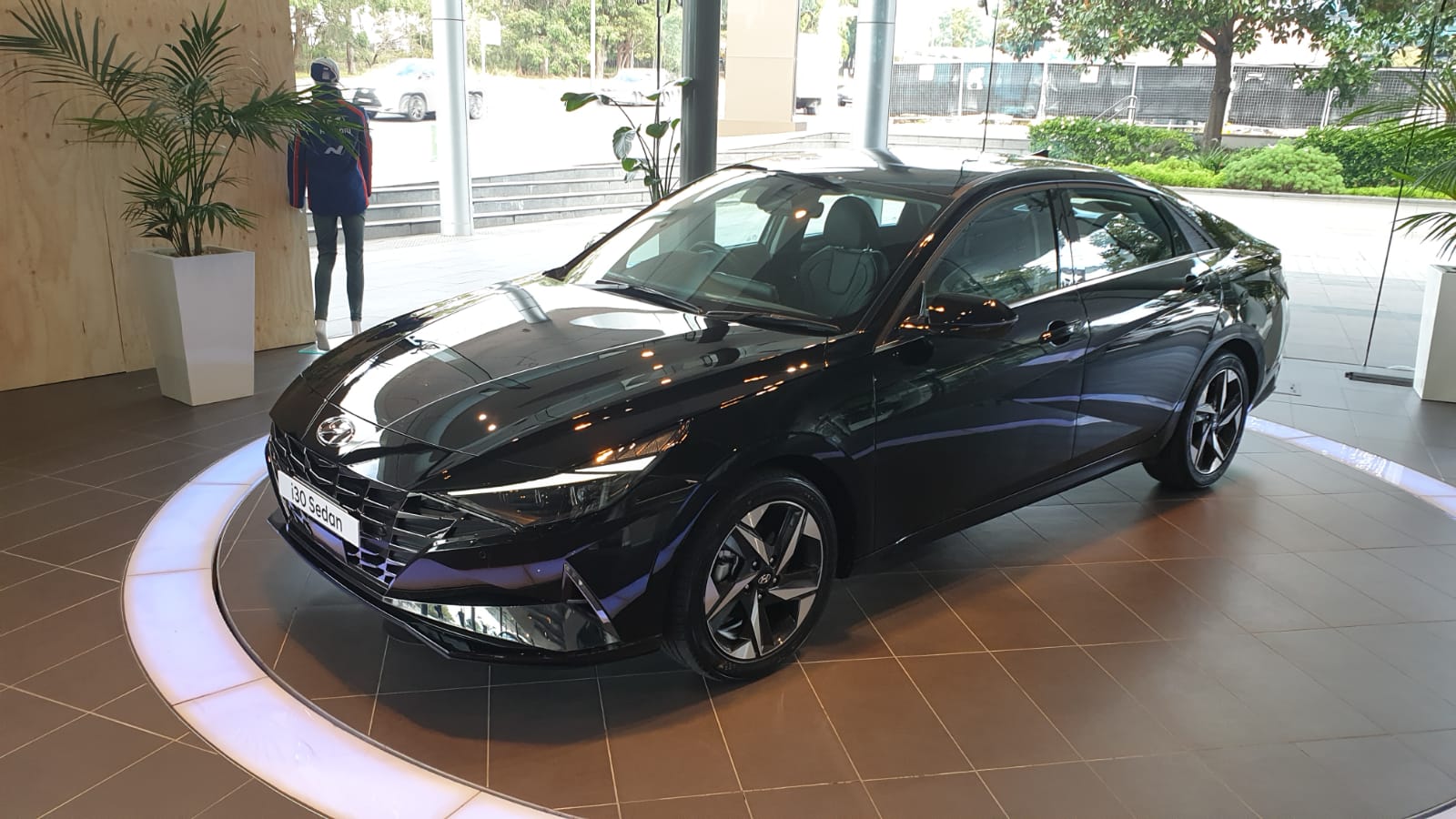
Although the cars presented weren’t final production versions, there is plenty of evidence to suggest that the two cars are indicative of Hyundai’s push upwards in terms of spec and presentation.
There’s more power on offer for the larger Sonata, with a new direct-injection 2.5-litre four-cylinder engine on offer.
It will come in turbo and non-turbo versions, housed under the bonnet of a handsome coupe-style sedan with a high level of technology, and which also rides top of a brand new platform.
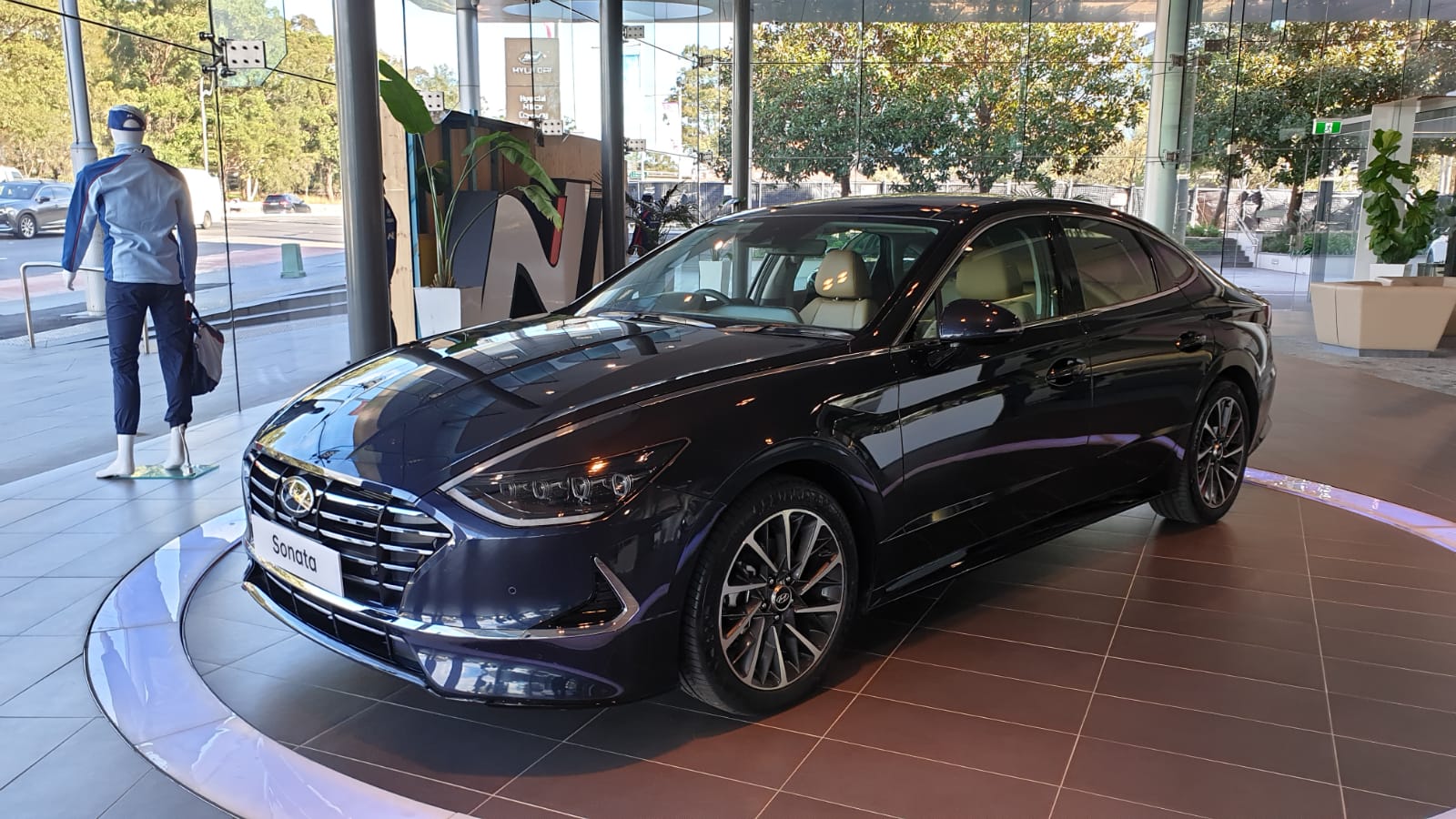
The Sonata’s LED lighting signatures and prominent grille also set the car apart, while a slightly different double-screen layout in the cabin is complemented by knurled metal details that serve to lift the cabin.
Details dropped on the new generation Sonata – known as the DN8 – in March 2019, revealing a new platform (below), loads of high-tech inclusions and a premium interior.
Hyundai says that both cars will come with advanced safety features as part of a Smart Sense upgrade, as well as scoring additional active safety measures over and above the basic set.
A camera- and radar-based AEB system will give the cars the ability to avoid cross-junction crashes, while an advanced blind-spot warning system will not only project an image onto the screens of select models, but will be able to steer away from the danger.
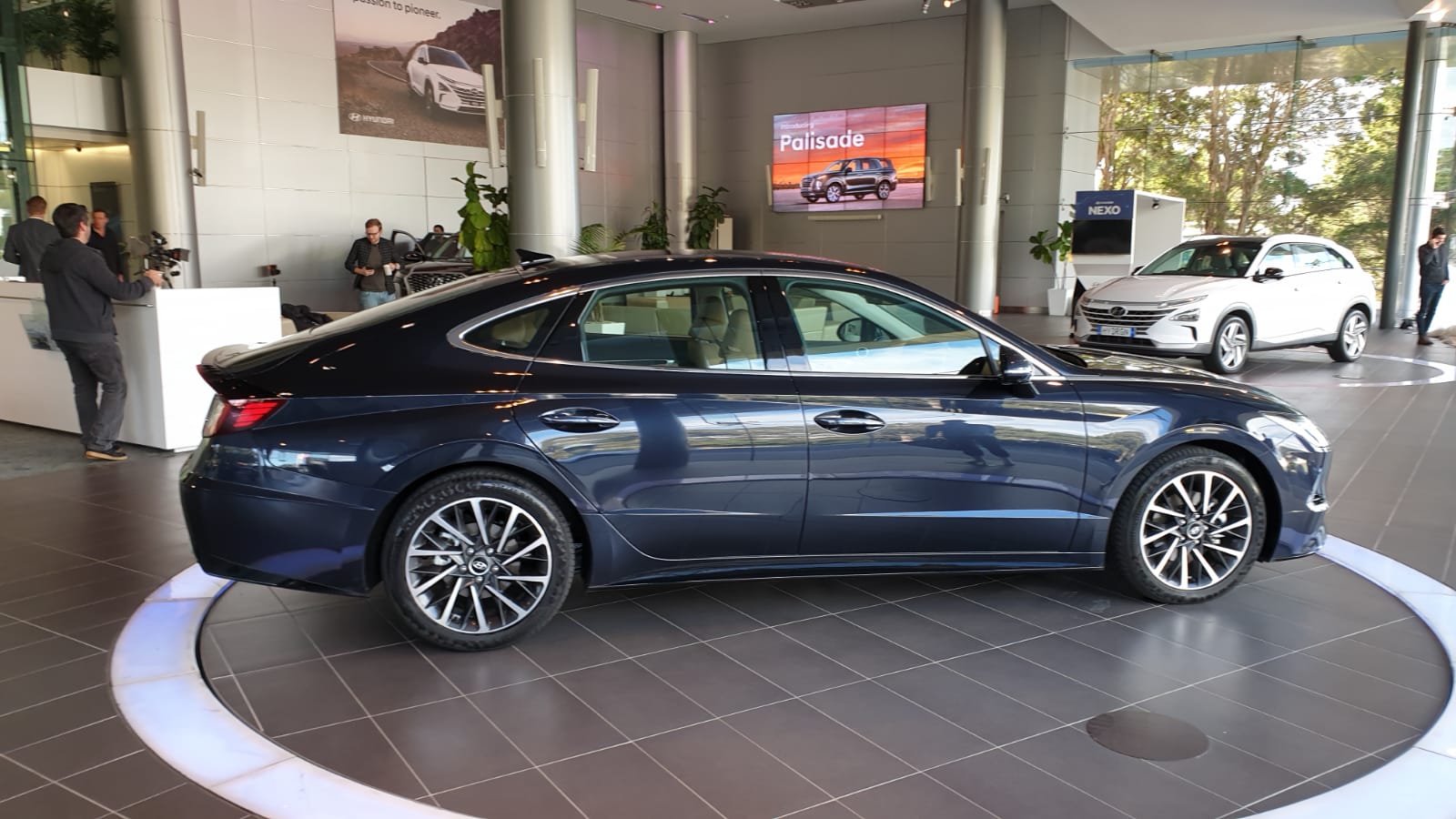
Radar-aided cruise control will also give the cars the ability to stop and start in traffic.
The Sonata will take on the all-dominant Toyota Camry, and though Hyundai wouldn’t be drawn on what the final line-up would look like, an entry-level car would likely be competitive on price with the cheapest Camry.
Like the i30 Sedan, an N-Line version of the Sonata is a likely starter for Australia, and will most likely use the turbocharged version of the new 2.5-litre four-cylinder engine.
It will also mark the debut of an eight-speed dual-clutch gearbox that will be used in the i30N.
Stay tuned to whichcar.com.au for more news on Hyundai’s huge rollout,. including the N and N-Line models as well as the Palisade SUV.
UPDATED – After the Federal Bureau of Investigation determined that the rope found hanging in Bubba Wallace’s garage was a garage door pull and not a noose as first suggested, NASCAR officials released a picture of the rope in question.
“Upon learning of and seeing the noose, our initial reaction was to protect our driver,” said NASCAR President Steve Phelps. “We’re living in a highly charged and emotional time. What we saw was a symbol of hate and was only present in one area of the garage and that was of the 43 car of Bubba Wallace. In hindsight, I should have used the word ‘alleged’ in our statement.
“As you can see from the photo, the noose was real, as was our concern for Bubba. With similar emotion, others across our industry and our media stood up to defend the NASCAR family. Our NASCAR family. Because they are part of the NASCAR family, too. We are proud to see so many stand up for what’s right.”
After Sunday’s discovery, NASCAR officials asked each track to sweep through respective garages. Across the 1,684 garage stalls at 29 tracks, NASCAR found only 11 total had a pull-down rope tied in a knot and only one noose — the one discovered last Sunday in Wallace’s garage stall.
UPDATED – the entire NASCAR paddock rallied around a clearly emotional Bubba Wallace prior to the start of the Geico 500, offering their support in the wake of the discovery of a noose in the Alabama local’s pit garage.
“Over the last several weekends, I have been overwhelmed by the support from people across the NASCAR industry including other dreams and team members in the garages,” Wallace said in a statement.
“Together, our sport has made a commitment to driving real change and championing a community that is accepting and welcoming of everyone. Nothing is more important and we will not be deterred by the reprehensible actions of those who seek to spread hate.”
—
NASCAR racer Darrell ‘Bubba’ Wallace has called the discovery of a noose in his pit bay in Talladega, Alabama, a “despicable act of racism and hatred”.
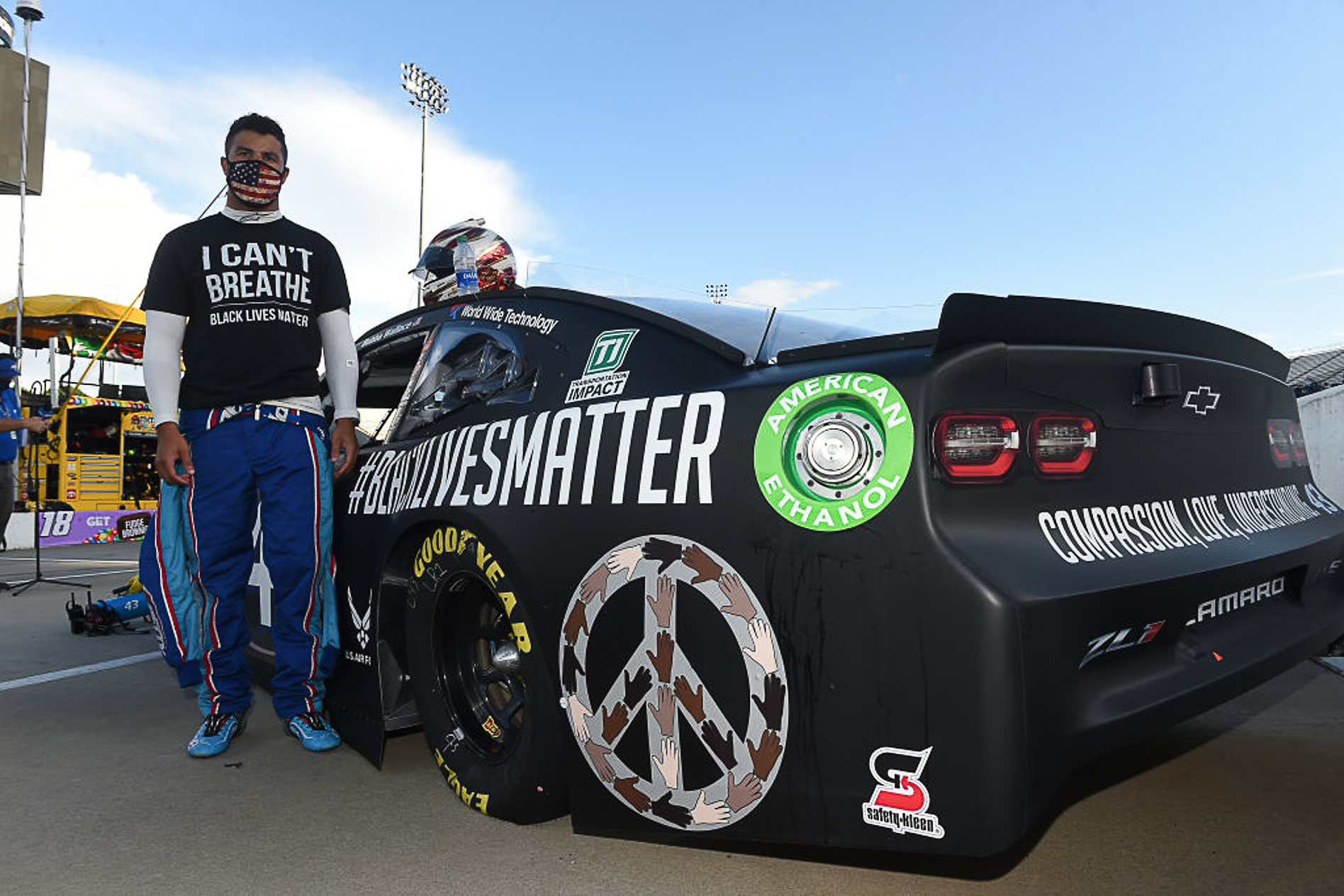
The sport’s only black competitor, Wallace has spoken out in favour of the recent US protests against police brutality and racial oppression, known as the Black Lives Matter movement.
Wallace, who raced recently in a #blacklivesmatter livery, was also instrumental in the decision by NASCAR’s organising body to ban the Confederate flag from all of its events.
“Today’s despicable act of racism and hatred leaves me incredibly saddened and serves as a painful reminder of how much further we have to go as a society and how persistent we must be in the fight against racism,” he said on Twitter.
NASCAR released its own statement, decrying the act.
“Late this afternoon, NASCAR was made aware that a noose was found in the garage stall of the 43 team,” read the statement. “We are angry and outraged, and cannot state strongly enough how seriously we take this heinous act. We have launched an immediate investigation, and will do everything we can to identify the person(s) responsible and eliminate them from the sport.
“As we have stated unequivocally, there is no place for racism in NASCAR, and this act only strengthens our resolve to make the sport open and welcoming to all.”
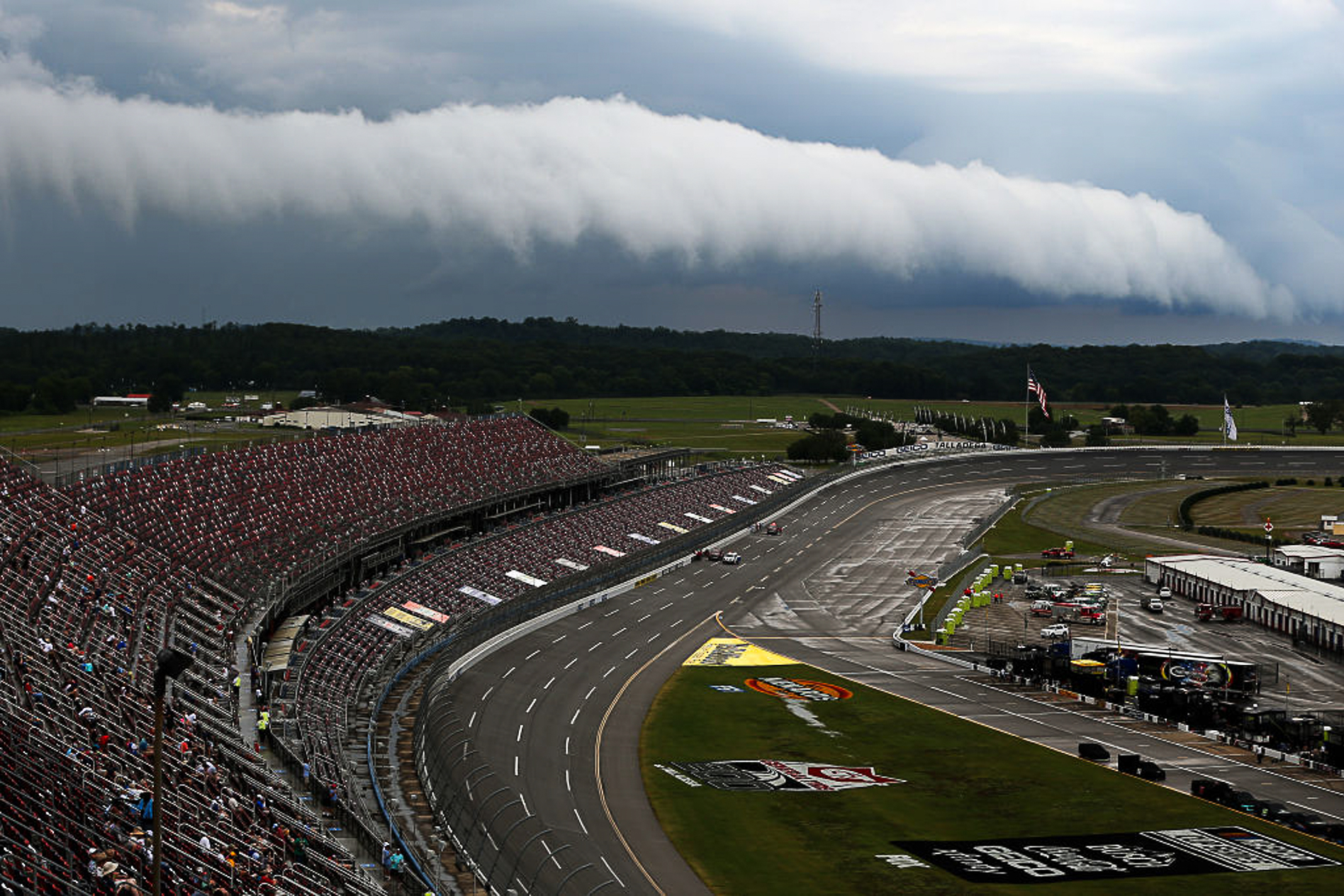
The NASCAR series is in the midst of a condensed 2020 championship that has been conducted in front of empty stands, but the Talladega race – which was delayed by rain – was the first event since COVID-19 restrictions were put in place to allow a small crowd to attend.
It’s also the first race since the ban on the Confederate flag was announced early in June. A 5km long convoy of protesters outside waved the divisive flag – which was used by southern Confederate armed forces in the American civil war – while a light plane displayed a flag and a sign that read ‘Defund NASCAR’; a reference to a movement towards defunding US police forces.
Wallace said earlier in the month that he wanted people to feel comfortable coming to a NASCAR race, and that the flag may have scared people away.
“To you, it might seem like heritage, but others see hate,” he told reporters. “We need to come together and meet in the middle and say, ‘you know what, if this bothers you, I don’t mind taking it down.’”

Meanwhile, Formula 1 world champion Lewis Hamilton has also spoken out against racism.
“This is not a new battle for me,” he said in a self-written article in the UK’s Sunday Times newspaper. “I’ve been fighting the stigma of racism throughout my racing career — from kids throwing things at me while karting, to being taunted by fans in black face at a 2007 grand prix, one of my first Formula One races.”
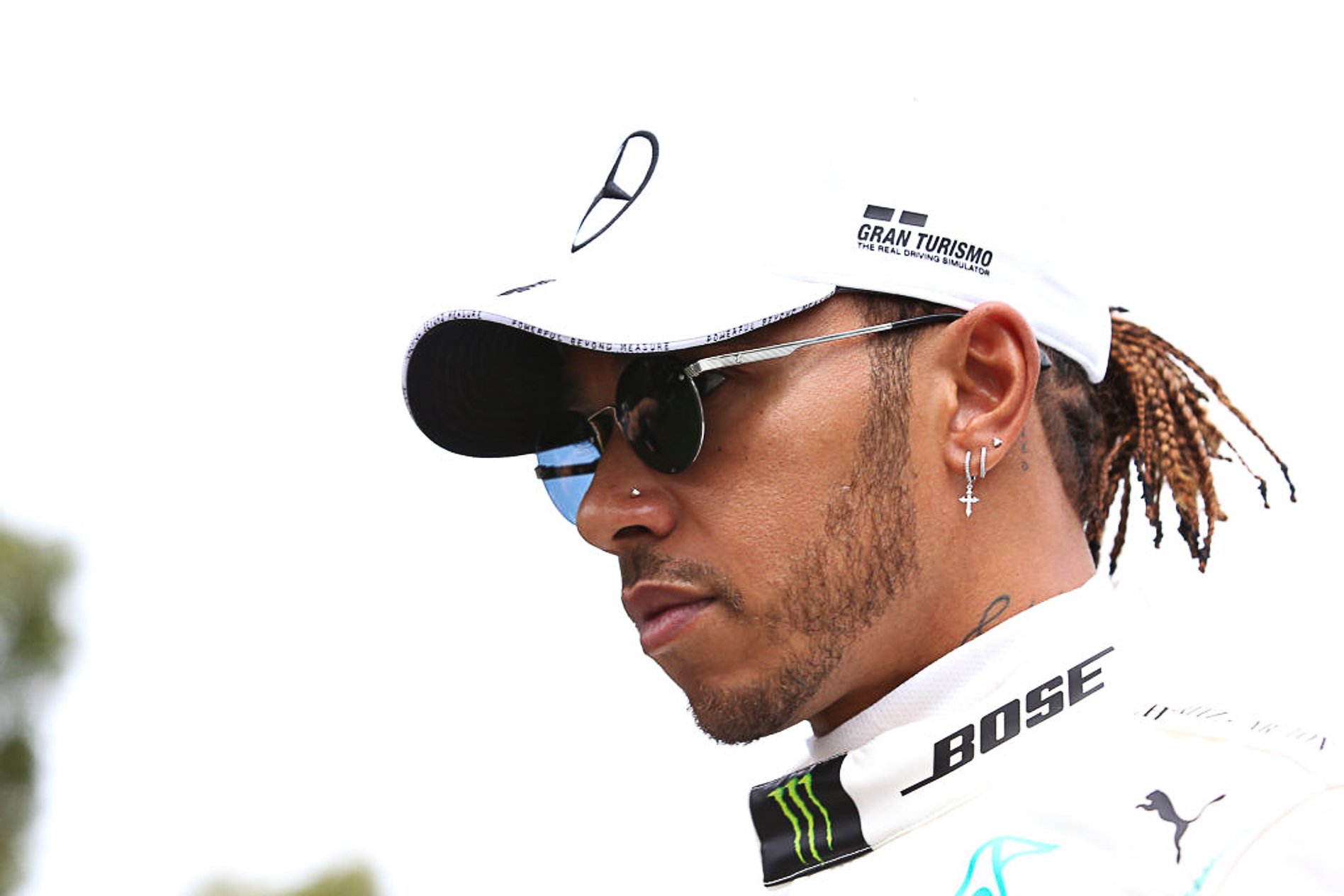
Hamilton (above) has founded a commission in his name, working with the Royal Academy of Engineering to create a research partnership to use motorsport as a vehicle to engage more young people from black backgrounds with Science, Technology, Engineering and Mathematics (STEM) subjects.
“When I look back in 20 years, I want to see the sport that gave a shy, working-class black kid from Stevenage so much opportunity, become as diverse as the complex and multicultural world we live in,” he wrote.
Following our conversation and excitement surrounding the remake of the cult classic film C’etait Un Rendezvous, the WhichCar Weekly team assemble to review the Grand Rendezvous homage now that it’s out in the open.
Did director Claude Lelouch expertly recreate the magic of the original? Was the use of a Ferrari this time around adding to the intensity? Was Monaco an even more stunning backdrop to this feat of world class driving compared with Paris? You’ll have click play and listen in to find out.
Or: You could read Andy’s excellent review here.
Next up we turn the chat to another brand-funded car story with Aston Martin’s three-part promo to welcome its four-door Rapide. If you wanted an example of one of the worst and cripplingly unwatchable car flicks to ever muddy your screens, look no further.
Andy, Dan and returning WhichCar editor Tim pick apart this automotive abomination with all the mercy of a pride of hungry lions. Frankly it deserved nothing less.
But from just about the most shockingly bad car films, Tim introduces one of the very best car docos to have dropped in decades – and it’s about an Australian icon.
Brock – Over the Top looks at the life of one of Australia’s most loved but controversial motorsport figures, and the boys are suitably impressed. Out next month, the WCW team highlight what makes this story brilliant and no spoiler alert necessary
You can find WhichCar Weekly on all manner of podcast apps including iTunes and Podbean. Please rate, subscribe and leave a review!
And if you want yet more WhichCar action whether it be behind the scenes insights or the very latest from the automotive front line, follow the day-to-day happenings of the WhichCar team on Facebook, Twitter and Instagram @whichcar
Listened to or watched the WhichCar weekly podcast? Help us out!
- Leave a note in the comment section below
- Leave a review on Apple Podcasts/iTunes
- Subscribe to our podcast
