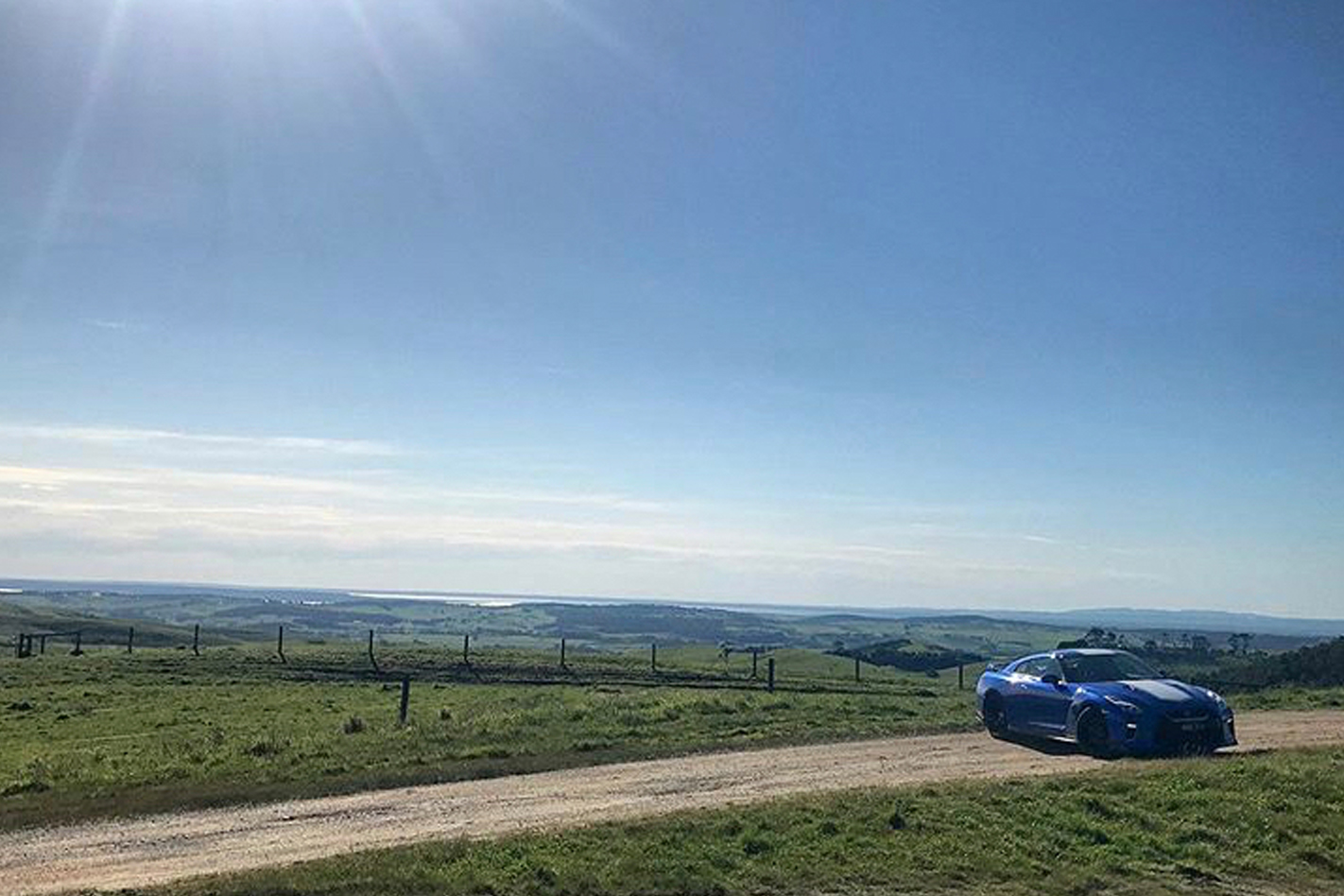
Despite the infrastructure, framework and technology available for quite some time now, car manufacturers have been hesitant to offer the option of buying their cars online.
At a time now when all businesses need to adapt to the new normal thanks to coronavirus, car salespeople are being caught out in the traditional dealership landscape and are making it increasingly difficult for consumers to get what they need.
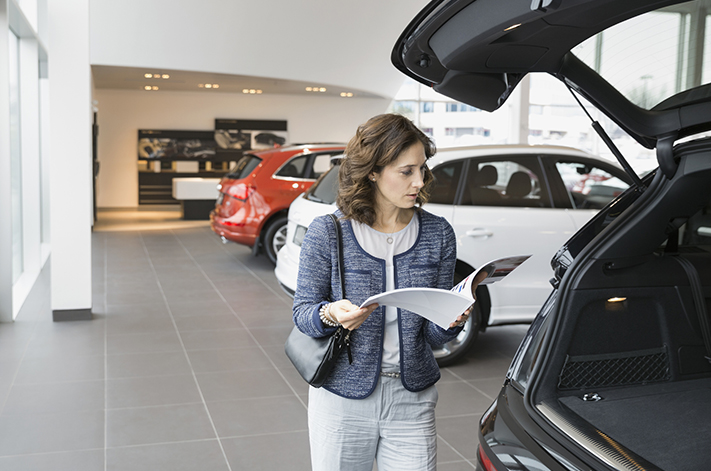
The situation is at odds with current trends which show right now could be a good opportunity to purchase a car, thanks to generous government tax write-offs, looming end of year sales and general discounting to combat a free falling economy in which new cars sales are severely affected.
Almost everything else is available to purchase online with buy-it-now convenience, ready to be dropped right at your doorstep – but why is it taking so long for cars to get this treatment?
Online car sales aren’t new
Some have dipped their toes into the online market space, like Subaru and Toyota, who offered the BRZ and Supra sports cars via online portals in 2012.
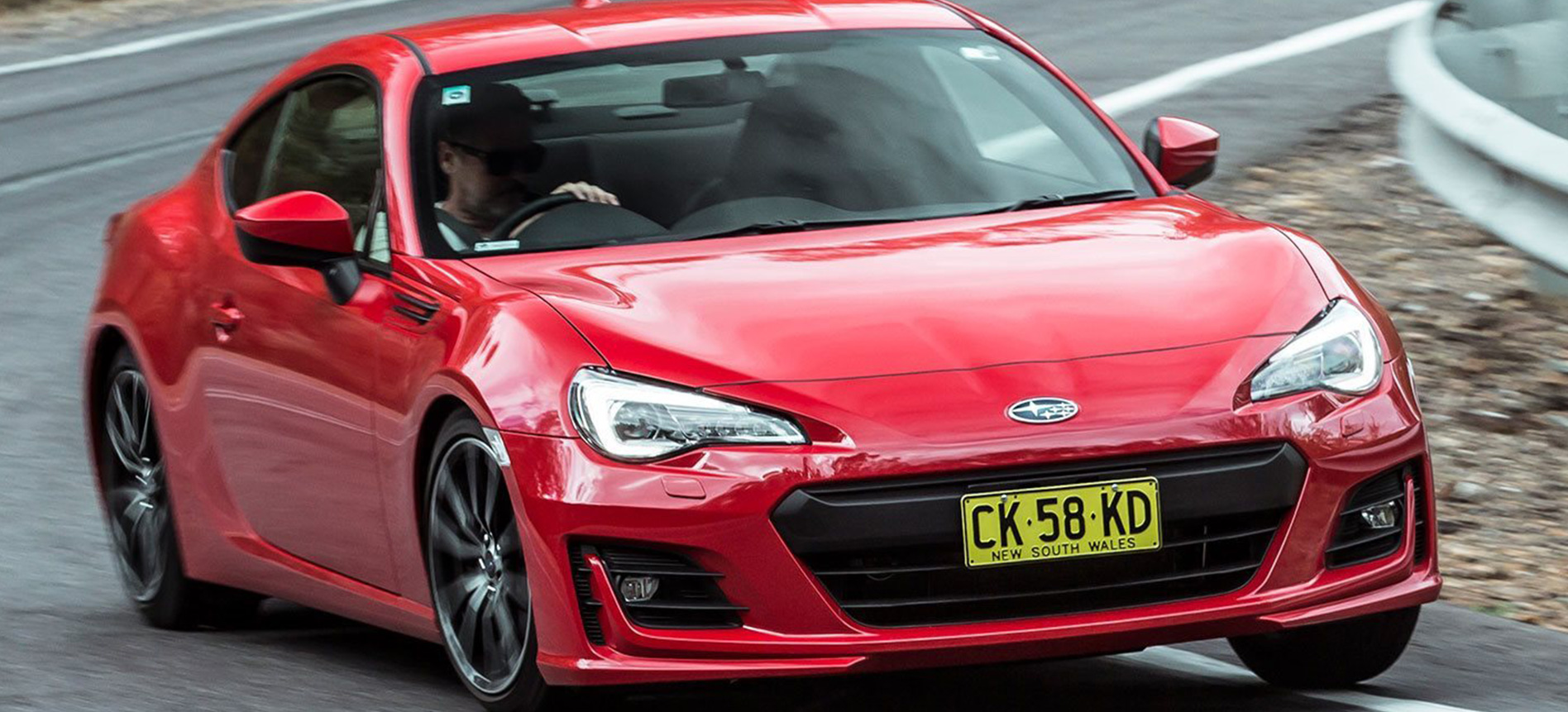
Subaru regards the initial online offering of 200 of its BRZ units as a resounding success, with Subaru Australia public relations manager David Rowley saying at the time the demand caused their website to crash.
“All information was available online, and we offered a national drive-away price on the car,” he explained.
“We also had a dedicated customer support base here to regularly update the customer.”
It was the kind of experiment that allowed Subaru to further expand its niche by offering to sell other cars through its website and introduce a number of shopping centre-based experience centres.
FCA is scrambled to offer online buying services to COVID-19-stricken Italy, where dealers are using Google Hangouts to meet with prospective customers as opposed to meeting them in traditional dealerships.
Customers could speak to dedicated sales consultants who can help them specify a new car from the comfort of their own home. They can receive quotes, understand financing options and even negotiate a sale over the videoconferencing software – although signing on the dotted line and paying must be done in person.
It mightn’t be the optimal solution as it still opens up face-to-face contact in a time where that sort of interaction must be curbed, but at least FCA is trying alternative ways to do things in Italy. It is said that the process will be expanded elsewhere in due course.
Volkswagen Australia has recently jumped on board too with what they’re calling ‘online ordering’. Customers are able to specify and leave a refundable $500 deposit for a car, whereby the designated dealer then makes contact within 48 hours to complete the purchase and source the car.
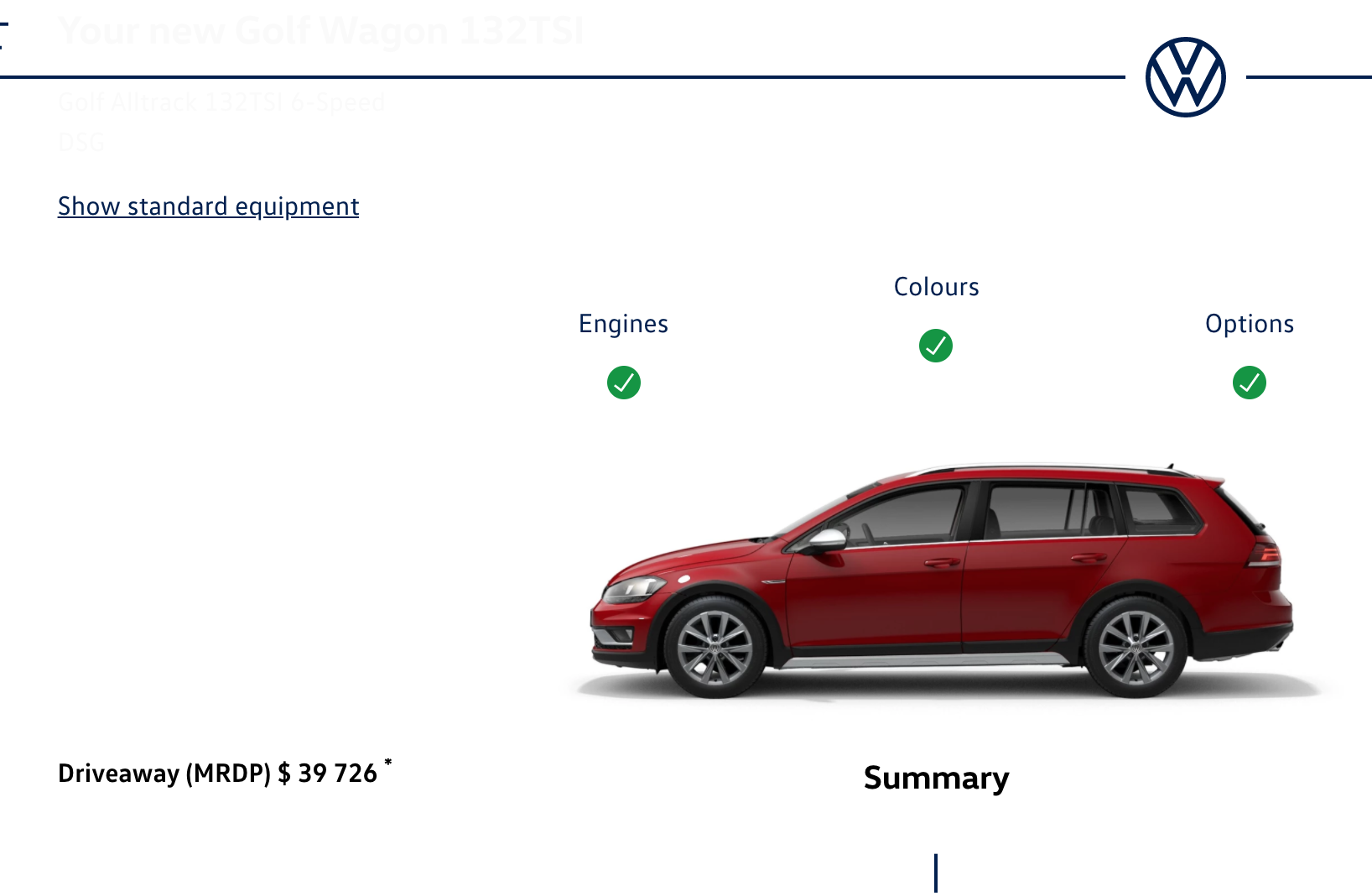
It’s not only the built-to-order stuff, too. A Stock Locator tool lists all new stock that Volkswagen has in its inventory, and deposits are able to be submitted for those cars.
They’ll even provide an online estimate of what they’re willing to pay for trade-ins.
After one month of its online sales portal, VW has reported 1000 extra leads that it ordinarily would have missed with the traditional dealership sales model.
Which car brand leads the way online?
Another brand that arguably has the greatest hold on futuristic online automotive sales is the brand that manufactures futuristic cars themselves – Tesla.
Tesla has used the internet to sell cars online ever since it first arrived in Australia, only intending its few physical dealerships for servicing, teaching and product handovers.
In fact, believe it or not, Tesla won’t actually sell you a car unless it’s online. Walk into a Tesla dealership and you’ll find interested parties being shown how to order cars using in-store computers or their own device.
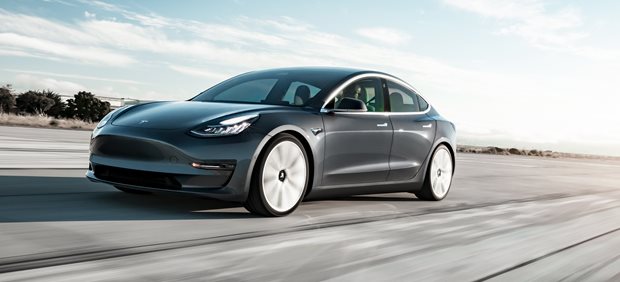
Forget about test drives and in-situ product learning for the moment, but customers are easily able to place an order for a car online – whether it be a demo model or one built from scratch – and only have to visit a physical dealership once the car arrives and pick it up.
Tesla was also quick to introduce ‘zero-touch’ delivery policies in the US where cars are left in a location of your choice for you to unlock using a Tesla phone app.
Paperwork is left inside the car for buyers to complete and send back with the included pre-paid envelope.
If combined with Tesla’s traditional online method of selling its cars, you could feasibly order, pay for and take delivery of a car without interacting with another person.
BMW has just revealed a new online sales portal called BMW Shop that can source current stock which shoppers can pick and reserve at driveaway prices. While you can’t order new from factory yet, a price quotation is given with an enquiry on local stocks, and a video chat can be set up to discuss the specifics.
Toyota dealerships have had the ability to sell online for over a year, a process that Toyota says is becoming increasingly popular.
“Looking at 2020 specifically, we have seen a slight increase … in online sales. This could be attributed to COVID-19, as our online platform enables our customers to purchase their next vehicle from the comfort of their home,” a Toyota spokesperson told WhichCar.
But are buyers ready for this kind of online buying process?
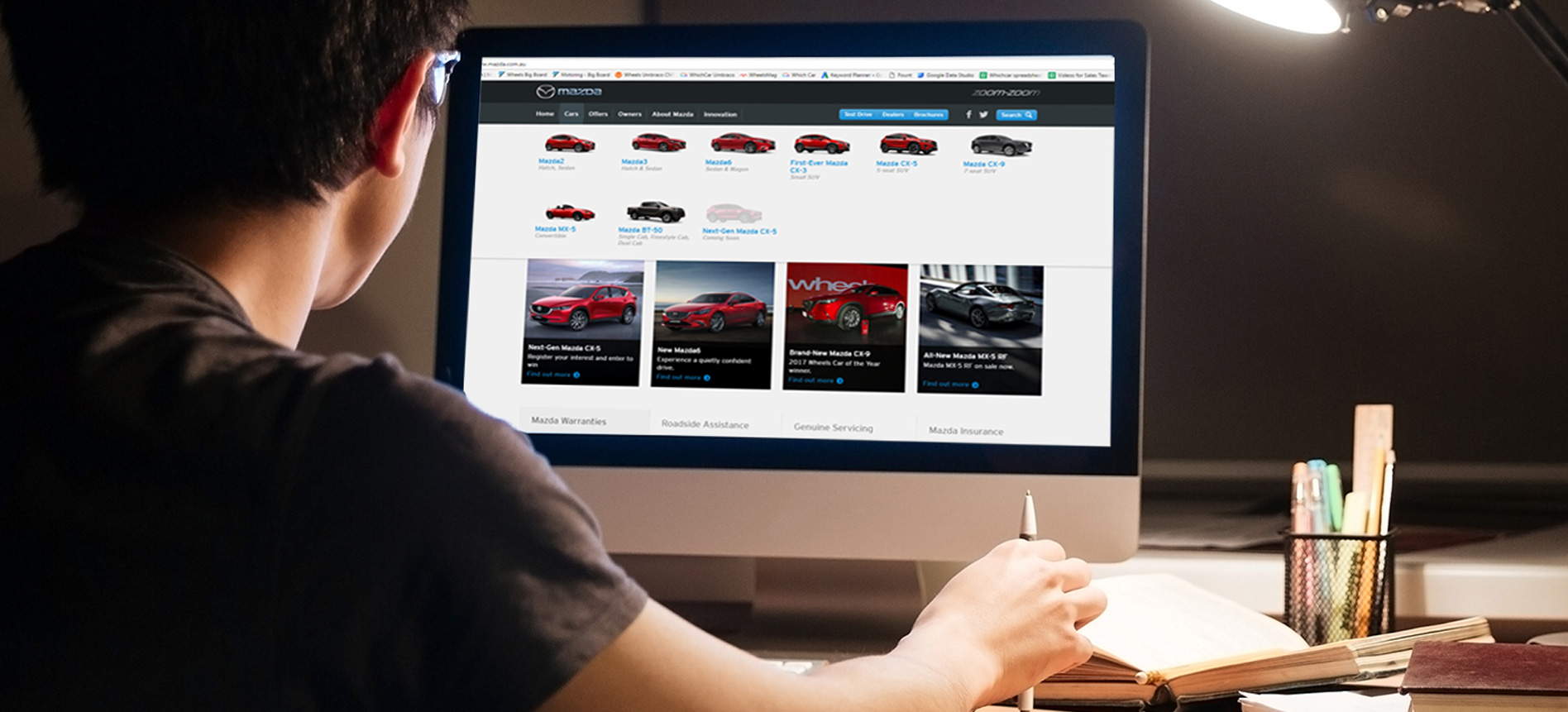
Surveys carried out over the past few years have shown that about a third of Australians are ready to buy a car from a virtual showroom sight unseen. But a recent survey by online financial brokers Savvy Finance suggests it will take some time to convince the remaining 70 percent.
According to the survey of 1001 people, 70 percent said they were ‘uncomfortable’ about home-facilitated test drives, virtual demonstrations, remote payments, and dealer delivery, with more than half of them saying they were “extremely uncomfortable’. Just 4.0 percent of the people surveyed said they were ‘extremely comfortable’ with the idea.
“It seems we’re not quite there yet when it comes to buying big assets like cars online,” said Savvy’s managing director. Bill Tsouvalas. “We don’t want to buy a car sight-unseen, but we are still in the market for cars and vehicles in general.
Tsouvalas says that hesitancy to purchase a car online has contributed to Covid-19 having a bigger impact on vehicle sales in 2020 than it needed to.“Work From Home doesn’t seem to have made much of a dent in consumer sentiment – but the fact many aren’t prepared to take a leap of electronic faith has.”
According to Toyota the feedback from buyers who have taken the leap has been “overwhelmingly positive” for both the online experience and the in-store pickup.
It’s a process that worked out for the Tesla Owner’s club president Mark Tipping who ordered his Model S P85D online more than five years ago.
“I had no one pressuring me, which was what I liked most” he told WhichCar. Other positives Mark notes was the fact “that the price was the price, everyone gets the same deal which is absolutely transparent.”
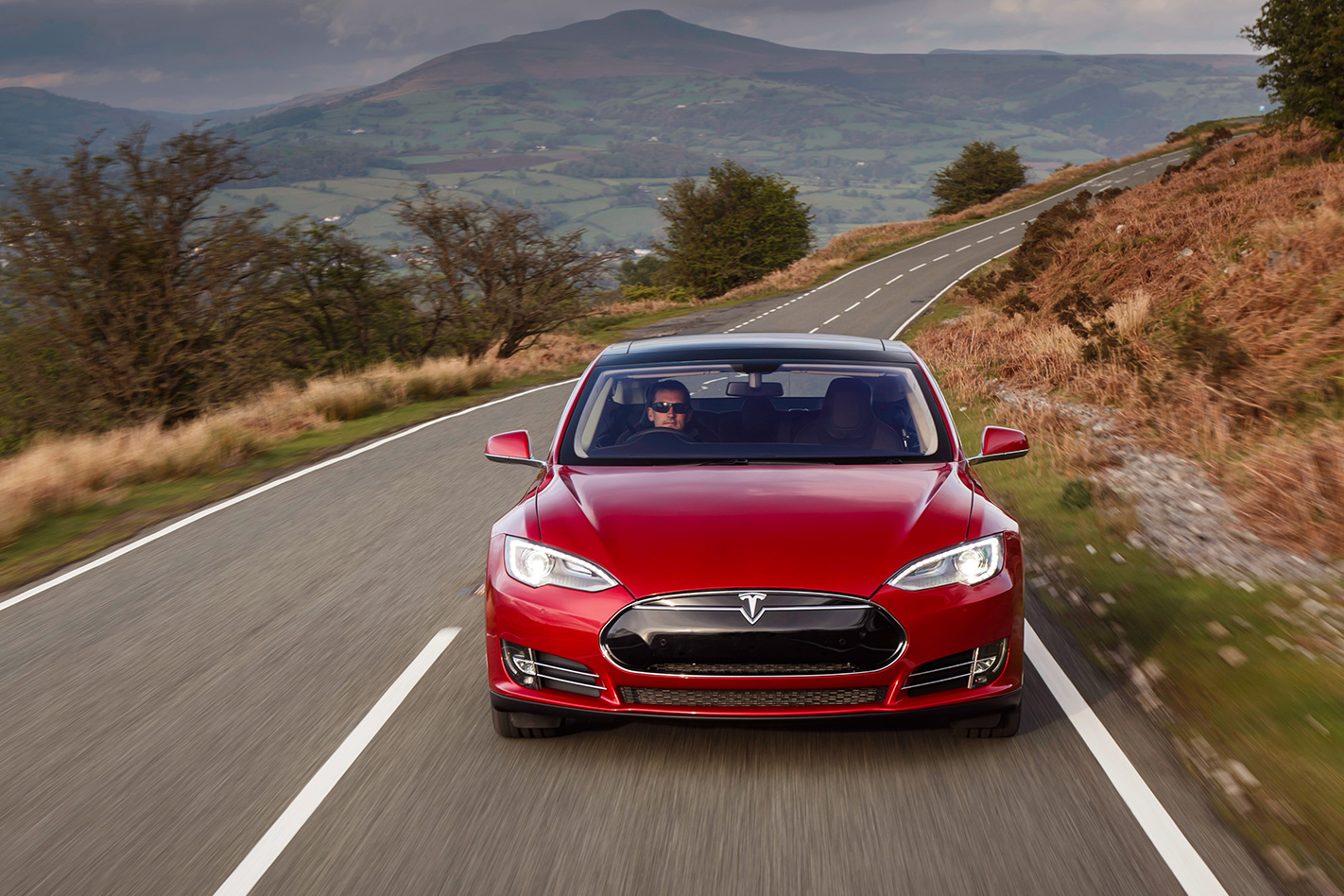
“A product specialist was on hand if I needed updates and I called up mid-way through the build process to check-in, but the overall experience was refreshingly easy.”
When asked if the same process could be adopted by other manufacturers, Mark wasn’t as enthusiastic. “It’ll be a challenge to others who might have to introduce a hybrid system (online and in-person) to keep all parties happy,” he said.
“The customer also may not be ready for it so there’ll have to be a huge amount of marketing around it too.”
Car buyers mightn’t have any other choice but to buy their cars online in the near future. Social distancing measures are preventing more and more businesses from operating day-to-day, and if more restrictions are on the way it’s likely dealerships themselves will have to shut up shop.

Of course, there are hurdles to overcome before we all jump on board with buying online. For example, there are those who value the process of haggling, the signing of paperwork and how is the specific value of a trade-in determined? That said, those hurdles aren’t insurmountable.
For the time being, if manufacturers can start introducing a complementary online method to a traditional dealership sales model that may allow some customers to start thinking again about buying a car during a time in which that may be the furthest thing from their mind.
Melbourne and Sydney will follow the lead of major European centres by allocating road lanes to bicycle traffic.
Some 12km of additional cycle paths will be created in Melbourne’s CBD, which will, in turn, allow for wider footpaths in key urban areas as the state – and the rest of Australia – moves towards a loosening of COVID-19 lockdown rules.
Sydney will follow suit with 10km of new bike lanes.
The lanes will not be built from scratch; rather, they will be created by blocking on-street parking and turning them into bike paths.
It’s a similar route to the one being taken in cities like Paris, Milan, Berlin and Brussels, which have all rolled out measures to improve access for bike use in the wake of the coronavirus pandemic sweeping the world.
Melbourne’s Lord Mayor and noted cycle commuting advocate Sally Capp (below) – who has already committed to developing some 44km of extra cycling lanes over the next four years – said the city has an obligation to make more space for pedestrians.
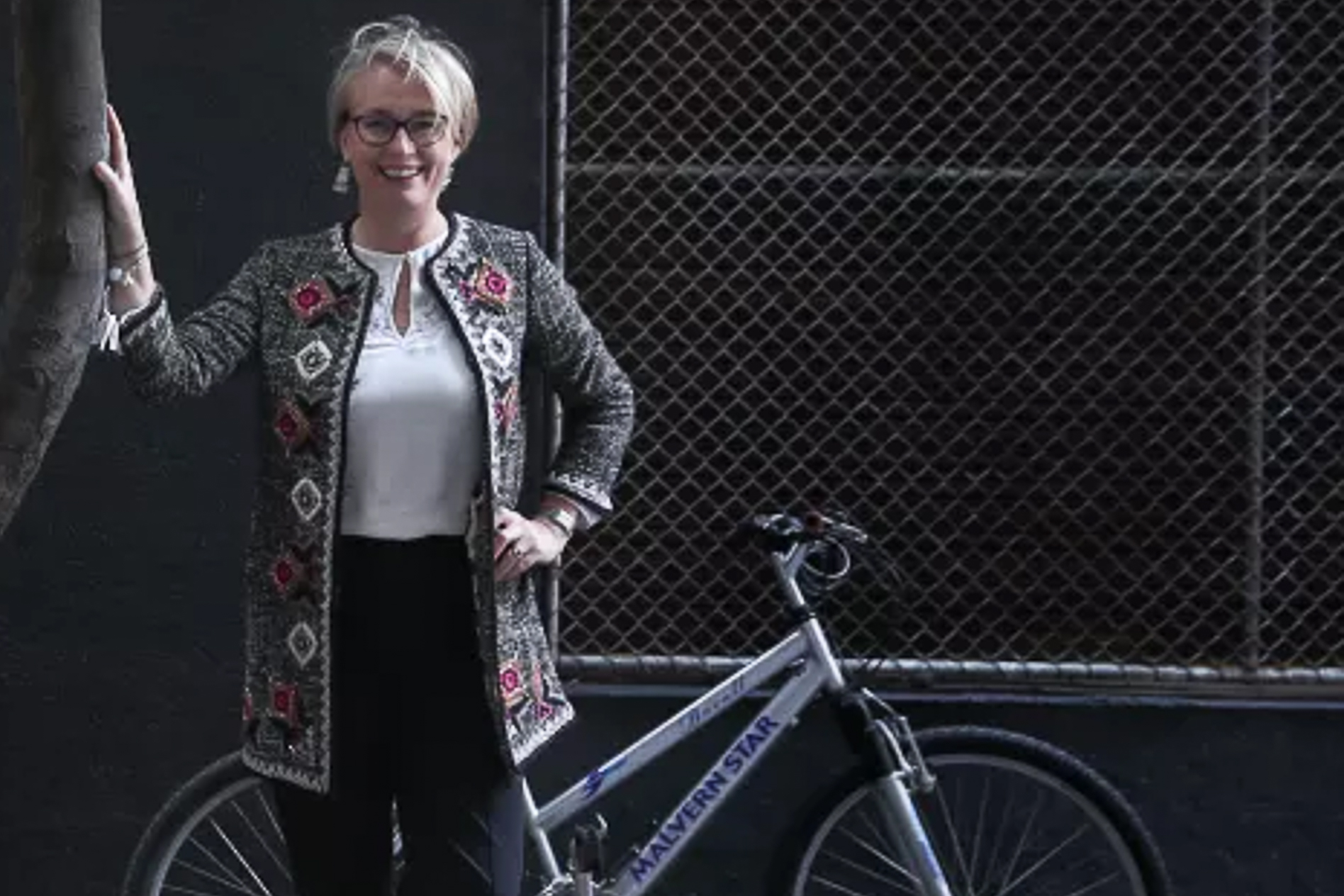
“Increasing pavements around the city will involve our need to take back some of our on-street parking to accommodate wider footpaths and bike lanes,” she said.
Capp is also calling for businesses to consider staggering start and finish times for employees to reduce congestion in peak periods as the economy ramps back up.
The move comes as Melbournites swap cars for pushies in droves, with car usage down by 89 per cent last month and bike usage up by more than 200 per cent in April when compared with November last year.
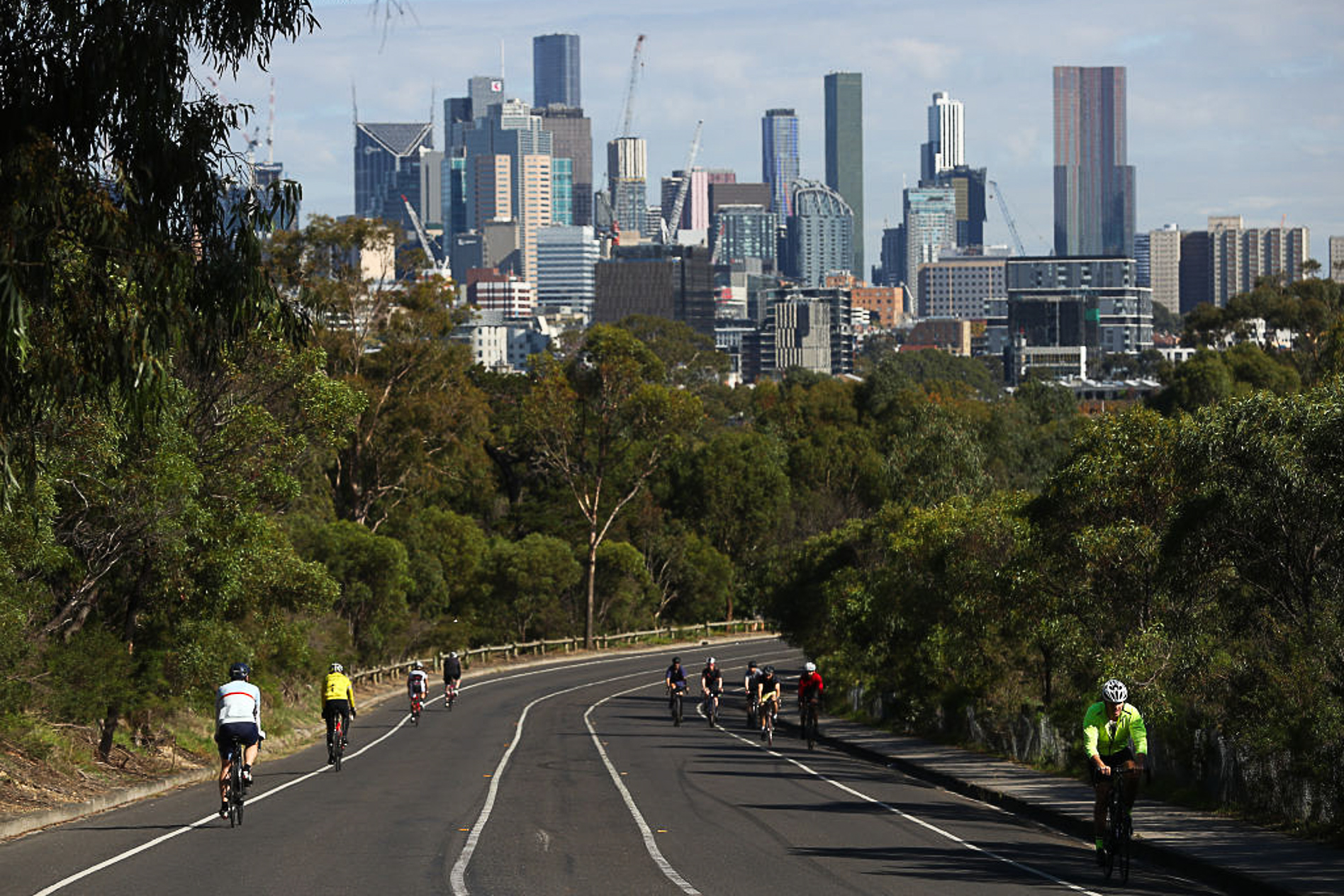
Pedestrian traffic is also up, as people swap work shoes for sneakers to exercise during the State of Emergency restrictions that will only lift in Victoria on May 11.
Shared-use zones are also being proposed for Melbourne’s network of ‘Little’ lanes, while a 30km/h speed limit has also been proposed.
While the advent of the novel coronavirus COVID-19 has changed people’s daily habits – public transport and ride-share use is also hugely down, while the aviation industry has all but stopped – Melbourne has been actively pursuing a pro-cycling makeover of its transport network, in line with its Transport Strategy 2030 white paper.
Meanwhile, Sydney has announced a similar restructuring of its cycleways, with Lord Mayor Clover Moore announcing that the city would add just over 10km of new cycleways on Pitt Street north in the central business district, along Moore Park Road towards Bondi, on Pyrmont Bridge Road in Glebe, Henderson Road in Eveleigh, and Sydney Park Road and Dunning Avenue in Rosebery.
“We’re also developing plans to accommodate cycleways on Oxford Street, King Street in Newtown, and King Street, College Street and Castlereagh Street in the CBD,” said Moore in a statement.
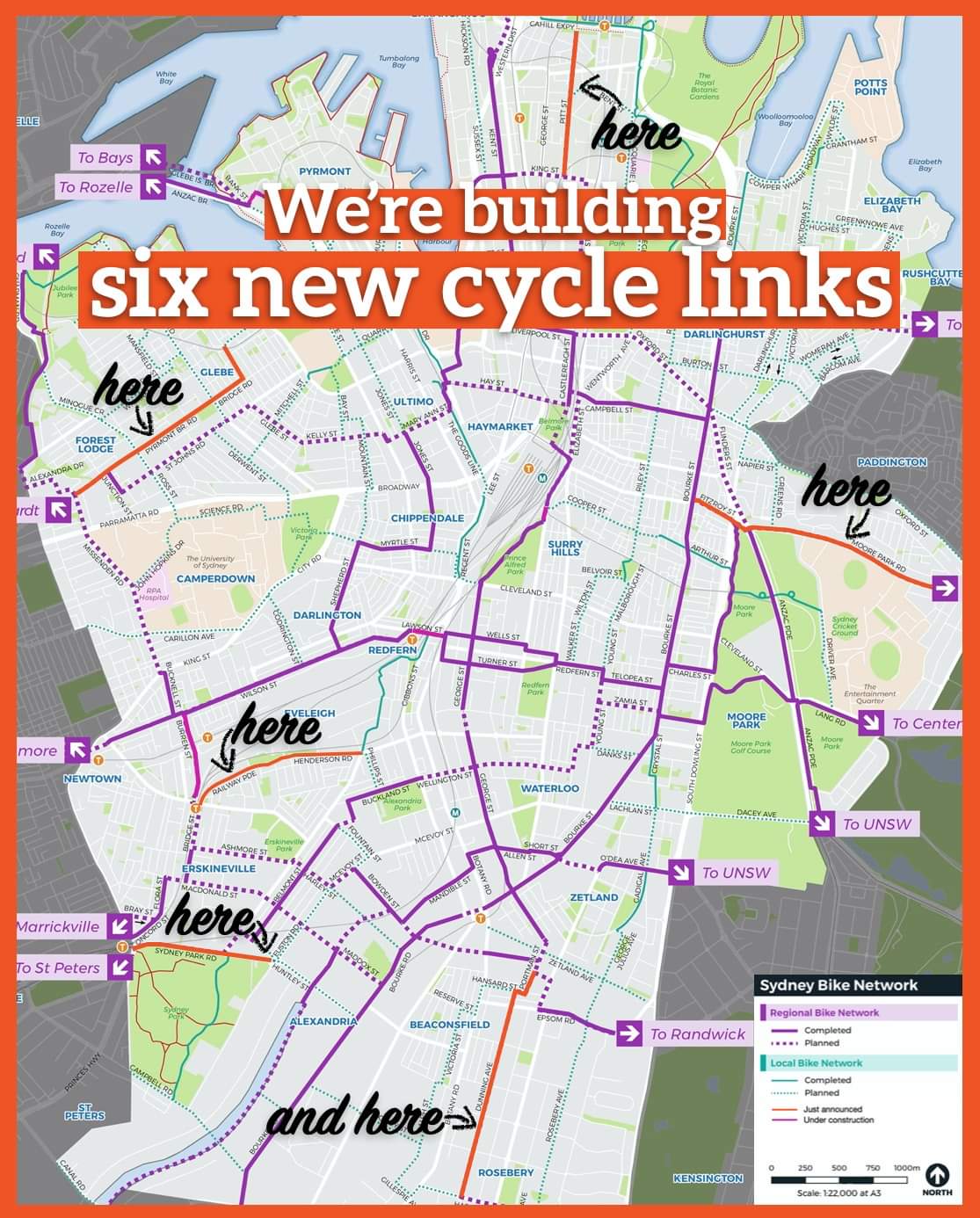
NSW transport minister Andrew Constance said the state government would contribute $4 million to build the cycleways, which may remain in place after the COVID-19 restrictions around social distancing are lifted.
As is the case with Melbourne, existing roads will be converted into cycle lanes using a combination of new barriers, line markings and lane dividers, which will impact on both vehicular traffic and parking.
Denmark isn’t usually the nation that comes to mind when Scananavian supercars are the topic, but Sweden’s Koenigsegg actually does have a rival, albeit relatively indirect, over the Øresund bridge. Zenvo’s cars might not quite be on par with the likes of the wicked Gemera in terms of its blend of green tech and mega mumbo, but the newest evolution of the €1.45 million (AUD$2.42m) Zenvo TSR-S has properly grabbed our attention.
Rewind approximately two years, and the TSR-S was first shown off at the Geneva Motors Show, drawing many in with a wing more wicked than one you’d find in one of the Colonel’s buckets. The ‘centripetal’ rear wing was so unusual, the car was reportedly flagged to pit mid-lap at Spa because the track officials thought the car was broken and didn’t want its wing to come off and become a hazard.

The wing is more than just a gimmick, it works constantly to maximise downforce in various ways. Primarily, it adjusts the angle of its blade in a similar manner to an F1 car’s DRS, based on speed to maximise downforce and grip rather than just being fixed to perform best at a chosen speed. It also acts as an airbrake using the same angling.
Cornering is where the wing’s mechanism really flexes its flair. Upon turn-in, the wing’s outside end will lower, while the inside raises, pivoting on a mount in the centre of the wing. The angle of the wing creates not only the ‘traditional’ downforce but focuses it on helping the car find more grip on the inside of the corner, and therefore carry more speed.

But the wing, as intricate and innovative as it is, is not the new development that piqued our interest. Zenvo’s latest development in the TSR-S is more internal and has allowed engineers to make the car faster and more efficient.
The mid-mounted, 5.8-litre, twin-supercharged V8 of the Zenvo TSR-S, modified from an LS7 base to become a flat-plane monster is already impressive enough, and its 878kW peak at 8500rpm is unlikely to leave anyone wanting, but it’s actually the next step in the drivetrain hierarchy we’re most interested in right now.
Zenvo’s engineers have devised a type of hybrid system for what used to be a relatively standard 7-speed, race-style, ‘helical-cut’ dogleg gearbox. We say relatively only in terms of what it has been developed into. Even in its previous iteration, there was a two-mode system which allowed the driver to switch between a smoother (but slower) road setting, or a hardcore race setting.

In its road setting, the TSR-S’s transmission is electronically operated, as the engine speed and gearbox speed match to provide a smoother transition between cogs. But in its track mode, the gearbox becomes fully mechanical, brutally becoming what Zenvo has called “one of the fastest-shifting powertrains in existence.”
Now, there’s an extra layer of tech, with its hybrid system creating not only a boost to the gearbox itself, but also taking the role of reverse gear. With this, the engineers were able to add an eighth forward gear with the removal of reverse, and therefore gear the Zenvo TSR-S to reach 100km/h in just 2.8 seconds, placing it in the same league as the Lamborghini Aventador SVJ and the Ferrari 488 Pista. Not only that, Zenvo claims the 200km/h barrier is broken in just 6.8 seconds. That’s an entire second faster than the McLaren 720S, which left many amazed upon the announcement of its 7.8-second claim.
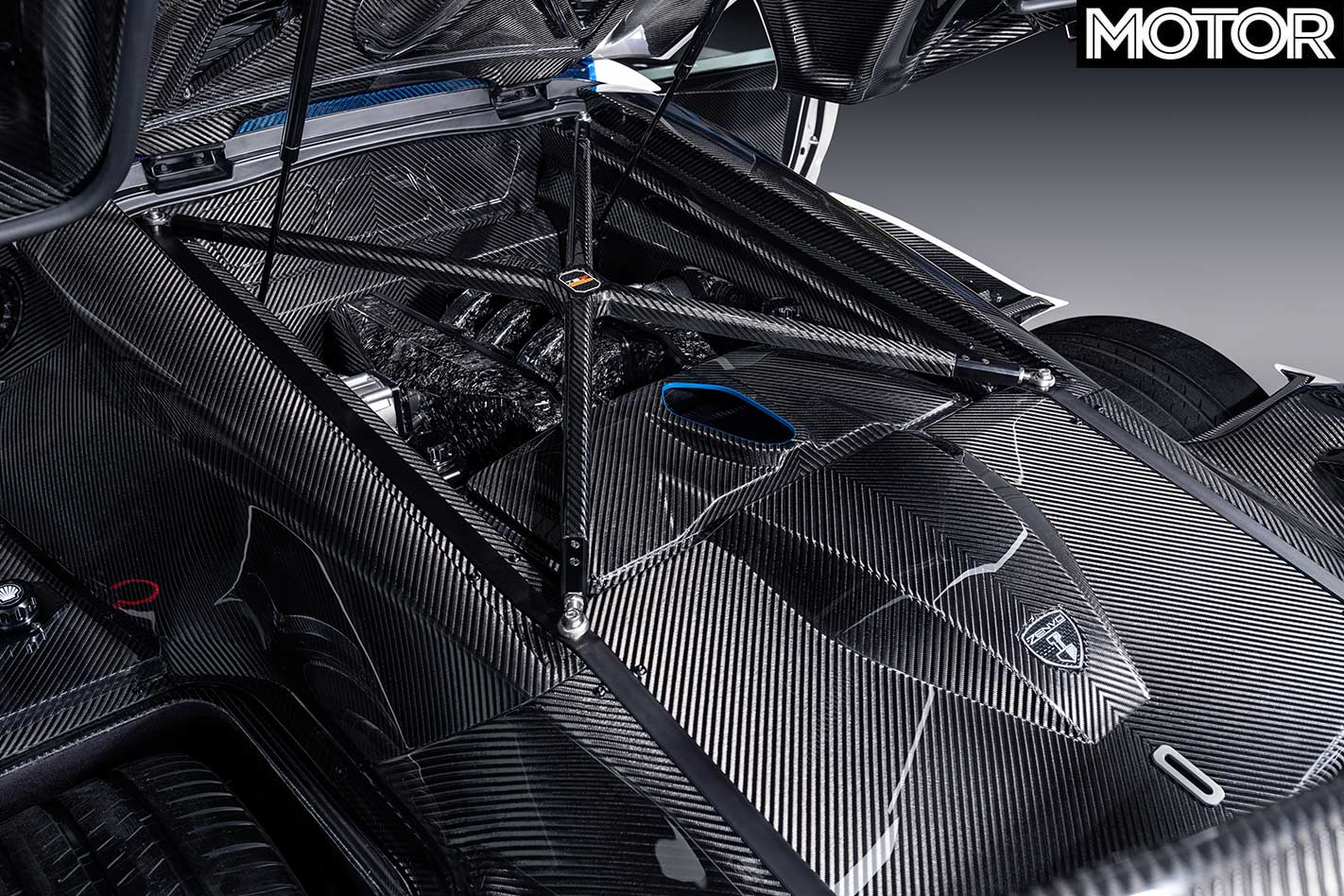
Finally, and important despite its relative simplicity, is one further upgrade made to the TSR-S. As a vehicle with a dry weight of just 1495kg in its most serious spec, keeping off the fat is important. To ensure that, ‘fragmented carbon’ wheels have been created to replace the aluminium versions, saving 15kg of unsprung weight. The carbon is cut and formed over the course of a week by two technicians… for each individual wheel. One car’s set takes almost a month to produce, all up.
WHO/WHAT IS ZENVO?
In 2007, Troels Vollertsen started a car company. More than just a bloke with a bit of cash, Vollertsen had actually worked in the automotive mechanical field before, and enlisted two others to run the design and business side of his new company, Zenvo. The name is a mashup of the end and beginning of Vollertsen’s family name, with the S swapped for a Z.

The niche company builds five TSR-S units per year, each wearing the company logo adorned with Thor’s hammer, at its factory in Præstø on Denmark’s largest island, Zealand – no relation to our Pacific neighbour.
Hit-and-giggle takes on a whole new meaning as 24 Australian sporting and media personalities take on Mt Panorama in a one-off Supercars Series race.
Although there is a distinct lack of female representation in the event, the event is a sensible extension of the iRacing-based online series that Supercars is using to connect with its fans during COVID-19 restrictions.
AFL players Jack Viney and Jarman Impey were early starters but have been forced to withdraw late due to their sport’s COVID-19 protocols imposed, although Richmond premiership winner Jack Riewoldt will still take part.
Riewoldt will use the #8 attached to him at the Tigers on a Ford Mustang with Balls & Bumpers branding – the name of the podcast he co-hosts with Supercars champion Scott McLaughlin.
BJR co-owner Brad Jones will use the CoolDrive scheme and #3 of his son Macauley; Eurbus Racing’s team manager – and noted swear bear – Barry Ryan and cricketer Brad Hodge will both race in Penrite Racing colours, while Craig Lowndes, MotoGP legend Mick Doohan and Dakar winner Toby Price will run in Red Bull warpaint.
Supercars commentator and former racer Neil Crompton will swap liveries, using the classic 2002 Green-Eyed Monster (below) in the opening race of the night before switching to a 1995 Coke Commodore design.
Among other liveries on show will be a BP Ultimate design for former Bathurst winner Steven Richards, a #51 All Blacks Mustang for Kiwi ace Greg Murphy, PIRTEK colours for former NRL star Nathan Hindmarsh and Adelaide Strikers colours for veteran cricketer Peter Siddle.
It’s not just the athletes – McLaren Racing chief Zak Brown will join the fray, while surfing legend Luke Egan and A-League footballist Daniel Bowles (below) will also sign into the iRacing-hosted event.
Seven-time Bathurst 1000 winner Craig Lowndes comes to racing after a bruising debut in the BP Supercars All Stars Eseries last week.
“Being part of the All Stars Eseries was an eye-opener, so looking forward to getting back to a track I know really well which is Bathurst,” Lowndes told Supercars.
“Racing against some old names I’ve had some great battles with, Neil Crompton being one of them.
“He was my teammate at one stage there, so looking forward to that.
“Mick Doohan and a few others like Toby Price, they’re completely out of their comfort zone, for me this is definitely out of my comfort zone so really looking forward to the challenge.”
Five-time Bathurst 1000 winner Richards will be another lining up for his sim racing debut.
Richards and Lowndes won the Supercheap Auto Bathurst 1000 together as co-drivers in 2015 and 2018 (below).
MotoX and SuperX Champion Chad Reed will compete from his home in the US, while Australian Olympic gold medalist sailor Tom Slingsby and Olympic silver medalist snowboarder Jarryd Hughes will join the grid.
Olympic silver and Commonwealth gold medalist John Steffensen will be hoping his experience in the Porsche Carrera Cup helps him at Mount Panorama in the virtual race.
A second All Blacks Rugby representative, Codie Taylor, will log in from New Zealand.
UK-based DJ Carl Cox, who performed at the 2019 Vodafone Gold Coast 600, will join in a Tickford Mustang, along with Matt de Groot from the popular Fitzy and Wippa Nova FM breakfast show.
Monday’s Celebrity Supercars Erace at Bathurst will begin at 7pm on Monday May 18.
The race will be broadcast live on Fox Sports, on Supercars’ Facebook page, Twitch and YouTube.
If you get a flutter of excitement at first glance of this intriguing new car as we did, try not to be too disappointed when you learn, even though it came close to setting a new standard in the electric car performance, it will never be offered as a production model.
When Dyson’s electric vehicle project was announced in early 2018 it looked as if a compelling Tesla rival might be entering the zero-emissions ring, but the ambitious plans to produce up to three models were shelved late in 2019 when the company’s founder Sir James Dyson declared it commercially unviable.
“Though we have tried very hard throughout the development process, we simply can no longer see a way to make it commercially viable,” Dyson told his staff in 2019.
“We have been through a serious process to find a buyer for the project which has, unfortunately, been unsuccessful so far.”
Now though, the company has revealed the prototype that came so close to advancing the electric vehicle cause – along with its eye-watering price.
The price of progress
In an exclusive chat with company boss and founder Dyson, the UK’s Sunday Times got the lowdown on the project, along with the first look at the prototype that would have joined the growing electric SUV movement.
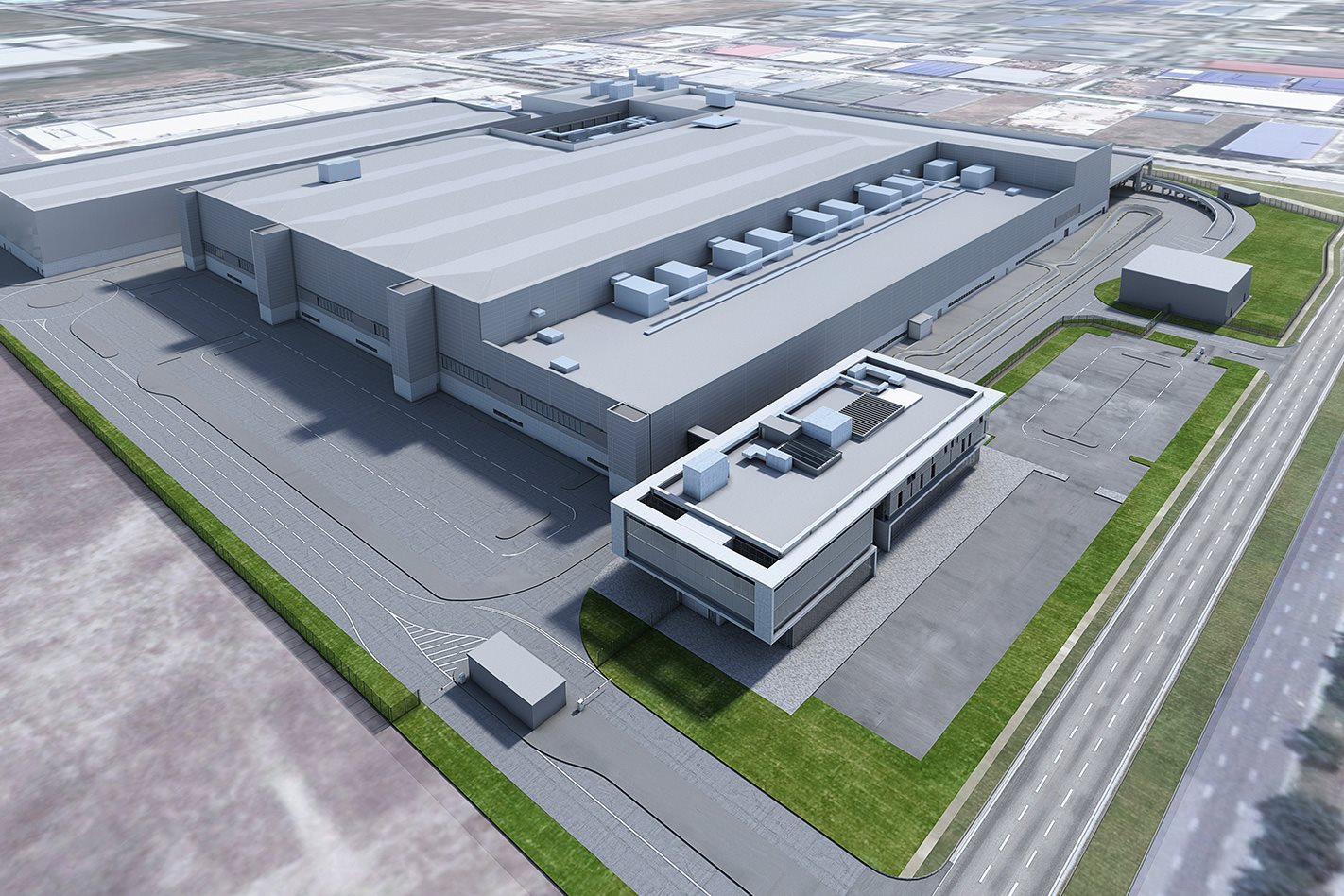
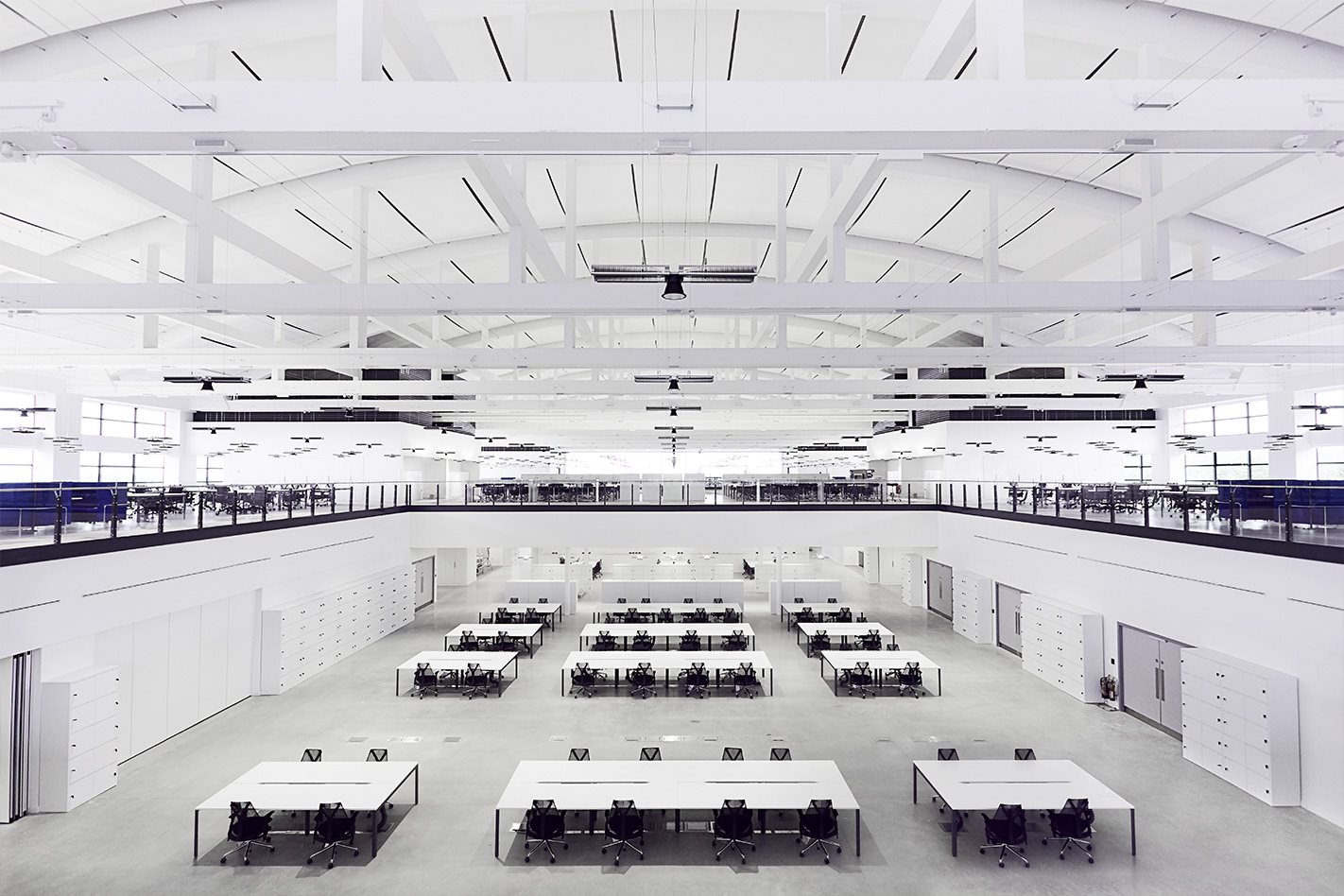
Most astonishingly, though, the British inventor revealed that funding the project to the point of producing a single prototype cost a staggering £500m (about A$939m).
You could argue plenty of other new car development costs exceed Dyson’s, but the key difference is that a production version will never result.
As soon as a new car’s design is signed off and the production version starts rolling off the production line and into showrooms, even in extremely exclusive and low-volume applications such as Bugatti and Koenigsegg, the development investment starts to return.
But in the case of Dyson’s stillborn, it won’t ever pay a penny back, which means this one-off driving prototype is the world’s most expensive car.
What died with the Dyson?
And that’s disappointing because Dyson detailed some of the car’s vital statistics and they rival if not exceed the best of the best in today’s EV car park.
Codenamed the N526, Dyson’s automotive foray used the lithium-ion battery technology that already resides at the core of the company’s cordless products, albeit on a much larger scale, bringing a range of up to 600 miles – just shy of the milestone 1000km mark.
That smashes by about double the total claimed kilometres per charge of all its would-be rivals including the Tesla Model X, Jaguar’s I Pace and the Mercedes EQC.
And Dyson says it would deliver that performance in the real world, at realistic speeds, under all conditions.
The secret to its Tesla-obliterating range lies in Dyson’s proprietary solid-state technology similar to the breakthrough recently announced by Samsung.
Performance figures were similarly aggressive, with the zero to 100km/h dash taking just 4.8 seconds and a top speed of 200km/h thanks to an electric motor output of about 400kW and 650Nm.
MORE Could Tesla’s new battery tech break the ICE/EV divide for good?
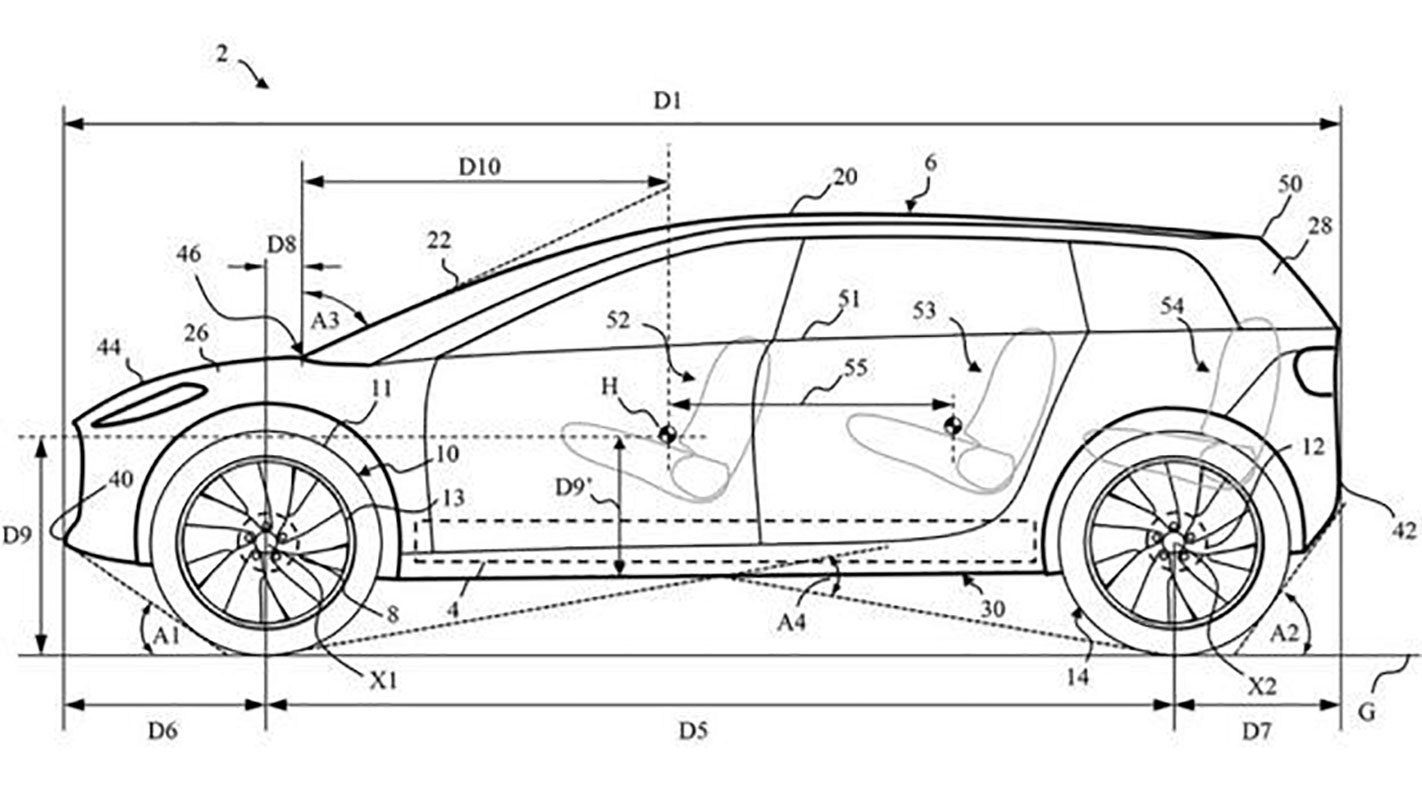
Twin motors presumably offered all-wheel-drive capability and allowed enough cabin space to seat up to seven people, despite its low roofline and a windscreen rake steeper than any Ferrari, said Dyson.
An image of the N526’s interior reveals a cabin that’s somewhere between 1960s Citroen interior and USS Enterprise bridge, offering a holographic head-up display and ultra-minimalist styling.
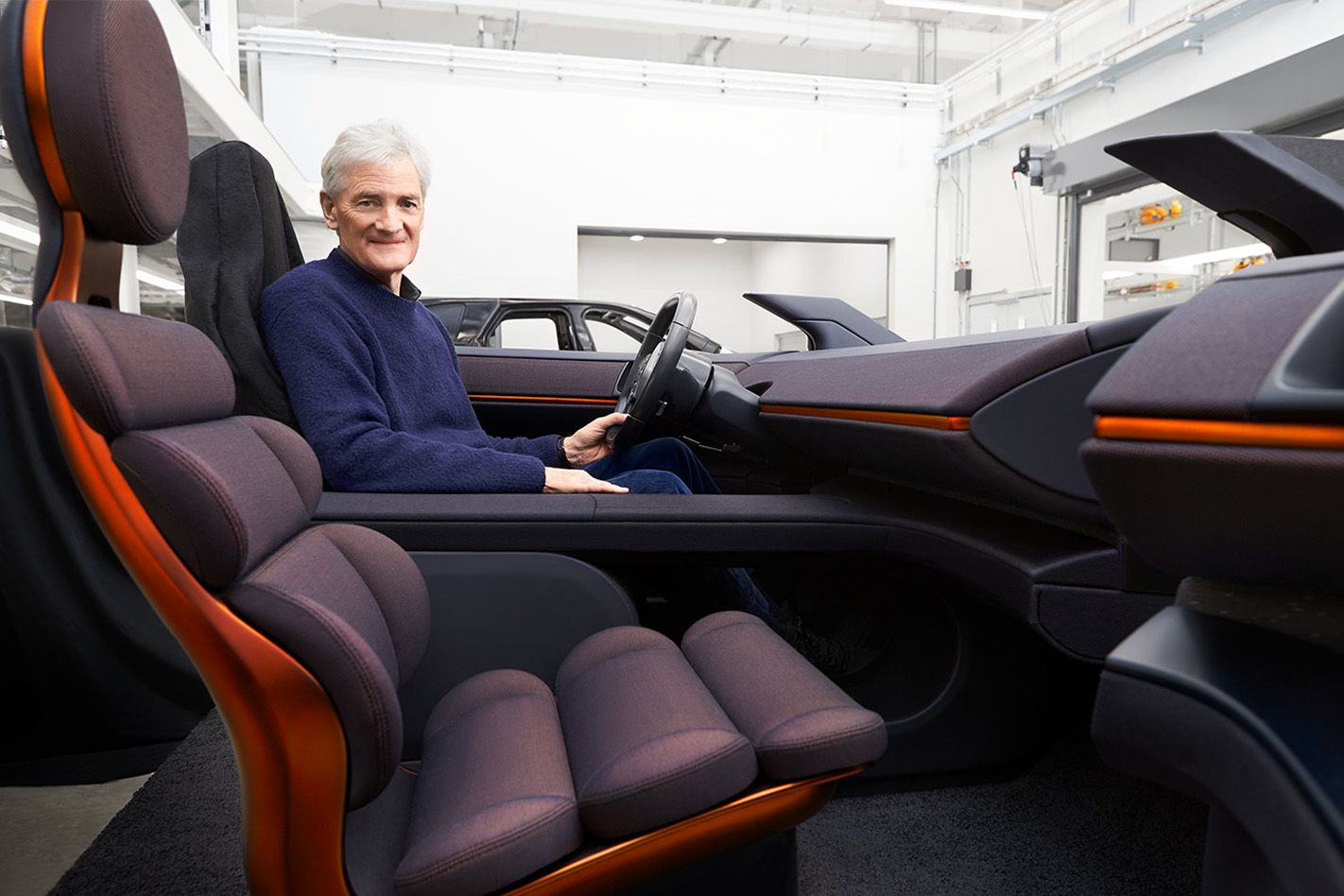
It even drives, according to its creator, and the development vehicle cut a few laps of a specially-screened part of the company’s HQ with Dyson at the wheel.
Sadly, Dyson crunched the numbers and established that each production version would need to haul in $282,000 just to break even, and even Britain’s richest man couldn’t justify subsidising his car to green-light it for production.
While some are calling Dyson’s billion-dollar car venture a failure, much of the research and development will be put to good use – and not just in the world’s most advanced hair straighteners or a vacuum cleaner with more suck.
The UK’s most well-heeled man is open to sharing the technology and research which could enable the breakthroughs hidden underneath an incredibly expensive development car to find their way onto our roads yet… for a price.
Frank-Steffen Walliser is a man with a big responsibility. He charts the path of the Porsche 911, the world’s most iconic sports car. And, when talking to Wheels, it’s clear he’s vexed.
“In 2026, the next wave of regulations will come with EU7. This will be the worldwide toughest regulations considering emissions, especially in the spread between real driving emissions and what we see on the test benches,” he says.
“We will see a big change because it means for everybody, new engines and we will see bigger displacements coming back again.”
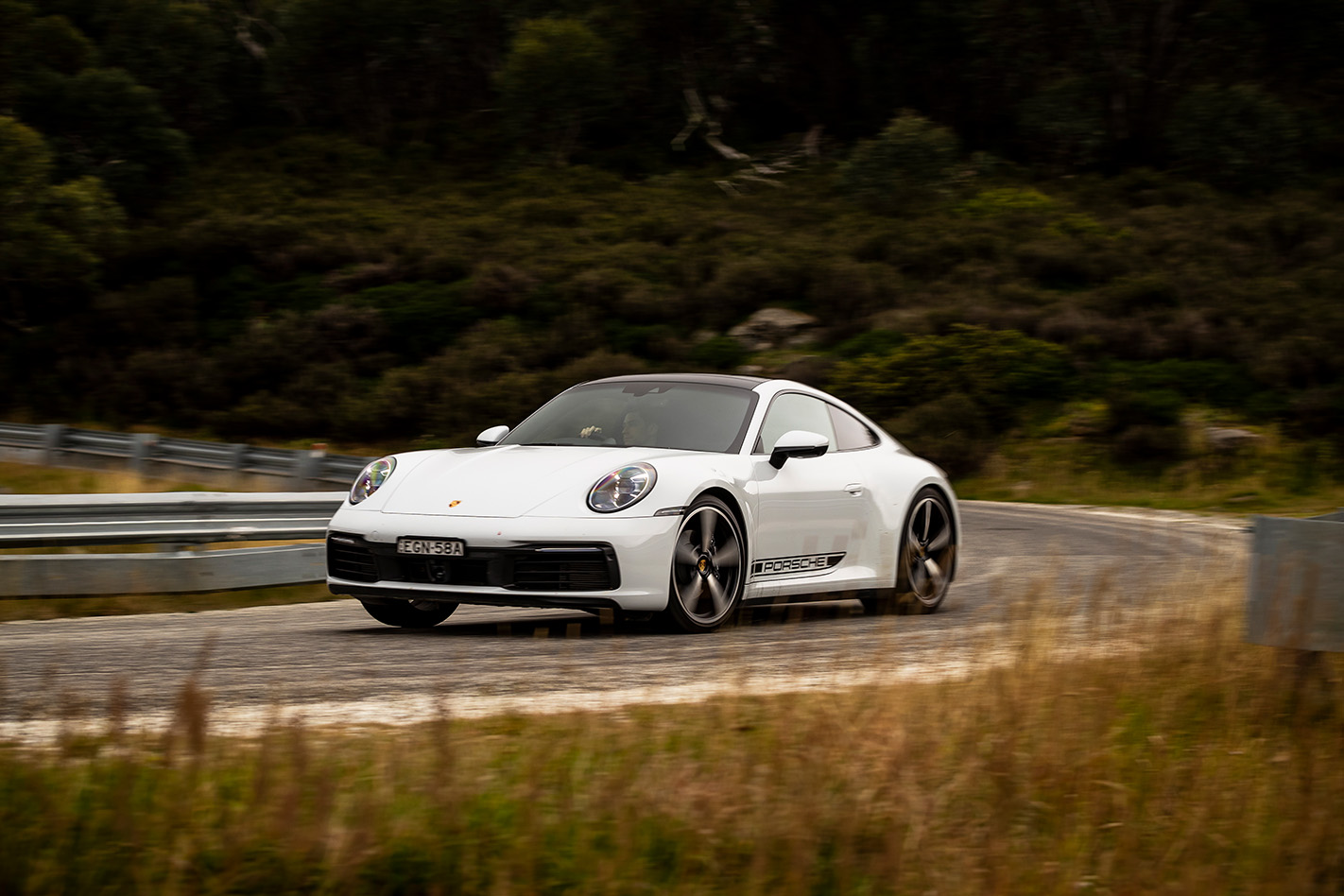
Wait, what? So the whole turbo downsizing trend that car manufactures have pursued over the last few years is all going to be ripped up? It seems that will indeed be the case as EU7 regs put a limit on relative power per litre.
“I expect 20 percent more displacement on average for these EU7 capable engines. A lot of manufacturers will jump from four to six, from six to eight [cylinders],” he explains.
“The regulations are completely counterproductive to CO2 regulations, so this will go up.
“You cannot fulfil all the standards without spending fuel. It sounds crazy but it’s a technical fact at the moment.
“This new regulation is really difficult to fulfil because we will have different cold start emissions side and bigger catalytic converters. When I’m talking bigger, I’m talking a factor of three to four times more, so there will be a small chemical industrial factory in the car to really control this,” he says.
“This means all new engines and especially for the 911 this gets really, really difficult. But we will never give up. Whatever it takes, we will do it. We want to keep six cylinders, for sure, but we will have to overwork it, we will have to make a new engine. That’s the fact. Again.”
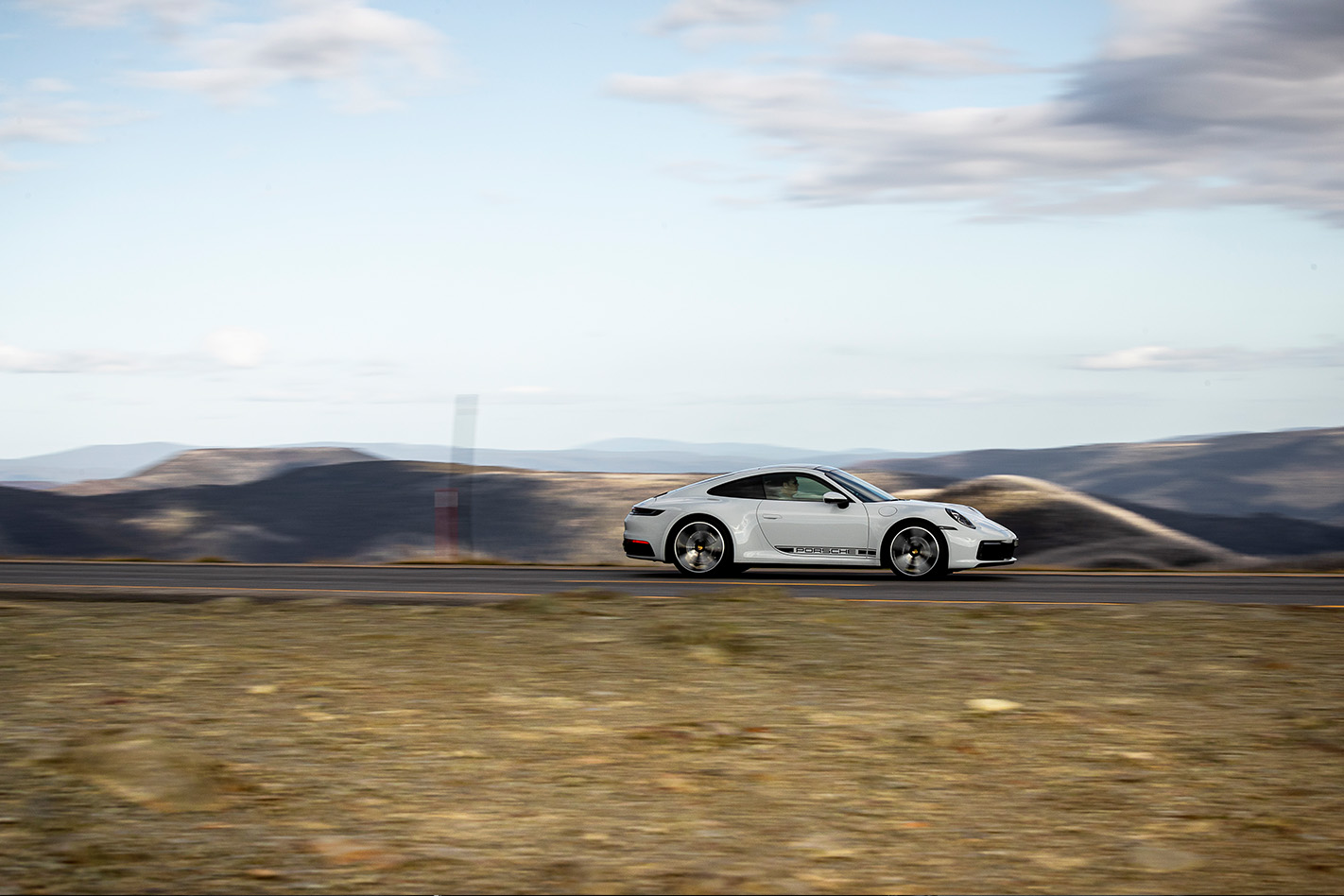
Asked whether that would mean the end of the normally-aspirated engine, as championed in the soul of the 911 range, the GT3, Walliser is downbeat.
“At the moment, we only see a turbo solution. Naturally aspirated, not really,” he laments
“Now maybe you are in the right part of the world, in Australia. This is a European solution. It [natural aspiration] could work in other parts of the world, as Australia is close to the US regulations that could work in the future.”
So could we still have a naturally aspirated engine?
“Technically, yes. If you offered something different, but this is market size, investment, volume, you know. There will come a day, within the next 10 years, when we have to say ‘Now this is the last of its kind.”
That sounds very much like the death knell for natural aspiration. That affects how the 911 would appear in future, and redefines its essence. Where would the 911 go if Walliser had a clean sheet of paper to work with?
“Maybe I would do it a little more sporty than the 992. If I had a wish, I would make it maybe smaller.”
The future might well appear challenging, but it’s hard to think of a better and more committed guardian for the 911 than Walliser.
Sign-up here to get the weekly Wheels highlights
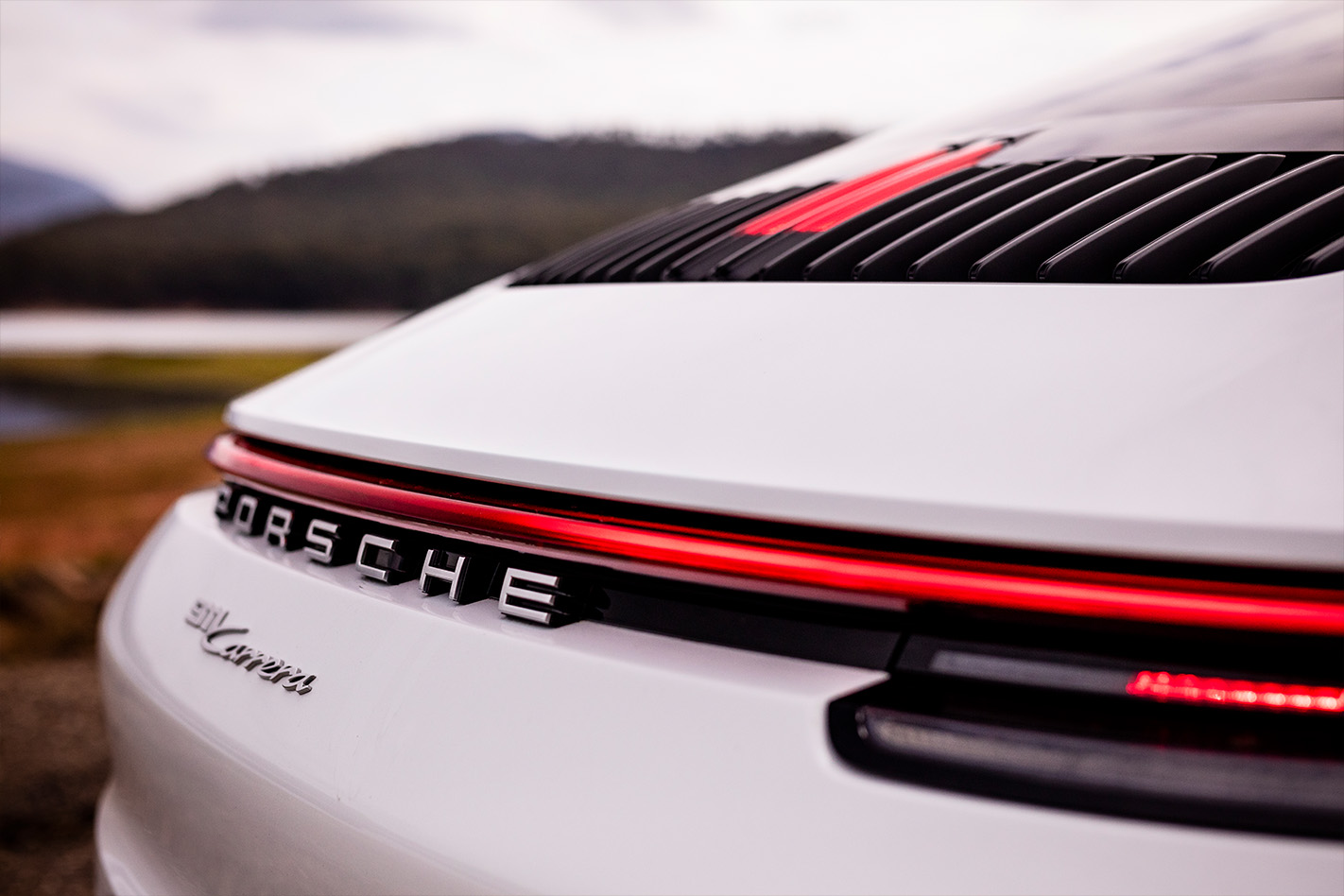
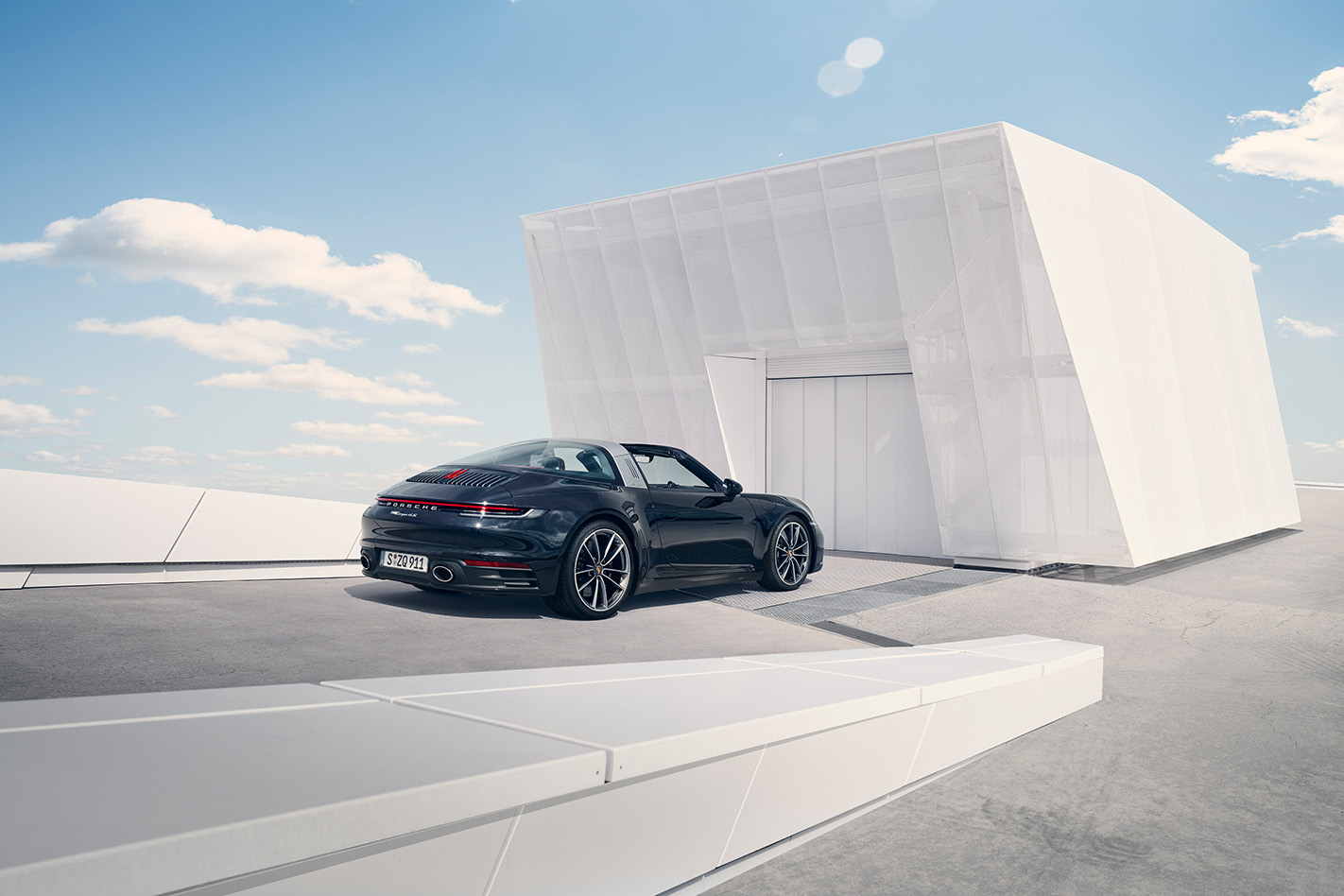
For so many years, the Targa was the left-fielder of the Porsche 911 range. Originally introduced as a work-around for US safety regulations, the model has gradually morphed into one of the more desirable 911 variants. And now the box-fresh 992-generation Targa has been unveiled in full Australian specification. So what do you get?
Those looking for reams of choices might be a little crestfallen. There are basically two Targa models on offer, both all-wheel drive and both sending their power to the treads via a seven-speed PDK transmission. While some other markets get a manual, we’re not among them.
So your choice comes down to a 283kW/450Nm 911 Targa 4, developing 11kW more than its predecessor, or a 331kW/530Nm Targa 4S, up by 22kW on the old 991 Targa. Given that most of the mechanicals are shared with the 992 range, of which you’re probably familiar, we won’t detain you with the finer points there.
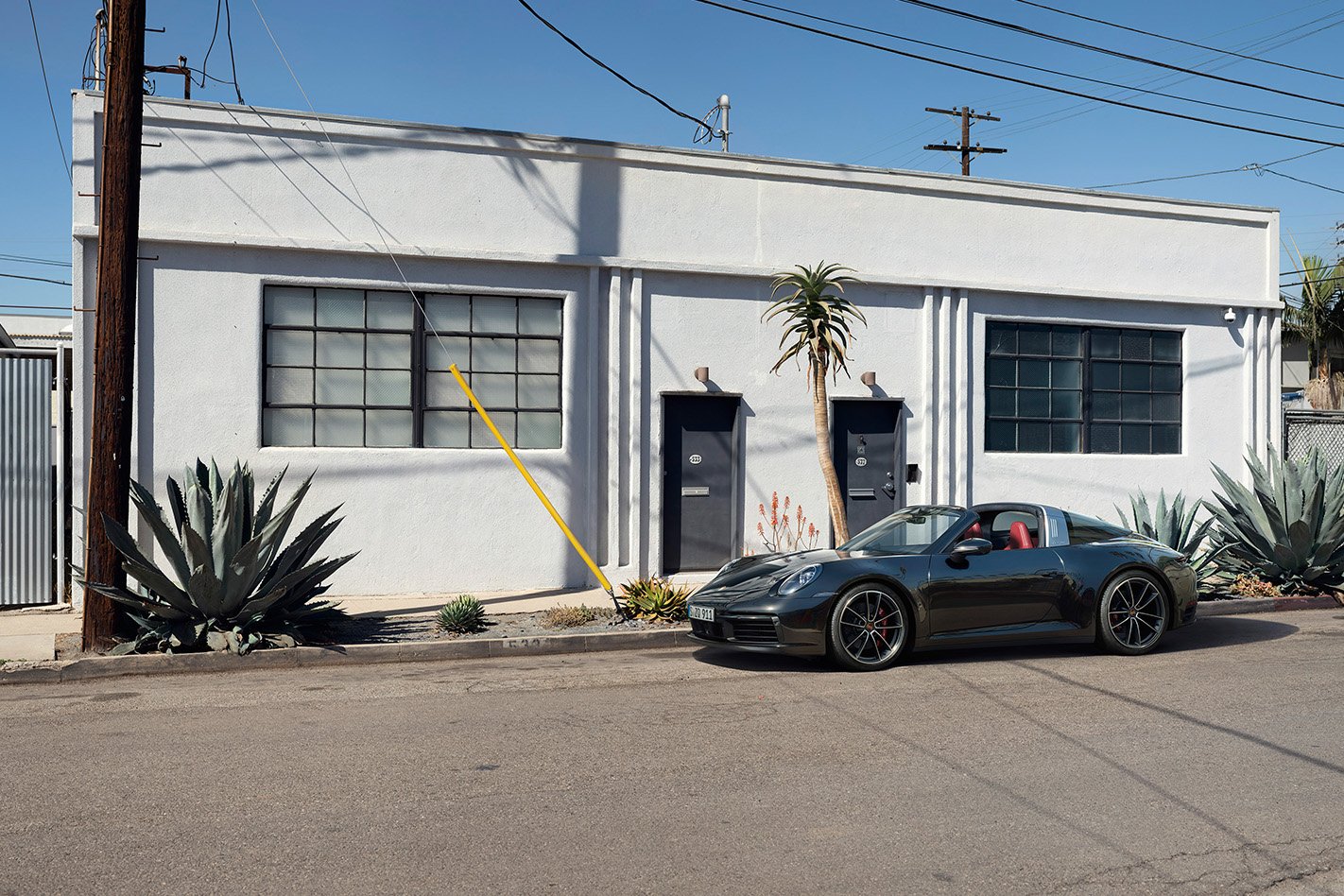
Prices start at $275,800 for the Targa 4 and $314,100 for the Targa 4S, with customer cars arriving in quarter three of this year. In other words, if you want a car before the New Year, you’ll need to get your order in quickly. Like now.
As is usally the case with all Australian Porsches, the standard specification errs on the generous side. In some markets, features like LED headlights, Porsche Dynamic Lighting System Plus, a top tint windscreen, electrically folding mirrors, metallic paint, Surround View, Lane Change Assist, Comfort access, front seat heating, 14-way sports seats with memory package and a Bose surround system would reside on the options list, but Aussie cars get all that before you even start ticking boxes.
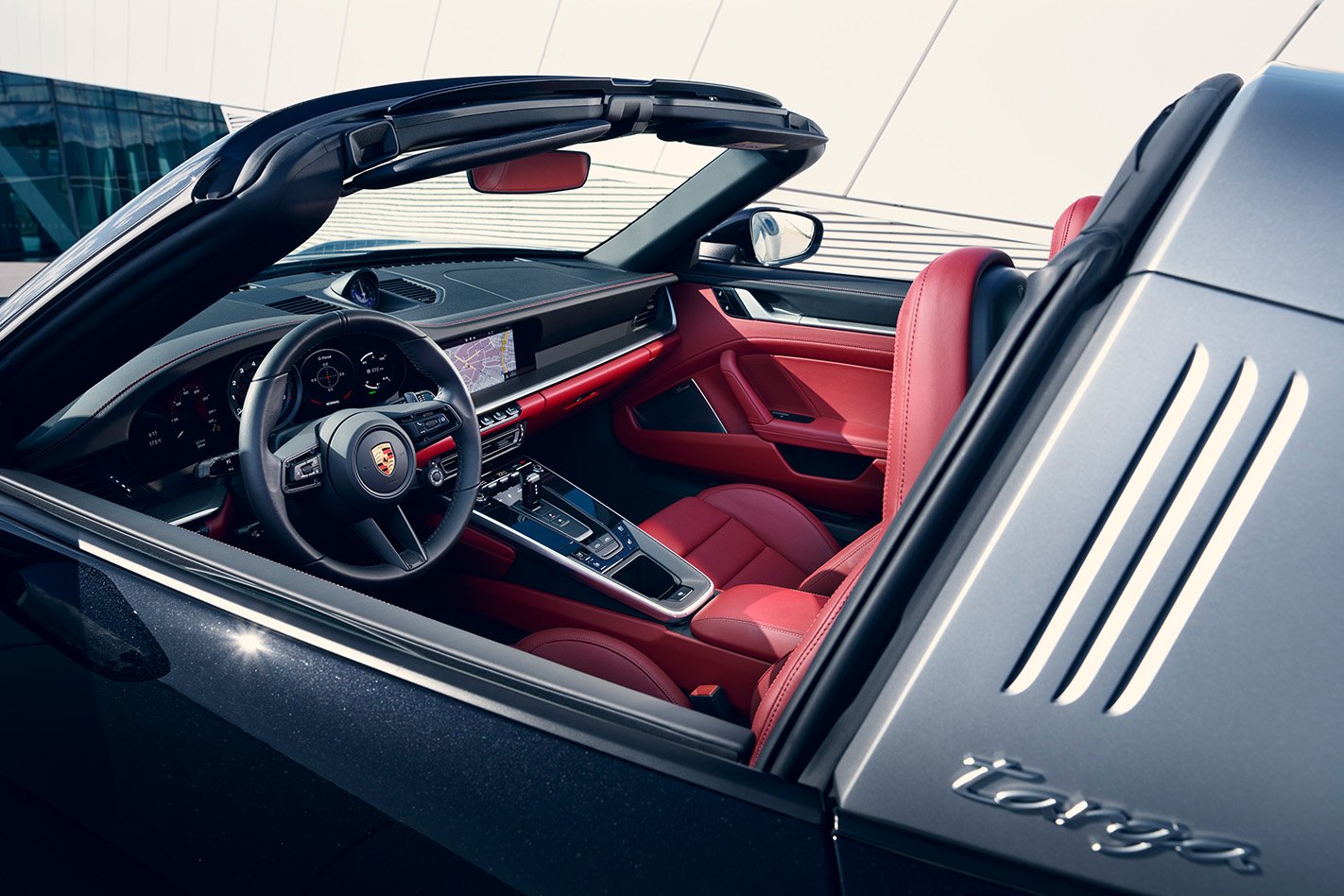
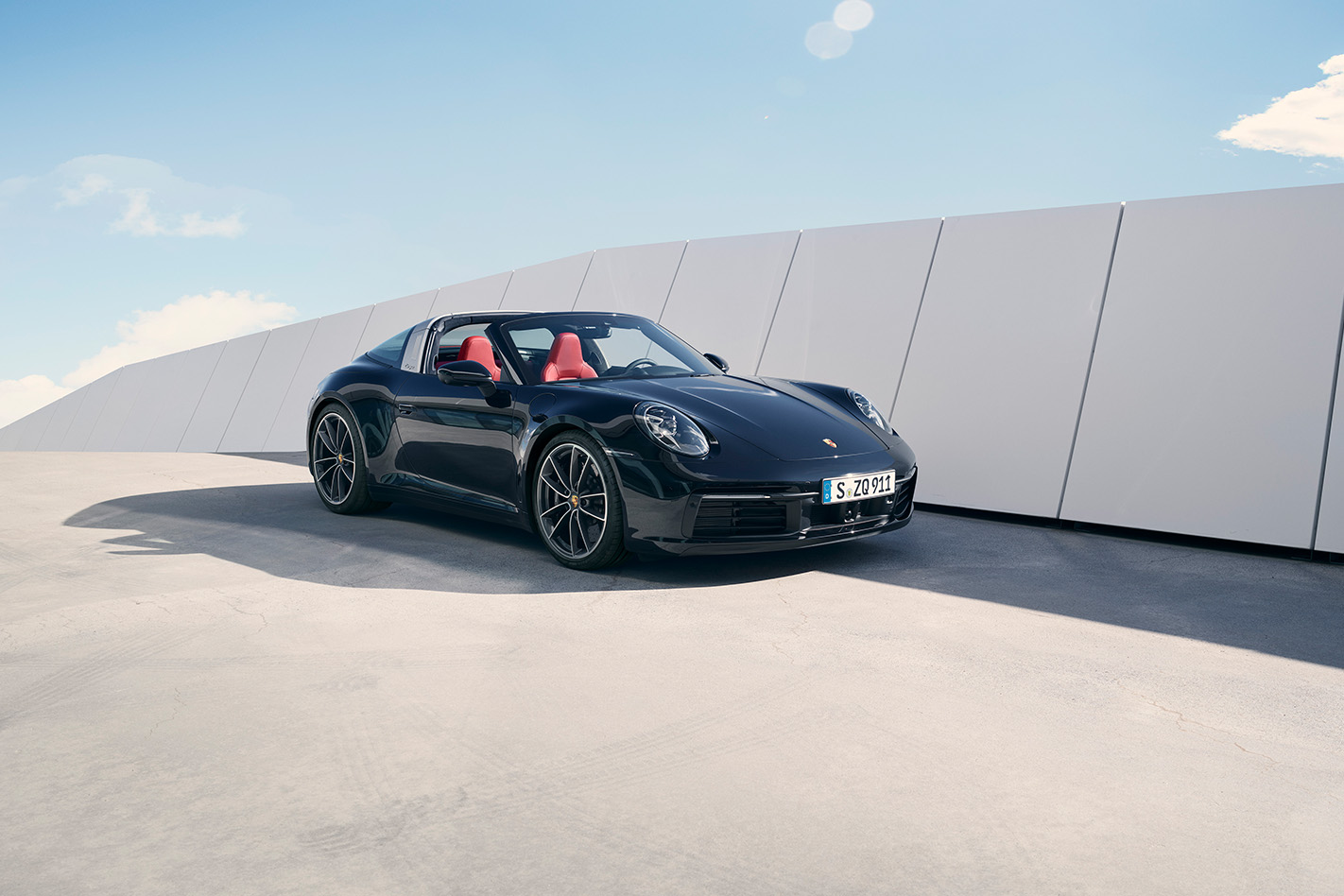
Like all 992-generation 911s, the wide-body styling gives the new Targa a pugnacious, planted look and the integration of the soft top roof is very slick. It’s a similar mechanism to the 991, but many of the materials have been optimised. Two integrated flat magnesium elements tauten the fabric roof and offer noise and thermal insulation.
It takes just 19 seconds for the roof to open or close and it’s fully automatic, with no manual latching required. The action never really loses its novelty as the glass rear window raises, tilts and moves back. Then the soft top roof pops back and stows behind the rear seats, the flaps in the Targa roll bar close and the rear window slides back into place. The best thing? Roof open or closed, it retains the iconic 911 profile.
Porsche has clearly listened to criticism that the 991 Targa, as good-looking as it was, wanted for a little in terms of wind protection when the roof panel was stowed. This 992 promises far better protection from buffeting and turbulence in the cabin, with a manually activated wind deflector doing its best work between 50 and 145km/h.
The Targa also debuts a couple of extra features that will filter down into the rest of the 911 range. Porsche InnoDrive is, in effect, a super cruise control system that uses data from mapping to calculate the optimum acceleration and deceleration settings for three kilometres ahead of the car. In practical terms, the system will be a lot better at managing the car in slow-moving traffic jams and, when the adpative cruise is set, will be able to recognise upcoming road features such as roundabouts, slowing accordingly.
The other introduction is something that Tesla owners have had for a while. The optional Smartlift function is what happens when the GPS talks to the front lifter kit. The system saves GPS co-ordinates and can remember when you lifted the car’s nose. Approach the same position from the same direction again and it’ll pop the front up by 40mm without you having to intervene. Neat.
PORSCHE 911 TARGA TIMELINE
A registered trademark of Porsche AG, the Targa badge first appeared on the 1965 911 amid fears that the NHTSA in the USA would ban full soft-top cars. Porsche wasn’t the first to come up with the idea of a pop-out roof panel and a sold roll-over hoop. Michelotti was the originator of the idea, with his 1957 Fiat 1200 Wonderful and 1961 Triumph TR4 designs also featuring the layout, the removal panel of the latter being dubbed a Surrey Top. That didn’t catch on.
In 1981 Porsche finally introduced a full soft-top Cabriolet version of the 911SC at the Frankfurt Motor Show which was sold to the public the following year. Positioned above the Targa in the 911 hierarchy it was a huge success, selling 4214 units in its first year on sale.
The Targa body style nevertheless continued through the 3.2 Carrera era (1983-1989) and 964 (1989-1994) model lines. The 993 generation debuted without a Targa in the range in 1994, and it wasn’t until 1996 that one appeared. This took the Targa in a different design direction. Gone was the manually removable roof panel and in its place was an innovation that would persist through the subsequent 996 and 997 generations; the sliding glass roof pane.
While this system helped retain the characteristic 911 ‘flyline’ in profile, losing the old car’s somewhat ungainly humped rear and flat roof, it also added a lot of weight to the top of the car, raising its centre of gravity.
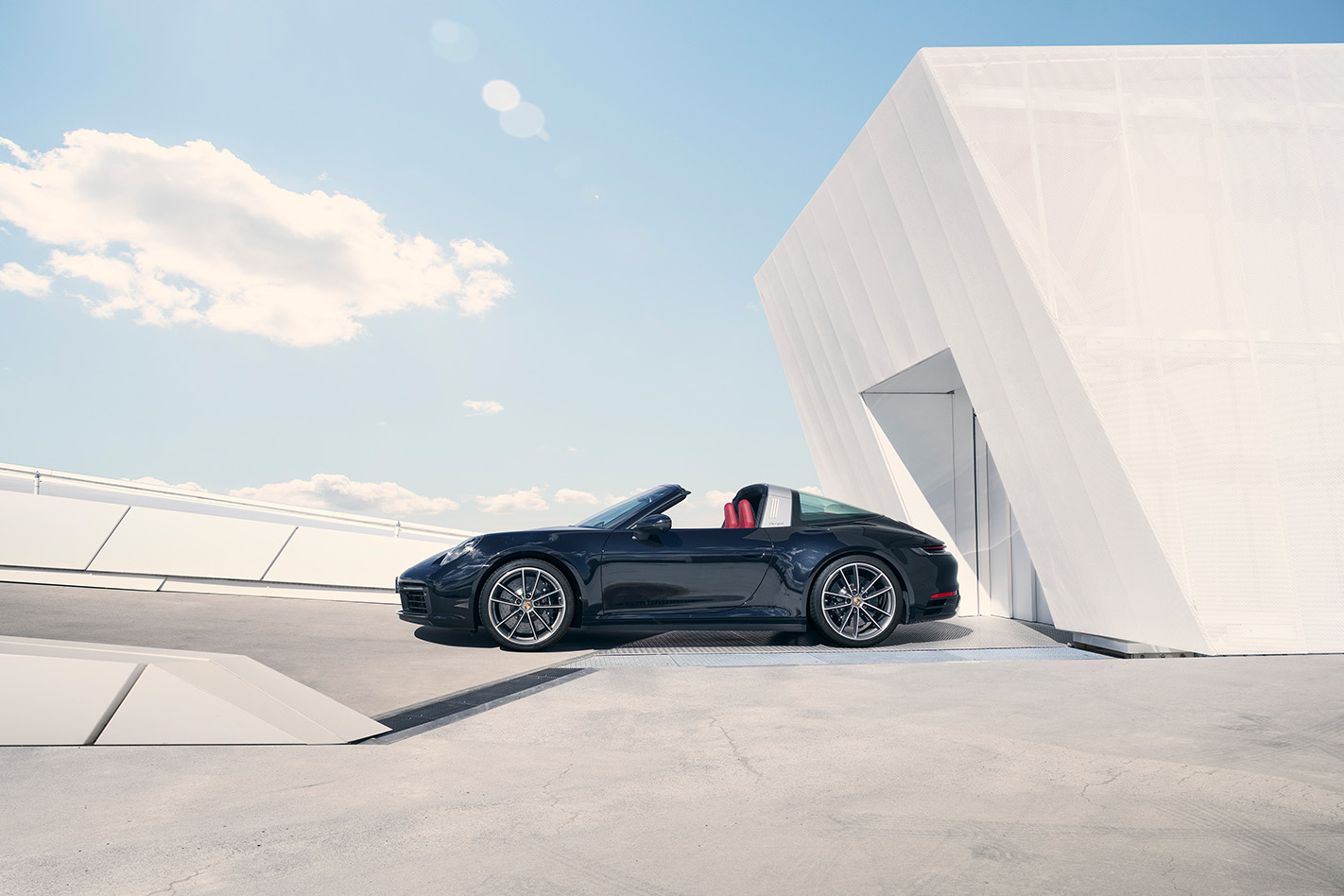
Described by current 911 boss Frank-Steffen Walliser a little disparagingly as a ‘big sunroof’, the glass Targas nevertheless proved popular, but it wasn’t until the introduction of the 991 generation that we saw the first truly beautiful Targa-roofed 911. Unveiled at the 2014 Deytroit Show, the 991 Targa featured a clever electrically-stowed soft top, which hid beneath a clever motorised rear deck/window arrangement. Suddenly the Targa became hugely desirable and, model for model, it’s now the most expensive 911 body style.
The 992 continues this theme, and with its wide-body styling and even more powerful engines, it punts the Targa into a new market. Walliser openly admits that Targa customers are “good customers” with the highest options spend of all 911 buyers. Perhaps there’s headroom for an even higher-end Targa? Who’d bet against a 992 Turbo Targa appearing in a couple of years’ time?
Supercars will fire up its compromised 2020 championship in front of empty stands next month, but that appears to be the least of the sport’s problems as it looks towards next year.
A draft calendar of 13 events has been released, with Sydney Motorsport Park the first after a three-and-a-half-month break – but missing from the draft is two of the sport’s crown jewels.
Both the Gold Coast 600 and the season finale Newcastle 500 street races have been dropped, with Supercars citing logistical uncertainty and the risk of crowd-free events as the reason.
Street races off the Supercars table for 2020
The young Newcastle event has served as the 2020 championship’s grand final for the last three years, with a five-year deal set to expire after next year’s event.
The Gold Coast race, meanwhile, was slated to hold the first-ever night race at a street circuit before it was benched. Its contract was extended by five years early in 2020.
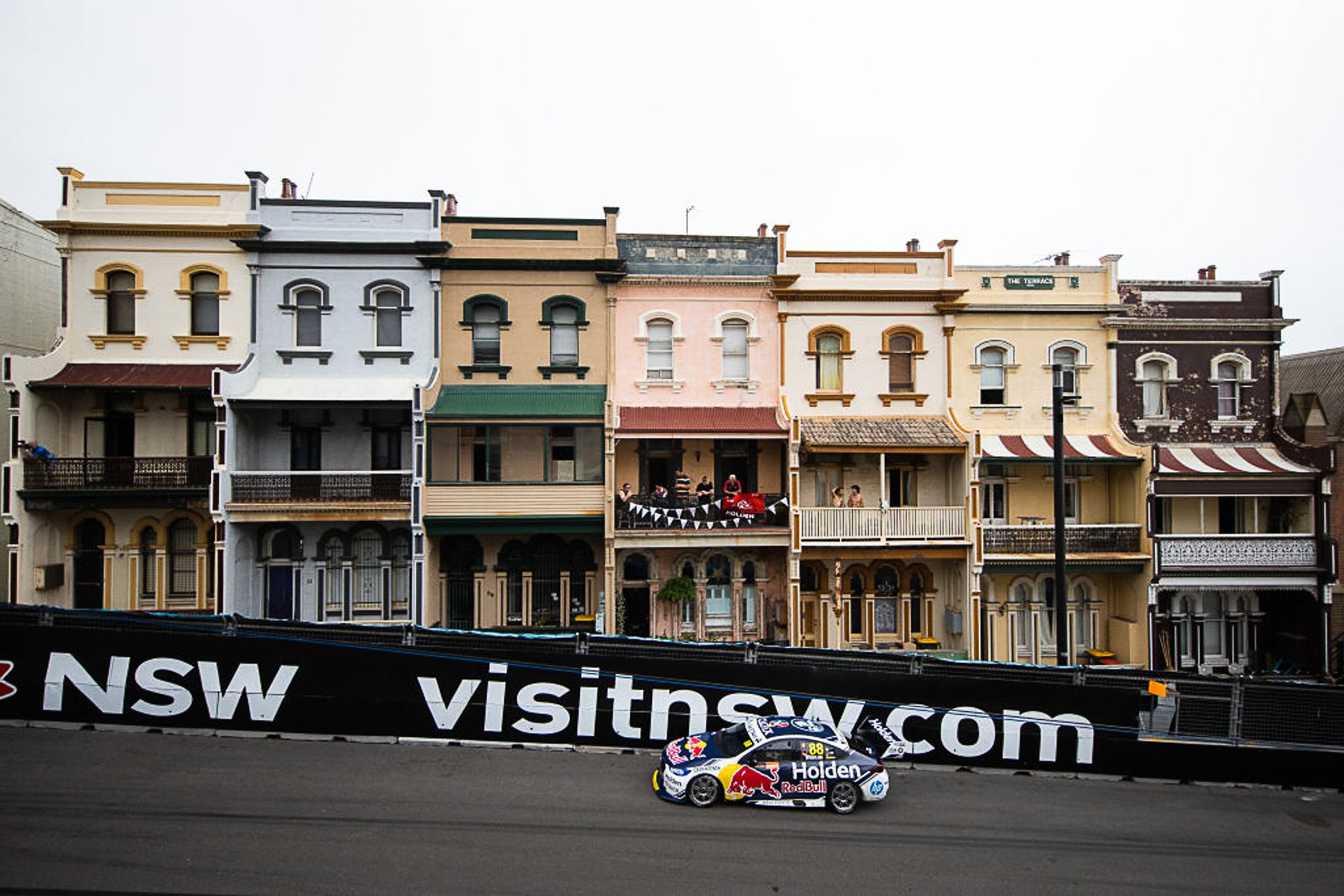
However, with huge economic impacts expected to ripple through the Australian economy in the wake of the COVID-19 pandemic slowdown, it remains to be seen whether the costly events will ever return to the ailing championship.
“They’re marquee events for Supercars for NSW and Queensland,” said Supercars CEO Sean Seamer in a statement.
“We’ve worked with our partners in state and local governments, and over the past two weeks, and the discussions that we’ve had, we’ve taken the decision to exclude them from the remainder of this calendar for a range of reasons – notwithstanding the disruption that the residents of those cities have already been through this COVID-19 crisis.”
Both are sponsored in the main by the respective state governments, which will come under huge budgetary pressure in the next twelve months to two years.
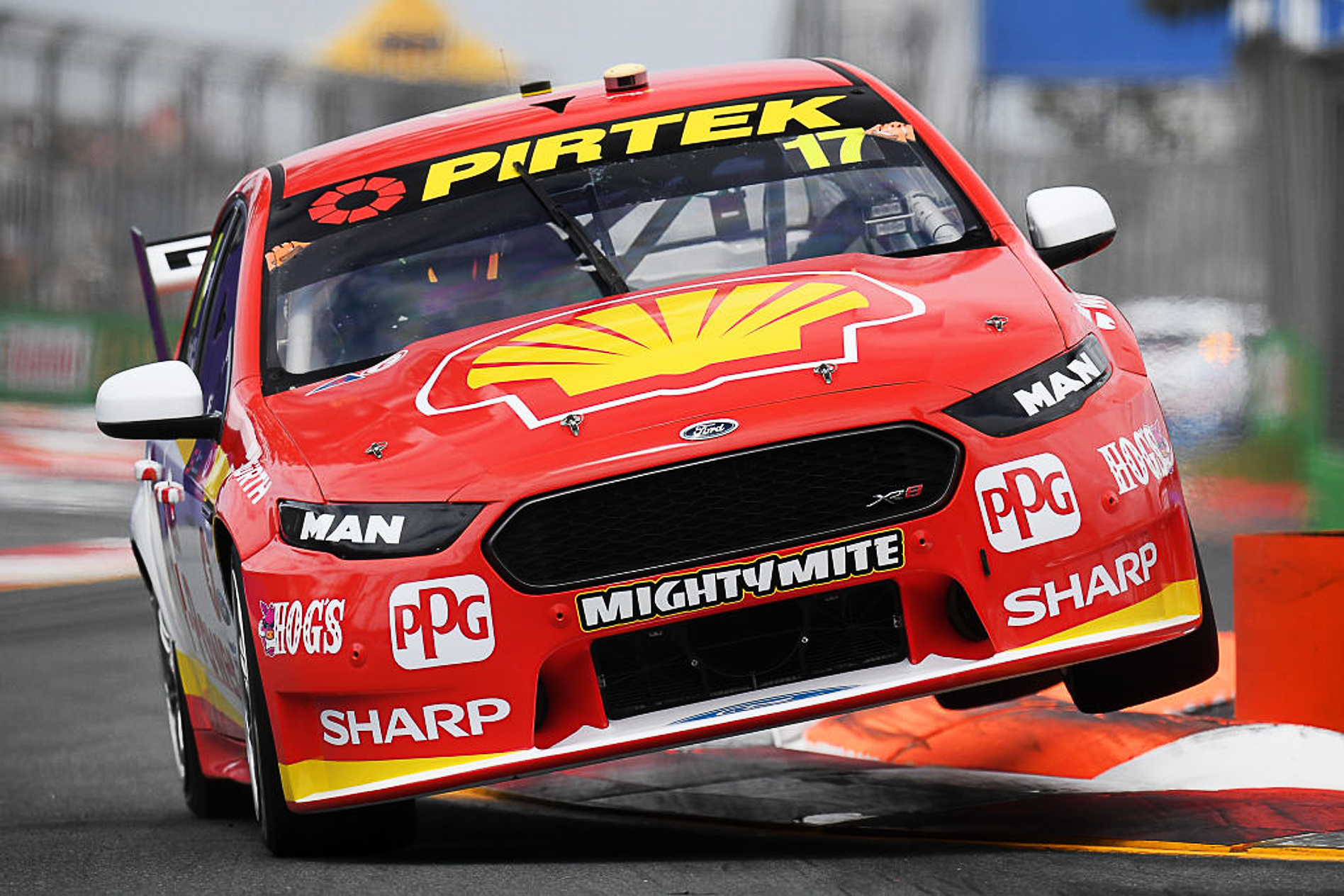
Supercars TV deal is under the spotlight
Complicating the issue will be the issue of television rights for the sport, which are also up for renewal at the end of 2020.
Government-sponsored events are required by law to be broadcast on free-to-air (FTA) television, but Supercar’s current FTA broadcaster, Ten, has publically stated that it wants out of its limited deal at the end of the 2020 season.
Seamer has been quoted as saying that the reports are “pure speculation.”
Former Supercars broadcaster Seven is unlikely to try and pick the sport up if Ten does depart, with an expensive array of sport already on the books of the cash-strapped network.
If a pure cable television model is signed off, then government sponsorship will likely decrease, potentially making the street events uneconomical to pursue.
Incumbent broadcaster Foxtel is under its own budgetary pressures, too, with the decimation of mainstream sport and a resultant slump in subscriptions resulting in staff layoffs.
Two Bathurst events for season 2020
The cancellation of the Newcastle round brought an added wrinkle – Supercars was obliged to find a replacement 2020 season finale in NSW, as part of its deal with the current Liberal Party. The solution was to add a second round at Mt Panorama.
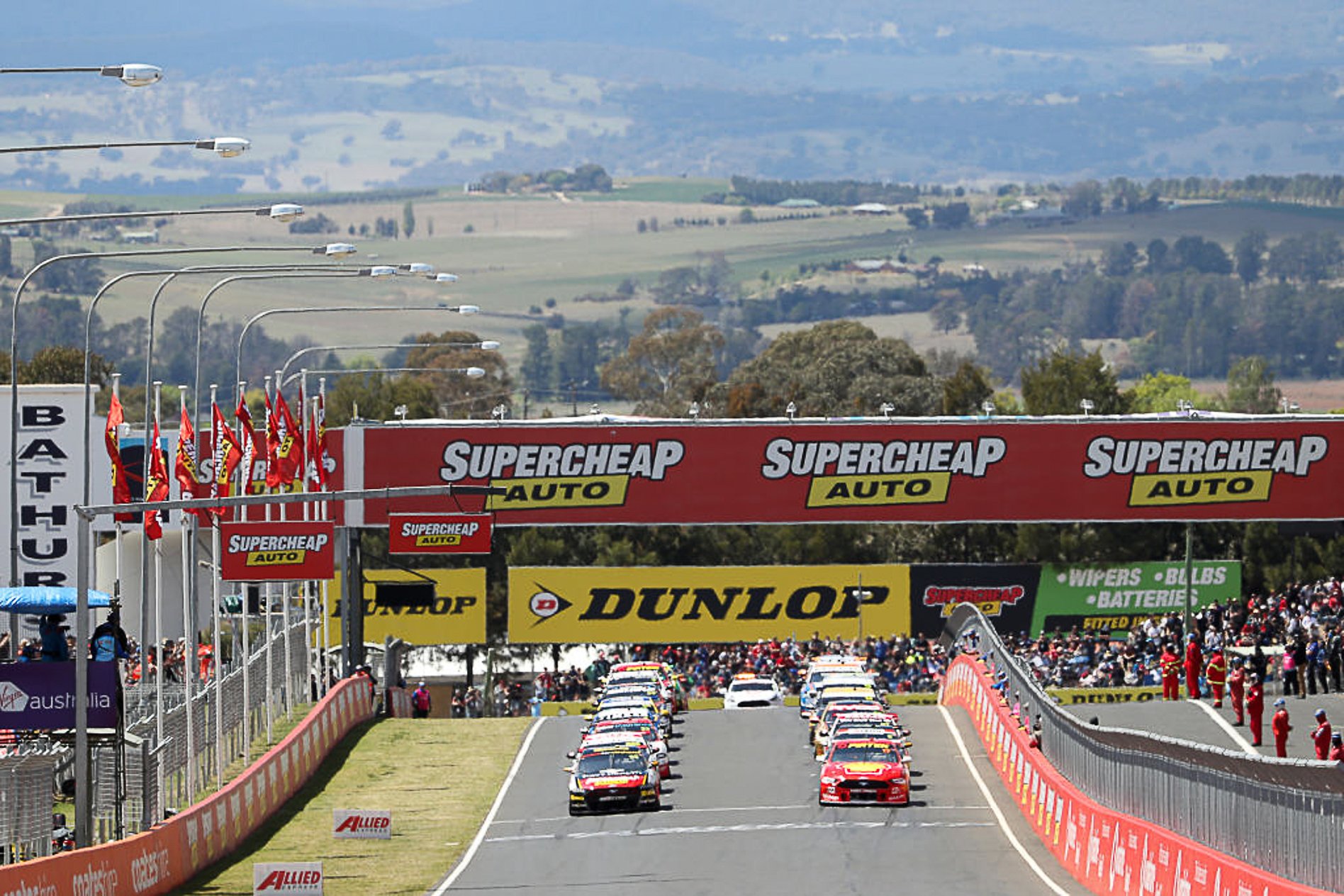
The Bathurst 1000 is still set to be held on its now-traditional early October date, but it will be joined by a second sprint round in February 2021, on the same weekend as the Bathurst 12-Hour endurance race.
Early reports that the 2021 Bathurst 12-Hour is cancelled were wide of the mark. Supercars bought the rights to the Bathurst 12 Hour four years ago, so it has the ability to use the Bathurst race weekend – a rare commodity – for both categories.
It will, however, present logistical challenges for the teams in the V8 Supercars championship, as the 2021 season could start as quickly as three weeks after 2020’s final race.
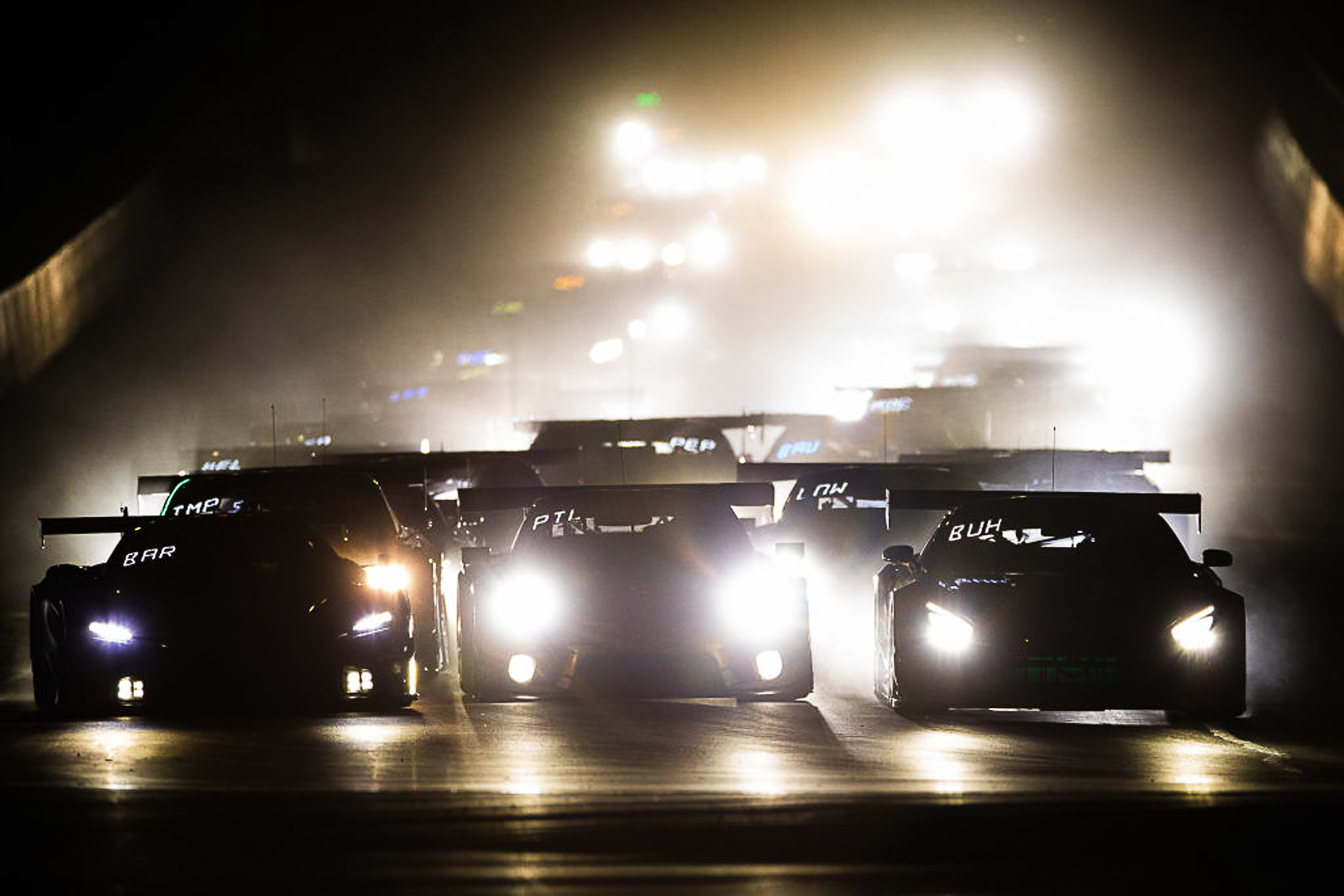
2021 Bathurst 12-Hour still on – for now
The 12-hour race is also under pressure, with international travel likely to incur 14-day isolation for arriving travellers for months to come.
International freight forwarding is also under huge pressure, thanks to the contraction of the worldwide aviation industry, with a knock-on effect on sea freight logistics.
Other events on the provisional 2020 Supercars calendar include traditional events at Winton in Victoria, Wanneroo in Western Australia, Symmons Plains in Tasmania and the Townsville semi-permanent circuit in north Queensland.
The latter may be under pressure, though, with the Queensland government indicating that it may keep its borders closed until September.
An endurance event at The Bend in South Australia will precede the Bathurst 1000, while a single event is set down for New Zealand in January – another potential logistic hot spot ahead of the Bathurst sprint round.
Supercars teams trying to weather 2020 storm
Meanwhile, one team won’t be returning to the 2020 Supercars Championship. After the departure of its primary sponsor, Team 23Red will exit the championship, with renowned racer Will Davison losing his drive in the team’s Ford Mustang.
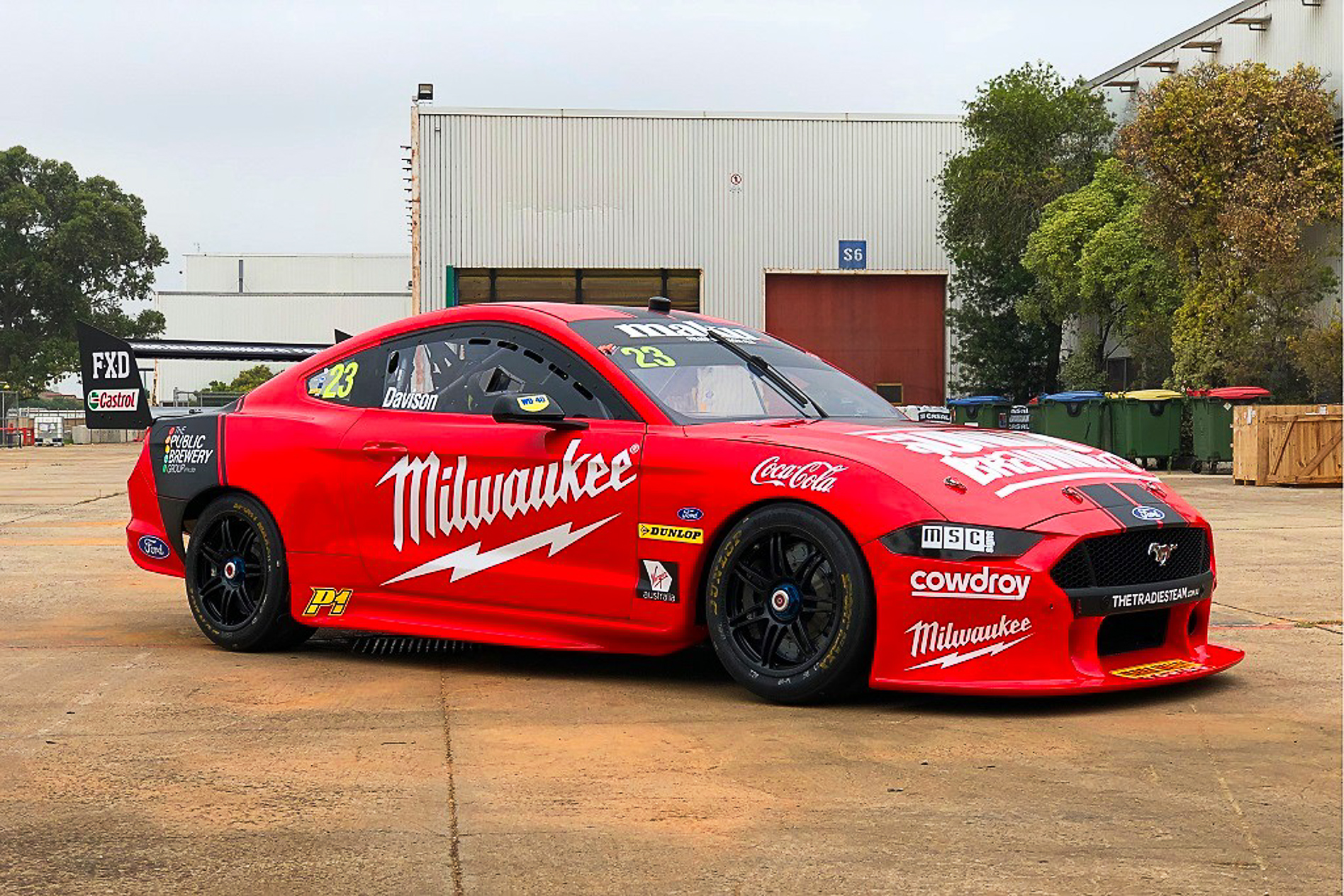
The racing entitlement contract to run the former 23Red car will remain with Tickford, with James Courtney bringing Boost Mobile sponsorship to run the Mustang as part of the team’s the four-car squad.
The sport also faces an existential crisis as Holden departs, taking with it one of the great sporting rivalries of the last 30 years.
Key meetings to decide the shape of the sport’s next set of regulations are currently being held, with cost savings reportedly at the top of the agenda.
Finally, the sport will most likely need to replace its series sponsor, Virgin, when the current deal expires at the end of 2020. The COVID-19 slowdown will make this a very difficult task.
2020 Supercars calendar (provisional, remaining rounds)
u00a0 | Sydney Motorsport Park | June 27-28 |
u00a0 | Winton Motor Raceway | July 18-19 |
u00a0 | Hidden Valley Raceway | August 8-9 |
u00a0 | Reid Park Street Circuit | August 29-30 |
u00a0 | The Bend Motorsport Park | September 19-20 |
u00a0 | Mount Panorama Motor Racing Circuit | October 8-11 |
u00a0 | Wanneroo Raceway | Octoberu00a031-November 1 |
u00a0 | Symmons Plains Raceway | November 21-22 |
u00a0 | Sandown Raceway | December 12-13 |
u00a0 | Hampton Downs or Pukekohe Park | January 9-10 |
u00a0 | Mount Panorama Motor Racing Circuit | February 5-7 |
EV disruptors Tesla may be on the brink of a breakthrough that could slash the price of electric vehicles overnight.
A five-year study into a new type of lithium-ion battery construction, designed by a team of experts employed by Tesla and brought to life with the help of a Chinese tech company, will result in a battery – known as a lithium iron phosphate battery – that is cheaper, longer-lasting and capable of being effectively ‘re-lifed’ in traditional energy grids once or even twice.
Founder Elon Musk has been promising investors that the company would host a so-called ‘battery day’ in May to reveal the new technology, news of which began to surface late last year – though the current COVID-19 pandemic may delay the event.
A life span of up to 1.6 million kilometres for the new battery has been forecast by Tesla’s battery experts, led by a scientist credited with the development of the original lithium-ion battery, Professor Jeff Dahn.
New chemical compounds used in the construction of the batteries is thought to be the key, with a reduction – or in some cases the elimination – of the most expensive element in a Li-ion battery, cobalt.
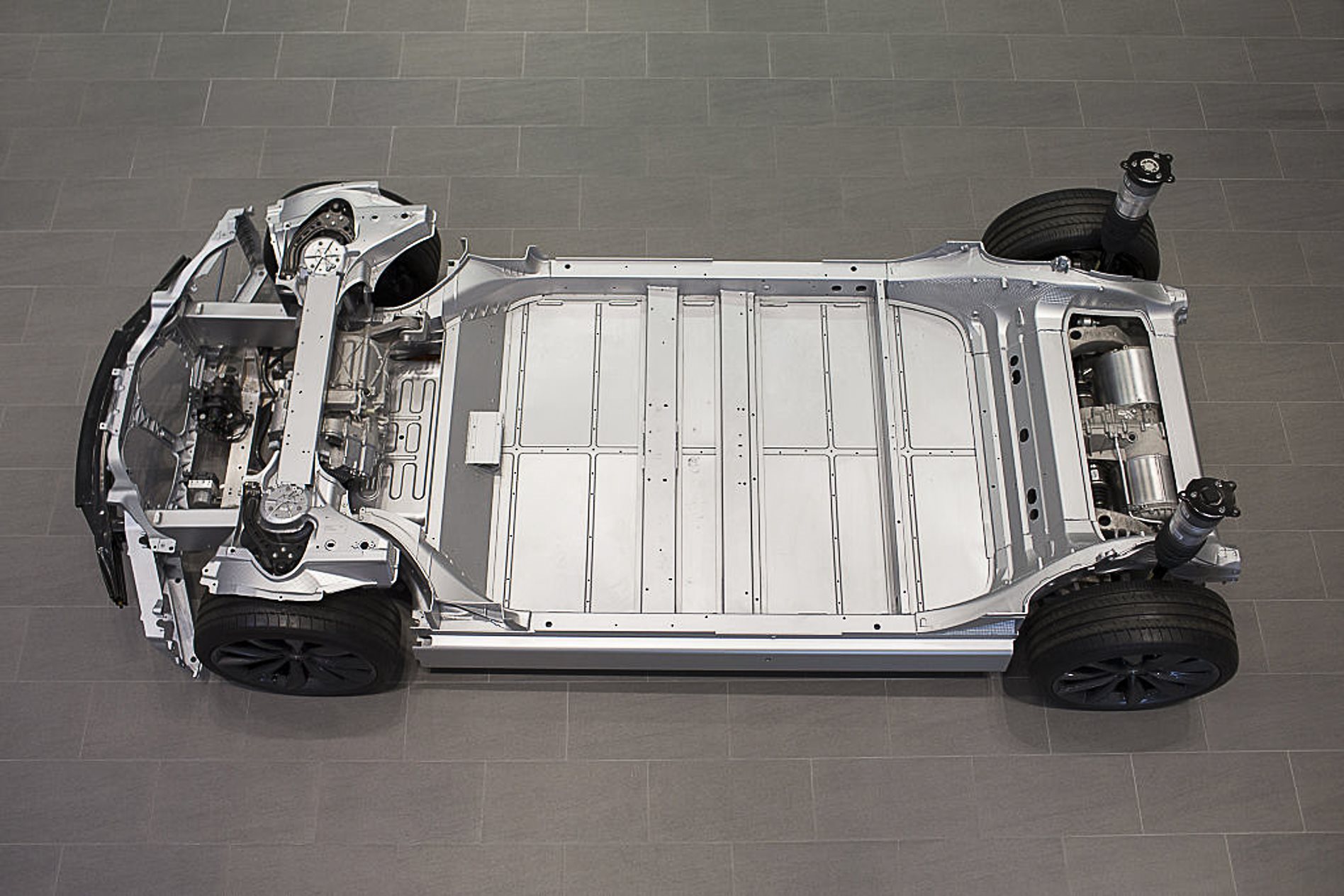
A Tesla chassis before battery pack fitment. All Model S and X platforms are built to swap batteries quickly, though Tesla never followed through with quick-change technology
Vastly simplifying the exhaustive studies conducted by Dahl’s team, it appears that cobalt can be replaced by other, cheaper elements like nickel without affecting the battery’s recharging rates or stability.
“Several different electrolytes are considered in this LiNi0.5Mn0.3Co0.2O2/graphite chemistry, including those that can promote fast charging,” reads a paper published by the team in the Journal of The Electrochemical Society.
“The reasons for cell performance degradation and impedance growth are examined using several methods. We conclude that cells of this type should be able to power an electric vehicle for over 1.6 million kilometres (1 million miles) and last at least two decades in grid energy storage.”
New methods of assembling the battery cells in the car will also help to pack more cells into a given space, which will also increase the range of the respective car.
Traditionally, battery cells are built into modules that can be easily swapped if one cell within the module goes bad, but both Tesla and General Motors are known to be working on eliminating the module model.
The issue of recycling EV batteries is a growing concern, because an EV battery needs to be swapped out of a car even though it still has up to 70 per cent of its capacity remaining.
However, this new battery appears to have a greater ability to be reused in energy storage arrays similar to the one built by Tesla for the South Australian power grid in 2018.
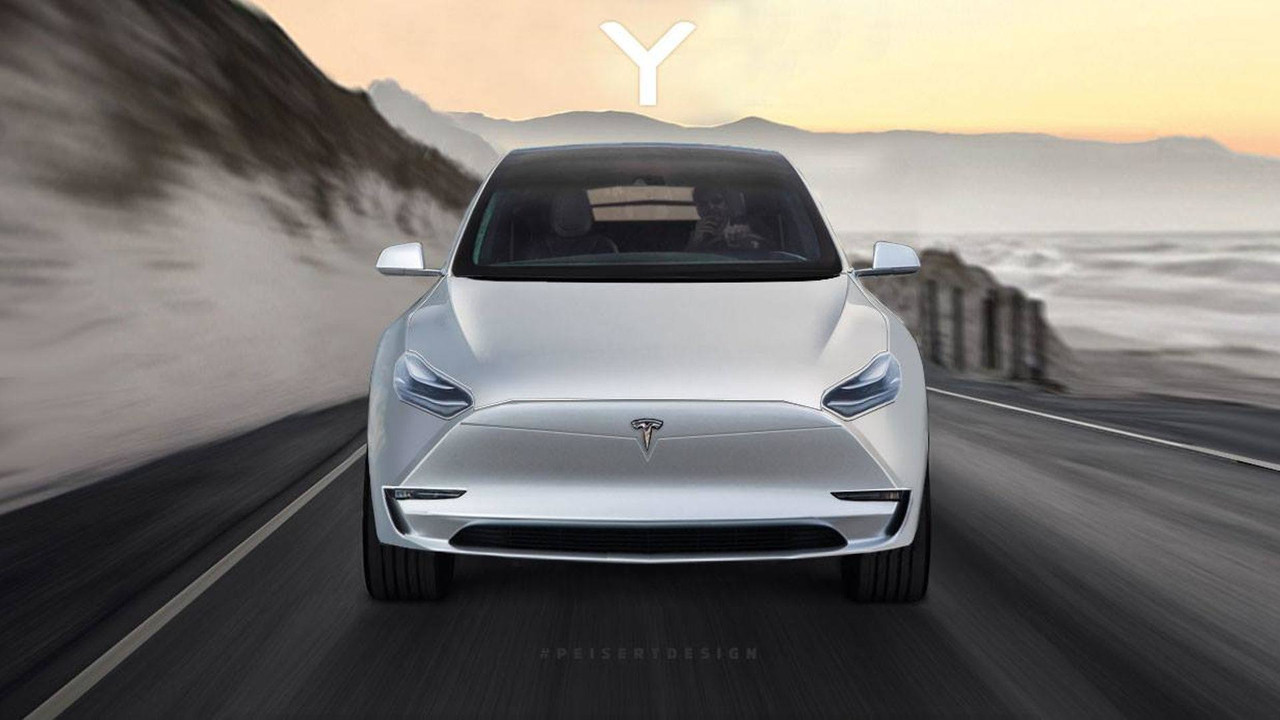
The new battery technology is expected to roll out aboard Tesla Model 3 sedans and Model Y SUVs built in the company’s Chinese factory from later this year.
Reports suggest that other markets like the US, Europe and Australia will have to wait longer for the new technology to be rolled out – but it will be even more energy-dense and cheaper than the first-generation battery currently under development.
The holy grail is to reduce the cost per kilowatt-hour to a figure of US$100 ($170), down from its current level of $US150. The hundred-dollar figure is considered by the industry as the crossing point where electric vehicles are at price parity with ICE-powered cars.
The Nissan Skyline GT-R is one of the world’s most iconic performance cars so when we were offered the opportunity to drive not just a very special 2020 anniversary version, but also an original example of a classic GT-R, we thought it would make a wonderful story to tell through the TV series.
The Japanese model has become a legend globally, revered by generations of car enthusiasts, not only for its groundbreaking ability in standard form but also the ease with which it’s possible to extract supercar power and performance (and beyond) via the aftermarket.
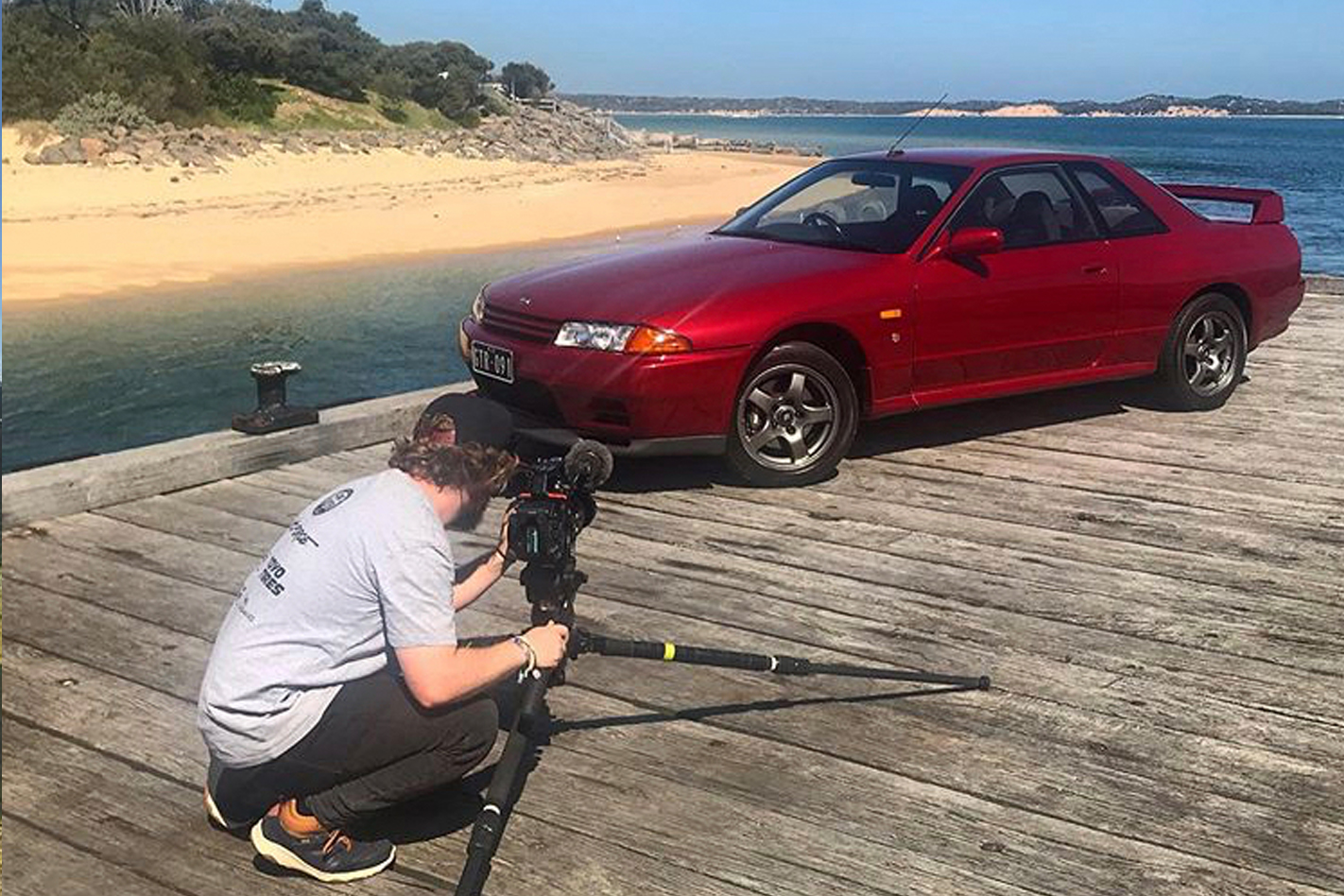
Nissan’s GT-R has had a tumultuous history in Australia. It was chosen to be Nissan’s challenger in the Australian Touring Car Championship and utterly dominated the category, winning both the title and the Bathurst 1000 in 1991 and 1992, at which point a regulation change forced it into obsolescence.
To capitalise on this success, Nissan Australia imported 100 road-going examples and adapted them to local design rules to sell to the public. Unfortunately, there were a couple of issues. The race cars were hated by the V8-loving fans, culminating in the winning drivers famously being booed and heckled on the podium in 1992.
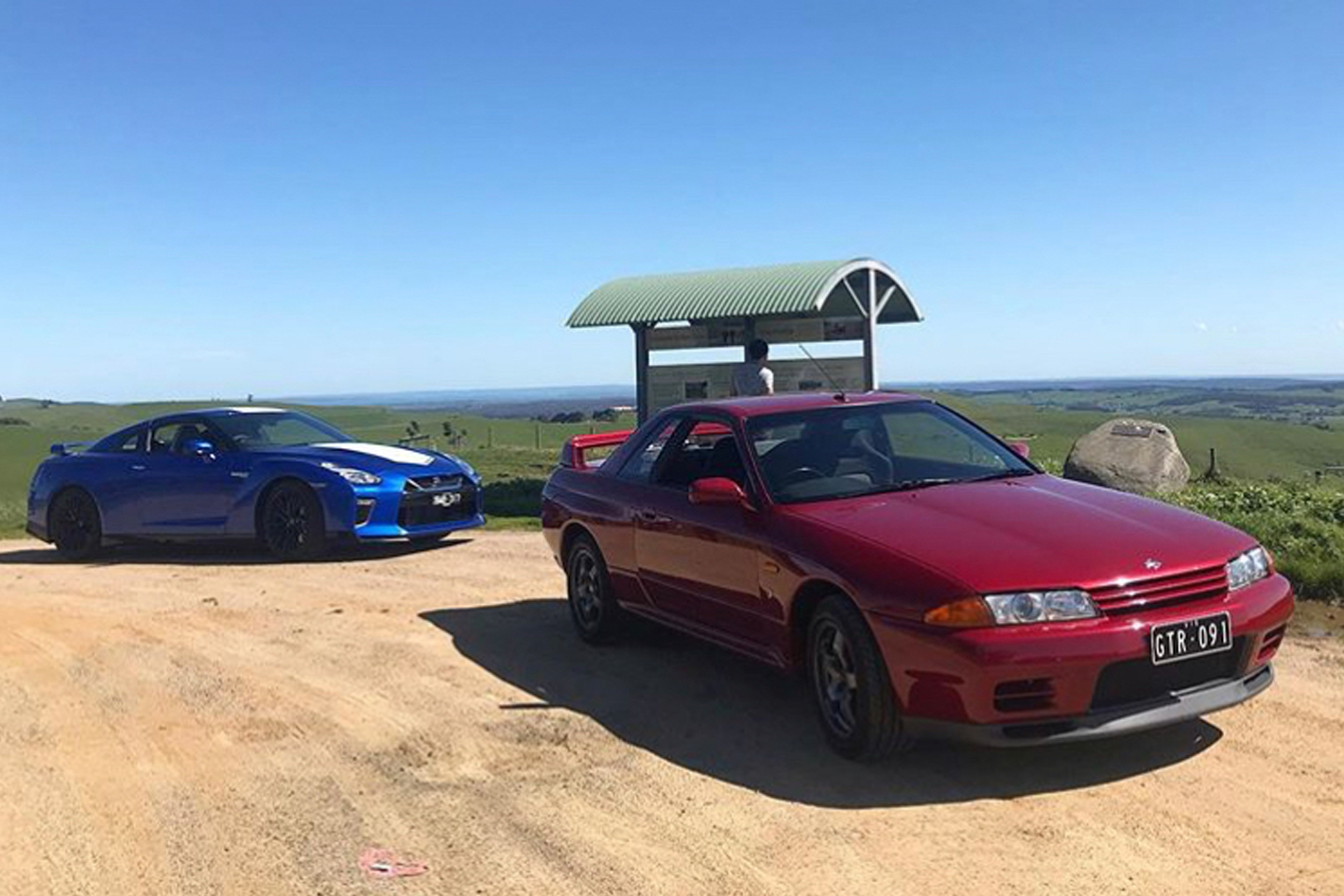
The road cars fared little better. While the R32 was pretty much the fastest thing you could buy with number plates in the early ’90s, not many people were lining up to pay $110,000 for a Nissan; as such, shifting the 100 cars took a very long time.
Nevertheless, it’s a story worth telling and the arrival of the MY2020 GT-R (the Skyline name having been dropped for the R35 generation) on the 30th Anniversary of the R32’s introduction into Australia provided the perfect excuse.
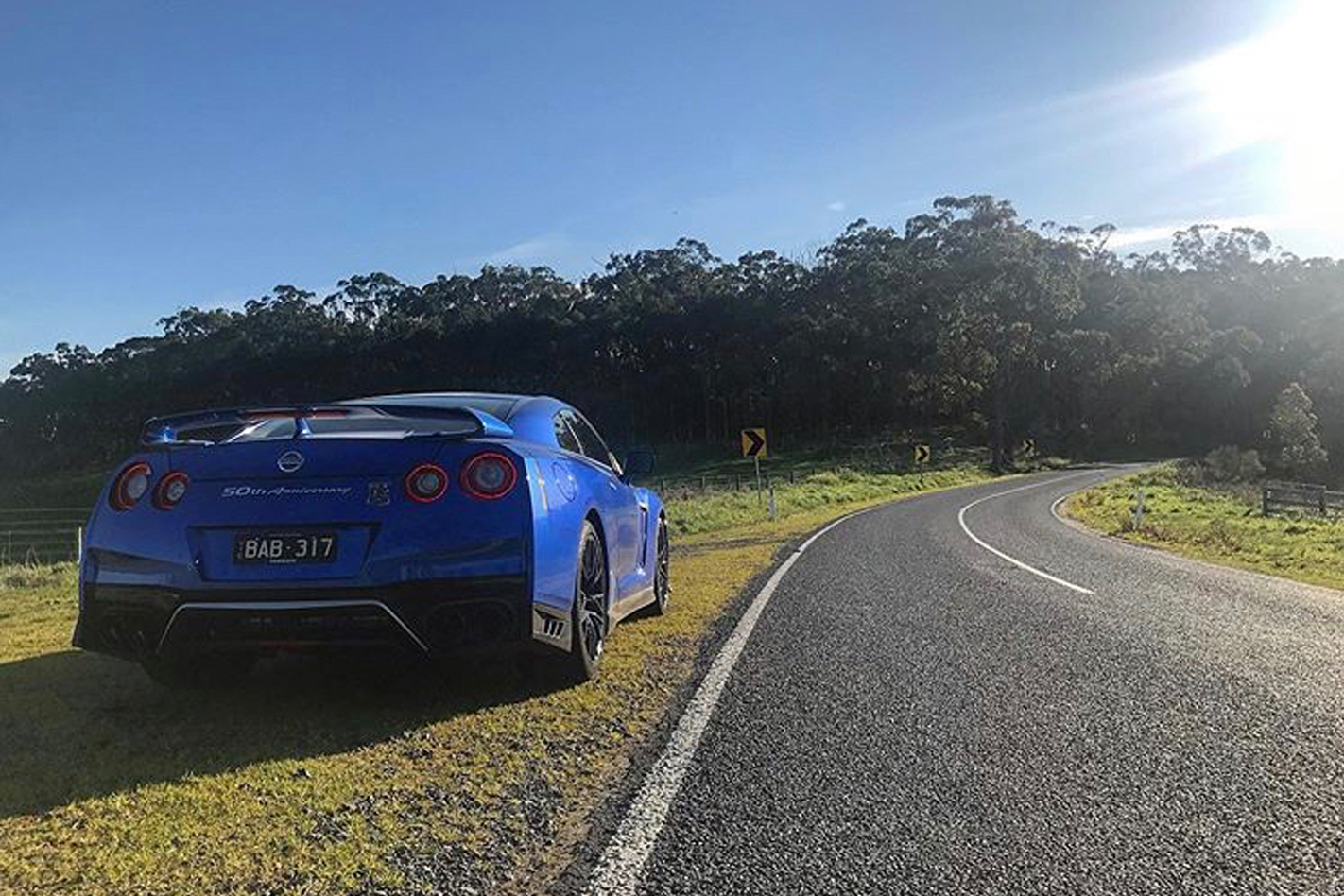
The R35 used is somewhat special being a 50th Anniversary special, celebrating half a century since the GT-R nameplate first appeared on the Japan-only KGC10 GT-R.
Its older sibling is even more special – a genuine Australian-spec R32 GT-R owned by Nissan Australia. Well used but in incredibly good condition, it’s as close as you’ll get to driving an as-new example 30 years later and it’s still utterly incredible to drive.
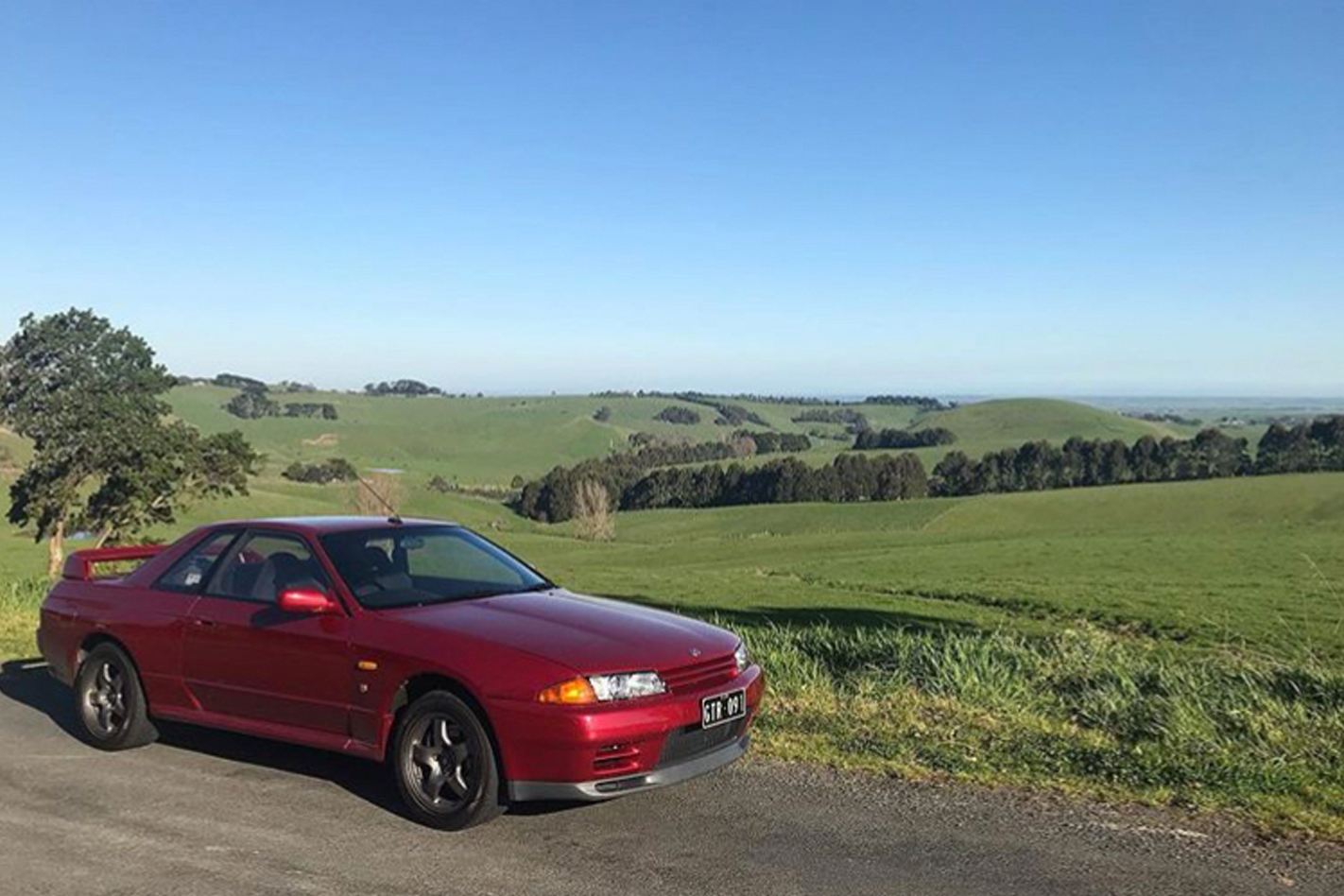
The performance is no longer shocking in this day of super-fast hot hatches and rocketship supercars, but the way it drives – its steering, handling and the way it delivers its power – is unlike anything currently offered. It’s simply brilliant.
This was a great couple of days on great roads in great cars with great scenery – simply great! – and ably captured by Josh and JP the video crew.