
As we all try to morph our lives into a rapidly changing world, racing in a virtual realm might be the best form of motorsport action we can get, at least for the next few months.
In response to widespread cancellation of races around the globe, many series have responded with live televised eRacing and simracing versions of the cancelled events, but are they hitting the mark?
MORE What is iRacing?
On today’s chat, the WCW panel regroups once again via video link to review some of the eRacing instalments that have attempted to satisfy the world’s motorsport fan’s appetite for racing, while circuits around the world remain eerily silent.
Welcomed back to the WCW fold, gaming guru Tony weighs in with his insight and knowledge on the contentious subject of eRacing, and we are joined by WhichCar editor Tim for his perspective as a petrol head who ordinarily prefers his racing in the real world.
MORE Supercar eRacing pits pros against punters
TCR, Formula 1, NASCAR and now Supercars have all made their forays into an online arena, but do the established pinnacles of real-world racing continue to dominate when the tables are turned into a virtual track? Tune in to find out.
You can find WhichCar Weekly on all manner of podcast apps including iTunes and Podbean. Please rate, subscribe and leave a review!
You can also follow the day-to-day happenings of the WhichCar team on Facebook, Twitter and Instagram @whichcar.
Listened to or watched the WhichCar weekly podcast? Help us out:
- Leave a note in the comment section below
- Leave a review on Apple Podcasts/iTunes
- Subscribe to our podcast
What’s on WhichCar TV this week?
Golden hour
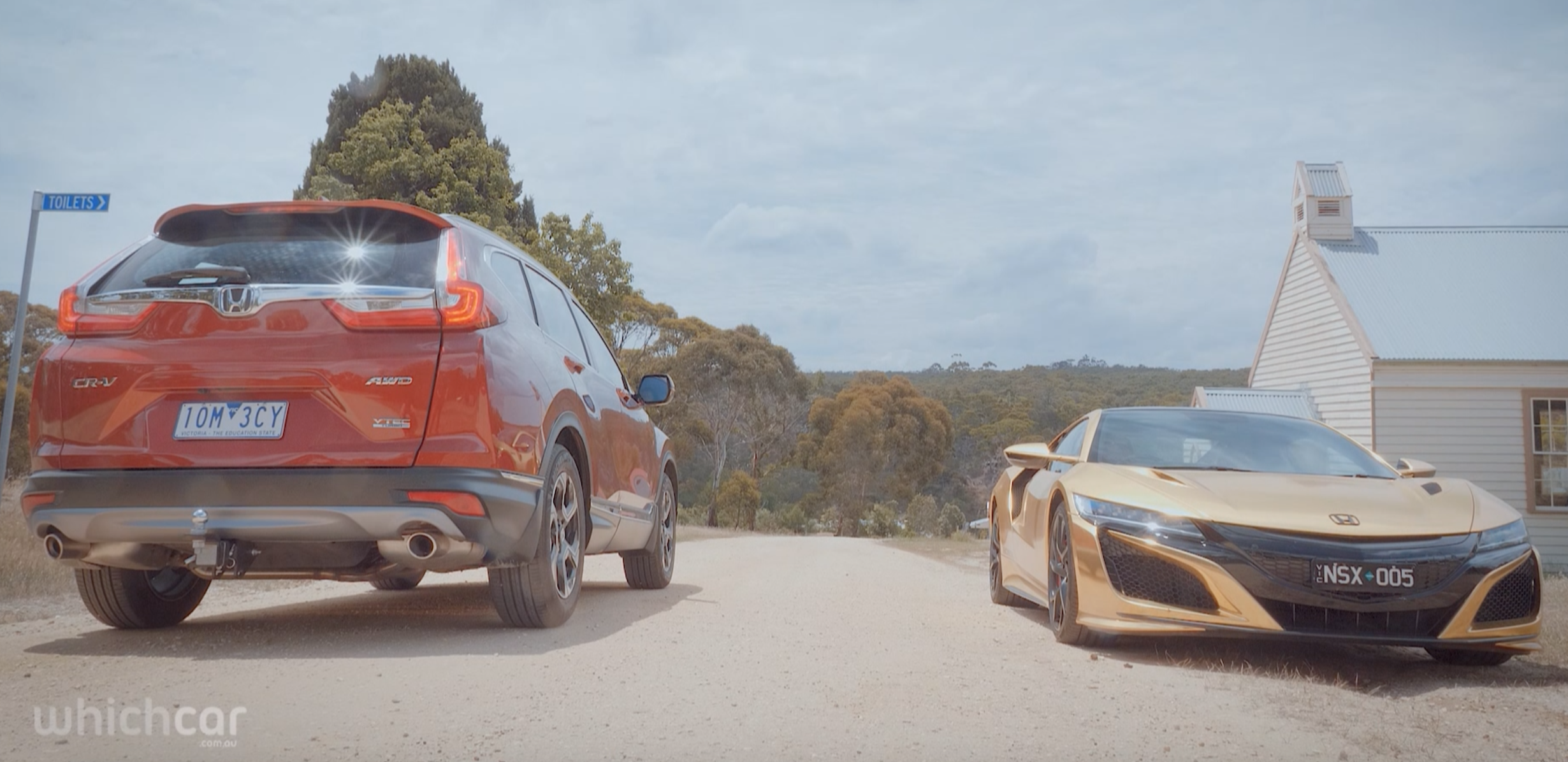
It’s the most amazing Honda NSX you’ll ever see – and Daniel Gardner gets to drive it!
Editor’s review – Holden Colorado 4×4
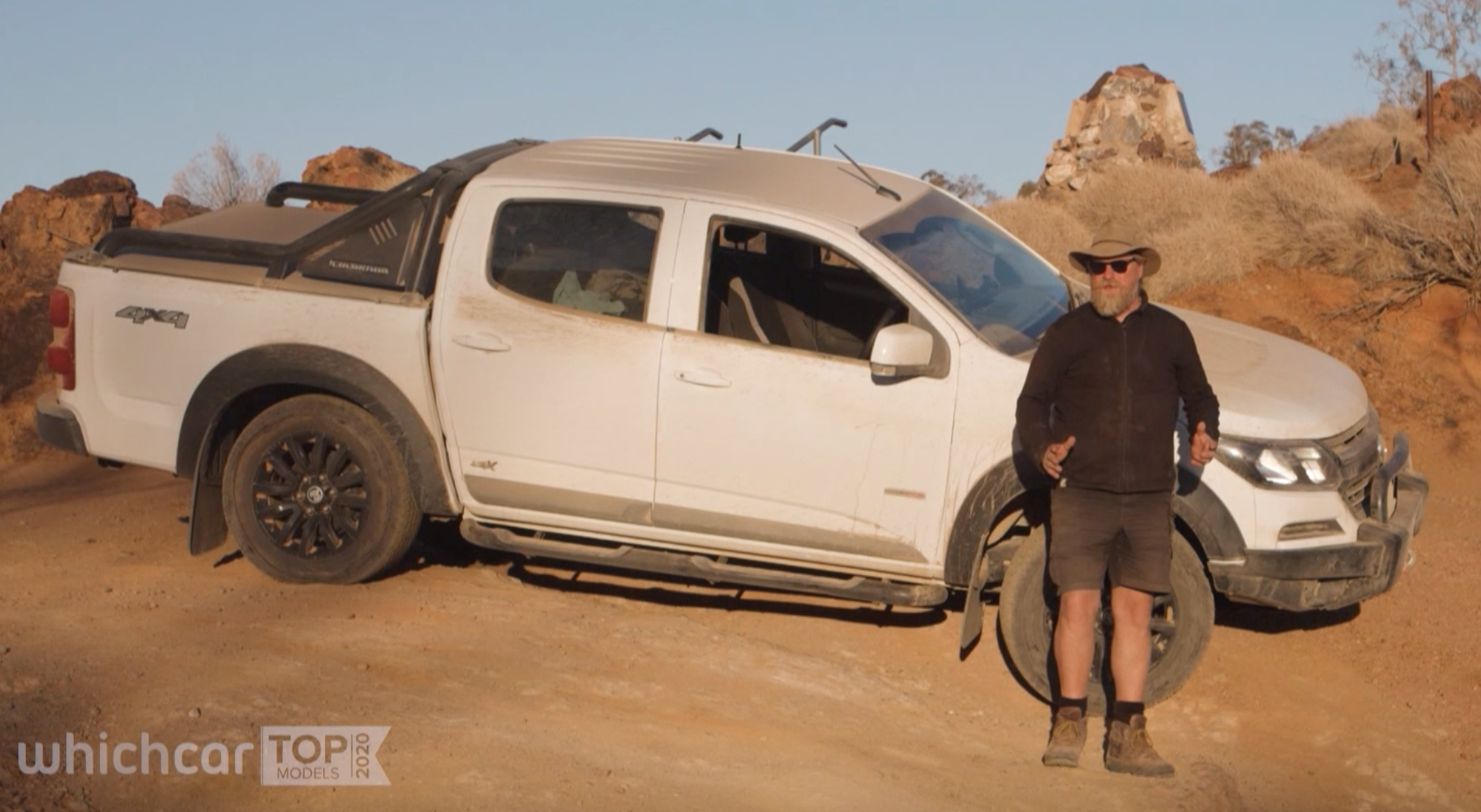
4×4 Australia magazine’s head man Matt Raudonikis spends some time in a fallen hero, the Holden Colorado 4×4.
Street Machine Summernats
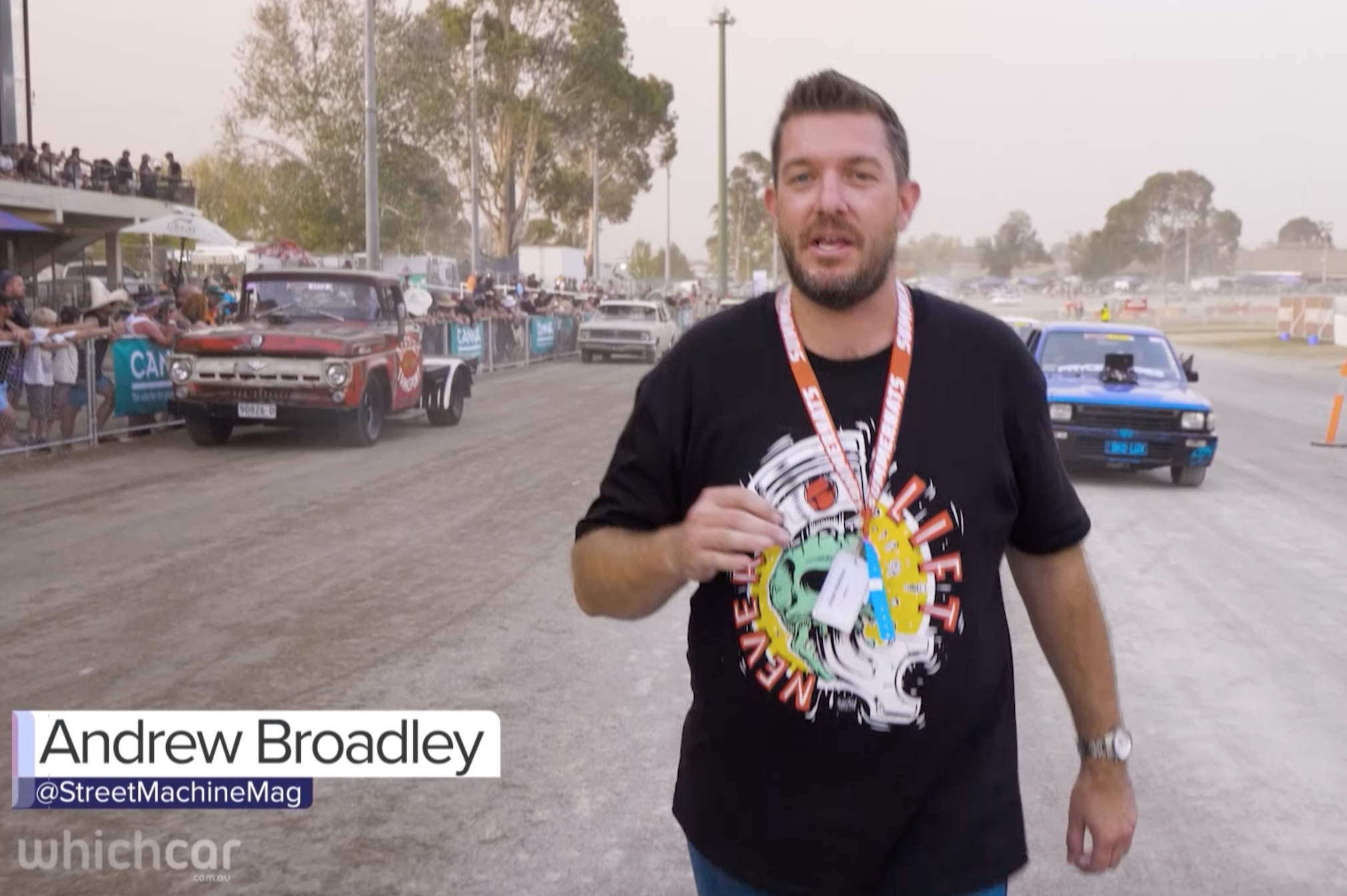
It’s the biggest, baddest, loudest car show on the planet, and Street Machine’s new editor Andrew Broadley takes you right into the eye of the Summernats storm.
Driven: VW T-Cross and T-Roc
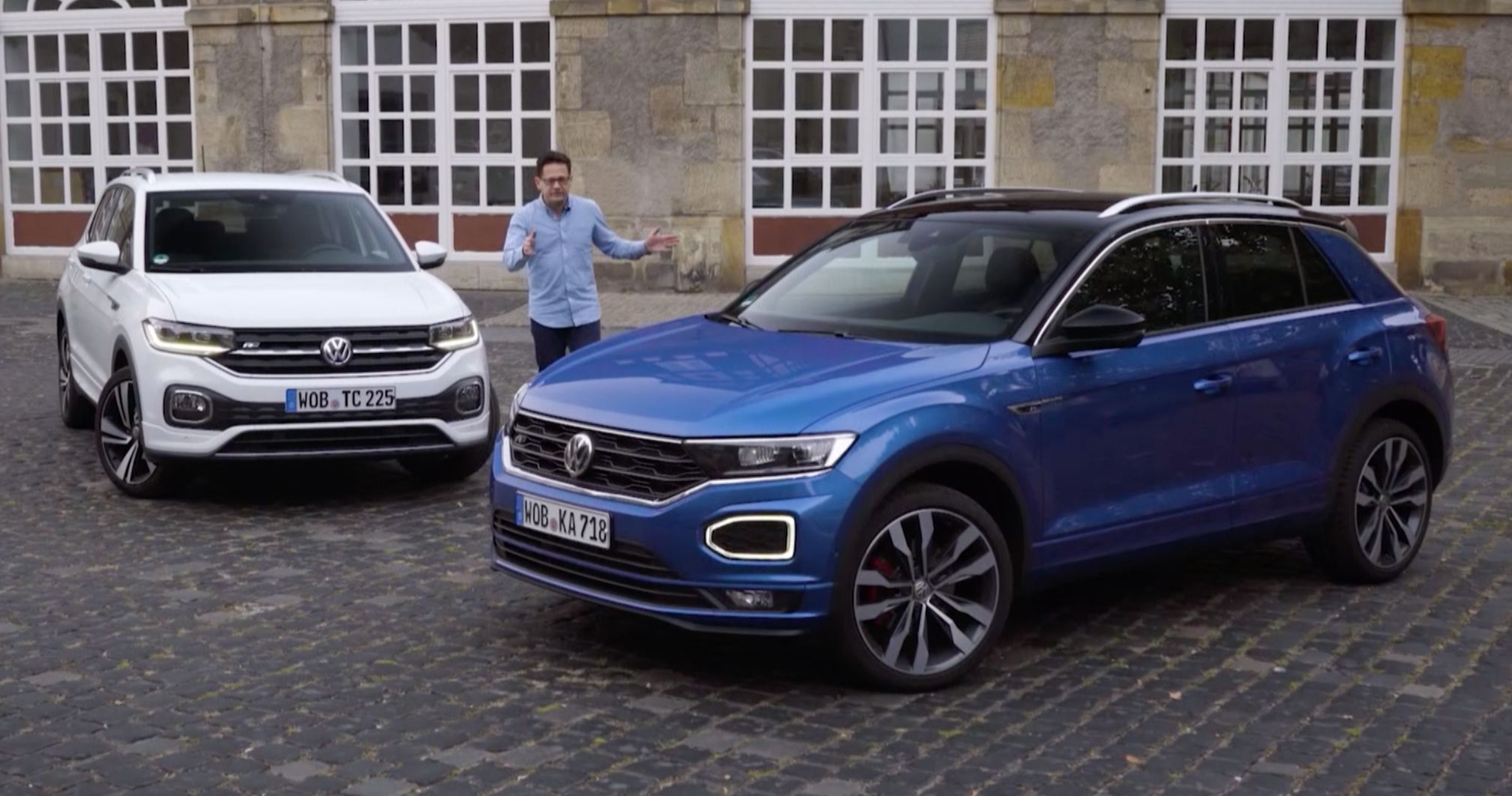
Glenn Butler makes a trip to Germany to drive Volkswagen’s long-awaited pair of small SUVs, the T-Roc and T-Cross.
For season two, we’re also offering an amazing prize for our viewers. How does a trip to the Maldives sound? Pretty awesome, right? The competition is open NOW so make sure you tune into WhichCar TV on Channel Ten at 4pm AEDT.
And, if for some reason you can’t (and it had better be a good reason!) then there’s a host of ways to catch up on the show, check out behind-the-scenes stuff and find out more about the cars Aussies want to buy.
For example, our weekly podcast, our Facebook page and our YouTube channel are standing by 24/7.
WhichCar TV Season Two Episode 10
4:00pm Sunday April 12, Channel 10
FIND THE HOSTS ON INSTAGRAM
Daniel Gardner @octanedan
Glenn Butler @glennthebutler
Andrew Broadley @broads355
MISSED THE SHOW? Catch up at Ten Play
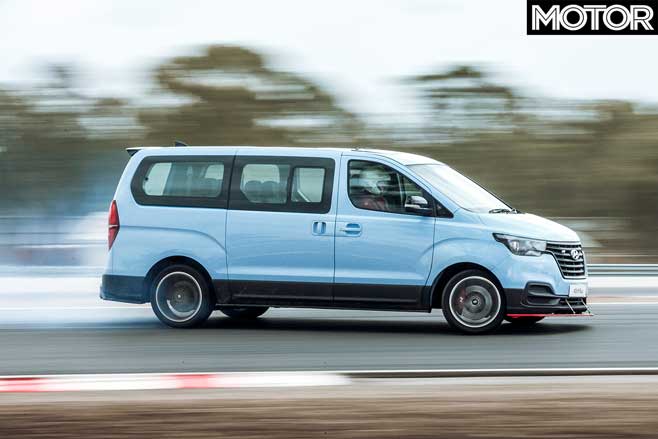
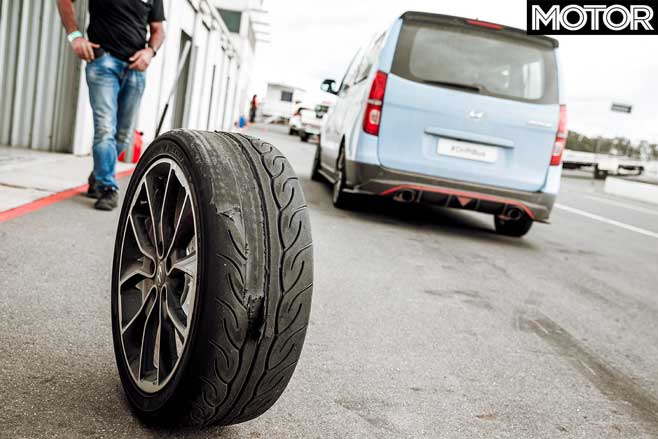
Oh crap, not again. The flap-flap-flap of rubber strands hitting the inner wheelarch is the death rattle of yet another tyre. Hyundai’s usually affable technician (let’s call him Safety Pete) won’t be happy at the prospect of having to get the jack and rattle gun out again, but the Drift Bus is merely doing what it was built to: convert rubber into fluffy white clouds.
But let’s rewind to the beginning of the story. On April 1, 2019, Hyundai Germany released computer-generated images on Instagram of a Hyundai iMax N. Now, the date should provide a clue as to the veracity of those images, but while the Germans were chuckling into their weissbeer, Hyundai Australia was rolling up its sleeves and getting to work. A little over six months later the real-life iMax N ‘Drift Bus’ was revealed.
It was a risky move. The Drift Bus was built in complete secret and there was a small chance those responsible would be loaded into said iMax and sent packing. Of course, history had shown that the idea of a tyre-shredding 300kW eight-seater van could practically blow up the internet, leading Hyundai Australia to give the Drift Bus its public debut at the 2019 World Time Attack event. Now it’s our turn.
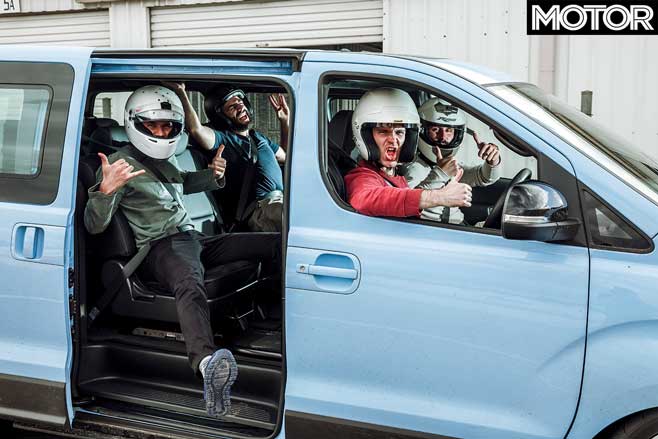
The first thing that strikes you about the iMax N is the quality of the build. One-off prototypes can be pretty ropey, even at OEM level, but the Drift Bus clearly wasn’t cobbled together over a weekend in some dingy workshop. From start to finish the project took seven weeks, project lead Geoff Fear saying “the hardest part was to make it look as factory as possible”.
The Drift Bus started life as a humble standard diesel iMax. Like Harry Potter or Frodo Baggins, it had enjoyed a quiet, comfortable existence, yet was about to be thrown into a life of adventure through no fault of its own.
The first stop was the upholsterer’s to have the interior removed, then the body shop to have all the panels stripped before the naked shell was trucked to Hyundai HQ for open-heart surgery to commence.
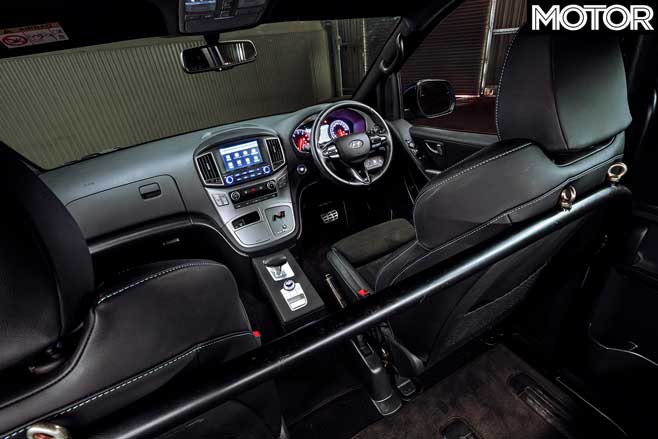
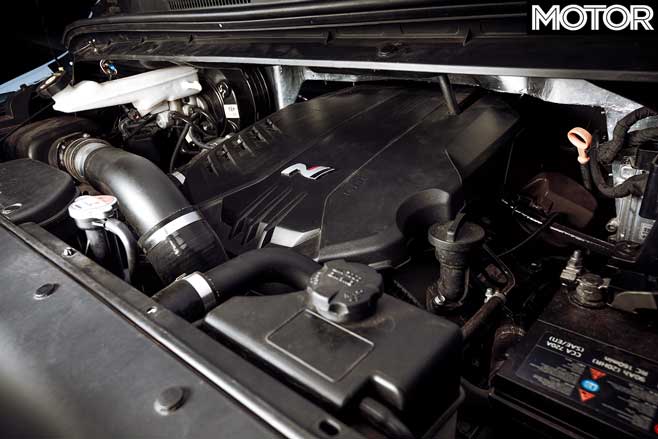
Most parts came from a prototype that Hyundai asked us not to name, but keen detectives probably won’t have too much trouble deducing its identity from the spec list. Anyhow, out went the standard 125kW/441Nm 2.5-litre oil-burner, replaced with a 3.5-litre twin-turbo V6 backed by an eight-speed automatic. A bit of firewall massaging was needed to make the bigger engine fit, as well as custom mounts for it and the new ’box.
A custom tailshaft sends power rearwards to the locked diff by renowned specialists CIG. A factory LSD was trialled but wasn’t tight enough and the diesel’s super-tall 2.9:1 diff was ditched for the petrol iMax’s 4.1:1 unit, which Fear says “livened it right up”. Outputs are conservatively quoted at 300kW/555Nm, which might sound plenty but the Drift Bus weighs 2207kg, resulting in a power-to-weight ratio roughly equivalent to that of a VW Golf GTI.
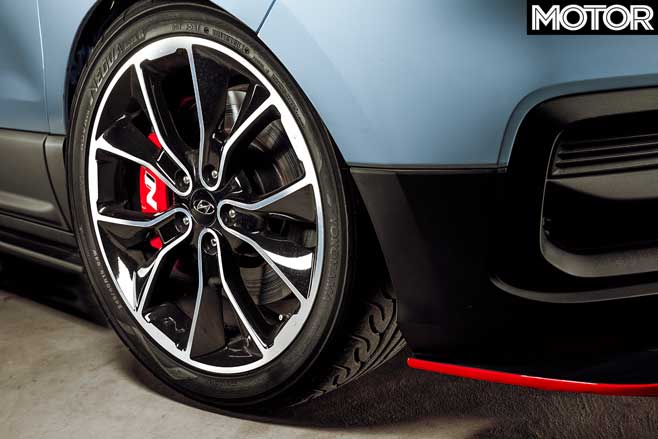
In order to keep that mass in check, the chassis received a similarly thorough going-over. Electronically controlled dampers were installed, though time constraints prevented a custom tune being developed, so they’re locked to their firmest setting. The rear axles were redrilled from six- to five-stud to allow the fitment of 19 by 8.0-inch i30 N wheels.
No such work was required at the front, as the prototype donated its entire upright assemblies, including struts, discs, calipers, knuckles and hubs. It endows the Drift Bus with 348mm ventilated discs and four-piston calipers at the front, with 358mm discs and single-piston calipers out back and performance pads all round.
At the rear the body was modified to accept the new dampers and the upper arm made adjustable to alter the pinion angle on the diff for more/less traction, while up front the iMax’s standard lower control arm was retained but a modified ball-joint installed to connect to the new hub assembly. Custom steering arms widen the front track by about 100mm and initially the rack was going to be replaced, only for Fear to discover the bottom half of the iMax rack happily mates with the top end of an i30 N rack, allowing the fitment of an i30 N-line steering wheel complete with paddleshift.
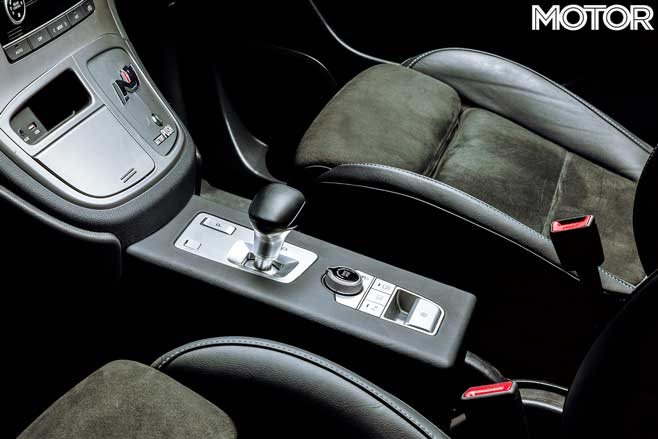
The N theme continues inside. All the (originally cream-coloured) plastics were repainted grey, the seats stripped, foam added for more support and re-upholstered in suede, while the roof was also re-lined. The power front seats are from an i30 N Premium. In fact, it’s remarkable how many functions work: the sunroofs, the electric windows, the drive mode controller – you could forgive Hyundai for cutting a few corners in a one-off prototype, but it’s been done properly.
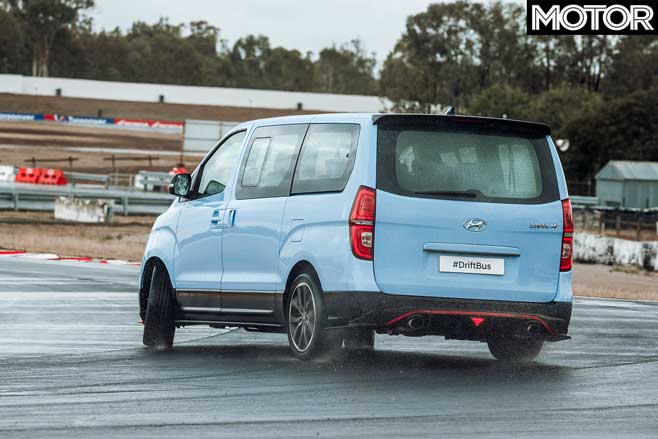
This attention to detail carries over to the exterior, the Drift Bus resplendent in N’s signature Performance Blue, the front guards subtly rolled to clear the wider tracks. The front splitter jutting from the chin sports the scars of kissing the tarmac, while twin exhausts sit either side of an extended diffuser at the rear. It looks ready for action – so let’s not disappoint it.
It’s impossible to know what to expect from the Drift Bus, and to further muddy the waters these first familiarisation laps are to take place on a sodden Winton Raceway. Torrential rain keeps the photographers and videographers under cover.
It’s definitely still a van from the behind the wheel – you sit high with the steering wheel inclined away from you – and the potential challenges become clear leaving the pit garage.
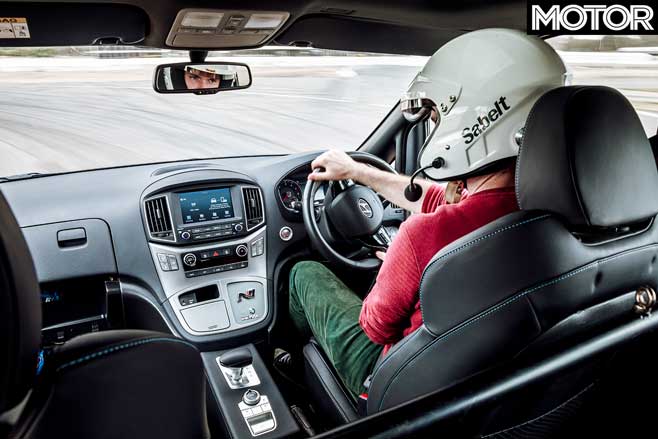
At 3.57 turns lock-to-lock, pinpoint steering precision was never a priority in the iMax development process, and the rear tyres chatter as the locked diff fails to do what a diff should (allow wheels to rotate smoothly through differing arcs).
There’s no point in wasting time, so as soon as pit exit is cleared the throttle meets the floor and the V6 revs freely as the rear tyres spin furiously on the wet surface. It all feels fairly precarious; the track is slippery, with plenty of standing water, there are no electronic driver aids, and the Drift Bus isn’t the most communicative vehicle going around.
A stab of the throttle in Winton’s slowest corner provokes the rear into a clumsily caught slide; doing the same in the next corner once again sends the rear end wide, but in the process of catching it the power steering disappears, leaving me wrestling mightily to keep 2.2 tonnes of Drift Bus on track.
Like a McLaren, the iMax retains hydraulic power steering, but the donor car uses electric assistance with no provision to run a hydraulic pump; a solution using an electric pump was fitted, but struggles to keep the fluid cool during such automotive gymnastics.
There are further issues. Once the turbos wake up, the power arrives quite suddenly. That leads to lurid oversteer, at which point the gearbox automatically shifts to third, making balancing the power difficult. And then the power steering disappears again.
There’s no air-conditioning, either; it’s not a hot day, but the effort required in wrestling this big, blue dragon is leading to driver overheating issues and steaming up the windows like a Finnish sauna. I’m beginning to wonder if this was such a good day; it’s an interesting challenge, but there’s a good chance sliding this beast around accurately for the cameras might be biting off more than I can chew.
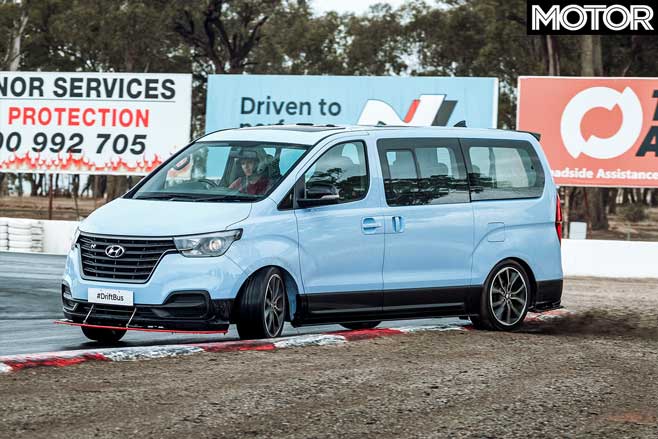
Thankfully, the rain stops, track conditions improve and with familiarity the Drift Bus starts to feel more natural, or as natural as a flying bright blue brick can feel on a racetrack.
When you’re not auditioning for the next Fast and the Furious movie it drives quite well. It’s certainly quick enough in a straight line, it turns in accurately and displays reasonable poise mid-corner. I’m not sure I would want to attempt a lap time in it, but it can be driven quickly with confidence. The locked diff promotes plenty of front-end push, a feeling exacerbated by the slow steering, but on-limit understeer is definitely preferable to having that towering rear-end swing wide in the middle of Winton’s sweeper.
In standard guise the Drift Bus develops about 240kW at the rear wheels, but the freer-flowing exhaust is causing an overboosting issue, leading the standard ECU to adopt a more conservative tune – at a guess, limiting power to around 200rwkW. In the wet this has actually been of real benefit, smoothing out the power delivery and making the iMax more controllable in a slide, but with the track now almost dry the engine is struggling to keep the wheels spinning once the gearbox automatically clicks into third.
Helpfully, a technician is on hand with a laptop and half an hour later the overboost issue is gone and there’s a helping of extra power to boot. This iMax now hauls serious arse and even on bone-dry tarmac continues to atomise the rear tyres once the transmission auto-upshifts.
With a morning of practice under my belt, the Drift Bus is huge fun; it has plenty of steering lock and with a massive 3200mm wheelbase – a long-wheelbase Mercedes S-Class measures 3165mm between the axles – you have enough time to check your watch and adjust the radio before worrying about the oversteer angle.
There are a number of ways to initiate a drift: on slippery surfaces the handbrake works well to yank the rear end sideways; alternatively, a bootful of power is equally effective. In the dry a little more commitment is required. The chassis doesn’t have the adjustability to trail-brake the rear free, but the balance is neutral enough that feeding in the power when cornering hard gradually loosens the rear tyres’ grip on the road.
Alastair’s photos suggest a fairly extreme roll angle, but from behind the wheel there’s never a fear it will topple over or really do anything untoward. It would probably link corners quite easily, but the thought of running out of power assistance halfway through the transition puts paid to that idea.
Fixing the steering is on the to-do list, along with a custom tune for the adaptive dampers and extracting a little more power from that twin-turbo V6. I hope it happens, as the Drift Bus is a remarkably complete proposition that needs only a few tweaks to deliver its best. The signs are encouraging, for it was already on the dyno the day after our shoot.
Still, even in its current guise it’s a massive laugh, happily sliding through almost every one of Winton’s corners with the engine singing and the tyres smoking, which brings us back to the beginning of this story and the sound of another tyre crying ‘enough’. It might not have signed up for it, but it seems the iMax N quite enjoys this life of adventure.
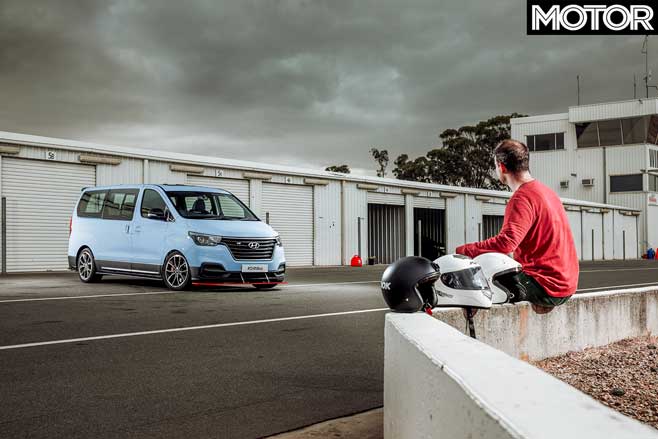
Hyundai iMax N ‘Drift Bus’ Specs BODY: 5-door, 8-seat van DRIVE: rear-wheel ENGINE: 3497cc V6, DOHC, 24v, twin-turbo BORE/STROKE: 93.0 x 85.8mm COMPRESSION: 10.5:1 POWER: 300kW @ 5500-6500rpm TORQUE: 555Nm @ 2000-6500rpm WEIGHT: 2207kg POWER-TO- WEIGHT: 136kW/tonne TRANSMISSION: 8-speed automatic SUSPENSION: struts, coil springs, anti-roll bar (f); multi-links, anti-roll bar (r) L/W/h: 5150/1920/1935mm WHEELBASE: 3200mm TRACKS: 1815/1685mm (f/r) STEERING: hydraulically assisted rack-and-pinion BRAKES: 348mm ventilated discs, 4-piston calipers (f); 358mm ventilated discs, single-piston calipers (r) WHEELS: 19.0 x 8.0-inch (f/r) TYRES: 235/45 ZR19 (f); 255/40 ZR19 (r); Yokohama Advan Neova AD08R PRICE: Bored sheikhs with blank cheques need only apply
PROS: It’s an eight-seater van that does massive skids CONS: A few mechanical tweaks needed; it’s a one-off RATING: 4.5 out of 5 stars
Top Three: Insanely Fast Vans
Ford Supervan
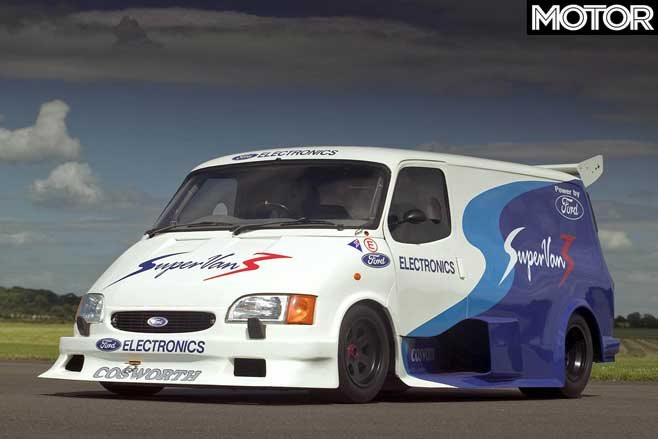
Ford has produced three iterations of the Transit Supervan, the first on a GT40 platform, later a Group C platform with a 522kW Cosworth V8.
Renault Espace F1
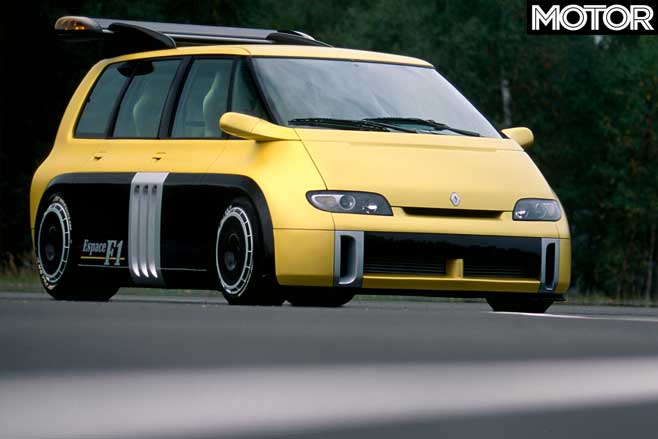
Undoubtedly the wildest-ever van, a carbonfibre facsimile of an Espace was dropped over the chassis and V10 engine of a Williams FW15C.
Ford Transit WRT
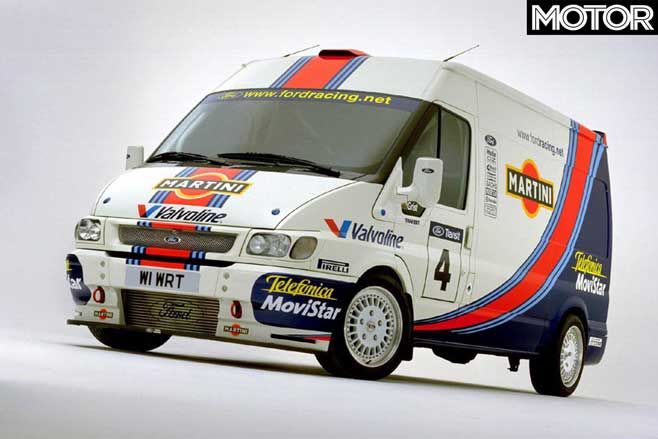
One that’s actually practical for the road, the World Rally Transit had a 150kW diesel engine, stiff suspension and interior from the Focus WRC.
After a three-year Australian sales hiatus, SsangYong is back, and the South Korean brand is not going for a soft relaunch approach either. Four models are cutting straight to the core of Australian buyer habits, including three SUVs with off-road capability and a one-tonne ute – the Musso.
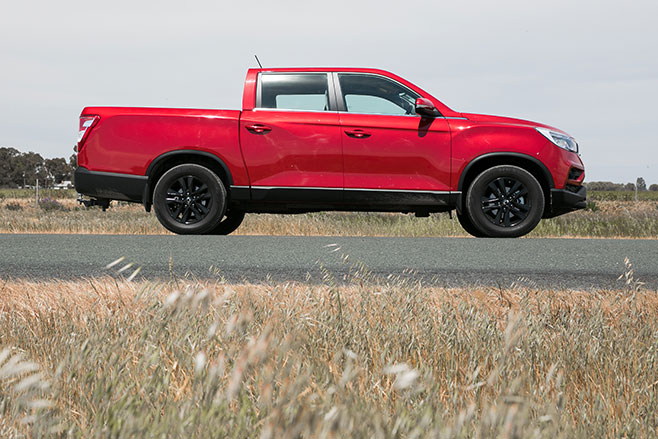
There are a few varieties of SsangYong’s pick up to choose from including the entry level EX, which kicks off from a bargain $30,000, but we jumped straight to the pointy end and the stretched Ultimate XLV dual cab with almost all the extras.
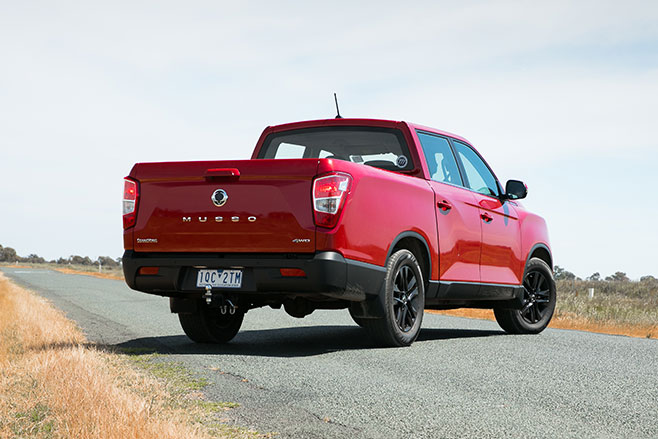
While some dual-cab line-ups are just getting started for $40k, the Musso offers a ton of kit and features, but how will it get on in Australia’s incredibly pragmatic and discerning landscape?
WHAT IS IT?
Exactly. For many people, that’s the first question when they see the Musso.
Neither its attractive face, nor the SsangYong brand are well known in Australia and that’s an obstacle the company is fighting hard to overcome. Initially though, we found the anonymity may actually play in the Musso’s favour.
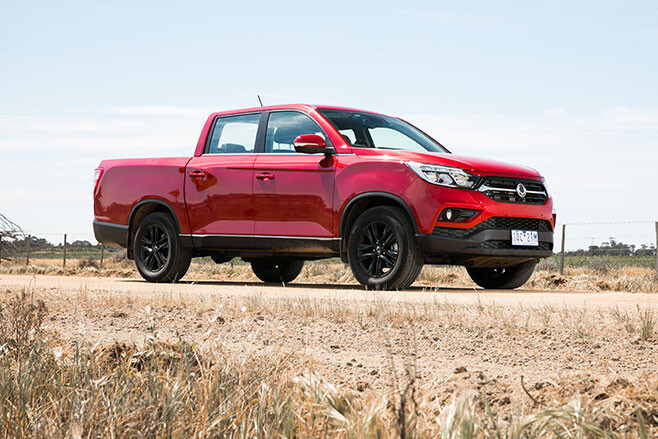
When presented to festivalgoers at the 2019 Deni Ute Muster, the Musso received a surprisingly warm welcome and that may, in part, be thanks to its enigmatic persona.
No matter which variant you choose, the Musso is powered by a 2.2-litre diesel engine, the XLV gets a huge tray and tons of cabin space, a truly compelling price and all SsangYongs have a class-leading seven-year warranty and safety systems.
WHAT’S IT LIKE TO DRIVE?
The Musso joins an exclusive and small club of dual-cabs that can brag a coil-spring rear suspension set up, which is supposed to have notable comfort benefits. However, like the Nissan Navara and Mercedes X-Class, we struggled to feel a significant advantage.
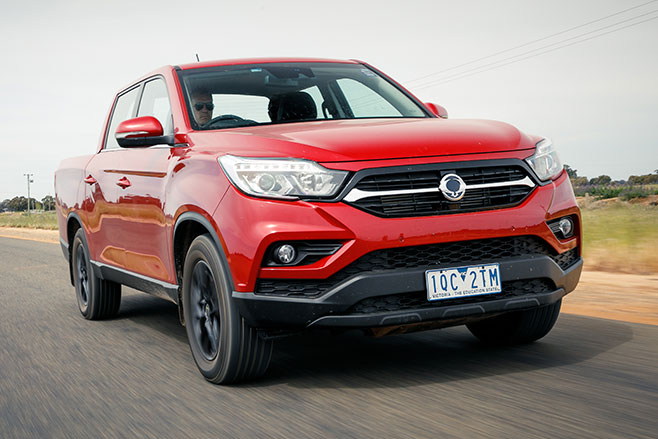
Freeway cruising was by no means uncomfortable but its slightly fidgety attitude on the road was similar to many other unloaded utes we have tested.
Nor is the 133kW diesel engine particularly powerful compared with anything else in the market. But the Musso’s manner on the road is a brilliant demonstration of adequacy. A three-hour stint at the wheel was completely comfortable thanks to the commercial vehicle driving position, decent cabin insulation and surprisingly good noise, vibration and harshness (NVH) levels.
We also particularly liked the attention paid to ergonomics including the carefully sculpted steering wheel wrapped in leather. Steering feel is light and a little numb and we would love to sample the speed sensitive technology that comes only with the top-end Ultimate Plus.
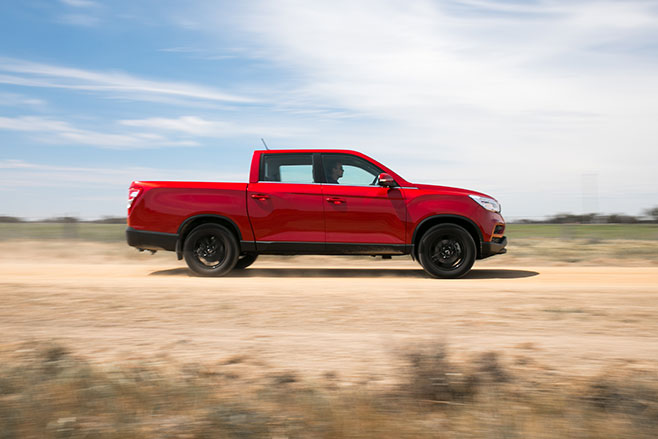
With a decent 420Nm torque output, the Musso has decent acceleration and towing ability but its torque band is relatively narrow, meaning the grunt falls off quickly if the engine revs out of the sweet spot.
You can switch the six-speed automatic transmission into a ‘manual’ mode to try and hold gears in the optimum rev range, but it’s fiddly. Fortunately, the auto program does a good job of getting the best out of the diesel engine without too much human intervention.
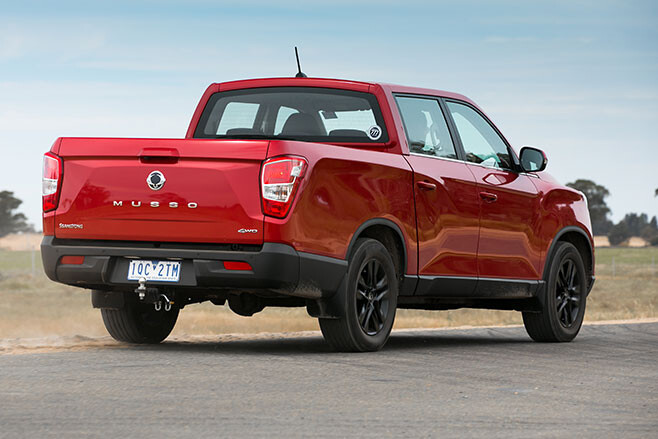
Acceleration out on the road is not exactly incendiary with overtaking moves requiring some planning and space. That issue would only be compounded with load or towing. Once again, the Musso is an exercise in everything adequate.
Officially, the Musso will pull up to 3.5 tonnes when equipped with a braked trailer but we imagine that would be at the very limit of the engine’s capability and feasibly load. If you’re after true one-tonne status, the entry-level leaf-sprung Mussos offer more than 1000kg payload capability with the coil rear end versions dropping to 880kg.
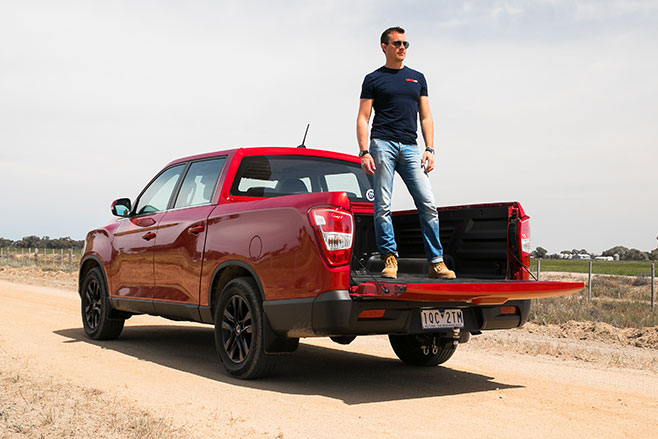
For the serious off-roader though, there is some equally serious kit. Not only is the Musso a switchable four-wheel drive with high and low ranges. The rear differential is locking, ground clearance is 215mm, approach angle is 25-degrees while the departure angle is 20-degrees.
This big dual-cab is most at home on unsealed surfaces where the ride continues to be as comfortable as the paved road and there’s lots of reassuring feedback even on slippery surfaces and with only the rear wheels dealing with drive.
WHAT’S IT LIKE TO LIVE WITH?
It’s only in recent years that the words luxury, comfort and dual-cab have been thrown together in the same sentence, but today’s modern ute is under increasing pressure to cater to an audience with car-like comfort demands.
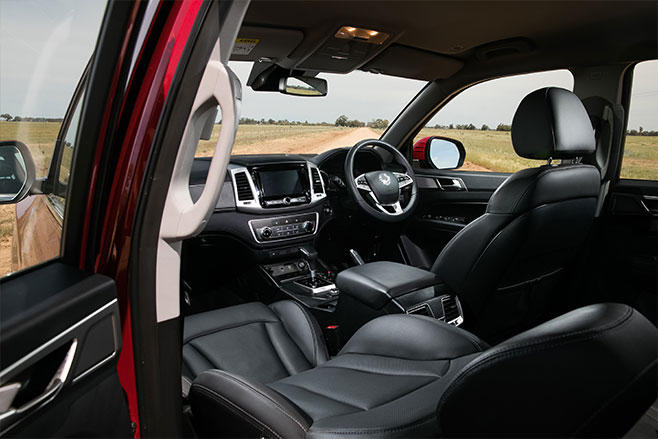
And the Musso will surprise many that are expecting the no-frills cabin of some older South Korean representatives.
The cabin in this Ultimate XLV is not quite palatial, but it is well appointed with heaps of standard equipment that makes day-to-day use simple and relaxing. There aren’t many workhorse utes that offer heated seats in a grade below range-topping, but this one has both heating and cooled seat that are effective in both temperature extremes.
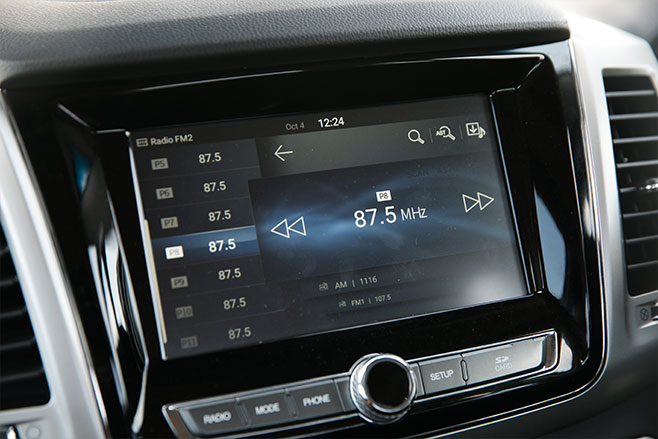
There’s also Android Auto and Apple CarPlay connectivity, which is essential given the disappointing absence of native navigation in any grade of Musso.
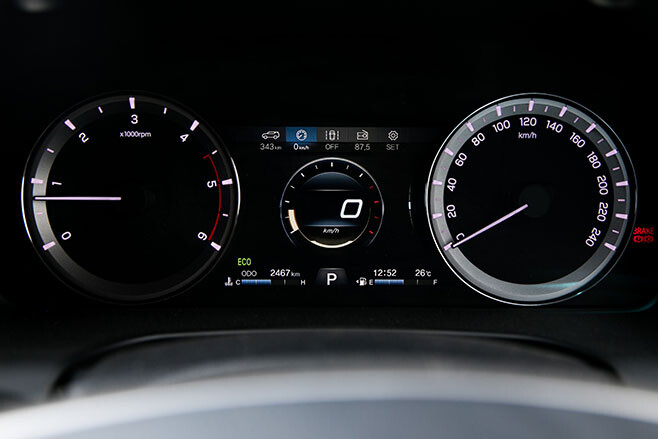
SsangYong hasn’t quite graduated to fully digital instrument clusters but there is a 7.0-inch screen framed between the more traditional analogue gauges. It adds a more modernised feel and displays a ton of information that is easy to scroll through, including a large digital speedometer readout and customisable graphics.
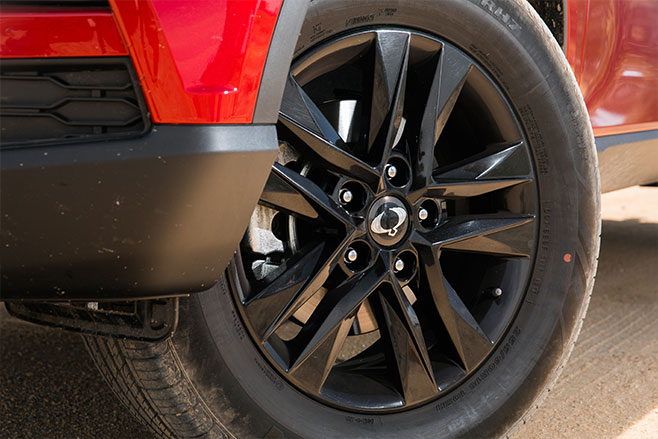
You’ll have to step up to the Ultimate Plus for real leather seats with electric adjustment, HID headlights, a full 360-degree camera. Still not enough kit? A sunroof and classy 20-inch alloy wheels are the only available options.
On the outside, the SsangYong is just as large as it is on the inside and measures almost the same in length as a Ram 1500 American-made truck we took along for the same trip. That translates to a whole heap of storage space in the cabin and the tray – the longest in the class, says its maker.
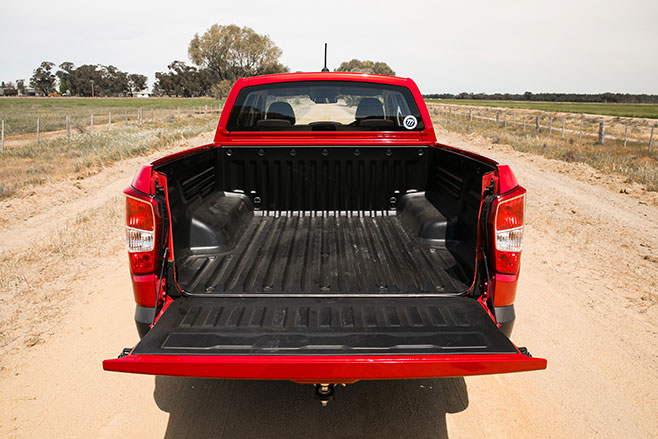
The XLV part of this Musso’s name relates to its 310mm stretched load tray out back, which can accommodate 1262 litres of things. If its overall length is little too much, the standard Musso might be the more manageable option.
The Musso also scores points for excellent driver assistance and safety systems that even the most mainstream brands are only just starting to feature in their models. It offers tyre pressure monitoring, front and rear radar parking assistance with reversing camera, lane changing assistance, rear-cross traffic alert, and blind-spot detection.
Even at the entry level, the Musso has autonomous emergency braking.
While the low-stressed diesel might not be a firecracker, it does deliver good fuel consumption and during our trip away with the Musso, it returned a reported economy figure of less than 10.0 litres per 100km – not bad for a 2.2-tonne 4×4 on a combination of roads.
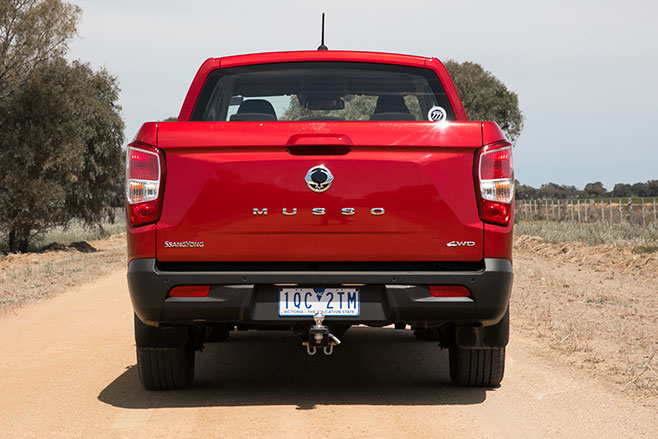
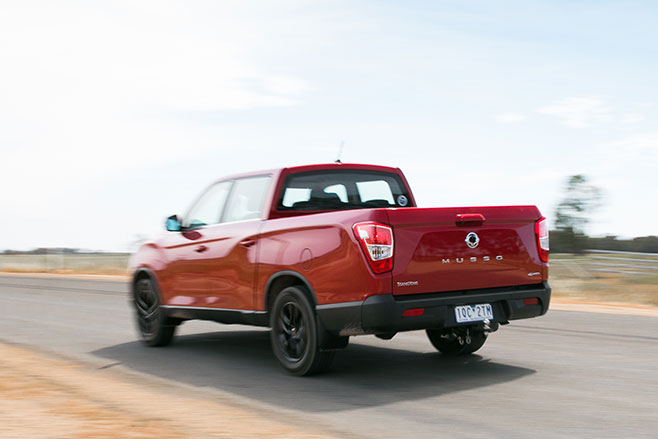
Even considering its sizable exterior dimensions, the Musso is no harder to live with than any other dual cab. In fact, its excellent cabin visibility, manoeuvring tech and wide opening doors make it significantly simpler than a majority of rivals. Our only bugbear related to ease of loading lies in a curious trailing edge of the rear doors which protrudes past the window and caught us in the ribs on more than one occasion.
But speaking of a jab to the ribs, the attendees at this year’s Deni Ute Muster weren’t as savage to our Asian invader and actually commended the Musso for a number of features.
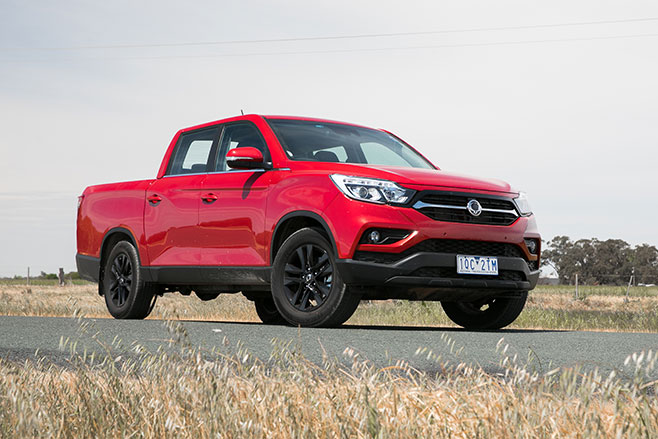
Firstly, its looks. Some reported there was a resemblance to the Holden Colorado, which is certainly true and should be taken as a compliment. The singlet-wearing crowd also liked the huge tray and no-nonsense cabin – as did we.
And when they learned the price, virtually everyone was pleasantly surprised. And therein lies the essence of the challenge for SsangYong. When you have a captive audience, it’s easy to explain the many good points about this well-rounded ute, but attracting that attention in the first place is a long battle.
IS IT WORTH THE MONEY?
When you consider that Toyota’s cheapest version of the dual-cab Hilux is exactly the same price as the most premium Musso, you get an idea of just how much is on offer for your cash.
And there isn’t a lot of sacrifice involved in sidestepping brands that are perceived as more premium either.
Instead of trying to stand out from an already crowded dual-cab market with best-in-class claims and ostentatious features, the Musso is going for a Trojan Horse approach. If you can shirk any brand loyalty you might have or animosity for a relative newcomer, the Musso is well worth a drive.
The only question we can’t answer regards the long-term ownership experience – perhaps the greatest concern for anyone thinking of taking a risk with a brand they haven’t previously lived with.
SsangYong is certainly putting a big vote of confidence in itself with its 777 deal, which bundles warranty, roadside assistance and capped-price servicing into a seven-year plan. If it can back that up with customer service that’s as attractive as the vehicles it is rolling out for its Aussie resurrection, this South Korean hopeful is on to a very good thing.
PROS: Lots of standard equipment; unrivalled ute warranty; sharp price; excellent driver-assistance features
CONS: No navigation in any grade; fidgety on-road cruising; jury’s out on customer service
Sign-up here to get the free weekly WhichCar eNewsletter
Second Opinion: 4×4 Australia off-road review (with accessories package)
Mixing in-depth vehicle reviews with off-the-beaten-track adventures and gear tests, 4X4 is all about enjoying Australia’s great outdoors.
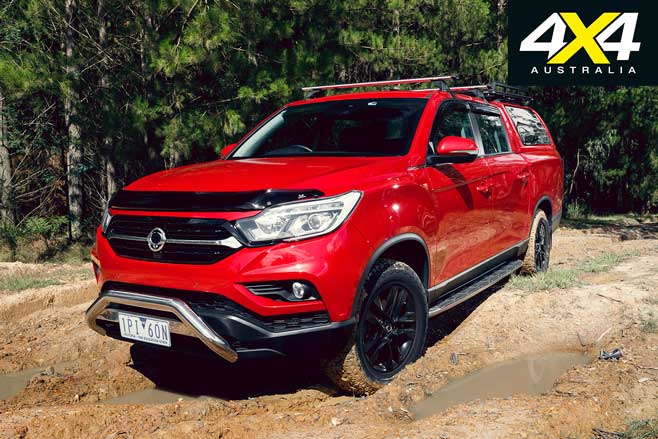
A locally-developed suspension package and a raft of quality accessories make Ssangyong’s Musso XLV a more attractive package. By: Matt Raudonikis | Photos: Nathan Jacobs
There were a few raised eyebrows when we arrived for the 4×4 Of The Year testing in a Ssangyong Musso, but if there was one car that surprised our judges over the week of on- and off-road testing it was the big red ute. Each of the judges commented on the refinement of the drivetrain, the space in both the cabin and massive cargo tray, and tipped it as a great value-for-money package.
If there was one consistent negative comment about the Musso it was the ride height with most suggesting it could do with a suspension kit. Perhaps the rear bumper being dislodged from touching terra firma when we returned from the week of testing was a dead giveaway.
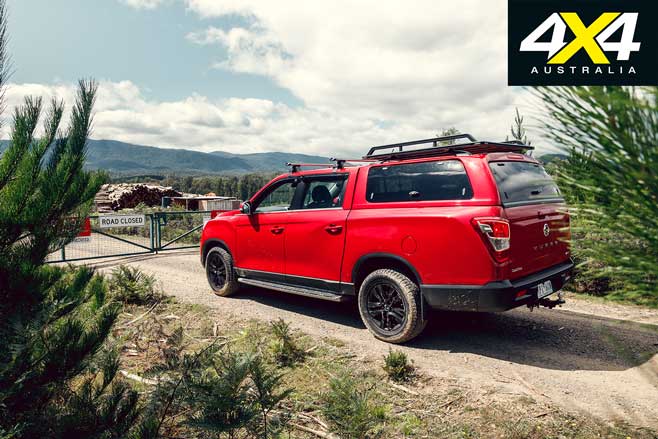
“Oh, we should have given you one with the off-road suspension,” said Ssangyong’s Kristian Bartley when we informed him of the now ill-fitting bumper and the comments on ground clearance or lack thereof.
Well duh! We forgot about that Ssangyong had previously commissioned local 4×4 specialists Ironman 4X4 to develop a suspension package for its vehicles to better suit Australian conditions and users. Ironman spent some time developing the package and then toing and froing with the OEM to get the setup tuned to its standards and now it is available as a factory-approved option.
The Ironman suspension for the Musso comprised springs and shocks that raise the ride height by 35mm at the front and 40mm at the back, and better control the stability over bumps. The constant load kit is available for both SWB Musso and LWB Musso XLV utes and is a $990 option.
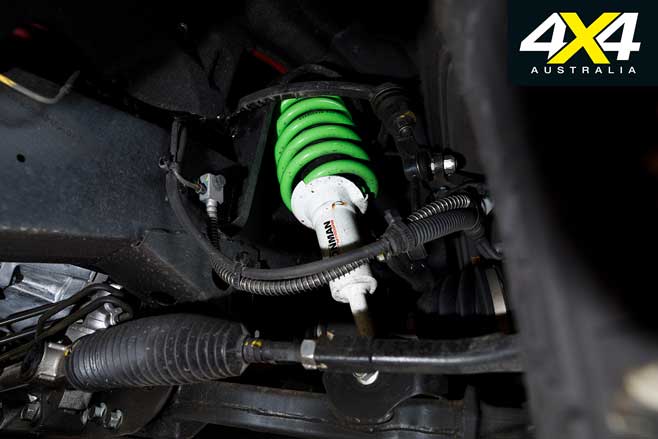
The Musso XLV supplied to us with the upgraded suspension was also loaded with a heap of other factory accessories that add almost $12,000 (see price list) to the drive-away price, but even at $53,386.47 drive away, this is a lot of ute for the money. Even better with the discounts currently available that could land it for less than $50K for ABN holders.
On Road
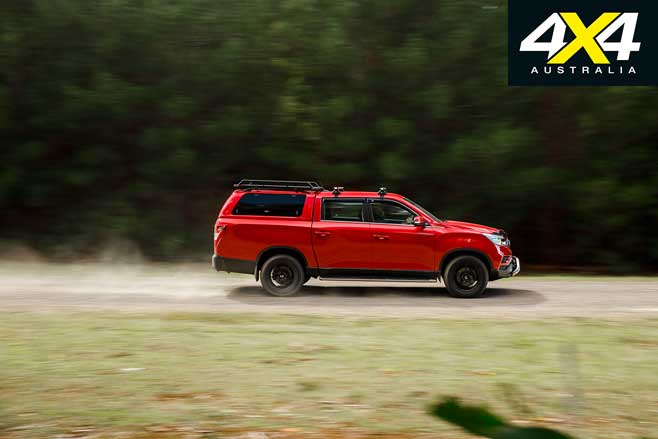
Driving the Musso is a more pleasant experience than in many other double-cab 4×4 utes. The refinement of the powertrain that was so influential in the ute’s 4X4OTY performance shines through as soon as you get behind the wheel. The 2.2-litre diesel engine is smooth and relatively quiet while the six-speed auto gets on with the job without fuss or fanfare.
The cabin is not only quiet but it’s also big! Wider than just about all of the mainstream utes, it gives the feeling of a bigger vehicle. It’s spacious and airy, never feeling cramped or confined, while all the controls and buttons are easy to read and operate.
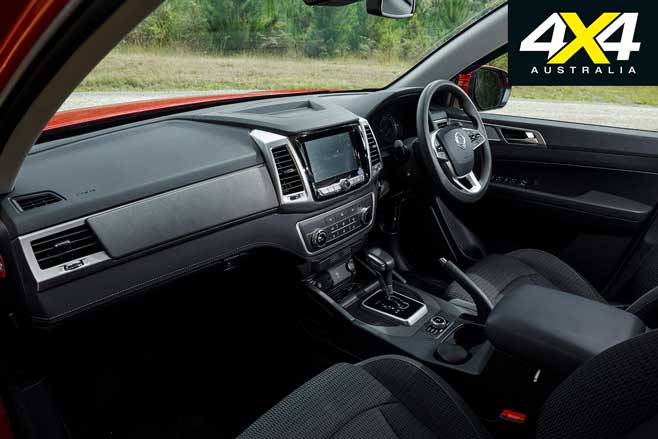
The Ironman suspension lift is only modest by off-road standards so there’s no need to climb up in to the cabin. More importantly, the upgraded suspension tames any bounce and wallowing that was noticeable in the stock vehicle over uneven terrain to deliver a far more controlled and pleasurable drive. The constant-load springs of the improved suspension should ensure that this control is mirrored when there is cargo in the massive tray.
Off Road
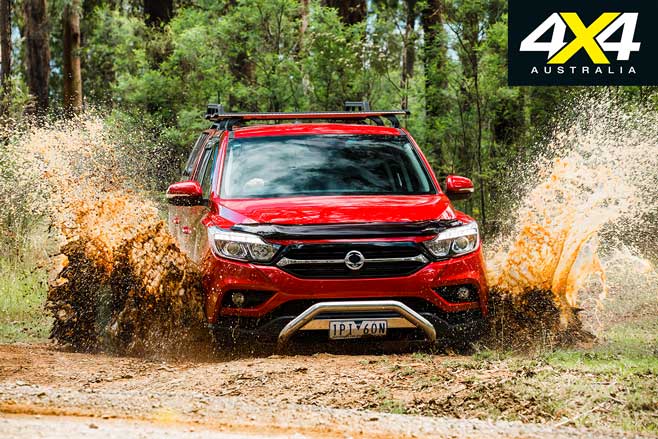
That improved control afforded by the new suspension is also there when you leave the blacktop and hit the tracks as the Musso now tackles bumps and potholes with less kickback through the vehicle or upsetting of the chassis.
More significant is the added ride height, as we rolled over erosion humps without scraping the belly on this Musso where the standard one would have required special care to get over unscathed. At 3210mm this is still a long wheelbase vehicle and you need to be wary of the belly over ledges and drop-offs.
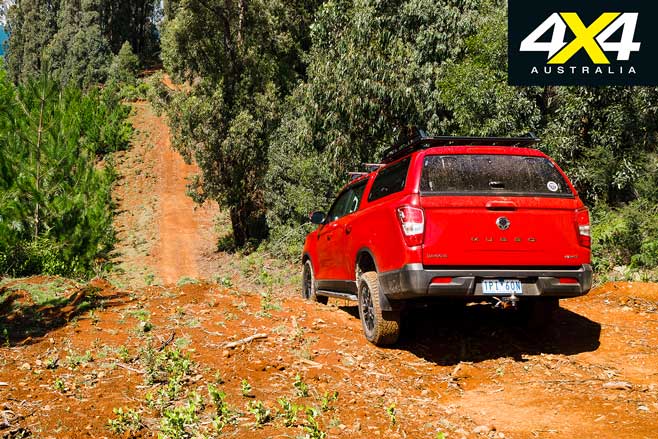
There’s no escaping that massive rear overhang though and even with the taller ride height, we still touched down on the tail a few times. Thankfully we kept the rear bumper intact this time around, the optional tow bar providing a bit of protection there.
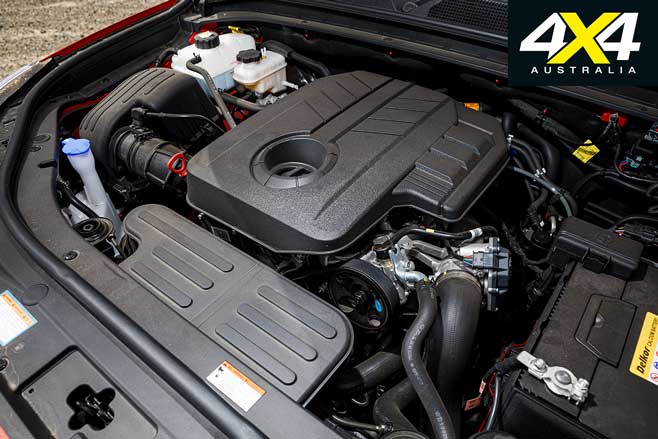
The 420Nm diesel engine chugs along nicely in low-range crawling delivering its torque from as low as 1400rpm. The Musso has to make do with its electronic traction control for those instances where it lifts a wheel or there’s simply no grip as there are no other traction aids such as a user-lockable rear differential. Ssangyong does specify the rear diff as being an auto-locking limited slip unit and that works well for it on gravel, but we found it a bit slow to react when the going gets rougher.
The Hankook Dynapro AT tyres fitted to this Musso helped with traction and stability on the gravel roads as well.
The long wheelbase XLV version of the Musso might not be the ute for you if heavy-duty off-road driving is what you’re chasing, but it is capable enough for most users over most terrain that they are likely to encounter. It is made that extra bit capable with the upgraded suspension.
Practicality
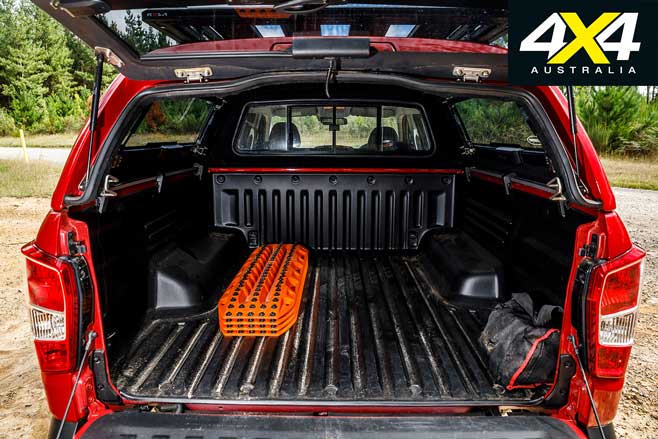
With its wide cabin, massive cargo tub, 3500kg towing and 800kg payload (coil spring XLV) the Musso delivers large on usability be it for family, trade or touring use. This practicality is amplified with the quality accessories fitted to this vehicle and not just the suspension.
The approved canopy comes from Carryboy and we reckon fitting it really helps the aesthetic of the Musso, putting its somewhat ungainly large appearance in to better proportions. Better still, a lockable canopy protects your belongings against the elements and adds some security to the cargo tub. A great feature of the Carryboy canopy is that all the locks, including the tailgate and side windows, are synched to the central locking so it’s a one-button press to unlock the openings for easy access.
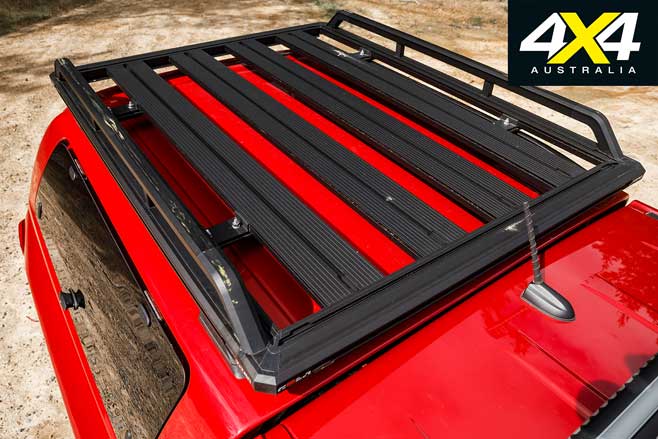
Further adding to the quality brand accessories, the canopy is topped by a Titan Tray rack from Rola which is complemented by cross bars on the vehicle roof. When you add the Rola rack to the Carryboy Canopy and Ironman suspension it becomes obvious that Ssangyong has teamed with leading brands for its factory-approved accessories.
Value
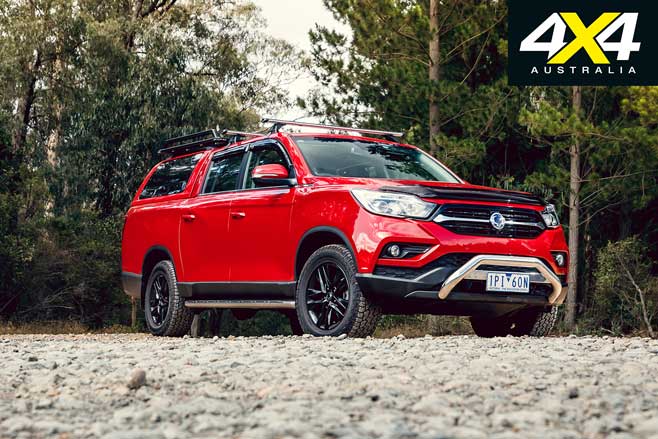
When you take in the value of Ssangyong’s 7-year, unlimited-kilometre warranty, 7-year roadside assistance and capped price servicing, and add it to the Musso’s relatively low price-point, quality feel, refined drive and excellent capacities and practicality, it really stacks up as a leader in the value-for-money stakes. The quality gear offered by the factory and fitted to this particular vehicle just adds to that value package.
SSANGYONG MUSSO XLV ULTIMATE SPECS: Engine: 2.2-litre 4-cyl turbo diesel Max Power: 133kW at 4000rpm Max Torque: 420Nm at 1400-2800rpm Gearbox: 6-speed automatic 4×4 System: Dual range part-time Kerb Weight: 2160kg GVM: 2980kg Payload: 880kg Towing Capacity: 3500kg GCM: 6130kg Departure angle: 21.5° Rampover angle: 21.3° Approach angle: 27.1° Wading depth: N/A Ground clearance: N/A Fuel Tank Capacity: 75 litres ADR Fuel Claim: 8.2L/100km Test Fuel Use: 10.2L/100km Price: $41,990 (driveaway) As-Tested: $53,386.47 (driveaway)
MUSSO XLV ACCESSORIES (RRP) Tow Bar: $1350 Electronic Brake Controller: $290 Carpet Mats: $153.12 Bonnet Protector: $118.75 Slimline Weather Shields: $137.19 Constant Load Suspension Kit: $990 Nudge Bar: $870.42 Premium Side-Steps: $900 Roof Racks: $394.97 Canopy: $5669.02 Rola Titan Tray 1500×1200 Plus Side Rails: $1028 Total: $11,901.47
Roads, at their core, are pretty boring.
Most of them are simply utensils built by governments to ferry people from point A to B.
But not all roads are like this – some are special.
Twisting and winding their way into our hearts, some roads have a magic about them – as if they’ve been designed for pleasure, rather than to connect pieces on a map.
They might be rare, but roads like this are a petrol head’s dream – so that’s why we’ve compiled this of 50 roads every enthusiast must drive at least once.
The Great Ocean Road, Vic, Australia
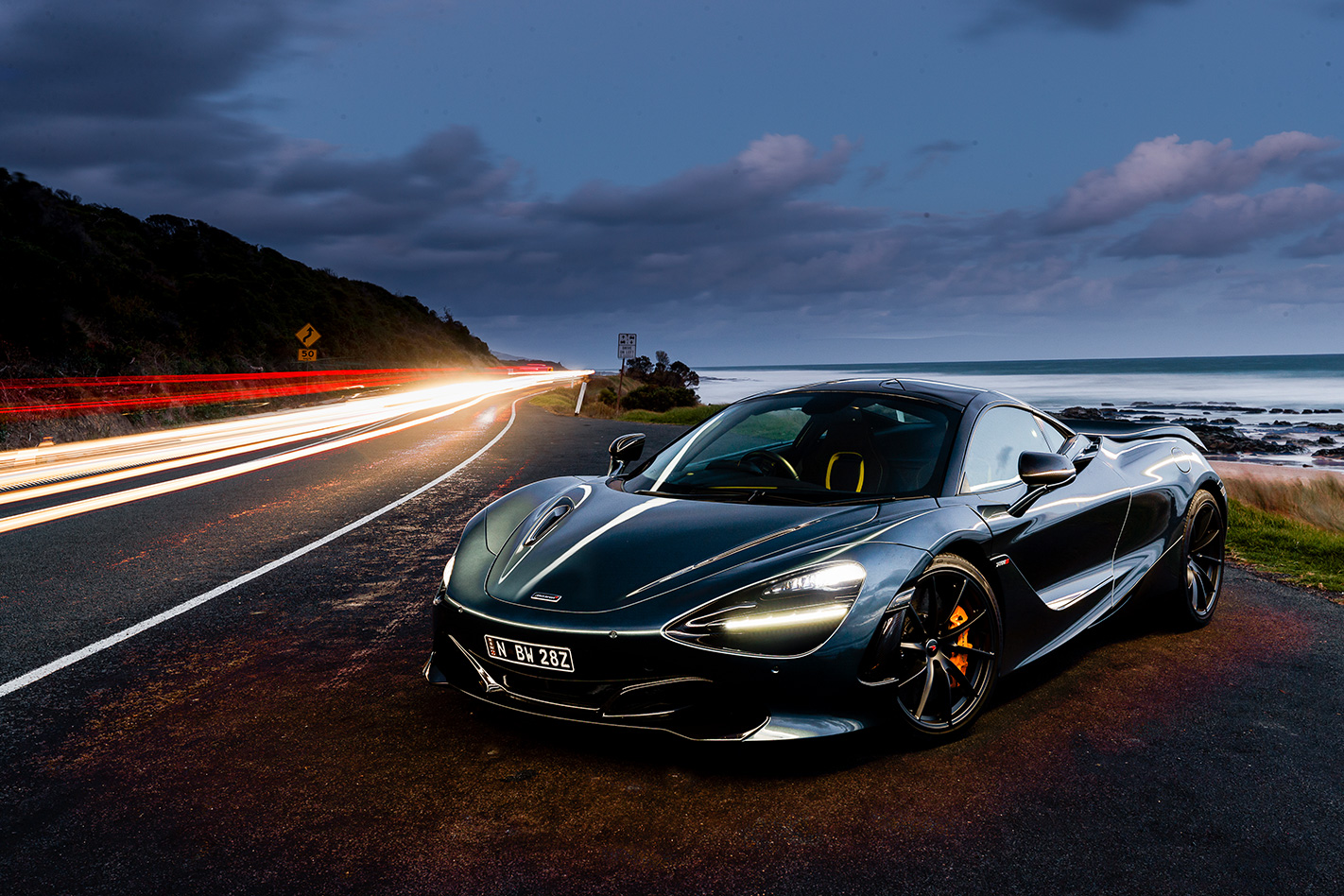
You probably know the Great Ocean Road as a scenic but ultimately frustrating piece of tarmac that’s always choked with tourist traffic. In which case you need to take a leaf out of Andy Enright’s book, wait until all the day trippers have long departed and drive it at night. Yes, you will miss the awesome vistas, but there’s ample recompense in scores of beautifully-shaped corners. Anywhere from Anglesea to Apollo Bay should scratch the itch, but the twisties at Big Hill, a kilometre or so past the famous Memorial Arch are well worth double-backing and having repeated cracks at. Watch out for wombats and your fuel gauge.
Highway 1, Big Sur, California, USA
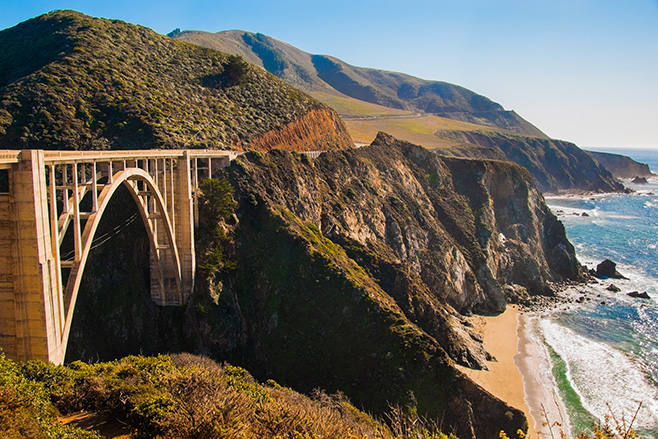
While Highway 1 isn’t the sort of route we’d seek out were we trying to absolutely drive the wheels off a hot car, it’s nevertheless one of the best roads in the world to dial it back a notch or three, kick back and watch some beautiful Pacific coast scenery scroll by. The Bixby Bridge is a must stop for Insta-cool, as is Hearst Castle and, as you trek further north, Point Lobos. Book a V8 Mustang drop top from one of the major rental agencies and take your time.
Putty Road, NSW, Australia
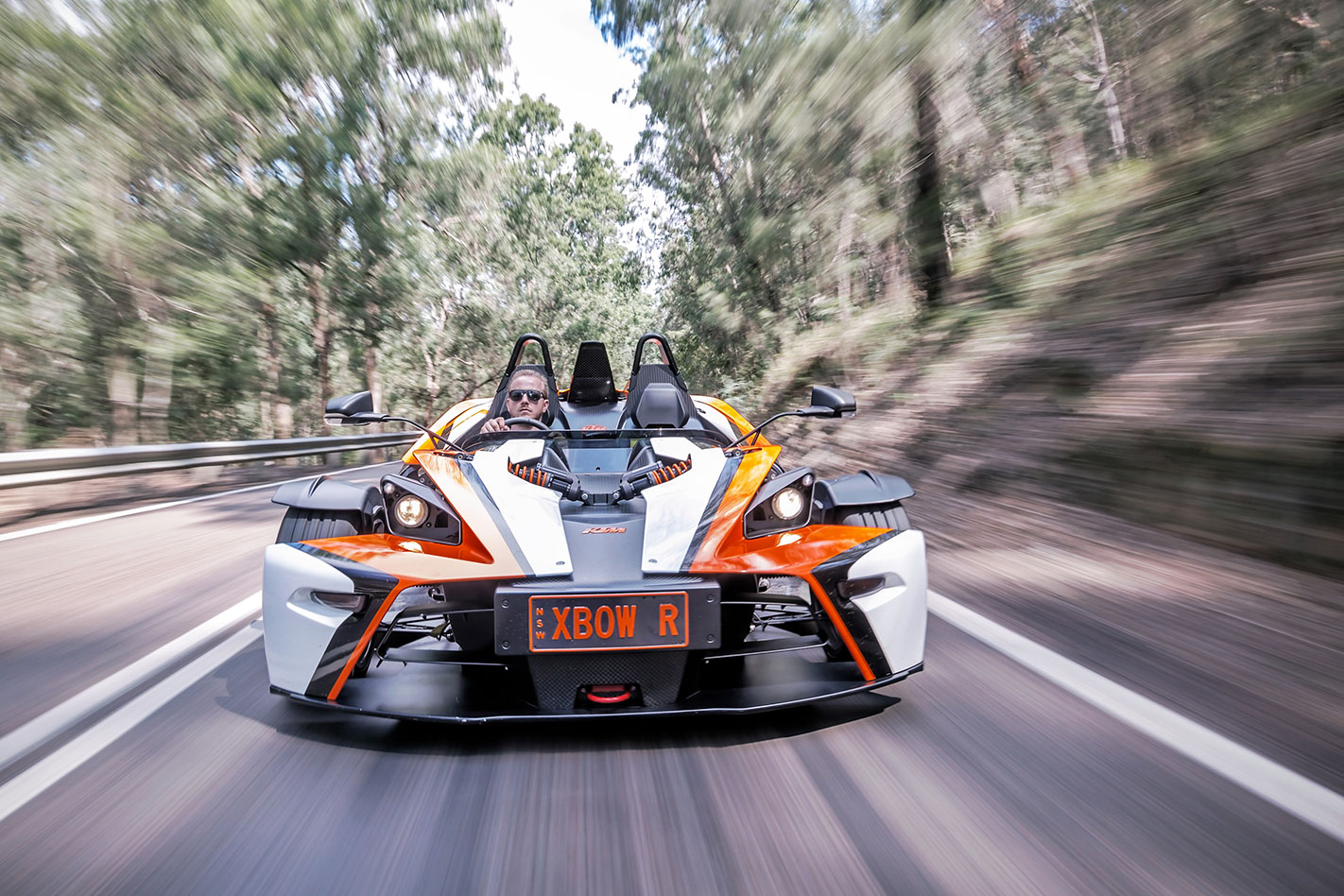
Well within driving distance of Sydney, this twisting 174km stretch links the northwestern suburbs with the Hunter Region. Narrow and winding, particularly in the more northern sections, the Putty road is a favourite with motorcyclists and driving enthusiasts. There are a number of rest stops along the road, in particular the Grey Gum Café. The final stretches of the Putty have been recently repaved, resulting in a fantastic, smooth, driving surface. It should be noted the Putty Road can be treacherous during wet weather, but if you drive to the conditions you can still enjoy yourself.
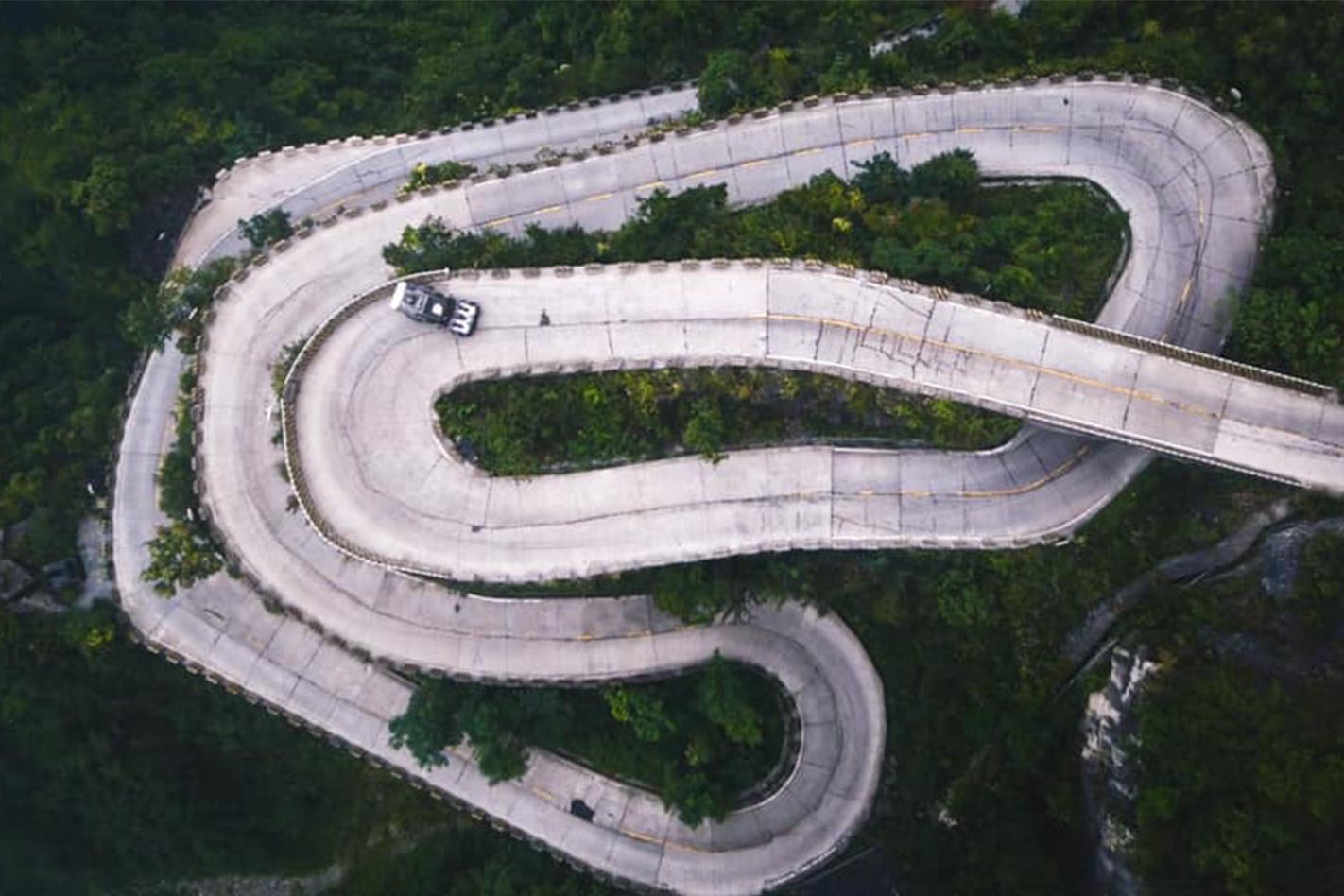
Tianmen Mountain, China
Heaven’s Gate Mountain might be the big draw for millions of visitors to Hunan Province, but the road to get there is the secret ingredient for keen drivers. With 99 corners in just 11km, get there at dawn light in an agile car and you’ll arrive at Tianmen Cave, a 131m high natural arch with twisted blood. If you want a more direct route, know that in February 2018, a hybrid Range Rover SUV clambered up the 45-degree angle staircase of 999 steps to Heaven’s Gate. That’s hardcore.
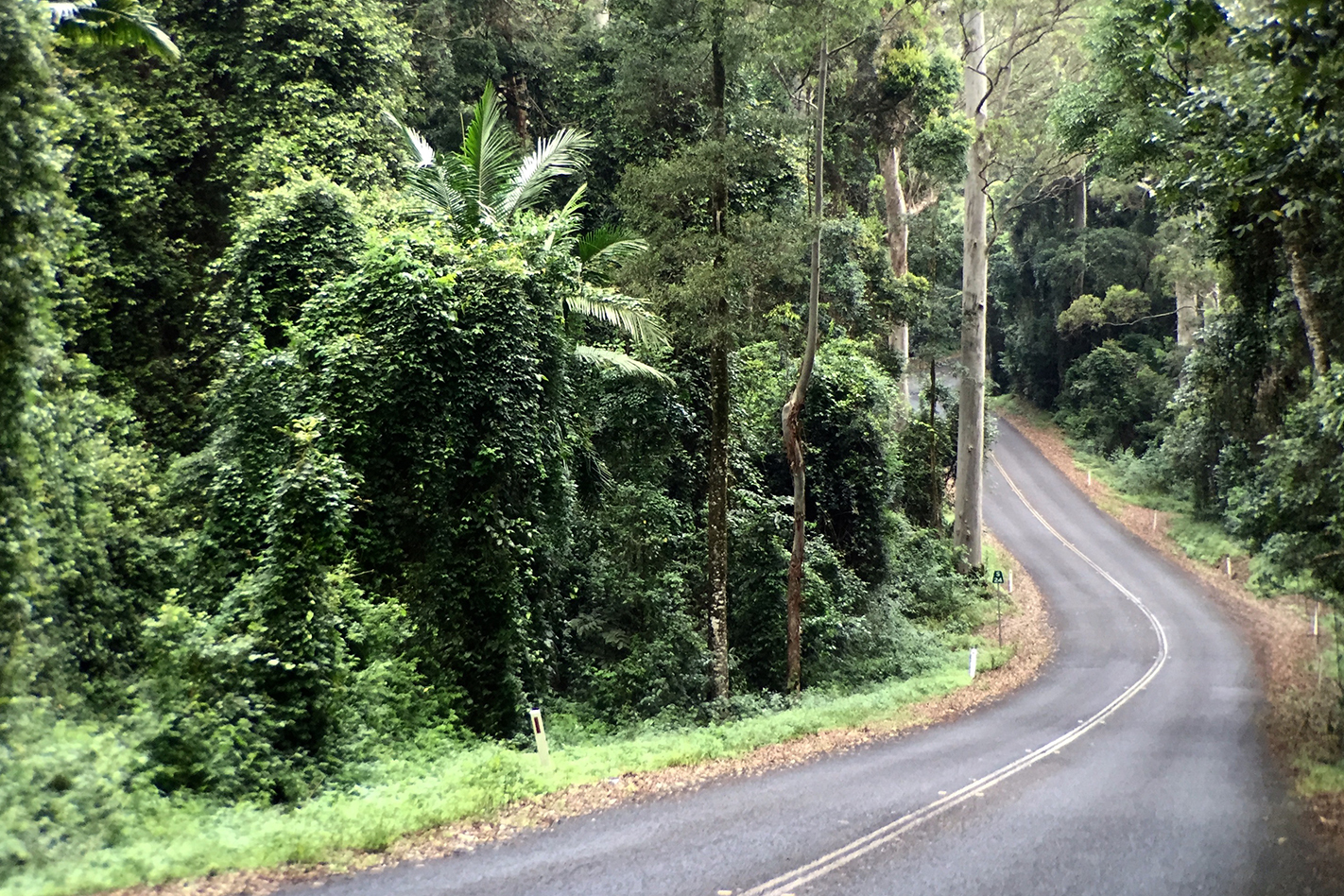
Mt Nebo/Mt Glorious/Northbrook Parkway, QLD, Australia
Any Queenslander should be well acquainted with this trio. The Mt Nebo and Glorious pairing is a well-worn route for local enthusiasts. Combining brilliant vistas and well-groomed bends, there is something for everyone. While most will turn around at the bottom for a return trip to the Brisbane CBD, it is well worth continuing on to Northbrook Parkway and revelling in its fast, open, and flowing sweepers.
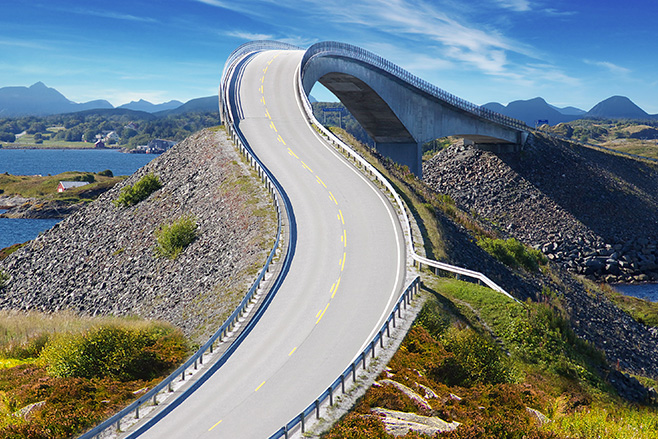
The Atlantic Road, Norway
Norway’s ninth-most visited attraction is a road a mere 8.3km long. The Atlanterhasvegen links together a series of islands and skerries with low bridges and causeways running between Molde and Kristiansund and is at its best in wilder weather, when the crashing seas make it feel genuinely adventurous. In better conditions, keep an eye open for seals and orcas. Those and car companies filming commercials.
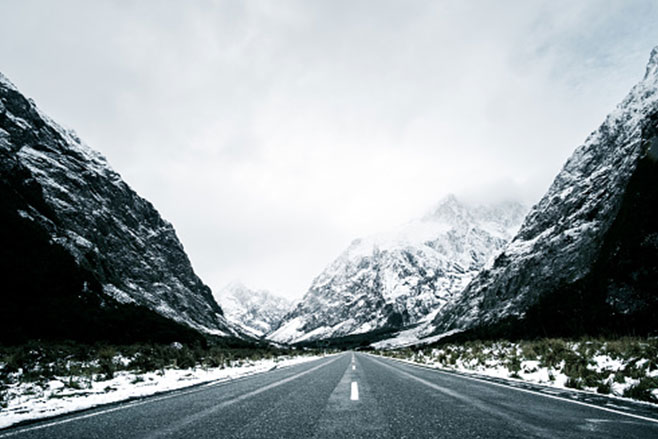
Milford Road, New Zealand
Located deep in the beautiful Fiordland National Park in New Zealand’s South Island, this snowy road is over 120kms long, stretching from Te Anau to Milford Sound, into the heart of the Te Wahipounamu World Heritage area. The road passes through incredibly scenic sports like the Eglinton Valley, Mirror Lakes, Earl Mountain and the Avenue of the Disappearing Mountain. Milford Road has a peak elevation of 940 metres above sea level, with much of it having been carved out of solid granite in the 1920s and 40s.
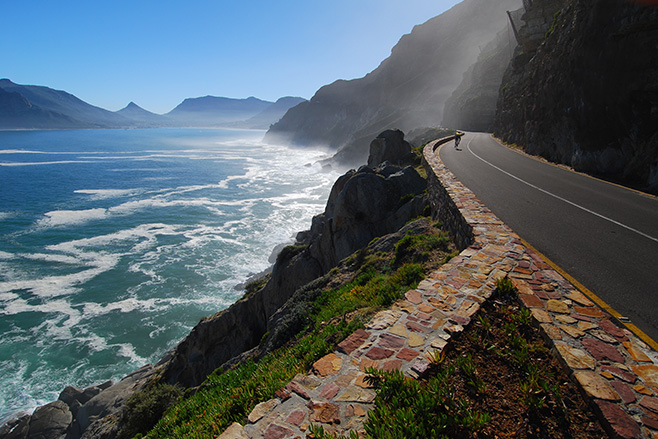
Chapman’s Peak drive, Cape Town, South Africa
We normally associate South Africa more with carjackings and dirt roads, but head down to the Western Cape and you’ll find one of the great coastal drives. Set the nav for Noordhoek Beach and from there to Hout Bay Beach. It’s hard to get lost because there’s only one road, but it is an absolute gem. Think of it as a wilder version of the Great Ocean Road with less Chinese tourist buses but more huge rocks that can detach from the sandstone cliffs above and crush you.
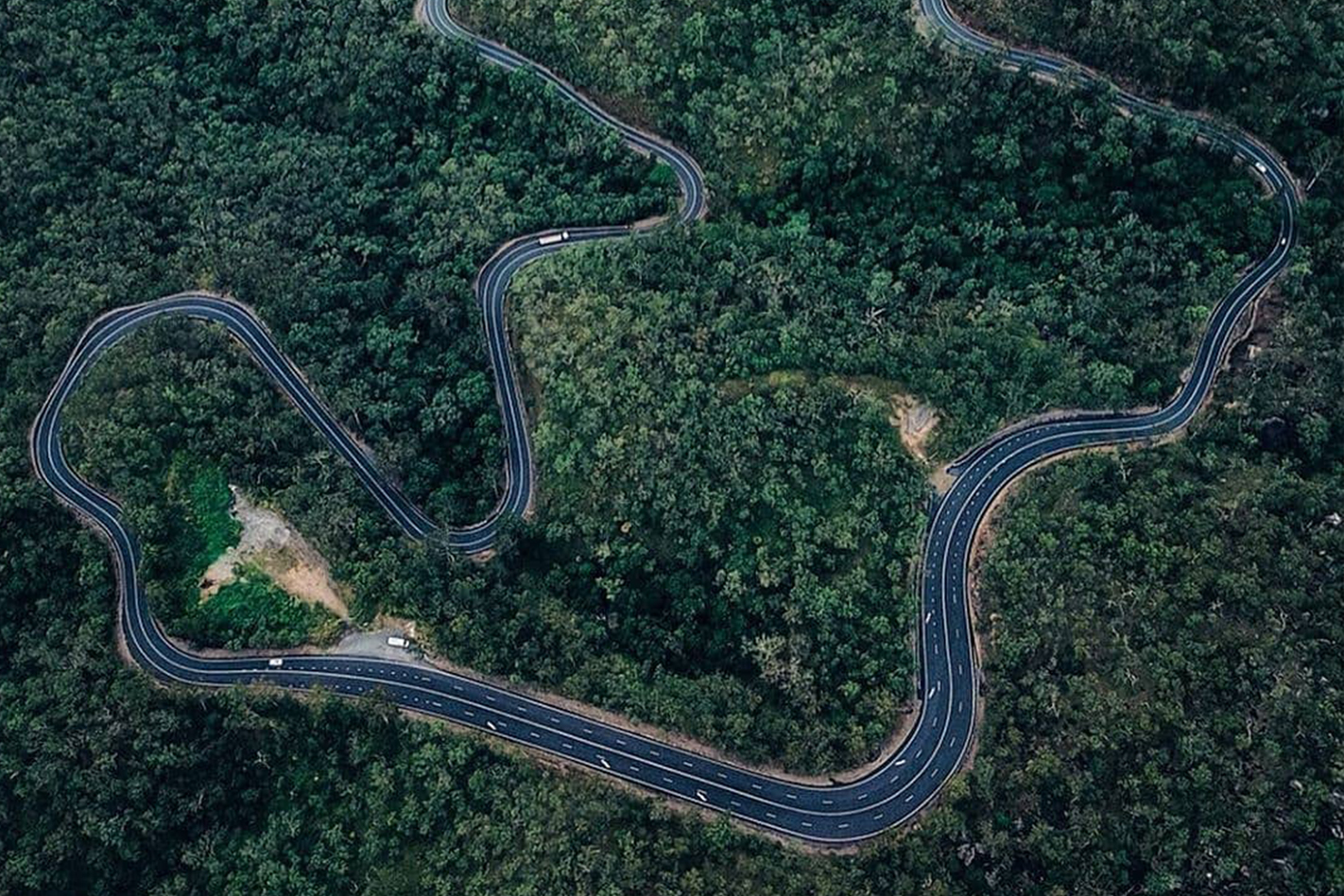
Gillies Range Road, QLD, Australia
Most people wouldn’t normally associate Far North Queensland with stunning mountain roads, but that is where you’d be wrong. Gillies Range Road is one of the most criminally underrated stretches of driving nirvana in Australia. Running from Gordonvale to Atherton it crams 263 corners, and 800 metres of elevation, into just 19km of road. Being relatively removed from any significant population centres also means it is usually bereft of heavy traffic, though it is a popular route for tourists.
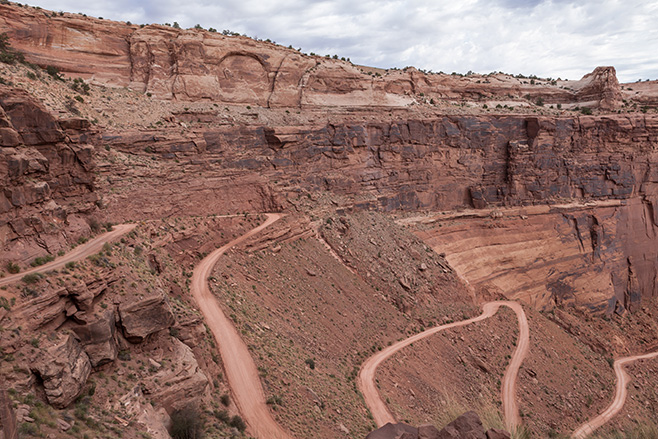
White Rim Road, Canyonlands National Park, Utah, USA
The 160km White Rim Road loops around and below the Island in the Sky mesa top and will generally take two to three days to complete in a sturdy 4×4. The steep, exposed sections of the Shafer Trail, Lathrop Canyon Road, Murphy Hogback, Hardscrabble Hill, and the Mineral Bottom switchbacks will test the most adventurous drivers and the scenery is jaw-dropping for much of the route. Check ahead, because when the Green River’s in spring melt, the complete loop can be impassable.
Old Pacific Highway, NSW, Australia
This classic piece of highway just north of Sydney stretches from Hornsby to Calga, and is one of the shorter segments of bitumen on the list. Intersecting the current M1 Pacific Highway, the winding Old Pacific Highway takes in some fantastic views, and is paved with butter smooth bitumen. This is an incredibly popular motorcycle riding spot, and is heavily trafficked (but rarely congested). You can often count on a police presence, both with speed cameras and roaming patrols.
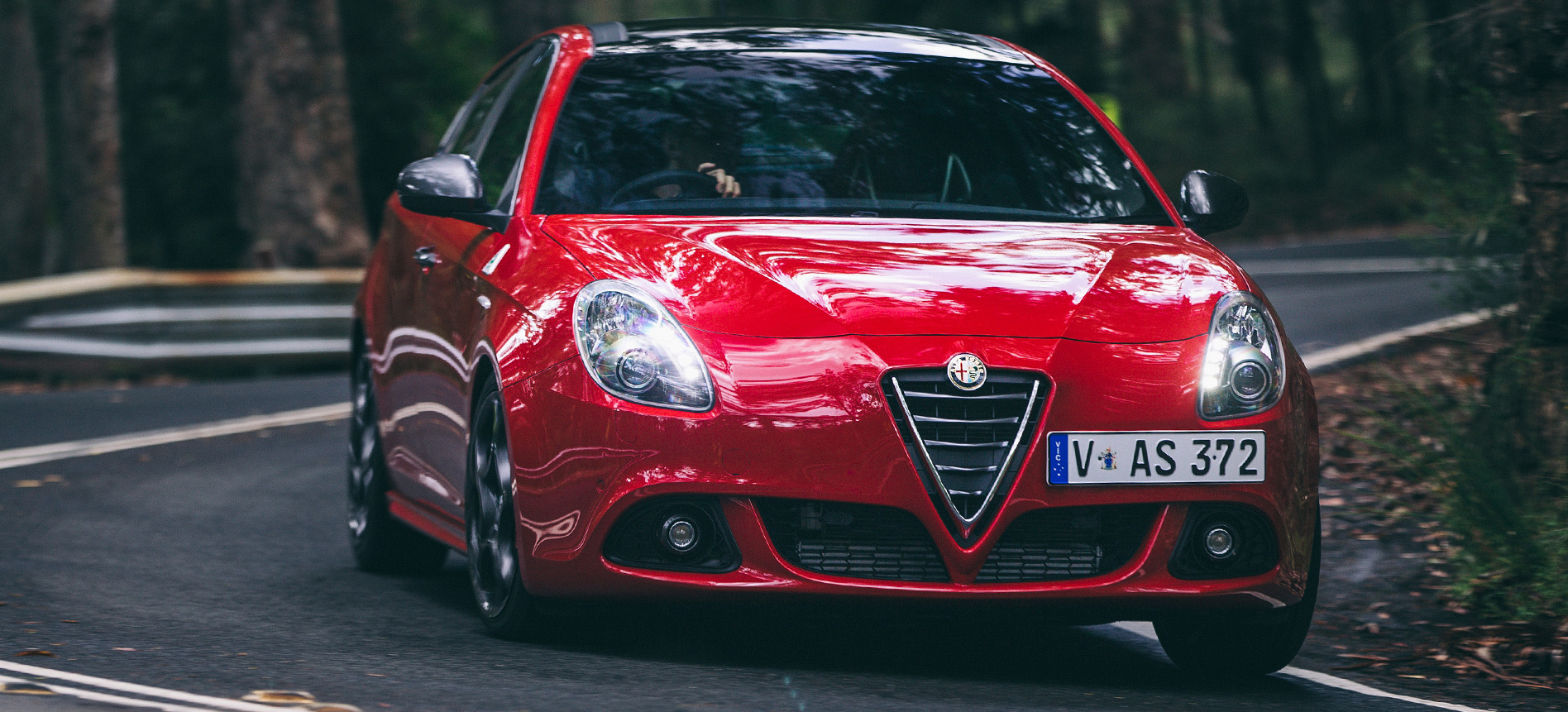
Col de Turini, France
‘The Night Of The Long Knives’ was, for most, the highlight of the Monte Carlo rally, where drivers braved icy and snowy conditions to race through the inky blackness from La Bollène-Vésubie up over the 34 hairpins of the col and down to to Sospel. It’s the stuff of legend, of Sandro Munari wrestling a Stratos or driving past the spots where the likes of Bjorn Waldegård, Francois Delecour, Colin McRae, Marcus Grönholm or Petter Solberg have had little indiscretions. It’s undoubtedly exciting, and really needs to be done at night. Just be careful of icy conditions that could easily remind you why you’re not at the pointy end of the WRC.
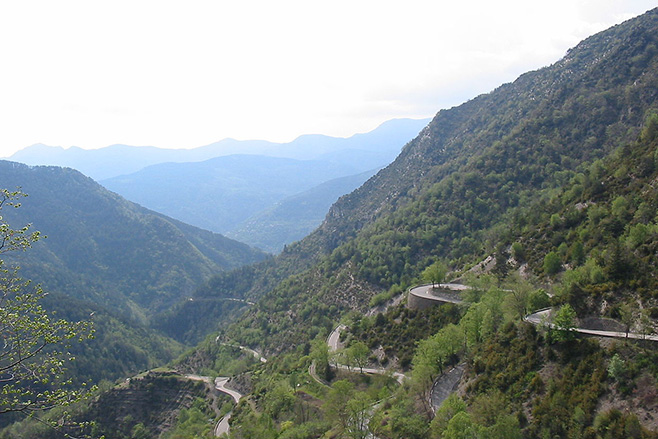
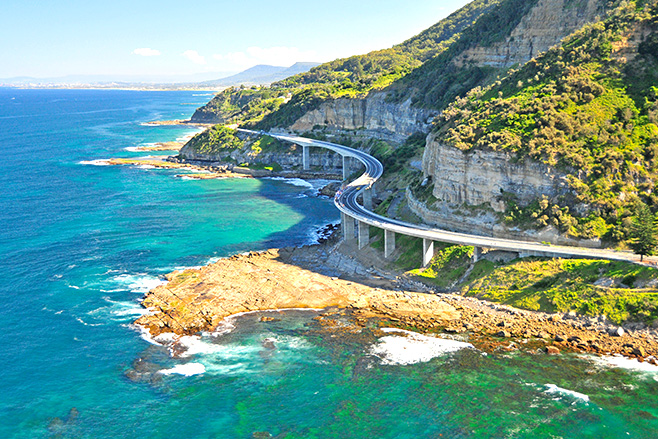
Grand Pacific Drive, NSW, Australia
This is the route down through Royal National Park south of Sydney, ending at Stanwell Tops. If you keep following this gorgeous forest drive, it will continue over the picturesque Sea Cliff Bridge into Wollongong. A favourite with Supercar drive experiences, this route makes for a great day trip if paired with a picnic in the National Park. Make sure to pack the Kodak, as the Grand Pacific Drive is seriously beautiful.
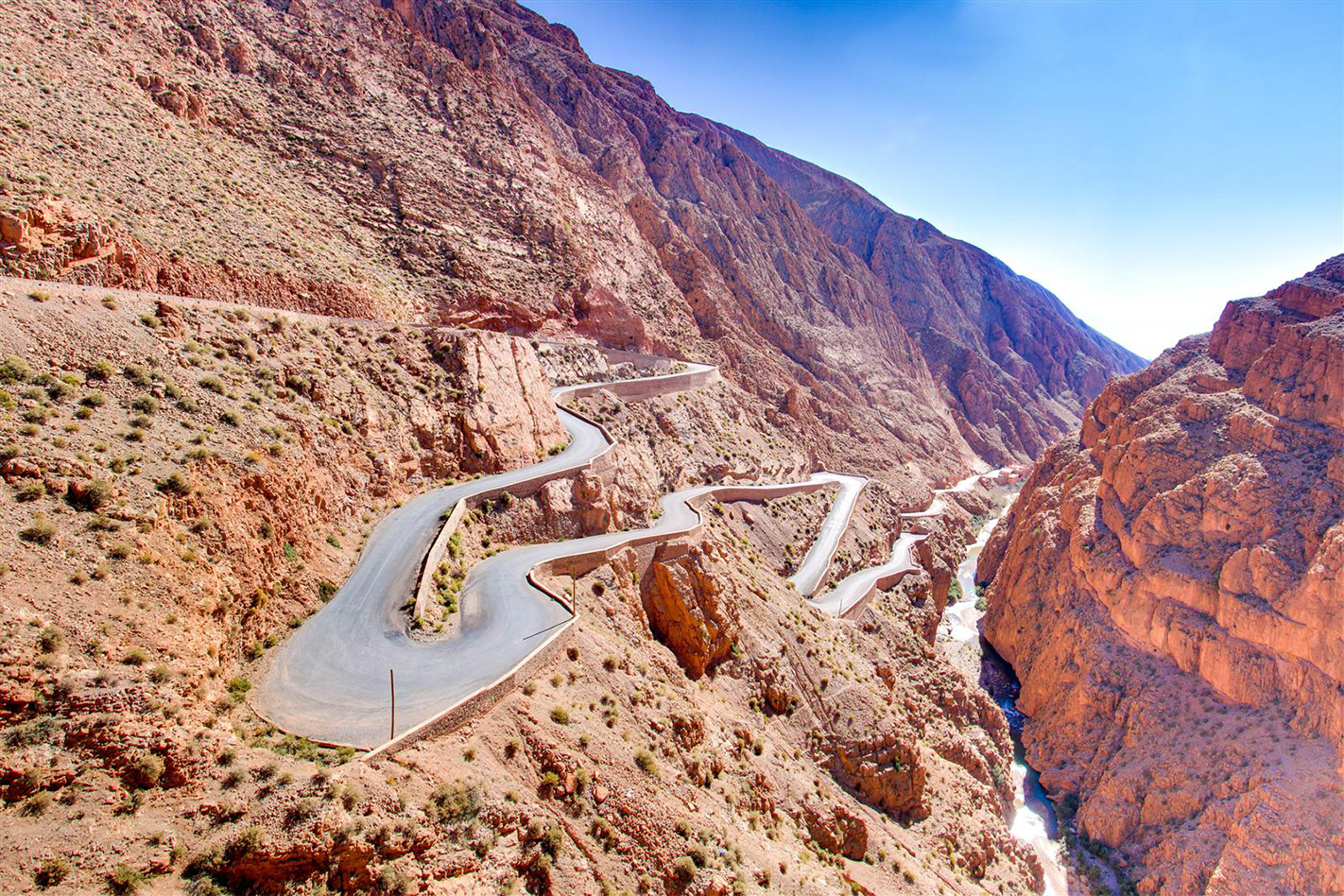
Dades Gorge, High Atlas, Morocco
Drop down off the southern slopes of the Atlas mountains, drive through the desert oasis of Ouarzazate, ease east-north-east along the N10 and you’ll find yourself at the Dadès Gorges, a series of rugged wadi gorges cut by the Dadès River. The R704 road into the gorges is not for the faint-hearted, as you’ll often be driving inches from precipitous drops and the surface can be slippery. Every terrifying section is probably something you’re going to have to repeat, because the bitumen runs out after 63km at Msemrir. Beyond that, you’ll need something with a knobby tyres and a low range ‘box. Aim for midsummer (June/July) to avoid the rain and snow.
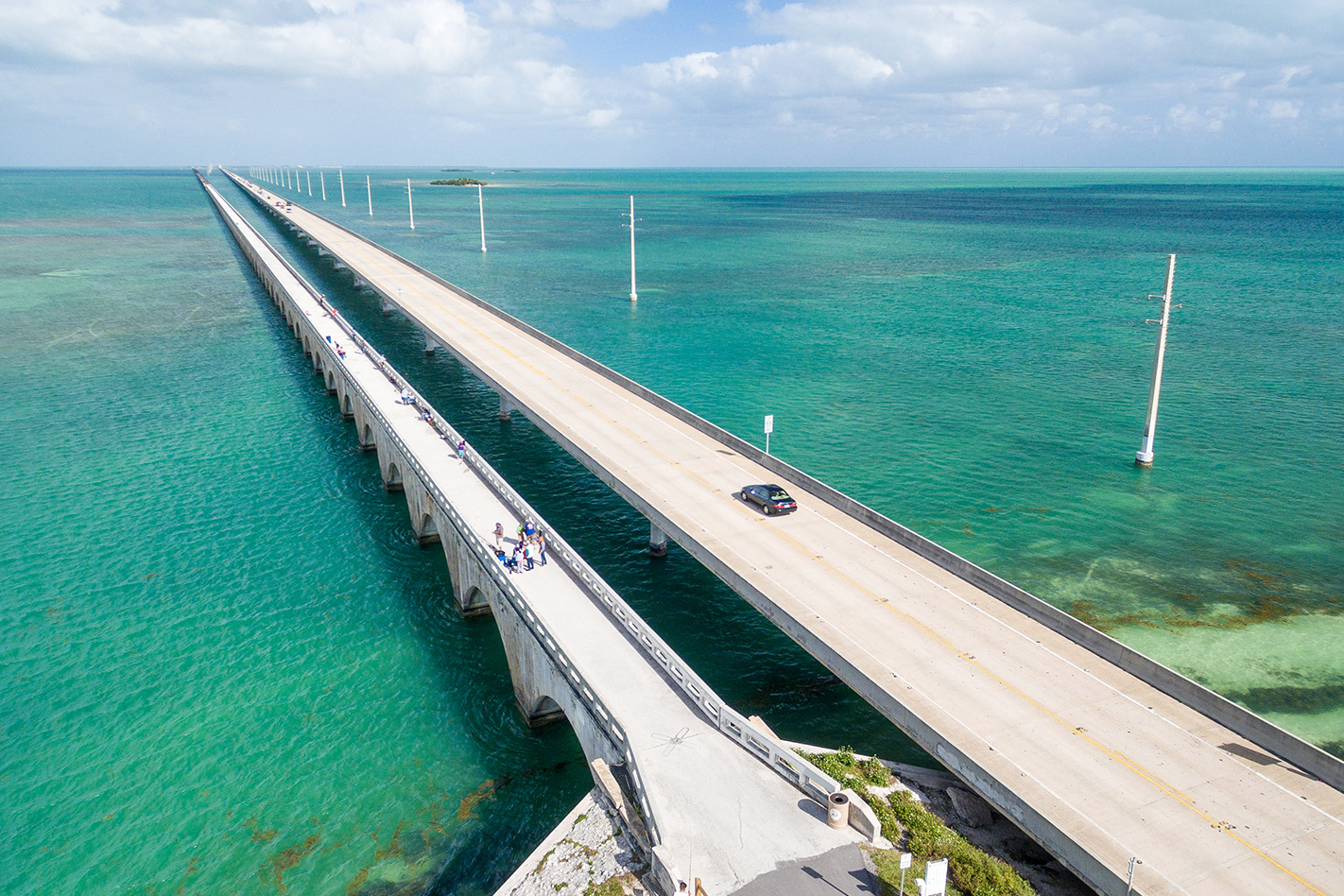
Seven Mile Bridge, Florida Keys, USA
Want to relive scenes from 2 Fast 2 Furious, True Lies and Licence To Kill? Thought not. But you probably owe it to yourself to drive Seven Mile Bridge in the Florida Keys in any case. As with most things American, the claim is bigger than the 6.79-mile reality, but you can’t help but be impressed by 440 spans of box-girder bridge and the prospect of a mojito at Key West will keep you motivated. Cornering, no. Pelicans, yes.
Lake Mountain, VIC, Australia
This brief 10.5-kilometre stretch of road is used as the access point to Lake Mountain Ski Resort, so is heavily trafficked in winter. However, come the warmer months, when the snow fields are long gone, it becomes a joyous playground for thrilling driving experiences. The trip from base to summit takes just 13 minutes, but Lake Mountain Road is well worth multiple passes. The road offers a great combination of turns and views. Make a day of it, by combining the trip with other Dandenong staples such as Reefton Spur, Black Spur, Chum Creek Road, and Marysville-Woods Point Road. After you are done with Lake Mountain Road, make sure to stop off at Marysville for a hot chocolate or bite to eat.
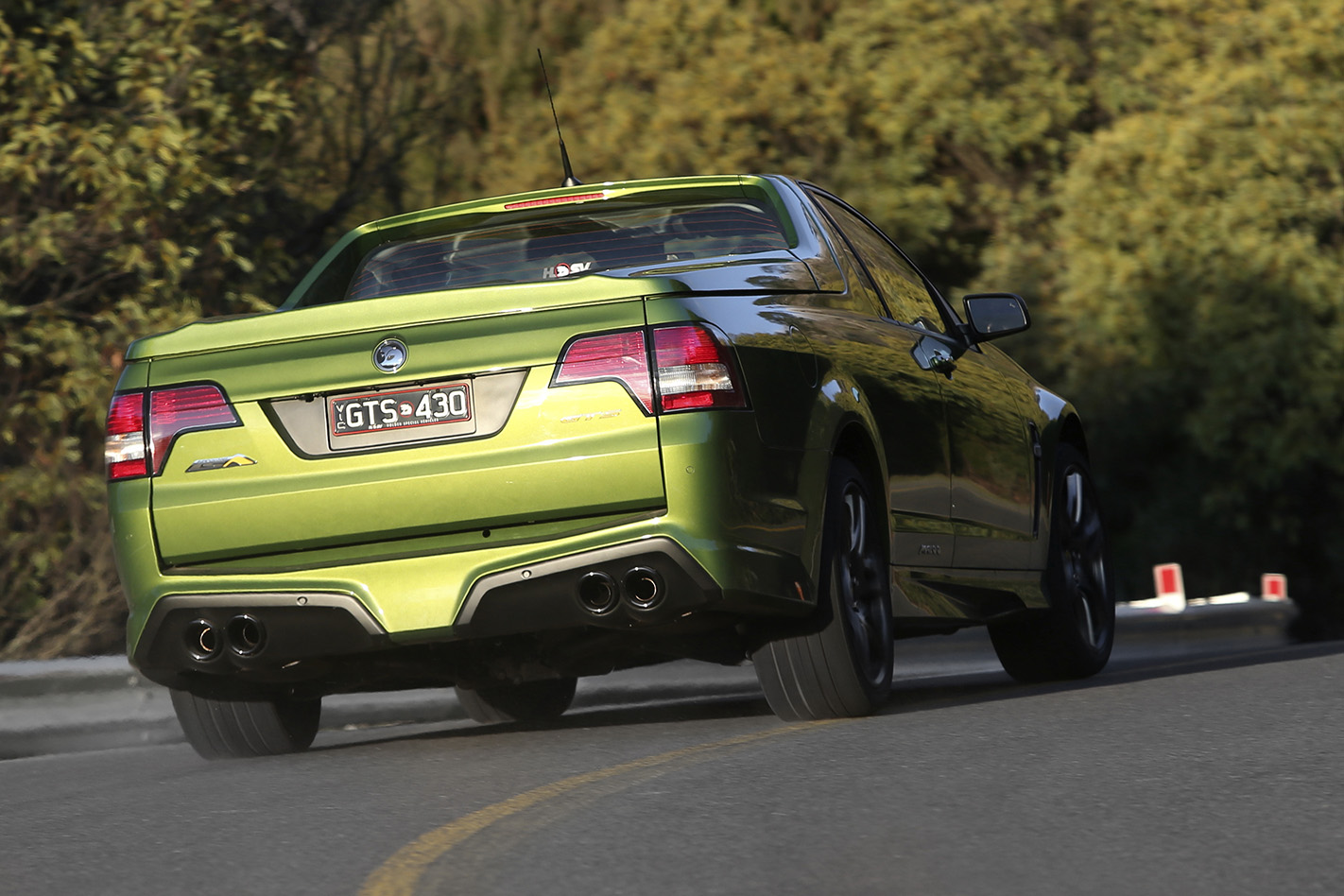
Furka Pass, Switzerland
Now we can argue this one all day long. There are those drivers who swear by the Furka, while others reckon that the nearby Julier or Bernina Passes are better. In reality, everyone’s a winner because you need to try all of them. Alex Inwood did in a Mercedes-AMG A35 and came away with a big grin on his face and a great pic at the iconic Hotel Belvedere, sitting at 2429m above sea level and framed by the Rhone Glacier.
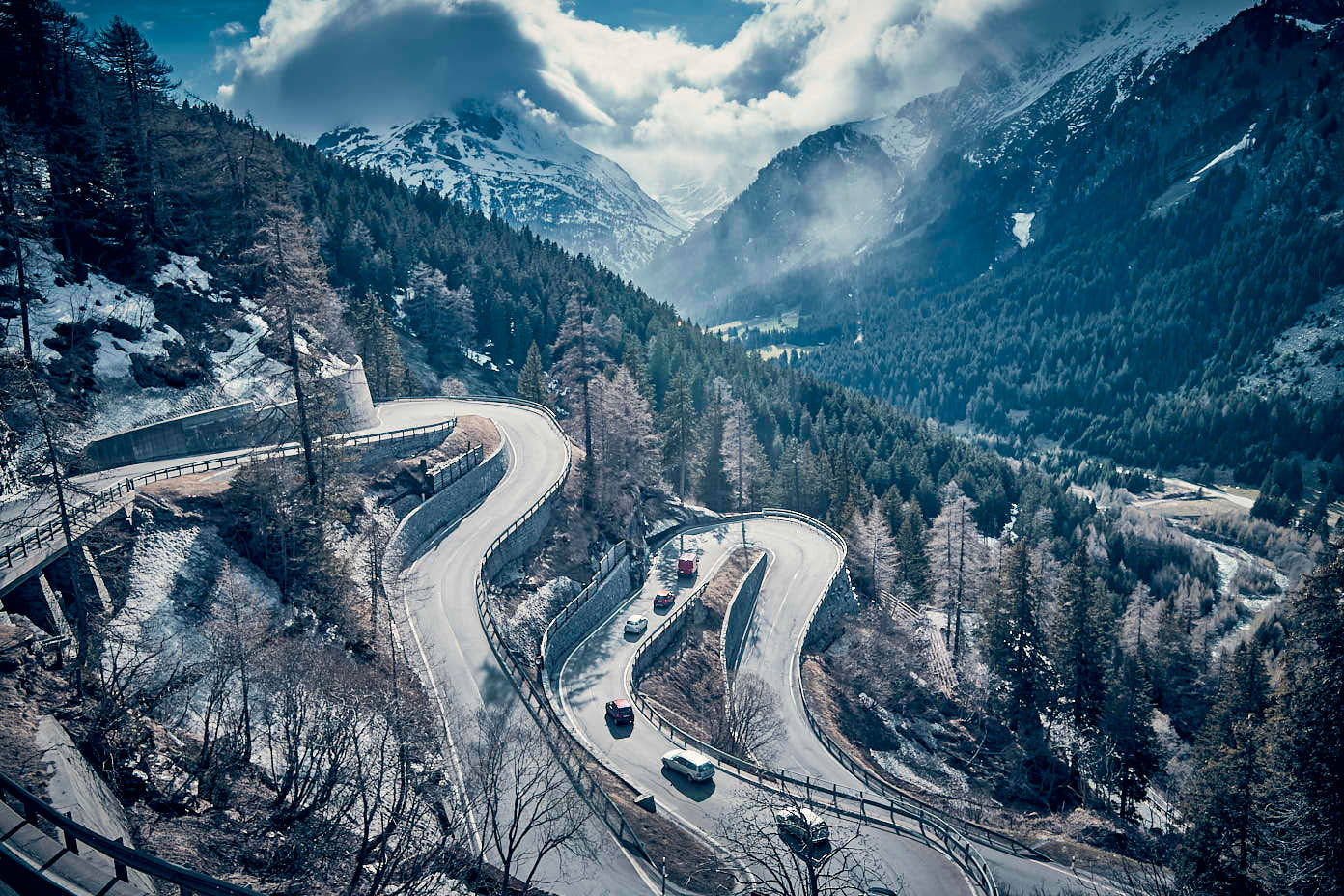
Obi Obi Road, QLD, Australia
This is one of the shorter pieces of bitumen in this list, and perhaps one of the least glamorous, but it makes the cut due to be a personal favourite of our Online Editor, Cameron Kirby. The Obi Obi is one of the rare pieces of bitumen in Australia that twists its way up a hill, with no traffic coming in the other direction. Because the road splits in two, with opposing traffic taking different routes, driving the Obi Obi is a unique experience, allowing the enthusiastic driver to explore the full width of the road without worrying about a truck coming in the other direction.
Transfagarasan Highway, Romania
While we’d champion the Transalpina as the better road, if you’re schlepping all the way to Romania, it’d be churlish not to drive the Transfagarasan as well, if only to be that annoying guy who one ups everybody. Known as Ceausescu’s Folly, the road was built as a military route in the early 1970s and boasts 833 bridges, 28 aqueducts and five tunnels. Open from the start of July to the end of October, it’s more accessible than the Transalpina and has better roadside amenities. Watch out for some dodgy surfaces that are full of more holes than the Ceausescus.
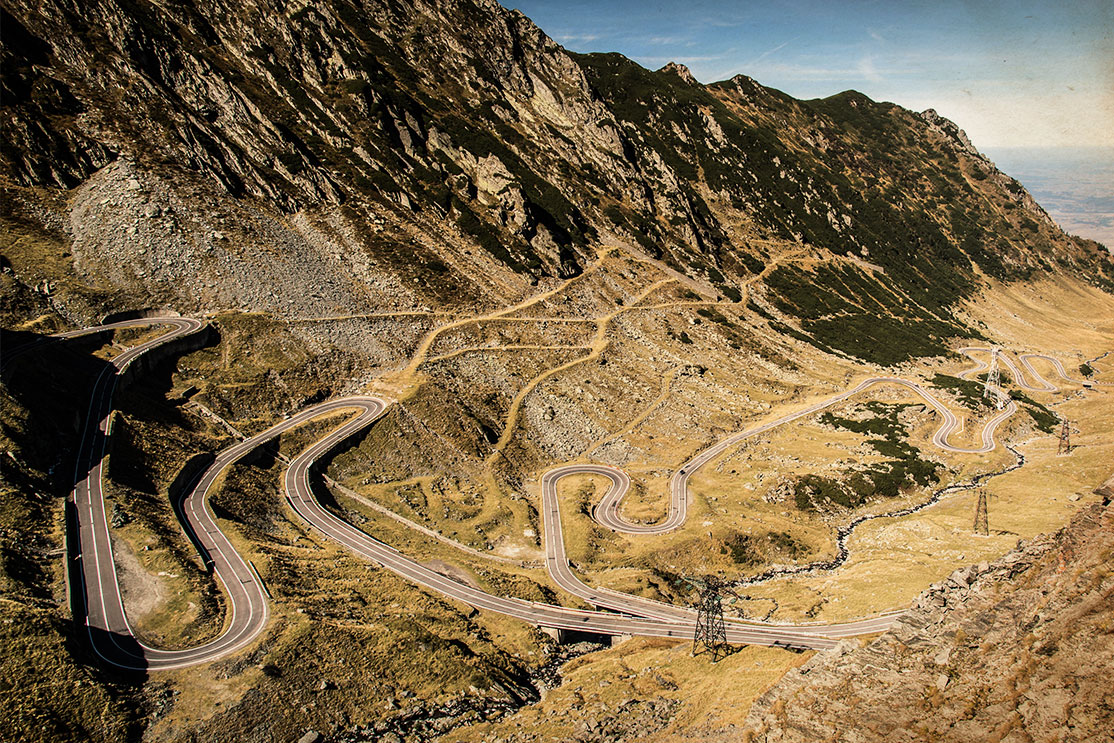
Guoliang Tunnel Road, China
Everyone’s heard of the Yungas Death Road in Bolivia. Well, here’s the Chinese equivalent. At some points, the road is just 4 metres wide, so if two Lamborghini Aventadors meet, someone’s going to have to perch their bum on the sill and do some reversing. The tunnel itself opened in 1977 to connect the remote village of Guoliang to the rest of the world. Best vehicle for the job? Something narrow and tough. We’d take a Jimny.
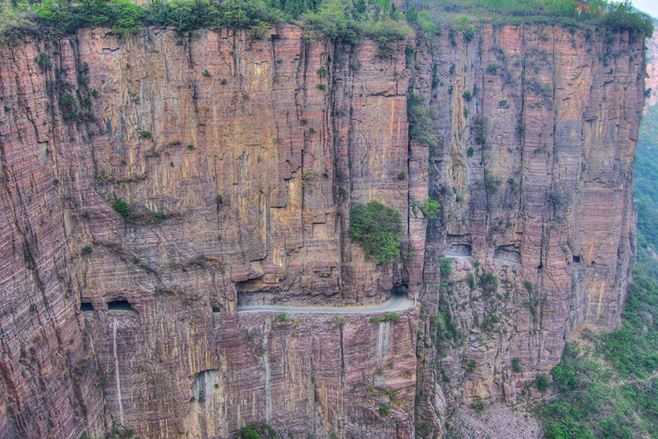
Great Alpine Road, Australia
Say hello to arguably one of the greatest driving experiences in Australia. If you enjoy a good drive, then make sure you put the Great Alpine Road high on your to do list. The 339-kilometre route winds from Wangaratta in the state’s north-east, all the way to Metung and the beautiful Gippsland Lakes. The Great Alpine Road is butter smooth, with fantastic flowing sweepers, combined with ruggedly handsome and typically Australian scenery. Taking about 5 hours to transverse, it is well worth setting aside a weekend for this route.
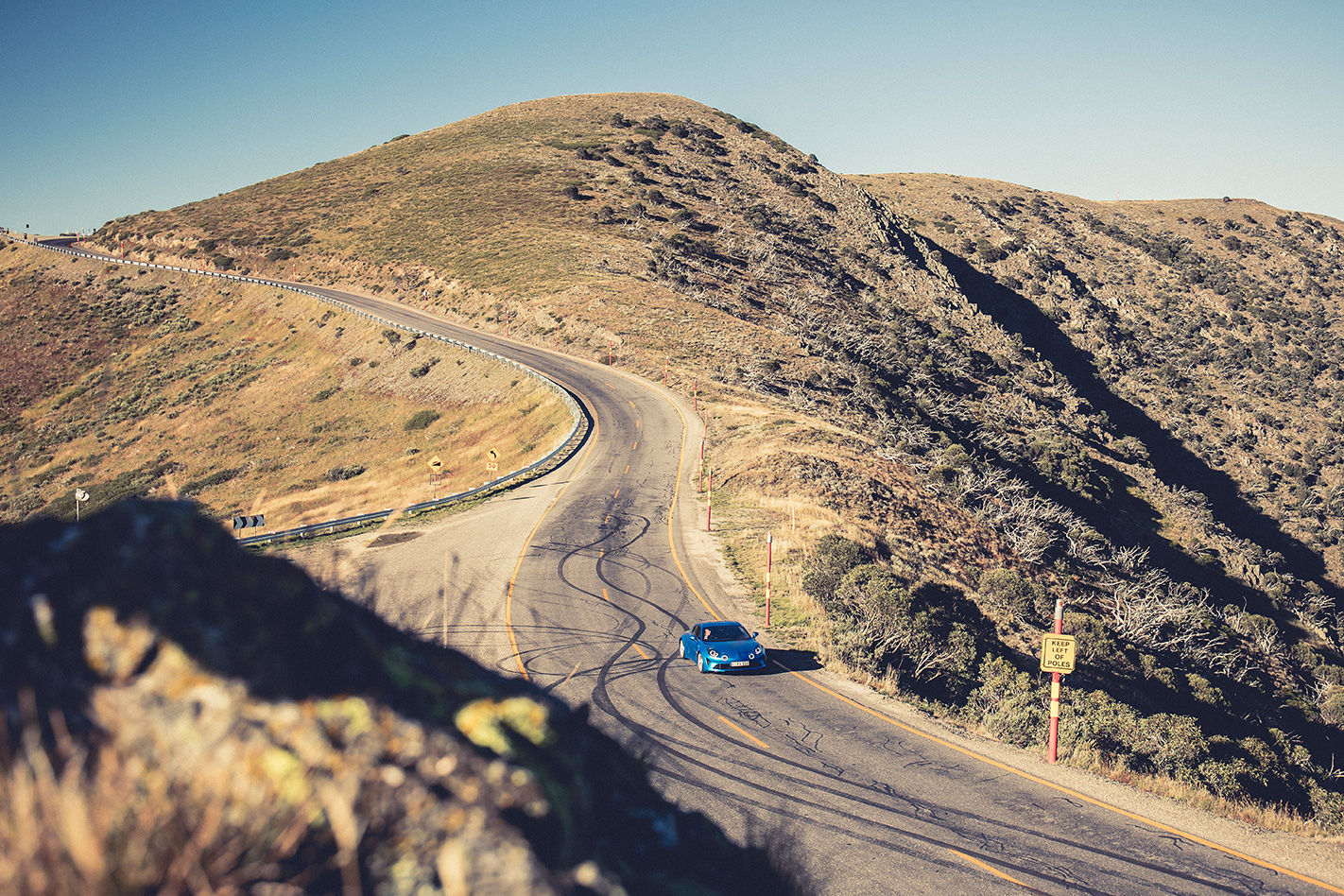
Bogong High Plains Road, VIC, Australia
If the Great Alpine Road is too mainstream for you, the Bogong High Plains Road should be right up your alley. Taking in mountainous landscapes, this alpine road is smooth, flowing, relatively traffic free, and lacking the sticks and other green debris that can hamper most mountain passes. This driving road would make a great addition to a weekend venture to the Great Alpine Road.
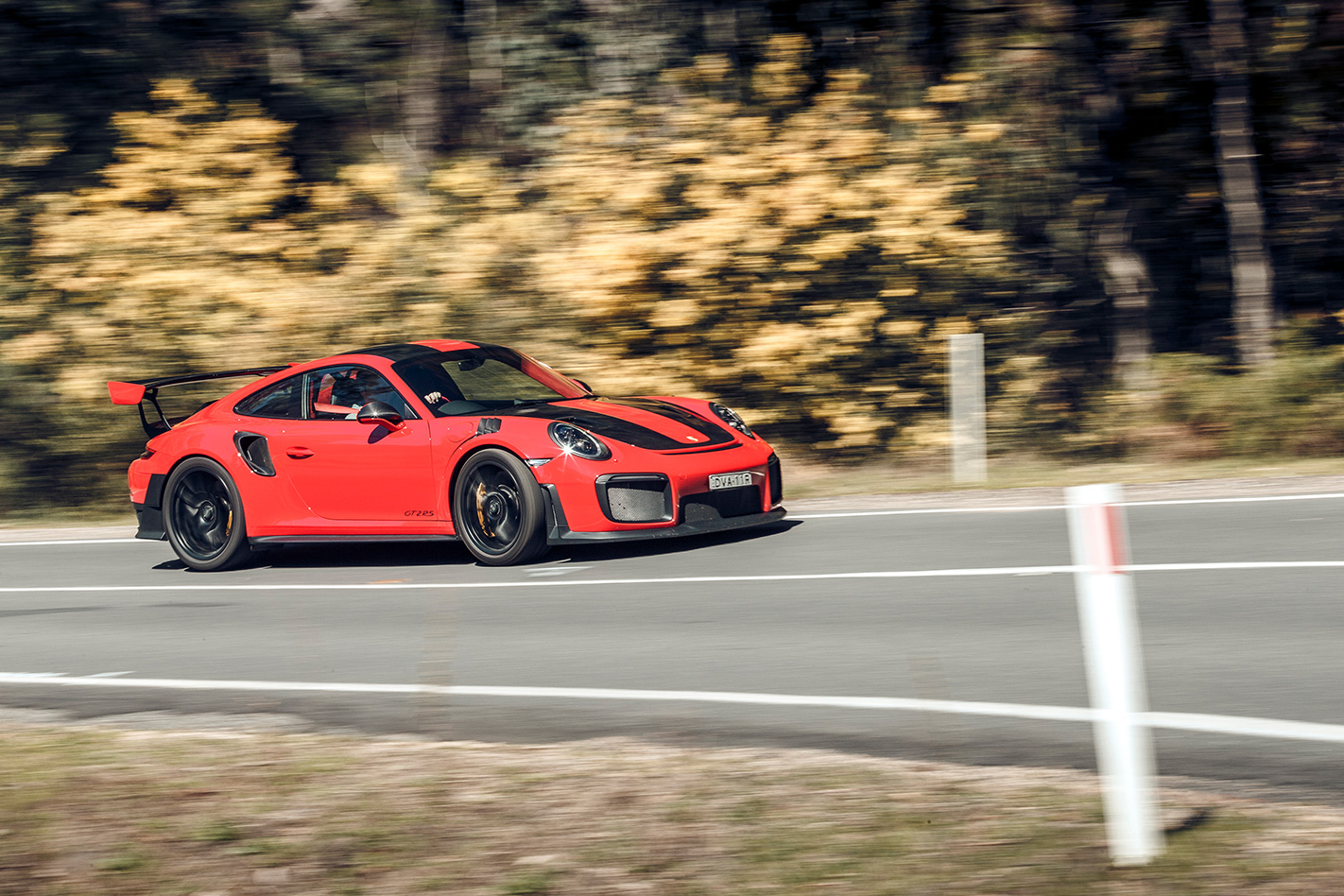
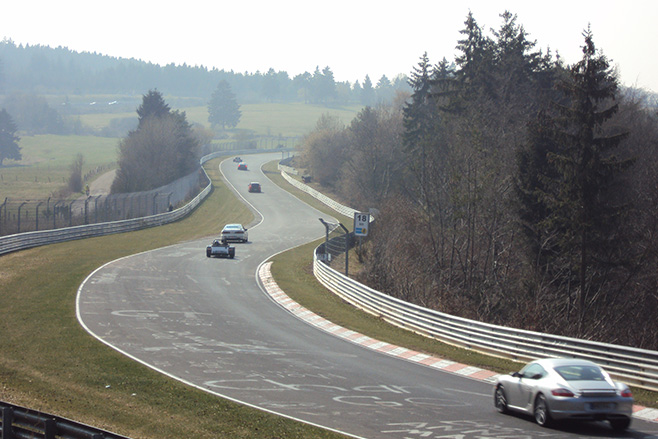
The Nurburgring, Germany
How can we write a piece on the best roads in the world without including that hallowed 20.832km stretch of Eifel bitumen? We can’t. Check out Enright’s guide on winning at the Nurburgring here.
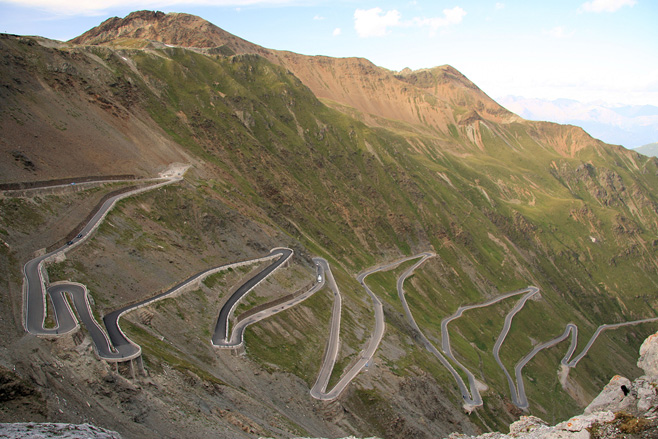
Stelvio Pass, Italy
The archetypal hairpin-fest, at 2757m, the Stelvio is the second highest pass in the Alps, pipped only by the Col de l’Iseran. You’ll need to negotiate 75 hairpins, with 48 of them on the photogenic north-eastern section towards Trafoi. Sir Stirling Moss binned a car here, so you probably could too with the right encouragement. The pass is often clogged with labouring cyclists who think they’re Marco Pantani as well as numerous tourist buses. Best to travel in late evening and don’t get too confused if you hear the pass referred to by its German name of Stilfserjoch.
Oxley Highway, NSW, Australia
Winding inland from Port Macquarie, the Oxley Highway is one of the finest driving roads in Australia. In total, the Oxley stretches 653-kilometres into central NSW, taking in arid plains, fertile farmland, luscious forests, and much more between. The rural road is fantastic for testing yourself and your car on a fun, twisting route. If based in Sydney, it is well worth making a weekend of driving the Oxley, staying overnight in one of the many pubs and homestays which dot its path.
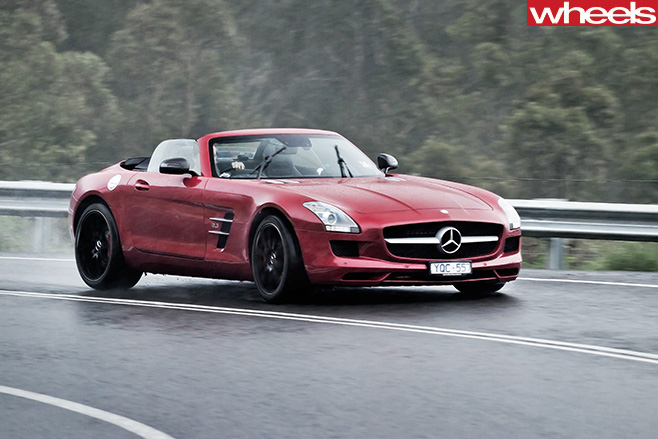
Touge Roads, Mount Fuji, Japan
Few roads are as steeped in automotive legend as the Hakone Skyline, the stretch of tarmac that birthed a hot Nissan whose name escapes me. From Hakone, head for the roads around Lake Ashi. It’s hard to get things wrong here with a variety of testing touge rouutes. Then it’s northwest to Lake Yamanaka for the best view of Mt Fuji, hoping that the local ‘white demon’ fog doesn’t obscure your view of the scared peak. Pro tip: don’t try to follow the locals.
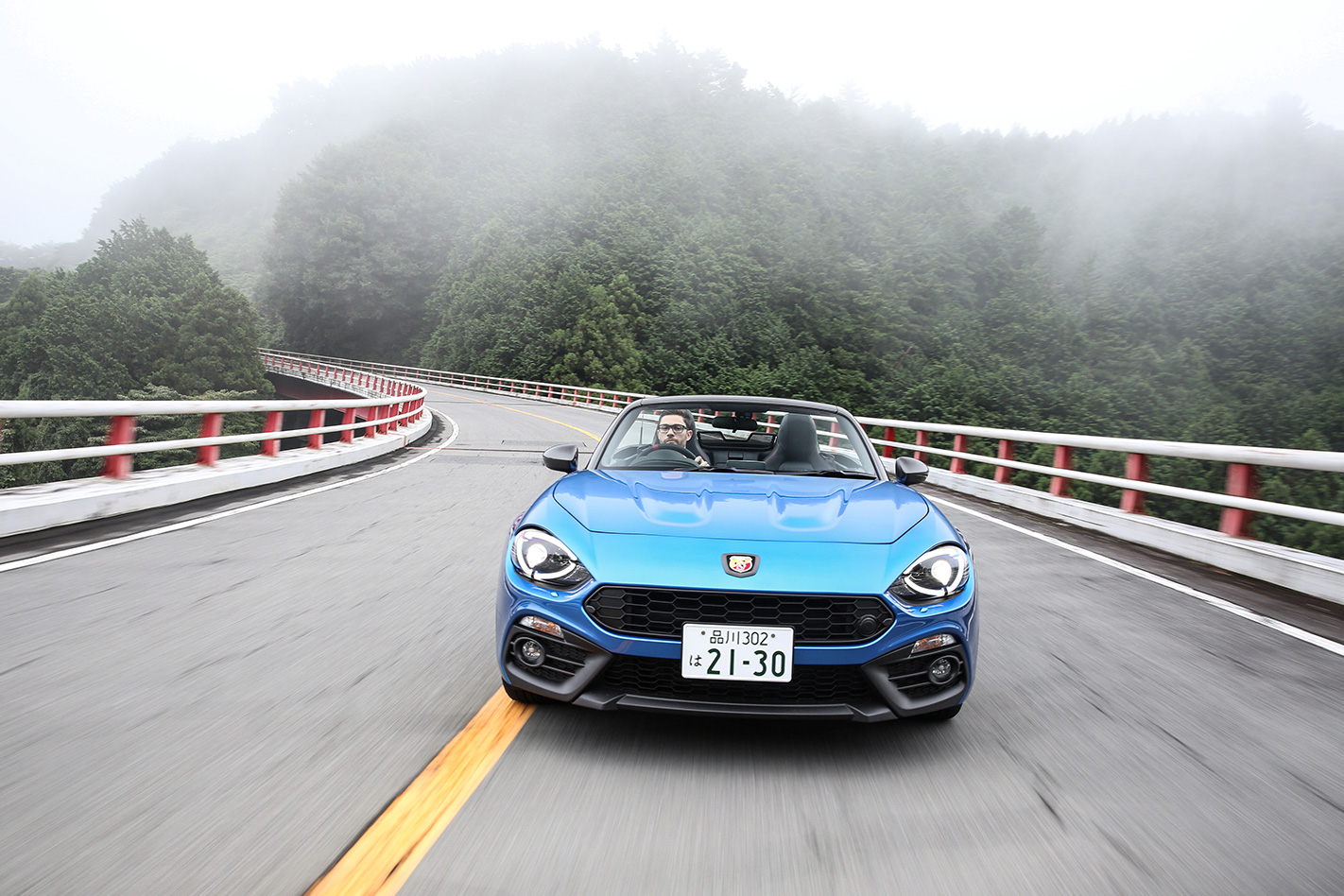
Iroha-zaka, Japan
The best thing about the pair of Irohazaka roads? Aside from the 48 hairpin bends it’s that one goes up the mountain and the other comes back down, so there’s never any oncoming traffic. The Japanese flock here in autumn to witness the trees changing colours, so pick your moment for this one. Go when it’s quiet and you can get very rowdy with your line choices.
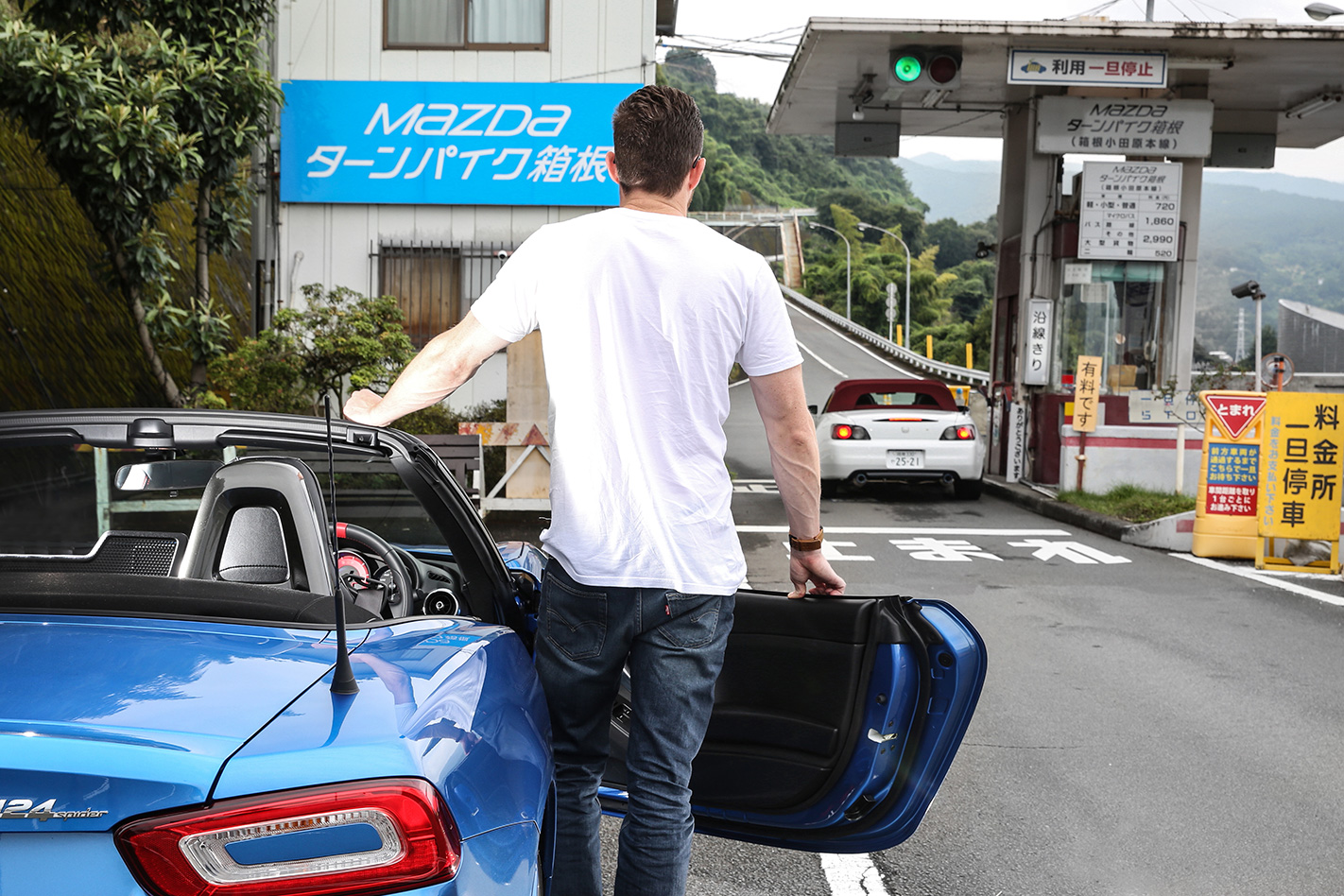
Thunderbolts Way, NSW, Australia
Although sections of the Thunderbolts Way are in a poor way in terms of maintenance, you cannot go past this stretch from Goondiwindi to Port Stephens for its fantastic Australian scenery and history. Named after the famed bushranger Captain Thunderbolt, it winds its way through a number of sleepy towns and for a great weekend away.
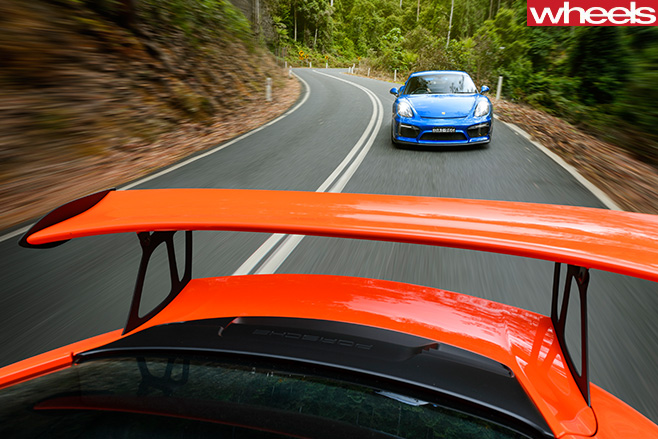
Sani Pass, South Africa
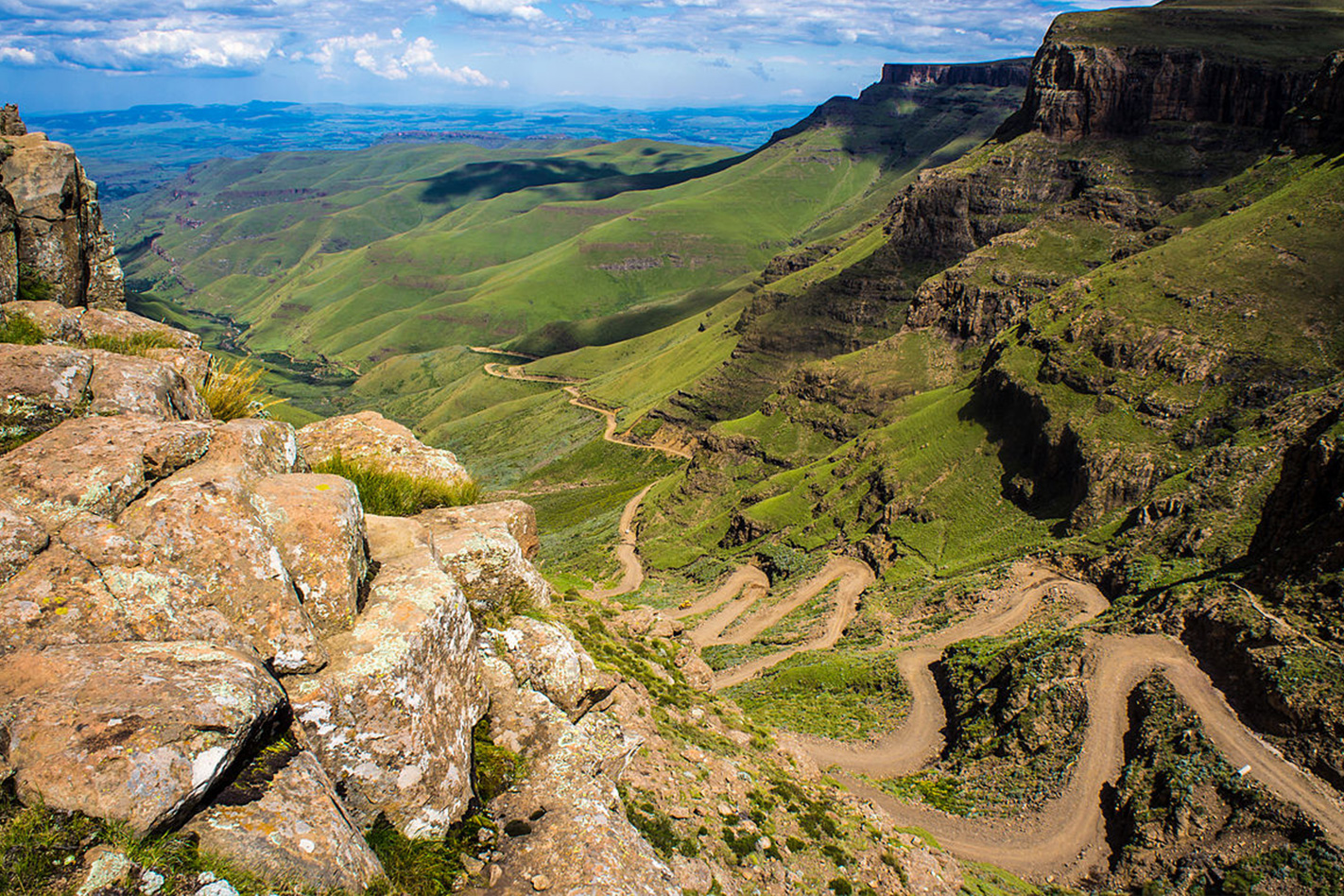
The so-called ‘Roof of Africa’ road, ascends to 2876m and heads from the KwaZulu Natal province to the Lesotho border.With gradients of up to one in three near the top, this dirt road is a handful at any time of the year, whether it be blinding dust in summer or mud, ice or snow in winter. It traverses a few water crossings, ascending vehicles have right of way (in theory) and you’ll need to get there quick if you want to experience it in its raw form as, like Pikes Peak, it’s going to be all bitumen in due course. Conquer it and you can enjoy a cold one in the highest pub in Africa. What would we take for this one? It’d be hard to top a classic Pajero Evolution.
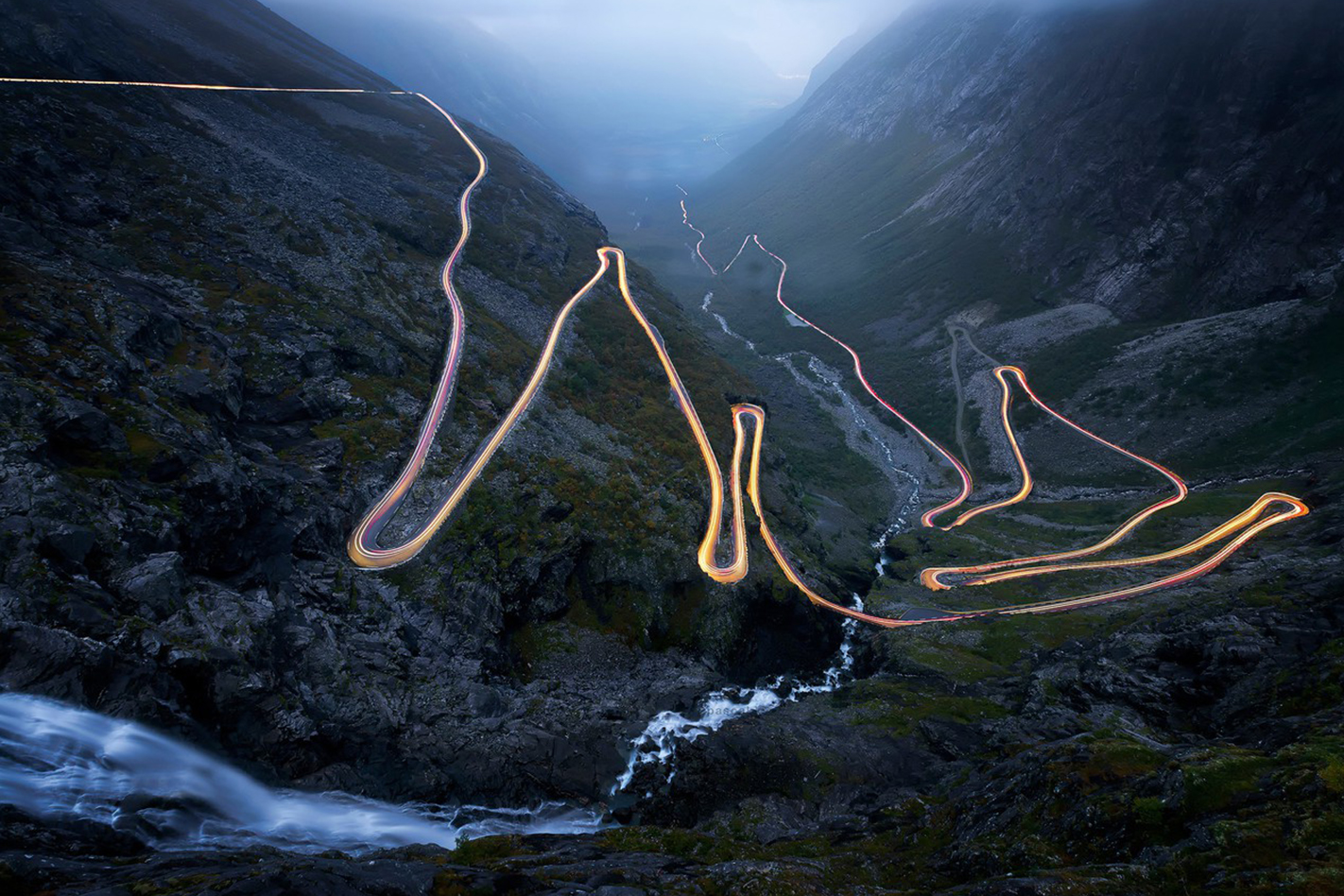
Trollstigen, Norway
Harsh Scandinavian winters don’t really do much for bitumen roads and the Trollstigen, said to be Norway’s most visited tourist road, bears the scars of years of water seeping into cracks, expanding as it turns to ice and cracking and shattering the surface. All up there are a mere 11 hairpin bends to tackle, but the rroad is steep, narrow and the scenery of waterfalls and mountains is so arresting that it’s occasionally hard to keep focused.
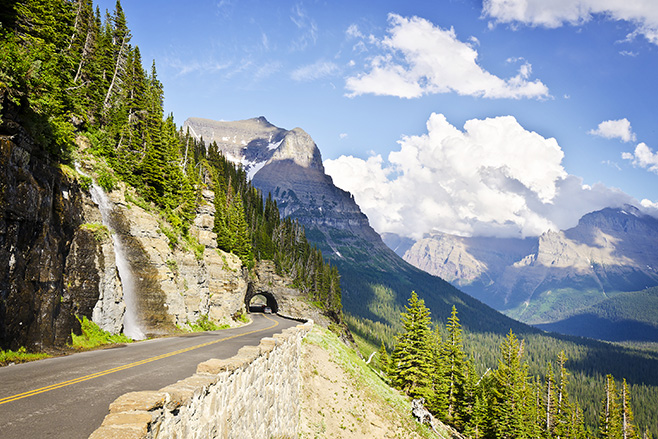
Going-to-the-Sun Road, Montana, USA
Glacier National Park rarely needs the big sell to get punters through the door but just getting there can be a heck of a ride. The weirdly-named Going-to-the-Sun Road isn’t really one for the leadfoot, as the speed limit is a measly 72km/h (45mp/h) on the lower sections and a mere 40km/h (25mp/h) in the high alpine. The 80km road takes about two hours to negotiate, ascending to 2025m at Logan Pass and you may well encounter bighorn sheep, brown bears and, if you’re not diligent at the wheel, the Jackson Glacier.
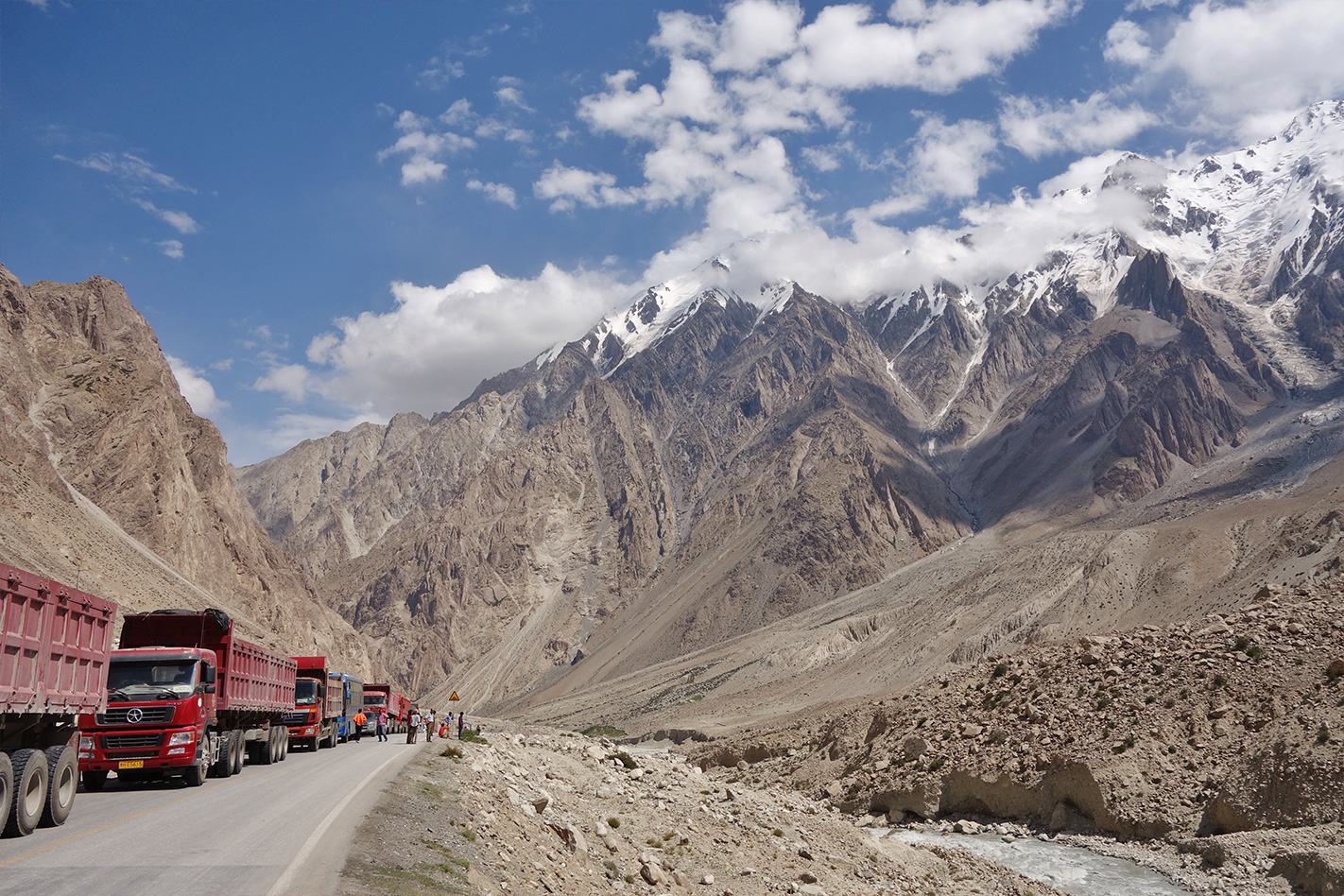
Karakoram Highway, China/Pakistan
The greatest road of all to drive? If it’s sheer majestic scenery and adventure that you’re after, it doesn’t get a lot better than the Karakoram Highway. Known colloquially as the KKH, you’ve got 1300km of highway to negotiate, the ‘Eighth Wonder of the World’ cresting at a head-spinning 4714m above sea level near Khunjerab Pass. Connecting Baltistan to the ancient Silk Road, it starts in Kashgar in China and terminates in Abbottabad, Pakistan, best known for the location where Osama bin Laden had a bad day. The route is at its most spectacular near Jaglot, at the confluence of the Gilgit and Indus rivers, this marking the meeting point of three great mountain ranges, the Hindu Kush, the Himalayas and the Karakoram. Some of the areas on the route are politically volatile so seek out government advice before travelling.
Pikes Peak, Colorado, USA
Arguably the toughest hillclimb around, Pikes Peak is one of the most fearsome stretches of tarmac in the world. Locally known as the Pikes Peak Highway, the official route starts at Mile 7, and has 156 turns crammed into the 19.99km run. During the run, you climb almost three kilometres, to one of the tallest points in the US. Just make sure you have good brakes for the return trip.
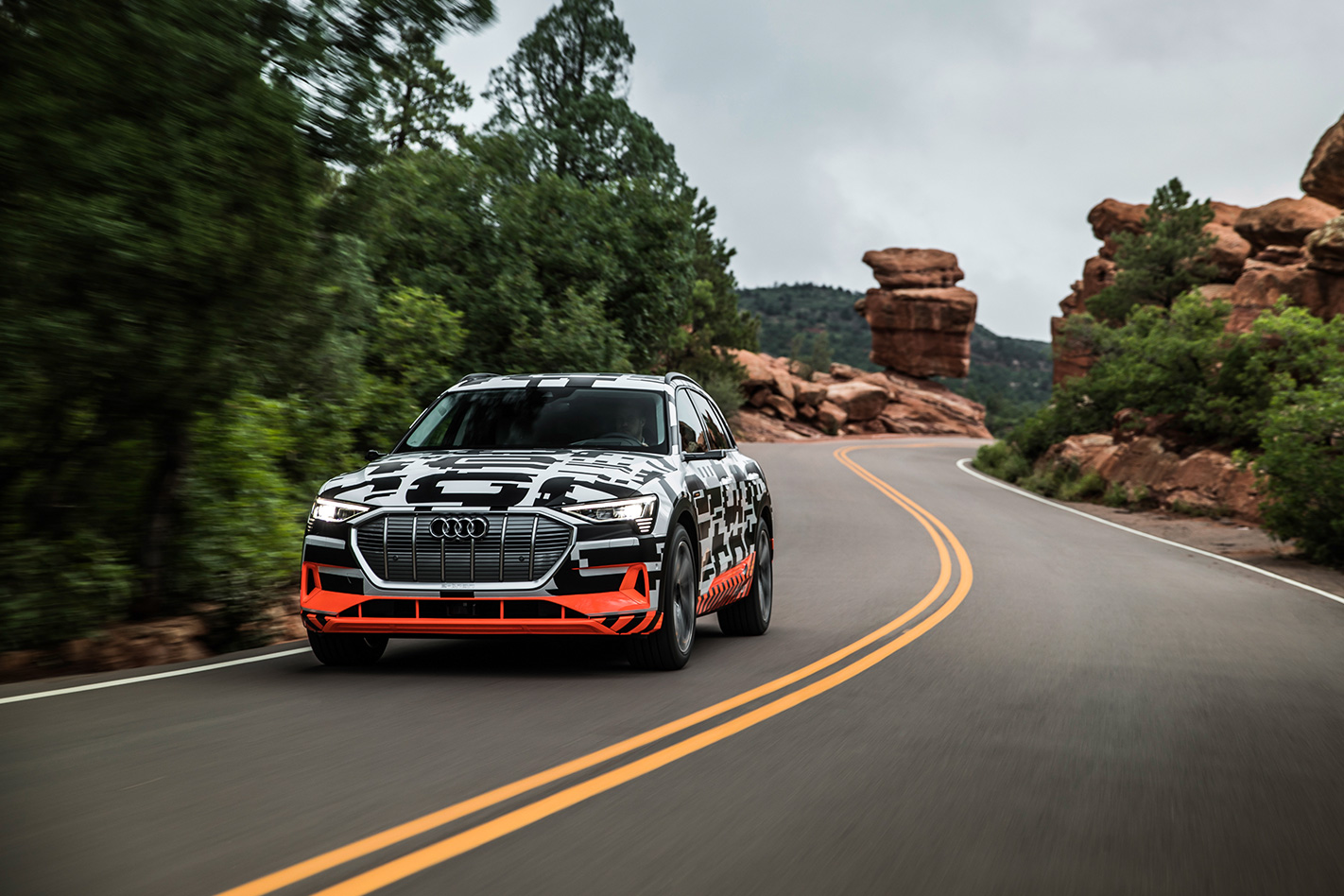
Falls Creek / Mount Buffalo, VIC, Australia
While two distinct routes that are enjoyable independent of each other, we’ve combined these two roads into one entry due to their proximity. Starting in Bright head for Mount Buffalo for its sharp ascent and decent and brilliant hairpin turns, before travelling onwards to the impressive climb toward Falls Creek. You can play on these roads all day and never tire.
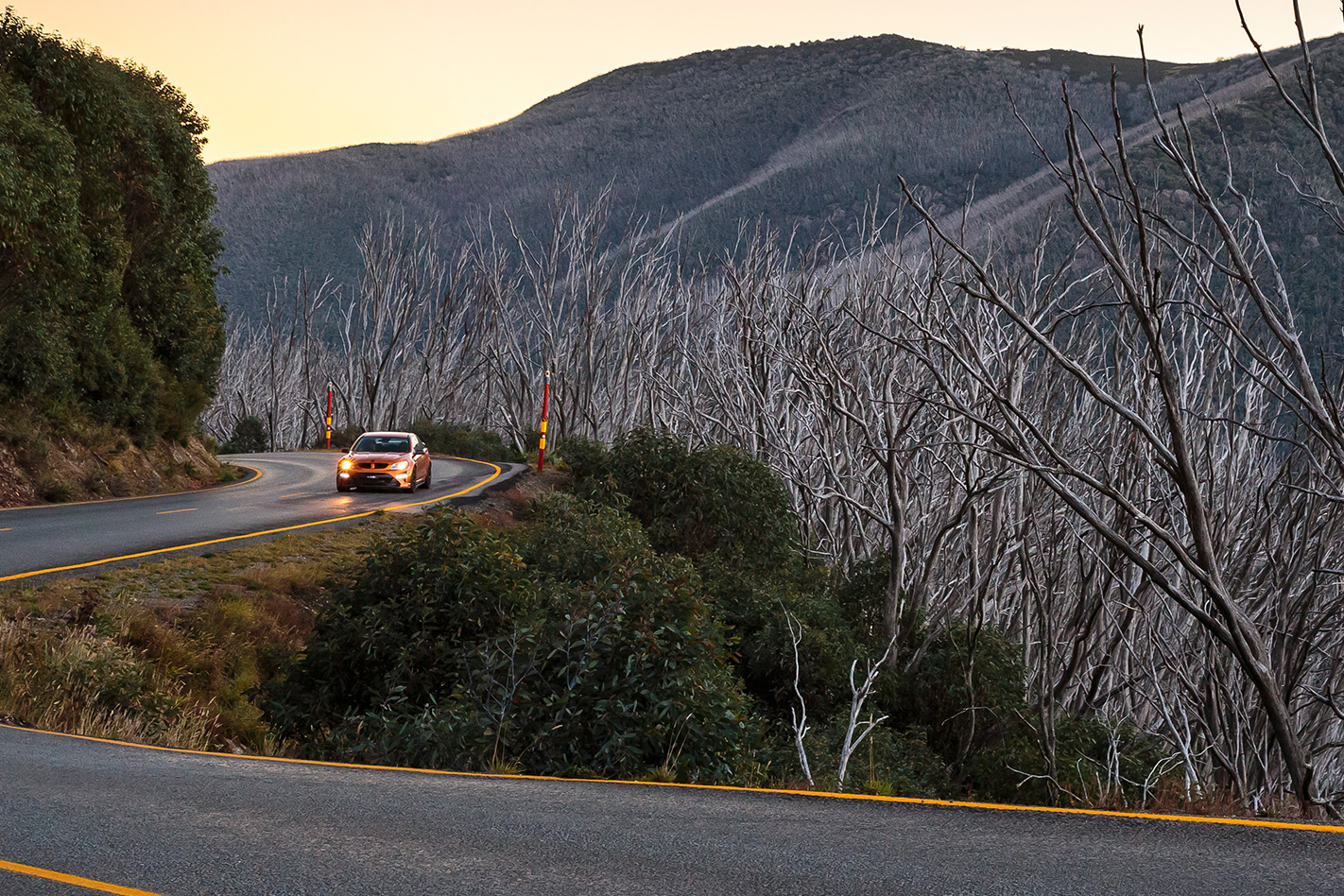
Ronda Road, Costa del Sol, Spain
The A397 starts in the Mediterranean resort of San Pedro de Alcantara , just outside the playboy paradise of Marbella and climbs. Hard. With beautiful surfacing, challenging corners, some magnificent views towards Gibraltar and the chance to take lunch in one of Spain’s most picturesque villages, the Ronda Road is hard to better. Finish your day off with a few laps at the adjacent Ascari Race Resort? It’d be rude not to.
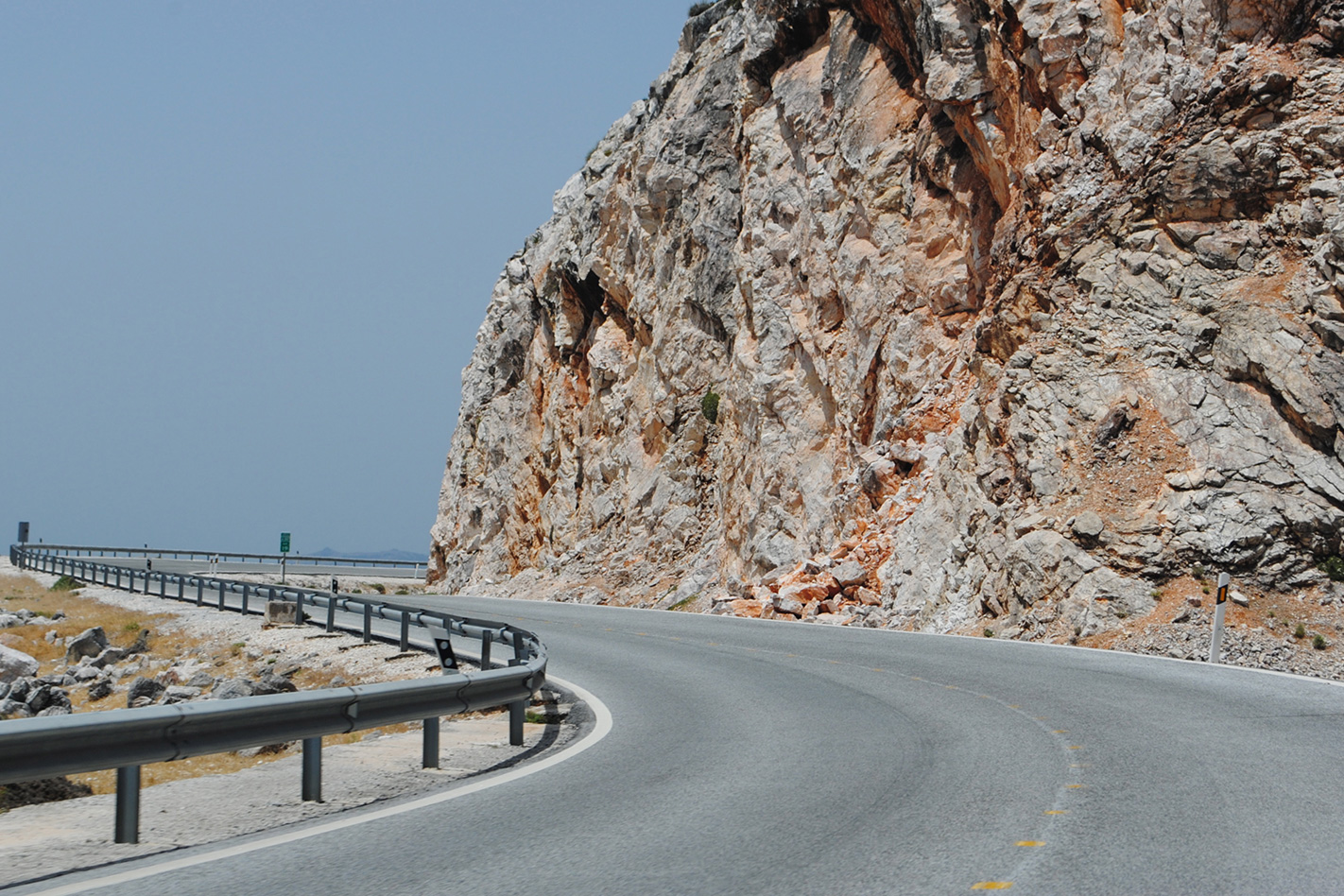
Jebel Hafeet Road, UAE
There’s not a lot to draw the traveller to Al-Ain in the United Arab Emirates. Apart from the Jebel Hafeet road, that is. An 11.7km stretch of perfect bitumen built by the Germans, soaring to the UAE’s second highest point at 1219m above sea level, it has two lanes going up, and one coming down. It’s rarely trafficked, so you can take some sporty lines through the 60 bends at an 8 percent average grade. Go in late afternoon for an amazing sunset view from the summit.
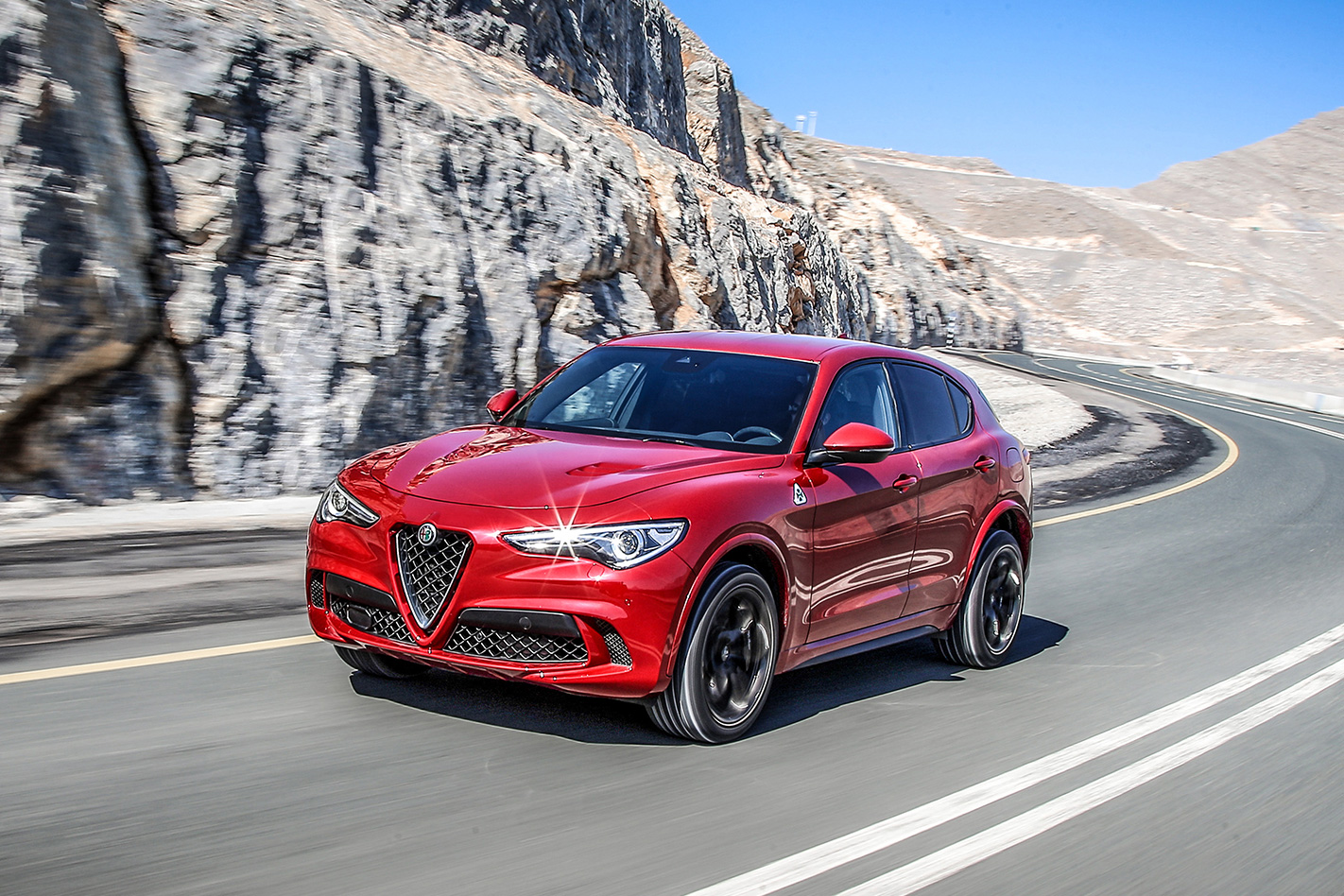
Angeles Crest Highway, California, USA
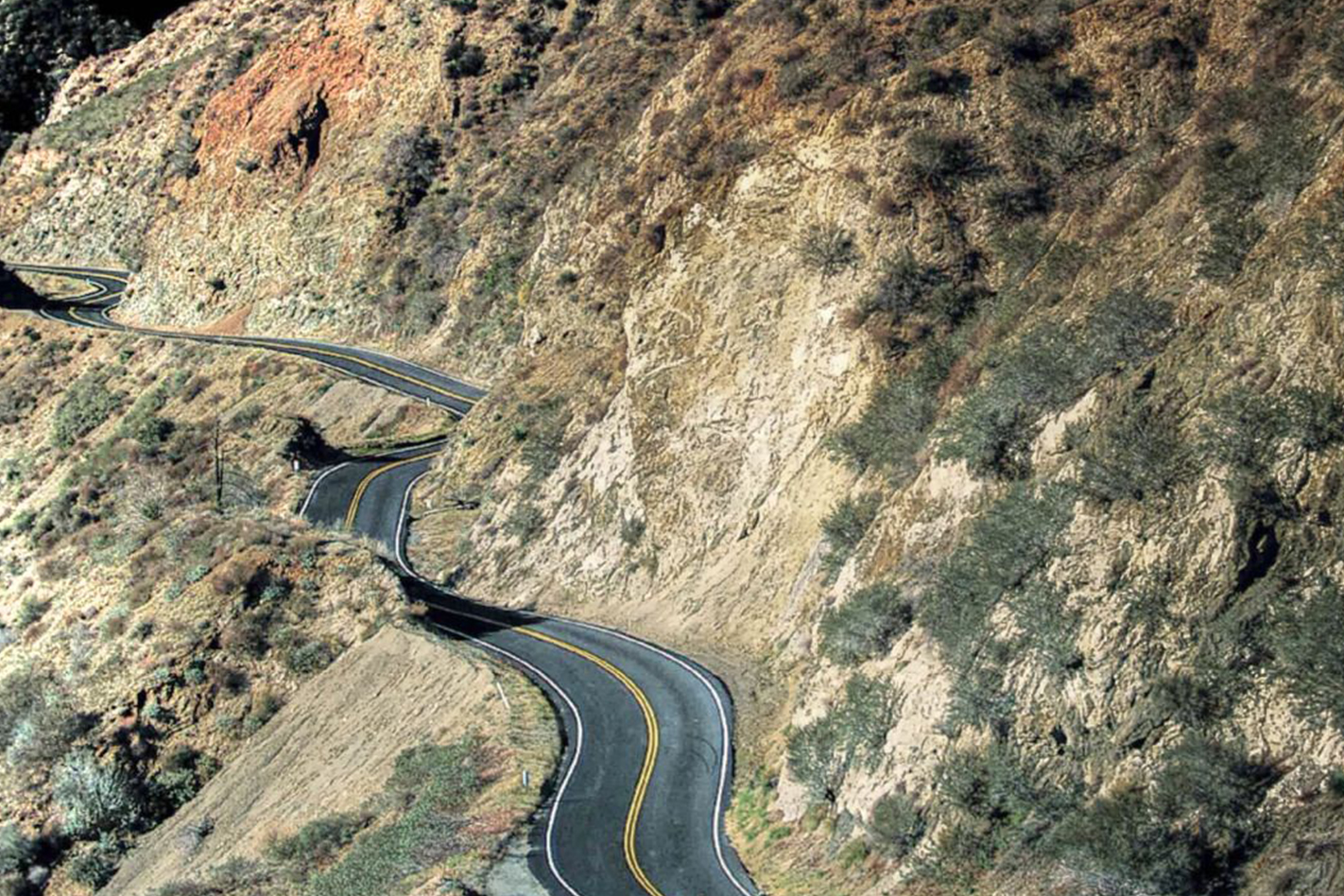
Los Angeles is usually portrayed as a traffic-choked, over-policed hellhole for motorists, but head north from Glendale or Pasadena and it soon changes for the better. In fact, the Angeles Crest Highway, which winds its way through the San Gabriel mountains for 106km, is a belter. Traffic dies off the further east you head, but check that the road is open. It’s usually shut during winter between Islip Saddle and Vincent Gap due to avalanche danger.
Black Spur, VIC, Australia
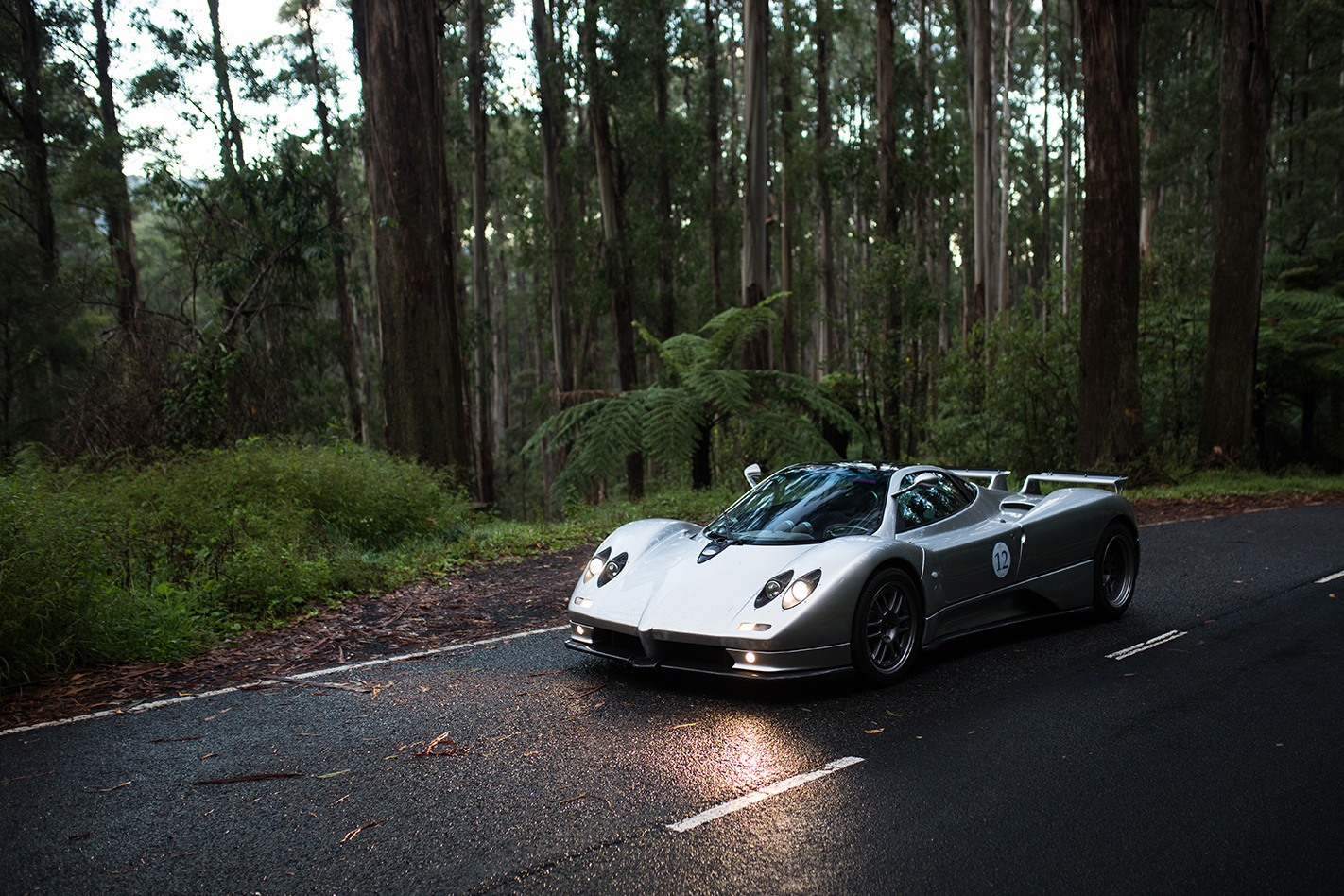
A staple for many Melbournites, the Black Spur is one of Victoria’s most idyllic drives. Regular local traffic means you’ll have more fun taking it slow and soaking in the surrounding forest. However, if you are lucky enough to find it bereft of other vehicles, the beautifully smooth road is a delight for any keen driver.
Route Napoleon, France
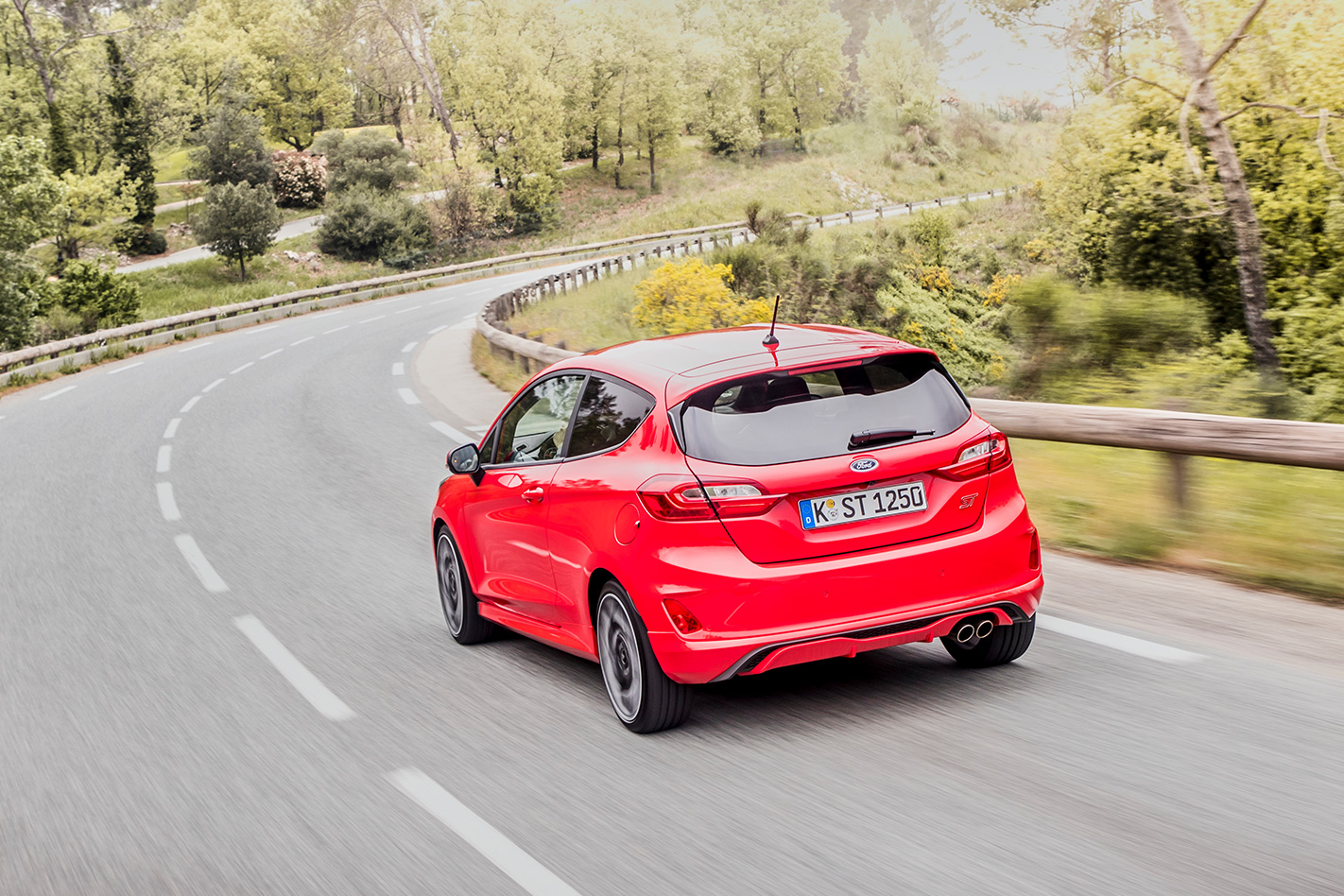
The route taken by Napoleon in 1815 upon his return from Elba strateches from Antibes to Grenoble. Base yourself around Castellane and you shouldn’t be able to miss, in either direction. The nearby Clue de la Roche Percee is one of the most exciting balcony roads in France, cut into the side of a cliff, with unlit tunnels, abrupt bends and very fast locals. Do it.
Cap Corse, Corsica
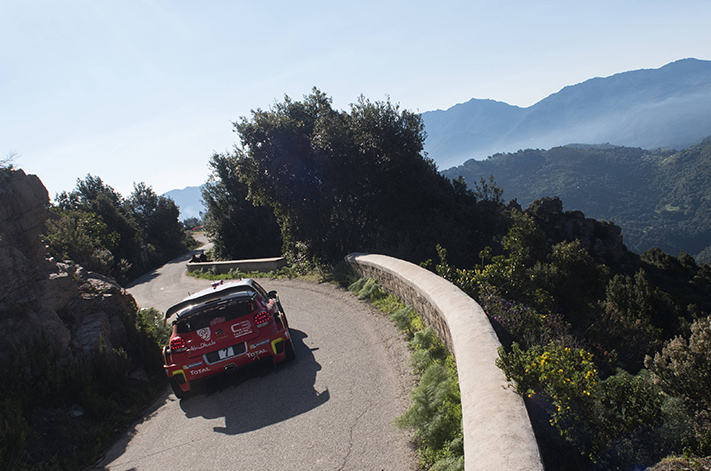
Youtube virtually any part of any the WRC’s Tour de Corse and you’re instantly transported to what looks to be some of the most breathtaking roads on earth. There are few Corsican roads more spectacular than the Cap Corse, the often-unprotected coastal road that snakes around Corsica’s north-east peninsula. Base yourself in Bastia, follow signs for the D80 and enjoy. It’s stunning.
Eildon-Jamieson Road, VIC, Australia
Running for 60km between the towns of Eildon and Jamieson, this stretch of tarmac is probably mainland Australia’s most challenging section. The queen stage of Targa High Country is lengthy and unrelenting. It’s also within a reasonable distance from Melbourne, which makes it a tempter if you’ve got a keen-handling car.
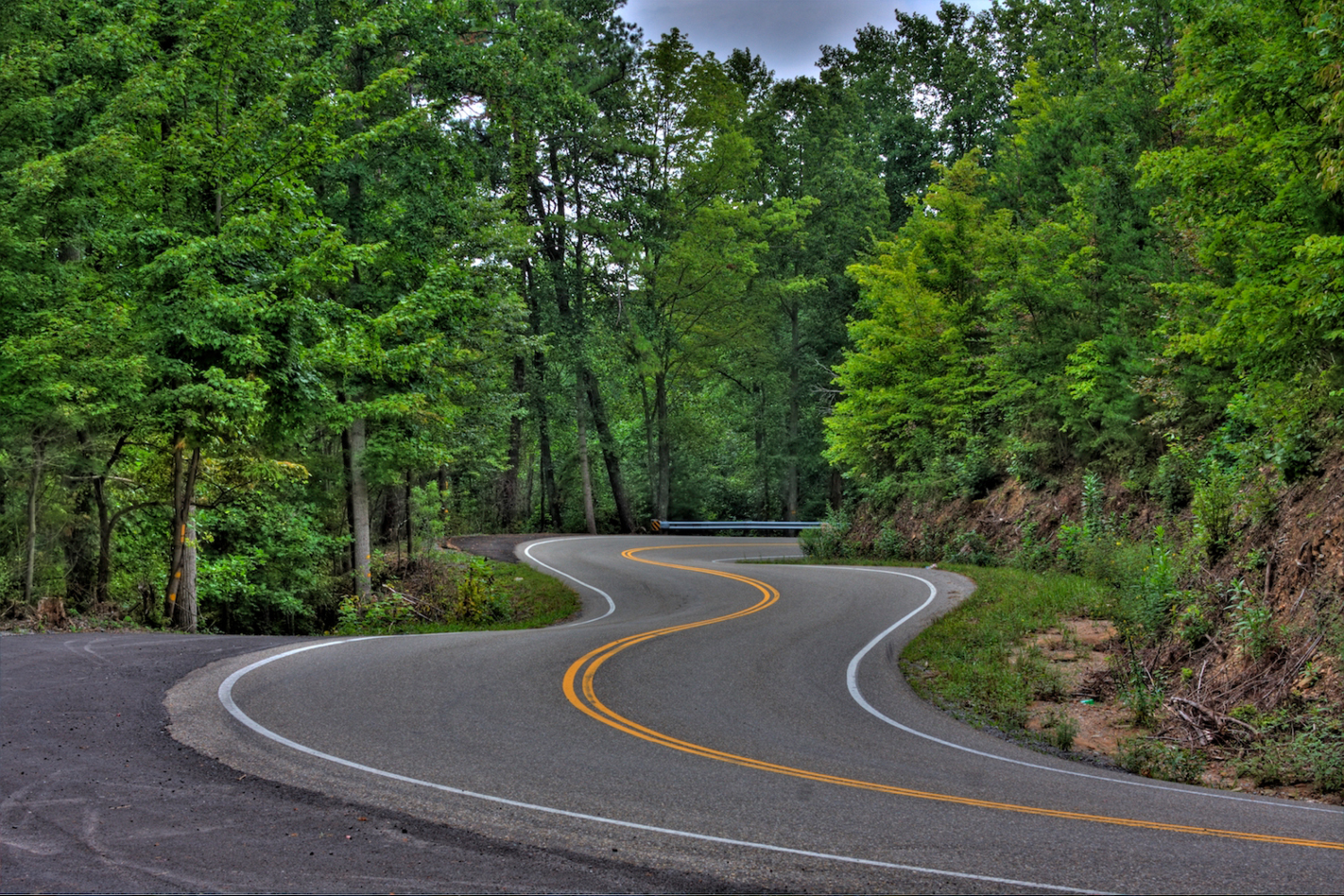
Tail of the Dragon, Deals Gap, Tennessee, USA
I’ll admit that Tennessee doesn’t sound like my idea of motoring nirvana, but it’s hard to argue with the challenge presented by the Tail of the Dragon. US Route 129 in Blount County might just be the best forest road in the States. Over 18km, it packs in 318 curves and features some great corner names such as Gravity Cavity, Beginner’s End and Brake or Bust Bend. My favourite? The Tree of Shame, where crashed bike bits adorn the branches.
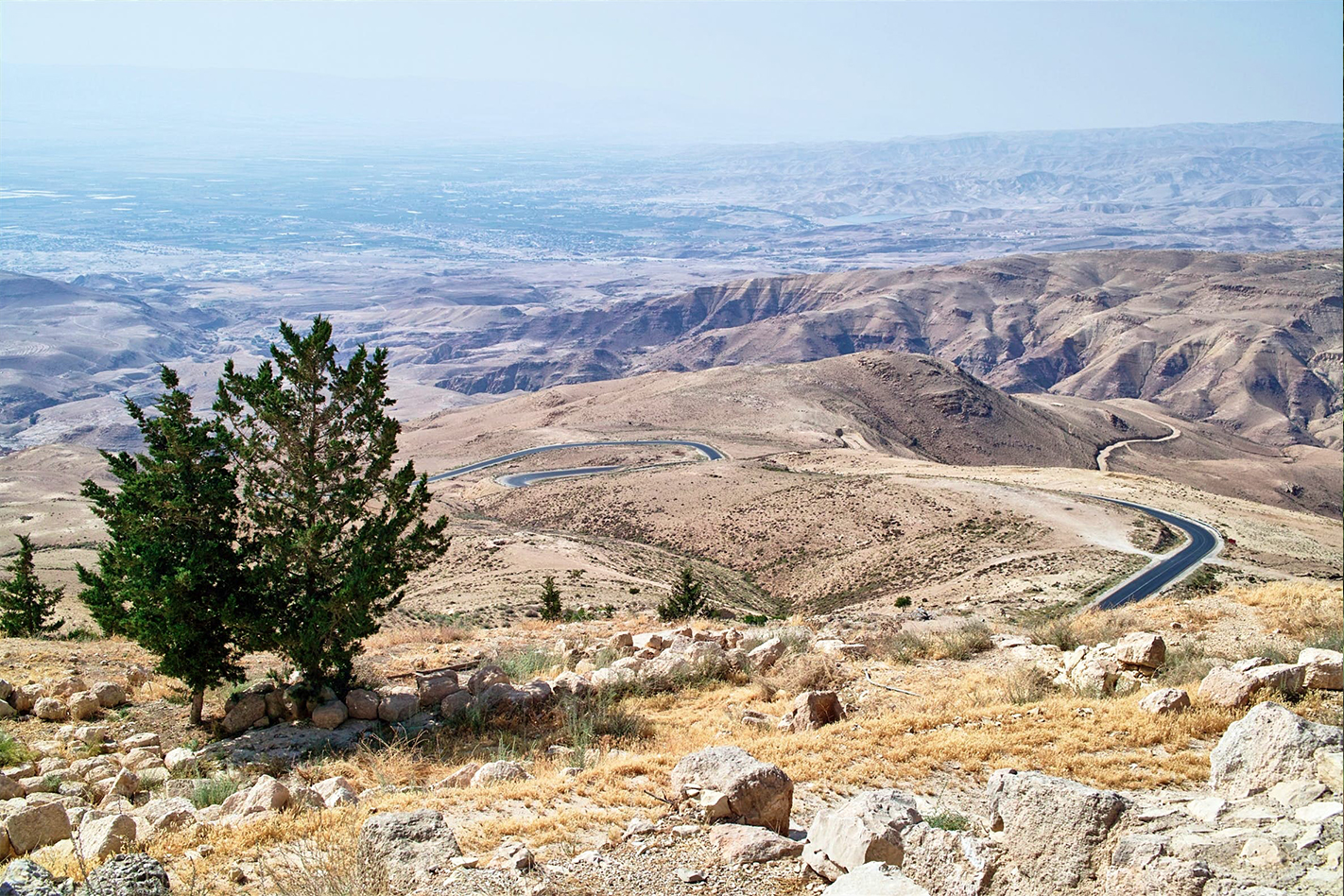
Mt Nebo, Jordan
If you like your challenges, short, sharp and scenic, it’s hard to better the Mt Nebo road. Climbing from the lowest point on earth, the shores of the Dead Sea, up to the mount where Moses was allegedly given his first view of the Promised Land, it’s not wanting for either geographical or historical interest. Moses is buried somewhere near the summit. Enright nearly joined him in a Peugeot 206 a few years back. You’ll probably want something grippy and powerful to challenge the huge sweeping switchbacks.
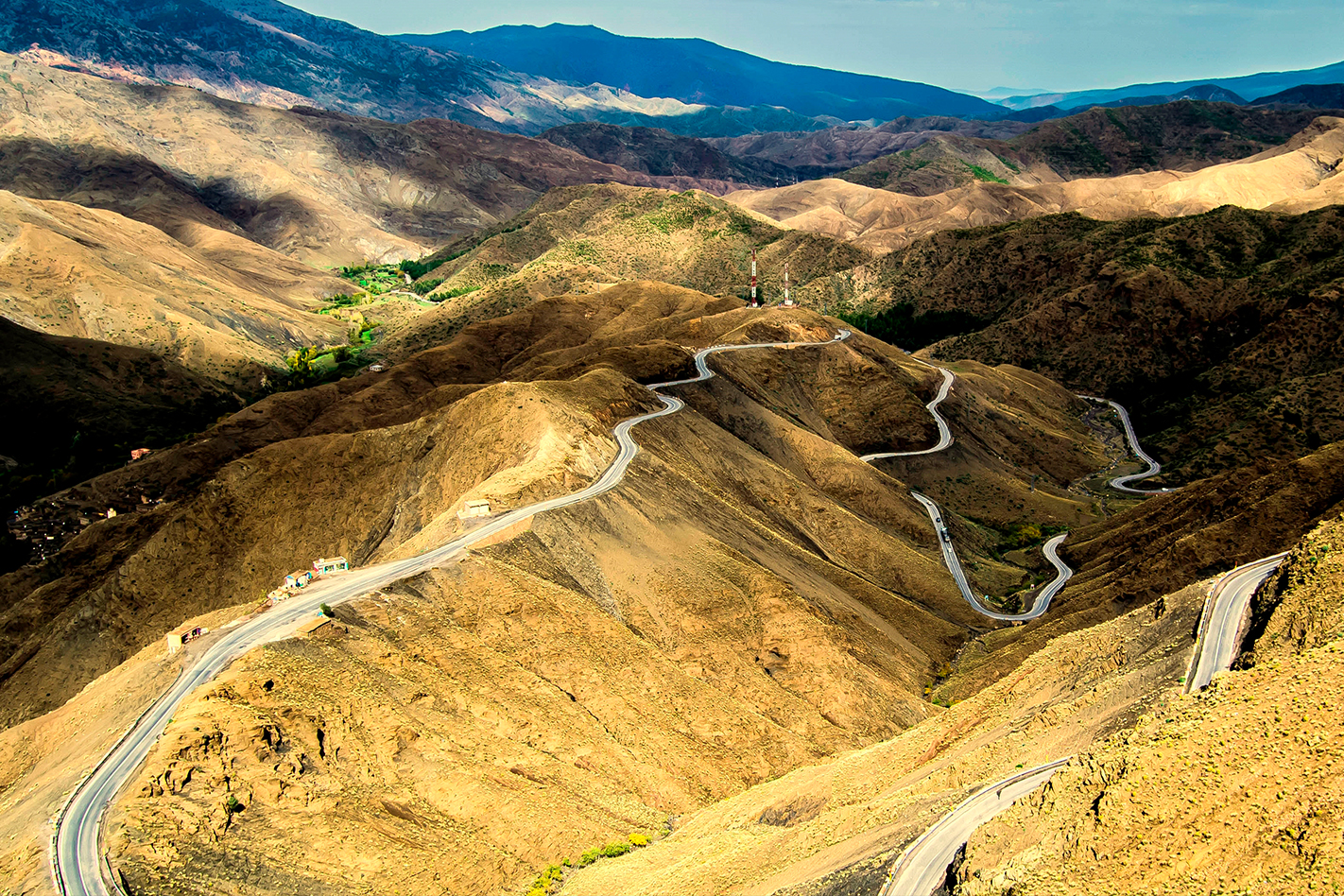
Tizi n’Tichka, Morocco
Adventure driving doesn’t get much more beautiful than the Tizi n’Tichka which climbs the Atlas Mountains in Morocco before dropping into the High Sahara towards Ouarzazate. The road can be anything from smooth bitumen to fording creeks and all the locals seem to agree on which side of the road to drive on: the middle. Stay in Marrakesh: it’s one heck of a town.
Parque Nacional del Teide, Tenerife
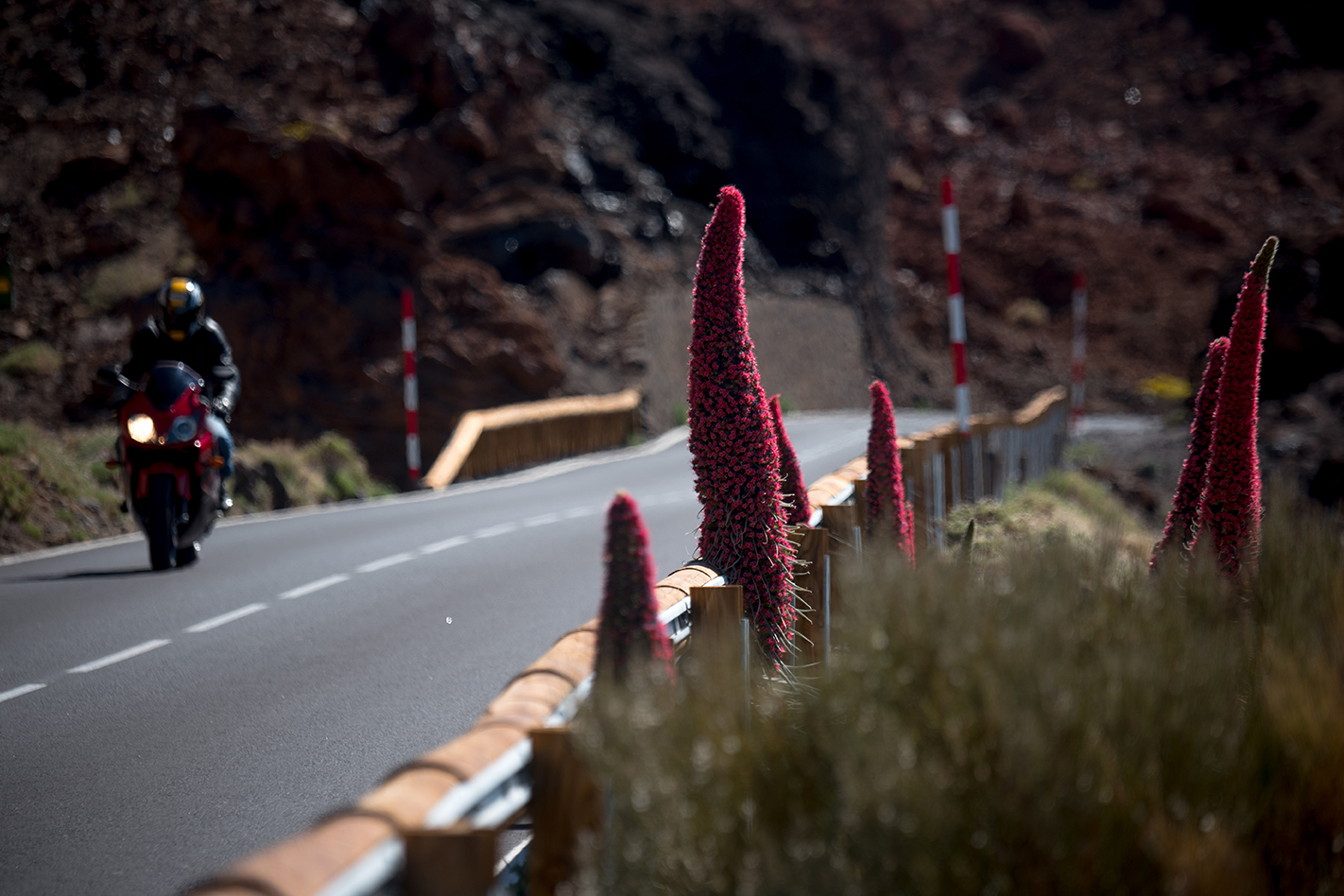
Pico del Teide is a huge stratovolcano located on Tenerife, a tiny island a few hundred kilometres off the African coast of Western Sahara. At 3718m, it’s the highest point of Spain, and the road up is something very special. Route TF21 crosses the island from corner to corner and ascends 2650m through a number of biomes. Go in the early morning and you can get the road to yourself. Go in the evening and you can enjoy sunsets over the Atlantic looking down onto a sea of clouds. It’s magical.
Transalpina Highway, Romania
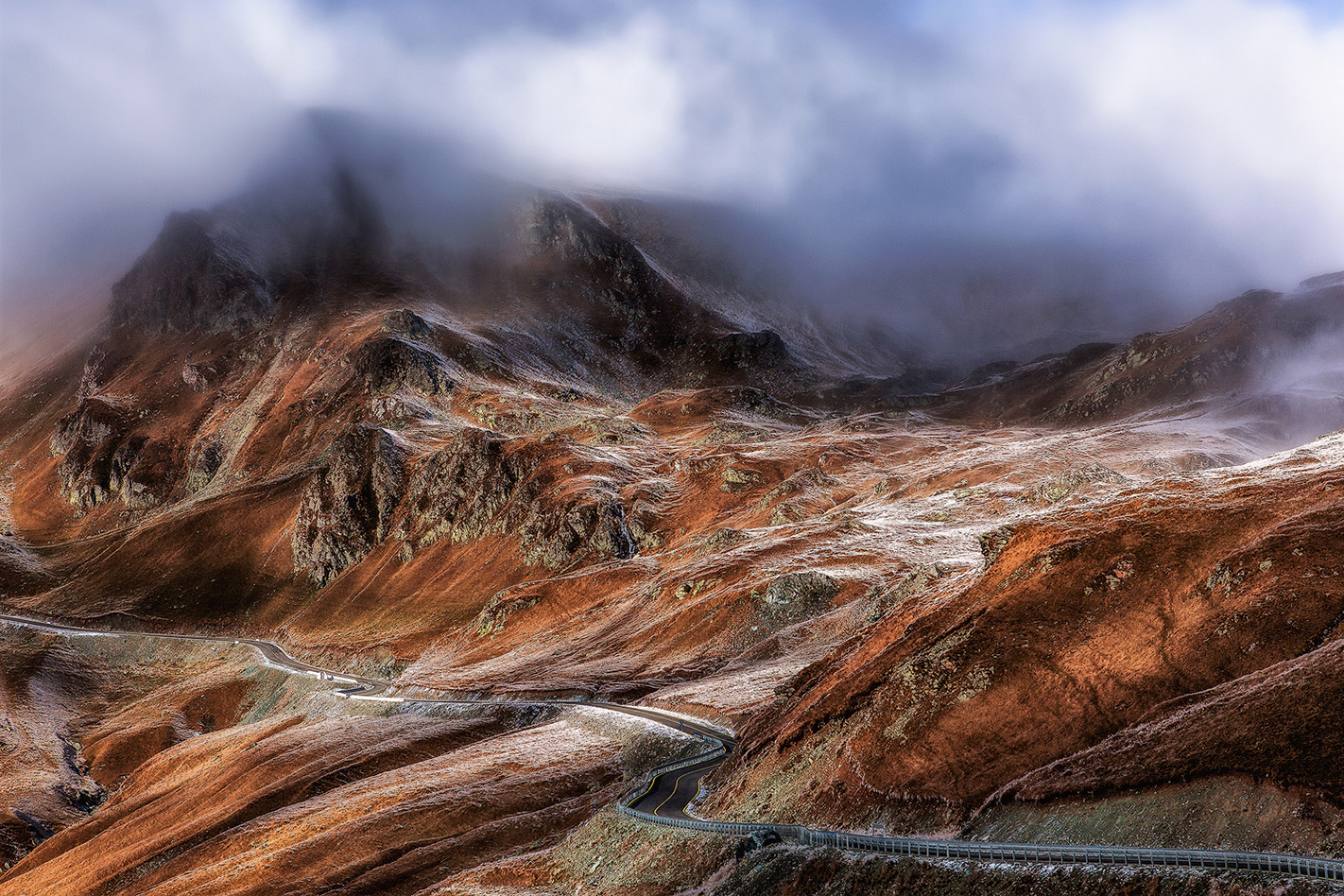
When Top Gear tried to find the best road in the world, they decided it was the Tranfagarasan Highway in Romania. They were wrong. What’s more, they didn’t even manage to find the best road in Romania. The 148km Transalpina is higher, wilder, better surfaced, more consistently challenging and more beautiful than the 90km Transfagarasan and, thanks to TG, a whole lot quieter too.
The WHOLE of Tasmania
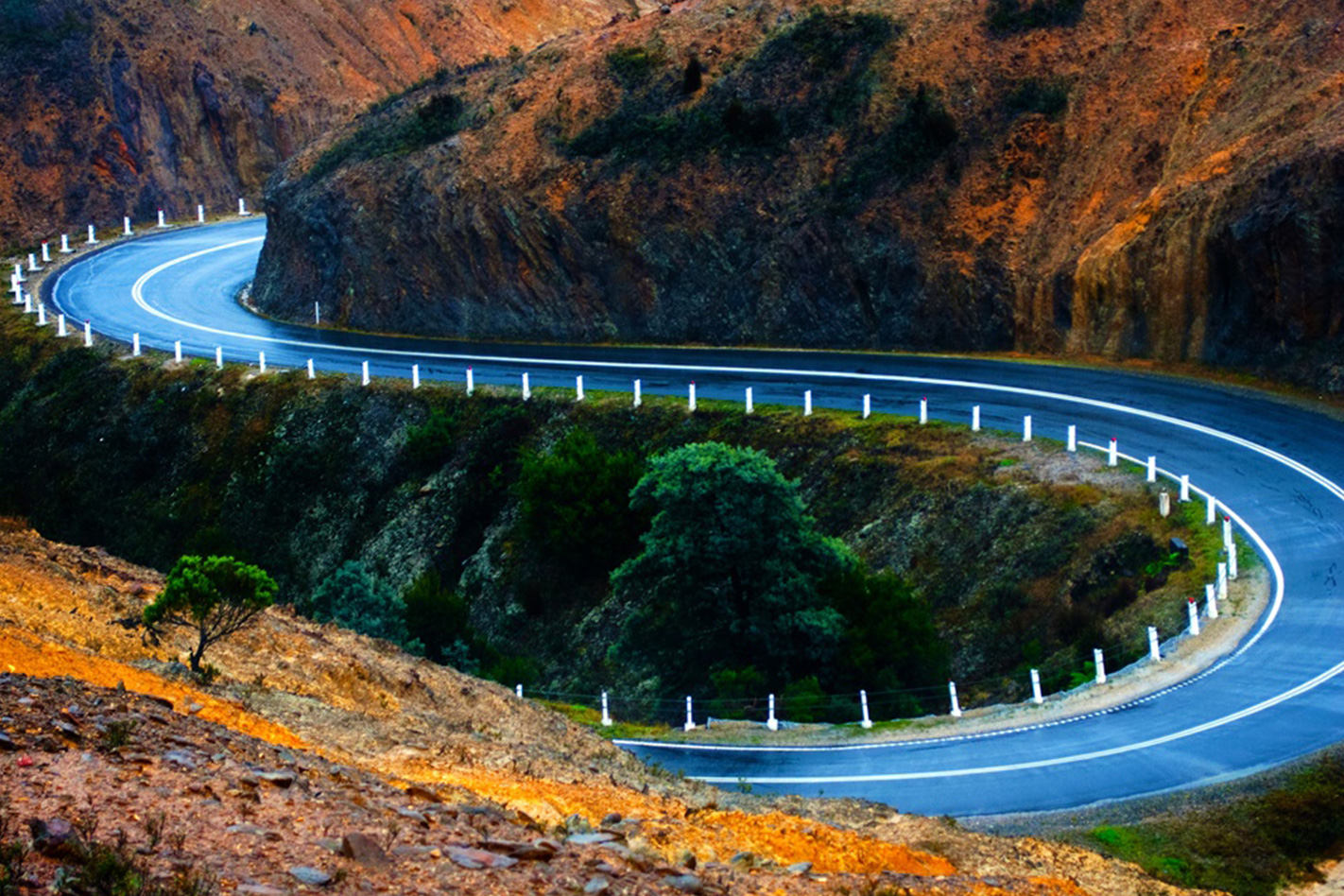
Do yourself a favour, and book a week long driving holiday in Tasmania. Trust us, you won’t be disappointed. There are so many brilliant roads in the state that it deserves its own article entirely, but to get you started try the 99 bends road out of Queenstown. There is a very good reason this route is used for Targa Tasmania each year.
Isle of Man TT course
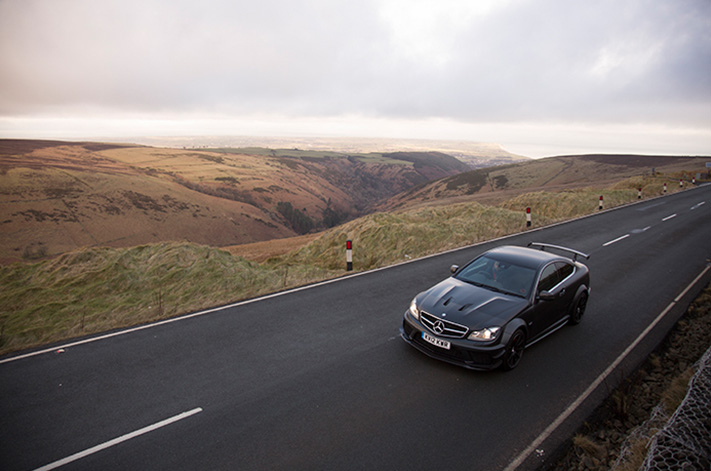
How could we not include a section of speed derestricted tarmac that’s home to possibly the greatest challenge in world motorsport. Even in a private vehicle there are some sections of the course that are completely exhilarating. The Snaefell Mountain Road (A18) links Douglas and Ramsey and features a 21km long section where you can really stretch your car’s legs. Look out for slow traffic, sheep, cyclists and, yes, the police. Although there’s no speed limit, you’re responsible for maintaining a responsible velocity and the local plod take a dim view of halfwit hoons.
Gorge Road, SA, Australia
This route connects Adelaide to the Barossa Valley, and is a pleasure to drive year-round. Making this driving road even more enjoyable is the litany of brilliant cafes, bakeries, and wineries that are scattered around the region.
The Wheels COTY test loop
Now, we aren’t going to give away the location of this one, but as for the Wheels team driving this finely-honed custom route is the highlight of the working year. Refined over decades of Wheels Car of the Year testing, the road loop allows our judges to pull a car’s ability apart, unmasking its true nature. But, the great thing about the Wheels COTY test loop is it could be anywhere in the world, and you yourself could design your very own version. It is more of an idea than a fixed route. So, get planning, design a route, and build your own perfect road trip.
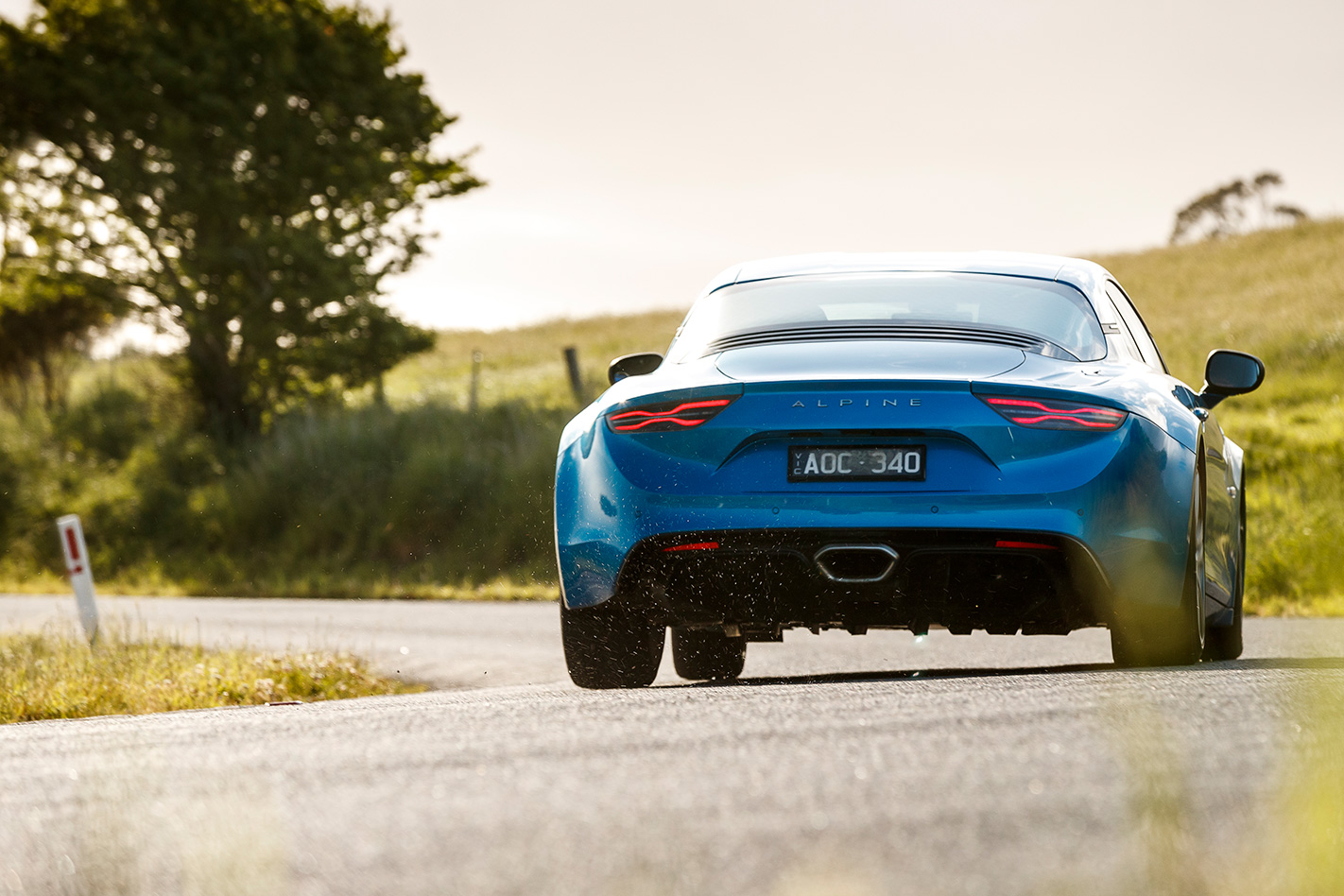
Got your own favourite road that we missed? Let us know in the comments
It’s time for a new issue of MOTOR Magazine!
You might not be able to go for a drive right now, depending on where you live, but you can rest assured MOTOR will continue to provide the goods to keep you reading through iso.
You can find MOTOR at retailers around Australia. Or you can subscribe and save yourself some cash, there’s even a (cheaper!) digital subscription option.
Subscribers often receive their mags earlier, so you’ll get to see what MOTOR has to offer before anyone else.
Follow us on Facebook, Twitter, and Instagram to interact with us, give us feedback, and get a peek behind the scenes
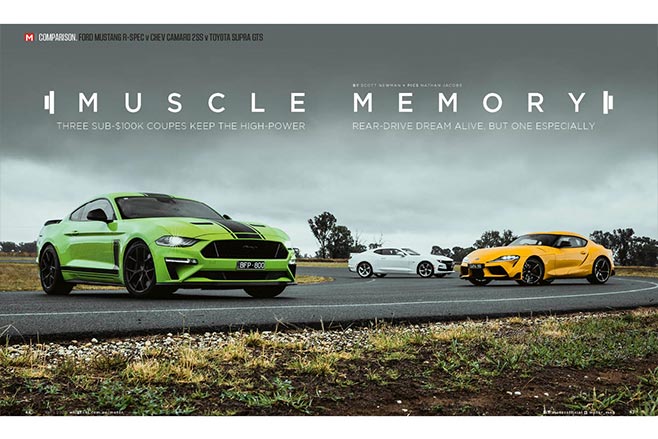
Cover story: Mustang R-Spec v Camaro 2SS v Supra GTS
Ford’s local performance hero takes on some serious rivals.
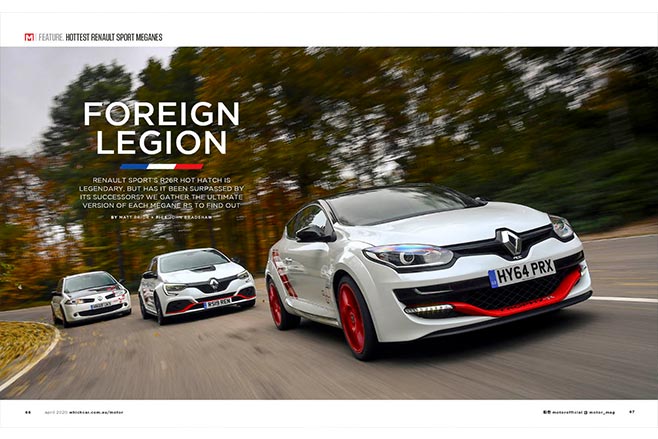
Renault Sport’s hottest Meganes reunited
R26R meets 275 and 300 Trophy-Rs – and we pick our favourite.
Interview: Michael Leiters
Ferrari’s tech boss says staying small helps the company move fast.
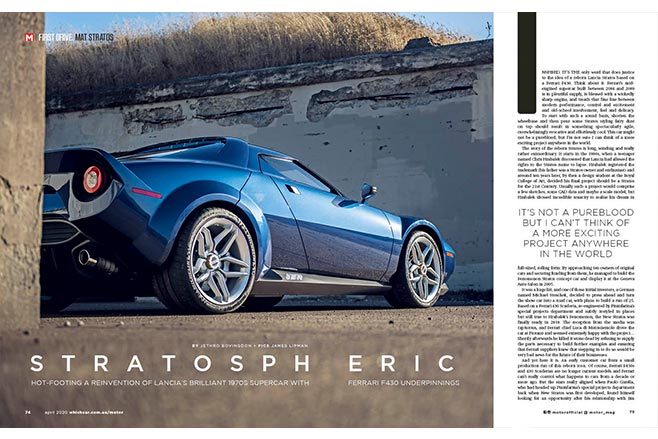
Stratos reborn… and driven
We strap into a Ferrari F430-powered retro rocket.
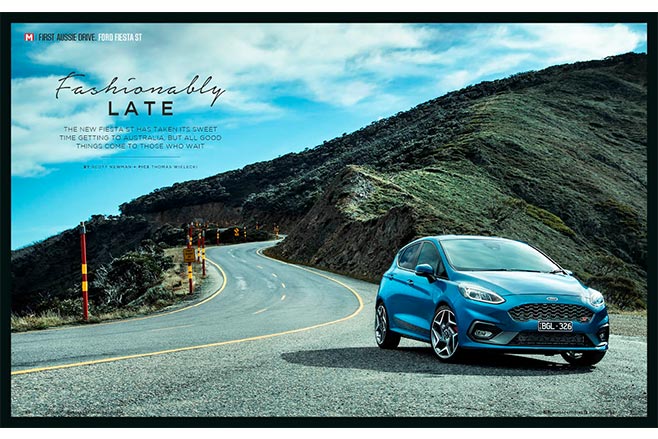
First Aussie drive: Ford Fiesta ST
Why Ford’s new turbo triple gets five stars from five.
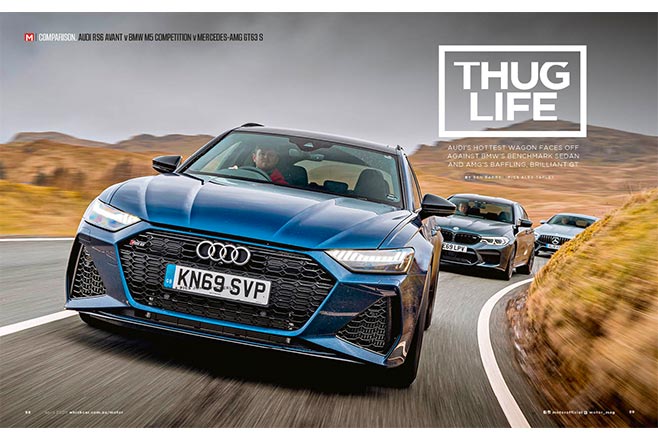
Audi RS6 Avant v Mercedes-AMG GT63 S v BMW M5 Competition
How Audi’s new twin-turbo uber wagon compares.
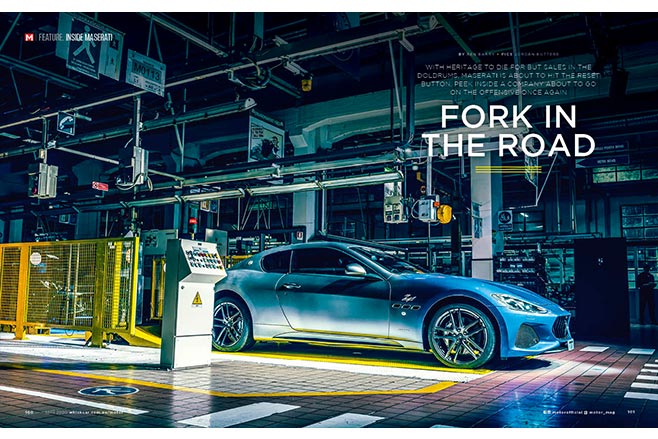
MOTOR goes inside Maserati
A great Italian car brand plans to bounce back.
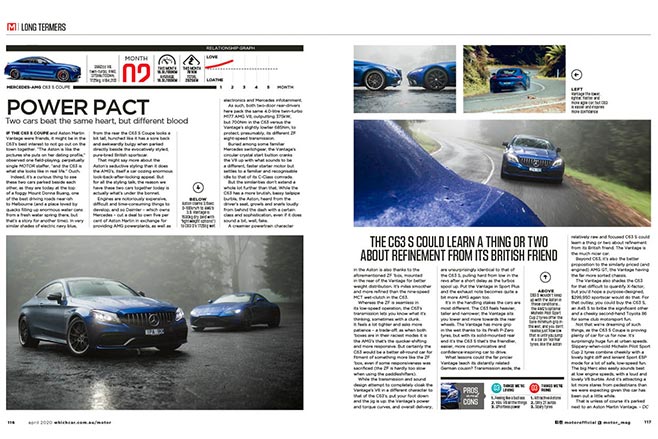
The MOTOR Garage: AMG C63 S, Camaro ZL1
We dyno the ZL1, and the C63 meets a relative!
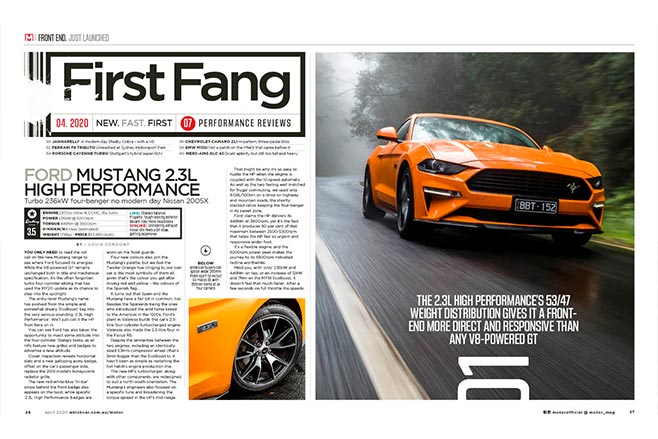
First Fangs
We drive: the new Ford Mustang 2.3L; a Jannarelly(!?); Ferrari F8 Tributo; Porsche Cayenne Turbo S; Camaro ZL1 manual, and more.
And the rest!
Columns, the usual features, our Hot Source data, and your own contributions!
If you want a Chevrolet Silverado 2500 pick-up, converted locally to right-hand drive by HSV, you’ll need to be quick on the draw.
The popular 332kW/1234Nm truck has almost sold out, and there won’t be a direct replacement in the works for quite some time.
The plant at Clayton re-engineered around 1200 of the 6.6-litre turbodiesel leviathans, with work starting in June 2018. Now there are only around 100 in the dealer pool around the country, split between the off-road targeted Midnight Edition and the more bitumen-oriented Custom Sport.
The reason the pipeline of vehicles from the US has dried up is because this current generation of Silverado 2500 is on run-out. Now that the factory has no Camaro 2SS or Colorado Sportscat models to offer, its focus switches to the 6.2-litre V8 petrol-powered Silverado 1500.
This 313kW V8 model is offered in a single LTZ specification and boasts a 4500kg maximum braked towing capacity. The first batch of right-hook vehicles are set to be sent to dealers from Melbourne imminently.
HSV stopped production of the reengineered 2SS Camaro earlier in the year, and GM’s closure of its Thai plant (effectively killing the Australian Colorado) means the Sportscat dual-cab has also been axed from the local line-up.
Before COVID-19 threw a huge viral spanner in the works, HSV was set to rebrand as General Motors Specialty Vehicles (GMSV), thus broadening its scope within the GM empire.
Now plans have had to be put on hold, for the short term at least, and there will, as a result, be a significant delay until the next-gen Silverado 2500 starts shipping from plants in Mexico and the USA for an Australian clientele.
For the short term at least, the Clayton plant will be concentrating on Silverado 1500 utes on one side of the building and RAM 1500 and 2500 trucks on the other. There are exciting plans afoot for HSV that could well propel the business into a very different sphere. The future will be branded GMSV. The present, it seems, is petrol-powered V8 trucks.
For many, this car typifies ‘The Ultimate Driving Machine’.
The E46 M3 CSL has all the right ingredients for a halo model, one that showcases the engineering smarts of the revered M Division.
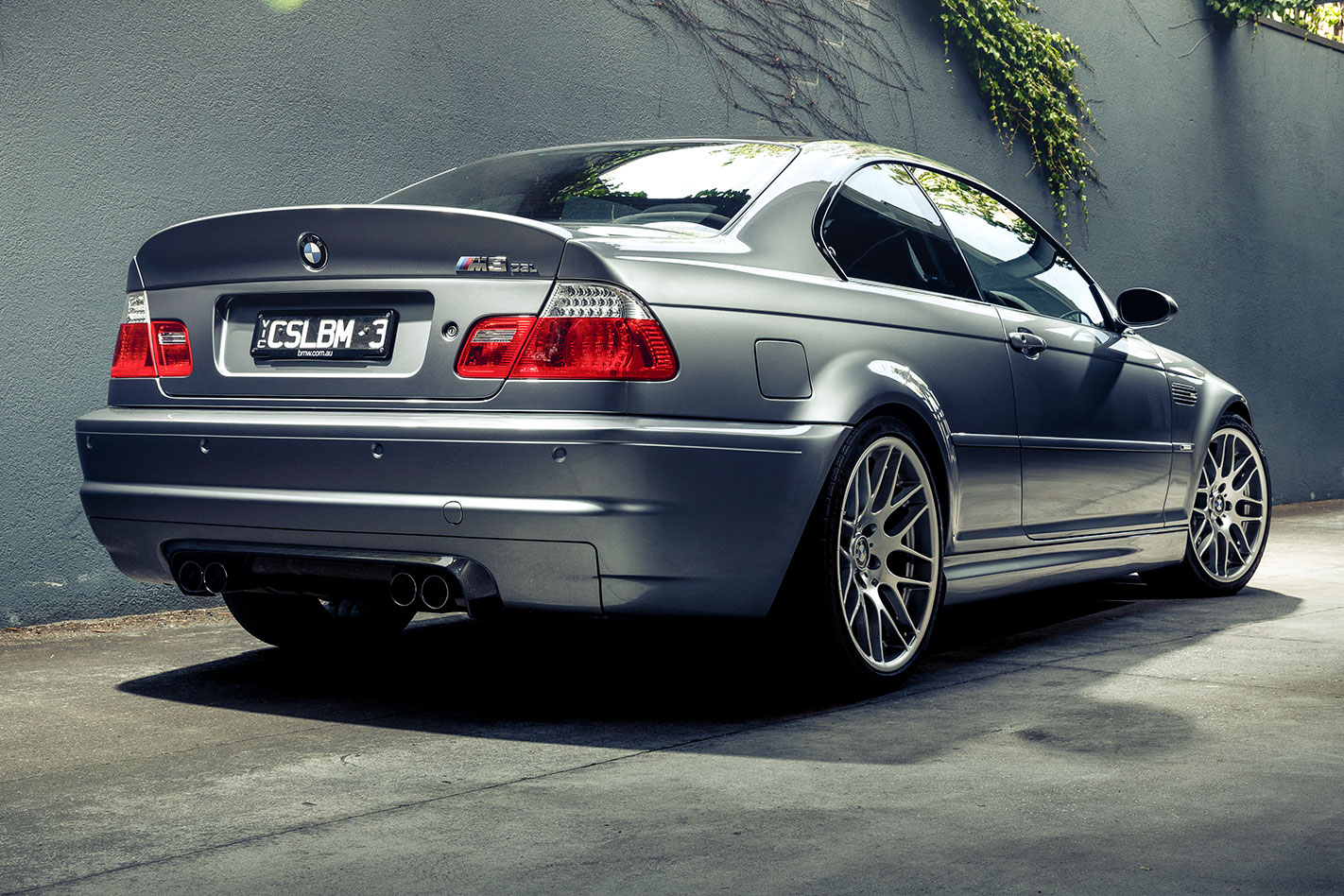
As a somewhat crowning glory of the E46 generation (aside from the V8-powered GTR), the CSL stands as a watermark moment for naturally aspirated straight-six firepower.
A lot is known about this iconic Bimmer, but we’ve delved into the Wheels catalogue to uncover facts you might have missed.
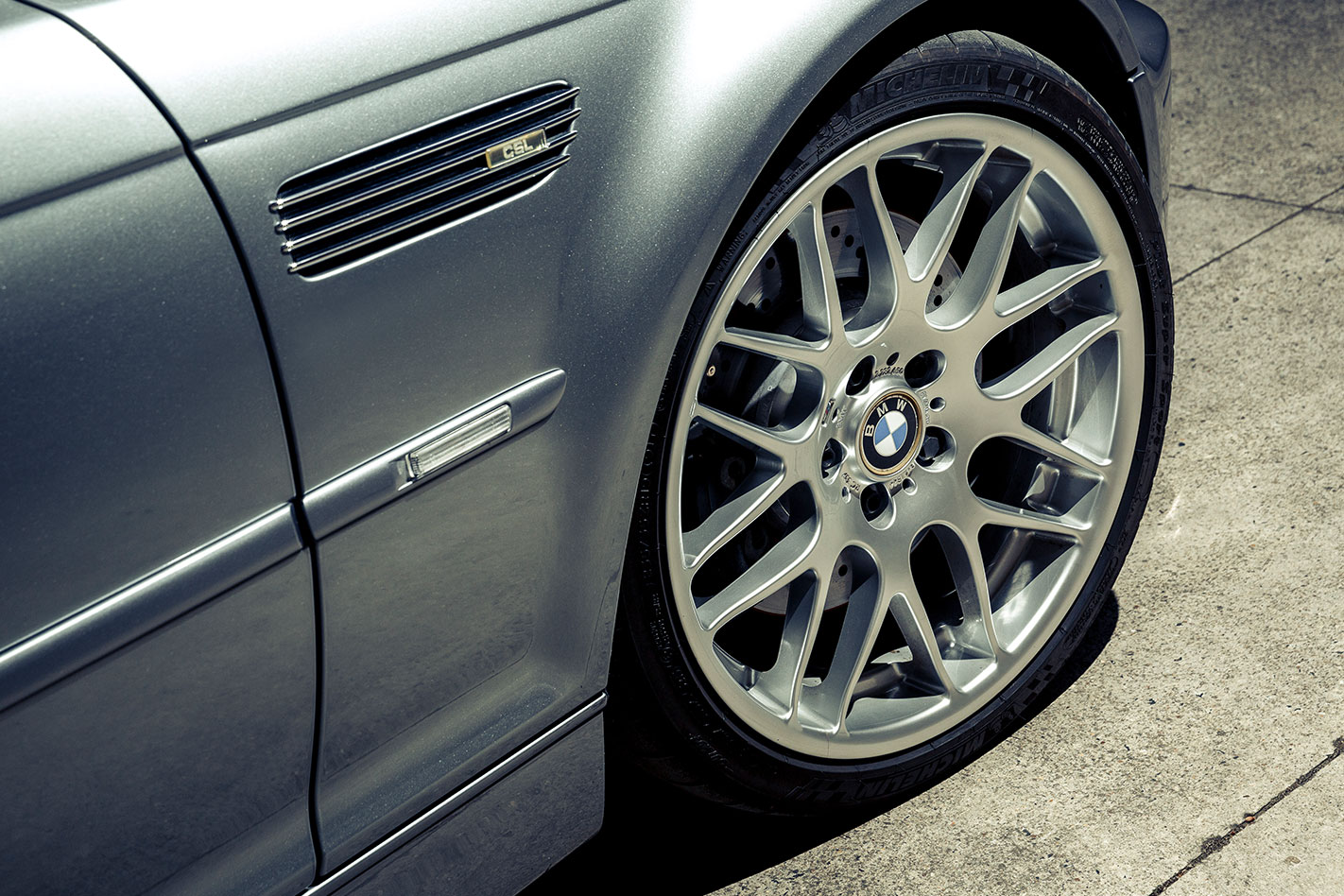
EIGHT-MINUTE ‘RING BEAST
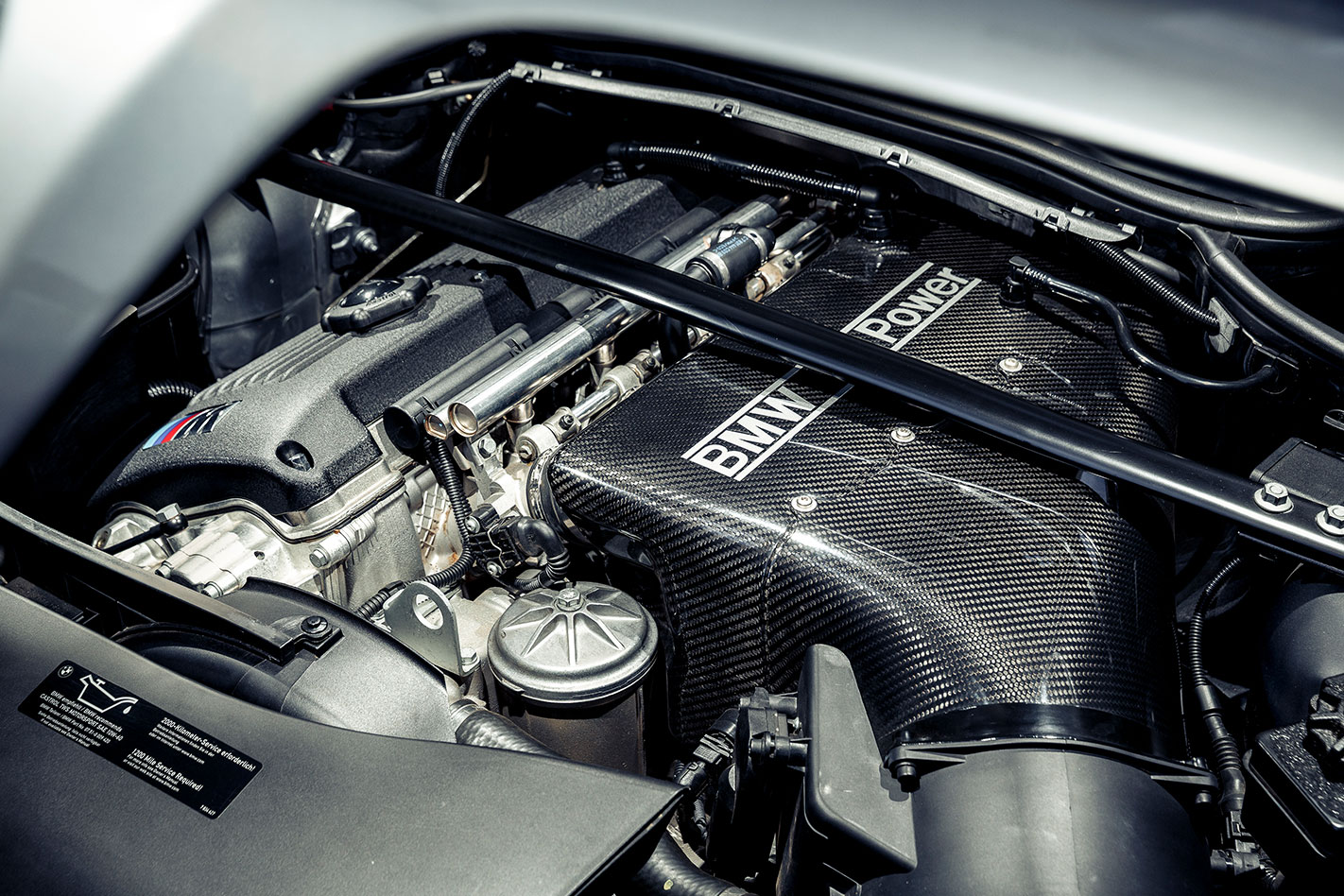
The CSL was developed to meet a very specific objective. It had to get round the Nurburging in eight minutes. Nowadays that’s within the aegis of most senior hot hatches but in 2004 this was junior supercar pace. To achieve this, head of body Hans-Bruno Starke and chassis development engineer Peter Schmidt had four key areas to work on: weight, aerodynamics, suspension and tyres. Power was a secondary concern, although changes to the engine management, cams, headers, intakes, valves and exhaust handily lifted peak power from the regulation M3’s 252 to a healthy 265kW (7900rpm). History showed the process worked, with a 7min50sec lap the result.
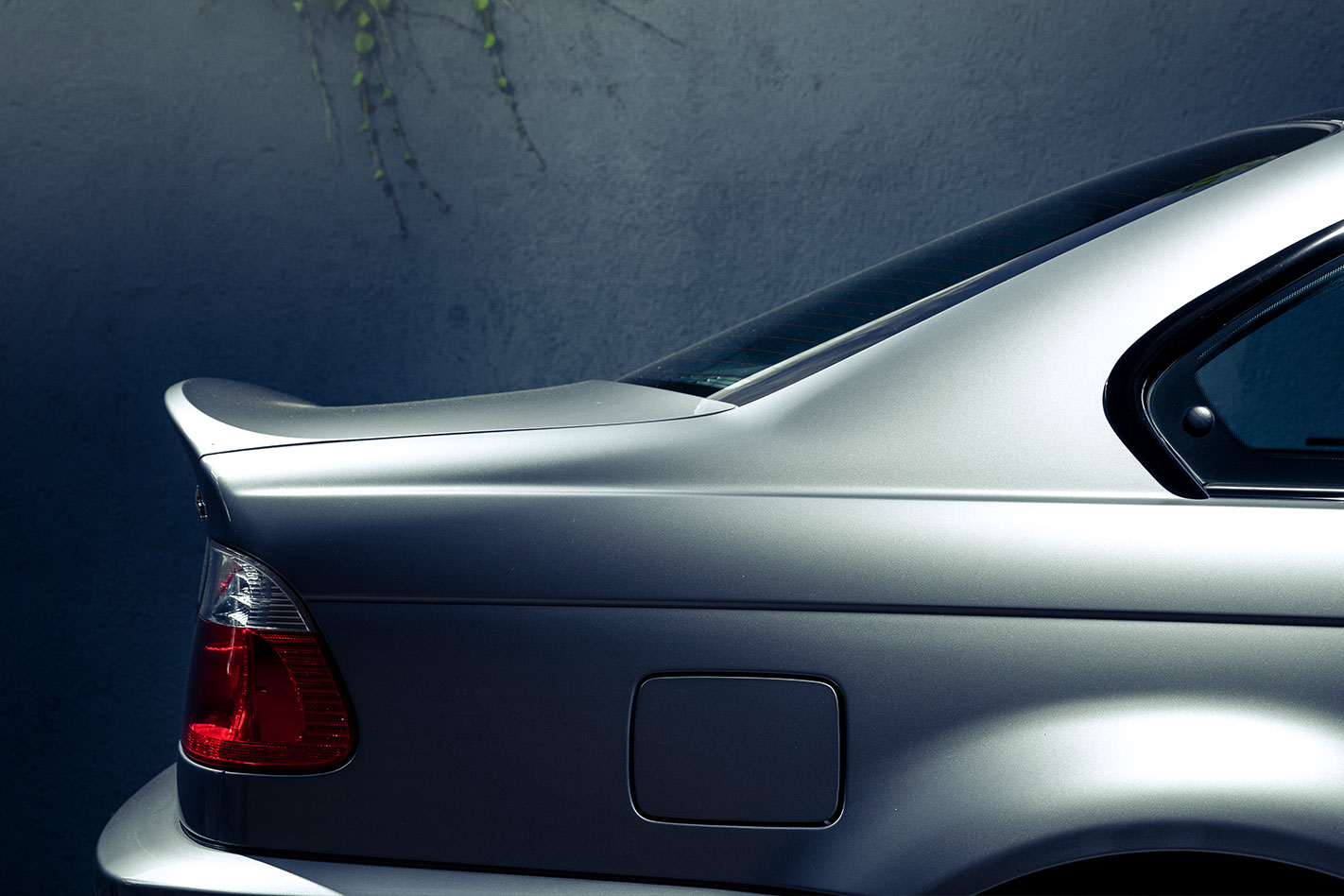
CARDBOARD CUTOUT?
Based on a hoary old Clarksonism, many believe that the boot floor of the CSL is made of cardboard and can’t hold any weight. Not so. The underside of the boot is metal, the same as any M3 but it does have a lightweight cardboard boot liner. It’s CSL-specific BMW part number 51477895990; removable honeycomb-paper composite panel.
WEIGHTY ISSUE
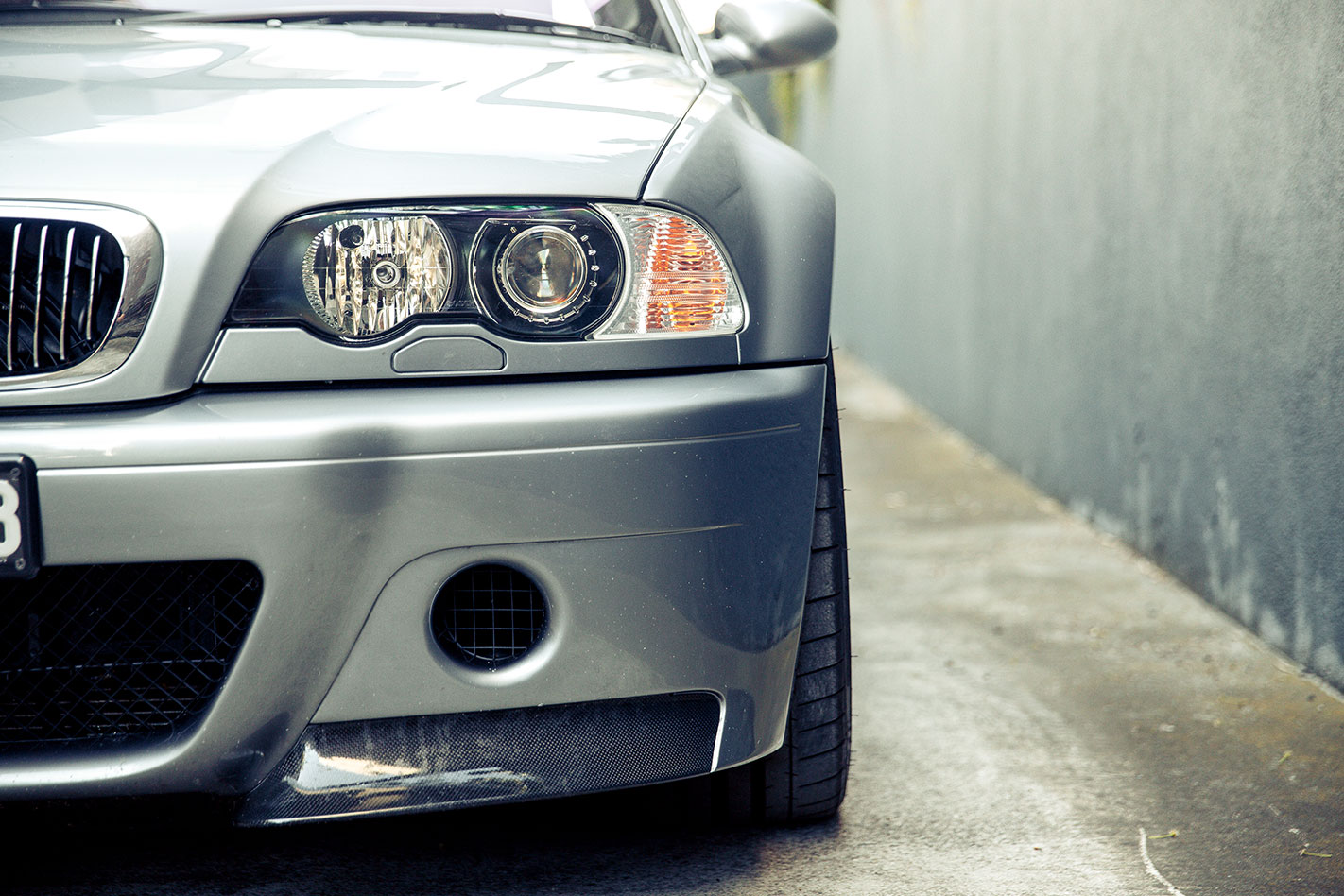
The virtuous circle afforded by weight reduction was the goal. This was the first M car to pioneer the carbonfibre roof, saving 7kg and lowering the centre gravity. Around 50kg came out of the interior, with lightweight seats, centre console, glass and door panels. A couple of kilos came off each wheel, with aluminium lower control arms further reducing unsprung weight. The carbonfibre front bumper shell is a pure racing part, helping to subtly shift weight distribution rearwards. Final distribution was 51:49 front to rear, still not quite Munich’s much-vaunted 50:50.
THE UNLIKELY MANUAL
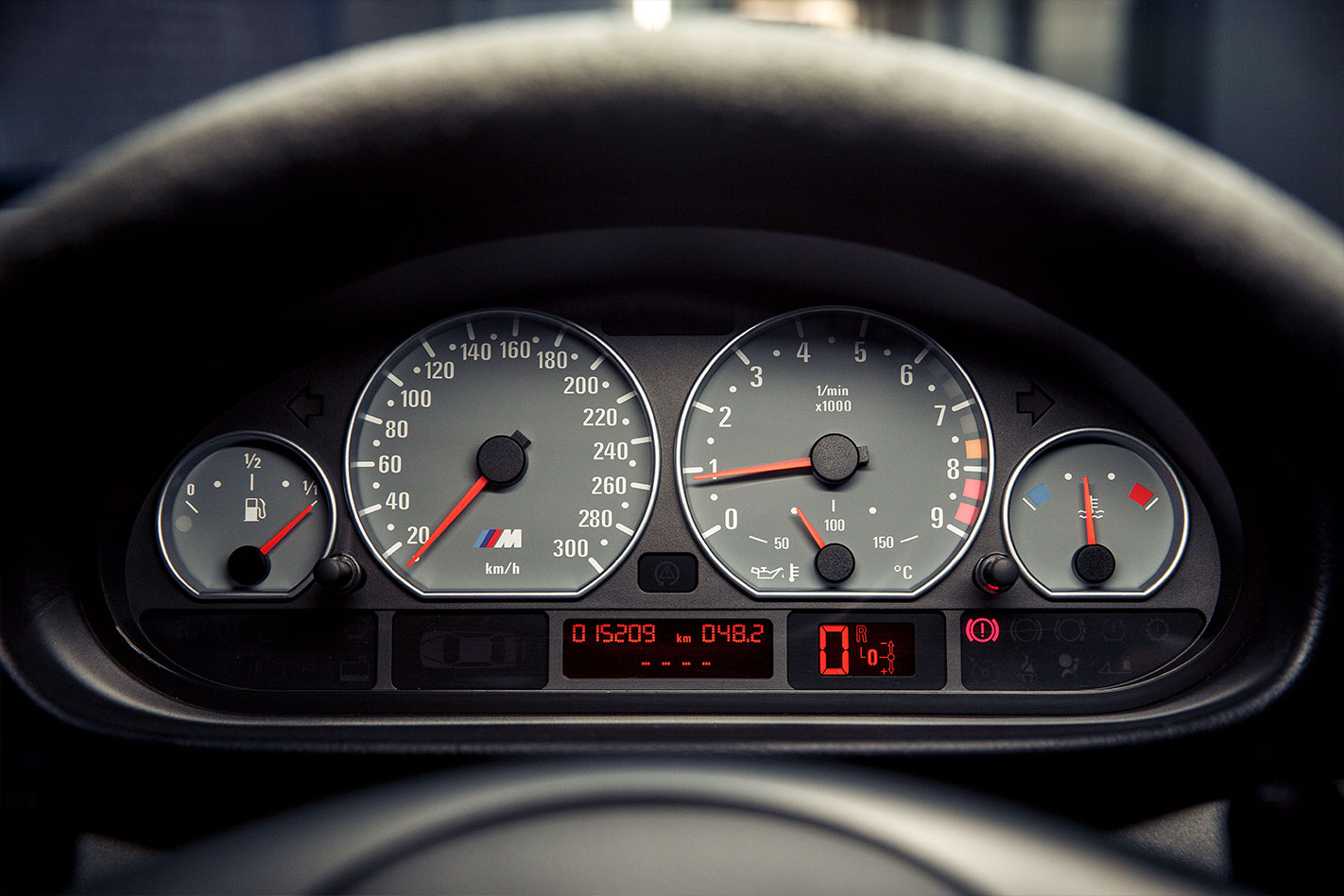
Somewhat controversially for the time, the CSL foresaw a trend: no clutch pedal for the flagship sports model. The SMG II ’box (in effect a robotised manual) seems a little quaint now. An M3 CS model (option S7MAA) was available in the UK and sold as the Competition Package (ZCP) in the US, which offered firmer suspension, bigger brakes and lookalike CSL wheels, but which was also offered with a manual transmission. For adherents of three pedals it’s the pick of the E46 M3 fold. Or, companies in the UK have successful converted a few CSLs to manual, but whether or not you want to heavily tamper with a rare modern classic is another issue altogether.
TIGHT PRODUCTION RUN
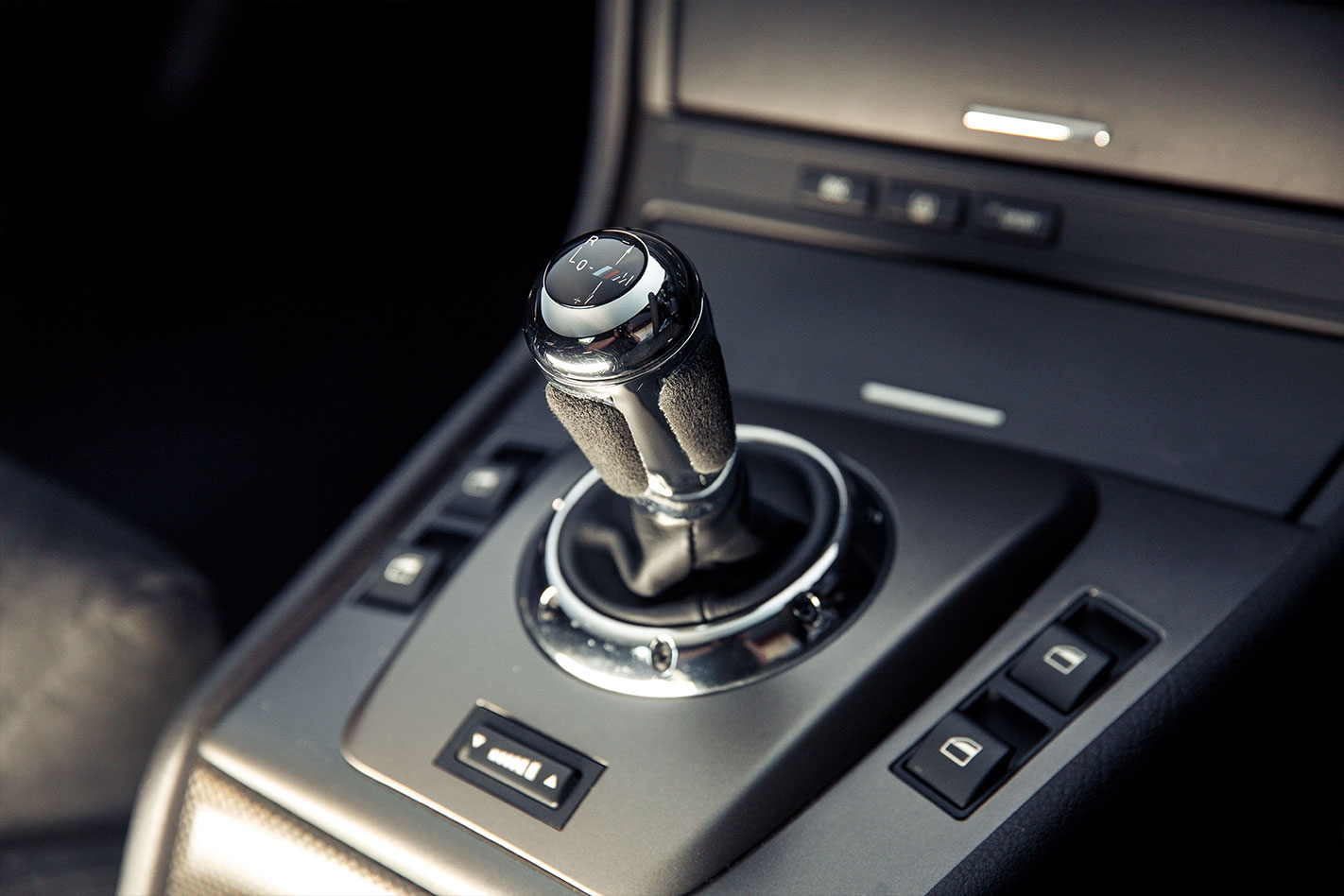
The E46 combined the aggression of the original E30 with the six-cylinder charisma of the E36 in the most perfectly proportioned package. Small wonder that the ultimate road-going incarnation of the E46 M3, the CSL, is possibly the most sought-after M3 in its storied history. Only 1383 were ever made, with just 544 sold in right-hand-drive guise and a mere 23 officially made it to Australian shores.
Anyone else missing the thrill of driving right now? Well, while we’re all doing our bit and staying inside, let’s plan our drives for when the lockdown lifts.
Wheels is starting a #DriveAfterIso campaign, and we want to hear from you!
Post a picture of your car and tell us about your favourite driving roads. The road can be a long loop, or a short stretch, that you love heading to when you need to escape.
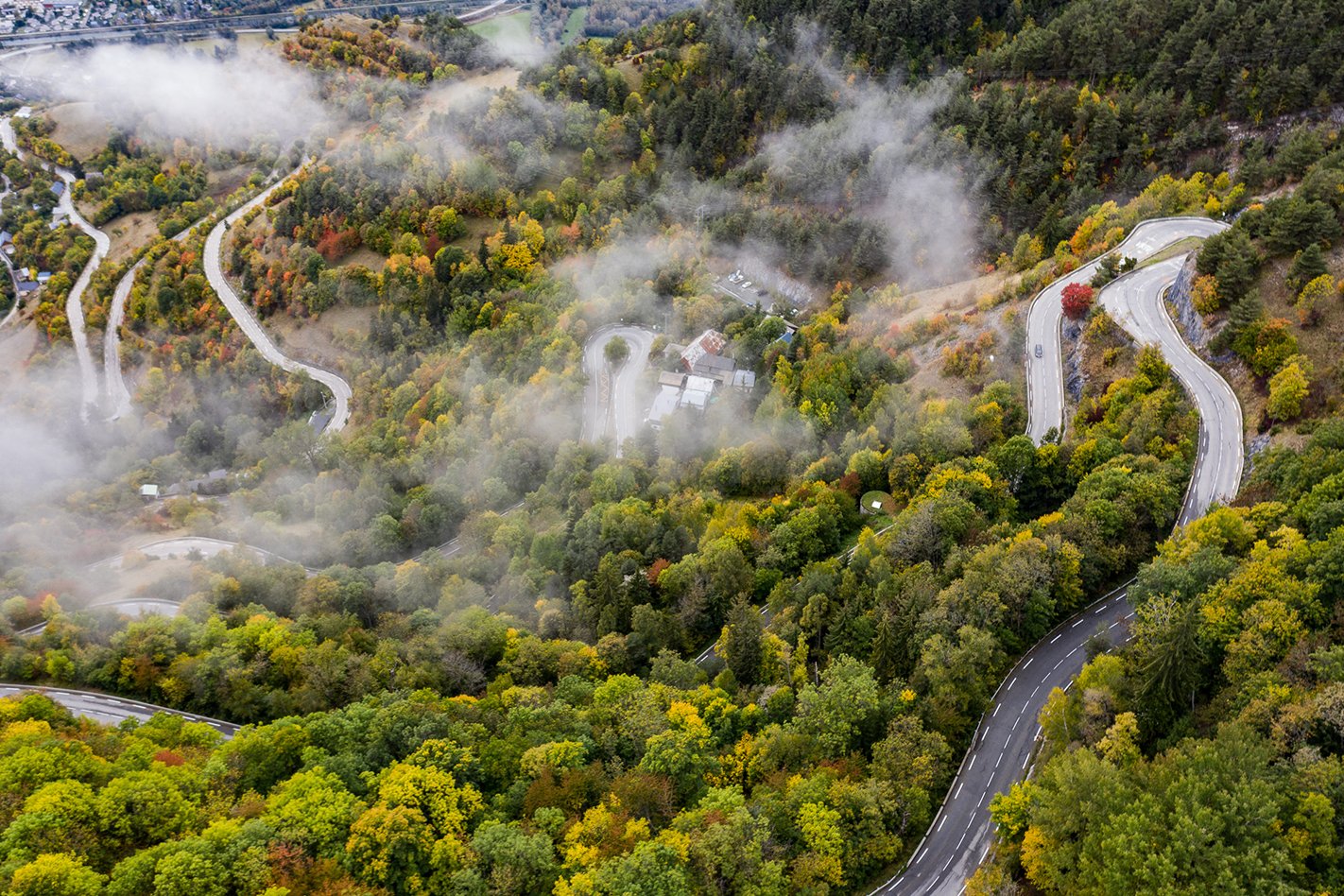
Share your favourite roads, and a picture of the road or of your car, on your Instagram page. Tag Wheels (@wheelsaustralia) and use the hashtag #DriveAfterIso. Nominate your friends to hear their suggestions too.
And think global. Aussie love their cars, but we want to hear from people the world over. We’re also keen to learn about some great international driving roads.
So get posting! We’ll share your suggestions and publish the best cars and roads in an upcoming issue of the magazine.
To help get the ball rolling, here’s a personal favourite of ours from a recent comparison test.

The Great Alpine Road is a staple for Aussie car lovers. Start in Bright and head towards Omeo before looping back through Falls Creek.
It’s an epic four-hour loop of stunning vistas and challenging tarmac. It’ll suit any car, though is perfect for a pair of Porsches like the similarly priced 718 GT4 and 911 Carrera.
We’ll be sharing more of our favourite roads (including a list of ’50 roads you have to drive’) in the coming days and weeks.
Show us your favourite #DriveAfterIso road or car!
Think Yamaha, and you’re probably conjuring images of screaming litre sports bikes, Valentino Rossi duking it out with Jorge Lorenzo, or maybe just the days of your youth blatting around dirt tracks on a DT125 with learner plates.
But there’s more to the Japanese manufacturer than that.
Six archers have won Olympic gold medals using Yamaha bows, it’s still the world’s largest manufacturer of musical instruments, and the Yamaha Entertainment Group is an Emmy award-winning record label and film production company.
Oh, and they also build fantastic engines for cars, which is a fact that has often slipped under the radar.
Here we pay tribute to eight of the very best. So, in reverse order…

8. Ford Duratec Ti-VCT
Australia never received the original Ford Puma coupe. Shame. It was a great handler and was also the recipient of a fascinating engine, the Yamaha-developed 1.7-litre four. This made a modest 93kW in the standard Puma and a healthier 114kW in the Tickford-tickled Racing Puma.
The 1.7-litre 16v engines started life as 1.4-litre units and were then bored to capacity. These rough-machined blocks were then shipped from Ford’s Valencia plant in Spain to Yamaha in Japan. There they were treated to Nikasil liners and a forged crankshaft before accruing a few more miles under their belts and being shipped to Cologne, Germany, where they met their recipient vehicle. The Nikasil bore-plating process took 25 minutes per engine, which was why Yamaha had to do it. Ford’s mainstream engine plants had a maximum cycle time at any one station of six minutes.

7. Ford SHO V6 KOA
Ford billed its 1989 Taurus as one of the two most significant American cars of the 1980s. The other, rather magnanimously, is a Chrysler minivan.
Despite the late-’80s styling, by far the highlight of the Taurus range was the SHO version, which featured a 164kW/271Nm 60-degree V6 up front.
Commissioned by Ford and built by Yamaha, the 3.0-litre engine was compact, reliable, surprisingly high-revving for a car intended for Yanks (peak power arrived at 6200rpm), and it sounded ridiculously exotic for its price point. It was finally ditched for the third-gen Taurus in 1996 and Ford promptly lost its sales lead to Toyota’s Camry.

6. Volvo B8444S V8
The Yamaha-built B8444S that found its way beneath the bonnets of the Volvo S80 and XC90 was a curious engine. Volvo had designed the engine bays of these models to accommodate straight-five and 60-degree V6 engines, and it was clear that significant re-engineering would have to take place in order to shoehorn in a traditional 90-degree V8.
Volvo’s solution was to get Yamaha to build a compact 60-degree 4.4-litre V8, which got around the NVH issues inherent in a narrow-angle V8 by using a timing chain-driven balancer shaft. The engine sounded great, proved durable, was the first V8 to meet ultra-low emission ULEV III standards and was also used in Noble’s giant-killing M600 supercar.
Aussie fans might remember a 5.0-litre version beneath the bonnets of Garry Rogers Motorsport’s Volvo S60s in V8 Supercars from 2014 to 2016.

5. Toyota 4A-GE 1.6
They say imitation is the sincerest form of flattery, and maybe Yamaha wasn’t shy of being ‘inspired’ at times. Take the iconic 4A-GE four-cylinder, built by Yamaha, and most famous for being the engine from the Toyota AE86 Trueno/Sprinter/Hachiroku and also the powerplant nestled in the middle of the original MR2.
Some point to the fact that early ‘Bigport’ or ‘Bluetop’ versions of this engine shared exactly the same bore, stroke, valve sizing and port designs as the Cosworth BDA and claim it’s more than inspired by the BDA. Others dispute that the Toyota engine is a crib of Cosworth’s. I’m in the latter camp. This engine ultimately developed into the five-valve fifth-gen Blacktop design, a powerplant still in big demand among tuners for drift car builds.

4. Toyota 2ZZ-GE
This engine originally piqued our interests beneath the bonnet of the Celica ZR and Corolla Sportivo models. This 1.8-litre four certainly had something about it, the Yamaha-designed head featuring a valve timing and lift system that went feral at 6200rpm, utterly changing the nature of this otherwise mild-mannered four. Then you got around 141kW pretty much all the way up to the spark cut at 8500rpm.
Lotus saw the potential of this engine and it appeared in its Elise and Exige models for 2005. Toyota and Lotus both began separate projects on supercharged versions. The 165kW Corolla Compressor proved a bit of a flop, whereas the Lotus installation was warmly received, the supercharger nicely filling the hole in the torque curve before the VVTLi system readied itself. It found its ultimate iteration in the 191kW Exige Cup 260 of 2009 to 2011.

3. Toyota 2UR-GSE V8
When the Lexus IS-F arrived in 2007, we were all about that 5.0-litre V8 engine. It was a gem, with high-flow heads and a die-cast aluminium block all designed by Yamaha. We thought the 310kW output was something pretty special, especially as you needed to rev to 6600rpm to access it, but better was to come.
High compression variants of the 2UR-GSE would subsequently roll out. The 348kW RC F and GS F were dominated by their powerplants, and it was only with the showstopping LC 500 coupe with its 351kW iteration of the 2UR-GSE that this great engine finally got the platform it deserved.

2. Toyota 3S-GE/3S-GTE
So good was this family of engines that they found their way into everything from the 1984 Toyota Corona to the 2007 Toyota Caldina ST246 GT-Four. The GE family was normally aspirated, reaching its zenith in the 154kW Altezza RS200, but is more normally associated with Celicas and second-generation MR2 models. Yamaha can’t claim sole credit for this lump, Toyota having worked extensively on its development as well.
The 3S-GTE unit is the 2.0-litre turbocharged sibling, made famous by the Celica GT4 and the MR2 Turbo. With its Yamaha-designed DOHC 16-valve aluminium alloy head, versions of the 3S-GTE would go on to power Juha Kankkunen, Didier Auriol and Carlos Sainz to World Rally Championships at the wheel of Group A Celica GT4s.
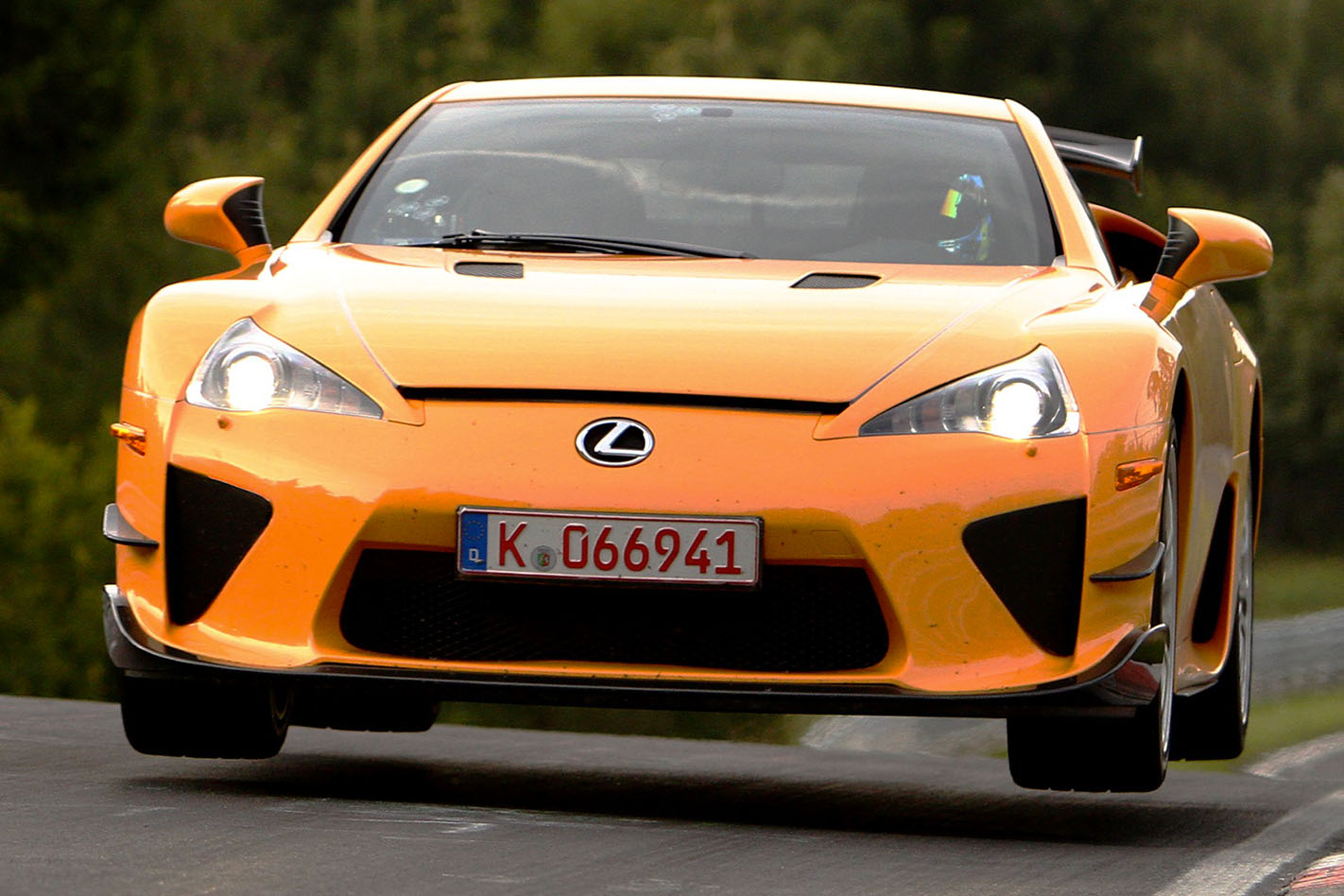
1. Toyota 1LR-GUE
Okay, so this 4.8-litre V10 isn’t just up there for consideration as the best Yamaha engine, it would be in many people’s top 10 automotive engines. Period.
Co-developed by Toyota and Yamaha for the iconic Lexus LFA sports coupe, this 412kW/480Nm dry-sumped masterpiece featured 10 individual throttle bodies and could rev to 9500rpm. As a result it’s also one of the very best sounding sports car engines in existence.
Don’t believe us? Check out this video where we gave one a thrashing on a closed road at Lake Mountain.
