
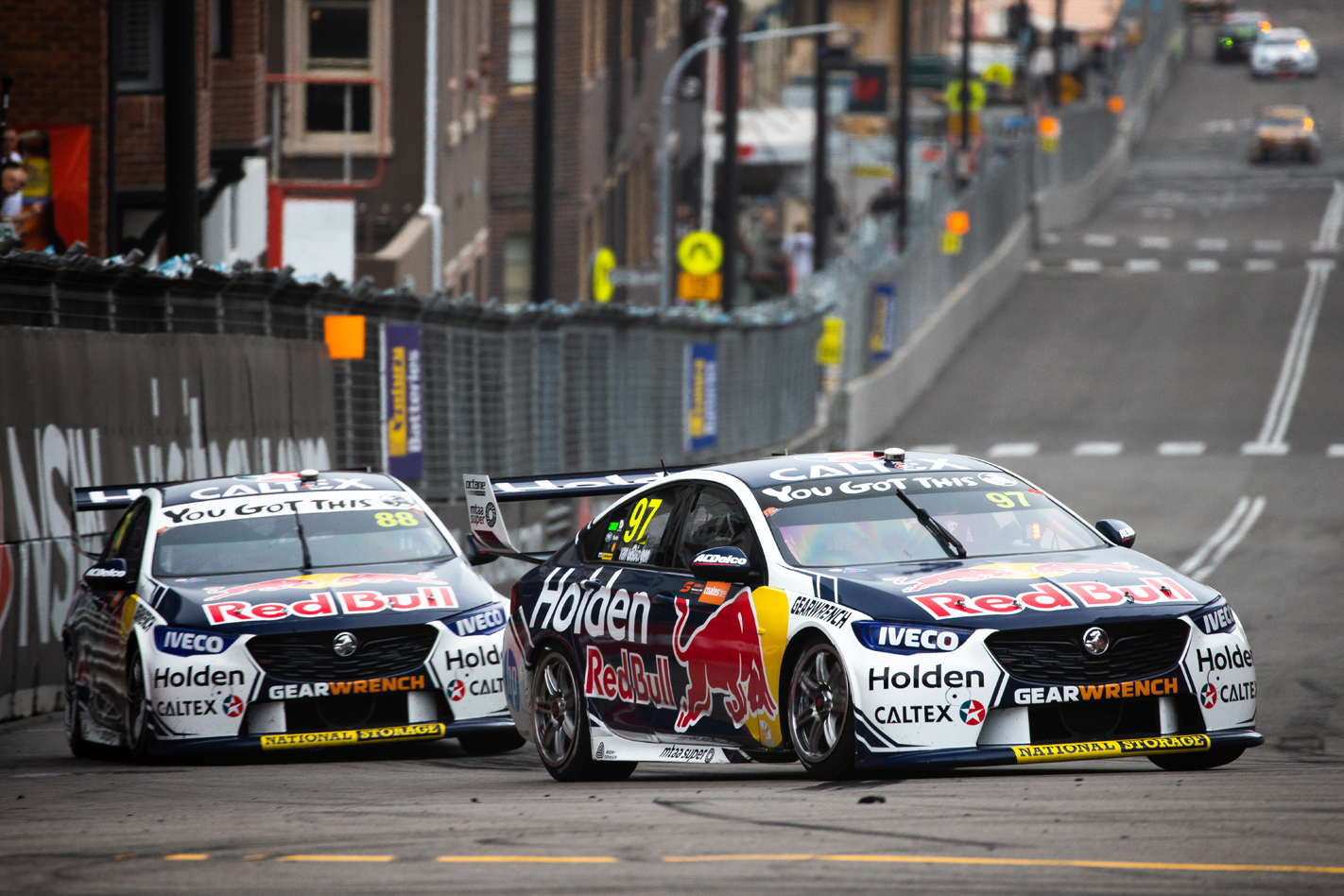
The immediate future for Supercars remains clear, with the Holden Commodore staying on the grid to face off against the dominant Ford Mustang.
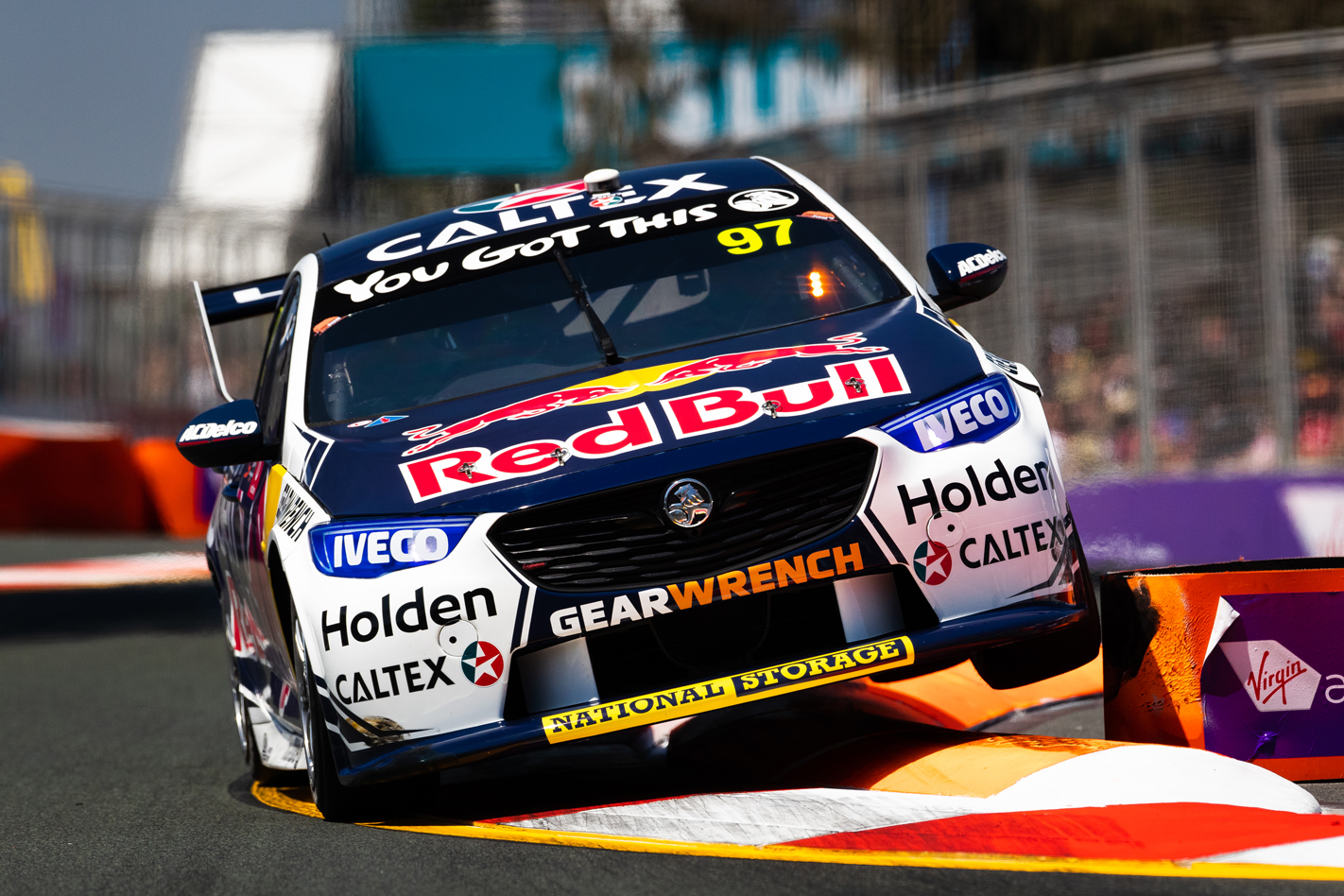
Media reports claim that plans are in the works to get the Camaro on the grid for 2021. However, Wheels’ sources poured cold water on this secret program, stating that the Commodore will remain on the grid for another two full seasons.
However, for 2022 and beyond, plans have been thrown into disarray.
Both Ford and Holden currently provide factory support for teams in the category, with contracts that run up to 2022.
While Holden’s commitment to Supercars only officially ran to the end of 2021, Wheels understands that it had been heavily involved in discussions surrounding the 2022 ‘Gen3’ regulation changes, alongside Ford.
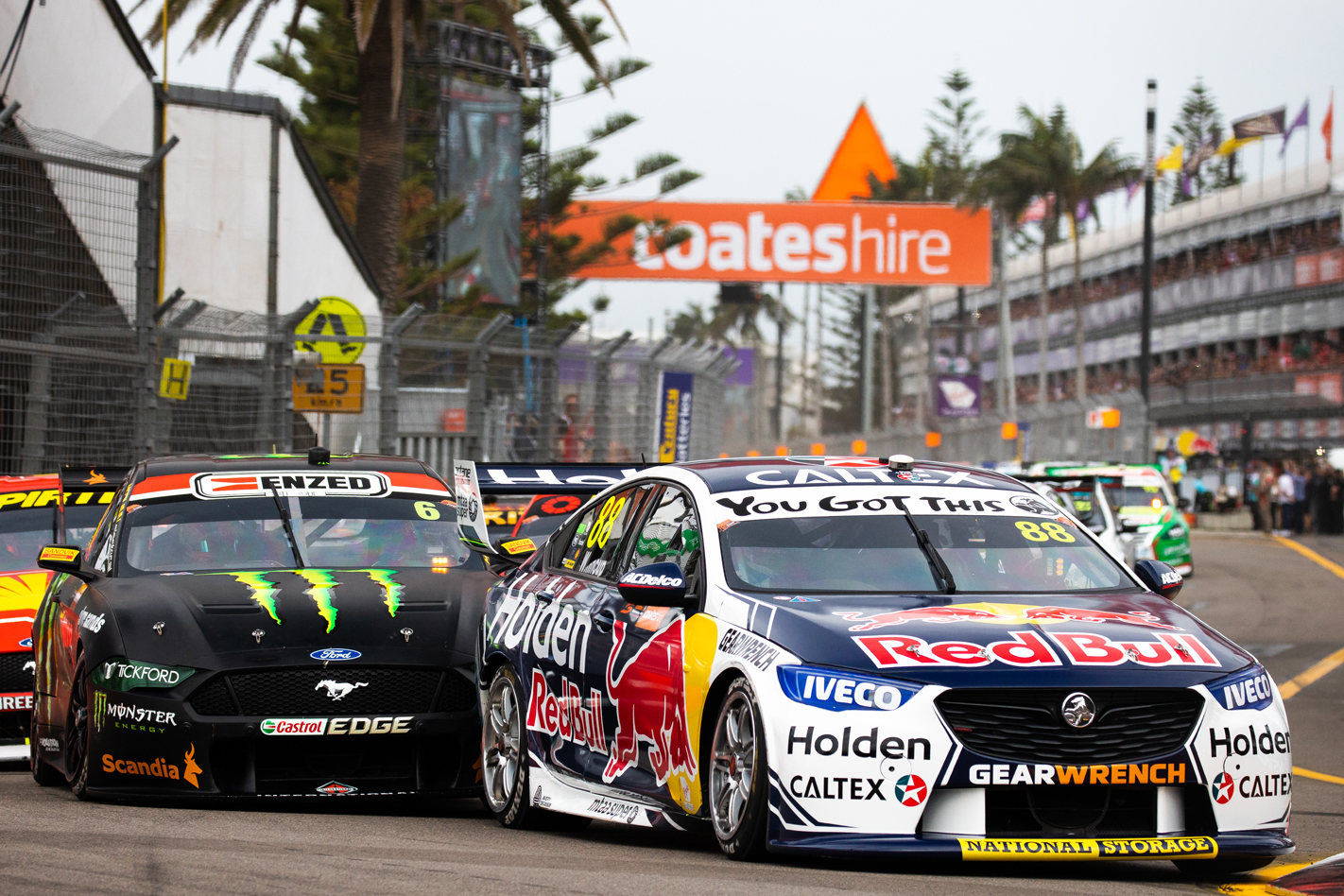
Earlier this month Supercars CEO Sean Seamer was confident GM would remain involved in the sport, with Gen3 regulations potentially focusing on two-door sportscars exclusively, shunning the sedan formula synonymous with the category.
“Gen3 will be driven in a large part by the direction that manufacturers are going, because it’s about maintaining and ensuring that we’ve got market relevance,” Seamer said at the Supercars 2020 season launch.
“I think that from what we’re able to see from the manufacturer road maps, two-door sportscars – obviously, the Mustang is the first of which – will be a core part.”
He added at the same event that Holden was “very much feeding into and supporting the Gen3 process”.
“We gave them an update on where we’re headed with Gen3, recapped some of the other changes to this year,” he said.
“So they are very much involved in the Gen3 process, and remain committed to it.”
Gen3 regs are of utmost importance for Supercars, with teams and manufacturers alike eagerly anticipating what the future of the sport will look like. Yesterday’s announcement by Holden throws much of it into uncertainty.
While Holden has remained a major player in Supercars for much of its existence, there is no guarantee that GM will continue that trend.
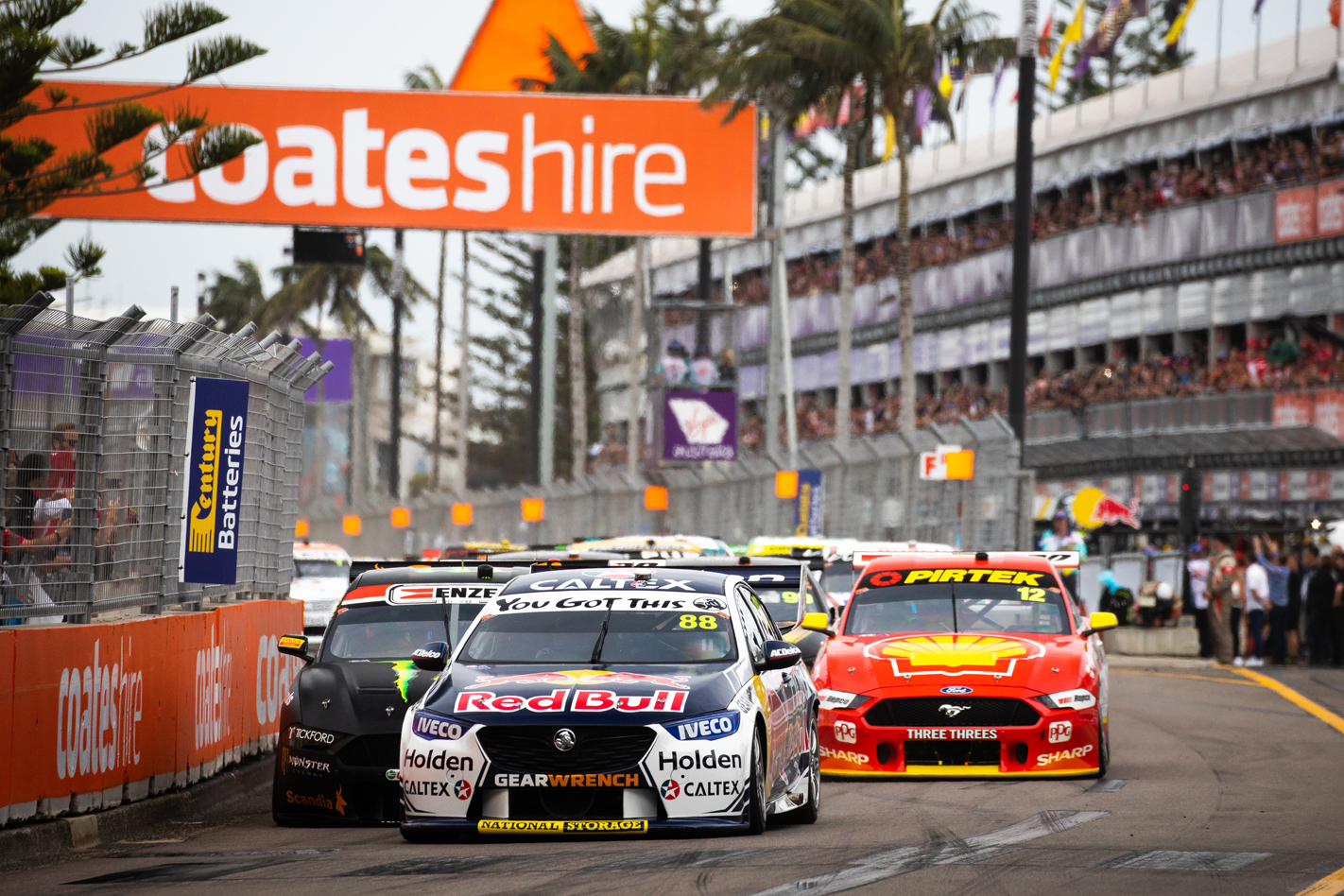
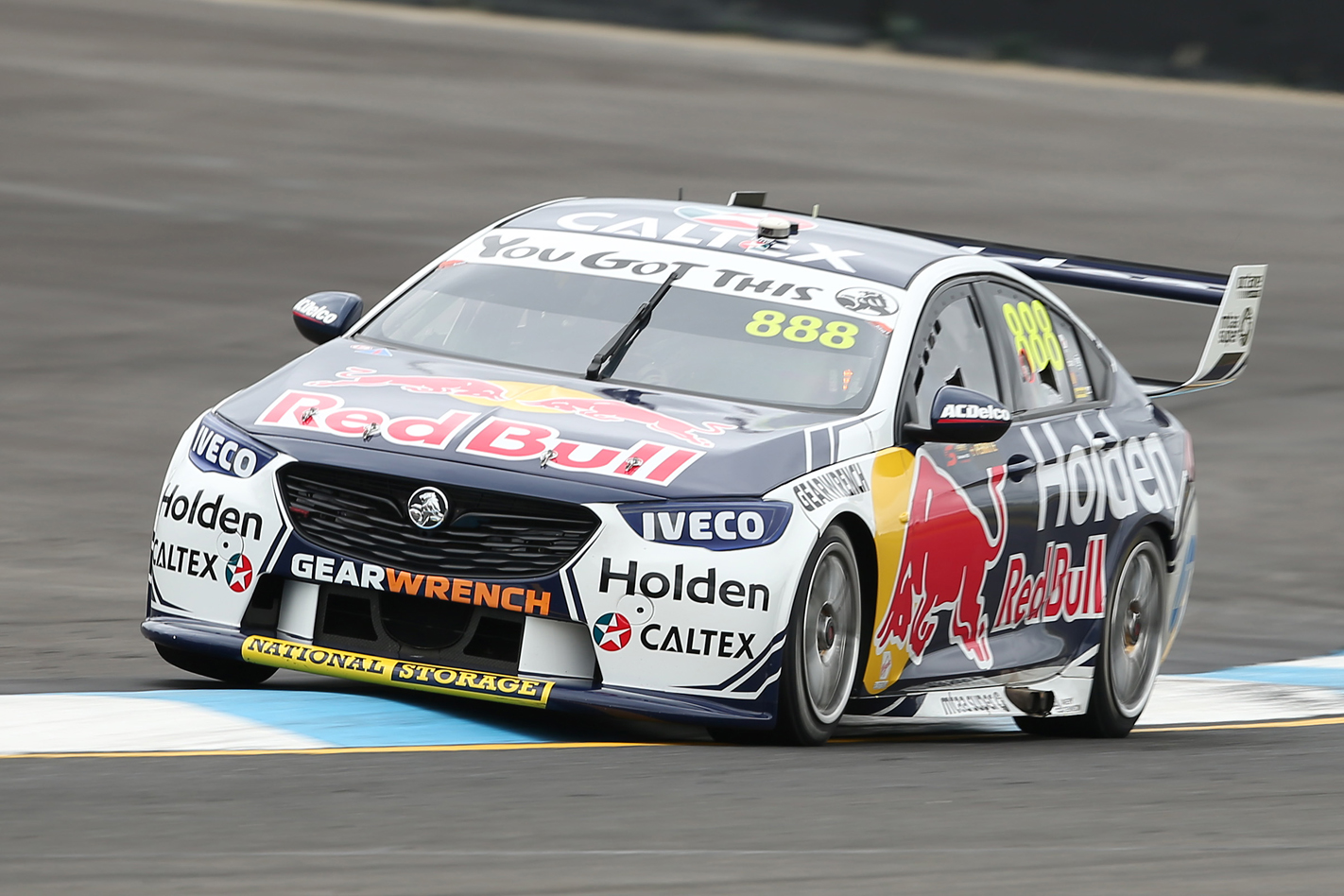
The Commodore will remain on the grid for 2020, and Wheels expects many teams that currently run the four-door sedan will retain it for 2021, as they wait for the Gen3 regulation changes.
When the new rules are implemented, these teams will either move to another manufacturer or have to field a new vehicle, likely a Camaro.
Holden’s announcement has caught both Supercars, and factory team Triple Eight, off-guard, with the news being handed down only a short time after a decision was made in North America.
“We will begin discussions with the organisers and Supercars and Red Bull Holden Racing Team. We will update you on these discussions at the appropriate time,” Holden posted in a statement on its Facebook account, regarding its Supercars involvement.
“We are aware of our commitment and we will work through with Red Bull Holden Racing Team the implications of this decision.”
This position was reiterated by Holden’s acting managing director Kristian Aquilina on the day of the announcement.
“We’ve made a commitment and certainly we need to sit down with our partners, Supercars Australia and the Red Bull Holden Racing Team, which we’ll do hopefully in the coming days to talk about the appropriate transition,” he said during a press conference.
“But our intention is to still go racing in 2020 whilst we’ve got Holden vehicles out there in dealer showrooms.
“To the extent, about GM and its involvement in racing beyond that, that will be part of the same conversation.
“There’s obviously a lot of new news for us and our partners to process. These decisions were only taken in the last few days.
“We’re communicating it with the Australian community as soon as we could and we’ve got some work to do over the next few weeks and months ahead to actually work through a lot of those arrangements and an effect that goes well beyond motorsport.”
When pressed on contracts for 2021 being cancelled early, Aquilina stressed that it was too early to give a definitive answer.
“This announcement and this decision is absolutely heartbreaking,” he added.
“As you know, I personally am a big supporter and fan of motorsport, in love with the sport as well as the company we’re talking about here.
“But I think it’s only the right thing to do to give our partners here the courtesy of a discussion before I talk about it publicly.
“We have a relationship that I value very highly, so we’ll do that and then we’ll have more to comment together with our partners.”
MORE HOLDEN NEWS
Holden departure will cost $1.6 billion
Ford: we will miss you, Holden
What now for Corvette in Australia?
Holden’s demise catches government by surprise
Sign-up here to get the weekly Wheels highlights
If you are of the disposition that a Porsche 911 looks best with a big wing sticking out of its rump, then good news, Porsche has released a GT-style 911 Aerokit package for the current 992-generation model.
Based on the SportDesign option, which comprises of a front lip, side skirts, and redesigned rear bar that incorporates a rear air intake and outtake, the Aerokit adds a fixed rear spoiler and rear wing over the engine cover.
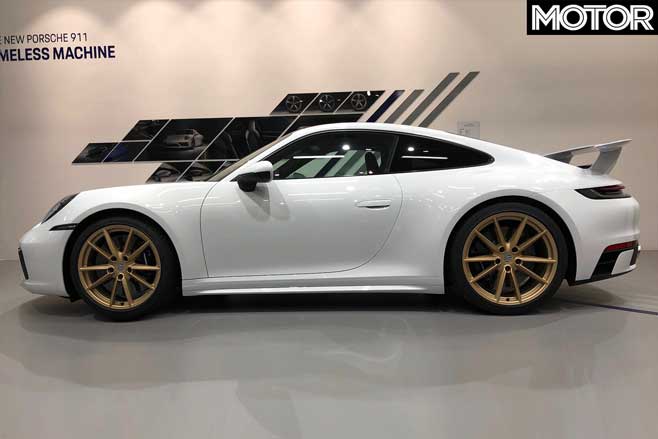
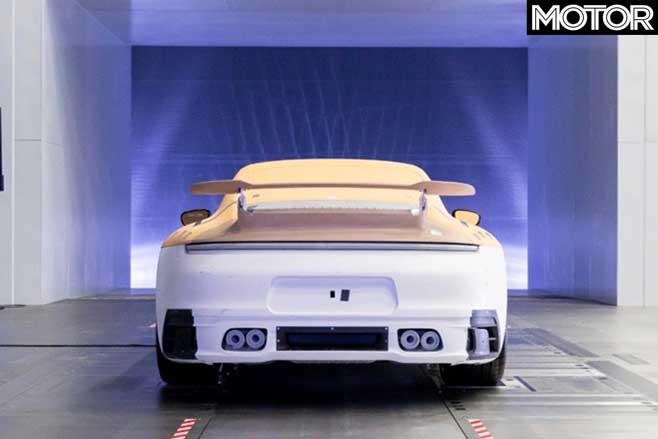
More than just giving the 992-gen Carrera the look of Porsche Motorsports’ GT models, Porsche says the Aerokit was optimised in a wind tunnel and later fine-tuned with 55,000km worth of high speed testing on the Nardo circuit, ensuring that the final product is able to reduce “uplift forces over both the front and rear axle” on the 911.
The Aerokit can be specified for the coupe variants of the 992-series 911 on the Porsche configurator for $11,950.
On a related note, the reveal of the Aerokit package adds further credence to the alleged appearance of a GT3 prototype in Porsche’s recent Superbowl Ad, and not just an optional bodykit in development.
The blue model that appears briefly in the Superbowl Ad sported a rear wing with trussed supports and racy centrelock wheels, items that are yet to be seen on a production 992 911 variant or option.
The highly-anticipated 992-gen GT3 is expected to make its debut in the second half of this year.
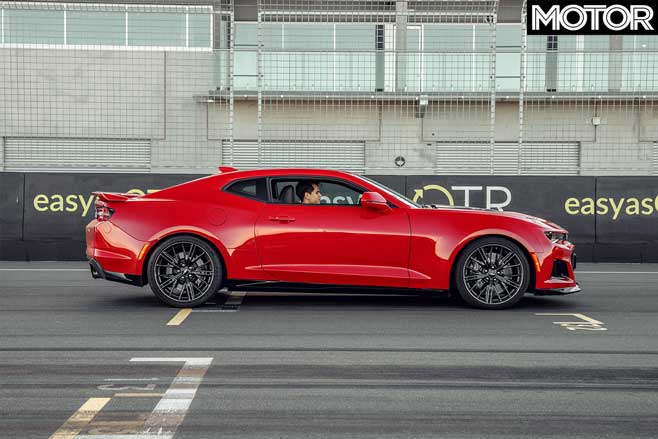
It’s official. American muscle cars rock. It’s easy to rue the fact that we’ve missed out on the finest US offerings until now, but at least the Chevrolet Camaro ZL1 has arrived at its zenith. It’s an absolute beast and a completely different kettle of supercharged fish to the standard Camaro SS that brought up the rear of last year’s field.
Although nearly twice the price of its baby brother, you could argue the ZL1 is actually a better value proposition. The SS is excellent, but operates at a very similar standard to the Ford Mustang, which undercuts it by more than $20K – not a recipe for success. In contrast, the ZL1’s potency is on a different plane to any other similarly priced coupe.

The 6.2-litre LT4 powerhouse produces 477kW/881Nm; it doesn’t need 10 gears but has them anyway, resulting in utterly relentless acceleration. Obviously being two-wheel drive, it struggles off the line (though 3.93sec from 0-100km/h is still pretty remarkable), but once rolling you’ll need a $350K-plus GT63 S to outrun the mighty Chevy. The engine sounds suitably potent, but, in stark contrast to last year’s Camaro SS, the gearbox programming is truly outstanding, up there with the world’s best.
Contrary to popular opinion, American muscle cars are now pretty good at corners, and the ZL1 is better than most. Its performance at The Bend was helped by being on its OEM-fit, track-spec Goodyears, which can accept an obscene amount of punishment and provide a stable platform for its 1795kg girth.
The steering remains its weak point – it’s just too heavy – but it is at least accurate, and the chassis possesses balance and adjustability that you just wouldn’t expect. Its brakes are also sensational, a lesson to most European manufacturers.

But if it’s so amazing, why does it miss the podium? Well, Morley, Robbo and yours truly thought it worthy, but overall the Supra just edged it out. The ZL1’s performance is outstanding, but on the road-spec Continentals it can be a handful, especially with the electronics relaxed.
Magnetic dampers provide an excellent touring ride, but road noise hurts its refinement. And merely seeing out of the thing is a challenge. The interior is also no different to the standard SS, lacking the quality and sense of occasion buyers may expect for $160K-odd.
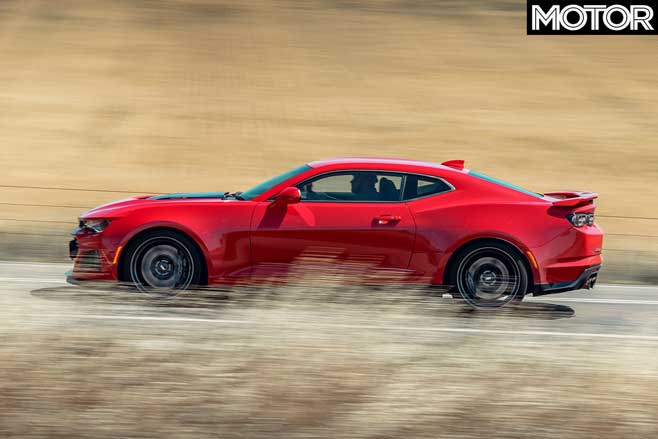
Essentially, it’s the price that scuppered the ZL1’s chances of finishing higher, but if you value pace over a premium feel, then this Camaro needs to be on your shopping list. The likes of the Audi RS5 and Mercedes-AMG C63 S Coupe just can’t compete.
The Numbers
2020 CHEVROLET CAMARO ZL1 SPECS: Engine: 6162cc V8, OHV, 16v, supercharger Drive: rear-wheel Power: 477kW @ 6400rpm Torque: 881Nm @ 3600rpm Transmission: 10-speed automatic Weight: 1807kg Power/Weight: 264kW/tonne 0-100km/h: 3.93sec 0-400m: 11.73sec @ 201.09km/h The Bend lap time: 1min 34.0sec Price: $162,190
Judge’s Rank

Dylan Campbell – 4th “Lots of juicy ’Merica under the bonnet, but surprisingly a bit of Euro in the handling.”
Louis Cordony – 5th “A muscle car that eats sports cars for breakfast.”
David Morley – =3rd “I never thought I’d accuse a car of having too much mumbo. There, I’ve said it. Kind of.”
Scott Newman – 3rd “Monster grunt with chassis sophistication and a sense of humour. Love it.”
Tim Robson – 3rd “A proper muscle car that will kick your arse if you don’t respect it.”
PCOTY 2020 Scoring
| Judges | DC | LC | DM | SN | TR | Total |
| Performance/20 | 18.5 | 14.5 | 19 | 20 | 17 | 89 |
| Dynamics/20 | 15 | 12.5 | 18 | 17 | 16 | 78.5 |
| Accessibility/10 | 7.5 | 6.5 | 7 | 6.5 | 7 | 34.5 |
| Liveability/10 | 7 | 4 | 6 | 6.5 | 6 | 29.5 |
| Value/10 | 8.5 | 5 | 6 | 7.5 | 6 | 33 |
| X Factor/10 | 7 | 8.5 | 9 | 7.5 | 8 | 40 |
| Total/80 | 63.5 | 51 | 65 | 65 | 60 | 304.5 |
Before the BMW M3 has even made its global debut, the Alpina B3 Sedan will be making its way to Australia, as well as shoehorning its engine into a 3 Series-based wagon, the 2020 Alpina B3 Touring.
BMW’s new 3.0-litre turbo six, the S58, has already been seen in the likes of the X3M and X4M Competition, but the much anticipated next-gen M3 is so far nowhere to be seen.
Once they arrive in Q2 2020, the B3 Sedan will be available starting at $142,900, while the B3 Touring starts at $145,900, both plus on-roads.
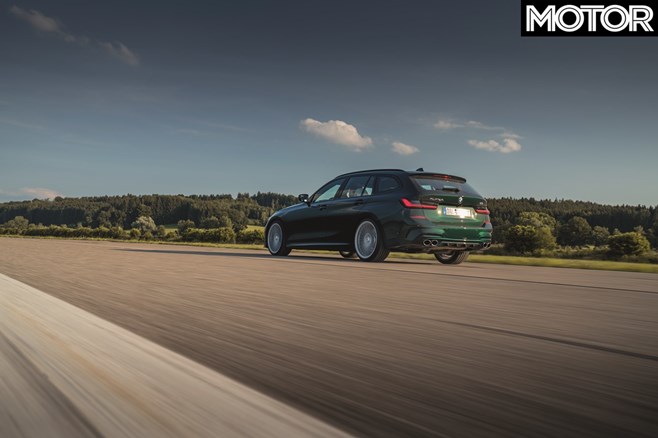
Two turbos specific to Alpina models are fitted to the S58 to produce 340kW between 5000 and 7000rpm, while the B3 also has plenty of torque as per Alpina’s usual characteristics – 700Nm in this case, from 3000 to 4750rpm.
The B3 Sedan can hit 100km/h in just 3.8 seconds, where the Touring takes an extra tenth.
From the engine, through an 8-speed ZF auto, power and torque is transferred to all four wheels via Alpina’s own tuned version of BMW’s xDrive all-wheel drive system. The brand says the B3 is designed to behave with “a rear-drive feel, but with superior traction in all conditions.”
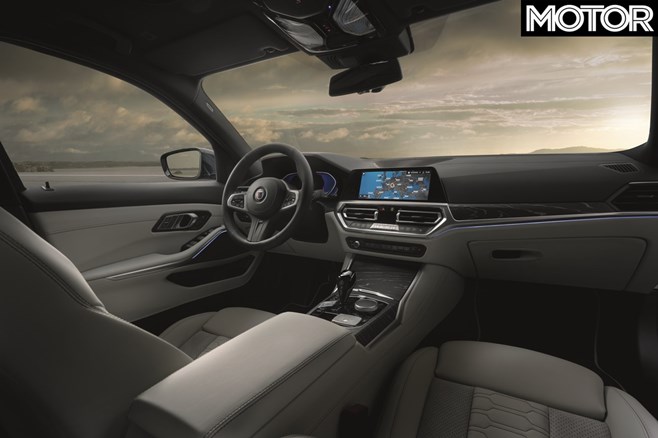
Where most carmakers would be excited to spruik drive modes like Sport+, Alpina highlights Comfort+ as its addition to the 3 Series in B3 form, fitting well with the brand’s place as a maker of fast, plush cars with a softer edge than BMW’s M models.
Of course, Sport+ is still very much available in the B3.
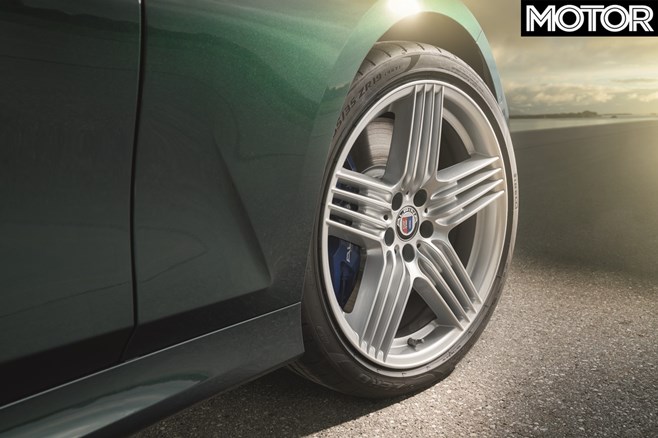
“We are proud to confirm Australian availability for both the B3 Sedan and Touring variants,” says ALPINA Australia national sales manager, Phil Jeffery.
“The B3 sedan now gives our customers the option of a traditional sports sedan with the incredible mix of performance and luxury that Alpina is renowned for.
“With all the practicality of a touring wagon, the security of all-wheel drive, incredible performance and bespoke styling options, the B3 Touring ticks a lot of desirable boxes.”
What stands out?
The Holden Acadia is a bold-looking, comfortable, and well-built seven-seater with enough room in the third row to comfortably seat two adults. It’s powered by a gutsy V6 petrol engine that offers good economy, and each model grade is available in either front- or all-wheel drive. The Acadia is the most advanced vehicle to wear a Holden badge with all versions coming with the latest infotainment and active safety technology, including autonomous emergency braking that detects pedestrians and cyclists.The demise of Holden means you may be able to secure huge discounts on remaining models including the Acadia. For more details, read: Holden slashes prices as final fire sales begin.
What might bug me?
As if getting a puncture isn’t bad enough, the Acadia makes it difficult to find and remove the spare tyre, which is hidden under two layers under the third row seats. The space-saver spare tyre is narrower than the other tyres on the car, which limits the recommended top speed to 80km/h if you need to use it.How it’s a little more difficult to access the third row from the safer kerb side of the Acadia because the middle-row seat slide/fold setup was designed for American left-hand-drive models.Having to put on an apologetic face after your tyres chirp when taking off from traffic lights. The Acadia’s length takes quite a bit of weight from the front wheels resulting in wheel spin especially when you have passengers in the rear two rows. This happens with FWD versions and with the AWD Acadias in 2WD mode.And of course, how Holden’s demise could have an impact on resale values. The good news is there should be no negative impact on your rights as an owner when it comes to parts, servicing, warranties and recalls.For more details about how Holden’s closure will impact Acadia ownership, see the ‘Is it safe to buy a new or used Acadia with Holden shutting down?’ section below.
What body styles are there?
Five-door SUV-style wagon only. All variants seat seven people.The Acadia in front-wheel drive and all-wheel drive versions.It is classified as a lower-priced large SUV.
What features do all Acadias have?
Nine-speed automatic transmission, and seating for seven.An 8.0-inch touchscreen, with connectivity for mobile devices via Bluetooth. Holden’s MyLink, with in-built satellite navigation, Apple CarPlay and Android Auto (which allows you to operate your phone and use some apps, among them navigation apps, from the touchscreen). Steering wheel and voice controls for your phone and the sound system.Reversing camera, rear-parking sensors, and cruise control.Tow bar (to mount a tow ball mount and tow ball) and hitch view system that helps you line up the Acadia with a trailer. Satellite navigation, and traffic sign recognition with intelligent speed assist that, when selected, will slow the car down to the identified speed limit.Keyless entry and push-button start, and tri-zone automatic air-conditioningDusk-sensing headlights, and LED daytime running lights.City-speed autonomous emergency braking with bicycle and pedestrian detection, forward collision alert with head-up warning, blind spot monitoring, rear cross traffic alert, lane departure warning and lane keeping assist, as well as lateral impact avoidance which will steer the Acadia away from any adjoining cars drifting into your lane when safe to do so.Seven airbags, anti-lock brakes, and electronic stability control – which can prevent or help control a skid. (For the placement of airbags, and more on Acadia safety features, please open the Safety section below.)The Holden Acadia is covered by a five-year, unlimited-kilometre warranty.
Which engine uses least fuel, and why wouldn’t I choose it?
The Acadia is only available with a V6 petrol engine that’s coupled with a nine-speed automatic transmission. This is the same V6 powertrain as in the Holden Commodore, though the power settings are slightly lower.The V6 consumes 8.9 litres/100km on the official test (city and country combined) with front-wheel-drive, and 9.3 litres/100km with all-wheel-drive.(Power outputs and all other Holden Acadia specifications are available from the Cars Covered menu, under the main image on this page.)
What key features do I get if I spend more?
Spending as little as possible on an Acadia will get you an Acadia LT with cloth seat trim, 18-inch wheels, standard cruise control and front-wheel-drive. Upgrading to all-wheel-drive on any Acadia will cost an additional $3500.Spending more on an Acadia LTZ brings part-leather upholstery with power-adjustable heated front seats.Hands free power tailgate, auto dimming mirror, front fog-lamps and rain-sensing windscreen wipers.Wireless phone charging (compatible devices)Front parking sensors, and advanced park assist that steers the car into a parking spot for you.Spending top dollar on an Acadia gets you the LTZ-V, which gains adaptive cruise control with stop-and-go functionality that works in slow moving traffic jams, and all-speed autonomous emergency braking.Adaptive suspension, which adjusts the Acadia’s ride to suit different road conditions.Digital dashboard display, and 360-degree camera view to that helps make parking easier and safer.Dual-panel sunroof and 20-inch alloy wheels with sportier tyres.Ventilated front seats and driver’s seat memory
Does any upgrade have a down side?
Spending more on an all-wheel-drive Acadia brings a slight increase of fuel consumption.Summit White and Glory Red are the only standard colours, with the other six costing extra.
How comfortable is the Acadia?
The Acadia’s interior is well put together with quality materials but, as is often the case with American-built cars, it does lack a bit if finesse. That said, soft-touch surfaces abound and both the cloth and leather seats are very comfortable and support you from each side.There’s plenty of leg- and headroom throughout, including down in third row that’s among the roomiest of all seven-seat SUVs and on par with the Kia Carnival people mover.At the time of launch, the Aussie-developed multi-media system was deemed the most advanced of any GM vehicle worldwide. It’s intuitive, with sharp graphics and you can sync two phones at a time via Apple CarPlay or Android Auto. There are five USB sockets throughout the cabin, including the third row, which are rated at 2.1 amps to allow for fast charging of larger devices such as a tablet.Road noise is well contained and the ride comfort feels silky even on the LTZ-V’s 20-inch wheels, thanks to its adaptive suspension dampers.
What about safety?
The Acadia features active safety and driver-assistance tech that’s designed to protect vehicle occupants as well as other drivers, cyclists and pedestrians.This includes traffic sign recognition that can work with the speed limiter to automatically govern your speed to the posted limit when you enter a new speed zone. The system was developed by Holden engineers who tested it around Australia so the system could recognise the dozens of different speed sign designs around the country.The Acadia’s autonomous emergency braking recognises cars, cyclists and pedestrians. It works at city speeds in the LT and LTZ, and higher highway speeds in the LTZ-V. It’s also the only Acadia to feature adaptive cruise control, which also functions in traffic jams.Other key safety features include rear-cross traffic alert, lane-keeping assist, blind spot monitor and a lateral collision avoidance system that steers the Acadia to the side to avoid a vehicle beside it that begins to stray from its lane.Forward collision alert lets you know if you’re in danger of hitting the car in front via a flashing light on the windscreen, an audible warning, and by vibrating the seat cushion. The haptic seat vibrator also lets you know if you stray over a line.The Acadia also has seatbelt alerts and a passenger reminder that warns you to double-check that you left any sleeping kids, pets or valuables in the vehicle.Crash protection comprises seven airbags including driver’s knee and full-length side curtain protection that extends to the third row.The second row has two ISOFIX child seat anchor points, and there are five conventional child restraint anchors including two in the third row.The Holden Acadia is yet to receive an Australasian New Car Assessment Program (ANCAP) rating.
I like driving – will I enjoy this car?
Despite its American truck looks, the Acadia’s car-like handling is a result of an extensive local suspension tuning program by Holden engineers to make it more comparable with Aussie roads. The ride is best in the LTZ-V, which is equipped with adaptive suspension that acclimates to different road and driving conditions.The Acadia’s ride feels well composed and it corners well for a 2.0-tonne SUV. In the LTZ-V switching the Sport driving mode stiffens the adaptive dampers, as well as adapting the gear ratios, steering and traction, resulting in precise and composed cornering with surprisingly little body roll even when sitting in the third row.The Acadia shares the same 3.6-litre V6 engine and nine-speed automatic transmission as the Commodore, though in a slightly less powerful tune that offers up to 231kW and 367Nm. The Acadia’s weight doesn’t seem to bother the V6, which handles the heft well and offers a nice rumble to complement its macho American looks. If anything there seems to be a bit too much much torque through the front wheels. Putting the foot down at the lights results in a hoonish wheel chirp especially when there’s weight in the back. This happens with both the FWD versions and the AWDs when in the default 2WD mode.It’s enjoyable to drive, but there’s no opportunity to engage with it further – the Acadia lacks a manual shifting option via the gear shifter or steering wheel paddles, for example.
How is life in the rear seats?
The second-row seats easily accommodates taller passengers and offers occupants access to climate control settings, air vents in the ceiling, reading lights, a deep drawer that slides out from under the centre console and two USB sockets.The third row is among the roomiest of all seven-seat SUVs and is even on par with the space offered by Kia’s Carnival people mover. It seats two adults comfortably, and there’s a USB socket, reading lights and ceiling-mounted air vents.
How is Acadia for carrying stuff?
Storage options are plentiful throughout the cabin, and include door bins with a separate nook under the arm rests, and under-floor tubs in front of the second row seats.With all seats in place the boot holds 292 litres, which expands to a capacious 1042 litres with the third row folded down. Fold down both the third and second rows and you can stash up to 2102 litres of gear behind the front seats.The Acadia will tow up to 2000kg and the Trailer/Tow drive mode changes the auto transmission’s shift patterns to provide more torque or traction when required. All Acadias come standard with a tow bar – a tow ball is required – and there’s also a hitch view system via the reversing camera display that lets you line up the tow ball and trailer.
Where is the Acadia made?
The Acadia is built by GMC in Tennessee, USA.
What might I miss that similar cars have?
A more economical turbodiesel engine, which can be had with cars like the Hyundai Santa Fe, Kia Sorento, Jeep Grand Cherokee, Mazda CX-8, Peugeot 5008 and Skoda Kodiaq.Other seven-seat SUVs worth comparing include the Mazda CX-9, Toyota Kluger and Nissan Pathfinder.If you don’t want something as big but you still need to carry more than five people, the smaller Nissan X-Trail and Mitsubishi Outlander offer seven-seat versions.
Is it safe to buy a new or used Acadia with Holden shutting down?
The Holden Acadia arrived in October 2018, and is a rebadged and modified version of the GMC Acadia. There have been no updates to the Holden versions since then.If you can get a good deal on Acadia as part of the Holden fire sale, there is good reason to feel confident that parts will be available and that servicing and the warranty will be covered.Australian consumer law requires that a brand supports its products for at least seven years, while General Motors – the parent company of Holden who are behind the closure – have stated that it will extend warranty and service support for 10 years. The company says it will establish a national after sales network to support existing customers for at least the next 10 years. And remember, you don’t have to service your Acadia at a Holden dealership to guarantee warranty coverage.For more details, read: What does Holden’s axing mean for its customers
I like this car, but I can’t choose which version. Can you help?
If you want an affordable, spacious and very well equipped seven-seat SUV, than it’s hard to go past the Acadia LT.But if you want something that gives premium-branded SUVs a run for their money in terms of equipment levels and ride comfort for a considerably lower price, than the LTZ-V AWD represents great value too, despite its near $70,000 price tag.
THE end has come for Holden, one of the most iconic motoring brands in the world, with a long and proud history of engineering excellence, amazing design and a deep connection with the Australian motoring public.
How the company lost its way post the end of local manufacturing is well documented, and the cold, hard fact that the brand fell off the consideration lists of everyday Australian buyers looking for a new car meant that it was a matter of when, not if, for life support to be turned off from General Motors headquarters.
HOLDEN CLOSURE – THE LATEST
But we might have been parking a sexy, homegrown, Holden-badged Monaro coupe, a coupe-styled ute or even a Commodore-based SUV in our driveways if it wasnu2019t for poor economic and market circumstances since 2008.Three separate projects – a production version of the Coupe 60 (pictured below), a long-and-low El Camino-style ute (pictured top), and a Ford Territory-rivalling seven-seat Nullarbor SUV – were quietly shelved in the wake of the global financial crisis as Holden’s parent company, General Motors, desperately struggled to avoid plunging into bankruptcy.
History shows that the Territory would have a successful 14-year stint as Ford’s primary SUV, and that its clever packaging and design – penned by the same man who drew up the latest Ford GT, Todd Willing – still stand up to scrutiny today.
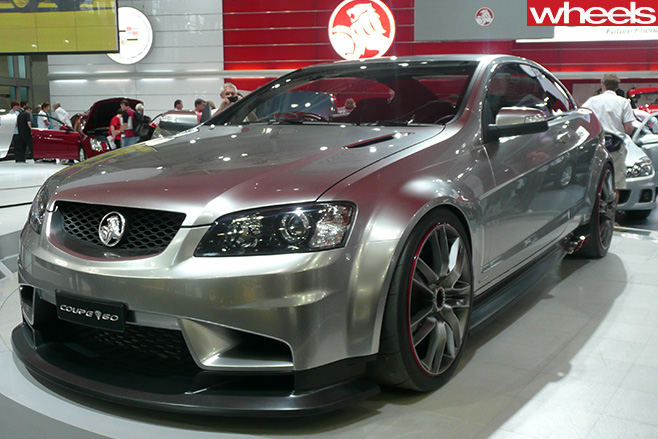
“I remember sedan, coupe, Caprice, ute, SUV AWD, low and high crew-cab … there were probably more,” Simcoe said.
“The point of the coupe and the coupe ute was the sharing of the long door and glass to save investment, but from our design standpoint it made the ute much more sleek and low, with frameless glass allowing a single door and a simple profile change to the edge of the glass to suit two different roof shapes.
“For the coupe it meant frameless, and therefore a slimmer, more open upper.”
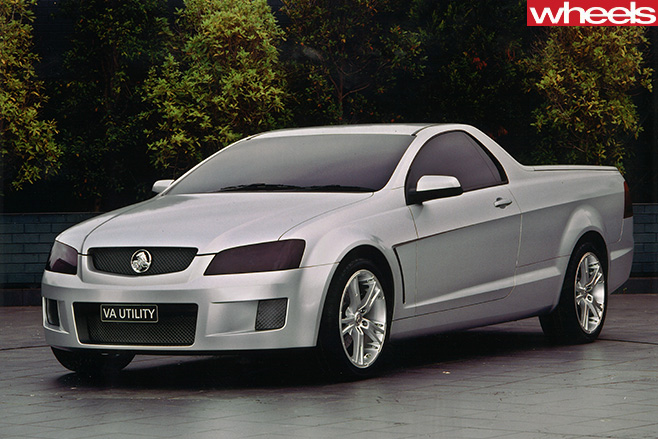
Simcoe’s observation that SUVs were replacing traditional station wagons in buyers’ driveways also explains why Holden elected to base its Sportswagon on the short-wheelbase sedan platform, not the longer Statesman/Caprice platform used for older versions of the family load-lugger.
The Commodore-based coupe and its ute derivative made it through to full-size clay model mock-ups, showing the development program was well advanced before it was shelved.
Borrowing cues from the first-generation BMW X5, Holden’s Commodore-based SUV (pictured below) took shape under current Holden design manager Ondrej Koromhaz.
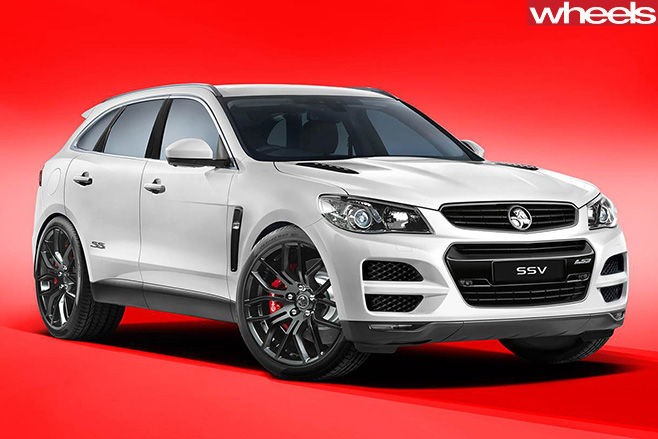
A diesel option, using a VM Motori-sourced V6, was deemed too expensive and ruled out.
Holden had high hopes for the front-engined, rear-drive architecture underpinning the Commodore, even showing a video at the 2006 launch of the VE that flashed up silhouettes of potential spin-offs, ranging from convertibles to sports cars, and more.
Apart from the locally made Commodore-based range, the only other production car to use the Zeta platform globally was the Australian-designed and engineered fifth-generation Chevrolet Camaro that launched in the US as a 2010 model and ended production in November last year.
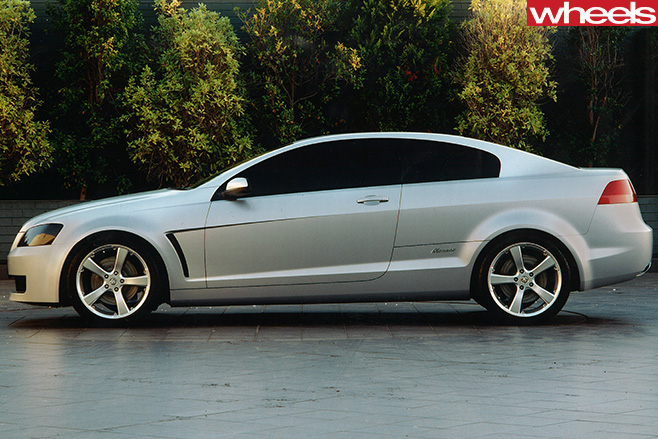
Holden did have one more shot at a spin-off. In 2008, it staged the US reveal of a GMC Denali, a Holden Crewman-inspired monocoque four-door pick-up with brash lines, a seriously slammed Hummer-style glasshouse and a small tub, all of which was meant to take the GM-owned truck brand more upmarket.
It was never to be. According to Simcoe, the Zeta program that spawned the VE Commodore was “a huge cost” to Holden in terms of investment and resources.
“Did we make the wrong choice [in terms of product development]?” Simcoe mulls. “That’s debatable. Perhaps people were moving away from large sedans, but the truth is we didn’t have enough other good cars in our portfolio.
“In hindsight, my desire would have been the coupe and coupe ute. If I was being more rational, the SUV and the Crewman would have been great as well.”
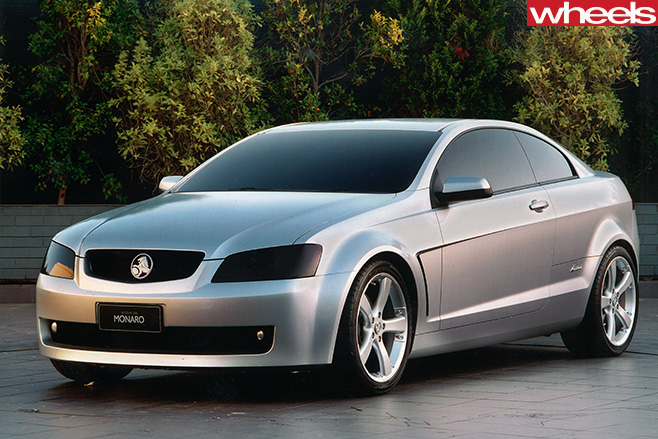
The Australia-US Free Trade Agreement ratified on January 1, 2005, was lauded as a “landmark in improving Australia’s trade and investment relationship with the world’s largest and richest economy”.
One of the key points among the lawyer-speak was a clause that removed a stiff 25 percent tariff on exports of Australian-built light commercial vehicles to the US – the so-called Chicken Tax introduced in retribution for Europe’s penalising of trade utes (itself a backlash to cheap US chicken meat exports).
Essentially, the trade agreement opened the door for the Holden-built ute, and its rival Ford Falcon-based equivalent had it green-lighted a left-hand drive conversion program, to sell in the US at a competitive advantage.
The closest Holden ever made it to launching the Commodore-based ute in the US was a single Pontiac-badged version of the car launched at the 2008 New York Motor Show by rapper 50 Cent.
READ MORE
- Holden’s factory closure statement
- Why did Australia fall out of love with Holden?
- Two years on from Holden’s factory closure
- The best performance Commodores
- Clay modelling at Holden’s design studio
- Holden halts production of Commodore and Equinox
- How Holden shaped a nation
How does the decision affect the owners of Colorados, Commodores, Astras and Equinoxes?
Why is Holden leaving Australia?
The brand’s parent company, General Motors, has made the decision to leave the Australian and New Zealand markets because it wasn’t selling sufficient cars to make a viable business case for the business to go on.
It’s a complete closure, too, with production of Thai-built Holdens ceasing and the Lang Lang proving ground to be sold as well.
Some 800 workers stand to lose their jobs.
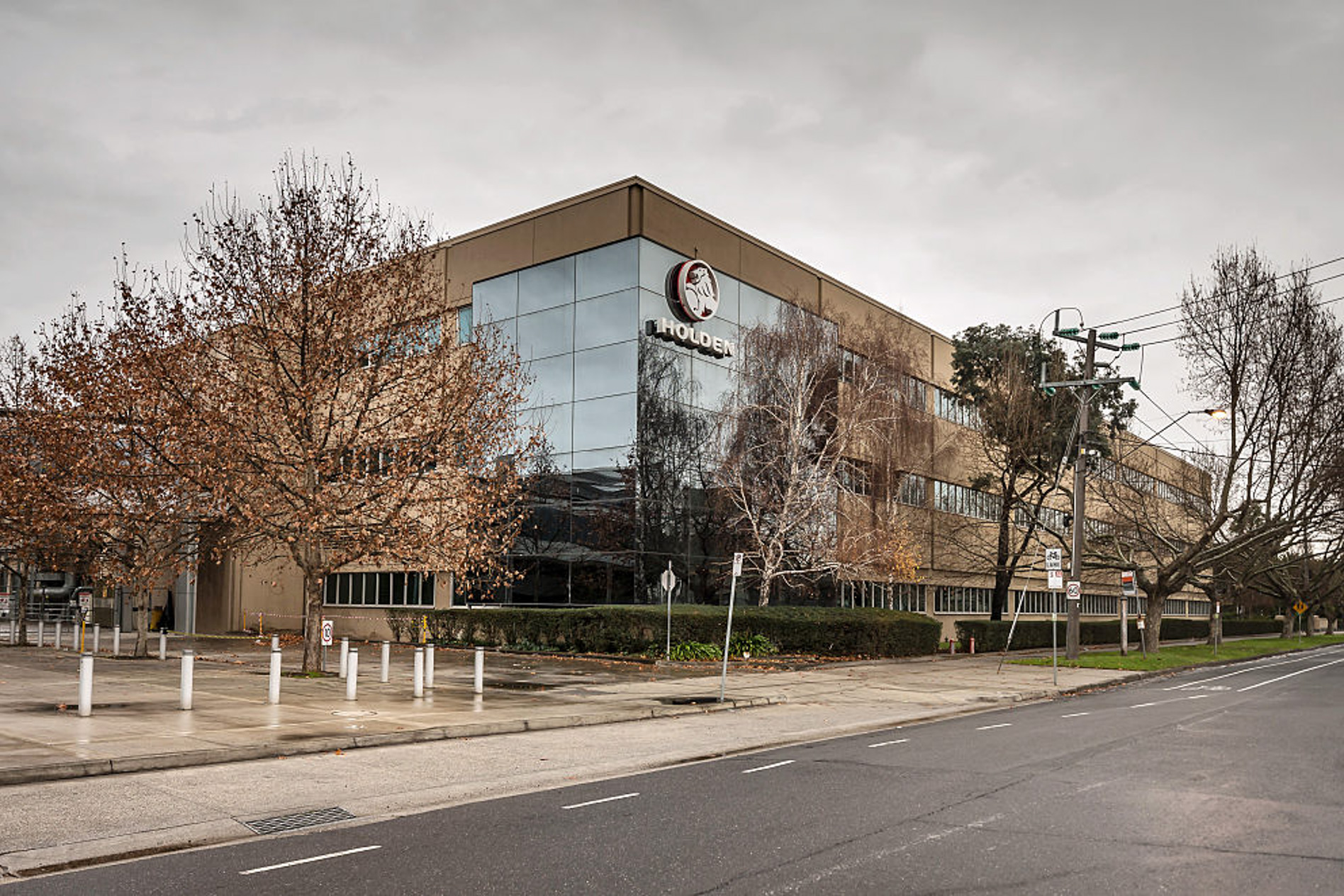
What will happen to Holden dealerships?
Most of the 180 Holden dealers in Australia multi-brand entities, but the 18 or so standalone dealerships will not have new cars to sell from the middle of this year. The service departments could still ostensibly operate as standalone operations.
Holden says it will establish a national aftersales network to support existing customers for at least the next 10 years. All current Holden dealers, meanwhile, will be offered the opportunity to transition to Holden authorised service outlets.
Is my Holden still covered by warranty if the company goes out of business?
Yes. Australian consumer law requires that a brand supports its products for at least seven years, while General Motors – the parent company of Holden who are behind the closure – have stated that it will extend warranty and service support for 10 years.
“Holden will honour all existing warranties and guarantees, as well as all free scheduled servicing offers,” reads a statement.
As well, customers don’t have to service their Holdens at a Holden dealership to guarantee warranty coverage.
Can I still buy a new Holden?
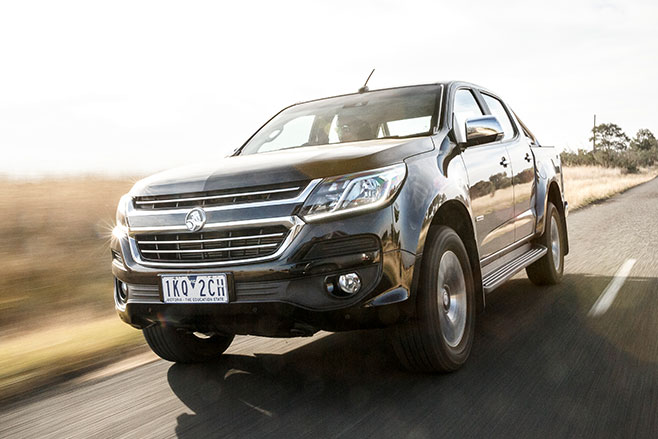
Holden says its dealerships will continue to sell cars “while stocks lasts”. These include new Holdens, used cars and demonstrator vehicles. New car manufacturing will end by June, including Thai-built cars like the Colorado and Trailblazer.
What happens if there is a Holden recall?
“Holden and its aftersales network will continue to handle any recalls or safety-related issues if they arise, working with the appropriate governmental agencies,” says the company.
What happens if I’ve ordered a new Holden?
If you have a Holden on order, your best bet is to contact your dealership directly. Australian consumer rights are enshrined in federal law, so if you’re looking to get out of a Holden purchase, you will have a good case.
As mentioned, Holden will support all new car sales made from today for the life of the warranty, and with spares and support until 2031.
What happens to my Holden resale value?
There’s no getting around it… if you currently own one, a Holden’s resale value will now be a lot worse than it was than when you bought it. However, Holden resale values have been depressed for some time, so it’s not a big a fall as it could have been.
Our advice would be to run the car as long as possible because it will be cheaper, in the long run, to ‘use up’ the vehicle before trading it in.
MORE HOLDEN NEWS
Holden departure will cost $1.6 billion
Ford: we will miss you, Holden
What now for Corvette in Australia?
Holden’s demise catches government by surprise
A hardened adversary of Holden both on the race track and in the showroom, Ford Australia gave no quarter in its long-standing rivalry with the GM sub-brand.
However, with Holden announcing its closure, the local Blue Oval arm has recognised the years of healthy battle between the two iconic Aussie brands in a statement of condolence.
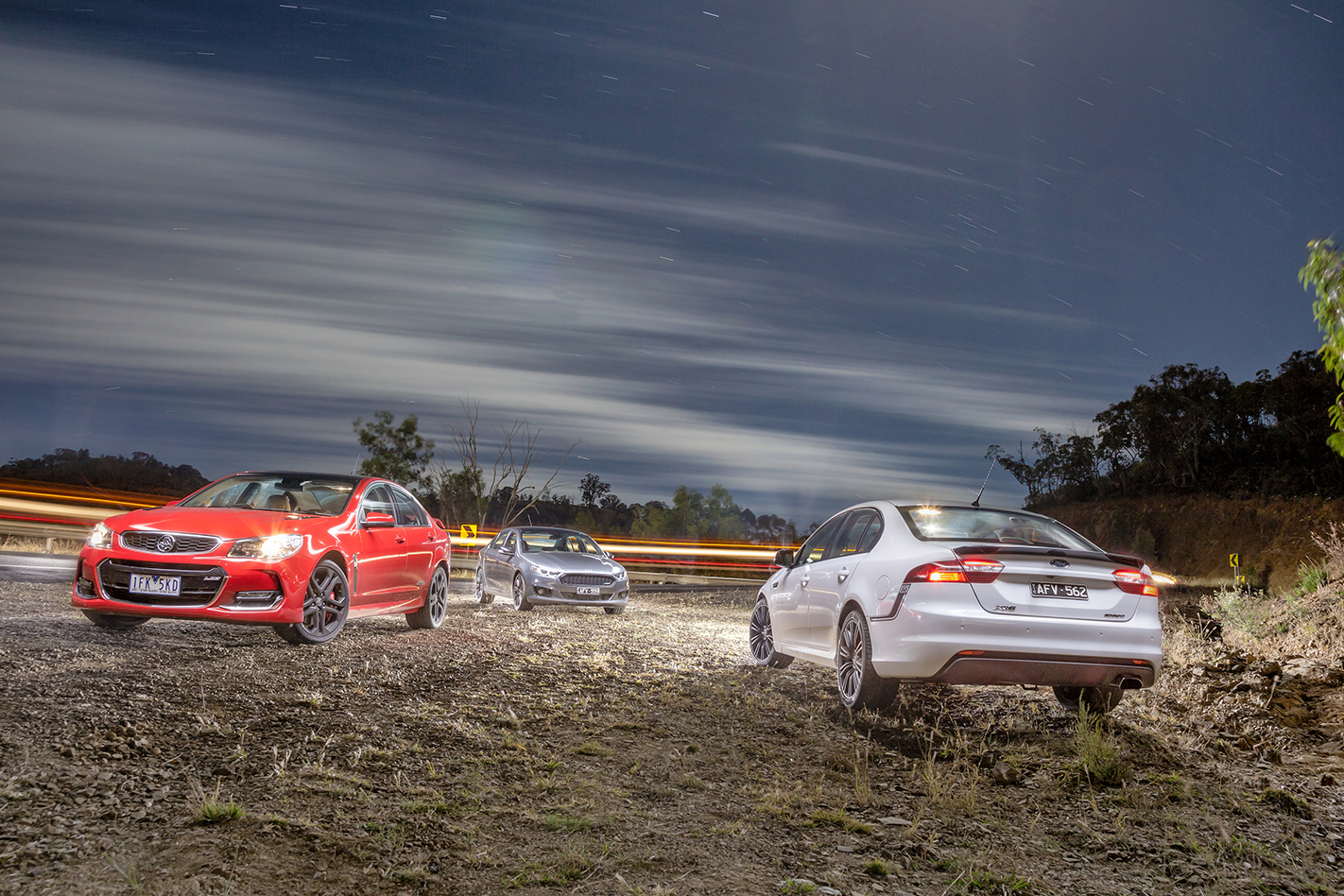
“All of us here at Ford Australia are saddened to hear the news that Holden will cease operations,” the Ford Australia statement reads.
“Holden is an iconic brand that holds a special place in the heart of many Australians, and has done so much to shape the Australian automotive industry and the country.”
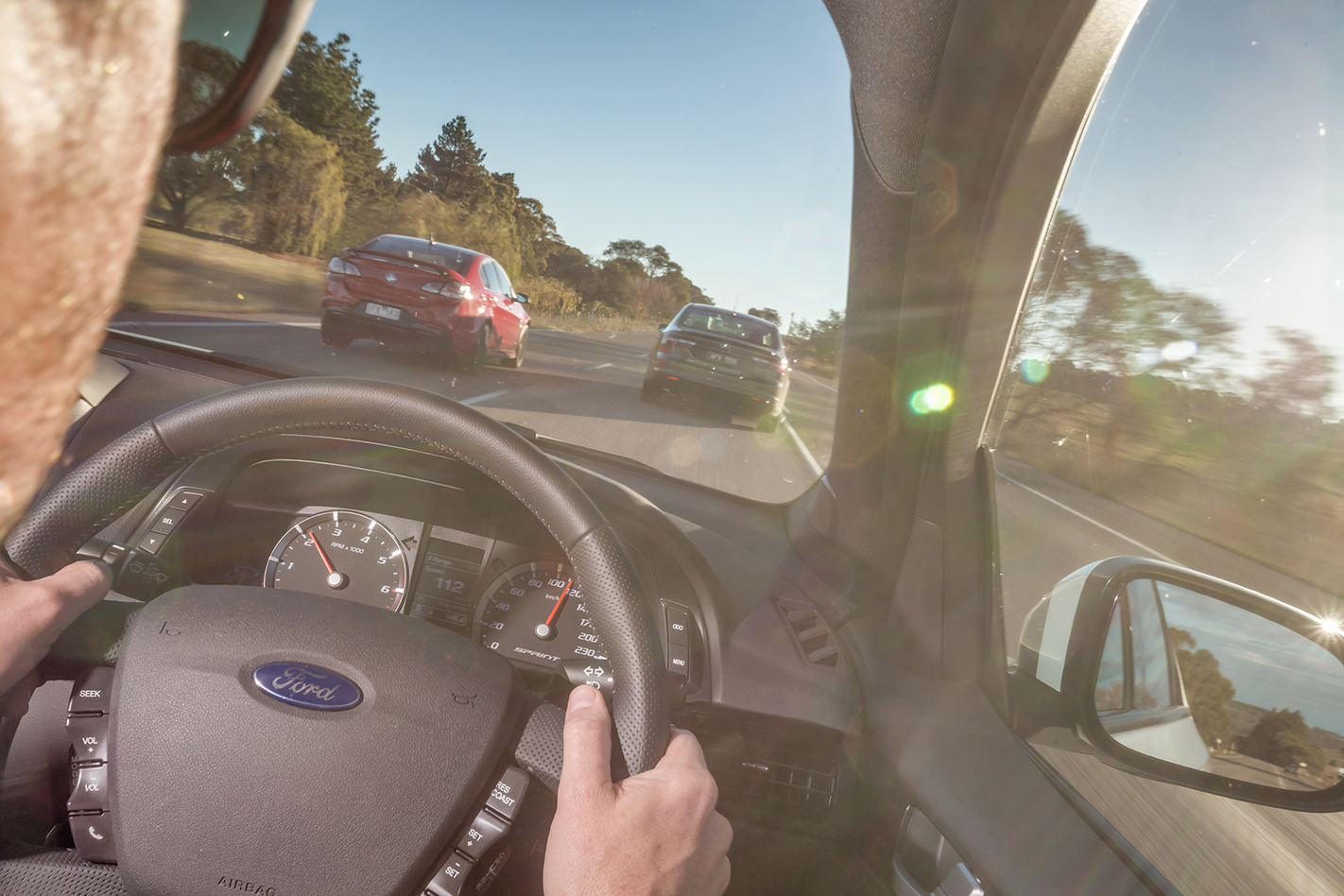
Strong competition breads success and greatness, a sentiment that hasn’t been lost at Ford Australia.
“To our friends at Holden, thank you for keeping us on our toes and inspiring us to keep aiming higher. We will miss you,” it continues.
Both the Commodore and Falcon spent the ’80s and ’90s duking it out on the sales charts as Australia’s highest-selling models. Despite declining sales, this healthy tussle continued through the turn of the century.
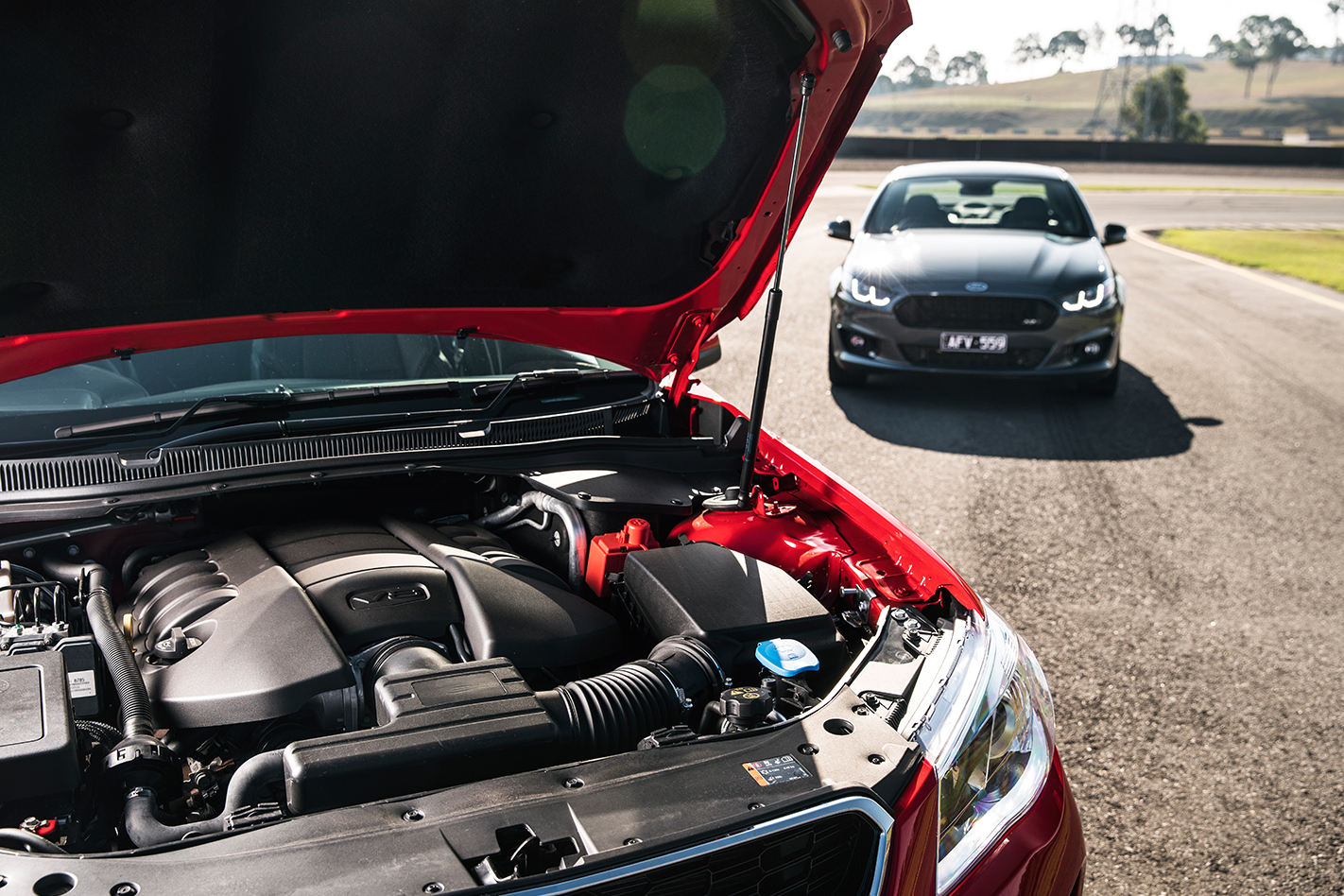
Proof that the decades-long fight with the Commodore brought benefits to the Falcon can be seen in 2003, where Ford transformed the AU into the BA and outsold the popular Holden model for the first time in years with 73,220 sales.
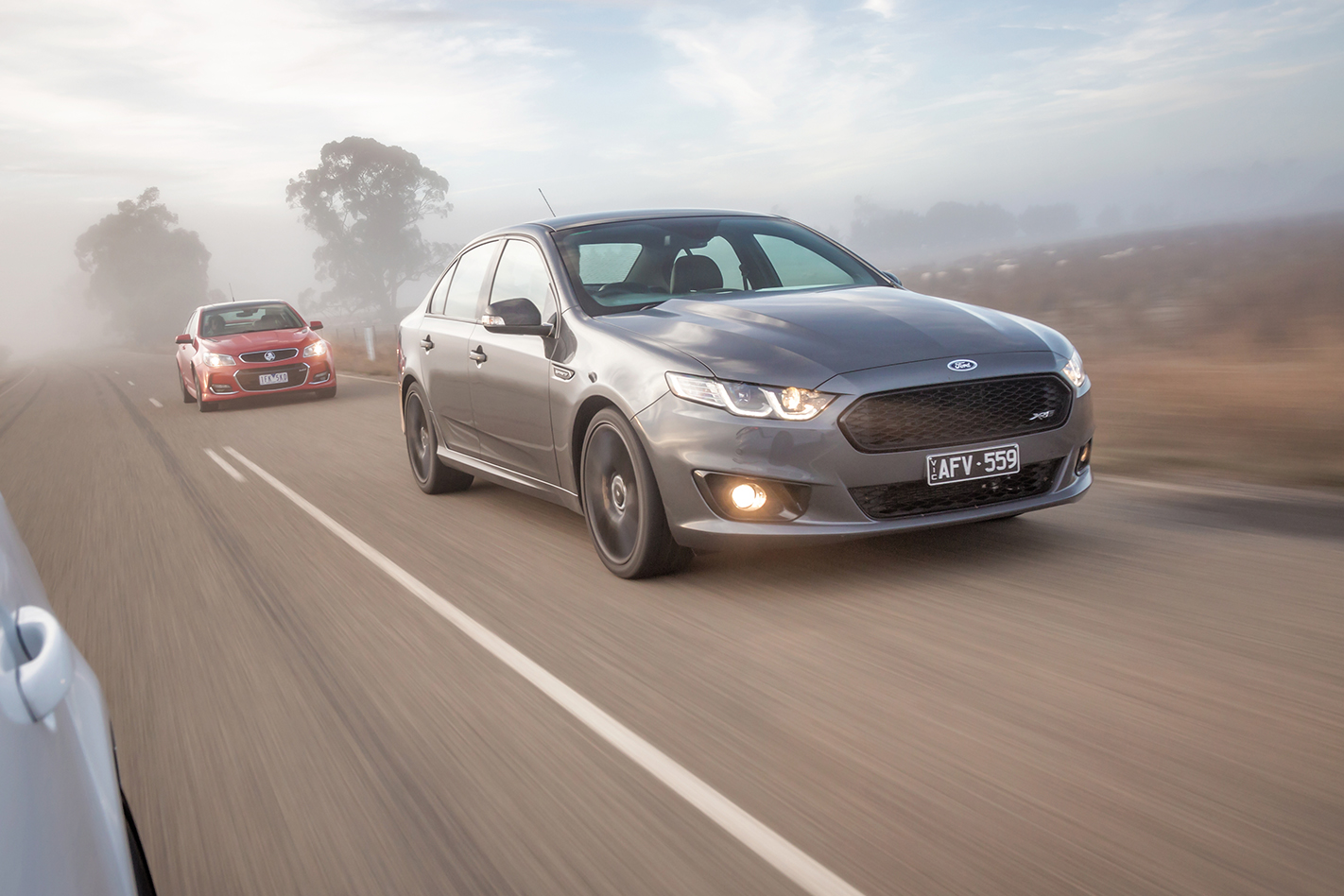
Despite the announcement from Holden, it is business as usual for Ford down under, with the company reaffirming its workforce and involvement in the global framework remains strong.
“Ford continues to invest in its Australian operations and our 2000-plus workforce of engineers, designers and other experts as we develop vehicles for more than 180 markets around the world.”
General Motors expects to pay more than a billion dollars to exit both the Australian, New Zealand and Thailand new-car markets.
GM made the shock announcement it was axing Holden, while also confirming that it would withdraw Chevrolet from Thailand, and sell its manufacturing facility in that country to Great Wall Motors.
This will result in a bill for GM in the region of US$1.1 billion, which equates to A$1.6 billion at current conversion rates.
“As a result of these actions in Australia, New Zealand and Thailand, the company expects to incur net cash charges of approximately US$300 million,” GM said in a statement.
“The company expects to record total cash and non-cash charges of $1.1 billion. These charges will primarily be incurred in the first quarter and continuing through the fourth quarter of 2020.”
Senior Vice President, GM International Operations, Julian Blissett, said that taking care of the estimated 600 Holden employees that will lose their jobs is of an extremely high priority.
“We have made it very clear that we will treat people fairly,” he said during a press conference.
“I don’t want to go into details or specifics, but there is one headline figure of how much this will cost – it is an expensive undertaking.
“It is an agonising decision for us and not one that we take easily.”
Blissett also confirmed what is happening in Thailand played a part in Holden’s demise.
“The decision here is also affected by what we are doing elsewhere in the world, relative to Thailand,” he added.
“The total bill for both of those market exits will be north of a billion US dollars.”
A statement from the US company said “it had signed a binding term sheet with Great Wall Motors to purchase GM’s Rayong vehicle manufacturing facility in Thailand; and would withdraw Chevrolet from the domestic market in Thailand by the end of 2020.”
“Low plant utilization and forecast volumes have made continued GM production at the site unsustainable,” it continued.
“Without domestic manufacturing, Chevrolet is unable compete in Thailand’s new-vehicle market.”
The sale comes amidst other significant recent international restructuring efforts by GM, including selling the Talegaon factory in India.
Last September Pagani Automobili gave attendees of the Supercar Owner’s Circle event an early preview of what was known as the Pagani Huayra Imola.
Back then little was known about the car besides its OTT aero additions and a rumoured price tag of €3 million. Now with an official statement from Pagani we know that it is more than that, in both performance and price.

Officially known as just the Pagani Imola, Pagani’s latest creation boasts 617kW and 1100Nm of torque derived from the Huayra’s Mercedes-AMG built 6-litre twin-turbo V12 powerplant, which is a generous 27kW and 50Nm gain over the Huayra Roadster BC.
As it is with the Huayra family, power from the V12 is still sent to the rear wheels via a seven-speed XTRAC single-clutch automated manual.
The Imola’s carbon-fibre chassis features the same reinforced central monocoque used in the Huayra Roadster BC that is made from exquisite sounding Carbo-Titanium HP62 G2 and Carbo-Triax HP62 materials.
Strangely, with a quoted weight of 1246kg, the Imola is 28kg heavier than the Huayra BC coupe, even despite the fact that the Imola is painted with a newly developed bespoke painting system that saves 5kg on the car’s paintjob alone.

One could rack up the weight gain to the mass of aero ducts and winglets plastered across its body, which is said to deliver more downforce for the purpose of improving lap times, ease of driving, and safety.
Pagani admits that while the new aerodynamic additions spoil the Huayra’s “aesthetics”, it was necessary for improving the Imola’s downforce rather than relying on ground effects aerodynamics, which could be interrupted on the uneven surfaces of public roads.
Adding to that, the Imola also employs an electronically controlled active damper system that varies the front ride height in tandem with the aerodynamic, engine, electronic differential, and transmission control systems.
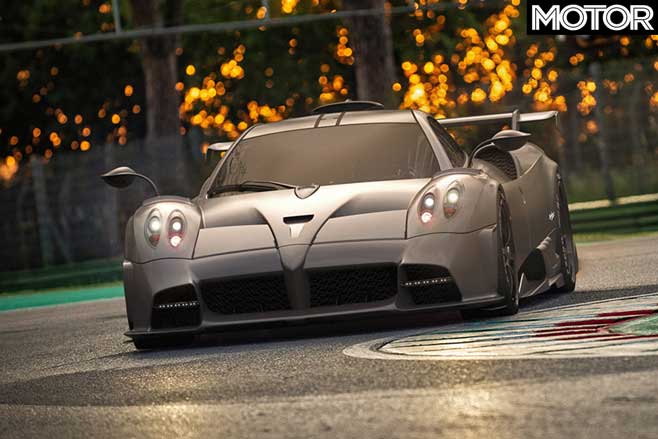
According to Pagani, the company got its customers involved in the development of the Imola, which has since racked up 16,000km worth of on-track development.
“Customer involvement was very much a part of the Pagani Imola project. We wanted to amaze and, fascinated by our ideas and solutions, our customers decided to join the team and acted as test drivers, so to speak,” said Horacio Pagani, founder and chief designer of Pagani.
While Pagani will maintain the Imola’s production number at just five examples, the price has ballooned to €5 million (AUD$8 million) from its rumoured figure, though that hasn’t stopped all five from being snapped up.
