
Despite approaching seven years on the market, the Mitsubishi Outlander PHEV has been given a thorough mechanical update with the introduction of the 2.4-litre naturally-aspirated four-cylinder engine from the standard Mitsubishi Outlander range, a higher capacity battery pack, more powerful rear motors, more safety and interior features, and revised pricing.
Headlining the changes for the new Outlander PHEV range is a 94kW/211Nm 2.4-litre engine, which replaces the 87kW/186Nm 2.0-litre unit in Australia. Eagle-eyed readers will notice that those numbers are lower than the non-electrified 2.4-litre unit in the standard Outlander, but that’s because the PHEV’s engine is tuned to run on the leaner-burning Atkinson cycle , which favours efficiency over outright power.
And given the engine is mostly tasked with charging the batteries and only augments the electric motors at speeds above 65km/h, that power shortfall isn’t such a big deal.
All said, the bigger engine does raise the official ADR combined fuel consumption figures from 1.7L/100km to 1.9L/100km, though those figures are accounting for a fully charged battery.
As for the battery, its capacity has been increased 13.8kWh, up from 12kWh. In addition to that, the rear electric motor has been boosted from 60kW to 70kW. Charging time has also gone up from six and a half hours to seven hours for a full charge from a Type 1 charger. Use of a Type 2 and DC fast charger would return an estimated charging time of three hours and 25 minutes respectively.
Despite the increased energy capacity, the new 2.4-litre engine equipped Outlander PHEV has the same 54km of all-electric range claim as the now discontinued 2-litre powered model.
Mitsubishi Australia has chosen to maintain the same three variant structure as before, with the Outlander PHEV available in the ES, ES ADAS, and Exceed.
New to the ES range is the addition of Forward Collision Mitigation collision warning and autonomous emergency braking (AEB), a new 8-inch infotainment display with Apple CarPlay and Android Auto, front seat heaters and power-adjustable lumbar support for the driver’s seat, electro-chromatic rear mirror, and two USB power connections for the second row of seats.
The ES ADAS carries on the improvements from the ES and adds more safety, with the addition of lane departure warning, adaptive cruise control, and automatic high beam separating it from the base ES.
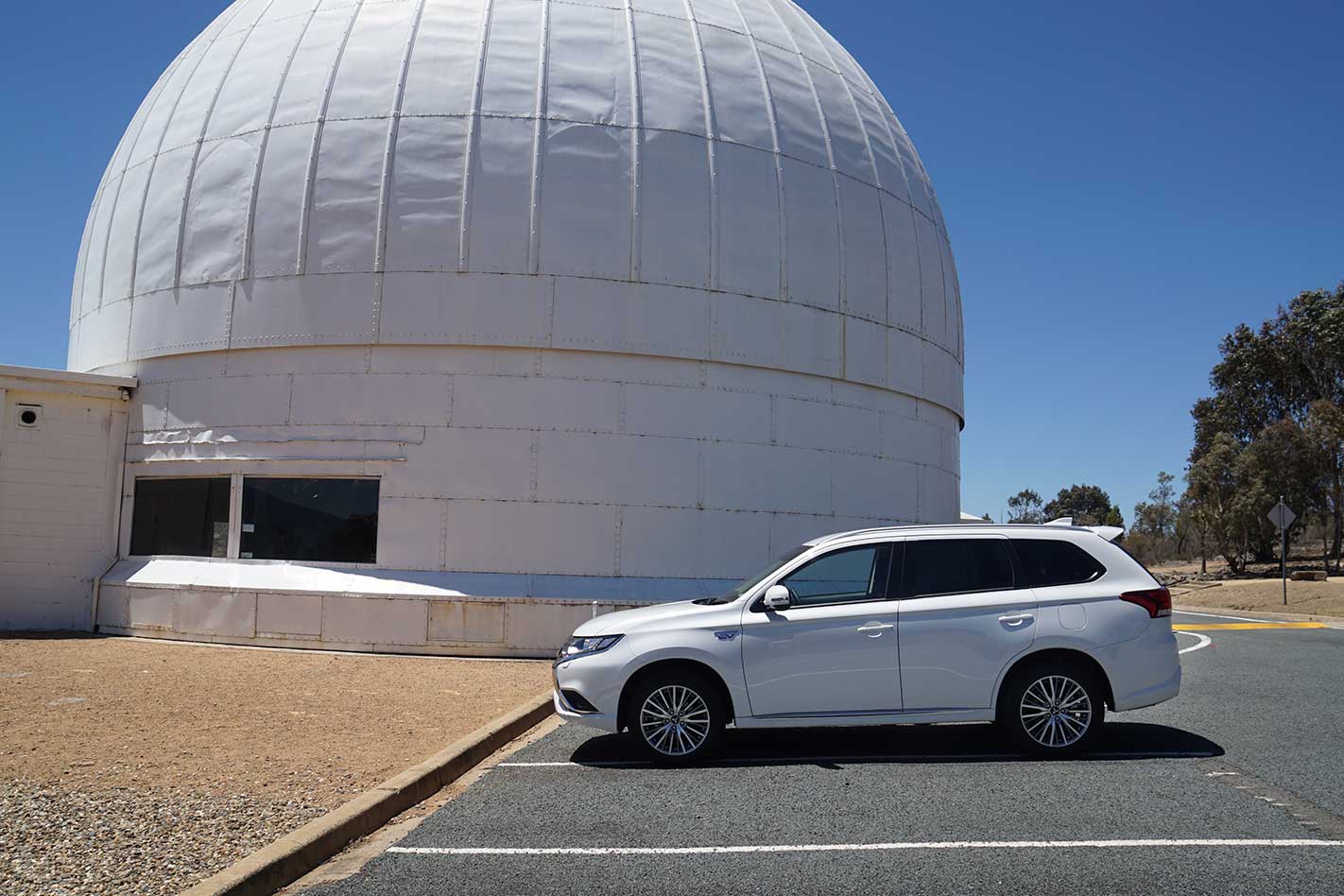
As for the range-topping Exceed, it features a new TomTom navigation system, speed limit information display, an 8-speaker sound system, and a EVPS auxiliary power supply that enables the PHEV’s battery to feed power to an equipped household – handy in case of a blackout.
Besides the new additions, the Exceed carries over equipment like Unintended Acceleration Mitigation, a 360-degree camera, blind sport warning, lane change assist, rear cross traffic alert, power tailgate, electric sunroof, LED headlights and front fog lights, heated and electrically folding door mirrors, power-adjustable driver’s seat, and leather upholstery, on top of the features fitted to the ES ADAS model.
Visually the Outlander PHEV’s exterior remains unchanged, carrying on the same trim updates that were introduced in September, with the subtle updates to the interior with piano black dash and door trim, a slightly improved instrument display, and improved seat cushioning. The only exterior addition comes in the form of the Eclipse Cross’ Red Diamond premium metallic paint option.
With the new engine and features, prices for the Outlander PHEV have been raised with the ES now costing $1000 more at $46,990, the ES + ADAS getting the smallest of increases with $500 bumping it up to $47,990, and the Exceed copping a $2000 raise to $55,990.
All Outlander PHEV variants come with a $299 capped price servicing, 15,000km service intervals, a 5 year/100,000km warranty on the vehicle and 8 year/160,000km warranty on the traction battery, and 3 year club membership with roadside assistance.
The Wheels Verdict: While the M135i struggles to usurp its predecessor, the 118i is better than the car it replaces in numerous key areas. It still offers pleasing, if not overtly engaging dynamics, but now has an important extra layer of space and practicality with up-to-date tech. Whoever said the base model is the one to skip?
WHAT IS IT?
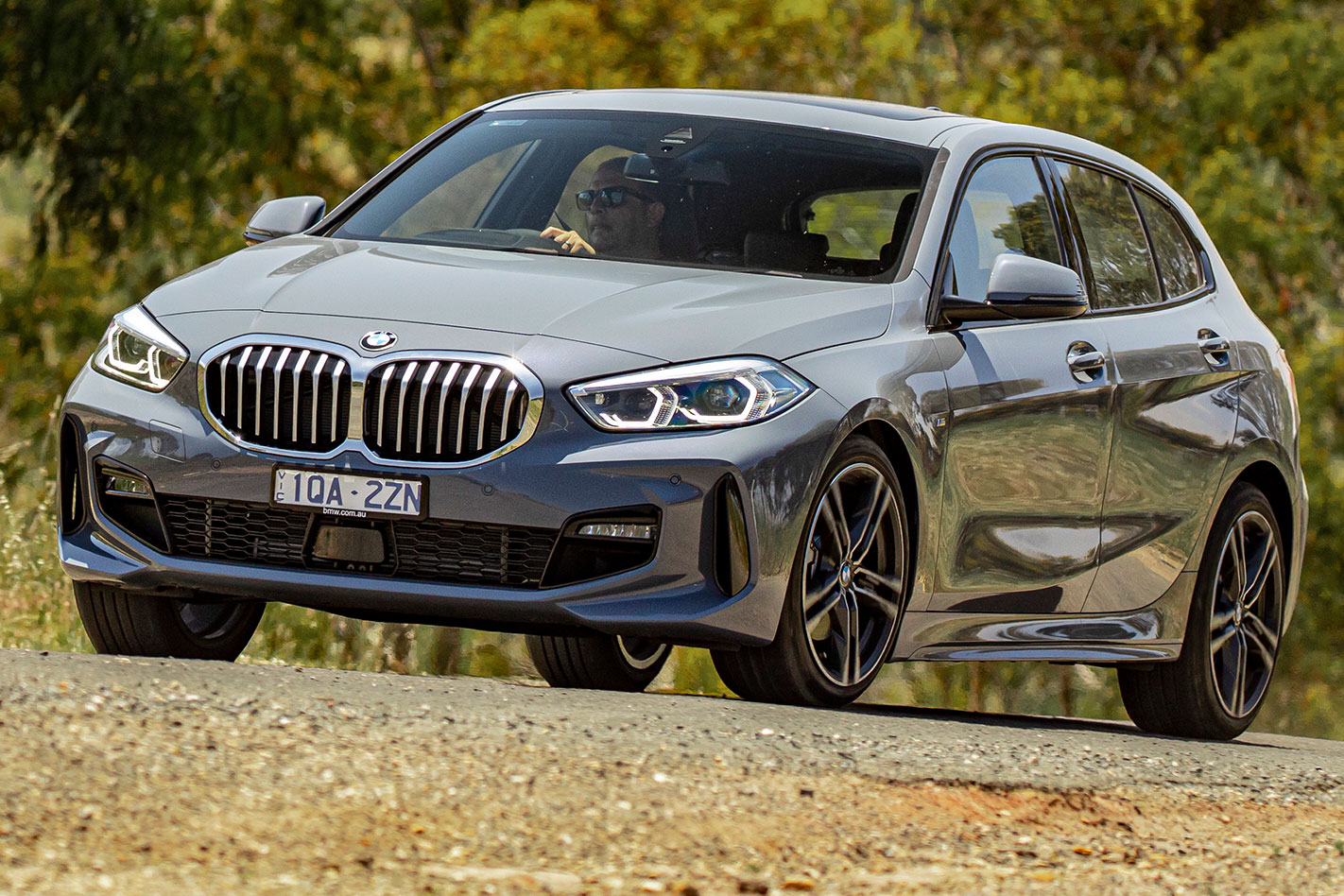
The BMW 118i is the entry-level model for the 1 Series range. It’s an all-new generation, one that has adopted a front-wheel-drive architecture and an increased price. To say it has been controversial is an understatement.
WHY WE’RE TESTING IT
The hot hatch M135i has been grabbing all the spotlight for good reason, but the 118i is a strong contender within the premium hatch segment. Slated to be a strong seller for the brand, it’s only fair we get behind the wheel of the base car, give it some time in the sun and see what’s what. .
2020 BMW 118i REVIEW
As they say, it’s all about swings and roundabouts. What benefits one, doesn’t always benefit the other. That’s what has happened with the third-generation 1 Series and its switch to the UKL front and all-wheel-drive platform. The base 118i package is arguably better for the shift, while the M135i is now missing its rear-wheel-drive frivolity.
You could argue that anyone in the market for the 118i isn’t too concerned about ‘sheer driving pleasure’. Hence, the benefits in packaging and efficiency mean far more than the loss of a tailshaft and drive to the rear wheels. At launch the 1 Series range comprises two variants, the 118i and M135i, while we’d imagine something is in the works to fill in the middle ground. M Sport is now the standard line for 1 Series.
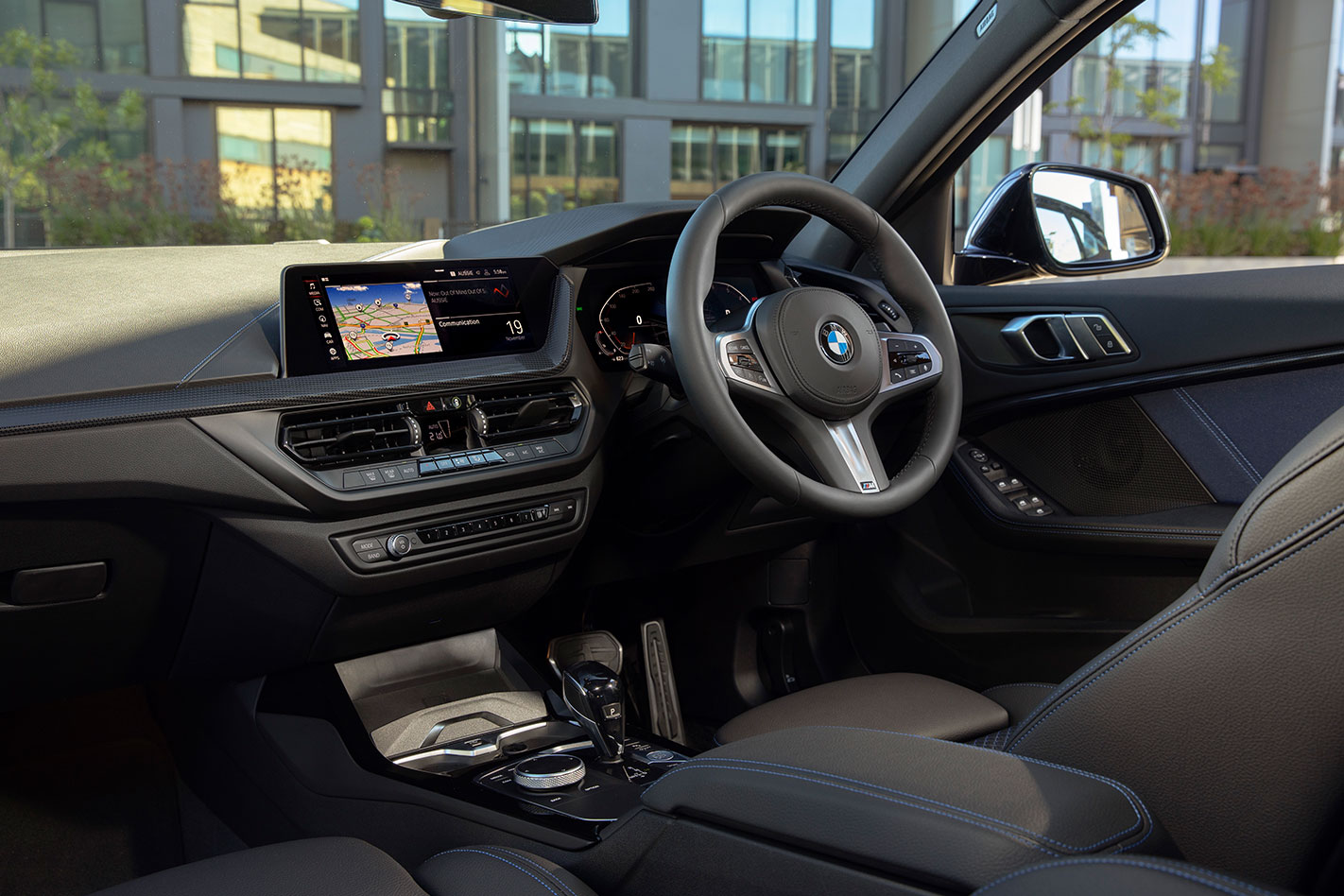
Inside, the F40 generation has skipped ahead of the F20 in leaps and bounds. The ambience and quality of materials is markedly better than the model it replaces. BMW’s new design language fits the 1 Series well. The six-colour lighting package livens the mood at night, and you can move up an inch in diameter to 19-inch alloys for added visual appeal.
BMW has loaded the 118i with standard tech to justify the $4000 price hike. BMW’s seventh-generation operating system features (with iDrive), while the intelligent personal assistant can, essentially, take orders and carry out commands. Simply say “Hey BMW” and you’re away. Two 10.25-inch colour displays control both the infotainment (touchscreen) and instrument cluster.
The former now feature wireless Apple CarPlay sans a paid subscription (hallelujah) and the latter brings the instrument cluster into the digital age – but it’s not the best out there. Sadly, Android Auto is still missing in action. Wireless s phone charging and a crystal-clear head-up display are also standard.
The 1 Series can even receive remote software updates – just like a Tesla – and if you lose your conventional keys, you can lock and unlock the car with an app (via an Android phone) or a digital key that resembles a credit card. A panoramic glass sunroof is a $2000 option, while gesture control and reverse assistant (where the 1 Series automatically retraces your path) are available. With around $10K worth of optional packages, it’s easy to get carried away.
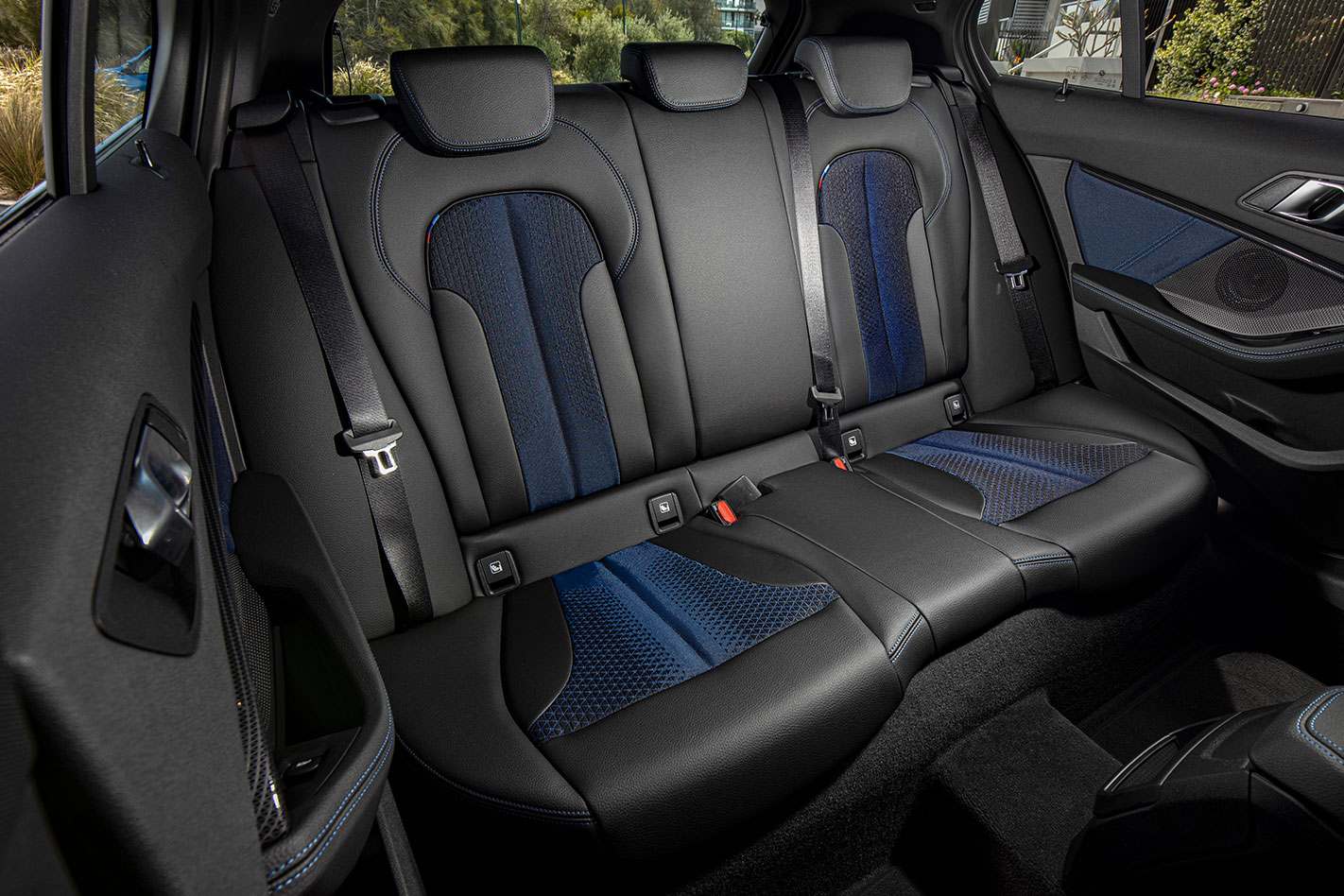
Despite a 5mm chop in overall length (4319mm), the boot space has increased by 20 litres to 380 litres, which puts it ahead of the Mercedes-Benz A-Class. The rear seats fold in a 60:40 fashion (you can option a 40:20:40 split) and for the first time in a 1 Series there is an optional powered tailgate ($731). A 20mm decrease in wheelbase (2670mm) hasn’t cut rear legroom, with BMW claiming an extra 33mm of knee space. Headroom is decent without being ample for tall passengers.
Under the bonnet is the modular 1.5-litre three-cylinder turbo we’re already familiar with given its use within BMW and Mini. In 118i guise it delivers 103kW and 220Nm for a 0-100km/h time of 8.5 seconds, while its combined fuel economy of 5.9L/100km is competitive. The powertrain is smooth and tractable with useable torque throughout the rev range – against its entry-level competition, it stacks up well.
The soundtrack is pretty cool, too, with just enough of the traditional three-pot thrum to make it interesting. Unlike the M135i, the base-model 1 Series bypasses the torque-converter eight-speed automatic for a seven-speed dual-clutch transmission. It’ smooth on the run, with only slight hesitation and jerkiness at slower speeds. The steering is direct, but the weighting is a little artificial in Sport mode.
On standard 18-inch wheels (with run-flat tyres), the ride quality displays a level of sophistication despite revealing a somewhat busy nature on certain surfaces. It’s a shame that, given the M Sport suspension tune, you can’t option adaptive dampers for an extra layer of duality. Overall, the 118i displays composed and safe handling characteristics rather than truly fun. Road noise and NVH levels are decent for the segment.
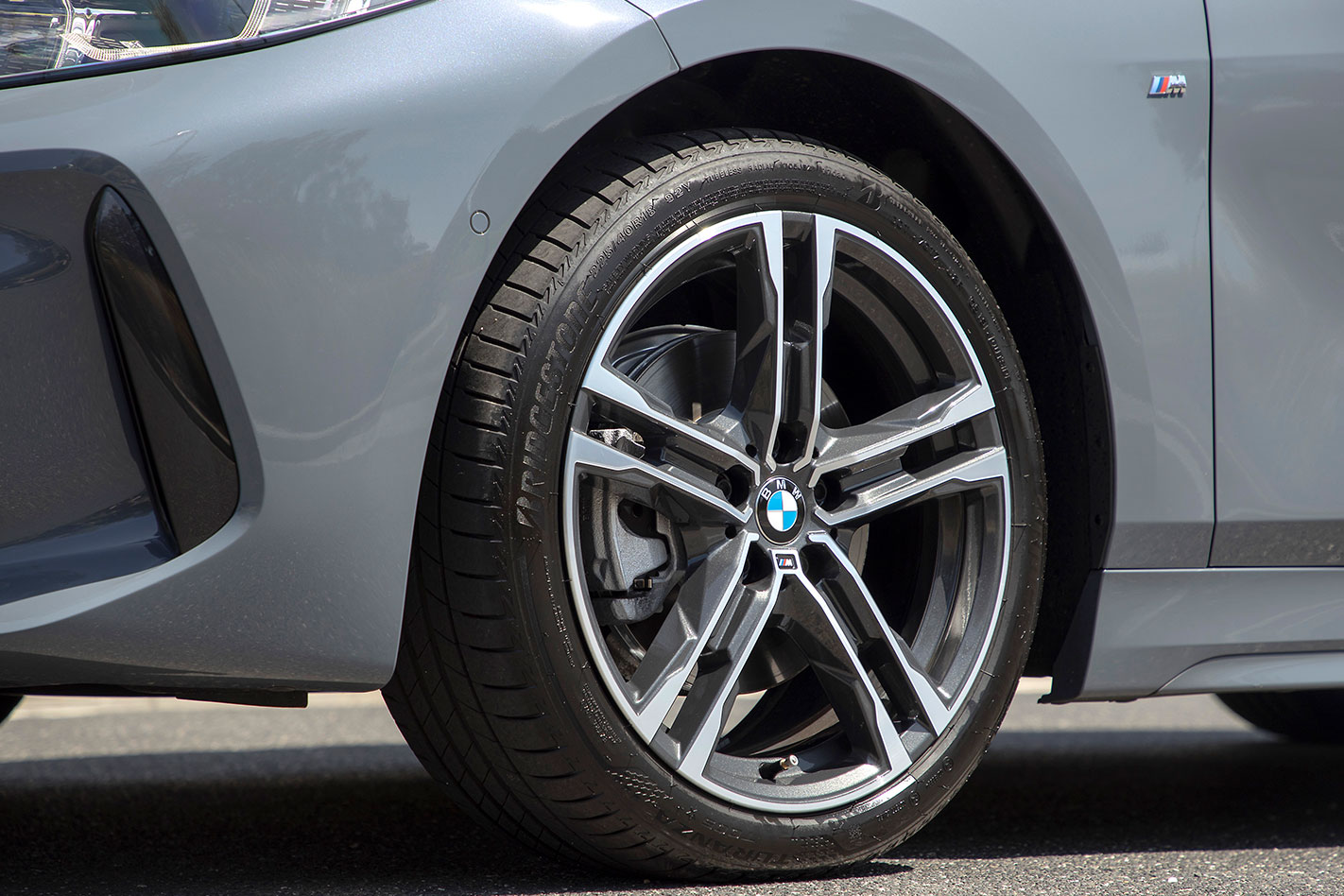
The fact the base 1 Series is now FWD is, to all intents and purposes, a bit of a non-event. At $42,990 the cost of entry has increased, but the return on investment is higher in the 118i. The base 1 Series now feels truly premium inside, it’s roomier and more practical, and BMW throws in abundantly more standard kit. Now that’s progress.
RIVALS
Mercedes-Benz A-Class, Audi A3, VW Golf
PRICE AND SPECS
- Model: BMW 118i
- Engine: 1499cc 3cyl, dohc, 12v, turbo
- Power: 103kW @ rpm
- Torque: 220Nm @ rpm
- Transmission: 7-speed dual-clutch
- Weight: 1365kg
- 0-100km/h: 8.5 seconds
- Economy: 5.9L/100km
- Price: $42,990
- On sale: Now
The Nürburgring has been immortalised in what’s likely the most equally frustrating and popular board games on the planet with the reveal of Monopoly ‘Nürburgring’.
At this point, the game is actually only available in one language, German, which means you’d better brush up on your Deutsche if you want to be able to decipher the Teammeeting and Boxenstopp (Chance and Community Chest) cards. Boxenstopp means pit stop, by the way.

The eight figures that come as playing tokens for the game include a trophy, tyres, a helmet, and a rattle gun… and a race car, of course. We’d have been happy to see some of the Nürburgring’s more ridiculous sights, like a delivery van cutting laps on an open day.
Of course, the properties are the most important aspect of a Monopoly board, and the Nürburgring edition has used a few of its many corners to provide places for players to earn rent. We prefer to think of it as Armco repair, because the only reason you’re stopping on the ‘Ring is if you’ve had a big off.
The corners you can own range from Bergwerk, which is often called one of the track’s most dangerous corners – it’s where Niki Lauda had his infamous, fiery crash – all the way through to Carraciola-Karussell, named for famous driver Rudolf Caracciola.
Does it seem a missed opportunity not to have put the corners in the order they’re encountered on track? We’re not sure, but we’re broken out the English-German dictionary in anticipation.
Oh, but a Nürburgring statement says an English version is on the way! Stay tuned.
I have a recommendation for you. Subscribe to Nico Rosberg’s ‘Beyond Victory’ podcast. He gets a bunch of top line guests from motorsport, entertainment and the car industry and tries to figure out what makes them tick.
He recently had Mate Rimac, the boss of Croatian hypercar manufacturer Rimac, which is currently the hot ticket in the performance EV sector.
Aside from establishing how the company got started, he questioned Rimac on the amazing performance figures of the latest Concept_Two hypercar, due to start series production next year. Rather than enthusiastically spruik the figures, Rimac looked as if he was sucking on a lemon.
“In this category, the cars are sold by the numbers unfortunately,” he said. “People want a thousand-something horsepower car. The zero to 60 is very important.
“The Concept_One had a two-speed double clutch gearbox in the end. So, four motors. The front motors had a single-speed gearbox, the rear motors had a two-speed double clutch. And we realised when we were driving the car that you drive it all the time in second gear. It’s so fast in second gear that it’s faster than almost anything else. If you put it into first gear and do the proper launch, it’s faster than anything. But that’s like going from maybe 2.8 seconds [to 60mph] to 2.2 in that scenario.
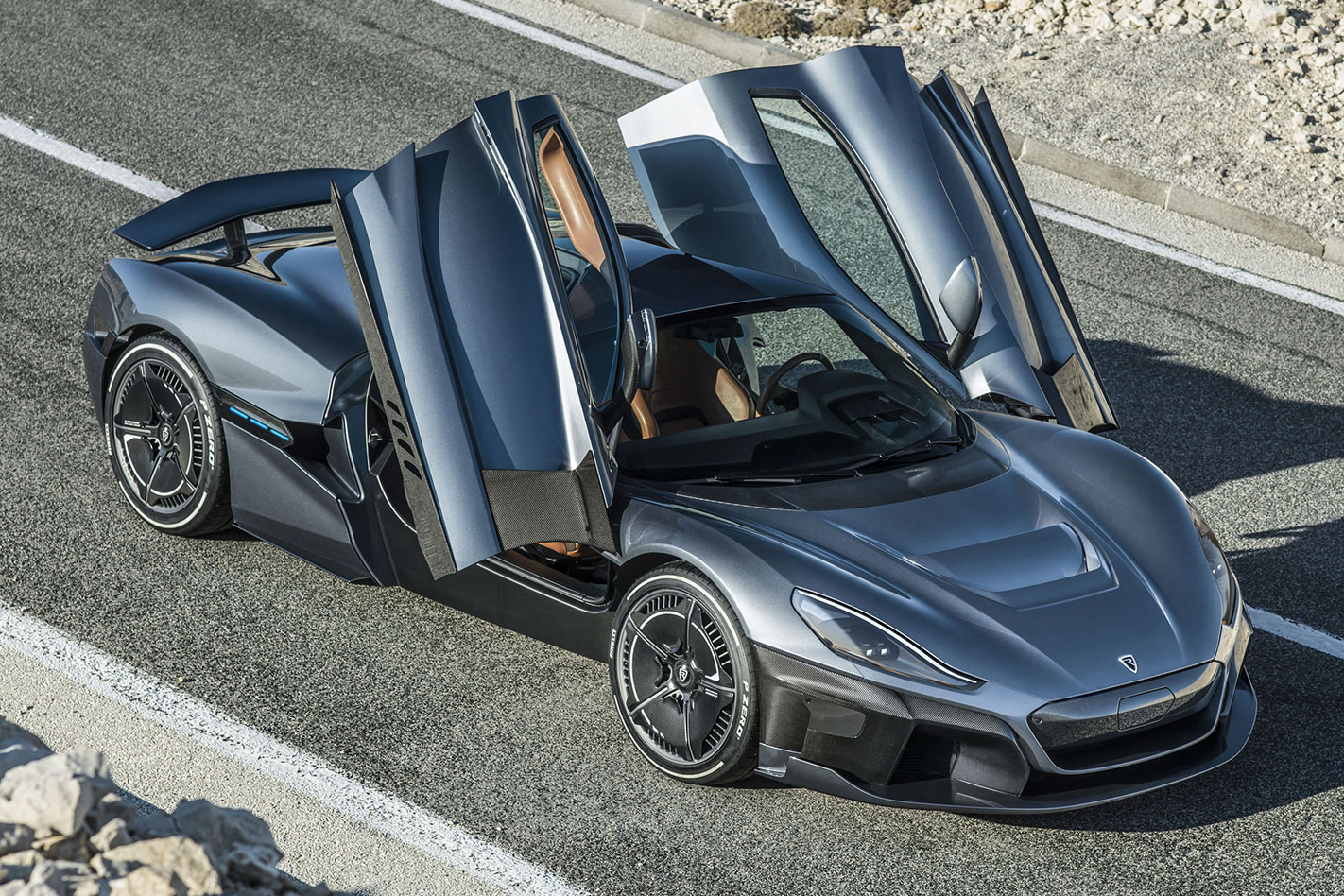
“With the C_2 we really wanted to avoid the two-speed gearbox because it’s such a big part, it’s so complex to manufacture, so heavy, so inefficient and so on. We developed a completely new powertrain, inverter, motor, gearbox, everything to achieve our targets which was about 2.3 to 100 [km/h], with a single-speed gearbox and a top speed of over 350[km/h]. And we managed to do that.
“And then Tesla came out with the Roadster and they claimed 1.9 seconds to 100 and over 400km/h.
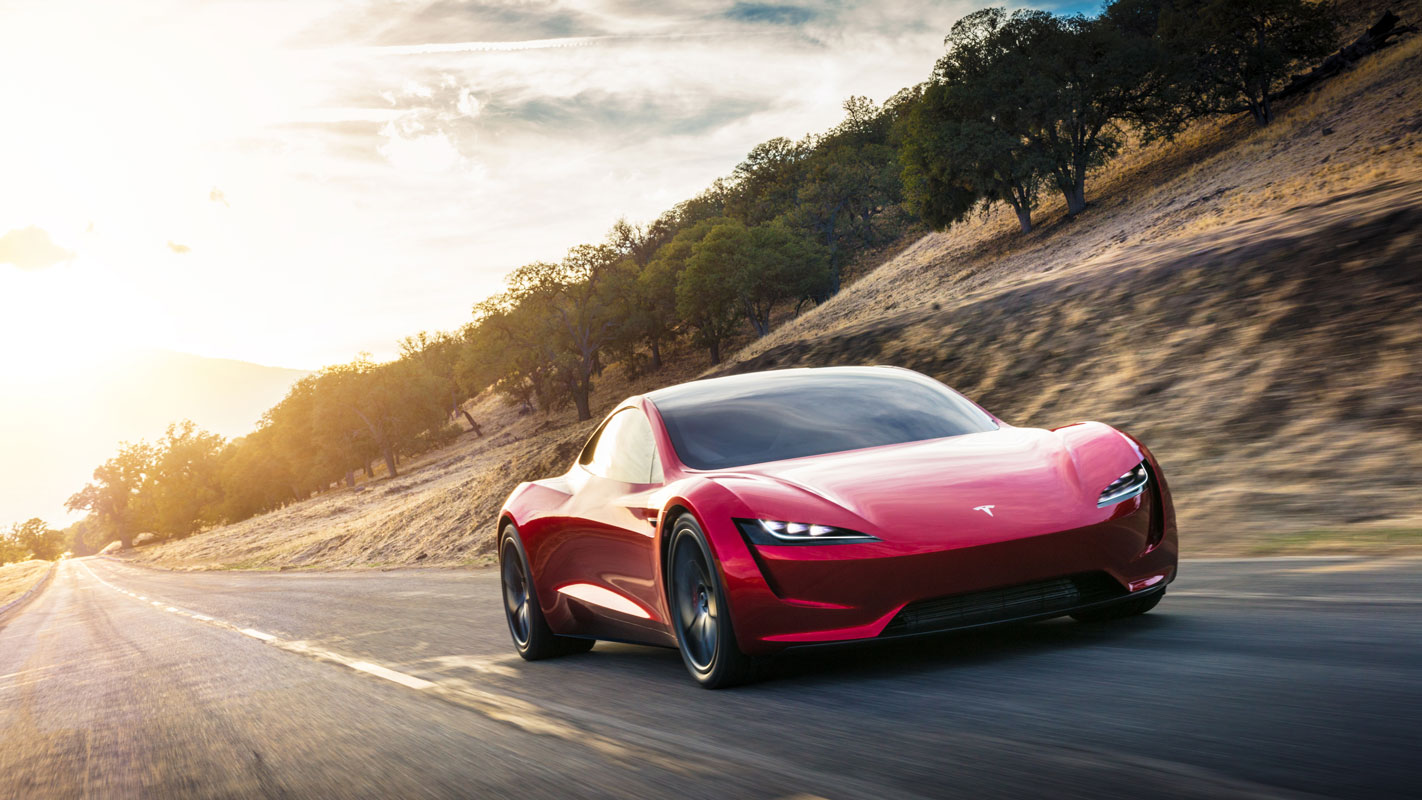
“We said, okay, we’ll sacrifice. Now in the C_2 we have a two-speed gearbox in the rear. That was really difficult because you already had a space for the powertrain, for the chassis, for the motors and everything. It was incredibly difficult to get more space to put a two-speed gearbox so we had, like, a hundred concepts how to make that and the gearbox is, again, incredibly complex and now we have 1.85 seconds zero to 60[mph] time and 1.97 zero to 100 [km/h] time.
“And I tell you, because of that, it’s a worse car. It’s not going to be a better car, it’s going to be a worse car. Why worse? It’s more heavy, more complex, more weight in the rear, not in the front so that the balance is a little bit worse, it’s less efficient because more moving parts and so on, but on paper it will look better. So that’s something not many people will tell you in this industry. It’s very number-driven.”
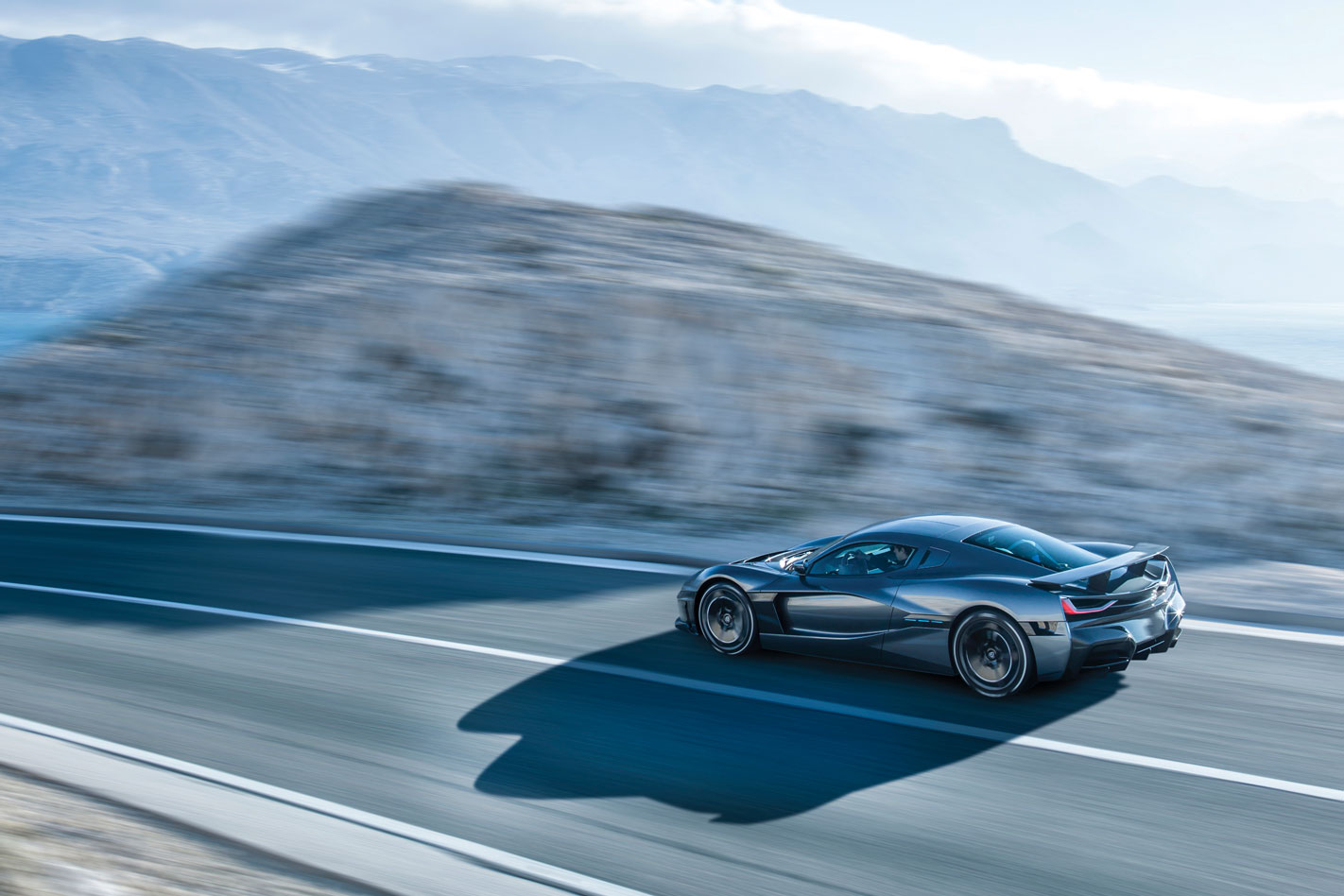
So there you have it. Rimac compromised the Concept_Two to grab some headlines because he understands the market. Can you think of any other car manufacturer who might admit to this? Well, maybe one…
- BMW i4 electric car spied
- Inspired by i Vision Dynamics
- Tesla Model 3 rival due 2021
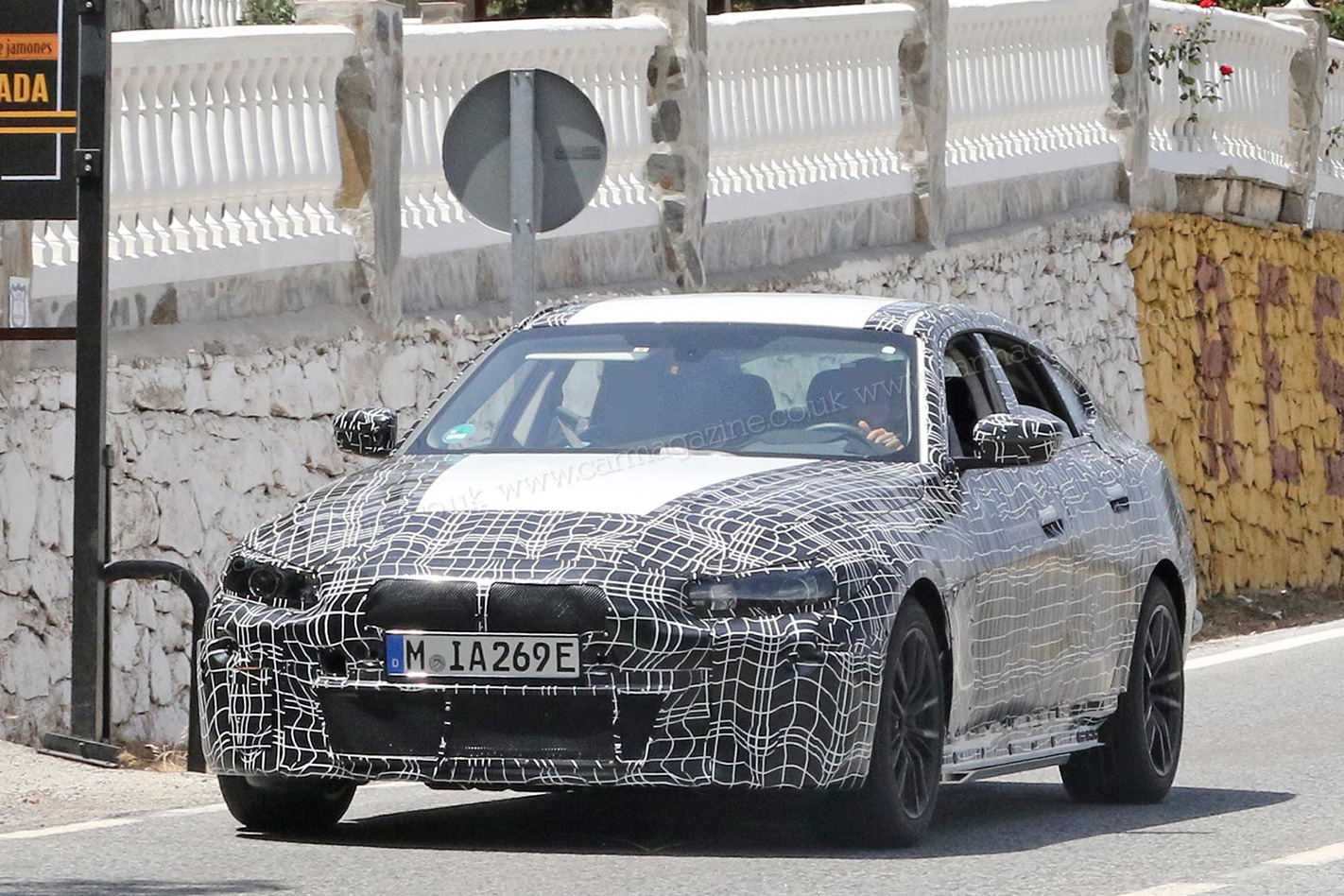
The i4’s 390kW system will be powered by an 80kWh, 550kg battery unit, which should get the car 373 miles between charges. And when you do need to top-up, 150kW charging capability should mean you should get 80% of that range within just 35 minutes – or 100 kilometres in six minutes.
What is the new BMW i4?
Coming in 2021, the i4 will slot in between the i3 and i8 in BMW’s burgeoning electric car range, and will be aimed directly between the Model 3 and Model S electric cars.
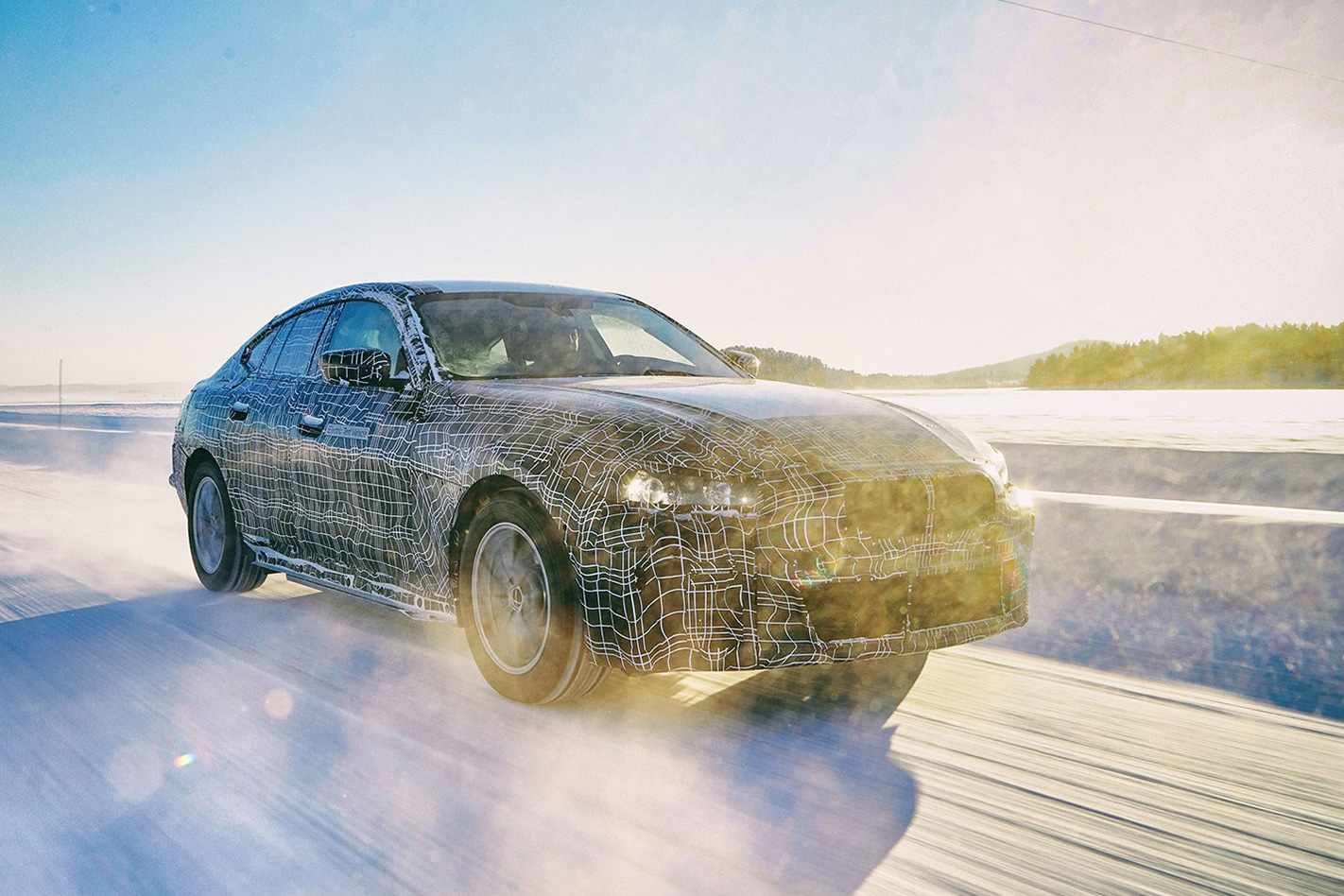
As well as issuing its own ‘official spyshots’, BMW has confirmed some new details about the i4:
- It’s a ‘four-door coupe positioned in the premium mid-range segment’
- ‘Combines a dynamic design with inspiring performance and a high level of ride comfort’
- ‘Fifth-generation BMW eDrive technology’
- 0-100km/h in 4.0 seconds
- Top speed ‘over 200 kph’
- Will be built in Munich at a BMW factory
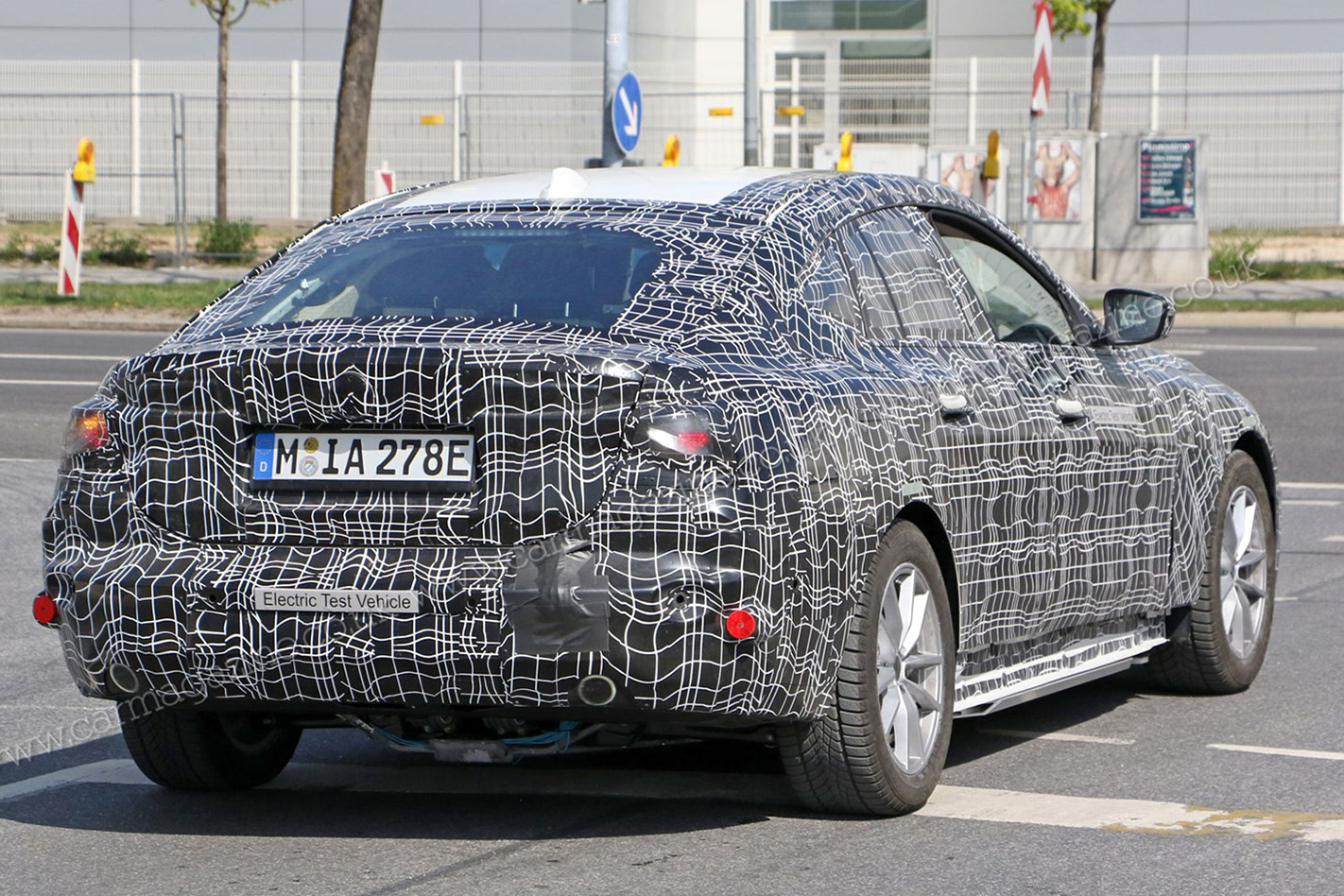
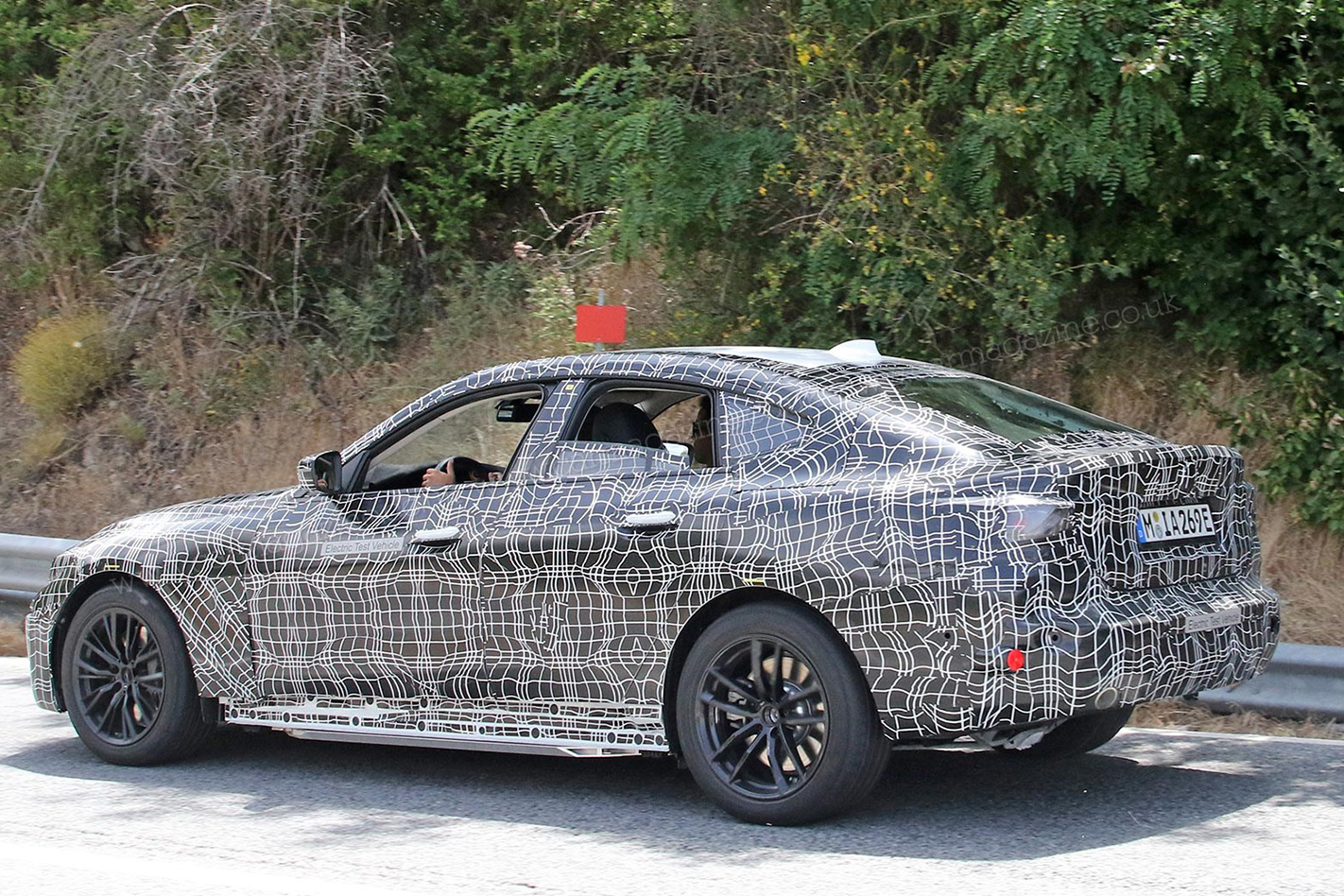
The i4 looks a lot like a standard 4-series Gran Coupe, though it appears to ride a little higher – probably due to battery packaging. While we expect much of the design to remain the same, we do think BMW will do something more unusual with the car’s grille; after all the i4 won’t need cooling inlets like a conventional internal combustion car.
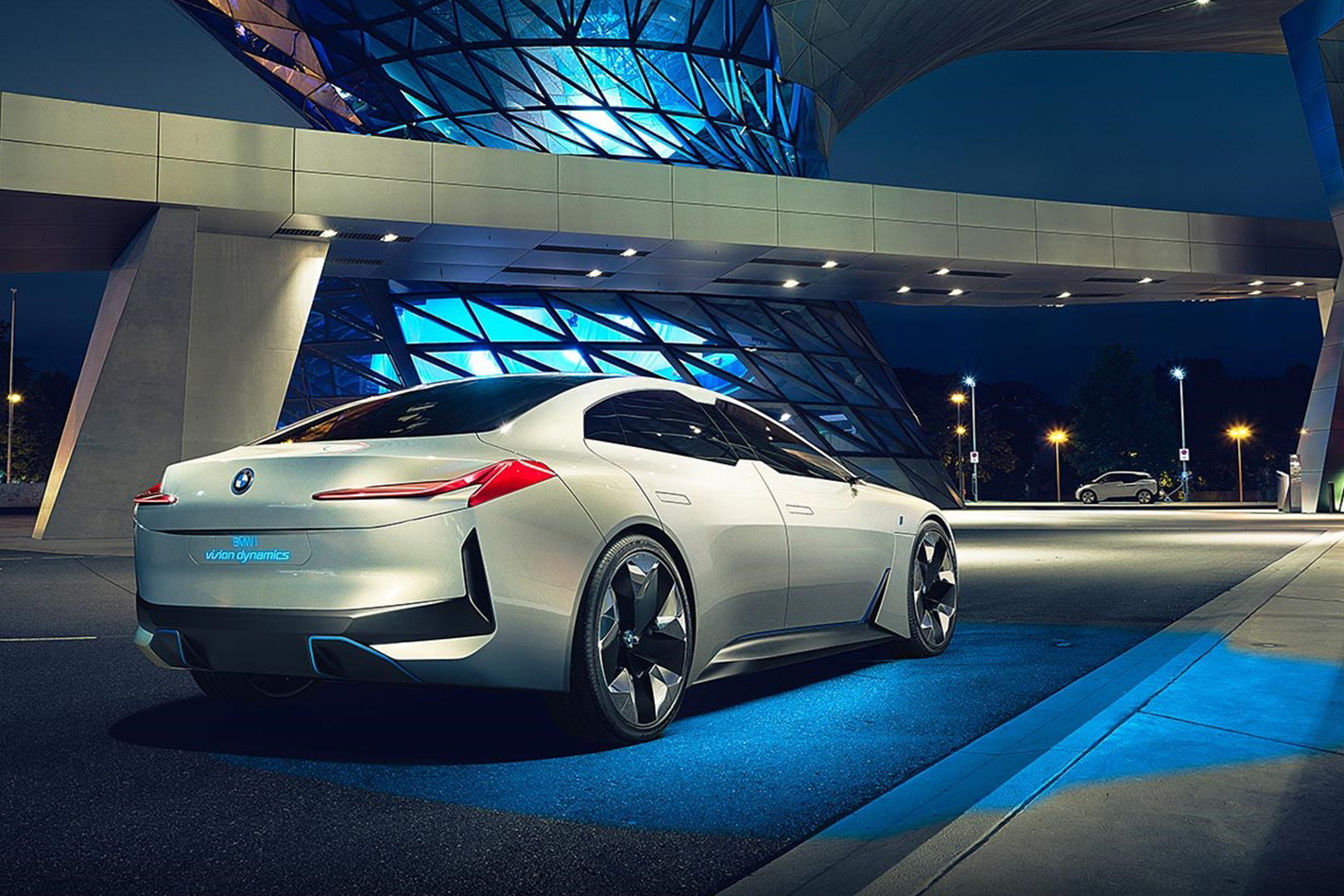
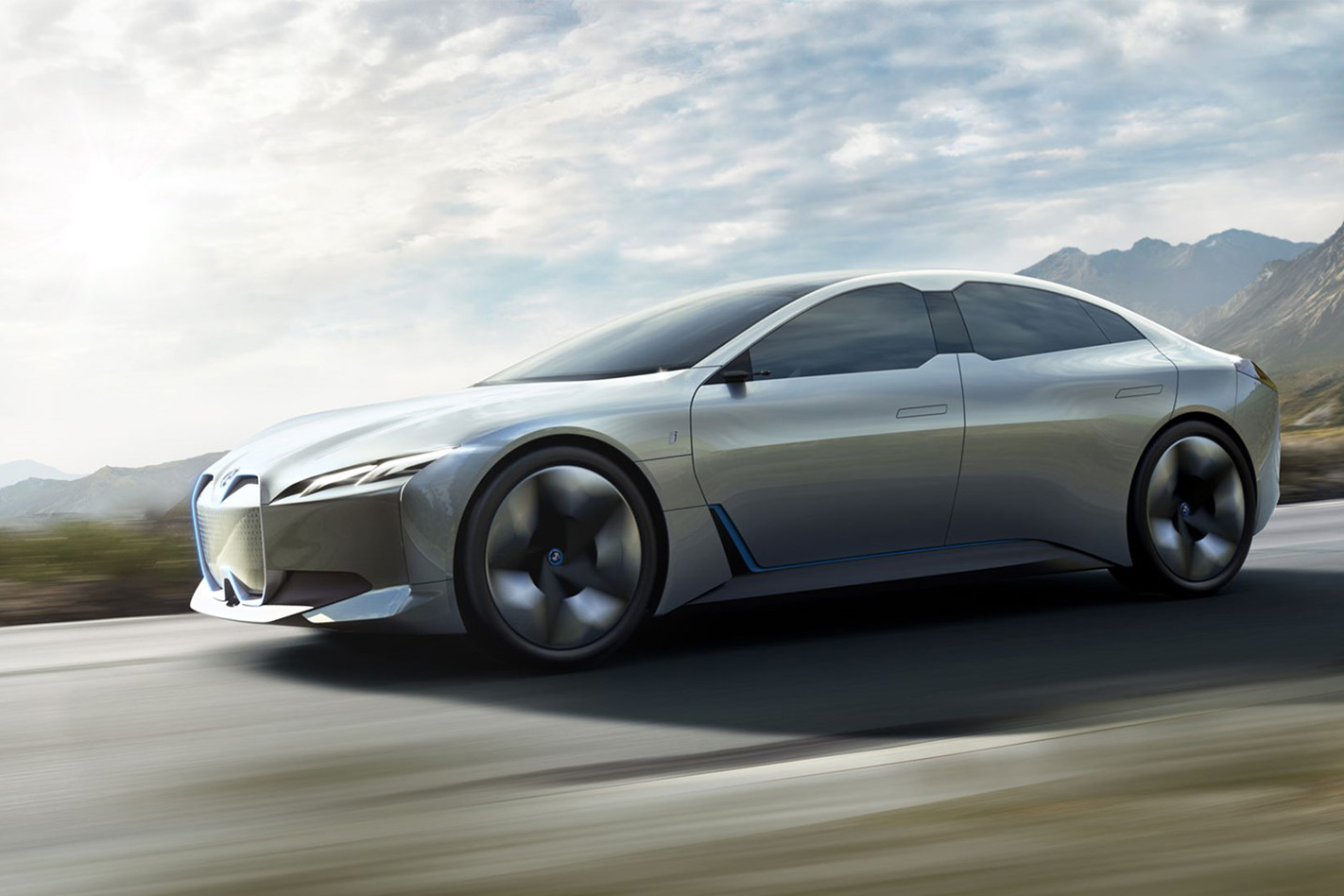
Instead, expect the ‘conjoined-kidney’ or ‘mini-dumbbell’ grille as seen on the BMW i Vision Dynamics concept car to feature.
Once you strip away the disguise, insiders promise the i4 will keep the BMW i vibe alive and kicking, even if the proportions look remarkably traditional. That’s what packaging four adults and luggage does to a design.
The sleek, low-slung i Vision Dynamics concept from 2017 was a four-door 4-series Gran Coupe-style family car previewing the third i model. BMW said it was capable of 0-62mph in four seconds, a top speed of 193km/h and an electric, zero-emissions range of up to 600 kilometres – figures we’d wager sound remarkably feasible for a production EV two years away from showrooms.
It is unclear at this stage whether the new BMW i4 will be built around the group’s CLAR architecture or a separate platform; we know that the batteries are accommodated along the floor within the wheelbase, which explains the slightly raised ride height visible in these spy photos. The cells are mounted low for better handling, and the body is lifted to maintain decent accommodation.
This won’t be a bespoke carbonfibre chassis, as with the i3 and i8; instead expect a sprinkling of lightweight aluminium and maybe a CFRP roof, like on an M4, to slice out weight but keep a lid on costs.
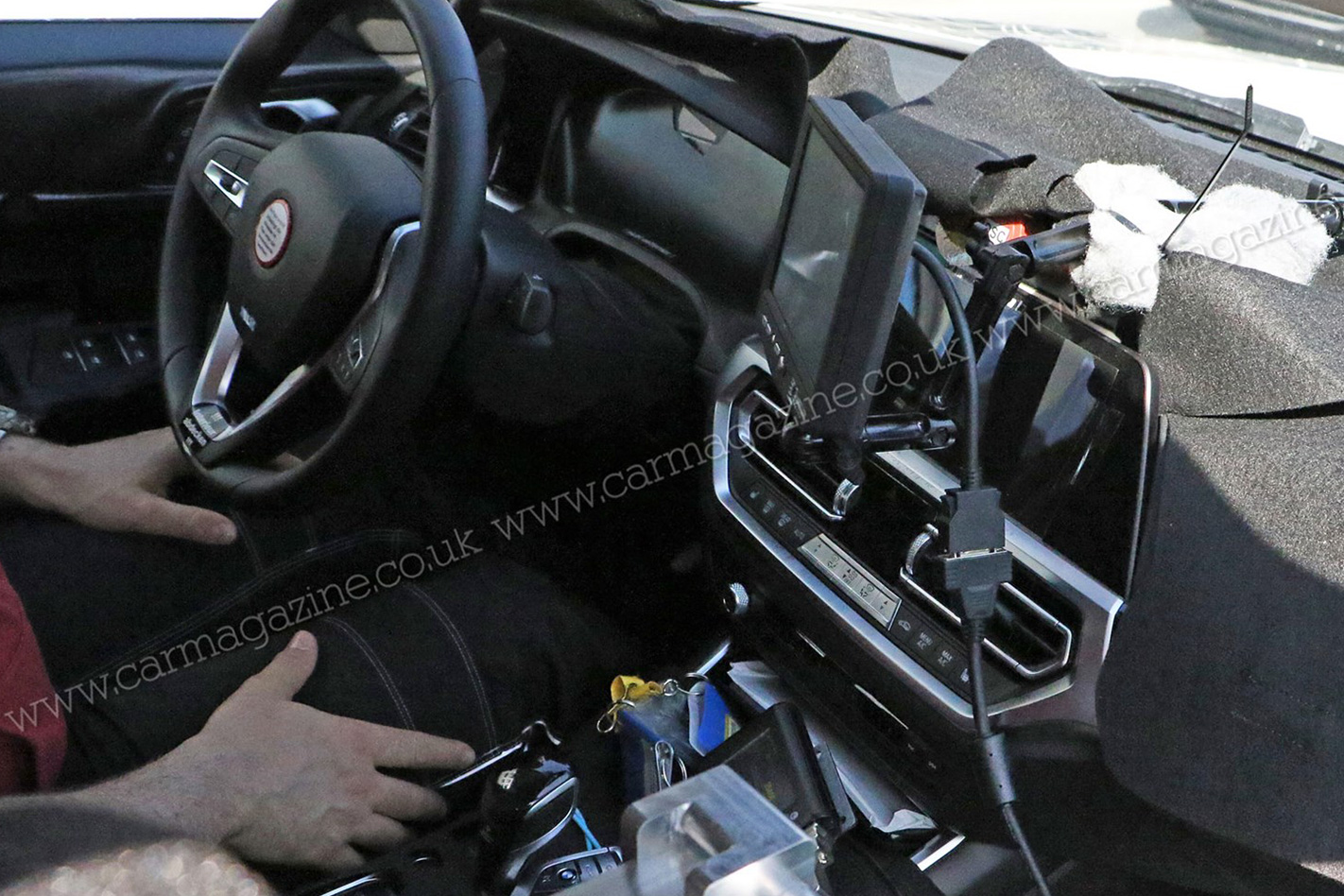
Shorn of the disguise adorning this camouflaged prototype, insiders hint that the production version will keep a distinct i family face, with unique kidney grilles and the door handles are said to be touch-operated, rather than manual affairs. The concept had flush door handles too.
Note also the faked exhaust pipes built into the camo at the rear, to put our spy photographers off the scent. Although this is rather undone by the ‘Electric vehicle’ stickers required by law in Germany in case of a high-voltage accident!
The tech specs
The production-spec i4 saloon will use two electric motors, all-wheel drive and torque vectoring. There’s also potential for rear-wheel steering and semi-active air suspension. It’s likely that BMW will follow Tesla’s lead in offering different versions with a choice of power outputs. This car is aimed squarely at the Tesla Model 3, after all…
In fact, the hotter version could even carry an M performance division badge. ‘The i Vision Dynamics is a car with a broad remit, so I think that will be the time when we see certain blends of BMW i and M’, said Dick Arnold, head of product management at BMW i. ‘Now we have M with a clear picture and we have BMW i with its electrification. Over the years there will certainly be an overlap – no doubt about it.’
Robert Irlinger, head of the BMW i division told us: ‘There will be M cars with kinds of electrification in the future. Is there a clash between the i and M brands? Of course not. There will be a blend, or some co-operation in future, because electrification brings benefits – full torque from the beginning, for example.’
Sounds great! When can I buy the BMW i4?
Arnold pointed to the i3 and i8 timeframe for a rough idea: the EfficientDynamics Vision concept from 2011 ended up being the i8 in less than three years. On that basis, a customer-ready i Vision Dynamics could be in showrooms as early as 2020, explaining our new spy photos of a prototype on a transporter.
The i Vision Dynamics is far from the only electric BMW in the pipeline. As part of the group’s plan to provide 25 electrified cars by 2025, with 12 being fully electric, BMW i has a lot on its plate over the next eight years. ‘It’s sometimes smart not to talk too much about your future plans’, says Arnold, but we have a pretty good idea. An electric Mini hatch is already set to be built in Oxford for 2019. An electric X3 SUV will follow a year later.
This article first appeared on www.carmagazine.co.uk
Open up Holden’s website and let the dropdown box marked ‘cars’ expand you’ll notice a new addition. The Chevrolet Corvette now appears on Holden’s site.
Ignore the fact its icon is facing the other way from every other image on the list, click on it, and you’ll be taken to a section of the website dedicated to Chevy’s mid-engined beast.
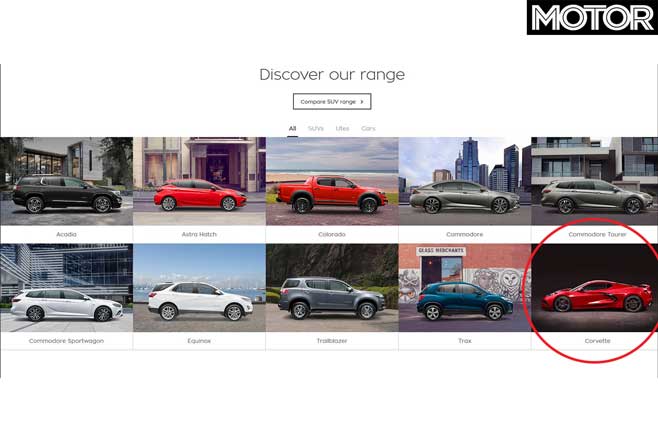
The page is split into several sections which cover the dual-clutch transmission (under ‘performance’, where there are no engine details), the design (which focuses on where the engine is), and the Corvette’s technology (it has an infotainment system!).
So, while it’s not the most informative page, it provides a couple of useful functions. Not only is it another nice little ‘concrete’ reminder that the Corvette will eventually set wheels in Australia, it also allows potential customers (or onlookers) to register for updates on the progress of the Corvette’s eventual arrival.
Locally, we can expect a similar spec to that available in the US for the C8 Corvette’s base model, with 369kW peaking at 6450rpm and 637Nm at 5150rpm, making it the most powerful base Corvette ever.
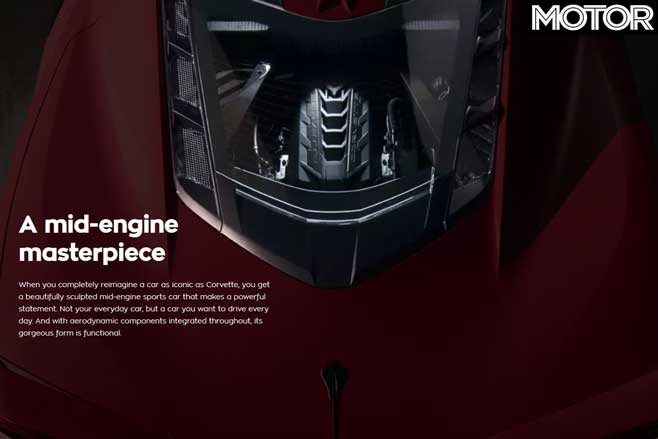
At the time the Corvette was revealed to the world, Holden confirmed its intention to import the model almost straight away with recently departed Holden boss Dave Buttner saying Holden is “totally revved up to build on Holden’s performance legacy with the most technologically advanced Corvette ever built.”
Holden has no indication of pricing (and MOTOR was told there was no plan to reveal pricing too soon upon the car’s reveal), but MOTOR has estimated a price near the AUD$175,000 mark.
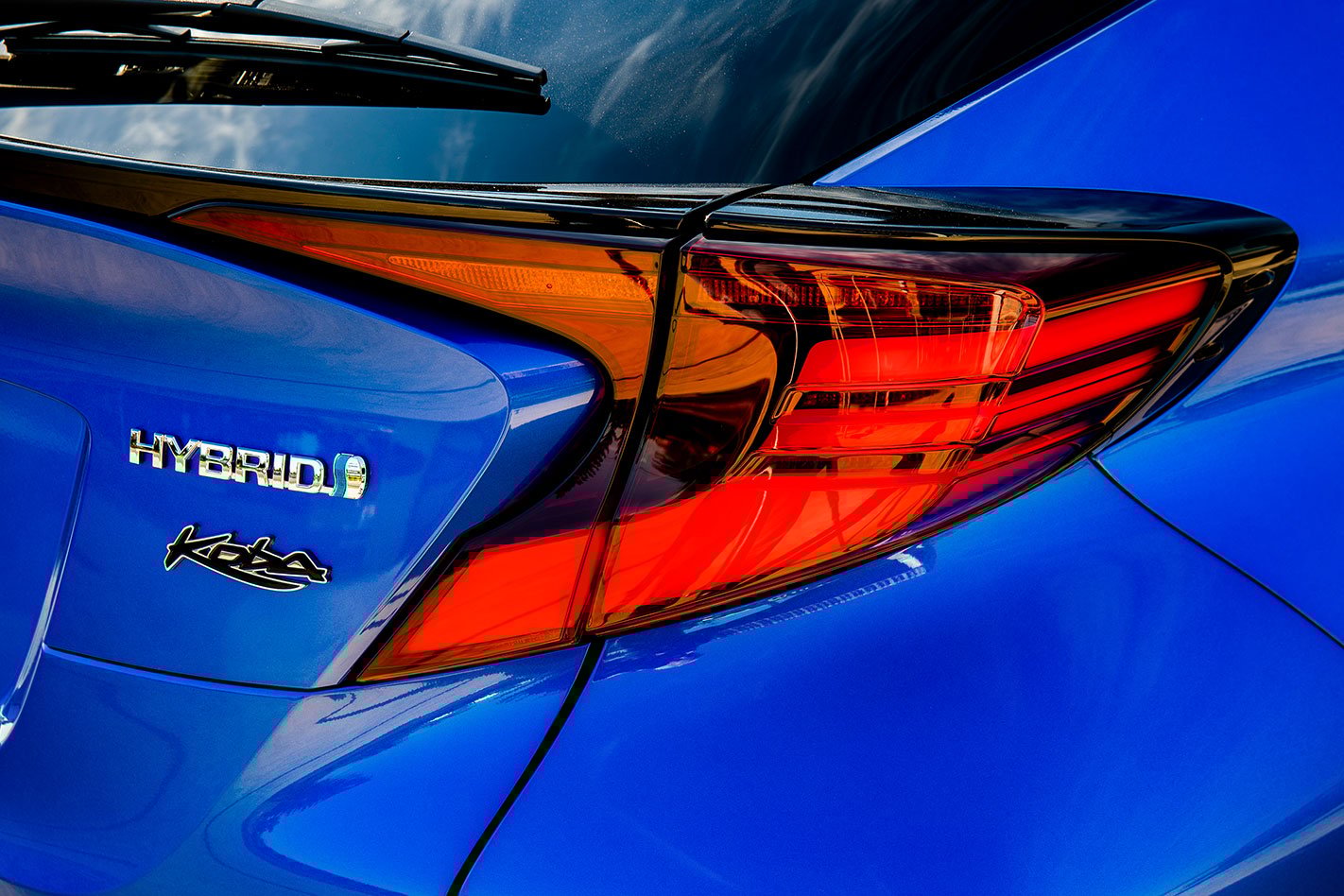
The Wheels Verdict: Despite more people opting for the higher-grade Koba, it’s a shame that the hybrid powertrain hasn’t filtered down to the lower C-HR ranks. Its lofty price tag puts it out of reach for some. Which is a shame, because those who can afford the $36,440 ask receive a thoroughly sorted compact SUV with the added benefit of increased performance and frugality. Gains in both of those categories are hard to come by.
WHAT IS IT?
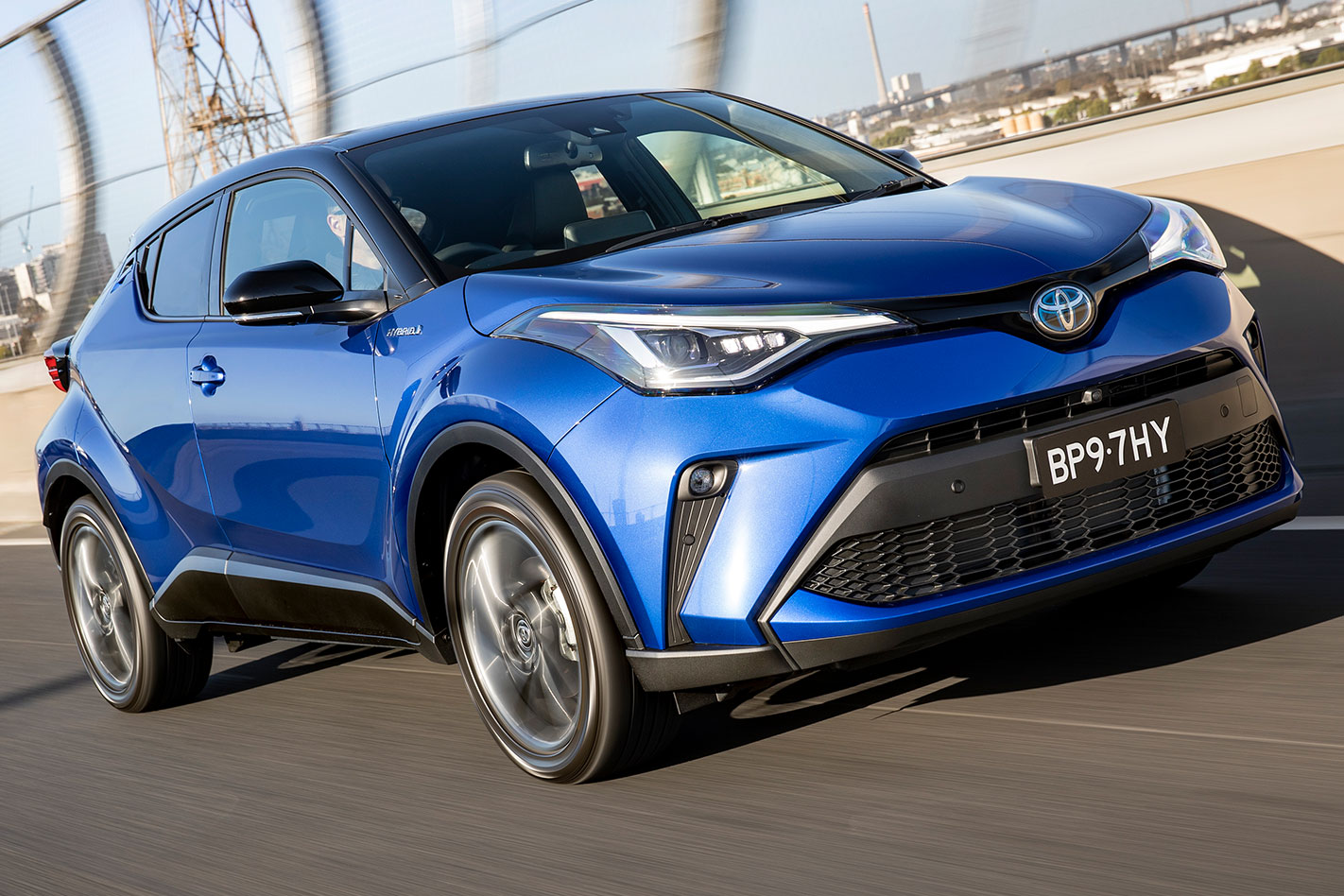
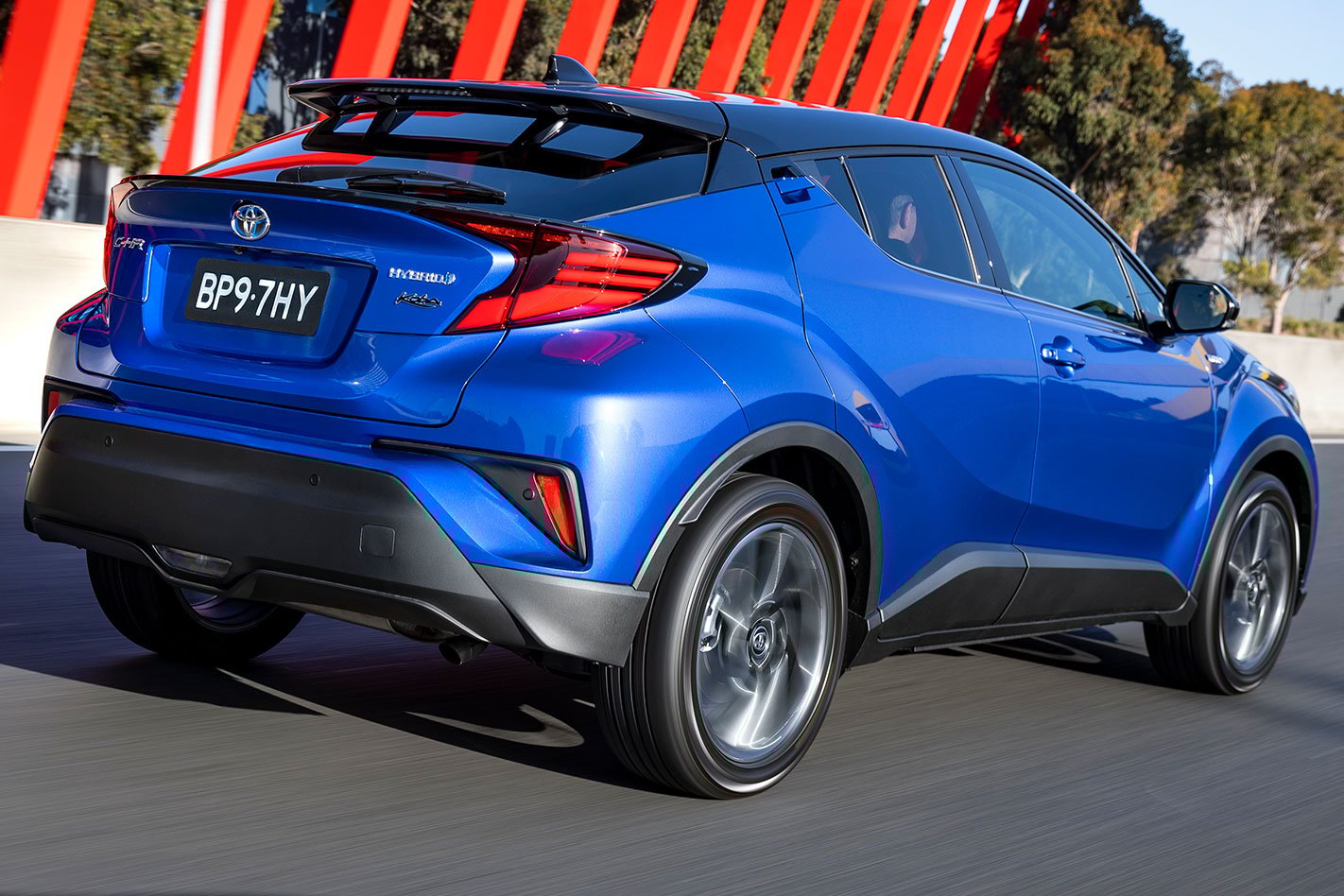
It’s the accomplished Toyota C-HR we know and love, just with a petrol-electric powertrain, tweaked styling and, at long last, Apple CarPlay and Android Auto.
WHY WE’RE TESTING IT
The C-HR has long been a favourite in the Wheels office. However, now that Toyota has fixed a major infotainment gripe and added its esteemed hybrid technology, we’re keen to find out if the top-spec petrol-electric C-HR is the package to buy.
2020 TOYOTA C-HR KOBA HYBRID REVIEW
It’s ironic that Toyota chose to launch the Corolla sedan and the refreshed C-HR at the same event. The former represents the Japanese marque’s traditional staple of unassuming competence, a formula the ubiquitous car maker has built its empire on, while the latter couldn’t break that mould more if it tried. Style driven, some might even say funky, and unashamedly aimed towards a younger, ‘hip’ audience… the C-HR is certainly a change of tack.
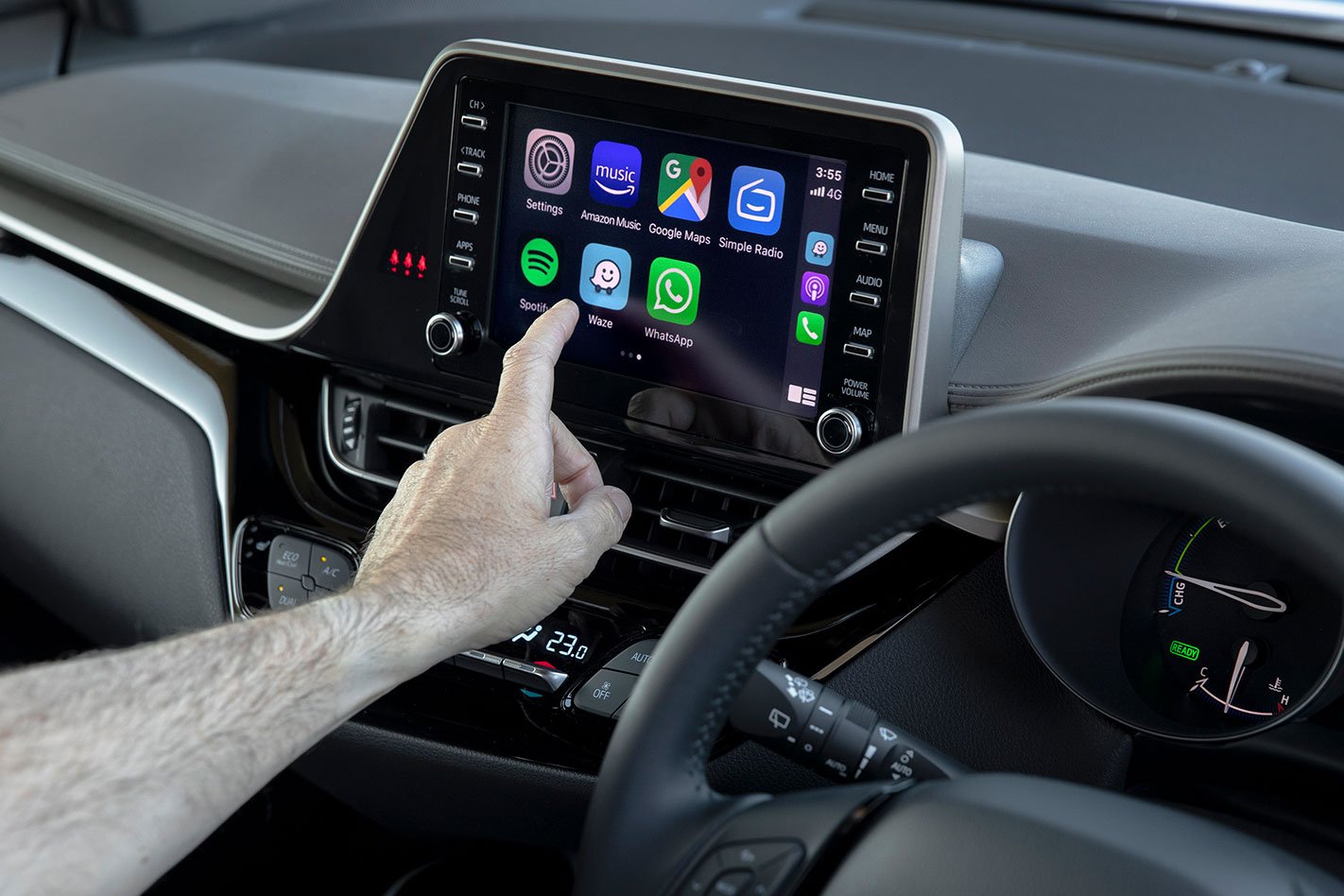
Now, after its 2017 release, the quirky Compact High Rider/Cross Hatch Run-about (or C-HR) has been given a refresh and a hybrid heart transplant, but only for the top-spec Koba. The exterior styling has received a nip and tuck, but apart from the petrol-electric addition, it’s the fitment of Apple CarPlay and Android Auto that will excite. Especially given it’s displayed on a high-set 8.0-inch colour touchscreen. Finally, Toyota is getting ‘down with the kids’.
A stumbling block could be price. Toyota is only offering the frugal powertrain in the Koba, which already has an asking price of $33,940. It costs a further $2500 to add a hybrid badge to the angular C-HR’s rump. With a sticker of $36,440, any Gen Y or millennial buyers will require somewhat deep pockets.
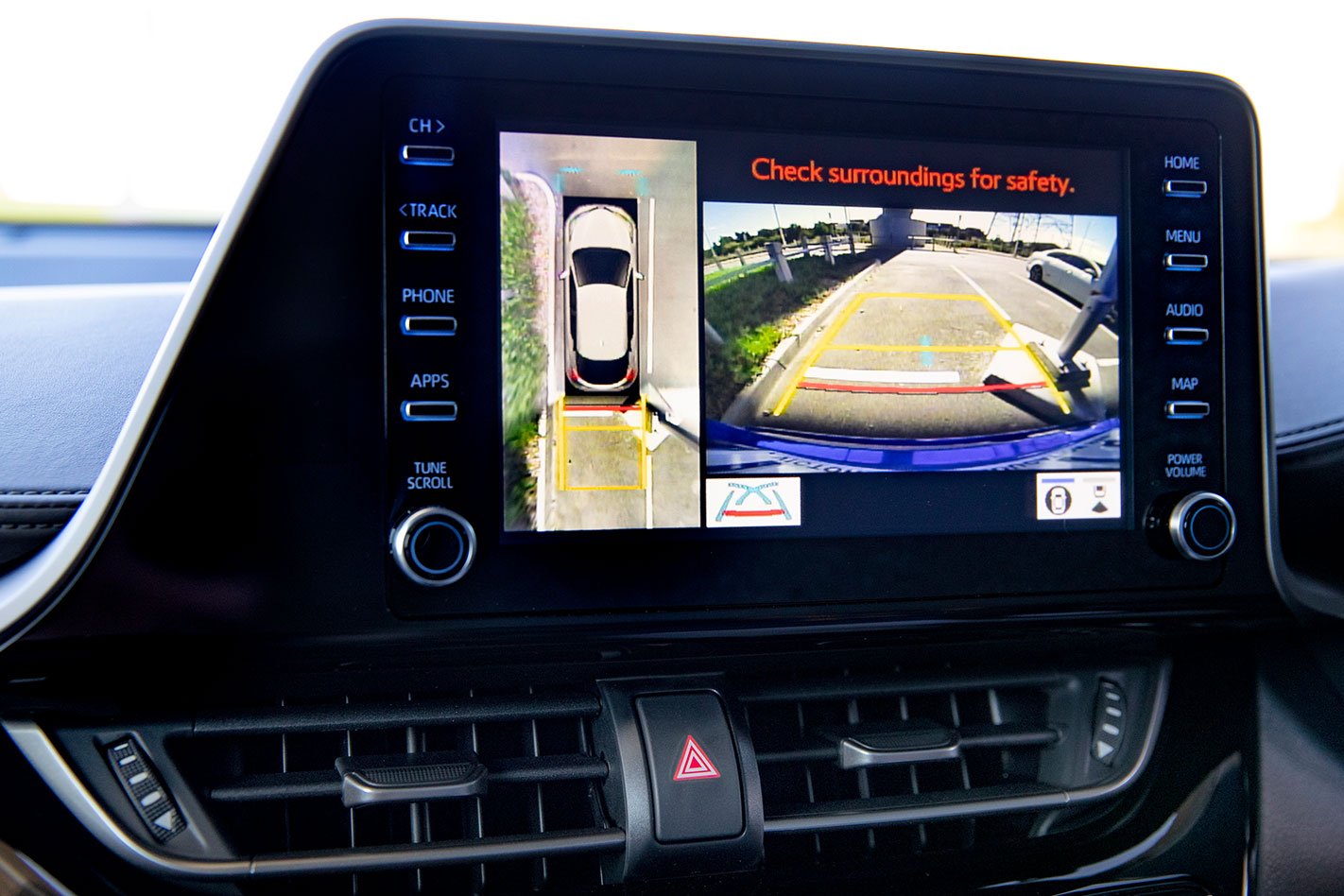
Standard safety is high, with the C-HR receiving AEB with pedestrian detection, active cruise control, lane-departure alert with steering assist, blindspot monitoring with rear cross-traffic alert, front and rear parking sensors, auto high-beam assist and ISOFIX points.
Inside, the Koba Hybrid looks and feels its price – which, refreshingly is something being said more often when referencing current Toyotas. The dash is covered in premium materials and there is a feeling of solidity from within. The steering wheel is a particular highlight in hand. The graphics are a little dated all round, but connect your smartphone and activate Apple CarPlay or Android Auto and the experience becomes more acceptable. The climate controls are easy to use and everything is logically laid out.
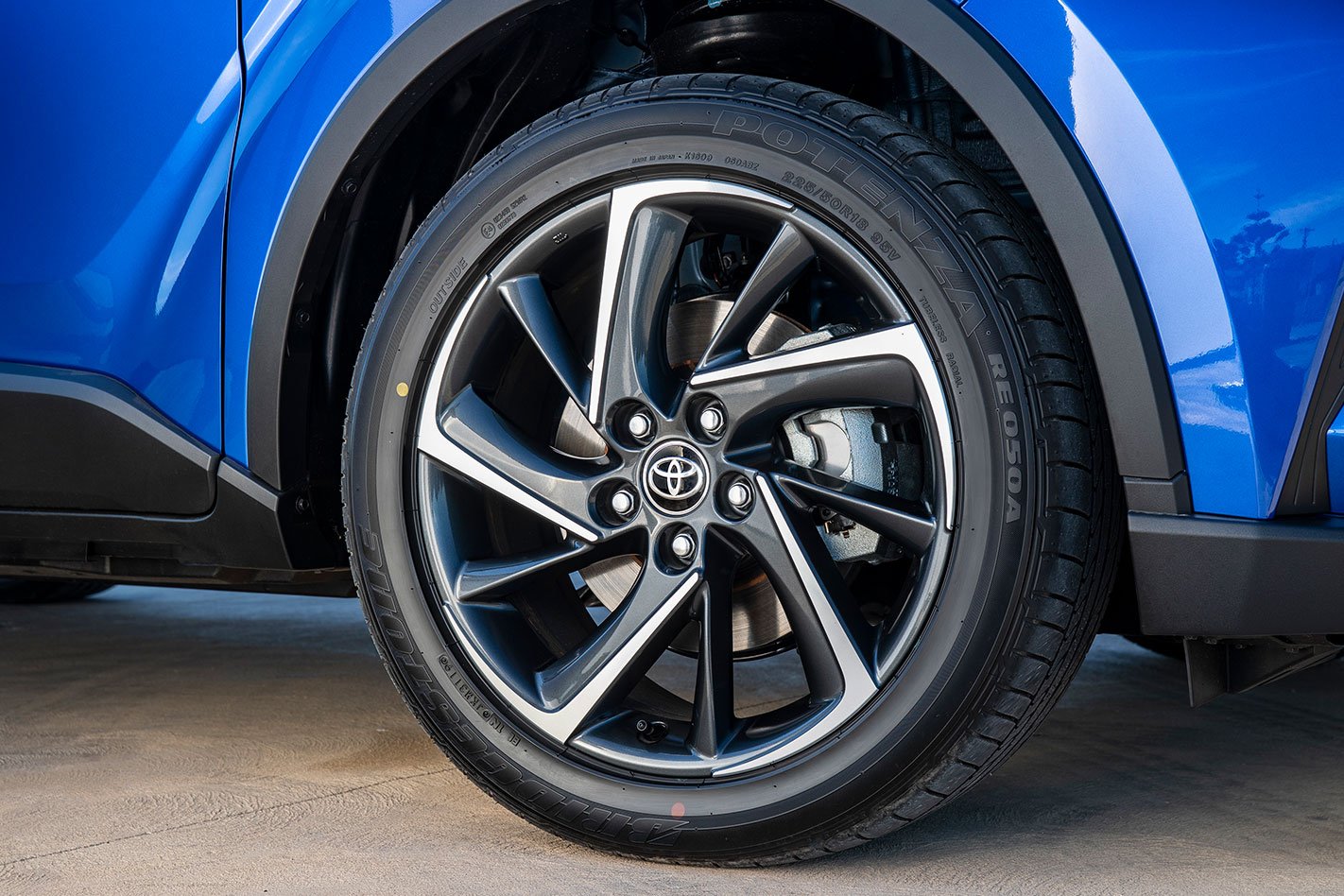
In terms of goodies, the C-HR gains dual-zone climate control, electronic park brake, auto wipers, satellite navigation, voice recognition and of course, smartphone mirroring. The Koba adds leather, heated seats (with power lumbar support for the driver) keyless entry and start as well as bigger 18-inch wheels.
Where the C-HR begins to falter is in terms of practicality. The rear seat is dark, with a high waistline resulting in small rear windows and limited outward vision – luckily the windows open all the way to the bottom and the door apertures are wide. Granted there is more head and legroom than expected, but something like Honda’s HR-V offers abundantly more of both. The boot is decent, although not class leading, at 318 litres, and there are no rear air vents.
Under the bonnet is the same 1.8-litre Atkinson cycle four-cylinder petrol engine, which is tied to an AC synchronous, permanent magnet electric motor. Combine the two and the hybrid powertrain produces 90kW and 142Nm. The performance feels slightly punchier than the conventional 1.2-litre turbo found in other variants, yet the combined fuel consumption drops to 4.3L/100km from the 6.4L/100km of the two-wheel-drive petrol.
On-road, the nickel-metal hydride battery pack is recharged on the fly with help from the relatively unobtrusive regenerative braking. Crawling through the city is where the Koba Hybrid achieves its best economy as it encourages the use of the electric motor for drive. At higher speeds, the petrol four-cylinder takes over and, paired to a stepped-ratio CVT, progress is swift enough for a 1420kg SUV.
The hybrid displays confidence-inspiring and engaging dynamics – it’s one of a few compact SUVs where you might want Google to find you the windy way home. The ride quality is firm but controlled, with all types of surfaces handled with aplomb. The steering has tangible weight and the feedback through the wheel is reassuring. The Koba Hybrid is two-wheel drive only, but with just 137mm of ground clearance, going off-road isn’t ideal. The only other blot in the copybook is road noise.
Ultimately, the hybrid makes an already accomplished package even better. Toyota says it’ll investigate the viability of bringing in lower-spec C-HR hybrids if there’s a demand – so start requesting one if that’s your ‘jam’. Either way, the update has addressed a key failing of Toyota’s smallest SUV while adding the benefits of its hybrid tech. That’s clever forward thinking.
PRICE AND SPECS
- Model: Toyota C-HR Koba Hybrid
- Engine: 1798cc 4cyl, dohc, 16v
- Electric motor: AC synchronous, permanent magnet
- Power: 90kW (combined)
- Torque: 142Nm (combined)
- Transmission: CVT
- Weight: 1420kg
- 0-100km/h: 10.5 seconds (estimated)
- Economy: 4.3L/100km
- Price: $36,440
- On sale: Now
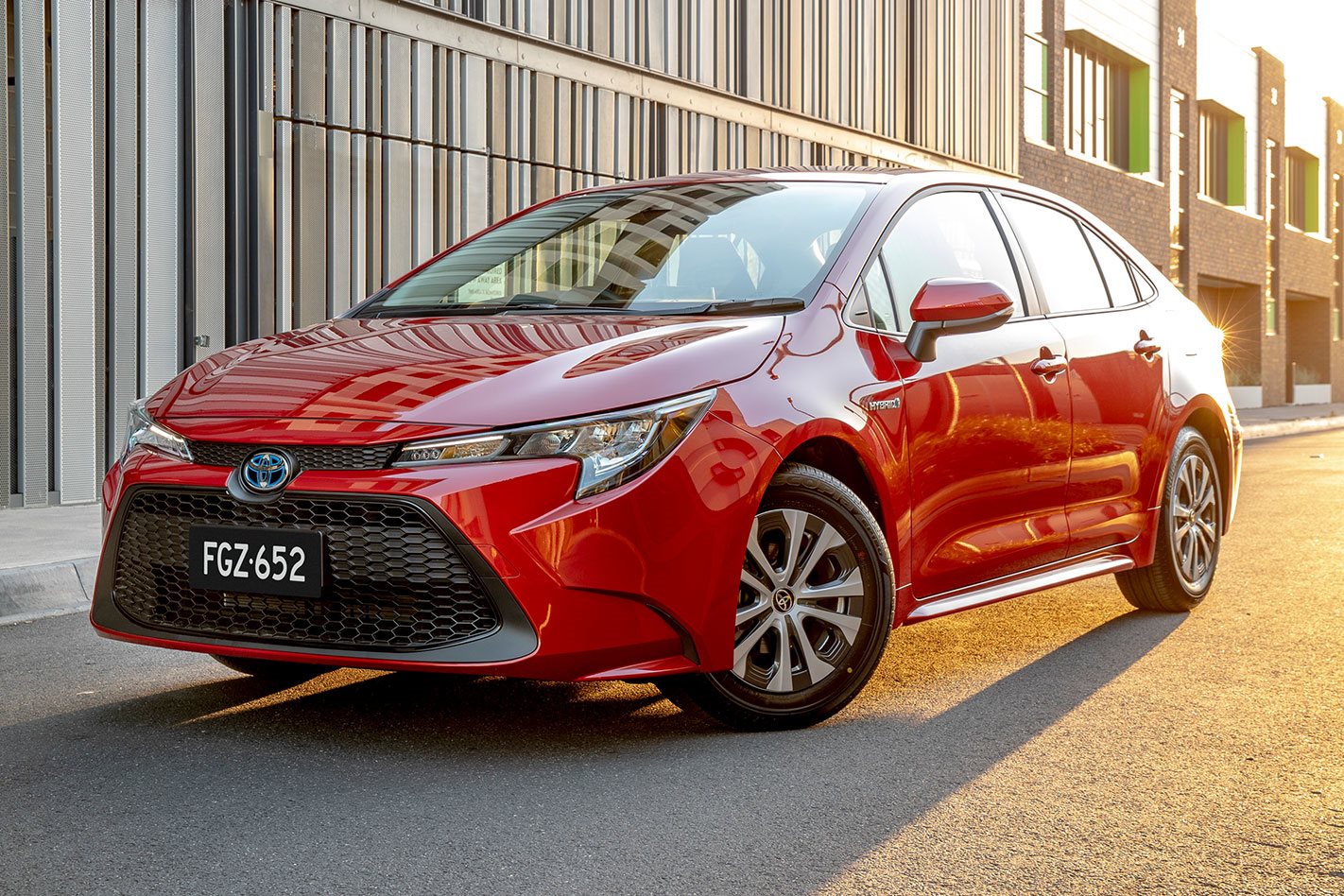
The Wheels Verdict: The Toyota Corolla sedan is one of those cars that simply does what it says on the packet. There is little room for surprises. You expect it to be a booted version of the acclaimed hatch with added four-door pragmatism, efficiency and dependability – and it is. The Corolla sedan ticks all the boxes buyers want accounted for on their checklist. Now there is added frugality thanks to the hybrid-electric gubbins.
RELATED READING
Looking for more details on the wider Corolla range? Our full range review has everything you need to know.
WHAT IS IT?
The Corolla Hybrid sedan is a frugal, practical and spacious solution for a wide range of buyers, from young families retirees alike. With ‘edgier’ styling and up-to-date infotainment, the four-door Corolla stays true to Toyota’s hallmark of ease of ownership. The updated 2.0-litre four-cylinder petrol (with an extra 22kW and 27Nm) is also offered within the range.
WHY WE’RE TESTING IT
The Toyota Corolla sedan, for the first time in its history, is now offered with a hybrid drivetrain. This petrol-electric technology is a proven winner in the hatch, as well as seven other Toyota nameplates, so we’re keen to find out if it’s the preferred powertrain for the overhauled Corolla sedan.
TOYOTA COROLLA HYBRID SEDAN 2020 REVIEW
Just about everyone has a Corolla story. If you haven’t owned or driven one to have your own tale, you’ll know someone who has. It’s a high probability given some 47 million units have been sold since its inception in 1966 – that’s one Corolla sold globally every 20 seconds.
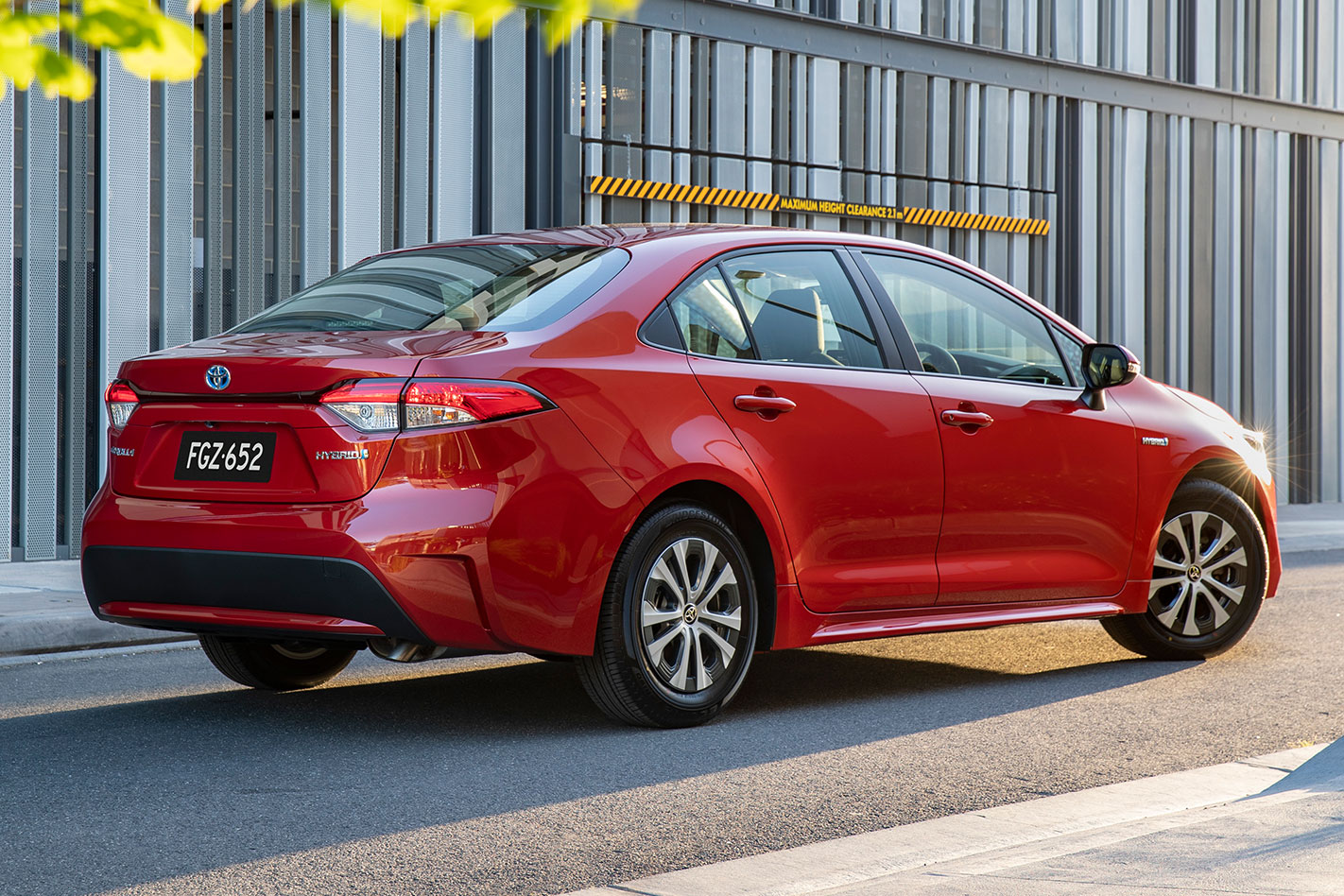
So well-honed is the Corolla formula that Toyota has rarely dared to be different. That changed in generation 12, as the hatch debuted with TNGA underpinnings, Lexus-esque design elements and a more tech-heavy cabin. Now the sedan gains the same treatment – and for once, the four-door variant doesn’t look like an afterthought. Plus, for the first time, the sedan version gains a hybrid powertrain.
That’s the headline news in terms of variants, with the petrol Ascent Sport manual kicking off the range at $23,335 and topping out at $33,635 for the ZR petrol. The hybrid is only offered in Ascent Sport and SX guises, with prices of $26,335 and $29,735 respectively.
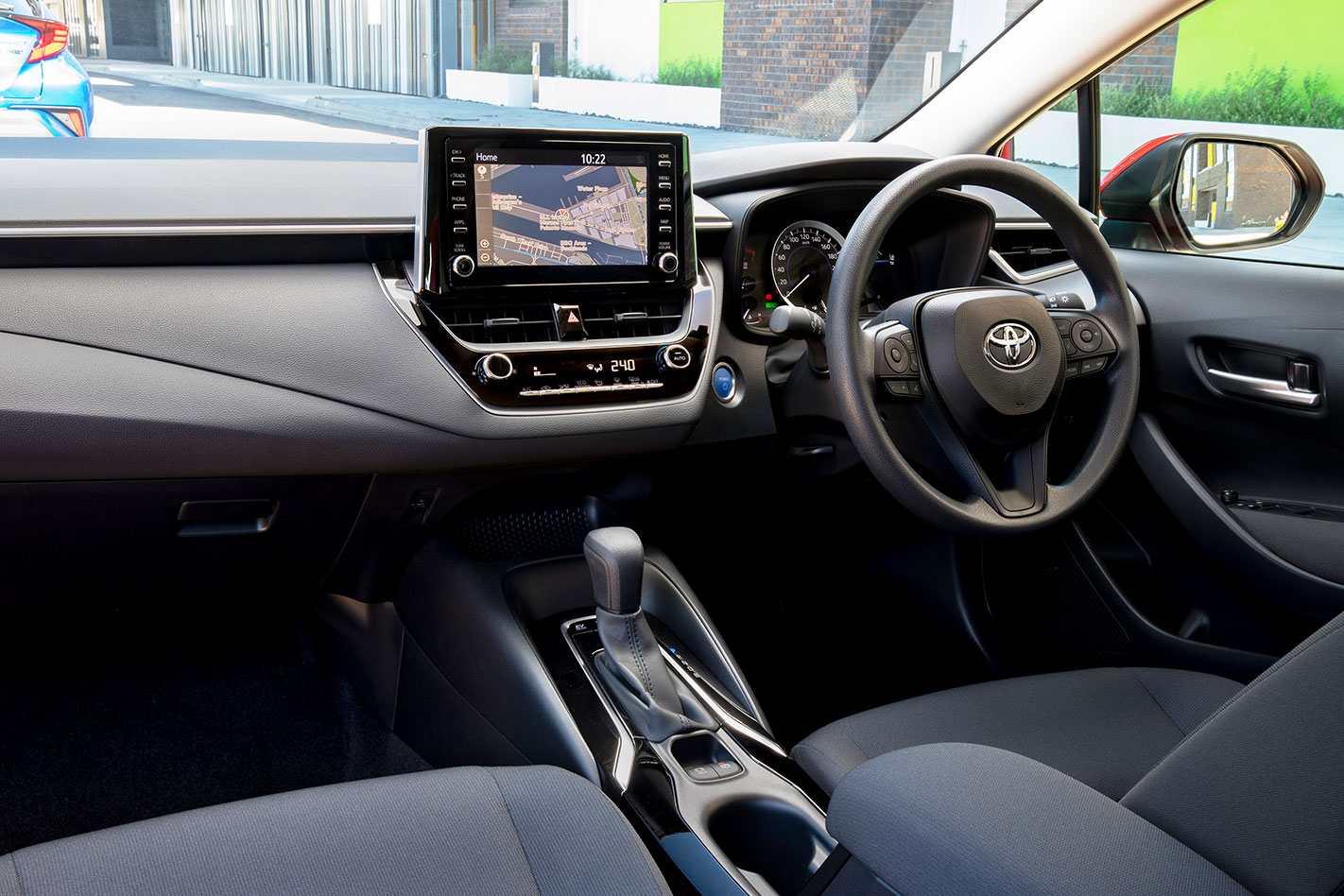
Even the Ascent Sport Hybrid gains Toyota Safety Sense, with features like AEB with day and night-time pedestrian detection, daytime cyclist detection, lane-departure warning with steering assist, road-sign assist and auto high beam. The entire Corolla range has a five-star ANCAP safety
Inside, the sedan follows the upmarket push found in the hatch. The dash is dominated by the 8.0-inch touchscreen display that, at long last, has support for Apple CarPlay and Android Auto. Using either of the screen-mirroring apps transforms the experience as without either, the graphics already look outdated. Still, even the Ascent Sport has a newfound premium feel and the multifunction steering wheel is an ergonomic triumph. Essentially, you shouldn’t get too confused in this cabin. The general design is interesting, while fit and finish is perceptibly good – although the base model has to do without a leather steering wheel.
Read next: Hybrid hype is paying dividends for Toyota
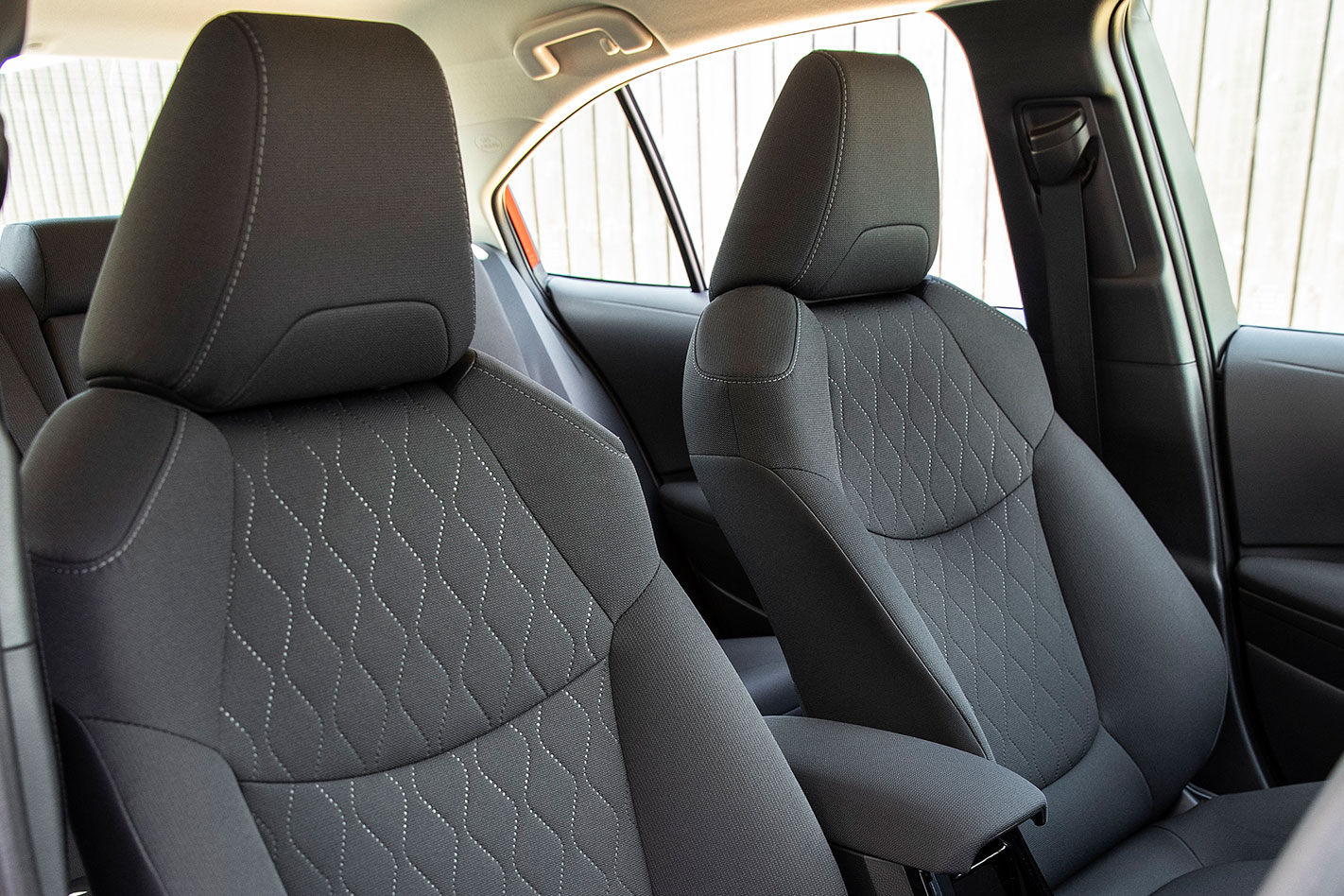
The cabin is relatively quiet, with road noise decently suppressed. However, it’s impressively spacious, with plenty of head and legroom in all pews for adults. Cargo capacity is H.U.G.E – in fact, its Camry-rivalling at 470 litres. That’s a massive jump of 253 litres on the Corolla hatch. Plus, you’re not disadvantaged by going hybrid, either, as both engine types gain the same litre count and 60/40-split rear seats. It makes stepping up to the Camry, which has only 25 litres more capacity, a much tougher decision.
Paired with the frugal drivetrain, one that can achieve a combined fuel consumption of 3.5L/100km, it makes a lot of sense. The total system output is a modest 90kW and 142Nm, however, it’s enough oomph to keep up with traffic within the CBD or on the highway. In the city is where the hybrid-electric drive does its best work. Below 60km/h and with a light throttle, you can sneak around without using the 1.8-litre naturally aspirated motor. And it’s not a plug-in, meaning the self-charging system doesn’t need to be plugged in to charge. The e-CVT ties in well and only pitches revs high for prolonged periods of wide-open throttle. The regenerative braking isn’t overly intrusive, either.
According to Toyota, the TNGA platform has increased body rigidity by 60 percent, while also increasing comfort at the same time. It uses a more sophisticated multi-link rear-end (as opposed to torsion beam) and utilises MacPherson struts up front. In reality the sedan largely contains its movements (although there is a bit of rebound over smooth undulations) and offers a plush ride quality. The steering is well judged, but the Bridgestone Ecopia EP150 rubber is clearly more focused on rolling resistance over outright grip. Still, there’s more fun to be had here than the Corolla generally gains credit for.
The real hidden gem that no-one will buy is the entry-level six-speed-manual found in the Ascent Sport. It’s paired with the 125kW/200Nm four-cylinder petrol and, wait for it, has rev matching – yes, in a Corolla. While the CVT-equipped versions are fit for purpose, the three-pedal sedan is full of verve and character. When shifting down gears, the system intuitively blips the throttle to increase revs to make down changes a lot smoother.
Age hasn’t wearied the Corolla sedan. In fact, with the latest design language it’s looking younger than ever, opening up sales to a younger demographic. With the addition of hybrid propulsion and efficiency, an old favourite has just got even better.
RIVALS
PRICING AND SPECS
- Model: Toyota Corolla Ascent Sport Hybrid sedan
- Engine: 1798cc 4cyl, dohc, 16v
- Electric motor: AC synchronous, permanent magnet
- Max power: 90kW (combined)
- Max torque: 142Nm @ 3600rpm
- Transmission: CVT
- Weight: 1385kg
- 0-100km/h: 10.5sec
- Economy: 3.5L/100km
- Price: $26,335
- On sale: Now
RELATED READING
Looking for more details on the wider Corolla range? Our full range review has everything you need to know.
- Buick drops staple sedan and wagon after 50 years
- GM continues to push EV development strategy
- Holden says ‘business as usual’ for Commodore despite slow sales
Both cars are based on the Insignia, which was originally sourced from GM’s European division, Opel.
Opel was sold to the PSA Group – owners of Peugeot and Citroen – in 2017, which means the Insignia, Regal and Commodore are technically built by PSA before being sold onto GM to push out to Buick and Holden respectively.
The Regal was deleted from Buick’s range despite a pedigree of more than 50 years as the company’s staple sedan after sales of the three-model range slumped nearly 20 percent in the last 12 months, in the face of the SUV sales tsunami.
Where does this leave the 42-year-old Holden Commodore? A Holden spokesperson said simply that the company is still selling Commodores, but it’s been well documented that GM is looking to save costs across its entire operation in order to fund its all-out push towards electrification.
“Buick has confirmed that the Regal [above] will no longer be offered in the US and Canada,” said the spokesperson, “but it will continue to be sold in volume by GM in China. Buick’s changes to their model line-up aren’t directly relevant to Holden.
“We are in the process of introducing the MY20 and we are still selling Commodores.”
The Chinese-market Regal is made in Shanghai, and not currently exported to any other country.
The continued popularity of SUVs and crossovers has also been a death knell for sedans and station wagons across the globe, while the fact that the Insignia/Regal/Commodore is built outside the US in a plant no longer owned by GM will definitely be a factor.
If the Russelsheim plant has fewer orders to fill, for example, then the unit cost for each car is likely to increase. As well, PSA – which turned the Opel operation into a profit-making operation in just 12 months after decades of losses under GM – is looking to streamline product lines.
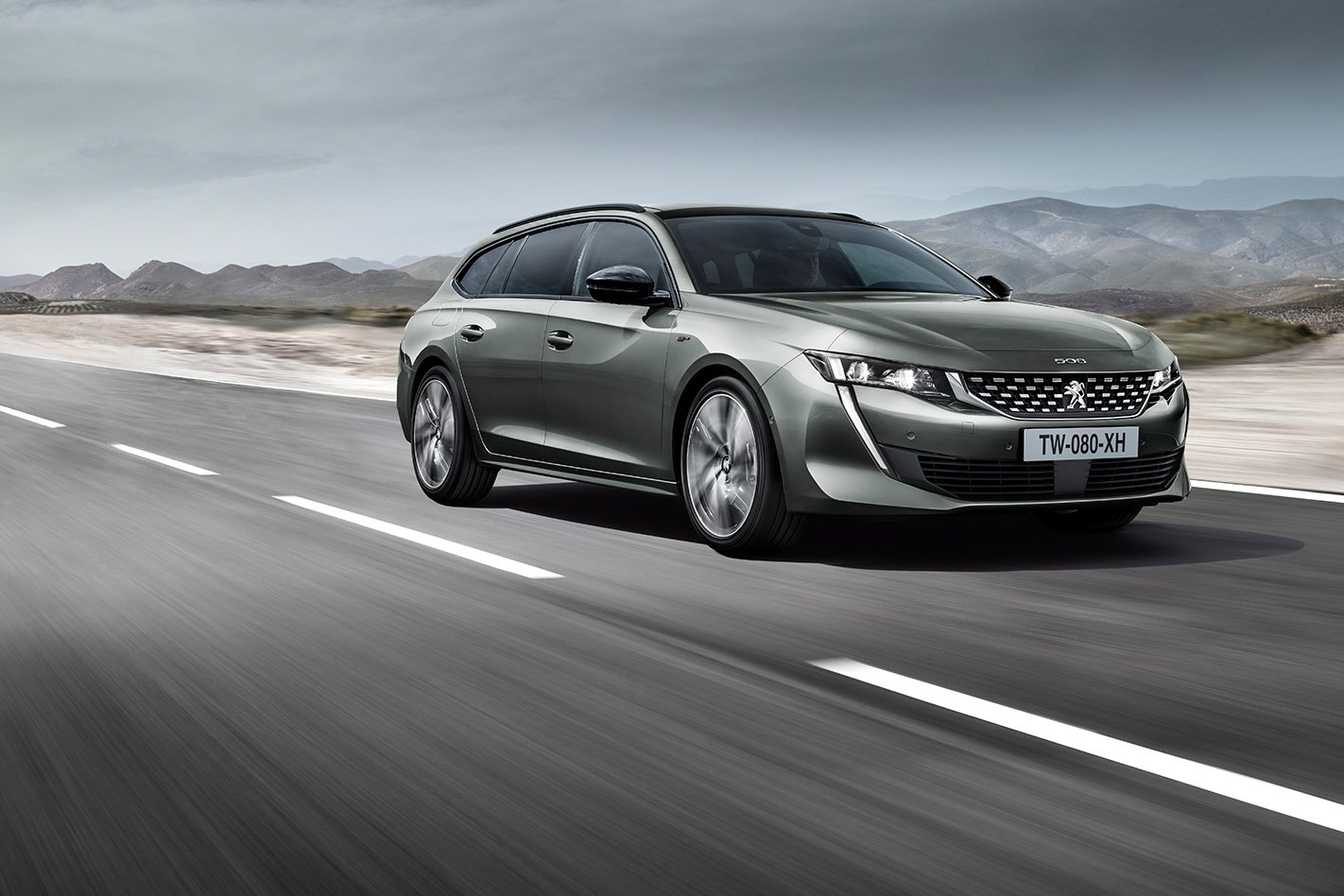
It could also easily produce a large sedan or wagon on the same platform as, for example, the Peugeot 508 (below) if demand is there.
Similarly, GM is planning to move all of its cars to just four vehicle platforms by the middle of the next decade – and the plan doesn’t include the current Insignia platform. And given GM’s electrification plans, it’s unlikely to divert precious development funds to underpin a new large car program if sales aren’t there to support it.
Locally, Holden is expected to streamline its slow-selling Commodore line-up, with the diesel-powered cars likely to be culled from the nine-strong range.
Sales of the once-dominant model have slumped more than 37 percent this year compared with the same point in 2018, while Holden’s total sales in November across all of its models (2668 cars) was beaten by sales of just the Toyota HiLux (3687).
It’s been 50 years since the Datsun 240Z was unveiled at the New York Motor Show and quickly became a fixture of grassroots motorsport, and to celebrate that anniversary the Nissan Z Car Club of Queensland decided to hold a little party of its own at Australia’s greatest street circuit.
And by ‘little’, we actually mean gargantuan. The club organised its own special grouping for the Challenge Bathurst Regularity, appropriately dubbed ‘Group Z’, and stuffed it full of 50 Z Cars. The evergreen 240Z and its physically similar successor the 260Z dominated the entry sheet, but one of every generation of Z – from the Datsun 240Z to the present-day Nissan 370Z – was on the grid.
Nissan Australia invited yours truly, WhichCar’s resident Z nerd, to be one of those entrants, and the opportunity to include my own personal car, a 1990 Nissan 300ZX, included in that Z Car family reunion was indeed something special. Not only that, but going wheel-to-wheel with them at full speed around the incredible Mount Panorama circuit was a true privilege.
Video of the event is on the way, but for now, flick through our gallery above to see what it’s like to be on the circuit and wander through the infield at Mount Panorama during the Z Car’s half-century celebration.
