
It’s been 50 years since the 1969 Chrysler Valiant Pacer made its way onto the streets of Australia, so the brand’s Aussie arm has revealed a build to celebrate the anniversary.
The Chrysler 300 SRT Pacer tribute car is not only wrapped in a revival of the original ‘Wild Yellow’ paint colour which the original car was known for (red and blue were also options), but the 300 features some design cues borrowed from the ’69 Pacer.
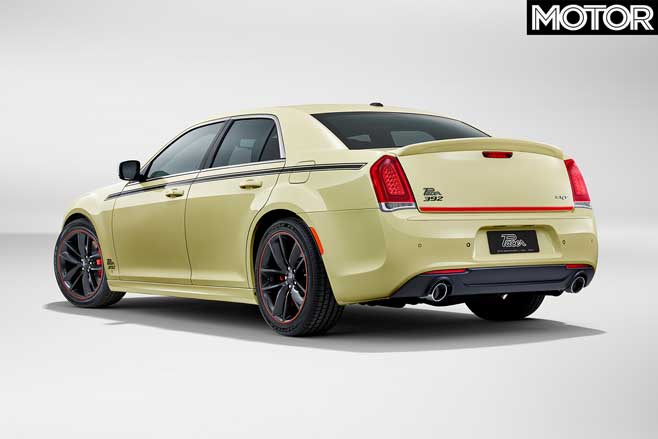
Instead of the ‘Pacer 225’ decals which signified the Valiant’s 225ci slant-six (a 3.7-litre straight-six leaning to the side and making 130kW), the 300 SRT features ‘Pacer 392’ decals on front quarter panels and rear boot lid to represent the 6.4-litre Hemi V8 pumping out 350kW under its bonnet.
Black side stripes and red accents on both front splitter and boot lid also replicate design elements from the original pacer, which features a red stripe through its grille. The 300’s black 20-inch alloys also have a red stripe around the edge mimicking the Pacer’s wheels.
The 1969 Pacer was built in Chrysler’s Adelaide factory exclusively for the Australian market, making it one of the icons of the era still remembered (and sometimes owned) by enthusiasts today.
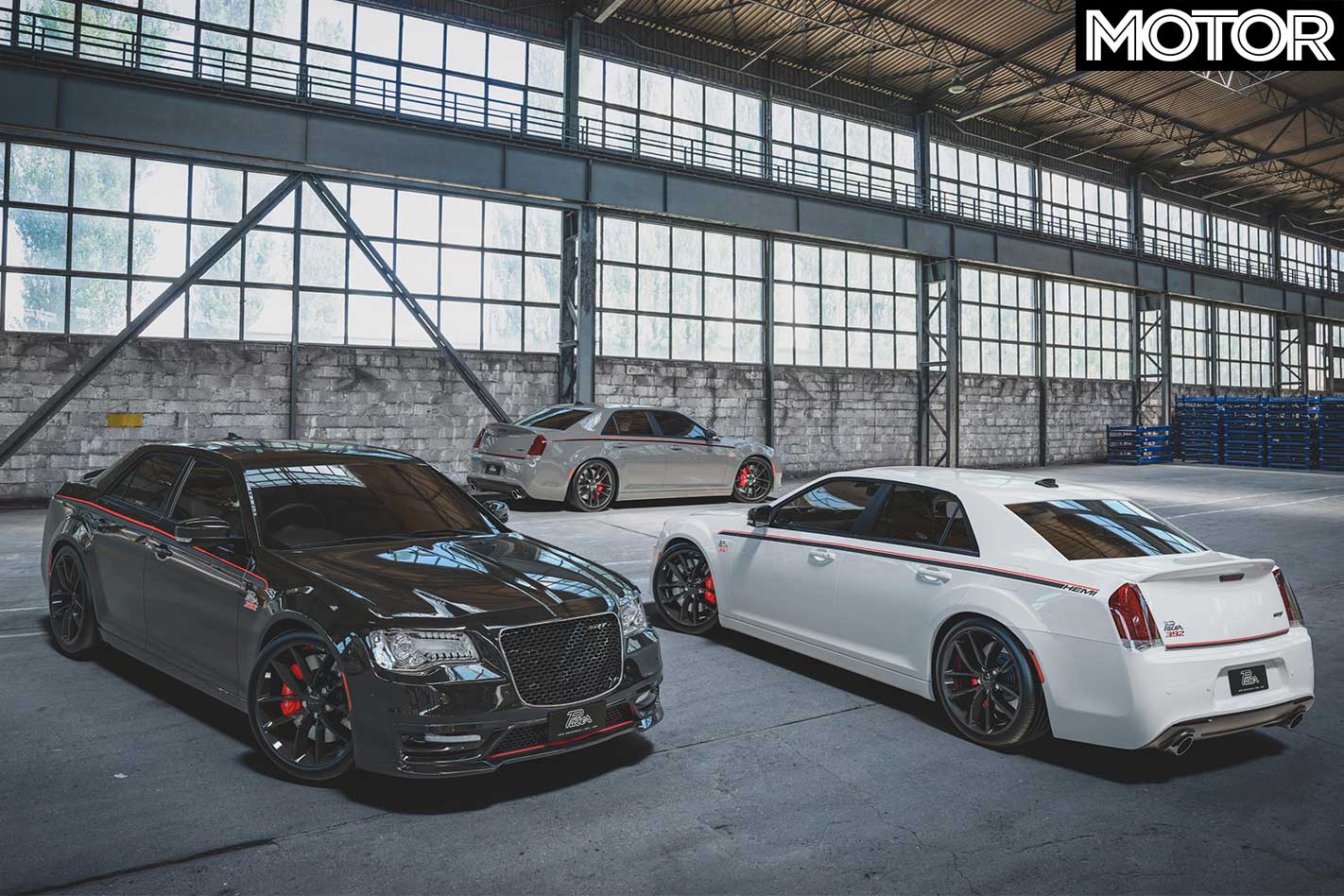
If the 300 SRT Pacer tribute seems like the kind of mix between new and old you’d like to own, there’s good news. Chrysler Australia has announced that it will produce 50 examples of the 300 SRT Pacer priced at $69,950, an extra $4000 compared to the Core on which it based and $5000 less than the fully-loaded SRT.
Each example will include ‘Pacer 392’ exterior badging, black and ride side stripes, front and rear decals, special edition interior badging and a individually number build plate. Three colours are available: Bright White, Gloss Black and Ceramic Grey, the super cool pale yellow sadly limited to the concept.
- Trafic finally receives an automatic option
- Auto comes with a more powerful diesel turbo
- Revised range comes with three newly named spec-levels
- Five-year warranty
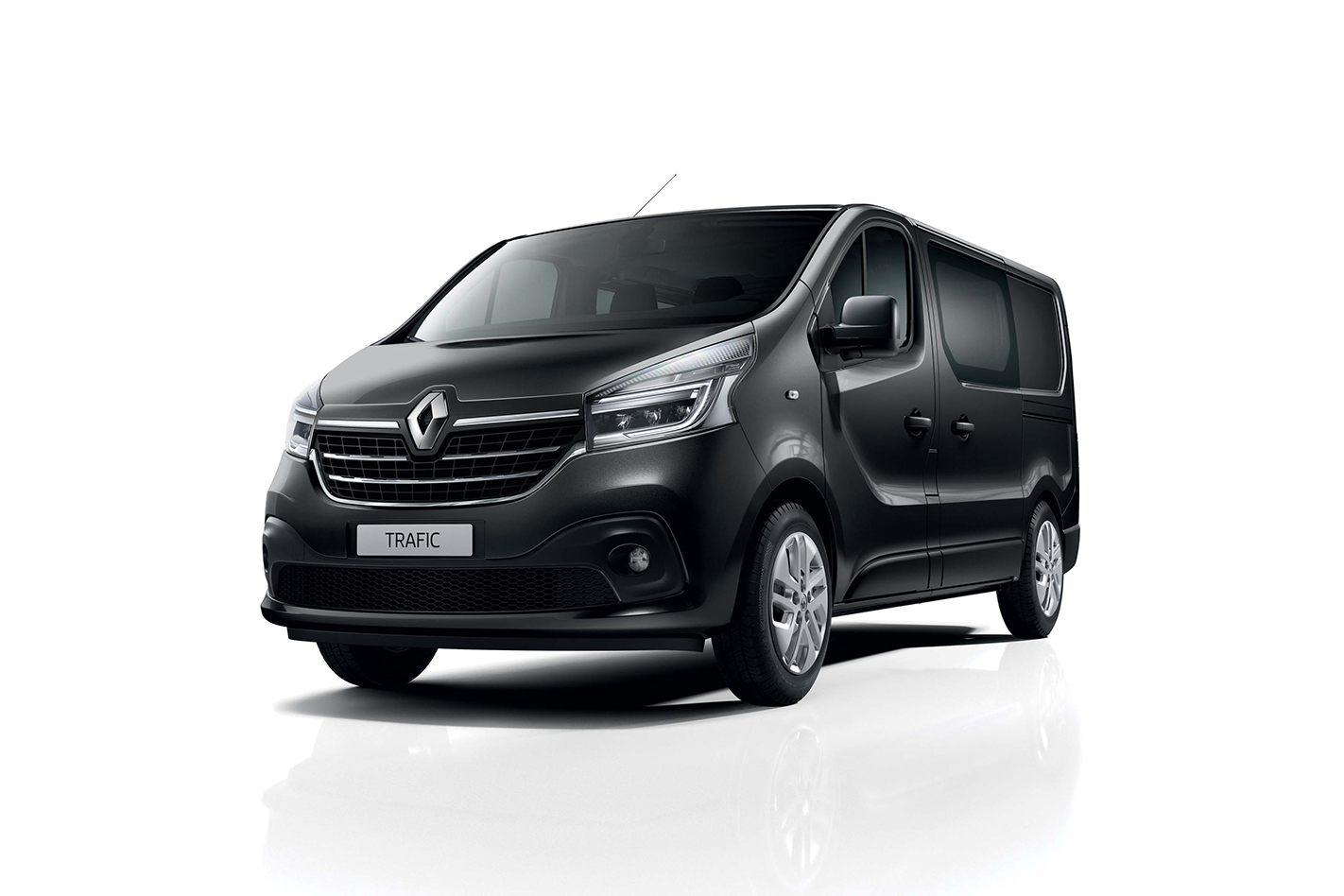
The belated addition of the six-speed ‘Efficient Dual Clutch’ (EDC) auto will help Renault meet demand for a convenient self-shifter from businesses, government, authorities, and rental fleets currently met by the likes of the Toyota Hiace and Hyundai iLoad.
Adding to its attraction is the fact that it’s coupled with a new Euro 6 compliant 2.0-litre four-cylinder turbo-diesel engine capable of producing 125kW at 3500rpm and hefty 380Nm of torque at just 1500rpm.
The new powertrain has an official combined consumption of 7.3-litres/100km, that’s marginally more than the lesser powered 103kW/340Nm twin-turbo diesel’s 6.6L/100km rating. However, the auto-gearbox results in lower payload and braked towing capacity: The 125kW automatic long-wheelbase version can carry 1250kg and tow up to 1630kg, with the 103kW six-speed manual long-wheelbase able to carry and tow 1274kg and 2000kg respectively.
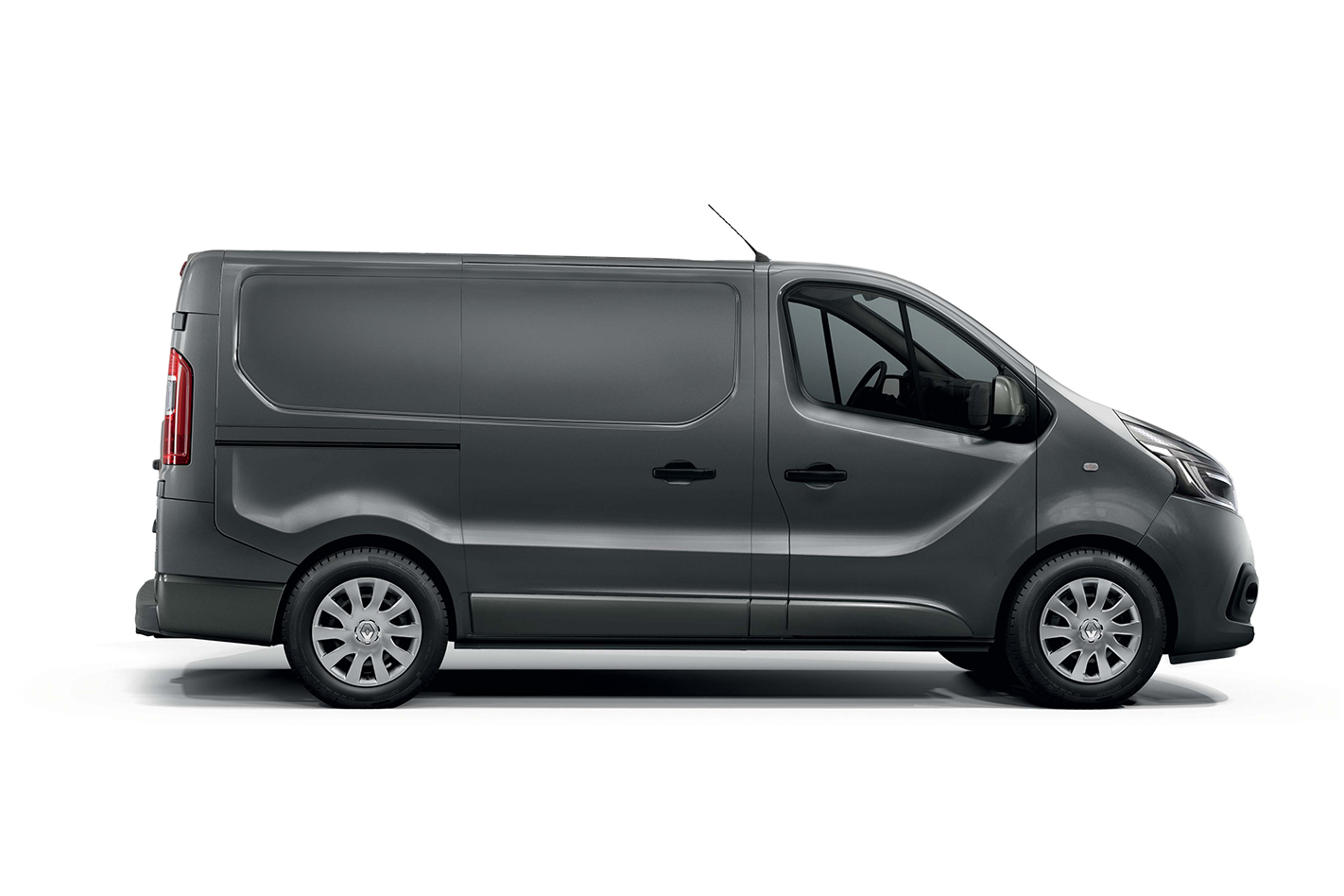
The auto is available in the mid-range Premium, and range-topping Crew Lifestyle specs, with the Premium version costing $4000 more than its lesser-powered twin-turbo diesel manual counterpart.
Automatic Traffic versions also feature brighter LED lighting in the cargo area, and keyless-entry with secure single-door opening.
They also comes with a slight facelift that has also been applied to the manual versions.
The 2020 Renault Trafic range starts with Trafic Pro, available in both SWB and LWB, powered by the 85kW/ 300Nm turbo-diesel engine and 6-speed manual transmission.
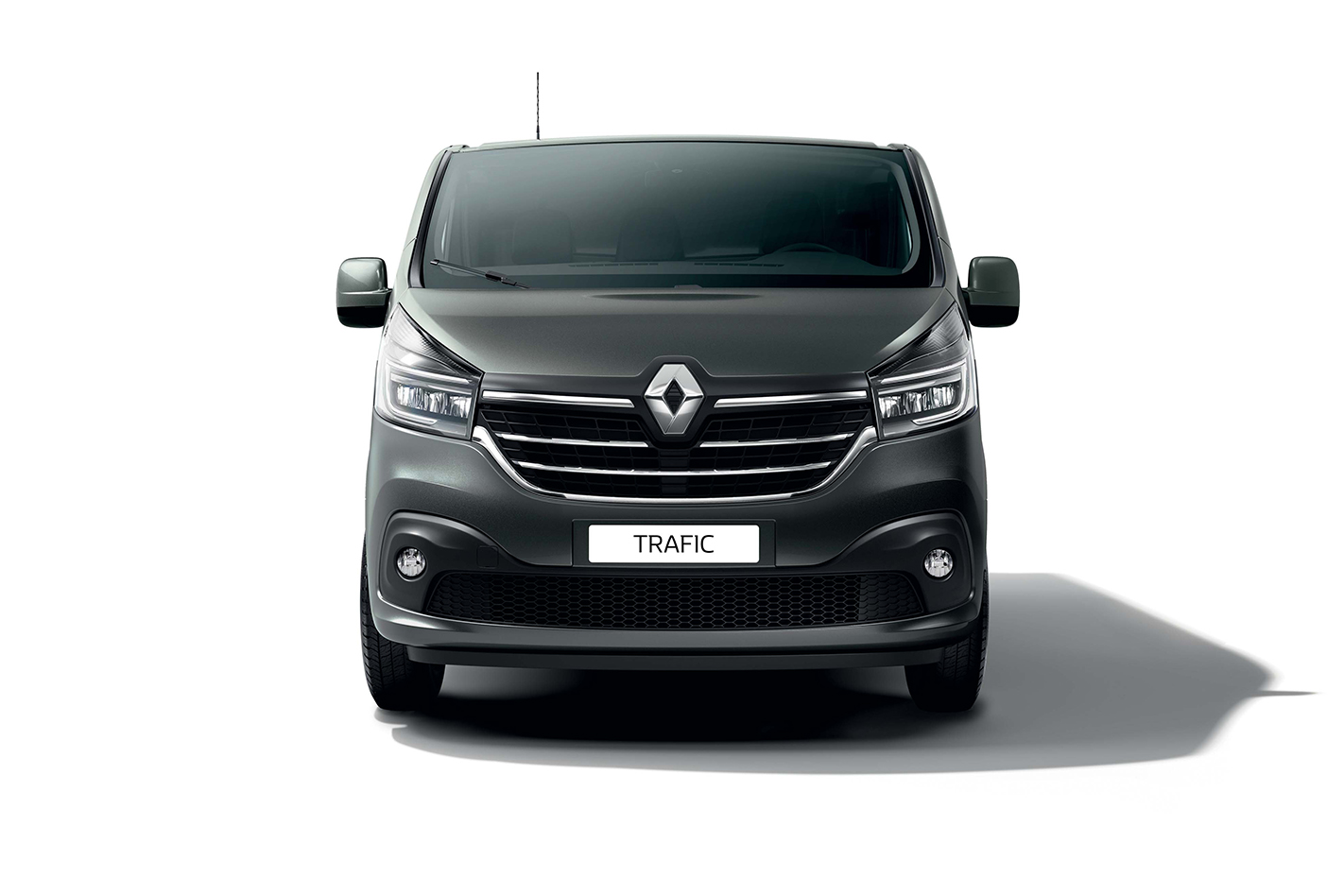
Standard equipment includes a reversing camera, dusk-sensing headlights, rain-sensing windscreen wipers, leather-wrapped steering wheel, front fog-lamps and under-bench seat storage.
CHOICES: Should I buy a ute or van for my business?
The new mid-spec Trafic Premium model is also available in both SWB and LWB with a choice of either the twin-turbo 103kW, 340Nm twin turbo diesel engine (as a manual transmission) or with the new 2.0-litre 125kW 380Nm turbo-diesel auto.
Each brings additional features over the Trafic Pro including a workstation bench, bulkhead with load-through flap, 7.0-inch touchscreen with inbuilt sat-nav and Android Auto/Apple CarPlay, barn doors, an additional sliding door on the driver’s side, engine stop/start system, mobile phone cradle and security deadlocking.
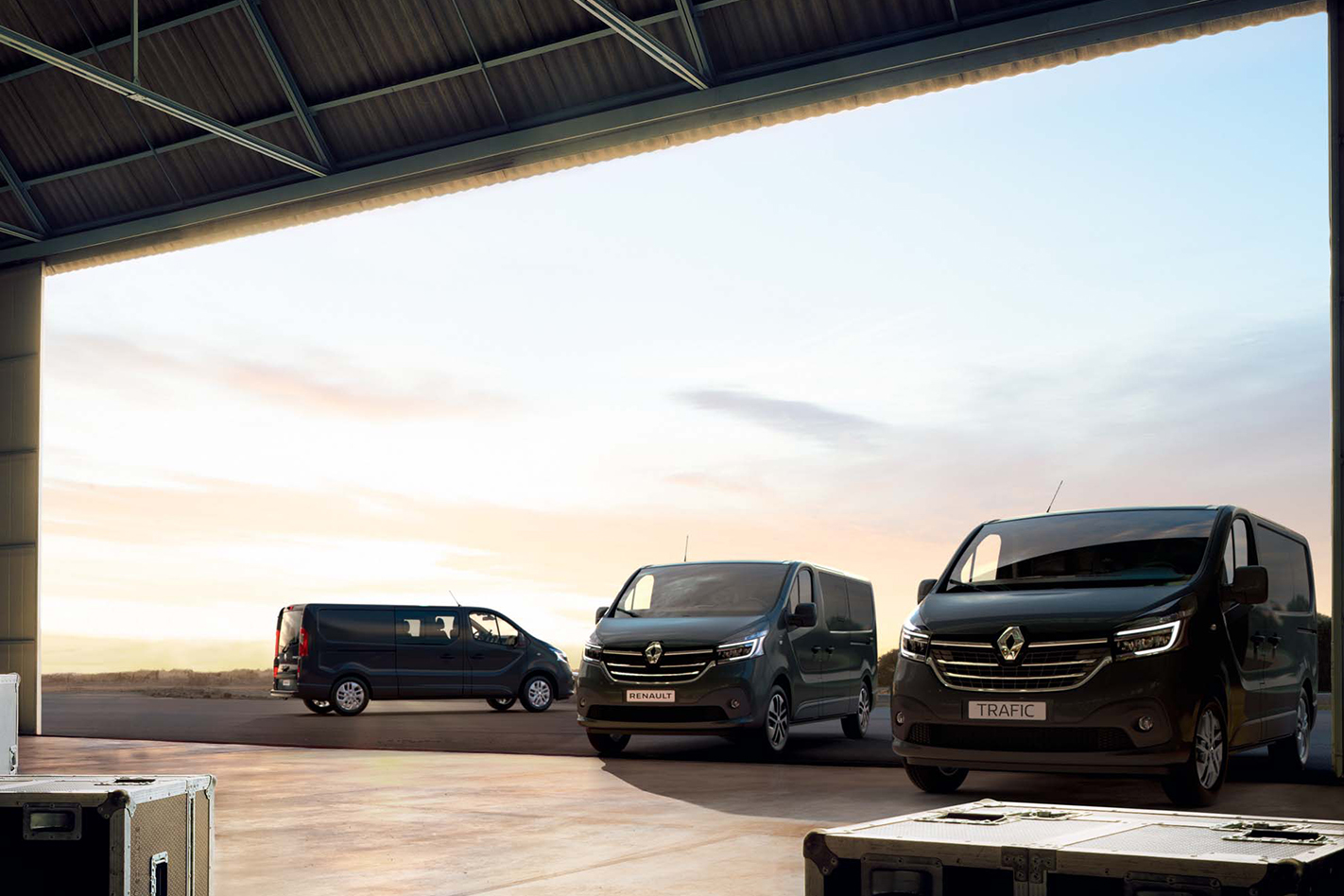
The range-topping Trafic Crew Lifestyle adds body painted bumpers, side door protection, chrome grille, climate control air conditioning, 17-inch Cyclade alloy wheels, heated driver’s seat, Renault Smart key card with keyless entry and engine start, and rear privacy glass.
Each Renault Trafic version is covered by a five-year/200,000km warranty. Servicing intervals remain at up to 30,000km or annually (whichever comes first) with capped price servicing offered from $549 for each of the first three scheduled visits to an approved dealership.
The 2020 Renault Trafic range will go on sale in December, 2019.
2020 Renault Trafic retail pricing
- Trafic SWB Pro 85kW manual – $36,490
- Trafic LWB Pro 85kW manual – $38,490
- Trafic SWB Premium 103kW manual – $39,490
- Trafic LWB Premium 103kW MT Diesel – $41,490
- Trafic SWB Premium 125kW auto – $43,490
- Trafic LWB Premium 125kW auto – $45,490
- Trafic LWB Crew Lifestyle – auto $52,490
Would the new automatic powertrain make you consider the Renault Trafic over rivals such as the Toyota Hiace, Hyundai iLoad and Peugeot Expert?
Ken Block has more guts than most of us, and his latest video proves it.
Climbkhana Two is the second spinoff from Block’s Gymkhana series, with the first Climbkhana having taken place at Pikes Peak. This time, China’s Tianmen Mountain is the destination, with its 99 turns comprising one of the most stunning and dangerous roads in the world.
“These short concrete blocks are pretty much the only thing between myself and a very, very bad time going off the side of Tianmen Mountain road,” Block points out.
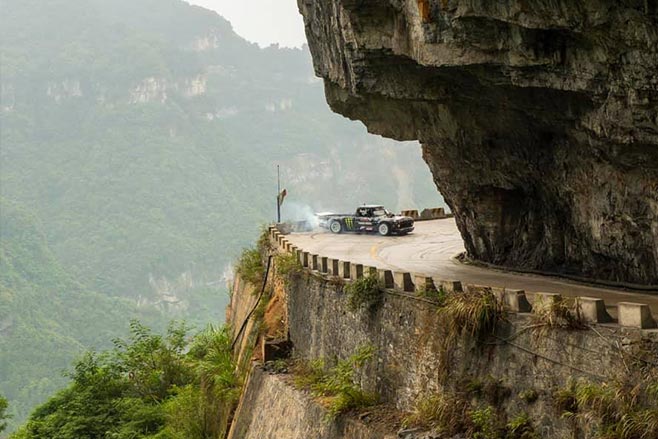
“It may not look as dangerous as Evo corner at Pikes Peak, but – at least that drop had some angle to it. Most of the roads driven in Climbkhana Two had nothing but a sheer drop. Sketchy!!”
Tianmen Mountain has recently had another moment in the spotlight, when Jaguar Land Rover sent a Range Rover Sport SVR up the road in less than 10 minutes.
Ken Block’s Gymkhana cars, ranked
Block says that’s not what inspired the trip, however. It was a section of road (below) he saw in a photo years ago.
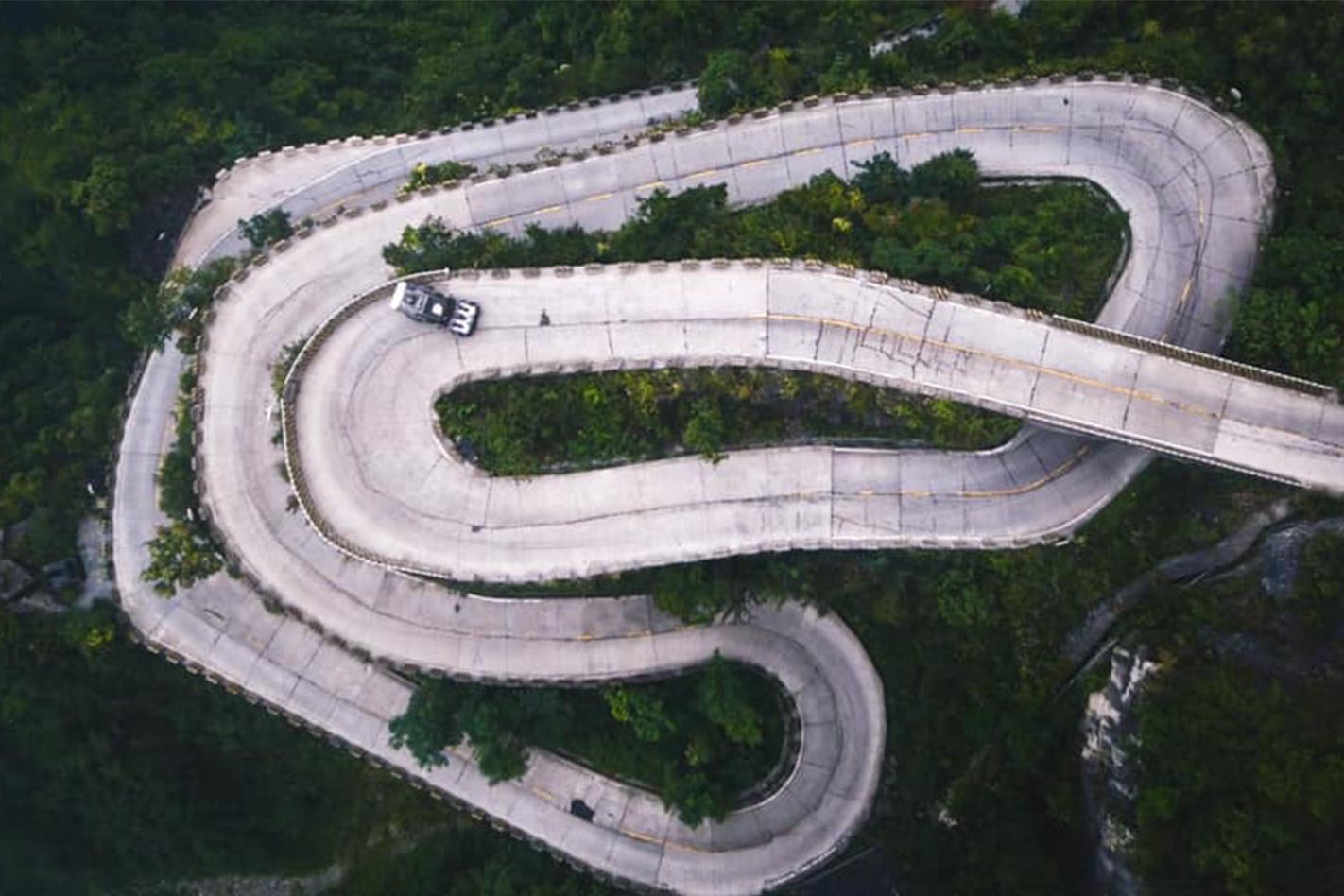
“One of my favorite views and pieces of road from Climbkhana Two.
The story behind Ken Block’s terrifying Escort Cosworth fire
“This is the section that made me want to film a video here when I first saw a photo of it years ago!”
Of course, Block’s Hoonitruck is the weapon of choice, a ’77 Ford F-150 with no tray at the rear, and a 3.5-litre twin-turbo V6 from the Ford GT racer up front.
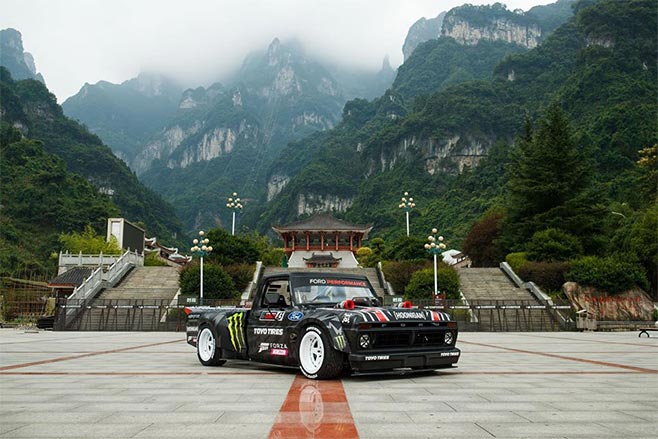
We don’t need to add much more, given the video somewhat speaks for itself. Enjoy!
THE GERMANS might not win at everything – they suck at cricket for a start – but they can claim to own the luxury-car market. Smaller, super-premium players from England and Italy swan in the background, but BMW, Benz and Audi are the triumphant triumvirate, despite a largely lukewarm challenge from Lexus, and other Japanese brands like the almost invisible Infiniti and Mazda’s forgotten Eunos.
It comes as something of a shock, then, to hear Manfred Fitzgerald – the brand chief of Genesis Motors and the gent with the task of mapping out strategies and formulating its brand DNA – declaring that he wants to massage “Made in Korea” into a massive positive for the brand.
“Being distinctly Korean is something no-one else can do,” the 55-year-old industry veteran says proudly. Perhaps unsurprisingly he goes on to use the word “audacity” and talks up the need to be bold and progressive. His aim, he says, is to make Genesis a luxury-brand force globally, and one that generates enormous pride in all Koreans. Which it surely will, if it somehow manages to carve out success in such a competitive, cut-throat and established segment.
Fitzgerald, a former Lamborghini brand and design boss with almost 20 years of experience, is on safer ground when he declares that “this is definitely the most challenging adventure the company [Hyundai) has engaged in. We’re a young brand but we know where we’re going.”
Fluent in German, English and Italian, the trim, sharply dressed former motor racer embodies the cool, confident look his brand hopes to deliver. The son of an American military father and a German mother, Fitzgerald grew up in Arizona and Germany before spending 14 years in Italy and six in Spain.
He quietly spells out his plans for Genesis, without a hint of arrogance or entitlement. There is passion but no signs of evangelism. Nor can he be coaxed into placing a time target on success. He’s way too smart to fall for that trap.
Fitzgerald has an unruffled, infectious passion for Genesis. His aim is to establish a brand that goes “beyond” being a car manufacturer. “We must explore all avenues. That’s the most important thing to define our DNA.
“Our models will be doing great things in design, have their own character and speak to different people, who [have] different necessities and desires. It’s not only about hardware. What we’re trying to do is have a holistic approach to the brand. Yes, product is the most important but it doesn’t end there.”
Fitzgerald visualises many more opportunities to engage with customers. “It’s not always related to the core product – the car. We want to go beyond that. There are so many different touchpoints.
“We are looking for different angles; other opportunities.” Somewhat mysteriously, he says it’s a segment where there’s an opportunity to interpret many services and aspects of business, in a bid to become a larger part of customers’ lives.
The standalone Genesis global luxury brand – initially launched in Korea three years ago, followed by the US in late 2016 – has just launched in Australia, initially with two sedans. There have been hiccoughs; the original introduction was planned for last December, but building delays forced a reschedule to mid-2019. Along the way, just before start-up, Genesis lost its general manager, Peter Evans.
Fitzgerald, who has visited Australia to get a better understanding of our tastes, was always adamant that Genesis would be launched here only when everything was in place – product, people, message and sales points.
Genesis won’t follow the classic showroom-sales model in Australia, instead selling directly from company-owned outlets, called ‘studios’ – all presented in striking copper and black – at three key CBD locations, attracting high volumes of foot traffic – Pitt Street in Sydney, and then Melbourne and Brisbane in 2020.
Fitzgerald says the objective is to take the brand to the customers, and to grow organically. Similar approaches will be used in Europe and China, the latter of which Fitzgerald suggests will prove to be the biggest single market for the brand.
“There are so many good cars out there. We have set out not to follow the path of others with one vehicle and having it different sizes, scaling it up or down,” adds Fitzgerald in a barely disguised shot at BMW. “We’re living in fascinating times. Nothing is so clear-cut any more. We have to hedge our bets.”
It’s just launched in Australia and it’s already sold out (at $74,990!), but the Renault Megane RS Trophy-R has another impressive trick up its sleeve. It’s set the front-drive lap record at The Bend Motorsport Park in South Australia.
Having already taken to The Bend as a competitor in the 2020 Performance Car of the Year, the Trophy-R has set a lap time at the track (albeit on a different configuration), but its 2:14.316 time set under Renault Australia’s watch with TCR Australia driver James Moffat at the wheel is the first official time revealed.
Full specs and details of the Megane RS Trophy-R
“To be able to take a road car and put it onto a track such as The Bend Motorsport Park and set a record time at the circuit that rivalled the times of the production [race] cars racing here this weekend really shows the capabilities of the car,” Moffat says.
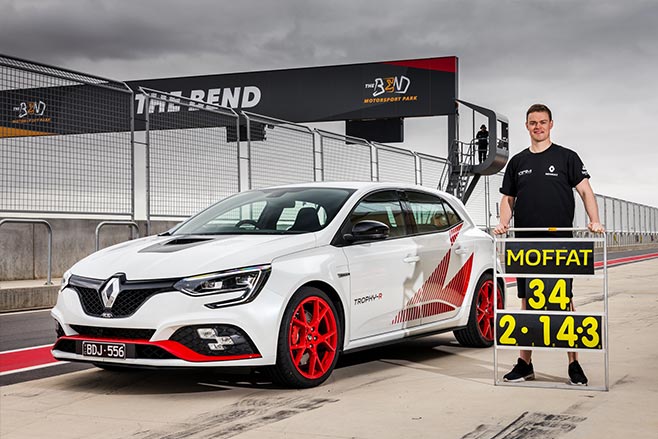
The car wasn’t specified in Record Breaking version, with carbon wheels and carbon ceramic brakes, which means Moffatt drove one of 12 Trophy-Rs allocated to Australia.
“The Megane R.S. Trophy-R was first of all a great fun car to drive and I was very impressed with not only the engine performance but the braking and cornering performance, I really have nothing but good things to say about it, it was just so much fun.”
The Megane RS Trophy-R’s FWD Nurburgring record
With a 220kW version of the 1.8-litre turbo four unit fitted to all Megane RS models, the Trophy-R also features a 6-speed manual ‘box with a shorter shift.
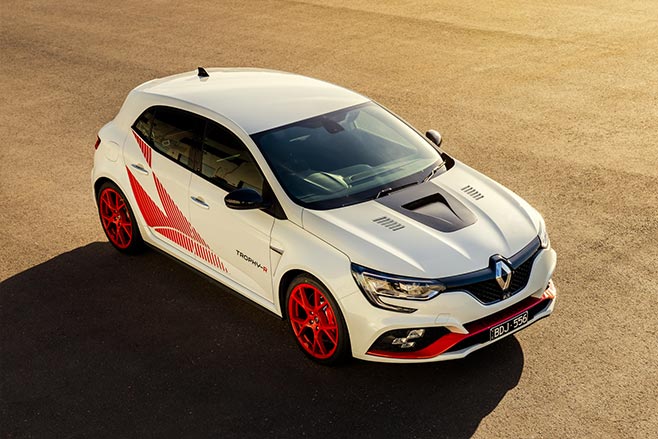
Renault Australia managing director Anouk Poelmann called the record an “amazing way to kick off the Megane R.S. Trophy-R’s story in Australia.”
“With Australia’s allocation for Megane R.S. Trophy-R already sold out, and more than 50 people already registering their interest for the Megane R.S. Trophy-R Record Breaking version, it is clear this Renault Sport-prepared vehicle has a very strong place in the hearts of car enthusiasts in this country.”
An auction with details yet to be confirmed will take place to decide the buyer of the one Record Breaking specification Megane RS Trophy-R assigned to Australia.
- 1000 a year to be made at £60,000 ($115,000) each
- Carbon fibre body
- 320km electric range
Morris Commercial will start making its all-new electric van, called the JE, in Worcestershire in the UK next year.
Those, erm, senior enough to know about old Morris vans will know that this pays homage to the iconic Morris J-Type, which was made from 1948 to 1961.
The £60,000 ($115,000) van will have a bespoke chassis, according to engineers from the company. It’ll also have a carbon fibre composite body. For real – because with enough volume, Morris Commercial reckons it can make it work.
How much volume? Morris is predicting 1000 vans a year. How far? A claimed 320km per charge, with a 0-80 percent battery charge time of 30 minutes from a rapid charger.
Vital stats
- Battery: 60kWh
- Range: 320km
- Charge time: 80 percent in 30 minutes via rapid charger
- Payload: 1000kg
Big changes over the original?
Well, the overhead valve 1.5-litre petrol engine has obviously been replaced by an electric motor, and the fuel tank by a 60 kWh battery. And the original J-Type was made from good old steel, not carbon fibre.
But to look at, it’s definitely an evolution of the J-Type design. The original J-Type’s sliding front doors are gone, replaced by traditional hinged front doors and sliding side doors instead.
The front metal bumper has fallen by the wayside, too. Barn-style rear doors remain, as do prominent wheel arches and those frog-like front lights.
Premium van, you say?
Yep. Well not just us either. CEO and founder of Morris Commercial, Dr. Qu Li, defends the hefty price tag by saying that it isn’t merely a van, it’s a “premium van and a marketing tool.”
“It offers a working business and marketing solution in one,” she says. “It will appeal to small premium businesses who crave creativity. In the past, premium brands like Dunlop and Cadbury’s used J-Types.’
On the outside, it certainly looks like it could serve earnest Millenials $8.49 artisanal fair-trade coffee out of a keep-cup made from corn starch leavings.
As far as retro-kitsch-niche-filling goes, the pastel colours (14 of them available) and bulbous front lights are spot on. The layman on the street might not even know that it’s a new van, and not from the 1940s.
Inside is a different matter. The early pre-prod model we saw looked shabby and more like a kit-car. The orange coloured leather looked plastic, the touchscreens weren’t integrated at all, and the drive selector and manual handbrake looks to be lifted off an LDV.
Still, we’re promised production vans will be very very different.
Morris is back, then?
Yep. A UK-based management team has acquired the rights to the Morris Commercial Ltd name, and Dr Li has set up shop in Worcester. She has links to the old days of MG Rover, and is experienced in the automotive sector.
This team owns the trademark for the Morris Commercial name, but the numerous Morris clubs around the world will not have to change their names if they use the term Morris Commercial.
A serious business proposition?
Take away the price, and it does make an interesting business proposition.
“At its core, it’s still a commercial vehicle,” insists Li. “And it needs to remain a van to build your business with.”
She reckons she’s on to a winner already, claiming she has received “more than 20” serious enquiries, with some of those serious enquiries interested in ordering more than ten vans.
No word on how expensive the carbon fibre will be to fix yet.
Pickup and Minibus planned
An ultra-cute pickup channelling the Daihatsu Midget and a VW ID Buzz-style minibus are also in the works.
Details are sparse, but renders have been made, and Morris Commercial promises both will come to fruition. They will run on the same chassis and battery pack as the van and will come in the same natty hues.
Dr Li says she’s not concentrating on the derivations until the first deliveries of the vans are completed.
This story first featured on carmagazine.co.uk
What do you think? Great way to revive a classic name or a yuppy special that’s too expensive? Let us know below!
It might be known as the Prancing Horse, but its raining Spiders at Ferrari right now.
Hot on the heels of the F8 Spider comes the Ferrari 812 GTS, a drop-top version of the 812 Superfast.
It’s the first series production open-top front-engined V12 since the 365 GTS4, though there have been special editions including the 550 Barchetta, 575 Superamerica, 599 SA Aperta and F60 America.
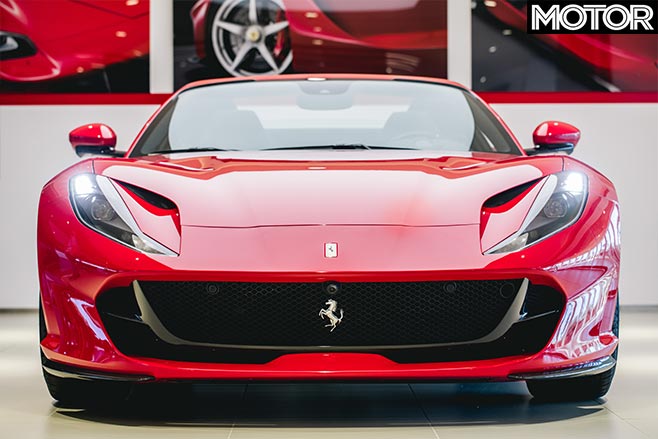
Locally, Ferrari fans can expect to be spotting 812 GTSs on the streets at the end of next year, with deliveries for buyers expected in Q4 2020. Those buyers will be putting $675,888 (before on-roads) of their hard-earned down to be part of the owners’ club.
You can expect on-roads and options to increase that sub-$700K figure to near-on a million dollars for some buyers.
Mechanically the GTS mirrors its coupe sibling, featuring a 588kW/718Nm 6.5-litre naturally-aspirated V12, though in European markets the engine is now fitted with a gasoline particulate filter in order to meet the latest emissions regulations.
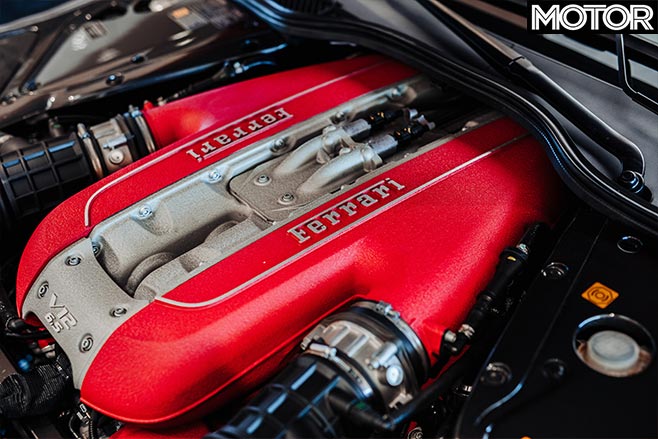
Despite a 75kg weight penalty, 0-100km/h is claimed to take “less than three seconds” and 0-200km/h requires just 8.3sec, 0.4sec slower than the hardtop. Top speed is unaffected at “over 340km/h”.
The roof takes 14 seconds to raise or lower and can be operated at up to 45km/h. The roof apparatus necessitated the removal of the 812 Superfast‘s rear wheelarch bypass duct, so Ferrari’s engineers integrated a tri-plane wing into the rear diffuser to compensate for the lost downforce.
To reduce interior turbulence – a “huge focus” according to Ferrari – the 812 GTS uses two L-shaped flaps on each corner of the windscreen to create vortices that prevents an increase in pressure behind passengers’ heads.
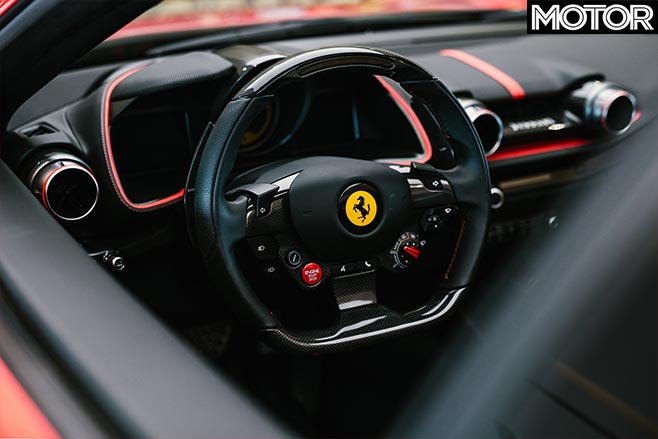
The chassis is unchanged, using massive rubber – 20 x 10.0-inch rims and 275/35 tyres at the front and 20 x 11.5-inch rims and 315/35 tyres at the rear – and huge brakes as well as a suite of electronic chassis aids, including all-wheel steering, adaptive dampers and electric power steering that can actually help the driver control power oversteer.
- First Ford EV ever
- Denotes an expansion of the Mustang brand
- Will undercut key EV SUV rivals on price
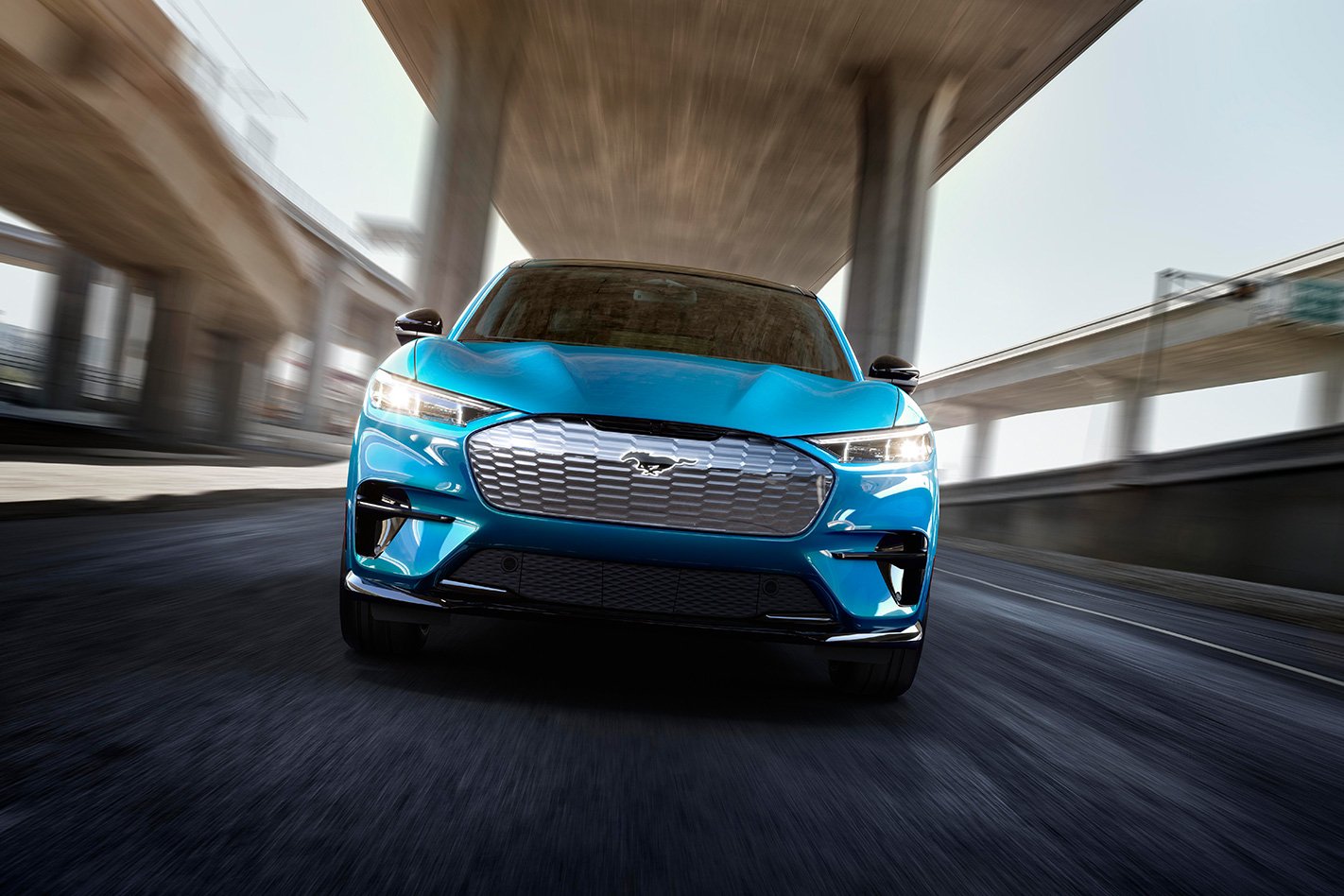
Ford’s first EV will borrow the Mustang name and is said to be an expansion of the Mustang family, rather than a new model just sharing the name.
The Mustang Mach-E experience promises to follow along with the traditional Mustang spirit, both in terms of design and its unique driving experience.
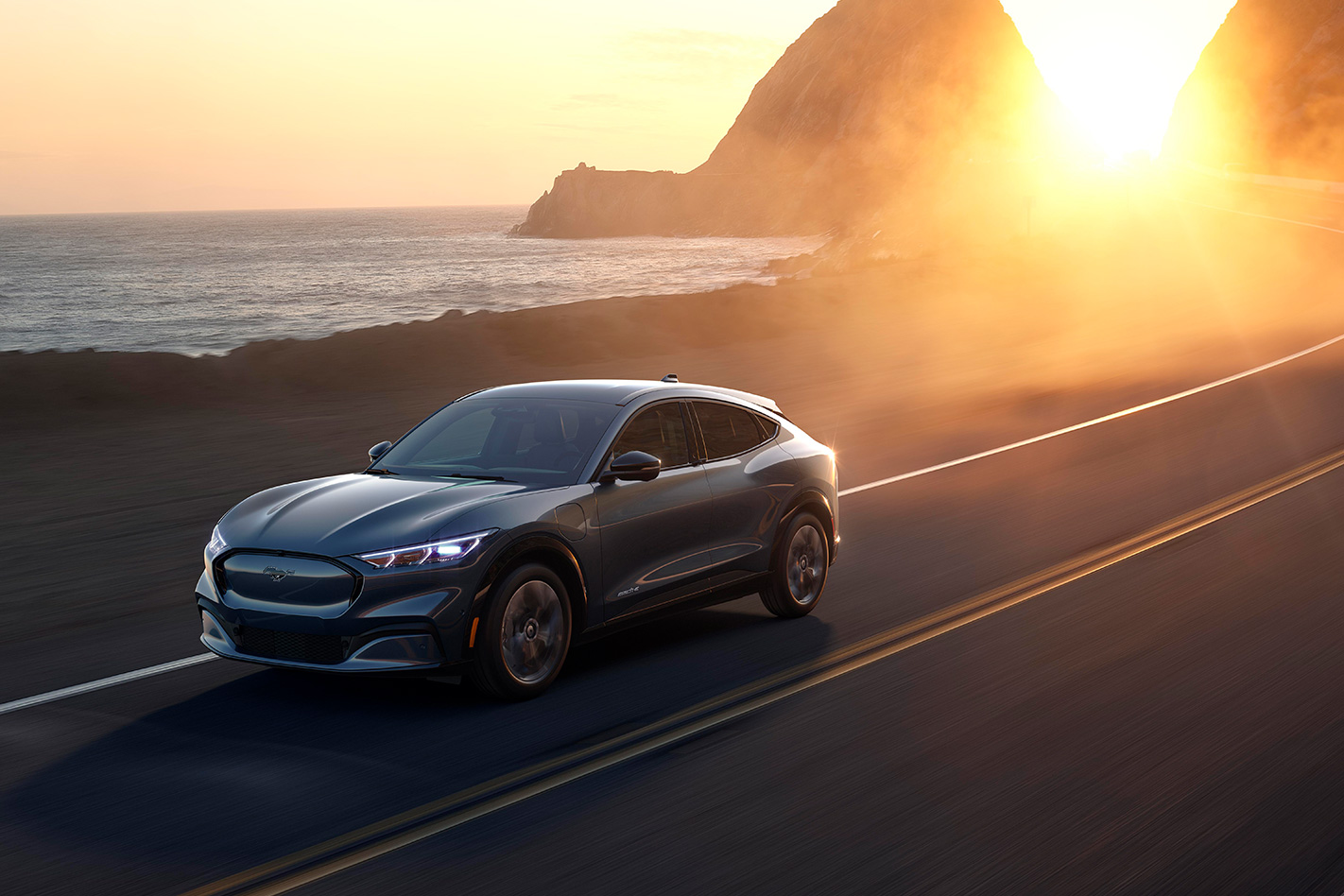
“The Mustang Mach-E wholeheartedly rejects the notion that electric vehicles are only good at reducing gas [petrol] consumption,” said Hau Thai-Tang, Ford’s chief product development and purchasing officer.
“People want a car that’s thrilling to drive, that looks gorgeous and that can easily adapt to their lifestyle.”
The styling does stay true, with a very familiar-looking face featuring angled headlights joined by a Pony badge on the front, while the iconic tri-bar taillights are prominently displayed on the rear.

Ford says this all-new, all-electric SUV has the beans to back up the claim about providing an exhilarating drive experience too, with the range-topping Mustang Mach-E GT said to hit 100km/h in under four seconds, thanks to an all-wheel-drive layout channelling the 342kW and 830Nm outputs of a 75.7kWh lithium-ion battery (a 98.8kWh extended range battery is available).
Ford is prepared to offer the Mustang Mach-E in a huge variety of specifications, whether they be rear-wheel or all-wheel-drive, standard or extended-range battery packs and with a number of different trim grades as well.
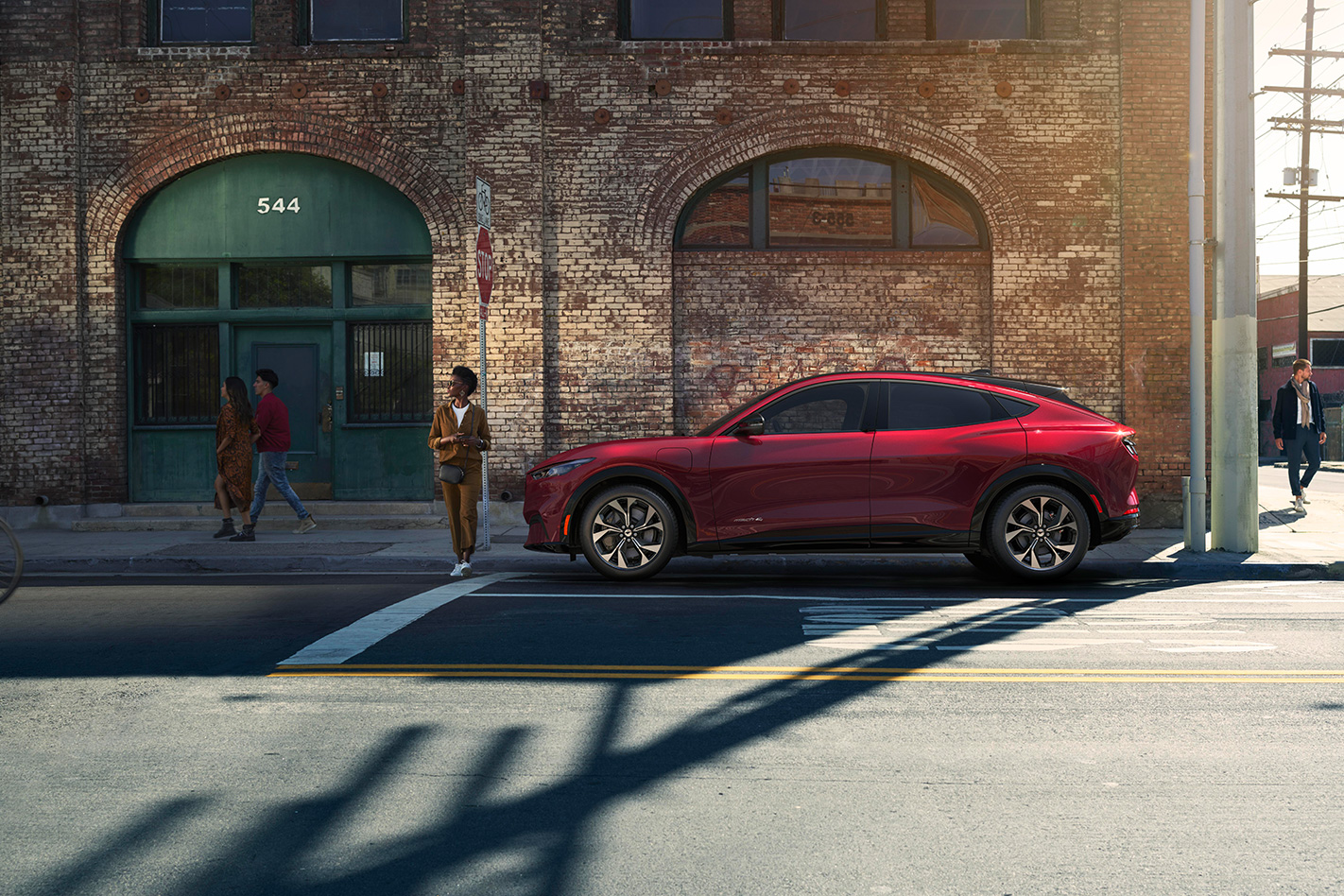
Specifications start off with the $43,895 (AU$64,469) Select, rising to $50,600 (AU$74,316) for the Premium, $52,400 (AU$76,960) California Route 1 and topping out with the $60,500 (AU$88,856) GT. To be first in line, however, you’ll have to opt for the $59,900 (AU$87,969) First Edition.
This pricing structure instantly undercuts every other electric SUV on the market in the US, including the Audi e-tron, Jaguar iPace and Tesla Model X.
As a minimum, Ford is claiming a range of 480 kilometres from a full charge using its extended-range rear-wheel-drive car, but final details regarding range will come ahead of its release next year.
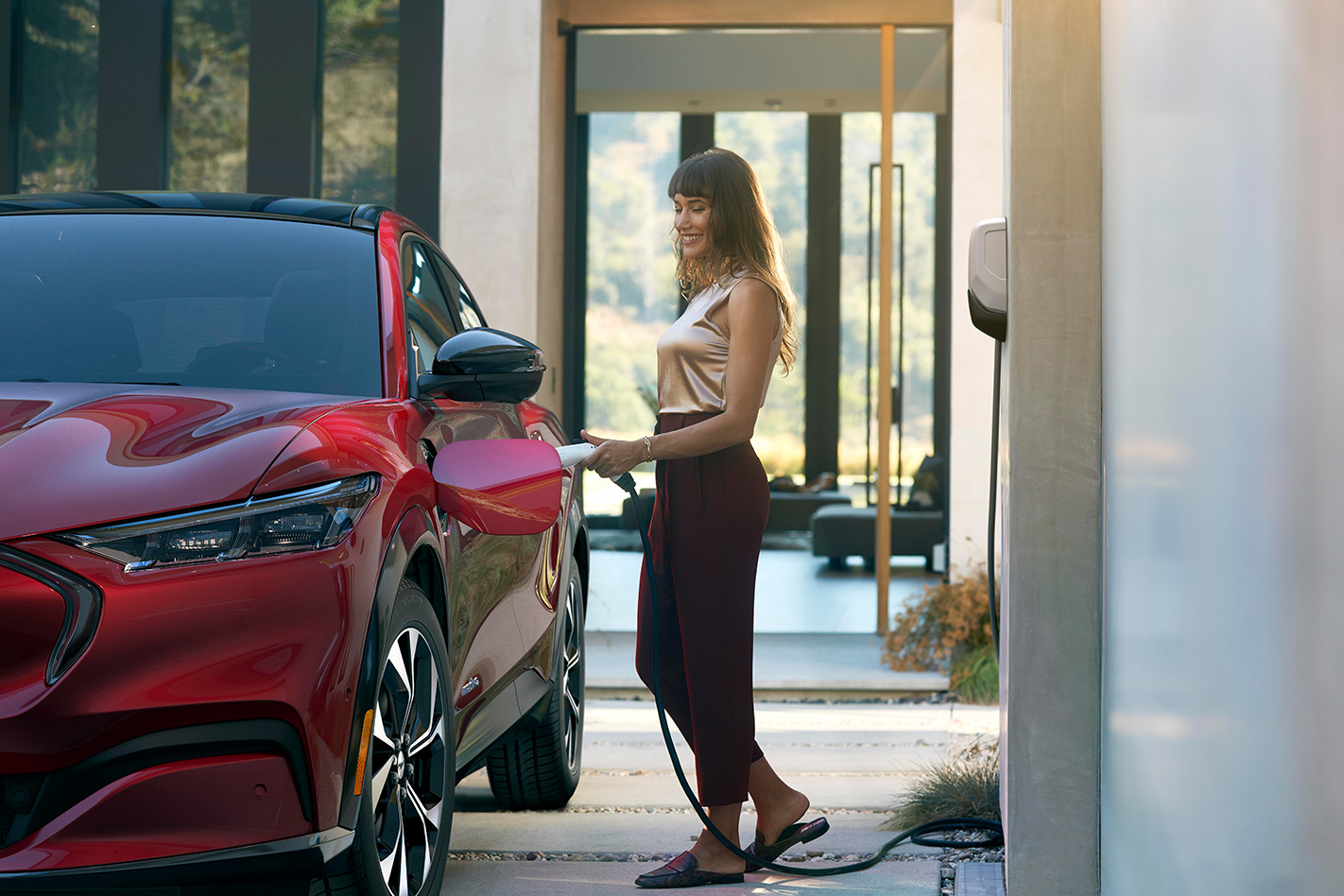
Standard range Mustang Mach-Es is said to go from 10 percent charge to 80 percent in 40 minutes when connected to a DC fast charging station. But for those charging at home, Ford will also offer a Connected Charging station that can add an extra 51km of range for each hour it’s on charge.
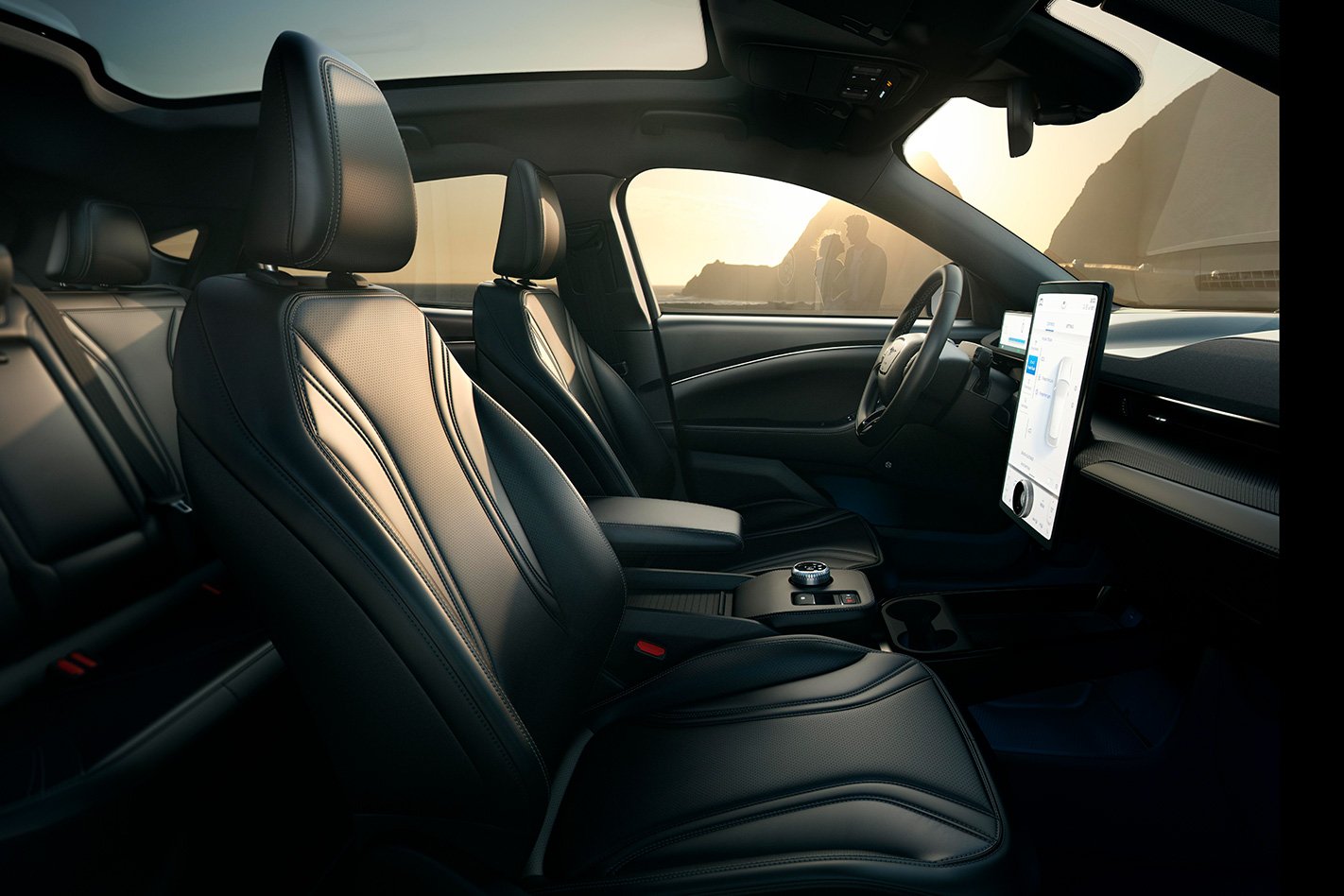
The interior is also wildly different from the Mustang we know, following Tesla’s style of offering a minimalistic design and huge touchscreen in pride of place on the dash. The new 15.5-inch screen will feature a brand new version of Ford’s SYNC infotainment system that mimics the intuitiveness of a smartphone.
Ford says the move to electrification is advantageous in terms of space too, apparently catering for five people comfortably while retaining space for luggage in the front (with a 135-litre ‘frunk’ space) and the boot (821 litres with the seats up).
The Ford Mustang remains popular in Australia but for this new Mach-E, we’re not so sure. We’ve asked Ford Australia for the likelihood it’ll feature in Australian showrooms, and we’ll update this article when we hear back.
Click the top photo to scroll through an image gallery of the new Ford Mustang Mach-E.
- Should arrive in 2020
- Based on a Mustang
- It’ll potentially be called the Mach-E
But while Ford was releasing teasers, one Instagrammer has gone one better and accessed CAD drawings that preview the whole design.
It seems someone’s let slip early, with the computer-generated renders paving the way for the AllCarNews Instagram account to then complete a rendering.

Ford has been keeping pretty tight-lipped in the lead up to its new car release, so it’s hard to tell whether AllCarNews is on the money, but the CAD designs supplied do look similar to the silhouette teaser that the manufacturer itself released last week.
According to them, the car will be named Mach-E and they claim ‘insiders’ gave them input on the design of the car.
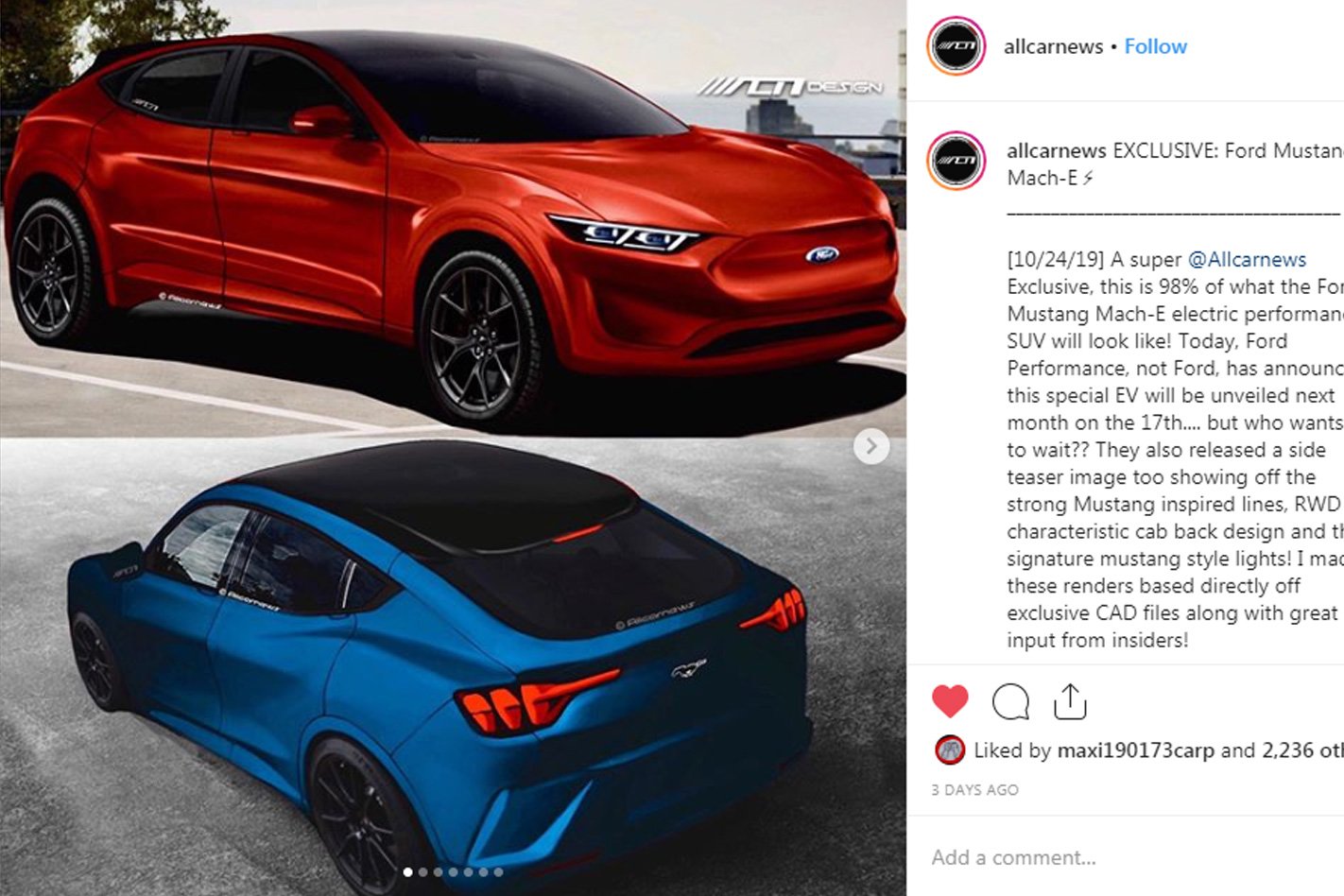
Between the CAD renderings and teasers we’ve seen before, it seems the imaginations they’ve created are as close as we’ve ever been to seeing the real thing.
You can see the classic Mustang taillights feature, and the raked roofline that tapers more toward SUV-coupe style rather than all-out SUV.
The front fascia also remains quite accurate to previous teasers, with a slightly-inset ‘grille’ nestled in between a pair of Mustang-like headlights.
Ford has previously announced it’ll target an almost 500-kilometre range with its new EV SUV, which matches up fairly closely with fellow-American EV rival Tesla’s new Model Y.
At the company’s Go Further event in Amsterdam earlier this year, Steven Armstrong, CEO Ford of Europe revealed an all-new electrified Kuga SUV, but also gave us an update on Ford’s Mach 1 EV.
Coming in 2020, Ford’s ‘electric Mustang’ will actually be a crossover SUV, a bit like the BMW X4 – but it’ll still share styling cues with the blue ovals’ more traditional pony cars.
Take a look at the previously-released teaser image above; it looks like a Mustang, but not as we know it.
And why the Mustang name? “It’s a car to capture the imagination and raise pulses. It’s a Mustang-inspired all-electric SUV,” Armstrong answers.
“If the Mustang is a car for petrolheads, this is a car for serious battery heads. Electrifying in every way, exciting to look at and thrilling to drive.”

Interestingly, Armstrong also revealed the new car “configures itself around you, predicts your needs.” That sounds a lot like code for packed full of connected service – primarily aimed at easing range worried – but we’ll update this article when that’s confirmed.
Sacrilege?
Either way, using the Mustang name – one of Ford’s most iconic and traditionally V8-powered cars – is no accident.
Instead of creating something quirky like we’ve seen with the Nissan Leaf – or something new like the Jaguar i-Pace – Ford is using one of its most popular, most distinctive silhouettes to try and gain both attention and goodwill for its new EV program.
If the various social media feeds around the world are anything to go by, that strategy is backfiring so far, but that could change when the Mach 1 EV is revealed.
Ford Mach 1: the background
Ford has revealed it’ll invest US$11 billion ($20 billion) into electric vehicle development.
A Medium post by Darren Palmer, the global product development director of Ford’s aptly named ‘Team Edison’, explained the company will release 16 fully electric and 40 electrified vehicles through 2022.
We’ll see the full car on its release at a Ford Performance event on November 18.
This article was jointly written with Car UK.
Not a day goes by that we aren’t reminded just how strict Australia’s road rules are, how mercilessly the police enforce them and, how arguably draconian our speed limits are in a modern world. And that raises the question – what’s the point of having cars that can comprehensively obliterate the national speed limit without even breaking a sweat?
One simple answer is that fast cars still make a lot of sense to many even when they aren’t going fast. There is an immense amount of enjoyment to be had piloting a high-performance car within the speed limit. Sonorous exhaust notes, blistering acceleration, sharp handling and athletic road-holding can all be appreciated when on the right road in the correct conditions.
But what you might not know is that there are a number of ways you can smash the national speed limit in Australia without jeopardising your licence at all. It takes a little more planning than simply jumping in your car and hitting the loud pedal, but here’s how you can get the thrill of going fast legally.
Track day
Track days can be a cost-effective way of getting behind the wheel of your own car on a real racing circuit – without speed limits.
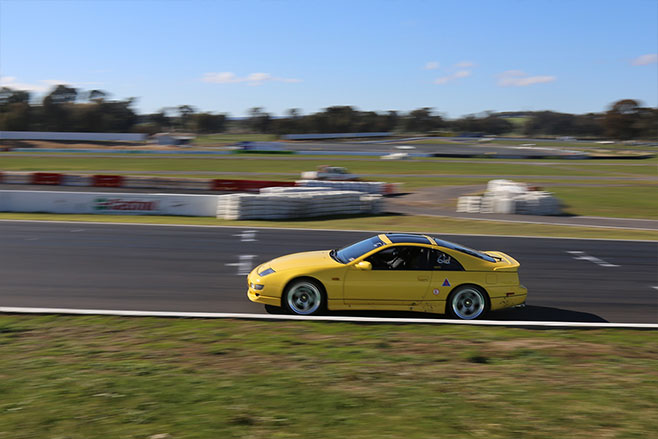
As a bare minimum, all you need is a roadworthy car that’s well maintained, current driver’s license and the track fee.
There’s a bit more to it in terms of preparation but with a little homework and reading up, you could be rolling out on the circuit to see what your car can really do when it’s let off the leash.
Advanced driving course
If you don’t like the idea of pushing the limits on a track in your own car, then perhaps an advanced driving course is your preferred route to legal high speeds. There is a multitude of driving courses available all over Australia for different abilities of drivers and all of them provide use of a car as part of the deal.
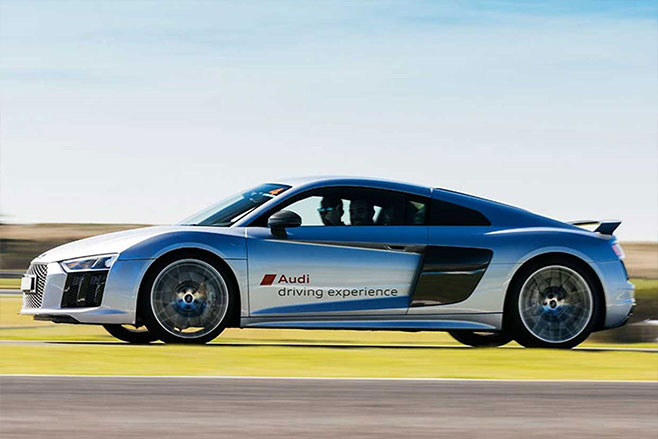
This obviously drives up the cost of participation but at least you’ll know you are getting in a car that’s correctly maintained for the purpose of driving fast. It may also be necessary to complete a few mandatory rudimentary courses before graduating to high-performance cars and the higher speeds, but you’ll be honing your car-control skills every step of the way.
Circuit racing on a shoestring
If a taste of the track has left you wanting more, a little competitive fast driving might be what’s missing from your automotive life.
Motorsport is never a cheap pastime in any of its forms, but it can be hugely rewarding and fun, and many amateur racers see the investment as wholly worthwhile.
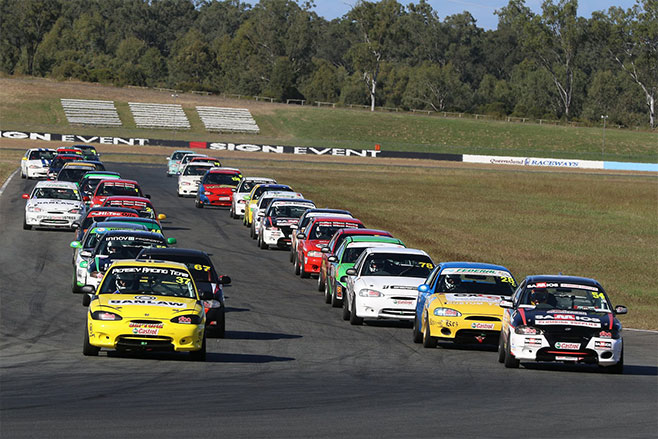
Karting is one cheap entry point but that might not satisfy a need for speed, so the more cost-effective end of circuit racing such as the Excel Cup might be just the thing. Okay, so 1.4-litre Korean hatchback might not be the height of high-octane pedigree motorsport, but it’s a very simple way to getting in some fast laps with minimal commitment.
Drag racing
Still not enough pace? How about drag racing? This relatively simple form of motorsport might seem as daunting as it is fast, but there are countless classes and categories to find a way in and onto the long stretch of asphalt.
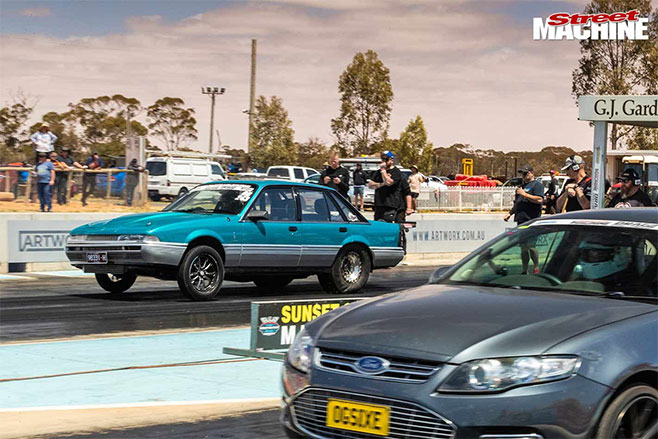
Like track days, many drag strips offer ‘off-street’ meetings where curious participants can participate in virtually anything street legal and put in a ‘pass’. If that lights a fire in your tyres, it’s not a big step up to competitive drag racing thanks to the numerous classes.
Street Machine’s Drag Challenge is a great event for the speed-hooked, allowing competitors the opportunity to race on a different drag strip every day for five days, as well as the adventure of driving their competition car between each location!
As a bonus, you’ll also get to do a big burnout before each run – something else you can get slapped with a fine for enjoying on public roads.
Dry Lake racing
Still not fast enough!? For the ultimate speed experience on Australian soil (or salt), the Dry Lake Racers Association is about as fast as you can go on home turf.
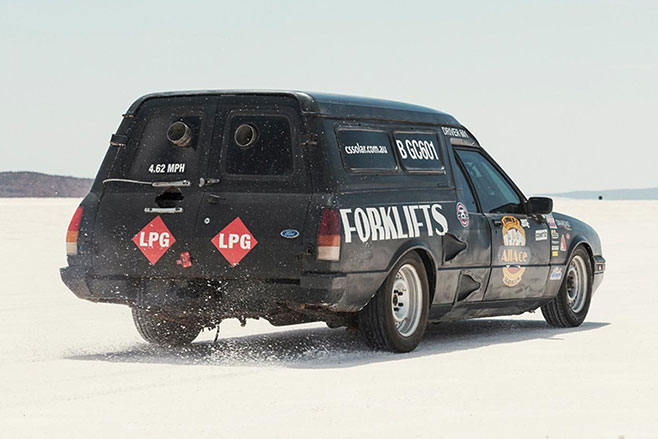
Each year, drivers chasing some dizzying figures culminate at Lake Gairdner in South Australia for Speed Week, in an incredible show of diverse vehicles with outrageous power outputs.
There’s certainly no cheap way to roll out on the salt with the cost of modifying a vehicle to comply with safety regulation and the unique engineering challenges, but you won’t go faster Down Under.
Take a trip up north
Or if all that seems too involved, daunting or just too complicated, you could head to the Northern Territory, where four stretches of road allow the highest permissible speed on a public byways in the country.
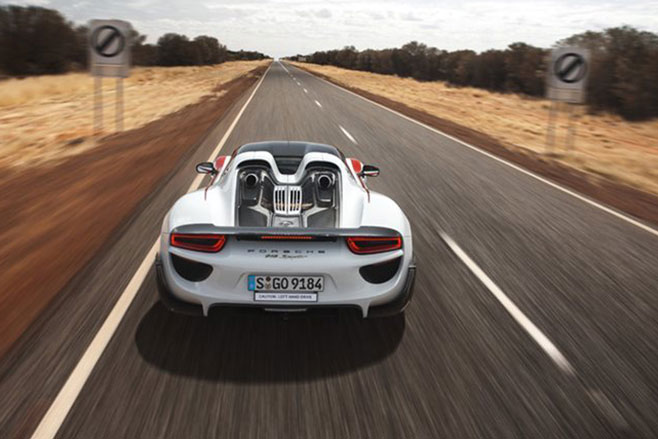
Previously, the NT has offered sections of highway with no speed limits at all, and the various roads are still the subject of conjecture and controversy. More than one car manufacturer grabbed the opportunity to unleash seriously high-performance cars on the road, but the party didn’t last long, with limits reimposed shortly after.
130km/h might not sound too exciting, but it might be all you need to get something out of your system, or perhaps it will ignite a quest for more.
Whatever your high-speed aspirations, there’s a way to get there and back safely, legally and with a smile on your dial.
What stands out?
The Renault Kadjar bridges the size gap between the French car-maker’s Captur and Koleos SUVs. It shares a chassis with the Nissan Qashqai, but is more attractively styled inside and out and powered by a 1.3-litre turbocharged petrol engine built by Mercedes-Benz that drives the front wheels only.It is comfortable and well-equipped, with Android Auto/Apple CarPlay smartphone pairing and autonomous emergency braking standard across the range.
What might bug me?
Easing back in bends because of the light steering that’s great around down but can feel disconnected from the front wheels at higher speeds.Getting tired of so-called friends pointing out your fancy ‘French SUV’ shares underpinnings with the Nissan Qashqai, is built in Spain, and has a Mercedes-Benz engine.Having to bring your face closer to 7.0-inch touchscreen to view the tiny reversing camera display.
What body styles are there?
Five-door wagon only.The Kadjar is classified as a medium SUV, lower priced.
What features do all Kadjar versions have?
Dual-zone climate control, which allows the driver and front passenger set their own preferred temperatures.Renault’s R-Link 2 multimedia system, with 7.0-inch touchscreen, voice control, Apple CarPlay/Android Auto phone mirroring, AM/FM radio, auxiliary and 2x USB inputs, Bluetooth connectivity for phone calls and audio streaming, and seven speakers.A reversing camera, and front and rear parking sensors.Cruise control with speed limiter, and high-resolution digital gauge display.Headlights that switch themselves on when it gets dark, LED daytime running lights, and LED rear fog-lamps. Windscreen wipers that operate automatically when it rains.Hill-start assist, which operates the brakes automatically to make uphill starts easier.Aluminium alloy wheels, and space-saver spare wheel.Forward collision warning system (autonomous emergency braking), which warns of a potential collision risk before automatically engaging the brakes via the Koleos’ electronic stability control.Tyre-pressure monitor, and power-folding door mirrors.Shark-fin antenna, electronic park brake, rear privacy glass, and ambient interior lighting.Every Renault Kadjar carries a five-year, unlimited kilometre warranty.
Which engine uses least fuel, and why wouldn’t I choose it?
The Kadjar has one engine choice, a 1.3 litre, four-cylinder turbocharged petrol engine sourced from Mercedes-Benz. This is the same as the one found under the bonnet of Mercedes-Benz A200, but with a slightly different tune.This engine meets strict Euro6 emissions standards and has a frugal official combined fuel consumption rating of 6.3L/100km, though it does require pricier RON 95 premium unleaded petrol.As in the A200, it’s coupled to a seven-speed dual-clutch automatic transmission, though this is a Renault gearbox that’s also found in the Renault-built Alpine A110 sports car. Throttle response is almost instant, unlike in the Mercedes-Benz A200, which experiences considerable lag when you put your foot down.All Renault Kadjar versions are front wheel drive.
What key features do I get if I spend more?
The least costly Kadjar is the Life which has cloth seat trim, 17-inch alloy wheels plus the features found in any Kadjar.Paying more for a Kadjar Zen brings you push-button start, satellite navigation, and you can customise your infotainment home screens.You also gain front fog-lights that point into a corner as you turn, and side parking sensors that augment those at the front and rear.Seats trimmed with artificial leather bolsters and premium quilted fabric inserts, and the driver’s seat lumbar support.Two USB sockets, heating and cooling vents for rear-seat passengers, and one-touch fold down rear-seats.Doors that automatically lock when you walk away from the car while carrying a proximity key-card.Blind-spot warning alerts you to any cars driving up your side, and lane-departure warning lets you know if you’re straying over the lines.Roof rails, and auto-folding side mirrors with demisters.A panoramic sunroof and auto-dimming rear-view mirror are available with the Zen as extra-cost options.Spending more again on a Kadjar Intens brings you a BOSE sound system with digital amplifier.Powered hands-free tailgate, chrome exterior trim, fancier 19-inch alloy wheels, and the panoramic sunroof as standard.Automatic hands-free park assist that steers your Kadjar into parallel and 90-degree parking spaces. All you need to do is control the brakes.Auto-dimming rear-view mirror, LED front and rear fog-lights, and automatic high/low beam.Steering wheel and seats trimmed with artificial leather. The front seats are heated and have cushion extensions for more under-thigh support, and the driver’s seat has power adjustments.
Does any upgrade have a down side?
The ride is a little harder on the Intens’ 19-inch wheels, because their shorter sidewalls leave less air and rubber between you and the road.Solid white is the only standard colour on the Life, Zen and Intens. Other colours cost about $900 extra.
How comfortable is the Kadjar?
The Kadjar has a roomy cabin for a small SUV and even tallish adults will find enough space in the second row, with plenty of head and knee room available. The front seats in the Zen and Intens have excellent side bolstering, with the latter’s cushion able to extend for additional under-thigh support. It offers an agreeable driving position with excellent forward vision.The interior is elegantly designed and boasts a pronounced European flavour. The Zen’s cloth seat-backs and cushions have an attractive quilt pattern and are arguably more comfortable than the leather appointed seats in the Intens.The interior is well put together, but we noticed the odd squeaking noise where the centre console meets the dashboard. This is likely just a new car thing and should go away once everything settles.Then there’s that quirky Renault feature of having the cruise control/speed limiter toggle down on the centre console. This can make it difficult to find while driving at first, but you’ll soon get used to it. Same goes with the audio controls, which are on a paddle behind the steering wheel.The infotainment system works well, though the 7.0-inch screen is a little small by current standards and it can be difficult to view the reversing camera display. The digital gauges on the other hand are nice and bright and you can choose between five different styles.The Kadjar’s ride quality is very good. It glides over smooth roads and handles rougher surfaces well, with little secondary bounce. There is noticeable lean through bends though, which is mostly felt in the rear seats.
What about safety in a Kadjar?
Every Kadjar has stability control, six airbags, auto-on headlights, LED daytime running lights, a reversing camera, front and rear parking sensors and autonomous emergency braking. It is a rounded package that emphasises crash protection, visibility, crash avoidance, and safe reversing.There are airbags ahead of the driver and front passenger to protect them in frontal crashes; one outside each front seat about chest level to protect in side-crashes; and a curtain airbag extending down each side at head level to protect those in the front and second seat rows from side crashes.The front-row seats have seat-belt reminders, second-row seats have none.The autonomous emergency braking (AEB) fitted to every Kadjar uses a radar-type sensor and operates at city and highway speeds. It works in concert with a Forward collision warning, which alerts you if it thinks you are too close to the vehicle in front. If you ignore the warning and the system concludes a crash is imminent, it can apply the brakes automatically, either avoiding the crash or reducing your impact speed. The AEB system will not detect pedestrians or cyclists.The Kadjar Zen and Intens also have parking sensors, and a blind-spot warning, which alerts you to the presence of vehicles near your rear corners that might not show in your mirrors, and lane keeping assist, which warns of your lane-drift, and attempts to correct it.The Renault Kadjar is yet to receive an Australasian New Car Assessment Program (ANCAP) safety rating, but the pre-facelift version sold overseas was awarded the maximum five stars by Euro NCAP in 2015.
I like driving – will I enjoy this car?
The Kadjar provides the kind of perky driving experience you expect from some of the smaller Renault models. The 1.3-litre turbocharged engine is small but provides enough power which makes this a fun car and comfortable car for longer drives.It’s nimble for an SUV, with light and direct steering that makes it easy to park and drive through tight spots. However, the steering does feel disconnected from the front wheels at higher speeds, which saps confidence when negotiating winding roads. A Sport setting that hardens the steering feel would be a great addition.The Kadjar otherwise handles surefootedly, both on and off paved roads: it shrugs off potholes and big lumps with ease, and handles its weight well in corners. The ride can feel a touch fidgety on smaller bumps and corrugations, particularly on the bigger diameter wheels, but otherwise it has a comfortable and capable suspension tune.
How is life in the rear seats?
There’s enough space for a couple of adults (or three kids). The Zen and Intens are separate air vents at the back of the centre console, and a pair of USB outlets and 12-volt socket to keep phones and tablets charged up. The Kadjar Life has just the 12-volt socket.The rear doors have deep storage bins that will hold a 1.5-litre bottle, and there’s a fold-down centre armrest with two cupholders in the two upper-spec versions. The two outward seats feature ISOFIX child-seat anchor points.The ride in the second row is generally smooth, and side vision is good, despite the Kadjar’s rising shoulder-line.
How is the Kadjar for carrying stuff?
The Kadjar has a 408-litre boot space, which is 22 litres less than the Nissan Qashqai on which it’s based. The 60:40 split seats can fold down instantly using catches in the boot space to extend cargo carrying capacity to 1478 litres.Towing capacity is a handy 1500kg braked, which will let you tow a small- to medium-sized trailer.
Where does Renault make the Kadjar?
The Renault Kadjar is made in Spain.
What might I miss that similar cars have?
More advanced driver assistance features including active cruise control, as is standard in the Kia Seltos, Toyota C-HR and upper-spec versions of other rivals.All-wheel-drive traction, as available in the Seltos, C-HR, Hyundai Kona, Mazda CX-3, and Subaru XV.Other roomy small SUVs similar to the Kadjar include the Citroen C3 Aircross, Honda HR-V, and Mitsubishi ASX.Then of course there’s its Nissan Qashqai cousin, which manages to provide more rear legroom and boot space, but not enough to make a noticeable difference. It also has better road holding through bends than the Kadjar, but both have comfortable rides even on rougher roads and are smooth, quiet and nimble ride around town.All that said, the Kadjar feels like a newer generation car, with its stylish interior, more sophisticated and efficient 1.3-litre turbo/dual-clutch powertrain, and digital gauges combining with a superior infotainment system to make it a more compelling buy.
I like this car, but I can’t choose which version. Can you help?
The Zen is the sweet spot in terms of pricing and equipment levels. It has plenty more features than the entry-level Life to justify the $3000 premium and drives a little better than the Intens on its smaller 17-inch wheels. And you won’t really miss the Intens’ extra features, though if you like the sunroof you can add it as an option for about $1000.
Are there plans to update this model soon?
The Renault Kadjar first went on sale in Europe in 2015 and received a mid-life update in 2019. It’s the updated version, with the more powerful 1.3-litre turbo engine that first appeared on the Australian market in November 2019 for the 2020 model year.Don’t expect any model updates until at least 2021, though there may be special edition versions introduced from time to time.
