
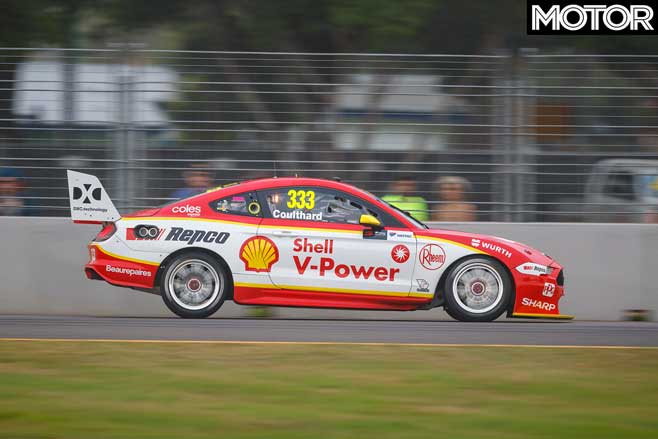
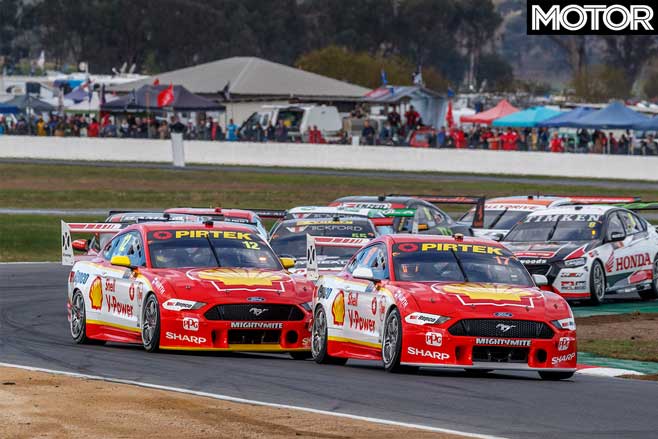
A Ford Mustang Supercar will skid around Virginia International Speedway later this month, as part of a demonstration at an American sportscar championship event.
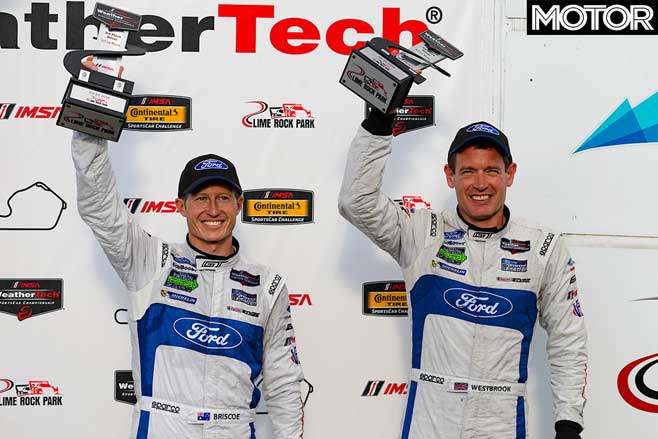
The car belongs to DJR Team Penske, and will be driven by Sydney-born racer Ryan Briscoe, a one-time Toyota F1 test driver and Indycar racer and a current endurance star for Ford Motorsport.
Briscoe came home to Australia last October to drive a Ford GT Le Mans racer at a demo during the Bathurst 1000 weekend. Despite being employed by a rival of Team Penske – who owns the car – Briscoe got the nod to steer the Mustang at the IMSA WeatherTech Sportscar Championship.
The car in question is actually an old Ford Falcon from the 2014 season that now resides at Ford’s world headquarters in Dearborn, Michigan. It has been reskinned as a DJR Team Penske Mustang, but it’s not 100 per cent pukka Supercar.
Current Supercar regulations are very tight when it comes to sending current-spec cars overseas, but the Falcon nee Mustang has received special approval for its emigration.
While it will look identical to the car currently lighting up tracks around Australia, it’s understood that its 5.0-litre V8 runs a non-control MoTec engine management system, and it won’t have the most current aerodynamic updates as fitted to cars here.
Briscoe is no stranger when it comes to Supercars, having competed in three Bathurst 1000s (2006, 2010 and 2013), and claiming a podium alongside Russell Ingall at the 2013 Surfers Paradise round.
He’s also raced the Indy 500 ten times (claiming pole in 2012), as well as claiming seven IndyCar wins with – somewhat ironically – Team Penske. He also stood on the third rung of the podium at Le Mans in 2016 with the Ford GT.
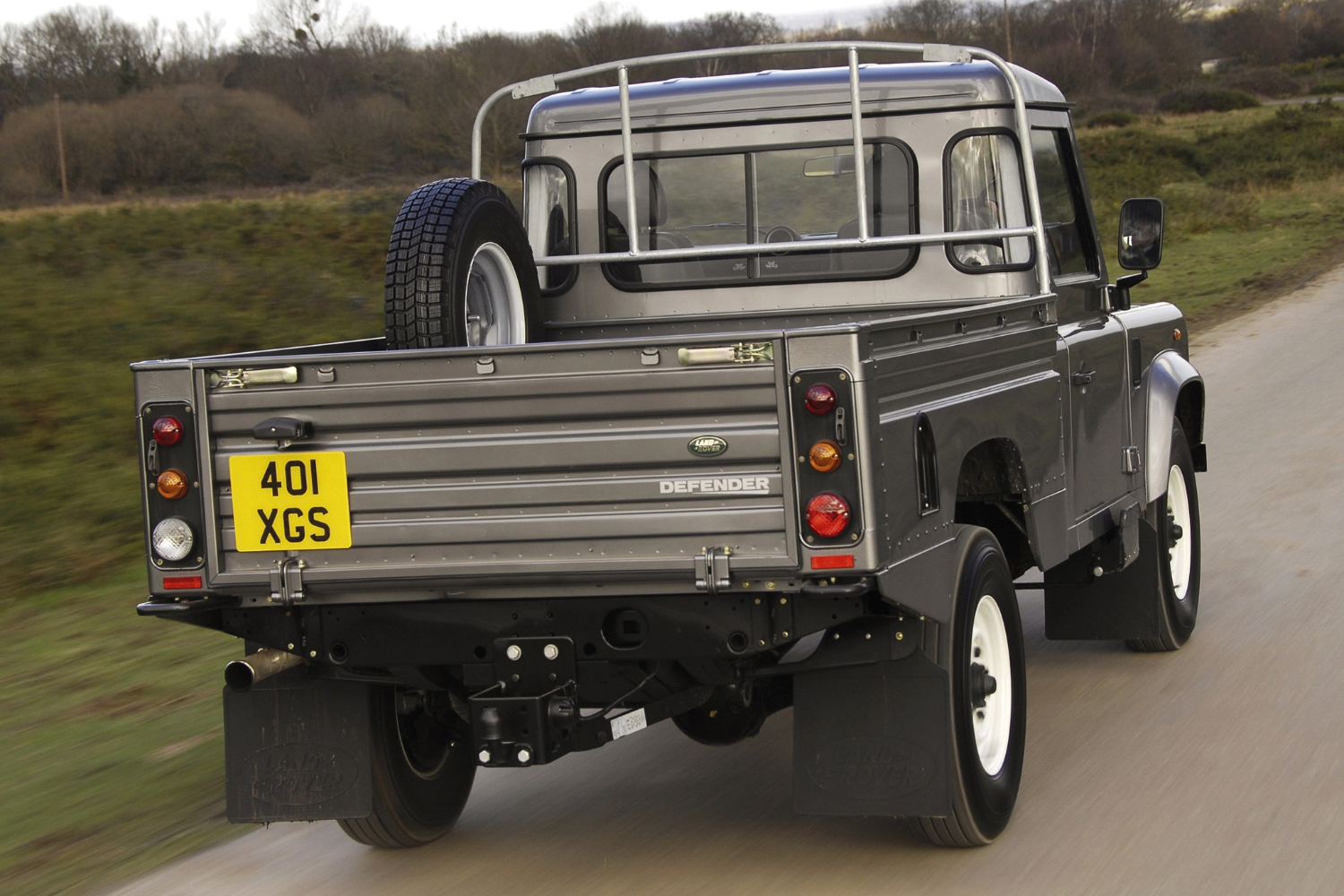
Land Rover is considering the business case to produce a Defender ute, but it likely won’t be built on the same platform as the wagon. Instead, the British company might partner up with an established dual-cab ute maker.
Due next year, the new Defender’s move to a monocoque chassis – based largely on the new Discovery platform – will be both a blessing and potential burden for the British marque; a blessing in the new sales it will attract over the old rugged model, but a burden in not being able to support a one-tonne ute bodystyle.
That could, however, be overcome by way of a partnership with another manufacturer. Much how Jaguar Land Rover has partnered with BMW to produce its new electric drive EV platform.
Speaking to Wheels this week at the launch of the V8-powered F-Pace SUV in Australia, managing director of the local arm, Mark Cameron, said that while there was no plan for a Defender ute now, that didn’t rule out a Land Rover-badged dual-cab coming in the future.
“We are not going to have that [ute] bodystyle for us unfortunately in Australia,” he told us, adding, “At the moment there is no plan globally, it’s not just an Australian thing.”
But Cameron is keen on landing a ute in Australia, tapping into our huge appetite for dual-cab utes, dominated by the Toyota Hilux, Ford Ranger and Mitsubishi Triton.
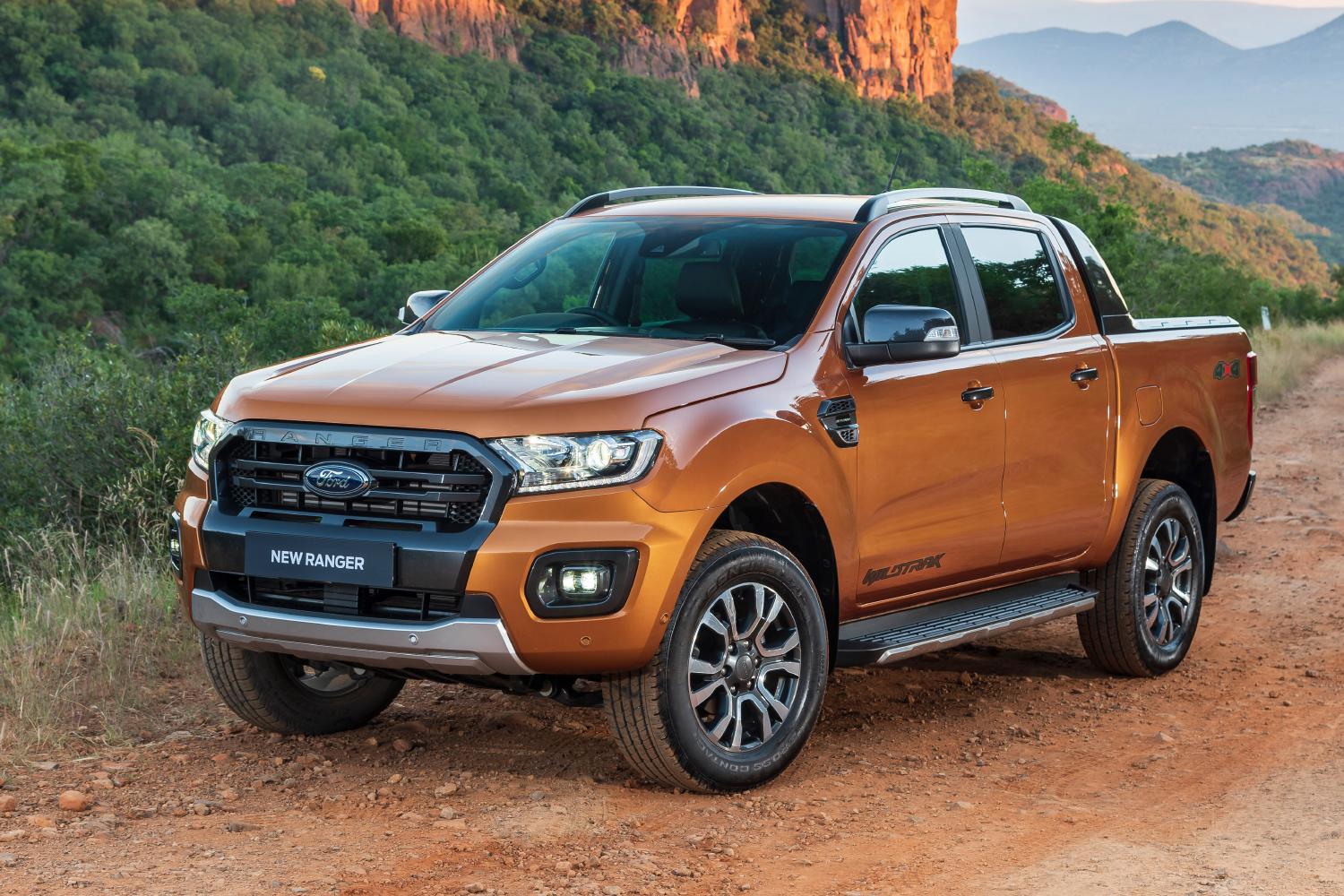
“I think if we had a Defender Land Rover badged, competitively positioned pick-up in Australia it would do really well. But these things are always driven by global business cases, there needs to be sufficient volume. There are other markets that would do quite well with that product, Africa, North America, and the Middle East, but we have got to make sure that we can deliver the car that we have designed and then possible further expansions.
“What I am saying to head office is that it would be a fantastic product in Australia, as the top three selling cars here are pick-ups.”
When questioned further if head office was paying attention to the potential gold mine that is the Australian ute market – and also retaining the ute bodystyle the Defender enjoyed in the previous-generation’s 67-years of service – Cameron said that indeed a ute was in consideration.
“It is interesting at the moment, it is being considered, definitely.”
But the Defender’s new monocoque chassis won’t be a match for tough ladder-frame utes in the segment. Instead, we might see JLR partner with another manufacturer to produce a dual-cab, diesel-powered ute – think Volskwagen and Ford partnering up, or Mazda and Isuzu on their next-gen trucks.
“When you look at the demands on car companies at the moment in terms of R&D and development – as I said earlier, it’s not just proliferation of body styles, it’s how do we manage the powertrain development requirements. That’s why we partnered with BMW [for the electric drive unit] because we can’t do this all on our own. If we are still committed to developing the combustion engine and electrification and autonomous driving plus proliferation of bodystyles and platforms, you have to get to the point where you say, ‘Actually, this is what we can do day-to-day’.”
That’s huge news for Defender and dual-cab ute fans alike. While the new wagon model will be softer than before, there’s potential for hard-core dual-cab ute to take on the establishment, and break into a whole new market.
One of Porsche’s all-time greats has hit a milestone; the Porsche 911 GT3 is now 20 years old.
Having remained naturally aspirated and rear-drive since its first generation launched in 1999, the GT3 is often hailed as the ‘purist’ Porsche. It’s now the only proper production 911 badge (along with its RS brother) that hasn’t gone turbo. Yet.
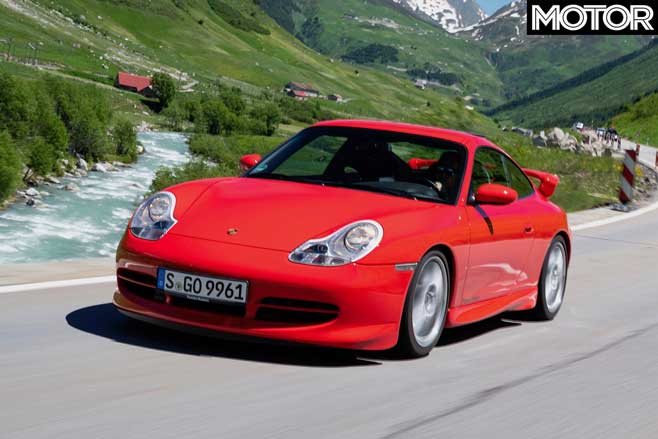
The recipe of a flat six, having since increased from 3.6-litre to 4.0, and risen in power greatly (the first had 265kW, the 991.2 has 368kW), combined with rear drive and (usually) a manual gearbox has even convinced Porsche that it’s “the most popular Porsche 911 among purists.”
Of course, Porsche draws strong links between the race cars which inspired the GT3 name and the road-going model itself, though the GT3 is the spiritual successor to the earlier 911 Carrera RS 2.7.
“For the first time, the model was not given the designation “RS” for Race Sport, but the name GT3 – a reference to the GT class in which the motorsport versions of the model were to compete.”
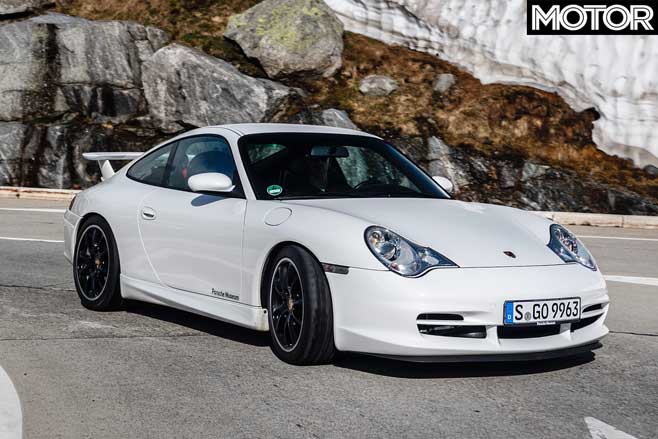
Since the year 2000, Porsche 911 GT3 racers have won 7 times at the 24 Hours of Nürburgring, as well as having taken the titles at the 24 Hours of both Spa and Daytona in 2003, Spa again in 2010, and the most recent Bathurst 12 Hour.
“It is part of the recipe for success of the Porsche 911 GT3 that the experience and innovations from motorsport are always incorporated into the development of the next road version.”
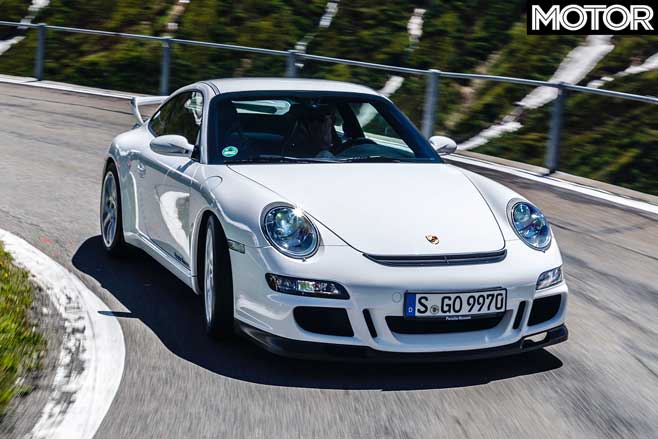
As such, Porsche says around 80 per cent of all 911 GT3s ever built are regularly driven on track.
And sometime, those track drives are undertaken by MOTOR Magazine. Notably, the Porsche 911 GT3 has won three times at Performance Car of the Year, if you include the RS. In 2007, the 997 took out the prize, before the 911 came back in 997.2 GT3 RS form and did it again in 2010.
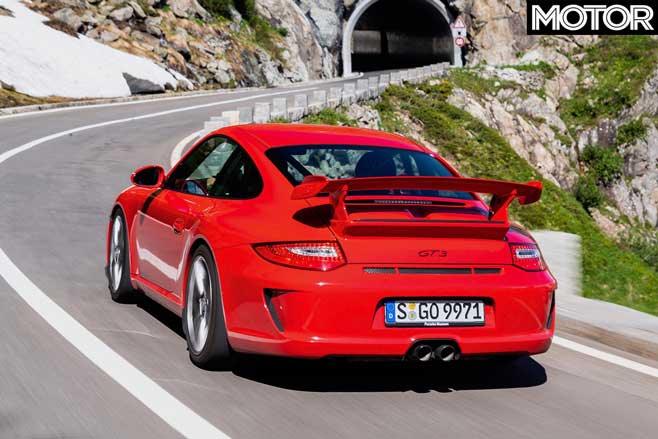
Then, in 2016, the 991 911 GT3 grabbed the gong again only a year after its Turbo brother had the honour, and a year before the 991.2 Turbo S did so.
Of course, the 992 GT3 is yet to debut, so Porsche has confirmed essentially nothing about the next GT3. However, MOTOR’s European correspondent Georg Kacher originally reported in early 2018 that the 992 911 GT3 would be a 400kW, turbocharged supercar with a PDK gearbox.
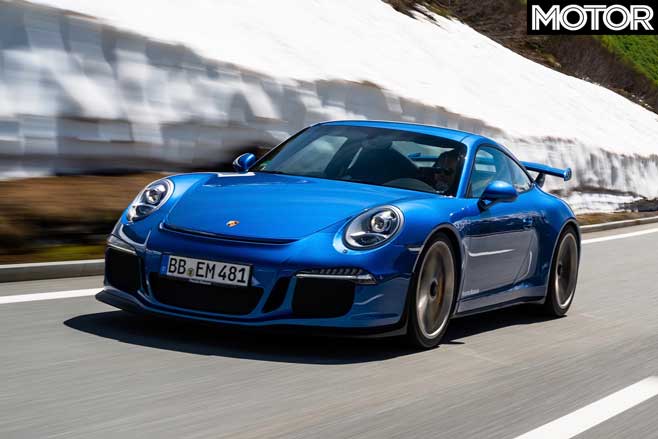
Since, it seems that insider info from Porsche proved to be hearsay, as a test mule which is widely believed to be the next GT3 has been spotted around Germany sounding very naturally aspirated.
In one of Melbourne’s eastern-most suburbs, a house for sale has one massive draw for motorheads and car collectors – enough garage space to store a couple of dozen cars.
Narre Warren North isn’t usually the sort of suburb that comes to mind when talking about affluent areas, but its median house price of $1.24 million is about twice as much as its neighbouring suburbs. This could be due to the relatively large blocks of land, such as the one currently up for sale by ‘OBrien’ Real Estate.
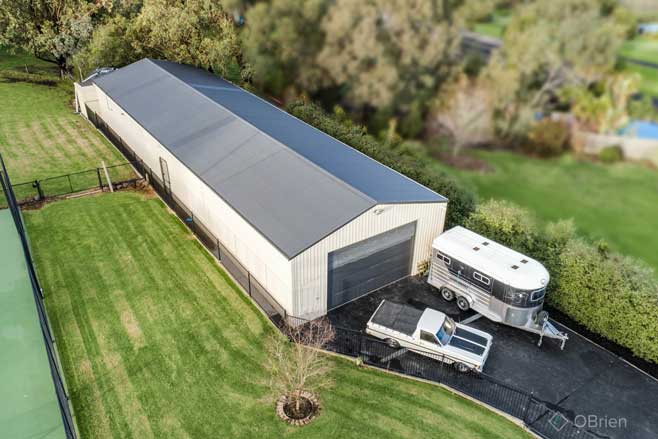
At around 1.42 acres, the property boasts a pool, plenty of lawn, an outdoor barbecue area… and a claimed total garage space of 17 cars.
Of course, if you weren’t afraid of a little rain, there’s also space on the driveway for several more. That could, however, result in a car-shuffling situation a la The Castle.
Fortunately, despite the fact this garage is rather long, it’s actually fitted with lifts to maximise use of the space.
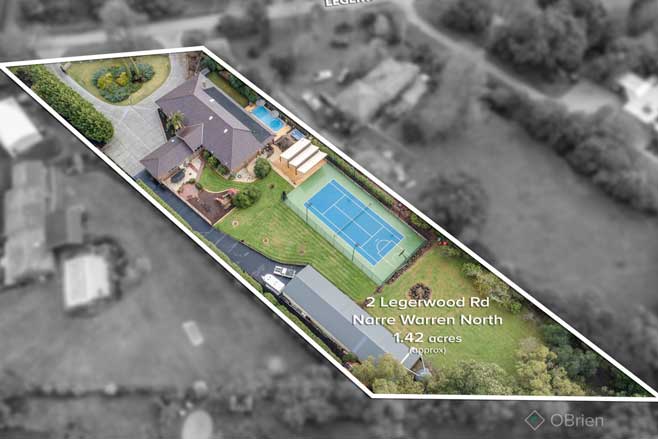
The seller is an avid car collector, having amassed a range of classic Aussie muscle, as well as a few other models – the split-window Kombi visible in the real estate photos is probably one of the more valuable cars in the garage.
Of course, the next owner can fill the garage with whatever metal they like. The owner of its pictured occupants will be taking them with him.
Oh yeah, there’s also a house on the property, with five bedrooms and three bathrooms, plenty of room for entertaining…. And another couple of garage spaces attached.
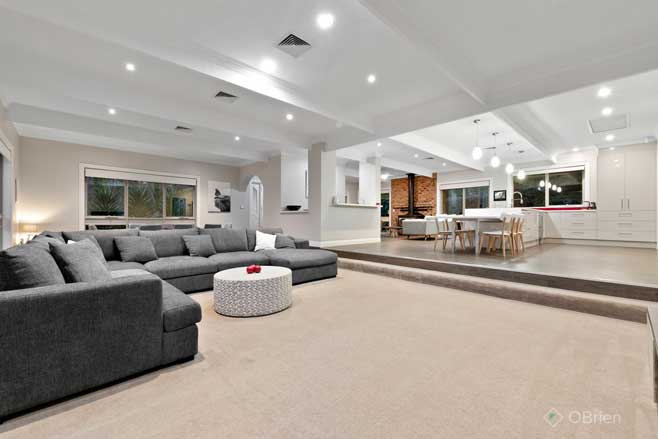
If you want to check the place out in person, have a look at the listing on the real estate agent’s site, and note the next inspection time is Saturday August 10 at 11am, or tomorrow morning at time of writing.
This one might not be on the market for long!
General Motors has taken the axe to its American Equinox production facilities once again, temporarily closing down one plant and culling 260 jobs at another.
It follows Holden’s move to temporarily stop right-hand drive production of the model late last year in the face of overstock. The Lion brand has since begun importing the model again with sales on the up.
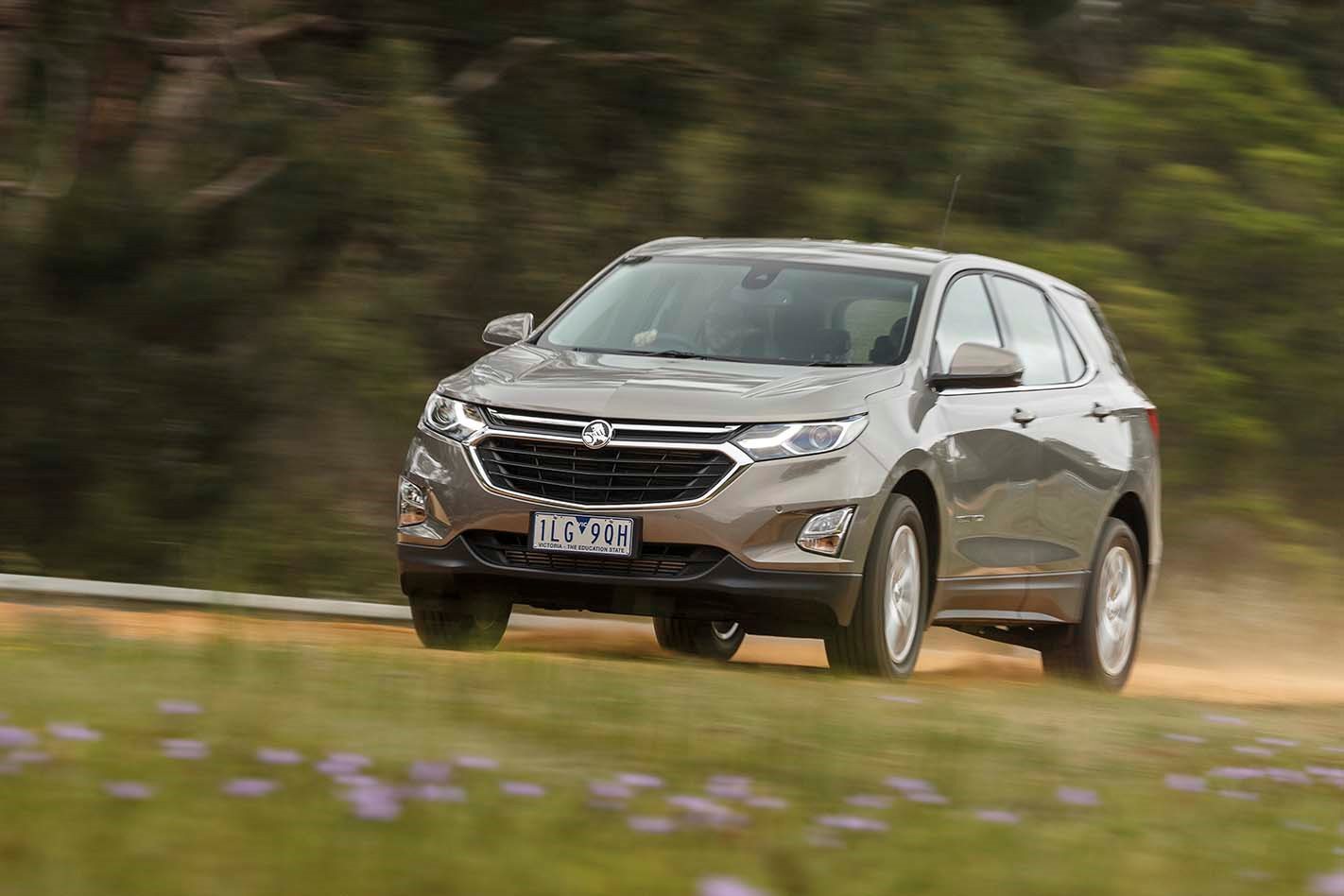
Confirming it was readying to shut down the CAMI Assembly Plant in Ingersoll, Ontario for a week from September 30, GM has added that it will shut down an entire Equinox shift at the San Luis Potosi, Mexico plant from next week. That will see 260 workers lose their jobs.
The big US car maker says that the cost cutting exercise reflects lower global demand: “Both of the actions are essentially to better align production output with current global outlook demand,” said GM spokesman Dan Flores. “We are committed to running the business responsibly.”
Both sites produce the Chevrolet Equinox, which is produced for Holden in Mexico but at GM Mexico’s Ramos Arizpe facility instead. Though GM says global demand is waning, Equinox sales are actually up year-on-year in both the US and Australia.
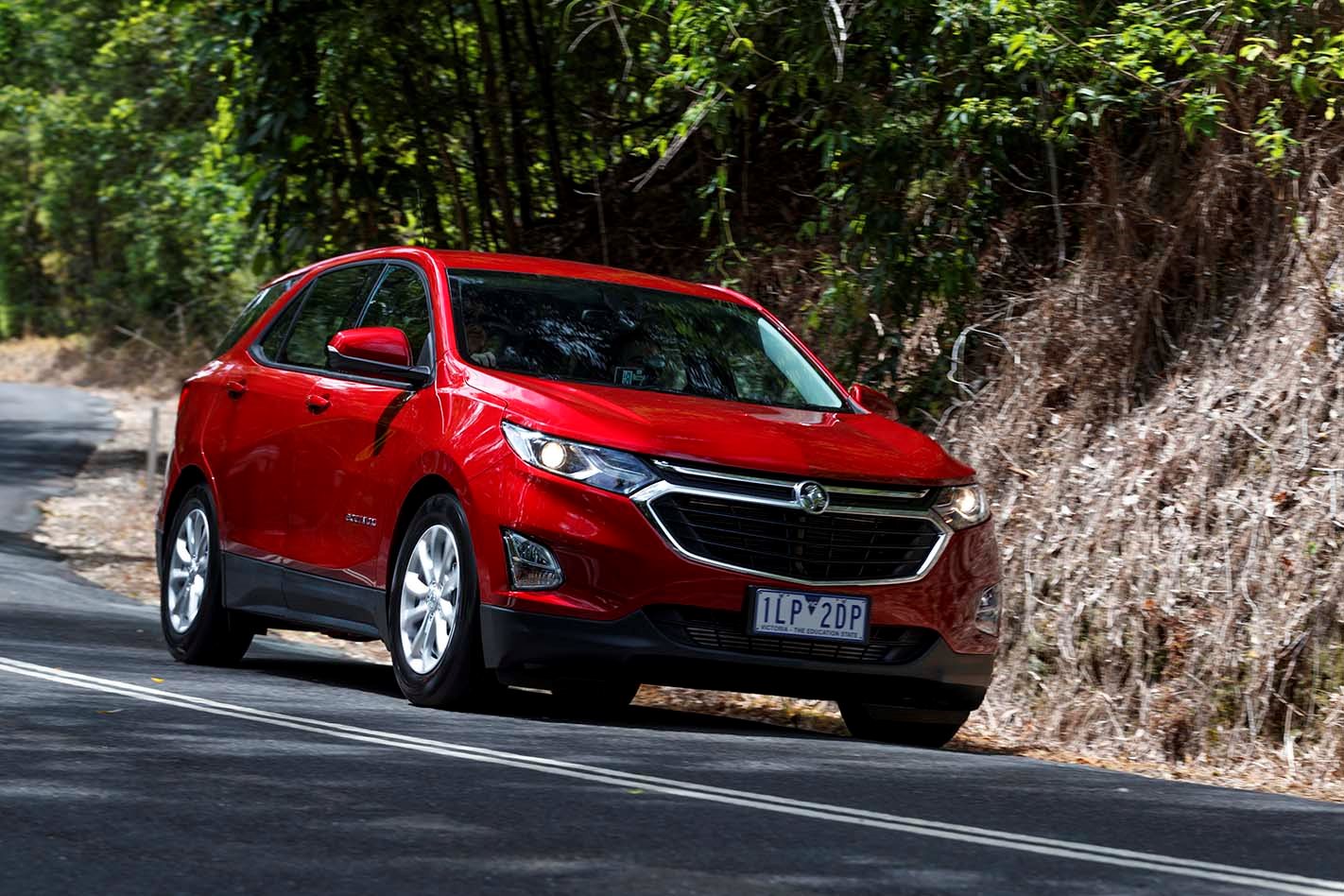
It’s unclear what GM’s long-term strategy for the Equinox is. The new mid-size Chevrolet Blazer SUV began production late last year and is produced on the same C1 platform as the RHD Acadia, which is also produced at the same site as the Holden Equinox, spurring speculation that the sharp-looking model could replace the latter in global markets.
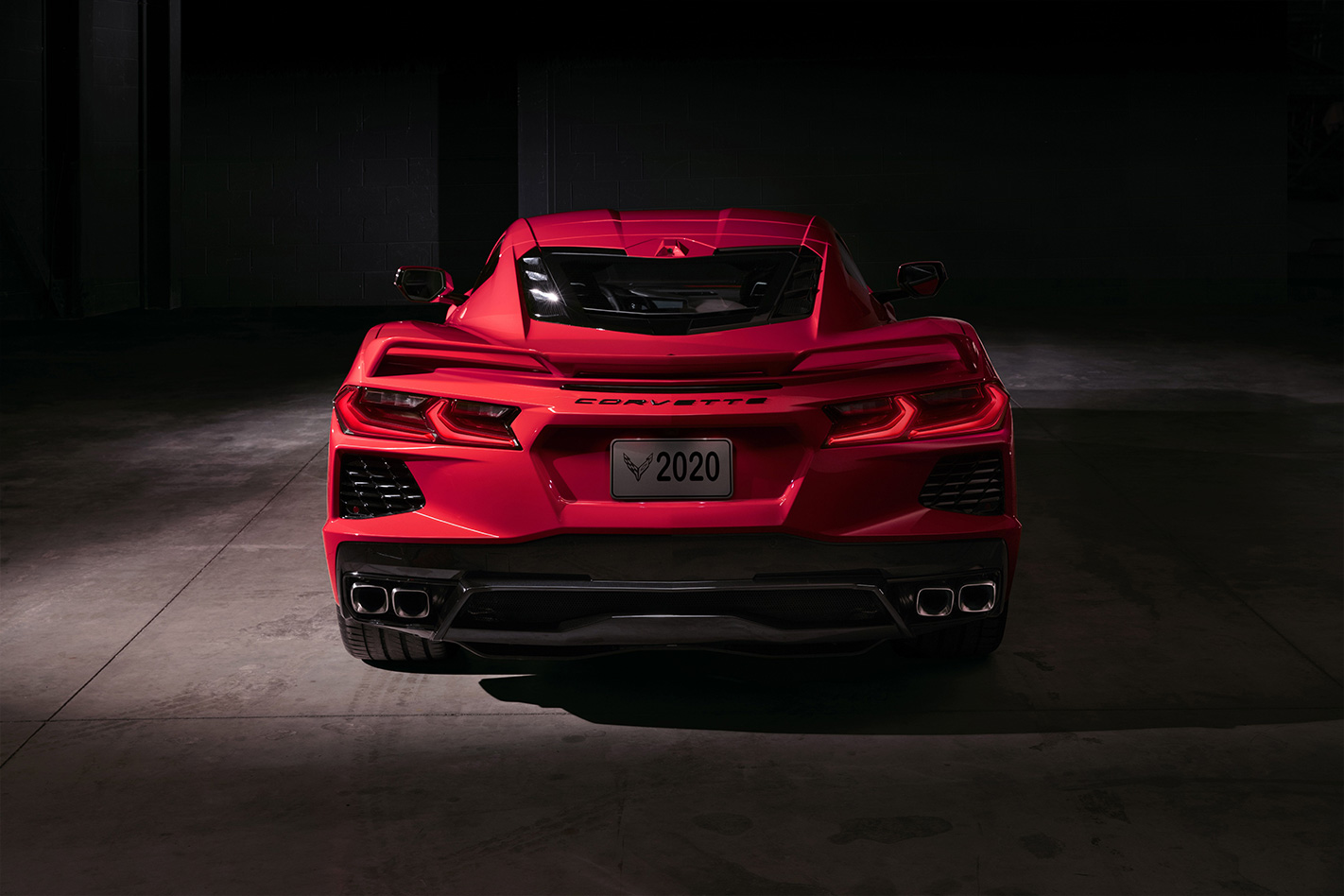
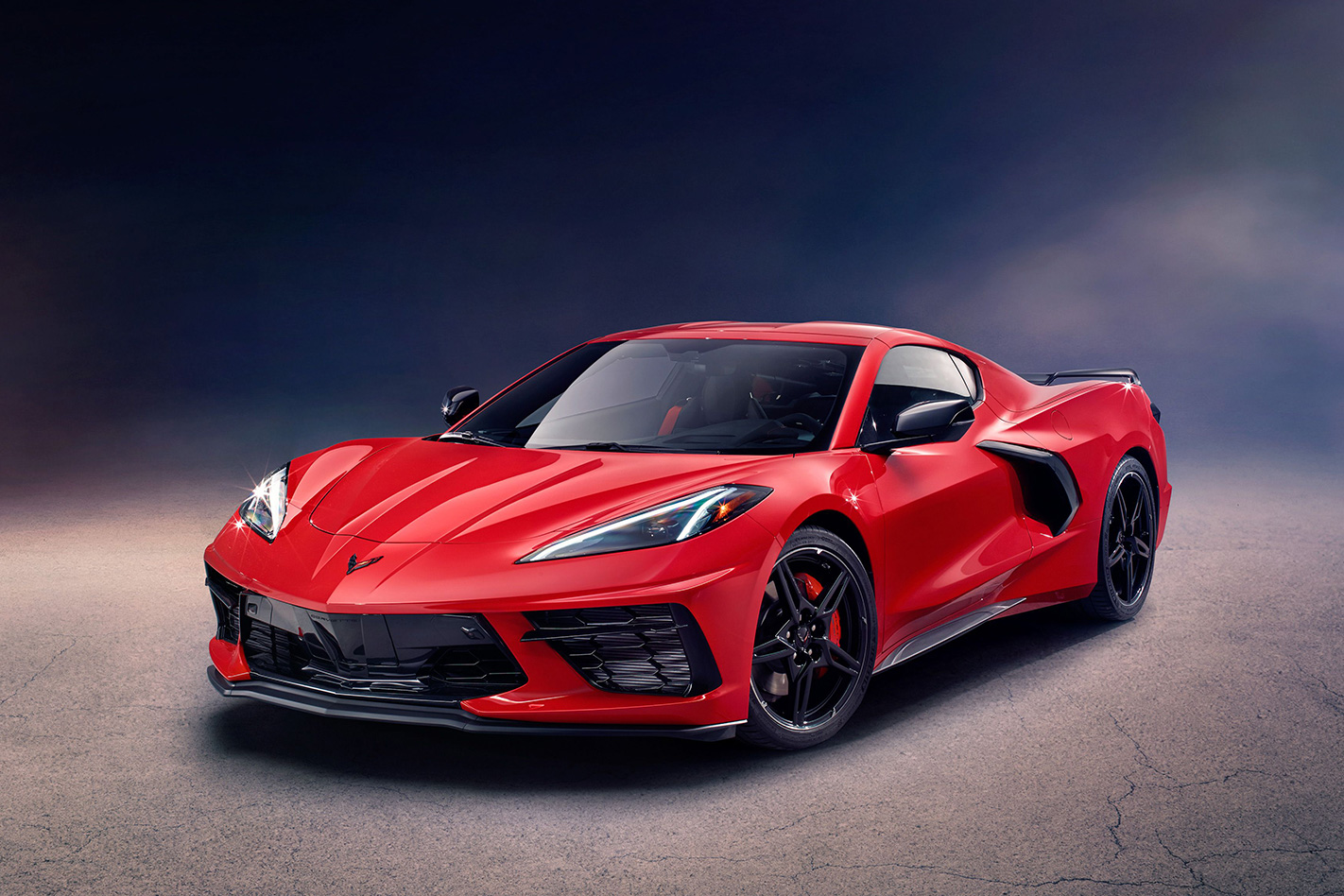
We know the mid-engine C8 Corvette is coming to Australia. It’s a cause for celebration for any die-hard GM fan. But how you buy the circa $150-170K supercar and service it here is yet to be determined. In fact, it’s still unclear in America.
After threads on Reddit suggested US Chevrolet dealers would be up for US$50-60K in tooling and training costs just to service the new C8, it had us wondering how many dealers in Australia would be willing to cough up even more than that to service the handful of Corvette’s sold here.
But soon after Jalopnik reported on the thread, Corvette spokesperson Chris Bonelli reached out to clarify with the US publication.
“Corvette has always been a vehicle that requires advanced training and service tools beyond the requirements of the other vehicles in the Chevrolet portfolio. The process to become a certified dealer has remained the same from the seventh generation,” he said.
“If the dealer is not a current Corvette dealer,” he explained, it would be “under” $20,000 to buy C8 servicing tools.
That equates to around $30,000 in local currency, before factoring training costs spent on Holden technicians to fully understand the new mid-engine supercar. Still a lot of money for a brick and mortar Holden dealer to spend to be able to service a few vehicles.
Furthermore, it’s believed that US dealers will have to “opt-in” to be a “certified Corvette dealer”, complete online courses and driver training, maintain a dedicated sales specialist on staff and purchase the necessary tools to service the C8.
A press release from Chevrolet suggests that specialised dealerships will be created to handle the workload, stating “Corvette Signature dealers will also have special training on servicing the new supercar, reinforcing Chevrolet’s commitment to the complete ownership experience”.
For Australia, Wheels understands that it’s likely you’ll be able to take delivery of your Corvette in just about any dealership in the country – if you’re willing to pay the delivery costs, of course. Given the low volume projected, though, it’s doubtful you’ll be able to walk into any Holden dealership and view the Corvette, with metro areas the target.
You might be wondering what all the fuss is about, right? After all, Holden is and will be servicing Commodores with kinds of Chev V8s for years to come. However, we understand that the Corvette will be treated as a bit of a different beast in Oz. Remember, it’s also made out of aluminium and has parts specific to it alone. Much like the Holden Volt, the Corvette isn’t a one-size-fits-all car that any dealer can service.
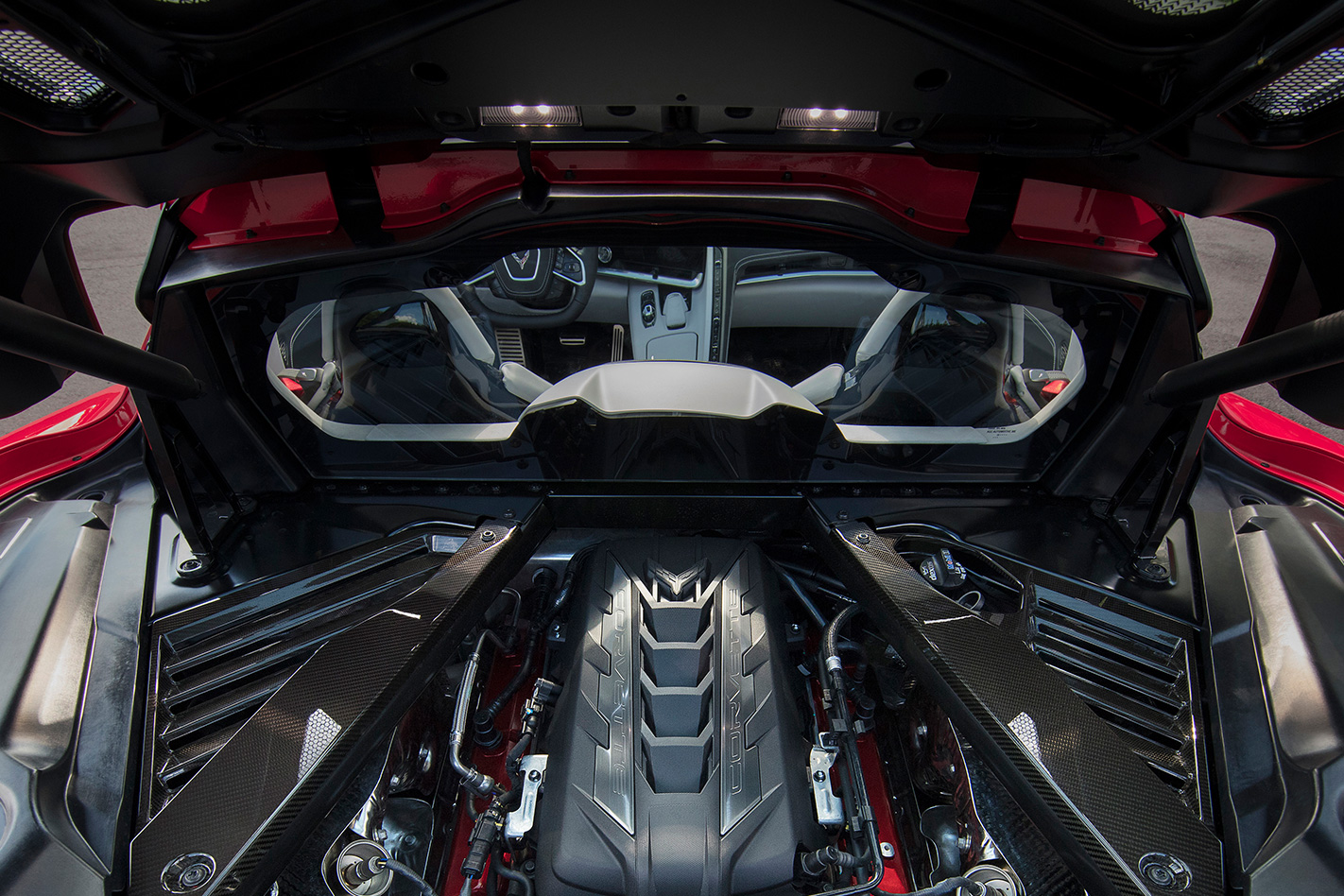
The atmo 369kW/637Nm 6.2-litre V8-powered C8 Corvette is expected to land down under before the end 2020.
We recently posed the question on WhichCar Facebook: What is the most frustratingly minor thing you’ve done to attract a traffic fine, and received a bunch of responses that made us wonder how anyone is able to hang on to their licence. Let this be a lesson to us all.
Lacking control
Accelerating to the speed limit up a hill. I got a ticket for “failing to maintain proper control of the vehicle”. I stupidly just paid the fine to avoid having to go to court so now it’s on my record forever – Brad
In a spin
Took off (slowly) from an intersection and the inside wheel spun the tiniest amount in my 2500kg FWD work van. Cop pulled me over and told me I did a burnout. He was “very lenient” on me and fined me $660 and three points. He said I should have got the van impounded and lost my license.
I said I’d take it to court, he said if I did and was found guilty then I would lose my van and my license and he was “doing me a favour by just fining me for neg driving”. I couldn’t risk my livelihood so paid it. – Johnny
Same thing. I was in a ute on a gravelly road. I got done under the hooning law. I copped $800 and six points. – Andy
Took off over a slightly wet pedestrian crossing and the rear tyres squealed. I got fined for “excessive tyre revolutions”. – Greg
Fair but harsh
A minor error in judgement saw me get a speed camera fine for 60 in a 50 zone, on a quiet, main-ish back road with, at the time, no traffic.
Although it wasn’t deliberate, I’ll cop it. But here in South Australia, the fine for 10ks and over is $430! Not sure the punishment fits the crime to be honest. – Dave
Hidden detail
52km/h in a 50 zone. When I went back to find 50 sign found it behind a new bus shelter. They wouldn’t drop it. To make matters worse it was a near double fine of $380 as it was in a heavy vehicle. – Peter
Towing the line
Had a trailer on my car years ago. Cop pulled me over and stated my rego plate was partially obscured due to the trailer. Fined. – David
Delayed payment
Paid rego on a public holiday and got booked for being unregistered three days later. – Peter
Bordering on unfair
103, in a 100km/h zone on the Queensland side of Mooree. – Gregory
Have you received a traffic fine for something minor or when you had no idea you were infringing? Tell us in the comments below.
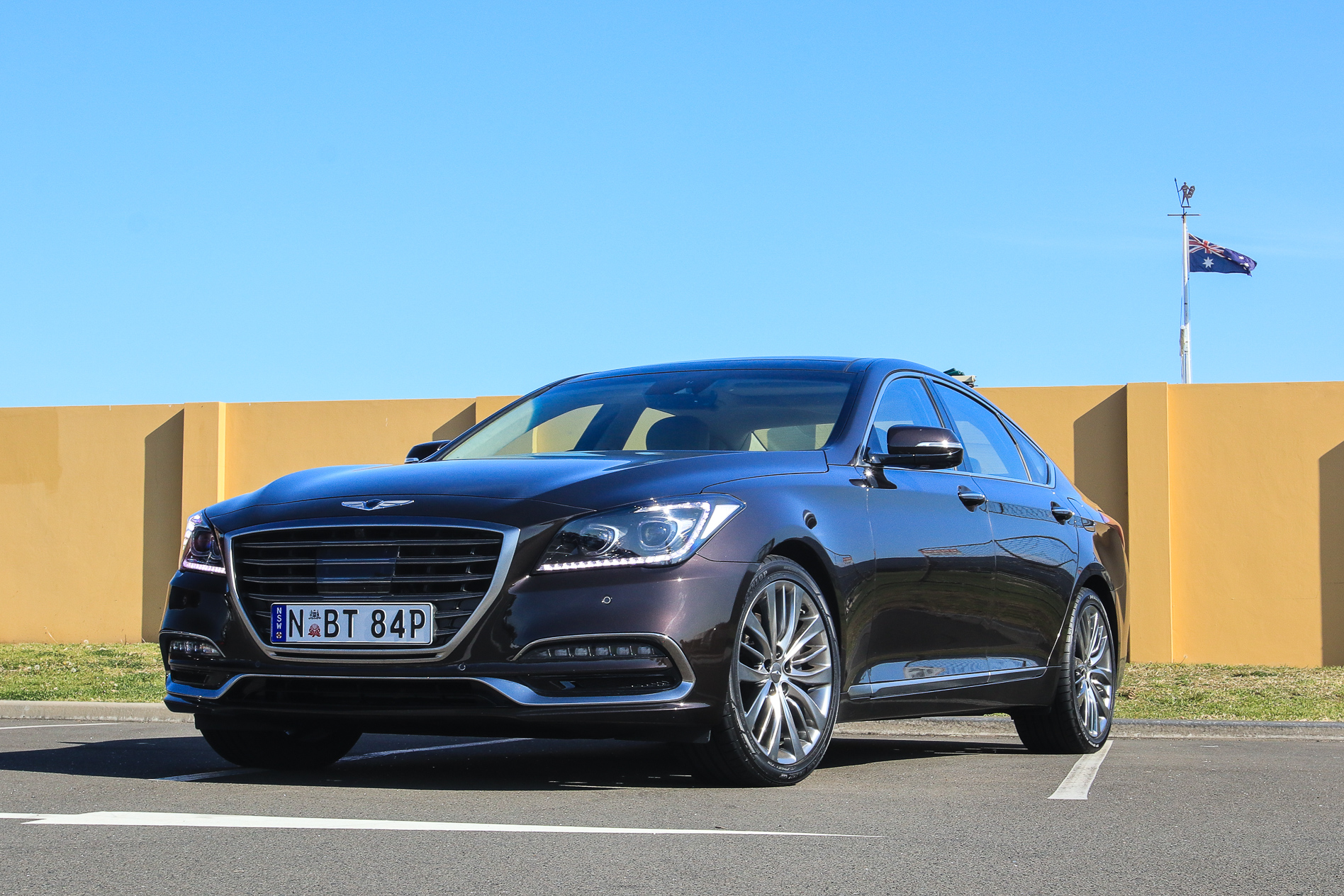
Genesis has had an interesting run here in Australia, and I wouldn’t be surprised if you’re scratching your head wondering what the heck a Genesis even is. Think of it as Hyundai’s Lexus, and you’re on the money.
In 2014, this very same car – then known as the Hyundai Genesis – launched in Australia… and when I say ‘this very same’, that’s exactly what I mean.
Same DH platform, same 232kW/397Nm 3.8-litre GDi V6 that sends power to the rear end via the same Hyundai-built eight-speed automatic… other than being five years older, it’s essentially the same car.
Hyundai sold about 1200 of the large four-door, five-seat sedans – and mostly into the hire car arena, where significant discounts were offered to commercial buyers ‑ before dropping the car from the range in 2017.
So… why is it back? Genesis is now a standalone brand, with big designs on the luxury segment here in Australia. But – to me at least – it’s all a bit of a weird deal, particularly in light of the fact that an all-new G80 is due next year.
Value
On test is the upper-middle grade G80 3.8 Ultimate, which sells for $88,900. The entry-level 3.8 is $68,900, while the 3.8 Sport Design derivative is $72,900.
The Ultimate fits in underneath the range-topping Ultimate Sport Design, which is $92,900 before on-road costs.
Oh, and if you’re looking for a deal, Genesis says that the pricing is “non-negotiable”. Weirdness number one right there… who won’t negotiate on the price of a car?
This pricing puts it around $9000 to $11,000 over the price of the previous Genesis, for what is essentially the same car.
In terms of competition, the entry-level Mercedes-Benz E200 is $92,600, and the equivalent BMW 520i is $89,990.
The six-cylinder Lexus GS350 starts at $94,900, while a more direct competitor in terms of size and appointments might actually be the cheaper ES300h Sports Luxury at $74,888.
Genesis offsets the price of the G80 by offering five years of free servicing, a five-year, unlimited-kilometre warranty, five years of roadside service, five years of navigation map updates and five year’s membership to the Genesis To You program, which includes a home-delivery test-drive service, valet collection of your car for servicing and other benefits.
Genesis claims a fuel consumption figure of 10.4L/100km, and over 440km of testing, I scored a respectable 10.9L/100km over a range of terrain.
Standard features
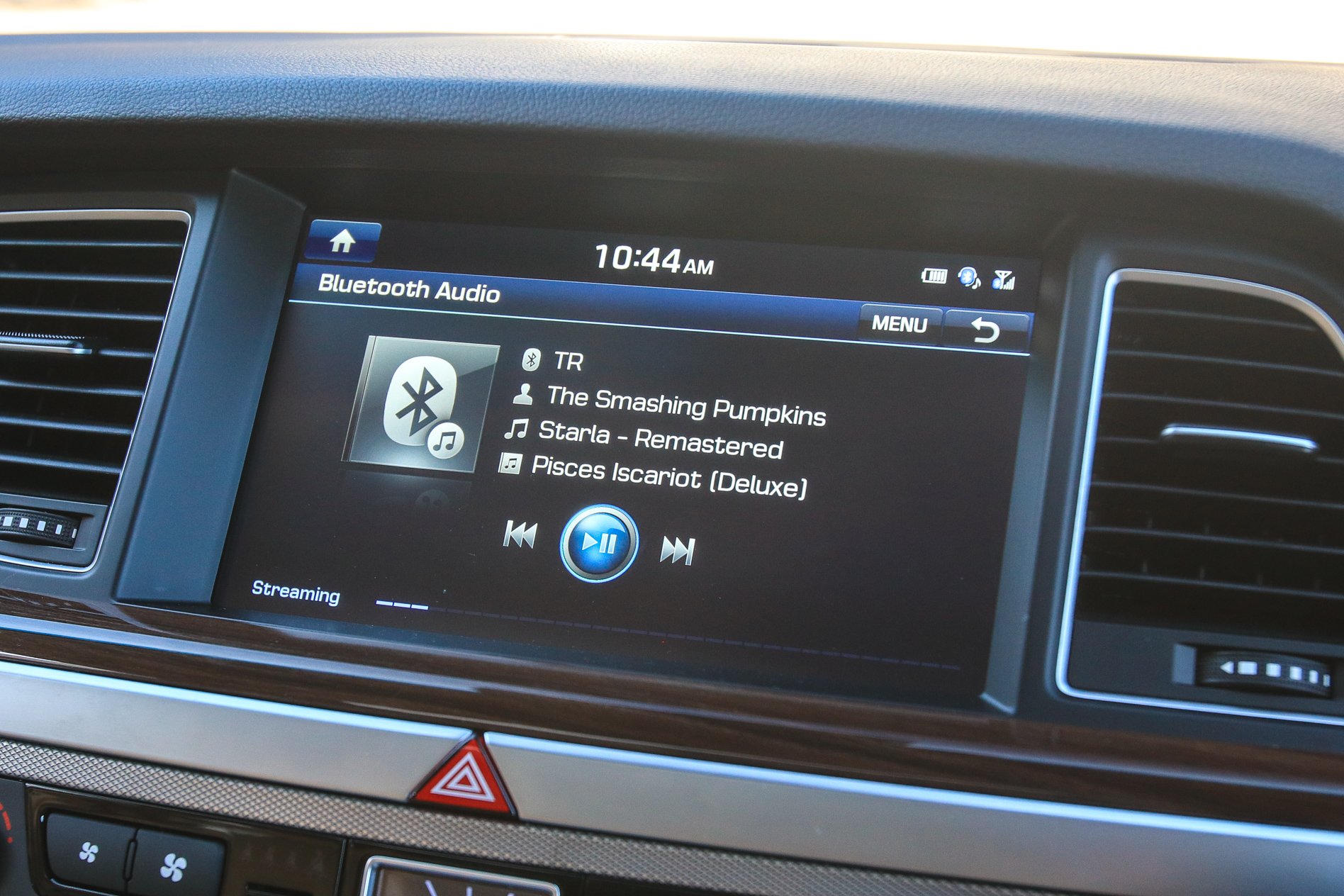
For your dough, the Ultimate is pretty well specced, save for a few glaring omissions. Luxury plays like a 17-speaker stereo system, wireless phone charging, LED headlights, a 9.2-inch multimedia system with sat nav, powered steering column, Nappa-grade leather upholstery, heated and vented front and rear outside seats, powered soft-close doors and reclining rear seats are all present and correct.
Automatic headlights and wipers, a heads-up display, keyless entry and a powered boot lid are also standard.
The biggest difference over the… erm, previous Genesis is the addition of adaptive suspension which, like its predecessor, has been tuned for Australian conditions. The gear-shifter is now electronic, but that’s the extent of the mechanical changes.
For me, though, it’s what the G80 doesn’t have that cruels it. No Apple CarPlay or Android Auto? Really? Come on… it comes standard in a $15,490 Hyundai Accent!
And while it does offer high-grade driver safety aids like high-speed AEB with traffic jam stop-start and rear cross-traffic alert, it misses out on other basic driver safety aids like speed sign recognition – which, for mine, is as big a miss as Apple CarPlay.
Size
As a favourite of the airport driver crowd, the G80 nee Genesis has been well received for its large boot capacity and reasonable rear-seat room.
Note the use of the word ‘reasonable’… if you’re expecting Holden Statesman-like room in the rear of the G80, you’ll need to adjust your thinking. Despite being a shade under five metres long and its three metre-long wheelbase, the rear seats feel more like those you’d find in a Commodore.
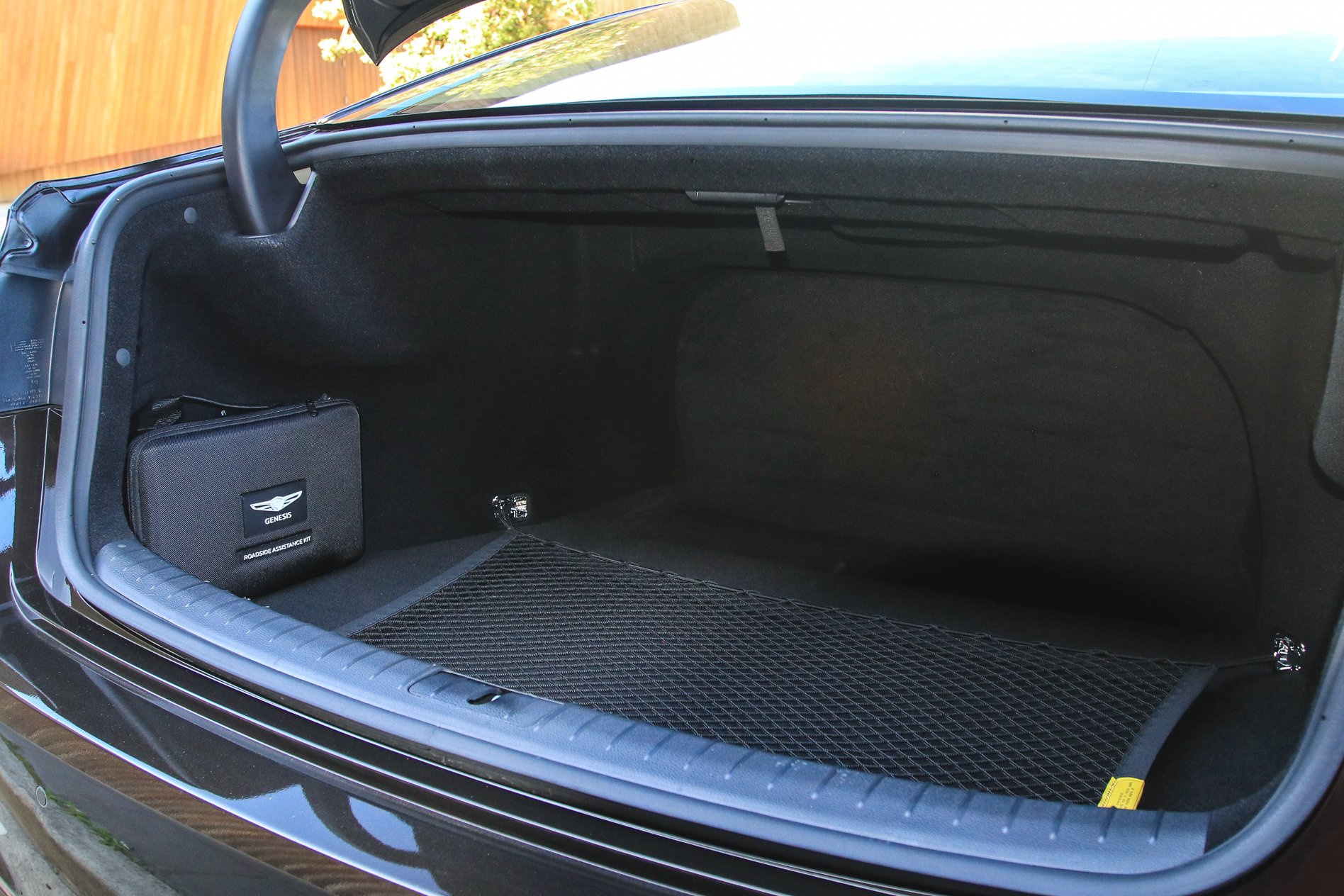
It looks like a saloon but the sheer bulk of the back seats actually swallows up a surprising amount of room. As well, the fixed rear seats means that the 493-litre (VDA-measured) boot capacity is all you get. It’s reasonably sized but awkwardly shaped thanks to the hinge covers intruding into the space.
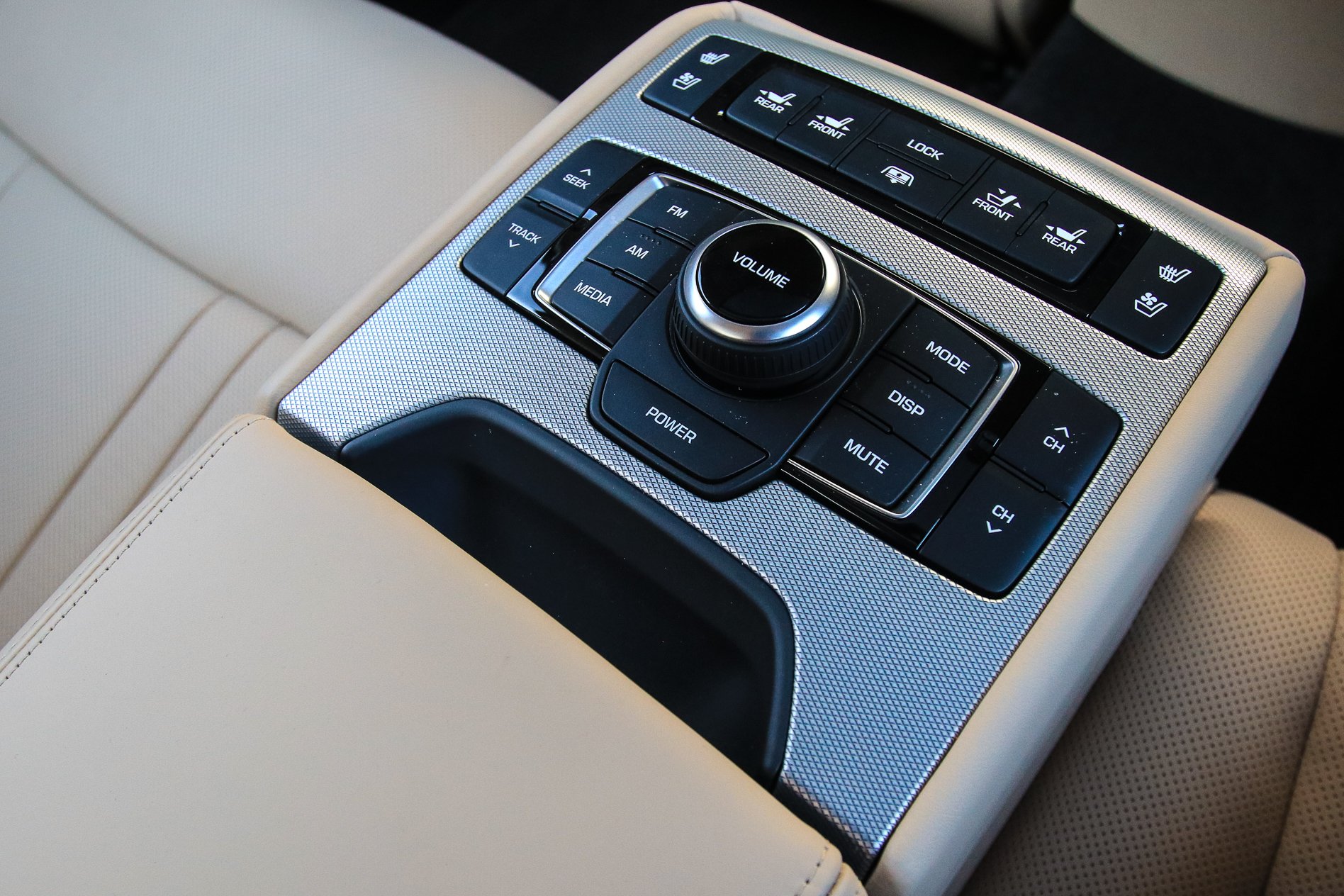
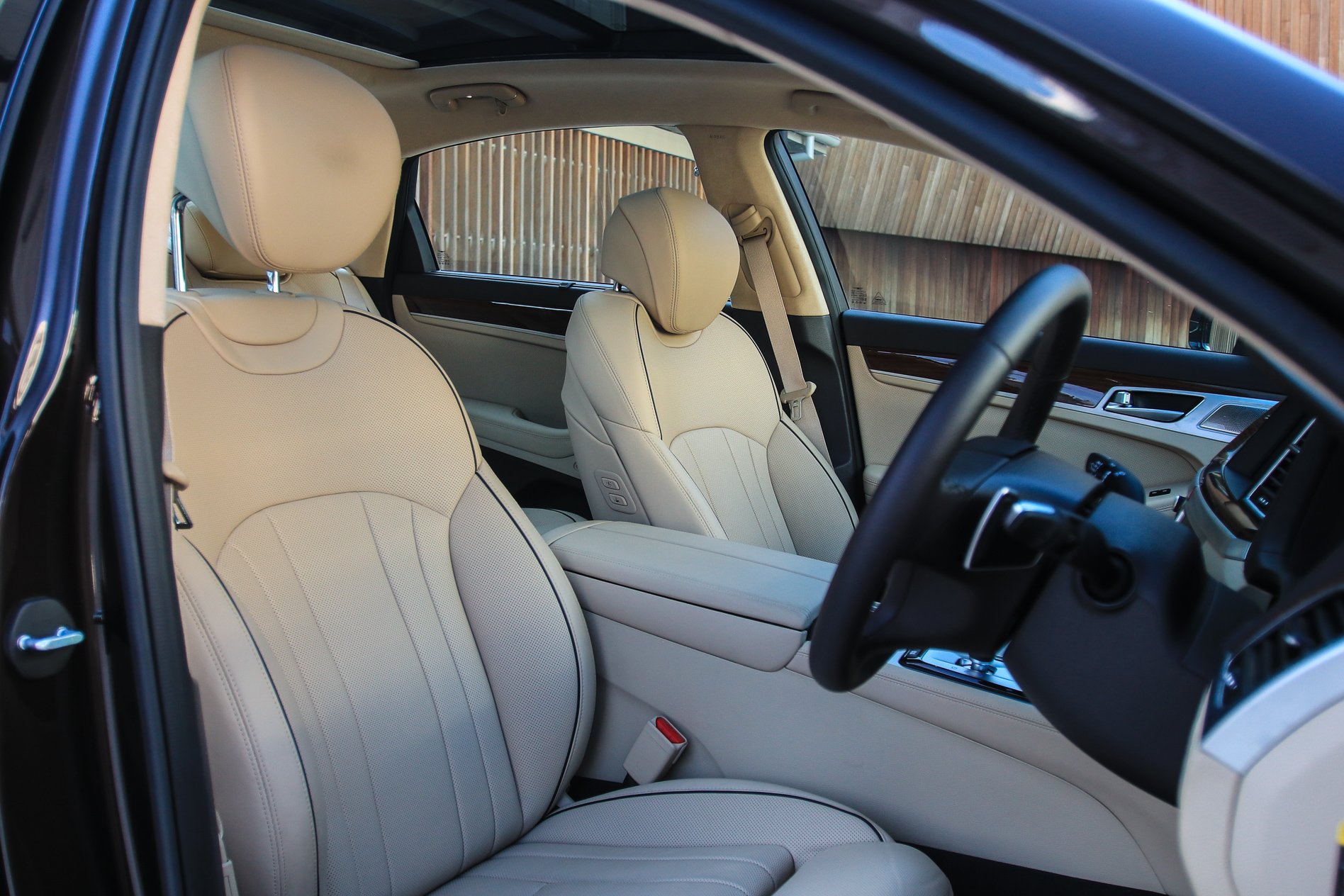
Up front, there is plenty of headroom and width for driver and passenger… and the rear seaters have their own set of controls to move those front seats forward should there not be enough space!
Safety
There is plenty of passive and active safety gear aboard the G80, including nine airbags, high- and low-speed AEB, adaptive cruise control, 360-degree camera, lane departure warning, rear cross-traffic alert and blind-spot warning. It’s rated at a maximum of five stars on the ANCAP scale.
Comfort
It’s supposed to be all about the back seats in the Genesis G80, and make no mistake… they are pretty comfy. A myriad of adjustments to seat back inclination, seat base length and degree of heating (or cooling) is complemented by an almost bewildering array of controls for temperature and multimedia controls.
Lord help and save the front seaters if a practical joker takes up residence in the rear seats…
As mentioned, there’s enough room for tall rear seaters, but you’d expect more given the length of the car.
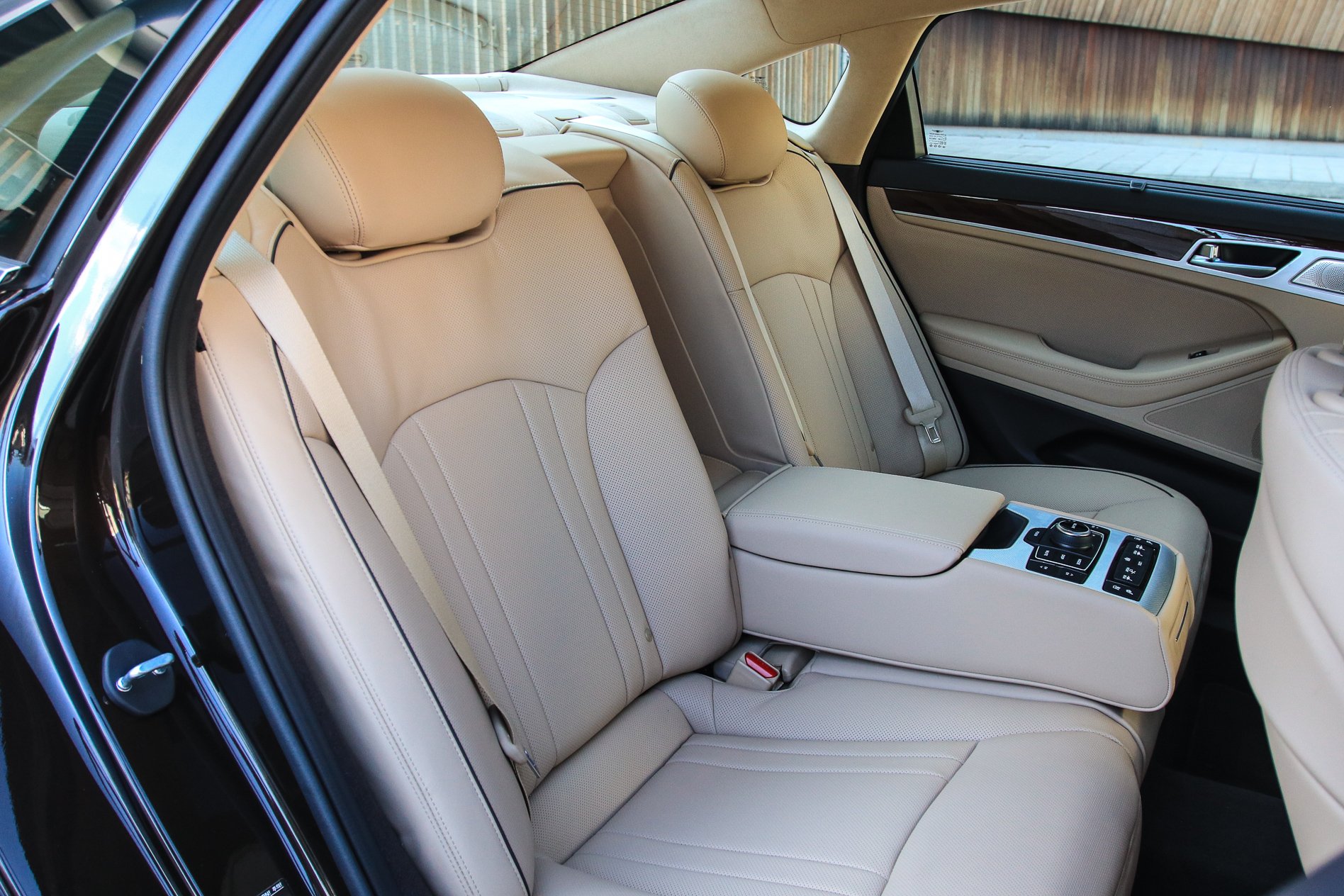
The front seats are very comfortable, though, and can be set into position. Noise intrusion, too, is all but non-existent, with the V6 barely making its presence felt. Wind noise and tyre roar are muted, too.
For mine, though, the main issue with cabin comfort is the fact that the cabin, once Hyundai’s shining beacon of the future, now looks little different to a current-day Elantra or Santa Fe.
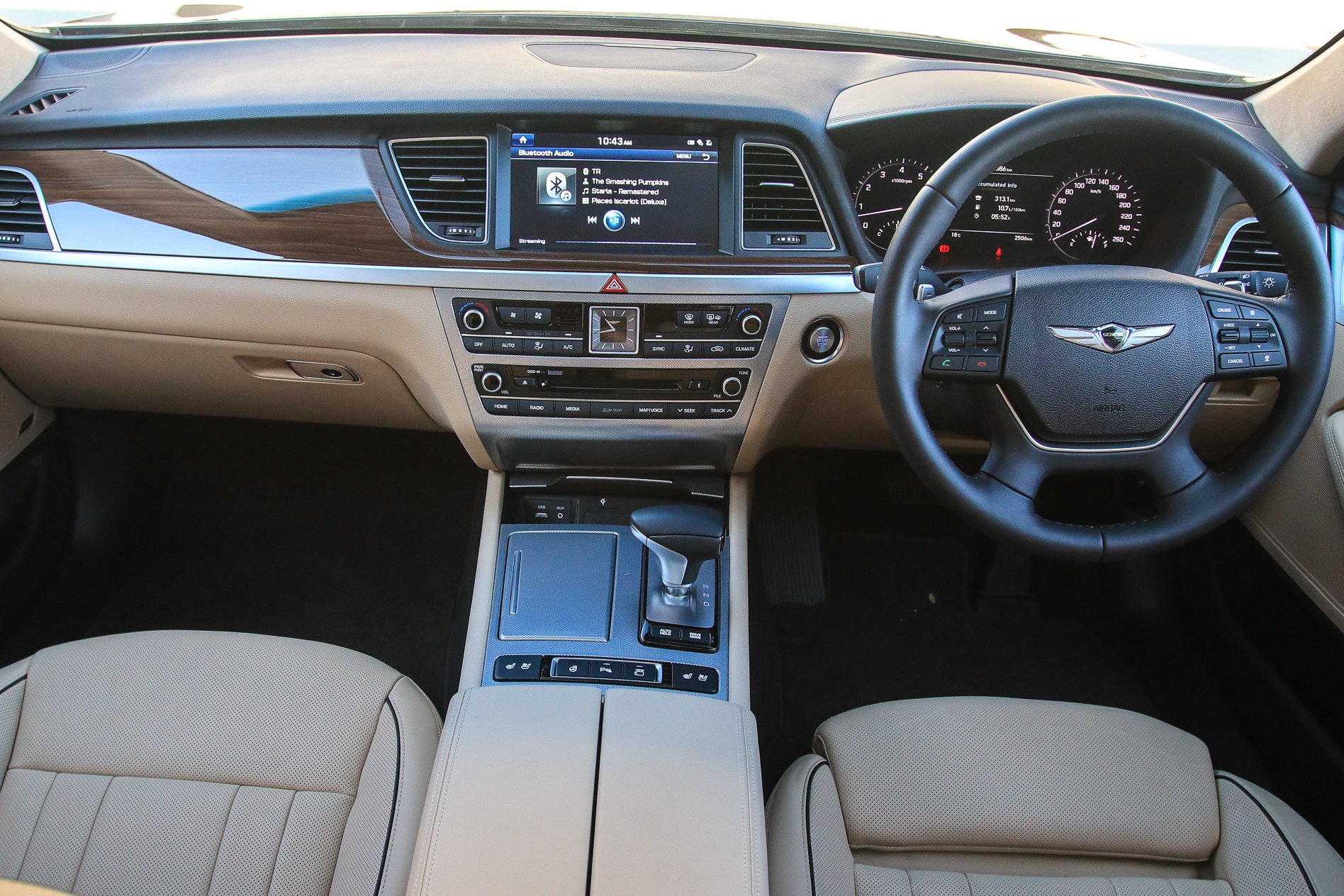
The integrated multimedia system lifts the space, as does the lavish use of premium materials like milled alloy, and the buttons and controls themselves are beautifully weighted.
But the fonts and graphics do nothing to separate the Genesis from more pedestrian Hyundai product, which really is just a side-effect of the car’s relative age.
On the road
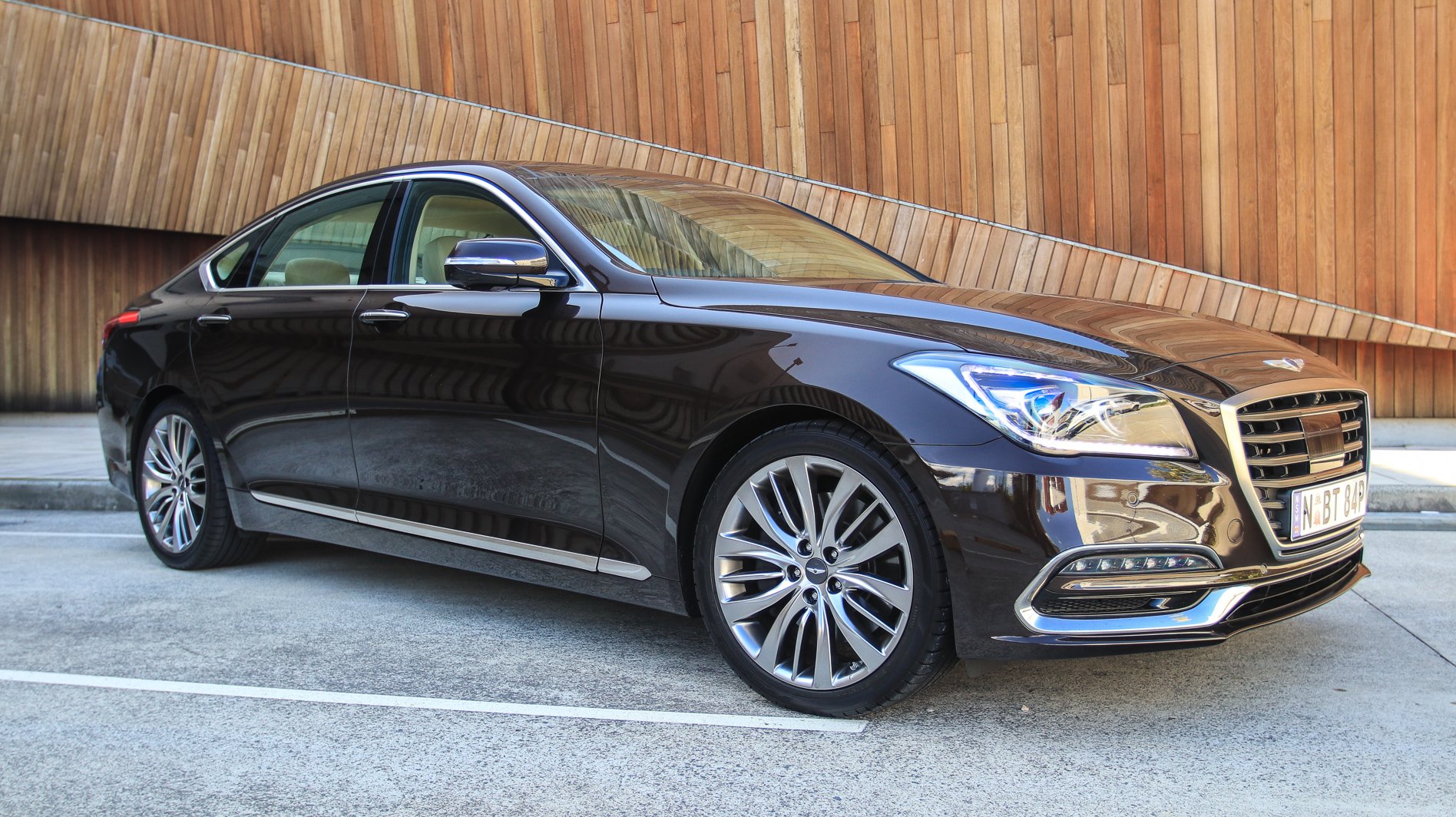
At almost two tonnes in weight and five metres in length, you’d be forgiven about forming preconceptions about how the G80 will handle. Well, you’re wrong.
With the hard work done by Hyundai’s chassis tuners when the G80 was here in 2014, the addition of adaptive dampers and a going-over of the car’s dynamic specs have yielded a big car with mid-size car manners… and a good mid-sized car at that.
Steering feel is light yet sufficiently weighted and feelsome to impart a sense of stability and balance at all speeds, while the compromise between a comfortable ride and decent chassis control is beautifully struck.
The G80’s primary ride is just about perfect on every road surface, underpinned by a solidity that makes you take a second glance at the badge when you hop out.
Brake feel, too, is just terrific, allowing the driver to manage his passenger’s comfort with absolute ease.
The engine does a good-to-adequate job of propelling the 1995kg G80 from rest, and interestingly the rear-drive configuration is neither here or there to me when it comes to its dynamic performance.
It can sound a little strained if you’re asking a bit of it from rest, but it holds a cruising altitude with aplomb.
Verdict
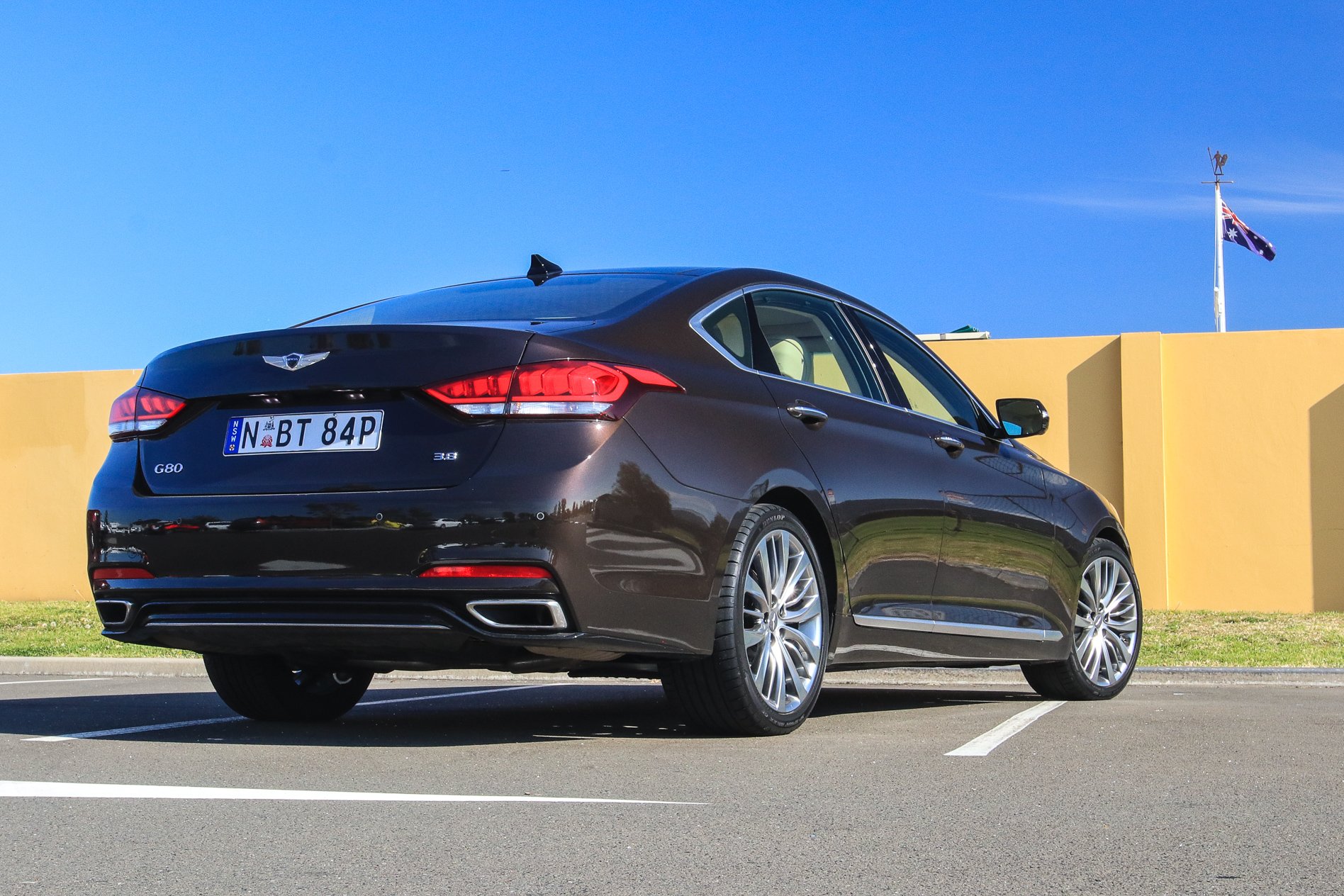
An interesting one… taken in isolation, the G80 is the wrong car for the times, presented in a way that might not necessarily win it friends or influence. It’s based on tech we’ve seen before – and paid less for! And with exactly two dealers on the books and a no-negotiation policy, its ability to get out into the wild is limited.
However, as a foil to its smaller, newer and more accomplished G70 sibling, I can see why the G80 has to exist, as Genesis impatiently awaits the all-new version that’s rumoured to be dropping in 2020, as well as an SUV or two to tap into the crossover zeitgeist.
There’s a car for everyone, and the hire driver set will be keen to at least have a look. Genesis’s current approach to an ultra-competitive automotive retail space, though, will not make the job of getting bums in G80 seats especially easy.
One, two, four, twenty, one hundred. It was a vast mob of ’roos, emerging in waves from the spinifex. Startled by the searchlight blue of the LED headlights, they scrambled over one another to reach safety.
Some were knotty, muscled adults, timing their leap across the boundary fence in advance like a chess player, effortlessly skimming as if working ground-effect. Others were scrappy little tackers, jinking furiously, looking for a breach in the wire. One lost grip, lowsiding on the sand like an inept motorcyclist, limbs flailing desperately, eyes wide, spittle flecking from its soft mouth. Pre-dawn out of Dunkeld in a Porsche 911 GT3 rewards a certain circumspection, but delayed gratification only makes what’s to come that bit more piquant.
Choosing where to take Porsche’s latest 991.2 version of the GT3 had us scanning Google Maps for weeks in advance. We wanted roads that offered tight, technical sections, a variety of surfaces, faster open sections and, to avoid the wrath of the photographers, an escape from the tree-blanketed roads of the high hinterlands near Melbourne. The Victorian Alps were out too, as we’d recently shot there and wanted something different.
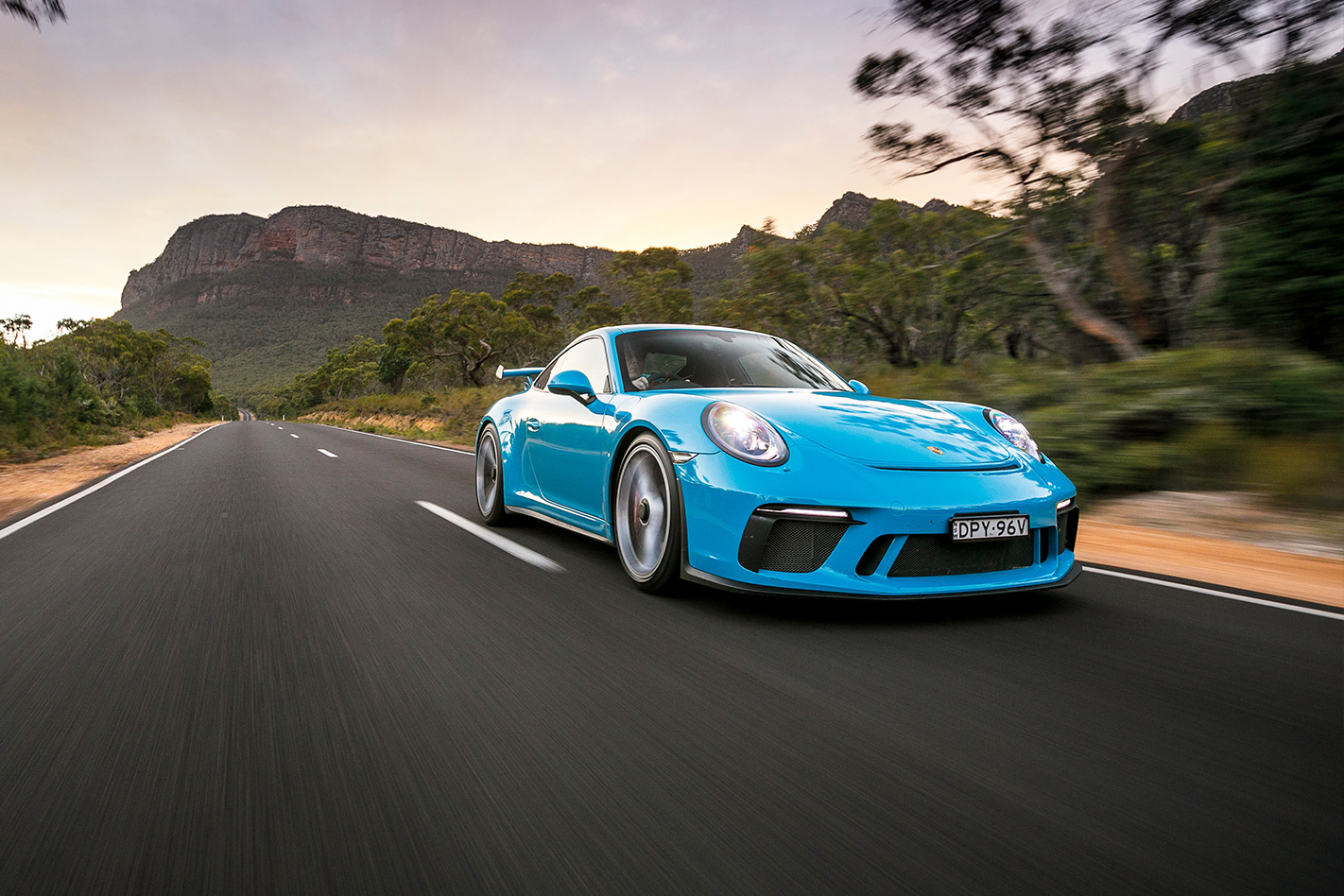
The 911 GT3 needs little in the way of introduction. This version gets the latest 9R1.5 engine, a 4.0-litre flat-six related to that of the 911 RSR race car. Likely the last naturally aspirated engine to reside in the back of a GT3, it revs to 9000rpm, makes 368kW and ditches the old hydraulic valve gear in favour of a simpler set-up that lowers friction and frees up another 6kW. Helper springs on the rear axle permit a more malleable ride quality, while better aero, an optimised four-wheel-steer system and the fitment of standard Cup rubber promise a ride and handling balance unlike any previous GT3.
That’s the promise. Maybe it just doesn’t like early mornings, but the GT3 feels recalcitrant at low speed, this PDK-equipped car chuntering and clattering on the overrun with the Clubsport-spec roll cage clanking and pinging as it starts to soak heat from the engine. Porsche has ditched the rattly dual-mass flywheel on this model, and the PDK transmission mates to an e-diff rather than a mechanical item but at idle the GT3 still sounds like a sack of scaffold clips being emptied into a wind tunnel.
As kids we used to play on the river bank near our house. The river had cut a deep trench in the clay banks and, at one point, it narrowed into a steep v-shape, the water gathering speed as it churned and gargled through. We would challenge each other to jump to the other side, but nobody ever dared. We’d heard that one kid had tried and been washed away. It was doubtless apocryphal, but, as an eight-year-old, I’d sit and wonder what happened to him. Then one day I just decided to jump, sailing out into the void, arms and legs pumping uselessly in mid-air, before crashing into the shingle on the opposite bank and rolling onto my back in elation, laughing uproariously at the sun.
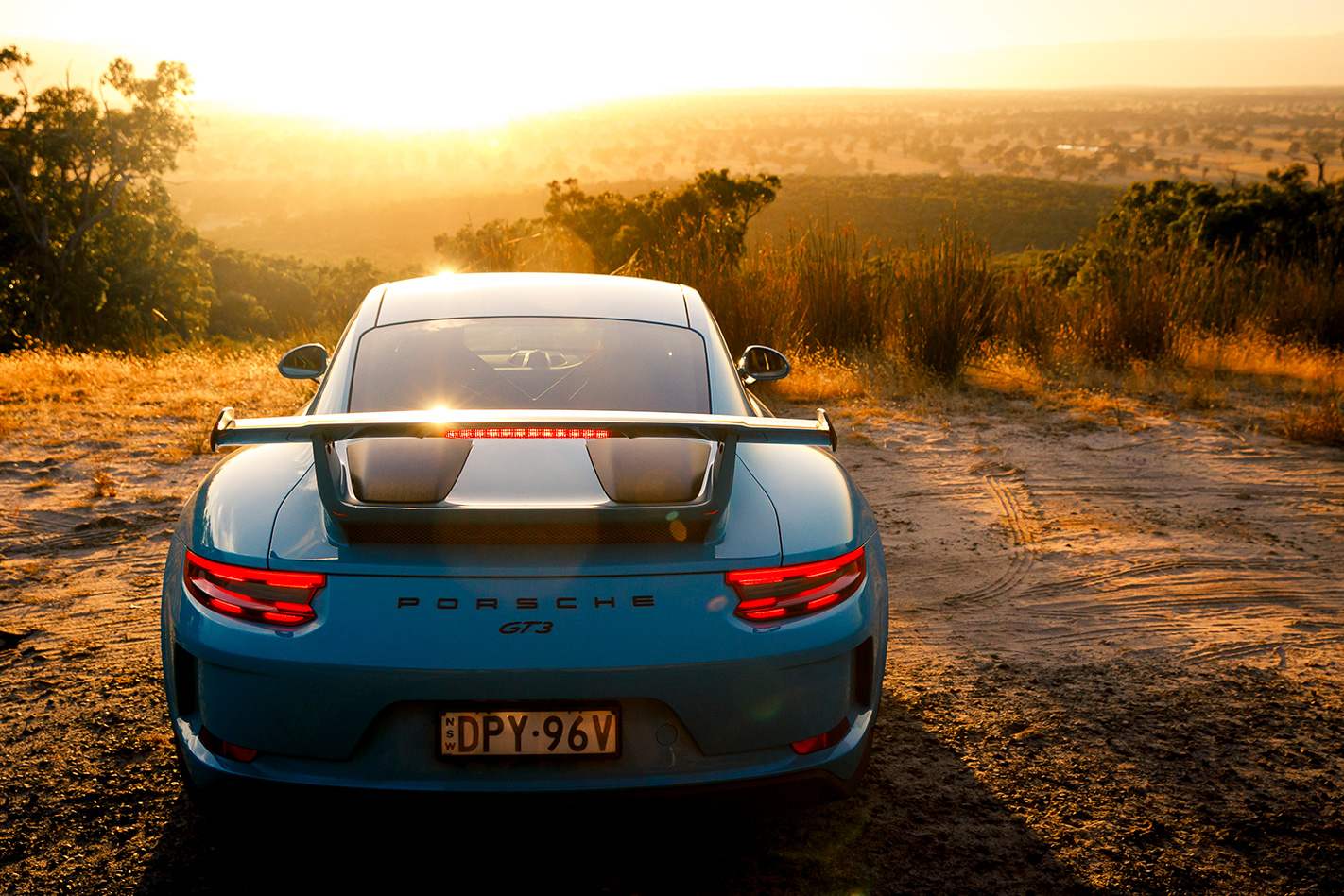
That moment fully four decades ago came pouring back, a vivid-hued memory that had previously grown careworn and faded. I’m laughing like an idiot, pounding the palms of my hands atop the GT3’s suede wheel and you will too, if you ever get to power a GT3 through to its 9000rpm redline a couple of times in succession. From the atonal discord at low revs, the sound builds into something far more purposeful at three grand. With 5000rpm on the clock, the note hardens perceptibly, the exhaust’s bass tone being overwhelmed by a maelstrom of induction, wind, tyre, transmission and valvetrain noise.
Peak torque of 460Nm arrives at 6000rpm, and there’s an understandable temptation to click the right paddle, to upshift out of this metallurgical hailstorm. Stay planted and madness follows. From 7500rpm the car lunges dementedly for the 9000rpm redline, revs piling on like a runaway reaction, the engine sounding as if it’s about to thresh itself into swarf. It’s operatic and slightly terrifying. You’re just clinging on, wide-eyed and dry-mouthed. Nerf the redline and change up again and you get to steel yourself and have another go, after which you look at the speedometer, experience a moment of clarity, slow down and laugh like a drain. Relief is a hell of a drug.
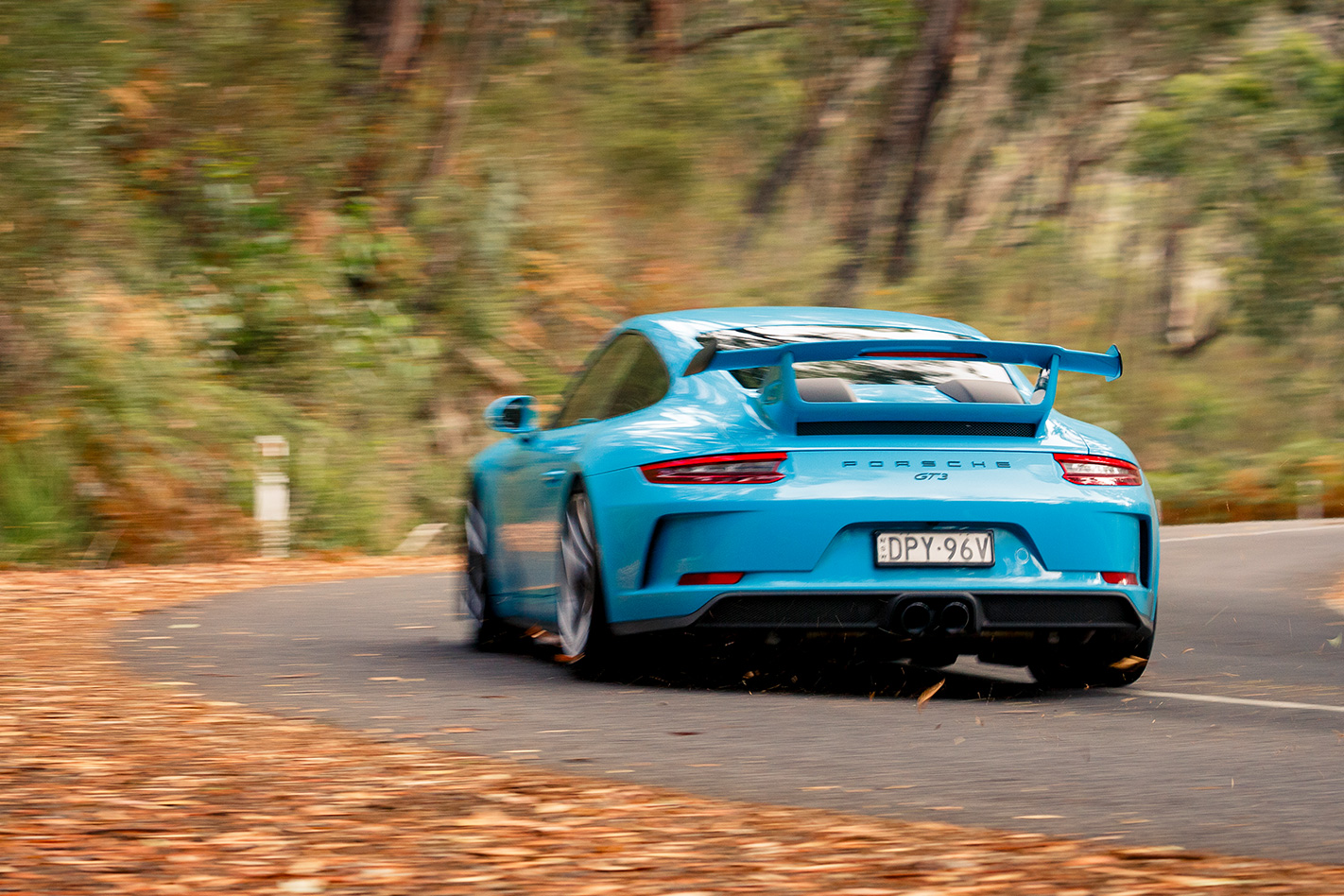
After a few runs for the cameras, we head north into Halls Gap for caffeine and savoury comestibles. I’d visited the town a few times before and had always taken a not particularly noteworthy route through Ballarat and Ararat. Branch left instead at Ballarat and arrive at Dunkeld via the Glenelg Highway and the Grampians appear far more majestic, a vast cinematic sweep of sawtooth peaks jutting from the volcanic plains.
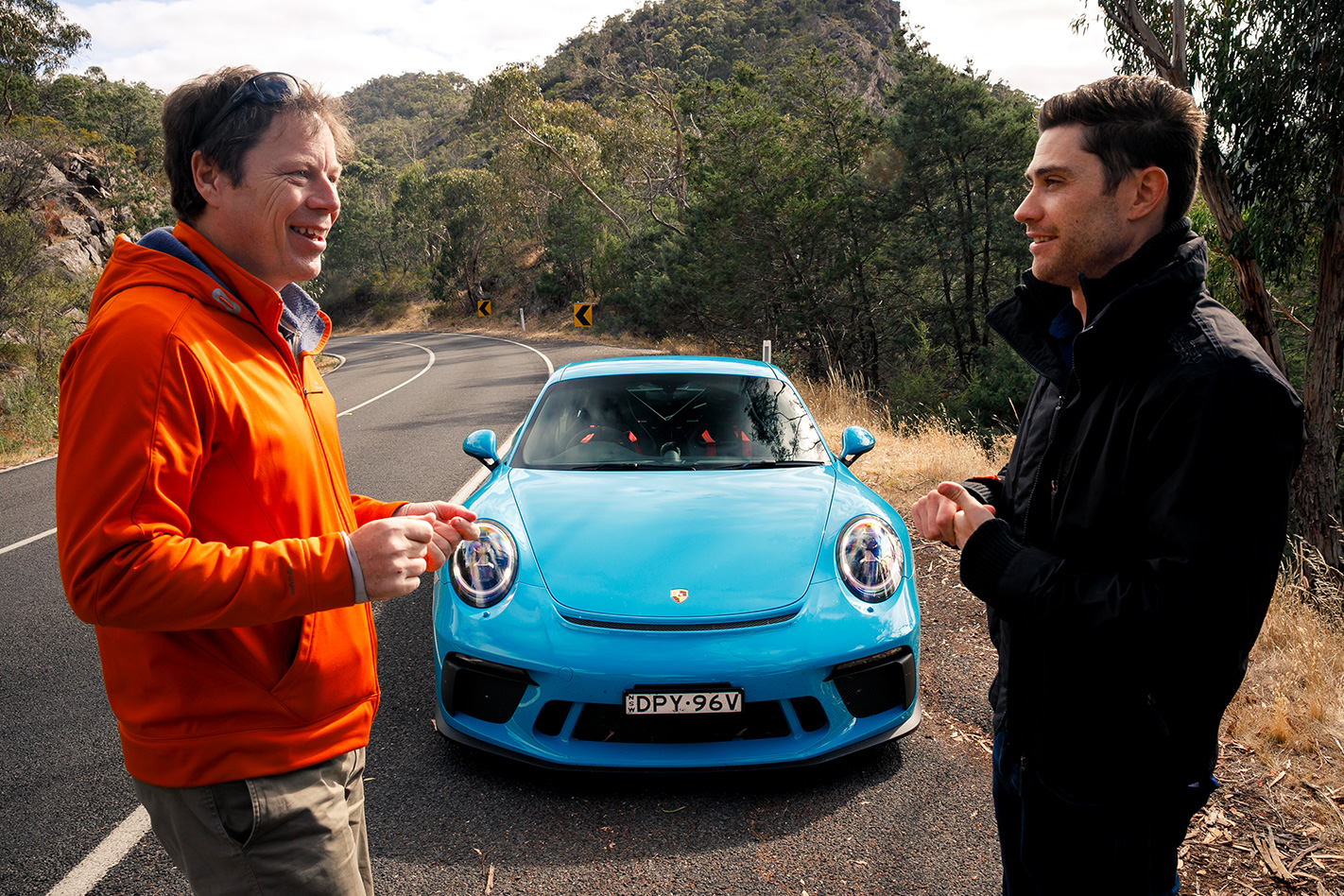
Editor Inwood hops into the car to shoot some video while I clamber onto a rocky outcrop above the Venus Baths pool to keep out of shot. It’s quite something to hear the car coming up the road, each corner perfectly plotted by its audible signature, a flare of rev-matching for the left hander over White Cliffs Creek, then the giddy soar to the redline through two gears before the keening of the steel brakes and another thousand rpm.
At times, the sound fades and vanishes behind the curves of the rocks, while at others it bounces crazily around the granite amphitheatre, phasing and shifting before the Miami Blue car explodes into view, all fury and tenuous adhesion before disappearing into a sweet tang cloud of hot oil and Dunlops. “Did you see that?” I shout, not quite able to process what just happened and needing validation from snapper Jacobs. Of course he did. Something that sounded like Brian Blessed trapping his scrotum in a split plastic picnic chair is pretty hard to miss.
Video requires pass after pass. It’s usually an onerous process, but today nobody seems to be issuing much in the way of complaint. Repeating the same section of tarmac affords us the opportunity to become familiar with the car’s behaviour, teasing more from it. One corner loses its camber quickly, hooked inside wheels suddenly pawing at thin air and setting the car into a lazy slide. We leave the stability control switched on. The ‘on’ position seems to be what most manufacturers would call a sports mode, allowing a hand or two of yaw before it intervenes. If it senses that you’re fast and accurate with wheel and throttle, it’s eye-wideningly hands off.
At 2.6 turns lock-to-lock, the steering’s a little slower than you might expect. It’s certainly nothing like the speed of, say, a Ferrari 488 (2.0 turns) but it’s enormously reassuring. There’s none of the nose-bob of old 911s and although the electrically assisted wheel fizzes in your hand, it sits dead-eyed and still when you take your hand off it. Hold the door grab handle instead and it’s fizzing too. Just sometimes the GT3 feels like a sly artifice; a knowing and flattering simulacrum of analogue from digital.
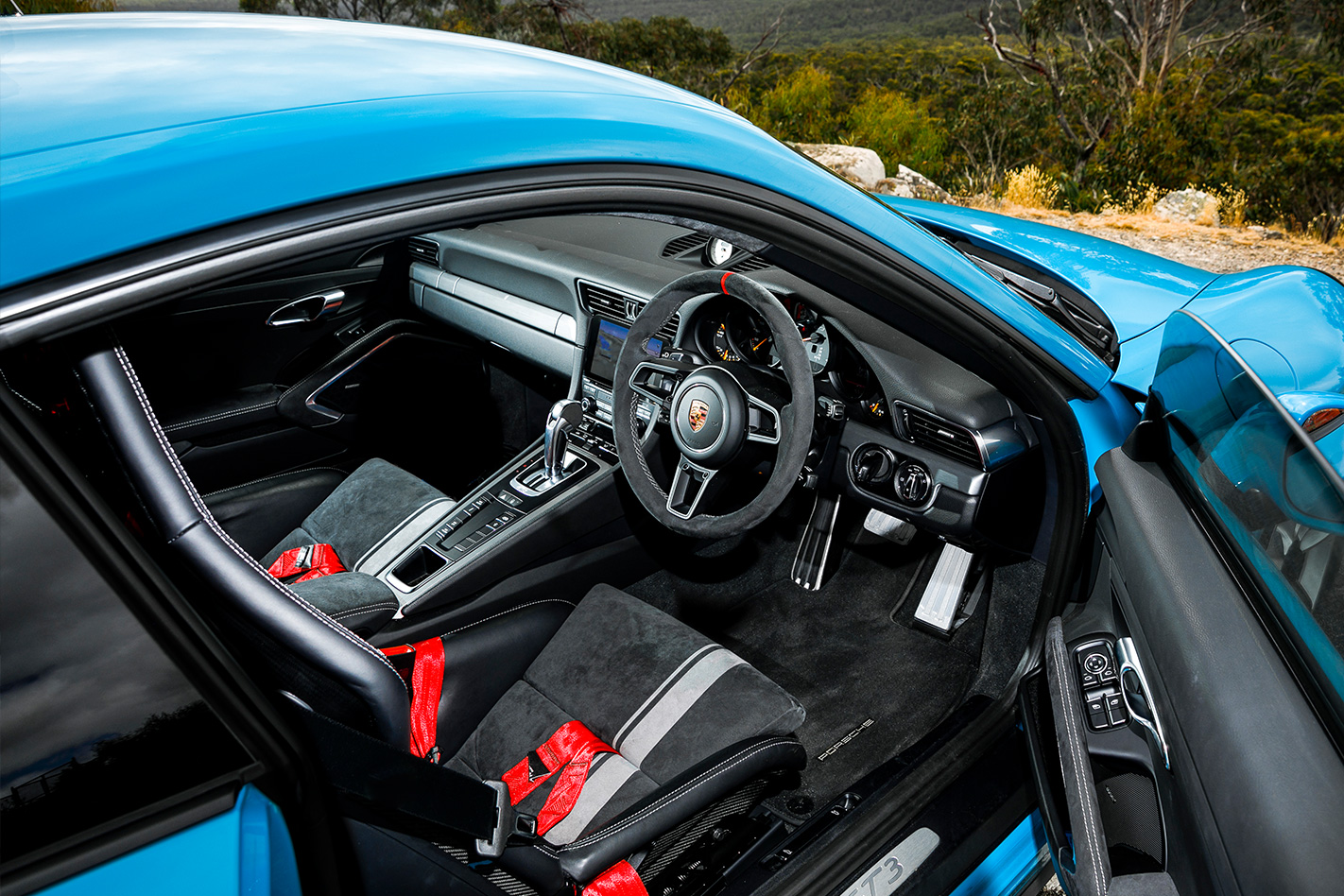
The steel brakes are so good that you probably won’t feel inclined to throw $21,590 at Porsche for the addition of ceramic composite discs, while the merits of the dual-clutch transmission are sure to cause a spirited discussion.
Inwood wondered whether, after you’d acclimatised to the frenetic savagery of the GT3, that you’d crave the additional layers of intimacy afforded by a manual ’box; an opportunity to learn different sides of its character. I’m not so sure. I don’t really subscribe to the view that the interactivity afforded by manual gearboxes is good interactivity in a vehicle this fast.
I’d rather devote processing time and space to something other than the mechanical chore of gear changing. Your mileage may vary on that one but my view is that the GT3 falls into that category of being too quick for a manual transmission to make much sense. Flame on.
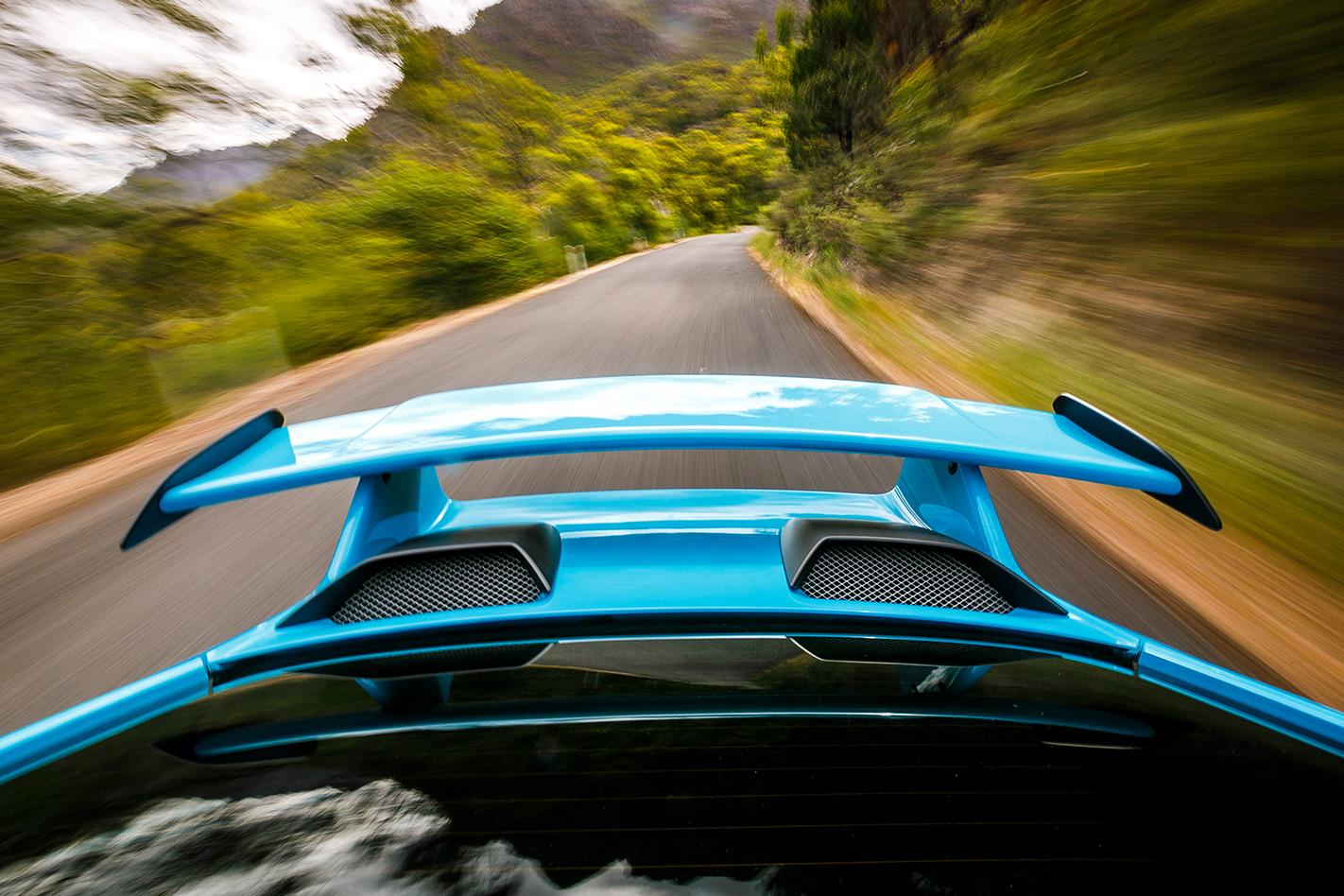
It’s easy to work into a flow on this more rhythmic section of road, the more generously cut hairpins and cross-basin sightlines allowing the GT3 to engage corners faster, tempting that giddying application of throttle.
Keep going through Zumsteins and the blink-and-it’s-gone Wartook, and you find a hairpin back onto the Roses Gap Road. I’d chosen this route to put the Porsche onto a road that felt almost too tight and enclosed, delivering a ridiculous sensation of speed. At first the road is all big vistas, but the gums soon choke it into a eucalypt tunnel that rolls and contours gently, giving itself coyly. It pays not to badger the car through here and just let it roll into cambers, picking up the throttle seamlessly out, allowing the Porsche to use the natural contours of the land to its advantage.
We follow the GT3 on one section in the camera car, marvelling at its otherworldly ability to move so quickly on its suspension. It jinks like a fly from one xy coordinate to another with no roll, rebound or reaction, several times a second. If you didn’t know better, it looks like shonky CGI animation.
We’d probably criticise the cheapness of the plastic column stalks were they in a Kia Rio, there’s a harmonic at 2500rpm that rattles the rear deck and air-con vents and corresponds exactly to 100km/h in 7th, the rear wing is the perfect height to obscure the light bars on a highway patrol Commodore, and if you leave the car in the sun for any period of time the metal shift paddles give you one heck of a sizzle. There’s a constant fusillade of stone chips pinging in the insulation-devoid rear wheelarches and the ridiculously overwrought cupholders block the air vents inside. If any of these things get on your nerves significantly, it’s a signal that you’re probably not driving the car properly.
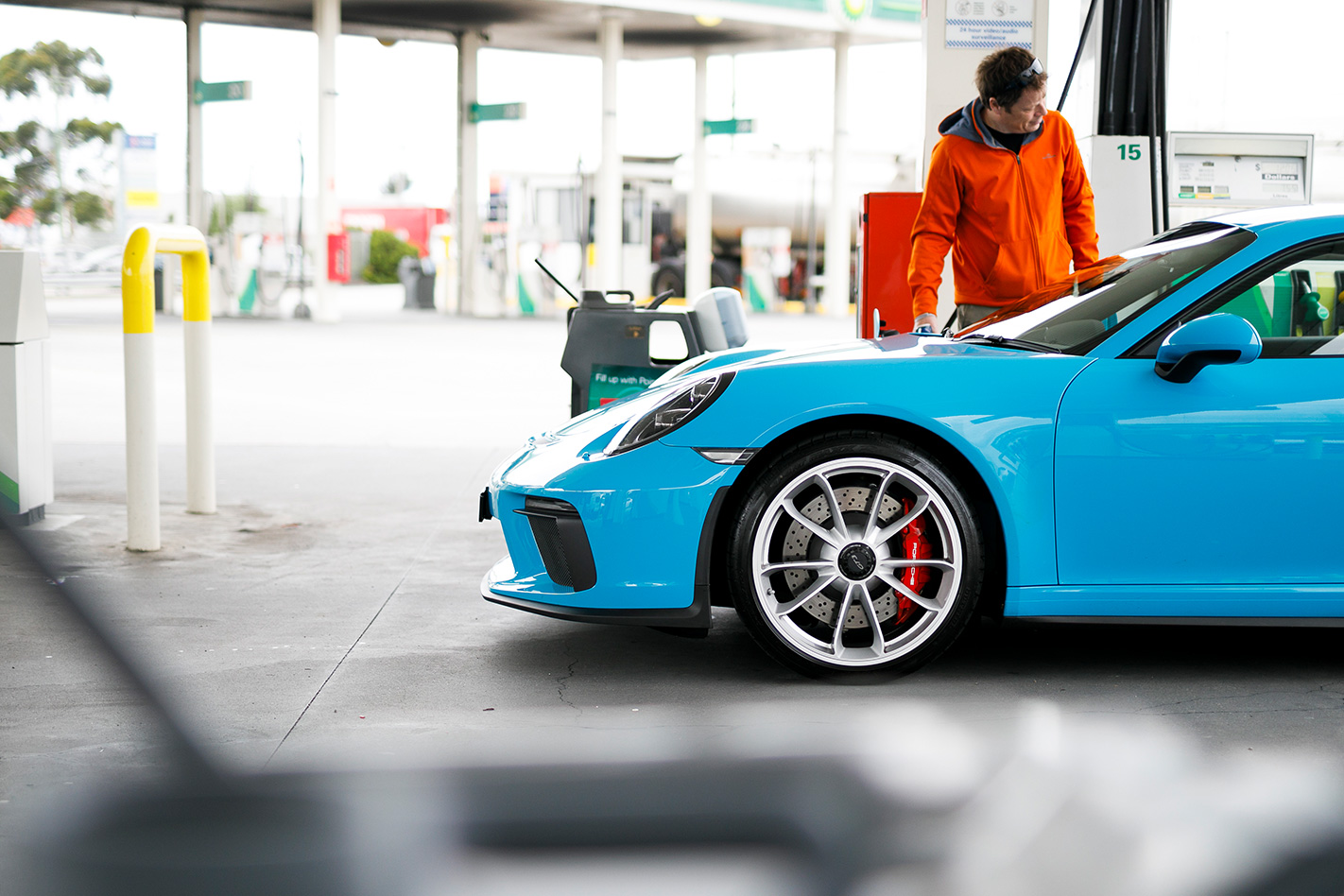
We roll up the main street in Stawell, feeling wholly conspicuous in this blue riot of downforce, and park for lunch. Old boys in rusted Subaru pick-ups slow to stare at this extrovert, alien thing that’s just landed. A kid stands, slack-jawed, recoiling as the front-lifter kit chuffs noisily, dropping the nose back to attack height.
We read the speculation that Porsche plans to turbocharge the next-gen GT3 and get a bit morose, but the feeling doesn’t last. We’ve just driven possibly the world’s greatest sports car on some fantastic roads, the sun is shining, the cafe is promising an award-winning snot block and I’m still 286km from home. That’s if I go the direct way. This could be the last time I ever drive a ‘new’ naturally aspirated GT3, so 286km be damned. Car versus road? Seconds out, round two…
You almost giggle. You have to. This is a Fiat Cinquecento, after all. You’re not supposed to be in a car like this and cursing the chicane for interrupting your flow at 195km/h. This isn’t supposed to be the car where you find Brembo calipers on relatively massive 284mm ventilated front rotors under your foot.
This review was originally published in MOTOR’s September 2008 issue
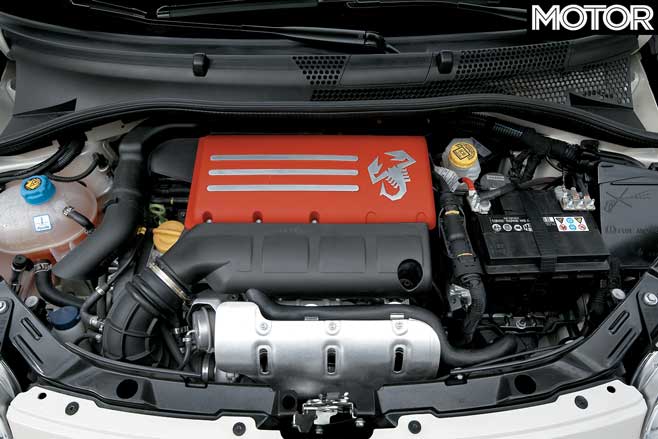
See, while people are going to harp on about the ridiculousness of a car like this having twin exhausts, 99kW, and a flat torque curve from an Abarth-tweaked 1.4-litre turbo four, it’s not the big achievement.
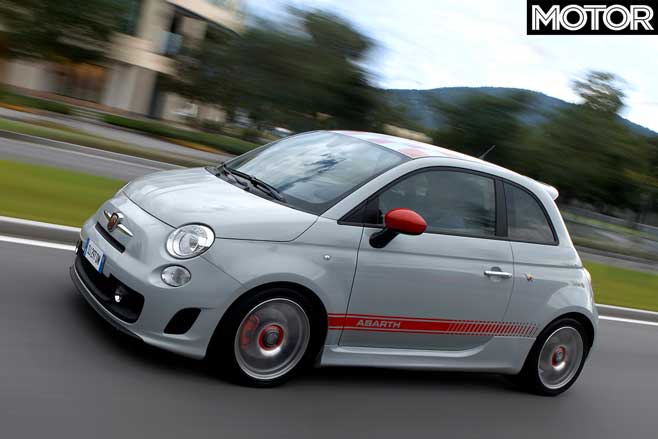
The worst of the stock 500’s handling problems all come from the pedestrian Panda’s rear end. But the Abarth gets an anti-roll bar squeezed into its date and the differences are immediate. Over any mid-sized and even large bump, the Abarth just hunkers down and goes. And goes hard.
The trick is that the roll bar has allowed Abarth to soften the rear springs by about 20 percent, stiffen the front ones by about the same and to drop the roll centre 20mm. The result is an agility that belies its origins. Stand on the anchors across a bump as big as you can find and the back end doesn’t move. It just hunkers down deep into the front spring travel and waits for you to change direction.
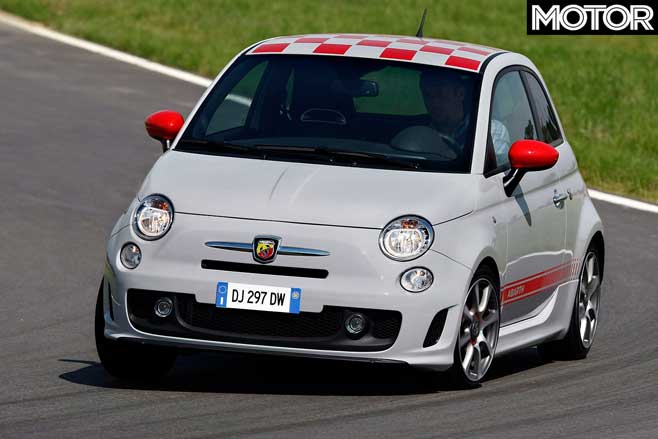
The Sport button livens up the ESP but also delivers more mid-range gristle, while the boost-gauge mounted gear-shift indicator swaps from fuel saving to attacking advice. Push on and the steering feels too slow, especially in its initial movements, but gives just enough info to earn its keep, not stardom.
Instead, that goes to the feel the Abarth imparts through the seat, and the accuracy and alacrity of its pedal response — both on and off.
The back gives an occasional tiny drift as you trail brake into faster corners, but it never threatens to meander far from where you want it to be and it can even help tuck the elongated nose back to the apex. It also keeps its body alarmingly flat in corners and on direction changes. There’s no lurching, no stumbling over roll centres. It just flicks one way and then the other.
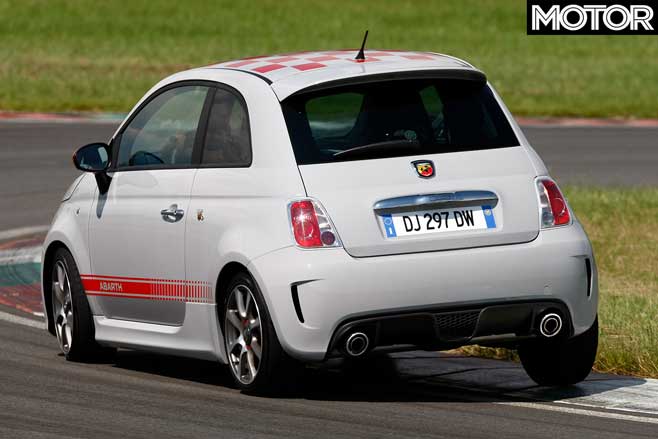
Fire up its Torque Transfer Control diff and it gets even better. The system basically predicts the onset of wheelspin and brakes the clumsy wheel, effectively sending the drive to the other (usually outside) wheel, which Abarth reckons lifts its lateral g-load from 0.95 to the full gee and whiz.
The result is the negation of the annoyingly over-helpful ESP with its elongated consideration before it will allow you full throttle — almost like it’s deciding whether you’re worthy of it.
Instead of the wheelspin setting off the computer’s alarm bells, the TTC just gives you drive and drive and drive — sometimes enough to spin up the outside wheel, too. The TTC manipulates torque to reinvent a chassis with a lot more drive, pushing power to the wheel with the most weight on it, making the car a hoot.
So the 500 is nimble and its chassis actually works, even if the steering rack is a bit too slow for the rest of the chassis feel. Which leaves only a few bits and pieces, like an engine that sounds dullish in normal mode, but purposeful and stroppy in Sport. Stuck on the side of it (well, it is laterally mounted) is a five speeder with ratios so close together that you’re always pumping back, forward and sideways.
It doesn’t hide the best of its soul, either. In Sport mode, it’s forever burbling and spitting and crackling on the overrun and you know when it’s giving its all, even if its best is confined to events beneath 5000rpm.
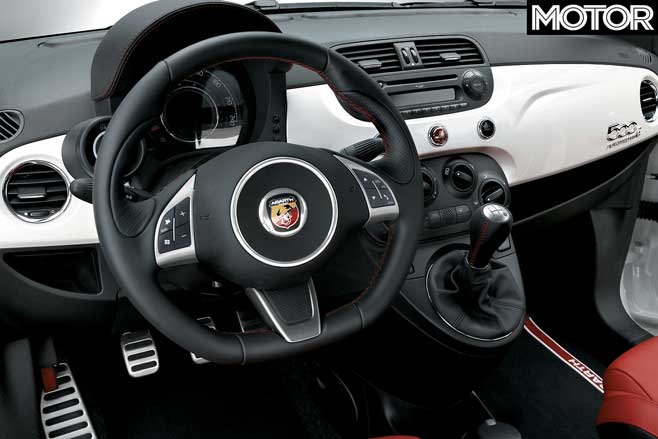
Opening the door is enough to know this isn’t just another grown-up toy of a Cinquecento. It’s far more masculine that the stock car, with a thick-rimmed, flat-bottomed steering wheel, leather seats with impressive bolstering and aluminium pedal facings.
It’ll be cost that prohibits the 500 Abarth’s appeal in Oz. The regular 500 is massively over-priced, and if Ateco does the same thing with the Abarth, it could end up playing with Evos and STis — and that’s well above its weight.
2008 FIAT 500 ABARTH SPECS Engine: 1368cc 4cyl, DOHC, 16v, turbo Power: 99kW @ 5500rpm Torque: 206Nm @ 3000rpm Weight: 1035kg 0-100km/h: 7.9sec (claimed) Price: $35,000-plus (estimated)
Like: Cornering ability, sharp throttle and braking response Dislike: Slow steering, intrusive ESP and dull engine-note in normal mode
