
Sixty-five million years ago, a cataclysmic climate event occurred. Scientists are split on whether it was an asteroid strike or an enormous volcanic eruption, but the effect was to eradicate most of the life on earth and end the reign of the dinosaurs.
The events that led to the fall of the Australian car manufacturing industry were more varied: globalisation, political gamesmanship, unionisation and, above all, changing market tastes all played a part, but the end result was equally catastrophic. Aussie-made cars met the same fate as the Tyrannosaurus Rex and Triceratops.
Unlike the demise of the dinos, it’s easy to identify the exact times and places that spelled the end of the Aussie car industry. On October 7, 2016, a blue FG X Falcon XR6 became the final model to roll out of Ford’s Broadmeadows plant.
A little over a year later, on October 20, 2017, a red VF II SS-V Redline sedan was the final Aussie Holden built, before HSV ended its program with a Light My Fire (gold) GTSR W1 on January 3, 2018. Just like that, the lights turned off on more than 100 years of Australian vehicle manufacturing, unlikely ever to be switched on again, at least in a volume capacity.
With the final chapter of the story written and the back cover closed, it’s time for reflection. What were the highlights? The list quickly narrowed down to offerings from Ford and Holden. With the greatest of respect to the likes of Mitsubishi, Toyota, Nissan and many others who had an Australian manufacturing presence over the years, a Ralliart Magna, Camry Sportivo and Pulsar SSS weren’t going to cut it.
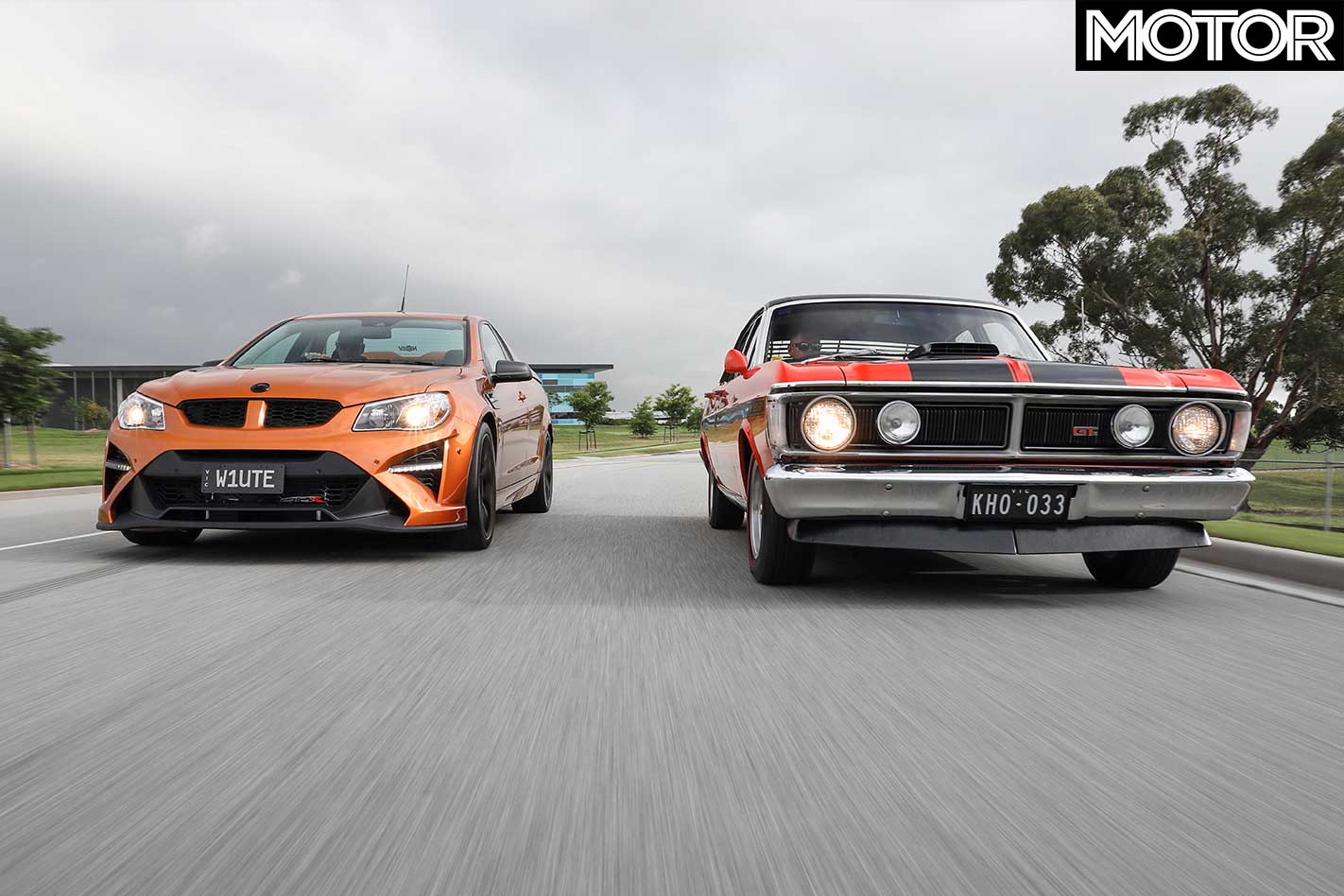
Perhaps surprisingly, it wasn’t difficult to whittle down the contenders from each brand. Representing the red camp, the ultimate Commodore, the HSV GTSR W1, while from the Blue Oval it could only be the Ford XY Falcon GT-HO Phase III.
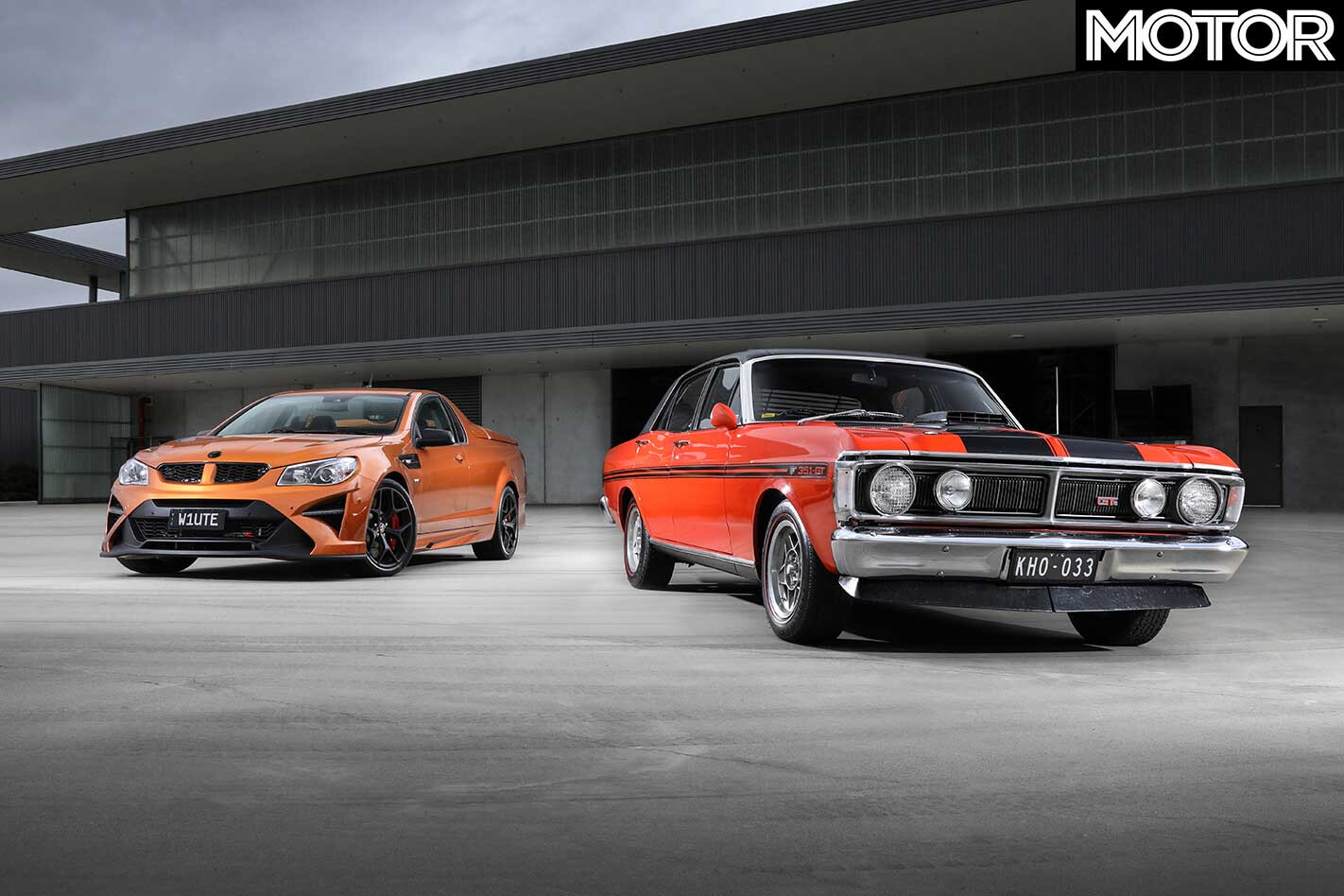
Or at least that was the plan. An opportunity then presented itself to include one of just four Maloo W1s, unofficially the final ever Australian-made car, an opportunity that couldn’t be passed up, because there’s nothing more Aussie than a 474kW/815Nm ute.
The object of this exercise isn’t to name the greatest Australian muscle car – any attempt to do so would be deliberately provocative and ultimately futile – but to compare and contrast two machines separated by almost 50 years and yet inextricably linked by purpose. Furthermore, thanks to the incredibly generous owners, it offers a chance to talk to a pair of enthusiasts who were willing to drop serious amounts of money to turn dreams into reality.
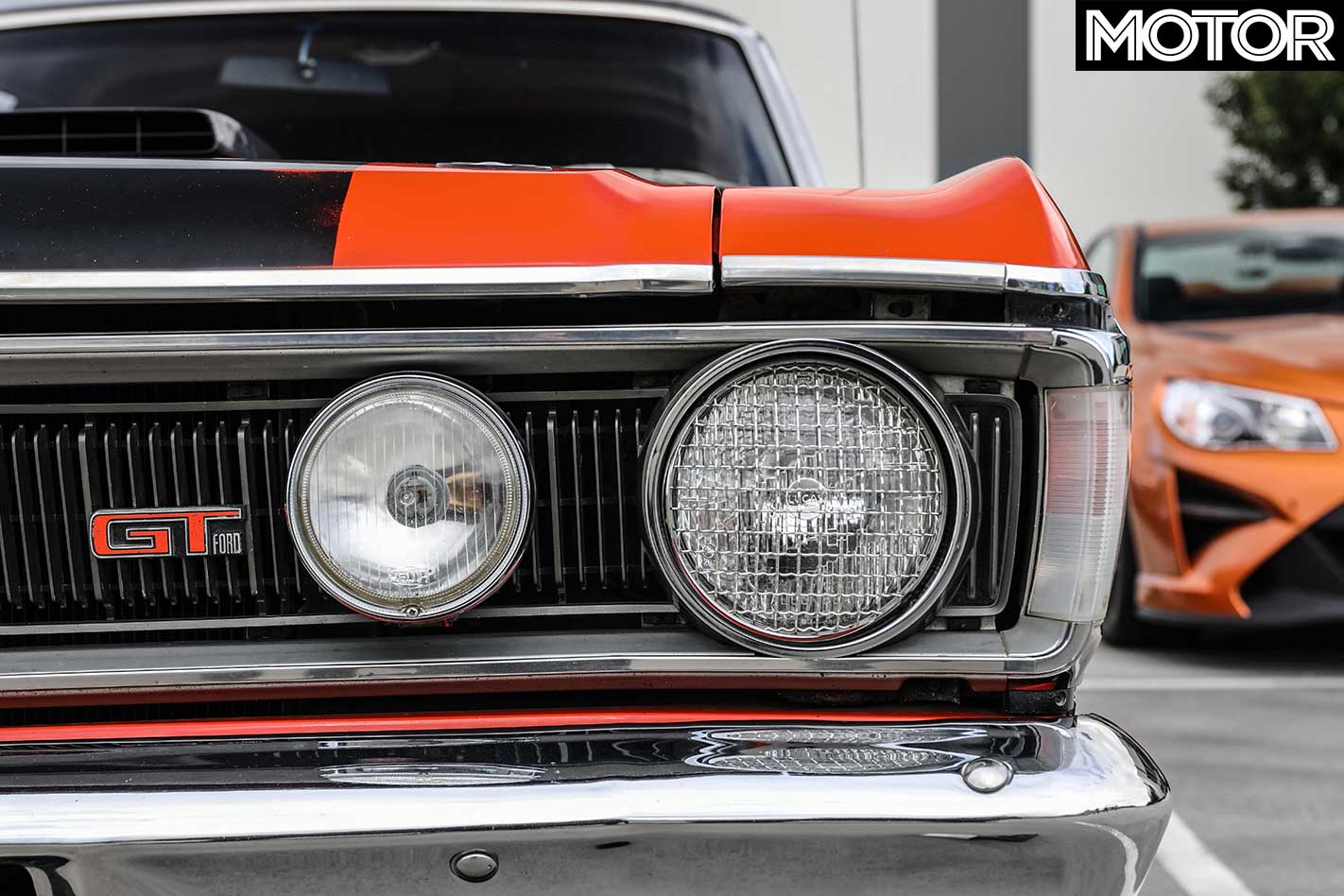
Let’s start with the Ford. For many, the GT-HO Phase III is the ultimate Australian muscle car. Its status is so legendary that it achieves the near-impossible task of earning respect from the opposing camp.
Even Holden die-hards who would rather walk across broken glass than sit in a Ford will give a Phase III a nod of acknowledgement. As the fastest four-door in the world, it earned this reverence with outrageous performance. The Mercedes-Benz 300SEL 6.3 is often mentioned in the same breath, but the Phase III was two seconds quicker to 160km/h.
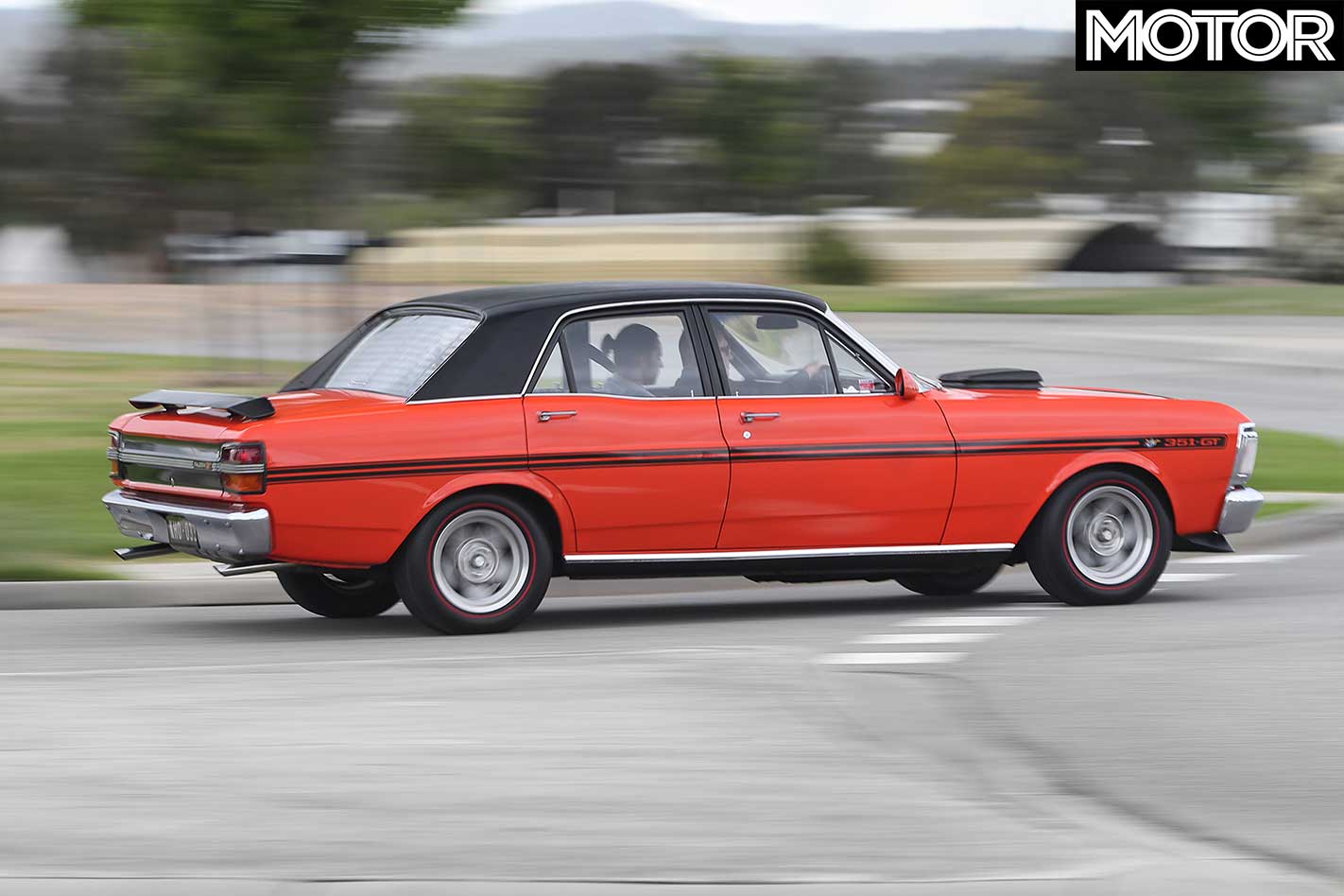
Our sister mag Wheels recorded the benchmark Phase III figures of 0-60mph (97km/h) in 6.4sec, 0-100mph (161km/h) in 15.2sec and a 14.4sec quarter mile. However, that test car was fitted with the tall 3.25:1 Bathurst diff ratio; with a fresh engine built by guru Mick Webb and the shorter 3.5:1 diff, the car you see on these pages would best those times.
A better illustration of what a leap forward the Phase III represented is Allan Moffat’s 1971 Bathurst pole position time of 2min38.9sec. This was more than 10 seconds quicker than his pole time the year before and an incredible 24-second improvement over Ian Geoghegan’s XR GT benchmark just four years earlier.
Despite the car’s value, owner Chris isn’t afraid to use the performance, nor encourage John Bowe (on hand to help record a WhichCar TV segment) to do so. The engine is the heart of the Phase III. It’s a monster.
The blood-curdling roar as revs rise is all encompassing and the power more than ample for the chassis it’s propelling, but it’s the response that’s most impressive, the angry Cleveland feeling to be plugged directly into the end of your foot. However, without wishing to stir a hornet’s nest, the enjoyment of driving this Bathurst bruiser lies in the emotional experience rather than the physical one.
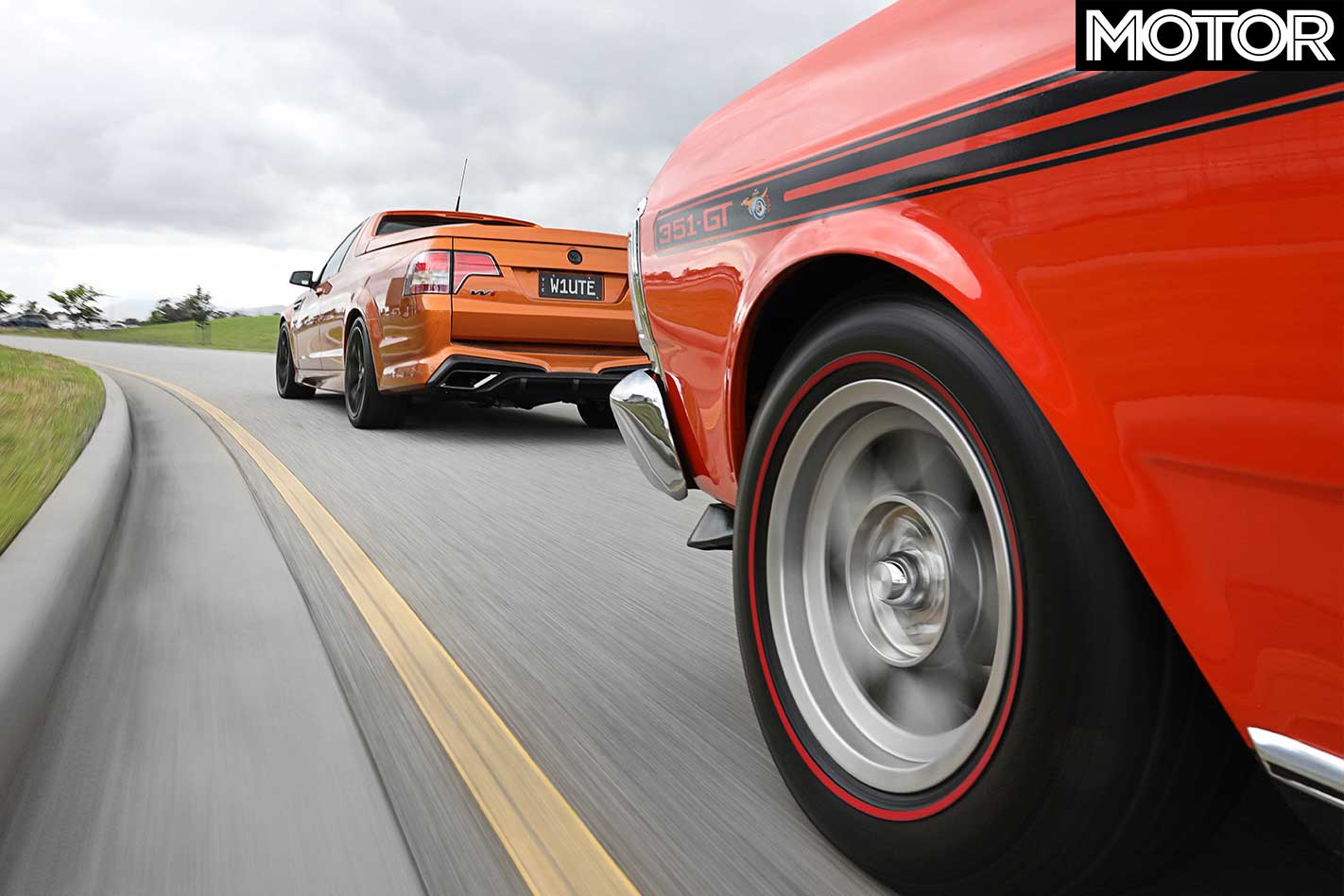
The steering is heavy at slow speeds and vague at higher ones, the brakes a mere suggestion and the body pitches and rolls in a straight line, let alone in the corners, but the feeling of driving such a piece of history is immensely rewarding.
It’s why Chris borrowed against his house 18 years ago, in order to capitalise on the rare opportunity of putting one of just 300 Phase IIIs in his garage. While the price paid was an awful lot of money almost two decades ago, suffice to say it’s been a very smart investment, though as he sagely observes: “It’s worth nothing unless I sell it.” Chris’s story is perhaps typical of many high-end Aussie muscle car owners, with many years of hard graft creating a successful business resulting in the chance to fulfil a childhood dream.
“My first car was an XY GS 351; I had it on my learner’s” he explains .“[I said] ‘I’m going to own a Phase III one day’. I worked my butt off, saved some money, then I had the opportunity to buy this so I sold the two XY GTs I had at the time and bought this. I was determined to have one.”
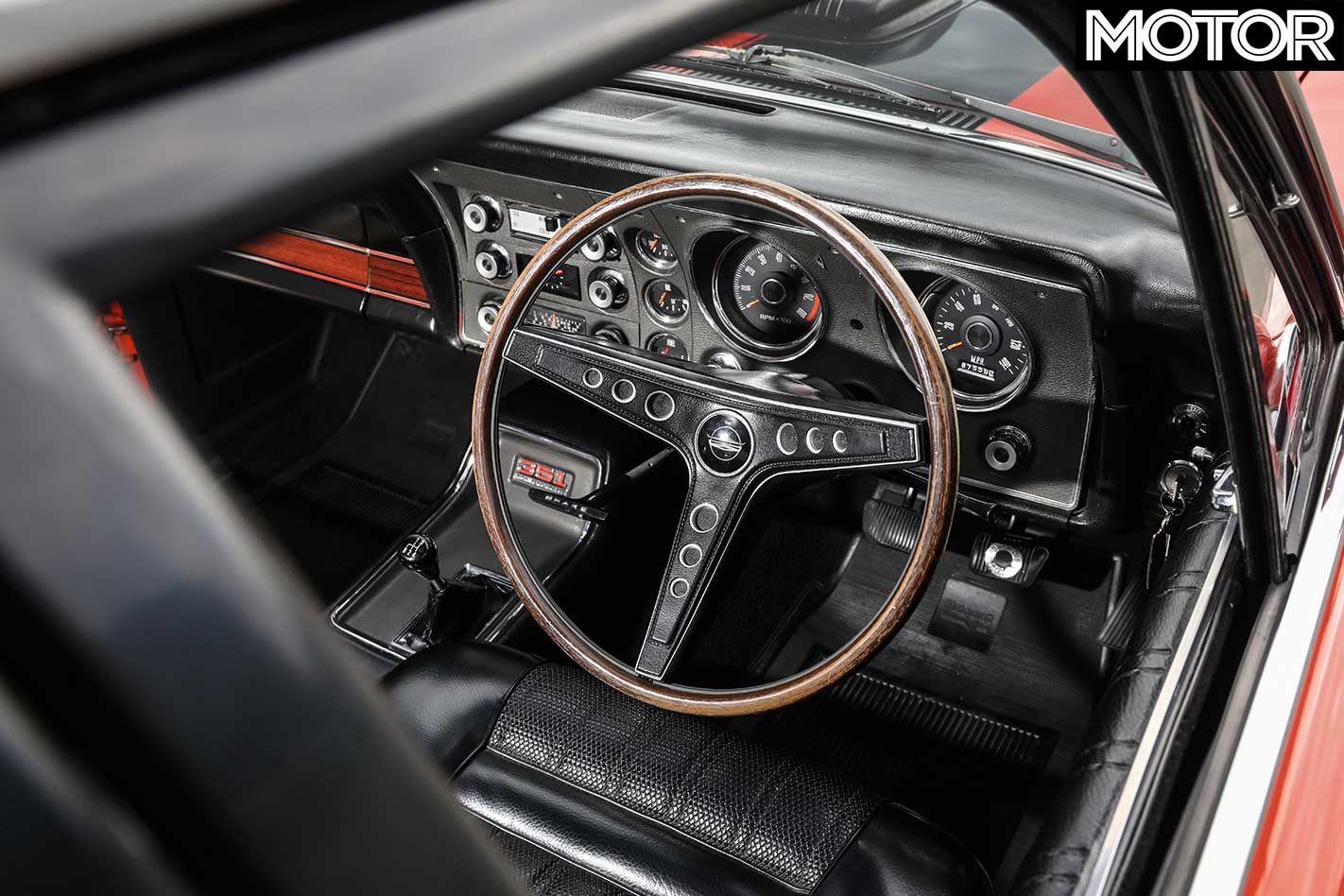
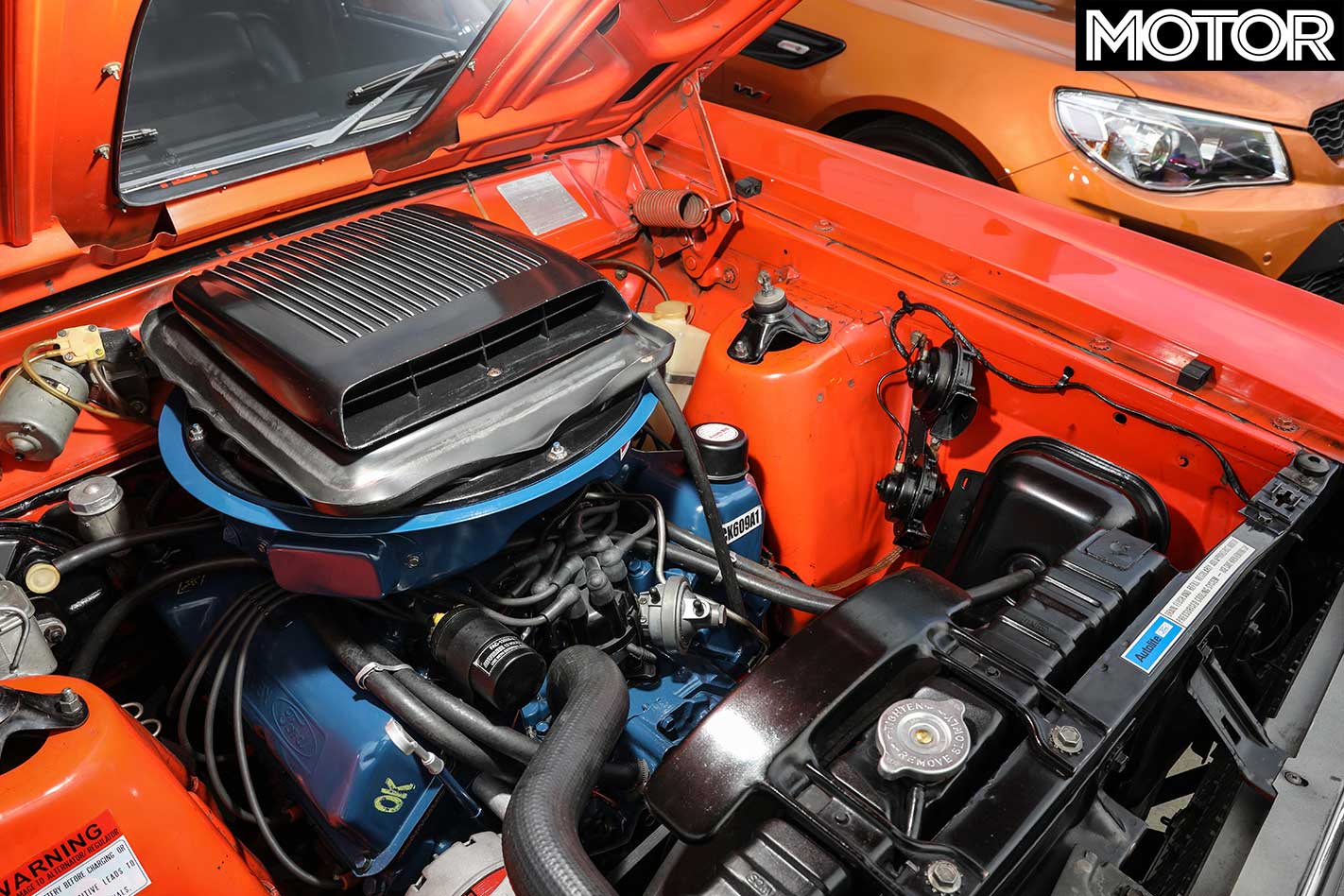
According to leading GT historian Mark Barraclough of Australian Classic Car History Services, Chris’s Phase III is an early car with a 31-spline 3.5:1 rear diff, vinyl roof (one of just 17 and one of eight in black) and 1970-build CK608 engine, though this wasn’t fitted when it was purchased.
In what can only be described as a miracle, the engine appeared in Tasmania having been pulled out of an XW GT for machine work. The machinist recognised it was a Phase III donk and called GT historian Ellis French, who subsequently called the GT Club of Victoria to re-unite the engine with its rightful home. Chris was eventually contacted, flew down to Tassie, verified it was the real deal – there are a number of codes that give the game away – and secured the missing piece of the puzzle.
“He didn’t want drug money for it,” says Chris of the previous owner. “He was an enthusiast and believed the engine should go back to the car.” Nevertheless, the chances of the engine still existing and a machinist knowing what they were looking at are infinitesimal.
For years it seemed as though the Aussie muscle car would retire having peaked early. After all, if you accept the premise that Ford invented the Aussie muscle car with the XR GT (the Holden EH S4 has a claim, but a shaky one), then the genre reached its summit a mere four years after materialising.
Such is the nature of homologation; the demands of racing necessitate rapid development. Then came the supercar scare and the oil crisis and by the early 1980s it seemed as though the Aussie muscle car was dead. For Ford, it was, the Blue Oval killing off the V8 Falcon for more than a decade.
Holden kept the dream alive, but never managed to deliver a road car worthy of challenging the Phase III’s mantle. The Torana A9X had the motorsport pedigree but was heavily neutered in road form, Brock’s HDT Commodores still lagged well behind in outright performance and while HSV’s later stuff could confidently claim to be among the world’s finest four-doors, the W427 was a financial flop and the later Gen-F GTS too commonplace. But HSV had one last hurrah planned, the GTSR W1.
The parallels between the W1 and Phase III go beyond their country of origin and number of doors. Each marked the end of an era, were built in very similar volumes (300 Fords, 298 HSVs) and, most importantly, offered contemporary supercar performance in a practical, family-oriented package.
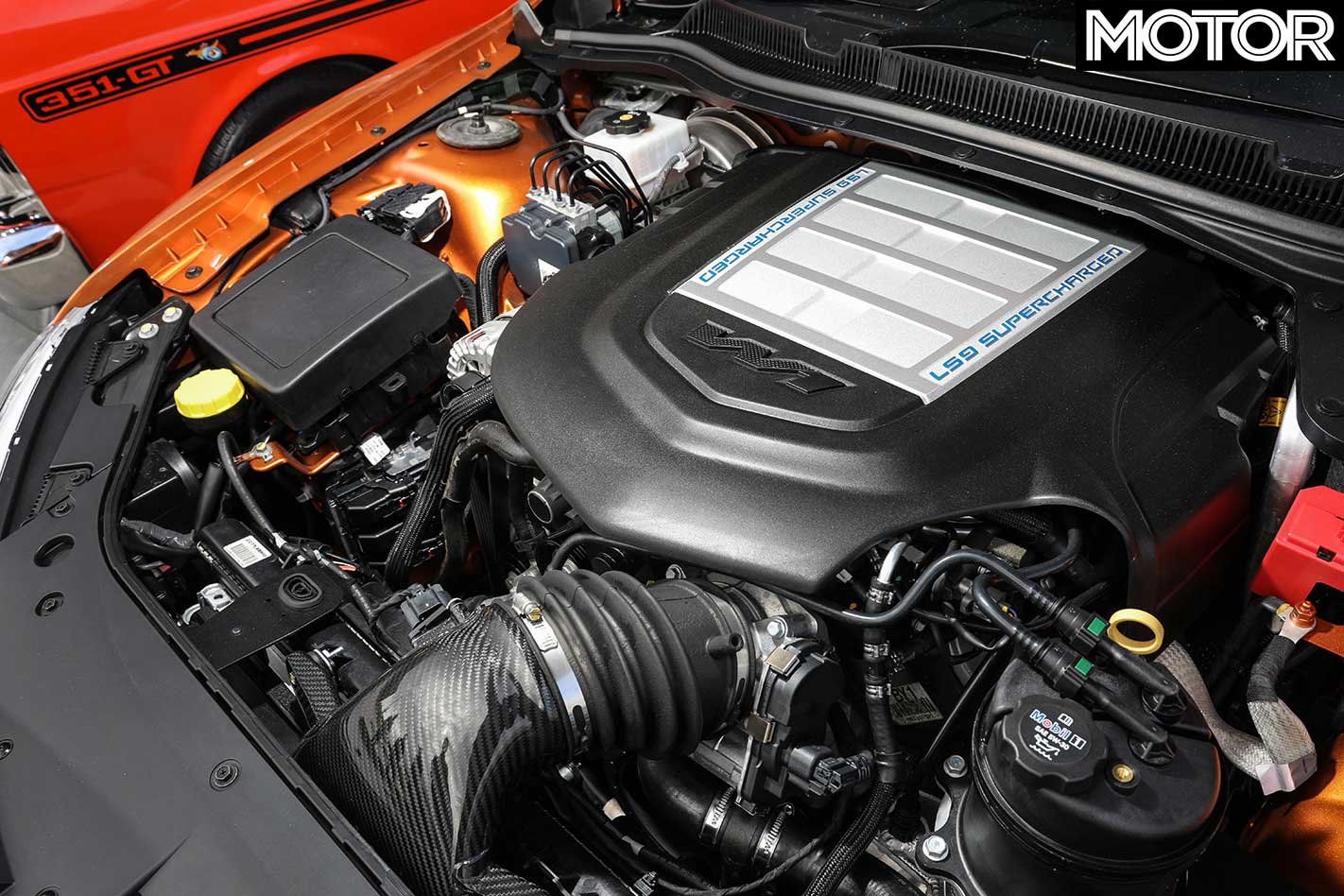
Equally, both are dominated by their engine. Thankfully, HSV paid remarkably more attention to the chassis with bespoke dampers, massive brakes and sticky R-spec tyres, but drive a W1 and you can’t help but be amazed at how much more responsive the LS9 is compared to the regular GTS’s LSA.
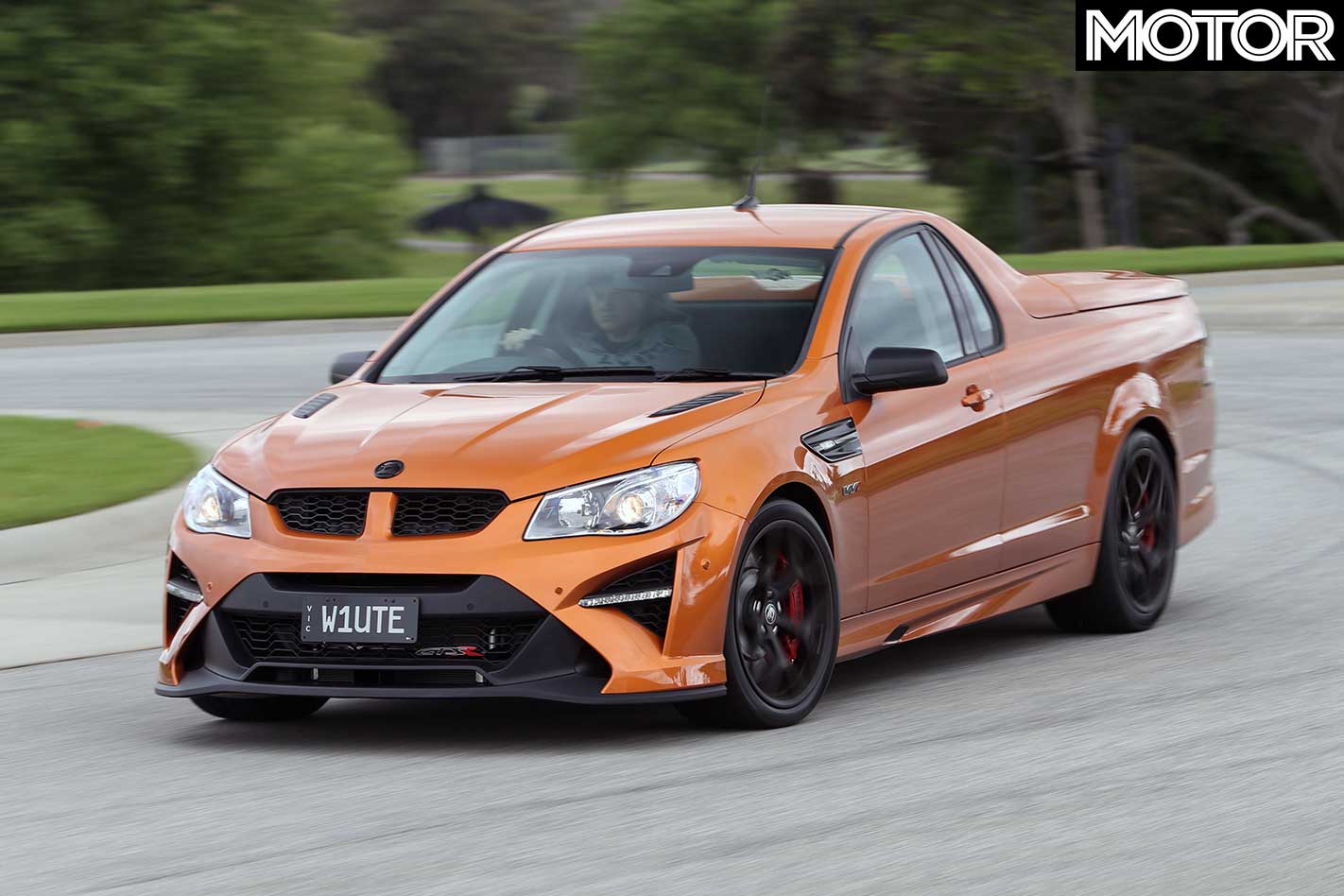
As mentioned earlier, the original intention was to use a regular W1 sedan for this feature, until we discovered the existence of the Maloo W1. Just as four GT-HO Phase IVs snuck out of Ford’s gate before the project was squashed, HSV built four 474kW super utes before pulling the shutters down.
Technically, though, HSV didn’t build them, Walkinshaw Performance did. The cars were registered as GTSR Maloos before Walkinshaw completed the W1 conversion, including the requisite Vehicle Assessment Signatory Scheme approval to ensure they are fully road legal.
The vast majority of the W1 bits are present in the Maloo, including all the juicy mechanical stuff: the 474kW/815Nm 6.2-litre supercharged LS9 V8, close-ratio TR6060 six-speed manual gearbox, custom Supashock dampers, wider wheels (20 by 9.0-inch front; 20 by 10.0-inch rear), monster brakes (410mm floating two-piece rotors and six-piston calipers at the front and 372mm discs with four-piston calipers out back) and super-focused Pirelli P Zero Trofeo R tyres.
Likewise, inside there are the diamond-quilted Podium seats and swathes of Alcantara while outside you’ll find the carbon fibre front guard inserts. It lacks only the quad exhaust outlets (which aren’t compatible with the Maloo rear bar), the side skirts due to the ute’s longer wheelbase and the Aeroflow rear spoiler as there’s no boot to mount it on.
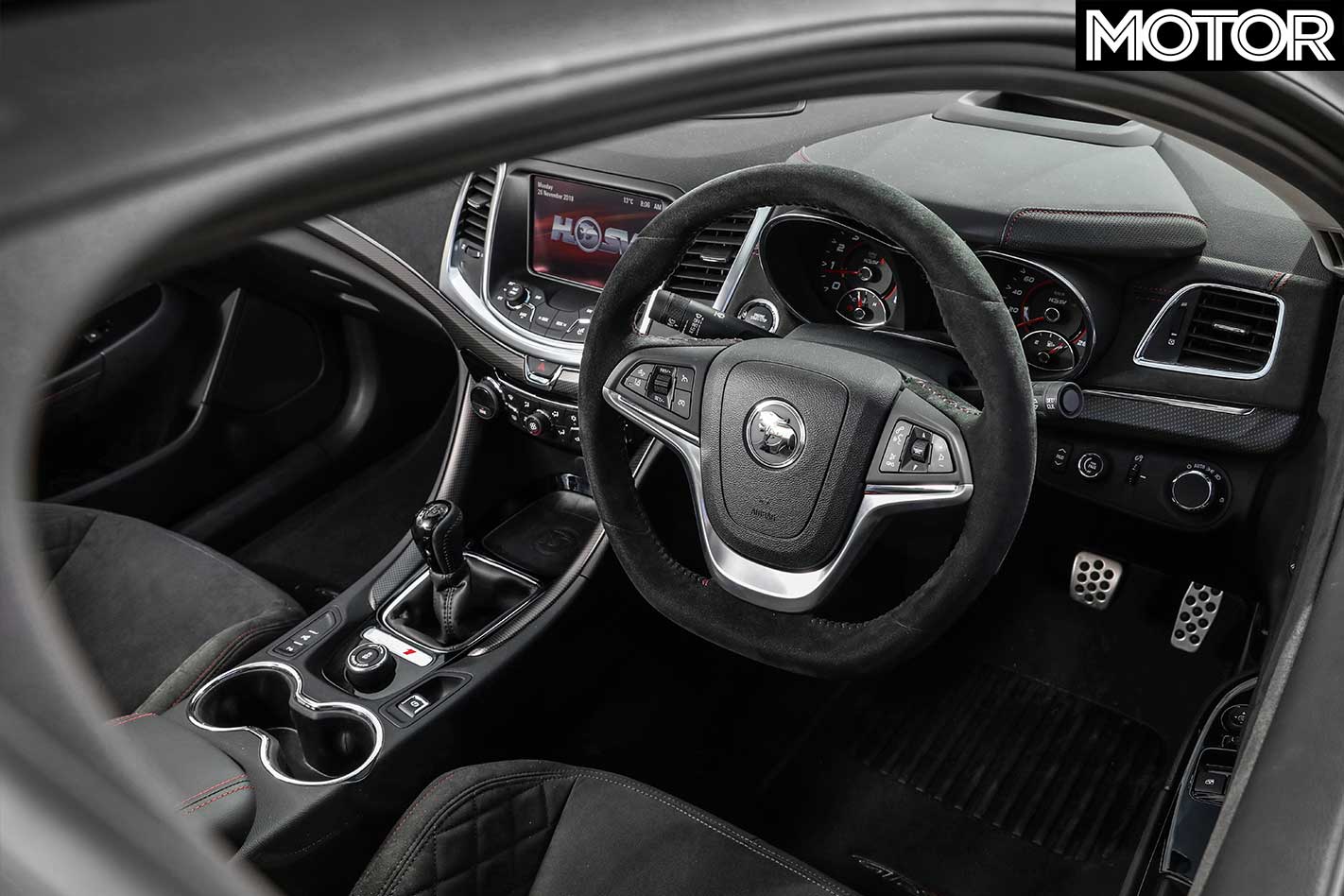
MOTOR has been sworn to secrecy as to what the four buyers paid (and we don’t know exactly) but suffice to say the price tag was enough to park some fairly exotic European metal in your garage. So when you have the money to buy almost anything, why spend it on an Aussie ute, regardless of how much power it has? This is the question we put to our Maloo W1 owner, who we’ll call ‘Justin’ to protect his identity: “I don’t mind the Lambos and those sort of things,” he explains. “I’ve never owned one and probably wouldn’t – my wife would call me a wanker. I’m a country boy and did up old utes which are nice and easy to work on. [I’ve] always had SS utes, that sort of thing, so when the opportunity for this came up I was like a dog with a bone, every day hassling [HSV] saying ‘I want it, I want it, I want it’.” I just want one, indeed.
The number of W1 Maloos that could be created was severely limited by HSV’s supply of the outdated LS9 engine. Two went to HSV executives while the third went to one of HSV’s best customers, which left one up for grabs. “I think I was one of the only people who had wind of it that was keen enough and would do anything to get my hands on it. It was just a matter of hassling the s**t out of HSV every day until I got it across the line.”
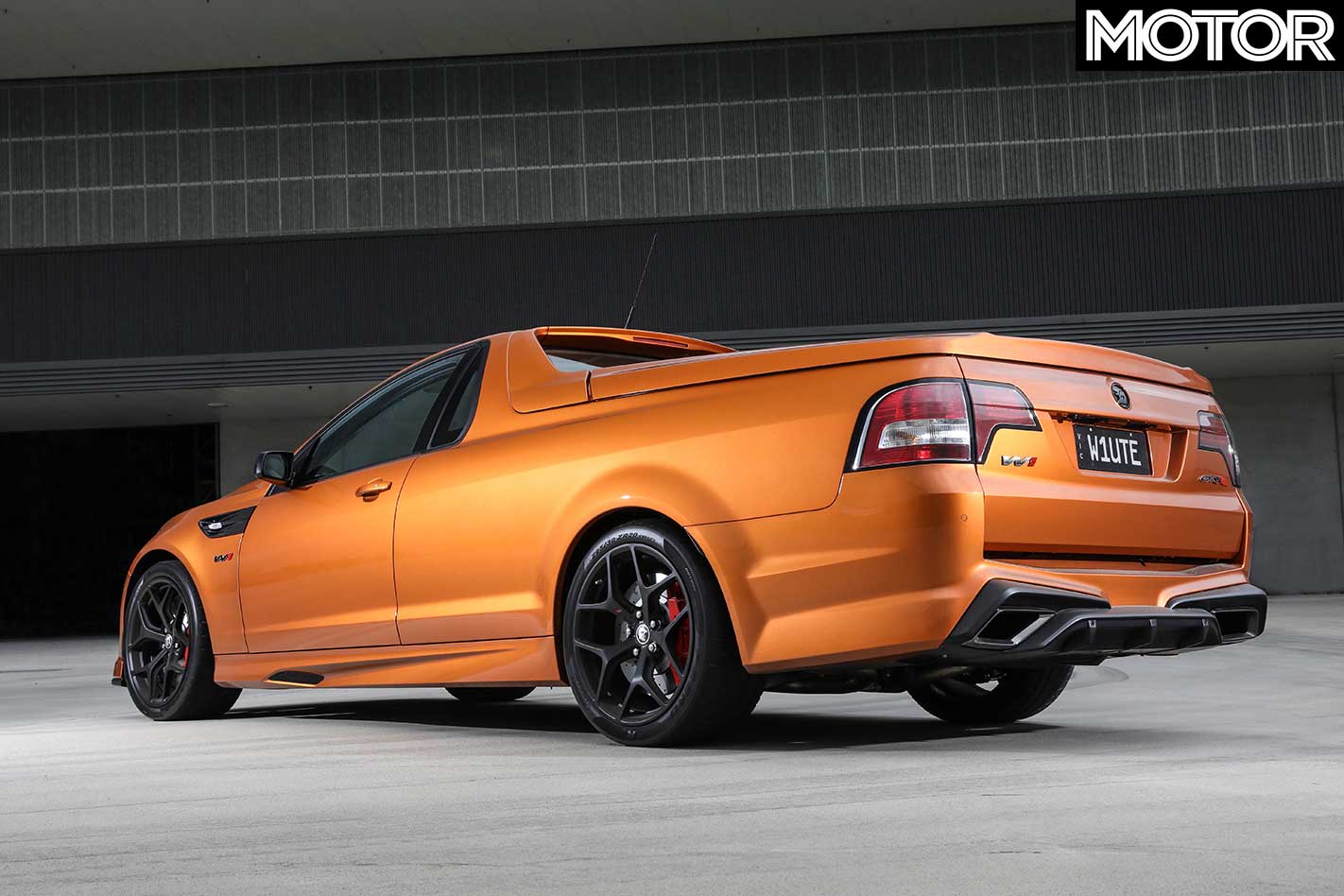
Despite the car’s value and rarity, Justin has no intention of wrapping his beast in cotton wool: “f**k no, I flog the s**t out of it – what’s it there for? My daily driver is a Colorado with a 570kW LSA in it, this thing is my weekender, but I still get it out and take it down to the building site. It doesn’t matter if this thing’s got 100km or 10,000km, it’s one of four, so I might as well drive it and enjoy it.” Amen, though having been lucky enough to drive the Maloo W1 briefly I’ve never driven a car so carefully in my life.
Justin then offers a very interesting comment: “Now that there’s no more Aussie muscle cars getting produced, I think all muscle car owners like both Holden and Ford.” Chris is equally bipartisan; after all, there’s a W1 sedan parked next to the Phase III: “Yeah, definitely, the passion’s not there like it was.”
For decades Ford and Holden fans hated one another, the vitriol garnering worldwide attention as the fiercest automotive rivalry of all. Now, it seems, these warring tribes have been united by a common enemy, the accountants, politicians and fickle buying public who killed off our unique locally made performance products. However, like those ancient scaly reptiles, it’s clear that while Australian muscle cars are now extinct, their legends will live on.
Fast Facts
| u00a0 | HSV Maloo GTSR W1 | Ford Falcon XY GT-HO Phase III |
| Body | 2-door, 2-seat ute | 4-door, 5-seat sedan |
| Drive | rear-wheel | |
| Engine | 6162cc V8, OHV, 16v, supercharger | 5763cc V8, OHV, 16v |
| Bore x Stroke | 103.25 x 92.0mm | 102.0 x 89.0mm |
| Compression | 9.1:1 | 11.5:1 |
| Power | 474kW @ 6500rpm | 224kW @ 5400rpm |
| Torque | 815Nm @ 3900rpm | 515Nm @ 3400rpm |
| Power/Weight | 250kW/tonne | 147kW/tonne |
| Transmission | 6-speed manual | 4-speed manual |
| Weight (dry) | 1896kg | 1524kg |
| Suspension (f) | struts, A-arms, coil springs, anti-roll baru00a0 | struts, coil springs, anti-roll bar |
| Suspension (r) | multi-links, coil springs, anti-roll bar | live axle, leaf springs, anti-roll bar |
| L/W/h | 5181/1899/1481mm | 4689/1869/1397mm |
| Wheelbase | 3009mm | 2819mm |
| Tracks | 1622/1590mmu00a0(f/r) | 1499/1486mm (f/r) |
| Steering | electrically assisted rack-and-pinion | unassisted rack-and-pinion |
| Brakes (f) | 410mm ventilated/drilled discs, 6-piston calipers | 286mm ventilated discs, single-piston calipers |
| Brakes (r) | 372mm ventilated/drilled discs, 4-piston calipers | 254mm drums |
| Wheels | 20.0 x 9.0-inch (f); 20 x 10.0-inch (r) | 15.0 x 7.0-inch (f/r) |
| Tyre Sizes | 265/35 R20 93Y (f); 295/30 R20 (r)u00a0 | 205/70 R15 (f/r) |
| Tyres | Pirelli P Zero Trofeo R | BF Goodrich Radial |
| Value | “A lot” | $900,000 (est) |
| Pros | Rarity; performance; subtlety; Aussieness | Engine; provenance; history; sound |
| Cons | Only four built | Brakes; handling; fuel consumption |
| Rating | 5 out of 5 stars | 5 out of 5 stars |
New to Wheels Car of the Year?
Read the COTY 101.
WHEN one of the hottest cars at COTY is also next of kin to one of the most ho-hum, there’s a worrying disconnect going on. Let’s shine the spotlight, then, on the fourth-generation Mercedes-Benz A-Class, and the fact that polar opposites seem to be a recurring theme in the series’ 21-year history.
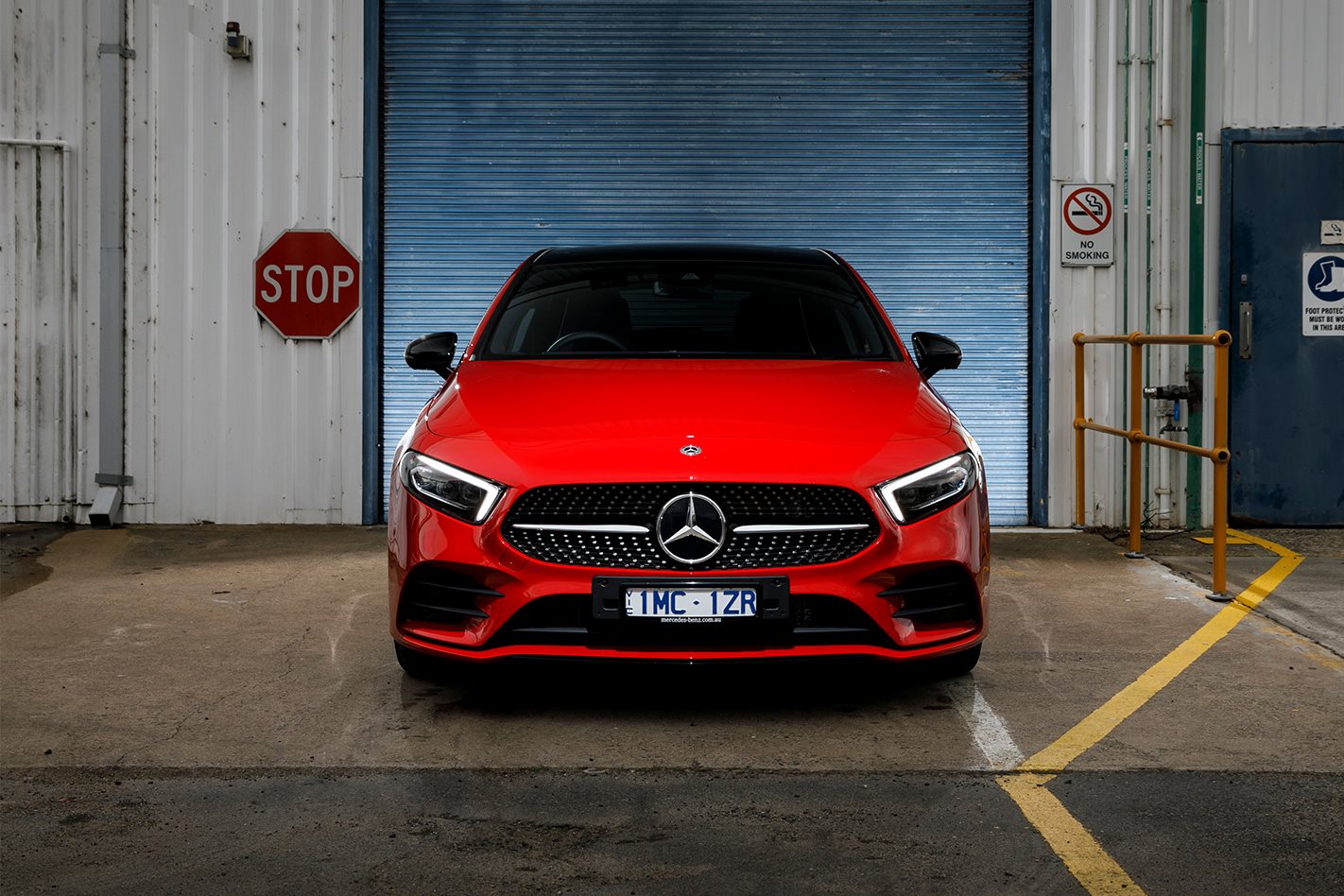
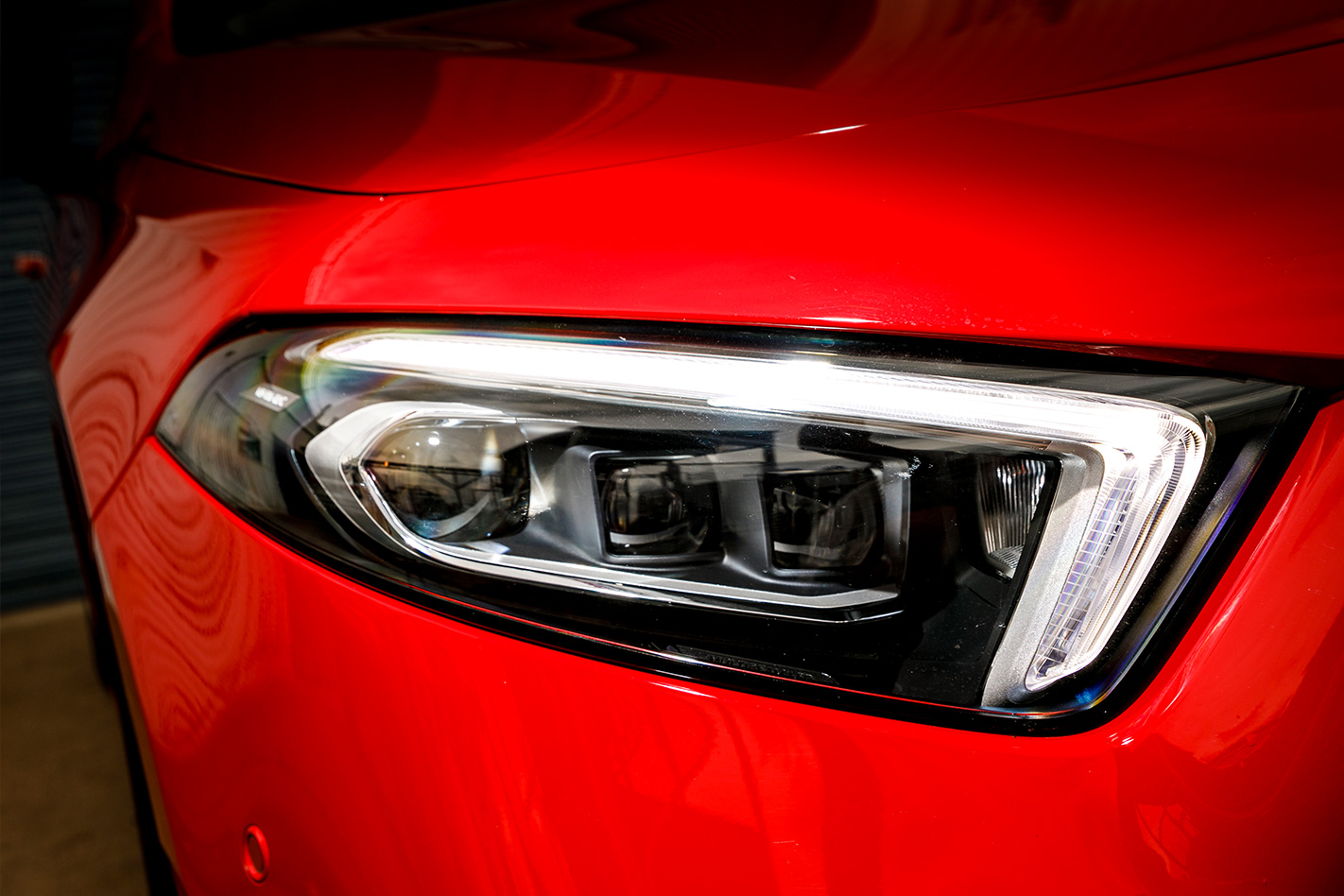
Visually similar to its ultra-successful predecessor, the pretty and ultra-aero (if a tad anodyne) W177 hatch smooths out the old rough edges and stretches the completely revamped ‘MFA 2’ modular transverse architecture to liberate much-needed rear-seat and boot space. Entry and egress improve. Vision is better. Packaging is no longer woefully tight beyond the front row. That’s progress.
Better still, the cheapo, pokey plastics of yore have been banished for classier finishes, underscoring a cabin overhaul that ushers in what may be 2018’s greatest leap in dashboard design. The beautiful and functional ‘MBUX’ widescreen multimedia system contributes to the cabin looking and feeling a million euros inside.
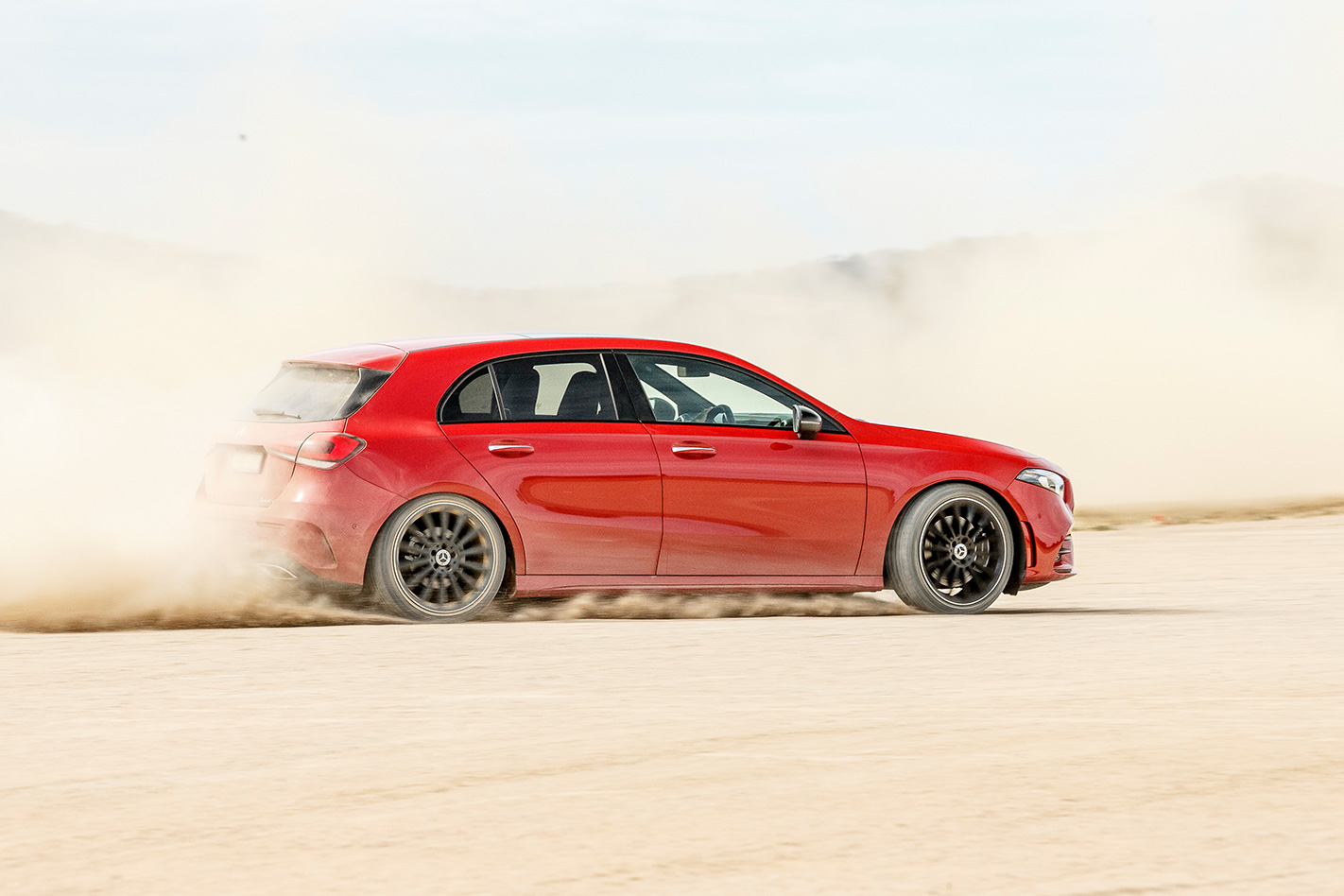
Digging in deeper, almost nothing carries over underneath, with the substantially safer, stronger, lighter and better-insulated MFA 2’s need to be future-proofed for electrification helping prompt the switch to a more compact (and cheaper) torsion-beam rear end in the lower-line petrol front-drivers, in place of the independent multi-link found on higher-grade and AWD versions.
Add a fresh array of four-cylinder turbo-petrol engines co-devised with Renault and, frustratingly, that’s where the A-Class’s schizophrenia becomes all too apparent.
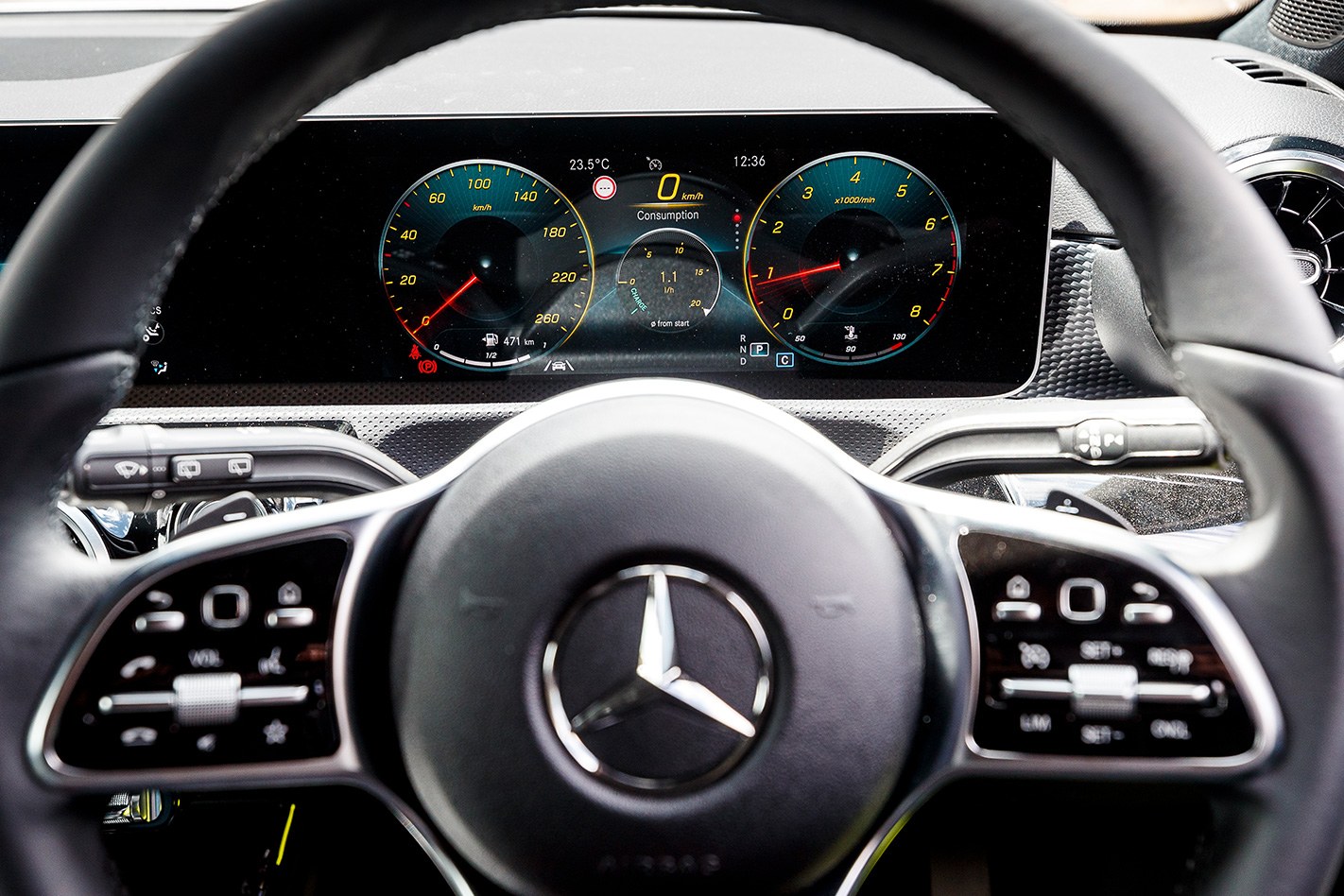
Representing the latter is the A200. Well-specified it undeniably is – with AEB, MBUX, DAB+ digital radio, wireless smartphone charging, CarPlay/Android Auto compatibility, and other cutting-edge tech – but the 120kW/250Nm 1.3 turbo/seven-speed dual-clutch combo is disappointingly coarse and laggy at lower revs. It’s the antithesis of the sweet 1.6-litre turbo it usurps.
Even worse is the always fidgety ride and noise intrusion assaulting the base A200’s occupants. We appreciate the fuel efficiency, quick steering, and impressive chassis poise, but Ford’s Focus Trend comprehensively outshines the Mercedes for performance, refinement, ride comfort and handling prowess. The A200 seems overpriced and undercooked.
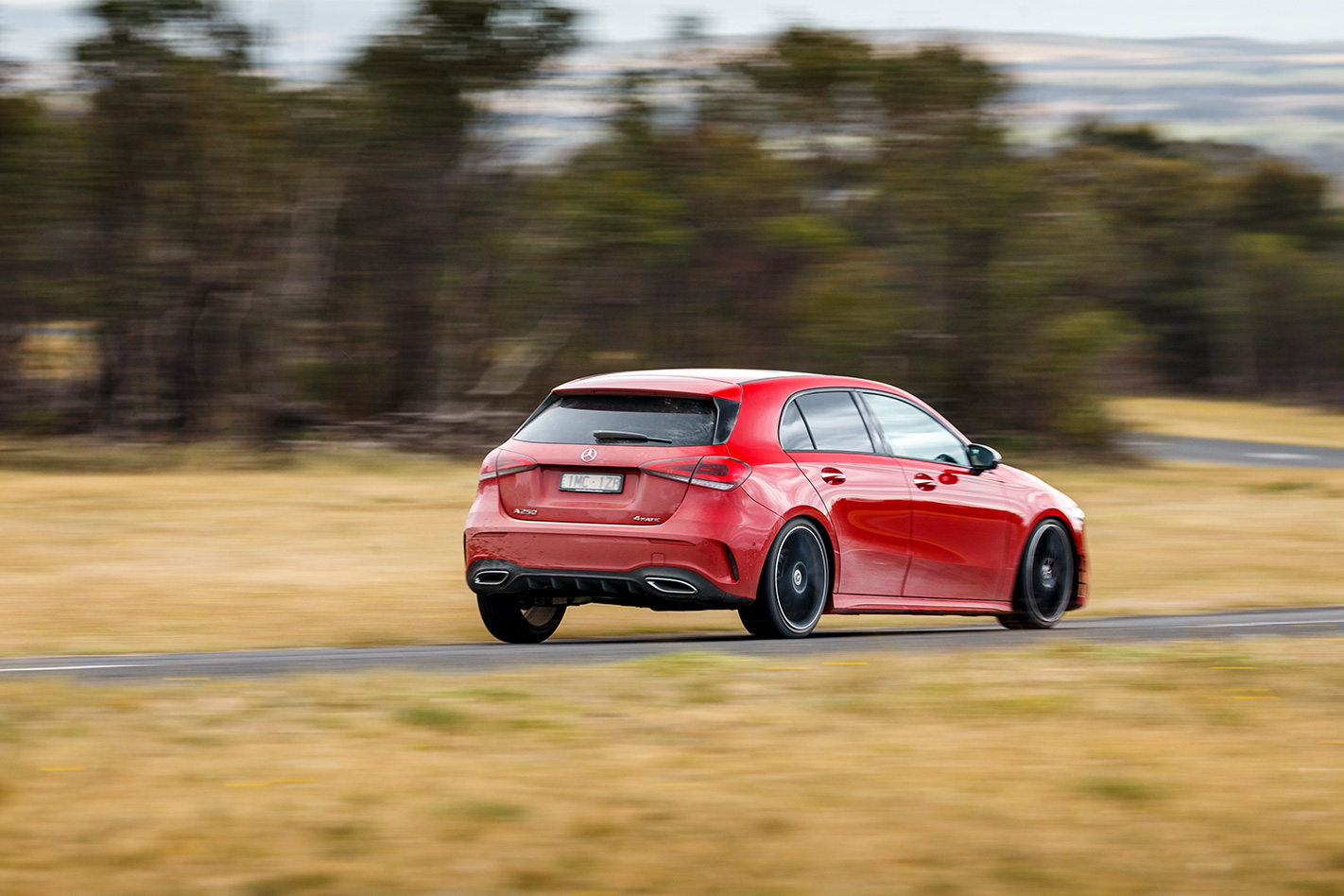
Let’s end on a high note, though, because the firecracker A250 4Matic is surely, already, one of the all-time hatch greats. With a 165kW/350Nm 2.0 turbo driving all four wheels via a seven-speed dual-clutch, it is possessed of a lion’s heart and a mountain goat’s grip, backed up by the levels of refinement and comfort (via the standard IRS with adaptive dampers) synonymous with the marque’s traditional virtues.
Such rousing fun and all for under $50K, or just $2300 more than the A200. This thing is an absolute no-brainer for variant of the year.
But consistency across the range is a COTY pillar, and that’s where the A-Class is dragged down. Would you want the underwhelming A200 or the hugely overachieving A250 4Matic? It’s no contest. The latter would have catapulted the baby Benz straight into the next round. Sadly the former means it’s going home early.
Introduction
On the face of it, a hotted-up station wagon is a pretty good idea. A big engine, good brakes and great handling work just as well under a bodyshell that allows dogs, boxes and other junk to be lugged around when you’re not carving up a back road.
The Audi RS4 Avant has long been at the vanguard of the rapid wagon set, and while its updated turbocharged V6 engine represents a change of philosophy for the RS line, the essence of barking mad meets solid sensibility still holds true.
Style
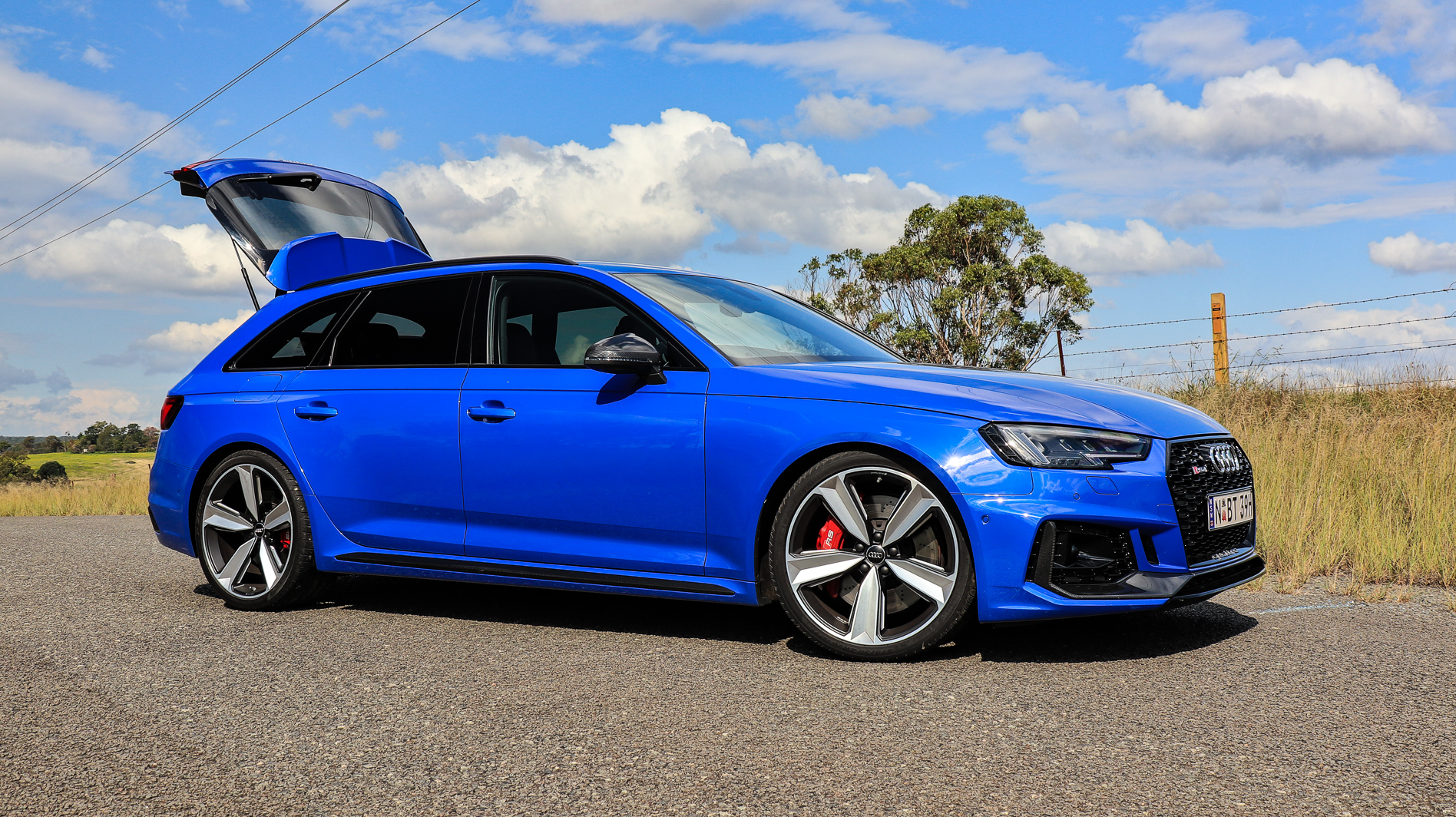
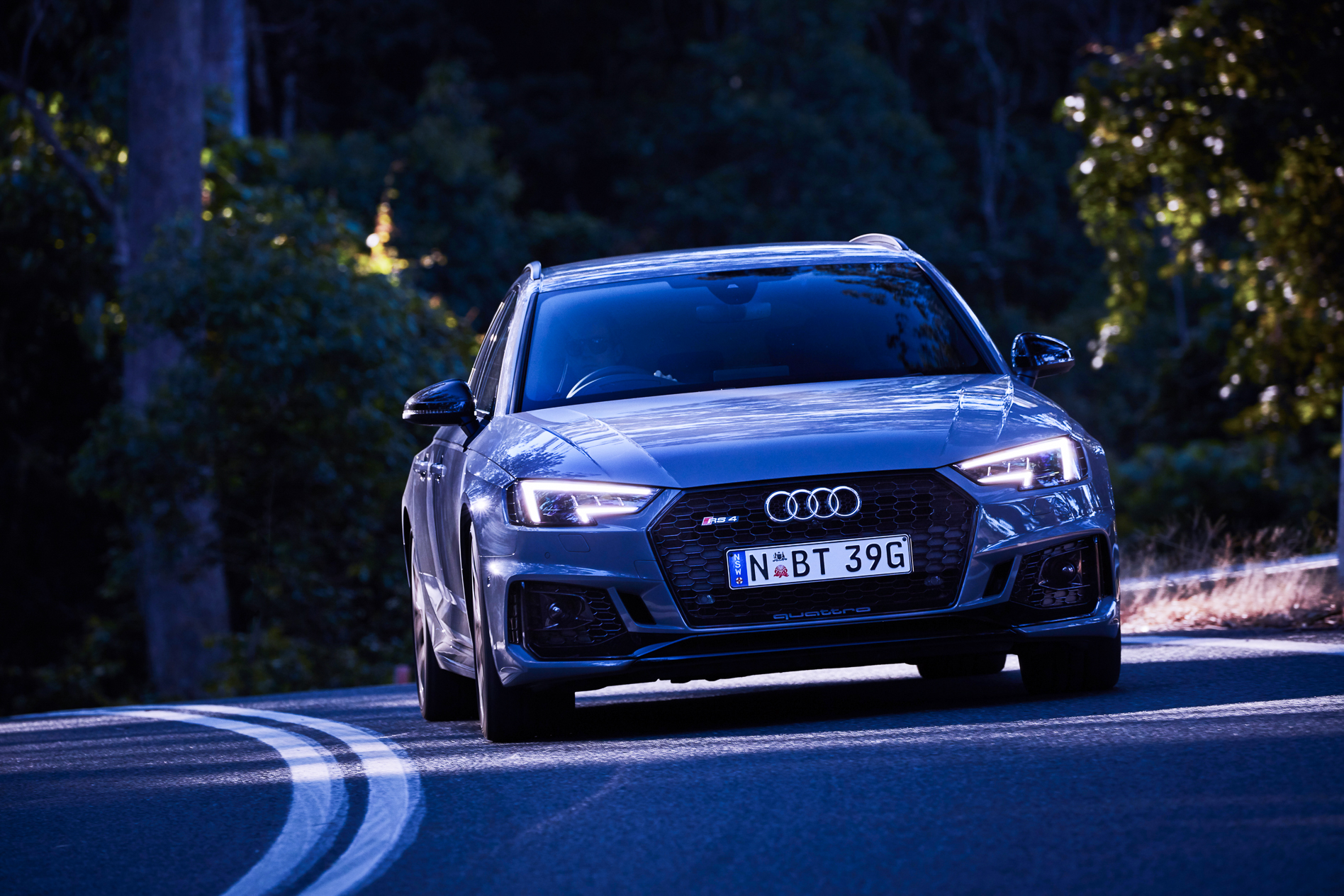
Based on the A4 platform, the exterior of the RS4 is wider, lower and more aggressive, with pronounced haunches front and rear that adds 30mm to the car’s width.
Combine that with well-proportioned 20-inch rims, a low-slung ride height, that huge grille and a subtle yet effective bodykit, and the RS4 Avant radiates a macho yet sophisticated veneer that works well to disguise its humble station wagon origins.
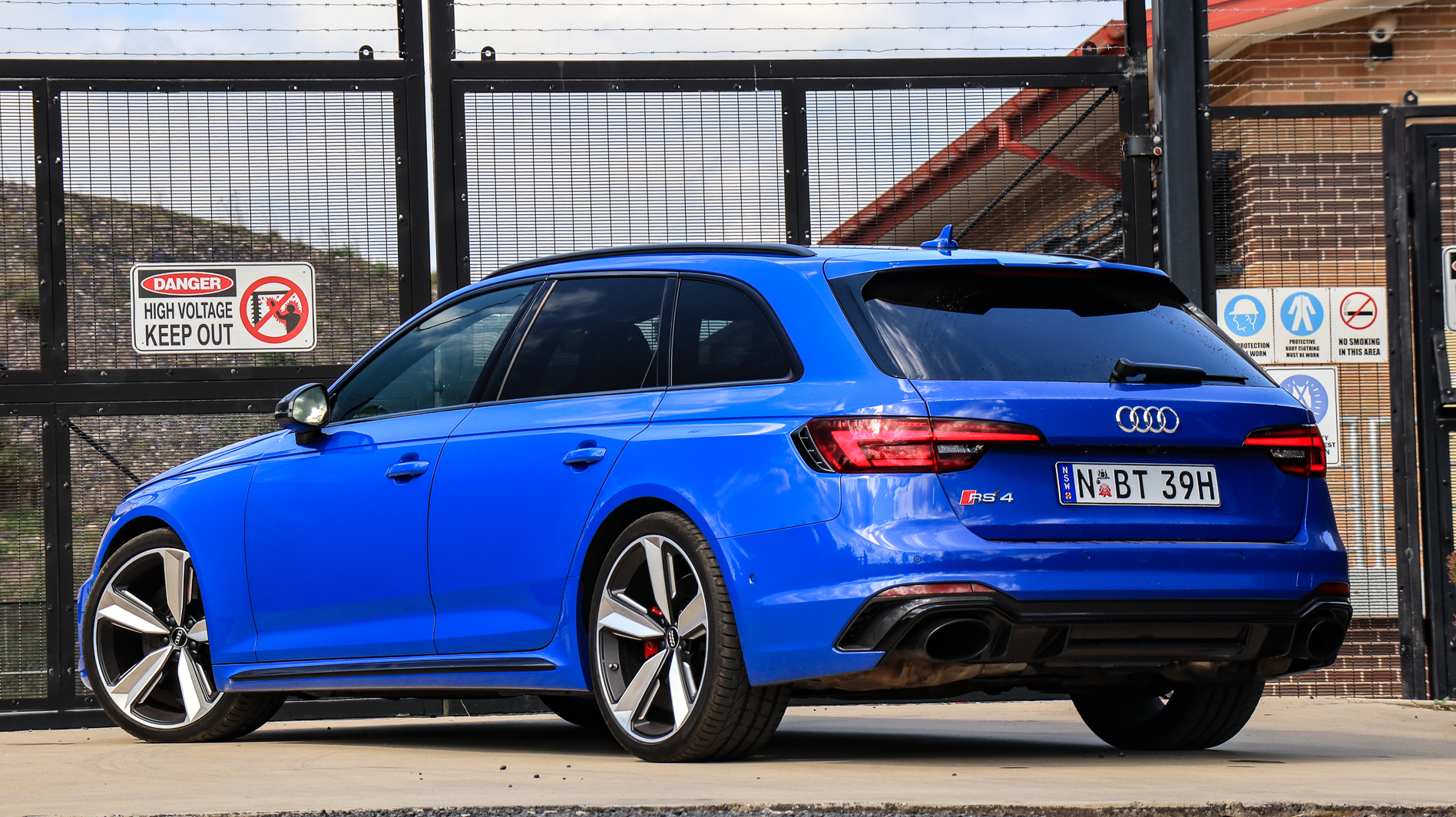
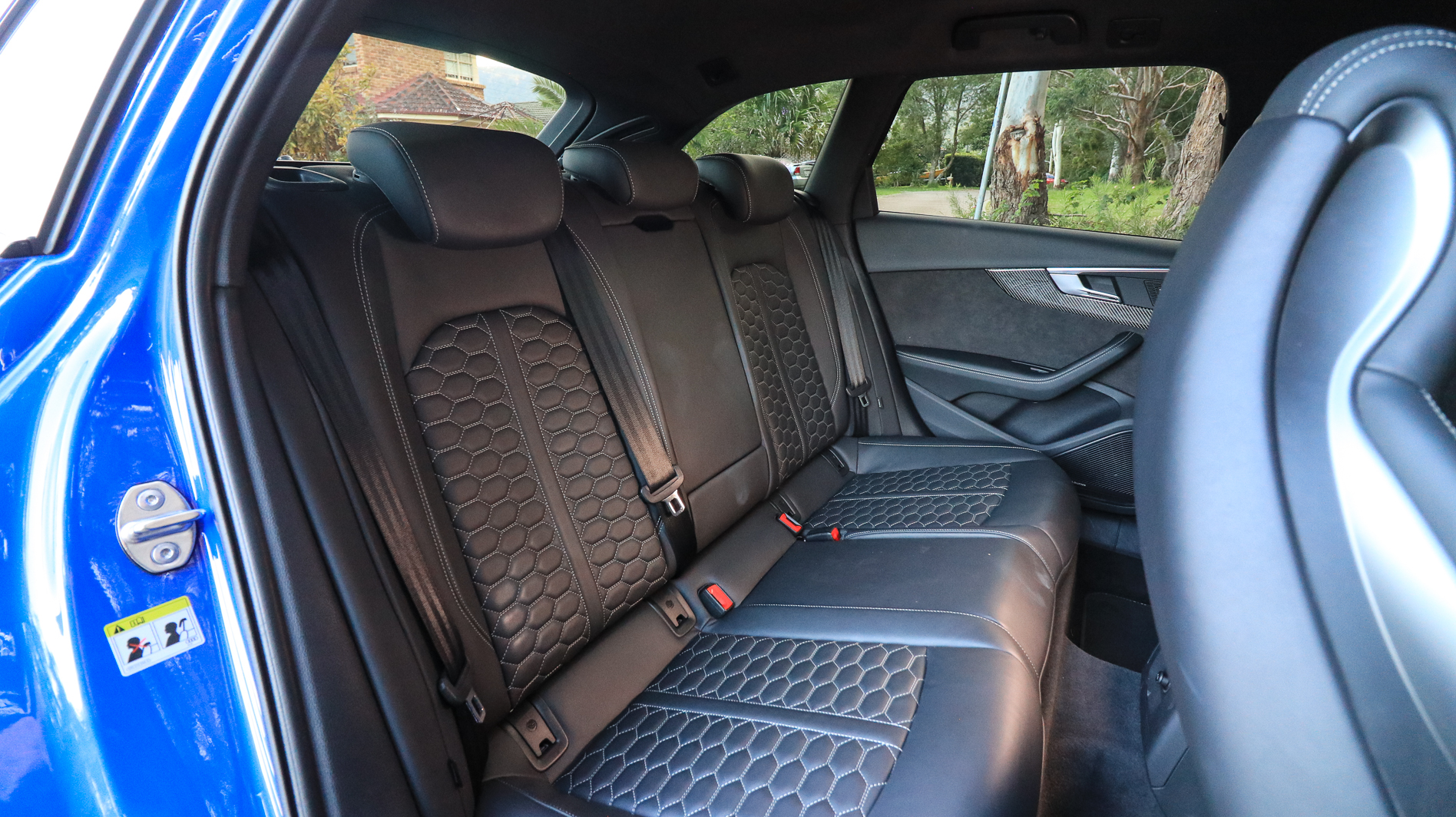
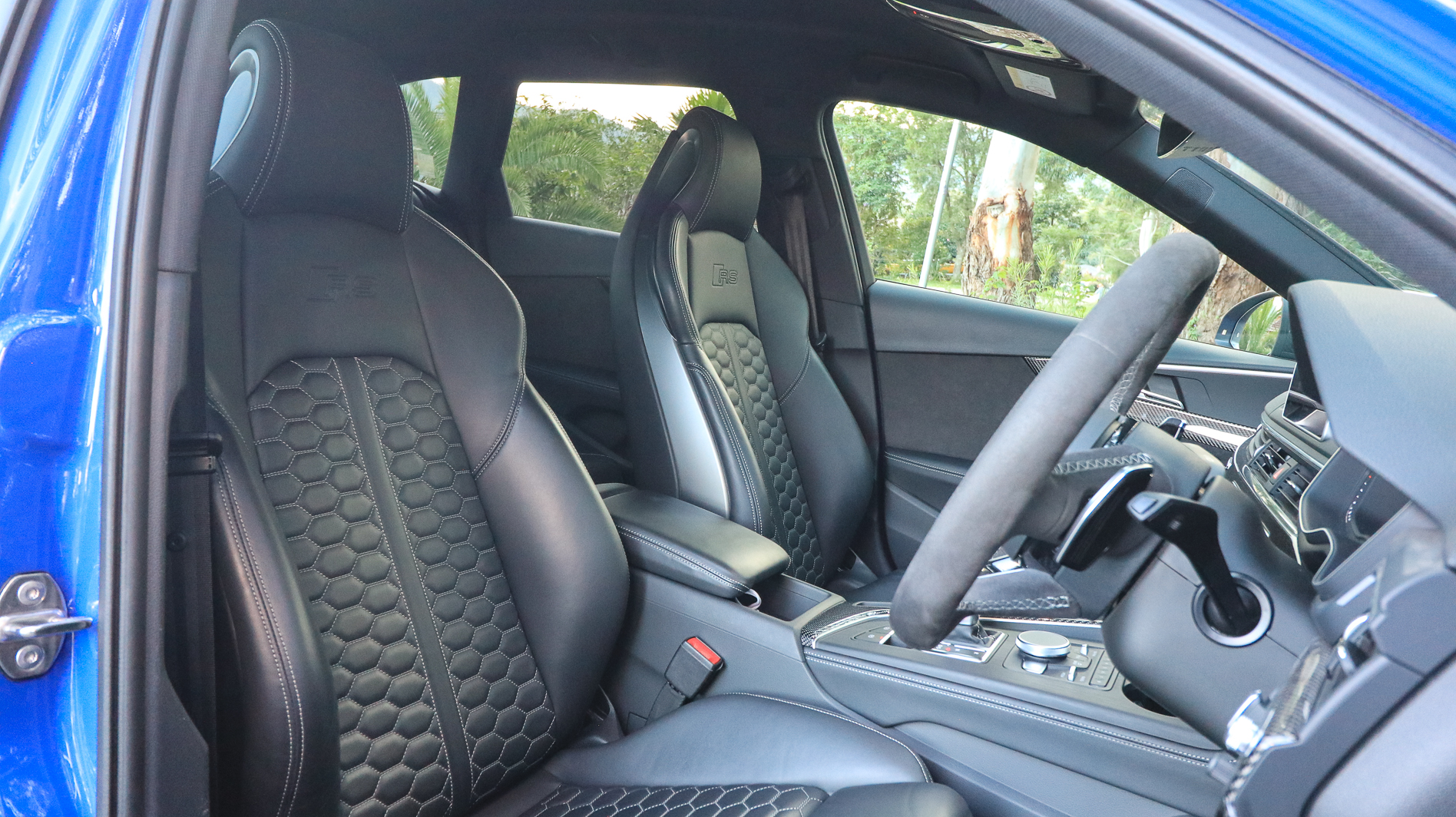
The interior, too, is a work of industrial art. The quilted leather on the bespoke RS seats and the dark palette of the cabin speak volumes about its intentions, while optional extras like genuine carbon fibre inlays bring a sense of Audi’s motorsport heritage into the RS4.
Specs and Value
At $152,529, the RS4 Avant wagon sits below the $156,229 three-door RS5 coupe and the $157,700 RS5 Sportback, even though it shares much with its RS-badged stablemates.
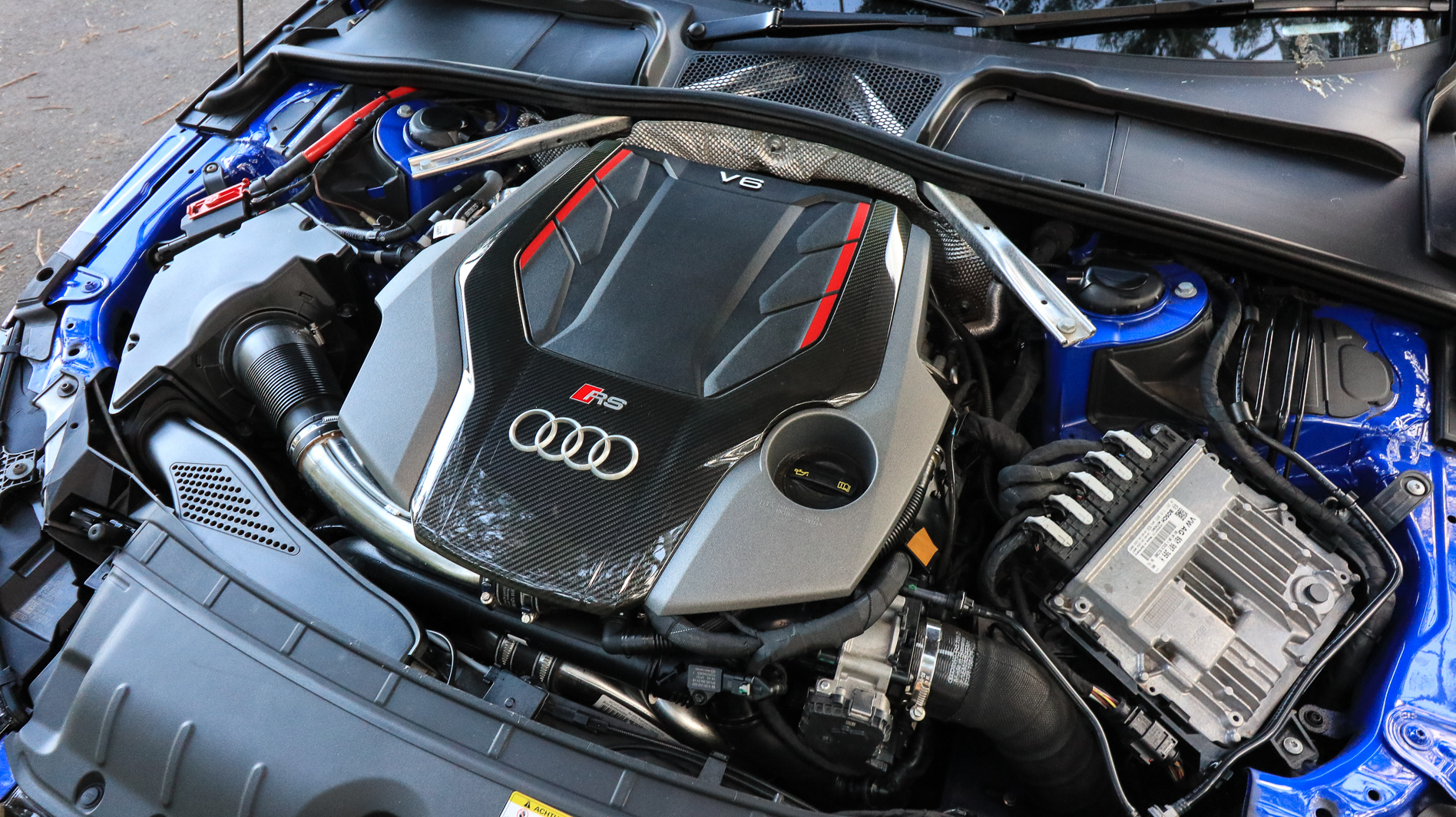
The RS4’s 331kW, 600Nm 2.9-litre twin-turbocharged V6 petrol engine, eight-speed automatic gearbox, centre diff-equipped all-wheel-drivetrain, adaptive shocks, dual-mode exhaust and big brakes are the same, yet you pay less for them.
It also sports LED headlights and taillights, RS-specific sports seat and steering wheel, Audi’s digital Active Dash with customised RS pages and auto headlights and wipers, while upgraded Matrix headlights, inductive phone charging and a heads-up display are part of a $3900 tech pack upgrade.
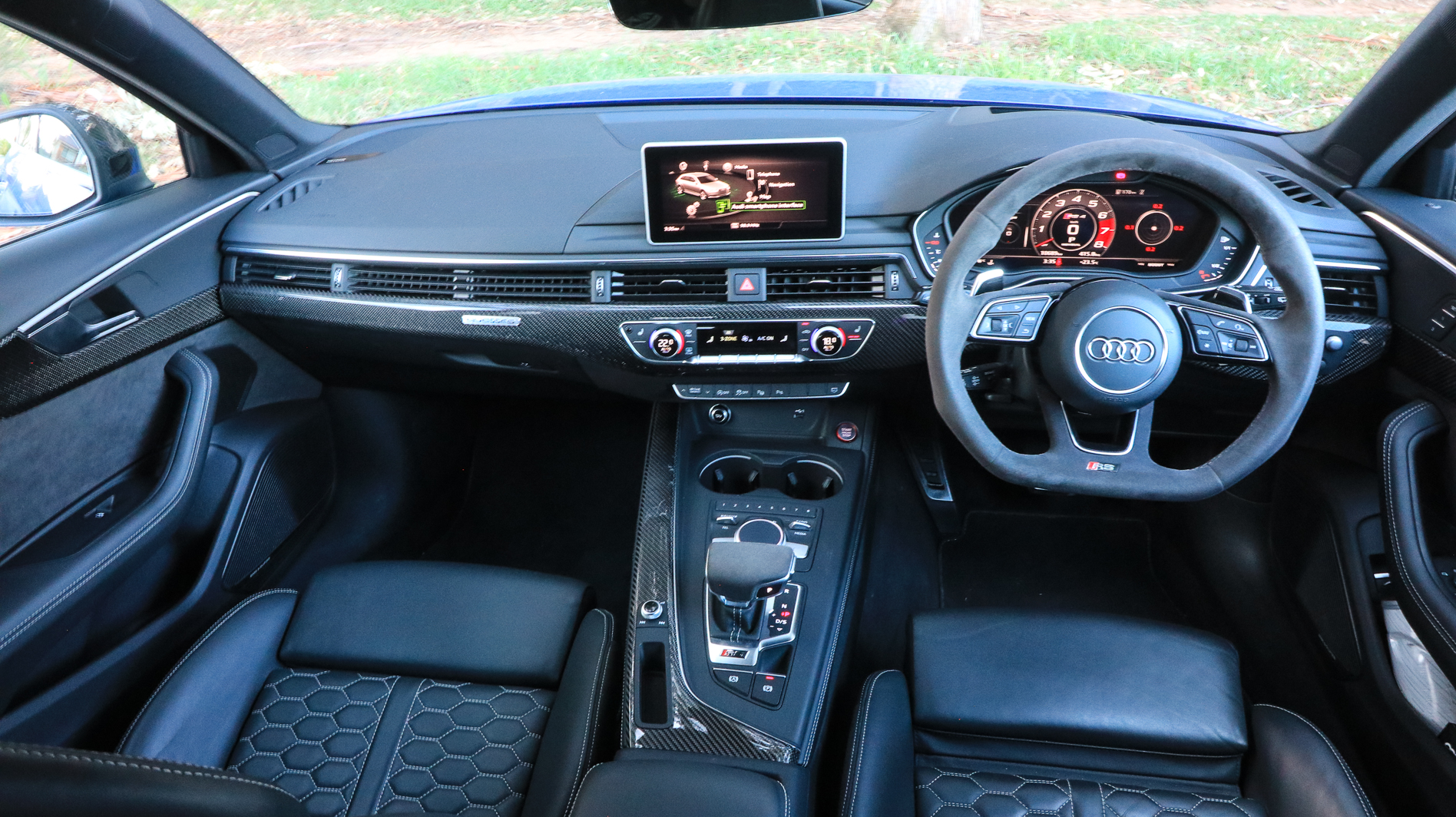
Speaking of extras, our tester has been optioned to the nines, though, and comes in at a smidge over $180,000 before on-road costs. These include $5450 worth of Nardo Blue paint, a $1200 carbon fibre engine cover, $1600 20-inch rims and almost $12,000 of carbon-impregnated styling kit.
For us, the rims really set off the RS4’s muscular flanks, and the amazing Matrix headlights are worth the cost of admission. A carbon fibre engine cover? Leave it at the dealership.
Only Mercedes-AMG offers up a genuine competitor to the RS4 Avant in the form of its C63 S Estate at $163,400. Its 375kW and 700Nm trumps the 331kW/600Nm RS4 for oomph, but the Audi adds all-wheel-drive.
Size
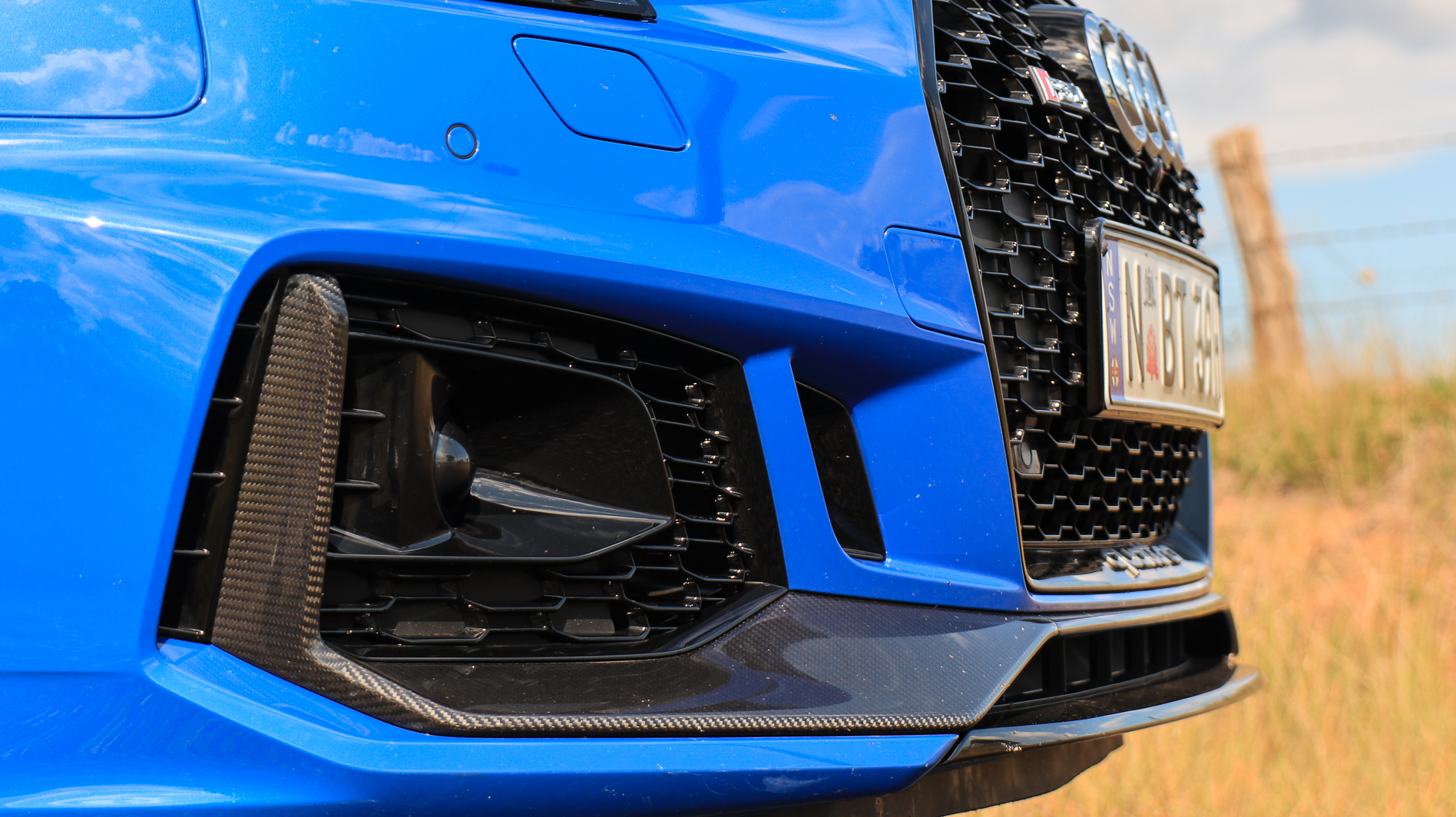
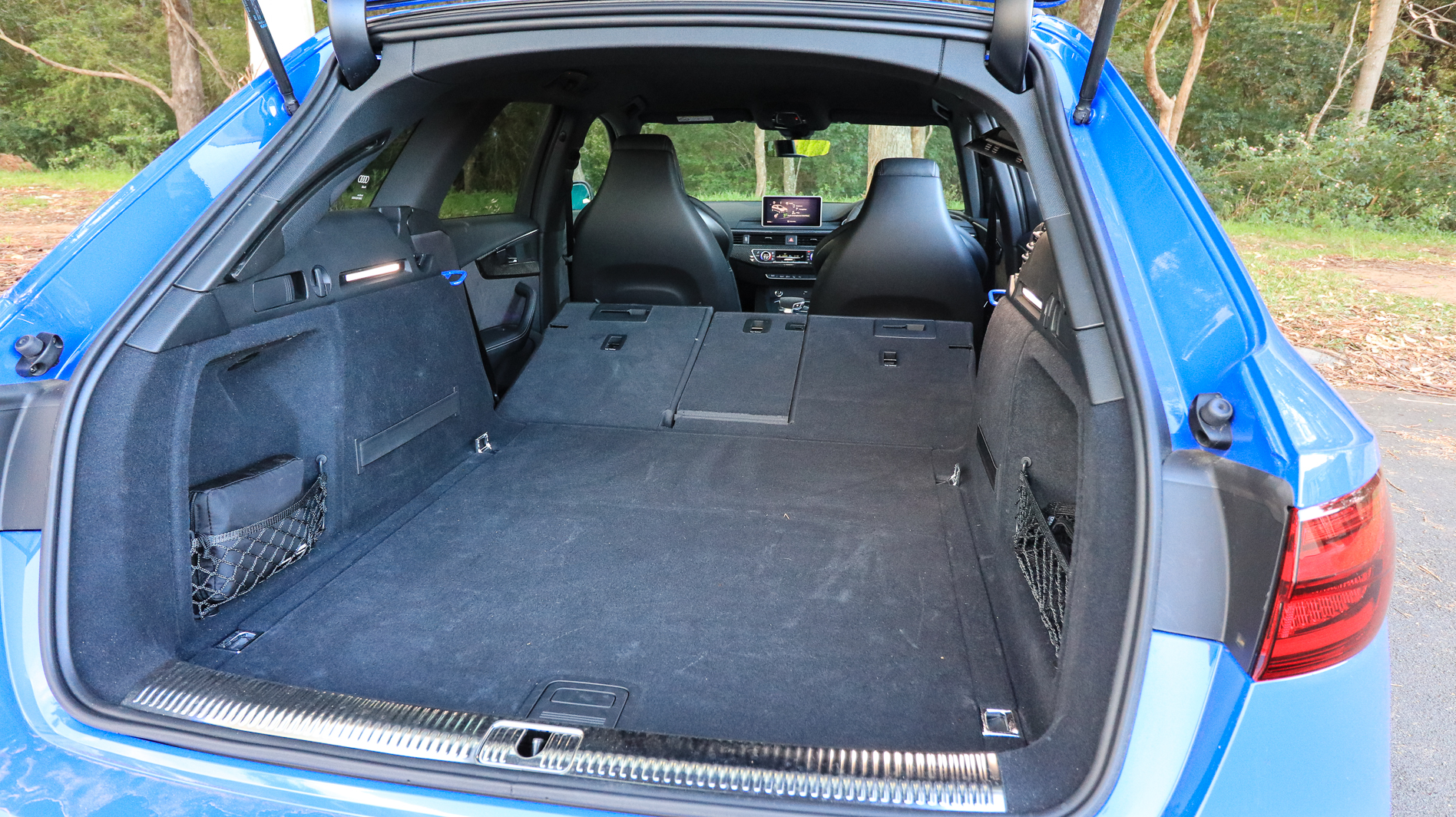
Load-wise, the five-seat RS4 has a maximum load space of 505 litres with the seats up and 1510 with them dropped, beating the Merc-AMG C63 Estate’s 460L and 1480L.
It sports the longest wheelbase of all three RS cars at 2832mm, and it also sports the widest tracks (axle widths) of the trio. Not only does this give the Avant a solid platform to work from handling-wise, but means a bit more cabin room, as well.
Safety
Audi has equipped the RS4 with traffic-jam capable adaptive cruise control system, two ISOFIX baby seat mounts, high- and low-speed AEB with pedestrian detection.
It also comes with front airbags for driver and passenger, side airbags for front and rear side passengers and head-level curtain airbag for front and rear, which help the RS4 score a five-star ANCAP rating.
Warranty and running costs
Audi – along with its premium competitors – still falls behind the rest of the car industry when it comes to length of warranties, only offering three year/unlimited kilometre coverage, spaced with 12 month/15,000km service intervals. The RS range doesn’t fall under a fixed-price service plan.
Against a combined fuel economy claim of 8.9 litres per 100km, we recorded a real-world figure over 430km of 10.6L/100km.
Comfort
The interior of the RS4 really is a cut above, even when looking across the Audi line-up. It’s dark but not overbearing, modern yet stylish and packed with small touches that make it a joy to use. Proper buttons, a gorgeously chunky steering wheel and well-formed seats make it easy to connect with the RS4.
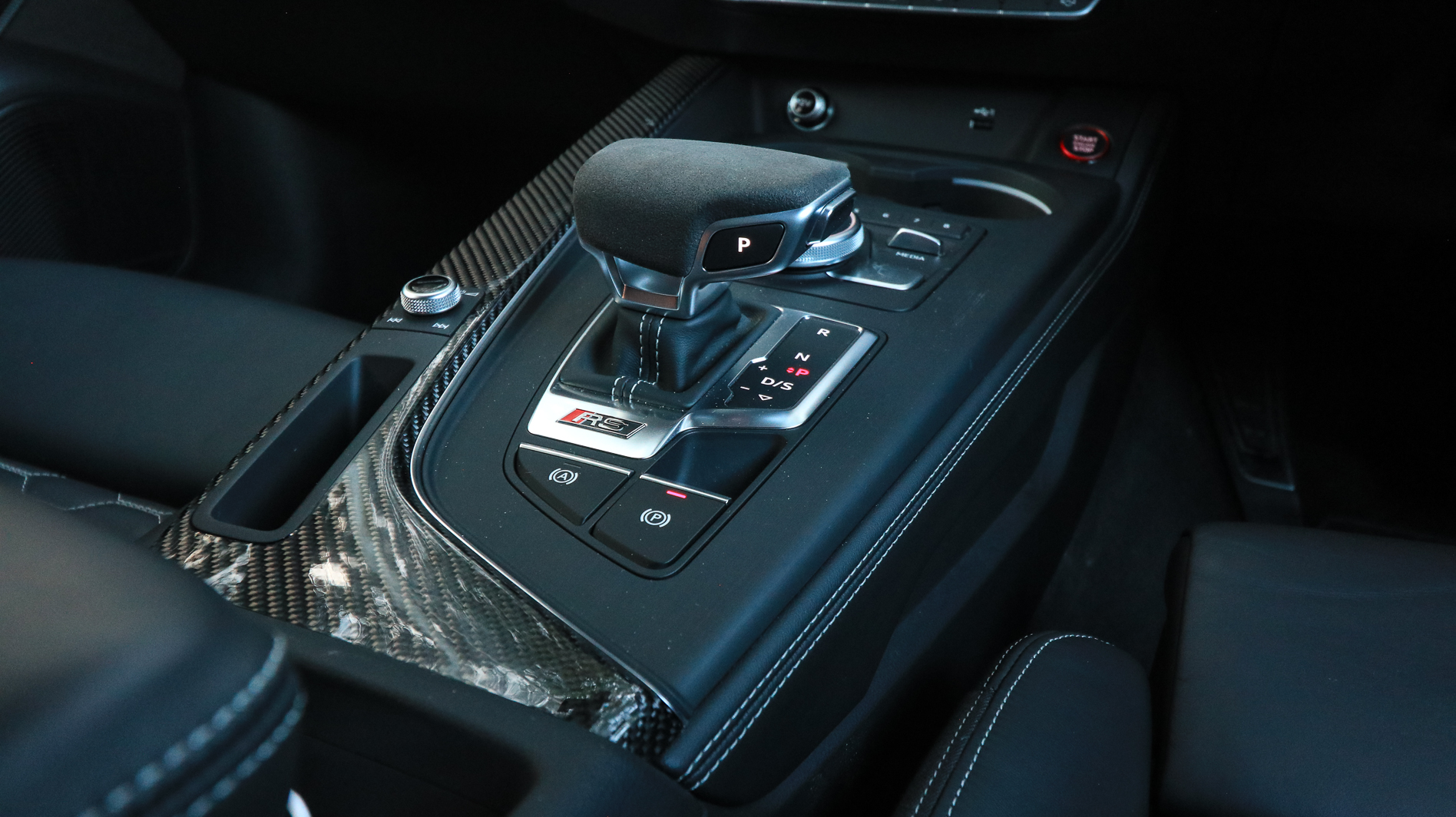
It’s not perfect, though. The trigger-style gear shifter is definitely trickier to use than a traditional gated shifter, and makes for slower shifts between forward and reverse. The older generation multimedia system lacks a touchscreen, and is thoroughly shaded by the system fitted to Audi siblings like the A7.
While the RS4 comes standard with a sunroof, it can be deleted at no cost, and that’s how our tester arrived. This means the roofline is a smidge higher, giving second-row passengers a bit more room. There’s plenty of toe space and shoulder room back there, though the middle seat would be squashy for an adult.
The 40/40/20 split/fold second row seats can be tumbled forward from the cargo area, which also sports a net and cargo tie-down hooks. The centre seat can be dropped, too, allowing for long items to be carried while still toting four passengers.
On the road
it’s obvious the RS4 is not as blunt an instrument of back road destruction as, say, the Mercedes AMG C63, but it still manages to deliver on the thrill-o-meter… just in a different, more subtle but effective way.
The twin-turbo V6 engine is strong and linear, and does its best work with more revs on board; in fact, the gearing of the eight-speed auto means that much of its best work is still to come despite the posted speed limit having long come and gone.
The RS4’s Dynamic mode doesn’t feel like it goes all the way to 11, for example, and while it’s not in your face like a helicopter mum, there’s a sense that that the car’s tractions systems have both second and third slips in play to stop you dropping the ball.
The ability to simply flatten the loud pedal once you’re past the apex of a corner is pretty hilarious, and an 85 per cent rearward power bias from the centre-diff based AWD system feels about right, especially when the clever rear limited slip diff comes into play.
It’s got presence like a distant thunderstorm, too, especially off-throttle, when a staccato ‘brrrrrrrb’ resonates out the huge rear tips on throttle overrun. It can become a bit tiresome at cruising pace, but it can be dialled down via the drive mode button.
Steering feel is okay-to-good but it lacks involvement, and the plastic shift paddles behind the steering wheel are a strange and disappointing oversight when it comes to tactility. The eight-speed auto, too, can be a bit conservative about allowing downshifts when you’re getting keen, but overall the RS4 Avant is still a cracker of a thing, and possibly the pick of the RS trio.
Verdict
The RS4 Avant has long been the poster child for the A4 line-up, and its wagon body form only plays to its strengths as a practical yet entertaining everyday muscle car.
Model: Audi RS4 Avant Engine: 2894cc V6, dohc, 24v, twin-turbo Max Power: 331kW @ 5700-6700rpm Max Torque: 600Nm @ 1900 – 5000rpm Transmission: 8-speed automatic Weight: 1715kg 0-100km/h: 4.1sec (claimed) Fuel economy: 8.9L/100km Price: $152,529
I scored a three-minute interview slot with Kimi Raikkonen the other day. Christ, what a train-wreck.
Now, I know that The Iceman (along with Meg Ryan and Lou Reed, among others) is notoriously tricky to interrogate; given to monosyllabic answers and a shrug of the shoulders when a civil, considered verbal response might have been more enlightening for anybody unfortunate enough to be watching. So I was expecting the worst. I was anything but disappointed.

Held on the edge of Albert Park Lake in the run-up to the Melbourne Grand Prix, I figured I’d do Kimi a favour and steer away from questions about tyres and how his new Sauber/Alfa Romeo was going to fare in the 2019 season opener. As in, questions he’d probably been thrown a thousand times already that week. So, I went for a broader-brush approach, bearing in mind the audience I was dealing with were not your F1 hard-heads by any stretch.
Which led me to ask Kimi a hypothetical: What single F1 rule change he would like to make to improve the sport. Big mistake.
He looked at me like he’d just stepped in a microphone-shaped turd and then replied: “I cannot make rule changes. We should not even waste time talking about it”.
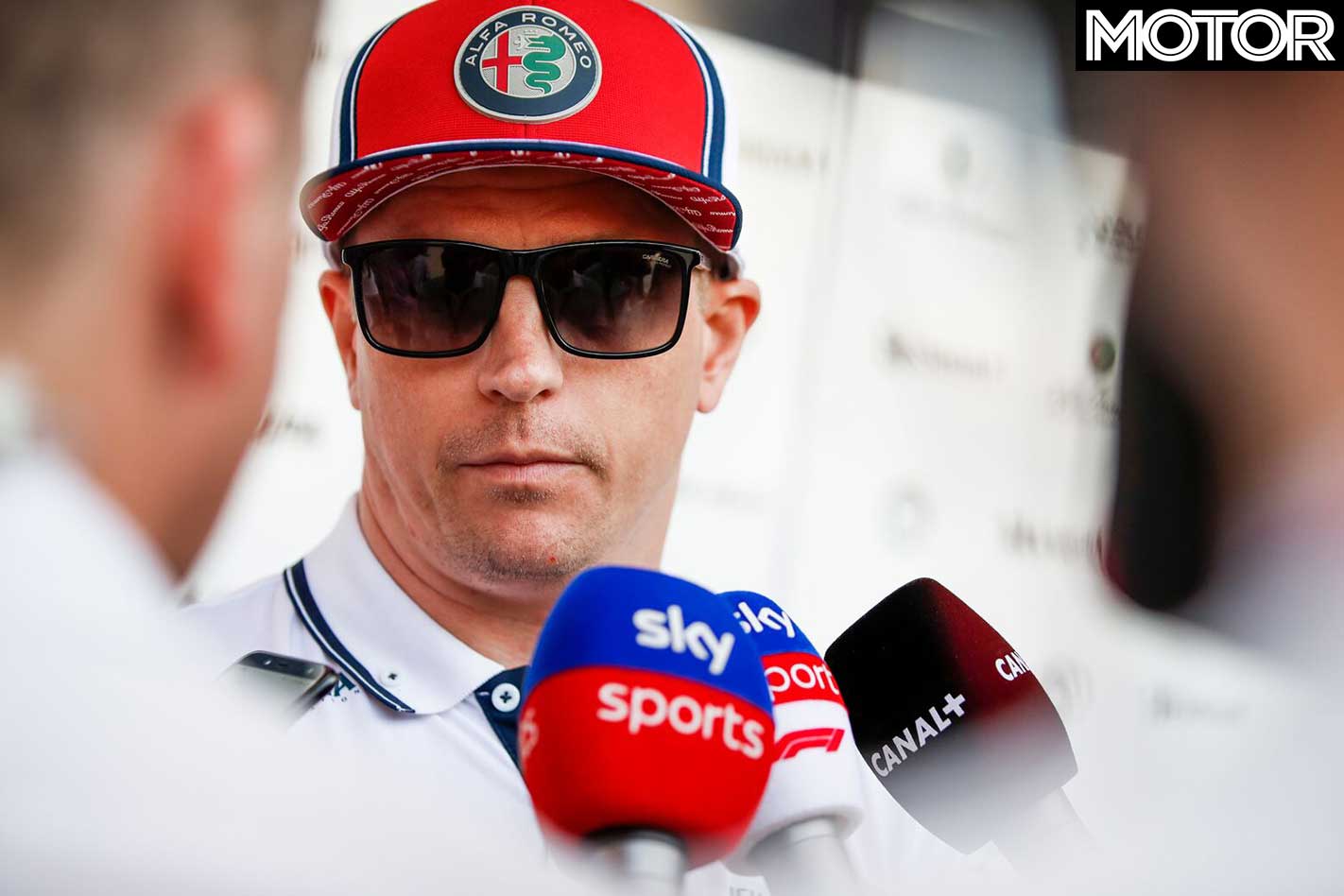
Oh sweet Jesus, this is going well. And it wasn’t that he simply didn’t want to answer the question, it was the inference that it was the dopiest question he’d ever heard. But I disagree. I was genuinely interested in what a bloke with almost two decades’ experience in the sport reckons could be changed to make it more spectacular, more exciting, more fun and, ironically coming from KR, less robotic.
So I blundered on: Was Formula 1 more fun in the old days, or do you enjoy it more now?
“It is what I love to do, so I do it. I don’t enjoy it any more or less”. And again: Who has been your favourite driver to race against? “I have to race every driver. There is no favourite.” By now I can’t even help myself: Do you like Formula E? “I have only seen it on TV, so I cannot say.” Time to play my wildcard: Do you miss Bernie in Formula 1? “I have seen him from time to time. He was always very kind to me.” Thanks Kimi, and good luck on Sunday.
The PR girl shot me a tortured smile, Kimi shrugged and I played my part by resisting the urge to push him into Albert Park Lake.

Okay, so that’s Kimi’s schtick, and I get it. But, mate, seriously, if you don’t want to be interviewed, don’t do them. He’s probably not a bad guy, but trying to make every interviewer (and I know I’m not special enough to be the only one) look like an idiot is just being an arsehat.
Actually, there was one funny thing that did happen. As the camera crew were mic-ing Kimi up, the zipper on his Team Alfa jacket broke and unravelled from the bottom.
“Quality,” Kimi muttered.
Brilliant. He should stick with comedy and give The Iceman act the flick. And who’s laughing now anyway? He was forced to stand by a lake and look bored, while I got a MOTOR column out of the whole dreadful mess.
And will this column guarantee that I’ll never be invited to interview him again? Lord I hope so.
Right now cars from the mid-1990s to the early 2000s feel like they belong to a ‘middle child’ era for car enthusiasts. They’re not old enough to be a treasured classic and too new to be valued. But not for Ferrari, which is offering the Ferrari Premium factory-back maintenance program for 13 models from the aforementioned time period.
These models range from the 1992 Ferrari 456, to the 2001 Ferrari 360 Modena, and right up to the rare special editions such as the 2002 Ferrari Enzo and 2011 Ferrari 599 GTO.

The Ferrari Premium program not only provides official maintenance services on eligible cars, but will provide an official certificate that validates all scheduled and preventative maintenance work was carried out correctly, along with any recall and service campaigns that it was sent in for. The program also includes substituting old wear-and-tear parts.
Customers who take up the Ferrari Premium program, and have their cars certified accordingly, would be able to access Ferrari Classiche certification program when the car reaches its 20th anniversary from its first year of registration.
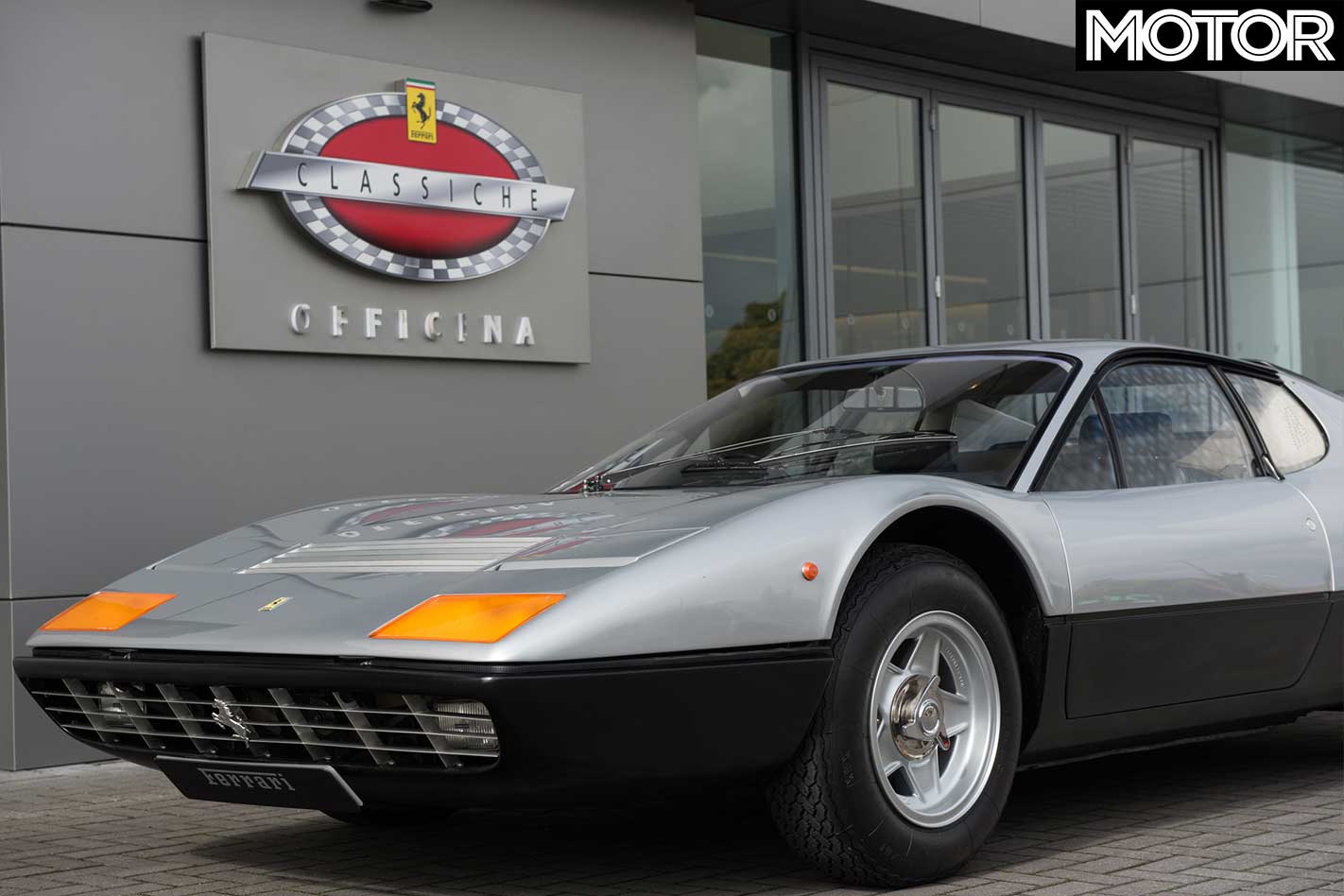
The Ferrari Classiche program is Ferrari’s special heritage department that works on complex restoration and maintenance works of Ferrari’s classic models to preserve the car’s original specification and mechanical condition.
While every new Ferrari comes with a standard three-year warranty and seven years free maintenance program, the full factory warranty can be extended for another 24 months.
For six to 15 year old examples, owners can opt for Ferrari’s New Power warranty that covers the car’s main mechanical components. Whereas owners who had gone through the seven-year maintenance program can extend the coverage with Main Power warranty up to the car’s 15th year from its first registration.
The models that are included in the Ferrari Premium program are: – 1992 Ferrari 456 GT/GTA – 2001 Ferrari 456 M GT/GTA – 1996 Ferrari 550 Maranello – 2000 Ferrari 550 Barachetta – 2001 Ferrari 360 Modena – 2002 Ferrari 575 Maranello – 2005 Ferrari Superamerica – 2004 Ferrari F430 – 2006 Ferrari 612 Scaglietti – 2006 Ferrari 599 GTB Fiorano – 2011 Ferrari 599 SA Aperta – 2011 Ferrari 599 GTO – 2002 Ferrari Enzo
Small cars appeared to be back in favour in April, with the Toyota Corolla reclaiming its top passenger-car billing and the Kia Cerato bursting into the top-10.
The numbers need to be put in perspective though, with sales down for most passenger-car and SUV models compared to March and the first four months of 2018.
This reflects an 8.1 percent total market downturn that has seen year-to-date sales (including heavy vehicles) drop by about 30,000 to 344,088, according to VFACTS sales figures released today.
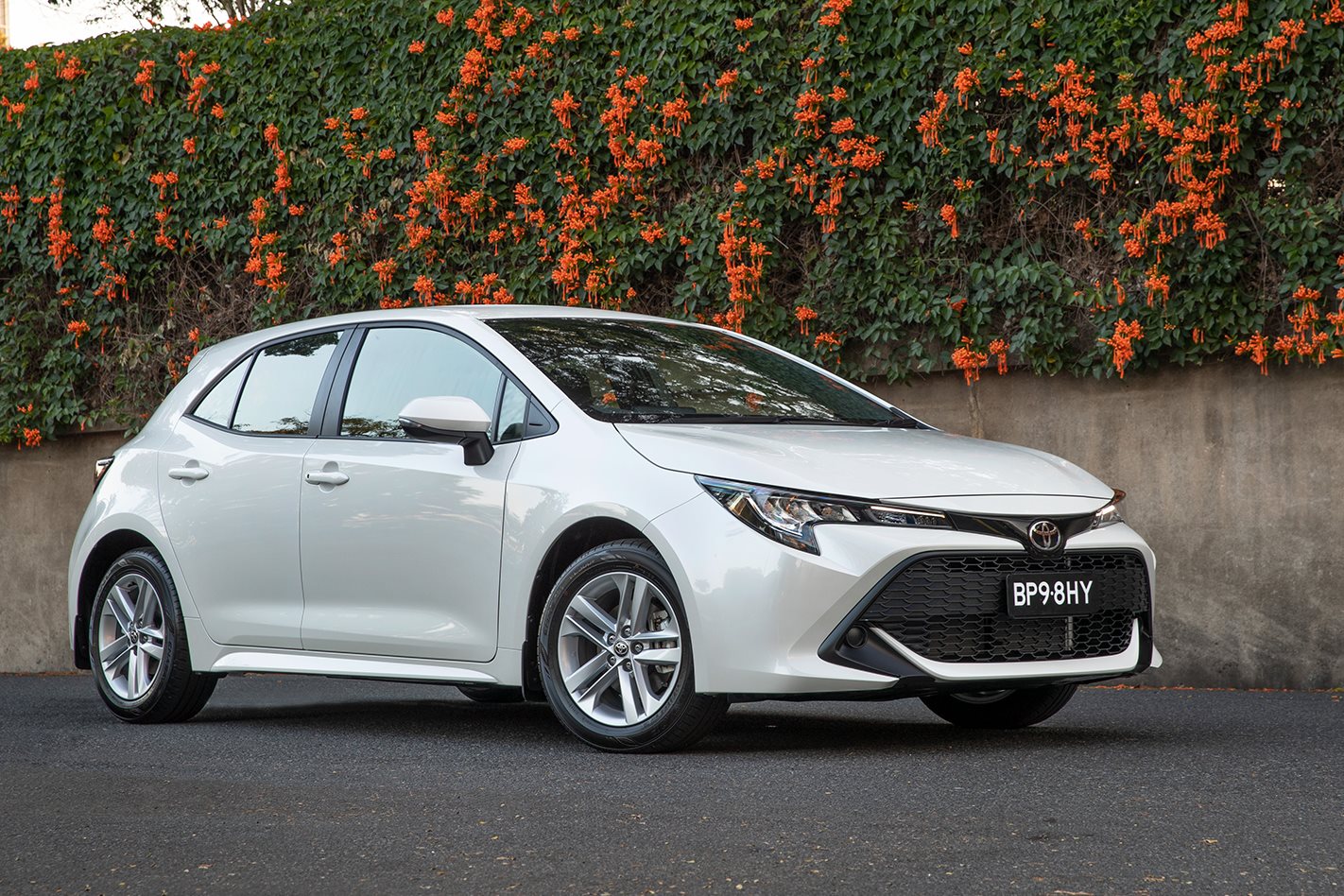
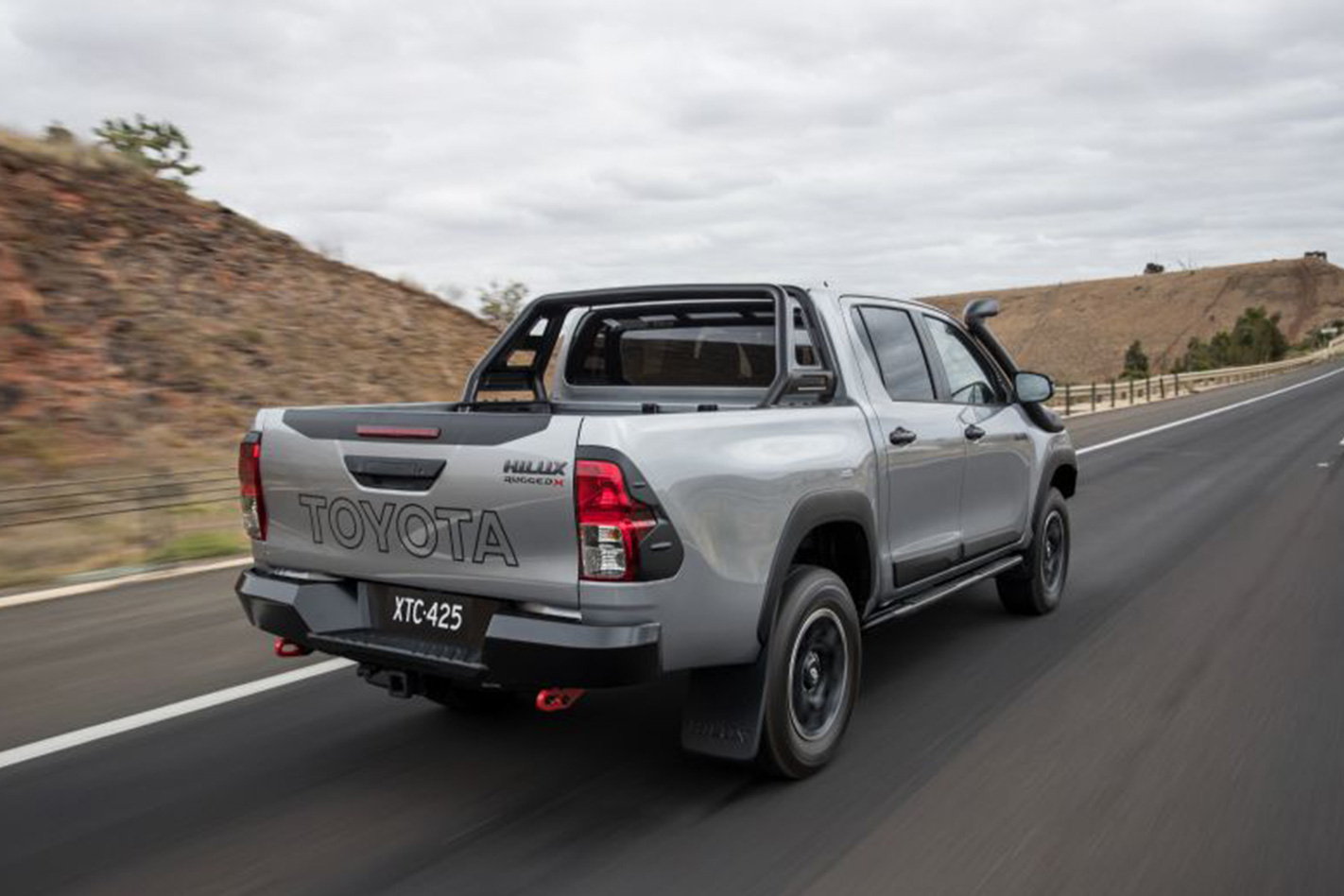
Corolla climbed from fifth spot in April to reclaim third position behind the all-conquering Toyota Hilux and Ford Ranger utes, despite having 70 fewer sales relative to March 2019.
Corolla sales have been falling all year, with its improved position due to its main rival, the Mazda 3, transitioning to the all-new model, and yo-yoing sales of the Mitsubishi Triton that fell out of the top-10 after holding third place for the past two months.
Mitsubishi’s ASX crossover and Outlander medium SUV also fell out of the top-10, though this isn’t entirely unusual for the Japanese carmaker, which often clears its shipments quickly leaving a void the following month. The Japanese financial year ending on March 31 may also have had something to do with it.
The Corolla will have a hard time maintaining third spot, at least until the all-new sedan arrives to bolster the range later this year.
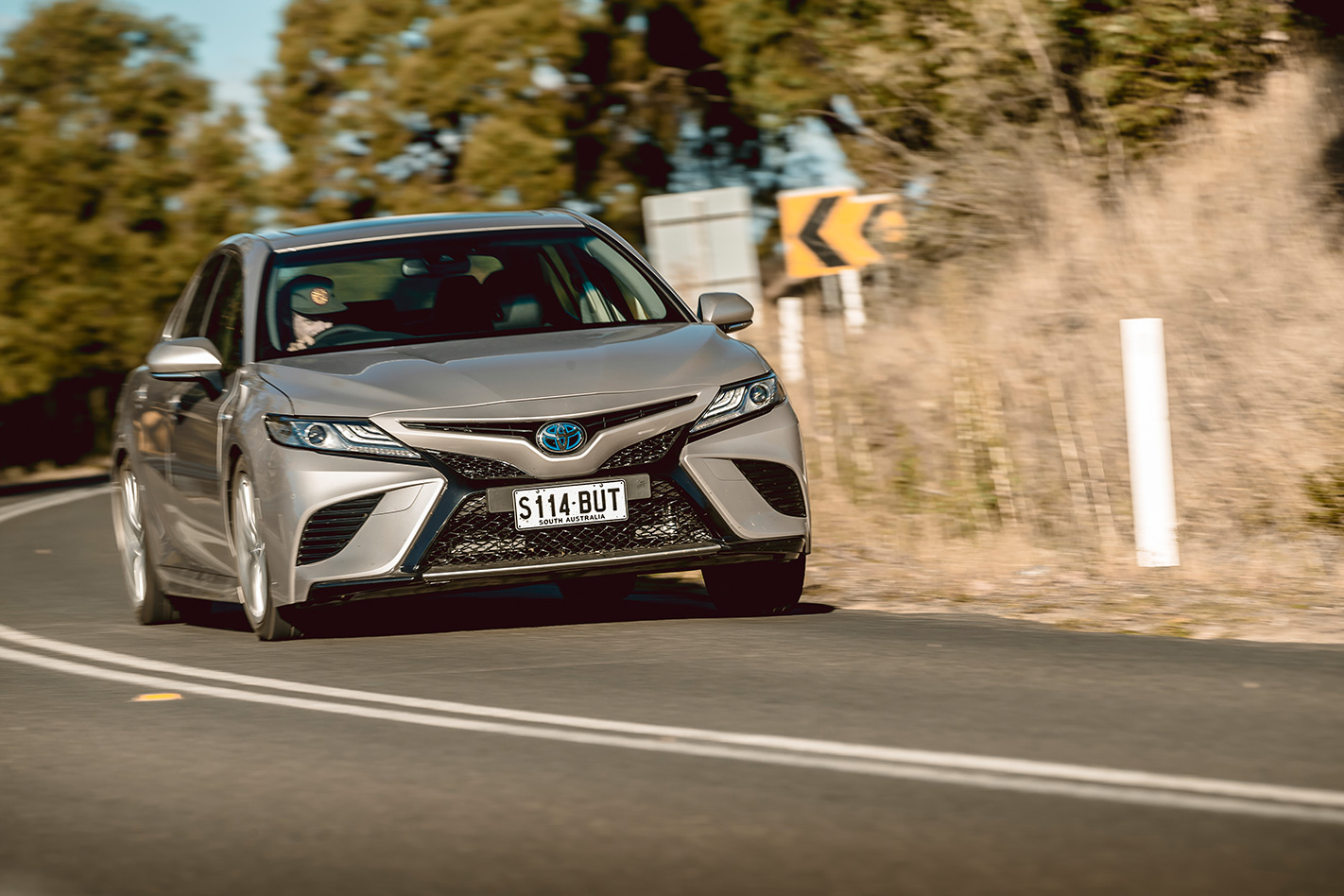
The Mazda 3 meanwhile managed to hold on to fourth spot, with 2195 sales, down from 2642 in March.
Hyundai i30 sales also fell last month, from 2402 in March to 1910, but moved into the void left by Triton to climb to sixth spot behind the Toyota Landcruiser (which includes both the 78- and 200-Series models).
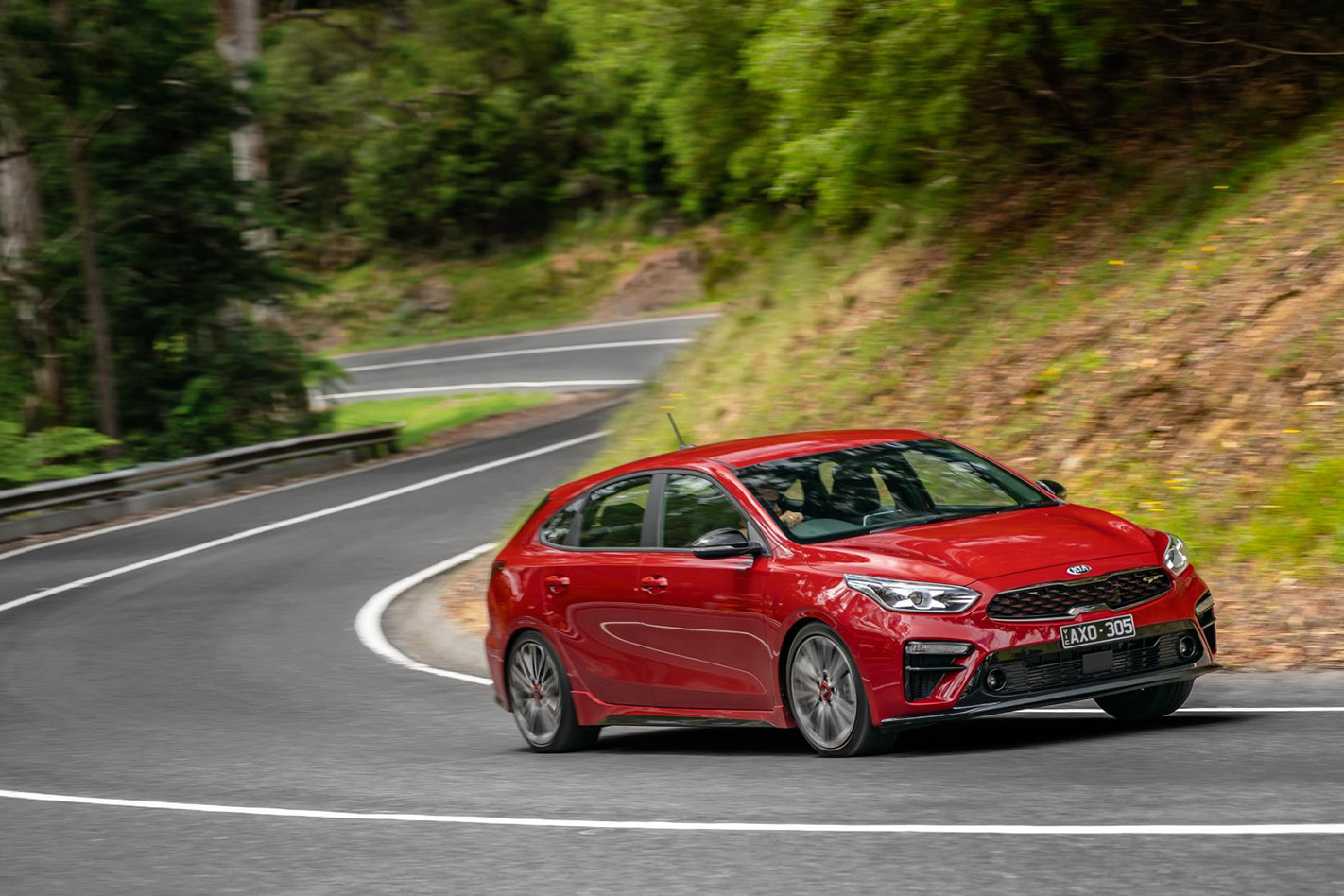
The Kia Cerato leapfrogged several models to eighth spot despite its sales being down from 1873 in March to 1650 in April.
Defying the trend
Kia and Mitsubishi are still the only two major brands to sell more cars this year than in the same period in 2018.
Mitsubishi continued to hold third place overall with 4717 sales in April, despite selling 791 fewer cars than April last year. This was the first month the company was in negative territory this year, however a strong first quarter means its 30,016 year-to-date sales remain healthy, up 12.3 percent from the first four months of 2018.
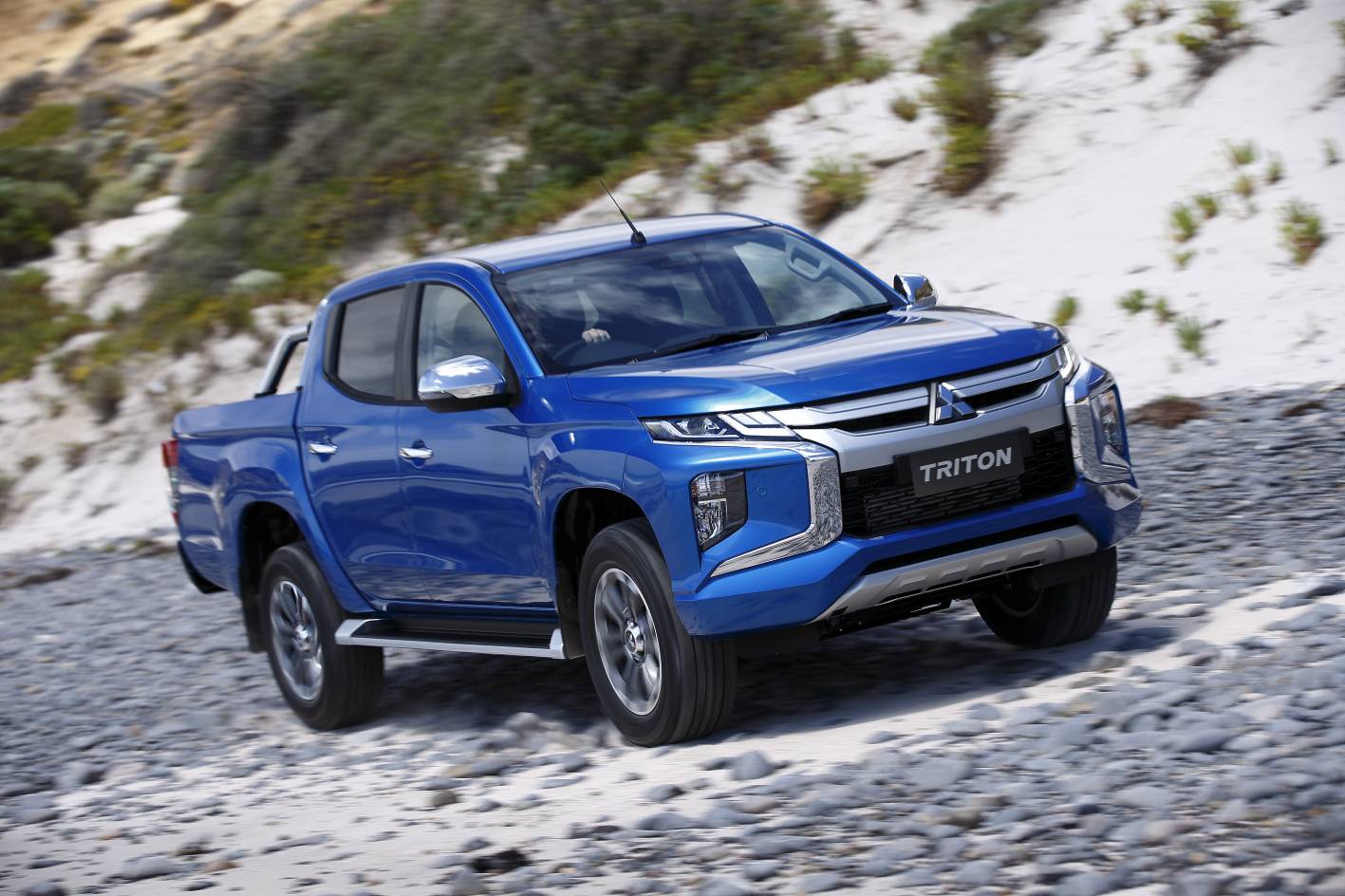
Kia meanwhile sold 19,331 for the first four months of the year, up 2.9 percent.
By comparison Toyota is down 6.3 percent (while still holding on to 18.8 percent market share) as is Mazda (-4.0 percent), Hyundai (-12.9 percent), Ford (-9.3), Holden (-23.8 percent), Honda (-18.0 percent), Nissan (-15.6 percent) and Volkswagen (-10.4 percent).
The only other mainstream brands to be in positive territory in Australia this year are Citroen (2.7 percent), Fiat (0.2 percent), Great Wall (148.9 percent), Haval (108.6 percent), Jaguar (25.8 percent and Skoda (26.4 percent).
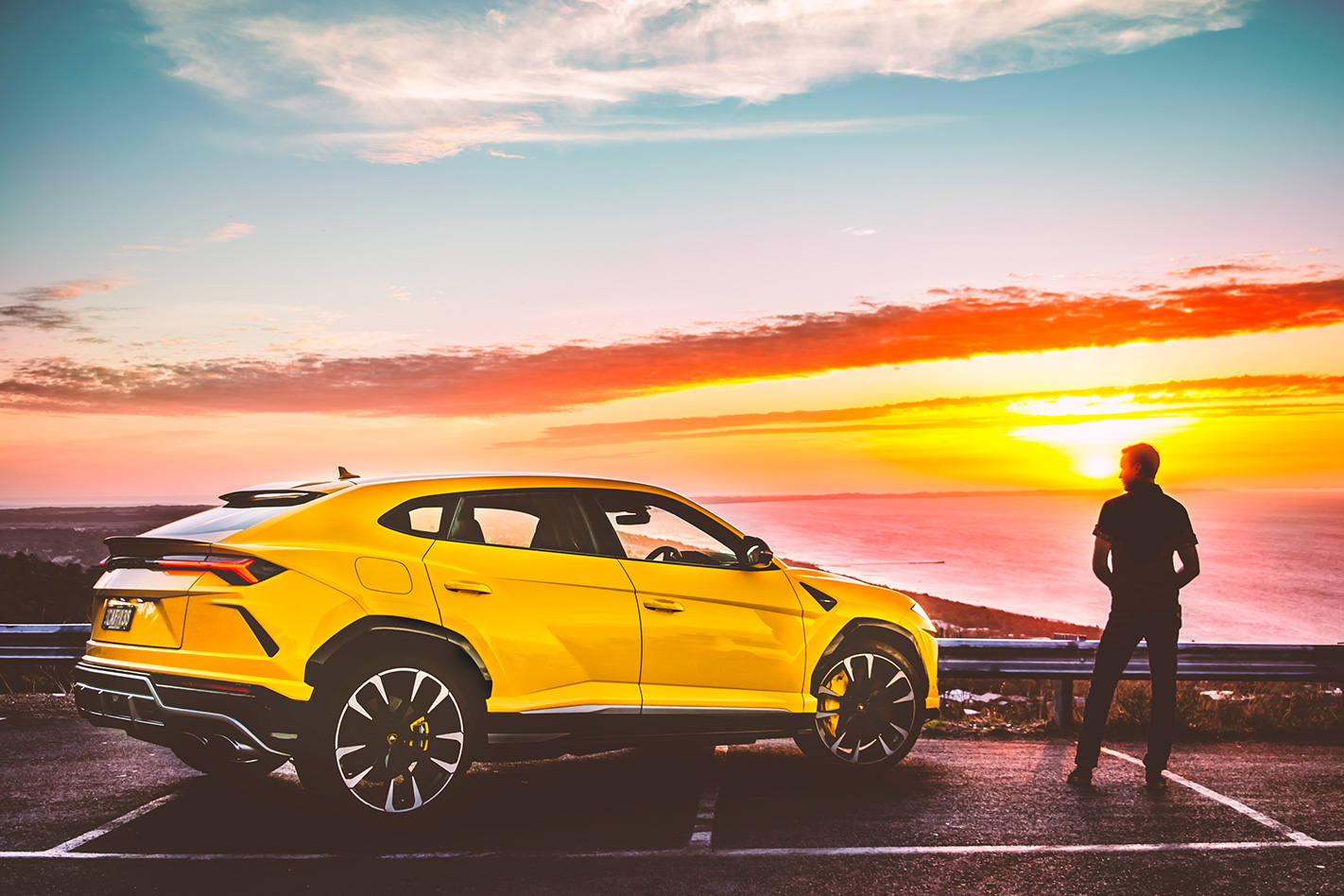
It’s also worth noting Lamborghini is up by 19.1 percent this year, with its new Urus SUV accounting for 31 of its 56 total sales so far.
Top-10 brands, 2019 Year to Date sales / market share
- Toyota – 64,753 / 18.8%
- Mazda – 35,987 / 10.5%
- Mitsubishi – 30,016 / 8.7%
- Hyundai – 26,834 / 7.8%
- Ford – 21,062 / 6.1%
- Kia – 19,331 / 5.6%
- Volkswagen – 15,871 /4.6%
- Nissan – 15,866 / 4.6%
- Holden – 15,308 / 4.4%
- Honda – 14,872 / 4.3%
Top 10 cars, April 2019
- Toyota Hi-Lux – 3621
- Ford Ranger -3011
- Toyota Corolla -2429
- Mazda3 -2195
- Toyota Landcruiser 78/200 Series- 2034
- Hyundai i30 -1910
- Mazda CX-5 -1827
- Kia Cerato -1650
- Toyota Prado – 1473 1699
- Hyundai Tucson – 1355
Top 5 cars by segment, April 2019
Micro/Light Cars
- Hyundai Accent – 998
- Toyota Yaris – 678
- Mazda 2 – 642
- Kia Rio – 538
- Suzuki Swift – 523
- Toyota Corolla – 2429
- Mazda 3 – 2195
- Hyundai i30 – 1910
- Kia Cerato – 1650
- Volkswagen Golf – 1095
- Toyota Camry – 1274
- Holden Commodore – 629
- Mercedes-Benz C-Class – 371
- Mazda 6 – 205
- BMW 3 Series – 192
Small SUVs
- Mazda CX-3 – 1071
- Hyundai Kona – 1030
- Mitsubishi ASX – 1009
- Subaru XV – 964
- Honda HR-V – 691
- Mazda CX-5 – 1827
- Hyundai Tucson – 1355
- Toyota RAV4 – 1238
- Mitsubishi Outlander – 1197
- Nissan X-Trail – 1160
- Toyota Prado – 1473
- Toyota LandCruiser 200 – 1177
- Toyota Kluger – 851
- Subaru Outback – 759
- Mazda CX-9 – 529
- Kia Carnival – 495
- Volkswagen Multivan – 107
- Honda Odyssey – 92
- Hyundai iMax – 84
- LDV G10 Wagon – 63
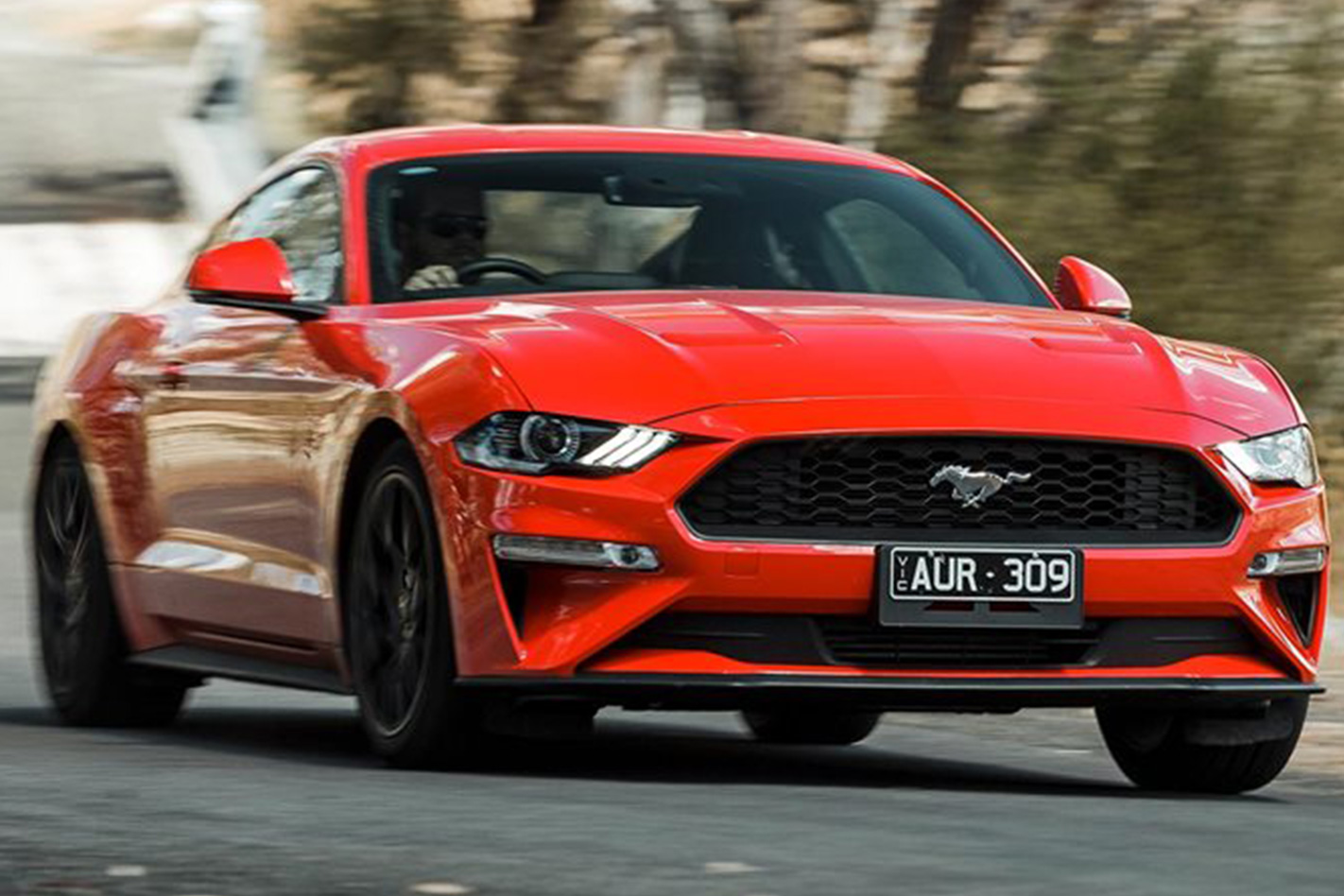
- Ford Mustang – 422
- Mercedes-Benz C-Class Coupe/Convertible – 211
- BMW 2 Series Coupe/Convertible – 76
- Porsche 911 – 70
- Mercedes-Benz E-Class Coupe/Convertible – 55
Light Commercial (Utes)
- Toyota Hilux – 3621
- Ford Ranger – 3011
- Isuzu D-Max – 1352
- Holden Colorado – 1252
- Mitsubishi Triton – 1162
On this week’s episode WhichCar Senior Journalists Dan Gardner and David Bonnici are joined by Wheels Deputy Editor Andy Enright to discuss Andy’s adventures at Targa Tasmania, where he tackled the Tour section in a Hyundai i30 Fastback N (2:00).
Next up, David recently headed to China to peek behind the curtain of the automotive colossus that is Great Wall Motors (11:30) and then trio examine is black art of instructing learner drivers (24:40). If you’re on the go you can catch the podcast on all manner of apps including Podbean and iTunes, don’t forget to subscribe and leave us a rating and review.
You can also keep up-to-date on all the latest happenings @whichcar on Facebook, Twitter and Instagram. Until next week, happy motoring.
Listened to the show? Help us out:
- Leave a note in the comment section below.
- Leave a review on Apple Podcasts/iTunes
- Subscribe to our podcast
Sales of Australian new cars have continued to drop, with data for the month of April showing that year to date sales are down by 8.1 percent compared to this time last year, while last month’s figures were the lowest thus far for 2019.
And though April is routinely one of the softer months for new car sales, with just 75,550 new vehicle registrations last month it’s the lowest result we’ve seen since April 2011, when 74,214 sales were recorded.
Why the big slip? The answer appears to be inextricably linked to the fortunes of the housing market.
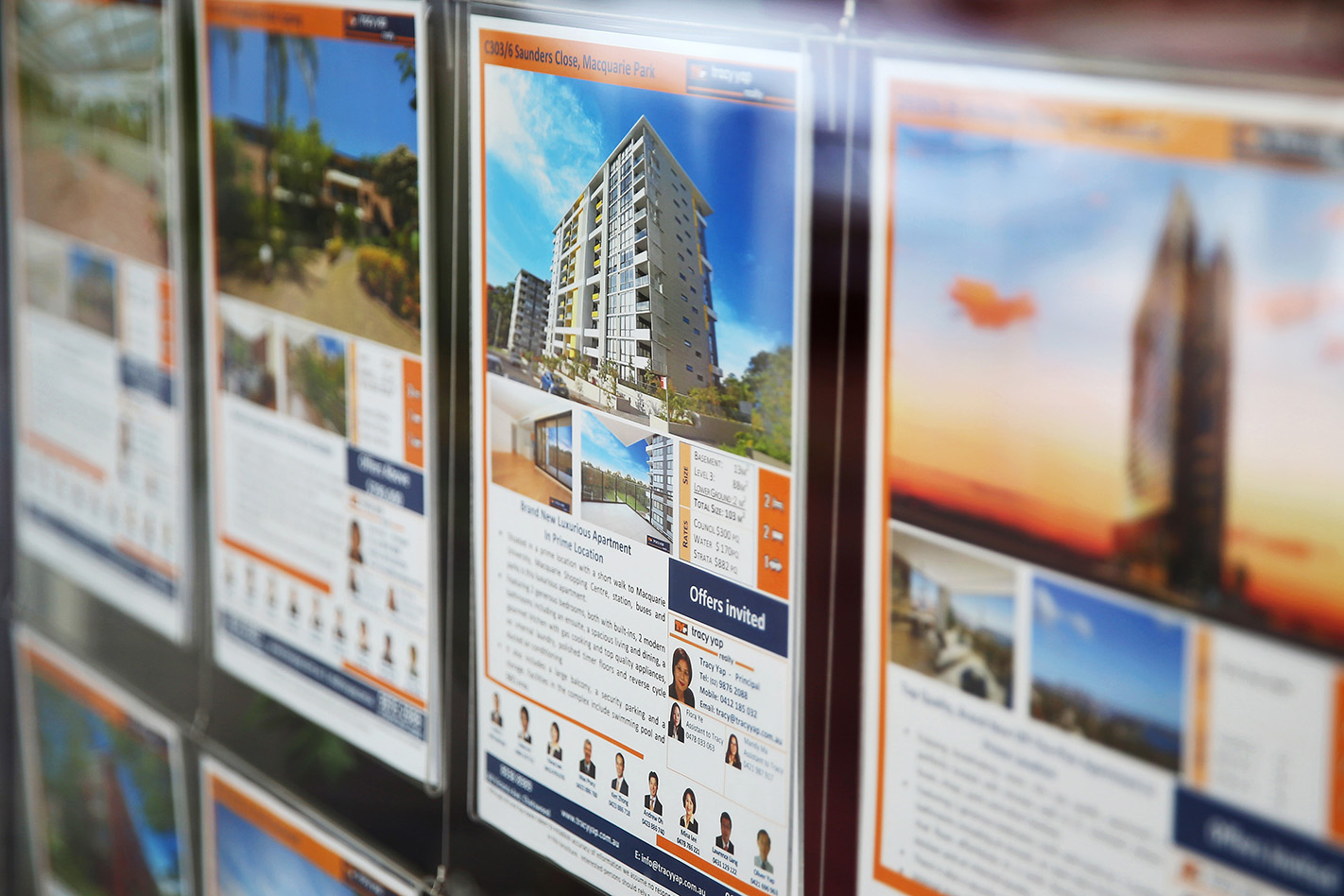
It’s no small secret that the Australian property boom is over. Housing values in Sydney and Melbourne have followed the lead of Perth and come down from their peak significantly, and a broader correction in house prices appears to be in progress.
Naturally, with around 70 percent of Australians owning their own home the majority of the population is already sensitive to movements in property prices. As such, they may be delaying the purchase of a new car in anticipation of further financial heartache to come.
Meanwhile the number of property investors, those with at least one investment property and who are the most exposed to market-induced hardship (especially those who’ve been gambling on capital gains with interest-only loans) is a far more modest 7.9 percent of the population. Even so, we can surmise that almost everyone in this group who was considering a new car this year is most likely re-evaluating that decision.

However decreased consumer confidence among property owners isn’t the only reason sales are falling, according to Tony Weber, chief executive of the Federal Chamber of Automotive Industries:
“This decrease is the result of a number of factors in the Australian market, including the downturn in the housing market, the tightening of lending practices, environmental factors such as drought and flood, and, of course, the imminent Federal Government election,” Weber said.
“With all these elements currently present in the market, it is no surprise that Australian consumers are conservative in their approach to major purchases at the moment,” Mr Weber said.
From an industry point of view, it’s the top end of town that’s been hurting most thus far. With high-value assets like property suddenly shedding value en masse, it’s no surprise that luxury car dealers are moving less metal as a result.
Even Ferrari was flying high on the back of property price surges not long ago, but those days look to be over.
“I think the year will be flat,” said Jaguar Land Rover spokesperson Tim Krieger to WhichCar.
“That whole luxury market has been affected [by property]. There’s a direct correlation between new car sales and housing. Sydney and Melbourne [house prices] are off significantly, so the car market as a whole has come off significantly.”
“If you take out all the overseas factors like WLTP [fuel economy overhaul], the market was trending down anyway and I think it’s a result of that housing collapse in Sydney and Melbourne,” Krieger continued.
And according to Krieger, there was also likely an element of substitution at play, as those in the ‘investor class’ shifted their car-buying plans toward more modest choices.
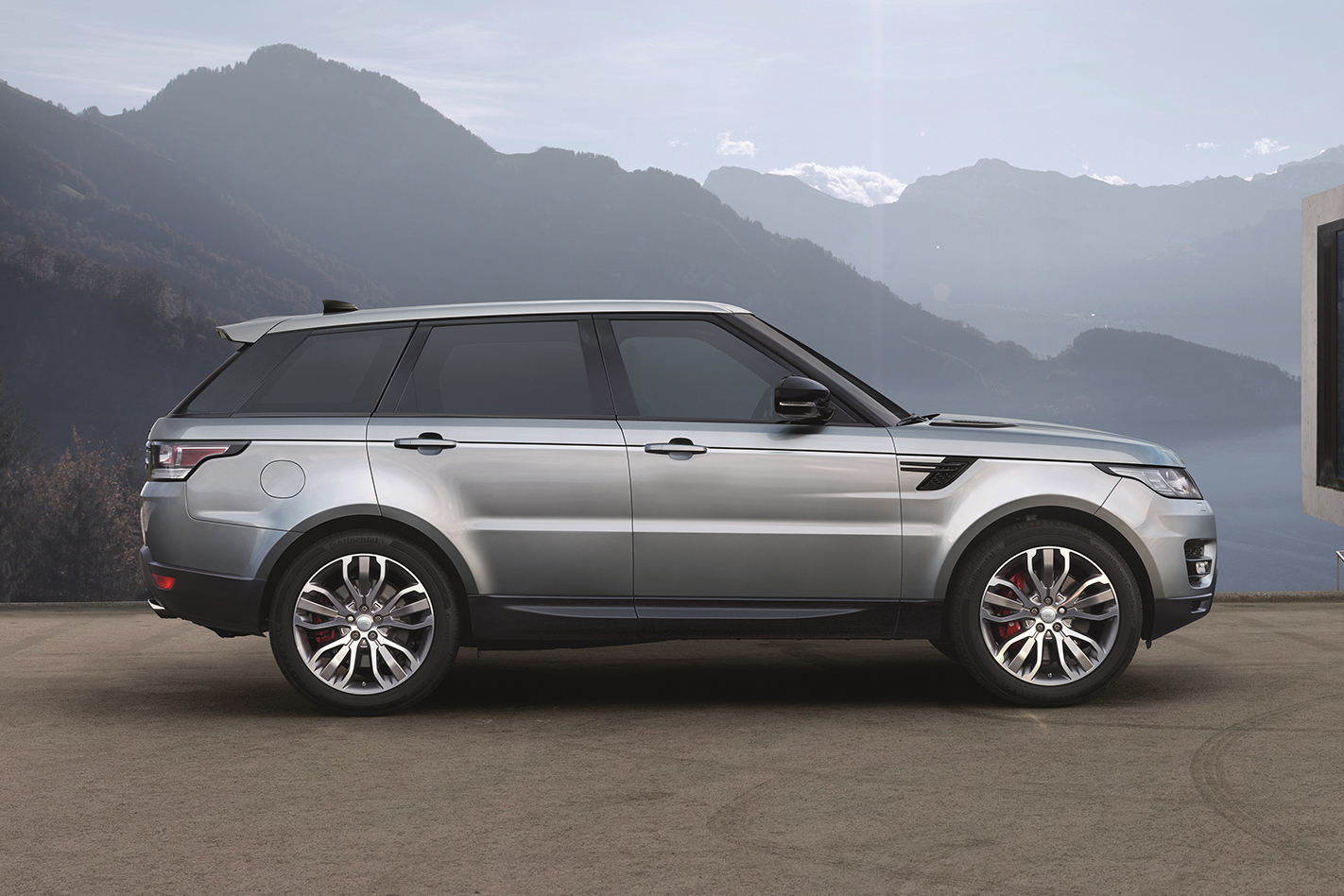
“For people who might have bought their house for $1.5 million and then saw it valued at $2.5 million, they’d be thinking ‘beautiful, I’ve got a million dollars of equity – time to buy a Range Rover Sport!
“But now they don’t have that, they might be thinking of a Mazda CX-9 instead.”
And looking at the sales data, it’s clear that the luxury market is hurting more than the rest. Year-to-date sales of small cars over $40K are down by 29.8 percent, versus a decrease of 18.7 percent for cars in the sub-$40K small segment.
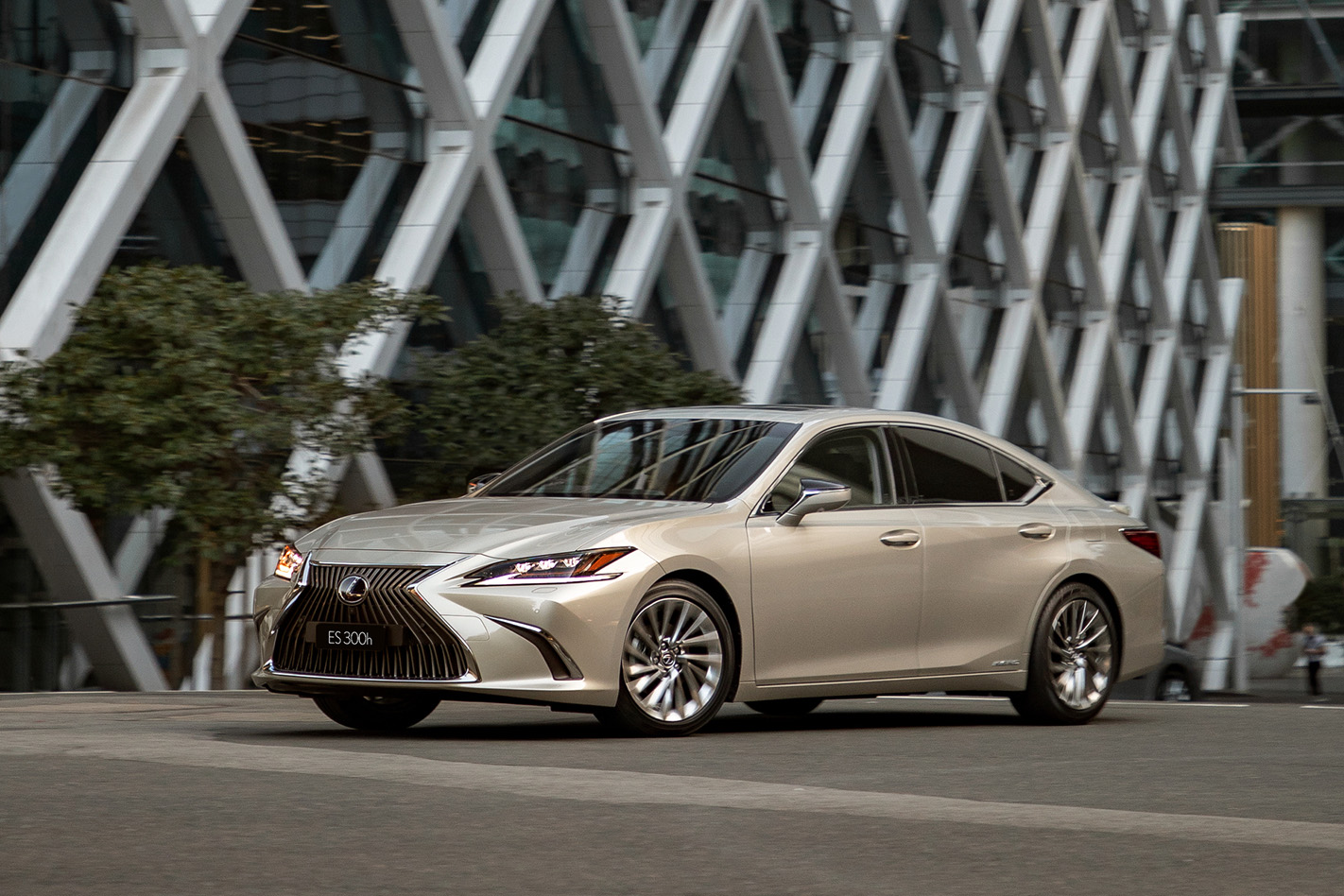
The medium passenger segment has the luxury sub-class slightly ahead of mainstream with an 11.8 percent decline (compared to mainstream’s 12.3 percent), however that figure is greatly skewed by the Lexus ES’s (above) wild 242 percent increase in year-to-date volume – a side effect of the arrival of a massively improved all-new model.
Take out the ES’ figures, and the medium luxury segment is down by 14.4 percent. Besides the ES, the only other models in that segment to really buck the downward trend are the evergreen Mercedes-Benz C-Class, and to a much lesser extent the Audi A4.
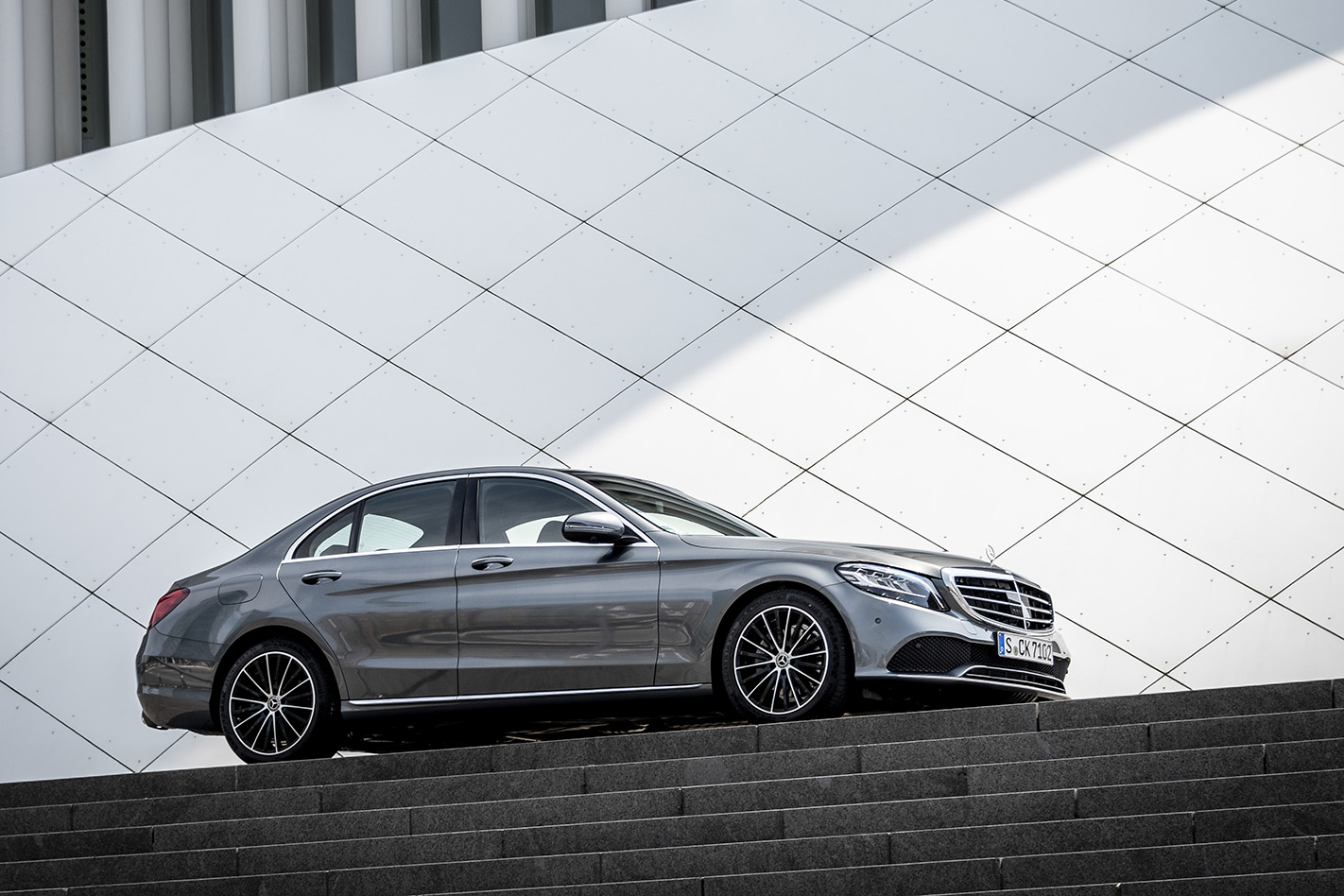
That said, the small SUV over $40K segment has actually fared quite well, registering 11.4 percent year-to-date growth while the sub-$40K SUV segment shrank by 2.1 percent. That result is an outlier, however.
The medium SUV over $60K segment has endured a 9.8 percent slide over the same period (against a 6.3 percent drop for the sub-$60K category), while large premium SUV sales are down by a huge 23.7 percent versus a much less frightening 3.8 percent drop in the mainstream large SUV sector.
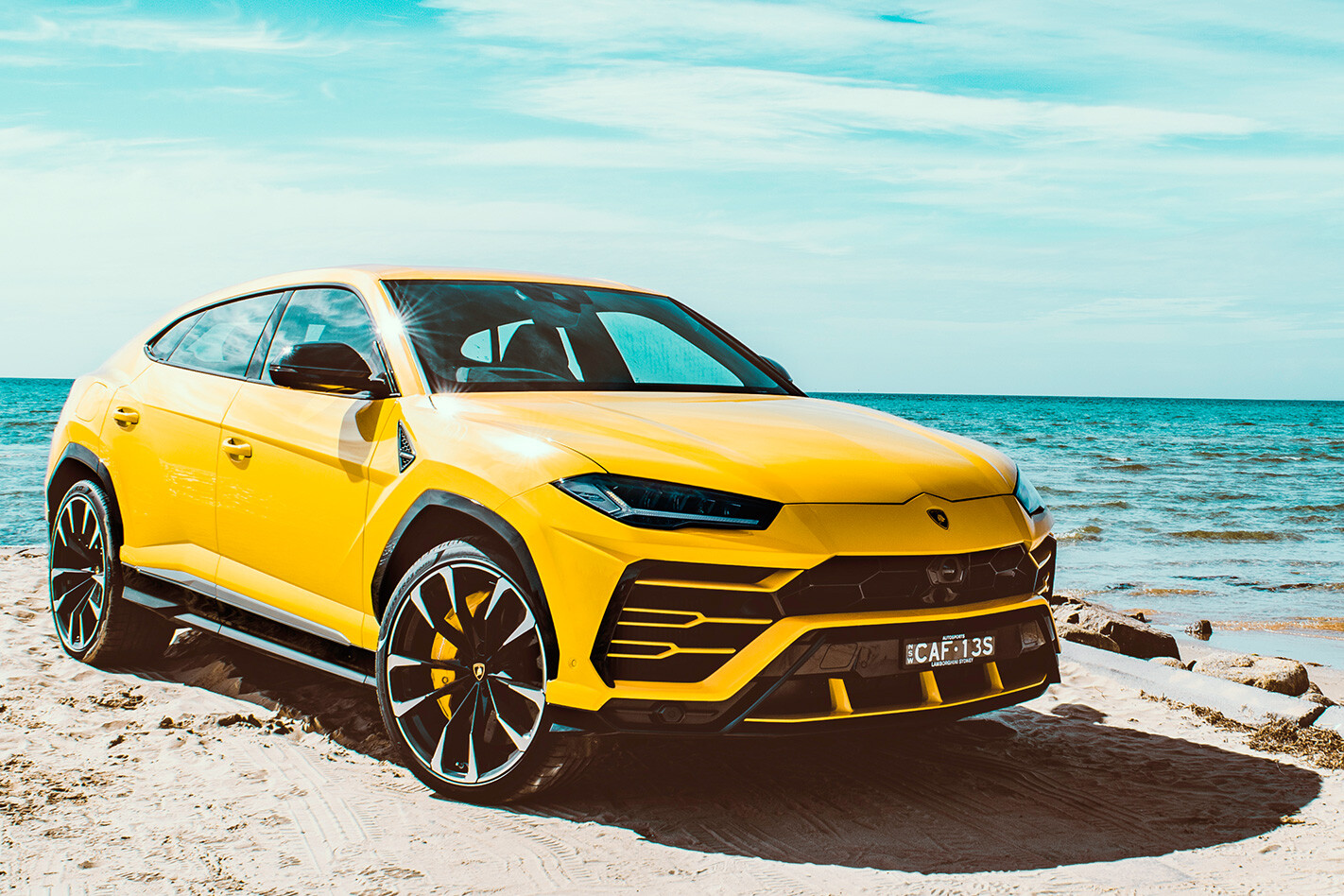
Curiously, the upper-large premium SUV segment is actually surprisingly healthy, with year-to-date growhth of 42.4 percent coming courtesy of new arrivals like the BMW X7, Audi Q8, Lamborghini Urus (above) and all-new Mercedes G-Wagon, along with strong performance from the Lexus LX (below) and Range Rover.
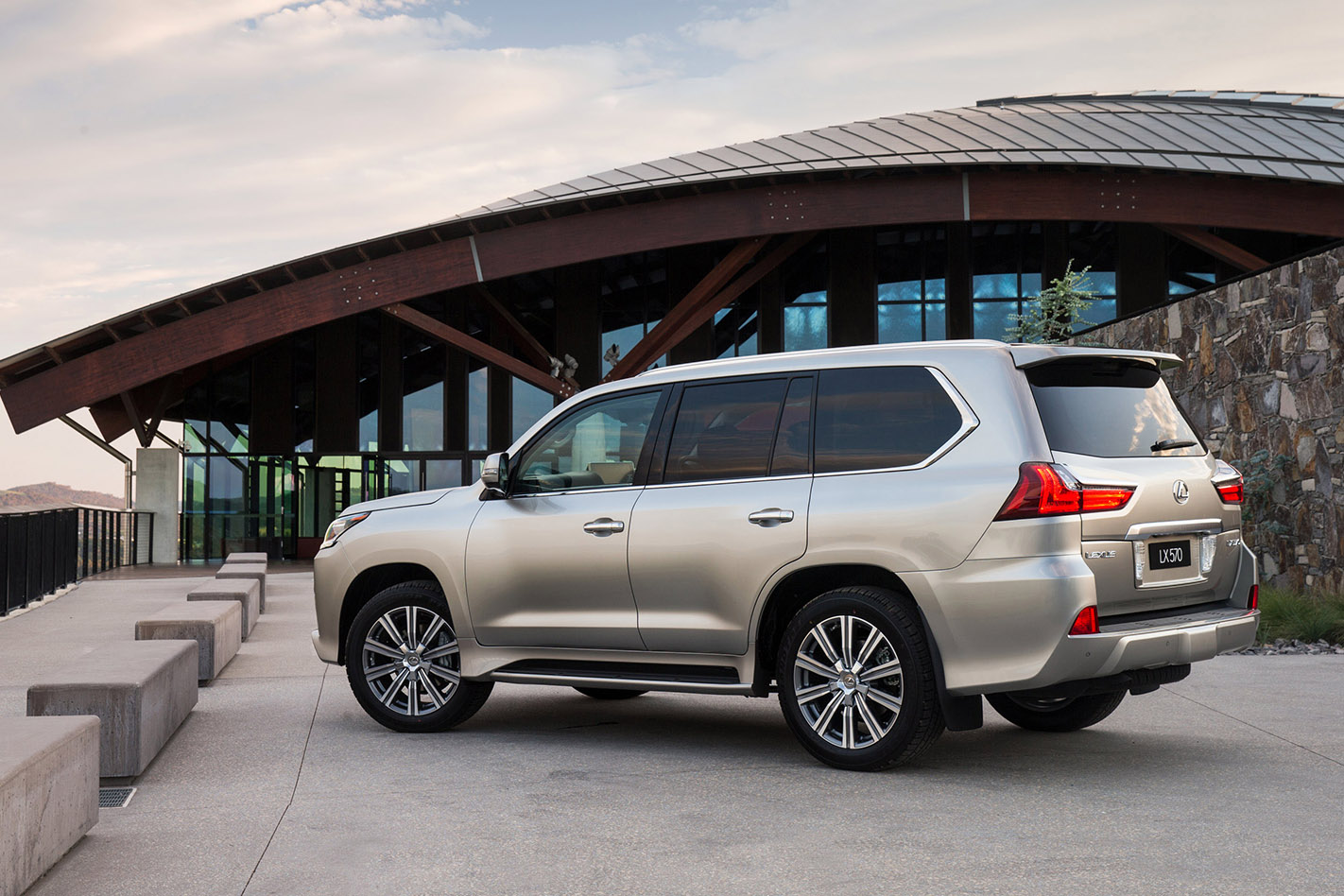
Are luxury car sales the canary in the coal mine when it comes to the direction of the property market? They’re certainly a symptom, and with most forecasters expecting further property pain over the next 12 months it seems that carmakers like Jaguar may have a hard task ahead of them.
“You look at what’s going on, we’ve got an election and potentially a change of government, which always makes people nervous,” Krieger said.
“Labor’s also got an [anti] negative gearing policy, and banks have also tightened up credit significantly… there’s a number of factors.”
At PCOTY 2018 we learnt many things about Kia’s so-called replacement for our rear-drive, Aussie sedans. With wounds still a little too fresh from the closure of Aussie manufacturing, the twin-turbo V6 South Korean aimed to be the perfect Band-Aid. And champion the 2018 Kia Stinger GT we did.
However, one bee in our bonnet, apart from the infuriating lack of a true manual mode for the eight-speed auto and an absence of ultimate steering tactility, was a somewhat unhinged rear-end. The Continental ContactSport 6 tyres were good, but they did have a habit of shedding chunks of rubber (especially at Winton) under the stress of sending 272kW/510Nm to the rear axle alone.
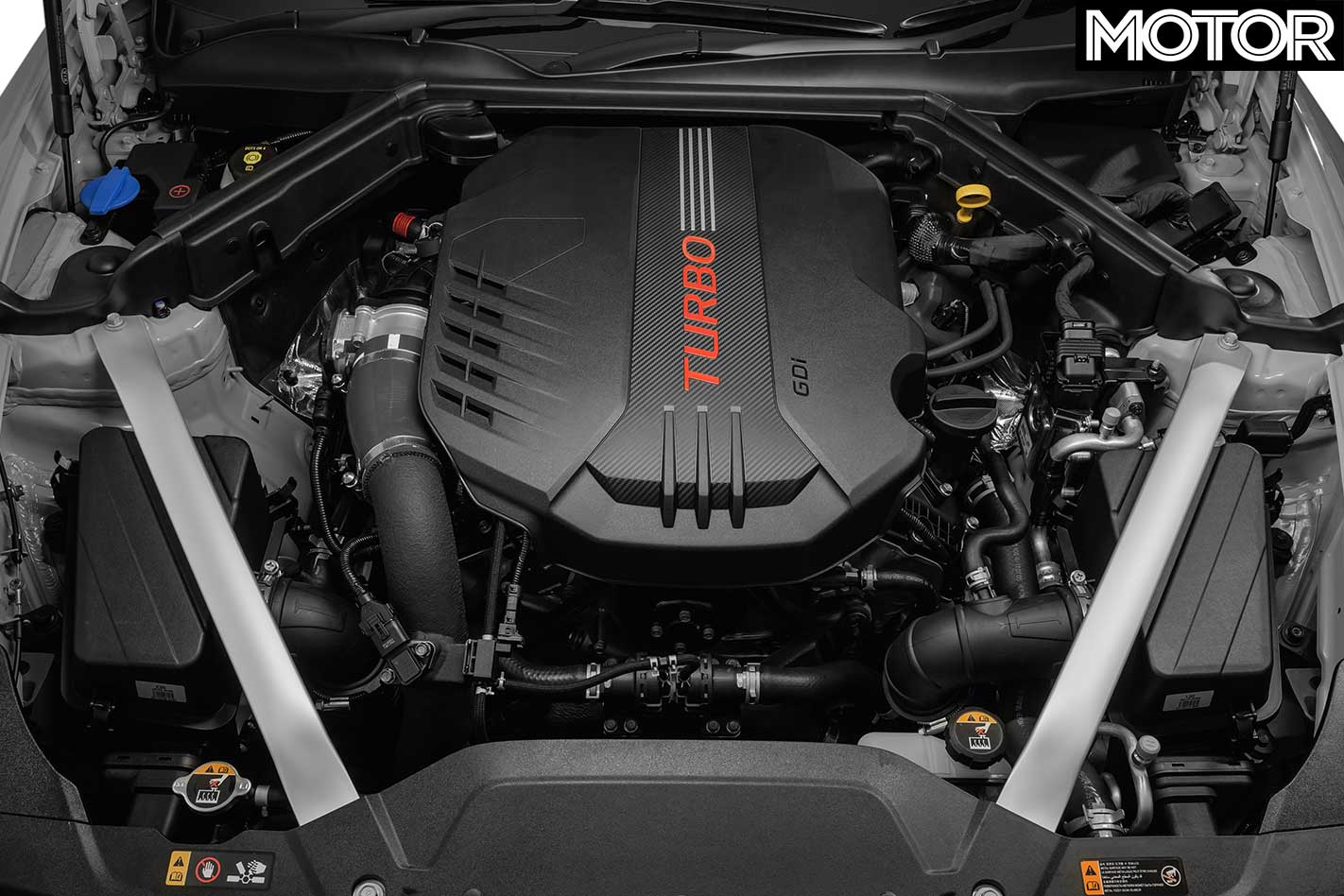
To help remedy this, Kia has fitted the Stinger GT with Michelin Pilot Sport 4 tyres. Straight away the 255/35 rear boots (225/40 front) add a bit more grip to the rear 19-inch wheels, meaning it isn’t as quick to breakaway under heavy provocation.
The 1780kg Kia revels in its new boots, feeling more planted and secure, allowing you to access the grunt earlier past the apex with greater assurance it isn’t going to snap on you. The PS4s also offer commendable traction in the wet.
However, despite the added tact, on a really bumpy road, the Stinger still fails to translate all its kilowatts and Newtons to the tarmac. The big liftback scampers atop sharp imperfections, all the while the traction control light buzzes harder than a raver at Stereosonic and the electronic aids clamp down like a helicopter parent. It’s frustrating to know you’re never really using all the power. Tempted to turn off the nanny state? You better be ready for the repercussions.
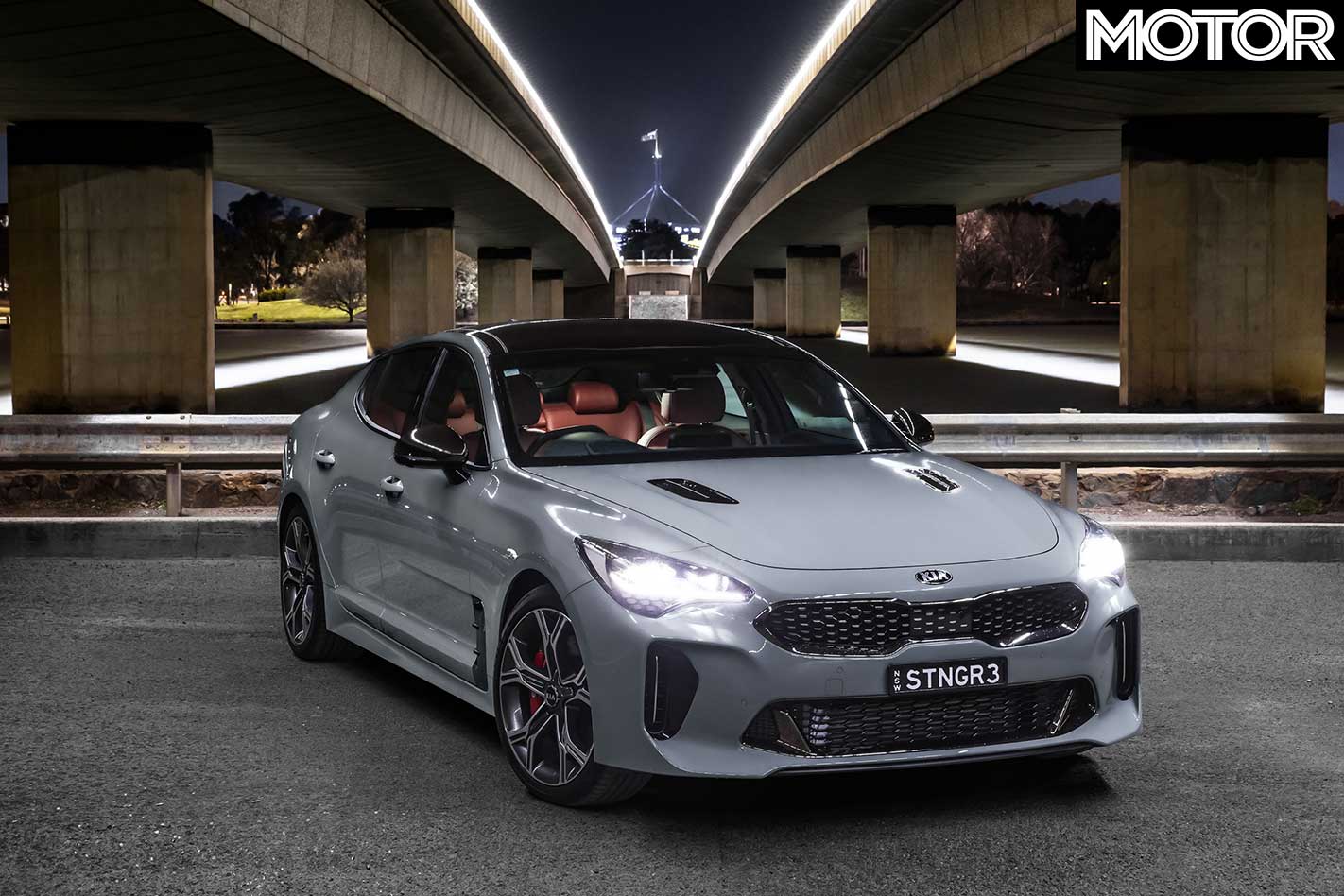
Find a smooth road and the relationship returns to an amicable state. Here you can actually use the GT’s power, extra grip and muscular torque to slingshot you down the road at a rapid rate. As speed increases, sharp bumps level and the radiuses widen, the adaptive dampers (in Comfort) begin to breathe better with the road.
For all its sporting pretence, the Stinger remains at its best at seven tenths, relaxing back in its torque and relentless surge – that’s where you’ll find its honey.
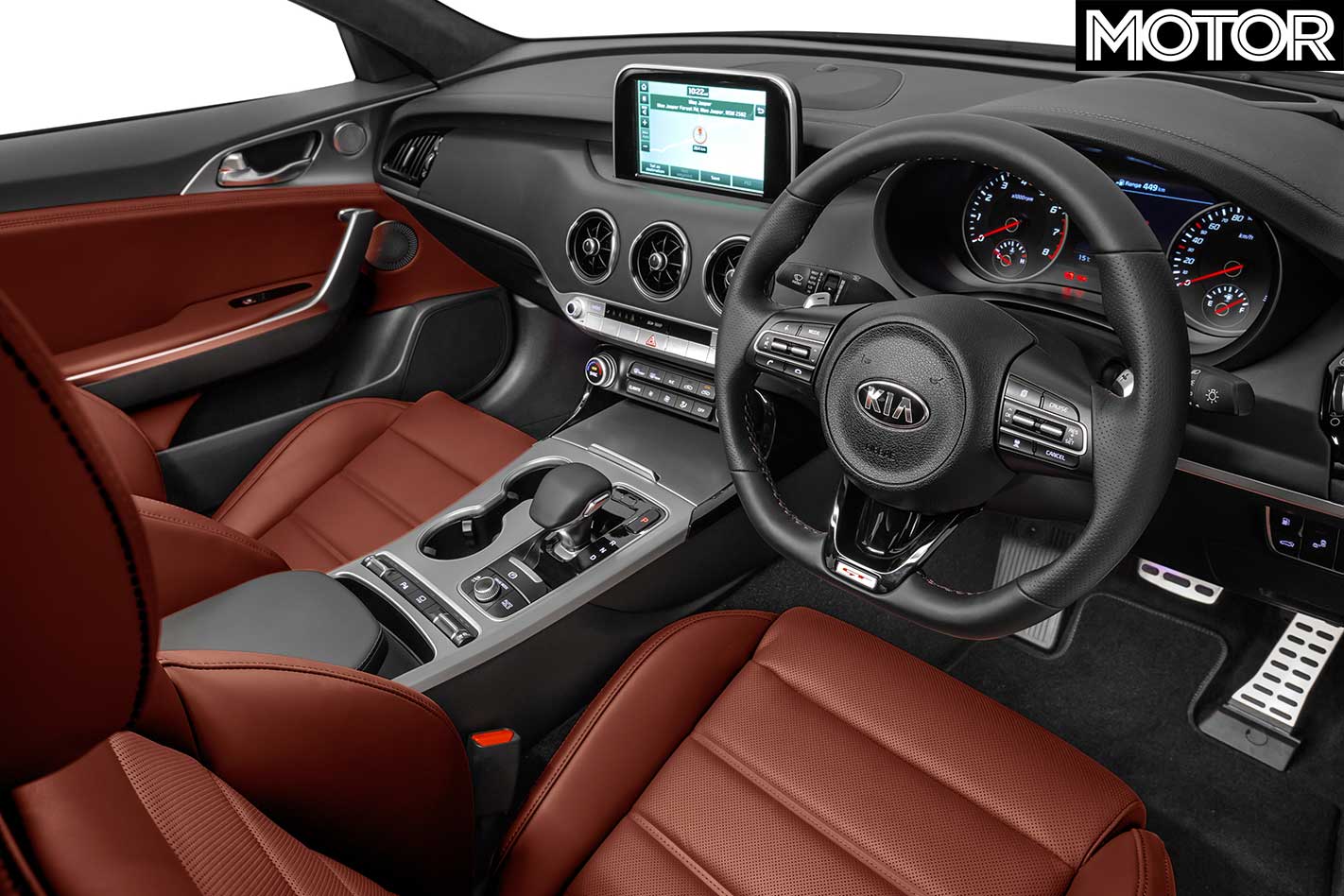
The cabin, too, ties in with the loping cross-country nature of the GT. It’s Euro-focused and packed with features and modern tech. The seats are plush with some of the best bum warmers and coolers in the business. We reckon an option worth avoiding is the exhaust. The array of tones that filter into the cabin aren’t pleasing and you’ll begin to mourn the loss of the standard car’s muted acoustics.
The $59,990 Kia might have its shortcomings, but in isolation, the boosted 3.3-litre Stinger is almost as loveable as our now defunct Aussies. Throwing Michelin rubber at the Stinger has only made it more appealing and we continue to hope it gains a second act.
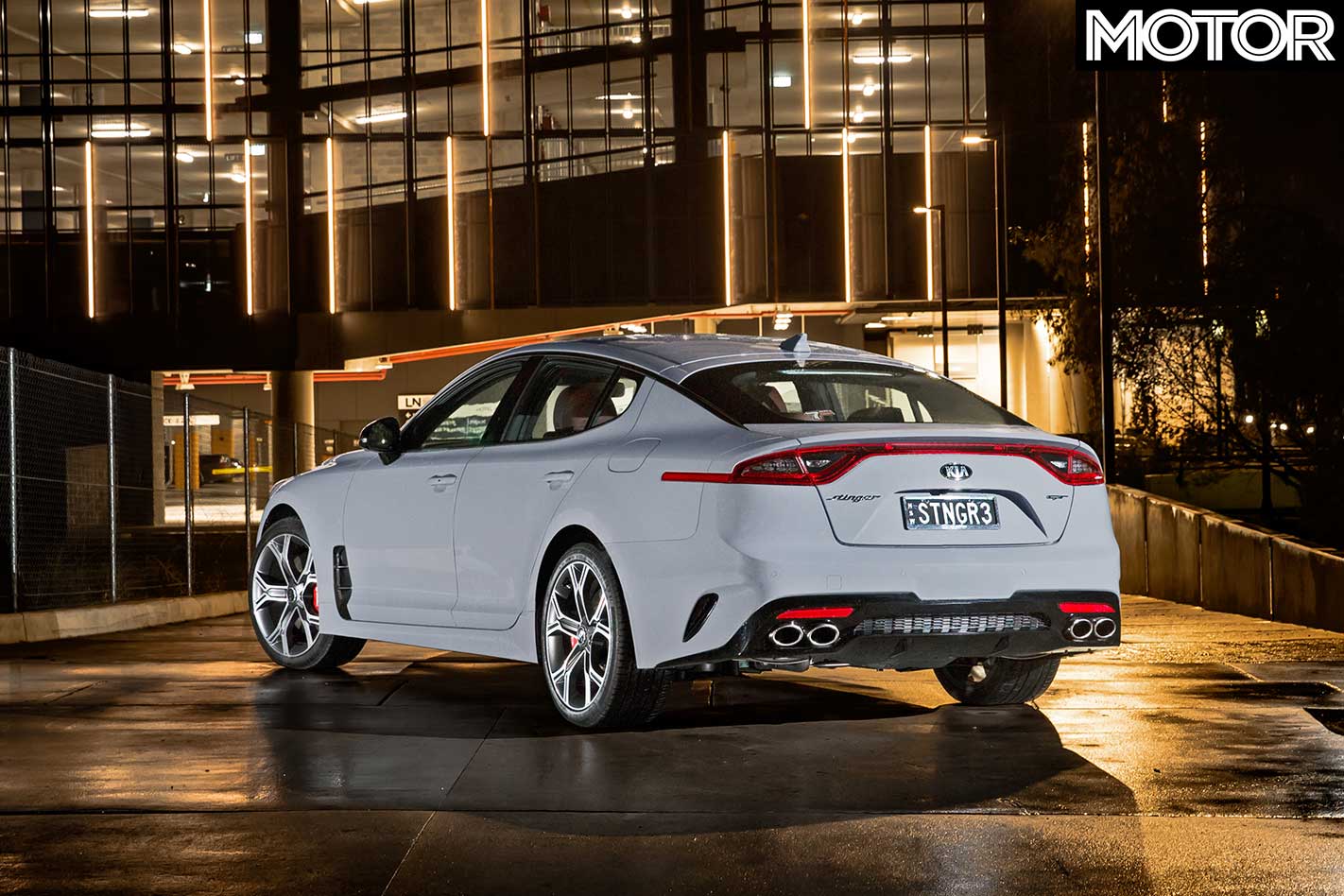
2019 KIA STINGER GT SPECS Engine: 3342cc V6, DOHC, 24v, twin-turbo Power: 272kW @ 6000rpm Torque: 510Nm @ 1300rpm Weight: 1780kg 0-100km/h: 4.9sec Price: $59,990
This year marks the 60th anniversary since the British Motor Corporation first unveiled the Mini compact car. Never one to shy from a special edition, Mini took the chance to celebrate that fact with the Mini Cooper S 60 Years Edition.

What is it?
The Mini Cooper is as timeless as a Porsche 911, staying (fairly) true to its roots since its creation 60 years ago. But as much as the world fell in love with the original Mini Cooper, the spicier Cooper S is now the small hatch coveted by Mini-diehards.
Earlier this year Mini announced a swathe of 60 Years Edition Coopers which included the Cooper, Cooper S, Cooper D and Cooper SD versions of the iconic hatchback. What we have here is the sports-oriented Cooper S three-door hatch which is powered by a 2.0-litre petrol engine.
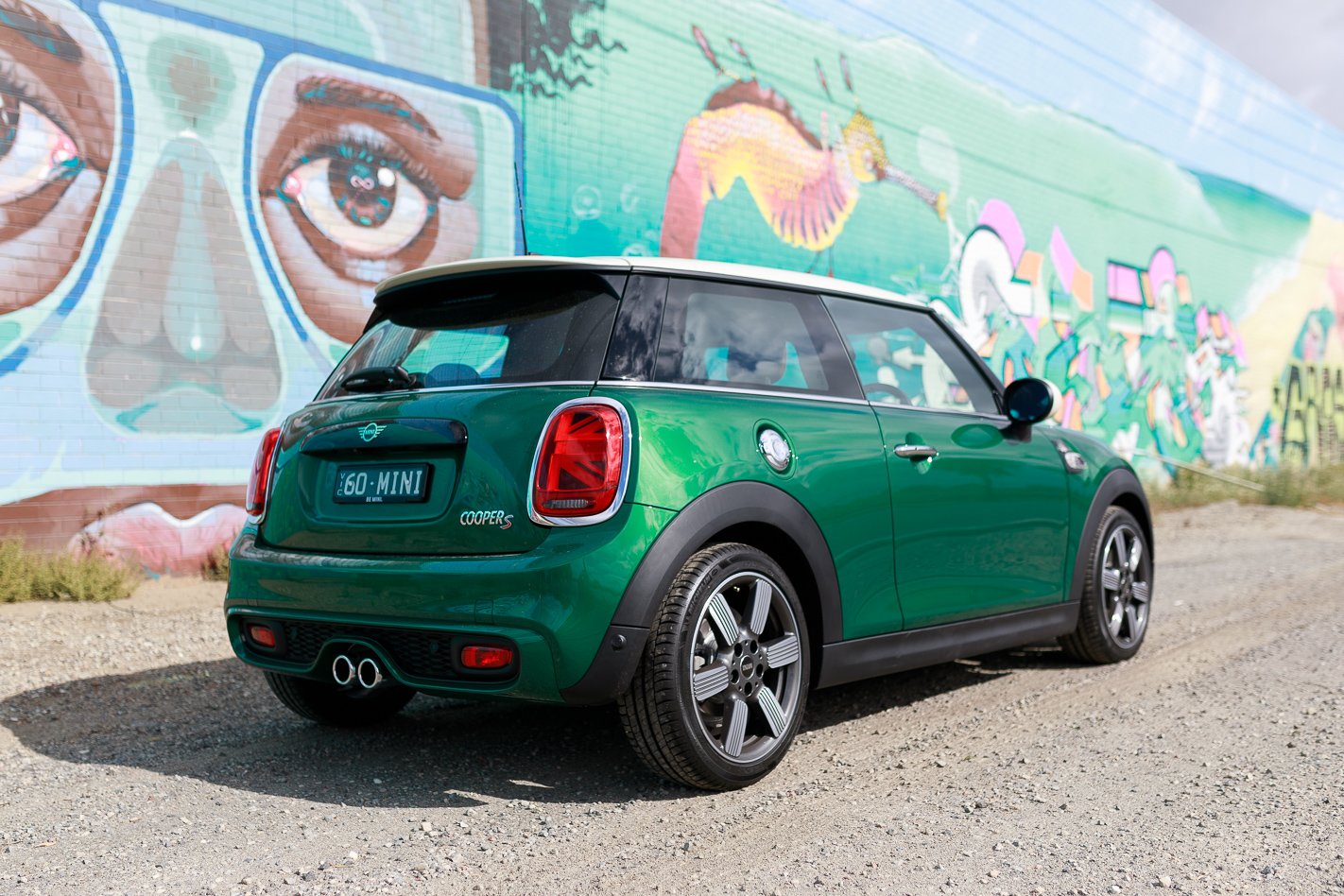
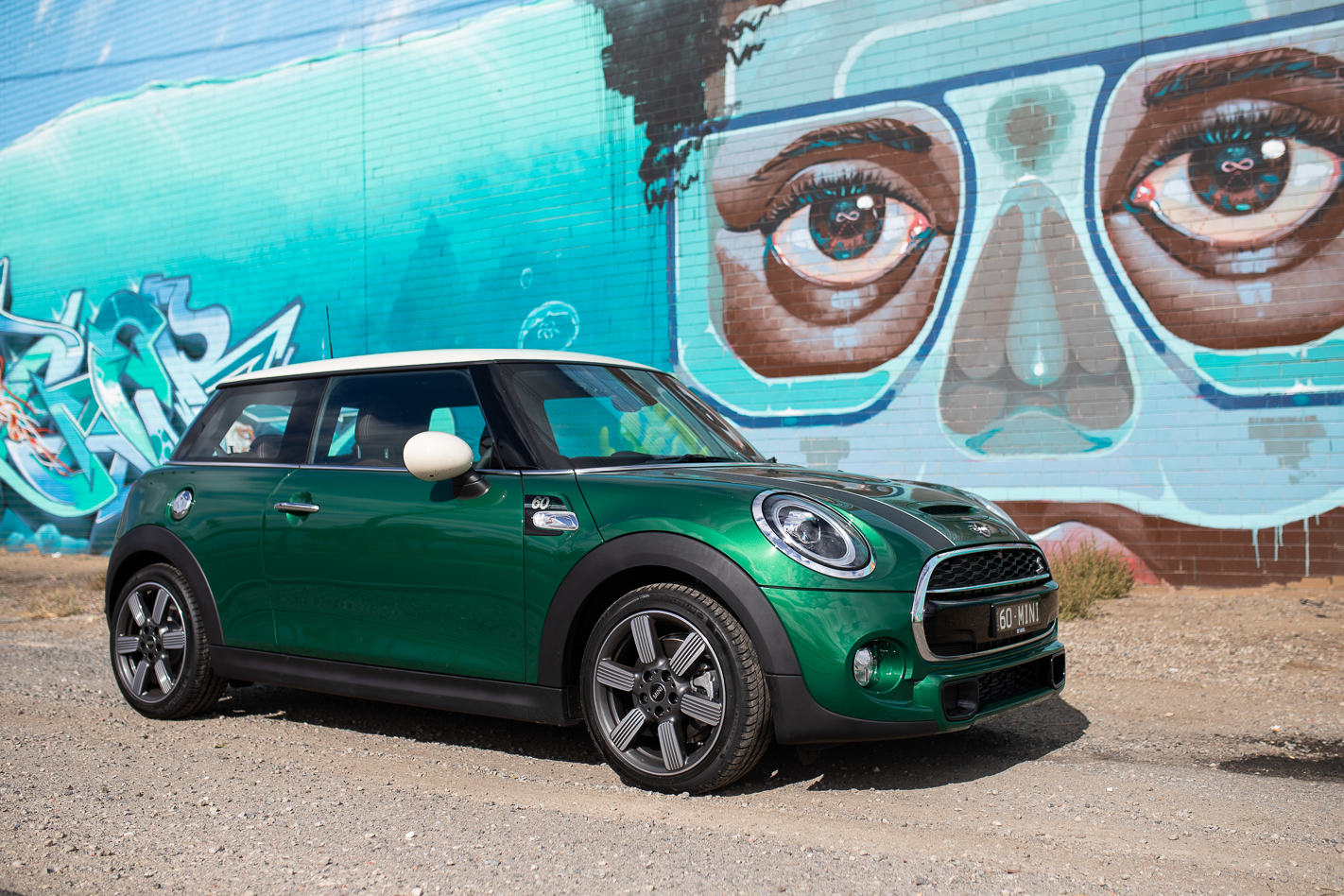
This Cooper S 60 Years Edition embraces the Cooper’s British heritage by going for a dive back into the colour swatch back catalogue. In addition to a unique blend of British racing green for the body and a cream coloured roof on the exterior, this Cooper S sports a brown leather interior with love-it-or-hate-it green piping surrounding the edges of seats.
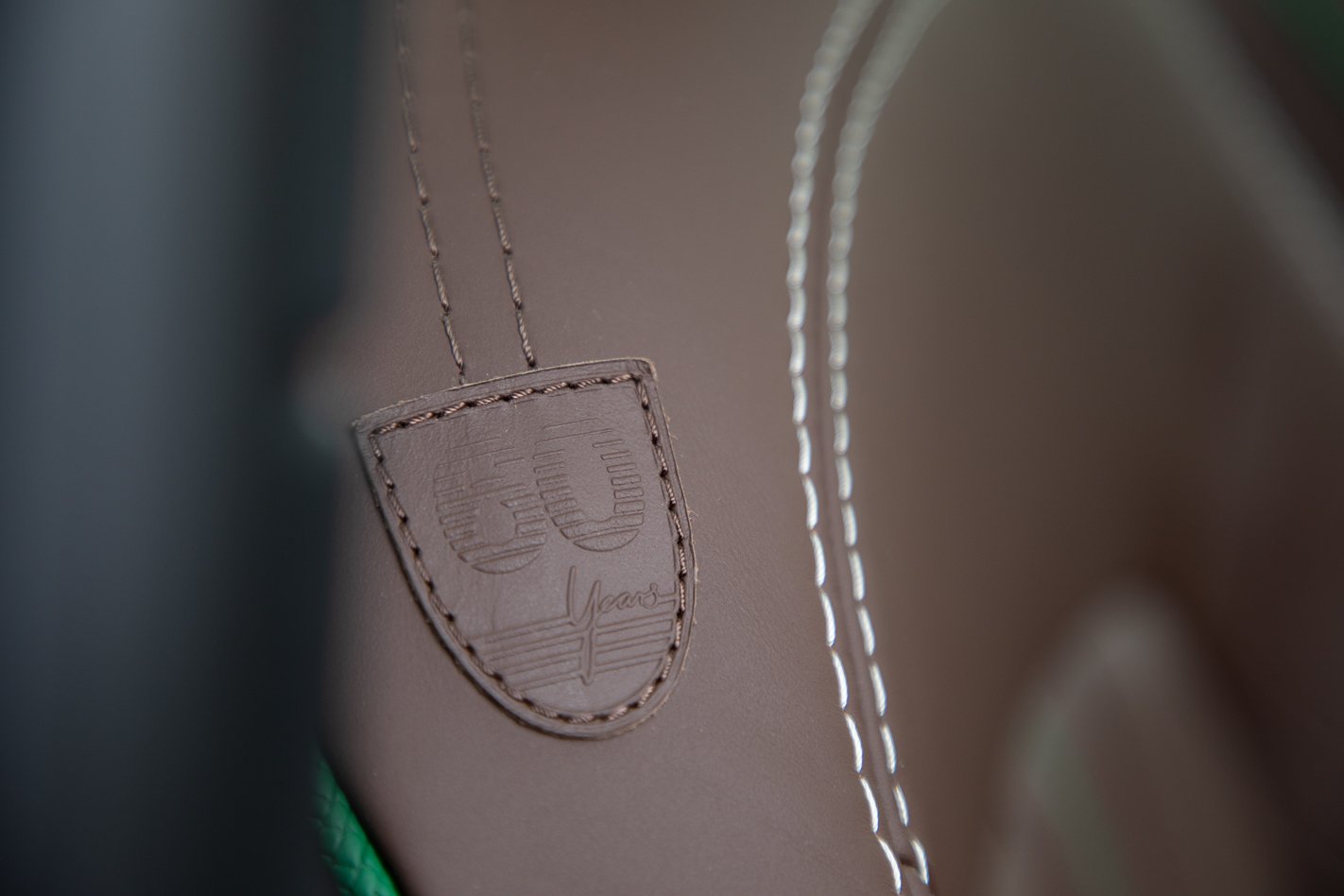
This version also sees 60 Years graphics around the car, stripes on the bonnet and bespoke 60 Years Edition 17-inch alloy wheels. It’s a similar treatment on the inside with the unique 60 Years logo package featuring on the seats and leather sports steering wheel.

In terms of other equipment specific to the 60 Years Edition, it receives LED puddle lamps projecting ’60 Years’ onto the ground, as well as ambient lighting for the interior.
The last time a Mini was safety rated with the Australian New Car Assessment Program was 2014 where it received a four-out-of-five star crash safety rating.
How much is the Mini Cooper S?
Pricing is yet to be announced for the 60 Years Edition of the Mini Cooper (we will let you know as soon as we do); however, the standard Cooper S three-door can be used as a yardstick and costs $39,900 before on road costs.
Compared to its rivals, the Mini Cooper S commands a higher price tag than a similar Renault Clio RS ($30,990) or Volkswagen Polo GTI ($31,990), but Mini buyers tend to be in a class of their own and are less likely to cross-shop.
Who is it for?
Let’s get this straight: the Mini Cooper S is unequivocally for the Mini Cooper S buyer. It’s not a car that people buy with their head, rather much more a style-oriented choice driven by the heart.
The Mini Cooper is aimed at a younger style-conscious audience who have always liked the looks of the iconic shaped hatchback and have come into the money needed to afford its higher price tag.
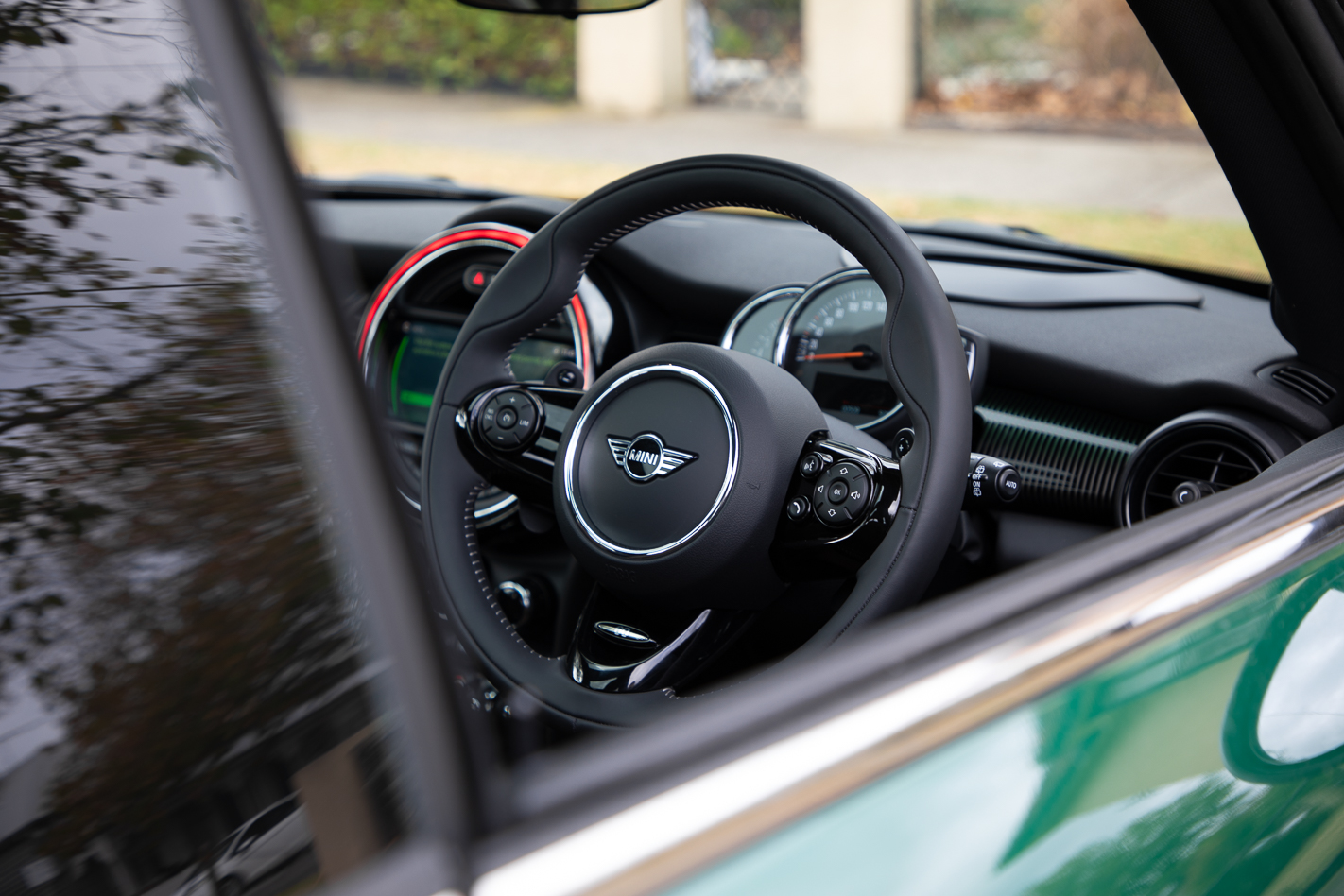
It’s undoubtedly a premium hatchback that trades on its reputation and ability to be a fun-to-drive small hatchback that also wears its style on its tweed sleeve.
Is the Mini Cooper S easy to live with?
Working in the Cooper S’s favour is the fact that it’s available in a number of variations, whether it be with a manual or automatic transmission, or three- or five-door body styles.
Focus on the three door, automatic version that we tested, and you find that the Cooper S works nicely as a daily driver, provided you fit snugly between the bounds of its intended market. It won’t be carting kids to school easily and its not going to take long to fill that 211 litre boot, but for the single or couple that purchases the Cooper S, it’s a fun, responsive small car to drive about town.
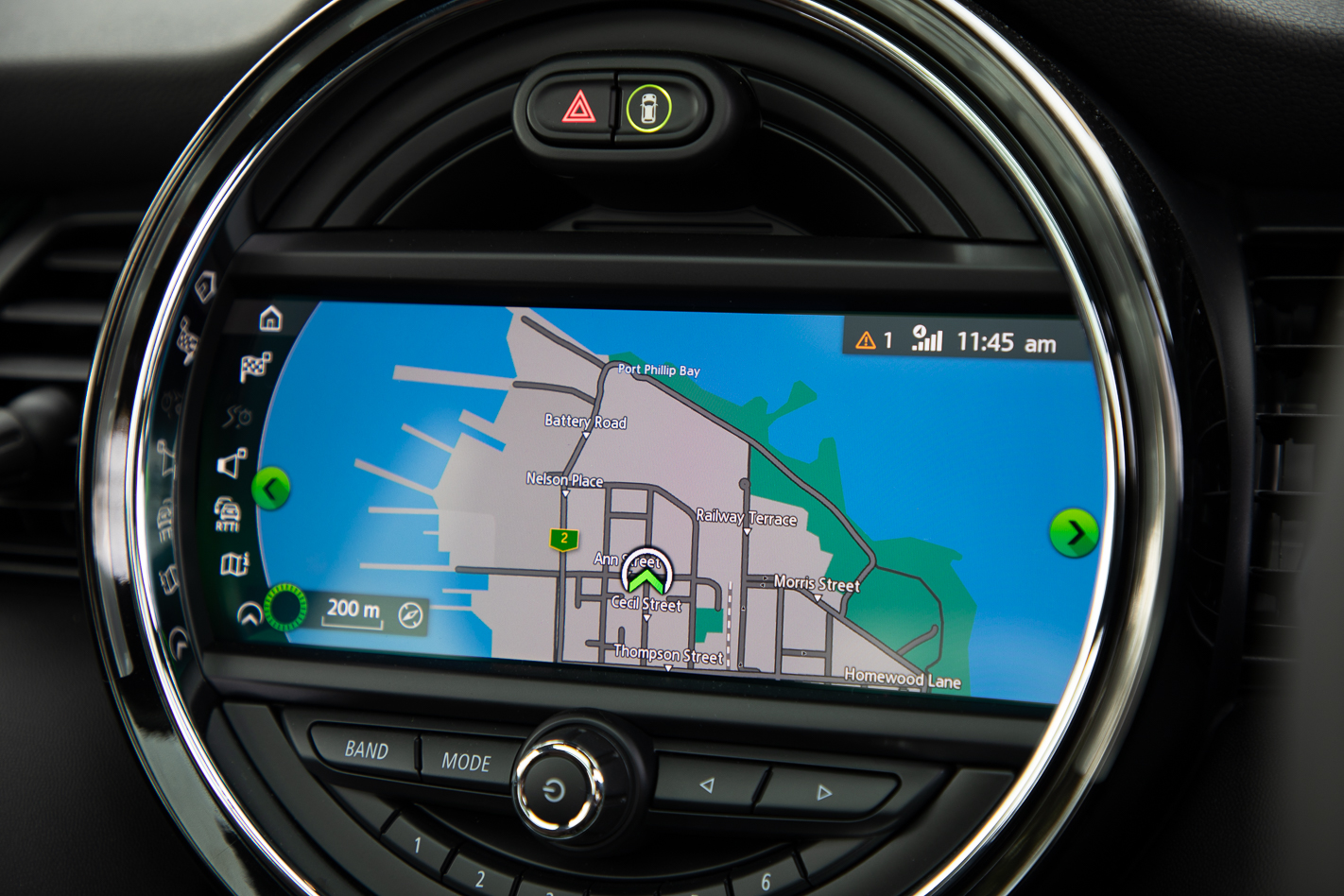
The Cooper S is loaded with a lot of technology, but on occasion our automatic Bluetooth audio streaming wouldn’t work every time. You can work around it via the touchscreen-based built-in wireless Apple CarPlay system.
Mini’s 6.5-inch infotainment system can be handled in one of three ways: touch, rotary dial controls or voice-control. Using the rotary dial is often an ergonomic struggle due to an intrusive fold-up centre armrest that won’t quite fold back far enough, so we defaulted to the touchscreen.

The updated media system controls the well-presented satellite-navigation system, digital radio and Bluetooth media system, and features Mini-specific apps. The Harmon/Kardon surround sound speakers produce great audio and the voice control is quick to comprehend instructions with little need for re-dos.
The cabin is very well appointed with quality materials – special mention goes to the nice feel of the leather sports steering wheel. 60 Years Edition motifs appear throughout the interior on the seats and bottom of the steering wheel reminding you of the the history of the Mini lineage, making it feel like a semi-special occasion.
Seats are heated in the Cooper S 60 Years Edition and dual zone climate control takes care of air-con, but it’d be handy if Mini could just throw in a ‘SYNC’ button to change both zones simultaneously.

The cabin can feel cramped at times if you’re larger than normal, and the rear seat space is especially tight. But once you’re in and have everything set just so, the cabin is a fairly accommodating cosy experience and is comfortable enough for that once-in-a-blue-moon extended drive.
How well does the Mini Cooper S drive?
Part and parcel of a Mini experience is the way it drives. Pedalling a Mini, especially in its prime habitat of inner-city streets, can be a lot of fun and this 60 Years Edition is no different. Its 2.0-litre four-cylinder engine produces a modest 141kW/280Nm, but by the seat of the pants, the turbocharged four propels harder than you’d expect.

The Cooper’s petite stature make for fun blasts about town and it feels nimble and manoeuvrable especially when compared to larger sports cars. A sudden change of direction in the Cooper S doesn’t upset its balance and it’ll power through connecting corners with ease.
Adding to the theatre are cute little pops and crackles from the exhaust on overrun and while swapping cogs, and stepping off the accelerator while on boost results in an awesome little turbo flutter that sounds like you’re piloting a 1990s Japanese drift car.

Take it further afield and it starts to feel a bit out of its depth on sweeping country roads, but there’s no one area where it falls apart. Ride is well damped across larger bumps (if a little jittery over the smaller stuff), the stopping power feels adequate for a car of its size and it feels properly quick enough to hustle competitors above its weight class. Road noise is well refined for a small sporty hatchback too.

Mini claims a combined fuel consumption figure of 6.5 litres per 100km for the Cooper S three door but we found our number to be hovering about 9.8 for the time we spent aboard. It was a fresh build with just 500km on the odometer, though, so that higher-than-expected fuel use will likely improve after a solid run-in phase.
Verdict
As long as you’re going into a Mini Cooper S purchase with its unique style and fun in mind, you’re absolutely in for a hoot. If you’re looking at a Mini purchase from any other viewpoint, though, it starts to make less sense.
However, the 60 Years Edition with its throwback colour scheme and unique badging is a worthy celebration of a hot hatch legend and rightly justifies its unique place in history.

Click on the gallery at the top for plenty more photos of the 2019 Mini Cooper S 60 Years Edition by Tom Fraser.
2019 MINI COOPER S SPECS
Engine: 1998cc 4cyl, dohc, 16v, turbo Max power: 141kW @ 5000-6000rpm Max torque: 280Nm @ 1350-4600rpm Transmission: 7-speed dual-clutch, FWD L/W/H/WB: 3850/1727/1414/2495mm Weight: 1280kg 0-100km/h: 6.7sec (claimed) Economy: 5.5L/100km
