
UPDATE
Nearly two weeks after our request, the Departement of Environment and Energy finally responded to our query about whether it would consider shortening the timeline towards 10ppm petrol with this cut-and-paste response that all but confirms its intentions to retain high-sulphur fuel til 2027;
“On 25 February 2019, the Australian Government announced the Climate Solutions Package, including a new measure to improve fuel quality standards to ensure access to the latest vehicles, savings for motorists from more fuel-efficient vehicles and health benefits to the community,” said a government spokesperson.
“The improvements include reducing sulphur levels in petrol from 150 parts per million down to 10 parts per million from 2027 and a lower pool average for aromatics content in petrol from 42 per cent down to 35 per cent from 2022.”
—
Car companies have warned that new car buyers will ultimately pay the price of poor quality fuel by having fewer cars to choose from. As well, Australia’s high sulphur content petrol will continue to negatively impact the environment – potentially until 2027.
The issue is the relatively high content of sulphur in 91 and 95 RON petrol products, which is currently rated at up to 50 parts per million (ppm). The majority of the world, including Mexico, China, Europe, the United States and even New Zealand, uses petrol with a sulphur content of 10ppm.
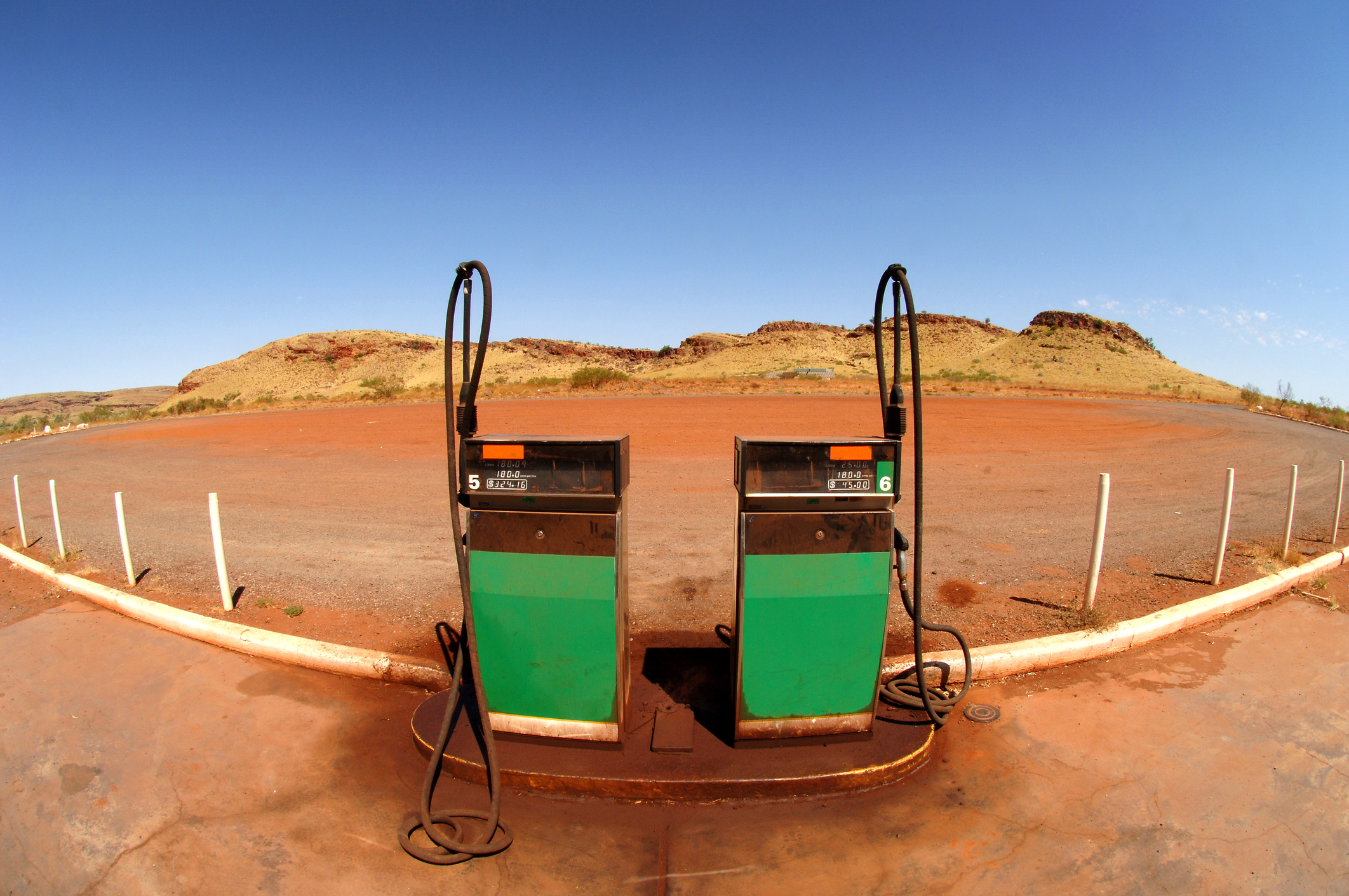
As emissions regulations tighten up around the world, cleaner-burning fuel allows car companies to install pollution gear like petrol particulate filters to reduce the number of toxins leaching into the atmosphere.
High sulphur counts, however, means that these technologies aren’t able to be installed on cars destined for Australia – which means that Aussie consumers are set to lose access to a wide range of high-tech engines.
Different car brands are affected to different degrees; Mazda, for example, says that the current standards don’t affect what nameplates it can offer locally, but that better quality fuel “would always be welcome,” according to a spokesperson.
Ford, meanwhile, benefits from the move by authorities to ratify the use of 10ppm diesel, with the company pointing to the introduction of the twin-turbo 2.0-litre diesel engine in the Ranger/Everest line as an example.
Mercedes-Benz and BMW are unaffected, according to local representatives, but Audi is keeping a watching brief moving forward.
Most vocal, though, is Volkswagen, which has already lost several nameplates and variants, and stands to lose more going forward.
“Huge parts of the globe are at 10 parts per million and we don’t seem to be even at the point of having a path to get to 10ppm, which is the big issue,” says Volkswagen Group Australia product marketing manager Jeff Shafer (below).

Australia’s current fuel standards were set back in 2001, and are set to expire this November. However, the federal government’s Department of Environment and Energy website says that the government will commit to 10ppm fuel in 2027.
Nearly two weeks after an initial request, the Departement of Environment and Energy responded to our query about whether it would consider shortening the timeline towards 10ppm petrol with a cut-and-paste response;
“On 25 February 2019, the Australian Government announced the Climate Solutions Package, including a new measure to improve fuel quality standards to ensure access to the latest vehicles, savings for motorists from more fuel-efficient vehicles and health benefits to the community,” said a spokesperson.
“The improvements include reducing sulphur levels in petrol from 150 parts per million down to 10 parts per million from 2027 and a lower pool average for aromatics content in petrol from 42 per cent down to 35 per cent from 2022.”
“My understanding is that the current standards expire on October 1 this year,” says Shafer. “So unless there’s new legislation to change that then, in theory, it means there are no standards that govern the fuel that goes into your car. But there are certainly some interests that are looking to delay or postpone a change … which is frankly ridiculous.”
Shafer explains that the main issue is around the use of petrol particulate filters (PPFs), which work by trapping particles in a mesh, before burning them off at high temperature at regular intervals. High sulphur-content petrol has the capability to significantly reduce the lifespan of these filters, which means the company needs to rely on engines that aren’t fitted with PPFs.
“Any time that we find Australia has differences in standards or differences in our markets to the rest of the world, it’s just another hurdle to bring in product,” Shafer says. “The risk is that we get engines that are less technologically advanced. That we have a smaller choice of engines we can offer our customers. And, potentially even a higher cost of the engines we do get if they have to be specifically tuned or developed for our marketplace.
“But if we’re in the future prevented from taking these engines for these types of reasons, then the option we have is to fall back to a tier two engine or not have a product at all. And, that’s the reality that we’re starting to face.”
One engine that has been deleted from the local range is the company’s 1.4-litre 110TSI engine. “It’s a really sophisticated engine, with cylinder deactivation and start/stop,” muses Shafer. “We’re expecting to see it return this year without those features because the engine with those features has moved to a PPF and that’s not on the table for us.”
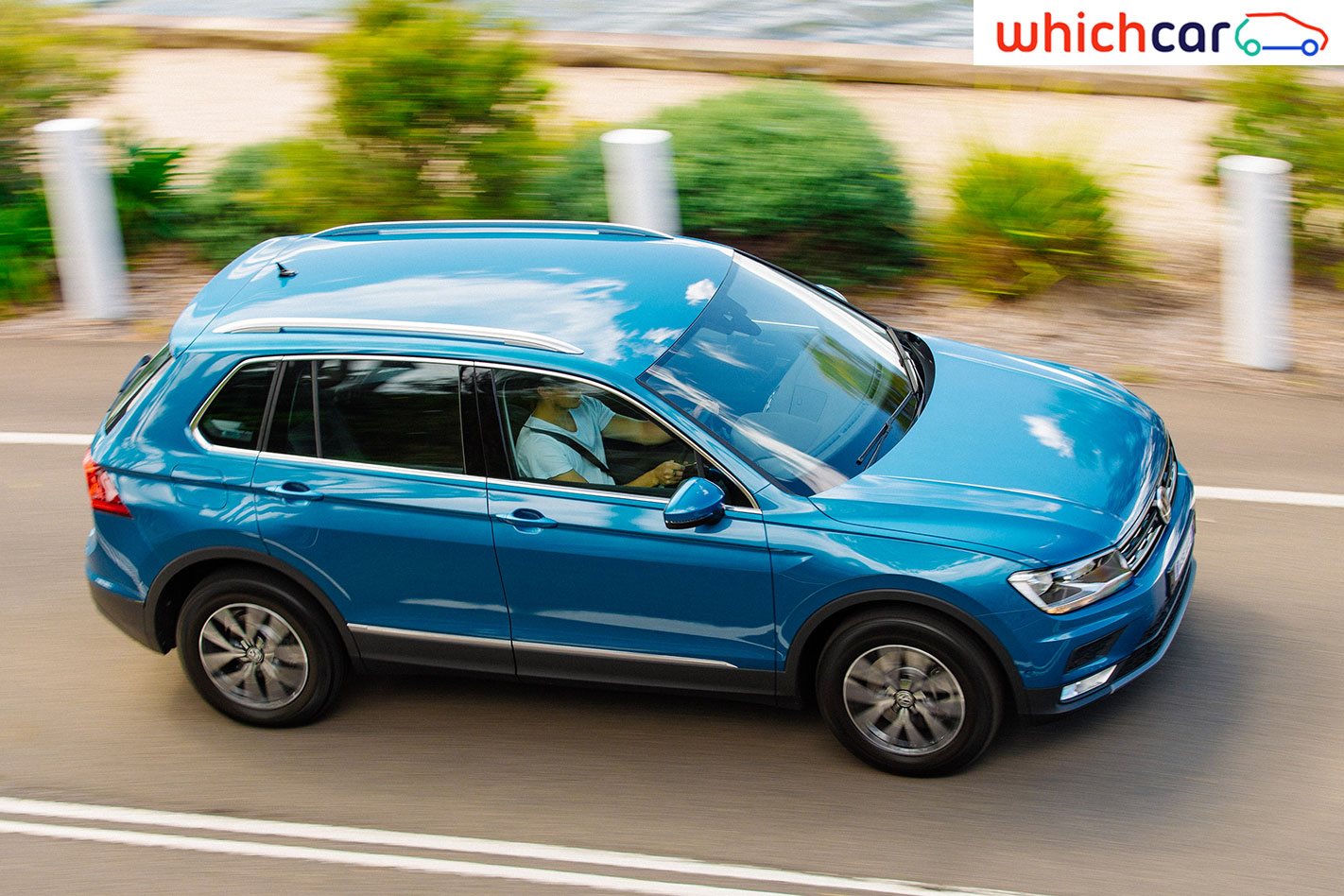
VW’s Tiguan was equipped with the 1.4-litre TFSI
Shafer points to the health benefits of better quality fuel as an advantage, despite a potential increase in prices at the pump.
“The health benefits actually of cleaner air more than offset any costs to the consumer,” Shafer claims. “And in terms of the estimates in terms of what it actually costs you at the pump, it’s something like one-tenth a litre more. So when you think of even a weekly price fluctuation, it’s 15-20 cents [per refill].”
Shafer says that VW is looking at building a PPF that can cope with dirtier fuel, but points out that cost to reverse-engineer a solution is an expensive process, and will add to the bottom line of a car’s price.
“I definitely know that our engineers back in Wolfsburg are working very hard to see if they can develop and design and engineer to a poorer standard appeal quality. But again, any time that you have to develop something specifically for a different condition it’s more cost, it’s more time, more money,” he says.
“And of course, if the business case doesn’t stack up then it doesn’t happen. And Volkswagen’s very clearly said that in Europe all petrol engines will move to particulate filters over the next few years.”
The Federal Chamber of Automotive Industry (FCAI) backs Volkswagen’s claims.
“The FCAI does indeed back 10 ppm sulphur across all grades of petrol, like diesel, which already has 10ppm and we have been keen participants in the Government’s review of fuel standards,” says chief executive Tony Weber.
“From an automotive industry perspective, the major international manufacturers make considerable investments in designing and developing vehicles to meet CO2 targets and air pollutant emission standards, all based on an expectation of appropriate fuel quality in markets.”
Weber also says that adopting Euro 6 emission standards – the current benchmark around the world – won’t be realised until better quality fuel is widely available.
“The last thing we want is for Australian consumers to miss out on these new, more efficient and more environmentally friendly vehicles,” Weber says.
“We will continue to work closely with both the government and the automotive industry, to ensure the right decisions are made on fuel standards to deliver maximum health and efficiency benefits for Australian consumers.”
You’ve heard of Marie Kondo, the Japanese tidying mogul who has taken the world by storm by pioneering such radical concepts as “folding things” and “putting things away”.
If you’ve watched an episode of Tidying Up with Marie Kondo, you’ll have learned two things: one, watching other people do basic housework makes that camera-strapped-to-the-Ghan show look like an action movie; and two, humanity is doomed.
People say with a straight face that they don’t know how to deal with the clutter in their home, and are amazed when the elf-like Kondo points out that instead of throwing everything on the floor, they could use the chest of drawers sitting neglected in the corner of the room.
“Thank you for bringing joy into our home,” these gormless geese honk, as though the problem was one of learning rather than willpower. Has anyone ever really bought and assembled a chest of drawers, and then sat pensively on a pile of laundry like Rodin’s Thinker trying to figure out what it’s for?
Anyone who honestly needs someone to teach them how drawers work shouldn’t be living on their own, they should be in a care home with nurses wiping the dribble off their chin. It’s not even like she helps with the tidying. She just tells you with a smile to pick up your crap, then vanishes for a week, then comes back to see if you did it. How To Nag And Have People Love You For It, with Marie Kondo.
And so I sat in front of the TV, as annoyingly smug as a Patriots fan, until it was time to take the dog to the vet… when I discovered I couldn’t get her in the backseat of the family car because it was filled with enormous bags of discarded clothing (a side effect of watching Kondo-san, who espouses the wisdom of downsizing one’s wardrobe while somehow still wearing a different outfit in every scene.)

When I was a footloose bachelor the back of my station wagon was filled with sensible things like fishing rods and flippers and old street directories. Now the back of our family car is filled with huge faux-tartan plastic bags filled with thirty thousand blouses and so-last-season winter coats. And under all of it was the seatbelt attachment that secures the pooch in place.
I should have driven the lot to a charity bin. In my youth, charity bins seemed to be dotted all across the landscape, but now just a handful remain, each carefully placed in the middle of nowhere to be equitably inconvenient for everyone; and I knew I’d never make it there and back in time for the vet, who takes a far dimmer view of being kept waiting than she does of making me wait.
I could have gone spelunking amidst the bags of blouses, searching for the doggy seatbelt like a Thai cave diver, but with a far slimmer chance of success and a far greater risk of suffocation. Instead, I decided to fasten her leash to the front seat seatbelt, which we used to do more often until she spewed up a volcanic flow of kibble and steaming bile all over the seat, door and carpet, strategically timed for when we were the airport tunnel so I had no chance to pull over.

Which reminded me, I had sworn at the time to get right under the seat and do a forensic clean-up of her Science Diet upchuck, but was deterred by the snowdrift of Magnum wrappers and empty water bottles in the passenger footwell. Scientists bemused by the disappearance of the floating garbage island in the North Pacific Gyre, good news: I’ve found it, it’s in the front of our car.
How do cars accumulate such masses of rubbish? Marie Kondo should refocus her efforts – neatening up someone’s t-shirt drawer ain’t nothin’ compared with the wholesale excavation required of cleaning out the family car. We’ve gone through an improbable amount of wrappers and bottles and hair ties since the last time I cleaned out the car, which was only… uh… well, it seems like I did it sometime recently… I remember thinking President Obama was doing a good job and wondering whether Jon Snow was really dead… oh. I see.
Help me, Obi-Wan Kondo. You’re my only hope.
It’s difficult to reconcile the fact that when a car makes its debut on a show stand or an official website, it’s actually been in existence for five years at the very least – and perhaps even longer.
From sketch concept to viability studies, from studio comps to scale models, from hard-point sign-off to customer research, a typical vehicle has already lived many lives before it’s even born.

Add to that the frightening pace of advancements in the digital space, and it seems like a crapshoot to ensure the chosen path turns out not to be a tech dead end at the conclusion of a long – and expensive – development cycle. A Betamax, or LaserDisc, on wheels, essentially.
Imagine, then, the job of Sajjad Khan, the man responsible for adding relevant technology to Mercedes-Benz vehicles, not just for the next five years, but for the decades beyond.
The quietly spoken vice president of digital vehicle and mobility at Daimler has been in the automotive game since 2001, starting his career at DaimlerChrysler before moving to OE automaker Magna in 2007. A stint at BMW, heading up its Connected Drive division in 2011, preceded his return to the Daimler fold in 2015.
“I’m leading the organisation at the board level for Mercedes-Benz globally in the connectivity domain,” he told Wheels at the Consumer Electronics Show in Las Vegas. “We call it CASE, which are our strategic pillars of connectivity; it stands for Connected, Autonomous, Shared and Services, and Electric.”
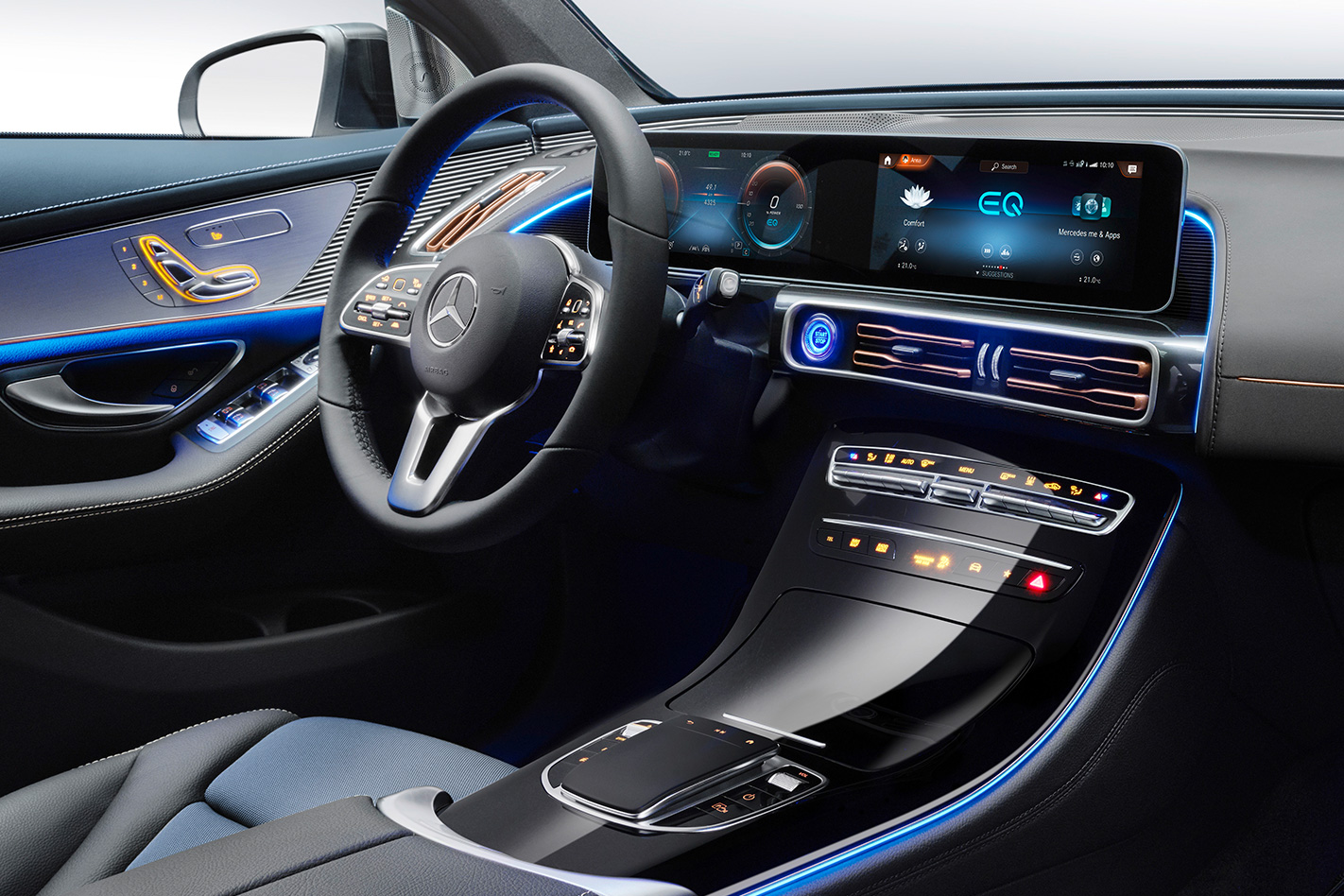
Khan explains that his role is to ensure that Mercedes-Benz’s essence as one of the most well-regarded luxury brands on the planet is complemented by the right choice of future tech. One of the biggest achievements on his watch thus far is the rollout of the Mercedes-Benz User Experience system, or MBUX, which was launched in the A-Class and will eventually find its way into every single Merc product.
MBUX was built with the future in mind; the next C-Class, for example, will use version 7.0 of the system, and the company works closely with computer-game giant Nvidia to ensure it will grow exponentially in talent and ability.
“MBUX in general; it’s kind of massive to the industry,” says Khan. “We are developing new vehicles based on those new technologies that are as good as, or even better than, those companies which are coming from other domains – the technology giants, which have trillion-dollar values.”
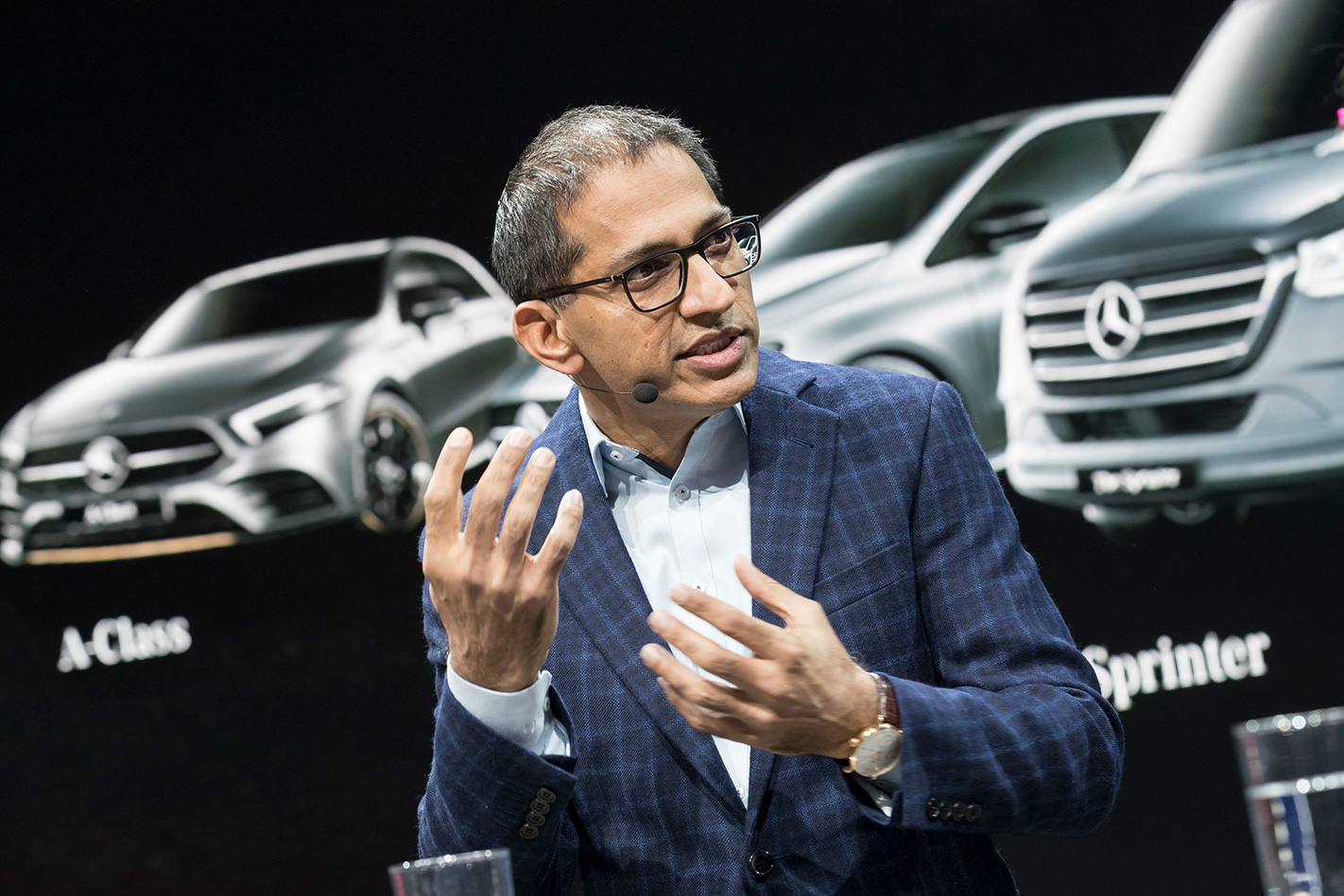
However, Khan is keen to point out that much of the technology produced for MBUX was sourced and produced from within the company. “Not only from the concept perspective, even from the software-programming perspective and the framework perspective, we did in-house,” he says.
“Cloud intelligence, speech… we use the base systems from key partners, but the majority of the work is done in-house.”
Think of MBUX as a powerful computer sitting behind your dashboard, and you’re on the right track. Its ability to learn and adapt to its new owner is already well known, but Khan says there’s a lot more potential already built into the system, and it won’t be limited by chipsets and screens.
“The game-changing thing is how you connect everything together, so that from the customer perspective, it’s seamless; they don’t have a feeling of ‘am I autonomous or am I in the connectivity domain at the moment, or am I driving electric?’” he says, leaning forward.
“If you’re driving electric and you have a range, what does it mean? Does it make sense to drive autonomous, or non-autonomous? And if you’re driving autonomous, is it beneficial to say, select the air-conditioning system via the MBUX, when you can use your AI algorithm to decide: ‘the customer has given a destination, which needs another five kilometres of range, so I should switch off this and that,’ then the customer could reach the destination,” he says.
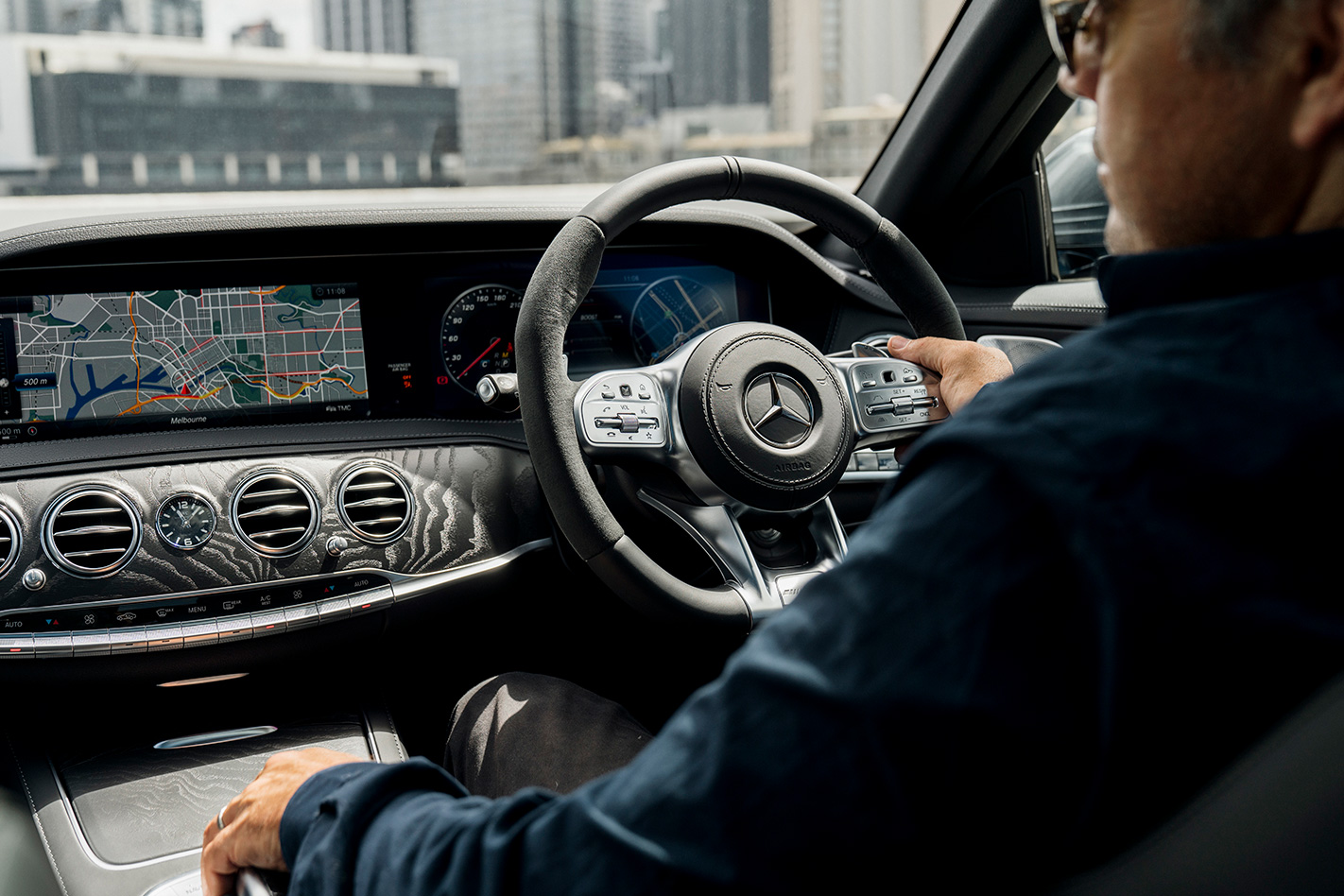
Mercedes-Benz has already debuted some of the best-performing driver-aid products with its Driver Assistance Package in cars like the E-Class and S-Class, and Khan says the company is in a good place when it comes to rolling out the next levels of vehicle autonomy.
“Our attended-driving, or driver-assistant, philosophy is to keep it simple,” he says. “We are incrementally developing the systems, from [assistant levels] one to three. In parallel, we are also following the path to produce complete level four and five (complete automation, hands-off, eyes-off). So we are not waiting.”
The road to a driverless future isn’t quite mapped out yet, though, according to Khan, who observes that the autonomy rollout will depend largely on factors that can’t be controlled.
“I think the major thing is looking at different markets around the world, and the infrastructure available in those markets … how can you cover all the use-case issues?” he asks.
“We could look at level four or five for a specific town or region or district, because you know that you have sorted out the whole-use cases there.
“Maybe when you try to take the same thing to Venezuela, or to Mexico, or somewhere else, it may not work, because of a lack of infrastructure.”
The digital revolution is just warming up, and it’s obvious that Mercedes-Benz – thanks to people like Sajjad Khan – is right at the vanguard of a connected future.
A maximum rpm figure north of ‘8000’ is unusual these days. Turbocharging has done away with the need for revvy motors, but it hasn’t removed the want. Proof of this comes in the form of an astonishing V12 engine built by Aston Martin, Red Bull’s F1 team, and most importantly, Cosworth.
Aston Martin revealed the Valkyrie’s hybrid output after this article was published in MOTOR’s March 2019 issue.
This triforce of engineering set out with the goal of creating “the ultimate expression of the internal combustion engine”. And it seems they’ve succeeded. With 11,100rpm marking its redline, the Valkyrie V12 has become a new benchmark for natural aspiration. The Valkyrie’s 6.5-litre heart is good for 735kW – which arrives at 10,500rpm – and 740Nm.
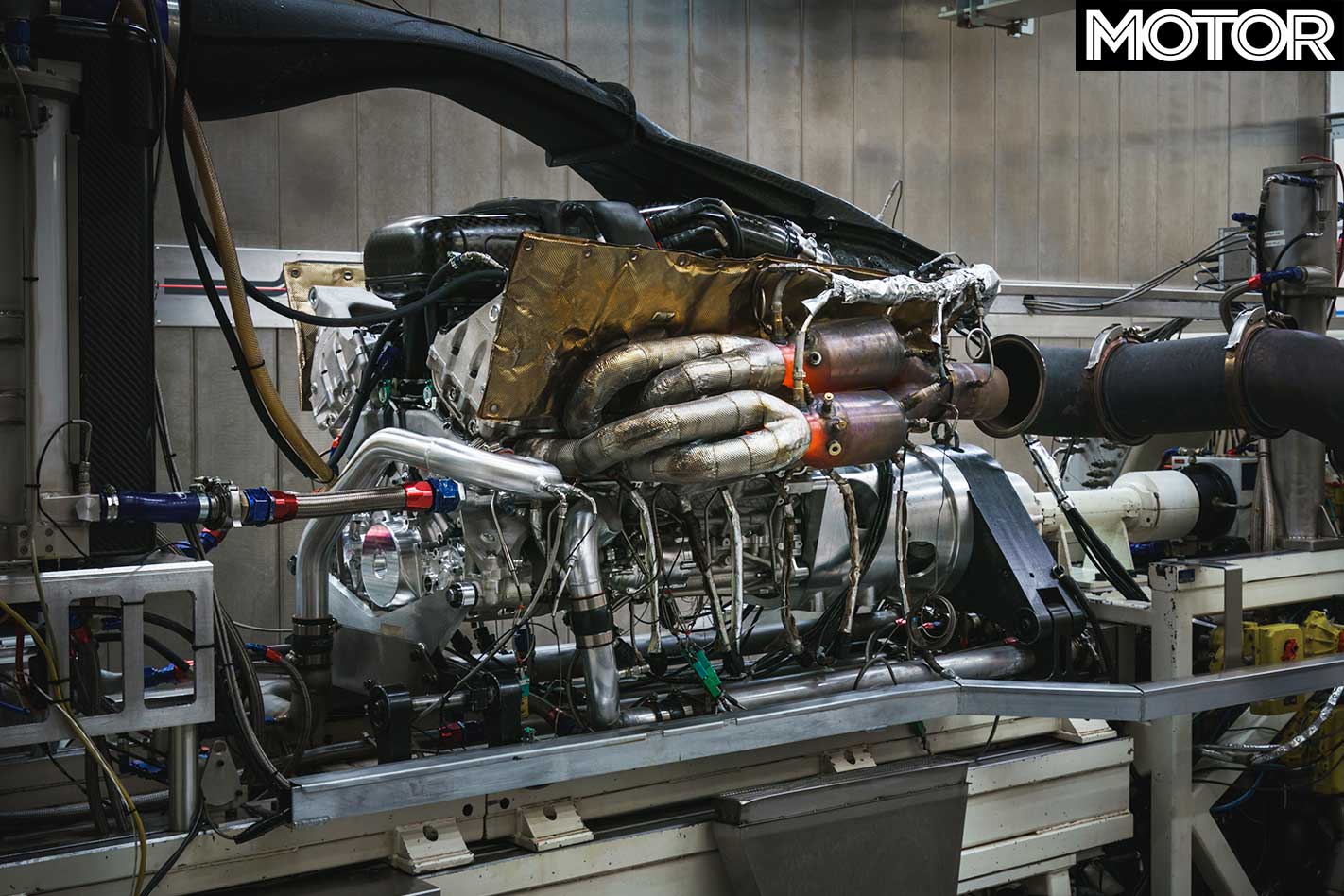
As Aston is yet to reveal details of the battery hybrid system which will accompany the ICE, the Valkyrie’s total outputs are still unknown to outsiders. Insiders, however, are incredibly excited about this engine.
“To anyone with a drop of petrol in their blood, a high-revving naturally aspirated V12 is the absolute pinnacle,” Aston CEO, Andy Palmer, said upon the reveal of this V12 marvel. “There was never any question that the Aston Martin Valkyrie would make do with anything less.”
To reach its performance goals, Cosworth pulled out some of its motorsport experience and implemented it during the V12’s design and construction. For example, the engine boasts a lower per-litre weight figure than Cosworth’s last Formula One engine. The 3.0-litre race engines would weigh 210kg if scaled up to 6.5 litres. The Valkyrie’s V12 weighs 206kg.
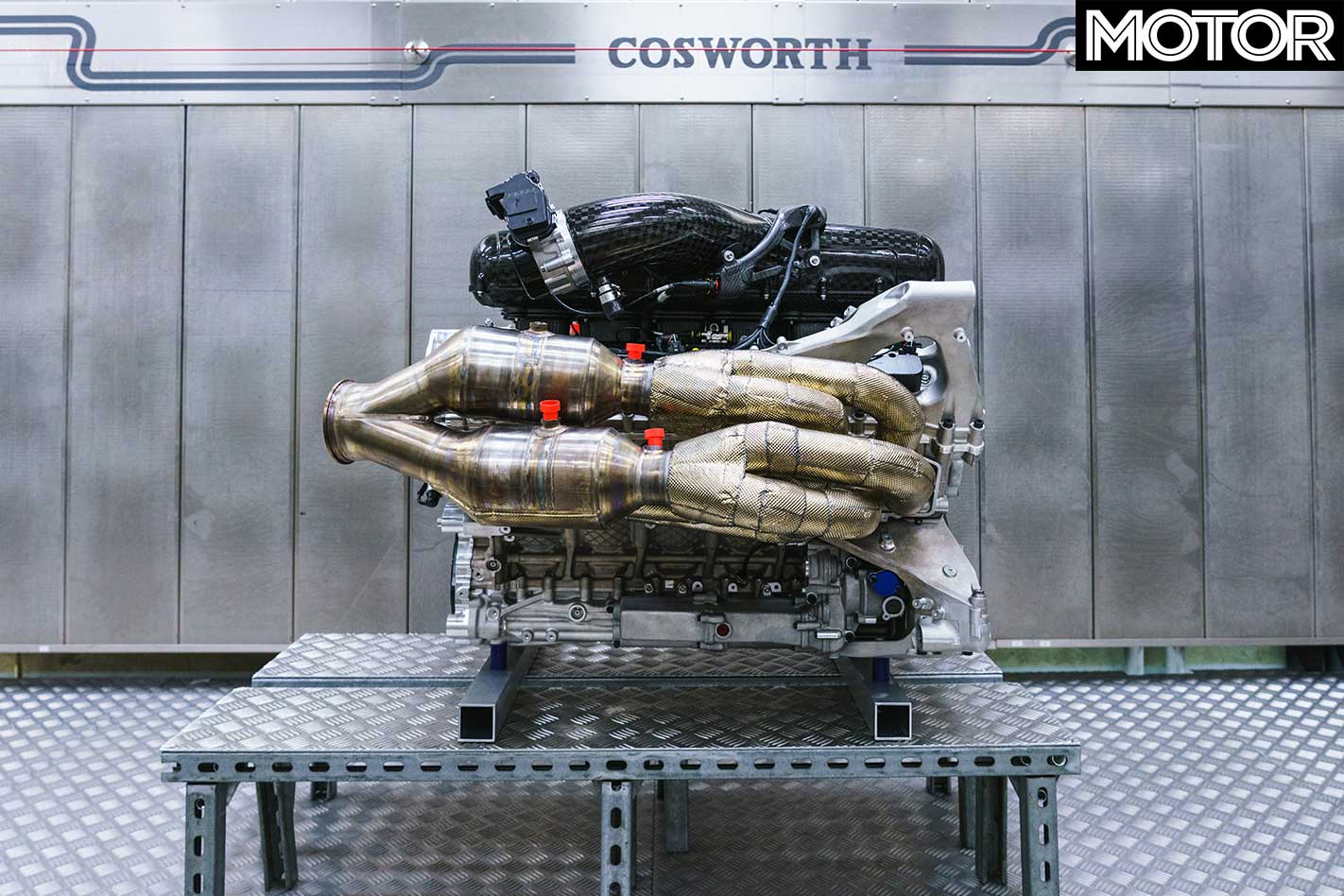
Keeping that weight down proved a “huge challenge” as Cosworth also avoided using lightweight alloys which have only been recently developed, as their long-term reliability is unproven. Most of the internal components of the engine are machined from solid materials such as titanium, used for the conrods and “F1-spec” pistons.
In another display of painstaking detail, Cosworth developed a billet crankshaft machined from a solid steel bar over six months, with approximately 80 per cent of the steel bar removed in that time.
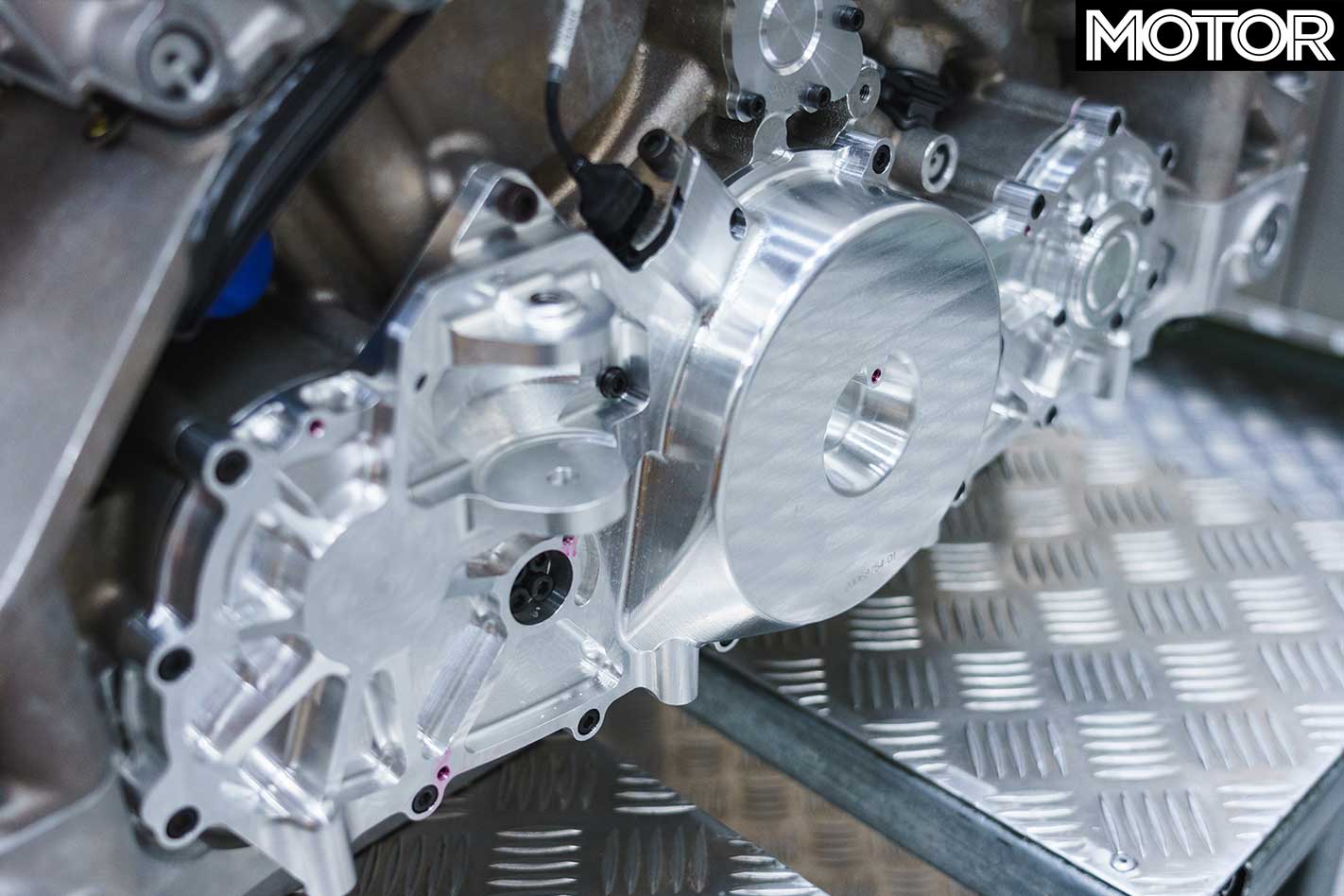
As a result, the crank is about half as heavy as that used in Aston Martin’s 559kW One-77, a Cosworth-enhanced V12 itself, which had its time only a decade ago. When it first arrived, for a short while, the One-77 was the world’s most powerful naturally aspirated road car.
It seems rather fitting, then, that the accolade is once again to go to a V12-powered Aston Martin.
Valkyrie Cosworth V12 up close
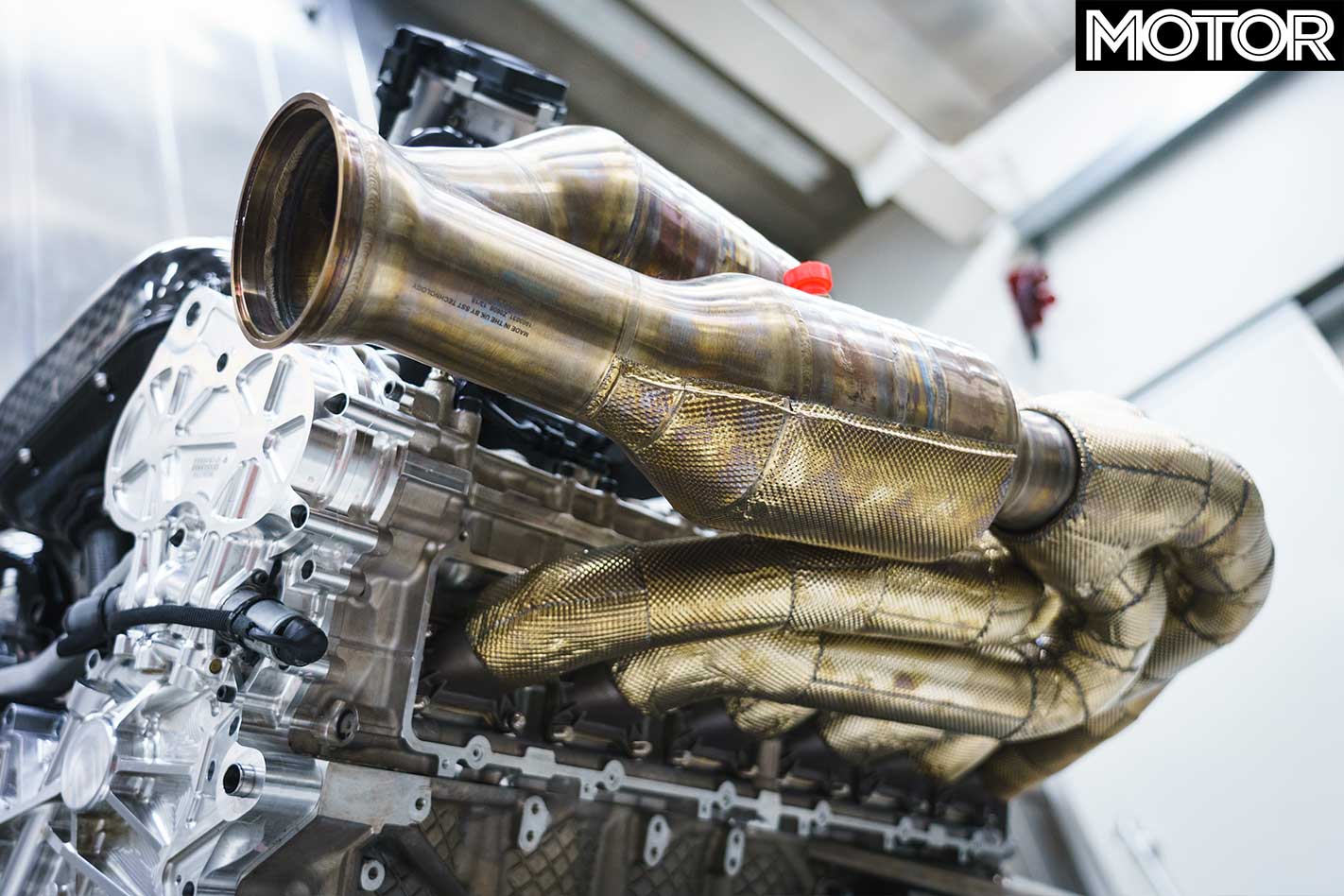
Reaching the peak When the V12 was revealed to the public, Andy Palmer said Cosworth’s commitment to perfecting the engine was unwavering. “The result is a quite extraordinary engine, one which I doubt will ever be surpassed.”
Multitasking Aside from providing a plethora of power to the Valkyrie, the Cosworth V12 also acts as a “fully stressed element” of the hypercar’s layout. Without it, there is nothing connecting the front wheels to the back.
Challenge accepted Chief designer Adrian Newey set out many of the goals for the Valkyrie engine when approaching Cosworth, some of which the engine specialists said were “conflicting targets”. The result was the implementation of several processes unseen for a road-car development.
Reports emerging from the UK have all but confirmed that a second-generation Toyota 86 is on the way.
The future of the eight-year-old coupe has been under a cloud of late, with no apparent plans in the pipeline to replace it from Toyota’s end and a complete lack of visibility for a new model over at Subaru, who sells rebadged versions of the 86 as the BRZ.
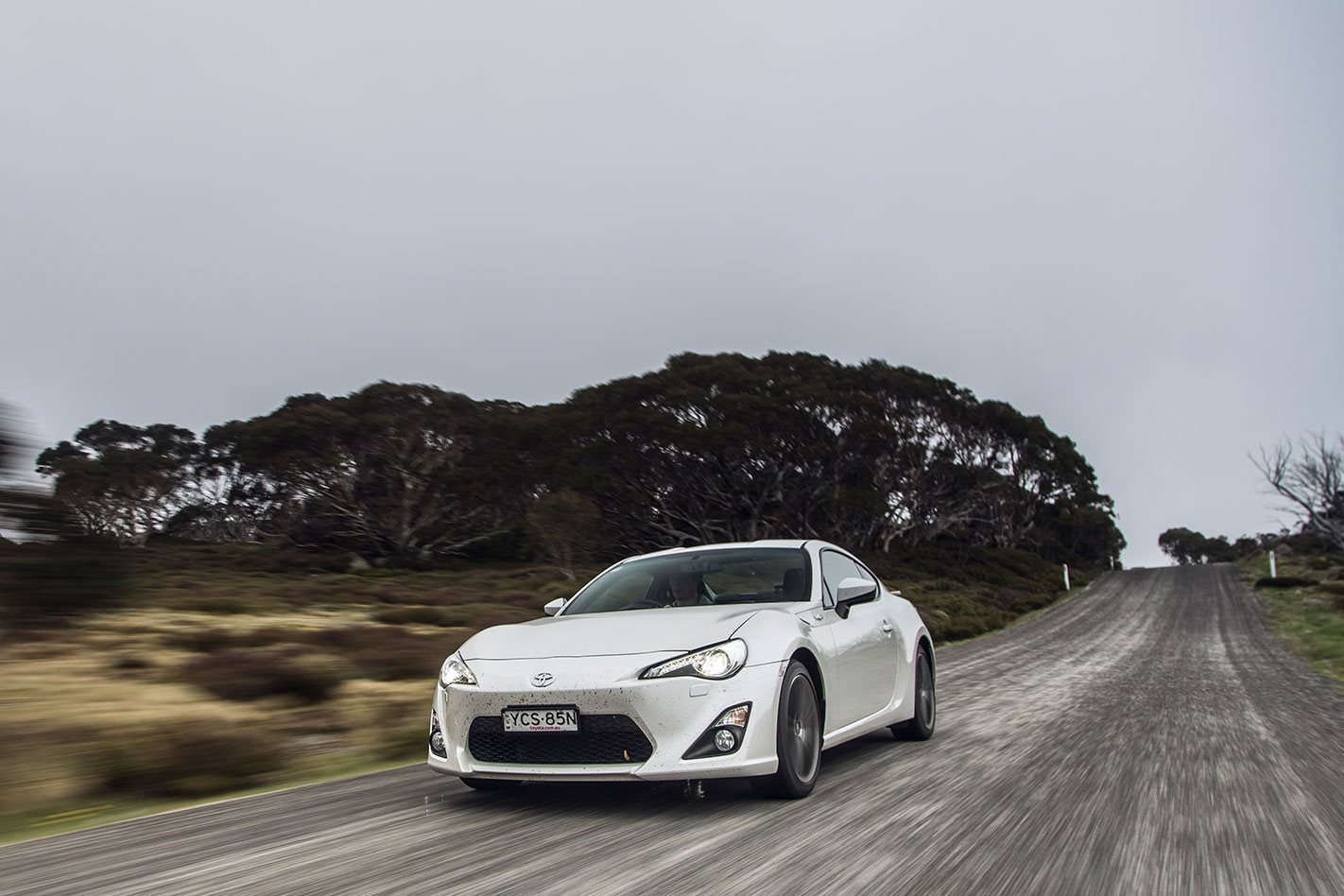
However, a report on the UK website Autocar has quoted a Toyota official as saying that a new 86 will sit alongside the incoming – and more expensive – Supra as Toyota looks to flesh out its sports car range.
“They are for different audiences and they are different products,” the official told Autocar, adding that it’s a “safe assumption to make” that the tie-up between Subaru (who provides the 86/BRZ engine basics and suspension layout) and Toyota (who provides the engine’s top end components and ancillaries) will continue. Toyota owns a stake in Fuji Heavy Industries, the owners of Subaru.
Toyota’s sports car focus over the last couple of years has been solely on the Supra, which is being built in Austria in partnership with BMW. As well, the company is ramping up its return to the sporty end of the passenger car segment, pushing its Gazoo Racing (or GR) message with supercharged versions of its baby Yaris hatch for overseas markets, and the mooted launch of a hot Corolla hatch.
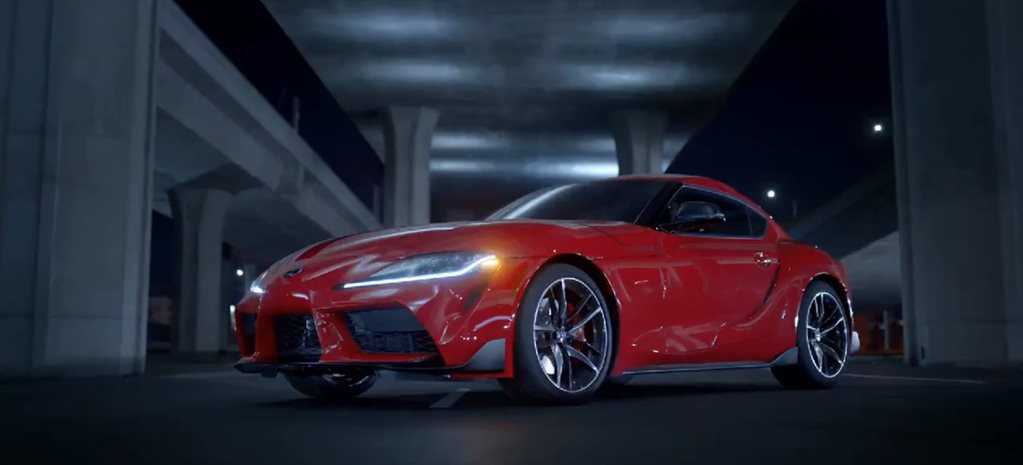
However, sightings of prototype 86 replacements have thus far been non-existent which, given the age of the current car, suggests that a replacement is still a solid two years away.
Its sales performance in large territories like the United States, too, would still be a concern for Tokyo head office.
While the UK official said that the 86 has been a “successful halo product” for the brand, the relative ‘orphan’ status of the 86/BRZ’s manufacturing method – running down a single bespoke line in Gunman, Japan – puts pressure on its economic viability, in an era where the world’s car companies are winding back on orphan platforms across the globe.
The need to keep the 86/BRZ affordable – the local range currently starts at $31,440 for an 86 and $34,280 for a BRZ – also has a bearing on its future. Toyota runs a tight ship when it comes to manufacturing costs, and building a low-volume sports car away from the larger production lines is not a cheap exercise.
Locally, Toyota says that the 86 is an important car for the brand, and that it will grace the range for some time to come. In 2018, Toyota sold 957 86s and Subaru moved 588 BRZs.
It’s 9:00am on a stinking hot November day at Queensland Raceway and the historic first test of the new Ford Mustang Supercar is off to a slow start. In fact, it hasn’t started at all.
Designated driver Fabian Coulthard has forgotten his helmet and had to go home to get it, while his DJR Team Penske team-mate Scott McLaughlin has only just this morning flown in from New Zealand. Not surprisingly, McLaughlin has been called to get to the track, pronto.
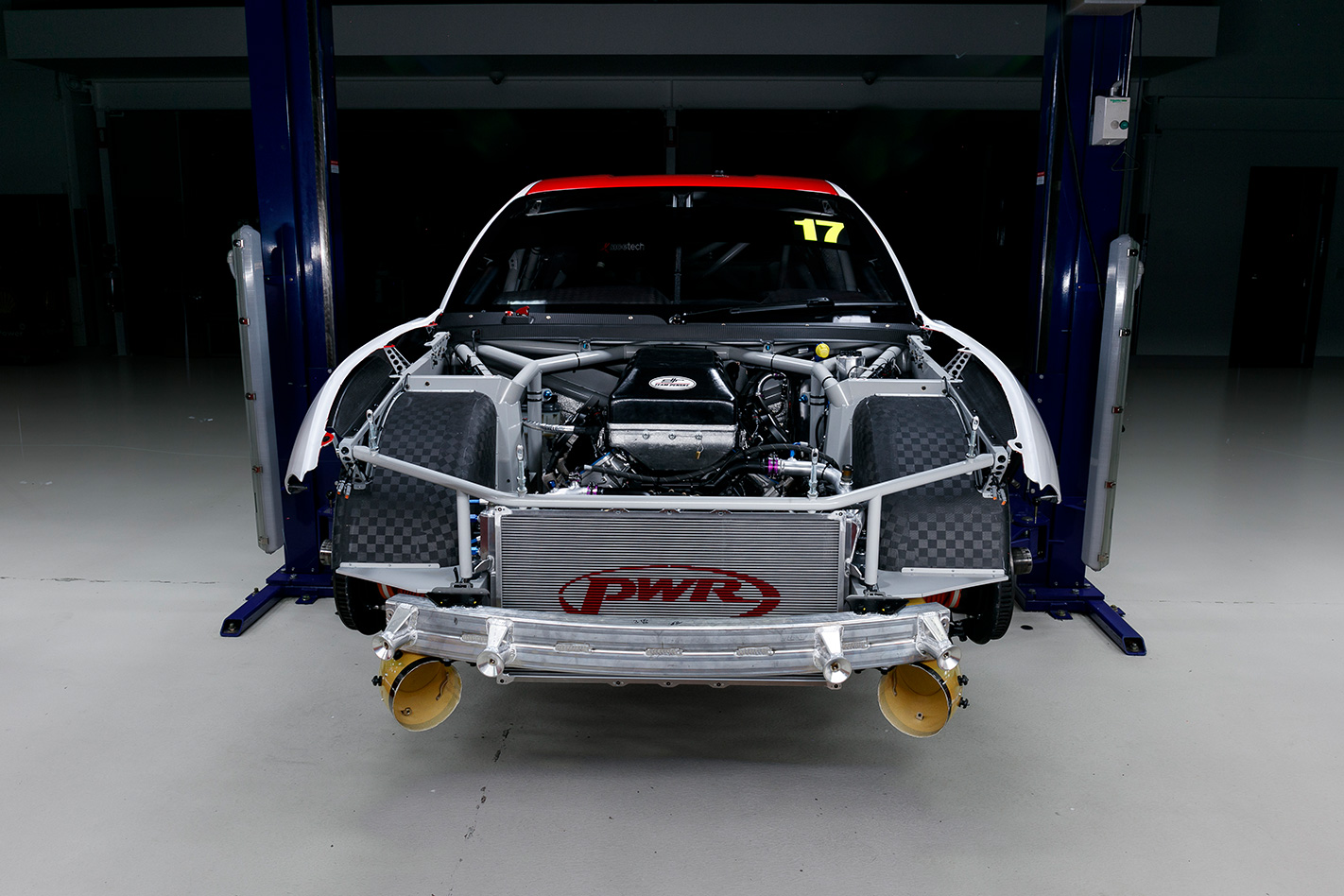
The Mustang rumbles out around 9:10am, so not too much time lost. Straight away, there’s more drama. The front air dam – or splitter – that extends from the underside of the car like an engorged tongue is going limp under the pressure.
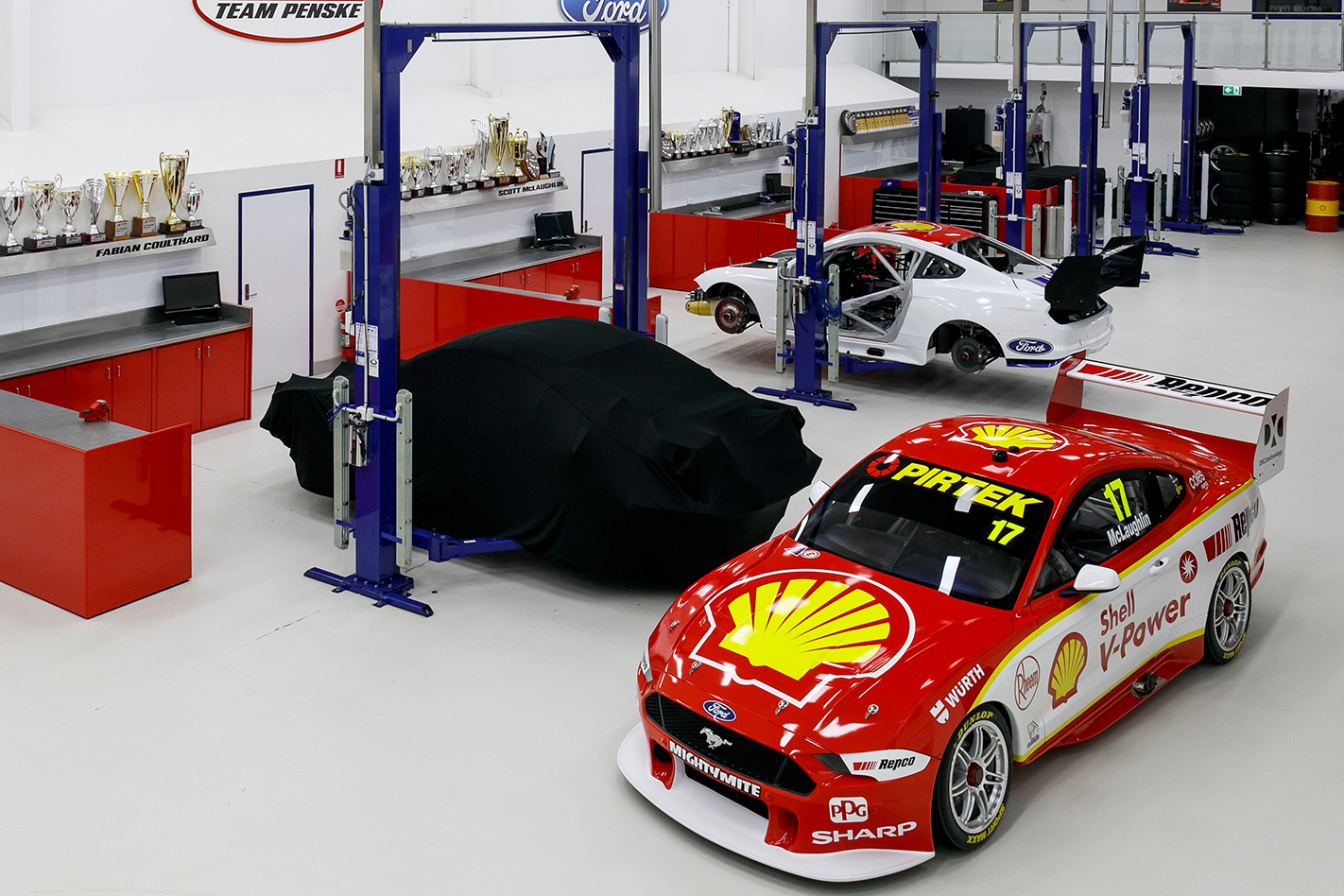
As McLaughlin roars down the back straight, the splitter is staccato smacking on the ground, making the car sound like it’s banging on the rev limiter – bup-bup-bup-bup. It’s just too weak to hold itself in place as air rushes over it. McLaughlin pits. Repairs take 90 minutes.
Back on track, it also becomes apparent the standard hinges taken from the Mustang road car are struggling to keep the bootlid in place. The rear wing is exerting too much load and there’s too much drag. The lid is literally being sucked off. It’s bolted down for the rest of the day.
Out on track again and the car’s 475kW 5.0-litre pushrod V8 is failing to produce meaningful speed. It’s nothing to do with the Mustang’s cooling capabilities, merely the simple fact that the ambient temperature is arcing toward 40 degrees Celsius and track temp towards 60. In the end, the best time the car records is a 1:10.8. A quick QR time in a Supercar is in the 1:08 range.
“We did not panic about that [time] because we had other things to panic about,” laughs DJRTP competition director Ludo Lacroix. “The wing was failing, the front splitter was flapping, but the good thing was it enabled us to check all the systems.”
Lacroix can afford to laugh. Now. Three days after those faltering first laps, the Mustang was at Phillip Island and performed flawlessly, logging more than 100 laps. And to cap it all off, McLaughlin, the four-wheeled modern master of the MotoGP track, ripped off a 1:30.4. The Supercar lap record is a 1:31.214; the qualifying lap record, a 1:29.062. The flying Kiwi owns them both.
“It’s a damn good lap considering it was a green circuit and we were the only car out there,” says Ryan Story, managing director of DJR Team Penske. “To have done a 30.4, we were thrilled.”
They had every right to be. Phillip Island is the circuit in Australia that tests aerodynamics and tyres the hardest. Big, fast, loaded corners. Going there and going that quickly ticked a lot of boxes.
Story and Lacroix are sitting either side of a desk in the boss’s office. Stand up and look through the window and the workshop of the designated Mustang Supercar homologation team is spread out below.Story is in charge of keeping this whole show on the road; Lacroix looks after making the team win on the track.
These two are the sort of odd couple the transient world of motor racing tends to throw together. Story is tall, pale, and a relative newcomer to Supercars racing. From Yorketown in South Australia, he became a Dick Johnson fan as a child and grew up to sponsor and then run the team, saving it from bankruptcy and then facilitating a takeover by US racing mogul Roger Penske.
He offers up the disarming persona of an ambling nerd – as well as Tim Tams and Coca-Cola to his guests. But don’t be fooled, he has a formidable intellect, a swag of university qualifications and a rare combination of cunning and integrity that (so far) has allowed him to navigate the cannibalistic Supercars paddock with success.
Lacroix is squat, French, loud, brilliant, arrogant, charismatic and often injured, thanks to his love of various adventure sports. Each time I shake his hand I count his fingers, as he seems to lose them regularly. He still walks with a limp, thanks to a huge motocross accident in the mid-2000s.
A DTM and BTCC-winning engineer in Europe, he came to Australia in 2003 and led an overhaul of touring-car design, turning what he derisively called Panzers – or “Ponzers” in his Monty Python Franglish – into sophisticated racing weapons.
At Triple Eight Race Engineering he led the design of a series of successful Ford and Holden Supercars. Two years ago he moved to DJRTP. In Supercars this was a more seismic event than most driver swaps. T8 owner Roland Dane publicly labelled him duplicitous.
Lacroix has answered with results, guiding DJRTP to the teams’ championship in 2017 and the drivers’ championship with McLaughlin in 2018.
Contrasts sit side-by-side down in the workshop as well. The stalwart FG X and next to it the bare bones of a Mustang. The FG X is the last in a line of Falcon V8 sedan racers that stretches back past the Supercars category’s 1993 beginnings into the Group C and Series Production days.
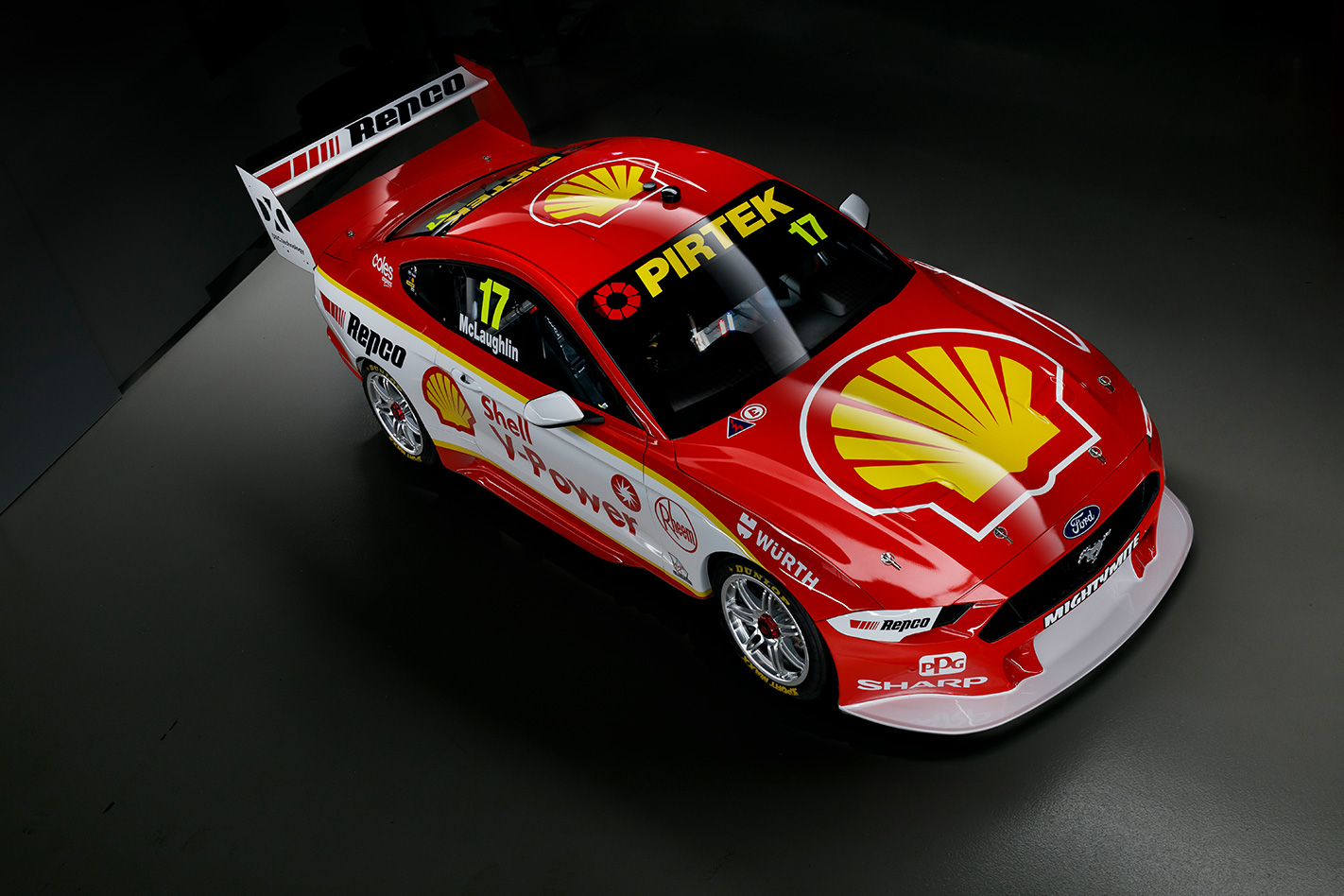
Last year, the newly imported ZB Commodore debuted in Supercars and created a bunch of firsts. The first Holden based on an import to race in what was once called the Australian touring car championship, the first Holden Supercar not to be based on a V8 rear-wheel-drive road car and the first five-door to appear in Supercars.
The Mustang is the first two-door to race in the modern era, but at least the production car is rear-wheel drive and powered by a 5.0-litre engine – albeit not the same one as the Supercar. Look back, and Mustangs ran in the 1960s, early ’70s and ’80s – Dick Johnson, who still part-owns DJRTP, drove one briefly in the ’80s – and Ford campaigned two-door Falcon XA, XB and XC coupes in the ’70s; Dick raced them, too.
Glorious big 5.7-litre bastards of things they were. Who could forget Allan Moffat and Colin Bond (and Jacky Ickx and Alan Hamilton for that matter) scoring that glorious 1-2 at Bathurst in 1977? No matter how many times Holden does it, it’s still the greatest finish to The Great Race ever.
For all that, the 2019 Mustang is still hugely significant. It marks Ford’s formal return to Supercars racing after a three-year absence, which is key for the health of a category that’s seen Volvo and Nissan come and go in recent years.
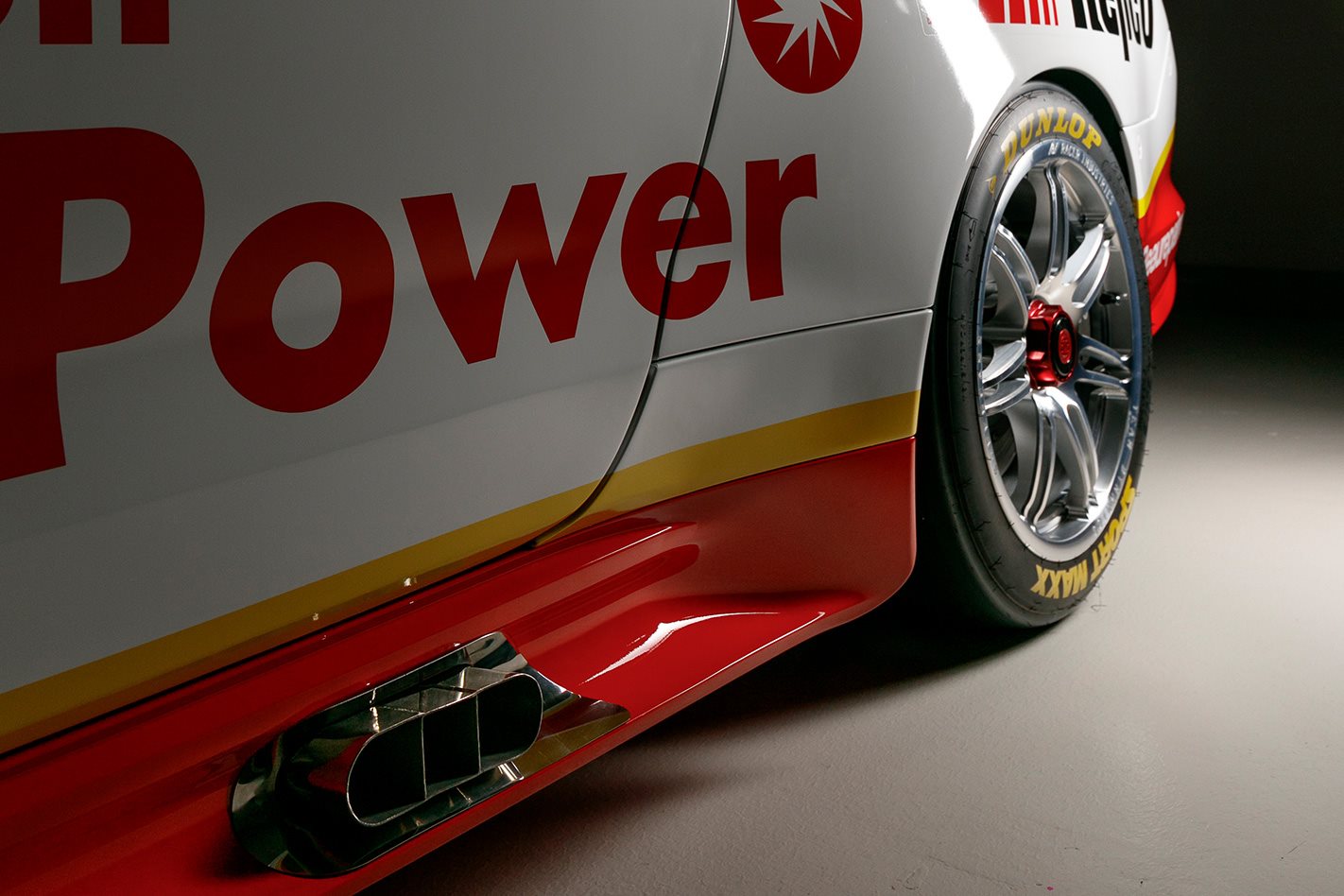
Getting Ford to sign up was no easy task. It took nearly a year of secret meetings and pleadings from the Ford teams – and some very public threats from Roger Penske to switch to Holden – to convince Ford to back a Falcon replacement.
So Ford versus Holden again. Just like the old days… only not. This is a new era, post the local-manufacturing apocalypse.
Story and Lacroix are two absolutely pivotal players in the Mustang Supercar program. They are at the centre of a network that stretches from south-east Queensland to Melbourne and on to the US. It wraps in Ford Australia, Ford’s other Supercar team, Tickford Racing, Ford’s Asia-Pacific design office in Melbourne and Ford Performance in Michigan, the blue oval’s global hot-tuner road and racing arm.
Looking over their shoulders are another layer of important people, like Penske Racing boss Tim Cindric and Ford management at global HQ in Dearborn.
The logistics of all this are mind boggling. Phone calls, emails, digital files being worked on night and day on opposite sides of the globe, and weekly conference calls on the Ford internal Webex comms system.

“For me, the amount of coordination we’ve had between all these different parties, that’s huge,” Ford Performance’s Mustang Supercar program leader Brian Novak tells Wheels from Dearborn. “We’ve had coordination before but it’s been in the same place, or one location with different teams in it.
“But you add in design studios, Ford of Australia and the multiple racing teams, and then we are here. It’s a bigger deal in terms of coordination than I have done before.” That’s from a bloke whose last project was developing the Mustang NASCAR.
Dick Johnson to drive Mustang Supercar in Adelaide demo
And then overlay the timeline. DJRTP had its first meeting about this program with Supercars on March 29, 2018. The glasshouse dimensions were locked in by late June, computer aided design (CAD) and computational fluid dynamics (CFD) studies were fundamentally complete by early August. The last body panels were being attached to the first Mustang hours before that first test on November 7, and it was successfully homologated on December 12.
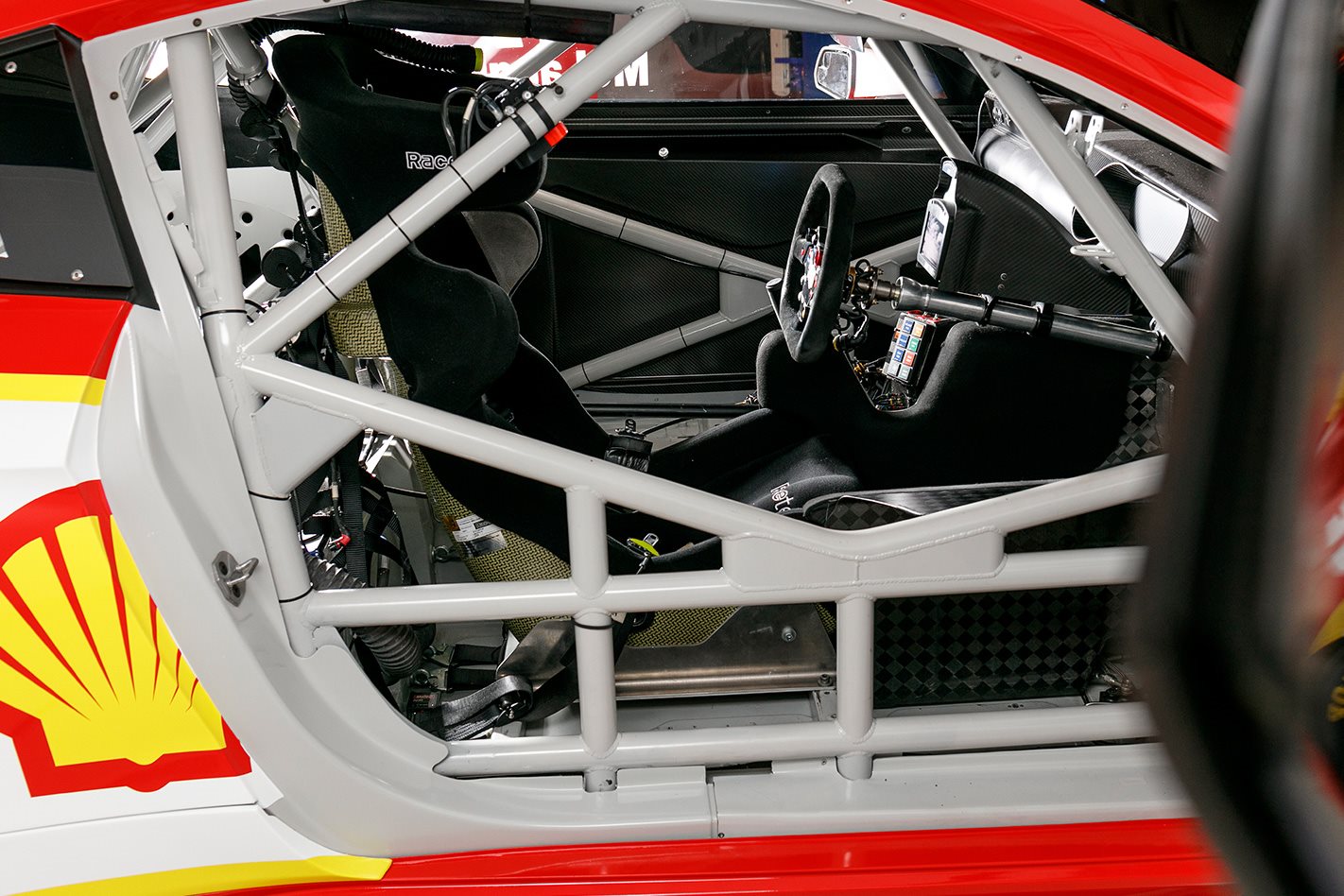
“And we ended up winning the championship,” points out Story. “But at no point in time did our race program compromise our test program, nor did our test program compromise our race program.” One fundamental eased this challenge. This far-flung group was not developing a Supercar from the ground-up. The way the Gen2 (or Car of the Future) rules work, all cars are based on an identical chromoly steel spaceframe, which incorporates the rollcage. Every car has the same wheelbase and same tracks.
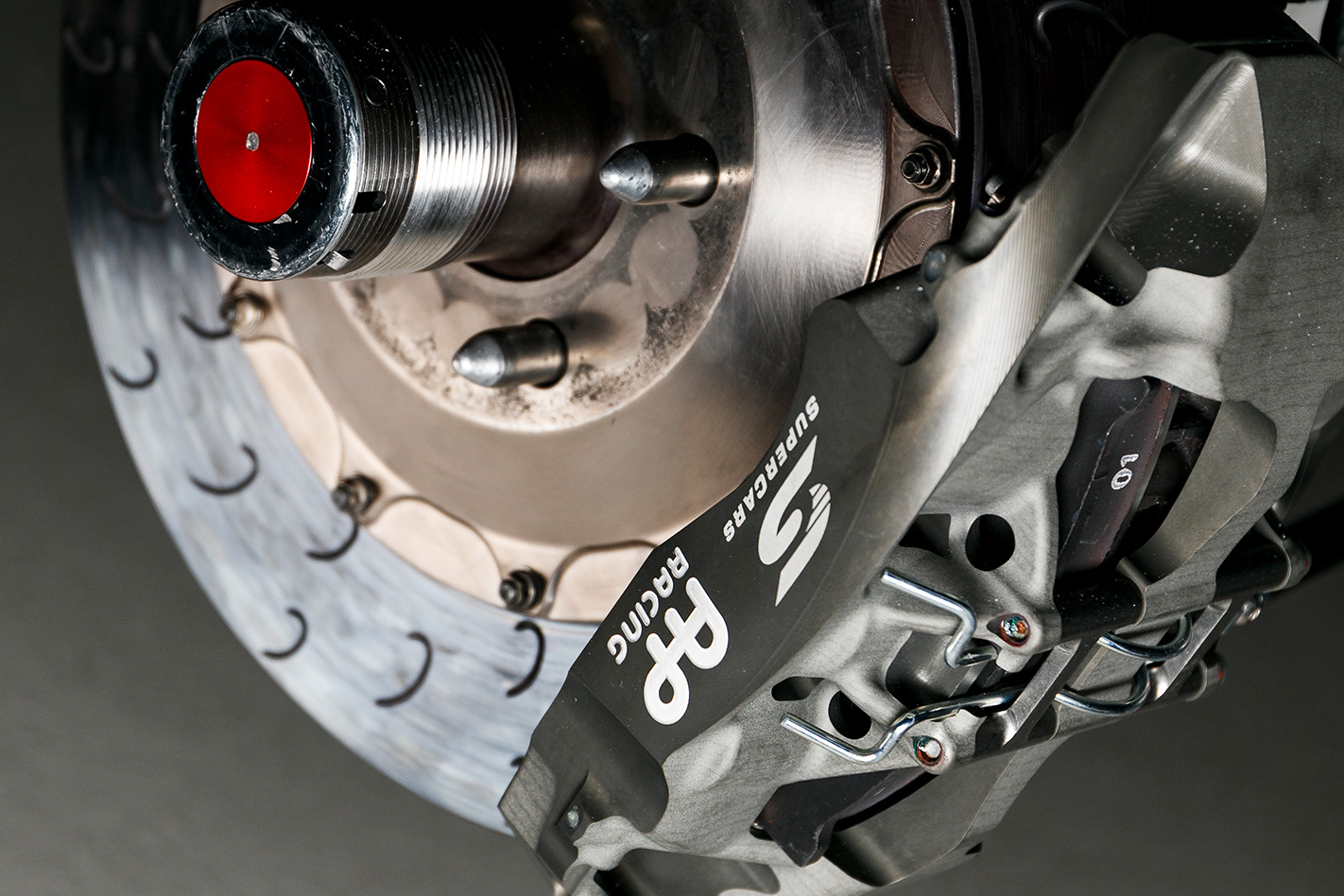
That means the road car’s body has to be massaged to fit the standard chassis. Then, under the composite skin, a whole lot of standardisation applies. For instance, the position of the engine, the driver, the front undertray and fuel tank are fixed; the independent rear suspension is a control item, as are brakes and tyres. Shock absorbers can be selected from an approved basket of brands and models. The biggest technical freedom is the front end of the car, relating to double wishbone, upright and hub design.
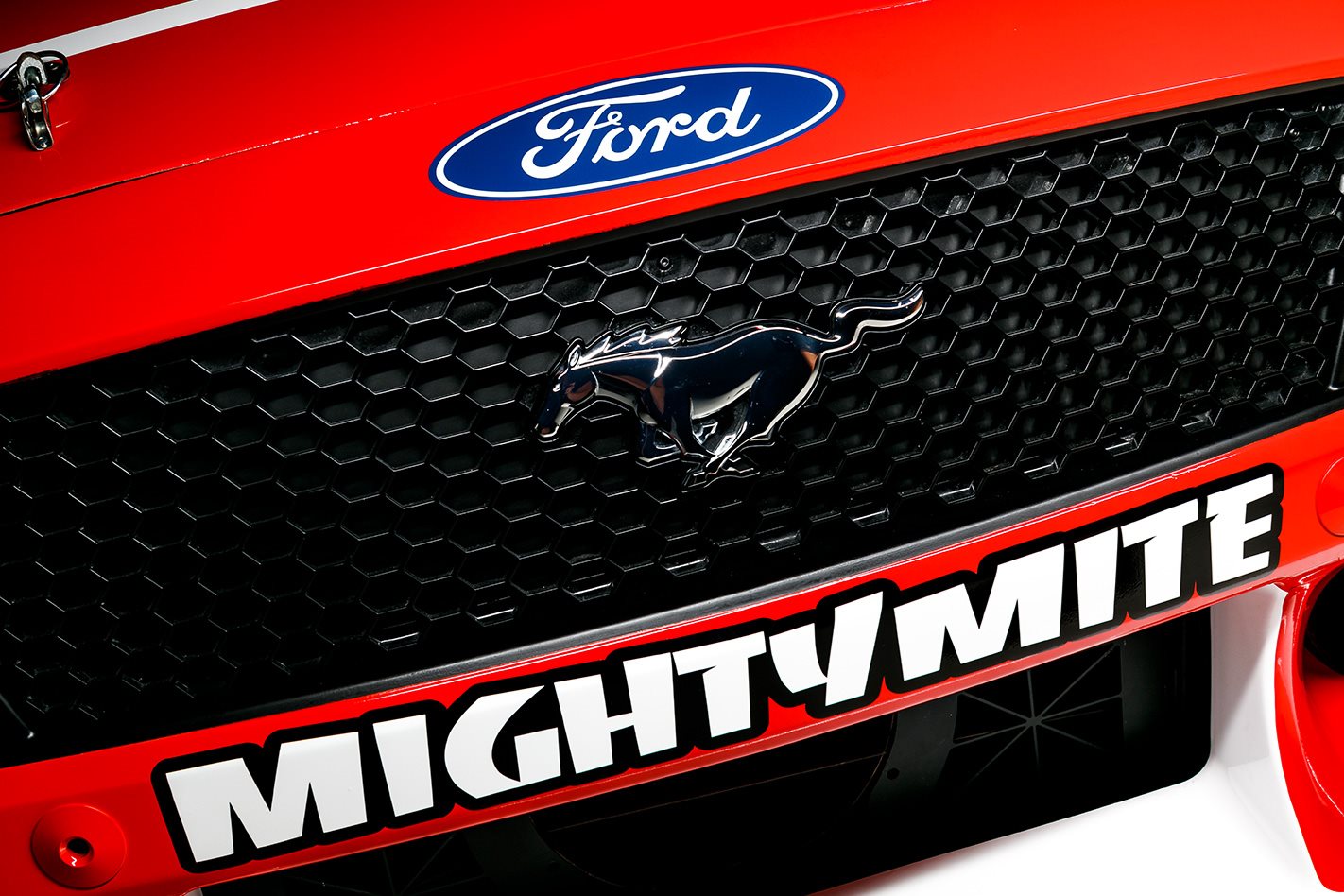
Ford teams can, and are, literally cloaking the mechanicals of their existing Falcons in new Mustang composite panels. Among the six Mustangs expected on the grid at the Adelaide 500 for the new season opener there will be a combination of new and repurposed cars.
Plugged into their cockpits, the drivers will hardly notice the difference. The controls will be the same, the seating position will be the same as a Falcon. The big hint they are in a new car will be a slightly better view out, because the XR8 bonnet hump has gone. For the mechanics, it’s a similar story. There have been minor design tweaks to aid efficiency, but the componentry they maintain, fettle and replace will be much the same (although the entire field swaps to a new Xtrac transaxle for 2019). The big change will come when they attach the composite panels to the inner body. Voila… Mustang!
That amount of carry-over undoubtedly simplifies the task, but doesn’t make it simple, given the timeframe to complete the job. The body is the big challenge; making it fit, making it aerodynamically competitive, and making it look as much like the road car as possible.
That last item is a critical requirement of both Supercars and Ford, but it’s been the hardest objective to achieve. It’s the one that’s got everyone talking and plenty of them not approving. Out in the hyper-critical world of social media, race fans have been having a meltdown about the ‘mutant’ Mustang they have seen only in limited video and still images.
Brabham BT62 sets Bathurst outright lap record
“Give us a year, give us another six months and to be fair … we would have changed a couple of things on that car to make it look nicer,” admits Lacroix. “But we did not have another six months.”
The key measures of the Gen2 chassis mean the Mustang Supercar is longer and narrower than the road car. There is not one panel that carries across from road car to race car. That’s a first, because even the ZB retained its stock aluminium bonnet. But that’s not the issue. It’s the roll hoop.
It has a kink designed so taller drivers can fit without hitting their helmets on the tubing. Combine that with the fact the rollcage was originally designed to fit over four-door bodies, not fastback coupes and Houston… we have a problem. It’s a problem that took a long time to work out, and one that some people still argue has not been fixed.
There’s no way round it, the glasshouse of the Mustang Supercar is more upright and bulbous and simply does not flow into the rear like the fastback road car. And there’s simply more rake from front to rear, the snout has been purposely left at about road-car height, but the bum is high.
“We designed the best Mustang we possibly can within the rules of the series, and the rules of the series dictate the rollcage has a certain height and we have cleared it,” says Story.
“There are some aesthetic decisions we have made that are driven by performance.”
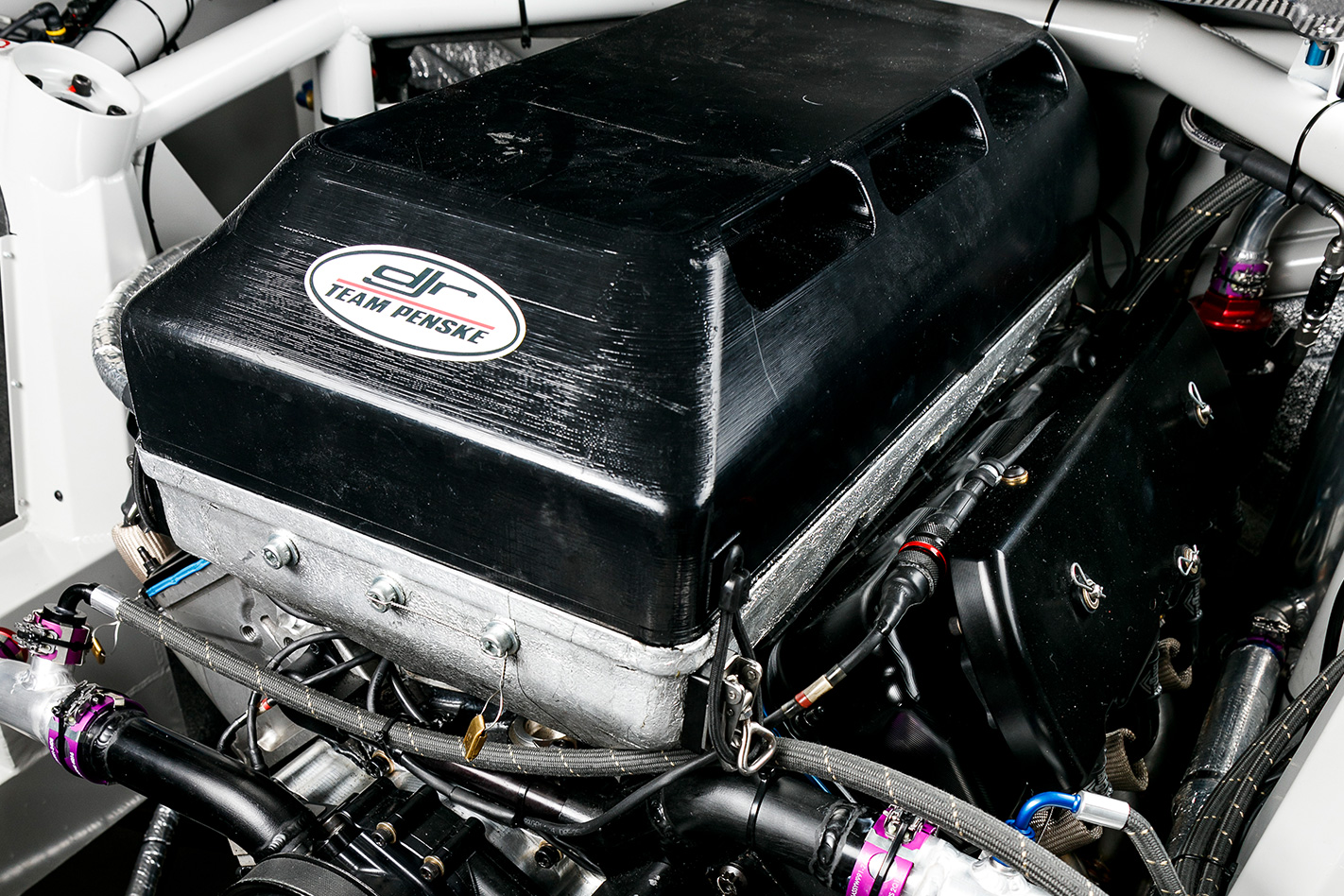
Considering Todd Willing’s team at Ford Design in Melbourne contributed heavily to the look of the Supercar in an attempt to preserve the styling linkage to the road car, you’ve got to wonder how much stranger it could have looked.
“It was just a lengthy process for them to understand this is not a Mustang. It’s a Mustang B,” says Lacroix.
At the same time, Ford Performance in the USA was crunching the data and developing the car’s aerodynamic performance using CFD, the digital equivalent of a wind tunnel, something essential in a championship where physical wind-tunnel testing is banned.
Iterations looped relentlessly; A-P Design pushed road-car DNA, Ford Performance sacrificed DNA for speed and DJRTP kept overlaying the series rules and its own requirements.
“Trying to make them understand the philosophy of the championship was difficult, because it is a very specific championship in terms of what you can and can’t do,” says Lacroix.
“It’s not all written rules. Some of it is ‘no you can’t do that, you can’t have a sharp edge, you can’t have a winglet’ etc, etc.”
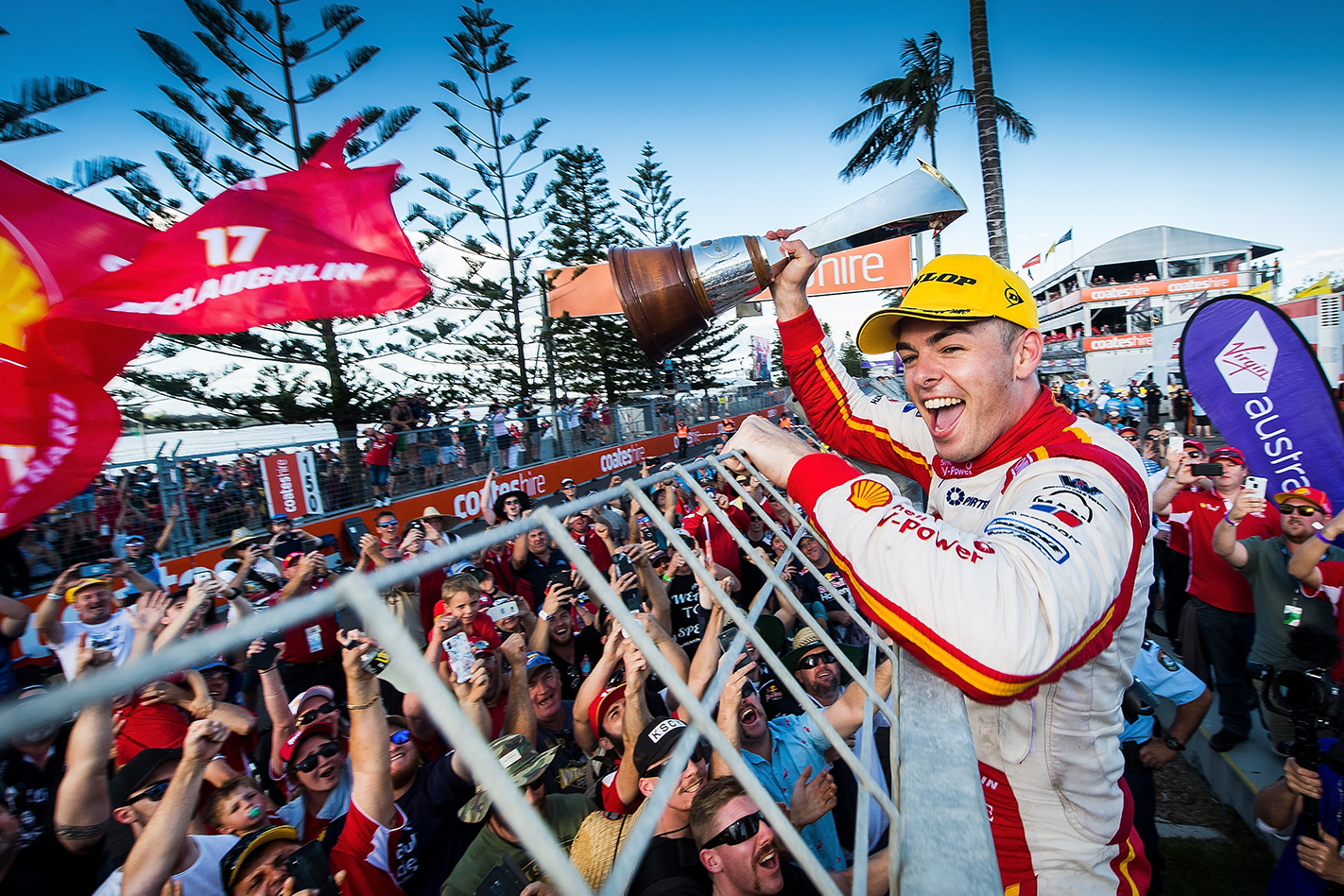
Novak offers a blunt racer’s perspective: “There are no ugly cars in victory lane,” he says down the line from Detroit. He’s right, and if the aerodynamic surfacing Ford Performance has applied is effective, then the Mustang will look a lot sexier really quickly.
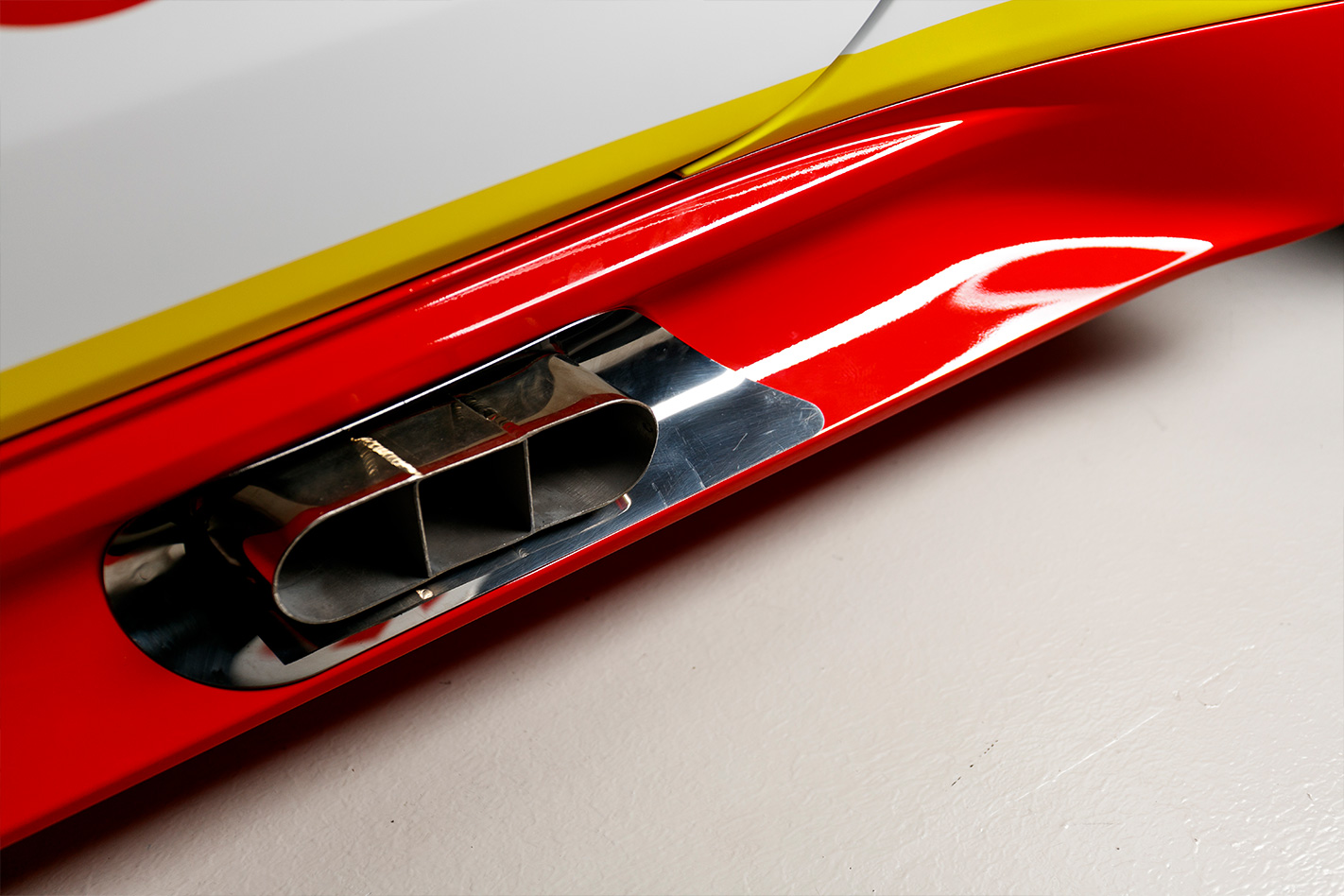
In motor-racing terms, Supercars do not have a lot of aero-generated grip, or downforce. It’s true that Supercars does its best to equalise what downforce and drag is generated across the field – just as it attempts to establish parity of engine power and torque. But take a look at the Mustang’s splitter, its 1500mm-wide rear wing, or those giant endplates, and tell us aero isn’t important.
“A new F1 car with new aerodynamics makes two seconds, the new aerodynamic for us is maybe a 10th or 10th and a half at best, on an aerodynamic track,” Lacroix explains.
The point left unsaid is that in a field routinely separated by one second in qualifying, a tenth is a lot. And in a championship where winners rarely come from anywhere beyond the first few rows, qualifying is key. And while Supercars tests aerodynamics in a straight line, there is no yaw, or cornering, parity testing. That’s the loophole, the opportunity.
So, pay attention to that big rear-deck extension. It’s similar to the one on the ZB, and designed to achieve the same purpose – to give the air room to calm itself over the rear of the car before hitting the wing. It’s the flat boot lid the Mustang road car doesn’t have.
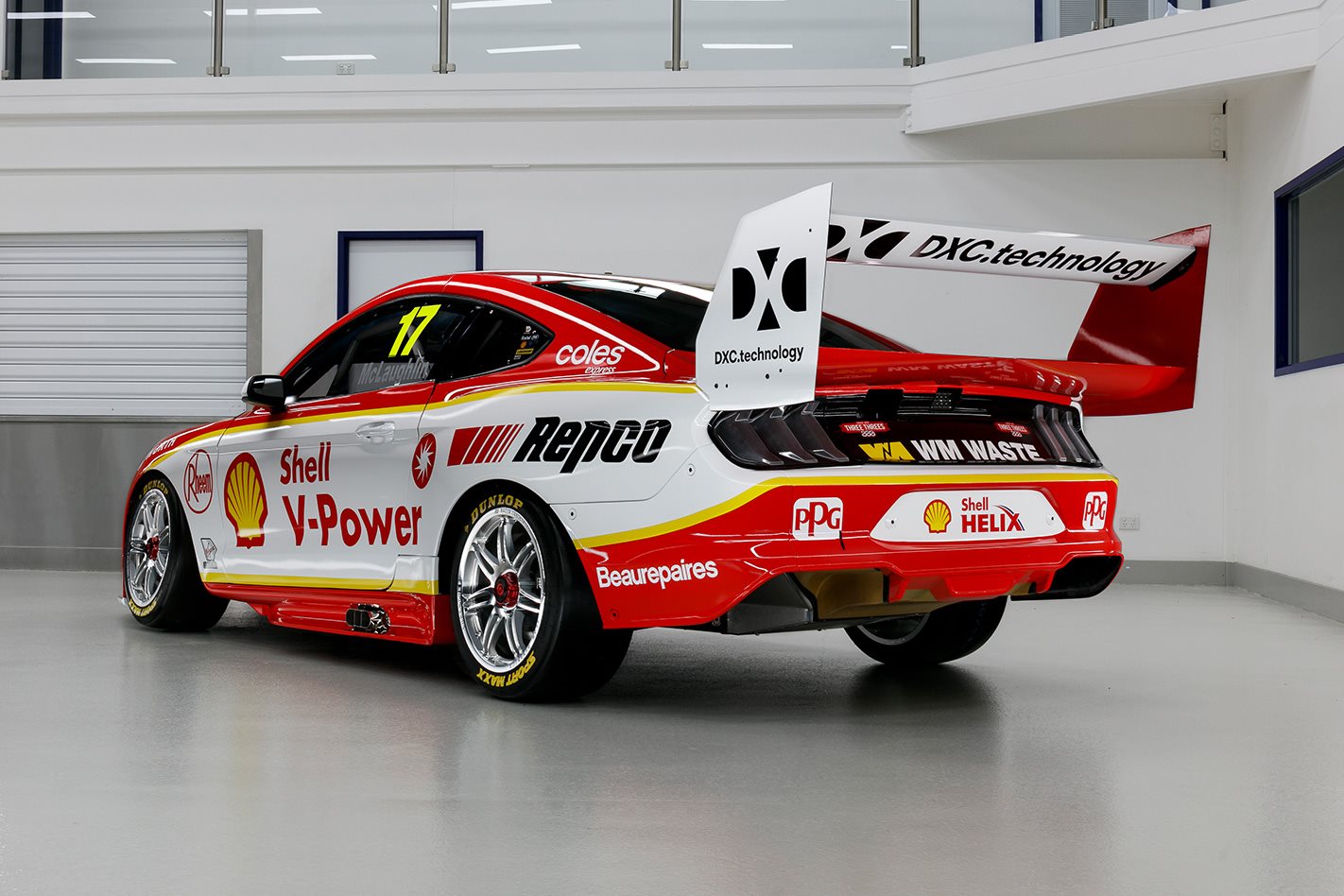
The ZB generated less drag and more rear grip than the Falcon in 2018, and that’s exactly what the Ford men are chasing for the Mustang, why it was important go testing on Phillip Island’s high-speed curves, and why Story is so pumped about the result.
“Is a new, efficient modern Supercar going to equate to better results than an ageing Falcon Supercar?” he ponders.
“You’d have to say yes.”
But will it be a winner? We’ll find out very soon.
You’d have to be a few slices short of a full margherita pizza to drive a Ferrari GTC4Lusso T on a daily basis. We should know – we’ve just done so, for two weeks, so that you don’t have to. The things we do for you…
Billed as the most practical car in the Ferrari range, the GTC4Lusso promises to accommodate four passengers in comfort and luxury, with enough space in the boot for a few soft bags (or a fifth passenger if need be). A facelift of the FF, the new name harks back to the 330 GTC and the 250 GT Berlinetta Lusso, cars that claimed to combine performance and luxury. Four means four seats.
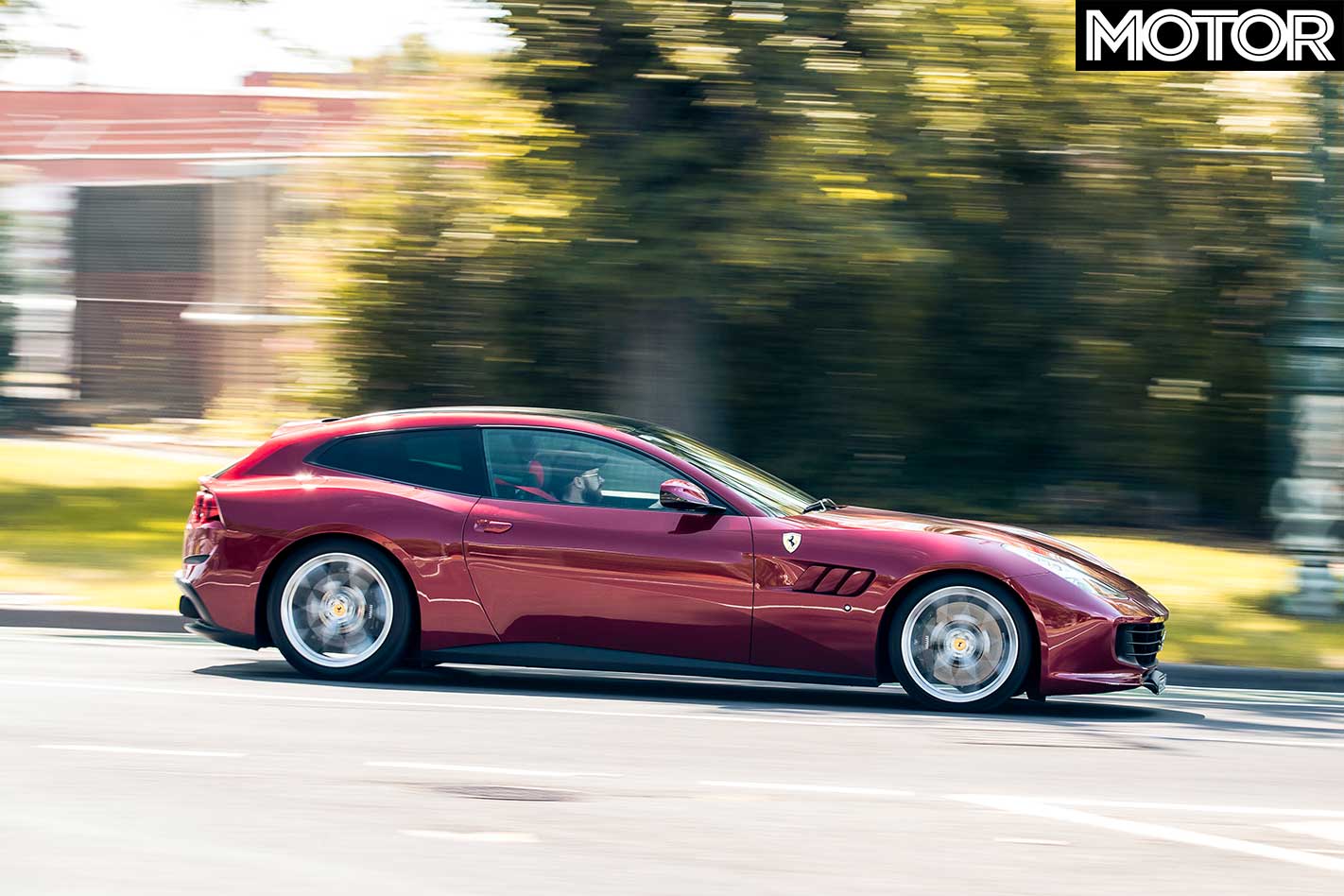
The name switch also permitted a new variant to enter the range (FF stood for Ferrari Four – four seats and, restrictively, four-wheel drive). With a 3.9-litre twin-turbo V8, the rear-wheel drive GTC4Lusso T sits $75K down-range of the stonking 6.3-litre, all-wheel drive V12, the V8 promising almost as much speed but with more fuel range.
Ferrari says GTC4Lusso customers drive their cars 30 per cent more than the typical Prancing Horse owner. And so what better Fezza in which to plonk our bums for this special MOTOR Garage cameo.
One of the first things you notice living with the GTC4Lusso is it’s big. At nearly two metres wide, scything through Melbourne’s tighter streets can be an anxious affair, if you have any awareness whatsoever of those giant, fragile-looking 20-inch forged wheels.
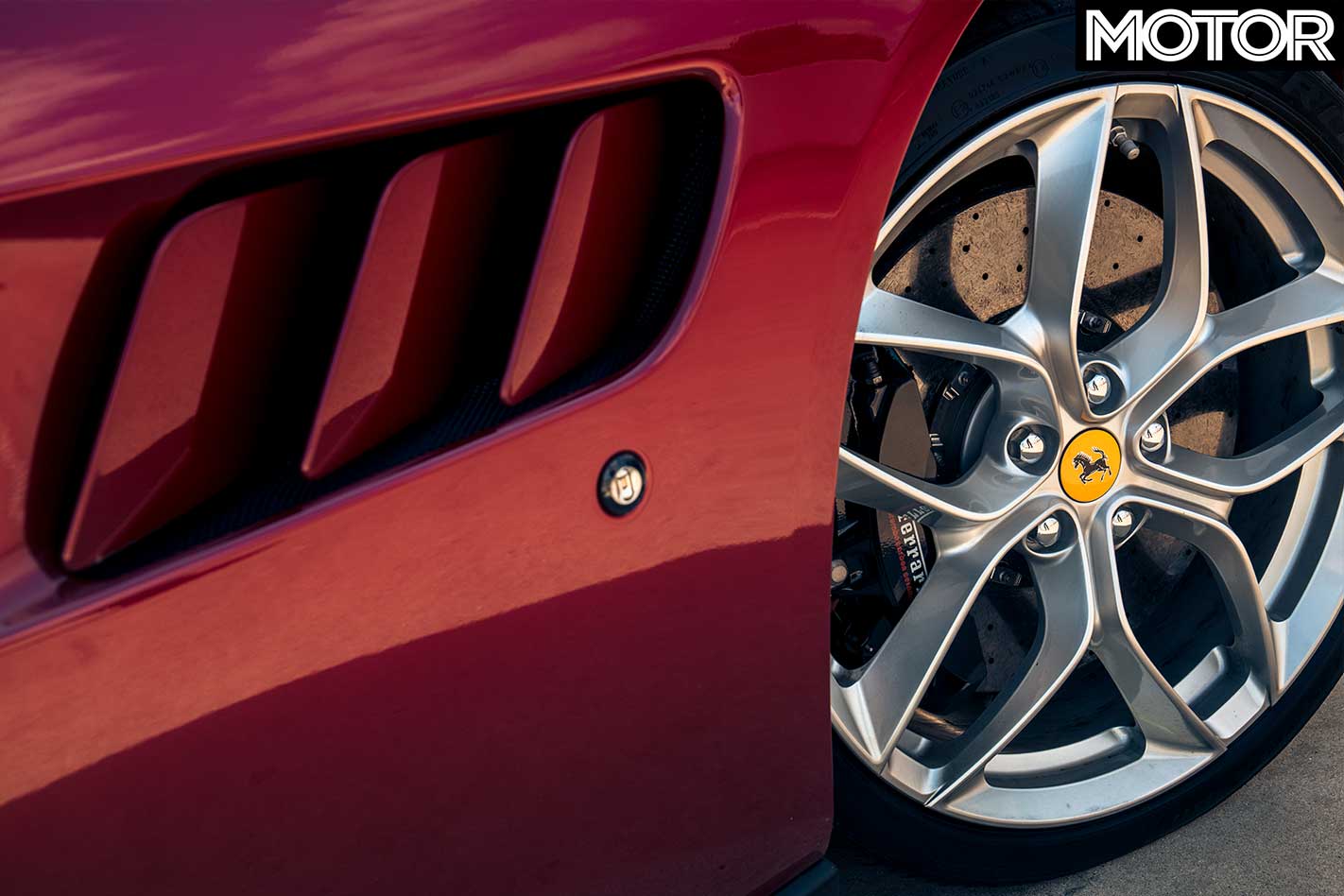
Then there’s the fact it costs $500K, and that the muppet next to you in the old Magna with all four windows down is about as interested in staying in his lane as he is the fact you’ve got beads of sweat breaking on your forehead. There is a constant foreboding sense that someone, at some point, is going to veer straight into you mid-text message. And you swear that that geezer in the Land Cruiser deliberately put half a wheel in your lane right in front of you. Relaxing? Not all the time.
Never mind the fact every sentient creature with two eyes and a neck stares right at you as if your horn is stuck on – even when piloting their own automobile right beside you. Sometimes, they get a camera phone out, but it’s okay, they still have at least one hand on the steering wheel.
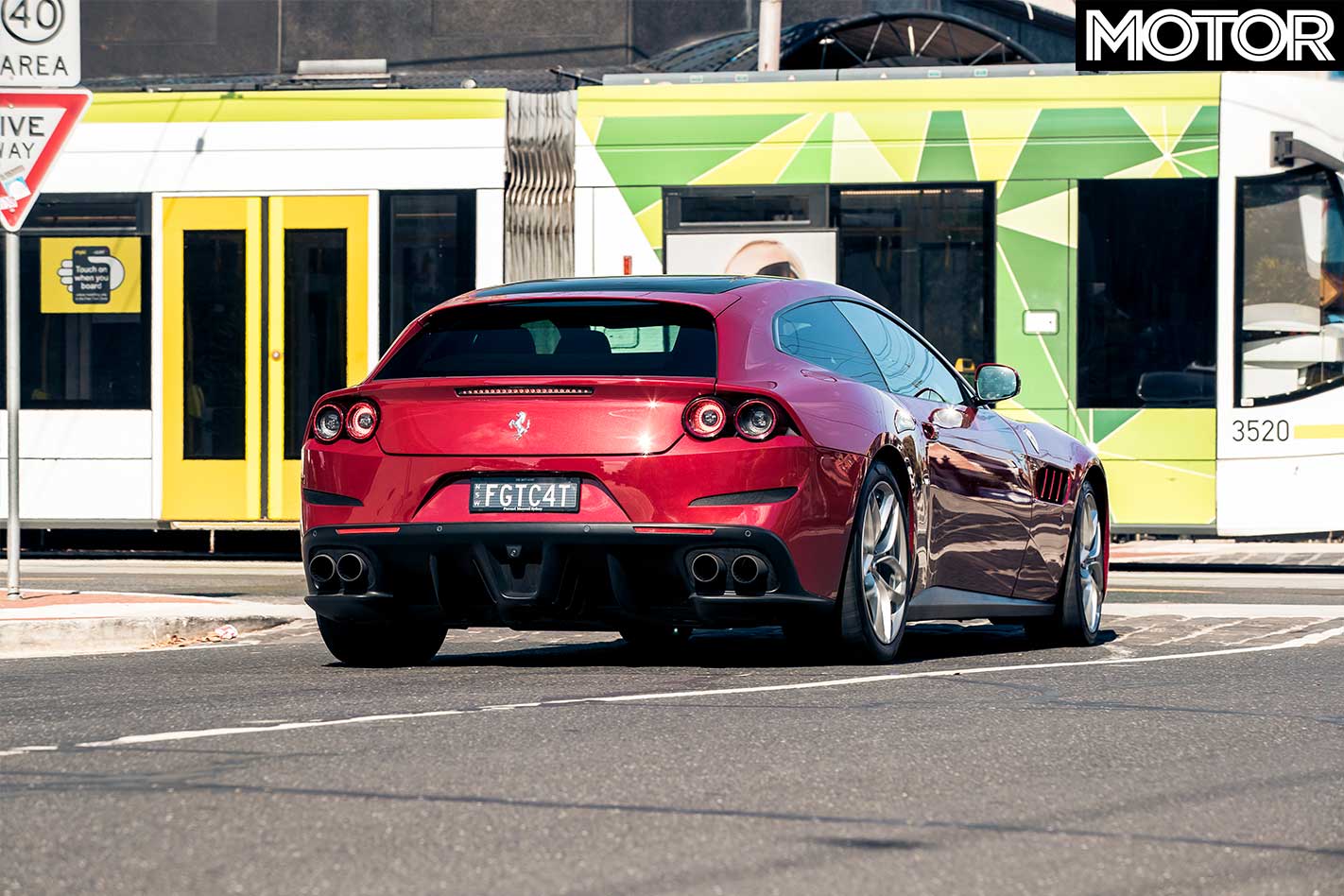
It’s truly a relief to get the big Ferrari out of the city confines and into the countryside. Quiet, with beautiful interior materials and outstanding ride comfort (in the quaintly named “Bumpy Road” mode), the GTC4Lusso is Comfortable with a capital C. But well built? About that.
Now, it feels a bit cruel to rib a Ferrari for build quality – you buy it for the performance, not the interior. It’s not a Rolls-Royce. However, Ferrari has made it its business to startle customers with its vehicles’ prices, just the same way Rolls-Royce does, and so the Italian stallion does not deserve a hall pass any more than any other car.
The interior materials all feel very expensive – you will not find a cheap bit of plastic or carpet anywhere – but Ferrari is still chasing its lederhosen-loving foes for how it’s all bolted together. That’s not to say the GTC4Lusso feels poorly built, but the tolerances here and there aren’t as tight, and it would be interesting to see how it would wear over a lifetime.
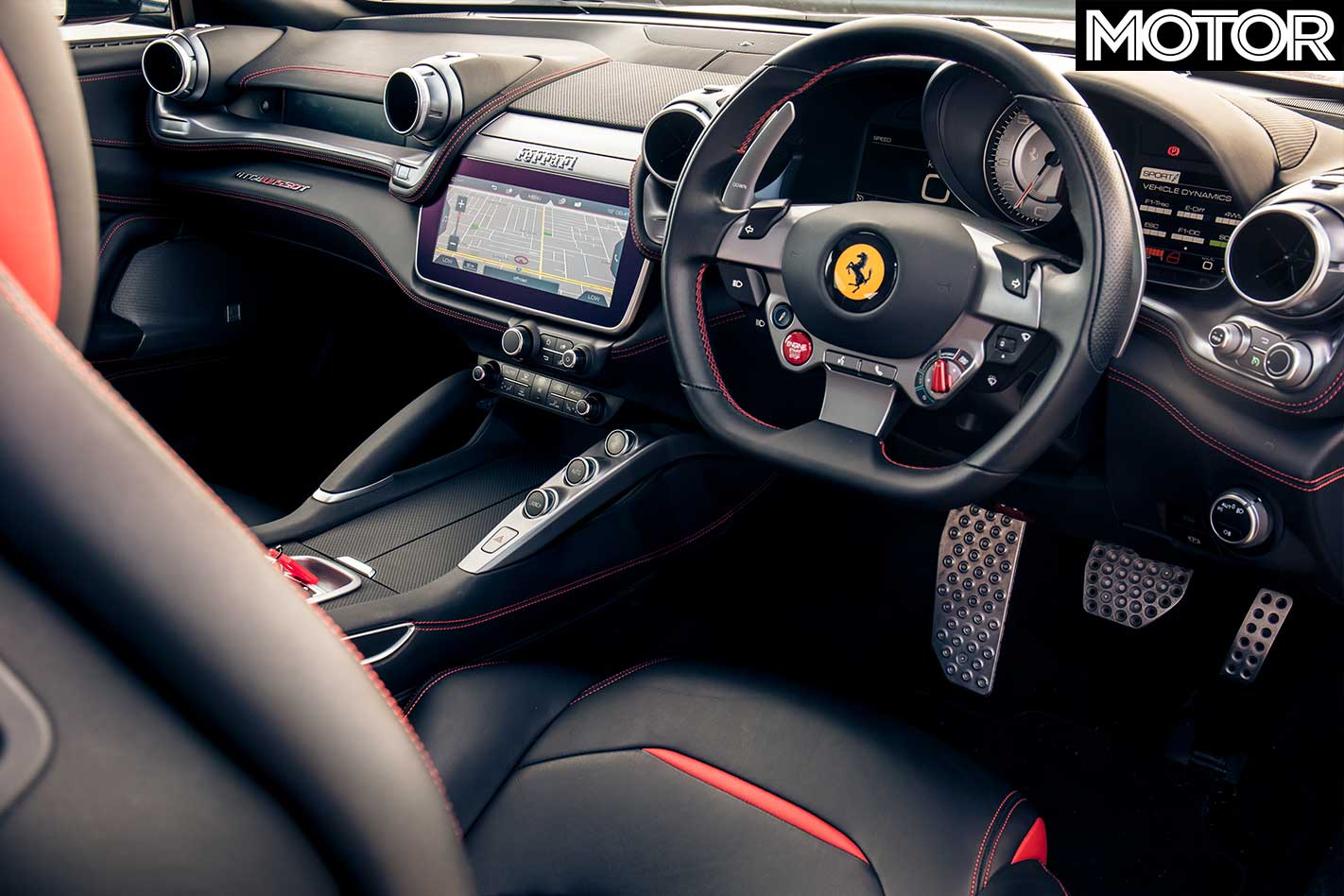
A few items on our test car (which sported less than 6000km on the odo) failed or never worked to begin with. The passenger exterior door handle wouldn’t work, requiring opening from the inside only. The Stop/Start, though we didn’t really mind, malfunctioned regularly. On one hot day, the air-conditioning was not cold. At all.
Refinement remains an opportunity for Ferrari as well (though we have heard the brand has made leaps and bounds in this department in recent years). While the GTC4Lusso is quiet and well isolated from vibration, the air-con fan can get quite loud, and there’s a noticeable gear whine from the rear end beyond 100km/h, fortunately easily smothered by the decent JBL stereo.
No complaints about the back seats, however – effectively two buckets, they’re supportive, comfortable, and spacious, owing to that three-metre wheelbase. Two adults could sit back there for long stretches in fair comfort. Who knew Ferrari could do back seats?
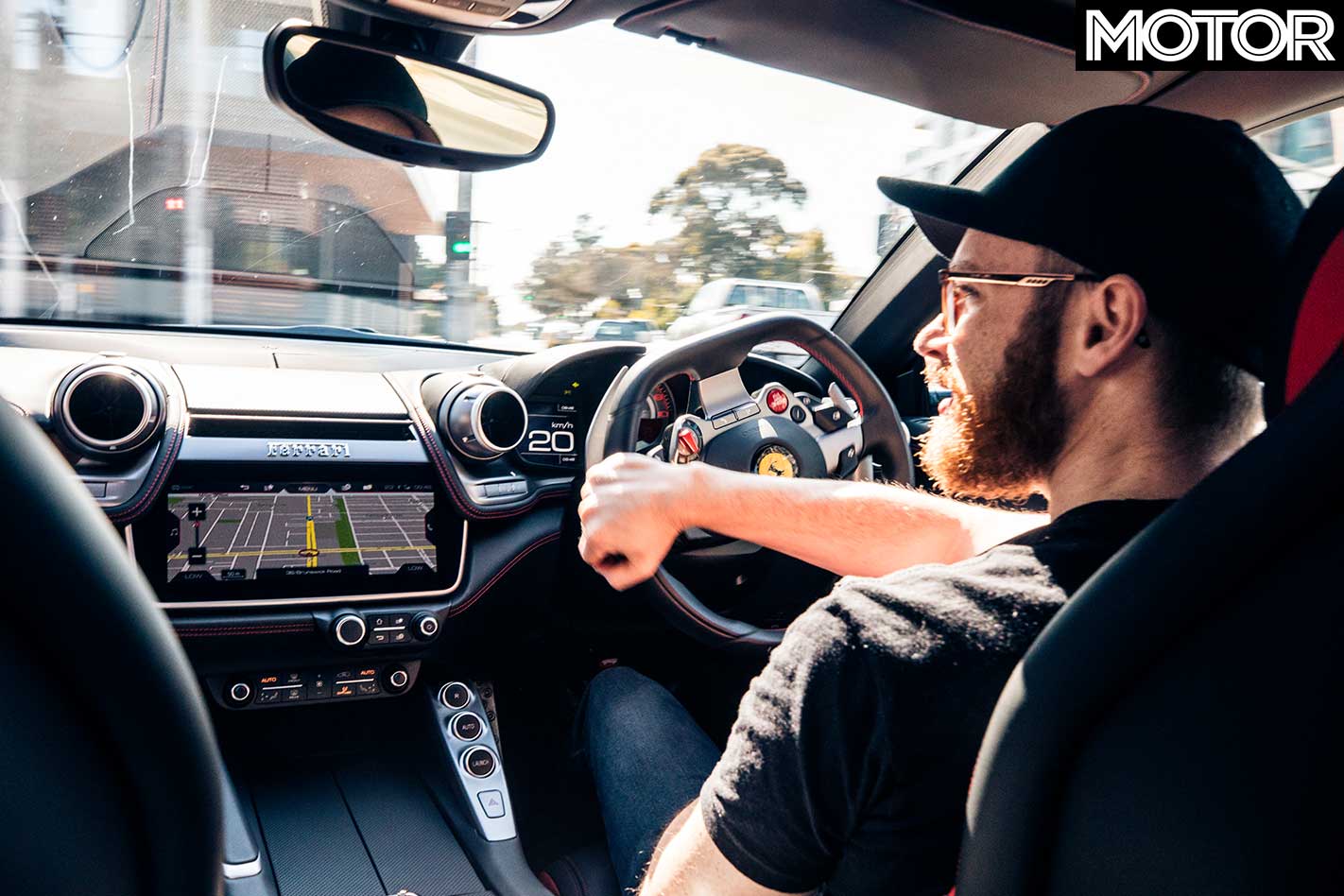
Would we buy a GTC4Lusso as a daily? To answer logically, no, we’d probably buy a twin-turbo V8 Porsche Panamera Turbo – better built, nicer interior, not much slower, better handling, and more than $100K cheaper.
But the emotional – the Italian – answer is, the Porsche wouldn’t make us feel the way the Ferrari makes us feel. It never gets old seeing that Prancing Horse in your garage. And for some, to get that kid-like giddy feeling on a daily basis is worth any extra cost or compromise.
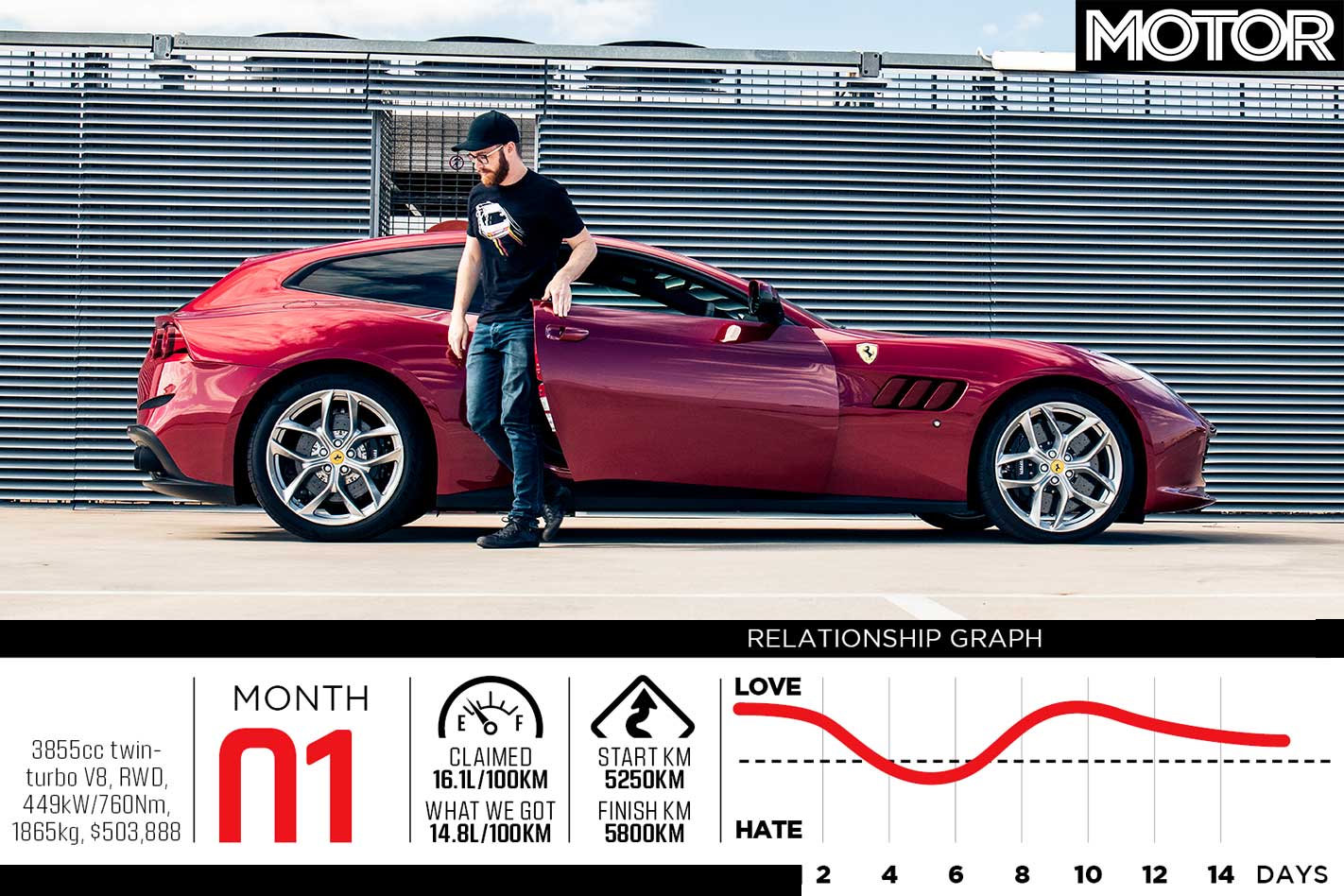
2019 Ferrari GTC4Lusso T Pros & Cons
Three things we fell for: 1 – Feels special 2 – Effortless torque 3 – Beautiful ride
Three things we got sick of: 1 – Worrying about it 2 – Front scraping 3 – Conspicuousness
Tom Kristensen immediately spots the two eager faces poking beyond the pit wall catch fencing, left arms extended, smart phones poised to capture the sight and sound of an Audi R8 V10 Plus blasting past at full noise.
The Bend Motorsport Park’s long, long main straight gives the endurance racing legend ample time to line up his approach; from the passenger seat I can see just how little room exists between the pit wall and the R8’s left mirror as we ‘buzz the tower’ like a land-based Maverick and Goose. Mischief managed. Cue Kenny Loggins.
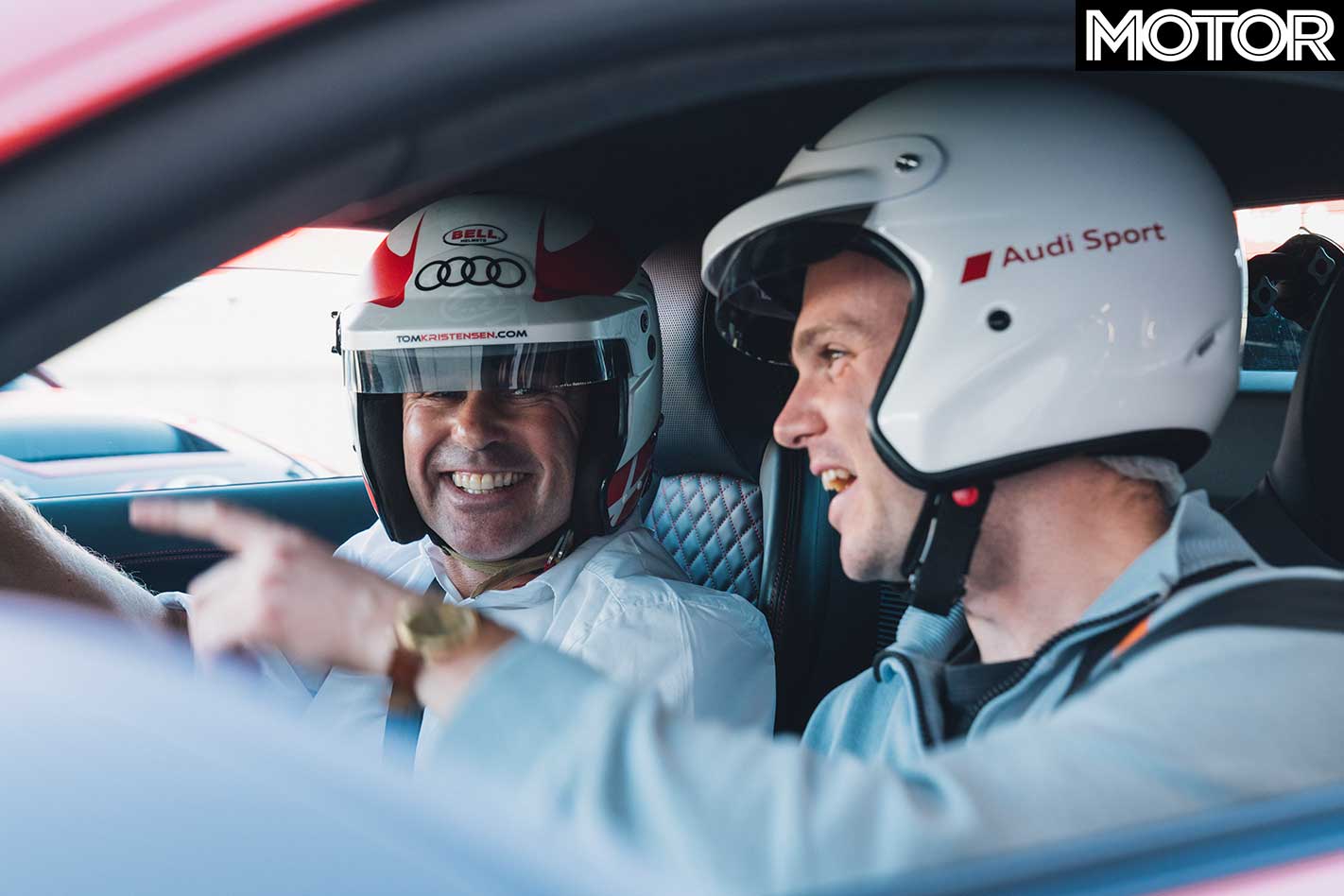
Kristensen is hooning around Australia’s newest racetrack thanks to his role as an Audi ambassador. Audi Australia has hired the track for Audi Sport Week, to cycle punters through its performance models and ‘Mr Le Mans’ is on hand to tell stories, shake hands and give hot laps to customers. MOTOR, in typical style, has jumped the queue.
To call Tom Kristensen the greatest Danish racing driver of all time sells him short. Kristensen’s resume puts him in an elite category occupied only by those with historical achievements, drivers like Michael Schumacher and Sebastien Loeb. He is inarguably the greatest endurance racer of all time, his record of nine wins at the Le Mans 24 Hour almost certain never to be matched.
From 18 starts at the French classic he scored 15 podiums, while his six wins at the 12 Hours of Sebring is also a record. Other highlights include the 2013 World Endurance Championship and the 2001 American Le Mans Series title, but to pigeonhole the 51-year-old Dane as a long-distance specialist is misleading. Kristensen has won races in a wide variety of machinery all over the world, but his first major success came as the 1985 Nordic Karting champion, beating a certain Mika Hakkinen.
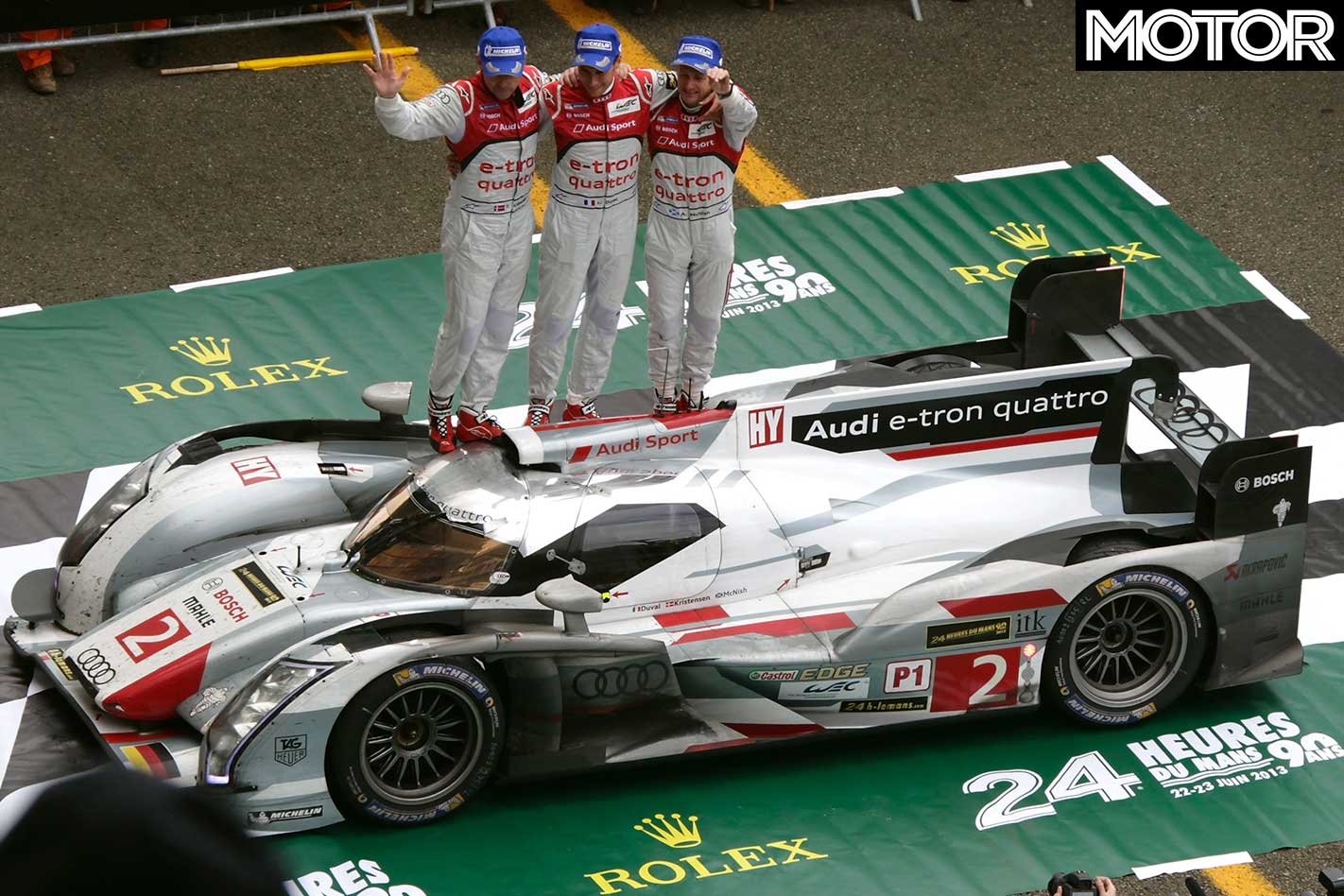
After graduating to German F3 and winning the 1991 title, like so many up and coming drivers of the time Kristensen departed for Japan to continue his racing apprenticeship, winning the 1993 Japanese F3 championship and finishing a narrow second in the Japanese Touring Car Championship in 1992 and 1994.
It was early in this far-east excursion that Kristensen received his first taste of sportscars, joining future F1 front runners Eddie Irvine and Jacques Villeneuve in Toyota’s TS010 Group C machine for 1992.
Races were few and far between, but Kristensen clocked up thousands of test miles in what was essentially a closed-roof F1 car.
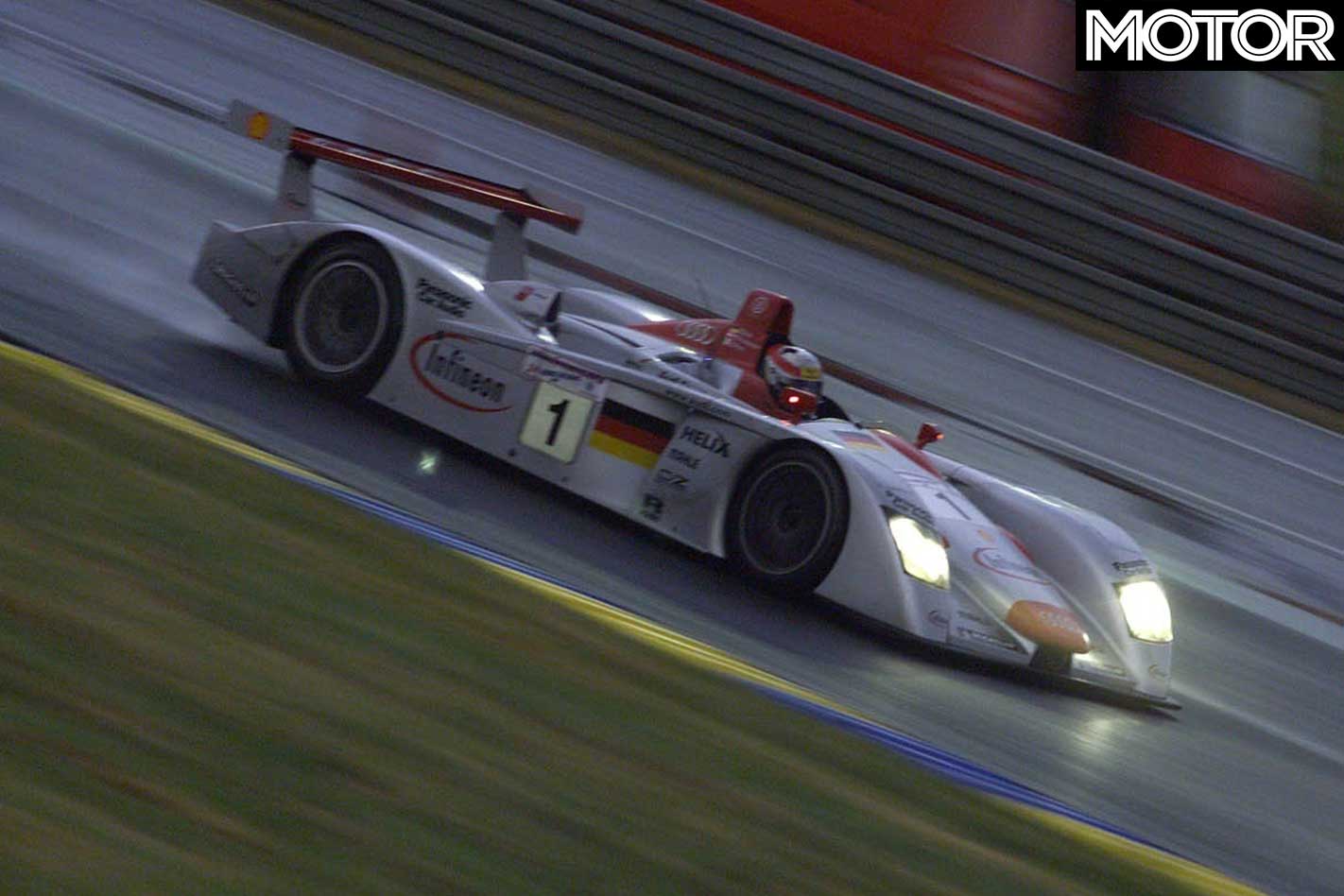
“That car was incredibly physical,” he remembers. “Very, very stiff. It was so fast, I was getting up to way past 350km/h. That car had a lot of aero but a very, very powerful engine. Everything was very physical; the gearbox was stiff, no servo brakes. That car prepared me for anything, because everything I drove after that, even F1 testing, it’s easy.”
Kristensen tested the 1998 Williams, by which time he had already won on his Le Mans debut. With less than a week until the 1997 race, Kristensen was drafted in to replace the injured Davy Jones and partner Stefan Johansson and Michele Alboreto in the Porsche-powered TWR prototype.
Despite just 18 laps of practice, the rookie recorded the race’s fastest lap during the night and completed a quadruple-stint – almost 3.5 hours behind the wheel with no power steering and a manual gearbox with no synchros.
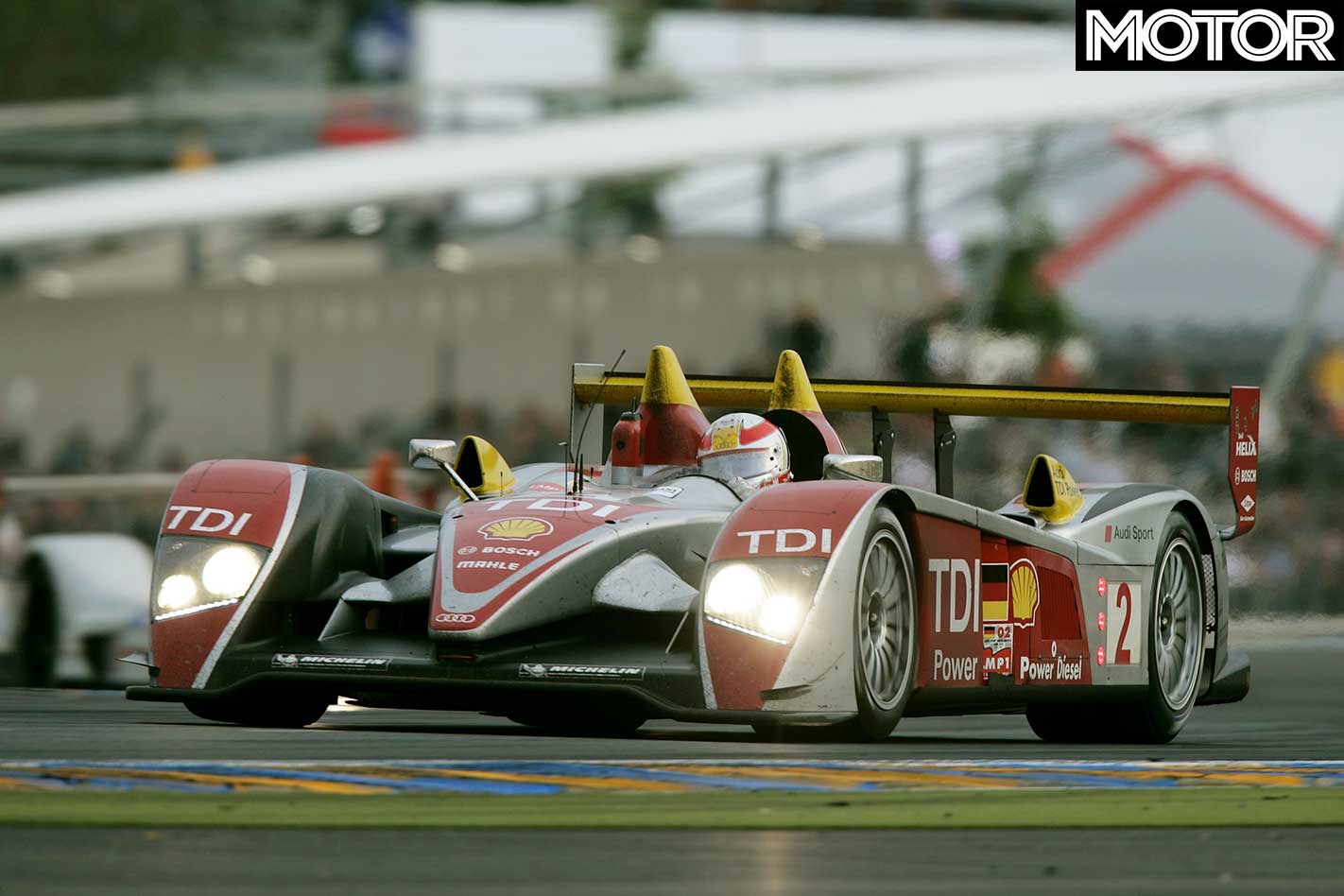
Two relatively fruitless years driving the BMW V12 LM – ever the professional, TK refers to it as simply “another manufacturer with three letters” – he signed with Audi after being shown early sketches of the R8 racecar, a machine that would utterly dominate sports car racing, often with the Dane at the wheel. Together, they would win five of the next six Le Mans 24 Hours, Kristensen filling the gap with victory in 2003 with Bentley, in the process supplanting Jacky Ickx as Mr Le Mans.
The R8 V10 Plus we’re currently sitting in shares nothing but a name with that racecar. Instead of a 3.6-litre twin-turbo V8, rear-wheel drive open-top prototype we have a 5.2-litre V10, all-wheel drive supercar.
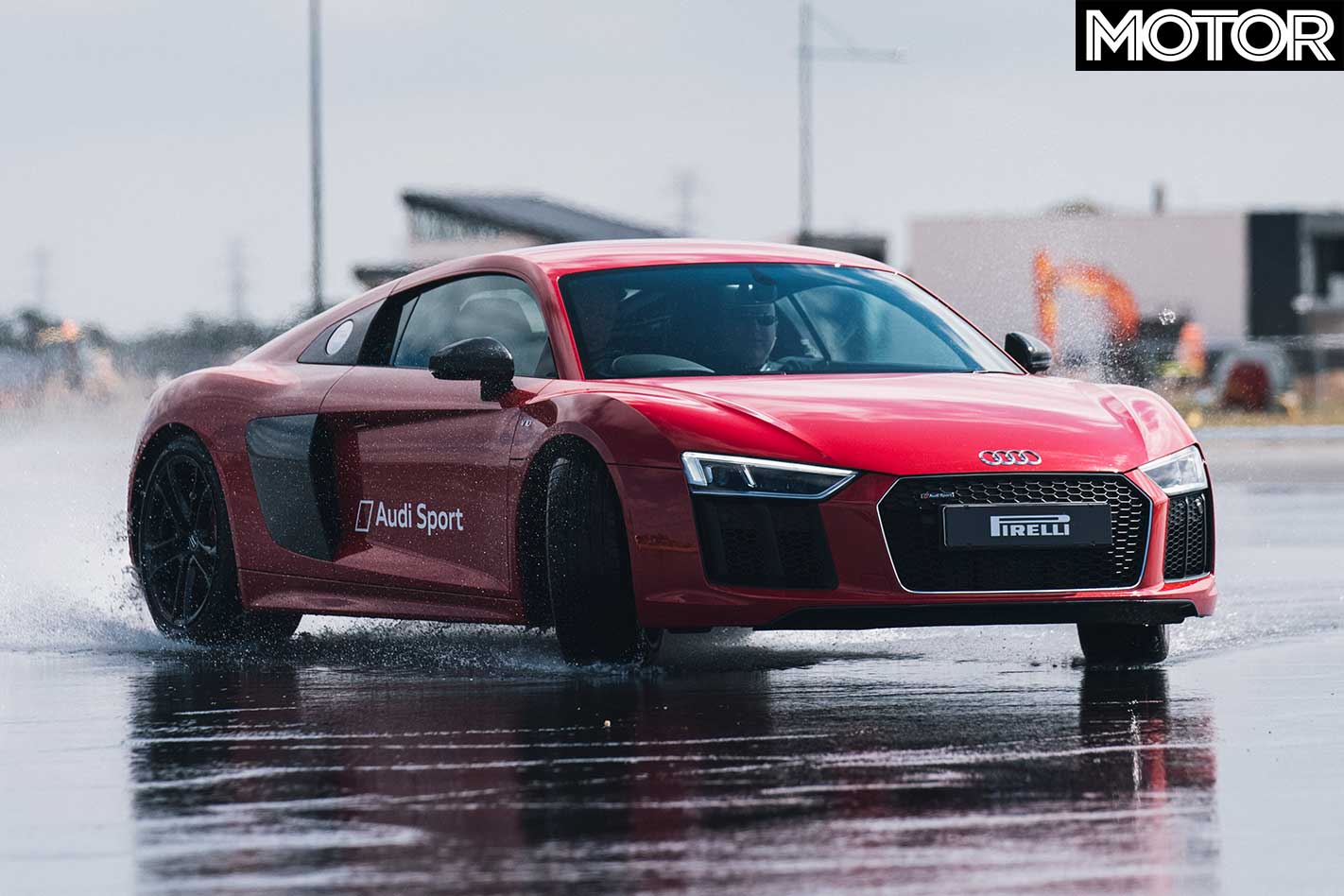
Nonetheless, if you’re going to have a taxi ride with one of the world’s best drivers, it’s hard to imagine a better vehicle. Kristensen’s experience of The Bend is a couple of slow familiarisation laps, which plays on my mind as we barrel into the heavily cambered uphill Turn 13. Does Tom know the corner tightens over a blind exit with a wall on the outside?
I let out an involuntary squeak as a dab of brakes tightens our line and we emerge unscathed. Of course we do – this is a man who has driven at 350km/h in the dark and pouring rain for hours at a time.
It shouldn’t come as a surprise, but what’s remarkable about Kristensen’s driving is his ability to have the R8 teetering on the very limit of adhesion, minute adjustments with his feet and hands keeping the car in a perpetual slide without sacrificing forward movement. I can only sit and marvel through the long triple-apex right-hander as Kristensen dances the R8 between understeer and oversteer at 150km/h, his feet subtly manipulating the pedals like a concert pianist.
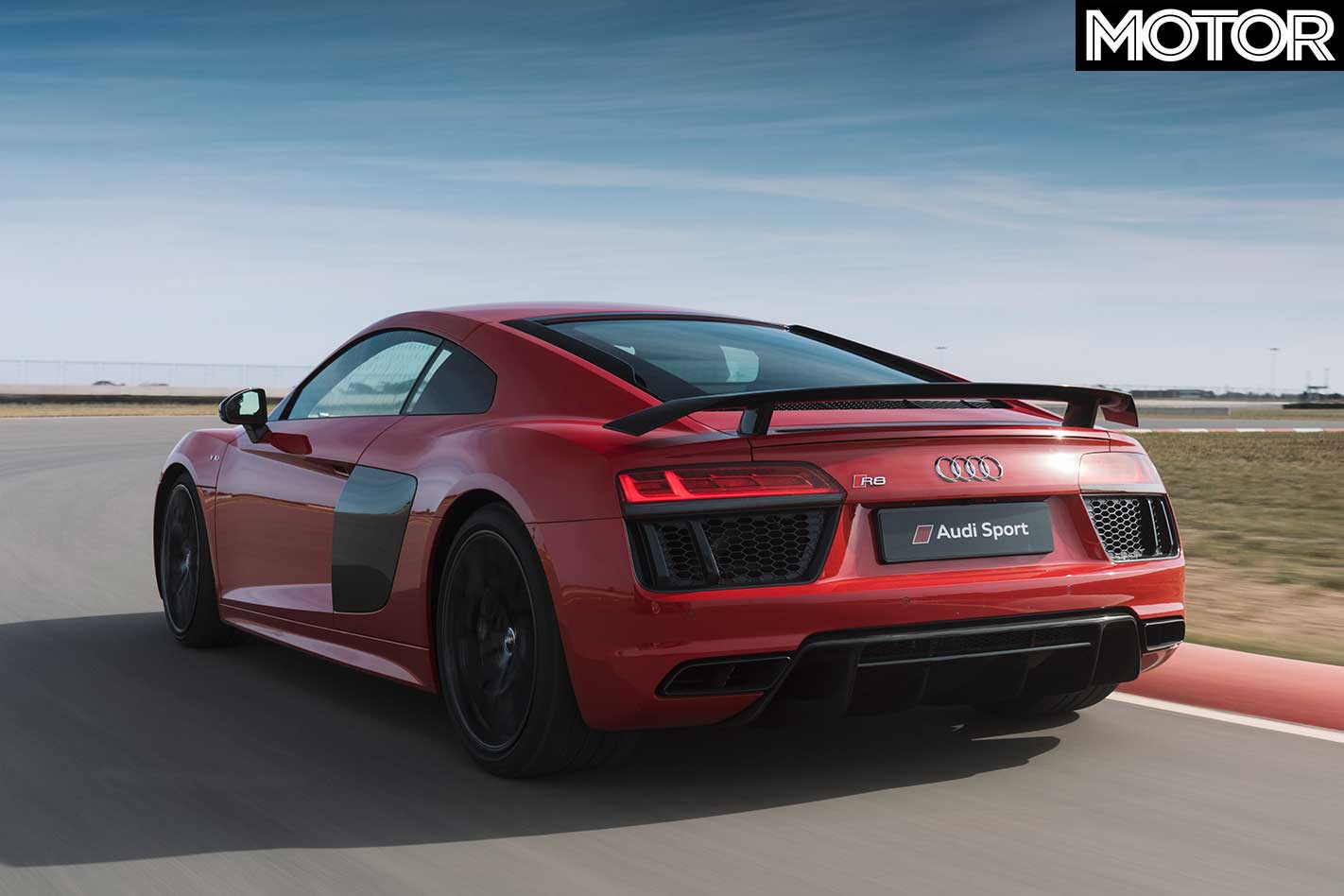
Kristensen’s career coincided with huge leaps in technology, each new set of regulations forcing drivers to adapt and learn, sometimes from scratch. There was the old-school, manual-everything TWR WSC-95 of 1997, the conventionally modern Audi R8 and Bentley Speed 8, the overpowered R10 V12 TDi sledgehammer (“brutal to drive”) and, finally, Kristensen’s favourite, the high-tech, all-wheel drive, hybrid R18 TDi e-tron quattro, each requiring its own unique approach.
“When you have the passion you always have to learn,” explains Kristensen. “Let’s say, left-foot braking. [In the R10] you have go into right-foot braking, otherwise you cannot control the V12 engine in the back – there’s a little bit more feeling and power in your right foot. Go the other way and you go back in the e-tron car, braking left foot again.”
Racing drivers are an inherently selfish breed, yet endurance racing forces compromise on everything from seating position to set-up and Kristensen intimates that the key to a long-term career with Audi was the ability to work well in a team. “It’s just common sense, and [being] respectful with human beings. You are suddenly in a group of people where it absolutely makes sense to give the right feedback. With Audi under Dr. Ullrich’s leadership you suddenly feel that you can help your colleagues – we matured as a group.”
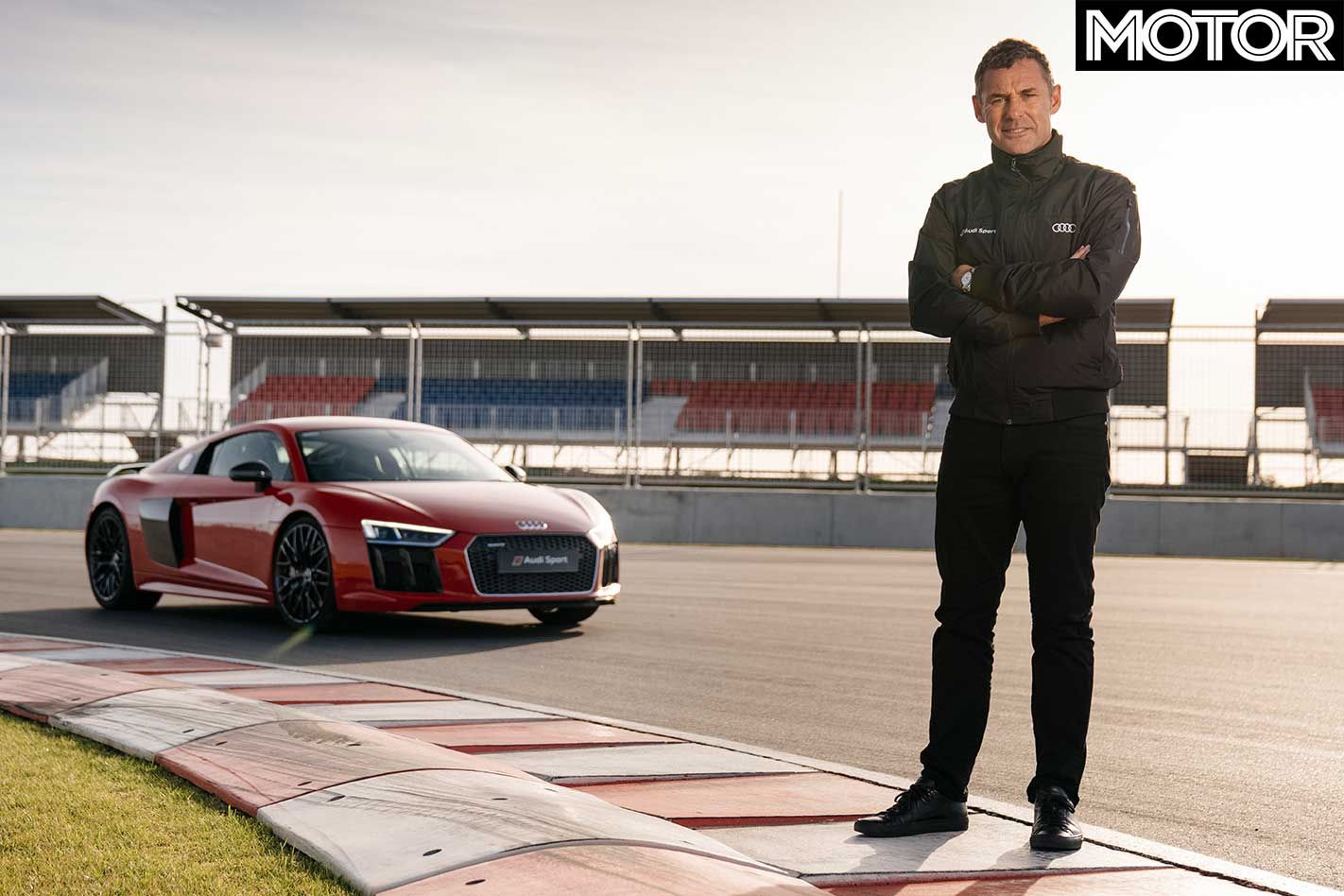
Kristensen retired from full-time racing at the end of 2014 but continues to test Audi’s latest motorsport machinery, including its new Formula E racer, but whets his competitive appetite at the Goodwood Revival each year, driving everything from a diminutive Austin A30 to a wildly oversteering Ford Galaxie.
“The more oversteer, the more you smile,” he grins. “I can’t live without it completely, but I don’t want to test. You try to do your best, but I want to jump in the car and try to have fun. It’s sort of extended my career, I can still drive cars from before I was born.” And drive them quicker than just about anyone, to boot.
Peak oil? Try peak stupid. As with acid rain, the Millennium Bug and, well, your guess what comes next, the outrage industry has been very silent on this issue that, not long ago, spelled the beginning of the end of civilisation. Around 10 years ago, several expert authorities predicted that the world’s oil reserves would be in terminal decline by around 2014-’15. The inconvenient truth is that 2017’s production of 92.65 million barrels per day marked a new world record, and the eighth consecutive year of increased production.
Still, peak oil has been giving the panic-prone something to believe in at least since the OPEC oil crisis of 1973-’74. This political embargo put a sharp focus on oil dependence, especially in the US, where a quadrupling of petrol prices in just 12 months would devastate Detroit and its “gas-guzzlers”.
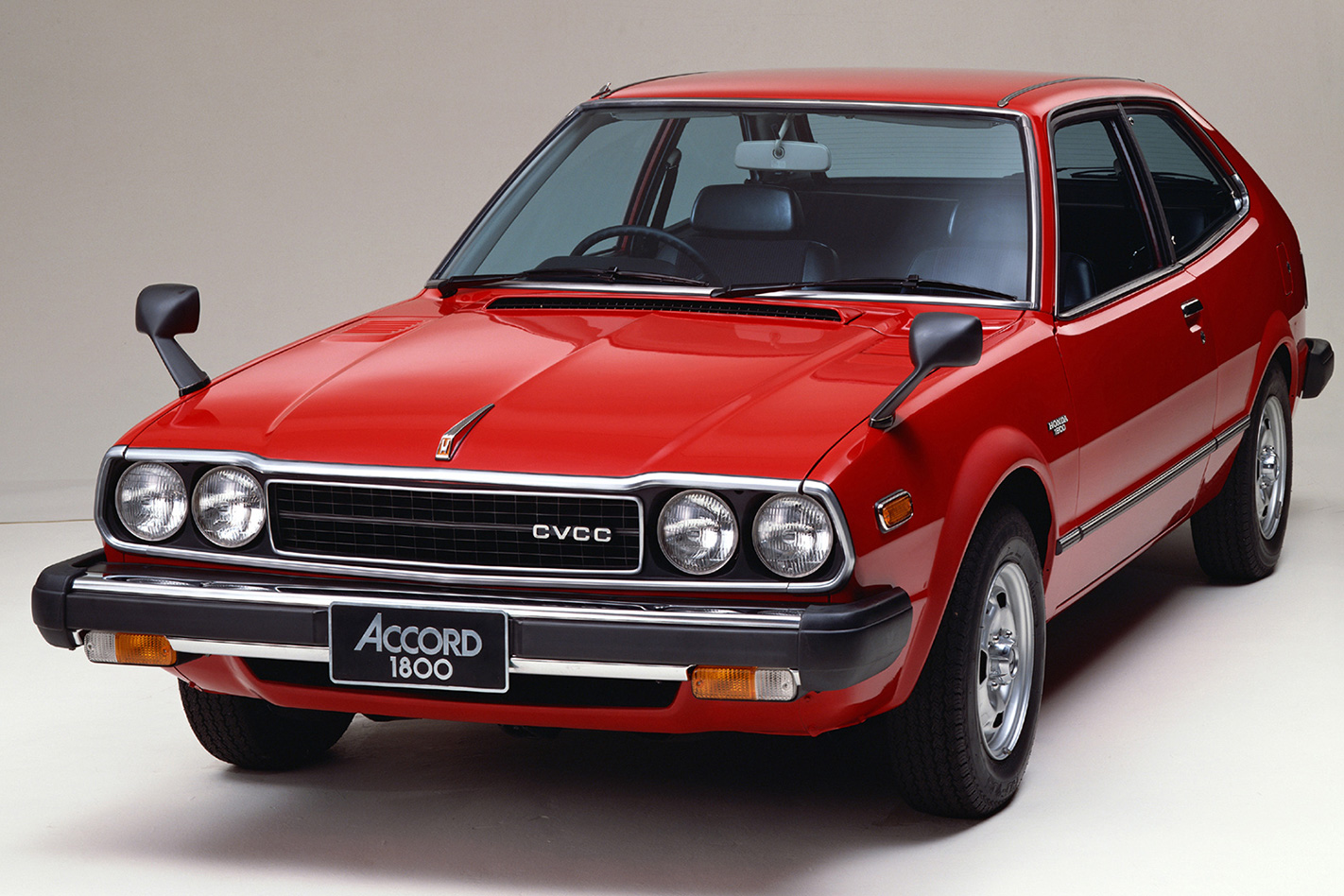
Americans turned to small, fuel-efficient Japanese cars, exemplified by the Honda Civic. It had a formula of packaging, build quality, value and importantly, efficiency, through its ‘CVCC’ (Compound Vortex Controlled Combustion) four-cylinder engine, whose lean-burning, 12-valve design also met new emissions laws without a catalytic converter. By the end of 1975, the Civic’s annual sales in the US had almost tripled.
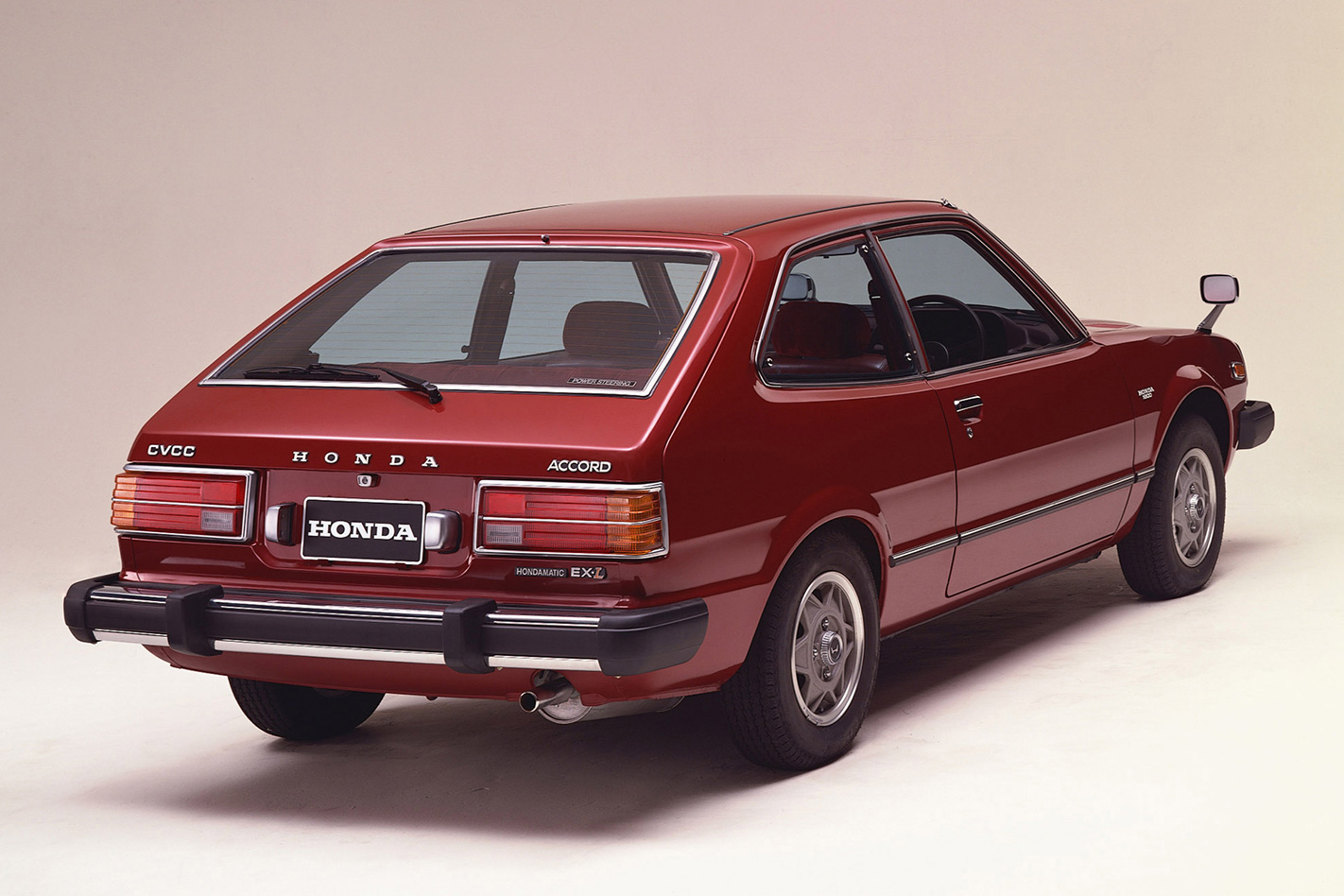
Honda followed that success in 1976 (1977 in Australia) with its largest model to date, the medium-sized Accord – the name said to represent Honda’s efforts to achieve accord between society and the automobile. Completely designed in Japan, the three-door Accord (a sedan followed in 1978) was as stylish as it was practical, with a handsome, four-headlight frontal treatment, a taut body shape with liftback tail and an airy, light-filled interior.
Indeed, in naming the Accord the 1977 Car of the Year – the first Japanese car to lift the honour – Wheels described its design as “one of the most astute marketing exercises in the history of the car … not a sedan or a coupe, not a station wagon or even a hatchback, but … a clever combination of all four.”
Australian Accords eschewed CVCC for a 1.6-litre, eight-valve unit. In its driving, as in its quality and equipment, the Accord was perceived as being more European than Japanese. Its admirably light weight made it fast and fun, and it was more than competitively priced ($6349 for a five-speed at launch in 1977, versus $6299 for an Australian-assembled, four-speed VW Golf GLS).
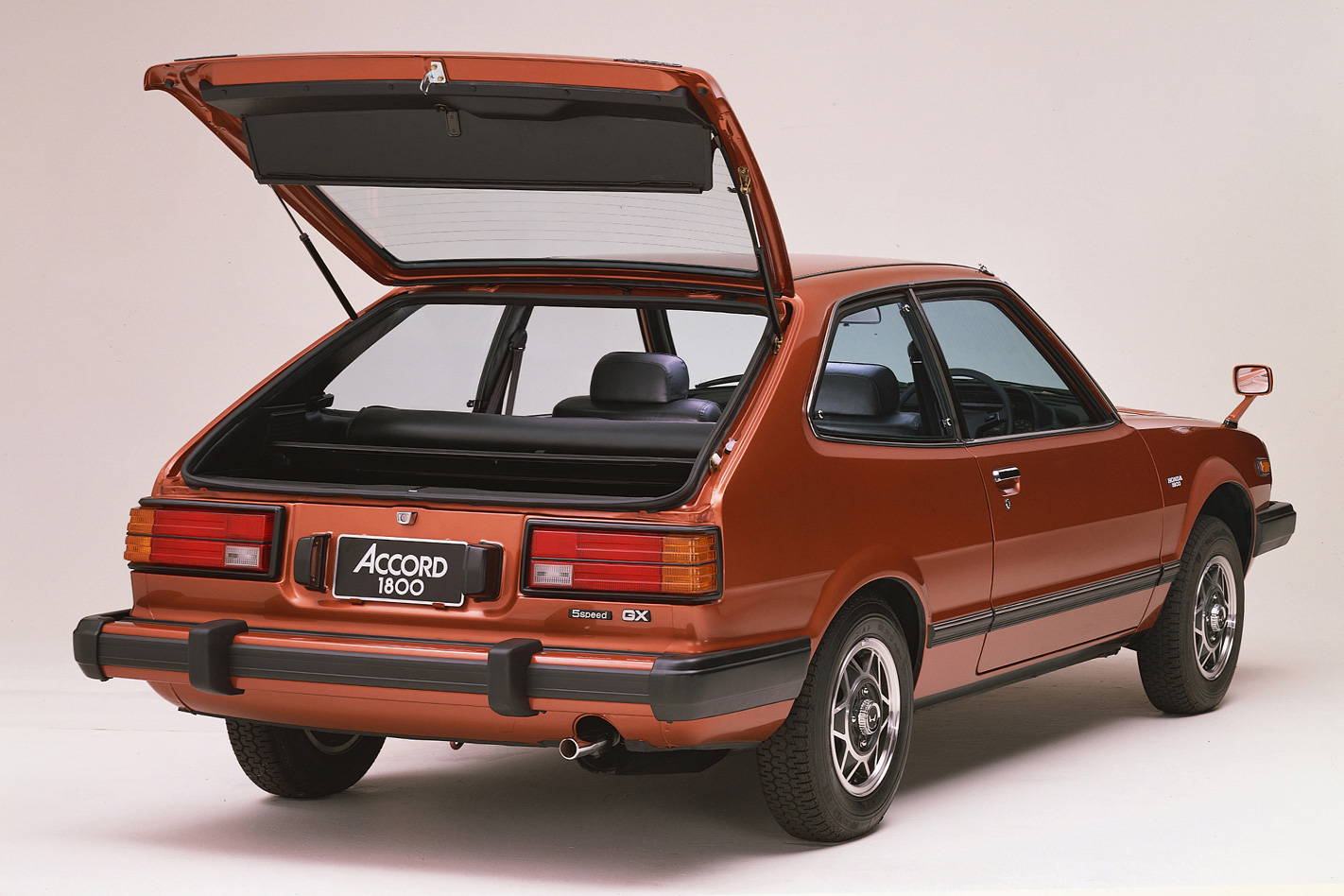
On the heels of excellent eccentrics like the S600, air-cooled 1300 Coupe and the brilliant Civic, the Accord reinforced Honda’s reputation as a truly innovative mainstream manufacturer.
THE RIGHT STUFF
Honda’s ‘big Civic’ didn’t skimp on spec, with struts and coil springs at each corner and rack-and-pinion steering. Australian Accords displaced 1599cc with an sohc eight-valve cylinder head, fed by a Keihin two-barrel carb. Lively and free-revving, it made 60kW and 124Nm, for 0-100km/h in 11.8 seconds and 400 metres in 18, via a five-speed manual (a two-speed Hondamatic took rather longer).

CROSS OF VELOUR
What Crystal Cylinders shirts were to fashion in 1977, tan, blue or burgundy velour was to car interiors. The Accord was extremely well equipped, with rich carpet, tacho, AM/FM radio, quartz clock, folding rear seat, hinged rear windows, and rear window washer-wiper. Aussies learned about ‘surprise and delight’ via the Accord’s day/night interior mirror, coin tray (for toll booths), and service reminder lights.
THE OLD rivalry between Falcon and Commodore may now be a fond memory but Ford and GM have a new stoush building with Mustang and Camaro. To date, we’ve been denied the really heavy hitters in right-hand drive guise but our cover stars this month, the Shelby Mustang GT500 and the Camaro ZL1 are both supercharged, both get monster near 500kW V8s, both feature the steering wheel on the right and are both now available in Australia. We run the rule over the pair of ‘em.

If you prefer a more refined and relaxed way to have fun, BMW’s all-new 3 Series gets put through the road test wringer, first on a three-state epic drive and then against three of its fiercest rivals. Is the 3 Series back on its game or is this a false dawn from Munich? We bring you the definitive verdict.
Ford’s got a major point to prove with its new Endura SUV and we see it punching up against the 2018 COTY winner, the Volvo XC60 and BMW’s massively improved X3. That’s one heck of a welcoming committee.
We take Porsche’s most powerful 911, the GT2 RS off-roading to the roof of Australia, walk you through the stages of vehicle electrification and report from Japan on the Mazda Clinic where old MX-5s are brought back to showroom spec, for a price.
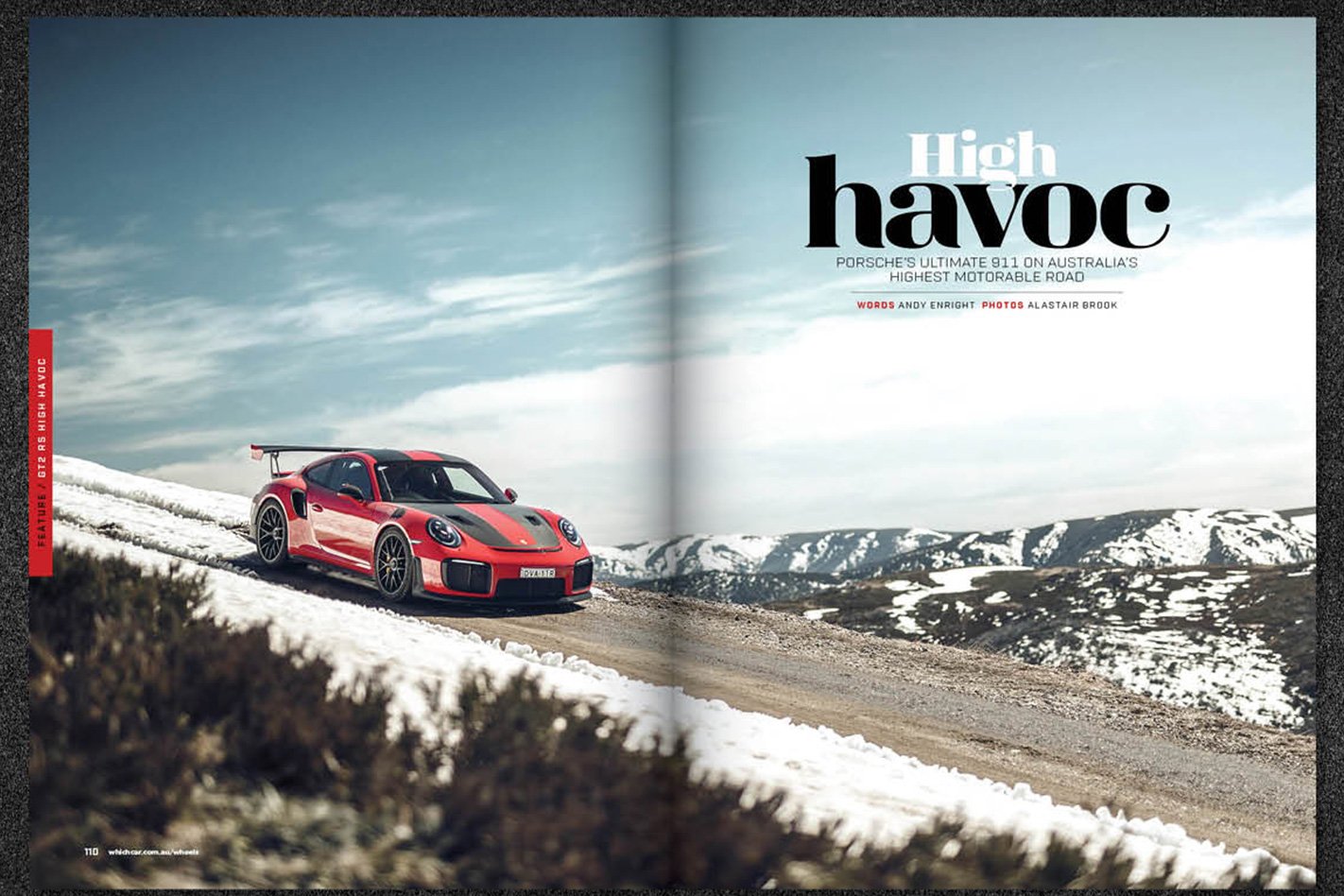
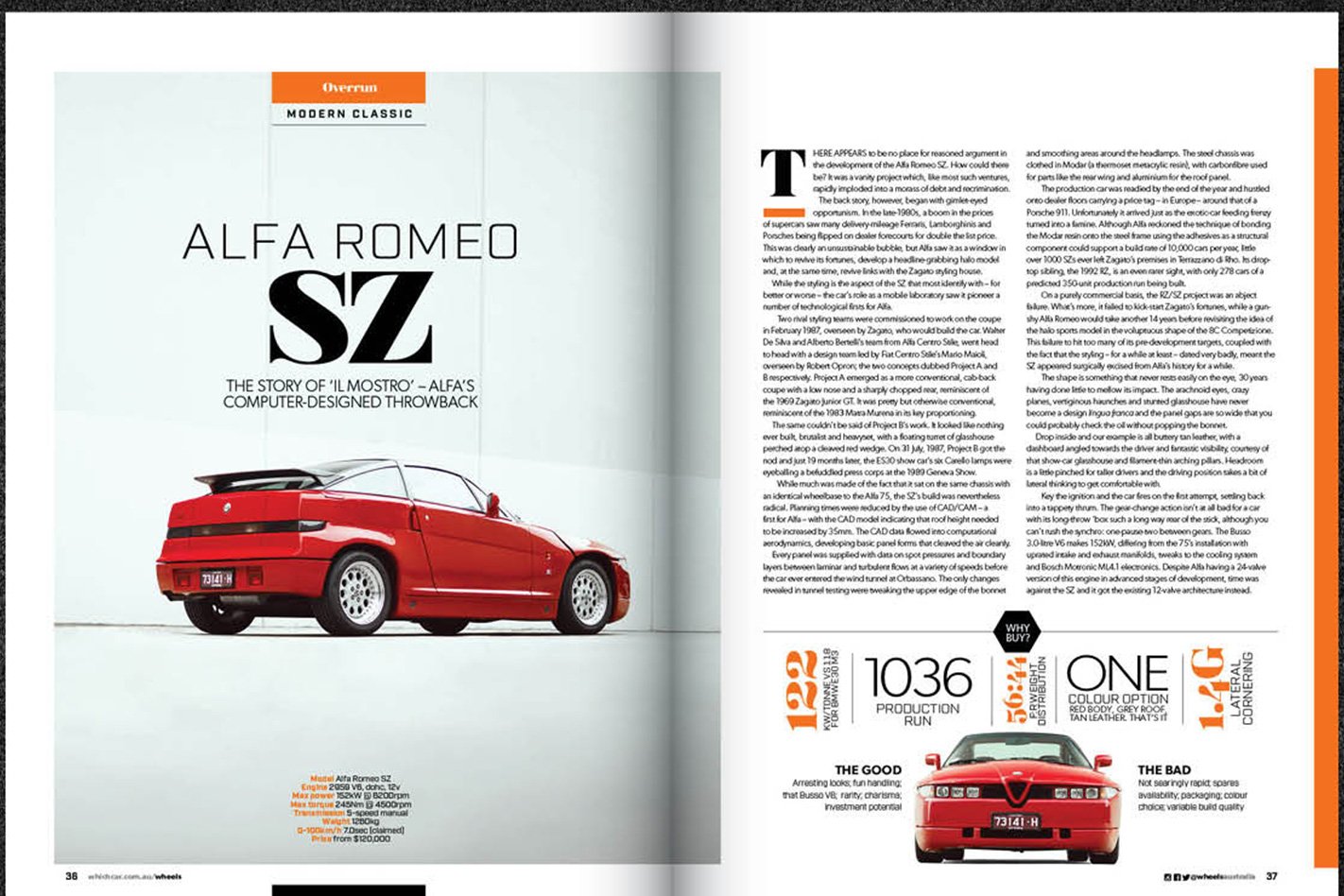
In a worldwide scoop, we bring you the top-secret 2020 Ford Ranger, we see the brutal Alfa Romeo SZ into the Modern Classic section, we’re in New Zealand on Rod Millen’s driveway for the berserk ‘Goodwood of the South’ Leadfoot Festival, we profile GM’s Mark Reuss, chat with Tommi Makinen and Mark Webber and that’s even before we cover the first drives, show you our new long-term McLaren and… well, you get the point.
This mag’s a belter. Don’t let it get by you.
