
BRABHAM’S Adelaide-built BT62 supercar has been running at Mount Panorama as part of the on-track entertainment for the Bathurst 12 Hour, and is already nipping at the heels of the outright track record.
Following a pair of demonstrations laps at the hands of Luke Youlden, the track-only supercar managed a staunch 1:59.36 lap around the 6.2-kilometre circuit.
The outright official lap record at Mount Panorama is a 1:59.291 set by Christopher Mies in an Audi R8 Ultra GT3 that was not running to Balance of Performance specs (no restrictors or weight ballast).
Jenson Button recorded a 1:48.88 in a MP4-23 Formula 1 car during an exhibition event in 2011. However, this time is unofficial, much like the Brabham’s, as it did not occur during a sanctioned race event.
Powered by a 522kW mid-mounted naturally-aspirated V8, and weighing just 972kg, the BT62 has more power and less weight than a GT3 car, along with plenty of aero.
It’s likely the Aussie supercar will be capable of beating Mies’ record with more running during the Bathurst 12 Hour weekend.
David Brabham spoke to Graham Goodwin, the editor of dailysportscar.com, confirming the BT62 was threatening the outright record.
“We had a telemetry problem but it was close to the track record – certainly under 2 minutes,” Brabham said.
But even if the BT62 does dip below the time set by Mies, which lays just 0.07 of a second out of reach at the time of writing, it won’t be recognised as an official lap record.
As the BT62 doesn’t conform to the regulations of any current racing category, the car would have to return late in the year for the Challenge Bathurst event to usurp the Audi’s time and be officially crowned the King of the Mountain.
What you missed at the 2018 Adelaide Motorsport Festival
Brabham claims the BT62 is the only car to have completed more than a single lap under the 2-minute barrier, having run consecutive 1:59 laps – Mies only achieved the feat once.
The Senate Select Committee Inquiry into Electric Vehicles has released its report to the Australian government, listing 17 recommendations on how the country should best prepare itself for – and help to encourage – the adoption of electric vehicles such as the Nissan Leaf, Renault Zoe, BMW i3 and Hyundai Ioniq.
Key among the committee’s recommendations were calls to introduce EV quotas for government vehicle fleets to help introduce a steady inflow of battery-electric cars to the used car market, along with national EV targets for importers selling passenger cars, light commercial vehicles and buses.
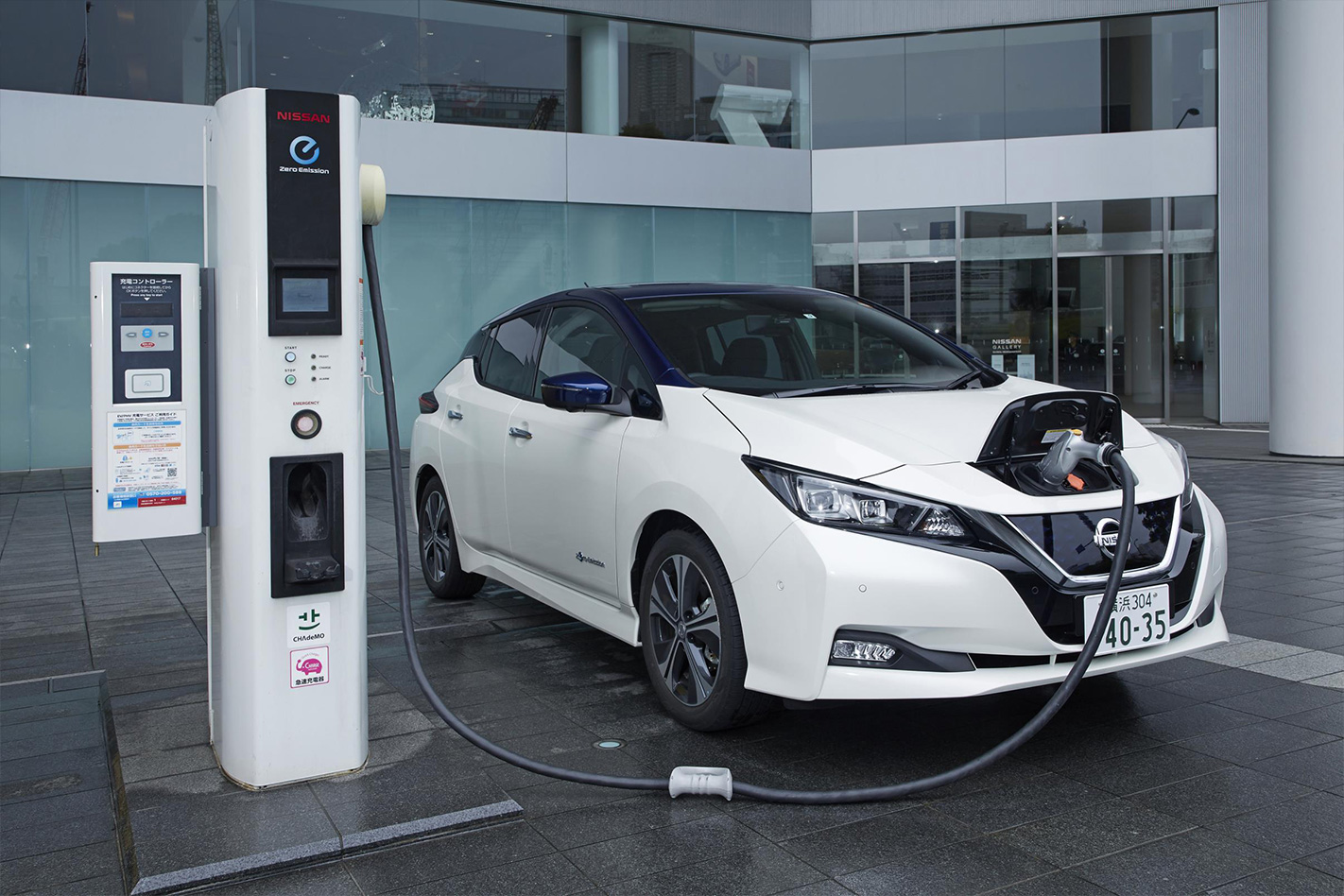
One of the more interesting recommendations was for state and territory governments to court the Formula E Championship, to bring a round of the race to Australia and, presumably, whip up some enthusiasm for battery-powered vehicles in the process. It’s known that South Australia’s government is particularly interested in bringing Formula E to Adelaide’s street course.
The rest of the committee’s findings are primarily concerned with laying the groundwork for an EV-heavy future, with the report recommending closer government cooperation with companies in the energy industry as well as charging station providers.
In its current state, Australia’s energy distribution infrastructure would be hard-pressed to deliver enough power to charge a meaningful number of EVs during peak periods, and the senate report says a ten-year plan detailing what network upgrades will be needed should be a priority for the government.
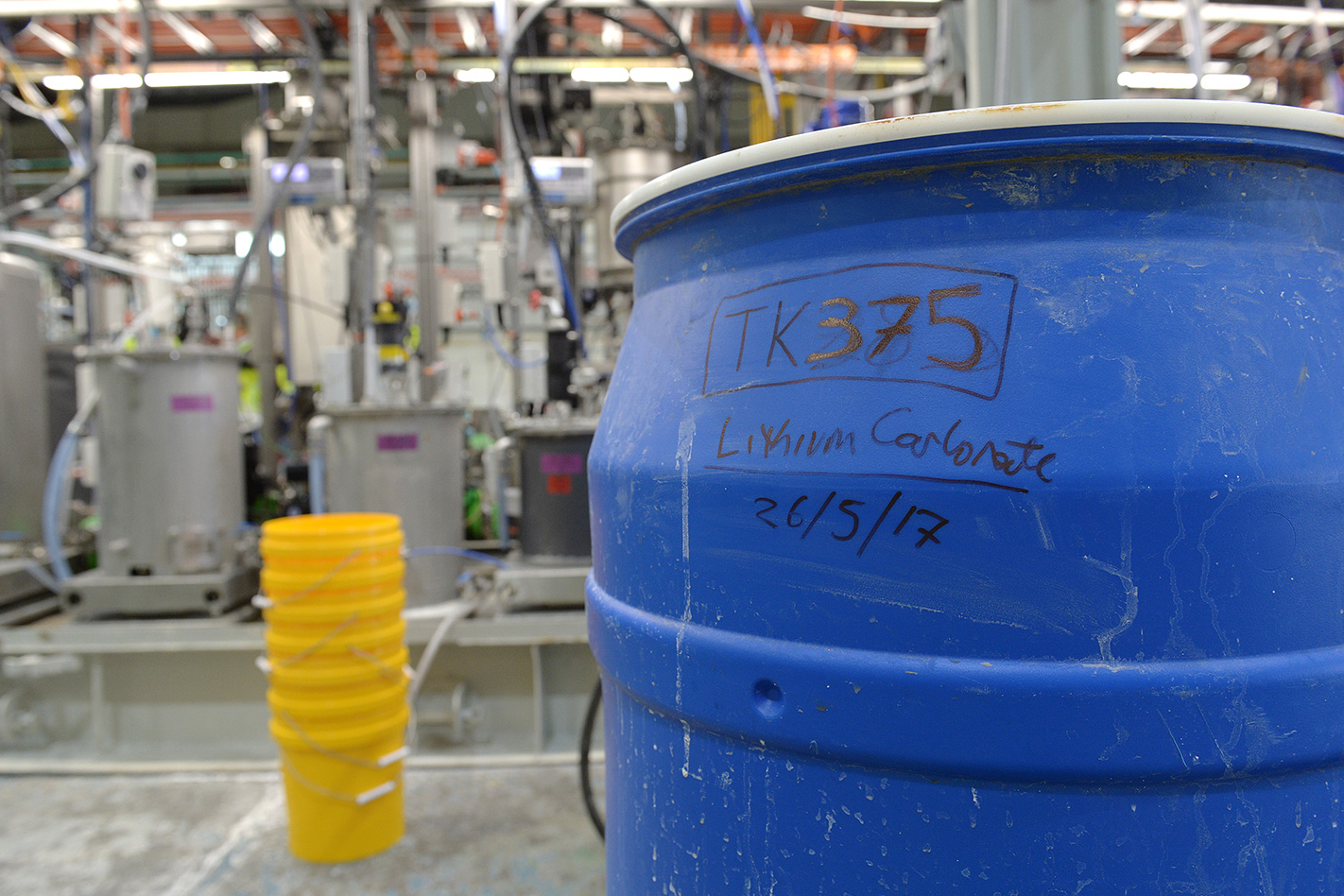
It also advocates the development of a local EV industry – not necessarily one that builds electric cars outright, but one that’s capable of building the high-voltage components that will power them. With Australia currently in possession of roughly half of the world’s global supply of lithium, a key component in EV batteries, developing a high-tech industry around that resource seems like a no-brainer.
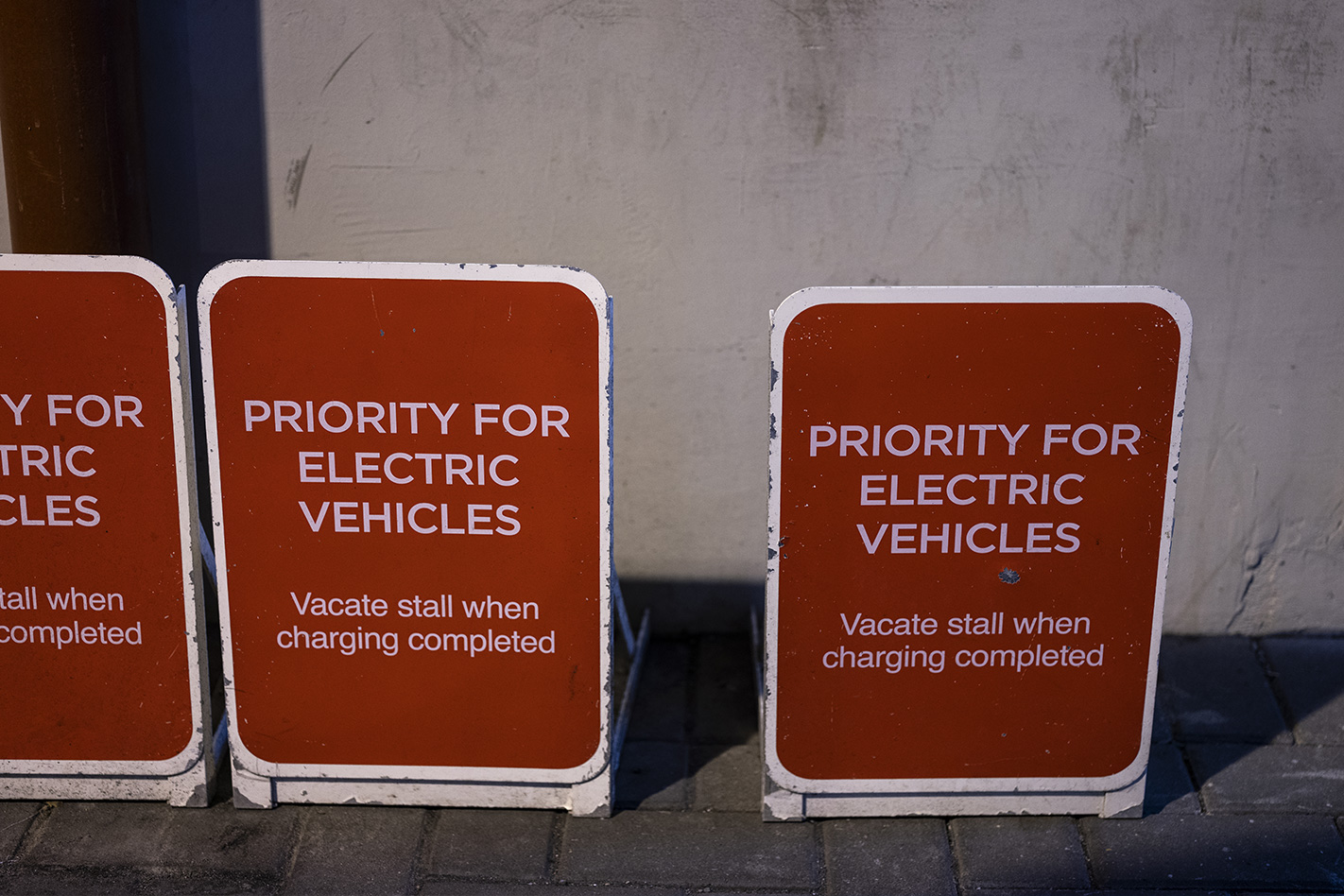
Beyond that, the report also advocated the introduction of vehicle emissions standards, with incentives through tax or duty reductions to stimulate the adoption of zero-emission vehicles.
The release of the committee’s report was welcomed by the Federal Chamber of Automotive Industries, with CEO Tony Weber saying the Federal Government would be wise to take on the report’s various recommendations.
“Awareness of EV technology in Australia is low and it has been proven that, without clear policy or support from the government, sales of the vehicles will be slow in the initial stages,” Weber said.
“The recommendations made by the Senate Select Committee will provide a much-needed boost to ensure EVs increase on Australian roads, and our country keeps up with the rest of the world in terms of environmentally innovative mobility.
“Importantly, the report calls for the government to introduce a vehicle emissions standard in Australia. A credible yet realistic CO2 vehicle emissions reduction standard is critical to stimulate investment in lower-emission vehicle technologies for the Australian market.”
However, the report’s reception wasn’t entirely rosy. The Greens described the committee’s recommendations as “weak”, saying they didn’t go far enough to kick-start EV adoption in a meaningful way and risked Australia being “left behind” as the rest of the world moved toward electrification.
“The weak recommendations of this report demonstrate just how feeble Labor and Liberal are when it comes to electric vehicle policy,” said senator Janet Rice, the Australian Greens’ transport spokesperson and member of the senate committee.
“The window of opportunity for Australia to be a global electric vehicle powerhouse is closing as other countries speed past us. Countries like Norway, the Netherlands, Sweden and Denmark are already miles ahead in the race to transition to electric vehicles,” she continued.
“Australia is a global laggard when it comes to policy ambition and certainty. The government has a choice to get Australia in the fast lane, but that means hitting the accelerator with ambitious targets and incentives to drive the uptake of electric vehicles.”
This week’s episode is all about awards, with the crew discussing the Australian Motoring Awards that occurred earlier in the week. Our biggest event of the year, the AMAs are the venue for the announcement of all our major awards, including the WhichCar Style Award, MOTOR Performance Car of the Year, 4×4 of the Year and Wheels Car of the Year.
Your quartet of presenters are host and WhichCar Senior Journalist Dan Gardner, WhichCar’s latest recruit Noelle Faulkner, MOTOR Associate Editor Scott Newman and Wheels Deputy Editor Andy Enright, all offering their thoughts and insight as to why the various winners were worthy.
We kick off in a Toorak mansion for the WhichCar Style Awards (2:30), move into the outback for 4×4 of the Year (12:00), head over to Adelaide and The Bend Motorsport Park where Performance Car of the Year (20:30) took place before finishing off at Ford’s You Yangs proving ground and the roads of Gippsland to crown the Wheels Car of the Year (28:00).
Dan and Scott then took the opportunity to discuss the opening round of the World Rally Championship that was previewed last week in the first instalment of WhichCar Weekly Extra!. These extra morsels will land whenever we have something extra to share that doesn’t quite fit in the main show.
As ever, you can keep up to date on all the happenings of the WhichCar on Facebook, Twitter and Instagram @whichcarau and don’t forget to check out WhichCar TV on Channel 10 at Sundays at 4pm or catch up on TenPlay.
Listened to the show? Help us out:
- Leave a note in the comment section below.
- Leave a review on Apple Podcasts/iTunes
- Subscribe to our podcast
This again?
About 12 months ago, when the Honda Civic Type R was revealed as Performance Car of the Year, MOTOR’s corner of the internet (and our email inbox) exploded into a text-based tussle.
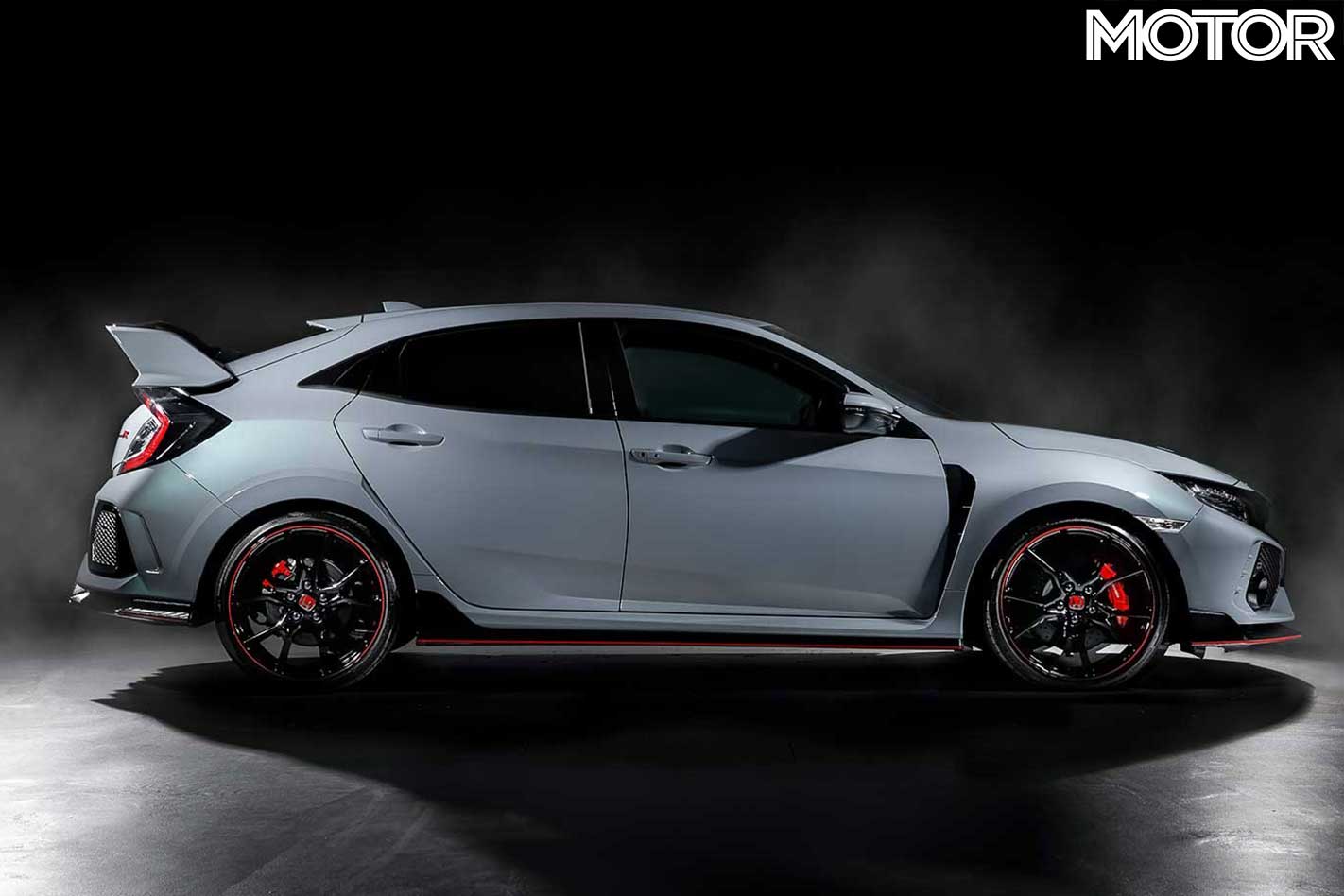
‘It’s too cheap/slow/ugly,’ and ‘how is this better than a Porsche/GT-R/E63?’ were common themes of ‘discussion’. But MOTOR stands by its decision. The Civic met our PCOTY criteria more closely than the other cars present.
So imagine our lack of surprise when, within minutes of our PCOTY 2019 announcement hit the digital airwaves, cries of ‘it’s too expensive’ and ‘how are we supposed to afford one of these?’ broke out.
Yes, the 2018 Porsche 911 GT2 RS is incredibly expensive. The minimum you’d be paying before on-roads for the modern Widowmaker is a not-insignificant $645,000. The specific GT2 RS we took to PCOTY was worth $729,930 on-road.
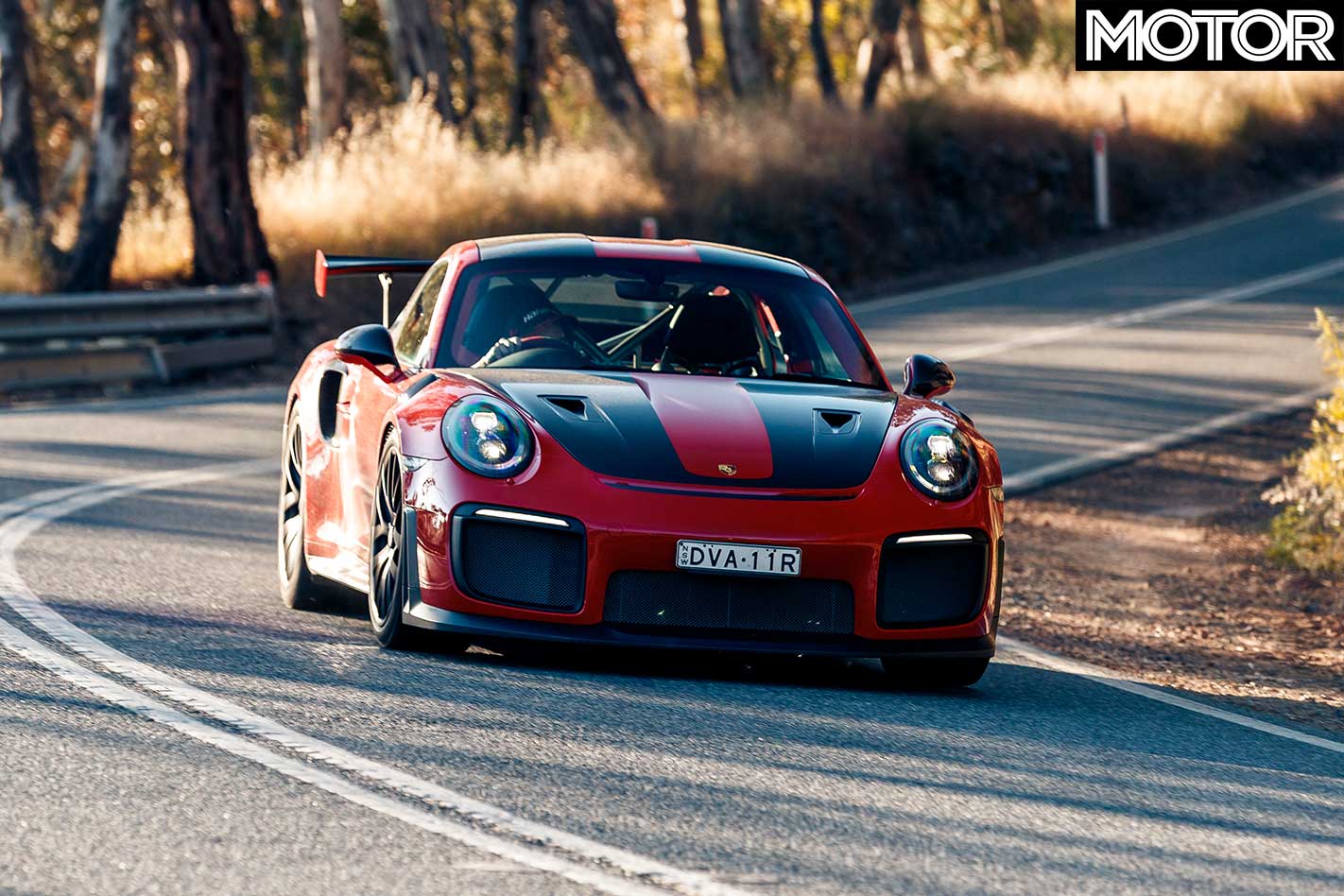
A $730K road car is insane to us as mere mortals, but so is its performance capability. The PCOTY issue (Feb) of MOTOR is yet to hit shelves, so here are some facts to help make this easier to swallow.
In every performance metric, the Porsche came out on top. This should be no surprise.
We tested lap times at The Bend Motorsport Park, 0-100km/h times, quarter-miles, brake testing, and acceleration from 80-120km/h. The Porker blitzed them all.
In fact, it was more than half a second faster to 400m than the next-closest contender, and its trap speed was 14km/h faster.
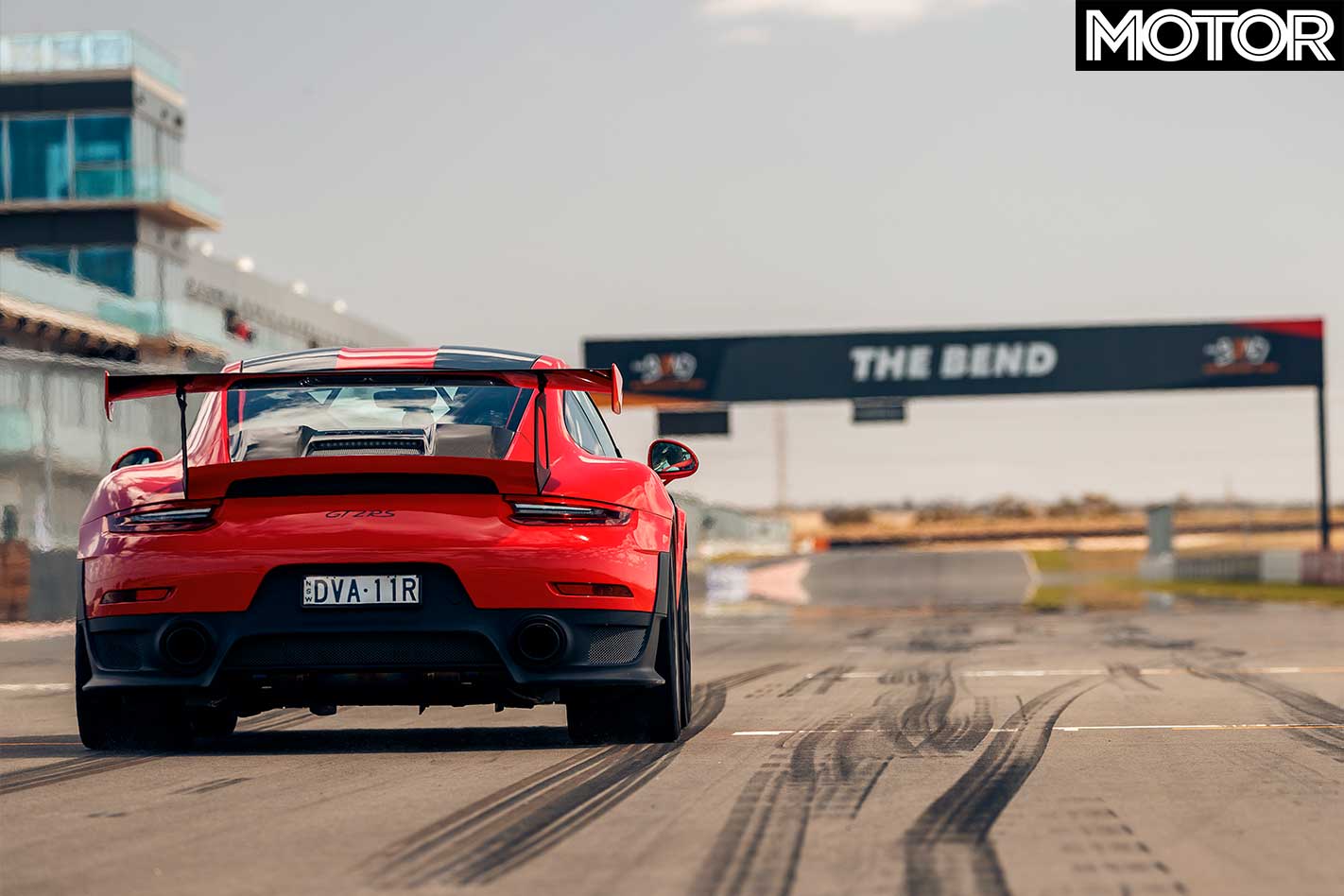
The PCOTY formula also takes into account the car’s price, yes, but it’s a small part of the equation and something as fast as the GT2 RS can outrun its own showroom sticker in the PCOTY process. Keep in mind Bang For Your Bucks is our annual value-based award.
It’s happened in the past too, similarly outrageously expensive vehicles have won the PCOTY title due to their sheer ability, though in the past that ability has been against a lower bar.
In 2002, the Porsche GT2 we took to PCOTY was able to hit 100km/h in 4.14 seconds. It was the fastest car present that year, but this year it would have been bang-on middle-of-the-pack for that metric.
Back then the GT2 wore a $399,000 sticker price, before options and on-roads. The Reserve Bank of Australia (RBA) says that’s a smidge more than $588K in 2018 dollars.
Given a modern GT2 RS can be had for $645K before on-roads, that’s not a massive leap.
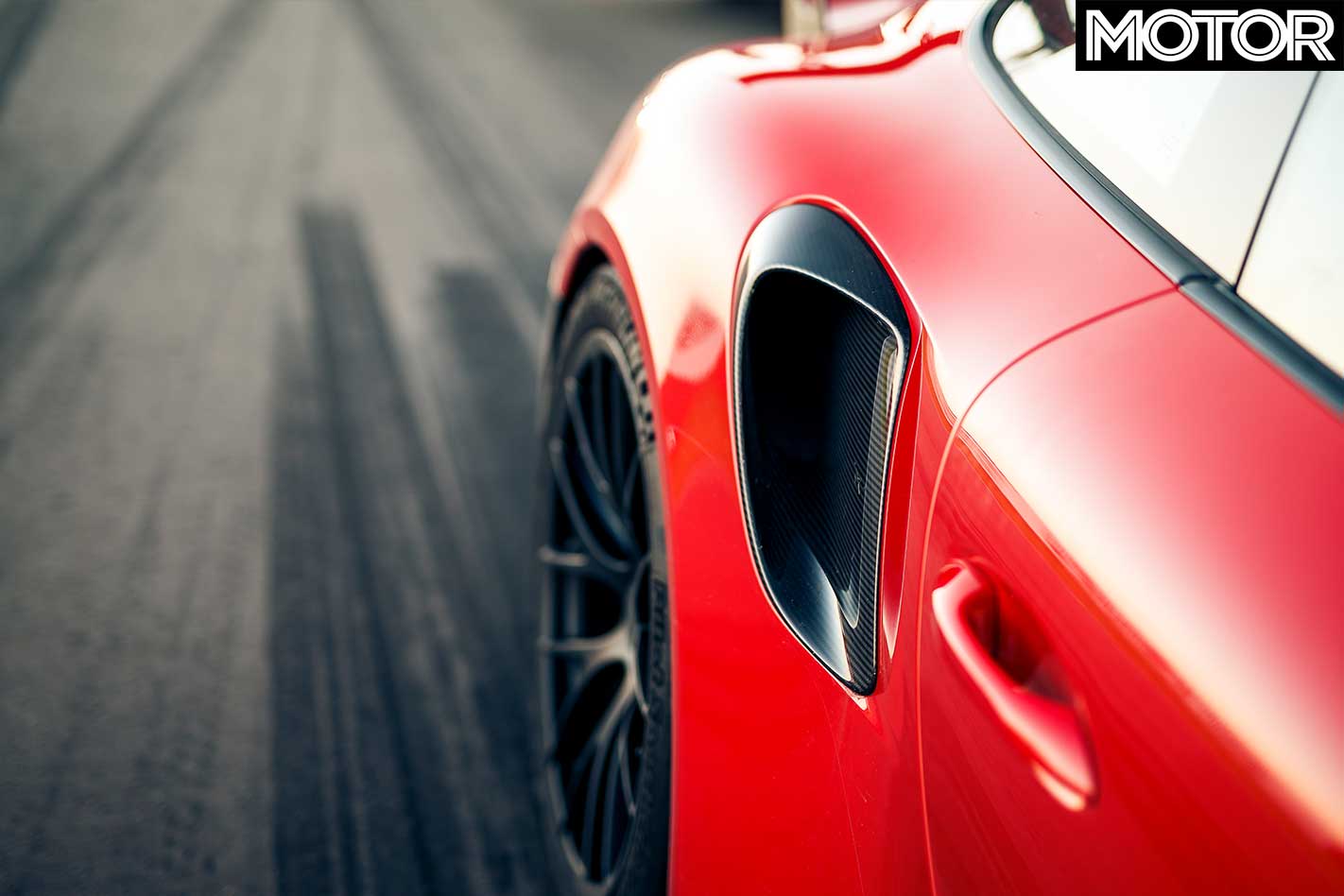
Similarly, the Lamborghini Gallardo that took out the top spot in 2004 ran a 5.55sec 0-100km/h, slower than a VF II Commodore SS-V Redline. It cost $399,346 back then, which the RBA puts at $559,974 in 2018 money.
Former MOTOR Ed Michael Taylor wrote in that same issue (in his editorial, page 7 if you’ve got the issue stored somewhere):
“We always cop stick about this time of the year. The award should have gone to something everybody could afford, like a Kia Rio; there are better cars out there than that; you blokes have got to be kidding, I’m not going to waste my money on your rubbishy rag any more.
“What most of these letters actually mean is, some people think we’re belittling them or invalidating their purchase by not picking the car they’ve bought. Not so.
“Everybody’s entitled to an opinion, but the only opinions that are based on fact and hard, grafting, expert and applied testing are those of the seven [that year – five this year] judges who’ve made the controversial calls.”
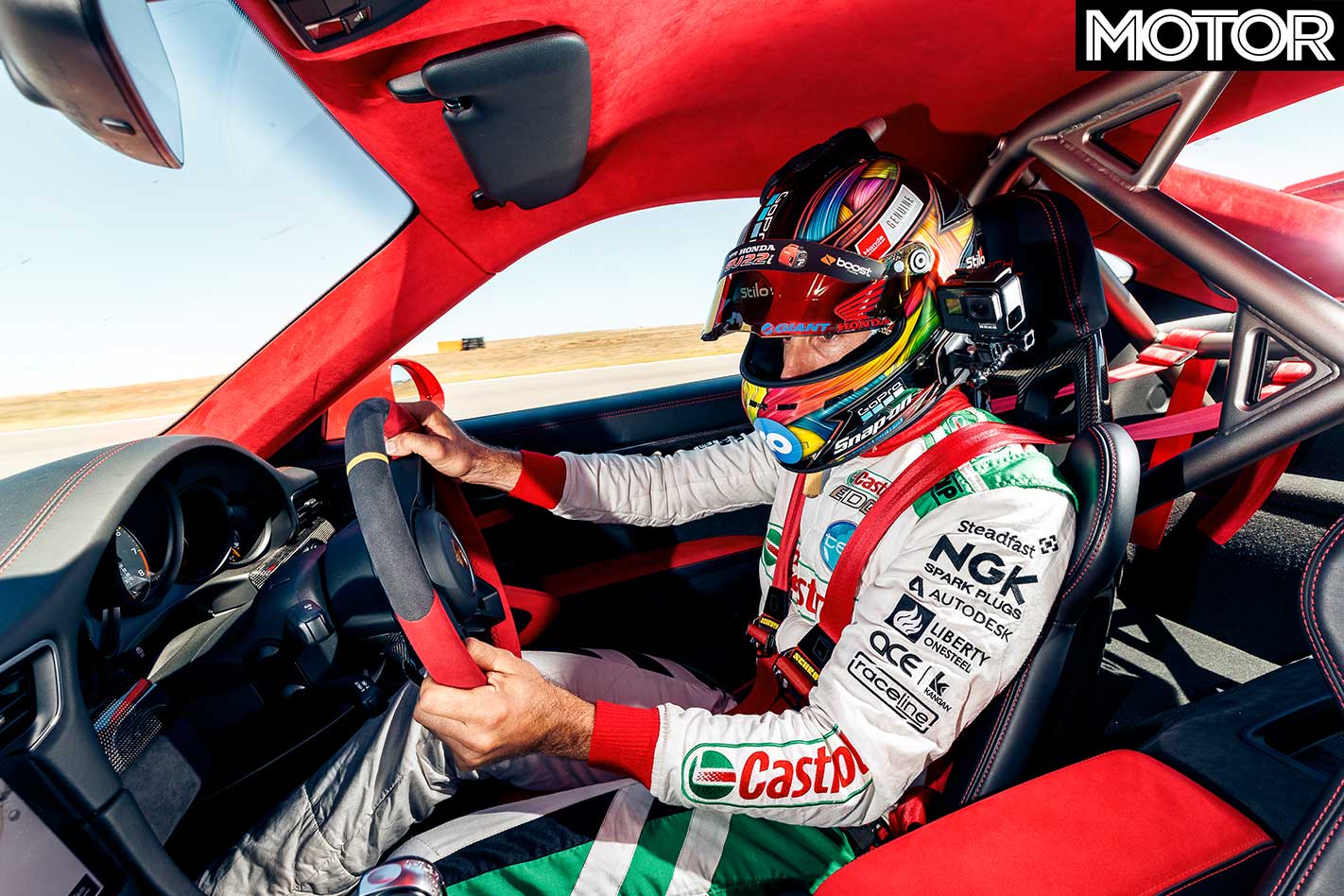
And that’s the thing. If DC, Scott, Morley, Louis, and one Rick Kelly hadn’t driven the cars for a week back to back with notepads in their pockets, there might be room to complain. But they did, so there’s not.
If you have the means to wrangle five experts and spend a week in the Adelaide Hills and at The Bend with a couple of million dollars-worth of cars, go for it. Then we can discuss the winner of PCOTY 2019.
Otherwise, as MT put it more than 14 years ago:
“You’re entitled to know the best performance car out there. That’s what we’ve given you.”
Keep an eye out for the February 2019 issue of MOTOR Magazine, on sale Feb 7.
WHAT IS IT?
The game-changing Lamborghini Huracan is already five years old and in sportscar years that’s about middle age. There have been a few notable additions to the range since launch, including a rear-drive version, the mega Performante, and a topless model. But it’s time for the Huracan’s first significant update and the name Evo couldn’t be more self-explanatory.
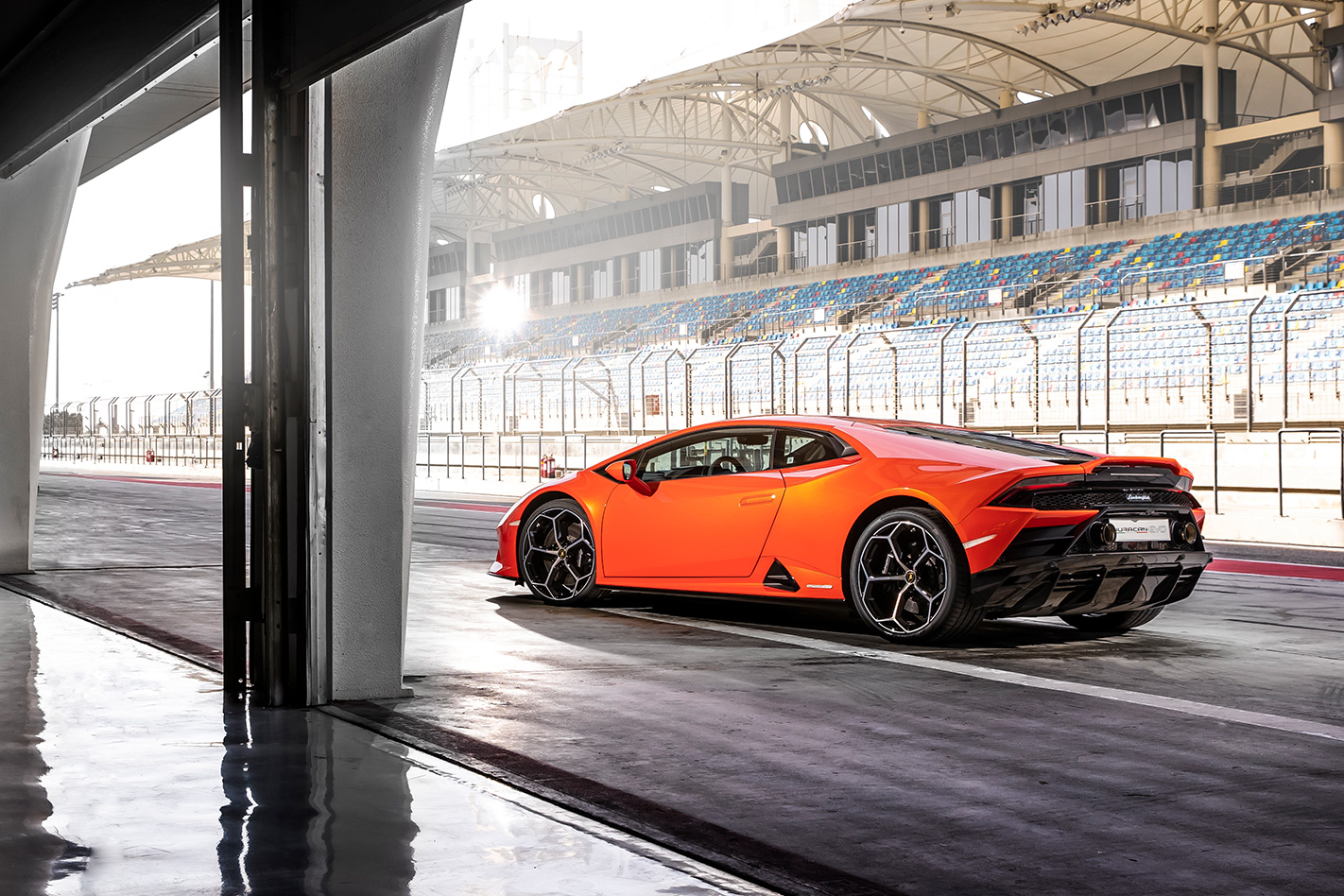
In addition to significantly revised front and rear styling, there’s a complete aero overhaul, more power and some tasty tech in the form of oily bits and electronics.
WHY WE’RE TESTING IT
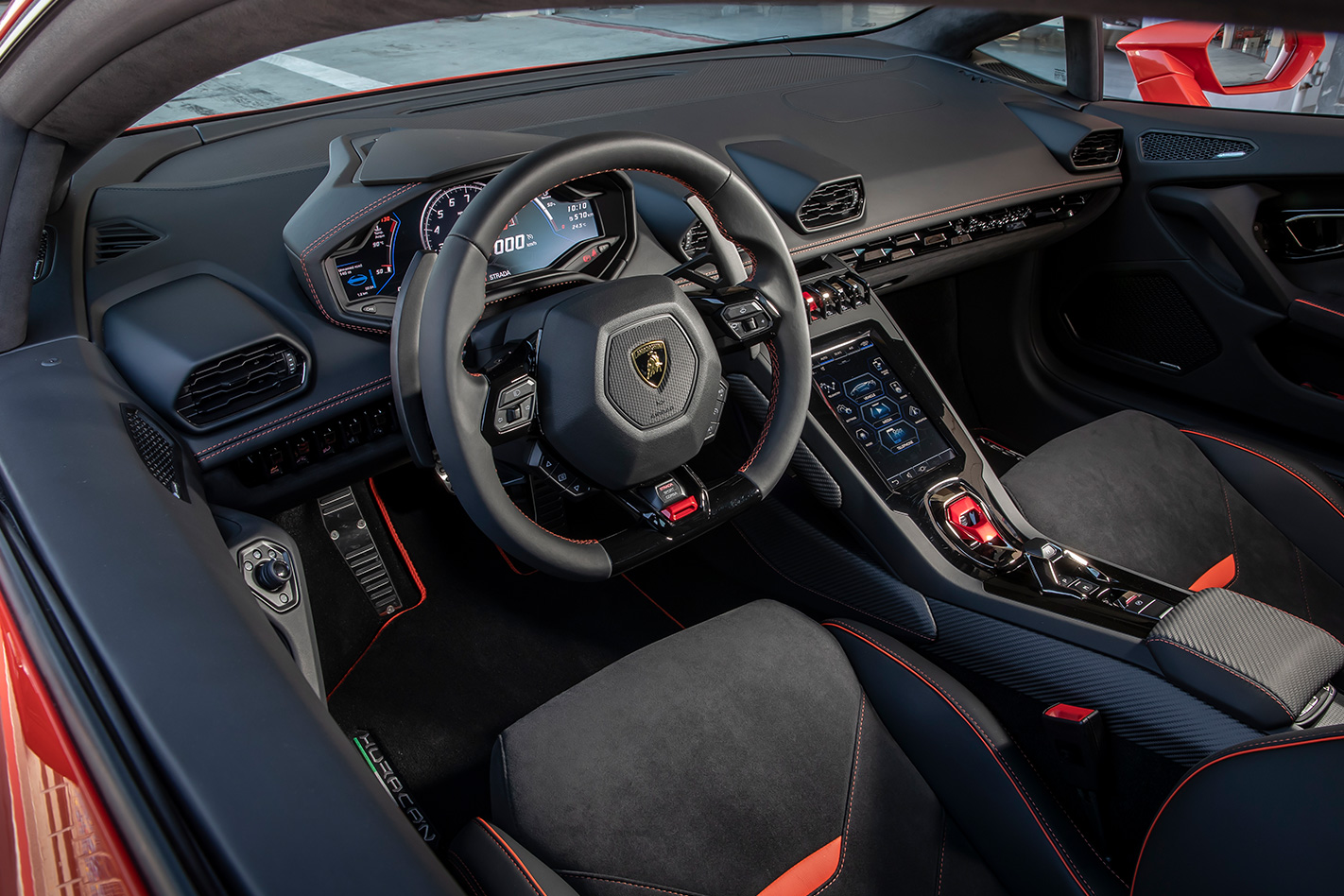
When we tested the Performante in 2017, it quickly became apparent that it was one of the most capable track cars we’ve got our hands on in recent years. But the Evo borrows the same almighty V10 engine and all its output, removes some of the wings in favour of less conspicuous aero and throws in the clever rear steering from the Aventador SVJ.
Lamborghini says this is the easiest Huracan to live day-to-day with but, just looking at its credentials on paper, the Evo could be the track star as well. Only one way to find out…
MAIN RIVALS
Ferrari 488; Porsche 911 Turbo; Audi R8; Mercedes-AMG GT R
THE WHEELS REVIEW
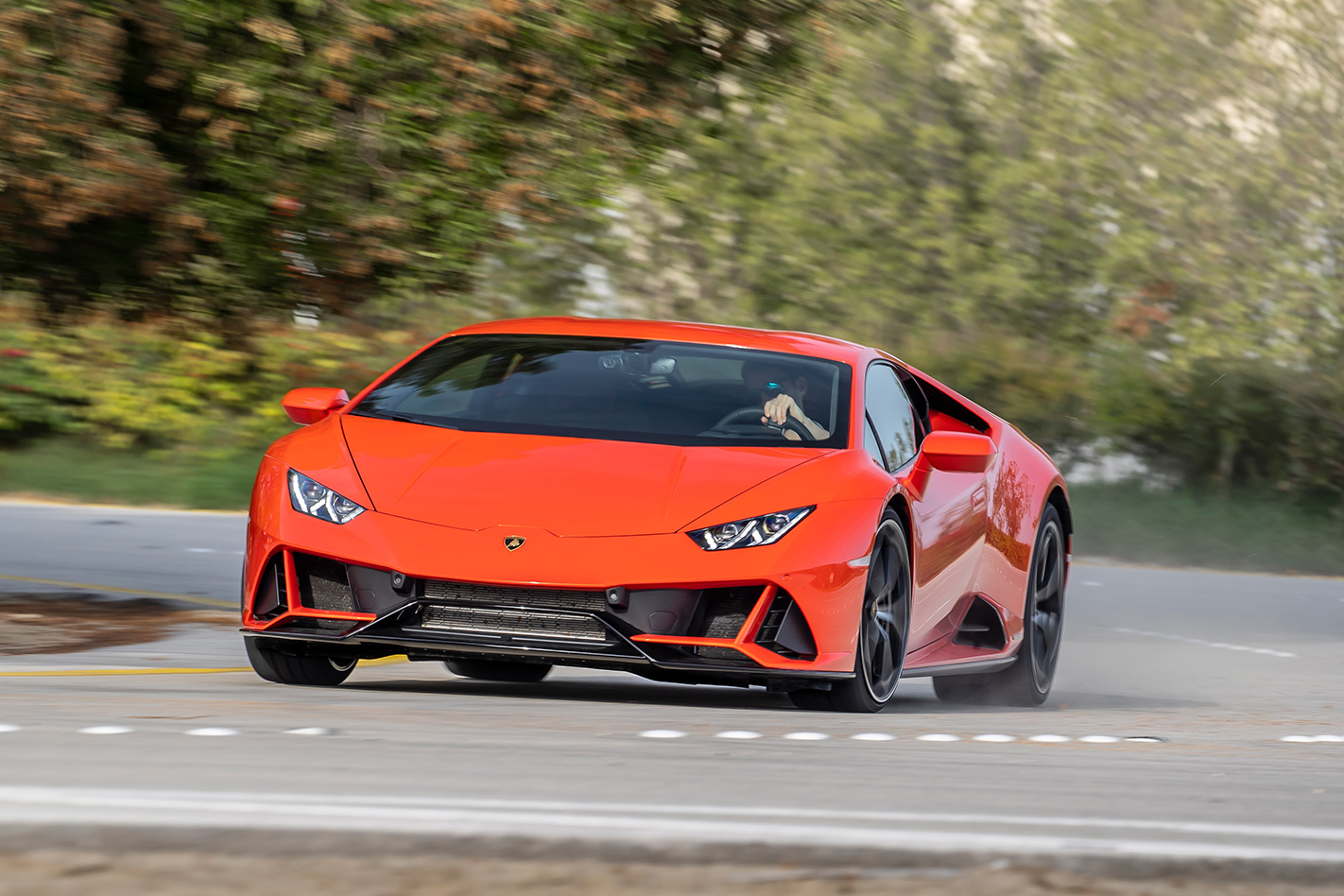
ARRIVING at the mighty Bahrain International Circuit with its Bedouin tent-inspired rooves lofting high above the arid landscape, I get a sense of what it must have been like to approach the colosseum on game day. But instead of a lion, the beast I am being thrown in the ring to try and avoid being mauled by is a bull. Like a floodlit F1 circuit looming out of the desert, the 470kW Lamborghini Huracan Evo is a little intimidating at first, but this version has been treated to a rear-wheel steering system similar to the Aventador SVJ which, I’m told, makes it a little more predictable than its predecessor. It does.
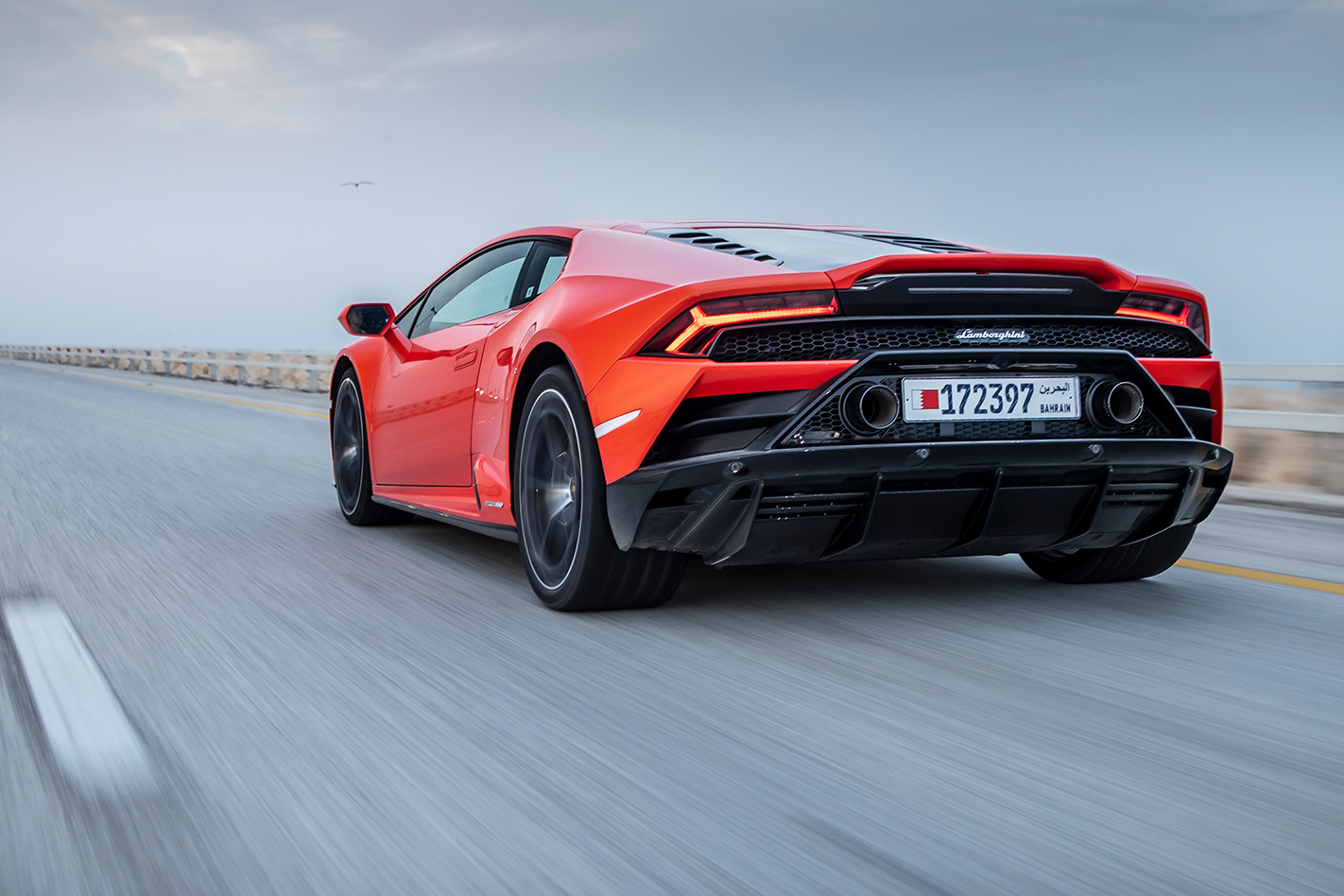
After only a few laps, the Evo is goading me to push harder than I would in a week despite slippery patches of dust left by a ravaging sand storm just two days before. The Evo yaws gracefully out of corners and it’ll do the same under immense braking forces into bends, but the mid-mounted engine doesn’t once end up ahead of me. My contribution to the four-wheeled ballet is probably limited to the stabbing of pedals. That’s because, for the mid-life update, the Huracan has gained LDVI – a CPU singularity that manages all dynamic systems and purportedly has the ability to anticipate my moves. This also works. You can make mistakes, but unlike the Gallardo which would put you in a hedge, or the first-gen Huracan which would slap your wrist, the Evo will drop a garter to hide your embarrassment.
The responsiveness from both axles steering initially feels overly sensitive, but that quickly turns into a sense of confidence, and the massive acceleration in any gear at any revs becomes addictive, not overwhelming. The combined result is savage pace and I’m not imagining it – Lamborghini says this car is faster at Nardo than the Performante engine donor.
Then there’s the bark. A new bimodal Supersports exhaust not only enables the demonic V10 engine note to shout at a volume that causes heifers to miscarry, it’ll also shoot flames, and we’re not talking about a quick yellow burp like a tuned Skyline. Its party piece is a pair of ghostly blue cones under hard acceleration, like an F/A-18 doing a bolter.
Its engine is a masterpiece, the styling is as muscular as a Greek god and the noise is totally intoxicating but, ironically, the best part of the Huracan Evo is something you won’t notice. New sophisticated electronics coupled with traditional metal and oil make you feel like a hero at the wheel, and it’s rare to find something that so outwardly encourages you to go faster than you think is sensible or possible. As to whether the Evo is the Huracan that does it all, that’ll have to wait until a first encounter on the road.
THE WHEELS VERDICT
If you’d just hopped out of a Huracan LP 610-4 it’s unlikely you would be craving a touch more power. And if a steer in the LP 580-2 was still fresh in your mind you probably wouldn’t be longing a more playful chassis. Aero your thing? Then the Performante is the Huracan for you. At least it used to be.
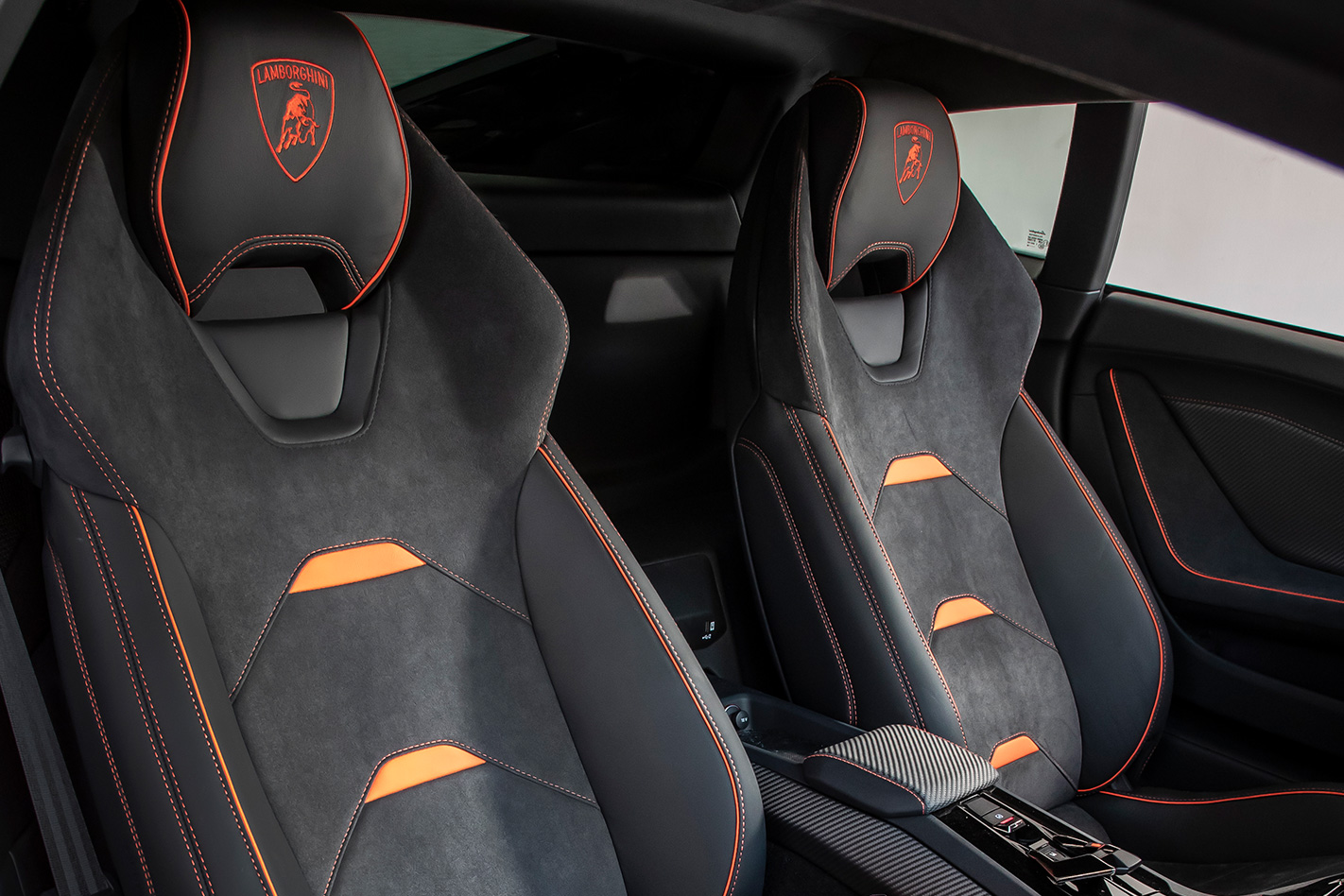
The Huracan didn’t need to be faster, stickier or prettier but the Evo is all those things and the result is spectacular. A vehicle that rewards the curious and confident driver when it’s on the track and is stunning to behold when not going anywhere at all, that’s the Evo.
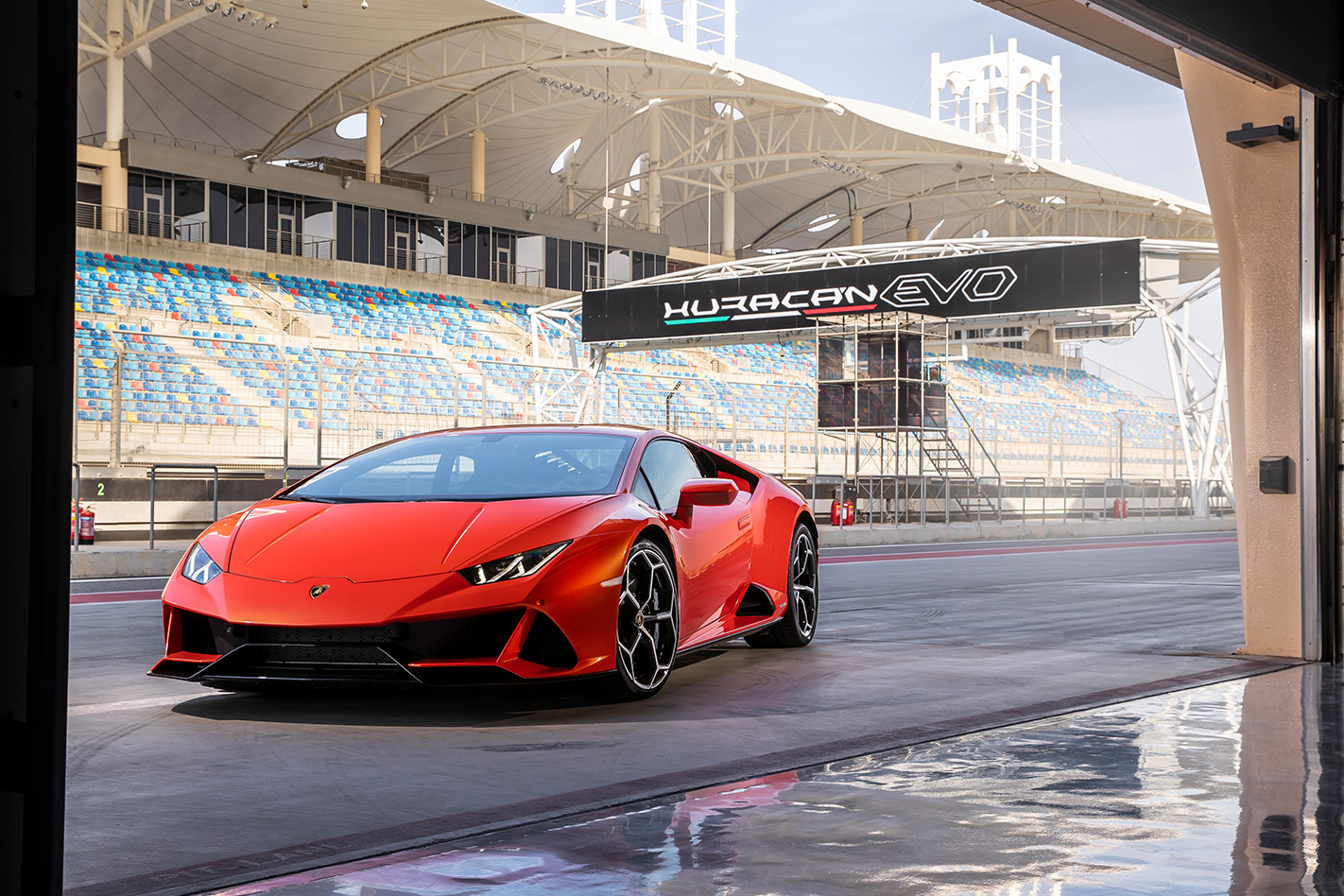
It can certainly hold its own at the playground that is an F1 circuit, but as to whether the Evo can duplicate its abilities on the road will, tantalizingly, have to wait.
SPECS
Model: Lamborghini Huracan Evo Engine: 5204cc V10 (90º), dohc, 40v Max power: 470kW @ 8000rpm Max torque: 600Nm@ 6500rpm Transmission: 7-speed dual-clutch Weight: 1422kg (dry) 0-100km/h: 2.9 sec Economy: n/a Price: $458,411 On sale: Now
Read Motor Magazine’s 2019 Lamborghini Huracan Evo Performance Review
In this apocalyptic post-Australian performance car world, a saviour has been the Chevrolet Camaro – but for its $85,990 pricetag.
Just when it seemed like mostly V8, rear-drive options were nil, though, the depreciation stick arrives to whack down supercars.
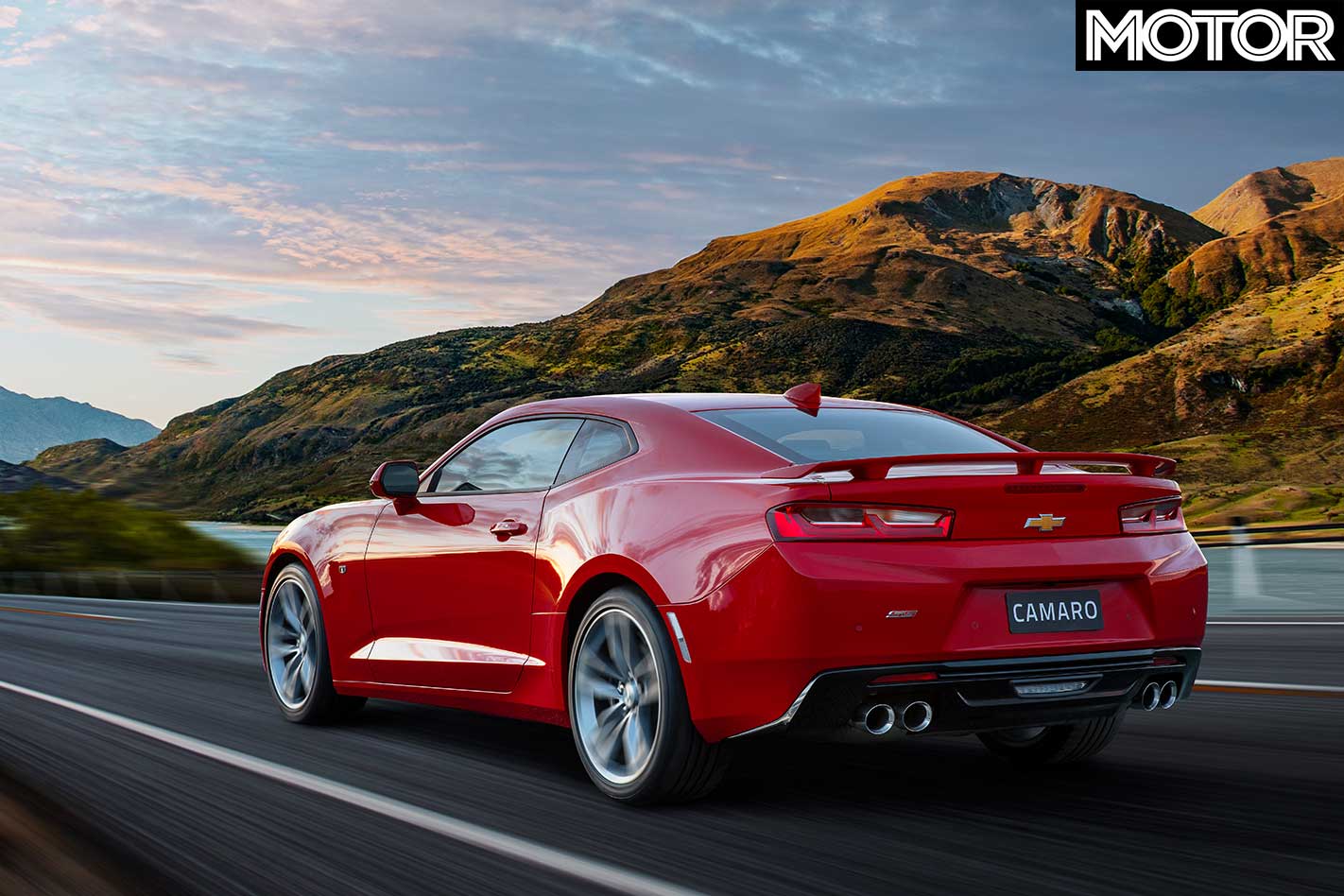
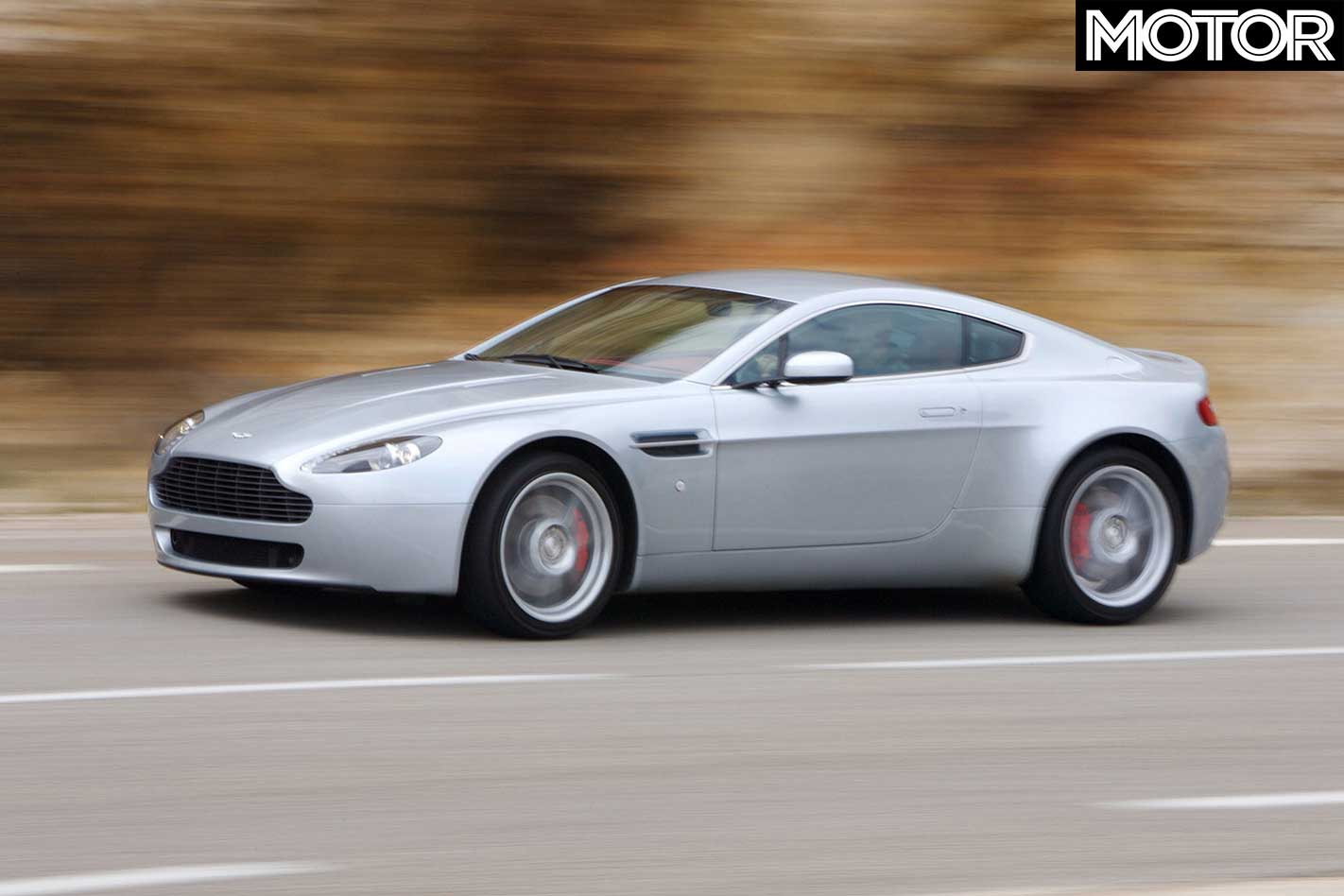
These five options were once six-figure big-dogs, most are a decade to 15 years old, and all offer similar performance to the HSV-remanufactured Chevy. At the cheapest and sexiest end of the frame, there’s a 2007 Aston Martin V8 Vantage manual with 60,000km showing.
With a new price 12 years ago of $242,850 plus on-road costs, the 4.3-litre V8-engined coupe has fallen to $85K. It makes 283kW at 7300rpm, and 410Nm at 5000rpm, for a 5sec 0-100km/h claim – not the quickest, but there’s no better-looking way of getting to speed.
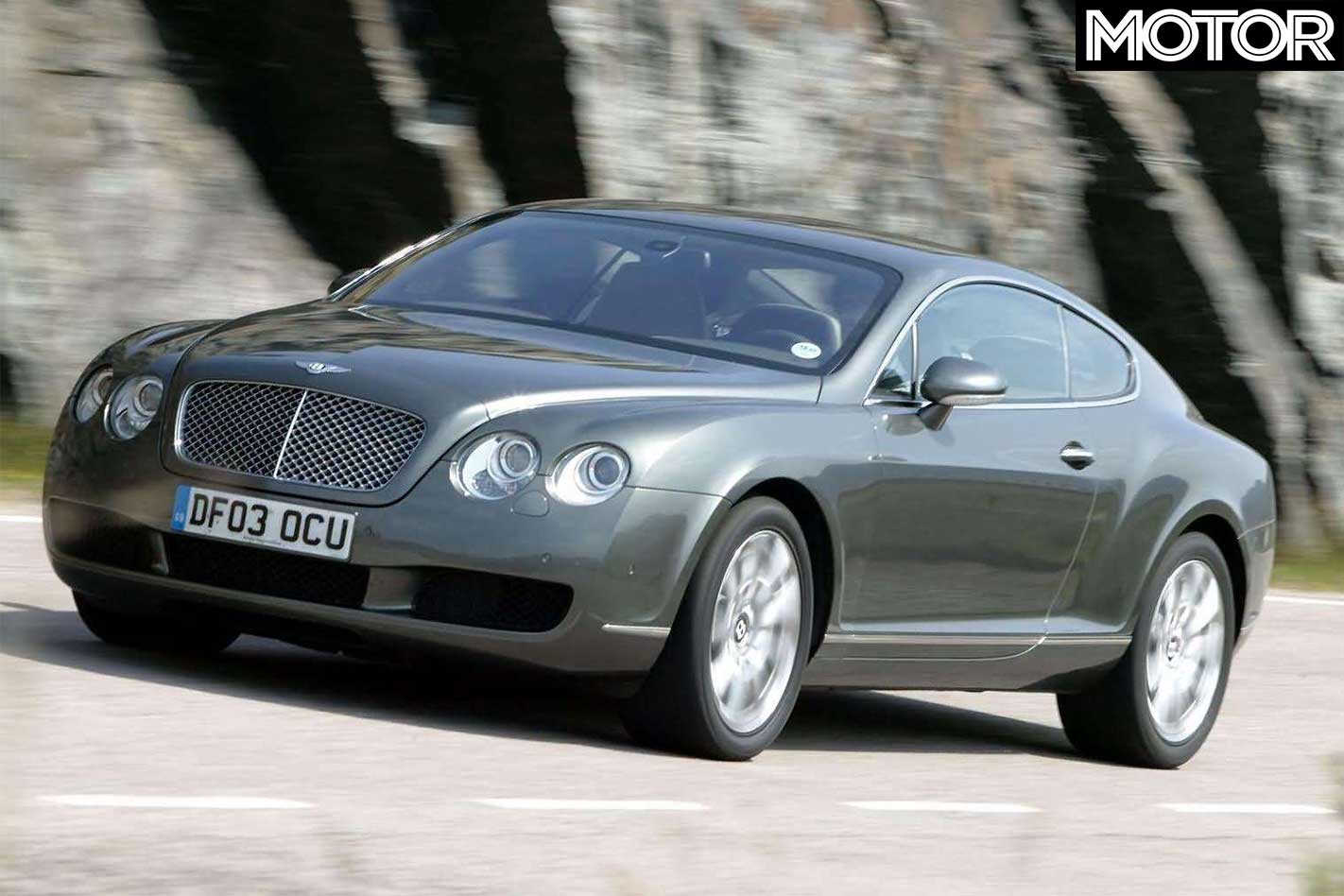
Even slower, but more stately, is a fellow Brit. Slightly older, and with an older buyer type in mind, a 2004 Bentley Continental GT was an astonishing $385,000 plus on-roads new, but the 6.0-litre twin-turbocharged W12 brute in a suit now asks the same as the above Aston.
With about 80,000km showing, the quarter-price Benter all-wheel driver rocked out 411kW at 6100rpm and 650Nm at just 1600rpm, though its 4.8sec 0-100km/h was hampered by the 2385kg kerb mass. And mind the 16.1L/100km combined-cycle fuel consumption number…
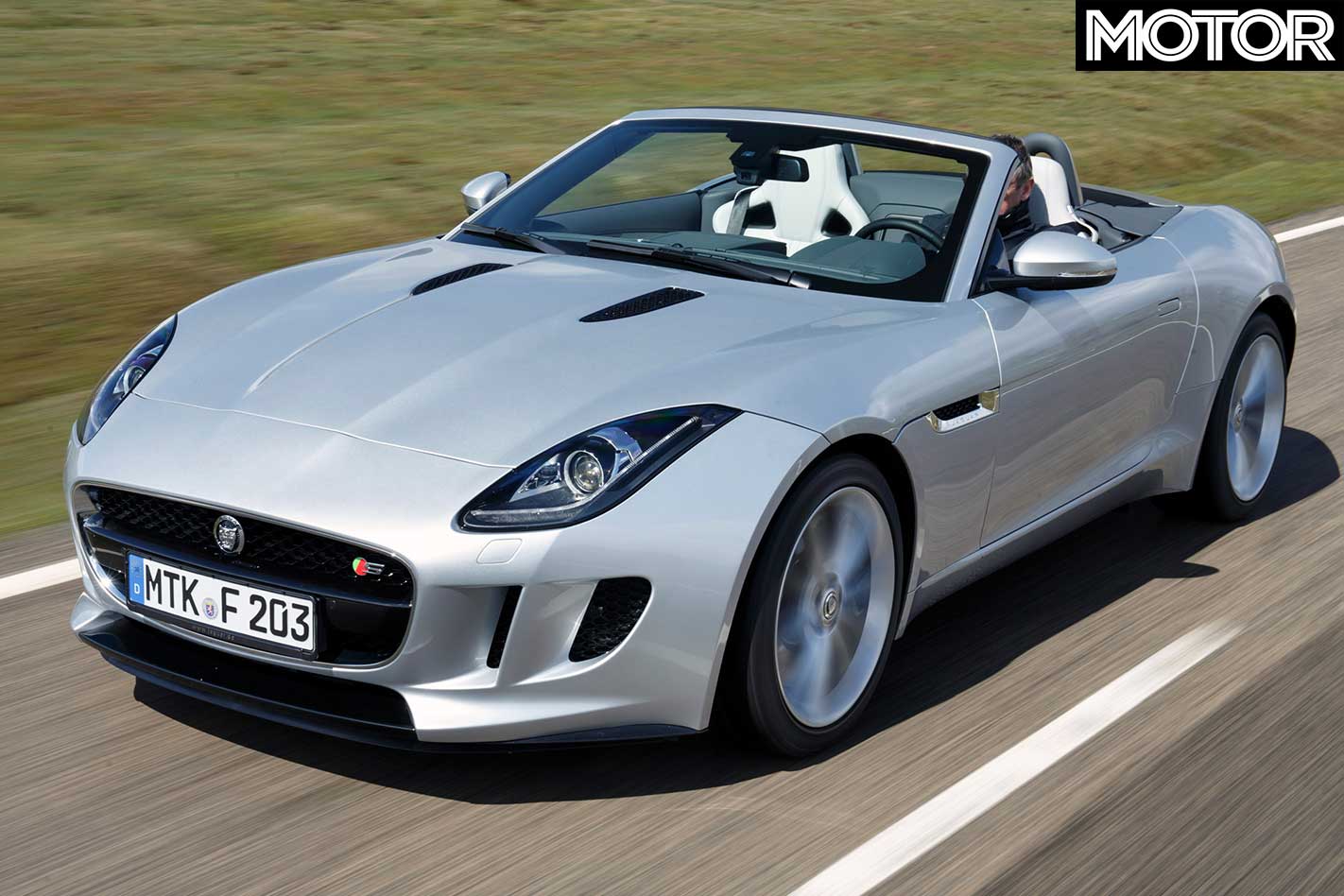
From there we jump a whole lot newer, while staying in the same territory. Check out a 2013 Jaguar F-Type S convertible, most of which packed the 3.0-litre supercharged V6 engine. But with navy paint and beige leather, our choice 47,000km-old example nailed in the 5.0-litre blown V8 in all its glory – with 364kW at 6500rpm and 625Nm from 2500rpm.
Allied to an eight-speed auto and driving the rear axle only, it claimed a 4.3sec 0-100km/h, and within six years its $201,945 plus on-roads price has halved to bang-on $100K.
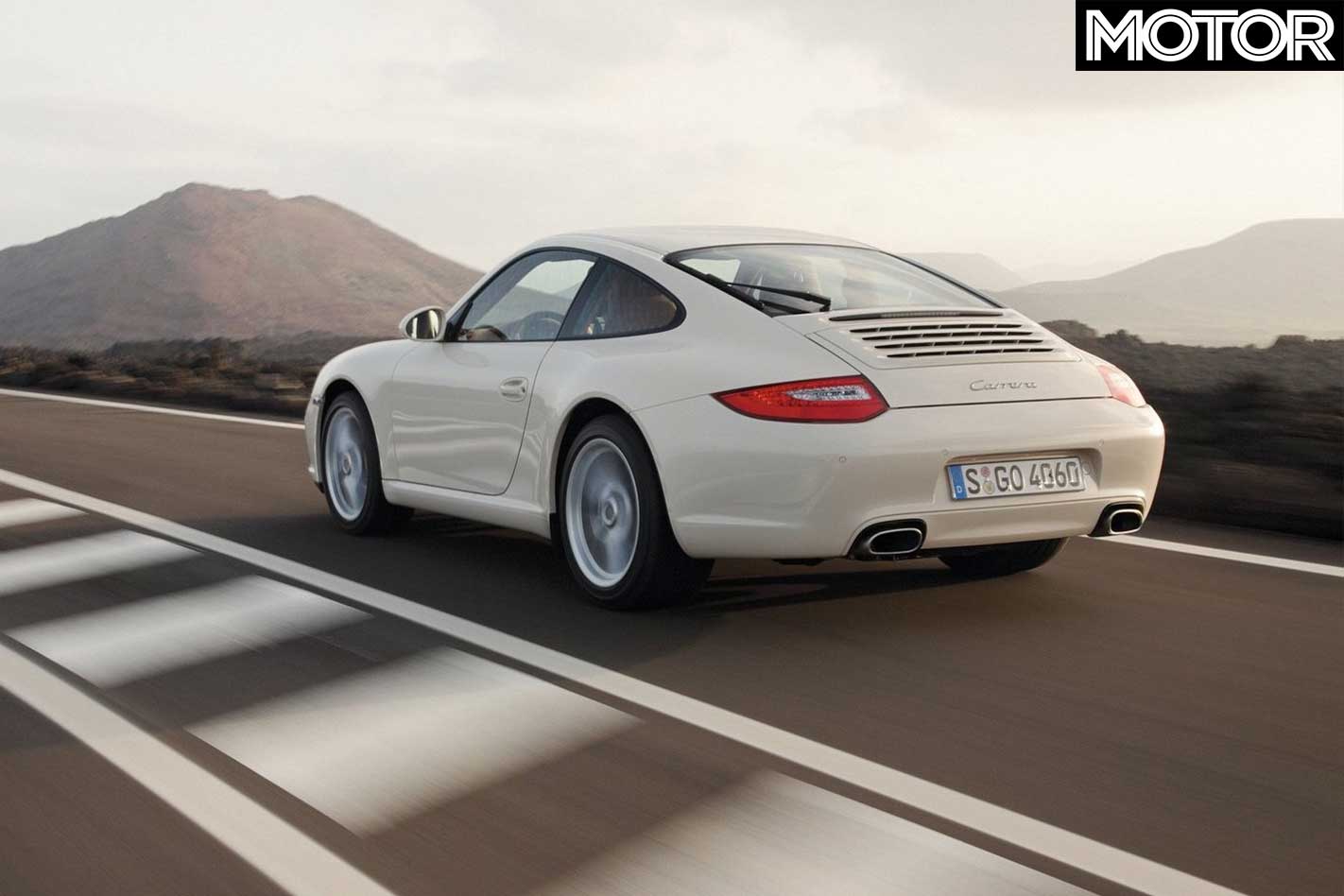
Similarly, for just-on six figures, a decade-old Porsche 911 Carrera 997 Series II has gone from $226,300 plus on-roads new for the PDK base model, to less than half now. And being a nine-one-one you can bet that it will go up-up-up eventually, given its past record. The 3.6-litre flat-six made 254kW at 6500rpm and 390Nm at 4400rpm, for a 4.7sec 0-100km/h. That isn’t the quickest, but this last-of-the-line, pre-electric-steer Porsche was sublime.
Interestingly, too, an Audi R8 from the same era hasn’t stepped down towards five-figure territory yet, meaning that, yes, an Audi has held up better than a Porker.
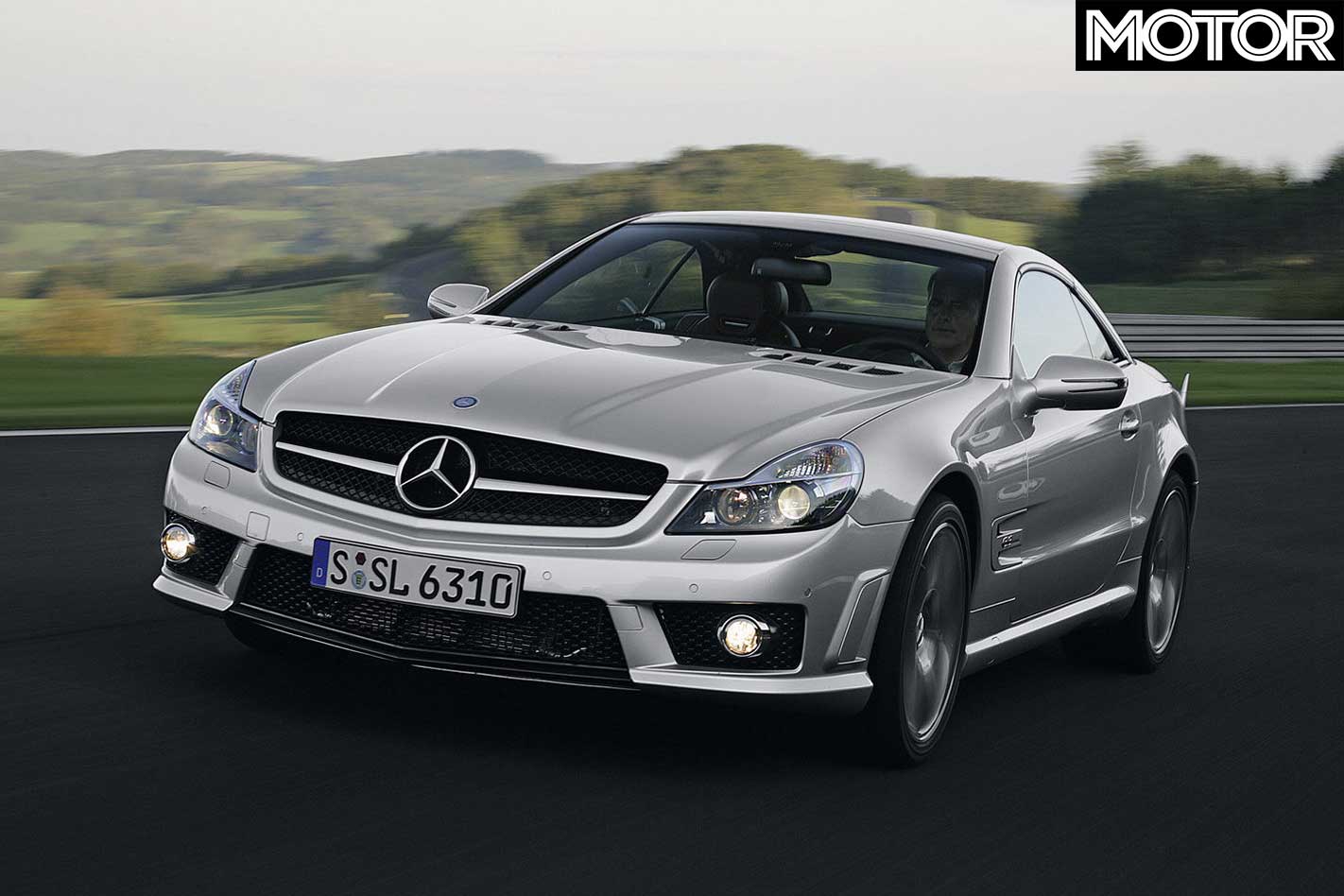
Perhaps the biggest depreciator of all is a 2010 Mercedes-Benz SL63 AMG, an eye-watering $414,350 plus on-roads new, and nine years later with 83,000km it’s less than a quarter of the price at $95,000 max. Even if it wasn’t Sporty or Light, the 6.2-litre atmo V8 is an epic powerhouse with 386kW at 6800rpm and 630Nm at 5200rpm, good for a 4.7sec 0-100km/h.
The real question now is: are those supercars making you reconsider that Camaro?
It was the Australian automotive industry’s night of nights on Wednesday, with WhichCar, Wheels, Motor and 4×4 Australia joining VIPs of the motoring industry in Melbourne’s Docklands precinct to present four of the country’s most important automotive awards.
Not even a spattering of rain and the threat of thunderstorms could dampen the enthusiasm of the 250-odd attendees, and the excitement levels stayed high from the moment Ford’s wild Ranger Raptor leapt onto the stage as the winner of 4×4 Of The Year, right up until the Volvo XC40 – the 2019 Wheels Car Of The Year – rolled off, covered in ticker tape.
For a taste of what it was like to be there, and to view a ‘who’s who’ of Australia’s motoring media and industry, click through our gallery above.
Let’s not kid each other here: The best of these cars are world-class performers in their own way.
This feature was originally published in MOTOR’s May 2005 issue
That’s right boys and girls, you could line a GT and a ClubSport up against pretty much whatever else the rest of the world can throw at them, and neither big Aussie would walk away embarrassed. Sure, they might not be able to take on the likes of a supercharged AMG or the new V10 BMW M5 on all fronts, but as full-sized four-doors with the ability to shrink distances, there’s not a lot wrong with them.
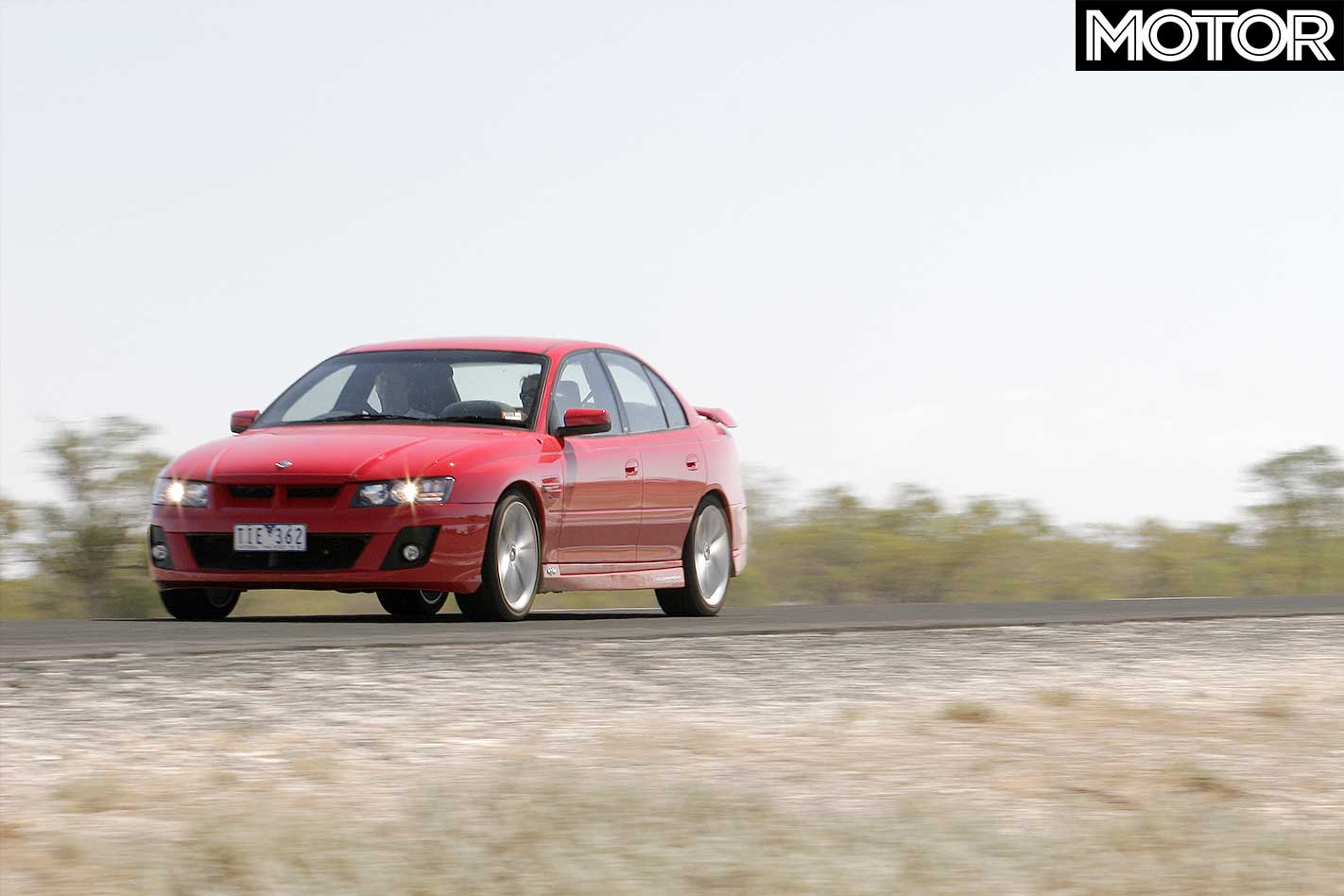
How did it do it so convincingly? Well, mainly by not putting a foot wrong the whole time we were hammering it around Eastern Creek, jamming it down the quarter mile, frapping it on a dyno or flogging pick-handles out of it in the mongrel country of far-western NSW.
To be honest, the last couple of Clubbies we’ve got our mitts on (and that includes the now-superseded VY Series) have impressed us. HSV’s little fiddles here and there – including the power-steering cooler the company claimed it never needed – have taken what was a good, but slightly underdone package and turned it into a true hero-car.
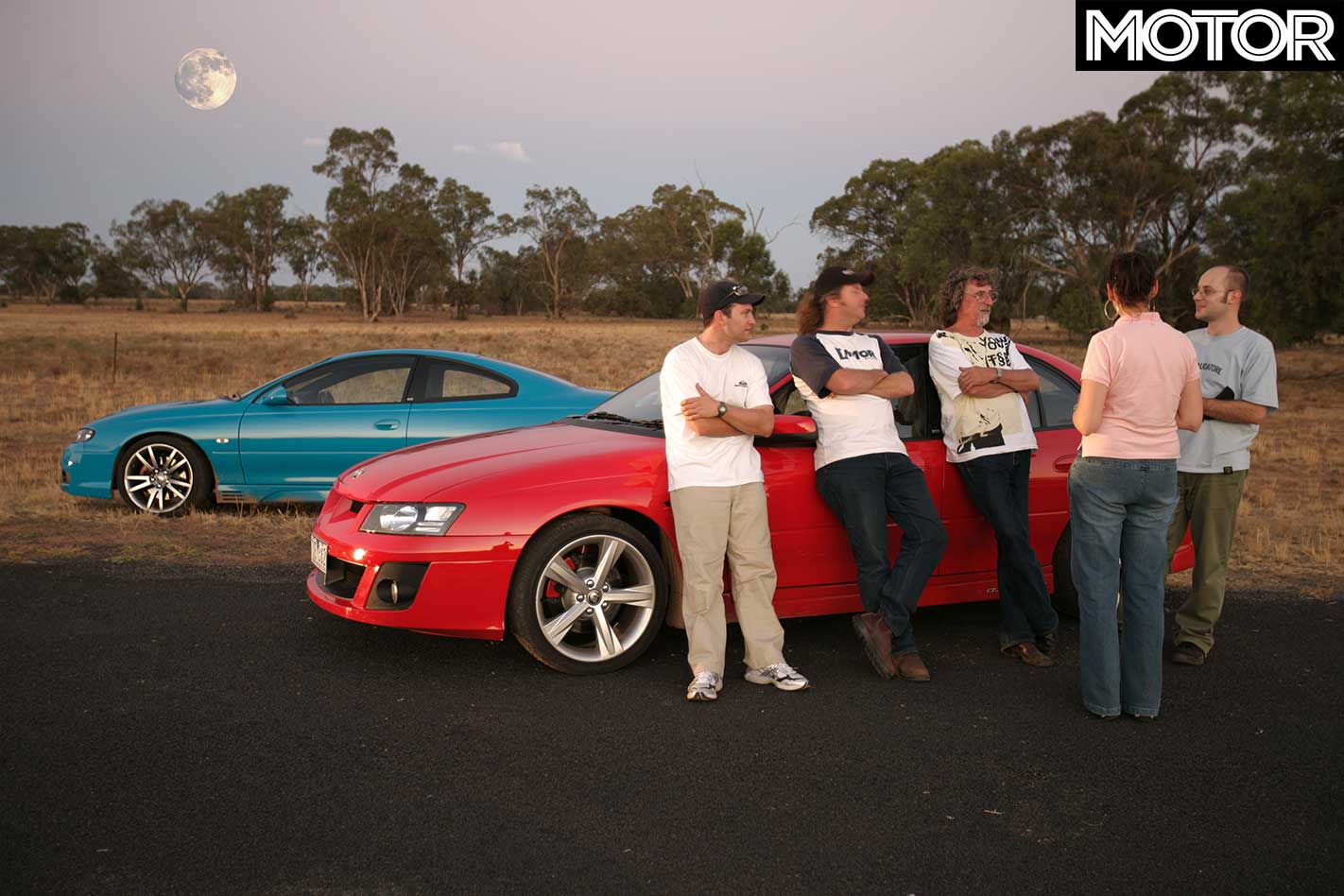
Okay, some of us miss the seats from the old ClubSport R8, but in just about every other way, the Clubbie does the business like it never did before. In VZ spec, the car is now as good a handler as it ever was and ride quality hasn’t suffered. It seems a little less reliant on the sheer grip of its front Pirellis (which has to be said, isn’t a lot) and is therefore a bit better balanced overall.
Even better is the fact that the steering now has some accuracy at the straight-ahead and some meaningful feel and communication built into it, not something that you could have said of a ClubSport of even a couple of years ago.
Mind you, it’s still no surgical-type instrument the way a BMW M3 is, nor does it have the overall tactile talents of a Porsche 911. In fact, jump out of even something like a Honda Integra or a WRX and the Clubbie will feel pretty old fashioned, a fraction clumsy and very heavy.
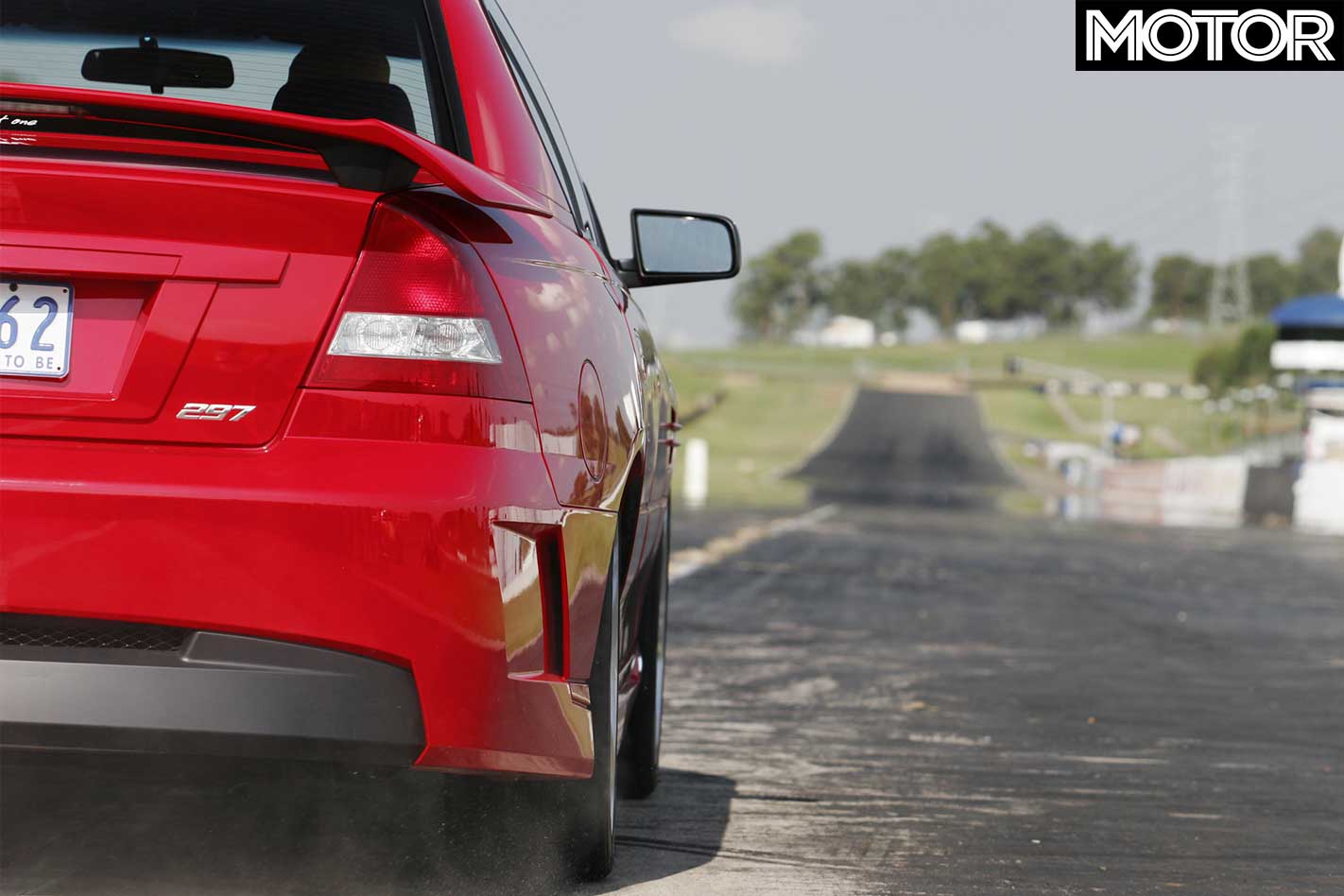
Do the same back-to-back with a Clio or an Evolution VIII and the HSV will come across as a dinosaur with a thicker than usual skull. But building something with four doors, a big boot, loads of wheelbase and all that grunt, inevitably leads to some pretty heavy engineering solutions. Can’t be helped. Get over it.
Meanwhile, running changes to the ClubSport’s gearbox have seen shift quality improve greatly, although there’s still work to be done in that department before it is one of those think-it-through-the-gate arrangements.
But the engine is the real highlight of the package and the move to the Gen IV should be applauded by anybody who likes their V8s big, brawny and able to grunt from idle to redline with plenty of mid-range punch in between. Compared with the Gen III (still the unit of choice in hot Holdens), even in HSV trim, the Gen IV is a much better tool.
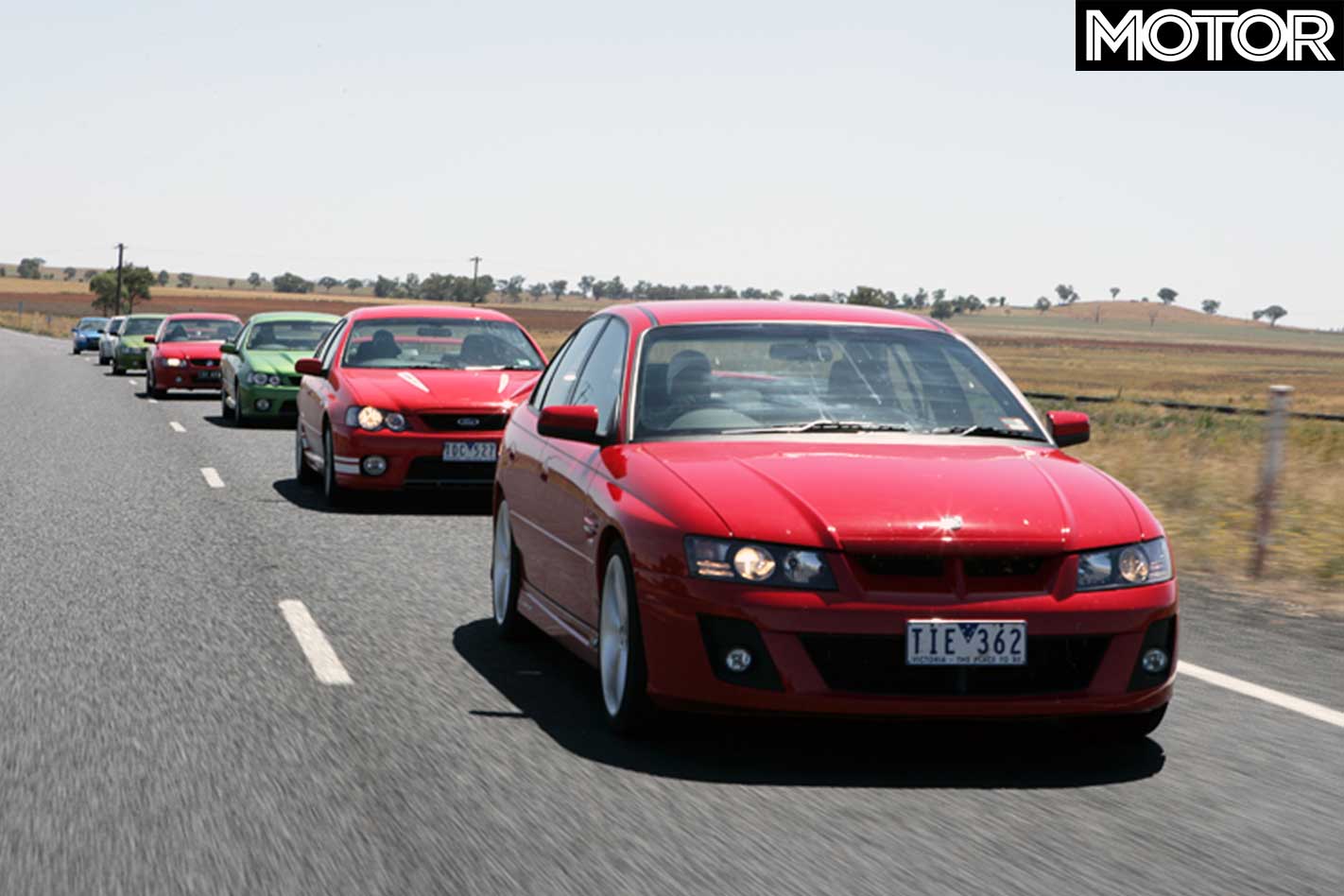
There’s enough bottom-end shove built into the Clubbie’s Gen IV, that you can still be devastatingly quick point-to-point even if you can’t be bothered revving the motor to within an inch of its life.
It’s a feat nothing else in this comparison (apart from the similarly-powered GTO) gets close to pulling off and it’s more or less, given the priorities of people like us, the reason the ClubSport has the local performance game currently kicked to bits. How things can change in just a few short years. Order has been restored, a V8 is back on the throne.
Ford Falcon XR6 Turbo: Champ to Chump?
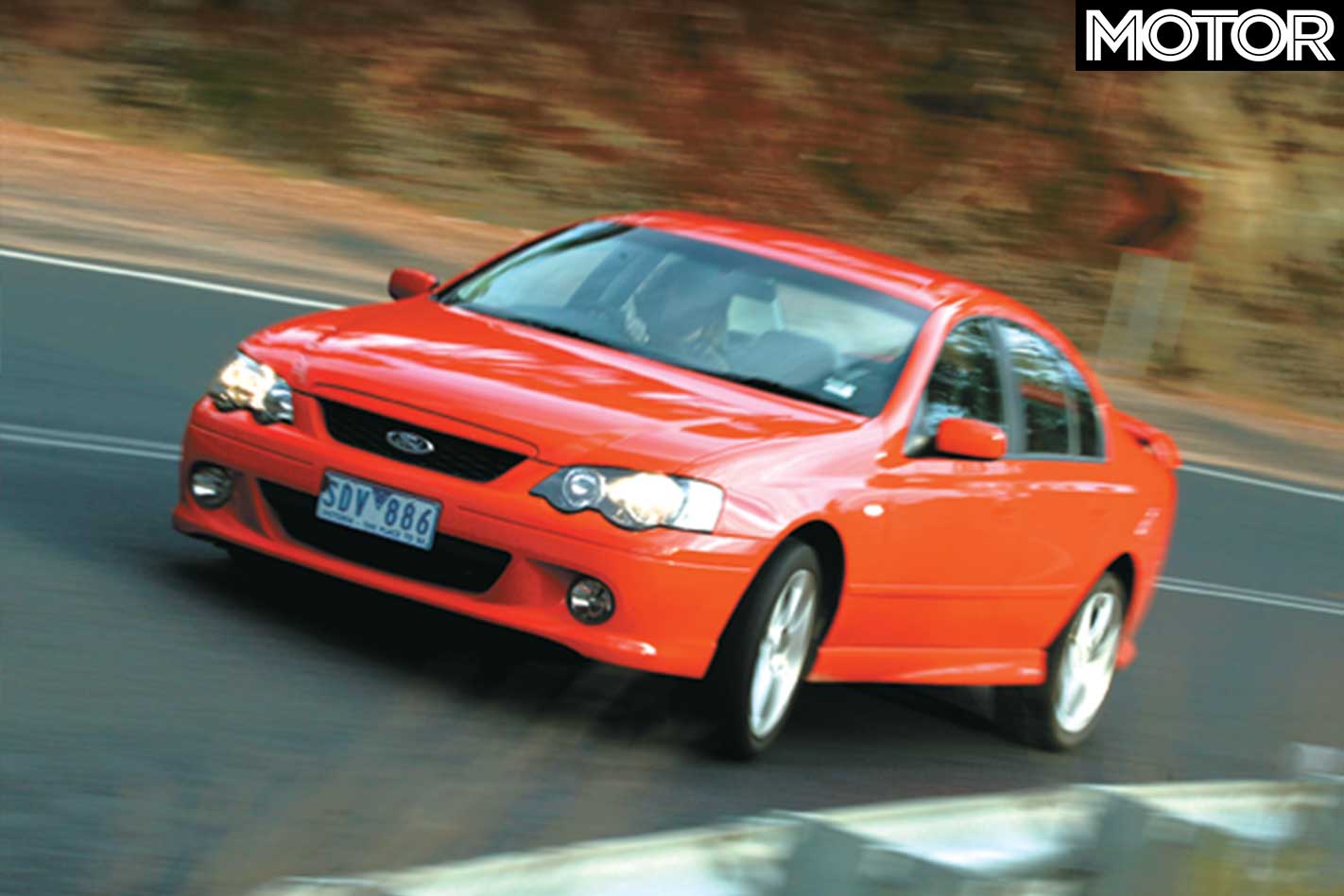
It won the last All Aussie shootout, but this XR6T was never a threat. Its 193kW at the treads (up 8kW) was strong, but the 0-400m time was 0.7 secs off its best. At the Creek, the XR6T went into limp-home mode dropping it a full second behind the SV8. In short, it’s just not fast enough.
The Numbers that matter
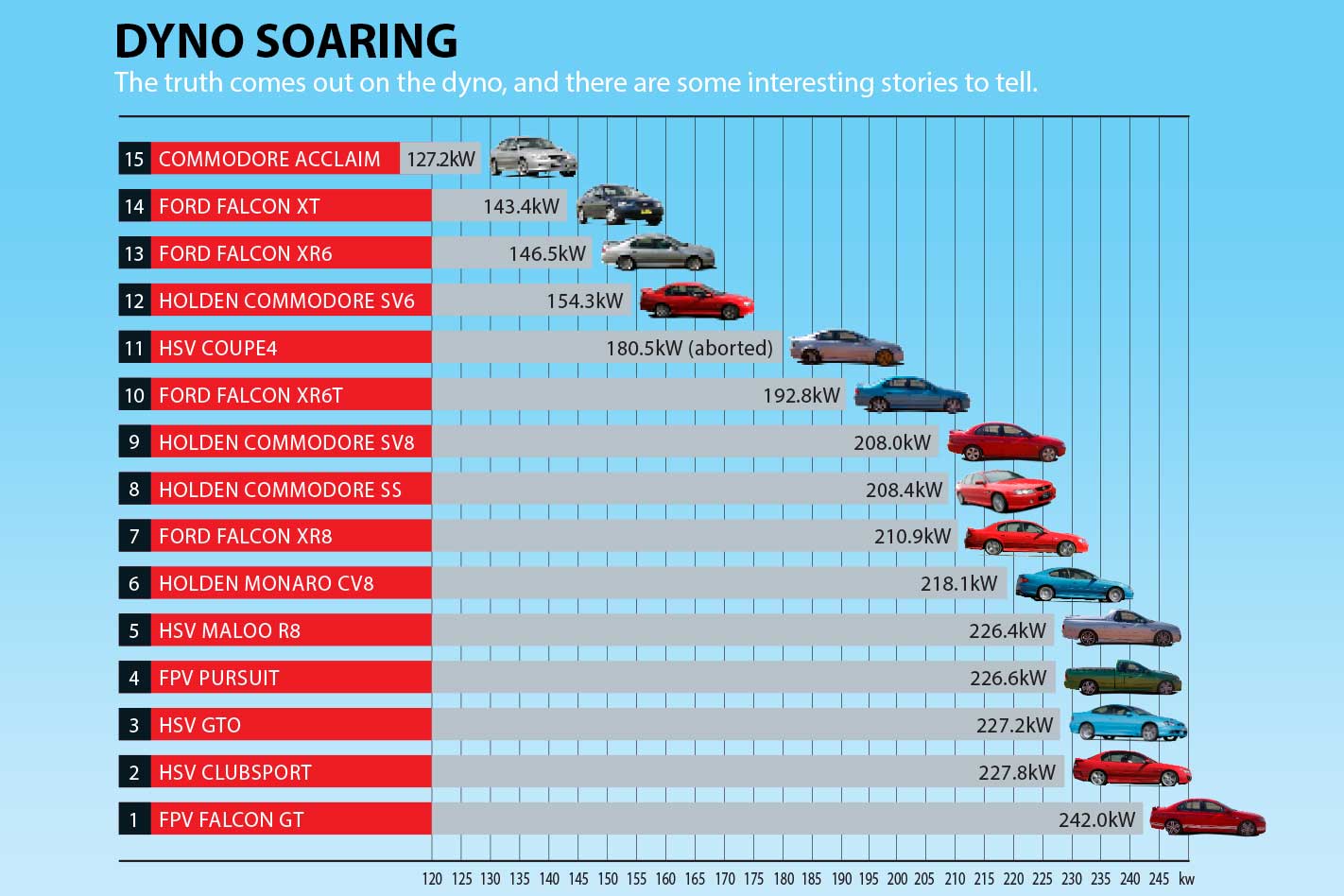
*Higher-res images in gallery at the top
Range Rover has canned its ultra-expensive SV Coupe, before a single one has even been delivered.
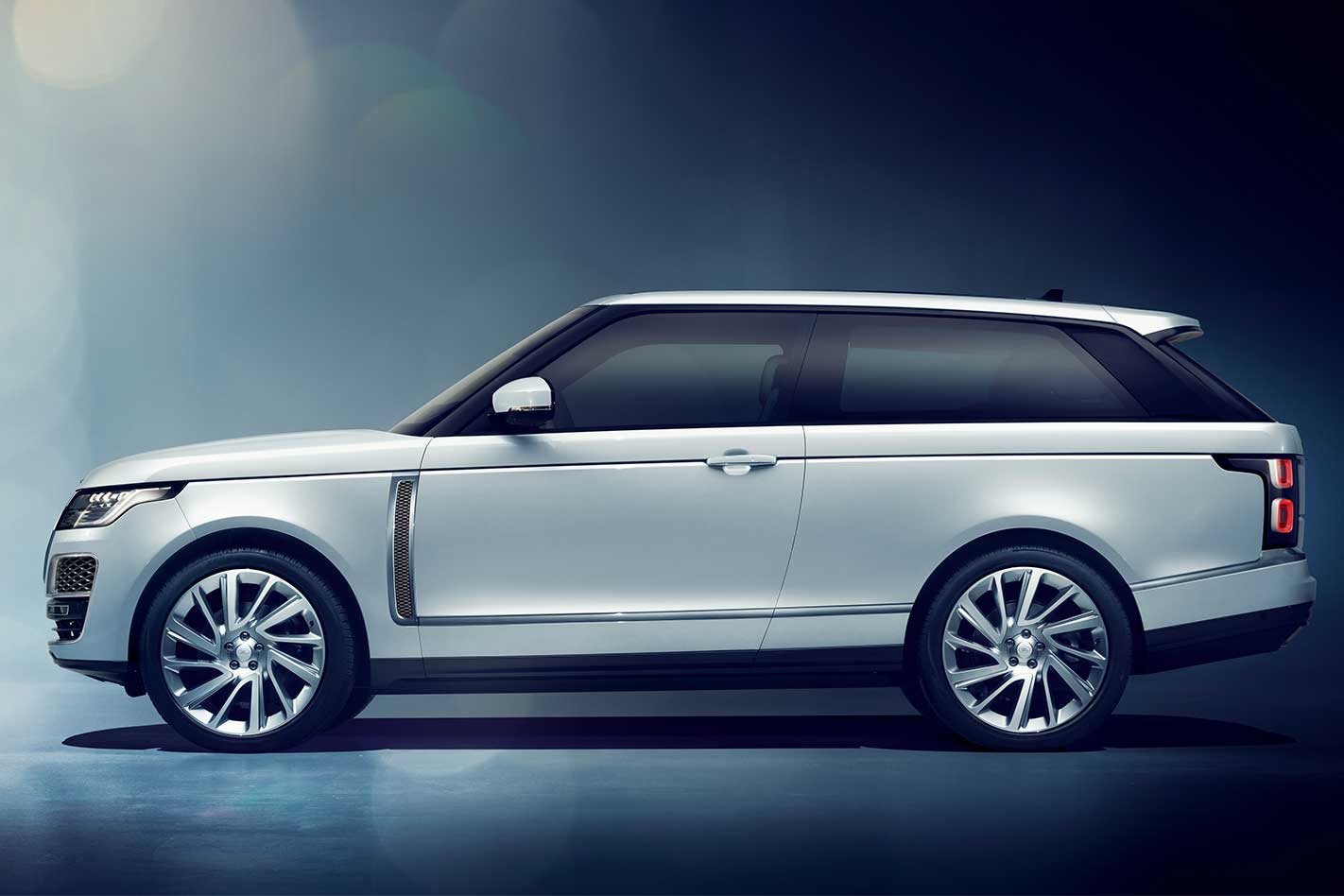
Designed to go up against the new generation of uber-expensive large SUVs like the Bentley Bentayga, Rolls Royce Cullinan and the forthcoming Maybach-spec Mercedes-Benz M Class, the three-door SV Coupe – which debuted at last year’s Geneva motor show – would have retailed locally for well more than $500,000.
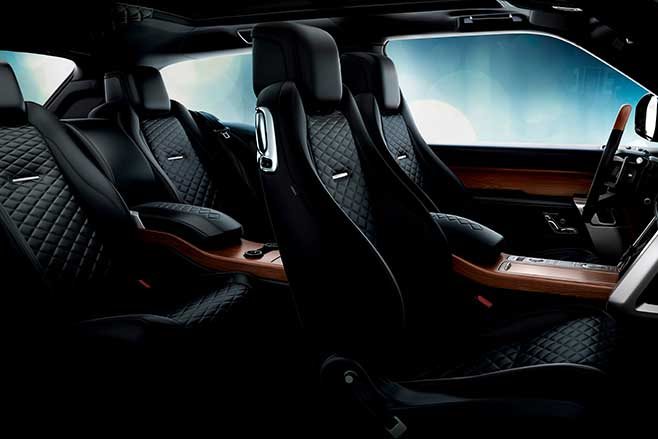
The bespoke three-door would have taken customisation to new heights for the company, with more than 100 paint choices and powered front doors, while the only panels that would have crossed over from a regular Range Rover were the bonnet and the lower half of the rear tailgate.
Set to be powered by a supercharged 416kW/700Nm 5.0-litre supercharged V8 courtesy of Range Rover’s go-fast division SVO, the SV Coupe was due to go on sale by March this year.
Unfortunately, RR’s parent company Jaguar Land Rover finds itself in the midst of a perfect storm. Sales of its Range Rover and Land Rover products have cratered in its biggest market, China, while its UK operations are about to shed thousands of workers in the midst of Brexit uncertainty.
The company says that the funds freed up by not building the projected 999 SV Coupes will be ploughed back into new product development – it’s not a bad idea, as the Indian-owned British stalwart has a long list of diesel-powered vehicles that aren’t popular with either buyers or governments around the world.
“We have taken the difficult decision to inform our customers that the Range Rover SV Coupé will not proceed into production. Instead, Land Rover is focusing its resources and investment on the next generation of world-class products,” the company said in a statement.
The MG Metro 6R4 was one of many Group B rally cars to take a sizeable departure from the model it was based on, but with a mid-mounted 300(ish)kW V6 and a 0-100km/h time that would give a Porsche 911 a run, it’s arguably the wildest of the bunch.
And now there’s one for sale in the UK.
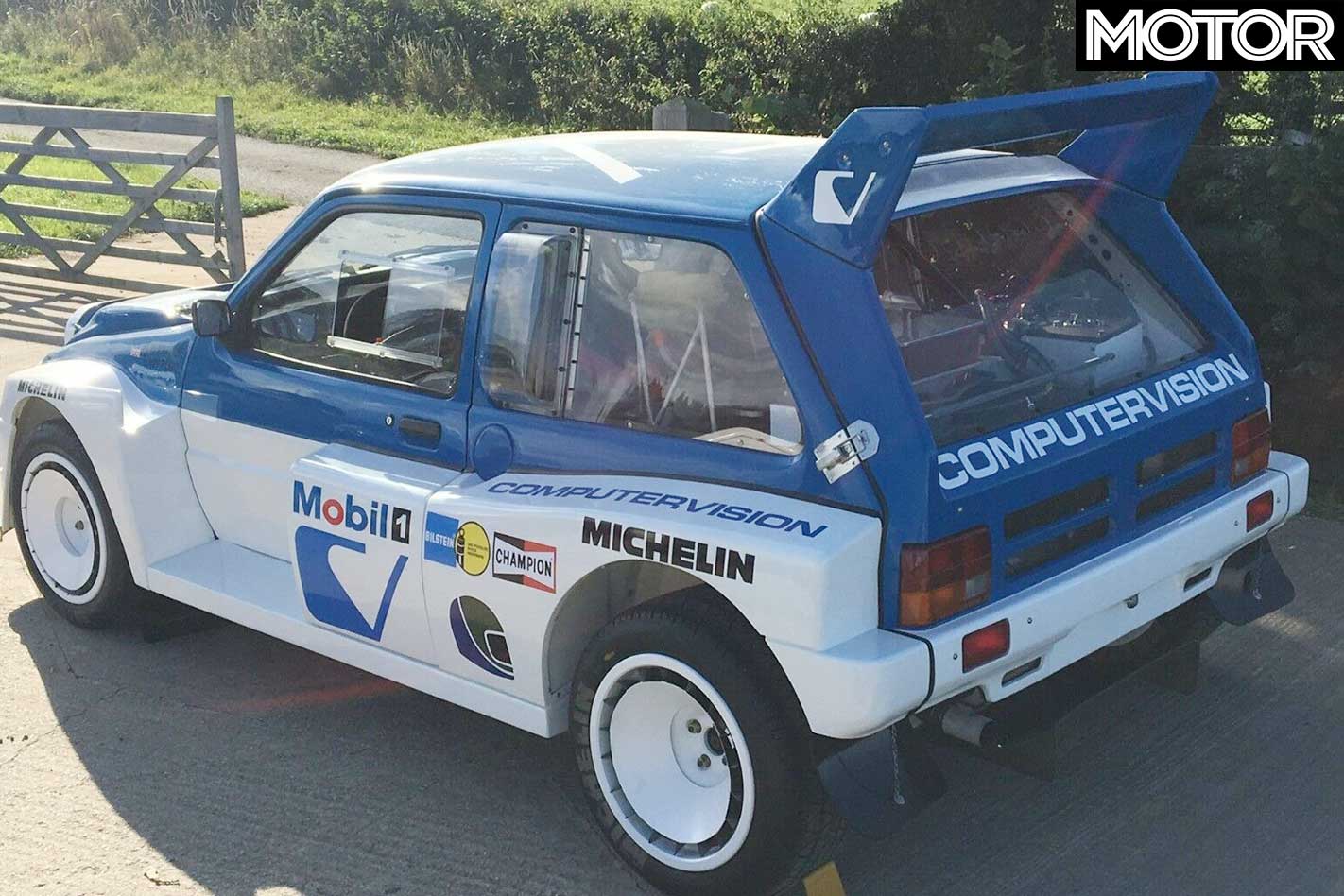
“Originally built to works factory specification by David Appleby Motorsport; this car is a comprehensive recreation of the original eleven Group B international specification competition cars,” says the listing on RA Classics.
Sporting a “fully original V64V engine and 5-speed transmission,” the drivetrain has been recommissioned by MG Metro 6R4 specialist Pete Goodman.
“In addition to originally manufacturing V64V engines throughout the Group B era, it was Pete who built the V64V that powered Tony Pond’s 6R4 to 3rd place in the 1985 Lombard RAC rally, what would become the most successful result for any 6R4.
“The V64V remains even today the only engine to be designed and manufactured exclusively for rallying applications.”
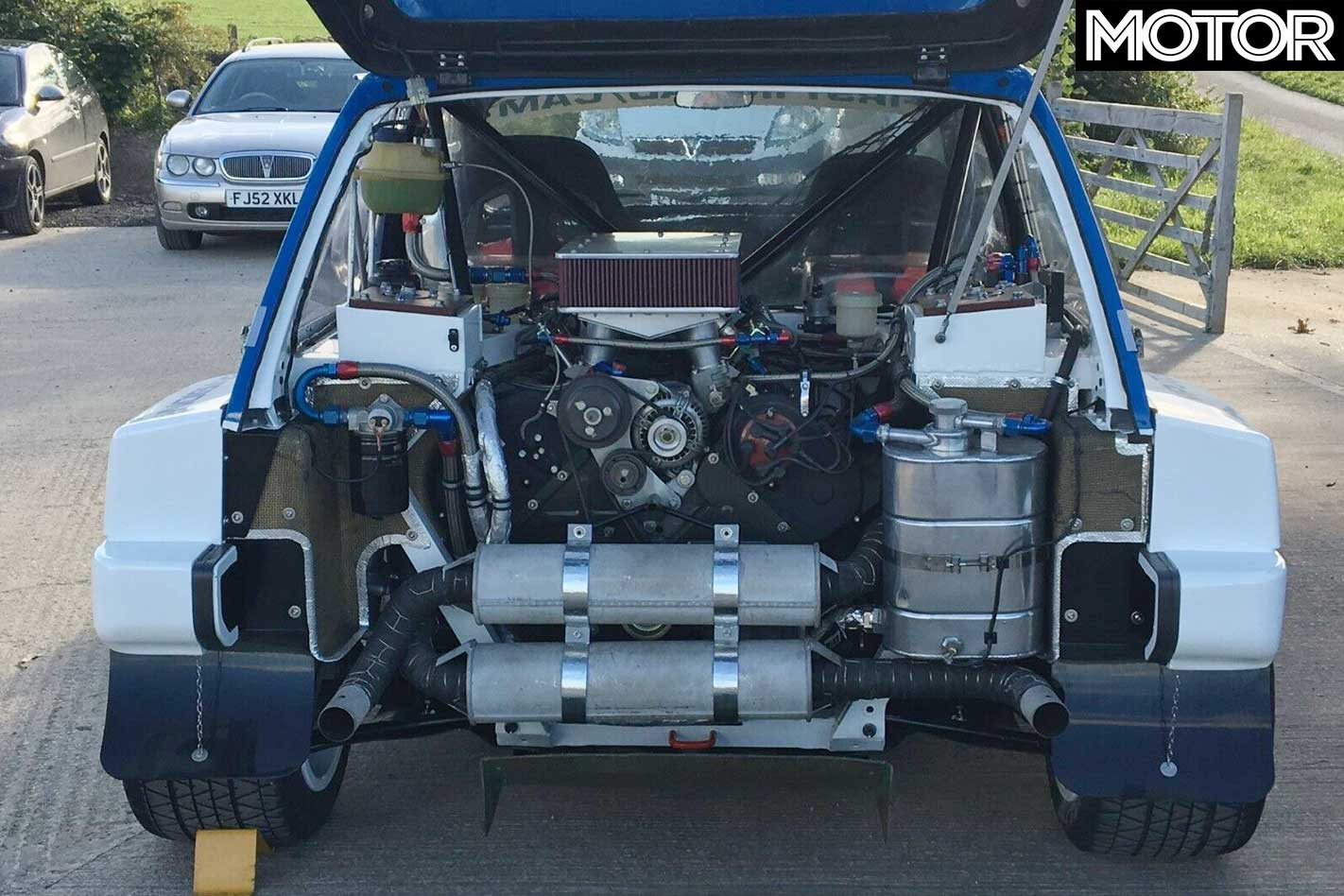
If you need to see just how much of a weapon the 6R4 is, a video of WRC star Craig Breen driving one at full pelt surfaced in mid-2017, while Pond himself once said they were “difficult to set up, noisy and smelly, but great fun.”
Colin McRae also raced a 6R4 on occasion, with his car appearing for sale a few years ago at around AUD$500K.
The car offered by RA Classicswill set a buyer back an extra AUD$130K for a total of around $630,000. The listing asks for £350,000.
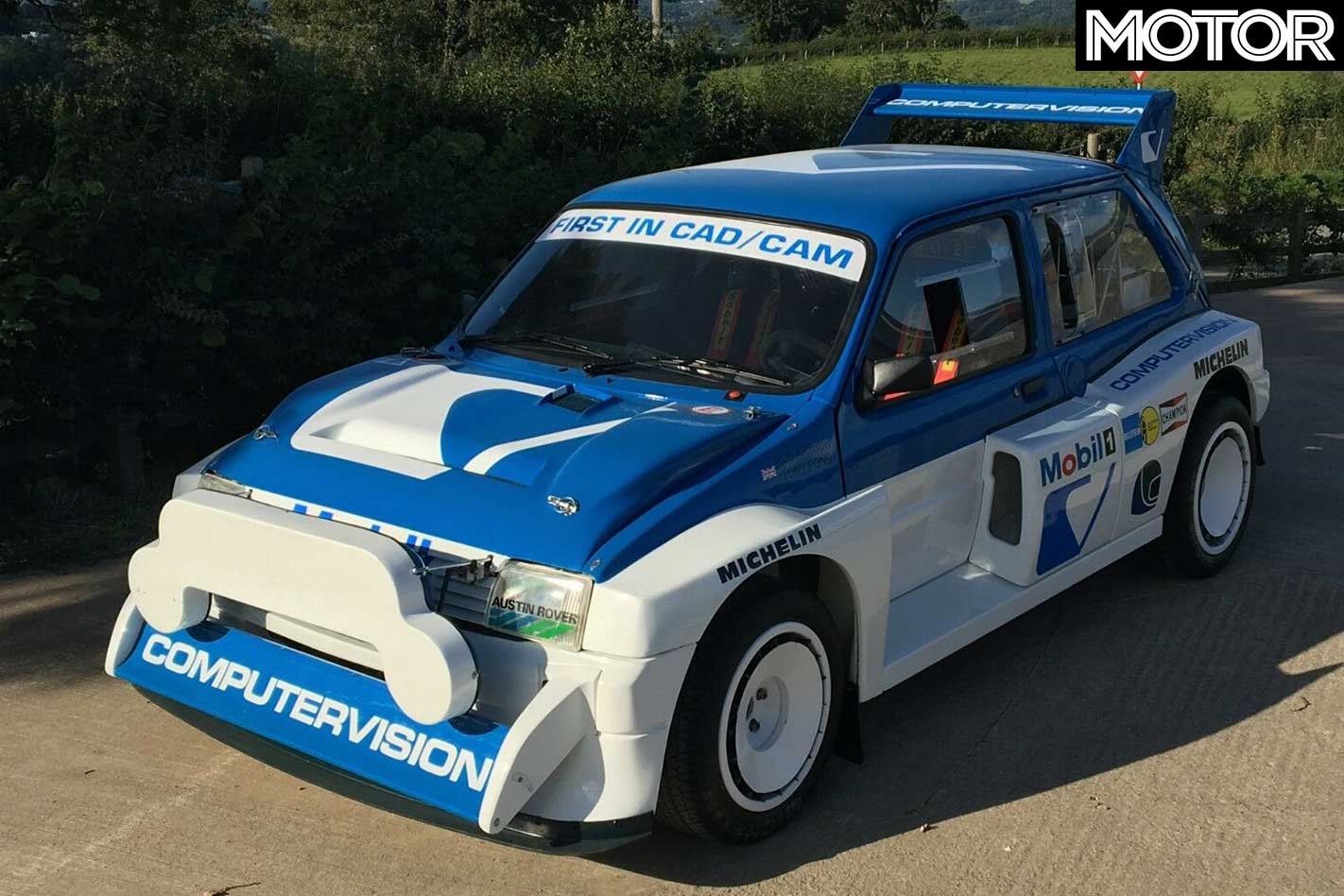
“The interior retains the original dashboard, gauges, clocks and switches, all of which have been restored using the original spec loom installed on site by one of the original 6R4 auto-electrical experts, John Bevan.
“Authentically finished in its original blue & white colour scheme and adorned with the iconic Computervision livery; this 6R4 represents a fundamental part of rallying, motorsport and automotive history.”
