
FERRY Porsche built his first sports car in 1948. The little silver roadster was based on lightly modified Volkswagen mechanicals, but its tubular spaceframe had the engine and rear suspension turned 180 degrees, making it mid-engined. Even as this ‘Type 356’ was being developed, however, Porsche was designing a more production-viable coupe, with a sheet-steel chassis retaining the VW’s original rear-engine placement.
Very quickly, the production 356’s fitness for racing and rallies crossed the Atlantic. In 1950, with the US post-war market booming for European sports cars like the Jaguar XK120, Porsche’s new US agent, Austrian-born Max Hoffman, proposed a more affordable, stripped-out roadster version.
Ah, reader – not so fast. This car, the Type 540 (or America Roadster) appeared in 1951. Proving too heavy in steel, Porsche outsourced production in aluminium. It proved spectacularly expensive (at US$4600 in 1951) and just 17 were produced.
By 1954 – Porsche built only its 5000th car in March of that year – Hoffman’s US market alone was accounting for around 30 percent of Porsche production. (In total, 75 percent of annual production was for export markets including, since 1951, Australia.)
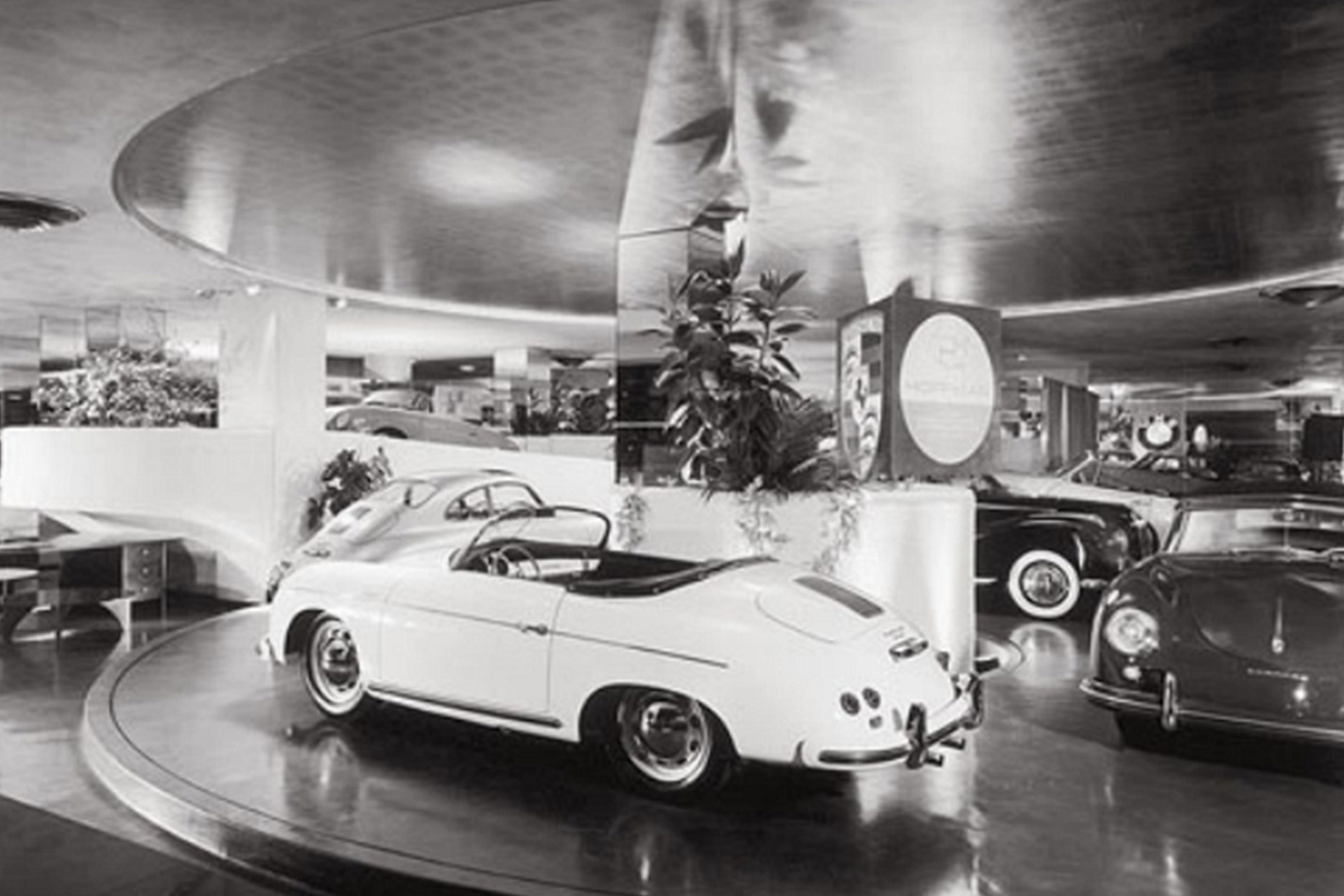
The 356 coupes and cabrios were still expensive, however (US$4284 for a Super coupe, $4584 for a cabrio), prompting stripped-out American versions of each (US$3445/$3695). However, weekend racer rivals like the Triumph TR2, Austin-Healey 100 and the new Chevrolet Corvette, reignited the roadster idea – with Hoffman setting the bar at US$3000.
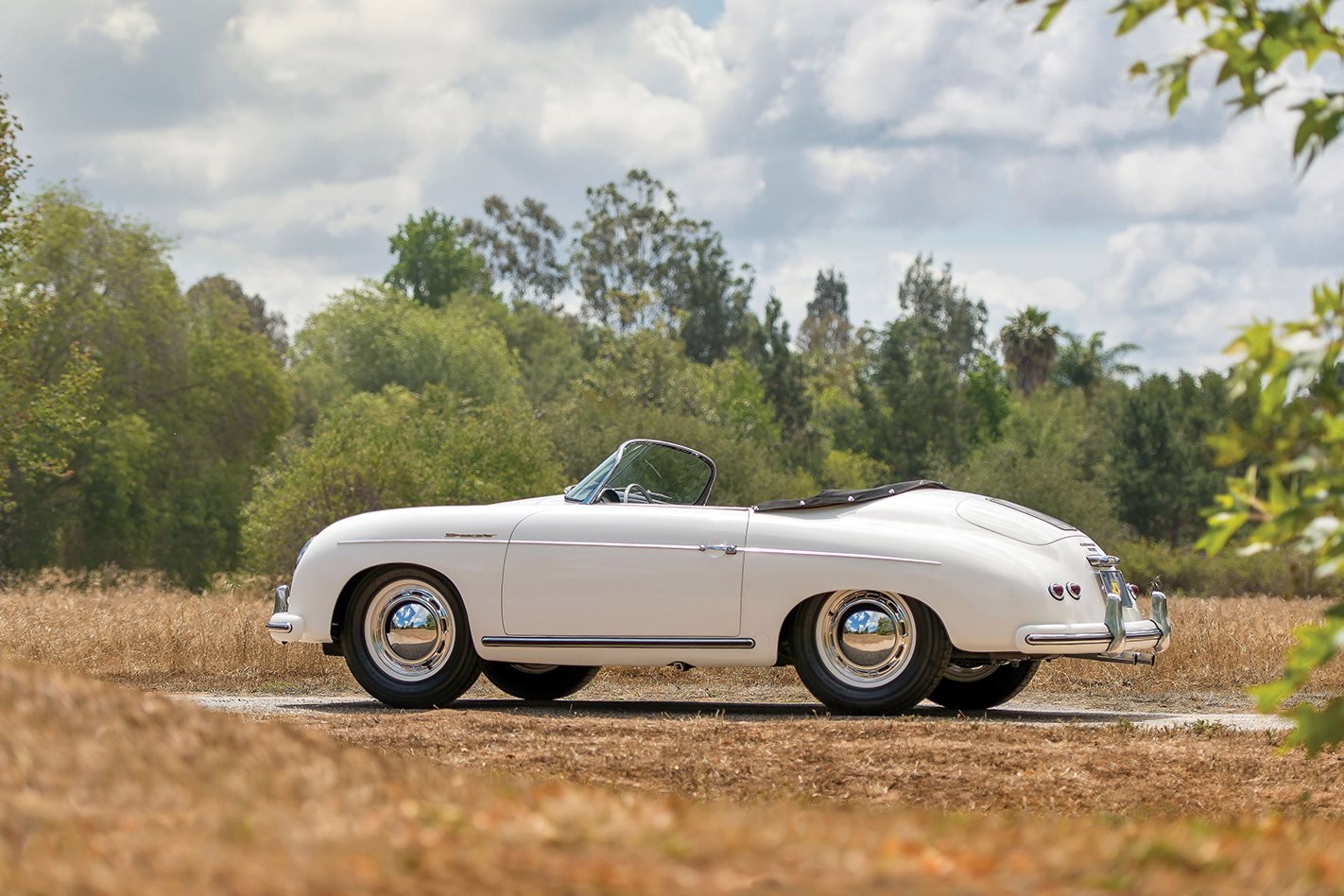
The resultant 356 Speedster made its debut in September 1954, priced at US$2995 (before ‘mandatory options’). Based on the 356 Cabriolet, but with revised rear bodywork, it featured a cut-down windscreen, slot-in side curtains and a low, basic soft-top that reduced overall height by 80mm (to 1220mm), making headroom a joke.
However, with its 760kg kerb weight, agile handling and strong drum brakes, the Speedster was quick to make its mark on the US sports car racing scene.
Porsche built 1234 ‘pre-A’ Speedsters (pictured) before the heavily revised A-series replaced it in October 1955. Also released to other markets, the 356A Speedster introduced 45kW 1600 and 56kW 1600 S engines, along with significant suspension and gearbox upgrades and 15-inch wheels.
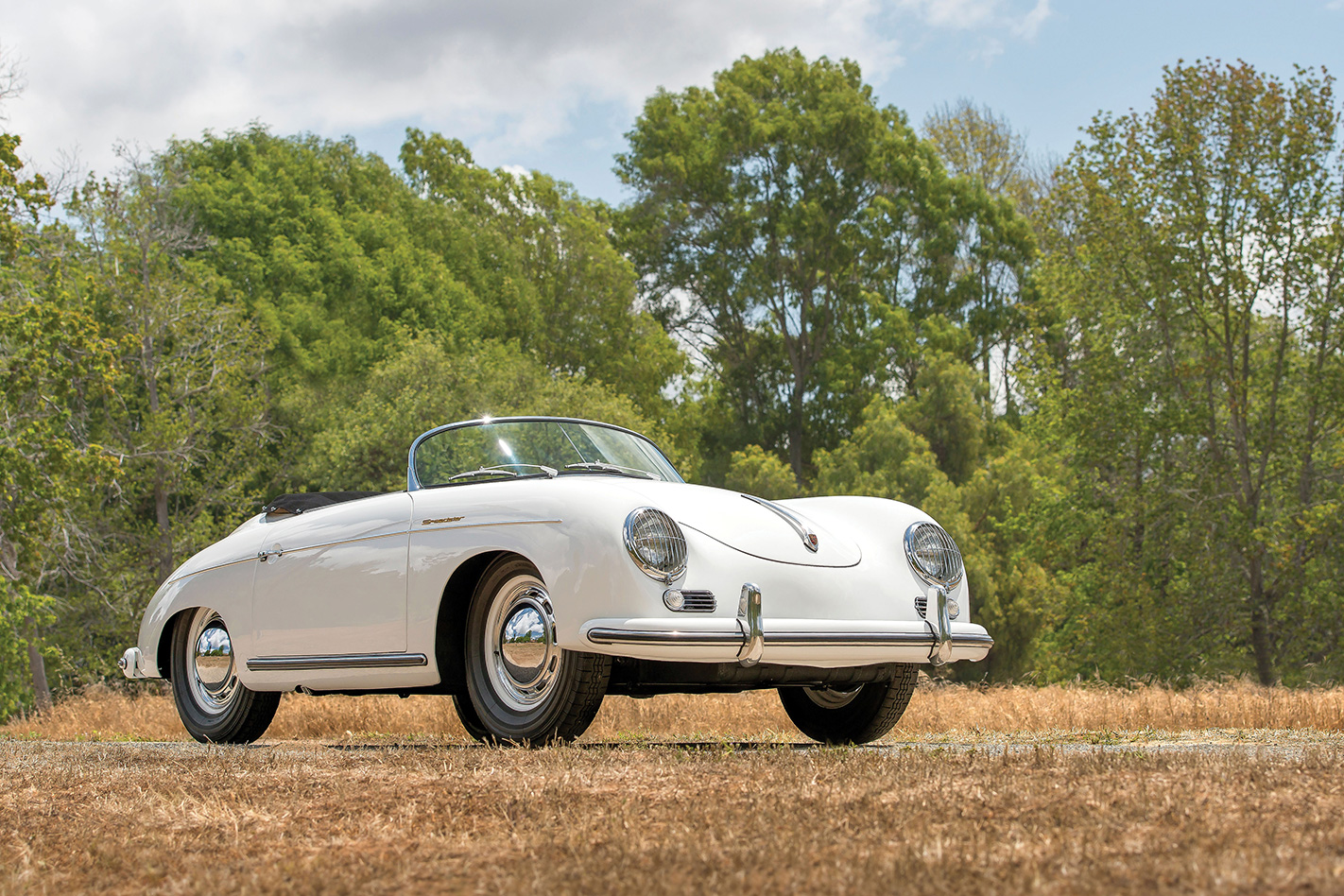
Ironically, Americans also killed the Speedster (with a total of around 4500 built), with demand for more comfort prompting its replacement in August 1958 by the 356 Convertible D.
Cutting the cab line
The Speedster was developed from the production 356 Cabriolet’s fabricated monocoque, with suspension by (VW-sourced) transverse torsion bars with trailing links at the front and a similar, elongated set-up with swing axles at the rear. Wheels were 16 x 3.5-inch. The racer-removable windscreen and simple soft-top allowed a lighter internal structure; longer rear bodywork extended to shorter doors. Glasspar (US) offered a factory-approved fibreglass hardtop from 1955.
Pulling up its dak-daks
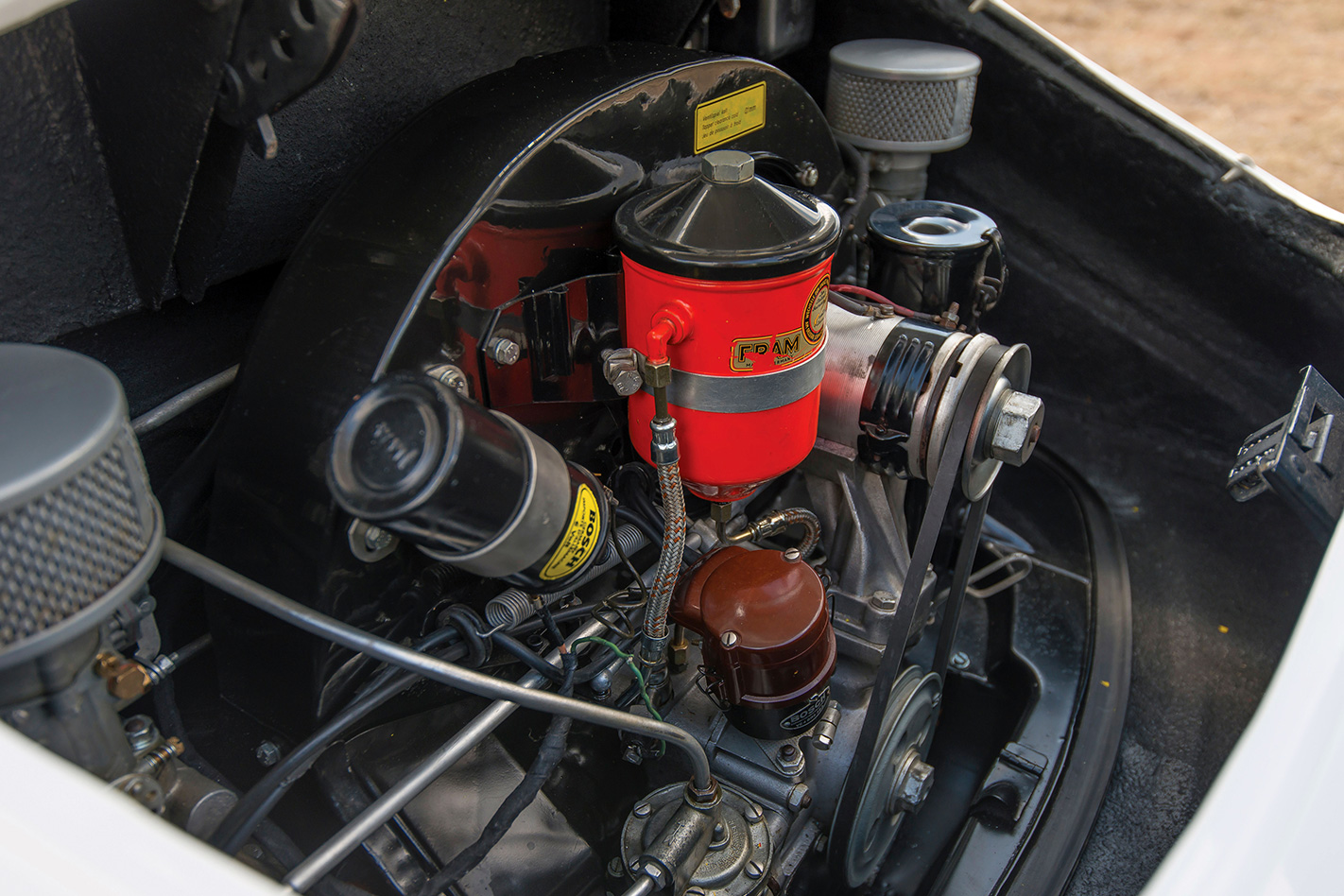
Base ‘pre-A’ Speedsters got the air-cooled, pushrod ohv (1488cc) 1500 flat four, producing 41kW, while an extra $500 bought the 1500 S, with larger (40mm vs 32mm) twin Solex carbs, making 52kW at 5000rpm. Four-speed all-synchro box had shorter 3rd and 4th ratios, making for 0-100km/h in 10 seconds (1500 S). October 1955 brought a substantially new 356A Speedster, with 1.6-litre engines.
Spartan warrior
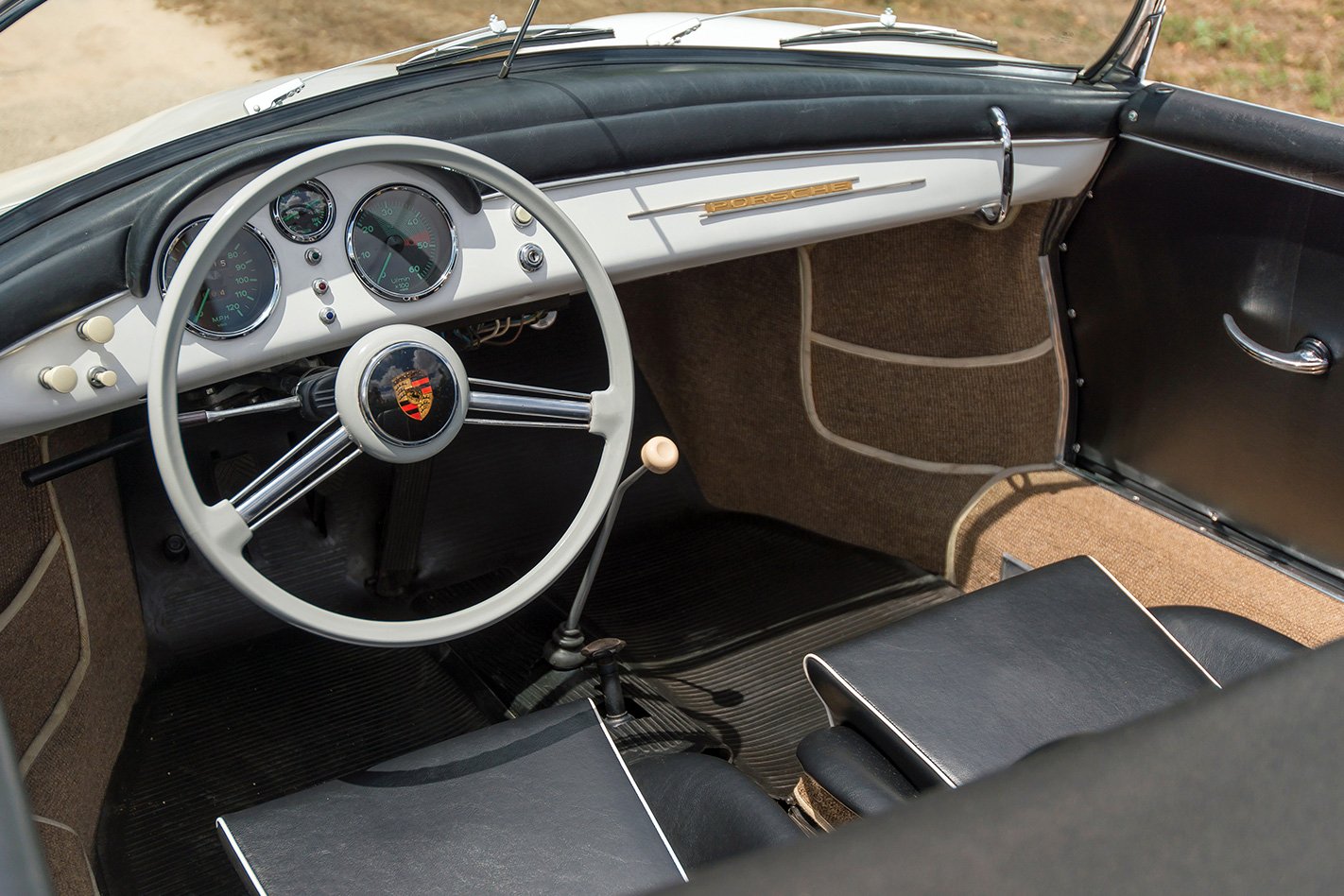
Not a lot to report on the interior; that was the point. The flat dash officially had only a speedo and temp gauge – with a $15 ‘mandatory option’ tacho and heater. Seats were lightweight, one-piece buckets. Floor-hinged pedals, gawky gearlever and dak-dak exhaust note kept the vibe very Volkswageny. The pre-A series cars, distinguished by quad ‘beehive’ tail lights (A-series had teardrop tail lights), only had three exterior colours: white, red and blue.
It was a savvy move by Audi to branch out its A3 small car into two distinct bodystyles back in 2013. In a segment that was made up almost entirely of three- and five-door hatchbacks, the injection of a handsome four-door sedan was a breath of fresh air.
And even five years on from its arrival, the A3 sedan still looks smart. The only problem is that it’s no longer going to be the only three-box sedan in its segment (the Mercedes CLA, as a low-roofed ‘four-door coupe’ isn’t quite in the same league).
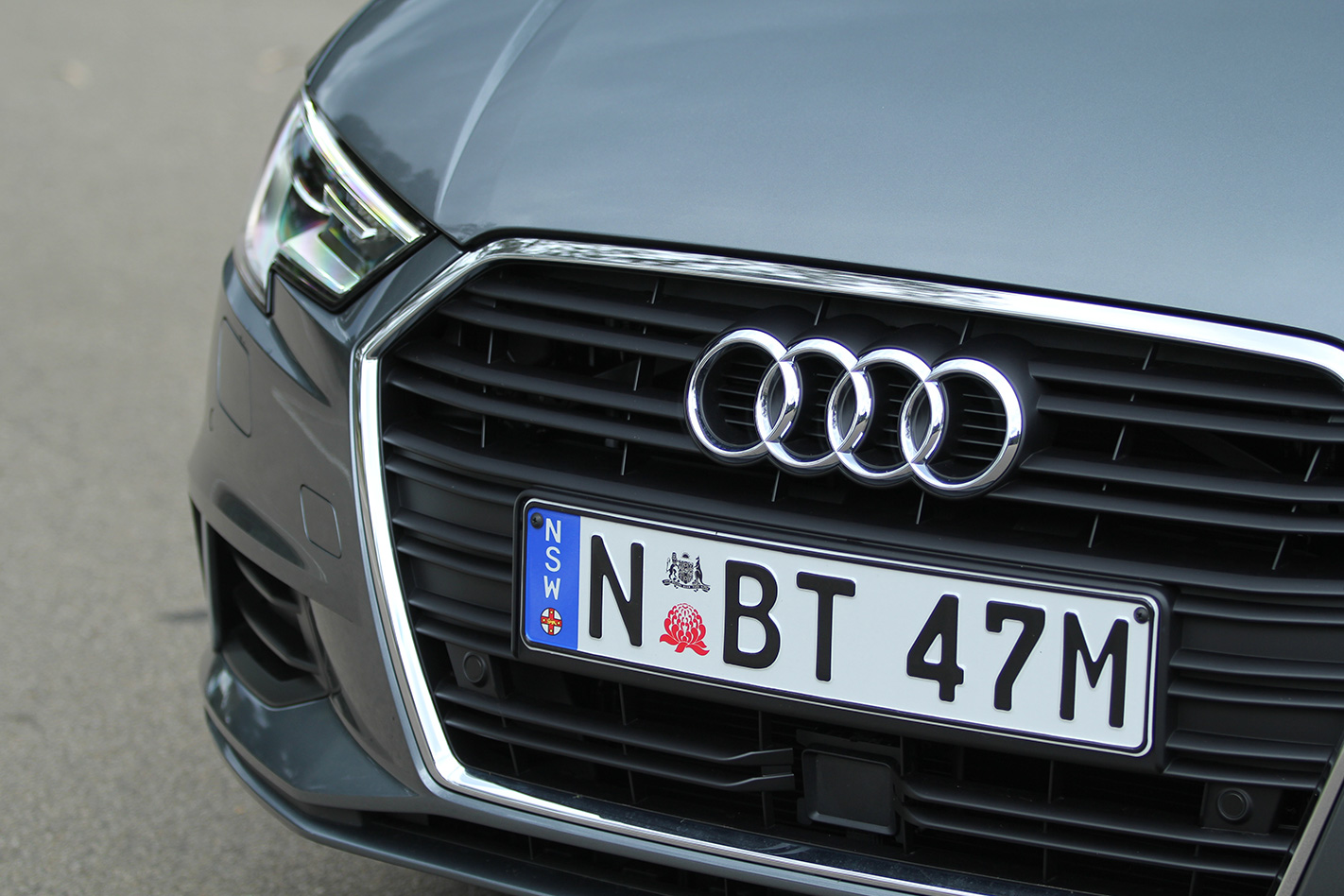
The Mercedes A-Class sedan is on its way and so is a booted version of the BMW 1 Series. Is the A3 still a competitive contender, or are you better off waiting for something newer?
VALUE
The A3 makes a convincing argument for itself before you’ve even driven away from the dealership. This 2.0 TFSI Sport limited edition arrived in August, bringing an enhanced level of specification above the standard two-litre front-drive A3 sedan, all for a very reasonable $500 above the regular Sport’s retail. Oh, and metallic paint is standard, too.
That’s decent value for a premium sedan, especially given its closest rival, the Mercedes-Benz CLA 200, has much less power and torque, less equipment, and costs $52,900.
STANDARD FEATURES
Limited edition spec brings the Technik and Assistance option packages as standard, replacing the regular instruments with Audi’s slick 12.3-inch Virtual Cockpit instrument digital dash panel, a higher-end multimedia and navigation system with touchpad interface, a sports steering wheel, active cruise control, lane-keep assist and high-beam assist.
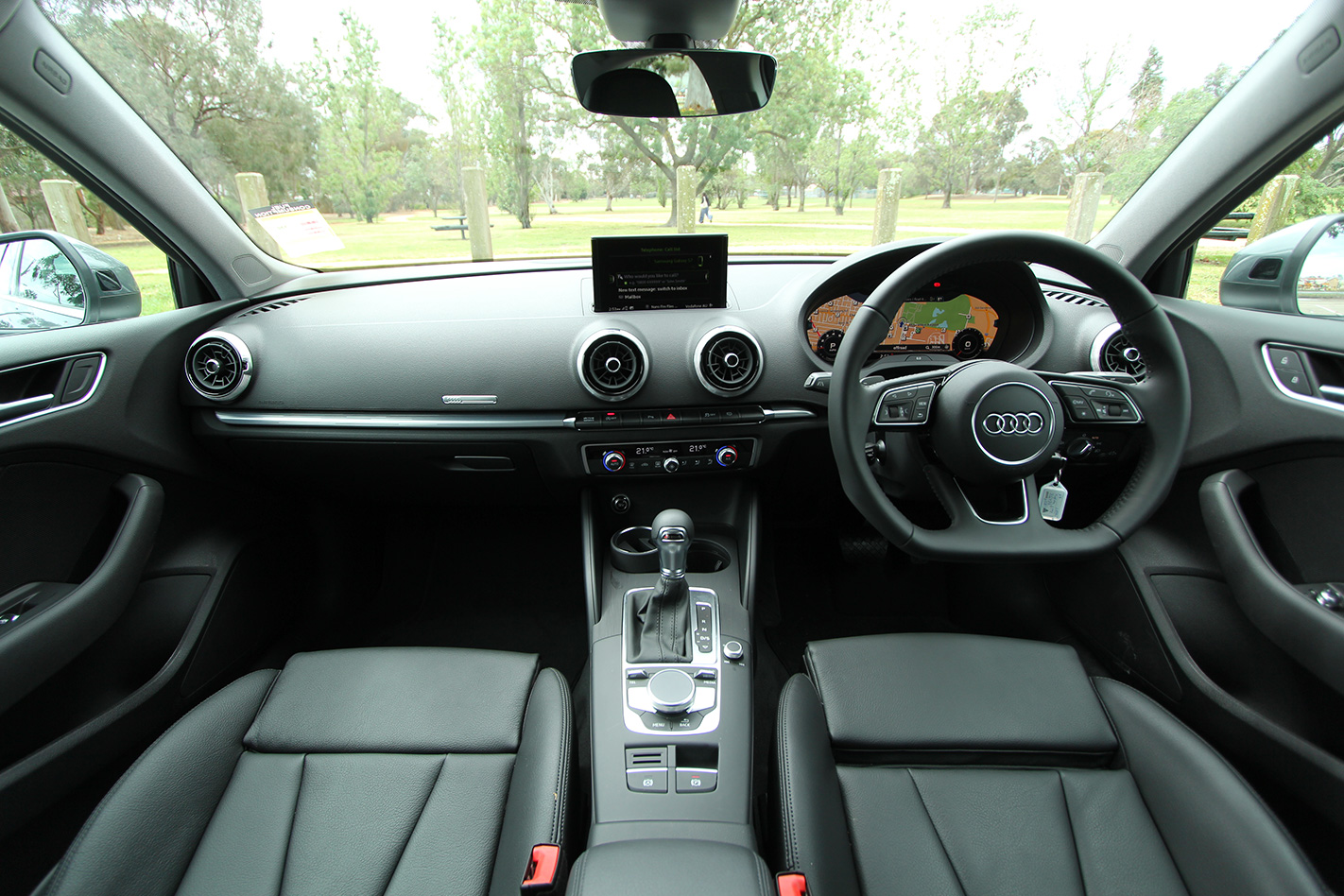
And that’s on top of usual luxuries that you expect in this price bracket, like dual-zone climate control, power windows and mirrors, rain-sensing wipers and dusk-sensing headlamps. However, keyless entry and ignition remains a cost option at this end of the A3’s model spectrum.
But for most people, that won’t matter terribly much when they clamp eyes on that electronic instrument panel. Displaying full colour graphics across 12.3 inches of screen real estate and able to reconfigure the data that’s presented to you, it’s a visual centrepiece that definitely adds a high-tech sheen to a car that’s starting to look a little bit behind the times.
SIZE
At 4.46 metres long and 1.8 metres wide, the A3 sedan is actually slightly shorter than a Mazda3 sedan, but 15cm longer and fractionally wider than the five-door A3 hatch.
Wheelbases are the same, so the size difference doesn’t result in an appreciable gain in cabin space, but it does liberate a lot more cargo capacity for the sedan. With a seats-up boot volume of 425 litres, the A3 sedan can carry nearly 50 litres more luggage than the hatchback before the rear seats need to be folded down.
SAFETY
The A3 sedan comes standard with seven airbags as standard, along with stability control, AEB, ABS, traction control and electronic brakeforce distribution. In Limited Edition form, there’s also active cruise control, lane-keep assist and high-beam assist to further ease the driver’s load – and thus improve their concentration on the road. Rated a full five stars for crash performance by ANCAP, the A3 sedan has a healthy safety score.
COMFORT
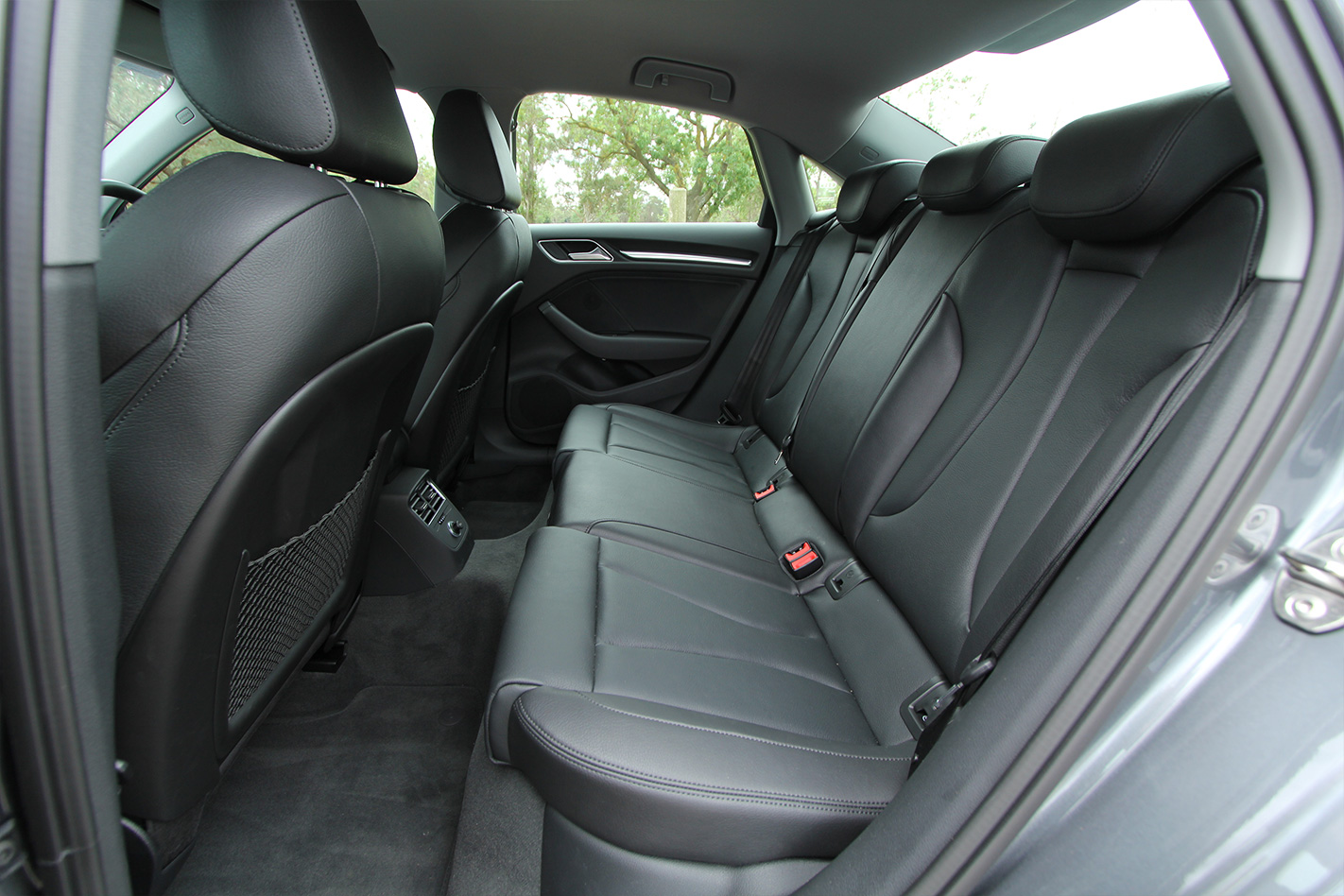
The A3 sedan may belong to a size class beneath the likes of the BMW 3 Series and Mercedes-Benz C-Class, but in terms of being able to accommodate four adults in good comfort it actually isn’t too far off from those larger, more expensive rivals. The secret lies in its transverse-engine mechanical layout, which maximises cabin space by keeping most of the engine, suspension and drivetrain away from the middle of the car.
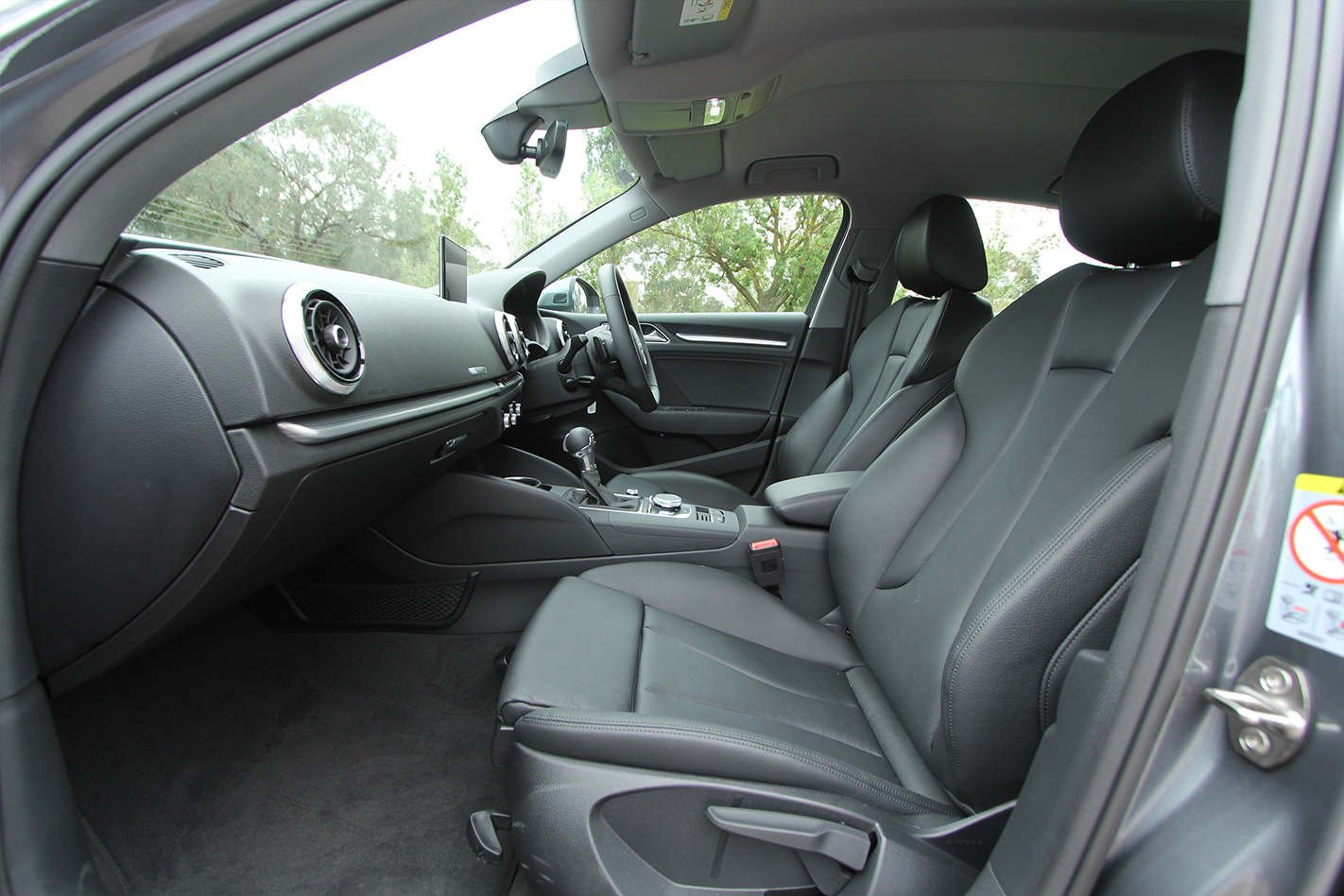
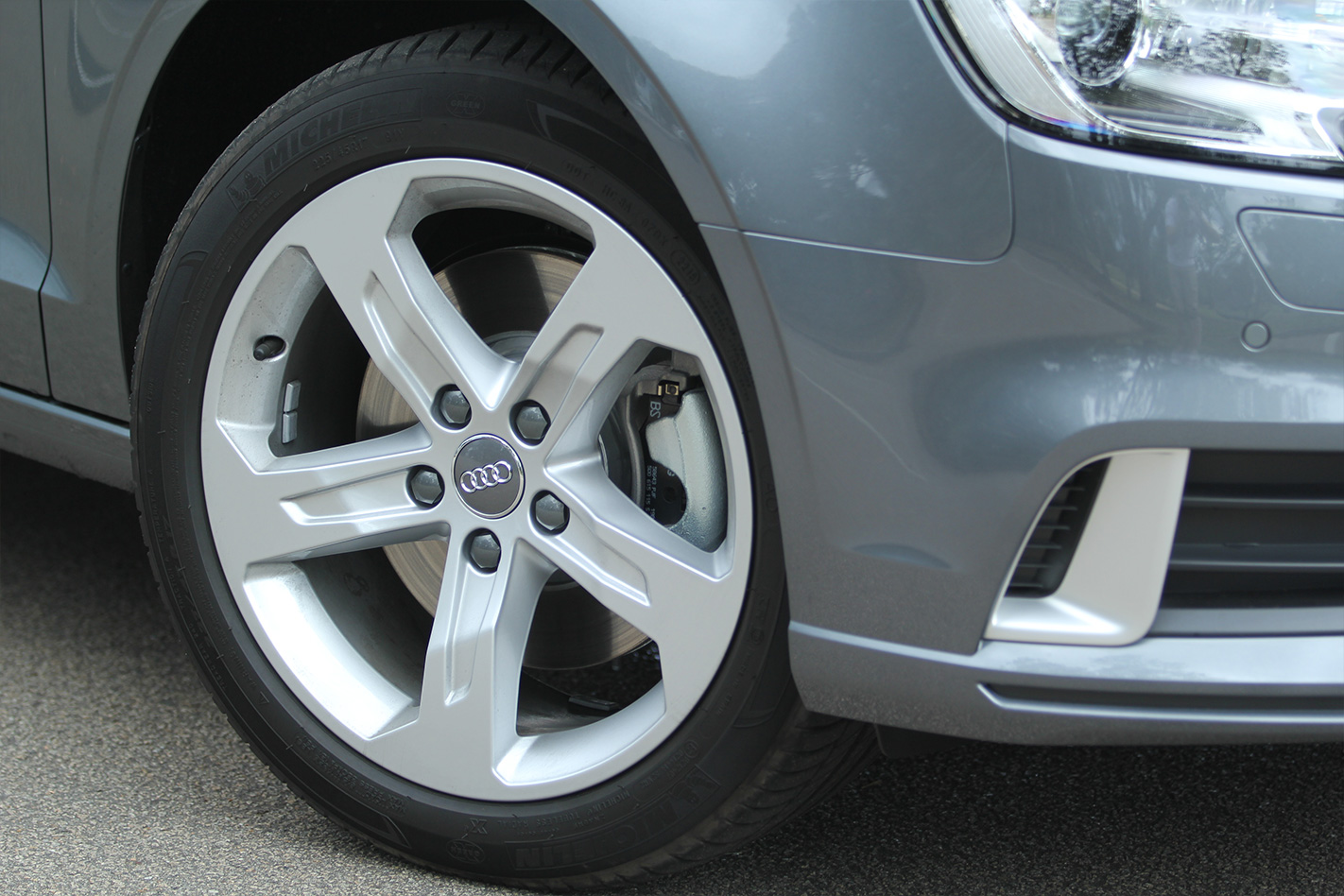
Combine those generous cabin proportions with supportive – if slightly flat and manually-adjusted – front seats and a nicely reclined rear bench (along with dedicated rear passenger air vents) and the A3, even at the lower end of its model hierarchy, delivers a premium experience for driver and passenger alike. Ride quality on urban roads is also superb, no doubt helped by the chubby sidewalls of the standard 17-inch wheels
ON THE ROAD
The A3’s 2.0-litre turbo petrol four-cylinder makes a healthy 140kW and 320Nm, enough to supply plenty of oomph for zippy around-town motoring and comfortably highway cruising. The seven-speed dual-clutch automatic it’s connected to is a sophisticated unit as well, producing crisp and decisive gearshifts whether in manual or full-auto mode, though it can occasionally stumble when crawling at low speed through stop-start traffic.
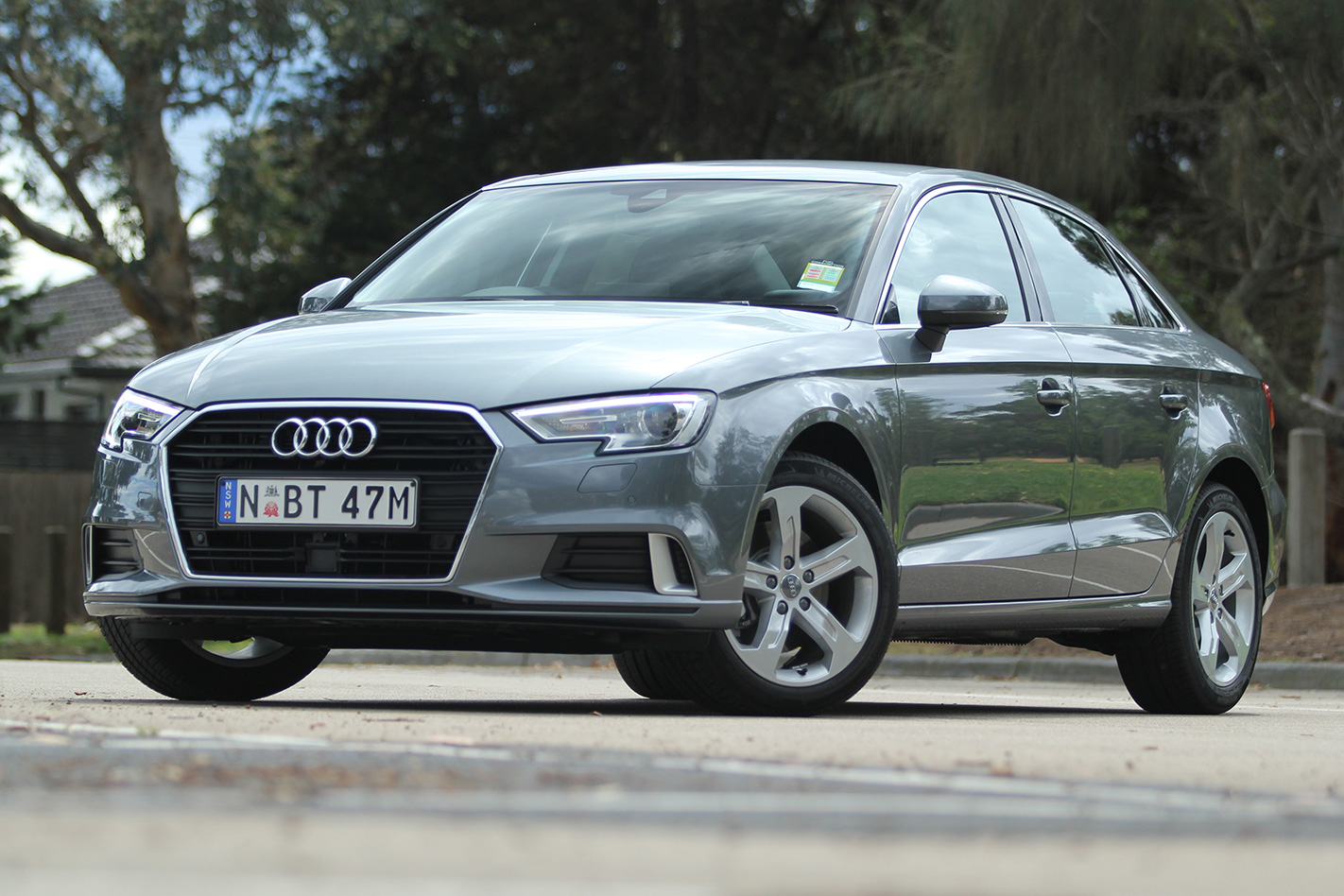
Power goes to the ground through the front wheels only (you’ll need to pay more to get all-wheel drive grip in an A3), and wet weather can induce some wheel spin under hard acceleration, but otherwise the A3 is fairly vice-free. The steering is light yet fast and direct, cornering grip is plentiful and it’s a genuinely fun car to drive along a winding road.
Having the ability to change the car’s behaviour between Comfort and Dynamic modes also allows you to soften or sharpen its driveline and steering, while an Individual mode enables even more customisability. In other words, it’s easy to adapt the A3 to your own tastes.
VERDICT
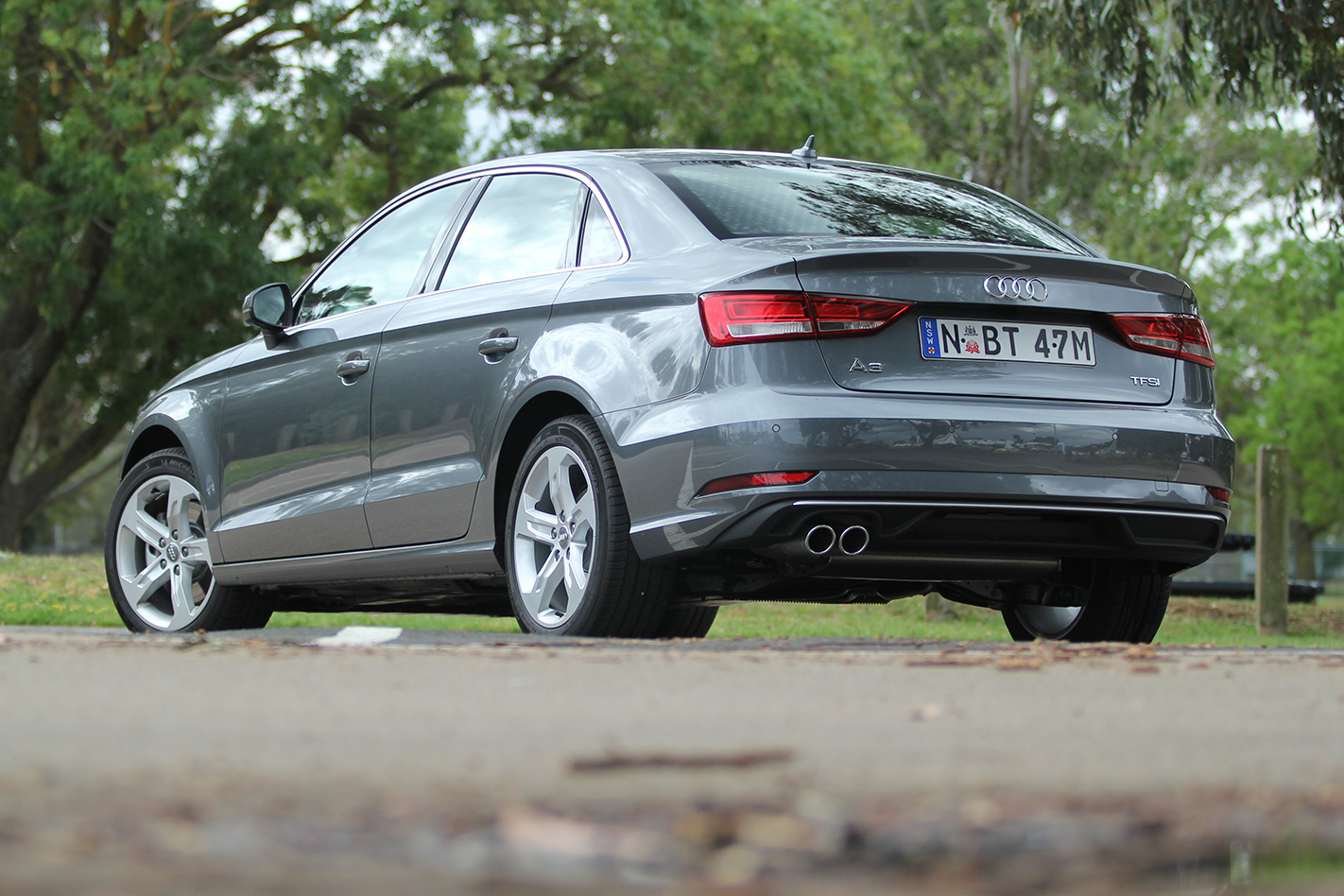
Sure, there are some crow’s feet showing at this point in the A3’s lifecycle, but its transition into old age has certainly been a dignified one. It still drives superbly, has excellent packaging that makes it easy to live with and, if you ask us, it still looks like a handsome three-box sedan.
Until BMW and Mercedes return fire with an equally-competent small sedan, the A3 is still the best of its ilk.
Aaaah, Citroen. It’s one of the oldest car brands in the world and, like a good French Chablis, it’s steeped in cultural reverence and appreciation by those who know.
But for those that don’t – and judging by the brand’s miniscule sales here in Australia, that’s most of us – Citroen is a rarity, a quirk, a négligé. It doesn’t necessarily mean the cars are bad, though and in some cases, there are some diamonds in the rough that are being overlooked.
VALUE
This is the Citroen C3 Shine, which is the only variant offered here in Australia. It lists at $23,490 before on-roads, while a white C3 with no options will cost you $23,990 driveaway at present (December 2018).
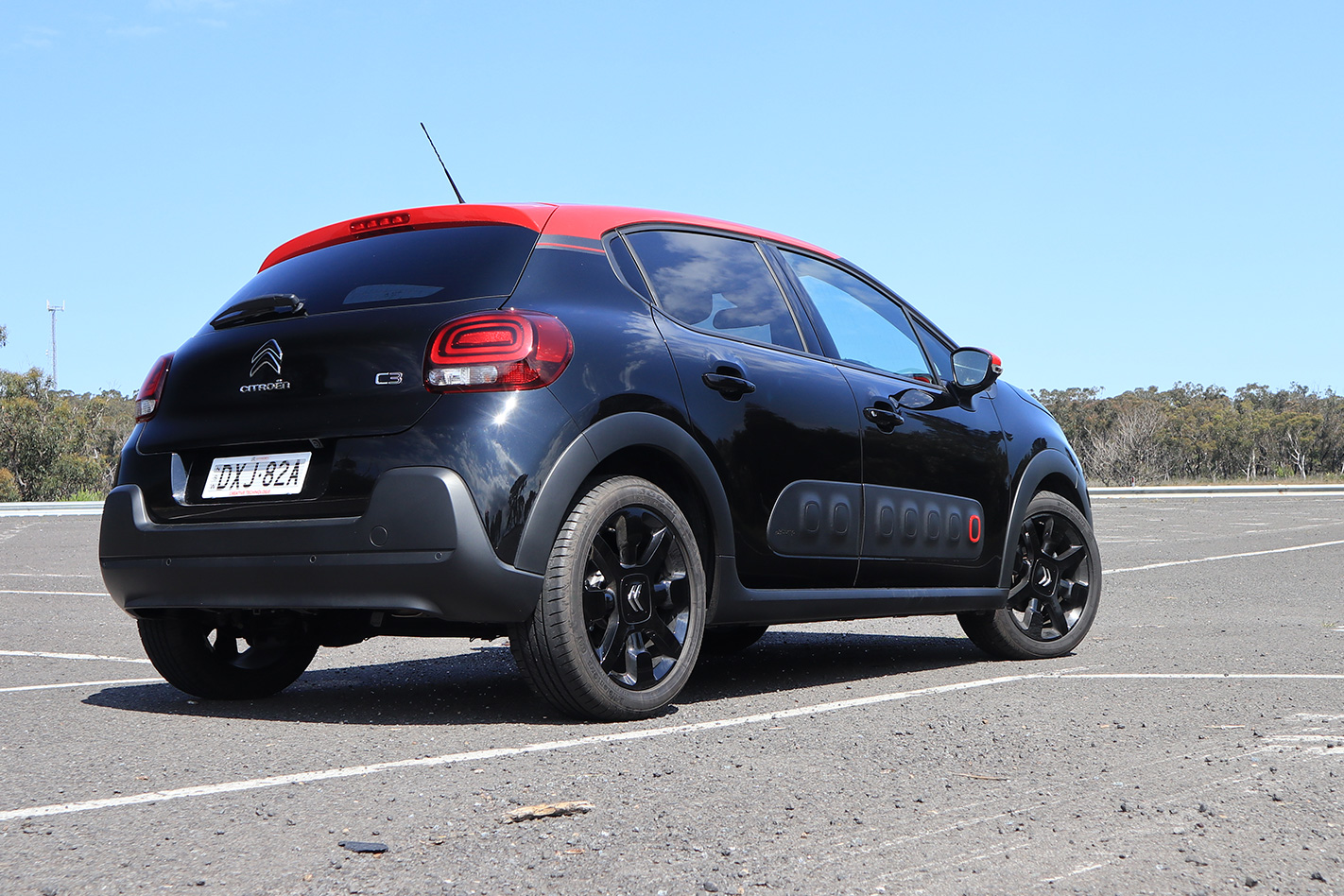
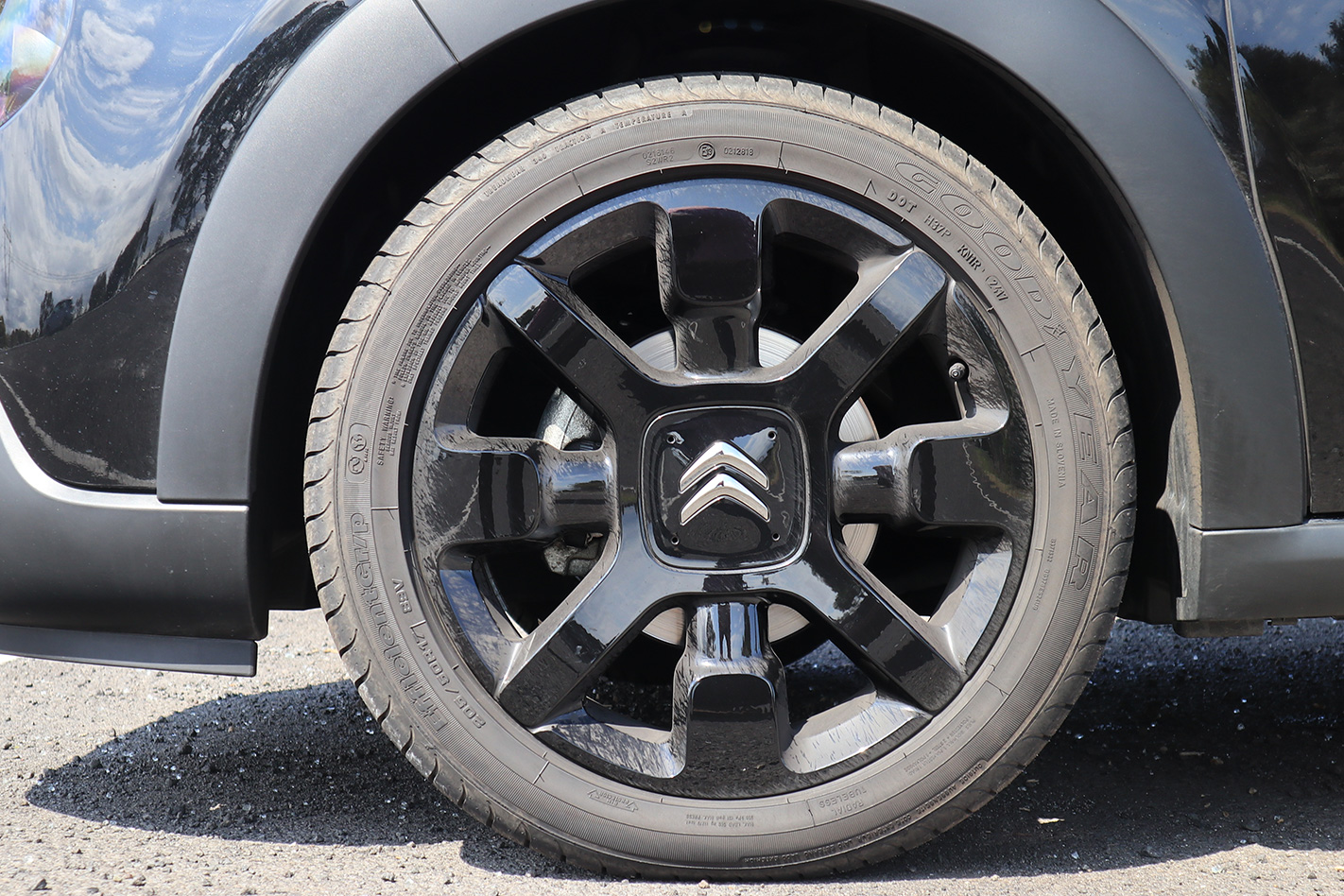
Our red tester (no cost) comes with a glass roof ($600), extra red trim ($150), black rims (no cost option) and something called a Connected Cam, which can record vid and pics via a camera through the windscreen. At $600, it’s not cheap, but it’s the first instance of a factory-fitted dash cam that we’ve seen.
You’ll be cross-shopping against a swathe of Japanese and Korean compacts like the Suzuki Swift (and even the smaller, similarly quirky Ignis), the Mazda 2, Kia’s Picanto and the Toytota Yaris.
Fuel-wise, the little C3 likes 95 RON, but it doesn’t drink much of it. Over a full-tank run, we used 42 litres (its tank holds 45) to travel a smidge over 600km, giving us a real world fuel figure of 6.0L/100km. Against a claim of 4.9L/100km, and with two large lads and cargo aboard, that’s a win in my books.
STANDARD FEATURES
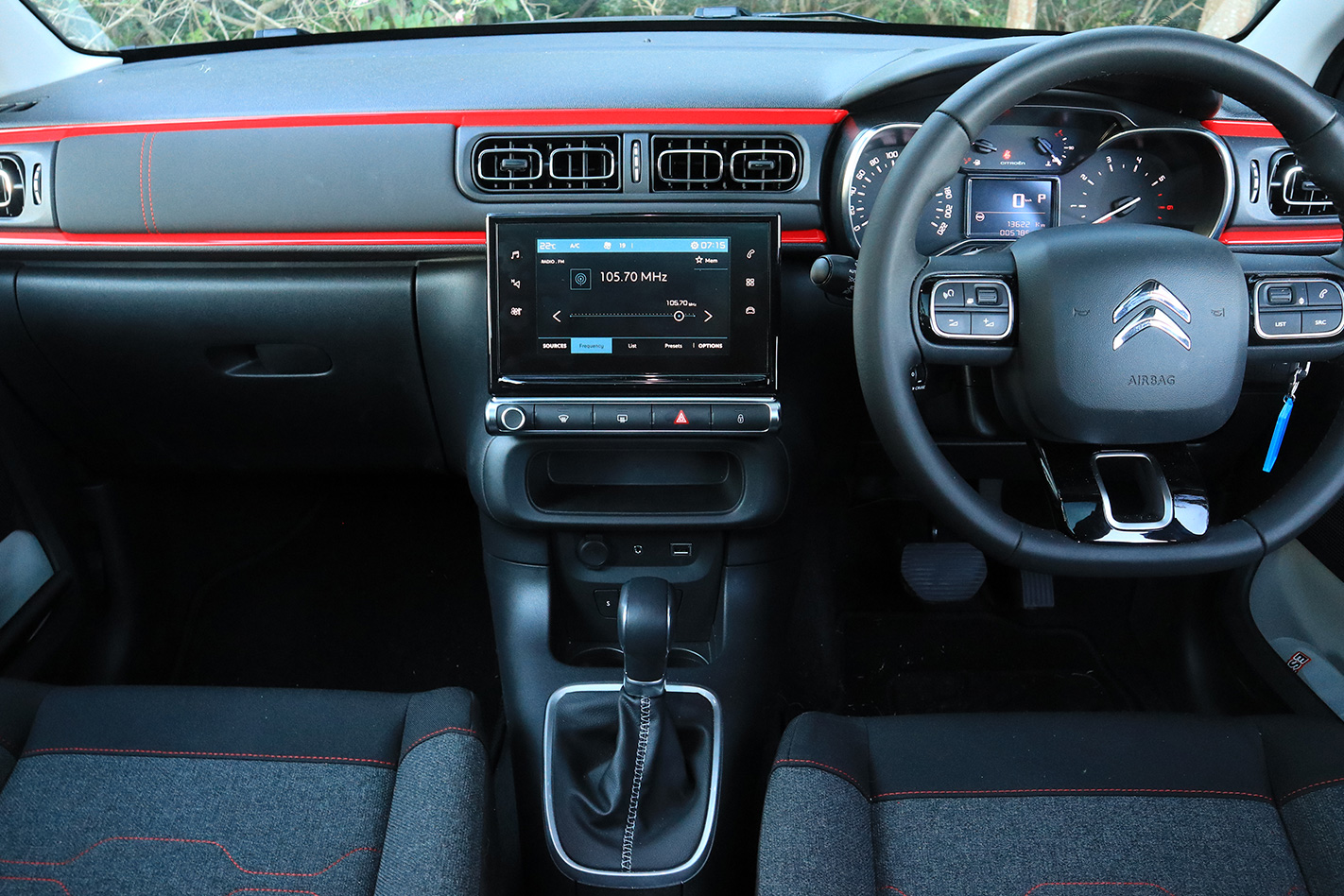
The front-wheel-drive C3 comes with a 1.2-litre three-cylinder turbocharged petrol engine mated to a traditional six-speed automatic transmission.
It’s also got automatic headlights and wipers, a reversing camera, a small multimedia touchscreen with Apple CarPlay and Android Auto, a digital speedo, a leather-wrapped steering wheel and a switchable stop/start mode.
It also comes with speed sign recognition, which worked almost flawlessly over a 1200km trip up the north coast of NSW. Its only flaw was a propensity to pick up signs located at the bottom of freeway exits, even if you were proceeding past them.
It does miss out on a bit of kit, though, especially in the driver aid department. It does come with beep-only lane departure control, but it misses out on AEB. Citroen says it’s working on adding it to the car in 2019 – but we’d guess this will put pressure on that driveaway price.
SIZE
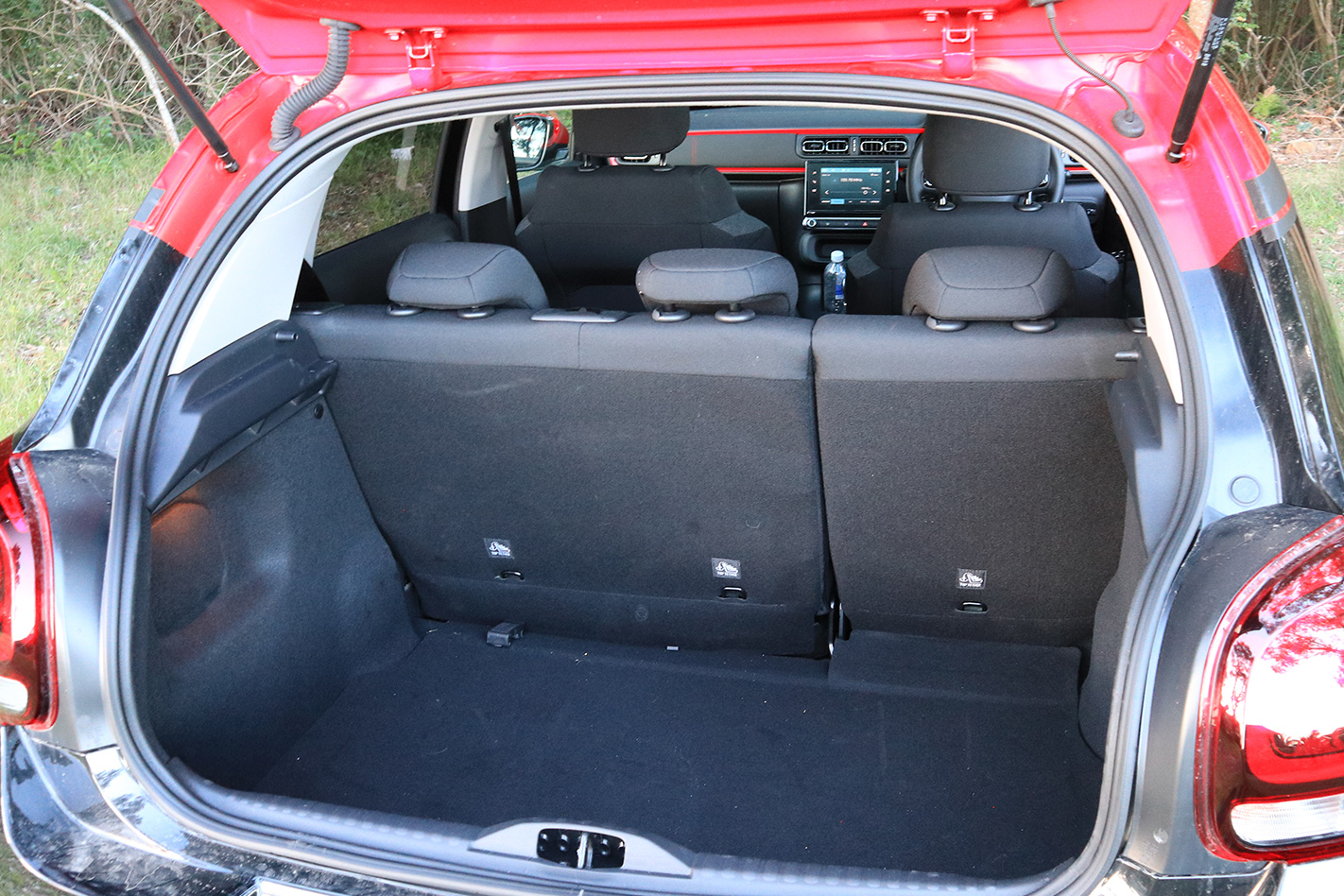
“Wow… there’s so much room in here! You’d never think that by looking at it,” remarked my 22-year-old, and that’s a great way to sum it up. Wide door apertures, long-slung seats and plenty of head room means that the C3 feels like a larger thing inside.
There’s not a lot of boot space at 300 litres, but it does jump to 922 litres with the seats folded down. Getting bigger items in is a bit tricky, as the loading lip is raised and the aperture itself is small – but having said that, I still rammed a full sized mountain bike in the boot with the wheels off.
SAFETY
The safety basics are present in the C3, with six airbags including full-length curtains and a rear camera with lines and sensors, although driver aids are limited to a clever and effective speed sign recognition system.
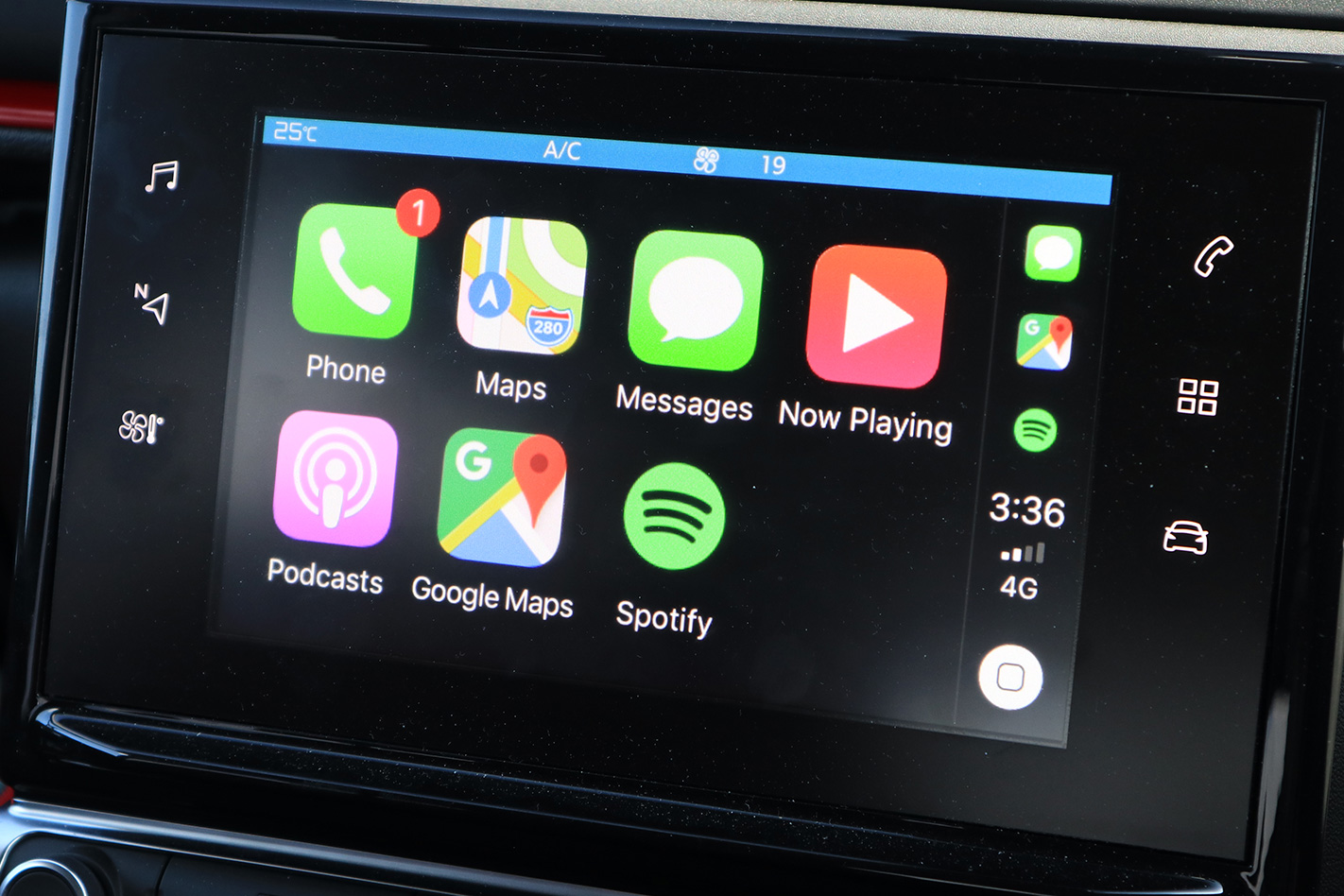
It’s only rated with a four-star safety score from ANCAP, though, mostly due to the absent AEB. Citroen says it’s working to make it available ASAP.
COMFORT
We jagged the C3 for a 1200km round-trip from the south coast NSW town of Wollongong up to the northern beachside city of Coffs Harbour and back over a weekend. To be honest, I thought we were in for a rough weekend in a tiny, underdone city car.
I was completely wrong.
For two 185cm fellas, the C3 proved to be an admirably comfortable and easy to use device that ate up the big miles with ease.
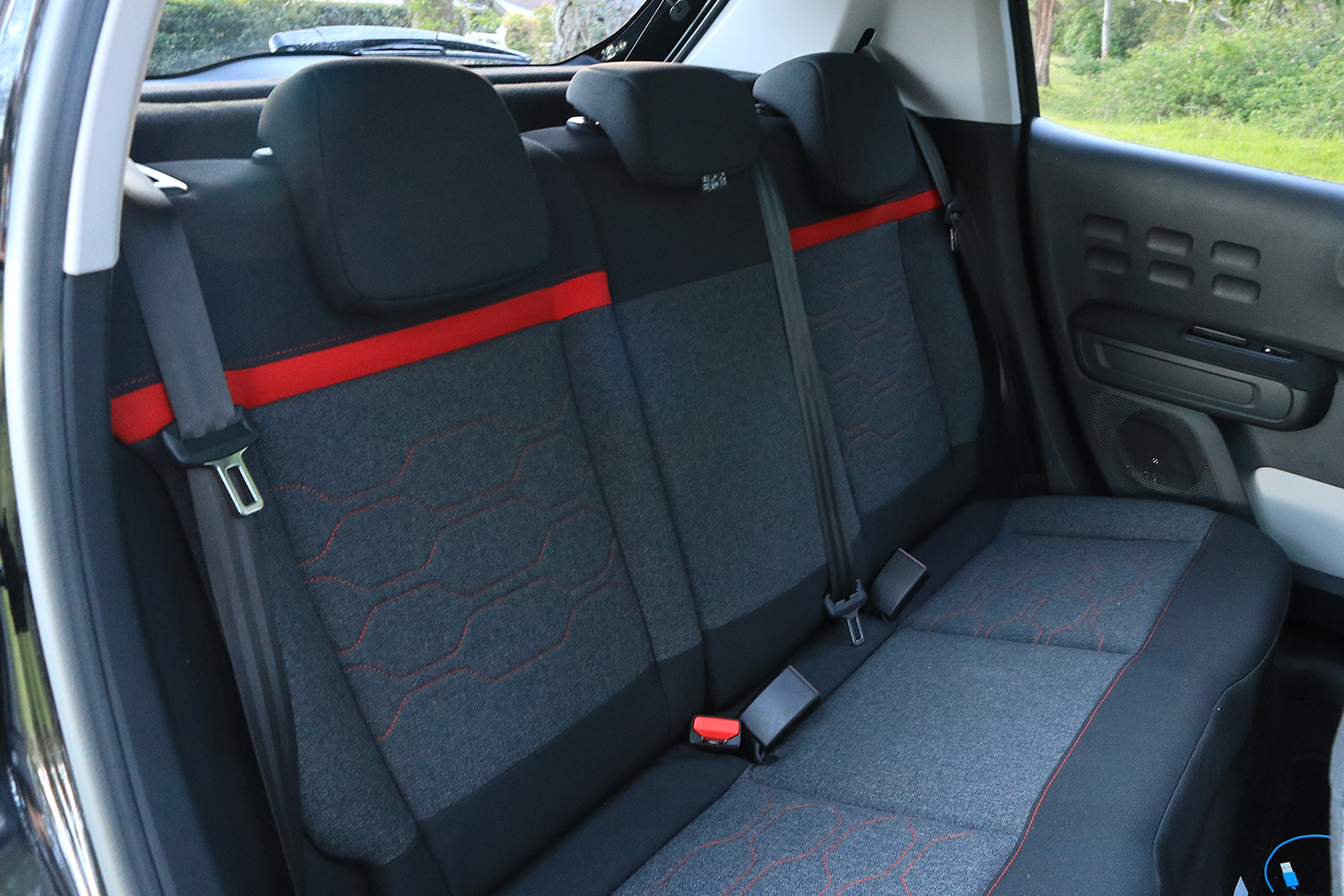
It’s simple, no-frills interior is a breath of fresh Gallic air, and the cloth-covered seats are firm, deep, supportive and low slung. The traditional dash and chunky little steering wheel are perfectly proportioned, and the small, simple digital readout is easily visible.
The multimedia system is a bit fiddly, but most of that goes away when you plug your smartphone in, anyway. There’s a single USB port paired with a 12-volt port for your energy needs, too, but none in the back.
It’s tight-ish in the rear, but nowhere near as cramped as you’d expect, with sufficient knee and head room for even middling-tall teens. There are also ISOFIX baby seat mounts for the little ones, and loading them in should be pretty easy through the decently sized rear door apertures.
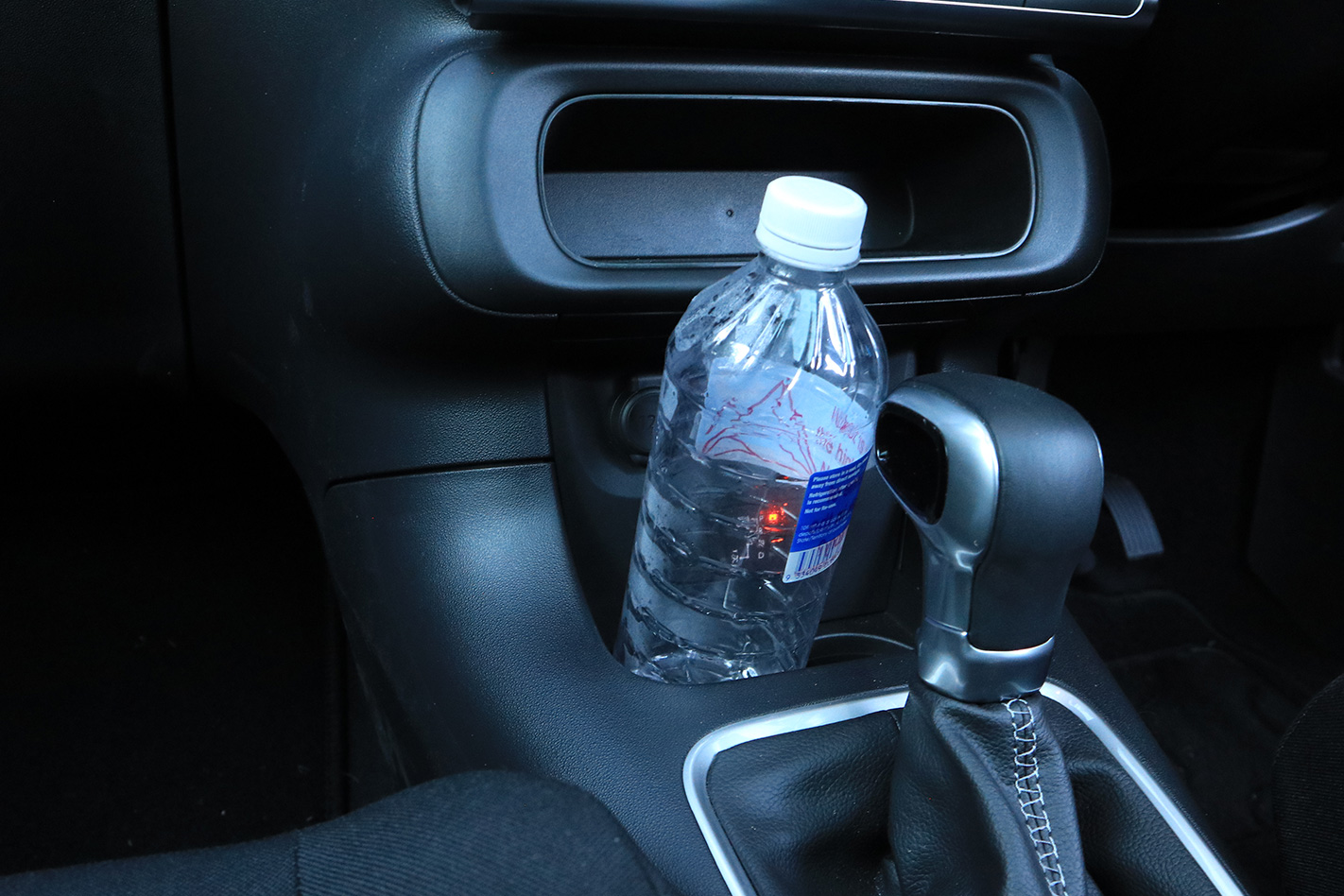
Storage is an issue though, with very few places to stow stuff. European car makers still don’t get our propensity for big drinks and a demand for them in our cars, and the C3’s bottle and cup holders aren’t great. There’s also little in the way of places for phones, wallets and the like, while the glovebox would be lucky to swallow a single glove, let alone a pair.
ON THE ROAD
Again, the C3 throws up a surprisingly spirited performance, despite its diminutive size. Based around a simple suspension architecture of struts up front and a torsion beam out back, the long-limbed little C3 has a lovely supple damper tune that allows it to simply hovercraft over the worst of our road imperfections. The steering is communicative and sufficiently direct, and the C3 simply eats up highway miles with a smile on its dial.
The drivetrain is surprisingly responsive too, despite its size. The three-potter petrol engine makes 81kw and a healthy enough 205Nm, and because it’s only pushing around 1090kg, it does a bang-up job most of the time.
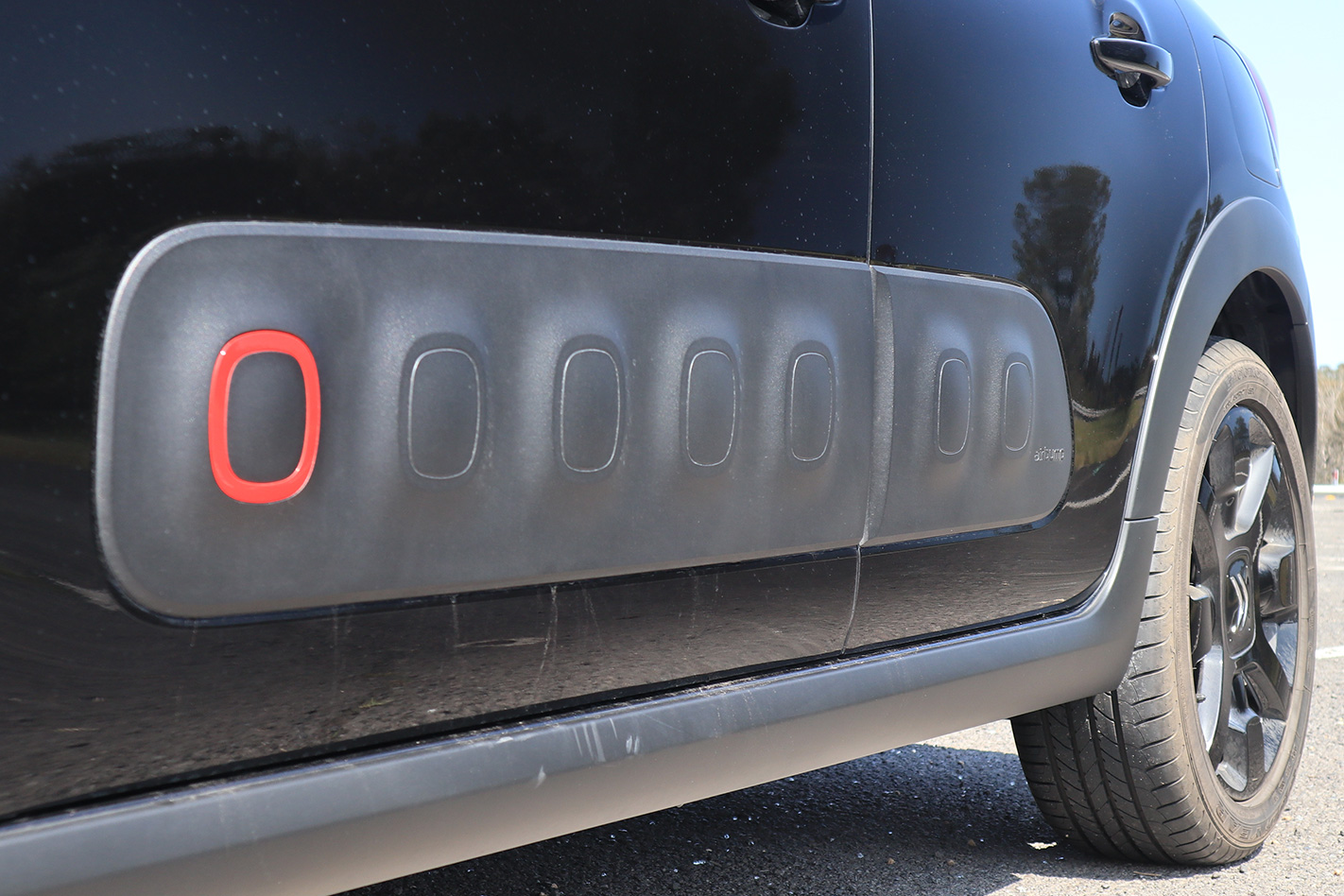
Downsides? The engine note could be considered a little coarse (‘characterful’ perhaps), and there are a few moments of indecisiveness at times from the automatic six-speeder, but nothing really to write home about.
VERDICT
Citroen has always been a purveyor of slightly off-beat but amazingly practical cars, and the brand has a very long history here in Australia.
Aside from the lack of AEB and questionable on-board storage, the C3 is a perfect example of the rule that there’s a car for everyone. If you’re looking for a city runabout with a sense of style and fun, and that’s also capable of doing a 200km jaunt standing on its head, then you really owe it to yourself to go and check one out.
Rotary engine key ring, $14.24

If the devil really does find work for idle hands then this miniature 51-gram rotary engine trinket might just keep you from doing something demonic. See how many revs you can chase with the tiny rotor, or bore others into submission with a protracted explanation of how brilliantly the divisive Wankel engine works. The manufacturer does not guarantee apex seal integrity or fuel consumption figures. aliexpress.com
Porsche 911 Turbo wheel clock, $2226.85
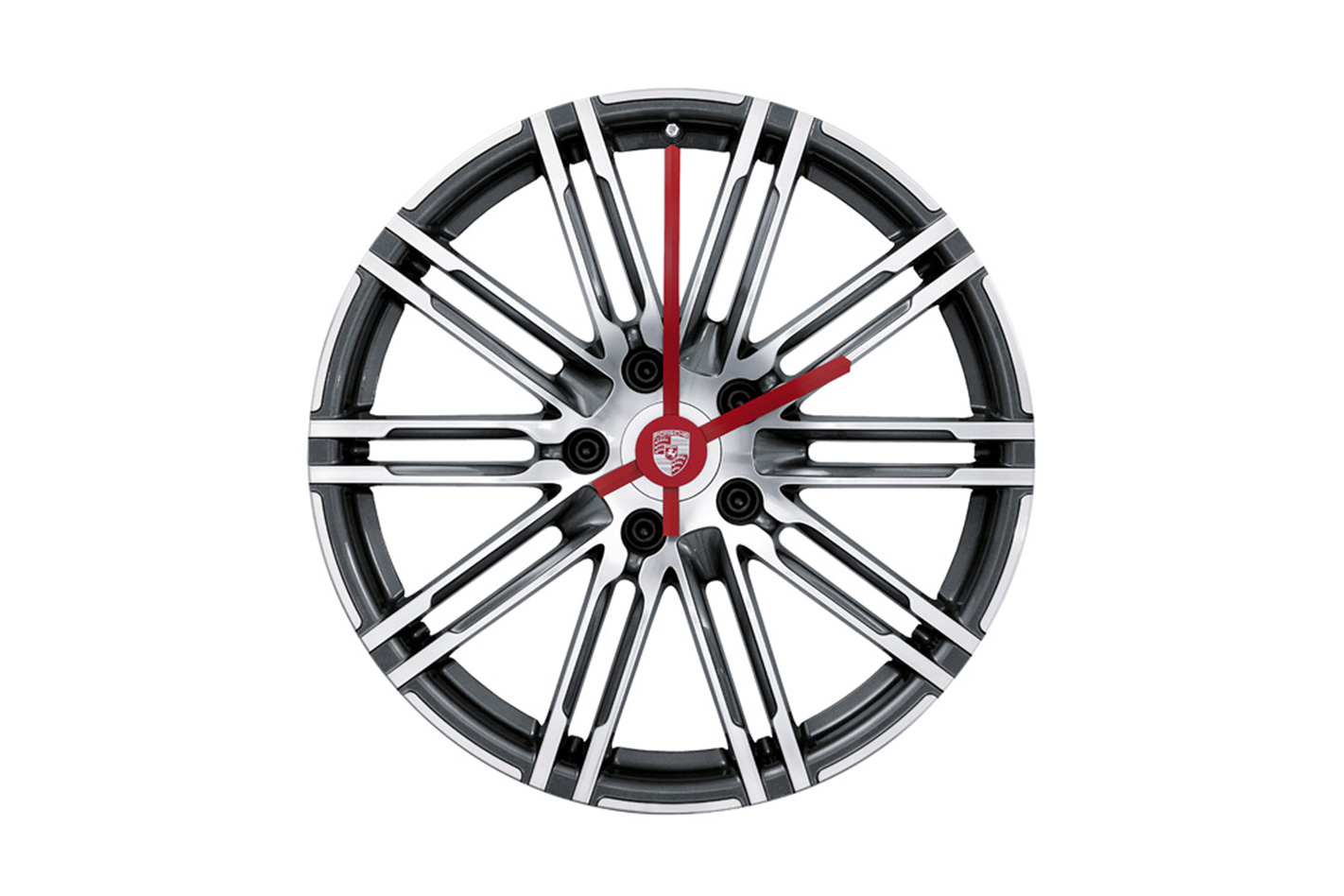
The only way this Porsche 911 Turbo wheel clock could be any cooler is if there were ten hours in the day. As the price suggests, it’s made from the genuine 20-inch Porsche article and owners can expect to read only the highest quality time from its red hands. shop4.porsche.com/Australia
Forza Motorsport 7 Performance Edition Xbox Onesie, $300

You’ve got the Xbox, you’ve got the full racing seat simulator and VR headset; the only thing missing from your otherwise perfect set-up is head-to-toe Nomex, but even the most devoted Forza gamer knows they would look a complete tool in a fire-resistant racing suit. So here’s the solution: to celebrate the launch of Forza Motorsport 7, The Performance Edition Xbox Onesie has extra-large pockets, seat padding, a built-in hydration pouch and is constructed from comfortable plush fabric, but it’s certainly not rated for a fiery crash. facebook.com/XboxANZ
Mercedes-Benz C63 AMG instrument wall hanging, $436.11

Do you lament the passing of naturally aspirated AMG power and shed a tear each time you hear the unobstructed bellow of the iconic 6.2-litre Affalterbach atmo V8? Guests will ask why you chose to hang a picture of the W204 instrument cluster on your wall instead of something actually useful like a clock but only the initiated will understand. Keep the dream alive with this vast, five-piece wall hanging in glorious 2489mm x 1372mm style. etsy.com/au
Watches
Roger Dubuis Excalibur Aventador S, $266,000

Lamborghini Squadra Corse has flicked affiliated watchmaker Blancpain and inked a five-year deal with Roger Dubuis instead. The Excalibur Aventador S timepiece is the new partnership’s first fruit, and draws inspiration from its thoroughbred Italian namesake. Its 45mm case is made from lightweight carbonfibre, with a transparent dial and case back mimicking the Aventador’s open-view V12. The skeletonised self-winding mechanical movement features an X-shaped bridge holding it in place, resembling a top-down view of the Lamborghini’s engine bay. Dubuis claims it is the first mechanism to use 90-degree double sprung balances linked with a differential. Just 88 units will be made. Dubuis founded his watch company in 1995 having worked for many years creating complications for other brands including Patek Philippe & Co. monards.com.au
Casio Edifice EQB800, $749

A different kind of smartwatch, the motorsport-inspired EQB800 from Casio features ‘Time Attack Recording’, which registers lap times and displays target splits when used at a racetrack. It was developed with input from the Toro Rosso Formula 1 team, and can be paired with Casio’s smartphone app via Bluetooth. The watch can then adjust itself to show the correct local time in up to 300 cities worldwide, and stays charged for up to five months using a solar panel system within the dial. casio-watches.com
Ford GT Endurance, $900
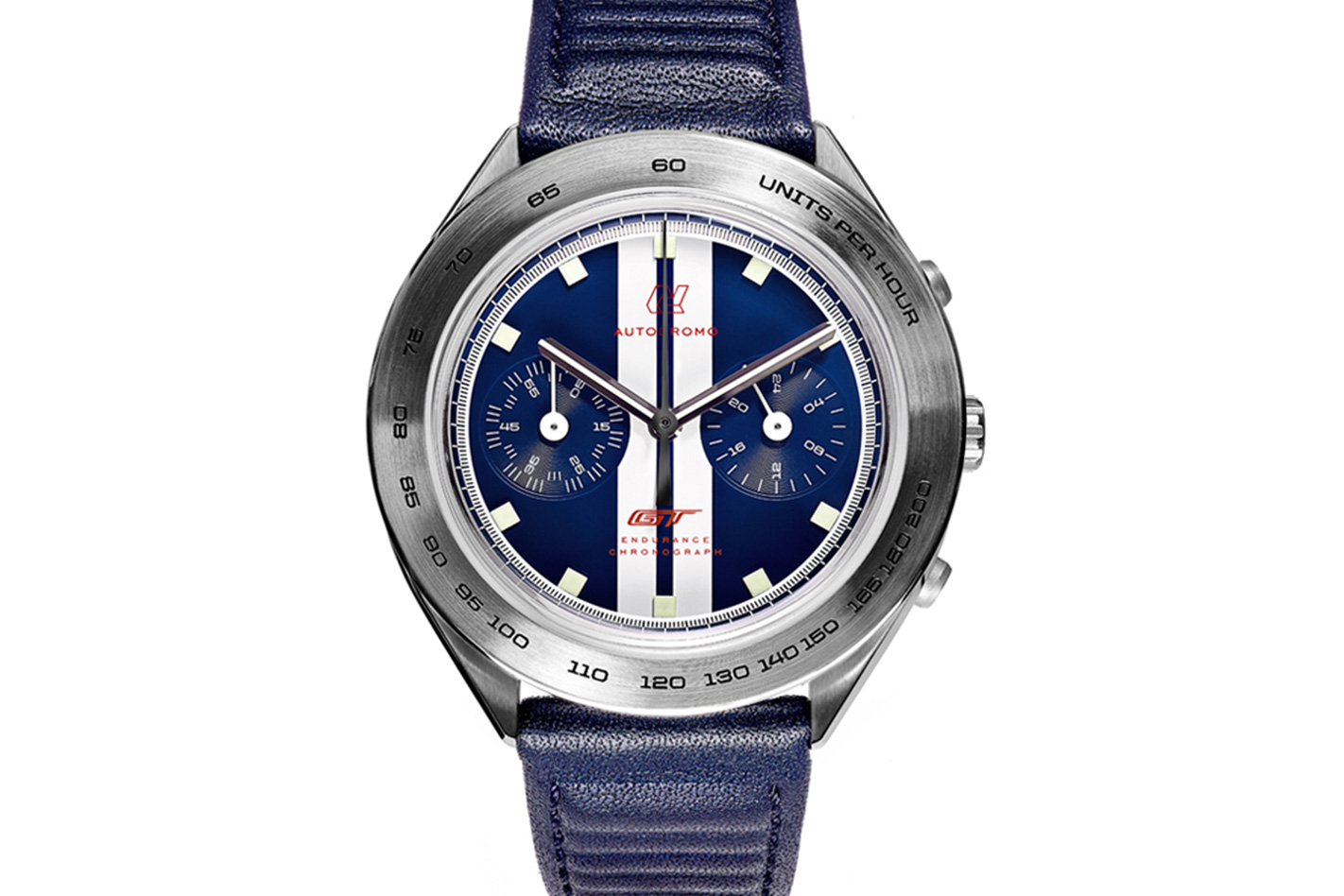
New York-based watch brand Autodromo draws heavily on the automotive world for its inspiration, and has collaborated with Ford to release an officially licensed GT timepiece. The Ford GT Endurance Chronograph celebrates the brand’s racing history at Le Mans, and features one of its most iconic liveries as seen on Mustangs, Cobras and GT40s. Sized at 40mm, this model references racing watches of the 60s, and houses a Japanese-made Seiko quartz movement. Four alternative dial designs recognise other significant milestones, including the Heritage 66 – Autodromo’s homage to the first GT40 to win at Le Mans. autodromo.com
On Monday morning the 10th instalment of Ken Block’s viral Gymkhana video series will go live to the general public.
Over the past decade we’ve been treated to wild jumps, insane drifts, endless tyre smoke and some insane vehicles, so we thought it’d be fun to take a look back at the Hoon Garage and rate the cars in order of our favourites. Let us know your list in the comment below!
10. 2008 Subaru Impreza WRX STI
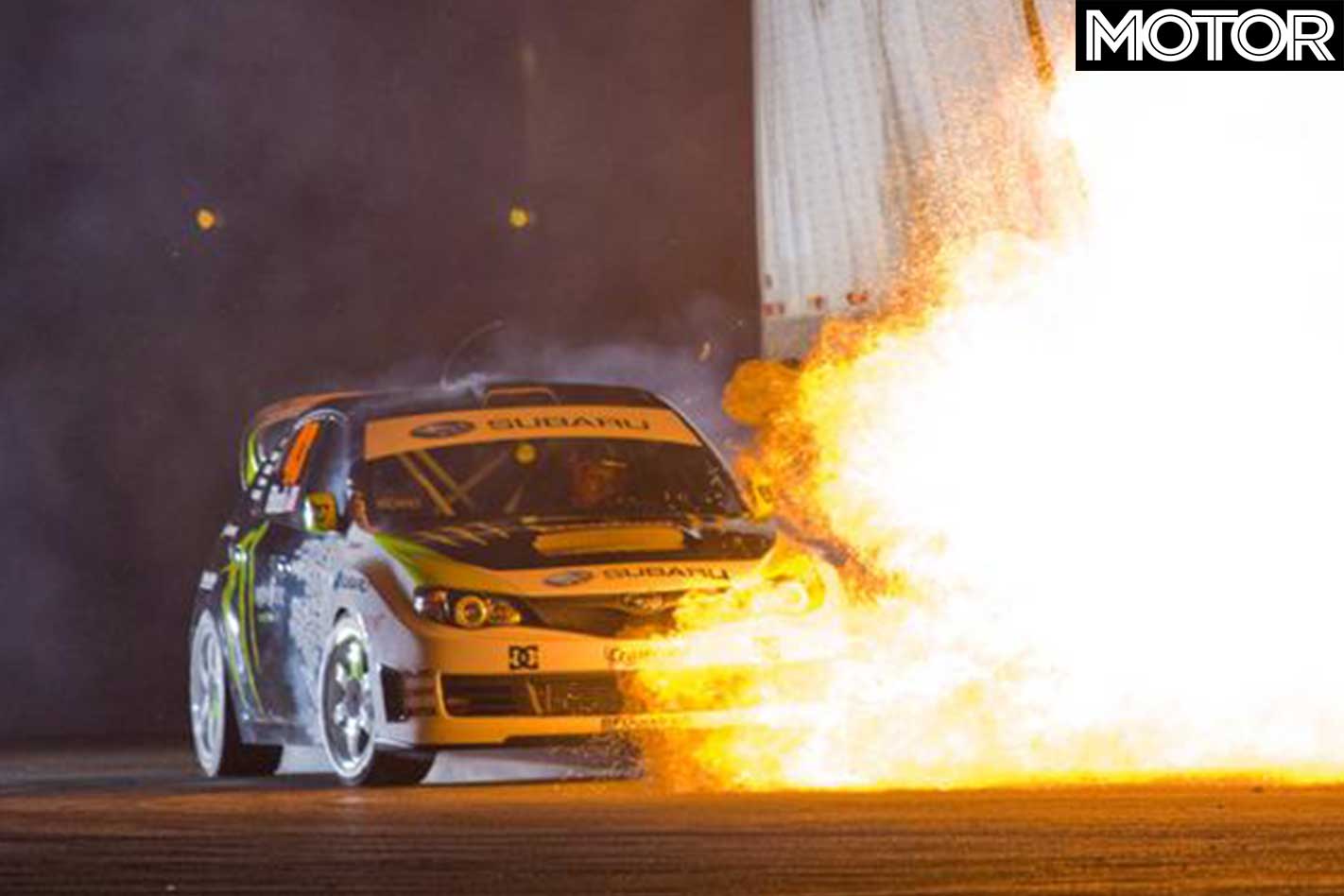
You know it’s a wild list when a monster WRX STI is at the bottom of the list. No disrespect to the tyre-shredding STI hatch, it’s just that it’s quite ‘normal’ compared to the cars towards the top.
Specs: 2.65-litre turbo boxer four; 418kW/800Nm; 0-60mph 3.0sec
9. 2015 Ford Fiesta ST RX43
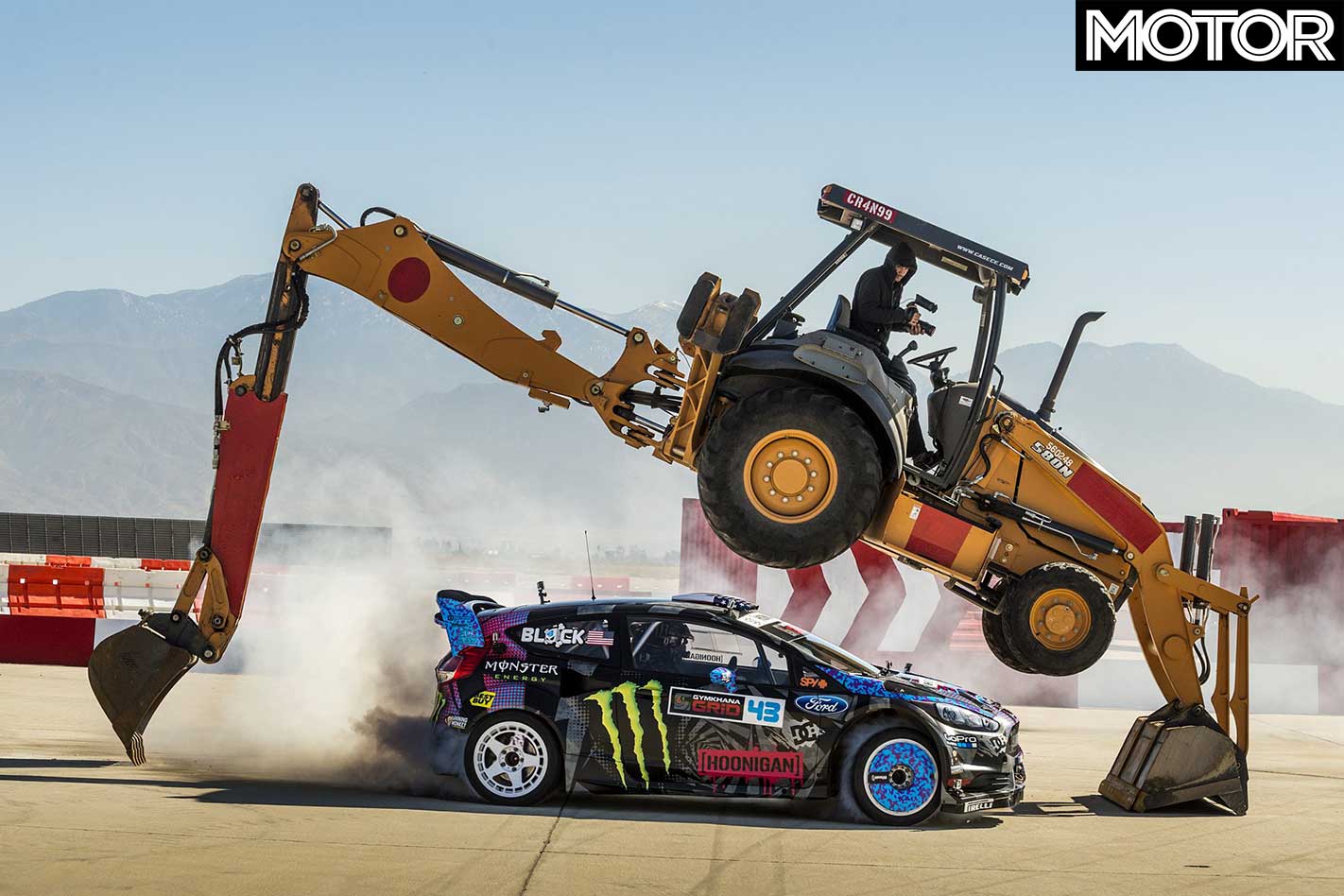
From the information given on the Hoonigan website, the RX43 is the quickest vehicle on this list, catapulting to 60mph (97km/h) in less than two seconds (though not all cars have quoted figures). It’s in ninth as it’s essentially a more powerful version of a more iconic car further up.
Specs: 2.0-litre turbo four; 447kW/880Nm; 0-60mph <2.0sec
8. 2016 Ford Focus RX #43
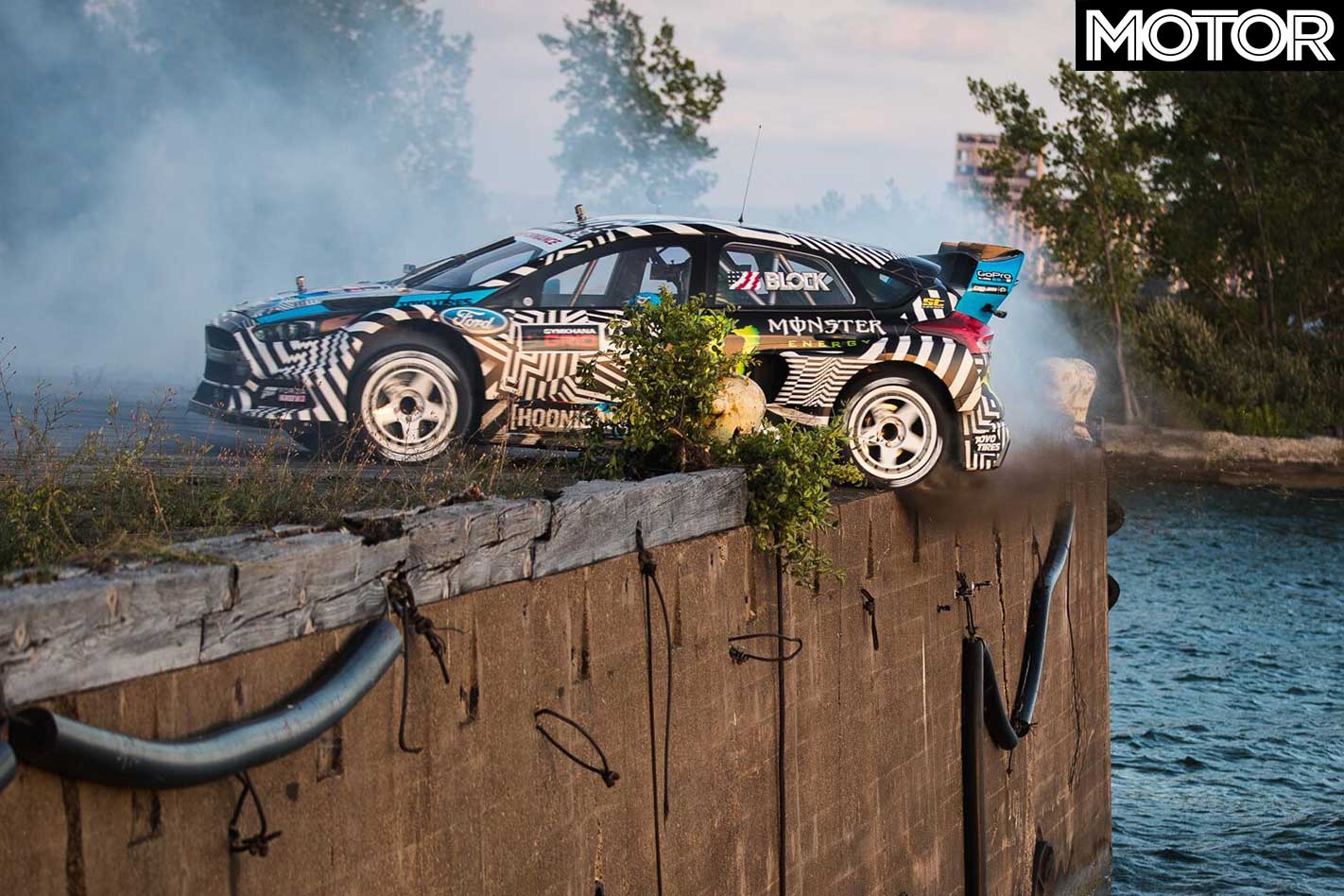
It turns out that Rallycross cars make great Gymkhana cars. Block’s weapon of choice for Gymkhana 9 was this high-tech Ford Focus built by M-Sport, the same folks who produce the Ford World Rally Cars.
Specs: 2.0-litre turbo four; 485kW/800Nm
7. 1978 Ford Escort Mk II
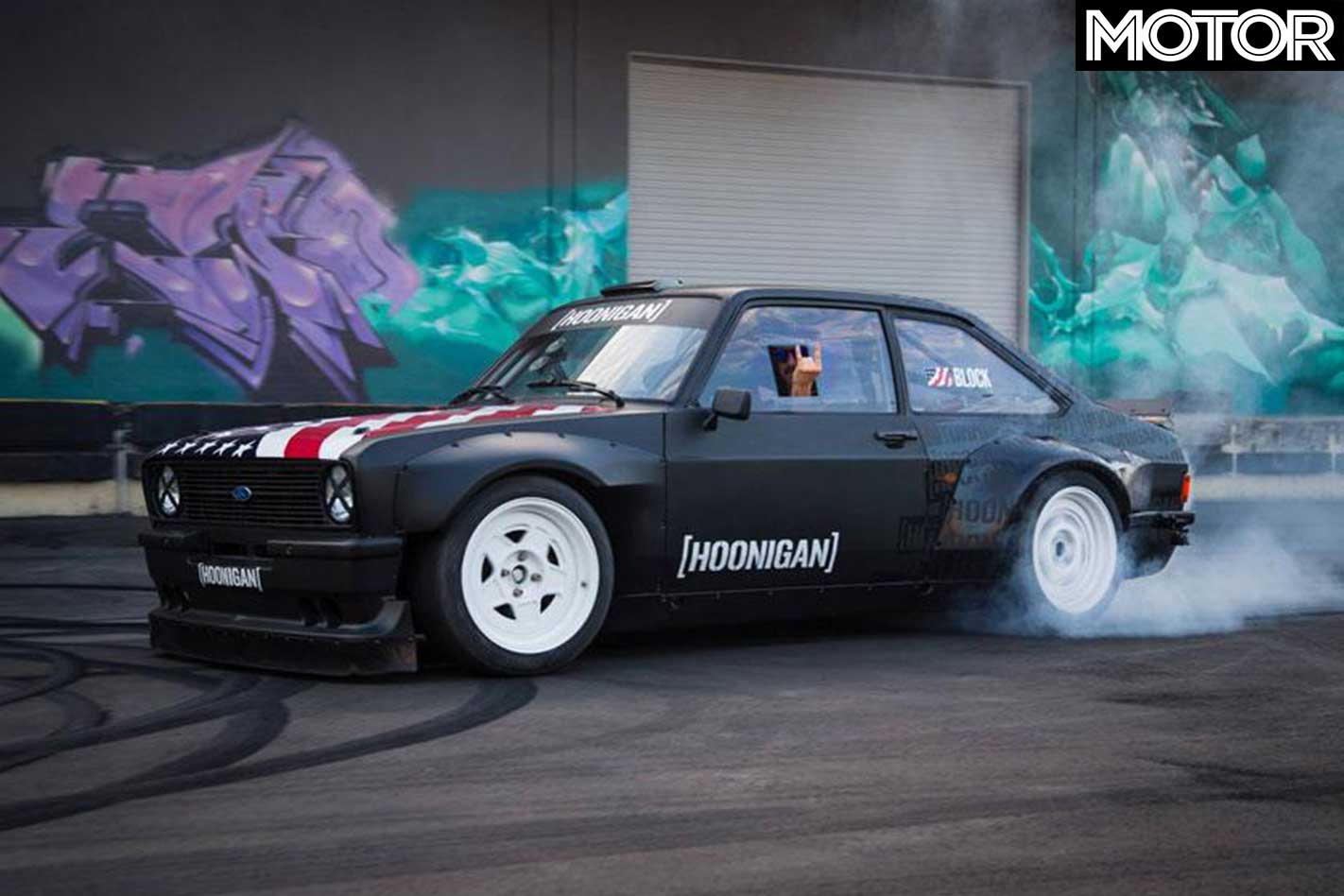
We’ve cheated a bit here, as Block’s amazing Escort hasn’t actually appeared in a Gymkhana video. But the wide-body rally hero is so cool and such a work of art that it deserves inclusion, though its lack of starring role leaves it at seventh.
Specs: 2.5-litre four; 248kW/333Nm
6. 2011 Ford Fiesta GYM3
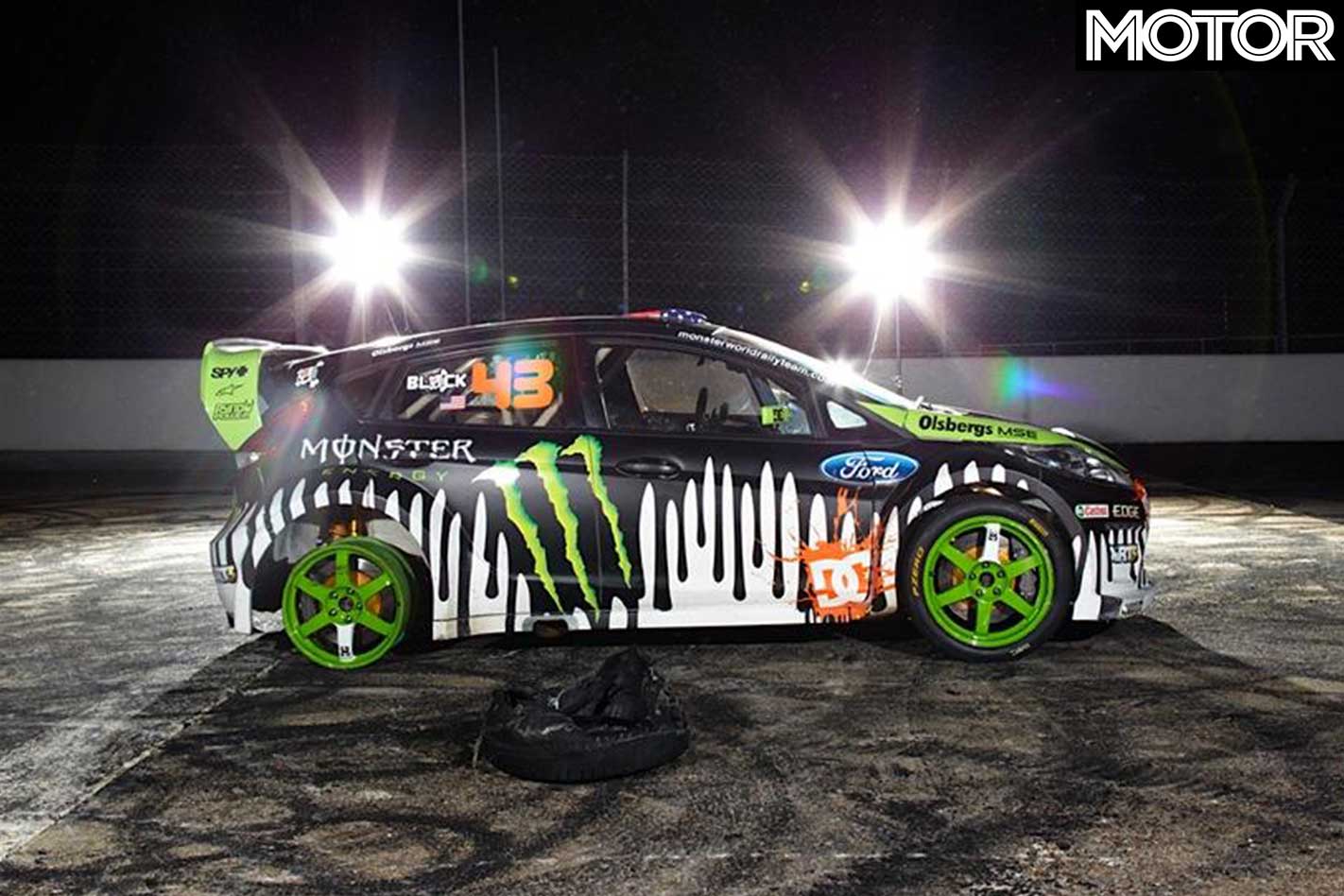
For Gymkhana 3 Block began his incredibly successful partnership with Ford, using a berserk Olsbergs-built Ford Fiesta Rallycross car to tear up the Autodrome de Linas-Montlhery in France. Who can forget the footage of it doing donuts with sparks cascading from the rear rims? And we got a passenger ride at Calder Park in 2011 during Block’s Gymkhana World Tour.
Specs: 2.0-litre turbo four; 447kW/895Nm; 0-60mph 2.0sec
5. Hoonicorn V2
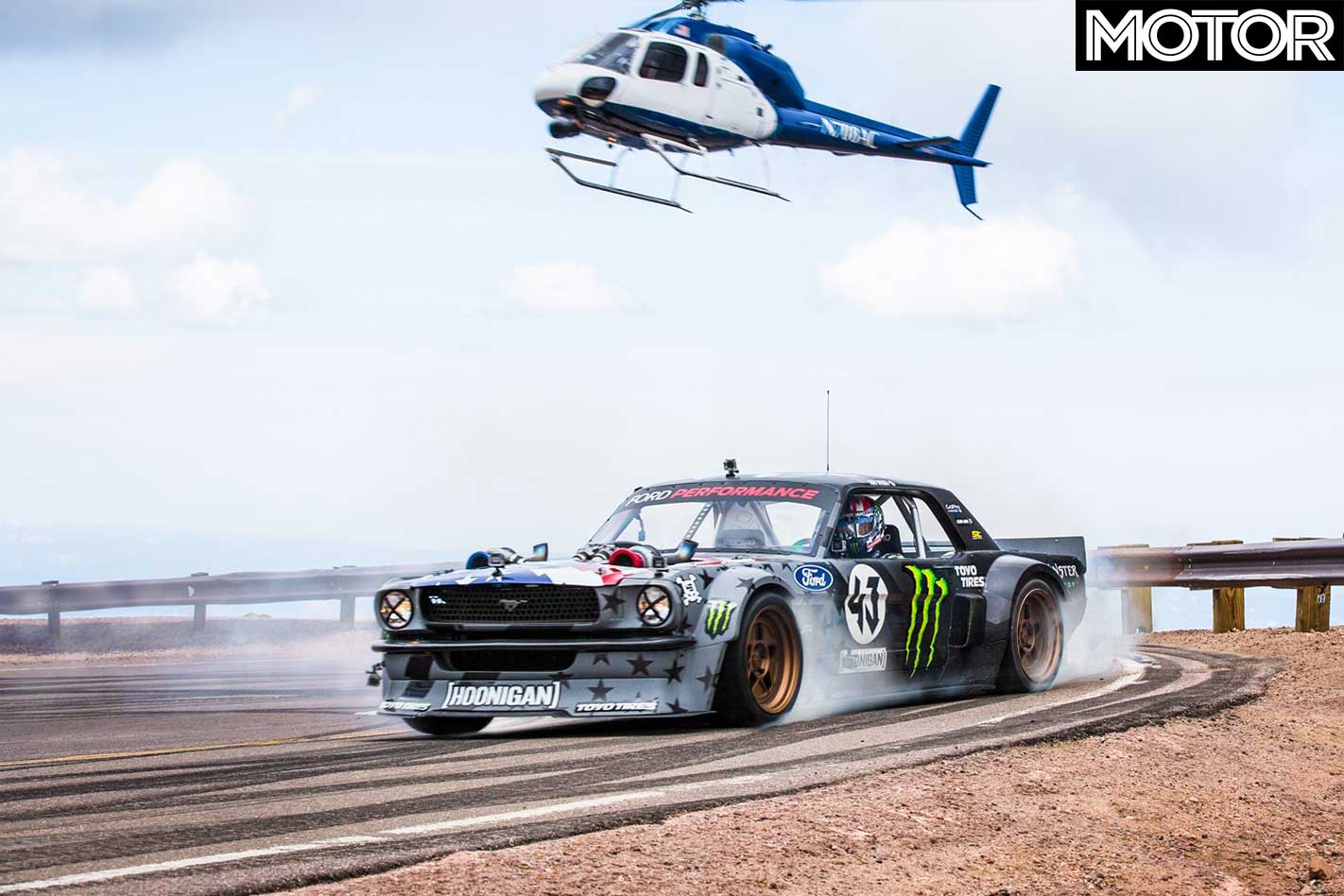
Is the wildest car on this list too far down? Perhaps, but the methanol burning, flame-spitting twin-turbo animal is an (insane) reimagining of the original Hoonicorn. Who else but Block would’ve thought that his Frankenstein’s monster needed boost?
Specs: 6.7-litre twin-turbo V8; 1044kW/1694Nm
4. 2006 Subaru Impreza WRX STI
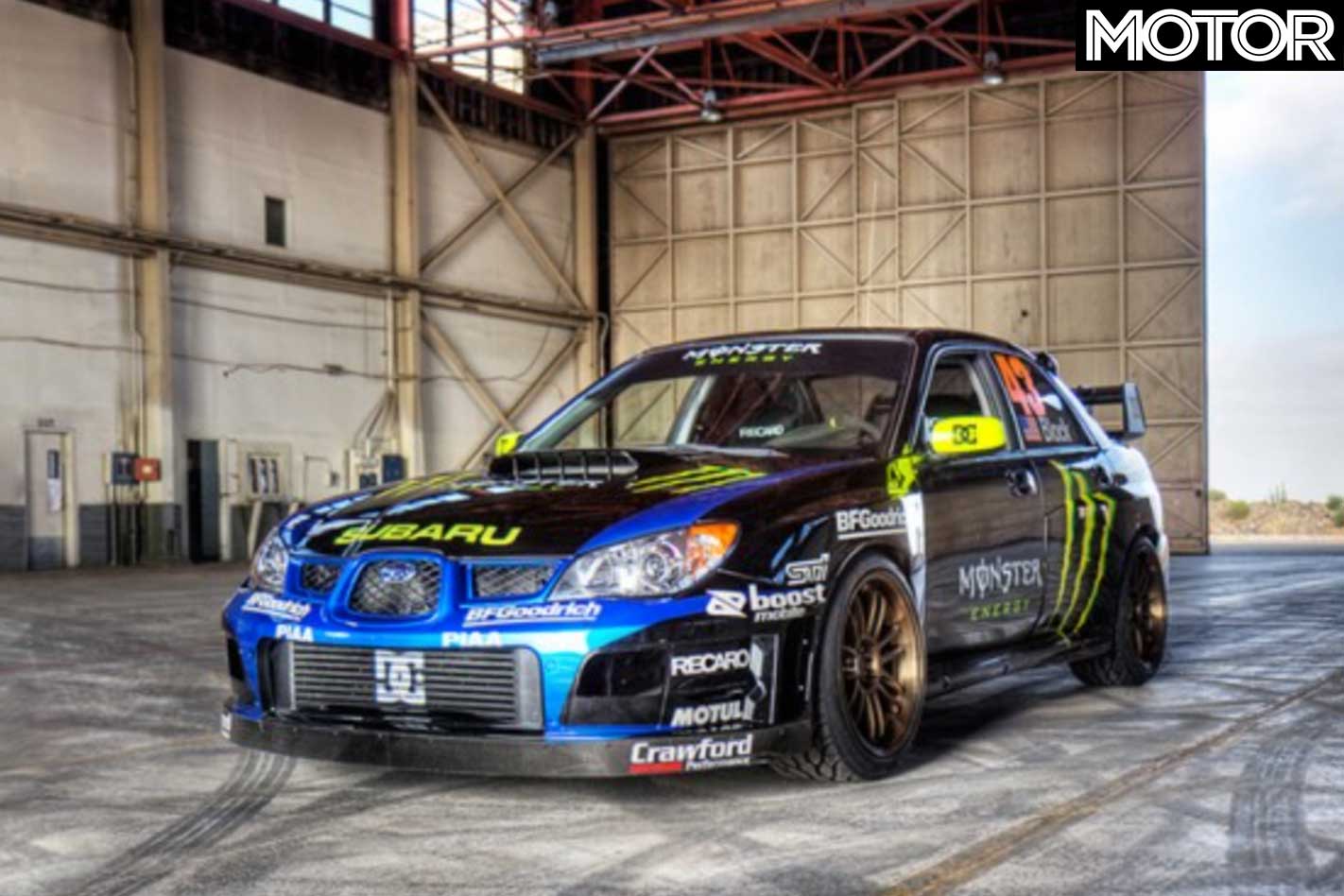
The car that started it all. Sure, it’s relatively sane compared to others on this list, but that initial high-speed drift, smoke pouring off all four 285/30 BFGoodrich tyres, is what began the Gymkhana craze and captivated millions of viewers around the world.
Specs: 2.5-litre turbo boxer four; 395kW/711Nm
3. Hoonitruck
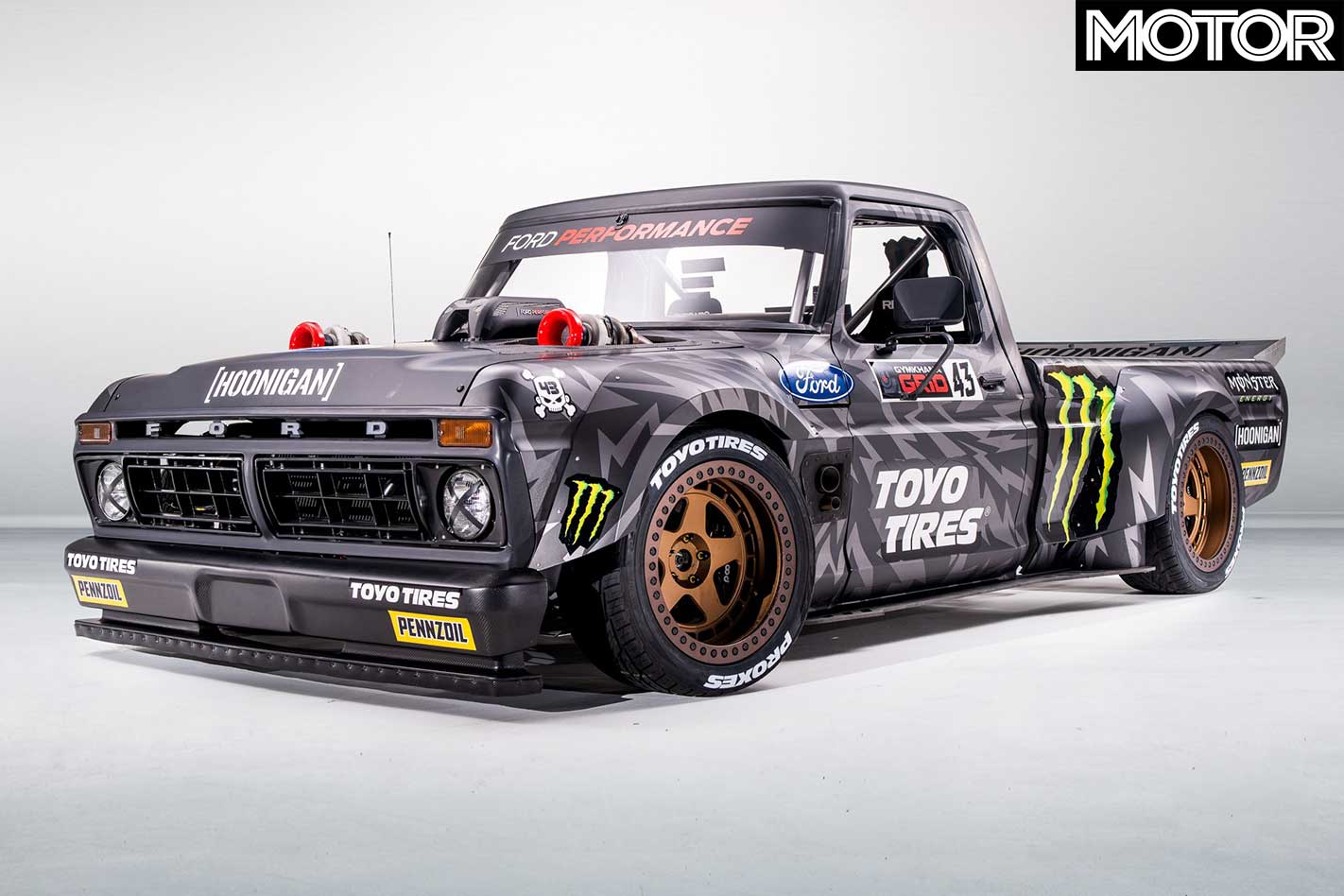
Block’s latest creation is his first V6, and what a V6. The 3.5-litre twin-turbo bent-six is lifted from the Ford GT race car with the restrictors removed. Plugged into a tube-frame chassis and clothed in a 1977 F150 body it’s a new-age tyre-shredding machine.
Specs: 3.5-litre twin-turbo V6; 682kW/951Nm
2. 2014 Ford Fiesta ST HFHV
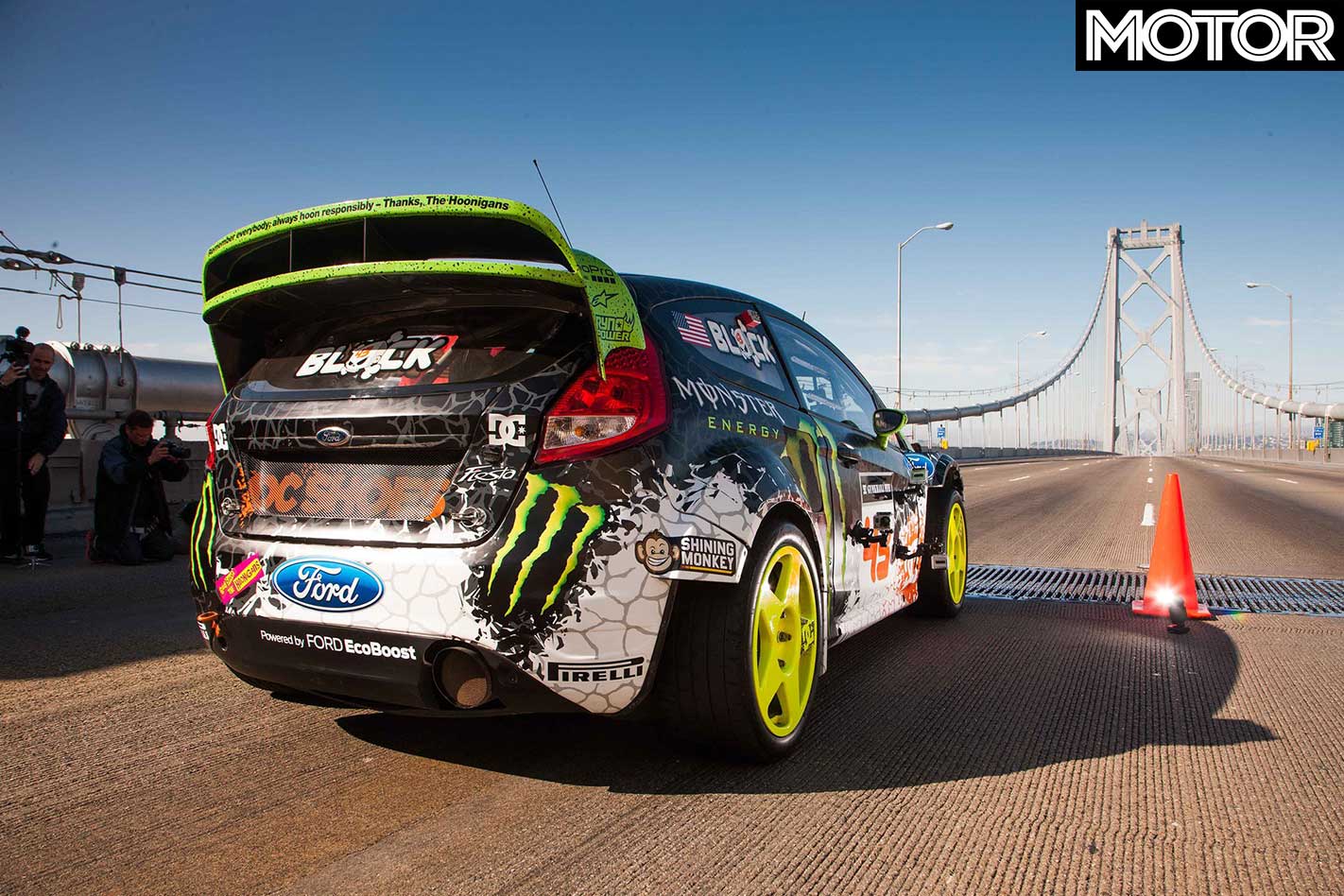
By Gymkhana 4 the series was gathering serious momentum as a global phenomenon but it was Gymkhana 5 that launched Block onto public roads, making it a much larger production. Both films starred the Hybrid Function Hoon Vehicle, the car was that more synonymous with Block than any other until…
Specs: 2.0-litre turbo four; 261kW/700Nm+; 0-60mph 2.3sec
1. Hoonicorn V1
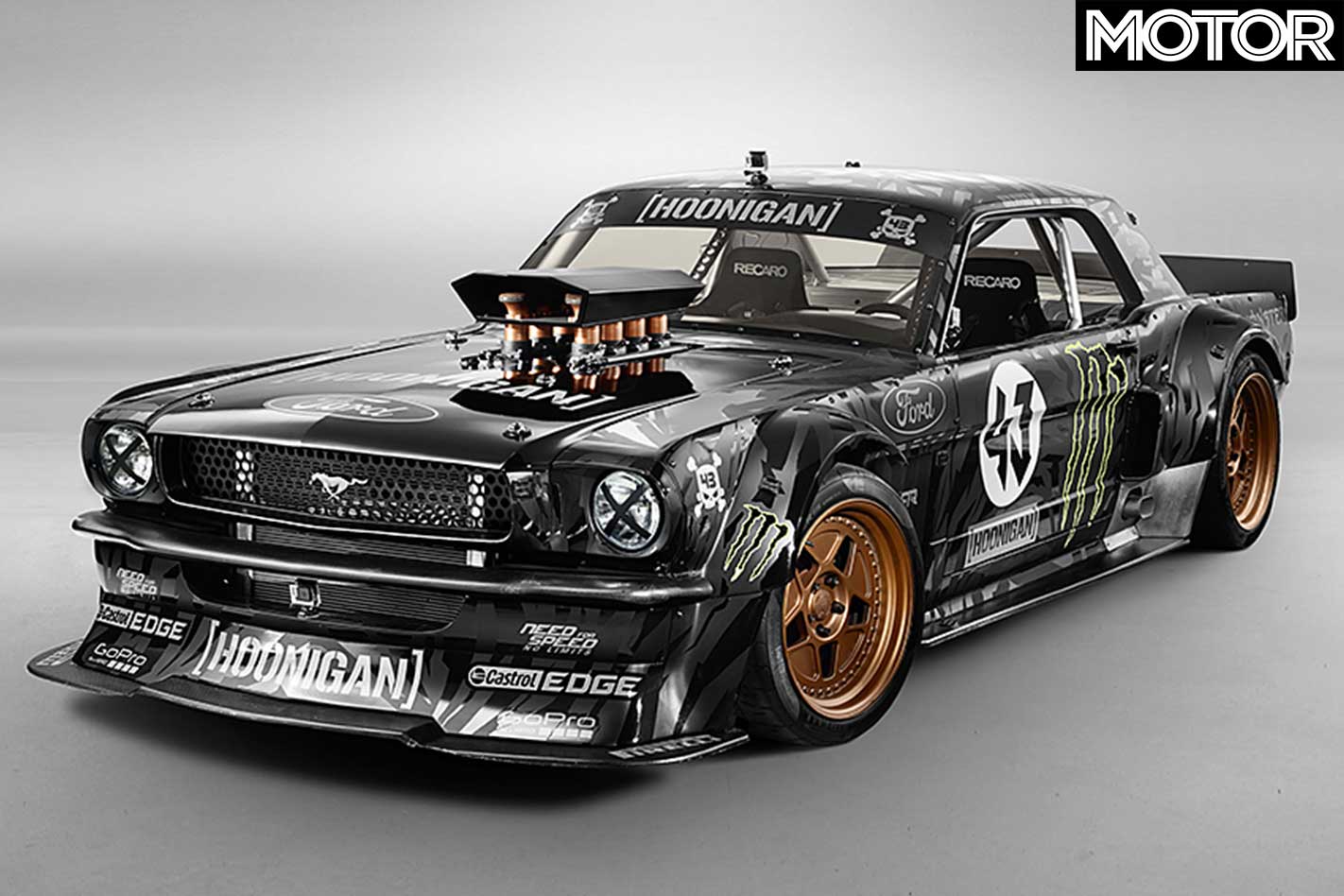
The Hoonicorn. After six films many were wondering if the best was behind Block and the Hoonigan team, but the opening of Gymkhana 7, with the custom-built all-wheel drive Ford Mustang straining at its chains, dispelled any such doubts. Iconic landmarks, ambitious stunts, brilliant production and a screaming Roush V8 echoing through the streets of Los Angeles makes 7 arguably the apex of the Gymkhana series – so far.
Specs: 6.7-litre V8; 481kW/976Nm
It’s stating the obvious that high-end supercars like the Mercedes-McLaren SLR are expensive, but the financial pain doesn’t end with the initial purchase price.
Depreciation can make previously unaffordable dream machines more attainable, but be warned that the maintenance bills don’t depreciate – quite the opposite in fact.
The Mercedes-McLaren SLR is the perfect, if extreme example. A genuine million-dollar motor when released in 2004, regular examples of this 460kW gullwinged monster can be had for between $450,000-500,000. Still huge money, but the SLR was a contemporary of the Ferrari Enzo and Porsche Carrera GT.
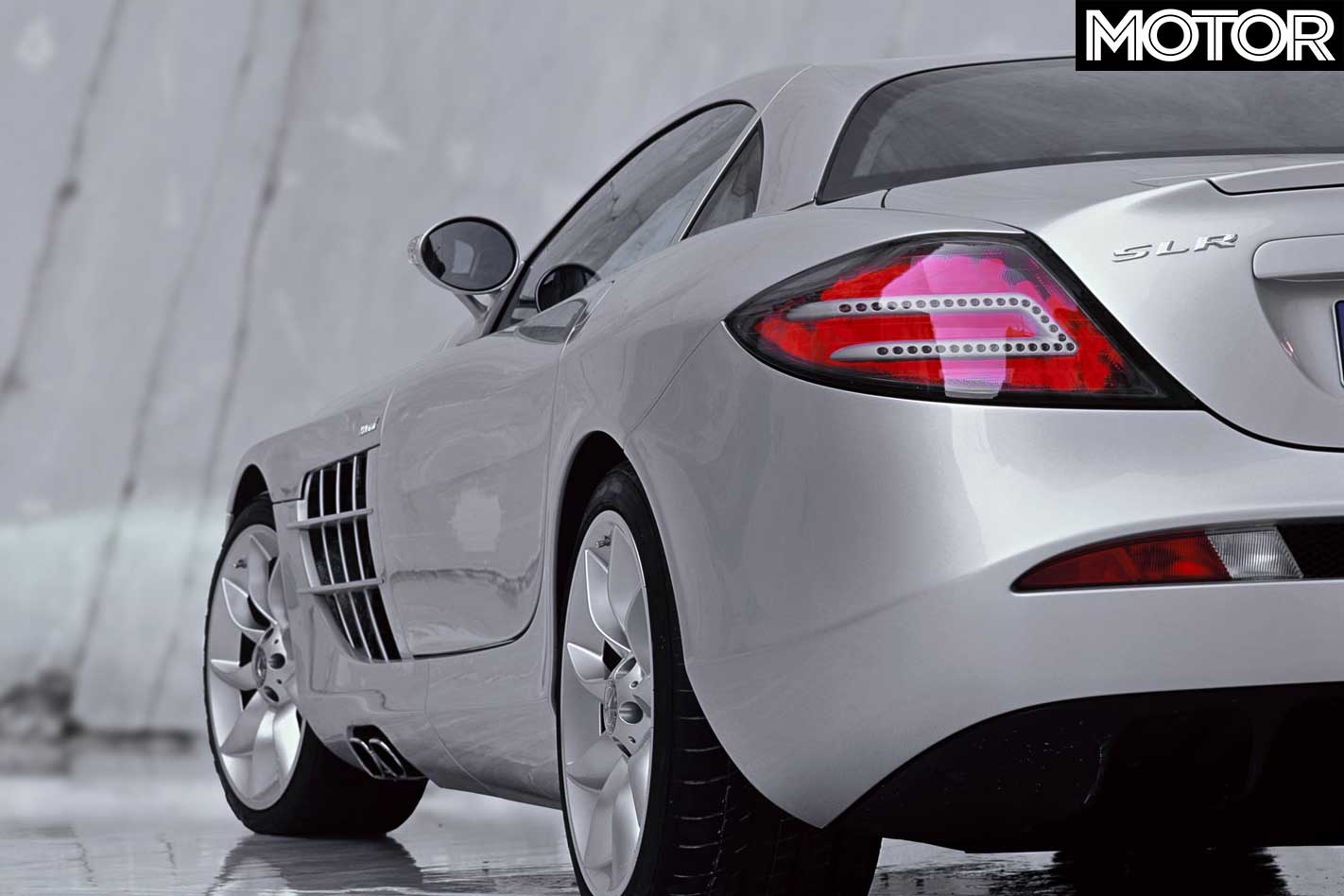
This article was prompted by an SLR-owning Aussie ex-pat in Japan, who recently posted that water damage required the door cards be replaced. Thankfully, it was covered by insurance, as the bill came to ¥12,495,000. To save you the calculations, that’s around AUD$150,000. That’s not a typo.
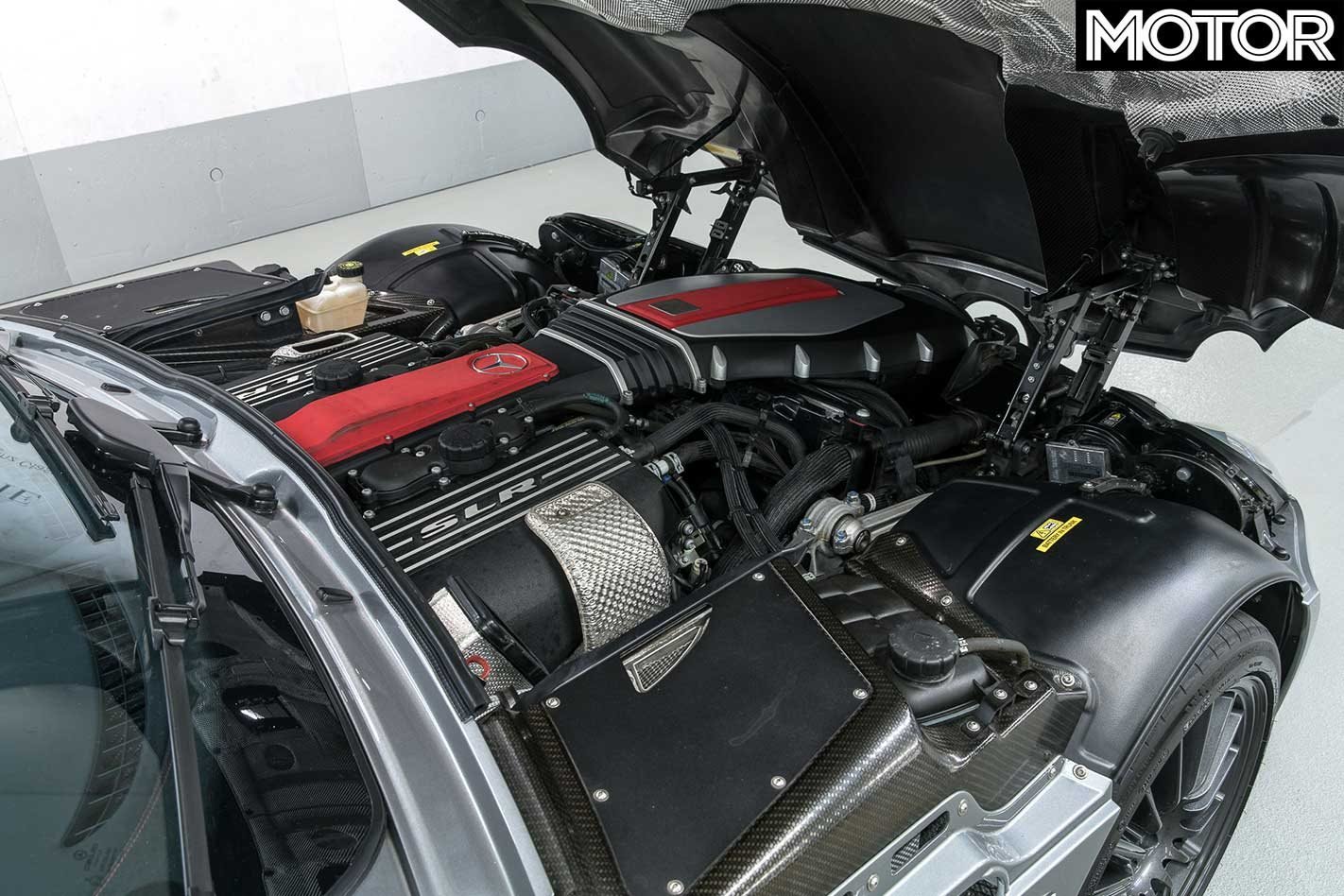
A bit of research unearthed more scary numbers. Careful when closing that giant bonnet, as a replacement is around AUD$100,000, depending on exact exchange rates (US$75,000-85,000 seems to be the going rate).
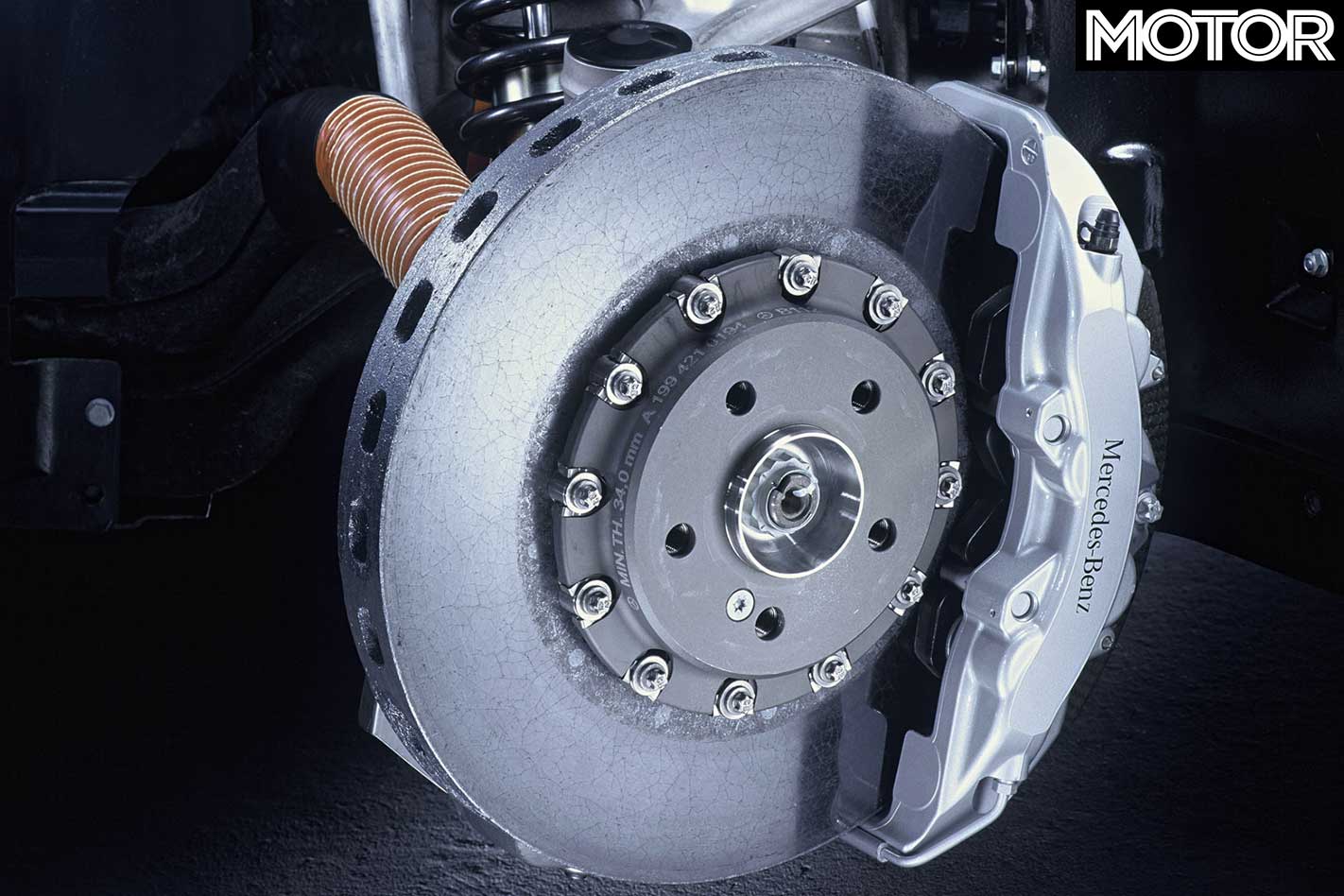
The SLR’s flagship status means it features a lot of then-cutting edge technology. The brakes are carbon-ceramics, with 370mm discs and eight-piston calipers at the front and 360mm and four-piston calipers at the rear. If they need replacing, you’re looking at around $80,000.
Even the regular servicing is terrifying. An annual ‘A service’ (fluids and safety check) is in the region of US$5000, a biennial B service $US8000 (A service plus brake fluid, air filter and replace underbody screws) and a major service every four years (replace V belts, spark plugs and coolant) will set you back between US$15,000-20,000.
This is assuming no parts need replacing, but it’s not as simple as driving carefully. According to our Japan-based owner, a lot of parts are ‘lifed’, which means they need replacing after a certain time regardless of use.
An SLR technician on the Mercedes-Benz World forums explained the crazy costs are primarily due to labour. Simply put, the mighty McMerc isn’t designed to be taken apart and put back together again.
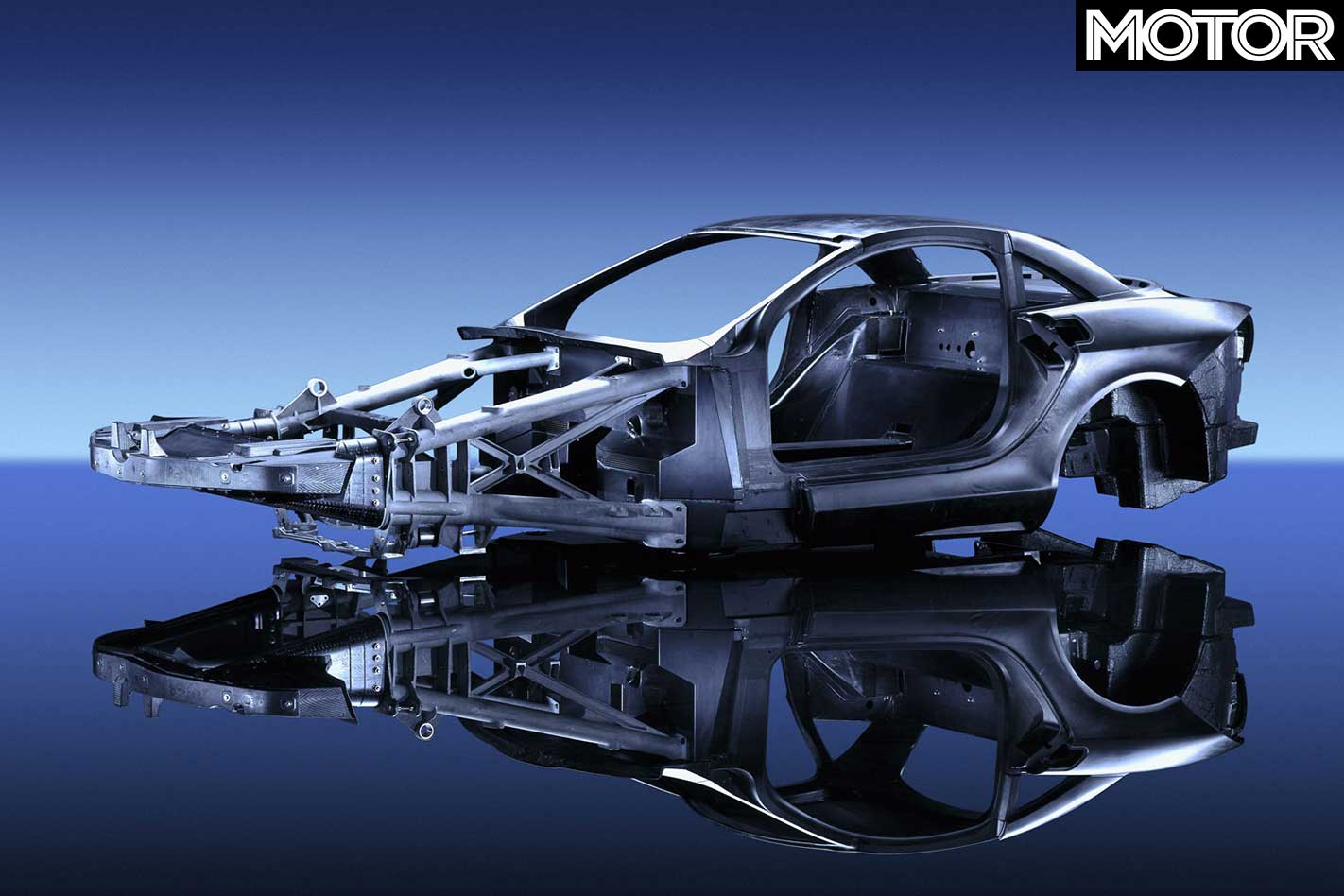
Virtually any servicing requires the removal of 140 bolts that hold the flat floor in place, which need to be replaced every two years. Even better, because the bolts screw directly into the carbon monocoque power or air tools are off limits.
Despite some comments to the contrary, that same technician is adamant that anything beyond an oil change (changing spark plugs, for instance) requires the removal of the engine. An engine change itself? Around 50 hours. Suddenly those servicing bills start to make sense.
None of which should discourage you from owning one of the most awesome two-seaters ever built, but if you have to ask, you probably can’t afford it!
Today is not a good day. Today, I am sore. Today, the skin on both sides of my neck is red and raw from the chafing of racing seat belts. Today, my legs are tender from working against extreme g-loads. Today, the muscles at the sides of my neck twinge with every sideways glance.
This review was originally published in MOTOR’s May 2007 issue
But I can live with all that today, because it reminds me of a yesterday that I want to have again. Yesterday was a Gallardo Superleggera day, with semi-race rubber and carbon-ceramic brakes on a purpose-built test track in Italy’s north.
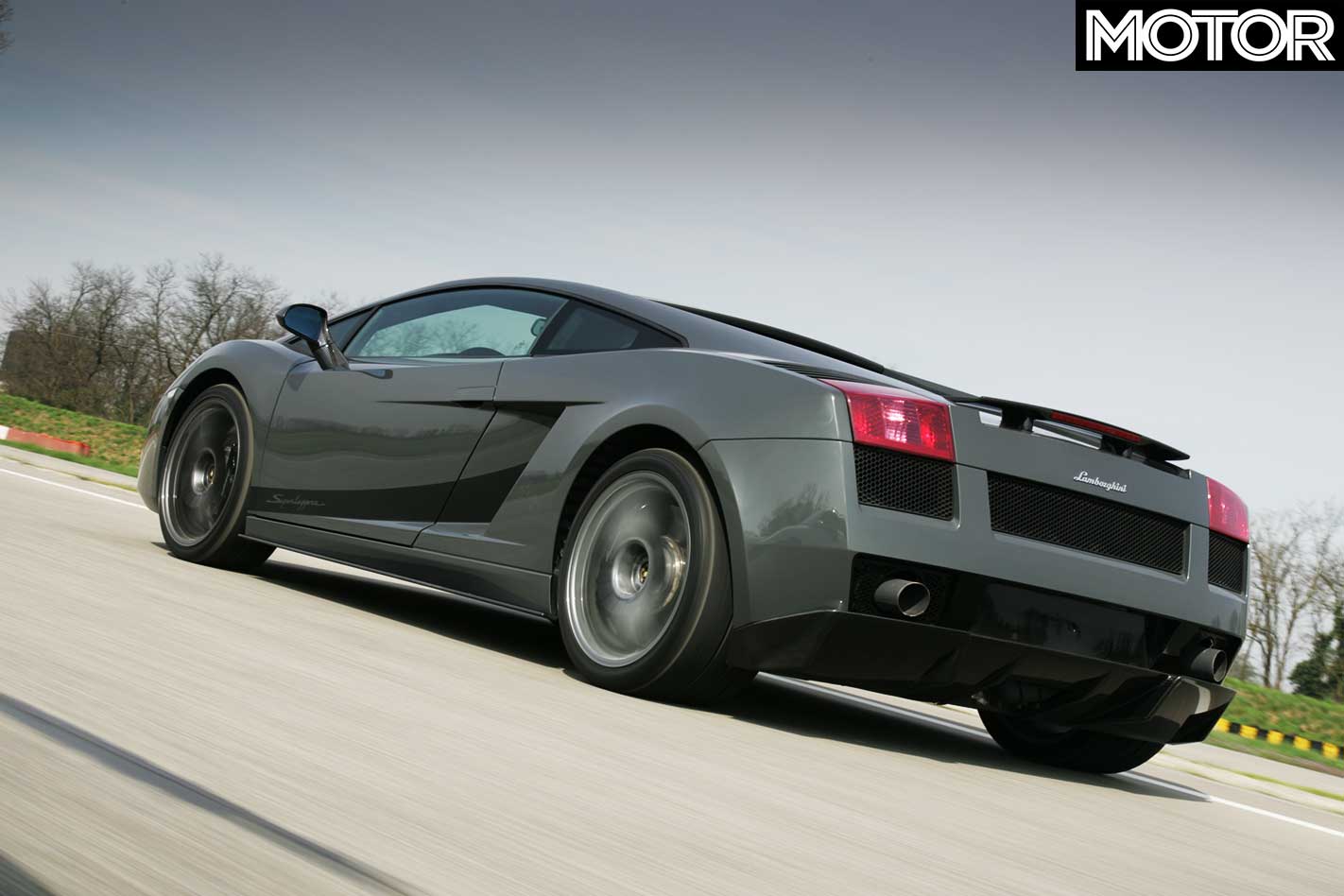
Visually at least, the Superleggera isn’t demonstrably different from the stock four-year-old Gallardo coupe. There’s a naff, matt-black slash sweeping up the door and into the air intake, and a subtle, fixed carbon-fibre wing and, really, not much else.
The cool thing about this car isn’t that it’s more powerful than standard (at 395kW, you barely notice the extra 7.5kW), but that it is so much lighter. It has amazed most people that Lamborghini found 100kg (actually, it found 104kg) to strip out of a car that was slightly anorexic in the first place. Well, Superleggera is Italian for ‘light weight’ so it makes sense.
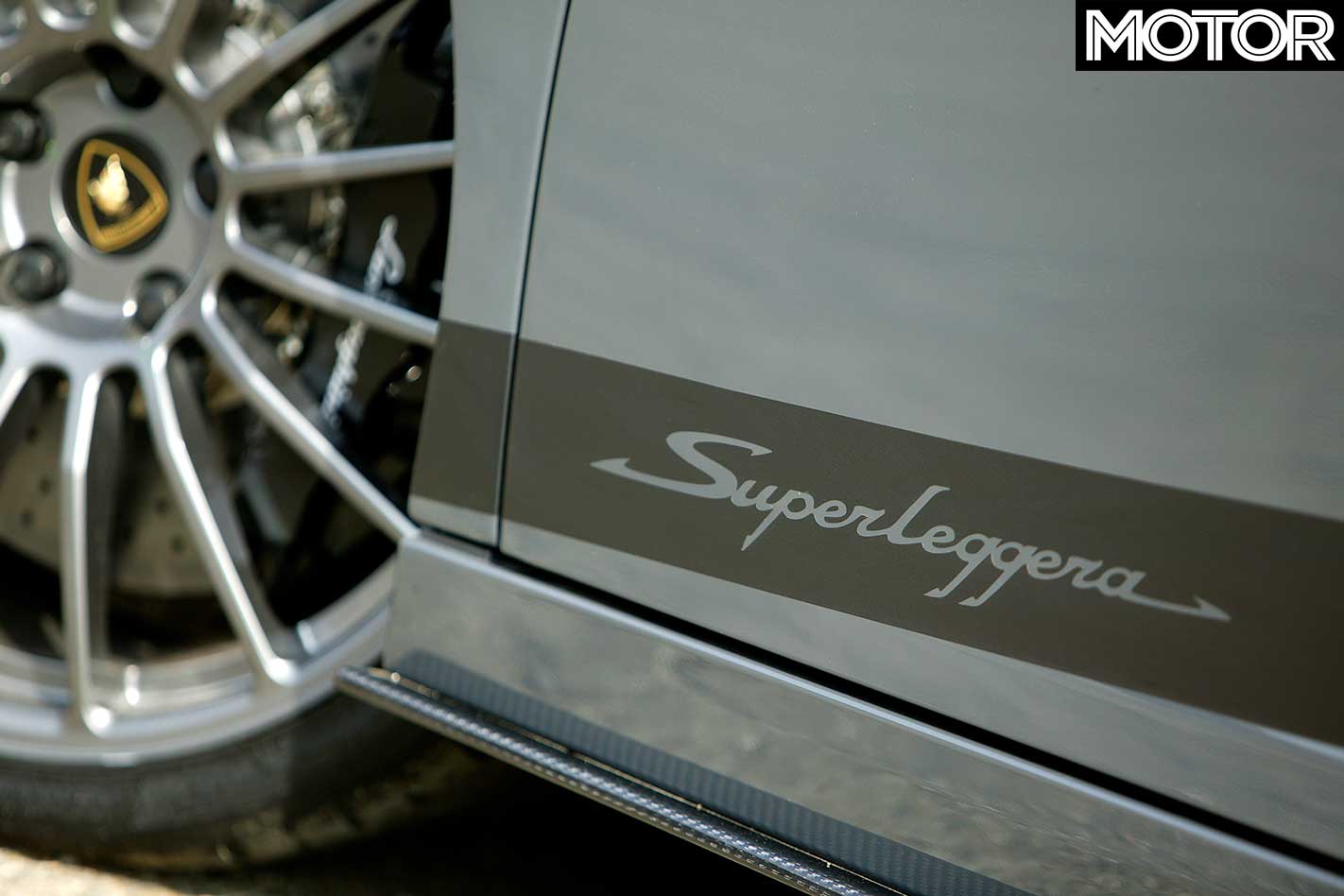
The door actually feels lighter than the standard door when you open it, and you soon see why. The inner skin is lacquered carbon-fibre, set in one massive sheet, broken only by an alcantara loop so you can pull it closed behind you.
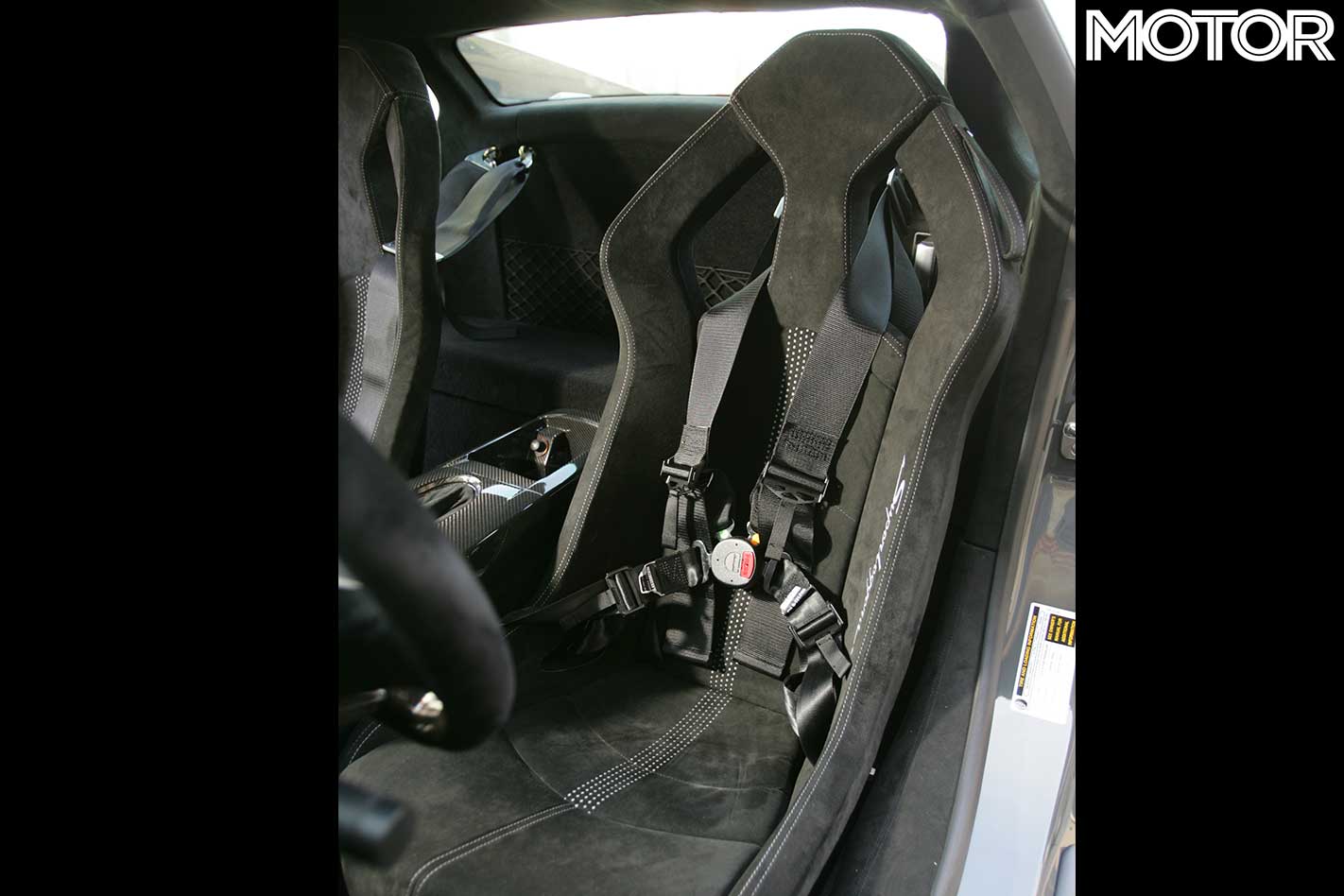
The seat is deeper and shelled in carbon-fibre (which is prominent throughout), so the electronic controls are gone, the leather has gone, the squishy padding is gone, and the pattern is kind of a funky modern twist on 1960s cool. The driving position loses nothing for the change, though. The race-based seats are extremely comfortable – at least for this kind of work – and they promise plenty of lateral support.
The engine sounds marginally different at idle, in spite of Lamborghini insisting it’s identical in its note to the standard car. Perhaps it’s because the sound deadening of the carpet and leather have gone. It feels lumpier and angrier before you’ve even turned a wheel. Pluck the right paddle, cruise off through the car park and the ride is instantly firmer than the stock car, but that’s about the only difference in its feel.
At normal speeds, most drivers won’t notice the lack of weight. And normal speeds are the speeds most drivers are capable of in this sort of car. It’s only when you push – and push hard – that the missing metal becomes noticeable, and then, suddenly, it’s very, very noticeable.
It still feels like it needs more torque below around 4500-5000rpm, because quite frankly it’s nothing special there, but anything above that is an eruption waiting to happen.
This thing, when it’s under the whip, is just heavenly, but only if your idea of heaven’s got some aggro in it. Roll off gently, snap the throttle the two inches to the stopper and every sense gets something to savour.
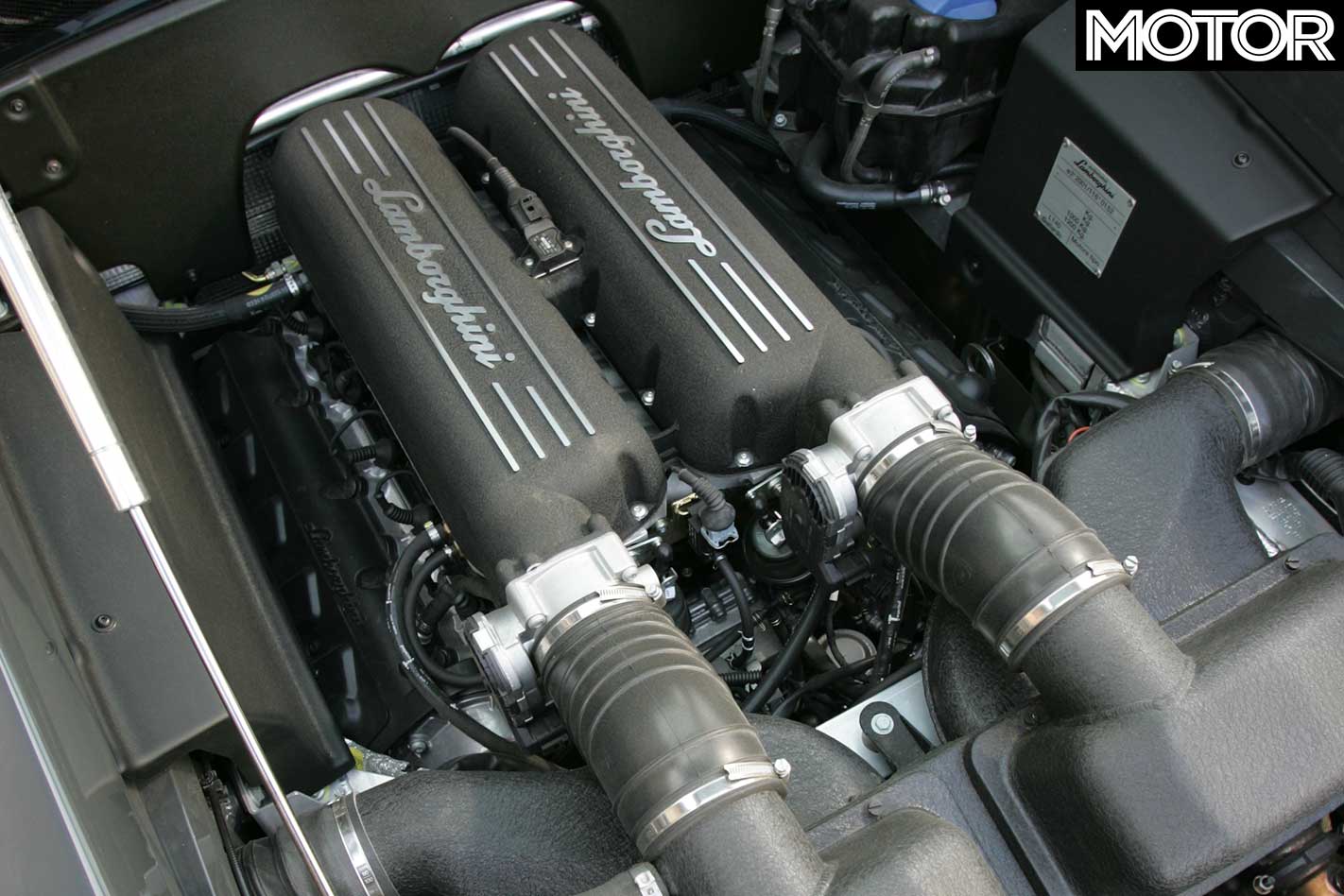
Your ears hear it first, with the twin throttle bodies hissing out their trademark “Chhhhshhh” as they flip open to breathe deeply. Then there’s the deep-chested bwoarty blat as the air molecules argue among themselves, arriving in the same place in a hurry.
And all that’s before you can hear any fires being lit. You can smell the fluids getting hot, you can see the world blurring through every window and you can taste the fear of anybody sitting in the car with you.
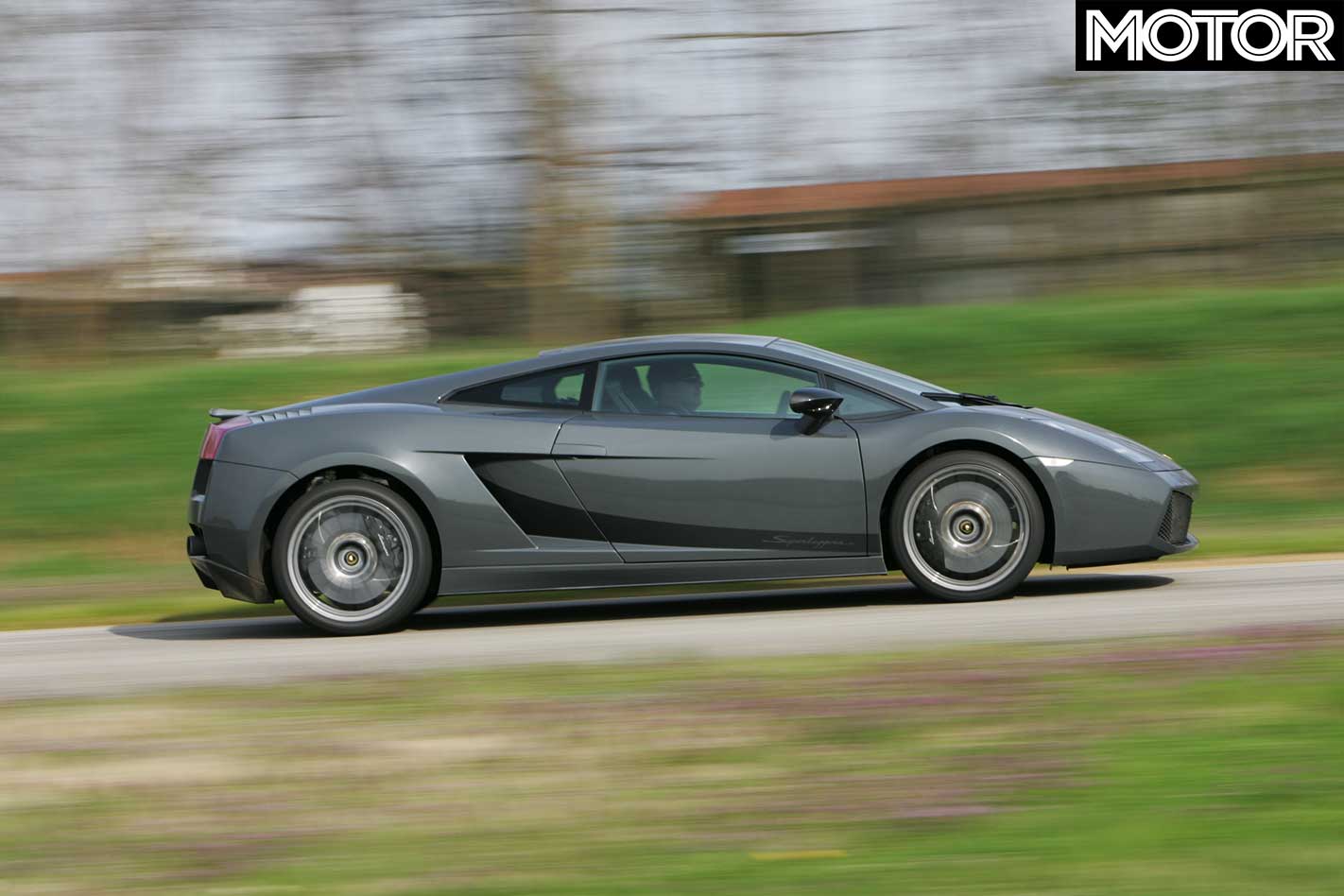
But it’s the sense of touch that tells you the most. The engine snarls and howls and, with the hard-shell seats, you can feel more of every ignition and every electric pump and every induction rumble. You used to just hear it in a Gallardo, but the Superleggera makes it an all-over body experience.
The engine is much more aggressive at higher rpm than it used to be, too. Its inlet manifold has been freed up, and it is snappier, more urgent and even faster to react when you open or close the throttle. If that isn’t enough, the gearshift action is quicker, too, in Sport mode. It’s also more aggressive on the downshift and even though it all feels more raucous, it’s just software tweaks.
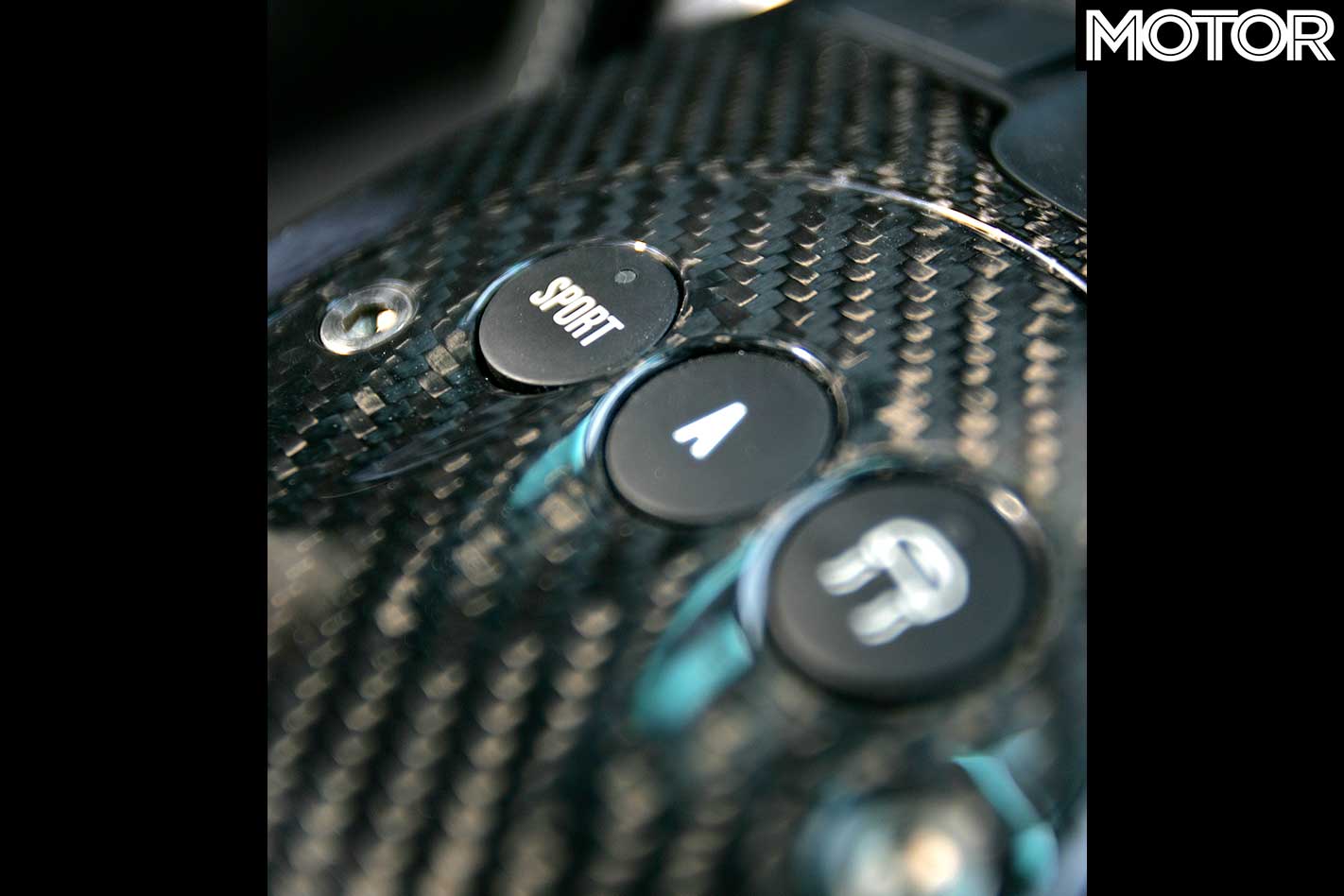
To be honest, though, the weight doesn’t make its lack of presence felt when you’re belting the Superleggera in a straight line. That’s a surprise that really waits until you get into and out of corners. The first shock is your arrival at a stock Gallardo’s braking point, the V10 screaming and about to demand a shift into fifth gear.
Squeeze down hard on the left pedal (on the e.gear – try this in a manual and you’ll be in trouble…), and you’ll find yourself picking up the throttle again before the corner. It’s embarrassingly brave.
There’s bags of feel in the pedal, too, and the pads, snuggled into their eight-piston caliper, sit so close to the carbon-ceramic rotor you only need to sniff the pedal (when they’re hot) before they get to work – without noise and without graunching. You can probably dive in 15 percent deeper than you can with the standard car – itself no stopping slouch.
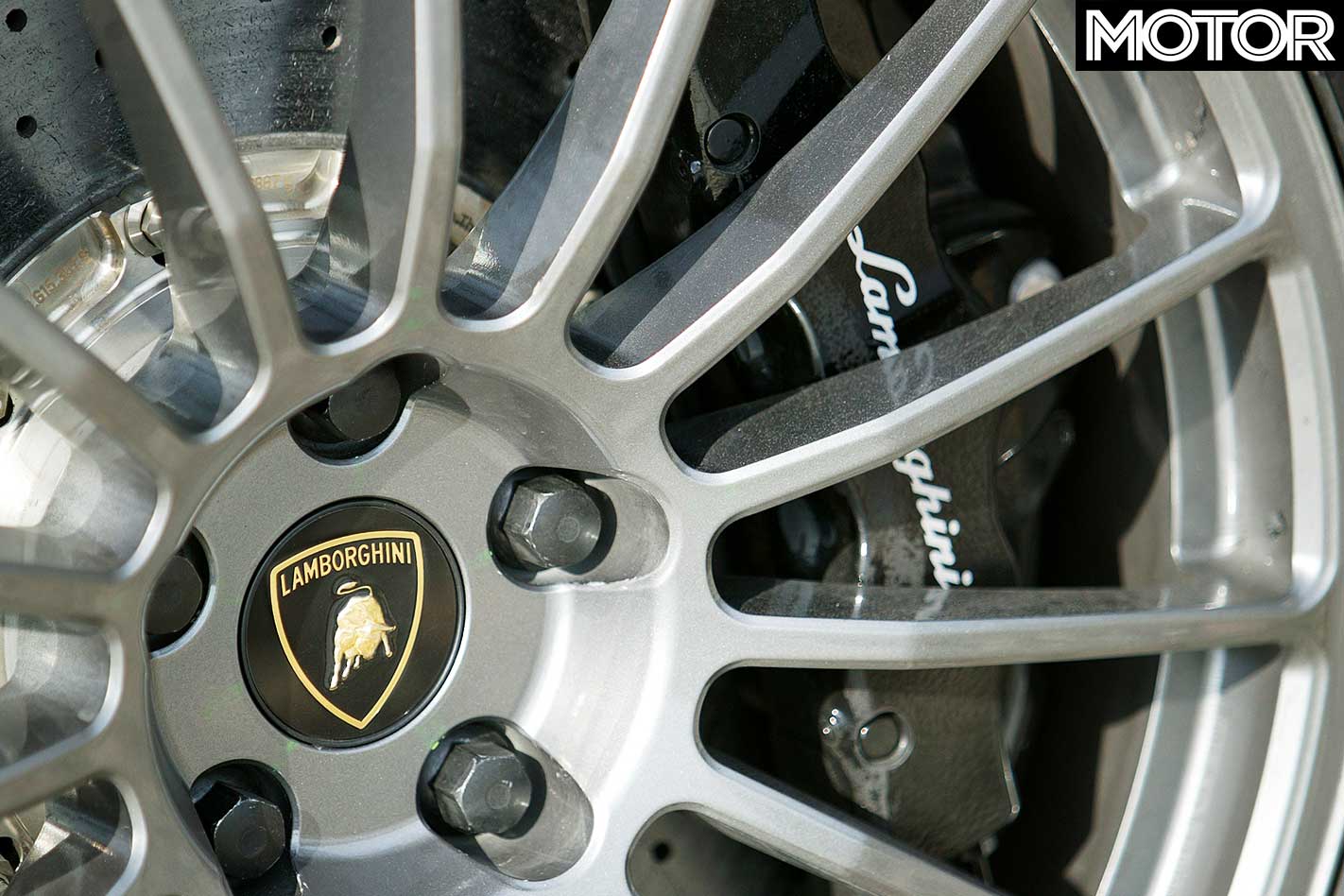
This isn’t all brakes, though. A big slice of this is the Pirelli PZero Corsa super-sticky rubber. The tyres are stubbornly, stupidly sticky. On this car, on this track, they’re as close to slicks as you could hope for, and probably have grip levels similar to a touring car slick from five or six years ago.
This all adds up to a long series of “Oh, My God” moments before you realise that you actually have to knuckle down and work hard to get at its grip limits, regardless of whether you’re in first-, second-, third- or fourth-gear corners. (Though it’s the fourth-gear corners that actually get kinda scary.)
With steering slightly heavier than that on the standard car, the flat-bottomed suede-and-carbon wheel steers straight for heaven, with a constant song of contact and detail.
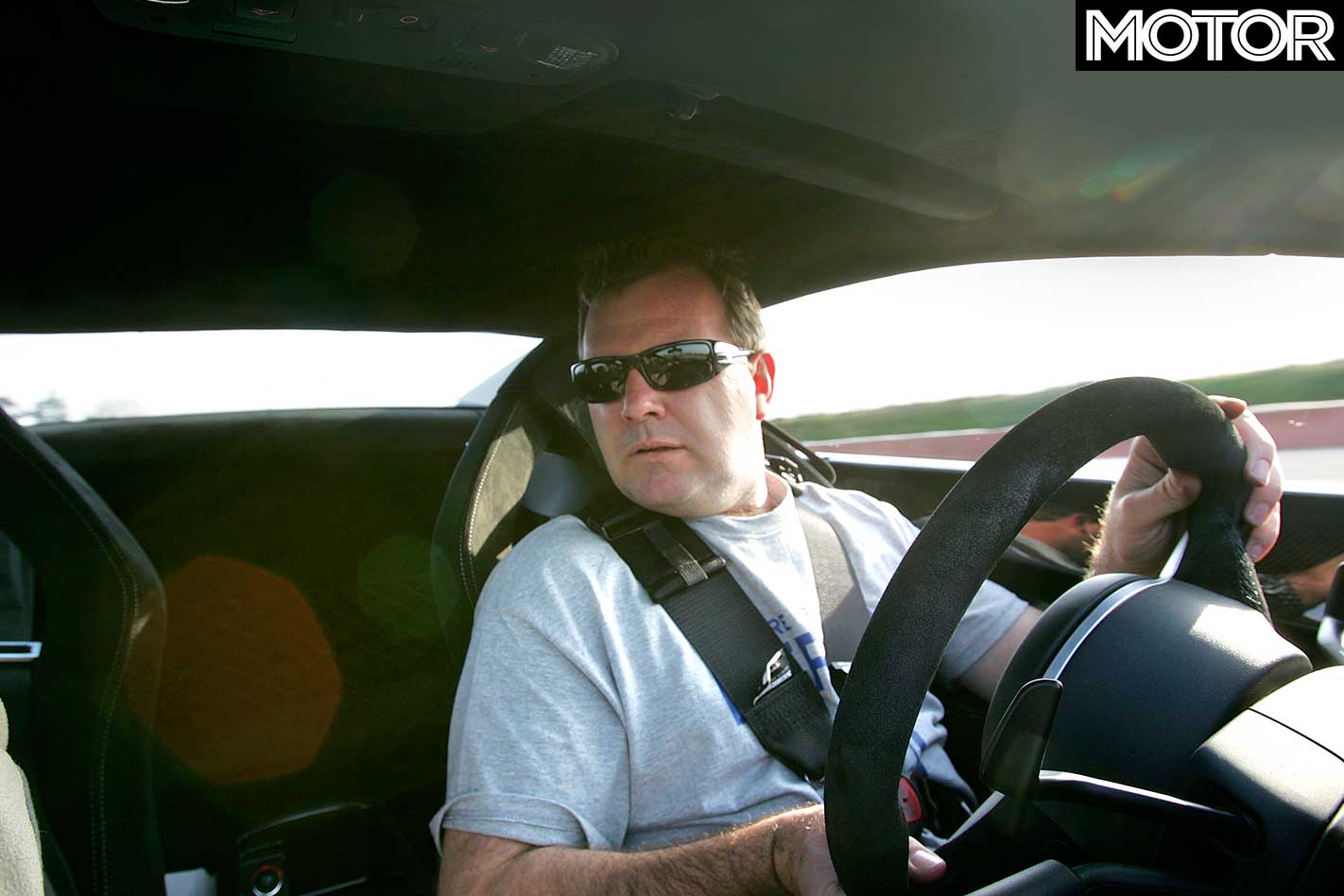
Give it a little bit of spring back at the front, and the Superleggera will just snap into the long, second-gear sweeper. It just loads up and up, and builds into an insistent, constant shove on your neck and innards, finally giving you a rest when the nose runs out of grip deep into the world of the crazy.
But its tricks don’t stop there. When it’s out of grip, it’s one of the world’s easiest cars to adjust, especially in a long corner. Instead of wallowing in a push, it lets you fiddle and play, and the throttle response is so intuitive, you find yourself fiddling with the throttle openings to tuck in the nose or let it run wide again – and, if it’s a long enough corner, you can sneak in eight or nine different changes.
Get it right and you can balance most of the weight on the tail just as you start to straighten up, and it becomes the bullet in the gun, howling and simmering its way out of corners with the mildest trace of oversteer, flinging you harder and harder into the seat’s side supports.
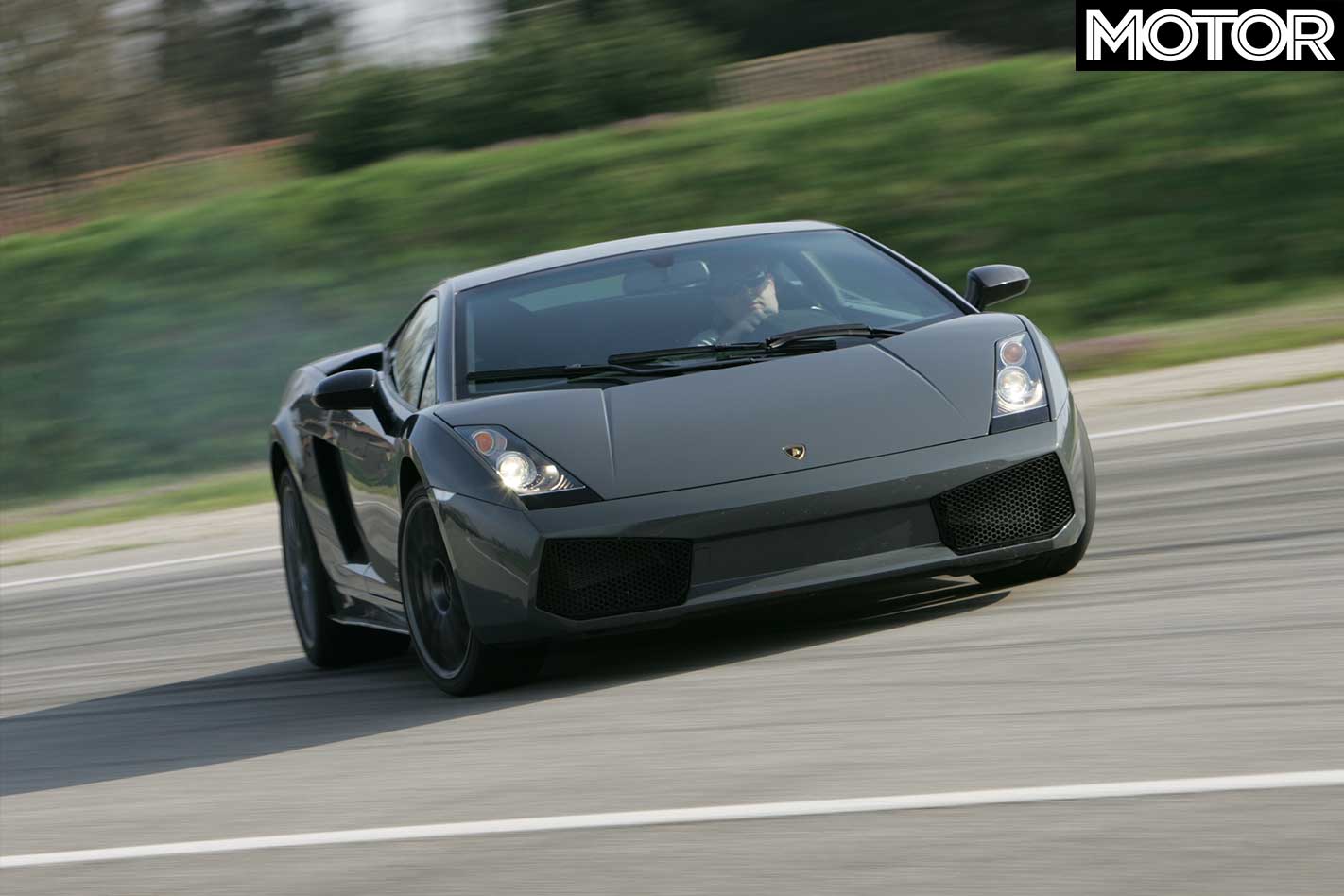
It just hangs on and hangs on and it almost hurts your ribs. The seats grip you hard and long, and they’re so effective you barely have to brace your legs against the car’s huge g loads, which leaves you free to fine-tune your throttle and brake inputs.
It explodes onto the straights like it simply will not let them get in the way of its next corner, where you can stand on the brake pedal and do it all over again. And again and again, as long as your body can cope with being mashed into the seat shell and belts and as long as your arms and shoulders can operate against the loads. It just carries so much mid-corner speed that you never, ever see the ESP light.
When it is needed, though, you’ll be happy it’s there; because you’ll be travelling very quickly and your reaction times will be much, much shorter.
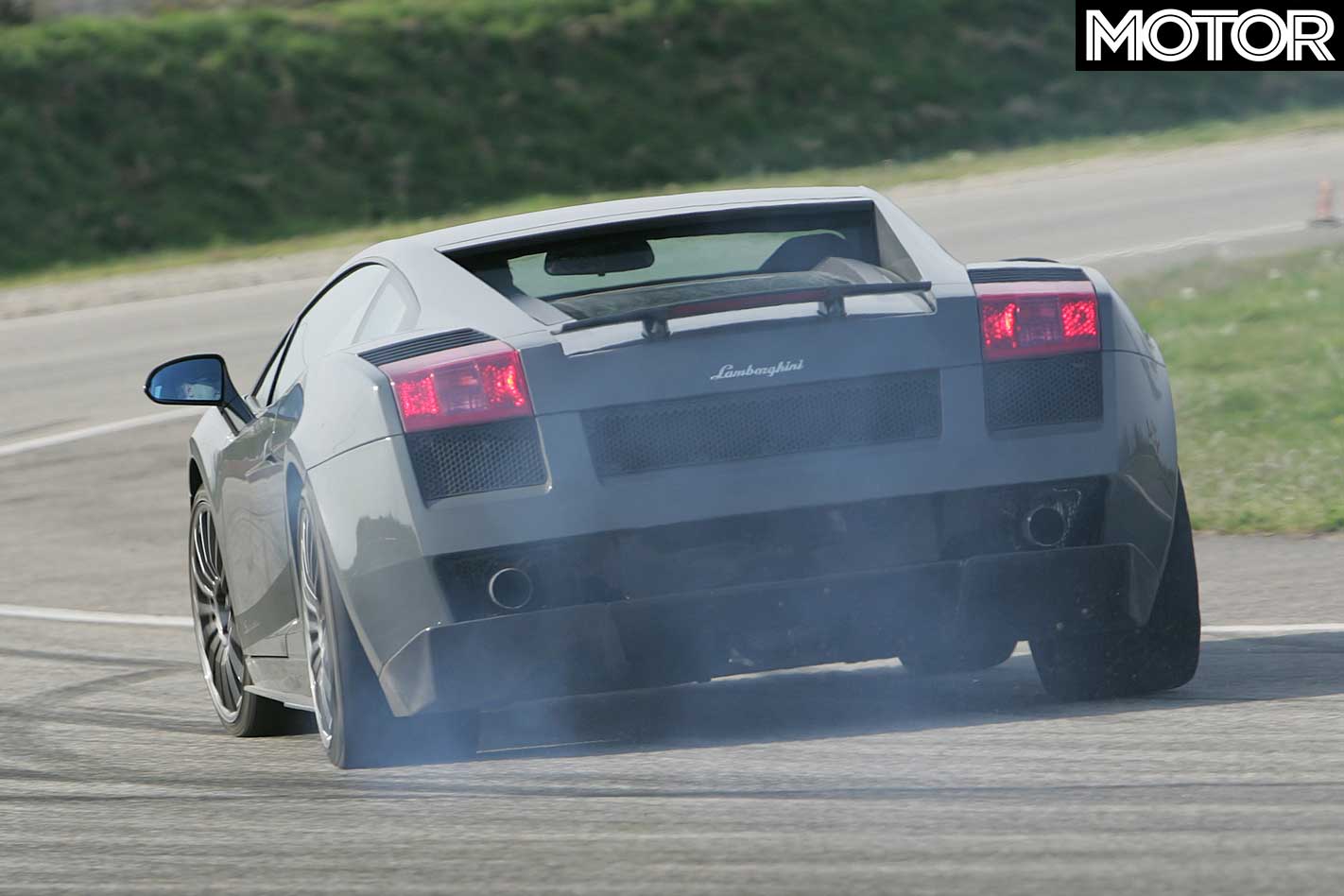
It’s a wonderful car, made more wonderful by the removal of 104kg of stuff that, quite frankly, you hardly miss. I’d take these seats over the stock items any day, for one. It’s not yet perfect, though. Dive into the braking area and it’s oddly grabby on the ABS if you go hard at it with any steering lock on.
The brakes bite very hard, but need quite a bit of temperature in them before they give their best. And then there’s the understeer, but rid yourself of the optional parking assist rams and you’ll rid yourself of a lot of that, too.
Lamborghini will charge more for this car (though how much more, it has yet to decide), and they’ll be right to. It’s a better car, but is it a justifiable spend? Quite frankly, for most people, it isn’t. Most people won’t be able to push it hard enough, often enough, to know where the differences are. But if you’re going to have an outrageous car like a Gallardo, you might as well have as much Gallardo as Lamborghini wants to sell you.
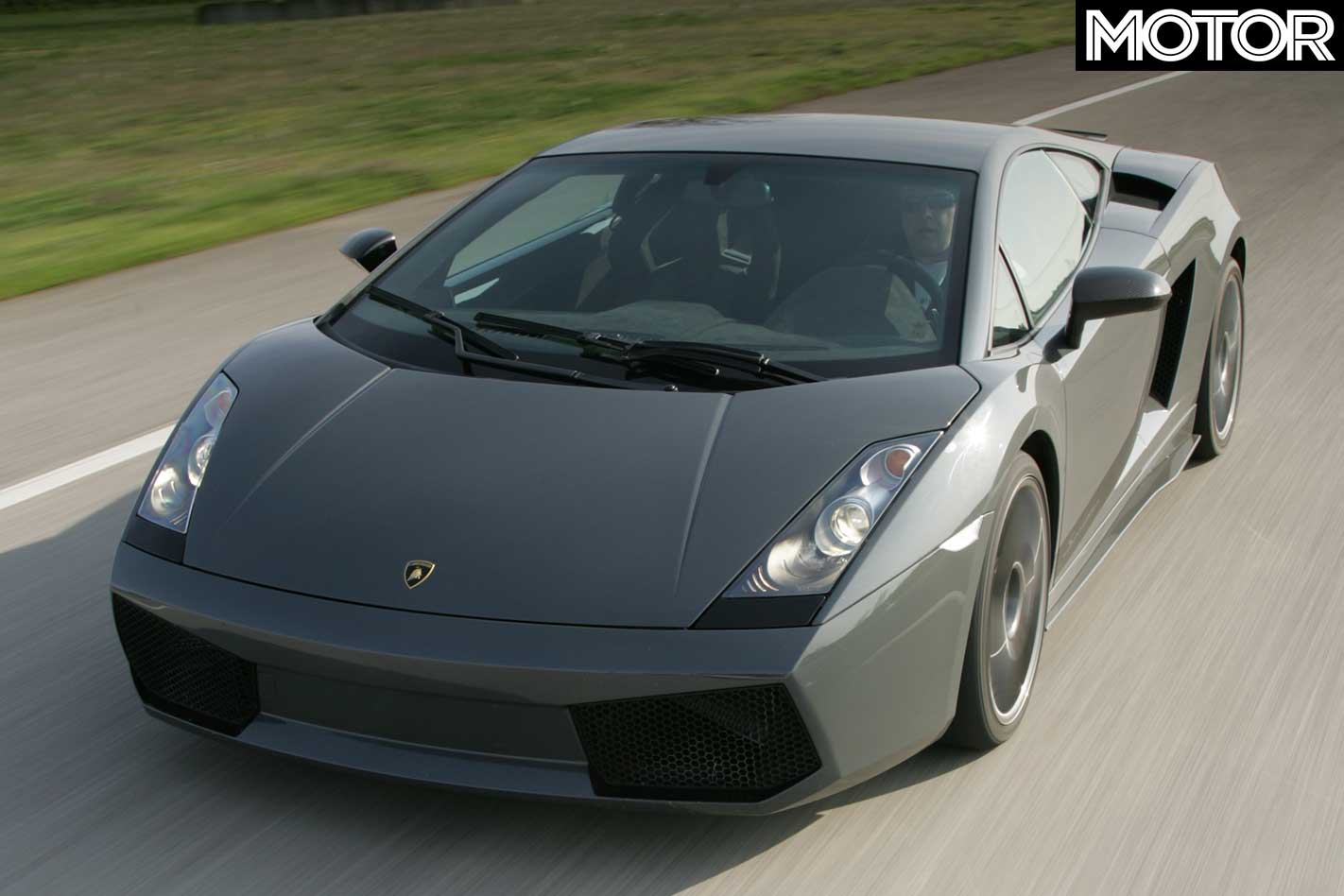
FAST FACTS 2007 Lamborghini Gallardo Superleggera
BODY: 2-door, 2-seat coupe DRIVE: all-wheel ENGINE: 4961cc DOHC, 40v V10 BORE/STROKE: 82.5mm x 92.8mm COMPRESSION: 11.0:1 POWER: 390kW @ 8000rpm TORQUE: 510Nm @ 4250rpm WEIGHT: 1330kg POWER-TO-WEIGHT: 293kW/tonne TRANSMISSION: Six-speed automated manual SUSPENSION: double wishbones, coil springs, self-adjusting dampers, anti-roll bar (f & r) L/W/h: 4300/1900/1165mm WHEELBASE: 2560mm TRACK: 1622mm (f); 1592mm (r) BRAKES: 365mm x 34mm ventilated and cross-drilled discs, eight piston monobloc calipers (f); 335mm x 32mm ventilated and cross-drilled discs, four-piston monobloc calipers (r) WHEELS: 19 x 8.5-inch (f); 19 x 11-inch (r), Scorpius forged alloys TYRES: Pirelli P-Zero Corsa 235/35 ZR19 (f); 295/30 ZR19 (r) PRICE: TBA
The Biggest Loser – How do you rip 100kg out of a modern supercar?
Lamborghini’s Technical Director Maurizio Reggiani was told to pull the 0-100km/h time down to 3.8 seconds, the power-to-weight ratio down to 2.5kg/bhp and to maintain the Gallardo’s balance. Oh, and no turbocharging and stop it, Maurizio, we’re not letting you pull the front diff out because it’s now Lambo DNA. And keep the 40:60 weight distribution. Please.
“The main way to improve the handling is the weight, and 100kg is a dramatic reduction,” Reggiani said. “The behaviour of the car was really impressive when we did this. In the cars this mass that is missing gives an impressive improvement in a fast track where handling is so important.”
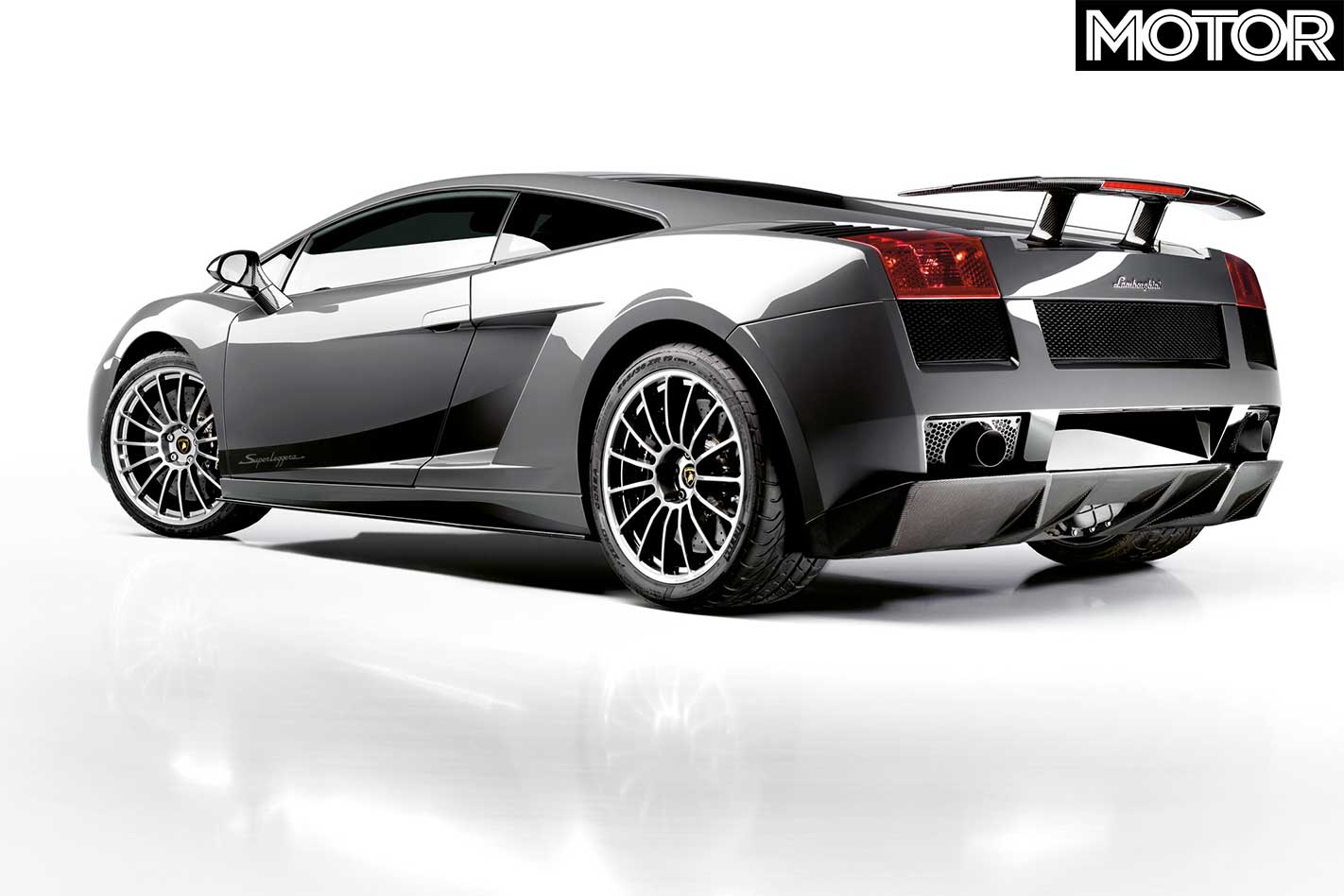
The changes to the engine were limited to the intake manifold, and new, lighter exhaust internals also ease the back pressure, which brought about a new software code and explains the 10 horses. But this car is about weight, not power.
The interior is almost all carbon-fibre, including the inner door skins, the seat shells and the centre tunnel. The door panel used to have plastic and leather and insulation.
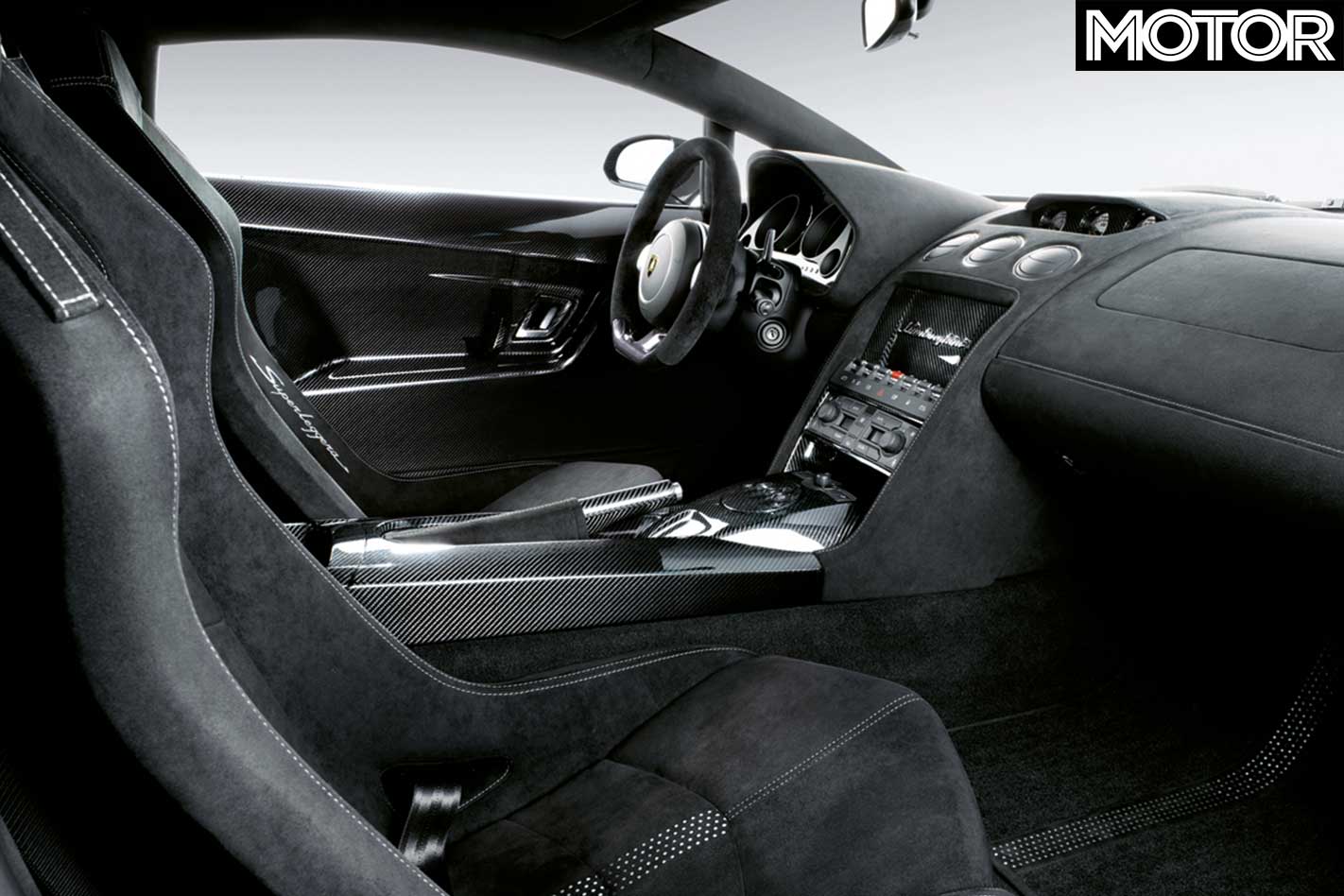
Now it’s just one shape, all in carbon, and saves 2kg per door. The multimedia system went, there’s a lighter steering wheel and anything that was leather is now light-weight Alcantara. The engine cover is now a combination of carbon-fibre and polycarbonate, while the fixed side windows are now polycarbonate as well.
The electronic system to raise the spoiler has gone, and there’s the subtle standard spoiler and a more outrageous one, both in carbon-fibre. The all-new Scorpius rims are forged alloys which are also machined, and save 8kg per corner. The optional carbon-ceramic brake rotors are lighter, but need larger calipers, so the savings are cancelled out.
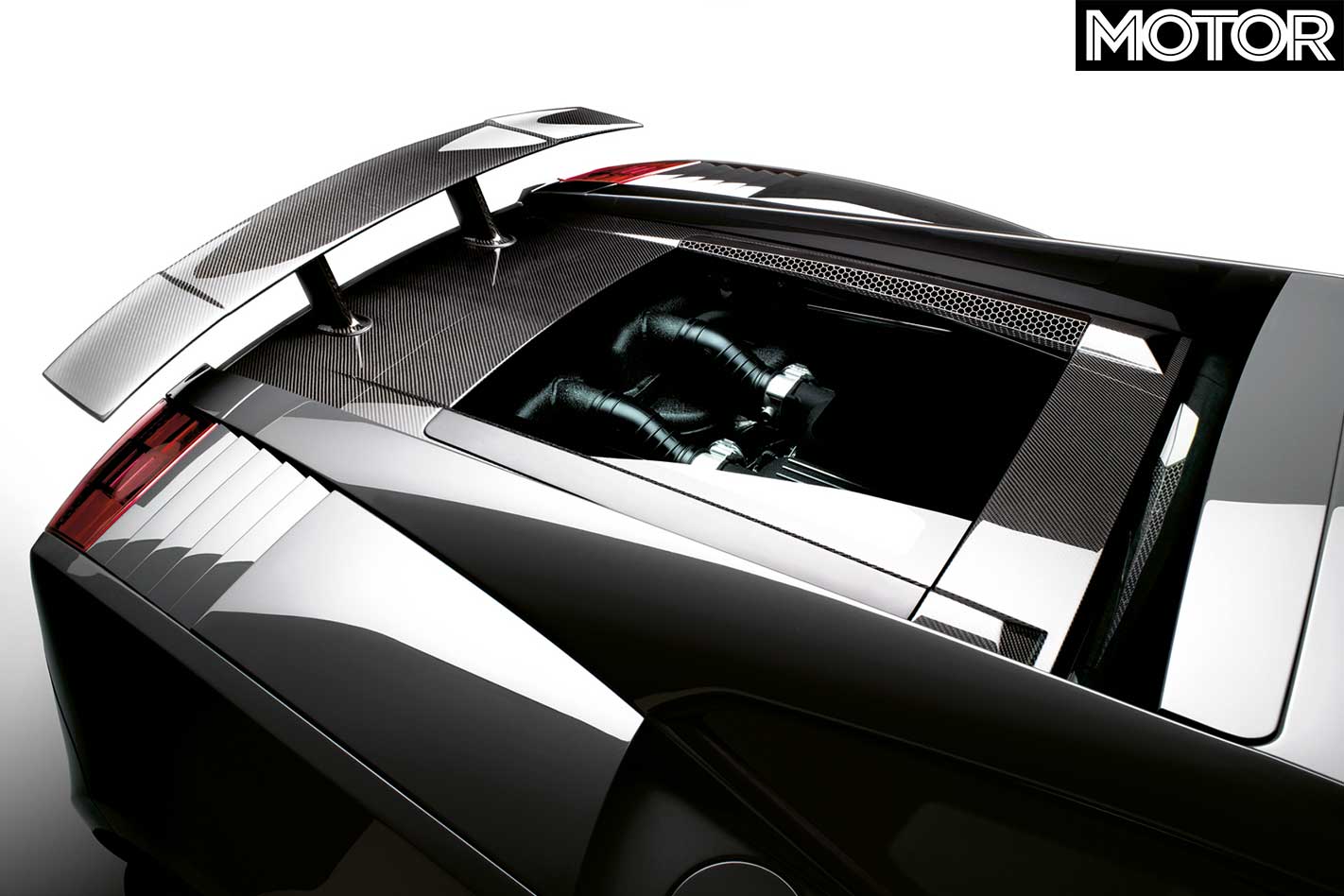
Light-weight materials, like replacing aluminium with magnesium and using other parts instead of steel. “The engine cover and non-structural, non-stressed components, like the gearbox carter, some hangers and brackets, are now magnesium,” Reggiani says. “That saves us around 50kg.
“All of this has lowered the roll centre of the car, but it is so low anyway that it’s not significant. We are speaking of something less than 1mm.”
When BMW introduced its polarising X6 in 2007, many said the curiously coupe-profiled large SUV would be a flop, but it wasn’t. In the ensuing years many mainstream brands have subsequently been scrambling to offer more elegant high-riders as styling scaled the list of customer priorities.
Mercedes returned fire with its GLE Coupe but Audi has been awkwardly standing on the sidelines watching its rivals enjoy the attention – until now.
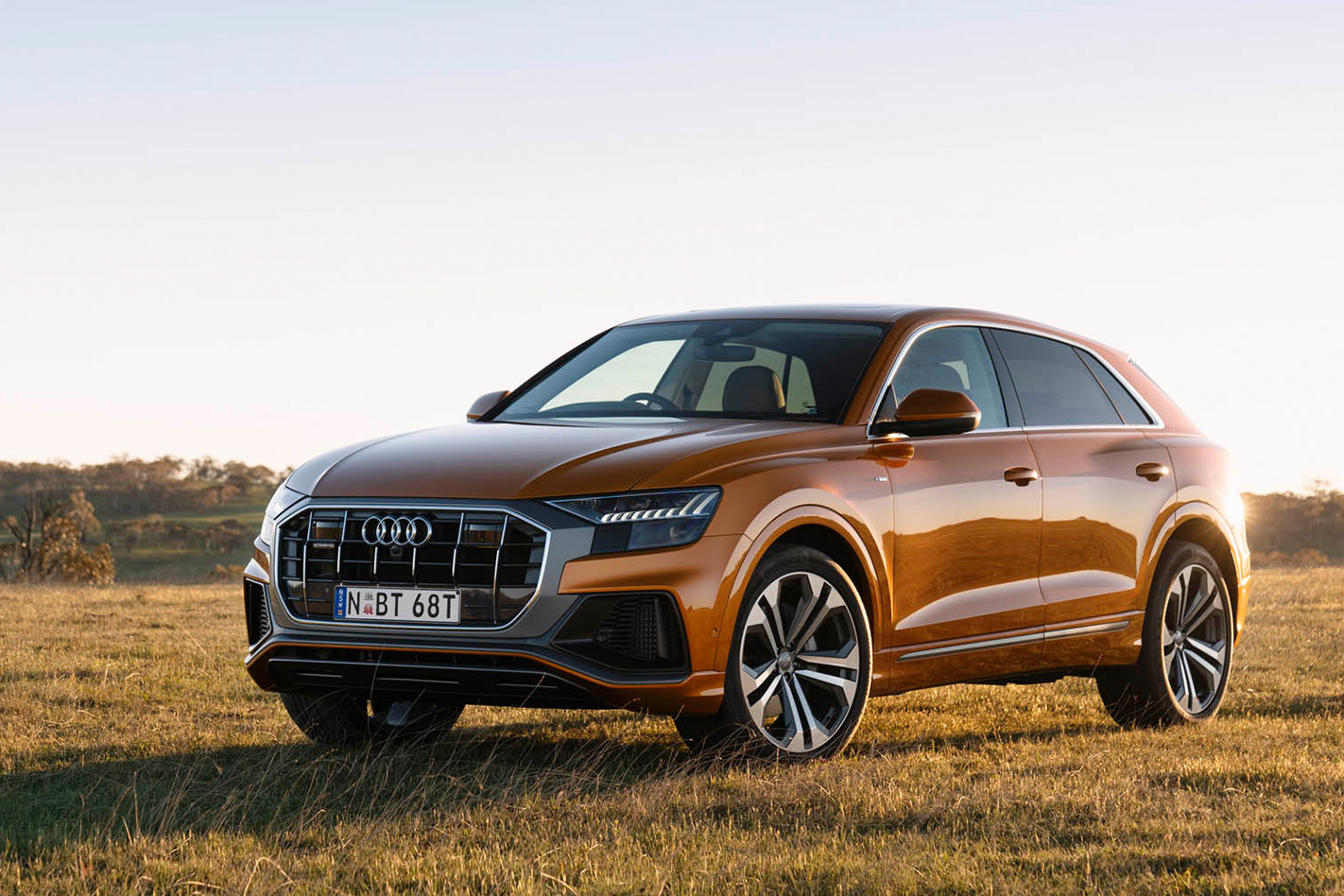
The 2019 Audi Q8 wades in as the company’s new SUV flagship, taking its position at the top of the more all-terrain pecking order above the more conventionally-bodied Audi Q7.
VALUE
With a single variant – the 55 TFSI – introducing the model to Australia with a $128,900 asking price, the Q8 is not at the affordable end of the large SUV spectrum. However, Audi has bundled a significant amount of kit as standard fare.
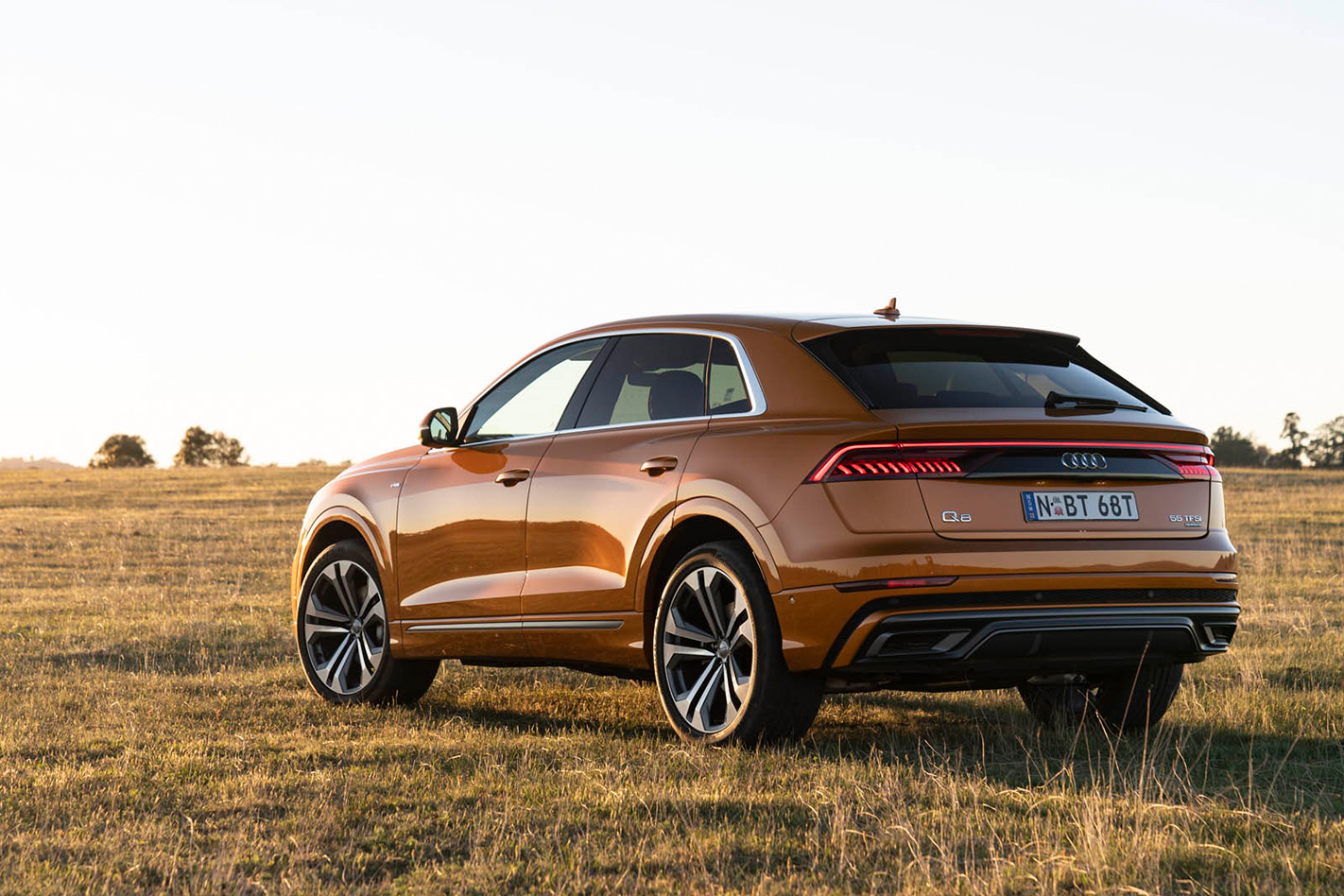
Extensive touchscreen functionality, cutting-edge driver assistance systems and many luxury features are borrowed from its A8 limo sibling, but the Q8 adds to that with clever off-road enhancements and styling that is arguably more handsome than any Audi SUV before it.
Despite that lengthy honour list, the Q8 is $63,000 cheaper than the most affordable A8. In that context, Q8 customers are getting a lot for their cash. The Q7, which shares a dose of the Q8’s oily bits kicks off from $97,000, but the options list exercise to match Q8 standard kit would be a pricey route to go down.
For those customers on a tighter ownership budget, a Q8 50 TDI will arrive mid-2019 offering a more frugal version with exactly the same specification and price. Its 3.0-litre dieselV6 is the only difference.
STANDARD FEATURES
Until the diesel arrives, the Q8 is powered exclusively by a 3.0-litre turbocharged V6 petrol, which develops 250kW and 550Nm. It sends power to all four wheels via an eight-speed automatic transmission and adaptive dampers, combined with steel spring suspension which is also standard.
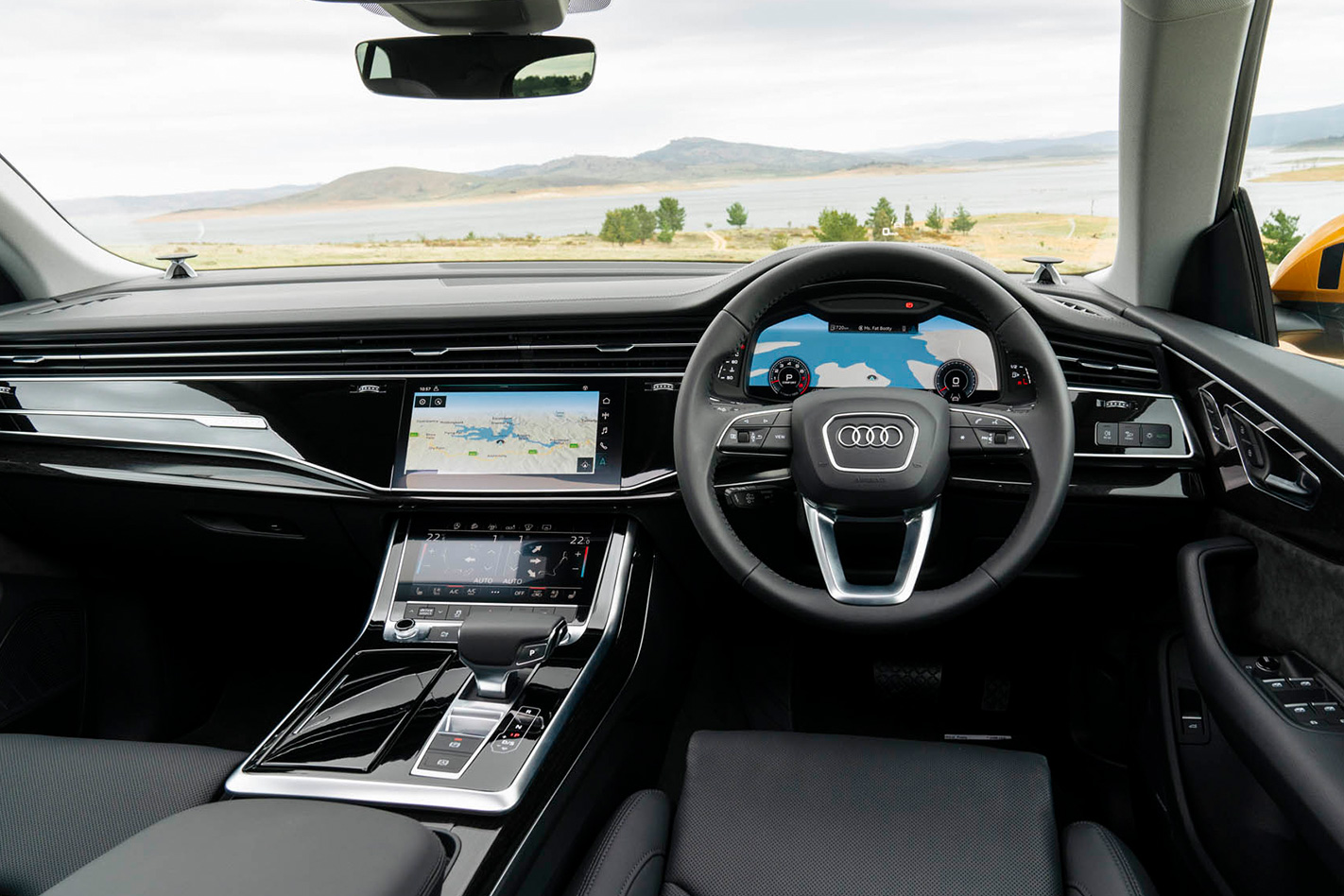
Boosting fuel economy and performance when needed, the Q8 drivetrain incorporates a 48-volt electrical system. A belt-driven generator recovers otherwise wasted energy from the engine and stores it in a small battery, but then returns power to the motor when full acceleration is required. Audi says the system saves up to 0.7 litres of fuel per 100km and official WLTP fuel consumption is rated at 9.2L/100km.
The Q8 has the most premium seating in the large SUV line-up with Valcona leather sports seats with the most extensive adjustment included in the price, while Q7 customers are asked extra for the enhancement. Unlike the seven-seat Q7 however, the Q8 is strictly a five-seat proposition.
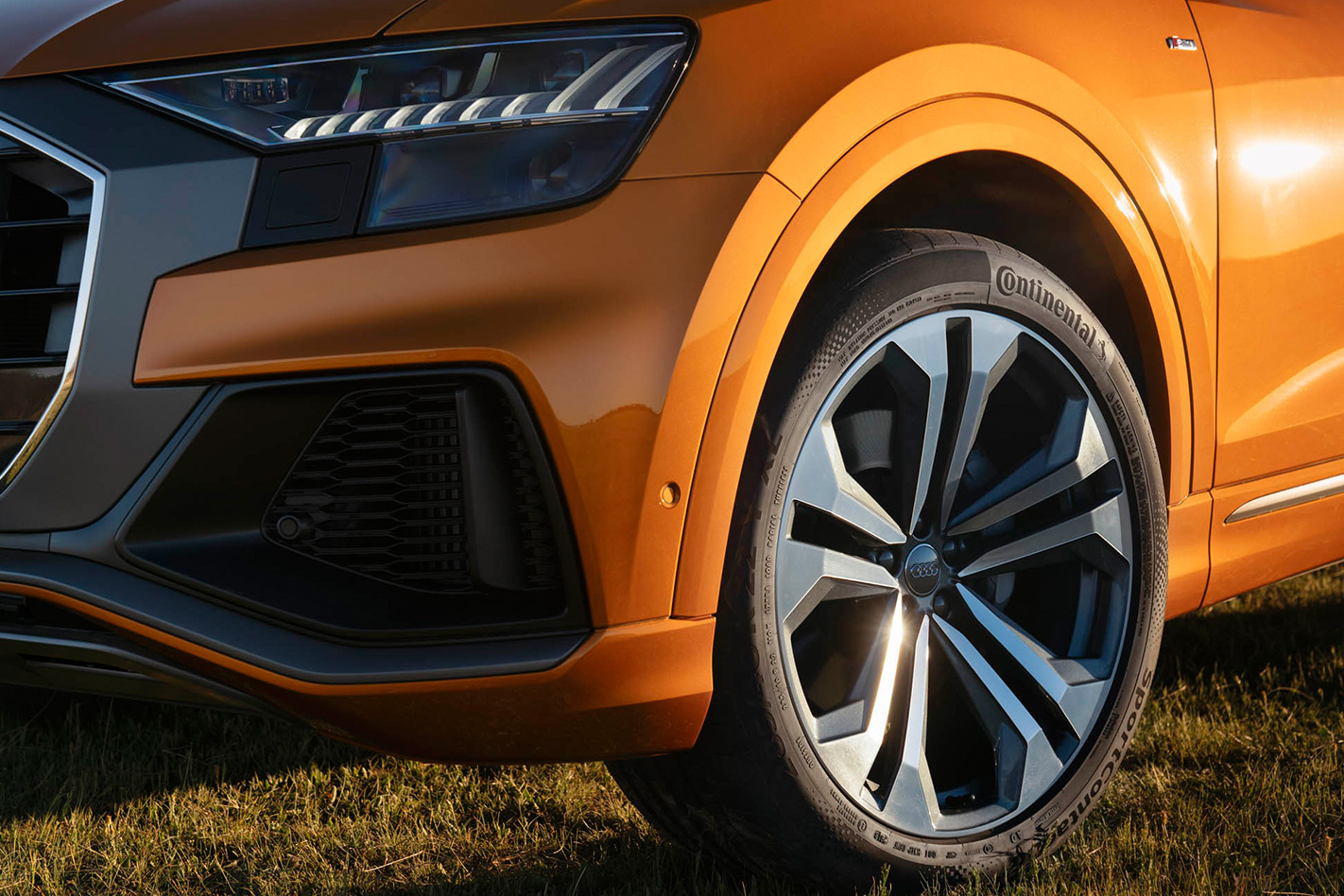
Other notable standard kit includes smart 21-inch wheels, an S line styling pack that adds a dusting of sporty equipment and is an optional extra on many lesser Audi models, electric tailgate and full LED headlights.
SIZE
Dwelling at the larger end of the SUV segment, the Q8 roughly shares its overall size with the Q7 but has undergone a nip and tuck for more sporty and purposeful proportions.
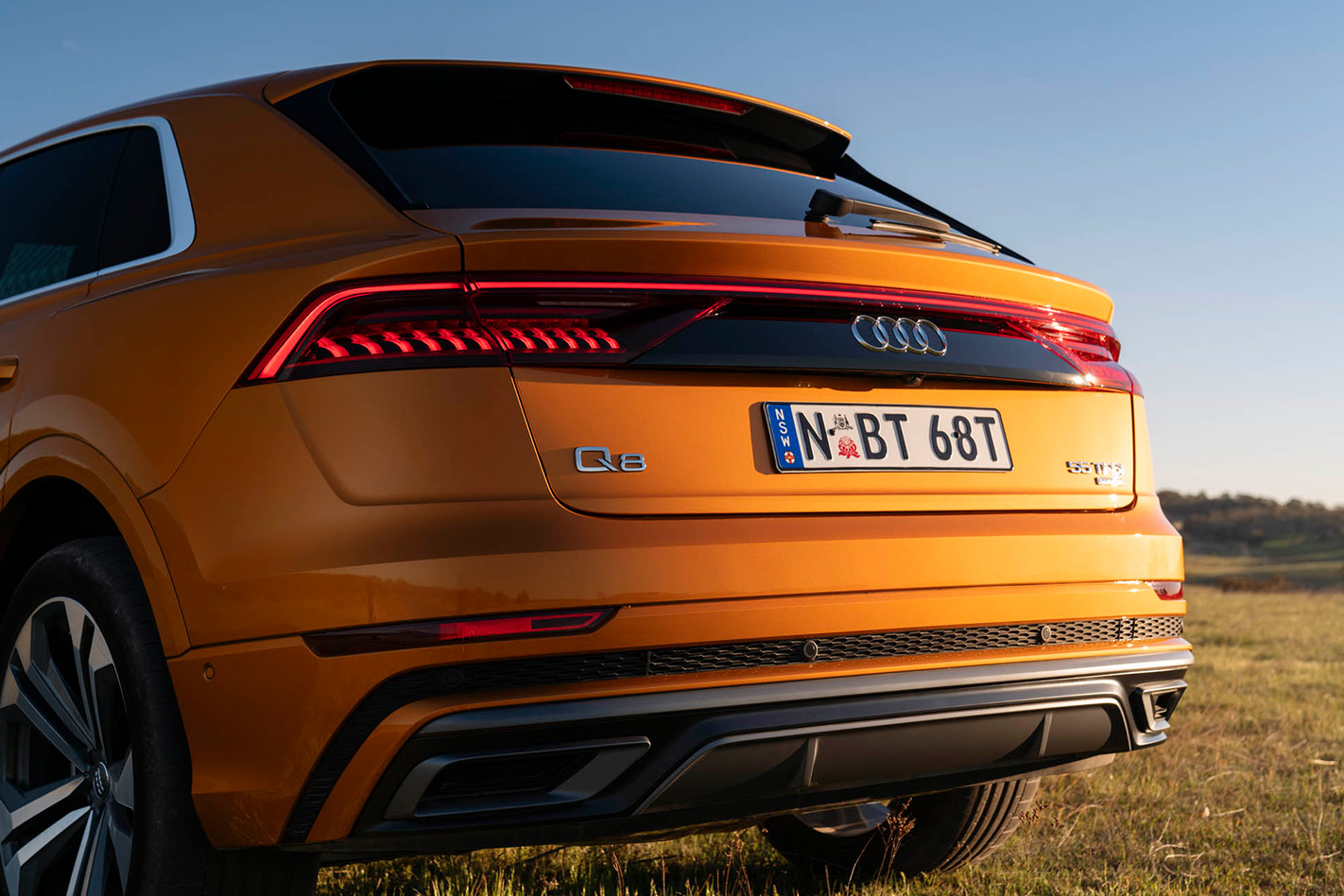
At nearly five metres long, 2.0 metres wide and 1.7 metres tall, the Q8 is a little wider, shorter and sits lower than the Q7 but has an identical wheelbase of 3.0 metres.
Inside there is room for five adults and plenty of luggage with a 606-litre booth that can expand another 75 litres by sliding the second row of seats forward. If that’s still not enough, the 40:20:40 split rear seats can fold flat, boosting total luggage volume to 1755 litres – pretty cavernous considering its lower roofline.
If the Q8’s proportions seem a little daunting for negotiating tighter parking spots or narrow alleys, the excellent manoeuvring assistance systems will be a welcome feature. Not only are there parking sensors all round, but a 360-degree camera allows a clever 3D image of the vehicle to be manipulated via the MMI touch response screen. There’s also automatic parking assistance.
At the wheel, the Q8 feels smaller than its exterior appearance but its cabin is spacious and light-filled.
SAFETY
As you might expect from the flagship of Audi’s SUV range, the Q8 is packed with electronic systems, including a plethora of active safety tech.
Previously Audi has introduced a cyclist protection system which detects approaching cyclists and issues a visual warning if an occupant tries to exit the vehicle, but the system has now been enhanced for the Q8 and actually delays the door handle operation, physically preventing the door being opened into the cyclist’s path. In an emergency, the effect can be overridden by pulling the handle beyond the regular unlatch point.
There’s also the usual selection of head-up display, driver fatigue monitoring, lane departure, speed sign recognition and blind spot monitoring tech as well as airbags for all occupants and a safety cell comprised mostly of aluminium.
Increasingly-common adaptive cruise control and autonomous emergency braking are included, allowing the Q8 to control its own speed and distance from other vehicles at freeway speeds and right down to stop-and-start congestion.
COMFORT
Order a Q8 straight off the shelf and it will arrive rolling on steel coil springs with adaptive dampers, but if you really want the best in ride quality and driving dynamics, you’ll have to upgrade to the optional air suspension.
Unfortunately, the more sophisticated chassis is only available as part of an $11,000 Premium plus package, which bundles a heap of other goodies. The pack is good value if you are after all that it includes but if you only wanted the better suspension system, it’s a bitter pill to swallow.
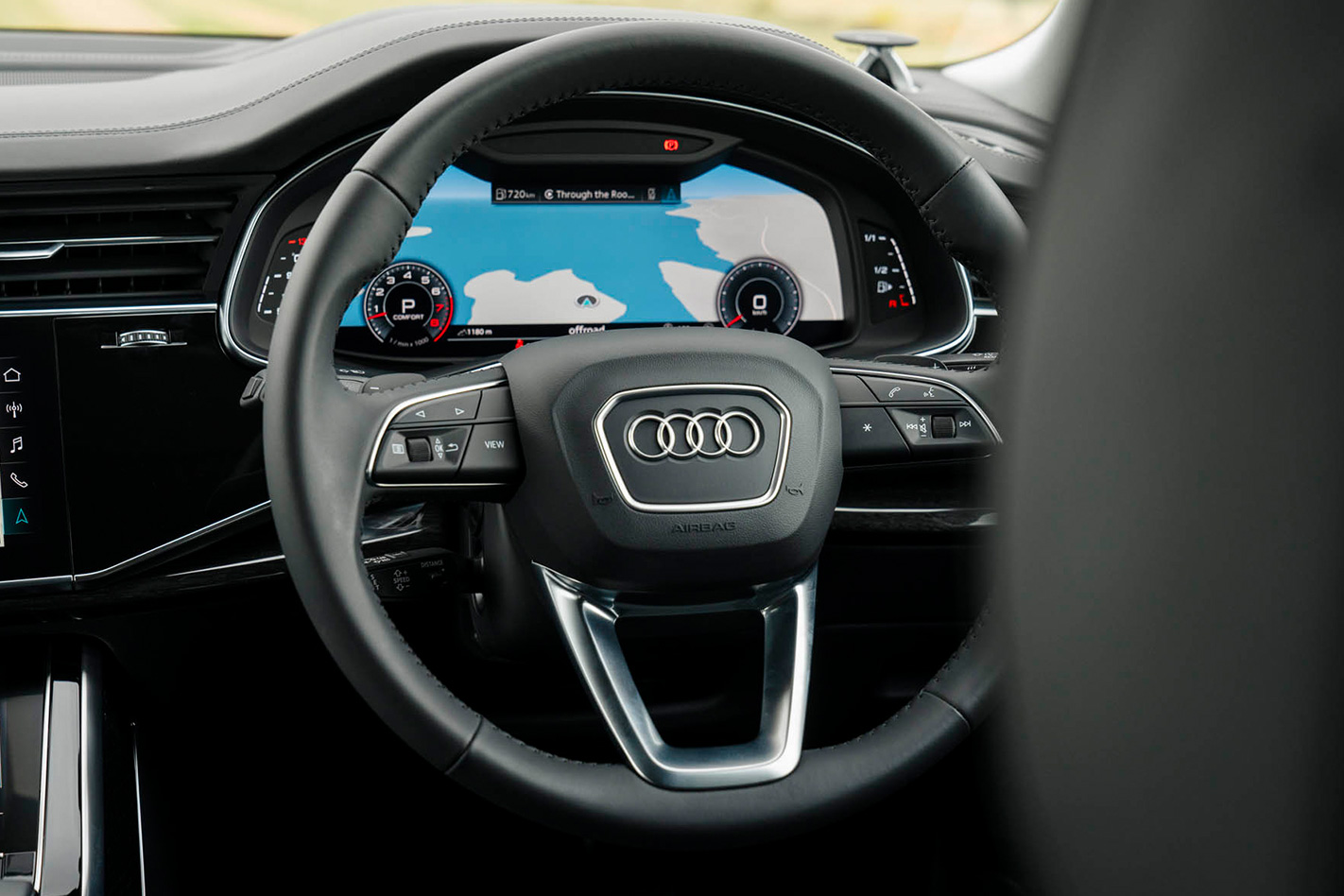
Driving on standard springs is not an unpleasant experience with a ride and body control that still allows a rewarding driving experience and decent comfort enhanced by the adaptive dampers. But once you have experienced the superior comfort and resistance to body roll of the Sport air suspension setting, it would be almost impossible to not tick the $11k option box.
Despite the more elegant roofline, rear seat headroom is still more than adequate for tall occupants although obviously not quite as generous as the Q7, and the two spacious outboard seats are suitable for extended journeys. With less support and a slightly elevated position, the central seat is best used for shorter trips.
As is common to all Audis, the interior quality is top notch with numerous examples of well thought out ergonomics and comfort features. We particularly liked the rear climate control panel, wireless device charging and customisable touchscreen displays with haptic feedback.
ON THE ROAD (and off)
In accordance with Audi’s new boot badge nomenclature, the Q8 wears a 55 TFSI moniker which alludes to its 250kW power output. Combined with 500Nm of torque and an electric boost from a mild hybrid system, the luxo SUV is brisk when you need it to be and effortlessly mute the rest of the time.
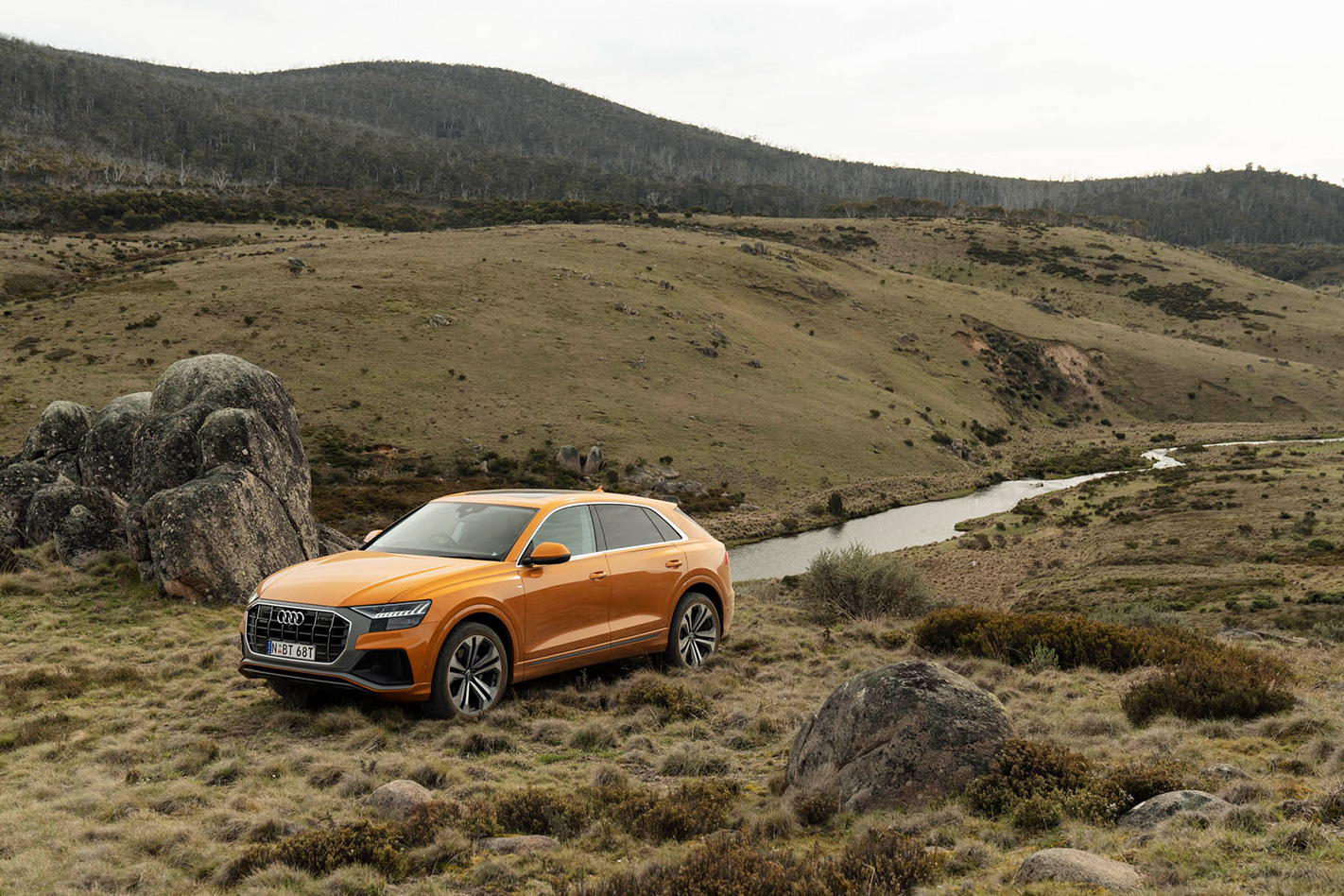
On-road manners are doubtless geared more towards a cosseting ride and comfort without encouraging the driver to stretch its legs. There’s still plenty to praise when pushing through a few bends at speed, but we’ll wait for an unconfirmed S or even RS variant before we attempt any lap times.
With the multitude of driving modes, we found the Q8’s nature was at its best left in the standard Auto setting and allowed a neutral feel for both comfortable cruising and carving the odd corner if it surprised us.
The engine’s hybridisation is about as mild as an electrified system gets but the effect is excellent. From the almost imperceptible engine start up to the extra dose of acceleration at all speeds, the 48-volt system is a subtle but welcome addition and we would love to see a full plug in hybrid joining the line-up.
We didn’t have a chance to test its all-terrain ability to the limit but a blast on unsealed roads hinted at a confidence we would like to revisit and explore at a later date. Flicking the drive select mode to Off Road was perhaps overkill for a little light gravel, with excessively light steering and jacked-up ground clearance, but we can see the benefit for tackling more challenging surfaces.
More road-focused 22-inch tyres will not thank you for taking the Q8 too far off the beaten track, however, and we would recommend the standard 21s with a little more side-wall if you intend to frequently go bush.
VERDICT
On first inspection $128,900 might seem like a lot to outlay for an entry-level SUV, even if it is from a premium brand like Audi. Perhaps an SQ8 or RS Q8 could warrant a heftier ticket without as much questioning?
But, as the new champion of the four-ringed SUV line-up, the Q8 is not a budget or bargain basement way into the brand. Instead, it sidesteps affordable, stripped-out variants and offers just one equipment-rich representative.
Its driving promise is not in the realm of Audi Sport models but nor is it trying to be, and owners will be drawn to the ride quality and respectable dynamics which manage to be subtle but not anodyne.
In the context of other Audi range-topping models, and when viewed alongside its rivals in the increasingly competitive market of coupe-profiled SUVs, the Q8’s value is as attractive as it’s handsome sheetmetal.
Audi’s new king of the hill, the Q8, will hit the road in January priced from $128,900 before on-road costs, offering a new tech-packed option for four-ring fans who don’t want to leave their creature comforts behind when the sealed road ends.
For now, just the 55 TFSI is on offer but it will be joined in the middle of 2019 by a second 50 TDI which offers identical pricing and specification but swaps the 3.0-litre V6 petrol for a diesel unit of the same displacement and configuration.
With technology, luxury features and driver assistance systems borrowed from the Audi A8 limo, the Q8 accepts the mantle from the Audi Q7 as the company’s SUV flagship and fills another gap in the Q queue. Only the Q1 and Q4 slots remain unrepresented as Audi builds its defence against arch rivals BMW and Mercedes, and their repertoire of high-riding models.
In the battle for SUV supremacy, the Q8 bumps gloves with Mercedes’ GLE Coupe and the BMW X6, both of which have had a significant head start on the Audi and have already busied themselves polarising opinions with their coupe-esque profiles.
That said, with its luxury focus, Audi will be eying customers who may also be considering a Range Rover Velar or Porsche Cayenne, with which the Q8 shares a chromosome or two.
With its circa $130k starting price, the Q8 is landing shells right in Mercedes and BMW’s back yard, with the equivalent GLE Coupe starting at $126,700 and the X6 which costs from $122,200.
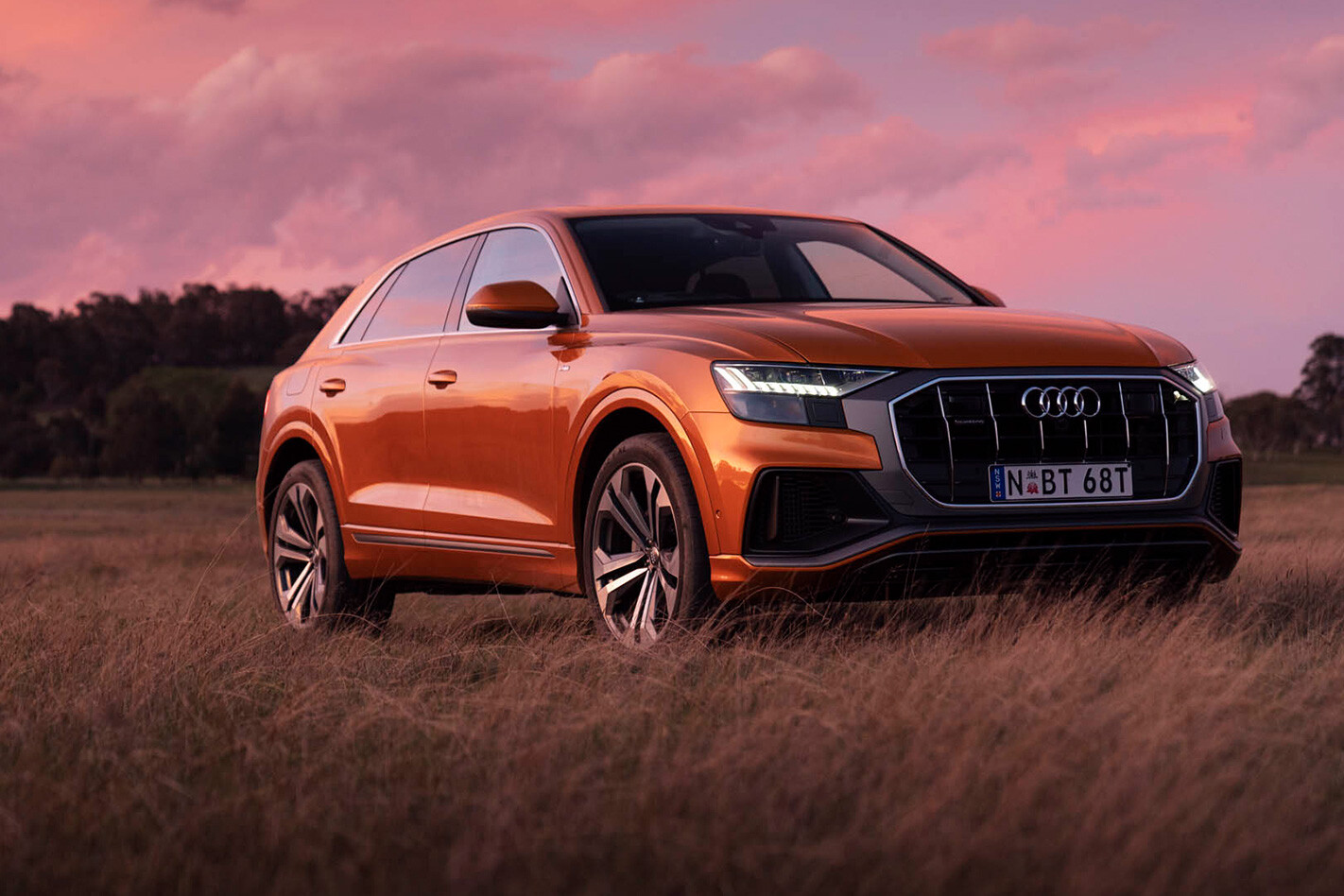
The Q2 marked Audi’s first foray into more elegantly profiled SUVs and, while that car might have divided style-savvy audiences, the Q8 wears a less divisive look. At the front end, the ‘single-frame mask’ is perhaps the most expansive yet from the German designer and is filled with a wider-vent grille.
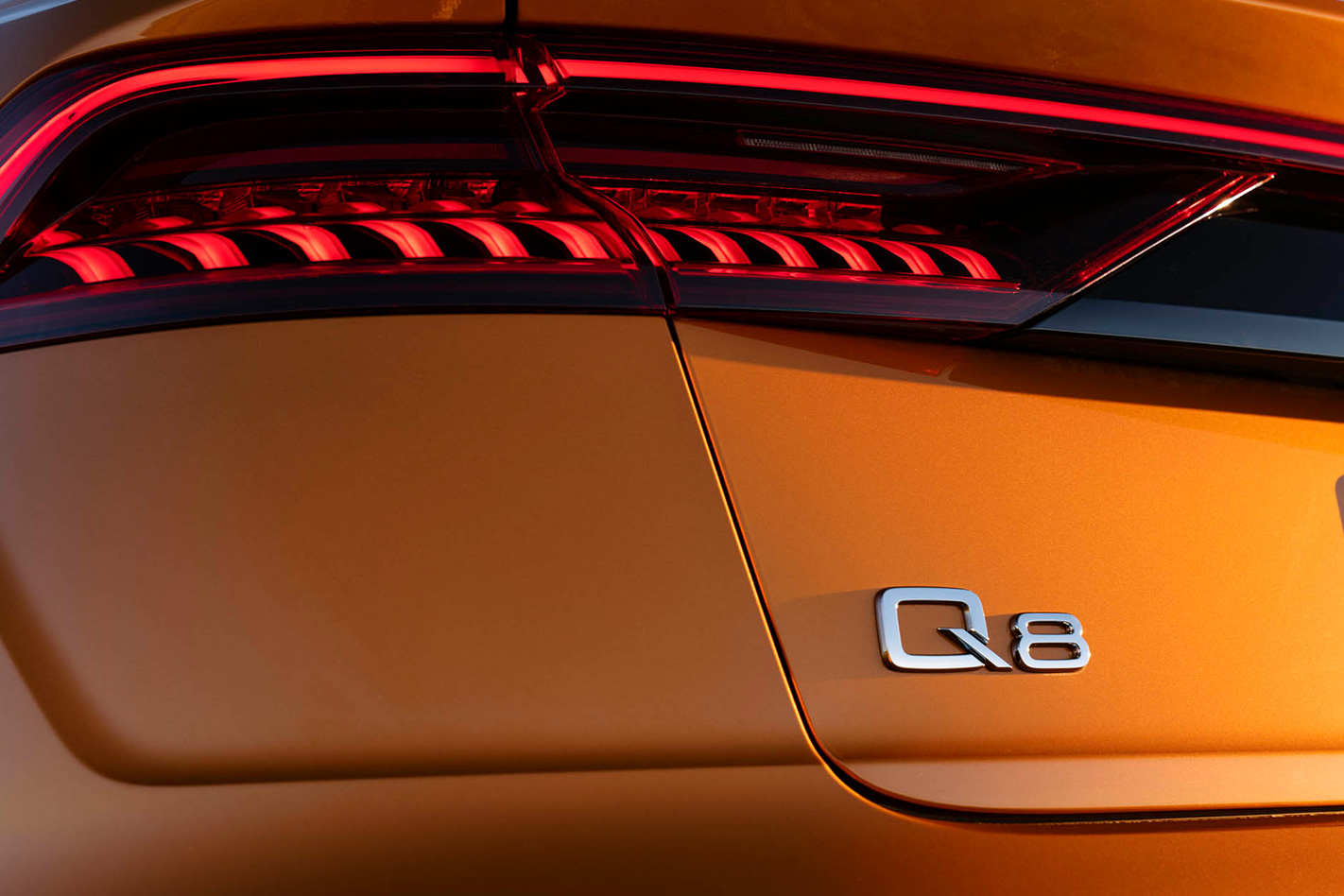
At the tail end a continuous light bar houses LED illumination and is said to be reminiscent of the original quattro sports coupe. Pumped arches impart a more muscular look in addition to the coupe profile headline styling feature. Frameless glass for all doors is another styling touch that brings a more premium feel.
Trading heavily on its technological offering, the Q8 bundles many of the features introduced by the new A8 earlier this year, albeit for a price some $70,000 more affordable than the big sedan’s entry price.
Leading the technological charge is a spread of fully digital screens, which relegates only a few tasks to conventional switches. For the driver, vehicle information is displayed in the proliferating Virtual Cockpit 12.3-inch instrument cluster, but it’s complimented by a pair of central information screens.
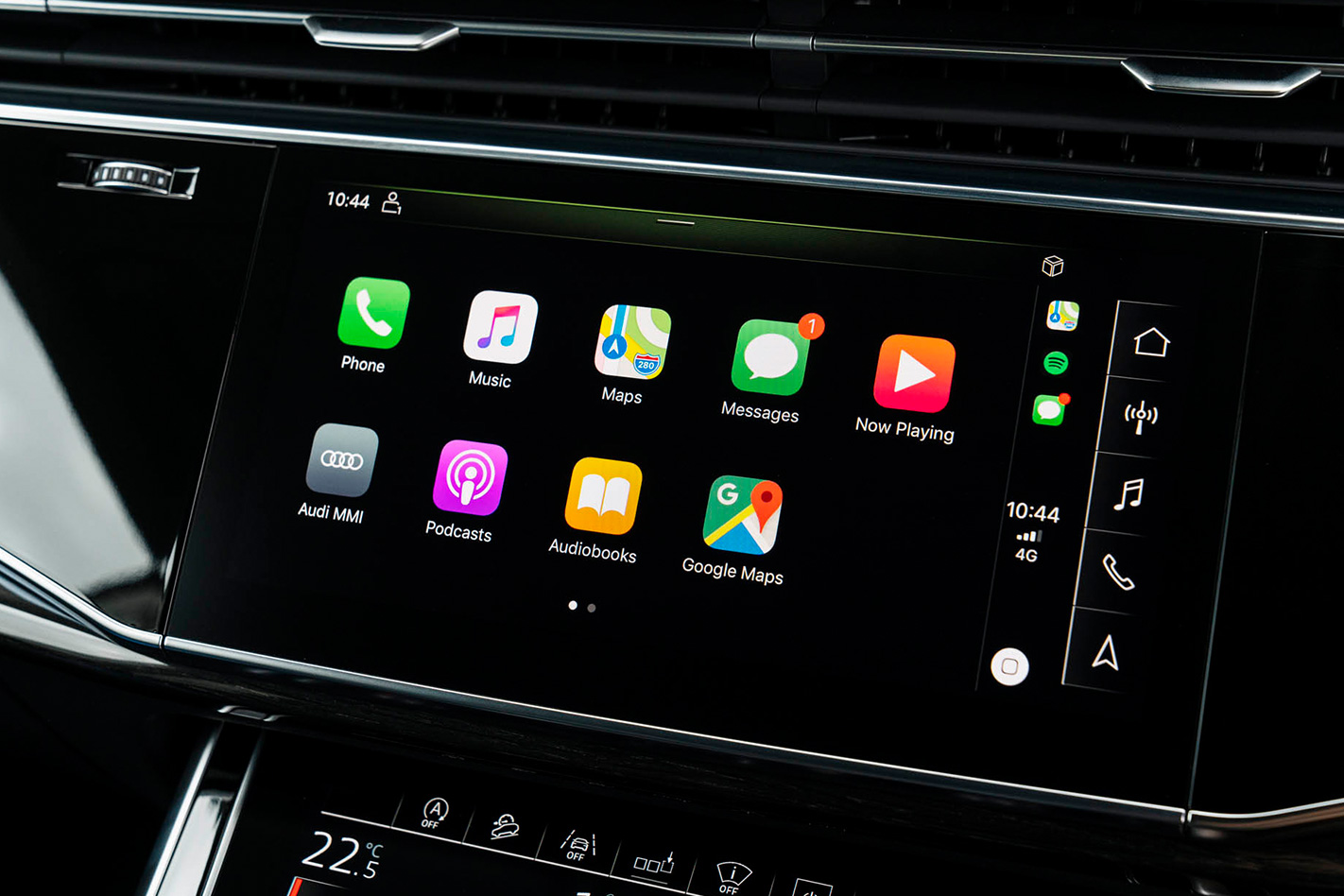
An 8.6-inch lower screen handles most vehicle comfort settings, while the 10.1-inch top unit looks after information and entertainment functions. Both can be customised by relocating application icons in a similar manner to smartphone operation, and pinch and swipe functions will also be familiar to any modern device owner.
Speaking of which, Android Auto and Apple CarPlay smartphone mirroring is also supported.
MMI Touch Response offers users a haptic feedback to acknowledge option selections with a tactile and audible click – another shared feature with the Porsche Cayenne.
Navigation is included as standard and its maps are upgraded for free for five years, although Audi does not yet offer over-the-air updates for the Q8 navigation, and updates will need to be conducted at a service centre.
The Q8’s safety systems are also similar to the A8’s. Highlighting the list of driver-assistance and crash mitigation tech is a suite of radar, cameras and other sensors.
Increasingly-common adaptive cruise control and autonomous emergency braking are included, allowing the Q8 to control its own speed and distance from other vehicles from freeway speeds right down to stop-and-start traffic.
The camera array also enables a sophisticated manoeuvring and parking assistance feature. Not only does the system allow a top-down view of the vehicle, but a 3D image presented on the central screen can be manipulated allowing the driver to focus on one particular point of the vehicle when negotiating tight spaces.
Previously Audi has introduced a cyclist protection system which detects approaching cyclists and issues a visual warning if an occupant tries to exit the vehicle, but the system has now been enhanced for the Q8 and actually delays the door handle operation, physically preventing the door being opened into the cyclist’s path.
There’s also the usual selection of head-up display, lane departure, driver fatigue monitoring, speed sign recognition and blind spot monitoring tech as well as airbags for all occupants and a safety cell comprised mostly of aluminium for if a crash is unavoidable.
The mix of steel, cast and sheet aluminium allows the Q8 to weigh in at 2145kg. Overall, the model range newcomer is similar in dimensions to the Q7 large SUV with an identical wheelbase of three metres, but is wider at two metres and shorter in height, measuring 1.7 metres.
Powering the 55 TSI is a 3.0-litre turbocharged V6 petrol with 250kW and 500Nm of torque – enough to power it to 100km/h from standstill in 5.9 seconds while consuming 9.2 litres of fuel per 100km/h on average.
Those figures are made possible thanks in part to a 48-volt main electrical system which has a belt-driven starter/alternator at its core. A lithium ion battery is charged by the alternator during braking but can return power to the engine when required to save up to 0.7 litres of fuel per 100km.
The system does not provide a zero-emissions driving mode like plug-in hybrids and differs from the 48-volt sub-system fitted to the Audi SQ7 which provides power to auxiliary systems and not directly to engine output.
An eight-speed automatic transmission sends power to all four wheels depending on the driving style, terrain conditions and according to the drive select modes.
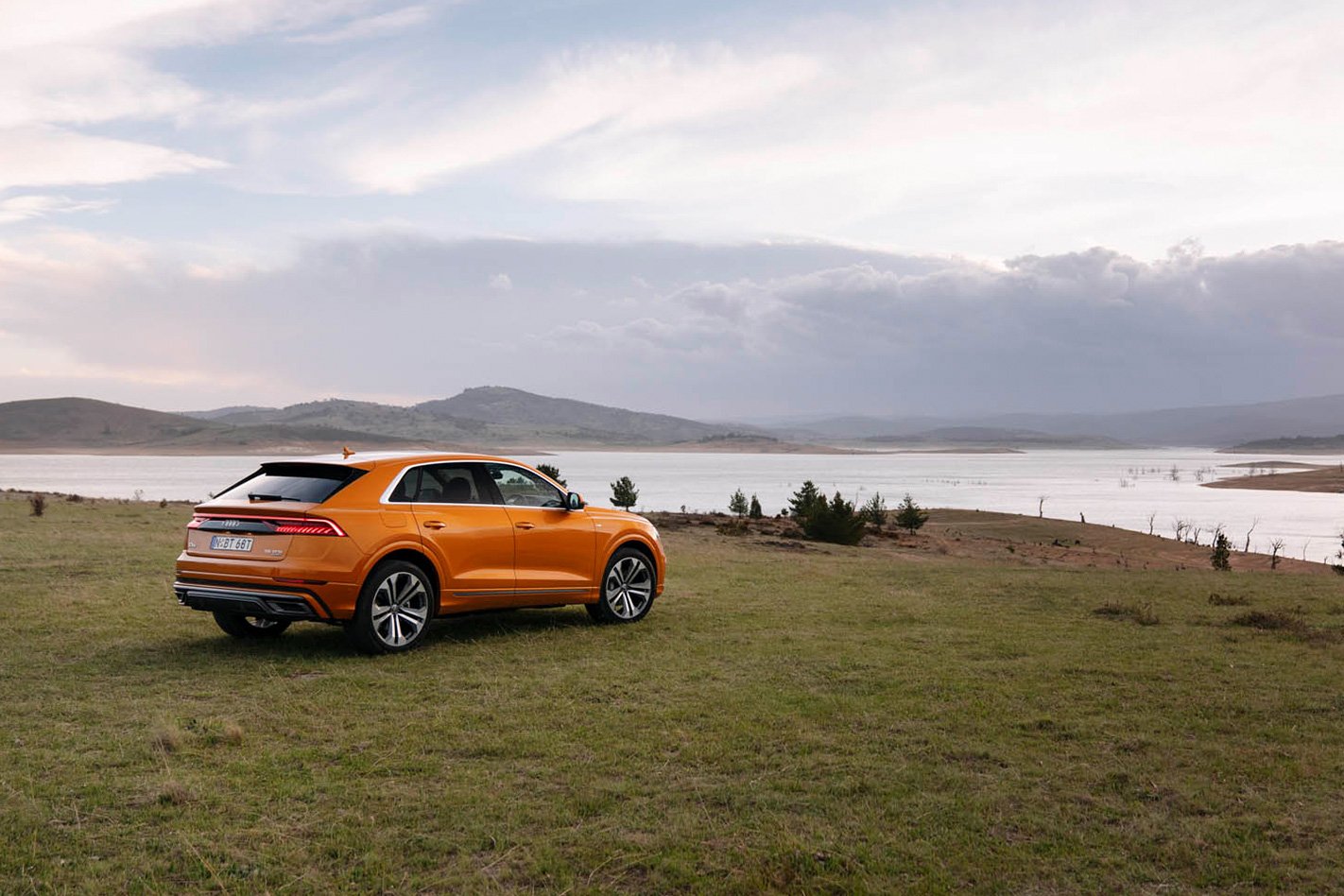
In addition to the more conventional Auto, Comfort and Dynamic modes found with many Audi models, the Q8 has an additional Offroad setting, which adjusts the behaviour of the all-wheel drive system, increases power steering assistance and raises the suspension for increased ground clearance.
Suspension is multi-link at each corner and supported by steel coil springs with adaptive dampers, but can be upgraded to adaptive air suspension as part of the Premium Plus Package.
The optional bundle costs $11,000 but adds a number of extras picked from Audi customer’s most frequently requested goodies.
The pack upgrades standard 21-inch wheels to 22-inch versions with a different design, all windows get privacy glass, headlights are uprated to HD matrix LED with dynamic indicators, rear passengers are treated to their own touchscreen climate control panel and all occupants benefit from 30-colour LED ambient lighting.
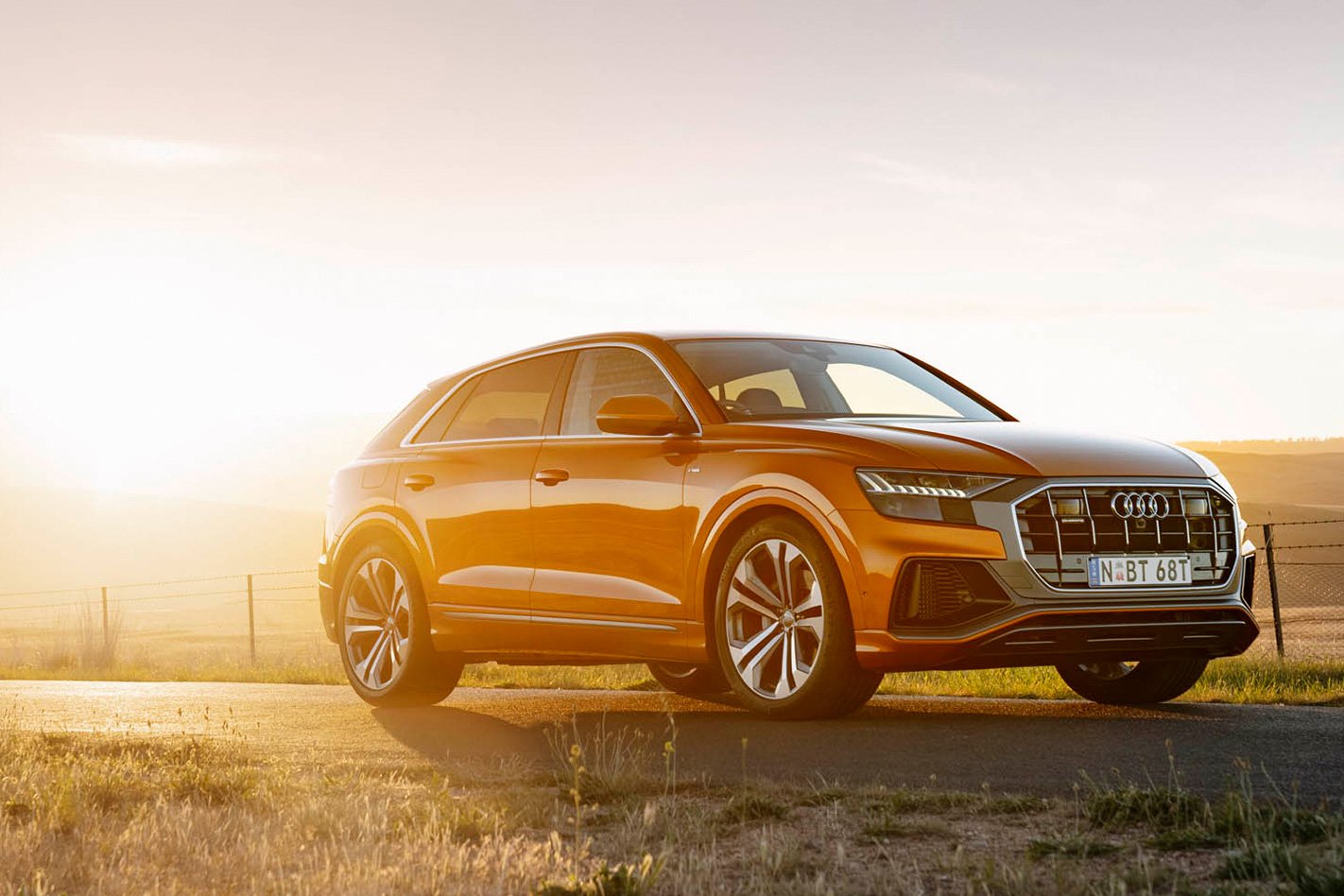
In the premium vein, the Q8 gets the poshest seats from the Q7 as standard fare, along with Valcona high-quality leather upholstery, heating and cooling for the front row, along with the highest level of adjustment and position memory for both front occupants.
Unlike the Q7, the Q8 is strictly a five-seat proposition. The second row splits 40:60:40 to boost boot space from 606 litres to 1755 litres, although a sliding base increases the luggage area by 75 litres without sacrificing any of the rear seats. An electric tailgate is standard and can be opened with a foot swiping motion.
WE’RE NOT about to lie. These are just McLaren 570S Coupe and Spyders painted in pretty colours.
Compared to the hugely expensive 600LT MSO that recently wowed Pebble Beach, these are comparatively attainable.
But just look at them. They’re beautiful and so is the fact that a car manufacturer that was reborn as recently as 2011 has such a rich historical back catalogue to lean on.
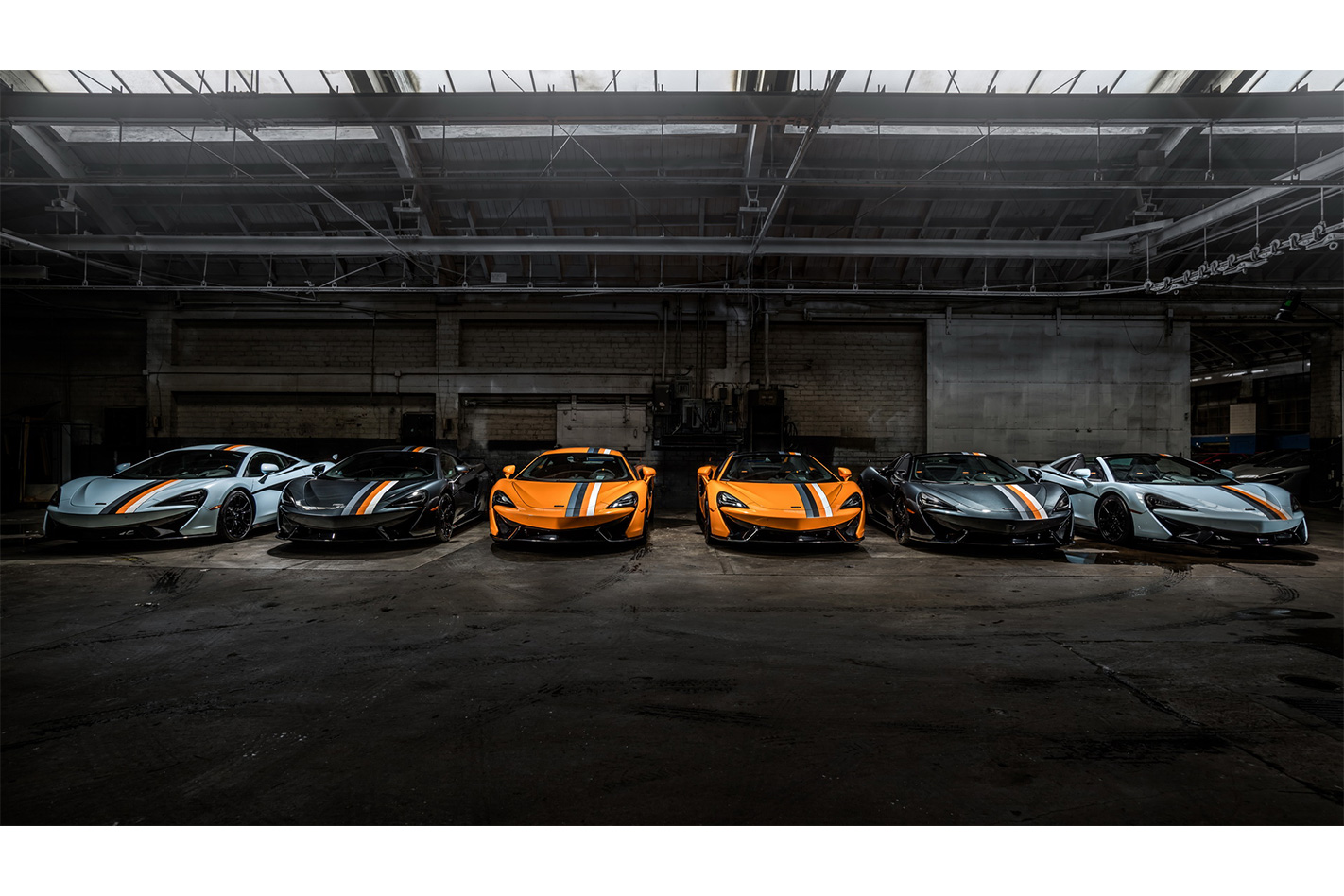
Commissioned by McLaren Beverley Hills, the Racing Through The Ages collection (they’re Americans, we can forgive them a bit of cheesiness), features three different themes, all neatly garnished with GT4 racing stripes.
Muriwai is the bluish white theme, named after the beach where Bruce McLaren first competed at the tender age of 15. While most kids that age are still trying to build a walking penis in Minecraft, young McLaren was engaging in wheel-to-wheel racing in borrowed cars.
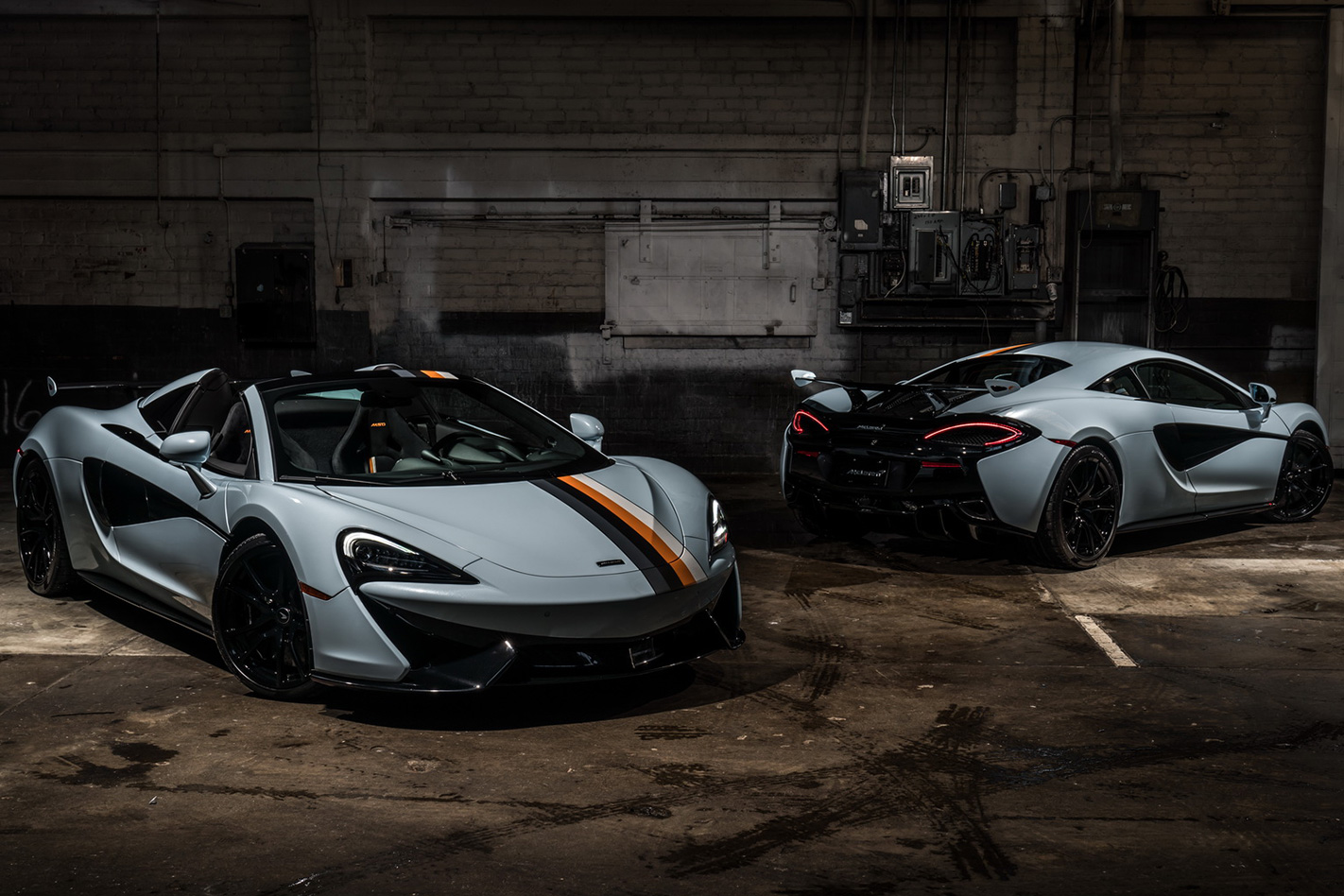
He also built a house in Woking named after the beach and painted this pale blue, to provide an enduring link to the country of his birth.
Sarthe Grey is an easy association to make, commemorating McLarens 1995 win at Le Mans, the company claiming the outright win as well as third, fourth, fifth and thirteenth place in what was effectively a modified road car.
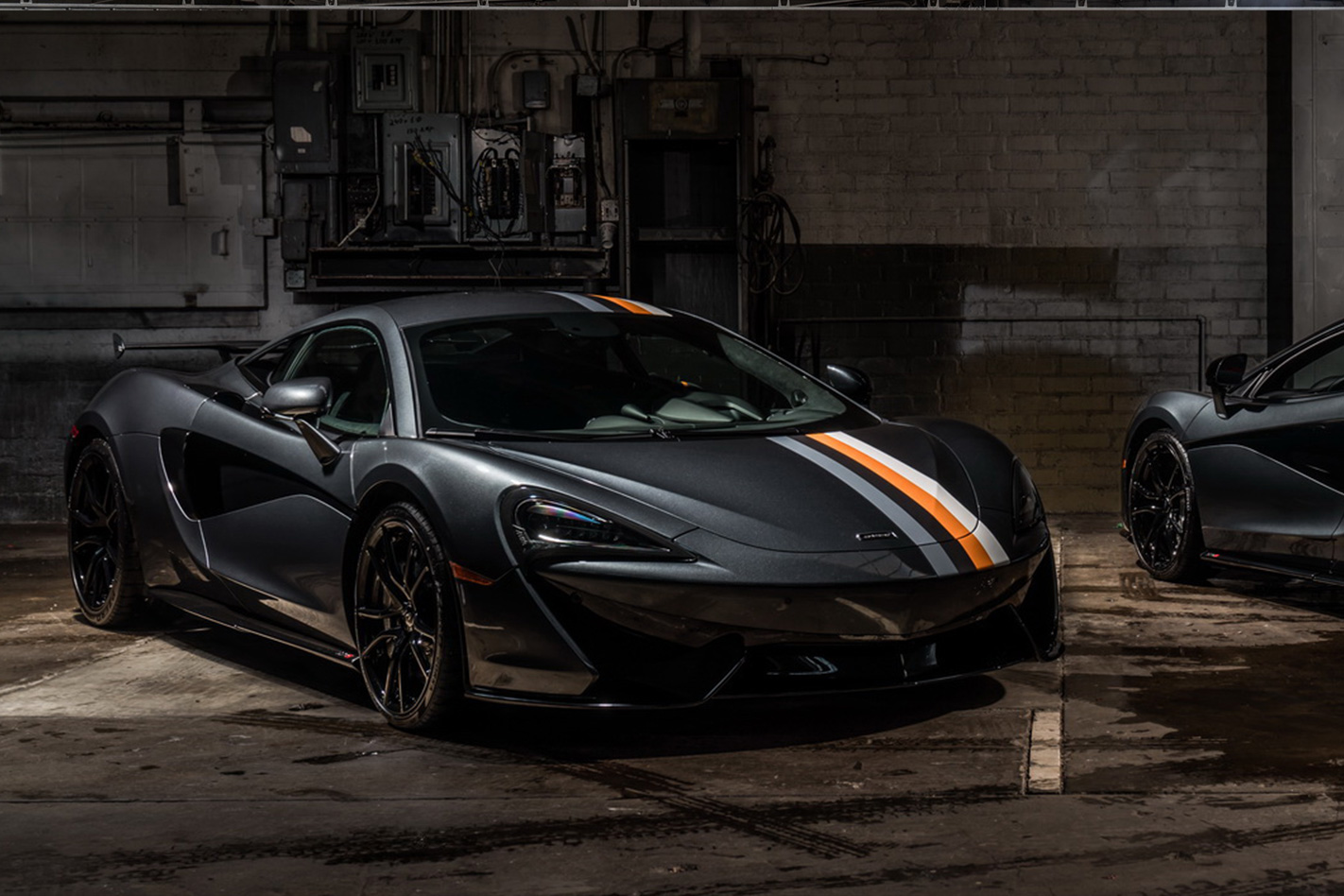
In case you were in any doubt, the rear wing bears a legend that reads “24 Heures du Mans – Winners 1995”.
McLaren F1 GTR ’25R’ treated to factory restoration
Might have been better with gagnants or vainqueurs rather than winners if they were really committing to the French theme but, again, Americans.
Finally there’s a colour more familiar to contemporary McLaren customers – Papaya Spark, the hero colour for the 675LT launch.
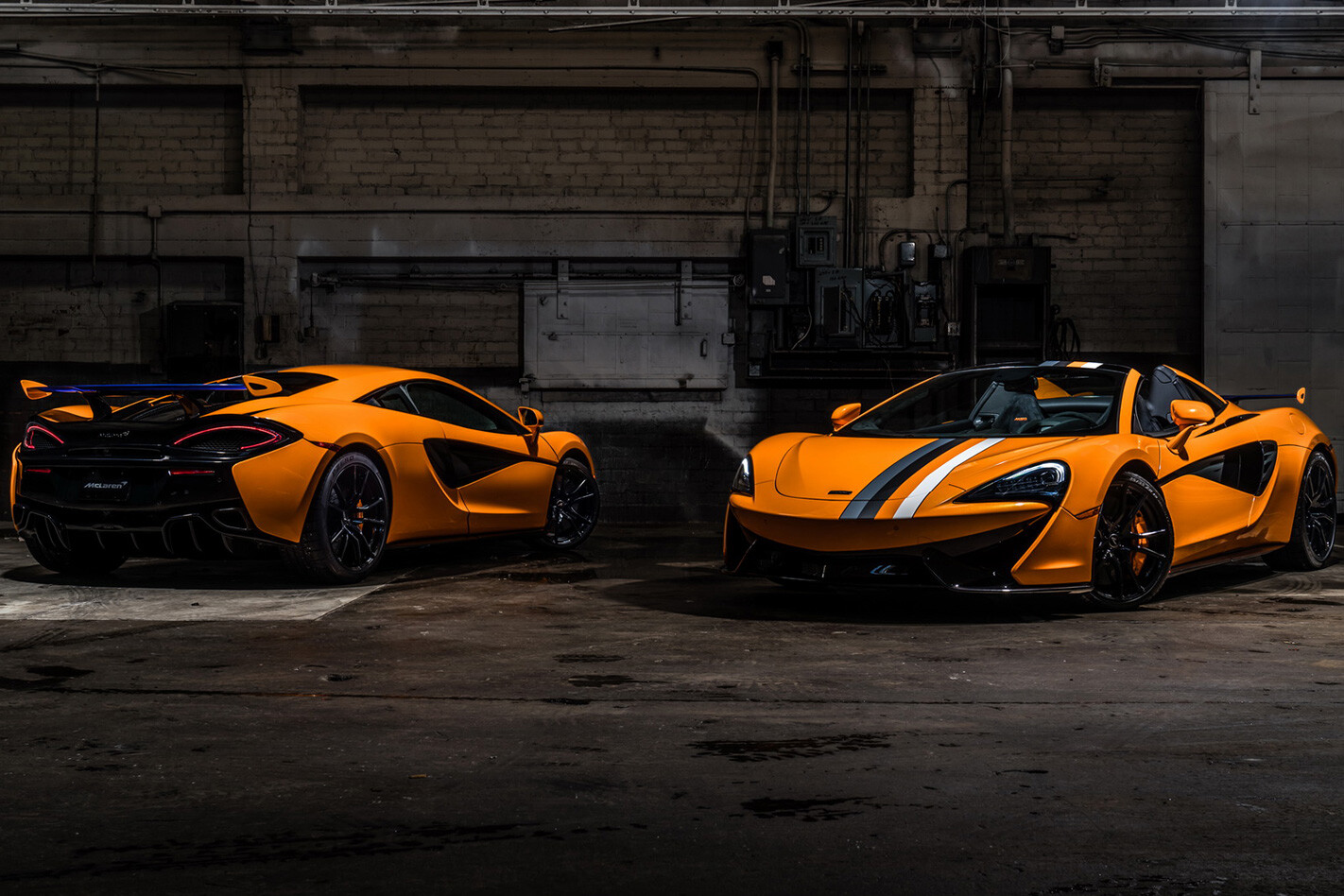
True aficionados of the marque will know that the association with this colour stretches way back to 1960s race liveries. The fixed rear wing is painted in contrasting Burton Blue, reprising the original racers and the spectacularly awful but undeniably eye-catching 2018 F1 car from McLaren.
