
FEELING A bit dusty after the weekend? Well, Jaguar is here to blow out your cobwebs with a drop-top rally-spec F-Type.
Well actually, there are two of these dirt-ready cars, which have already taken to the Walters Arena rally stage in Wales.
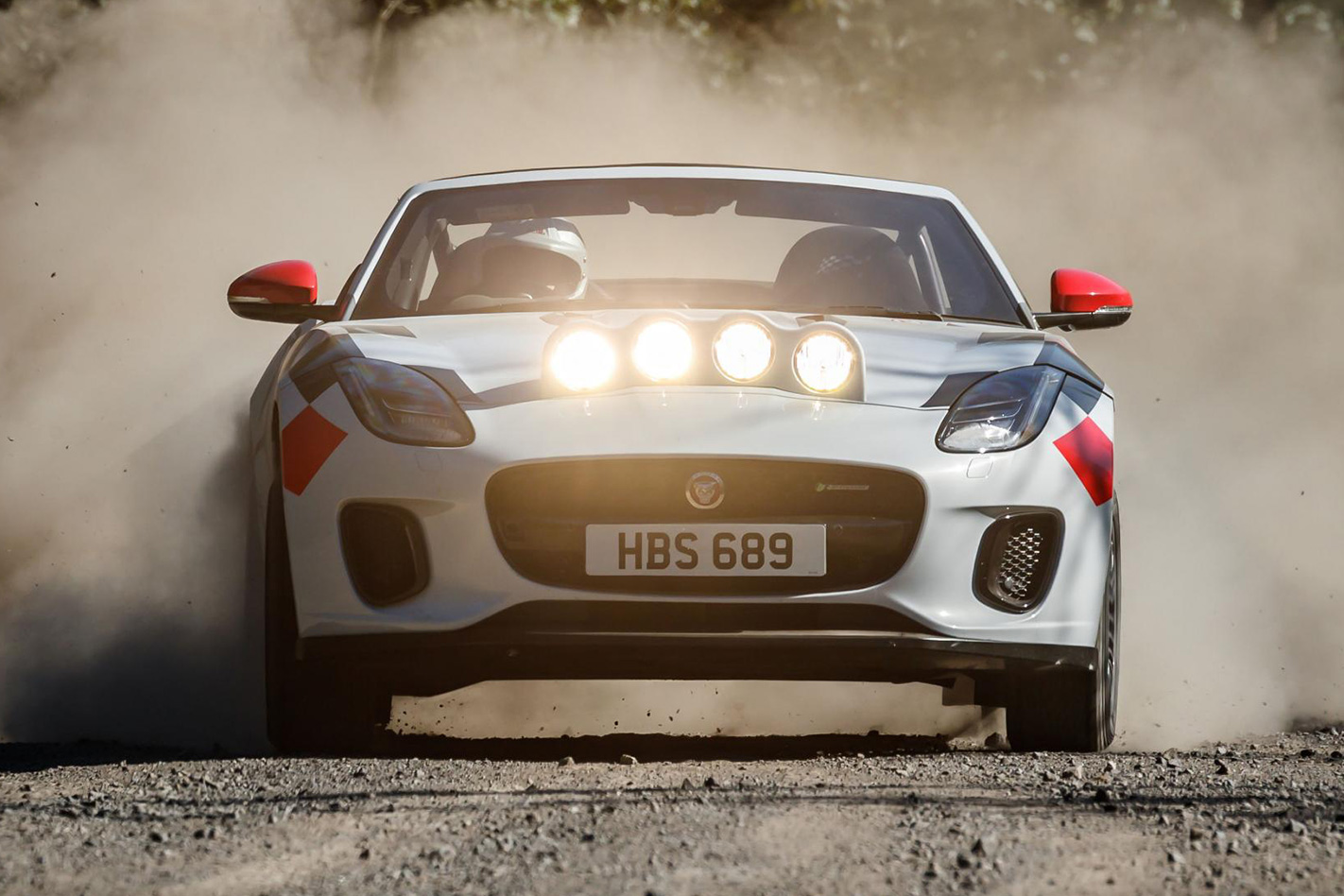
Traditionally rally cars are very much fixed-top vehicles, what with all the dust, rocks and dirt, but Jaguar said to hell with convention, and have used F-Type convertibles for their creations.
Fitted with a 2.0-litre turbocharged four-cylinder engine, the gravel-spitting F-Type sends 221kW and 400Nm to the rear wheels.
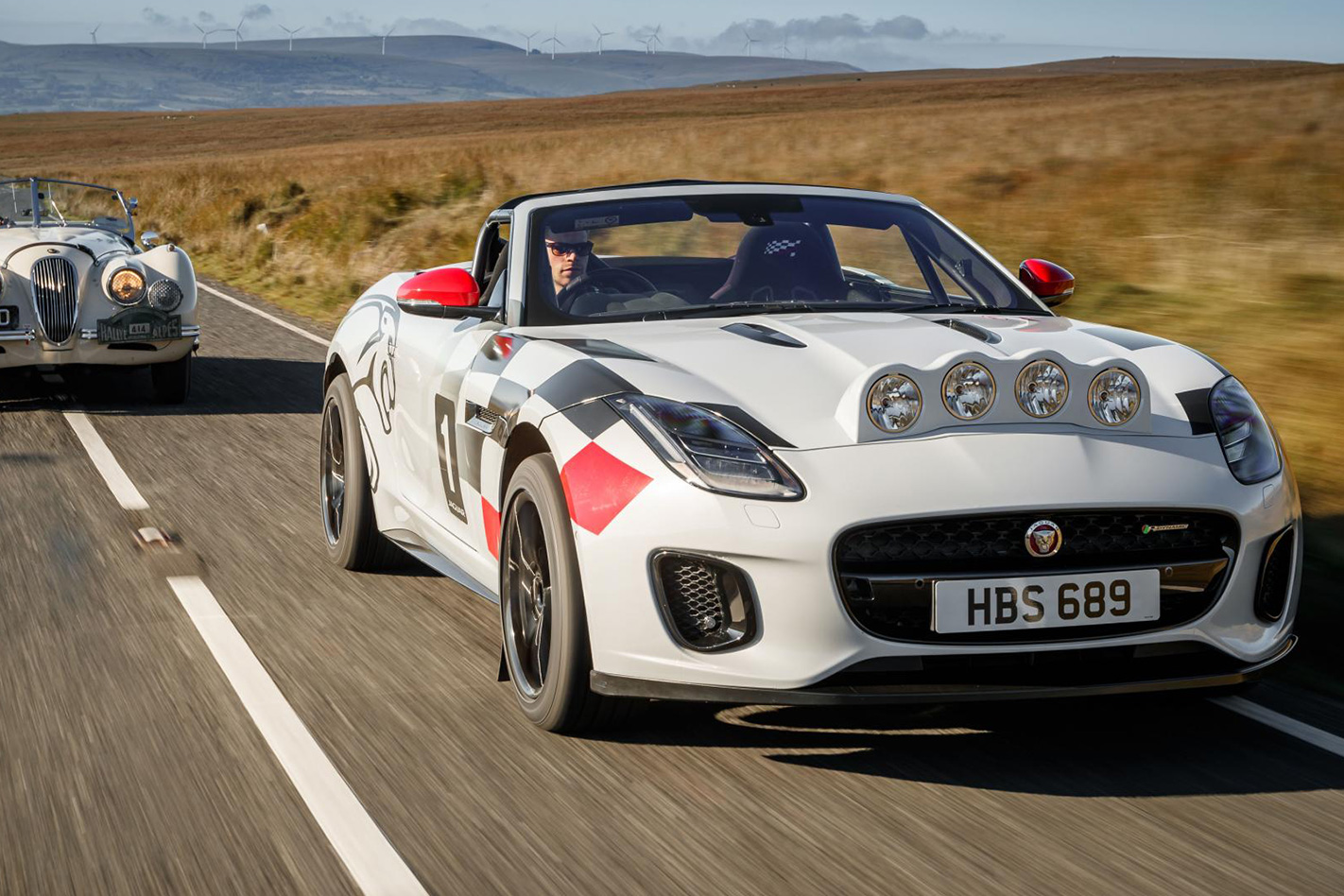
While power remains unchanged, the suspension and brakes have been fettled to withstand special stage punishments. Grooved discs and four-piston calipers have been fitted front and back, while the showroom-spec suspension has been upgraded to a competition-ready setup.
This includes hand-built dampers which offer three-way adjustability, and softer springs to soak up the bumps and jumps dished out by a rally stage.
A limited slip diff has been fitted, along with a bonnet-mounted light pod, fire extinguisher, FIA-spec roll cage, racing bucket seats, new wheels, and a hydraulic handbrake to send you sideways into a hairpin.
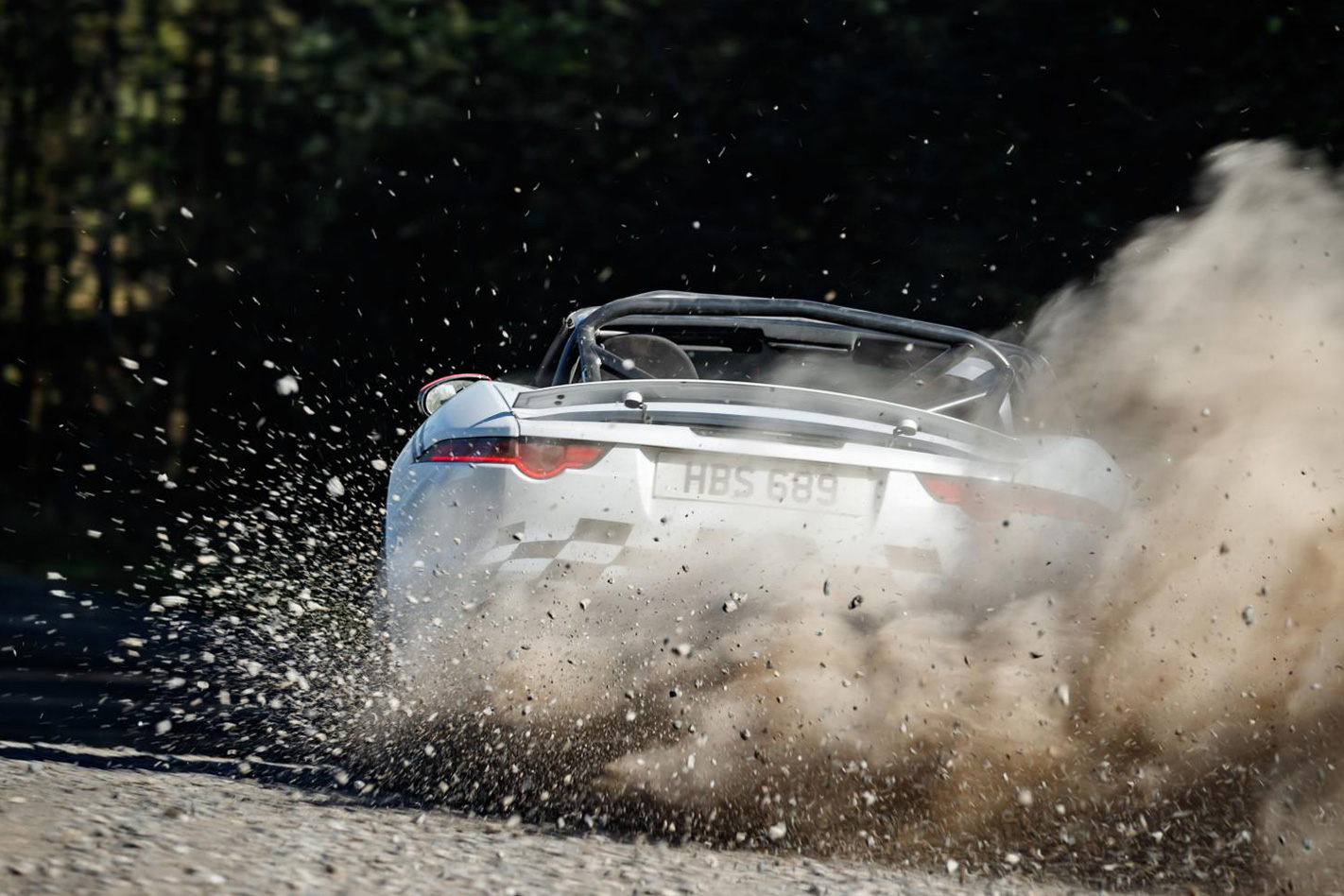
All of that begs the question, why? Well, Jaguar’s design boss Ian Callum says the two F-Type rally cars celebrate 70 years since the XK120.
Watch the Porsche Cayman GT4 Clubsport rally car testing
“The opportunity to design a rally car doesn’t come along very often,” Callum explained. “These models are a fitting tribute to the XK 120 and all the great Jaguar sports cars since its reveal 70 years ago.”
The XK 120 competed in three consecutive Alpine rallies in the early ‘50s, but in all honesty, we just think Jag’s engineers wanted to build a couple of rally cars to blast around in on the weekend, and the marketing department footed some of the bill.
Despite our cynicism, we are glad these two cars exist, if only for the shot of an F-Type three-wheelin’ its way around a corner, throwing rocks as it goes.
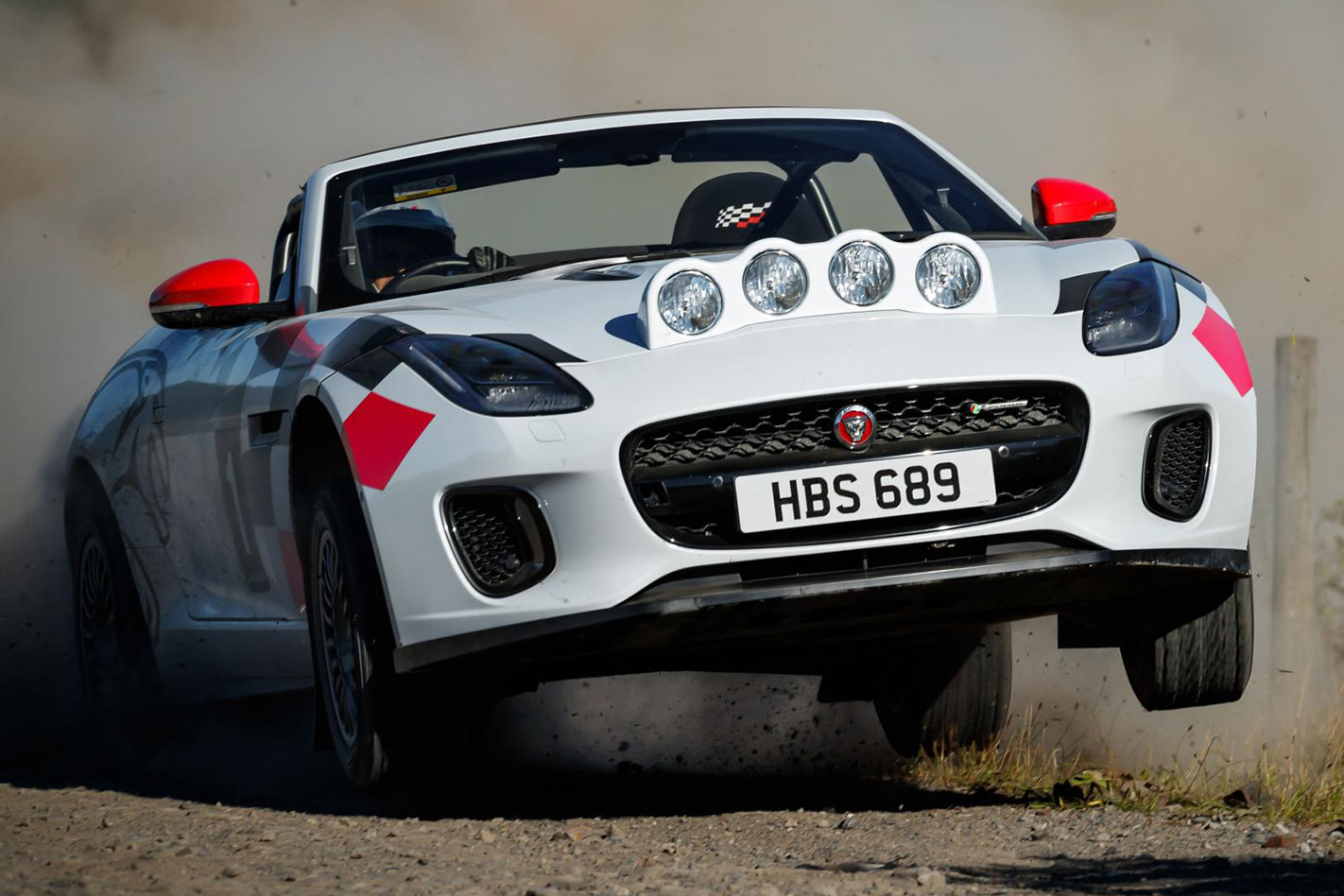
Unfortunately, neither vehicle is for sale, but hopefully they inspire a rally-obsessed Jag owner somewhere to take their car onto some gravel for plenty of sideways fun.
Australia’s premier event for sports cars and supercars is heading to The Bend Motorsport Park.
For the uninitiated, that event is Performance Car of the Year, or PCOTY as we call it to save time. Each year we take as many of the best performers from the year, from supercars to hot hatches, and fling them around a racetrack and take them for a drive to test them in the real world.
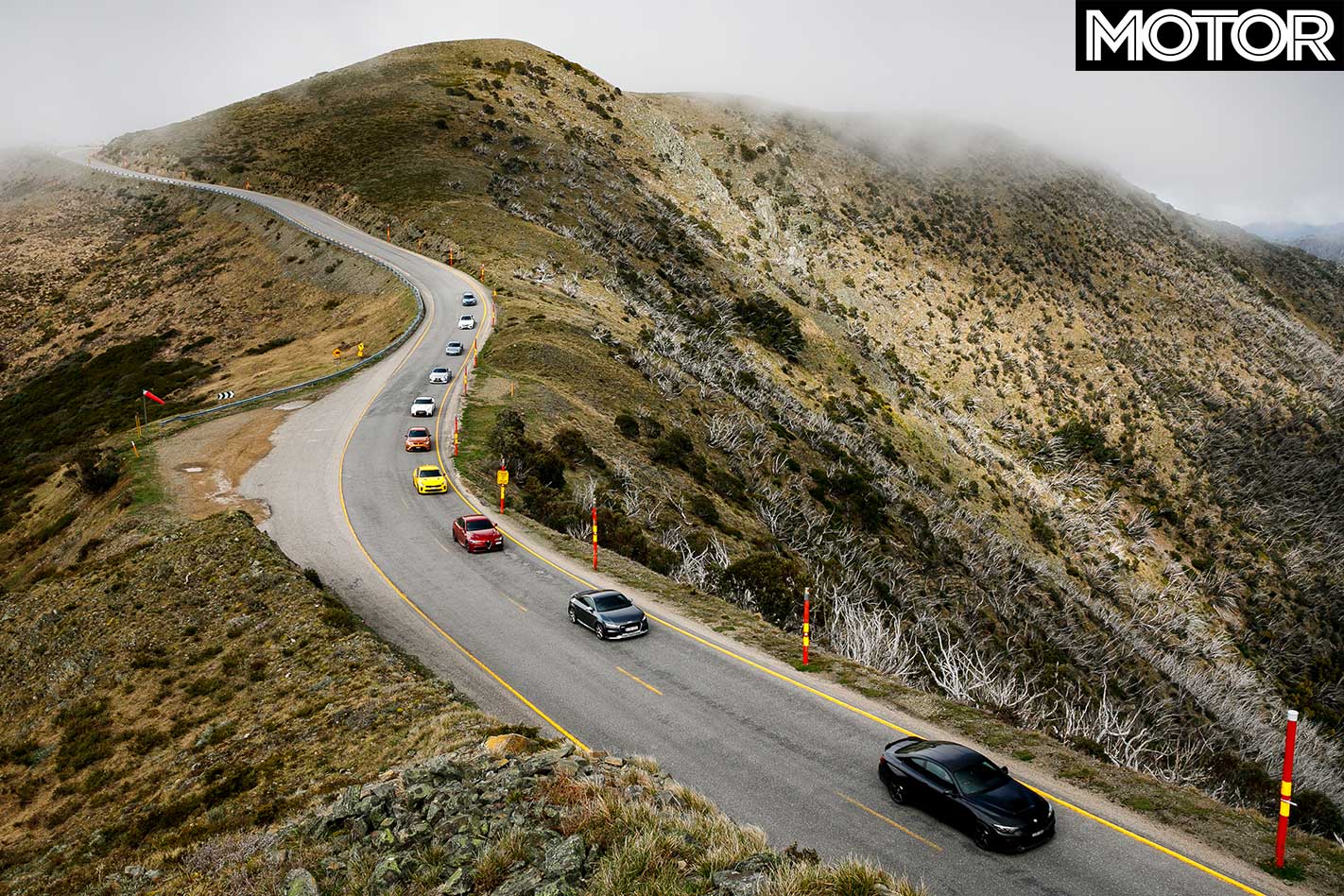
Normally, MOTOR heads north from Melbourne to Winton Raceway and have our race driver (normally Warren Luff) cut laps to determine which car is the best for petrolheads like us – and hopefully you.
This year, MOTOR is headed west to the biggest new addition to Australia’s motorsport scene, The Bend Motorsport Park.
It won’t be the first time MOTOR has graced The Bend with its presence- earlier this year we set the lap record on the GT Circuit with a Porsche 911 GT2 RS. With Warren Luff, of course.
Since, several launches and drive days have been held there, giving us opportunities to go back, but PCOTY will provide a chance to really get to know The Bend.
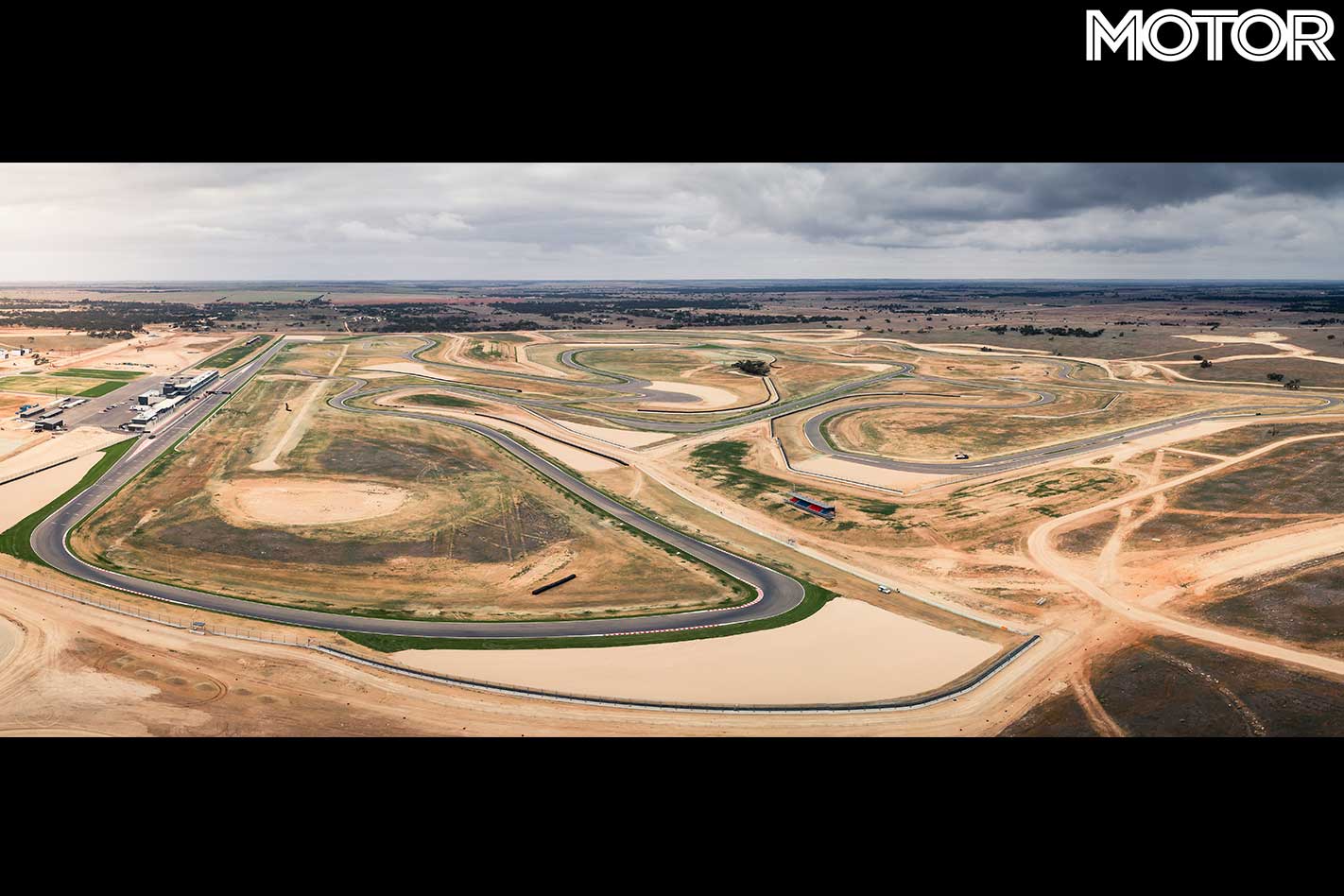
The track has only been operating since the beginning of the year, but it’s already shaken up motorsport in the country, with aims to go further. It’s secured a place on the Supercars calendar, and rumors even suggest it has its sights on the WEC.
Stay tuned for more updates for PCOTY 2019 including a rundown of the cars, the judges, and eventually the results.
You can also follow MOTOR on Instagram to get a behind the scenes peek at what goes on during PCOTY testing.
Rationale disappeared roughly $250,000 ago. No one needs a 300km/h limousine, nor does anyone need a family wagon capable of zero to 100km/h in under four seconds.
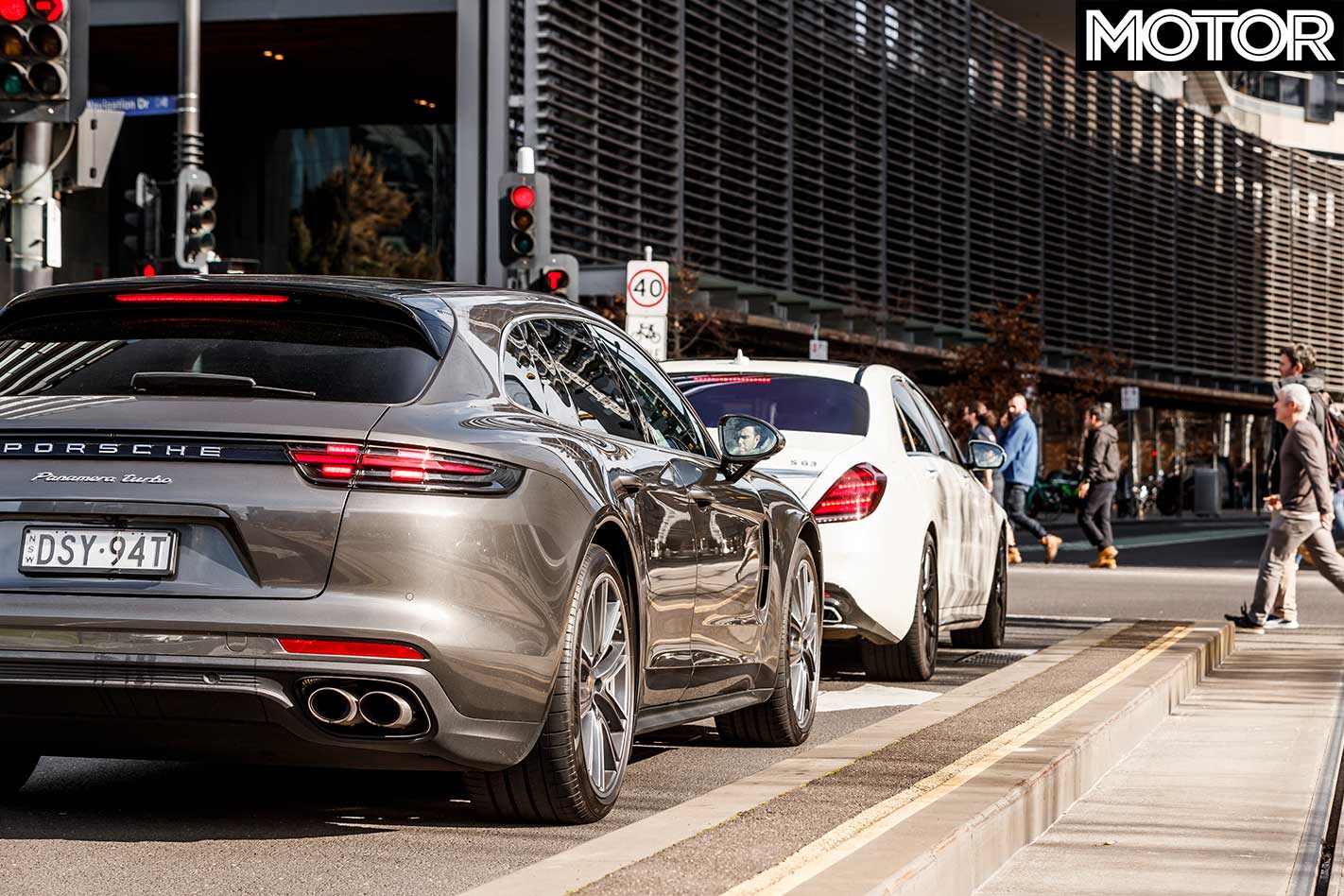
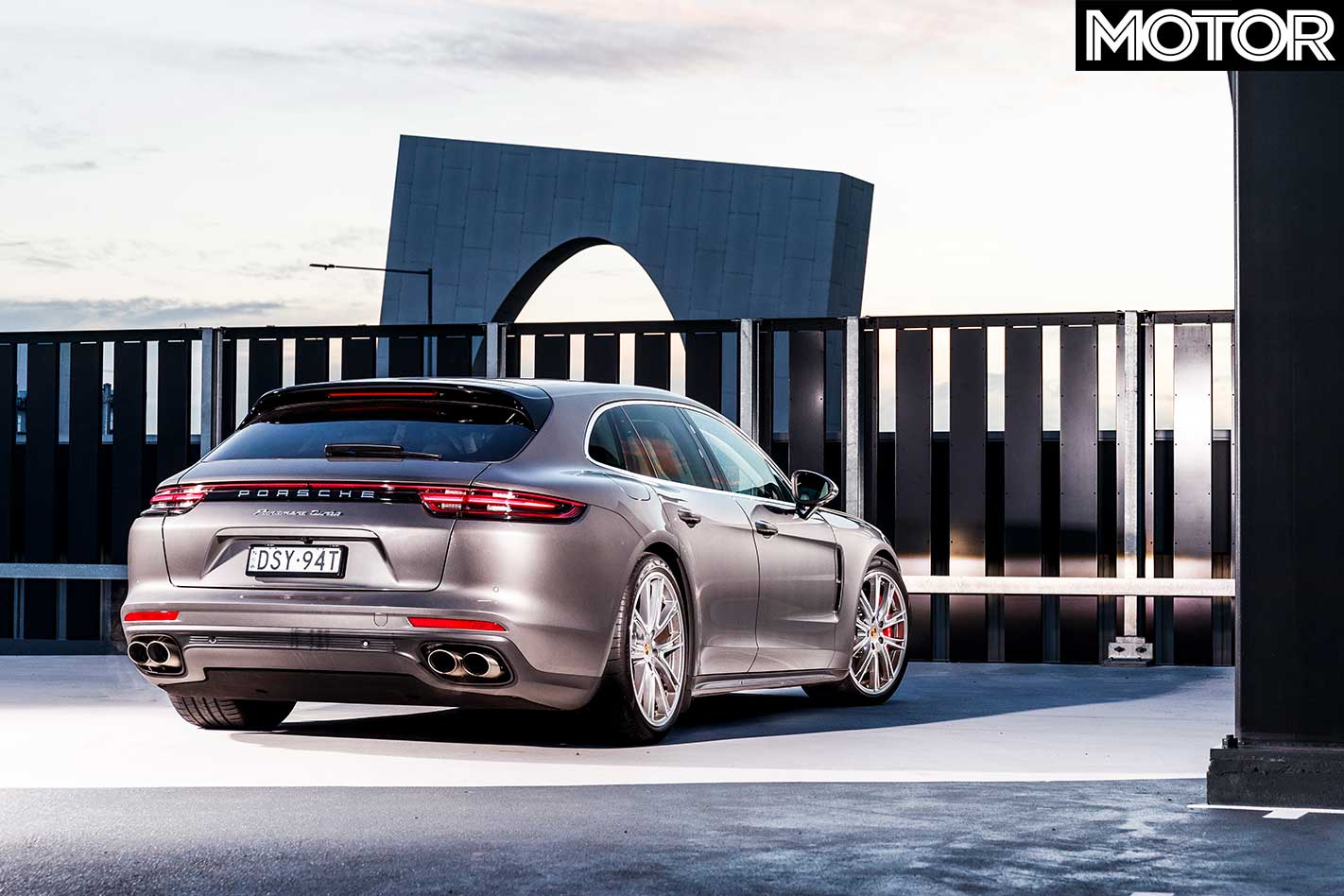
However, in this exclusive market wants far outweigh needs and there are people out there that want those criteria met, hence the existence of the Mercedes-AMG S63 L and the Porsche Panamera Turbo Sport Turismo.
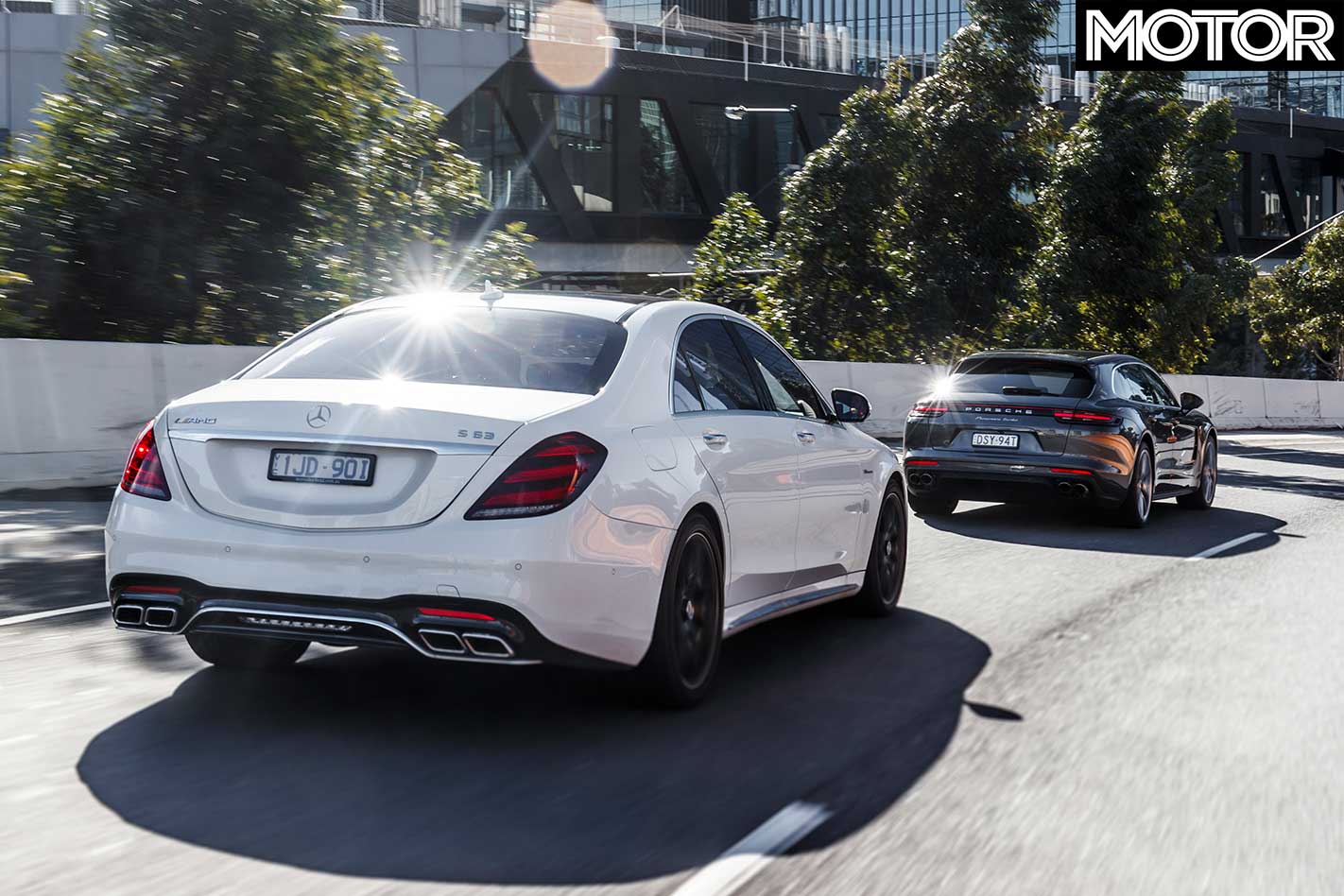
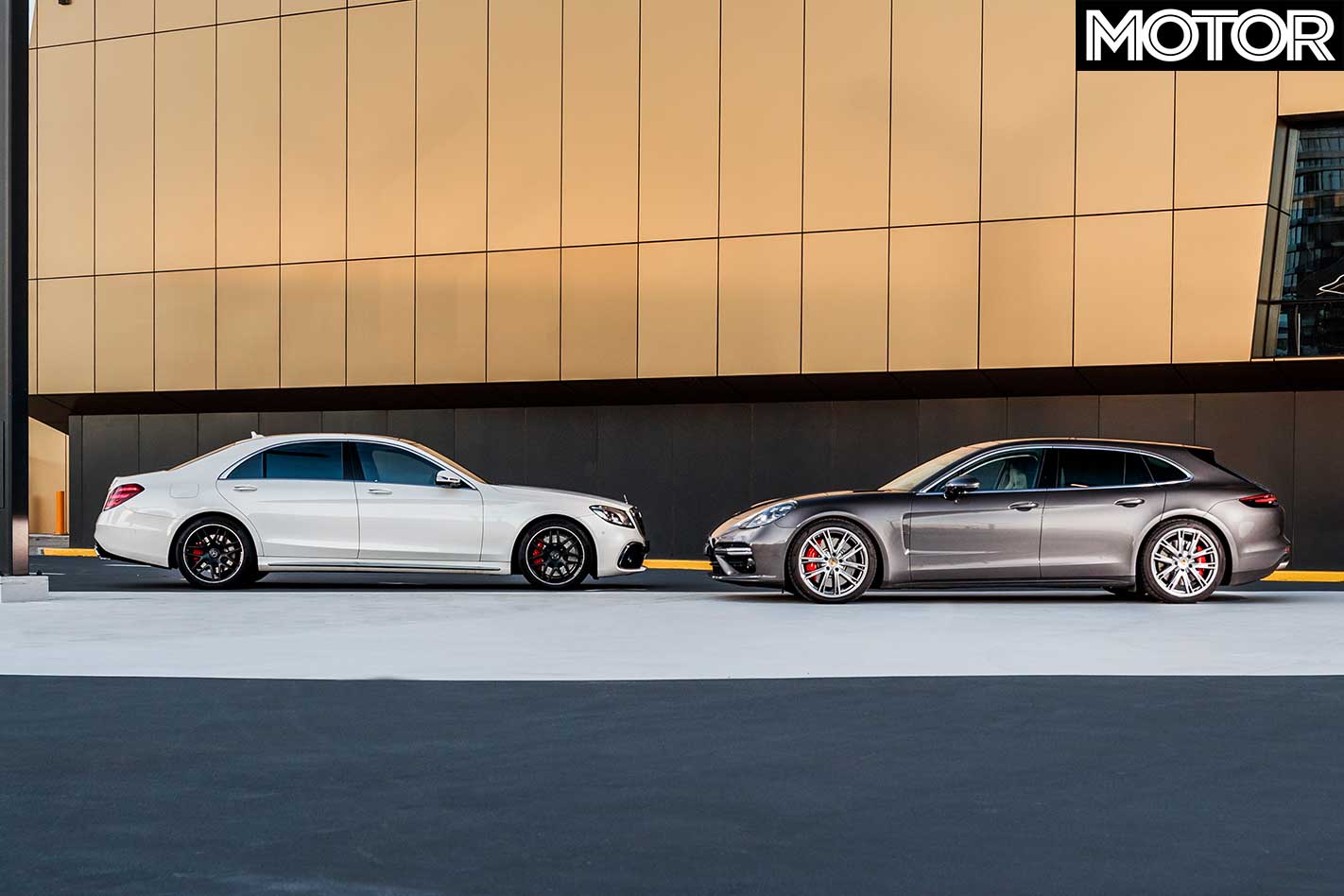
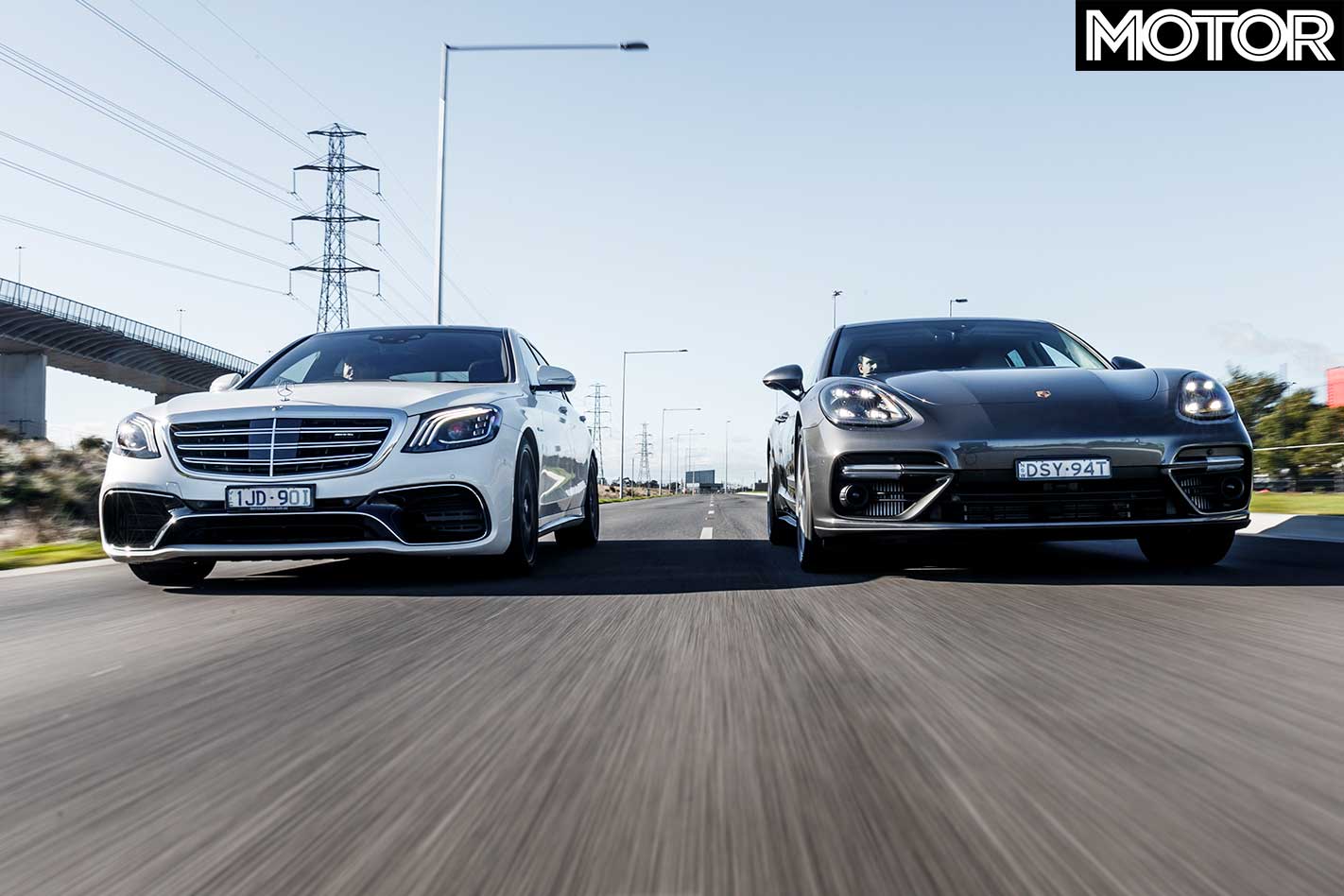
Neither of these models will be big sellers and perhaps at first glance they don’t appear to be natural rivals, but their similarities are more numerous than their differences. Each must offer the ultimate in performance, luxury and technology, cosseting or entertaining its owner or driver as the mood dictates. As such, it seems reasonable to assume those with the wherewithal to be shopping with a $400,000 cheque will at least window shop the pair.
Despite its familiar looks, the Mercedes is the newer of the two. Fresh from a mid-life update, the W222 S63 hides drastically different mechanicals beneath its nip-and-tucked styling. AMG’s 4.0-litre ‘hot-vee’ twin-turbo V8 replaces the old 5.5-litre bi-turbo bent-eight and has two extra gears to work with, AMG’s trademark wet-clutch auto now housing nine ratios instead of seven. Not that it really needs them, as despite the drop in capacity power increases to 450kW (up 20kW) with torque remaining at 900Nm, but produced over a wider range.
Porsche’s similarly specced V8 can’t compete, though with 404kW/770Nm it’s unlikely to feel too wanting, especially attached to an eight-speed dual-clutch gearbox. The two engines are separated by just 14cc, but the Panamera’s has a much higher compression ratio (10.1:1 versus 8.6:1 for the AMG) and is perfectly square in contrast to the S63’s long-stroke layout.Nonetheless, the Porsche’s lower outputs and hefty 2035kg means it burbles into battle with 199kW/tonne to the Merc’s 228kW/tonne.
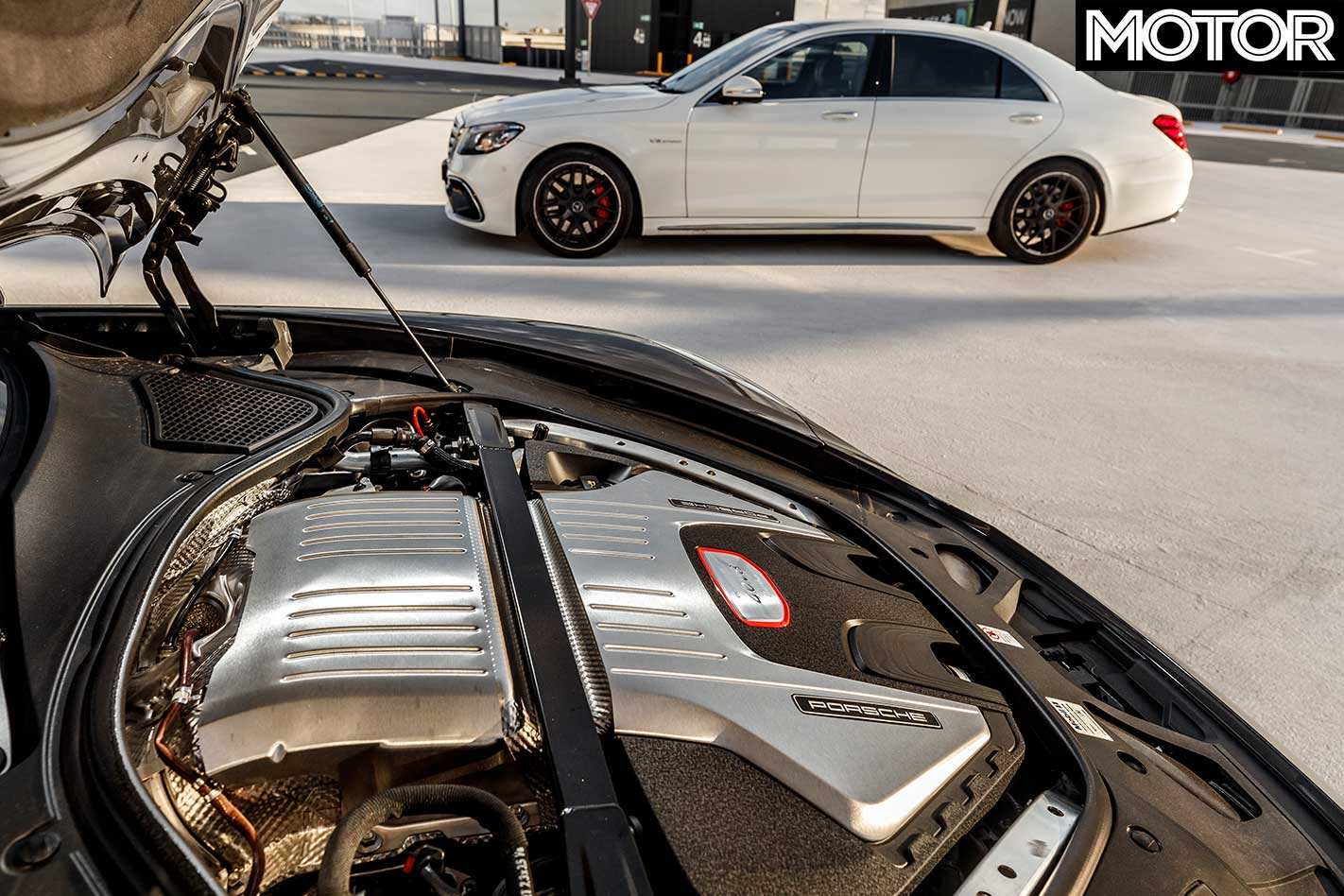
Porsche’s trump card is all-wheel drive. A full-blooded Panamera Turbo launch is a do-before-you-die experience; it must very nearly register on the Richter scale. Outright supercars are quicker, but the sheer force and ruthless efficiency required to push over two tonnes to 100km/h in 3.38 seconds (smashing the official 3.6sec claim) has to be felt to be believed. No skill is required, your only job as a driver is to choose the grippiest bit of tarmac and hold on.
The super-short first gear is merely used to catapult the car from the line. Launch control effectively dumps the clutch at over 5000rpm, instantly spinning all four wheels. On a perfect getaway second gear engages right in the meat of the torque curve and you’re on your way to an 11.49sec 0-400m time at 193.88km/h – it’s an awe-inspiring display of engineering.
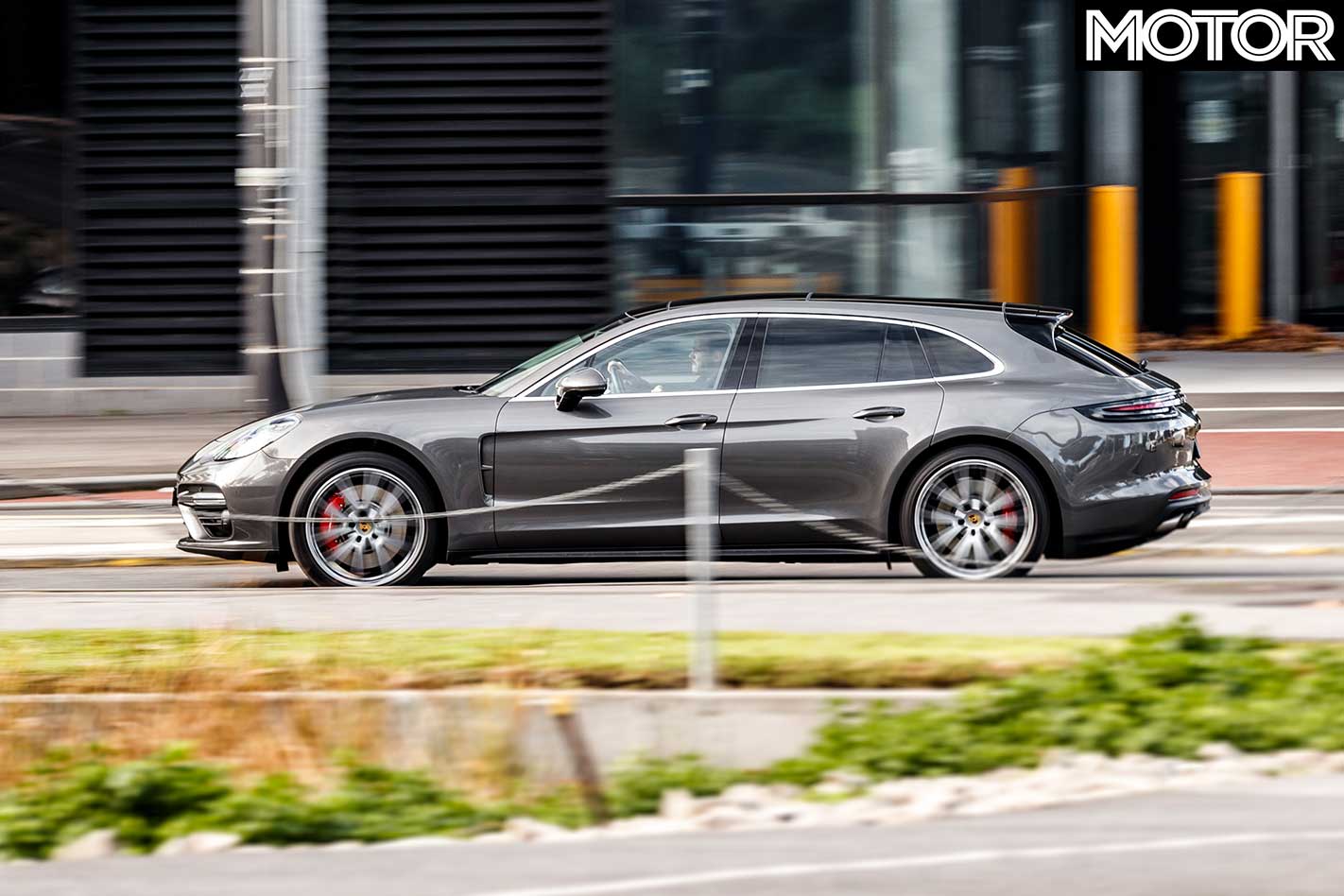
Unbelievably, the Mercedes is even faster. Not against the clock, of course. Left-hand drive S63s are all-wheel drive, but those in right-hook are still limited to rear-drive and there isn’t even a limited-slip diff.
As such, the AMG can’t hope to match the Panamera off the line, though its Race Start launch control does a remarkable job of channelling its enormous grunt, 0-100km/h flashing by in just 4.18sec. It’s not as consistent as the Porsche and there feels to be a furious struggle beneath you, the car developing a slight lateral oscillation as it thunders down the strip, which is presumably the effect of 900Nm.
That enormous torque also enables the monster Merc to hunt down the Porsche at a rapid rate once rolling. Eight-tenths in arrears at 100km/h, by 200km/h the S63 is a tenth in front and though it needs 12.04sec to complete 400m, it crosses the line at an incredible 198.22km/h with seemingly no intention of slowing its charge.
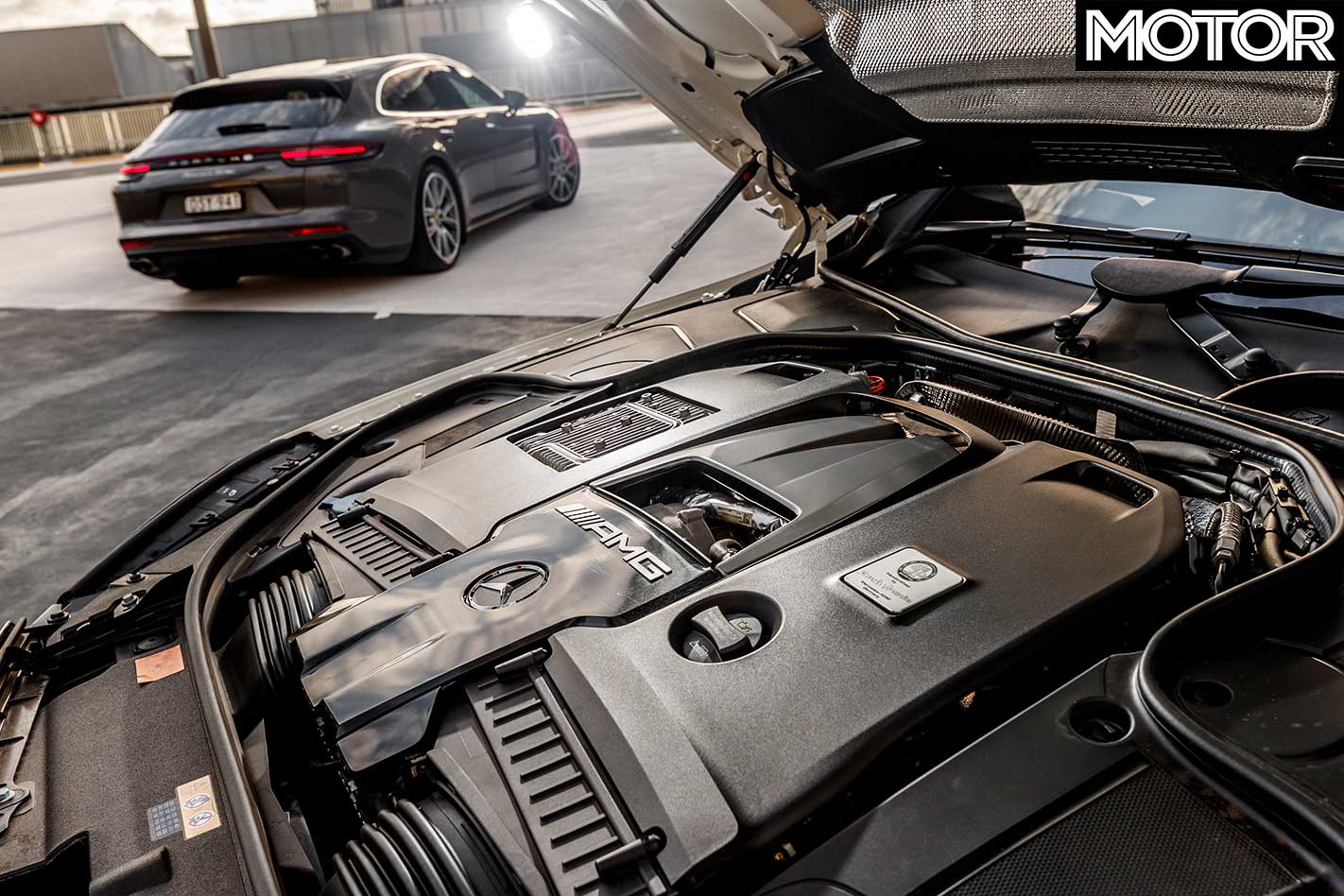
This super limo is one of the most relentlessly accelerative cars I’ve ever driven and feels as if it would breeze into its 300km/h limiter, a speed that requires just 3800rpm in ninth gear. Flat out, the Panamera edges it, limited by air resistance to 304km/h, but it’ll take a while to close the gap.
The engine dominates the S63, but only if you want it to. In Comfort mode it hums away in the background, using as few rpm as possible, sometimes dropping to just four cylinders, other times disengaging from the transmission to save precious fuel in ‘sailing mode’.
Click the Drive Select dial to Sport Plus, however, and it becomes a snarling, backfiring monster. The new 4.0-litre revs harder than the old 5.5 and the exhaust emits deep, artillery-like booms and cracks on the over-run, which along with the V8 bark on downshifts provide a stirring soundtrack to every braking zone.
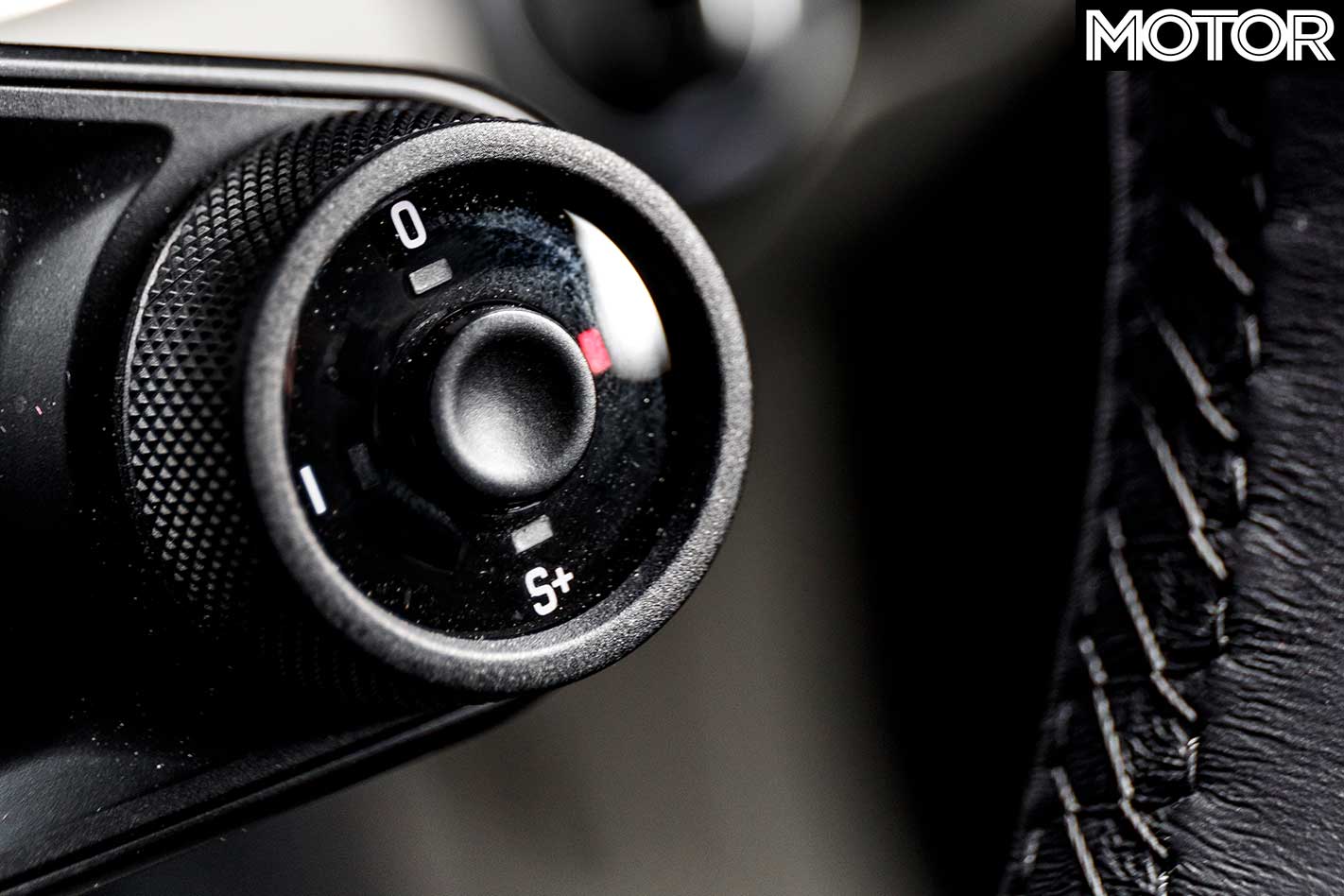
It makes the Porsche feel a bit… sensible. Despite $6950 of optional sports exhaust, the Panamera’s 4.0-litre never extends beyond a muted growl; it’s a nice noise, there’s just not enough of it, even with the mode switch (part of the $4790 Sport Chrono Package) set to Sport Plus.
In isolation the Porsche’s V8 is a monster, buttery smooth with enough punch to pin your head to the seat, but on the road it doesn’t have the addictive character of the S63.
The Panamera regains points with its superior transmission, the new-gen dual-clutch ’box smoother and quicker in its shifts than AMG’s wet-clutch automatic, though the gap between second and third means tight corners sometimes require multiple impatient paddle pulls before the downshift request is answered.
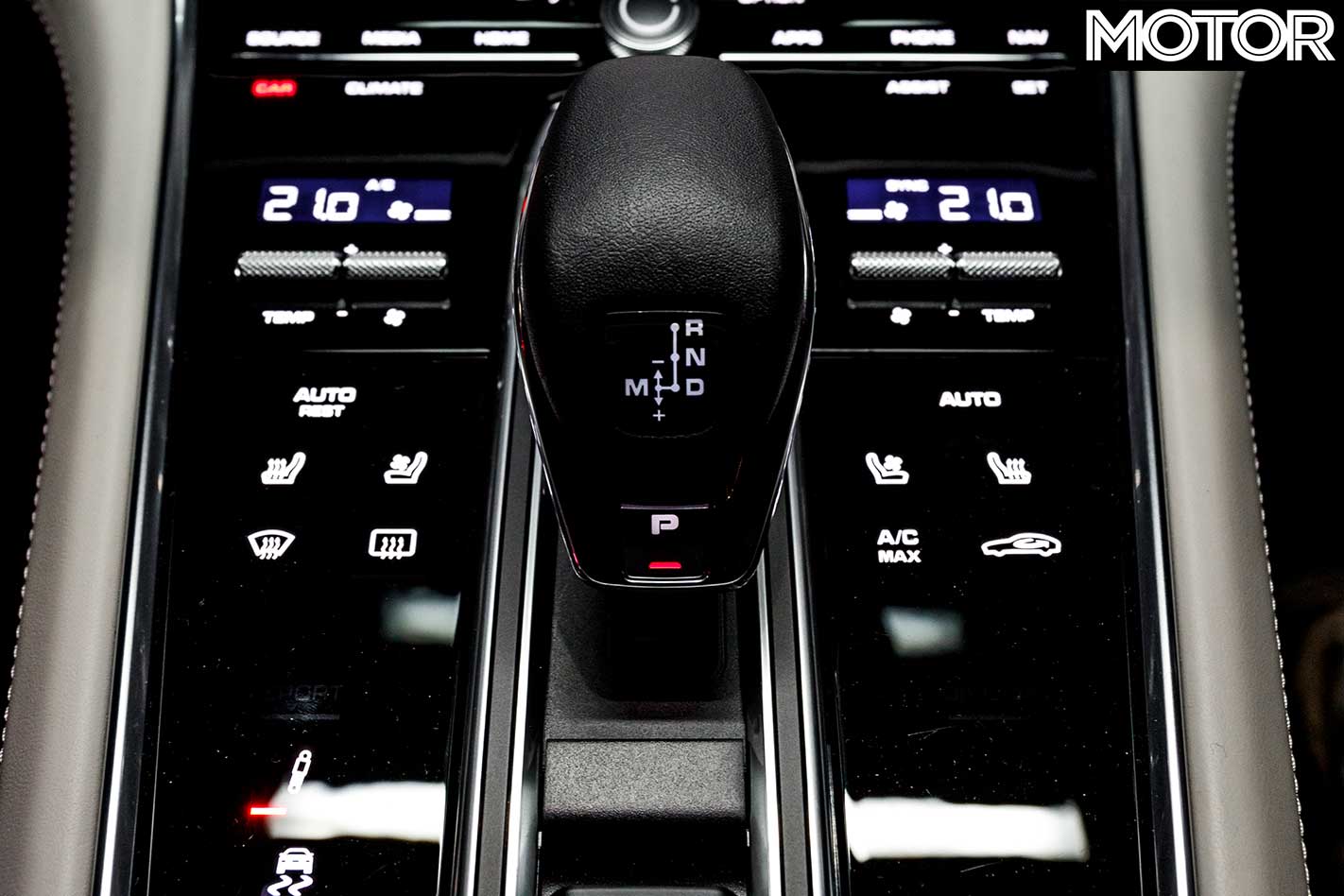
Unusually, given their intended roles, the transmissions in both cars work better at maximum attack than in day-to-day duties, neither able to replicate the low-speed smoothness of a torque converter auto. The Porsche’s hiccups are occasional but the Merc’s are frequent, its stop-start stumbles unbecoming in a car this expensive.
As you might expect, the Porsche is also the sharper steer. It may carry more kilograms, but it supports them with far more rubber, its Pirelli P Zeros measuring 275/35 front and 315/30 rear, 20 and 30mm wider respectively than the Continental ContiSportContact 5Ps beneath the S63. It’s too big to shrink around you and always feels heavy, especially at speed, but traction is supreme and in almost all circumstances grip is strong enough to commit to corners with confidence.
All-wheel steering, not fitted to our test car, would be an asset, particularly in tighter turns, but the rear-biased all-wheel drive system dictates that corners are usually exited with a touch of oversteer rather than understeer anyway. A special mention to the brakes, too, which work incredibly hard stopping this much mass yet resist fade admirably.
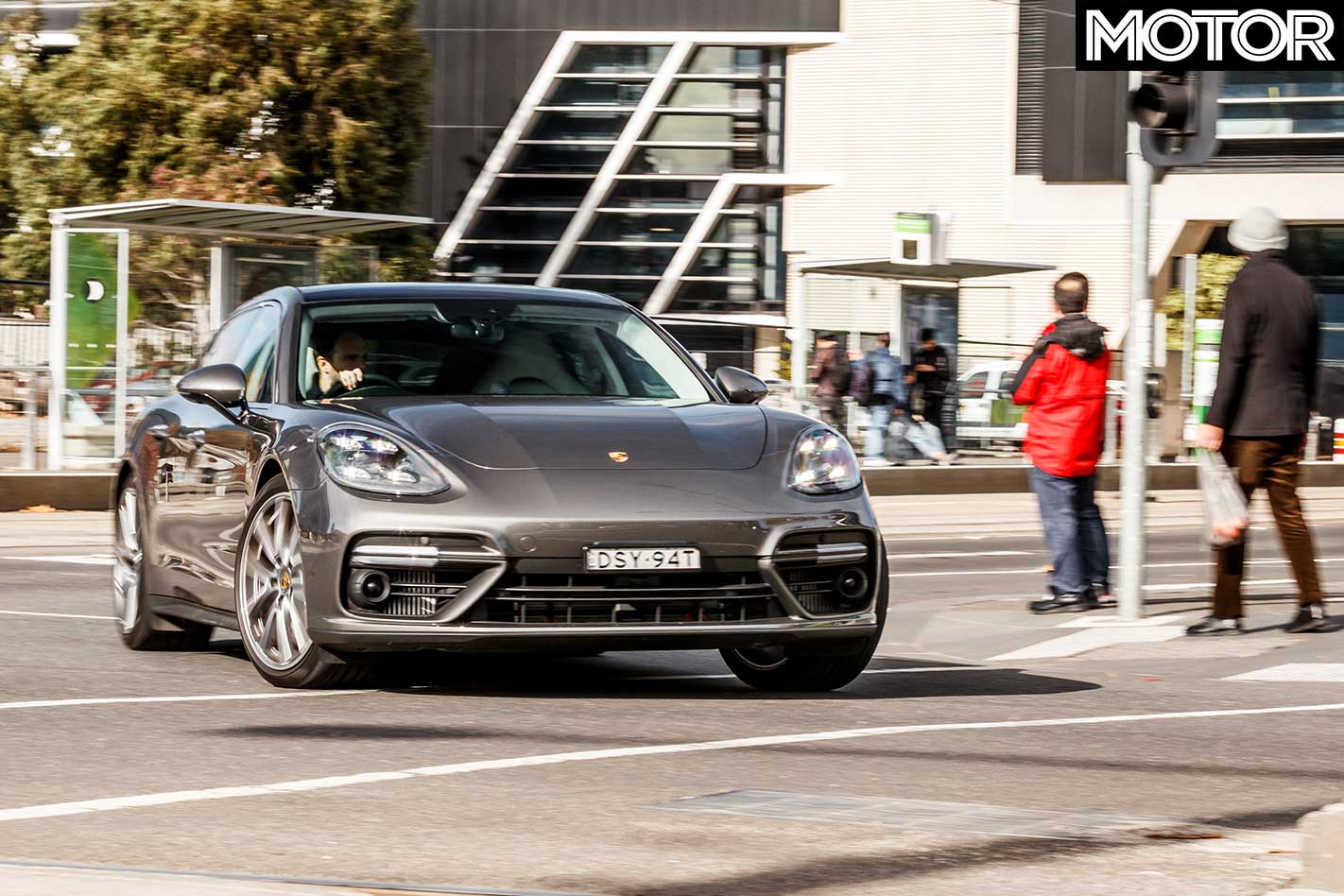
Yet it’s not all champagne and roses: the weighty steering is very accurate but surprisingly mute, especially in slippery conditions when you need it to speak loudest; by and large the Panamera rides beautifully with excellent body control, but a series of small amplitude bumps – a patch of rippled tarmac, for instance – causes a slight shimmy particularly at the rear.
In the dry this is of no real concern, but in the wet there’s the feeling the car has momentarily relinquished its purchase on the road for a heart-stopping moment or two.
The final flaw is largely philosophical: the ESP can’t be completely disengaged. There’s probably wisdom in preventing a two-tonne missile being punted entirely without electronic assistance, but the idea of a Porsche that won’t let the driver fly solo is anathema.
As usual, the ESP tuning is excellent and doesn’t ever hinder progress, but PSM Sport isn’t as lenient as it is in Porsche’s sports cars and even with the system ‘off’ it’s continually nibbling away at the edges.
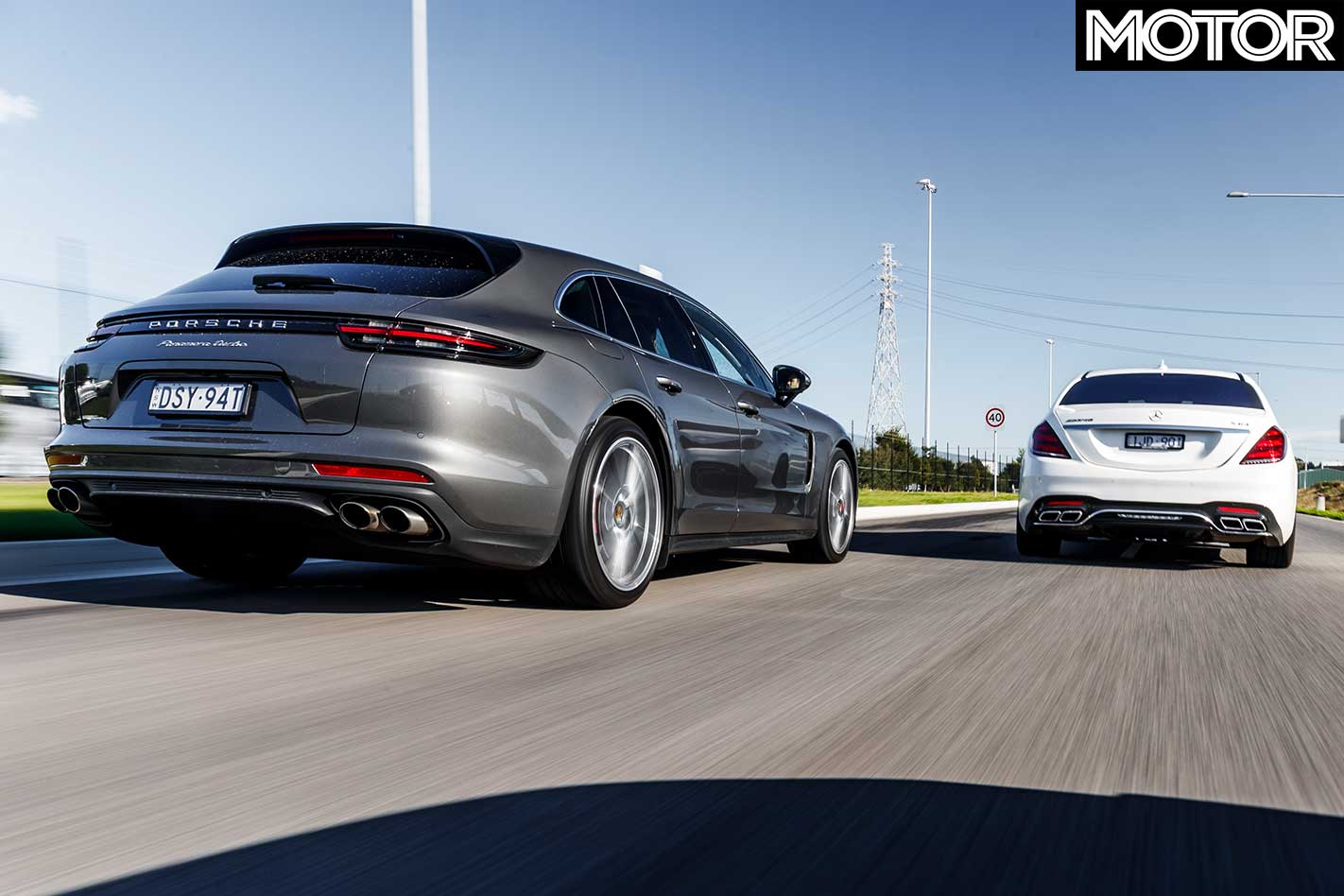
This would be far less of an issue if the Panamera Turbo didn’t feel so keen to play. Drive is sent primarily to the rear at corner exit, but at the very moment the chassis wants to show you what it can really do, the health and safety police show up and say “careful, you might hurt yourself”.
Internet research suggests the Panamera will hold a powerslide, which implies, like the Cayman and Boxster, you can drive through the electronics. This might be fine on a racetrack, but on the road the Porsche isn’t as much fun as it could be, nor as much fun as its predecessor.
With rain falling heavily against the windscreen, the Mercedes might be a bit too much fun. Wet or dry, the S63 is nothing like as composed as the Panamera.
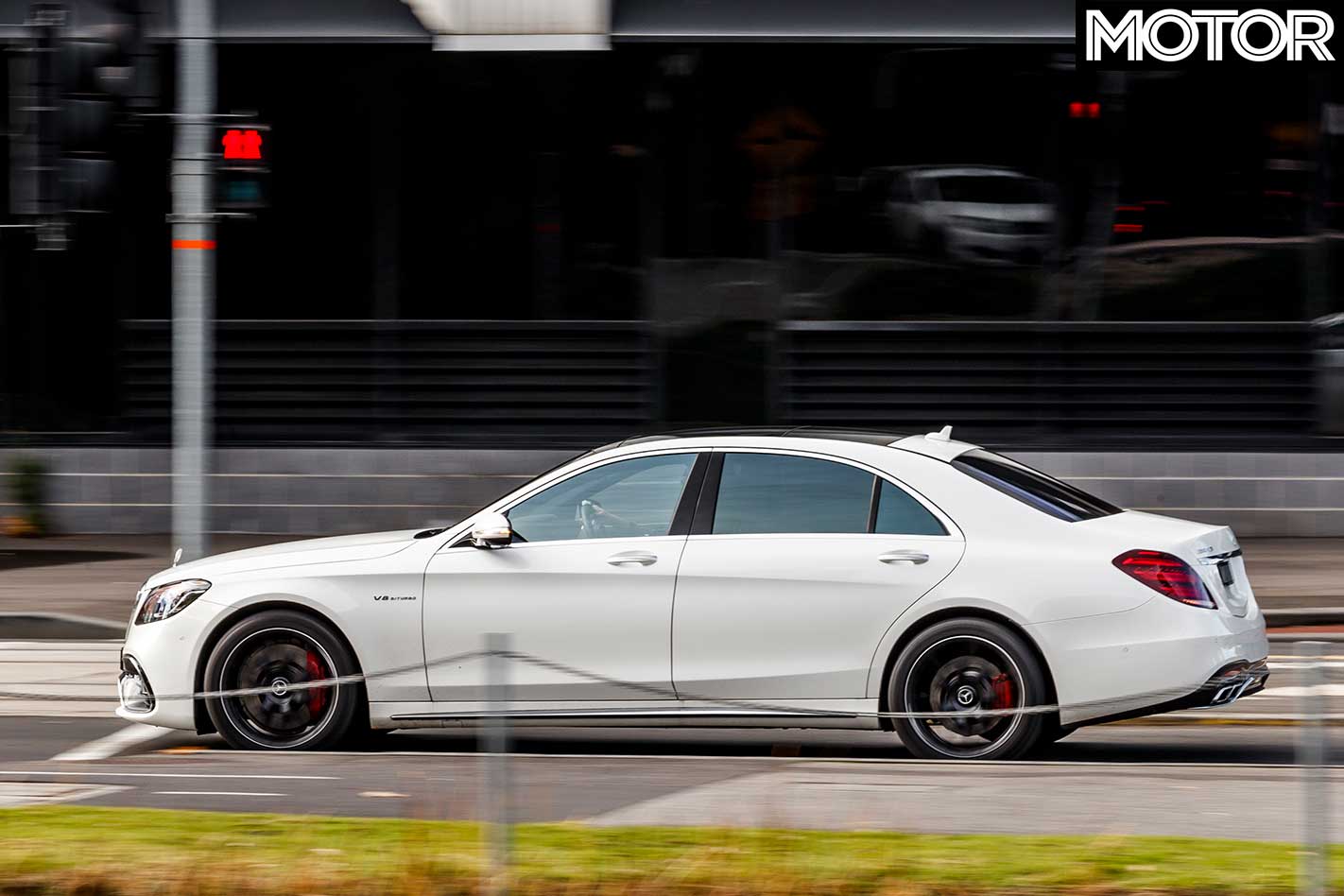
Compared to the Porsche, it feels like it has to be driven on eggshells. There’s more body roll, exacerbated because you sit so much higher in the driver’s seat, the extra 200mm of length (all in the wheelbase) makes the rear end feel as though it’s entering a corner just as the front is exiting and the brakes are spongier and only become more so the more you lean on them. The steering offers more feedback than the Porsche but weights up inconsistently with lock applied and with no LSD you’re constantly battling inside wheelspin.
Nonetheless, in terms of driver engagement, the Mercedes is the more enjoyable car, at least on our wet, slippery test roads. The Porsche is… one-dimensional is too strong, but drive within the available grip and you’re likely to go very quickly without much fuss. You have to work harder to extract the speed in the S63, which could be a plus or a minus depending on your point of view.
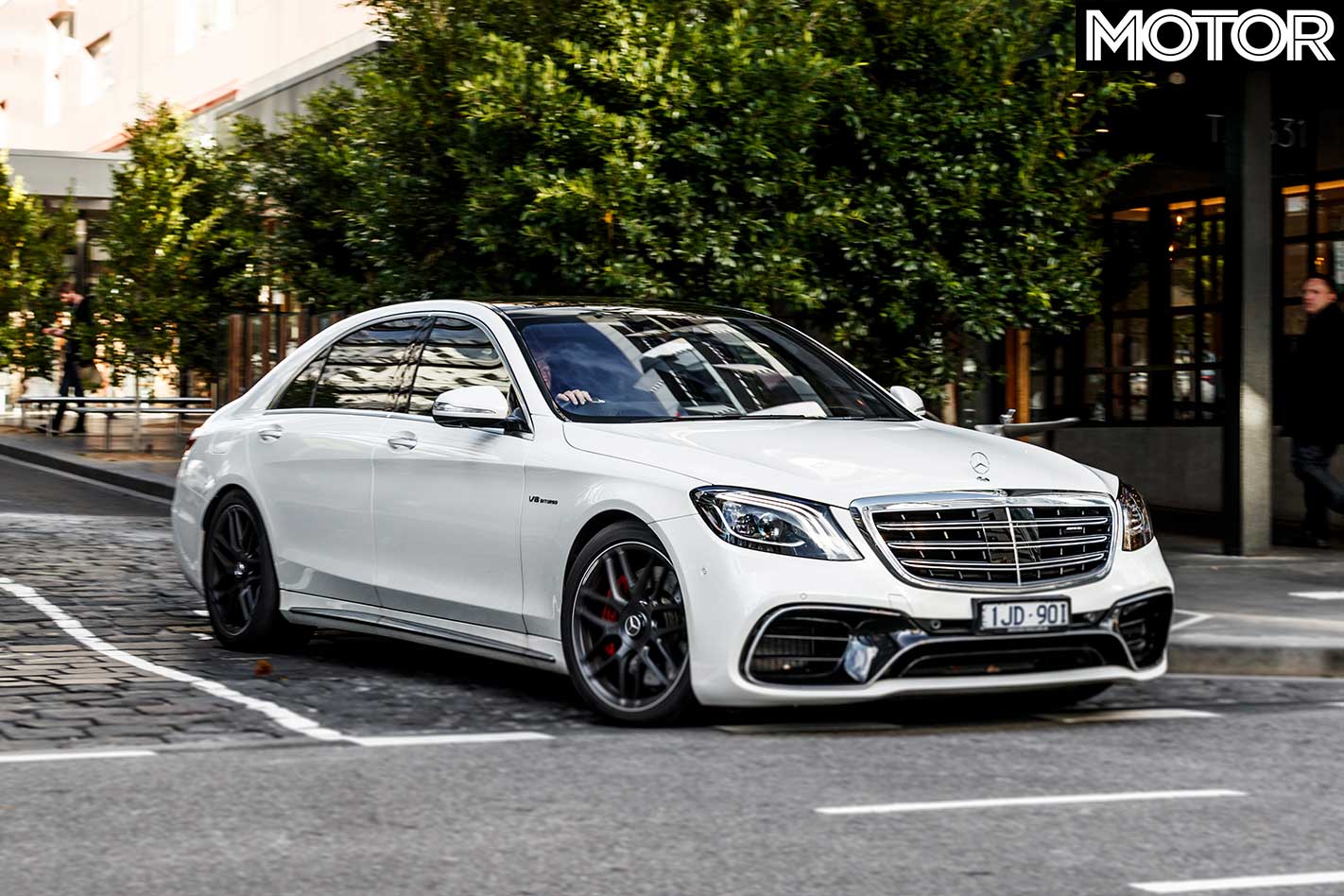
Two things are certain: with an LSD the S63 would be a tyre-killing riot and in left-hand drive 4MATIC guise it must be an absolute rocketship. Even as it is, it’s difficult to imagine any S63 owner knows just how competent their limousine is when driven with enthusiasm.
Most S63s will spend their lives wafting discreetly through the inner city. There’s something about the Merc’s sheer length and blacked-out wheels and windows which is quite menacing; I’m not suggesting it’s the ideal set of wheels for a Russian mobster, just that it could conceivably be on the shortlist of men with names like Dimitry or Vladislav.
The AMG’s palatial rear seats are the perfect place to do business, reputable or otherwise; there’s no more relaxing place to travel than in the back of an S-Class. Not that the driver is hard done by. Merc’s super-clever cruise control allows the S63 to effectively drive itself on the highway and the latest generation infotainment is much more user friendly, the touch control buttons on the steering wheel working particularly well.
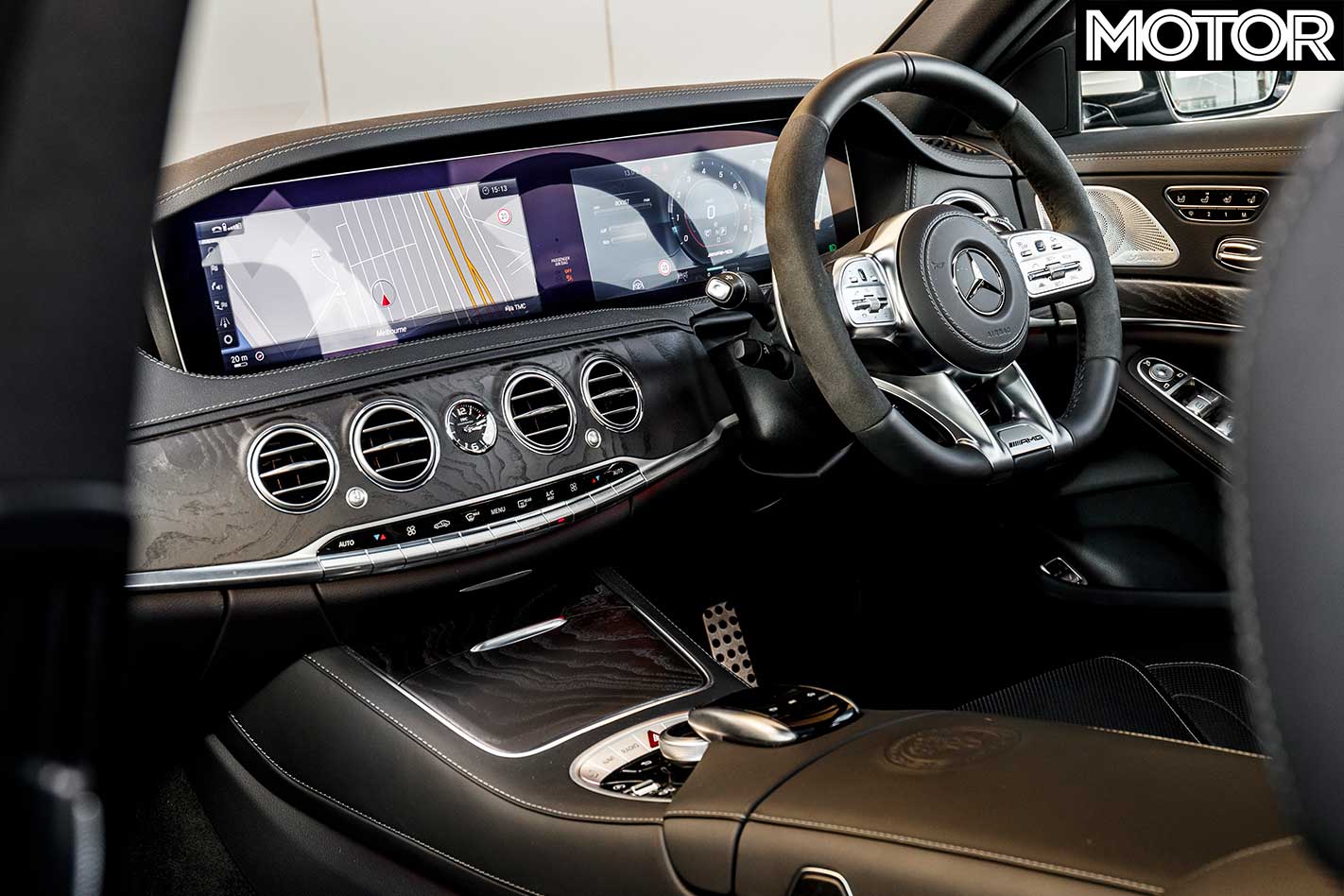
The Panamera’s interior isn’t as flashy as the S63’s, but it’s an utter masterpiece. There’s no textured wood, pillowy headrests or colourful lighting, just brilliantly logical design and a sense of bulletproof build quality.
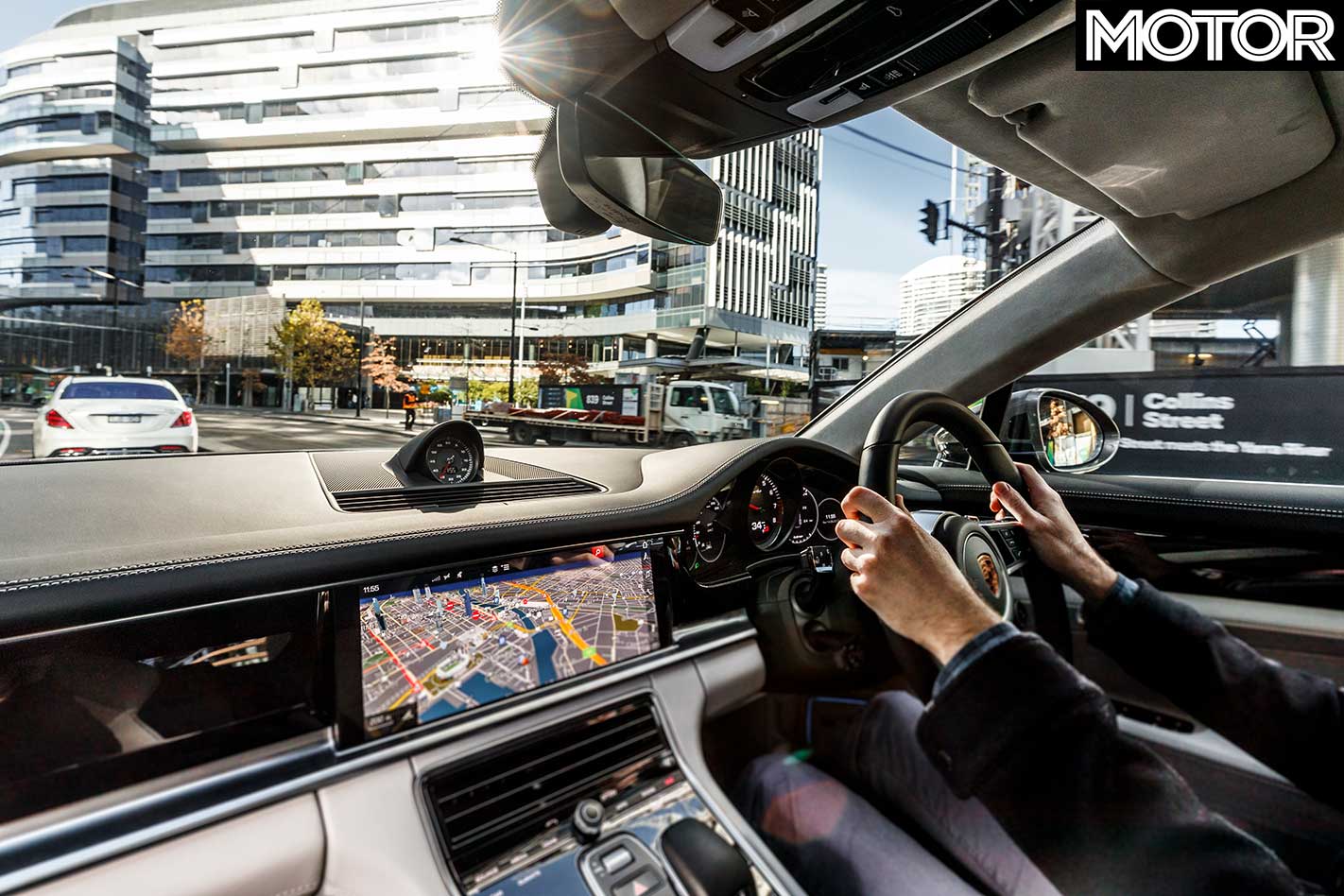
The ergonomics are spot-on: the buttons engage with the most satisfying click, operating the infotainment will be second nature to anyone with a smartphone and the instruments are the perfect blend of tradition (central analogue tacho) and technology (configurable screens either side). Unlike the Mercedes, the driver is the focus in the Porsche; the rear is for transporting people, not impressing them.
Which neatly sums up what separates these two: it’s the difference between competence and character. At the risk of stating the obvious, the S63 feels like a hotted-up limousine. In trying to marry luxury and lunacy and give an S-Class real driver appeal – which it undoubtedly has – AMG had to sacrifice some of the refinement that makes Merc’s limo such a tranquil place to be. For our money, the 463kW/1000Nm V12 Maybach S650 better marries the goals of space with pace.
The Panamera feels less conflicted. Like the S63, the Turbo Sport Turismo is a wicked-up variant of a more regular model, but even a base Panamera is designed to involve the driver, not isolate them. The Porsche is objectively the better car: it’s quicker, more capable and easier to drive hard, yet, perhaps unexpectedly, equals the S63 in its ride and refinement.
Combine this ability with room for kids and the dog and you have the ultimate money-no-object family car, albeit one that needs a bit more aggro. That might sound irrational, but rationale disappeared about $250,000 ago.
Five good reasons to pick the Mercedes-AMG S63 L
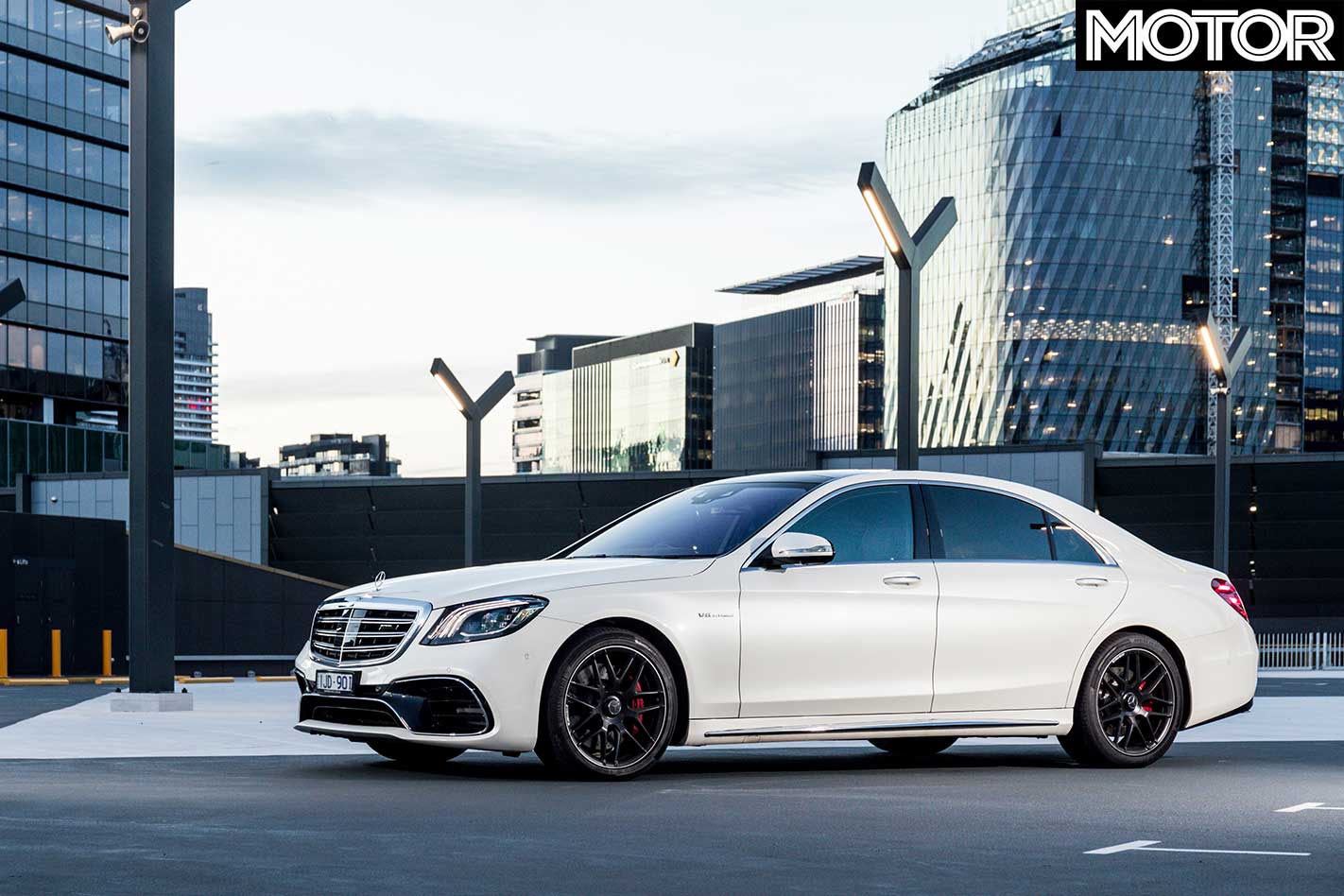
1 – New V8 offers limitless power and acceleration – and a NASCAR soundtrack. Yet it can mooch along on four cylinders if circumstances dictate 2 – We’re not really a fan of driver assistance systems, but having the S63 virtually drive itself on the highway is very relaxing on a long trip 3 – The back seat is so opulent it would be no hardship to hang out there of an evening with a movie and a chilled beverage of your choice 4 – When you drive a car that’s almost 5.3m long you garner a certain respect from passers-by and other road users – you’ve made it 5 – Take the S63 down a wet twisty road and you’ll have more fun than you could possibly imagine. Sadly, the lack of LSD frustrates in the dry
Five good reasons to pick the Porsche Panamera Turbo Sport Turismo
1 – Surprising and scaring your passengers with random, unannounced launch control starts would never get old – for the driver, anyway 2 – If you need to be somewhere a long way away in a hurry, regardless of weather, there are few tools better for the job than the Panamera Turbo 3 – Wagon practicality makes the Sport Turismo the king of the school run, allowing you to look down – metaphorically – on the SUV brigade 4 – Once you’ve dropped the kids off, you can go to a racetrack and round up supercars until it’s time to pick up the rugrats again 5 – Interior is a truly special place. There’s little glitz or glamour but everything reeks of quality and the driving position is perfect
Fast Facts
| u00a0 | Mercedes-AMG S63 L | Porsche Panamera Turbo Sport Turismo |
| Body | 4-door, 4-seat sedan | 5-door, 4-seat hatch |
| Drive | rear-wheel | all-wheel |
| Engine | 3982cc V8, DOHC, 32v, twin-turbo | 3996cc V8, DOHC, 32v, twin-turbo |
| Bore x Stroke | 83.0 x 92.0mm | 86.0 x 86.0mm |
| Compression | 8.6:1 | 10.1:1 |
| Power | 450kW @ 5500-6000rpm | 404kW @ 5750-6000rpm |
| Torque | 900Nm @ 2750-4500rpm | 770Nm @ 1960-4500rpm |
| Power/Weight | 228kW/tonne | 199kW/tonne |
| Transmission | 9-speed wet-clutch auto | 8-speed dual-clutch |
| Weight | 1970kg | 2035kg |
| Suspension | multi-links, air springs, adaptive dampers, anti-roll bar (f/r) | double-wishbone, air springs, adaptive dampers, anti-roll bar (f); multi-links, air springs, adaptive dampers, anti-roll bar (r) |
| L/W/h | 5287/1915/1499mm | 5049/1937/1432mm |
| Wheelbase | 3165mm | 2950mm |
| Tracks | 1630/1644mm (f/r) | 1657/1639mm (f/r) |
| Steering | electrically-assisted rack-and-pinion | |
| Brakes (f) | 390mm ventilated/drilled discs, 6-piston calipers | 410mm ventilated discs, 6-piston calipers |
| Brakes (r) | 360mm ventilated/drilled discs, single-piston calipers | 380mm ventilated discs, 4-piston calipers |
| Wheels | 20.0 x 8.5-inch (f); 20 x 9.5-inch (r) | 21.0 x 9.5-inch (f); 21 x 11.5-inch (r) |
| Tyre Sizes | 255/40 R20 (f); 285/35 R20 (r) | 275/35 ZR21 (f); 315/30 ZR21 (r) |
| Tyres | Continental ContiSportContact 5P | Pirelli P Zero |
| Price | $375,000 ($382,000 as tested) | $390,700 ($415,670 as tested) |
| Pros | Brutal engine; surprising agility; rear seats | Crazy speed; gorgeous interior; wagons are cool |
| Cons | No LSD; gearbox stumbles; inconsistent steering | Heavy; electronic overkill; should be louder |
| Rating | 4 out of 5 stars | 4 ouf ot 5 stars |
The Strip
| u00a0 | Mercedes-AMG S63 L | Porsche Panamera Turbo Sport Turismo | |
| 0-10km/h | 0.40sec | 0.22sec | |
| 0-20km/h | 0.79sec | 0.49sec | |
| 0-30km/h | 1.17sec | 0.75sec | |
| 0-40km/h | 1.54sec | 1.02sec | |
| 0-50km/h | 1.99sec | 1.34sec | |
| 0-60km/h | 2.41sec | 1.65sec | |
| 0-70km/h | 2.83sec | 2.00sec | |
| 0-80km/h | 3.23sec | 2.41sec | |
| 0-90km/h | 3.67sec | 2.87sec | |
| 0-100km/h | 4.18sec | 3.38sec | |
| 0-110km/h | 4.74sec | 3.95sec | |
| 0-120km/h | 5.30sec | 4.53sec | |
| 0-130km/h | 5.93sec | 5.18sec | |
| 0-140km/h | 6.66sec | 5.96sec | |
| 0-150km/h | 7.43sec | 6.87sec | |
| 0-160km/h | 8.24sec | 7.81sec | |
| 0-170km/h | 9.10sec | 8.76sec | |
| 0-180km/h | 10.04sec | 9.81sec | |
| 0-190km/h | 11.04sec | 10.95sec | |
| 0-200km/h | 12.25sec | 12.35sec | |
| 0-400m | 12.04sec @ 198.22km/h | 11.49sec @ 193.88km/h | |
| 80-120km/h (Drive) | 2.0sec | 2.1sec | |
| 100-0km/h | 36.48m | 34.78m | |
| Speed in Gears | |||
| 1st | 62km/h @ 7000rpm | 49km/h @ 6800rpm | |
| 2nd | 102km/h @ 7000rpm | 91km/h @ 6800rpm | |
| 3rd | 147km/h @ 7000rpm | 141km/h @ 6800rpm | |
| 4th | 202km/h @ 7000rpm | 207km/h @ 6800rpm | |
| 5th | 274km/h @ 7000rpm | 280km/h @ 6800rpm | |
| 6th | 300km/h @ 6340rpm* | 304km/h @ 5900rpm* | |
| 7th | 300km/h @ 5450rpm* | 304km/h @ 4780rpm* | |
| 8th | 300km/h @ 4560rpm* | 304km/h @ 3730rpm* | |
| 9th | 300km/h @ 3800rpm* | – | |
Heathcote Raceway, 18˚C, dry. Driver: Scott Newman *Manufacturer’s claim Official timing supplier – VBOX Australia
MAX VERSTAPPEN had plenty of reasons to be angry with Esteban Ocon, and he didn’t hold back, engaging in a shoving match with the Frenchman following a controversial Brazilian Grand Prix.
The Red Bull driver had started fifth for the penultimate grand prix of the 2019 season before ruthlessly carving a path to the lead of the race. Meanwhile, Ocon had ruthlessly carved a path to the tail end and found himself two laps down.
On lap 44, the pair separated by a yawning chasm on the leaderboard, came together on track. Ocon, who had fresh tyres, was attempting to unlap himself, and in doing so made contact with Verstappen. The pair spun off track, and Verstappen was unceremoniously booted from the lead of the race.
Following the race, Verstappen confronted Ocon in parc ferme, with cameras capturing the pair engaging in an ill-tempered and slightly embarrassing shoving match surrounded by FIA officials and fellow drivers.
When asked by Autosport to comment on the post-race stoush, Verstappen added a verbal jab at his rival.
“I don’t really have lots to comment on that, except that he was being a pussy,” the Dutchman added.
In response, Ocon called Verstappen ‘violent’, and disparaged his conduct.
“What I am really surprised about is the behaviour of Max coming into the scales,” he told TV cameras.
“The FIA having to stop him from being violent, pushing me and wanted me to punch me – and that is not professional.”
Both drivers were hauled in front of the stewards for “physical contact with another competitor in the FIA garage”.
Verstappen was ordered to complete two days of “public service at the discretion of the FIA” as punishment for the post-race clash, while Ocon escaped an additional penalty – the Frenchman was given a 10-second stop-go penalty during the race for the initial contact.
Ocon and Verstappen have a tumultuous relationship that goes back to the 2014 FIA Formula 3 championship.
It was Verstappen’s first season outside of karting, and he had controversially signed to race in Formula 1 in 2015. While the world’s attention was fixated on the Dutchman, Ocon dominated the season, winning the championship with a 58-point margin. Verstappen finished the season in third, 67-points behind Ocon.
The Brazilian Grand Prix was won by Lewis Hamilton, who was the benefactor of the clash between the young rivals. The recently crowned five-time champion had some sage advice for Verstappen following the race, warning him that Ocon had a right to attempt to unlap himself.
Kimi Raikkonen finished third, while Daniel Ricciardo just missed out on a podium position in fourth. Valtteri Bottas rounded out the top five.
Speaking after the race, Red Bull team boss Christian Horner defended his driver, stating Verstappen had been unexpectedly subdued given the circumstances.
“I think Max has been pretty restrained,” he told Sky Sports F1. “It’s cost him a grand prix victory. He’s driven his heart out with a damaged car.
“Esteban was lucky to get away with a push, to be honest with you. Emotions are running high.
“It’s clear that as a lapped car you shouldn’t interfere with the leader.
“What on earth Ocon was thinking about there just beggars belief.”
It takes the boss of HSV almost an hour to drop a tasty detail about the new Commodore. But when he does, Tim Jackson reveals a tantalising glimpse into what could have been. Speaking to Wheels at HSV’s brand-new production facility in Clayton South, Jackson details that had his company fettled the ZB, it could have electrified it.
“We were thinking about how can we really innovate this and do it differently,” he tells me. “We spent a fair bit of time thinking about what if we had electric enhancement as opposed to swapping the engine in and out? What if the excitement came from the electric side of the equation?”
Ponder that for a moment. Imagine the impact a halo version of the ailing ZB could have for HSV and Holden. A car armed both with HSV’s renowned chassis-tuning expertise, and a hybrid powertrain wicked up with Tesla-esque performance. Just thinking about it makes my mouth water.
The reality check is that for now, the program has been shelved. High costs and a supply base more interested in snaring the hybrid/EV business of big OEMs, as opposed to niche players asking for 1000 units a year, have hit pause on the move. Yet Jackson assures me that once the market matures, electrification has a future with HSV. “You can actually deliver a really exciting drive with hybrids and those sort of things,” he says.
It’s a nugget of information that speaks volumes about the current thinking inside HSV. In this post rear-drive Commodore world, it’s looking to be bold. To be brave. To reinvent itself.
That hasn’t been easy. With no V8 Commodore to fettle, HSV has branched out into dual-cab utes like the controversial Colorado Sportscat by HSV, and zeroed in on its conversion business, which sees it expertly transform big buses like the Chevrolet Silverado into right-hookers. It’s a move that has added jobs – HSV now employs 350 workers, an increase of 200 – though also one that has alienated parts of its rusted-on fan base.
“I think some understand it, and some don’t,” says Jackson. “We’ve had four years to get used to it. Our customers are still grappling with that.”
Questions about HSV’s plans for the ZB still persist, both from journalists, and increasingly, from the public, but for now it isn’t on the radar. Wheels understands Holden is especially keen for HSV to add some enthusiast appeal to the imported Commodore, but finding a suitable engine – either a twin-turbo V6 or a V8 – at an achievable price has been tricky. “The jigsaw puzzle just hasn’t come together,” says Jackson. “Our thinking was this [ZB] is a very different car [to VF] so let’s make it different. We would have rather taken more of a risk to make it great, than make something mediocre and have everybody disappointed in the outcome.”
Instead HSV will focus on three core product lines for the immediate future: Sportscat, Silverado and the imminent Camaro.
The Camaro is a welcome shot of familiarity for HSV; a return to form that will instantly see it reclaim some of the brand identity it has lost. The burning question, though, is how does HSV use that kernel to rebuild an identity that was once its greatest strength? Everybody knew what HSV stood for; a maxim brilliantly embodied by the slogan “I just want one!”. Jackson freely admits that HSV has played it safe for a long time; that it was reluctant to innovate and to embrace change. Now it has no choice.
Since it was first introduced in 2014, the third-generation Toyota Kluger has led the large soft-roader SUV market, and has so far managed to see off fresher competition, including the multi-award winning Mazda CX-9.
Both are very well equipped, particularly their respective range-toppers, the Kluger Grande and the CX-9 Azami LE, which offer near-premium levels of comfort and features. We brought the two together to see which offers the best bang for your almost-70,000 bucks in terms of features, performance and comfort.
VALUE
The Mazda CX-9 is available in five grades, Sport, Touring, GT, Azami, and Azami LE, all of which are powered by a gutsy 2.5-litre four-cylinder turbocharged petrol engine, with all variants except for the Azami LE available in front- and all-wheel-drive.
The 2019 Mazda CX-9 range is priced as follows:
- CX-9 Sport FWD – $44,990
- CX-9 Sport AWD – $48,990
- CX-9 Touring FWD – $51,390
- CX-9 Touring AWD – $55,390
- CX-9 GT FWD – $59,390
- CX-9 GT AWD – $63,390
- CX-9 Azami FWD – $60,990
- CX-9 Azami AWD – $64,990
- CX-9 Azami LE AWD – $66,490
The price includes everything and the only available options are two special paint colours. That said, Soul Red Crystal and Machine Grey cost just $300 more than the other five colours.
The CX-9’s turbo petrol engine is reasonably efficient considering the Azami LE’s 2.0-tonne mass, with an official combined consumption of 8.8L/100kmm, though that might still seem a little high for anyone getting out of a diesel SUV.
The Mazda CX-9 is covered by Mazda’s five-year/unlimited kilometre warranty.
Detailed information about the entire CX-9 range can be found in the Mazda CX-9 Range Review
The Kluger comes in three model grades, GX, GXL and Grande that are each available with front- or all-wheel-drive, with the latter attracting a $4000 premium. 2018 Toyota Kluger pricing is as follows:
- Kluger GX FWD – $44,500
- Kluger GX AWD – $48,500
- Kluger GXL FWD – $52,990
- Kluger GXL AWD – $54,990
- Kluger Grande FWD – $65,646
- Kluger Grande AWD – $69,617
The Grande does come with the full enchilada though, including active safety features that are optional in the GX and GXL grades meaning, apart from accessories such as floor mats and roof racks, the only extra you’ll pay is about $480 for premium paint should the standard Eclipse Black hue not be your thing.
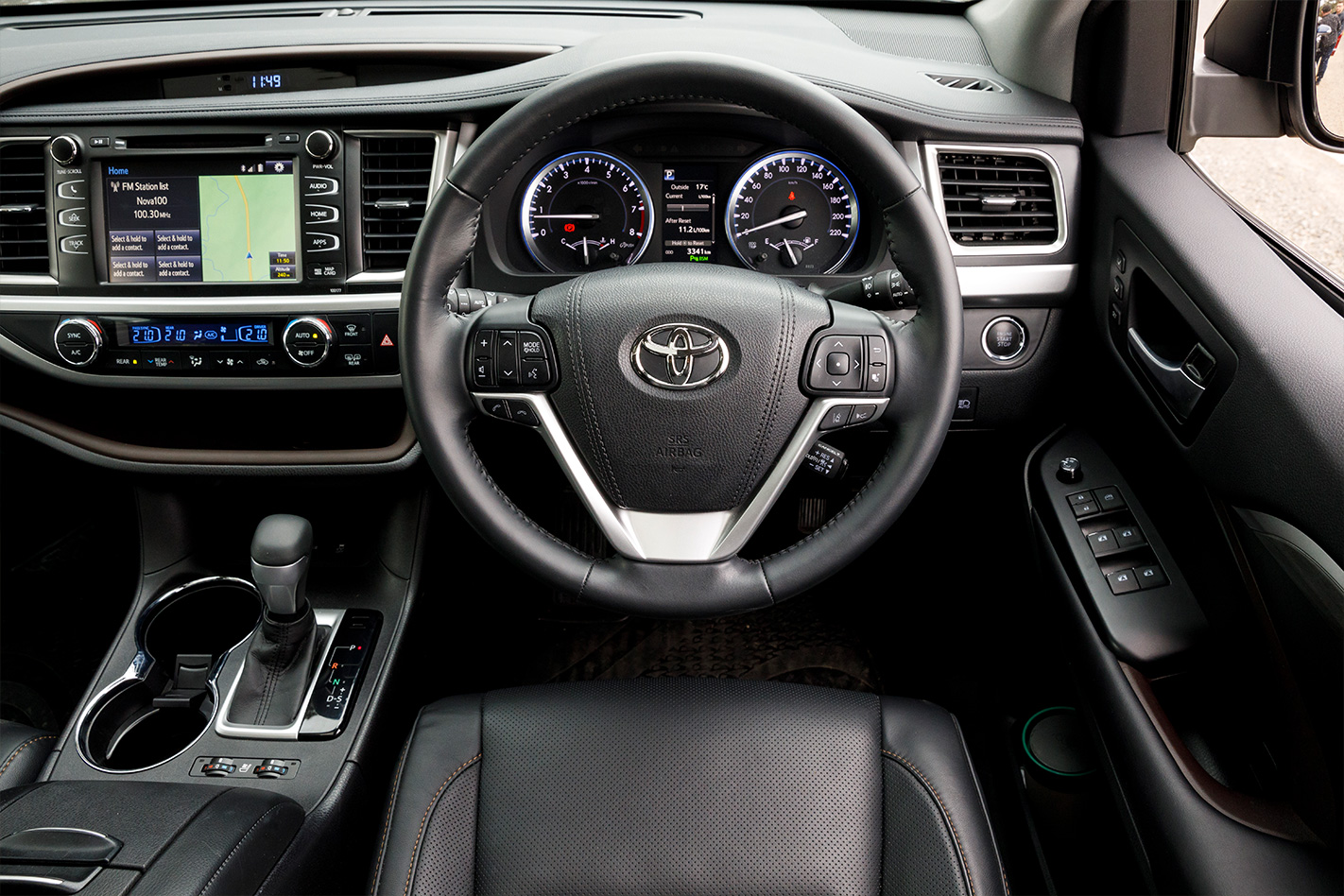
In all-wheel-drive guise the Kluger’s 3.5-litre V6 engine consumes regular unleaded petrol at an official combined rate of 9.5L/100km.
The Kluger requires servicing every 10,000km or six months, which is a higher frequency than most, though Toyota’s capped priced servicing means you’ll pay just $180 for the first six services during the first three years or 60,000km.
The Kluger is still covered by Toyota’s three year/100,000km warranty, which seems a little stingy considering most of its rivals have at least five years/unlimited kilometre coverage.
Detailed information, about the entire Kluger range can be found in out 2018 Toyota Kluger Range Review.
STANDARD FEATURES
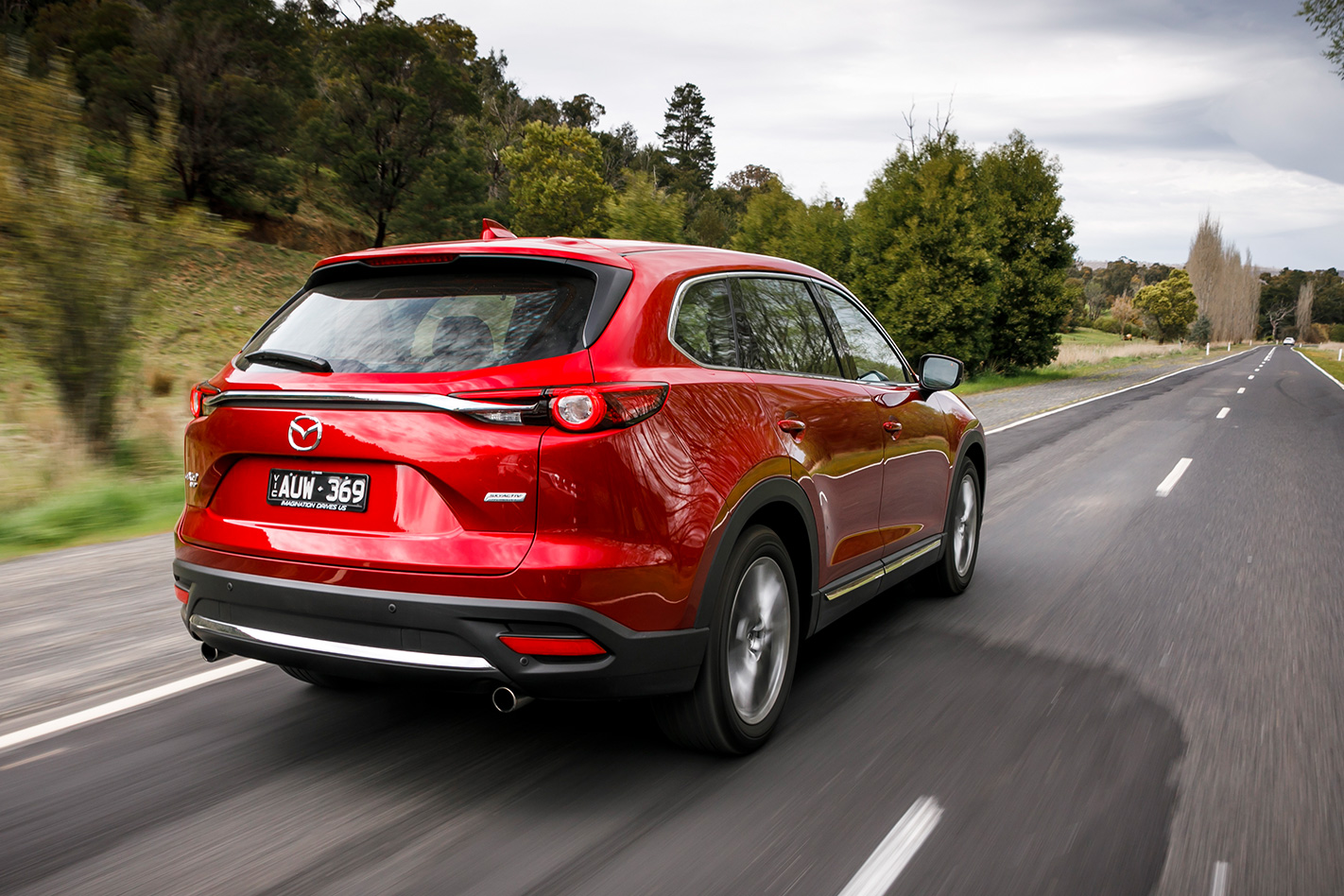
The Azami LE comes with an extensive equipment list including:
- Six-speed automatic transmission
- Adaptive cruise control
- 8.0-inch infotainment screen with rotary controller
- Android Auto /Apple CarPlay
- Digital radio (DAB+)
- Satellite navigation
- Three-zone climate control
- 360-degree reversing camera
- Front and rear parking sensors
- Auto-folding powered door mirrors
- 20-inch alloy wheels
- Autonomous emergency braking
- Driver attention alert
- Lane-keeping assistance
- Head-up display
- Traffic sign recognition
- Dusk-sensing headlights
- LED daytime running lights
- Rain-sensing windscreen wipers
- Windscreen de-icer
- Keyless entry/start
- Power-operated tailgate
- Sunroof
- Nappa leather upholstery
- Heated and ventilated front seats
- Heated steering wheel
- Bose stereo system.
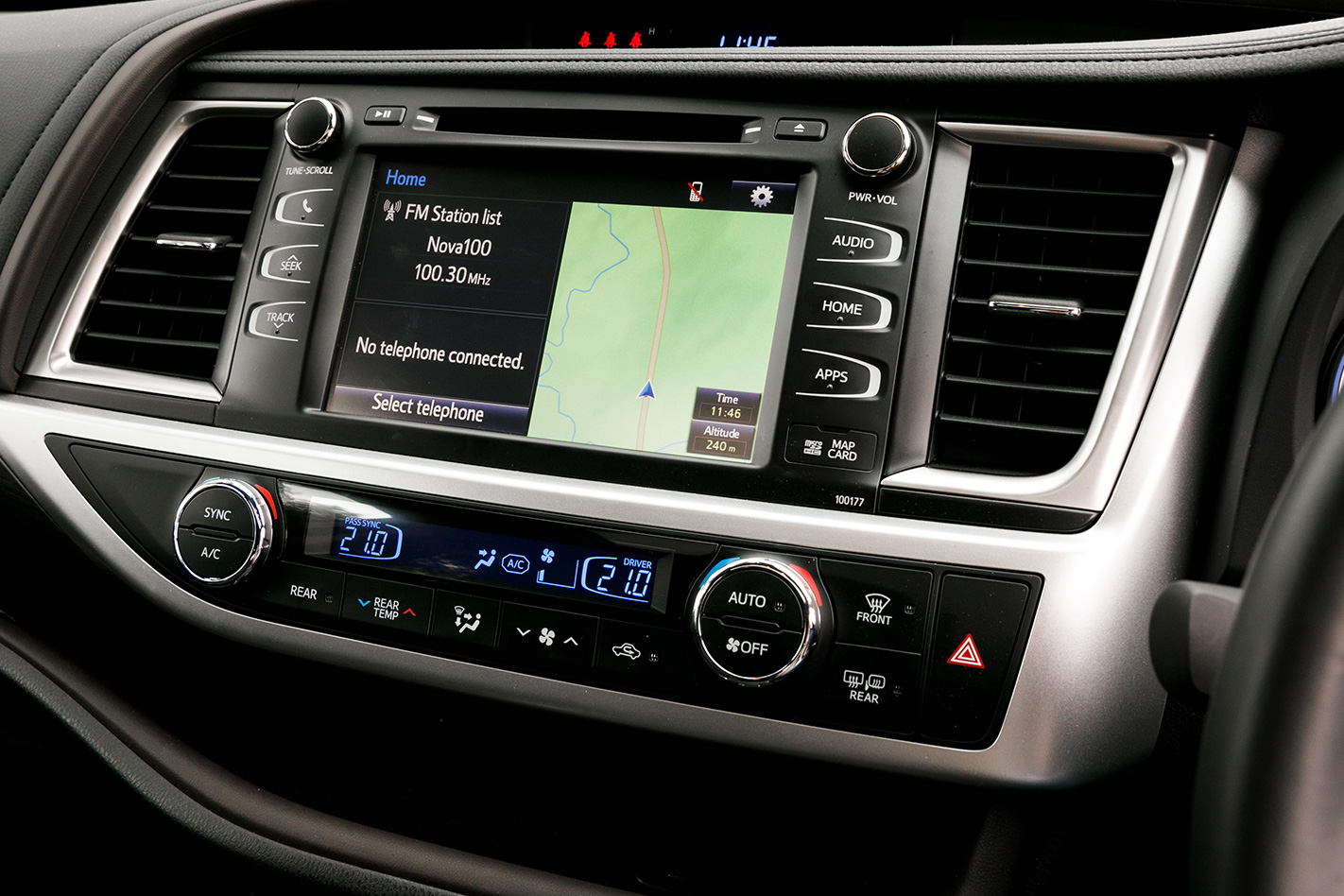
The Kluger Grande AWD brings additional safety and luxury features over and above the standard features list and brings for its $67,490 retail price tag:
- Part leather upholstery
- Three-zone air-conditioning
- Keyless entry
- Power-operated tailgate
- Heated and ventilated front seats
- Power adjusted front seats, with driver’s seat memory
- Sunroof
- 8.0-inch touchscreen
- Digital radio
- Satellite navigation
- Autonomous emergency braking
- Lane keeping assist
- Adaptive cruise control
- Rain-sensing windscreen wipers
- Reverse parking sensors
- Rear-cross traffic alert
- Blind-spot monitor
- Rear-cross traffic alert
- Auto-dipping dusk-sensing headlights
- Daytime running lights
- 19-inch alloy wheels
SIZE
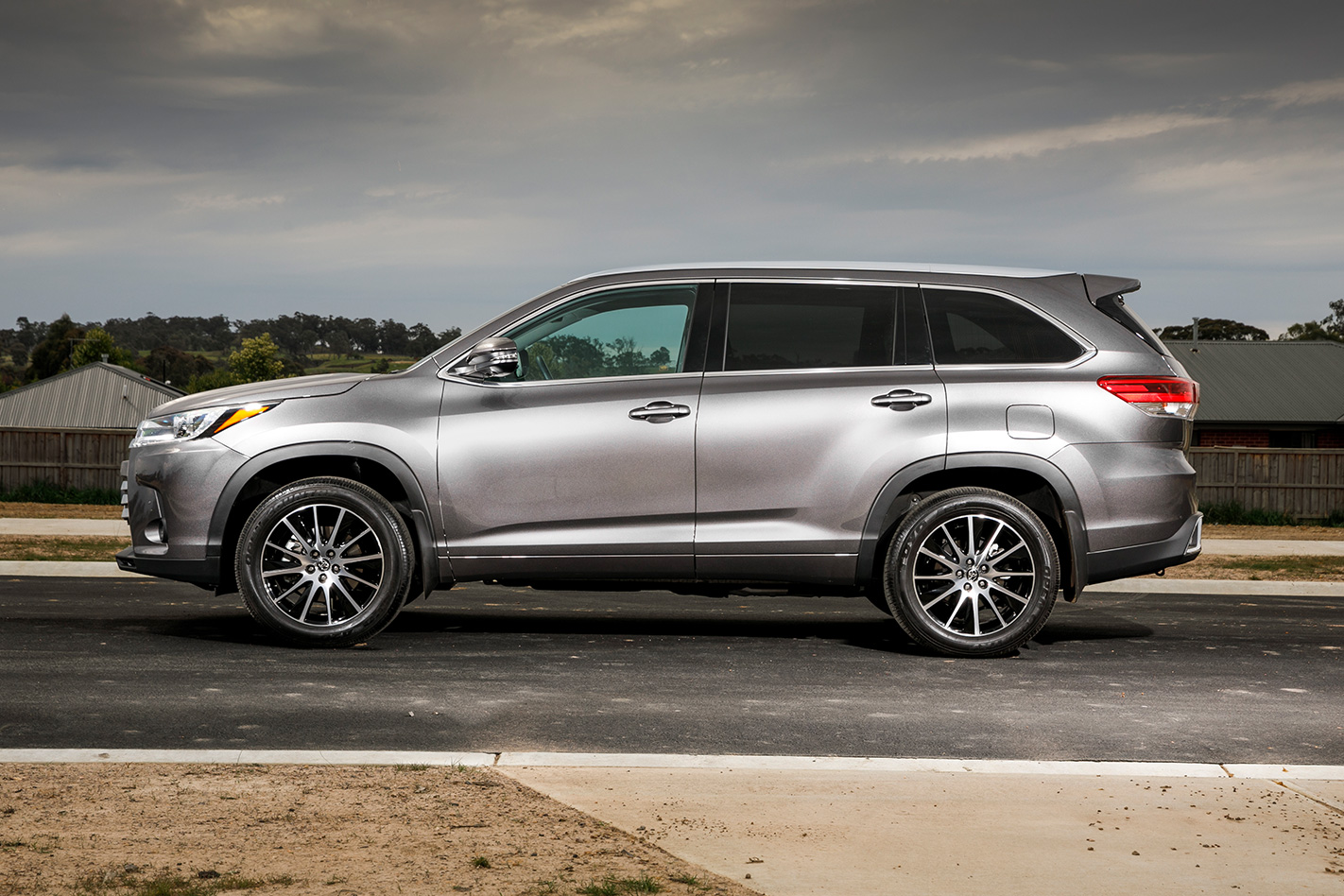
The Mazda CX-9 takes its ‘large SUV’ tag seriously, with its 5.1m length, 1.97m width and 2.93m wheelbase that makes it a little harder to park than, say, the Toyota Kluger which measures 4.89m long by 1.93m wide.
But it’s cavernous inside, with excellent head and knee room, including in the third row that comfortably accommodates two adults.
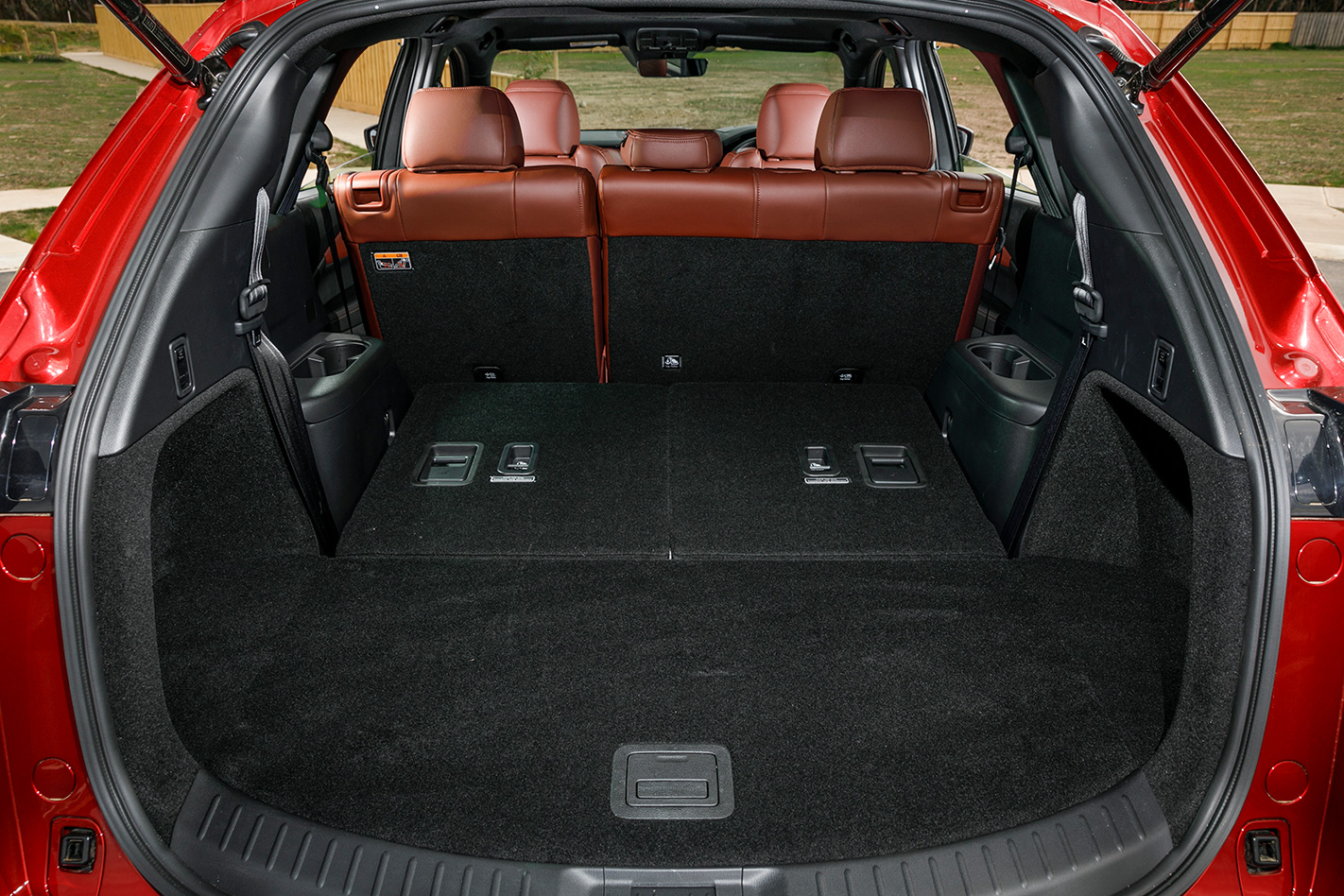
Boot space with three rows in use is a handy 230 litres, with the third-row seats offering a 50:50 split to add extra cargo. Folding the entire third row down brings a considerable 810 litres behind the 60:40 split second row seats. With all rear seats down, the CX-9 will hold up to 1641 litres behind the front seats.
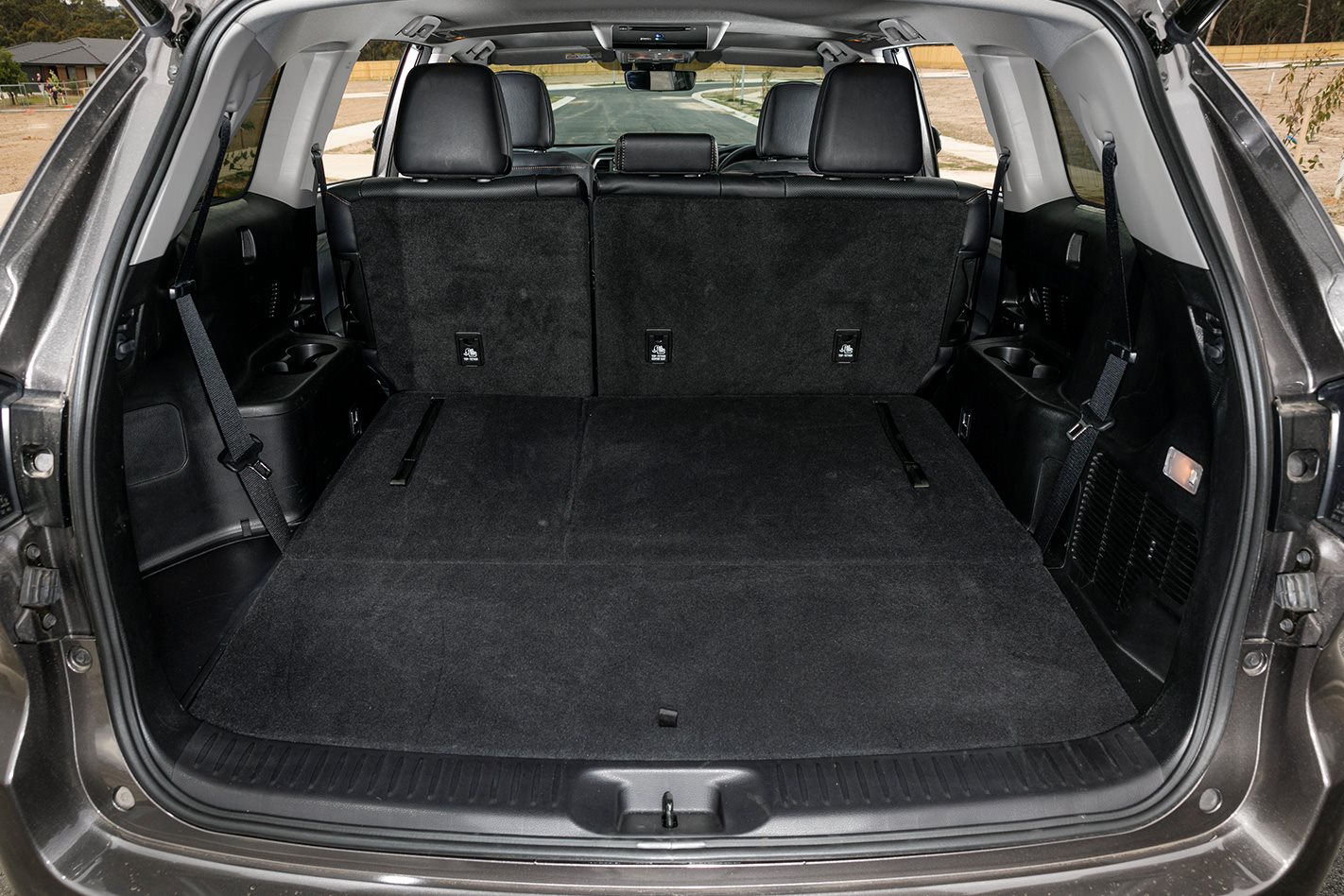
The US-built Kluger is 4.89 metres long and 1.93m wide with the main cabin sitting above its 2.8m wheelbase. One reason for its popularity is that while it comfortably accommodates a family of seven, its size isn’t a hindrance when it comes to parking or negotiating city streets.
Head and legroom is excellent in the first two rows, but get a little tight in row three that’s best suited for kids.
As with most SUVs, boot space is tight (195 litres) if you’re using all seven seats, but even with the third row down you’ll only fit 529 litres, which is less than some medium SUVs. Fold down the middle row and you’ll fit 1872 litres worth of gear behind the front seats.
SAFETY
The CX-9’s size and strong body structure with side-impact door beams combine with six airbags to protect occupants well in the event of an accident, though you have a decent chance of avoiding that with autonomous emergency braking that operates at speeds up to 160km/h.
Other active safety features include lane-keeping assist, driver attention alert, rear-cross traffic alert, and blind-spot monitoring that can spot a car about to overtake you swiftly from up to 50 metres behind.
The CX-9 is also equipped with roll stability control, that mitigates the chance of a rollover, and trailer stability assistance which acts to minimise trailer sway when towing, while parking is made safer with a 360-degree camera view and front- and rear-parking sensors.
The Australasian New Car Assessment Program (ANCAP) awarded the Mazda CX-9 its maximum five stars for safety, in July 2016.
The Kluger Grande comes with the full suite of available active safety features, including radar-based autonomous emergency braking that works at city and highway speeds – part of what Toyota calls its Pre-Collision Safety system. This is backed up by lane-keeping assist, blind-spot warning and rear-cross traffic alert.
The Kluger is also equipped with seven airbags, including driver knee bag and side curtain protection for all three rows, and it has three child-seat anchor points for the middle row of seats but none for the back row.
The Kluger scored the maximum five-star ANCAP safety rating in April 2017.
COMFORT
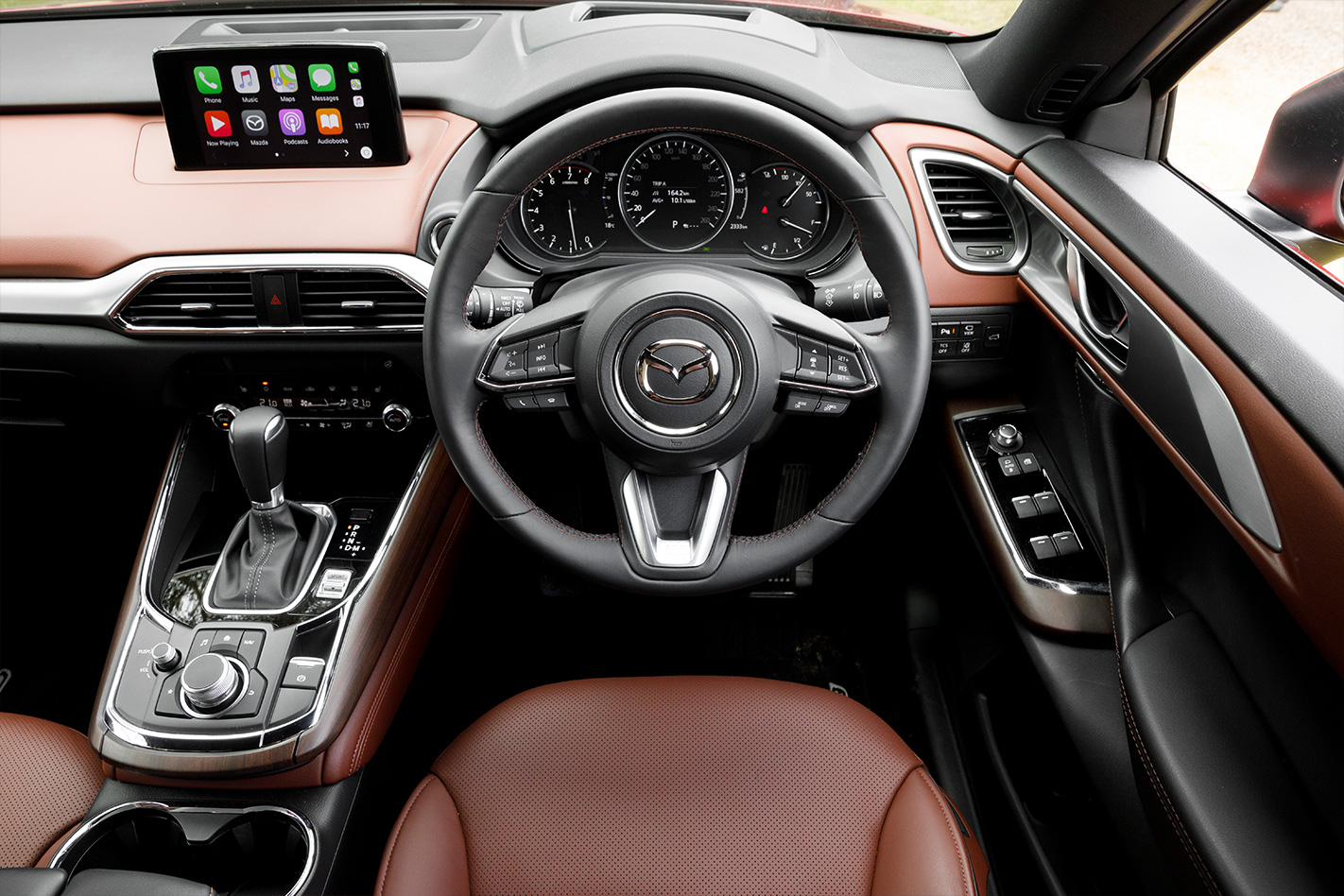
The Azami LE takes the CX-9’s acclaimed comfort levels a step further with the premium Nappa leather upholstery that makes it feel like a more expensive European SUV.
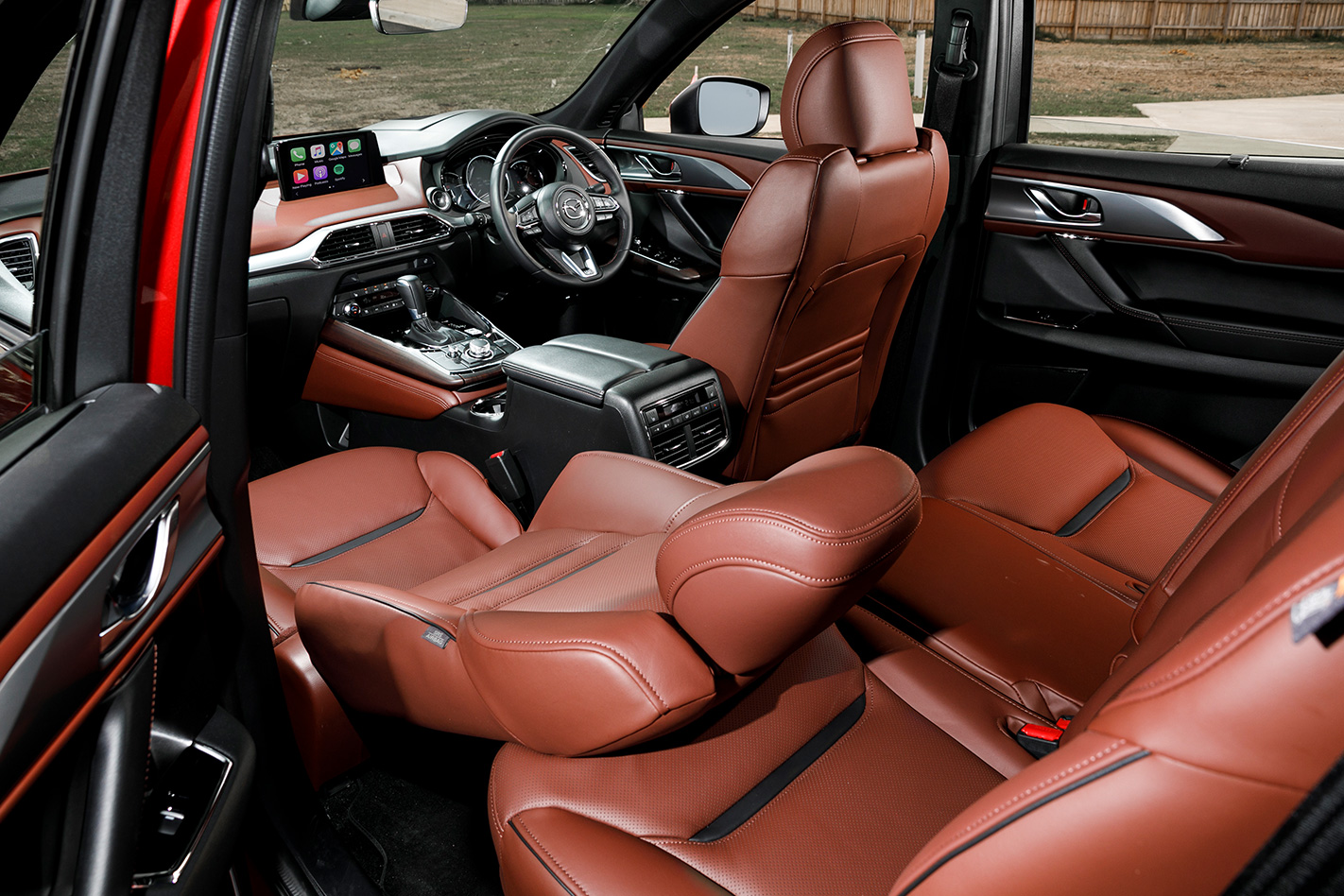
The spacious cabin feels welcoming with plenty of leg and elbow room in the first two rows, and the front seats gain additional creature comforts including powered settings and seat heating and ventilation.
Second-row passengers benefit from raised seating that affords excellent forward and side vision, separate climate control panel and vents, and a fold-down centre arm rest comprising two cupholders and two USB sockets.
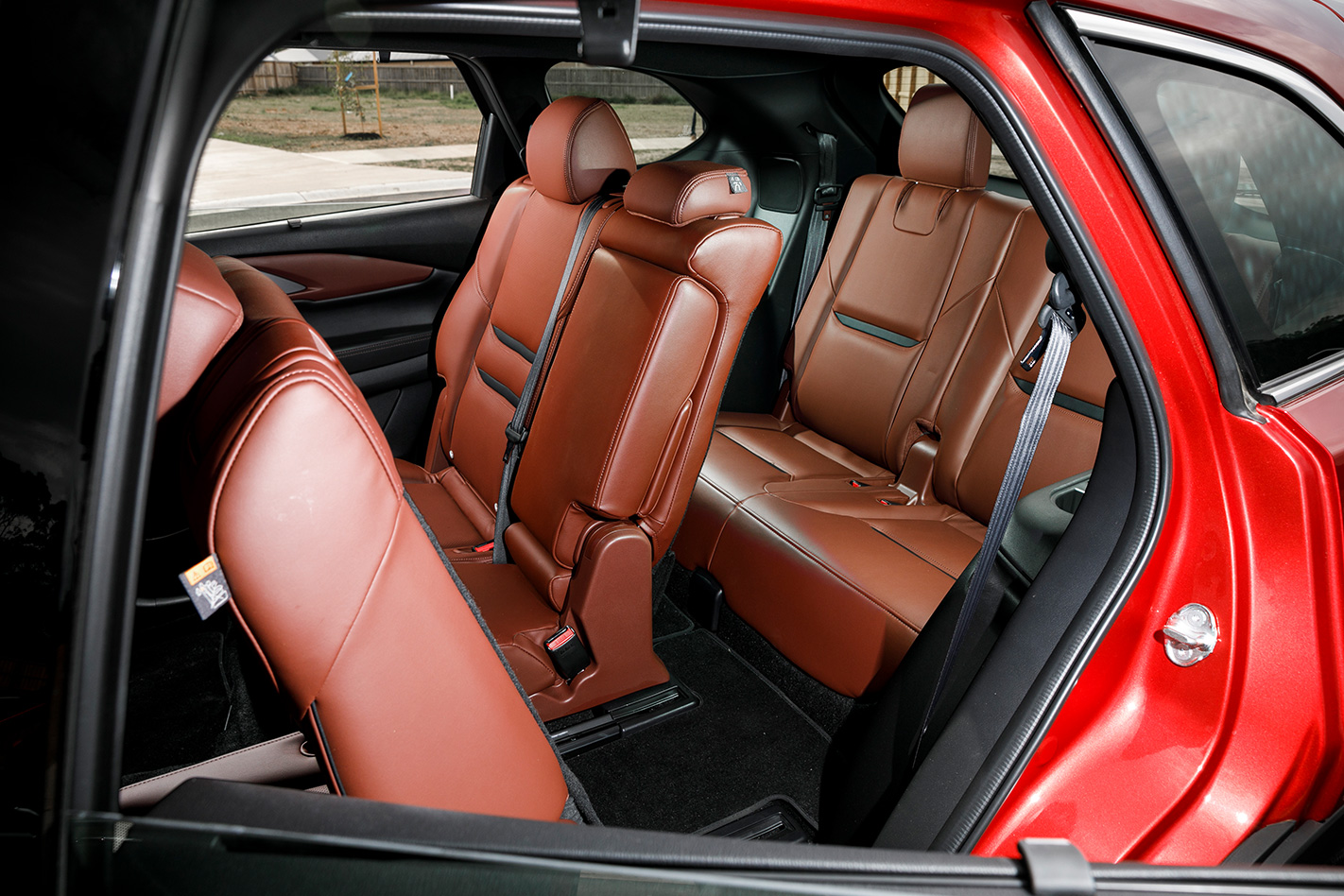
The third-row seats are roomier than most of the CX-9’s rivals, and will accommodate two average-sized adults comfortably over moderate distances. Legroom can be altered sliding the second row forward and there’s a sufficient gap under the seat in which to slide your feet. The wide rear door opening means you don’t need to be a contortionist to climb in or out of the third row.
The coupe-like roofline sacrifices the ability to install separate air vents in the third-row, however the second-row vents do a good job of heating or cooling all the way to the back.
The interior is well put together with quality materials including soft-touch plastics, chrome brightwork and woodgrain trim, while the presentation of the instruments and controls is both classy and intuitive.
Ride comfort is also excellent, with supple but well-controlled suspension that glides over bumps, tyre, wind and engine noise is blocked out so effectively you’d be forgiven for thinking the CX-9 has double glazing.
The Kluger Grande’s stylish cabin looks well put together and you can choose between dark black and tan trim with neither costing extra. That said it doesn’t feel like a $70,000 car.
Cabin storage abounds, starting with huge centre console bin, and broad storage tray above the glovebox that is good for holding phones. Big door pockets and a deep centre console provide ample space for bottles, handbags and the like.
First and second-row seats are plush and supportive, for good long distance comfort. The third row seats are reasonably comfortable, but pretty tight for bigger people for anything more than short trips, though legroom is helped by being able to fit your feet under the second row seats.
Ventilation controls are big and easy to operate, and there is a separate control unit for rear passengers mounted on the ceiling that blows airs through vents located in the third and second rows. There are also retractable blinds in which slide up and down to cover the rear-door windows and protect children from the direct sun.
On a country road or freeway, the Kluger is impressively quiet inside and rides comfortably. The cabin filters out road noise, but the wind can be loud around the big door mirrors.
ON THE ROAD
The CX-9’s size and AWD traction helps it feel incredibly well planted on the road.
It’s surprisingly nimble too, with slick steering and multi-link rear suspension that provides an excellent compromise between comfort and handling, even on the bigger the 20-inch wheels.
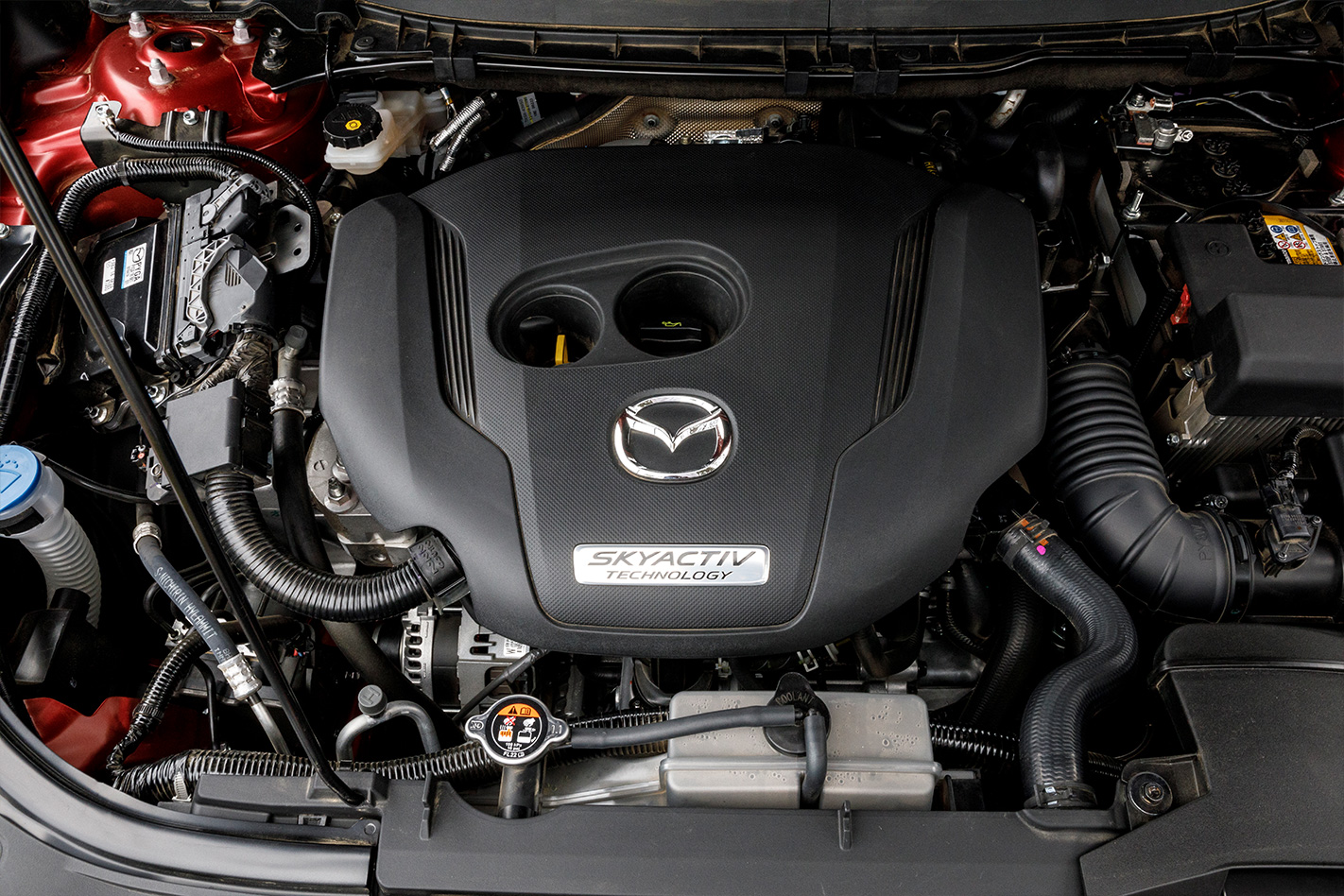
The 2.5-litre petrol turbo engine responds well at all speeds and even has a sporty note when at the upper reaches. It’s a lively engine that teams well with the six-speed automatic to give the CX-9 a surprising turn of speed and overtaking ability.
Its size and 2.0-tonne heft is more evident when braking, with the pedal feeling a little spongy when coming to a stop from highway speeds.
The AWD system is excellent on gravel, muddy or snowy roads, but the low ground clearance and sporty wheels aren’t conducive to very rough tracks.
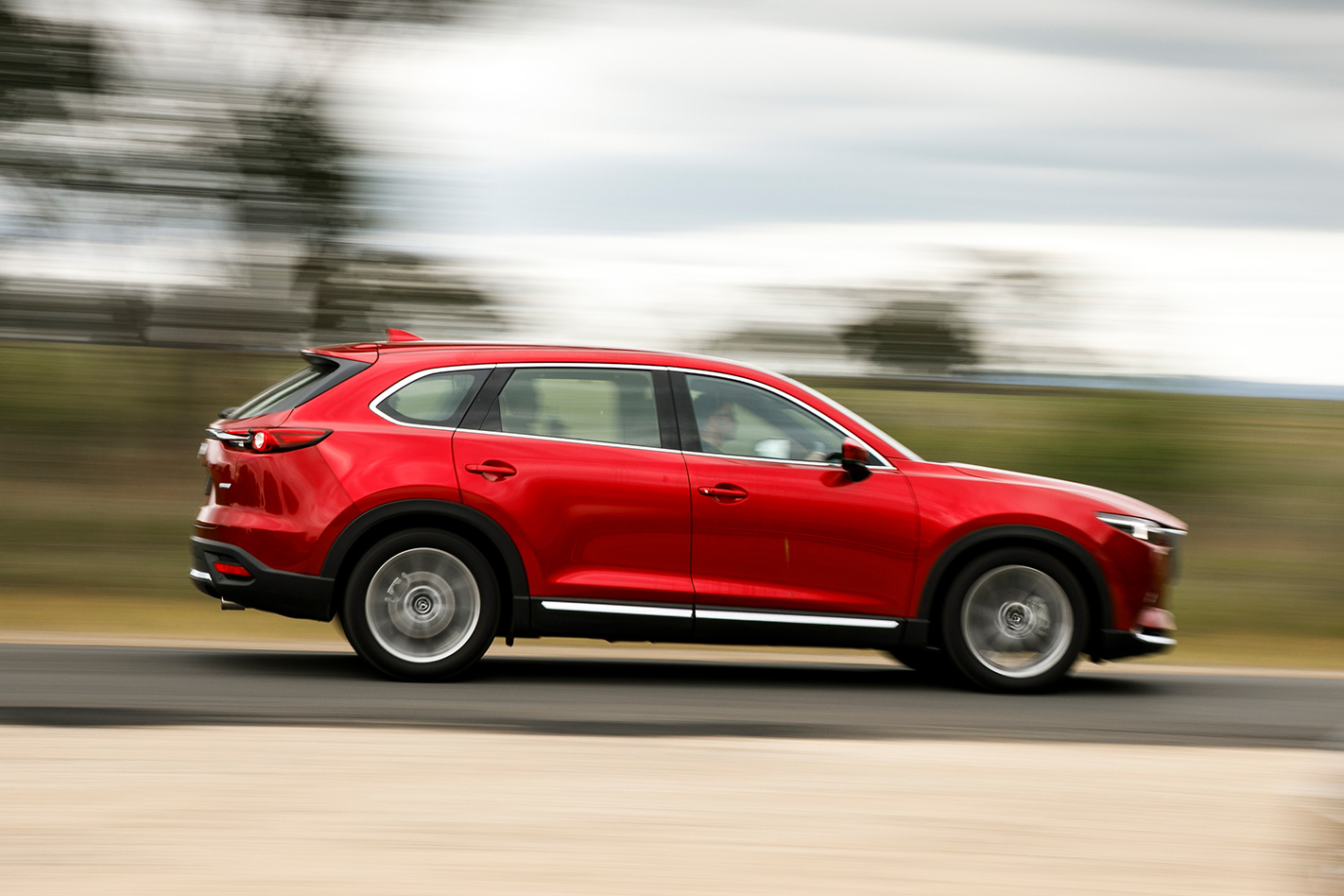
For owners with a trailer or caravan, the Mazda CX-9 Azami LE has a 2000kg braked towing capacity.
The Kluger is pleasant to drive with a comfortable seating position and good forward vision. It feels planted to the road and the 218kW/350Nm 3.5-litre V6 engine runs smoothly and quickly responds to your right foot via the eight-speed automatic transmission.
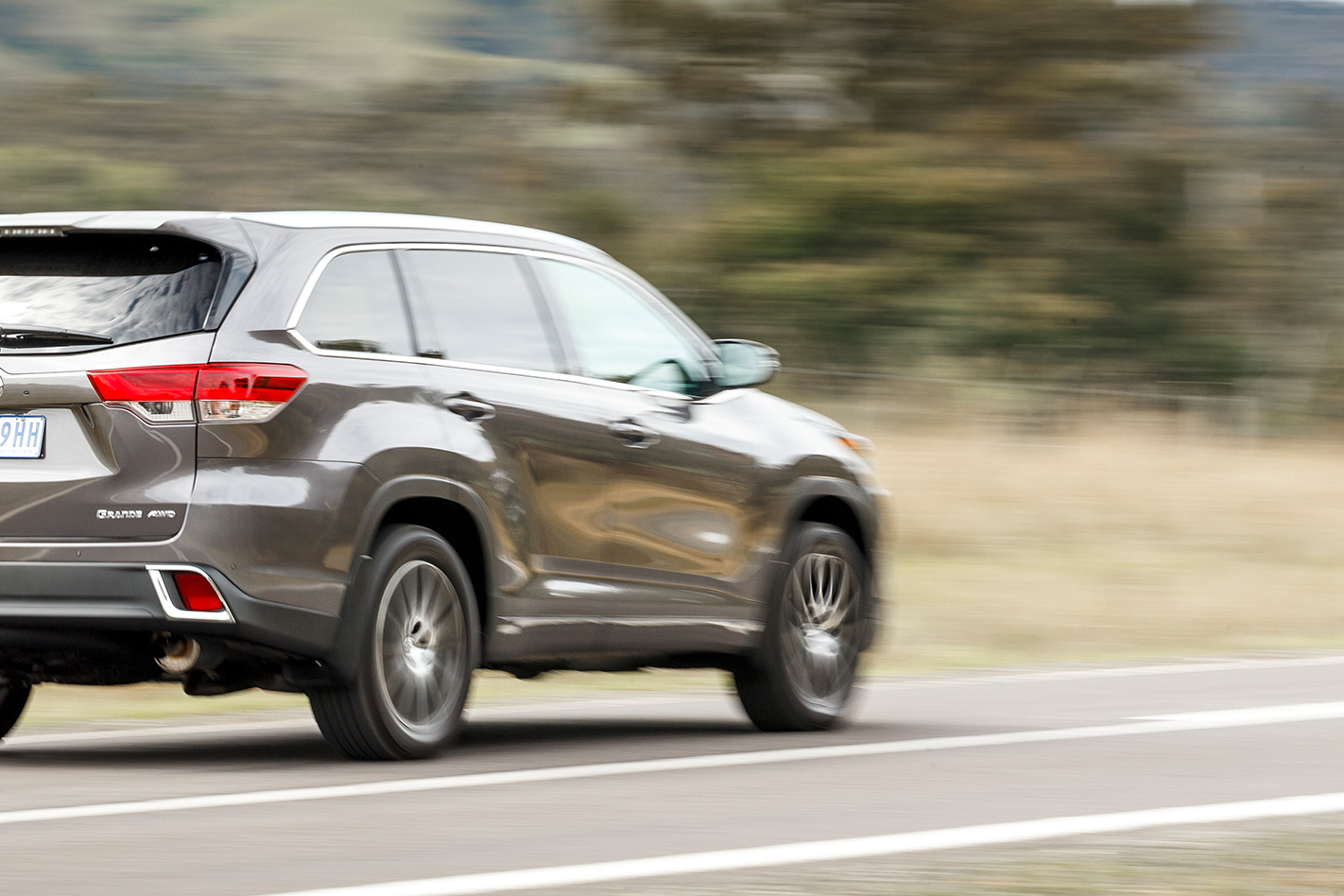
The ride is smooth, even on the bigger 19-inch wheels. It recovers well when riding over big bumps, but does tend to vibrate when passing over smaller road imperfections.
At 2100kg, it’s not exactly designed for hard cornering, but it does feel stable through bends. The steering has a little play in it, though you do get more response from the 19-inch wheels than with the 18s under the GL and GLX.
While not a true off-roader like its Landcruiser Prado stablemate, the Kluger’s all-wheel-drive system instils confidence during off-bitumen driving on gravel, dirt or snow-covered roads, and farm tracks. A snow button near the gear selector reduces the chance of wheelspin on slippery surfaces.
OUR OPINION
The CX-9 Azami LE feels like it belongs in a price bracket above the Kluger Grande – it doesn’t just feel premium, it IS premium.
It drives well, feels stately and ticks all the boxes for anyone seeking a sophisticated family SUV, while being priced well under entry-level seven-seaters from the luxury brands – vehicles that can’t match the Mazda’s levels of safety, equipment or comfort.
And while the Kluger set the standard for road-based large SUVs, and while the range-topping Grande is a comfortable and capable family wagon when judged in isolation, it feels dated next to the CX-9 and doesn’t feel quite as luxurious as its $70,000 price tag would suggest.
Just what the world needs; another look-but-don’t-touch, non-drivable, motor-show-only, wooden-blocks-for-suspension concept car. Forgive me, HSV, but that’s kind of what I was expecting when word leaked that a Sydney motor show special was being hatched down Clayton way.
This feature was originally published in MOTOR’s December 2004 issue
But hell, was I wrong. See, the GTS-R is not only a driver, it’ll also (probably) go into very low volume production for the sake of one-make racing series, both here and abroad.
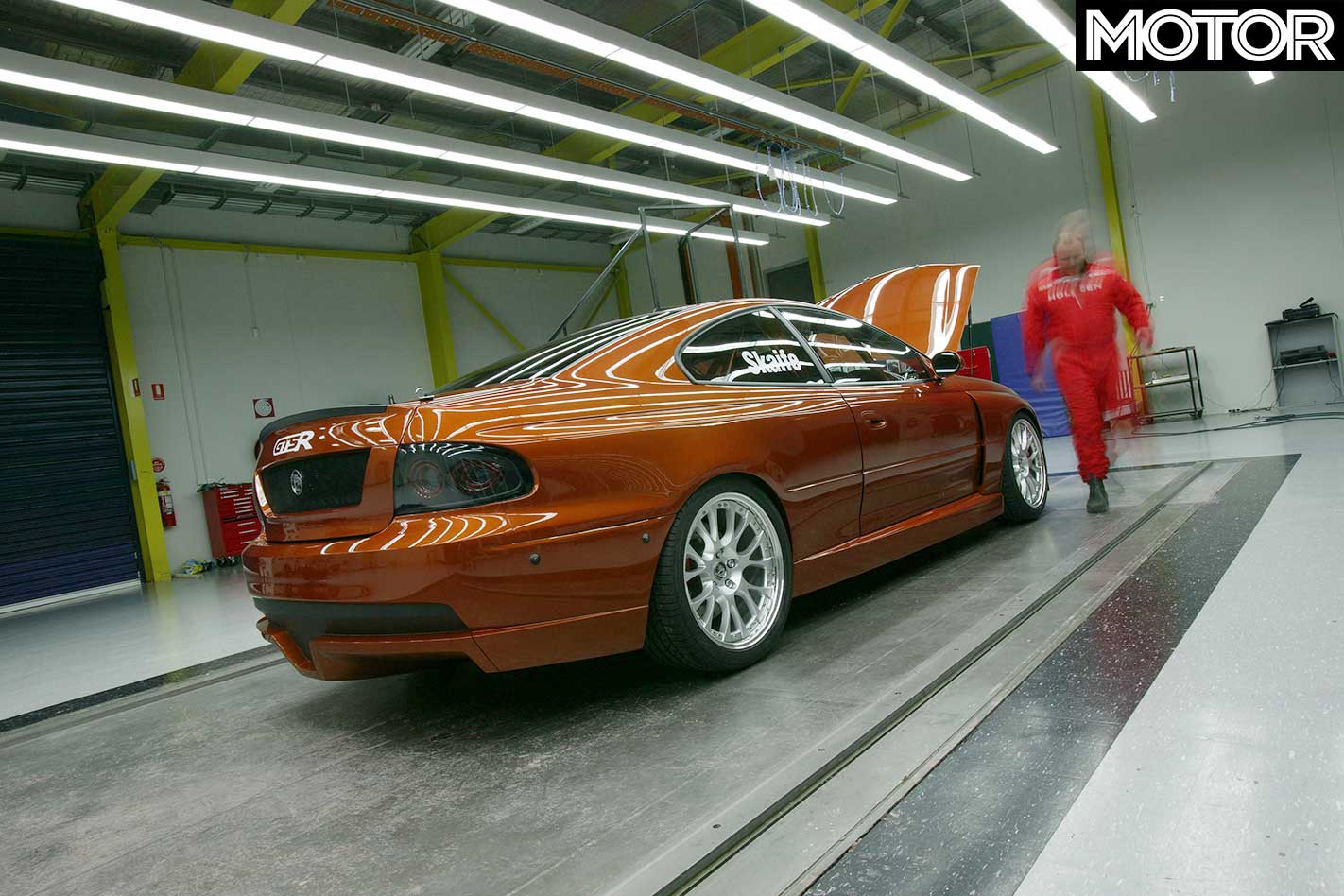
Better, much better than that, is the fact that you (yes, you dear reader) will be able to front up at HSV with a big bag full of unmarked bills and buy yourself a GTS-R. How much dosh? Good question, and one that (almost) nobody seems interested in answering. HSV’s marketing man Chris Payne doesn’t want to discuss it, other than to say HSV is taking orders right now.
“We’re not saying anything about the price, because we don’t know. And because we don’t want to make the same mistake as we did with the HRT 427,” he said.
You will recall, of course, that the 427 was killed off partly because there was no way the thing could have been built at the price ($220k was the proposed figure) that was bandied about at the time of its announcement.
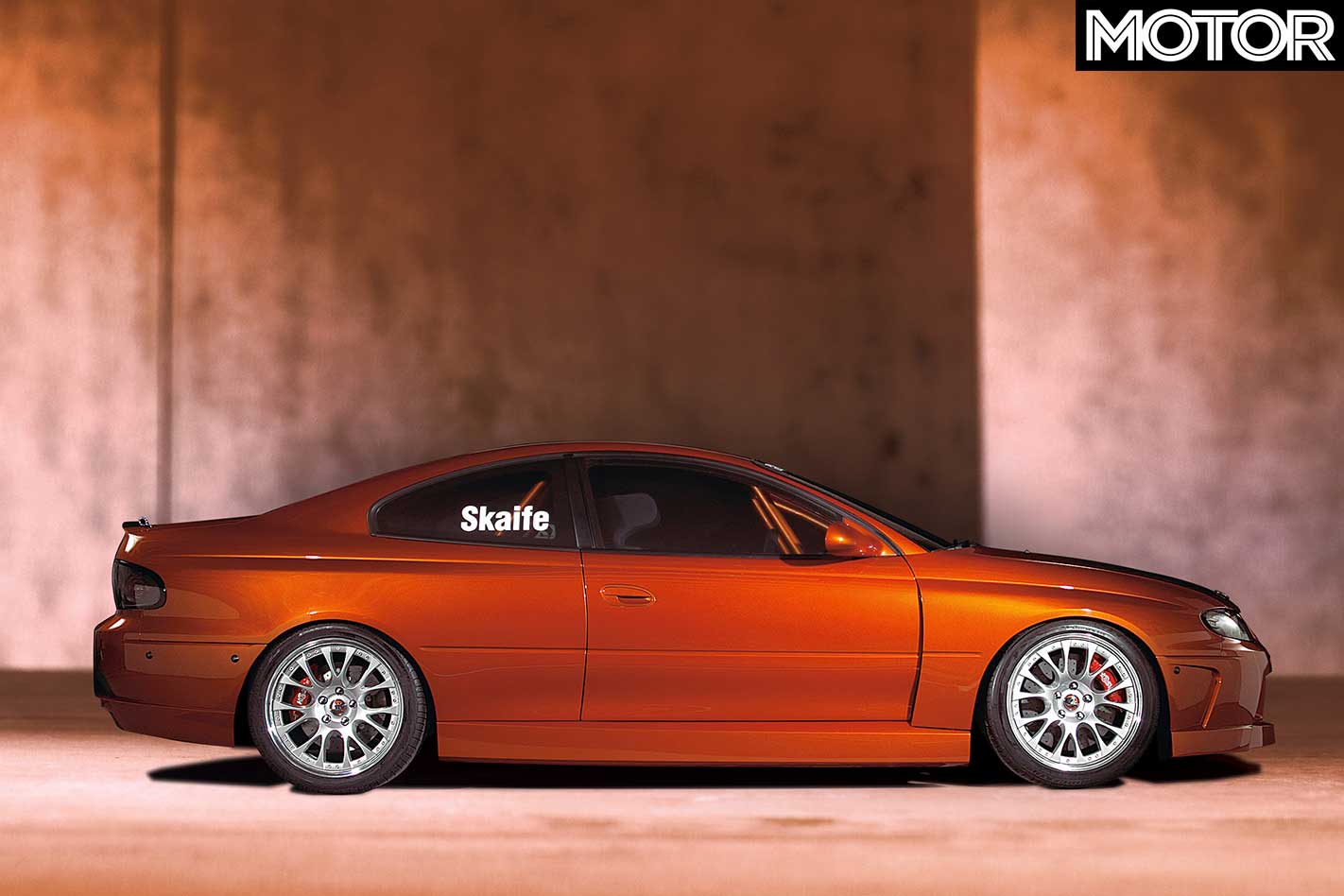
On the other hand, HSV’s head honcho, John Crennan, was a little more expansive.
“Maybe between $150k-$180k,” he said, in an unguarded moment. The catch, of course, is that you won’t be able to register a GTS-R for road use. No catalytic converters, a full roll-cage, no air-bags and a bunch of un-ADRed bits and pieces mean no GTS-R will ever see duty on the Queen’s highways.
There’s also no CAMS-sanctioned category into which the car might fit. Not that there won’t be in the future, of course, and in the mean time, you can always club race or hill climb the bugger. We certainly would.
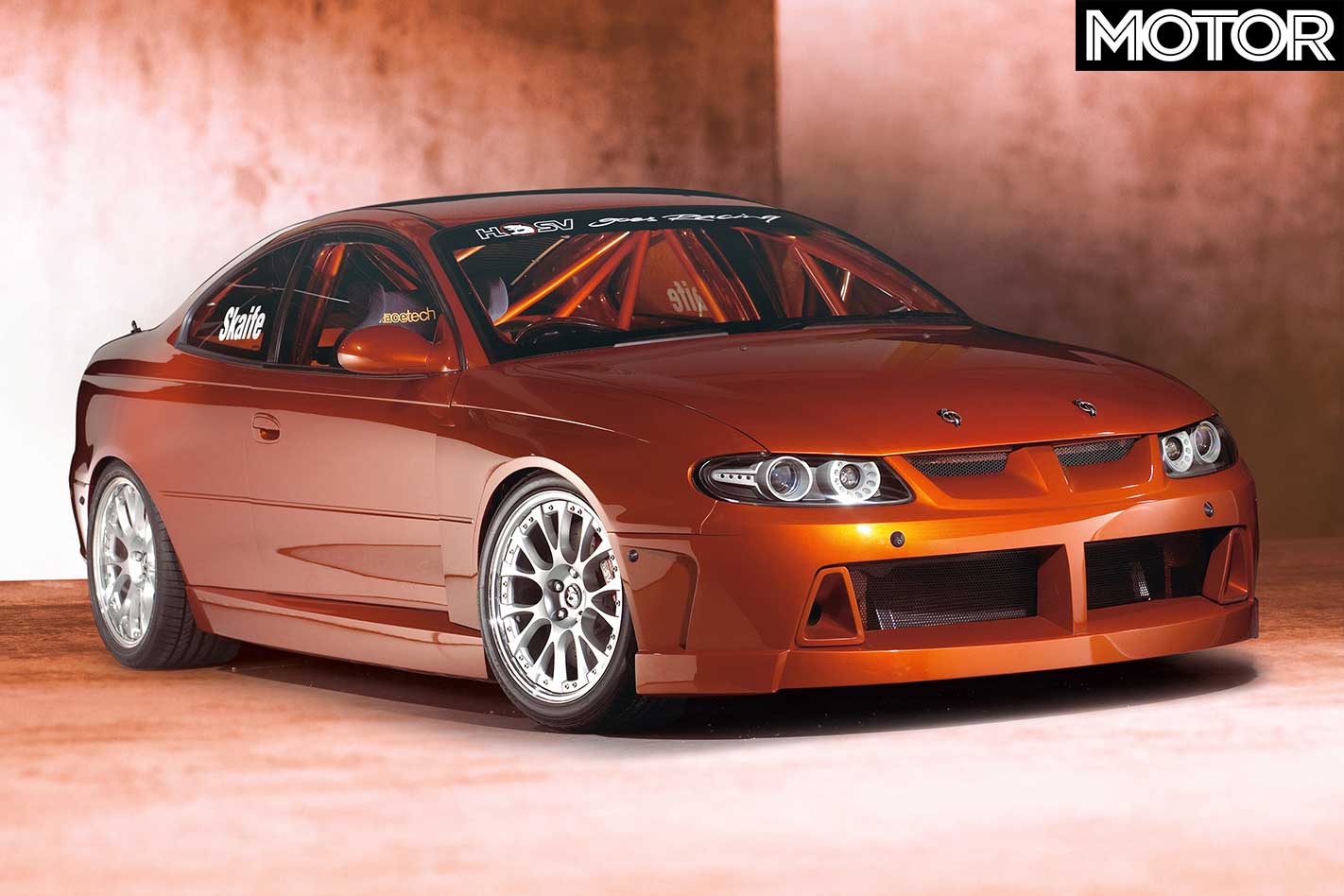
FAST FACTS 2004 HSV GTS-R Coupe concept
BODY: 2-door coupe DRIVE: rear-wheel ENGINE: 6.0-litre, 16-valve pushrod V8 POWER: 335kW at 6200rpm TORQUE: 605Nm at 4800rpm BORE/STROKE: 101.6mm x 92.0mm WEIGHT: 1450kg (approx) POWER-TO-WEIGHT: 231kW/tonne TRANSMISSION: six-speed manual SUSPENSION: MacPherson struts, coil springs, Ohlins adjustable dampers with remote canisters, anti-roll bar (f); semi-trailing arm, coil springs, Ohlins adjustable dampers, anti-roll bar (r) BRAKES: 374mm carbon ceramic cross-drilled & ventilated discs mounted on full floating alloy hats, six-piston calipers (f), 343mm cross-drilled & ventilated cast iron discs on full floating alloy hats, four-piston calipers (r); ABS WHEELS: 19 x 9.0-inch (f), 19 x 9.5-inch (r); alloy TYRES: Bridgestone 050; 245/35 ZR19 (f), 275/30 ZR19 (r) PRICE: $150,000-$180,000 (est)
Racer boy
The real race-car stuff includes a bigger, baffled sump, which looks absolutely gorgeous, plonked in the centre of a truly magnificent fabricated cross-member with masterful TIG welding.
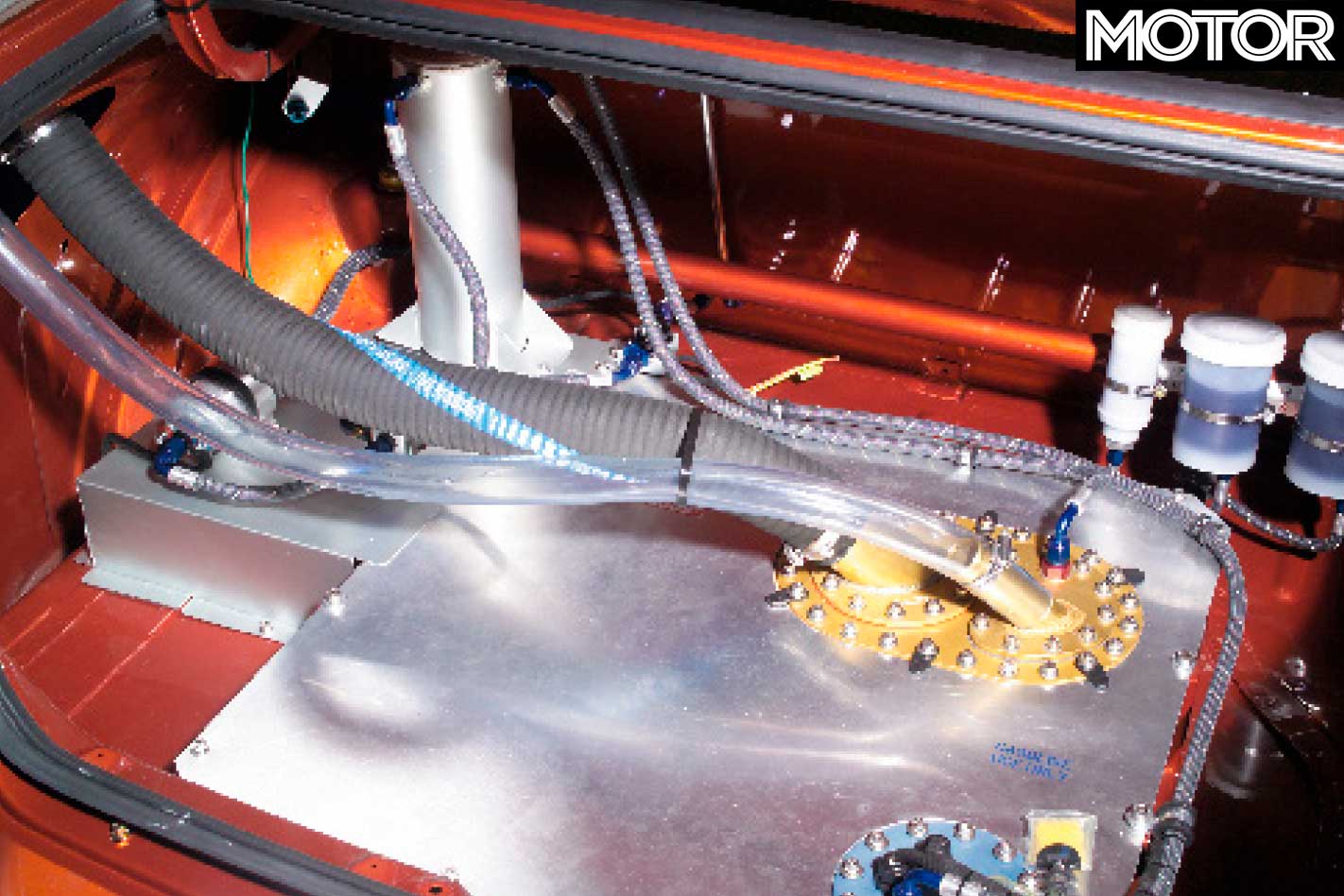
There’s an engine oil cooler to go with the increased oil capacity, although HSV has resisted the urge to dry-sump the LS2. But it has fitted a race-style, dry-break fuel cell with a sexy alloy filler and breather, mounted high on the car’s kerbside hip. An aluminium swirl tank is positioned downstream of the low-pressure fuel pump and upstream of the high-pressure job, acting as an accumulator to eliminate any glitches in fuel delivery.
Equally track inspired is the cooler for the diff, which runs a spool and 3.73:1 gears. The middle man is a close-ratio version of the old six-speed manual ’box, with a high clamp-load clutch completing the package.
The suspension was made in-house and consists of lower front control arms from the Coupe4 and billet cromoly everything else. Ohlins adjustable dampers (optional on some HSV road cars already) are a nice touch and there’s an adjustable, blade-style front sway-bar. The steering rack is 10 percent quicker than a GTS and there are braided kevlar fuel, oil and hydraulic lines everywhere you look.
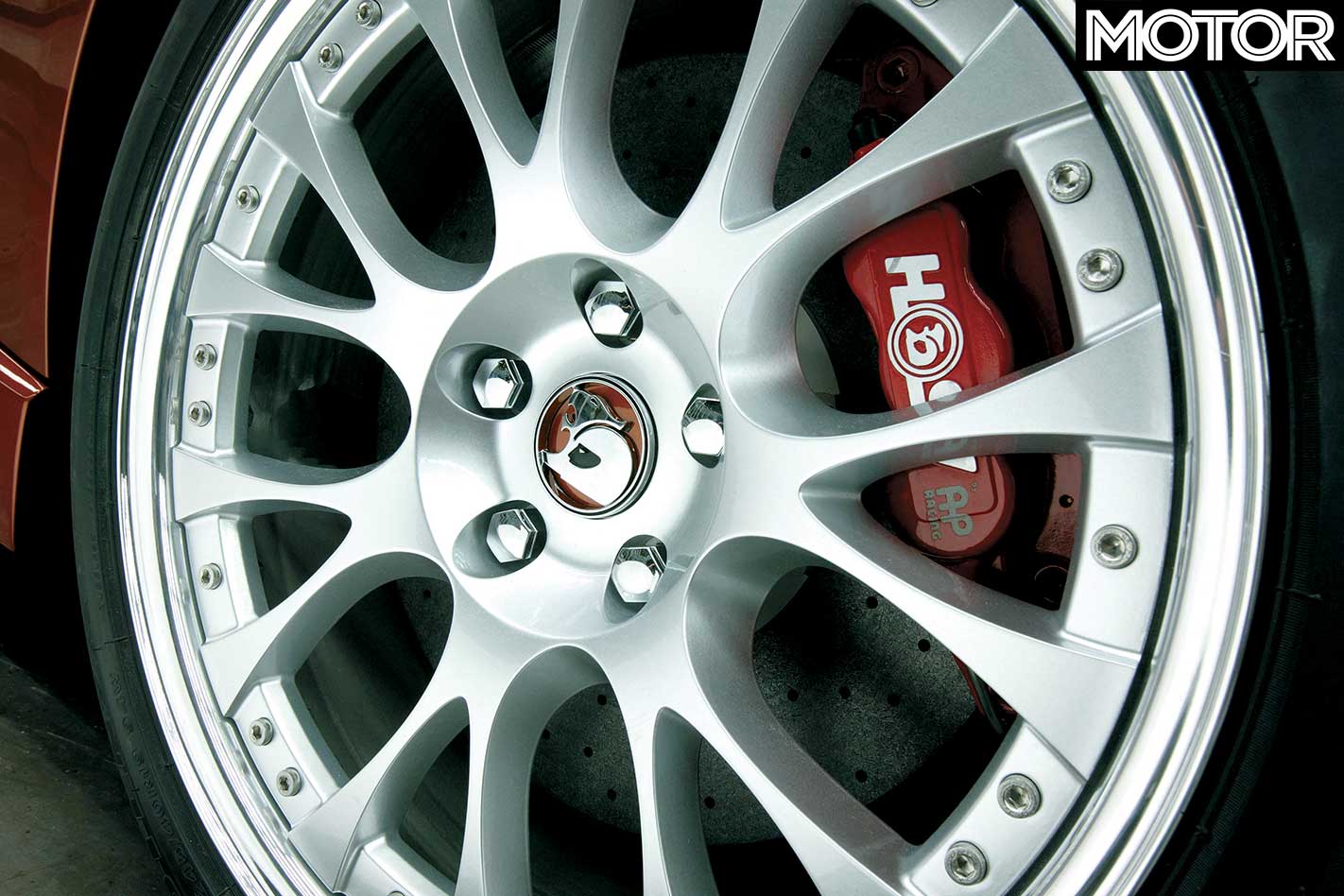
To stop the GTS-R you get AP Racing six-piston calipers up front, grabbing 374mm (true) carbon-ceramic rotors on fully floating aluminium hats. Wheels are three-piece, lightweight 19s, shod in Bridgestone 050 hoops, because, amazingly, you can’t buy 19-inch slicks anywhere.
An on-board extinguisher system is fully integrated and has nozzles in the engine bay, cabin and boot. And the final touch: a heated front windscreen, a la a V8 Supercar – just like Skaifey’s.
Engine room
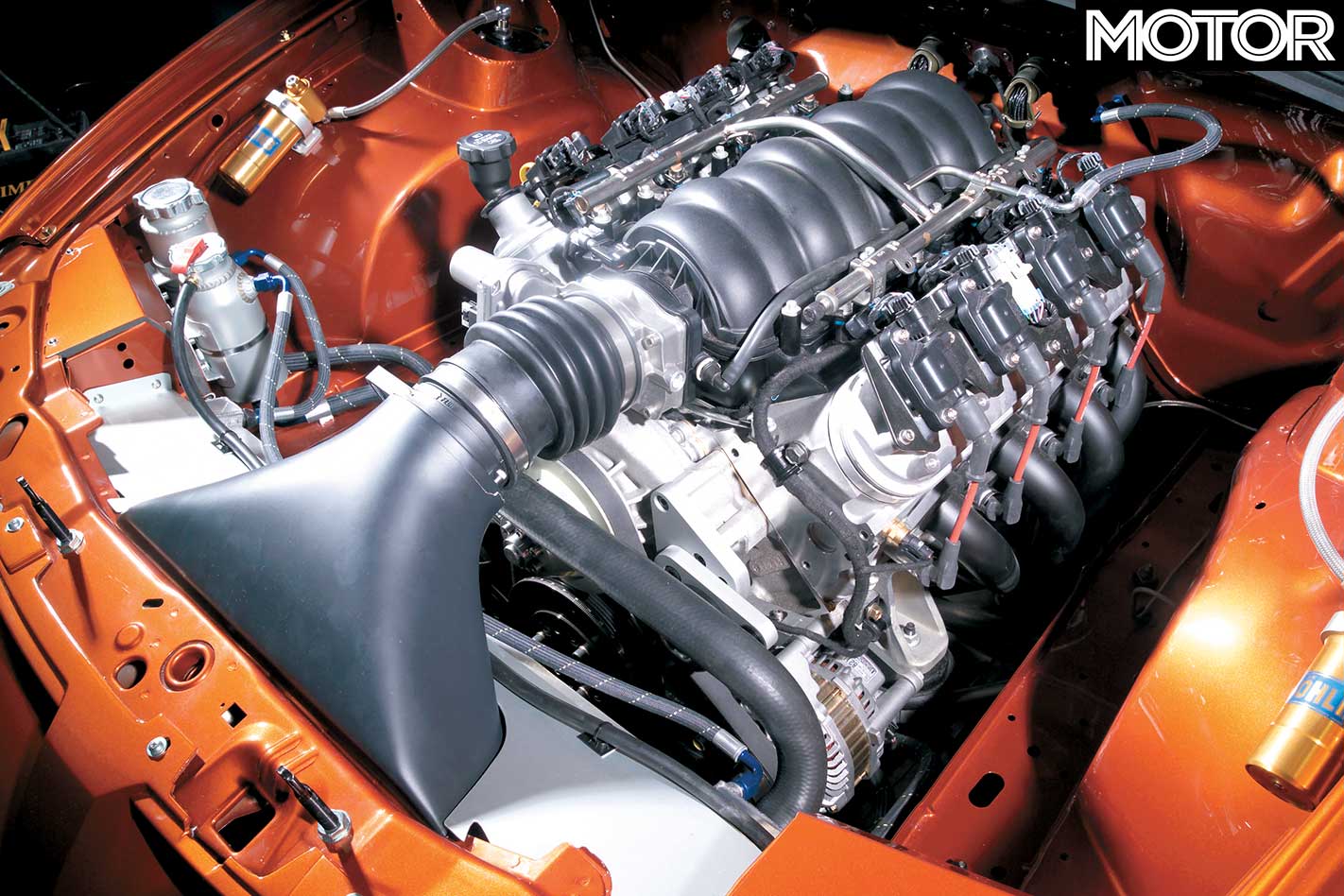
The hardware is based around the LS2, complete with the standard 6.0-litre capacity, but with forged pistons and billet conrods to cope with being caned around a race-track all day and night. A double-row timing chain is also fitted in the interests of reliability and there’s a lumpier camshaft, roller rockers and a recalibrated ECU.
The headers are bent up from 1.75-inch tube and flow into a dual 2.5-inch system in stainless steel with dead sexy side outlets. There’s a cold-air intake that gulps big lungfulls from across the top of the radiator, an angled, aluminium radiator, no less, which also incorporates a heat exchanger for the power steering.
Compared with the 297kW of the stock LS2 that is now standard in HSV’s road-going range, the GTS-R cranks out 335kW at 6200rpm and a freckle-tensioning 605Nm of torque at a bellowing 4800rpm.
Ministry of the interior
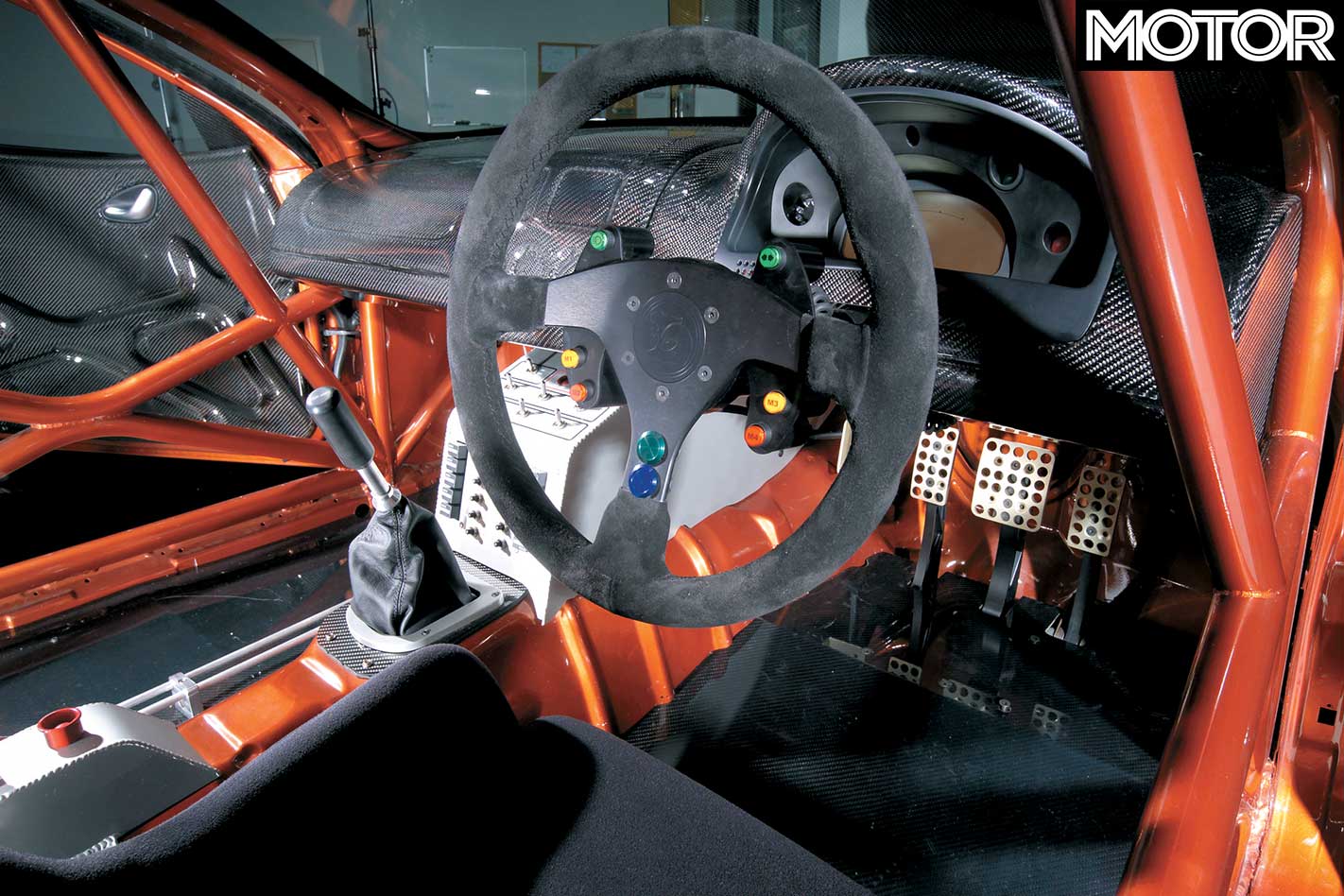
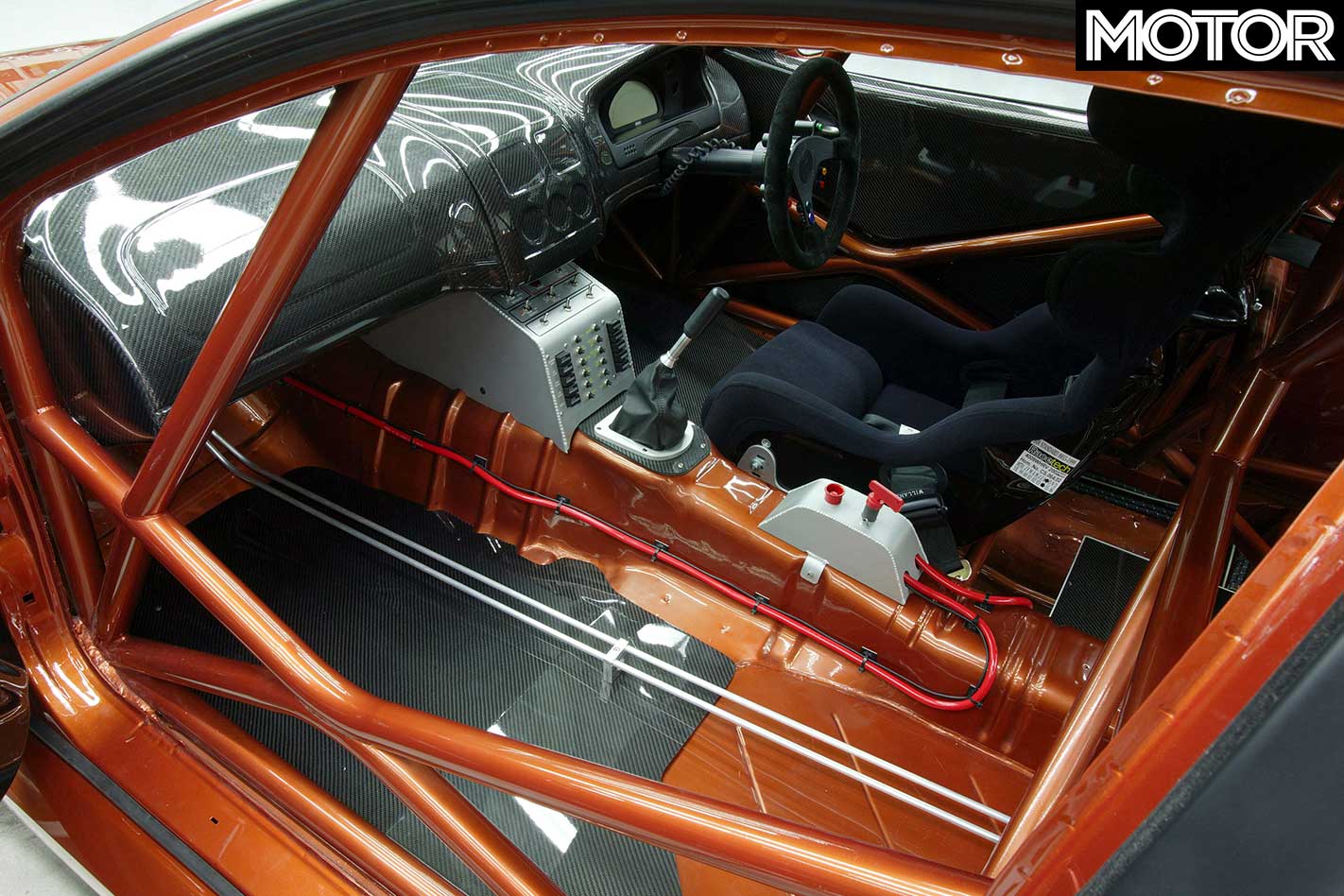
There’s 52 metres of cromoly roll-cage, built to full FIA specs, which also picks up the major suspension stress points for huge torsional rigidity. The cage has been subjected to a finite element analysis to make sure it’ll cop the necessary stresses before somebody accidentally throws a GTS-R into the Armco.
There’s a competition seat and harness and a suede, three-spoke tiller with buttons for high/low beam, the dashboard display options and the adjustable brake bias.
The dash is pure competition-car, MoTeC stuff, with data-logger, and there’s a race-style switch panel complete with circuit-breakers. All around you is carbon-fibre, including the dash-pad, floor panels and the door trims, the latter with very sexy indents to accommodate the roll-cage.
And for real bragging rights, the AP Racing pedal box is fully adjustable and uses pull (rather than push) style master cylinders, allowing for front-rear bias adjustment on the move.
Body beautiful
The Monaro is obviously the starting point, but the GTS-R is a pretty radical departure from the original in most respects. Obviously, the front and rear fascias are unique to the car, with HRT tipping in some experience in how to angle the rear diffuser for max effect.
Because it uses the same track as the Coupe4, the GTS-R also had to be widened, so it gets a specific front quarter panel, which incorporates vents in the trailing edge. The rear guards are also pumped and the bonnet has been gutted of its internal ribs for reduced weight. The bootlid is carbon-fibre and quite different to the Monaro-spec lid, as well as incorporating an active rear spoiler.
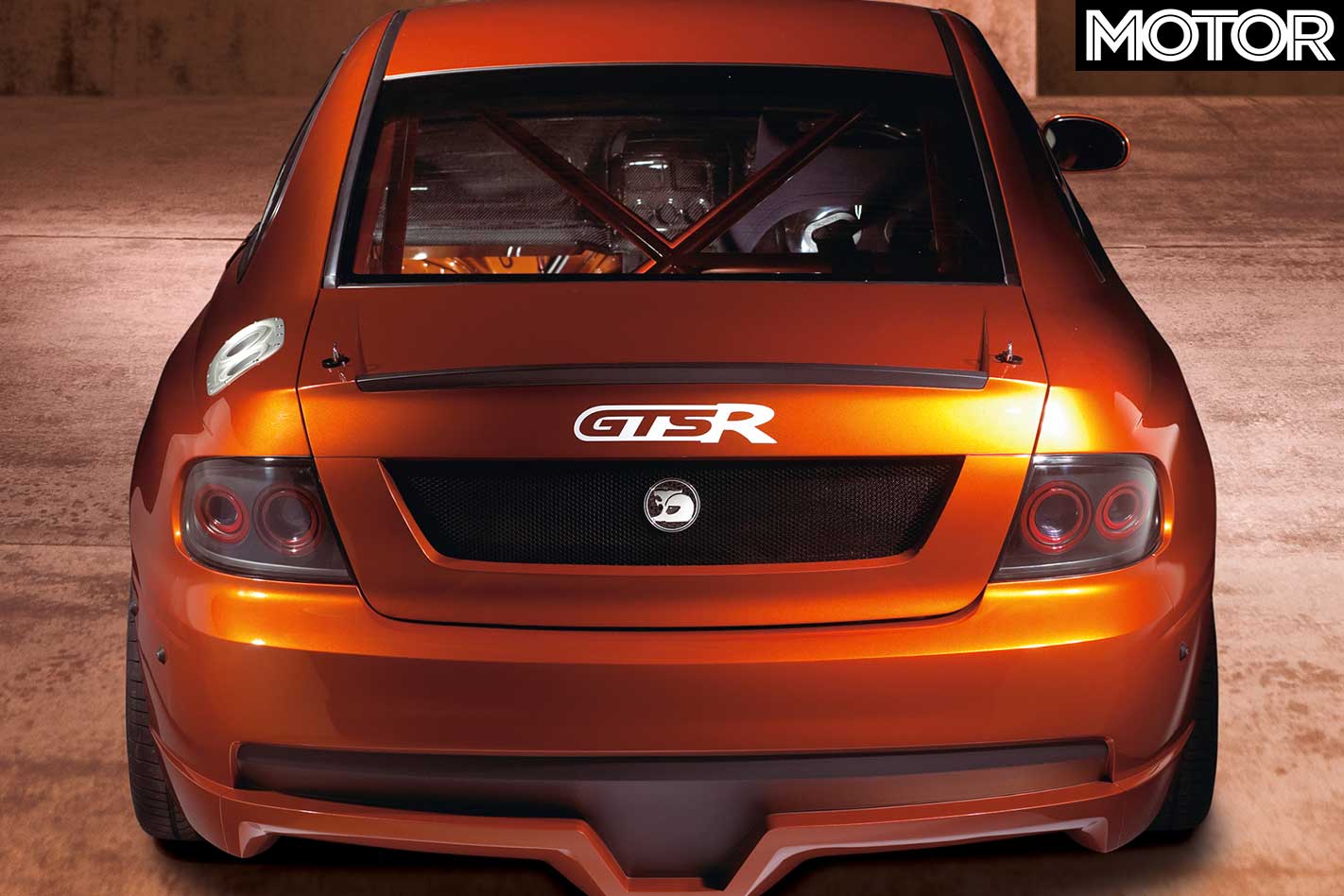
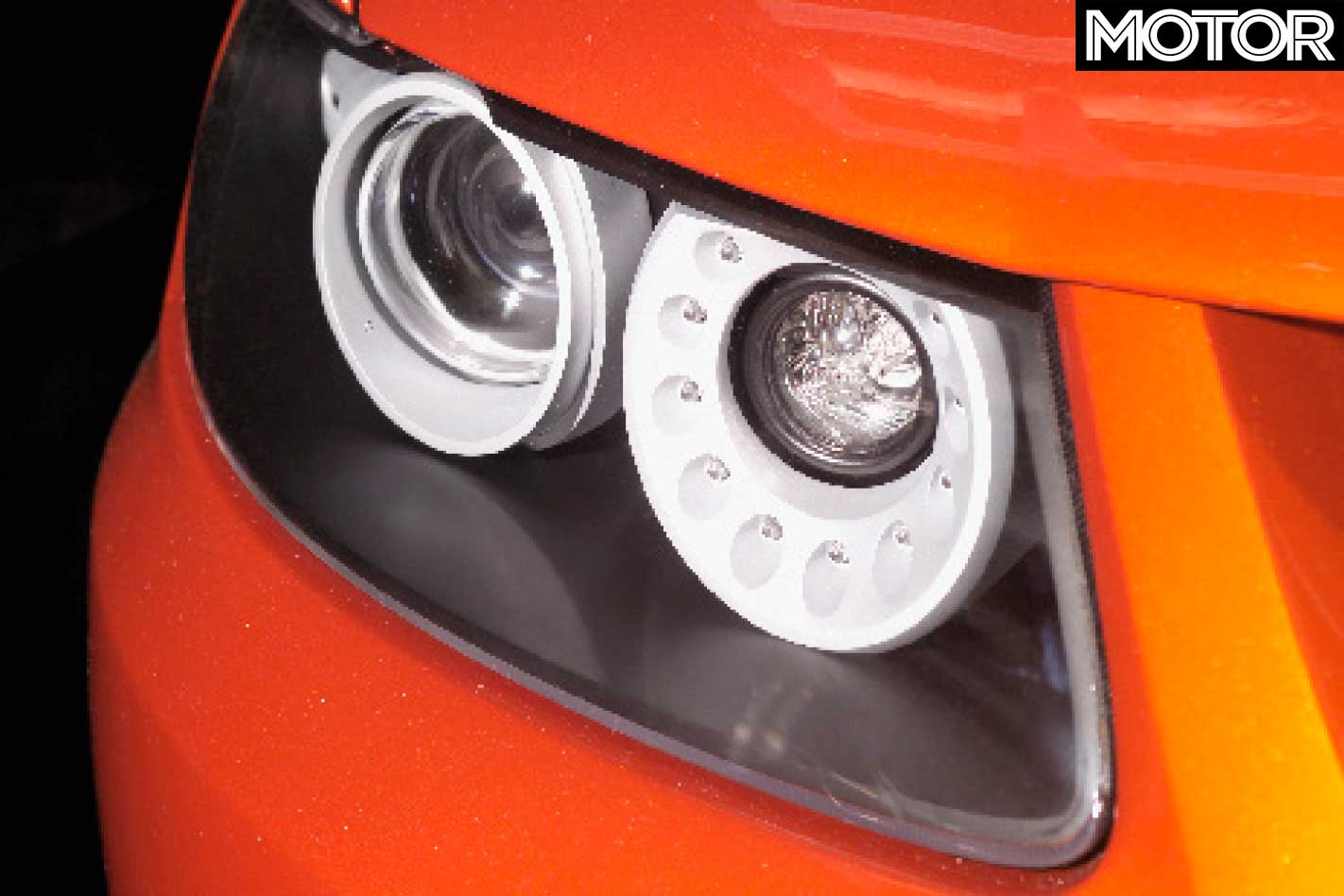
Headlights are HID units with LEDs for indicators and parking-lights, while the tail-lights are also LED units giving HSV an opportunity to have a crack at technology it hadn’t previously been exposed to. Mind you, in its race-car guise, it’ll ditch the fancy lights because they’d only be taped over.
Seeing double
Probably the only time you’ll see Ferrari and HSV compared, but have a squiz at the rear end of the GTS-R and the Fazza F430. The diffusers are pretty much the same design and the GTS-R even uses a similarly shaped boot spoiler. And a final piece of Ferrari flattery is the mesh insert in the trailing edge of the bootlid. Sure, it’s not quite the same as the F430, but it’s a dead ringer for the 360 Challenge.
The Porsche 911 is now well and truly a modern entity. Through its generations Stuttgart has thrown everything at its concept that shouldn’t work – but very much does.
Technology and computer-controlled assets mean that the rear-engined concept is now faster, more efficient and, most of all, more fun to drive than ever. We got a taste of what’s next with a bunch of pre-production cars more than half a year before the quintessential new model goes on sale globally.
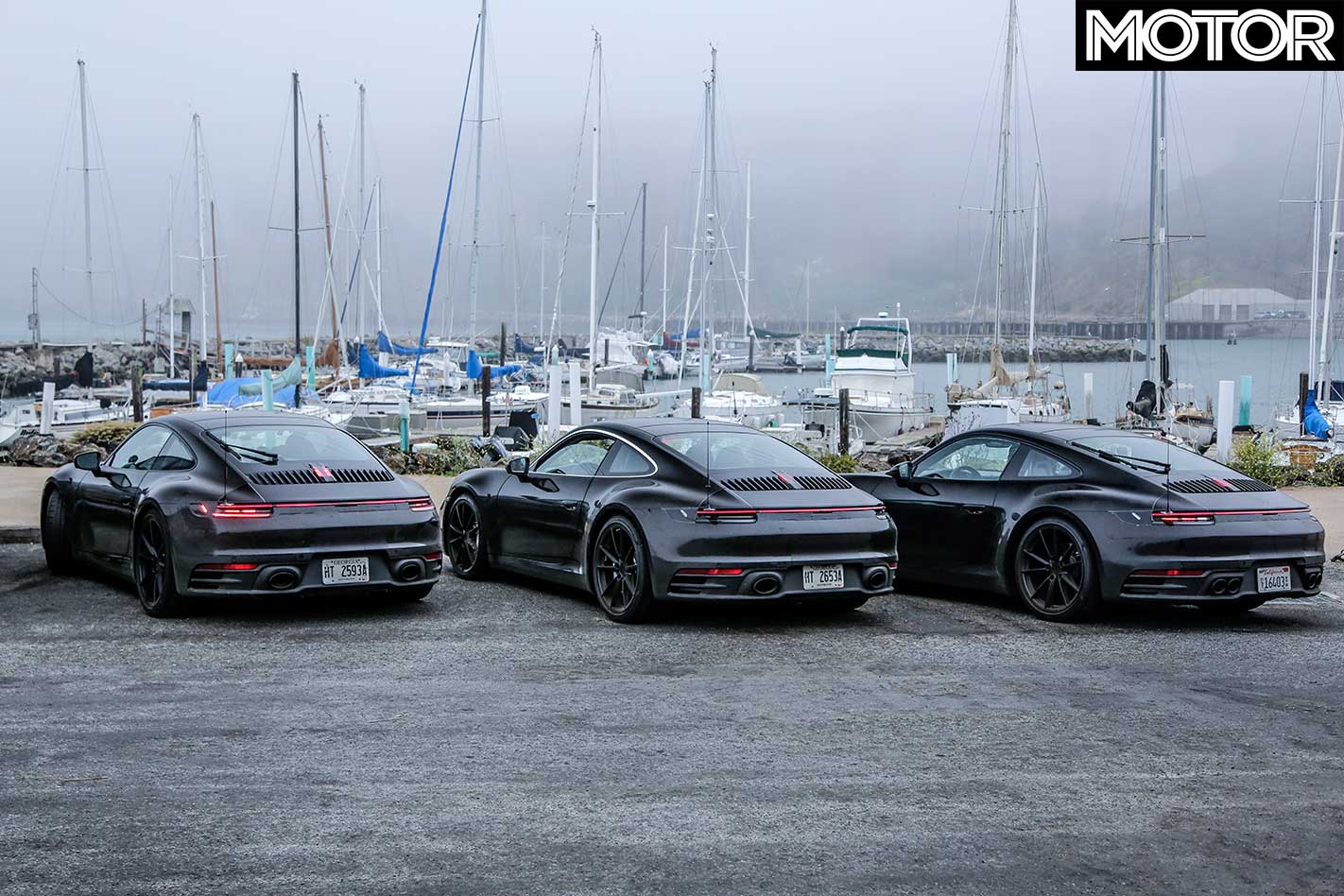
The nine-eleven has had many lives and all combine a mixture of constants and variables. There is still that charismatic flat-six hanging out the back, past the rear axle, meaning the overall weight distribution seems impossible, but it works. And after all these years, the same underlying personality continues to be deliciously tangible.
The eighth 911, dubbed 992, is a thorough evolution of the preceding 991 generation. However, it’s not a ground-up new car. There was no need to go the full distance. After all, the predecessor is still remarkably inspiring and involving kit – you’d be foolish to think otherwise. Not surprisingly, then, Porsche decided to hone and tweak the proven DNA rather than recalibrate it.
Interestingly, this time around the design and engineering departments took a backseat in terms of priority. Instead, advancing ergonomics, implementing new driver assistance systems and further reducing emissions was at the forefront of the next generation. Yet, as we found out, that doesn’t mean the eighth-gen 911 has lost its way.
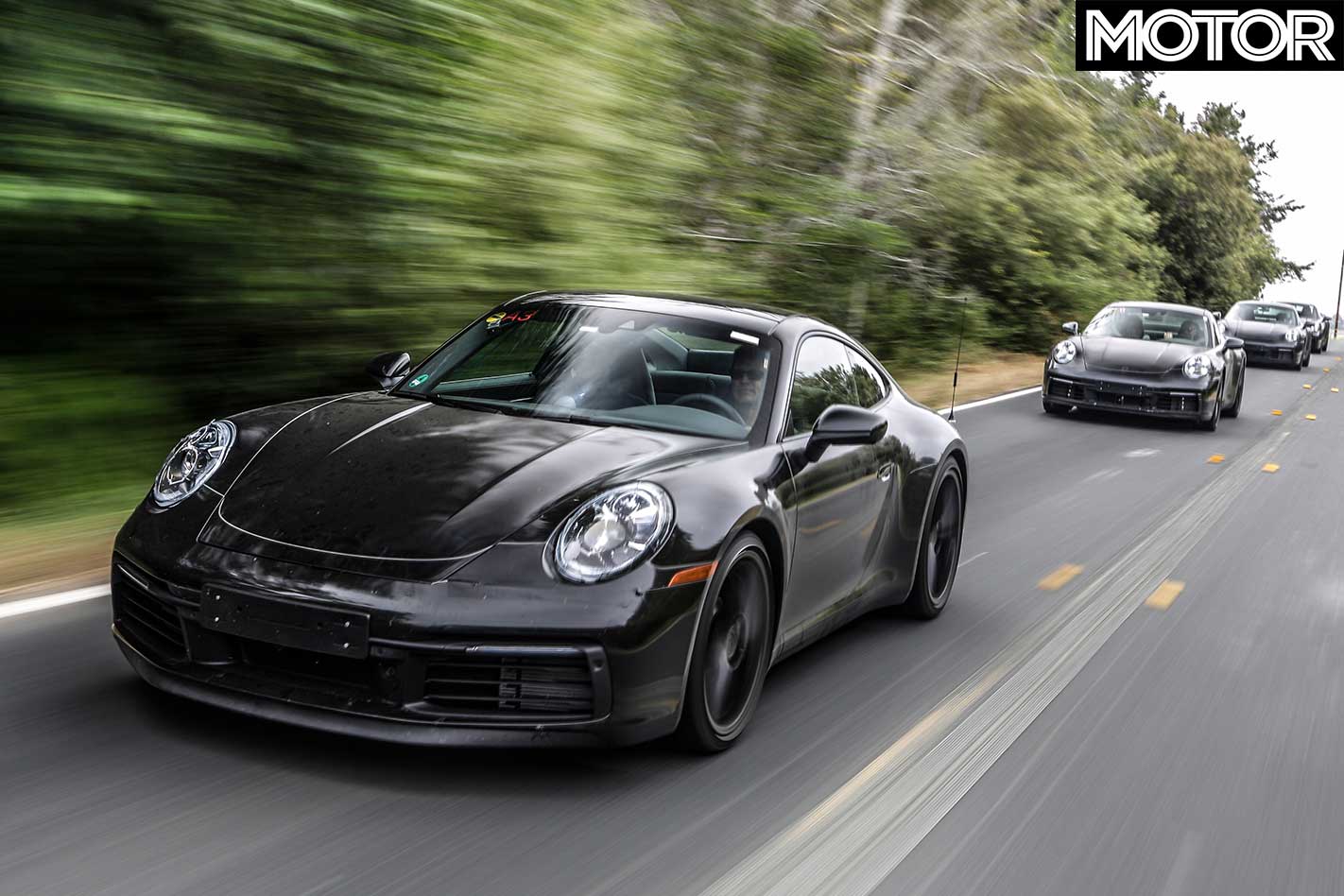
Initially, the 911 will be available for order as the base Carrera and the Carrera S. Marketing played a long and hard game with the positioning of the two models, eventually rating the lesser 3.0-litre engine at 283kW and not 294kW (leaving plenty of headroom).
The S we drove is good for 331kW – which, ironically, is the output of the current-gen GTS. You also have the choice of a new eight-speed PDK or a revised version of the seven-speed manual.
The twin-turbo unit redlines at 7500rpm, maximum torque is a healthy 550Nm (S) and the fuel-consumption hasn’t increased despite the addition of an energy-sapping particulate filter. It’s all pointing towards the Carrera S being no slouch. And it isn’t.
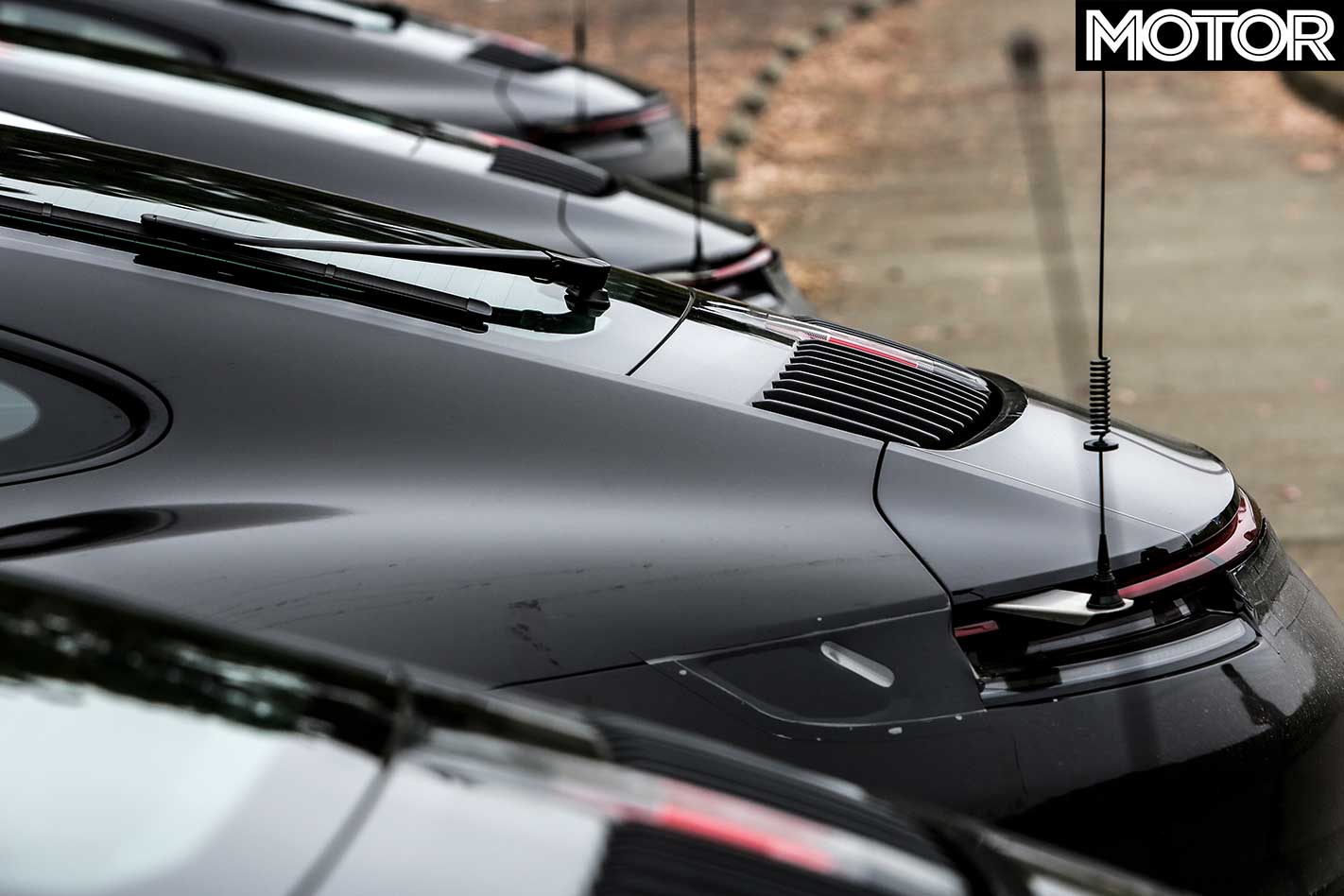
With launch control activated, the PDK version can accelerate to 100km/h in a brisk 3.7 seconds and remember, this isn’t a ‘fast one’. It’ll also go on to a top speed of 309km/h, which should be plenty for most occasions. In a nutshell, the new Carrera S performs as well as the outgoing GTS, that’s how far the 992 shifts its performance game.
At a glance, the 992 is everything but a head-turner. Sure, all the traditional cues are there – this is a 911 after all – yet there are delights to be found in the details. If you look closely you can spot the contrasting black bumper inserts front and rear, the extra dose of Botox and filler for the guards and wider rims.
Then there’s the new, fancier three-part pop-up rear spoiler – thanks, Panamera. More cooling is now being channelled to the brakes and the radiators via slim, horizontal intakes that can selectively block off certain louvres. And then there’s the full-length tail-light, which delights as many as it annoys.
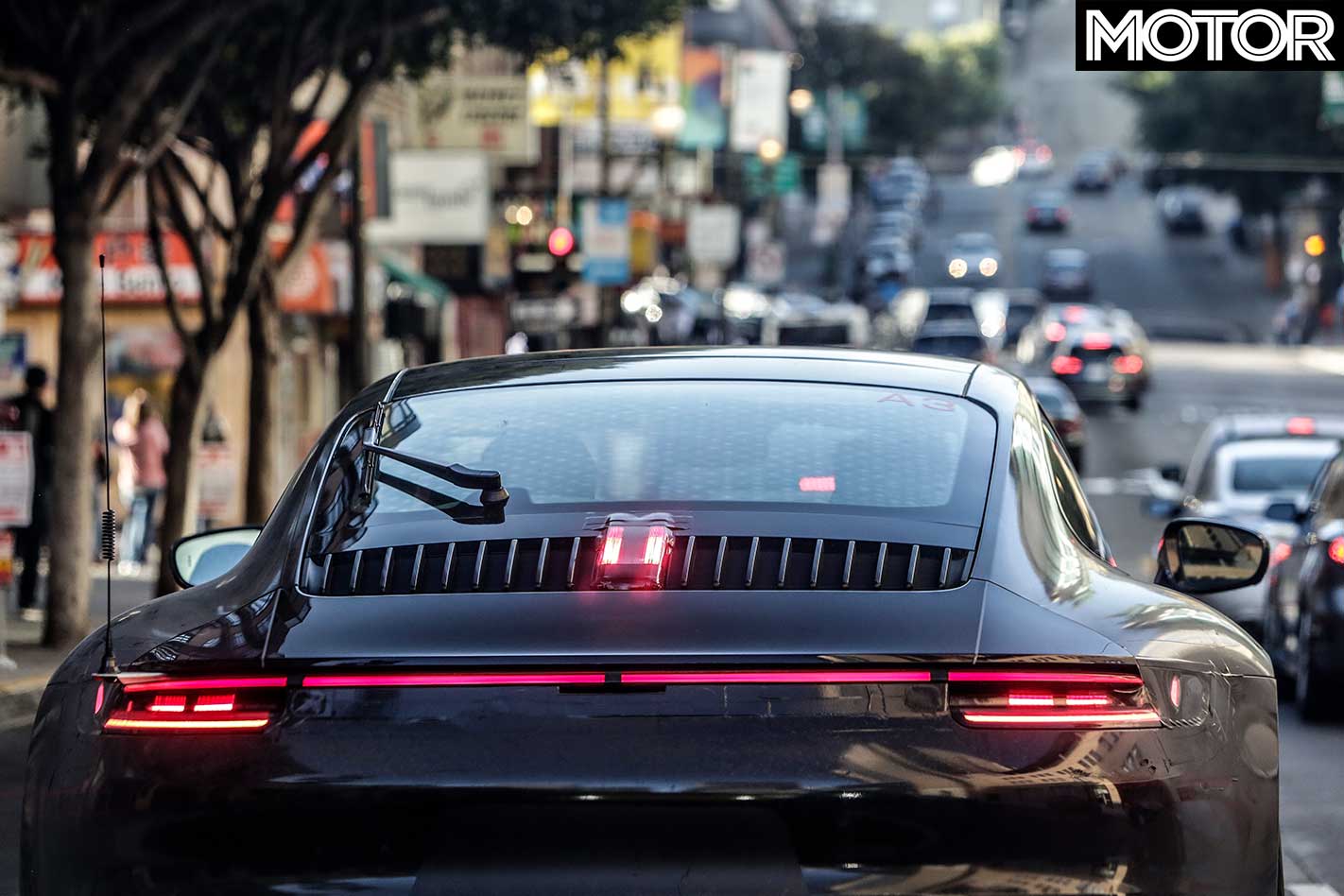
However, it’s time to look away from the spec sheet and actually drive the thing. And for a change, given this is a ‘new’ car, there’s not much familiarisation required. Sliding into the driver’s seat feels like putting on one’s favourite slippers. The pivotal controls are still in the same positions, the clutch action still varies from velvety to almost violent and the throttle response is still as keen as ever.
The most obvious dynamic difference is the boost in power and torque, followed by the unexpectedly muffled exhaust note and the somewhat smoother (subjective) running characteristics. From the off it’s easy to tell the 992 is, at least for the first few kays, more of a cruiser than a bruiser. But don’t fret, because there’s more sinister alter egos to uncover, ones that play to the old 911’s school of thought.
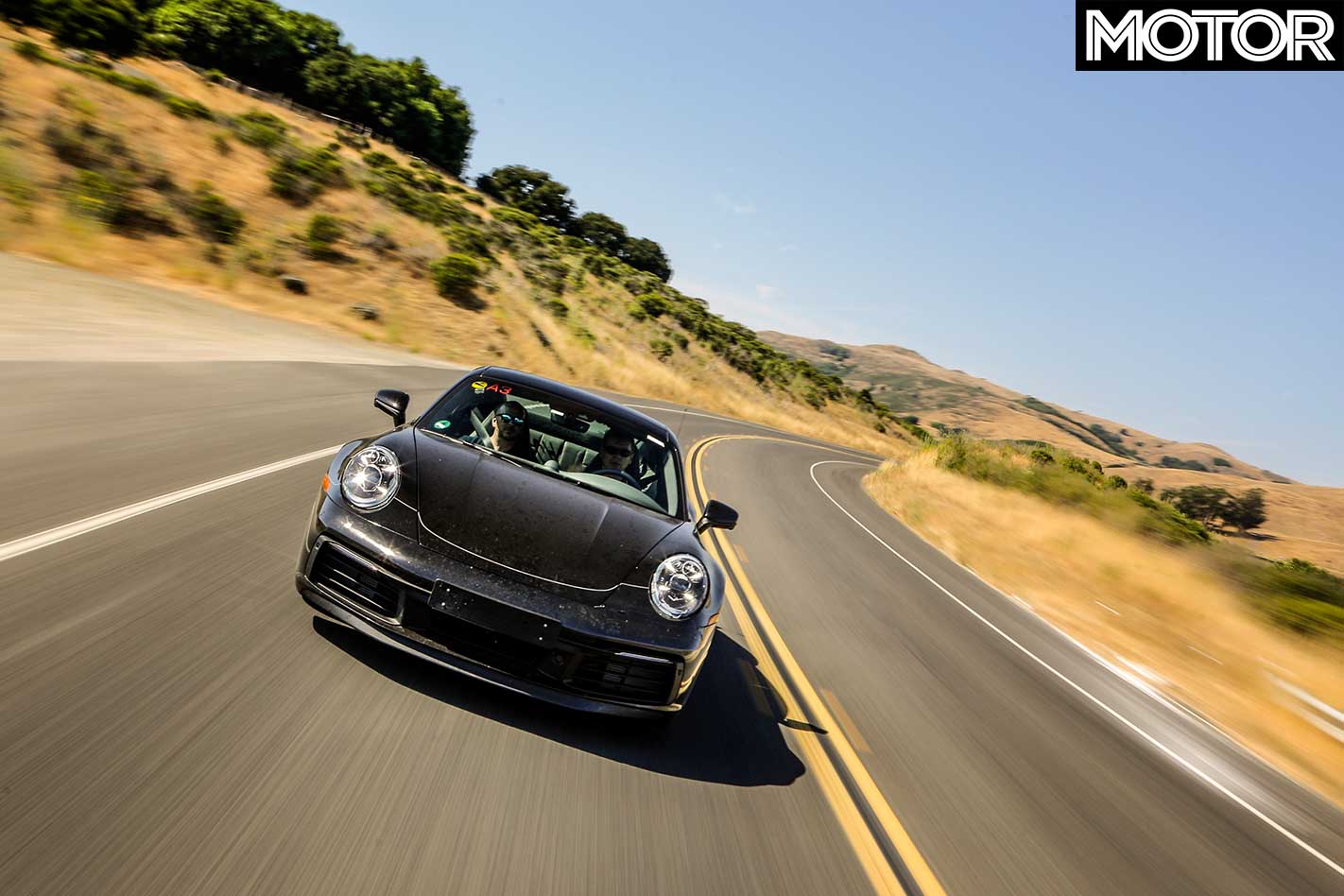
The drive loop takes us through amazing ribbons of tarmac in the Northern Californian hinterland. Whoever designed these roads must have loved driving because this area is filled with winding corners, blind crests, spoiler-chewing dives, crumbling blacktop and hard shoulders that sporadically soften. It’s a true test of the 992’s wares. It’d be a tough test for any performance car, and yet it feels like home turf for the updated 911. It delivers the goods with verve and vivacity.
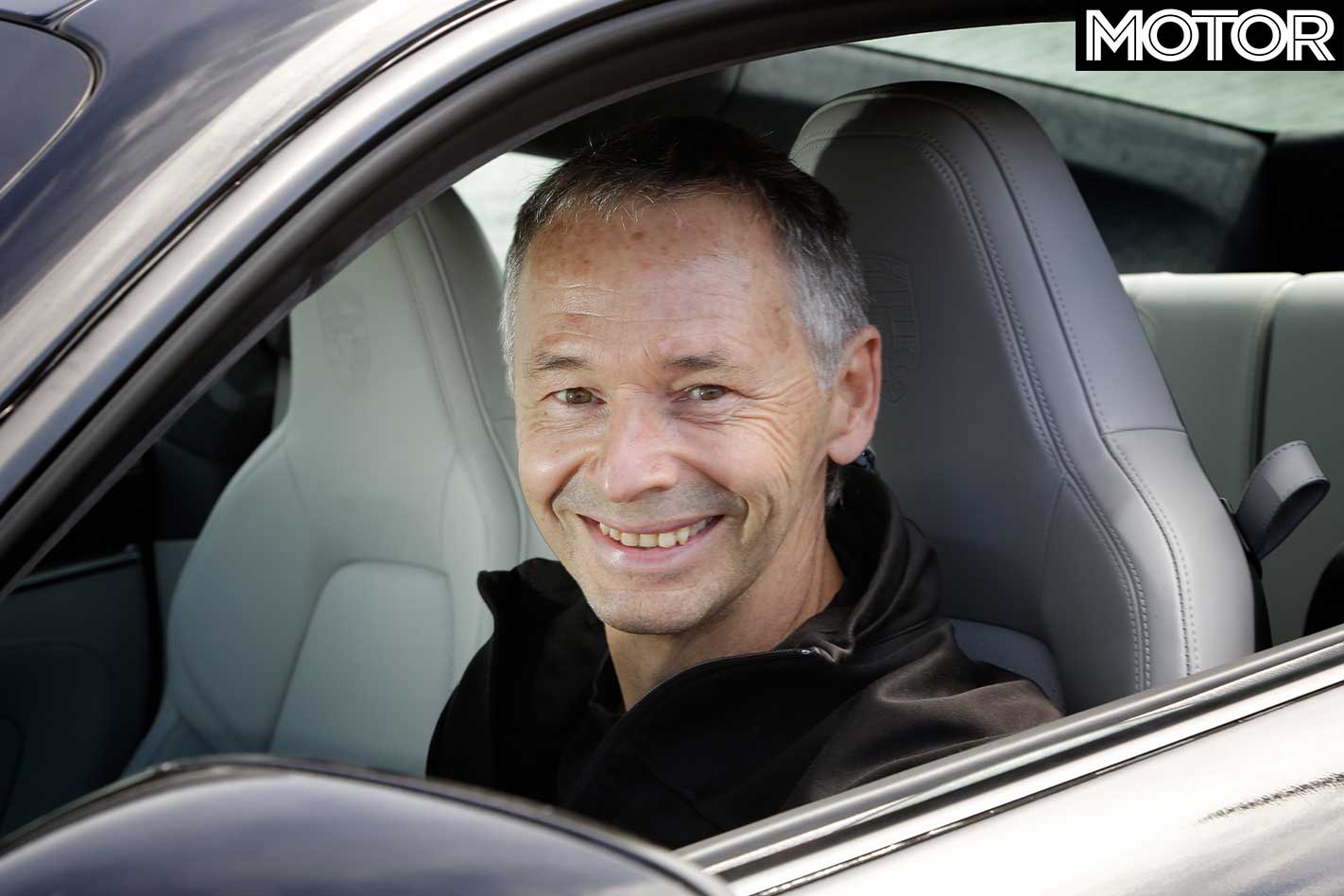
Sitting in the passenger seat is August Achleitner, R&D chief of the sports car division and a hardcore Porsche veteran. “We are offering again a choice of transmissions, a seven-speed manual and a new eight-speed PDK which packages plug-in hybrid componentry should we ever decide to go that way,” Achleitner tells MOTOR. “Although one must prepare for all eventualities, weight and complexity remain tall hurdles.”
In the 991, the seven-speed ’box was a counter-productive and frustrating attempt to come to grips with emissions regulations. In the 992, at least the shift quality has markedly improved. That last shift from sixth into seventh is no longer a haptic game of chance. Although having said that, even the modified manual can’t quite match the slick and precise movements of the six-speeder available in the GT3.
The optional rear-wheel steering doubles the competency and excitement factor. It’s a more robust experience. Turn-in is reassuring with the chassis and tyre grip joining forces while the steering and throttle establish a super smooth handling balance.
Without steering added to the rear axle, the new 911 feels rawer and edgier as it revels in its inherently tail-happy self. We’d be inclined to choose either the conventional manual sans the extra steering, or the PDK with rear steer.
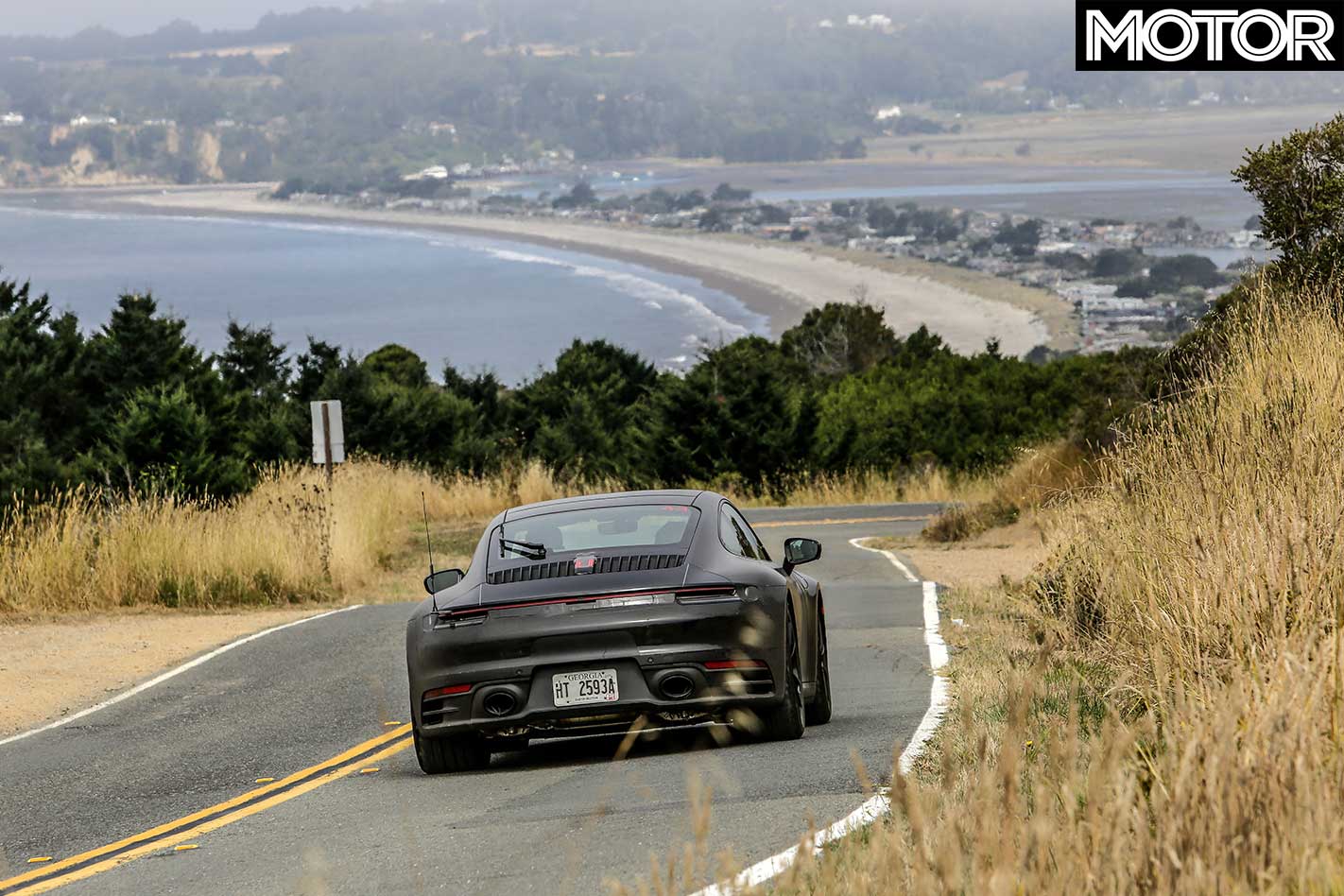
After more than an hour of spirited driving, the car and the driver finally begin to gel and form a common flow. There is no doubt about it, this 911 moves in a more compliant, yet also more aggressive manner. It can go at a faster pace and it hangs on for quite a bit longer. Its biggest individual dynamic improvement is the extra front-end bite, which allows for higher apex speed and a broader sweet spot at the limit.
“The 992 builds up quantifiably more mechanical grip than the 991”, says Achleitner. “The adjustable Bilstein dampers cover a broader range of action, the new passive engine mounts take the sting out of lift-off manoeuvres, the steering ratio is about 5 percent quicker. Little things perhaps, but on aggregate they do make a difference. While the manual cars come with a mechanical diff lock, the PDK models boast an electronically controlled side-to-side torque distribution.”
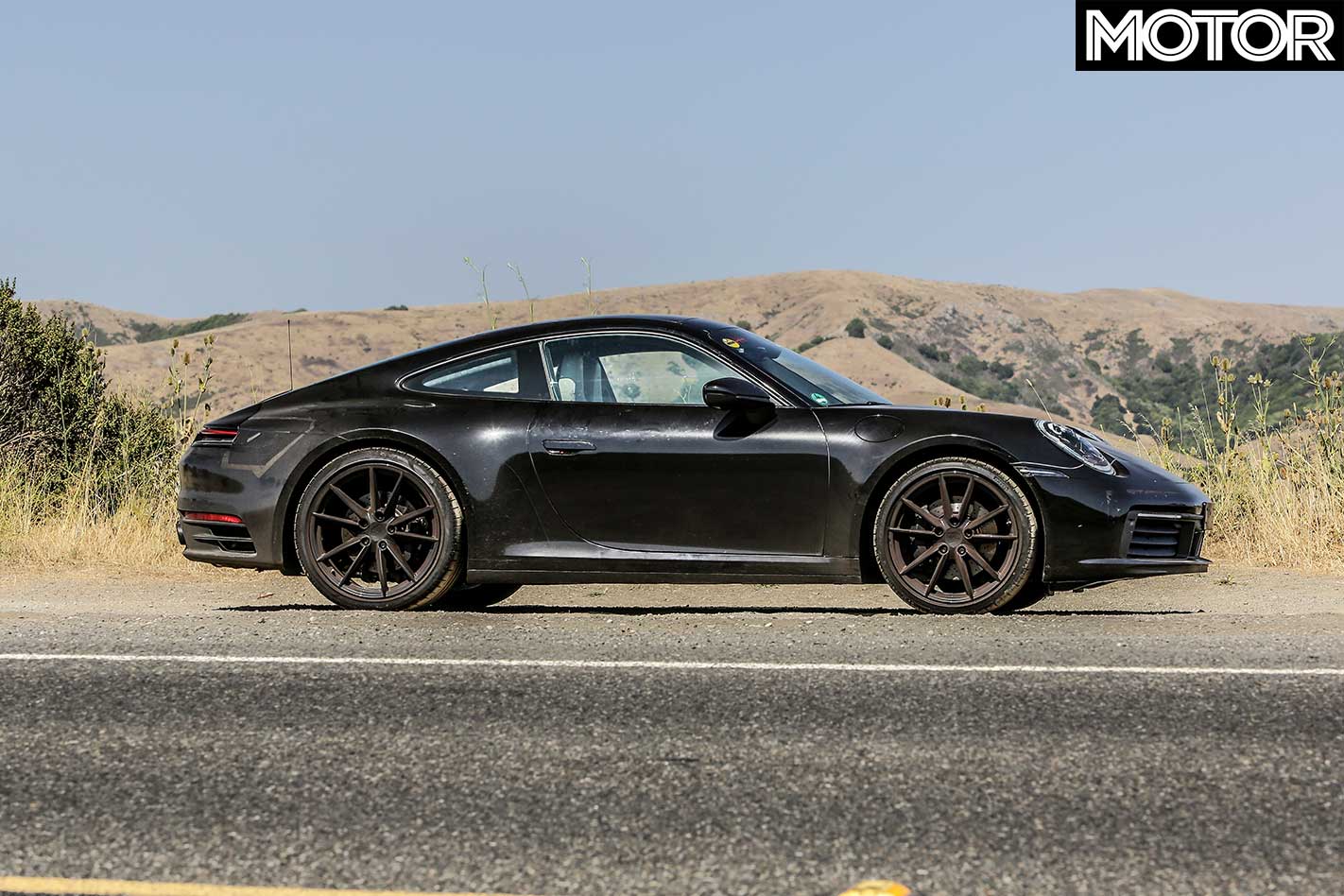
While the Carrera comes with 18- and 19-inch wheels, the S is shod with 245/35 ZR20 tyres up front and 305/30 ZR21 Pirelli P Zeros at the back. With the grunt underfoot, all hell would break loose if it wasn’t for the host of traction aids. There’s even tech confined within the front wheel arches that acts as multi-stage rain and ice sensors – clever, that. Sadly, a software glitch prevented us from fully deactivating the ESP.
Ultimately, a handily specified 992 can do much more than merely accelerate swiftly, steer accurately and brake promptly. It can answer the driver’s every dynamic whim by adjusting the damper action, the ESP mode or the throttle response.
The 911 now has five different levels of excitement to tune the various parameters. Tap the big screen and those options will pop up. They are labelled Wet, Normal, Sport, Sport Plus and Individual. Gone are the direct access buttons next to the gear lever, so every single menu and submenu needs to be opened via the main display. Surely the old-fashioned way would have been better here. No?
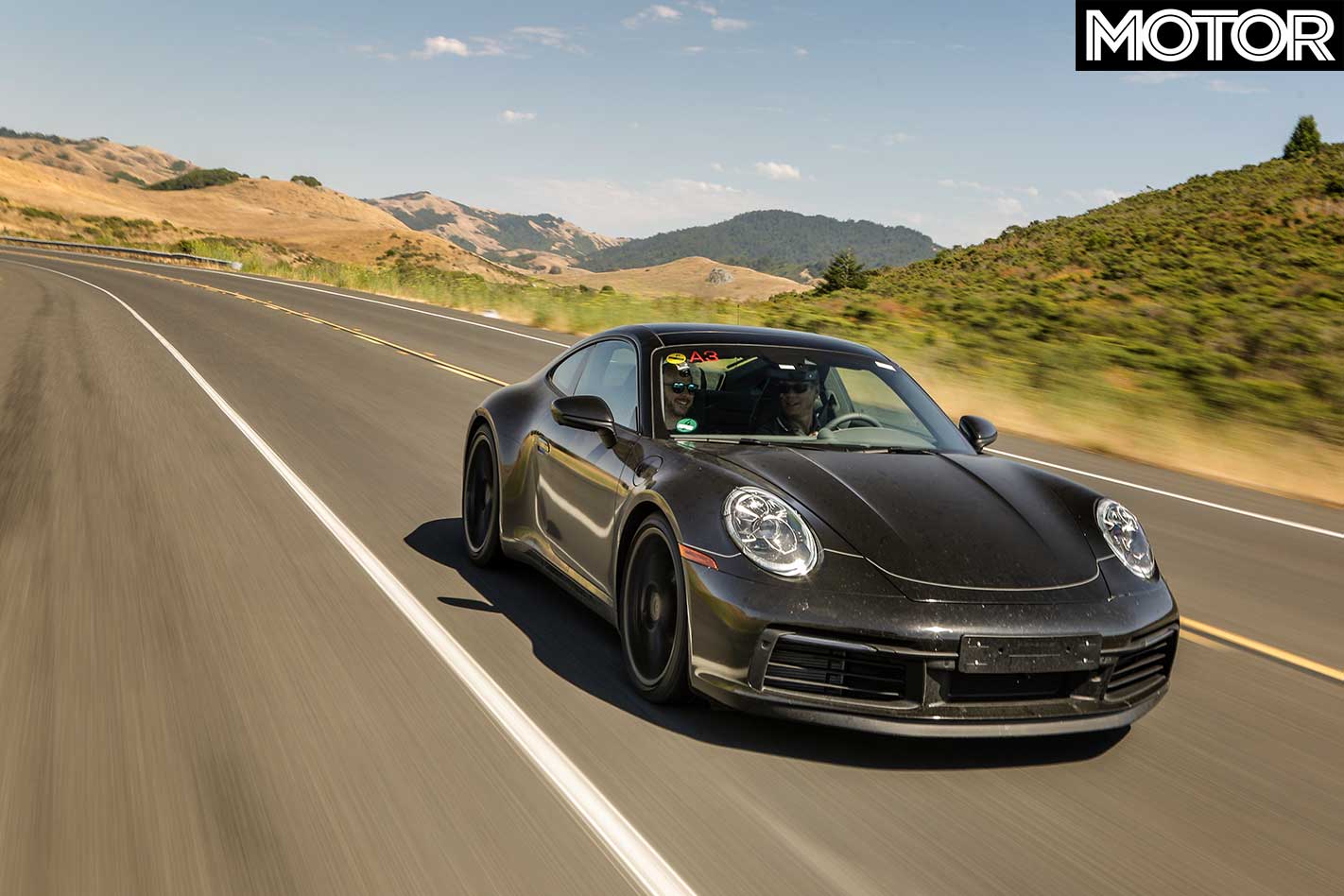
Finding fault with the eighth-gen 911 is nit-picking at its finest. However, the tuning of the PDK ’box when it is in Normal mode is too dozy, a clear sign that economy and emissions factors came into play. Conversely, in Sport and Sport Plus, high-revving hooliganisms are once again the name of the hectic game. Yet still, when stationary and flooring the throttle, revs are capped at 3500rpm – strange indeed.
Inside, the new 911 welcomes you with a different blend of fashion and function. The fascia looks familiar, bit it is actually quite a sophisticated new design. The central rev counter still swings an analogue needle and, somewhat refreshingly, you still need to turn a key in the ignition. However, when the flat-six fires into life, four of the five round dials are now digital and freely programmable. They’re quite complex as far as the depth of their talent goes.
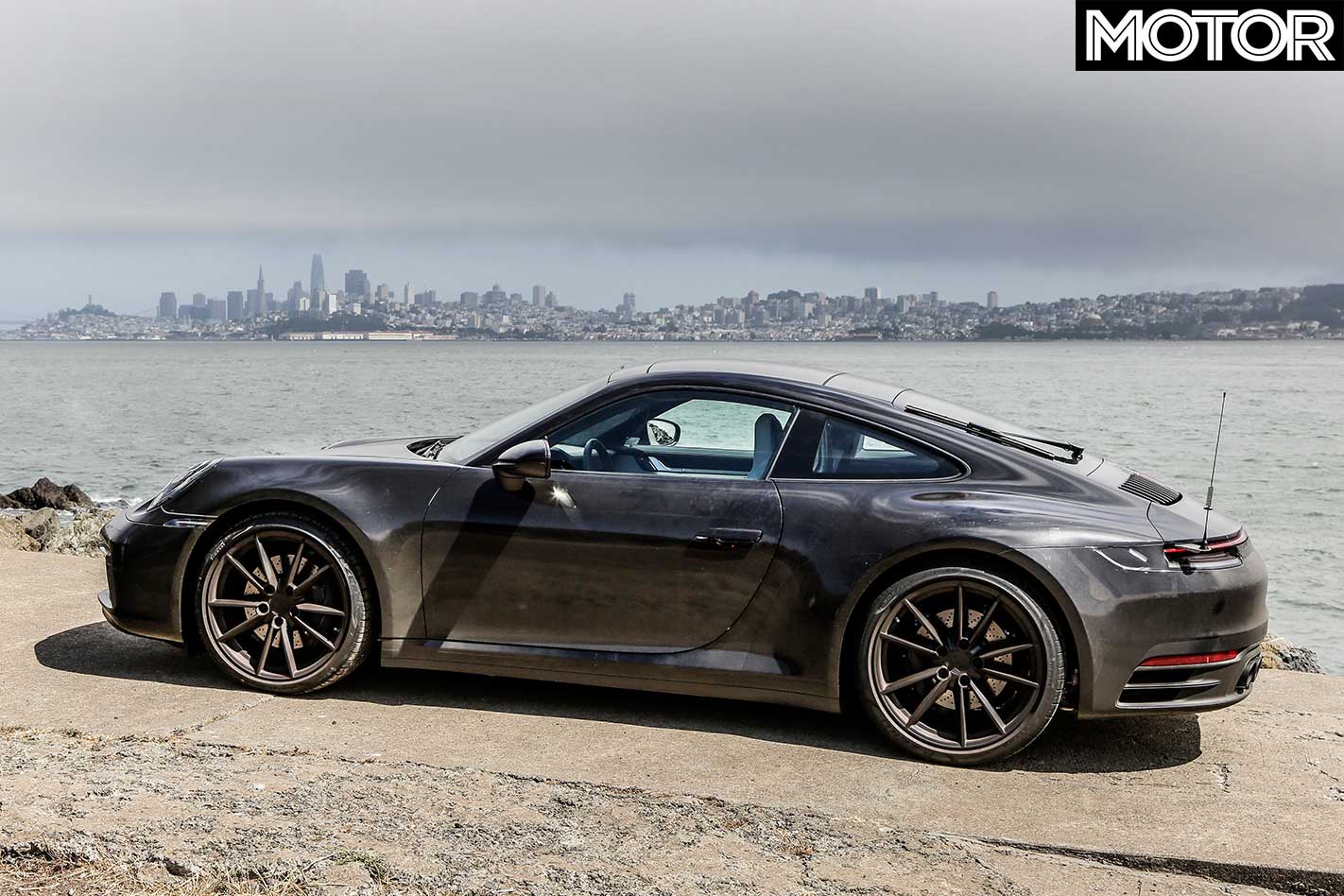
High in the centre console resides a large touchscreen, which invites you to zoom, scroll and swipe (thanks to the Panamera and Cayenne). Finger training also comes in handy when operating the new multi-function steering wheel. The rotary thumb wheel remains with the boost option ready to push at will.
Ultimately, the take-home story to the new 992 is this. The eighth generation directs a greater portion of its enhanced, high-tech content towards convenience and comfort. Thankfully, it does so without compromising the core qualities that have made this sports car a legend in its own right. It’s a pragmatic evolution that’s not devoid of emotion.
Now that’s progress.
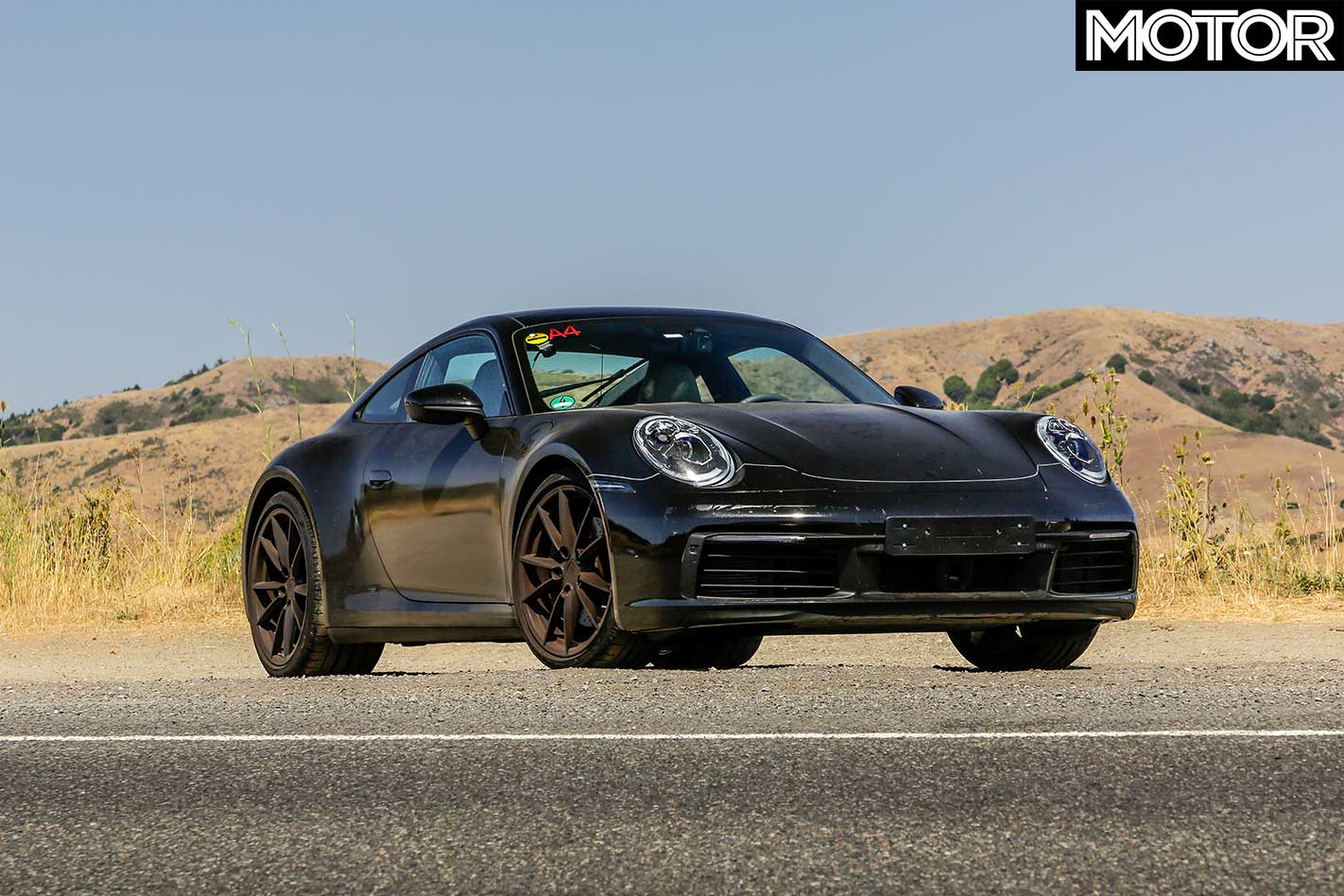
FAST FACTS 2018 Porsche 992 911 Carrera S prototype
BODY: 2-door, 2+2-seat coupe DRIVE: rear-wheel ENGINE: 2981 flat-6cyl, DOHC, 24v, twin-turbo POWER: 331kW TORQUE: 550Nm WEIGHT: 1460kg (estimated) POWER-TO-WEIGHT: 227kW/tonne TRANSMISSION: 8-speed dual-clutch STEERING: electrically-assisted rack-and-pinion PRICE: $265,000 (estimated)
PROS: Increased comfort/tech; PDK; speed; handling CONS: Normal mode too lazy; cabin ergonomics RATING: 4.5 out of 5 stars
991 v 992 – Five key differences
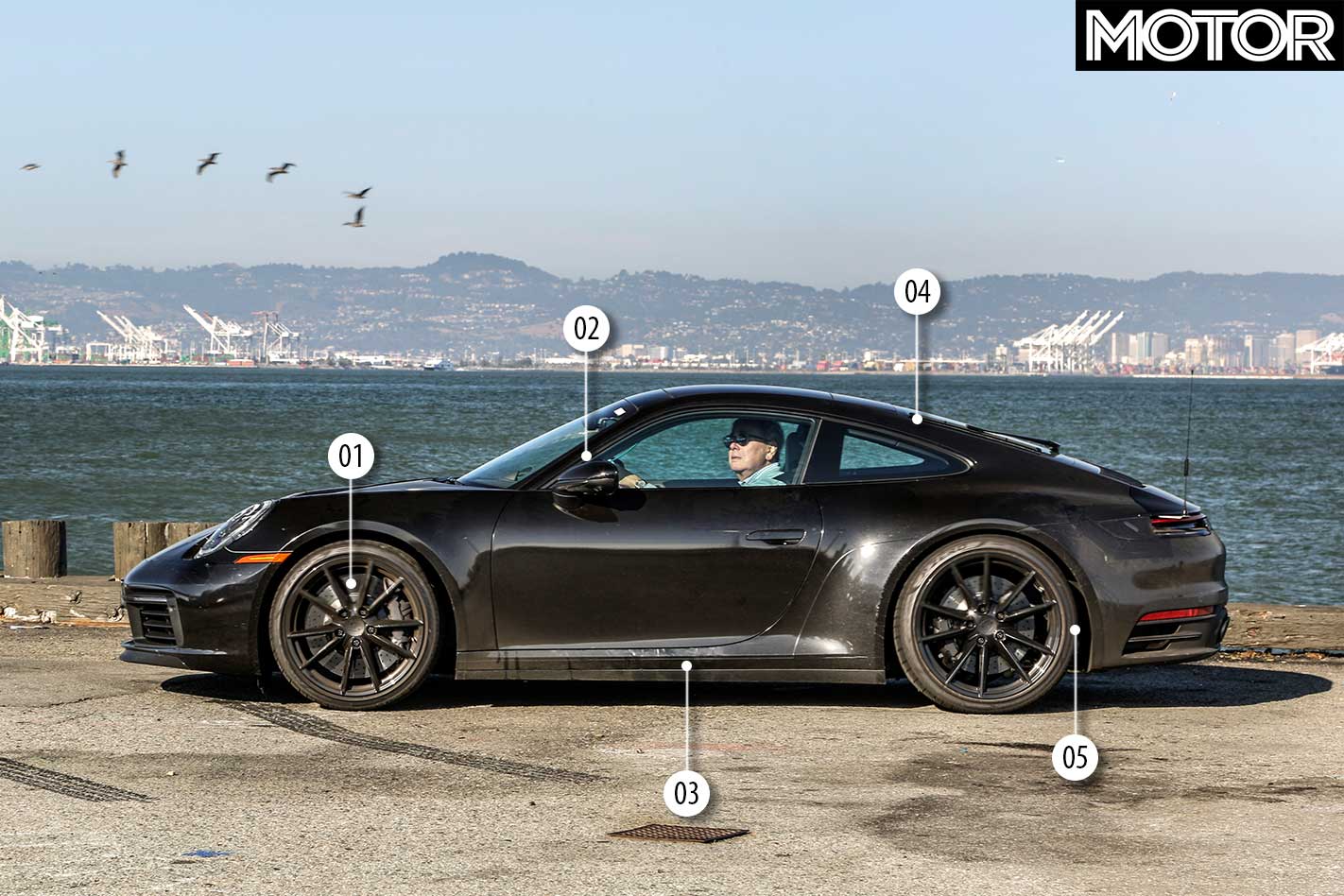
01/Stop the press Carrera S gets bigger brakes with Porsche Surface Coated Brake (PSCB) – carbons optional
02/Cabin fever Next-gen 911 benefits from new infotainment and a digital dash for the first time
03/Weight issue It would have been nice to keep the kerb weight where it was, but at the end of the day all those mod cons and the beefier footwear added 20kg to the tally
04/Size matters The revised aerodynamics package means the 992 is now 40mm wider and 20mm longer than the outgoing generation
05/Gear change Plucked from the Panamera, the 992 gains an eight-speed PDK
What is it?
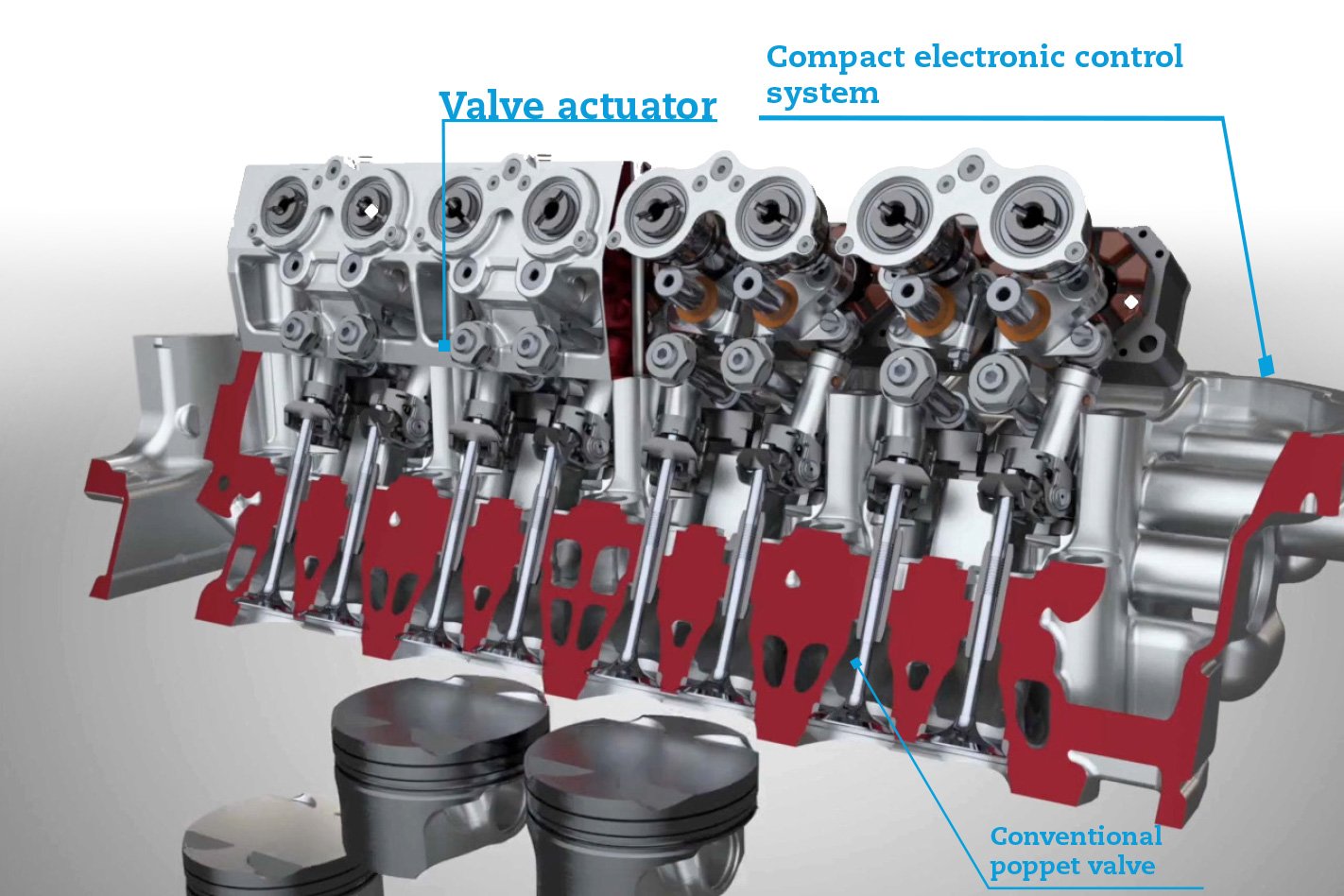
A revolutionary form of combustion engine valve actuation that not only removes any physical connection to the crankshaft, but also enables infinitely variable and independent valve timing. Dubbed Intelligent Valve Actuation or IVA, the engine innovation is the work of Cambridge-based tech firm Camcon.
How does it work?
Unorthodox valvetrain systems have come and gone including pneumatic, hydraulic and solenoid types, but the Camcon solution uses the company’s electrically operated ‘bi-stable actuator’. Unlike a solenoid, which has an energised position and a non-energised position, Camcon’s design features two non-energised states. When the unit is energised it lifts the engine valve into the open position – when the unit is de-energised the valve stays open. When the unit is subsequently energised in the opposite direction, the valve snaps closed. The point at which the valve opens and closes is governed entirely by electrical signals, not the position of a camshaft, crankshaft or spring, and power is not required to hold the valve in either the open or closed position.
Why does it matter?
The advantages of the IVA system are extensive, including the benefits of reduced mechanical complexity. Valve springs, camshafts and the chains or belts to connect them to the crankshaft are all redundant, resulting in a simpler system, which has the potential to be lighter, cheaper and more durable. But the IVA’s real party piece lies in valve timing. The principle allows any individual valve to be opened and closed at any time and independently of any other cylinder. That means it’s possible to run an engine as a high-power performance unit with huge overlap and duration, and then as a super-efficient Miller-cycle engine, or in any variation in between. The company says it can even run its prototype four-cylinder as a conventional four-stroke or as a two-stroke simply by switching the management program. While electric propulsion continues to challenge the internal combustion era, Camcon’s radical innovation could preserve combustion power into the future. And it could make the horror show of a snapped cam belt a thing of the past too.
Case closing
The key to the IVA operation is Binary Actuation Technology (BAT), says Camcon. While the bi-stable actuator has two main positions, it uses a rotating permanent magnet to simulate the motion of a steadily turning camshaft between open and closed points. As with any prototype technology, the system is still expensive in its infancy, but Camcon predicts a commercialised product will carry a modest premium over conventional valve gear, comparable to the cost difference of a diesel injection system over a petrol system.
Check out more Wheels Explained here
Tuned by mechanics
Camcon is funded in part by music publisher Hit & Run, whose artists include Genesis, Kula Shaker and, wait for it, Mike & the Mechanics.
TOYOTA Australia has again thrown its support behind local motorsport, today announcing a factory-backed Gazoo Racing Australia rally team.
The newly-formed team will make its debut at Rally Australia next weekend, ahead of a two-car assault on the Australian Rally Championship (ARC) in 2019.
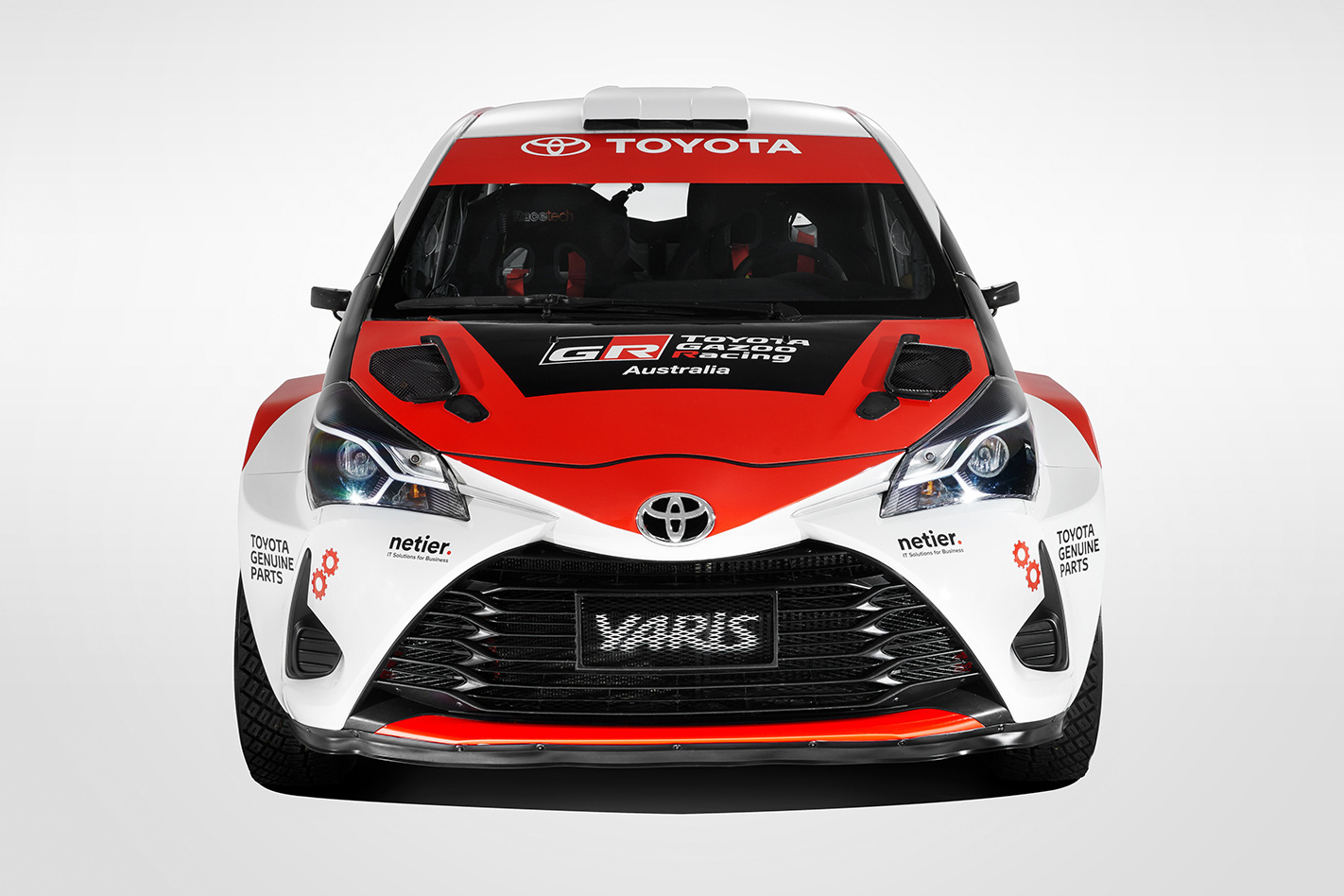
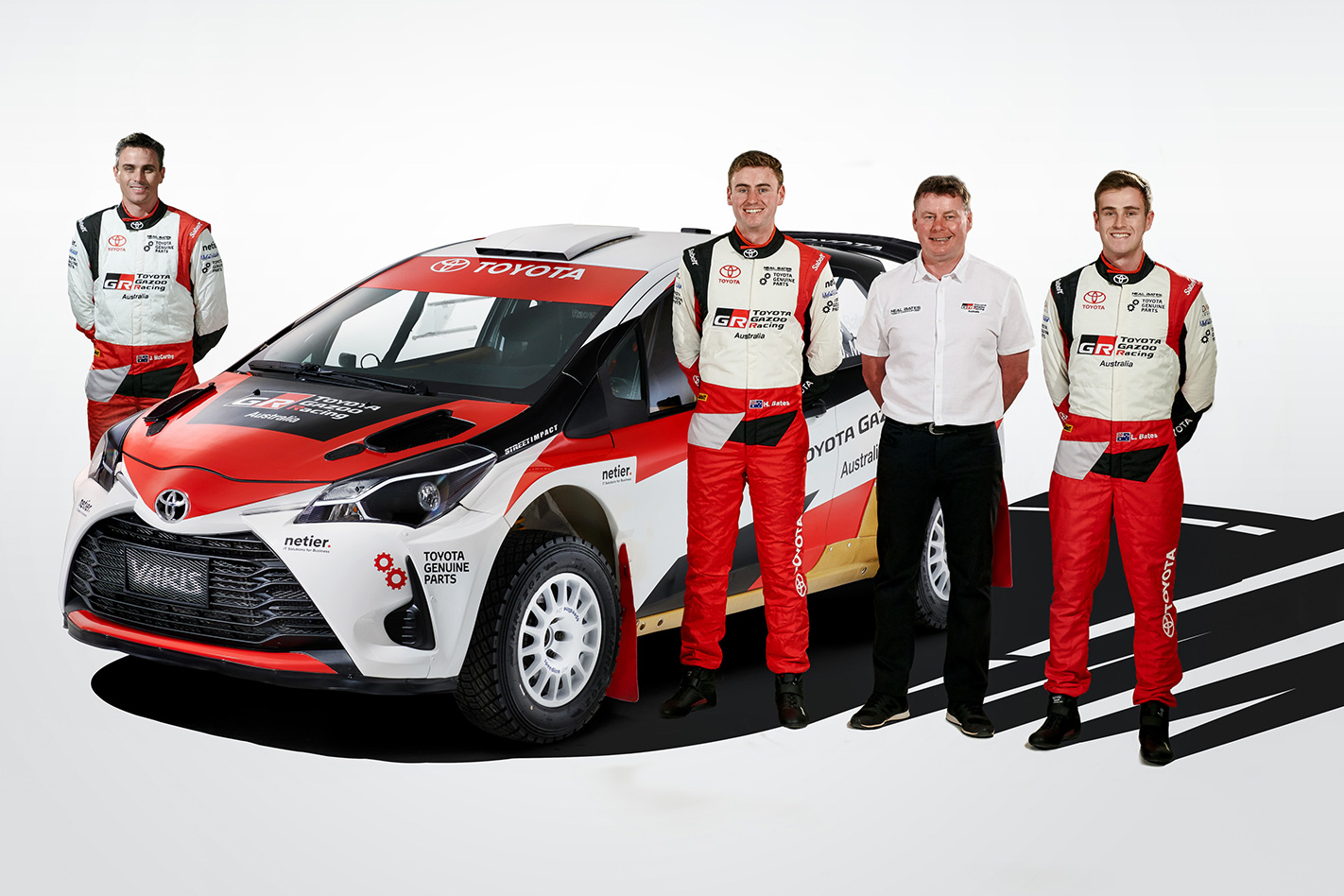
Toyota Gazoo Racing Australia will field AP4-spec Yaris rally cars, with Harry Bates joined by his younger brother Lewis next year.
The pair are the sons of Australian rally legend Neal Bates, and will work with their father who has been appointed head of the Canberra-based racing team.
A return to factory-backed motorsport in Australia indicates Toyota’s support for its Gazoo performance arm.
“Toyota has always recognised the value of participating in motorsport as a means of developing ever more durable, reliable and exciting cars,” Toyota chief marketing officer Wayne Gabriel said.
“This is a philosophy that underpins Toyota Gazoo Racing that runs the global motorsports program – including the leading World Rally Championship team – which in turn, feeds into its development of our new sports and performance cars.
The Gazoo performance brand will be used to market Toyota’s hotted-up road cars, and is expected to make its debut in Australia with the highly-anticipated Supra.
It is unclear what other Toyota products will be sold locally under the performance arm.
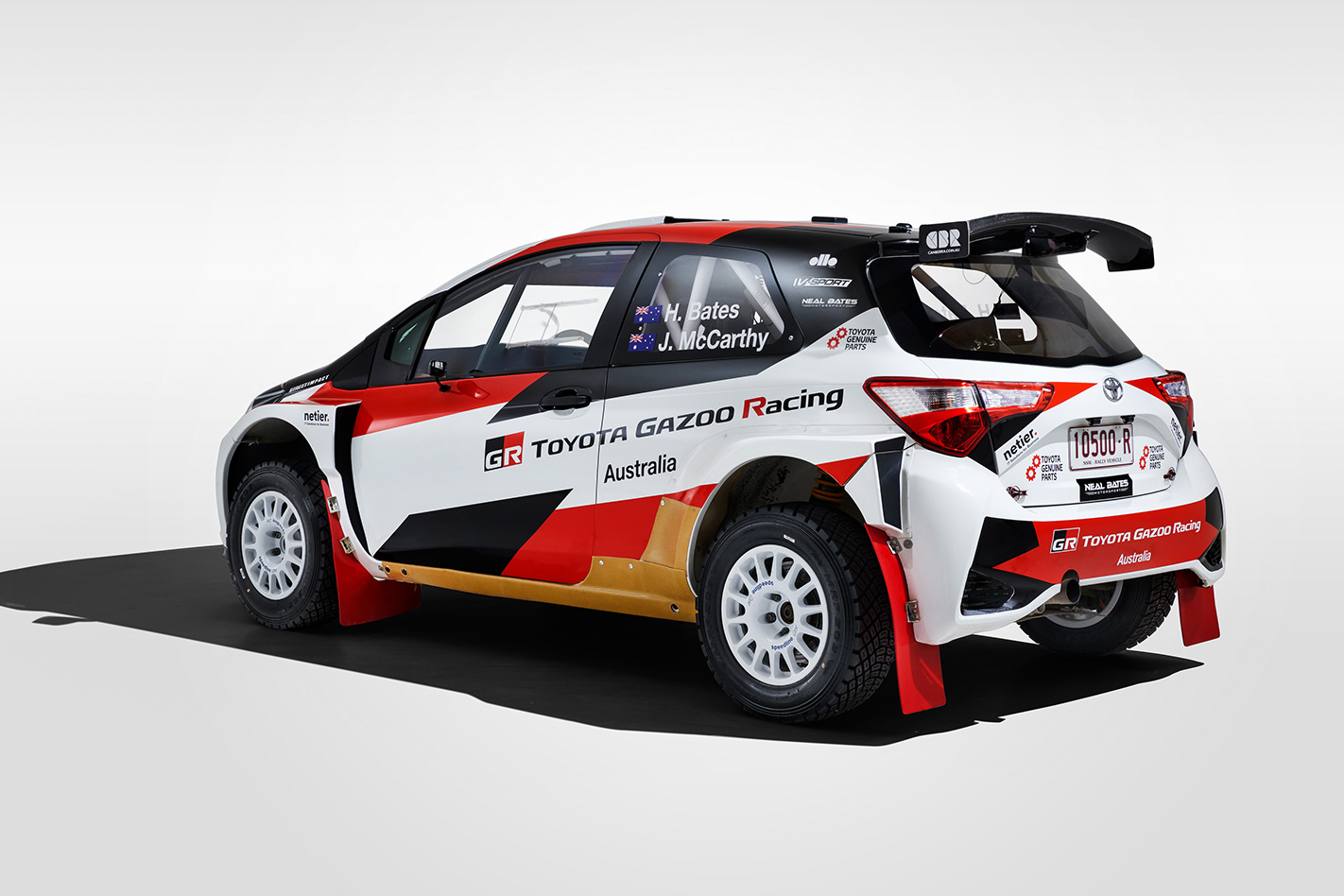
Rally fans already have a glimpse of what to expect from Gazoo Racing, with Harry Bates sitting second in the ARC in an AP4-spec Yaris sponsored by Toyota Genuine Parts alongside co-driver John McCarthy.
For the final round of the year, Bates and McCarthy will compete in both the ARC and WRC2 classes at the final round of the World Rally Championship in Coffs Harbour.
Lewis is also competing in the ARC in a S2000-spec ninth generation Corolla.
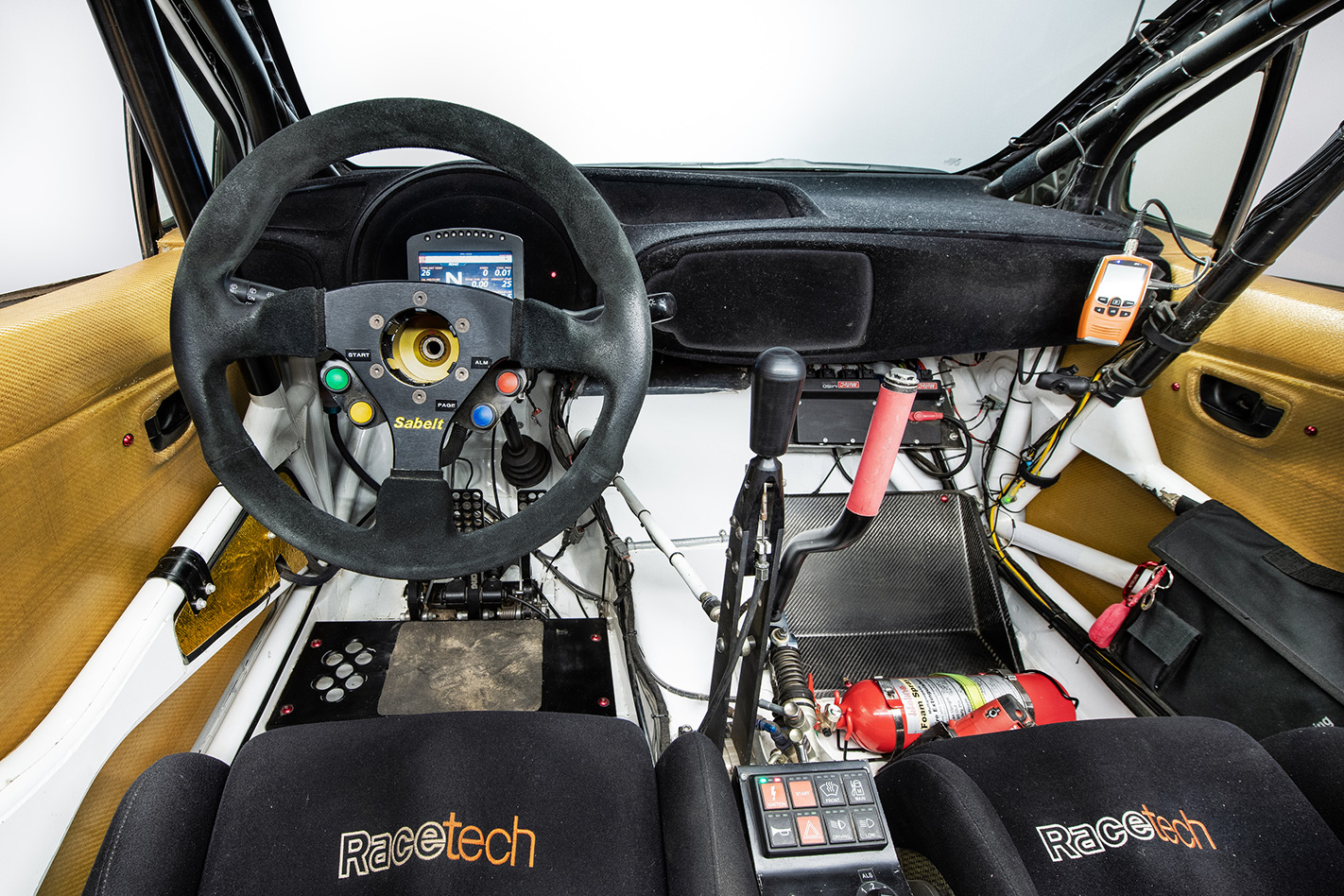
The Bates family has a strong history with Toyota, with Neal and Coral Taylor winningthe brand its first ARC title in 1993 in a Celica GT-Four.
The duo went on to win a hat-trick of championships, before winning a fourth in 2008 in the same Corolla that Lewis drives now.
