
The year is 2002. Ford’s small-car entrant, the Laser, is so old it’s shaving each morning. Effective though the Laser concept had been, its glory days were back in the 1980s when leg warmers were cool, Bob Geldof was a singer, not a saint, and there was still some major differentiation between the Laser and its mechanical twin, the Mazda 323.
This feature was originally published in MOTOR’s June 2007 issue
So by the time the calendar flipped over to ’02, things were pretty slow on the Laser-selling front. But instead of creating a new Laser by simply re-badging the then-new Mazda 3, Ford turned its sights on Europe.
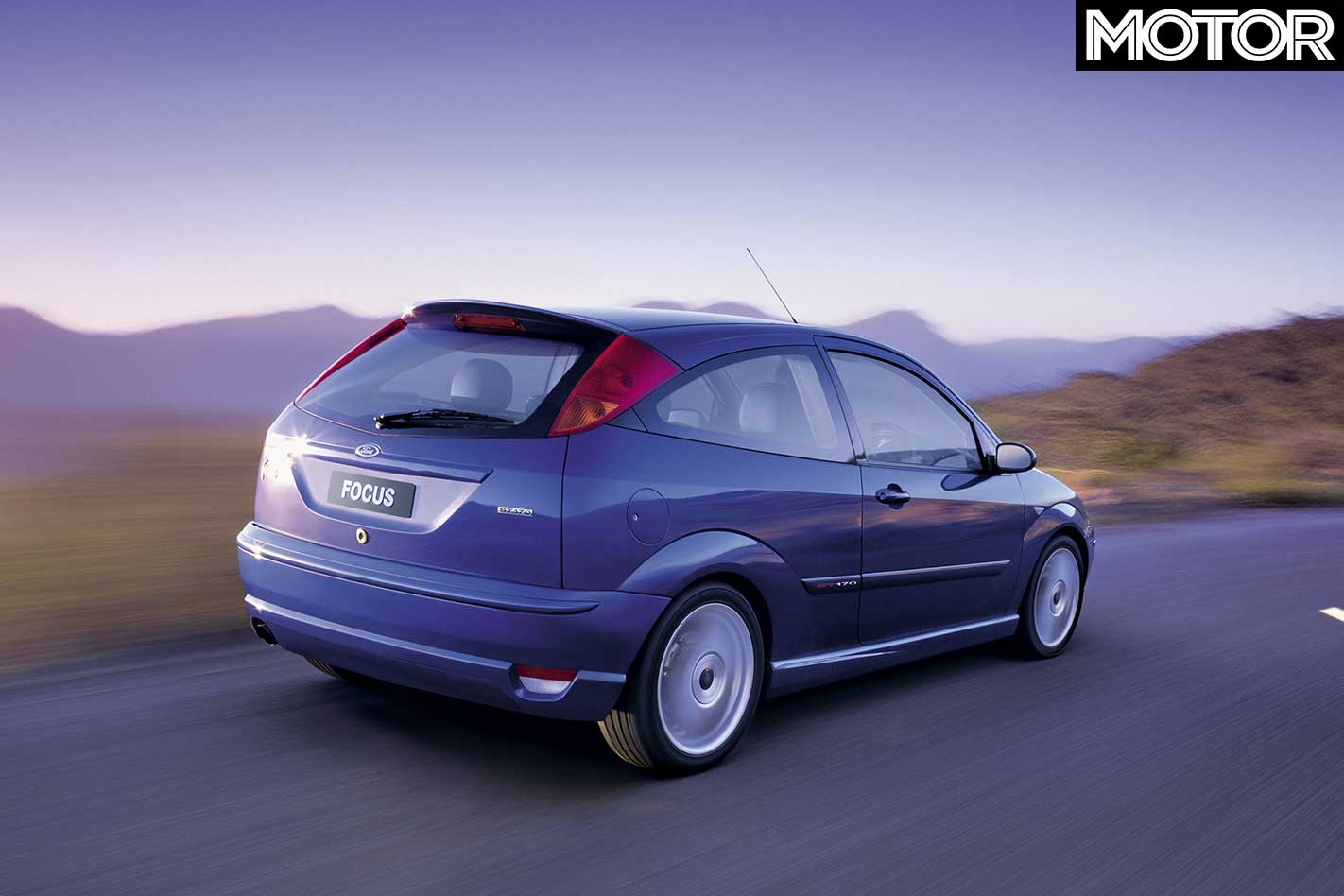
So when the Focus lobbed here in 2002, it wasn’t inflaming the passions of performance enthusiasts (that’d be you and me, then). Clearly, a hi-po version was needed and, by 2003, the ST170 had landed. It looked good in an understated way, and promised much.
The 170 thing derived from the fact that the engine was good for 170 horsepower, although in a metric Australia, this was probably lost on most folks. But even when metrificated, the output was still 127kW, and there was nearly 200Nm of torque to hustle things along. A six-speed manual gearbox was the only choice and the three-door hatch the only bodyshell. None of which made any difference, because that’s how you or I would probably have specced it anyway.
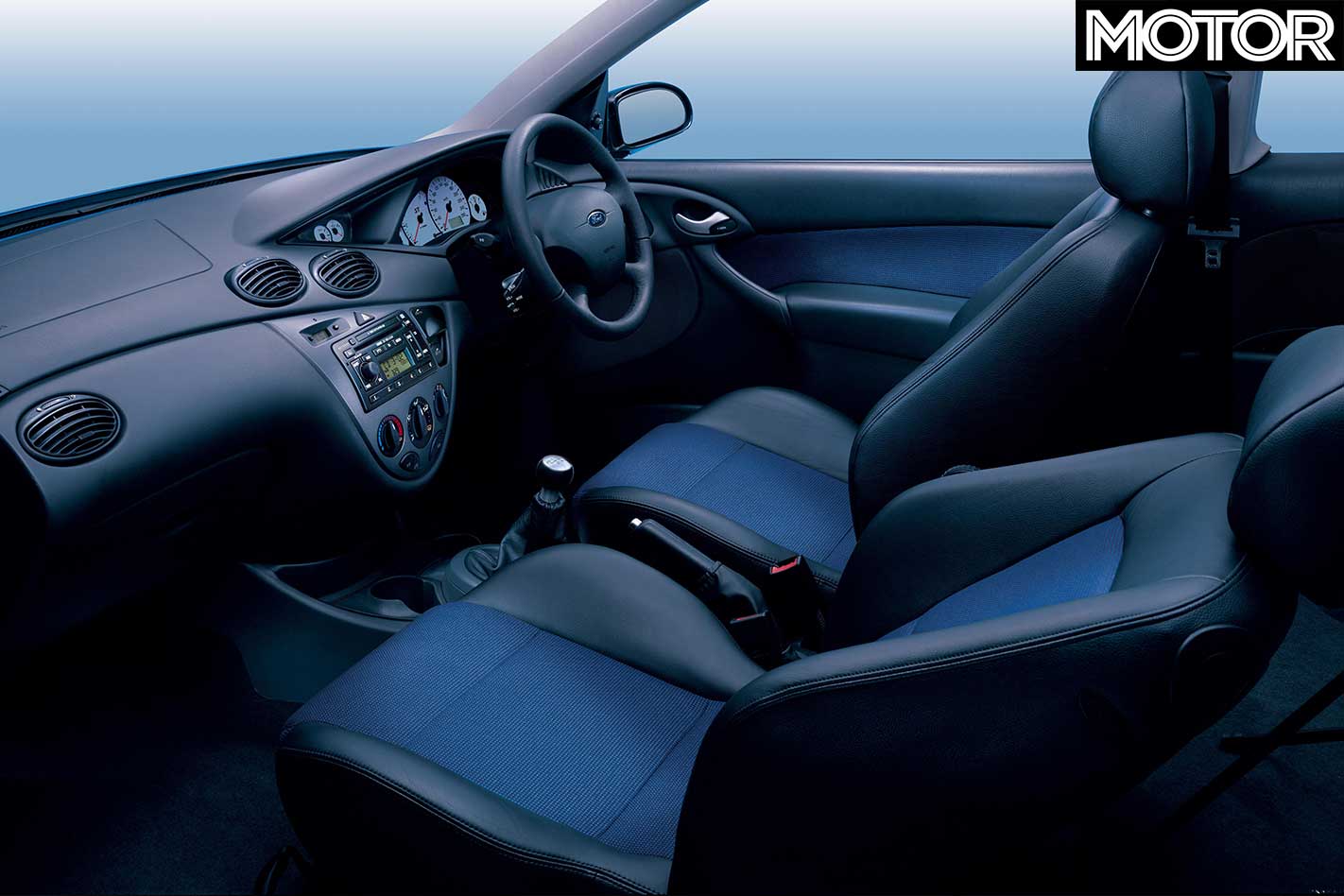
Standard equipment was decent, with air-con, 17-inch alloys, a six-stacker, sporty front seats, leather-trimmed tiller and a body kit, but like so many Euro-packaging cock-ups, cruise control wasn’t part of the deal (as it isn’t with the otherwise brilliant XR5 Turbo, either).
The other thing that was a bit hard to fathom was why the thing didn’t feel a bit perkier than it did. Oh, it was quick enough if you flogged it along, but it never really felt like it was a free-revver or that it really wanted you to spank it.
The torque seemed to be stacked pretty high in the revs and even when you got there, there was less of a smack in the chops than there should have been.
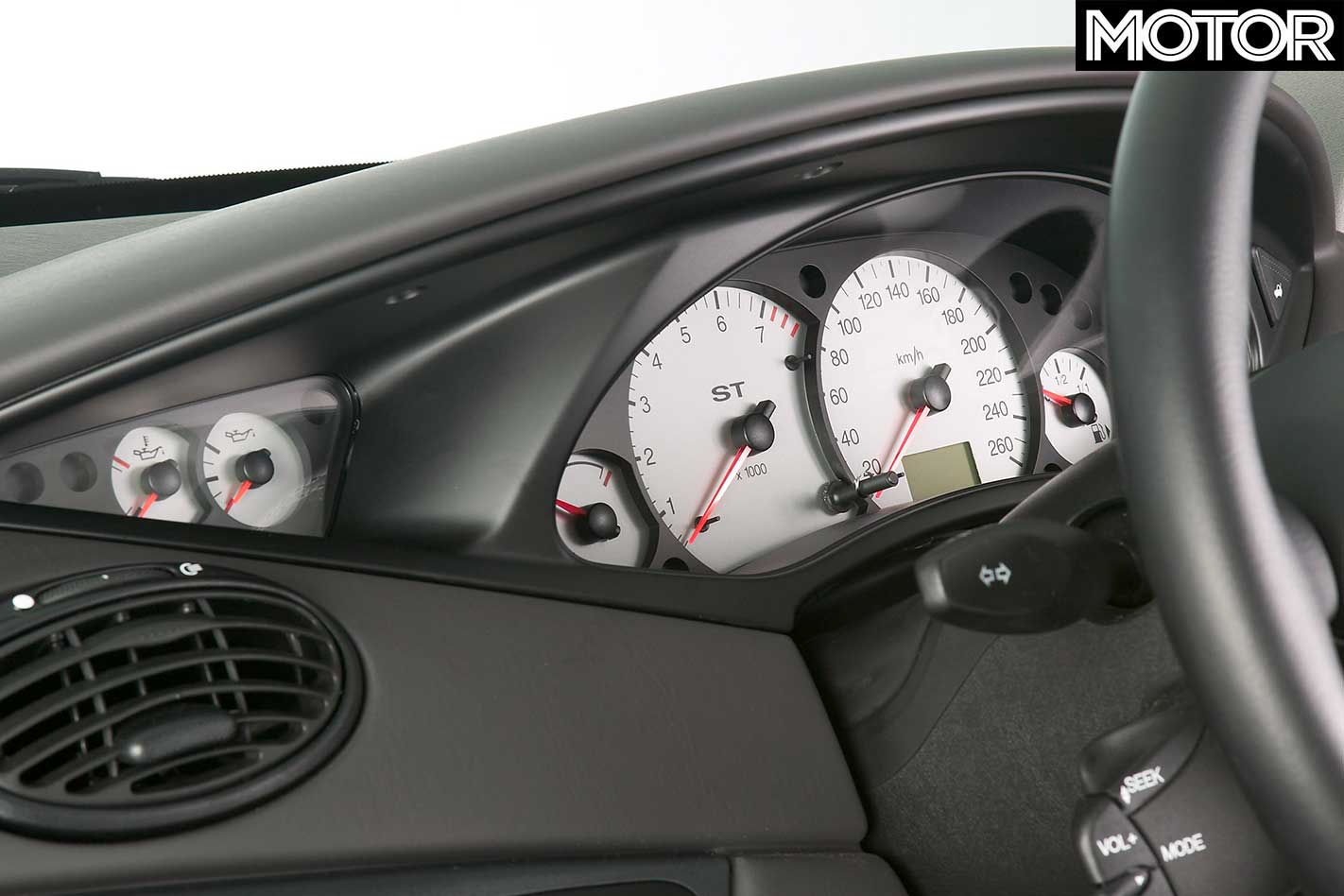
However, part of that feeling was down to just how good the chassis was. The cornering was fairly flat, but the stiff ride that comes with it just didn’t materialise. Overall, the ST170’s suspension gave the impression of being well thought-out, well-specced and based on a competent platform to begin with. Which is pretty much the story.
Like a lot of really stable, sorted chassis’, the ST170 always felt like it could use more grunt. Even with its perky turbomotor, the current XR5 feels a bit the same, so maybe it’s just a genetic thing blighting all performance Fords.
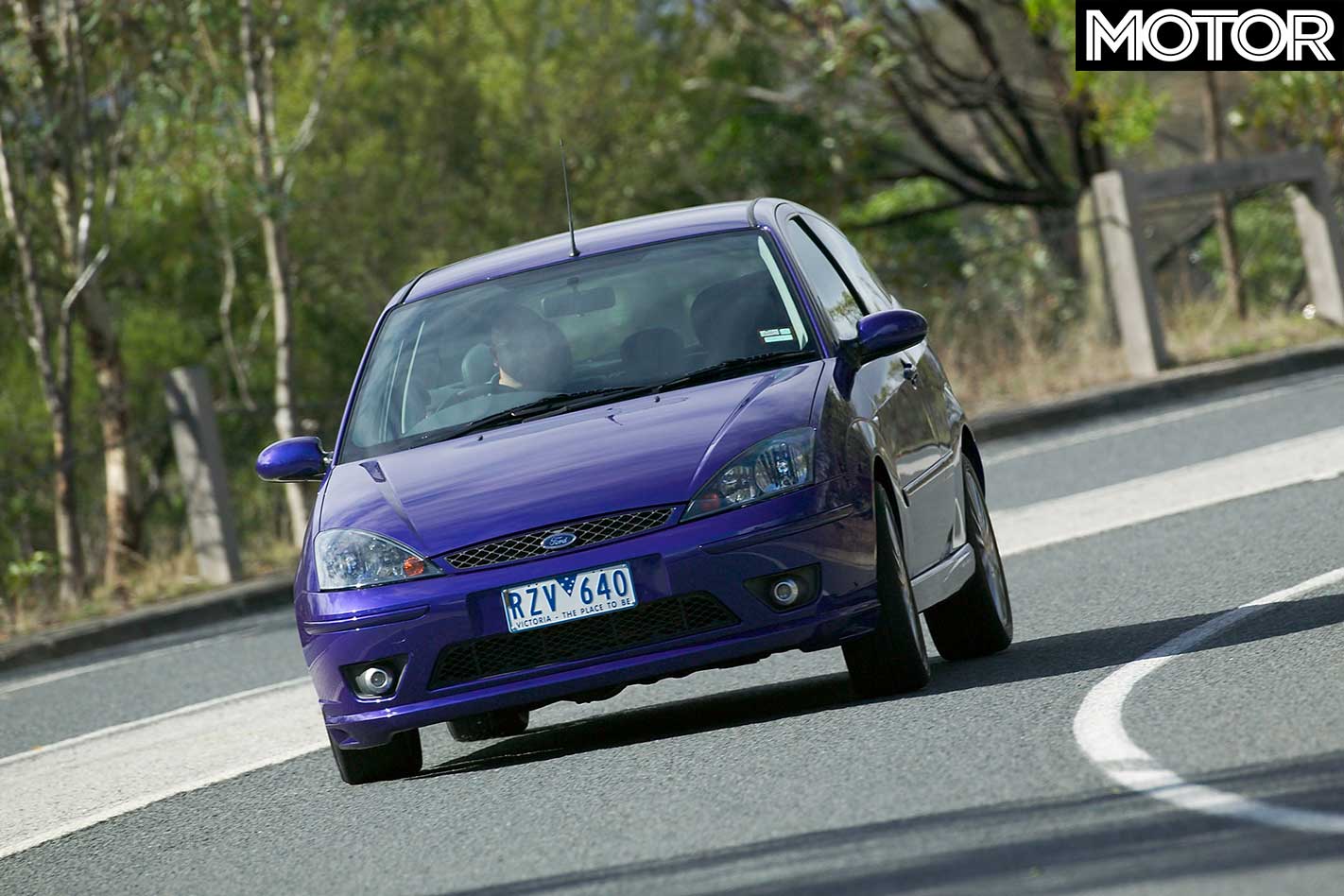
With all that in mind, the ST170 can be shunted along a quiet road with a fair degree of accuracy and comfort. While the spine-tingling thrills may not be in abundance, the ST170 will get you to where you’re going quickly, with only a decent serve of understeer limiting things once entry speeds are really up there.
Safety-wise, you’re looking at dual front air-bags, side bags, seat-belt pretensioners, ABS and even electronic brake-force distribution (ESP was an optional extra).
And when you look at that lot and remember that it really is a child of the 21st century and the thought-police that inhabit it, it’s a wonder the ST170 is any fun at all. And that blue oval badge? Well, that just makes it all the more remarkable.
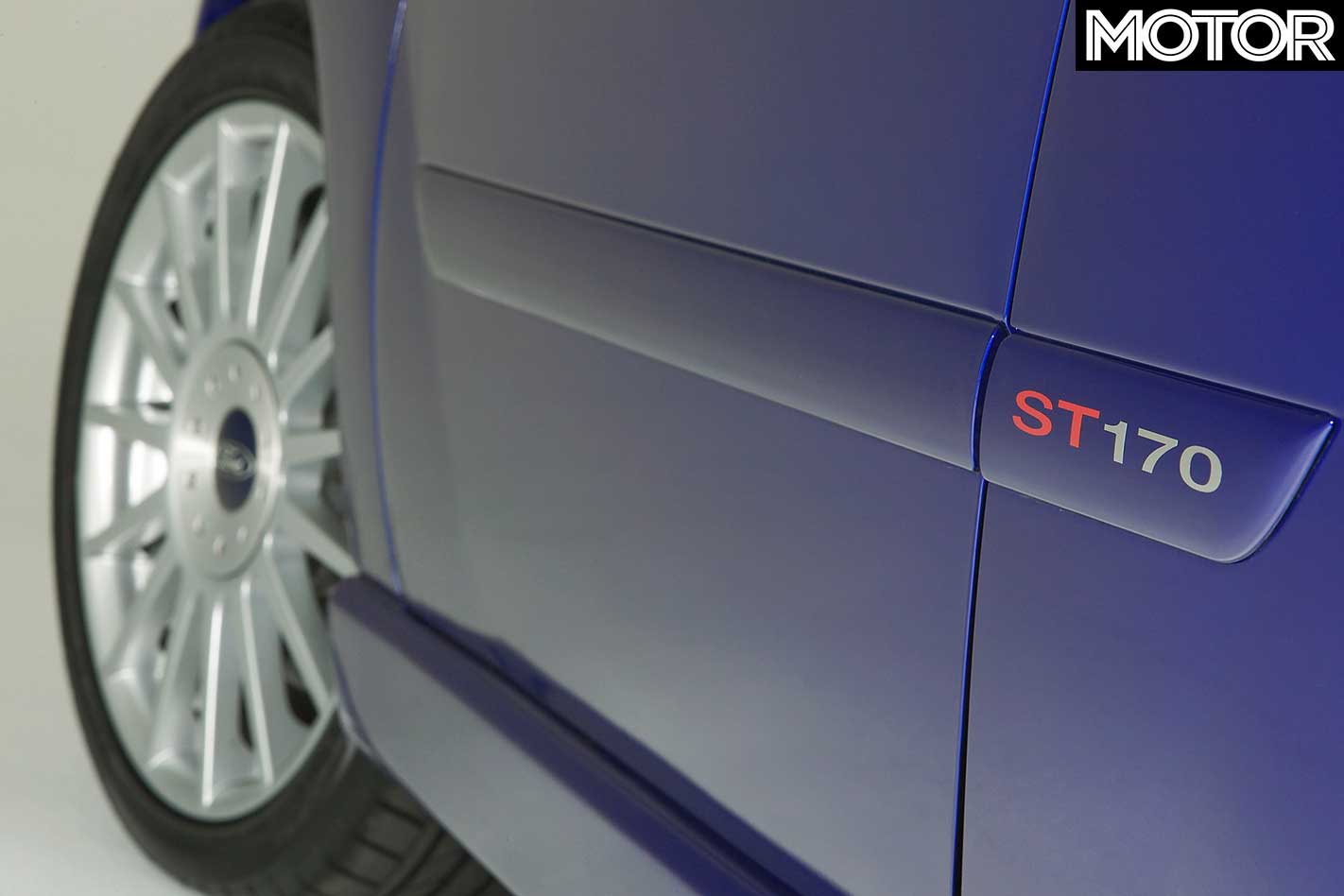
FAST FACTS 2003 Ford Focus ST170
BODY: 3-door, 5-seat hatchback DRIVE: front-wheel ENGINE: 1988cc 4cyl, DOHC, 16v POWER: 127kW @ 7000rpm TORQUE: 196Nm @ 5500rpm WEIGHT: 1208kg POWER-TO-WEIGHT: 105kW/tonne TRANSMISSION: 6-speed manual SUSPENSION: struts, A-arms, anti-roll bar (f); control blade multi-link, coil springs, anti-roll bar (r) L/W/H: 4174/1702/1430mm WHEELBASE: 2615mm BRAKES: 300mm ventilated discs, single-piston calipers (f), 280mm ventilated discs (r), ABS, EBD, ESP WHEELS: 17 x 7.0-inch TYRES: Continental ContiSport Contact 215/45R17 87W PRICE: $37,000 (Aug ’03)
Used Alternatives
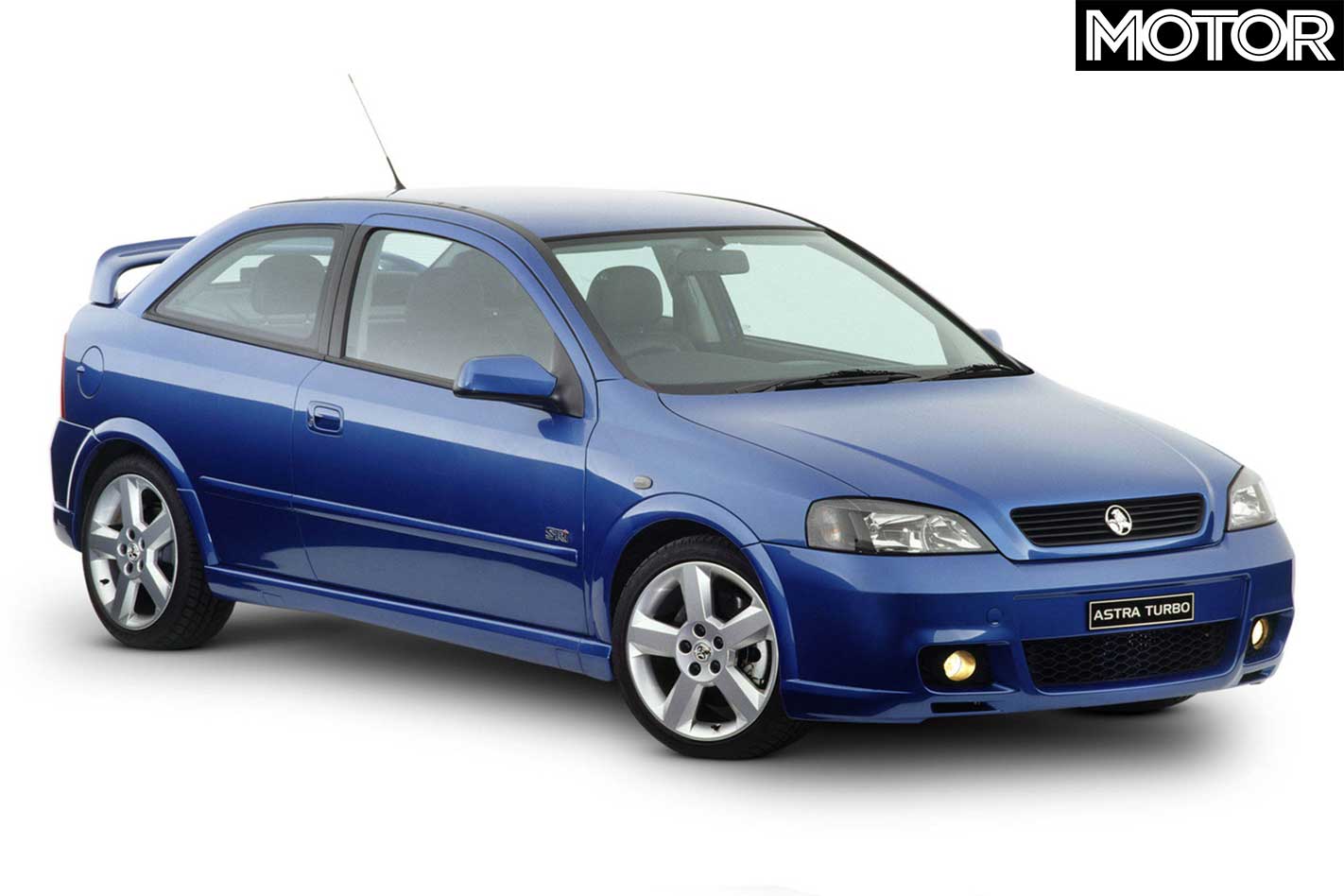
2003 Holden Astra SRi Turbo
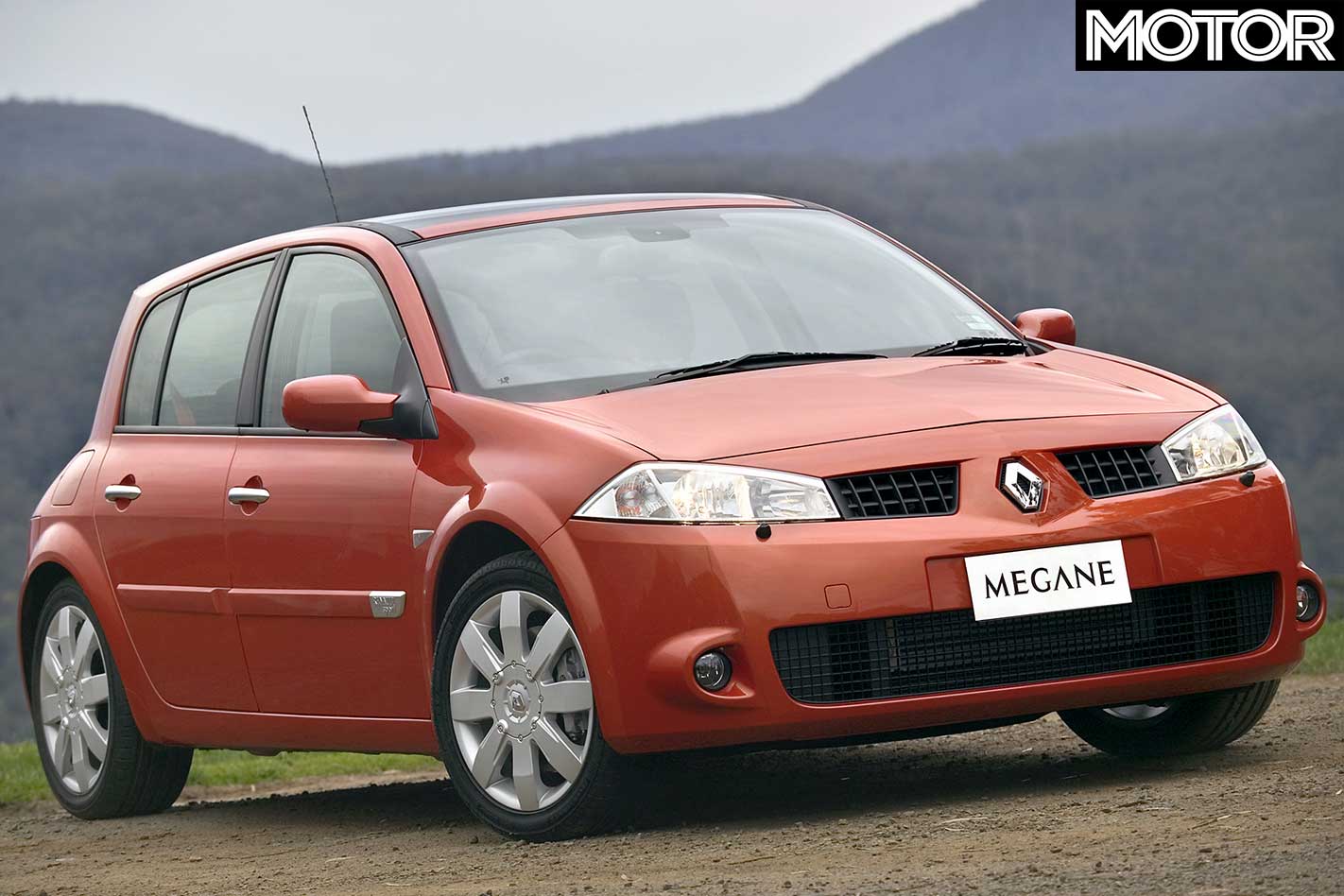
2003 MINI Cooper S
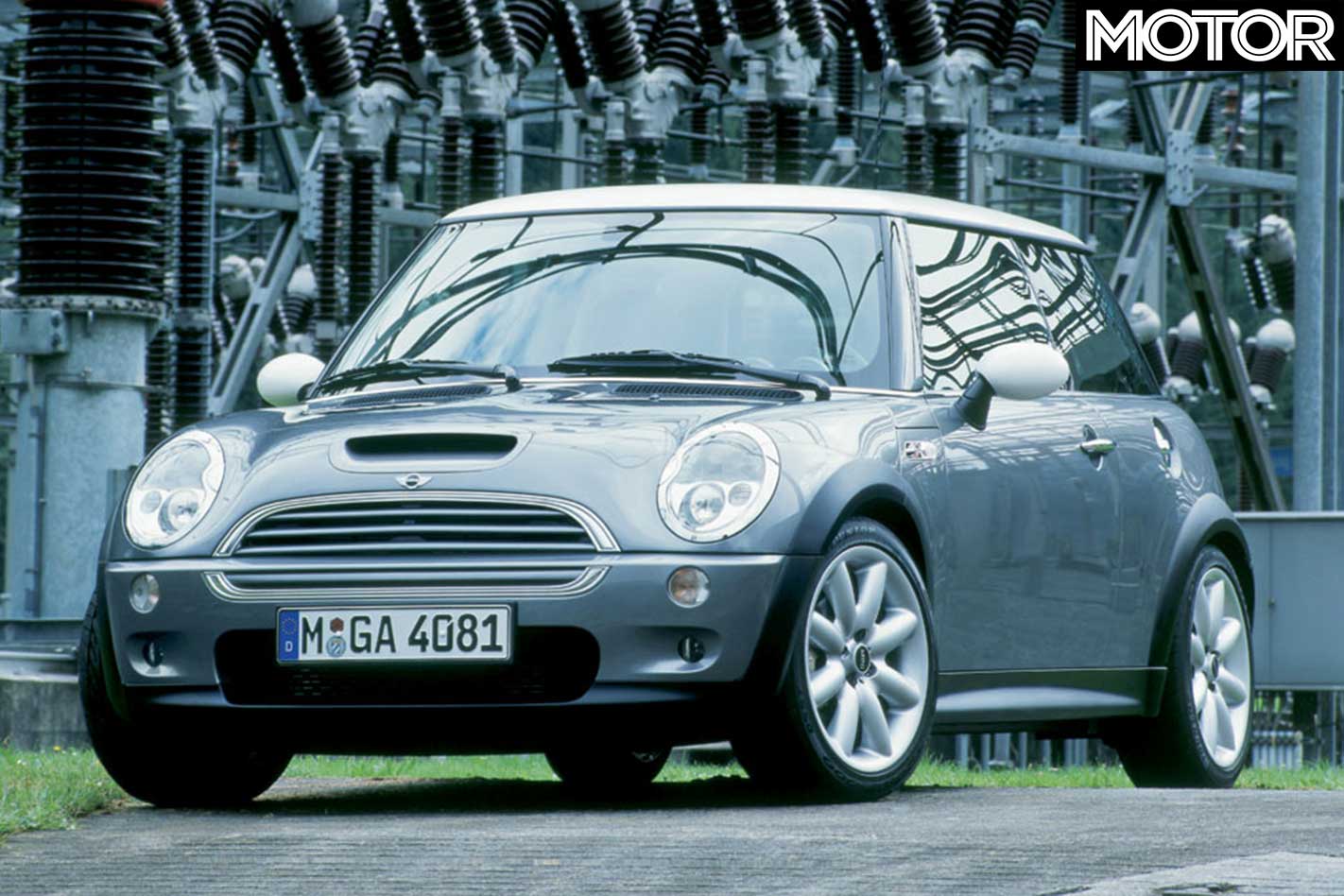
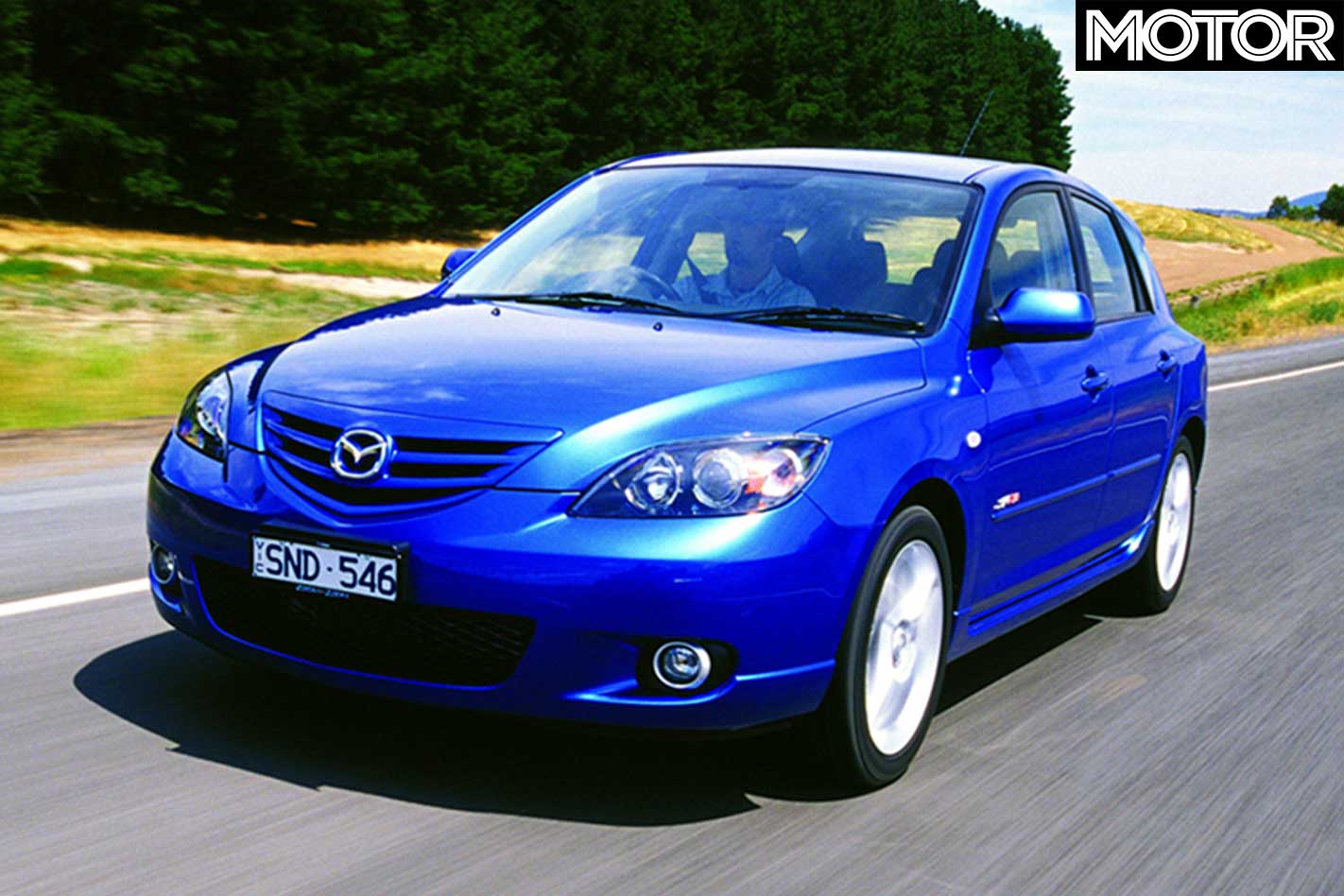
2004 Mazda 3 SP23
But this repo man was a well-dressed youngster from the Holden head office who politely asked if he could swap ‘my’ mid-spec LT Equinox for another … with more fruit.
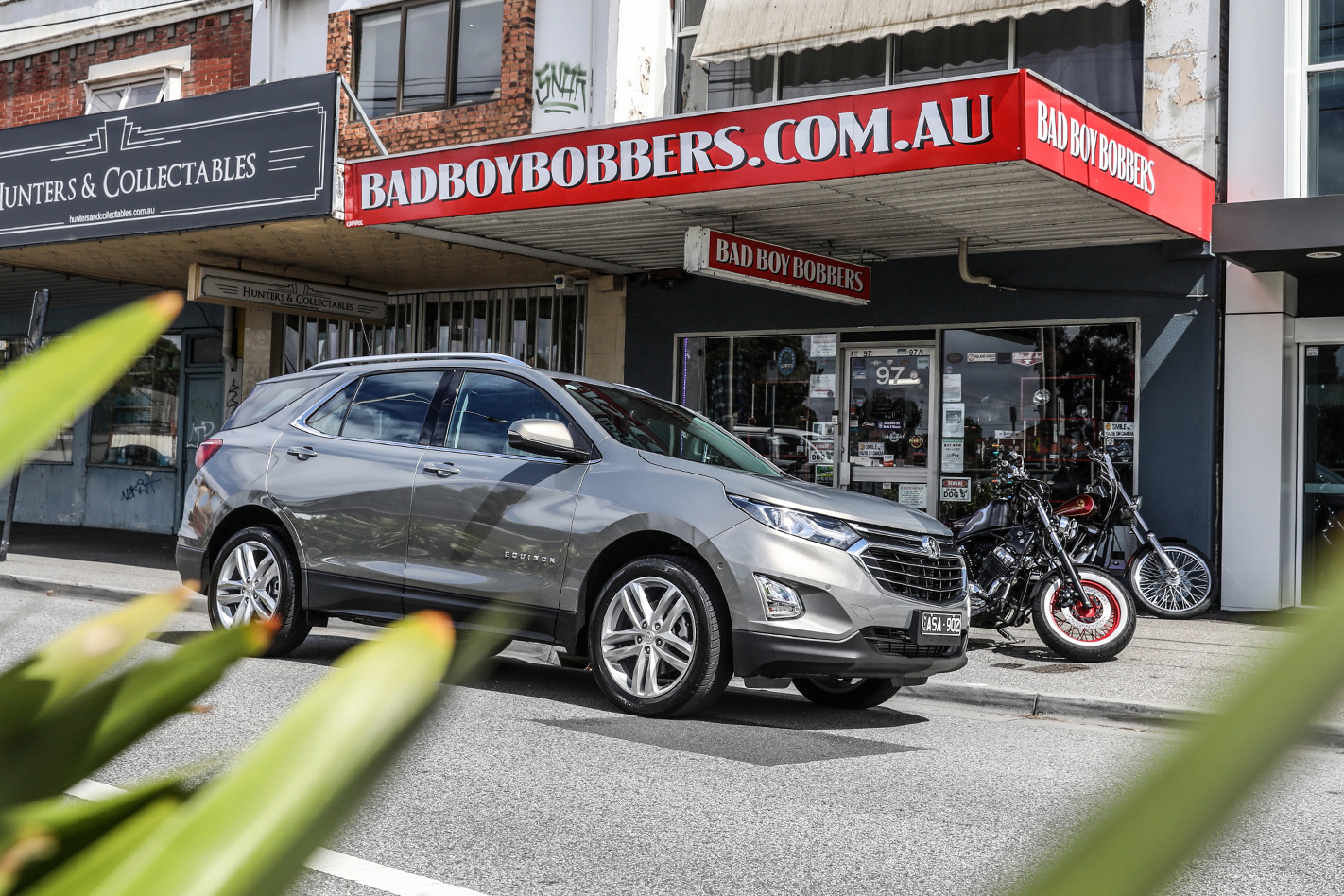
Ordinarily that would be a no brainer. After all, who wouldn’t want to swap their mid-spec anything for an upmarket something, especially when in this case the upgrade meant panoramic sunroof, heated steering wheel, electric front passenger’s seat and front seat coolers, among other temptations?
The only issue was I’d promised Ponchard and Inwood I’d endure the travails of life in the lower-spec wagon for at least a month before upgrading. We agreed it made sense to sample the breadth of Holden’s new SUV range, to better understand how the other half live … without perfumed leather and electric tailgates.
So, I had been dressing down for the week and duly getting back to my motoring roots, manually adjusting my clammy, non-ventilated driver’s seat and closing my own tailgate among other chores. Felt like quite the pioneer, in fact.
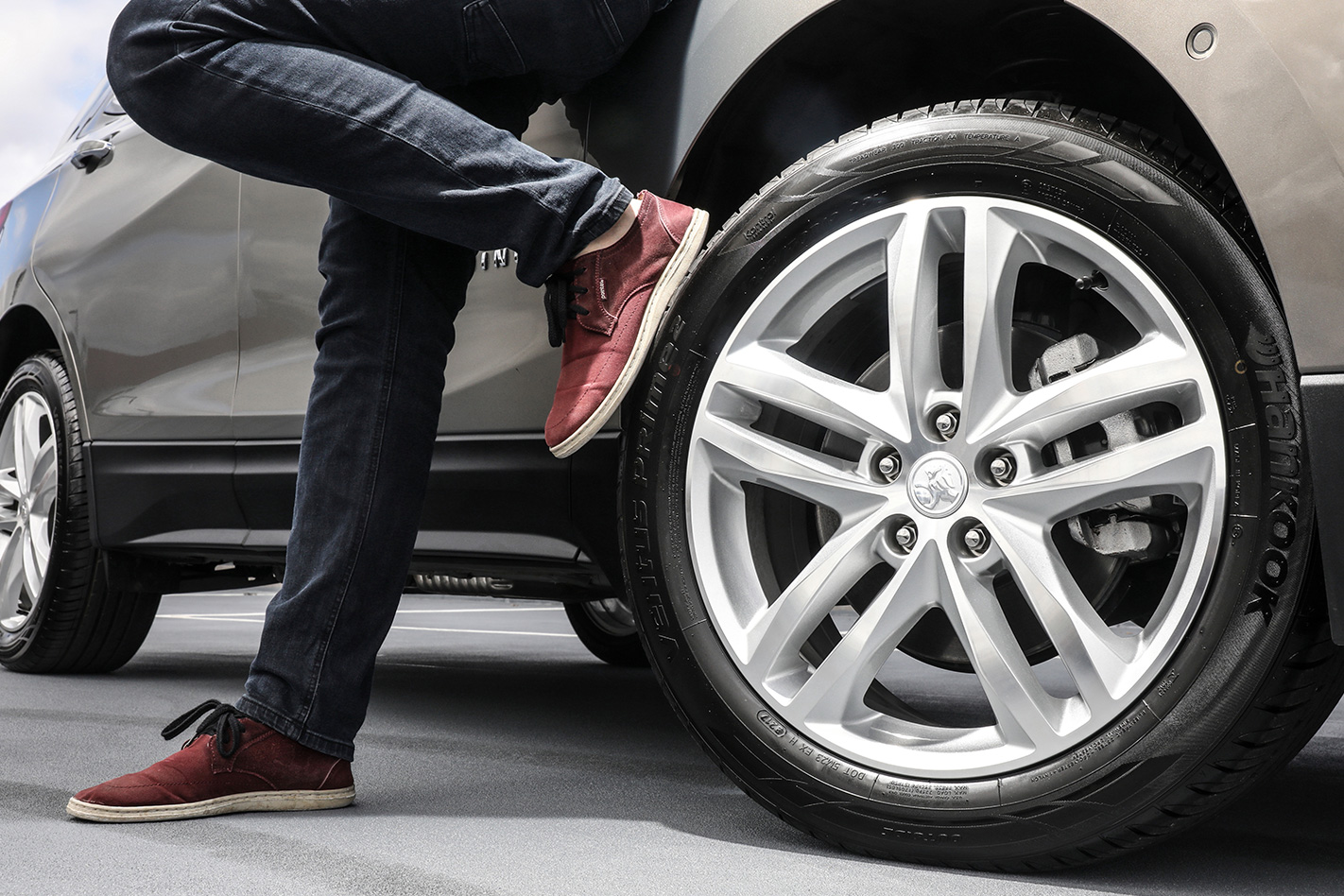
But here was this well-dressed young whipper snapper from Holden HQ politely demanding the keys to the LT and dangling the tempting carrot of the full-fruit LTZ-V all-wheel drive. I mean, who was I to argue?
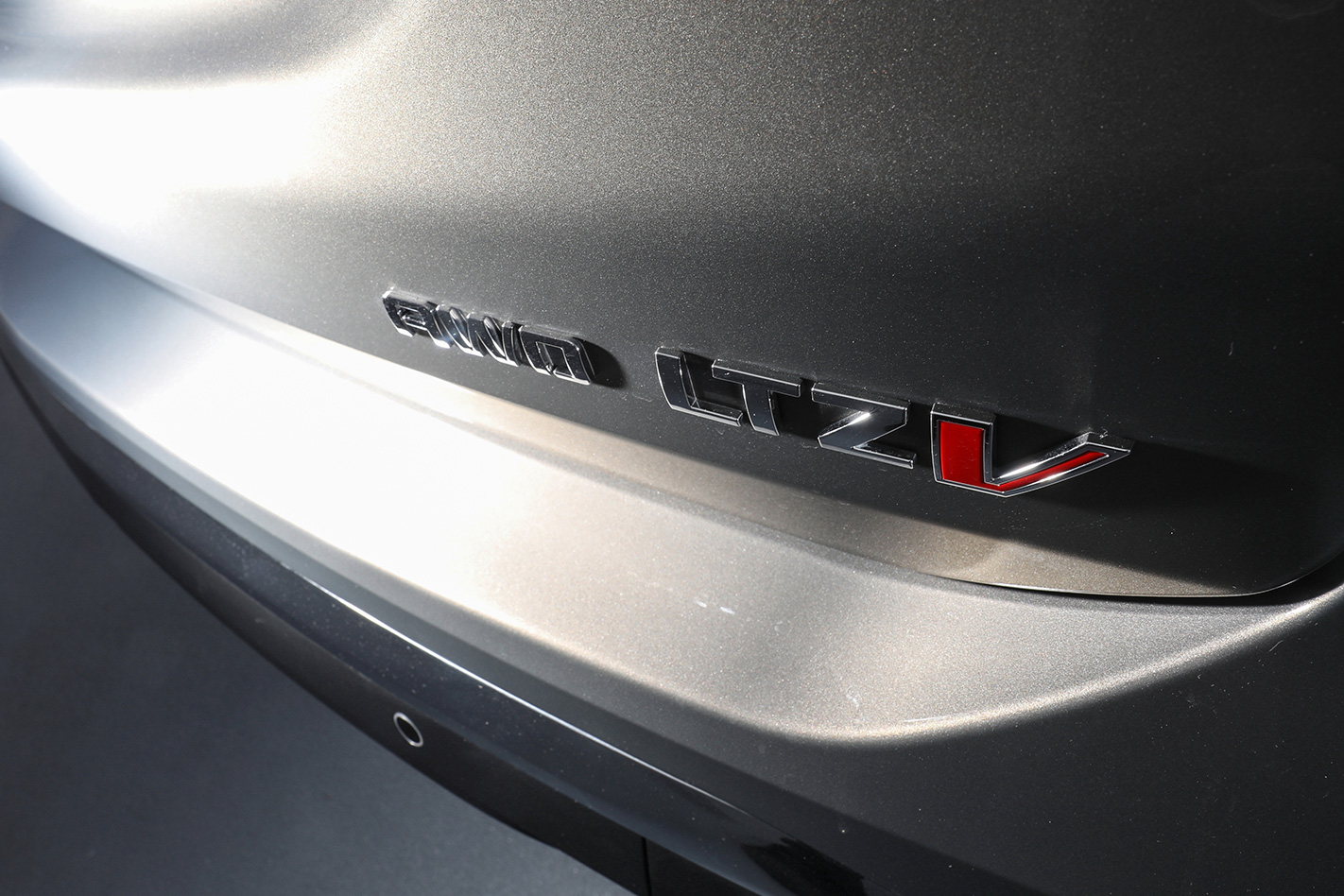
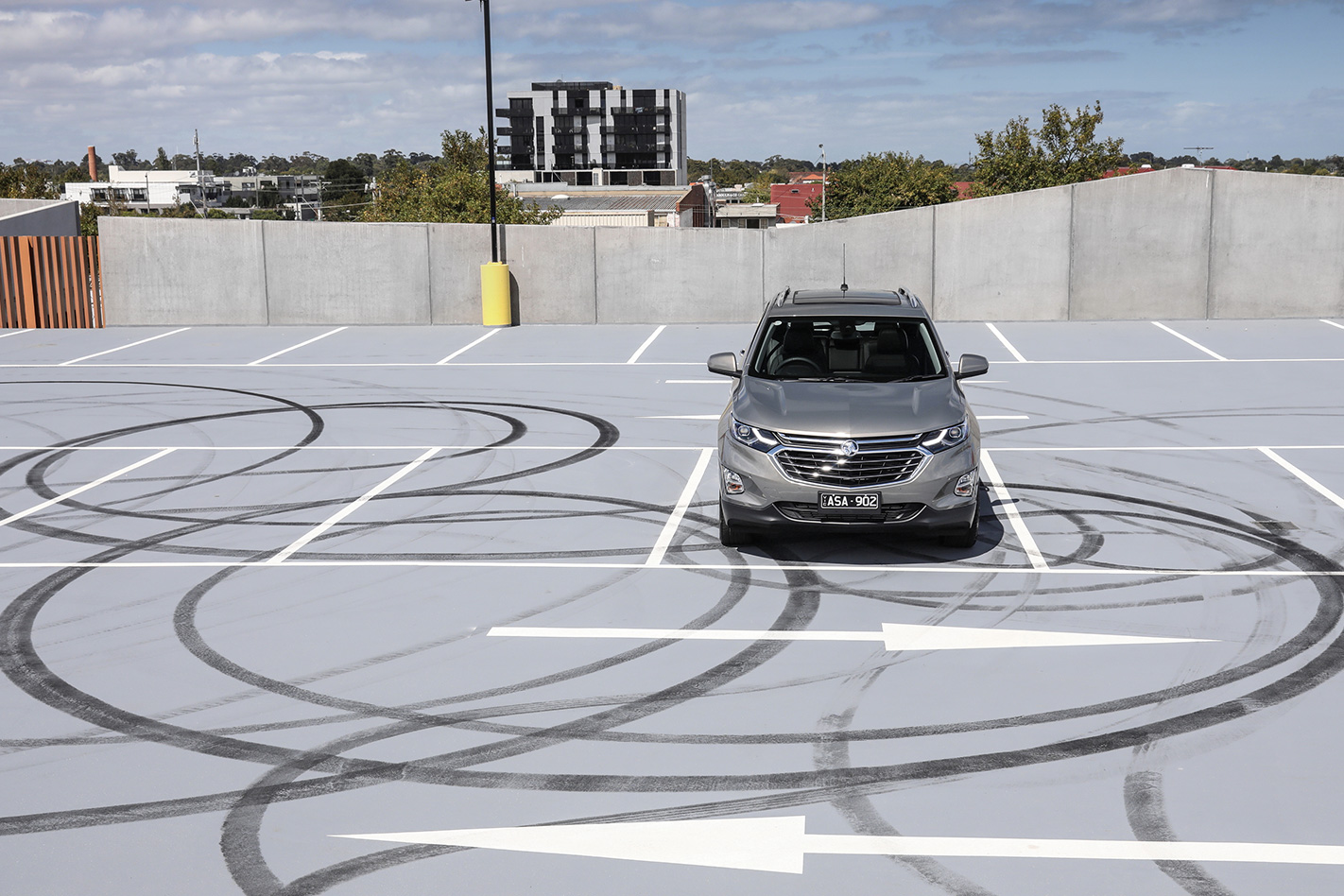
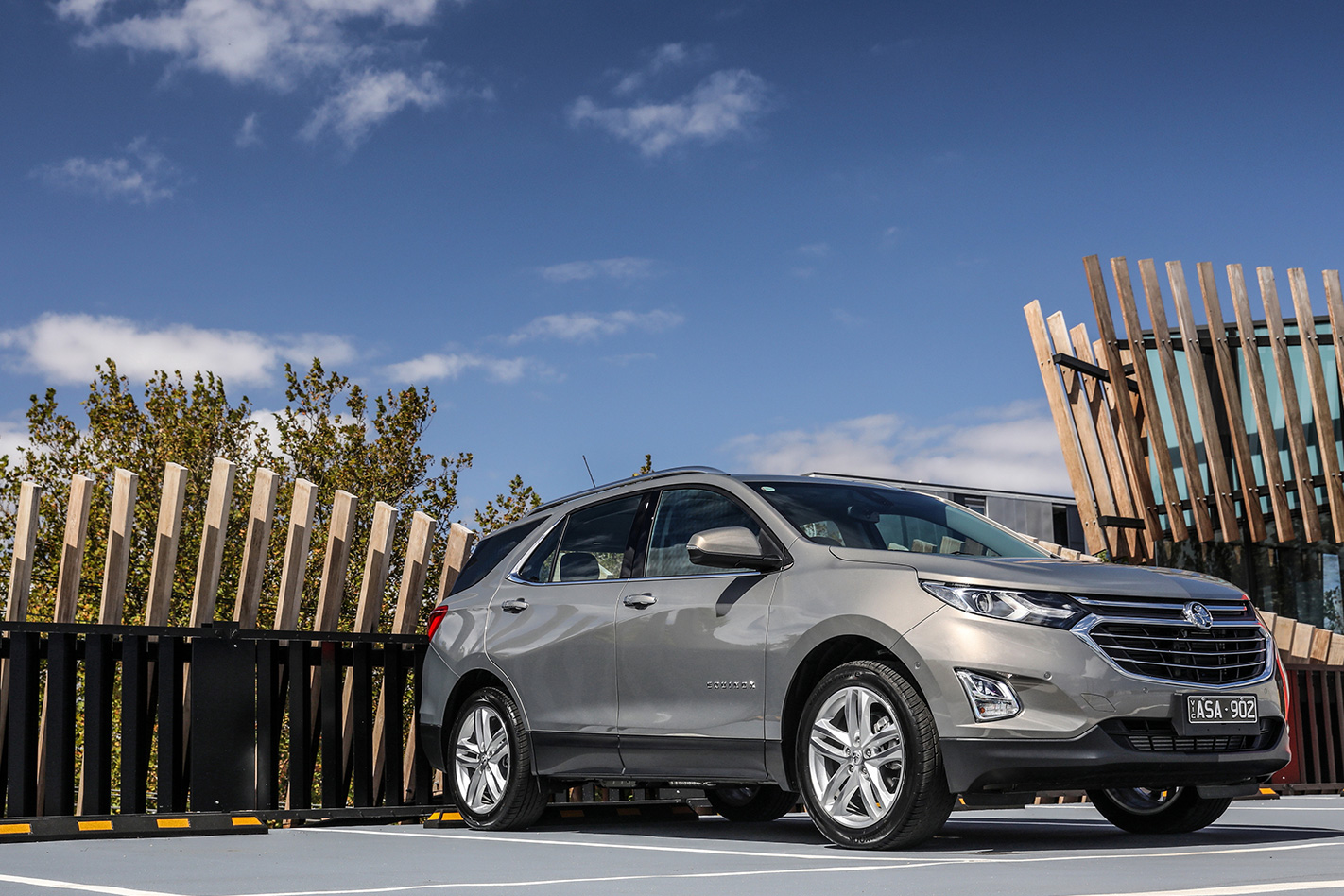
And that, dear reader, is why you’re reading a review of an Equinox LT, on pages graced by images of an LTZ-V.
As I explained to the Repo Man, I’d had the LT for such a short period that we hadn’t even got the beret wearers in the photographic department to put down their piccolo soy-lattes long enough to photograph it. Yet my pleas fell on deaf ears and I watched the LT disappear down the driveway from the comfort of the LTZ-V’s cabin. Rather nice in here, actually.
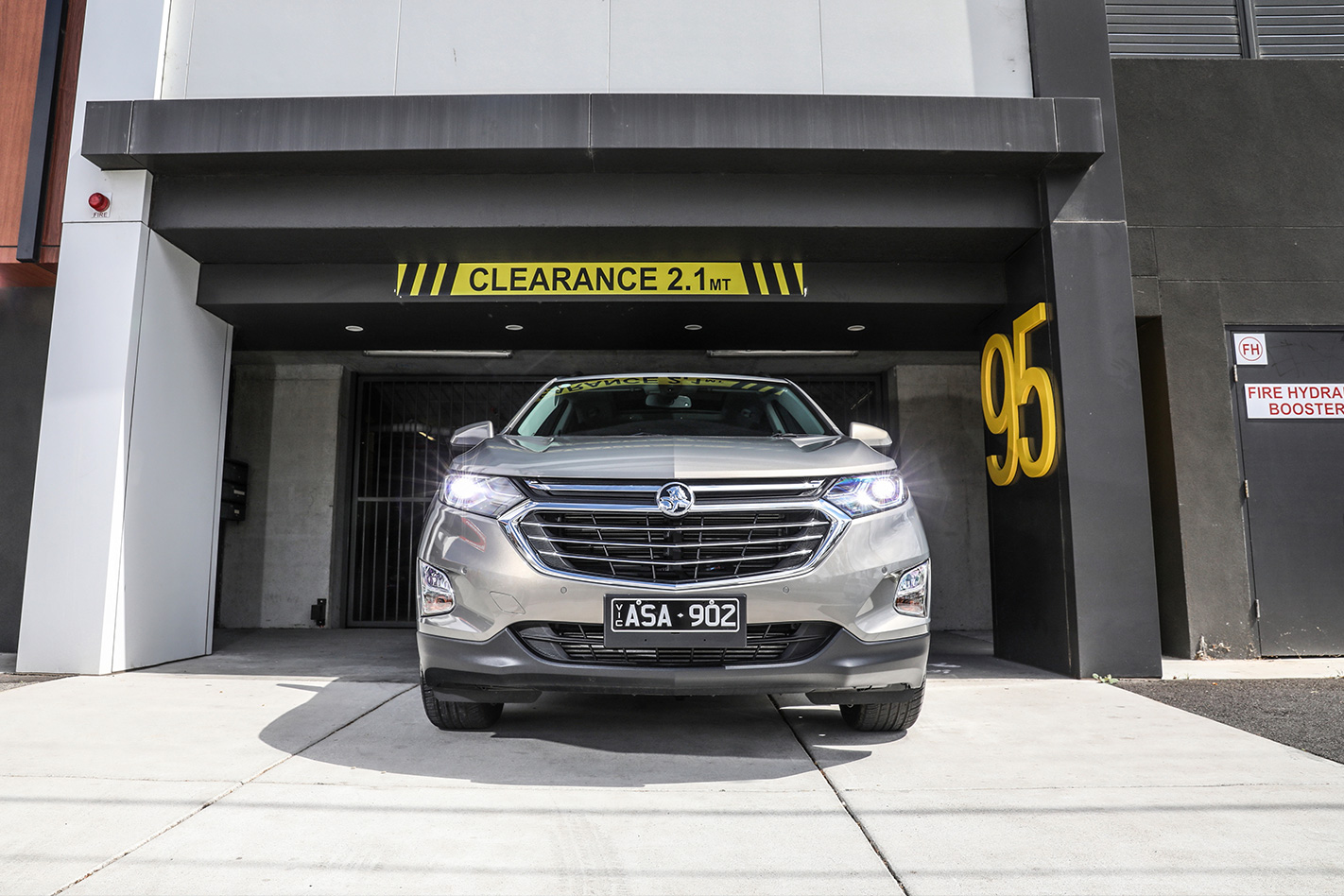
But I digress. Wheels is a mag for all and I can be a man of the people. Fortunately, I’d taken some notes if not photos of the Equinox LT before we were so rudely parted.
First up, it stinks. That’s right, the mid-spec Equinox LT smells like the shop-floor of a Guangzhou plastics factory. To be fair, the overpowering petrochemical aroma did diminish over the short time we had it, but it was still unnecessarily prominent. Interestingly, there are no such issues with the leather-trimmed LTZ-V.
Second, it’s noticeably firmer in the ride than the Honda CR-V I ran before it, but does offer decently responsive steering and handling, and I drove it only one-up, so a load may take some of the edge off the otherwise impressive locally tuned suspension.
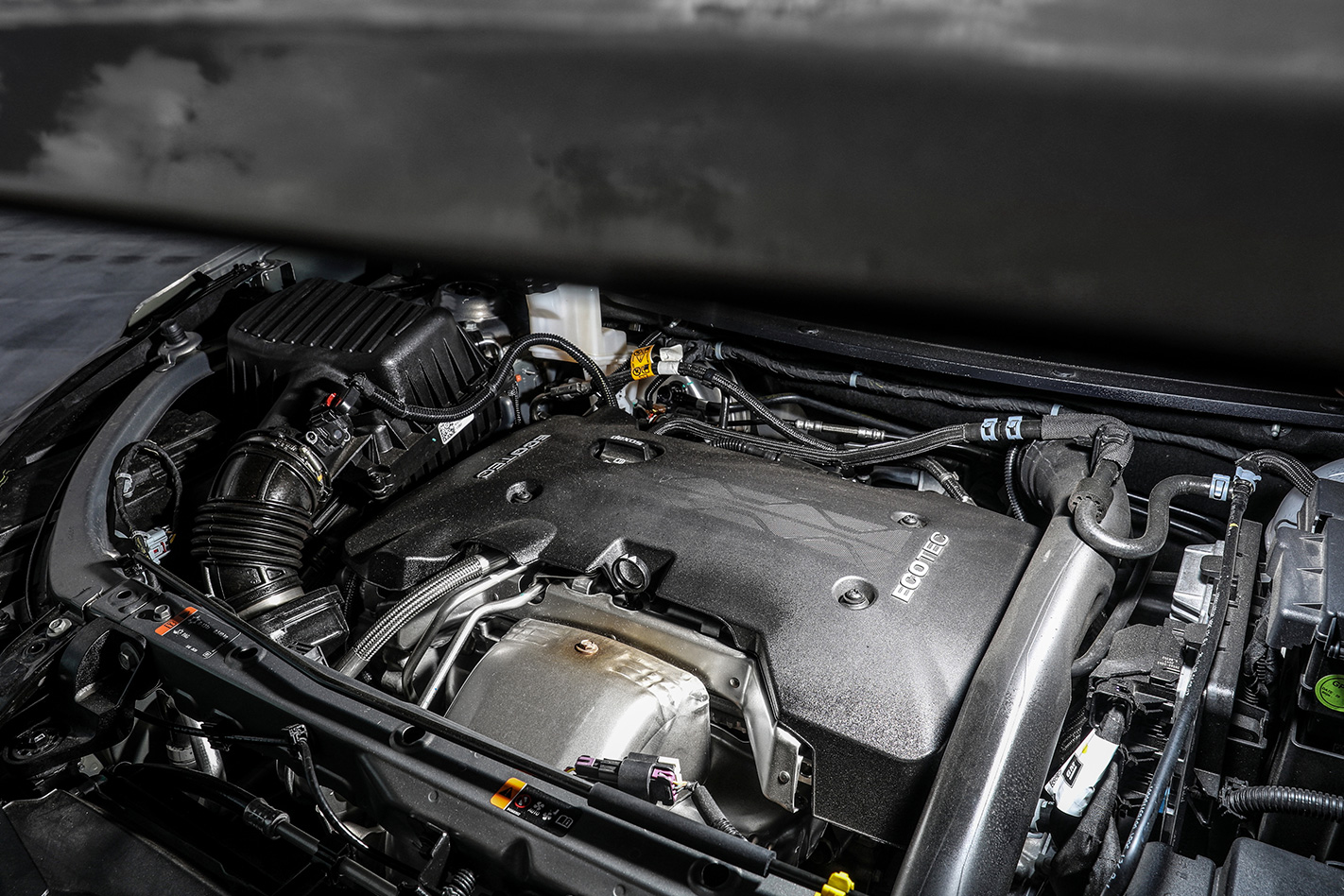
Third, its 188kW/353Nm turbocharged 2.0-litre four-cylinder engine is exceptionally punchy and, teamed with an excellent nine-speed automatic, makes for an impressive drivetrain package, except…
Except, for the fact it’s channelling all that grunt to the 18-inch front hoops, which struggle at times for traction and offer regular wrist-borne reminders of where the torque is going. As Ponch said at Wheels COTY, you really need to opt for the AWD models if you choose the punchier of the Equinox’s two engines.
Fourth, at $36,990 plus $500 for premium paint, it makes a compelling value proposition; especially when you consider that it packs an impressive suite of safety features including AEB and forward-collision alert with head-up warning, lane-departure warning, six airbags and a raft of other safety items.
Fifth, you want a fifth? Sheesh, I only had the thing for five minutes. Tell you what, come back next month and I’ll tell you about my new wheels: the bright, shiny Equinox LTZ-V pictured here with electric everything and AWD that also happens to smell nice, okay?
Update #1
By Ged Bulmer
LAST MONTH we detailed how our latest long-termer had started life as a humble $37,490 Equinox LT, only for it to be upgraded in a matter of weeks to the full-fat LTZ-V.
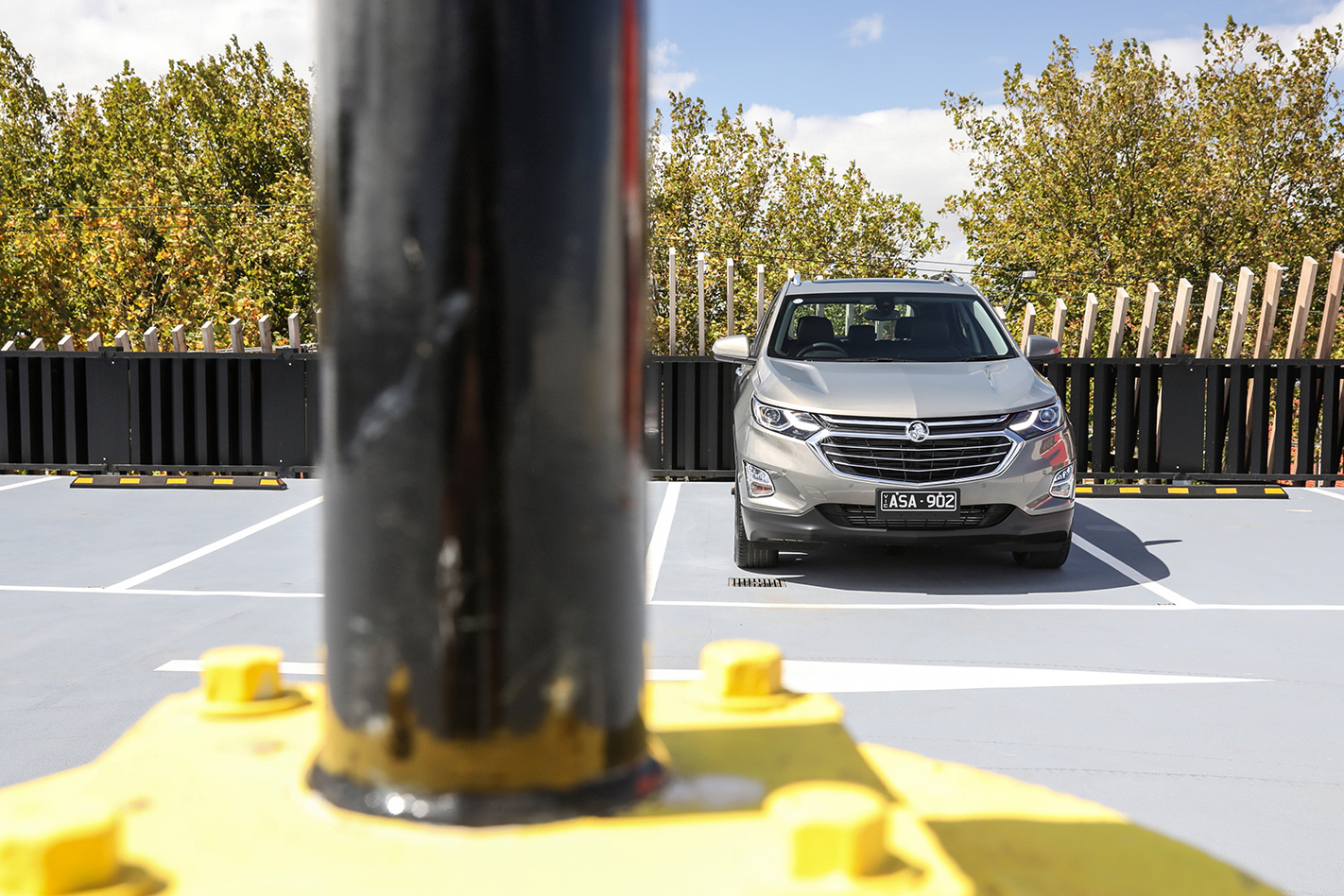
The latter sits at the top of an Equinox range that starts at $27,990 for the LS manual, and steps up progressively through seven models to this, the $46,290 flagship.
The entry-level LS and better-equipped LS+ make do with a 127kW/275Nm 1.5-litre four-cylinder turbo-petrol, hitched to a six-speed manual that drives the front hoops.
The rest of the Equinox range benefits from a punchier 2.0-litre turbo/nine-speed auto combo and the choice of front- (LT and LTZ) or adaptive all-wheel drive (LTZ and LTZ-V). All-paw traction costs $4300 as an option on the LTZ, but comes standard on ‘our’ LTZ-V.
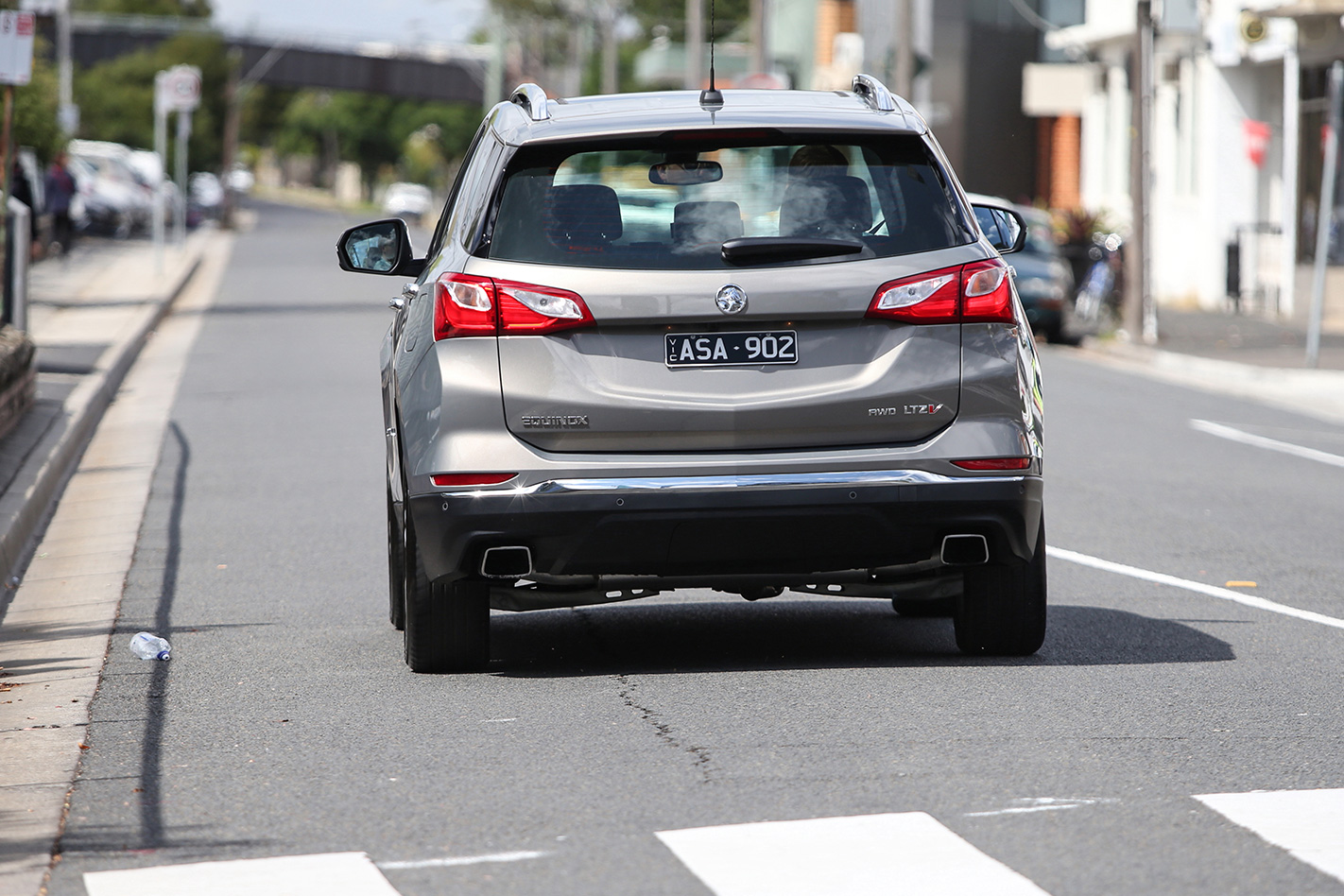
Thus equipped, the top-spec Equinox presents with a highly competitive drivetrain that blows away key rivals like the Mazda CX-5, Honda CR-V and Nissan X-Trail when it comes to power and torque.
With 188kW/353Nm on tap, the LTZ-V isn’t only the most powerful SUV in its class but the quickest too, with its sharp shifting nine-speed auto helping it hit 100km/h in 7.3sec.
That’s a good start and it’s backed by an impressive list of standard equipment designed to turn the heads and open the wallets of consumers who probably don’t yet know what an Equinox is, let alone have it on their shopping list.
For the record, it’s either of the two points on the celestial sphere where the celestial equator intersects the ecliptic… Got it? Good.
For anyone at that stage in their new car journey, it’s worth investigating the entire Equinox range, since even the base LS has 17-inch alloys, six airbags, rear camera and a 7.0-inch touchscreen with Apple CarPlay and Android Auto. The latter could, of course, be dead handy if the sundial packs it in.
For buyers more safety than budget conscious, the $32,990 LS+ adds a suite of active safety features including AEB, Lane Keep Assist, Lane Departure Warning, Forward Collision Alert, Blind Spot detection, Rear Cross Traffic alert, and a Safety Alert driver’s seat (see above).
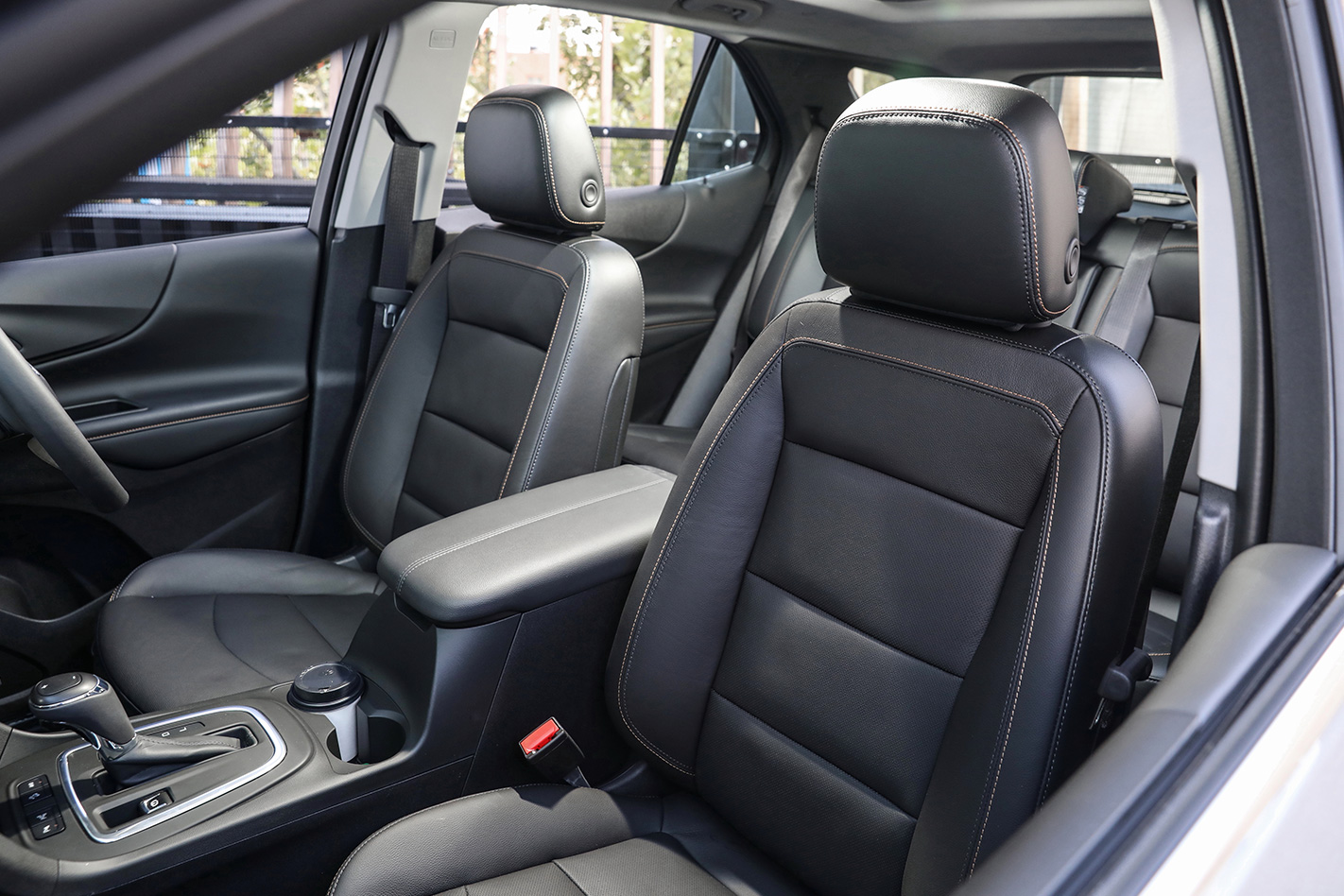
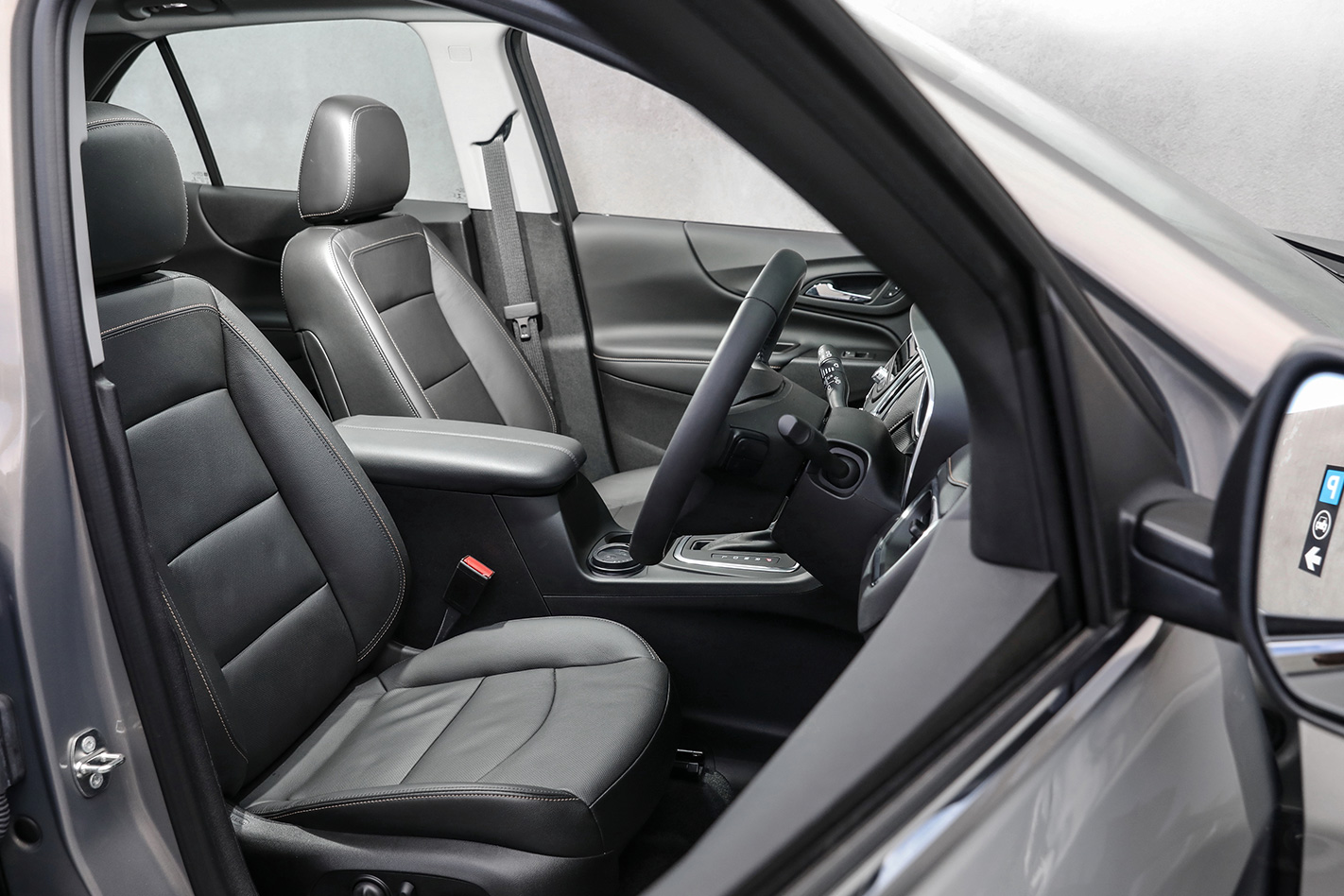
The trend continues up and through the range, until you arrive at the seriously well-kitted LTZ-V, which adds goodies like 19-inch alloys, an 8.0-inch screen, panoramic sunroof, heated/cooled leather seats, power tailgate, wireless phone charging, Bose premium audio and more.
It’s a competitive package, yet it’s clear Holden has its work cut out to increase its share in this saturated segment, which currently sits at just two percent.
In coming weeks our patented Bulmer Family Torture Test will reveal if the Equinox has what it takes.
Update #2
By Ged Bulmer
SOMETIMES progress isn’t always, well, progress. Take the example of the Continuously Variable Transmission (CVT). It’s been with us in one form or another for more than 120 years, but only really took off with Aussies in the late ’80s and early ’90s, thanks to enthusiastic adoption by certain Japanese brands.
Most Japanese car makers today still sell CVT-equipped vehicles, typically as their chosen alternative to the ‘conventional’ torque-converter automatic. The slush-box or ‘slusher’ is far more familiar to Australian motorists, as it’s been the preferred two-pedal option for much of our modern motoring history.
This is due in no small part to GM having had such a prominent presence in our market via Holden and, by extension, to the fact it was GM’s Cadillac and Oldsmobile divisions that first introduced the automatic transmission to mass-produced cars in 1940.
Fast forward to 2018 and despite being a relative newcomer to this market, the CVT is perceived in some quarters as the cleaner, greener and more technically sophisticated option. Meanwhile, the ‘humble’ auto is seen as a bit old-school.
However, having just spent a few days with a CVT-equipped Japanese-brand SUV, I’m grateful GM opted to fit our Equinox with a particularly good automatic instead. In my view, the experience of driving CVT-equipped vehicles remains almost universally disappointing; whereas the Equinox’s excellent nine-speed automatic is anything but.
Dubbed the 9T50 in GM’s internal code, this is an automatic that responds quickly and decisively to throttle inputs, shifting effortlessly up and down its well-spaced gear ratios. Crucially, it does so without the mid-range favouritism and droning engine note that characterises some of its CVT-equipped rivals.
Of course, having six, seven, eight or nine forward ratios is academic if the engine doesn’t have the grunt to effectively pull those gears, but that’s not an issue with the Equinox’s punchy 188kW/353Nm 2.0-litre four pot.
Within the 9T50’s casing, gears eight and nine are overdriven, while seventh is direct drive. In some ’boxes such overdriven gears are rarely used, unless driving at high speed in open-road conditions, but the Equinox makes extensive use of its ninth cog.
GM engineers are on record as saying the ’box was designed to ensure the tallest gear delivered go and not just show, and that it can shift from any gear to any other gear (third to fifth for instance), depending on driver inputs.
The wider spread of ratios also means smaller steps between the lower gears, reducing shift shock and offering smoother operation. 9T50 has been optimised for stop-start as well, with an accumulator that stores pressure so the first clutch gets pressure as soon as the engine fires up, ensuring a consistently smooth step-off.
I’ll take that every time over a CVT’s dullard drone.
Update #3
By Ged Bulmer
CARS are becoming smarter, automatically doing more of the things we once regarded as being part of basic driving competency. So I can’t but wonder: will we, via some sort of devolution, lose the ability to do those simple things at all?
It was English naturalist Charles Darwin who advanced the theory of biological evolution, declaring that species develop through the natural selection of small, inherited variations that are essential to survival. So surely it can go the other way?
Take the stretch, grip and pull manoeuvre long required to close an SUV tailgate. On a growing number of models this has been replaced by the press of a button and the near silent, but far less dramatic whir of an electric motor, gently closing that which we once slammed with gusto.
In the case of the Equinox, this feat can also be performed with a wave of your plate-of-meat beneath the rear bumper to activate a sometimes elusive sensor, or with a press on the key fob.
Reversing cameras are another innovation that surely save lives and a great many bumpers, but which we have quickly become dependent on. Could it be that over the millennia this may lead drivers to develop a frog-like inability to turn our necks? Ribbit!
I’m ancient enough to have been schooled in the near-forgotten art of reversing using the car’s mirrors; today I can simply select reverse and look to the Equinox’s excellent 8.0-inch colour touchscreen for guidance.
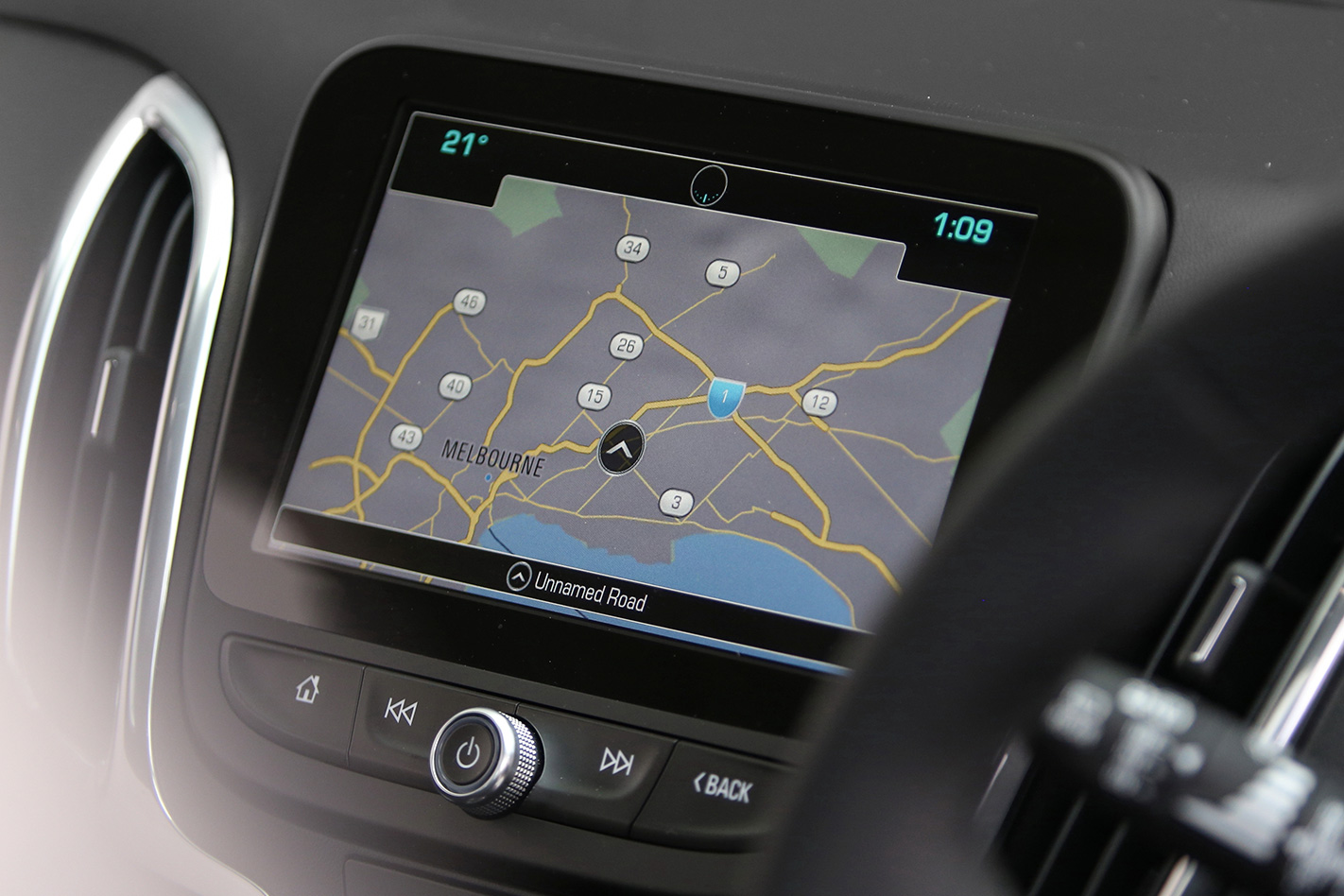
On the subject, I cycle through a regular array of test vehicles other than the Equinox and have recently been reminded of the surprisingly poor clarity in anything other than optimal light from reversing cameras in some premium German marques.
Not so the Equinox, which is exemplary in this regard, its camera and screen combo providing crystal-clear reversing vision of my tricky, dog-leg driveway at any time of the day or night. It’s so good I can spot a southern banjo frog at 50 paces, and swerve in time to avoid the little fellah.
What’s not so optimal, however, is the Holden’s turning circle, which at 12.7m is one of the worst in its class, and a good 1.7m bigger than Mazda’s rival CX-5. Quite why it’s so much larger when the basic configuration of front struts, A-arms and anti-roll bars is similar remains an engineering mystery.
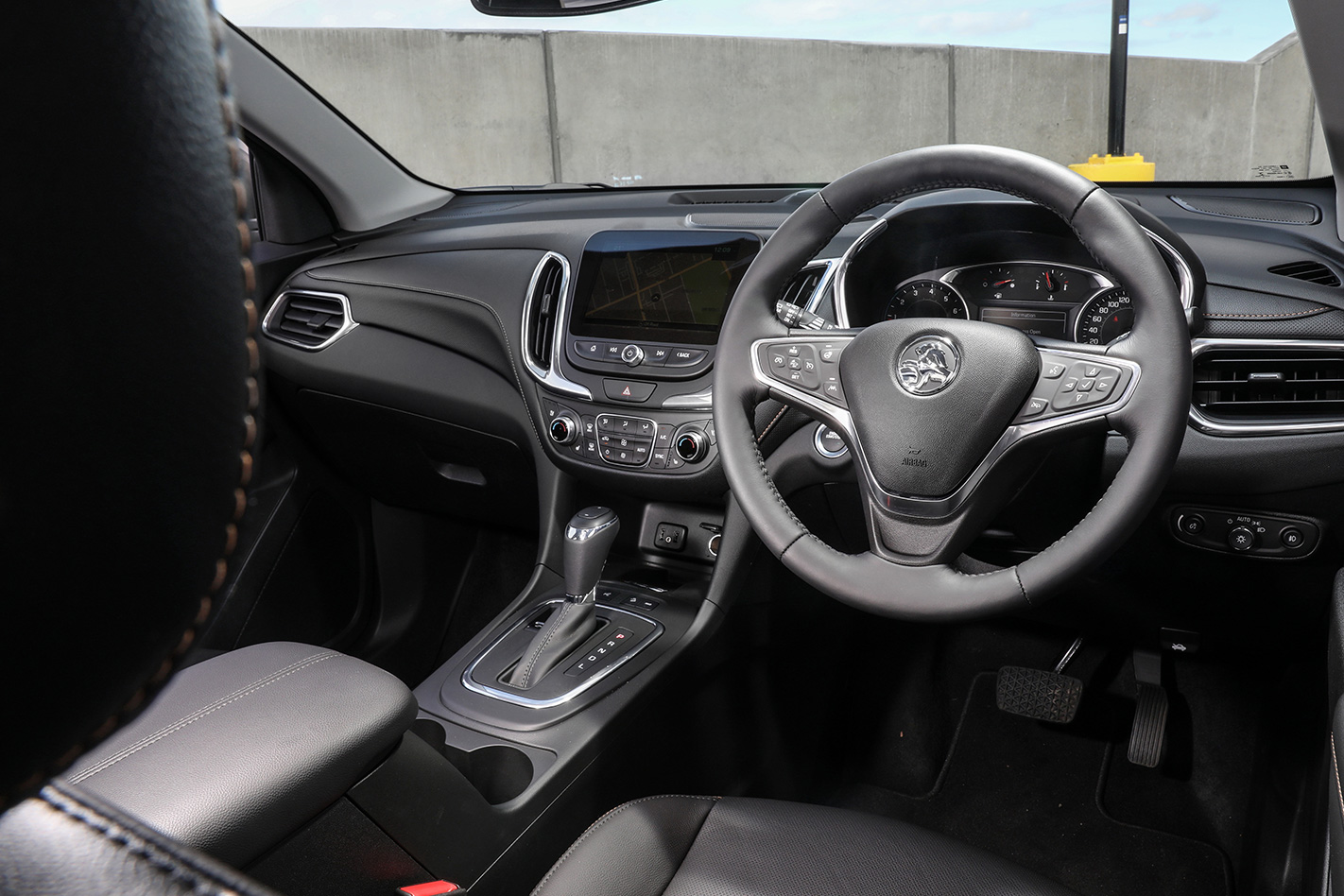
Fortunately, we can say it ain’t so in most other conditions, where the LTZ’s tactile leather-trimmed wheel and consistently weighted electrically-assisted rack-and-pinion steering endow it with above average steering qualities for a mid-size SUV.
Which only goes to show that while drivers and their driving skills may be headed back to the primordial swamp, even something as oft-maligned as the SUV can evolve to a higher place.
Update #4
By Ged Bulmer
At the end of an extended test period with any car the question must inevitably be: ‘would you buy one?’
So to Holden’s Equinox, GM’s flag-bearer in the mid-size SUV class, and a vehicle designed to steal market share from a list of competitors as long as your arm and growing at a pace.
The Equinox arrived on our shores in late 2017 as an unheralded new model, bearing a name plate no-one knew or recognised, to compete in a segment where Holden’s previous offering had been the unloved Captiva.
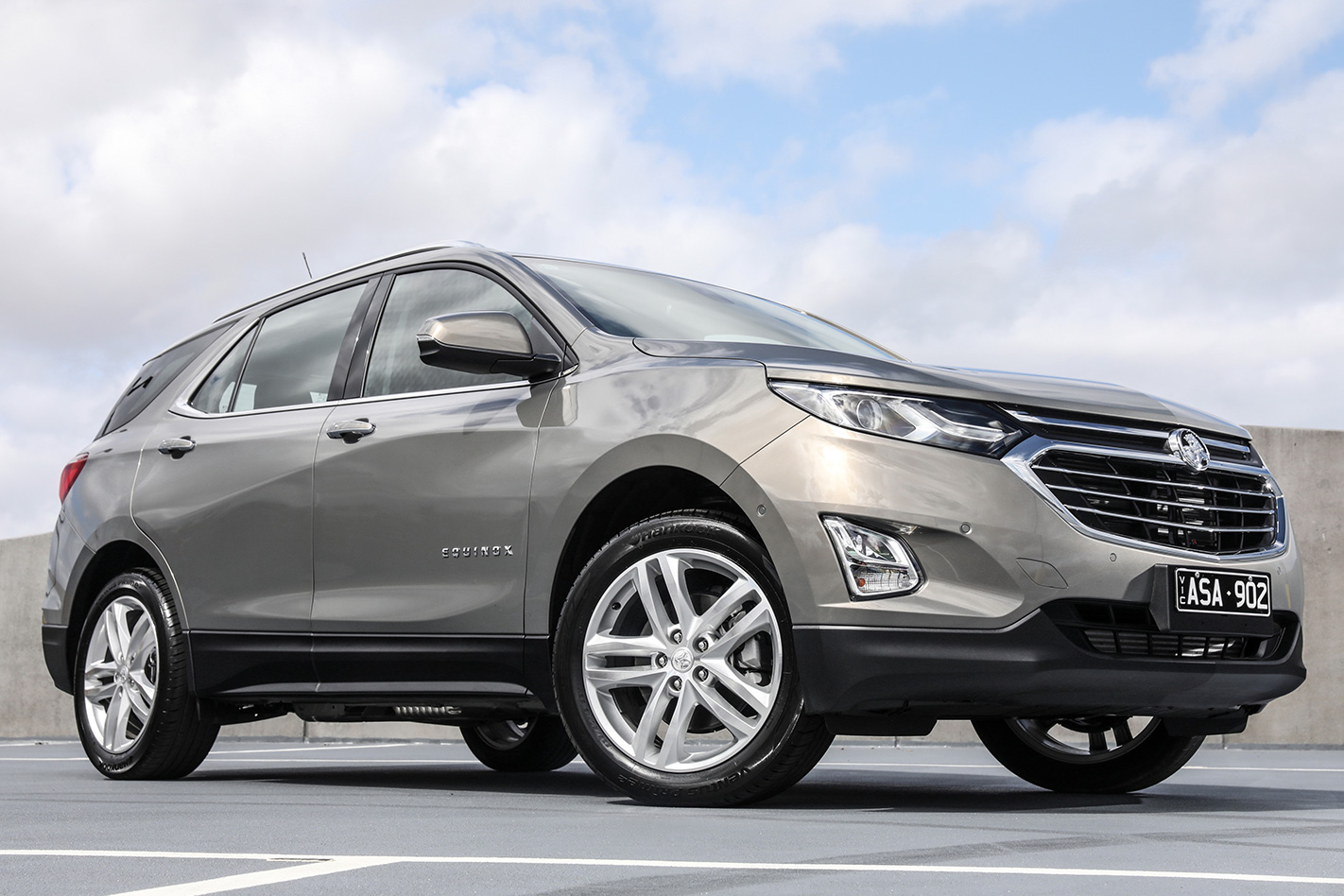
What’s more, it launched into a pall of negativity surrounding Holden, thanks to the impending end of local manufacturing and legitimate questions about the brand’s future.
One year on, Holden is still here and looks to have survived its annus horribilis, though not without some collateral damage, and the Equinox has established a vital toe-hold in the SUV-dominated Aussie market.
The Holden’s 2.1 percent market share places it roughly mid-field in a crowded 23-car category, with plenty of work to do to better its nearest rival, the Ford Escape on 3.5 percent share.
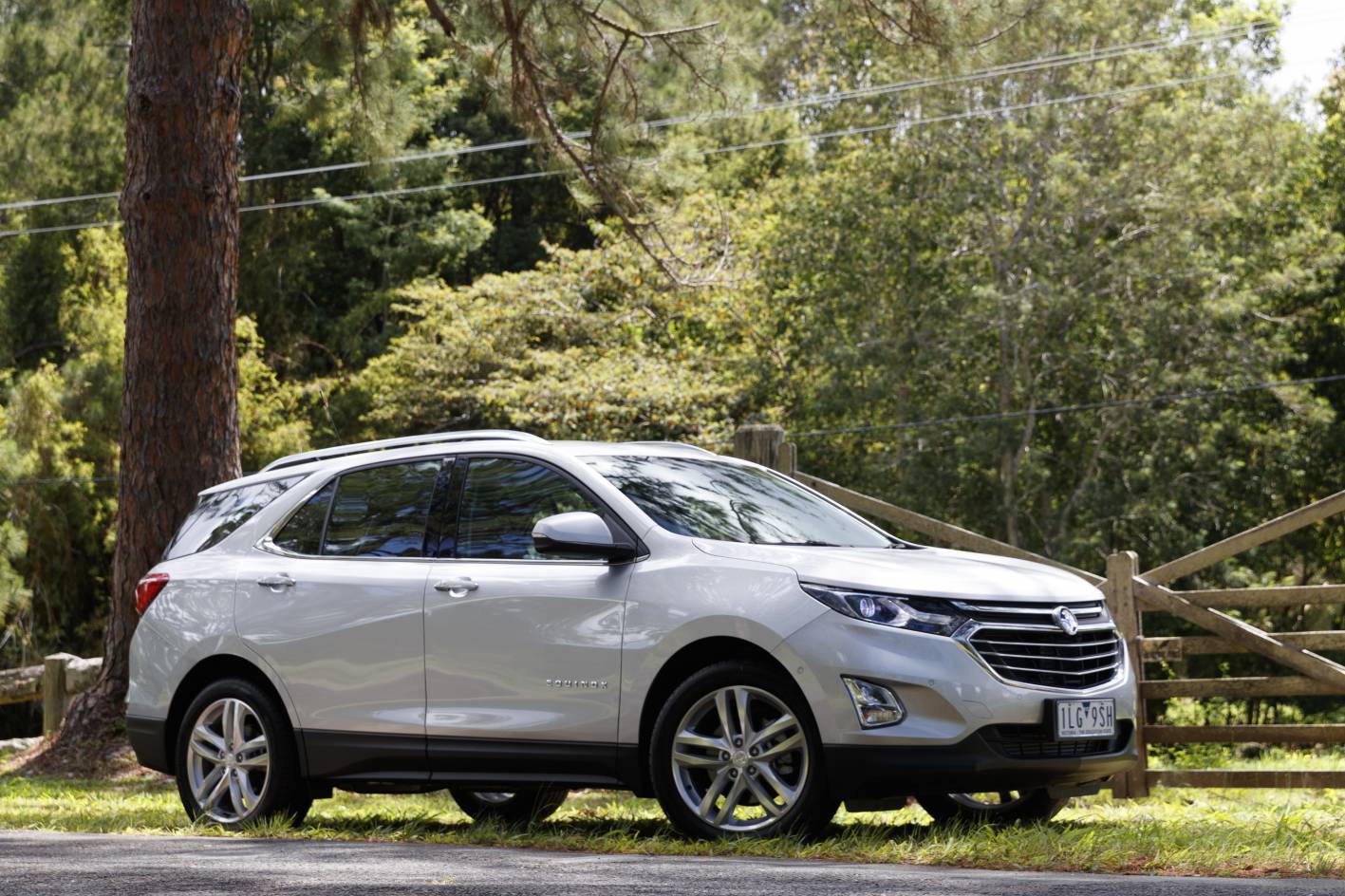
Which means precisely what if you’re considering buying one? Simply, that popular cars tend to have better resale value on the used-car market. Industry experts Glasses Guide reckons the Equinox will be good for circa 55 percent of its purchase price after three years, which is about five percent off the pace of the similarly priced and equipped Mazda CX-5 Akera.
On the plus side, Holden’s recent move to an unlimited five-year warranty brings it towards the top of the class in this regard, with only Kia and Mitsubishi offering longer warranties. That’s great peace of mind for any new-car owner and shows up rivals like the VW Tiguan.
In this top-spec LT-Z V trim, the Equinox also comes terrifically well appointed, with an impressive suite of safety and convenience features that makes it at least the equal, if not better, than the best-in-class.
Here we’re talking goodies like 19-inch alloys, 8.0-inch touchscreen, panoramic sunroof, heated/cooled leather seats, power tailgate, wireless phone charging, and Bose premium audio among others.
Equinox doesn’t skimp on the safety kit either, with six airbags, AEB, lane-keep assist, lane-departure warning, forward-collision alert, blind-spot detection, rear cross-traffic alert, and a safety-alert vibrating driver’s seat, to name a few notable features.
Car-makers sometimes throw such extra fruit at a car to mask a second-rate powertrain, but that’s not the case here, with the 188kW/350Nm 2.0-litre turbo petrol four-cylinder outgunning pretty much all its rivals.
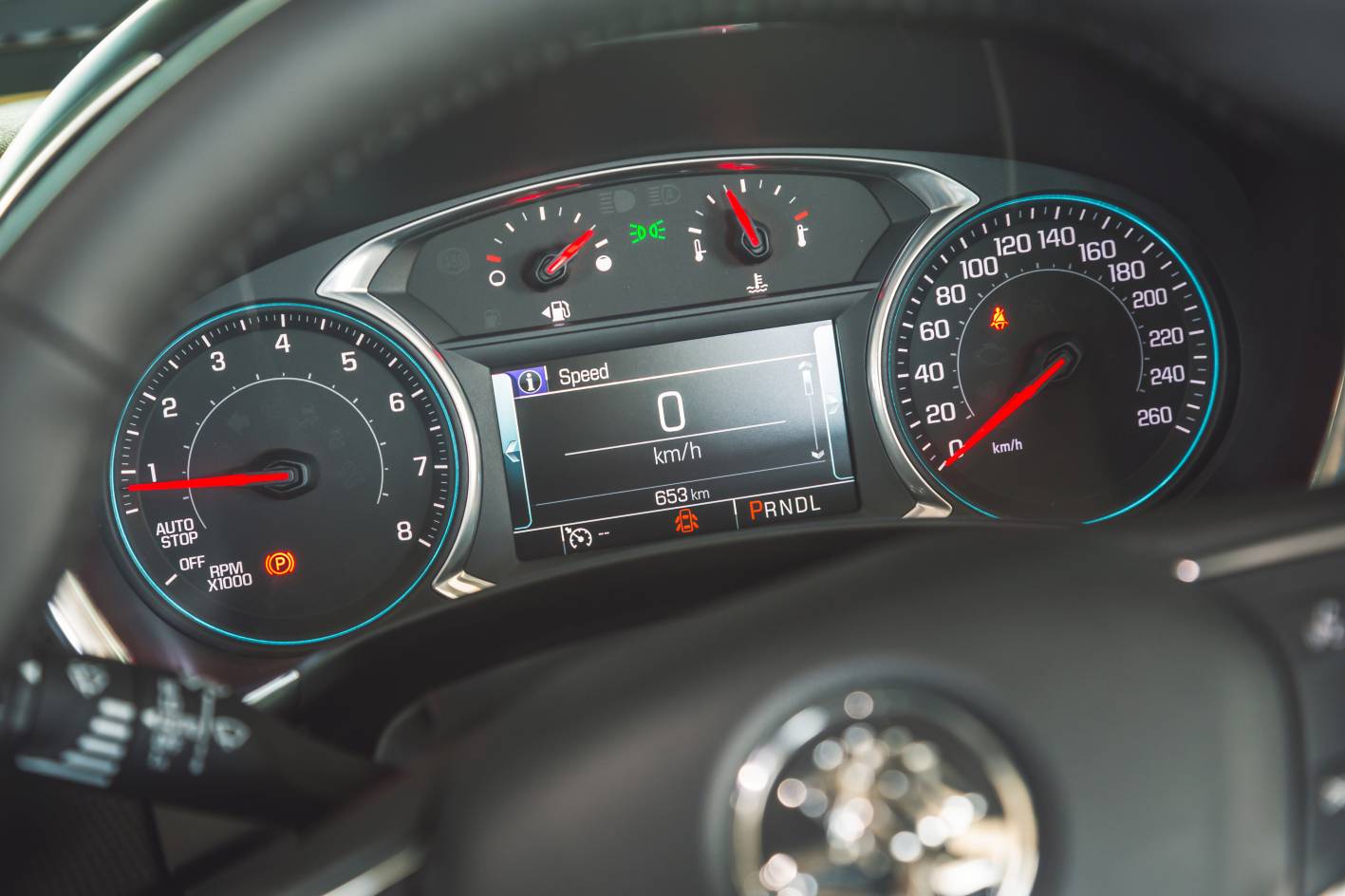
The engine is mated to an impressive nine-speed automatic, which is two or three more cogs than rivals offer, delivering tangible benefits in terms of responsiveness and fuel consumption.
Holden’s local chassis development work means the Equinox ranks above-average for dynamics, its confident handling combined with an impressive drivetrain making it one of the more rewarding mid-size SUVs to steer.
One slight downside to this dynamic discipline is the fact the Equinox, as equipped here with 19-inch alloys, is firmer than some rivals. The Holden’s 12.7m turning circle is also poor, tracing a 1.7m wider arc than the Mazda CX-5.
Of course, interior space is the first and often the final frontier in any SUV race and here the Equinox offers generous front and rear seat accommodation, and a decent-sized luggage bay that’s flat and easily accessed via an electronic tailgate.
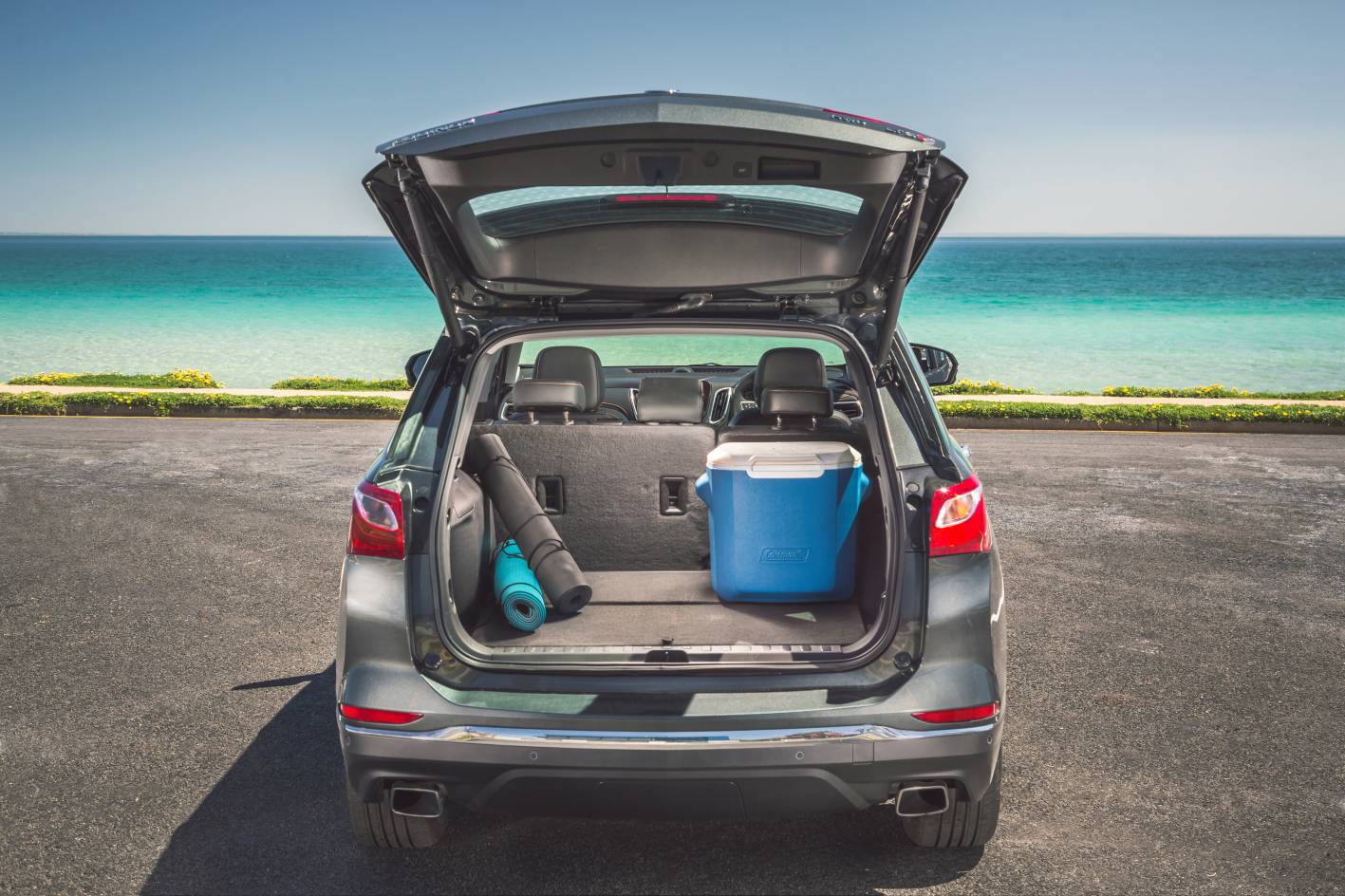
So, to the burning question: ‘would you buy one?’ For me, the answer must remain equivocal, because there are so many factors specific to individual buyers. However, I can say unequivocally that the Equinox should be on your shopping list.
When measured against its mid-sized SUV rivals it’s right on the money in a number of key disciplines, and ahead in several others. Plus, right now Holden is offering a $500 incentive for anyone who tests its wares and then buys a rival brand. That sounds to me like there’s nothing to lose by test driving the Equinox, as we just have, although in our case the cheque is most definitely not in the mail.
Reckon you missed one of the major announcements from Pebble Beach? There were plenty, so we’ve put them all in one place.
You’re welcome!
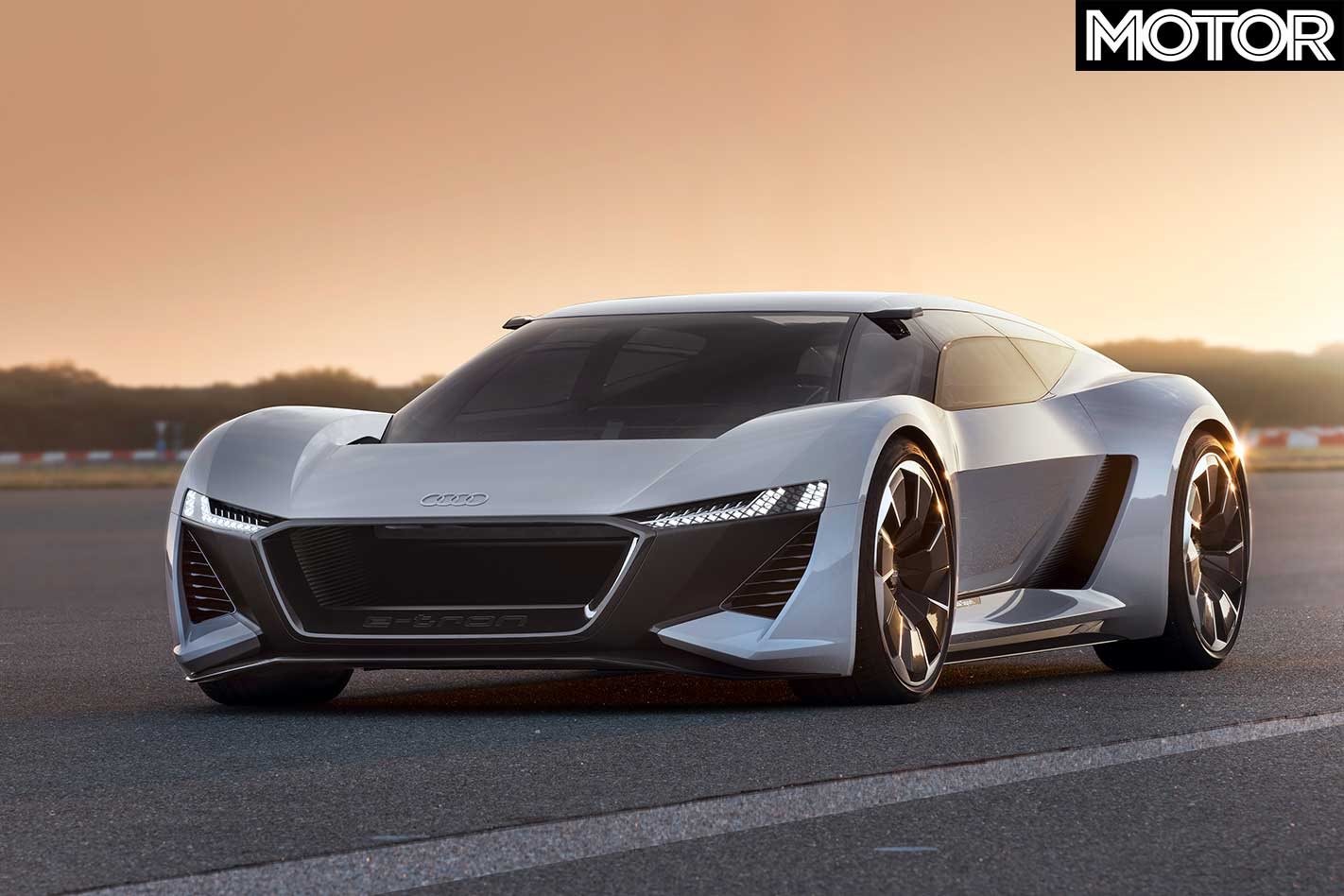
The Audi PB18 e-tron concept has made its debut, giving us a 570kW glimpse at what the future of Audi performance looks like. Audi says 0-100km/h takes just over 2 seconds.
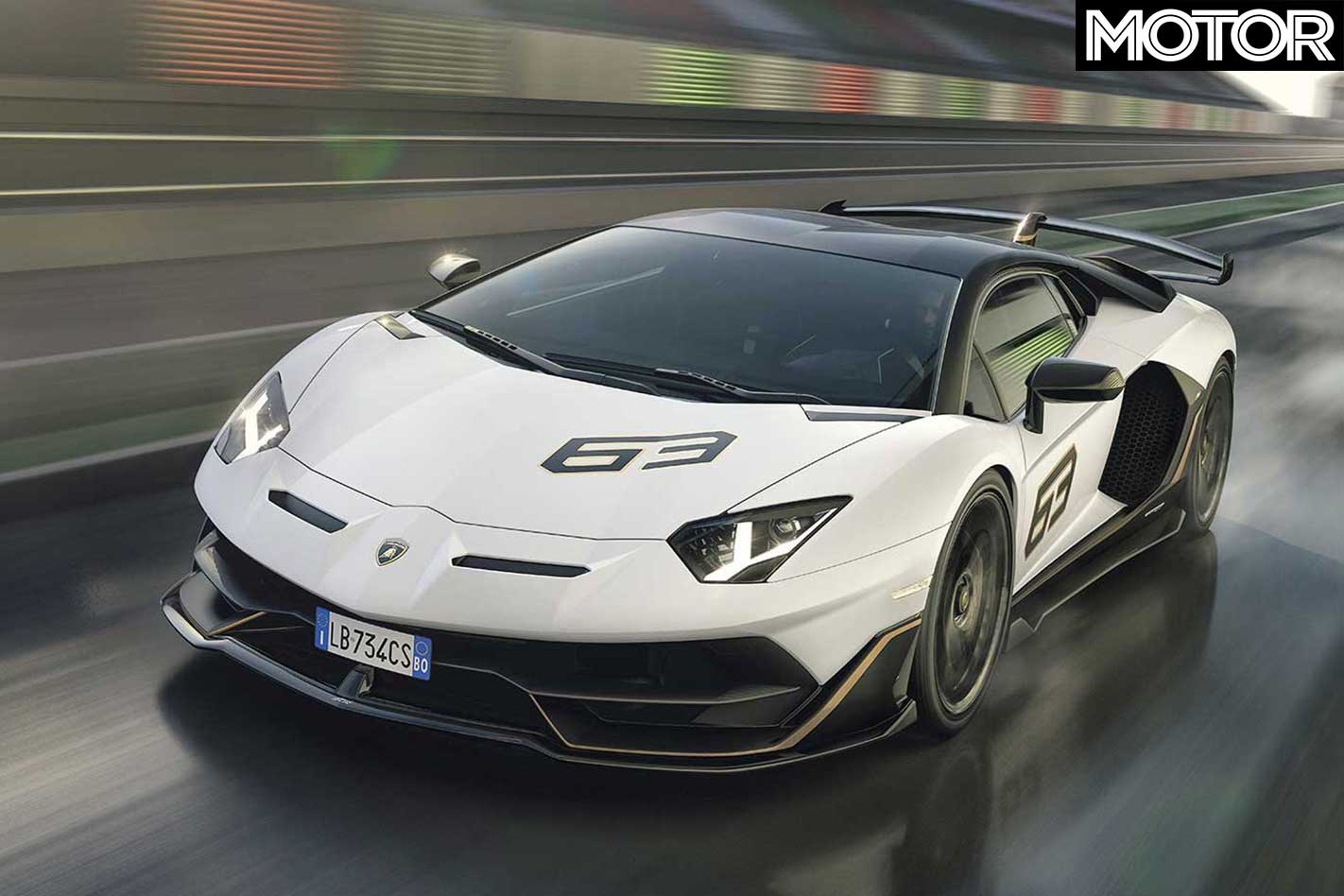
The specs for the Nürburgring record-holder are impressive, as its atmo V12 peaks at 566kW and hits 8500rpm, while a dry weight of 1525kg allows the SVJ to hit 100km/h in just 2.8 seconds.
Project Gold: Rebuilt Porsche 993 911 Turbo
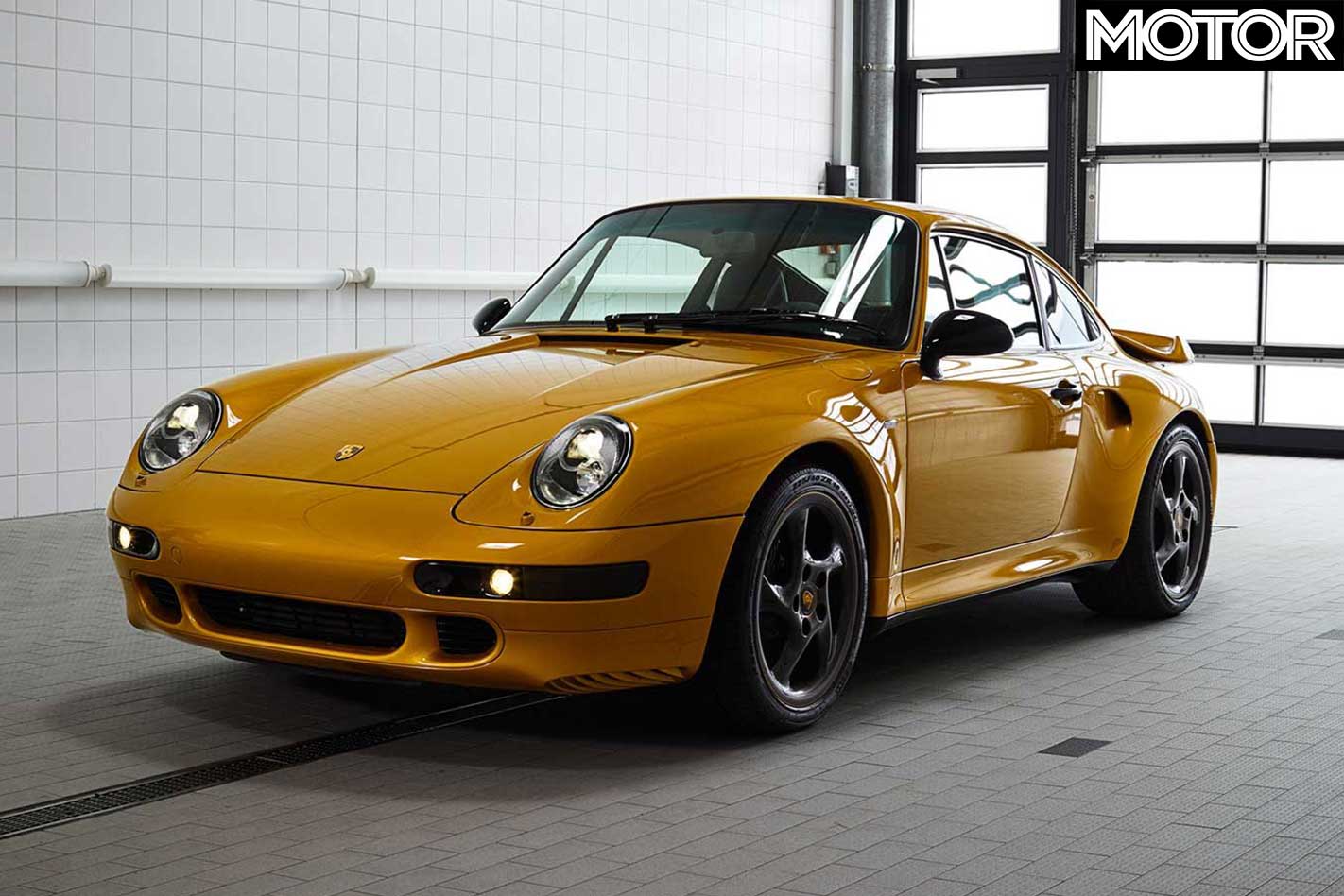
‘New’ Porsche 993 911 Turbo restored using the original shell of a 993-gen Turbo, and a plethora of Porsche’s genuine parts. It’s to be auctioned by RM Sotheby’s at the Porsche Experience Center in Atlanta in October.
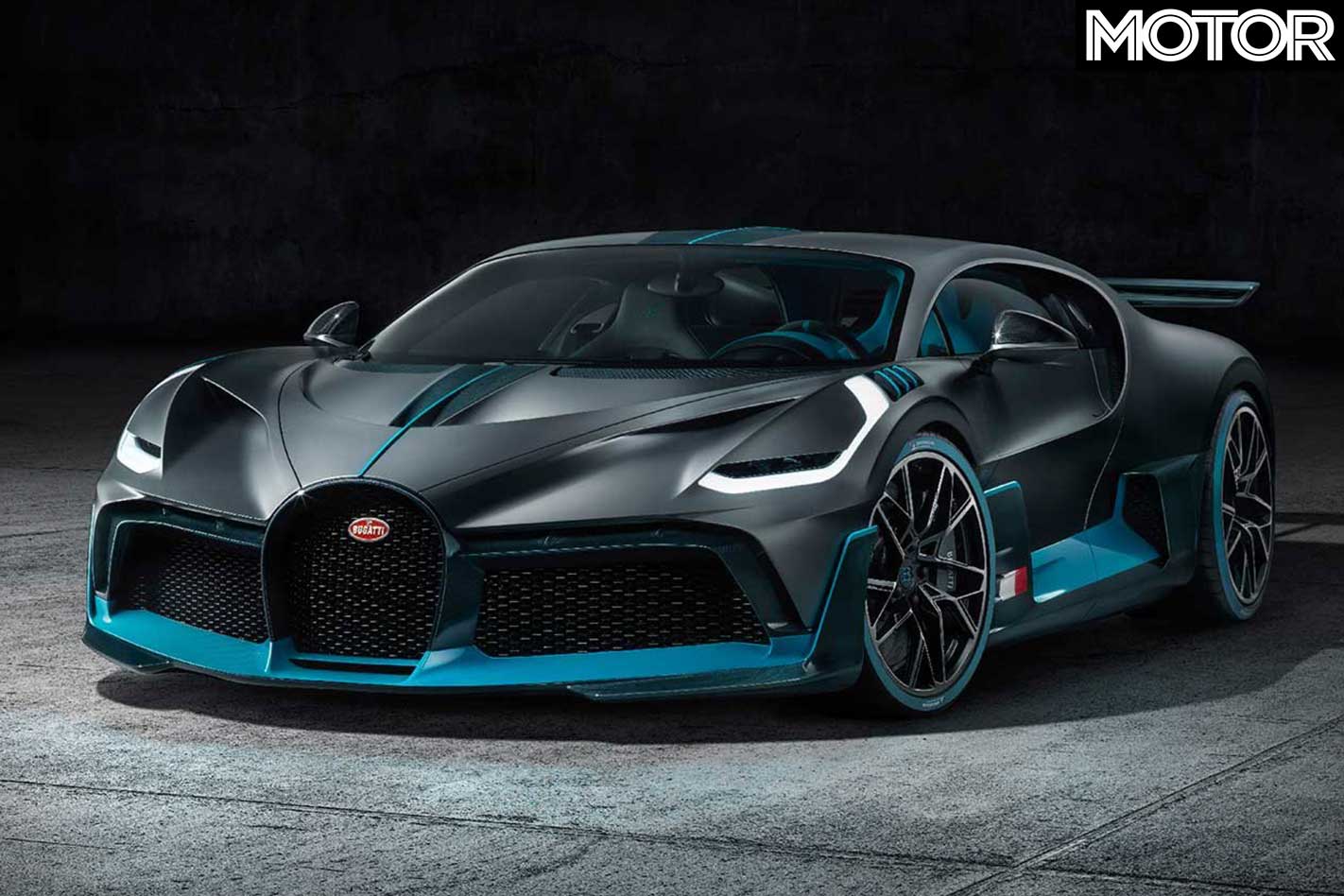
The Divo is to be a more corner-focused car than Bugatti’s previous vehicles, which have been primarily known for breaking top speed records. With the top speed of the Divo limited to 380km/h, it will rely on its improved downforce and handling characteristics to impress.
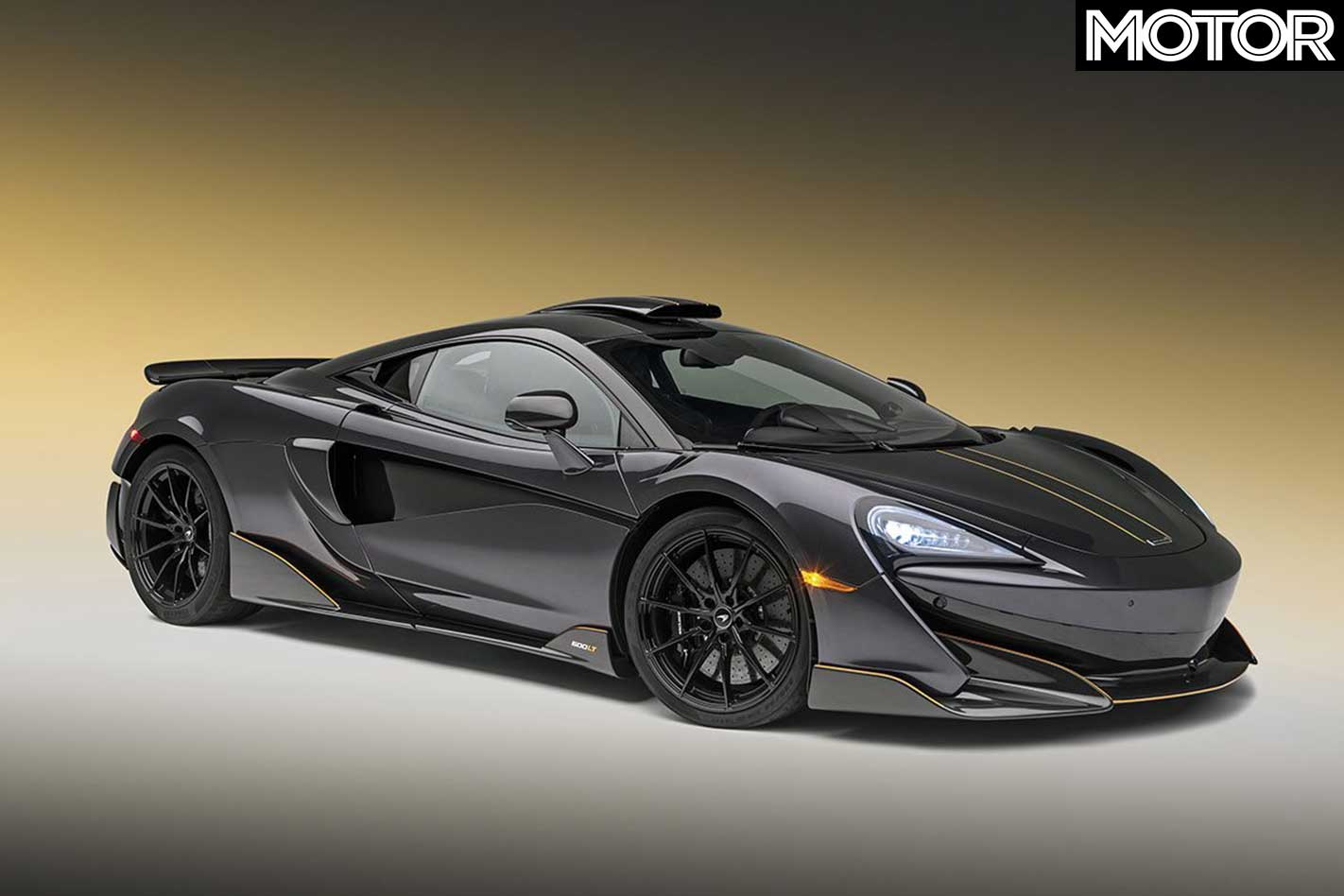
The sinister Stealth Grey 600LT was designed to showcase the extreme customisation possibilities of the McLaren Special Operations, drawing from their ‘Defined’ and ‘Bespoke’ lines. – Wheels
Mercedes-Benz EQ Silver Arrow Concept
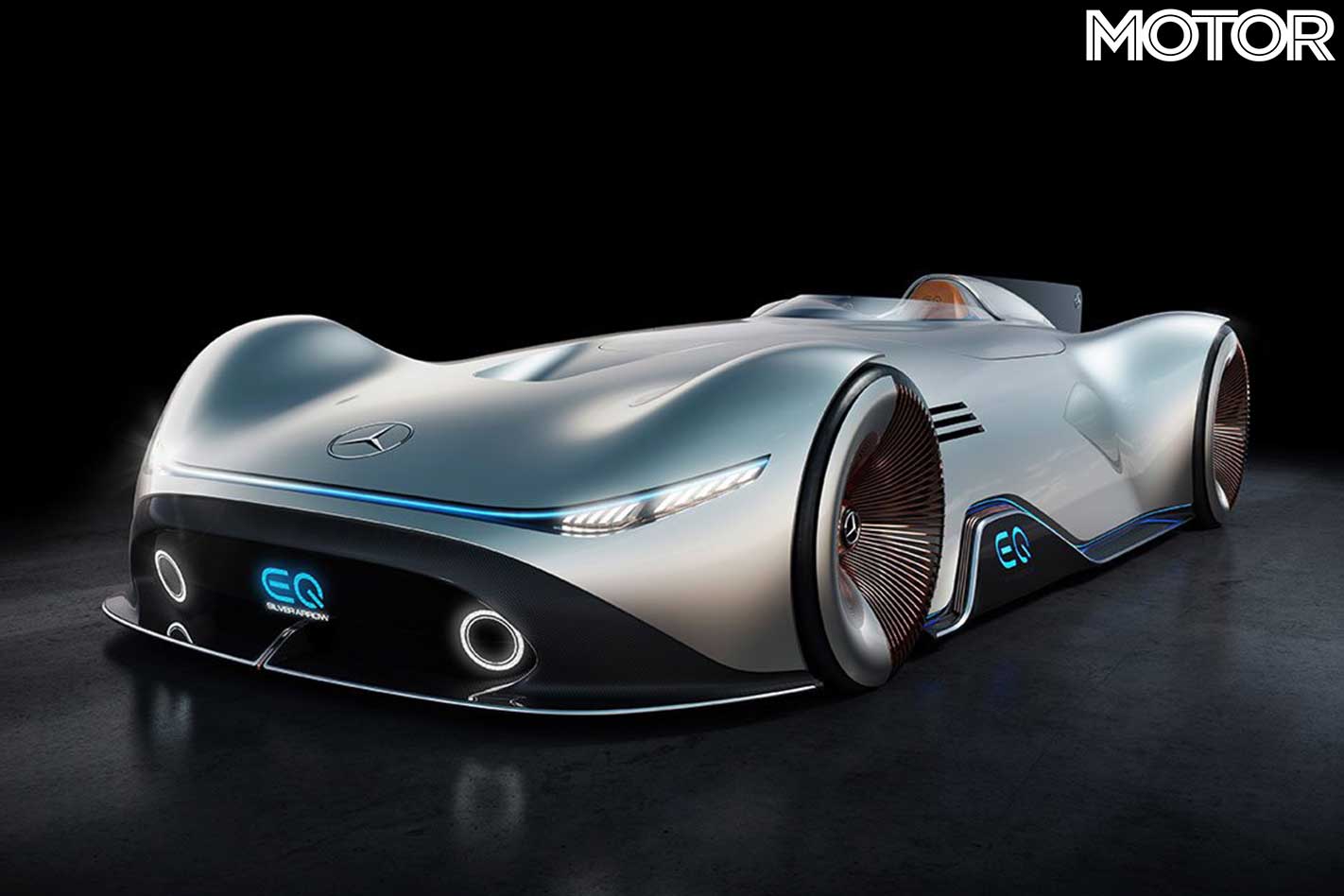
This retro-inspired single-seater is a glorious, jaw-dropping nod to the Mercedes-Benz W125 racer of 1937. Power comes courtesy of a 550kW electric drivetrain, with a range of over 400km. – Wheels
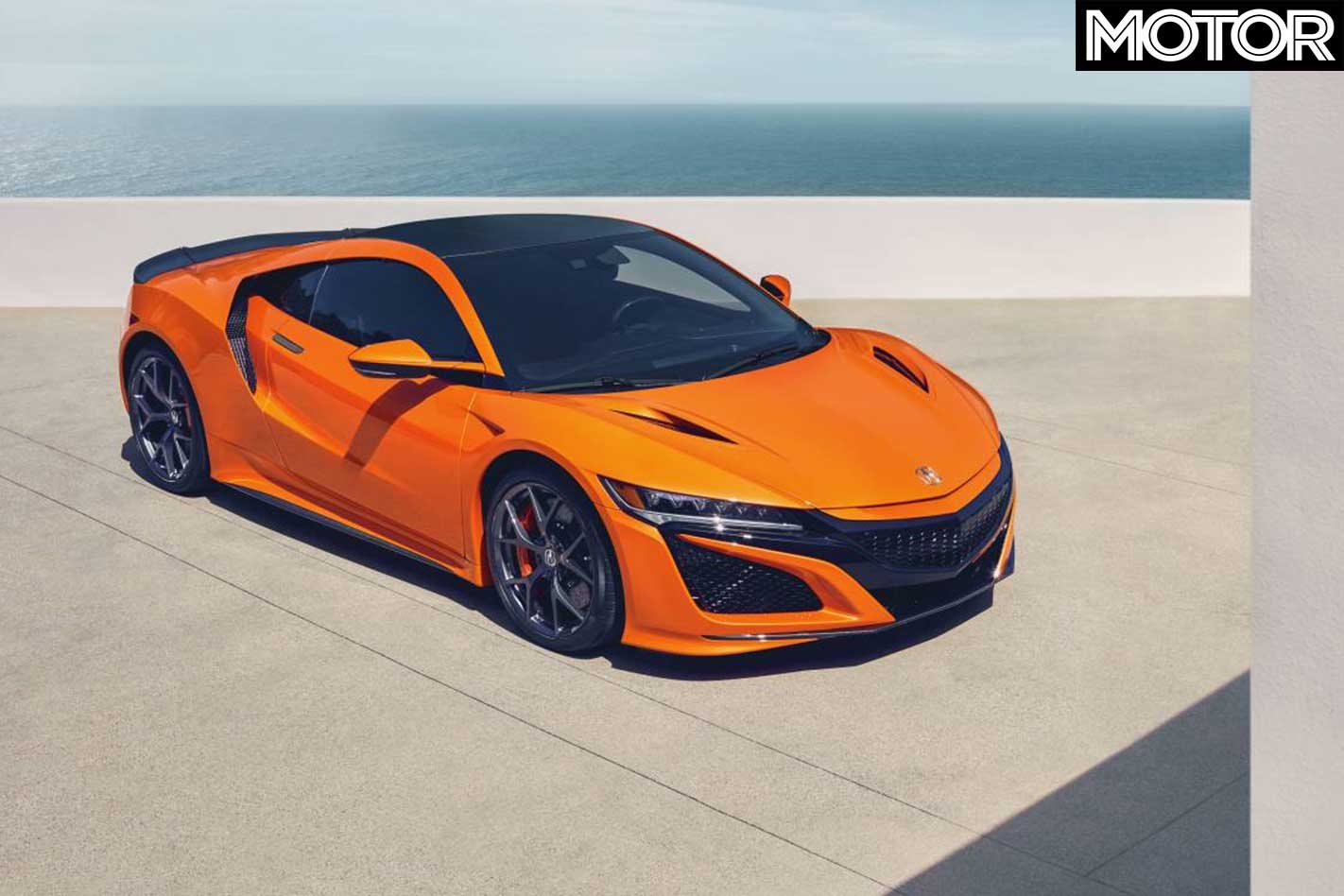
Updated hybrid supercar scores slightly different look and revised chassis tuning which the company hopes will make the NSX more dynamic.
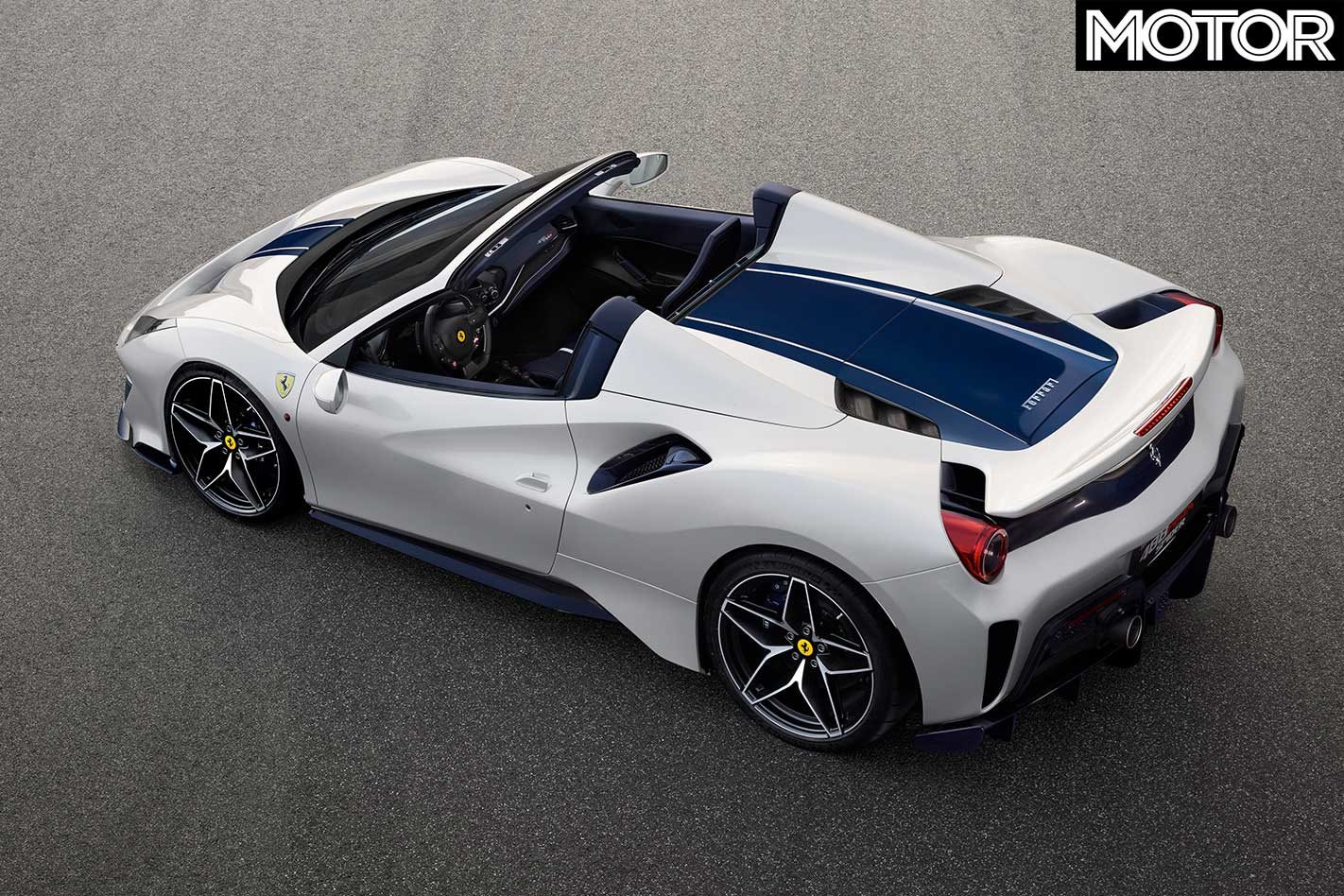
It’s the 50th drop-top Ferrari has built in its seven-decade history, and the second model to utilise Ferrari’s most powerful V8 ever after the Pista Coupe.
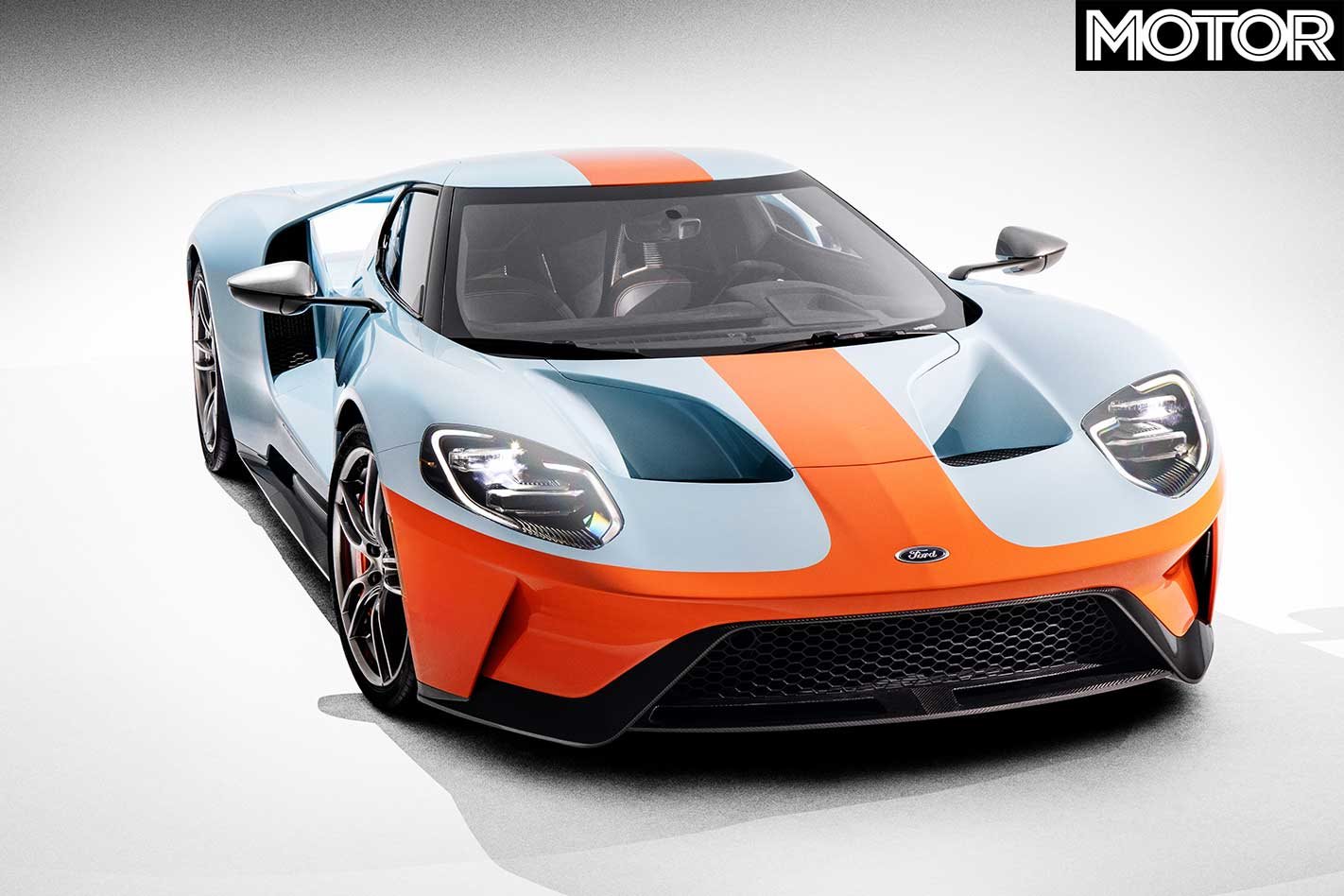
Gulf Livery honours 50th anniversary of the Le Mans winning 1968 Ford GT40. Awesome.
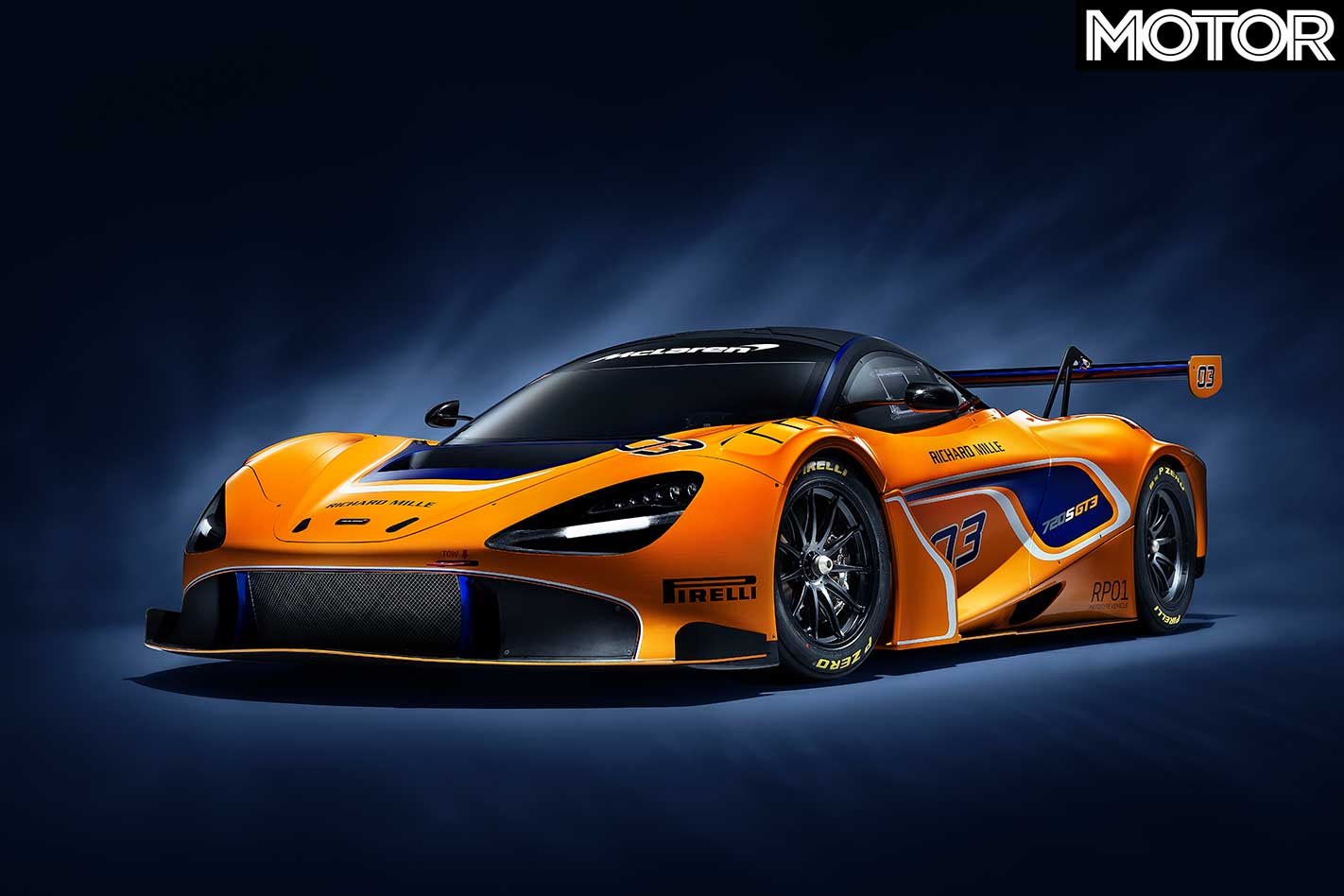
Long awaited race version of 720S finally hits the track in the metal for testing. More than ninety per cent of the 720S’s components have been changed or optimised in some way for the GT3 version.
Hennessey Venom F5 engine details
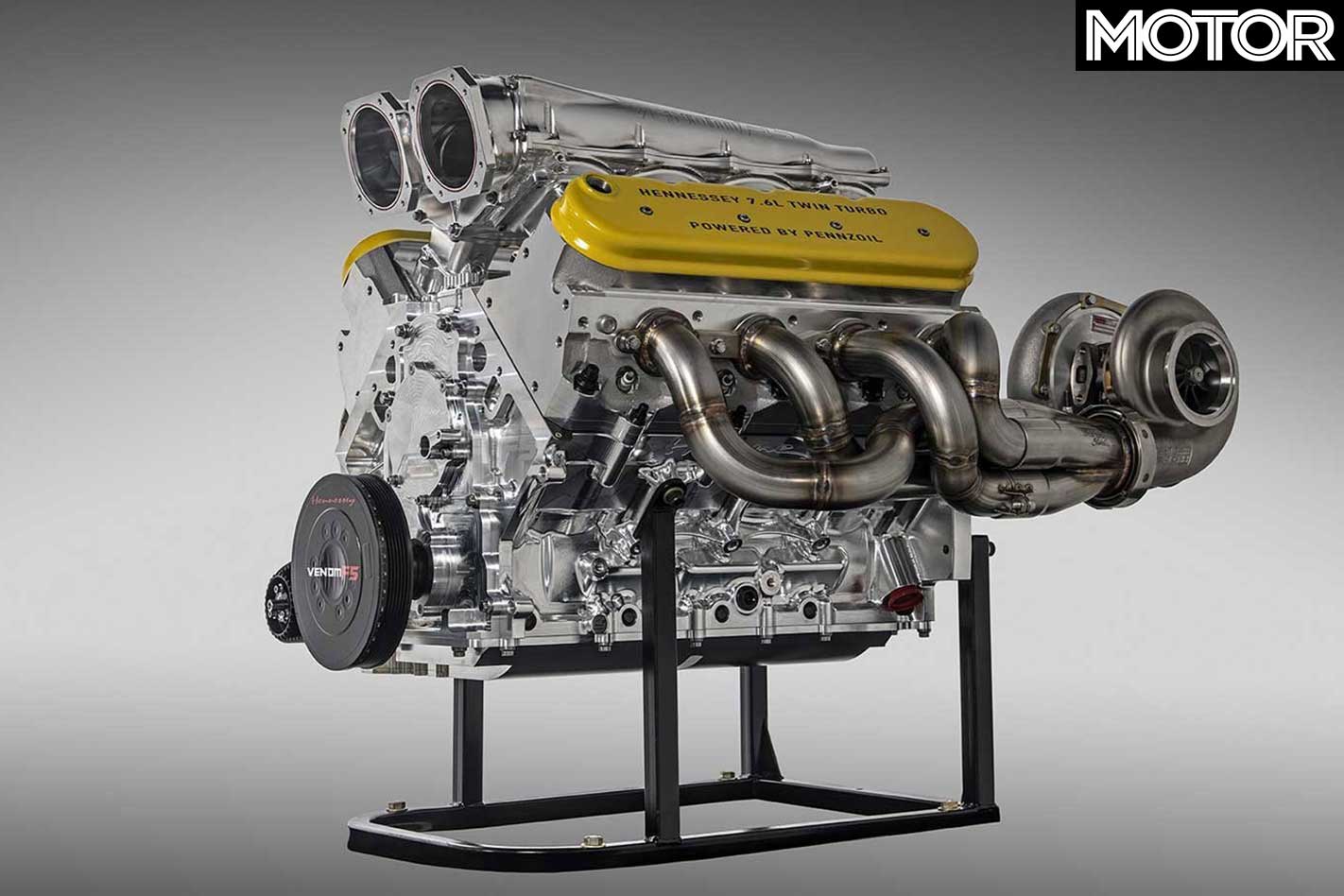
Over 1193kW, and a total of 1763Nm. Those are the claimed figures behind the 7.6-litre twin-turbo V8 mounted in the Hennessey Venom F5. Does it look familiar to you..?
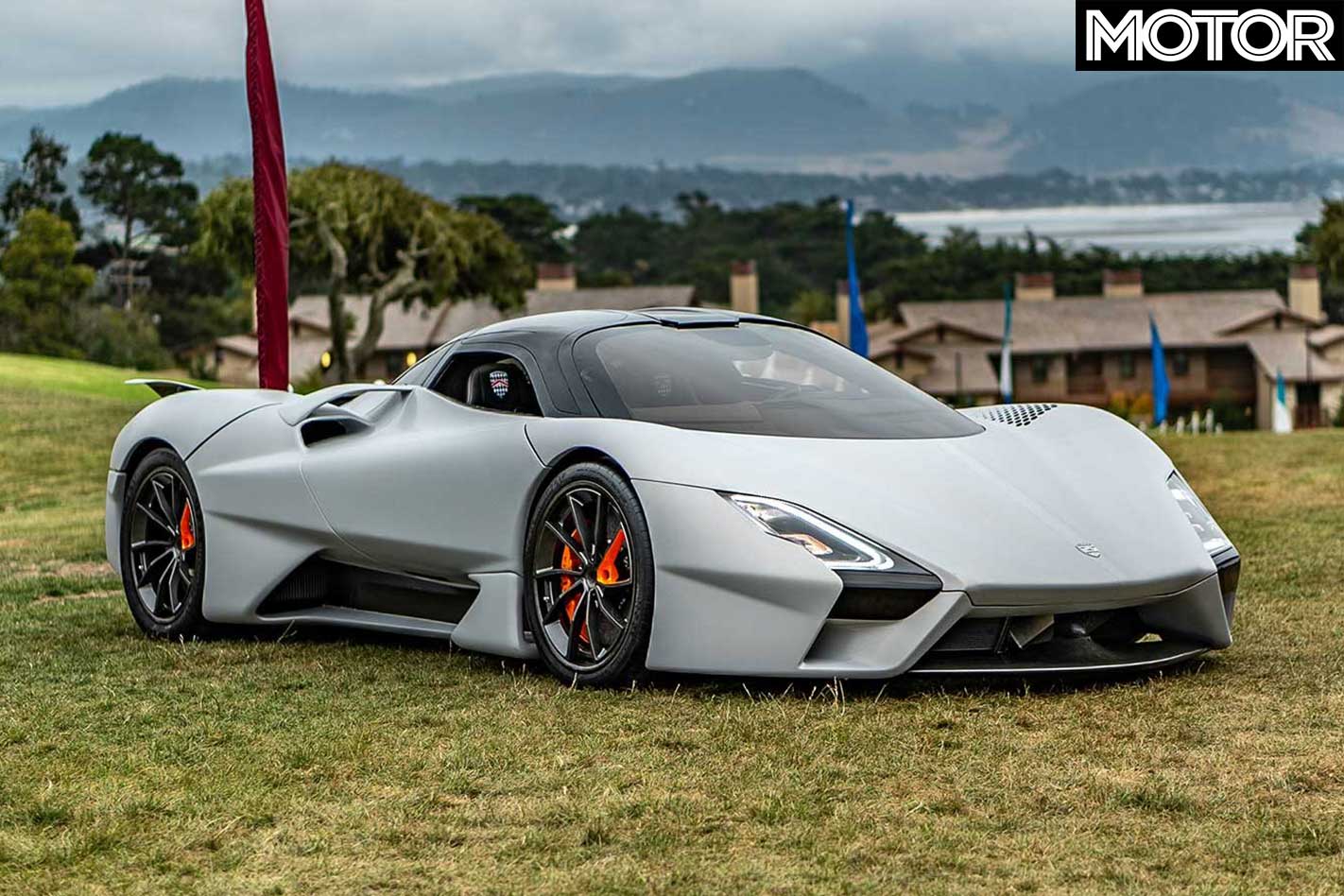
The American hypercar, expected to challenge the Hennessey Venom F5 for the title of Fastest US-built car, utilises a 1.3MW (1305kW) 5.9-litre twin-turbo V8, which redlines at 8800rpm and runs on either E85 or premium unleaded (on which it makes 1006kW).
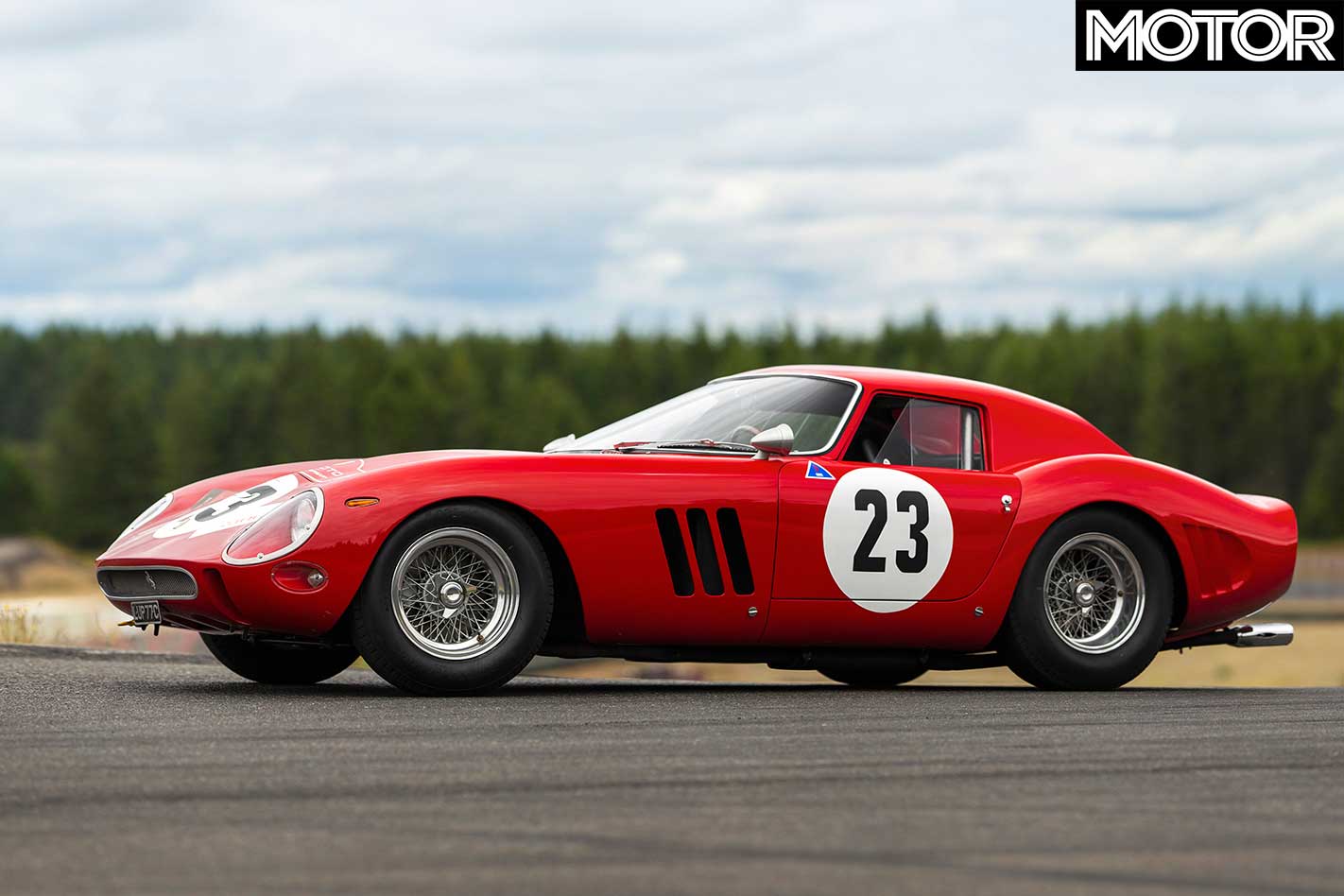
Hundreds of cars have sold for big money at Pebble Beach after crossing the block under several of the world’s biggest auction houses.
The total value of sales generated during the three days of auctions at Car Week have topped AUD$500 million, more than $50m up from last year.
All values in AUD, rounded to the nearest thousand for reading ease.
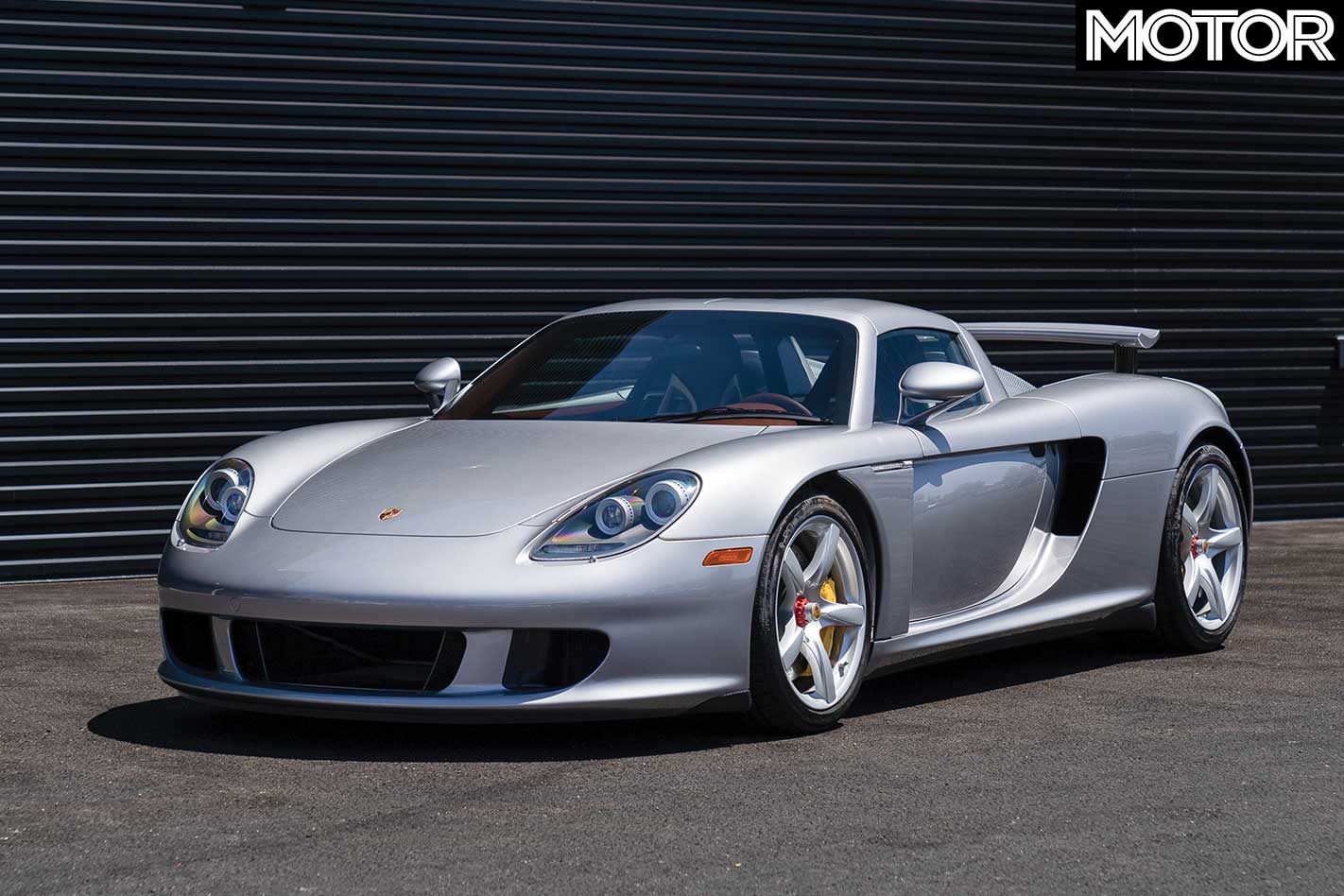
2004 Porsche Carrera GT – $1,280,000 (Estimate: $952,000- $1,223,000, RM Sotheby’s)
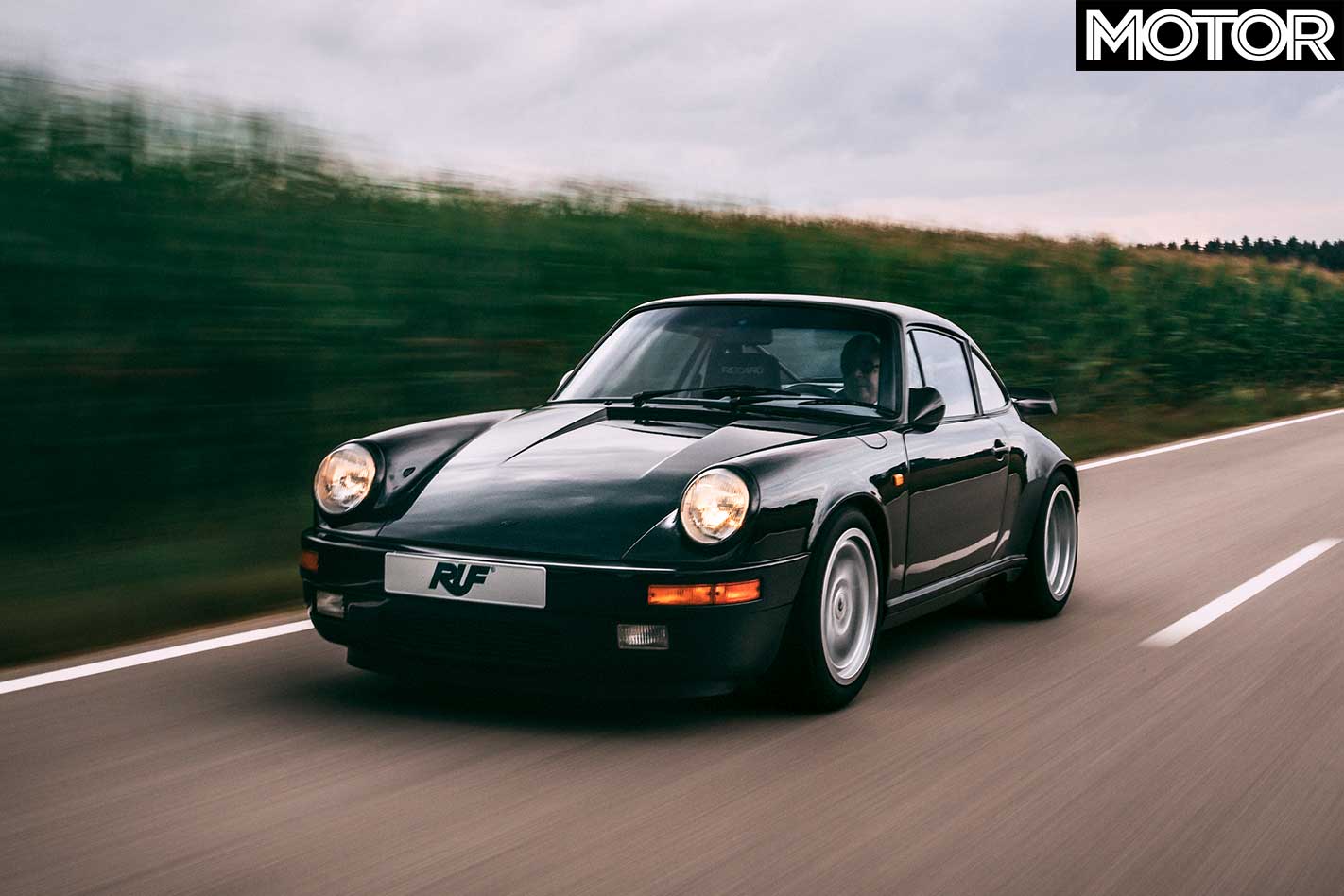
1989 RUF CTR ‘Yellow Bird’ – $1,393,000 (Estimate: $1,359,000 – $1,631,000, RM Sotheby’s)
2007 Porsche RS Spyder – $6,142,000 (Gooding & Co)
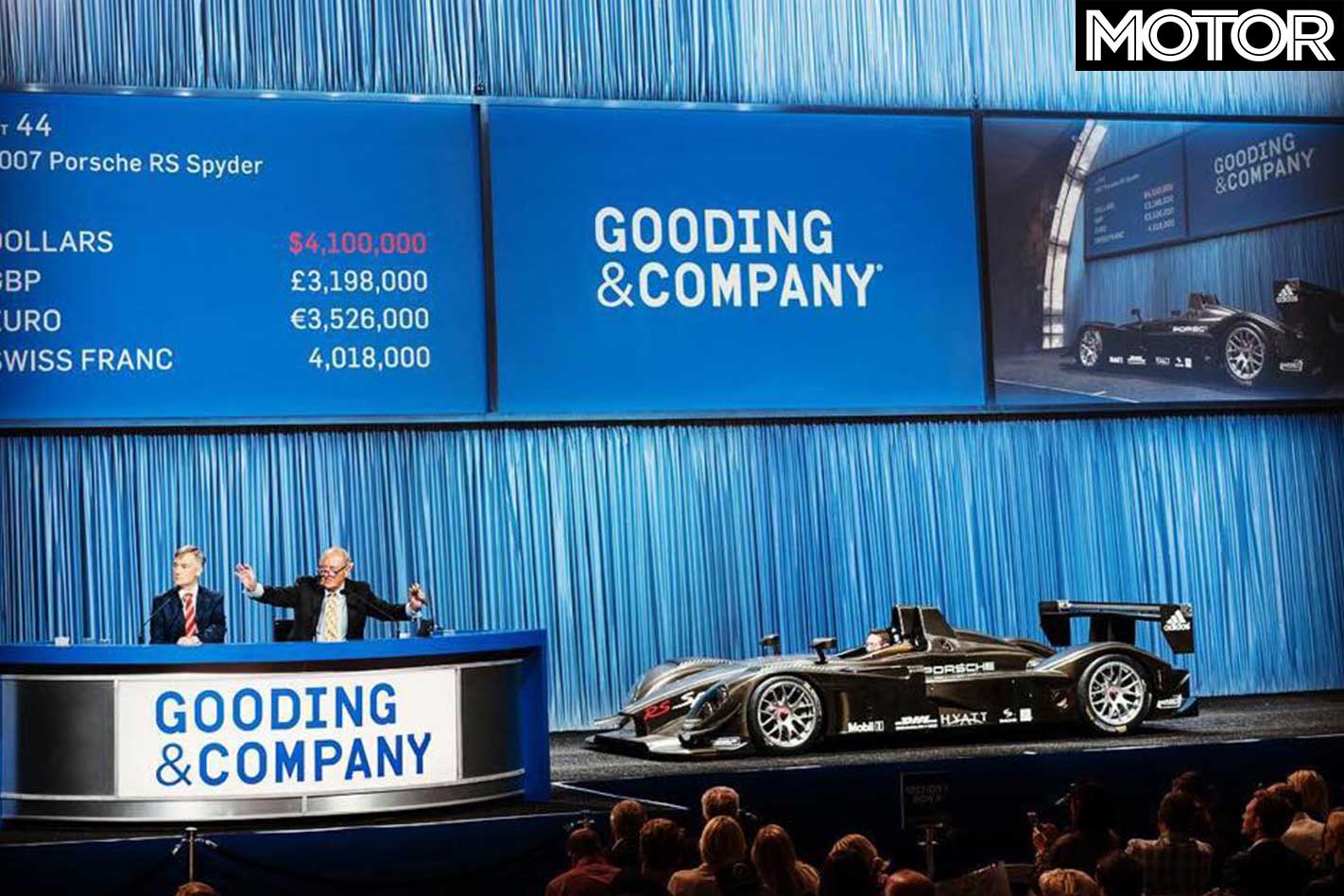
G&C calls this ‘the last of six RS Spyders built for the 2007 racing season’.
The 3.4-litre V8 in the ‘Type 9R6’ could hit 10,000rpm and made for a very successful LMP2 competitor.
1989 Porsche 962 – $2,996,000 (Estimate: $2,724,000 – $3,405,000, Mecum)
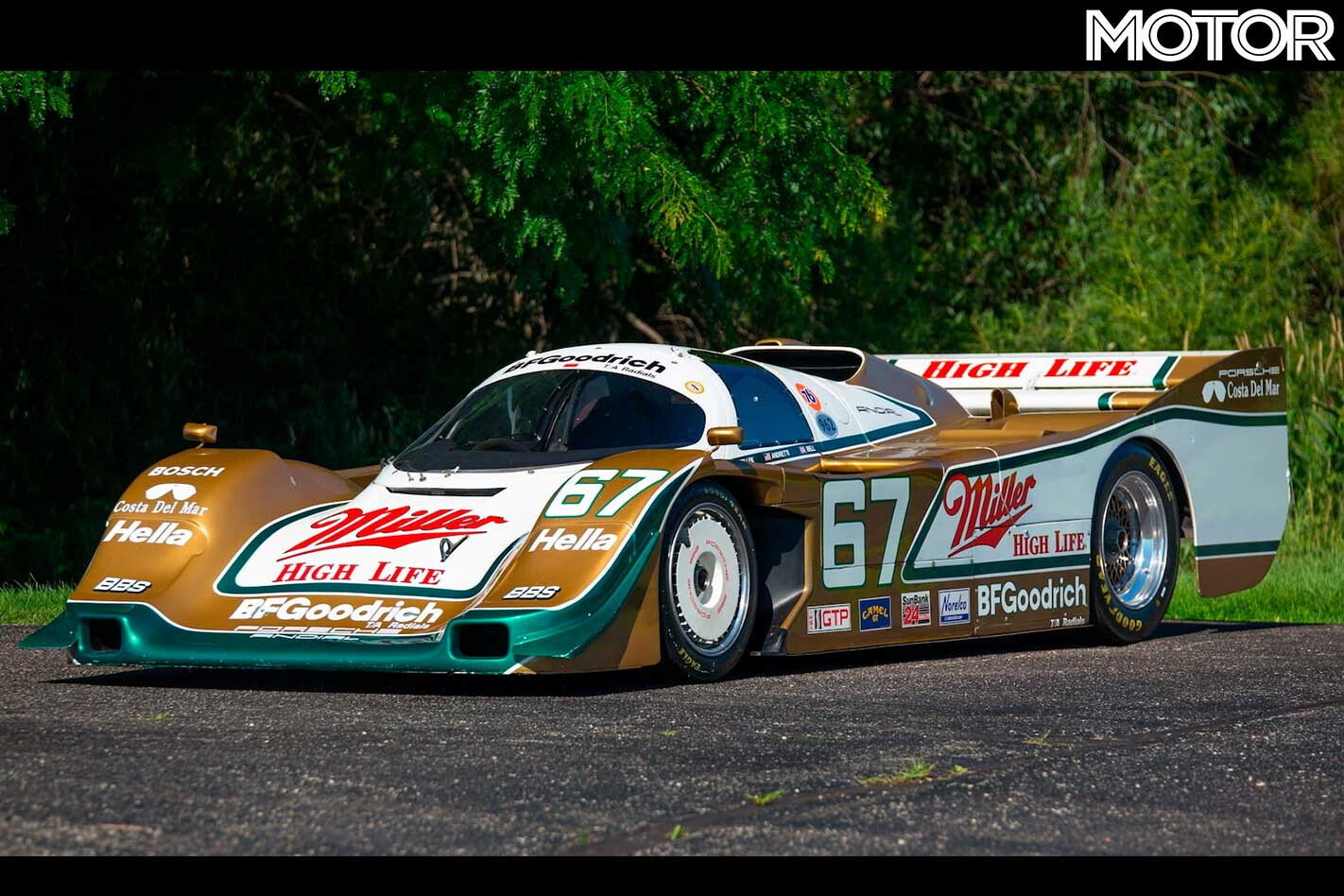
This is Derek Bell’s 1989 Daytona 24 Hour winner, and Bell himself called it his favourite 962, so it’s not surprising that someone was willing to pay almost three big ones for the privilege of calling it their own.
This car also won the 1989 Palm Beach Grand Prix, and the 1989 Porsche Cup USA.
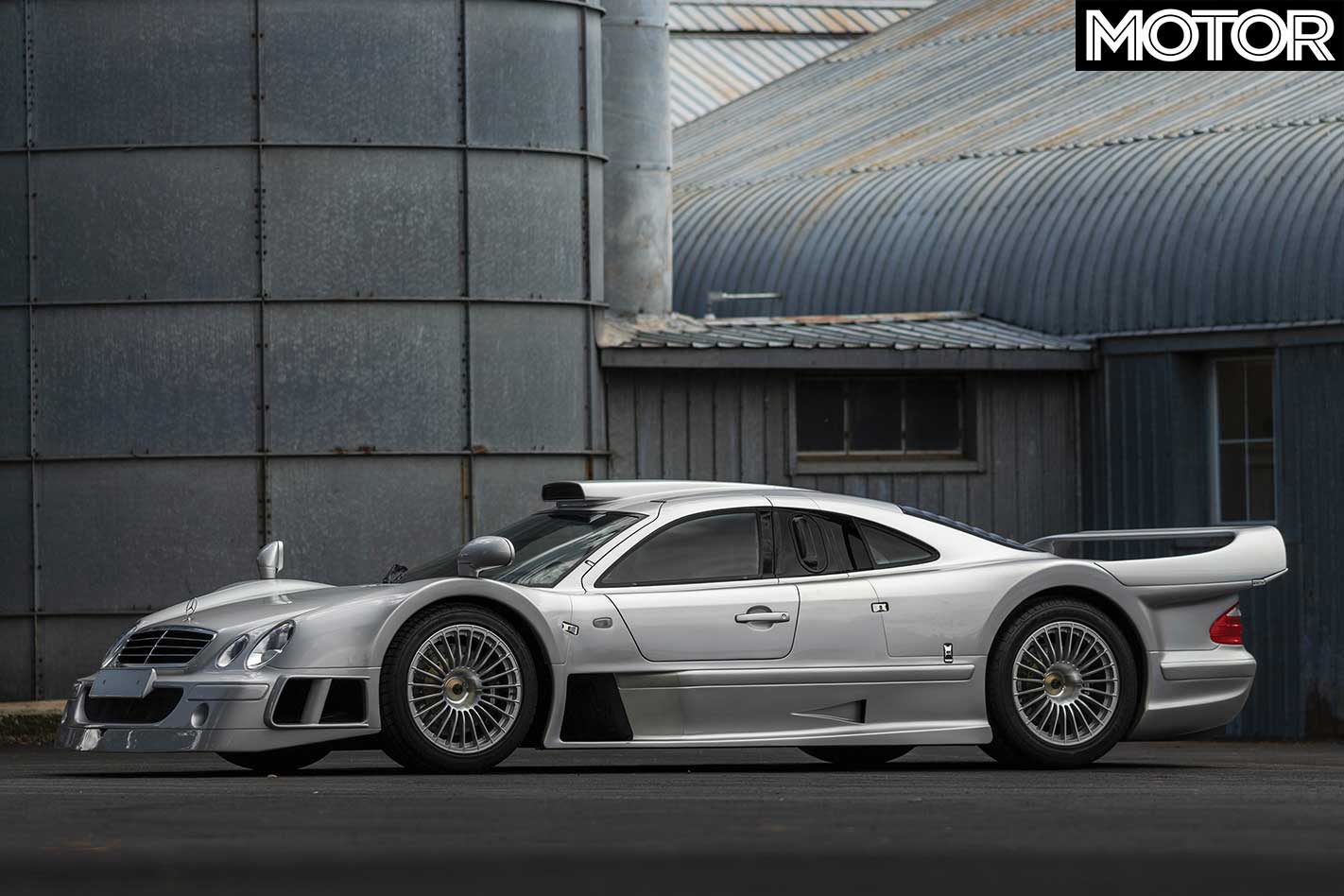
1998 Mercedes-Benz AMG CLK GTR – $6,149,000 (Estimate: $5,746,000 – $7,098,000, RM Sotheby’s)
2012 Dallara DW12 Honda Indy Car – $1,536,000 (Estimate: $1,600,000 – $1,702,000, Mecum)
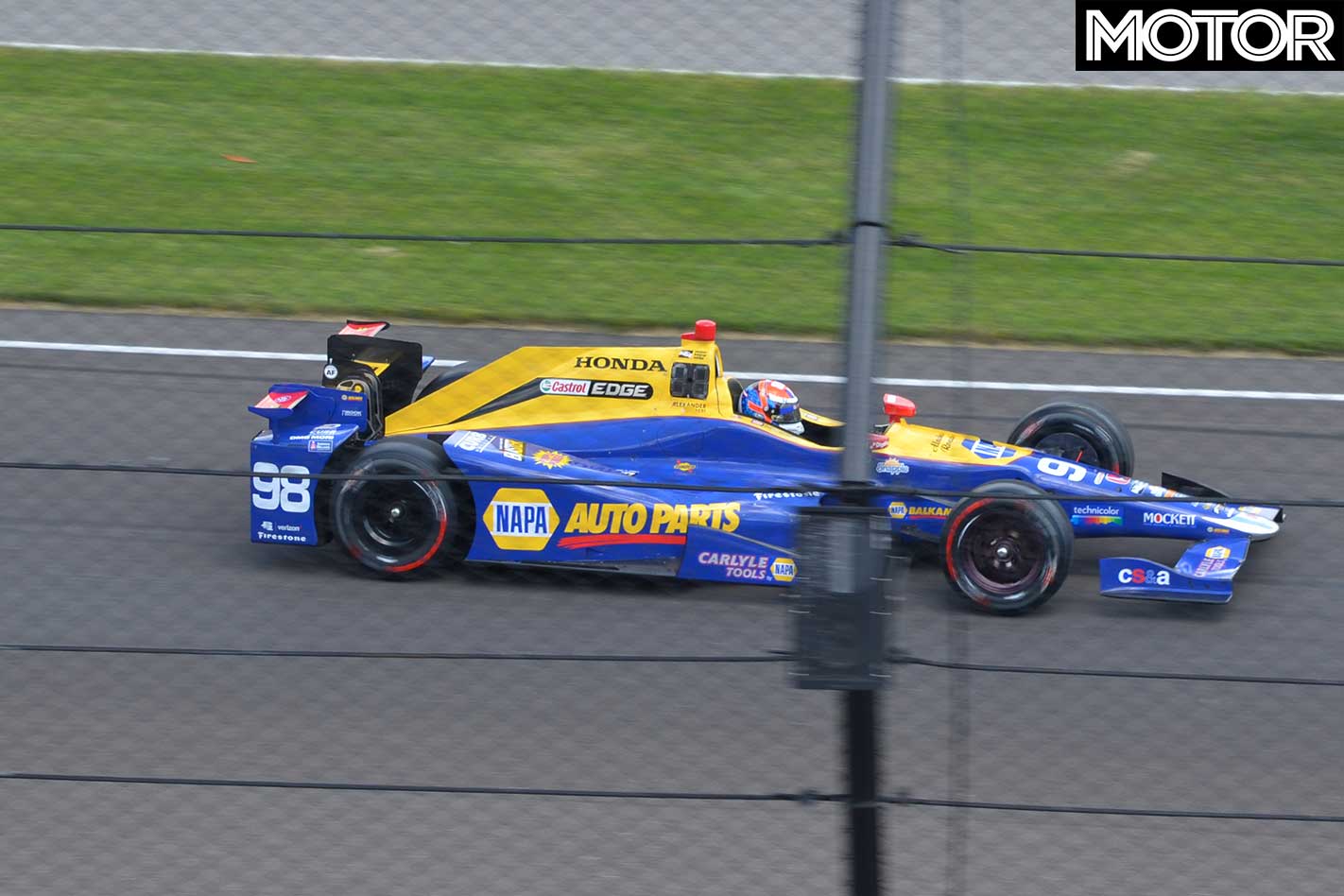
Alexander Rossi drove this Indy car to victory at the 100th running of the Indy 500. Still, it didn’t make estimate, suggesting there aren’t too many people scrambling to own Indy Cars.
2011 Ferrari 599 SA Aperta – $1,461,000 (Estimate: $1,770,000 – $2,179,000, Gooding & Co)
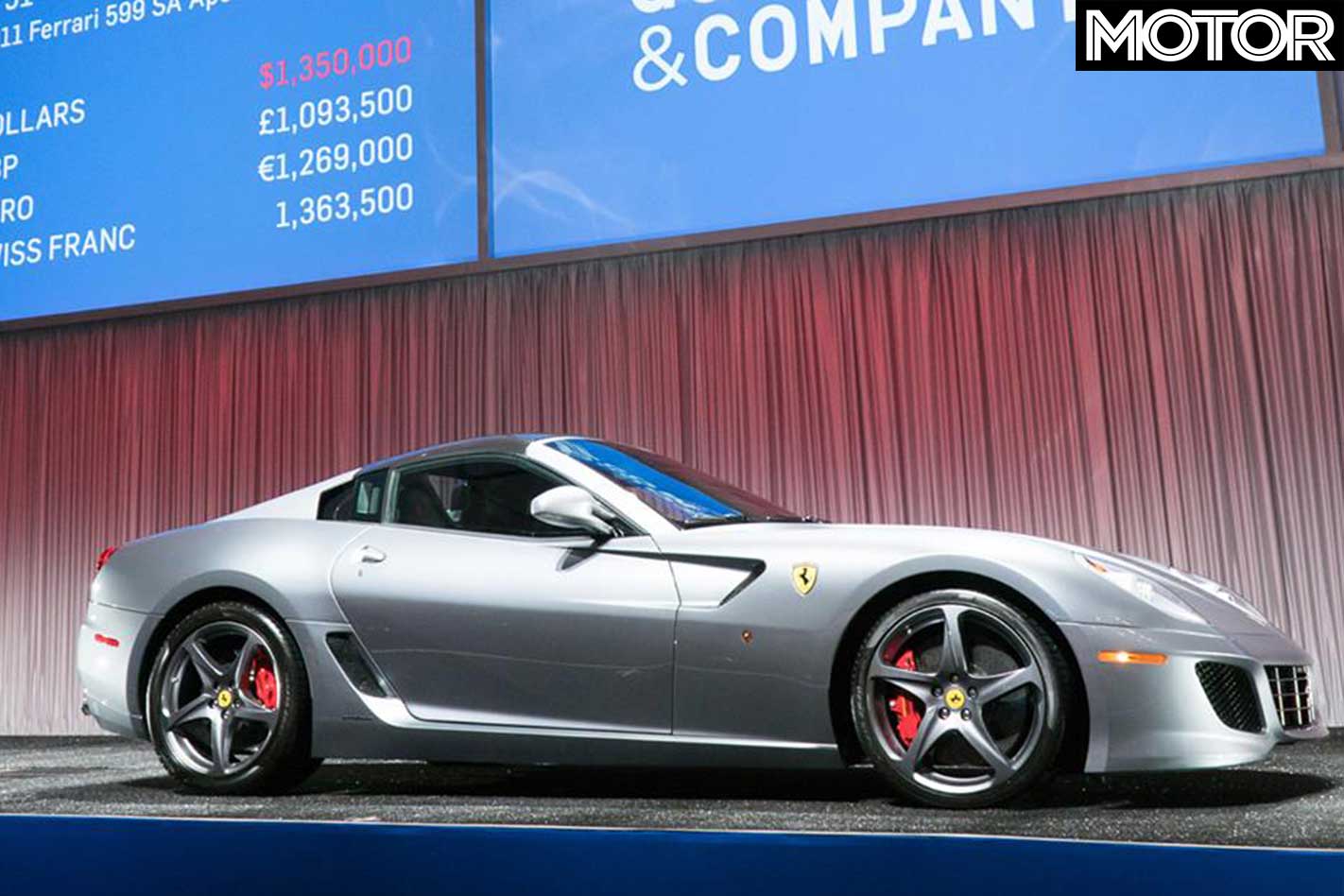
Bargain! This rare variant of the 599 was limited to 80 units according to Ferrari, and with only a couple of thousand kays on the clock, it’s a surprise it didn’t meet its estimate range.
2016 Jaguar F-Type Project 7 – $270,000 (Estimate: $306,000 – $375,000, Gooding & Co)
One of 50 Project 7s delivered to the US, out of 250 total. 423kW from Jag’s supercharged V8 makes tyres nervous too.
2016 Ferrari F12tdf – $1,067,000 (Bonhams)
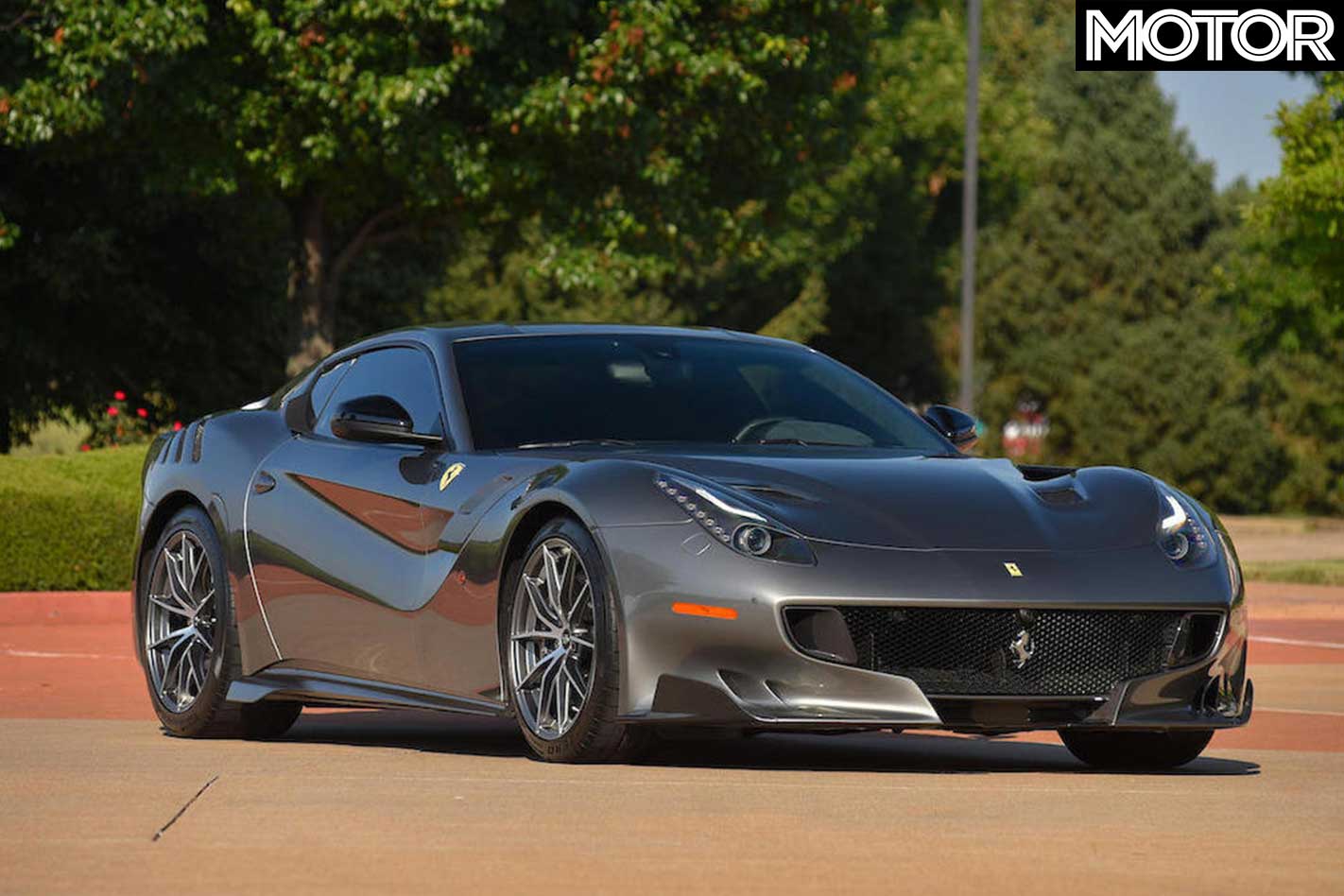
Epic atmo 574kW V12, aggro style, and fewer than 7500km on the odo. A million seems fair to us.
2011 Ferrari 599 GTO – $727,000 (Estimate: $681,000 – $783,000, Gooding & Co)
Want a GTO but don’t have hundreds of millions in your bank account? 599 to the rescue!
The 7-year-old Fazza is one of – you guessed it – 599 built, with Ferrari’s 6.0-litre V12 and some goodies from the 599XX.
1987 Porsche 959 Komfort – $637,000 (Estimate: $613,000 – $749,000, Mecum)
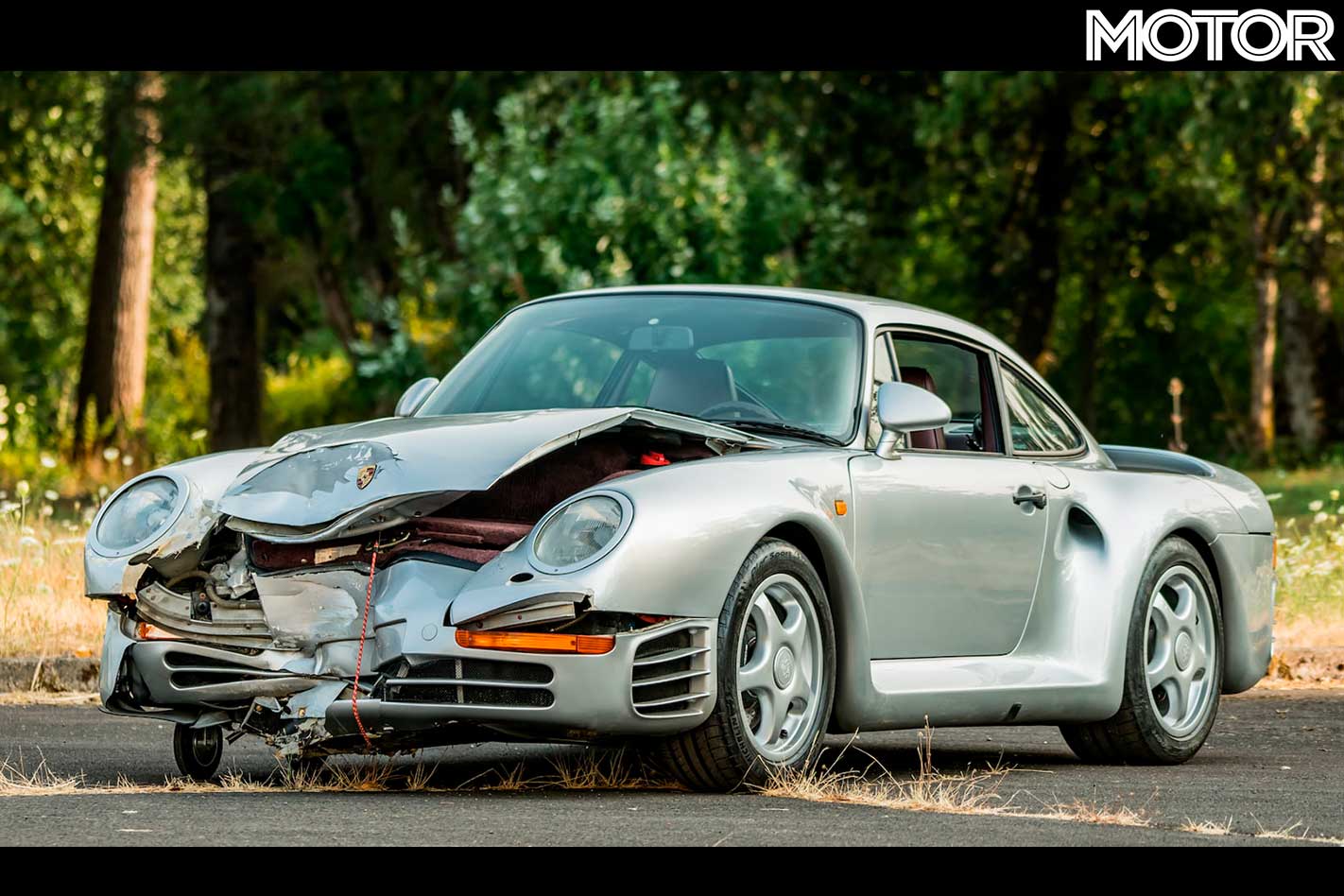
This 959 wasn’t in a ‘crash’ per se, but it did hit a tree… from within a transport trailer.
Mecum explains: “While the car was being transported in a single car enclosed trailer, the trailer detached from the truck while driving on the interstate, at which time it exited the interstate and was stopped by a tree.”
We don’t think it’d take as much money to repair as it might cost to bridge the gap to the price of an undamaged 959.
2002 BMW M5 – $240,000 (Estimate: $191,000 – $245,000, Gooding & Co)
This is essentially a new car, with delivery mileage on the clock 16 years after it was built. It’s also sometimes hailed as the best drivers’ M5s BMW has built.
Still, a quarter-mill is a lot of money for a V8 sedan from the turn of the century. We envy the new owner.
2003 Porsche 996 GT2 – $172,000 (Estimate: $204,000 – $272,000, Gooding & Co)
This one surprised us here at MOTOR HQ. We thought the lower end of the estimate was rather pessimistic, and that the upper end seemed about right, especially given the car’s odo under 10,000km.
According to a build sheet from a VIN decoder, this specific car cost USD$187,820 new, which translates directly to USD$256,000 with current exchange rates. Not a bad buy for the lucky bidder.
Honda has added a new entry-level variant to its CR-V SUV range, which takes the starting retail price below $30,000.
The Honda CR-V Vi is priced at $28,290, undercutting the VTi by $1400, with most of the cost cutting achieved by introducing a more basic infotainment system with a smaller 5.0-inch screen (down from 7.0 inches) without Apple CarPlay/ Android Auto smartphone pairing.
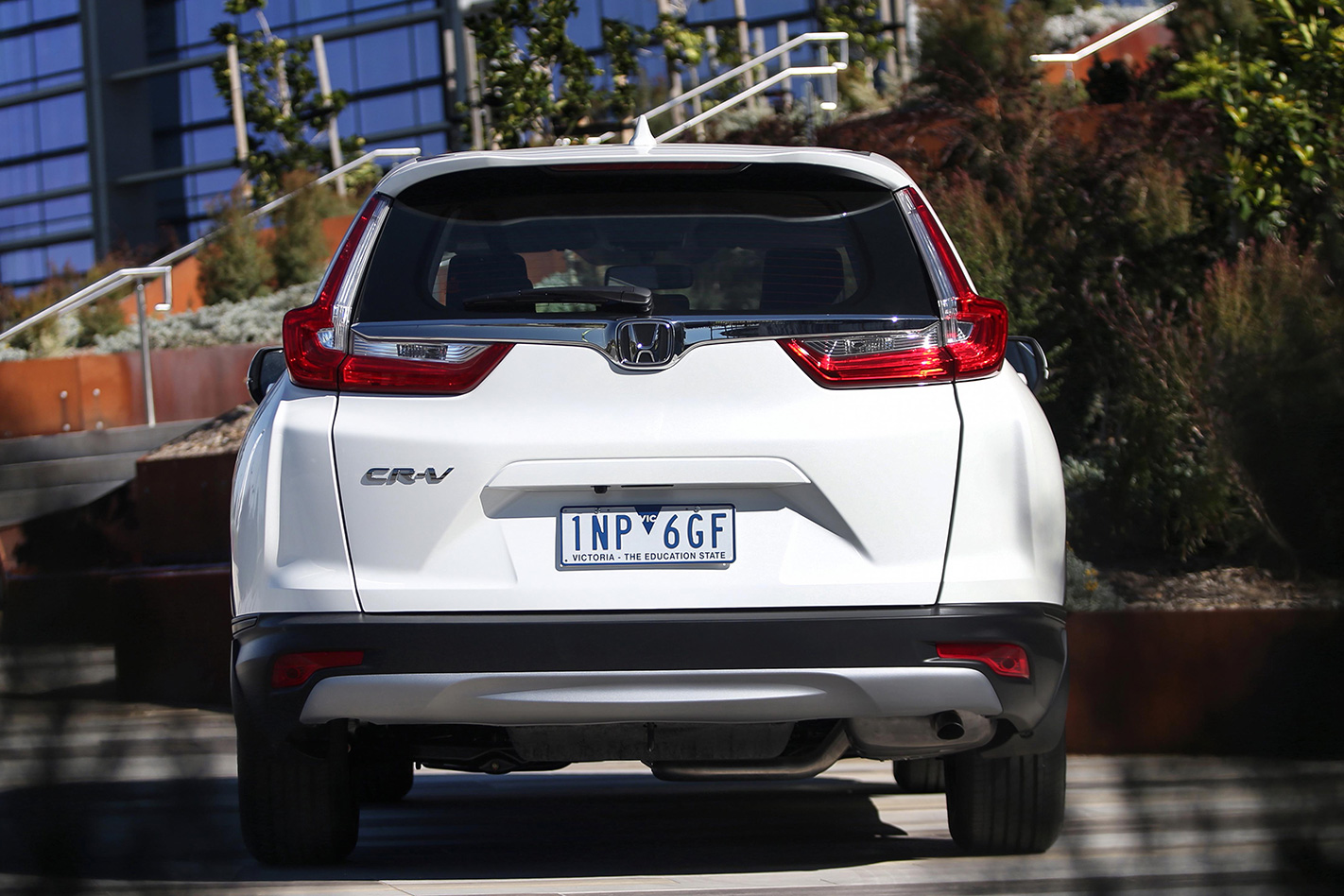
Other than that’s it’s reasonably equipped for a base variant, with standard features including:
- 17-inch Alloy Wheels
- LED Daytime running lights
- LED Tail lights
- Reversing camera
- Full-size spare alloy wheel
- Electric parking brake with Brake Hold
- Tyre pressure monitoring
- Hill Start Assist (HAS)
- Emergency Stop Signal (ESS)
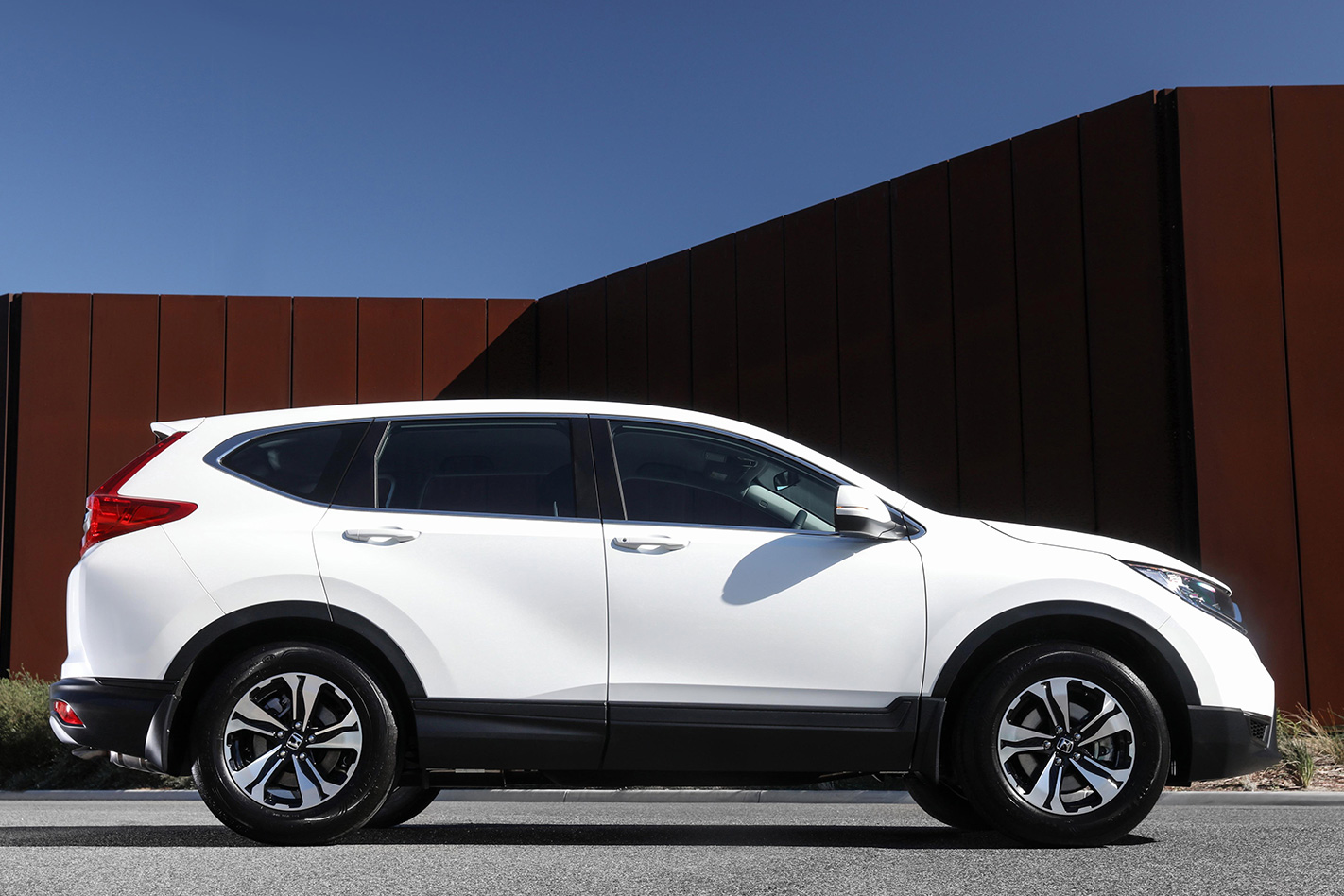
The five-seat Vi shares the same 140kW/240Nm 2.0-litre turbocharged petrol engine and CVT auto powertrain as the rest of the CR-V range, with two-wheel-drive. It also shares their five-year, unlimited kilometre warranty.
Honda Australia director, Stephen Collins said the company is meeting the demand for a more attainable CR-V for budget-conscious families.
“Our customers were telling us they’d like to a see a CR-V for around $30k, so we’ve been able to deliver a great option in the new Vi grade,” he said.
“The CR-V Vi grade competes strongly on value and specification against other entry-level Medium SUVs, we’ve priced it under the automatic Mazda CX5 Maxx and Toyota RAV4 GX, which is great news for buyers.”
The Honda CR-V Vi officially goes on sale on September 1. Pricing for the rest of the range remains unchanged.
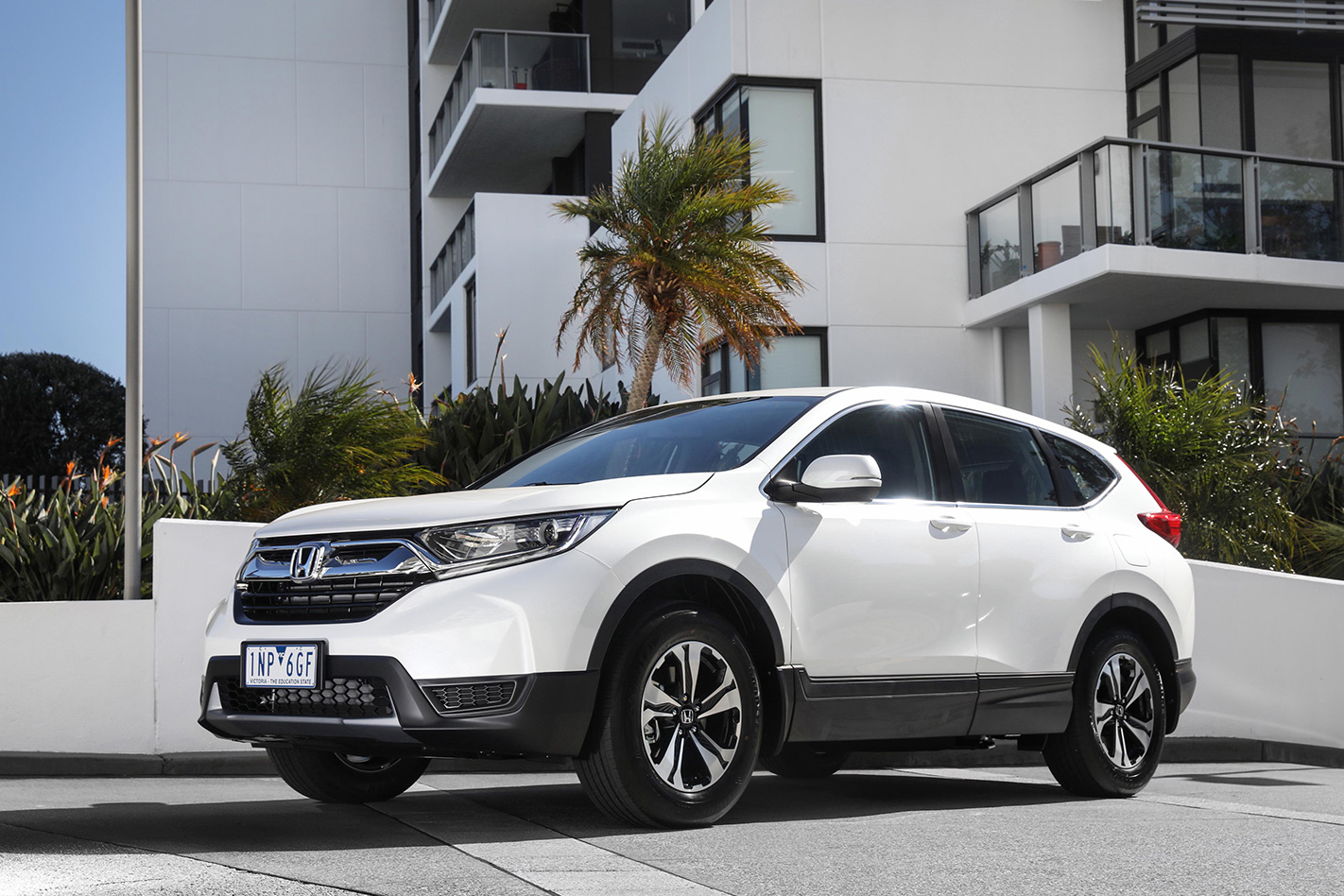
2018 Honda CR-V pricing
- CR-V Vi 2WD – $28,290
- CR-V VTi 2WD – $30,690
- CR-V VTi-S – 2WD – $33,290
- CR-V VTi-S – AWD – $35,480
- CR-V VTi-L 7-seater, 2WD – $38,990
- CR-V VTi-LX, AWD – $44,290
Peugeot is somewhat new to this whole SUV thing, but the French automaker has shown that despite lacklustre early efforts it now has a solid grasp on what makes a good family-sized high-riding wagon.
The 3008 is its midsized five-seater representative in the SUV segment, and the second-generation model sets itself apart from its rivals through eye-catching design and a borderline-premium offering. But is the 3008 too heavy on the glitz and light on substance? As we found, that’s hardly true even at the bottom end of the 3008 model hierarchy.
VALUE
The Active grade is the entry-point to the 3008 range, though its starting price of $36,990 puts it in line with mid- or high-range variants of most of its (predominantly Japanese and Korean) rivals. Even the Volkswagen Tiguan begins at a lower price point, with a $31,990 retail sticker for the Tiguan 110TSI Trendline.
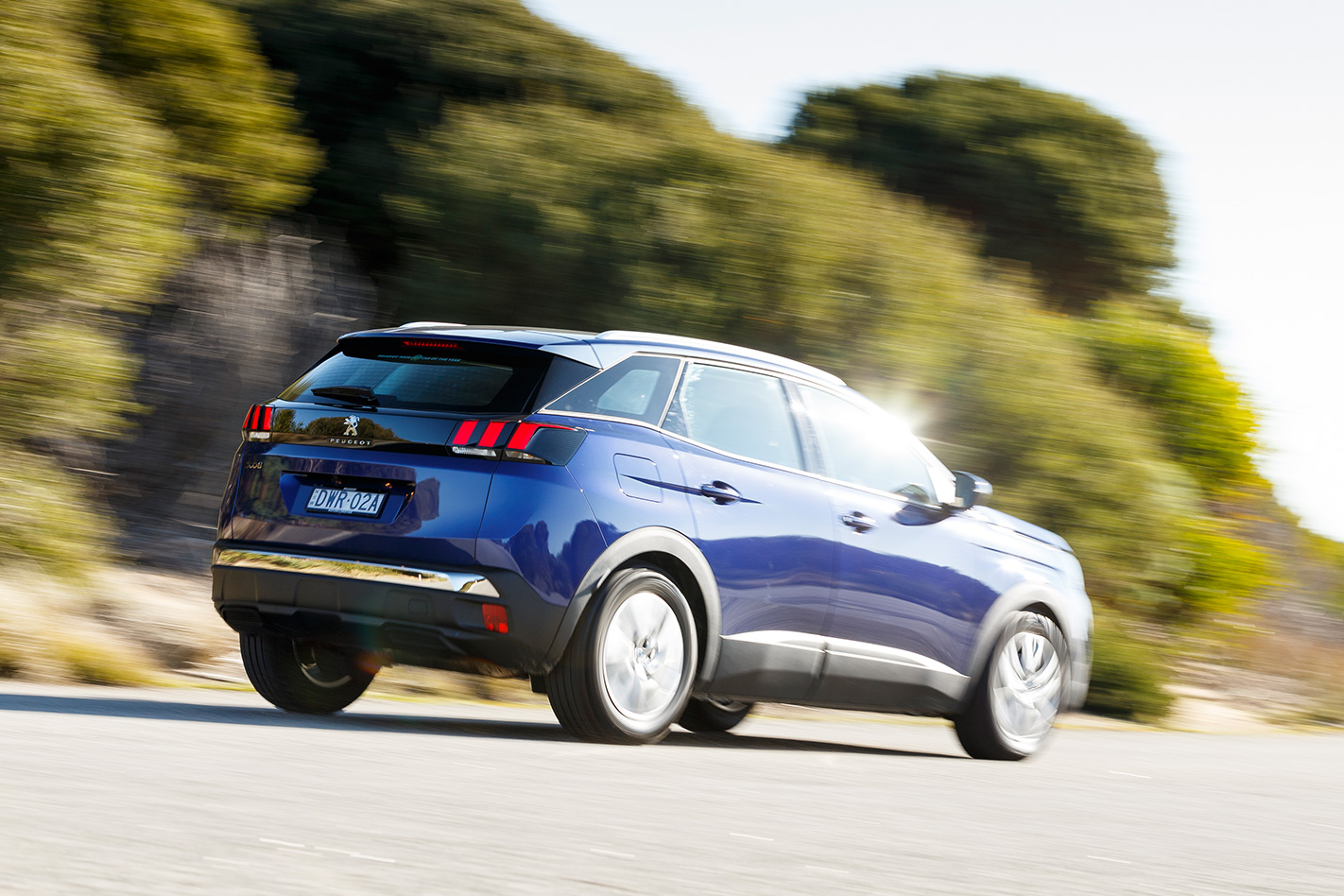
But working in the Peugeot’s favour is a fat equipment list that makes an automatic transmission standard-issue along with other cool features like an all-electronic instrument panel, sat-nav, wireless phone charging and a strong suite of safety tech. In the context of its specification the 3008 Active’s price tag looks a lot more reasonable, and some may also attach a certain value to the 3008’s European build.
Cost of ownership also plays into the value equation, and with a 1.6-litre turbo petrol four consuming, on average, just 7.0 L/100km, the 3008’s thirst is lower than many rivals too – though it does require premium unleaded.
STANDARD FEATURES
There’s plenty on offer from an in-car technology point of view. For starters, a large 12.3-inch colour display sits directly ahead of the driver in the place of a traditional analogue speedometer and tachometer, while an 8-inch touchscreen atop the centre stack is the primary infotainment interface.
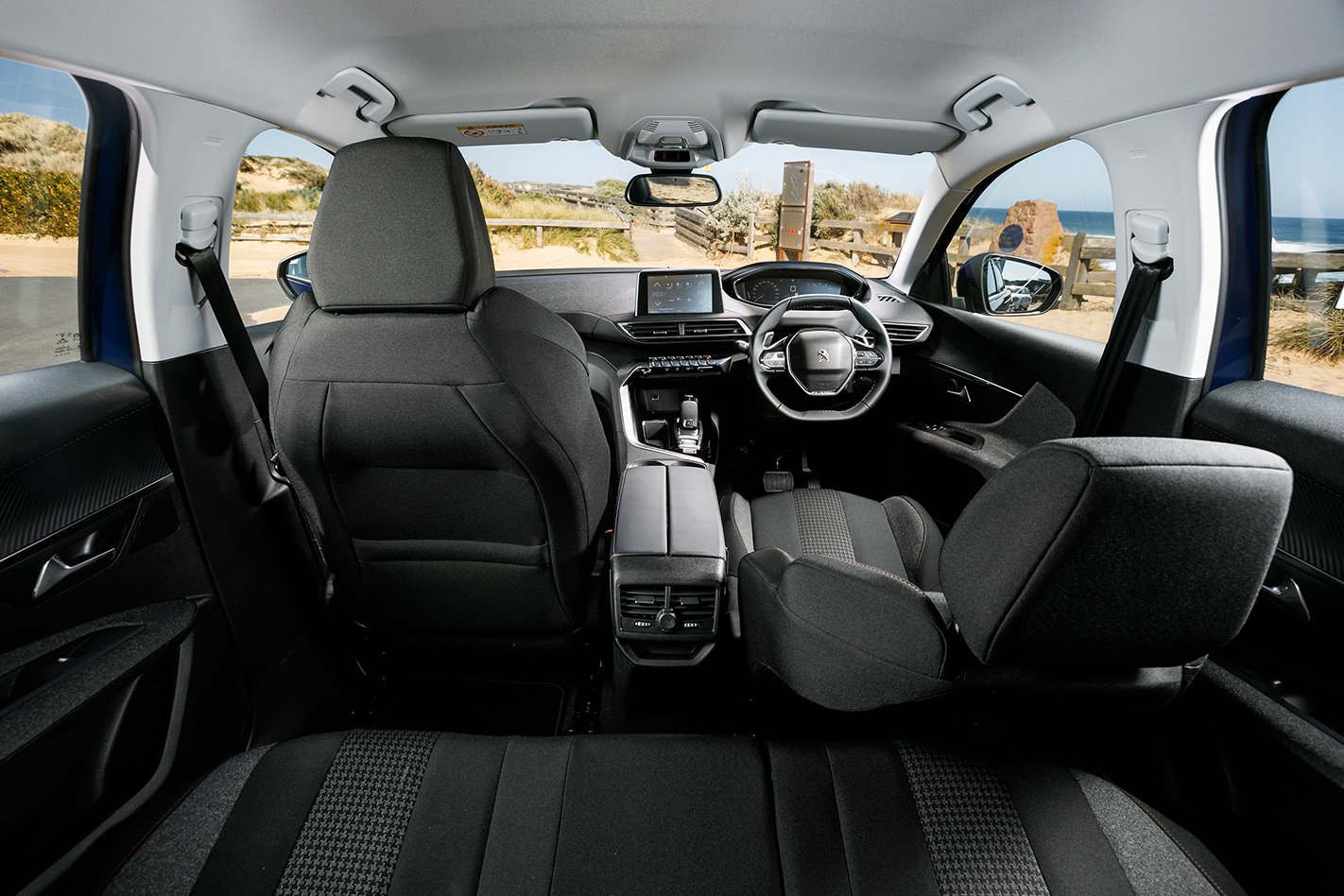
Ahead of the transmission selector is a wireless phone charging pad, along with a USB port that enables smartphone mirroring via Android Auto or Apple CarPlay.
Front and rear parking sensors are standard, along with dual-zone climate control, satellite navigation and a digital radio tuner. Automatic headlamps and wipers cap off the feature list.
SIZE
The Peugeot 3008 is a mid-sized SUV, with a seating configuration for five people.
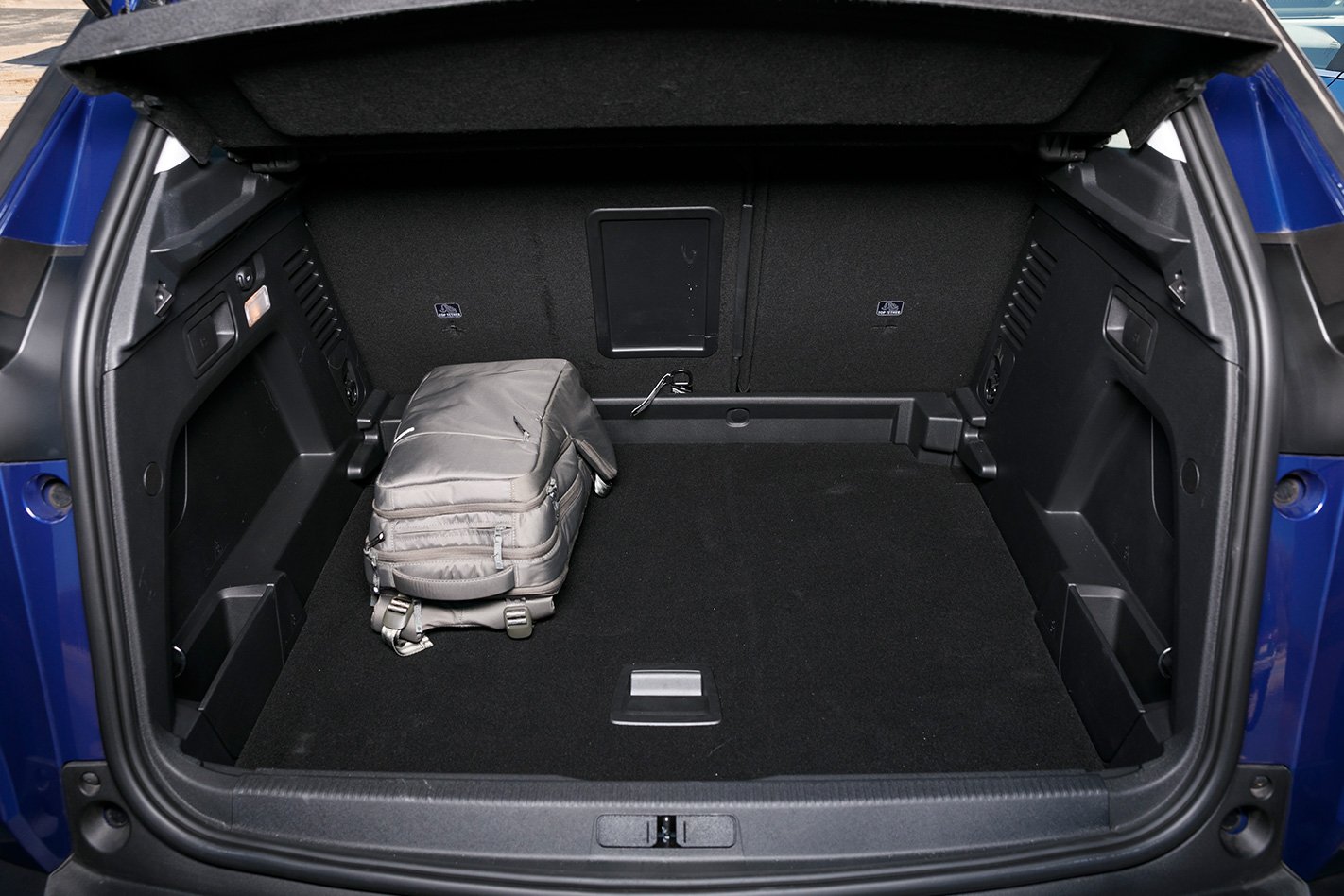
Measuring 4447mm long and 1826mm wide, its footprint on the road is considerable given it’s built on the same platform as Peugeot’s 308 small hatch. On the flipside, its 1371kg kerb weight is impressively light for the segment.
Its boot volume is generous, with the area behind the second row offering 591 litres of cargo capacity. Fold the rear seatbacks forward, and that expands to a very useful 1670 litres.
SAFETY
Besides six airbags (dual front, front-side and full-length curtain), three-point seatbelts on all seats and ISOFIX child seat anchorages on the outer rear seats, occupants of the 3008 Active are kept safe by autonomous emergency braking (AEB), lane departure warning, traction control and stability control.
The AEB system is also able to detect pedestrians, and the 3008 range has been awarded a five-star crash safety rating by ANCAP.
COMFORT
The 3008’s interior is like nothing else in the medium SUV segment, but if you’re the kind of person that values style and elegance that’s definitely a good thing.
The dashboard is the centrepiece of the 3008’s cabin, and its sculptural and asymmetric form looks like it was ripped straight out of a concept car. There’s a small trade off in usability as a result – for example, the centre stack is canted away from the front passenger and thus less easy to use, and it can be difficult to see whether you’ve left anything in the cave-like phone charging tray – but its general ergonomics are sound.
That is, as long as you can get to grips with Peugeot’s unorthodox instrument panel layout, which puts the electronic dash display above the rim of the steering wheel instead of having you peer through the wheel to keep an eye on your speed. It can take some getting used to, but the small diameter of the leather-wrapped steering wheel makes it easier than you might imagine.
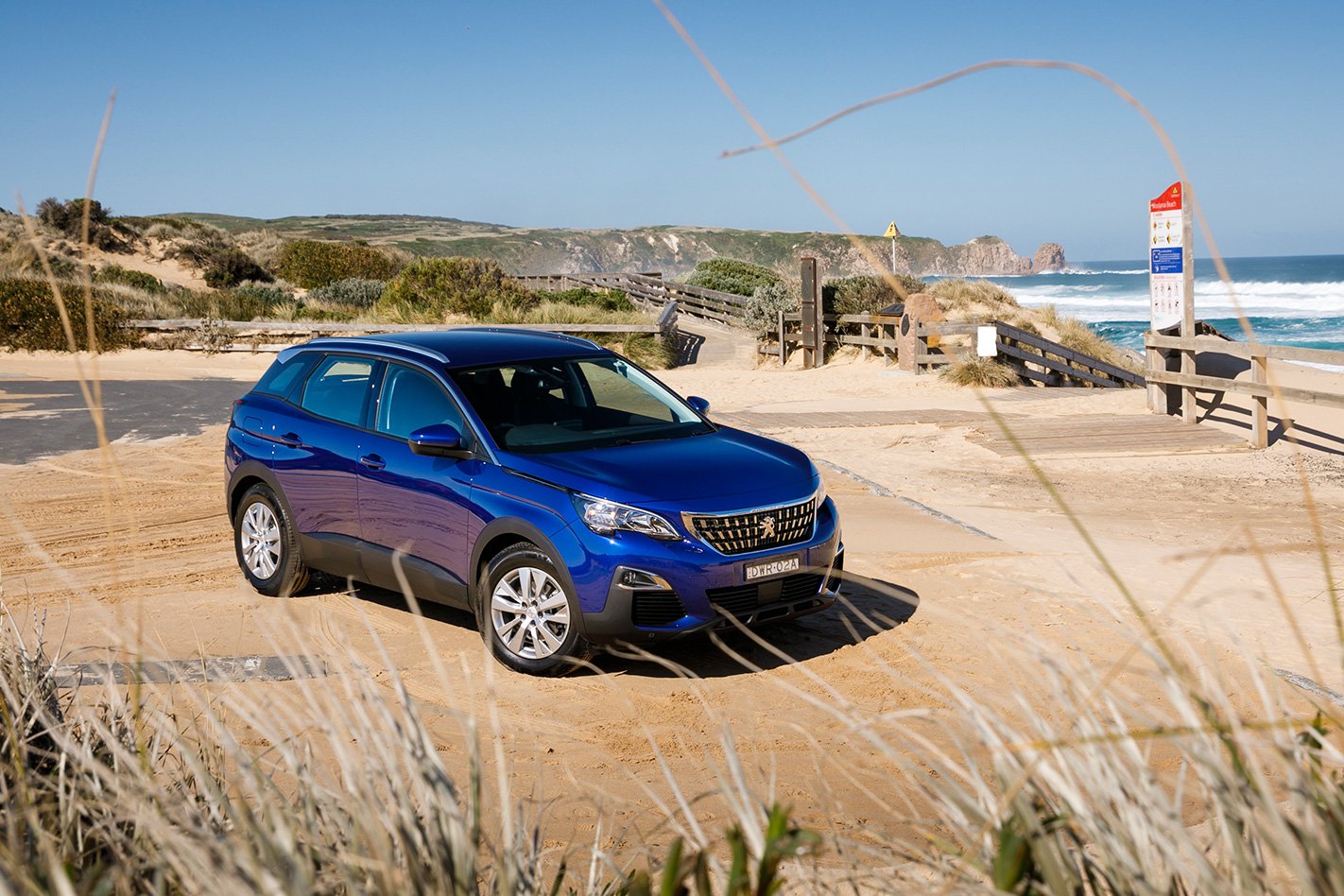
Seat comfort is excellent in the front, with the only caveat being a slightly hemmed-in feel for the front passenger’s legs thanks to the shape of the centre console.
No such qualms in the back seat, however, where excellent packaging yields plentiful leg, elbow and head room for two adults or three kids. Rear air vents on the back of the centre console also help keep your backseaters cool in an Aussie summer, while the contoured backrests will keep them comfy on long trips.
The cabin experience is capped off by superb material choices that really impart an air of sophistication and premiumness to the 3008’s cabin.
ON THE ROAD
Some might regard a 1.6 litre turbo four as being somewhat undersized for an SUV, but while the 3008’s petrol four-pot makes a modest 121kW and 240Nm it’s helped along by its astonishingly low kerb weight. With the average mid-size SUV weighing at least a couple of hundred kilos more, the Peugeot is able to keep up despite having limited grunt.
Power is taken to the road via a six-speed conventional automatic, which meshes perfectly with the engine thanks to a calibration that ensures slick and seamless – yet decisive – shifts, and gearing that ensures plenty of thrust or fuel-sipping economy depending on what you, the driver, requires of it.
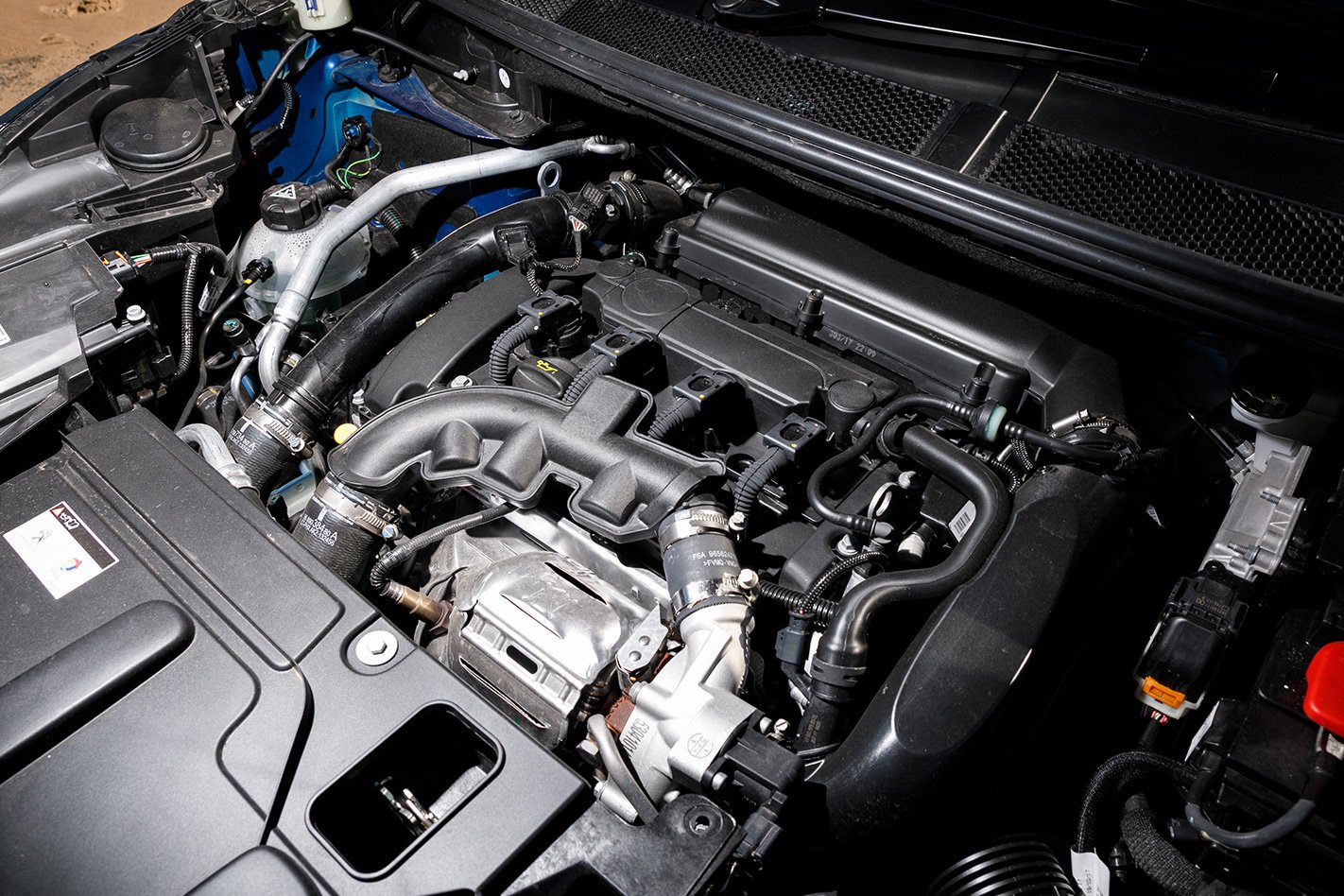
Bear in mind though that the 3008 is only available with front-wheel drive. If the all-weather grip of AWD is a non-negotiable, then look elsewhere. However, if you (like the bulk of SUV buyers) expect to stay confined to the blacktop, then the 3008’s excellent roadholding will be more than enough to keep you out of trouble.
The 3008 is unusual for an SUV of its size in that it makes use of a simple torsion-beam rear suspension rather than a more complex multi-link arrangement. Even so, it has few dynamic vices and delivers a supple ride over properly rough tarmac while still feeling quite athletic. There’s a slight firmness to its initial bump response that’s somewhat unexpected given the fat sidewalls of its tyres, but overall ride quality is terrific.
The fast-ratio steering could be an acquired taste. It certainly puts the ‘Sports’ into ‘Sports Utility Vehicle’, but its fast-reacting go-kart-like nature may feel unnatural to those used to the comparatively ponderous steering in other cars.
VERDICT
Peugeot’s heritage as an SUV manufacturer is limited, however, it has shown with its second-generation 3008 that it knows how to satisfy the core segment criteria of size and space, while still managing to create something that feels very French in its execution. No other SUV in the mainstream market has as much style and flair as the 3008, and to some shoppers that counts for a lot.
It looks and feels like it’s cut from a different cloth to other mainstream SUV rivals, and that’s really the 3008’s trump card. Pay ordinary money, receive an extraordinary car.
ONE of the best things about creating a magazine is that it offers the perfect place to showcase world-class photography. The downside is trying to fit all that imagery into 148 pages each month.
Happily the internet has no such restrictions. What you’ll find in the above gallery are 26 of the best images from this month’s issue, some of which were published, others that you’ll see for the first time.
The first images show the car isn’t always the star. Stephen’s Corby’s trip in the refreshed Mazda 6, which now boasts the CX-9’s gutsy 2.5-litre turbo petrol, took in Frank Lloyd Wright’s iconic house ‘Fallingwater’ in Pennsylvania. Built over a waterfall in 1935, the home is an astonishing architectural achievement.
There is plenty of intriguing metal, though. Seeing the exposed inner working of Porsche’s 919 EVO is a tech-head’s wet dream, and our trip to witness that car’s record-shattering run at the Nurburgring provided exactly that.
McLaren’s Senna is another example of eye-boggling engineering wizardry, but it’s not all high-end unobtainium. Staff shooter Ellen Dewar captured some brilliant sunset shots during this month’s five-car SUV comparison, and then there are the beautiful studio images of a recently rediscovered Series 1 Land Rover (chassis number 07), it’s body a patchwork of hard-won patina.
Finishing the gallery is a behind-the-scenes look at this month’s manga-inspired subscriber cover, which details the progress as Wheels’ art director Felipe Ubilla drew it by hand.
If you missed your copy, it’s still available to buy on shelves until Sept 6. Or you can order a subscription here.
What is it?
A prototype electric drivetrain under development by British electric motor specialist Equipmake.
While most traditional EV motors use radial flux motors, this application employs a less conventional axial flux motor. And unlike some conceptual EV drivetrains, the Equipmake design is destined for a real- world application, making its debut in British boutique sportscar manufacturer Ariel’s new ‘Hipercar’ in 2019.
How does it work?
While radial flux motors have proven their worth in EV powertrains, the axial flux motor has an inherently more compact design and the potential to provide more torque than a similarly sized radial design.
There are also efficiency advantages offered by a shorter and single-dimension flux path – a fundamental force necessary for motor rotation.
At the heart of the system, Equipmake’s own APM200 axial motor provides 220kW and 450Nm with a maximum speed of 10,000rpm and sends power to either a single axle or both for four-wheel-drive traction. An epicyclic gearbox allows the output shaft to be connected directly to the wheel hub for a more compact and lightweight end product.
Power is provided by a 56kWh battery for emissions-free driving but if electricity reserves are low, a 35kW ‘micro-turbine’ gas turbine range-extender engine cuts in to generate electricity.
Why does it matter?
Put simply – power density. Equipmake claims its APM200 motor has a power to weight ratio of 7kW per kilogram – about the same as a mid-2000s V10 Formula 1 engine, which made about 700kW from 3.0 litres.
The combination with a jet engine range-extender, which also has a high power density, maximises the overall system density figure. While large battery packs, radial flux motors and piston-engine hybrid powertrains are proving the feasibility of range-extended EVs, the Equipmake/Ariel approach scales down the size and weight of a long-range electric drivetrain without compromising power and performance.
That means the powertrain can be squeezed into a car that’s light and small enough to uphold Ariel’s reputation for bantamweight machines with supercar- destroying performance. If it’s successful, the Equipmake solution marks another significant milestone in the evolution of EVs that are fun and efficient.
Joining the club
Equipmake is not the only innovator to see the potential in axial flux motors and the segment is becoming increasingly populated.
Belgian motor developer Magnax is also pushing the boundaries and claims to have designed a motor with up to 15kW/kg.
The company’s innovative design is modular and scalable, allowing its motor/generator units to be used in a wide range of applications, from wind-turbine power generation to powering small electric vehicles, although the company is yet to reveal a working prototype as advanced as the Equipmake solution.
Volkswagen has confirmed a new Golf R is set to scorch Aussie soil with a rumblier growl, bitier brakes, and lighter wheels when it arrives with the MY19 range.
Called the Golf R Special Edition, a run of 400 will arrive with bits from Akrapovic and the Nürburgring-thumping Golf Clubsport S that have previously only been available to European customers as ‘R Performance options’.
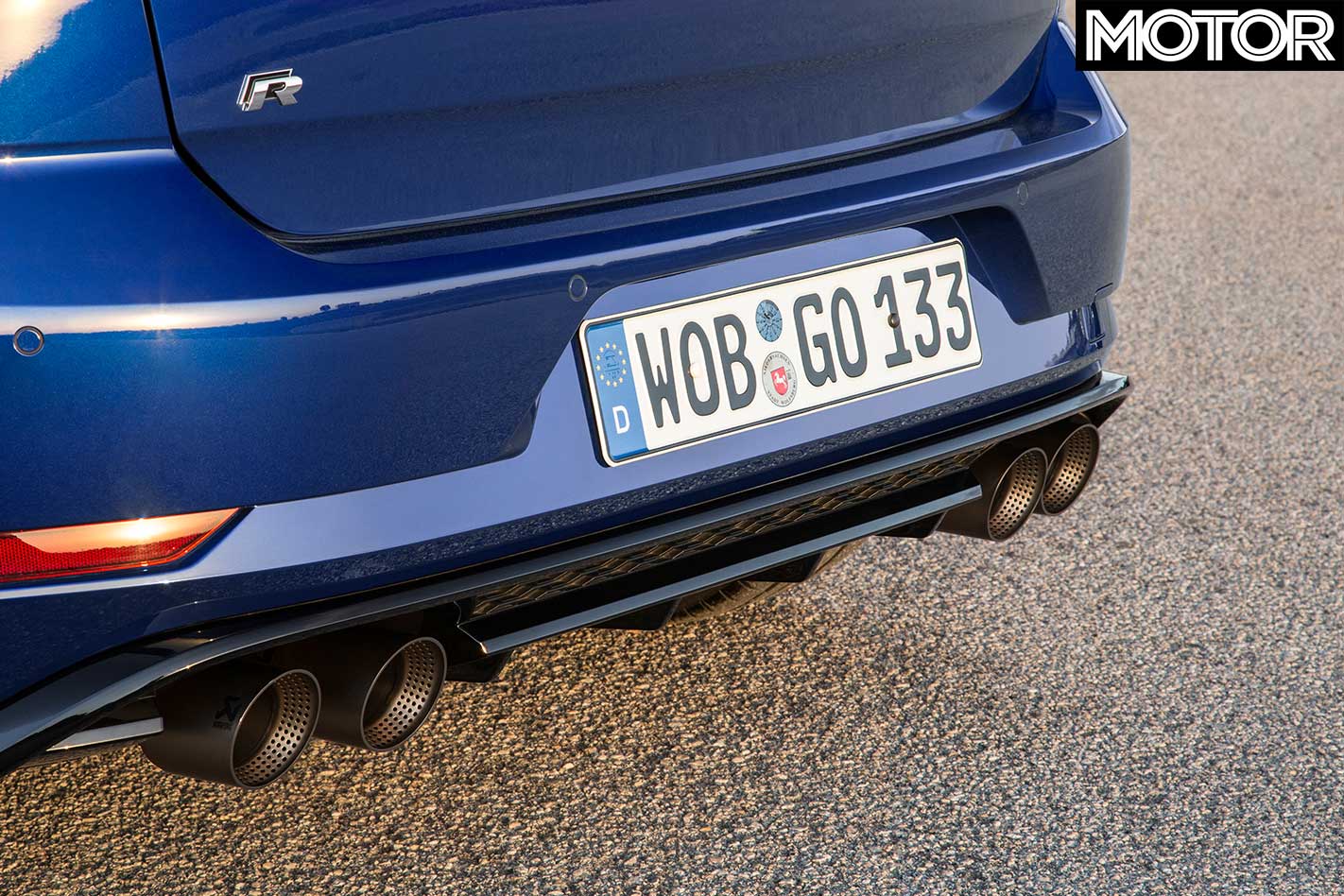
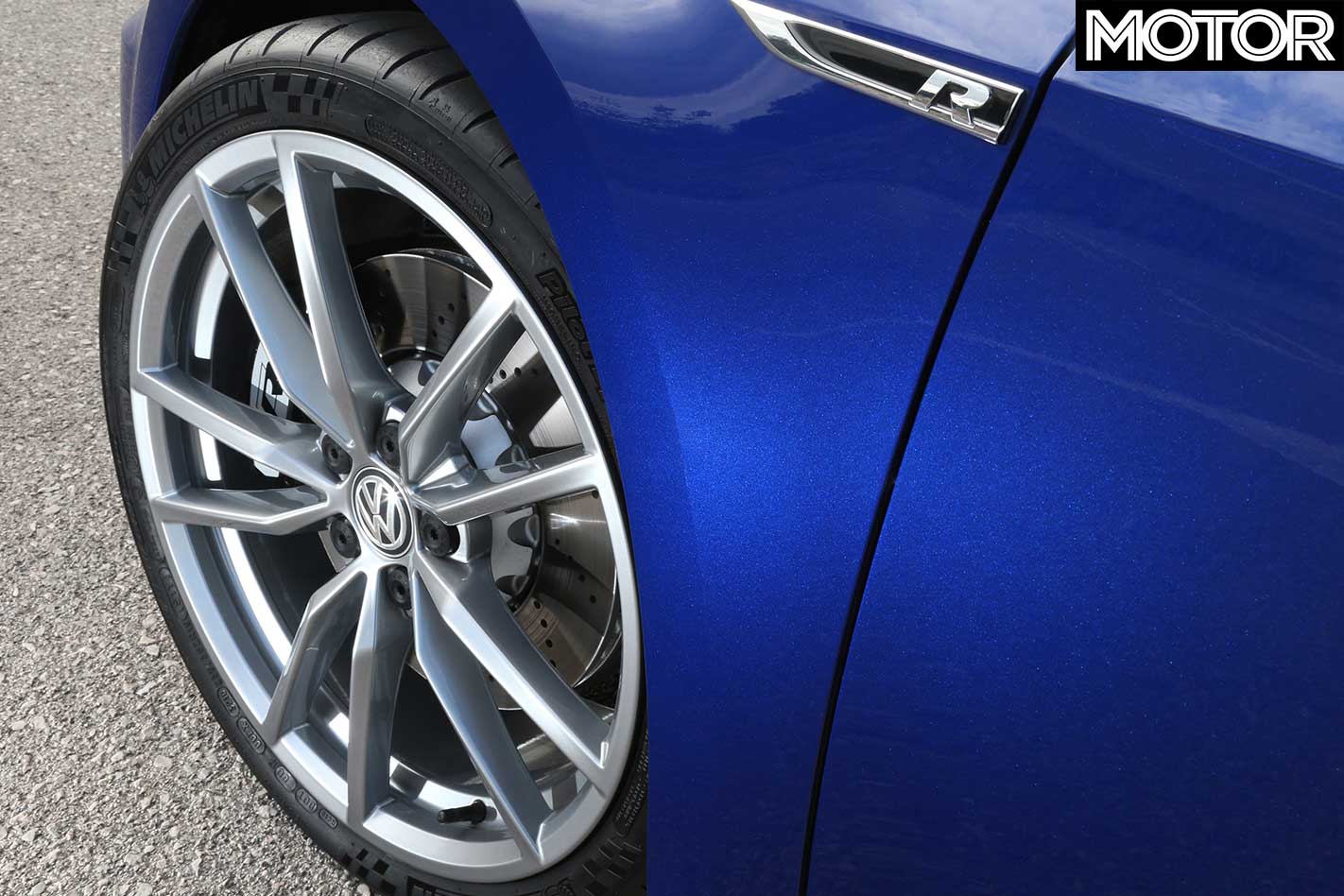
The Special Edition also pinches the brakes and wheels from the track smashing Golf Clubsport S, which held the Nürburgring Nordschliefe front-drive record shortly with a 7min 49.2sec lap. The brake system uses drilled rotors and special pads to shed 2kg.
This system is caged by 19-inch Pretoria style wheels that are said to shed further rotating mass from the Golf R, and they’ll come finished exclusively in black.
The turbocharged 2.0-litre four-cylinder skips any further tuning and endures with the detuned 213kW and 380Nm for the local market. It also comes matched to the Golf’s recently introduced seven-speed DSG.
Spotting is helped by a special “R Performance Options” badge and door mirrors painted gloss black instead of silver. They’re visual cues on top of the wheels, gold-tinted exhaust, and brakes.
Volkswagen hasn’t dropped superflous options, Grid Edition style, to accommodate the new kit. It’ll come with a 400 watt Dynaudio system as standard, black Vienna leather upholstery and electrically adjustable seats, along with a digital dash display.
Volkswagen have added Tumeric Yellow as a paint choice to the R’s colour pallette, while a Panoramic roof features as the only option at $1900.
We’re told the exhaust system, custom made for the Golf R and factory fitted in Germany, is worth more than the price premium alone, and that there is already strong demand for the Special Edition.
Despite this, the Golf R Special Edition’s premium sees the standard Golf R price jump by $5500 to $61,990.
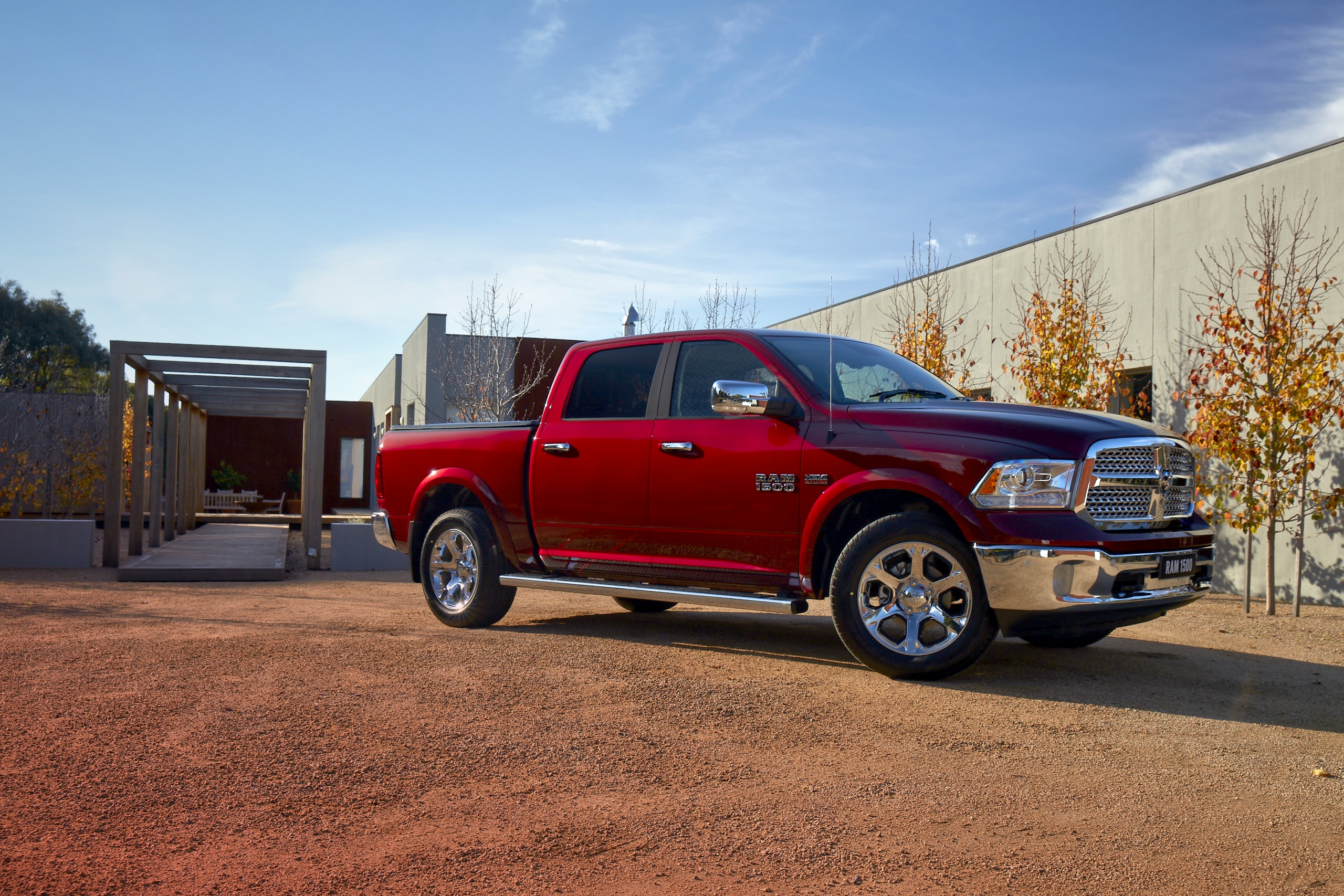
Built in Detroit, brought to Australia by factory-endorsed distributor Ateco, and locally re-manufactured in right hand-drive by Walkinshaw Automotive Group, the Ram 1500 is the little brother to the heavy duty 2500 and 3500 models already available Down Under. But ‘little’ is a relative term!
VALUE
The entry-level 1500 Express is priced from $79,950 drive away, placing it within the realm of premium offerings from some of the established players in the dual cab market, but with several key advantages including 4.5-tonne towing and a glorious 5.7-litre Hemi V8.
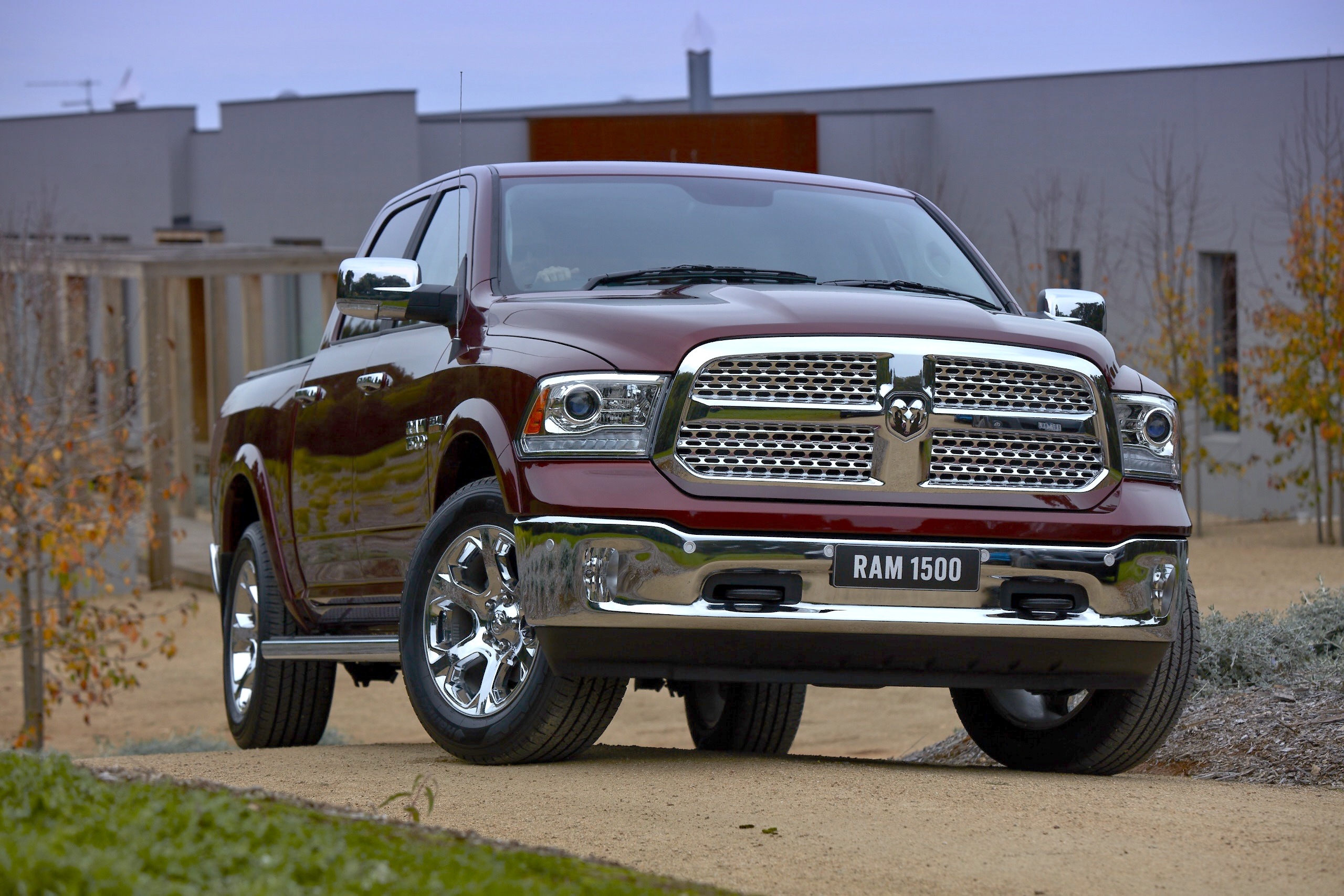
We tested the better-appointed Laramie model, which is priced from $99,950 plus on-road costs. There are several importers converting US-style pick-ups (most notably HSV and the Chevrolet Silverado), but the Ram 1500’s sub-$100K price point makes it an attractive proposition.
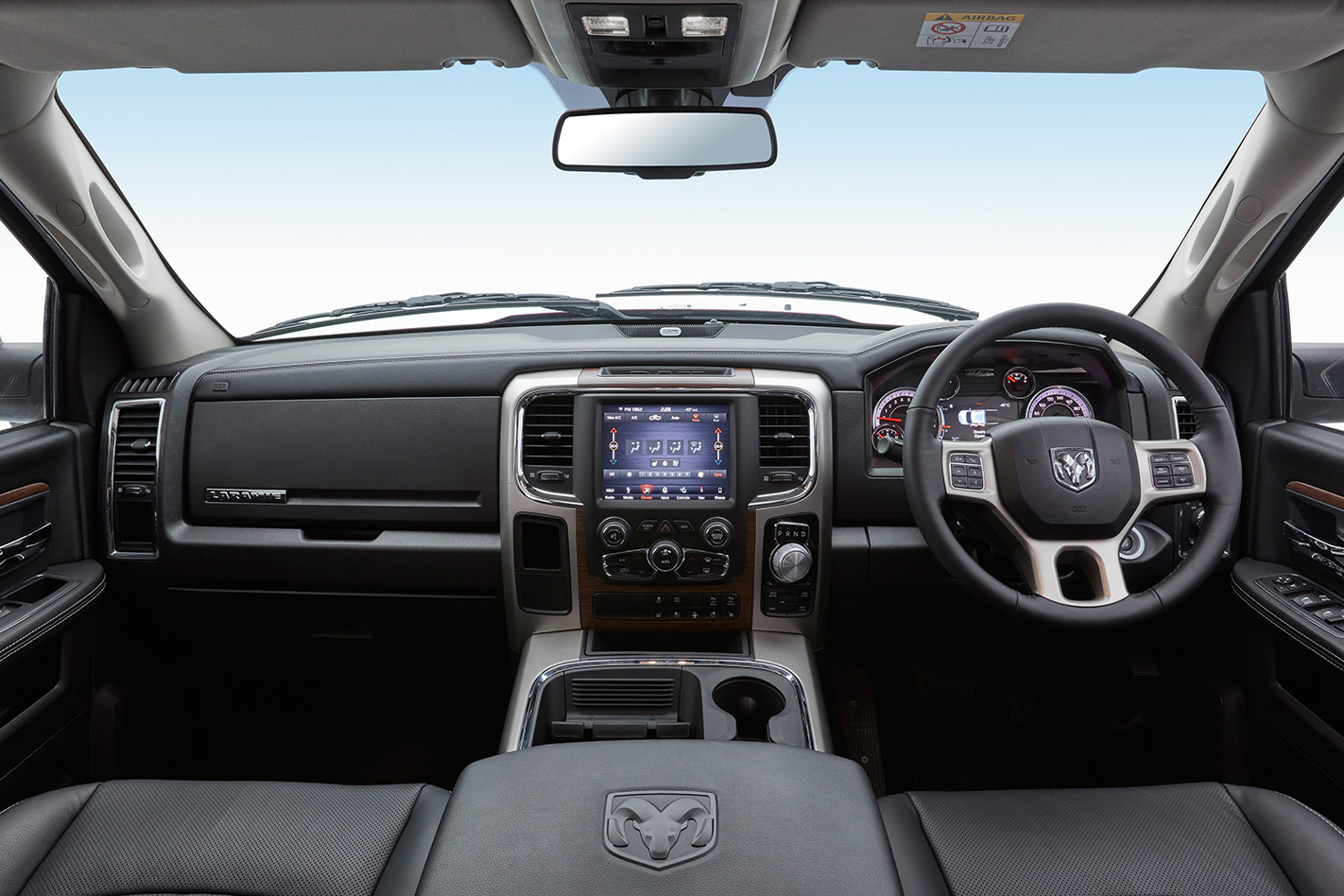
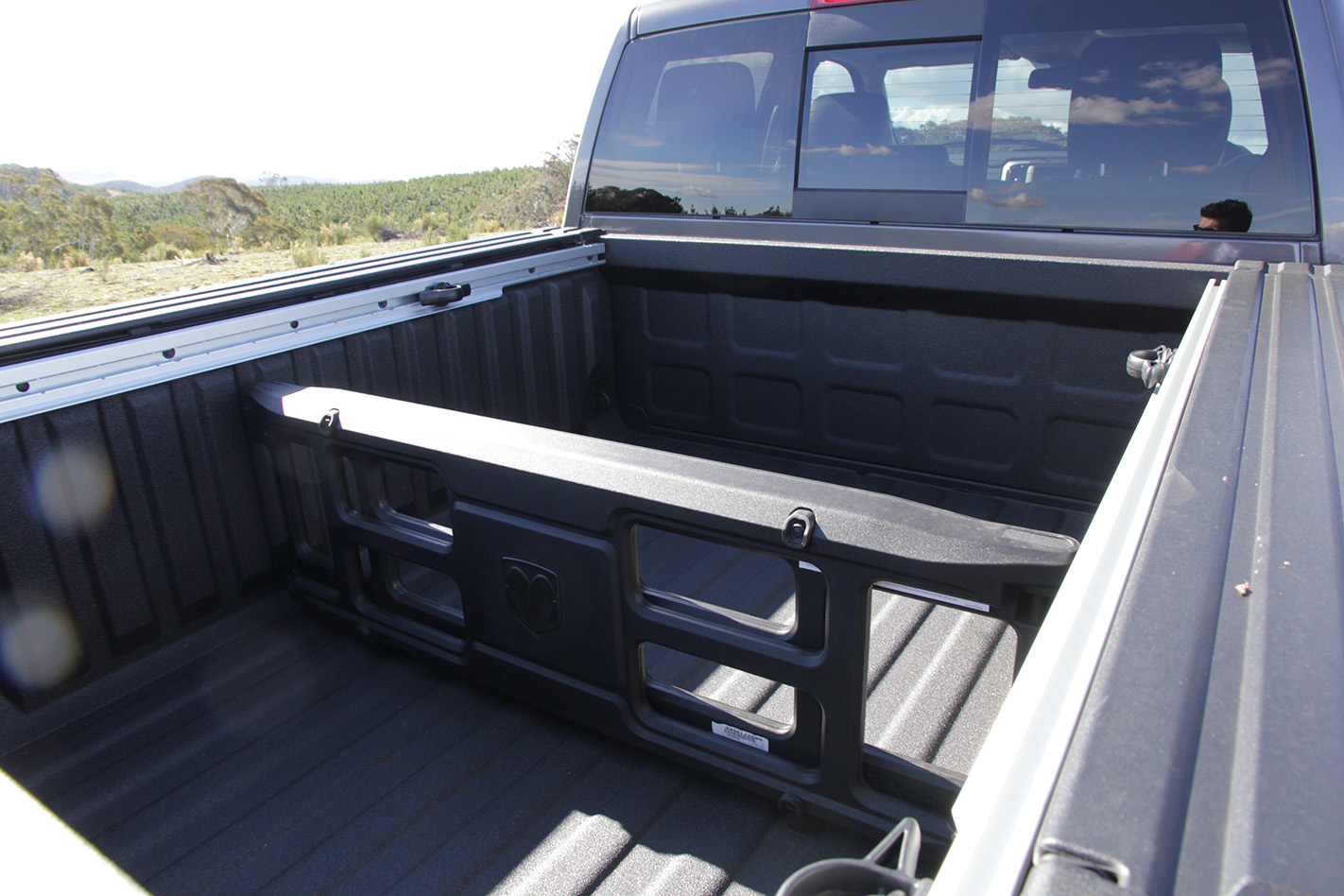
The Laramie has the same powertrain as the more modestly-priced Express, but it features bolder styling, a larger cabin (at the expense of tray length), a sumptuous leather interior and goodies such as a 10-speaker audio system, 10-way power-adjustable driver’s seat and dual zone climate control.
Ram claims a fuel consumption figure of 9.9L/100km on the combined cycle, achieved by implementing cylinder deactivation technology and active grille shutters to reduce aerodynamic drag. Frankly, that’s impressive for a petrol V8-powered vehicle of its size and performance. How easy that figure is to duplicate in the real world remains to be seen.
STANDARD FEATURES
One of the Ram 1500’s key advantages over its smaller competitors from Japanese and European marques is its 4.5-tonne towing capability, which is sure to be popular with caravaners, boating enthusiasts and the like. You can opt for a 3.23:1 axle ratio (as opposed to the standard 3.92:1) but that reduces the towing capacity to 3.5 tonnes – something that can be matched by more affordable and arguably more practical dual cabs. The 1500 is centred around towing, and as such comes standard with a tow bar and features like trailer sway control, and an integrated electric trailer brake controller on the Laramie.
The Laramie’s cabin has a premium feel, and its large touchscreen infotainment system offers great connectivity with Apply CarPlay and Android Auto functionality, and can switch between inputs from two separate phones, which can be conveniently holstered at the base of the dash.
It also offers heated front and rear seats, steering wheel and mirrors – the sort of niceties you quickly appreciate on a frosty winter morning in Bathurst, where we tested the 1500.
SIZE
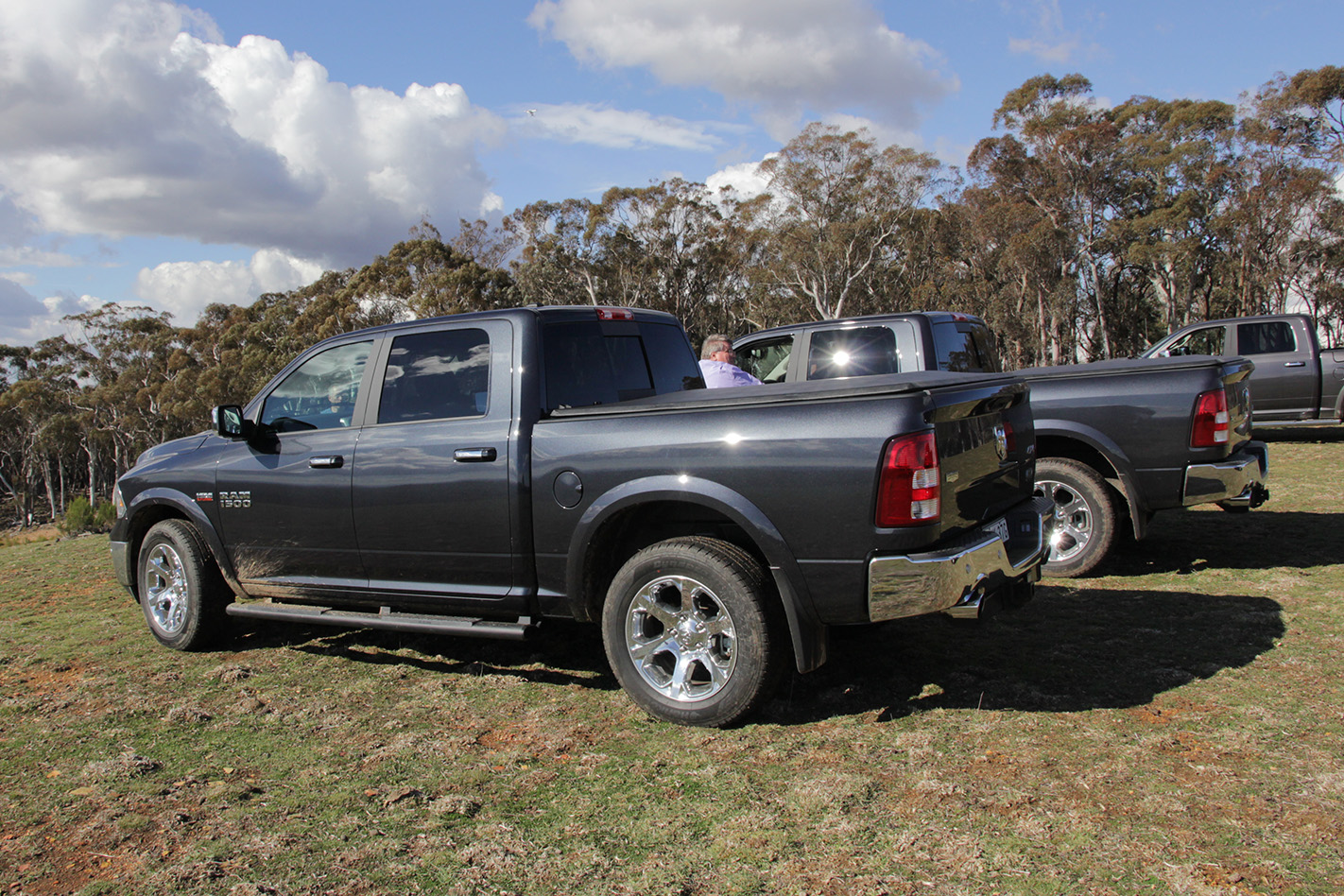
The Ram 1500 occupies the middle ground between ‘traditional’ dual cab utes such as the Ford Ranger and Toyota HiLux, and the larger Ram 2500 and Chevrolet Silverado 2500HD.
When you hop behind the wheel of the 1500 it feels far larger on the road than the Ranger and HiLux, but on the rural backroads we sampled, the 1500 quickly shrinks around you as you grow comfortable with its scale. But there’s no getting around the fact that it’s a fair lump of a ute. In urban environments it will occupy more lane space that most utes and could prove tricky to park – though the Laramie’s reversing camera and ParkSense front and rear park assist will help on that front.
SAFETY
On top of the aforementioned towing-focused safety features, the highlights of the 1500 Laramie’s safety appointments include a full complement of driver and front-seat passenger airbags, stability control, ABS, traction control, electronic brakeforce distribution and tyre pressure monitoring.
COMFORT
I’m a taller driver at 6ft 4in, so for me the 1500’s spacious cabin was a joy to occupy. The Laramie’s rear seat also offers plenty of room – somewhere other dual cab utes can be found wanting – and it was able to comfortably accommodate a… erm… larger gent such as myself. Notably, the Express (which we’re yet to sample) receives a smaller cabin, but a longer tray – 6ft 4in as opposed to 5ft 7in.
It’s easy to get comfortable in the Laramie’s very adjustable leather-clad driver’s seat, along with adjustable pedals and a height-adjustable steering column. For a large, aerodynamically challenged vehicle with a V8 engine on 20-inch wheels, the low level of cabin noise is surprising and the ride quite compliant, even on the potholed and corrugated roads on test. The lack of any detectable rattles from the dashboard is evidence of the quality of the right-hand-drive conversion. The only real gripe is the floor-mounted park brake, which is cumbersome to apply.
ON THE ROAD
The shove in the back offered by the 1500’s 291kW, 5.7-litre Hemi will make you smile, as will its raucous V8 bark. Ram doesn’t publish official performance figures, but we heard whispers of 0-100km/h times in the high-sevens – comparable to the class-leading Volkswagen Amarok V6. The engine is well-matched to an eight-speed automatic transmission, and a four-wheel-drive system with four modes, easily selectable via buttons on the dash.
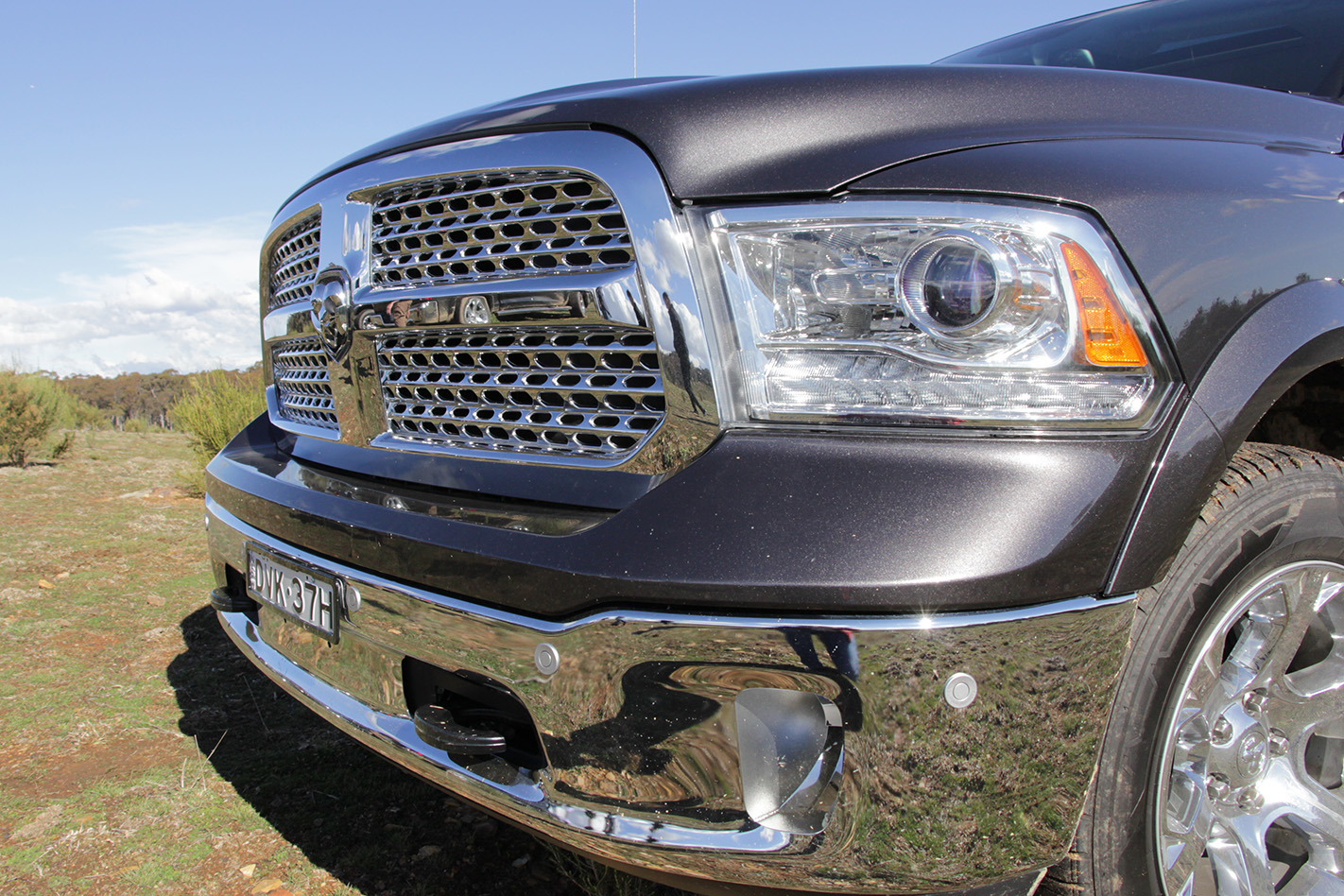
The Ram features a multi-link, coil-sprung rear suspension system as opposed to a more typical leaf-sprung setup, and it shines on rough country B-roads, where the Ram handled bends with more composure than you’d expect of a vehicle with a 2650kg kerb weight. We’d be interested to sample it with a load in the back.
With its extra heft and longer wheelbase, the 1500 won’t match a ‘traditional’ dual-cab off the road, however it’s capable enough to do what the majority of buyers will ask of it.
VERDICT
I’m glad the Ram 1500 Laramie is here. It’s a welcome addition to the Australian ute landscape, and while I love the Hemi V8, the three-litre diesel V6 will only serve to broaden the 1500’s appeal when it arrives later this year.
