
The 2018 BMW M5 Competition has been officially confirmed for Australia, less than a week after the German BMW site (and an Aussie customer) leaked most of the key specs.
By now that we know it’s on the way, we here at MOTOR can start thinking of what to do with it, and what to face it off against, once we get our grubby mitts on one.
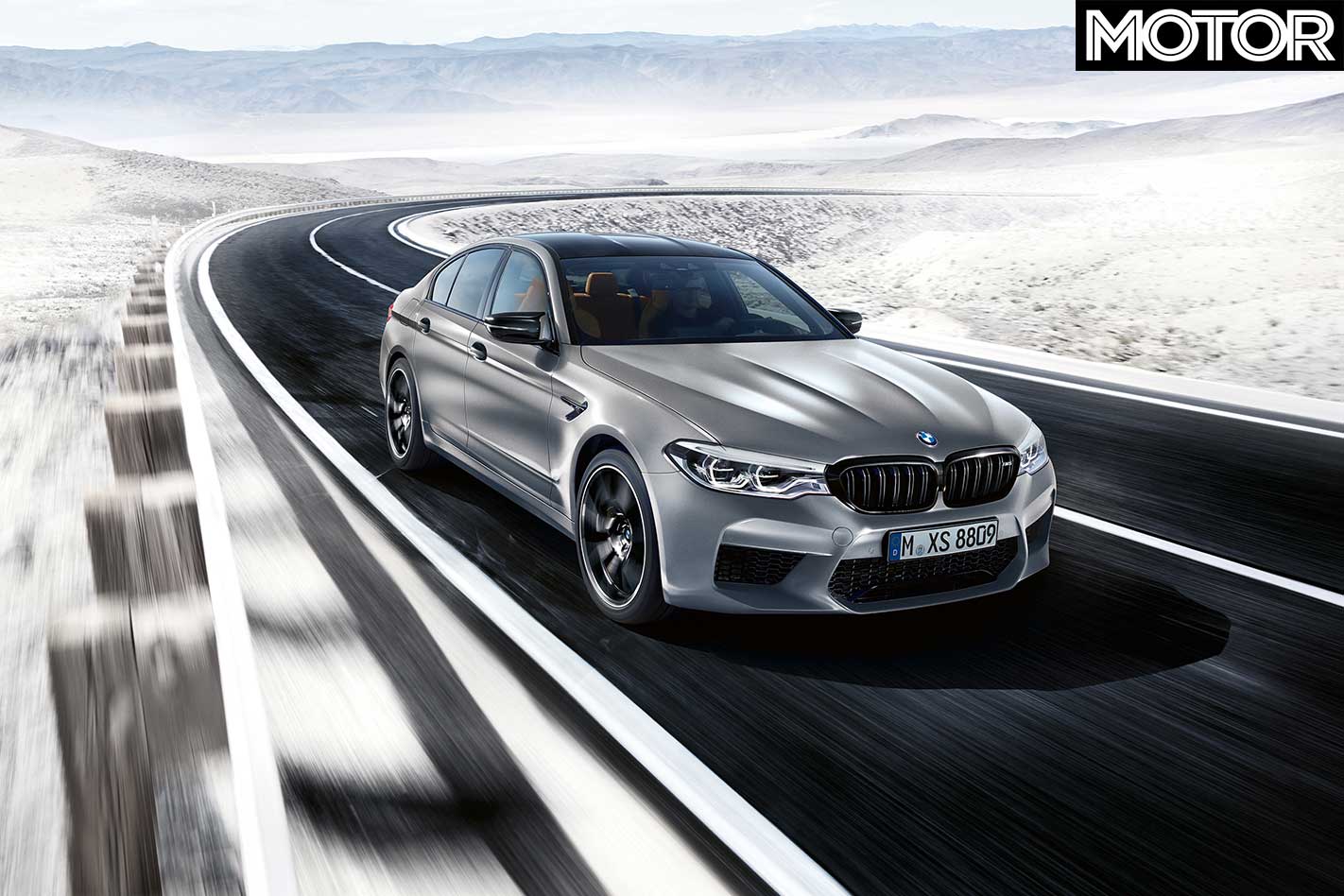
There is, however, one key opponent for the M5 Comp that it’s already gunning for: the 2017 Mercedes-AMG E63 S.
In our comparison between the E63 S and the standard F90 M5, the M5 just took home the prize as the better car. Just.
But if BMW wants to widen the gap, the M5 will have to be an absolute belter. So let’s lay down some facts and see how much ground BMW has gained.
PRICE
As this is the starting point for most purchasing decisions, it seems like a reasonable place to start a numbers-based comparison.
While the $239,611 AMG was about $40K pricier than the standard M5, it’s now only $10,000 more expensive.
Sure, the $229,000 M5 Competition loses some value in the equation, but more goodies make up for it. We’ll get to that.
POWER
Not only has BMW given the M5’s 4.4-litre twin-turbo bent-eight more power in Competition form, it’s now got more power than the E63 S too. Bimmer’s 460kW trumps the Merc’s 450.
Likely not of dire importance to the overall power delivery between each car, the AMG’s smaller 4.0-litre actually hit its prime earlier in the revs. While the BMW reaches peak power at 6000rpm, the AMG hits the high note at 5750rpm.
In the torque department, however, the Competition gains nothing over the standard M5’s 750Nm, and the AMG’s 850Nm reigns supreme.
For reference, the redline E63 S is 7000rpm, while a graph provided by BMW suggests the M5 Competition revs a little higher, to about 7100 or 7200rpm.
DIMENSIONS
With both cars nudging the 2-tonne mark (1865kg for the M5 Competition, 1880kg for the E63 S), it’s not like either will be tip-toeing around corners. But all-wheel grip makes up for that, something both cars possess.
But the M5 has a very slight grip advantage, by just half an inch at the rear tyres. Each one is 10.5-inches wide, while the Merc’s rears are 10-inches wide. Both run 9.5-inches at the front.
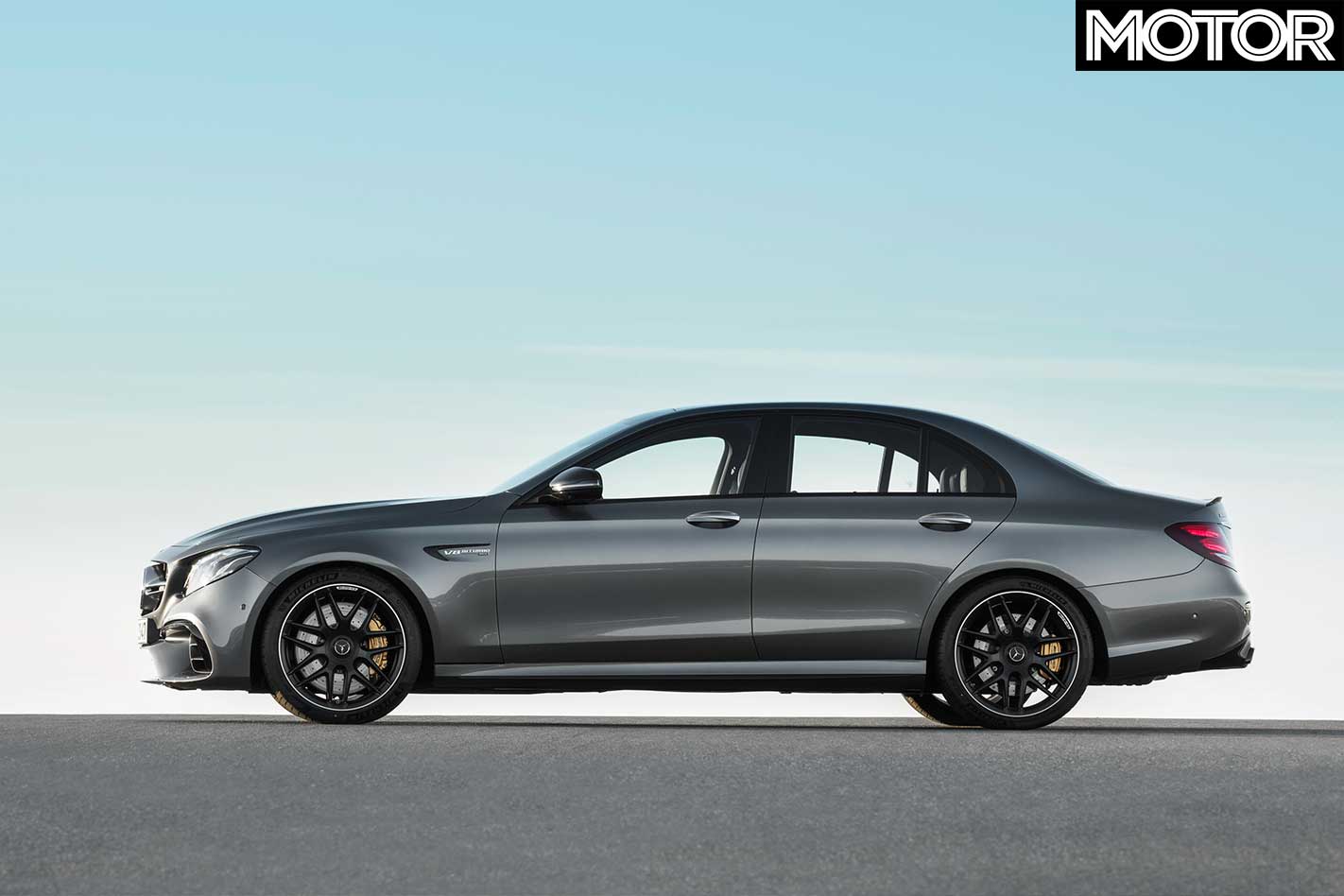
Both have almost identical rear tracks (1594mm for the Bimmer, 1595mm for the Merc), but the fronts are slightly narrower on the M5 than on the E63 S, 1625mm to 2649mm.
PERFORMANCE
Alright, enough about what’s written on paper, this is what each car is supposed to be able to do.
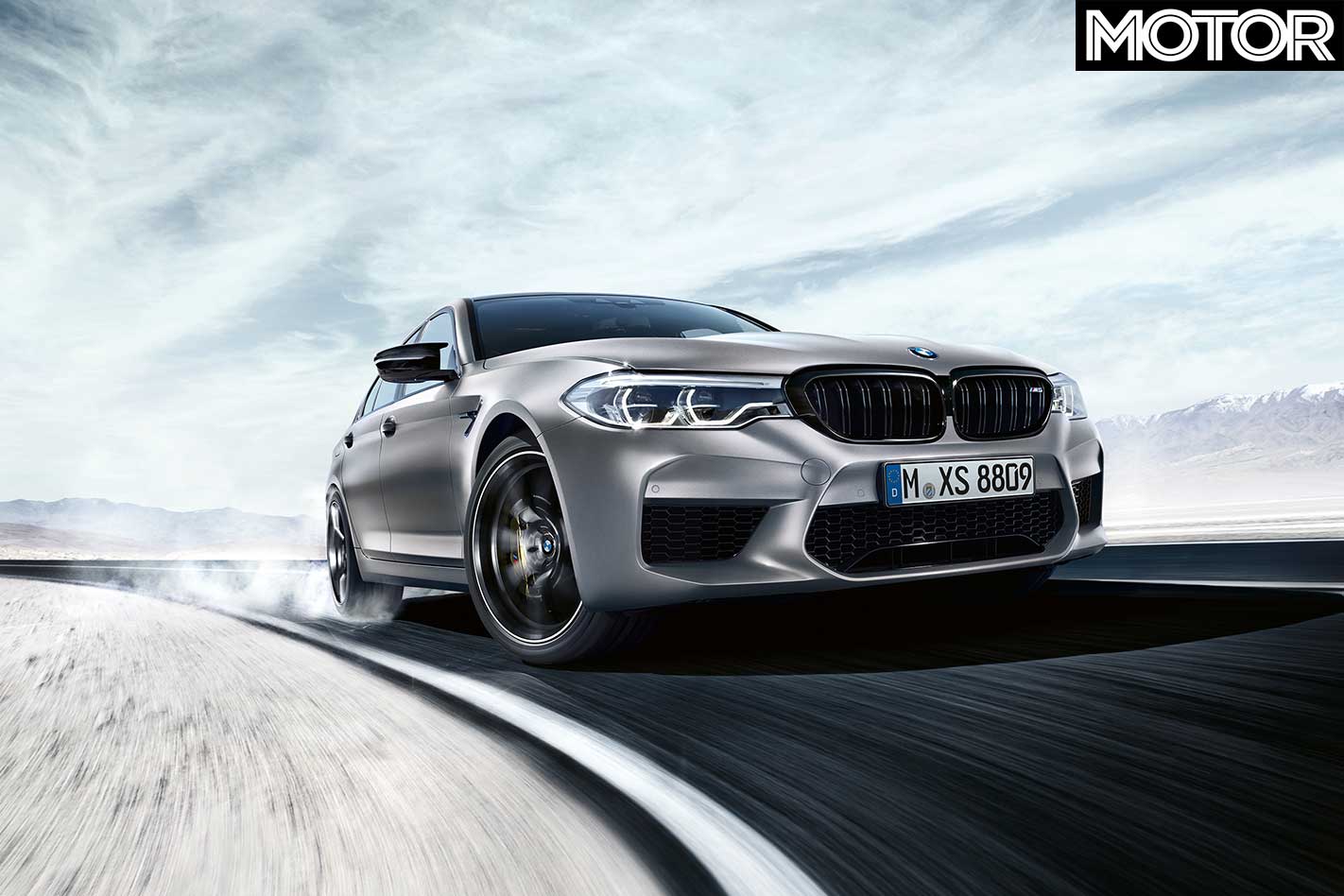
But BMW says the M5 Competition shaves a tenth off the 0-100kmh dash and three off the sprint to 200km/h. Call that 3.3 seconds and 10.8 seconds respectively.
Compare that to the 3.4 seconds AMG says the E63 S takes to hit the hundred, and the 11.5 seconds to hit 200km/h.
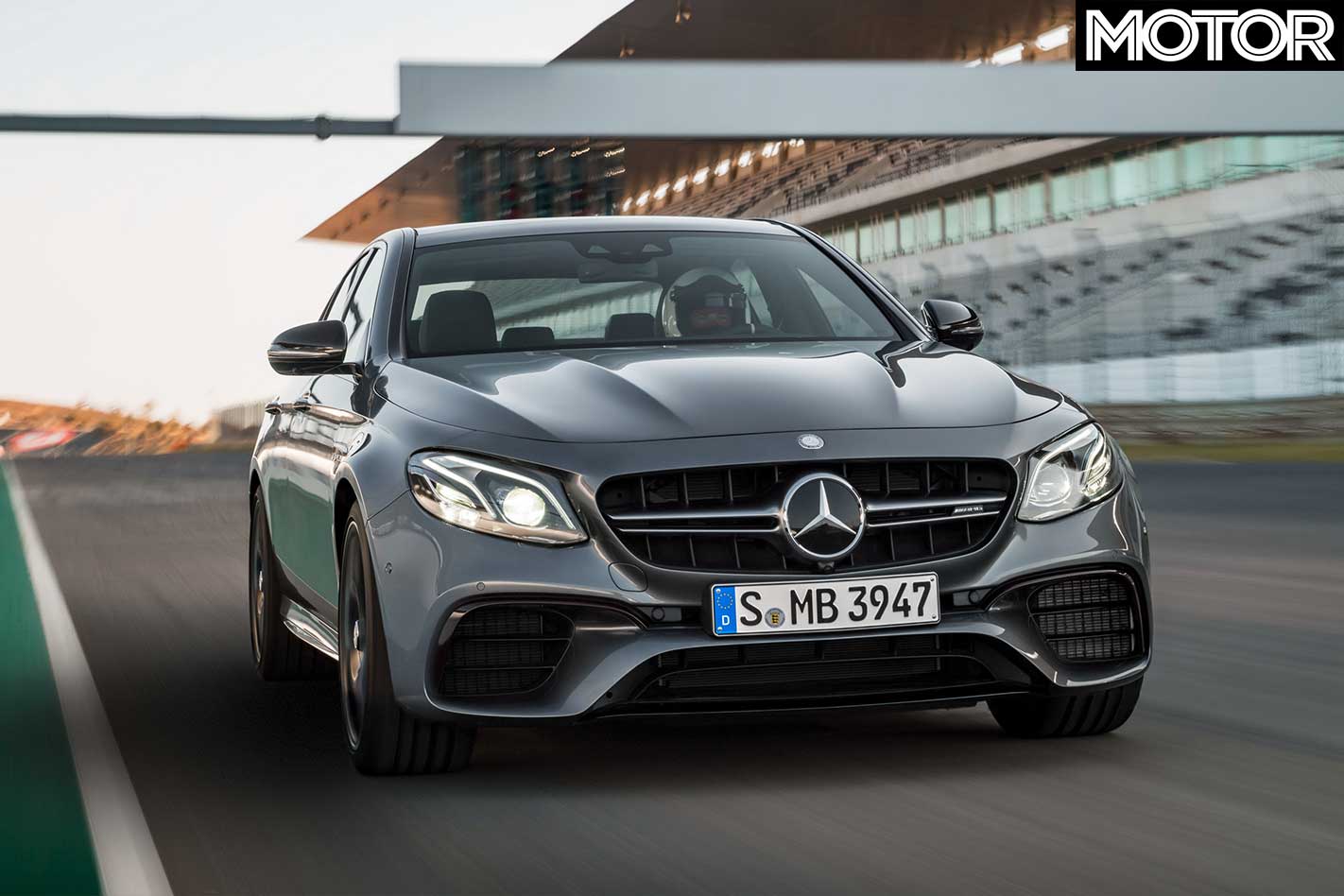
Do we have a winner? We won’t call it just yet, but we’ll know once we’ve driven the M5 Competition.
Stay tuned.
Correction: The previously stated weight for the E63 S was 1955kg, which is the weight including driver. It has been changed to represent the 1880kg kerb weight.
MISSED out on one of the 50 BMW M5 road rockets allocated to Australia earlier this year? You now have a second chance, with an even feistier version dubbed the Competition arriving later this year.

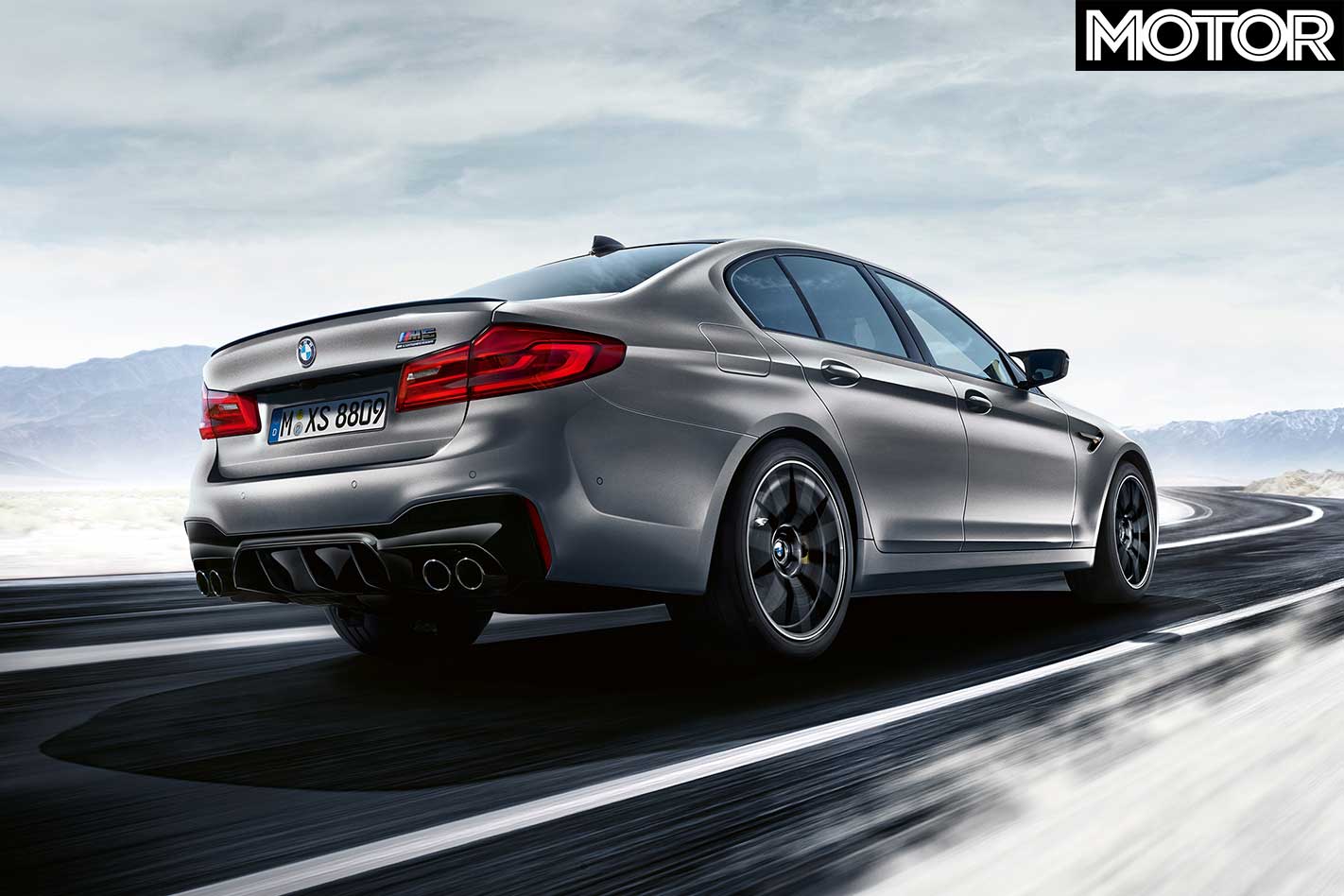
Priced from $229,000 before on-road costs, the M5 Competition joins its smaller M2, M3 and M4 siblings that also gain the Competition treatment, but the latest instalment packs the biggest punch yet in BMW’s road car ranks.
With a mammoth 460kW whipped from the M5’s 4.4-litre twin-turbo V8, the Competition gains 19kW over the standard M5 and usurps the 448kW, 6.6-litre twin-turbo V12-engined M760Li as the company’s most powerful model to date.

With its extra firepower pumped through all four wheels, the M5 Competition shaves a tenth from the 0-100km/h dash, completing the benchmark in just 3.3 seconds. More significantly, it trims 0.3sec from the 0-200km/h blast with that now done in 10.8sec.
The M5’s arch rival, the Mercedes-AMG E63 S, will officially do the 0-100km/h run in 3.4 seconds although, when Wheels tested its performance last year, we managed to match the M5 Competition’s 3.3sec claimed figure.
Torque remains at 750Nm and fuel use is rated at 10.8L/100km on the combined cycle, 0.3L/100km higher than for the normal M5.

The suspension was modified to channel the extra power and performance, especially when on the track, BMW said, with the Competition version of the sedan sitting 7mm lower and on 10 percent stiffer springs. There is more front axle camber, and rear suspension toe links that are connected with more rigid ball joints in place of standard rubber versions.
Anti-roll bars also have new mountings while the rear bar is stiffer to counter bodyroll in high-speed cornering.
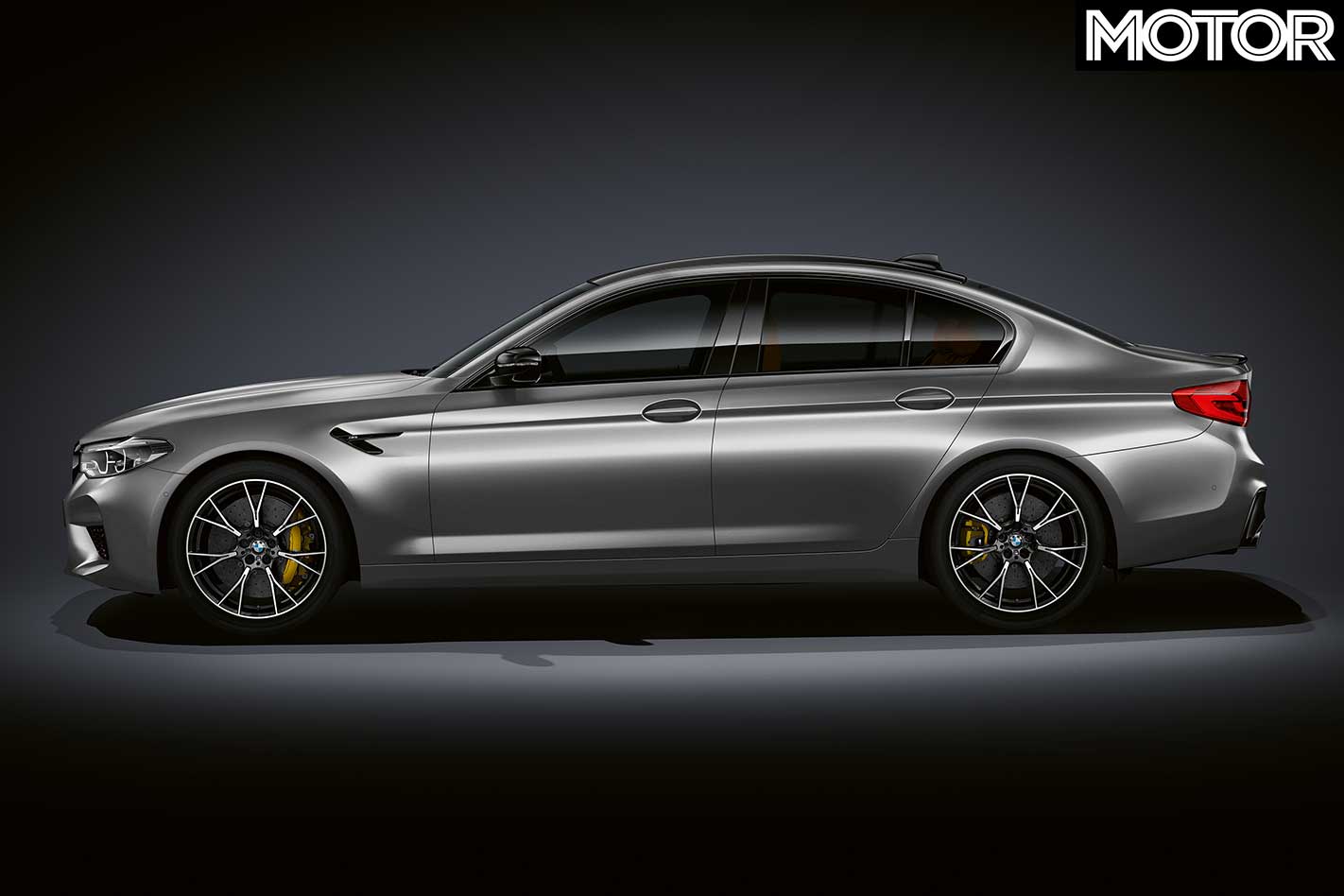
Brakes are upgraded to what BMW refers to as lighter M compound with six-piston calipers on the front end and single-piston versions at the back. The uprated brakes are housed in unique 20-inch Competition wheels with a skeletal “Y-spoke” design in forged alloy for reduced unsprung weight.

The exterior is further enhanced with black tips added to the M Sport exhaust, which can be flicked through different M Sound Control modes according to how much noise the driver wants the turbo V8 to report.
Shadow Line exterior trims add gloss black touches to the grille, side gills, rear spoiler, rear apron and mirror caps, while Competition lettering slotted beneath the M5 boot badge completes the exterior changes.
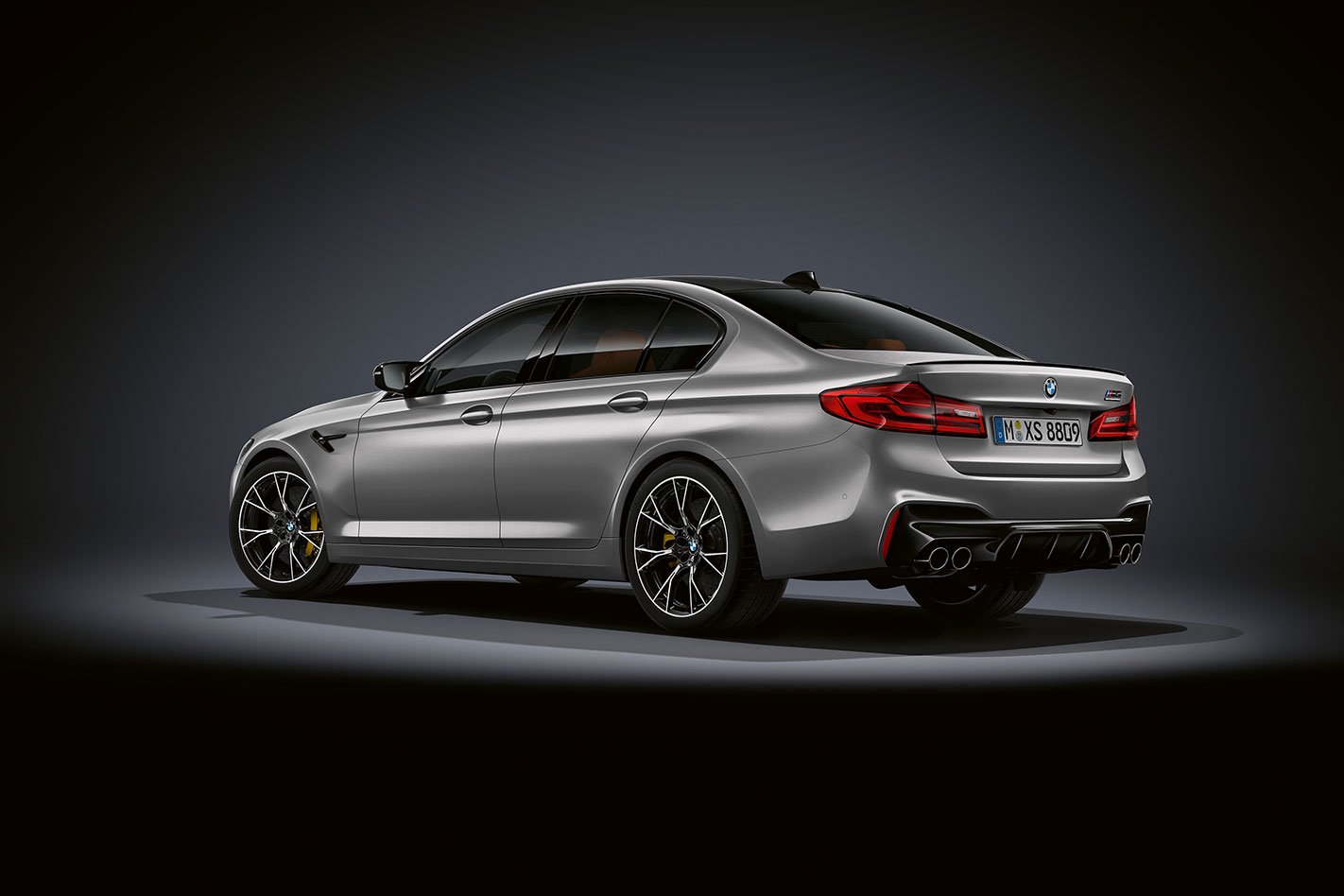
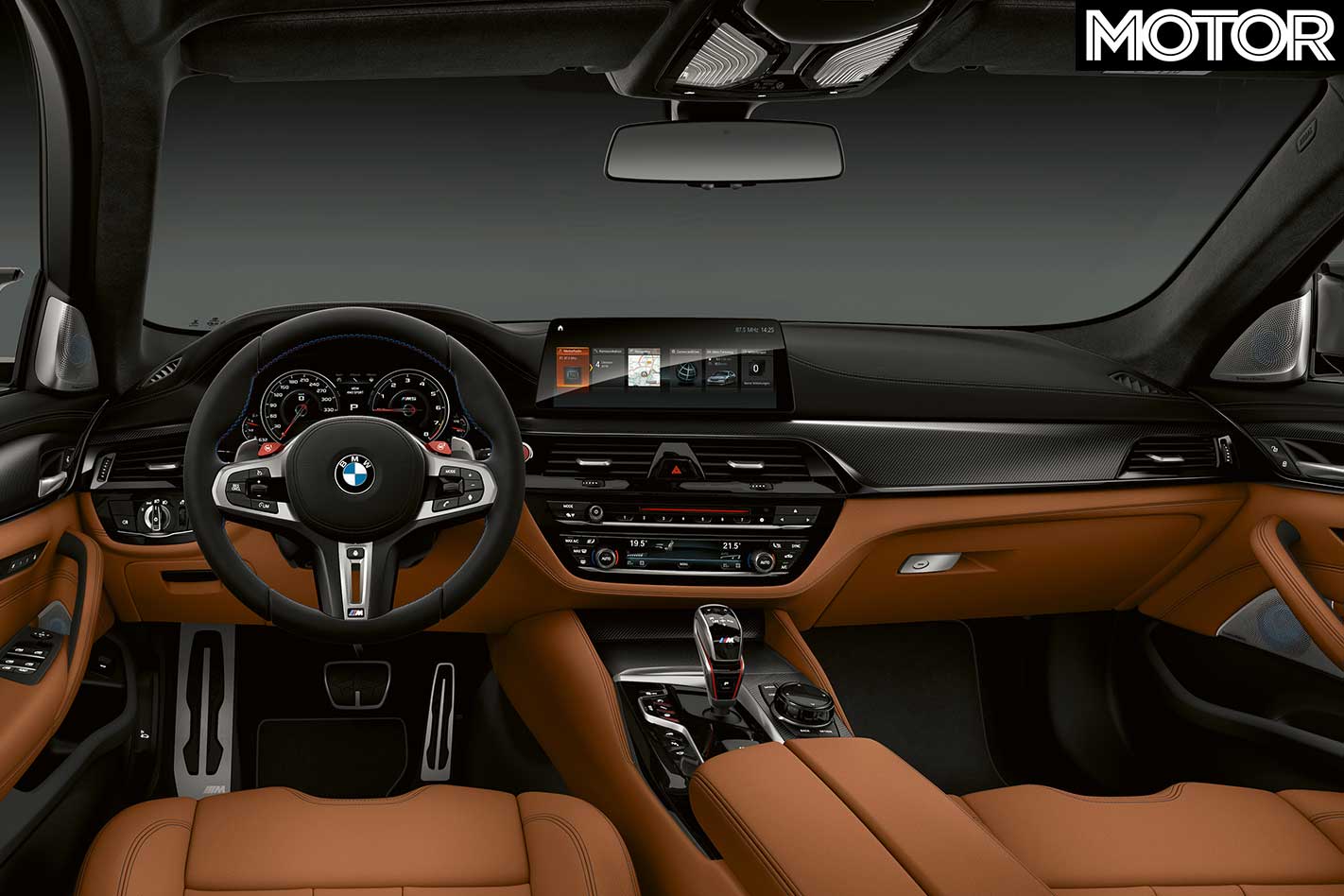
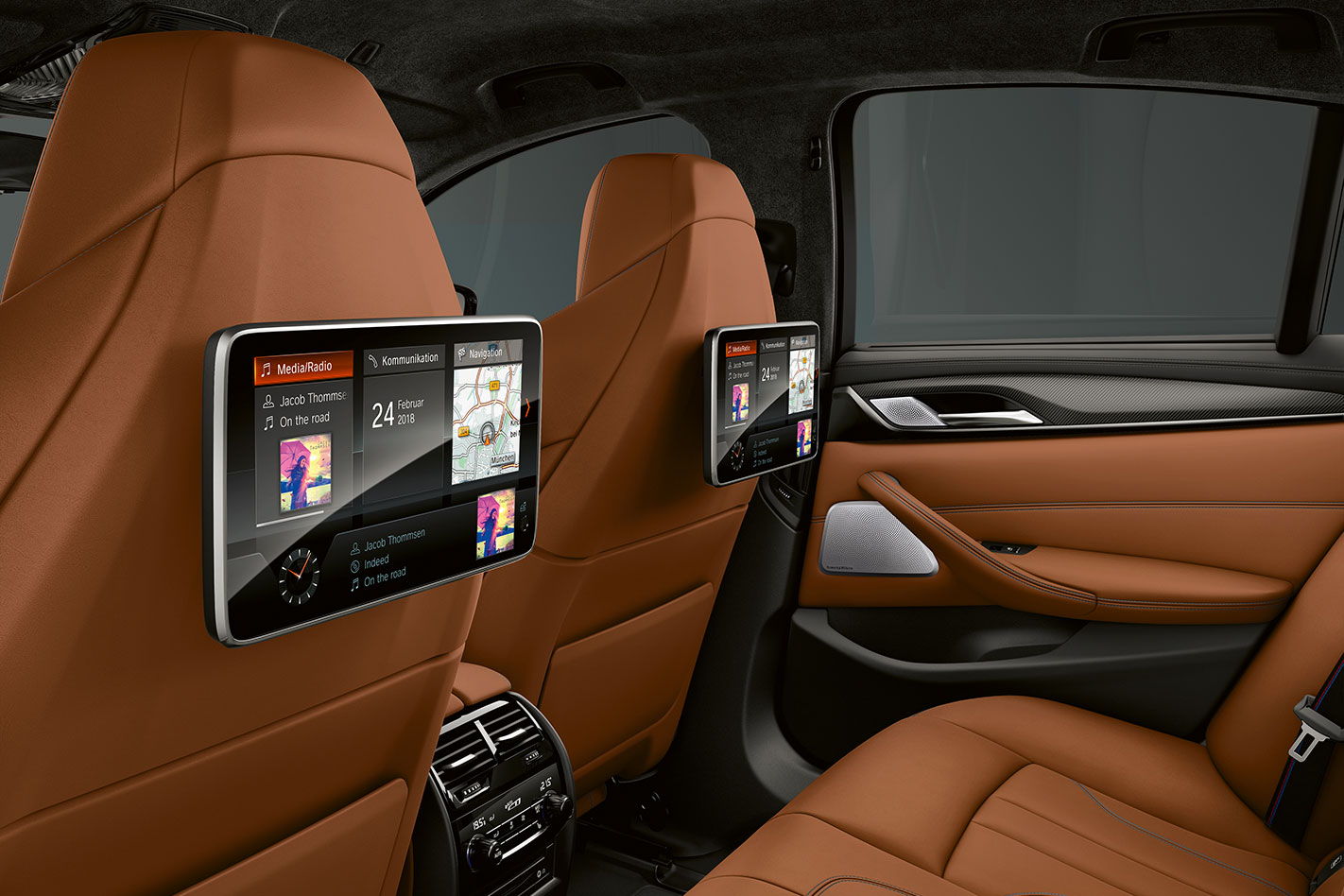
In the Competition cabin, the seatbelts get the classic M colours woven into the standard black fabric, carbonfibre with aluminium weave trims are applied throughout the cabin and full leather Merino Aragon upholstery abounds.
As for the eight-speed automatic transmission coupled to xDrive all-paw transmission, its business as usual with various driving modes that enable increasingly taily behaviour when the track allows, including a manic mode that disengages the front axle completely for more typical M5 tomfoolery.
GREAT Wall Motors (GWM) Group is planning to become China’s largest powertrain producer and one of the world’s heavyweights with a new strategy that will supply other manufacturers with off-the-shelf drivetrain packages.
The Chinese car giant has invested significant funds into its powertrain development projects, resulting in a range of engines and transmissions stamped only with the its guard tower insignia, but the new plan is set to boost its return on investment and secure domestic market dominance.
Speaking at Great Wall’s SUV brand Haval headquarters, chief drivetrain engineer Gerhard Henning said other manufacturers were already lining up for its engine and gearbox value packs.
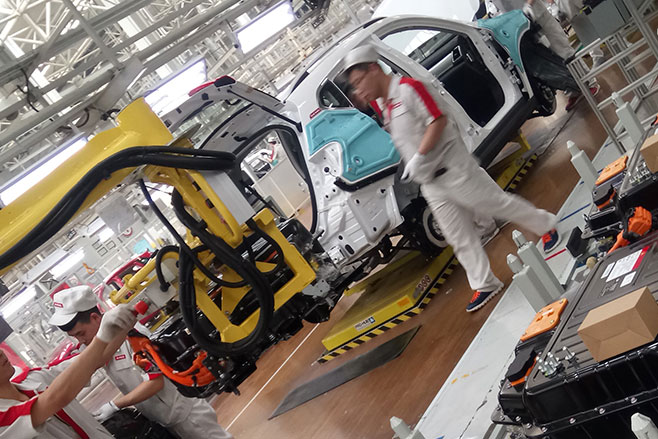
“One target is to sell the power pack – engine and transmission together,” he said. “We have already OEMs (original equipment manufacturers) who are asking and we are in the early process of doing this.”
If the company succeeds in selling complete units to a large number of its rivals, Great Wall’s presence as a major supplier will climb another rung on the global ladder, enabling increased investment and development of home-grown technology.
When asked if the company’s goal is to be the leading Chinese drivetrain producer, Henning answered yes and explained that many other brands don’t have the resources to develop such complex and costly technology.
“Many OEMs in China have difficulty developing transmissions. It looks easy especially the calibration (stage) with engine and transmission together.”
According to the ex-Daimler driveline engineer, calibration is one of the hardest elements of the development process, and one of the most critical for maximising fuel efficiency and, of particular importance for its next new engine model, which will accommodate hybridisation.

“Now a new engine is coming I think the calibration is a key point also for the fuel consumption.
“For the conventional automatic transmission, together with hybrid, it will be a good package, but it is difficult to package. So with our next-generation we worked very hard to package a 2.0-litre turbo engine with a DCT and the P2 hybrid.”
With a focus on electrification and small capacity turbocharged engines, Haval is following a global trend of downsizing to boost efficiency, reduce emissions and align with dominant brands outside its native Chinese market.
In line with the strategy and concerns over volume potential, the company dumped plans to introduce a six-cylinder, twin-turbo engine destined for its larger models.
“This is only for in-line, not for transversal and it can only be used in the H8 and H9. It was stopped because the volume was not enough.
“We are focusing on four-cylinders that have more power. We think we can cover everything with four-cylinders”.
In addition to its own range of engines and a seven-speed dual-clutch automatic transmission, the car giant also produces in-house designed turbochargers, clutches, controllers and hybrid systems, but the tech inventory will soon be added to with an eight-speed DCT, twin motor electric drivetrains and 48-volt electrical sub systems.
FORD has released a promotional video for the next-generation of Ford Ranger, showing the car’s rigorous development program.
Expected to arrive in Australia next year, the ‘T7’ platform which underpins the Ranger, Everest, and yet-to-be-revealed Bronco was developed and engineered Down Under at Ford’s You Yangs proving ground.
Angled firmly at the US market, the video is designed to build hype for the dual-cab ute’s introduction to the American continent, and singles out the car’s testing process in the Australian Outback.
US-spec Rangers will be fitted with a 2.3-litre turborcharged Ecoboost four-cylinder petrol engine mated with a 10-speed automatic.
No Australian-delivered Rangers will be available with the petrol engine.
However, it is rumoured the Ranger could be sold with a single-turbo version of the twin-turbo 2.0-litre four-cylinder diesel engine to be fitted to the Ranger Raptor, which should be due locally in September.
The video shows the Ranger being put through a number of punishing tests, including driving over a road so rough the vehicle has to be piloted by a robot, and some enthusiastic circle work in the Australian Outback.
The dusty donuts probably aren’t an official development, but a nice homage to the car’s true blue roots.
Wheels contacted Ford for clarification on how much of the new Ranger’s development was conducted locally.
US-based technology start-up Clearmotion has acquired the radical suspension technology developed by Bose over more than two decades, and is refining the proactive chassis system for tomorrow’s self-driving cars.
While the idea looked promising when it was showcased by Bose in 2004, technological constraints rendered the system bulky and heavy, but its new owner has raised a further US$100m to miniaturise and commercialise the innovation.
Based on the same principle as an audio speaker’s magnet and cone, the proactive suspension doesn’t just absorb and smooth imperfections from the road as a conventional system does, it actually senses changes in the road surface ahead and actively moves the wheel height to counter the obstacle.
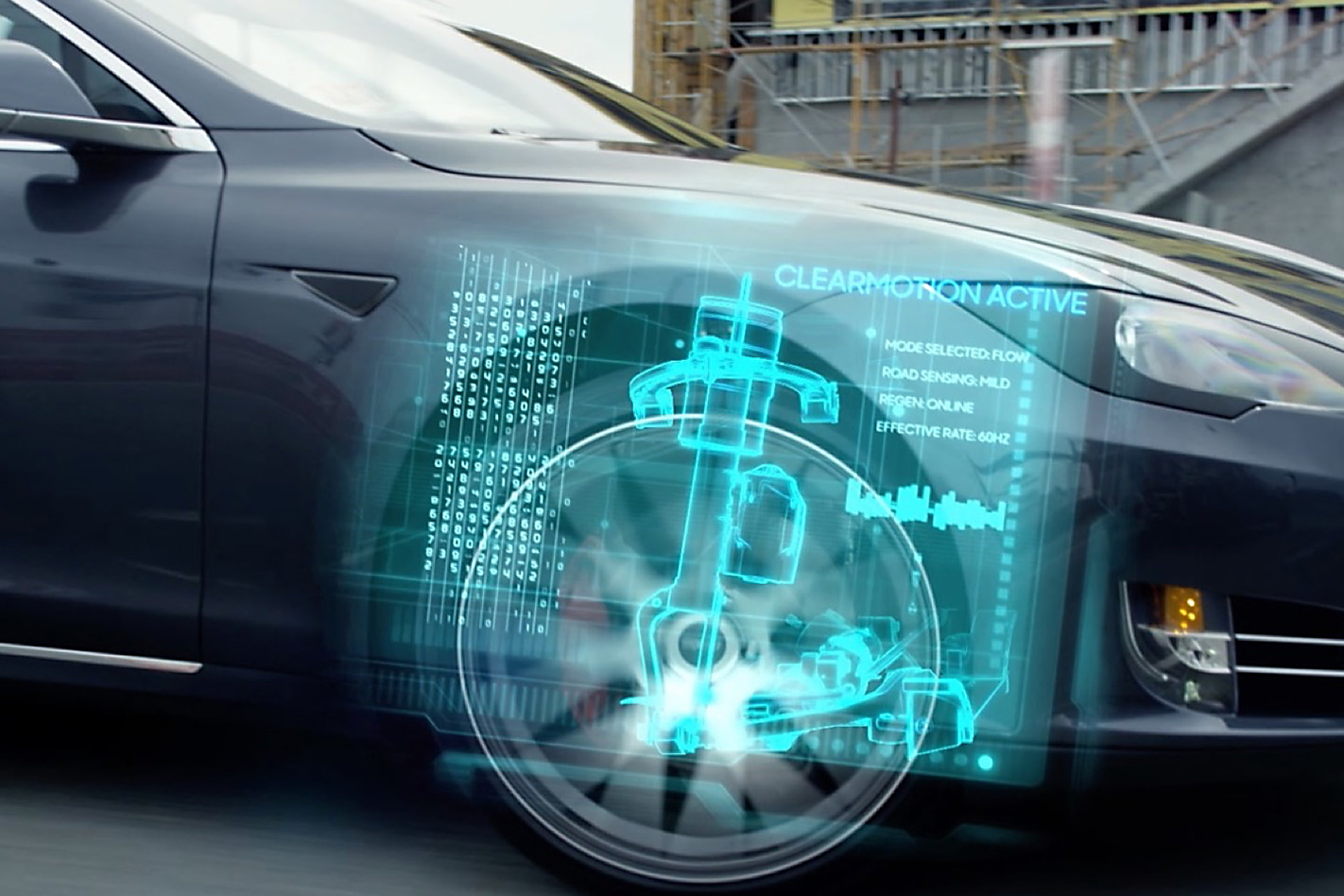
Even suspension systems with active dampers allow the wheel to be moved passively by potholes and speed bumps, but the Clearmotion system is the first of its kind to proactively raise and lower the suspension before the body of the car –and occupants – are affected.
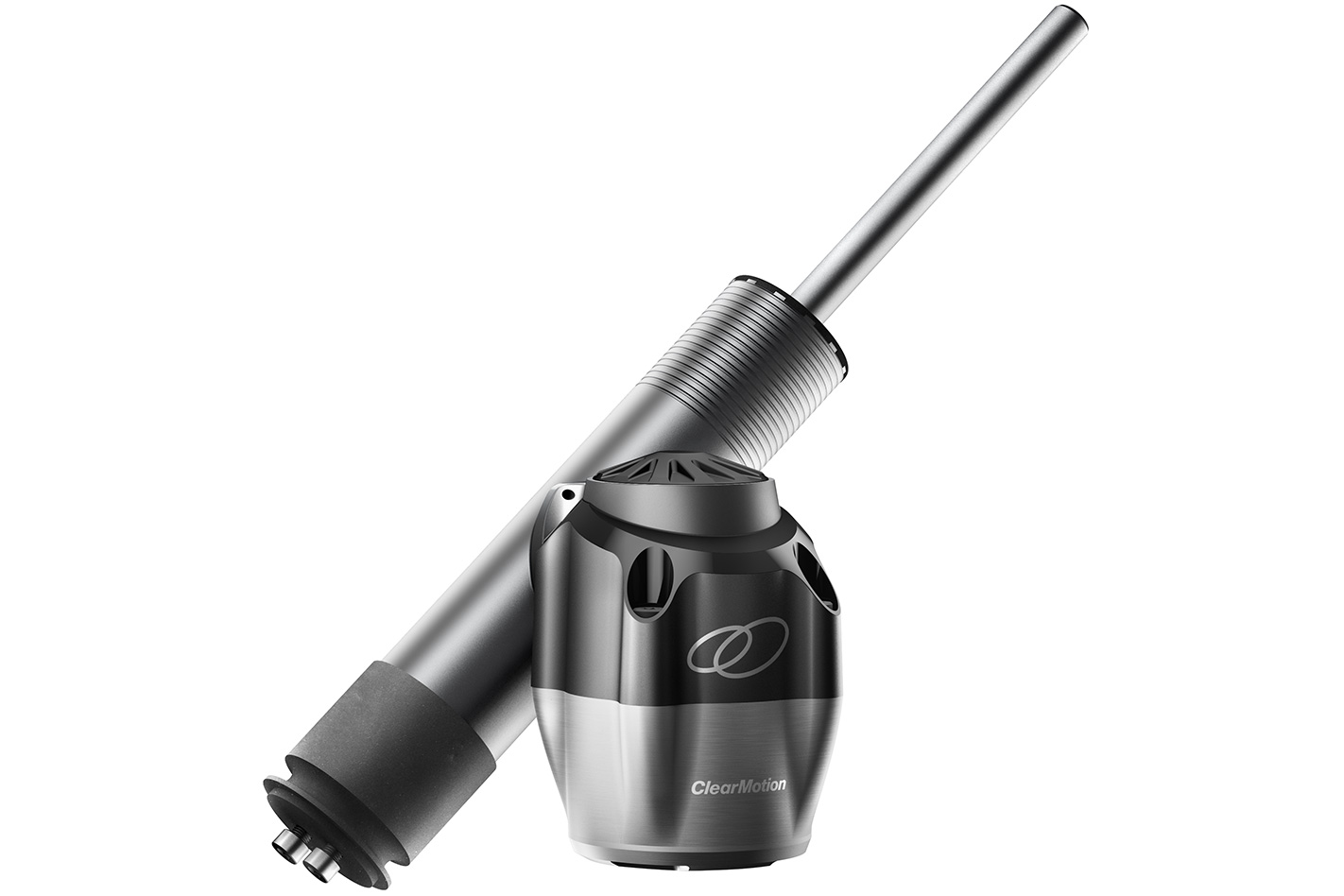
The exact workings of the device are a unsurprisingly a closely guarded secret, but official design images show a unit that is more compact and elegant than the cumbersome Bose tech.
Following the tech buyout and hefty cash injection, Clearmotion has significantly reduced the size of the units to a component little larger than a conventional damper – the part replaced by its technology.
For its debut in 2004, the consumer electronics company used a 1994 Lexus LS400 to demonstrate the prototype system, but Clearmotion says the technology has most scope and potential for true autonomous vehicles.
The theory goes that a driver of a vehicle is more tolerant of body movement when in motion, but occupants of autonomous cars, who are not watching for changes in the road will be more agitated by surface imperfections transmitted into the cabin.
Footage of previous prototype technology highlighted the significant difference the proactive technology can make to the attitude of a car body in motion, and the advantages to fully-autonomous cars, says Clearmotion.
Not only will passengers find tasks such as typing or writing easier in a smoother-riding car, the technology also resists body-roll in corners and dive under heavy braking – both advantages for high-performance vehicles.
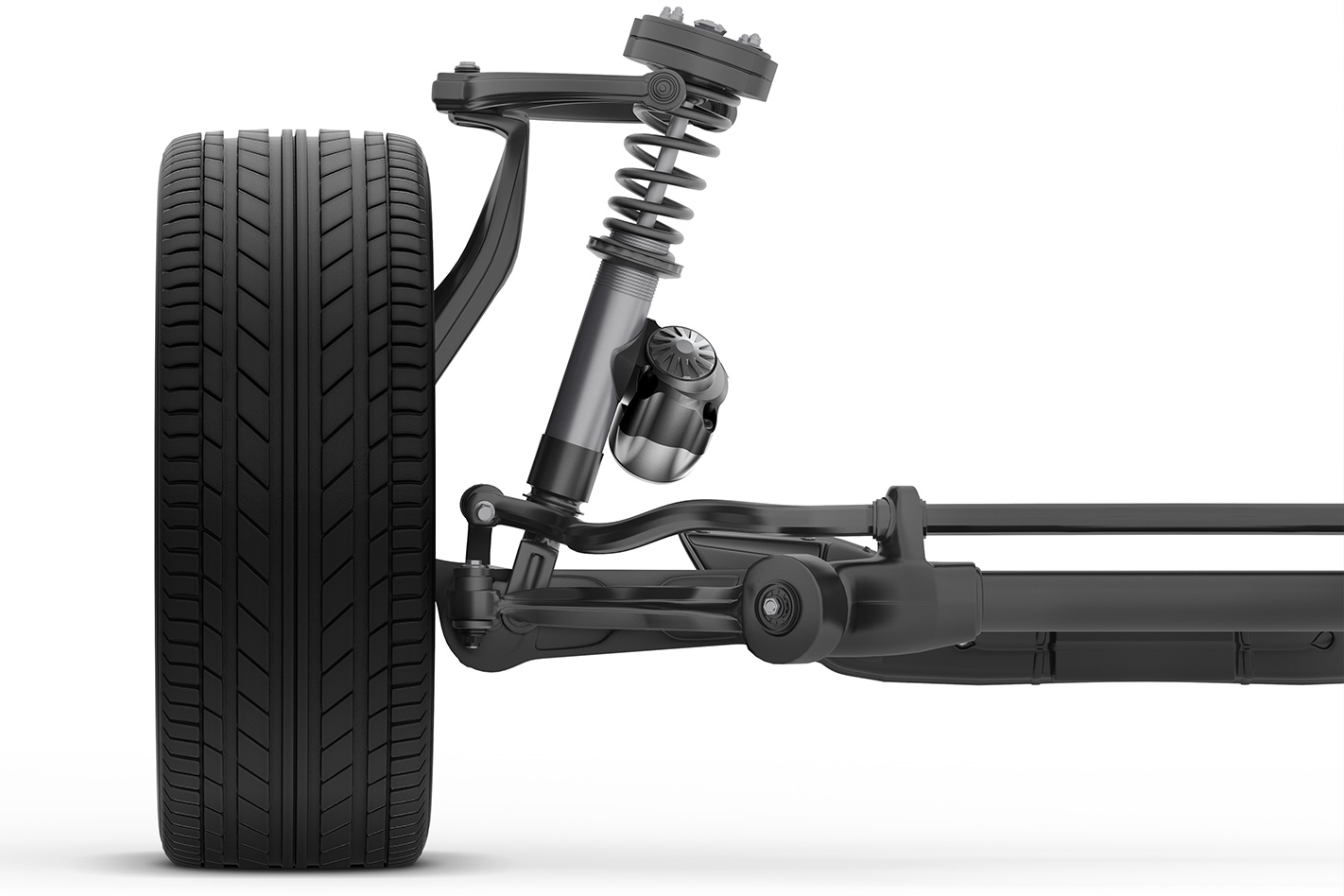
As an added bonus, the system enables regeneration of electricity by turning the linear motors into linear generators, which reduces the amount of power required by the system and would also increase the range of EVs in the same way existing regenerative braking extends battery range.
Partners in the venture include Bridgestone, Qualcomm and World Innovation Lab with Clearmotion offices in the UK as well as the United States. The company employs 160 staff but its global presence and scale are expected to grow as its potentially revolutionary technology gains momentum.
Aston Martin has announced it will introduce new GT3 and GT4 racers in 2019, based on the 4.0-litre V8 powered Aston Martin Vantage.
A race version of that car already exists in the GTE version, debuting last weekend at the FIA World Endurance Championship opening round at Spa-Francorchamps.
The GT3 and GT4 versions, however, won’t be homologated until March 1 2019.
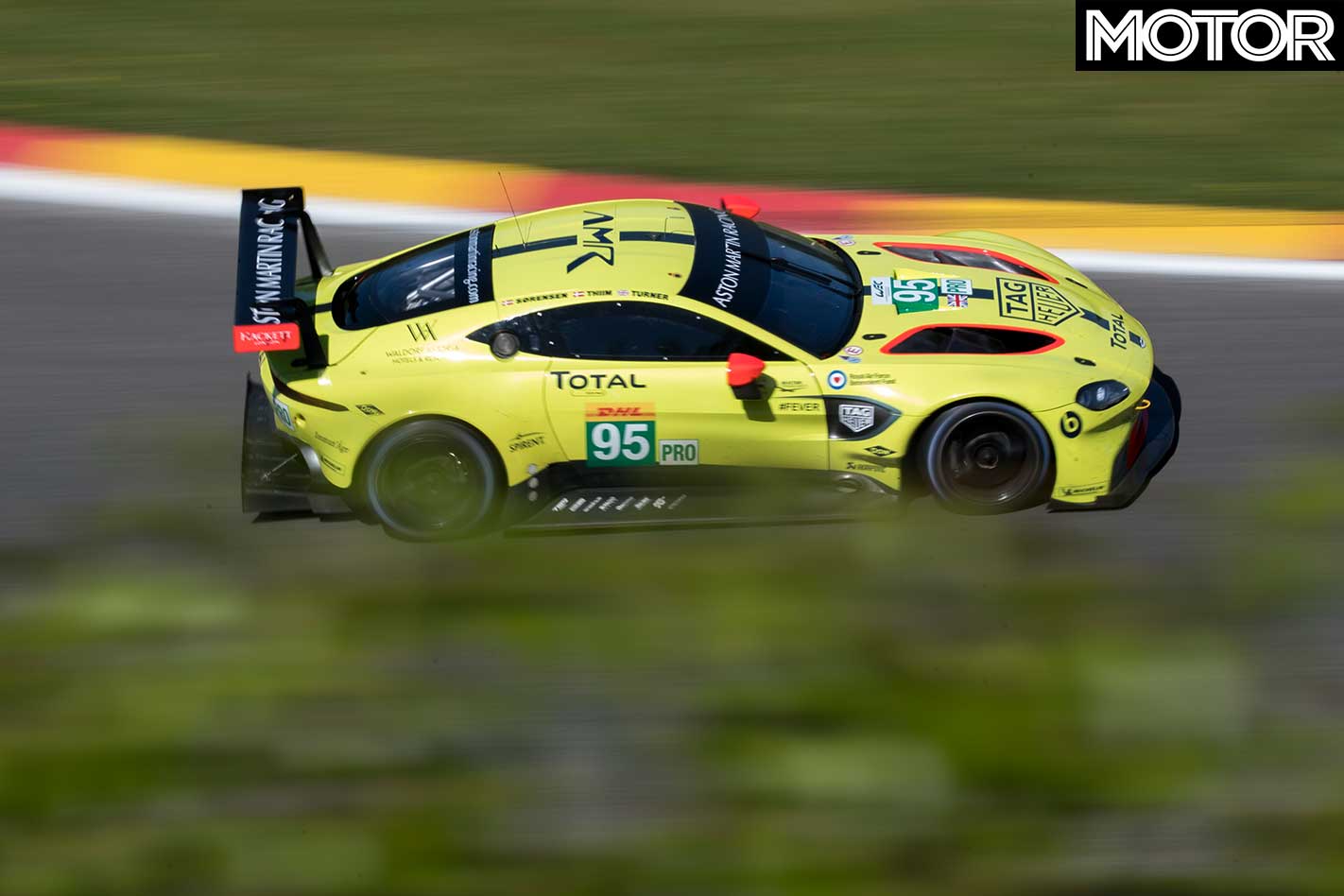
The GT4 has taken out titles such as the British GT Championship, twice, and the European GT4 ProAm title in 2016.
Based on previous V12 Vantage GT3 and V8 Vantage GT4 achievements, Aston Martin expects the new Vantage racers not only to perform well, but also to endure for several years.
Aston Martin Racing managing director John Gaw says customers of now seven-year-old Aston race cars are still able to use their cars competitively.
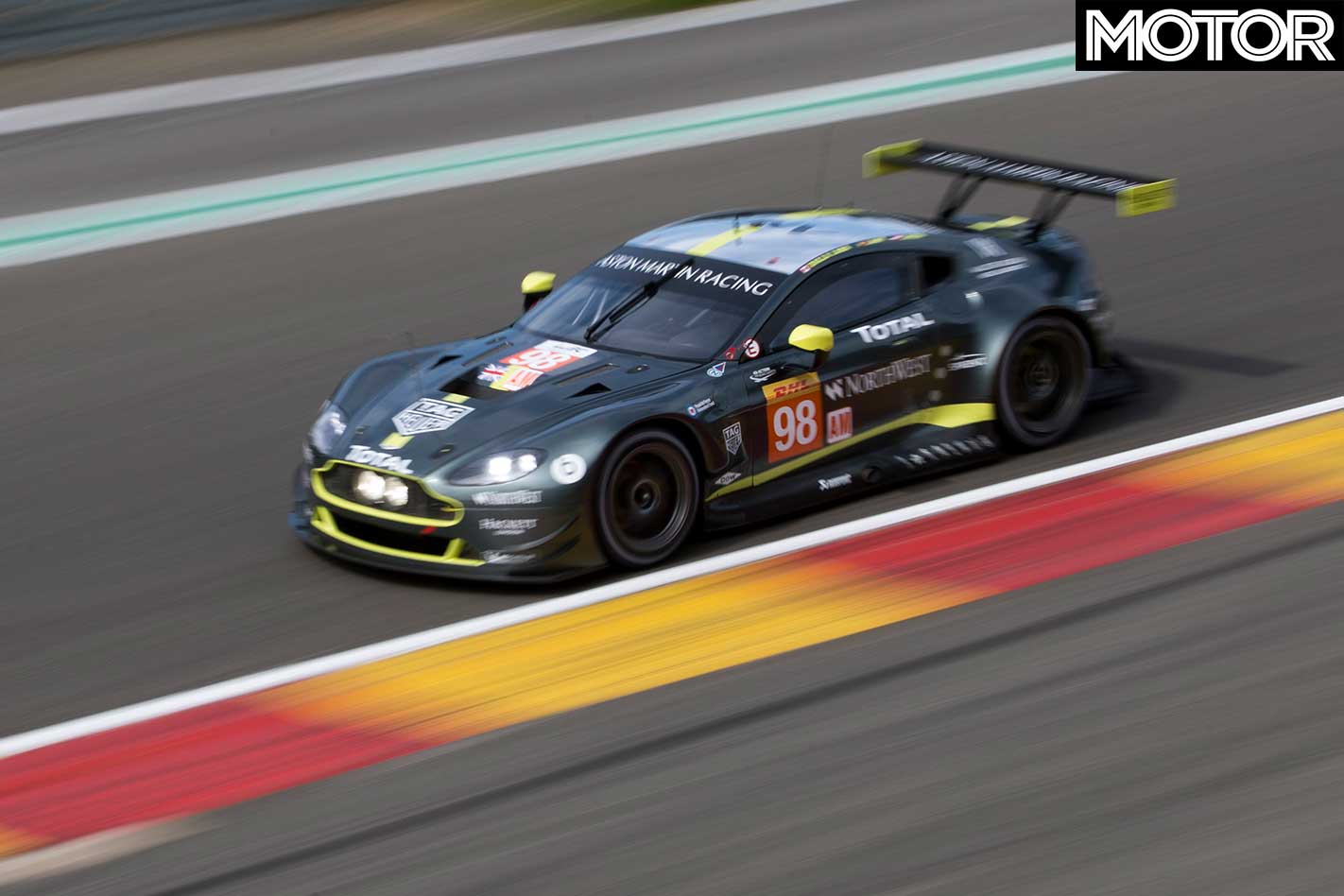
“We told the clients who first purchased our GT3 cars seven years ago, that they would be buying a car that would be capable of winning races for years to come.” Gaw says.
“This year we have already proved that with the Aston Martin V12 Vantage GT3’s successes in the British GT Championship.
“That longevity is something that separates us from other manufacturers.
“I expect the new GT3 and GT4 to be just as competitive as the cars they are replacing and to remain so for a similar period of time.”
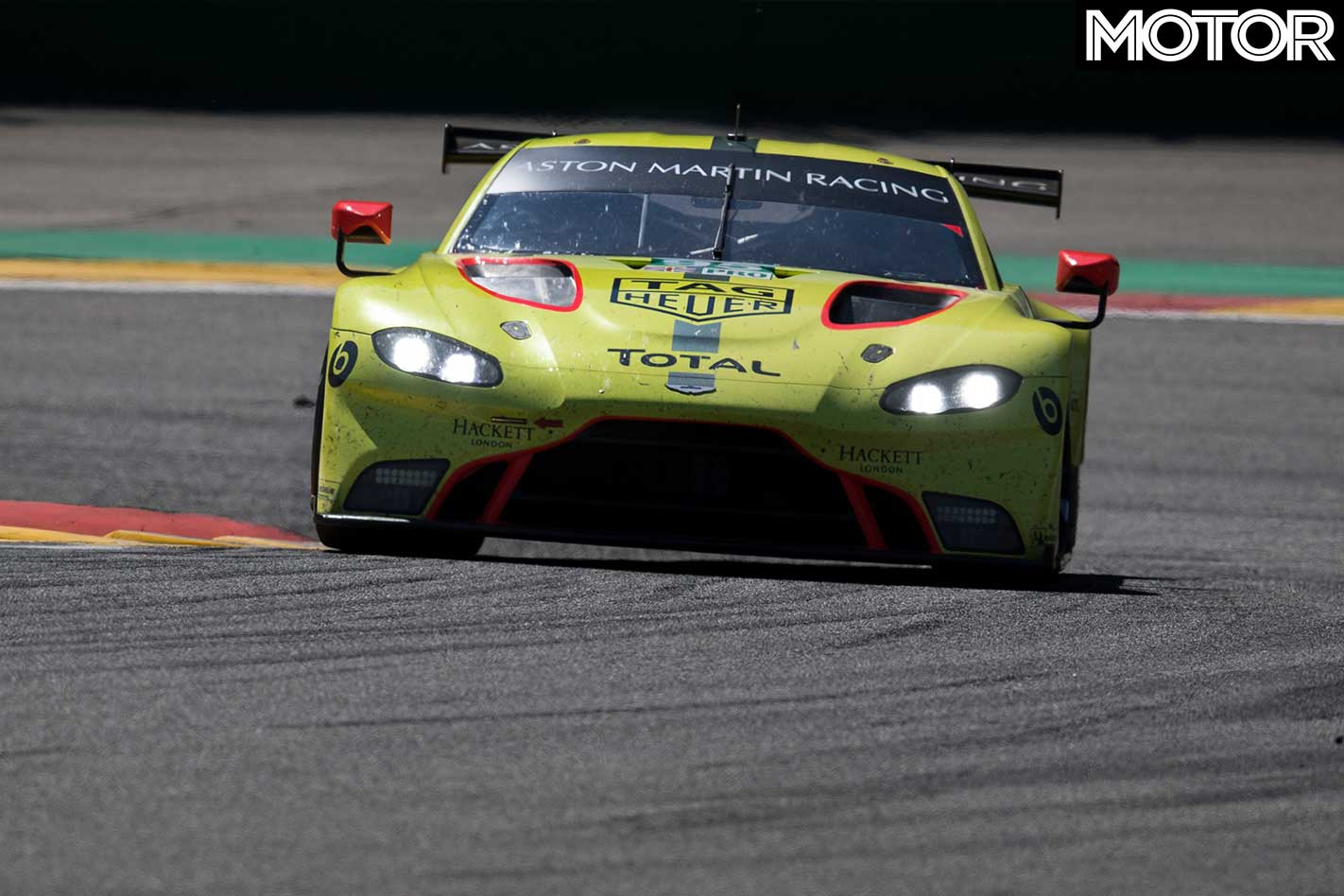
A total of 42 V12 Vantage GT3s were built, of which 37 sold, while 124 Vantage GT4 cars were built.
Aston Martin is already taking orders for the new Vantage GT3 and GT4 racers.
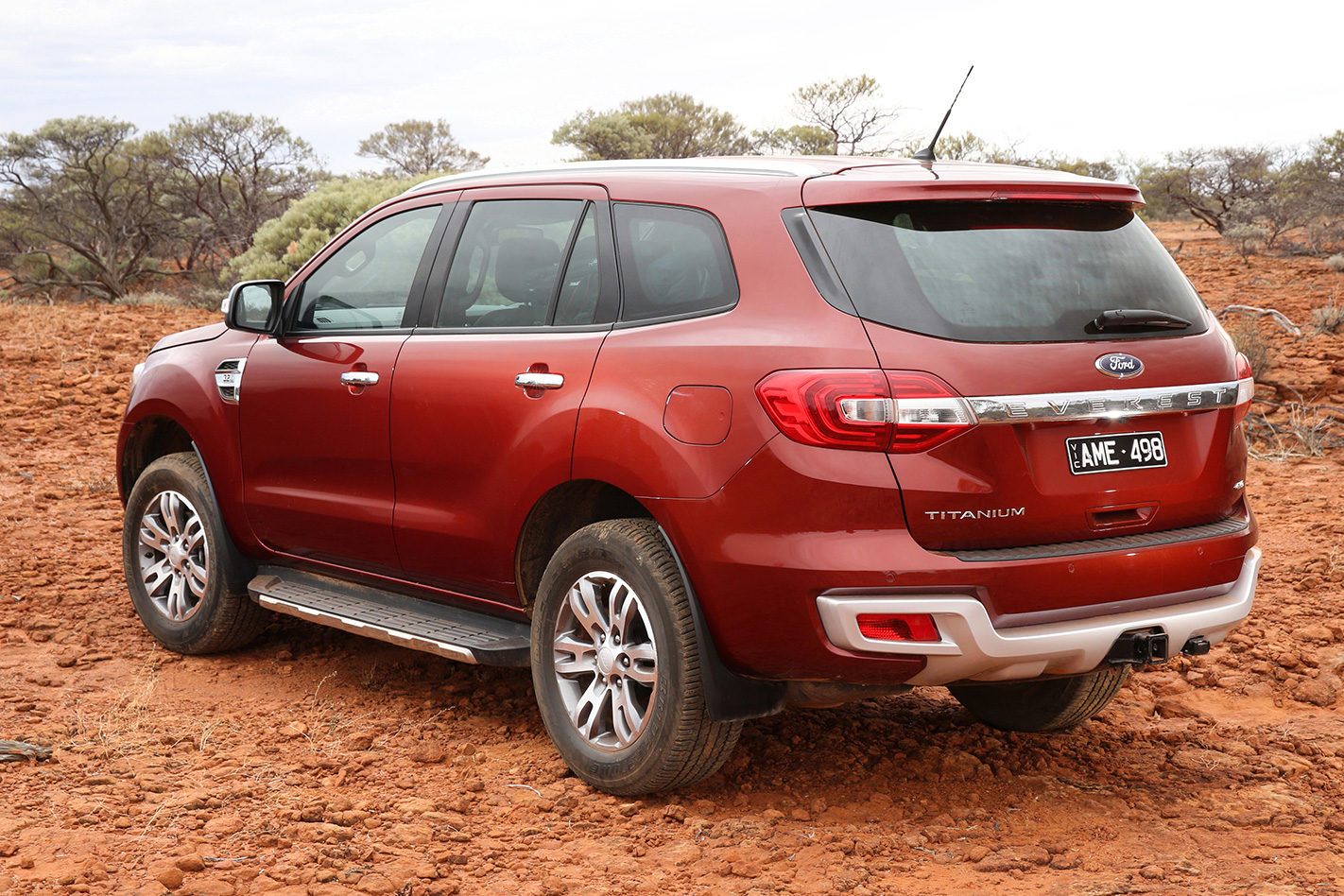
Changes coming to the 2018 Ford Everest as part of a midlife refresh of the large SUV range hint that it include a swap to the same 2.0-litre diesel engine earmarked for the closely related Ford Ranger.
Ford will introduce the smaller four-cylinder diesel engine as part of running changes for the Toyota Kluger-rivalling Everest and its closely related trade ute. The smaller 134kW engine is expected to replace the current 110kW 2.2-litre four-cylinder engine in cheaper rear-drive models of the Ranger.
However, the 2.0-litre engine will also spawn a twin-turbocharged 154kW version that will roll out under the bonnet of the more hardcore all-wheel-drive Raptor-badged Ranger due in about September this year. The Raptor’s smaller engine is more powerful than the 147kW 3.2-litre five-cylinder used across the Everest range, but only in most 4×2 variants and entry-level 4×4 variants of the trade ute.
In the Raptor, the new engine is combined with a 10-speed automatic transmission, which replaces the six-speeder that hangs off the back of the 2.2- and 3.2-litre versions.
Homologation details for the Everest show that Ford had to reassess the vehicle for a number of benchmarks that point to a new engine being shoehorned under the bonnet, including the way it crashes, fuel economy, drive-by noise ratings and emissions.
The new engine should also raise the Ranger’s emissions ratings from Euro 5 for the 2.2-litre engine to Euro 6 for the 2.0-litre version. The 3.2-litre version is currently rated at Euro 5.
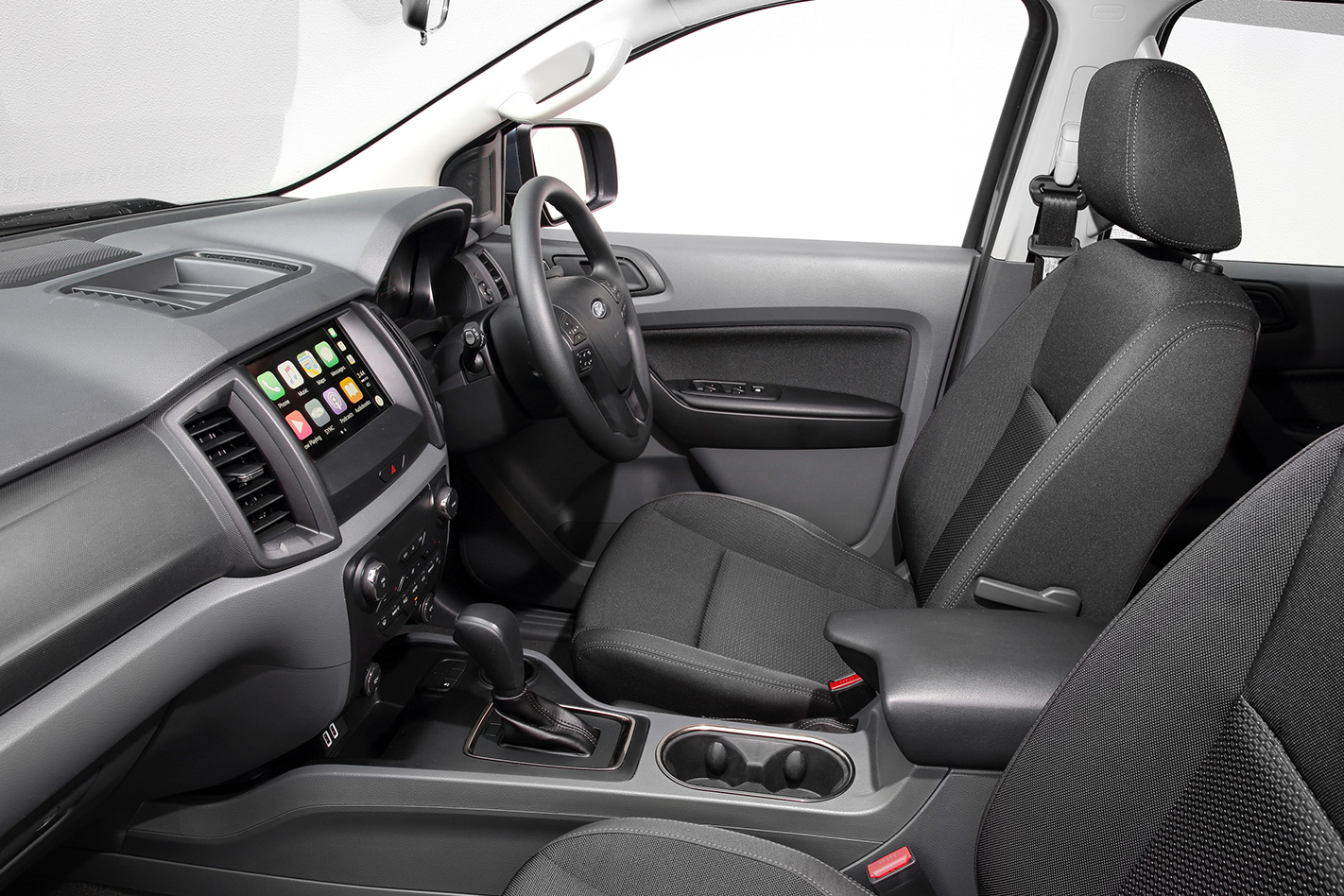
Higher-end versions of the Everest are expected to tap into the same extended features flagged in the range-topping Ford Ranger Raptor and that will trickle into higher end versions of the Ranger trade ute. These include keyless entry and start.
As well, the everest is expected to gain a number of cosmetic changes, including restyled headlights and tail-lamps, a fresh-look grille, and redesigned alloy wheels.
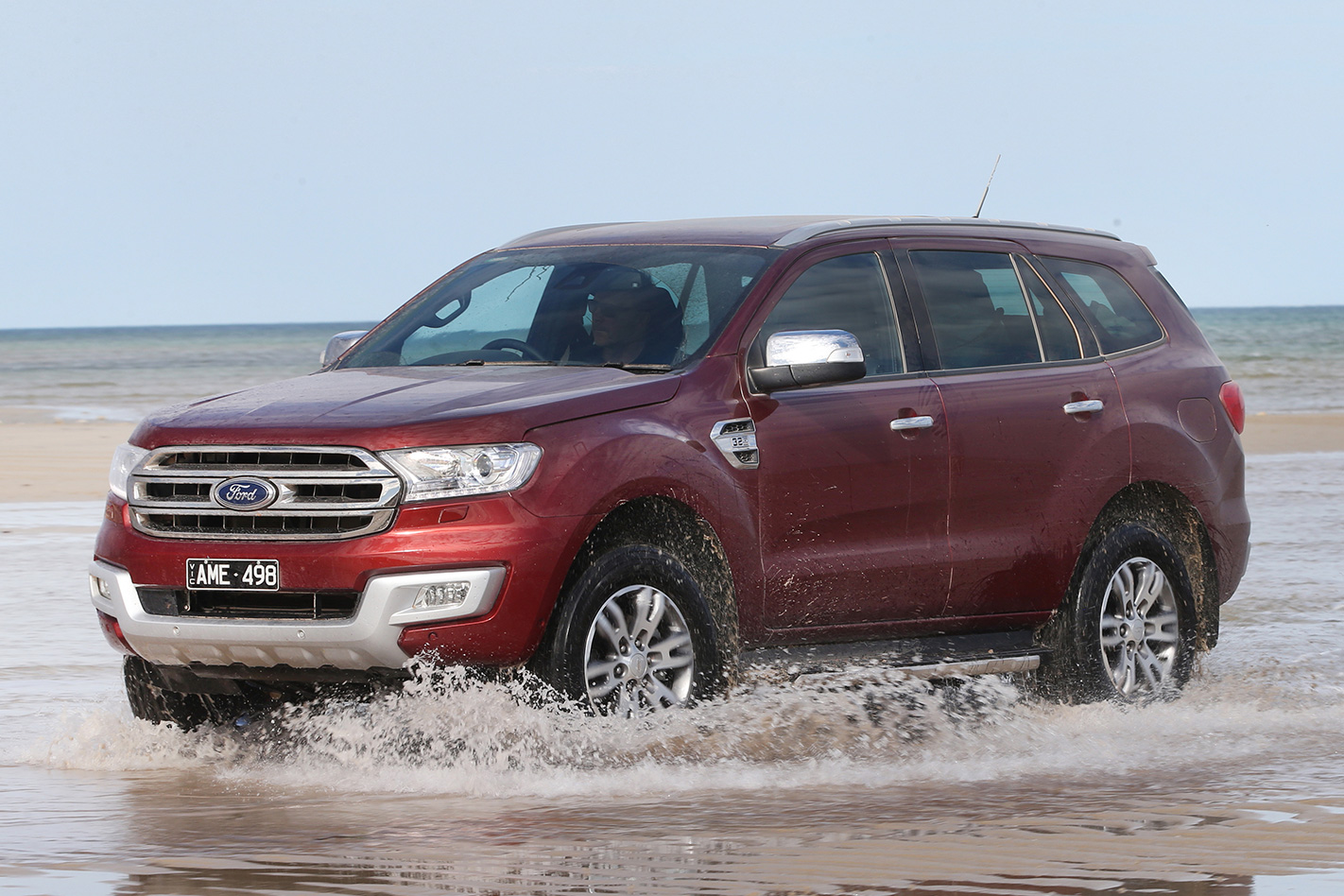
The Ford Ranger is consistently Australia’s second-best selling vehicle, falling behind the Toyota Hilux on the sales ranks. However, delve into sales for the 4×4 versions of the trade utes – the versions that private buyers are likely to buy – then the Ranger often outsells the Hilux.
Ford introduced a choice of rear-drive or all-wheel drive, and five or seven seats to the Australian designed and developed, but Thai-built Everest last year in an effort to build sales of the SUV. Last month, it was Ford’s second-best selling model behind the Ranger. However, Toyota’s US designed and built Kluger easily outsells it by more than two to one.
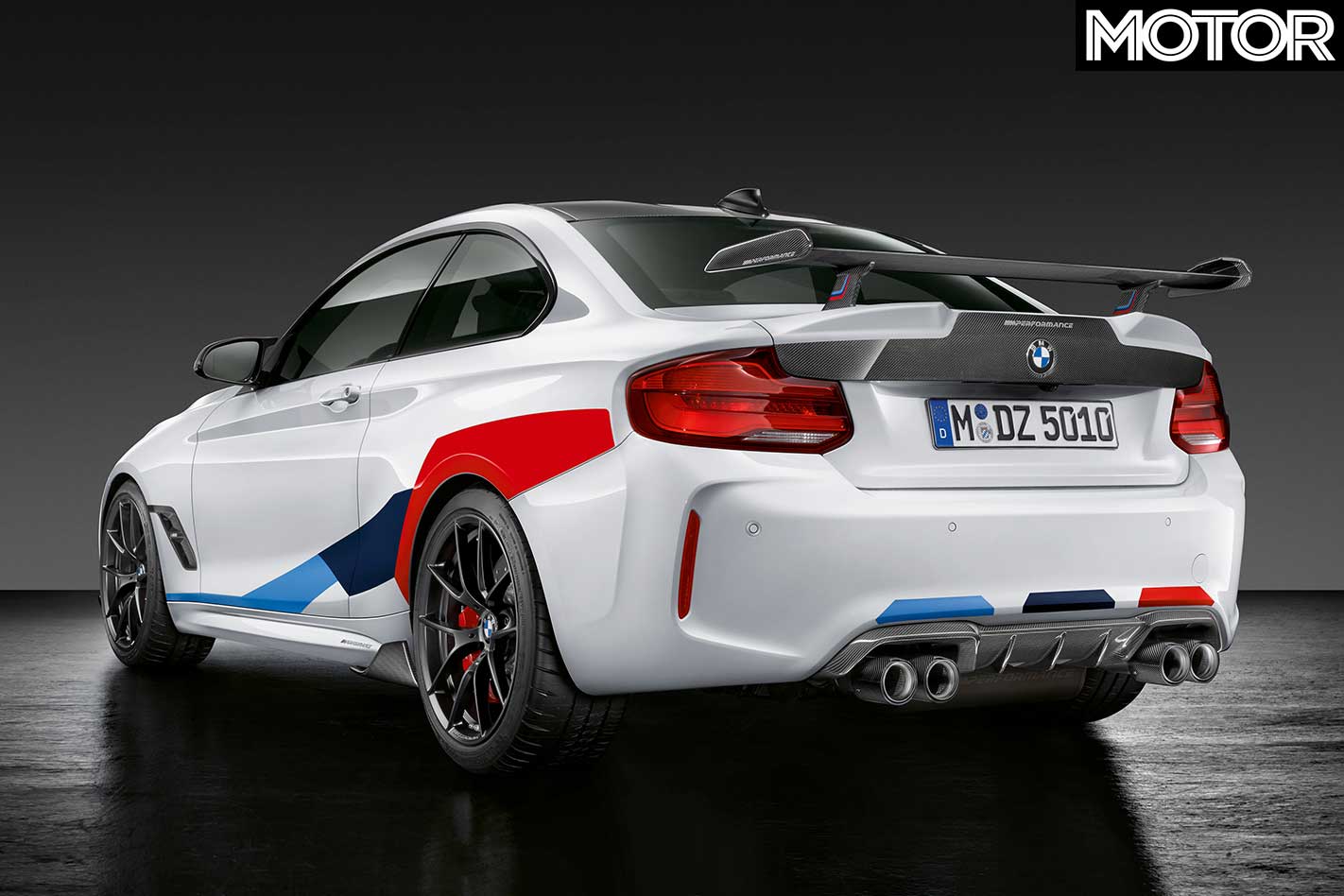
BMW has announced a plethora of M Performance parts will be available to add to a new BMW M2 Competition, with plenty of carbon on the menu.
The 302kW/550Nm ‘baby M4’ will hot Aussie shores at a yet-to-be-revealed date, but in the meantime customers can start putting together a carbon-clad wish list of BMW’s M Performance parts they wish to include as options on their new M2.
Starting with the suspension, BMW plans to make available a set of coil-spring dampers to lower the ride height by up to 20mm, which includes 12 settings for damping compression.
Attached to these, if desired, can be a set of lighter 19-inch Y-spoke wheels which drop approximately 3.2kg from the unsprung weight of the car, while larger ventilated and perforated brake discs can be found inside with 6-pot calipers at the front, 4s at the rear.
More visible will be the optional addition of an aggressive rear carbon wing, which sits above an also-optional carbon tailgate, the latter of which reduces 6kg over the standard, while a carbon roof can ditch a further 5kg.
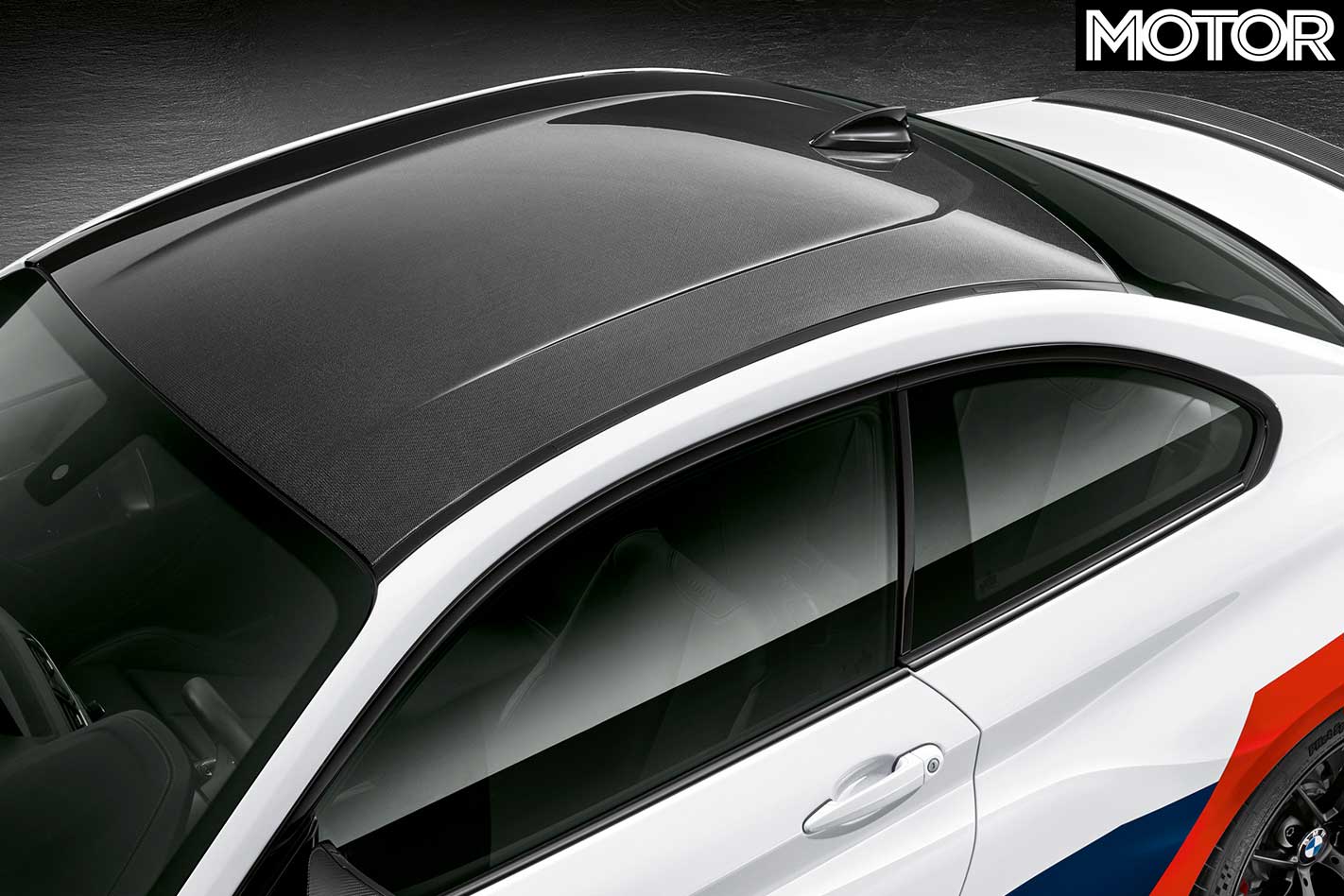
With the preliminary figures provided by BMW, it seems dozens of kilograms can be shed from the M2 Competition’s weight with the right boxes ticked.
Furthering that by 8kg is the choice of BMW’s M Performance exhaust stainless steel, titanium, and carbon fibre. BMW says this exhaust sounds sporting even in ‘Efficient’ mode, while in ‘Sport+’ it sounds like a full-blown race car.
Inside, a ‘Drive Analyser’ is available to track and report back to the driver with information such as engine data, brake usage, and lateral acceleration at the track. It works with the use of a USB stick and phone app, the latter of which is free to download.
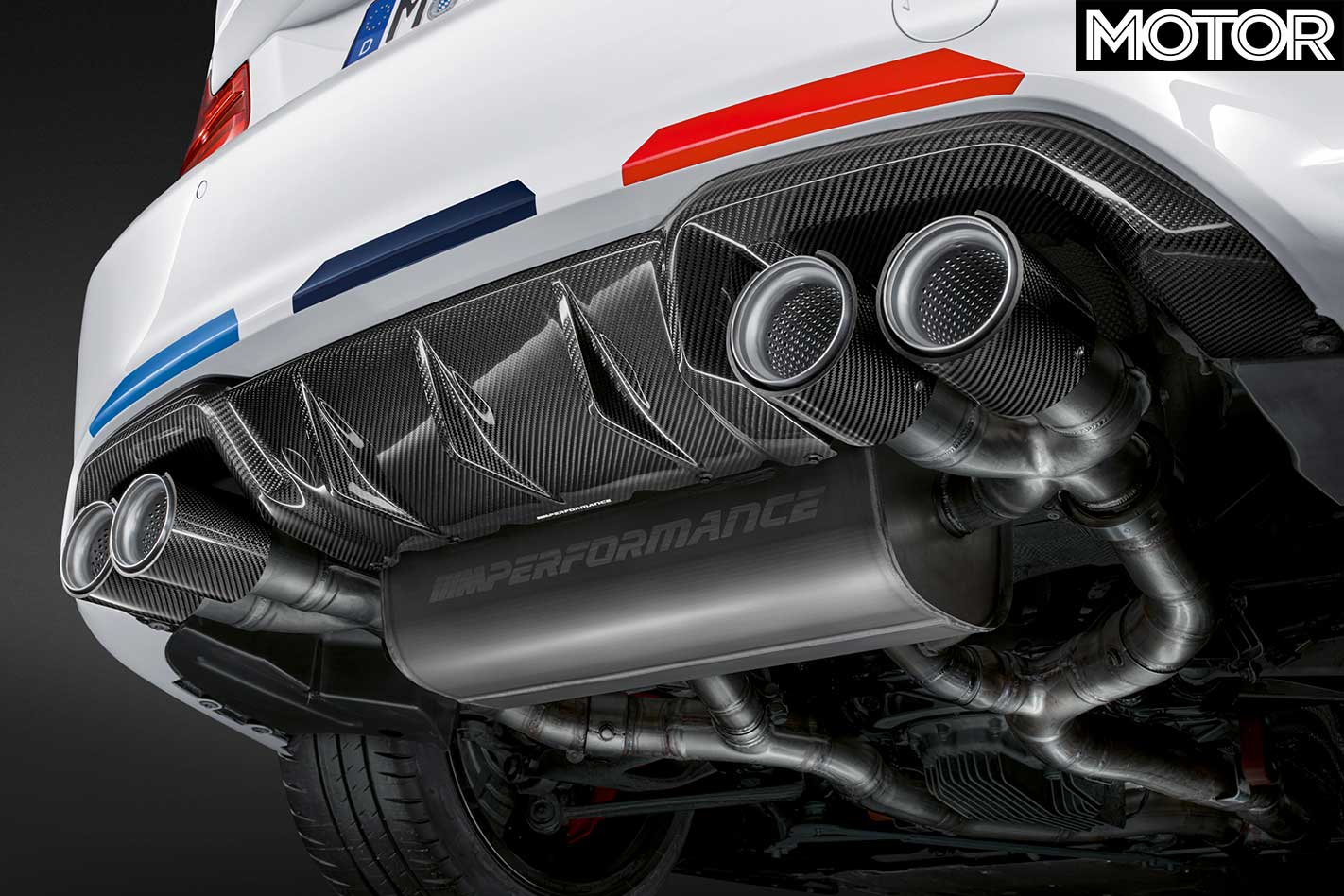
Less functional, but likely popular options include carbon splitters and kidney grille inserts, as well as stainless steel M Performance pedal covers and different options for gear levers, brake handles, and steering wheels.
MOTOR has contacted BMW Australia for confirmation of the availability of these parts locally and will update this story once details are known.
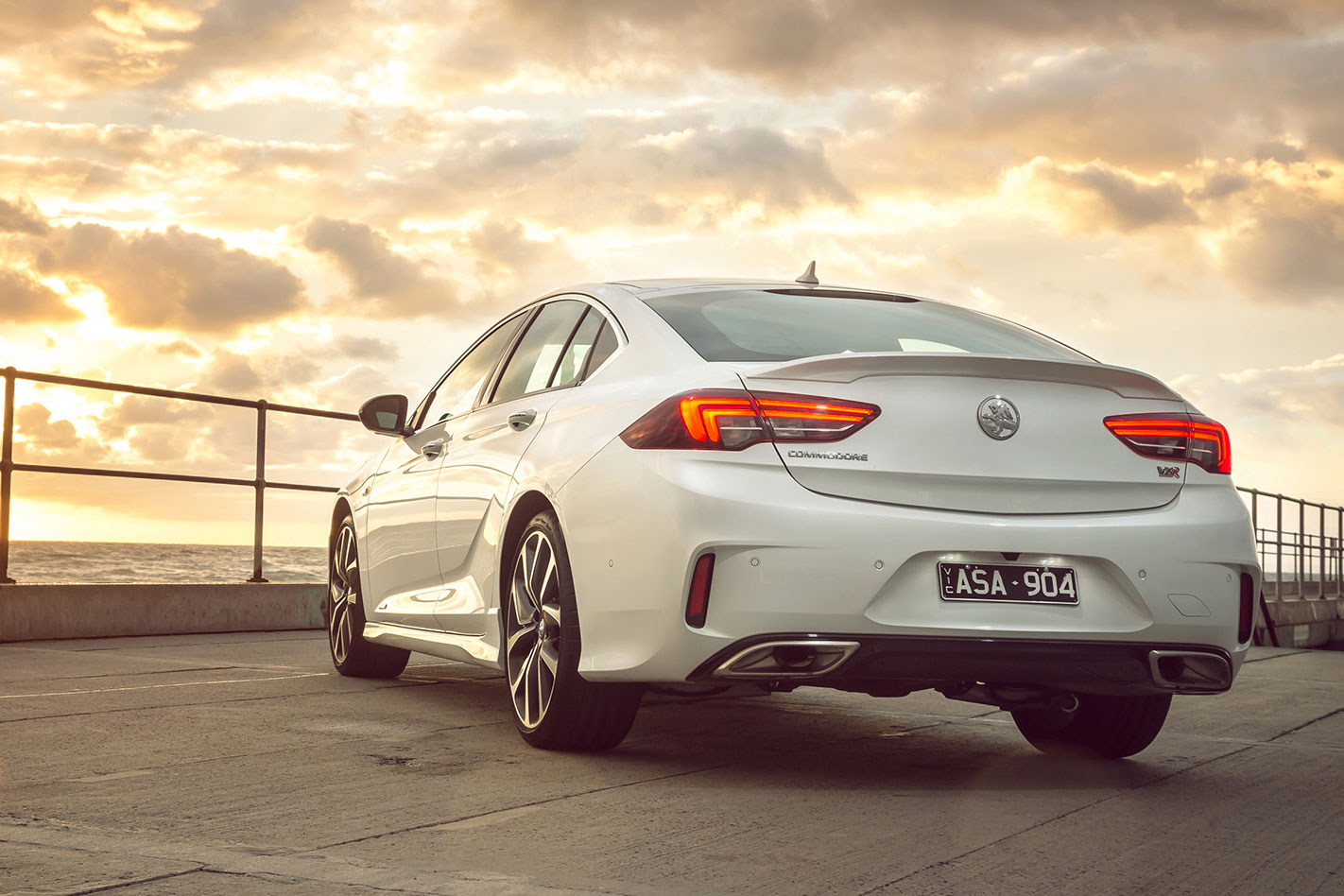
THE new owner of the Holden Commodore has announced it will add a 48-volt dual-clutch hybrid system to future cars as it accelerates the shift from General Motors platforms in the wake of last year’s deal.
Groupe PSA, which also counts Citroen and Peugeot in its global product showroom, has signed a deal with Punch Powertrain to provide the mild and plug-in hybrid systems it will need to meet its goal of having electrified options across its entire range by 2025.
Punch said in a statement that Groupe PSA’s reason for selecting the dual-clutch hybrid transmission was because it used fewer parts, and was therefore lighter and more compact than other options.
“In addition, it delivers outstanding performance and a very favorable fuel economy at a competitive cost. The next generation of this design, with a 48-volt motor configuration, will be installed by Groupe PSA in its vehicles,” Punch said.
As part of the deal that also saw Groupe PSA pick up British brand Vauxhall, the carmaker needs to switch products in its newly acquired Opel division from GM’s proprietary platforms to its EMP ones, including the E2XX platform that underpins the Holden ZB Commodore. However, it recently flagged that it would need to accelerate the switch to its own EMP-based platforms, with the first product due by 2021 – potentially shortening the current Opel Insignia-based Commodore’s lifespan by about two years.
It is not yet known if Groupe PSA will continue to supply the Commodore to Holden beyond the platform switch. GM does have several other E2XX-based options available if it wants to keep a Holden-badged midsizer within its global family, including the Chevrolet Malibu – which has already failed to fire Australian buyers’ imaginations while wearing a Holden badge – and the more luxury-focused Cadillac XTS.
The group has flagged that it will have 40 separate electrified models joining its product portfolio by 2025, including battery electric vehicles.
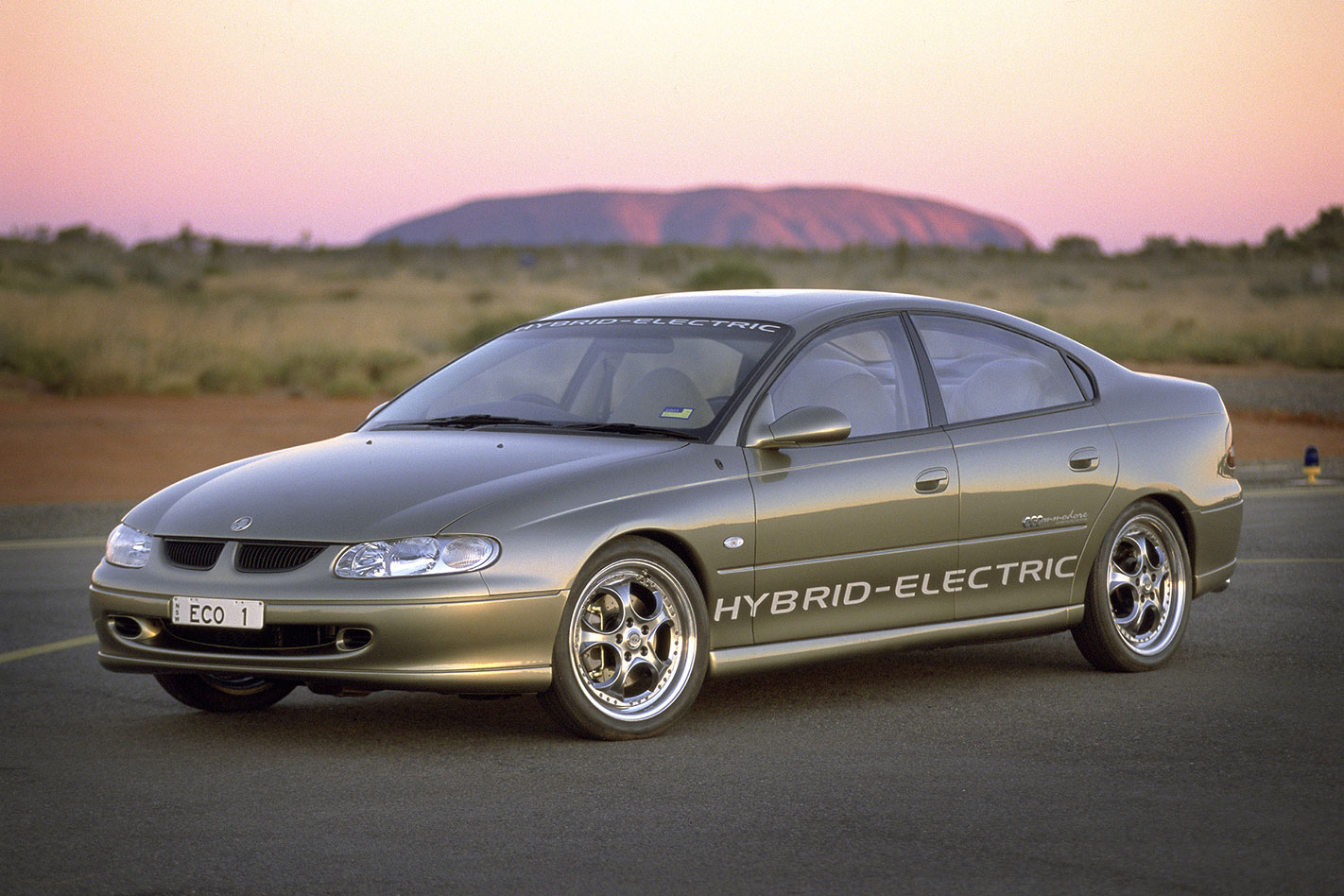
Holden teased a petrol-electric hybrid version of the VT Commodore in 2000, built with the help of the CSIRO and badged the “ECOmmodore”. It used several innovations, including lightweight aluminium panels that were eventually adopted in the VE Commodore, low rolling resistance tyres and a regenerative braking system. Under its bonnet, the concept used an alloy 2.0-litre petrol engine running an electric water pump to save even more fuel.
The carmaker was also believed to have been working on a hybrid version of the VE Commodore before that project – and Australian manufacturing – was shut down.
What stands out?
The Mazdas BT-50 offers one of the stronger engines in the ute market, a 3.2 litre, five-cylinder turbo-diesel that is quite fuel-efficient. Stability control is standard, as are head-protecting side-curtain airbags for rear passengers. You can get rear-wheel drive and four-wheel drive versions, ranging from farm trucks to family-friendly dual-cab utes. The current model features an updated front bumper design that’s unique to the Aussie market, and is the first Mazda to feature Apple CarPlay and Android Auto connectivity.
What might bug me?
The bumpy ride when the tray is empty. It’s a feature of all utes like this, because they need stiff rear springs to support the one-tonne loads they can carry.
What body styles are there?
Single Cab, Freestyle Cab and Dual Cab, and in both cab-chassis and ute form.Buyers of cab-chassis models fit trays of their choice at the rear, commonly tailor-made by aftermarket specialists. Only Freestyle Cabs and Dual Cabs come as utes, with a factory-fitted tub at the back.Dual Cabs have a conventional four-door arrangement, with seating for five. Freestyle Cab models have fold-down seats behind the front seats, accessed via small rear-hinged doors.The BT-50 is available as a rear-wheel drive vehicle, or with dual-range four-wheel drive.Every rear-wheel drive BT-50 but one is a Hi Rider model, with high ground clearance like the 4WD models. The exception is the 2.2 XT Single Cab chassis 4×2 manual.The 4WD system in BT-50s is part-time, which means you must select rear-wheel drive for sealed roads but may switch to 4WD on loose surfaces. Dual-range gearing gives you a second set of gears, with low ratios that let you drive comfortably at very slow speeds when tackling difficult terrain off road.The BT-50 is classified as a light commercial pick-up.
What features do all Mazda BT-50s have?
Cruise control, and a multi-function trip computer.Infotainment system with central touchscreen, radio, Bluetooth phone connectivity and audio streaming, USB and auxiliary input jacks, and at least four speakers. Audio controls on the steering wheel, and a 12-volt outlet. (The Alpine-developed multimedia system does not include a CD-player, however.)Apple CarPlay/Android Auto smartphone pairing – the BT-50 was the first Mazda model in Australia with this feature.Reversing camera.Height adjustment for the steering wheel, and height and lumbar adjustment for the driver’s seat (except where a bench front seat is fitted).Trailer-Sway Control, which helps stabilise the ute if a trailer you are towing sways from side to side.Electronic Traction Control, which is a great help in slippery off-road conditions.Hill-Launch Assist, which stops you from rolling backwards when you are trying to move off on an uphill slope.Four (on single cabs) or six airbags. Anti-lock brakes, and electronic stability control – which helps you avoid and control skids. (For the placement of airbags, and more on Mazda BT-50 safety features, please open the Safety section below.)All four-wheel drive BT-50s have a driver-activated rear differential lock, to help the car maintain progress in extreme off-road conditions.All BT-50s are covered by Mazda’s three-year, unlimited kilometre warranty.
Which engine uses least fuel, and why wouldn’t I choose it?
The 2.2-litre four-cylinder turbo diesel is the more economical of the two engines on offer but only when coupled to the manual gearbox, where it uses a thrifty 7.6 litres/100km in the official government combined-cycle test and is also very economical in the real world.Unfortunately this engine is available in only two models, both basic work trucks with single cabs and two-wheel drive.The alternative engine is the considerably more powerful 3.2-litre five-cylinder turbo diesel, which comes with every other BT-50 and is available with either a six-speed manual or a six-speed automatic gearbox.In the official test the 3.2 uses between 8.4 and 9.2 litres/100km, depending on the variant. In real-world driving, expect a BT-50 with the 3.2 engine to use about 12 litres/100km.(Power outputs and all other Mazda BT-50 specifications are available from the Cars Covered menu, under the main image on this page.)
What key features do I get if I spend more?
Prices start with the 2WD 2.2-litre XT Single-Cab chassis, a basic work truck with 16-inch steel wheels, cloth seats, and a vinyl floor.By spending more money you can get the more powerful (3.2-litre) engine, four-wheel drive, a cab with rear seats, a ute-style cargo area, and extra equipment.Pay for a dual-cab XT Ute and you also get fancier wheels, made from lighter (but arguably less robust) aluminium alloy. A reversing camera is available on XT models as an extra-cost option.Choose a BT-50 XTR and you get a slightly bigger 8.0-inch central screen with USB, Aux and HDMI inputs (so that you can watch videos on the screen from external sources). There is satellite navigation, and it can show off-road maps that render the terrain in 3D. Digital radio reception is available, there are six speakers, and Bluetooth-connected phones can be operated by voice.An XTR also has carpet on the floor, and dual-zone air-conditioning (which allows the driver and front-seat passenger to set their preferred temperatures). Windscreen wipers operate automatically when it rains, and the headlamps switch on automatically when it gets dark. You get front foglights, and side-steps. And the alloy wheels are an inch bigger in diameter, at 17 inches.The most expensive BT-50 is the GT, which is available only as a 4WD Dual Cab Ute. In addition to the XTR features, it has leather trim, power adjustment for the driver’s seat, heated external mirrors, chrome sports bar with integrated LED stop-light, 12v socket in the tub to run accessories, a heavy duty tub liner, tailgate central locking, and tinted windows.
Does any upgrade have a down side?
Going from a Single Cab to either a Freestyle or Dual Cab reduces both the tray length and the weight you can carry. The more expensive, better equipped versions also carry less.White paint is available at no extra cost. All other metallic and mica paints cost more.
How comfortable is the BT50?
The BT-50 has a roomy and comfortable cabin, although the quality of the fit and finish falls short of the high standard set by Mazda’s passenger cars. XTR and GT models have a good-sized display screen in the centre of the dash, along with a multimedia system developed by Alpine Electronics.The GT model brings a sense of luxury with its leather seats, and powered seat adjustment for the driver.On the road the BT-50 has the somewhat stiff-riding feel of a ute but it still rides and handles better than most other utes. It’s on par with the Ford Ranger, but not as good as the Volkswagen Amarok.
What about safety in a BT-50?
All BT-50s have anti-lock brakes, stability control, and good airbag coverage.Single Cab BT-50s have four airbags: two to protect the driver and front-seat passenger in frontal impacts, and two curtain airbags to protect their heads in side impacts.All Freestyle Cab and Dual Cab BT-50s also have side airbags that protect front occupants at chest level from side impacts, and full-length side-curtain airbags that protect front and rear passengers at head level – making six airbags in total.A reversing camera is standard on XTR and GT BT-50s, and an expensive option on XTs.The Australasian New Car Assessment Program has rated the BT-50 at five stars for safety, its maximum, most recently in December 2011.
I like driving – will I enjoy this car?
Utes aren’t designed to be driver’s cars. That said, the BT-50 one of the better utes to drive, with precise steering and surprisingly good handing. Like most utes, it is better with some weight in the rear tray or tub, to help settle the rear springs.The 2.2-litre engine is smooth and willing. The 3.2-litre engine is a bit gruff and noisy but has much more power – indeed it is among the stronger engines available in a 4WD ute. The 3.2 works well with the smooth-shifting automatic gearbox. However, the manual gearbox was much improved in the mid-life model update of October 2015, and is also an excellent choice.The BT-50 is very much like the Ford Ranger to drive, as it’s very close to being mechanically identical to the Ranger. One key difference is in the steering assistance, which unlike the Ranger’s is not variable (the Ranger’s electric system offers extra assistance at low speeds, which makes parking easier). At highway speeds, however, the BT-50 steers every bit as well as the Ranger, and arguably better.The other main difference is in the ride from the suspension: the BT-50 does not feel quite as comfortable as the Ranger (because the damping is firmer). When co-developing these two utes, Ford and Mazda went their own ways when fine-tuning the chassis, and Ford did a better job of tailoring the suspension for Australian conditions.
How is life in the rear seats?
Dual-Cab BT-50s have a roomy and comfortable rear seat. It’s a match for the rear seat in most medium SUVs, but – as in most utes – the backrest is more upright.The two small folding seats in the rear Freestyle Cab models are suitable only for children and small adults, and only over short distances. You can get into the seats easily through the small rear-hinged doors, which can be opened only after the front doors have been opened.Freestyle and dual cabs have two child restraint anchors.
How is it for carrying stuff?
Excellent, of course. It’s a ute! And the BT-50 is also very good at towing.How much you can carry depends on which BT-50 you get. Fewer seats in the cab means more length in the tray, and more weight you can carry (because there’s less weight in the cab).Legally, a BT-50 generally can carry more than most other utes but not a lot more. Even the BT-50 with the least capacity – the GT dual cab – can carry 800kg in the tray (40 bags of cement) and a driver and passenger, and still have 100kg of its rated payload unused.In practice it all works, too. Pack a BT-50 tray with 800kg of cargo and it handles the load quite easily. Its robust chassis feels stable with that sort of load, and there is strong performance from the five-cylinder diesel – even if the engine is a bit noisy.Most BT-50s, even those with the smaller four-cylinder diesel, are legally rated to tow a braked trailer weighing 3500kg – as much as any ute. That’s like towing a robust 20-foot tandem-axle off-road caravan, or a fully loaded three-horse float.In practice, a BT-50 with the five-cylinder diesel engine hauls a trailer that big comfortably, and is stable on the road.A BT-50 fitted with the smaller, four-cylinder, diesel will work very hard to pull that much but it’s still stable handling-wise.The only exception to the BT-50’s 3500kg towing limit is the two-wheel-drive (non-Hi-Rider) single cab, which is rated to tow 2500kg.In any ute, extreme care should be taken when carrying or towing big loads.
Where is the Mazda BT-50 made?
All Australian delivered BT-50s are made in Thailand.
What might I miss that similar cars have?
More power, for more urgent overtaking and easier towing. While the BT-50 is one of the better performing utes, the Volkswagen Amarok V6 feels much more responsive.Active cruise control, which will slow you automatically to follow a vehicle in front, resuming your set speed when the way is clear. This is available on the Ford Ranger, for example.Active safety features such as a forward collision warning (which sounds when you are closing too fast on another vehicle or object), or a lane-departure warning (which alerts you if you begin to drift out of your lane without indicating, perhaps because you are falling asleep). The Ranger and the Holden Colorado offer these, for example.Other utes you might consider include the Mercedes-Benz X-Class, Mitsubishi Triton, Toyota HiLux, Nissan Navara, and Isuzu D-Max.
I like this car, but I can’t choose which version. Can you help?
The 3.2 XTR Dual-Cab Ute 4×4 with the automatic gearbox is the best choice as a family car.
Are there plans to update the BT-50 soon?
This BT-50 arrived in Australia in late 2011. In October 2015 it received a mid-generation update that brought a re-styled nose, and on XTR and GT versions a reversing camera and bigger central screen. BT-50 XTs got a height-adjustable driver’s seat, with the reversing camera an extra-cost option.BT-50 XT-Rs and GTs built from June 2017 came with a touchscreen that was slightly bigger again (at 8.0 inches), with more versatile connectivity and better navigation.The BT-50 received its most significant update in April 2018, which brought a new front-end design specially designed for the Australian market. The update also saw the lower-spec XT versions gain a 7.0-inch touchscreen and reversing camera, and Apple CarPlay/Android Auto was rolled out across the range.Mazda has announced it will develop a new ute in partnership with Isuzu. It is expected about 2020.
