
BMW Australia has accidentally published a page on its website dedicated to the previously unconfirmed BMW M2 Competition.
The now-unpublished web page states the upgraded M2 will become more like its M4 sibling, gaining its bigger brother’s S55 twin-turbo inline six and massive outputs of 302kW and 550Nm with a 7600rpm redline.
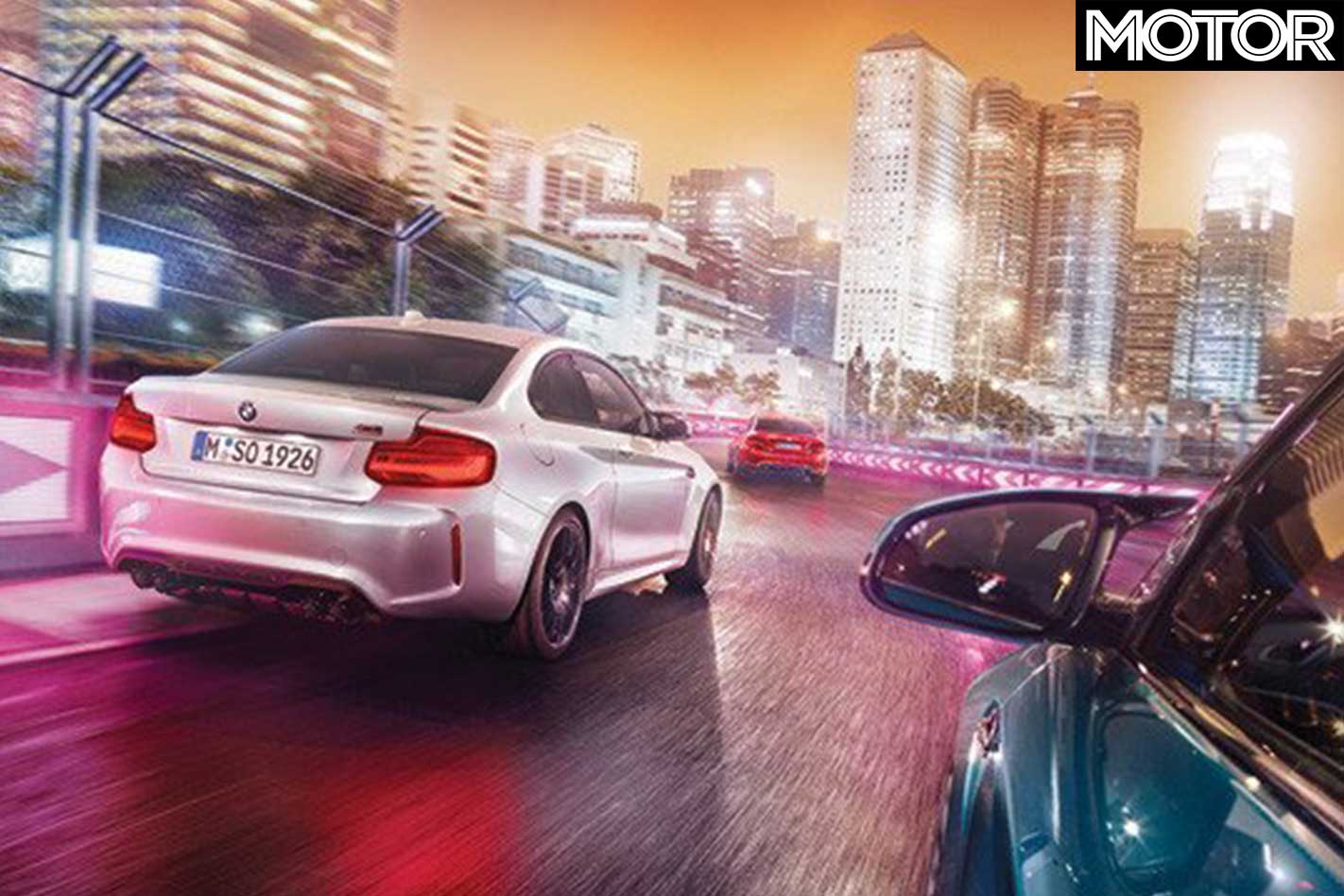
This information leak appears to confirm previously rumoured information reported on by MOTOR, when a camouflaged car was spotted testing on track at the Nurburgring.
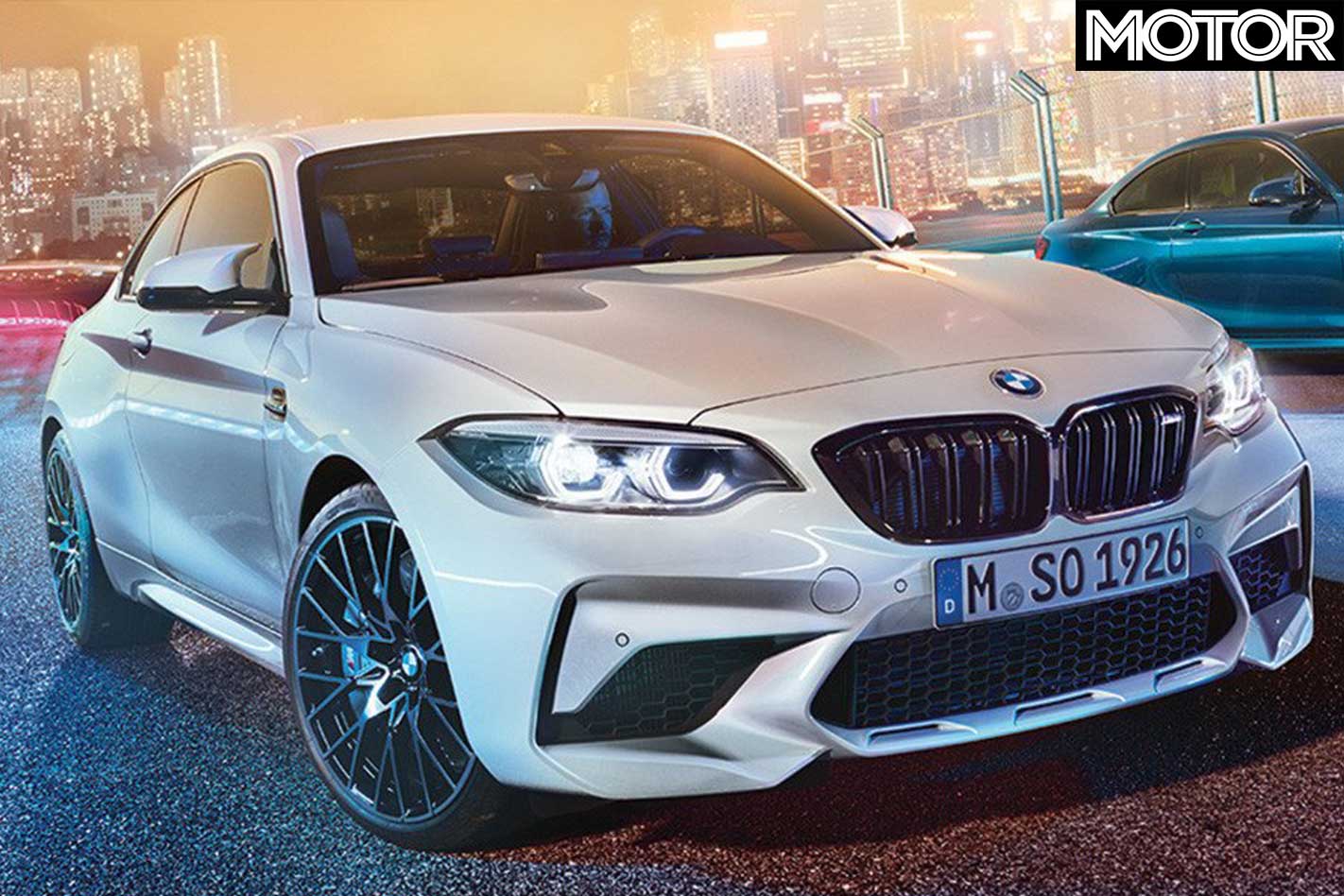
Visually, the M2 Competition will be slightly different from its standard M2 brother, with larger air inlets, 19-inch M alloy wheels, and other small tweaks.
The information on the page also addresses the potential concerns of M2 fans who could be worried by the addition of an extra turbo.
“The two weight-optimised turbochargers ensure that the high performance power unit exhibits an extremely direct response and unbridled high-revving ability – perfect for fast sprints and sporty cornering.”
“The sound of the M sport exhaust system can be adapted to the specific driving mode at the touch of a button – powerful and setting the tone at every moment.”
MOTOR contacted BMW Australia for a statement regarding the information, but BMW declined to comment at this time.
It’s expected the BMW M2 Competition will be officially revealed at the upcoming Beijing Motor Show on April 25.
CAN’T wait to see what BMW has in store for the most anticipated version of the werewolf-in-wolf’s-clothing M2 coupe yet? You don’t have to – details of the highly anticipated 2018 BMW M2 Competition have leaked online from right here in Australia.
The leaked data, via the bmw.com.au website, shows the BMW M2 Competition will pack a 302kW/550Nm twin-turbo punch from its inline 3.0-litre six-cylinder engine.
It’s enough to propel the most highly anticipated forms of the smallest coupe in BMW’s line-up from zero to 100km/h in just 4.2 seconds, 0.1sec faster to 100km/h than the $99,990 standard 272kW/465kW M2.
The Porsche 718 Cayman fighter’s powerplant – which on paper appears to be a closely related cousin of the M3’s 317kW/550Nm unit – will spin out to a heady 7600rpm, the data shows.
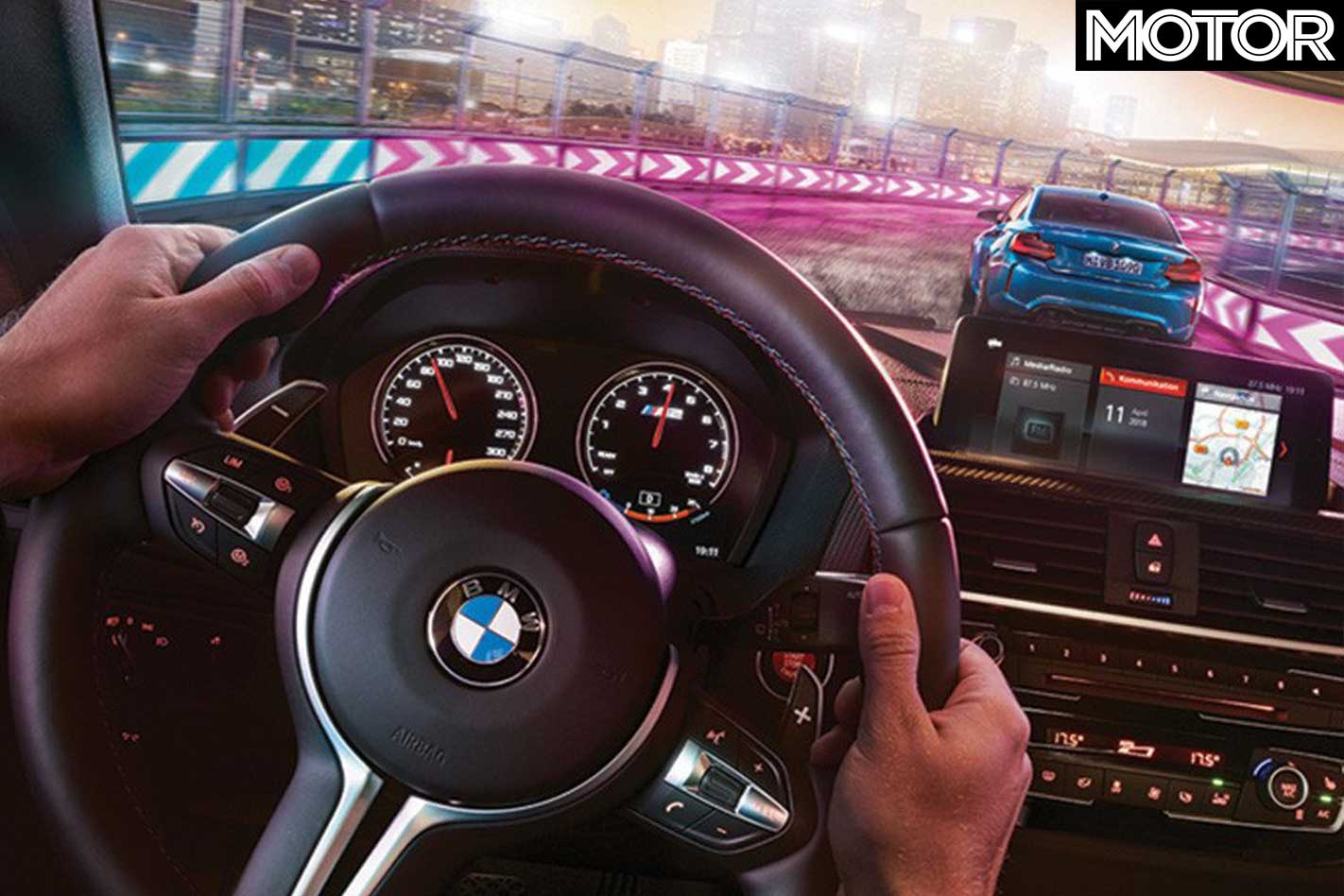
Inside, owners will gain a bespoke interior. “A cockpit that could have been constructed for the racetrack: systematically driver-oriented, the M specific instrument display appears with red dials, centrally positioned oil gauge and M2 Competition lettering,” the leaked data says.
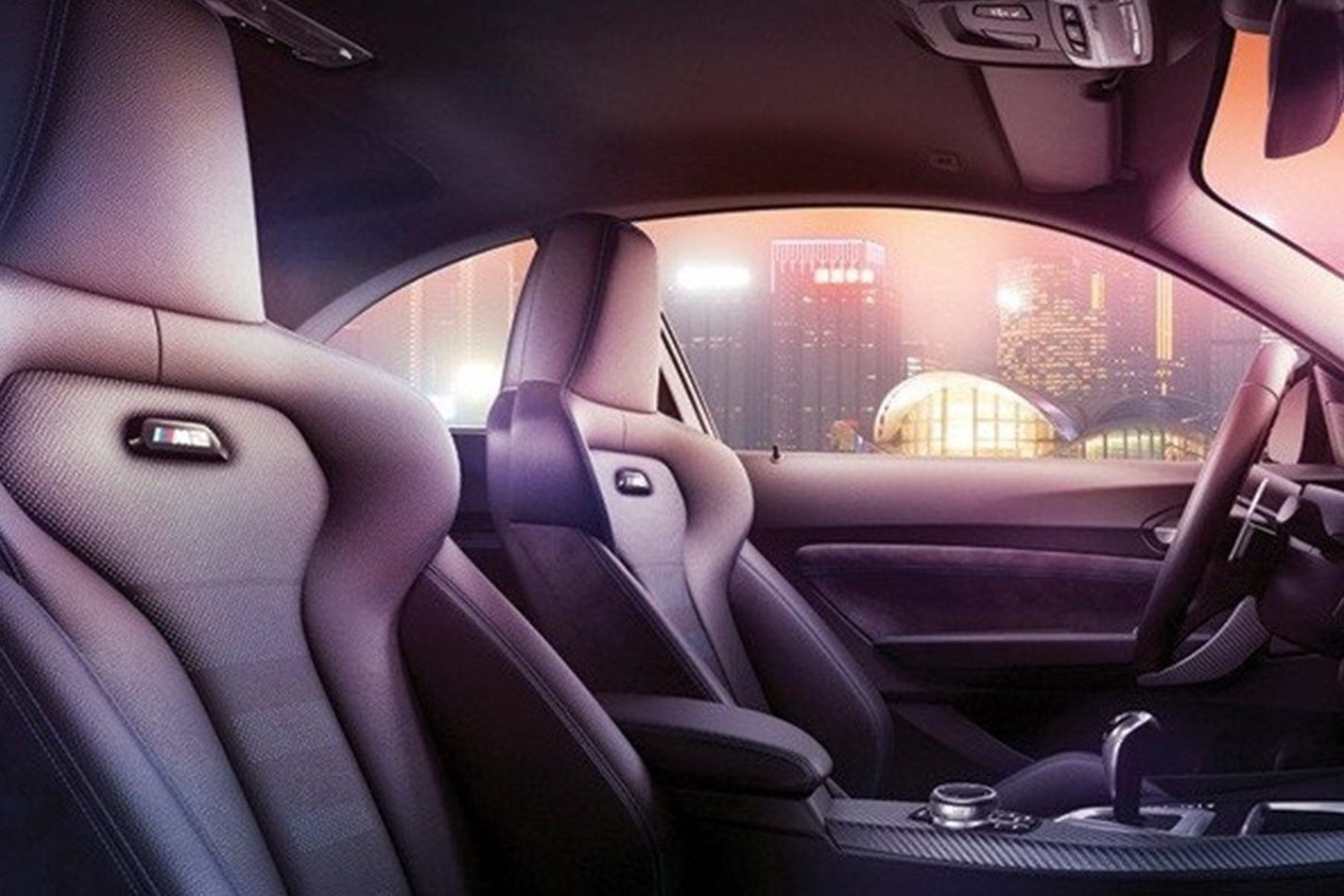
The push-start button on the steering wheel is a new thing for BMW, but follows in the footsteps of rivals Alfa Romeo and Audi, and spells out that other M-badged models in the BMW line-up are likely to follow suit.
While the M2 can be ordered with a no-cost manual gearbox, the leaked information shows the M2 Competition will clearly use the M DCT transmission, with no mention of a self-serve option.
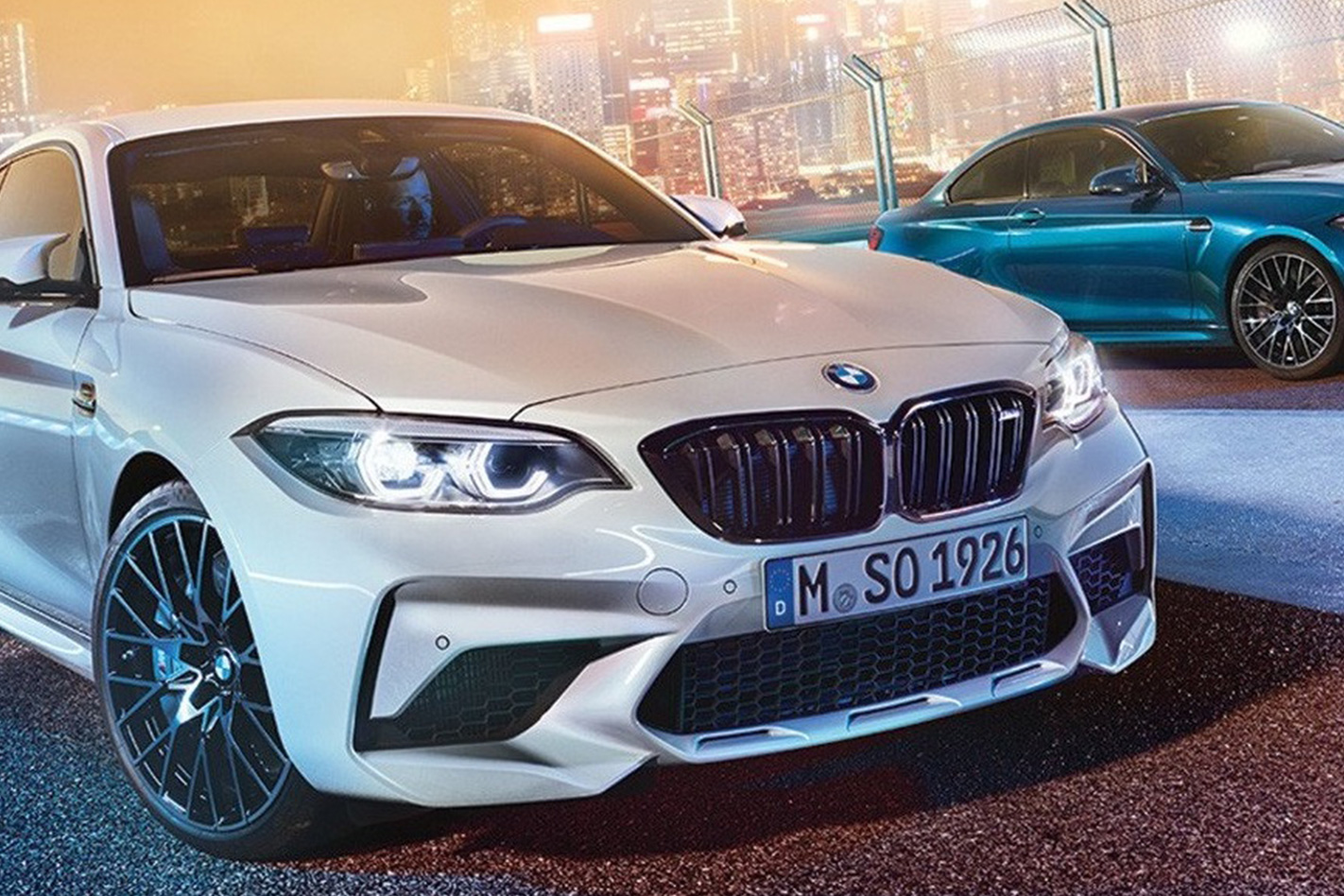
“The sound of the M sport exhaust system can be adapted to the specific driving mode at the touch of a button – powerful and setting the tone at every moment. Developed and tested on the racing circuit, the cooling system ensures the optimum operating temperature while the M specific suspension guarantees precise handling.”
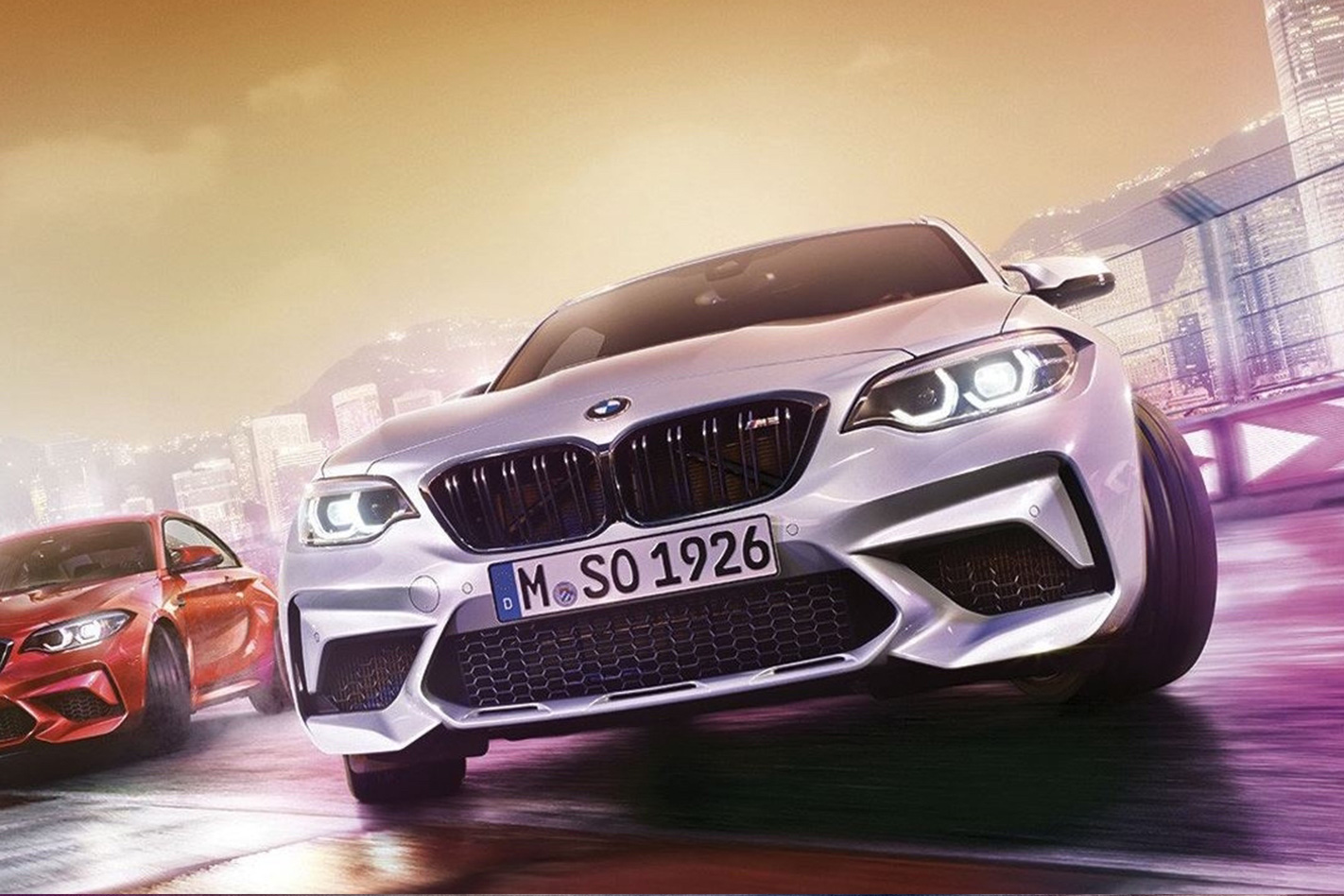
The BMW M2 Competition appears to feature a bigger air dam with aero inserts, and more impressive, almost conjoined kidney grilles – one wearing the M2 badge – designed to gulp in more cooling air. There are also wing mirrors adopted from the larger M4, more black trim, and black 19-inch alloys.

While few senior car execs would say so publicly, most agree with Henry Ford’s infamous assertion that history is bunk.
Yet as brands struggle to forge emotional connections with their new machinery, so that’s starting to change. As is so often with sports cars, the Porsche 911 has proved the bellwether, the value of air-cooled versions rising higher than those of the technically more advanced water-cooled ones that replaced them. Is a leggy automatic 964 cabriolet really two or three times better than a gently used 996 manual coupe? That’s what the market thinks at present; while a lightweight 2.7 RS is worth more than a garage full of new GT3s.
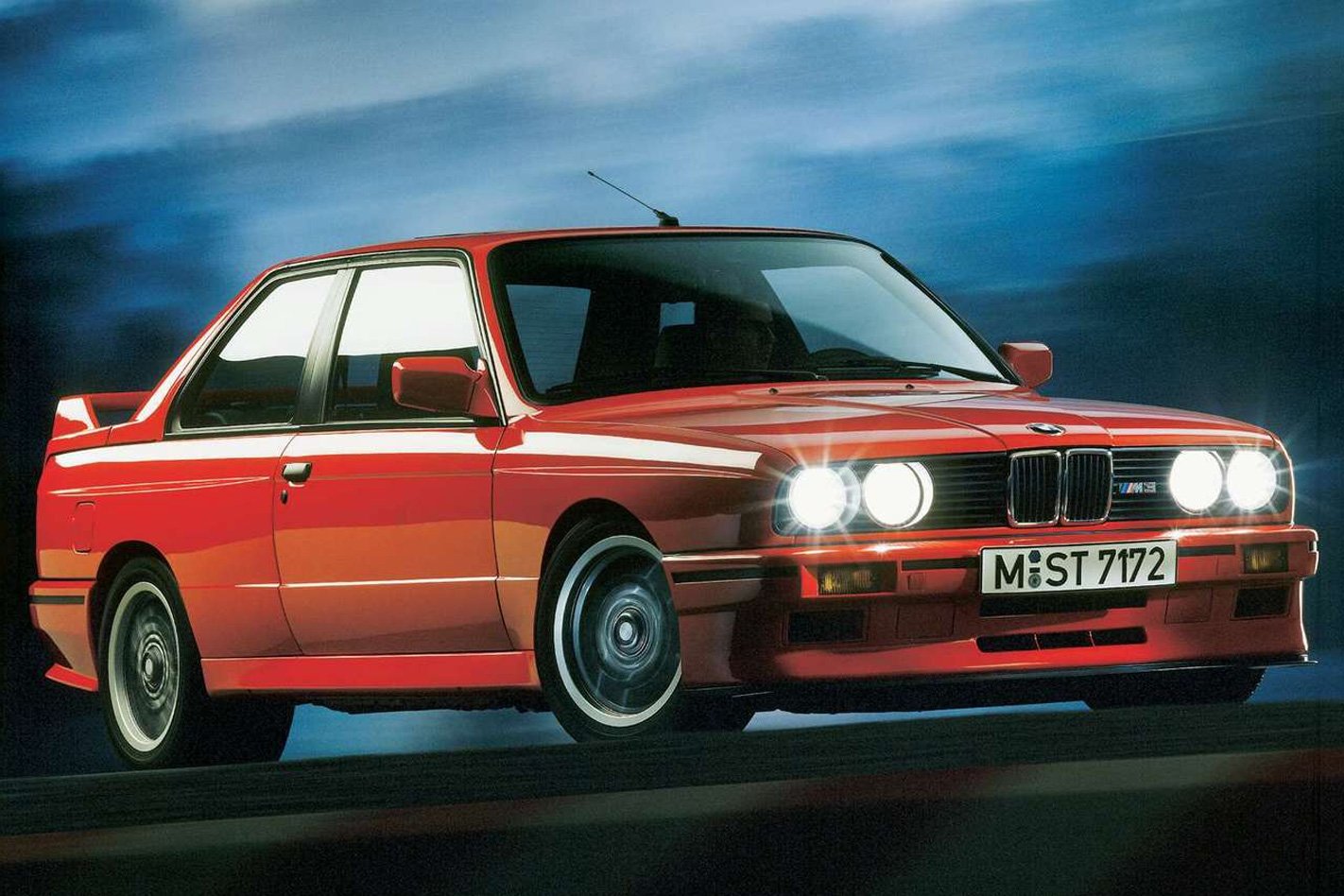
Part of this may well be down to the madness of crowds, with the soaring values of some average cars looking like a speculative bubble; the rising tide for 80s supercars has lifted some terrible Ferraris alongside some good ones. But there are plenty of more humble older cars that have seen prices spike well beyond those of much more modern and advanced equivalents – a 25-year-old E30 BMW M3 is more than a last-of-line V8-powered E92, and have you seen what a half-decent XB Falcon is worth these days? Nostalgia is a hell of a drug.
For the most part, such cars can’t be road-registered; most will effectively serve as body doubles for originals that have become too precious for the risks of historic motorsport. But the idea of restorations and new models with direct links to old ones is going to spread further as manufacturers square up to the challenge of attractive performance cars in what will soon be the hybridized and increasingly autonomous future of the forthcoming Age of Meh.
%MCEPASTEBIN%
For a business that has spent 20 years doing things with Volvos that it will probably never do again, Polestar, Gothenburg’s new ‘electric performance brand’, carries a remarkable aura of freshness and new endeavour about it.
Perhaps it’s the sky-gazing nature of the name that does it, or the recent complete rethink of its partnership with Volvo, a company which itself has managed to stand outside the money-driven, horsepower-crazy, German-centric melee that forms the arena for mainland Europe’s other premium manufacturers.

Whatever the key reasons for Polestar’s eye-catching nature, this former producer of hot Swedish sedans and winning WTCC racers, bought out of private ownership by Volvo in mid-2015, has a fascinating future ahead; a neat mixture of surprises and logic. To better understand the strategy, we took a trip to Ingenlath’s design lair inside Volvo’s mighty Gothenburg factory, where the Polestar 1 has now reached production readiness (and awaits completion of its Chinese manufacturing plant for a 2019 launch) and the Polestar 2 and 3 are almost finished. Preparations are under way to address the marketing challenge: Polestar wants to meet its customers mostly online; providing them with chances to see cars in three dimensions but avoiding the usual plodding showroom experience.
The Polestar 1 began life as Volvo’s Concept Coupe from late 2013, a beautiful 2+2 created to demonstrate the flexibility of the SPA (Scalable Product Architecture) that underpins today’s larger Volvo models. It was well received, but it had a problem. The management knew it was never going to fly as a normal Volvo: too much cost versus too little volume. And yet…
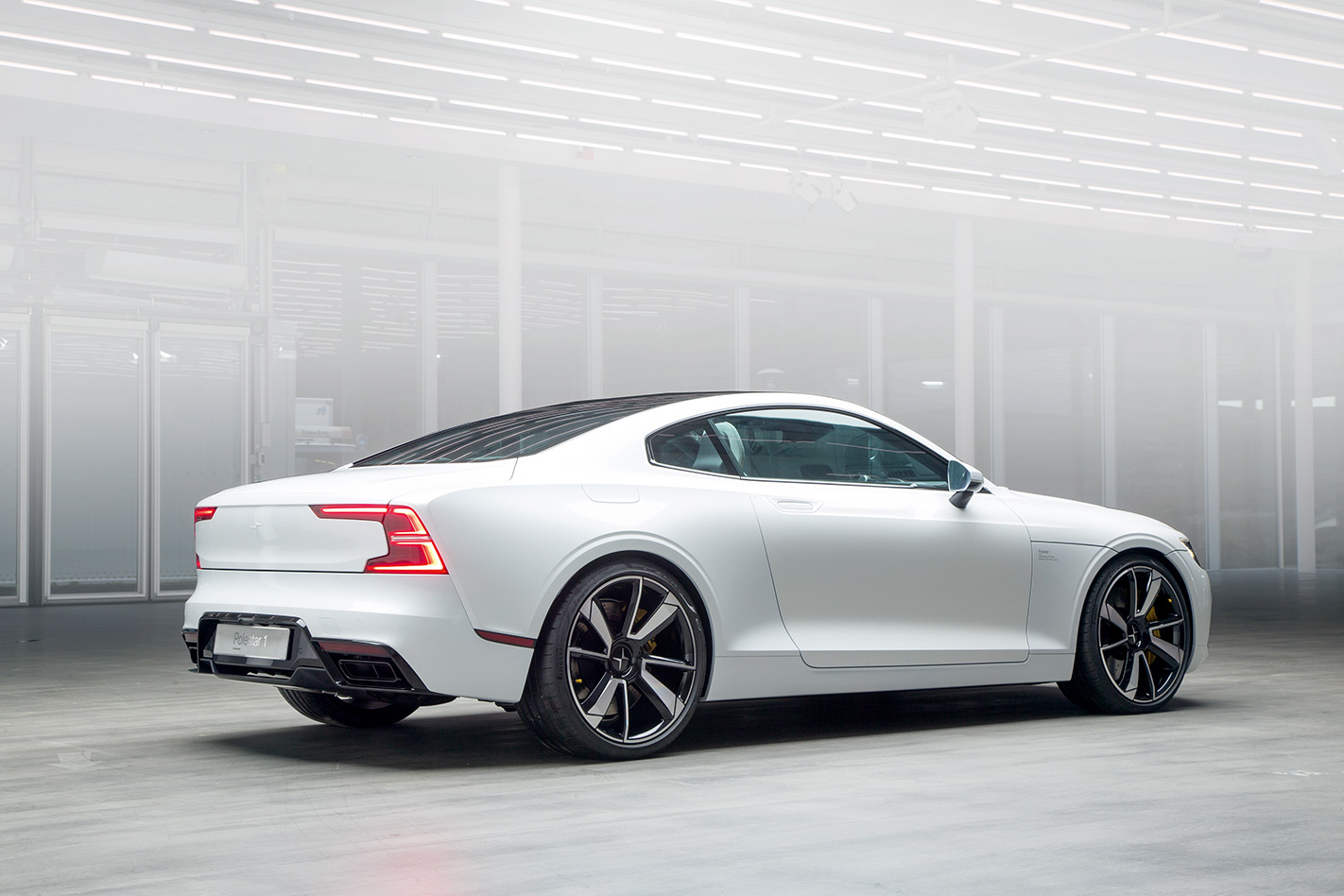
The Concept Coupe became a spur for a whole Polestar enterprise, helping to grow the idea for a Volvo electric performance brand. The name was fresh, worked in many languages and was associated only with Volvo but needed a better-defined mission. Gothenburg bought the company, whose owners obligingly rebranded themselves. Then work began to re-engineer the Concept Coupe with a much more exotic carbonfibre body (lighter and stiffer than steel). At the same time, the hybrid powertrain was developed to a new, higher level.
In launch guise, the Polestar 1 will have to settle for the description ‘electrified’ when it hits the market in 2019, whereas its successors will be purely battery-electric cars. It has a 444kW powertrain (a 280kW 2.0-litre turbocharged and supercharged petrol four driving the front wheels, plus a pair of 82kW electric motors on the rear axle) and there’s an under-floor battery big enough to give a 145km electric-only range. It is the first car to make use of Ohlins’ continuously controlled electronic suspension in production and is advanced in most areas – which is just as well because Ingenlath’s business plan calls for hand-manufacture of just 500 units a year, priced at more than €150,000 a car (which would translate to around $370,000 in Oz).
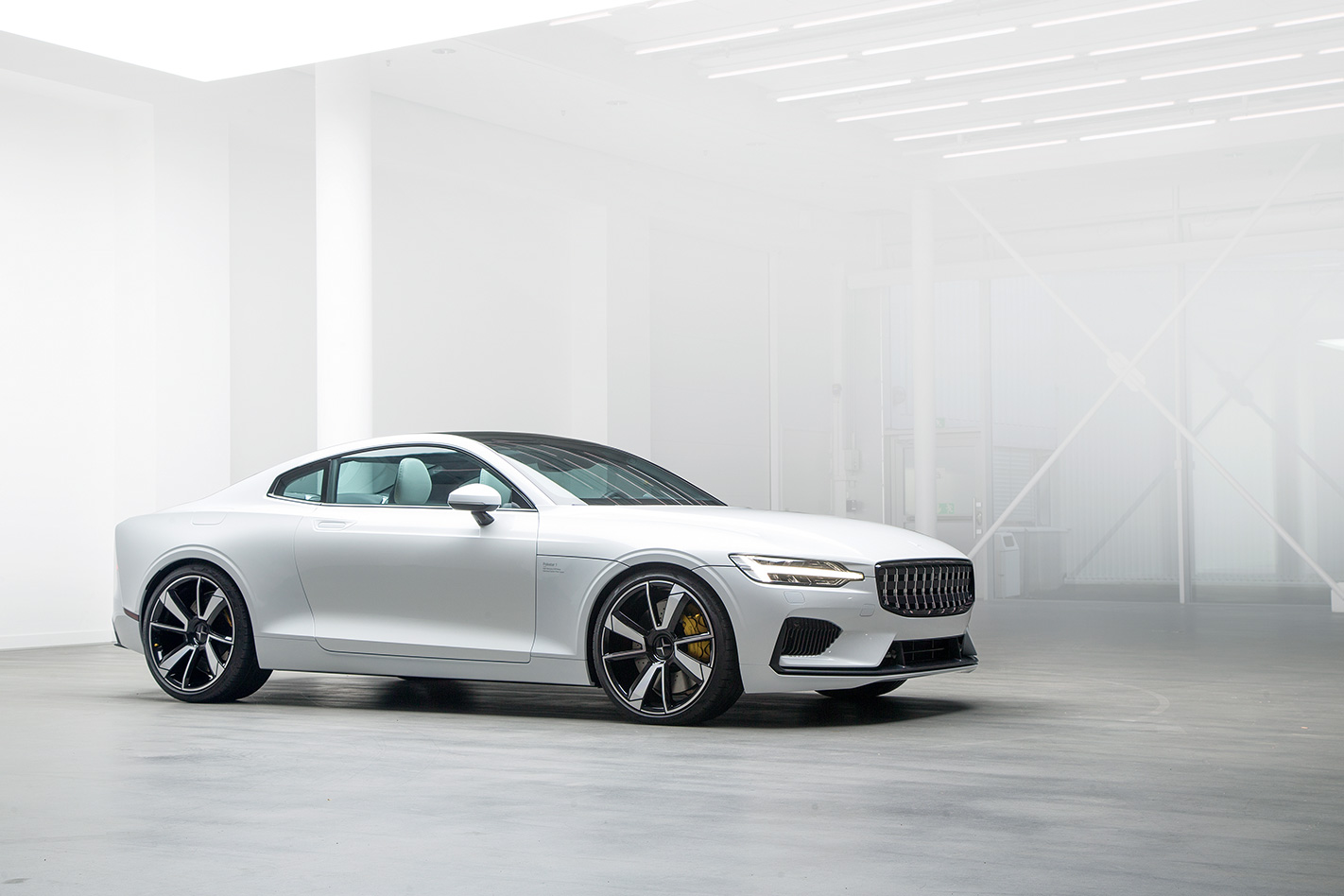
Which is why the Polestar 2 and 3 will be considerably lower priced and less exotic than the Polestar 1, defining the other extremity of the marque’s target area by making use of existing manufacturing and utilising existing Volvo running gear. The Polestar 2 is tipped to be a mid-sized pure EV hatch, intended for production in 2019 to challenge Tesla’s eagerly awaited Model 3. The Polestar 3 is a larger SUV. Ingenlath won’t yet spell out exactly what the second and third models will be like, except to say that they won’t share the profile of existing Volvo models but will use Volvo interior designs. They’ll have “special Polestar shapes”, he says, and he agrees readily that a modern iteration of the old 1800ES ‘breadvan’ coupe would make a great contemporary Polestar model.
Ingenlath says he has “nothing to hide” when it comes to using suitable Volvo components for his new designs, citing this as the only economic way of helping Polestar achieve its aims. “This is a family,” he says, “so we have some common values. Our products will share a certain quality of build and a certain degree of usability. And there’s the safety. We’ll never compromise on safety in a Polestar car.”

Ingenlath wants the Polestar operation to achieve a global volume of “around 50,000-plus units” in five years’ time, based on a three-model line-up that by then should be on the point of further expansion. Although no Polestar model will share its body-in-white with a Volvo, he reserves the right to keep doing Polestar-modified Volvos. “We like those,” he says, “but they’re still Volvos.”
Other similarities? Both marques will continue to use the successful principles of the current ‘Thor’s hammer’ headlight design. The way that shape develops will be quite different from one to the next, but we will always be able to see a relationship, Ingenlath promises.
Our interview time is up. Ingenlath nowadays has two demanding jobs‚ and clearly he needs to get on with one or the other. Even so, he comfortably bats away my concerns for his ability to sleep at night. “In a place like this, you never do your job on your own,” he says, easily. “We have many good people here, and they are the reason it works.”
Price and Equipment – Winner: Holden Equinox
With dual-zone climate control, standard sat-nav, privacy glass and additional USB ports, the Escape Trend benefits from a more upmarket fit-out. Countering that is Ford’s decision to charge $1300 extra for AEB, blind-spot monitoring, lane-keep assist and active cruise control, features that the Equinox packs in for free. These key safety omissions could be a deal-breaker for the Escape.
Not as feature-rich as its Ford rival when it comes to mod-cons, but with blind-spot monitoring, lane-keep assist and autonomous emergency braking all standard-issue, the Equinox LS+ has the edge on safety. It feels more bare bones from the driver’s seat though, with manual air-con and a measly 7.0-inch touchscreen, though noise cancellation tech and keyless entry are welcome consolations.
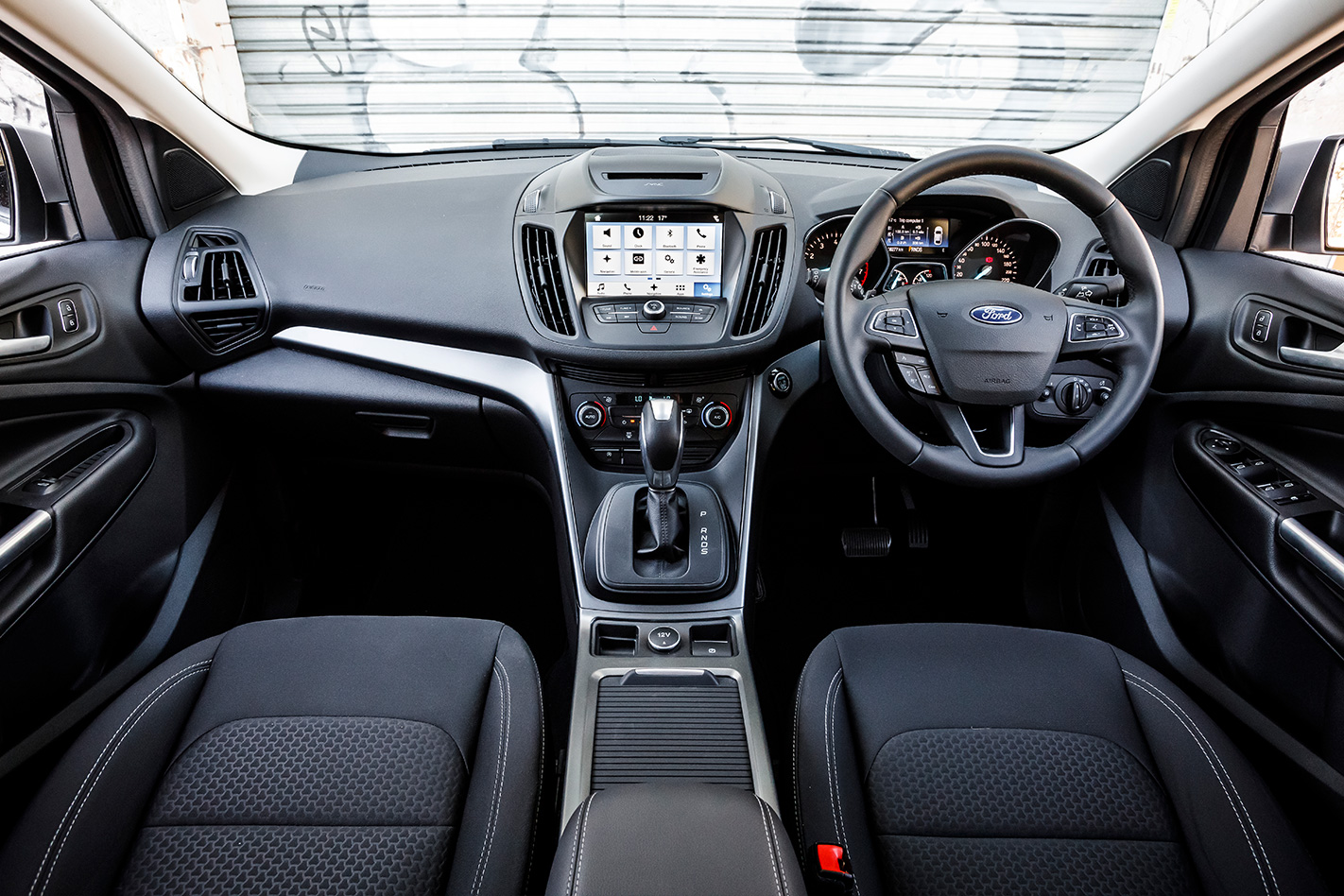
Interior and Connectivity – Winner: Ford Escape
Superior SYNC3 infotainment system with integrated nav, better voice controls and the option of smartphone mirroring gives the Escape the edge. Comfort is good up front and materials quality is better than the Holden overall, though the rear seats aren’t as supportive or spacious, nor do they fold flat. With rear seats folded, the Escape can hold 1603 litres of luggage, the Equinox 1798.
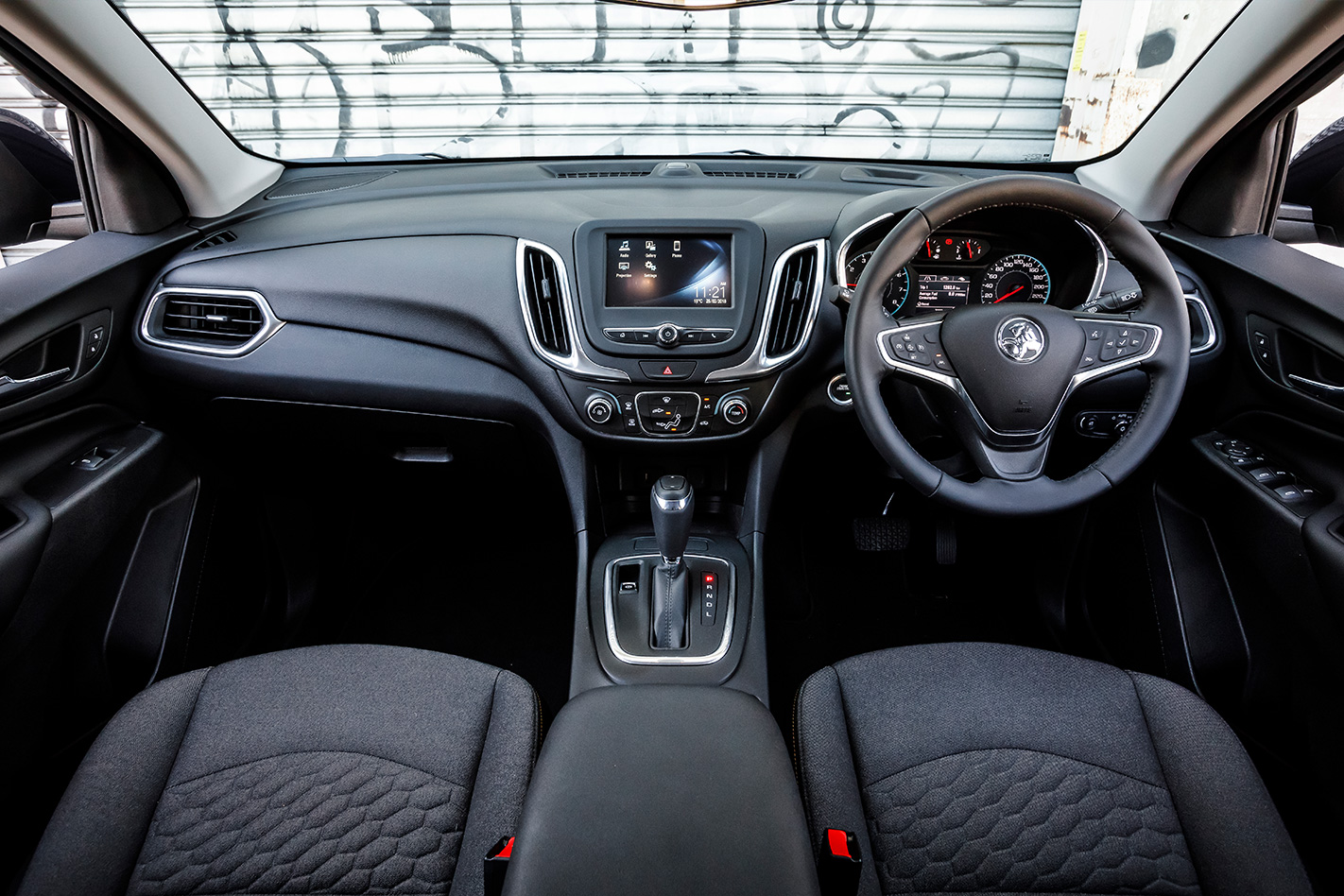
Overwhelmingly dark interior is dominated by budget plastics and ordinary textures, though pleasant cloth trim and well-sculpted front and rear seats help compensate. The 60/40 split rear seats also fold flat with the boot floor, making Equinox a great load carrier. LS+’s infotainment screen needs a smartphone plugged in to display sat-nav info via Apple CarPlay or Android Auto.
Ride and Handling – Winner: Ford Escape
The Escape is more accomplished on the road, with sure-footed handling and a quicker steering rack (2.5 turns lock-to-lock, versus the Holden’s 2.75), that endows it with a refreshing level of agility. It also delivers superior ride comfort on the kind of craggy roads that upset the Equinox’s sensitive suspension, even though it wears larger 18-inch alloys and lower-profile tyres.
For an SUV that rolls on such tall sidewalls, the Equinox has a sharp secondary ride that picks up minor lumps that the Escape simply doesn’t transmit. Light steering also conveys little feel to the driver’s fingertips besides some torque steer, though the locally tuned suspension gamely resists understeer. While capable, the Holden never feels anything like as athletic as the Ford.
Performance and Economy – Winner: Holden Equinox
Escape’s powertrain feels more alert, given its greater top-end power output and the deft calibration of its paddle-shifted six-speed auto. It has a fussier diet though, requiring 95RON premium unleaded at a minimum, which combines with its greater mass to result in higher average fuel consumption (7.2L/100km versus 6.9 for the Equinox), making it a costlier machine to juice.
The LS+’s 1.5-litre turbo four has stacks of grunt. It’s slightly down on power compared to the Escape but generates significantly more torque. What’s more, it’ll happily run on regular 91RON unleaded. Standard six-speed auto works well too, but there’s a prominent whooshing sound as revs ascend. Acoustic refinement could use some additional finesse.
Warranty and Servicing – Winner: Holden Equinox
Service intervals are set for every 15,000km or 12 months, with the first three services costing $325 each, followed by a $585 service at the 60,000km/48-month mark. That pricing structure then repeats for the next four years. The costs are consistent, but there’s no escaping the fact that the Escape is more expensive to own than the Equinox. Warranty lasts for 100,000km or three years.
Holden stipulates 12,000km/12-month maintenance intervals for the Equinox 1.5-litre, with varied prices from service to service. Assuming an ownership period of six years, the Equinox LS+ would cost $1914 in scheduled servicing – $296 less than what the Escape would cost over the same period. As standard, the Equinox provides a three-year, 100,000km warranty.
Winner – Ford Escape Trend
If you expect the XF Sportbrake to be a comfortable and super-stylish wagon, you’re going to be fine. But if you want something that’ll get your heart pumping? Hmmm.
Let’s start with the engine. A 3.0-litre turbocharged V6 in the snout sounds good until you remember it’s a diesel, and that it only pumps out 221kW. And it redlines just short of 4500rpm.
Okay, it’s got 700Nm and will get along just fine, hitting 100km/h in a claimed 6.6sec, but you won’t be pushed back into your comfortable leather seat.
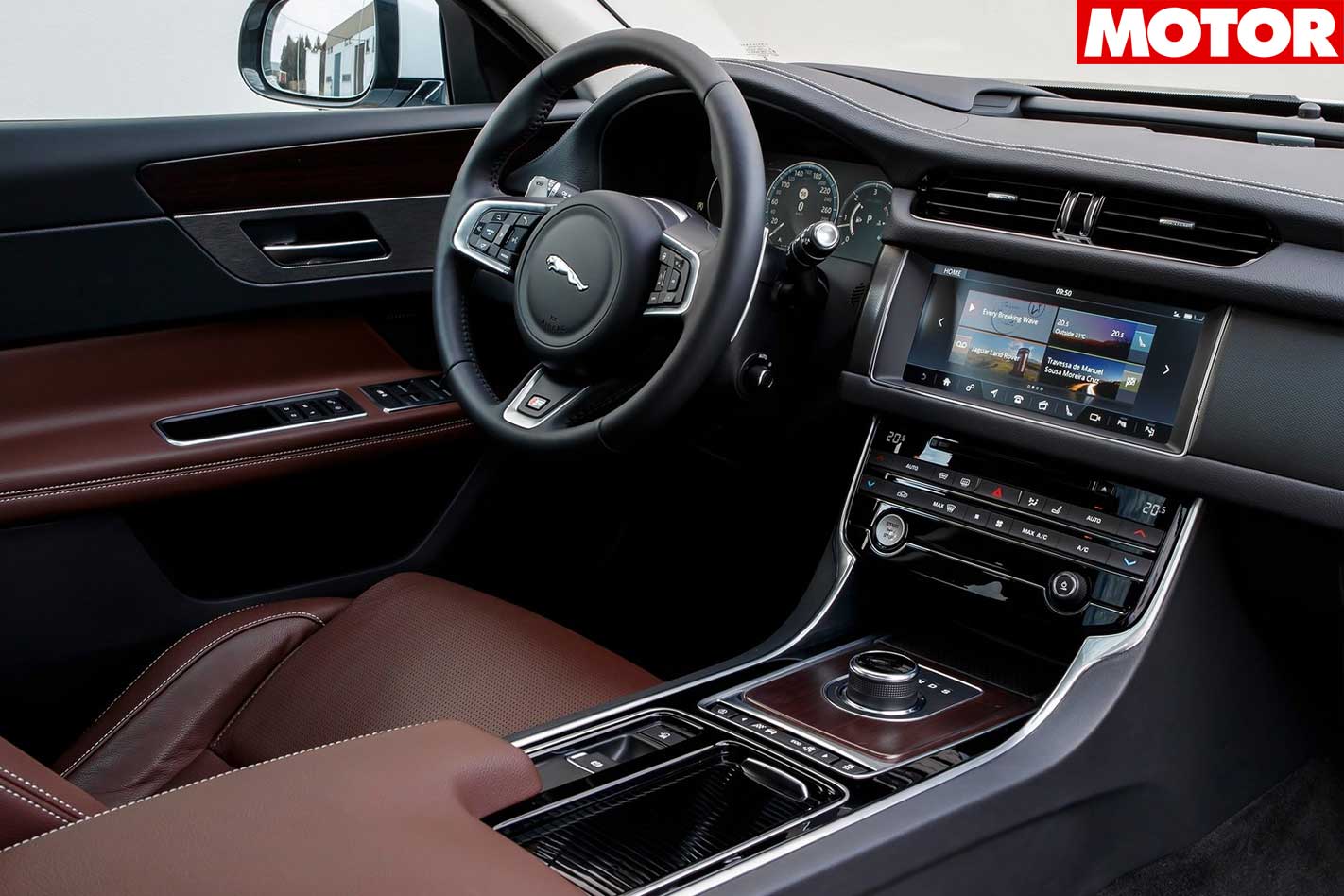
If you do want to take it out for a drive, you’ve got to be mindful of its weight. Its standard tyres can also struggle in the wet and it rides on 20-inch alloys which can make the otherwise comfortable ride quite brittle.
It looks great – there’s a general consensus among staff here that it looks better than the XF sedan – However, the F-Pace is cheaper by $20K, faster to 100km/h by 1.1s, only heavier by about 6kg, shares the same platform, and has a livelier supercharged petrol V6.
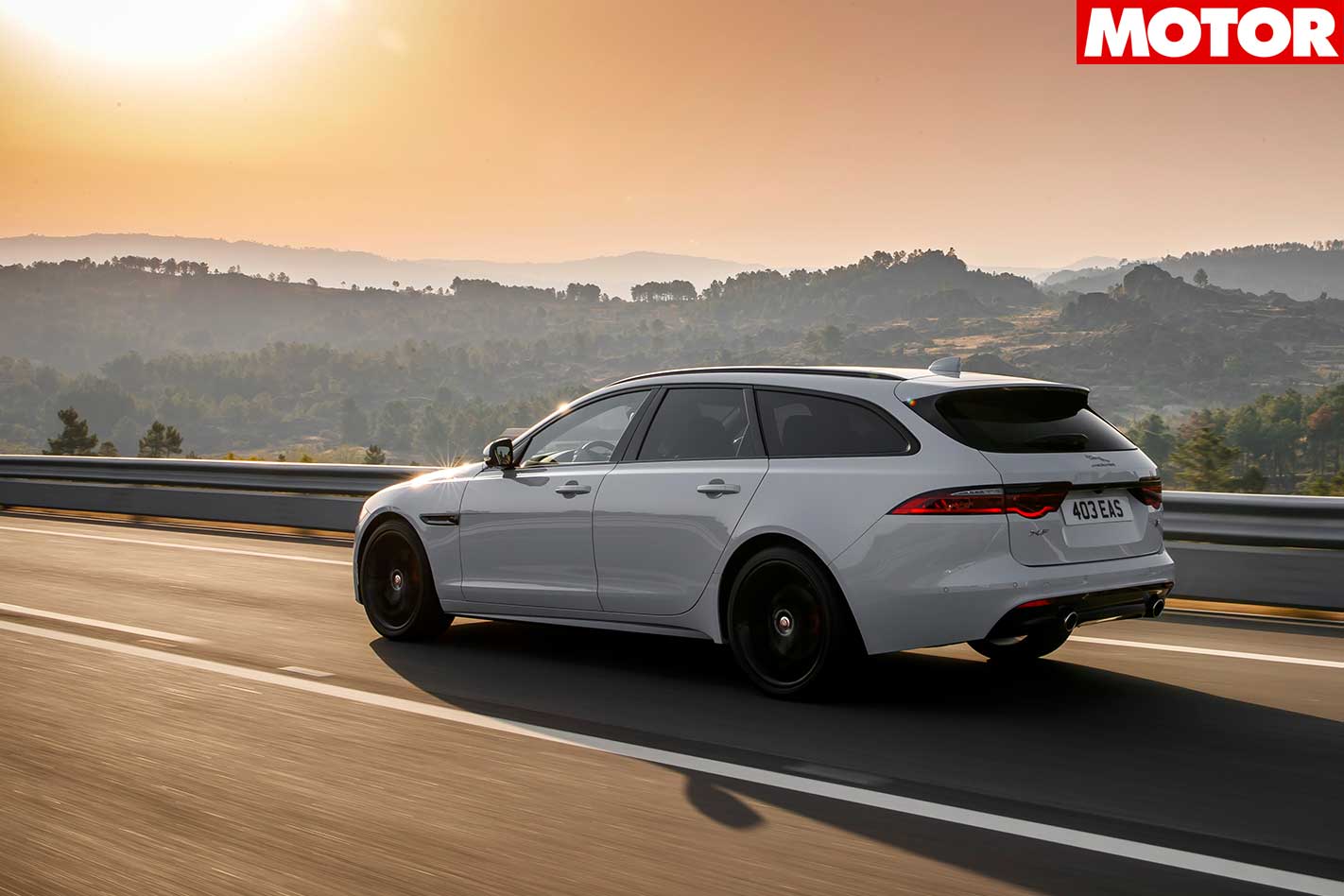
2018 JAGUAR XF SPORTBRAKE S 30D SPECS:
Engine: 3-litre, V6 turbodiesel Power: 221kW @ 4000rpm Torque: 700Nm @ 2000rpm Weight: 1855kg Price: $123,450
Look, I’ve got nothing against new technology. Well, not if it means a better overall experience for you and me anyway.
As in, as long as whatever new tech makes stuff better to use, cheaper to buy or in any other way a superior product, then I’m all over it. Trouble with a lot of new tech I’m seeing lately, however, is that the only beneficiaries are the shareholders of the companies making the gear.
Not that I don’t think a profitable company is a happy one, but if something new that doesn’t offer me, the mug putting up the cash at retail level, a novel, cheaper or better experience, then I start flipping the switches to ‘off’.
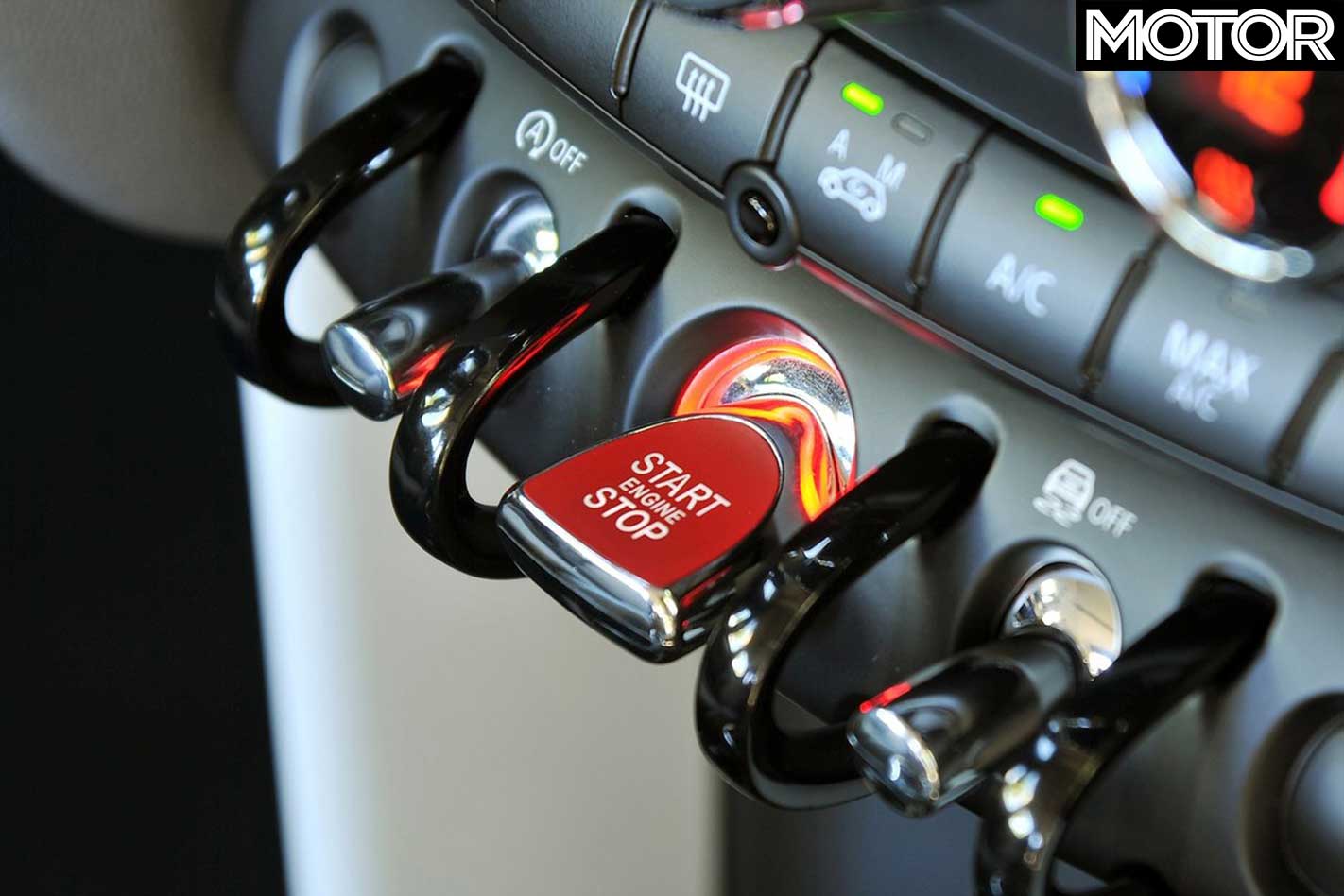
Anyway, so I’m driving a new, high-end Euro sedan and I notice that the dashboard is completely computer-generated. But the layout is still wedged firmly in the conventional, so the computer-generated images still conform to the familiar round dials and red needles.
The reality is that this thing was just a conventional dashboard in ones and zeroes rather than plastic. Which, just for starters, meant it still had fiddly little increments on the speedo.
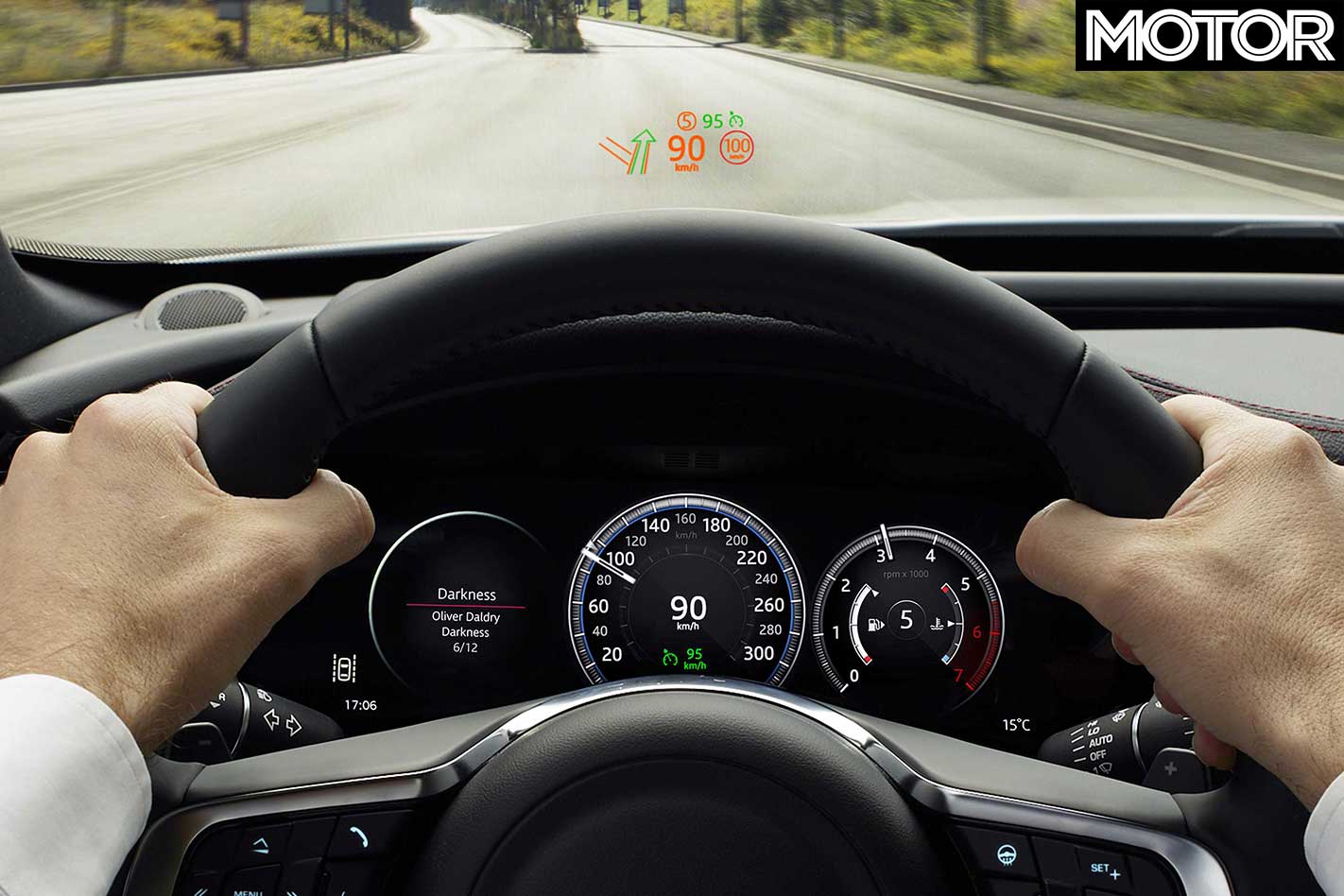
Think racecars and aeroplanes with their on-demand info systems and their ability to convey much more than speed, revs and fuel-level in real time. But no… So what’s the point of this new dash-tech?
Probably a weight saving and a lower per-unit cost from the supplier. Again, the shareholders are drunk and masturbating in the boardroom while I’m squinting at a display that could run to colour-coded readouts and Family Guy re-runs. But doesn’t.
CVT trannies are possibly even worse. I mean, here’s this great new tech that allows for an infinite number of actual gear ratios. So what do some carmakers do? Put in artificial steps to ensure that not only does the car feel like one with a conventional auto, it has now also forfeited the one advantage that a CVT held over the rest – the fuel economy bonus of running the engine in its efficiency zone for more of the time.
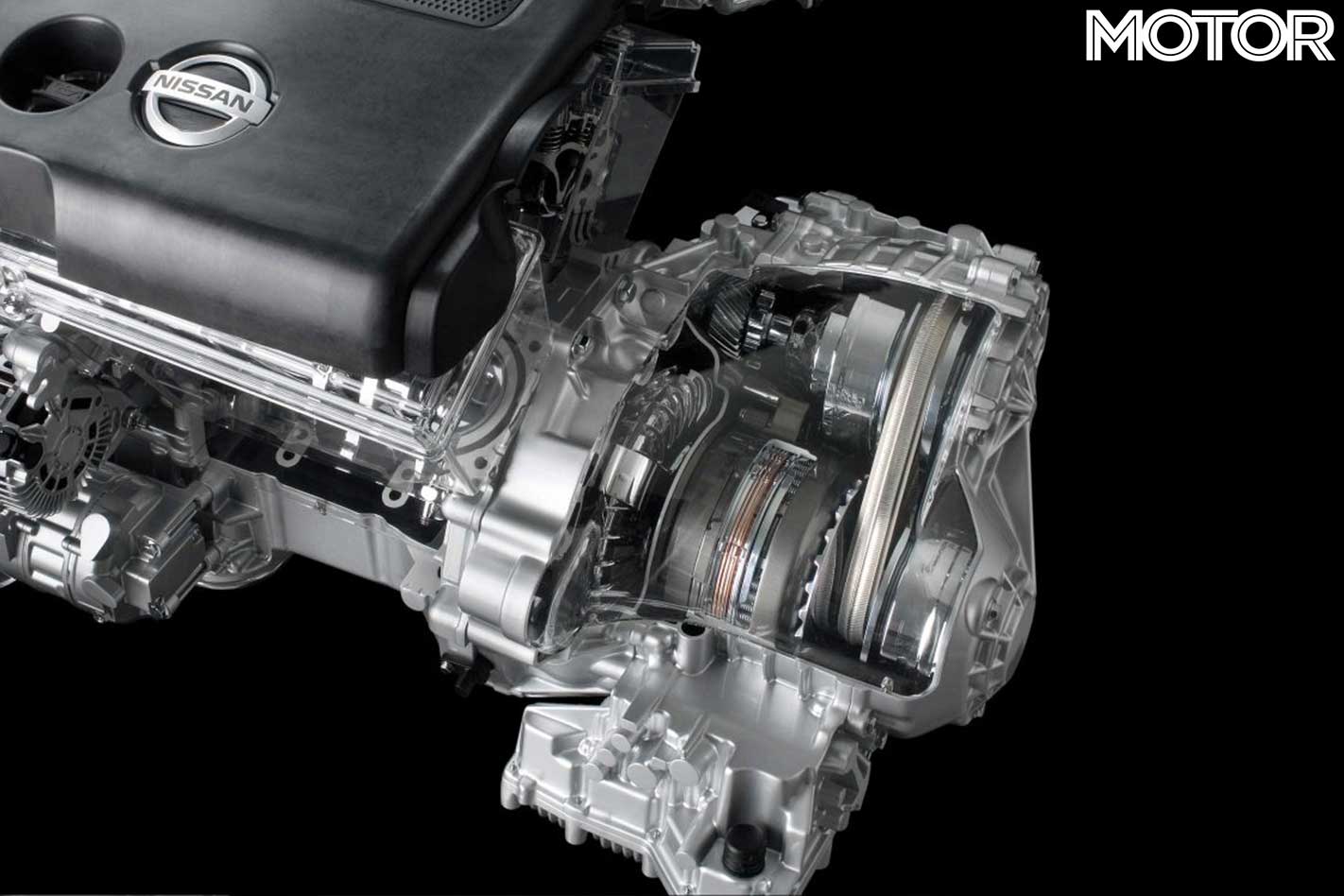
Seriously, kids, this is what happens when conservative marketing trumps cutting-edge engineering. Disregarding or disguising the benefits of new tech makes no sense at all.
If you’re going to make the investment in a novel way of doing something, then you might as well milk it for all it’s worth. ’Cos from where I sit, having an animated dashboard that offers nothing more than a conventional dashboard is like developing a 3D printer that can make things from ballistics-grade plastic. And then printing yourself a muzzle-loader.
IF WE needed any further proof that we’re living in the golden age of the hot-hatch, then this glorious pearlescent-orange Renault is it.
Pumped to within an inch of appearing gratuitous, and preened so beautifully in just about every area, the new Renaultsport Megane RS280 has ‘want’, ‘need’ and ‘must have’ written all over it.
Much like its heavily re-engineered predecessor, this is no shoehorning engine experiment, and nor is it merely a simple exercise in modernising the cracking hot-hatch that fans have salivated over for nearly a decade. This is fresh thinking for Renaultsport, despite the fact we’ve seen a five-door hot Renault Megane before.
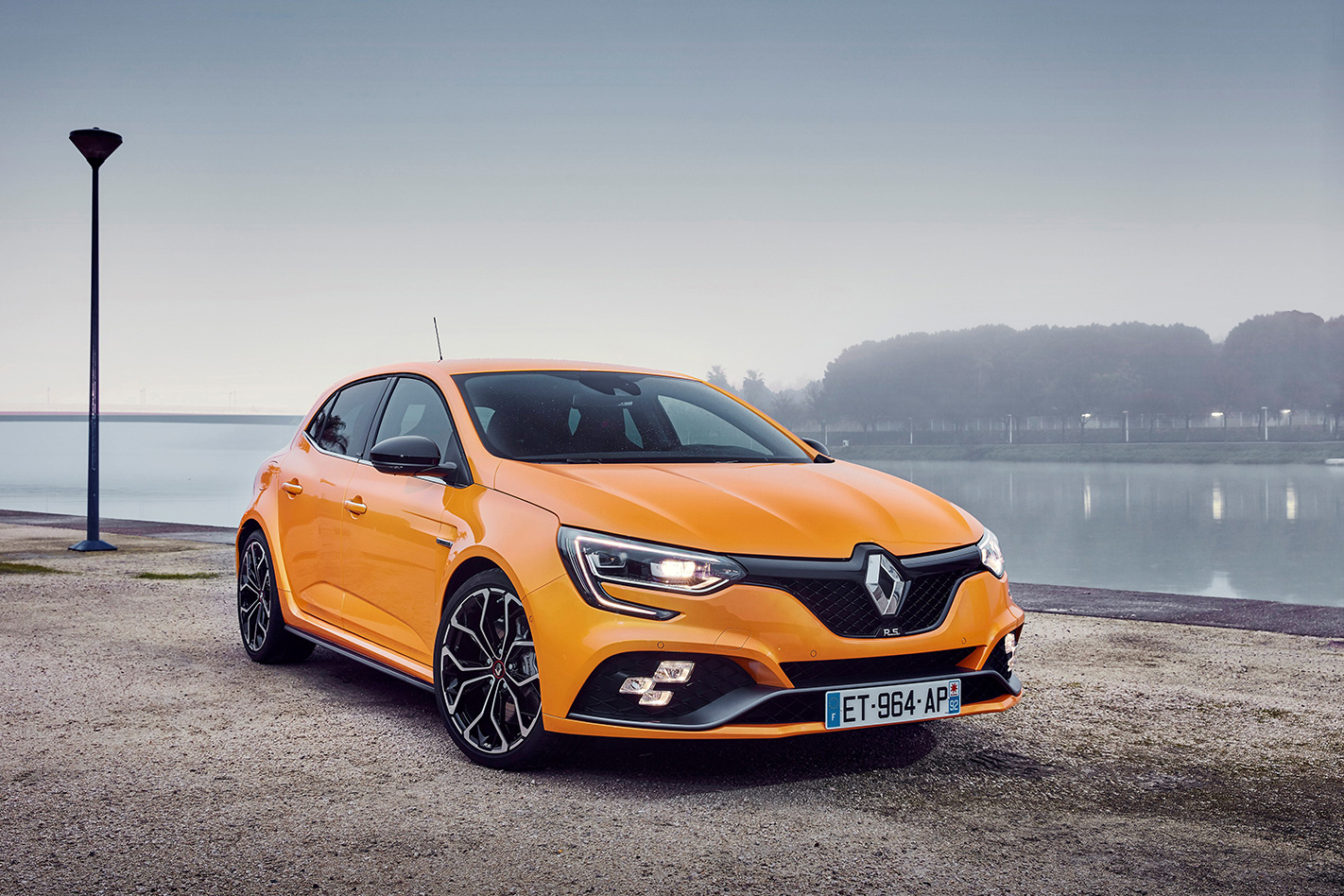
The core of the matter is textbook hot-hatch: front guards pumped by 60mm, and rears 45mm broader than a stock GT, with the ride height 5mm closer to terra firma. Two suspension tunes will be offered – a core Sport set-up and a (roughly 10 percent firmer) Cup version with bespoke spring, damper and anti-roll bar rates, as well as adjustments to the ingenious hydraulic compression stops (“a shock absorber within a shock absorber”, according to Renaultsport). Inspired by rallying, this consists of a secondary piston within the damper unit that aims to dissipate energy without transferring it to the wheel like a traditional bump-stop would. And it works. Brilliantly.
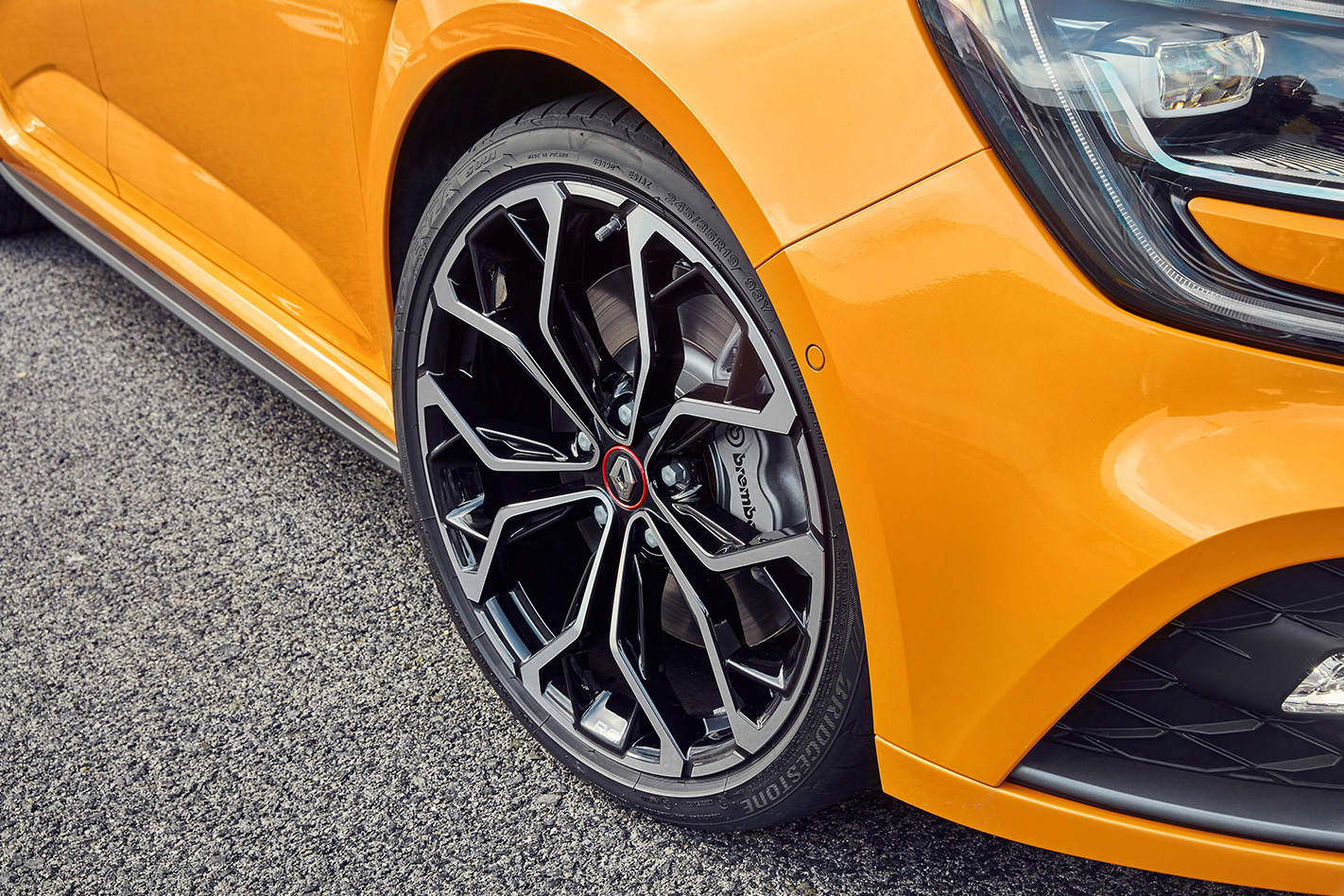
This is also the first time that anyone could honestly say that a synthesised induction note actually sounds real. According to the head of Renaultsport’s engineering department, Olivier Guintrand, they worked “very, very hard” to perfect the acoustics of this new drivetrain. And (in Sport and Race modes), the result is both a rich induction sound inside the cabin and, thanks to ignition-cut electronics, a fruity, crackly exhaust note that, on the EDC version, fires out one of the best exhaust upshift barks in the business. Make no mistake, the tough new RS280 has the muscle to match its machismo.
Chassis wise, we drove the dual-clutch Sport version (in stunning pearlescent Tonic Orange) on some wonderfully challenging roads in southern Spain, and a manual Cup on the famed Jerez racetrack. Despite any fears you may have about the ‘auto’ Megane RS with ‘soft’ suspension being a bit limp-wristed, it’s anything but. Brilliantly damped, as if it’s Hoovered to the road surface, and capable of tackling the sort of hits you’d imagine would crack a sump, it’s this mixture of discipline with total control that defines how the new Megane RS drives.
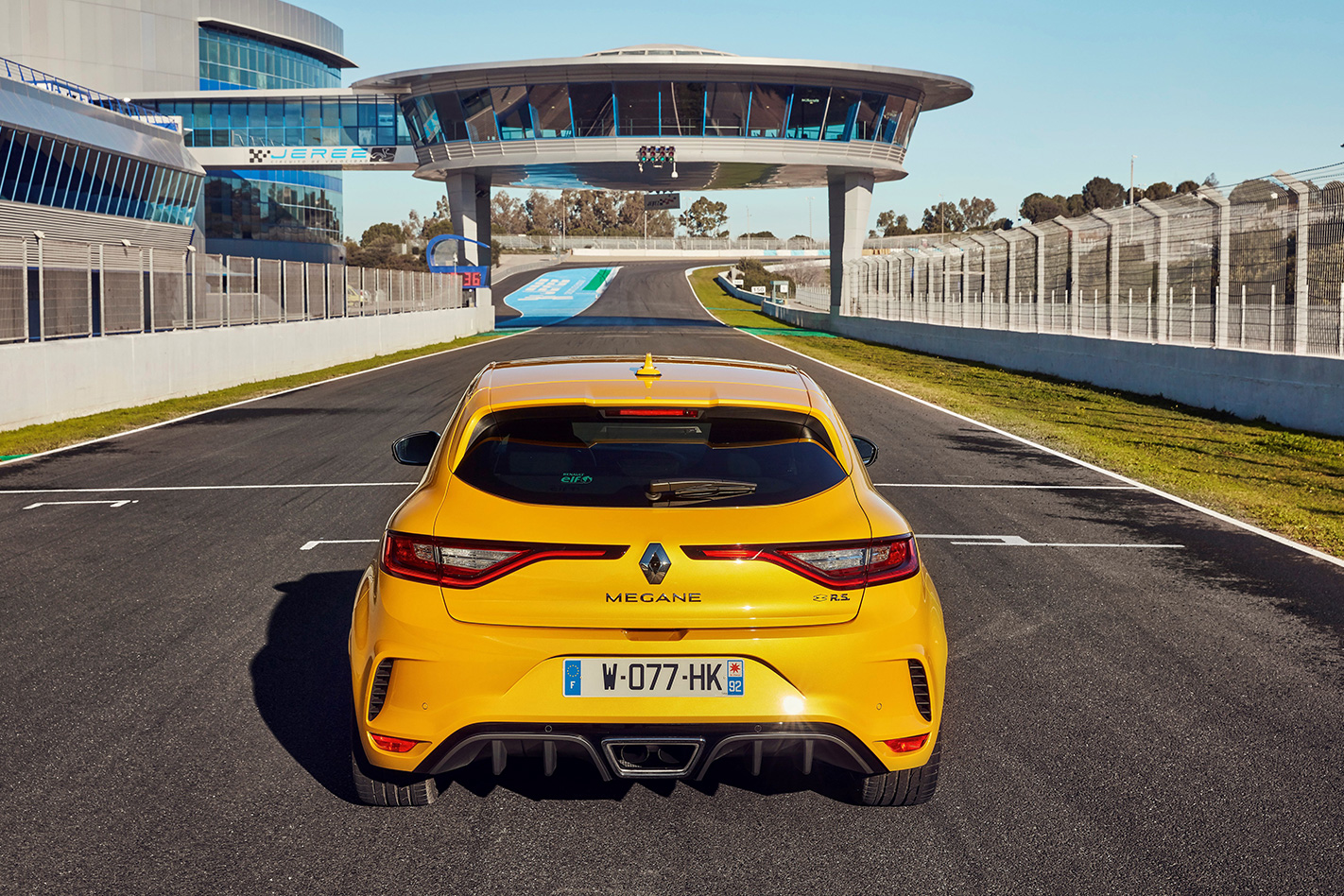
Normally, the rear wheels point in the opposite direction to the fronts up to 60km/h, but in Race mode (as opposed to Sport, Neutral, and Comfort, as well as an impressively configurable Perso mode), this threshold is extended to 100km/h. And while there’s a degree of trust that needs to be built when pushing the Megane’s chassis at first (some people don’t like the rear-endy, oversteery feeling of the back end, especially on our very slippery test roads), there’s actually plenty of purchase here.
Thanks to the steering set-up, you need little input from the Megane’s superb perforated-leather and Alcantara wheel to change direction. Yet the car doesn’t feel nervous either, tracing challenging cornering lines with crisp accuracy and encouraging keenness. Even the ESC (in Sport mode) is on the bandwagon, nibbling at the edges when it needs to with the sort of finesse a car like this deserves. And besides the odd moment where it picks a gear too high, the dual clutch ’box is also a bit of a cracker, reading the conditions with respectable accuracy and finding the right ratio at least 85 percent of the time.
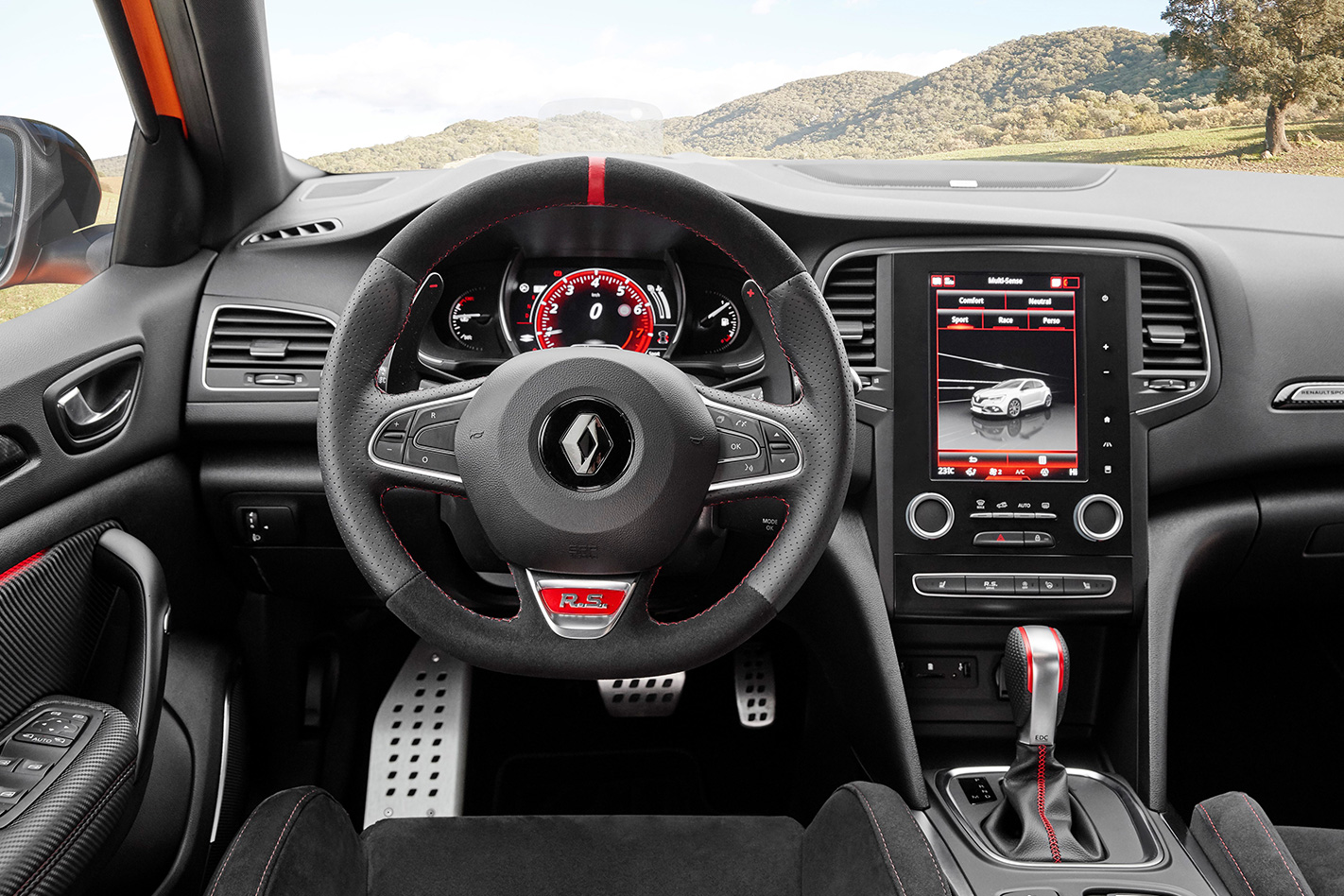
Unexpectedly terrific as the dual-clutch Megane RS280 Sport is, it’s the manual Cup that really needs to nail the brief if it’s going to withstand Honda’s Civic Type R onslaught. And after a half-dozen flat-out laps in it at Jerez, there’s a bloody strong chance the new Megane Cup is everything Renaultsport wants it to be.
With a mechanical torsen limited-slip front diff (instead of the electronic wizardry and torque vectoring of the Sport chassis), the Cup fires out of Jerez’s third-gear hairpins and through a fabulous series of tight corners set up to demonstrate the Cup chassis’ delightful agility and chuckability.
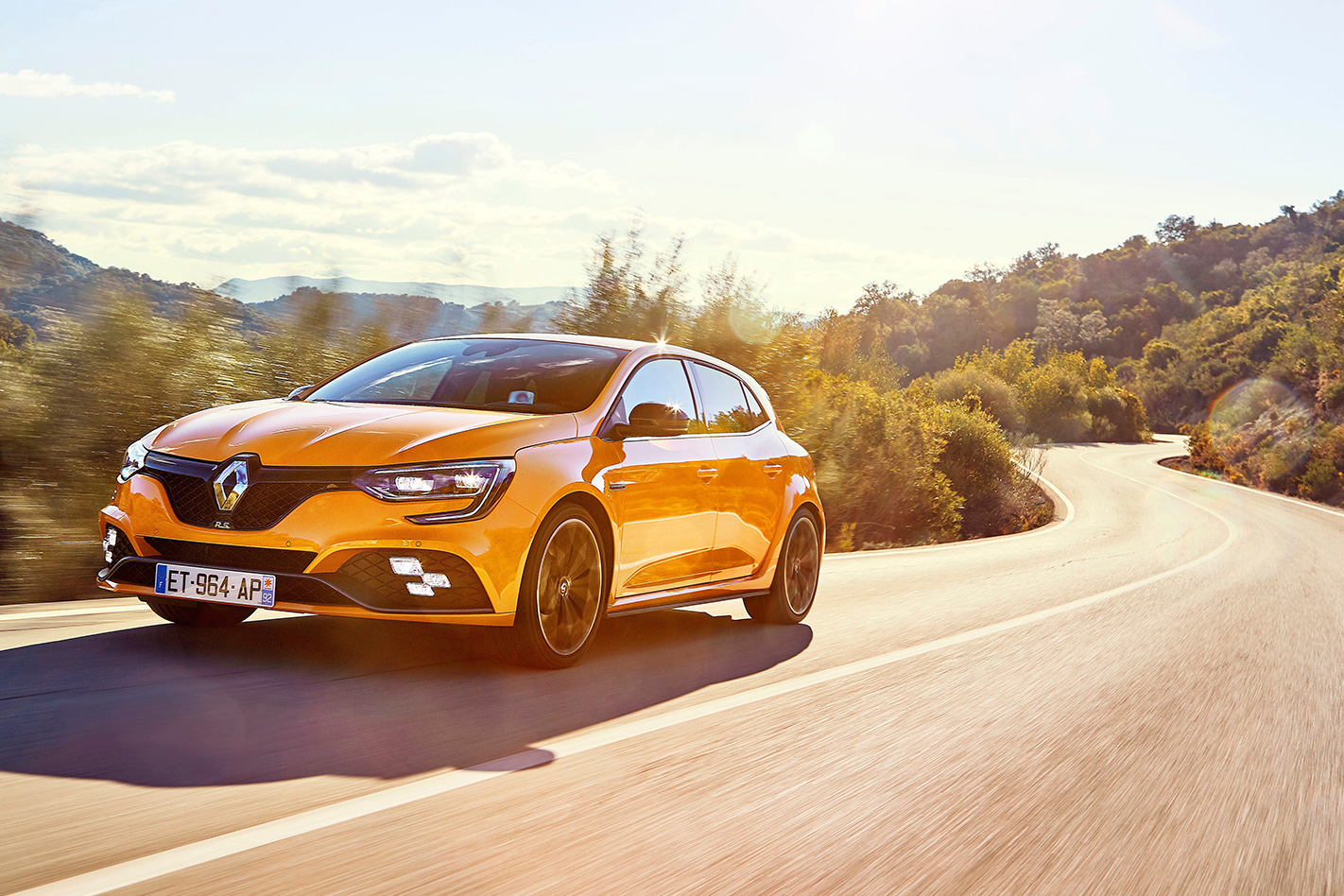
In fact, all the things that aren’t quite perfect on this car – some dud lower cabin plastics and underdone rear-seat packaging being the main two – already apply to the regular, lukewarm Megane. So the fact this super tough-looking bully of a hot hatch has emerged so darn strong and seductive speaks volumes about how much engineering effort has been invested in making it great.
And there’s more to come. Expect a Paris Show reveal of the forthcoming 220kW/400Nm Trophy version, complete with its own styling and wheel treatment, and an even higher grade of Bridgestone tyre (the new S007, also fitted to Ferrari’s F12), plus – if everything goes according to Renaultsport’s devious plan – a new Nurburgring lap record for a front-driver, just to put the Honda Civic Type R back in its place.
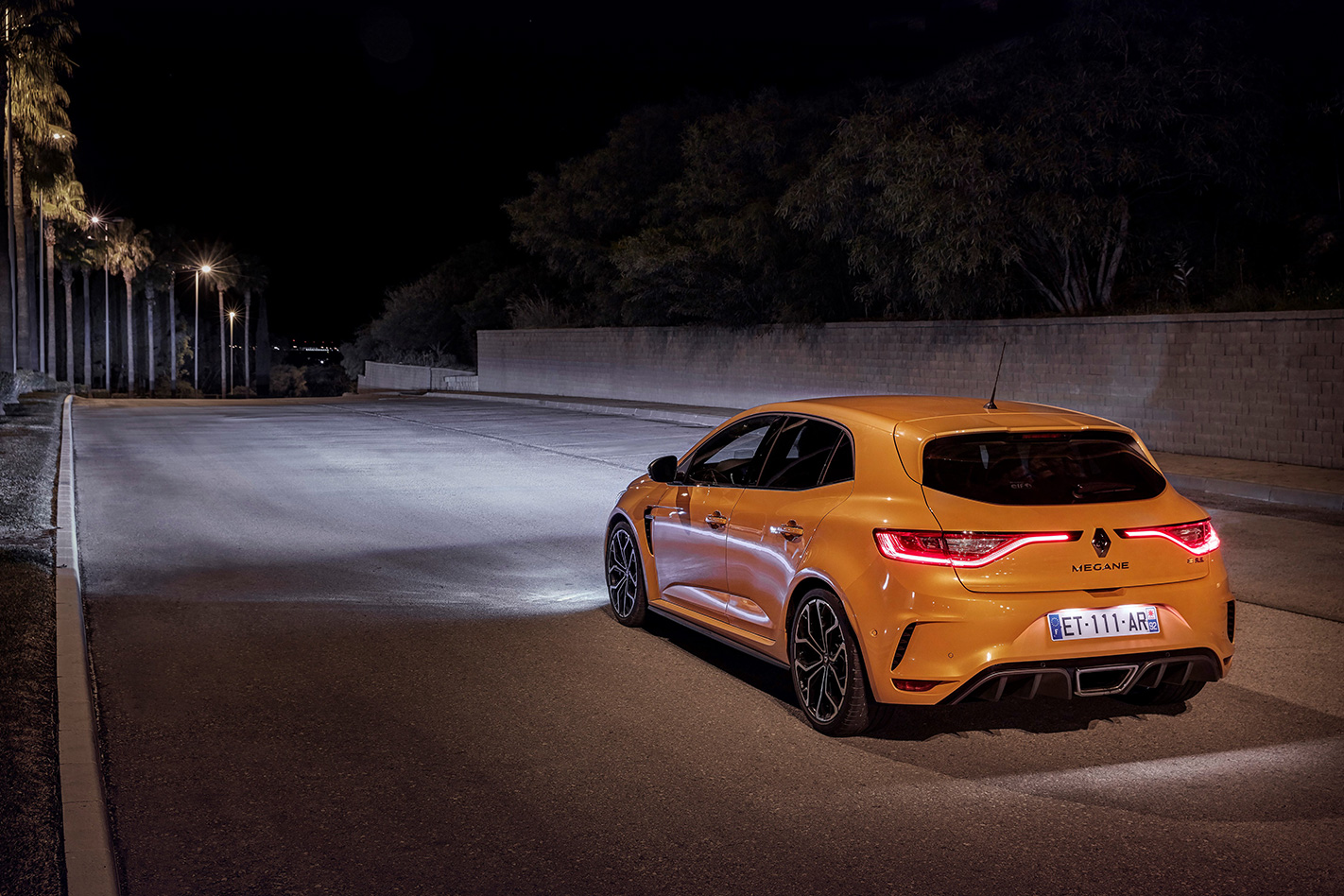
As it stands, broad and tough with more than a hint of bad-boy character, the Megane RS280 is pretty much everything we wanted it to be. A better all-rounder than its predecessor without scrubbing off too many edges, yet a car brimming with individuality and flavour.
That’s what we want in a French hot hatch, and that’s exactly what you get here. Especially in orange.
IT’S AN odd sensation to catch yourself during a moment of significant personal change, To become aware that a fundamental shift is happening, while it’s happening. And yet, as I slid my bum into the soft, supple seat of Wheels’ Volvo XC60 long-termer, that’s exactly what occurred.
I was in a dark, cold and decidedly depressing car park at Melbourne airport, having spent the previous three days crisscrossing NSW in a group of focused, topless and worringly expensive supercars, which you’ll read about next month. Maybe it was the weather, or my sleep-deprived state, but slipping into the Volvo felt like a big, warm hug.
It was easy to get into, its seating position high and commanding. As I switched on the heated steering wheel, I made the kind of noise English people make when you offer them tea and biscuits. I may have actually muttered, “Oooooh lovely.”
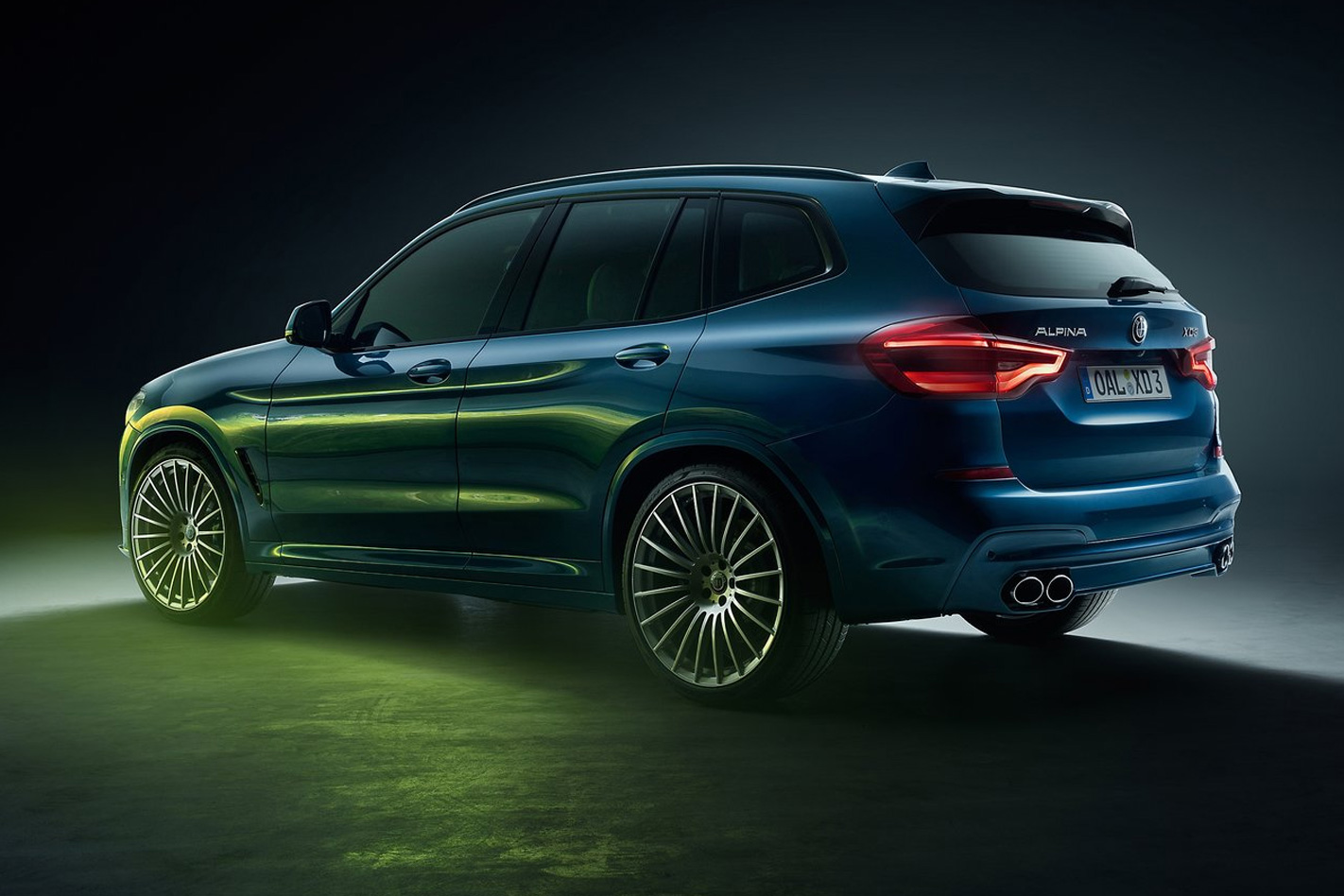
I found myself lusting after an SUV, which felt odd, and made me ponder a deeper question: would the wider Wheels readership feel the same way? Having spent more hours that I care to admit trawling through the comments on our social media pages and fielding letters from readers after our last two COTY winners (Mazda CX-9 and Volvo XC60) I’d wager that no, the majority wouldn’t.
SUVs may now account for more than half of all Aussie sales, but to car enthusiasts, to people who actively pursue the thrill of driving, they’re still derided. They’re dismissed as inferior and compromised, bought by people who don’t know or simply don’t care that they’re heavier, thirstier, uglier, more cumbersome and often less practical than an equivalent sedan or better yet, a wagon. The past decade has seen disliking SUVs become cool; a default reflex that feels as normal, and as right, as despising the pommy cricket team.
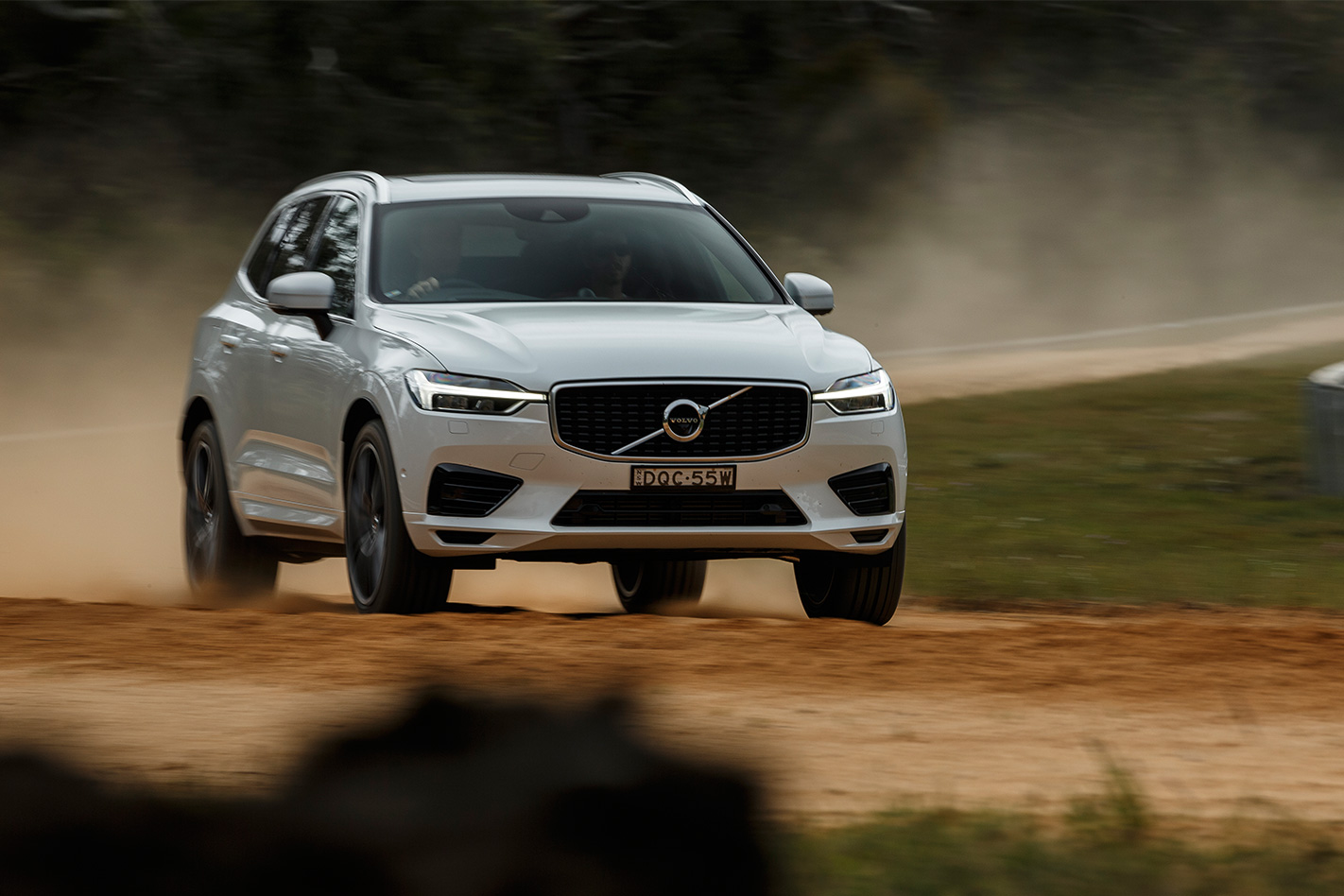
There are exceptions, of course. Heavy SUVs with sloppy handling and thirsty engines still exist and deserve your vilification, but the rate of progress has been such that the entire SUV segment can no longer be written off as mediocre.
Wheels dep ed Andy Enright argues that SUVs are now so good that they’re often better than the performance wagons of yore we hold so dear. A Porsche Macan Turbo, for example, would likely run rings around a V8-powered Audi RS4 Avant.
The point here isn’t to suggest you should rush out and buy an SUV, but to challenge the way you think about them.
Dunno who’s exactly on top of noise production at Audi lately, but they’re sure getting our vote.
This review was first published in MOTOR Magazine’s February 2006 issue.
Wolfgang Hatz is in charge of powertrain development, so he’ll get the overall kudos, but somebody down the line has got the tremble-through-your-trellis thing down pat. While the RS4 is an incredible machine, the more humble (cough, cough) S4 gets some pretty good treatment as well. Not demonstrably altered from the old model, the big highlight is its exhaust.
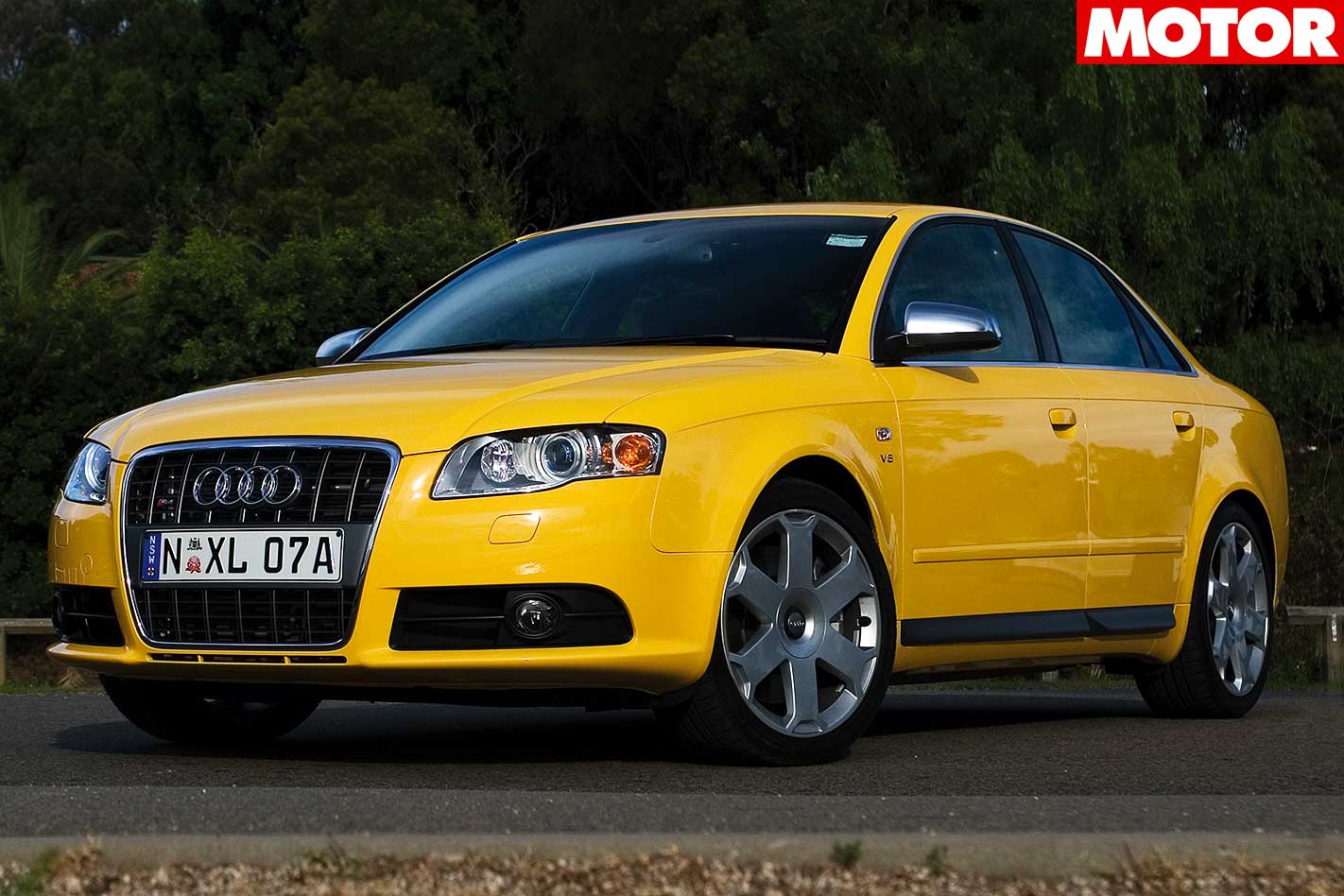
Plenty of cars have achingly rich engine notes at full throttle; the S4 also gives you the same pleasure even at idle and at the light throttle openings that are the staple fare of city life.
The genius of the S4’s upgrade, though, isn’t that it’s a sound so glorious it makes you smile every time you fire it up. It’s that it does all this and never, ever feels quite loud enough, quite rumbly enough or quite over-the-top enough to intrude when you don’t want it to. It’s never in the way.
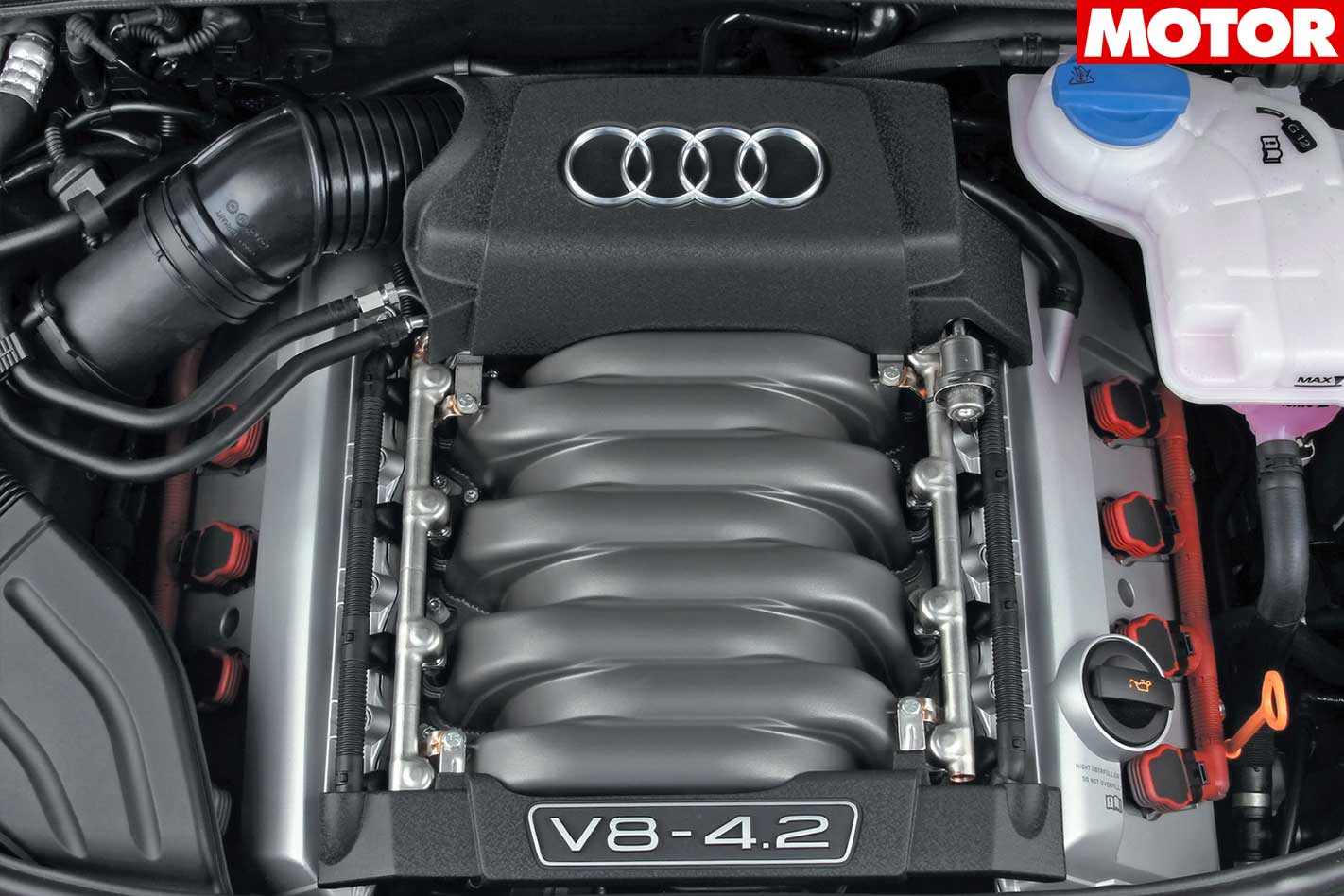
It goes pretty well, mind you, with Audi claiming 5.8 seconds for the 0-100km/h sprint, but it doesn’t always feel like 253kW waiting for you to tame it. A bit of that is because its 410Nm isn’t class leading in the modern era and a bit of that is because of the security the all-wheel drive platform (thankfully, a proper permanent quattro, not the Haldex imitation).
As upgrades go, though, she’s pretty minor. Exhaust aside, there are no engine or gearbox changes (except that the S4 is auto only now), it sits on the same chassis, uses the same steering system, sits on mildly-modified settings of the suspension setup… Well, you get it. But the look is updated with the big grille, it gets xenon headlights and automatic rain and light sensors.
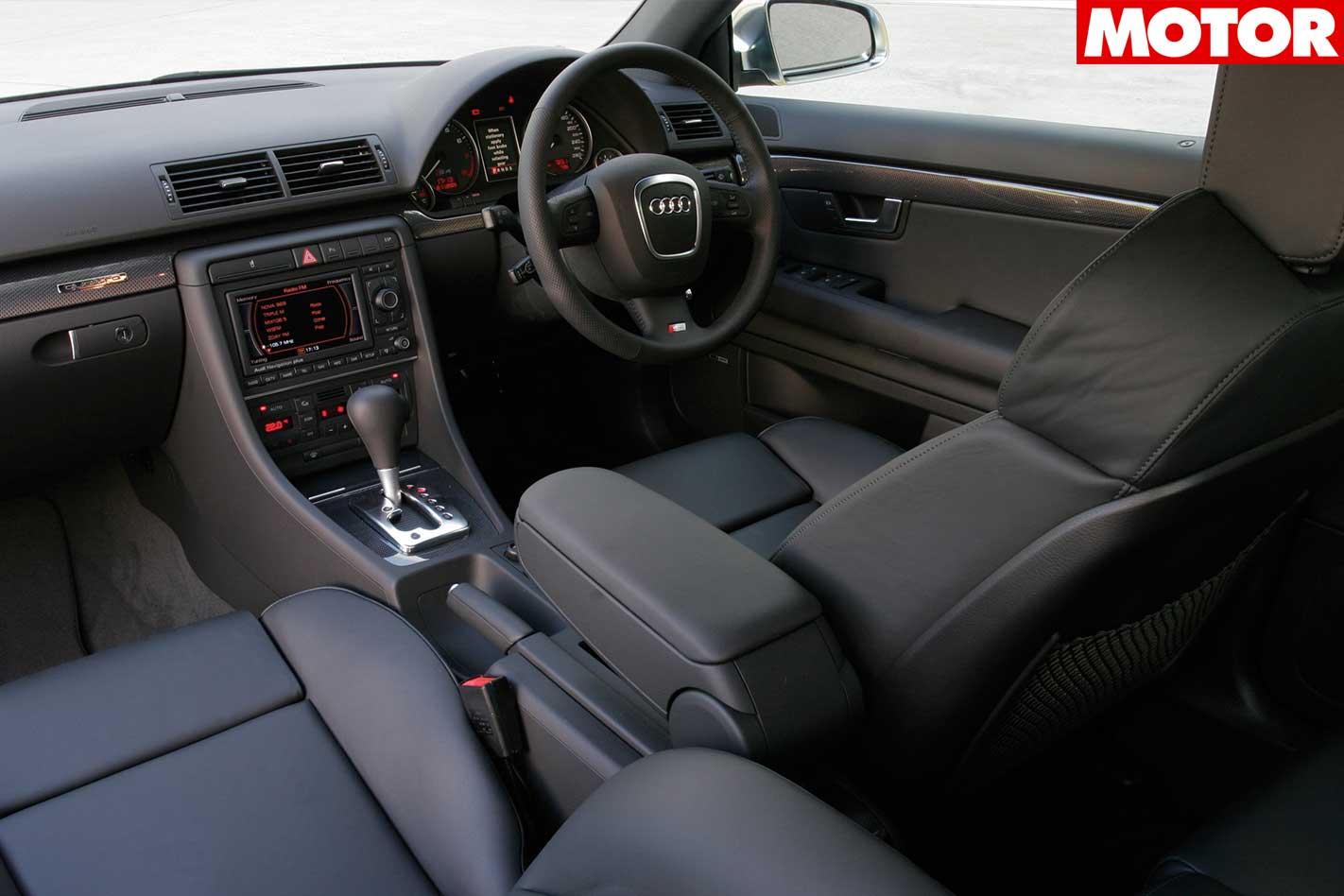
Nope, it’s a luxurious mid-sized car that sounds bloody fantastic.
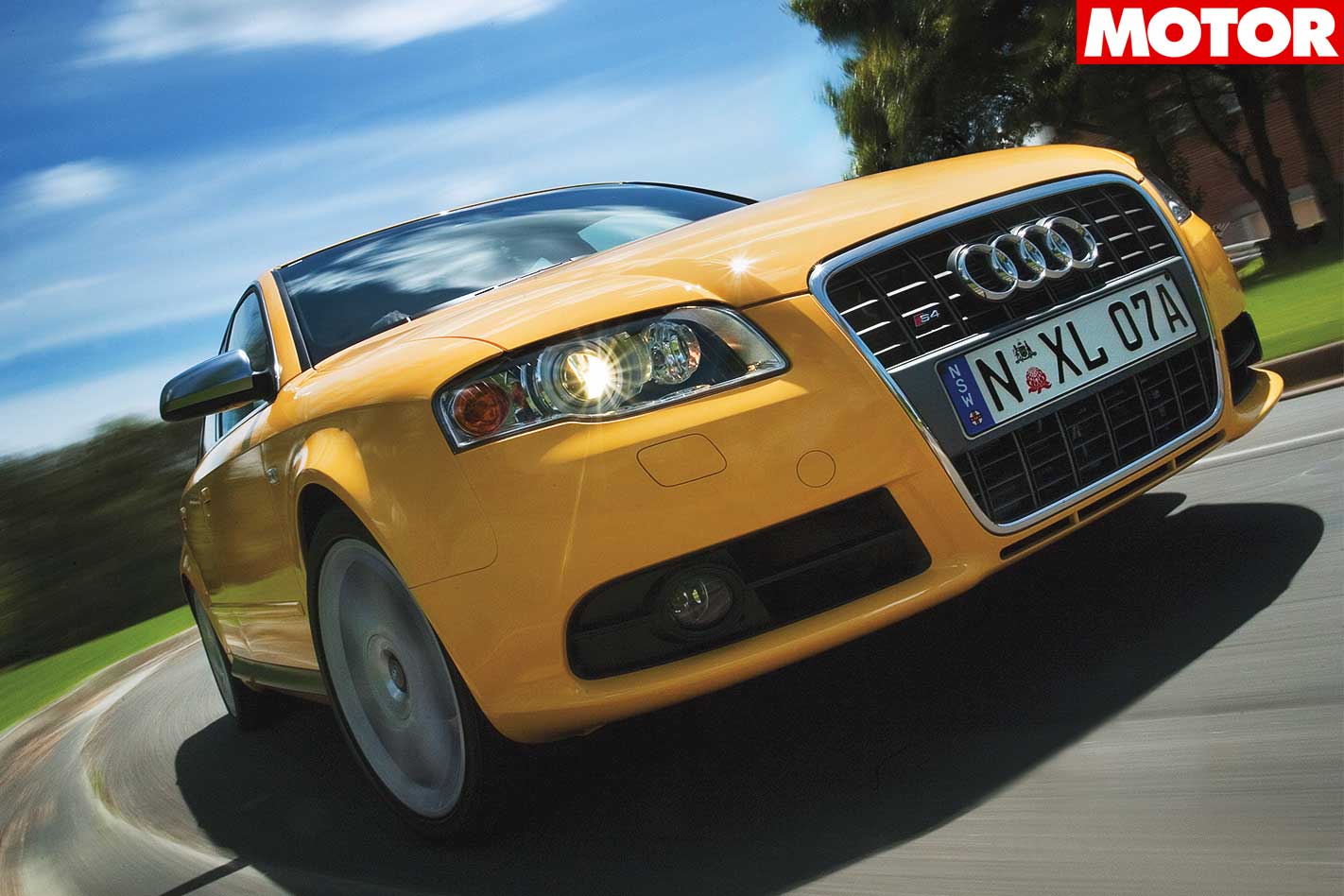
ENGINE: 4.2-litre DOHC 32-valve V8 POWER: 253kW @ 7000rpm TORQUE: 410Nm @ 3500rpm WEIGHT: 1705kg DRIVE: all-wheel PRICE (2006): $131,200
