
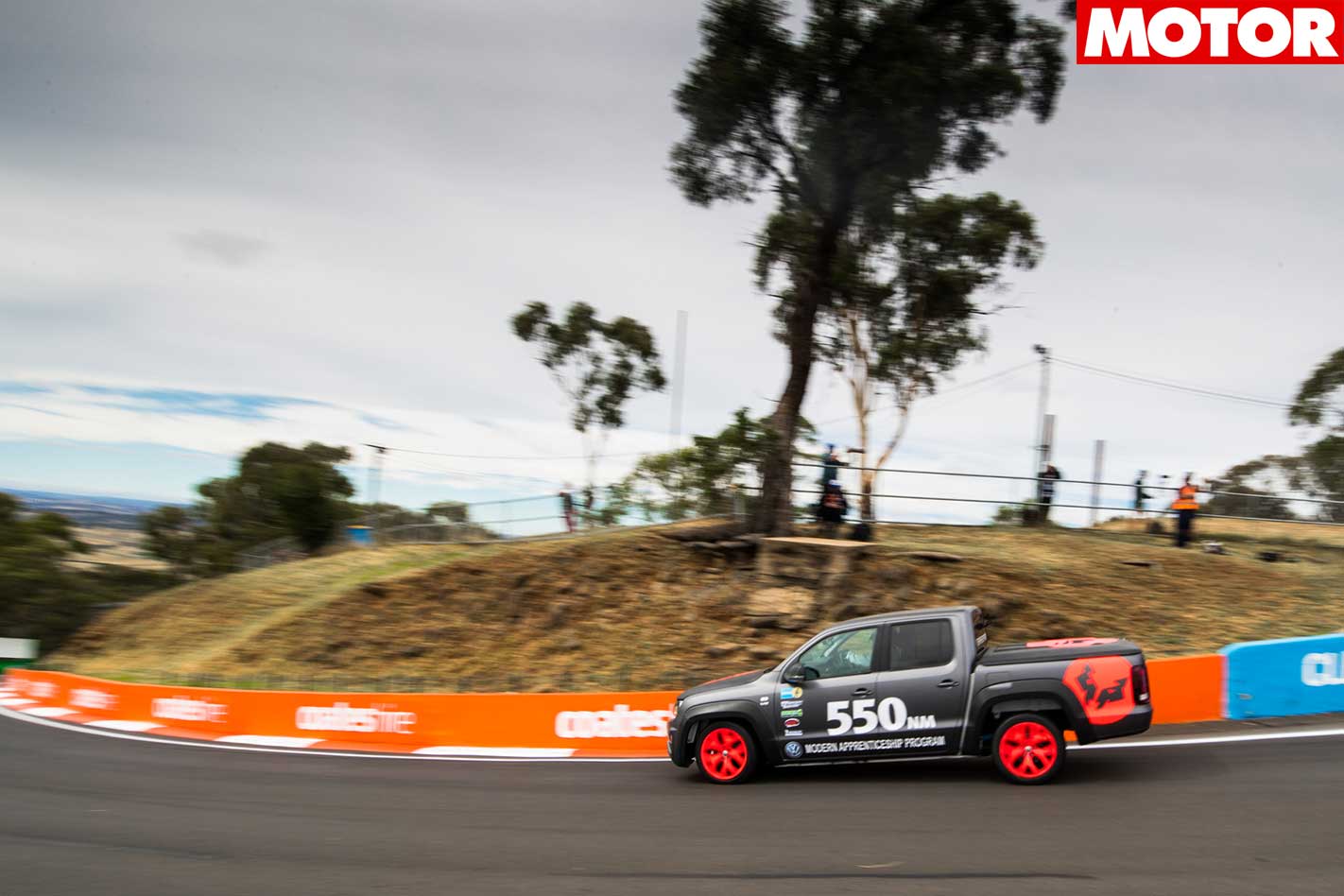
A Volkswagen Amarok V6 has lapped Mt Panorama in an impressive time of 2:57.24.
Piloted by Australian racer Renato Loberto, the sub-3 minute run was set during the recent Bathurst 12-Hour, though footage of the lap was only just revealed.
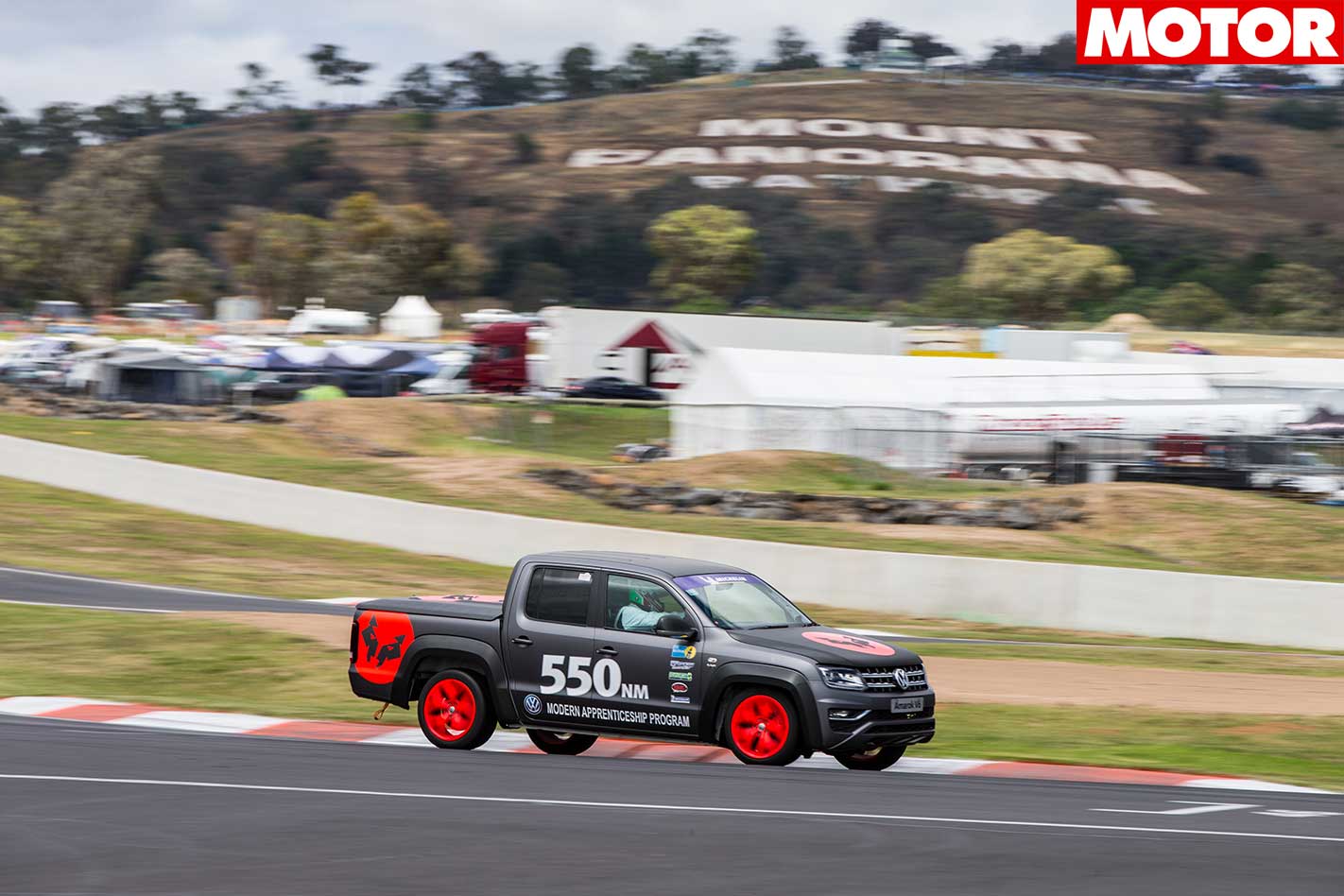
The ute itself is powered by an unmodified turbo-diesel VW V6, though many modifications have been made to the suspension and body, including the removal of every non-essential interior part.
This leaves it with little more than a driver’s seat, dash, and console.
https://www.instagram.com/p/BfXUWLFllj8/
Underneath, a custom Bilstein suspension package known as ‘The Big Bad Wolf’ by engineers has been installed.
The Volkswagen apprentices who built the Amarok also installed AP Racing brakes, and fitted it the rather small looking wheels with Michelin Pilot Super Sport tyres, giving it an odd but dynamically effective stance.
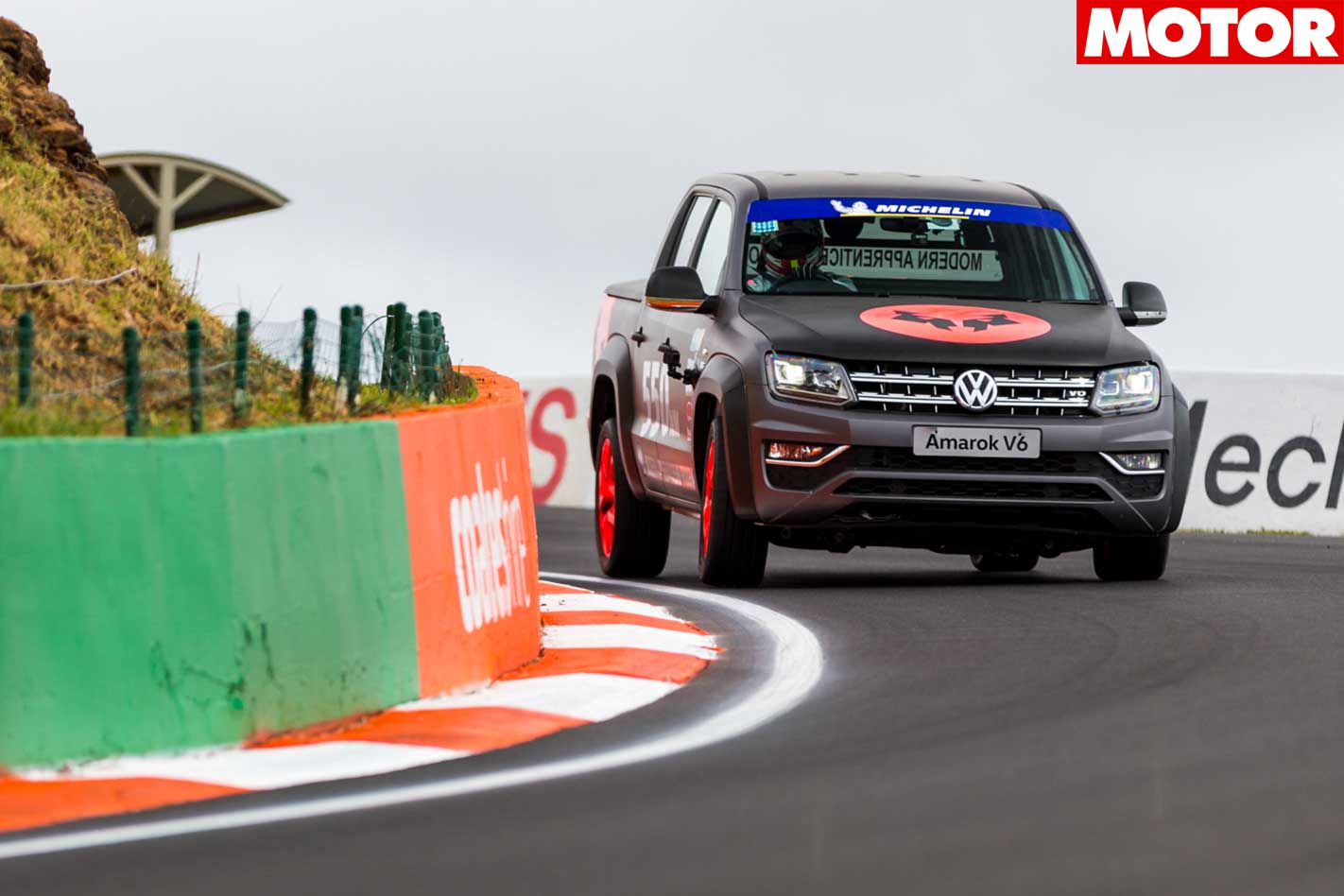
The very same ute has also achieved another impressive lap time in Australia, running a 1:57.01 at Eastern Creek during the World Time Attack Challenge in 2017.
That time was two seconds faster than a stock Golf GTI. At the time, VW PR manager and project lead Kurt McGuiness said it was impressive what the VW apprentices have been able to achieve so effectively.
“Our Big Bad Wolf Amarok track car is not only an example of our superior engineering, it’s also a way for us as a business to support the lifeblood of our industry in Australia.”
The Mitsubishi Outlander PHEV will gain a bigger engine as the plug-in electric SUV upsizes in a bid to eke out even better fuel economy.
The Outlander’s engine will jump from the current model’s 2.0-litre four-cylinder unit running on the regular Otto cycle to a 2.4-litre version running on the more fuel-efficient Atkinson cycle, the same unit that Japanese rival Toyota uses for its hybrid models.
Mitsubishi says the move to the bigger engine “allows for higher torque, smoother operation, and overall higher efficiency”. Toyota did a similar thing with the Toyota Prius, replacing its former 1.5-litre four-cylinder engine with a slightly bigger 1.8-litre unit when it jumped to its third generation.
The 2019 Mitsubishi Outlander PHEV is slated for a reveal at next month’s Geneva motor show, and introduces an improved electric drivetrain. Its generator and battery output have both increased by 10 percent, which is handy because the rear electric motor – it also has a front one – has upped its output by the same amount. It should also drive a bit further in its fully electric mode than the theoretical 54-kilometre range of the current model as the battery’s capacity has increased 15 percent.
The electric part of the drivetrain helps enormously with fuel economy; the current Mitsubishi Outlander PHEV on sale in Australia is officially rated at 1.7 litres per 100 kilometres, a number that’s highly achievable if your daily commute isn’t that long.
Outside, the 2019 Mitsubishi Outlander looks much the same, with some tweaks around its nose to give a more chiselled look compared with what was a busy front end, and a tailgate spoiler. However, the interior has had a makeover including reshaped front seats, improved switchgear and instrument panel, and air vents for the rear seats. Mitsubishi also claims it has improved the large SUV’s lacklustre dynamics – this was a focus of last year’s update to the Australian model, which helped it considerably.
The updated model is due in Australia in the second half of this year, about a year after tweaks to make the current plug-in Outlander on sale here more refined. Mitsubishi Australia head of corporate relations Karl Gehling said the updates announced for the Geneva-bound cars were unique to the European and Japanese markets. “We will not see all of the changes announced adopted in the Australian specification vehicles, however, we are considering them for future updates,” he said.
The plug-in hybrid electric version of the Outlander is a slow seller for Mitsubishi, but an important one in terms of establishing the brand as a pioneer of affordable, low fuel use SUVs in Australia and overseas. It was also one of the reasons rival Japanese brand Nissan was keen to take Mitsubishi over in a stunning coup last year, as it now gets access to the plug-in technology it sorely lacked.
Renault is also a member of the Nissan-Mitsubishi alliance, so expect to see more plug-in versions of those cars come to market over the next few years.
At the moment, there’s no real competitor for the $50,490 Mitsubishi Outlander PHEV (a less fleet-car special Exceed costs $5000 more and adds a raft of driver assist systems) unless you dip into the expensive European brands.
But you also have to weigh up that the Mitsubishi Outlander PHEV comes with some compromise. For starters, if you live in an apartment or don’t have a driveway, recharging it could be a problem. The other biggie, at least from a family point of view, is that the Outlander PHEV houses its battery pack where the third row of seats go in the conventionally engined versions, so if you’re shopping around for seven seats, cross the PHEV off your list.
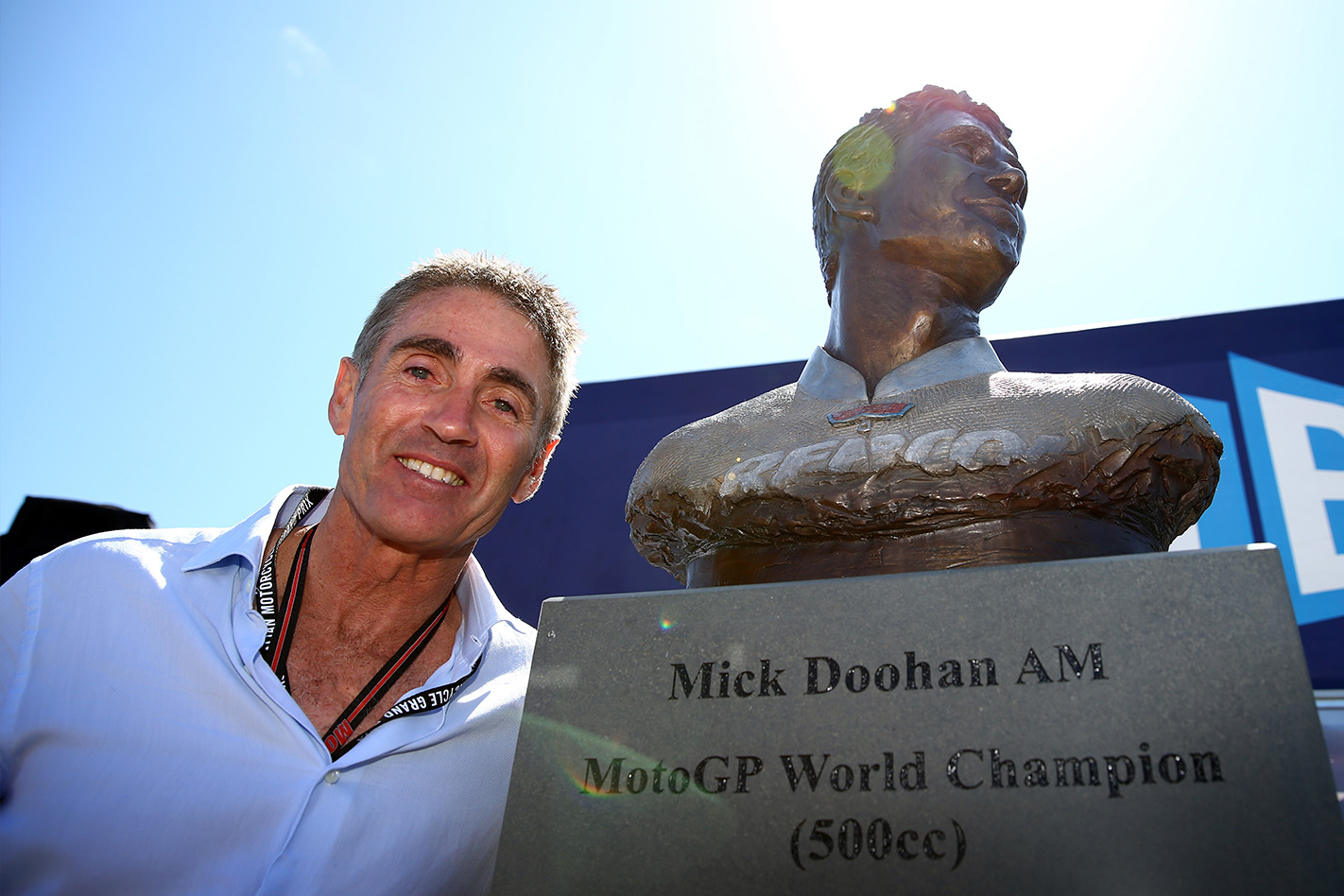
MICK Doohan is a name that will forever be synonymous with the world of motor racing and the motorcycling elite.
There are few riders who have been so consistently fast on the track and only two have more motorcycle Grand Prix championships to their name. Only one of those has more consecutive titles.
But the path to two-wheeled legendary status, the sporting Hall of Fame and a Member of the Order of Australia is littered with shattered bones and paved with death-defying resilience in the face of adversity.
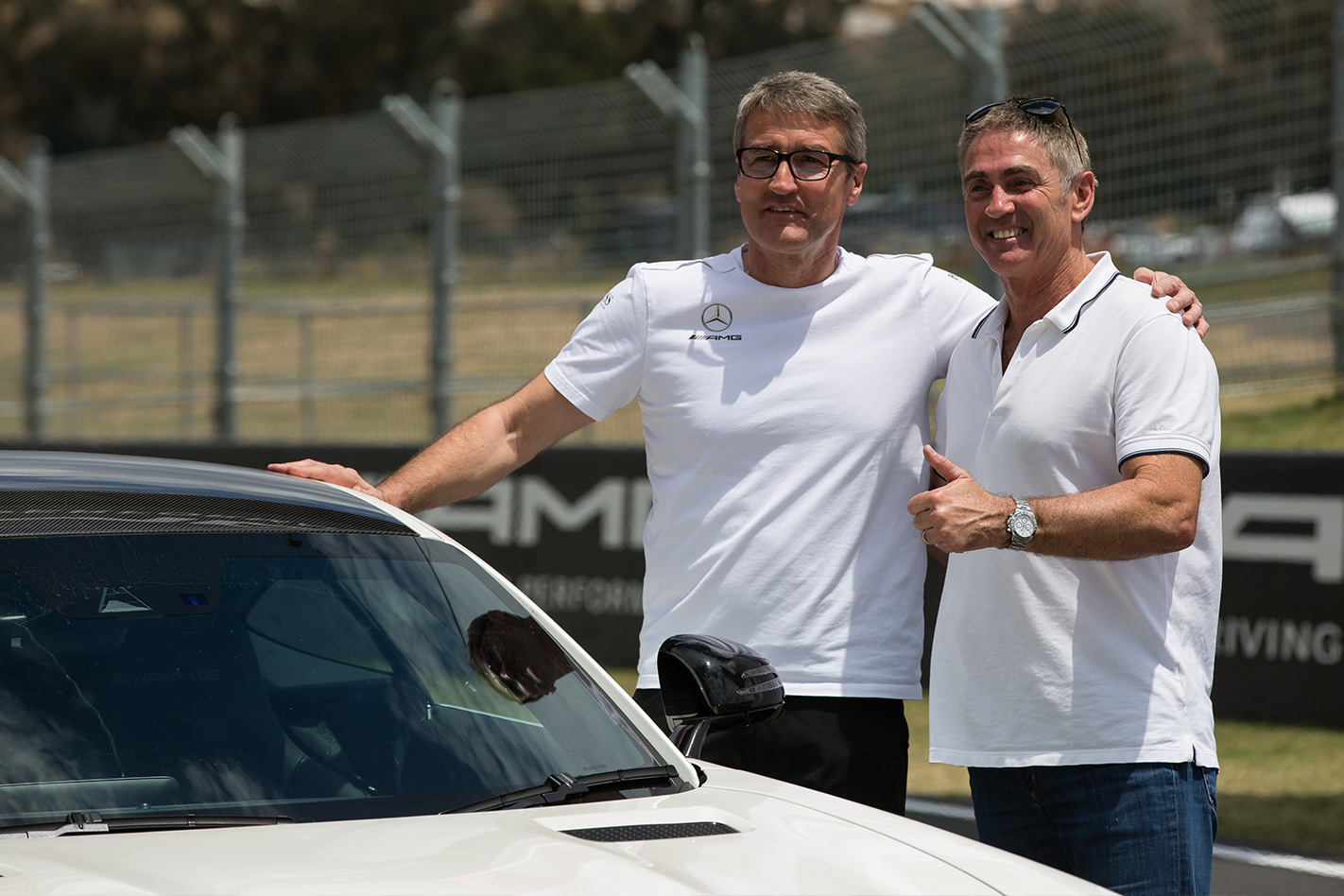
The chain of near catastrophic events that nearly cost Doohan his right leg started with a crash during qualifying at the 1992 Dutch TT that would horrify most riders, but with typical stoicism, Doohan recounts the event as unspectacular.
“The crash wasn’t anything unusual to be honest,” he said. “I’d just gone over the start/finish line and apparently they’d put out the red flag out for somebody dropping fluid and I went into turn-one which is about 160 to 180km/h and when I came out the thing snapped sideways and flipped me off and over the top.
“Normally when you crash you go off the side of the track but because I was almost in a straight line, I went up the road and the bike was on top of me. I tried to spiral out from underneath it but that was the wrong thing to do. Everything spiralled except for my leg so I sort of broke it myself essentially.”
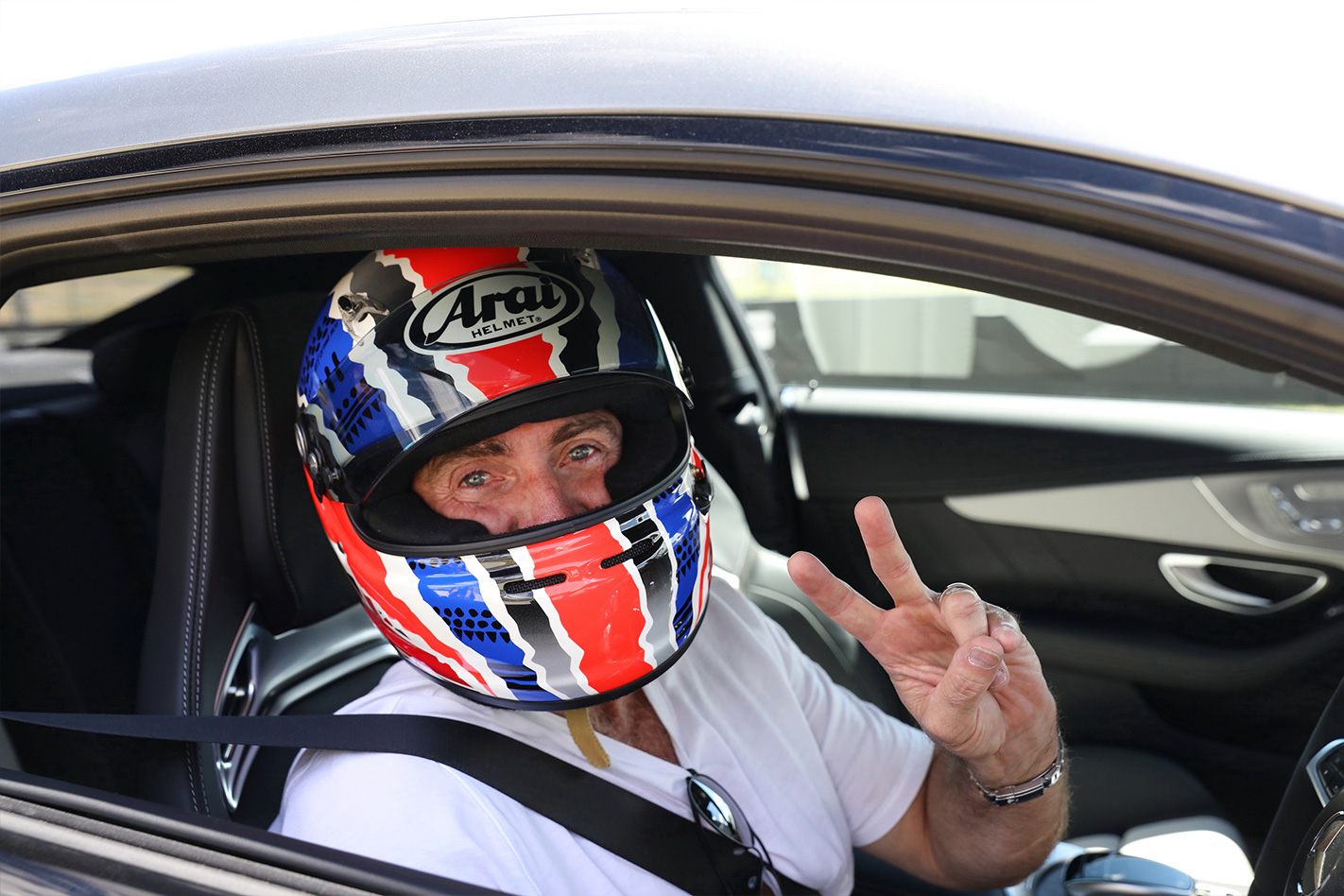
The Aussie star was 65 points ahead of his closest rival in the championship with five races left in the season and, until the dramatic turn of events, Doohan was the clear favourite to take the 1992 title and his first world championship.
It was the allure of his maiden title and an unstoppable desire to win that lead to Doohan’s fateful decision in the hours that followed the crash in Holland.
Grand Prix medical officer Dr Claudio Costa recommended flying the rider back to Italy where his leg would be cast for six weeks, which would have almost certainly cost Doohan the championship that year so the racer suggested another option.
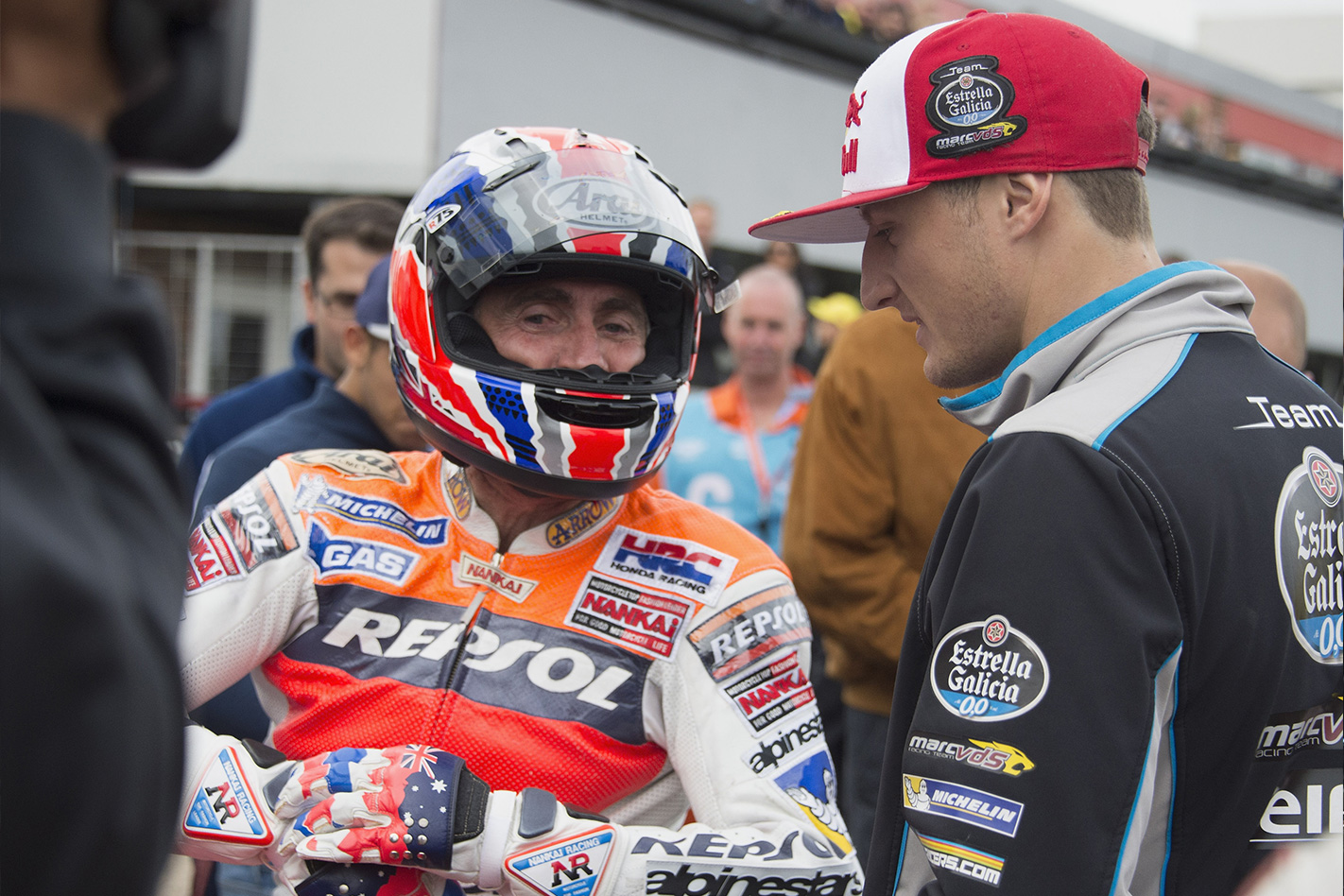
“I was leading the championship by a long way by that point in time and there were two weekends off, which was a big break.”
Costa concurred that surgery could give Doohan a fighting chance at getting back in the saddle for the very next race in Hungary, rather than missing four races, including the Dutch competition he had already forfeited in the accident.
Screwing the bones back together should have saved precious weeks and kept Doohan’s dream of a championship alive, but it was his impatience that would eventually result in terrible complications.
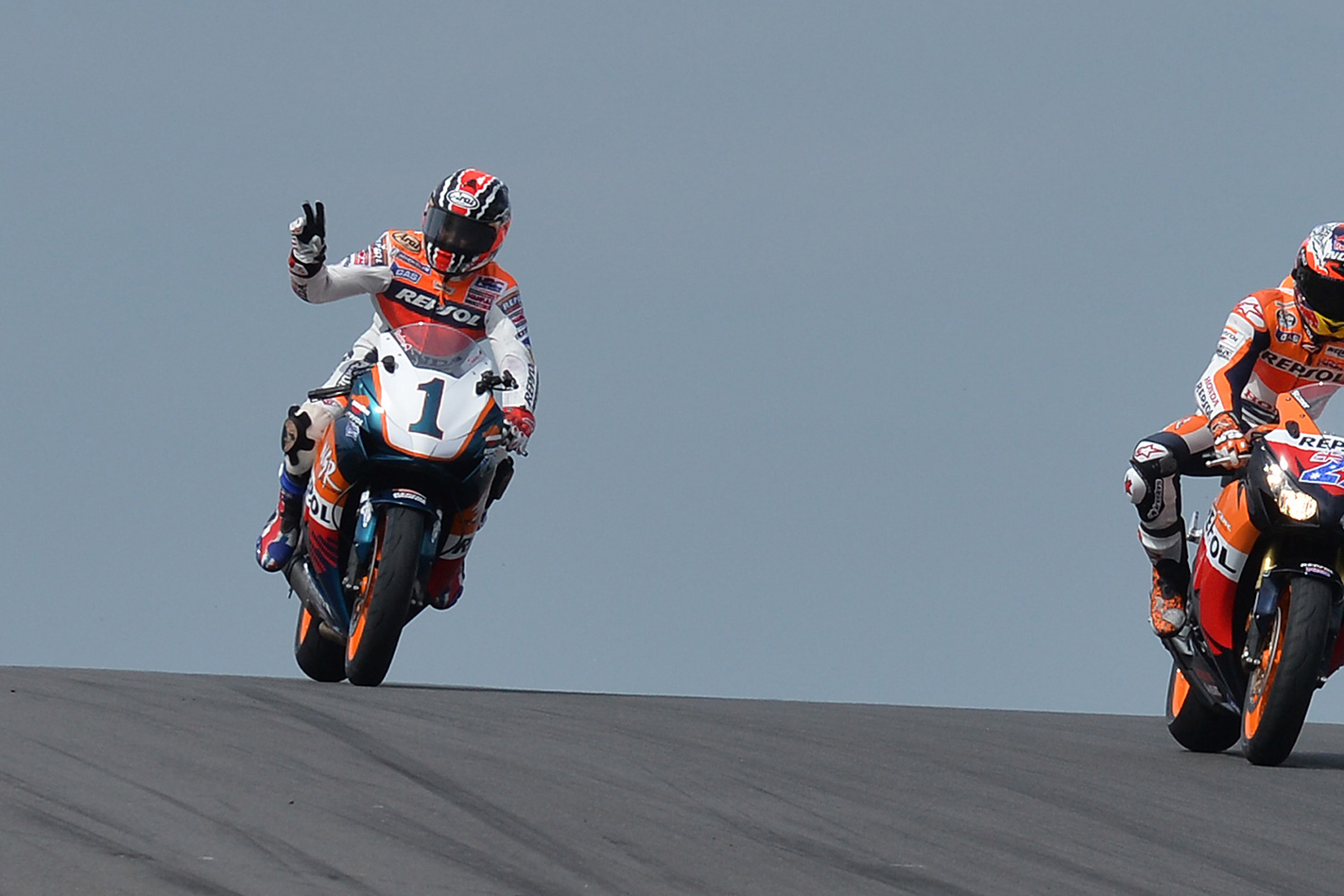
“I looked at the Dutch doctor and asked him who’s the gun orthopaedic surgeon and he said ‘we’re all the same. We all went to the same school’, which I thought was a bit of an odd thing to say.”
The strange remark should have been a warning flag, but the surgery went ahead that night.
During the operation, the supervising surgeon Costa did his best to guide the seemingly incompetent and blundering doctors.
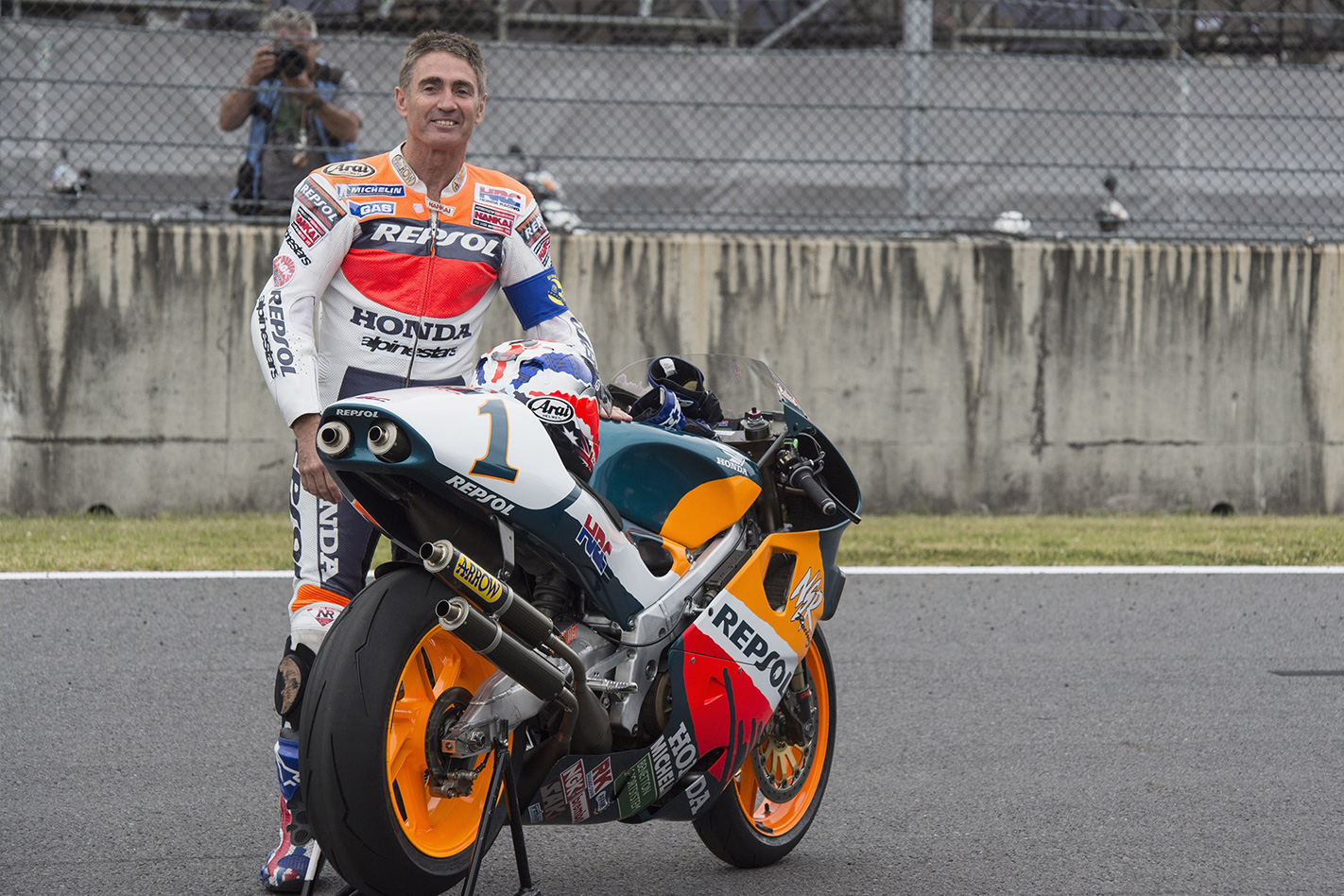
“Then they put me in a half cast and elevated my leg which again apparently you don’t do.”
The next day, once again, Costa tried to intervene for the sake of Doohan’s leg and possibly his life but, again the Dutch doctors prevented him helping.
“The Italian doctor came in in the morning and stated to take this cast off and lower my leg to get some circulation happening. They removed him again and put it back up.”
Later that night, the local medical team finally realised something was badly wrong and took Doohan back into surgery to try and restore the blood circulation that had been cut by a botched operation and severe swelling.
If it wasn’t for the persistence of the Grand Prix doctor and his determination to get Doohan the right medical care, the Australian would have certainly lost his leg, but the fast-acting Italian effectively kidnapped the patient along with fellow rider Kevin Schwantz.
“Not long after that, they were going to amputate the leg and that’s when Costa heard. He organised a medical aircraft to come and pick myself and Kevin Schwantz up and take us back down to Bologna.
“My blood was so thin they wanted to get the internal organs back first before they worried about the leg.”
From dangerously sub-standard medical care, Doohan found himself in the care of among the best doctors, and the rider underwent treatment that involved sewing his healthy leg to the diseased one to help return the blood supply. His fractures were also pinned in an advanced cage of carbonfibre hoops and steel bars to help the bones heal correctly.
“The long and the short is that he saved my leg, which I’m thankful for, but I was in a rush to come back so he stole some skin from other parts to place over my legs.
“I was back in Brazil six weeks later.”
A gargantuan effort wasn’t enough to seal a win that year but, incredibly, Doohan only missed out by “about four points” riding with a seriously weakened leg and compromised health following the assault his body had endured. Amazingly, he still finished the year in second place.
The unbelievable ordeal proved Doohan’s superhuman determination and refusal to give up and that same staunch desire to succeed was once again demonstrated in 1994, when he finally realised his dream of a world title. And it would be followed by four others.
While the 1992 crash at Assen was a massive setback for Doohan’s career, the racing icon agreed that the close call was a significant factor in keeping him largely in one piece for the rest of his professional racing days.
“A crash is not ideal at the best of times … but certainly, a little downtime helped.”
French motorists will now be penalised for using their mobile phones in their cars even if they have stopped, pulled over or have the hazard lights on.
The ban imposed by a French Court means you could even be fined €135 (A$210), and cop three demerit points for touching your phone.
The new laws, which apply to calls, texting and other functions such as social media, music or navigation apps, came about after a driver appealed a fine he copped for using a phone while he was parked at a roundabout with his hazard lights on.
In order to change the rule the court had to redefine what driving means, and ruled that it’s anytime when sitting in the driver’s seat away from a designated parking spot, or somewhere off the road where it’s legal to park.
Exemptions apply for emergencies such as if you’re broken down on the side of the road.
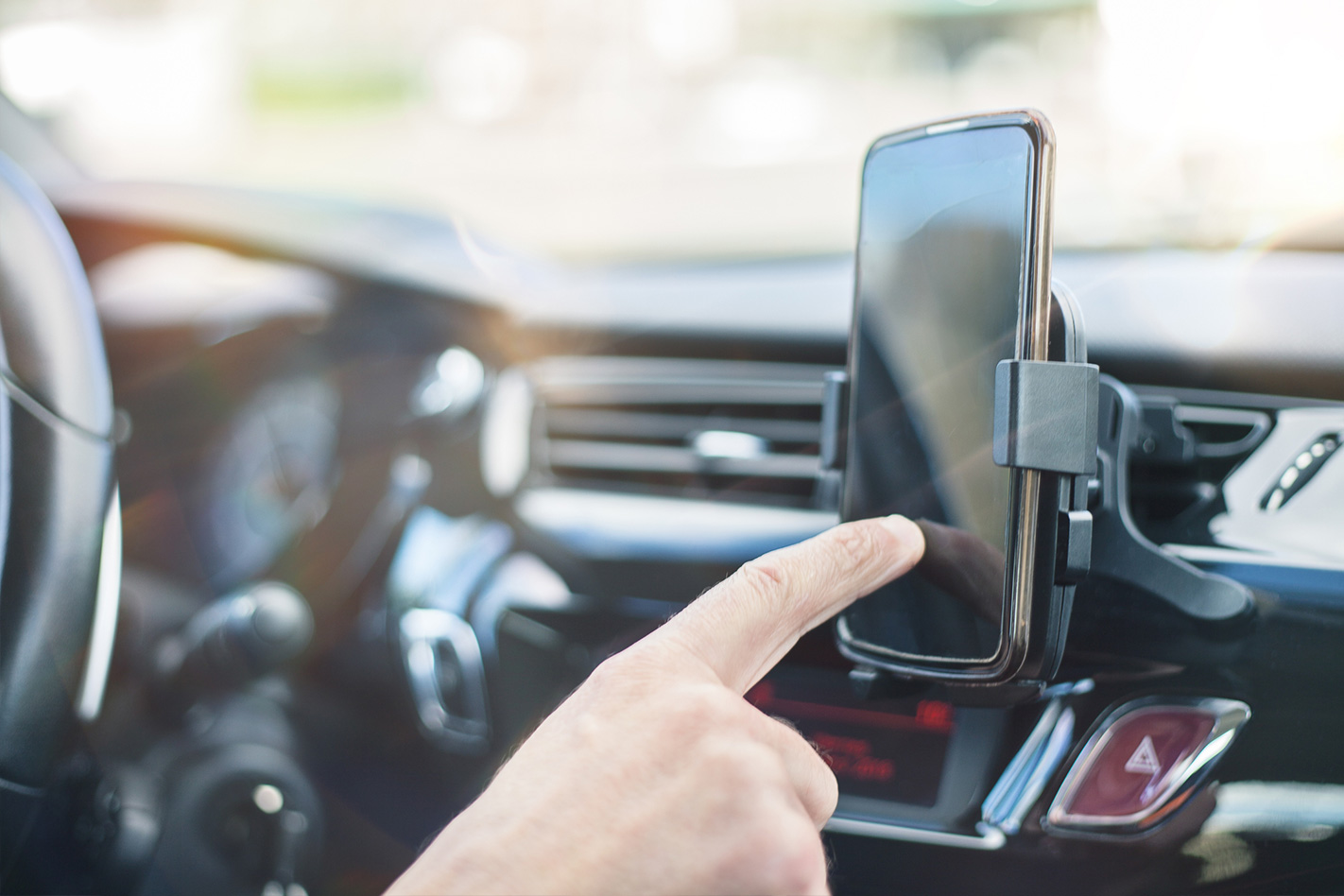
The new rule only applies to touching handsets, even in cradles, with hands-free phone use allowed if the phone is synced to the vehicle’s infotainment or audio system – the French government had already banned drivers using so-called hands-free phone accessories, such as Bluetooth headsets, in 2015.
The French ruling goes well beyond Australian laws, which differ from state to state, but mostly allow for a phone to be operated hands-free while driving, if it’s in a fixed cradle.
But, as a 2017 Wheels special report showed, there is support for tougher laws here, like the ones introduced in France, as current regulations are failing to stop people being distracted by their phones behind the wheel.
It’s hoped the new laws will help reduce France’s growing road toll which, according to French news site The Local, reached 3469 in 2016 and has been on the rise since 2014 – the longest period of sustained increase since 1972.
But, as the Wheels report also found, lawmakers around the world are continually frustrated by drivers flouting existing laws by hiding phones while they use them, meaning even more time their eyes aren’t on the road.
“When laws came in banning texting in the US, they found that crashes were actually starting to increase, and they couldn’t figure out why,” Dr Cassandra Gaul, a research associate at the Centre for Accident & Road Safety at Queensland University told Wheels.
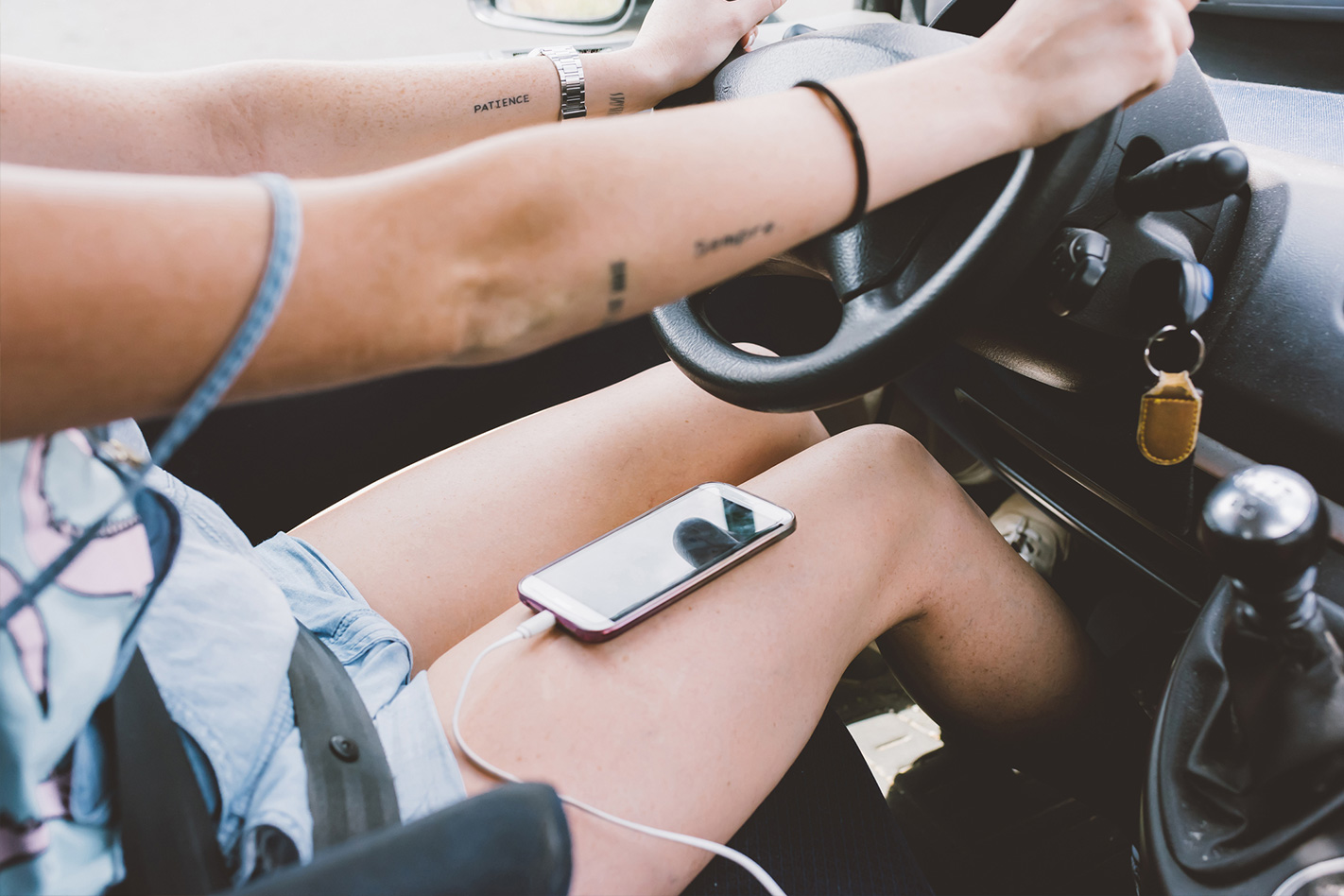
“What was suggested was drivers had continued to text, but were simply lowering the phones below the eyeline.”
“A couple of years ago the phone was up to the ear,” added Victoria’s top traffic cop, Assistant Commissioner Doug Fryer. “Now what we are seeing is worse and more dangerous because they are now connecting through social media, through various applications, while the phone is in their lap. At a set of traffic lights, that’s dangerous. At 100km/h on a public road, it is fatal.”
Tougher laws could help create a culture where mobile phone use while driving is regarded as anti-social as driving while drunk. However, like the successful anti-drink driving campaigns, they need to be backed up by education, strong enforcement and heavy penalties.
As the Wheels report concluded, five key action points should be implemented to prevent mobile phone use in vehicles and the associated accidents. These include:
- Improved and increased awareness campaigns, targeted at changing public opinion to eliminate hand-held phone use entirely, not just focused on texting
- Smarter, more targeted enforcement via more police motorcycles in urban areas Increased crackdown through police blitzes akin to those targeting drink driving and speeding
- Harsher enforcement – increased fines and points losses
- Repeat offenders to face loss of licence, or data and signal blockers fitted to their vehicle in a similar vein to alcohol interlocks for repeat drink drivers.
New images of the much anticipated development of the Ferarri 488 have been leaked online, as well as its name.
Known now as the Ferrari 488 ‘Pista’ (track or circuit in Italian), the next car bears a striking resemblance to the 458 Speciale, the car it’s a spiritual successor to.
Though we’ve already seen blurry images of the Pista, these new, rather official-looking shots, posted to the FerrariChat forum give us a better look at what to expect.
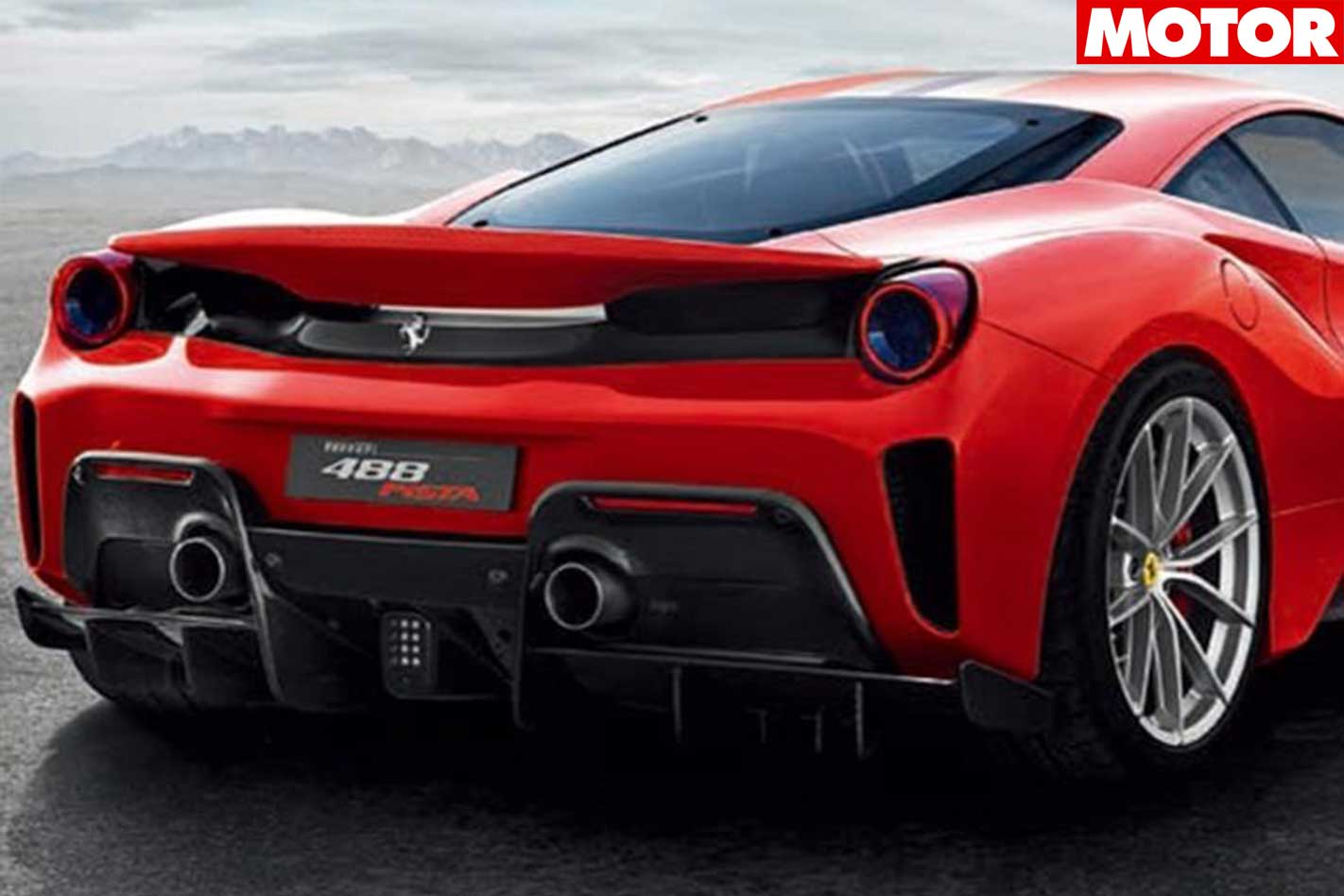
While it was known as the “V8 Sport Special“, Ferrari Fan page @ferrariphotopage on Instagram revealed it had seen documents outlining what would be in store for the 488 Pista
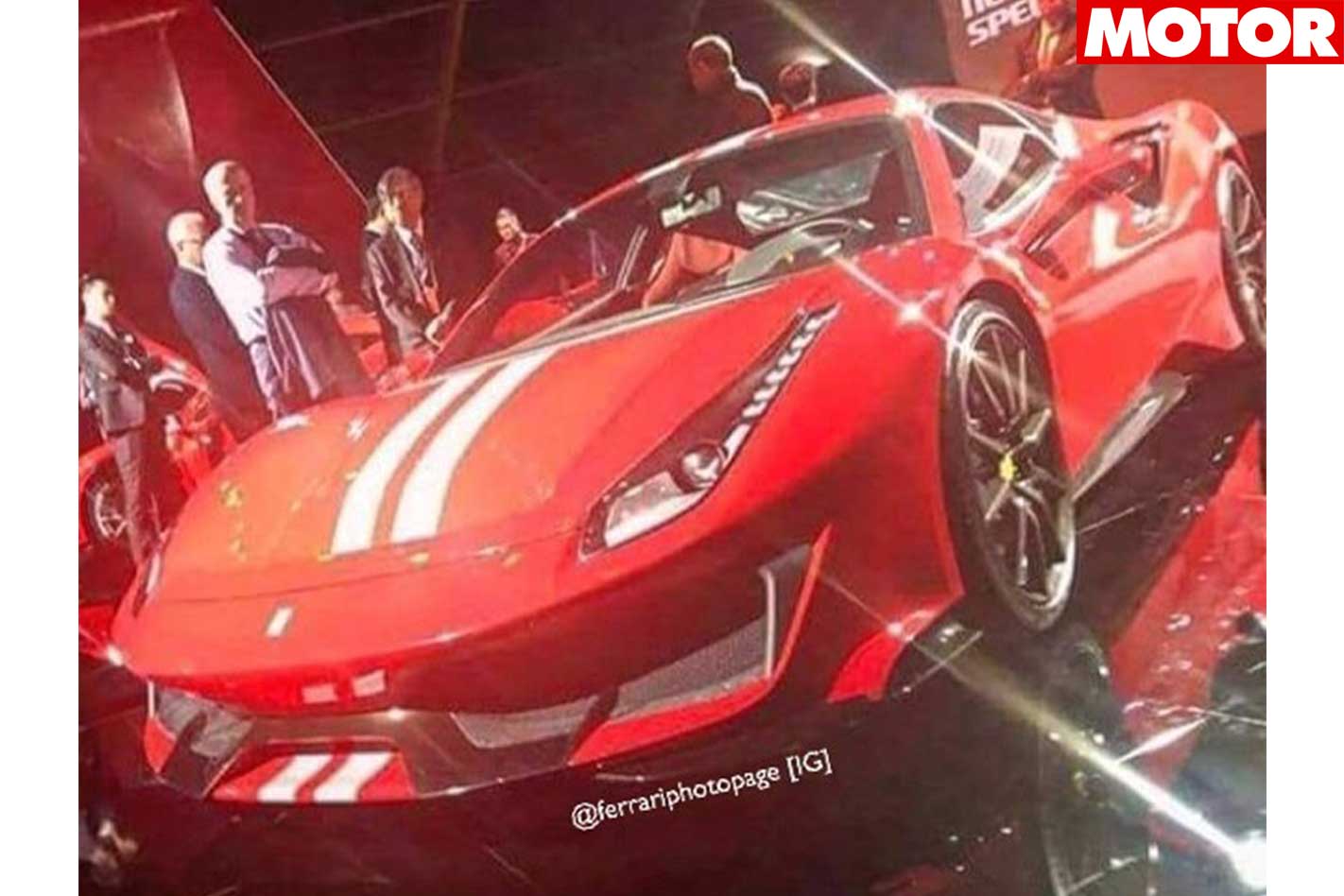
We also reported we expect to see a McLaren 720S-like power rating for its engine, meaning 537kW is the magic number. That’s also rumoured to be the new 488’s power figure, though we’ll wait to see what Ferrari says on that account.
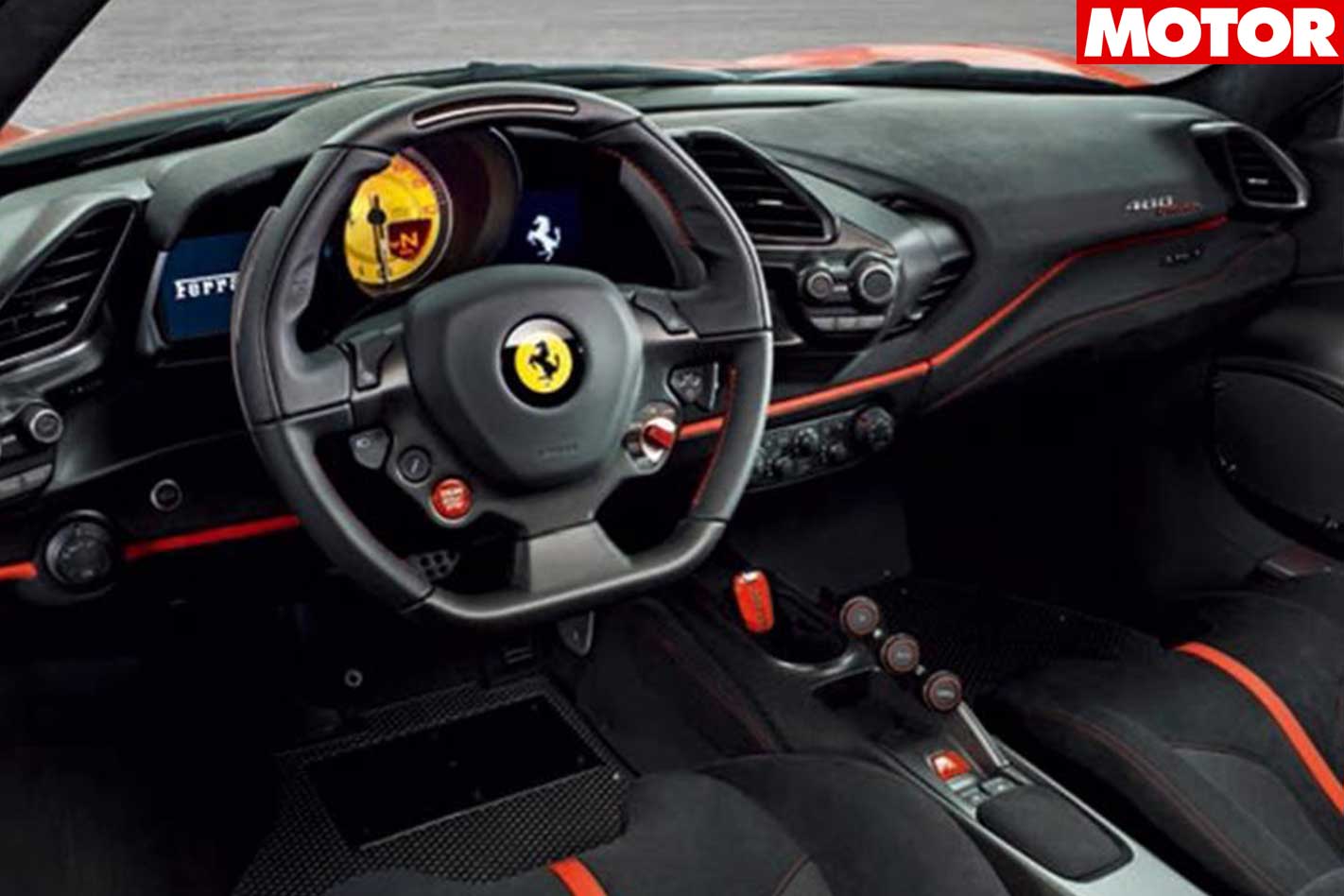
If the 720S is 1419kg and the 488 GTB is 1475kg, we wouldn’t be surprised to see the Pista drop more than 100kg.
MOTOR will keep an ear to the ground and chase word from Ferrari for any further details.
HENNESSEY has unleashed its Dodge Demon-fighting Exorcist Camaro to see just how fast it can go.
The answer, it turns out, is 349km/h. Once you realise the car is packing a whopping 745kW, it all makes complete sense.
The Texan-based tuning company released the Exorcist Camaro amidst all the hype surrounding Dodge’s wheel-lifting Demon reveal.
What starts as a 477kW LT4-powered ZL1 Chevrolet Camaro becomes the Exorcist after Hennessey adds a larger, higher flow supercharger running 14psi of boost, a beefed-up intercooler system, ports the cylinder heads, upgrades camshafts, adds long tube stainless steel headers, and lets the Camaro breathe deeper thanks to a freer-flowing induction system. It’s all controlled through a re-flashed ECU.
With Ford Performance Racing School’s Brian Smith behind the wheel, the Exorcist pushed its speedo to 217mph (349km/h) at the Continental Tires Uvalde proving ground. Watching the video, you’ll notice the run wasn’t completed entirely on a straight piece of road; the eye-watering pace was cracked on just a mile-long stretch of bitumen.
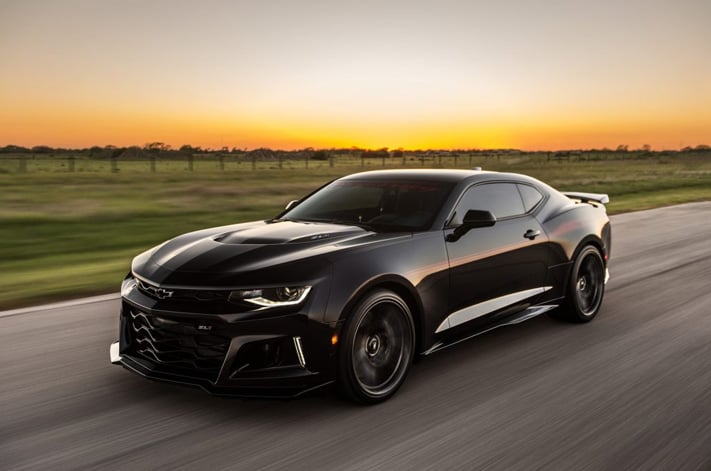
The Exorcist can be specced with either a six-speed manual, or 10-speed automatic. Customers opting for the self-shifting transmission have to fork out an extra $A13,000 to ensure it can handle the extra power.
Customers that already own a ZL1 Camaro can get the Exorcist pack for $A72,655, or Hennessey will sell you a pre-built example for $A157,199.
With all that extra power, it’ll also transform rear treads into clouds of smoke in record time.
If you’re a fan of hardcore Porsches – and let’s face it, who isn’t? – you must be in seventh heaven right now.
In the last 18 months there have been a veritable onslaught of lighter, stiffer, more powerful and focussed rear-engined sports cars emerging from Stuttgart, starting with the 911 R and followed in quick succession by a new GT3, GT3 Touring, Carrera T, GT2 RS and now this, the 991.2 GT3 RS.
On the surface it appears little has changed from the previous GT3 RS, but dig deeper and this model has a number of subtle improvements that will make it faster, sharper and, hopefully, better to drive than ever. First on the list is a new engine: displacement remains 3996cc but the new unit is based on that in the 911 GT3 Cup car.
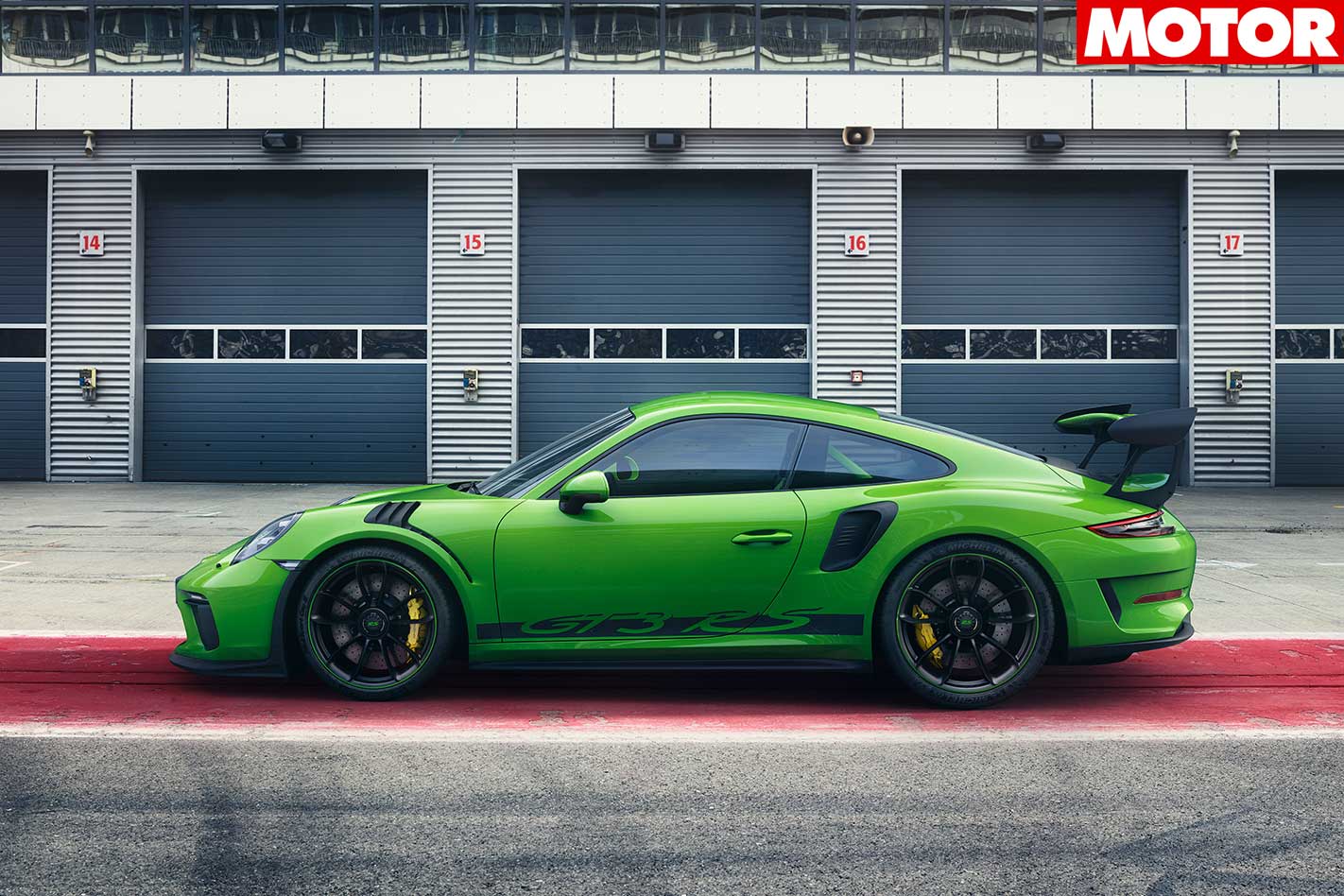
If Porsche follows tradition, that figure will be highly conservative, but it’s enough to lop 0.1sec from the 0-100km/h claim (now 3.2sec) and lift the top speed by 2km/h to 312km/h, though this figure is lower than the regular GT3 due to the extra downforce of the RS.
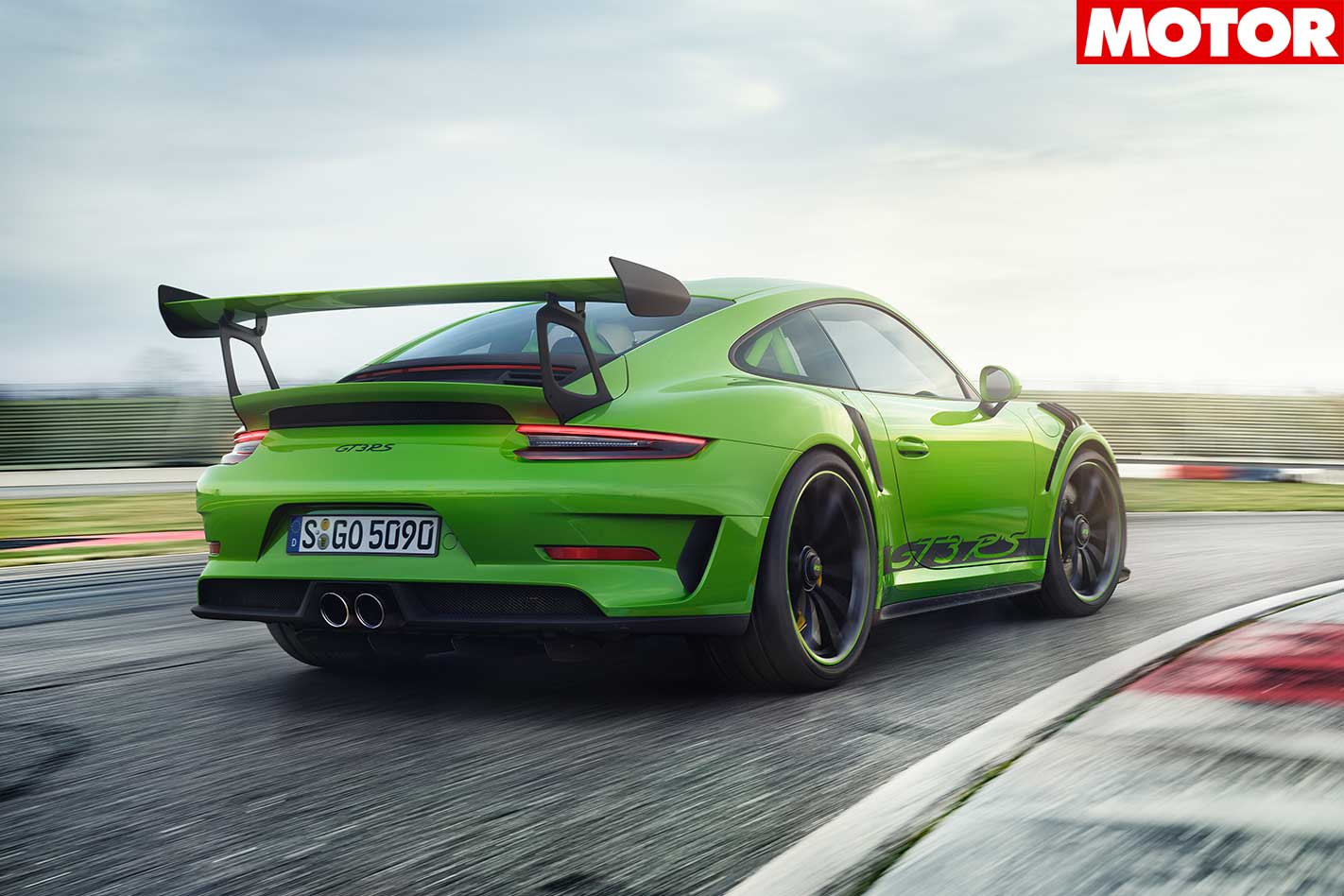
In standard guise the chassis carries over virtually unchanged, though that’s not necessarily a bad thing in this instance. There’s the wider Turbo bodyshell, required to clear the massive 21 x 12.5-inch wheels wearing 325/30 tyres, which also allows the use of the side intakes to better feed that air-hungry engine. The front axle wears 20 x 9.5-inch rims and 265/35 tyres, which once again are Michelin Pilot Sport Cup 2s.
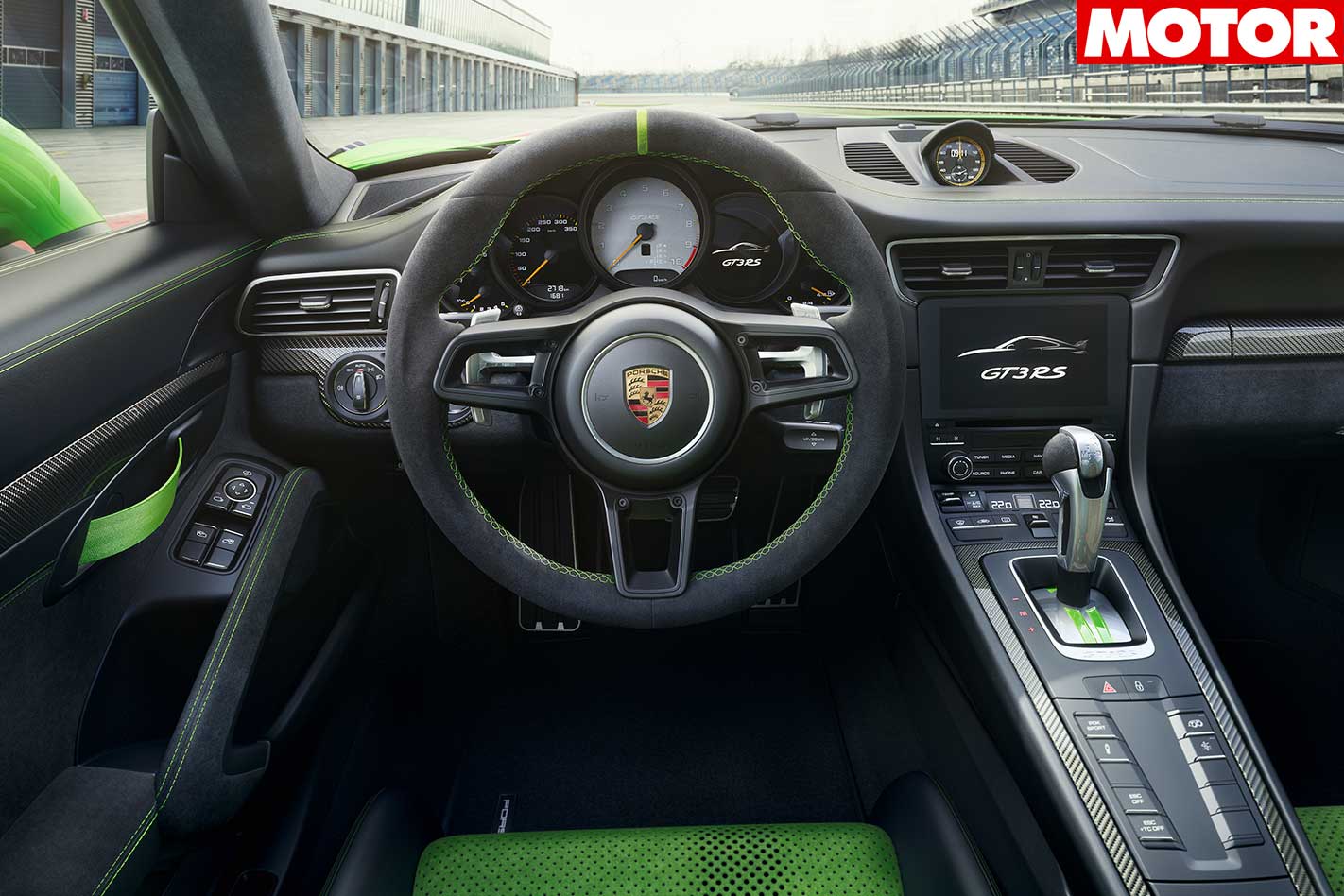
What is extra is the Weissach Package, which shaves off 30kg using ideas developed for the GT2 RS, including magnesium wheels, carbon fibre for the roof, anti-roll bars, steering wheel trim and gearshift paddles and a titanium roll cage.
If you have $416,500 (plus on-roads and options) burning a hole in your pocket, Porsche Australia is taking orders now with first deliveries expected in the final quarter of 2018.
PORSCHE has delivered what is likely to be the final installation in the 991.2 911 legacy with an even faster GT3 RS that has more power, a revised chassis and optimised weight for a track-focused edge that promises to topple records in typical motorsport-derived Porsche fashion.
With another 15kW squeezed from its naturally aspirated 4.0-litre flat-six, the updated Porsche GT3 RS has a mammoth 383kW, thanks partly to its dizzying 9000rpm redline, while an updated seven-speed PDK dual-clutch transmission and specially formulated sticky rubber add to the vicious performance enhancements.
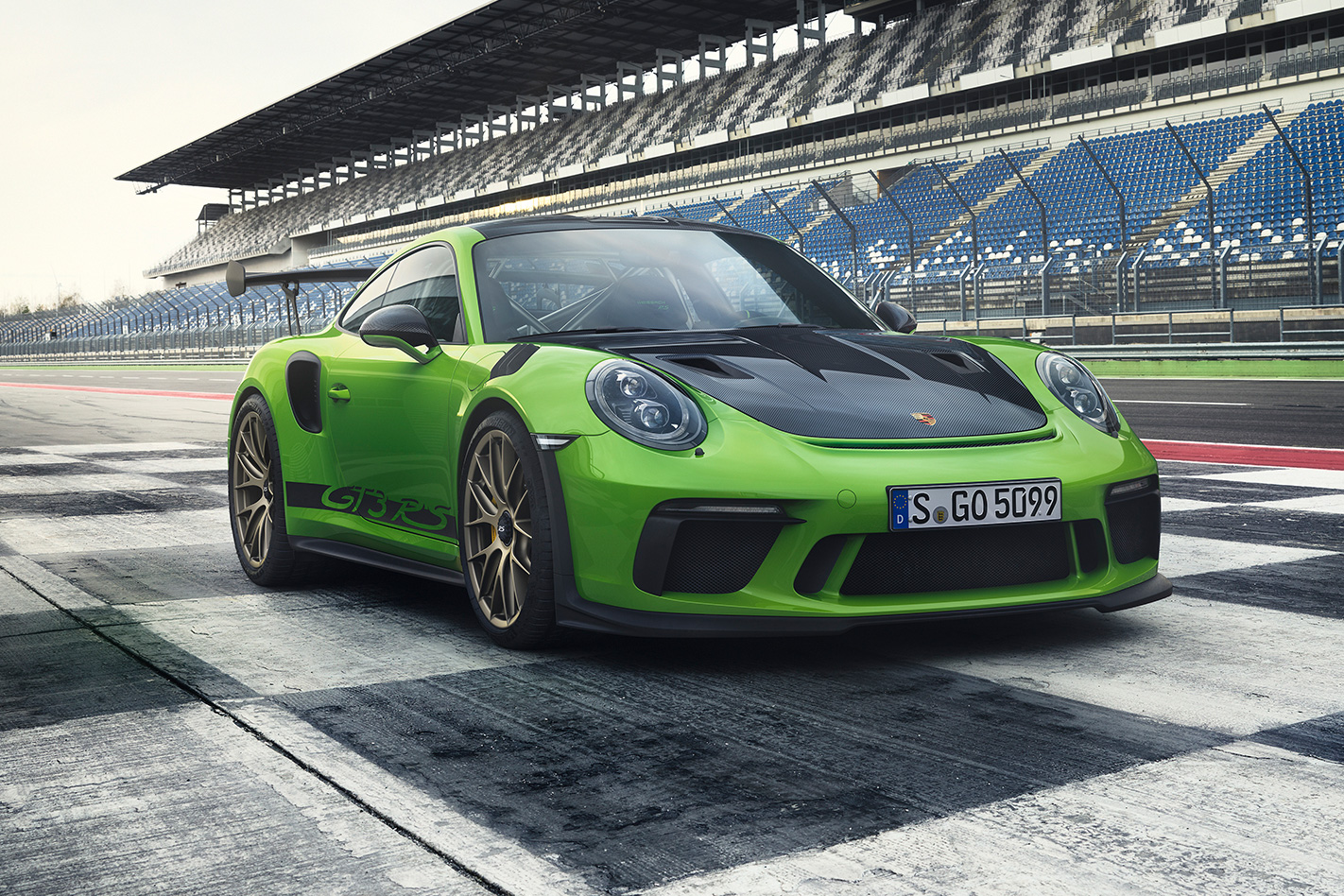
Stump your cash now and you’ll take delivery of a sparkly new GT3 RS in the final quarter of this year.
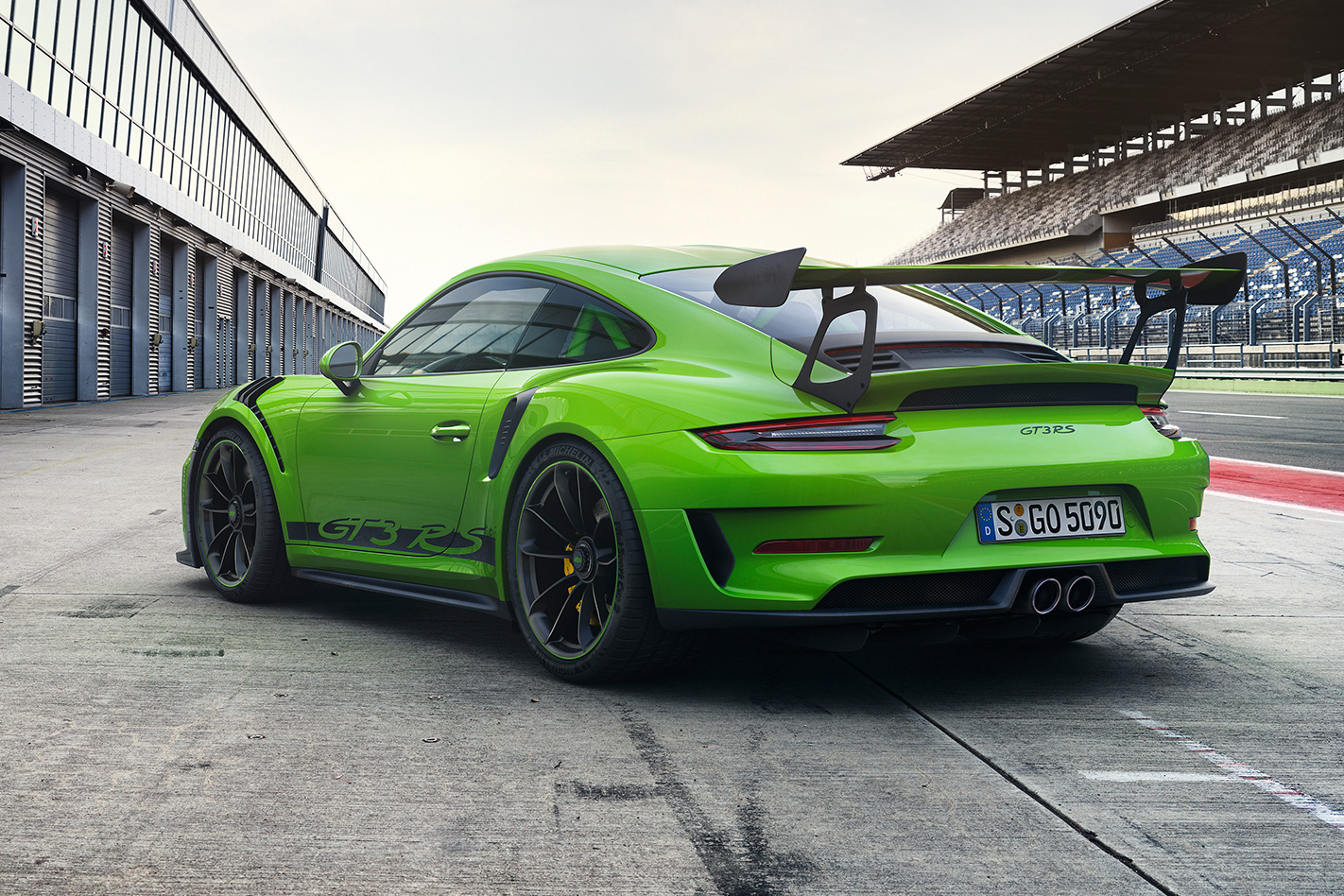
As part of the updates, the standard front 265/35 R20 tyres are now made from a new compound for “enhanced agility and steering”, while the improved rear 325/30 R21 rubber boosts traction, says Porsche.
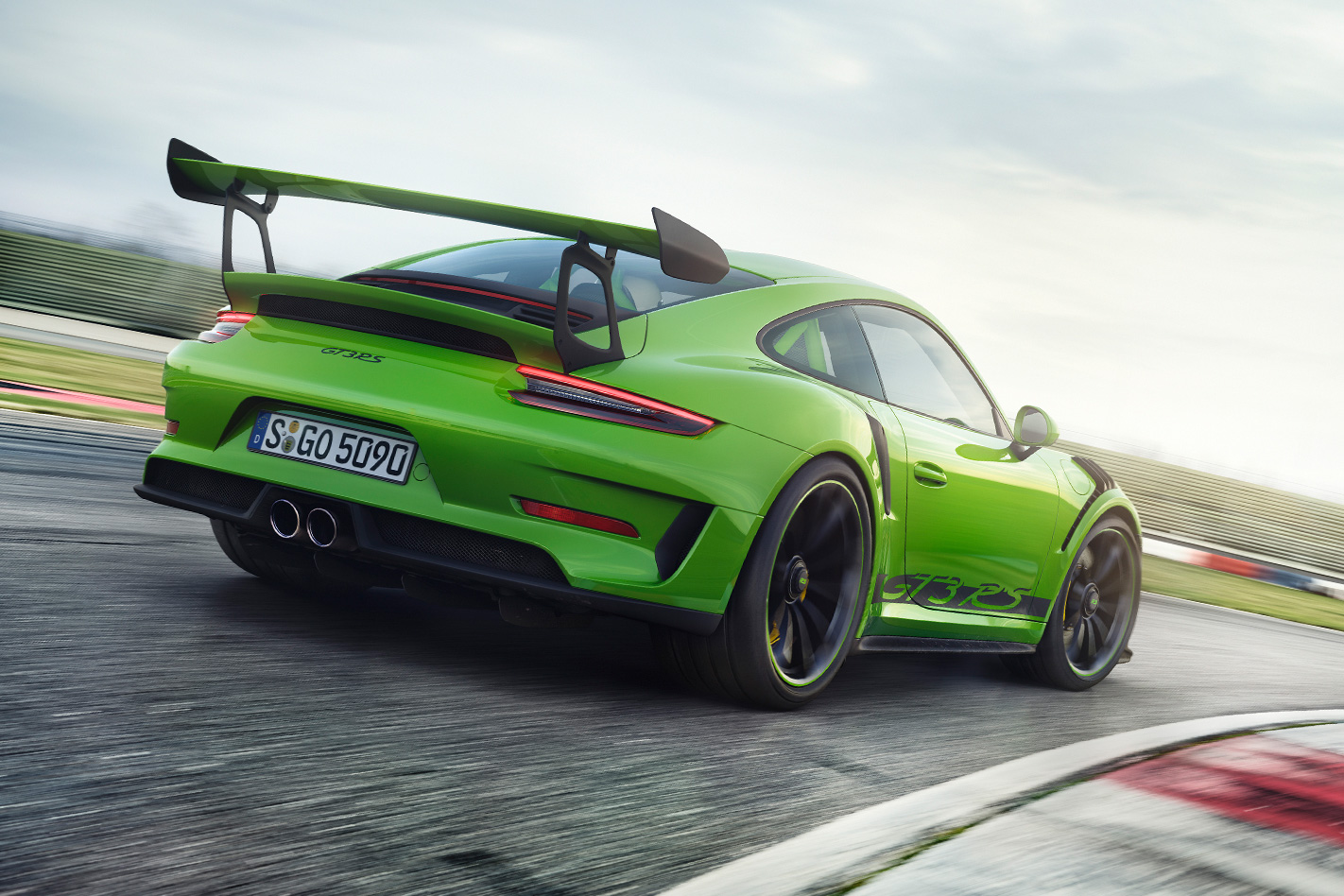
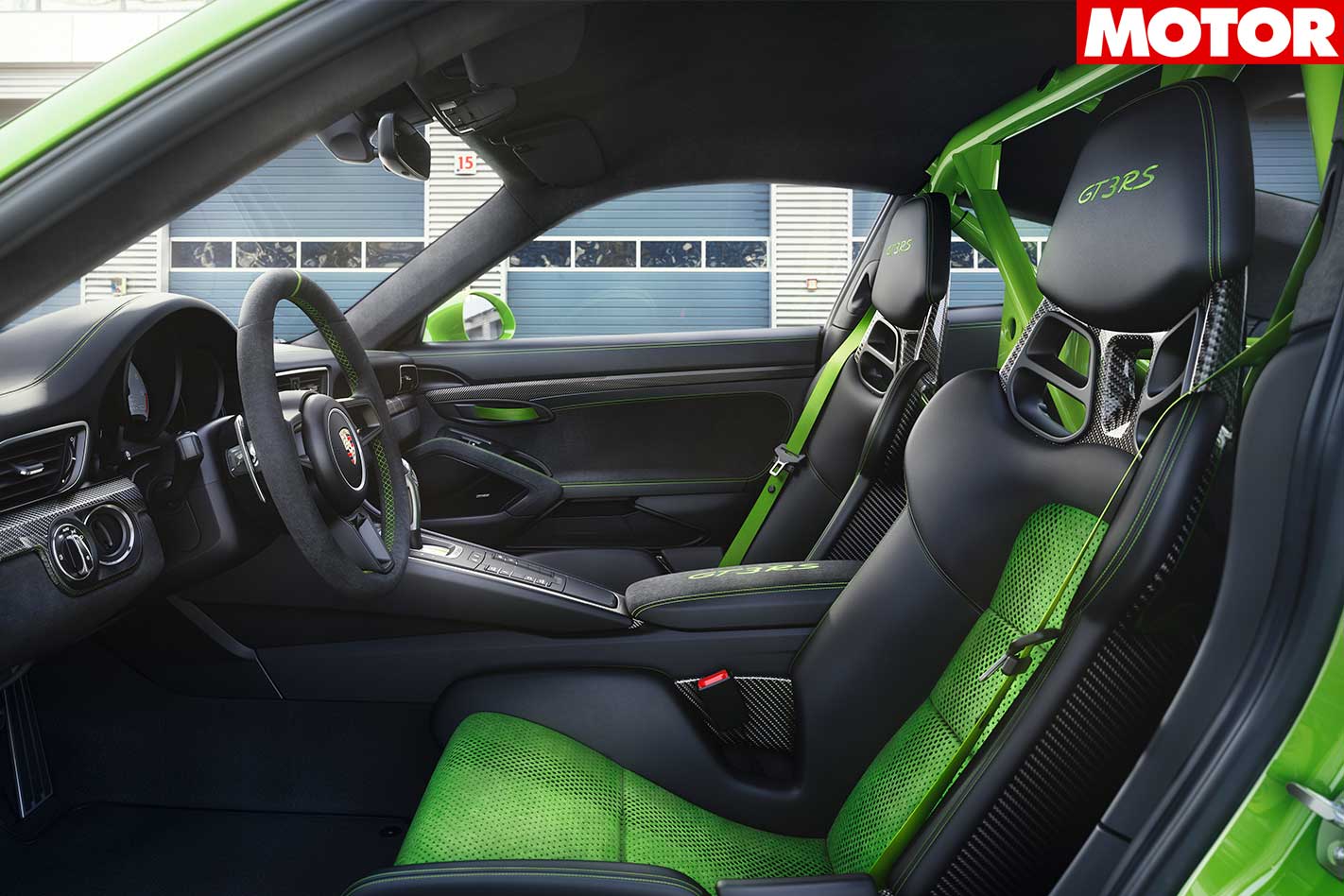
On the inside, full racing seats are crafted from carbonfibre for minimum weight but maximum support in extreme driving manoeuvres, while further weight is saved in true RS form with the fitment of basic door panels, pull loops and nets in place of handles and storage pockets.

For no extra cost, customers that like to head to the track can upgrade to the Clubsport pack, which swaps the diminutive rear seats for a colour-coordinated roll bar, manual fire extinguisher, six-point harness and modifications to allow the installation of a battery disconnect switch.
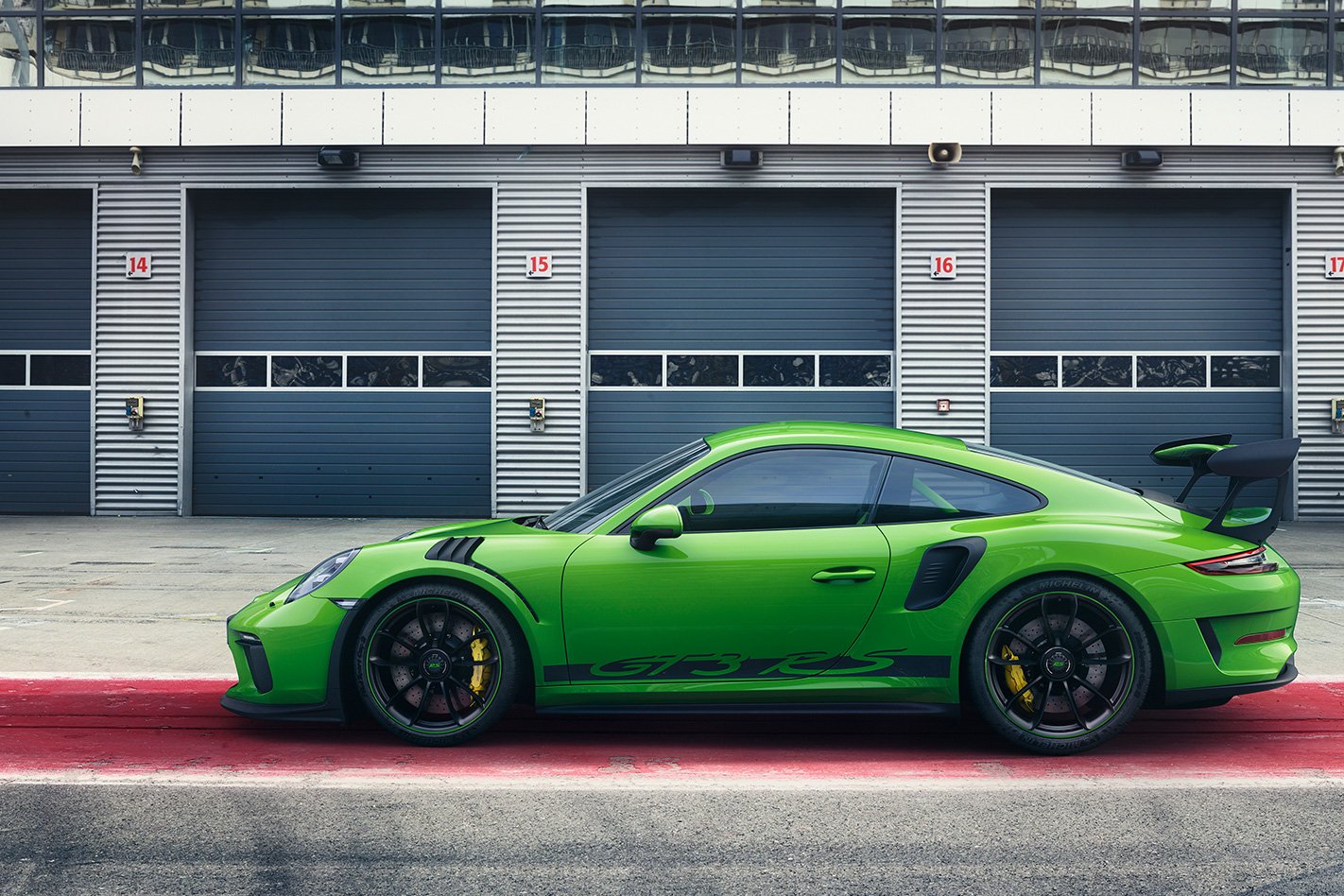
Porsche says combined cycle fuel consumption is rated at 12.8L/100km – 0.1 litres thirstier than the previous GT3 RS, but you don’t care do you?
IMAGES of Ferrari’s beefed-up racy 488 supercar have leaked online, pouring cold water on rumours the beast would wear the iconic GTO badge.
Looking like the pissed-off bigger brother of the 458 Speciale, the new Ferrari 488 special edition will be called the Pista, an Italian word for track.
The name appears on the rear of the eagerly anticipated potent special edition in the leaked press photos, essentially guaranteeing it will be the 488’s new badge.
Images, which were leaked by Ferrari Photo Page, show the car in full, with extremely aggressive front bodywork and look-at-me stripes.
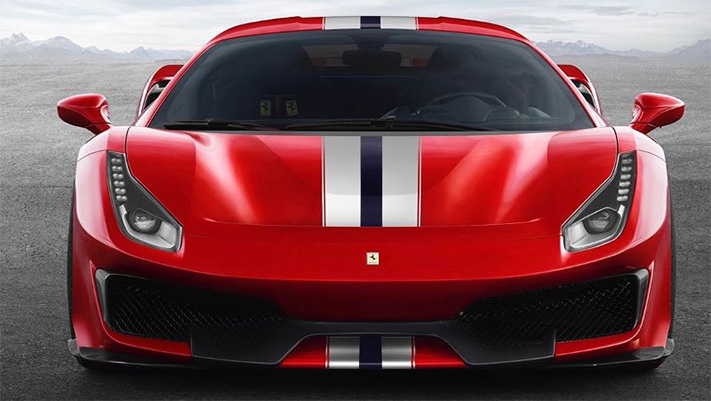
It has been speculated the car will send 530kW and 770Nm to the rear wheels via a 3.9-litre twin-turbo V8, and rumours suggest the Pista’s engine is a development of that found in the Ferrari Challenge race car.
Reports also claim the car has been on a serious diet, slashing 90kg from its weight to tip the scales at 1279kg.
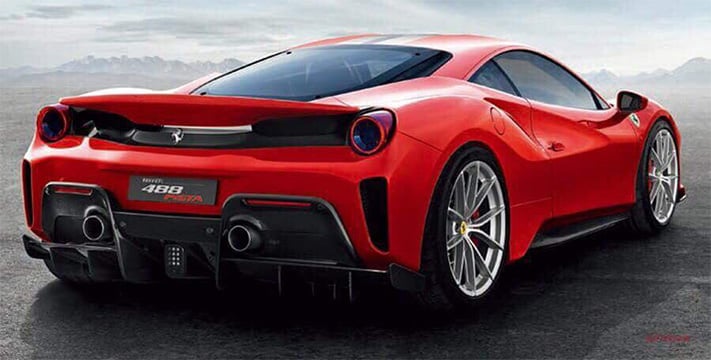
With the Pista name’s literal translation, it’s pretty clear Ferrari is aiming this car directly at track enthusiasts, and probably wants to show the guys in Woking a thing or two in the process.
Ferrari’s new Pista badge follows in the tradition of other mid-engined special editions such as the 348 GT Competizione, the F355 Challenge, the 360 Challenge Stradale, the 430 Scuderia and the 458 Speciale.
PORSCHE has announced it has dropped the diesel-engined Macan, leaving it without a single oil-burning option across its entire product line-up. It attributes the decision to changing consumer choice – and not the Dieselgate scandal.
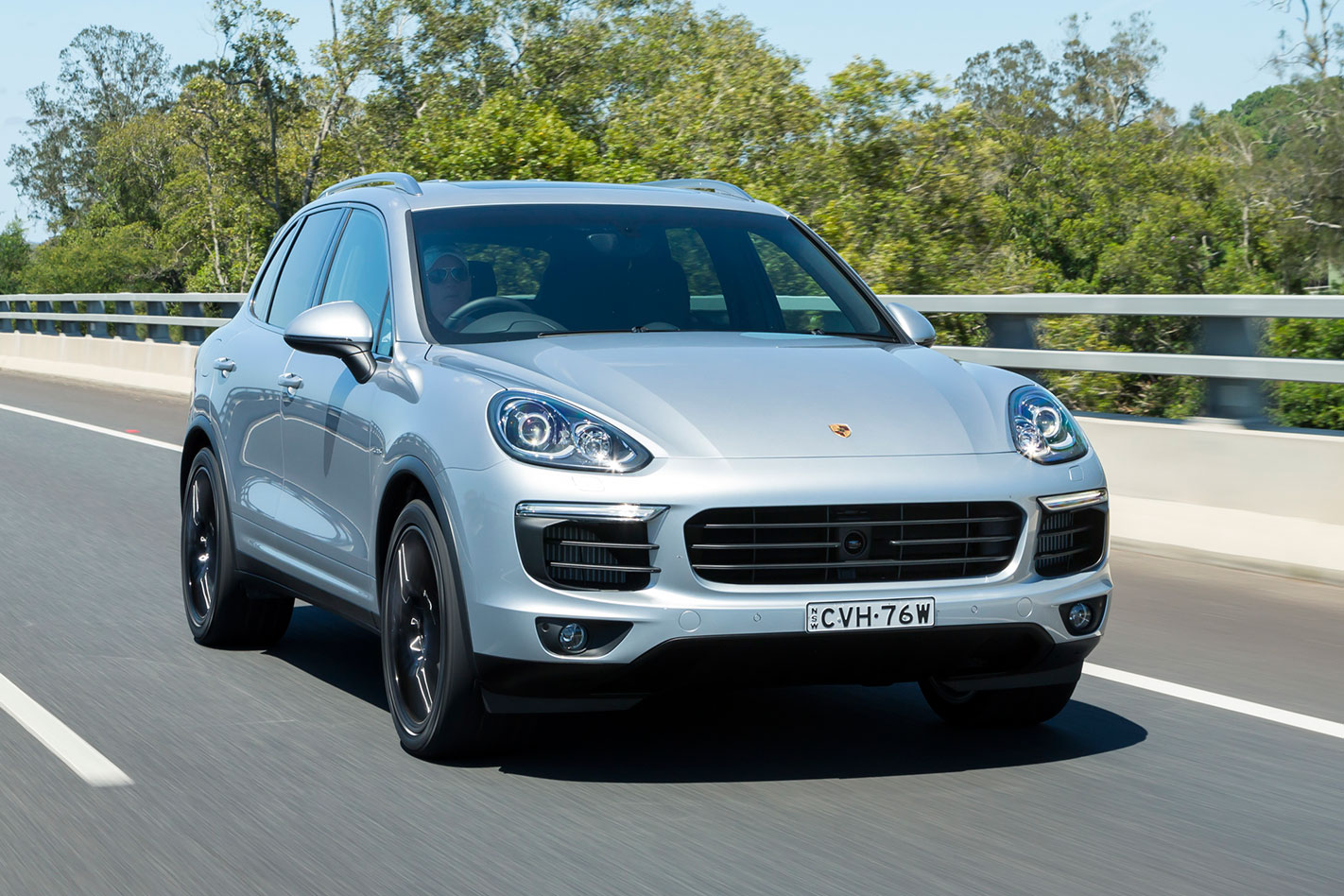
It potentially spells an end for oil-burning versions of the Porsche Cayenne, which appears to be the only diesel-engined Porsche still on sale in Australia; it is currently in run-out ahead of the introduction of an all-new model later this year that is yet to confirm if it will add a diesel variant. The diesel-engined versions of the Panamera grand tourer, and the Porsche Macan, both appear to have been withdrawn already.
It said the last diesel-engined version of the Macan rolled off the Leipzig production line last week. Porsche first flagged it was weighing up the future of its diesel drivetrains six months ago after first introducing them to the Cayenne almost a decade ago.
Porsche Australia public relations head Chris Jordan said a diesel drivetrain option was “still very popular” with Cayenne buyers here, although more Panamera buyers were opting for the hybrid drivetrain over the diesel one, in line with wider global trands.
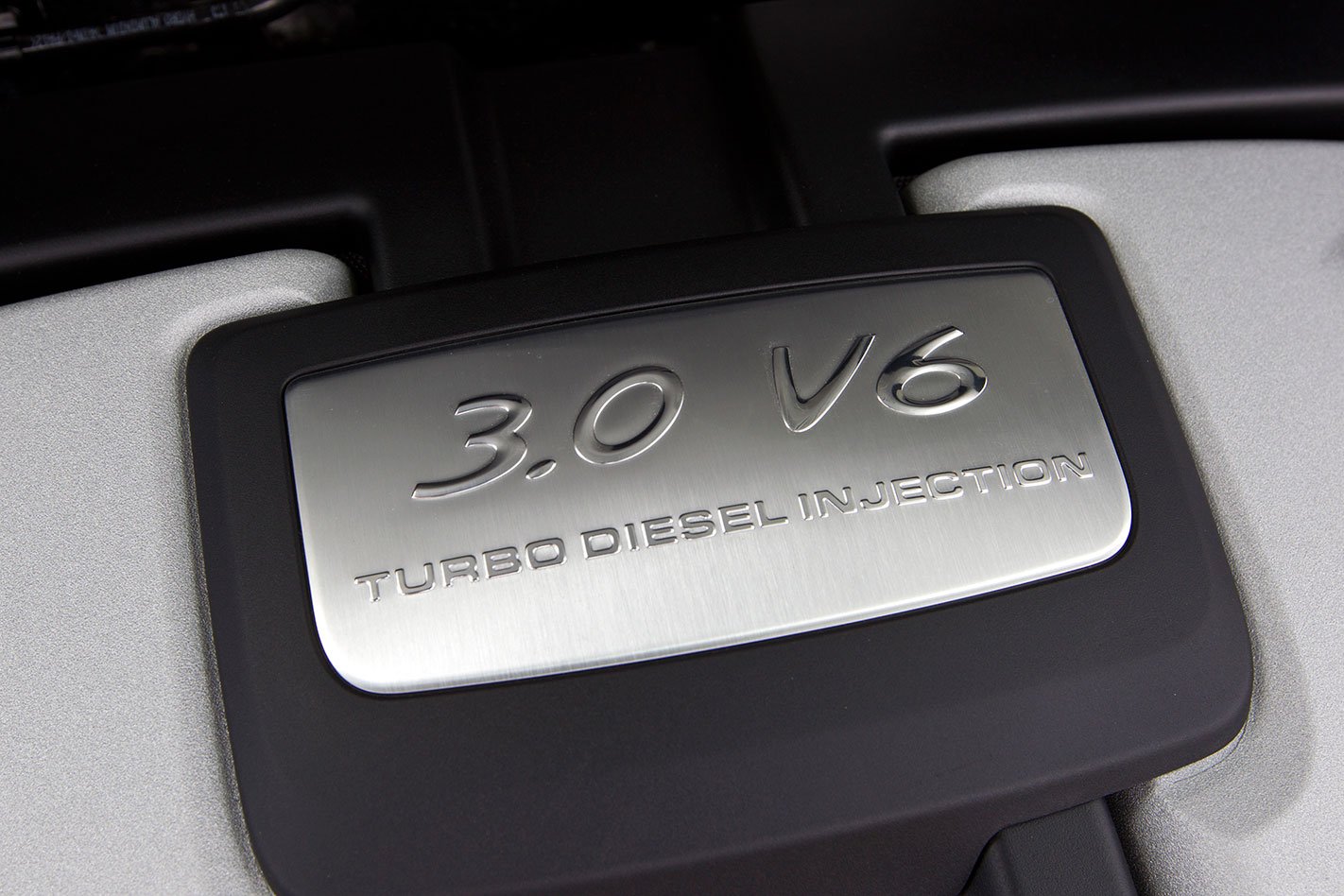
Porsche was scooped up in the 2014 Dieselgate scandal after the 3.0-litre turbo-diesel engine it used in the Cayenne was identified among a number of Volkswagen Group’s oil-burning powerplants that included defeat devices that could identify when the engine was being emissions-tested, and produce fewer harmful exhaust fumes.
Porsche is reportedly suing Audi, the Volkswagen Group member that supplied the diesel engines that the sports car and SUV brand used for its diesel-engined models, for €200 million ($A314 million) as it tries to recover the cost of the scandal.
Porsche announced earlier this month that it would tip €6 billion, double what it had previously proposed, into the development of electric and hybrid drivetrains – the so-called “electrmobility” – by 2022, shifting its focus to plug-in hybrid and fully electric vehicles.
A €500 million slice of the extra investment will help the car maker spin multiple variants and derivatives out of the platform developed for the 450kW Mission E electric concept car, elements of which are believed to be built into the 992-generation 911 coupe.
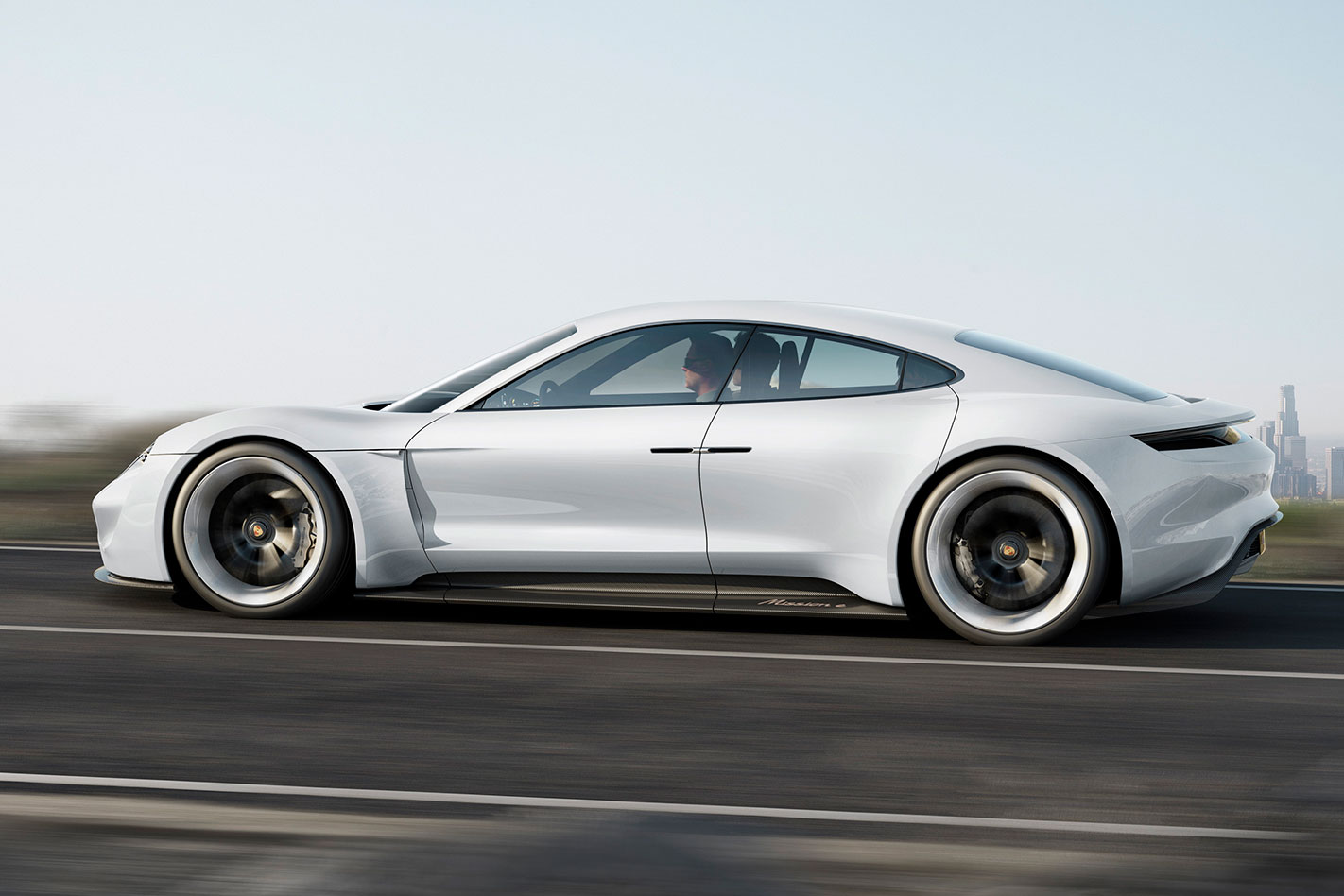
Another €100 million has been set aside for “electrification and hybridisation of the existing product range”. The brand currently only has hybrid versions of the Cayenne SUV and Panamera grand tourer, which includes the flagship V8-engined, 500kW Panamera Turbo S E-Hybrid.
