
Vans were cool in the 1970s. Decked out with specialist paint jobs, sitting on five-slot alloys and usually fitted with a small-block V8, they transformed from workmanlike load-luggers into desirable, head-turning showpieces. What if there was some way of bringing sexy back to the van brigade? MS-RT Road Technology believes it has the answer.
TELL ME ABOUT THIS CAR
MS-RT Road Technology is a small UK company with ties to the M-Sport rally group. It carves out its niche customising Ford commercial vehicles, including the Ford Ranger and this, the Transit van.
Priced at $61,990 and $63,990 drive away for manual and automatic models respectively, the MS-RT Ford Transit has suspension and drivetrain tweaks that make it much more appealing to drive – and look at – than a conventional cost-conscious version of the van. Surprisingly, even the standard long-wheelbase Transit drives pretty well, so fitting it with stiffer suspension and offset OZ Racing alloys wrapped in low-profile Michelin rubber is a recipe for aiming the big Ford at a twisty road. Which we did.
SO, WHAT’S IT LIKE?
These days, vans are a tool of trade. Built to a budget, with cheap running costs high on the agenda, today’s delivery drivers pilot a fleet remarkable for its mix of flat colours, unpainted bumpers and, well, visual boredom.
That’s where MS-RT Road Technology steps in. For around $19,000 more than your standard, Transit Custom van, Ford’s commercial vehicle becomes … interesting.
But it’s only bits of it that are interesting. Under the bonnet the Transit keeps the same 96kW/385Nm 2.0-litre “EcoBlue” engine as other showroom models. It gets a sticker and body kit that includes a more widely vented bumper with daytime running lights (less grey plastics give the Transit a huge visual lift), a rear valance with twin trapezoidal exhaust ports, flared wheel arches and side skirts. Inside, there’s heated nappa leather seats with contrast blue stitching, M-Sport instrument dials and a flat-bottomed, contrast colour steering wheel.
Our test car also includes Ford’s $1500 City Nav pack that includes a reversing camera linked to the 4.0-inch colour touchscreen mounted high on the dash, front and rear parking sensors, and sat-nav. There’s digital radio, too, although the default audio system can’t carry the format’s crystal-clear clarity to make it sound any different to the analogue FM equivalent.
But the bits we’re interested in – all of which are underneath the boxy body – transform the Transit. They include a twin sports exhaust replacing the single one, 18-inch OZ Racing alloy wheels (replacing the range-wide 16-inch steels) wrapped in 245/45 profile Michelin Primacy 3ST rubber, and a set of springs for the Macpherson front suspension struts (the rear uses load-bearing leaf springs) from motorsport and high-end customisation specialists Eibach.
So the MS-RT Ford Transit Custom may not have any more fire in its belly, but what it lacks in straight-line firepower it makes up for in the twisty sections of road. Surprisingly for a commercial vehicle, the default Transit was already a remarkably competent handler. The Eibachs combined with the offset OZ Racing alloys wrapped in sticky Michelins only improve on this. Chuck it in, and the front-driving Transit hangs on like a limpet with surprisingly little body roll. It’s really only the stiff-legged suspension that detracts from the experience, causing the Transit, set up for load lugging, to pogo-stick bounce off bigger, sharper bumps.
The fairly new to the Ford family 2.0-litre four-cylinder diesel engine, despite its dual exhausts, is the party pooper. It runs out of puff alarmingly quickly. It has a stop-start system to save fuel in traffic, and will automatically rev when in first gear to minimise the risk of a stall. Paired to the short-shift, console-mounted shifter for the six-speed manual gearbox, it’s a fun combination – a real plus considering how often you need to change gears to hit the engine’s sweet spot.
It’s an odd feeling punting a big, long van at speed and trusting in the front end to bite and turn when asked. The Transit still uses hydraulic steering, so it remains more feelsome and communicative than our memory of even the swansong Ford Falcon FGX’s electrically assisted one.
The MS-RT sort of works on a certain level, but at the end of a day it’s still just a vanilla-scented van beneath a more spicy skin.
VERDICT
The idea of taking a workmanlike vehicle and giving it some spice is nothing new; a similar concept has put the bread on HSV’s table for the last 30 years. The MS-RT Ford Transit is certainly more spicy, but it lacks the under-bonnet poke to tap the dynamic potential all the other modifications provide.
ANY OTHER CARS I SHOULD CONSIDER?
None, really, when it comes to sports-honed boxes in wheels. But ordinarily you’d cross-shop for long-wheelbase options including a Mercedes-Benz Vito, a Volkswagen Transporter or a Renault Trafic.
TELL ME ABOUT THIS CAR
Volvo is something of a latecomer to the small SUV segment, with the bulk of its European rivals already winning over plenty of customers with the likes of the BMW X1, Audi Q3 and Mercedes-Benz GLA.
But the Swedish automaker hasn’t been sitting on its hands. Now that larger Volvos like the XC90, XC60 and S90/V90 have hit the market, the carmaker has finally been able to devote attention to its first-ever compact SUV, the Volvo XC40.
Built on an all-new architecture and housing an interior that prioritises utility and liveability, the XC40 will arrive in Australia in April 2018 in D4 diesel AWD trim, followed soon after by the T5 petrol AWD. Lower-spec front-wheel drive variants will follow in late 2018, while plug-in hybrid and purely electric versions may also find their way to Australia later. Local pricing has yet to be announced.
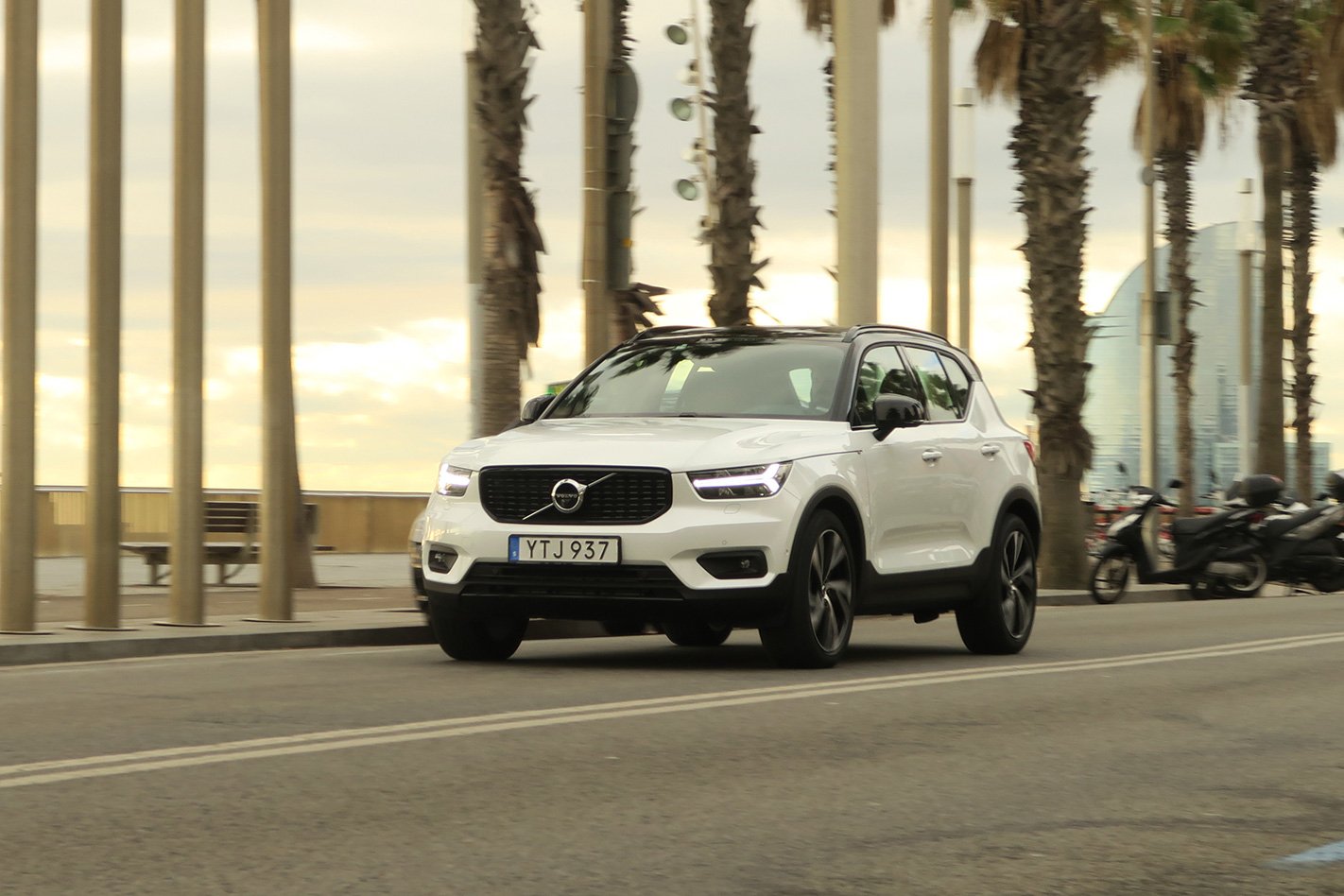
We travelled to Barcelona, Spain to get our first taste of the XC40 in D4 and T5 guise, and initial impressions indicate that Volvo’s first effort at an entry-level SUV has strong appeal – and may even have what it takes to be a class leader.
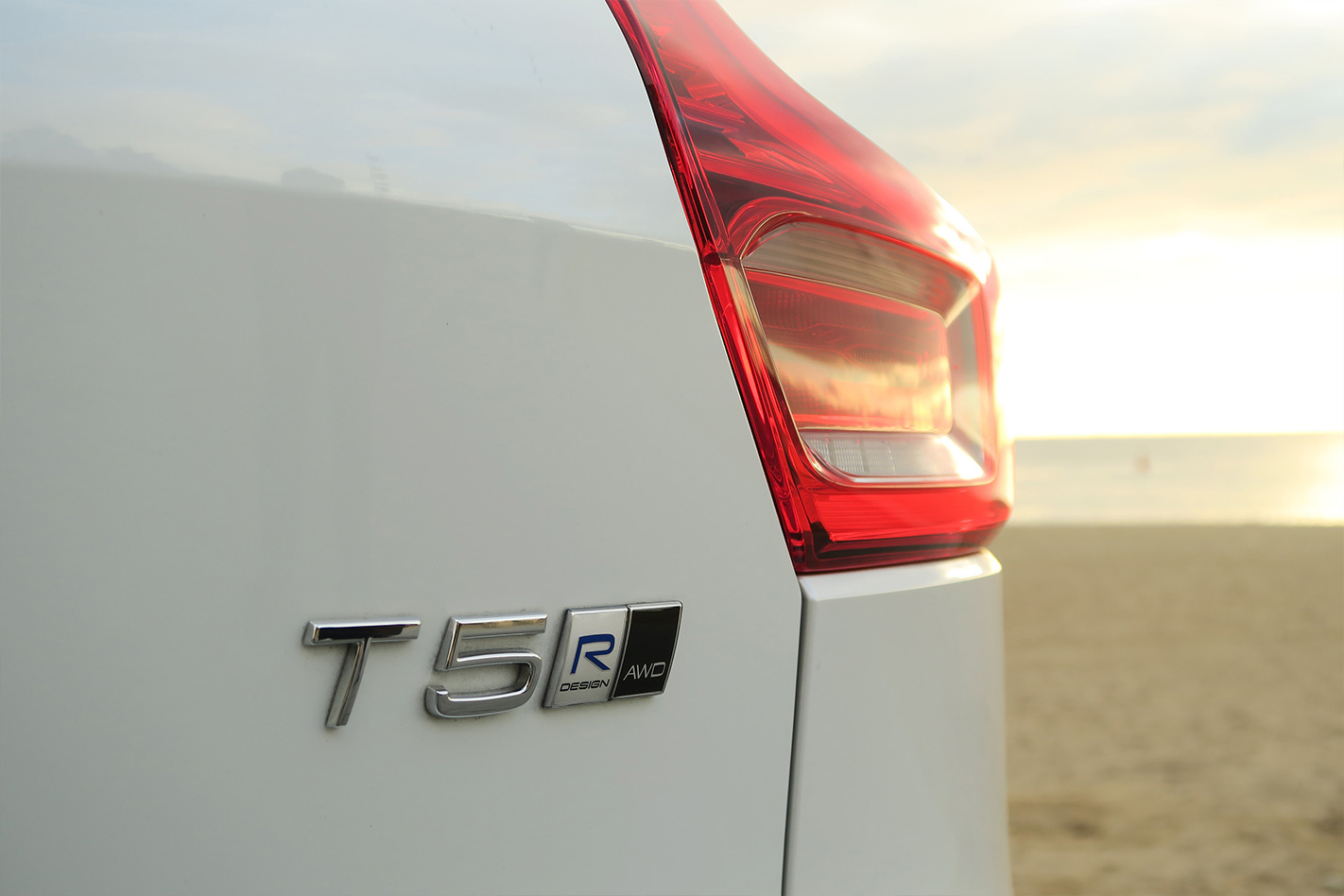
STRENGTHS
Volvo’s designers were tasked with making the XC40 one of the most versatile and usable small SUVs, and a quick glance at its interior shows that they hit the mark. The cabin is peppered with thoughtful features like huge door bins that can swallow a full-size laptop bag, a removable rubbish bin in the (very deep) centre console and a flip-out handbag hook on the glovebox lid. If you like keeping your life organised, the XC40 will likely resonate with you.
Design and quality were other guiding principles behind the XC40’s interior, and while there are plenty of elements shared with Volvo’s larger vehicles, the XC40’s cabin treatment isn’t a shrunken version of its bigger siblings. A low-set centre console lifts up into a wide dash that’s bisected by a thick alloy or wood trim strip, with tall vents bookending the whole assembly. The door bins are lined in industrial felt made of recycled PET bottles, and the leather upholstery is finely stitched. The switchgear feels appropriately premium too.
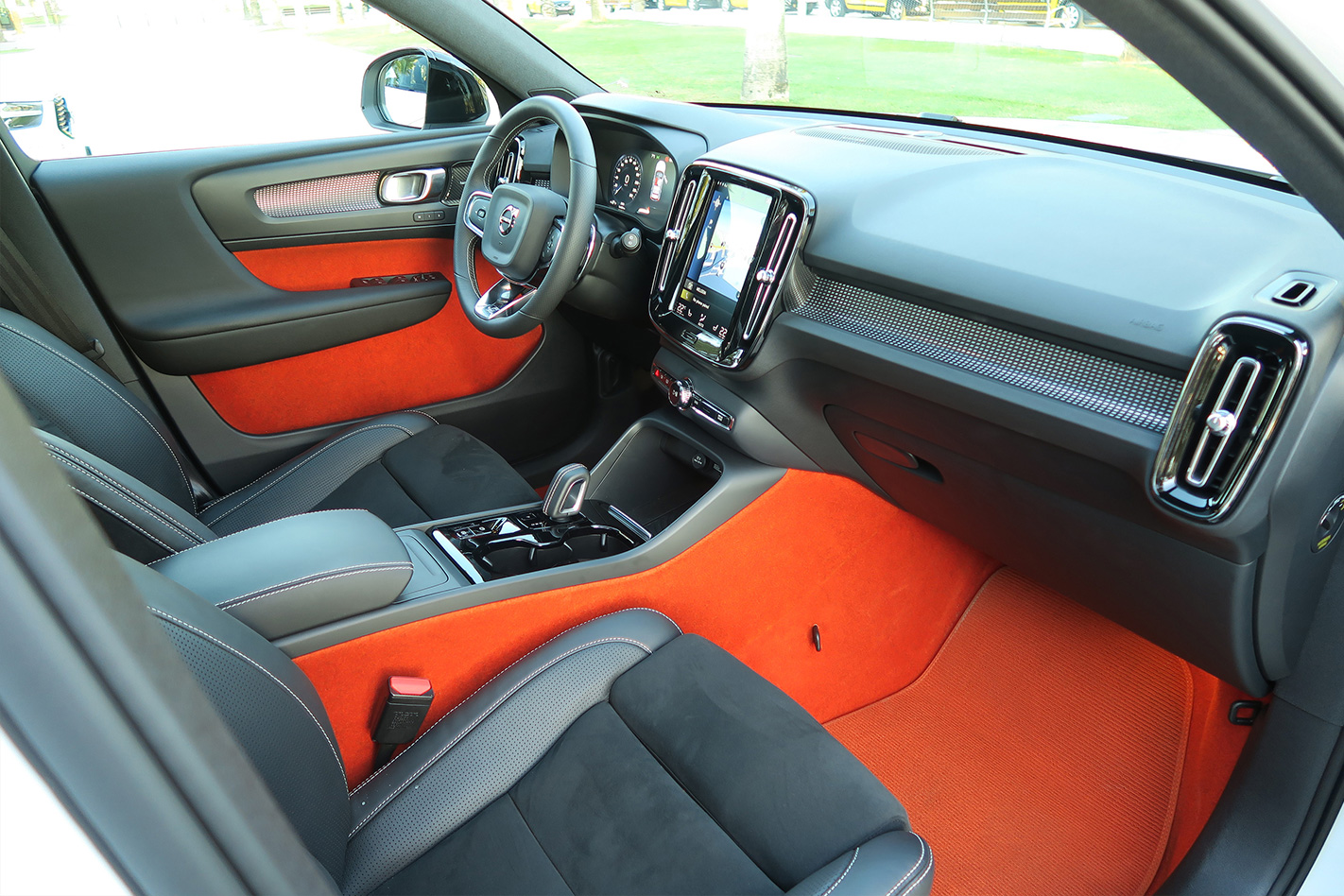
There’s plenty of technological innovation in the XC40, with a standard 12-inch screen replacing conventional instruments, a wireless charging pad being integrated into the centre console and a unique front audio setup that replaces conventional door speakers with a single big speaker deep inside the dash piping sound through the front air vents. In addition to that, there’s advanced safety tech like autonomous emergency braking an piloted drive functions that actively keeps the car within its lane for short periods of time when cruising highways.
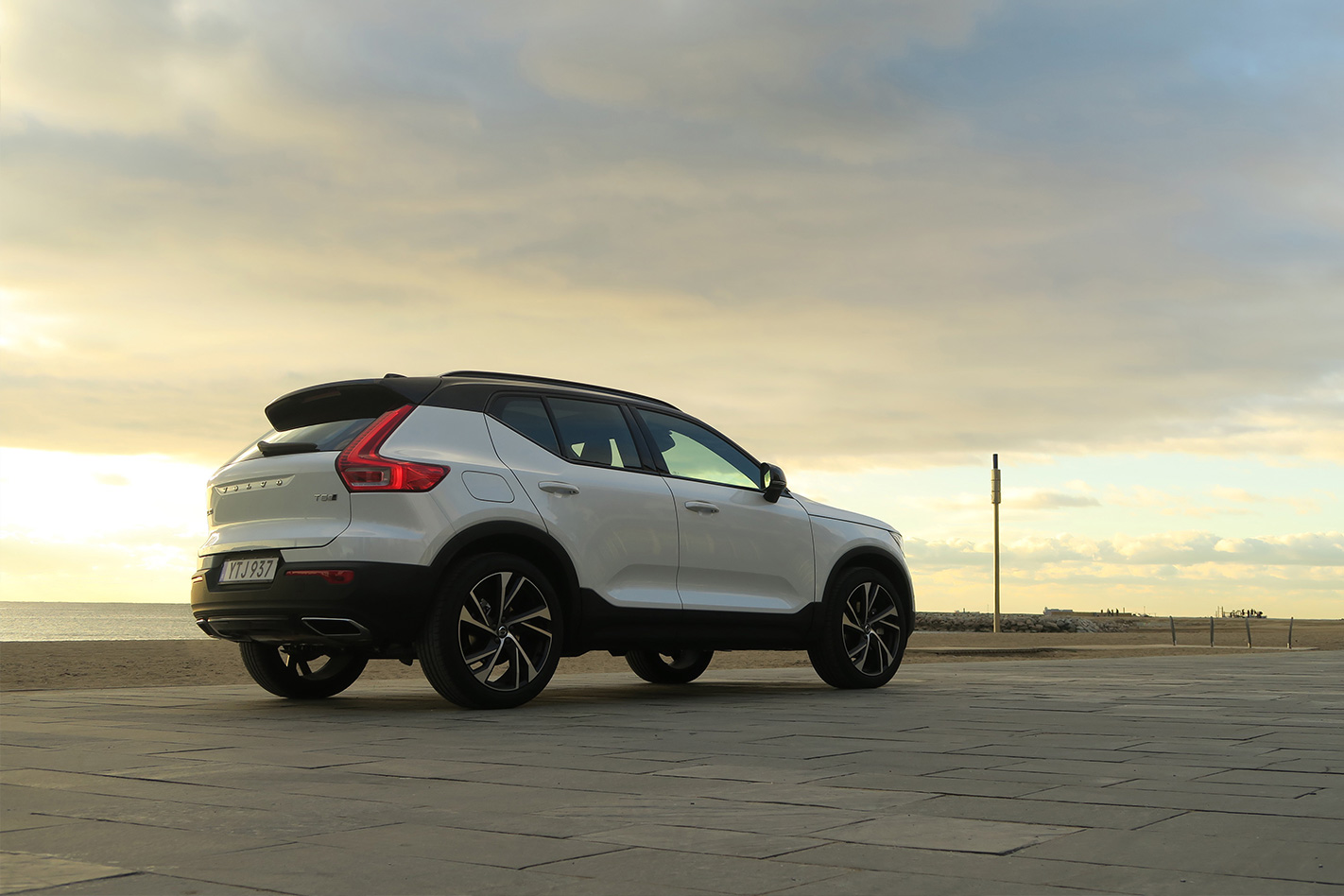
At 4425mm long, the XC40 takes up a similar amount of garage space as the BMW X1 and Mercedes-Benz GLA. However, its 1652mm height sees it loom over the two Germans, and interior space is generous as a result. Tall and upgright seating positions give passengers a comfortable posture and afford the driver a great view of the road ahead, while headroom is plentiful even when the panoramic glass sunroof is optioned.
Though its 460 litre seats-up boot volume trails the GLA and X1 for outright cubic capacity, some clever features allow the XC40 to make the most of its available space. The boot floor can fold up and lock into a vertical position, revealing a deeper section in the rear half that can easily take smaller pot plants or other outsize cargo, while also creating a smaller compartment in the front half. Two extra bag hooks also appear when the floor is folded (for a total of four), further enhancing its day-to-day utility, while the rear seatbacks can be released via boot-mounted buttons to unlock a full 1336 litre cargo space.
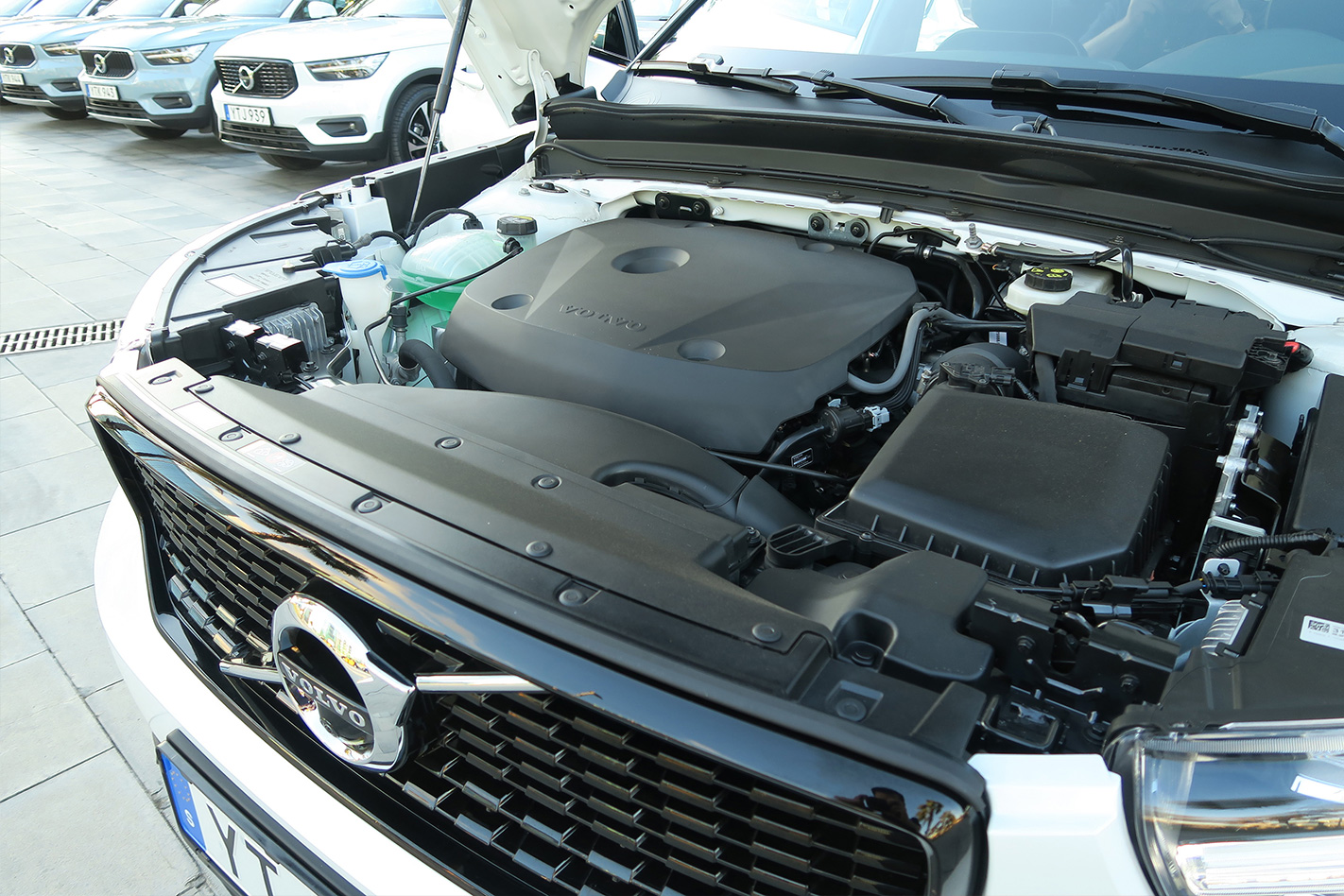
The XC40’s T5 petrol engine is especially likeable. Delivering 182kW of peak power and a stout 350Nm torque figure, it has enough go to give the XC40 a 6.5-second 0-100km/h sprint time – making it about as fast as a front-drive hot hatch. With all of its peak torque figure accessible from 1800rpm to 4800rpm it’s exceptionally flexible too, and is a relaxed performer in everyday driving.
The XC40 has a composed and comfortable ride, even on optional 20-inch alloys. The smooth Spanish highways that made up the bulk of the launch route didn’t provide many challenges for the suspension to deal with, but twistier sections revealed a chassis that’s agile, grippy and difficult to unsettle.
WEAKNESSES
The D4 diesel engine doesn’t feel as muscular as its140kW/400Nm outputs suggest. It is, however, very quiet and refined with barely any diesel clatter.
While the big C-pillar does have an impact on over-the-shoulder vision, thanks to large wing mirrors it’s not as intrusive as you may think. A bigger issue is whether young kids and smaller adults will have a decent view through the rear windows, thanks to the sharp up-kick of the shoulder line.
The gear selector needs to be double-tapped to go from Drive to Reverse (rather than a single fluid movement), which can take some getting used to. Many drivers will likely endure some unnecessary revving in Neutral before they come to grips with that particular quirk.
A slightly over-sensitive throttle calibration sees the T4 variant a little too keen to kick down into lower gears when accelerating, rather than just using its generous low-end torque. When it does drop into a lower gear, the transmission shift can feel abrupt and aggressive, which takes some of the sheen off what is otherwise an exceptionally refined car.
ARE THERE ANY OTHER CARS I SHOULD CONSIDER?
Similarly-sized rivals include the BMW X1, Mercedes-Benz GLA-Class and Audi Q3. The Volvo XC40 is expected to be priced beneath these competitors when equipped to a similar level.
The Ford Ranger is one of Australia’s most popular cars, so it is understandable that some will be trying to stand out from the crowd.
That is where the MS-RT Ranger comes in. Sold by vehicle stylists Autosource International, the imposing dual-cab has bolder aesthetics and a more imposing stance over a ‘standard’ Ranger XLT.
What you see here is what you get, with the only option choice being either a six-speed manual variant that costs $86,990, and a six-speed automatic transmission for $88,990 – both are drive-away prices.

The most striking change with the M-Sport ranger is the visuals, with new front and rear bumpers, along with widened arches, thanks to Carlex Design.
The front grille has a pair of LED Lazer light bars integrated into it, which accompany the larger unit affixed to the roof.
A Pedders suspension system gives the Ranger a 50mm lift in ride height, while rolling on unique 18-inch rims and BF Goodrich All Terrain tyres.

The cabin features leather upholstery and a flat-bottomed steering wheel, along with unique contrast stitching.
The rest of the vehicle is standard Ford Ranger, including the infotainment system.
There have been no modifications to performance aside from a dual-exit sports exhaust, meaning the 3.2-litre five-cylinder turbo-diesel engine up front, makes 147kW/470Nm as standard.
IF YOU have forked out hard-earned cash for a new car, it’s fair to expect a reasonable level of customer service if something goes wrong, but if you have paid $3.7m then you can expect something more.
As with any safety recall, the 47 customers who have already taken delivery of a Bugatti Chiron are being contacted by the manufacturer to resolve a potential engineering default that has been discovered, at minimal inconvenience to the owner.
However, while mere mortals must arrange for their vehicle to be taken to an approved service centre, Bugatti customers are being rewarded for investing the equivalent of 183 Toyota Corollas with a ‘flying doctor’.
The global team of technicians will be winging their way to the various owners around the world to fix a defect that might have resulted in an incomplete seat bracket weld, but if the component cannot be replaced on location, Bugatti will ship the Chiron to the nearest certified service centre at no cost to the customer.
In the official National Highway Traffic Safety Administration (NHTSA USA) recall notice, 47 vehicles are potentially involved but just one percent is estimated to have the defect. That means approximately half a Bugatti Chiron is rolling round with the problem.
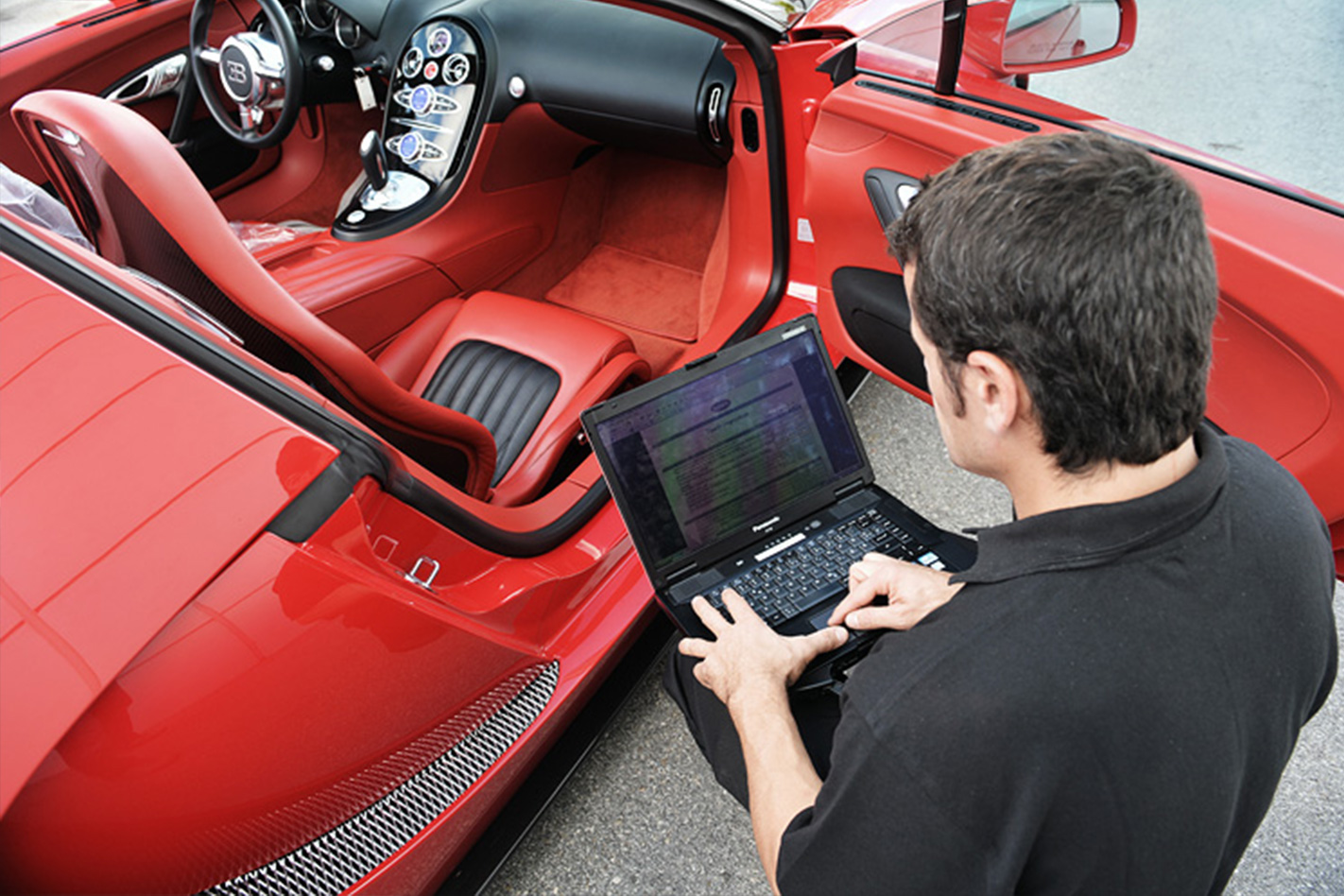
Interestingly, the Chiron seats are not made in-house at Bugatti’s factory in Molsheim, and the manufacturing error was made by the contracted supplier Sparco. According to the notice, incorrect placement of components during welding was to blame.
The process has now been changed to ensure the mistake will not be made for subsequent vehicles.
Bugatti’s so-called flying doctor service is offered to all Veyron and Chiron owners for the life of the vehicle and is available for any vehicle fault diagnosis or recalls. A technician does not have to be despatched for all problems with many issues potentially resolved through the company’s telemetrics system.
With the customer’s consent, Bugatti can constantly monitor the condition of any vehicle wherever it is in the world, and the technical team can notify the owner of important information they may not be aware of.
All Chirons and Veyrons can communicate with Bugatti’s global centre and report anything from low tyre pressures to a more significant technical fault before it becomes serious. But what do you expect from one of the world’s most expensive cars?
It’s taken 18 months for this twin-turbo petrol V6 Maserati Levante S to reach Australia, but the wait is worth it if you want your Trident-branded SUV to sound and perform like a red-blooded Italian.
WHAT IS IT?
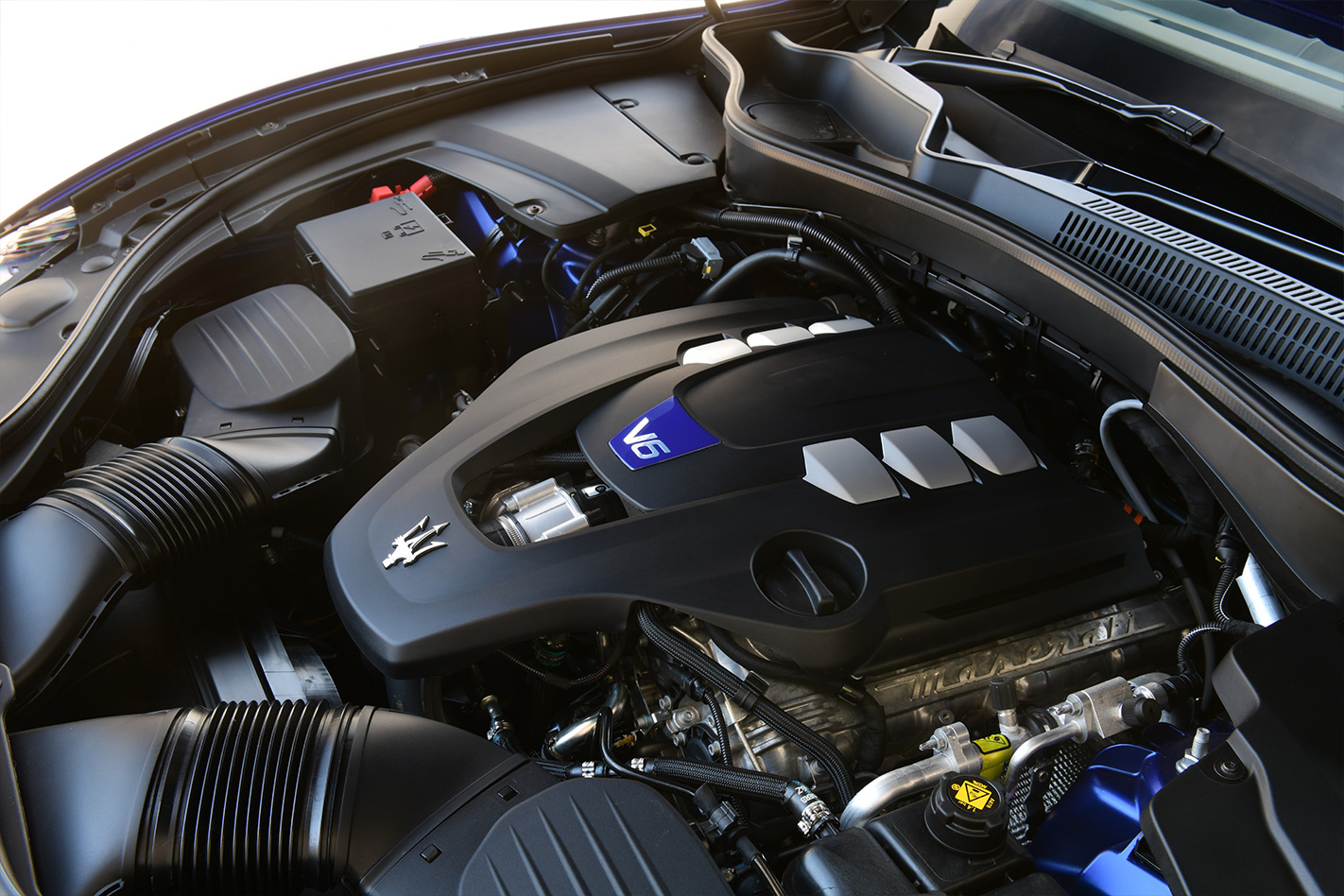
The belated introduction of the range-topping Maserati Levante S, featuring a twin-turbo 3.0-litre petrol V6 built by Ferrari in Maranello and a number of other upgrades spread across the entire MY18 Levante line-up.
WHY WE’RE TESTING IT?
The best Levante has always been the one we couldn’t buy in Oz, yet petrol power has finally arrived and in the most-powerful variant available – the 321kW/580Nm Levante S. Plus there’s two new trim lines – Gran Lusso and Gran Sport – intended to make this high-riding Italian a bit more special.
Porsche Cayenne GTS, Audi SQ7, BMW X5 M, Range Rover Sport Dynamic, Mercedes-AMG GLE43/63, Tesla Model X
THE WHEELS VERDICT
Here’s the Levante we should’ve had from the get-go, despite its innumerable flaws. For a two-tonne SUV with air-sprung suspension, the Levante’s ride is pretty dismal and this twin-turbo V6 still doesn’t sound quite as fruity as we’d like it to. But it’s a better all-rounder than a Quattroporte and has plenty of sporting talent waiting to be unleashed if you don’t mind risking your licence.
MINUS: Agitated ride; underwhelming styling; front seats lack cornering support; handling and steering in Normal mode
THE WHEELS REVIEW
JUST 10 percent of Aussie Maserati Levante buyers are expected to shell out for this thrusty new twin-turbo V6 S version, yet this is the drivetrain the high-riding Italian has been crying out for. It’s almost a no brainer.
Built by Ferrari in its Maranello engine plant, we bypass the regular Levante’s 3.0-litre direct-injection, twin-turbo V6 for the greater boost pressure of the 321kW/580Nm Levante S, tied to ZF’s excellent eight-speed automatic ’box and Maserati’s highly effective all-wheel-drive system.
It’s predominantly a rear-drive set-up that can transfer up to 50 percent to the front treads, and features the added benefit of a mechanical rear LSD and torque vectoring. And in fast going, its operation is seamless, sending drive to the outside rear wheel in a fluid, highly entertaining fashion. Indeed, channel your inner Ricciardo and the Levante S delivers a physics-defying display of eager turn-in, encouraging grip and elegant poise.
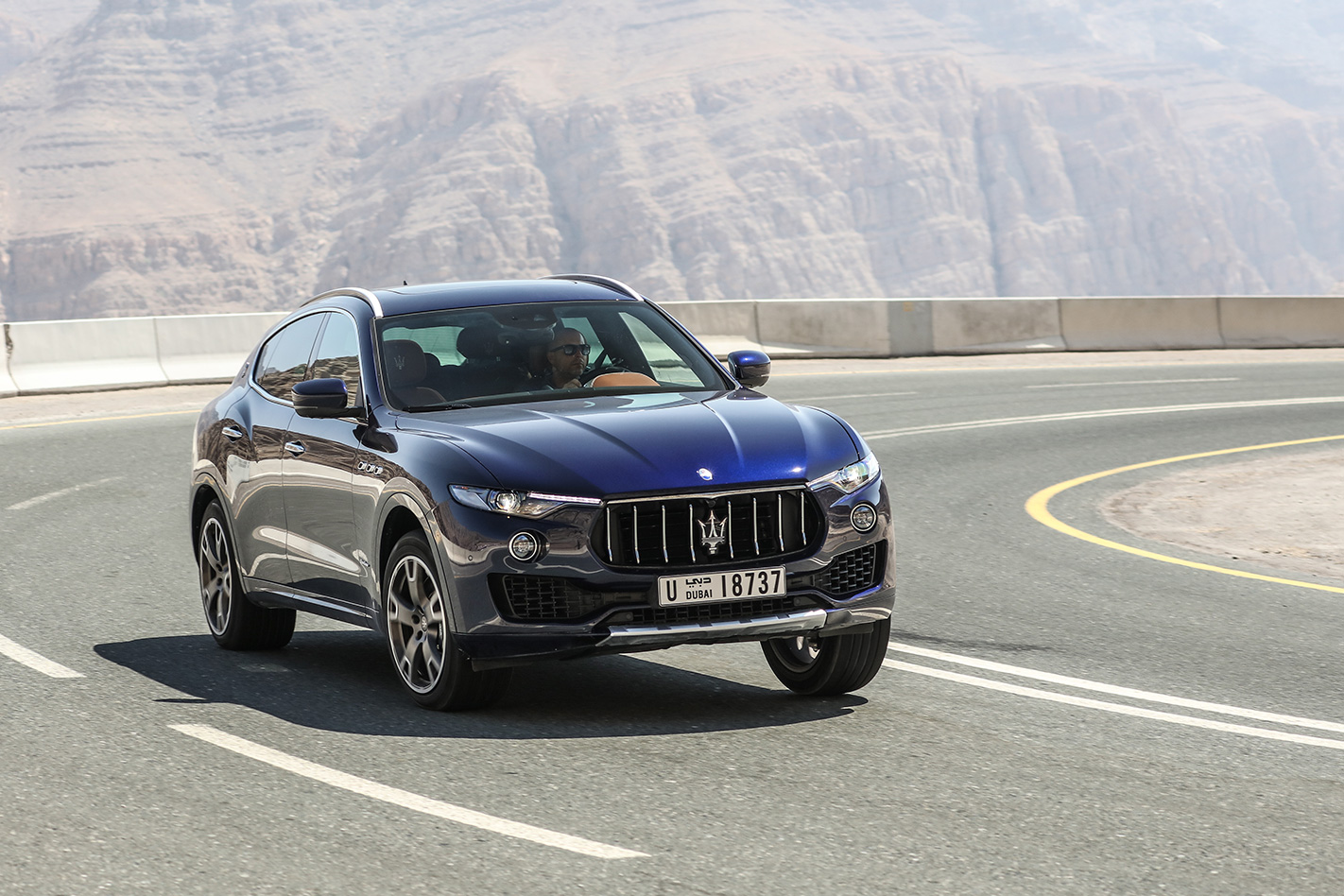
The Levante S’s steering instantly gains feel, the vertical movement of its suspension is mitigated and understeer dissipates into the background. Suddenly, the boosted Levante petrol drives like its Trident badge suggests it should, enhanced by a core structure that’s 20 percent stiffer than the Ghibli sedan it’s derived from.
But ride is not the Levante’s forte. Even on the Gran Lusso’s smaller 20s (wearing Continental ContiSportContact 5 rubber – 265/45ZR20 front, 295/40ZR20 rear), there’s an unsettled lumpiness that never leaves the driving experience. And on the shallower sidewalls of the Gran Sport’s 21s, it’s even more noticeable.
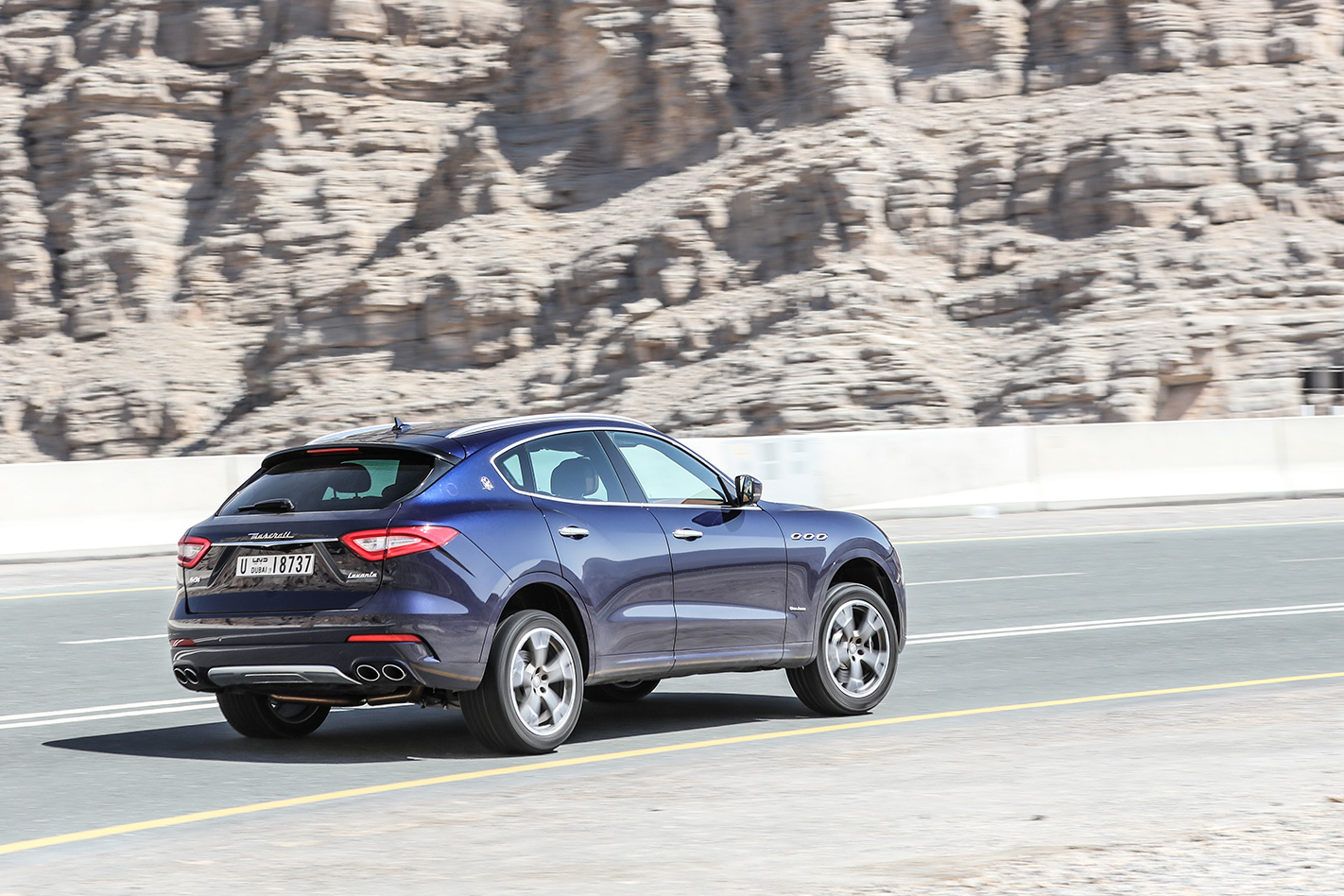
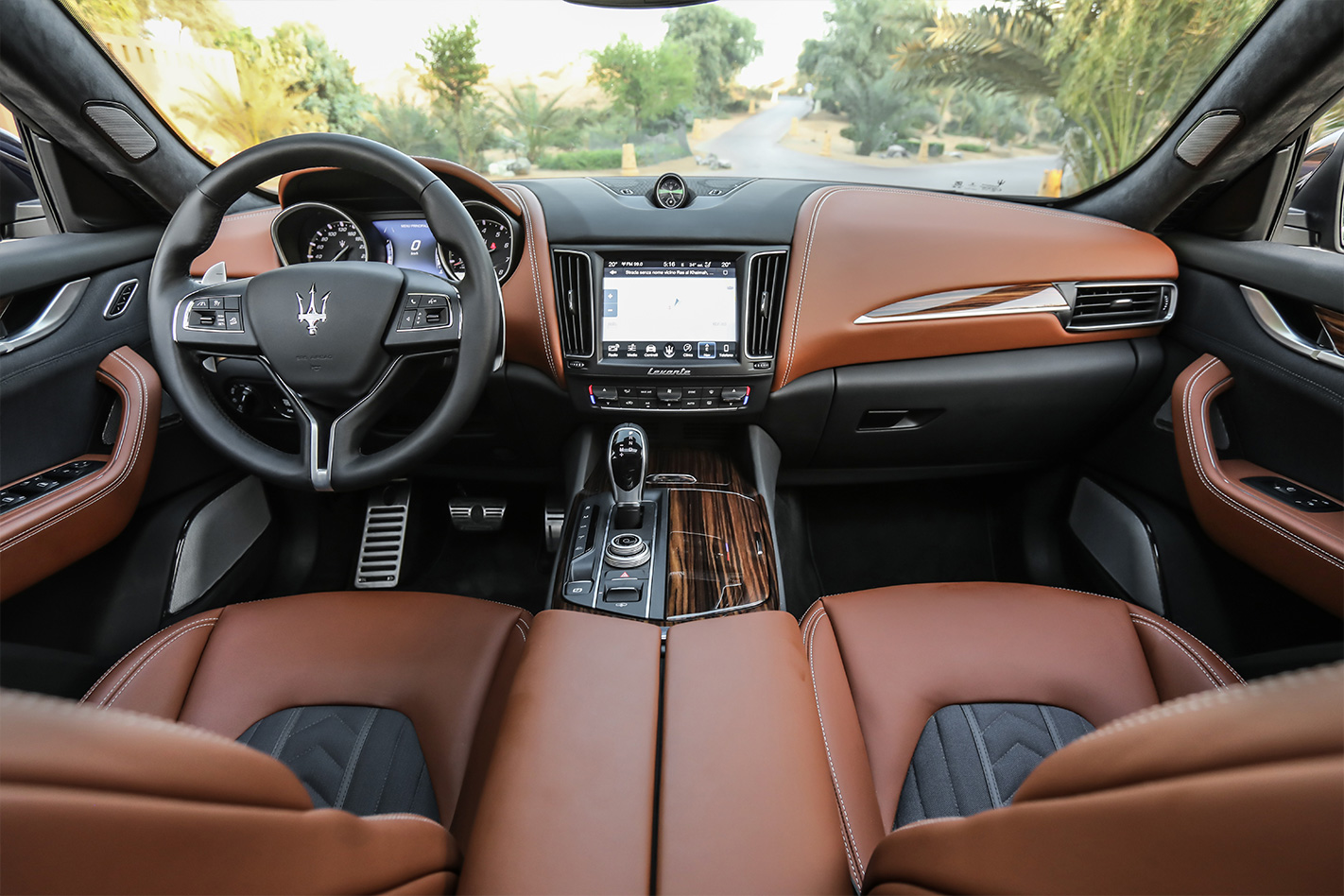
Of the two new trim levels, it’s the Gran Lusso that suits the Levante S best. With Zegna-silk seat and door inserts, mixed with the stunning red leather and anthracite headlining of our test car, it’s a proper designer look, garnished with Maserati’s best integration of shared Fiat-Chrysler multimedia and switchgear yet. But the Gran Lusso’s front seats are rather small and lack sufficient side bolstering or under-thigh adjustment given the performance and handling on offer. And without the grip of the Zegna trim inserts, the Gran Sport’s all-leather sports seats are even worse, with the additional bolstering unable to overcome the leather’s slipperiness. At least the rear seat is reasonably comfortable – even for three bodies – and Levante’s fully-trimmed 580-litre boot is usefully shaped.
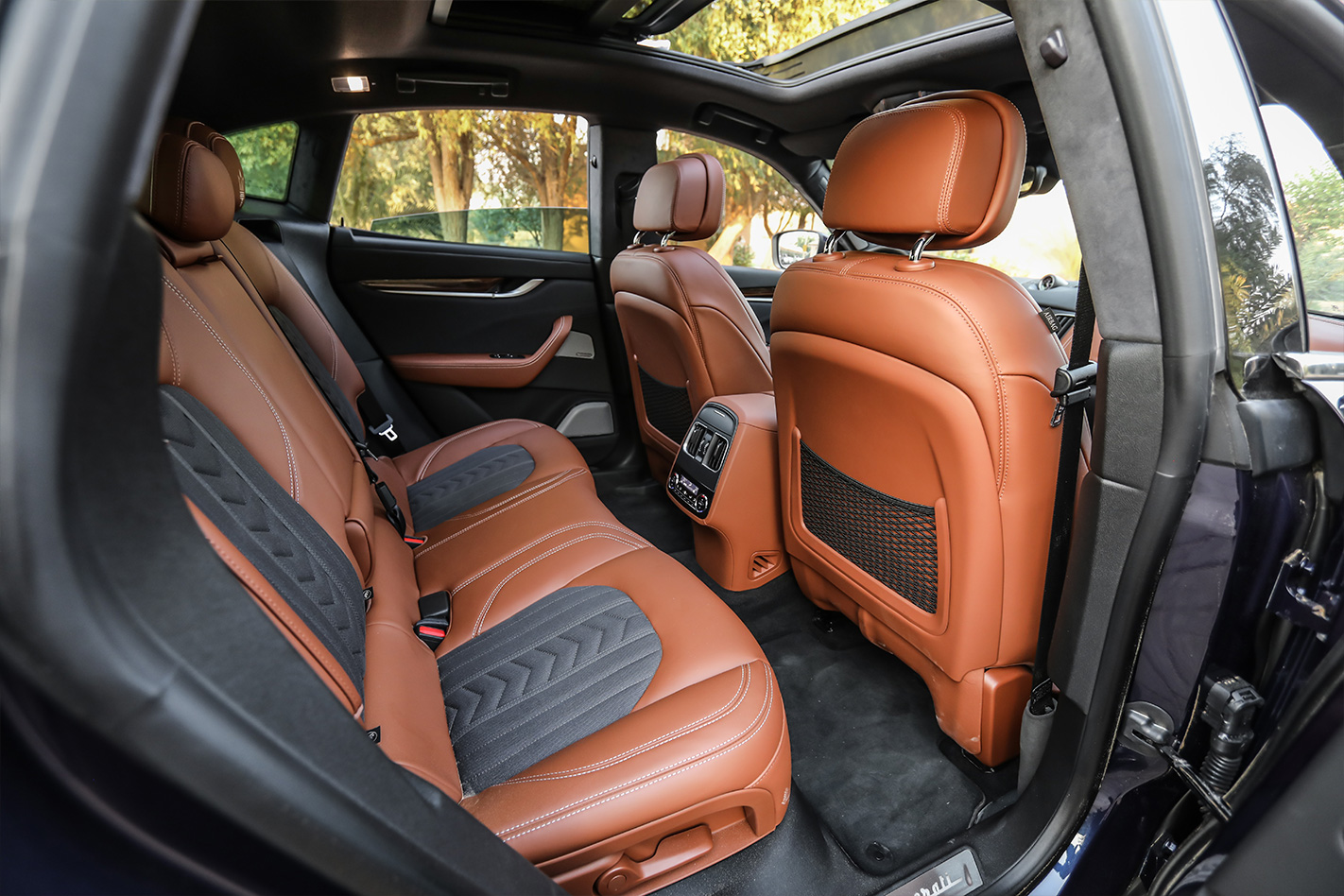
The Gran Lusso’s less fussy exterior is also classier, though the Levante ultimately struggles when measured against the aesthetic purity of Maserati’s best designs. Many of the details are spot on – particularly the exotic-for-an-SUV frameless doors with new soft-close function – but the overall execution appears a little muddled. And the Levante’s rear-end looks super-bland. From a distance, it could be Korean.
SPECS
Model: Maserati Levante S Gran Lusso Engine: 2979cc V6 (60˚), dohc, 24v, twin-turbo Max power: 321kW @ 5750rpm Max torque: 580Nm @ 1750-5000rpm Transmission: 8-speed automatic Weight: 2034kg 0-100km/h: 5.2sec (claimed) Economy: 10.9L/100km (EU) Price: $179,990 On sale: Now
HOLDEN won’t become Chevrolet. In the wake of speculation sparked by the addition of a number of bowtie-branded cars to Holden’s showrooms from next year, the former Australian car maker has insisted it is here for the long haul.
Holden showrooms will add Chevrolet-badged Silverado trucks and Camaro sports coupes from next year after the brand’s go-fast division, HSV, last week announced it would convert Chev-badged vehicles from left-hand drive and sell them through Holden’s distribution channels – the same channels it used when it created amped-up versions of the Commodore.
However, shortly after the announcement, Wheels’ social media lit up with comments claiming the move spelled the impending end of the Holden brand.
This isn’t the first time such conspiracy theories have been aired in our comments sections, and it’s a sentiment that seems to confuse Holden executives.
“Holden is here to stay,” was the line repeated at a recent media event by Holden’s director of marketing, Mark Harland, echoing a 2014 advertising campaign released in the wake of the announcement in 2013 that it would quit local manufacturing.
Holden managing director Mark Bernhard was similarly steadfast on the topic at a recent Holden product launch. His comments addressed an argument from some observers who suggested Holden may make the switch for cost-saving reasons, enabling it to simply eliminate the assimilation process it puts imported vehicles through.
“We know Australia and we know Australians best,” said Bernhard. “With our talented engineers we take the best cars that we’ve had for decades and tune them to Australian conditions for Australian drivers. That engineering team is one of the real strengths of Holden.”
In financial terms, GM has committed significant sums of money towards building the Holden brand following the closure of its manufacturing operations in late October.
“We’re getting prepared for a future in a significantly changing industry, it’s an exciting time, and Holden is here to win. We’re putting our money where our mouth is,” Bernhard said.
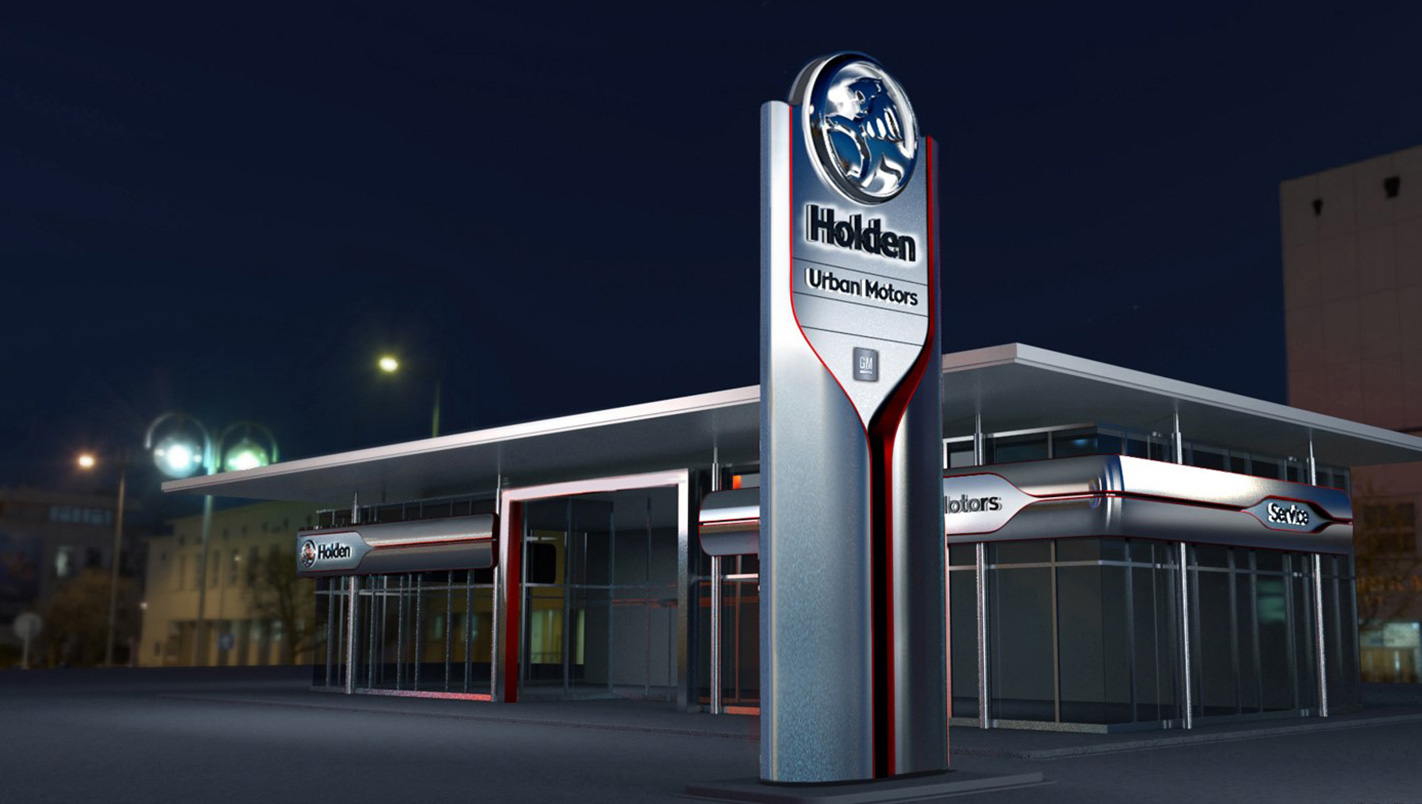
That new Holden signage will appear on a shrinking number of dealerships, but prominently displays the iconic lion badge, and new ‘Holden Urban Motors’ branding. It’s a strong indication that the Australian company believes in the brand awareness and goodwill the Holden name has built up over more than 160 years in business, and sees no benefit in throwing that away.
“If you look at the brand health it’s pretty impressive when you consider the plant closure. Our industry reputation results have been outstanding,” Bernhard said. “Customer retention has continued to improve over the last few years. Customers are understanding if you buy a Holden, you will be taken care of.
“We’re no longer the Commodore car company. Nor are we the Colorado company. Buyer habits have changed and we’re continuing to adapt as well. Our future is very bright having a parent [General Motors] behind us. And we’ve got some really good friends in Detroit, which puts us in a great position.”
Holden is the smallest brand in GM’s global product portfolio, and last year contributed more than 94,000 sales to its parent company’s 10 million sales globally.
In contrast, GM’s second smallest brand last year, Vauxhall, accounted for more than 250,000 sales in the UK. Vauxhall and Opel were sold by GM to French company PSA in August of this year.
McLAREN’S answer to the Aston Martin Valkyrie and the Mercedes-AMG Project One now has a name: it will be called the Senna.
The hypercar’s name is a tribute to Formula 1 driver Ayrton Senna, the Brazilian driver who won three world championships behind the wheel of a McLaren.
It boasts some stupidly impressive numbers. First is the price: each one of the hand-assembled Sennas will cost ₤750,000, or the equivalent of more than $1.3 million Australian to add one to your garage.
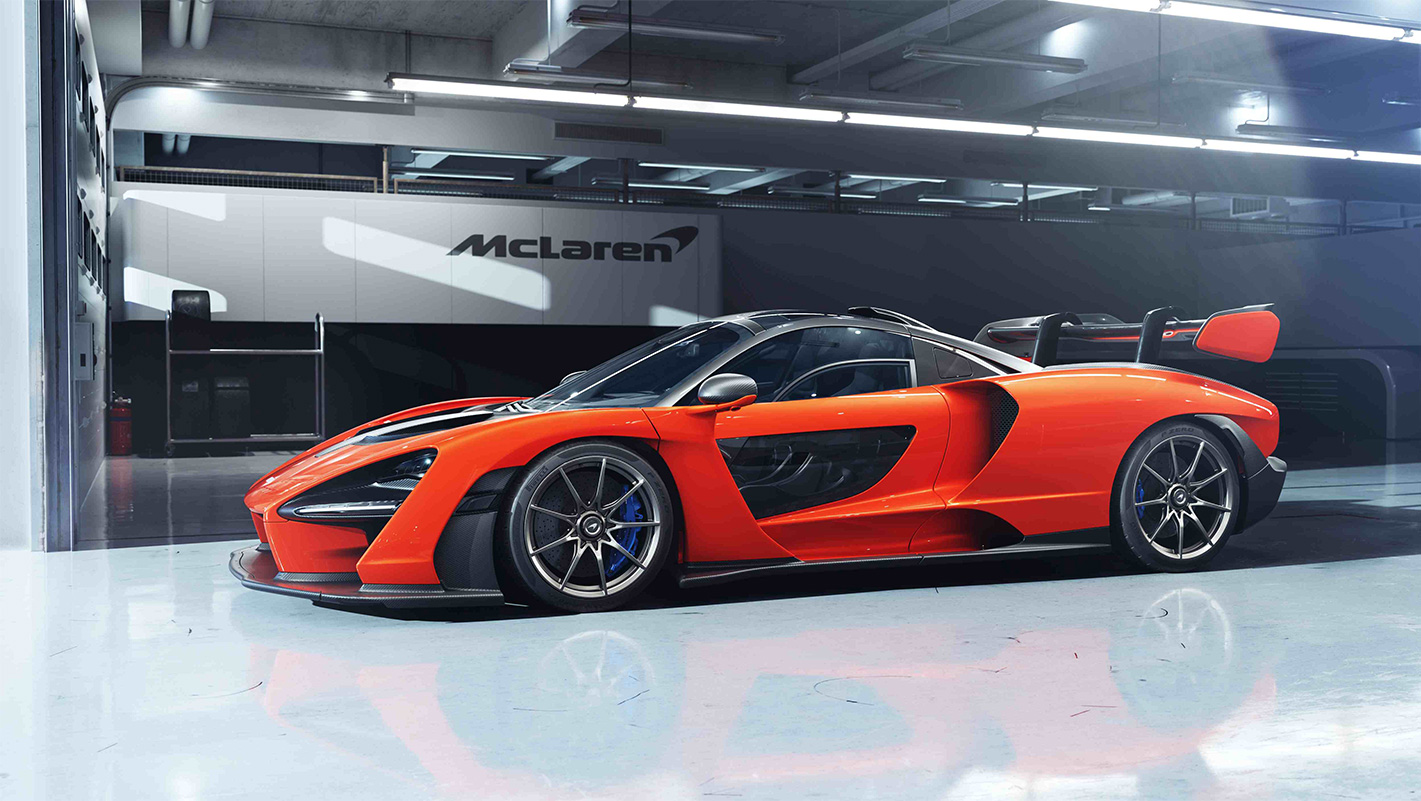
A lightweight carbonfibre construction means the Senna weighs just 1198 kilograms, almost the same as a Mazda MX-5, which gives it a power-to-weight ratio of 490kW/tonne, enough to conservatively give it a potential 0-100km/h in the mid-to-high 2.0 seconds range.
It’s made for carving corners. The McLaren Senna – formerly known as the P15, the name of the Super Series project that spawned it – includes what the car maker calls “RaceActive Chassis Control II”, a double-wishbone suspension system with interconnected hydraulic dampers that make anti-roll bars redundant. Of note, the dynamic dampers adapted from the McLaren P1 now include a race mode – along with comfort, sport and track – that allows the Senna to hunker down and hug the road surface, lowers the centre of gravity and makes the suspension “significantly stiffer”.
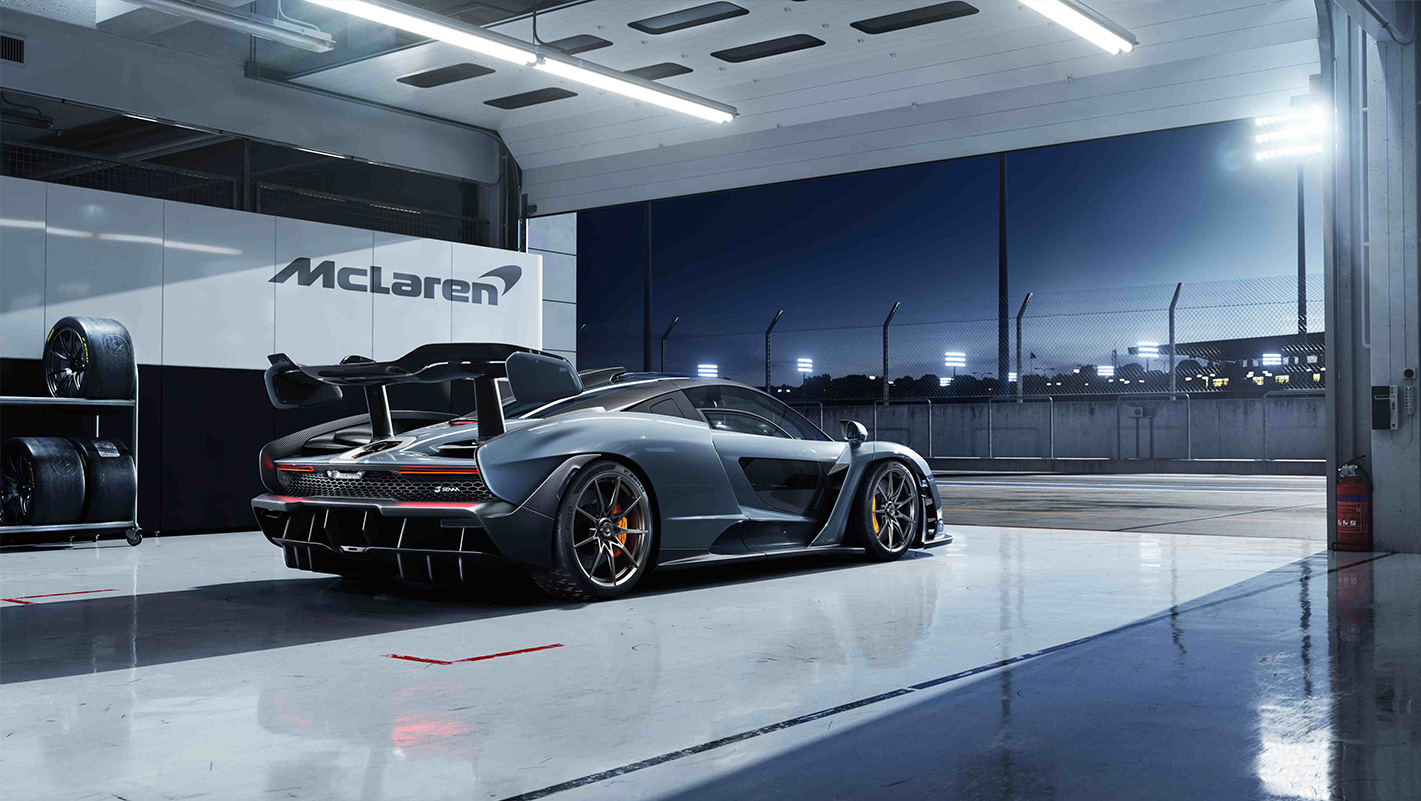
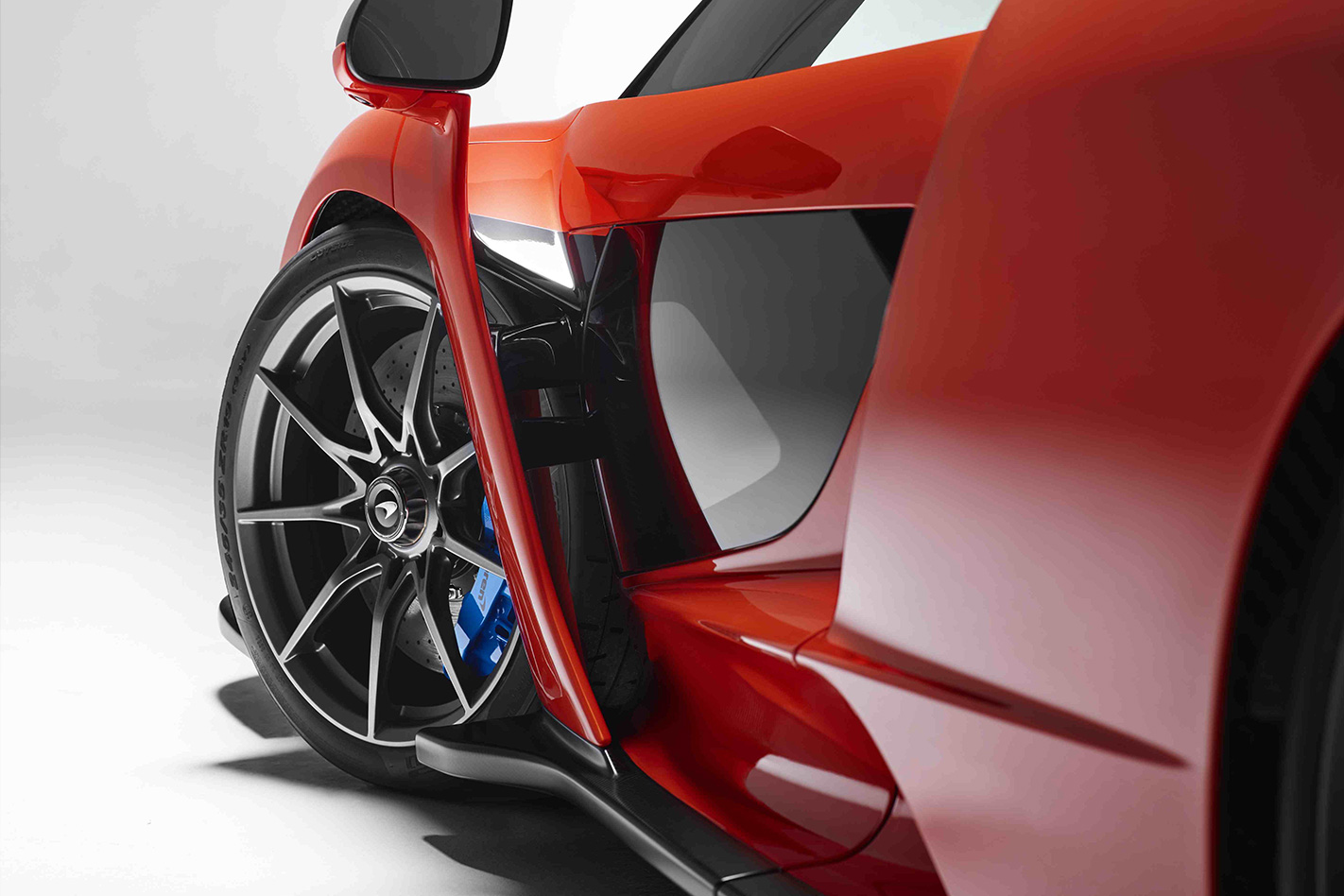
“McLaren’s designers went to extremes by cutting open the ‘shrink-wrapped’ body to reduce weight visually and functionally; while recognisably a McLaren in proportional terms, you cannot follow a single line from the front to the rear without it passing through a functional air intake or vent,” it said.
The carmaker said the Senna introduced “a new generation of ground-breaking front and rear active aerodynamics”.
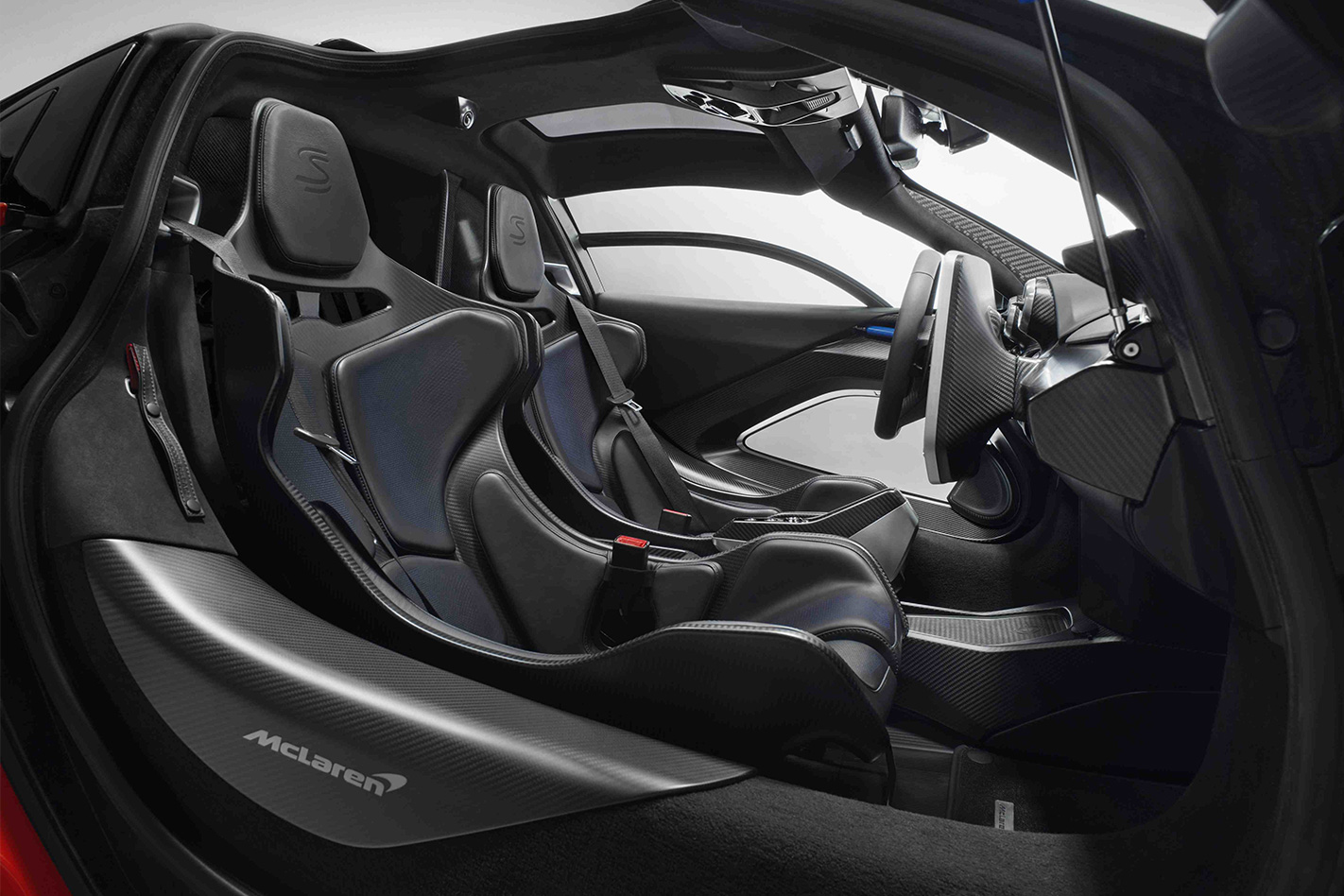
“There is also an opportunity for added visual drama, with the front aero blades available finished in one of five ‘By McLaren’ theme specifications that include Azura Blue and McLaren Orange. The same linked accent colour can also feature on the brake calipers, visible door gas struts and seat trims.”
There’s a visual link to the original McLaren F1; the dihedral doors hinge forwards and upwards, opening with a portion of the roof, Ford GT40-style. Once inside, there’s raw carbonfibre everywhere, enough headroom for a helmet, and a three-spoke steering wheel free of any buttons, just like Porsches of old.
The Senna’s cooling requirements needed as close attention as the bodywork. “The rear clamshell, for example, was born from the twin demands of aerodynamic and cooling performance, with prominent ‘gurney’ flaps ahead of a succession of stepped louvres directing air away from the rear deck and down the sides of the body,” McLaren said.
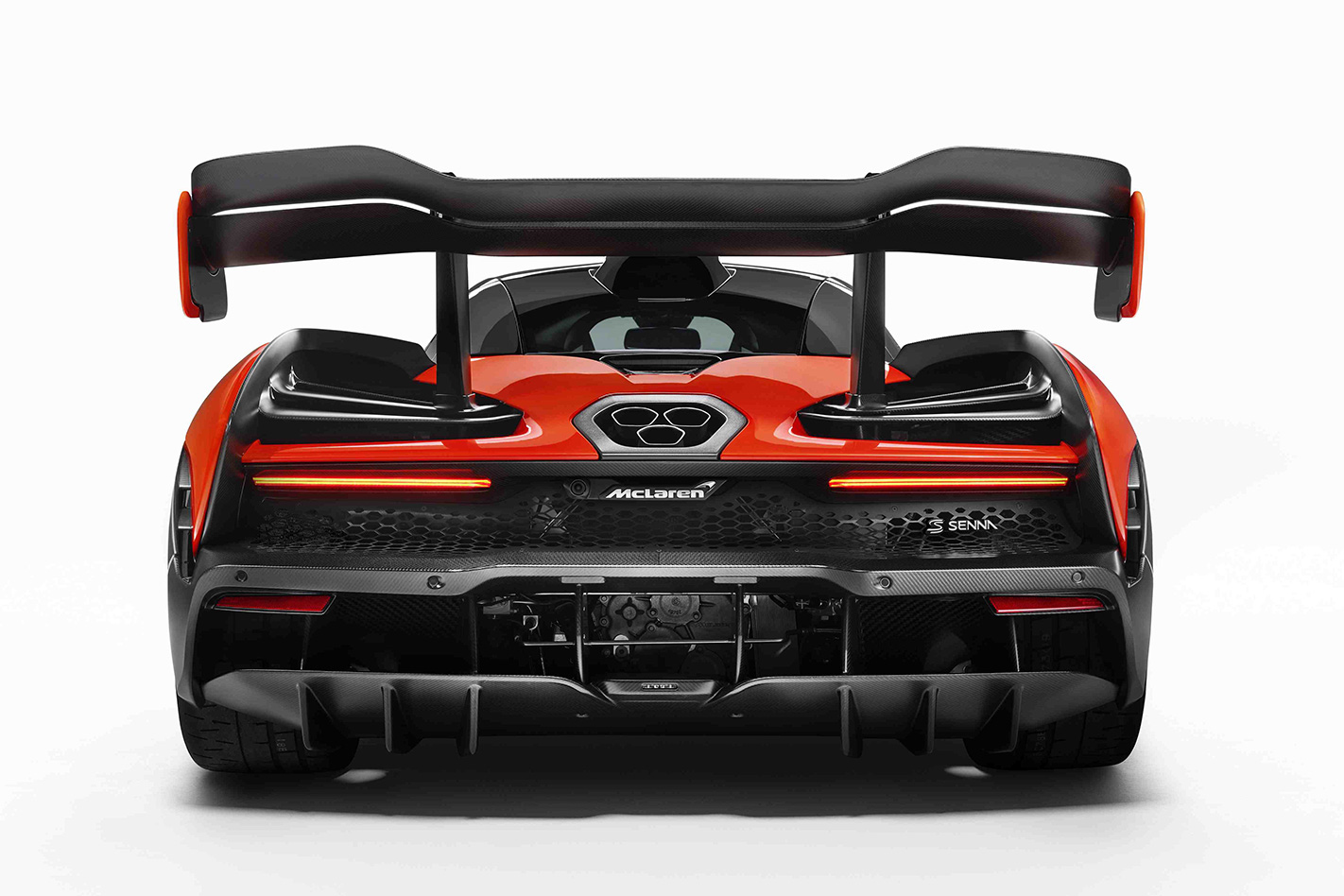
“The resulting area of low pressure draws hot air out from the high-temperature radiators and engine bay, with the louvres ensuring that the airflow does not impact the efficiency of the rear wing. The ‘slash cut’ finishers of the unique Inconel and titanium exhaust exit through the lowest rear deck (measured at the trailing edge) of any McLaren road car, the angle of the pipes directing exhaust gas away from the rear wing.
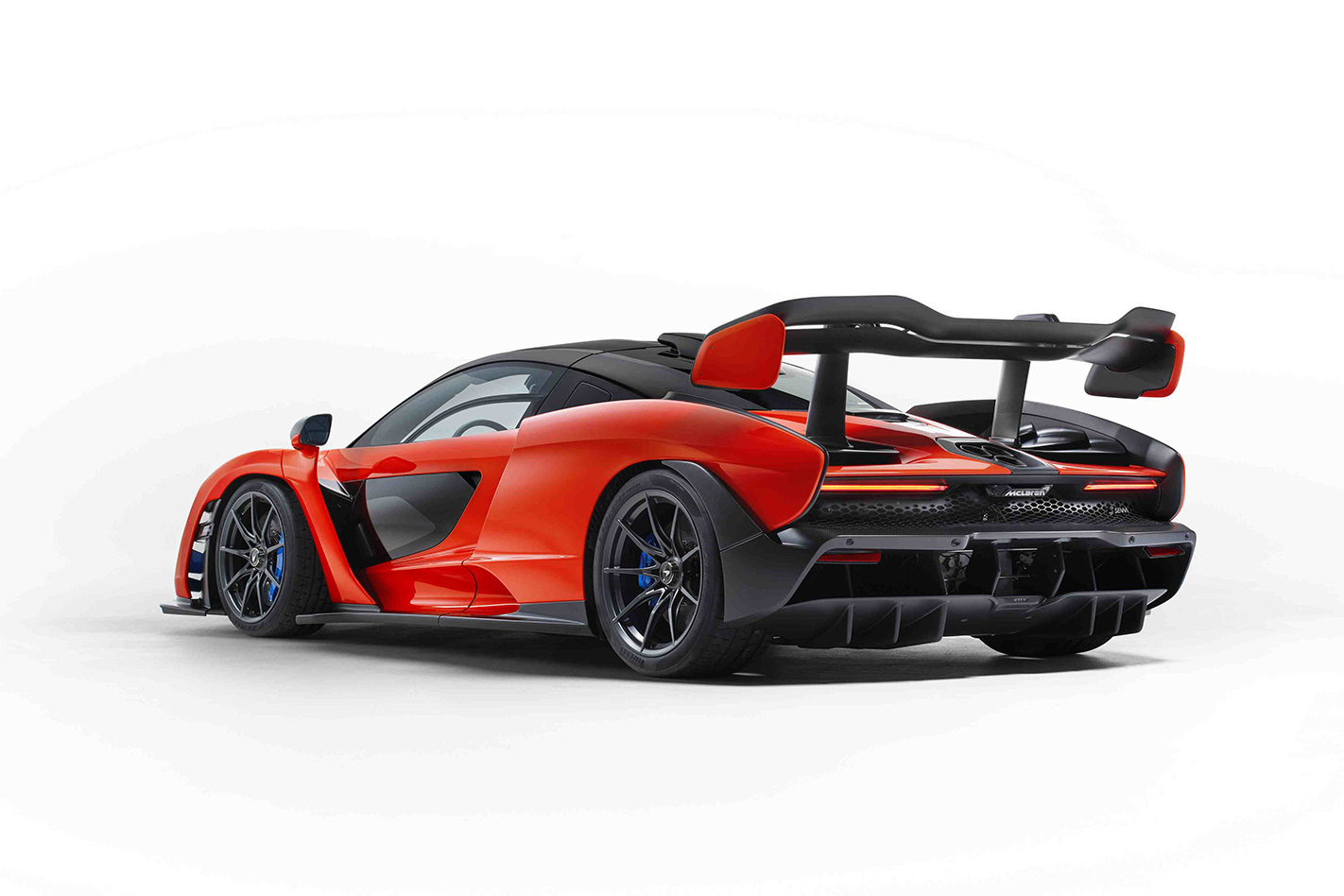
The highlight, though, is that GT racecar-style double diffuser. “Created as a single piece of carbon fibre, it begins under the rear axle and as it increases in height accelerates air out from under the vehicle. This creates a low-pressure zone that sucks the McLaren Senna even tighter to the ground.
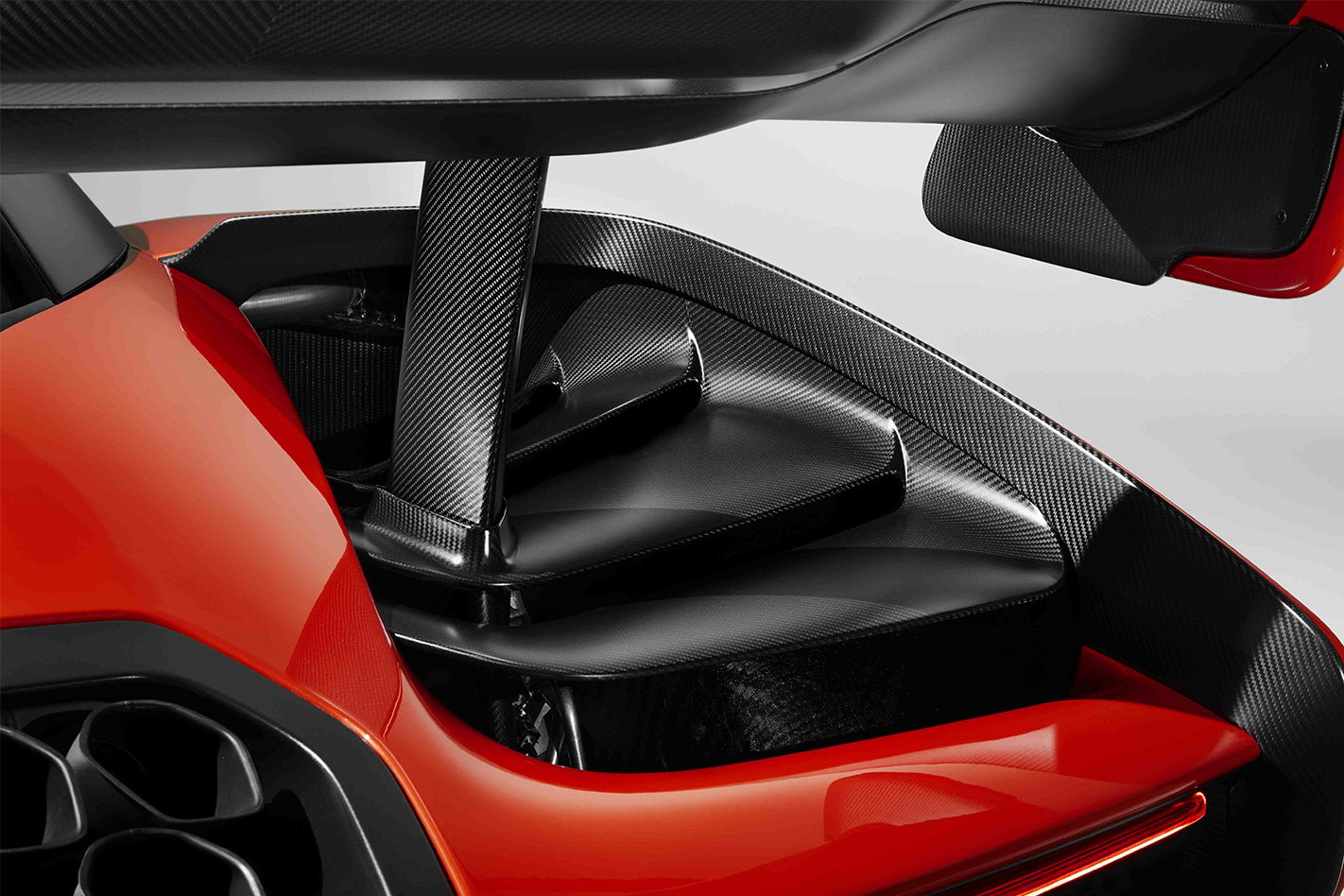
“Equally unmissable is a huge, double-element carbon fibre rear wing that at its highest point sits 1219mm from the road when the car is stationary. Hydraulically actuated and with a planform surface area of more than 6500cm2, the wing constantly adjusts to optimise the levels of downforce and aerodynamic balance and functions as an airbrake under heavy braking.”
“Those fortunate enough to drive the McLaren Senna will feel the cockpit come alive with the sound of air rushing into the roof-mounted ‘snorkel’ intake and mixing in the carbon fibre plenum, producing precisely tailored high-frequency sounds that deliver a vivid experience.
“At the same time, low-frequency sounds from the engine are transferred into the cockpit through unique engine mounts, exciting the double-walled rear structure of the carbon fibre Monocage and amplifying every change in engine revs, making it seem almost as if the V8 is sitting alongside the driver.”
The McLaren Senna will make its debut at the 2018 Geneva Motor Show, which starts on March 6.
“Legalised for road use, but not sanitised to suit it.” This is what McLaren says about its newest car, the McLaren Senna.
The Senna, which borrows F1 legend Ayrton’s surname, is driven by the most powerful road car internal combustion engine ever created by McLaren, the company says.
With a whopping 588kW and 800Nm at its disposal, the McLaren Senna takes the crown from the P1 by 46kW.
This is thanks to a dry-sump 4.0-litre, twin-turbocharged V8 which puts that power through a 7-speed dual-clutch, then to the rear wheels.
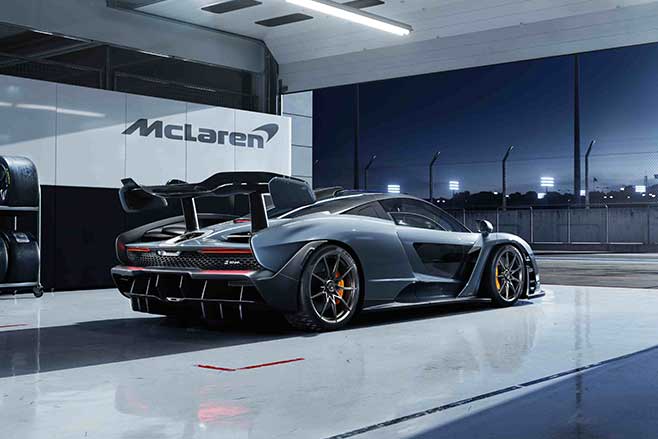
We do know that the Senna has a dry weight of only 1,198kg, which the company says makes it the lightest McLaren since the McLaren F1 supercar. The F1 only weighs 1,018kg dry.
Every body panel is made from carbon fibre, and McLaren claims the Senna has the strongest monocoque chassis it has ever built.
In addition, the Senna heralds a “new-generation” of active aerodynamics for McLaren, with the company claiming it has achieved “an unprecedented level” of aero control and downforce. The Senna’s huge rear wing constantly adjusts itself to optimise downforce and balance.
Also visually prominent are the many, many vents which feature on the Senna. McLaren says its design means you can’t follow a single line from the front of the car to the back without passing through or over a vent.
The vents all perform various functions, but are primarily drawing heat away from the engine and cooling various components without negatively affecting aerodynamics.
The Senna’s double-wishbone suspension system (called RaceActive Chassis Control II by McLaren) has hydraulically interconnected dampers and hydraulic anti-roll bars.
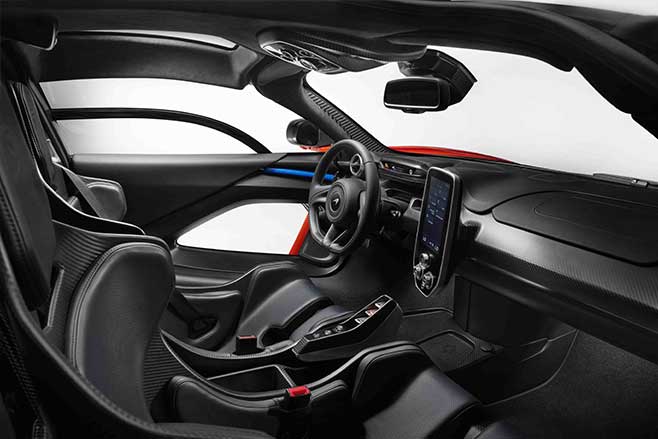
Inside, a steering wheel with no buttons or switches features, with driver controls kept to a minimum “to reduce cockpit clutter.”
Oh, and you can’t buy one anymore. They cost £750,000 ($1,336,700 AUD), only 500 will be built, and they’re all already spoken for.
LIKE many of the best ideas, AMG started in a humble garage.
Occupying a modest pair of units in the old mill building in Germany’s Burgstall, Hans-Werner Aufrecht and Erhard Melcher’s ambitions of motorsport glory were, in effect, born from tragedy.
AMG, named for the two founders’ initials and Aufrecht’s birth town, Grossaspach, billed itself as an engineering office and design and testing centre for the development of racing engines, a function Mercedes-Benz itself had withdrawn from following the 1955 Le Mans disaster, when driver Pierre Levegh’s 300 SLR ploughed into a packed grandstand, killing 83 spectators and injuring more than 180.
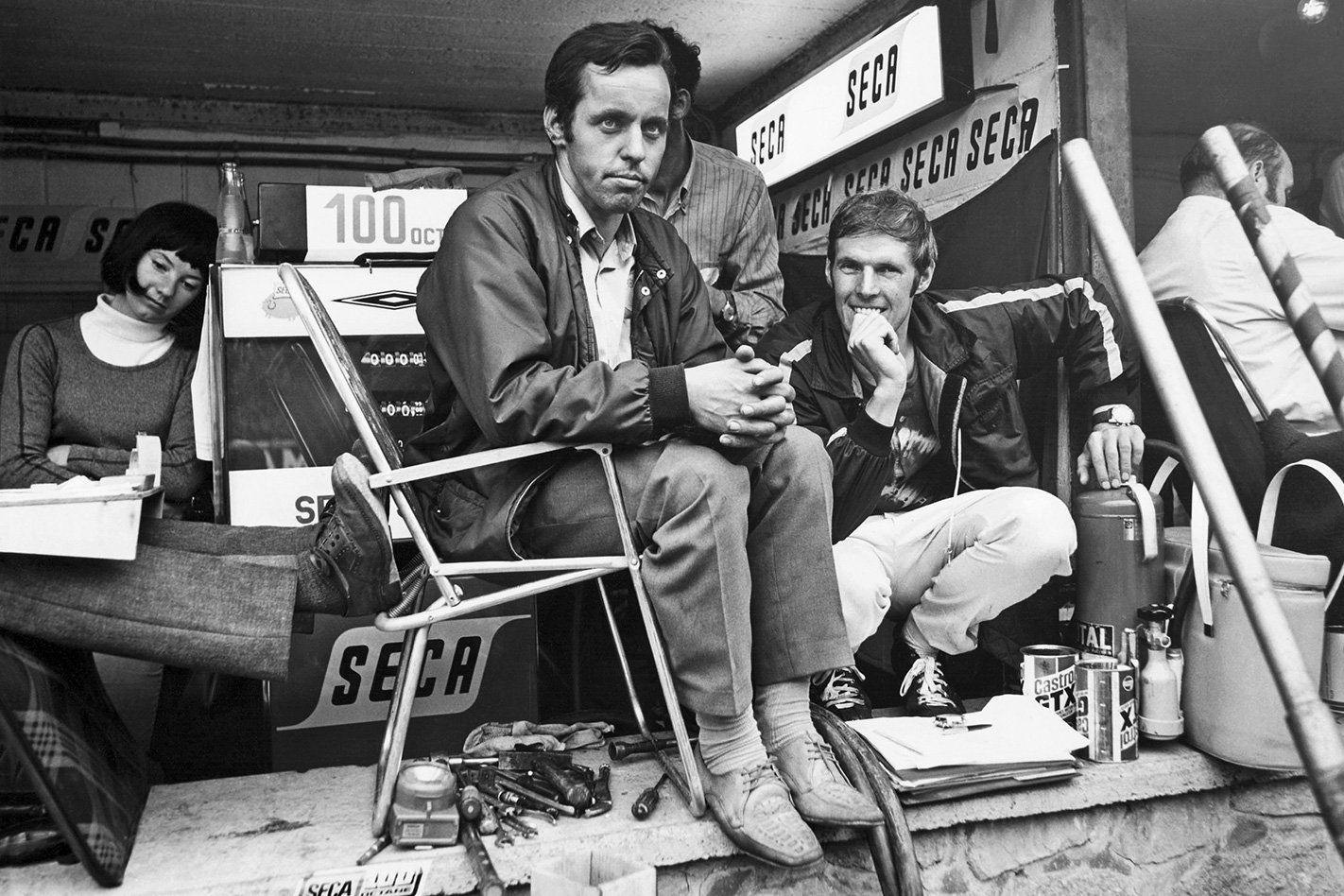
Mercedes put its toe back in the water with Karl Kling’s six-cylinder 300 SE touring car, as well as entries in rallying campaigns such as when Kling himself drove a 220 SE to victory in the 1961 Trans African rally. A decade after the horror at La Sarthe, Aufrecht and Melcher were still negotiating some tricky political hurdles at Mercedes-Benz as motorsport-mad engineers for the brand with an unerring desire to build racing cars.
Both had recognised the competition promise of Mercedes’ 300 SE engine. Although it developed a relatively puny 127kW in production guise, Melcher developed a high-pressure fuel injection system adapted from the 300 SL Gullwing that allowed it to rev to 7200rpm, lifting peak power to 177kW.
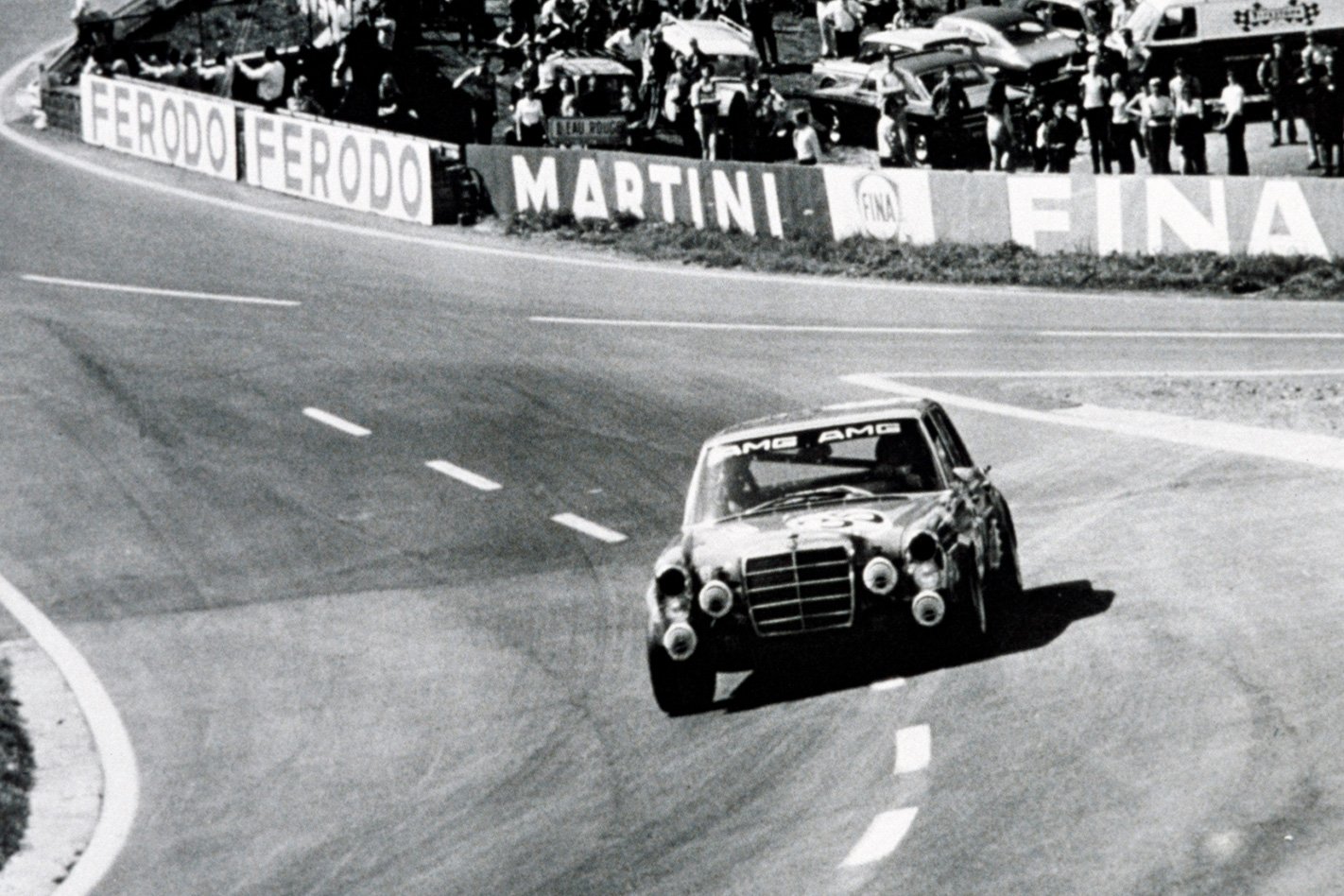
Fortunately for Aufrecht and Melcher’s future career prospects, the car was a phenomenal success, with Manfred Schiek claiming six wins in eight races and the 1965 title in short order, in effect establishing Aufrecht and Melcher’s bona fides as borderline genius race engineers. Schiek never got to enjoy the fruits of his success, his untimely death in a crash at the 1965 Tour d’Europe near Prague only bolstering Mercedes’ resolve to steer clear of motorsport activity.
Aufrecht’s vision was always to develop road cars that would sell based on the credibility of track success. In late 1966 he left Mercedes-Benz and persuaded Melcher to join him and by 1967 ‘Aufrecht Melcher Grossaspach Ingenieurbüro, Konstruktion und Versuch zur Entwicklung von Rennmotoren’ was born. Snappy.
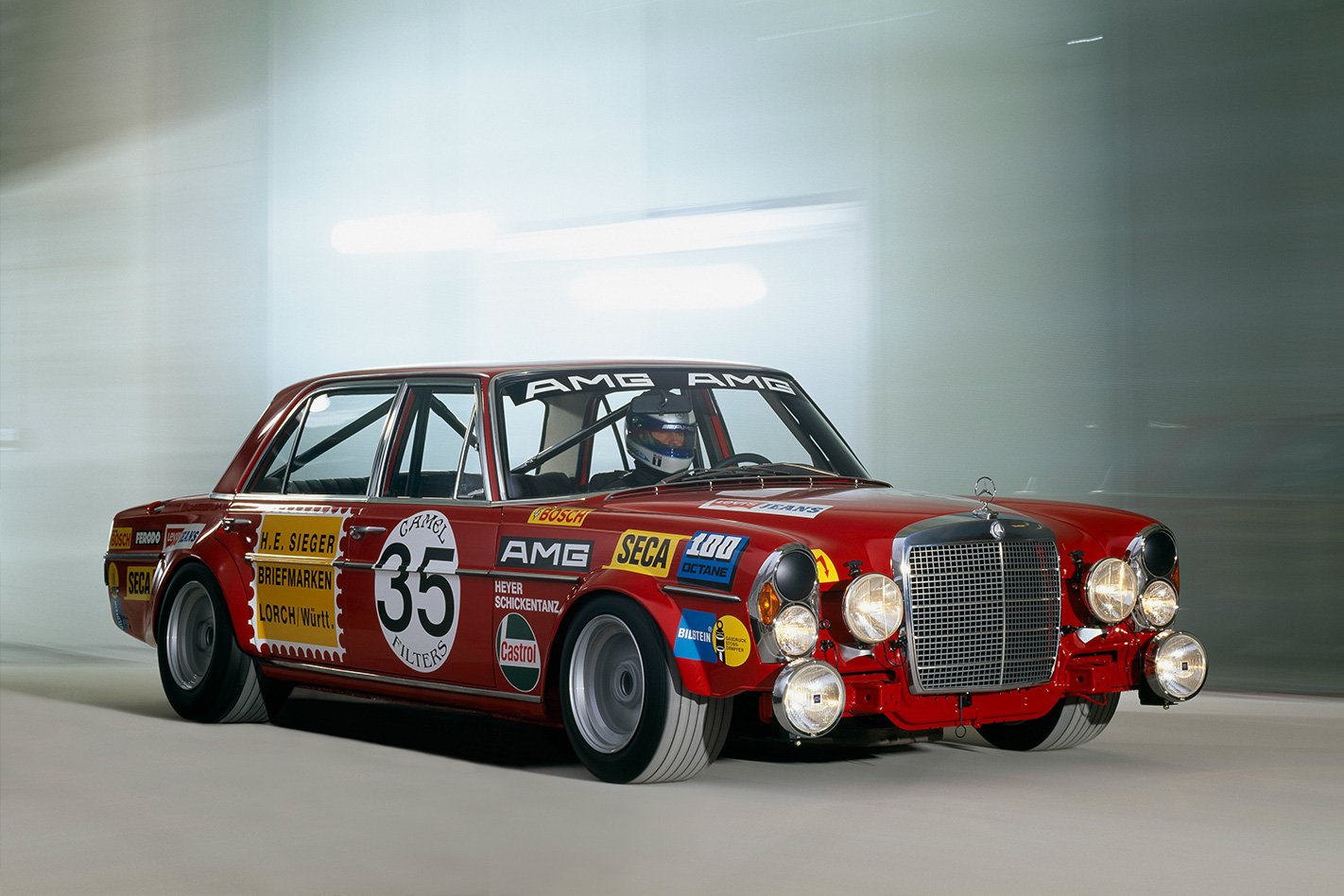
Despite only five examples ever being built, the Red Sow entered into legend and cemented AMG’s reputation for overwhelming power and indestructible build integrity.
Its end was ignominious. Helmut Kelleners piloted a 6.8 at Hockenheim, but after an accident on the East Curve, he appeared in the pits, handed Aufrecht the car key and said, “This is your key, but you don’t need it anymore.” Kelleners never drove for AMG again, but the car was repaired. The ’71 Spa car was bought by French aerospace engineers at Matra for its ability to accelerate to 200km/h in 1000 metres in order to model the tyre stresses of landing fighter aircraft on motorways.
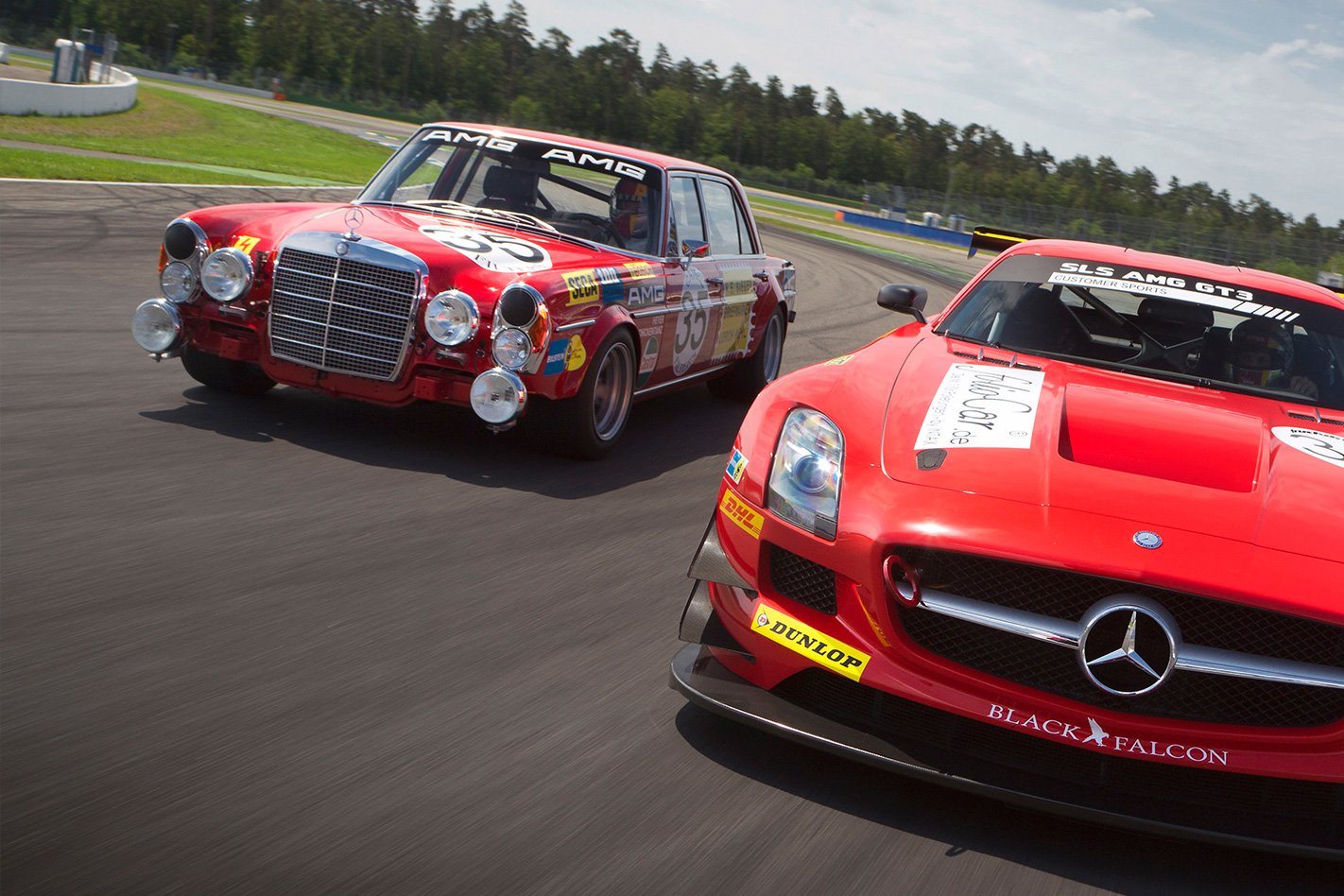
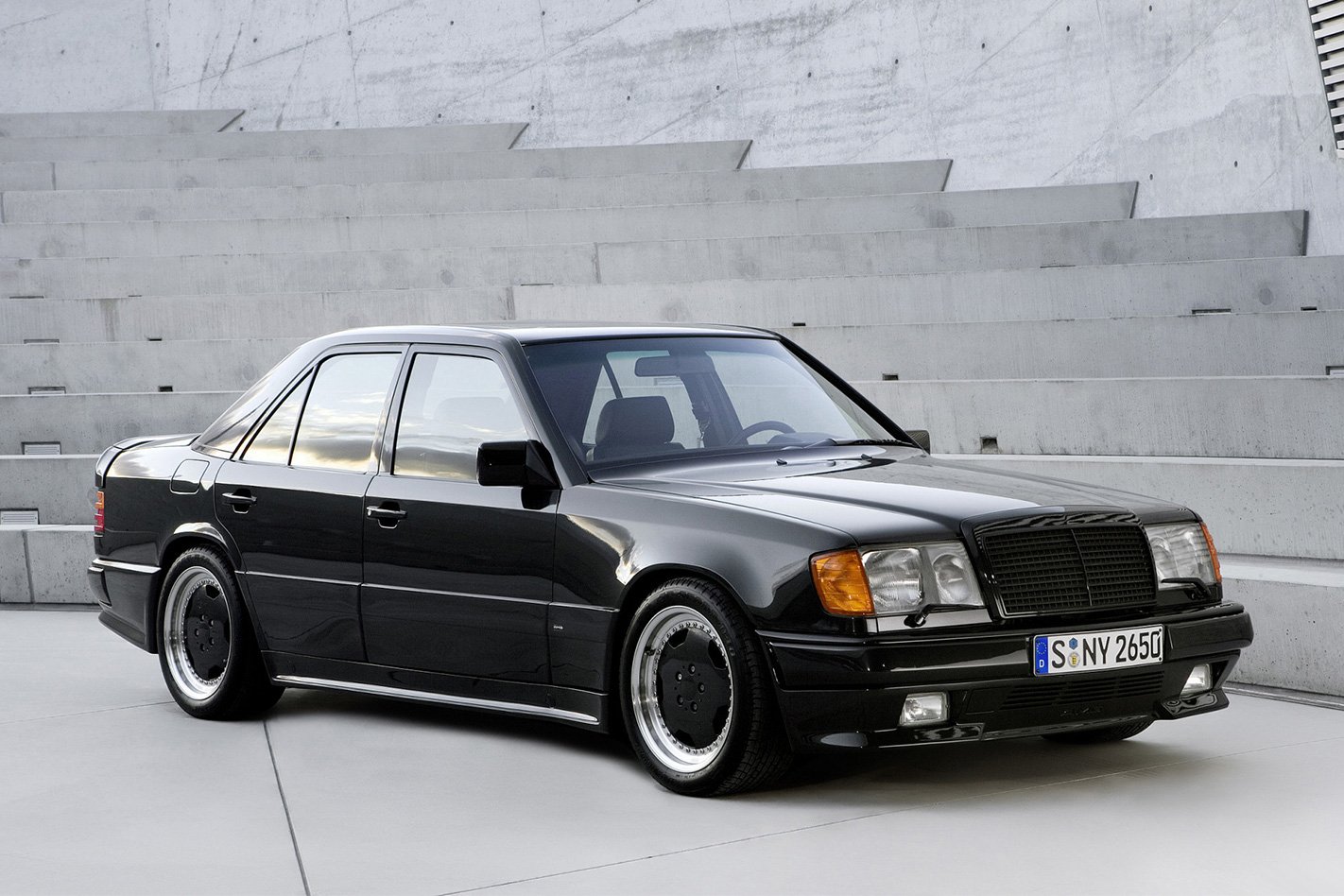
AMG became an engine manufacturer in its own right in 1984 with Melcher creating an innovative four-valve cylinder head. The company continued its gradual metamorphosis from a tuning house to a respected developer of vehicles with the 1986 W124 300 CE, the car that came to be known as ‘The Hammer’.
“We listened to customers even back then,” says Aufrecht. “We wanted to build a car that gave you goosebumps. We wanted to have the fastest touring car on the road and we managed to do it with The Hammer. The Americans came up with that nickname and this car was the beginning of a completely new future. That led Werner Niefer [the former MB chief executive known as ‘Mr Mercedes’] to approach us and say, “Hey, can’t we do it together?” You can see today what came of that.”
The almost inevitable contract of co-operation with Daimler-Benz AG followed in 1990, opening the door for AMG products to be sold and maintained through Mercedes-Benz’ worldwide network of service outlets and dealerships. Further expansion led to the opening of a third plant in 1990 and an increase in the workforce to 400 employees.
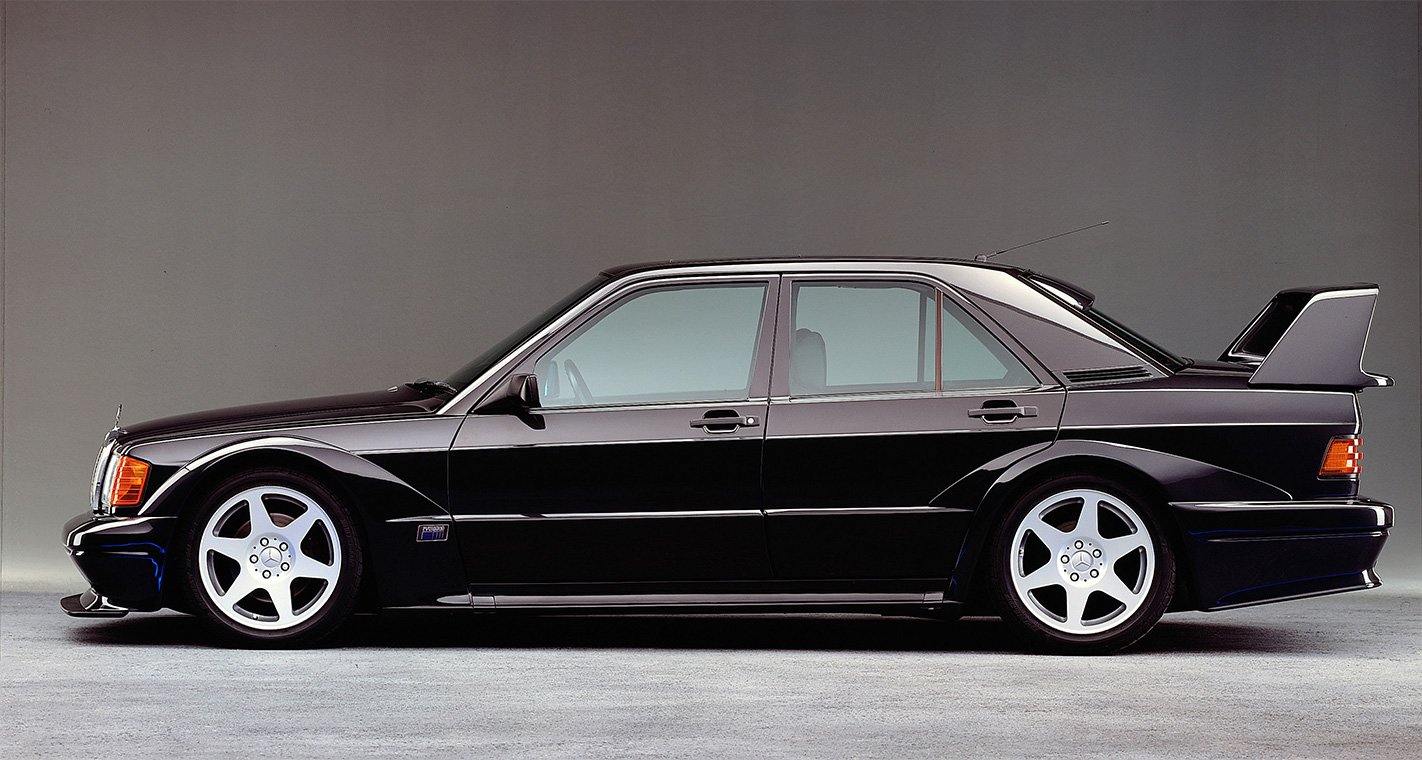
The first AMG car to be sold in Mercedes showrooms was the rare 1991 model year 190E 3.2 AMG but it took another four years for a jointly developed vehicle to appear. The Mercedes-Benz C36 AMG started life as a C280 sedan, before being transformed courtesy of an AMG-assembled 206kW 3.6-litre straight-six. A rival to BMW’s hugely successful E36 M3, it also ushered in AMG’s involvement as official Formula 1 safety car provider, a relationship that continues to this day. Two years later, the C36 was replaced by the C43 AMG, marking the first time a V8 engine had been fitted to a C-Class.
The introduction of this engine was also marked by a change in the way that AMG cars handled. A more nuanced dynamic palette replaced a prior philosophy where huge power was enough to draw sales without there always being a great deal of emphasis on control.
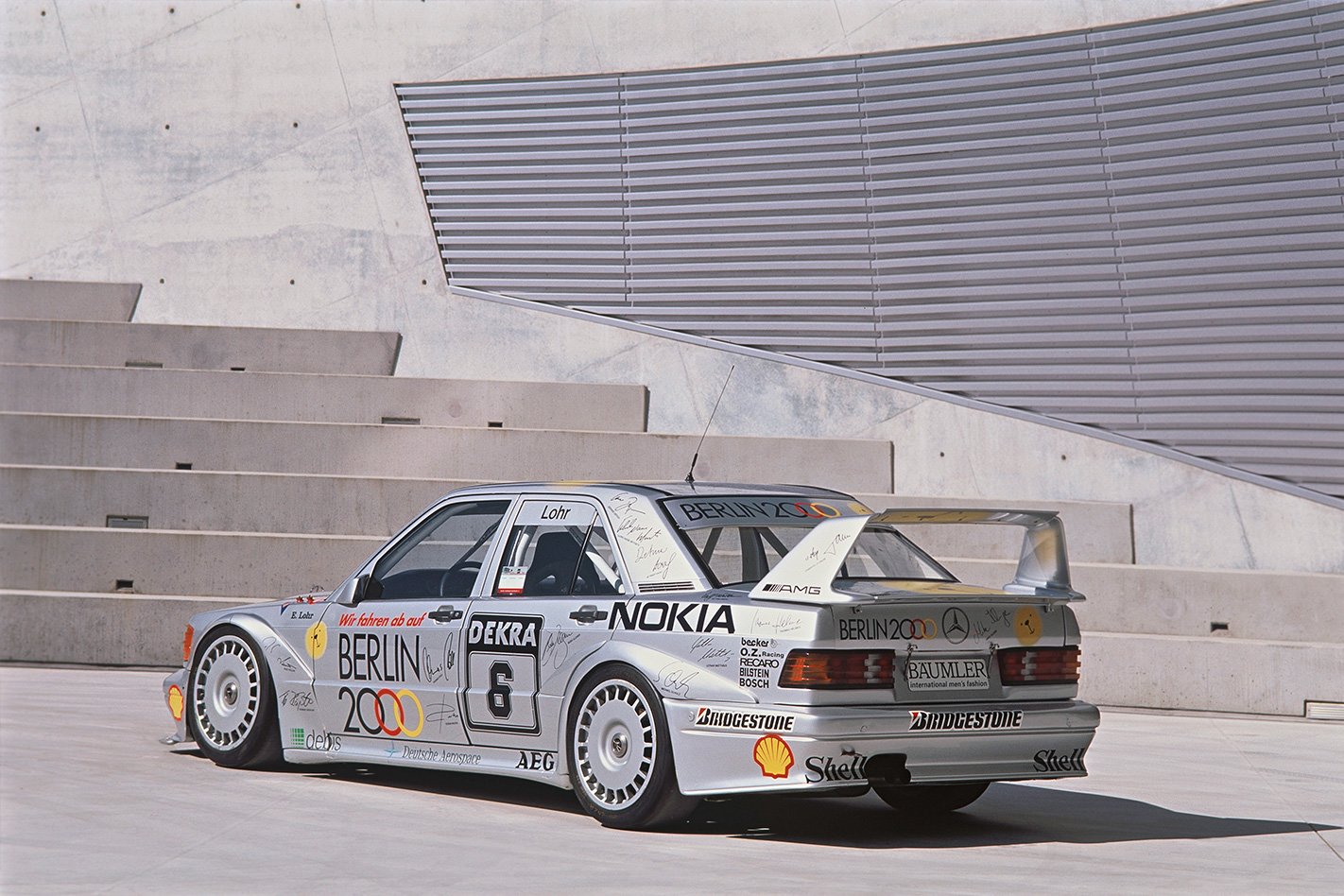
The following year saw the Mercedes GP Petronas Formula 1 team adopt AMG branding, with a trio of Drivers’ and Constructors’ championships following in 2014, 15 and 16. There then followed an onslaught of AMG product development, with the hugely successful A/CLA/GLA 45 AMG four-cylinder cars and the Mercedes-AMG GT models capitalising on the post-GFC appetite for premium sports models.
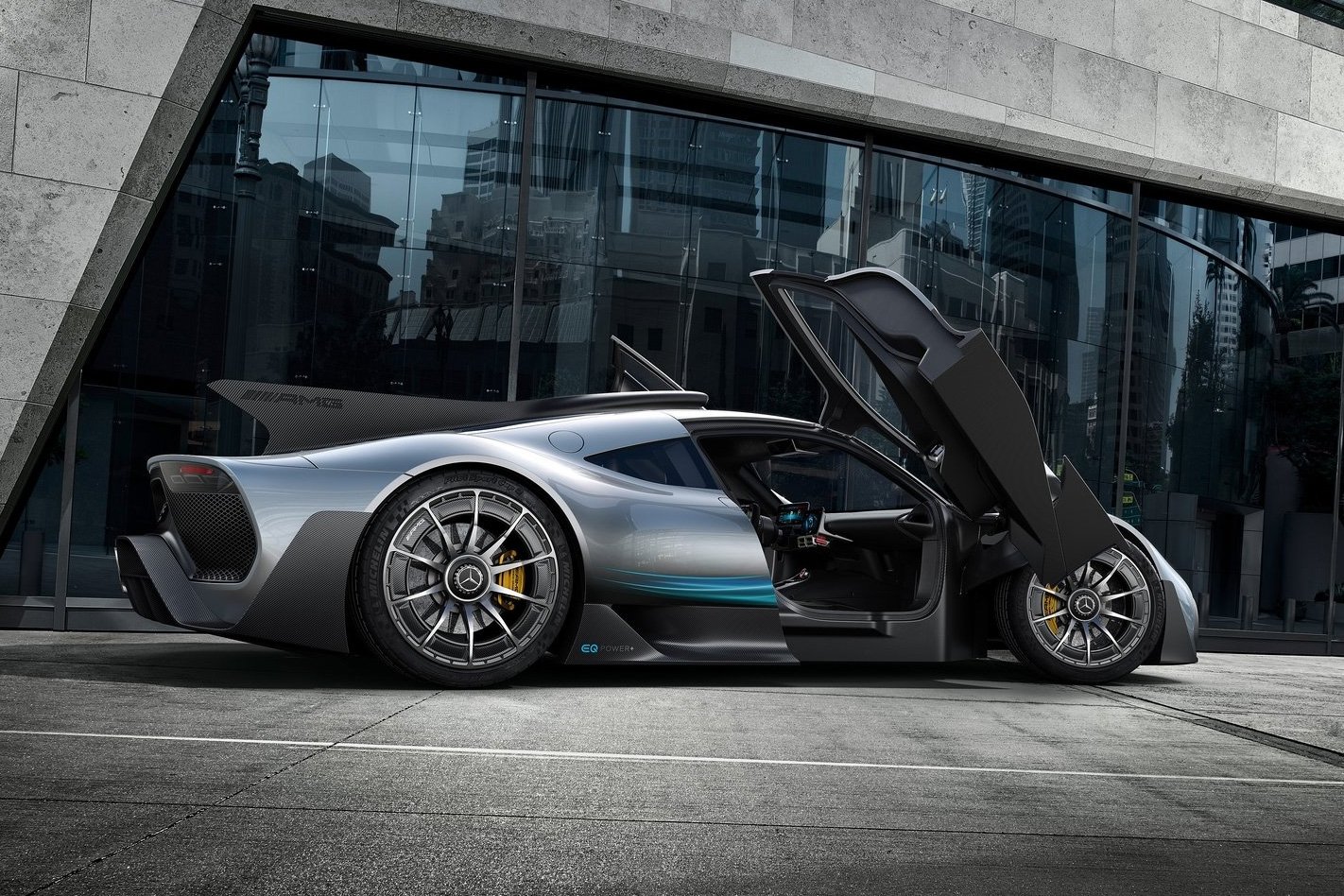
The future? You only need look at the dizzying technology of the Mercedes-AMG Project One for a glimpse in that direction. AMG has reached the pinnacle of world motorsport, developed some of the world’s most exciting road cars and has become an integral part of Mercedes-Benz’s product portfolio.
It’s a long way from that Burgstall mill, but in half a century AMG hasn’t deviated one iota from its initial vision. Long may that continue.
THE BATTLE between Ford and Holden can still raise some tribal hackles, even if these days it’s more like two bald guys scrapping for a comb on the deck of the Titanic than the epic stoush from when the pair dominated Australian sales.
But don’t let the spilled ink (and tears) over Holden’s demise as a local manufacturer fool you into thinking Ford is doing less badly. Globally the Blue Oval is facing what could well turn out to be mortal peril.
The big issue is how both multinationals weathered the Global Financial Crash. GM pretty much surrendered, ducking in and out of bankruptcy in the U.S. and thereby shedding many of its old liabilities. Ford used huge loans and mortgaged its assets to stay afloat, a decision that saw it sell off its posh subsidiaries Jaguar and Land Rover to Tata and then Volvo to Geely.

The premium market has boomed and all of Ford’s former minions have gone on to enjoy far greater success than they ever did as part of the family (see below). Ford is left as the only one of the world’s top eight carmakers not to have an upmarket subsidiary; let’s not even pretend Lincoln qualifies.
It’s not just sales volumes and cash – Ford has also lost the economies of scale it used to enjoy by sharing its platforms and powertrains.
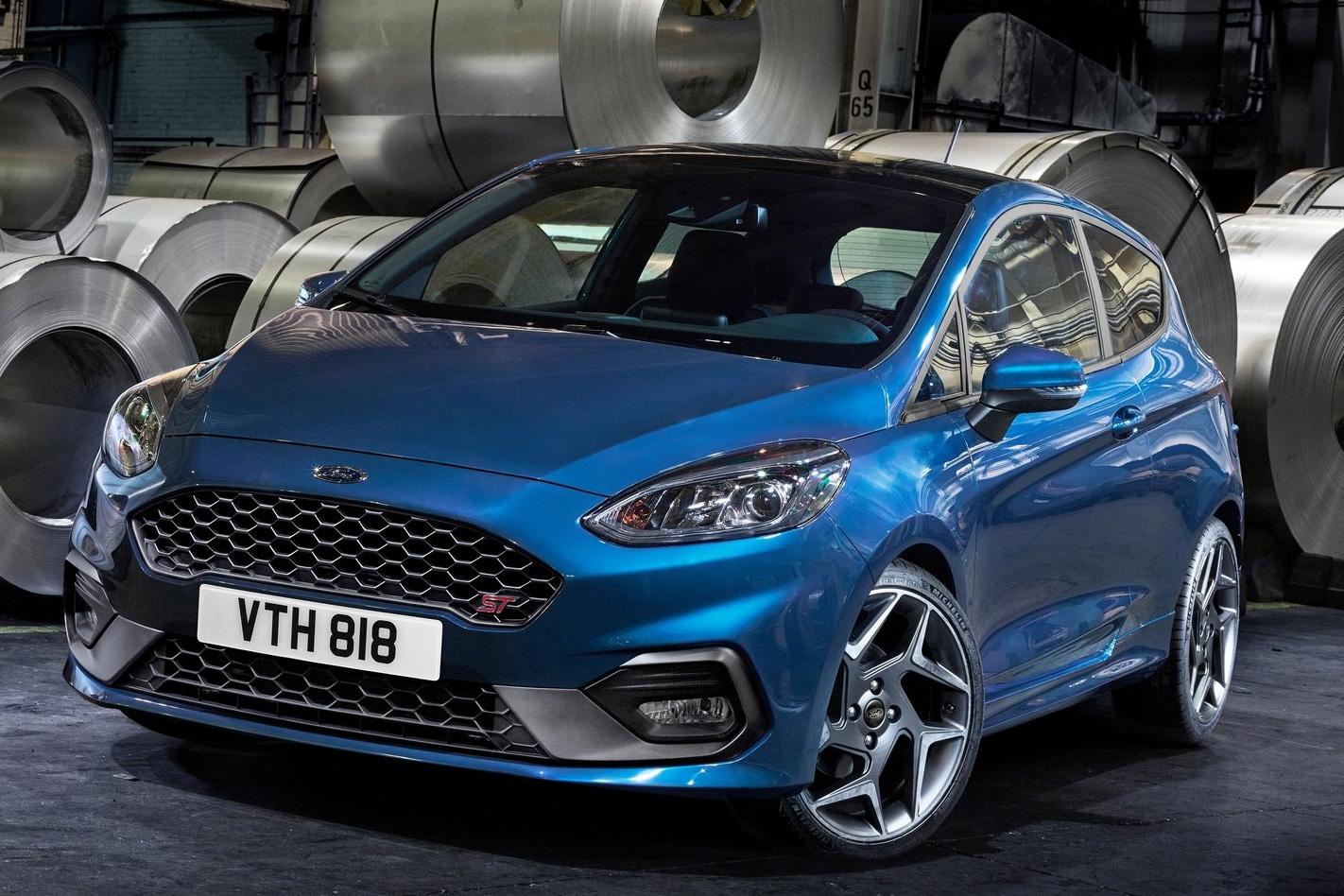
Volvo and JLR have both developed their own architectures and engine families, and the ‘One Ford’ strategy that Uncle Henry used to be so proud of – with models sold around the world – is already crumbling. The new Fiesta is Europe-only, the rest of the world sticking to the old car.
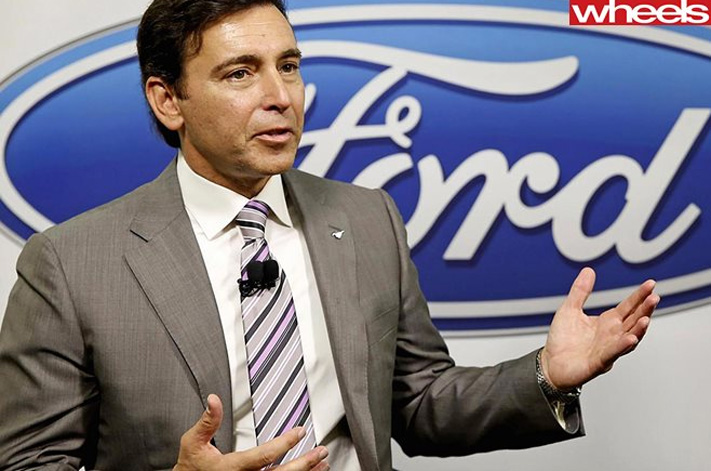
Investors have made their preference clear, with GM’s share price rising by a third in the last year while Ford’s has fallen, the slump leading to the ousting of former CEO Mark Fields in May.
Fields’ successor, Jim Hackett, has adopted the sort of strategy used by a gambler with one last throw to make his mortgage payment, announcing Ford is going all-in on electrification and autonomy. And trucks – the sales of pickups in the U.S. being one of the Oval’s last sources of easy profits. But doing that means making huge cuts to the development of conventional models, despite Ford having some of the oldest platforms (and lowest margins) on the market.
Hackett says he wants Ford to become a ‘mobility provider’ rather than a car company. Hindsight might prove that to be a visionary manifesto, or the first line on the corporate suicide note.
Ford sold Jaguar and Land Rover to Tata in 2008 for $2.3bn, about half the combined total it had originally paid and after investing billions in product development.
In 2007, the two brands had sold a combined total of just 287,000 cars, but by last year volumes had more than doubled to 604,000 units. Volvo’s turnaround is only slightly less dramatic, from 334,000 cars in 2009, the final year of Ford ownership, to 534,000 in 2016 – this before the new ‘40’ platform comes on line.
Sales, and profits, that could have helped turned Ford around.
