
If you happen to be a billionaire, chances are there are a few people who don’t like you. There might even be a few people who want you sleeping with the fishes, so to speak. Same goes if you’re a politician. Point is, it’s a dangerous world out there for the one per cent, so you’ve got to stay safe while you’re out and about. How? Have someone build you an armoured car. They’re so cool, even the Pope has one.
The most famous example might be’ The Beast’. That’s the nickname given to each iteration of US presidential state car. After the assassination of JFK in 1963 they’ve been getting more and more advanced, but since we know very little about the specifics of ‘Limousine One’ as it’s also known, we turn to Germany to find out how to make bulletproof – and bombproof – cars.
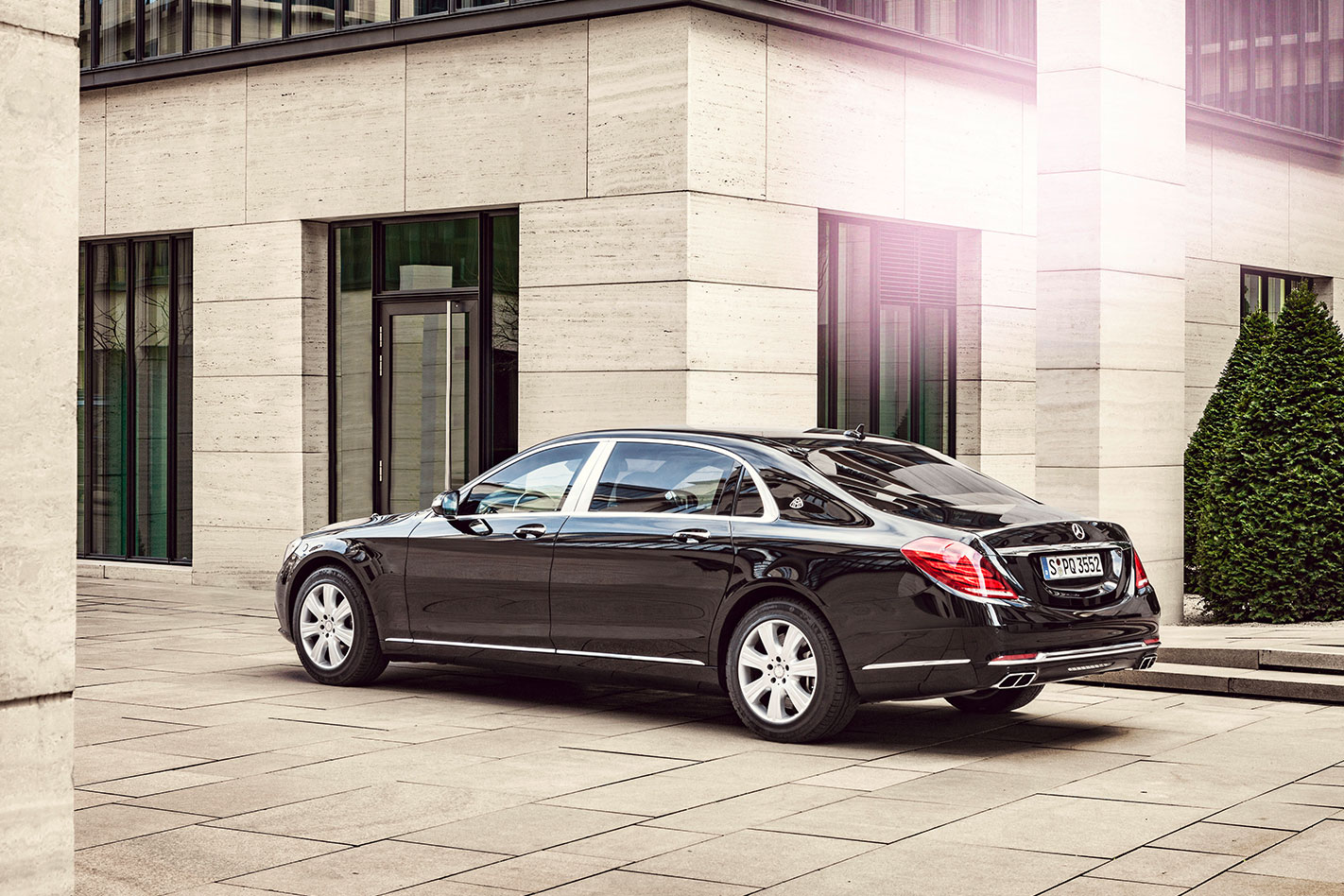
Criteria for the VR10 level of protection, according to Mercedes, state that the “bodywork and windows must be able to withstand hardened steel core bullets fired from an assault rifle.” In addition, the S600 Guard meets blast protection in accordance with Directive ERV 2010. Mercedes says the criteria for this directive is not in the public domain, but Mercedes Australia told us an independent test is carried out by a German government branch.
It’s believed a vehicle must be capable of withstanding a blast from 15kg of TNT from a distance of just two metres to pass the test. The TNT is placed at a height of one metre above the ground so the blast impacts the doors, windows, and B-pillar. The tick of approval given to the S600 Guard by Germany’s Federal Office of Criminal Investigation would suggest it’s pretty much bombproof.

Importing any Guard vehicle into Australia is a no-no due to the lack of ADR compliance. Oh, and they’re also sometimes classified as weapons. Try stopping a crook in an armoured V12.
HOW THEY ARE MADE
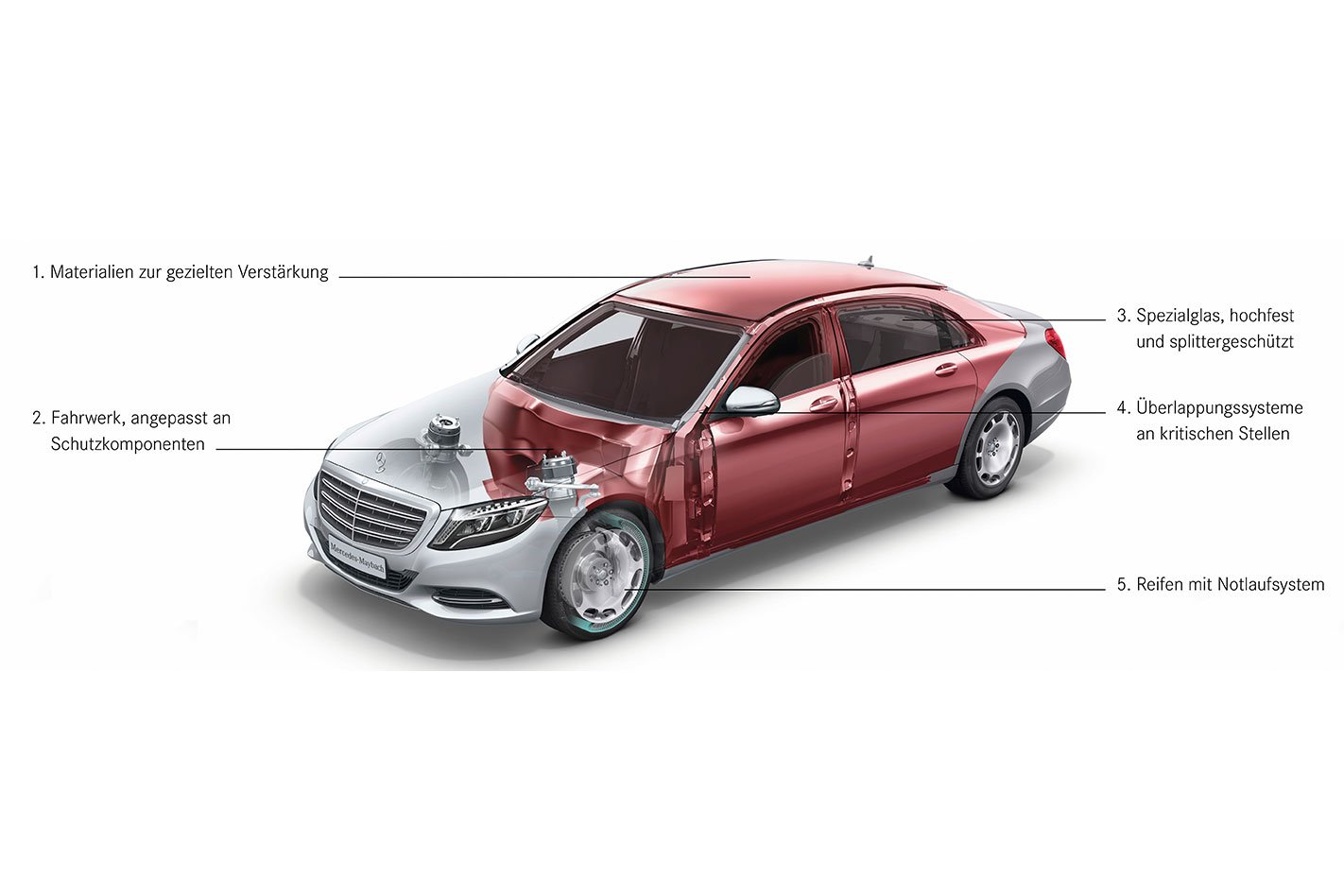
While anyone inside the vehicle is safe from attackers, avoiding the ambush in the first place is the most desirable outcome. To this effect, the S600 Guard is almost indistinguishable from the non-armoured version. Even from the inside, the untrained eye would have a hard time spotting the myriad differences.
2. Strong Suit
Mercedes employs an ‘overlapping’ technique to ensure that particularly weak areas of a regular car, such as the spaces between doors and under wheel arches, are protected by multiple types of reinforcement. Sadly, the specific details can’t be divulged.
3. Flat Out
Making sure the occupants won’t be hurt by exterior forces is obviously the priority for an armoured car, making sure it can escape is another story. To help solve this issue, Mercedes uses advanced ‘runflat’ tyres to ensure the S600 can get VIPs to a safe location before they disembark.
4. Shattered
There’s no way to tell, according to Mercedes, that the glass used on a Maybach S600 Guard is anything but regular glass. But it’s actually made of a different material (we can’t be told what) which is thicker and coated with polycarbonate on the inside to protect occupants from splintering.
5. Weighty Issue
As the body of the S600 can weigh as much as 4000kg or more, the suspension and chassis has been rigorously strengthened to support the extra weight.
DARK HISTORY – One Unwanted Customer
Mercedes-Benz says it has been building armoured cars since 1928, which keen historians will notice pre-dates World War II. However, they’ll also know that a certain infamous German dictator rose to power about a decade after this. It’s also worth noting that this individual was quite fond of the three-pointed star. Put two and two together and, yes, Adolf Hitler had a Mercedes armoured car.

One such vehicle has been kept at the Canadian War Museum since the ’70s after having been captured by US soldiers, bought by an investor at auction, and later donated to the museum by a Canadian entrepreneur.
Emperor Hirohito of Japan was reportedly another customer of the Mercedes Guard range, opting for a similar car as his official vehicle. That particular car is still shown in the Mercedes-Benz Museum in Untertürkheim.
It wasn’t so long ago that the idea of electric racing cars was ridiculous. All spark and no bark. About as much appeal as silent movies.
Funny thing is, electric vehicles are at the cutting edge of automotive technology, yet battery-powered cars are the contemporaries of the original voiceless films. In the very late 1890s and dawn of the 20th century, battery-electric propulsion vied with internal-combustion engines for supremacy.
The fastest, cleanest and most reliable early automobiles were electrically driven. The first car to exceed 100km/h was an electric racer in 1899. On the road and in competition, petrol power took over in the early 1900s because of the range and output limits of lead acid batteries, and the widespread availability of cheap fuel from oil.
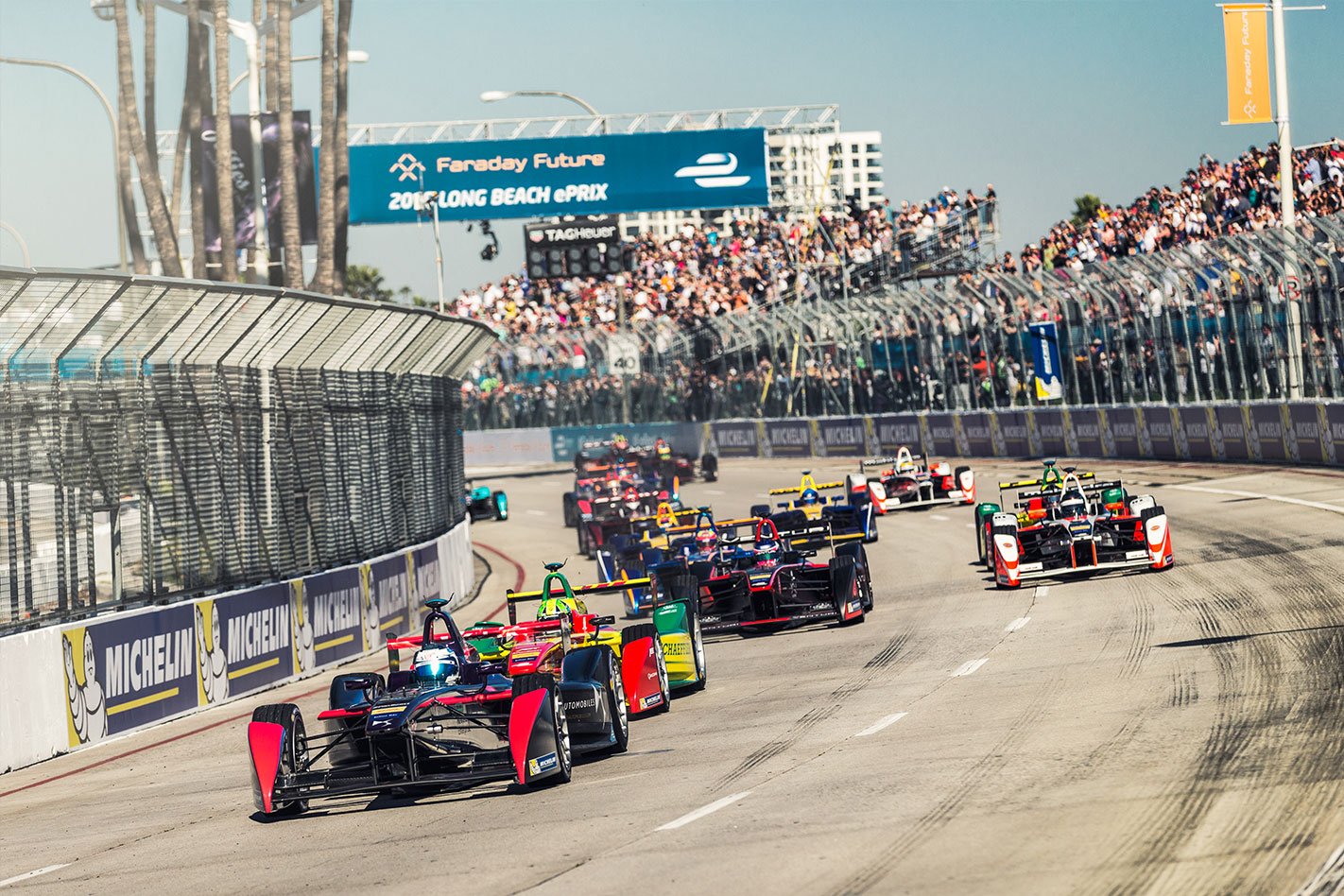
Since 2014, the world’s first dedicated electric racing championship has grown remarkably, gaining the attention of an increasing number of major manufacturers. Formula E is yet to yield any return on the hundreds of millions of dollars invested in its establishment, but it has broken barriers and given ‘green’ racing a toehold. It has infiltrated the centres or inner urban areas of metropolises like Paris, Berlin, Hong Kong, Montreal, New York City and – briefly – London, staging street race events in iconic locations that F1 has long coveted.
Formula E has been accepted by some of the world’s great cities because it doesn’t create an appreciable noise. What turns off diehard enthusiasts is exactly what attracts mega-city officials.
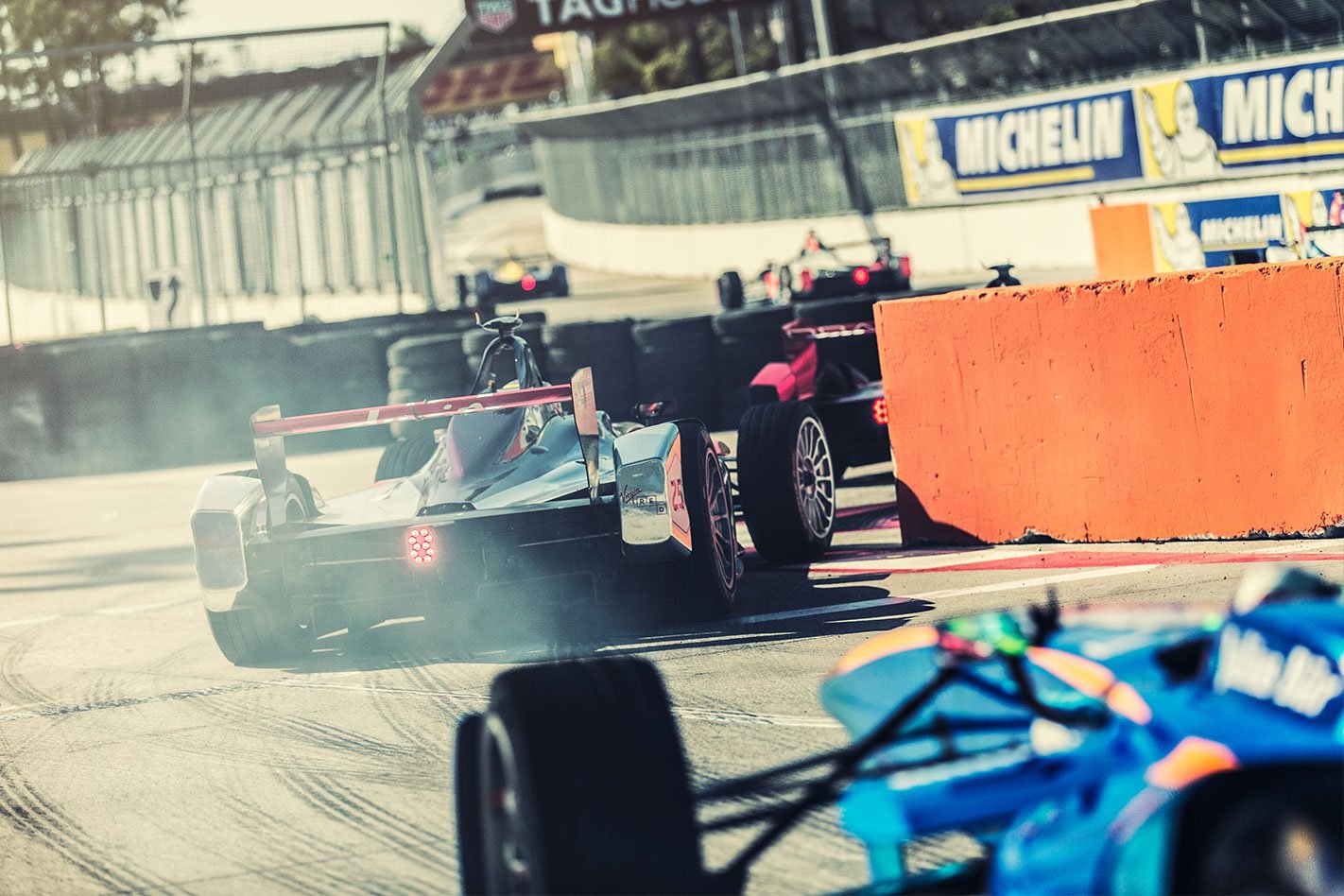
Across three seasons so far, crowds at the events have been decent rather than packed out, attracted by mostly promotional giveaway tickets, the festival atmosphere and easily accessible locations. Tellingly, though, the attendees have mainly been casual turn-ups rather than traditional racing fans.
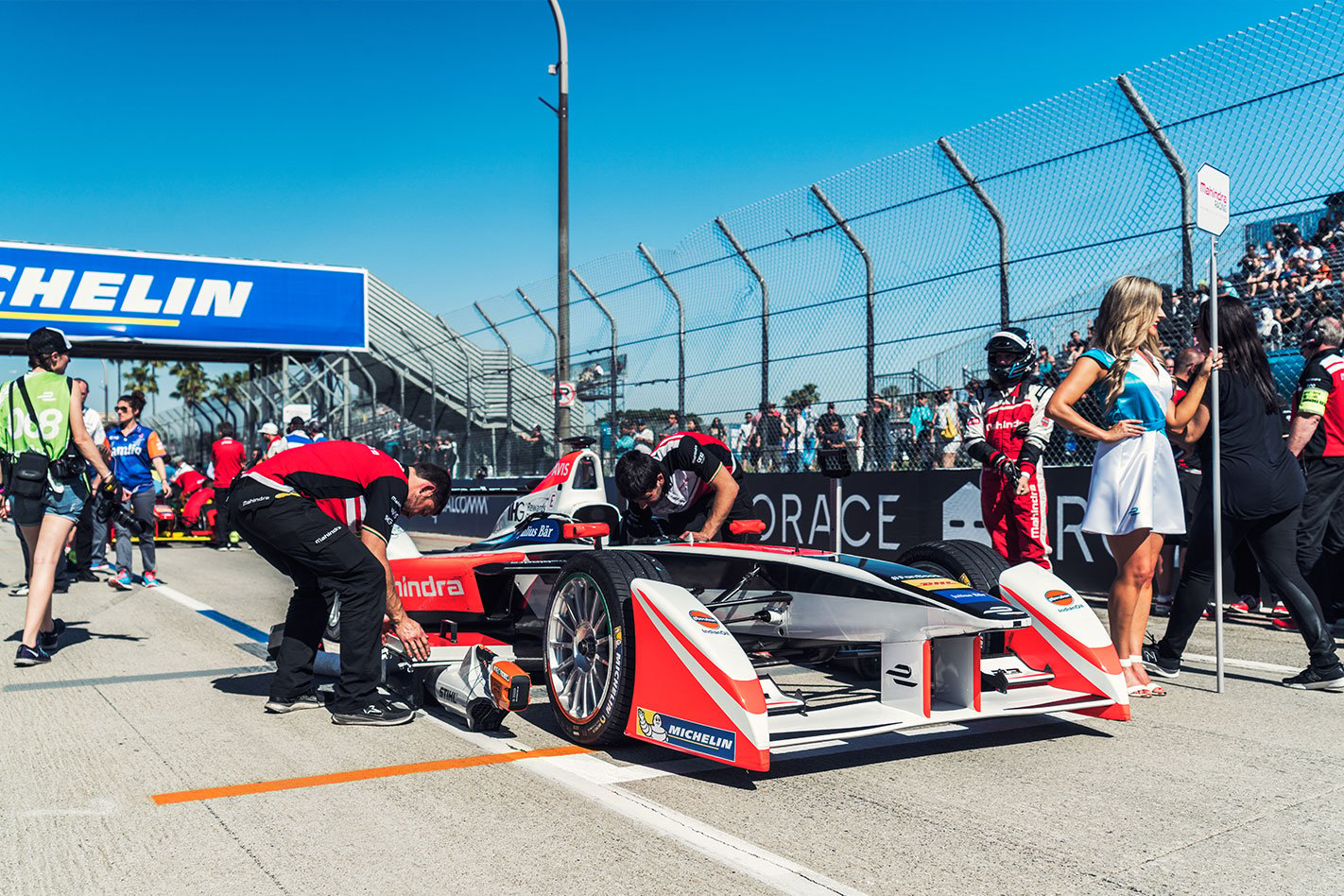
They’re quickish, despite strict control of power output, and look futuristic with their semi-enveloping open-wheeler bodywork. Amid drivers having to regulate the power drain of the batteries, another quirk is the artifice of fan-voted ‘push-to-pass’ power boosts. The major bugbear for enthusiasts is that competitors have to swap cars during the races because the battery pack charge can’t last anywhere near the moderate distance of the races. That will change for the 2018-19 season, when a new long-lasting battery system will be introduced with an all-new chassis.
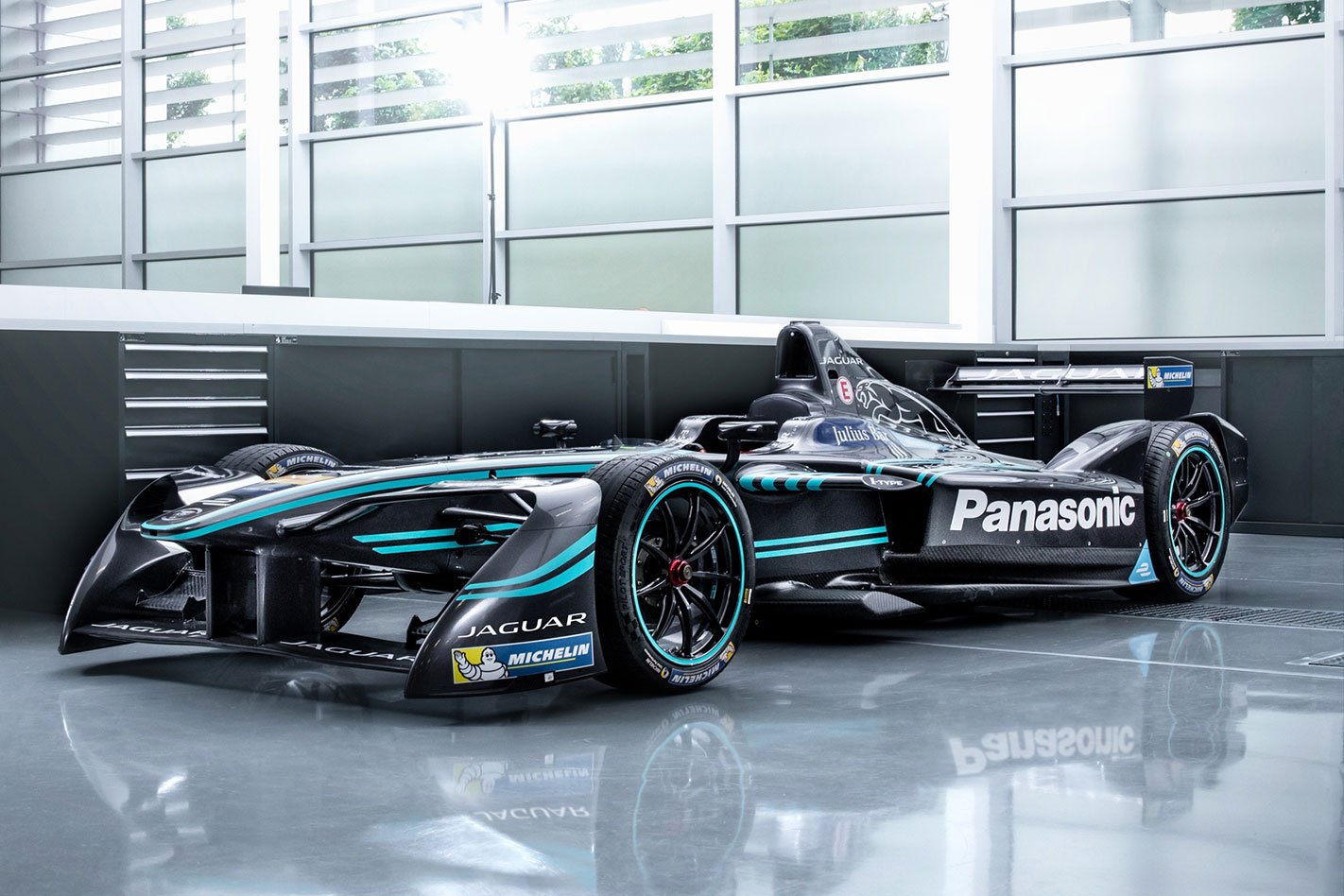
Electric racing will boom, attracting more manufacturers as BEVs become more important, and inevitably contract when too many are involved and costs spiral. As has been the way in conventional motor sport forever.
Formula E is a part of the future of racing, but it is not the future. F1, Supercars, IndyCars and other major series will adapt, retaining – or readopting – loud combustion engines as they evolve into entertainment spectaculars more than manufacturer-funded technological or marketing showcases. Or they will if they want to survive as major sports.
THERE is an exclusive club of high-powered machines capable of physics defying performance which is slowly growing.
No, we’re not talking about hyper cars capable of making a megawatt of power, it’s SUVs capable of accelerating to 100kmh/h from a standstill in less than four seconds.
Currently there are just five SUVs which claim to be able to pull off the feat, but you can be sure that honour roll will grow.
For reference, an Aston Martin Vantage V12 will crack 100km/h in 3.9 seconds (4.1s if you’re using three pedals), and the legendary Ferrari F40 broke into triple digit speeds in 4.1 seconds when it was first released. There is no doubt that this is supercar territory.
While the sub 4.0-second club is a small group, there are 12 SUVs currently on sale which can bolt to 100km/h in under 5.0s. The age of the performance SUV is well and truly upon us.
And before the predictable comments roll in, trust us when we say these SUVs can take a bend without falling over. The wobbly high-riders of old are no more.
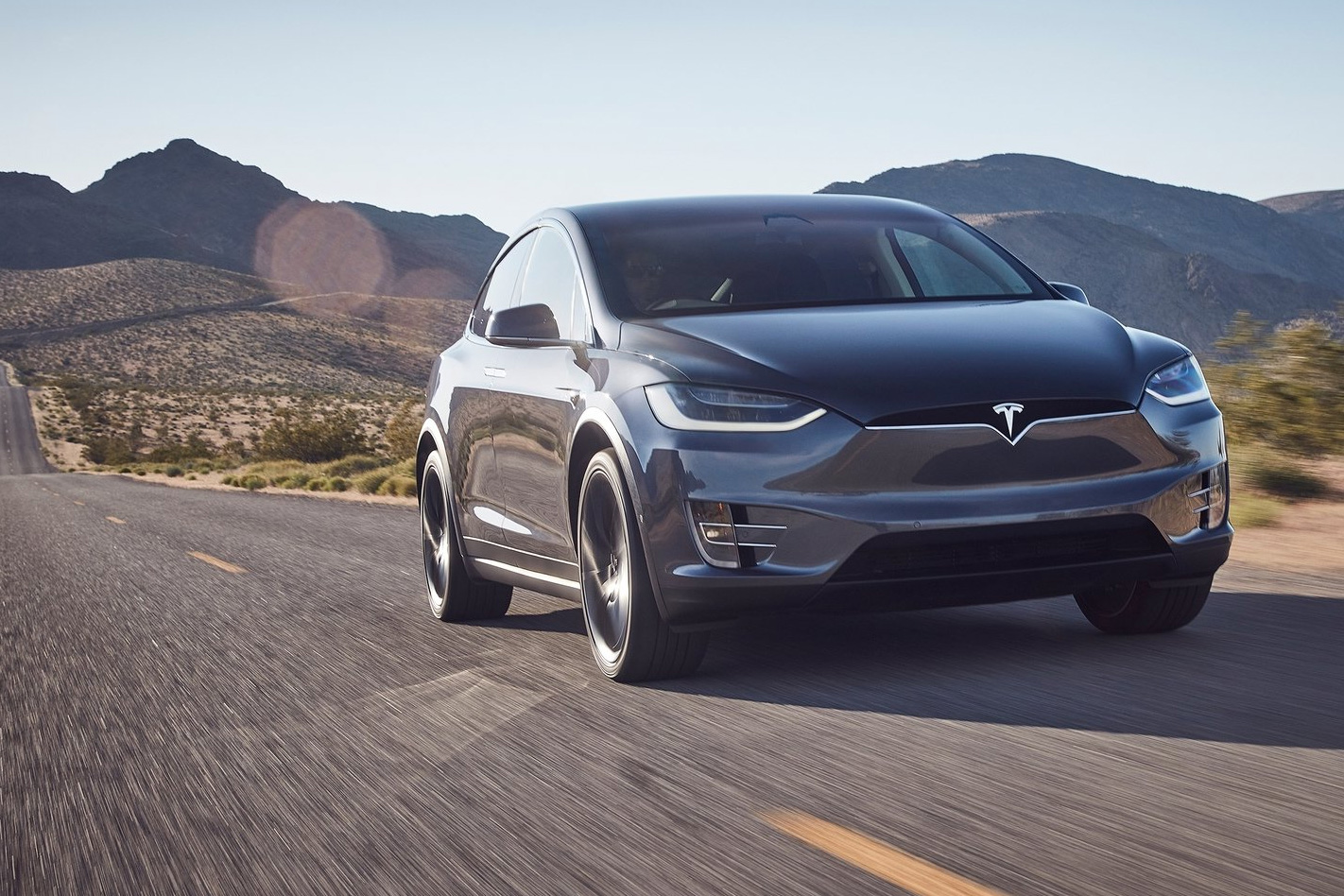
Tesla Model X P100D
0-100km/h: 3.1s
Engine: 100kWh battery with three electric motors
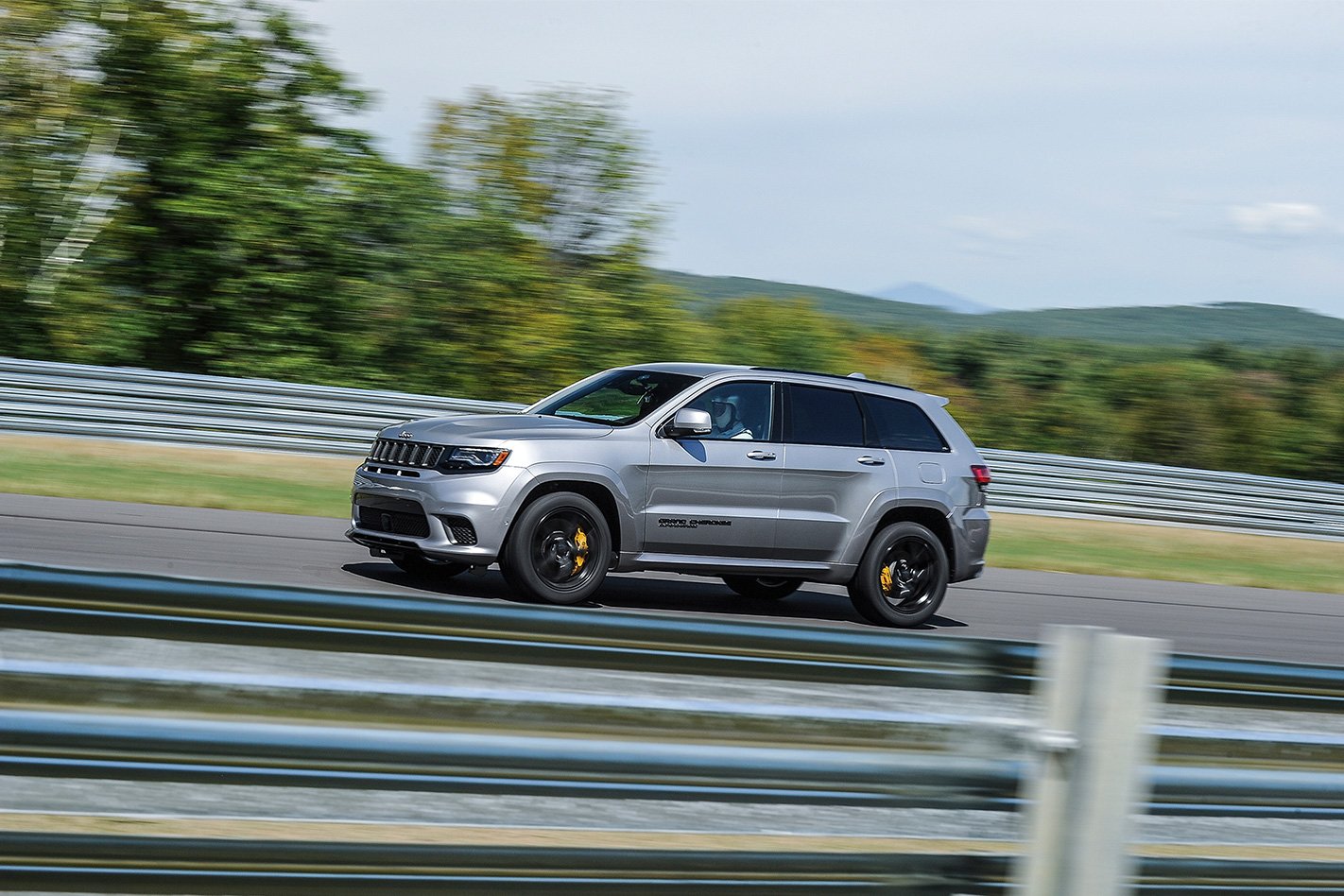
0-100km/h: 3.6s
Engine: 527kW/874Nm 6.2-litre supercharged V8
0-100km/h: 3.6s
Engine: 478kW/850Nm 4.0-litre twin-turbo V8
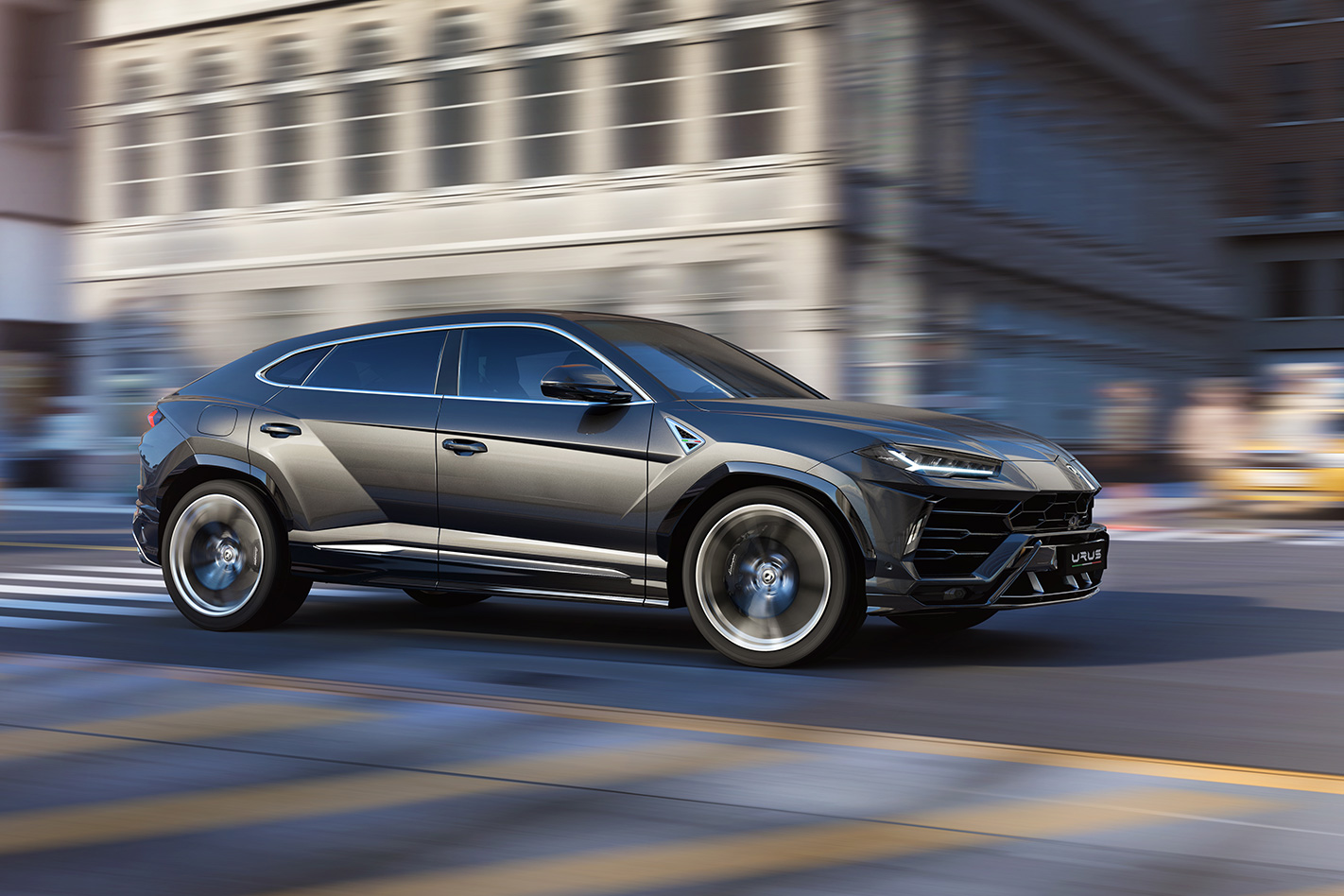
0-100km/h: 3.8s
Engine: 375kW/700Nm 4.0-litre twin-turbo V8
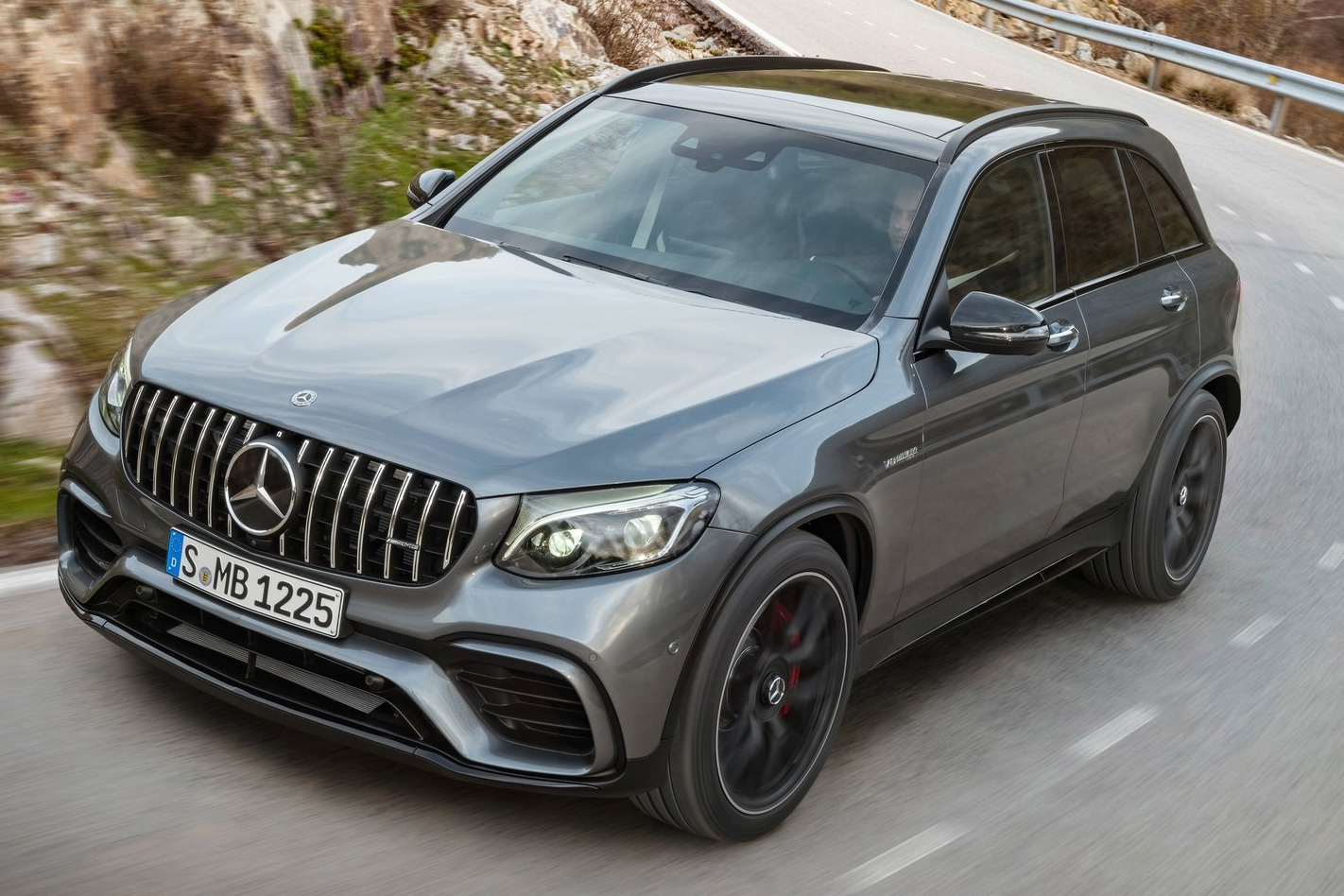
0-100km/h: 3.9s
Engine: 375kW/600Nm 2.9-litre twin-turbo V6
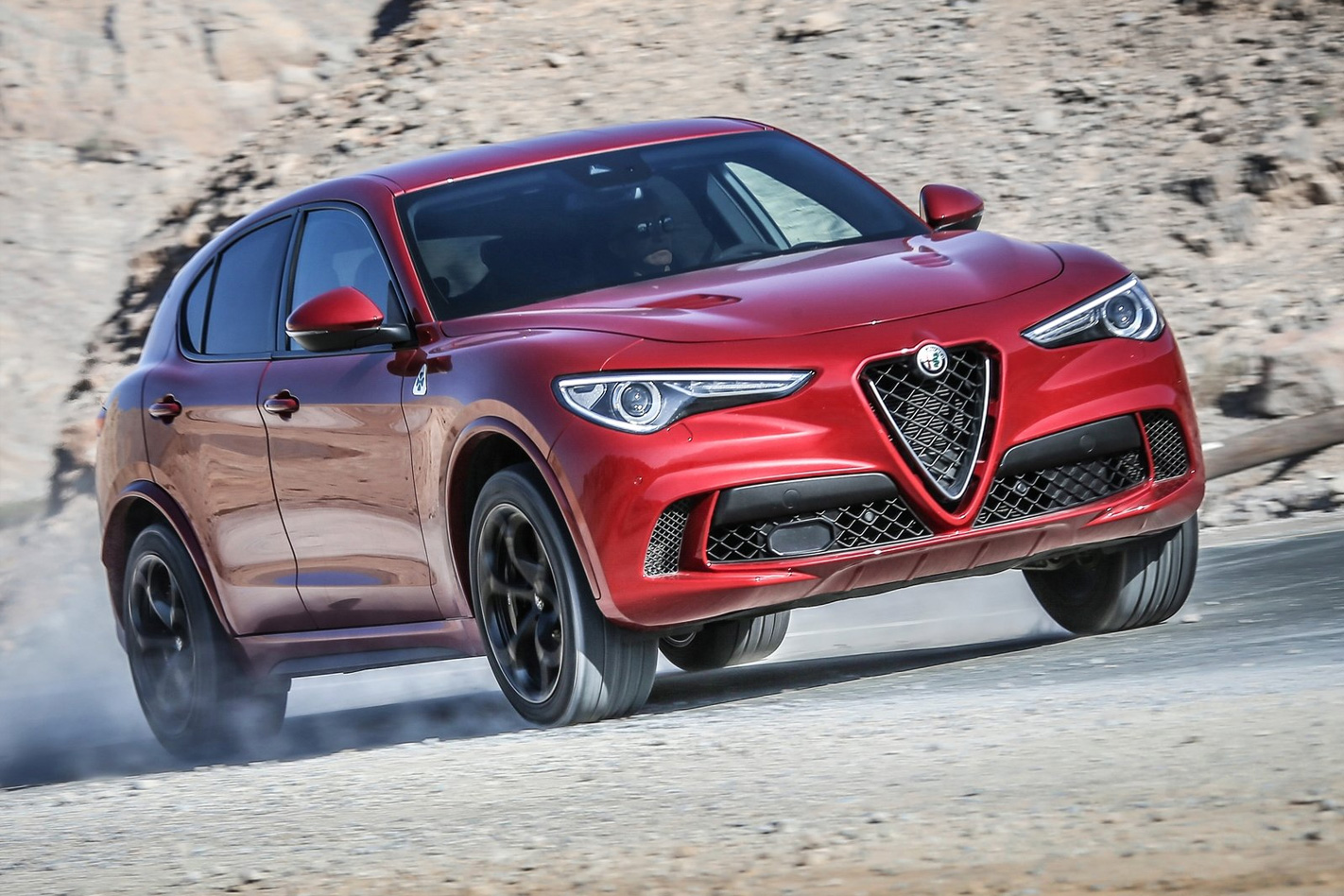
- Porsche Cayenne Turbo S: 4.1s
- Bentley Bentayga petrol: 4.1s
- Mercedes-Benz GLE 63 S AMG: 4.2s
- BMW X5M/6M: 4.2s
- Porsche Cayenne Turbo: 4.4s
- Mercedes-Benz GLS 63 AMG: 4.6s
- Range Rover Sport SVR: 4.7s
- Bentley Bentayga diesel: 4.8s
- Porsche Macan Turbo: 4.8s
- BMW X3 M40i: 4.8s
- Audi SQ7: 4.9s
- Mercedes-Benz GLC 43 AMG: 4.9s
WITH the exception of a long bout with terminal illness, it’s unlikely that you’ll know how you’re going to meet your maker.
A cerebral aneurysm? King hit outside a kebab shop? Crushed, Donnie Darko style, by a falling jet engine? It’s impossible to see these things coming.
Just as it was impossible for me to predict the four-metre-wide combine harvester that decided to play chicken with my bright red Alfa Romeo Stelvio on a cramped rural road in Northern Ireland. This country, for so long the United Kingdom’s problem child, is full of surprises.
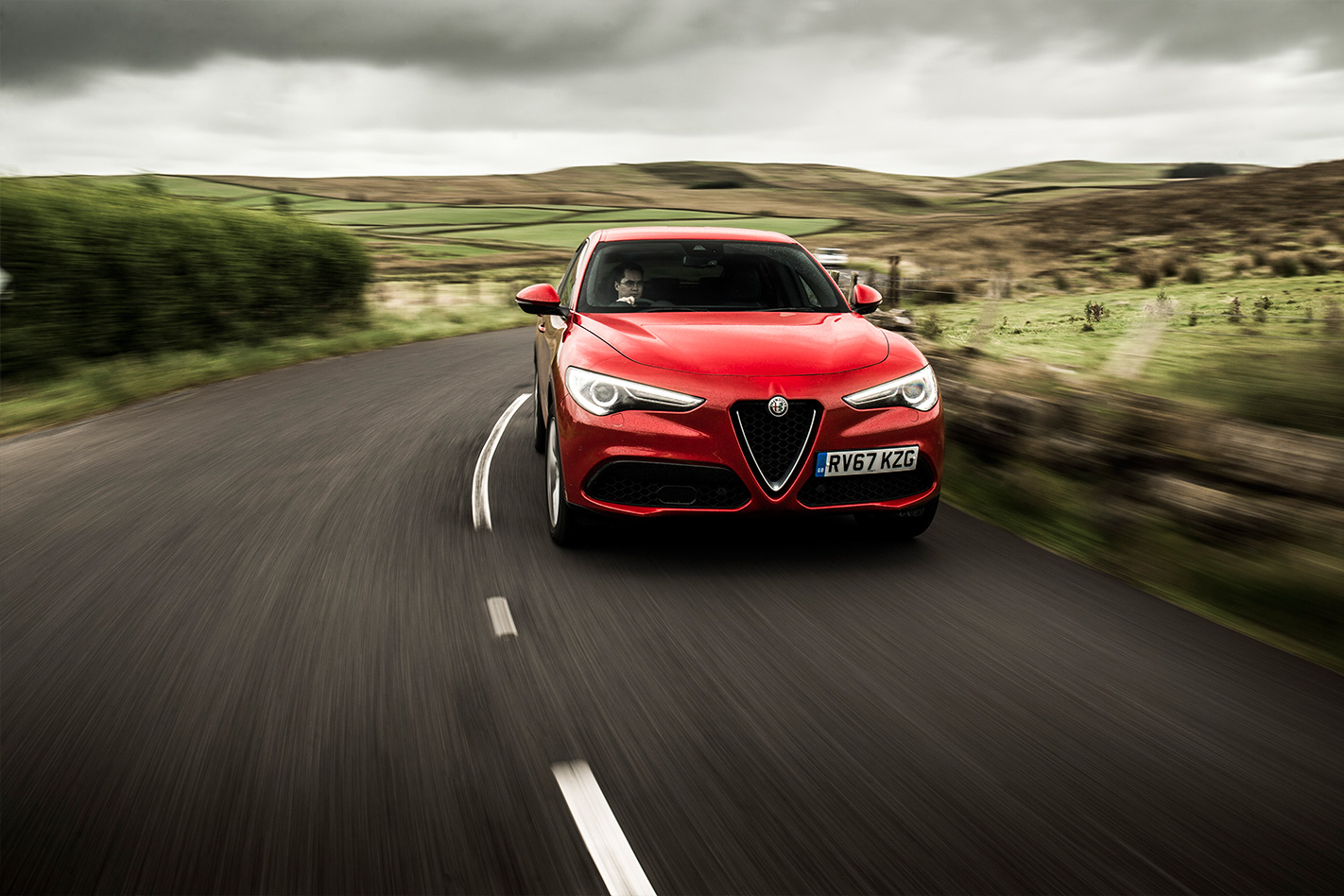
Now, when you think of go-to driving destinations in the United Kingdom, one place comes to mind – Wales. The rugged windswept landscape of the Welsh countryside is seemingly the default backdrop of hundreds of Limey car reviews on YouTube, and for good reason – the curves are mega, and the enforcement of speed seemingly non-existent.
But Northern Ireland offers an alternative that’s packed with just as much driving joy – not something we were expecting. Another thing we weren’t anticipating: just how similar Northern Irish roads feel to those Down Under. Ignore the road signs and you’d swear you were rocketing along a Victorian or NSW country backroad … except that someone’s messed with the saturation settings and the scenery has turned an unfeasibly lurid green. It’s not a bad place to test a car. But nobody warned me about the farmers.
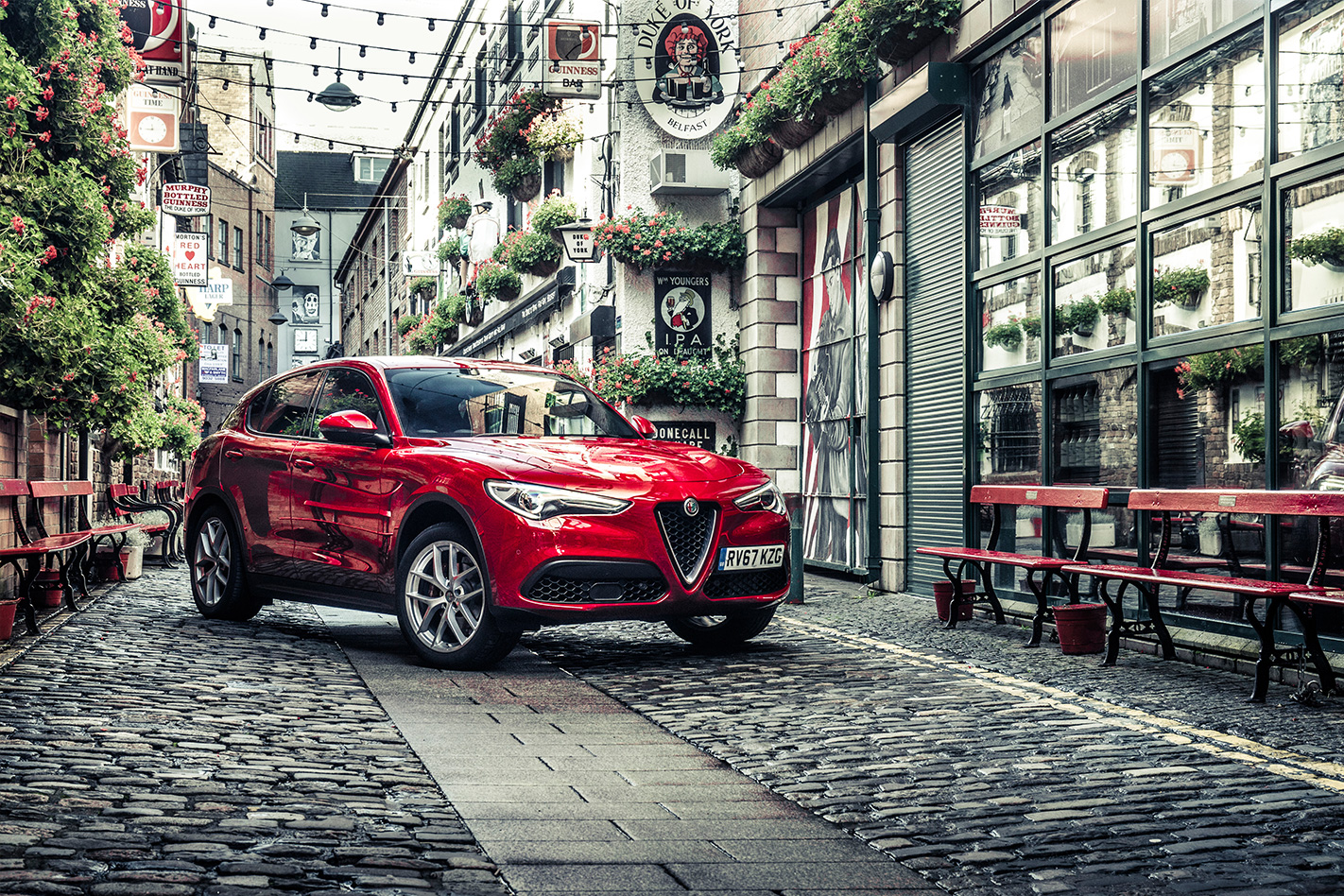
High praise from a bloke who just parked a Rolls-Royce Phantom, and a comment that’d no doubt puff up the chests of the designers at Alfa’s Centro Stile. Built in Italy and named for that country’s most famous mountain pass, the Stelvio feels impossibly romantic among the drab diesel hatchbacks and sedans that populate Northern Irish roads.
Especially in Belfast. This place was the epicentre of Northern Ireland’s decades-long struggle with domestic terrorism, and is the starting point of our journey. The Alfa’s bright red paint and glamorous Italian styling are at odds with the grey stucco houses, end-to-end nimbostratus and the industrial bleakness of Northern Ireland’s capital.
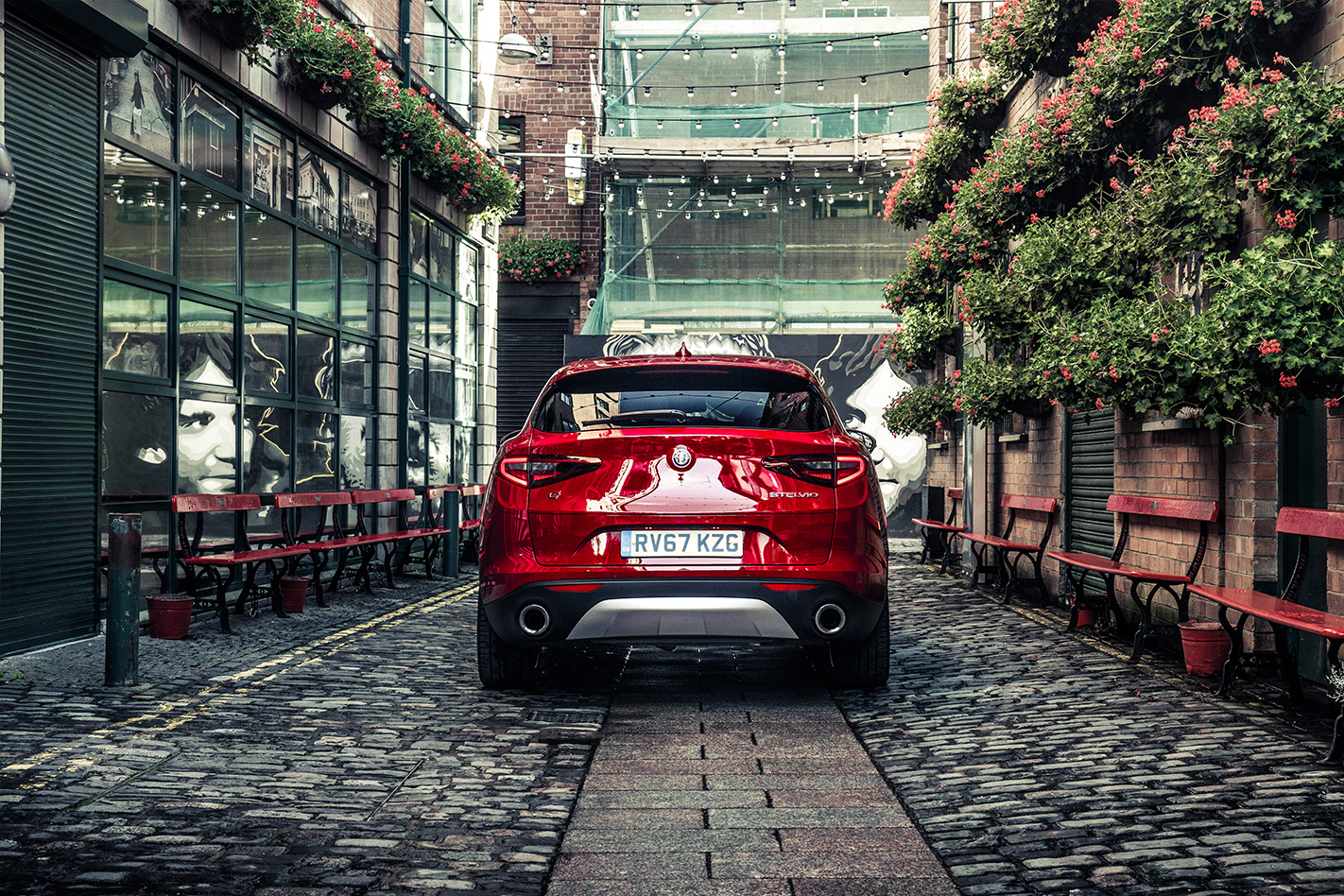
Keys in hand, we don’t hang around in Belfast. More enticing roads beckon, and I point the Stelvio towards Ireland’s north-east coast. There, between Carrickfergus and Ballycastle specifically, we hope to find delectable ribbons of tarmac sandwiched between green hills, abrupt cliffs and the North Channel. And we do, but here at the same latitude as northern Newfoundland there’s no shortage of weather … and slow-moving tourists.
The Stelvio deals admirably with the former. All Stelvios destined for Australia will utilise Alfa Romeo’s Q4 all-wheel-drive underpinnings which may sound a bit too safe ’n’ secure, but it gives preference to the rear axle when figuring out where to send torque and most of the time it feels rear-driven. The front differential is there as a safety net, but even on a soggy and cold Irish morning it was difficult to provoke a loss of traction.
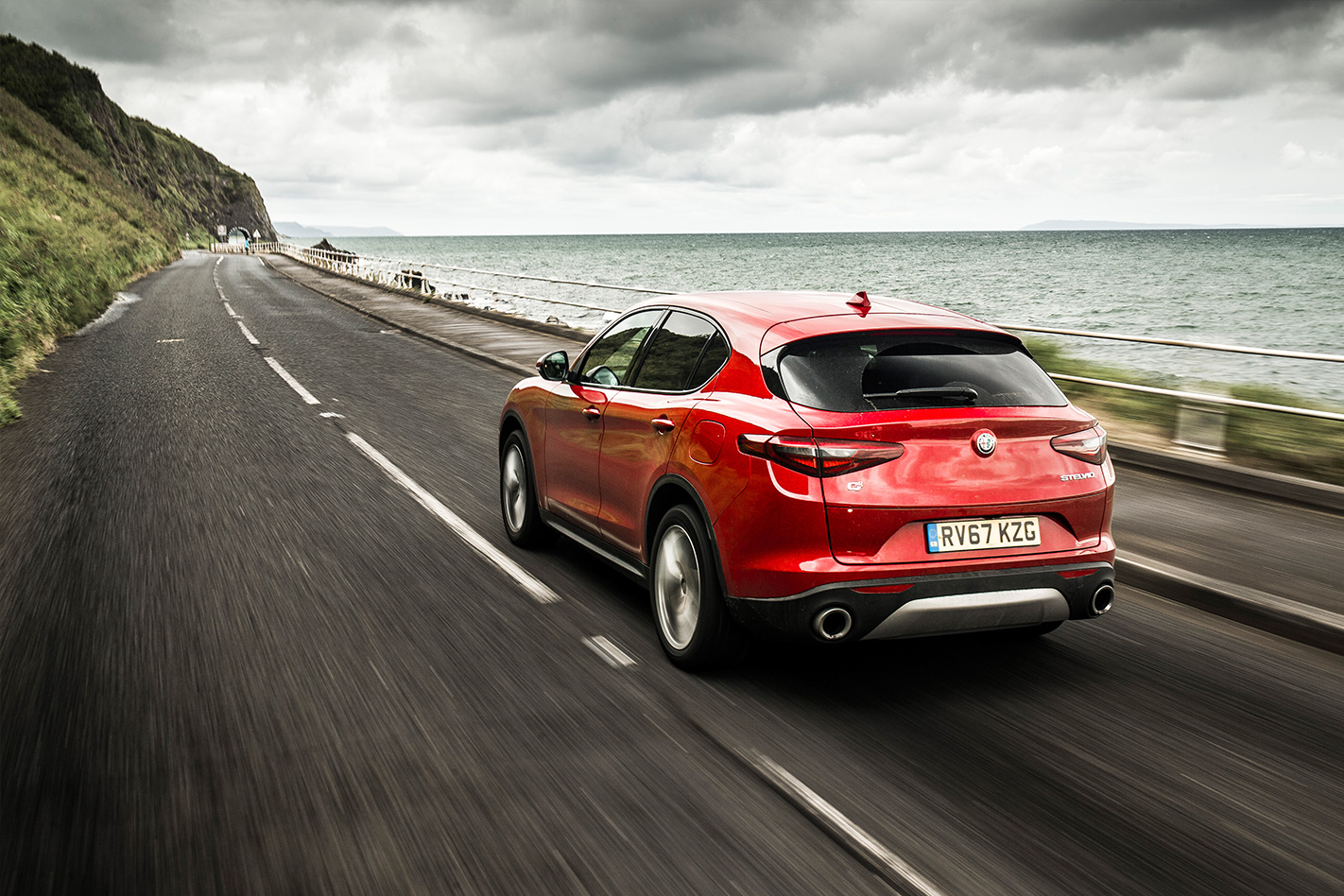
We’re losing time and worsening weather coming from the Atlantic is destroying snapper Thompson’s photo ops, so we hang a left at Glenarm and turn inland, literally towards greener pastures.
Away from the coast, the roads open up and the scenery morphs from black cliffs to rolling hills. With more opportunities to squeeze its alloy-faced accelerator, the Stelvio shows its mettle. It’s more sports car than sports utility vehicle.
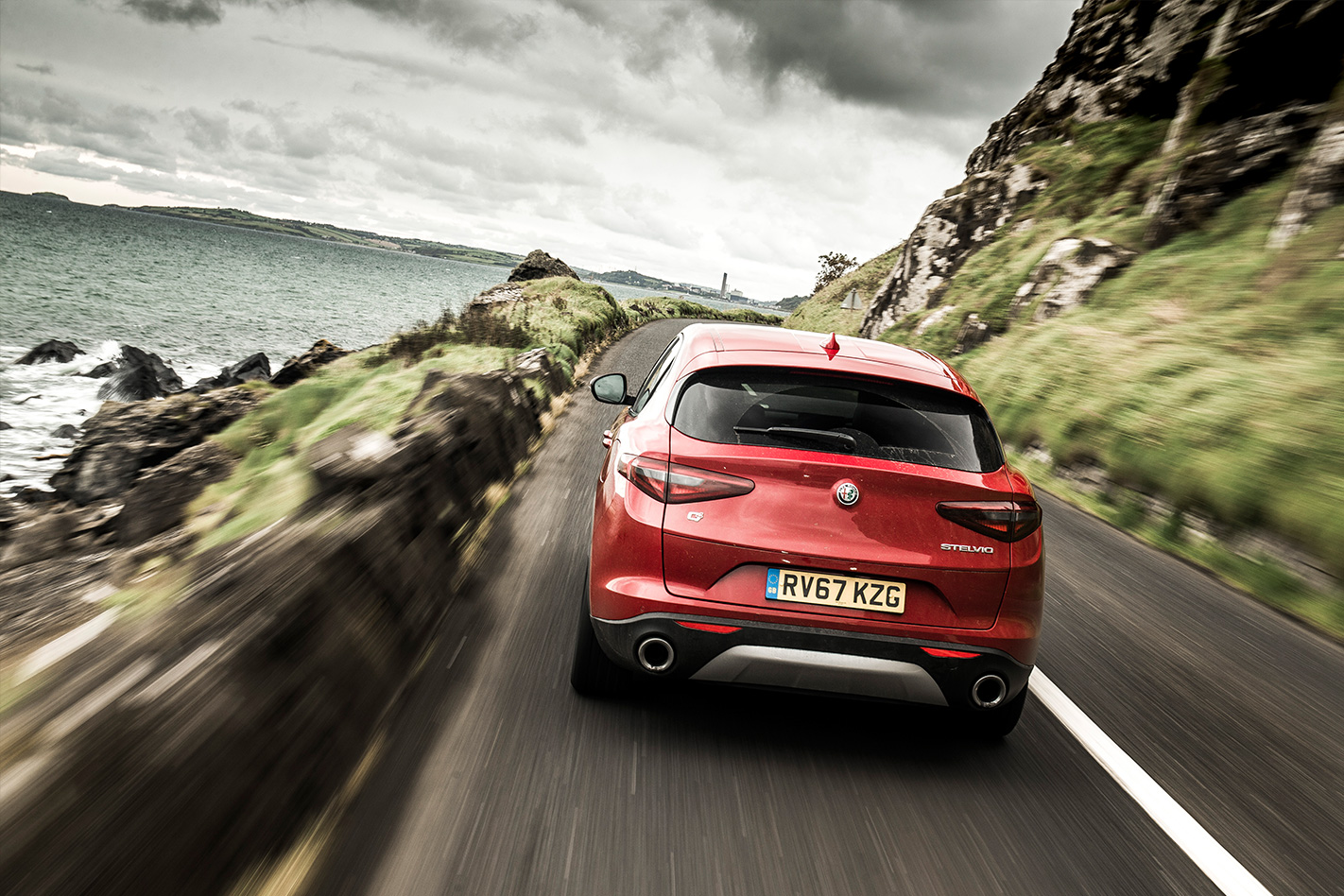
While a GLC feels benign and most at home projecting a preening brand equity at any opportunity, the Stelvio practically begs to be whipped hard. Its super-fast 12:1 rack ratio is well-suited to dispatch Ireland’s flowing country roads, and its pointy and grippy front end gives the confidence necessary to punt it hard without fear of flinging it into a hedge.
There are enough aural theatrics to enhance the mechanical experience too. The turbo four pot has a pleasing growl, the long metal shift paddles make a satisfying ‘click’ with every pull and the transmission dials up flamboyant rev matches on downshifts, and a pronounced ignition cut on upshifts.
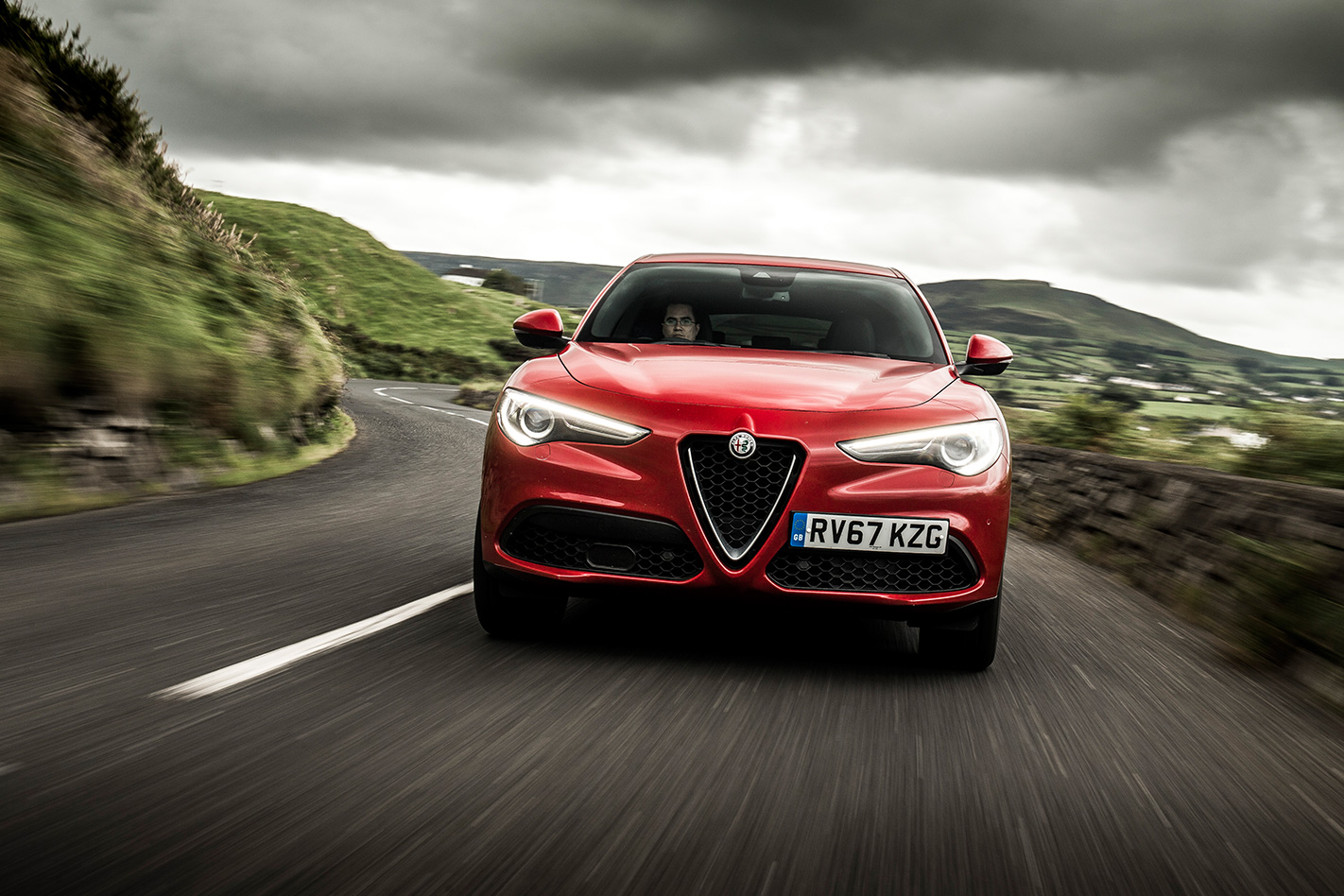
But like Porsche, Alfa Romeo has turned out a sports utility that augments rather than exploits its heritage.
The long curves between Glenarm and the inland town of Ballymena provide plenty of opportunity to appreciate that capability, and away from the tourist routes the traffic changes markedly. There are bugger-all vehicles on roads like this, and when you do come across another motorist, it’s more likely to be a local who knows the roads and drives like a demon – regardless of whether they’re in an MX-5 or a Transit.
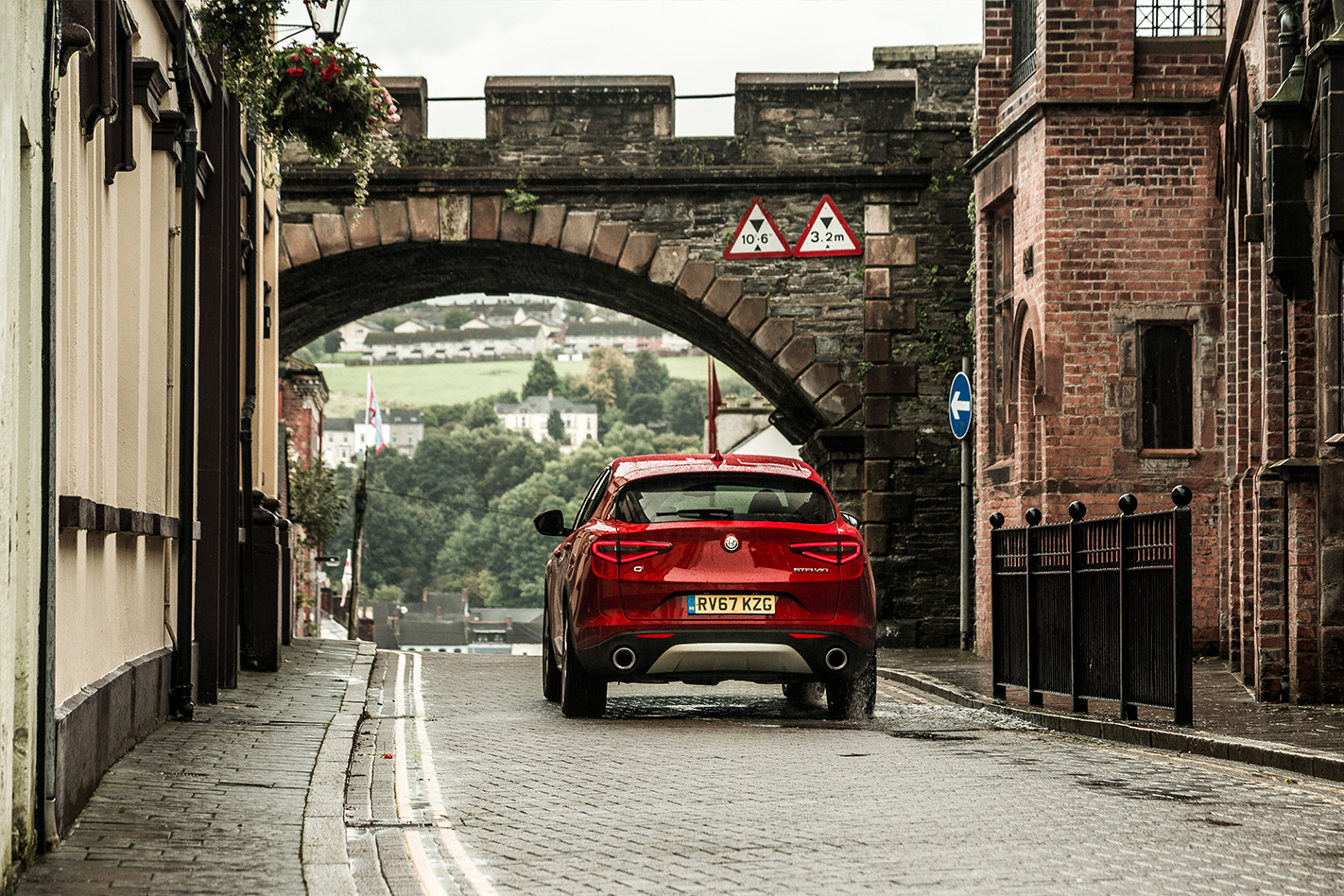
While Belfast is trying to paint over the pricklier parts of its modern history, the evidence of Northern Ireland’s Troubles are harder to erase in Derry, its second city, which sits nestled up to the border with the Republic of Ireland.
An otherwise charming medieval walled city, Derry still bears the marks from decades of sectarian fighting between Catholic republicans and Protestant loyalists that began in the late 1960s and only ended in 1998 (see sidebar, p101). Rolling through Derry’s notorious Bogside, the many murals tell a story of Catholic oppression under British rule – while the nearby IRA Prisoners Welfare Association bears an intimidating mural of its own showing two balaclava-wearing blokes, one toting a military rifle, the other an RPG, with the sinister message ‘UNFINISHED REVOLUTION’ above them both.
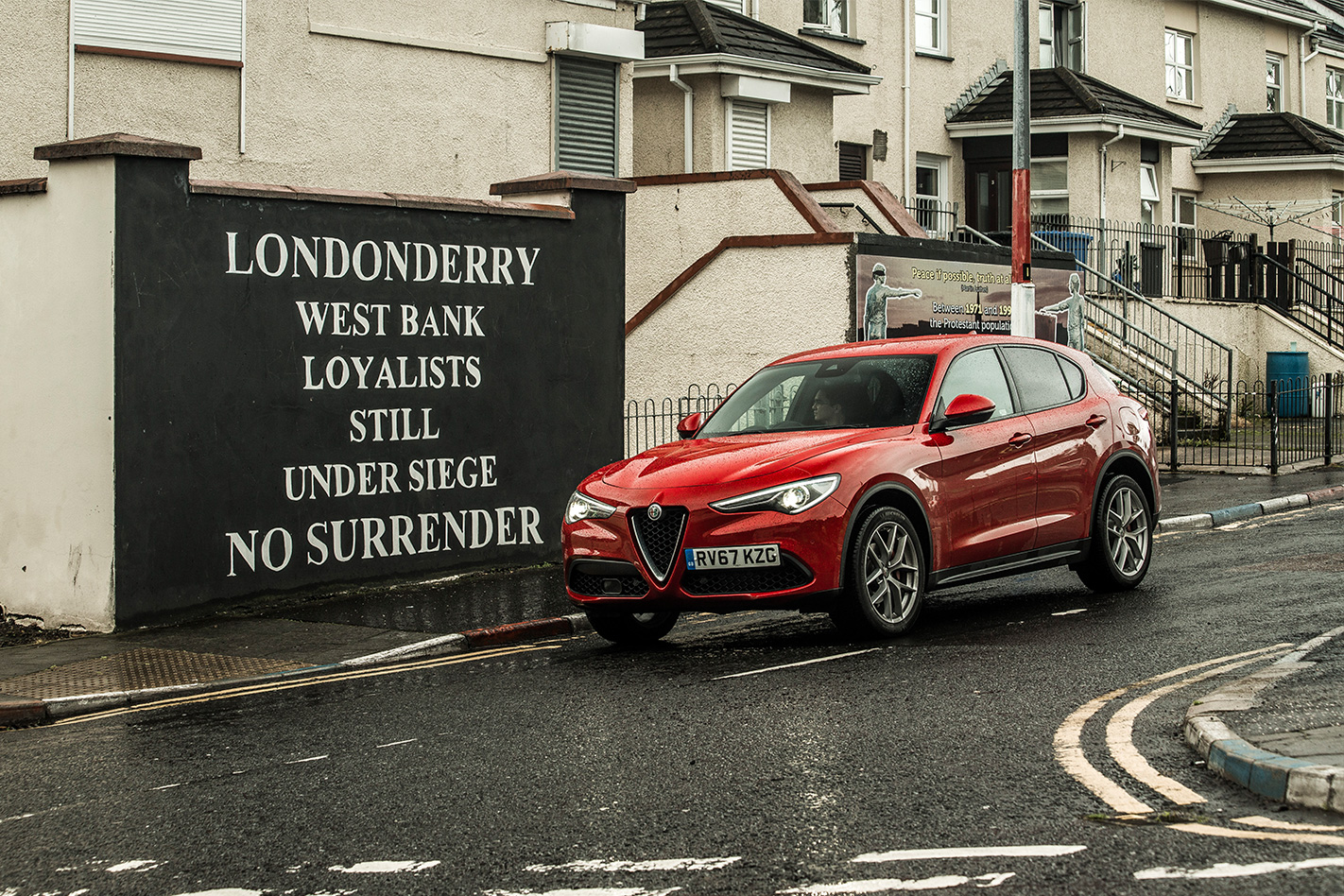
Grim, yet while it’s tempting to hang around and absorb the grittier aspects of Northern Ireland’s constitutional heritage, we need to press on. I’m told there’s a national park west of Derry that’s a spectacular example of Irish geography, and I’ve been itching to take the Stelvio somewhere that will put dirt or gravel under its all-terrain tyres. Y’know, because it’s an SUV apparently, and it’s supposed to be good at that kind of stuff.
We cross the border into the Republic and the roads change; coarser chip and lumpier. The roads here tend to follow the terrain more closely than they do in the UK’s patch of Ireland – either that, or the terrain is simply wilder to begin with.
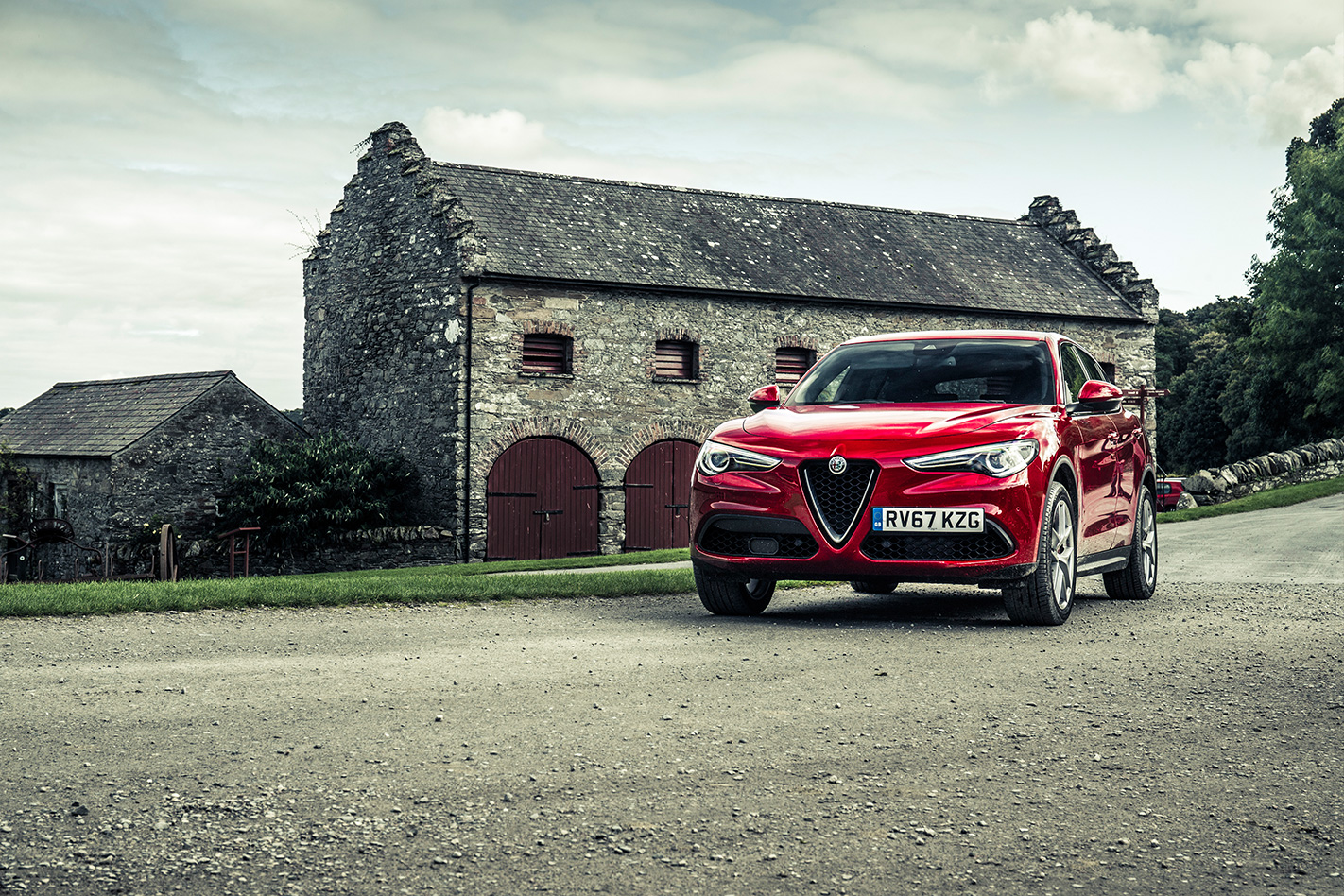
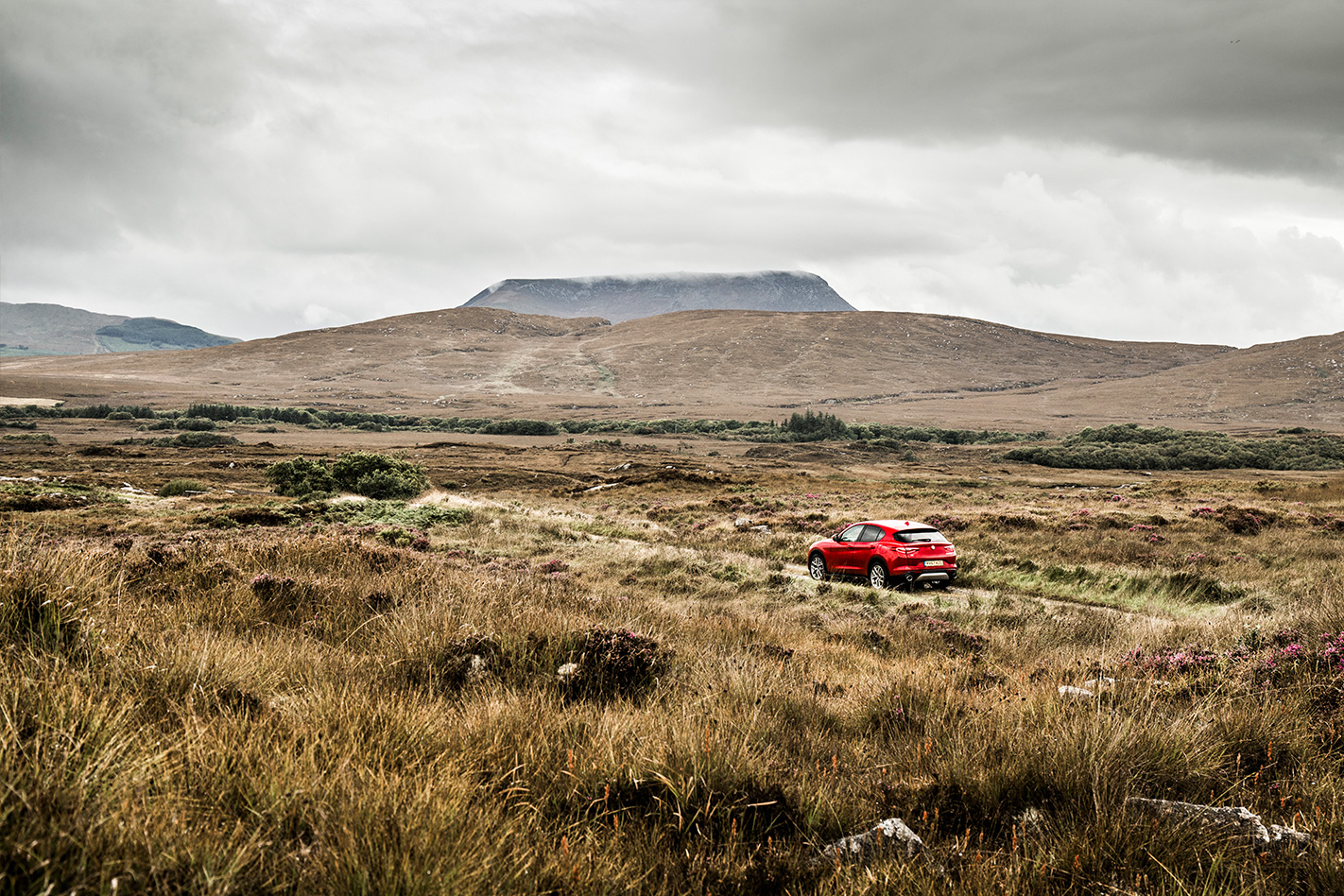
Covered by grey rock and yellow grass, and with very little in the way of human habitation, it’s like a different planet compared to the green, leafy and populated countryside we’ve travelled through to get here. Beautiful, rugged, yet slightly foreboding, it’s little wonder that Ireland has inspired the settings of many works of fantasy, from The Chronicles of Narnia through to Game Of Thrones.
And it’s here, at long last, that we find the opportunity to say goodbye to tarmac. Unless you’re trespassing on someone’s farm (perhaps to sabotage their combine harvester in retribution), it seems unpaved roads are a rare thing in this part of the Emerald Isle.
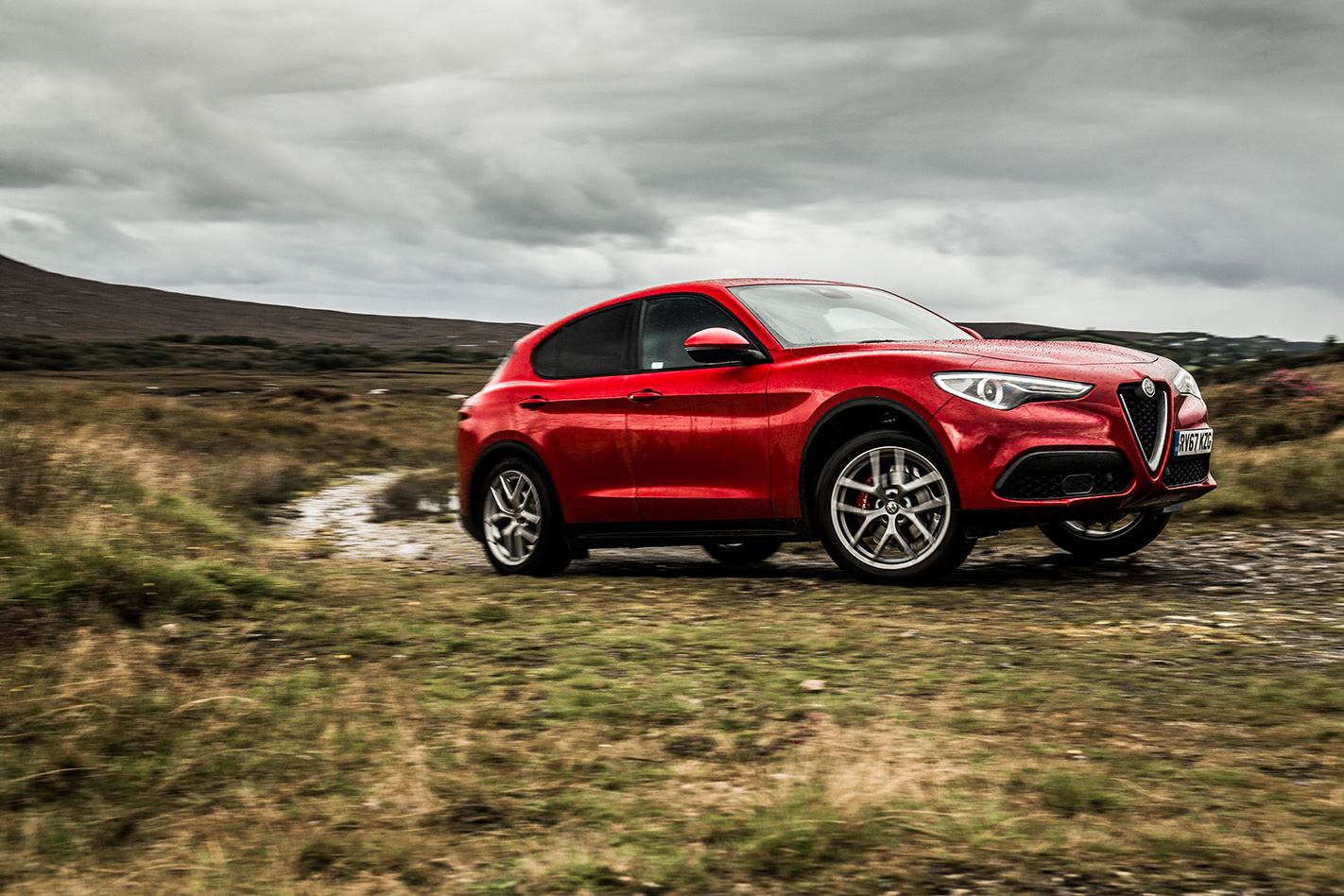
No matter. This country – whether you’re talking about the Republic or that chunk of the UK in the north east – is breathtaking in its natural beauty, and that’s not something I expected to discover. It makes it easy to forget the politics.
The Stelvio, meanwhile, makes it easy to explore a country like this. I can think of few cars that blend driver satisfaction, load-lugging capability and all-weather, all-surface grip so well. The fact it’s genuinely gorgeous, in the words of our helpful Belfast doorman, is icing on the cake.
And just like that kamikaze combine harvester, I didn’t really see that coming.
Imagine you had access to a car company’s most advanced race engine – Ford’s Supercars V8, for instance. And if you buttered up the right people, you could have it in the Mustang you just ordered, 480kW/650Nm and all.
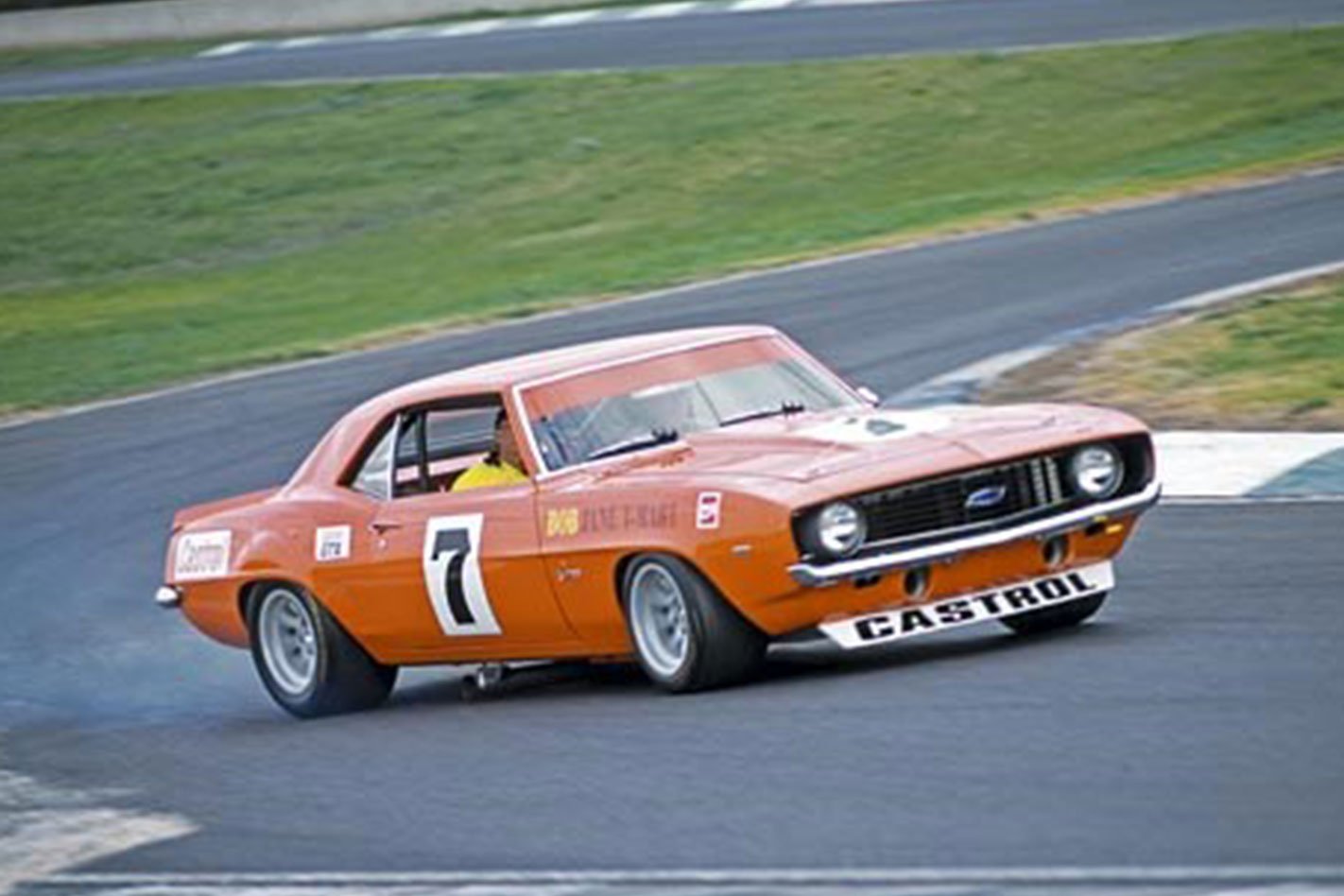
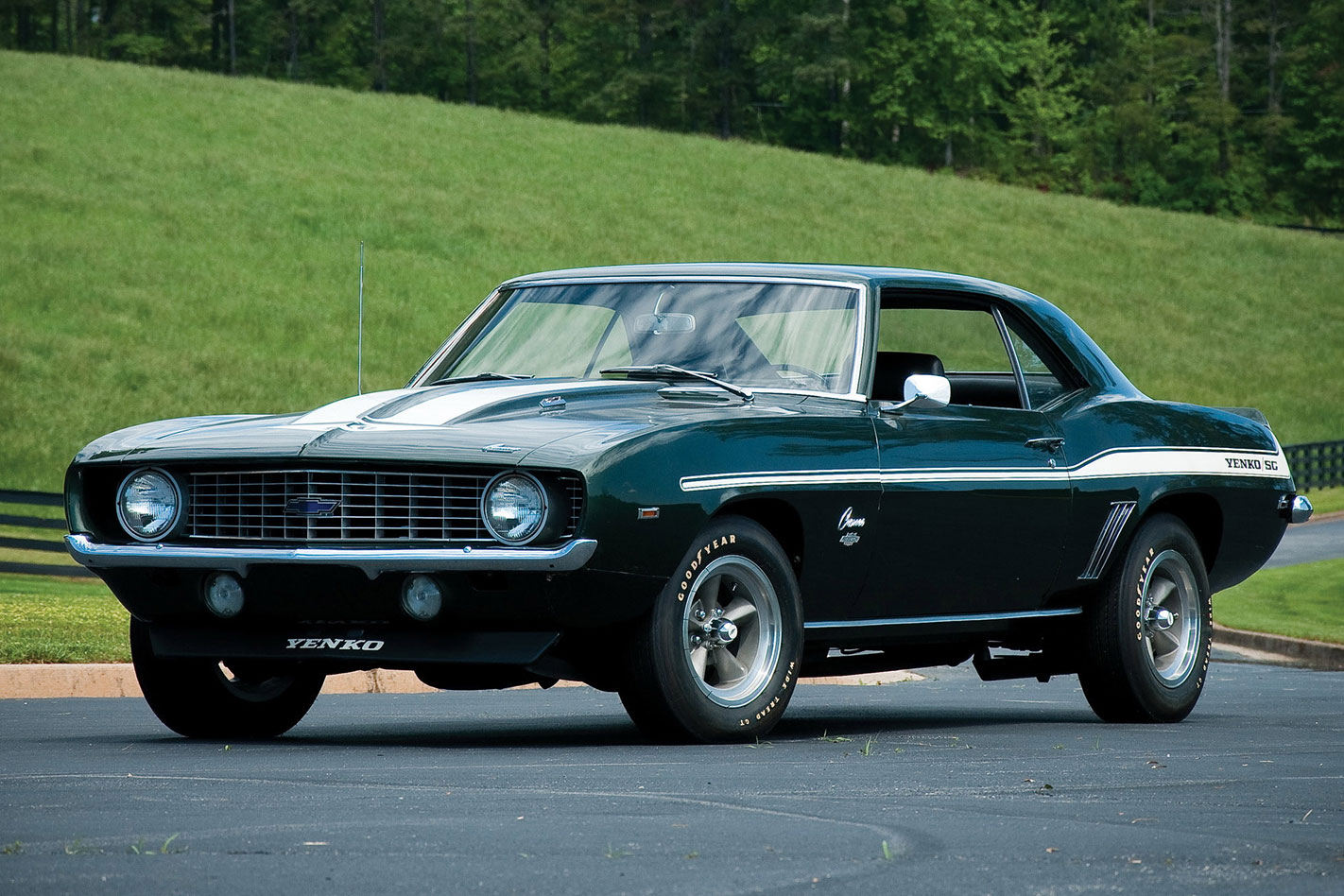
Then you’d know what it was like to be Fred Gibb in 1969. First a Chevrolet salesman with a dealership in Illinois, he also ran a drag racing team. The Camaro’s popularity had exploded and although Pete Estes, Chevrolet general manager, promised it to be a small, vicious animal that ate Ford Mustangs, its drag racing results didn’t reflect this on the strip.
At the same time, Chevrolet had just perfected an all-aluminium 427 cubic-inch V8 for Can-Am, known as the ZL-1, which caught Gibb’s eye with not only its power but weight saving over the L88 iron-block 427.
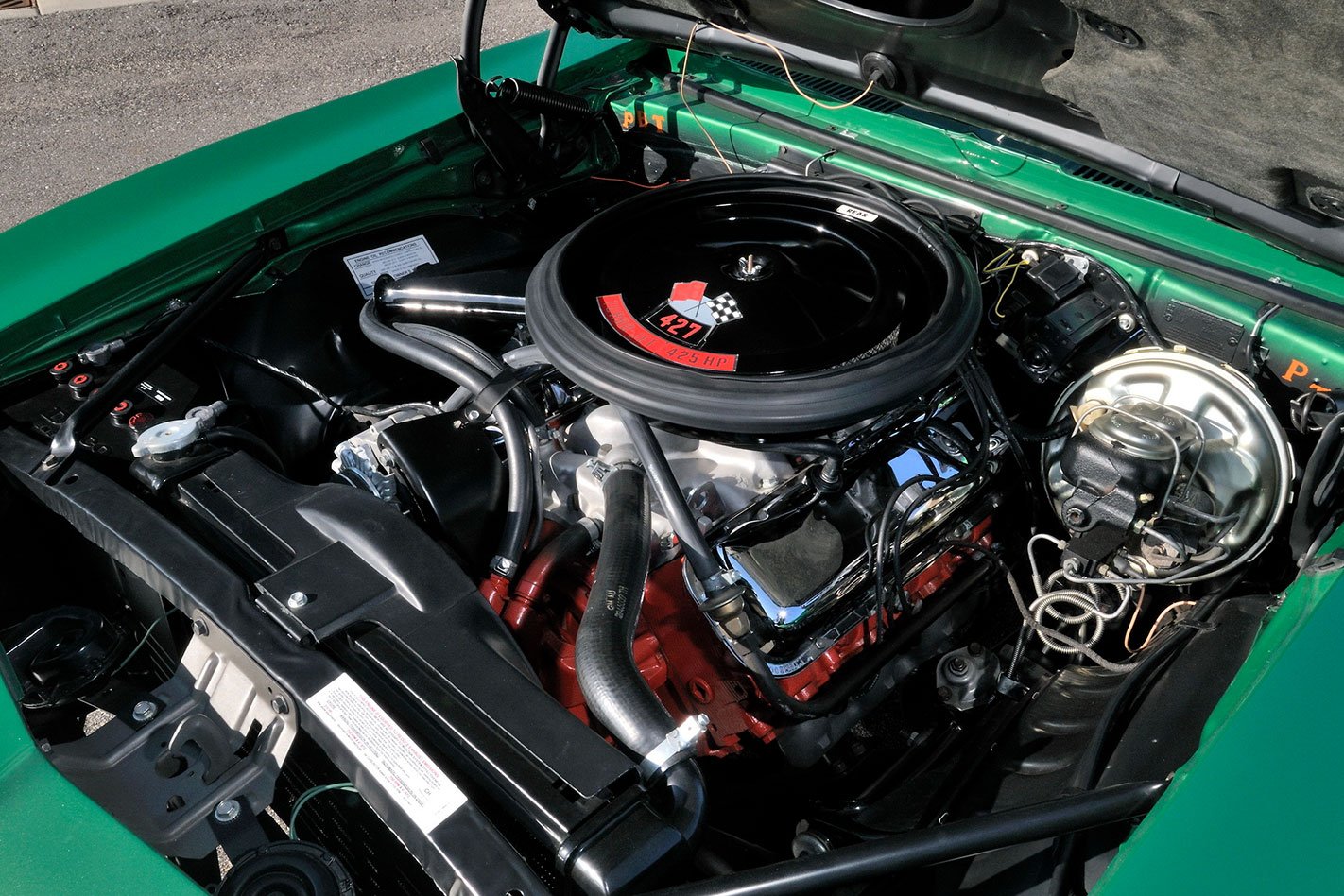
With the help of Estes, Chevy Performance Director Vince Piggins, and dealer-owner Dick Harrell, Gibb exploited the company’s Central Order Production Office to birth a low-volume, special order.
Luckily, Chevrolet had been eyeing off the ZL-1 for the Corvette, so, by enlisting the COPO (Central Office Production Order) system used to build taxis and police cars on factory lines, code 9560 was developed, which snuck the ZL-1 427 into the ‘little’ Camaro.
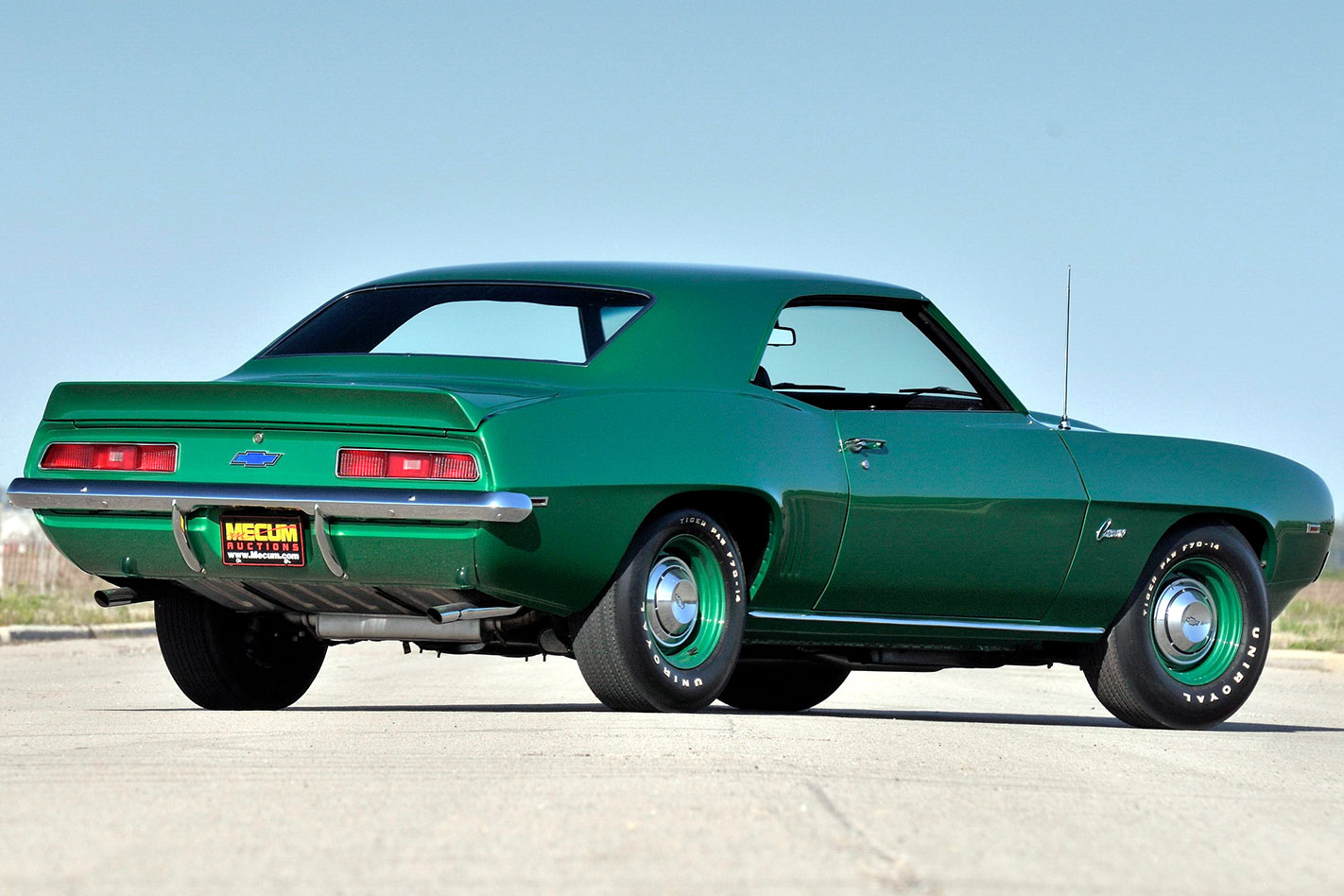
Gibb ordered 50 to help qualify the ZL-1 for racing. But as the Camaro’s pace skyrocketed, so did its price, forcing Chevrolet to buy back the 37 he couldn’t sell to distribute, along with 19 others, through its dealer network. Ironically, they wouldn’t have trouble selling today, with examples fetching more than US$500,000.
THE SPECS Engine: 6997cc V8, OHV, 16v Power: 321kW @ 5200rpm Torque: 610Nm @ 4400rpm Transmission: four-speed manual & three-speed auto Weight: 1558kg 0-97km/h: 5.3sec Price (New): US$7919
3 Burly 427 Bits
1. Legendary Connections

2. COPO Conquers Down Under
3. Getting in on the Go-Fast Act
The latest major sale hosted by renowned auction house RM Sotheby’s was the scene for a few big-dollar deals, with transactions totalling $60,556,000 ($45.5 million USD).
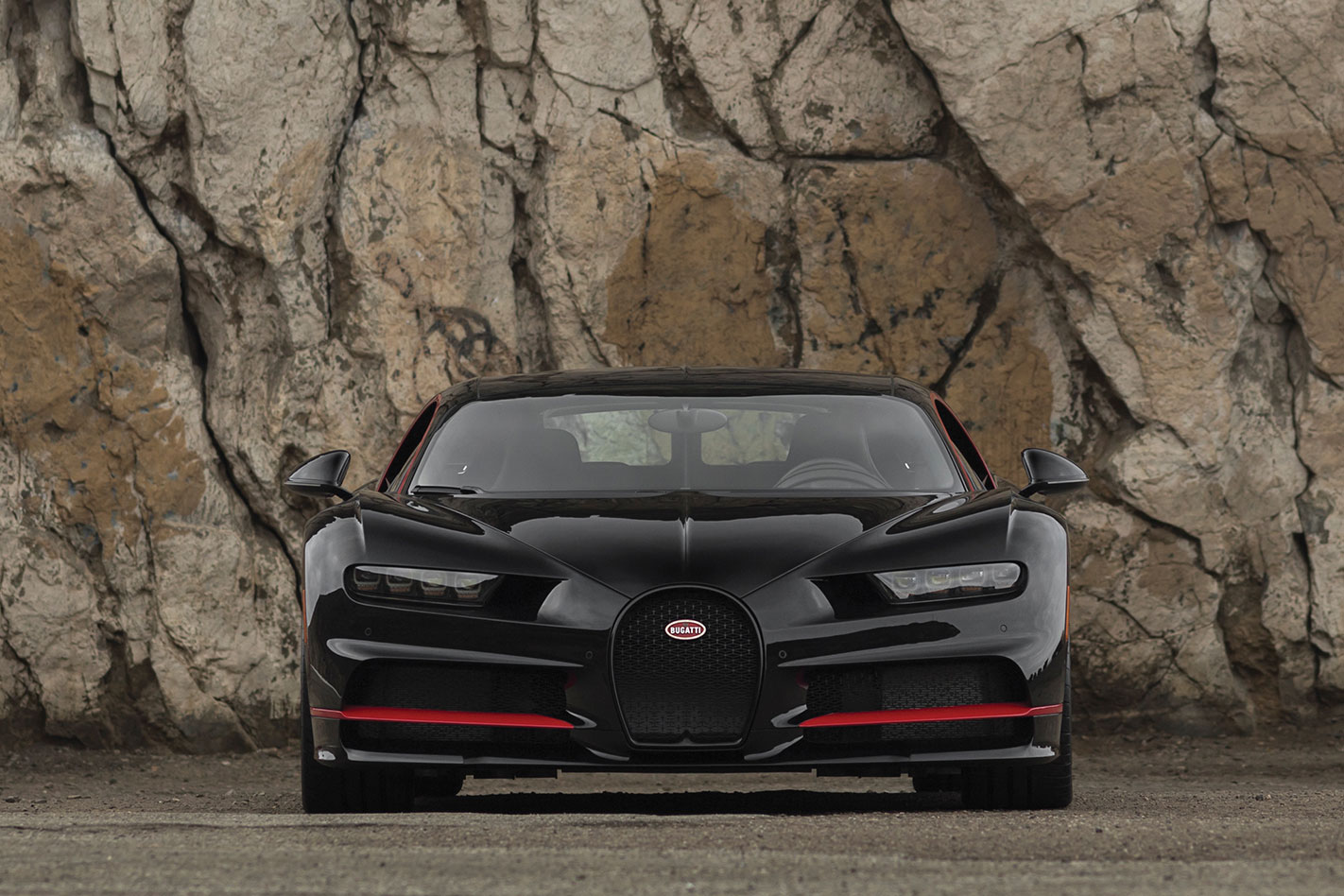
Aptly named the Icons auction, the event not only saw the first Bugatti Chiron auctioned for more than $5 million AUD, but also several well-known cars and motoring artefacts.
“We were thrilled to return to New York where we reaffirmed the city’s place on the RM circuit with this great $45.5 million [USD] result,” he says.
In no particular order, here are a few of the auction highlights. Dollar values are in AUD.
1959 Ferrari 250 GT LWB California Spider Competizione – $23,936,600

The 250 GT secured the highest dollar value at the auction, with the next-closest car securing almost $17m less.
1952 Jaguar C-Type – $7,031,956
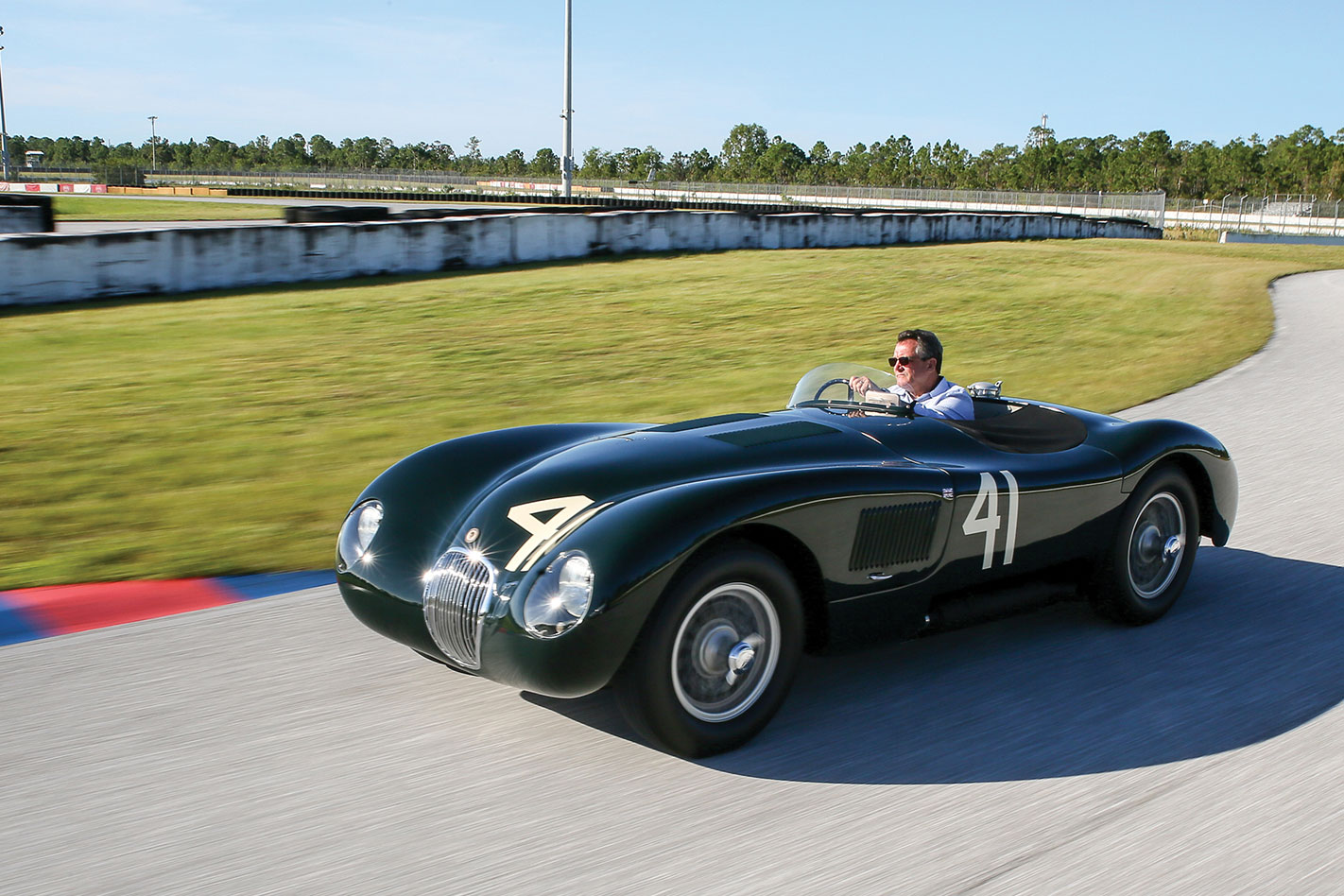
The 3.4-litre inline six engine in this car was reportedly tuned to produce 150kW, and impressive figure for its day.
2000 BMW Z8, formerly owned by Steve Jobs – $438,416
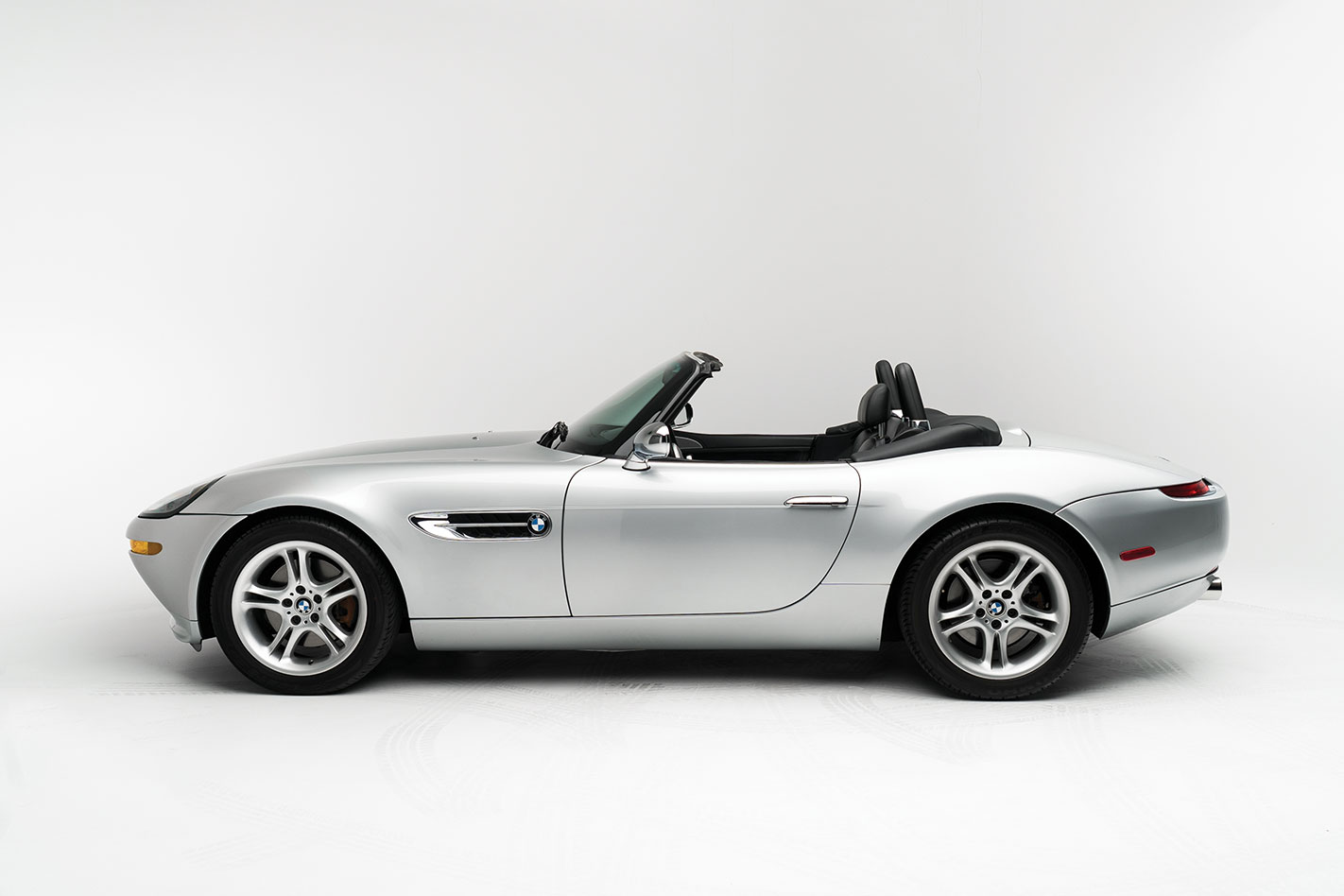
A Z8 will often sell for anywhere between $200,000 and $ 330,000, so an extra $100,000 for the Jobs connection is an impressive example of the incredible value surrounding his name, even half a decade after his passing.
Le Mans racing suit worn by Steve McQueen – $ 447,065
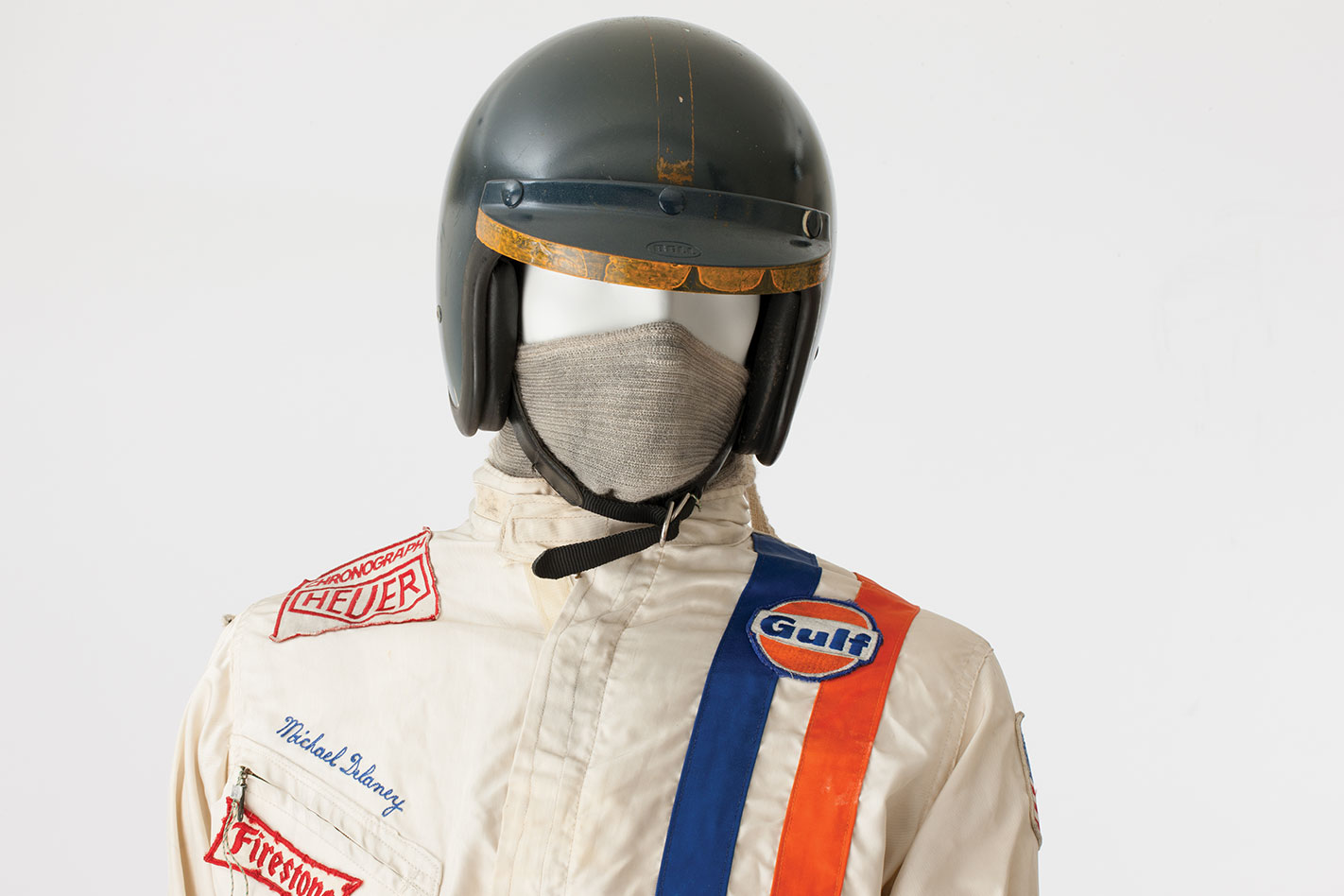
The Gulf suit also comes with its original patches, still attached, and the same helmet McQueen used for filming.
1990 Ferrari F40 – $1,653,200
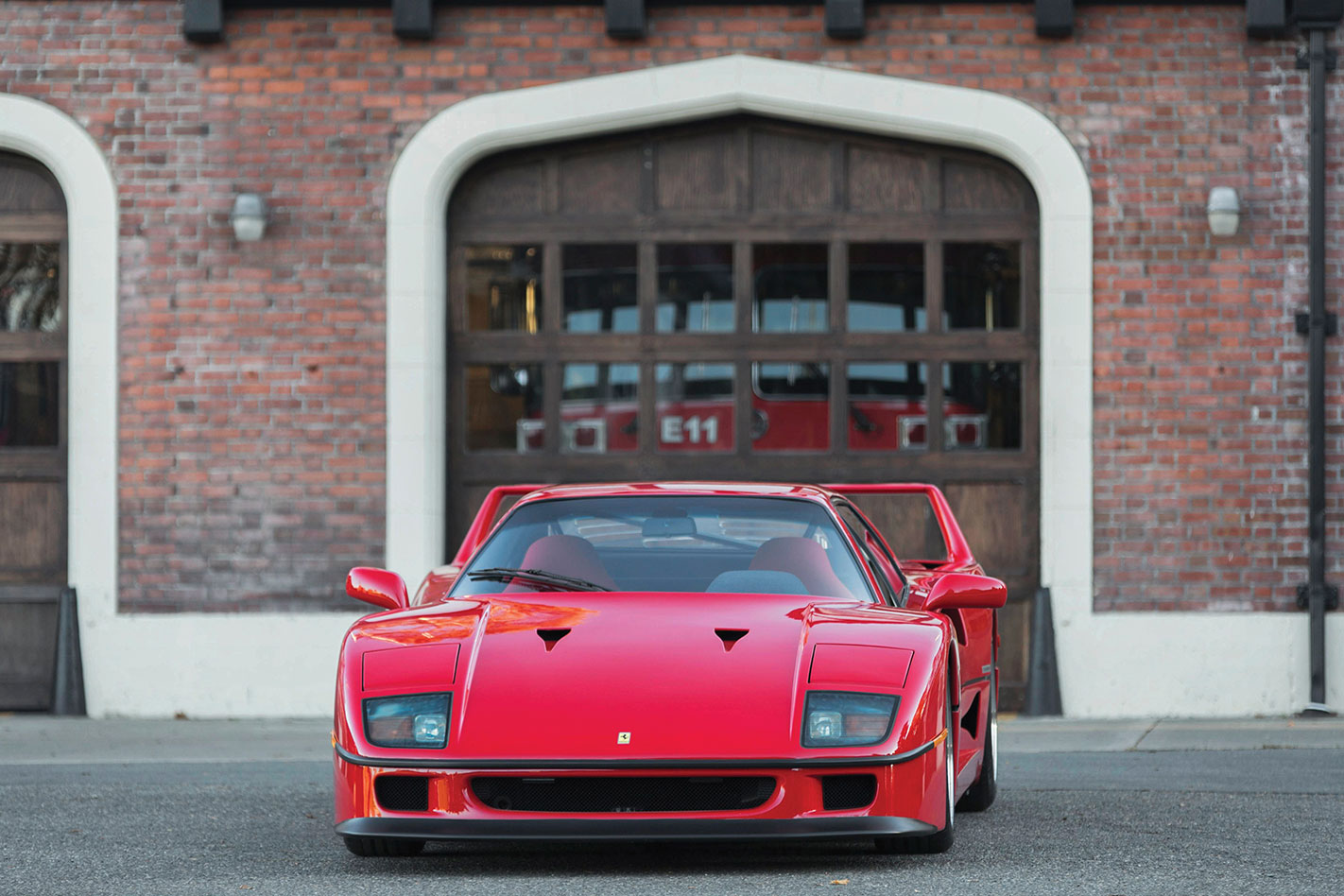
The example offered has less than 13,000km on the odo, and fetched the 9th largest sum at the auction.
Honourable Mentions
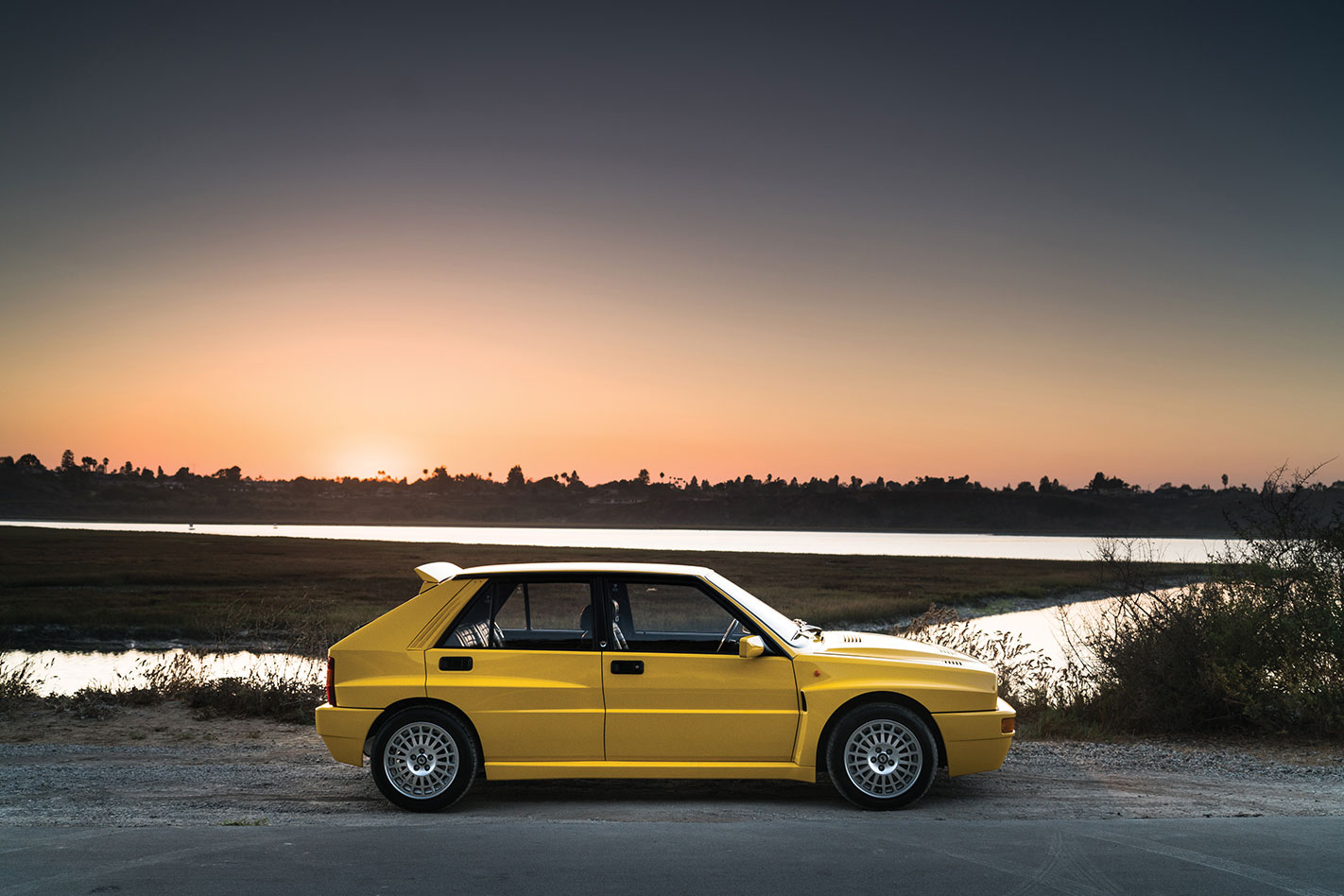
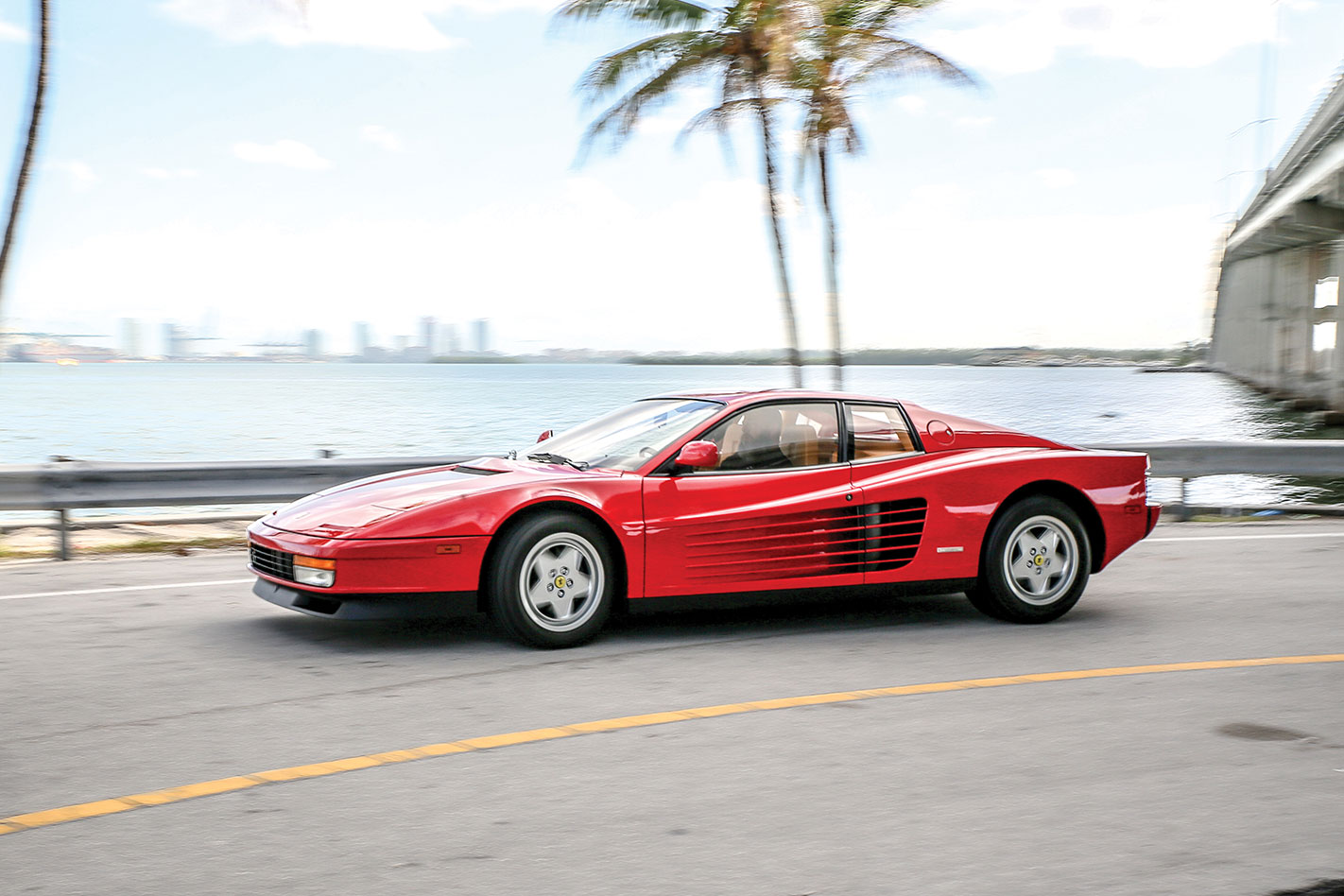
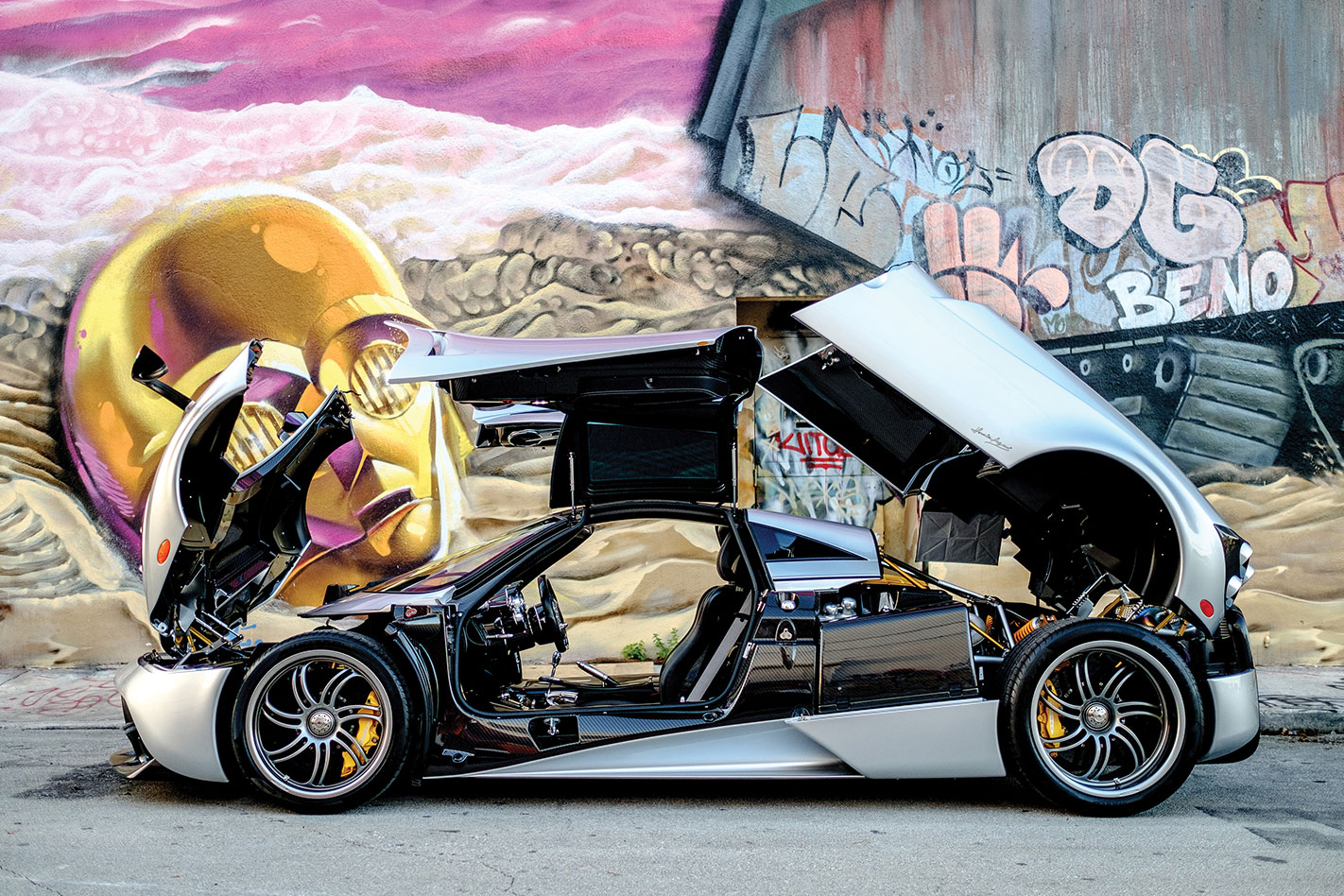
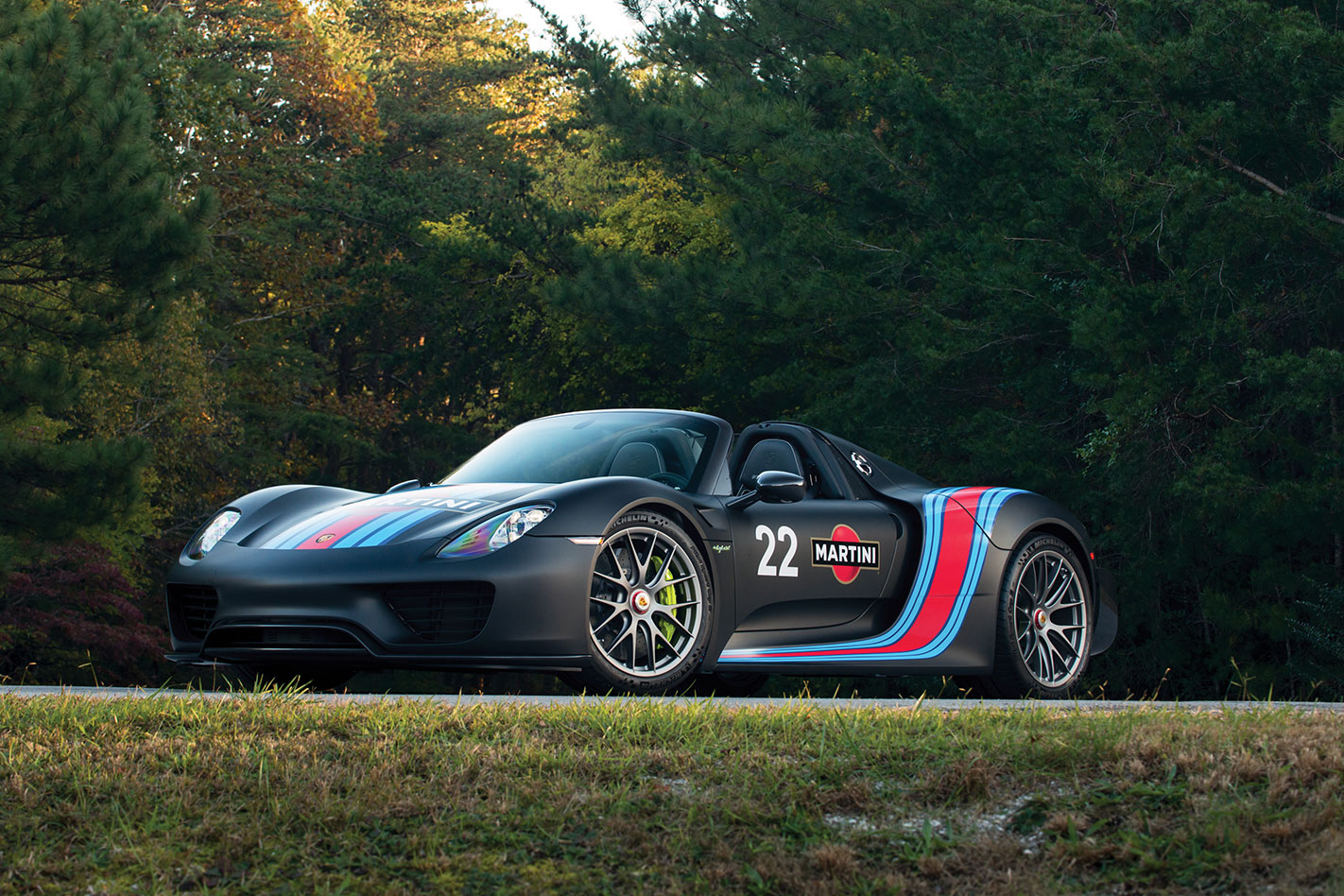
RM Sotheby’s next auction takes place in Arizona in mid-January.
RENAULT has unveiled a turbocharged 1.3-litre engine that the car maker says will also power an upcoming generation of Nissan, Mitsubishi and Mercedes-Benz products.
The engine – available in three states of tune – uses a new block that the French car maker claims will help it offer “significant improvement in driving pleasure, with better torque at low rpm and greater and constant availability at high rpm, while reducing fuel consumption and CO2 emissions”.
Compared with the current 97kW/205Nm TCe 130 1.4-litre turbocharged petrol four engine used in models including the Renault Megane, the TCe 140 will serve up an extra 35Nm of torque, and make it available across a broader rev band, from 1500rpm to 3500rpm. The engine can be tuned to deliver 85kW at 4500rpm in six-speed manual-only applications, and either 103kW at 5000rpm or 120kW at 5500 rpm when it is paired up with either a manual or seven-speed dual-clutch automatic transmission.
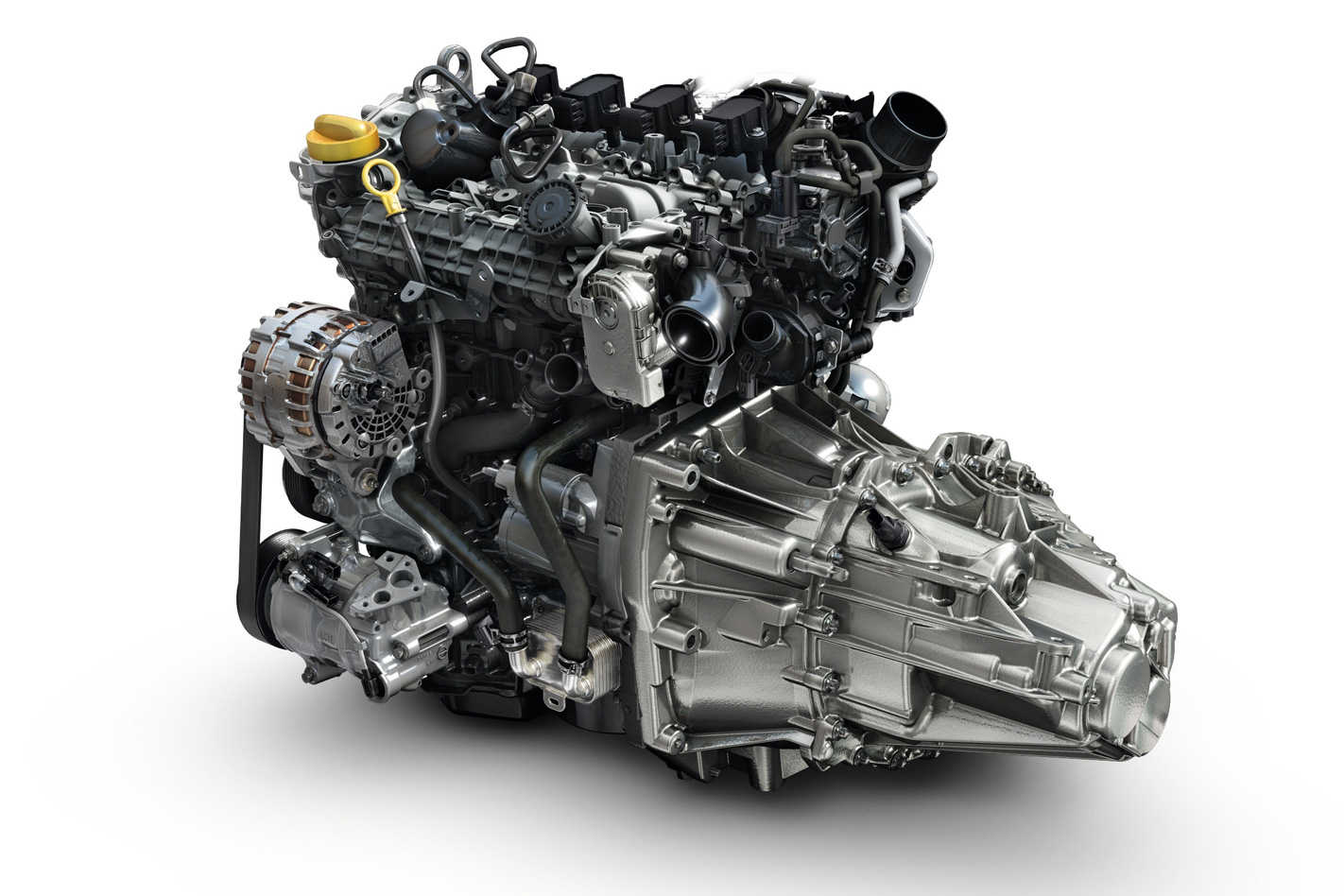
“The result is more torque at low revs and more linear torque available linearly at high revs, for significant benefit for our customers in terms of driving comfort with better mid-range response,” Renault said.
The current turbocharged 1.6-litre engine used in the Mercedes-Benz A-Class hatch, CLA-Class sedan and GLA-Class compact SUV ranges produces either 90kW/200Nm or 115kW/250Nm in its two states of tune.
Renault has so far only confirmed that the engine will be used under the bonnet of the Scenic and Grand Scenic people mover line-up. Official fuel use on the European cycle for the TCe 140 ranges from 5.4L/100km for the Scenic up to 5.6 for the Grand Scenic.
THE Ford Ranger is one of Australia’s most popular vehicles, meaning it’s harder than ever to stand out from the crowd in a run-of-the-mill dual-cab pick-up.
Enter the MS-RT Ford Ranger from M-Sport, which, for those unfamiliar, is the team that runs Ford’s crazy World Rally Championship race cars.
The motorsport outfit has turned its hand to road cars recently, taking the Ford Ranger XLT and giving it a radical visual transformation.
What you see here is what you get, with only a choice of transmission between the six-speed manual variant that costs $86,990, and a six-speed automatic for $88,990.
So, what do you get for the cash?
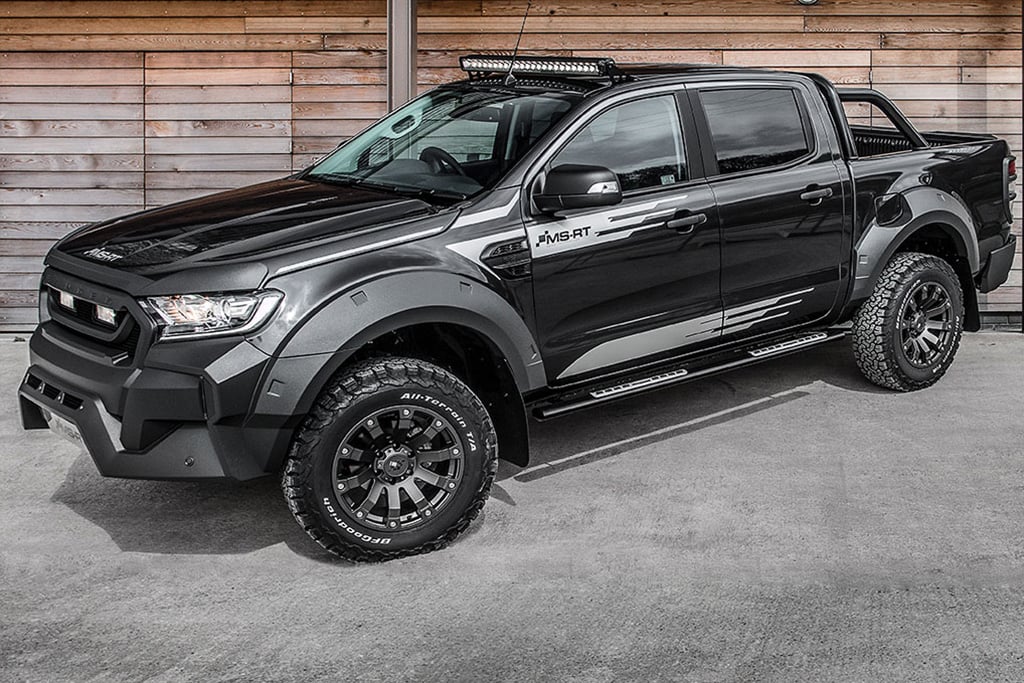
The MS-RT Ranger rides on BF Goodrich All Terrain tyres, wrapped around unique 18-inch wheels.
A Pedders suspension system gives the modified ranger a two-inch lift to the ride height, adding to the imposing stance and road presence.
Dual ‘Lazer’ LED light bars are integrated into the front grill, while a single larger unit is fitted to the roof.
Inside the cabin there is leather upholstery and a flat-bottomed steering wheel, along with unique contrast stitching.
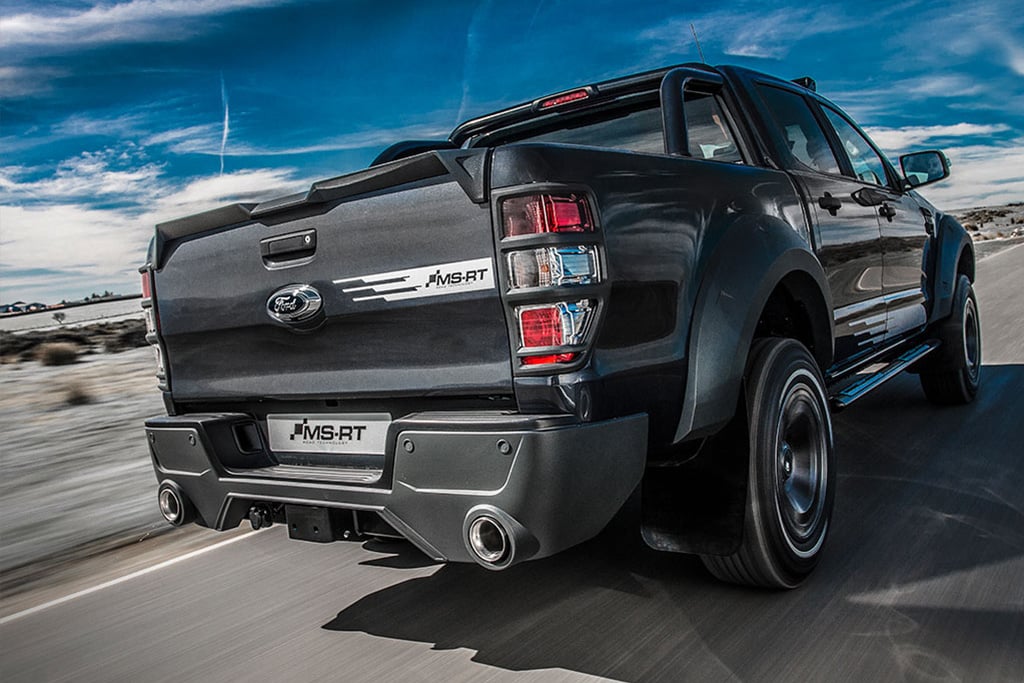
The team at Autosource International sell the cars in Australia, assembling them locally.
If the M-Sport stickers are too conservative for you, or if you have a two-wheeled perversion, there is also a Valentino Rossi edition, which is otherwise the same but comes with bold ‘46’ graphics.
There have been no modifications to performance aside from a dual-exit sports exhaust. That means a 3.2-litre five-cylinder turbo-diesel engine up front, making the same 147kW/470Nm as standard.
TELL ME ABOUT THIS CAR
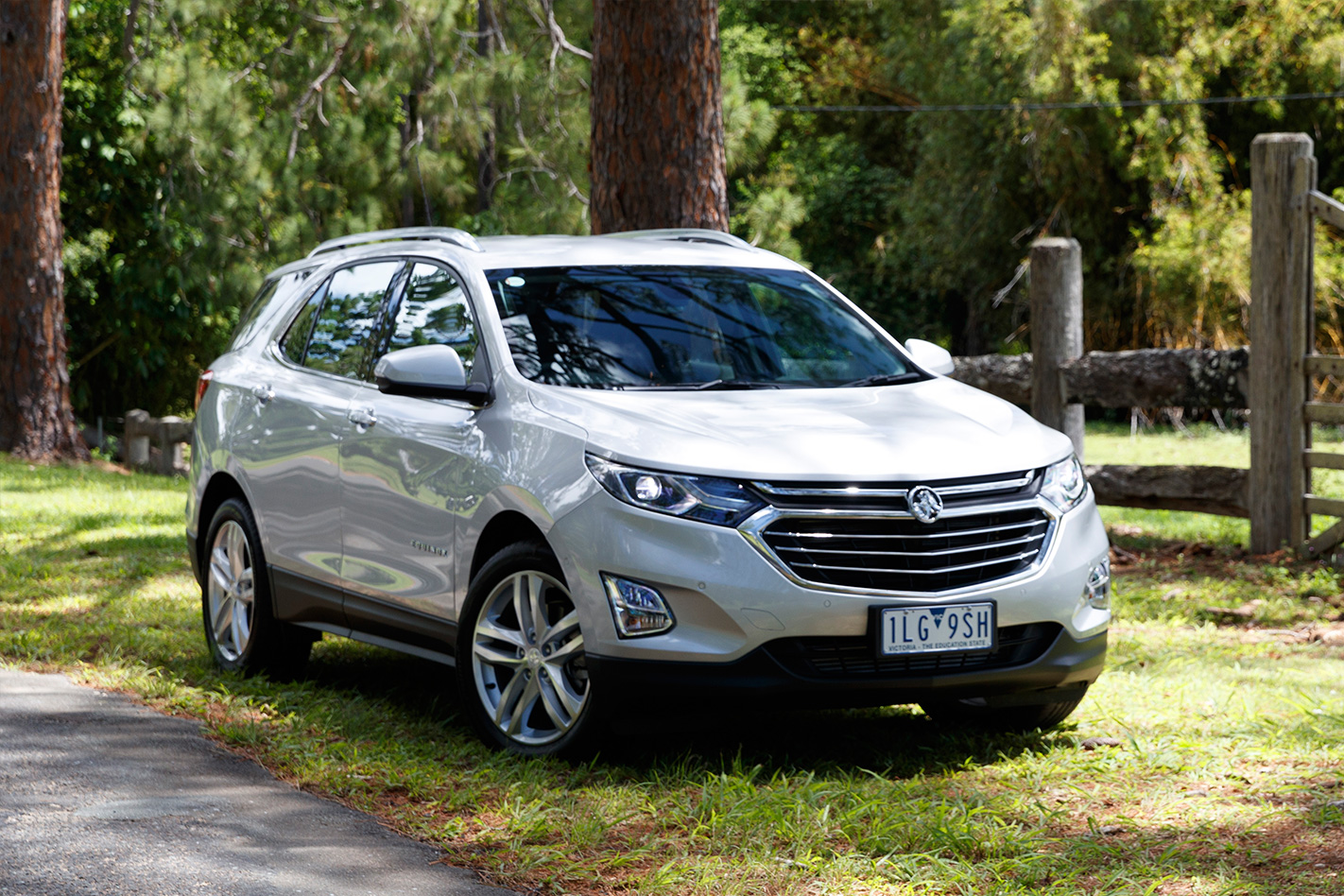
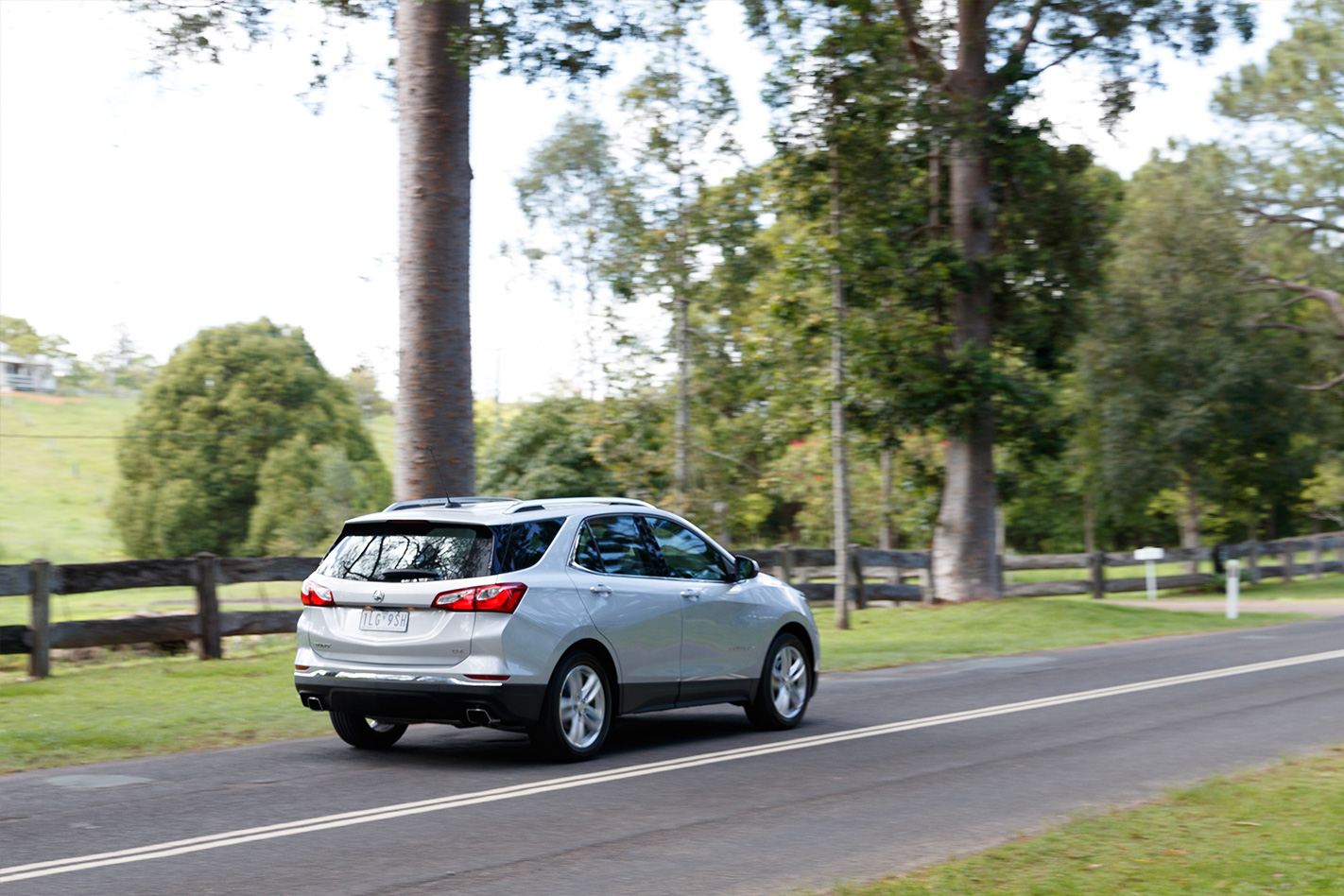
The Holden Equinox is an all-new mid-size SUV that Holden is importing to Australia via General Motors’ state-of-the-art facility in Mexico as the replacement for the five-seat Captiva. It is available in a wide range of variants priced from $27,990 to $46,290 with two different petrol engines (a diesel is coming soon) in front- or all-wheel drive configuration.
Here we are driving a Holden Equinox LTZ, which is the variant below the range-topping LTZ-V. It is powered by a powerful 2.0-litre turbo four-cylinder engine and costs $39,990 in front-wheel drive guise. Add $4300 on top of that for an LTZ with optional all-wheel drive.
STRENGTHS
- Performance: GM’s excellent 2.0-litre engine produces a hefty 188kW and 353Nm, which are high numbers for this class of vehicle. In fact there is no mainstream mid-size SUV that makes more power. It is a fast car, and it appeals to keen drivers. A slick nine-speed gearbox included in the package works well.
- Dynamics: Engineers from Holden spent five years working on the development of this car in North America and at home in Australia to make sure the suspension and steering were up to scratch. The work they have done has given Equinox a sporty feel that makes it fun to drive.
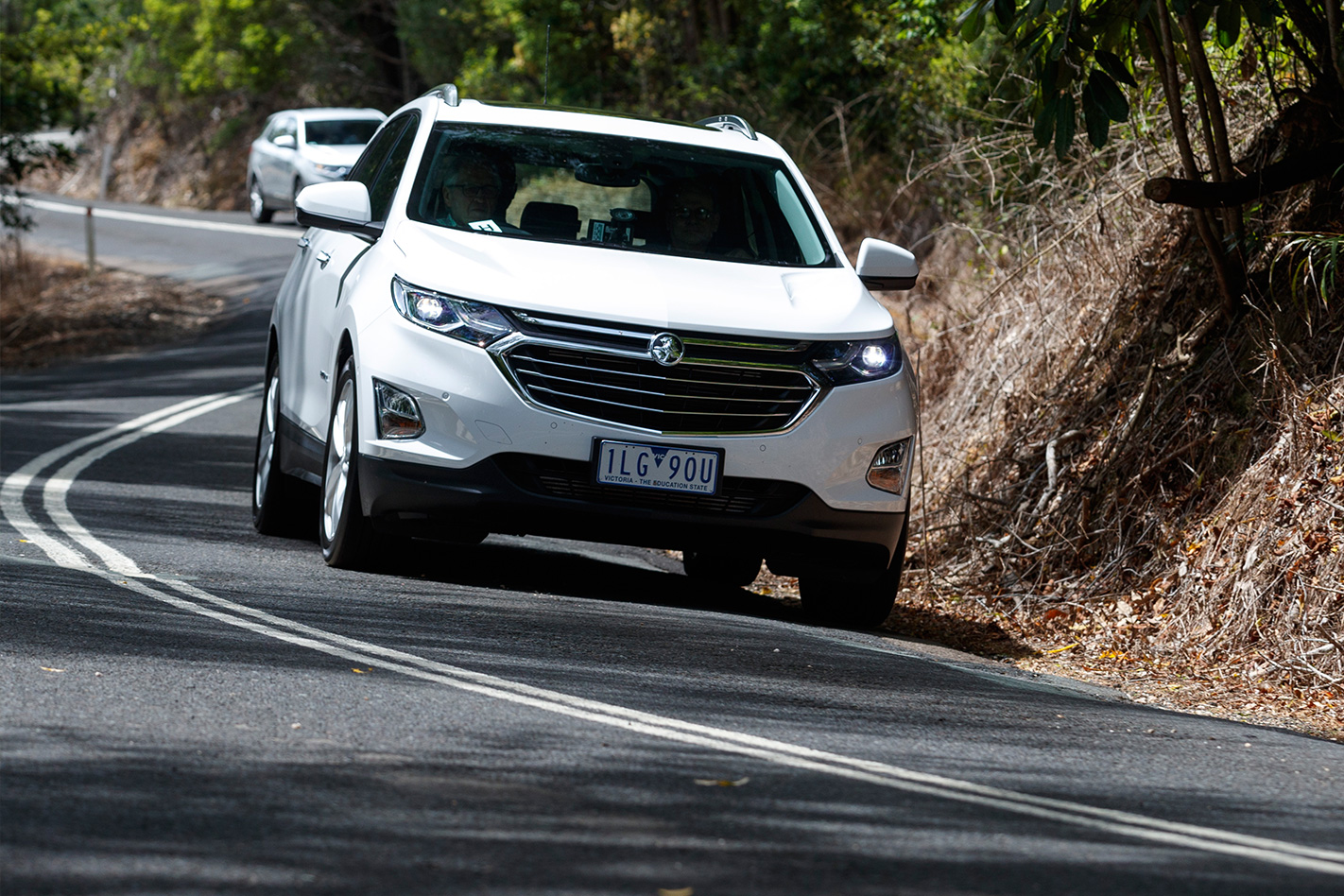
- Space: Rear seat leg room is generous, as is shoulder and head space. The cargo area is competitively sized and folds flat to accept most things a family will throw at it, though the rear bench doesn’t slide meaning the boot layout is slightly less flexible than some rivals.
- Equipment: At this end of the Equinox line-up the LTZ features a long list of equipment. Included as standard are 19-inch wheels, leather-appointed heated seats front and rear, Apple CarPlay, digital climate control, a powered tailgate with gesture control, wireless phone charging, LED lights, digital radio and a raft of charging points around the car including standard USB and 12V sockets plus a 230V household plug in the rear.
WEAKNESSES
- Styling: This is subjective, but to our collective eyes it’s unfortunate Holden hasn’t done much at all to tailor the Equinox’s look for our market. Instead it maintains a very American aesthetic with chintzy chrome trim and an over-the-top front grille. It’s a rather forgettable thing to behold.
- Finishes: A mix and match selection of hard, thin plastics comprise most of the Equinox’s interior. It’s not particularly nice to look at or touch. The centre console in particular is quite oppressive, but then again the old Captiva wasn’t any better and if you can see past these design considerations you’ll find a lot of other things to like.
- Economy: With so much power on tap the 2.0-litre Equinox LTZ does drink more fuel than its competitors. Holden claims 8.2L/100km, whereas its equivalent rivals use less.
- Shifter: Holden has managed to make an SUV with some driver appeal, but sadly there is no practical way to take manual control over the gearbox. There are no paddle shifters and the ‘Range Finder’ buttons atop the shifter are not intuitive to use on the fly.
ANY RIVALS I SHOULD CONSIDER?
This is an extremely competitive segment currently led by the Mazda CX-5 and Volkswagen Tiguan, with a raft of others hot on their heels, including the Toyota RAV4, Hyundai Tucson, Honda CR-V, Kia Sportage, Subaru Forester, Mitsubishi Outlander and Ford Escape.
FORD and Holden both paid no tax in the 2015-16 financial year despite reporting more than $6.7 billion in income, documents released by the Australian Tax Office reveal.
The documents also show Nissan and former Peugeot and Citroen distributor Sime Darby also paid no income tax – the latter because it did not have any taxable income.
The taxation watchdog yesterday published a list of the tax paid by more than 2000 of Australia’s largest businesses. The list shows that overseas-owned companies are making the smallest contribution to the nation’s tax revenue – a third – despite making up half the companies audited in the report.
Ford Motor Company of Australia earned $2.53 billion in income, but the document shows the company earned no taxable income in its last full year as an Australian car maker. It reported a $2.37 million loss for the financial year, although it had made a string of other bigger losses in the lead-up to that financial year.
General Motors Australia, meanwhile, made $2.51 billion in income, while General Motors Holden Australia earned $1.76 billion in total income, the document shows. The car maker reported a $153 million profit for the financial year, claiming it paid $188 million in tax, although like Ford it has run up a string of losses as it moved to pay for the closure of its manufacturing operations.
Ford spokesman Martin Gunsberg told Wheels that the former car maker declared an operating loss in 2016, “due mainly to costs associated with transformation including decommissioning and separations”.
“Our global products led by Ranger are strengthening our business, and are reflecting a profit, however this is still more than offset by the transformation costs we continue to incur,” he said.
“It’s important to note that our operating loss in 2016 is one of the smallest Ford Australia has reported in recent years.
“We continue to invest in the future with nearly $2 billion in research and development in Australia the past six years, and a further $450 million in 2017 to bring more world-class vehicles like the Ranger and Everest to market for customers.”
Holden was asked for comment, but is yet to respond.
The ATO said corporate income tax was payable on profit, not gross income, and in any given year a significant percentage of even the largest companies make losses, not just for tax purposes, but also for accounting purposes.
In contrast:
- Audi paid more than $7.2 million in tax on income of $285 million ($24.2 million in taxable income)
- BMW paid $43.2 million tax on $2.46 billion in income ($143 million taxable income)
- Mercedes-Benz owner Daimler paid $112.5 million tax on $3.6 billion in income ($375 million in taxable income)
- Fiat Chrysler Automobiles paid $10.7 million tax on $1.34 billion income ($35.6 million taxable income)
- Honda paid $3.7 million in tax on $960 million in income ($20.0 million taxable income)
- Hyundai paid $16.8 million in tax on income of $2.26 billion ($56.3 million in taxable income)
- Isuzu Ute paid $16.3 million in tax on income of $607 million ($54.4 million in taxable income)
- Kia paid $14.1 million in tax on income of $833 million ($47.3 million in taxable income)
- Mazda paid $32.7 million in income tax on $2.88 billion in income ($109 million in taxable income)
- Mitsubishi paid $397,000 in income tax on $369 million in income ($2.41 million taxable income)
- Nissan paid no tax on taxable income on $2.70 billion of income ($7.52 million in taxable income)
- Porsche Cars Australia paid $11.1 million in income tax on $623 million in income ($37.2 million in taxable income)
- Sime Darby paid no tax on $104 million in income (no taxable income)
- Subaru paid $33.6 million in income tax off income of $$1.45 billion ($112 million in taxable income)
- Suzuki Australia paid $3.10 million in income tax on $380 million of income ($10.4 million in taxable income)
- Toyota paid $138 million in income tax on $10.3 billion of income ($493 million in taxable income)
- Volvo paid $2.16 million in income tax on $$245 million of income ($7.20 million in taxable income)
