
SMALL car, very big deal. The stunning interior of the all-new A-Class is a design, says Mercedes-Benz, fit for the digital age. But the new look is also expressively elegant.
It makes Mercedes-Benz’s current cabins look instantly old-fashioned, and is certain to take the new A-Class to interior design leadership in the premium small car segment.
Production of the fourth-generation A-Class will not start until March or April of 2018, and it will likely arrive in Australia around June. But Mercedes-Benz wants to whet appetites around the world, so they staged a sneak peek at the A-Class interior for select media in Stuttgart.
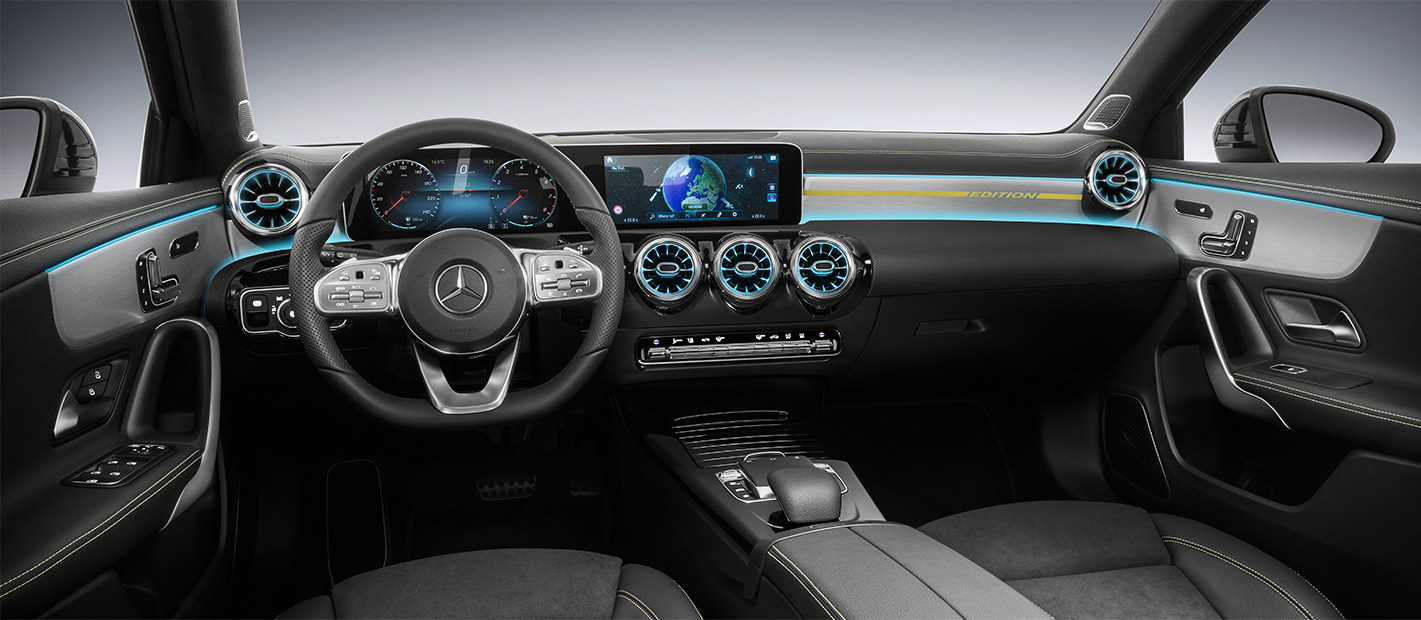
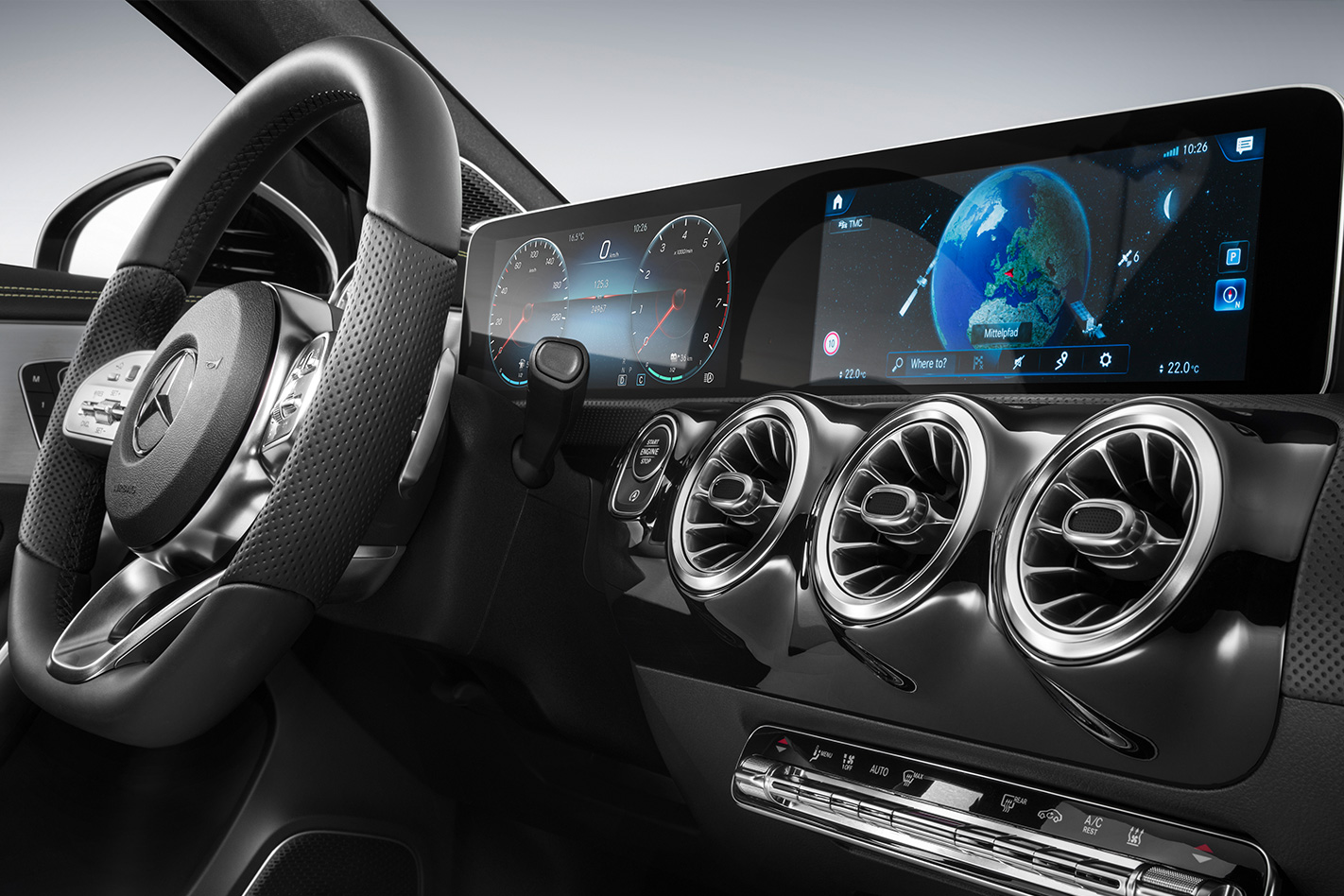
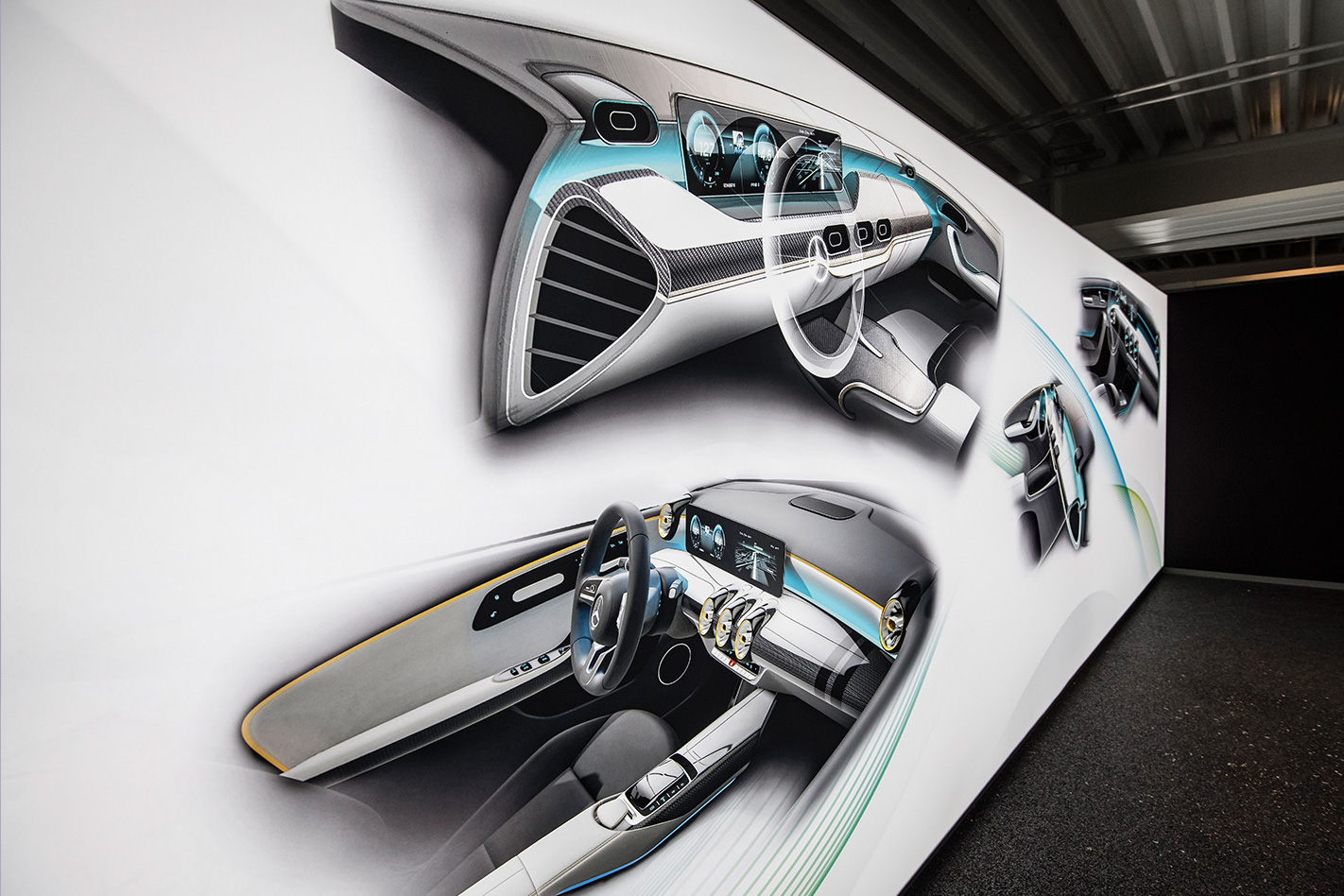
The basic bones are visually simple, but the details add opulence. “I believe this is the most beautiful air vent available,” says Hartmut Sinkwitz, indicating one of the five outlets in the A-Class’s instrument panel. “It took some time to make them possible,” adds the interior design director, who admits they’re not cheap to make. Other brands may have even more costly vents, says Sinkwitz, but none look better.
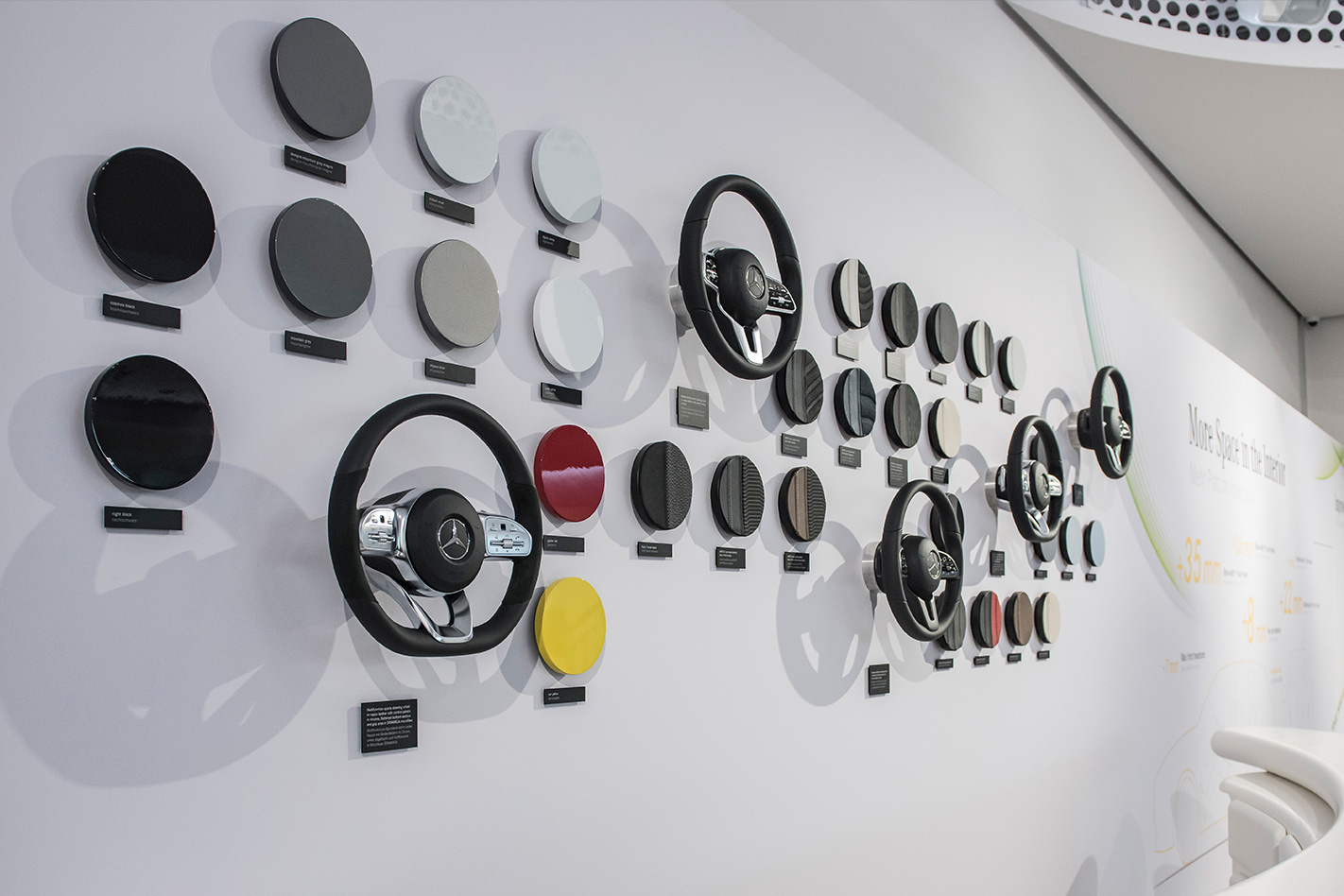
Those air vents are one of only two pieces of the interior shared with other Mercedes models. They also feature in the cabin of the updated version of that style throwback, the G-Class off-roader. And the new Mercedes-Benz A-Class’s three-spoke steering wheel is the same as that in the recently updated S-Class luxury sedan.
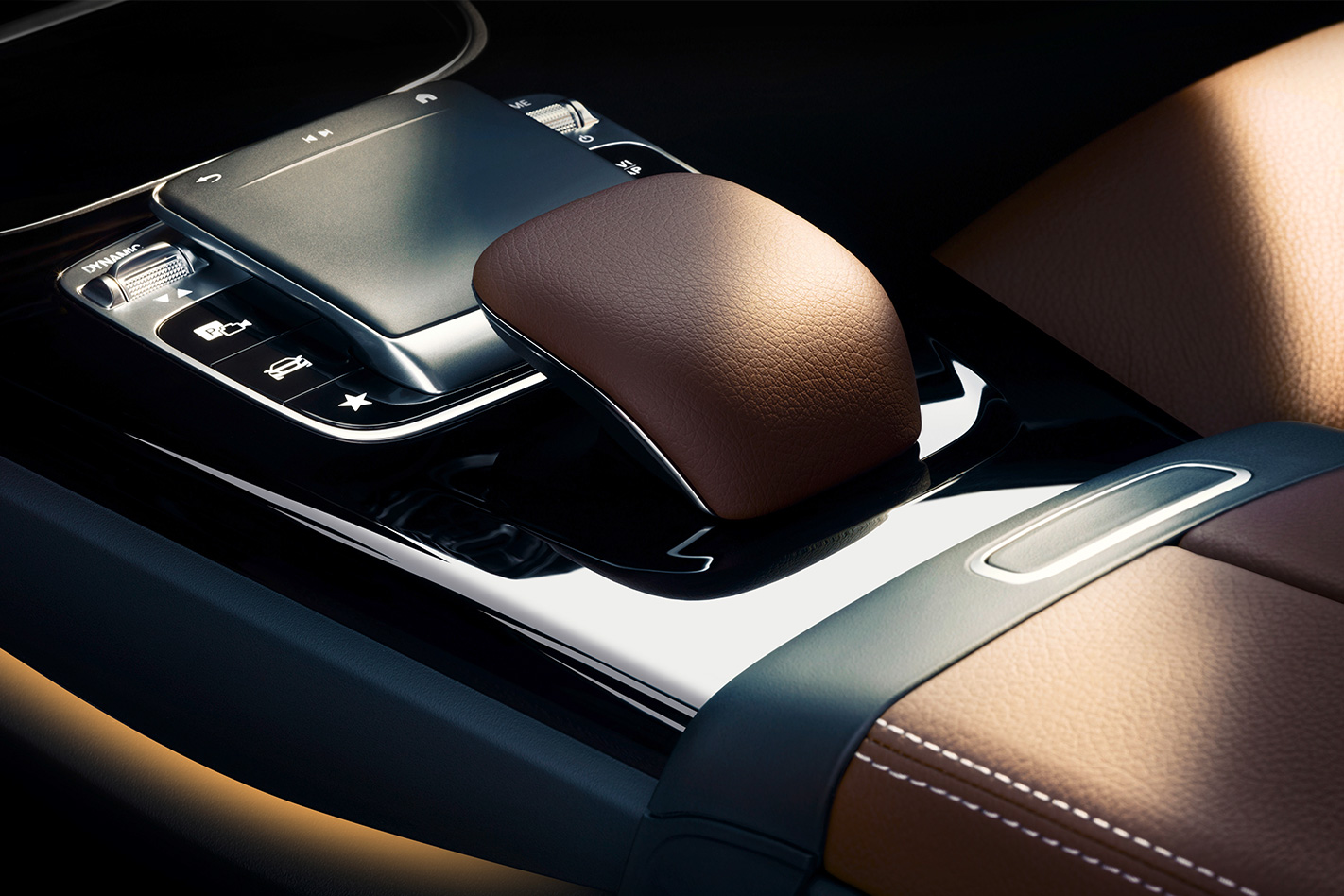
There’s logic in Mercedes-Benz’s decision to launch the interior look that will gradually spread through its range in the small and relatively affordable A-Class. It has a younger, more tech-receptive customer base. A study of attitudes to the new touchpad controller found younger age groups overwhelmingly liked it more than the old Comand wheel, says Sinkwitz. Older customers also preferred the pad, but only by a slender margin.
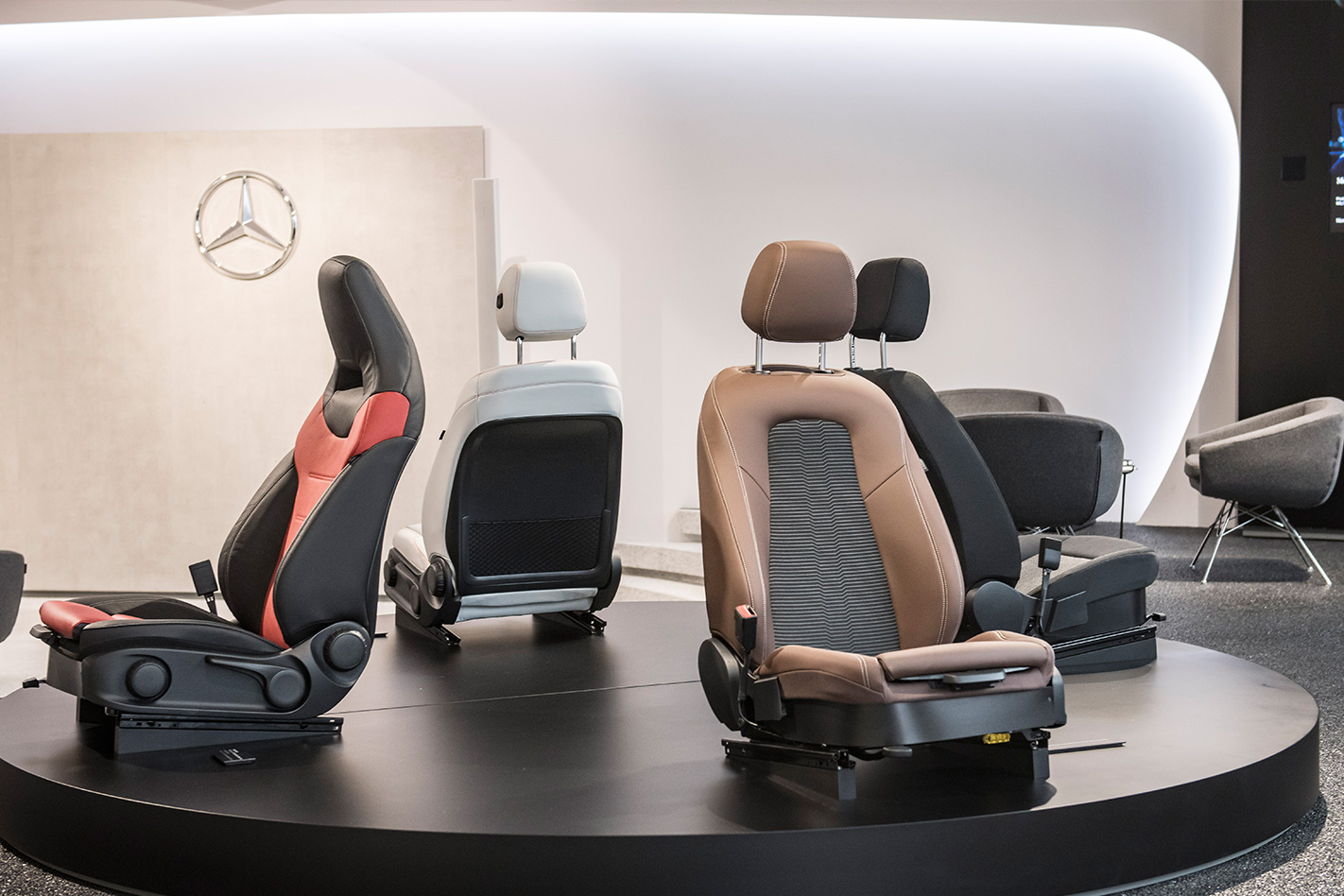
Design isn’t the only area of improvement. Owners of the previous generation A-Class, launched in 2012, complained about the car’s tight rear seat, visibility and luggage capacity. And they were right to do so.
Mercedes-Benz’s designers and engineers have taken the criticism seriously. The new A-Class, codenamed W177, makes improvements in all these areas.
The cargo compartment is slightly larger, better shaped and easier to access. There’s floor room for six standard German drink crates, up from four in the old model, and the loading aperture is larger.
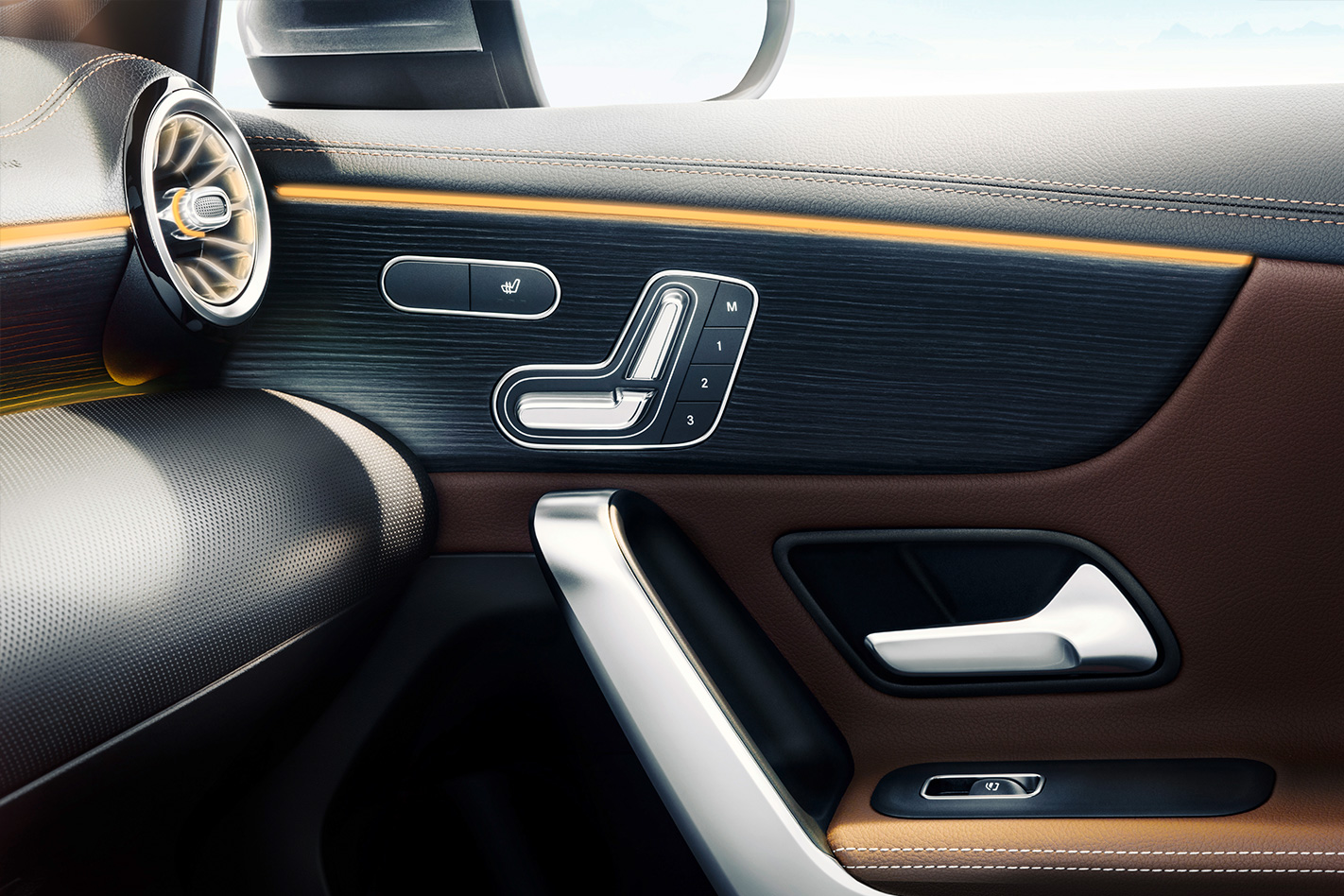
A 10 percent improvement in visibility is claimed. Slimmer A-pillars, realigned B-pillars and pared-down C-pillars make the difference. A side benefit of the latter is a larger door that makes rear-seat access easier.
Spaciousness is also slightly improved for all A-Class occupants in most directions. There’s a little more shoulder, elbow and headroom.
Spark plug The new A-Class family will be big. There are five variants of the current W176, including A-Class hatch, CLA, CLA Shooting Brake, GLA and B-Class MPV, but the new W177 family will be eight-strong, according to compact car product manager Dirk Kielhorn. Count on an EV, something like the EQA concept shown in Frankfurt in 2017, being among them.
TOYOTA reckons its eighth-generation Camry will remain Australia’s bestselling mid-sizer despite now being fully imported from Japan, as a result of a massive refocus on refinement, strength, safety, handling, ride and value that accompanies this complete redesign.
WHAT IS IT? The mid-sizer sedan market may be contracting but Toyota is undeterred, pulling out all stops to make the new Camry the best-ever. Still holding on to its renowned reliability, affordability and durability virtues, this eighth iteration adopts an all-new architecture that is designed to lift driveability, efficiency, refinement and comfort up to European levels.
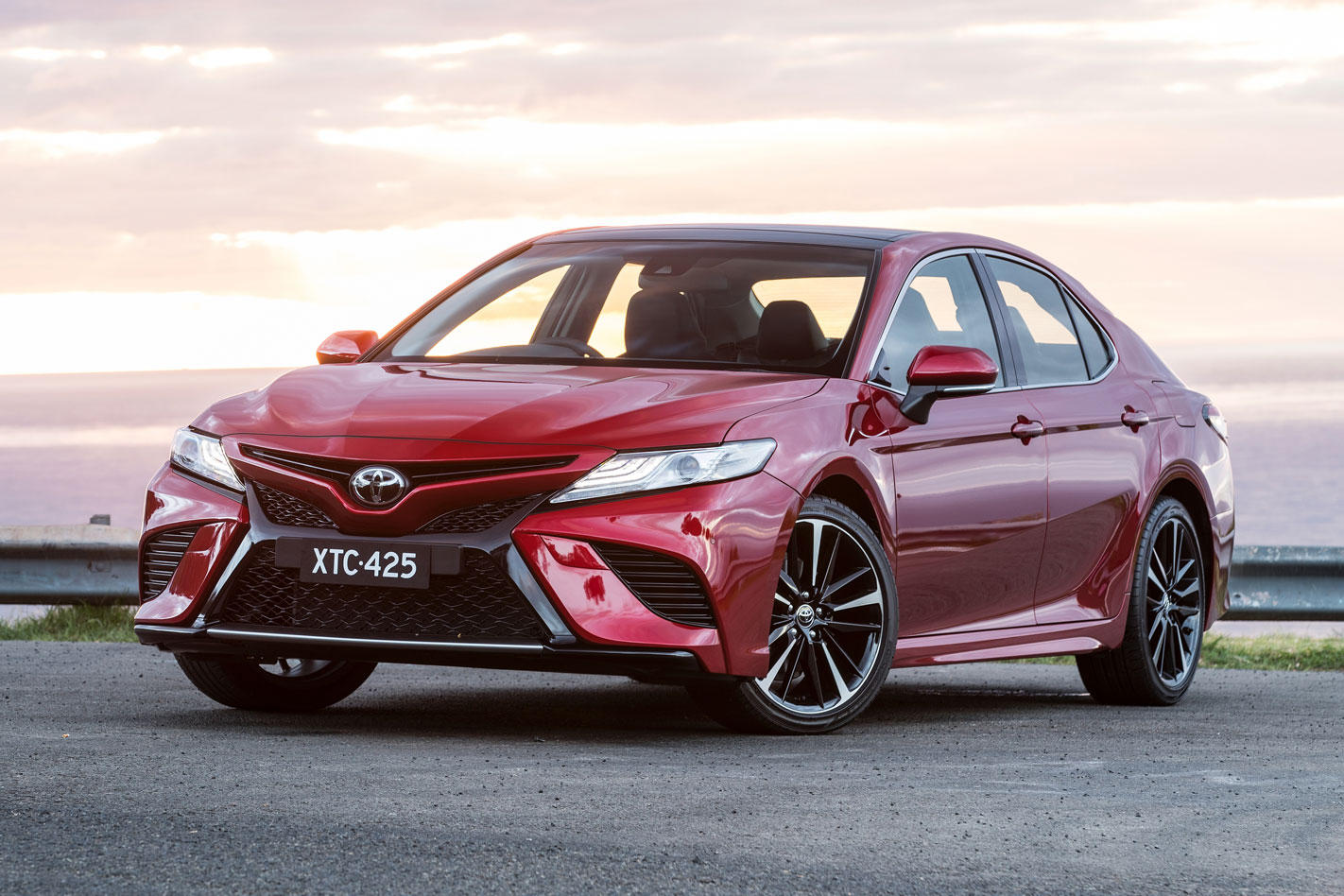
MAIN RIVALS Volkswagen Passat, Mazda 6, Skoda Octavia, Honda Accord, Kia Optima, Ford Mondeo, Hyundai Sonata, Holden Commodore, Subaru Liberty
THE WHEELS VERDICT While we’re sad to see the end of local Camry production, the all-new version from Japan looks, feels and drives like it’s from two generations ahead of the old timer, bringing improvements across the board. Whether the Toyota tops leading contenders like the Ford Mondeo, Mazda 6 and Volkswagen Passat remains to be seen, but the eighth generation is now a pleasant, enjoyable and attractive family car proposition that the previous iteration never was. And the Hybrid especially offers a terrific blend of performance, economy and value. Prices are up, but the 2018 Camry deserves a much closer second look.
PLUS: Wholesale improvements everywhere; sporty SX; Hybrid efficiency; keen pricing MINUS: V6 duller than expected; plastic steering wheel in base Ascent; cardigan reputation
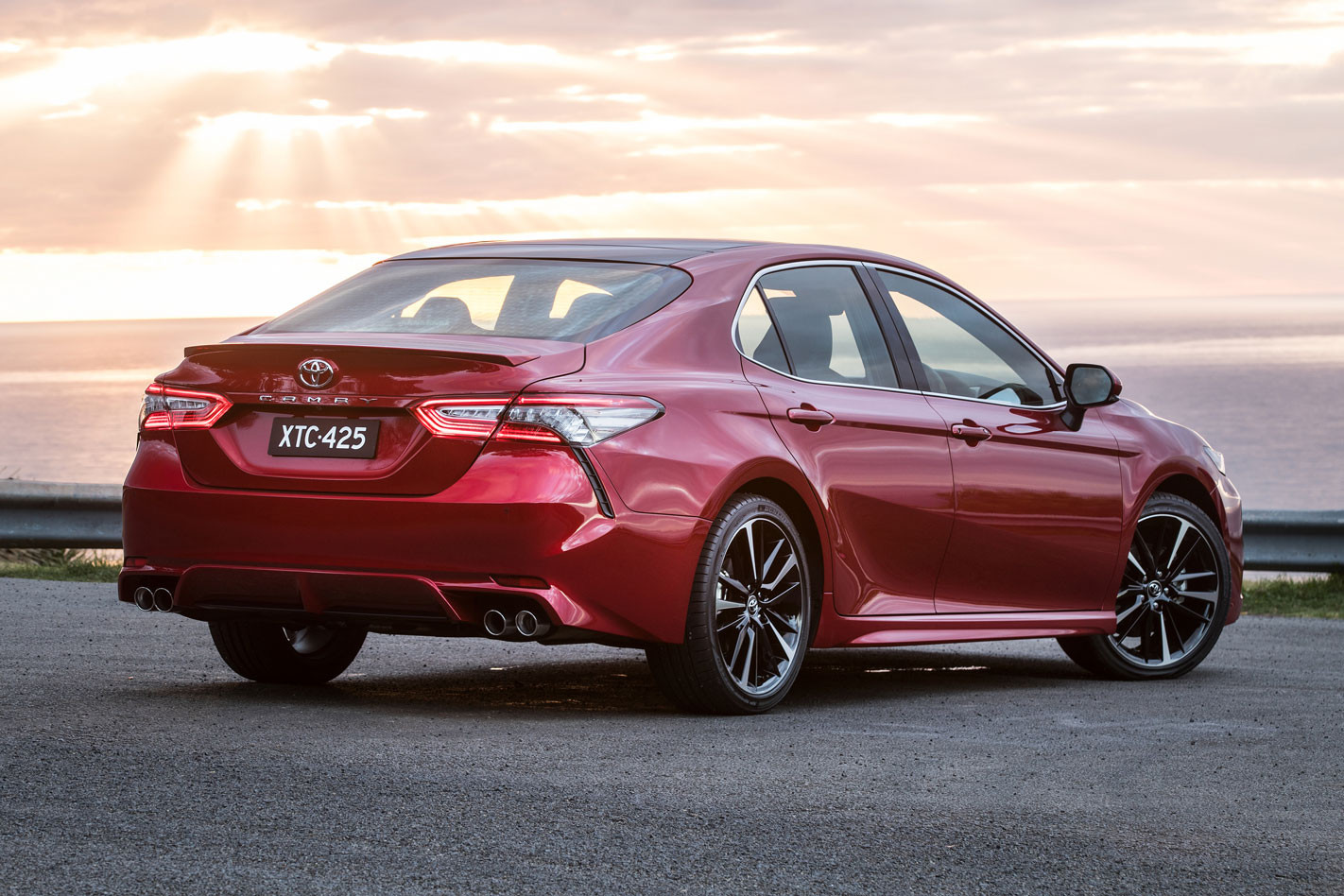
THE WHEELS REVIEW AND JUST like that it’s over. No more Australian-made Camry, ending 91 years of continuous if circuitous manufacturing (like Ford) that started with Standard (later Triumph), switching to world-first outside-Japan Toyota production in ’63 and ceasing in October. Such a profound loss.
Frankly, however, the old Altona-assembled Camry was past it, trailing all in a 10-strong mid-sizer comparo (Wheels, September 2016) due to a drab cabin, rattly fittings, fidgety ride and endless droning. Not an Australian great, then. Yet approaching the mostly all-new and fully imported 70 series Camry (the eighth since 1983) is like seeing an ex years later; you hope things work out for the best but also feel a tinge of schadenfreude if anything’s slightly amiss (slightly – we’re not sociopaths!).
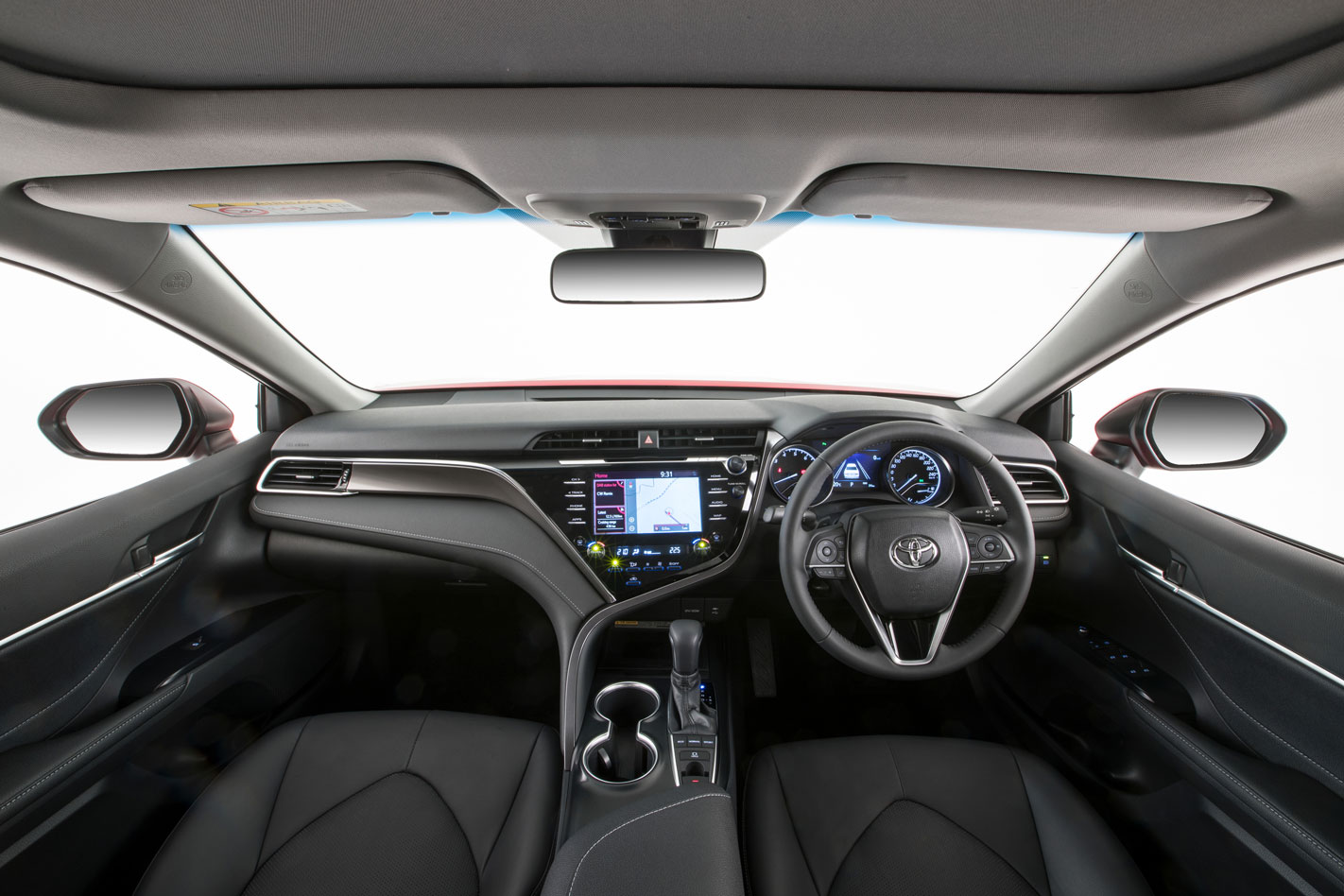
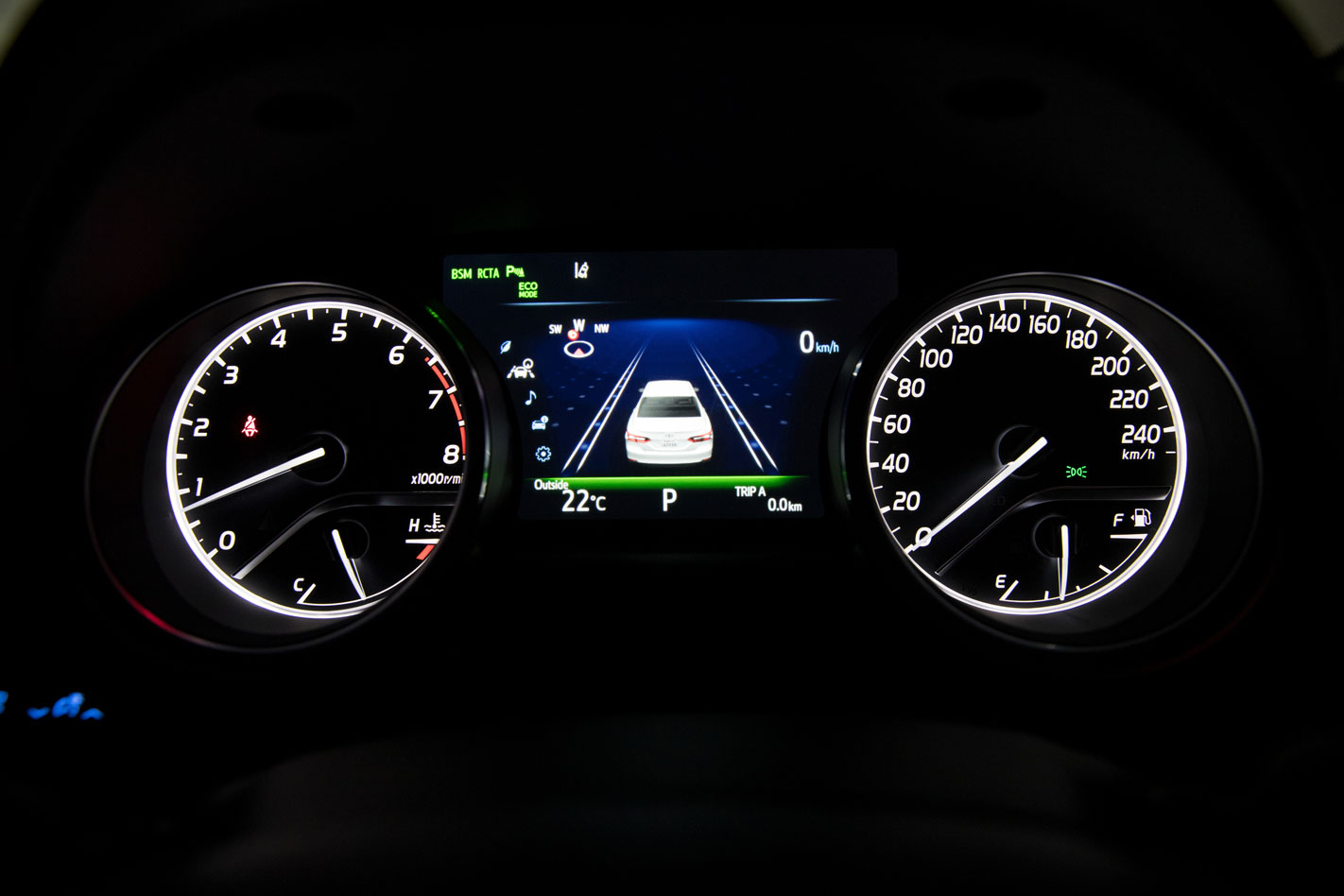
Adopting the Toyota New Generation Architecture technology, the 2018 Camry sits on a longer, wider and lower platform, boosting packaging and space. Slimmer pillars, a lower bonnet line and deeper glasshouse provide better vision, the dash goes contemporary with a distinctive/ugly (you choose) double-helix look, concise and way-more functional multimedia system and clear instrumentation, while comfier seating, more attractive fittings and a finer driving position make their debut. Only the Ascent’s clammy plastic steering wheel jars, though the fixed rear-seat headrests seem like a weird 1970s Corona throwback.
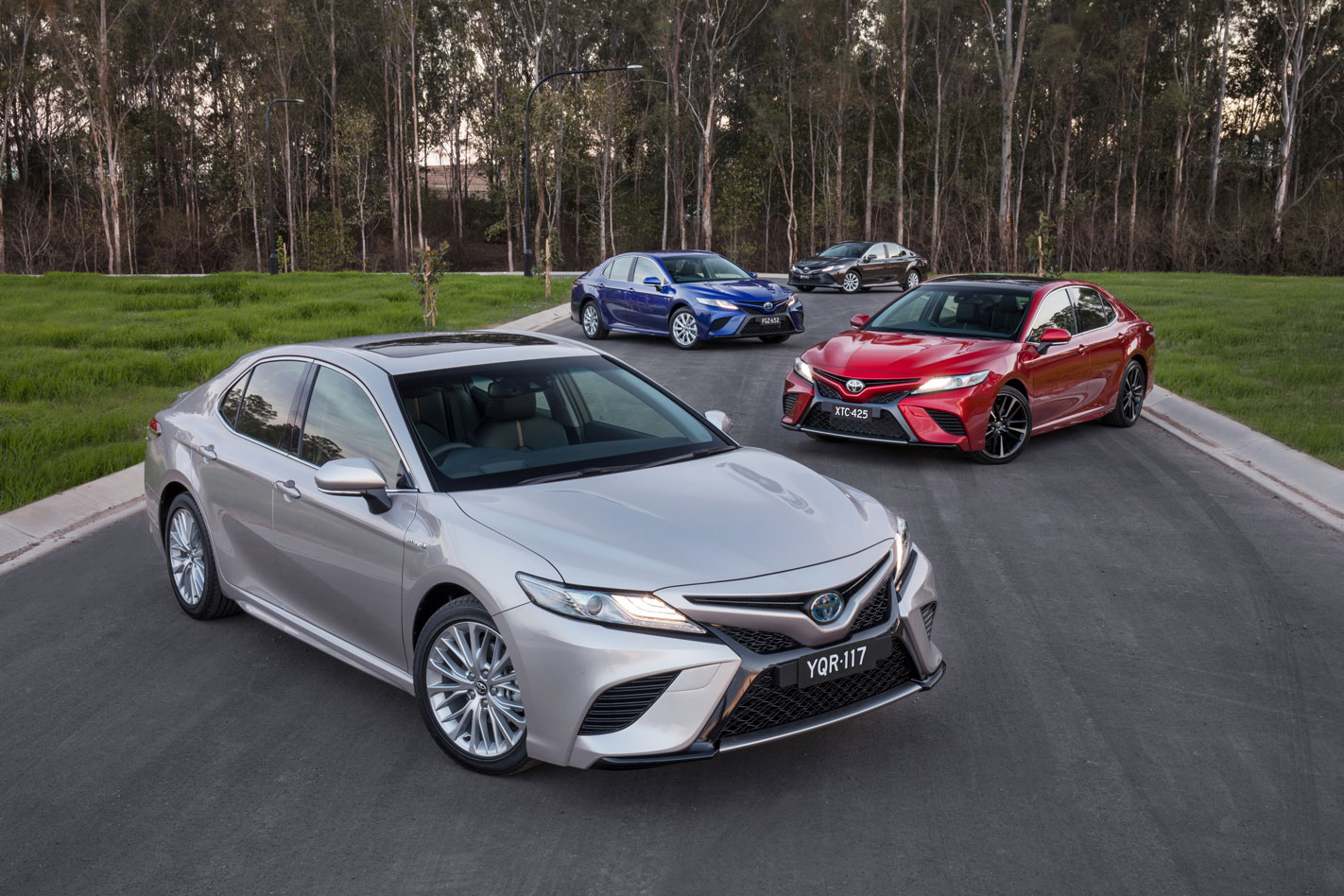
Going green and beige has never rewarded more. Livelier acceleration, coupled with rousing mid-range muscle (aided by a CVT auto revamp), more seamless operation and less-grabby braking makes the 160kW-combined Hybrid (from a tenner under $30K) a likeably capable Euro-diesel alternative. With a claimed 4.2L/100km average, the series-parallel greenie even out-sips earlier Priuses. Impressive.
Both four-pot Camrys revel in the altogether higher-quality chassis, boasting newfound steering linearity with no kickback, more balanced handling, stable cornering at speed and – best of all – a more supple ride, with the (now double-wishbone rear) suspension isolating occupants from the road surface – closer dynamically to a Mondeo, with refinement to embarrass the Mazda 6. The SX with its sportier tune is our pick for its mix of agility, tautness and comfort. Pity no manual is available; what an enthusiast’s curio that would be.
Less whelming is the powerhouse 224kW/362Nm 2GR-FKS V6 from $37,290, driven in flagship SL guise from $43,990. With an eight-speed torque converter auto, the Aurion ouster conforms to old six-cylinder Toyota norms by being creamy and cultivated, but the helm is oddly muted, the nose a tad heavier and the ride a little harder (and louder) than we’d like, detracting from the fours’ finesse. And although the sizeable outputs suggest otherwise, the anticipated performance wallop doesn’t eventuate. Overall, Camry V6 is no Holden VF Calais grand tourer delight.
Still, except for no full-size spare wheel (bar Ascent), the dwindling mid-sizer sedan fan base will find plenty to savour here. New Camry is significantly better than it has to be – perhaps leaping two generations over the old timer. Proof that Toyota’s grating near-enough cynicism is evaporating.
It may no longer built by us sadly, but at last us Aussies can enjoy a Camry with higher standards, and that too is a triumph.
The fact that the Sport Clio finished in fourth spot on raw numbers was a hell of a surprise given the big-hitting stuff it was up against.
This article was first published in MOTOR magazine’s March 2005 issue.
On the other hand, it’s proof that the value for money thing still comes into it (remember when the Nissan 200SX flogged all comers including the twin-turbo 911 to carry off the PCOTY silverware in 2001?).
Aside from the terrifying performance-per-dollar ratio, the Clio sunk the slipper into some much bigger reputations by being very good at what it does best. At Winton Raceway, it really shone with loads more front-end grip than you expect and better than average power-down, considering there’s so much torque right across what is a very wide rev range.
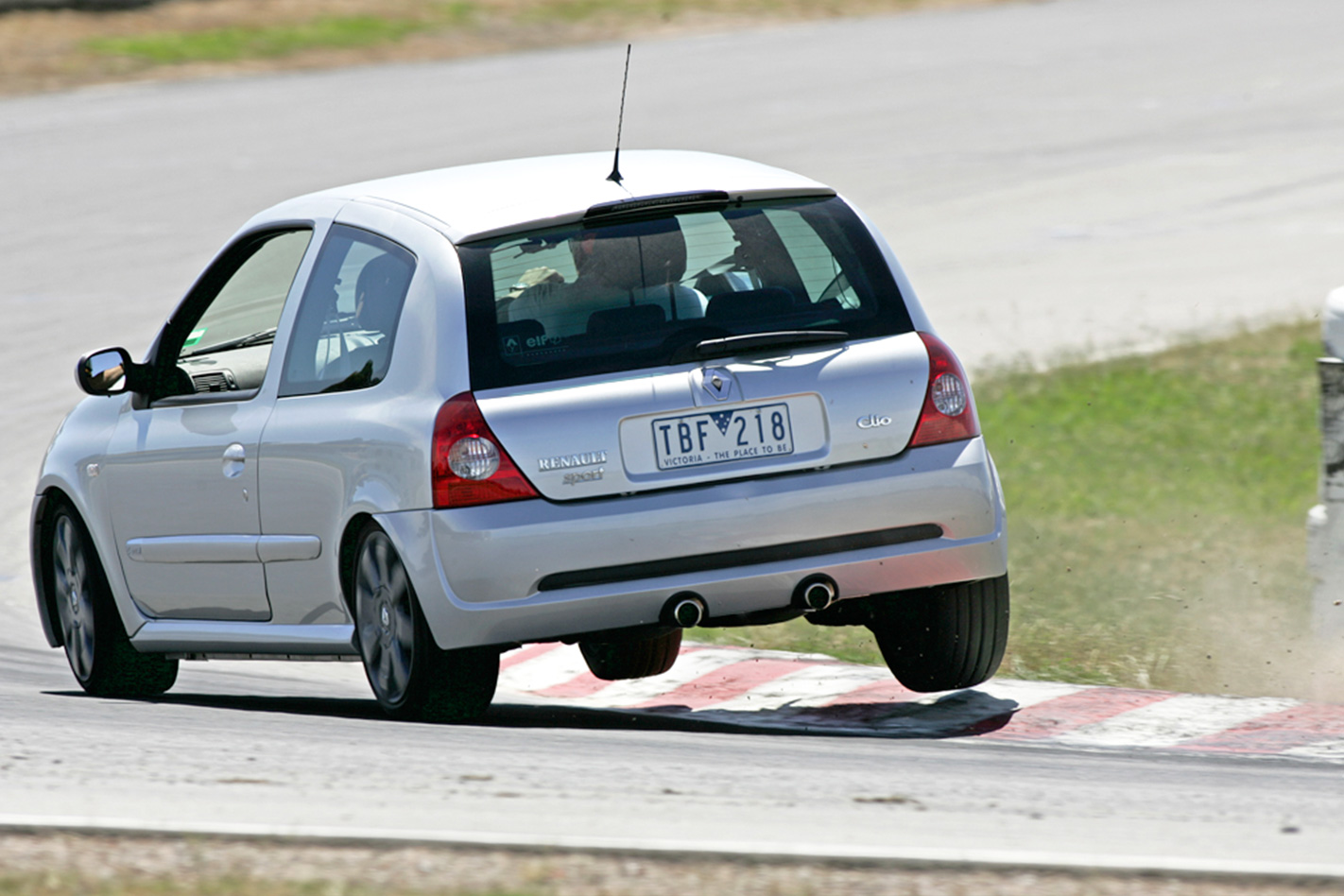
Okay, so the ride quality isn’t as soothing as it is in something with more wheelbase and kerb weight, but it doesn’t pitch like its dimensions suggest it should, nor is there the initial impact harshness you might expect from something as taut overall.
The steering is some of the most accurate you’ll find in a front-driver and there’s a ton of feedback from everything from the clutch pedal to the gearshift to the seat cushions. In fact, one of the Clio’s most endearing features is the way you can jump into it and immediately feel like you’re on top of things.
That’s not something you can say about a lot of Euro machinery which can take at least a few kilometres to get used to where the broom cupboard is and how the ironing-board works. But the Clio? Nope, get in, belt up and go like you’re on fire.
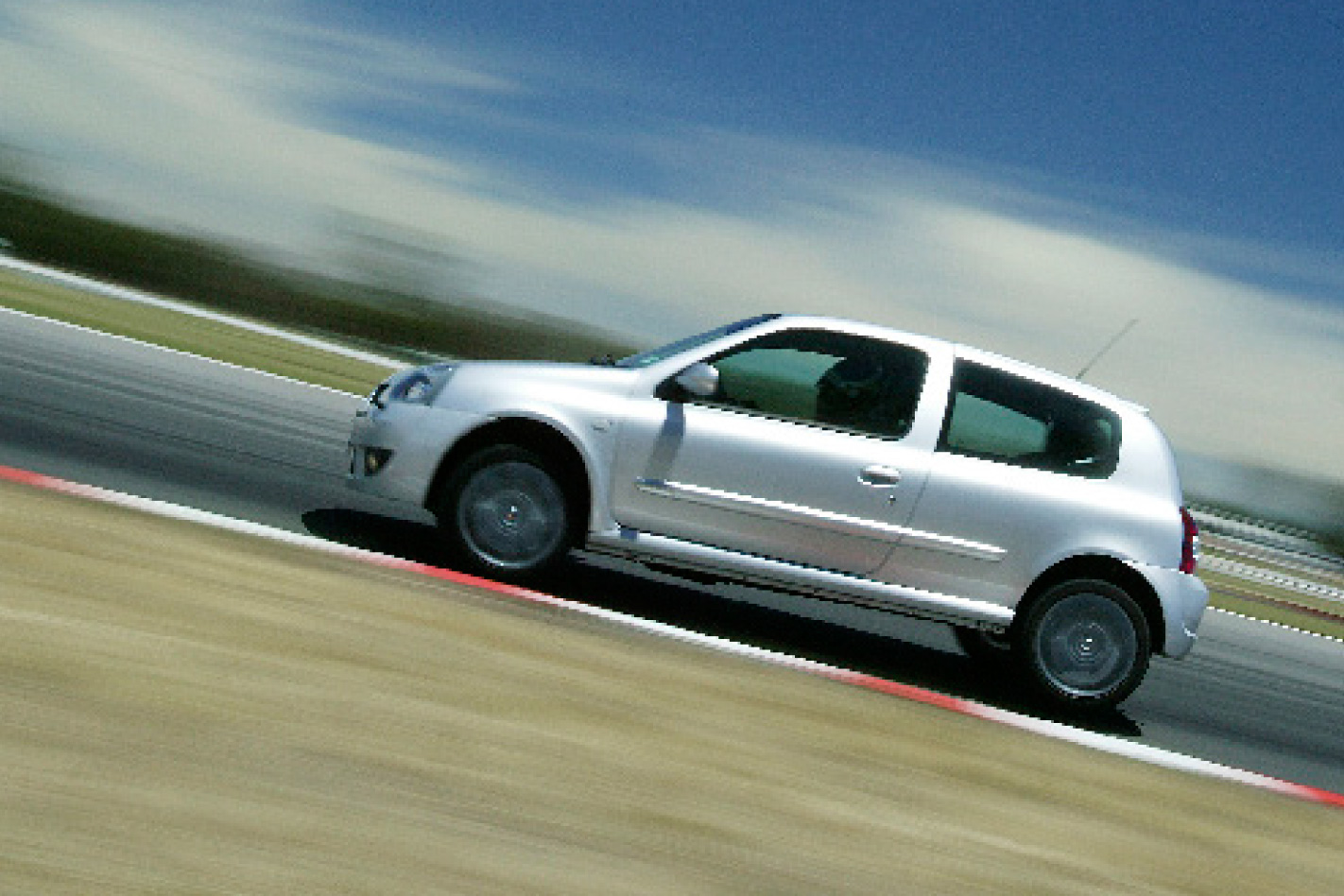
Don’t read anything into the fact that the Clio was the only car to go backwards in the transition from raw numbers to final voted result; some shuffling is inevitable and for two cars to go one better after judges votes, one has to go back two. Simple as that.
Meanwhile, when you consider it busted the ClubSport in the chops on raw points, those thrills we were talking about are certainly much, much bigger than anything else for the money.
Clios of PCOTY Past
Charming, fun, flexible and just beaut but, then, so was its predecessor, which finished ninth on the 2002 PCOTY. The funny thing is: this Sport Clio cruised into the Top Six despite being only a poofteenth quicker.
Renault must have figured on the Clio being plenty quick enough for its rivals (true) or that the 2.0-litre motor was giving as much as they were comfortable with for longevity (also true).
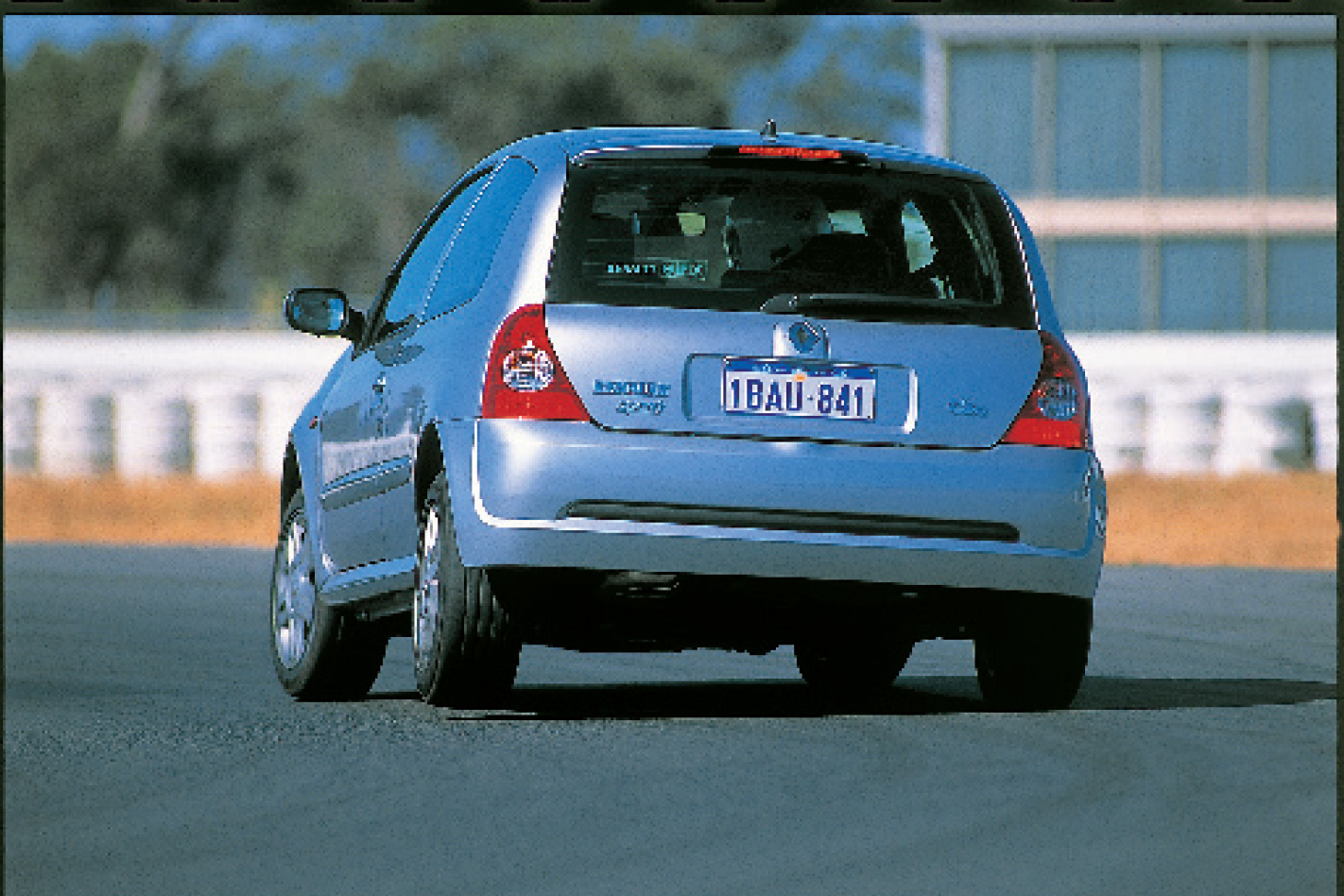
Even its lap time at Winton is bugger all different, with the new car holding a 0.14 second advantage. Why did this one make the top six and the first one didn’t? One word: chassis. The Sport Clio is clever on the inside.
Renault Sport Clio Cup Specs: Drive: front-wheel Engine: front-mounted 2.0-litre DOHC 16-valve inline four power 131kW @ 6500rpm Torque: 200Nm @ 5250rpm Weight: 1035kg Transmission: five-speed manual Length/width/height: 3733/1639/1409mm Fuel Economy: 16.0 litres/100km (50L tank) Price: $34,990
Performance 0-100km/h: 7.58sec 0-400m: 15.52 @ 146.3km/h 0-1000m: 28.27 @ 190.0km/h Winton lap time: 1:47.16 Winton top speed: 156km/h
Developed at the same time as the Vantage road car, the new Aston Martin Vantage GTE race car has been revealed.
Aston Martin says the car has already undergone intense testing.
“Development of the new Vantage GTE race car is well advanced, with more than 13,000km of testing completed, including a successful 30-hour run at the Spanish circuit of Navarra.”
“The car has also been through a rigorous durability programme at the notoriously rough Sebring circuit in Florida.”
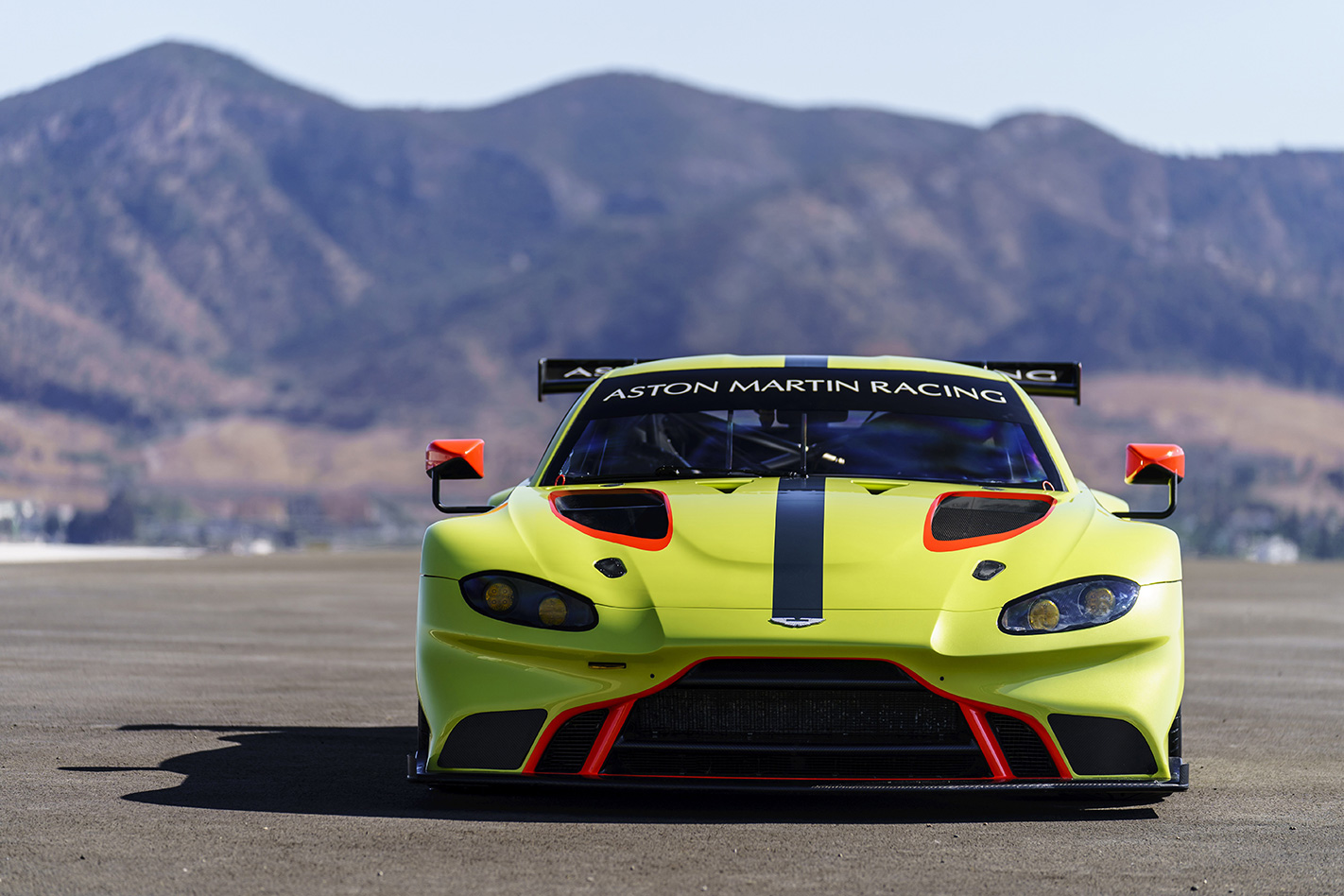
The Vantage GTE will likely not be as powerful as the 375kW/685Nm road-version, as FIA regulations restrict power and weight for parity.
On that note, the GTE will likely weigh far less than its 1530kg counterpart.
Heading up the GTE project was Aston Martin Racing technical director Dan Sayers, who also developed the current – and very successful – Vantage V8 GTE racer.
“Designing and developing this new car has been an extremely satisfying process,” Sayers says.
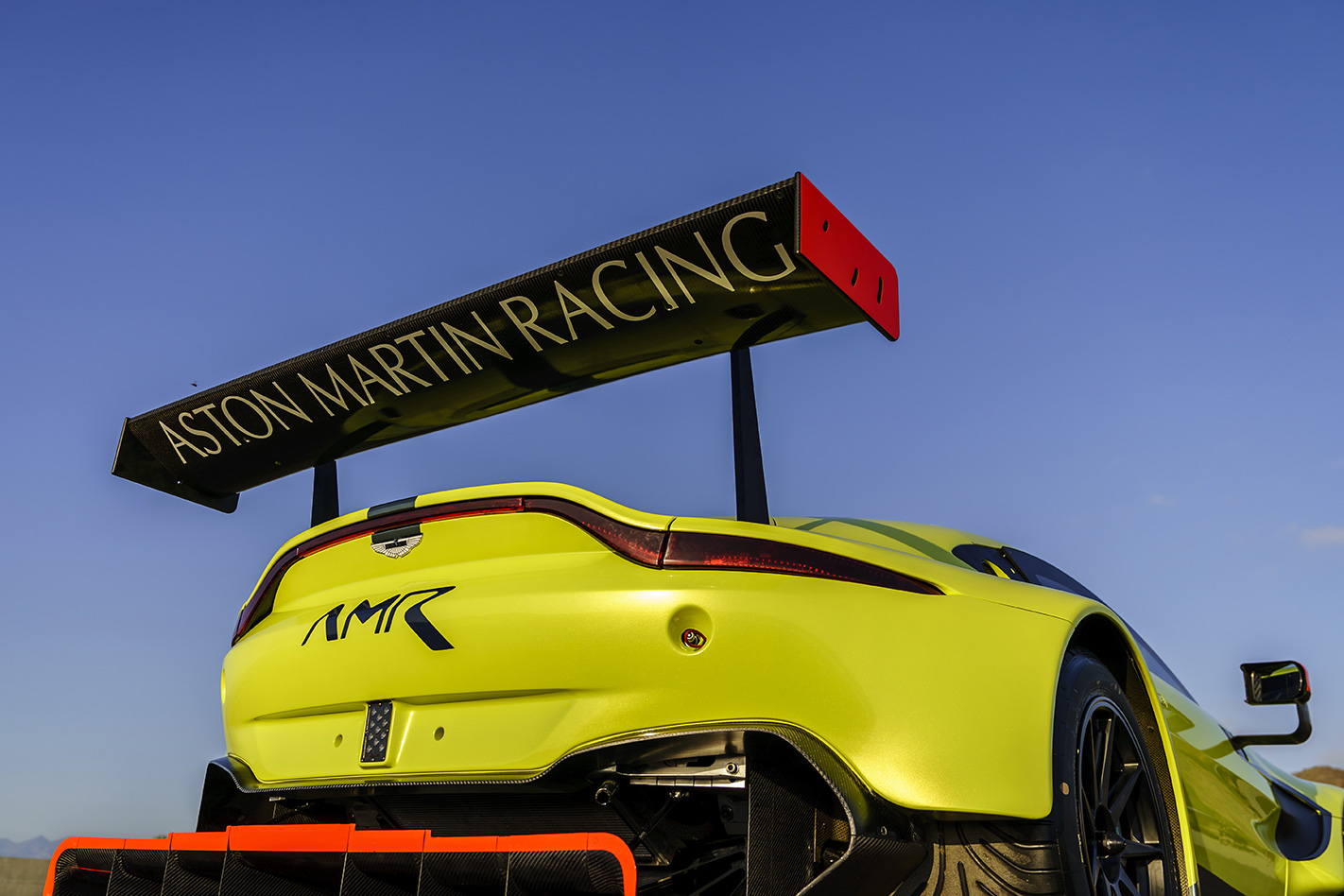
“Attention to detail has been a priority at every step of this process and we’ve made big improvements in each area of the car.
Aston Martin Vulcan gets an AMR upgrade
“We’ve spent every second optimising the design right until the build of our test car, which has paid dividends during our current testing schedule.
“This project has been one of the most intensive but also rewarding of my career so far”.
THOSE accustomed with modern Lamborghinis need no guidance navigating the three Strada, Sport and Corsa standard driving modes, but the Italian car maker’s return to off-road vehicles has facilitated a further three joining the Anima (soul) options.
A third installation in a teaser video trilogy completes the forthcoming Lamborghini Urus drive mode options, which include Sabbia (sand), Neve (snow) and now Terra (land or earth) – one for “any type of terrain” says Lamborghini.
Dressed in a tantalising disguise of swirly black and white, the Urus gives little more away regarding its looks but demonstrates it is capable of tackling some modest unsealed single track terrain with pace.
The video follows previous 30-second theatrics on snow and before that, sand, which seemingly proves the Urus has power and the traction to use it on loose surfaces, but none of the short films have yet shown how the SUV performs away from relatively flat surfaces.
Arguably, it doesn’t have to as it seems fairly obvious the Urus will never have to deal with anything more challenging than a wet dog in its boot and perhaps the odd rain-dampened soccer pitch. Nice to know you can blast up a gravel mountain pass if you have to though hey?
A little more of the interior styling is also offered in the Terra video with a brief glance at the all-digital instrument cluster, including a centrally mounted tacho which has a red-line of 6750 rpm, and a pair of virtual gauges that indicate vehicle pitch and roll angles for off-road driving.
When the production car is revealed on December 4, the final design will have been a long time coming with the first glimpse at Lamborghini’s modern SUV offered in 2012.
From the views of disguised prototype vehicles now circulating the internet, it appears the showroom version will not be a dramatic departure from the concept, with a sporty coupe profile and three-pointed nose similar to that of the Aventador hyper coupe.
Lamborghini has dubbed its Urus the world’s first ‘super SUV’ and the most potent version is believed to be powered by a twin turbo V8, although diesel and hybrid power is also rumoured to be on the cards.
Like all significant detail, the juicy figures and facts will have to wait until the new model’s big debut early next month.
Two Japanese stalwarts and a surprise European appearance round out the small SUV affordable top three.
1st: Suzuki Ignis GL
The fact depreciation is by far the biggest component cost of ownership of any car allowed the Suzuki Ignis manual to ride its class-low $15,990 purchase price all the way to the top step of the podium. You see, despite its 45 percent three-year resale being out-done by most key rivals, being between $4500 and $11,000 less costly to buy in the first place means it will only lose about $8800 over the first three years, about $1500 less than the Mazda CX-3.
None can beat the 820kg, 1.2-litre Suzi’s 4.7L/100km official consumption – and only the 200kg-heavier three-pot Citroen C4 Cactus matches it – yet having saved plenty on the dealership and petrol station forecourts, the Ignis set about resting on its laurels, with an unremarkable three-year, 100,000km warranty and none-too-generous six-month/10,000km service interval. As long as the 271-litre boot is big enough, this is officially the value pick of the baby SUV set.
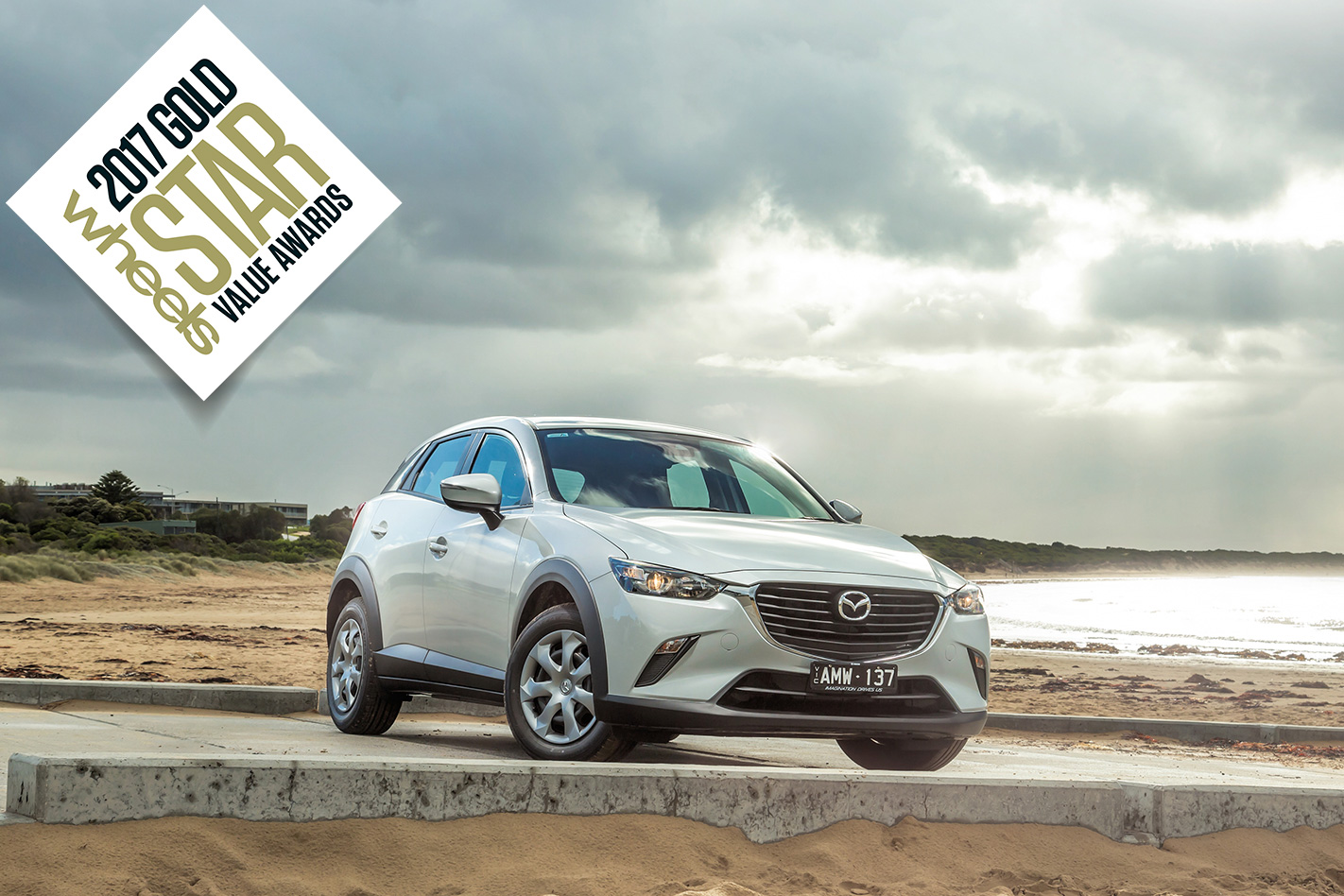
2nd: Mazda CX-3 Neo
We like the Mazda CX-3 for its stout resale and 12-month service interval, but we love its style, quality, handling and 2.0/six-speed manual verve. It’s the driver’s baby SUV, as long as you can fit your stuff in the 264-litre cargo bay.
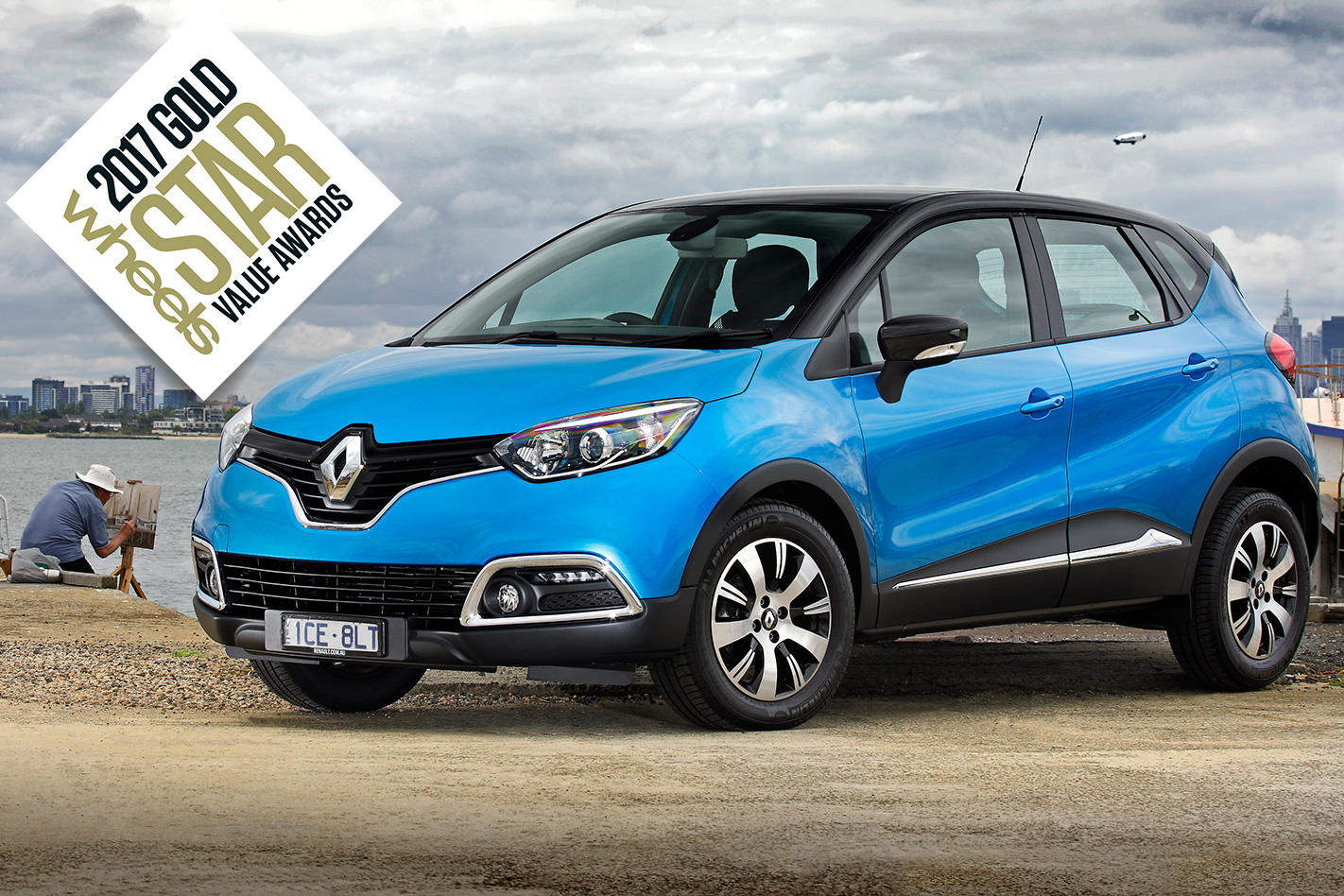
Gallic cabin flair and flexible cargo capacity – 377 to 455 litres, with help from a rear bench on sliders – are the Renault Captur’s aces, along with turbo-triple parsimony and charm, a 12-month service schedule and a five-year warranty.
Germany’s three heaviest hitters go toe-to-toe in this luxury sedan budget battle.
1st: Mercedes-Benz E200
The battle for premium large honours proved an old-fashioned fight between Germany’s big three, with Mercedes-Benz ultimately presenting a sharper ownership proposition than BMW or Audi could.
The entry-level Benz E200 started on the right foot with a lower purchase price and slightly stronger resale than the BMW 520d, to shed about $1000 less of its value in each of the first three years. The total lost per year? About $15,500… Ouch. But that’s big luxo cars for you. The E200’s 135kW 2.0-litre turbo-petrol sees it strike a happy middle ground of driver appeal and economy, with an official usage claim of 6.5L/100km.
Condition-based servicing could let the Merc (like the BMW) go two years between check-ups, but whether it will actually go much beyond the Audi’s scheduled 12 months will depend on the sort of driving you do.
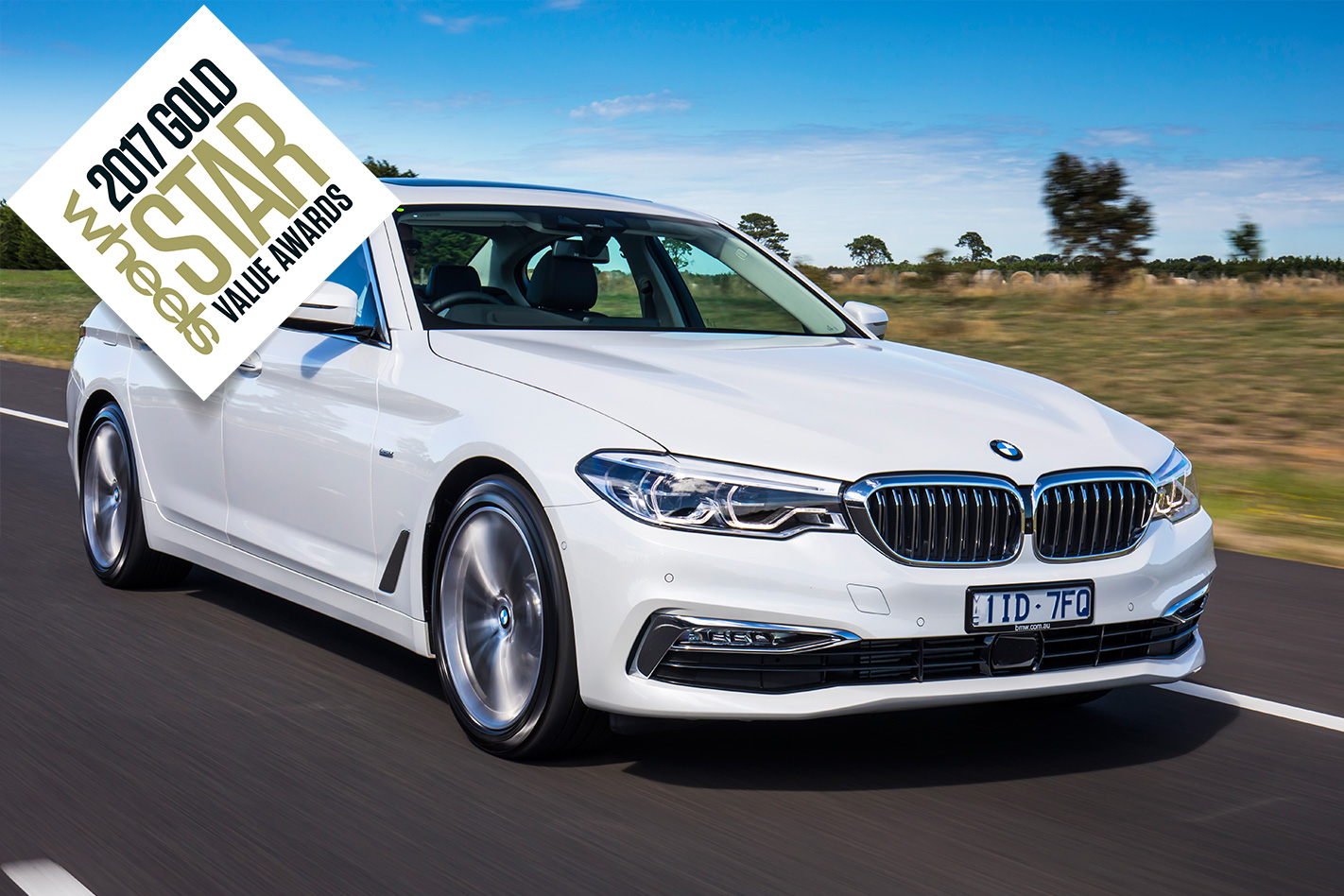
2nd: BMW 520d
Audi and Benz don’t offer entry-level oilers so pitting the BMW 520d against petrols is fair game, we reckon. The 2.0-litre turbo-diesel gives you a 400Nm whack with 4.8L/100km economy to bring it within a bee’s appendage of gold.
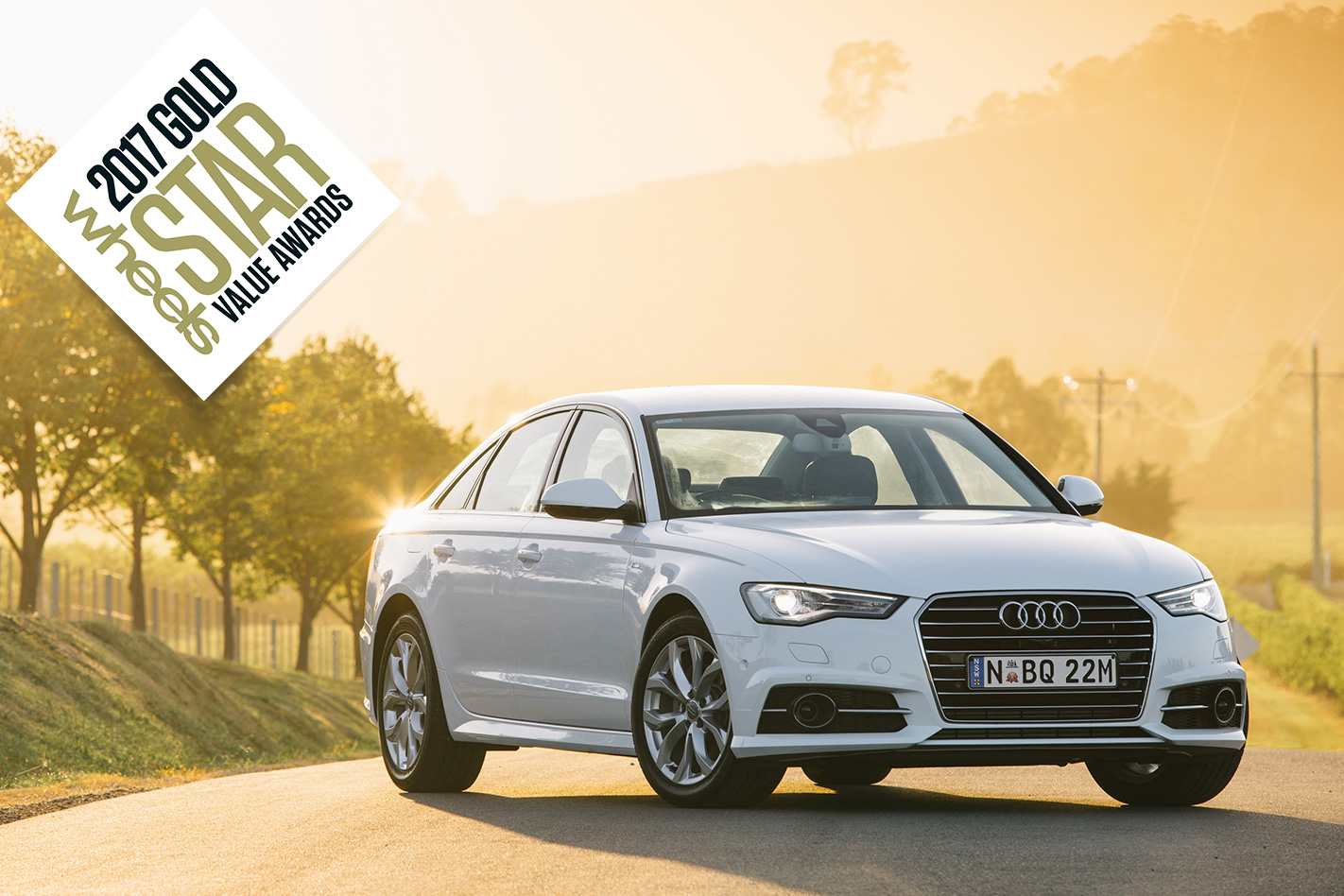
The front-drive base A6 is more than $10K cheaper than its rear-drive rivals, and its lively little 1.8-litre turbo-petrol four splits them in terms of economy while out-powering the Mercedes E200.
WARRANTIES on Citroen cars have been wound back as the French brands’ new Australian distributor hits the reset button on its dealer network.
The UK-owned Inchcape, which also distributes Subaru products in Australia, has cut the warranties on new cars back from the six-year term – the three-year factory-backed warranty was extended for another three years by the brands’ former distributor, Malaysia-owned Sime Darby – to just three. Inchcape says it will continue to honour existing extended Citroen warranties.
It is also rationalising the distributor network, which includes ending retail deals with some of Australia’s oldest family-owned Citroen dealerships, as it prepares to give a jolt to the slow sales start for the Groupe PSA products in the wake of the distributorship handover.

“The network strategy was put in place to help increase the overall financial viability of the dealer network and to consolidate the Peugeot and Citroen brands,” spokeswoman Jemma White said. “Inchcape Australia’s current plan is to have 35 Peugeot and Citroen dealerships nationally by January 2018, subject to brand performance and market pressures.”
Wheels believes the agreements with the dealer network all came up for renewal in the wake of Sime Darby’s decision to exit the business, sparking the rationalisation.
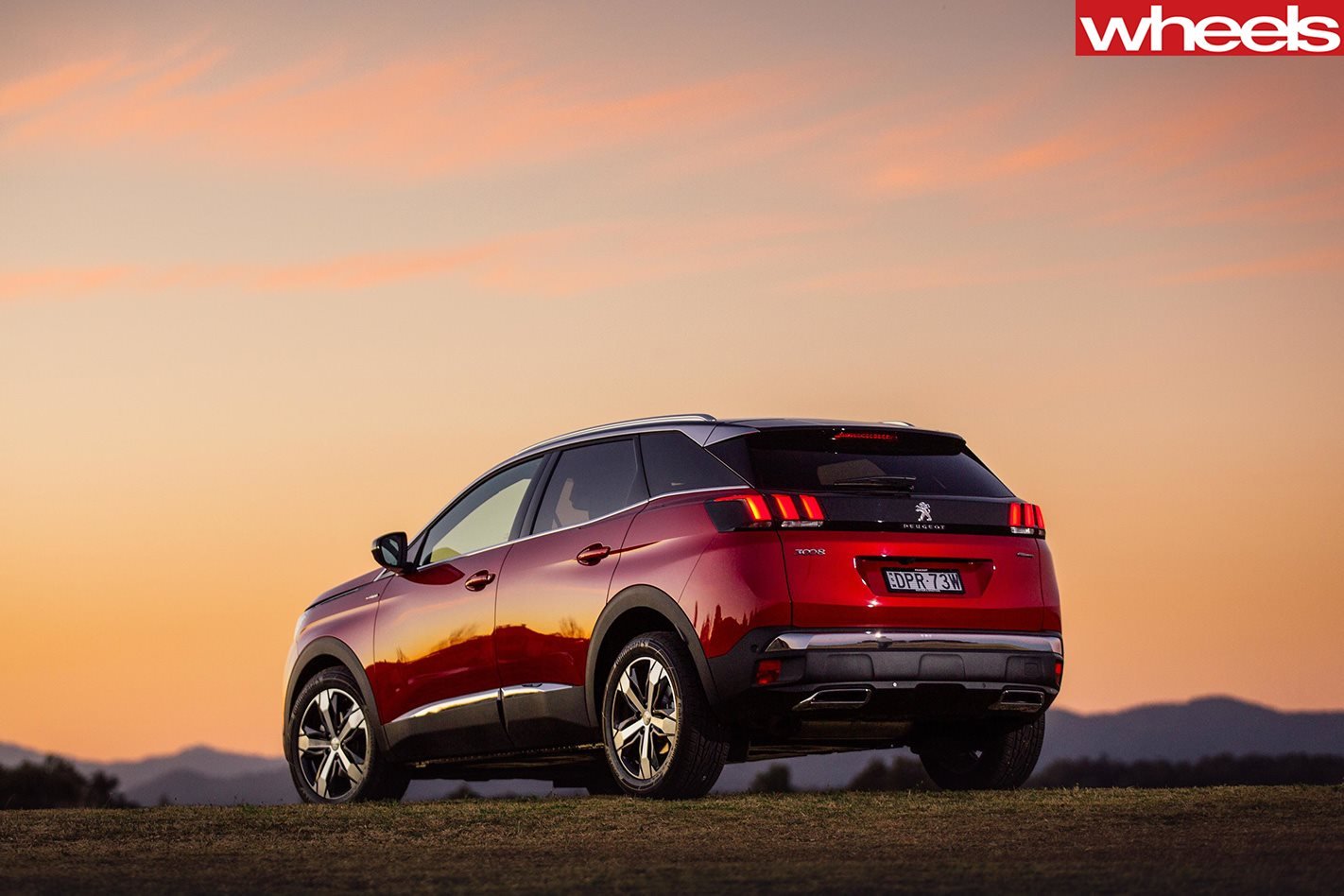
Another source told Wheels that Inchcape would adapt what it learned from selling Subaru products via pop-up stores in public spaces such as supermarkets to help build sales, with inquiries fed back to dealerships. It has already trialled the retail strategy with the recently launched Peugeot 3008 – a Wheels Car of the Year contender.
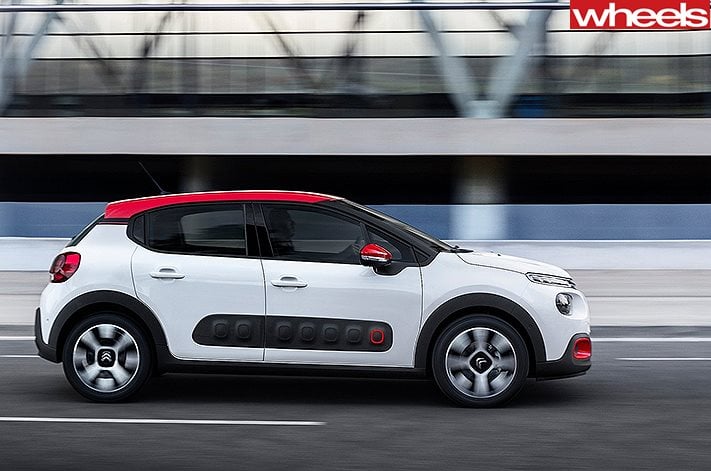
Citroen has recently launched the facelifted C3 city car in Australia, which sells from $23,990 – a big discount on the previous model’s $25,000-plus price tag – as Inchcape looks at prices across the range.
Peugeot and Citroen have a long history with Australia. A French-made Citroen was the first car to circumnavigate Australia and is housed in the National Museum of Australia. Peugeot even built cars here, assembling knocked-down models including the 403, 404, and the 504.
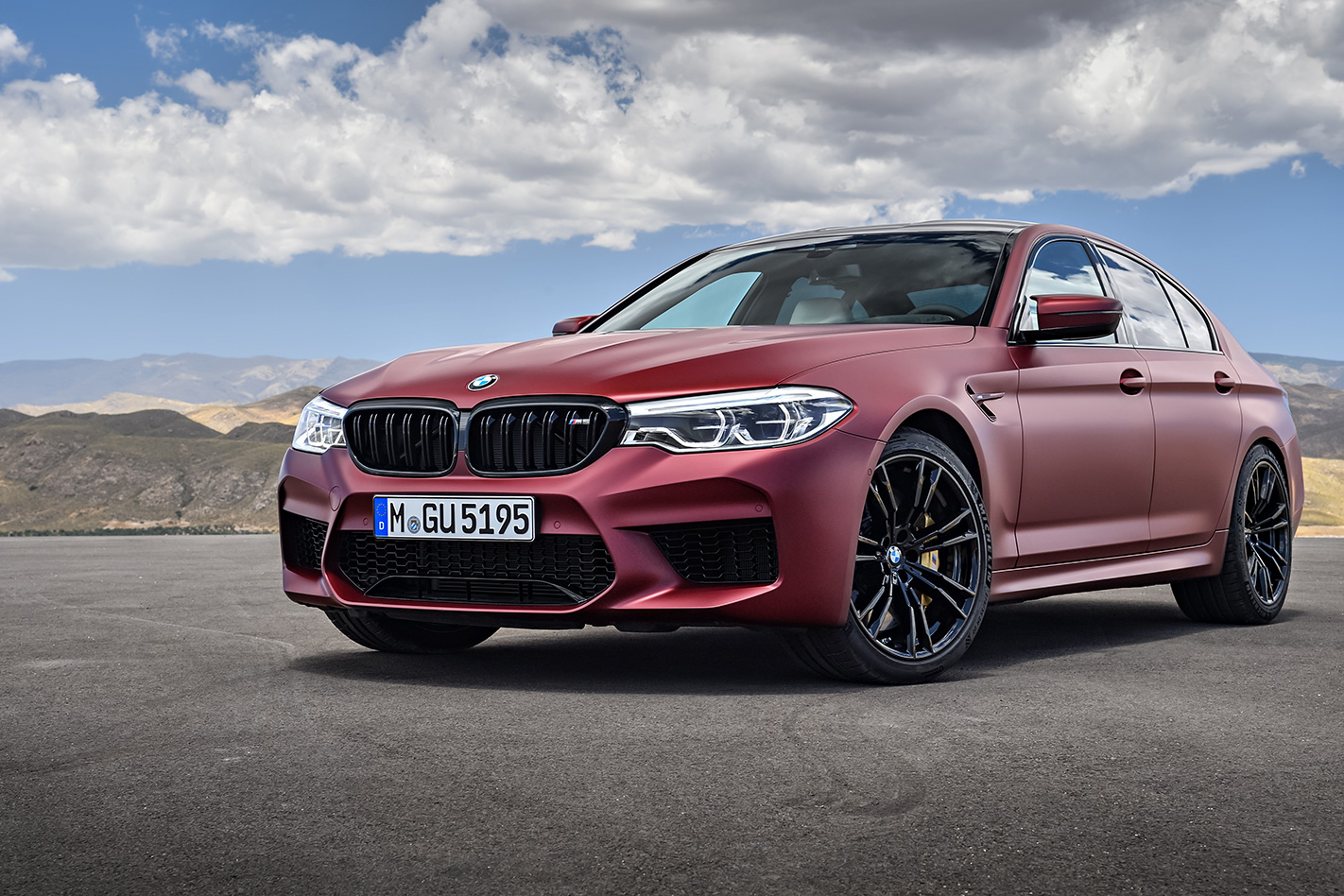
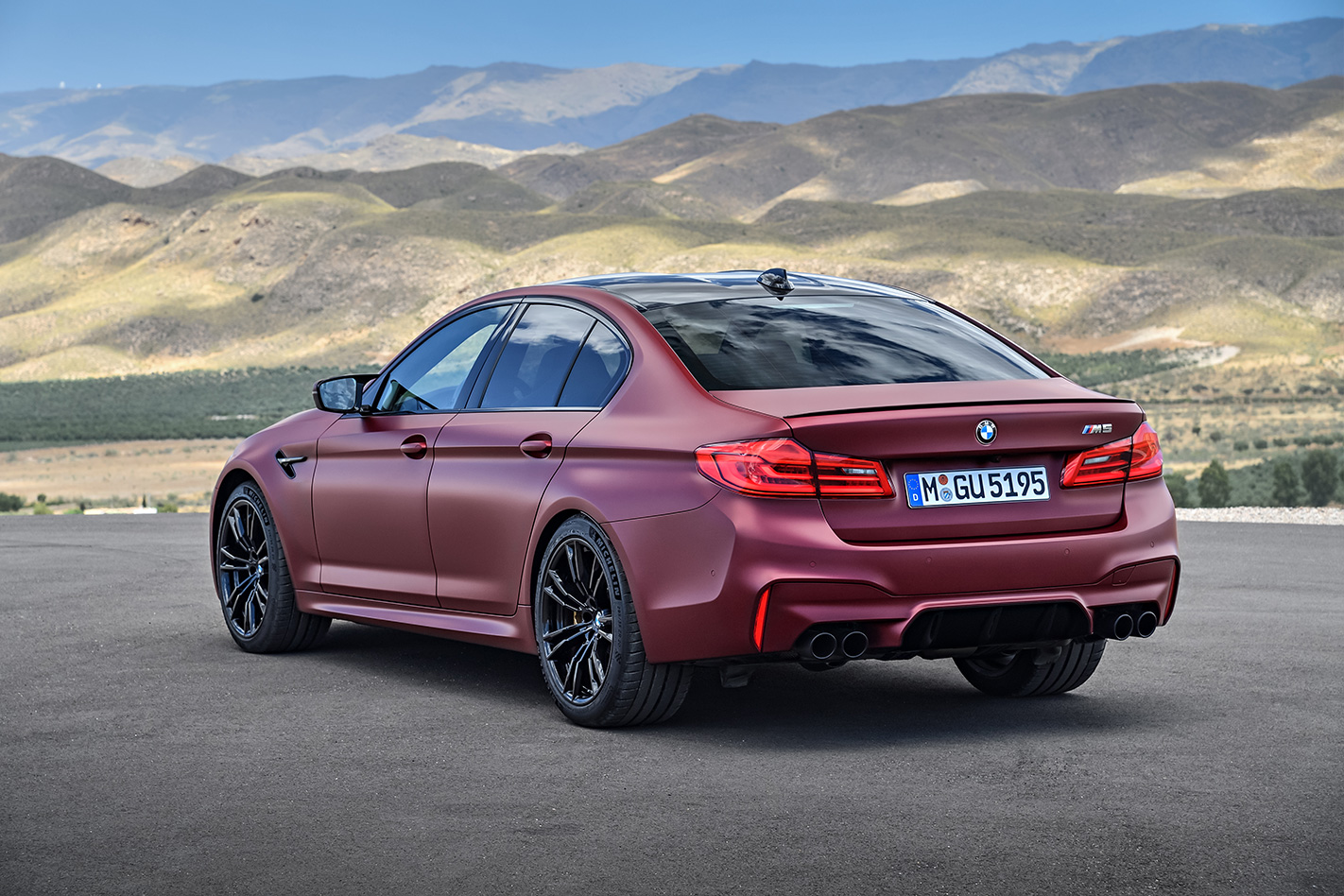
BMW Australia has secured five examples of an exclusive First Edition M5 that will spearhead the local arrival of the sixth-generation super sedan in the second quarter of 2018.
Priced from $229,900 the handful of First Edition cars, snared from a global allocation of just 400, bring a number of unique comfort and styling extras to set them apart from more run of the mill M5s.
For those customers not quite fast enough to write a cheque for a First Edition, the rest of the 2018 Australian allocation of 50 vehicles is being offered only in limited Launch Edition trim from $199,900. When all 55 cars are gone, BMW’s 2019 allocation is expected to bring garden variety, non-limited edition 2018 BMW M5s.
With twice as many wheels fighting to get power to the ground compared with the previous M5, zero to 100km/h acceleration times have plummeted by more than a second to a blistering 3.4s.
On the inside the First Edition gets a Smoke White Merino leather interior with red stitching and piano black trims, in addition to the other M5 standard specification found in the Launch Edition cars. The front seats also gain ventilated seats.
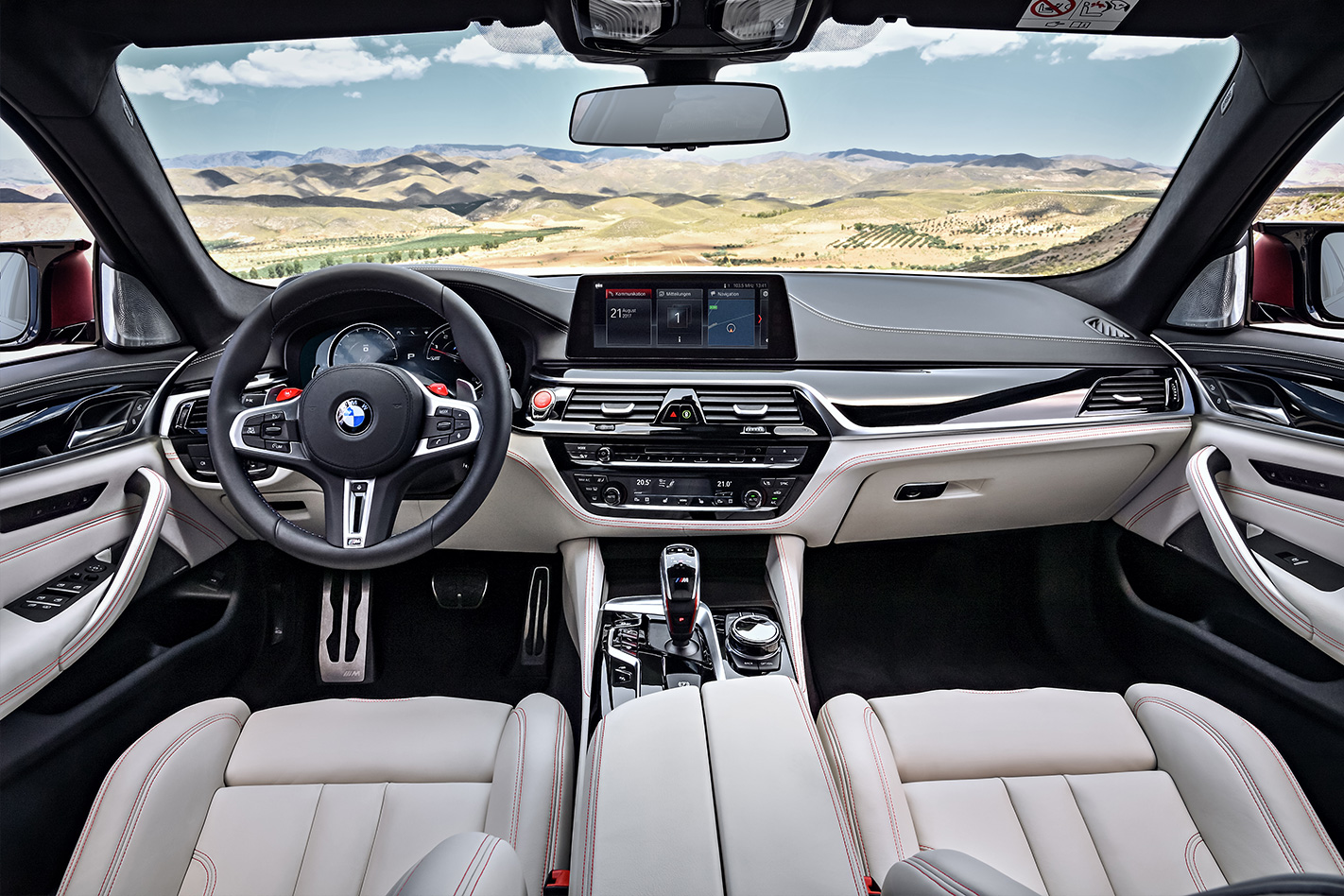
Owners will be reminded that they snatched one of just 400 vehicles worldwide each time they board with a centre console plaque which displays the variant name and individual build number.
In other modes, the transmission biases power to the rear end but shares torque with the front axle for a balance of driving enjoyment and safety when on the public road, says BMW.
Compared with the M5’s arch nemesis, the Mercedes-AMG E63 S, the BMW is only just behind its compatriot’s 450kW power output, but a whole 100Nm shy of its massive 850Nm grunt. Official acceleration claims for the AMG say it’ll sprint to 100km/h in 3.4 seconds, but Wheels testing revealed they’re sandbagging – we managed a scorching 3.3 second run on a cold dragstrip in the E63.
Can the new M5 keep up? We’ll find out in the second quarter of 2018.
BMW’s 2018 M5 will touch down in Australian showrooms from the second quarter of next year with a starting price of $199,900 – with 50 Launch Edition cars kicking off sales the sixth-generation super sedan.
As well, BMW will sell five “First Edition” cars to celebrate the M5’s arrival in Australia.
These 55 cars will be the only M5s available in the first year of production, with less exclusive versions due to come on line for the 2019 model year.
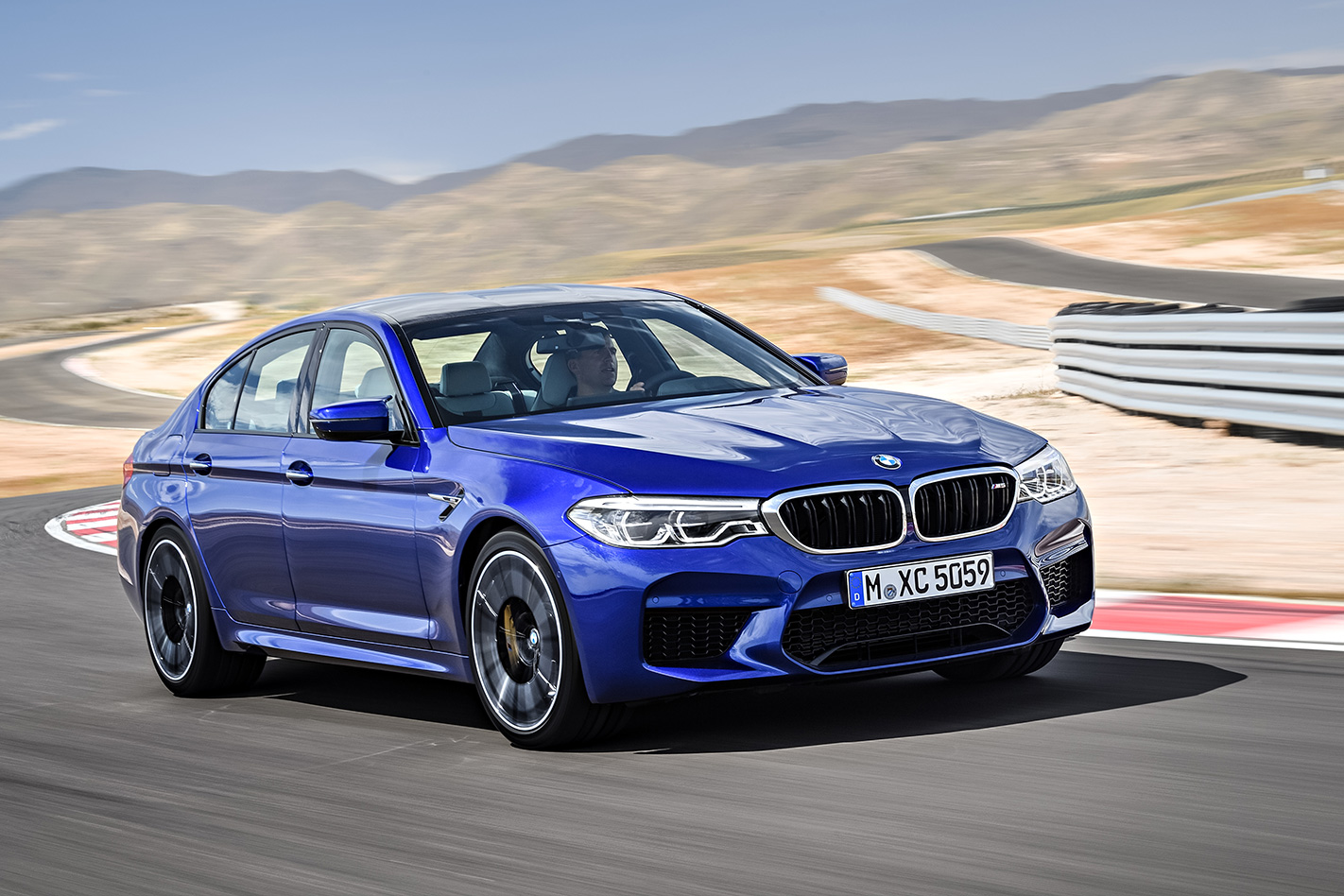
Not only is the new M5 about $30,000 more affordable than the version it replaces, it’s also the cheapest way to add 441kW to your driveway, although it is not known if the 2019 model year cars that will follow will cost more.
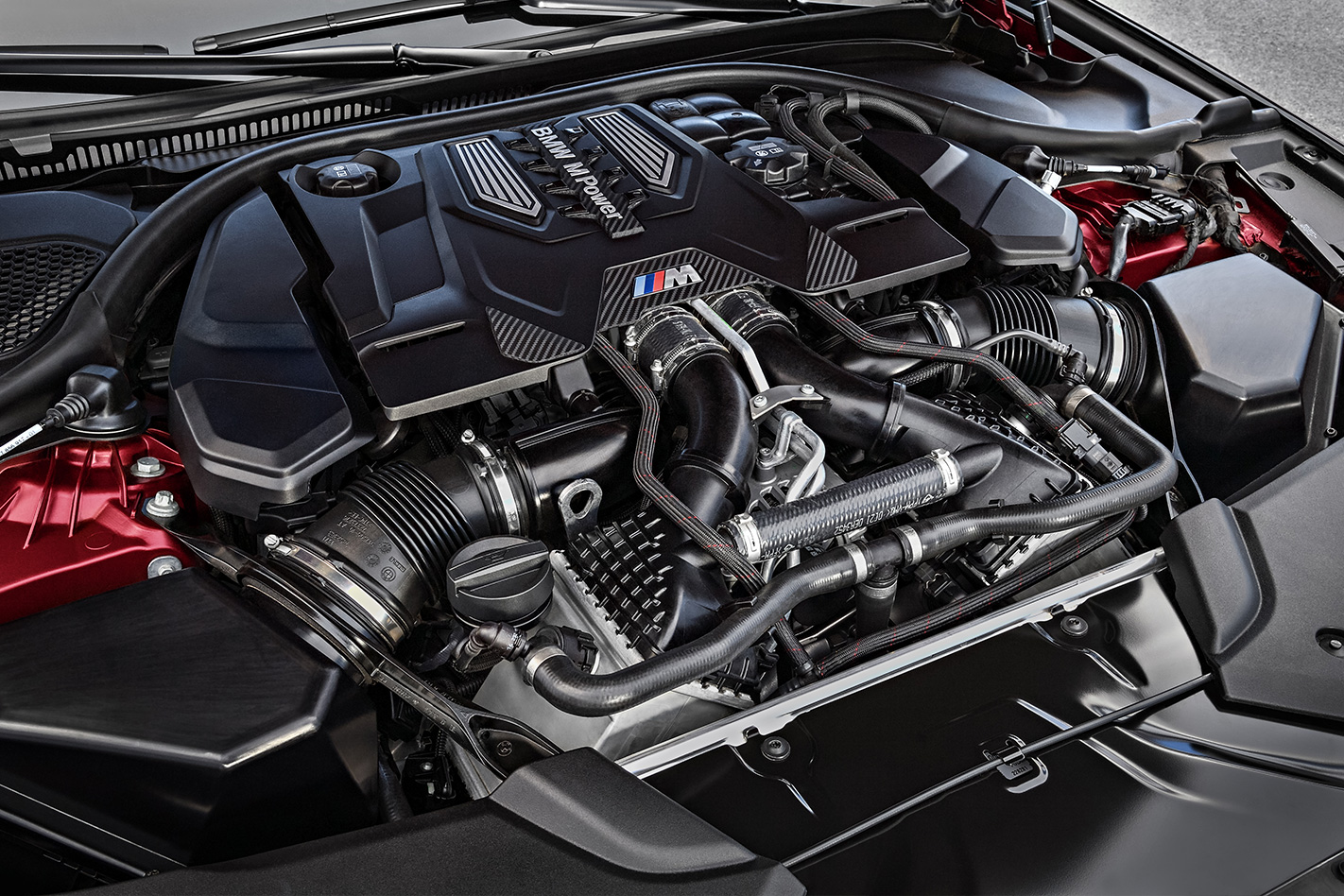
The new M5 couples more power and torque (now 750Nm) from a reworked version of the same 4.4-litre twin-turbo V8 that made its debut in the fifth-gen car, and sends it to a new M xDrive all-wheel drive transmission – the first time the iconic executive sedan hasn’t sent power to the rear wheels alone.
With all four wheels boosting off-the-mark traction and cornering grip, the 2018 M5 does the benchmark 0-100km/dash in 3.4 seconds, knocking more than a second from the outgoing rear-drive model’s time.
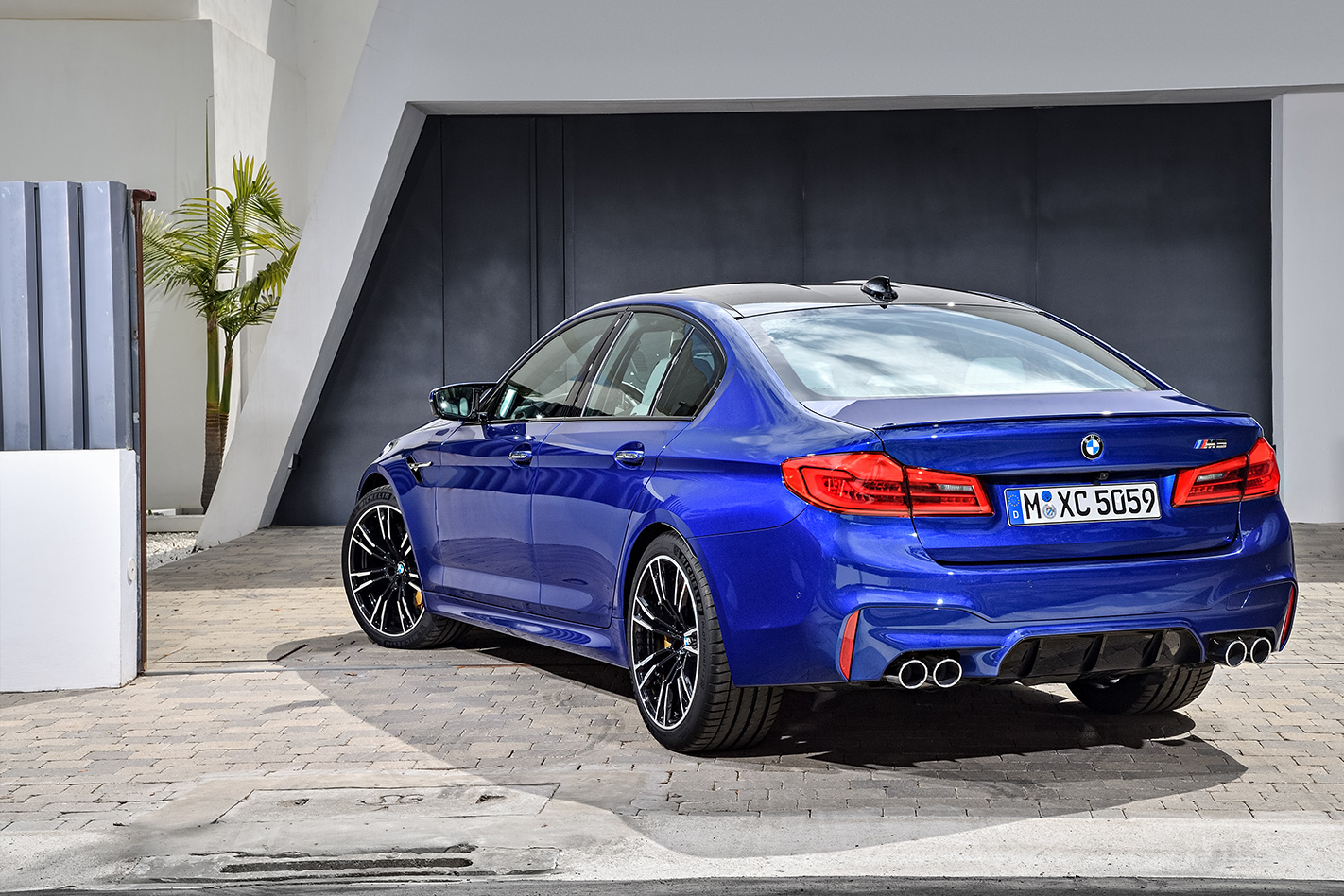
Ask for the optional M Driver’s Package and BMW will remove the speed limiter, allowing brave M5 owners to crack a top speed of 305km/h.
The new M5 also has a long list of optional equipment.
| 2017 BMW 5 Series pricing and specifications
The previous generation of the M5 has attracted criticism about its muted engine note. The 2018 car addresses that concern with a special M-Sport Exhaust system included as standard for the Australian market, for an amplified ‘resonant note’ and faster turbo response, says BMW.
Despite the meaty performance promise, the German car maker reports its 5 Series flagship will return an official fuel economy of 10.5 litres per 100km and carbon dioxide emissions of 241g/km.
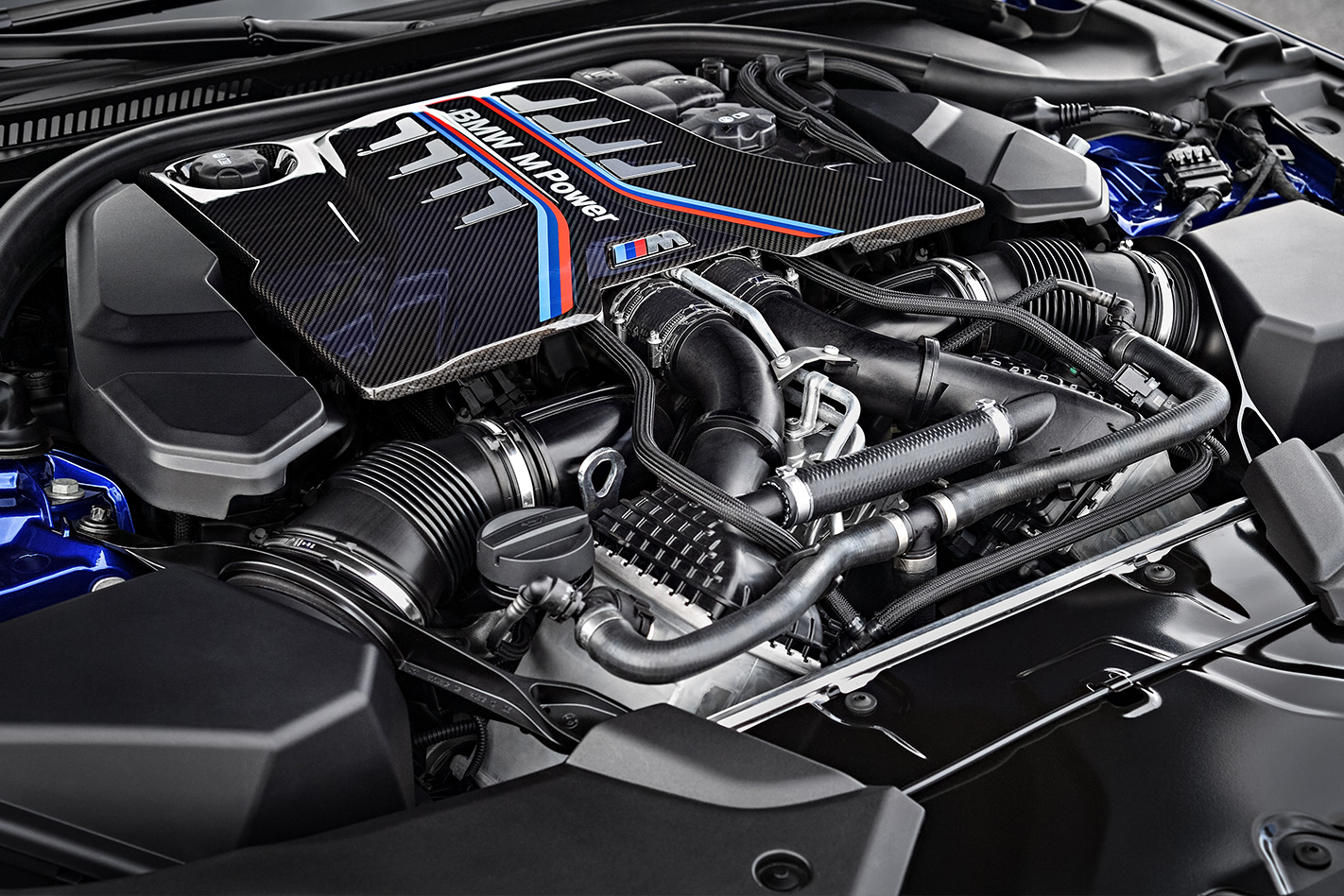
Unlike the gen-five M5, which had to make do with seven gears, the new version’s M Steptronic automatic transmission uses eight. Gear changes arrive via a switchable transmission programs or manually via steering wheel-mounted paddle shifters.
Keen to maintain a line of sight to the rear-drive M5 era, the new model can send all its power and torque to the rear axle via a front axle decoupling function and the rear Active M Differential.
| BMW 5 Series Touring pricing and specification announced
The full suite of safety and driver assistance systems are available for on-road driving including a ‘semi-autonomous’ function, but the M5’s M Dynamic Mode allows all systems to be deactivated for a pure driver-and-car experience – and tyre-destroying power oversteer.
For times away from the track, 4WD and 4WD Sport modes maintain a rear bias for power delivery, while introducing the safety net of front axle traction when needed.
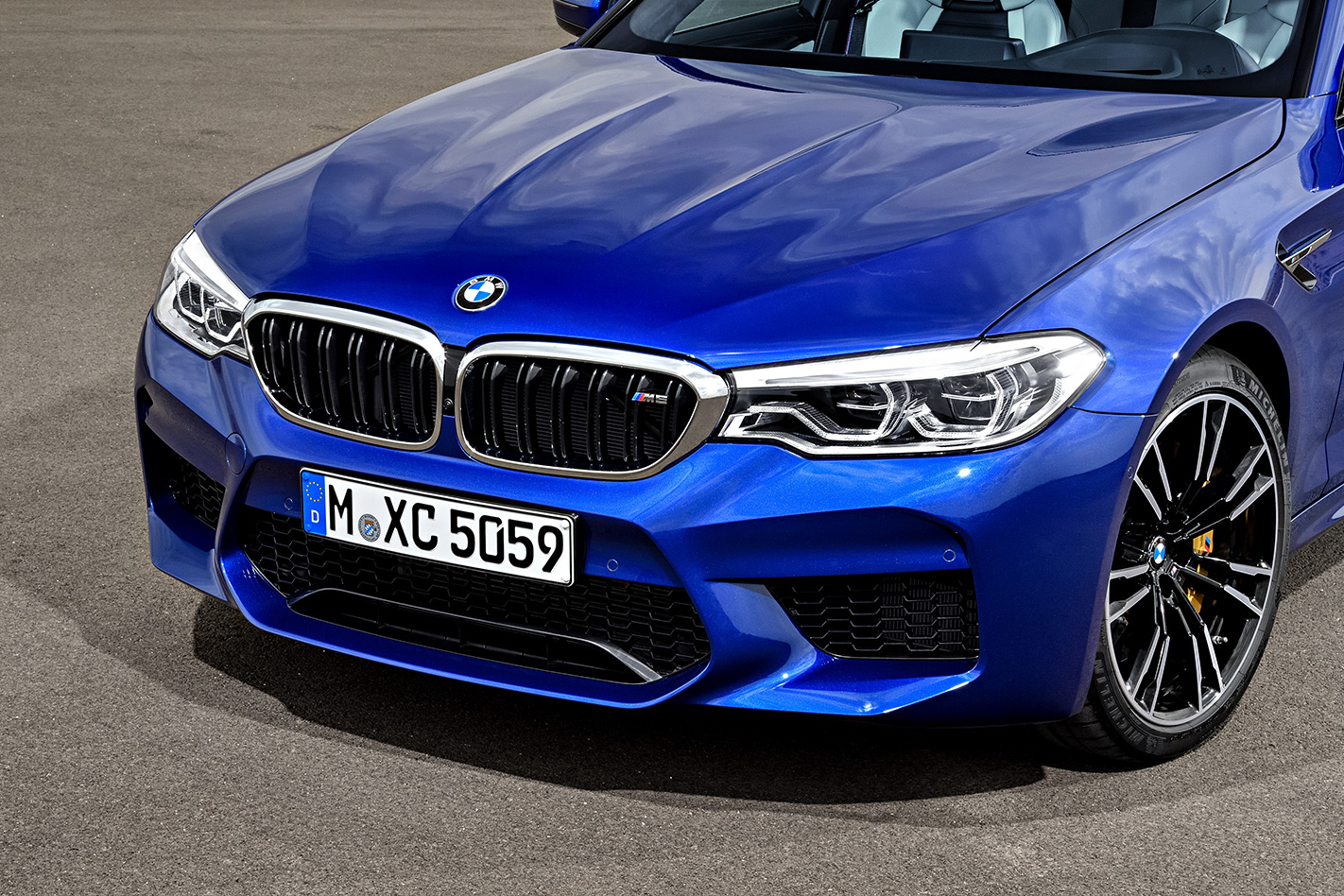
At 1855kg kerb weight, the new M5 is 15kg lighter than the previous version despite the addition of a driven front axle. The reduction is in part due to the use of modern materials and construction techniques including a carbonfibre roof and the option of carbon-ceramic brakes.
Suspension is double wishbone up front, and a five-link setup down the rear with a wider track and extra aluminium support structures added for the M5. Stiffer anti-roll bars, bushes and stronger axle mounting points are also engineered for the fastest 5 Series.
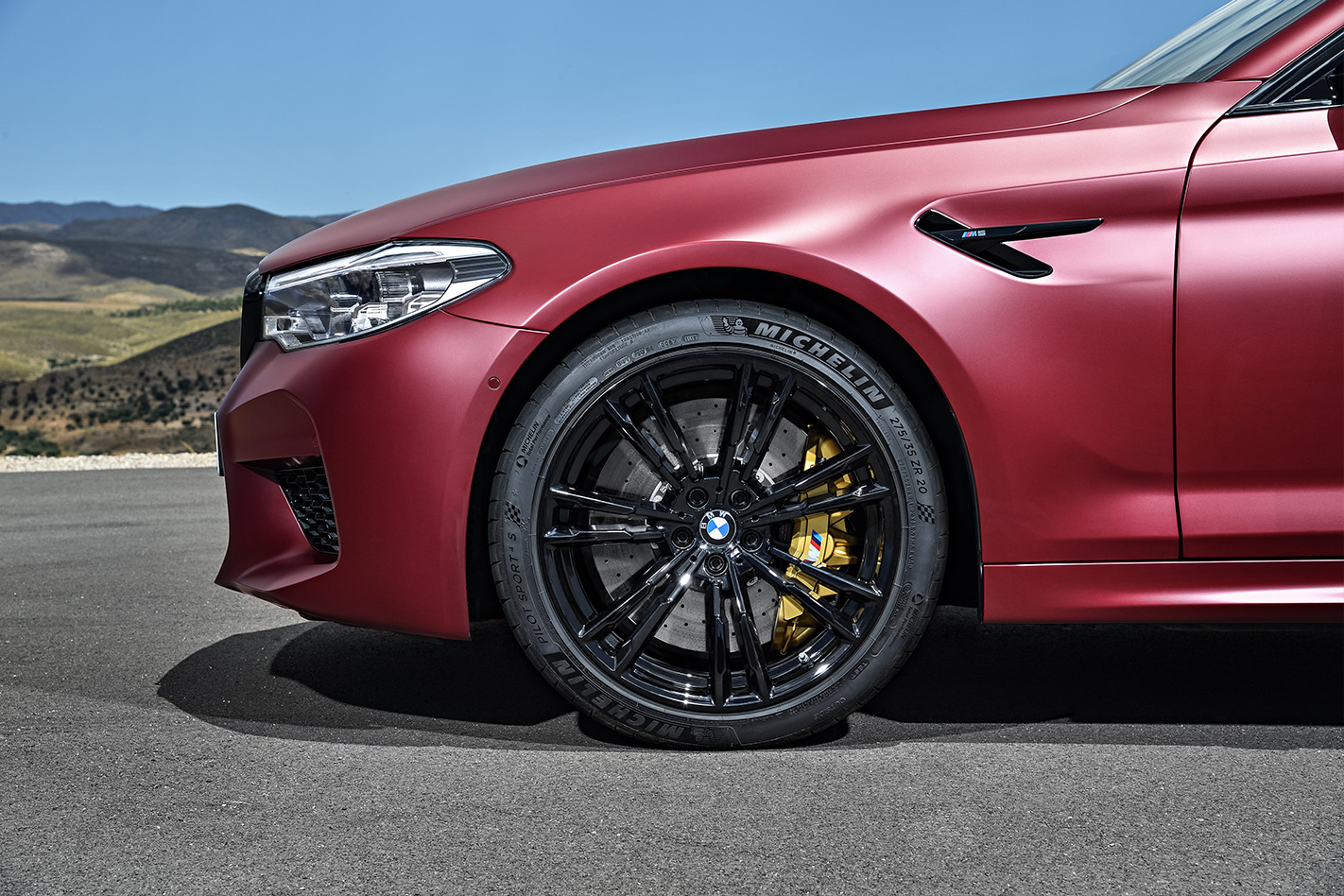
Staggered 20-inch two-tone or black wheels are standard fare for the M5, wearing narrower 275/35 boots on the front axle and 285/35 rubber down the rear.
Owners can choose from three different trim packs for the digital instrument cluster-packed interior.
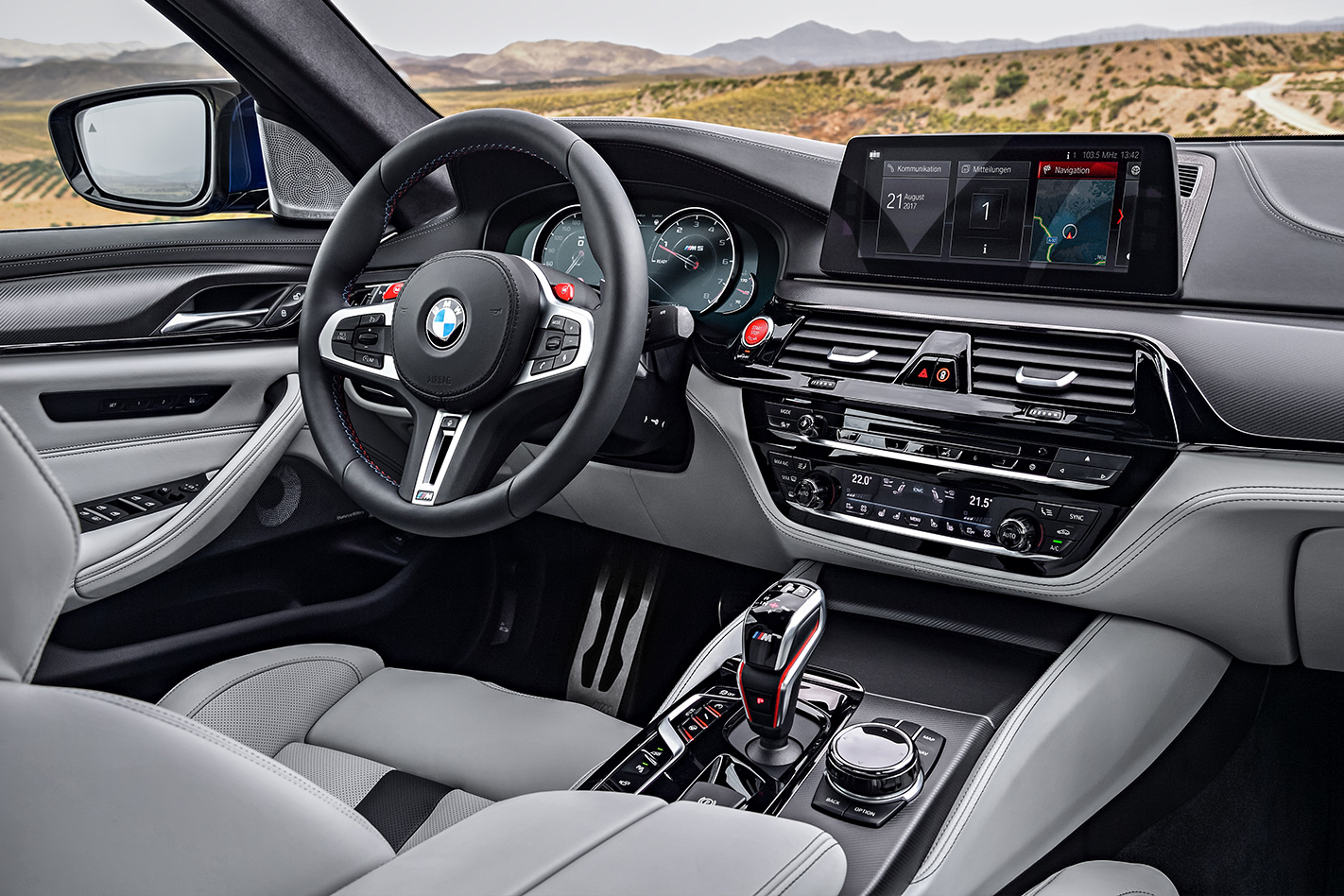
Driver assistance equipment includes all of the latest technologies such as active cruise control down to stop-start traffic, steering and lane-keep control, front and rear cross traffic alert, an approaching crossroad alert and rear collision prevention.
Parking Assistant Plus adds automated parking, front and rear parking sensors with cameras, a surround view for maneuvering and Remote 3D View via the BMW Connected Application.
