
WHEN you look at the current crop of BMWs, ‘elegant’ is not the first word you come up with.
This feature was first published in MOTOR magazine’s July 2009 issue.
‘Imposing’, sure. ‘Aggressive’, yep. ‘Taut’, even. But ‘svelte’, ‘dainty’ and ‘elegant’? Er, maybe not. Wasn’t always that way; in the late ’60s and early ’70s, BMW hit a stylistic highpoint with its E9 coupe. Broadly based on the 2000CS of 1965, but with a stretched wheelbase to house the six-cylinder engines of the E3 sedan line-up that debuted in 1968, the two-door version took elegance to the streets.
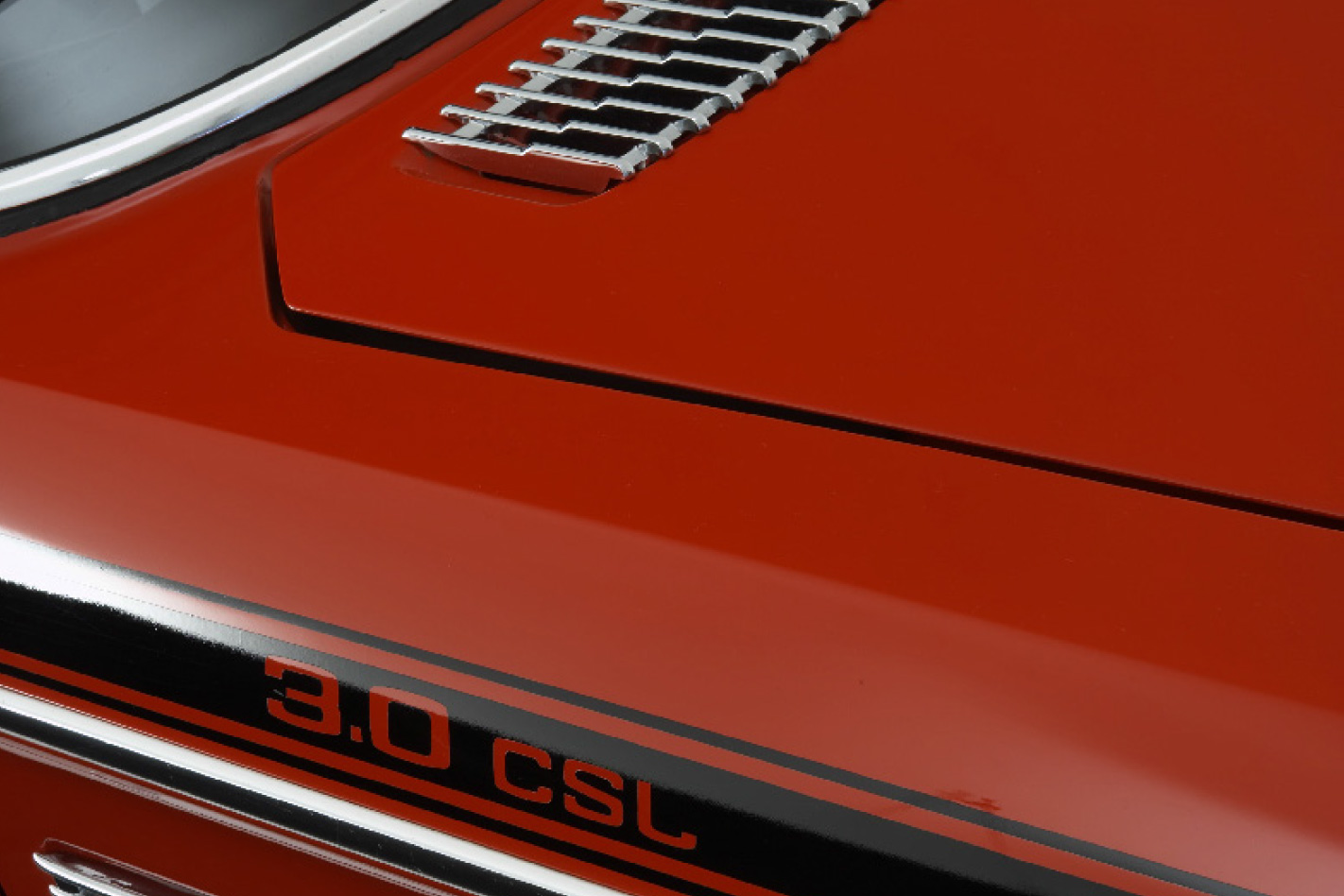
The main event, however, was the big banger in CSi trim with alloy wheels and the 3.0-litre version of BMW’s celebrated M30 overhead-cam straight six. But even then, BMW had something up its sleeve to tempt those for whom even a 3.0 CSi was not enough. And it was this car, the 3.0 CSL.
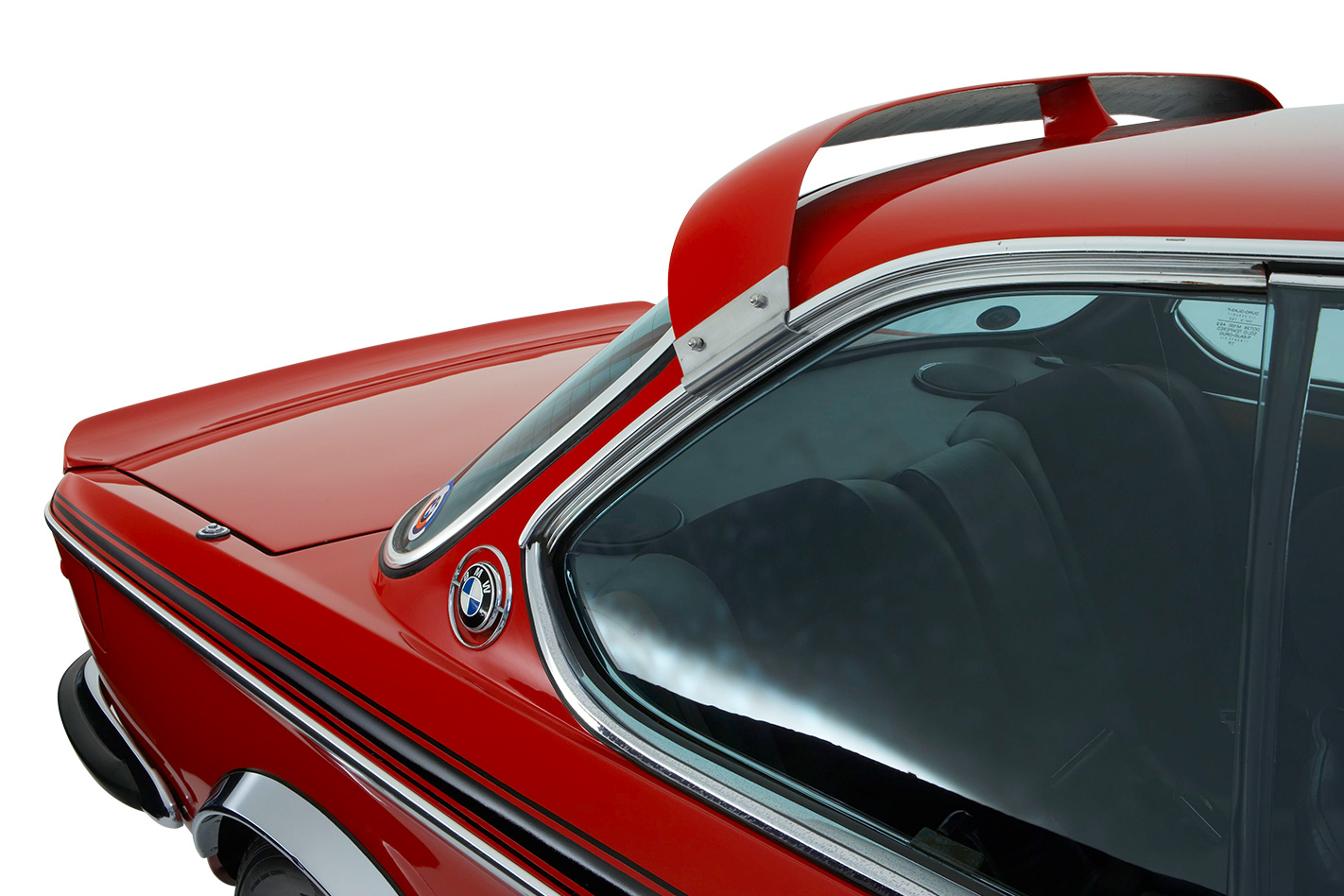
Translated simultaneously from both BM-speak and German, CSL stands for, simply, ‘Coupe, Sport, Light’. By now you’re looking at these pics and wondering where the hell the huge rear wing that earned the car the ‘Batmobile’ tag (yep, years before the Walkinshaw VL borrowed the same name) has disappeared to.
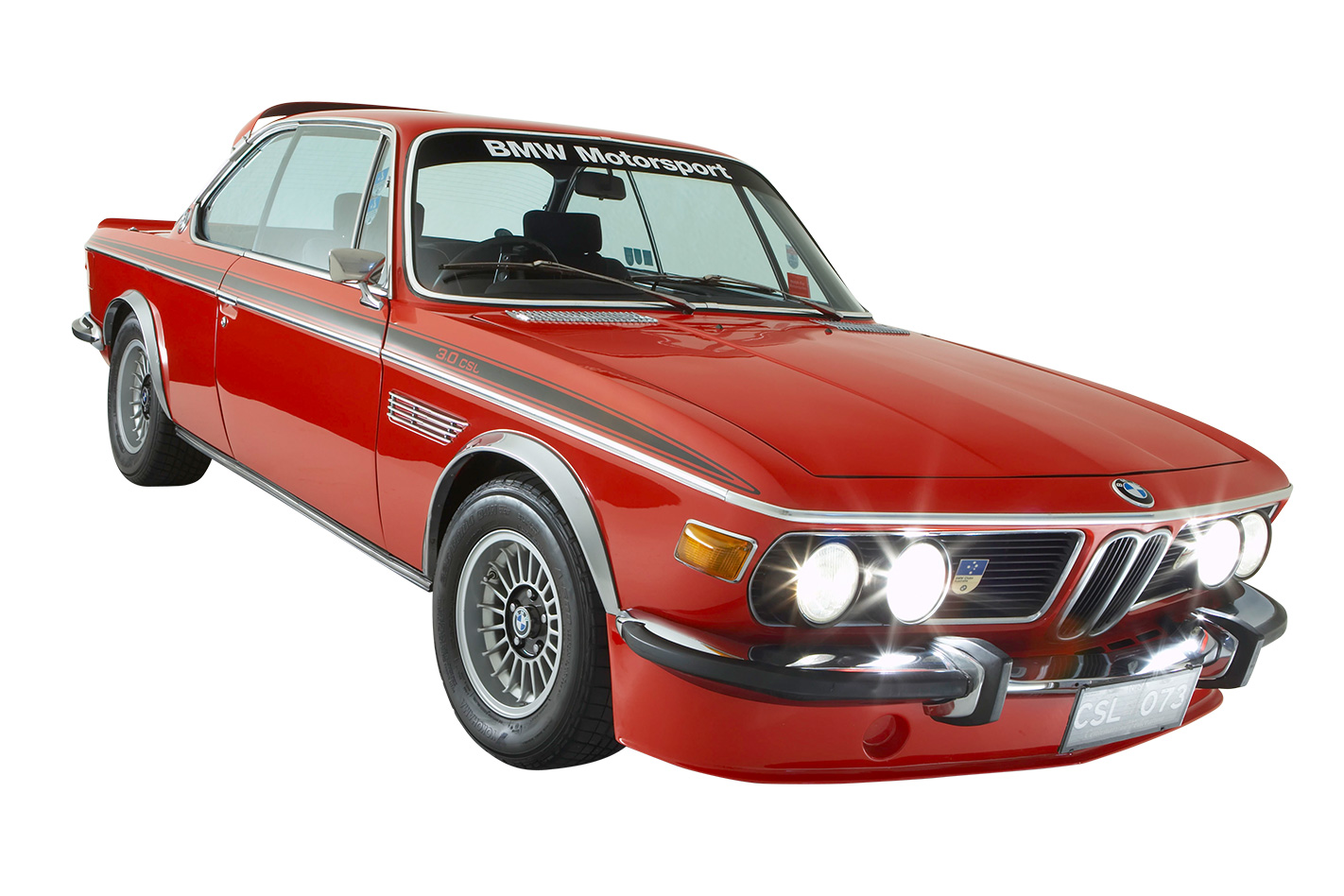
In fact, the CSL dominated the sport for about a decade, winning multiple championships. Which was kind of the point of the whole exercise, because the CSL was a homologation special to give BMW a leg-up into tin-top racing in the 1970s.
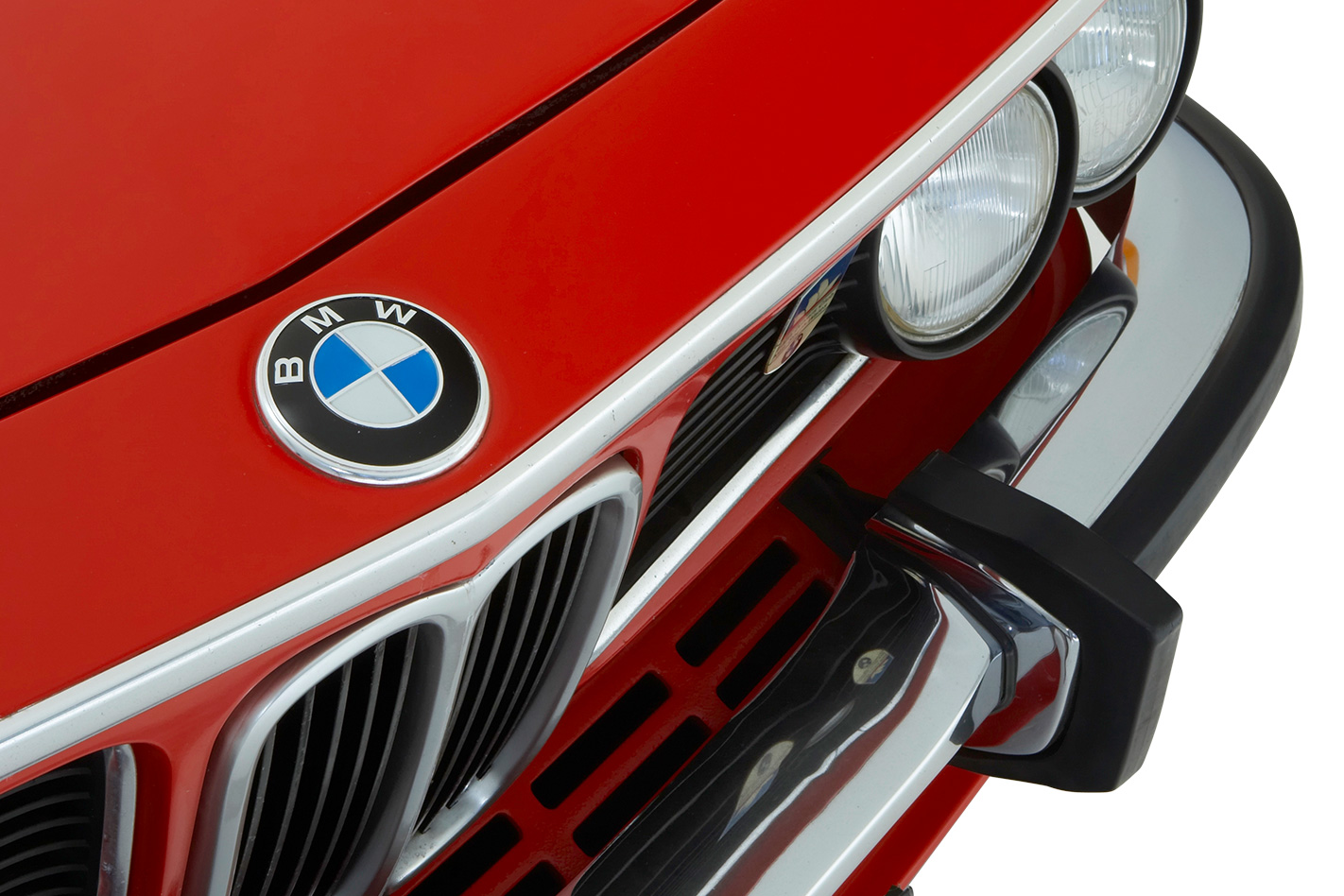
You could also argue, if you look at the car from another angle, that the 3.0 CSL was really the first of the M-cars to emerge from BMW’s skunkworks. No, it doesn’t have an M badge on it anywhere, but the CSL did make use of the blue-purple-and-red graphics (in some markets) and if this ain’t the spiritual grand-daddy of the M3 (which has also been available in CSL trim at various times, too, remember) then we’ll eat our Akubras.
But under the paint, the CSL has a few more secrets to surrender. For starters, the bonnet, doors and bootlid are made from aluminium rather than steel in order to get the weighbridge ticket down. And BMW didn’t stop there. As well as the alloy bits, the body parts that remained steel were stamped out of extra-thin stuff.
The result was a car that tipped the scales at about 1150kg with fuel in its tank and air in its tyres. Funny thing was, there suddenly emerged a group of buyers who wanted the sharp, racy looks of the CSL but with some of the luxury built back in.
So, many a CSL (particularly those destined for the US) were fitted with what BMW called a City Pack, which put back the glass windows, some of the sound proofing and luxury gear but kept the aluminium panels and the feel of the interior. Weight of the car with the City Pack jumped to about 1270kg, so the non-City CSL is the purest, uncut fix you can get now.
Powering the CSL was a tuned version of the M30 six that stuck with the single overhead cam and two valves per cylinder, but ditched the CS’s twin-carburettors for the CSi’s electronic fuel injection.
If that figure was inaccurate in any way, it was probably pessimistic, but the bottom line is that the CSL – even with a four-speed manual (a five-speed was homologated for a handful of late-build cars) – was a devastating performer compared with other road cars of its time. And in race trim, it was even cooler.
According to what rules you were running under, BMW offered two monsters: a 3.2-litre 253kW version as well as a mighty 3.5-litre model with a mind-bending 322kW at the flywheel. It’s no wonder they became the scourge of anything else battling to win a touring-car race at the time.
These days, a BMW of this era will fall into one of two categories. They’ll either be pristine thanks to an expensive restoration process or they’ll be junkers with rusty panels and smoky engines. Fortunately, the CSL’s reputation and racing pedigree has meant that the same fate hasn’t befallen it, so most still around are thankfully from the former camp.
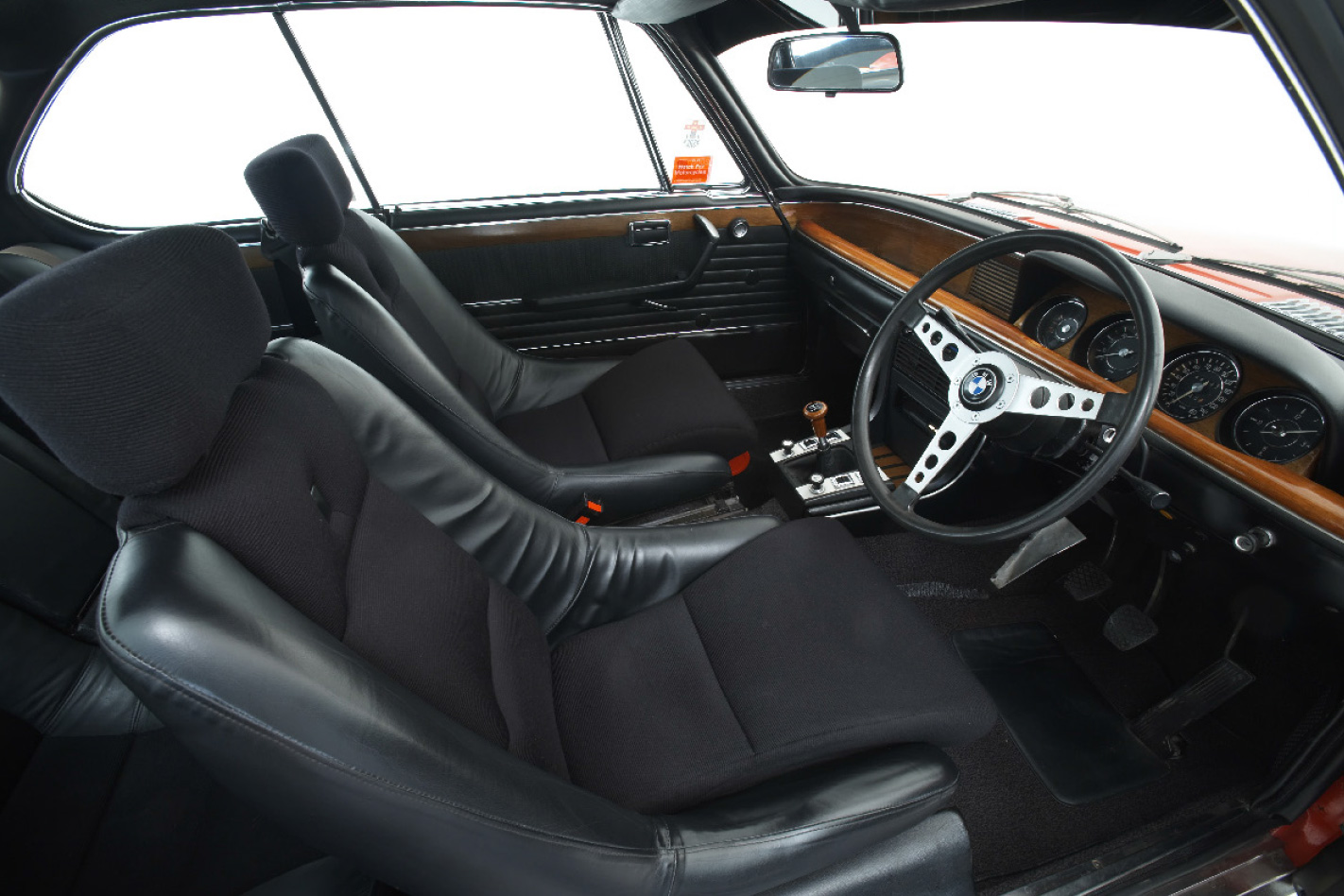
A few rattles from the interior are nothing to get worked up about, but a cracked, split dashboard and tatty seats will bring values down quick smart. The nice thing about an older car like this is that everything is rebuildable or replaceable.
There weren’t a lot of plastic parts to start with and most of the mechanical components are fixable and not necessarily throw-aways as they often can be in newer designs. A car like the CSL won’t be too practical as a day-to-day proposition, thanks to the lack of power steering and what-not, but its delicate alloy panels are too nice to leave parked at the supermarket anyway.
And its rarity and prestige would only have a fool driving such a legendary machine as a daily driver. Besides, that’s what its grandson, the M3, is for, right? Now there’s a tasty fantasy garage…
The good 1. Visual Appeal – Is there a prettier coupe (apart from a 911, of course) from the same era? We can’t think of it. The CSL oozes style and epitomises ’70s touring-car racing. 2. Heritage – It’s the cave-dwelling grandad of every M-car that’s ever made you drool. Racing heritage never hurts: it will always be worth something as it is now a bona-fide collectible. 3. Driveability – The CSL is still a damn good thing to get out of the shed and drive, despite that fact that four decades have passed under its alloy wheels. And cars are made to be driven.
The bad 1. Body Issues – European (and thin) metal means you may end up chasing your tail with rust if you buy the wrong car. Aluminum panels mean you must be careful when you park. 2. Common Engine Woes – Check original engines for head gasket dramas and be aware that old-school fuel injection will never be as smooth or fuss-free as modern electronic stuff. 3. Time Warp – The CSL had already been around a decade before a 26-year-old in 2009. So your kids will probably get it, but their kids may not. But don’t let that put you off for a second.
WHERE DO I GET ONE?
Most CSLs were sold in either Europe or the US and not here. Finding one at all may be seriously difficult. Don’t be put off by left-hand-drive because they’re old enough to be legally registered without converting them.
Secondly, there simply weren’t that many built: depending on who you talk to, just 765 Batmobiles were made and, of those, only a small number were real-deal, no-City-Pack cars. Then again, we’d cop the City Pack if it was the difference between owning a CSL and not.
The other spanner in the works is that a high percentage of Batmobiles were raced, and if there’s one thing that kills off a breed fast, it’s the rough and tumble of touring-car racing. Again, a non-raced example would be nice, but we wouldn’t turn our noses up at an ex-racer returned to the street.
I don’t remember MOTOR’s Performance Car Cup (or its PCOTY equivalent) ever seeing a battle like this before.
This Performance Car Of The Year article was first published in MOTOR Magazine January 2013.
It’s an inter-town stoush like no other – Stuttgart versus Stuttgart, luxury-marque Mercedes-Benz against performance heavyweight Porsche. Battles don’t get any more personal than this. Round One began on the grippy, but occasionally rain-sprinkled surface at Sydney Dragway.
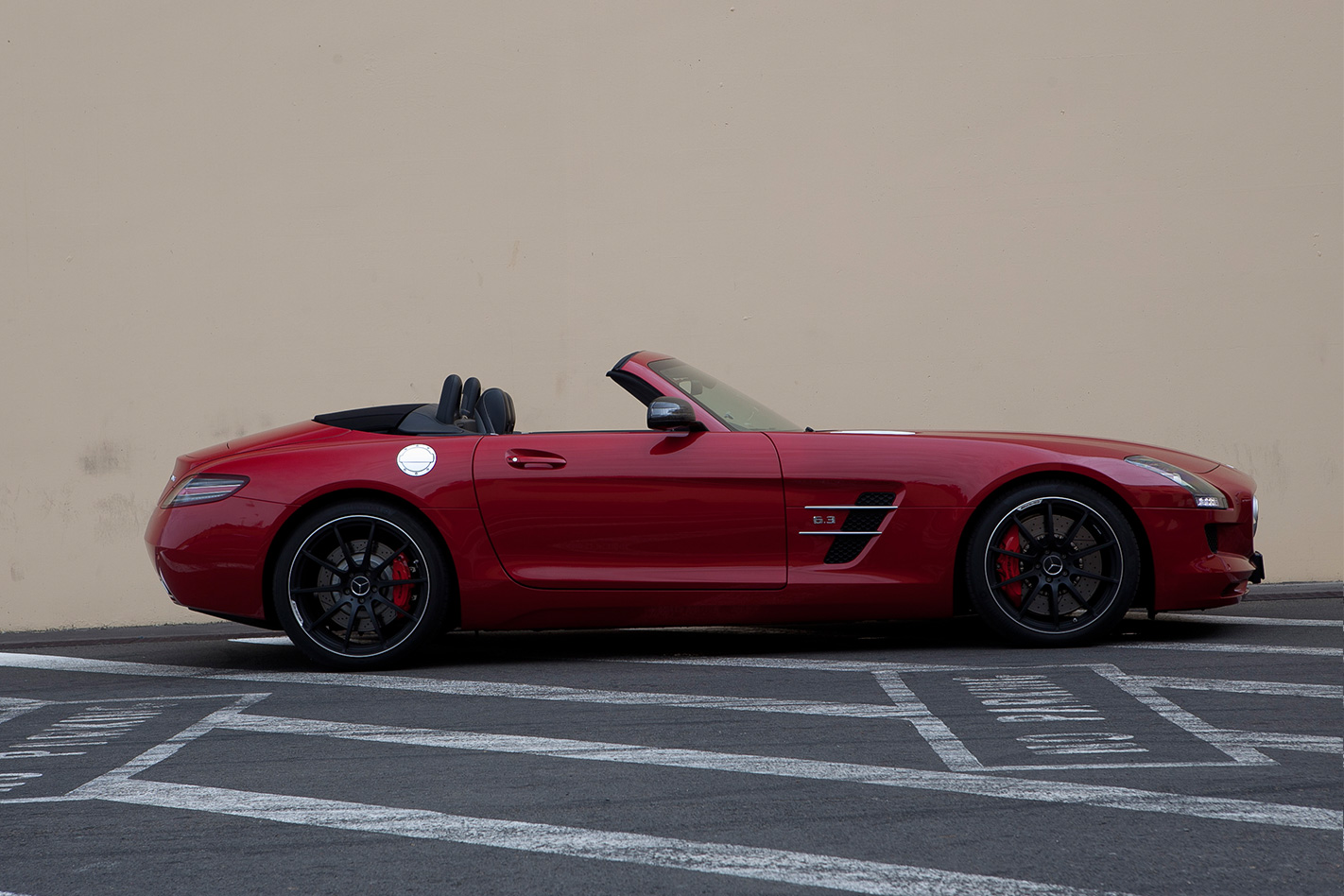
As with the two other AMG cars (SLK55 and E63), the fastest launch technique for the SLS was full-manual gear selection and throttle control dictated by the driver. The factory claim is 3.8sec to 100km/h for the SLS, but on the day, in very humid 21-degree weather (at 8am!), AMG’s phallic drop-top took 4.48sec to reach 100km/h and 12.35 to cross the 400m mark.
But you need to read between the lines for a true representation of the SLS’s phenomenal thrust. Increment by increment up to 160km/h, the SLS gradually reined in Porsche’s supersonic new 911 Carrera S, but once past that point, it began to exert its dominance – from three hundredths ahead at 160km/h to a good half-second by 200.
At the 400m mark, it was travelling over 5km/h faster, but it was in the 80-120km/h rolling acceleration test that AMG’s porn star beat its chest like King Kong. You’d need a 911 Turbo or a GT2 to plug 80-120km/h in less time than the SLS’s 2.16sec, which makes sense when you consider its near-$500K asking price!
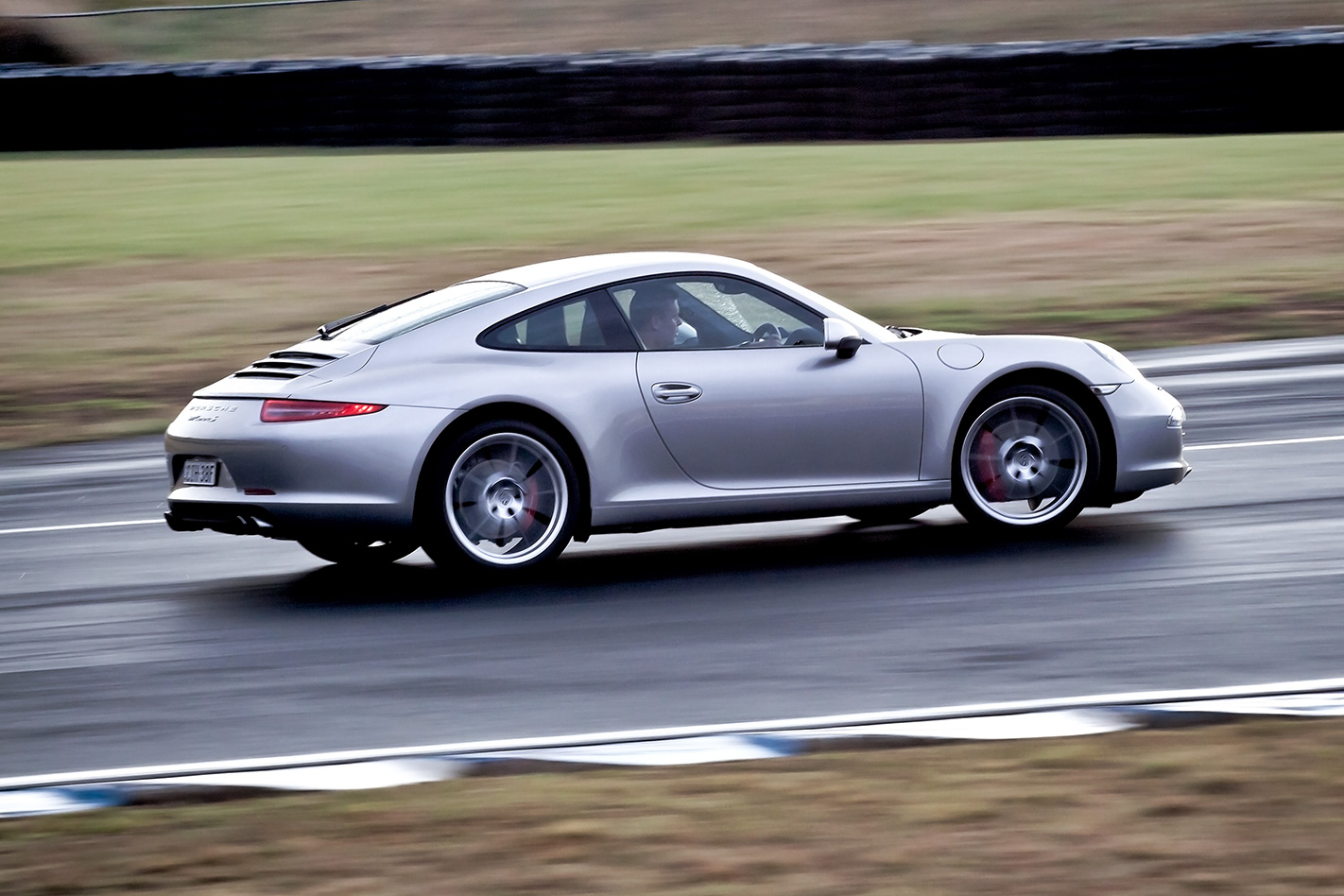
A big-bore, hard-revving 3.8-litre flat six with 294kW and a rapid-fire, seven-speed dual-clutch ’box do the muscle work, but it’s a combination of all that with the 991 911’s considerably longer wheelbase and broader stance that make its performance so seamless.
With PDK and Sports Plus, Porsche claims 0-100km/h in 4.1sec and 0-200km/h in 13.6, and our test car was bang on the money – 4.08 and 13.64. Proving that 12 is the new 13, the Carrera S demolished 400m in a field-best 12.09sec (at 189.75km/h), and then to back that up, it stopped from 100km/h in an eye-popping 33m – more than a metre clear of the next-best braker (Boxster S – 34.42m).
Yet just as impressive as any of these numbers is the 911’s stunning 0-60km/h time – 1.97 seconds! Make no mistake, this one-up-from-base 911 is a serious performance car. At half the price, though, the new-gen Boxster S’s performance is arguably even more impressive.
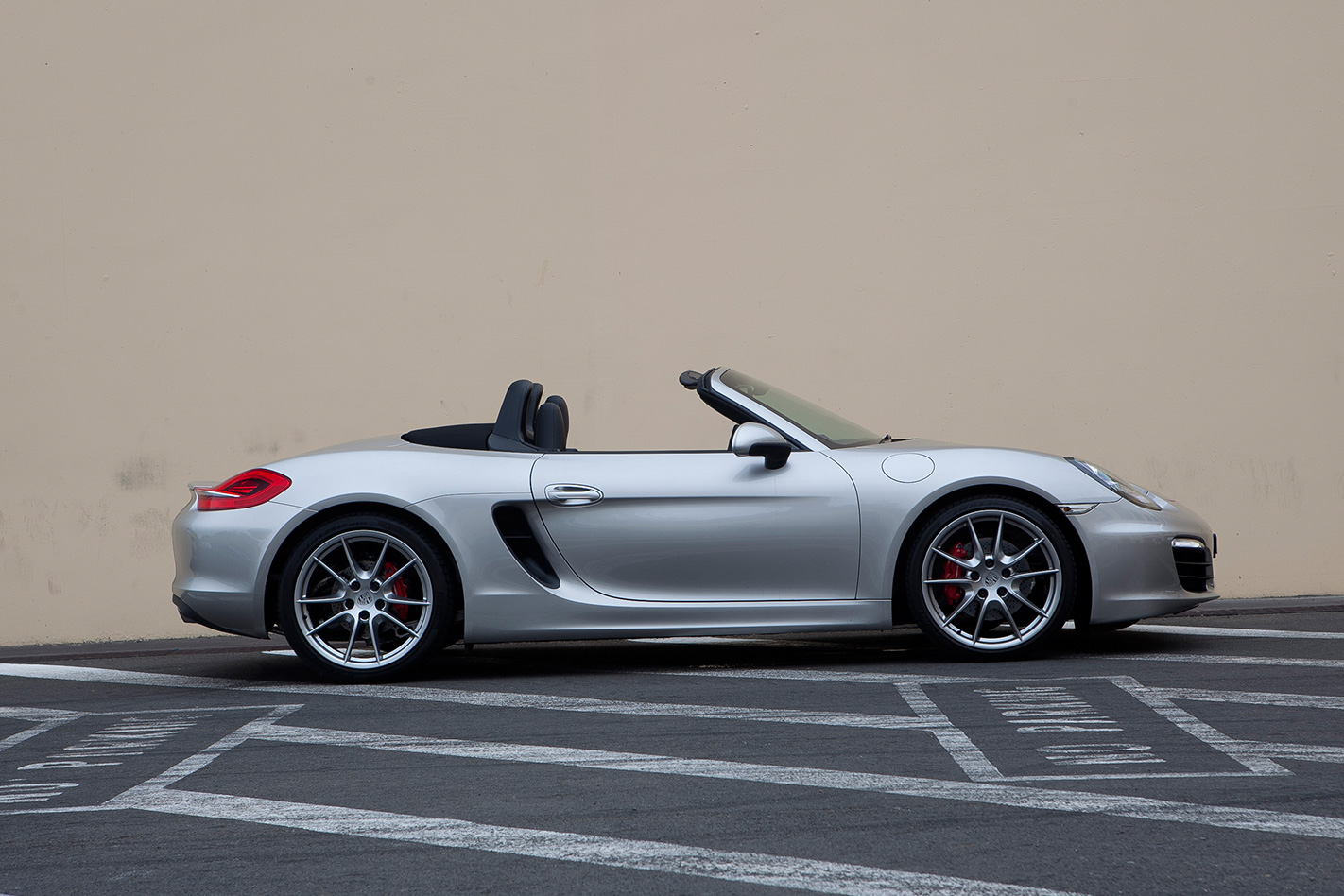
The Boxster trails the 911 to 60km/h by 0.21sec and by just under half a second to 100 (4.55sec). By 140, the difference is a second. By 200, it’s three-and-a-half seconds, but the ‘underpowered’ Boxster S still produces stellar performance.
Any car capable of the old ‘standing quarter’ in a 12.7 is the sort of machine that would make a great companion for fast get-aways and/or criminal activity. Given that role, the Boxster S would be a bit more stealth than the SLK55.
The baby Benz roadster might seem like a hairdresser’s drop-top on the juice, but it plays incredibly arousing tunes from its quad rear exhausts, and as the only V8 roadster in its class, that’s something no rival can match. It’s also no slouch, though unlike the Porsche pair, off-the-line traction is not its forte.
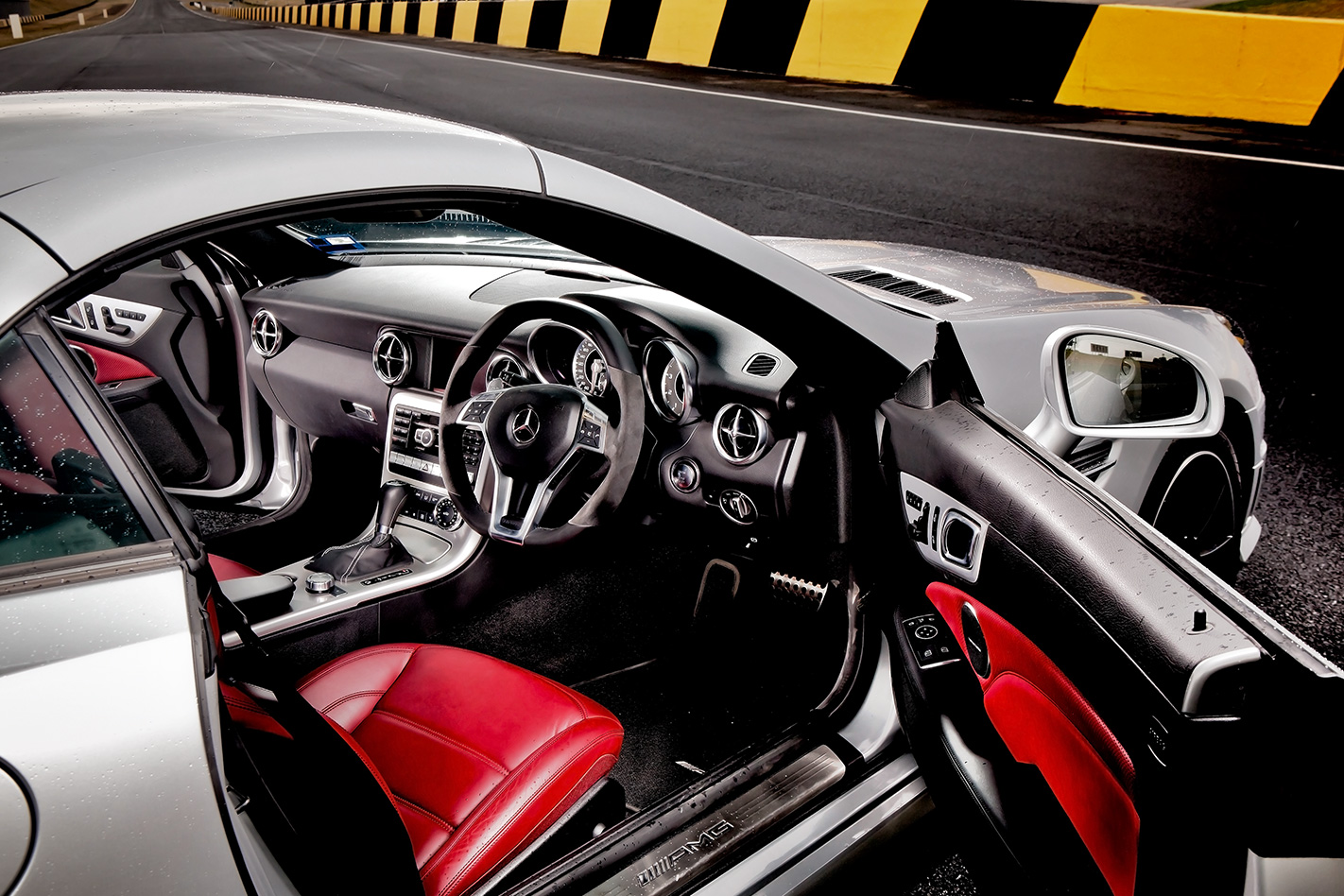
Its 400m number also seemed relatively tame at 13.25sec, but its terminal speed of 180.59km/h matched the twin-turbo V8 S7’s, while beating the RS5, M135i, and Chrysler SRT8. So if you were a hairdresser and needed a nimble little convertible for quick blow-drys and bogan-beating traffic-light prowess, the SLK55 would be hard to beat.
Problem is, it can be such a hard car to tolerate on the road. Having a thrash on bumpy surfaces with the roof down is about as pleasant as a prostate exam, with the body wobbling as the overly firm suspension bashes and rocks the car’s occupants all over the place.
The SLK’s steering isn’t hugely interested in what’s going on, either, until you wind a fair amount of lock on, and the combination of all that is a performance roadster that only works in selected environments. Thankfully, one of those is Sydney Motorsport Park.
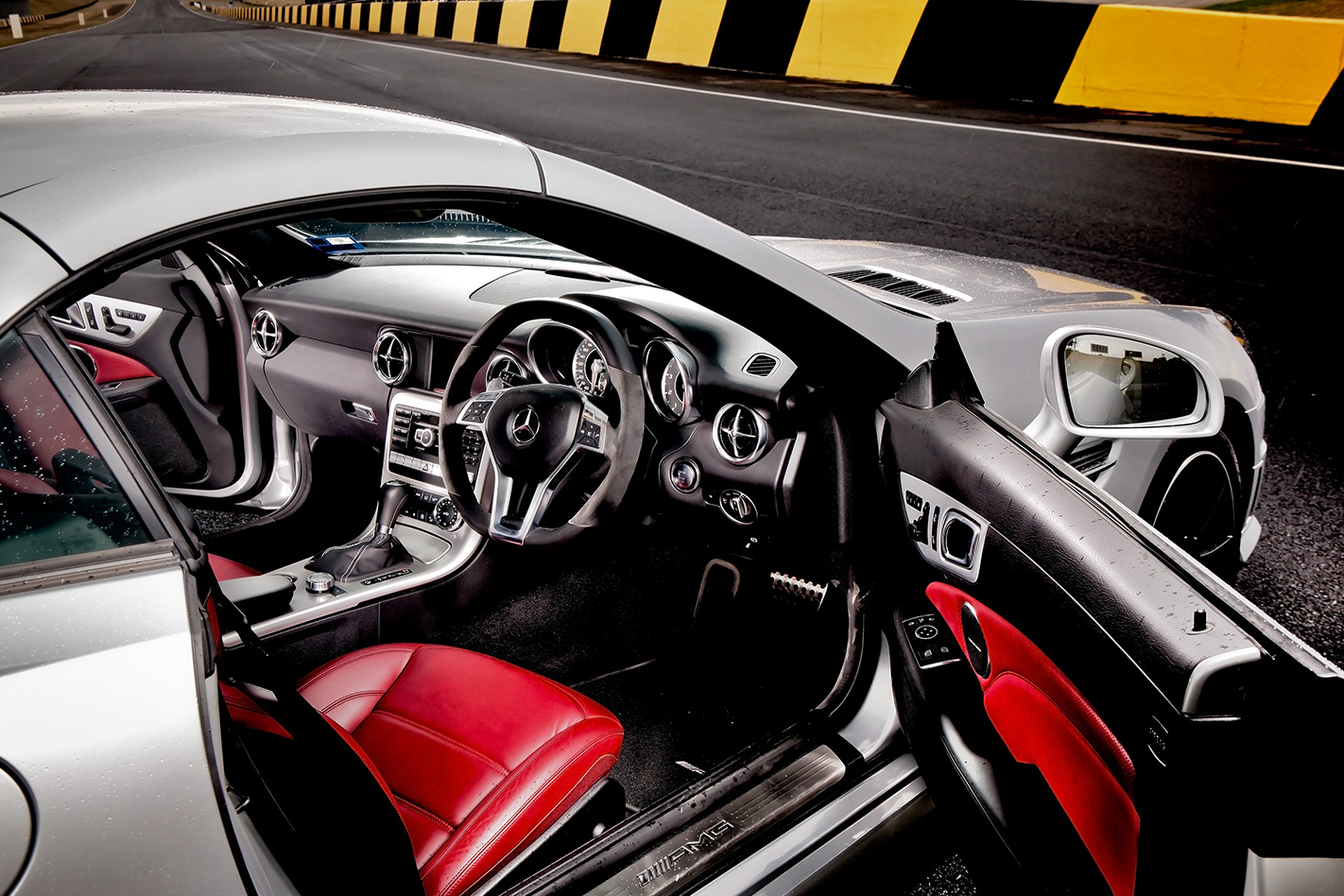
Despite a relatively short wheelbase of just 2430mm, the SLK55 feels surprisingly stable and well-balanced around The Creek’s fast sweepers, and even though it never challenged the top order for corner speed or lap time, it was a long way from disgraced.
Crucially, it was never too far behind the benchmark Boxster S (2:13.7 versus 2:12.1 for lap time) and it smashed its Porsche rival’s V-max – 223.56km/h against 217.36. Even more crucially for this exercise, the SLK55 was as driftable as any AMG has ever been.
Flawed and image-compromised it may be, but show it a racetrack and the SLK55 displays far bigger cojones than its shaved legs would imply. Only a brief stint was required in the Boxster S to demonstrate just how lacking the SLK55 is as a multi-faceted performance tool.
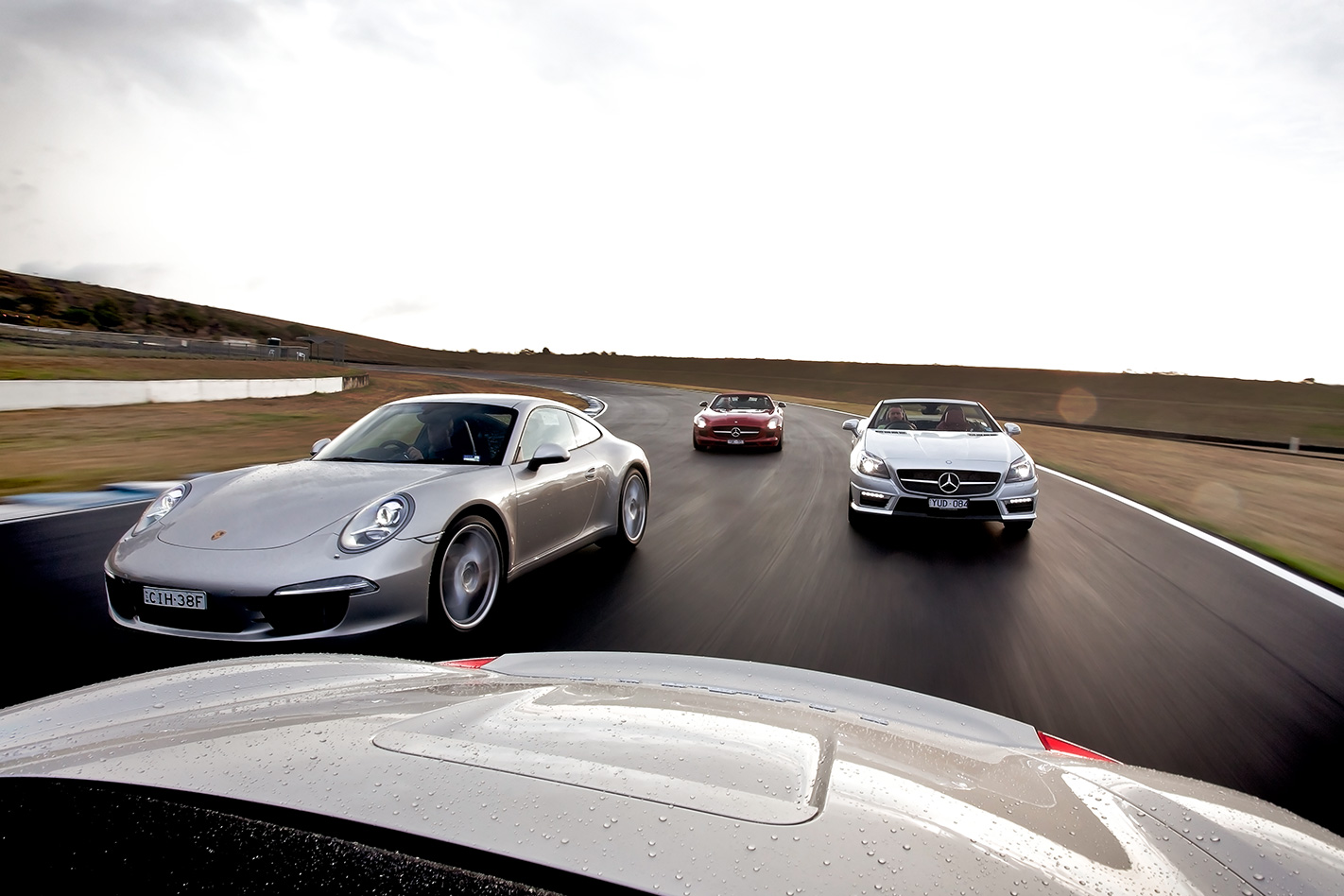
Even the PDK transmission’s laughably shit control interface – confusing wheel switches with near-invisible markings, plus a raised PDK badge across the top of the steering wheel that blocks the digital speedo – can’t dull the Boxster S’s brilliance.
Please Porsche, swallow your pride and make the optional paddles standard! It’s really the only black mark on an otherwise near-flawless car. On track, wearing massive, optional 20-inch wheels, you can push the new-generation Boxster S even harder than the old one and it still hangs on.
Its handling balance is so unbelievably neutral that it’s actually a challenge to get the car to really step out. And it’s these enormous reserves of roadholding that arguably take a little bit away from the Boxster S on the road.
Porsche’s chassis engineers always said the original Boxster worked best on 16s, yet even the base 2012 Boxster has massive 235/45ZR18s up front and 265/45ZR18s on its drive wheels. Still, you can’t argue with a lap time just one second slower than the SLS Roadster’s.
So what does virtually double the money buy you in a 911 Carrera S PDK? In this field, it buys you the top-shelf of just about everything. In acceleration, braking, lap-time, and three out of eight measured corner speeds at The Creek, the 911 was top dog.
Of the others, it was second in V-max, fourth in Turn One, third in Turns Six, Eight and 11, and second in Turn 15 (behind Boxster). Dynamically, if the Boxster is awesome, then the 911 is something else again. The difference isn’t huge, but the 911’s sublimely fluid adjustability, its stunning power down and its delightfully rear-engined balance are the icing on the cake in my book.
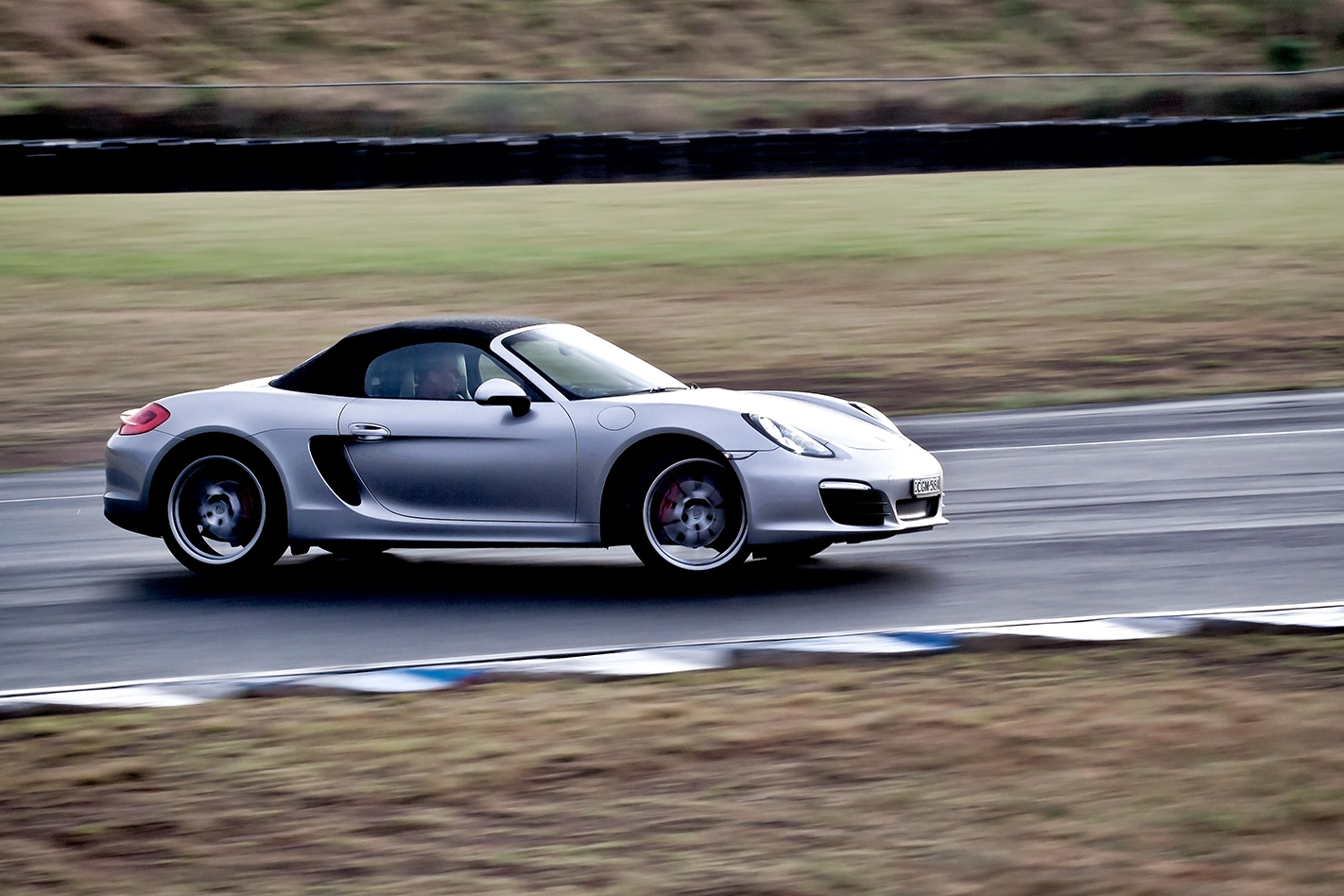
I don’t think today’s Carrera S sounds as ‘traditional’ as the crackly, sports-exhausted 997 Carrera S we drove in a comparison way back in March 2008 (911 v M6 v R8), but it’s a special noise that is impossible to match, unless you specify a Boxster S with the same exhaust!
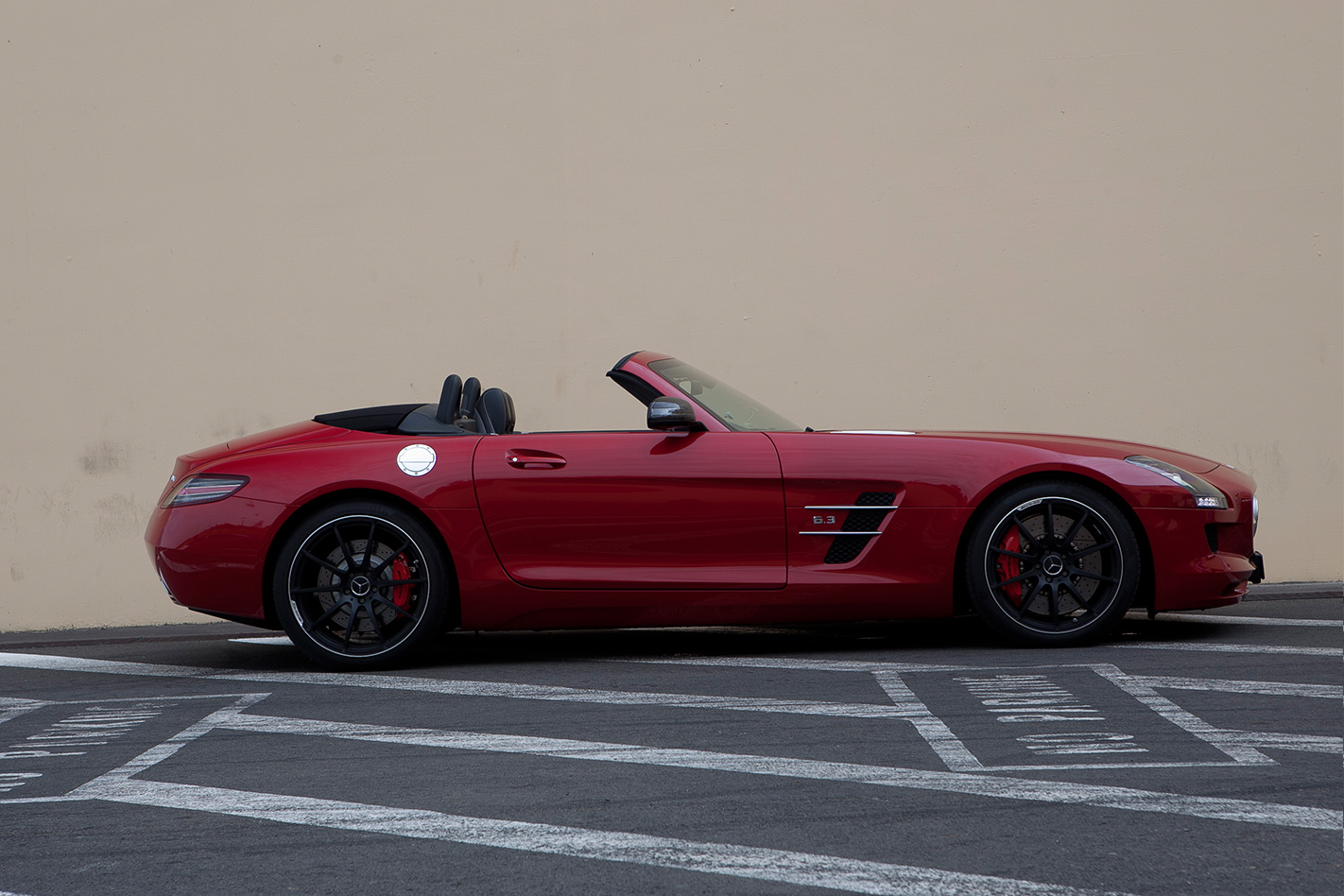
If we’re talking noises, though, the SLS AMG’s would be bloody hard to beat. And what better way to amplify one of the greatest V8 exhaust notes in the world than by removing the coupe’s silly gullwing doors and putting a cloth roof in their place?
Hard as it is to believe, the SLS works better as a convertible, and not just because you can hear its engine more clearly. Like Jennifer Grey and her nose job, it’s about looking in proportion, and the SLS Roadster has both presence and proportion. And heart-in-your-mouth thrills. Without trying to sound sexist, it’s a man’s supercar.
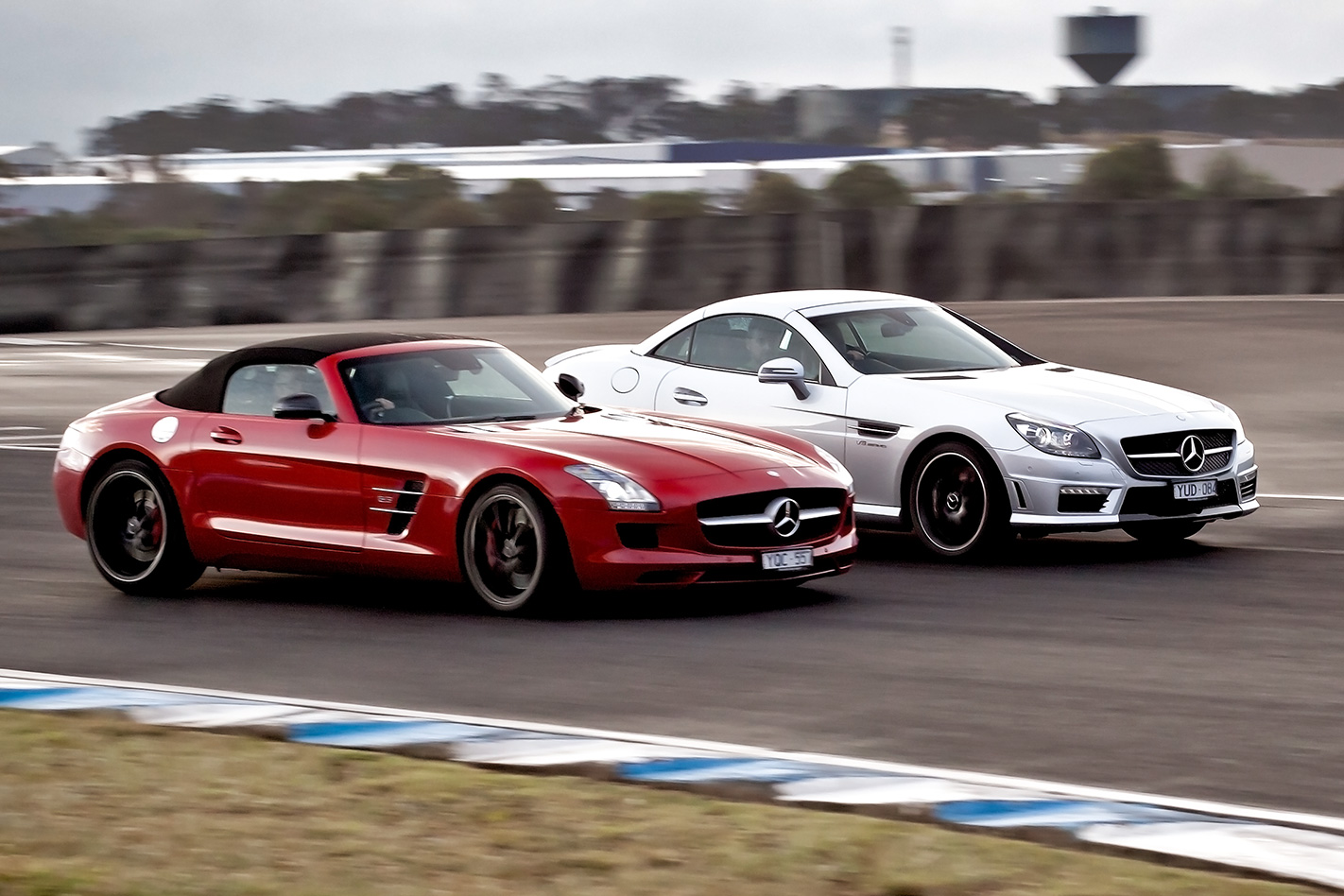
And despite all this, it still managed to set the fastest corner speed in Turn 6! Where the SLS Roadster hands the baton to the 911 is in sheer usability. On the drenched Putty Rd during our road loop, keeping the SLS pointing straight while making good time was a huge ask.
Then there’s its price, and a boot that can’t take a suitcase, and a nose that’s in a different postcode to the rear bumper. But hedonistic decadence like this deserves to be celebrated! Especially when it’s not just part of a dick-measuring process.
Almost predictably, though, the 911 Carrera S is the victor of MOTOR’s 2012 Performance Car Cup. It’s everything you’d pretty much ever want in a performance car, as well as sexy, characterful, beautifully built, amazingly user-friendly and guaranteed to retain much of its value for years to come. And that’s something its home-town rivals can’t take away from it. Wir lieben Stuttgart.
MERCEDES-BENZ SLK 55 AMG
Overall Rank: 9 JUDGES NOTES Andrew Maclean – 9th: “Surprisingly fun on the track, but frustrating out on the road” Curt Dupriez – 9th: “Sweet roadster. Different character to Boxster, but that’s no bad thing” James Cleary – 8th: “Tougher than expected. Ballsy and fun. Hairdressers need not apply” Nathan Ponchard – 11th: “Hit-and-miss on road, but after a track thrashing, I can see the point”
WARREN LUFF SAYS “This is a bit of a surprise packet. On the road I wasn’t overly impressed with it, I found it too soft in the front end but here on the circuit it actually works okay. It’s a car that you can have fun with and know it’s not going to catch you out considering how short it is; generally a short car is taily but it’s quite placid”
MERCEDES-BENZ SLS AMG
Overall Rank: 3 JUDGES NOTES Andrew Maclean – 4th: “I’m glad they still build cars like this; compromised but so full of character” Curt Dupriez – 3rd: “You’d better have your eyes on when pushing this monster hard” James Cleary – 4th: “Brawny. Beautiful. Feels more at home on track than open road” Nathan Ponchard – 3rd: “Supercar with a visceral punch that leaves you deaf and totally aroused”
WARREN LUFF SAYS
“It’s a really difficult car to drive on the limit, you’ve literally got to drive it with your fingertips. It’s got so much front-end grip and no rear. If you drive it for the grip at the front of the car, you’ll just spin out every corner. It’s got massive amounts of front-end grip but the rear can’t keep up”
PORSCHE BOXSTER
Overall Rank: 2 JUDGES NOTES Andrew Maclean – =1st: “Almost as brilliant as the 911 for almost half the price” Curt Dupriez – 2nd: “It has a chassis that’s so good you believe it’s underpowered” James Cleary – 1st: “Fast, superbly precise, balanced and communicative. Sounds brilliant” Nathan Ponchard – 2nd: “You can push it even harder than the old one and it still hangs on”
WARREN LUFF SAYS “It’s so good to see the evolution of this car over the generations that it hasn’t lost its soul. It’s still that fun, throw-around car that’s now got more power. The dynamics of it are getting closer to the 911. It’s a car the average person can get in and enjoy without having to go through all the grief”
PORSCHE CARRERA
Overall Rank: 1 JUDGES NOTES Andrew Maclean – =1st: “The most resolved, multi-dimensional car ever made. Near faultess” Curt Dupriez – 1st: “Awesome. The harder you push, the better it seems to get” James Cleary – 2nd: “Superb. Balance is hard to fault. Engine howl is addictive” Nathan Ponchard – 1st: “If the Boxster is awesome, then the 911 is something else again”
WARREN LUFF SAYS “Unbelievable. It’s like James Bond films, but in a car, they just keep getting better every time. Around this track it’s awesome, it does everything right, it stops, it goes, it handles, the new PDK gearbox is just awesome, it’s such a sweet transmission. You couldn’t ask for anything more.”
IT’S probably not an adage, but maybe it should be: unless you’re Jason Bourne, don’t bring your fists to a knife fight.
And similarly, if you’re Mercedes-AMG, don’t send just ‘any’ AMG GT to a showdown with a Porsche 911.
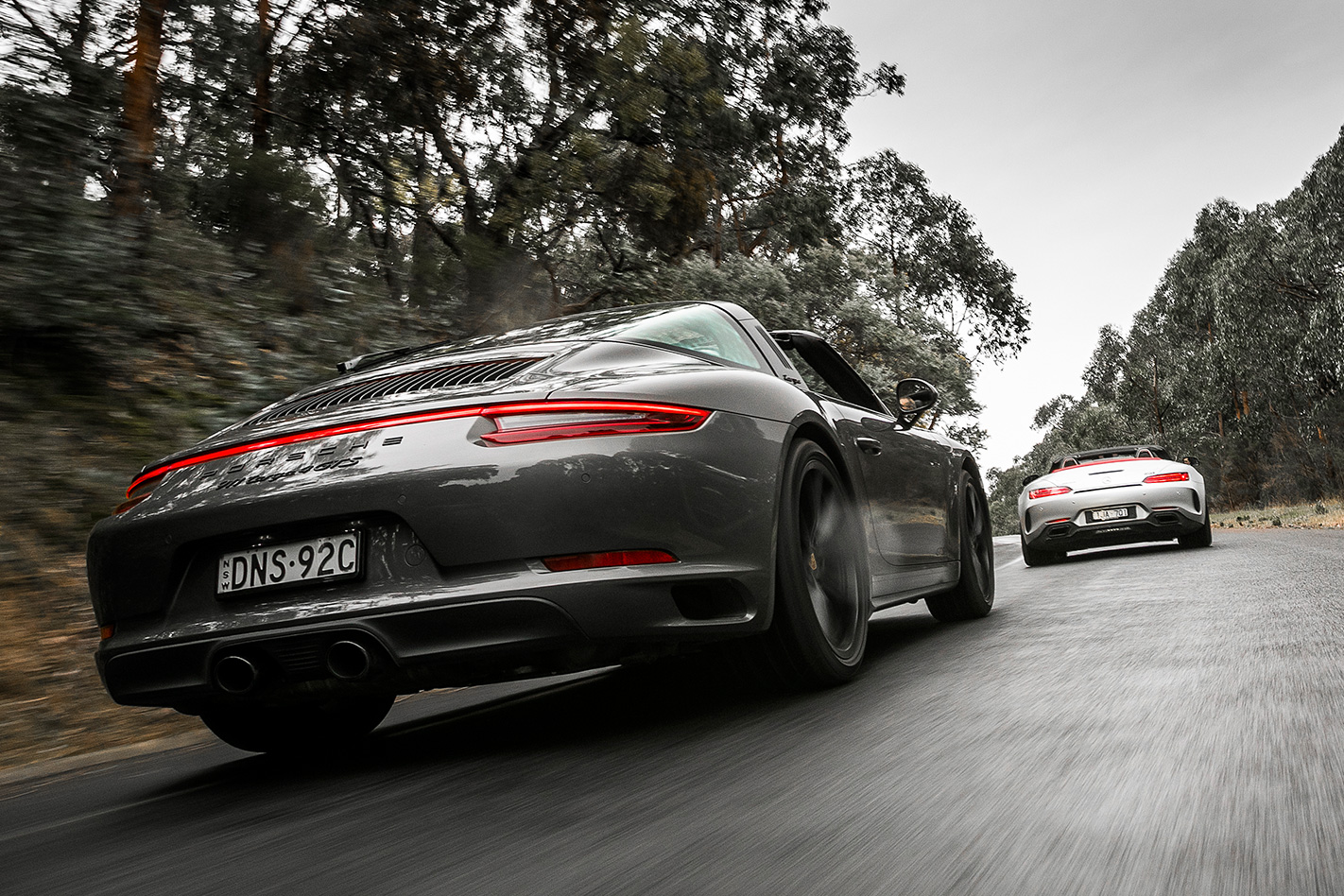
Porsche’s rear-engined icon may be in the twilight phase of its 991 model cycle, with an all-new car due in less than two years, yet fact is it’s never been more primed for war than in this 991.2 guise and specced to ultra-desirable GTS level.
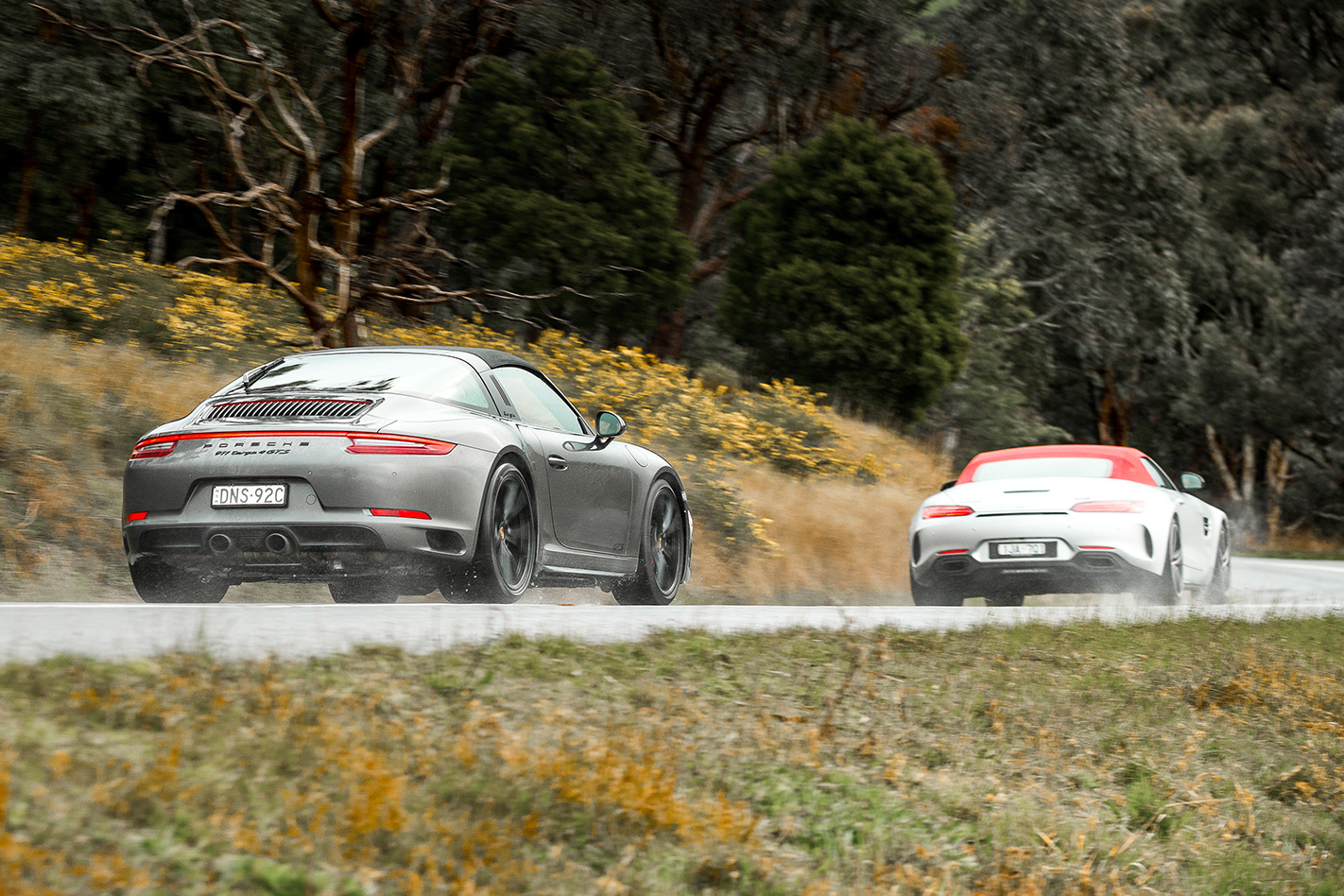
But before we delve into a full rundown of our combatants, a quick disclaimer: This two-car battle began as a stoush between a couple of Stuttgart-born stormers, but evolved into more of a tag-team tussle when our first Porsche – a PDK-equipped GTS coupe which starts life at $286,390, but was specced up to $339,230 – developed a rare electrical issue. In its place came a Targa 4 GTS, bringing all-wheel drive, an electrically folding roof panel, and a base price of $316,000. Our example was comparatively tamely specced to $342,830.
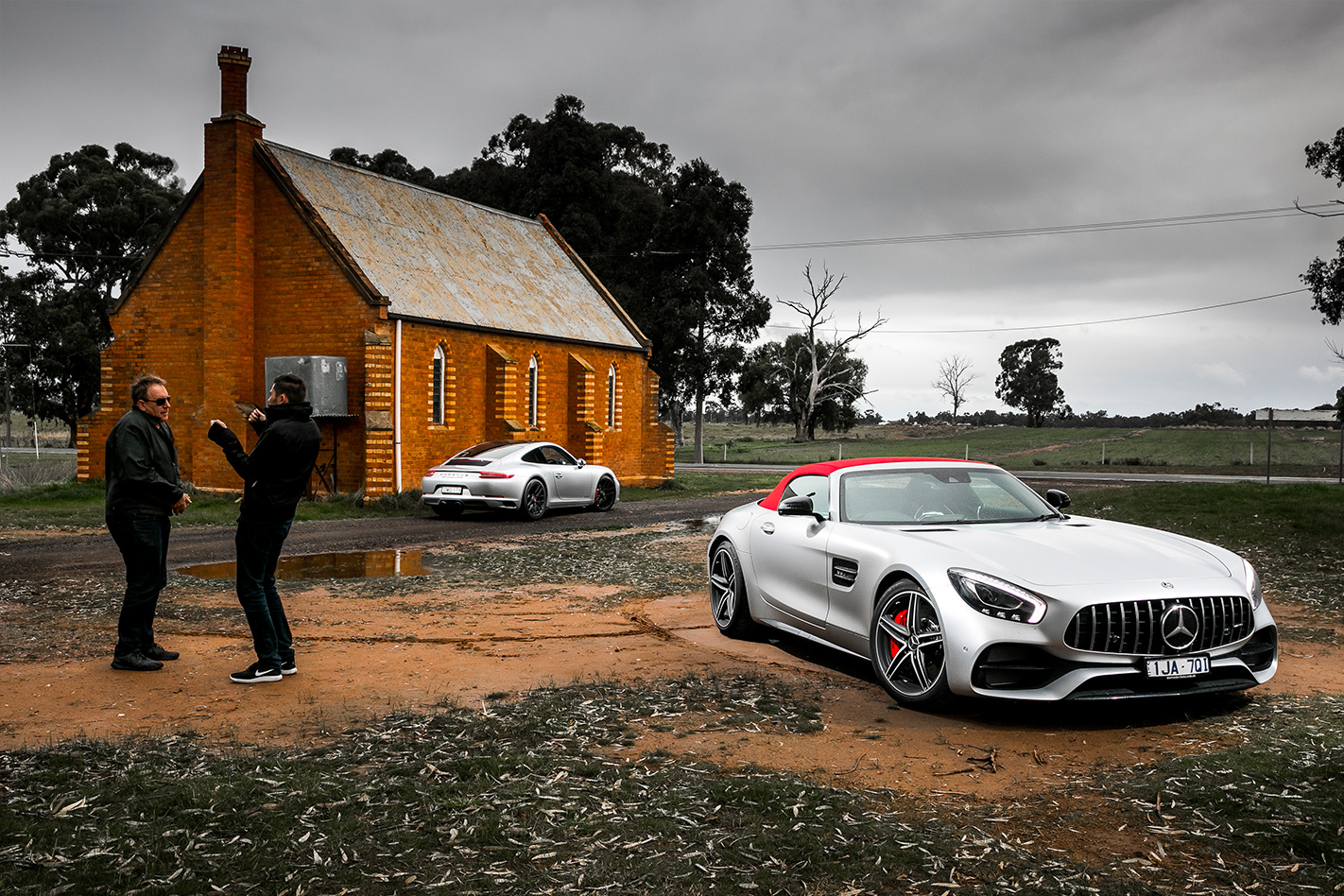
It’s worth a quick recap to understand the GT C’s positioning here, as the uninitiated may confuse the ‘C’ bit as indicating cabrio or convertible, but this isn’t the case. The ‘C’ denotes the spec level sitting a rung above GT S (so two grades above the base GT), but below the ultra-focused AMG GT R. The C (which will also arrive in coupe form next year) gets the wider rear track of the GT R, along with 57mm wider guards to house it, as well as the flagship’s rear-wheel steering and electronically controlled limited-slip differential. The GT C’s 4.0-litre twin-turbo V8, too, is ramped up to 410kW/680Nm, so not far short of the 430/700Nm of the full-house GT R.
Being funnelled purely through the rear treads – admittedly vast 305/30R20 Continentals – may have even hardened power junkies deeming 410kW/680Nm as ‘adequate’; factor in streaming wet Victorian roads for our two test days and we may revise that to ‘adequate plus a bit’.
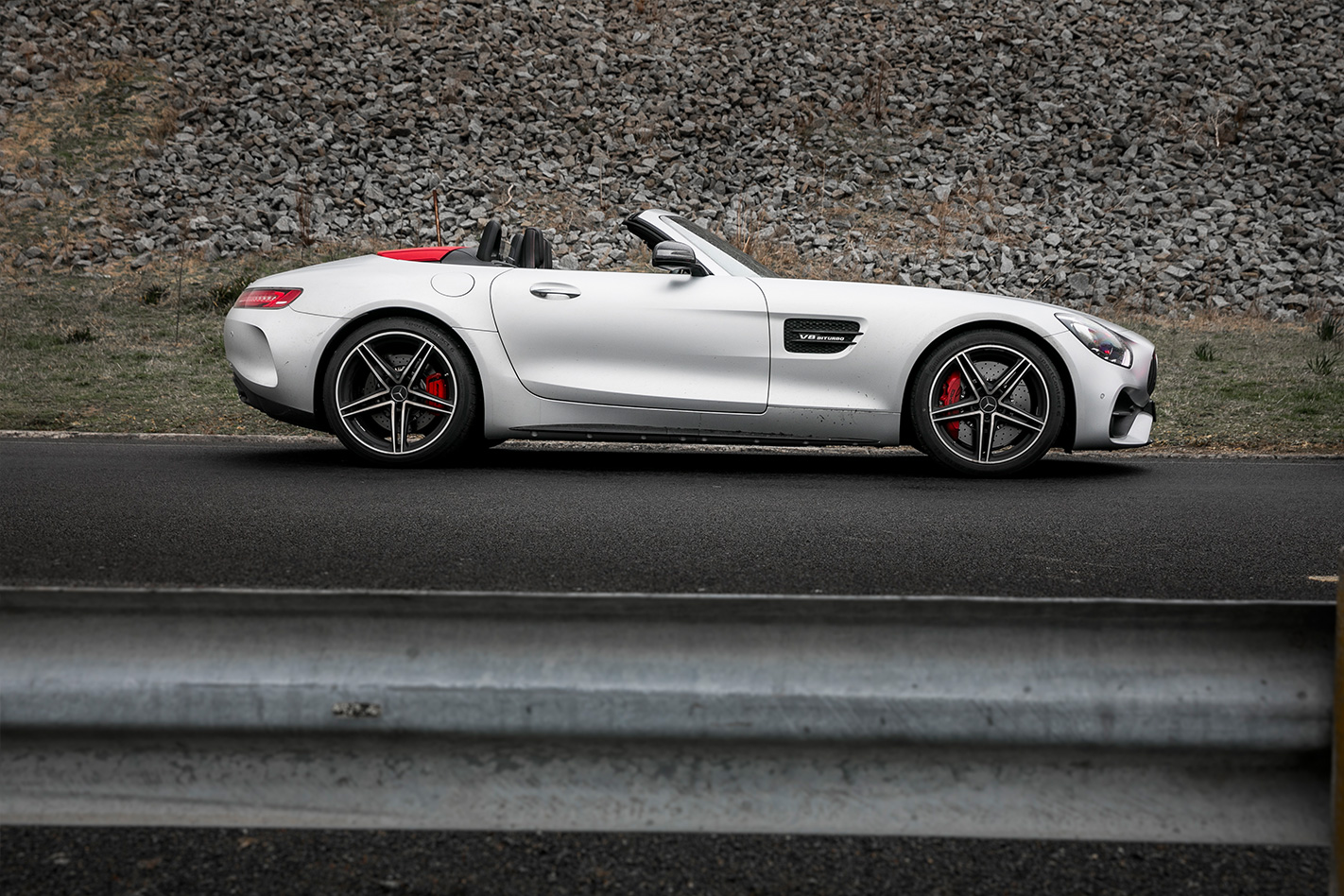
When the road opens and your restraint evaporates, though, the GT C is capable of acceleration that is vicious, loud, and seemingly unending until you’re into heavy triple digits. There’s something vaguely reminiscent of an offshore powerboat in the way the vast prow of a bonnet that stretches out ahead of you rises slightly when right foot meets firewall, the rear end scrabbles for traction, and the switchable exhaust allows full thunder from the oversized oval pipes.
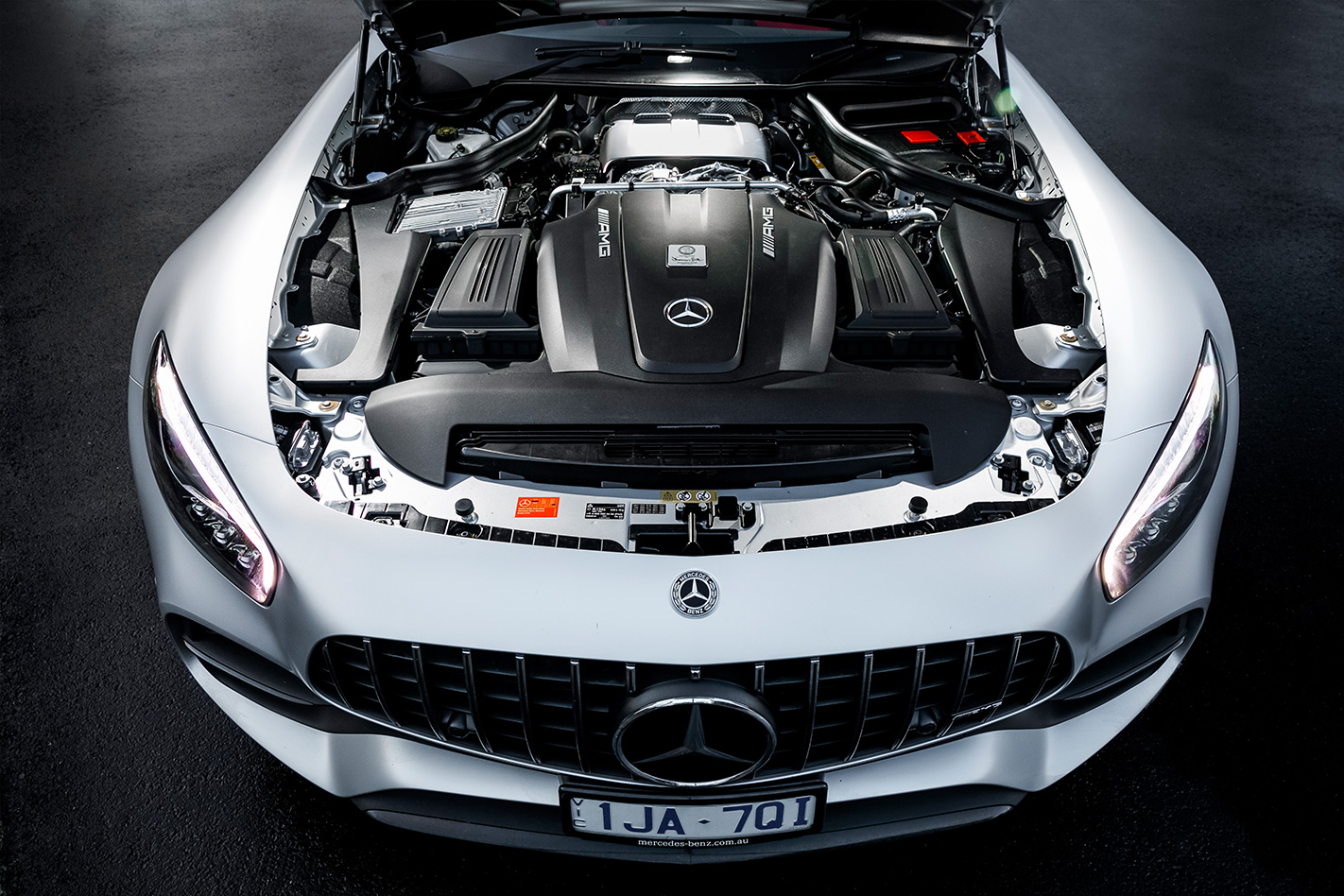
All of which lulls you into thinking that the Porsche’s downsized flat-six, giving away two pots and around a litre of capacity, is going to struggle to compete with such overt V8 fire and fury.
Okay, an ardent lover of the old 3.8-litre atmo six (err, that would be me) might mention that the really tingly yowl of that engine has been neutered slightly, and the necessity to wring it to redline has been eroded just a little. But the now-bulging mid-range translates to serious real-world punch, firing the car out of tighter corners with the sort of sting that would have had you in a holding pattern for a few moments while the old engine climbed into its boogie pants.
On a wet strip, the big AMG couldn’t match that, delivering a less-than-awesome 4.0sec. In the dry, though, and aided by its launch-control function, which allows you to adjust the pre-set engine revs up or down via the shift paddles, we have no doubt it would deliver on its 3.7sec claim.
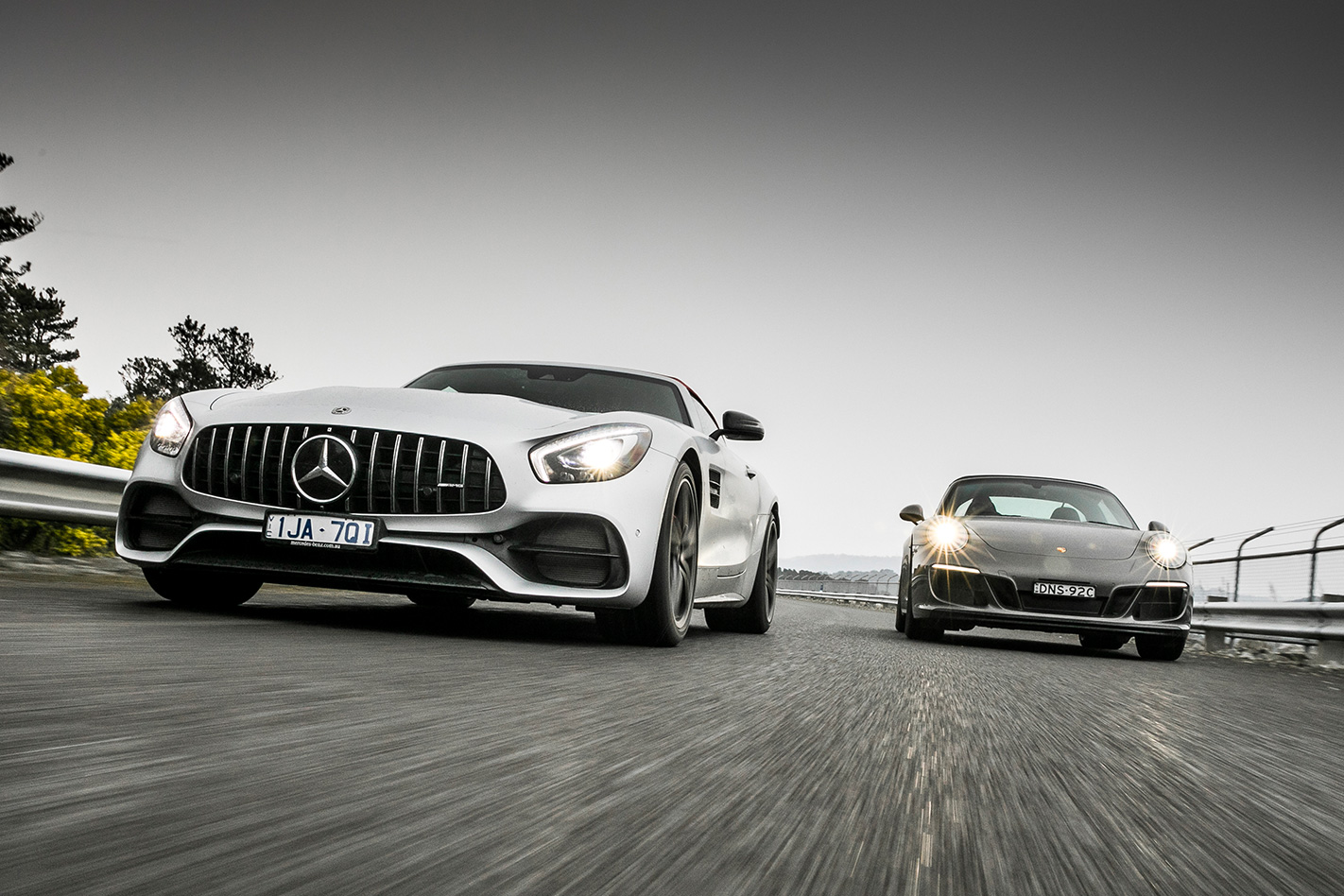
So, despite differing approaches, both achieve similarly scalding performance. More significant are the differences in the way each car interacts with its driver, and method in which each goes about doing a demolition job on a quiet back road. The Porsche instantly feels much more compact and intimate; it seems a little ironic that when the 991 generation first launched back in 2011, there were moans that Porsche had taken the 997 design and stuck it on a photocopier and hit the ‘120 percent enlarge’ button.
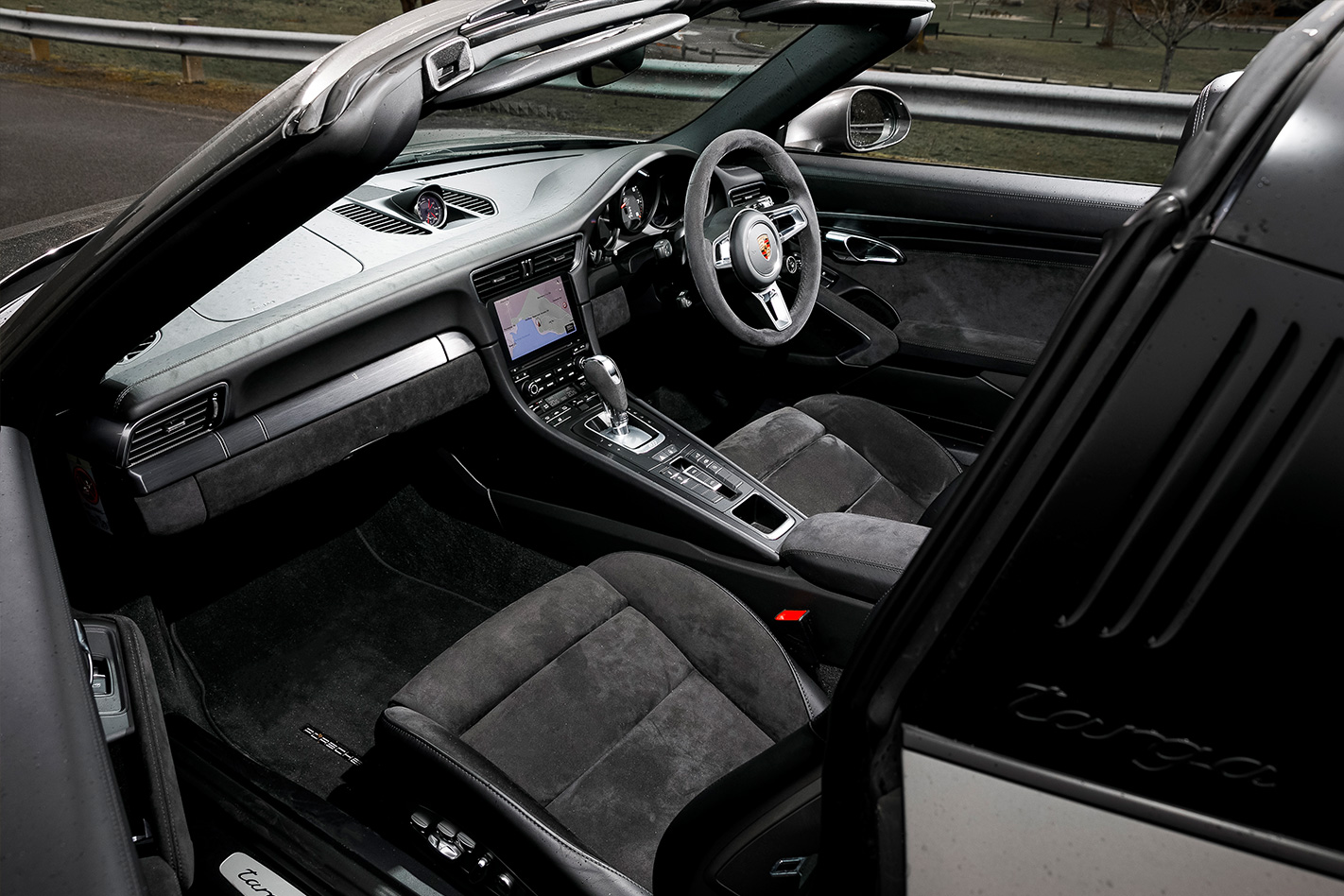
Steering, too, shows some radically different thinking at work. The 911’s system has been further improved with this 991.2 update, and to find an electrically assisted system as feelsome, natural, ideally weighted, and giving you such confidence in the front end, well, you’d open the Porsche catalogue in the Boxster/Cayman section. Again, Porsche enthusiasts went all emoji-sad-face when the axe fell on the 997’s hydraulically assisted rack, and lamented that the writhing, analogue feel had gone for good. The current car may have a facsimile of that set-up, but it’s a bloody accurate one, and hard to argue if it’s notably inferior.
It’s a tactile connection the GT C has no answer to, at least not in moderate driving on sweeping roads that require only small inputs. Here the AMG’s wheel feels a little aloof, not really interested in engaging your sense of touch; more intent on filtering out the feedback of surface irregularities that the Porsche is happy to pass on. Only when the corners start to tighten and the demands for more lock are made does the AMG’s steering start to reveal itself, and the speed of the rack, the consistent weighting and the instant, incisive response from the front axle can be appreciated.
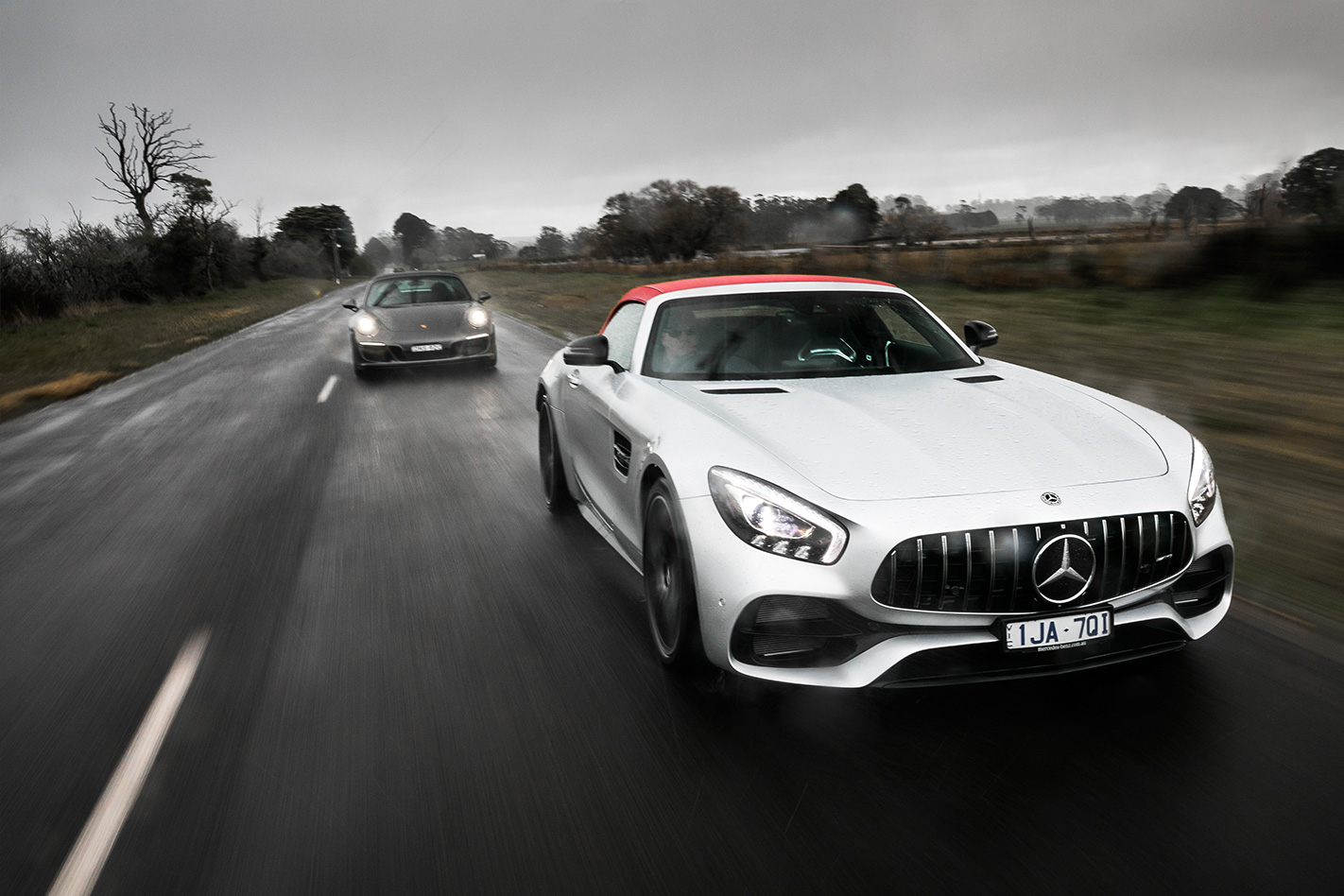
The Comfort setting continues the AMG in-joke of being code for ‘ultra-firm’, while Sport only works on uncommonly smooth roads, leaving Sport Plus effectively limited to a track. This iron-fisted approach to spring and damper tuning makes sense when you hammer the car through fast undulations, where the hand-of-God body control can be appreciated; it’s less welcome in terms of the toll it takes on comfort and the car’s broader GT abilities.
The comfort issue isn’t helped by seats with super-firm, thinly padded bases, and insistent road roar on coarse-chip coming from the huge rear tyres. It’s a shame because the cabin’s roof-up insulation is exceptional, with wind noise and ambient racket beautifully zipped out.
The Targa 4 GTS, running the standard suspension tune (which is still 10mm lower than a regular Targa 4S) is appreciably more compliant. Message, people: unless you’re in the adult entertainment industry, lower plus stiffer does not always mean extra enjoyment. Besides, all GTS models are fitted with two-stage adaptive dampers if roads and driving conditions encourage a firmer suspension setting.
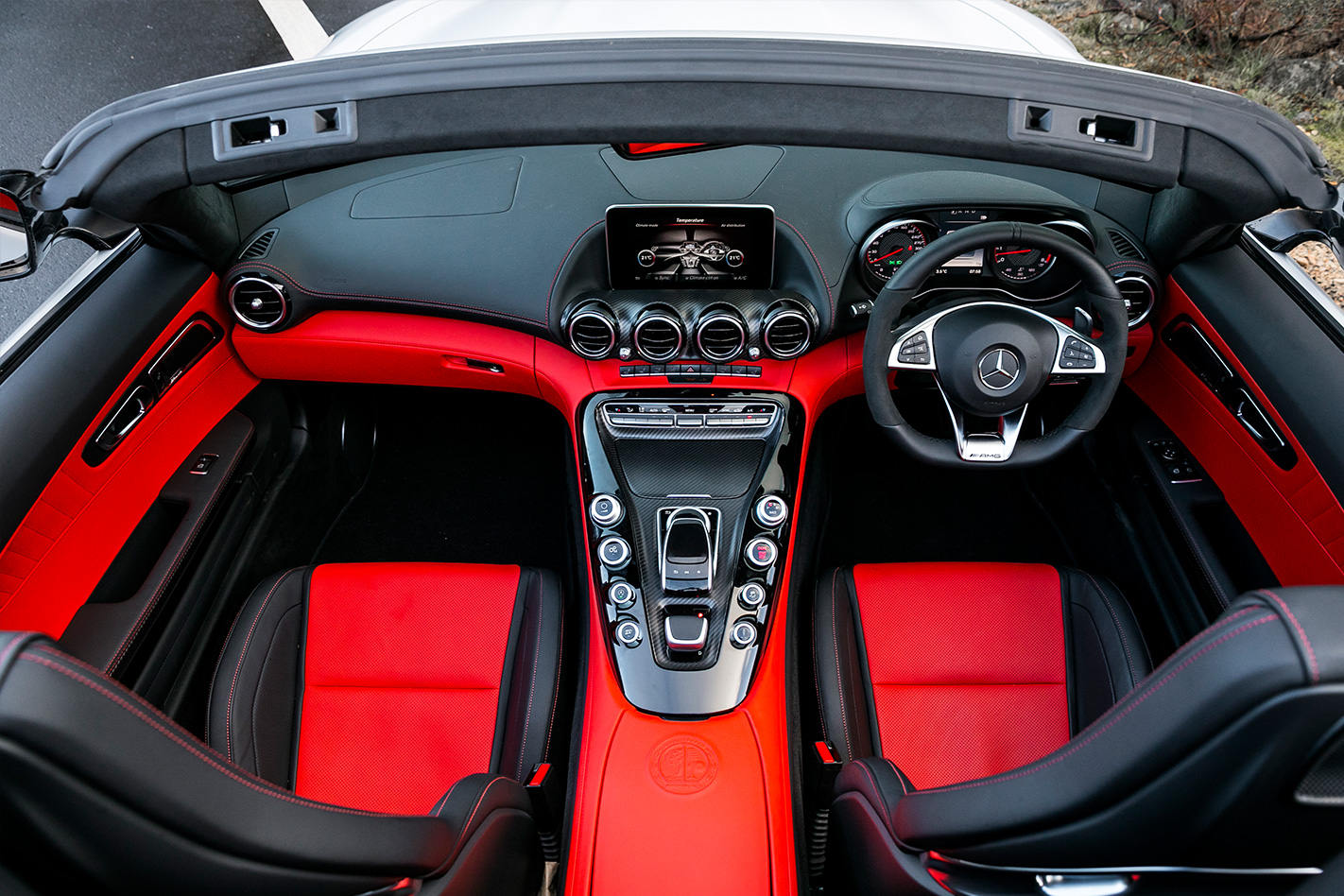
In the wash-up – literally, in terms of our driving conditions – we need to cut the Merc a break, because we know the constantly wet roads during our test didn’t play to its strengths, and we know what the Roadster is capable of on smooth, dry tarmac from our time on American roads at the car’s launch. Its grip levels are neck endangering, the rear steering gives it an agility and pointiness that elevates it to a level above the GT and GT S, and that engine just keeps on making you shake your head and mumble expletives.
It also works brilliantly with the roof down; praise that can’t be shared with the 911 Targa. Where the AMG minimises cabin turbulence and manages occupant comfort with a gilt edge, Porsche’s Targa drops the ball. Its airflow ‘management’ amounts to turning the rear of the cabin into a windsock, and the buffeting around your ears at highway speeds will have you quickly grabbing for the button to put the roof back where it belongs.
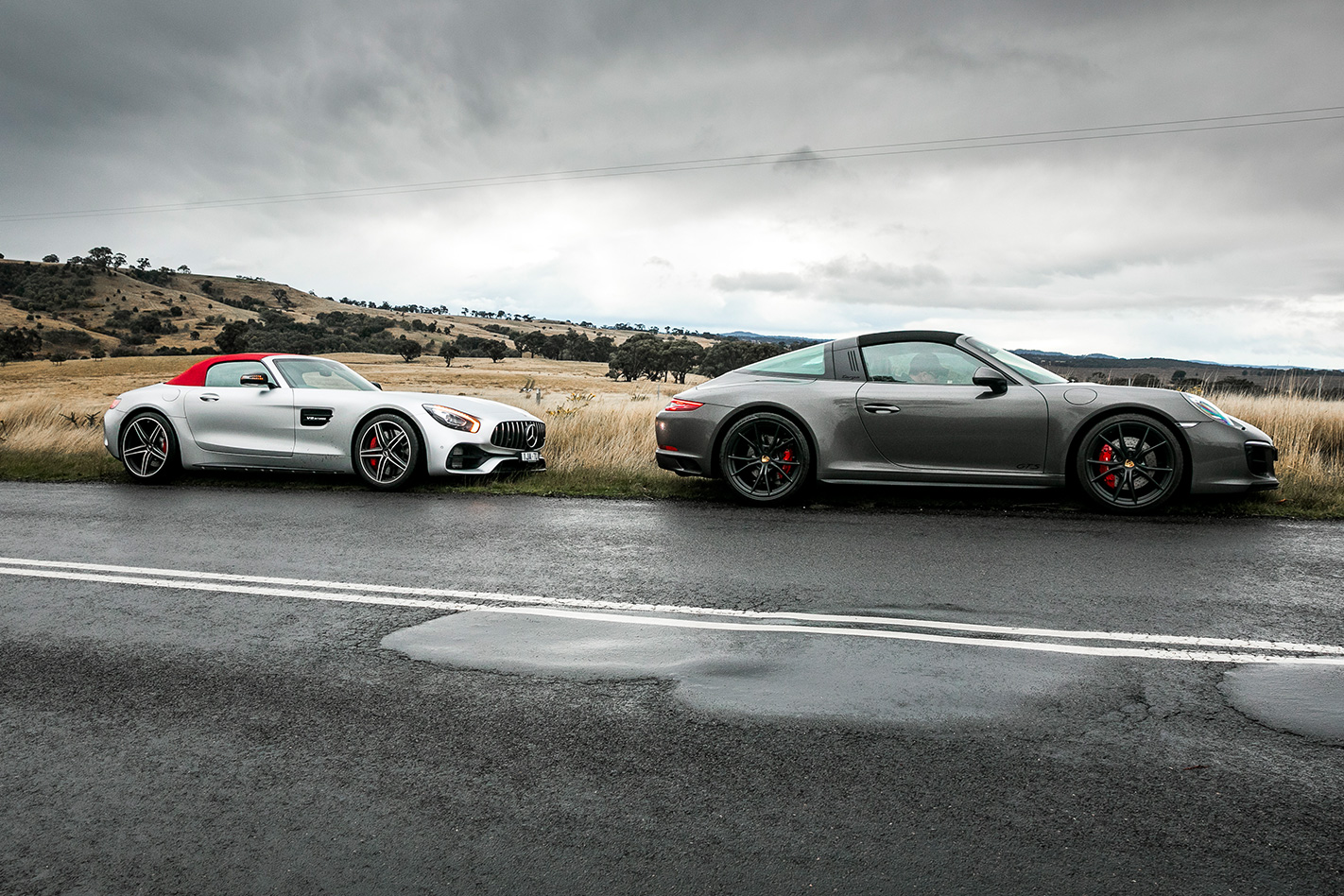
Which will probably be as relevant to 911 GTS owners as George Clooney’s star sign. They know they’ve bought the world’s greatest all-round sports car; a machine honed to near-perfection, with an unbeatable depth of engineering integrity and real-world useability. The sun may be setting on the 991-generation 911, but light still glints off the GTS’s blade.
Lumping together all of the ‘premium bruisers,’ as we’ve nicknamed them, is not a big stretch thanks to the commonality between them.
This Performance Car Of The Year article was first published in MOTOR Magazine January 2013.
All share a bent eight-cylinder count, mid-four-second 0-100 potential, four-plus accommodation, plus-four-star luxury and appointments and are priced from a serious $160k through to a quarter-mil. Oh, and they’re all – surprise, surprise – German. Well, not so surprising perhaps.
Ever shrewd and resourceful, the Germans are the undefeated champs of creating full-fat thrill-machines from humbler medium- to large-car donors. That’s not to say this group lacks variety.
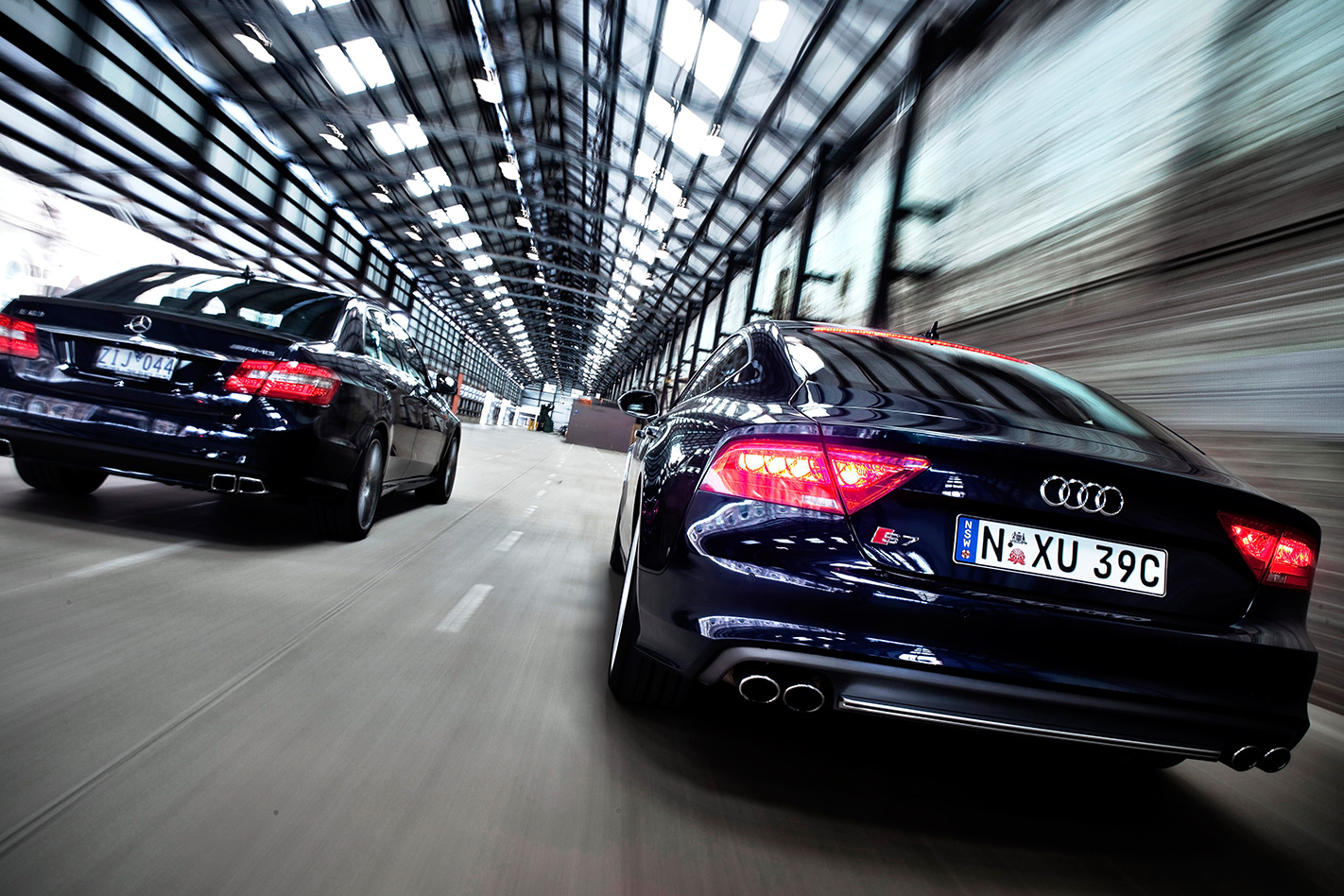
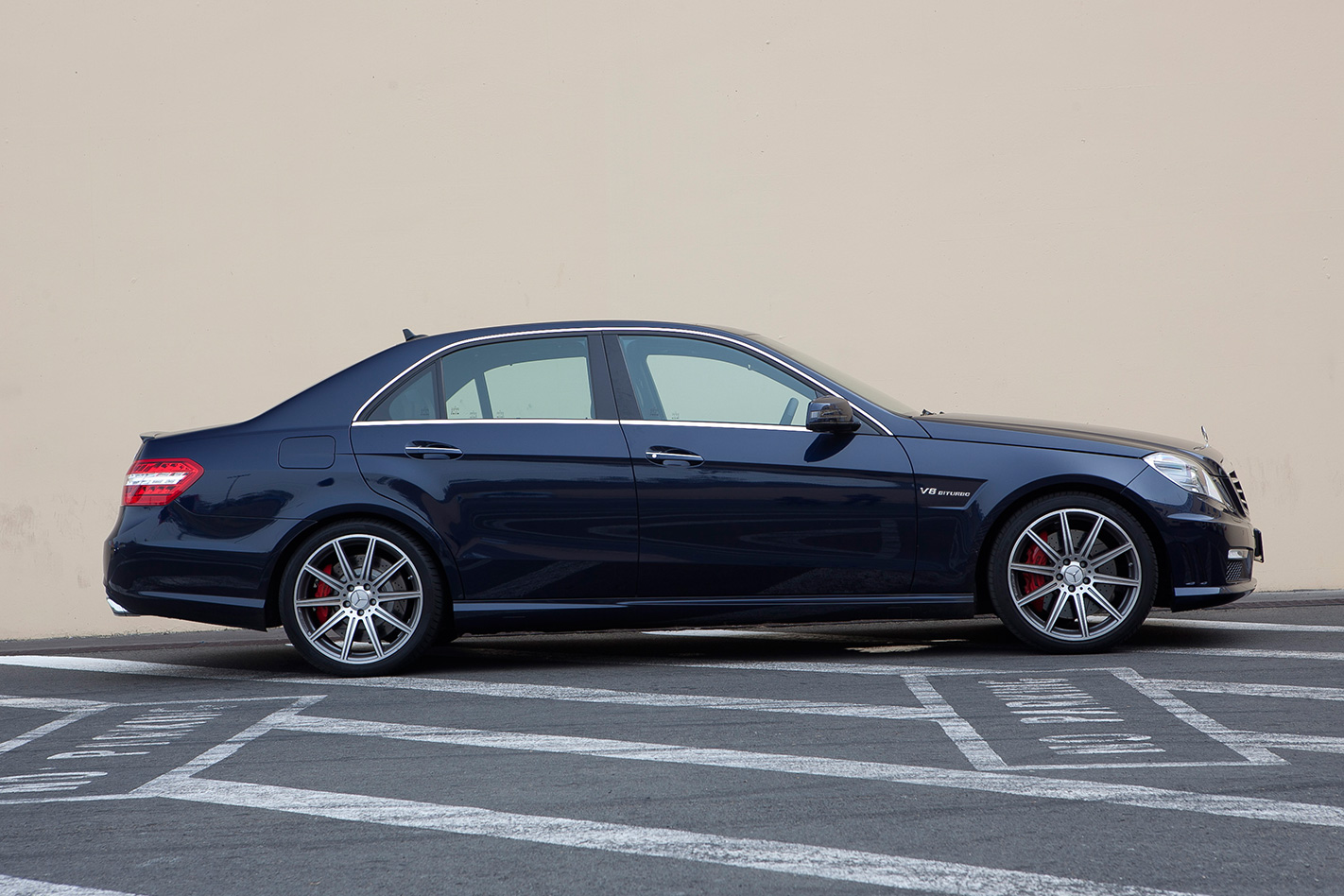
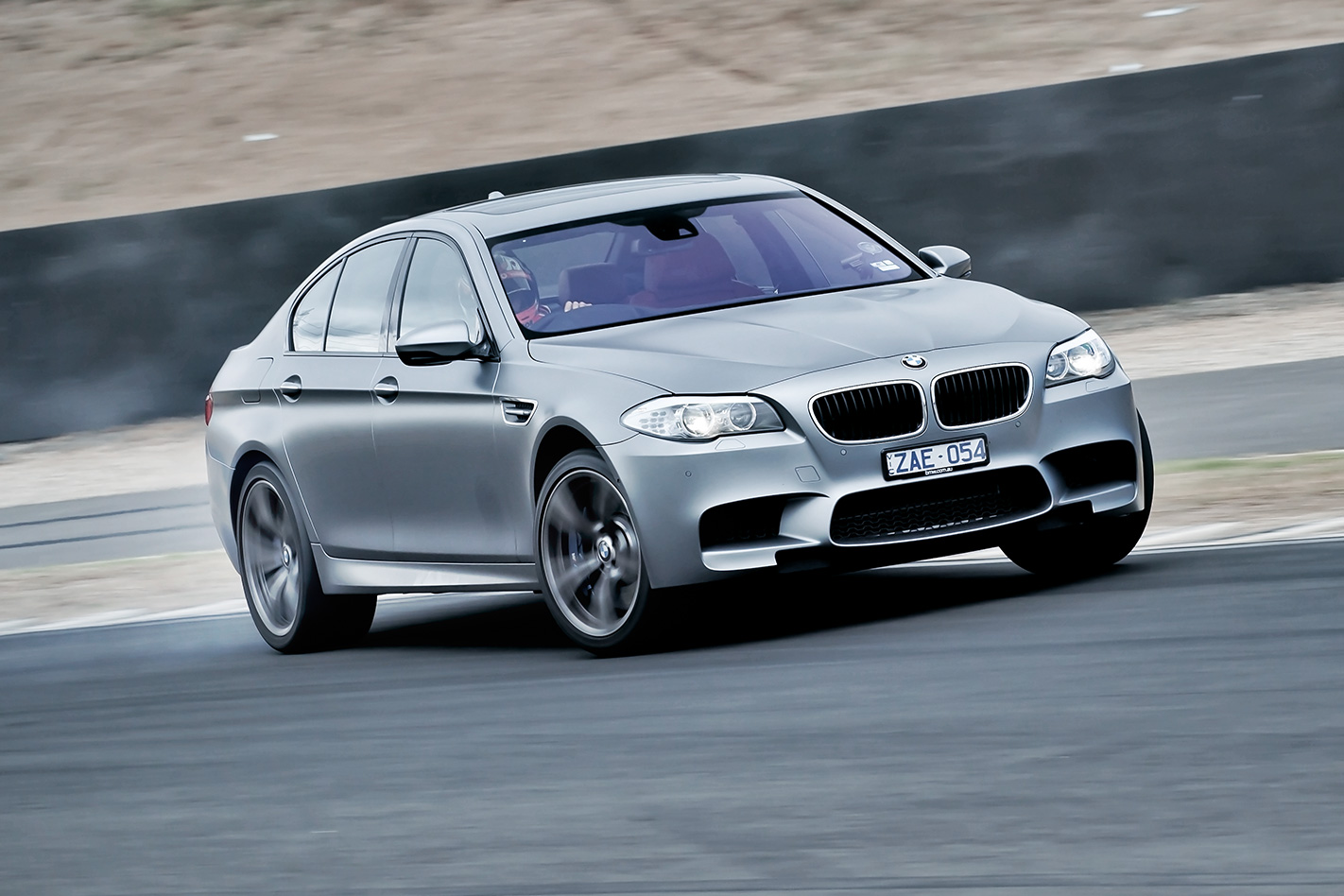
BMW’s M5 and Merc-Benz’s E63 hi-po flagship large sedans are arch rivals, the former a reinvented twin-turbo 4.4-litre V8 version of the M5, the latter supplanting the previous E63’s 6.2-litre naturally aspired eight with a 5.5-litre twin-turbo V8 ported over from its CLS AMG cousin.
The $11k more affordable M car, at $229,500, steals the power march too, its 412kW playing 386kW, though its 680Nm cedes 20Nm to the Merc.
They’ve faced-off in our pages before, the Benz taking first blood back in March. Ingolstadt has no current-gen (C7) RS6 to counter these. Yet. There is a new S6 out, though its near-identically underpinned five-door twin, the S7 Sportback ($179,990), gets the 2012 PPC nod in lieu of stronger grip and sportier ambience.
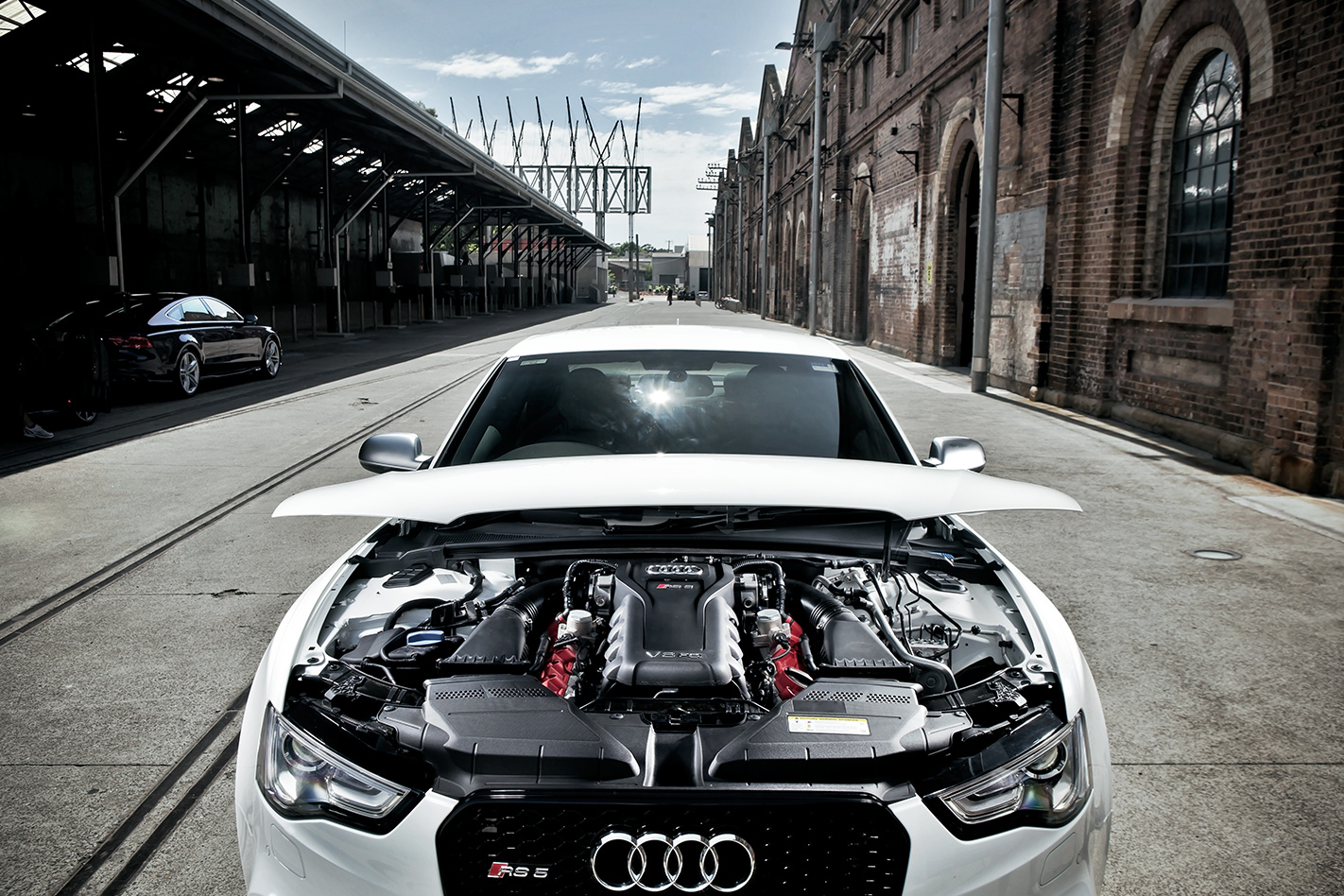
It launches the all-new 309kW and 550Nm 4.0-litre twin-turbo V8 which, like the BMW M engine, has its huffers in the valley between the heads, flowing the combustion process ‘backwards’ in a sense. Hedging Audi’s bets is the least expensive of the group, a properly hard-core Rennsport-fettled quattro wrapped in a fat, two-door A5 bodyshell.
The RS5 is yours for $161,400… without the 20s, Dynamic steering and buff race seats. Ours, then, is $176,140 as tested.
Judging primo bruisers in PCC is quite involved because leaders in this segment exude multifaceted talent. Buyers demand luxury, convenience and comfort one moment, surreal pace, dynamic ability and driving enjoyment the next. There’s subtly at play.
There’s complexity in balancing their attributes. And while they’re rarely at the bottom of timesheets, they only occasionally make benchmark performances as they go about their elaborate Jekyll and Hyde juggling acts. Thing is, the M5 wasn’t playing Mr Conventional.
Down the strip, it fired off blistering 4.41sec 0-100 time, nailed 400m in just 12.26, setting the fastest terminal speed of the entire field, a hyper-driven 197.69km/h, in the process. The M5’s thrust is breathtaking, the numbers it spits out equally so.
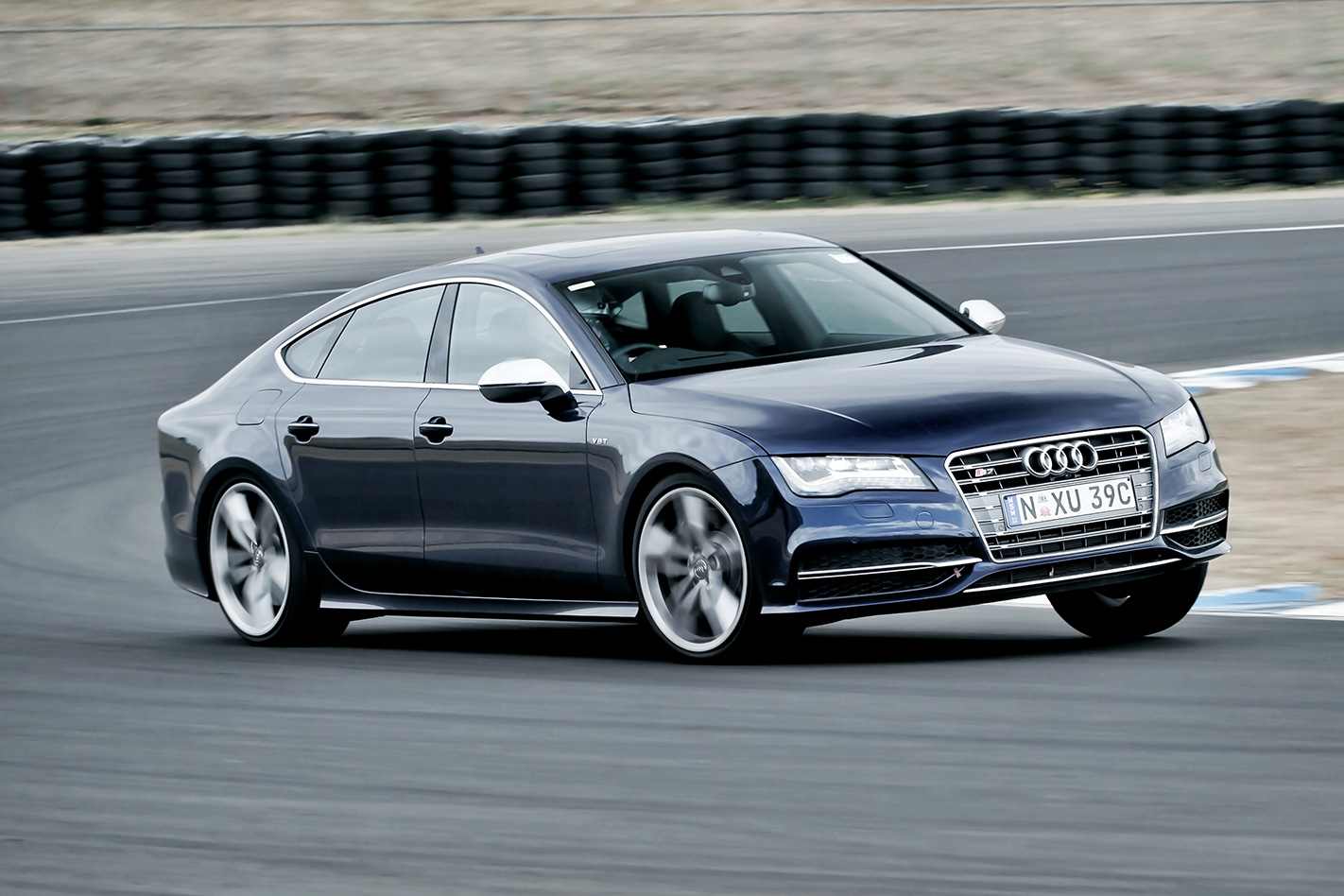
Meanwhile, the S7 scorched to the 400m mark in just 12.69sec. And it nailed 100km/h on its way there over a tenth quicker than Audi’s claim with a time of 4.57! Its naturally aspirated coupe stablemate, the RS5, also harnesses all-paw traction to hit 100km/h five-hundredths quicker and hit the traps in 12.66sec.
For the record, your Honour, neither the FPV nor Chrysler muscle cars were as quick as this German quartet. Think about that for a moment: mid-4s and mid-12s are now the average expectation for want-for-nothing four- and five-seater luxury cars with a go-fast bent!
And yet the only other competitor in the field to match the serene all-round comfort levels of three (S7, M5, E63) of this group of four was the 300 SRT8. And, perhaps, maybe the 911.

But the judges felt this was an acceptable trade for how much it oozes character and purpose – from the rich roar of its vocal engine to the all telling sensation the chassis transmits from the road to your spine – that never wanes as you wash the pace off to sane public road speeds.
That said, there’s certainly enough polish, compliance and forgiveness in the RS5 package that you could live with it every day. Even before any of the group hit the circuit, the two-door Audi was winning hearts in the way it balanced its key elements out on the road loop component that’s so crucial in appraising luxo-performers.
Manic roadholding, idiot-proof predictability, resolved bump compliance, a playful chassis tune and a sweetly matched engine that never feels to overpower the complete package combine to urge the driver to dig in and have some fun. The S7, though, is quite the opposite.
Unlike its stablemate, you’re always getting out of the throttle, easing out of the chassis, pouring cold water on the experience. What’s evident is that Audi specifically plugs a sizeable wedge between its approach to S and RS variants (gotta leave room for an RS7, now, don’t we?).
And what the impressive times and specs don’t translate is the overbearing sense that the S7’s been smothered in a big wet blanket when it comes to driver connection and fun factor. The evidence isn’t in the ten-tenths heroics either, but that as an all-rounder experience it’s a pretty dull, characterless car.
Evidence such as its so-called Dynamic drive mode, which seems to be specifically tuned to present a softer holistic character than that of the RS5’s Comfort mode. Yes, we ‘get’ that an S isn’t ostensibly RS-lite.
Cue the E63. Firstly, it is more comfortable in cruise mode than the S7. Better yet, as a mild-mannered, cosseting, around-town prospect it really is the class of the field bar none. And yet it always feels, and certainly sounds, buff – like it’s tensing up its muscles within, ready to man the battle stations the instant you flex your right foot.
Its MCT seven-speed, the only true automatic in its group, is simply brilliant, noticeably smoother and more refined at the low-speed stuff than Audi’s or BMW’s twin-clutch self-shifters, yet just as responsive, intuitive and quick-shifting in its aggressive Sport+ mode.
Nor is the actual feel of the E63 encumbered by technical complexities beneath the skin, such as the Ride Control suspension’s air-sprung rear and its variable assist electromechanical steering.
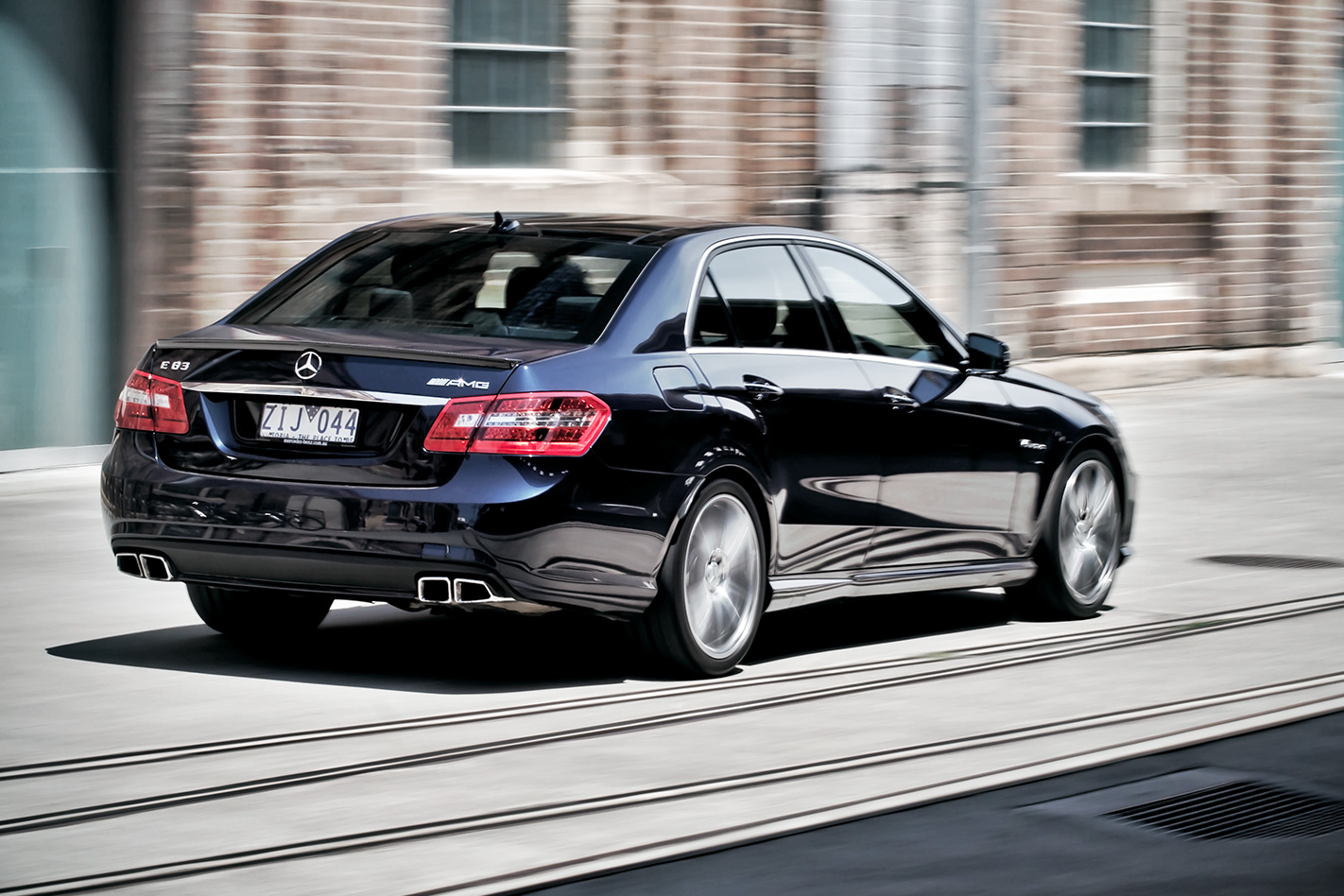
And it keeps on giving right up to the red mist racetrack stuff, which is a marvel unto itself. The M5 is actually quicker around the circuit than the E63, though consensus among the judges was that it didn’t necessarily feel so, and that it wasn’t connecting with its driver quite as successfully.
Where the E63 is engaging and playful, sniffing out the outer limits – and in the case of Mr Cleary in one instance, a few steps beyond – the M5 felt more like you’re guiding a torpedo. Oh, the M5 does the business. Effortlessly so. As a comfy executive rocket ship with humongous real-world on-road flexibility it wants for very little.
However, it just feels a little too soft-edged, a little too encumbered by techno-electronic trickery, outside its big party trick of pummelling acceleration. The judges didn’t warm to its slightly detached feel and a dynamic character that seems to inhibit driver connectivity and favour safe, surefooted passage.
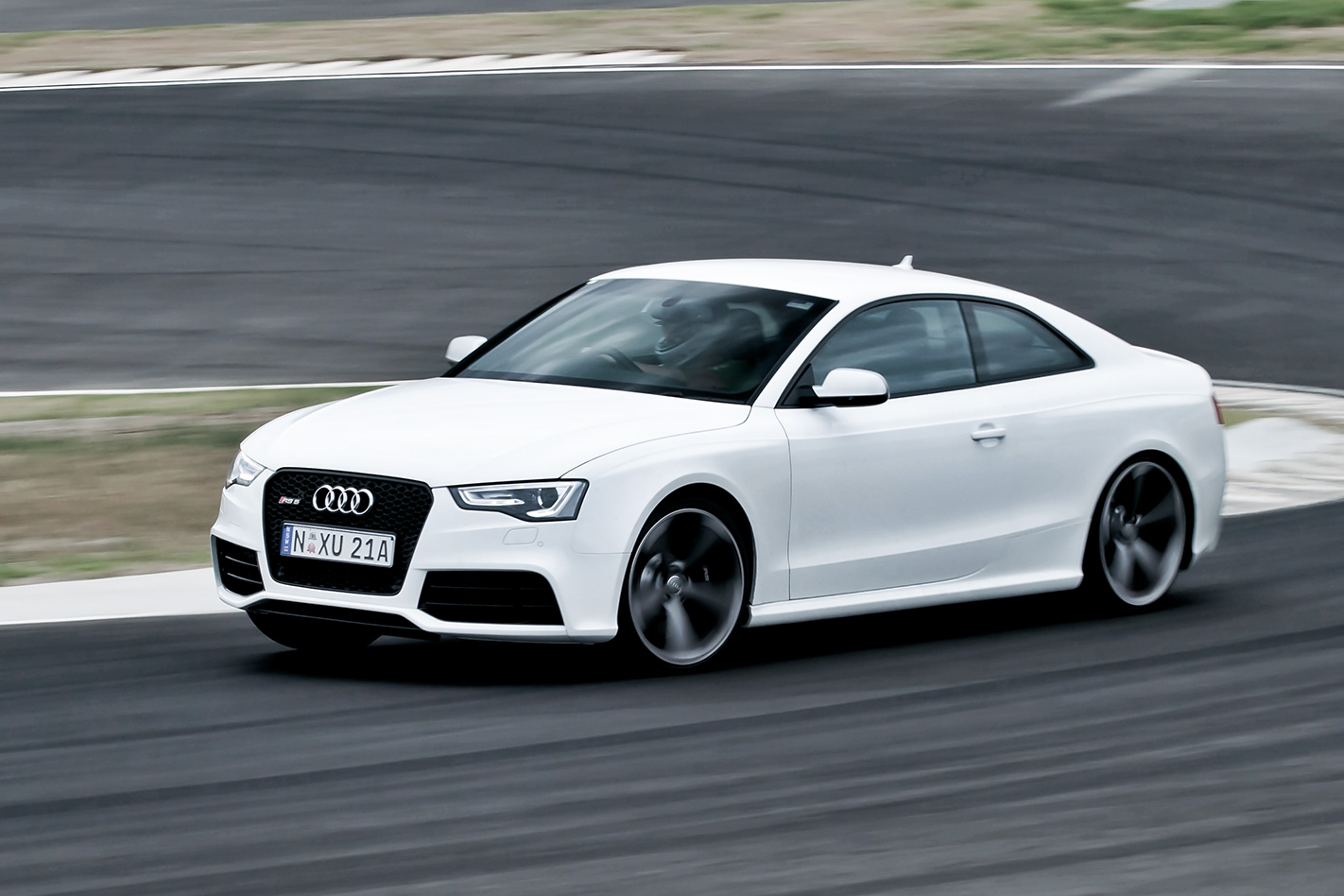
This velvet-trimmed cannon approach isn’t befit the ultimate driving machine mantra on which its nameplate’s reputation rests. “I’d trade a chunk of the M5’s output for just half of the RS5’s character,” one judge said… The two-door Audi wasn’t simply content to win feel-good points, either.
It stomped around the circuit like a demon, its 2:11.6 drawing whistles from the judges once it transpired that it was 2.6sec quicker than the M5, 4.3sec swifter than the E63 and 5.7sec faster than the S7. Only the 911 and SLS clocked a lower lap time. Little wonder, then, that the RS5 climbed up the ladder, scoring a well-deserved fourth place outright.
AUDI S7
Overall Rank: 13 JUDGES NOTES Andrew Maclean – 14th: “Looks fantastic, goes like the clappers, but not all that exciting” Curt Dupriez – 12th: “Swift, comfy belter, but feels as if Audi pulled its reins back too hard” James Cleary – 10th: “Rocket ship disguised as five-door hatch. Bring on an RS7” Nathan Ponchard – 14th: “Fast, but not a track car. Relies on its torque split to combat understeer”
WARREN LUFF SAYS “It lacks emotion and feeling. It does it all too easy, as a driver you don’t feel like you’ve got a lot of input into anything it does. Which is a compliment to the car because it does everything so well, but as a driver’s car, you want to feel like you’ve got a bit more input into what’s going on around you ”
BMW M5
Overall Rank: 10 JUDGES NOTES Andrew Maclean – 11th: “It can shift the axis of the earth, but it’s all out of balance for me” Curt Dupriez – 10th: “A great car, but too much of a lead-tipped torpedo in this company” James Cleary – 11th: “Lacks mongrel. More executive express than performance sedan” Nathan Ponchard – 9th: “Ballistic and luxurious, but heavy. Begrudging steering”
WARREN LUFF SAYS “It’s too edgy, it requires such finesse and that’s not what an M5 is about, it’s meant to be a big, fast luxury sedan that you can push hard on the limit, but it should be forgiving – this car on the limit could catch you out, so it’s a car you’ve got to give a lot of respect to. It’s meant to be a little bit more tame”
MERCEDES-BENZ E63
Overall Rank: 6 JUDGES NOTES Andrew Maclean – 7th: “Lost some of the charm of the atmo 6.2, but none of its devastating speed” Curt Dupriez – 7th: “It’s a lot of coin. Has more soul and driver focus than its M5 arch nemesis” James Cleary – 5th: “More agile than M5. Sounds like a NASCAR at Charlotte” Nathan Ponchard – 6th: “Less complex than M5, and much more charming and capable”
WARREN LUFF SAYS “For such a big car, it’s amazing that something like this can be so fast around a racetrack. You can’t get away from the fact that it’s a big, heavy car, you can feel it in the corners – you’ve just got to slow it up, if you go in too fast you get a lot of understeer on the way in, but it’s surprisingly driveable on the throttle”
AUDI RS5
Overall Rank: 4 JUDGES NOTES Andrew Maclean – 3rd: “Felt like a racecar on track, cruised with class everywhere else” Curt Dupriez – 5th: “Soul, agility, race pace. It flogged the blown V8s around the circuit” James Cleary – 3rd: “Every link in the chain is strong. Ergonomics near perfect” Nathan Ponchard – 4th: “How it should’ve been from the start! Everything the S7 isn’t. Really like it”
WARREN LUFF SAYS “Such an easy car to drive on the limit. The engine is awesome, it sounds so good inside, loads of torque, revs to 8250rpm in every gear. Dynamically, the chassis works so well, you just stay off the throttle, let it settle and the moment you feel you’ve got grip at the front you can get hard on the throttle”
Just before the first global deliveries of the Alpine A110 Premiere Edition are set to go ahead, Alpine has announced a new race car based on the road-going A110.
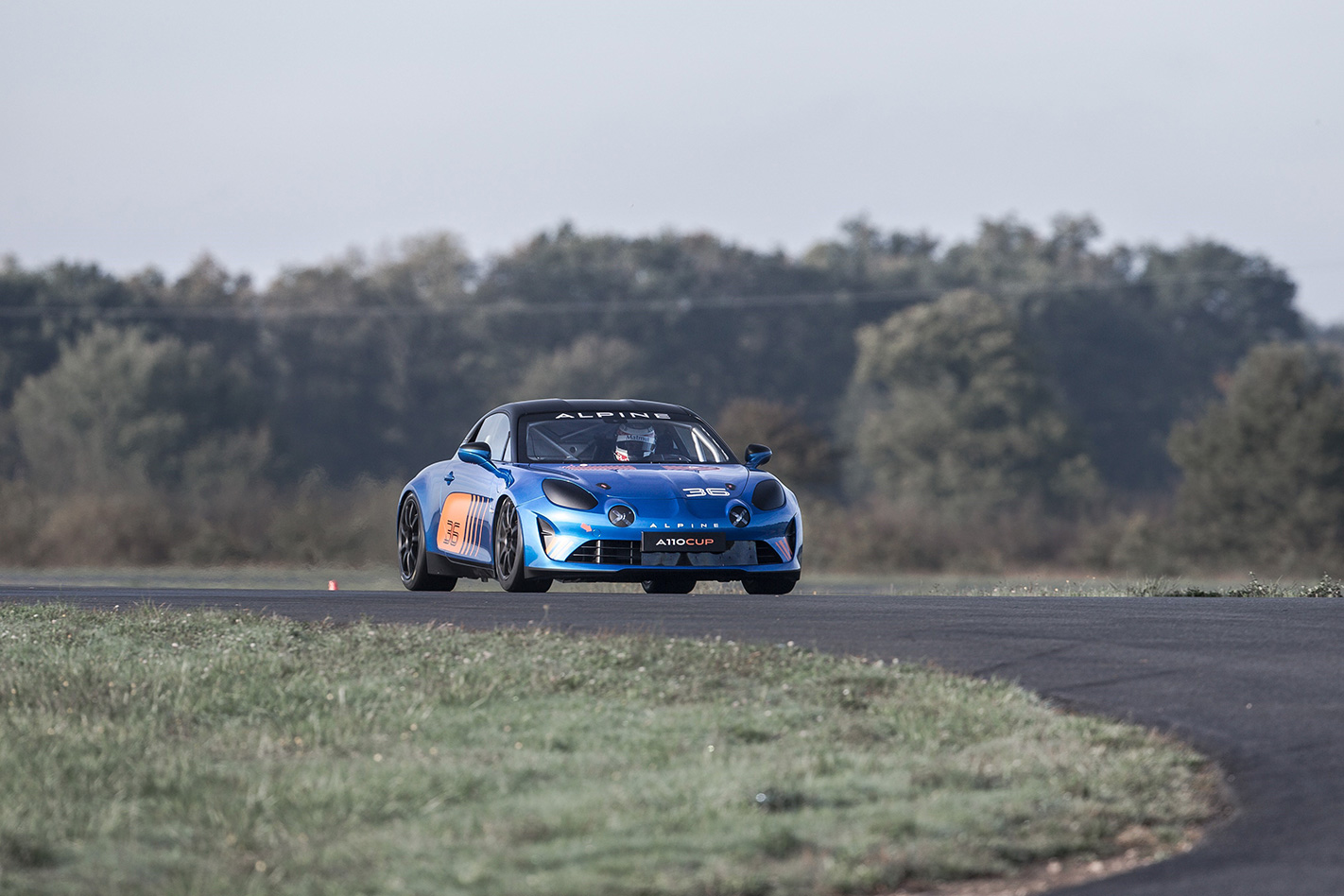
Dubbed the Alpine A110 Cup, the car will also have its own FIA racing series, called the Alpine Europa Cup.
The cars will weigh approximately 1050kg, and each will run on a 1.8-litre four pot motor, mounted in the mid-rear and sending its 201kW to the rear wheels.
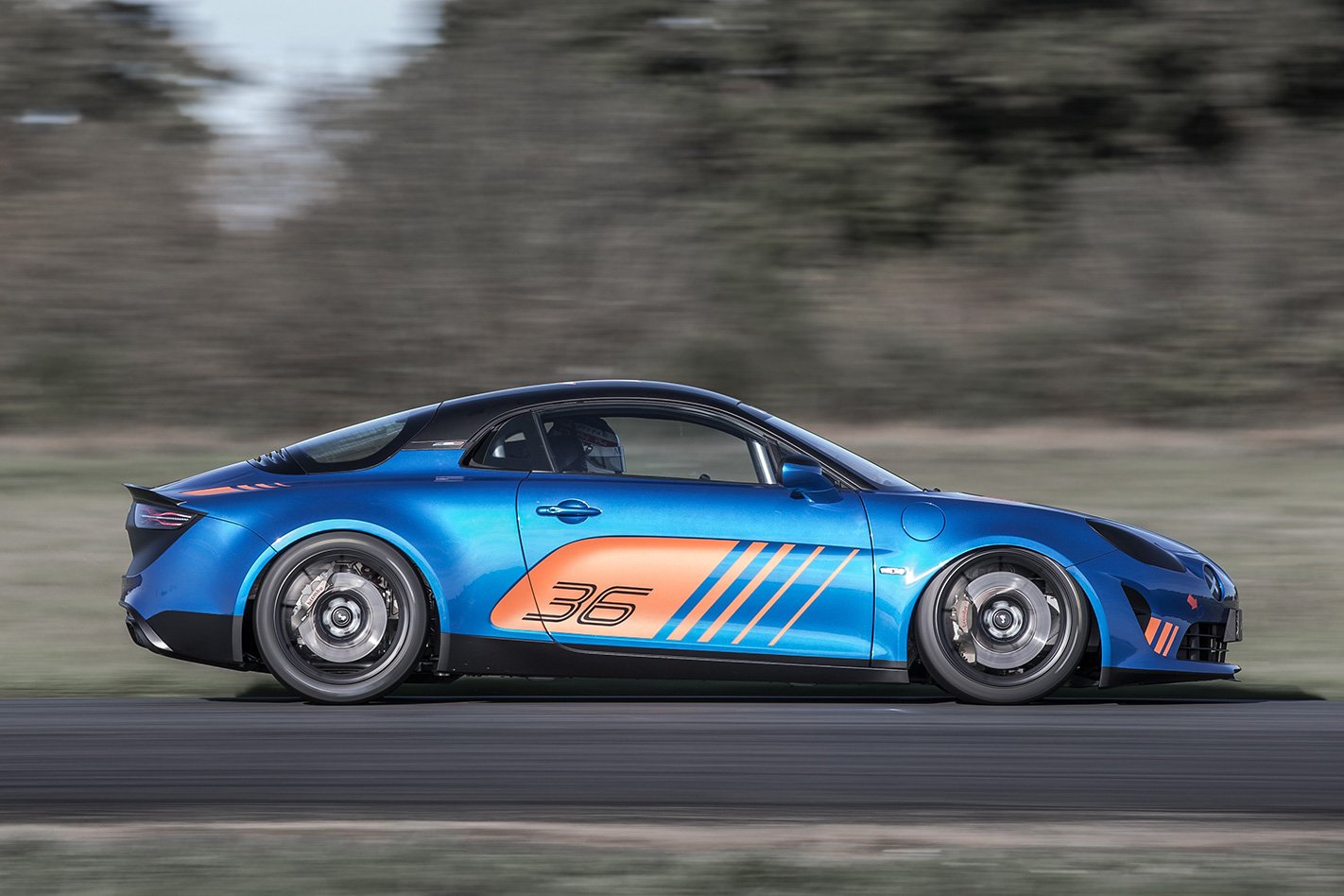
With design and development of the A110 Cup being carried out by FIA WEC entrant Signatech, the cars will be merely “based on an overall framework defined by Alpine.”
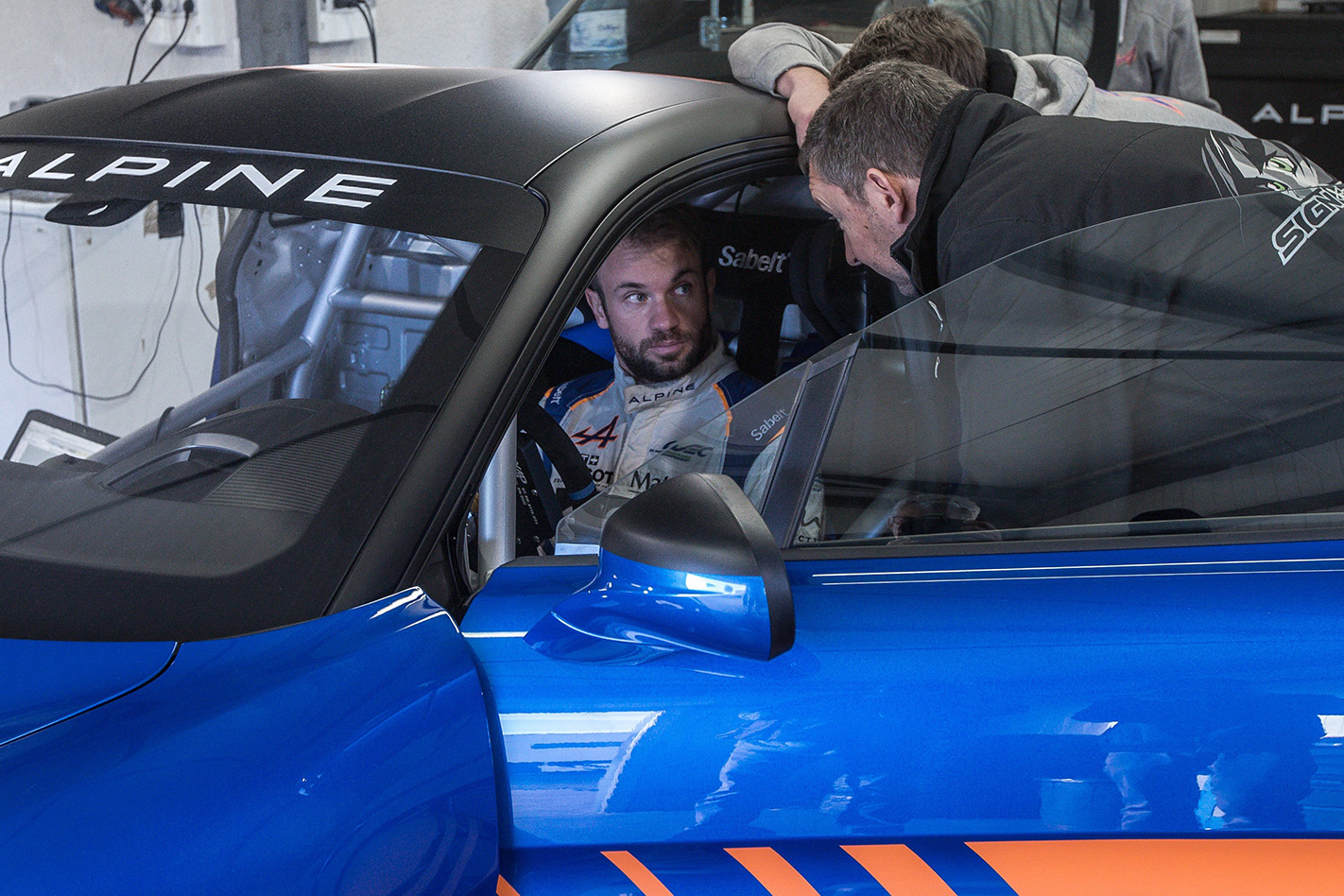
Signatec managing director Philippe Sinault says the development of the cars has not yet been completed, but says it will be “uncompromising” in regards to its features.
“It’s an exciting challenge, both for Signatech and for Alpine.”
In Australian dollars, that could end up totalling $335,000, which isn’t incredibly expensive in the grand scheme of motorsports.
Hyundai has revealed its upgraded Sonata sedan featuring a significant exterior facelift, new eight-speed automatic transmission and updated infotainment.
The 2018 Hyundai Sonata underwent a redesign at the Korean carmaker’s Californian design studio, which was responsible for resculpting the all-new i30 hatch.
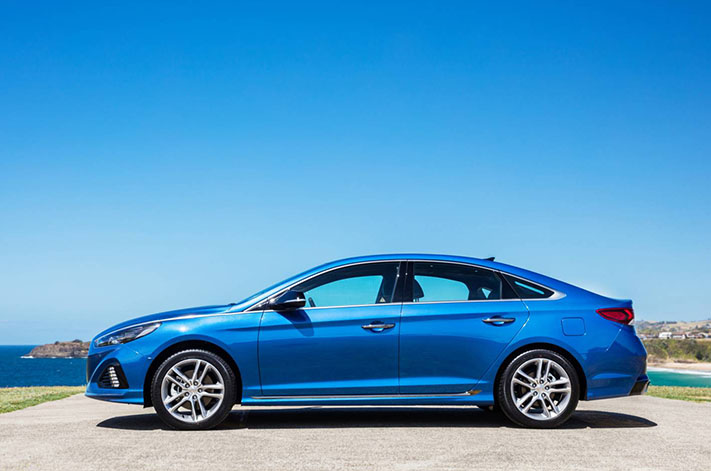
Like the i30, it has a more sophisticated look than before and shares the hatchback’s signature Cascading Grille, that’s flanked by sleek new headlights, the top edge of which blend with the window line. Its sleek silhouette leads to a re-modelled rear featuring slimmer tail lights and the Sonata name elegantly displayed across the boot face.
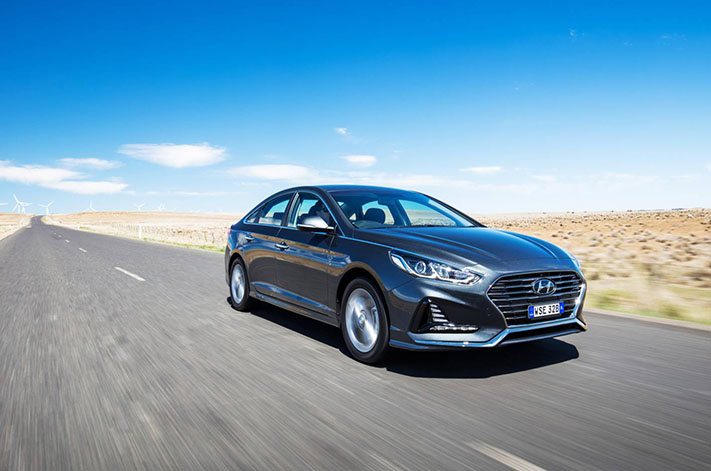
The Sonata range has also been streamlined to two variants, with the mid-spec Elite withdrawn, leaving the entry-level Active, and Premium models.
Both retain their respective engines with the active powered by the 138kW/241Nm 2.4L naturally-aspirated petrol engine and six-speed automatic transmission.
The Sonata Premium’s 180Kw/353Nm 2.0L turbocharged petrol engine also carries over but is now paired with a new, more efficient, eight-speed automatic gearbox which adds a little torque and reduces fuel consumption from 9.2L/100km to 8.5L/100km.
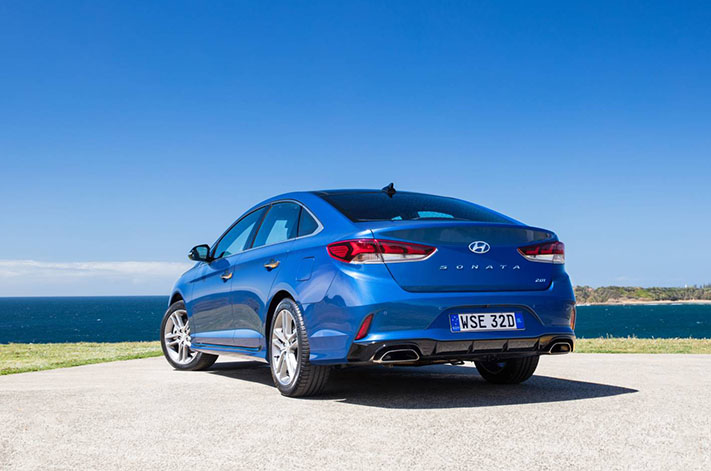
The new transmission also brings four drive modes – ‘Comfort’, ‘Eco’, ‘Sport’, and ‘Smart which automatically switches between the other three modes depending on how the car is being driven.
Infotainment has been upgraded, with a new 8.0-inch touchscreen incorporating Apple CarPlay and Android Auto connectivity and satellite navigation as standard across the range.
Both 2018 Sonata variants feature additional specification upgrades over the outgoing model, with the Sonata active also gaining dual zone climate control, push button entry/start, hands free opening boot and chrome exterior door handles.
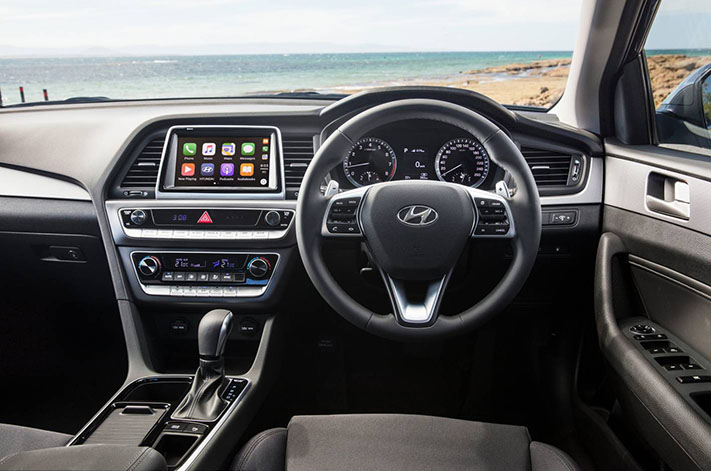
The range-topping Premium also gains LED headlights, driver attention alert and wireless phone charging pad.
Both variants feature a new-look, three-spoke steering wheel, with the Premium getting a flat-bottomed wheel and unique gear knob for a sportier look.
Automatic emergency braking is still absent from the Sonata, though the Premium is equipped with other active safety measures such as blind spot detection, driver attention alert, lane change assist, lane departure warning, rear cross traffic alert, active cruise control, and park assist.
Despite the changes, the Sonata Active will cost just $500 more than the outgoing model ($30,990) and the Premium’s price will remain at $45,490.
The 2018 Hyundai Sonata will start rolling into showrooms next month.
2018 Hyundai Sonata pricing
- Sonata Active – $30,990
- Sonata Premium – $45,490
How will Holden market the fully imported ZB Commodore to locals?
Certainly the ‘new kind of car for Australia’ tagline of the original VB Commodore would technically work.
Over its 39-year history the Commodore has at various points been promoted around its increased global sophistication, its newfound safety equipment, its more advanced engineering and – of course – the sportiness of its performance models.
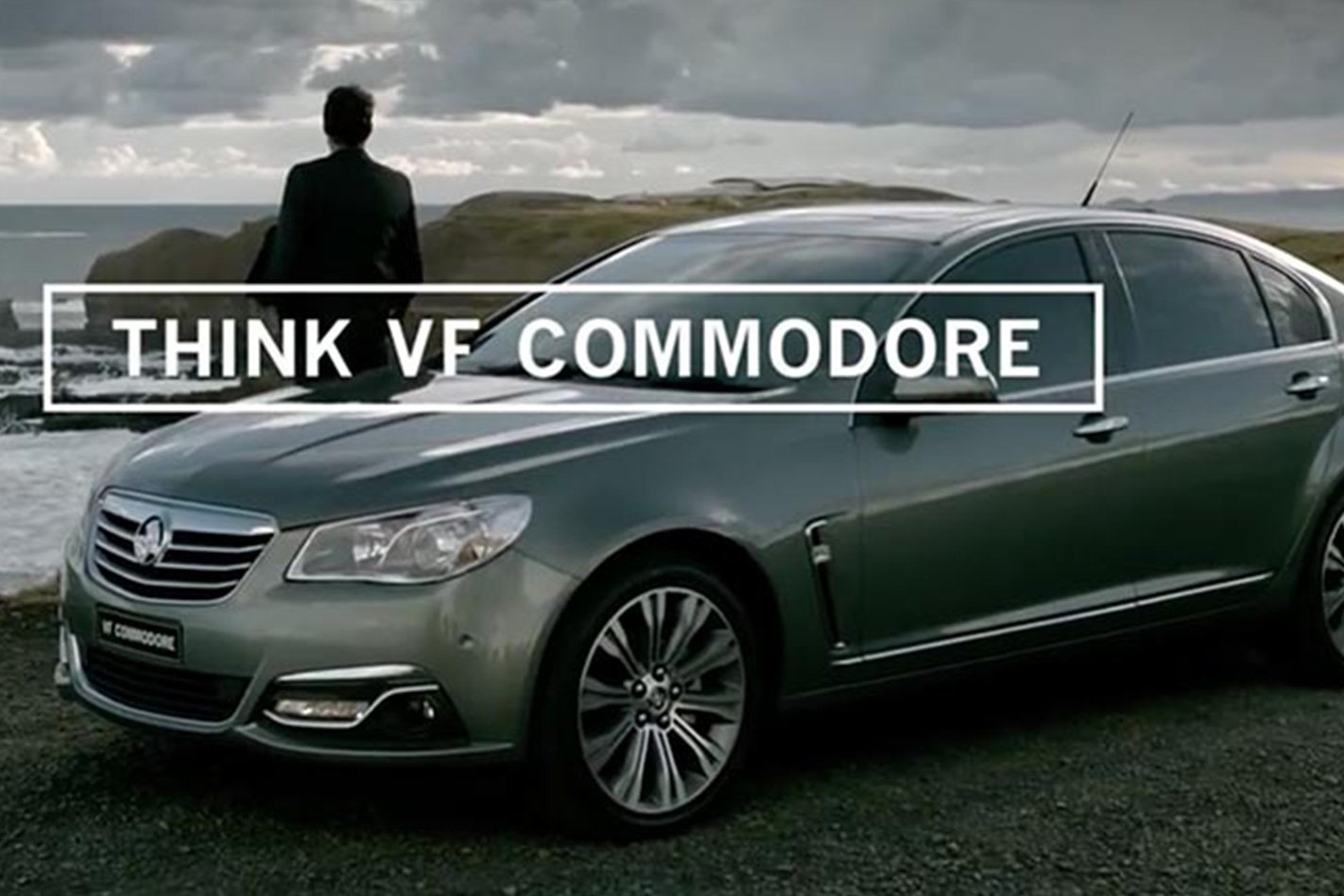
While the current issue of MOTOR celebrates the life of Aussie-made Holdens, YouTube can bring video to life here. So from 1978 until now, here is how the Commodore has, at various stages, been carted to market.
1978-1988 – ‘the advanced Australian’
As the Australian dollar was floated and trade barriers started to fall, our country started to become globalised. An emerging theme? Why buy an expensive import when Commodore – the VH dubbed the ‘advanced Australian’, the VK ‘world class’ – offered more for less?
1988-1997 – safety in high Acclaim
Suddenly by the 1990s acronyms such as ABS and IRS became part of the automotive lexicon as Holden (and Ford, Mitsubishi and Toyota) turned advertising attention to one-upping each other on the likes of airbag count. Enter the safety-pack Commodore Acclaim.
1997-2006 – family focus flicked for sports
Towards the turn of the new millenium the ‘radically new’ VT Commodore became the last we would see of the base-level, Executive manual taking centre stage in ads. Then it was all ute on Thunderstruck, Monaro on the prowl, and VY seeking out corners.
2006-2017 – finding its feet
With 2006’s VE and 2013’s VF, the Commodore took a turn to the past. It would again be billed as the the most advanced car ever created locally – but this time there was no mention of global benchmarks. The large Holden found its feet, and stood tall as its own.
THE RENOWNED destroyer of tyres, Ken Block, is back at it again, dropping a trailer for the 10th instalment of his Gymkhana series.
It’s been more than a decade since Block first slid his way around an abandoned airfield in a rally-spec Subaru.
Since then, things have escalated with bigger set pieces, higher production quality, and more daring stunts.
Block claims Gymkhana 10 will be the biggest yet, with five cars attacking five different locations.
The celebration of tyre destruction will launch late next year, with Block also stating one of the cars featured will be a never-before-seen build from his Hoonigan Racing squad.
Along with the trailer for Gymkhana 10, Block and co revealed the film will be accompanied by an unscripted, five-part documentary series which will be aired on Amazon Video.
The trailer has got us giddy, with plenty of flames, sparks, and an almost endless supply of smoke.
Block recently released his Climbkhana film, where he attacked the infamous Pike Peak hillclimb in the twin-turbo Ford Mustang ‘Hoonicorn V2.0’.
Gymkhana 9 was initially planned to be filmed in Sydney Australia, before proposals from the production crew was knocked back by New South Wales police.
“They do bloody good burnouts, don’t they?”
This Performance Car Of The Year article was first published in MOTOR Magazine January 2013.
Luffy shouts from the FPV GT RSpec’s driver’s seat, a pearly white smile spreading across his face. I’m in the Chrysler 300 SRT8, surrounded by a fluffy cloud of atomised Goodyear Eagle rubber, leaving two black lines on the surface of Sydney Dragway that even Victor Bray would be proud of.
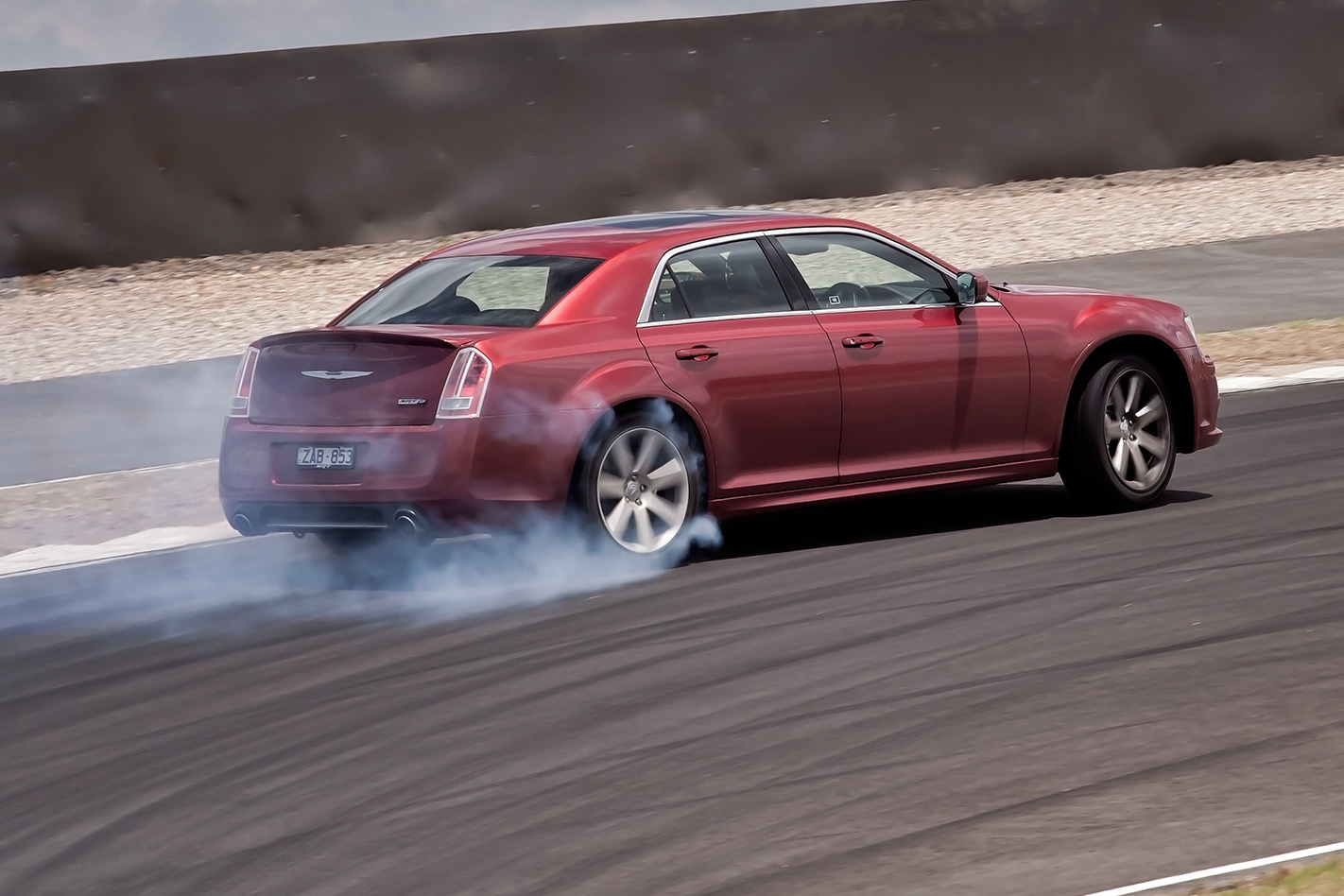
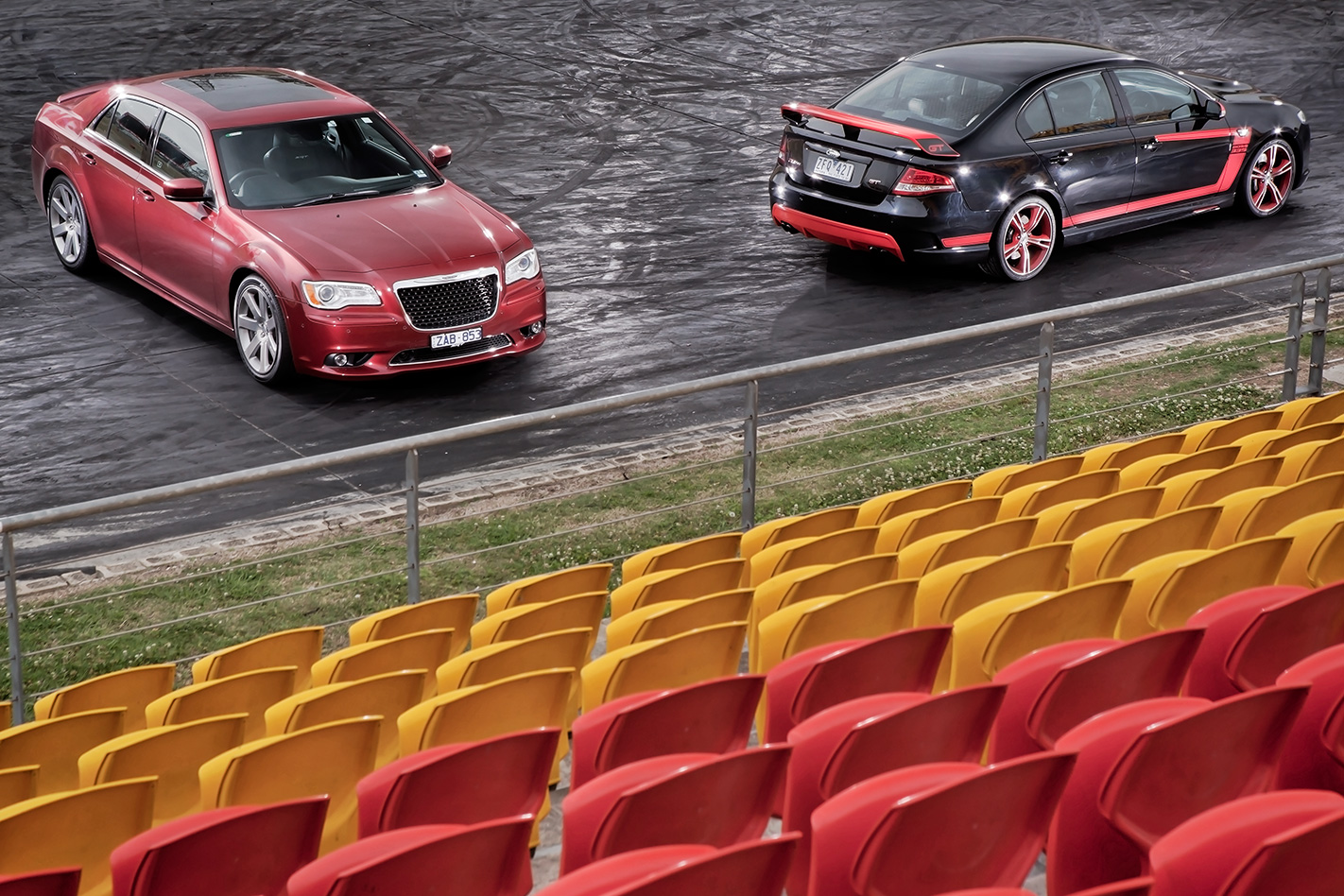
The Chrysler, with its handy $66k base price, could be straight off the set of The Sopranos; its thick-set, art deco-inspired design combining an aggressive, wide-track stance with more than a hint of menace. While the FPV, at $76,490, goes the heritage route, with C-stripe graphics lifted straight from the Boss 302 Mustang of late ’60s (and current) vintage.
The success of this retro cut and paste is debatable, especially in the bold, black and red combination of ‘our’ PCC example. The colour-coded rims in particular, look like they’ve come from the cheap and cheerful section of a Bob Jane catalogue.
Zero to 100km/h in 5.0sec isn’t hanging around, but the GT proved susceptible to engine heat soak, which compromised power delivery, and the rear axle jumped around like a crazed animal, despite the inclusion of launch control, to help manage the 5.0-litre supercharged ‘Miami’ V8’s prodigious output.
This time around, with power transmitted through a six-speed auto rather than a six-speed manual and with less pronounced axle tramp, the GT stormed to 0-100km/h in 4.7sec and on to a sub-13sec 400m time. Mid-field numbers in this exalted PCC company, but the fastest times MOTOR’s ever recorded for a showroom-spec Falcon.
Away from the drama of the drag strip, these two confirm their grand touring abilities, with effortless cruising thanks to massive performance reserves. They’re less sophisticated than the high-end German muscle in this year’s PCC, and no match for the nimble BRZ or Megane in twisty going, but either is absolutely the right tool for the job of eating up highway kilometres with ease.
The Chrysler is pure Americana, and that’s not a bad thing. High levels of noise isolation and comfort, particularly its heated and ventilated front seats (even the steering wheel is heated), make life on the open-road an enjoyable experience.

Even with five cogs, it’s a smooth and confident machine. After the Chrysler’s cosy embrace, the FPV’s high seating position and low steering wheel combine to make you feel like you’ve been propped up on display in a shop front window.
The GT’s bonnet bulge screams old-school muscle, and Mad Max would be right at home with the high-pitched blower whine that lifts in intensity as revs rise. The lack of steering wheel shift paddles might please purists, but it’s worth noting in manual mode the gear lever changes the ‘right’ way – back for upshifts, forward for down.
A full 10 seconds off the 911’s pace, and an exact match for the comparatively featherweight, 198kW Megane. The fact the Renault gives away between 12 and 20km/h in main straight v-max to the Chrysler and FPV, yet Luffy’s able to finesse 10 extra kays of corner speed out of the RS265 through Sydney Motorsport Park’s daunting Turn 1, tells a graphic story.
The Chrysler feels heavier and less nimble than the FPV and its steering isn’t as responsive; the GT turning in more sharply with snappy throttle response from the blown V8. The SRT8’s connection with the front wheels is comparatively woolly, and unfortunately the five-speed auto’s gearing is a less than perfect match for the SMSP layout.

Both tend towards mid-corner understeer, shifting to power oversteer on exit. With traction and stability aids off, how much oversteer you want is simply controlled by the right pedal. A patient, precise approach brings best lap times, because giving in to drift temptation quickly turns hot lapping into what feels like a slow-motion ice-skating session.
To compound matters, front seats that ooze comfort on the highway are found out on the track as you strain to maintain composure behind the wheel, thanks to only modest lateral support. The RSpec’s are marginally better than the Chrysler’s, but neither are within a bull’s roar of the vice-grip 911, race-ready RS5, or even the Focus ST’s chunky Recaros.
Hauling these heavyweights down from high speed is no easy task and the 100km/h to zero emergency test puts them firmly in the bottom half of the PCC pack. The 2.0-tonne SRT8 trails the field on stopping distance, giving away a full 5m to the 911. But it’s the FPV’s brake pedal that starts to feel spongy after a couple of laps in the heat of (track) battle.

For an effective track day weapon, go the Megane and save some coin. But for rocket sled acceleration, accompanied by a sledge-hammer soundtrack, start writing the cheque now. And if you want to drive across the country, and enjoy some backroads on the way, the GT RSpec could be a bit of you.
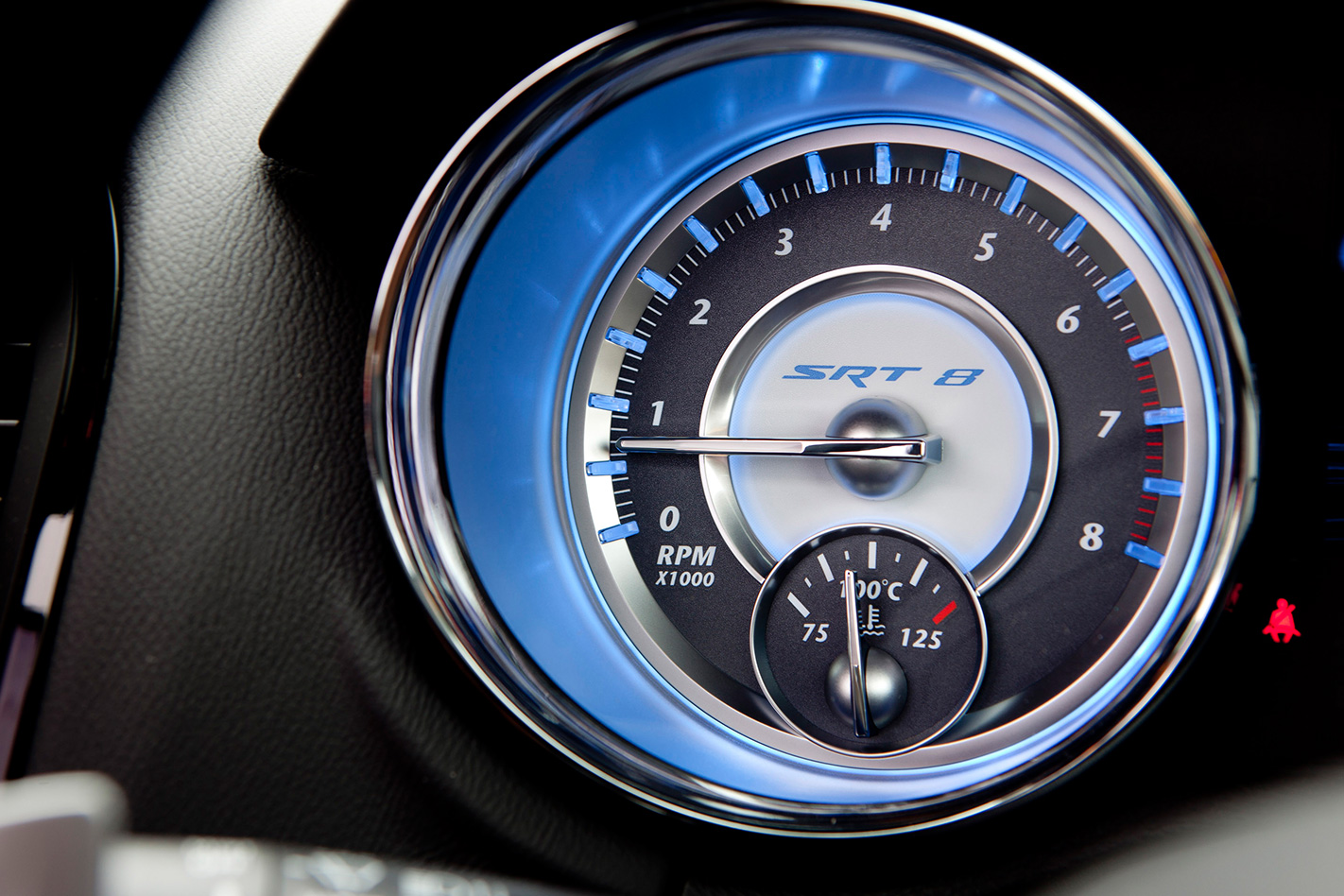
The Chrysler SRT8 is an intimidating city cruiser, that can still go toe-to-toe with the FPV for highway eating ability. It’s fun, if a bit wild and wallowy on the track. And from the vivid blue illumination of its main instruments, to a high-shouldered gangsta design, it also offers a fresh hi-po sedan option that’s off the well-worn, FPV/HSV path.
Oh yeah, and did we mention they also do bloody good burnouts?
FPV GT RSPEC
Overall Rank: 12 JUDGES NOTES Andrew Maclean – 13th: “For all its supposed track focus, it’s an unwieldy beast” Curt Dupriez – 14th: “Feels a generation too old. Not the Oz muscle car saviour I’d hoped for” James Cleary – 12th: “Power down better, but still underdone on ergonomics and suspension tune” Nathan Ponchard – 12th: “Better than expected, but deserves throttle-blips on downshifts”
WARREN LUFF SAYS “It’s certainly a slight improvement over the regular GT, you can feel the improvements that they’ve made, but it’s still nose-heavy, it’s a car that if you drive it into a corner hard, you’ve just got to stay off everything and let the front gather back. The brakes are a bit disappointing, but it’s a big car – they lack feel”
CHRYSLER 300 SRT8
Overall Rank: 11 JUDGES NOTES Andrew Maclean – 10th: “This is a muscle car par excellence, apart from its gearbox” Curt Dupriez – 11th: “Awesome for what it is – a muscle car. But Performance Car King it isn’t” James Cleary – 13th: “The Yanks know how to do muscle. Needs eight speeds and Jenny Craig” Nathan Ponchard – 13th: “Nimble for such a big beast, but Jesus, please give it more gear ratios”
WARREN LUFF SAYS “As one of the biggest cars here, the chassis on this is one of the best of the big cars, it’s so predictable, it’s so good on change of direction but the steering is just awful. It’s got no feel so it compromises the handling of the car. If you could take the steering out of the M5, and put it in this car it’d be a great thing”
By finding yet another application for its latest-generation 2.0-litre TFSI four, Audi has created a cracker of an A5 coupe that makes the pricier 3.2 V6 version seem almost redundant.
This review was first published in MOTOR magazine’s July 2009 issue.
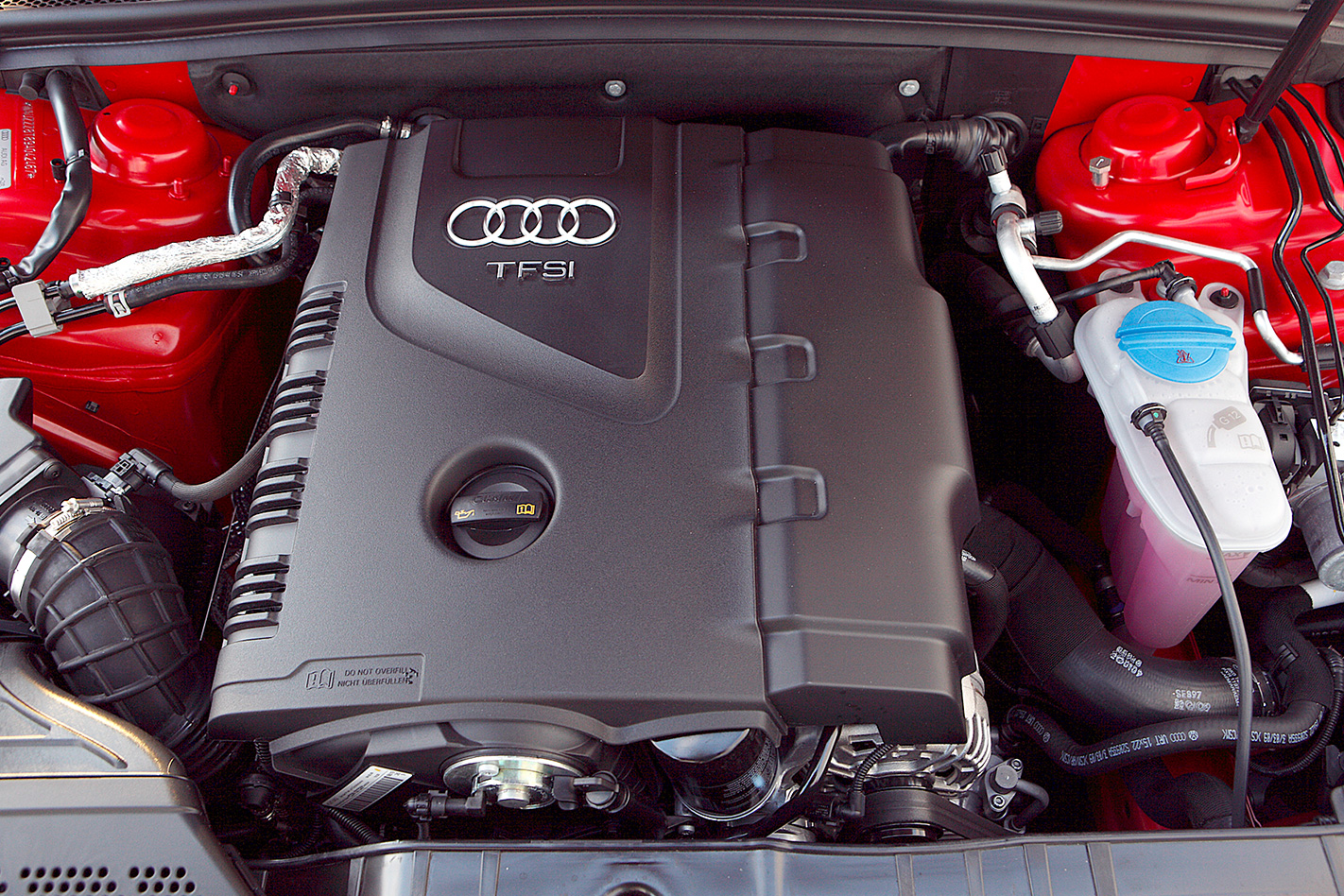
The 1984cc direct-injection turbo comes straight out of the Q5 (as well as VW’s Tiguan and forthcoming Golf GTI) and produces identical numbers – 155kW from 4300-6000rpm and 350Nm from a lowly 1500rpm. The engine’s A5 introduction also coincides with a new double-clutch transmission and the availability of a manual in the regular A5 for the first time.
Pre-drive apprehensions that the newest A5 – that weighs 1490kg – may be too much for the engine to haul are very quickly dismissed. Despite no changes from its Q5 spec, the 2.0-litre pulls hard once the momentary lag has passed.
Above 2000rpm it really starts to shine and loves having revs piled on, while emitting a subtle induction note to let you know it’s working. It’s an immensely flexible engine that responds quickly to throttle inputs, but while acceleration is willing, the A5 is no giant-killing performance coupe. It’s more a talented tourer.
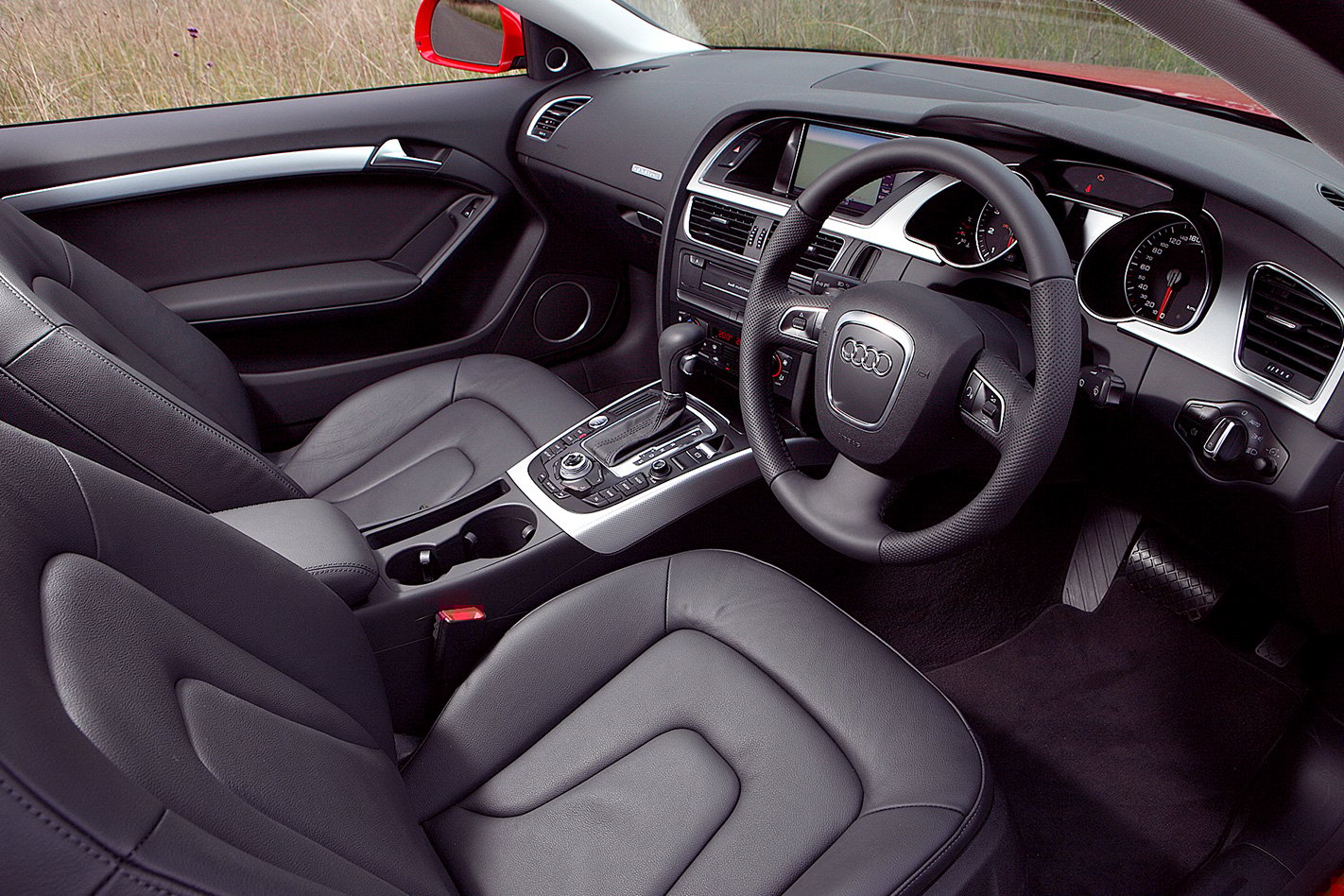
Also now offered in the A4 sedan and Avant, it shifts in 0.2sec and doesn’t suffer the same indecision we’ve found in other DSG/S-tronics, or the tiptronic found in the 3.2 V6 A5 and A4 (which keep the torque-converter auto). The seven-speeder has three modes – Drive, Sport and Manual – with the latter the best on a winding road.
Left in Drive, it changes smoothly and precisely without incessantly hunting for gears. So the 2.0-litre has a more-responsive transmission than the V6, which makes the S-tronic A5 a quicker point-to-point car than the manual version, despite both sharing the same 6.5-to-100 claim.
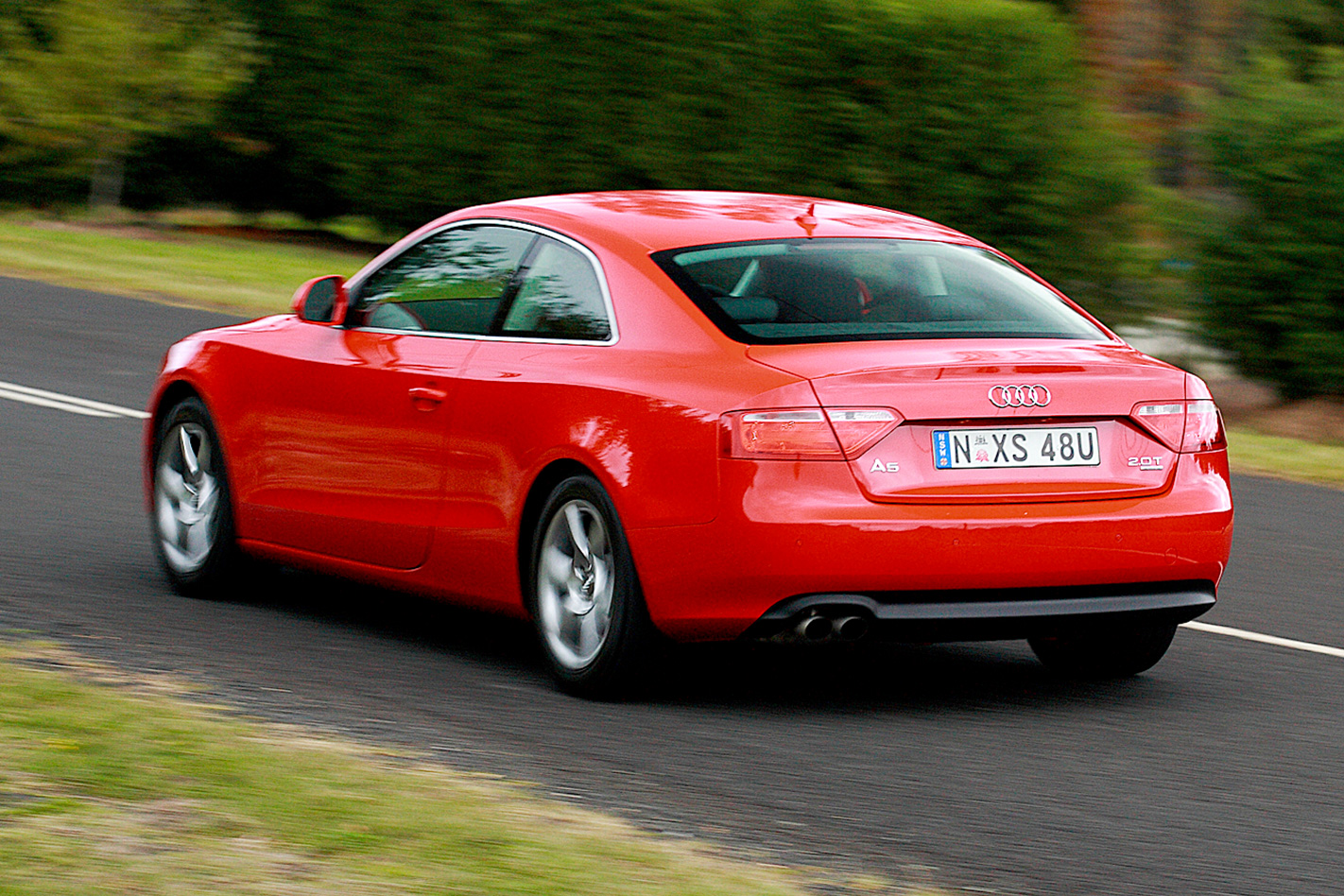
The A5 coupe range now spans three engines (2.0TFSI, 3.0TDI, 3.2FSI), three transmissions and $80K to $98K, with a sexy convertible set to join the range later in the year. Audi expects the 2.0TFSI to account for 30 percent of the A5’s volume, which means about 130 should find upscale Aussie homes by year’s end.
And we don’t doubt that as it introduces a more economical, but still highly entertaining and capable package that represents perhaps the A5 iteration yet.
2009 Audi A5 2 0T quattro specs: Engine: 1984cc 4cyl, DOHC, 16v, turbo Power: 155kW @ 4300-6000rpm Torque: 350Nm @ 1500-4200rpm Weight: 1490kg 0-100km/h: 6.5sec (claimed) Top Speed: 245km/h (claimed) Price: $79,900
