
FORMULA 1’s most recent race was a big weekend for headlines.
The 2017 Formula 1 Singapore Airlines Singapore Grand Prix held on the streets of Marina Bay was the venue for several bombshells dropped by various teams.
First, the famed city-state, home of the sport’s original night race, extended its contract with F1 until the end of 2021, and then we saw McLaren finally come out and announce its split with Honda, for a switch to Renault engines, while Red Bull feeder team Toro Rosso confirmed it will be with Honda in 2018.
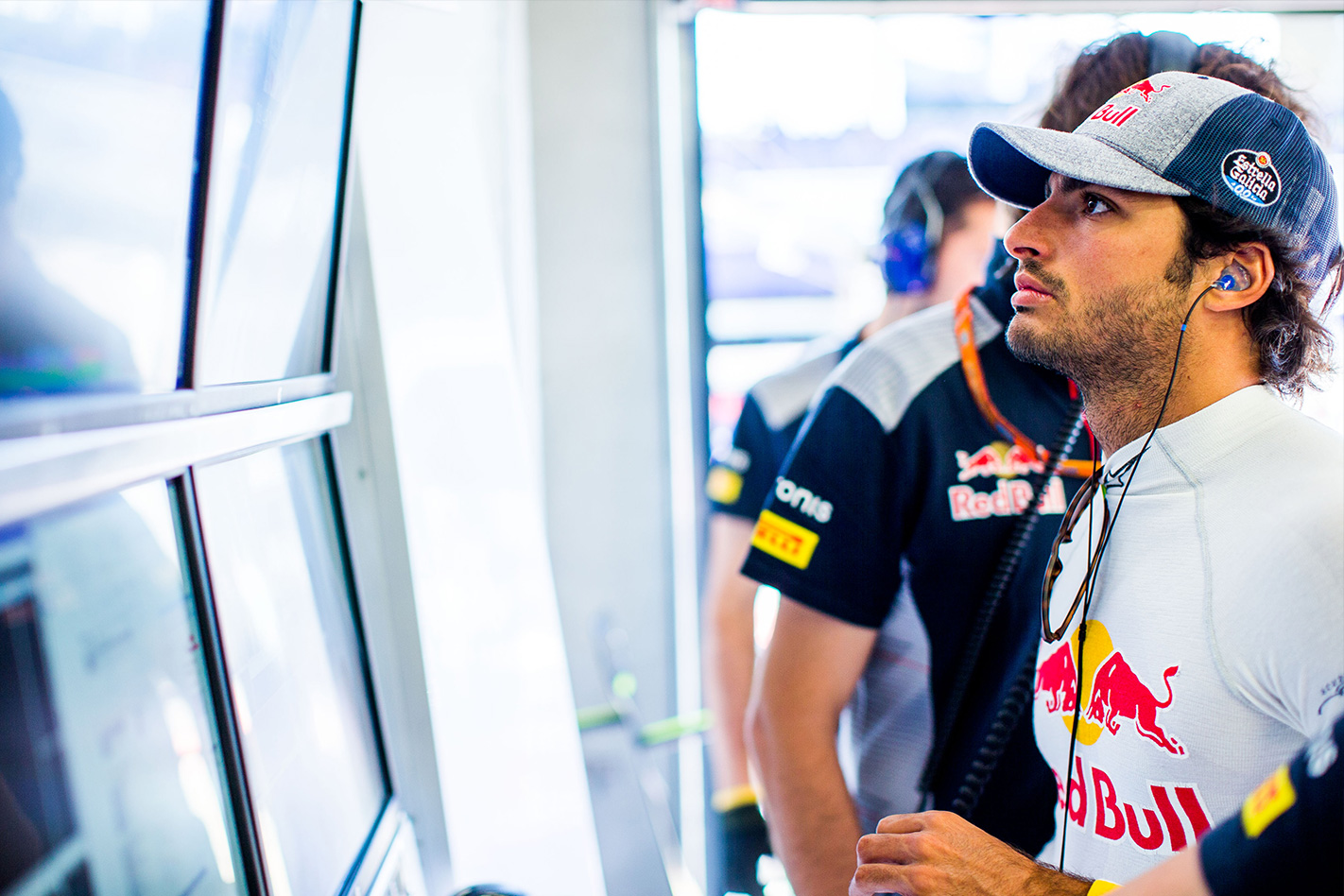
It may be an awkward situation for Jolyon Palmer, who Sainz will soon replace – and who secured his first points for this season in Marina Bay – but Renault has bigger ambitions. We caught up with Renault Sport Racing’s Managing Director Cyril Abiteboul in Singapore, to chat about the team’s progress.
Wheels (WH): Renault Sport is still rebuilding this team after repurchasing Lotus at the end of 2015 with the goal being championship contention by 2020. How do you feel the team is tracking on that?
Cyril Abiteboul (CA): “Well, there is a lot going on. Renault is a brand that has been in the sport for 40 years. It is like McLaren, Williams and Ferrari, but mainly as an engine manufacturer. We have two activities, engine supply to lots of teams: Williams for 13 years, Red Bull Racing for 12 years. And we just announced this weekend the start of a new collaboration with McLaren.
Our point has always been to supply the best team, the best drivers and the best possible engine and we are, more or less, the most successful engine supplier in the history of Formula 1. And then, in addition to that, over time, we’ve been back and forth as a complete team. We decided to come back as a complete team in late 2015, and now in 2017 it’s our second season. Our ambition is to become a top team by 2020.
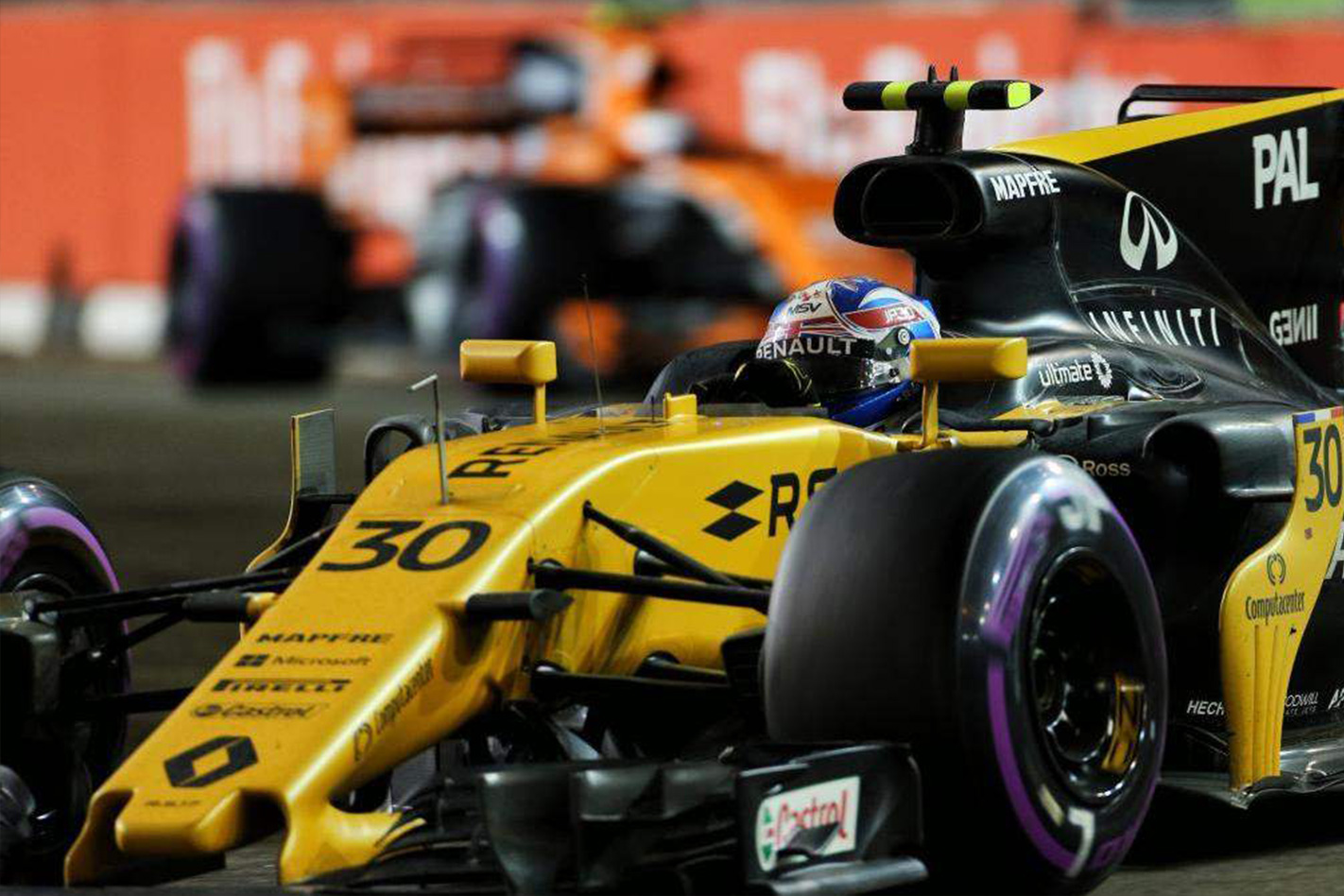
The car right now is the fourth [quickest] car on the grid but it obviously takes a bit of time to get into the standings. So I would say we are more or less in line with that road map, but there’s still a lot to be done.”
WH: How intense is the development of the cars behind the scenes at the moment? Have you shifted to 2018 yet?
CA: “This year the cars are larger with wider wheels, with much more downforce, basically we have increased by 30 percent the downforce of the car for better lap time. So each time there is a new regulation it resets the arms race because basically the law of diminishing return is reset the more you invest, the more you get in return of performance.
So there is an incentive to develop very late. At this point in the season is where we start shifting our resources into next year so actually this car is going to be developed fairly late in the wind tunnel. Back at the factory we are already focused on next year’s car, same thing on the engine, we are already massively focused on next year’s engine.”
WH: You’ve got one of the greatest F1 drivers of all time, Alain Prost, as a special advisor. How has he made a difference this year?
CA: “Well, he’s part of our discussions. There is so much going on. A Formula 1 team is 1100 people as far as we are concerned, two companies, one in the UK and one in France so there is lots going on from an operational perspective but also from a strategic perspective.
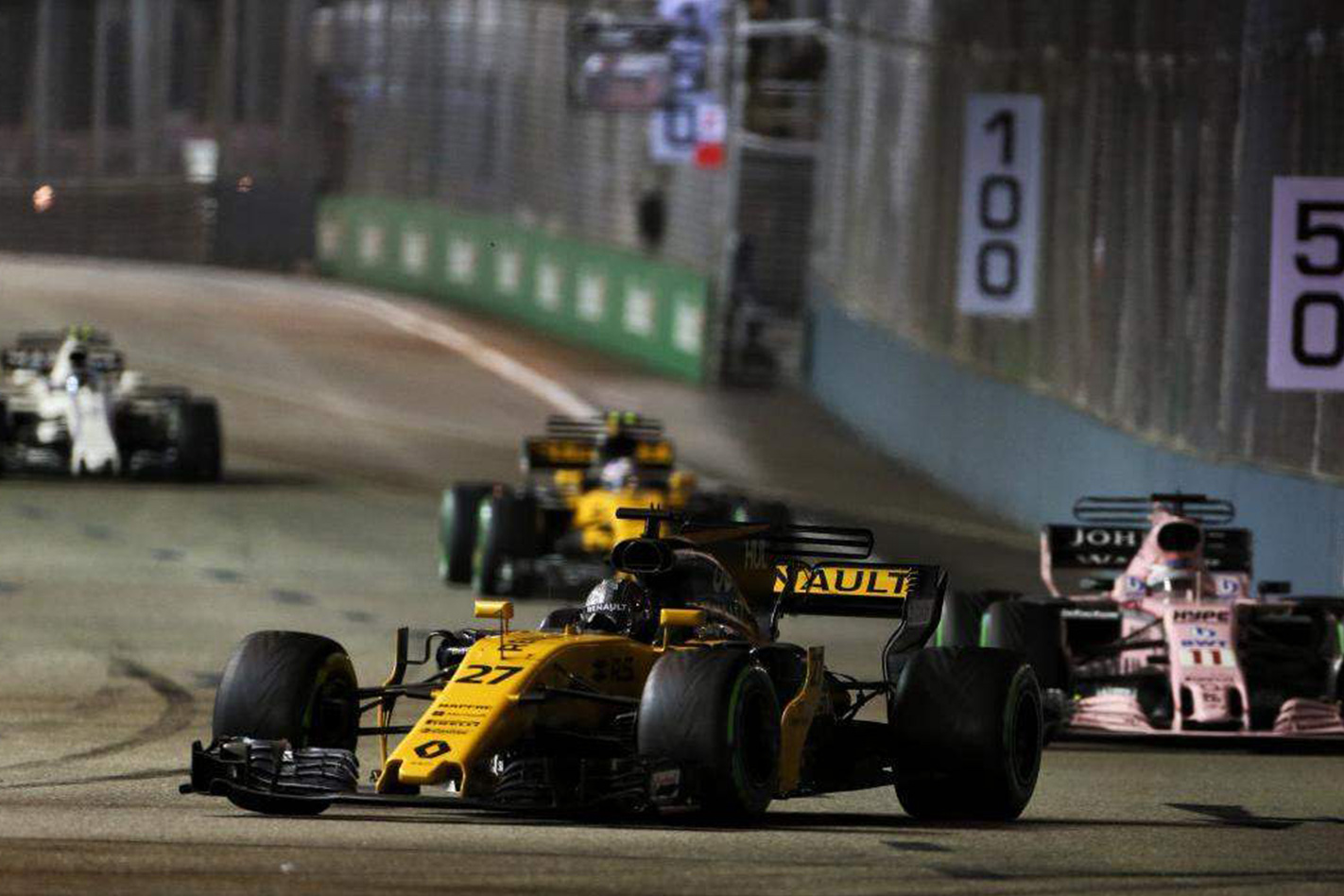
WH: You’ve got a new driver line-up for next year in Nico Hülkenberg and Carlos Sainz. How are you feeling about the change going into 2018?
CA: “It’s a bit of a strange season, in the sense that usually you’ve got two drivers that are very close to each other [in terms of performance], and since the start of the season, Jolyon [Palmer] has been under huge pressure because Nico [Hülkenberg] is very strong, very experienced.
He’s been a very good teammate, a world champion with Porsche in a different formula, in an LMP1 [sportscar], winning Le Mans. So he’s talented, but very strong. So for sure it’s been a tough season. We’ve obviously decided to go with Carlos [Sainz] for next year, we think it’s a good combination between some experience, but also being young and he’s already got some tie-up with Renault. For Jolyon, every race matters. He has to prove he can be better. He would like to stay in Formula 1, so in particular he will be on the grid to show what he’s capable of doing – as he talks with other teams to maybe stay in Formula 1 next year.”
After incredible praise from Supercars fans, HSV Racing has decided it will retain the 1994 HRT-inspired livery which it ran at the Sandown 500 retro round.
The retro-inspired design is based on the Mobil 1 livery which adorned Peter Brock’s 1994 Holden Racing Team VP Commodore, the car that brought HRT its first Australian Touring Car Championship round win at Eastern Creek.
Scott Pye and Warren Luff helped revive the livery, with their car showing it off proudly at the recent Sandown 500.
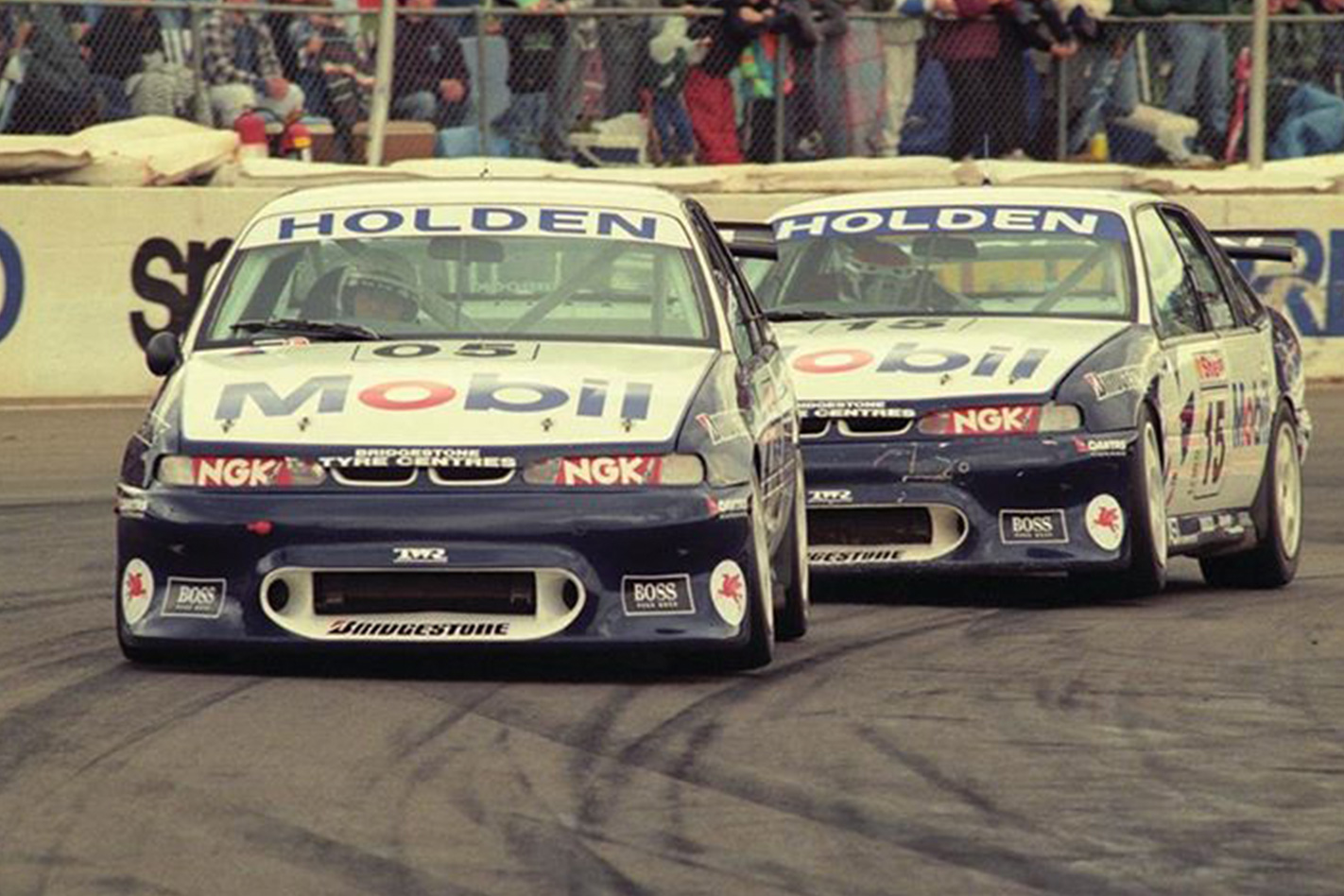
“Anytime you run a Peter Brock inspired car, it’s going to generate a lot of emotion and interest, but the positivity of this livery was incredible,” Nilsson says.
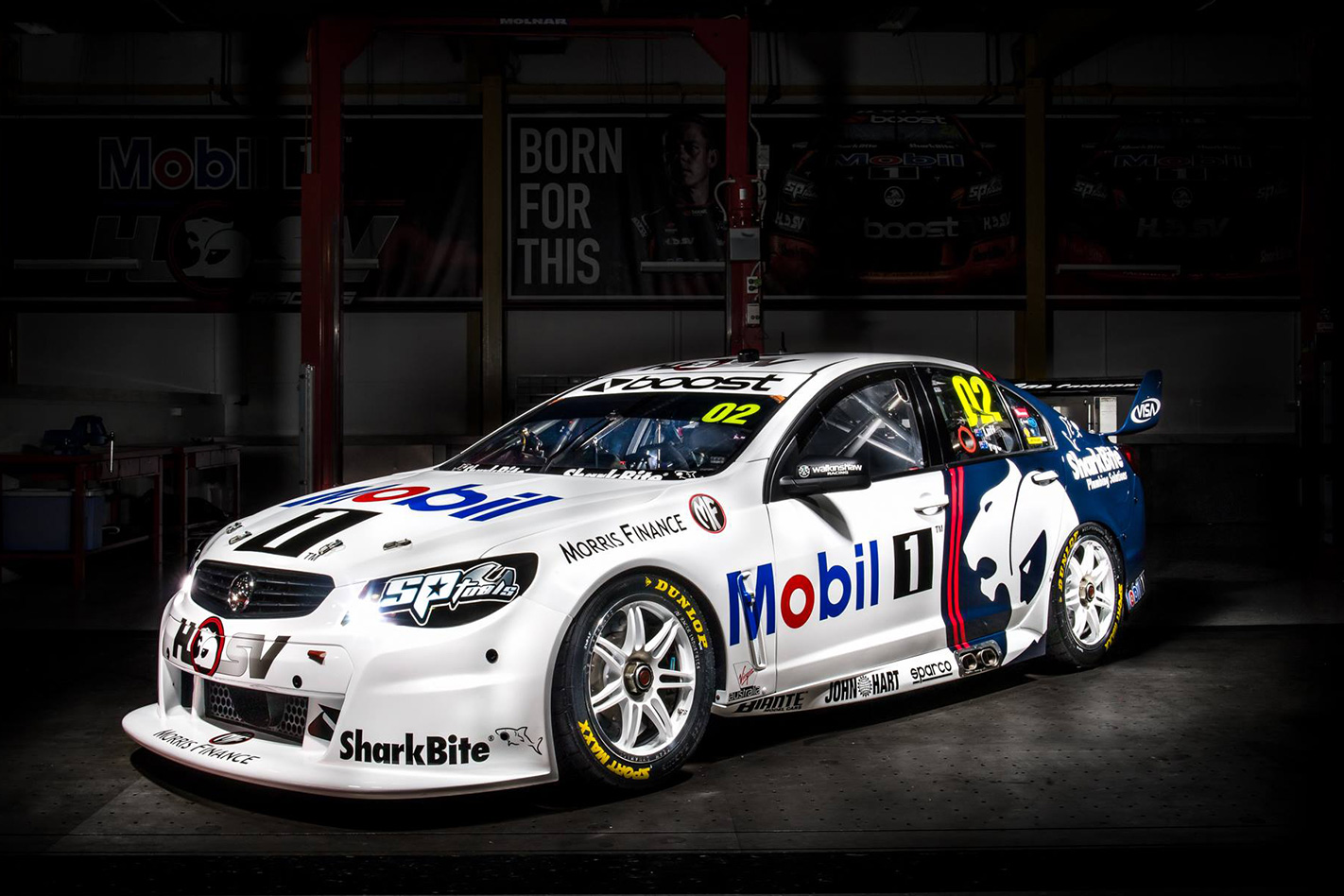
Even though the car suffered throttle issues – and therefore a lot of pit time – which left it near the bottom of the results, the team is excited to be able to bring the popular livery to Australia’s most iconic track.
Nilsson added that the livery is staying not only due to the reaction from fans, but also the long partnership the team has shared with Mobil.
“The car looks fantastic standing still and on the track, and it’s something most can relate to, so keeping it on the car was an easy decision in the end. It’s also great to continue to celebrate the 24-year partnership we’ve had with Mobil.”
JUST a decade after a Chinese-made car scored zero stars in a European crash test, reborn former British brand MG has earned a top safety rating in Australia for its small SUV.
The Australiasian new Car Assessment Program overnight awarded the MG GS, a small SUV competing against the likes of the Mazda CX-5, Nissan X-Trail and Toyota RAV4, a top five-star crash rating. It’s the first Chinese vehicle sold in Australia to achieve the top rank in independent testing.
It also marks a big turnaround for the Chinese car industry. In 2007, the Chinese-made Brilliance BS6 was crash-tested in Germany. It performed so poorly that the test’s organiser, Germany’s ADAC, gave it a zero-star rating. It was later withdrawn from sale in Europe in response to the poor result.
However, the Australian-tested MG GS only achieved the five-star rating after a specification upgrade in response to a four-star rating applied to the car in a previous test, and an improved performance in the side-on pole impact test that simulates a car skidding sideways into a roadside power pole that saw it ace that bit of the test.
“We initially assessed this model earlier this year and saw that while structurally it offered sound levels of occupant protection, its safety specification did not meet what is now expected as a minimum for a five-star car,” ANCAP chief executive James Goodwin said.
“MG must be commended for upgrading this model and this achievement raises the bar for other similar brands entering the very competitive Australian new vehicle fleet,” Goodwin said.
The higher crash safety rating means that everyone in the future looking to buy a second-hand GS should focus on cars built after August 2017, but on sale here from October, that feature the extra safety buffer.
The five-star rating doesn’t mean there are the same level of driver-assist systems as some rivals. While the GS has six airbags as standard, including head-protecting curtain airbags, it lacks autonomous emergency braking that can mitigate the severity of, or even avoid a crash.
This year marks the final stage of ANCAP’s alignment with European NCAP’s crash test regime. That means from next year, car makers will have their crash-test rating assessed on the best-selling variant, instead of Australia’s current process which gives lower scores to cheaper vehicles that have safety gear stripped from them.
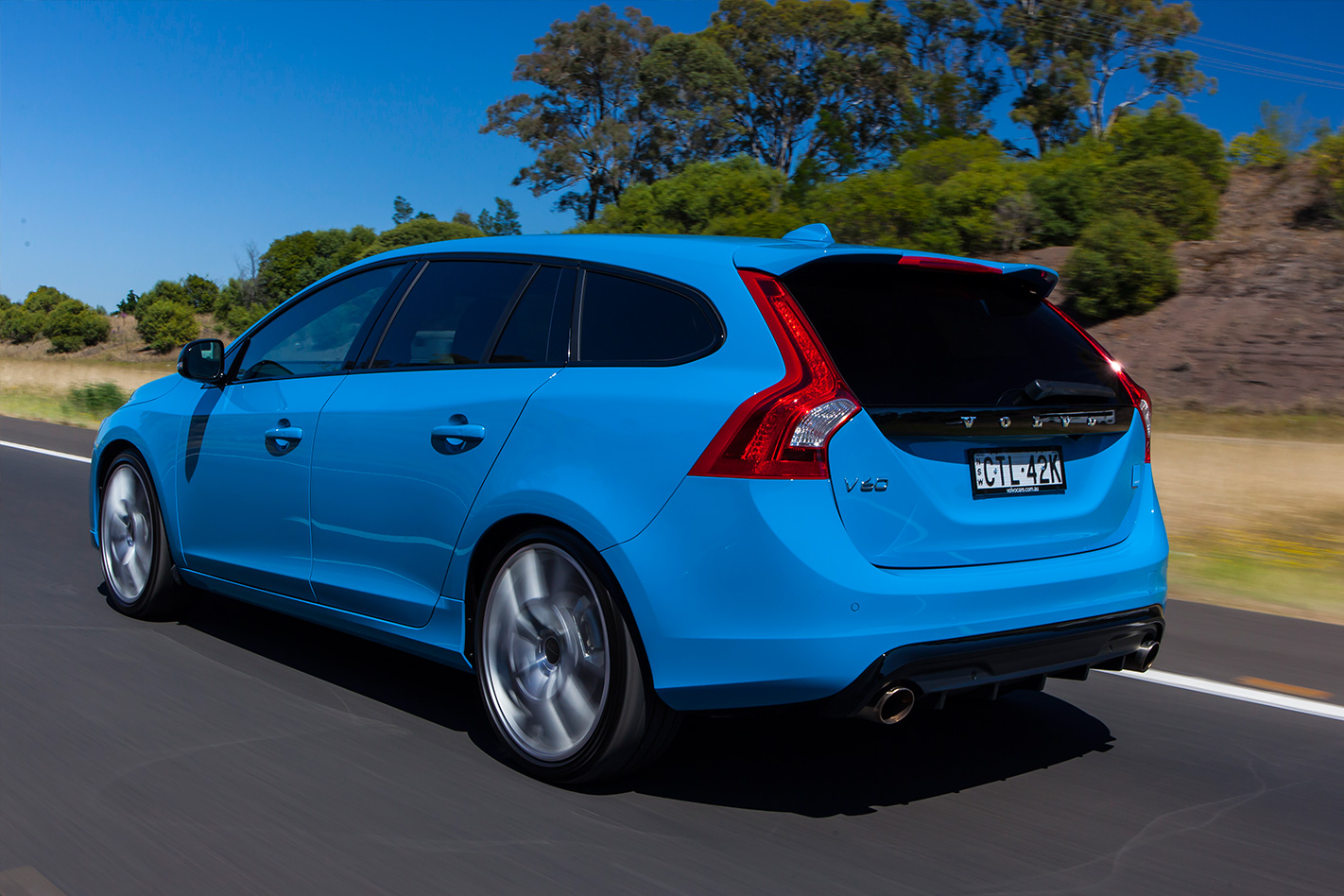
POLESTAR, the former Swedish race-bred performance car developer recently bought out by Volvo, has posted a cryptic image on its Instagram account flagging the end of its close ties to Volvo-badged products.
An image has appeared on Instagram overnight showing a plain black patch and the words “The End” neatly centred. It marks the start of the transformation of Polestar from a sub-brand within the Volvo showroom to a standalone performance badge that will rely heavily on electrification. It recently appointed Thomas Ingenlath, Volvo’s design senior vice-president to head up the fledgling brand.

“Polestar will enjoy specific technological and engineering synergies with Volvo Cars and benefit from significant economies of scale as a result of its connection to Volvo,” the car maker said. “These synergies will allow it to design, develop and build world-beating electrified high-performance cars.”
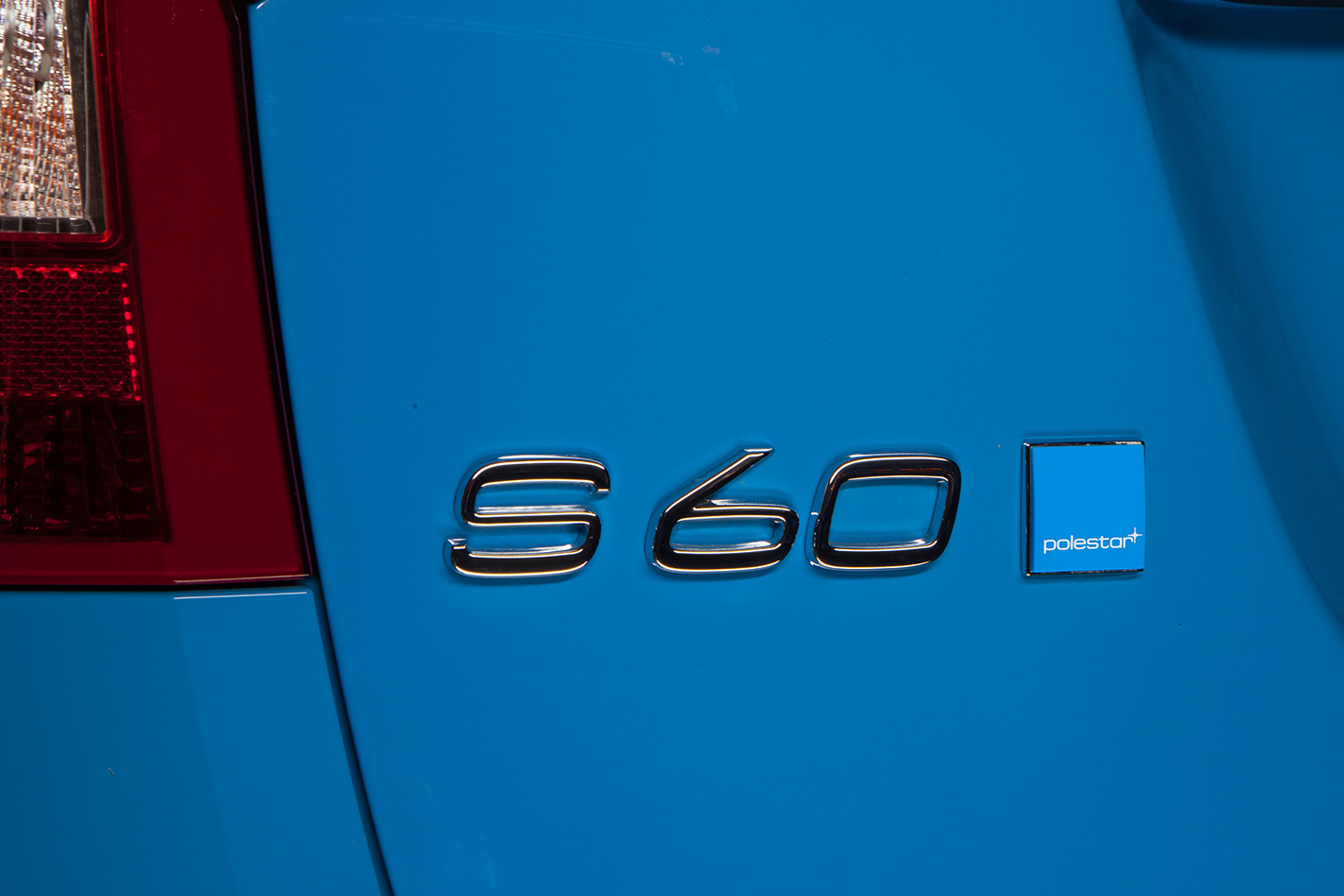
Australia has been instrumental in the rise of the Polestar brand. In 2010 the tuning house released a blue Polestar-badged version of the C30 small hatchback to gauge interest in a performance-honed Volvo, with Australia later picked as the first test market for the 2015 introduction of the Volvo S60 sedan and V60 Polestar wagon, a $100,000 hardcore version of the S60 T6 and V60 T6 which started with a tuned turbo six before adopting a high-boost turbo 2.0-litre four this year.
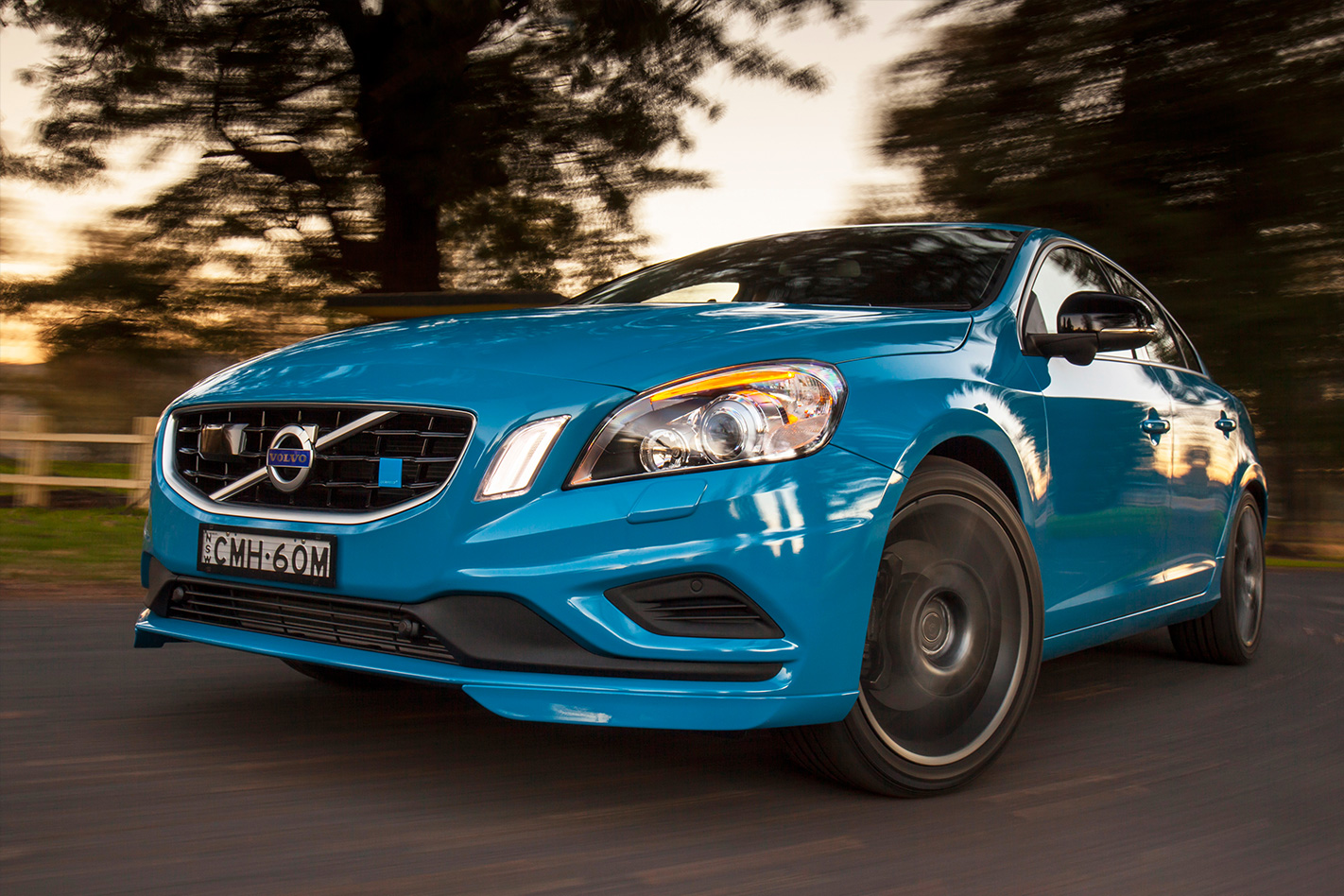
Volvo plans to introduce plug-in hybrids across its range over the next few years, and introduce a battery-powered car by 2019. It projects sales of its electrified vehicles to one day account for one in every 10 of its sales globally.
We love watching hill climbs, and we love watching drifting, and now Ken Block has made it more time effective to watch both.
His much-anticipated Climbkhana: Pikes Peak hill climb has been released and it’s eight minutes of Block’s riskiest driving ever.
With 1044kW at his disposal in the form of his upgraded methanol drinking, twin-turbo, AWD Hoonicorn Mustang, Block returns to a course which he has a lot of respect for, and a little history with.
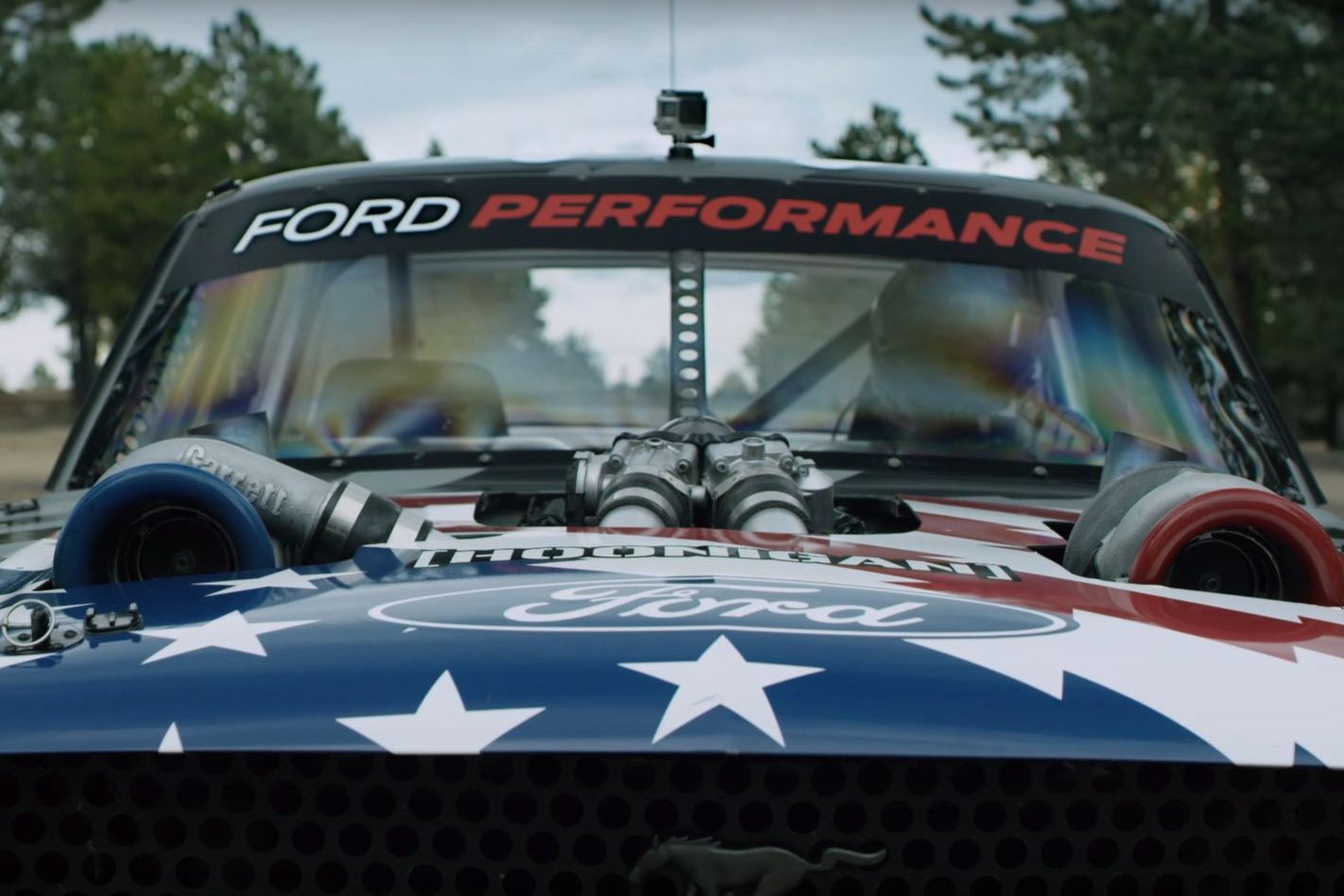
“Even as a kid I remember dreaming about racing there some day because it looked so epic.
“Eventually I did, back in 2005, but it was in a Group N rally car which didn’t have much power up in that high and thin air!
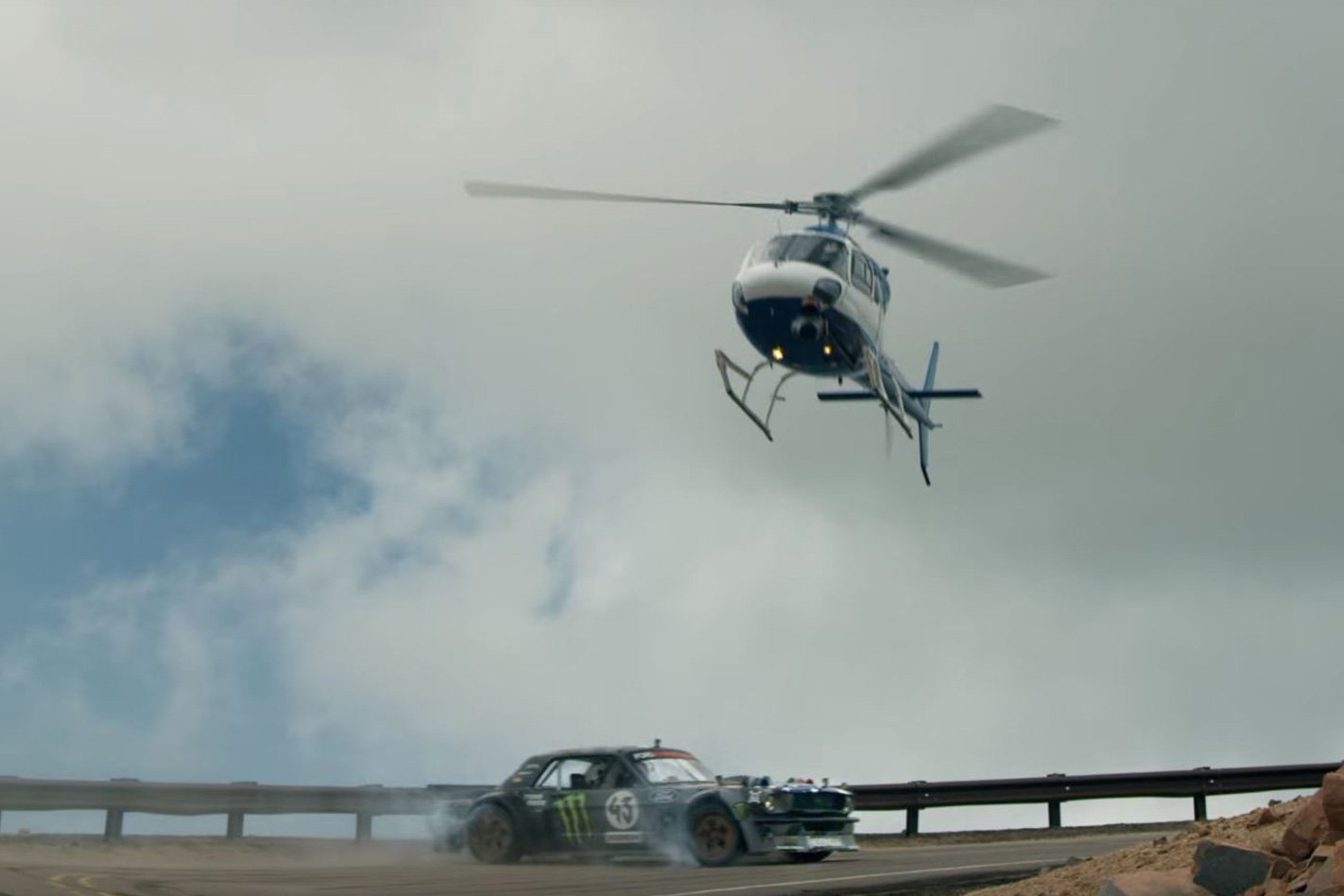
“So, to drive it like I get to drive in my Gymkhana videos – and do it in the Hoonicorn with 1400 horsepower, well that truly is a dream come true!”
But, as should be clear to Blocks fans, the hill climb wasn’t an effort to get a fast time out of the course. The point was to wreck tyres.
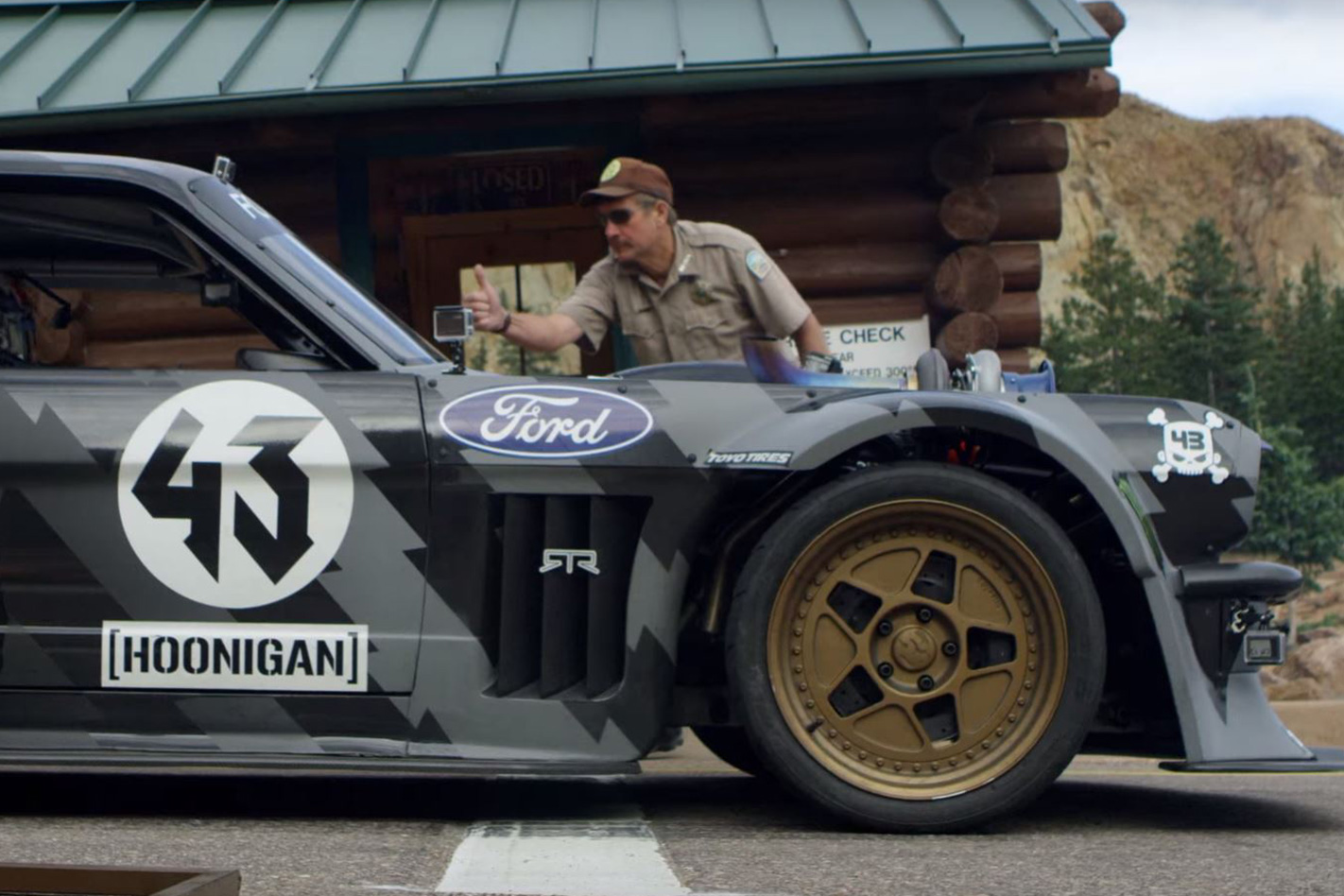
“This is the most powerful AWD-type car in the world to be driven this way, so I’m genuinely glad I didn’t die making this video!”
And so are we! Because it means we’ll get to see more of Block’s antics in the future. If you haven’t already, scroll up and give Climbkhana a watch!
The Audi S5 somehow feels more together than its A5 siblings, and it’s not just the heart-warming burble and mid-range thump of its 4.2-litre V8 that makes me think that.
This review was first published in MOTOR November 2008.
Its key advantage is that most un-Audi-like quality – ride. It’s far suppler than the standard car, even though it boasts larger wheels and tyres, and it has less road noise in the cabin. So kudos to the S5 people; a big What’s That About to the A5 boffins.

Benz has a beaut seven-speed auto, but the big V8 is a little too much for it, so it’s a six-speed auto, with all the imprecision that implies.
Besides having an extra cog, Audi figured that a fourth full gate would move the passenger on top of the door handle, so it’s a seven-speed DSG. And that’s fantastic news. Of course, it’s not called DSG. No. That’s a Volkswagen kind of abbreviation and might help people understand what the hell it is.
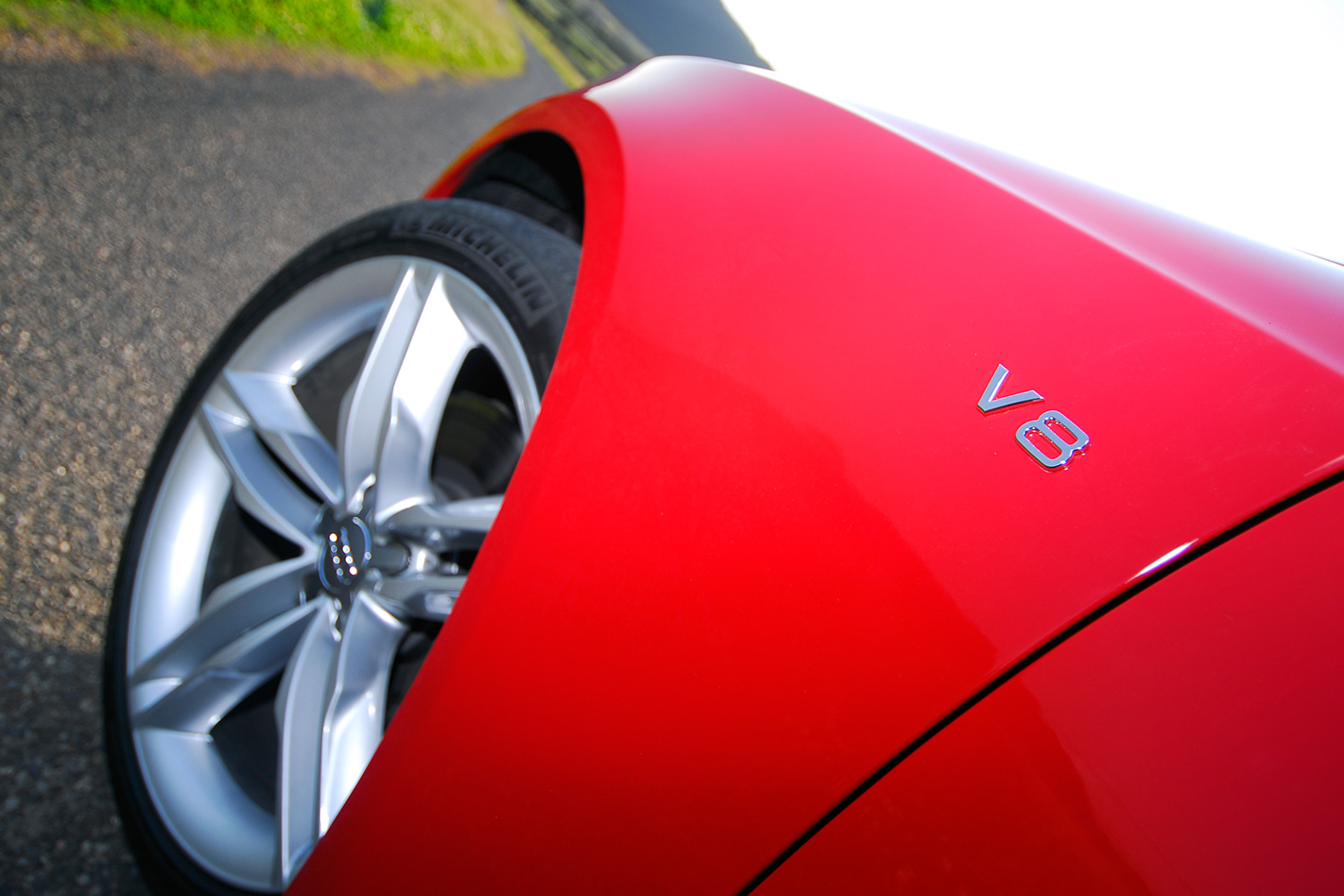
Audi says it’s the first DSG ever to find a longitudinal home, though it will lob at about the same time as the Q5, which basically uses the same gearbox and, technically, the Nissan GT-R is a DSG). Purely designed for Quattro work, it usually sends 60 percent of the drive down the manly end of proceedings.
It can do a passable impersonation of an automatic tranny, too, but no auto can spin up to 9000rpm like the S Tronic can.

Audi’s short test course was been bunged onto the carpark at the Valencia racetrackidad (cue spitting), and we only grabbed fourth gear just to say we had, so we will reserve our final judgement until we can use all seven. But the initial impressions are very, very good.
It differs in its actions from Normal to Sport modes and while Normal is clean, undramatic and, well, Normal, Sport is a different matter.

While the car is still a bit nose-heavy, especially compared to the M3, it’s secure, with all-wheel-drive and (finally) tremendously strong brakes.
As initial impressions go, this short drive was a good one. It doesn’t do anything worse, it does a lot of things better and it even uses less fuel. We’ll get one for a bit longer when they launch here early next year, but for now, it seems like an all-round thumbs-up.
2008 Audi S5 S-Tronic specs Engine: 4163cc V8, DOHC, 32V Power: 260kW @ 7000rpm Torque: 440Nm @ 3500rpm Weight: 1650kg (estimated) 0-100m/h: 5.0sec (estimated) Top Speed: 250km/h (limited) Price: $135,000 (estimated)
Holden’s VR-series Commodore is the 1993 Wheels Car of the Year.
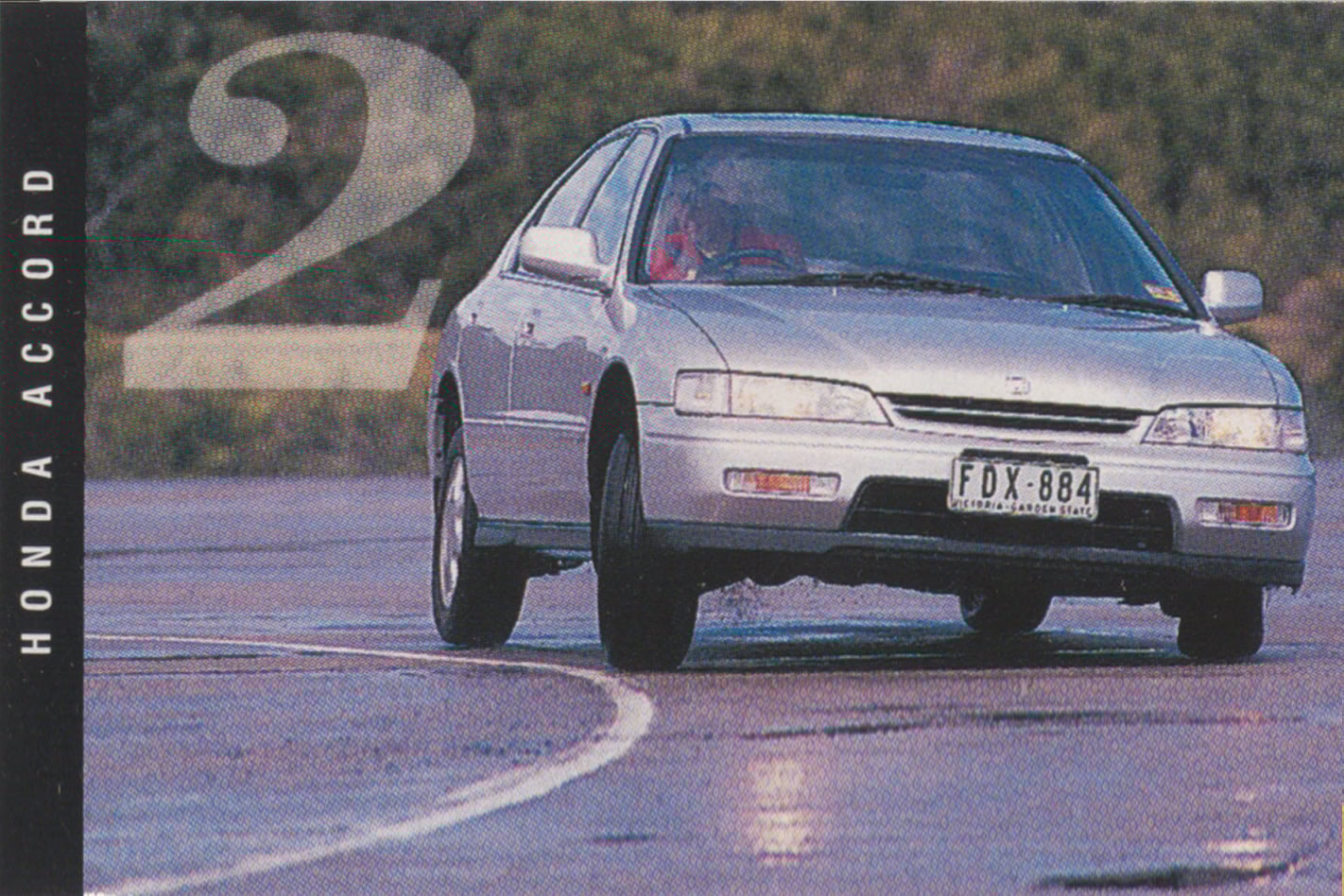
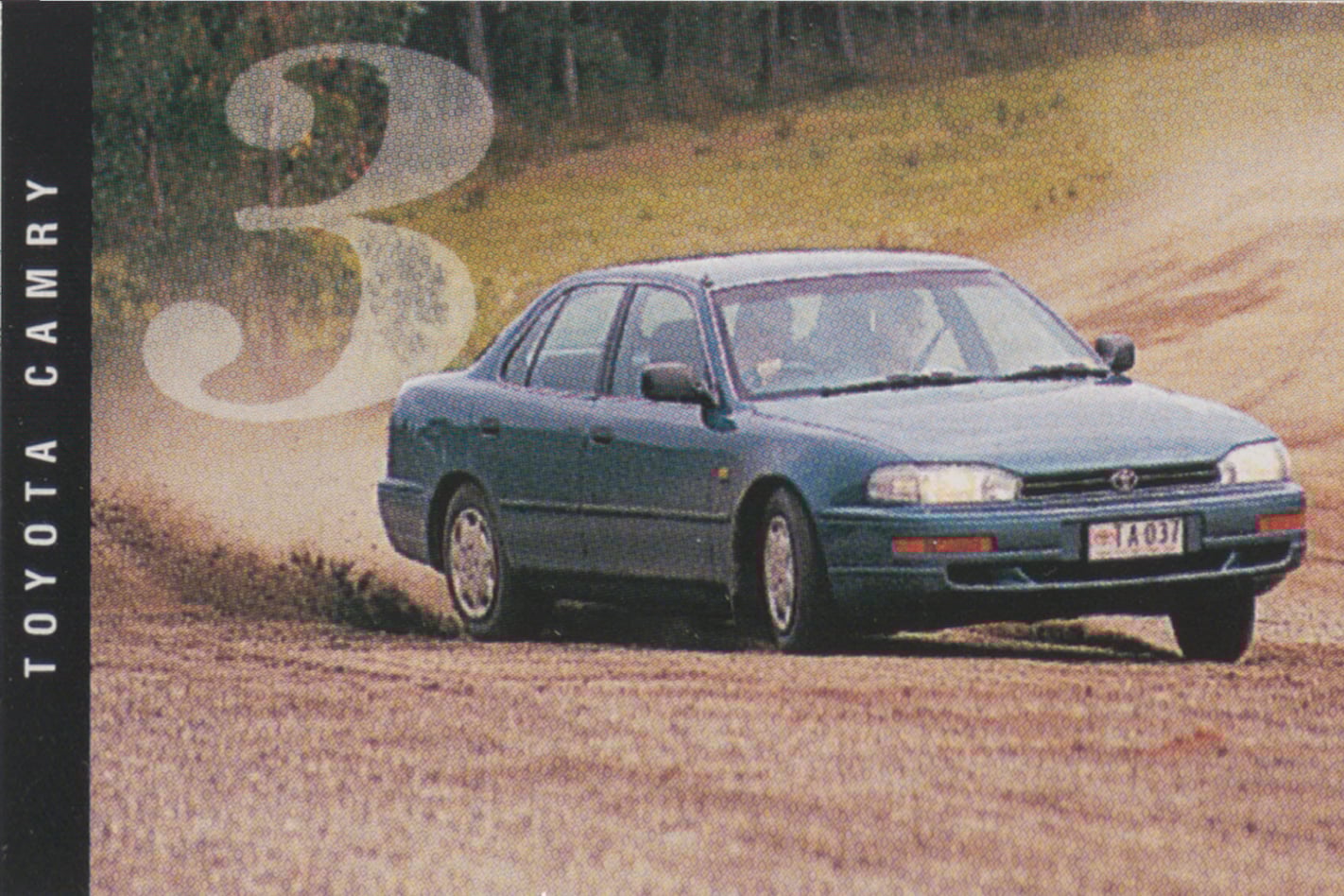
By the narrowest margin, it edged out Honda’s Accord to claim the 30th anniversary COTY award. The 10 judges awarded the Holden five votes and the Honda four, with Toyota’s Camry polling the remaining nomination. The decisive factors: safety and value for money.
COTY ’93 didn’t begin that way, but after four days of intensive analysis, two proving grounds and 800 kilometres, the safety and value criteria emerged as major points of difference between the three finalists. Driver enjoyment played a big part too.
The Camry’s third place reflected Toyota’s decisions to omit airbags for Australia, to price the new model high while simultaneously hollowing out the standard equipment list. Those decisions cost this solid, silent, high-quality car a much better result.
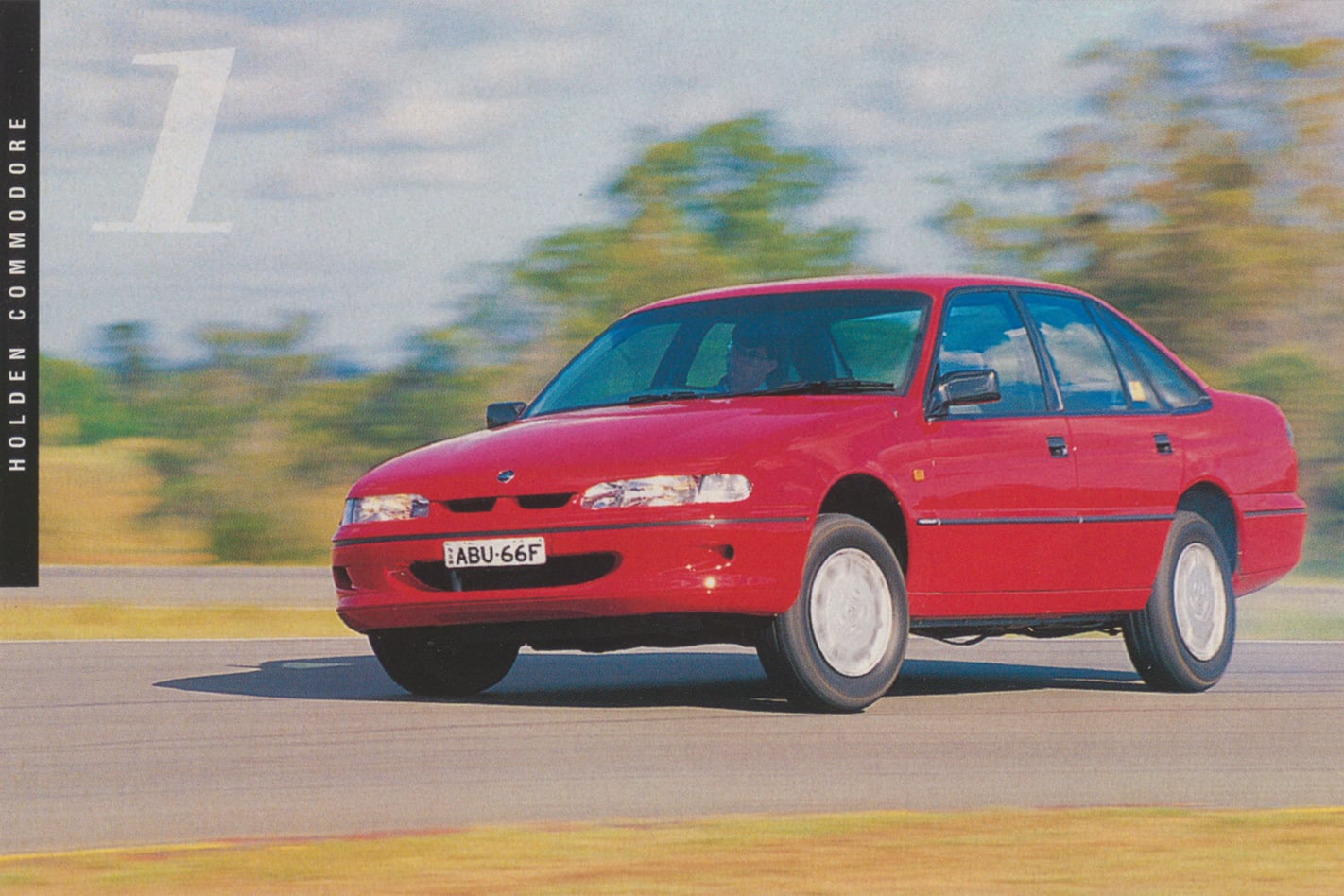
In the end it was the Car of the Year criteria, and the discipline of the judging process, which produced a victory for Holden. A majority of judges felt the Commodore’s value, economy, performance and features outpointed the Accord’s obvious depth of refinement and attention to the nth degree of detail.
The lack of safety features, even on the options list for the most affordable Accord EXi, proved a significant sticking point. The clincher was Holden’s sub-$30,000 model, the Acclaim, which included standard airbag, anti-lock brakes, lap-sash centre rear belt and front seatbelt webbing clamps. The Acclaim gave Holden the edge over Honda’s indisputably better finished, more refined, but sedate performing and expensive Accord.
To buy the Commodore Acclaim’s safety features in the Accord means spending a minimum $42,800 for the top range VTi-S version. That price buys a 60 litre airbag- fiive litres smaller than the Holden’s- and similar front seatbelt webbing clamps, which reduce the likelihood of occupants’ heads striking dash or steering wheel. But no matter what the price, Honda does not provide a three-point seatbelt for the centre rear passenger, a glaring omission in a family car.
While ultimately decisive, safety and value were but two of the major criteria.
The judges were acutely conscious they were voting for the cake and not just the safety and value icing.
Jingoism had no place either. Covering deficiencies with the national flag serves the buyer, and the COTY award, badly.
The Commodore’s narrow margin of victory reflects both its strength and its flaws. It does not have the peerless paint and panel finish of a top-ranking Japanese import. Interior plastics finish does not measure up to world’s best practice either, there is still some coarseness about the engine and the suspension lacks BMW-style precision.
Guest judge Evan Green summed it up best when he likened the Commodore to a bargain priced suit, which was well-cut and made of good-quality cloth, but whose buttons did not exactly match.
As a mass-market package the Commodore delivers an unbeatable combination of punchy performance, surprisingly good economy, space, ride and handling, safety, durability and comfort – built to a price that beggars the imported competition.
In the words of European editor Peter Robinson: “The Commodores are honest, no-bullshit Aussie cars, full five seaters that can’t be beaten on any size or performance-to-dollar relationship anywhere.”
Having said that, Honda came so close to victory. If not for the super-yen it may have edged in front. Yet price aside, it, too, has flaws.
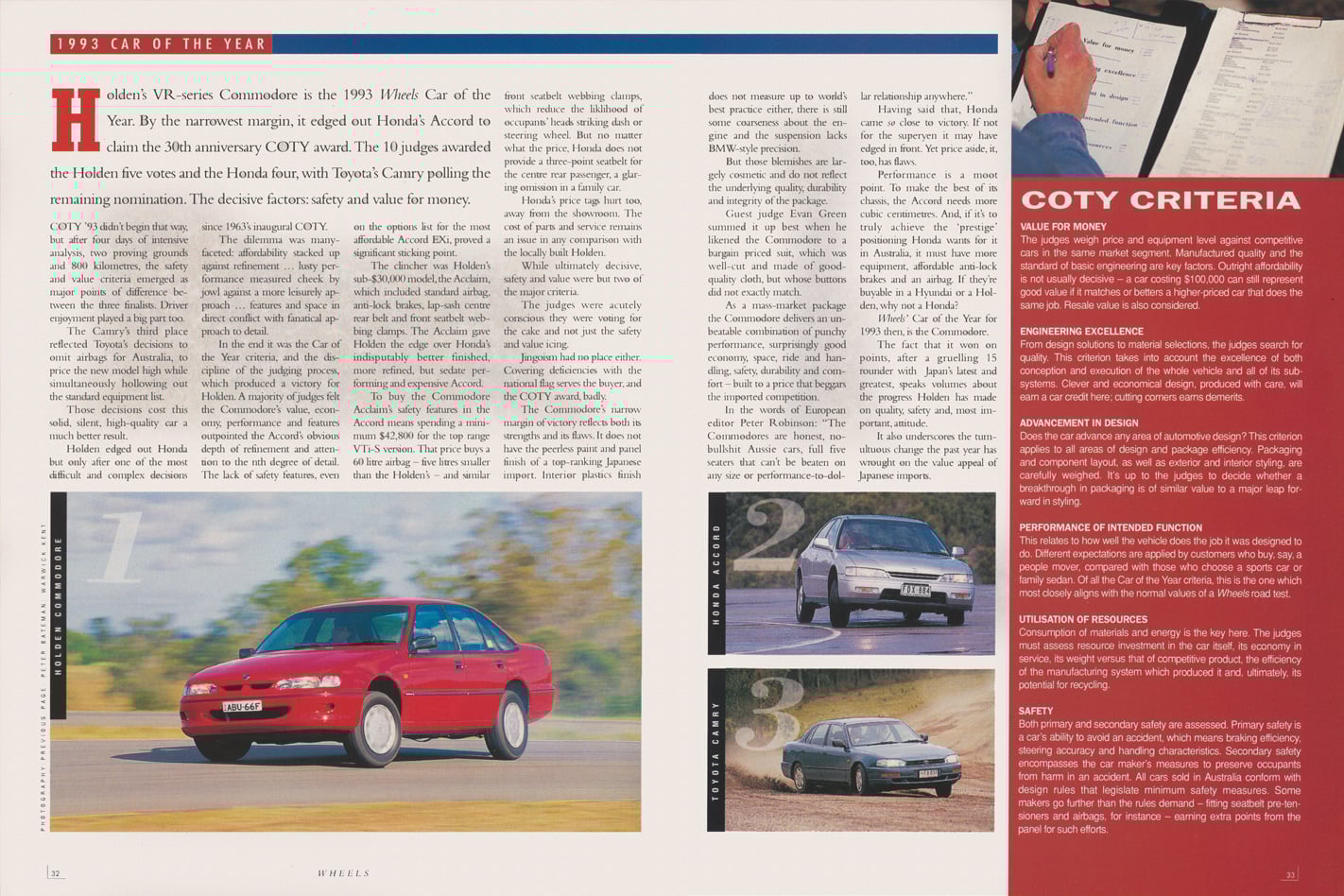
Wheels’ Car of the Year for 1993 then, is the Commodore. The fact that it won on points, after a gruelling 15 rounder with Japan’s latest and greatest, speaks volumes about the progress Holden has made on quality, safety and, most important, attitude.
It also underscores the tumultuous change the past year has wrought on the value appeal of Japanese imports.
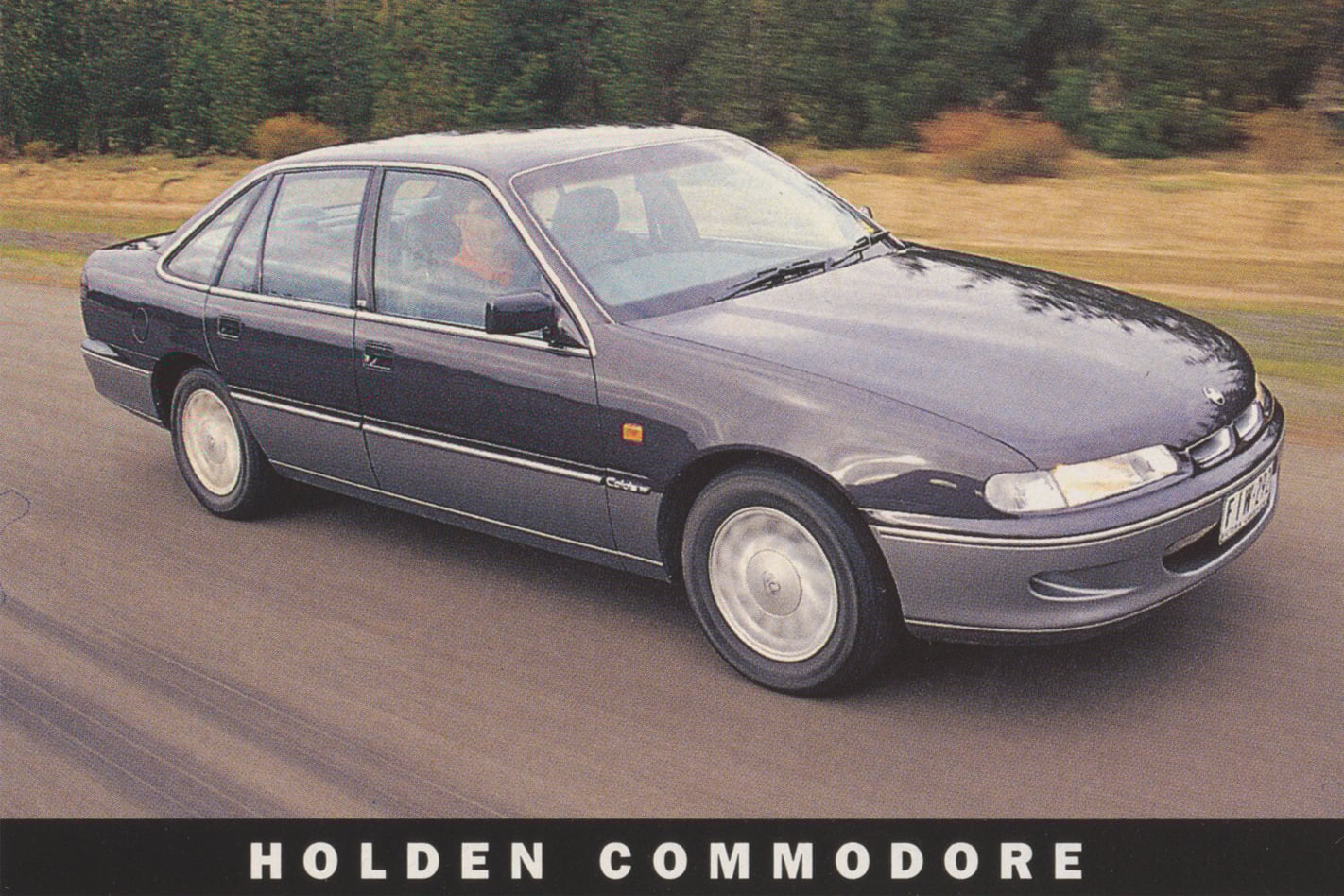
HOLDEN COMMODORE
Launched in August 1993, the VR Commodore is a development of the VN/VP/VP Series II line which began in 1988. Every external panel, save for doors and roof, is new. The VR’s footprint is different, too, with a wider track. To accommodate other front suspension geometry alterations the front strut towers are also different.
Dash, instrument binnacle and steering column switchgear are new. Electronic control is added to the four speed automatic transmission with which the vast majority of Commodores are sold. This drivetrain computer also handles more sophisticated engine electronics.
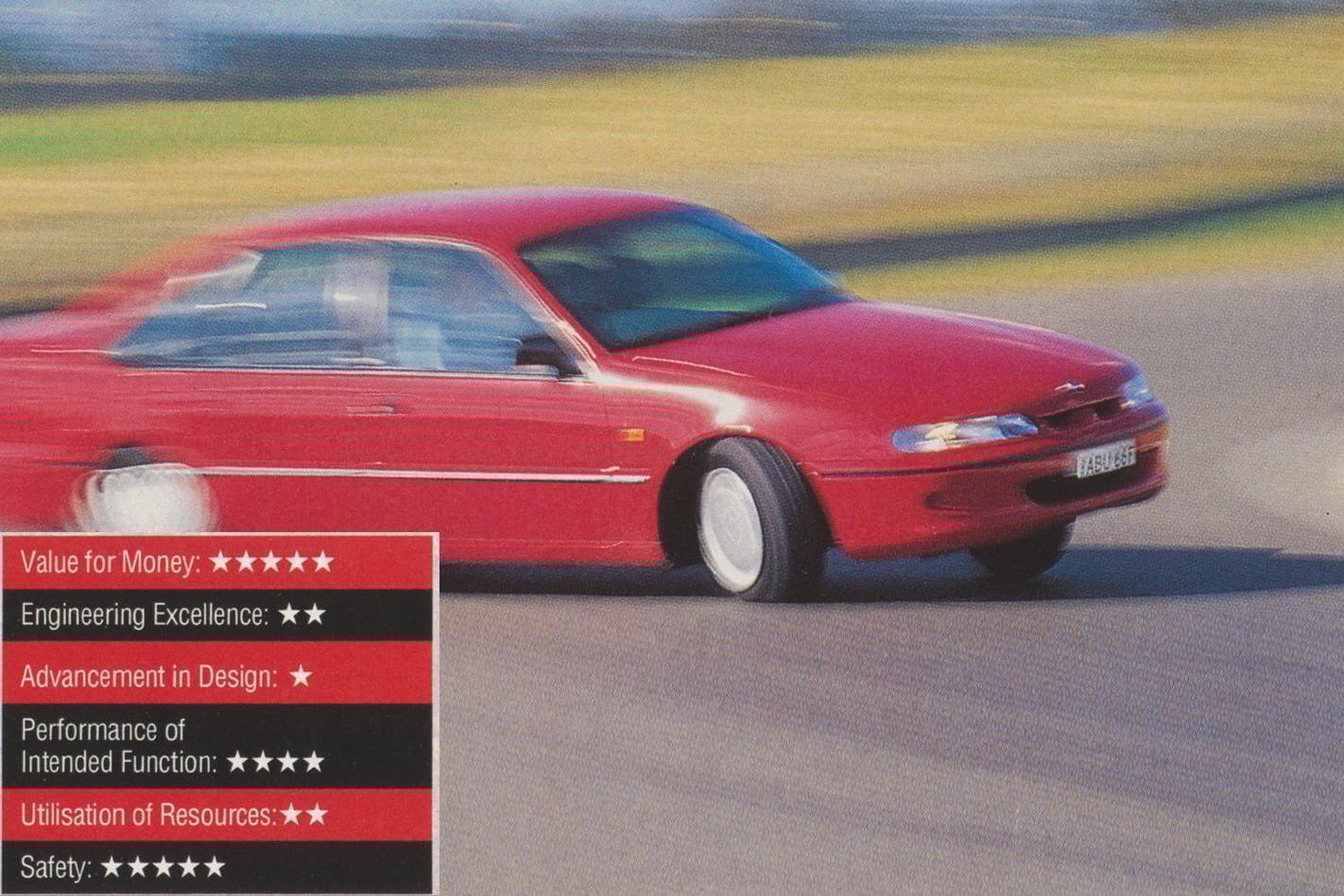
Driver’s side airbag is a first for the local industry, standard on Calais and the new Acclaim model which slots between Executive and Berlina. It’s a $990 option on all other models.
FOR
Holden’s VR Commodore is the car which brings world-class safety to the Australian mass market. Every bit as significant is the price at which Holden delivers the package. The biggest selling Commodore models – Executive and Acclaim – aren’t just affordable, they’re cheap.
Safety and value were the the car’s obvious strong points and buyers didn’t need very much persuading. During the first 10 months of 1993 Commodore sedans and wagons had a 14.6 per cent share of the total passenger vehicle market. But in October – the final month of that period and the third month of VR sales – the big Holden won 17.8 percent of the passenger vehicle total. It spells the end of the hoary motor industry maxim that safety doesn’t sell.
A driver’s side airbag is the centrepiece of the system. It’s no tacked-on afterthought either. The large capacity bag’s inflation characteristics and impact sensors were specially tuned for duty in the Commodore. The bag will only go bang at crash speeds above those at which the seatbelt alone can protect the driver.
Centrepiece it may be, but the airbag is only one item on the VR’s safety inventory. Front seatbelt webbing clamps and the lap-sash belt provided for passengers in the centre rear seat are still relatively rare features. The first reduces seatbelt webbing stretch in a head-on impact, lessening the chance of front seat occupants head-butting the dash or steering wheel. The second cuts the risk of spinal injuries, often suffered by lap-only belt wearers in serious crashes. Falcon beat Commodore with clamps and centre rear lap-sash belt, when the EB2 was launched.
It’s still very good value. The $4000 cheaper Executive has a much more spartan specification but it, too, represents great buying. Ascending through the range, the value appeal begins to fade a little; Berlina is not bad at the price and the Calais is OK, too, for the dollars asked.
The fuel efficiency of the V6 models – the vast majority of VRs, in other words – is outstanding given the car’s size and carrying capacity. The Department of Primary Industries and Energy’s Fuel
Consumption Guide 1993-94 shows an advantage of less than five per cent to Commodore over Falcon on both the City and Highway cycles, but the true difference is much greater. Back-to-hack road testing of Executive, Acclaim and Falcon equivalents has shown the Holden consumes 10-15 per cent less fuel. Open road figures below 10.0 L/100 km are easy to achieve in V6 Commodores.
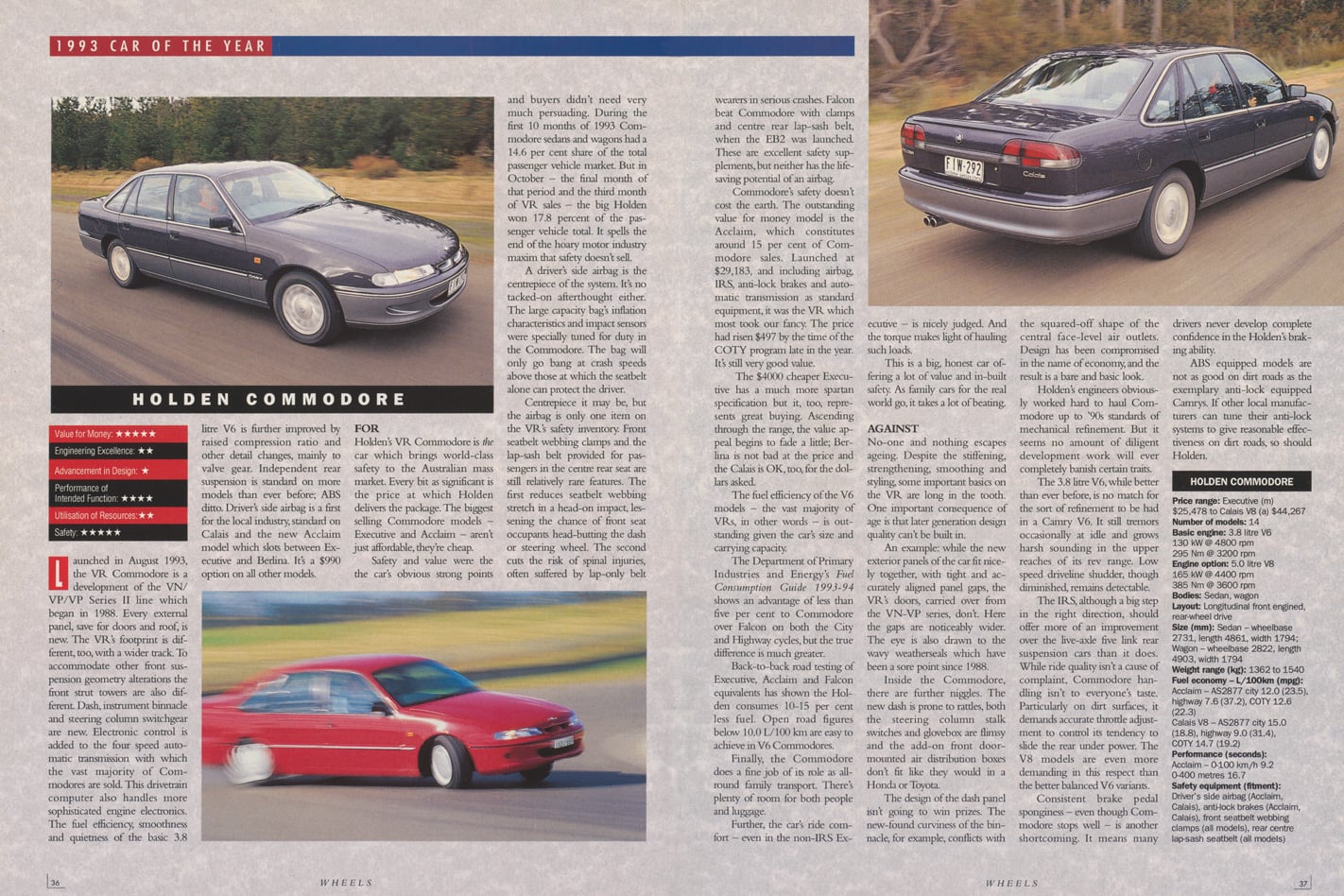
This is a big, honest car offering a lot of value and in-built safety. As family cars for the real world go, it takes a lot of beating.
AGAINST
No-one and nothing escapes ageing. Despite the stiffening, strengthening, smoothing and styling, some important basics on the VR are long in the tooth.
One important consequence of age is that later generation design quality can’t be built in. An example: while the new exterior panels of the car fit nicely together, with tight and accurately aligned panel gaps, the VR’s doors, carried over from the VN-VP series, don’t. Here the gaps are noticeably wider. The eye is also drawn to the wavy weather seals which have been a sore point since 1988.
Inside the Commodore, there are further niggles. The new dash is prone to rattles, both the steering column stalk switches and glovebox are flimsy and the add-on front door-mounted air distribution boxes don’t fit like they would in a Honda or Toyota.
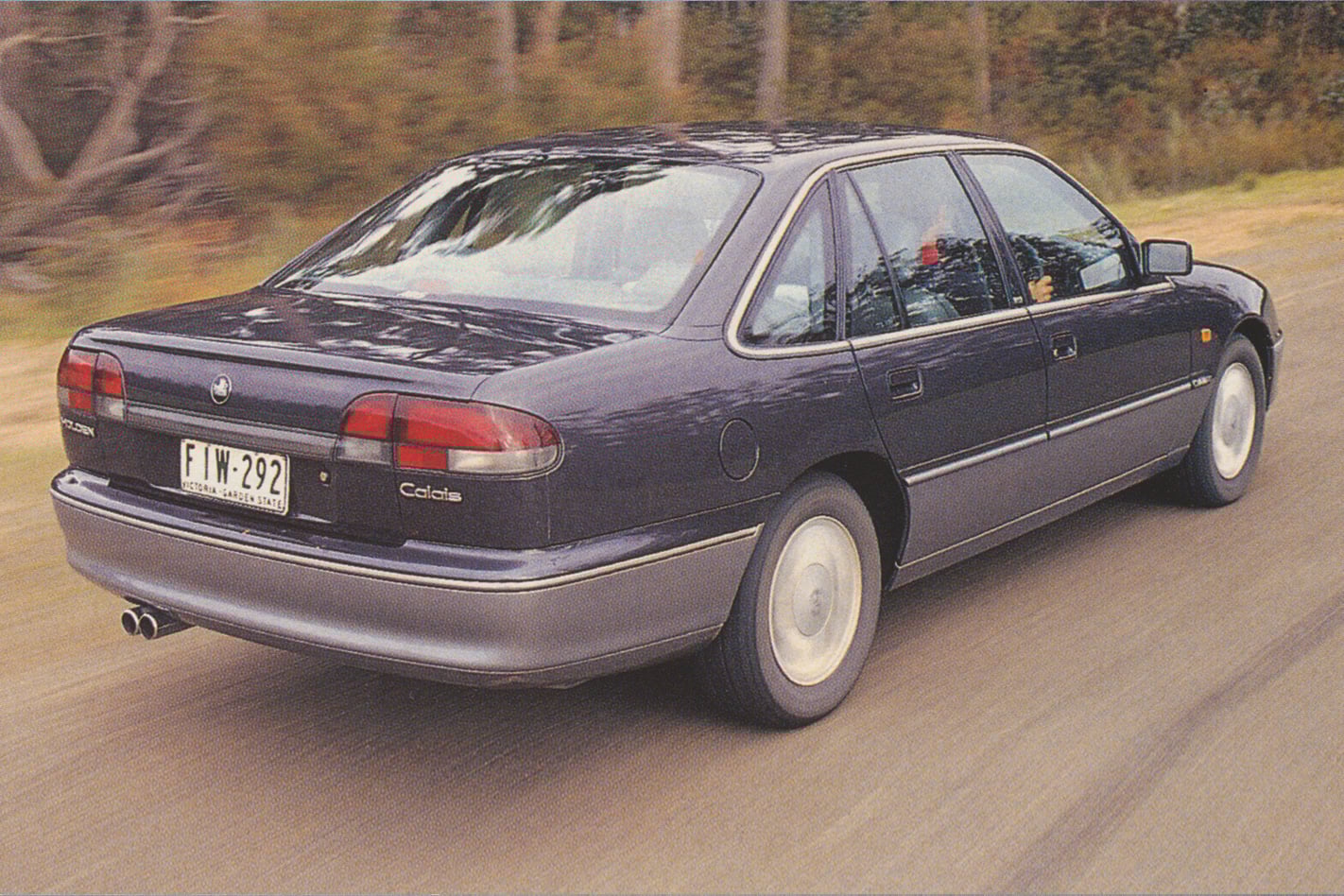
Holden’s engineers obviously worked hard to haul Commodore up to ’90s standards of mechanical refinement. But it seems no amount of diligent development work will ever completely banish certain traits. The 3.8-litre V6, while better than ever before, is no match for the sort of refinement to be had in a Carnry V6. It still tremors occasionally at idle and grows harsh sounding in the upper reaches of its rev range. Low speed driveline shudder, though diminished, remains detectable.
The IRS, although a big step in the right direction, should offer more of an improvement over the live-axle five link rear suspension cars than it does. While ride quality isn’t a cause of complaint, Commodore handling isn’t to everyone’s taste. Particularly on dirt surfaces, it demands accurate throttle adjustment to control its tendency to slide the rear under power. The V8 models are even more demanding in this respect than the better balanced V6 variants.
Consistent brake pedal sponginess – even though Commodore stops well – is another shortcoming. It means many drivers never develop complete confidence in the Holden’s braking ability. ABS equipped models are not as good on dirt roads as the exemplary anti-lock equipped Carnrys. If other local manufacturers can tune their anti-lock systems to give reasonable effectiveness on dirt roads, so should Holden.
Subaru has announced it will reveal the details of several new and updated models at the Tokyo Motor Show next month, namely a BRZ STI Sport, a top-spec WRX STI, and a concept for the WRX’s possible replacement.
The concept car Subaru will be bringing to the show is called the ‘Visziv’, which Subaru created the name for and says originated from the phrase “vision for innovation.”
Subaru says the car will have a heavy focus on driver-assisted technology “in anticipation of the future popularization of self-driving vehicles,” while also encouraging the “active enjoyment of driving.”
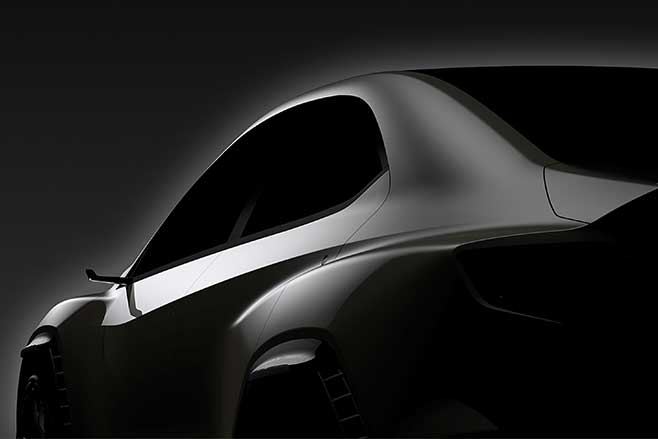
In Japan, the most exciting news to come from Subaru at the Tokyo show might be the reveal of the ‘ultimate’ WRX STI, the S208.
While it won’t be available here in Australia, it’ll barely even be available in Japan. Only 450 will be built, and hopeful buyers will need to enter a lottery-style draw to even get a chance to own one. It’ll have improved engine outputs, better throttle response and a lower centre of gravity thanks to a carbon roof.
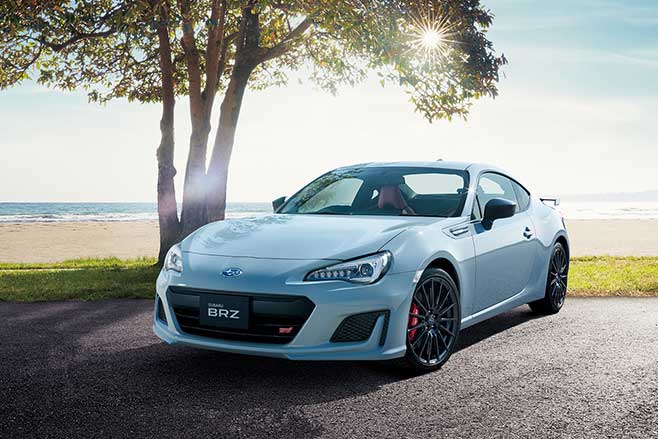
The BRZ STI Sport enhances the ride quality and handling stability of the BRZ, which sounds similar to the way Toyota Racing Development had a crack at perfecting the BRZ’s brother, the Toyota 86.
A limited edition version of the BRZ will also be available (by lottery, again) in 100 units with the paint finish called ‘Cool Grey Khaki’.
The 2017 Tokyo Motor Show kicks off on the 25th of October.
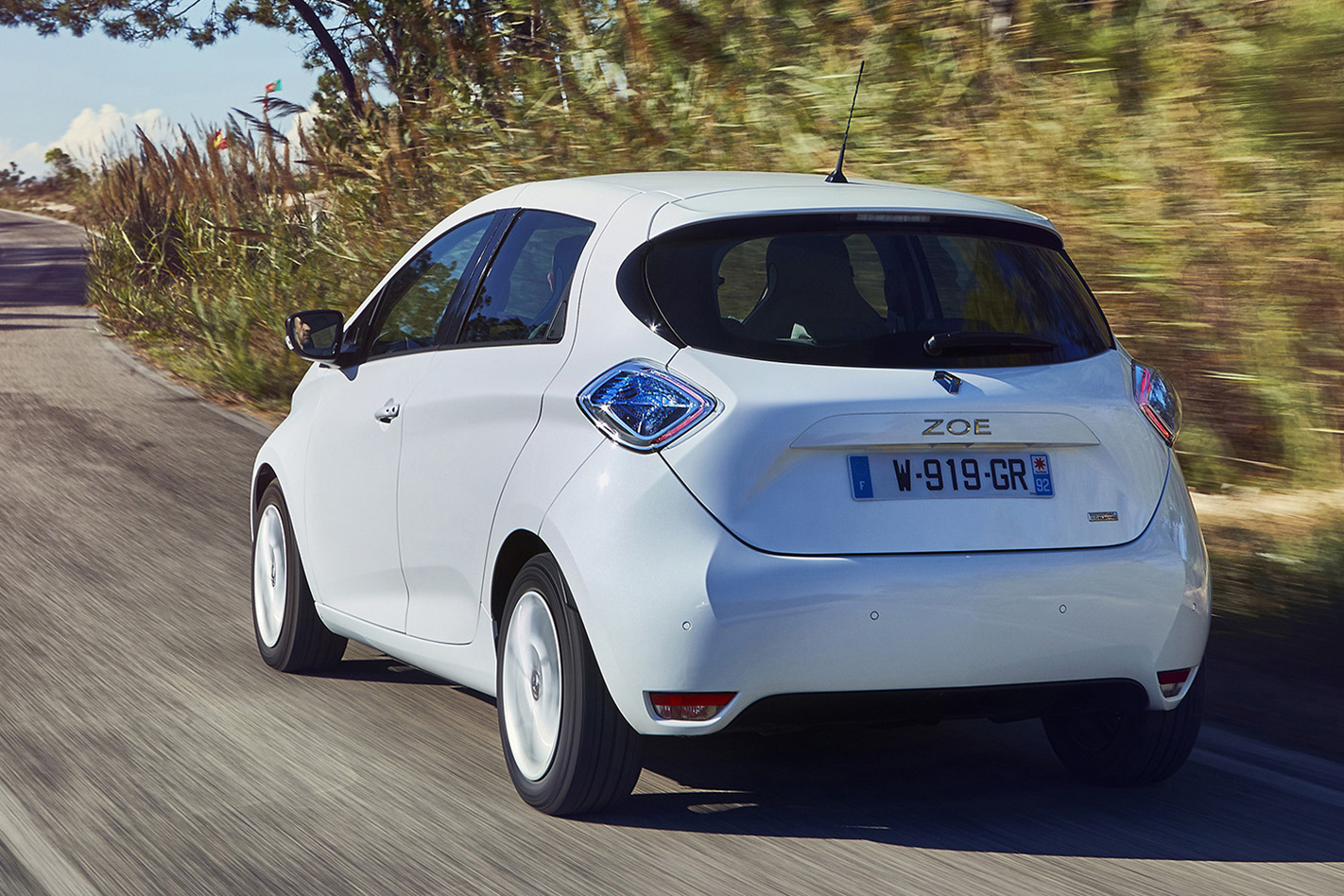
Renault’s announcement that it will bring the battery-powered Zoe hatchback to Australian shores is something of a watershed moment for the French brand. Though it’s achieved good success with the Zoe in Europe since its 2012 launch, selling over 76 thousand of them in its home market, Renault has nevertheless taken a conservative approach with bringing its electric car to Australia.
Accordingly, while the Zoe will finally arrive here in November, it won’t be sold through the traditional dealership channels. Instead, Renault Australia will distribute the cars directly to commercial fleet customers and government bodies – individual buyers aren’t part of the plan, though Renault concedes it will sell to determined souls on a case-by-case basis.
TELL ME ABOUT THIS CAR
Besides its electric powerplant, the Zoe is a relatively conventional five-door hatchback – not too dissimilar in size and purpose to Renault’s own Clio.
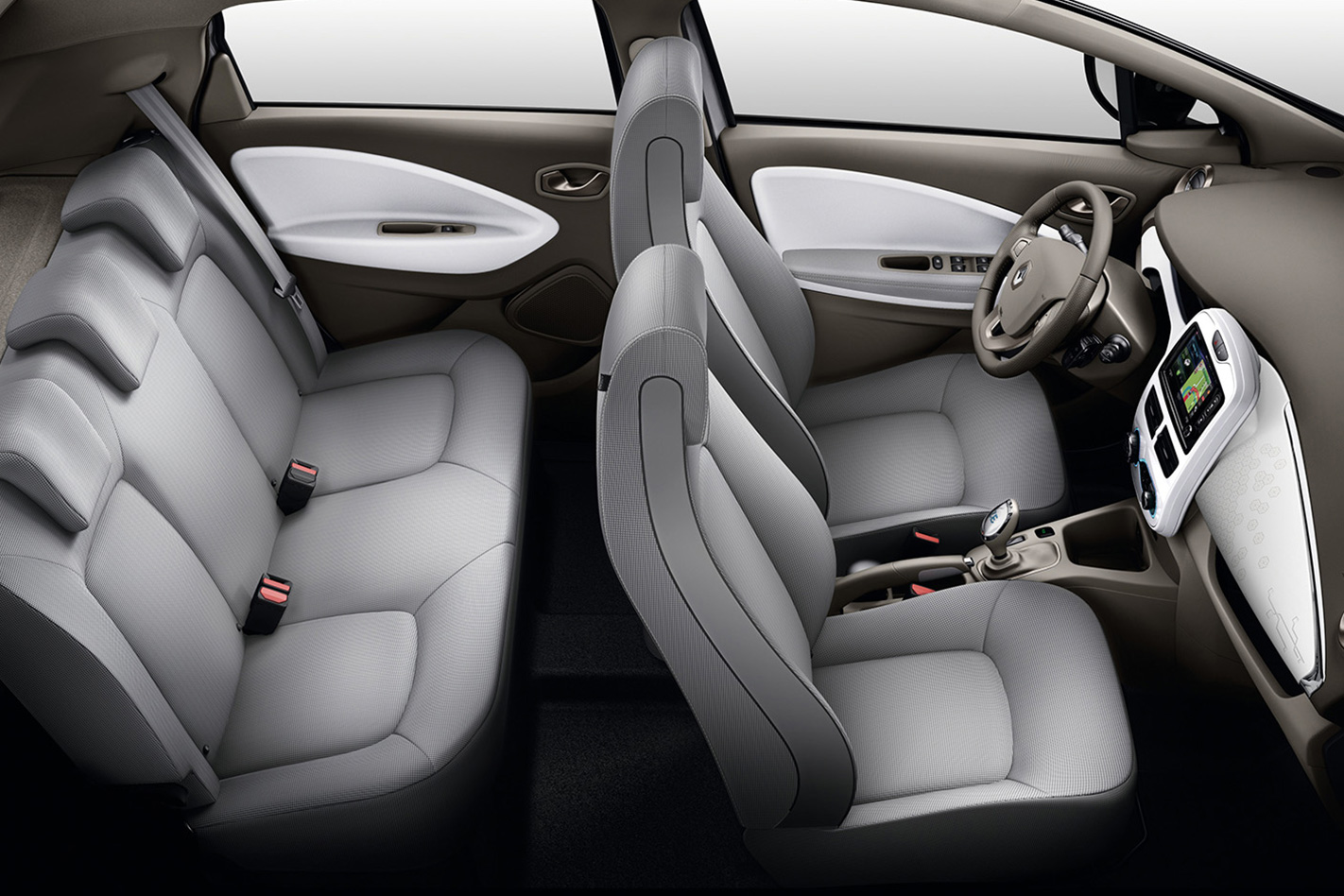
With space for five occupants and a handy cargo capacity of 338 litres with the rear seats up (1225 litres with them folded down), the Zoe differs from a regular compact hatch by taking power from a 41kWh lithium-ion battery rather than a tank of petrol, and uses a 68kW/220Nm electric motor instead of a combustion engine to drive itself.
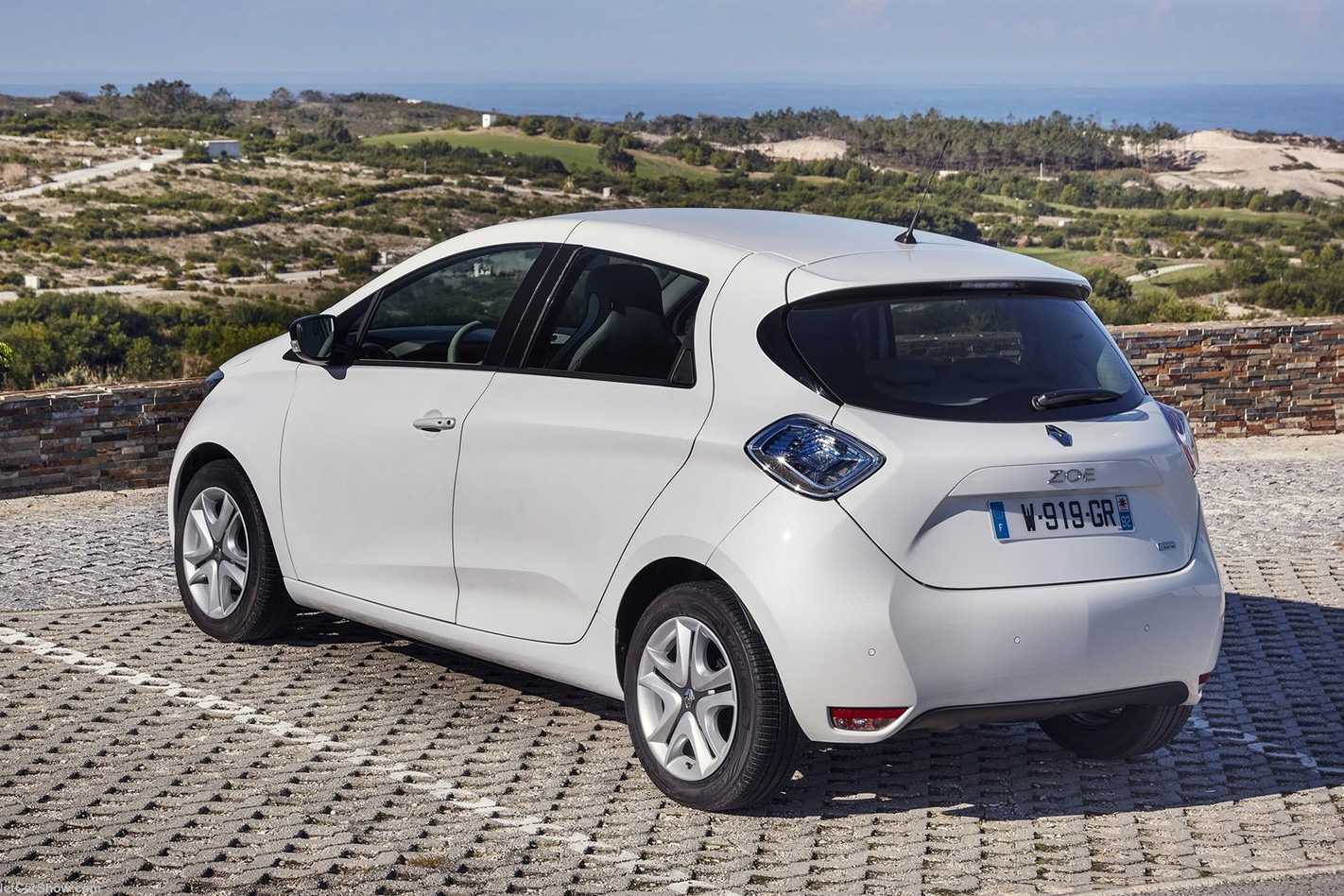
Two variants of the Zoe will be offered in Australia, the entry-level Zoe Life (priced at $44,470) and the high-spec Zoe Intens (priced at $49,970). Renault says the Zoe can’t be charged from a regular household outlet and instead requires a specialised wall charging unit, which is not included in the purchase price.
We drove the Zoe in France ahead of its local arrival, and experienced a model that aligns closely with the range-topping Intens variant.
STRENGTHS
Electric cars are known for being smooth, quiet and exceptionally easy to drive. These are solid virtues in a car designed to be driven around crowded cities, and the Zoe feels perfectly at home in inner-urban environments.
Electric motors are also pretty zippy – certainly more so than the average low-capacity petrol engines found in cars of this size. With maximum torque available right from a standing start, the Zoe takes off keenly and feels very perky.
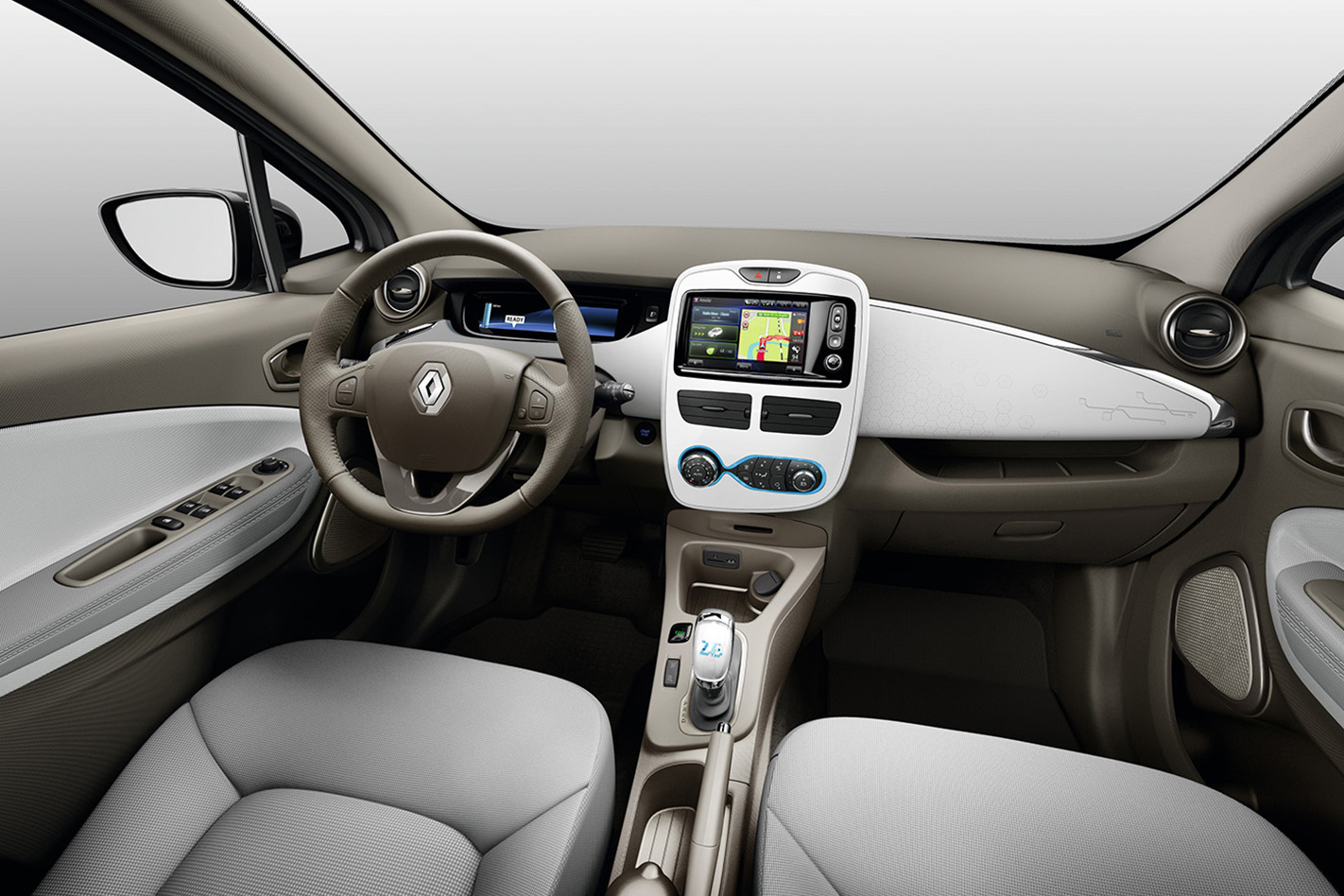
The Zoe’s cabin feels quite spacious, with a high hip-point due to the under-floor battery pack elevating occupants further and giving a decent view through the large windscreen and side glass.
The Zoe received a battery upgrade last year that saw the energy storage capacity increase to 41kWh, giving the Zoe a sizable rise in practical real-world range to 300km – more than enough for the average Australian driver, and enough distance for most to be able to drive for more than two days without needing a charge.
It may be an eco-focused hatchback, but the little Zoe legitimately drives well. It corners with confidence and irons out most bumps with ease, and while the suspension is tuned for comfort it also delivers plenty of grip to help you stay out of trouble
WEAKNESSES
Cost. Hands-down, this is the Zoe’s biggest drawback. With a starting price in the mid-$40k region and the cost of the mandatory wallbox charger not included, the Zoe is very expensive for a small hatchback. The Intens grade reviewed here would easily breach the $50k mark once charger costs and on-roads are factored in.
Cabin quality is acceptable for a conventional light hatchback, but its hard plastic surfaces and flimsy build quality is very much not what you’d expect in something so expensive. Then again, Zoe buyers aren’t buying it for its opulence.
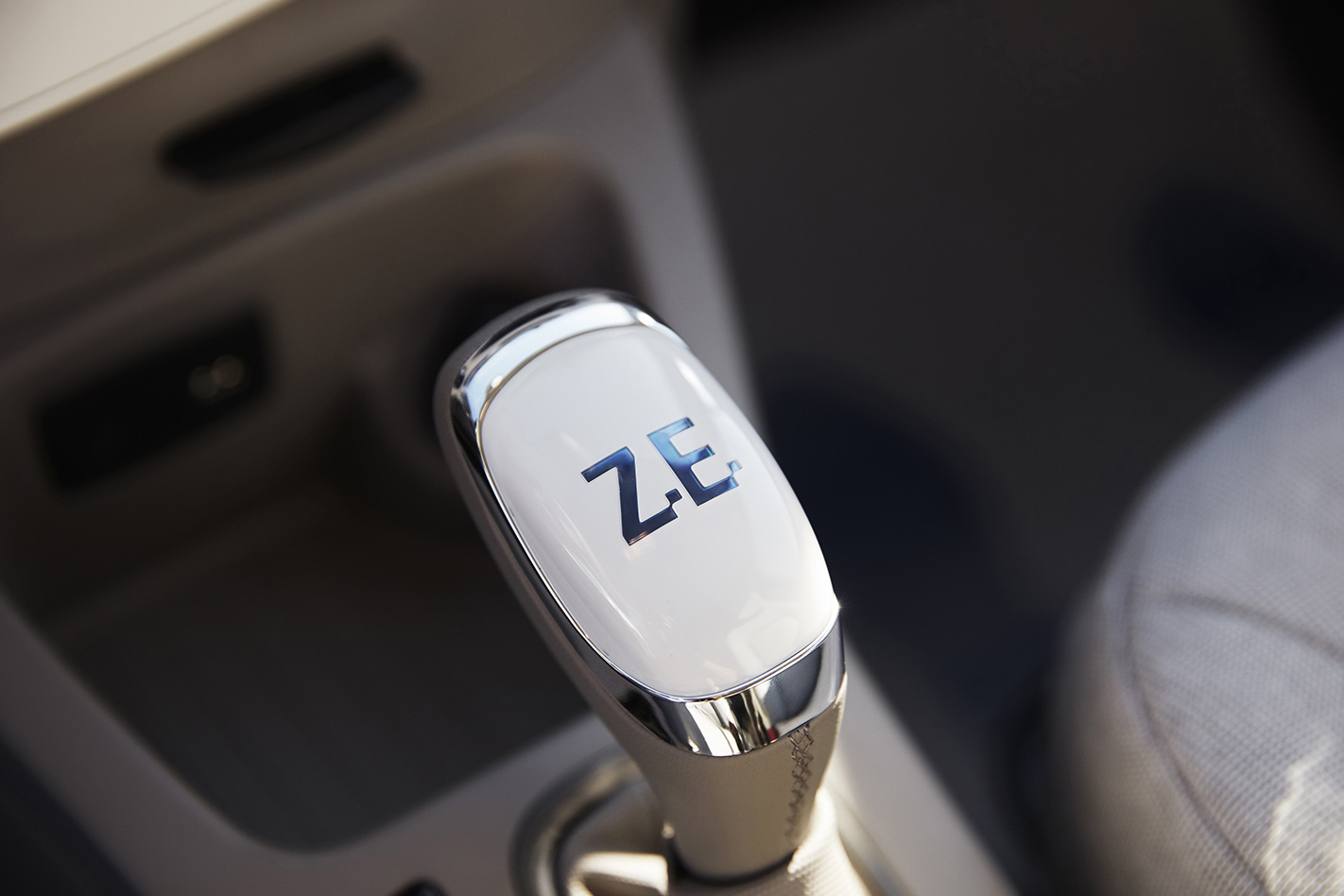
There’s little point engaging the Eco mode button on the centre console, as it just slackens the accelerator pedal’s response and turns the Zoe into a slug. It has no discernable effect on the strength of regenerative braking either, so there are more reasons to leave it off than there are for switching it on.
Brake pedal feel is poor, thanks to a mushy pedal that requires plenty of travel before the brakes start to have a profound effect. Regenerative braking force could also be stronger – while some electric cars can almost be driven entirely through modulating the accelerator alone, like the BMW i3, the Zoe requires more footwork.
ARE THERE ANY RIVALS I SHOULD CONSIDER?
Not really, not right now anyway. The Nissan Leaf will arrive next year priced slightly higher than the Zoe, but will also offer more interior space, features and performance so it’s not quite on an even pegging with the Zoe.
BMW’s i3 is a close match for size and capability, but is priced even higher than the Zoe with a starting sticker of $68k.
TOYOTA has given its hugely popular Hilux one-tonner range a significant reshuffle with 10 variants swapped out in favour of 10 more appealing options, as part of a mid-life update.
Gone is the V6 engine that powered some SR and SR5 variants, along with a number of manual gearbox options, replaced by more of the clear-favourite six-speed automatic transmission variants and the 2.8-litre four-cylinder diesel engine.
In addition to the host of new options that are due to go on sale in October 6, Toyota is offering 4WD SR dual cab pick-up customers the option to upgrade with navigation and alloy wheels for $2000, which was previously only available in the top-shelf SR5.
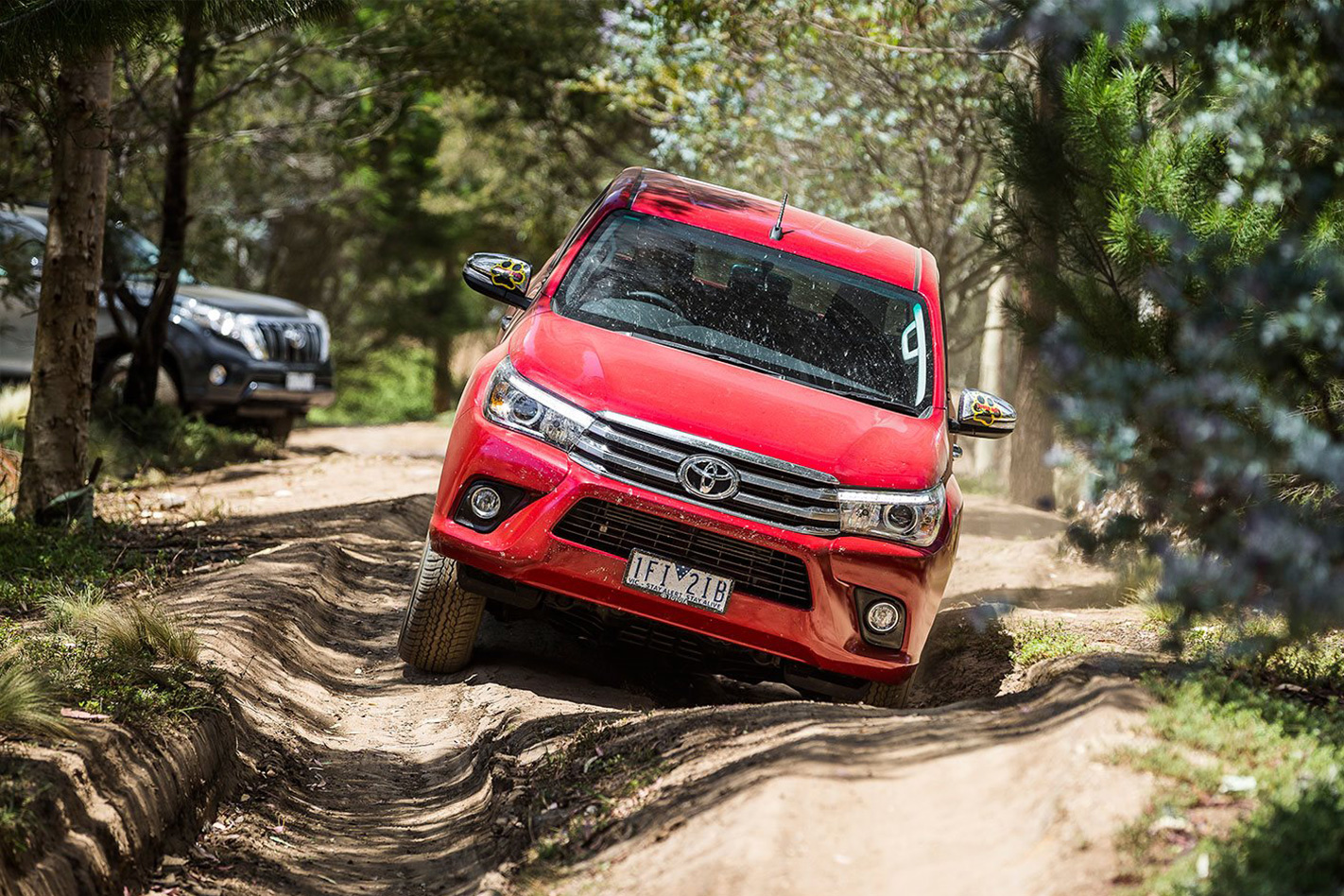
It is the first update the Toyota Hilux has received since it took the title as Australia’s favourite vehicle following its introduction in eighth-generation form two years ago. With the deletion of V6 versions, the 2.7 naturally aspirated four-cylinder becomes the only petrol on offer.
Pricing will change minimally with the update including the range-topping automatic SR5 4WD dual cab, which increases $50 to $58,440, all SR 4WD dual cabs have increased by $70, while all other SR variants are now cheaper to the tune of $80.
The entry level manual 2.7-litre petrol 2WD WorkMate single cab price is unchanged at $20,990.
Three new Hi-Rider variants join the line-up in 4×2 auto form – the $40,910 Extra Cab 2.8L, $39,490 WorkMate 2.4L diesel and a $49,940 SR5 2.8L. The Hi-Rider options offer the boosted ground-clearance of a 4×4 Hilux but with a lighter rear-drive transmission.
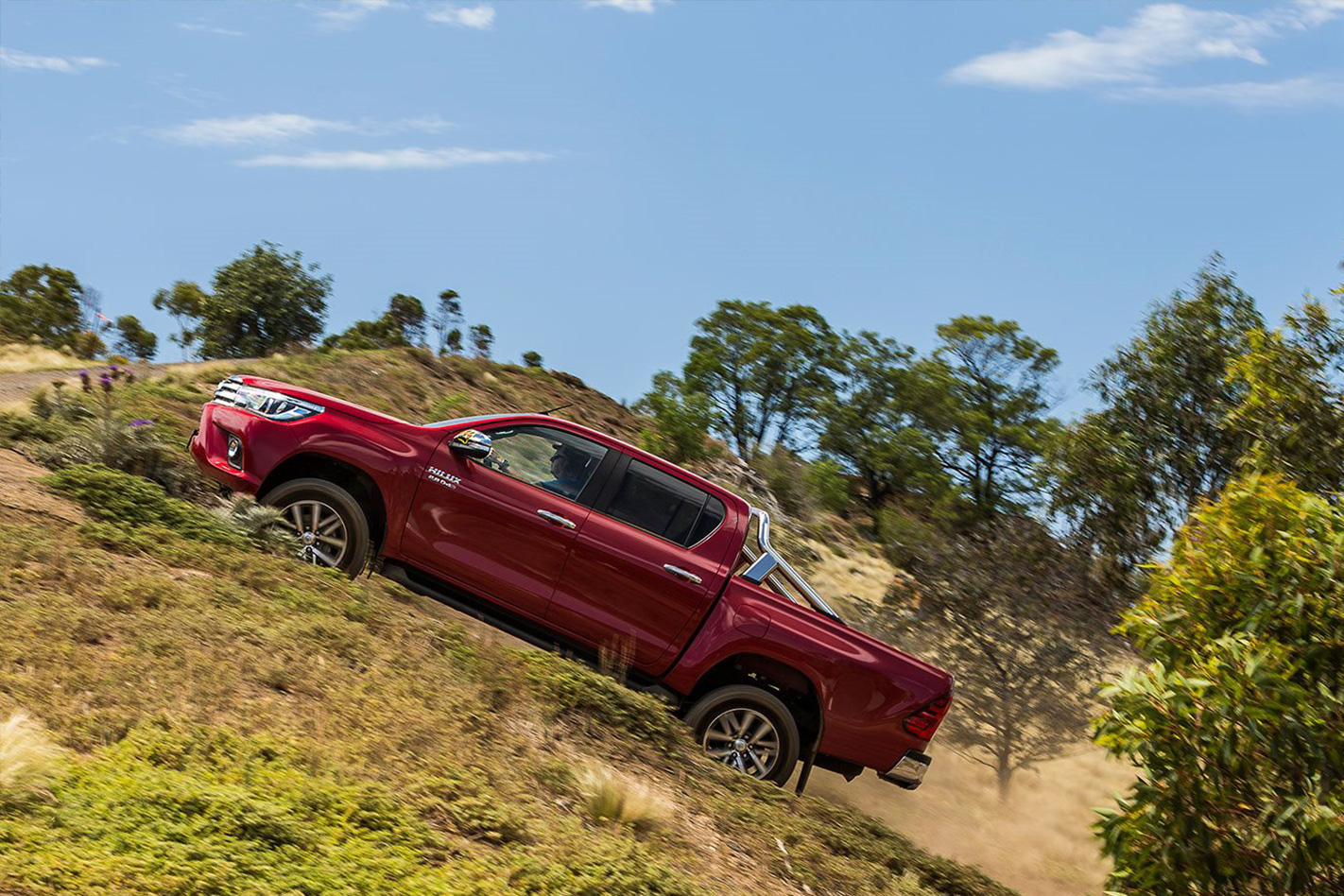
Towards the top of the range, a pair of SR+ specification options are on offer with 4×4 transmissions and dual cab bodies priced from $48,560 for the manual or $50,560 for the equivalent auto.
The middle of the range is updated with three Extra Cab variants in a choice of WorkMate 2.4L auto or a 2.8L SR that is on offer in either manual or auto priced from $42,490, $42,910 and $44,910 respectively.
An Extra Cab pick-up SR5 with 2.8L diesel is the most expensive addition at $54,440, while an auto WorkMate 2.4L dual cab, cab chassis rounds out the 10 new arrivals at $44,490.
The small price increases for some variants are accounted for by the addition of downhill assist control and hose-out PVC flooring in SR 4WD dual cab Hilux variants, LED foglights for SR5s and rear air vents and tailgate locks for SR and SR5 versions where applicable.
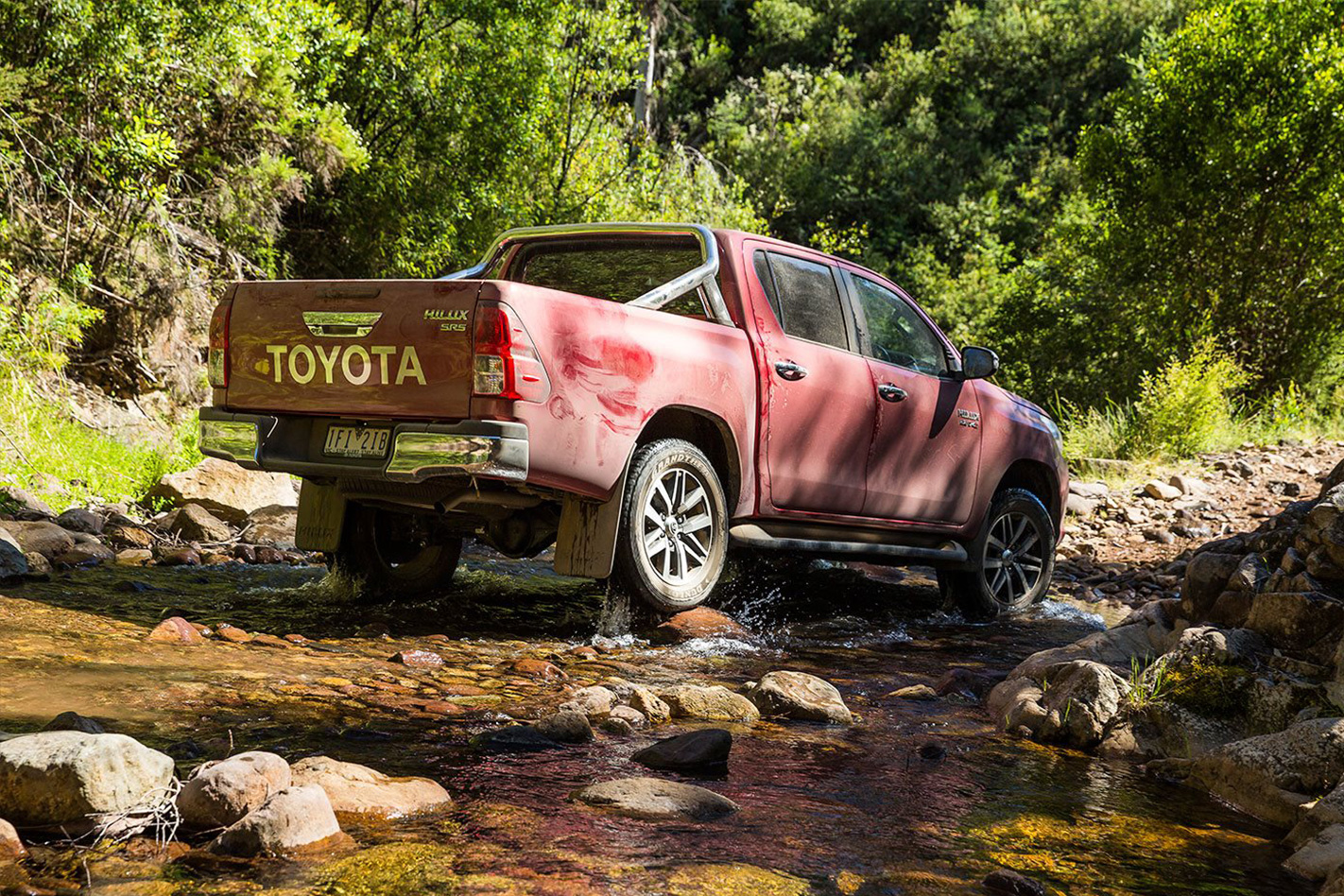
Toyota Australia sales and marketing executive director Tony Cramb explained the changes were in response to the first two years of Hilux sales and a clear customer preference toward more efficient and torquey diesels, automatic over manual, and a new demand for a generous ground clearance without hardcore off-road ability.“All the new variants have been introduced for specific reasons; for example, SR buyers have told us they would prefer the durability and convenience of a PVC floor covering rather than carpet,” he said. “We have reintroduced a 4×4 WorkMate double cab-chassis for those who want a value-for-money vehicle that gives them the flexibility to add a purpose-built tray that suits their needs.“For similar reasons, we have brought back the SR extra cab-chassis in manual guise, which was available with the previous generation, and – for the first time – added an automatic version.”
Unlike many other models in the Australian market, there is still a significant demand for manual Hilux variants and the line-up continues to include 14 options for those who like their one-tonner to be self-serve.
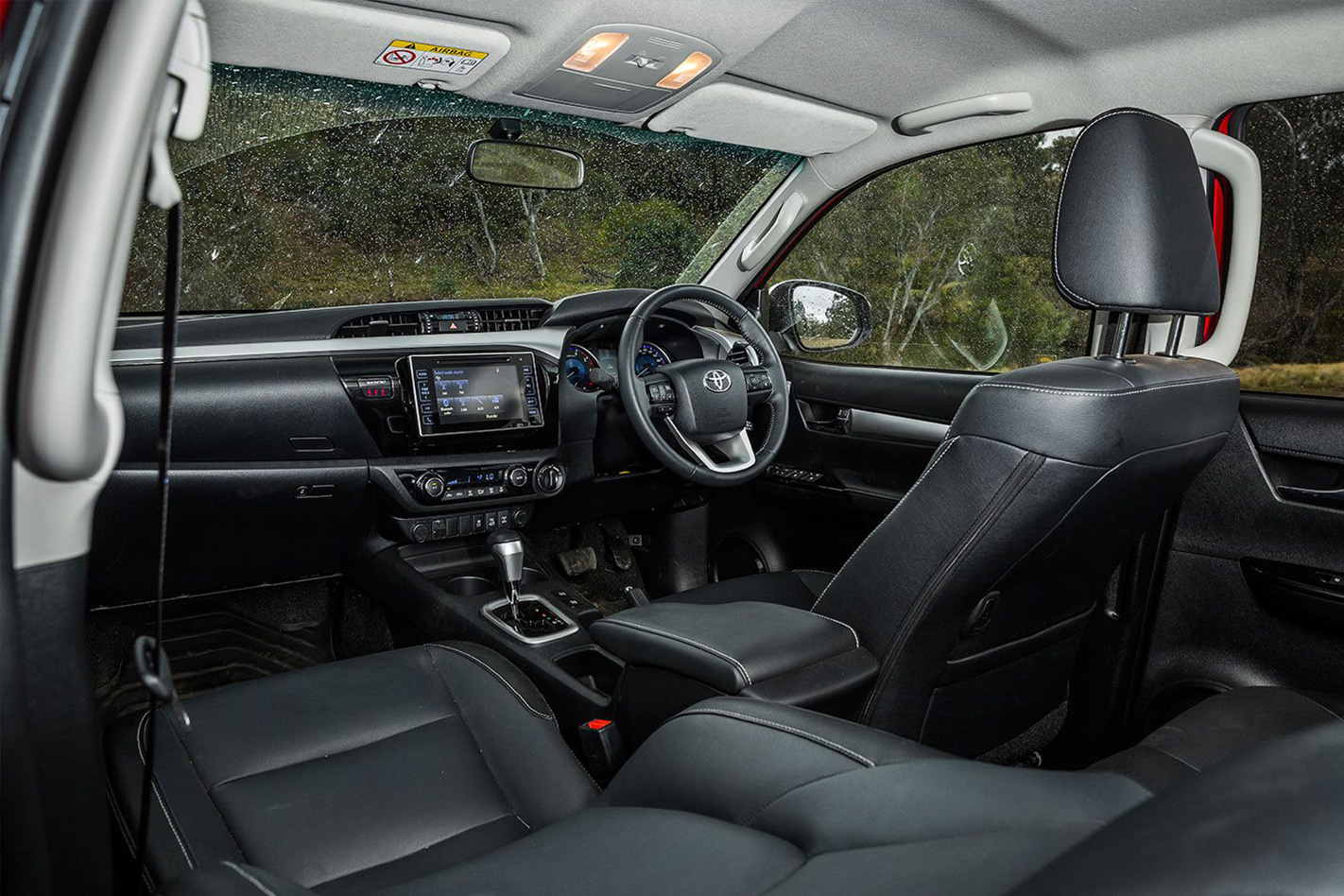
“It is clear that Hilux buyers increasingly want the convenience of an automatic transmission, so we now offer 17 self-shifters compared with 12 previously,” said Cramb. “Last year – for the first time – automatics accounted for more than half of all Hilux sales and this year the proportion has risen to almost 60 percent and we expect it to increase further”.
According to Toyota, the V6 was a less feasible niche within the range representing less than 0.5 percent of sales.
MORE: Toyota Hilux Range Review MORE: Toyota Hilux Specs, Range & Price
