
Toyota has confirmed it will reveal its upgraded LandCruiser Prado at next week’s Frankfurt motor show.
The Japanese carmaker announced the launch in a very low key way, without a teaser pic in sight, and a simple statement – “a segment-unique body-on-frame construction, the new Land Cruiser will take you wherever you want to go. And bring you back.”
This will be the first facelift for the Prado since 2013, and just the second in the life of the fourth-generation J150 model since its debut in 2009.
Leaked images revealed earlier this year by Instagram user @hamad1two3, revealed the ageing Prado’s visual tweaks, which includes a completely redesigned front, with fresh bonnet, grille, headlights, and bumper.
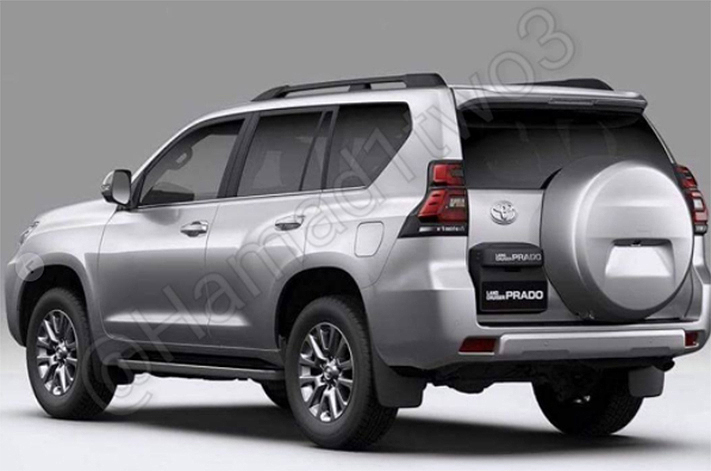
The rear end receives a lighter touch, with a slightly reworked bumper and new taillight treatment.
The interior also appears to have received an update, with the centre console being redesigned, along with the infotainment and climate controls.
There is also an 8-inch touchscreen and a new layout for the dash.
The accuracy of the leaked images were partially confirmed in pictures showing the new model Prados in a Japanese dealer yard earlier this week.
The revised Prado is expected to receive AEB, pedestrian detection, lane departure warning with steering assistance, auto high-beams, and radar-guided cruise control for the Japanese market.
The 2018 Prado is expected to go on sale in Australia in November this year.
Ford has confirmed a Ranger Raptor is under development, scheduled to be released in Australia in 2018.
Details are scarce at this early stage with Ford Australia remaining tight-lipped on any specifics, however the Ranger Raptor will form part of the Ford Performance family, which encompasses everything from the Fiesta ST hot hatch to the GT supercar.
Using the popular US F150 Raptor as a guide, expect the Ranger Raptor to feature more aggressive bodywork, suspension and brake upgrades and a boost in power.
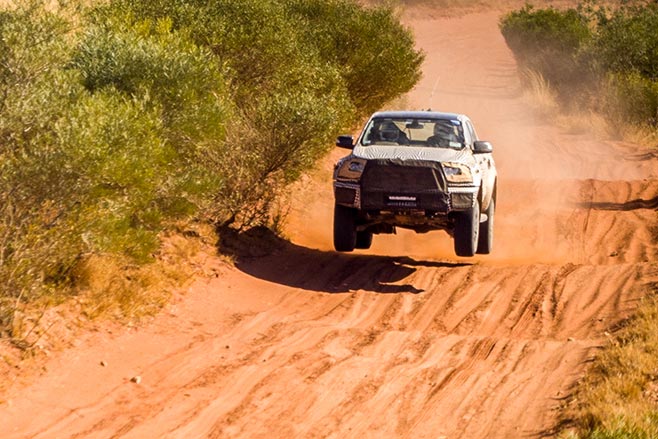
Much more likely is a powered-up version of the Ranger’s current 147kW/470Nm 3.2-litre five-cylinder turbo-diesel. The 169kW/564Nm offered by the Tickford-tuned Ford Ranger gives some hint as to some possible outputs.
The ultimate Ranger is coming in 2018. #RangerRaptor pic.twitter.com/Kc0FqVzNvN— Ford Australia (@FordAustralia) September 7, 2017
Whether the Ranger Raptor is able to deliver “an adrenaline-pumping experience” as Ford claims remains to be seen, however what is true is that this new Blue Oval ute “will create a class of its own among off-road performance vehicles”.
Full-size ute sales are currently booming in Australia, with the Toyota Hilux and Ford Ranger occupying first and second respectively on the 2017 sales charts (combined 4×4 and 4×2).
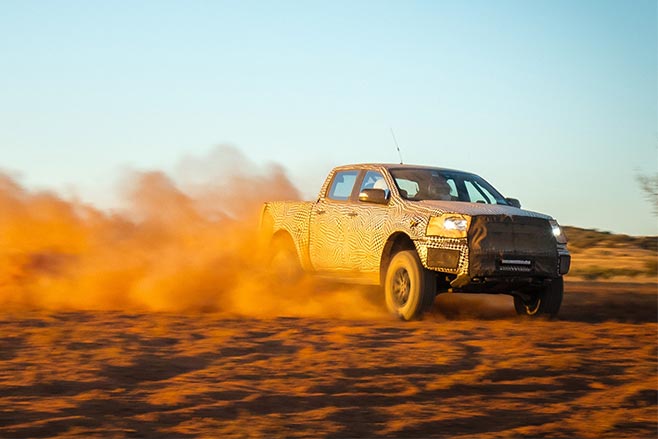
We’ll bring you more details on the Ford Ranger Raptor as soon as we have them.
FORD has finally confirmed the most highly anticipated ute release of 2018: a beefed-up, high-performance Ford Ranger Raptor is coming to Aussie roads.
To be sold under the Ford Performance umbrella, the Raptor flagship will showcase Australian-led engineering and usher in a host of performance and off-road upgrades to cement its place as Australia’s most extreme trade ute.
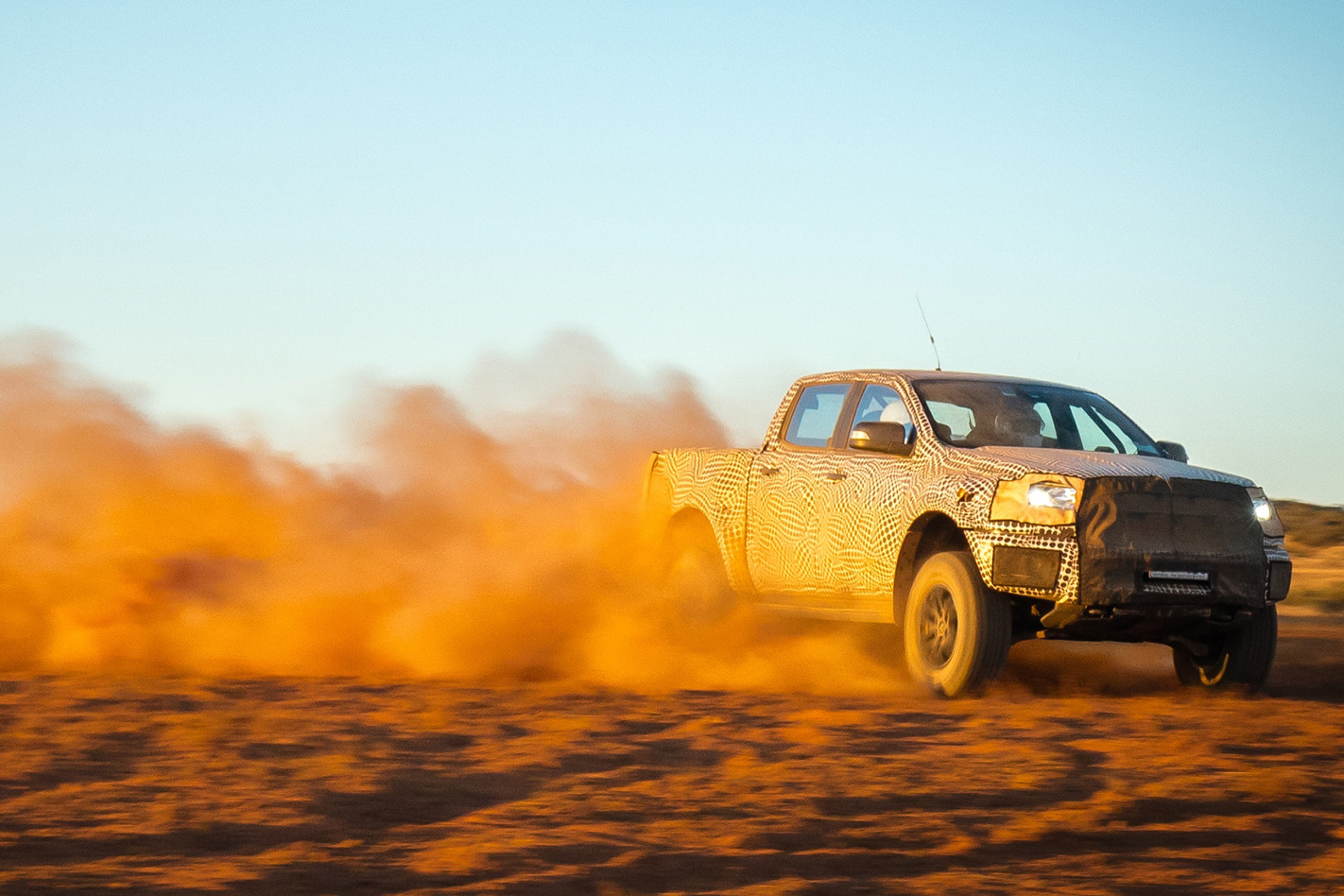
Raptor specific upgrades will extend to unique sheet metal, flared wheel arches and aggressive front-end bodywork likely to include a redesigned bonnet, bumper and front grille.
The rear end, too, will be styled more aggressively and feature a unique cargo bay required to house the Raptor’s wider rear rubber and overhauled suspension, which is tipped to ditch the regular Ranger’s leaf springs in favour of a version of the Everest’s Aussie-developed coil-sprung multi-link set-up.
Boosted ground clearance, wider tracks and robust wheels and tyres are also expected to hammer home the Raptor’s place as a variant built for hardcore off-roading and high-speed desert bashing.
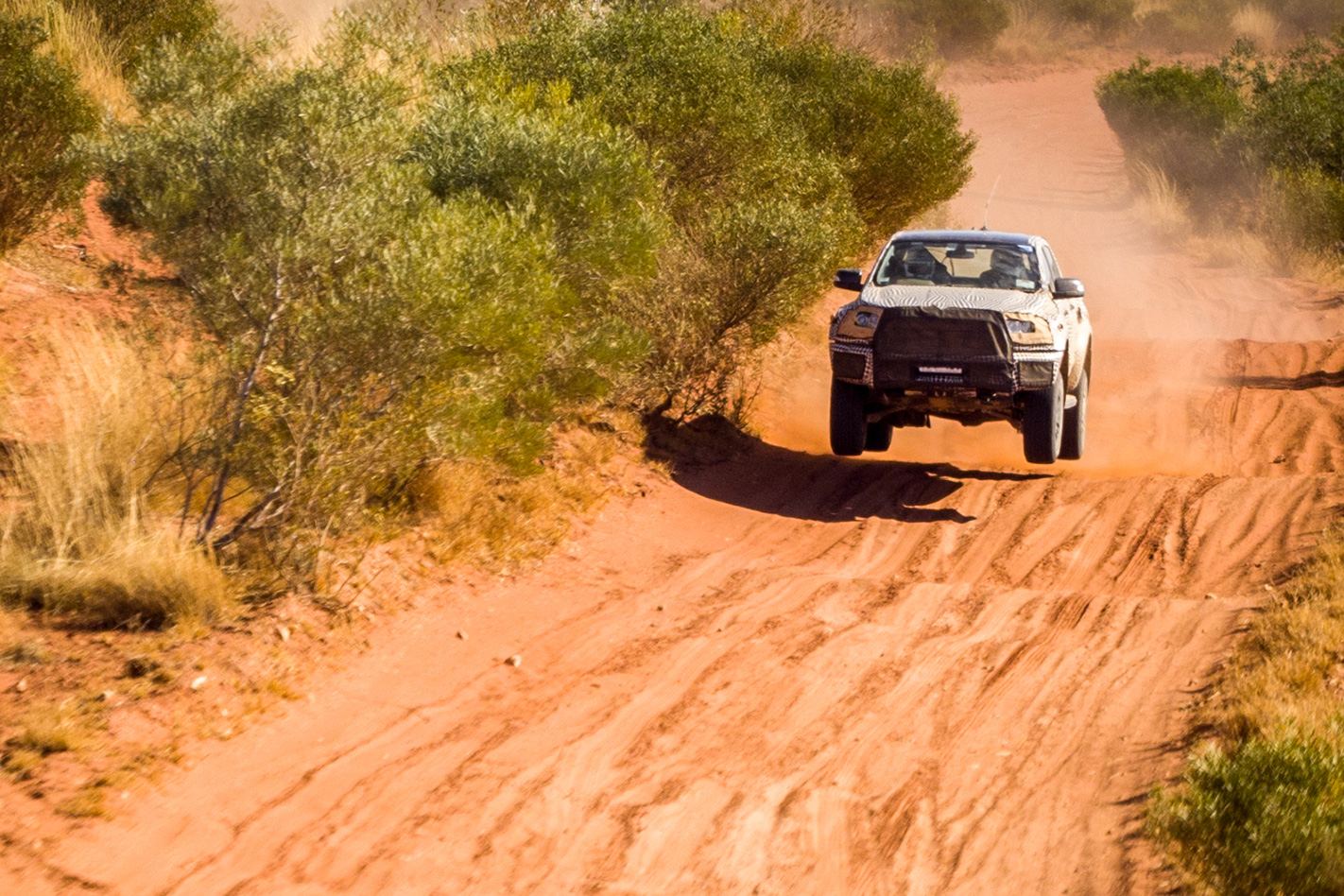
Also unclear is exactly when the Raptor will land in Australia, though expect it to go on sale in the second half of 2018 where it will inject a welcome dose of excitement to the big-selling Ranger line-up. Ford has sold more than 28,000 Rangers this year, making it the brand’s most popular model line by a factor of four. And given high-end XLT and Wildtrack (below) variants make up around 60 percent of the current Ranger model mix, there’s clearly a market for an even more expensive flagship.
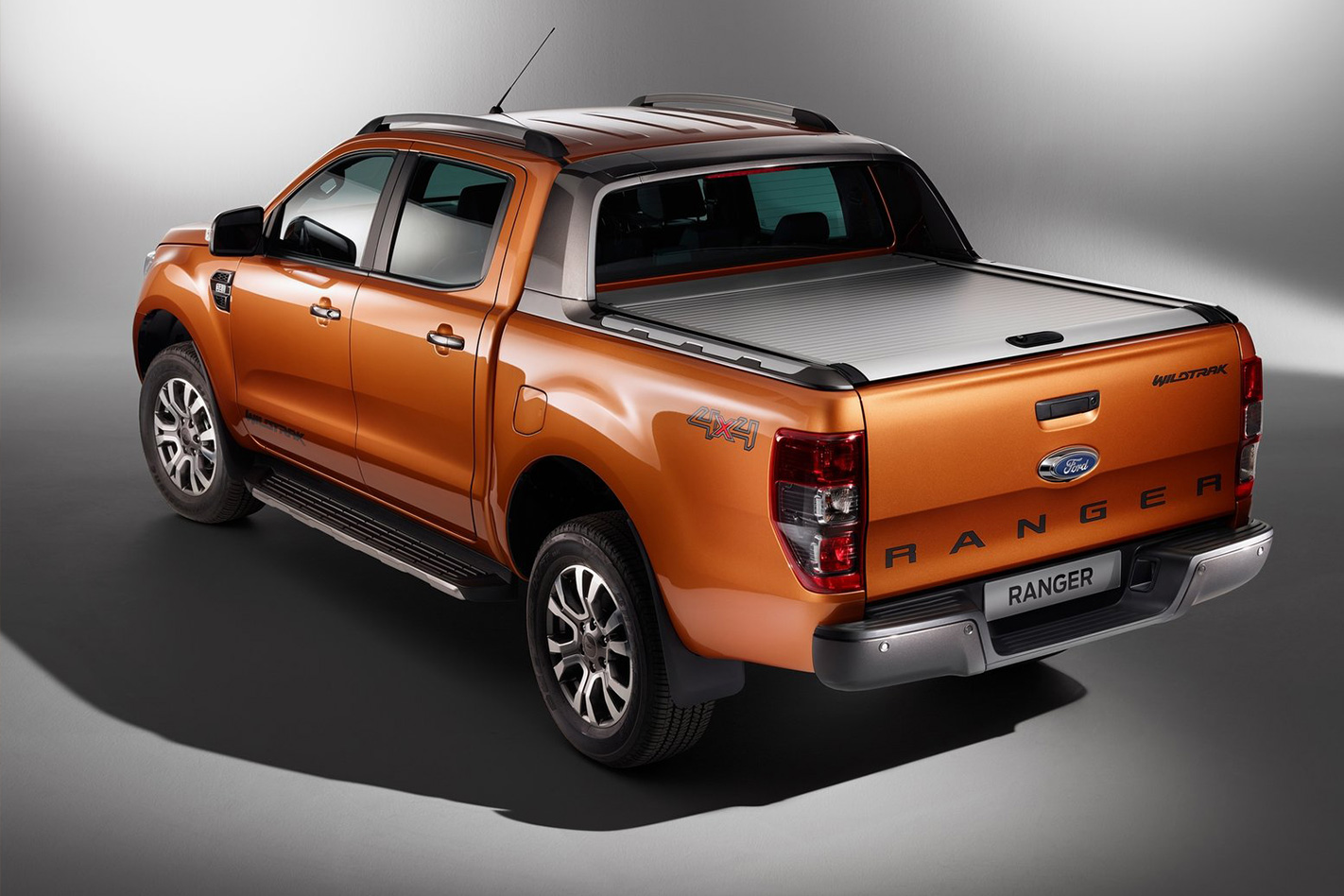
Ford’s bid to bring the Raptor to Australia hasn’t been without a few speedbumps, with the company locked in a legal despute with Toyota over the use of the Raptor name.
Hino Motors, the truck division of Toyota, previously owned the Raptor trademark after securing the rights to it in the early 1990s. Though it appears Hino has never used the name, it had ensured its hold over it was regularly updated and refused to relinquish ownership to Ford.
The Blue Oval tried to strip Hino of the trademark “on the basis of alleged non-use”, but IP Australia told Wheels, “Hino Motors opposed this request for removal action.”
The two companies were understood to be in a “cooling-off period” before further negotiations continued, though Ford has since told Wheels “there are no issues anymore”. How the agreement was reached, given the Ranger is currently locked in an intense sales battle with the Toyota Hilux for trade-ute supremacy in Australia, remains unknown.
The new Lamborghini Aventador S Roadster has been unveiled ahead of the 2017 Frankfurt Motor Show.
With the same stonking 544kW 6.5-litre atmo V12 as the Coupe, the topless Lambo is only a tenth slower than its sibling.
The 0-100km/h spring of three seconds is achieved through the use of carbon fibre, and the result is a roadster that weighs only 50kg more than the roofed version.
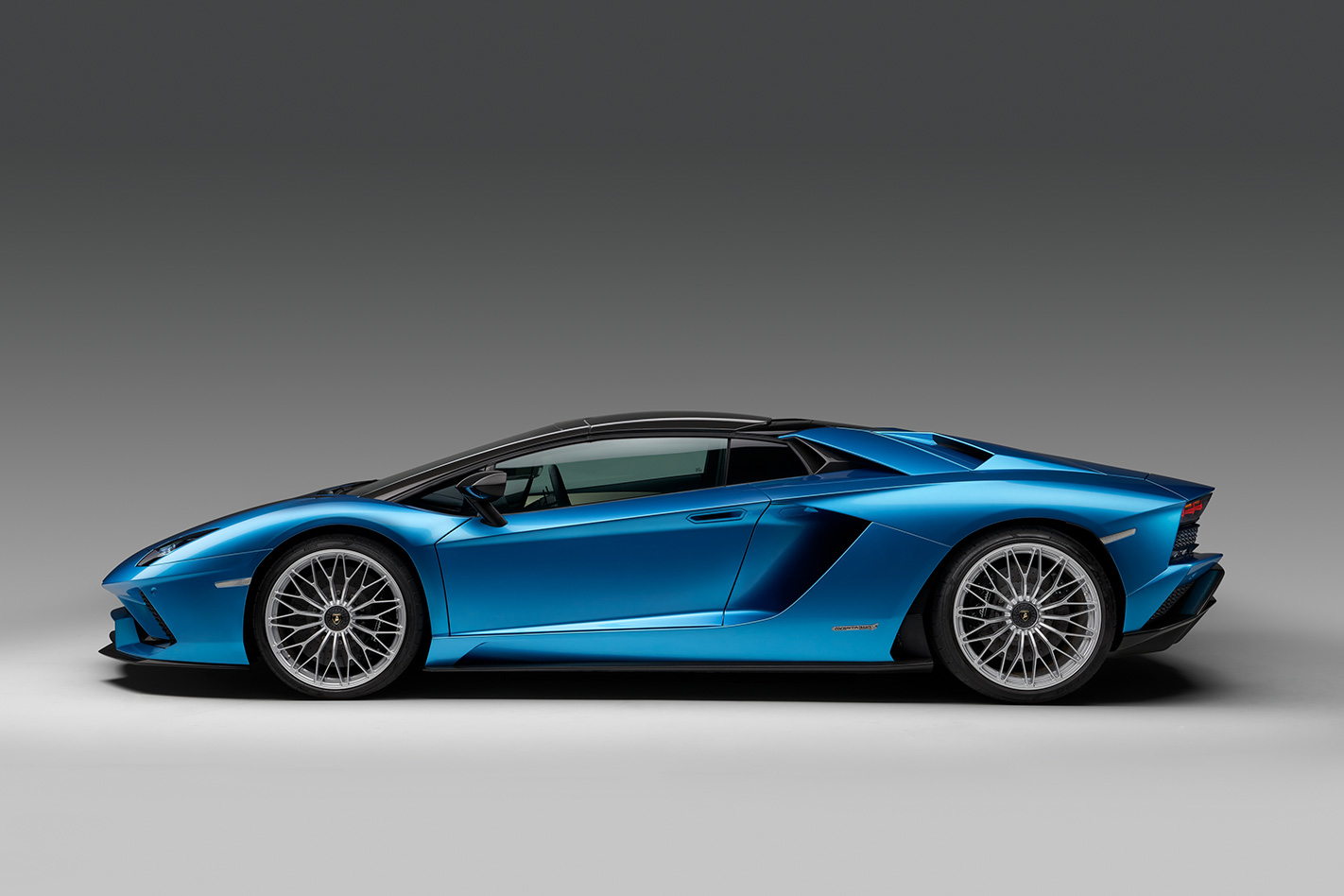
Lamborghini says the Aventador S roadster’s rear “sports distinctively different lines to the coupé”, though this is mostly due to the engine cover being a ‘bridge’ rather than the almost vent-like rear blinds seen on the coupe.
In addition, the space behind the driver can be blocked with a small rear window when the roof is attached, as it can be opened without the roof for better access to the V12 soundtrack.
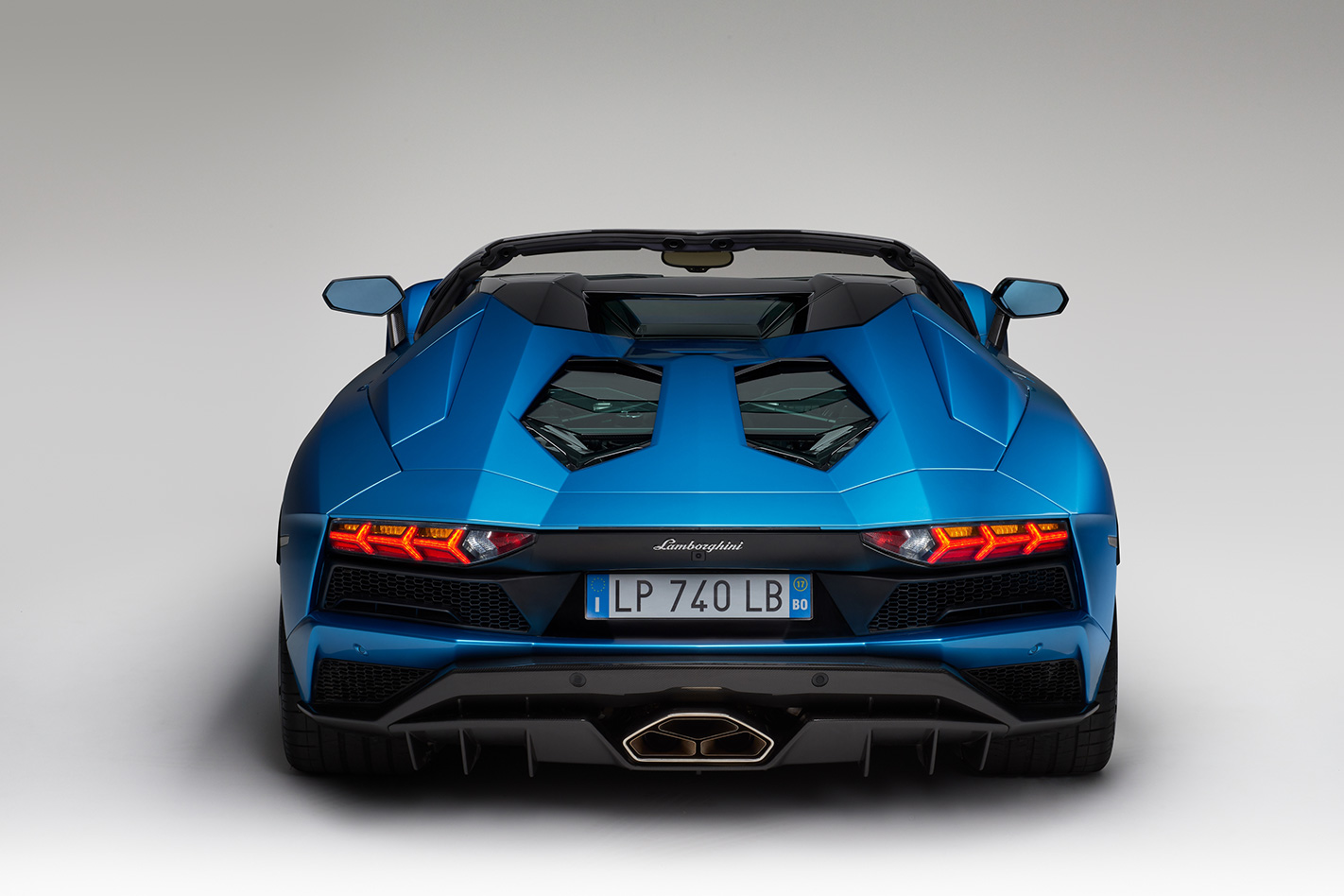
“The new Aventador S Roadster sets new benchmarks in technology and performance on both road and track, with the roadster version adding a new dimension in driving enjoyment,” says Domenicali.
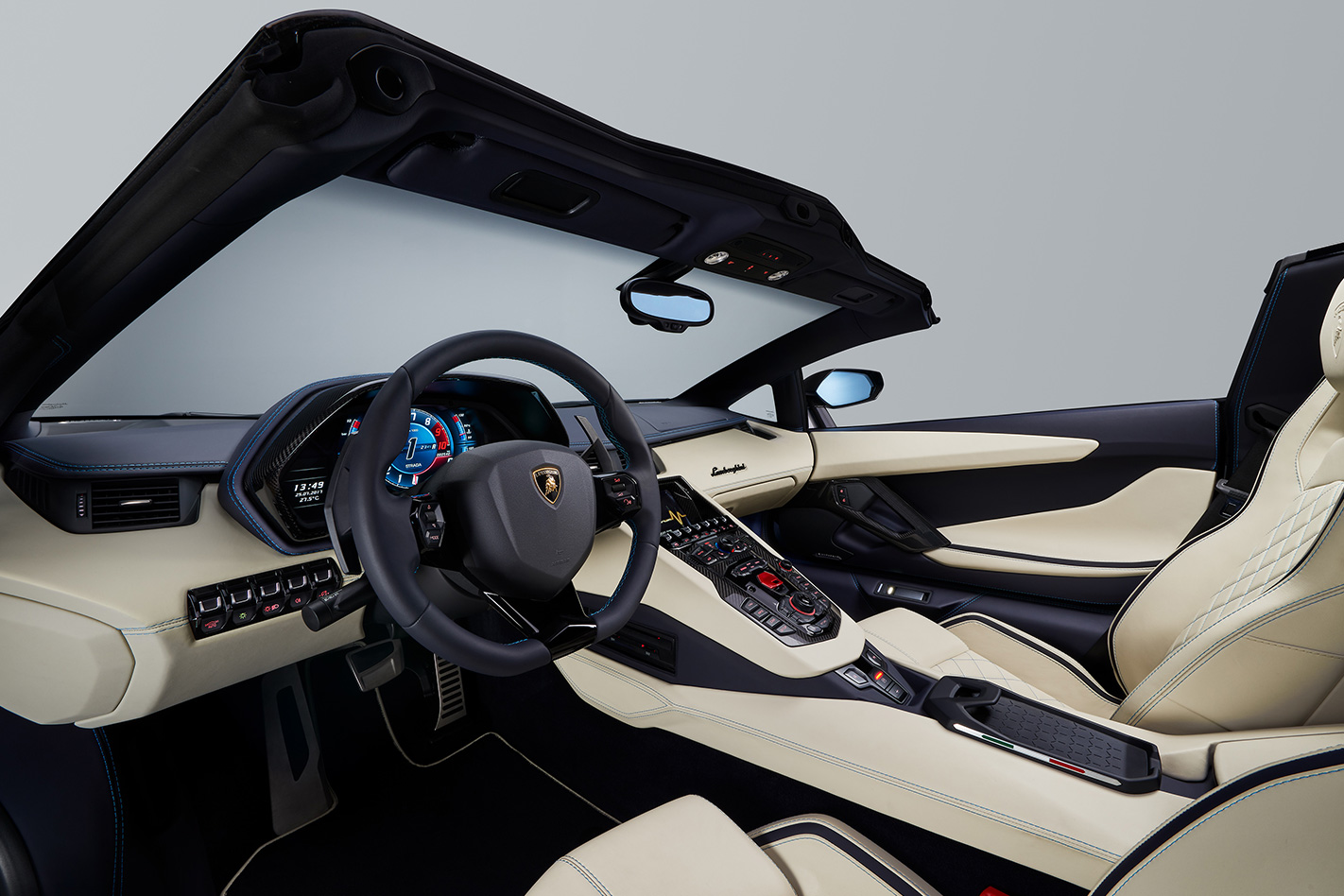
International pricing for the Lamborghini Aventador S Roadster has been announced for Europe, Japan, China, the UK, and US, but Australian pricing and market availability is yet to be confirmed
MINI has announced new pricing and specifications for the Mini Clubman range, highlighted by new standard technology.
The Mini Connect system is now standard across the Clubman range, allowing for better phone connectivity and integration.
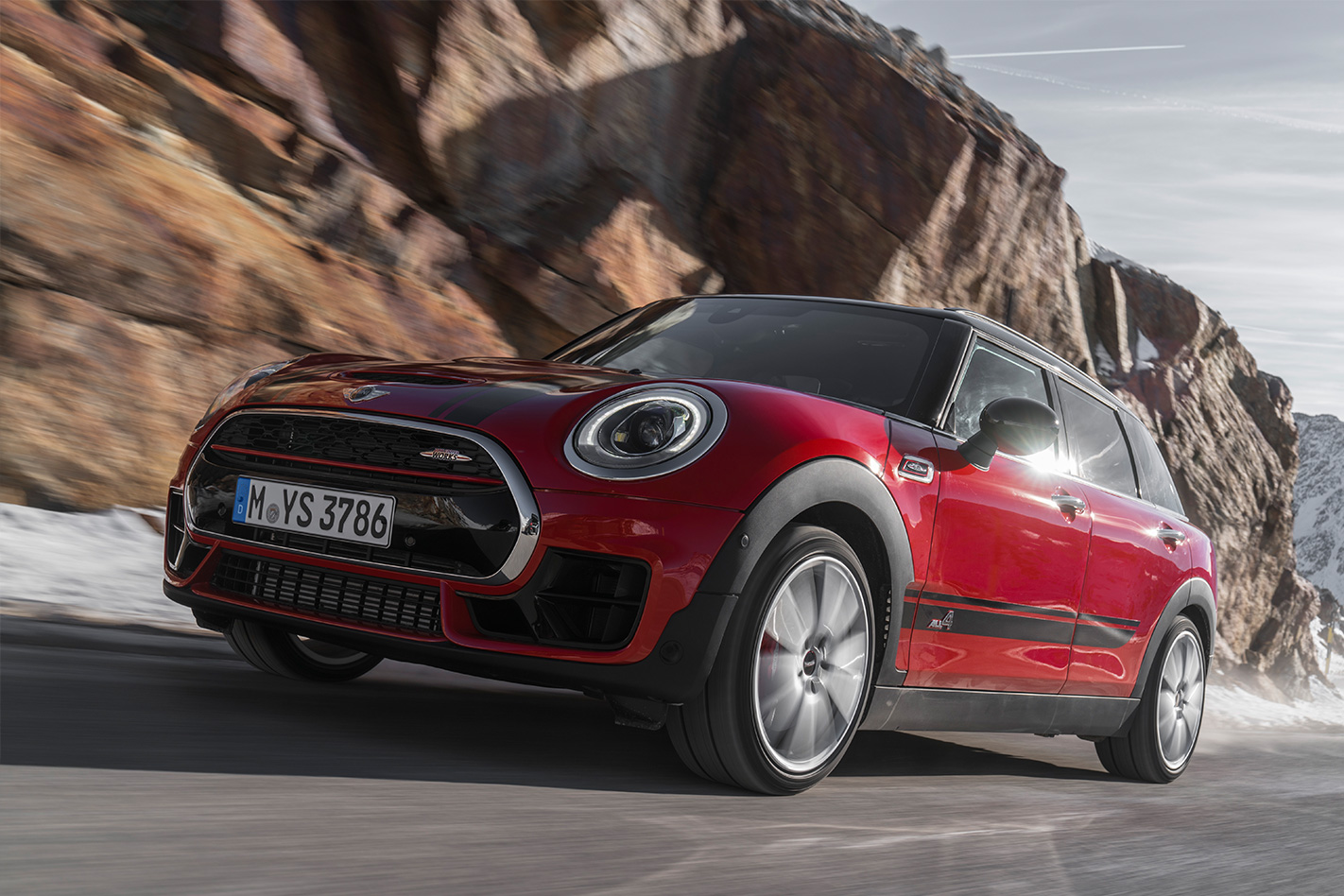
An improved nav system is now standard on the base-model Cooper, along with reversing camera, a six-speed automatic transmission, digital radio, and an electronic diff lock.
The Cooper S adds additional driver modes, 18-inch alloy wheels, an eight-speed automatic gearbox, comfort access, and a JCW sports steering wheel in leather as standard.
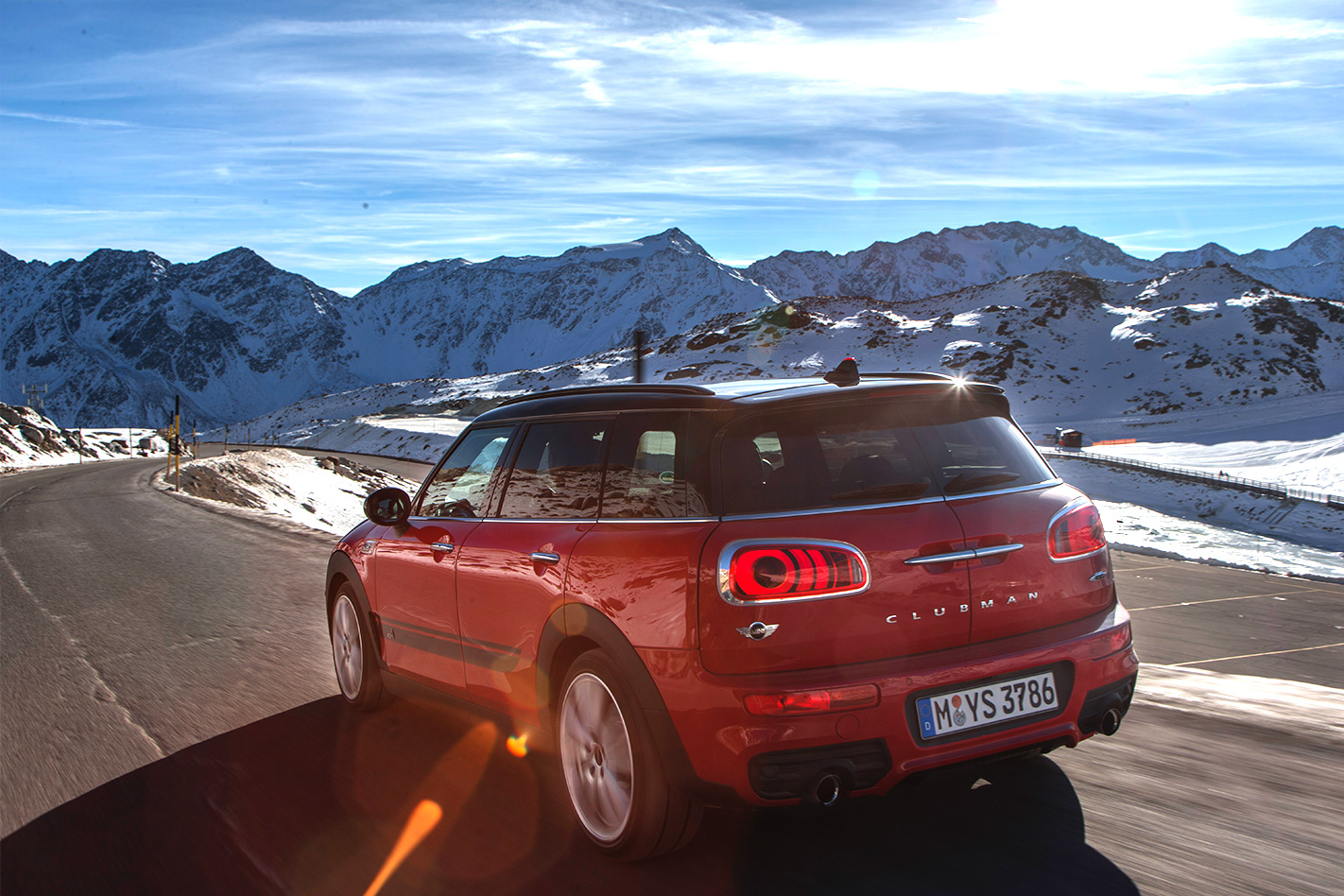
The range-topping John Cooper Works Clubman All4 is the most powerful in the range, and boasts an all-wheel-drive system, full leather upholstery, 19-inch alloy wheels, an eight-speed transmission (a six-speed manual is a no-cost option), JCW sports suspension, and a 12-speaker Harman/kardon Hi Fi as standard.
“The Clubman has delivered on its promise,” said MINI Australia General Manager, Tony Sesto.
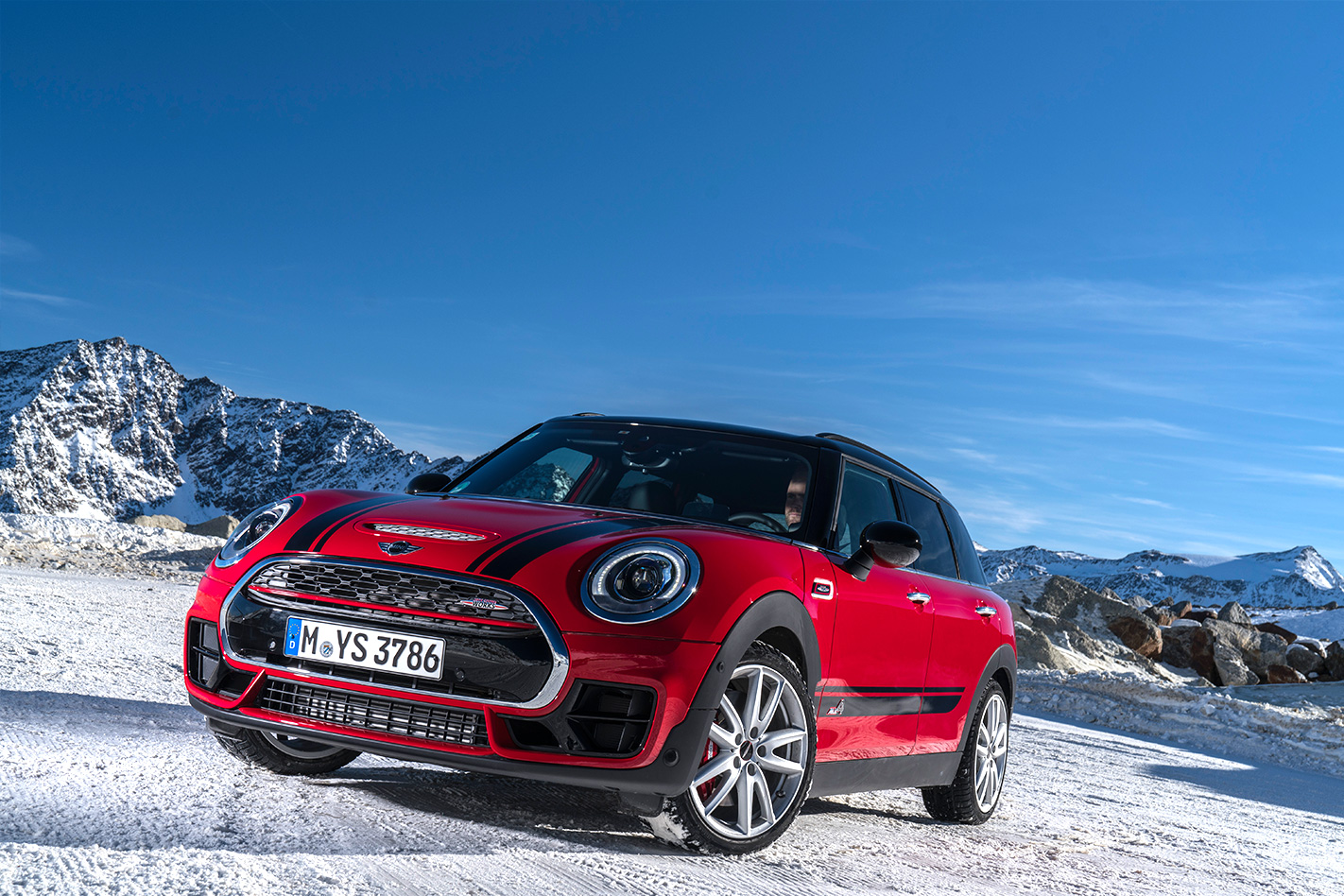
“Its unique design offers mass appeal, from those seeking individuality to those taking the family on a road trip. Now with the latest connectivity and value-added specification, the concept is more appealing than ever.”
Full pricing and specifications below:
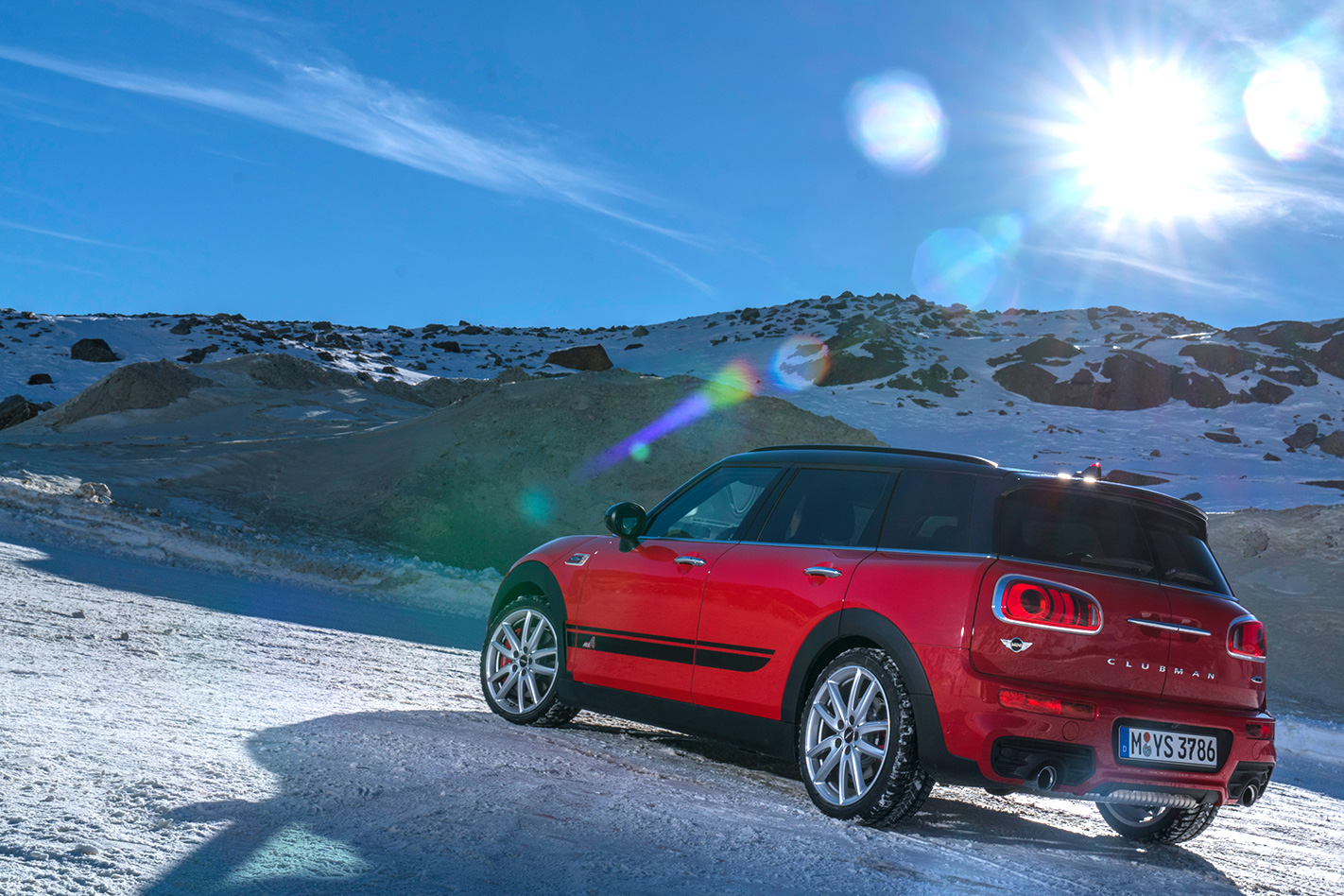
MINI Clubman range pricing
- MINI Cooper Clubman: $36,900
- MINI Cooper S Clubman: $44,900
- MINI John Cooper Works Clubman All4: $54,900
Specs
Cooper
Engine: 1.5-litre 3-cyl turbo Power/Torque: 100kW/220Nm 0-100km/h: 9.1sec Fuel economy: 5.4L/100km
Cooper S
Engine: 2.0-litre 4-cyl turbo Power/Torque: 141kW/280Nm 0-100km/h: 7.1sec Fuel economy: 5.9L/100km
JCW All4
Engine: 2.0-litre 4-cyl turbo Power/Torque: 170kW/350Nm 0-100km/h: 6.3sec Fuel economy: 7.2L/100km
Toyota is marking the end of Australian production with a limited edition hybrid Camry.
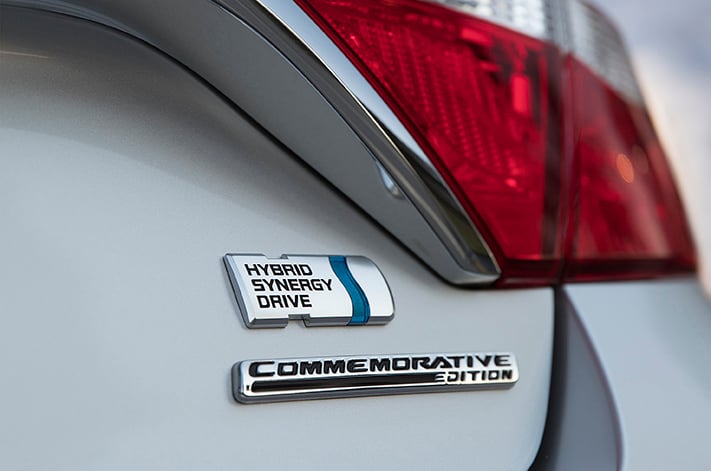
Just 54 of the Commemorative Edition Camry Atara SL sedans, are being produced – one for each year that Toyota was building cars in Australia.
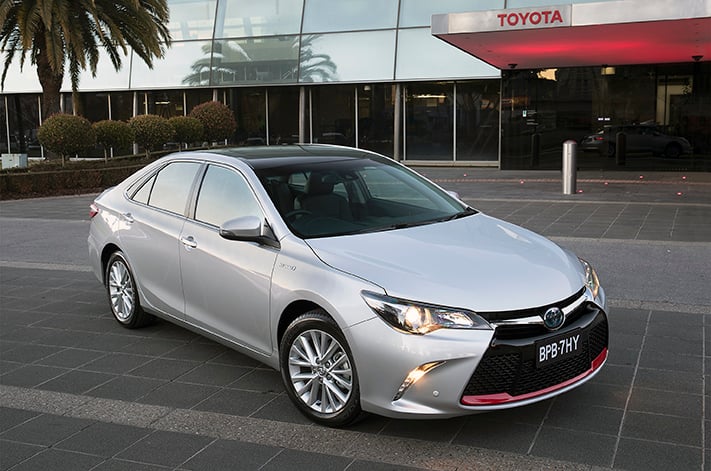
The signature cars will be distinguished by a unique two tone paint job featuring a metallic silver paint body with a black roof and sporty red stripe along the bottom of the front grille.
The interior features blue ambient lighting which illuminates the footwells, and Camry-branded scuff plates, sports mesh trim, and commemorative edition floor mats and badge.
The 54 Commemorative Camrys will retail for $41,150,just $710 more than the standard hybrid Camry Atara SL.
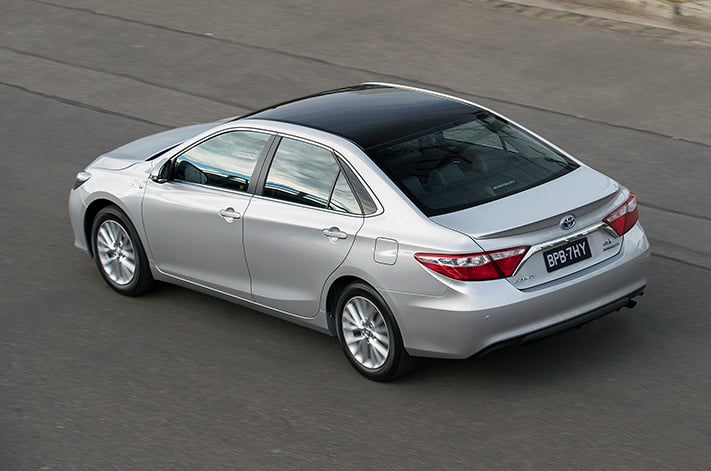
Only 52 of the total built will be available for the public, with one being kept by Toyota Australia and another destined for display at the TMC Museum in Japan.
Toyota Australia President, Dave Buttner, said the parent company’s decision to secure one for prosperity confirms its “high regard for the employee commitment, local engineering input and quality achieved in 54 years of local manufacture.”
The significance of the Australian-built Camry has been largely overshadowed by the Holden Commodore and Ford Falcon, even though its hybrid version is the most advanced production car ever built here.
The Camry has consistently been Australia’s top-selling medium car since 1994 and enjoyed substantial export numbers, with 1.2 million of the 2.1 million built here sent overseas.
An all-new, fully imported eighth-generation Camry will continue the nameplate in Australia from next year.
One of MOTOR’s most exciting issues has just hit the shelves, and the reason why it’s so exciting…
Well, the cover should be a dead giveaway.
Have a scroll through some of the mag’s highlights here before you go pick one up for the full story, available at newsagents or online. So, what can you expect from this month? Well…
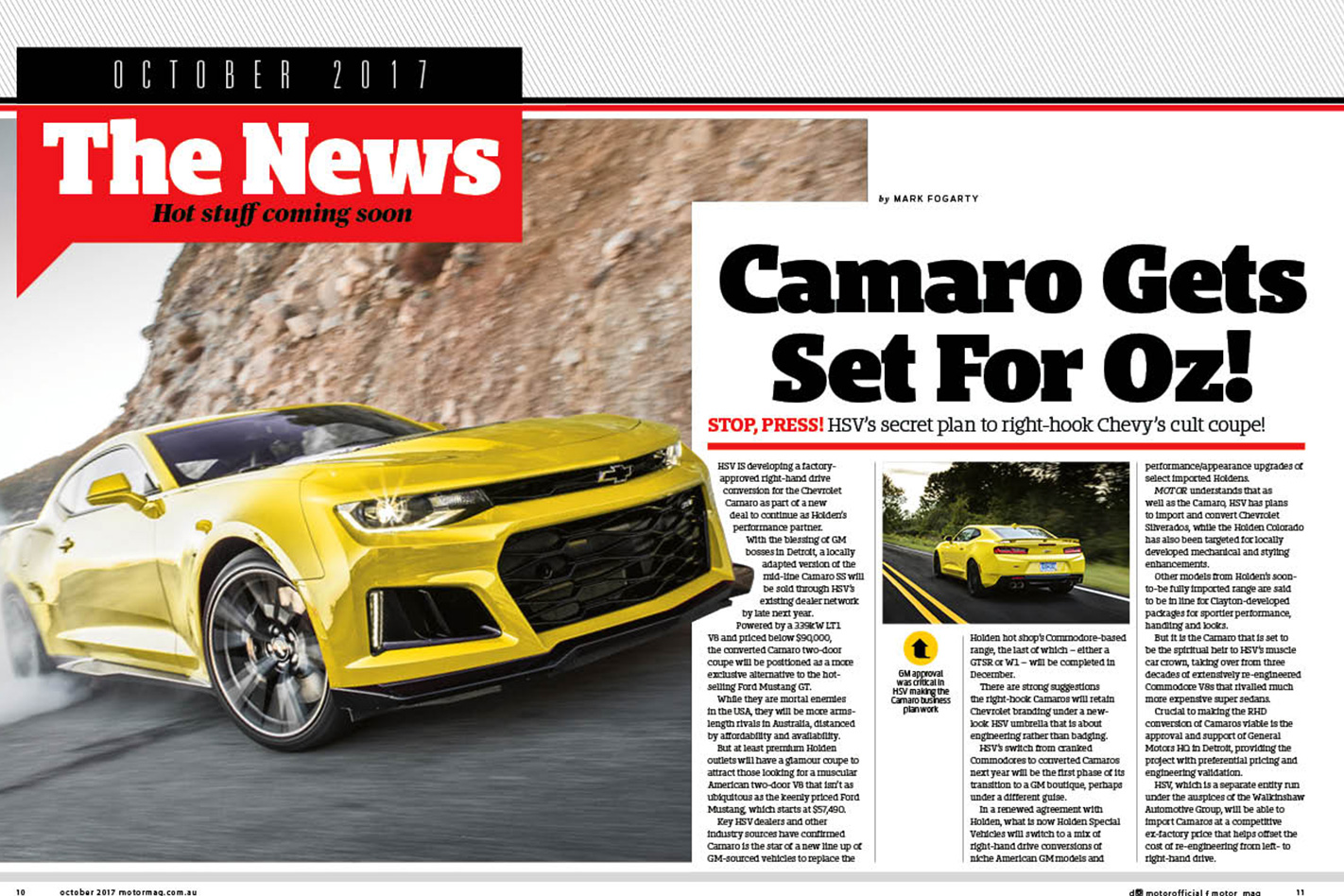
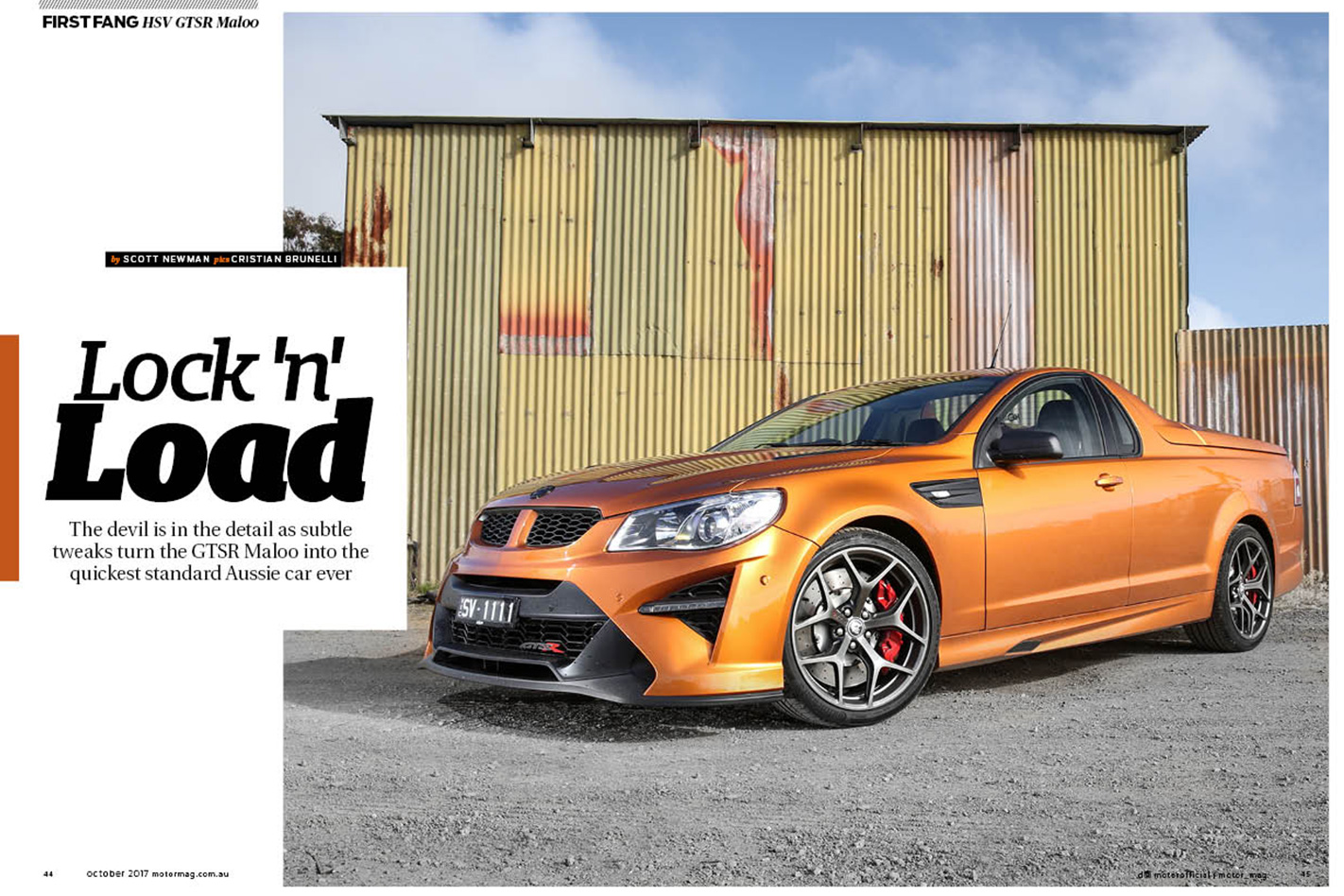
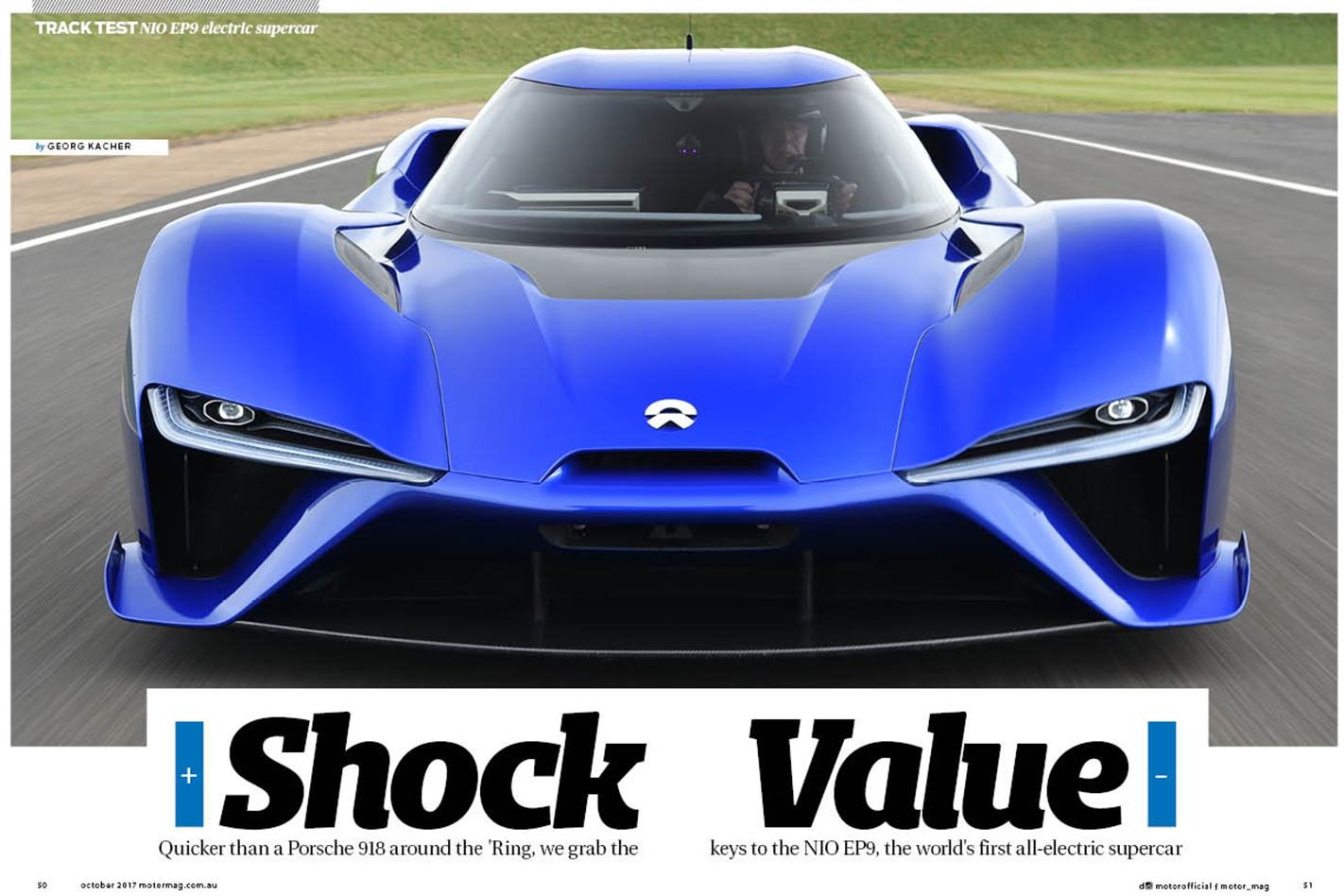
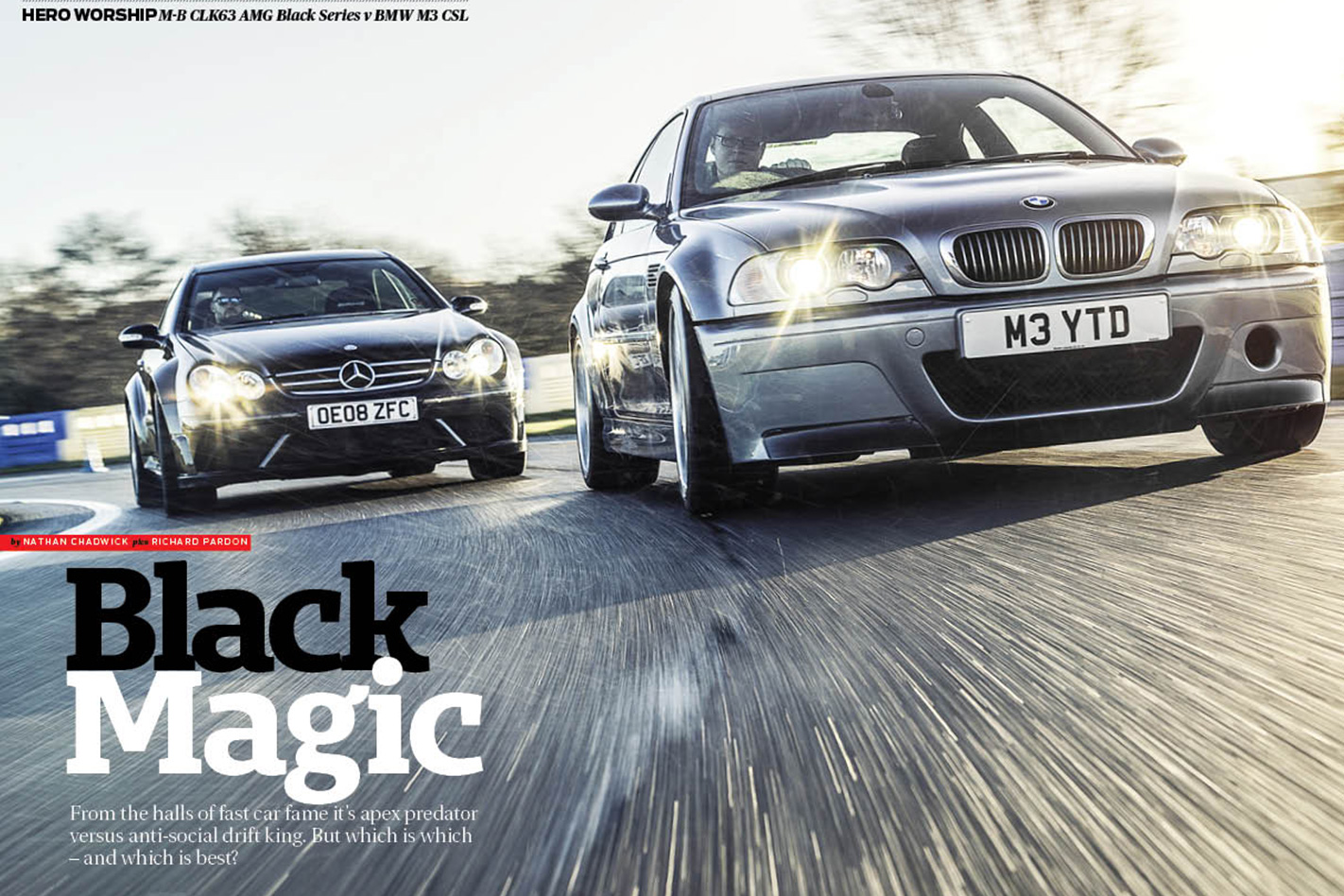
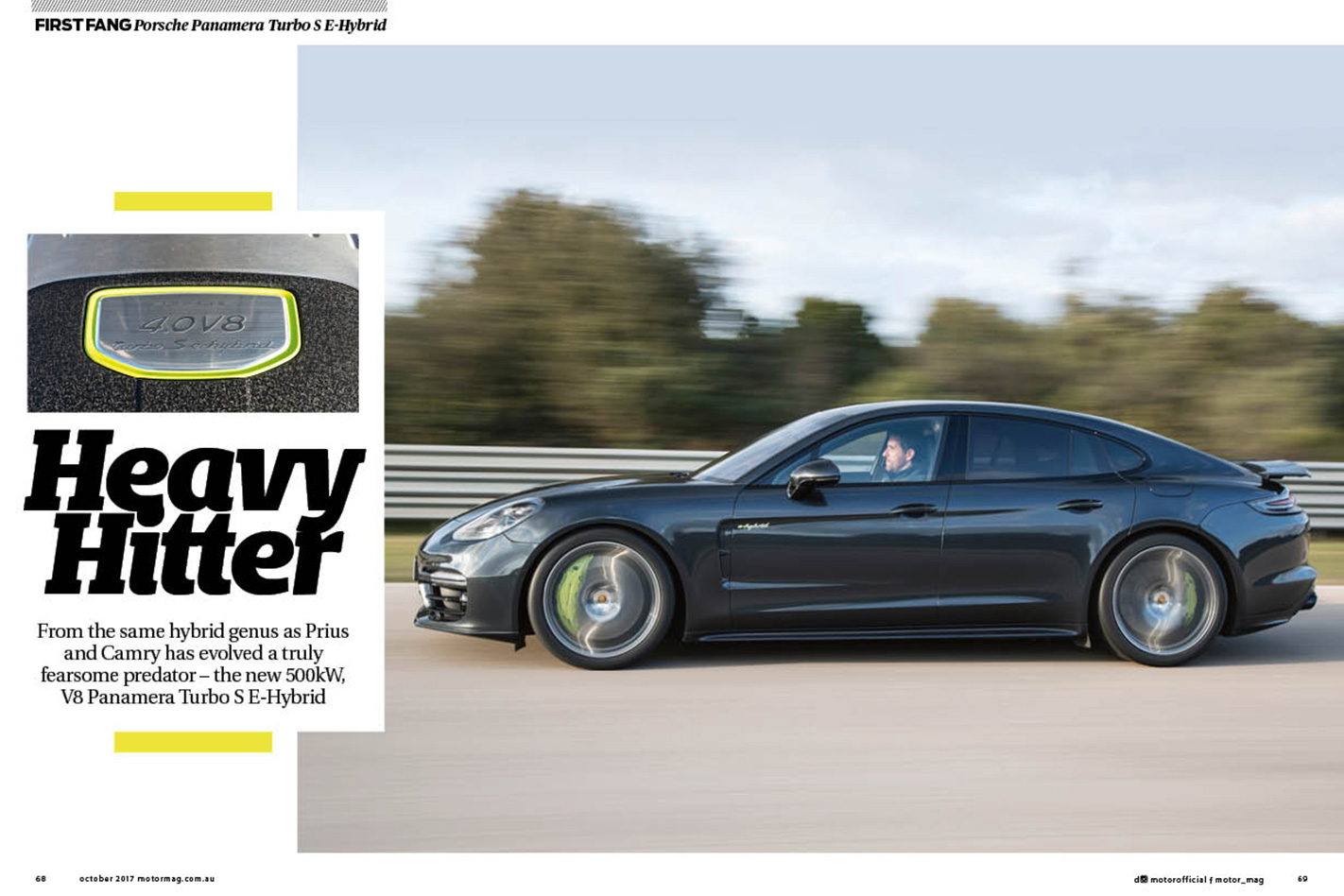
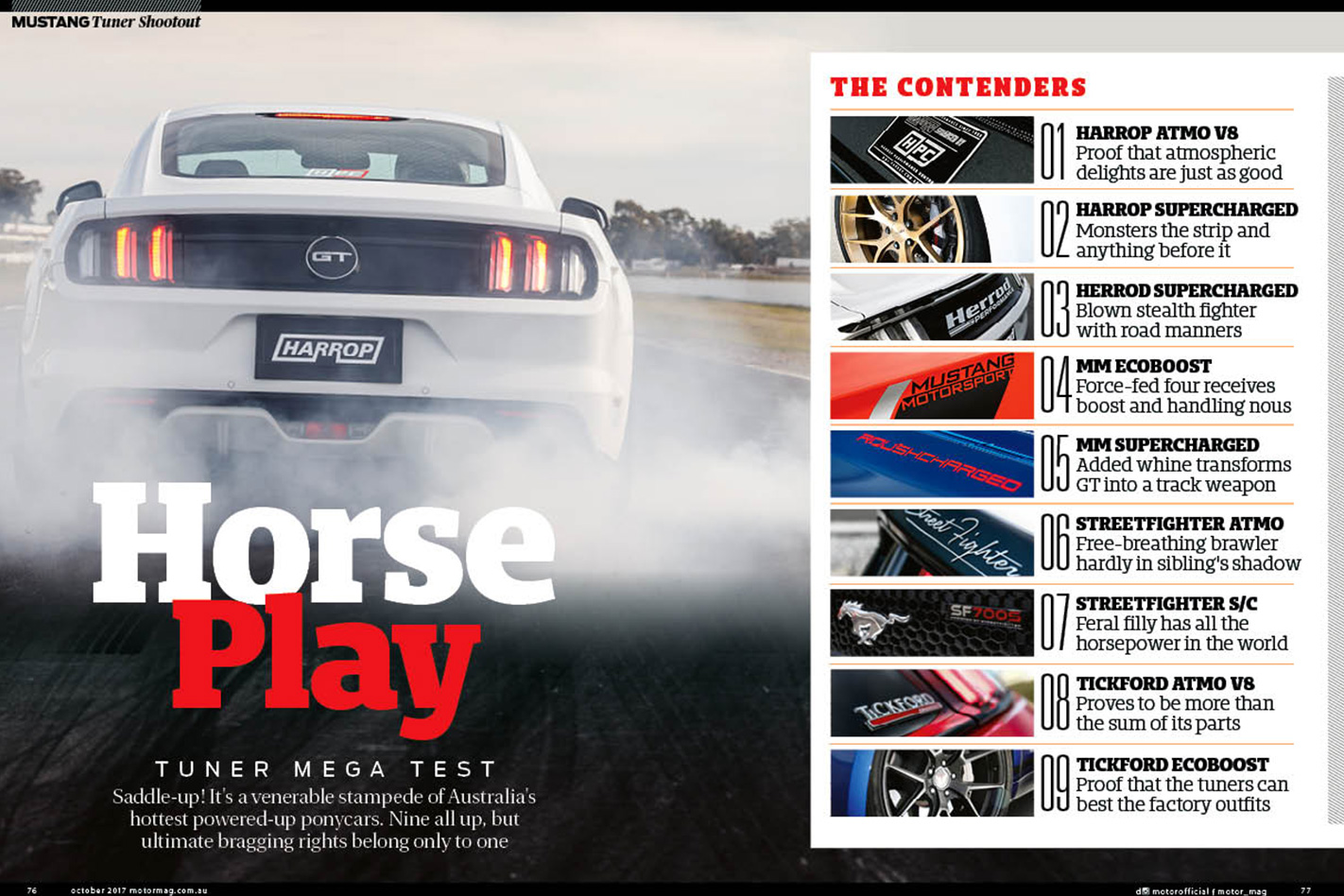
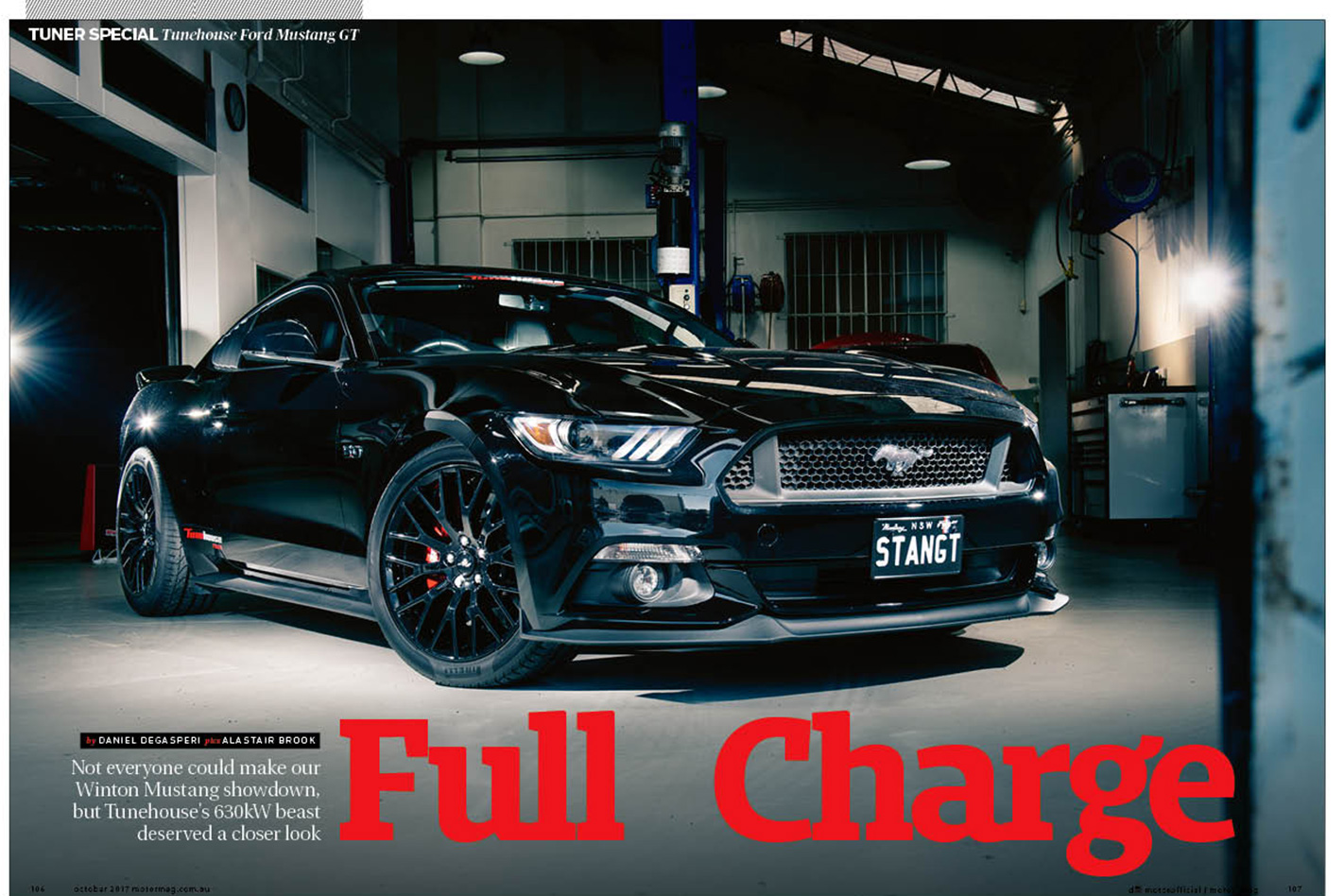
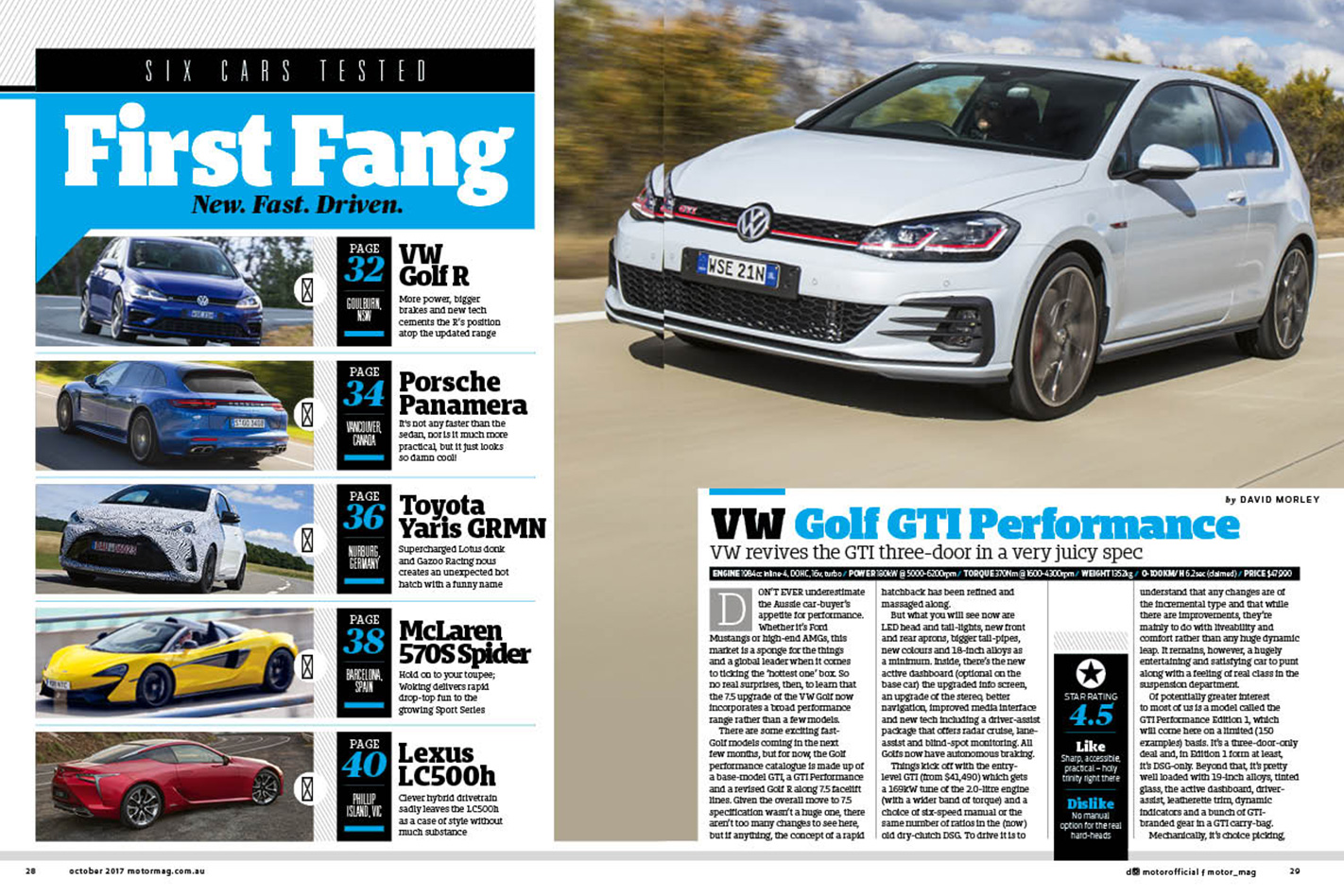
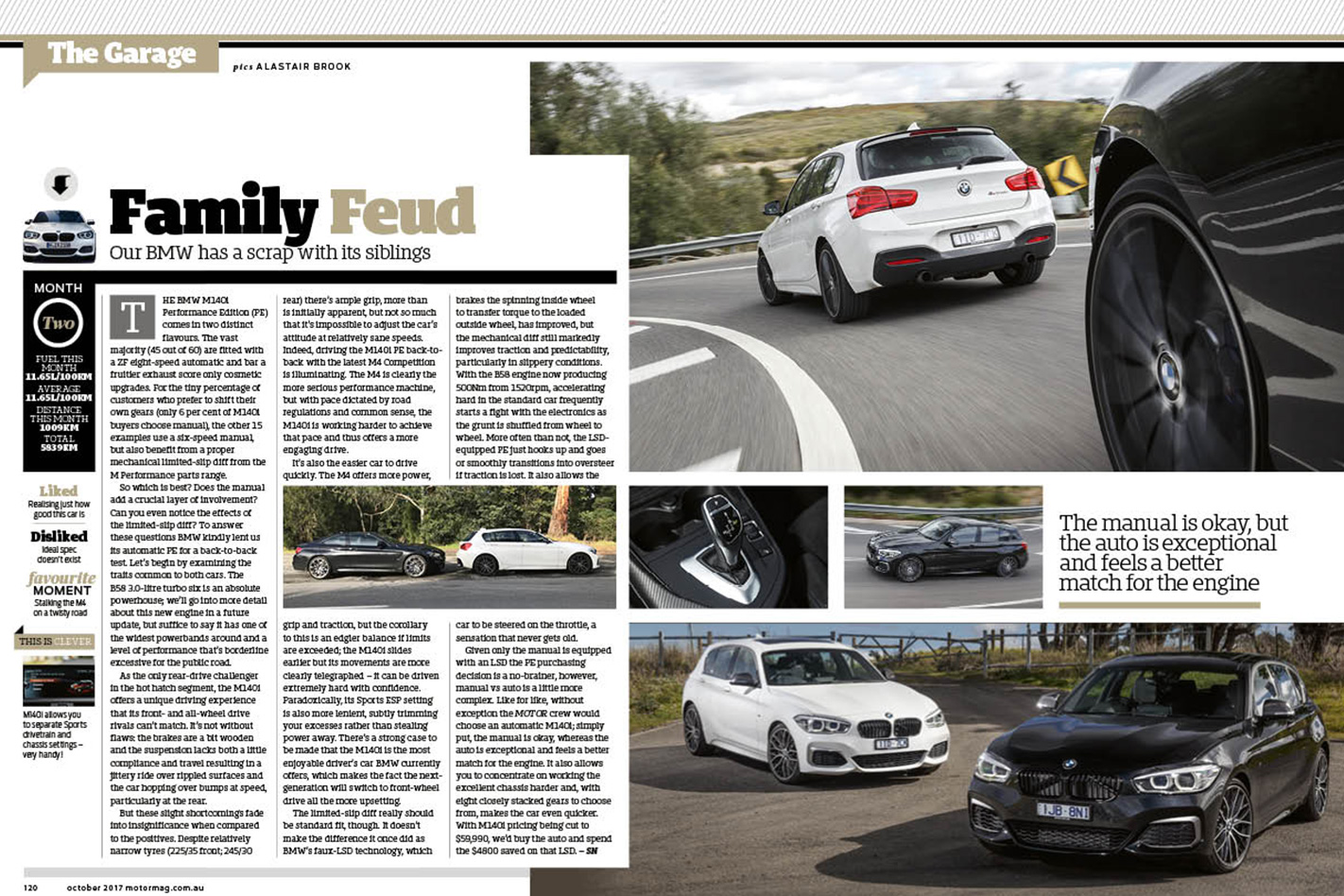
Plus, we explain F1’s new halo, we see what Australians are buying new right now, and we give you some hints to get your Christmas shopping sorted early!
Get in!
Here are a few questions for you to chew over. What was the last big thing in motoring technology? Tesla making electric vehicles desirable? The Toyota Prius bringing hybrid powertrains to the masses before that?
And prior to that? Possibly Audi’s quattro bringing four-wheel drive out of the farmer’s paddock.
We’ve seen a few false dawns such as twin-clutch transmissions and downsized turbo engines that promised much but struggled to deliver, and there’s little doubt that autonomous driving tech will be the next big disruptive change. But there’s still space for genuinely innovative steps forward and Mazda might just have made a breakthrough that could have huge developments for the longevity of the internal combustion engine.
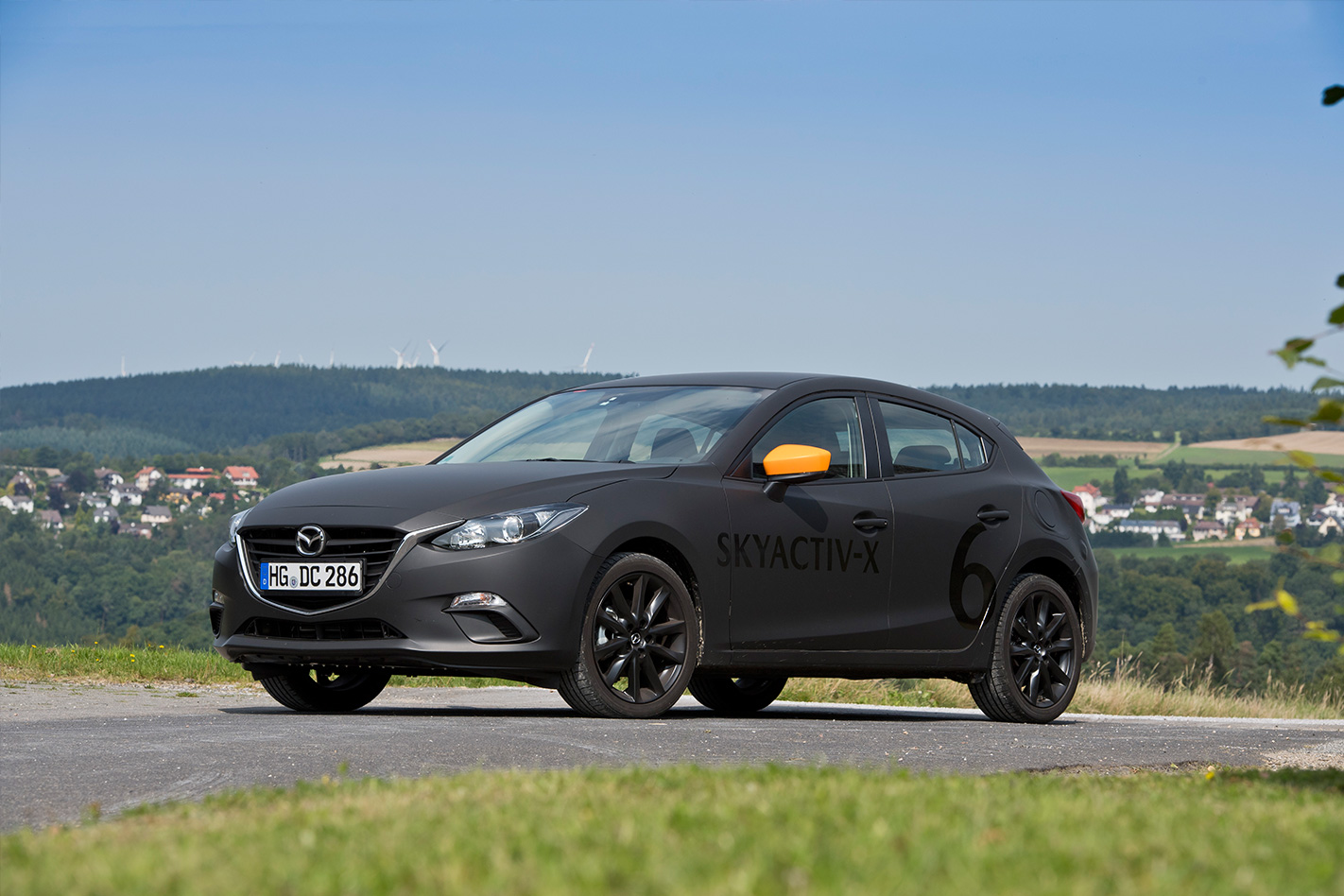
Squashing an air/fuel mixture until it spontaneously combusts has, until now, been the preserve of diesel engines. In 2008, Mazda started a project to develop a true Homogenous Charge Compression Ignition (HCCI) powerplant, but like Daimler who had tried this before, was defeated by the technical challenges. Mitsuo Hitomi, Mazda’s Managing Executive Officer in charge of Technical Research Center and Integrated Control System Development takes up the story.
“Initially we started with pure HCCI combustion but we realised it’s impossible to control. Two years ago we started using a spark plug to control combustion. If the intake air temperature is too high the combustion rate is too high and the engine is very noisy. If it’s too low, the combustion process is unstable. You have to control the intake temperature within three degrees. Impossible. So we changed the concept,” he said.
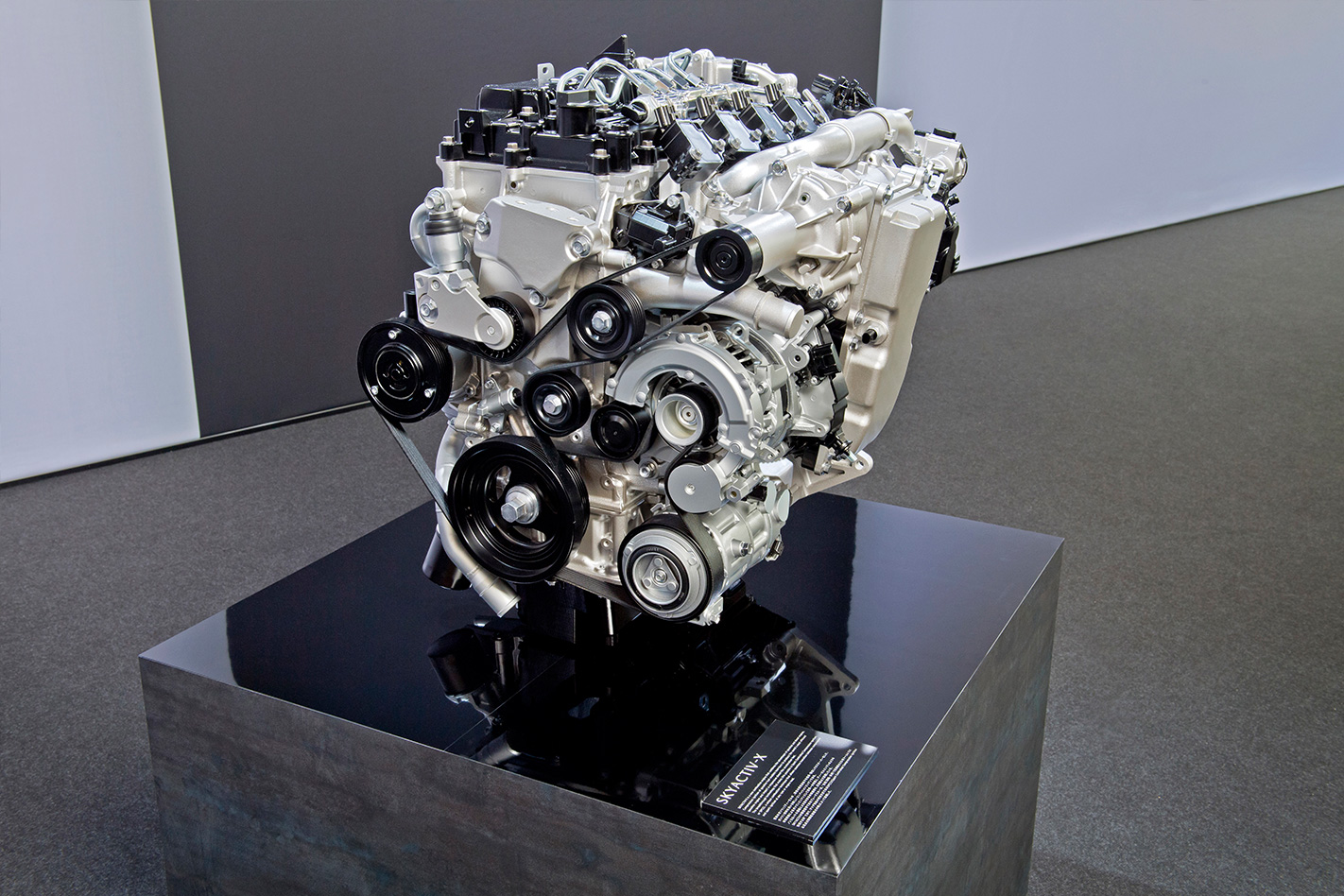
In order for any of this to work, a radical approach to fuelling was first required. The SkyActiv-X engine has a hefty Rootes-type supercharger bolted to its front end and its job is to throw huge quantities of air into the combustion chamber. Normally, this is matched by a commensurately stiff measure of fuel, thus developing plenty of power, but Mazda realised that in order for compression ignition to occur, the air/fuel mix had to be incredibly lean.
Your car probably mixes air and fuel in a typical stoichiometric 14.7:1 ratio. The SkyActiv-X engine, in its lean spark ignition mode, burns in a 29.4:1 ratio and, when operating in ‘pure’ compression ignition mode, ups that to 36.8:1. Hence the need for the supercharger to get that huge quantity of air into the combustion chamber at low rpm.
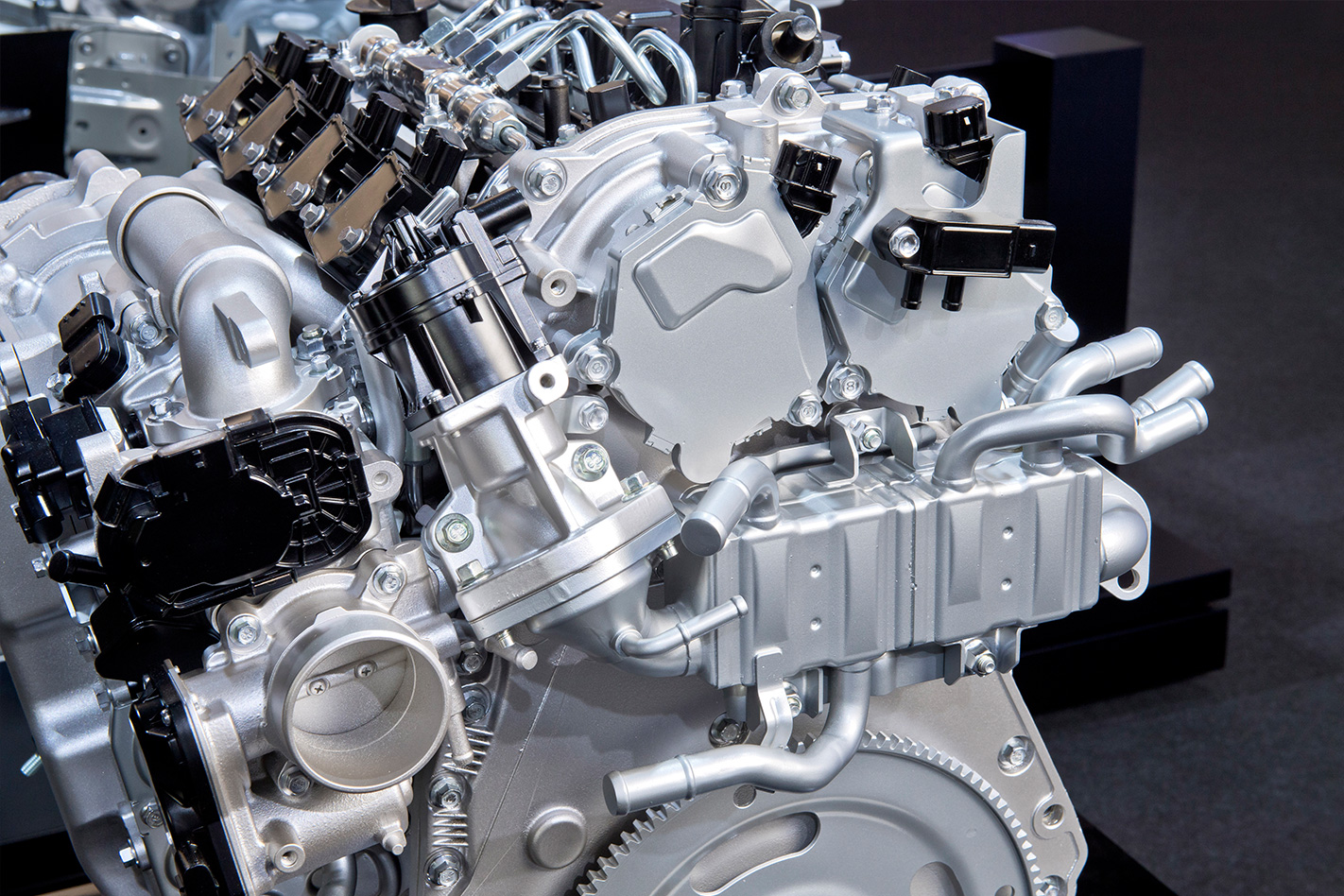
The calibration required to control this Spark Controlled Compression Ignition (SCCI) process is dizzyingly complex, Mazda wheeling out a series of charts demonstrating at which points in the rev range ‘true’ compression ignition was occurring and where more traditional spark ignition was doing much of the heavy lifting. Developing a stable switching point between the two was a huge technical challenge.
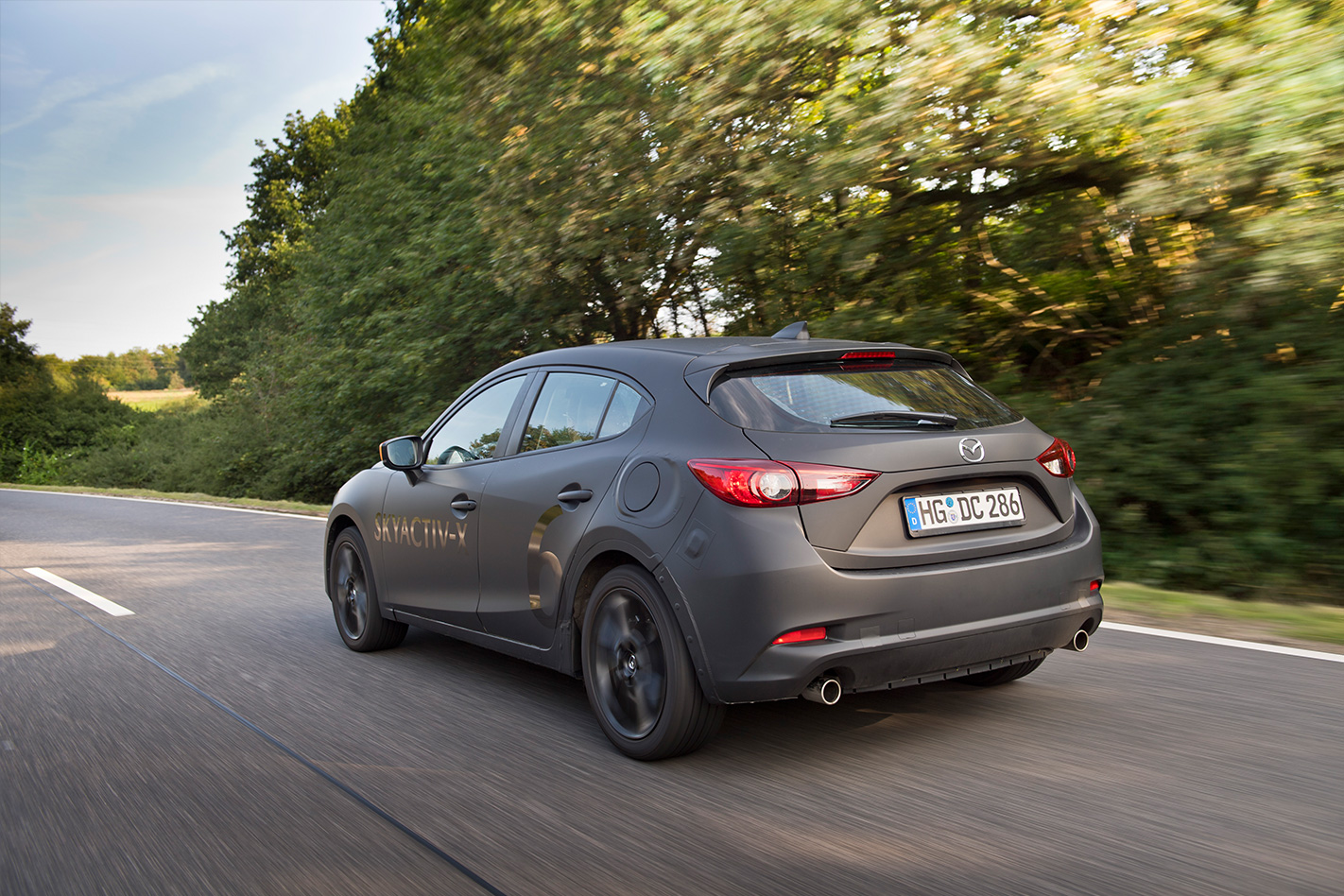
Getting behind the wheel of one of the test mules was instructive. First off, no, it doesn’t sound like a diesel. It’s marginally more sibilant than a conventional petrol engine but not by much. Rolling gently onto the throttle pedal provoked a half-second diesel-like flutter of pinking, but Mazda is confident that this can be calibrated out of existence by the time the engine is ready for production. Otherwise it’s wholly transparent tech. The engines as tested made 190hp and 230Nm, and Mazda promised the performance of a 2.0-litre MX-5 with the economy of a 1.5-litre Mazda2 diesel.
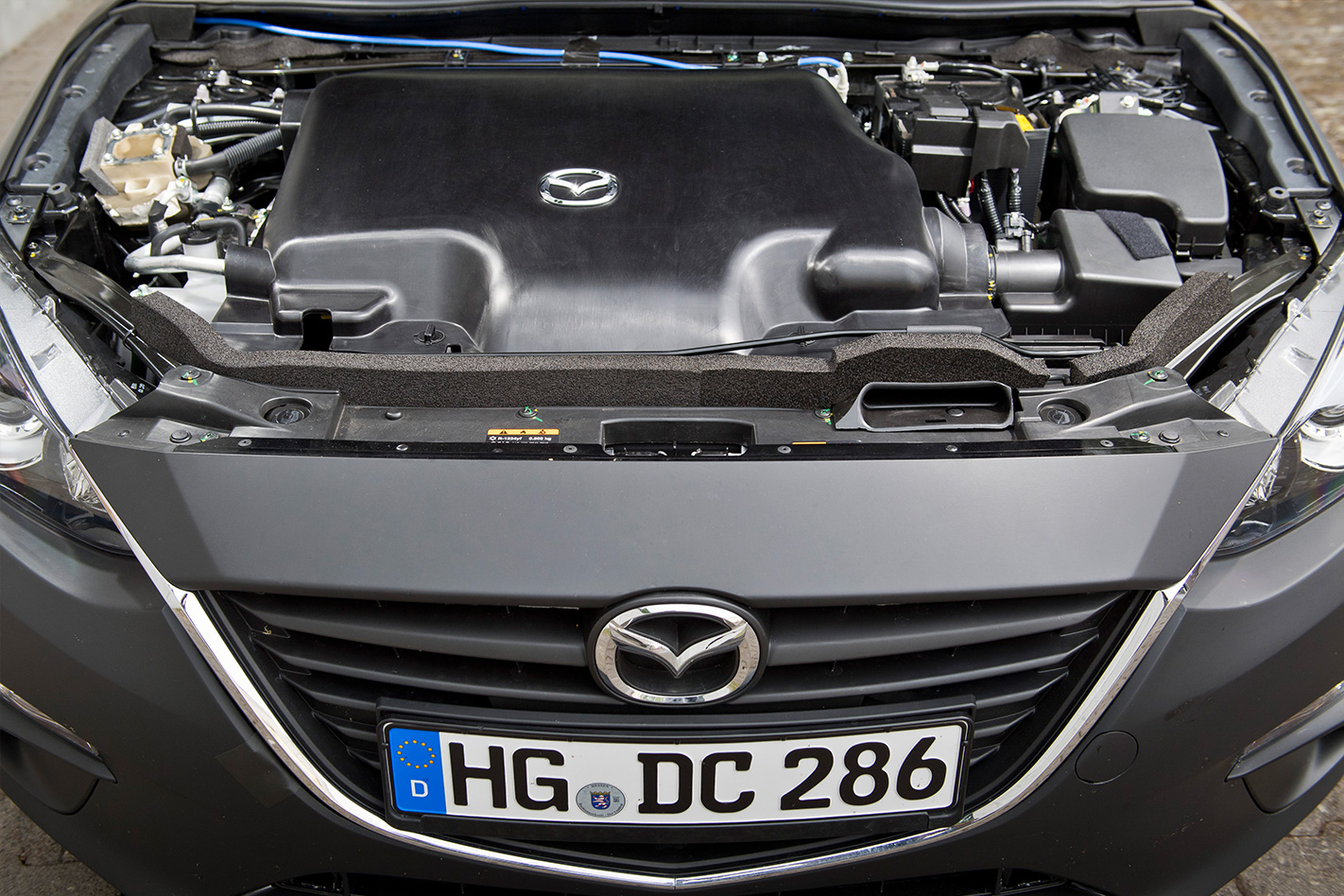
The engine has clearly been designed for future electrification, and mild hybridisation would appear to be a perfect partner for compression ignition tech – with an electric motor delivering instant low-end torque and subtly extending the range in which the engine can operate in SCCI mode. “We’ll combine a hybrid system with this engine, but it will be a mild hybrid, not strong,” confirmed Hitomi.
Another huge benefit of this engine architecture – especially in the Australian market – is that it actually returns better fuel economy on low octane fuels. It sounds utterly counterintuitive at first that 91 RON would be the preferred juice, but consider for a moment that many modern engines can’t operate on this fuel for fear of pre-detonation in the combustion chamber, something that compression ignition, in effect, strives for.

Mazda is confident of the scalability of this unit, and it’s likely that we’ll first see it on the market in the next-gen Mazda 3, due in 2019. Between now and then, the engine has to undergo a whole battery of durability tests in hot and cold climates, but Mazda seems confident that the tech is 90-95 percent production-ready. Significant challenges remain, largely in fine-tuning the huge list of variables in the engine calibration.
“If you change one point on this parameter, and five points on this parameter, the combination becomes 50 billion [possible outcomes]. Then we have to set one point. Big challenge. There’s a lot of work to do to achieve target fuel economy and satisfy emissions regulations,” said Hitomi. The company also promises to continue development of its existing SkyActiv-G petrol engines and SkyActiv-D diesel units.
Delivering the power output and refinement of a petrol engine with economy and CO2 emissions that look more like a diesel seems a pipe dream, but Mazda is confident that, with SkyActiv-X, we can have our cake and eat it too. It’s part of Mazda’s vision to reduce well-to-wheel CO2 figures to 50 percent of 2010 levels by 2030.
The next big thing in automotive technology? We’ll wait until the production version is ready before issuing a definitive verdict, but early signs suggest that Mazda might well pull it off.
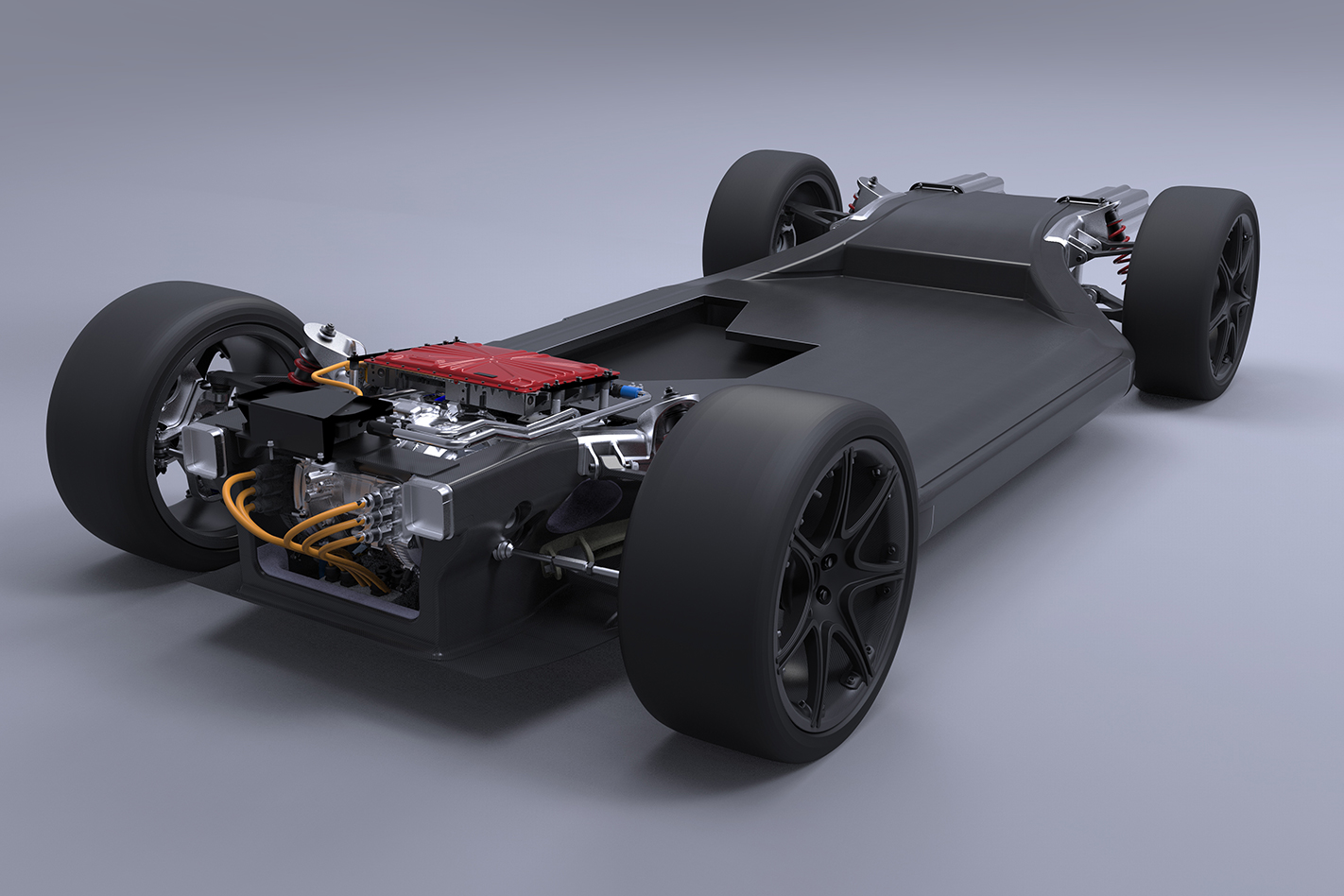
MERCEDES-Benz and Aston Martin aren’t the only car makers bringing Formula One technology to the road. Now F1 manufacturer Williams wants in on the party, launching an experimental battery-powered platform it thinks could one day sit under a road car.
Williams Advanced Engineering, the technology, testing and engineering division of the F1 constructor, says its FW-EVX electric vehicle platform that it claims is lighter, safer and greener, with longer range and better performance than anything else out there.
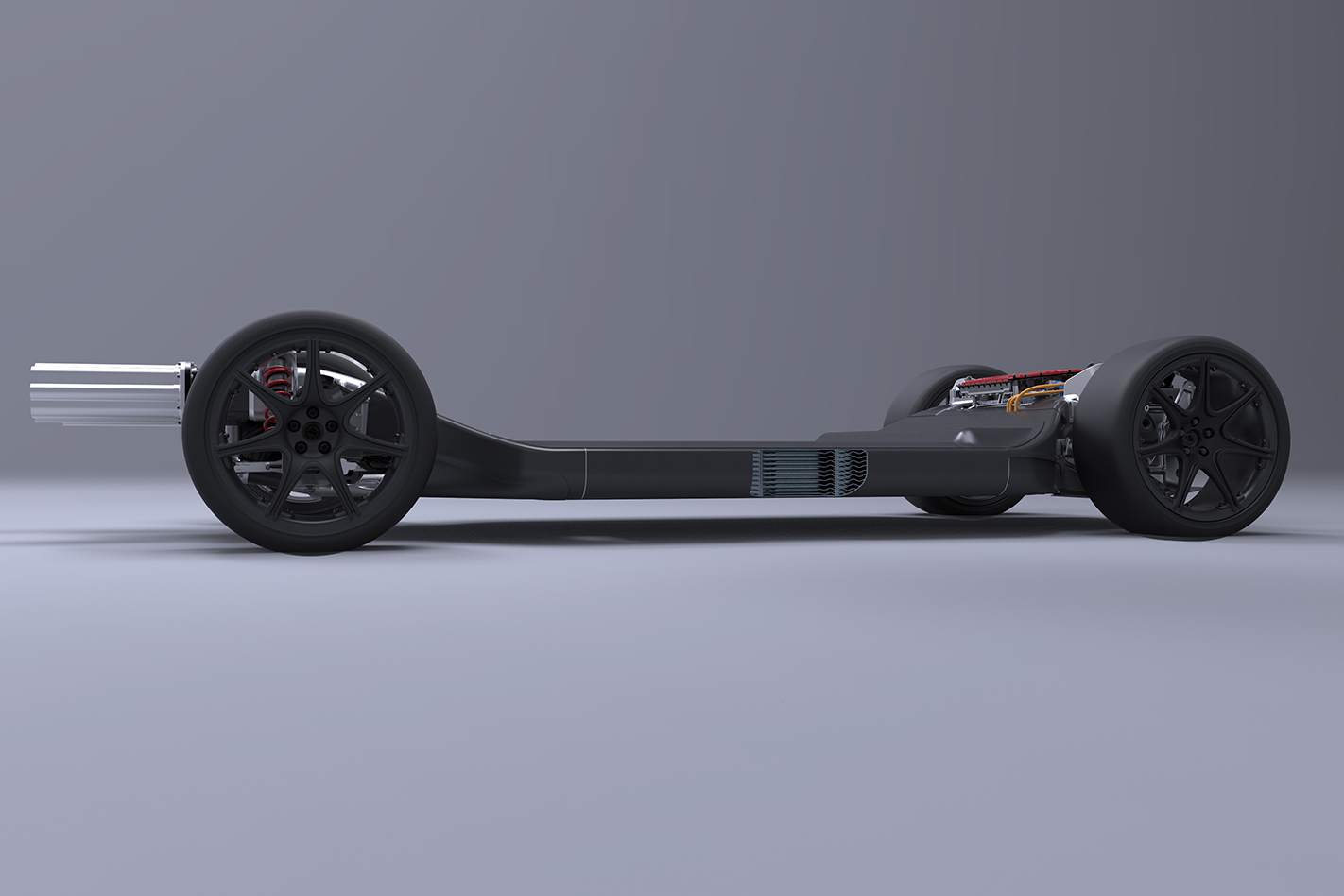
“The concept features several innovations in battery pack design, cooling systems and lightweight structures, which have each been cleverly integrated into a single, scalable platform.”
What is it? Looking something like a McDonald’s fast food tray suspended between four pretty cool-looking lightweight alloy wheels connected to the chassis via fibre-reinforced suspension components that cut weight by 40 percent compared with conventinal aluminium wishbones. They’re made using what Williams claims is a highly automated process that produces “near zero” waste. all up, the composite and aluminium structure weighs 955kg, with the batteries alone contributing to 340kg of that.
The design also uses the chassis rails to provide cooling air to the 380 batteries arranged in three rows across the body. All up, Williams estimates the platform will support a supercar weighing in around 1750kg, with a range of more than 550km.
“Another innovation being showcased is the process of forming high-strength 3D structures from 2D materials which, in this instance, has created an exoskeleton for a battery module that also contributes to the structural performance of the battery,” it said.
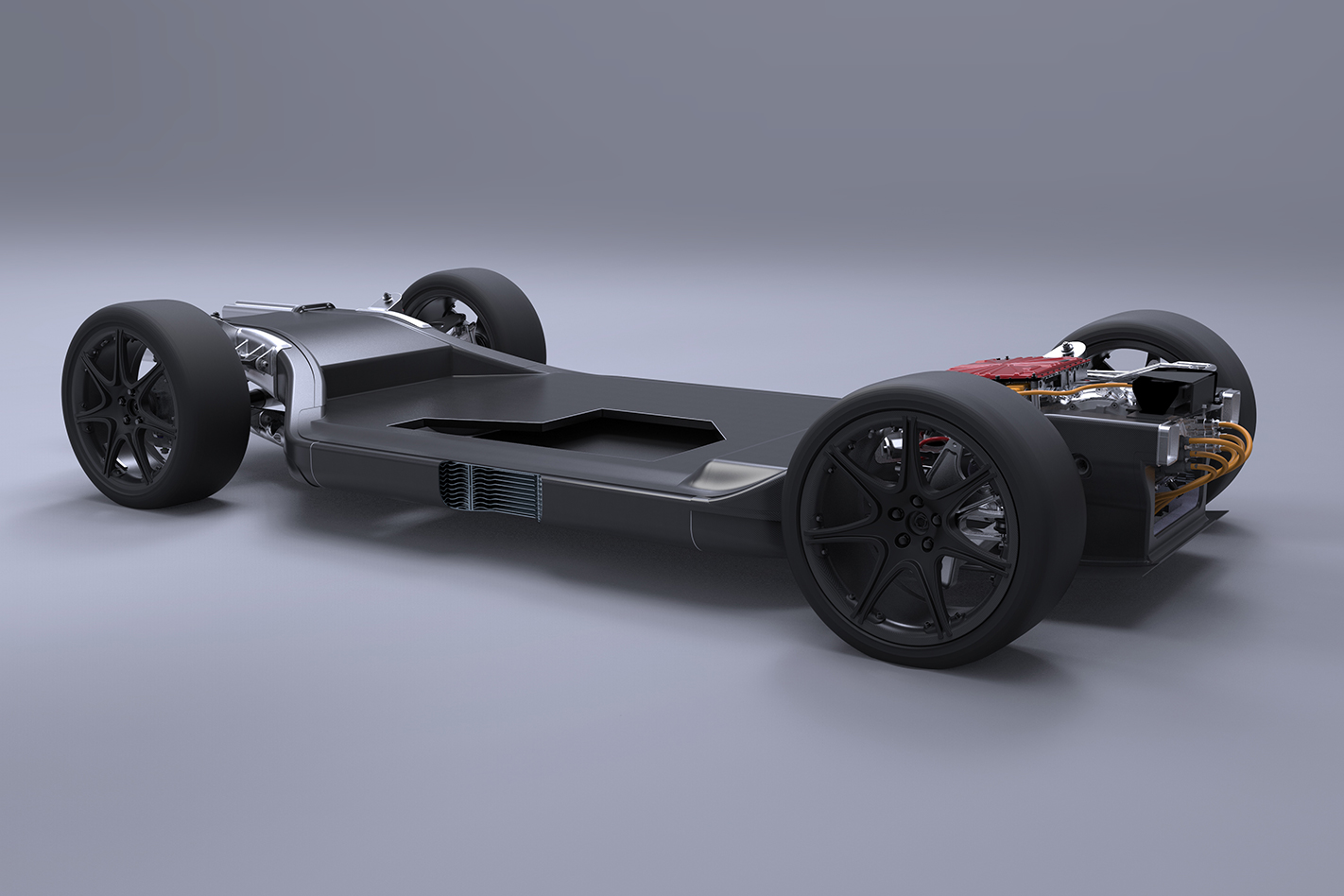
“It’s complemented at the rear by Xtrac’s P1227 transmission with torque vectoring capability, which made its debut in 2016, and which has already been selected by customers for high performance EV applications.” Oh, and it also torque-vectors.
It then goes on to say that the transmission is rated to a maximum speed of “over 10,000rpm”, and when combined with the three electric motors that the Williams chassis uses, “the overall rating of the Williams powertrain is 480kW”.
The chassis shown is all-wheel drive, but Williams said the single 160kW motor for the front axle could be deleted, leaving a 320kW twin-motor rear-drive layout. The platform on display has an 80kWh energy capacity on a 2800mm wheelbase, although Williams said the modular design would allow more, or less, capacity.
So why did Williams want to build a car without a body? “Vehicle efficiency has always been core to Williams, whether it be in Formula One or with Williams Advanced Engineering’s customer projects,” Williams Advanced Engineering technical director Paul McNamara said.
“These technologies, and our thinking around how to create a tightly integrated, lightweight chassis and powertrain package, have the potential to greatly increase the competitiveness of the next generation of electric vehicles.
“By making EVs more attractive to consumers, we can help accelerate their adoption and the air quality benefits they bring,” he said.
Williams Advanced Engineering already has electric vehicle experience, having built the Bladeglider concept for Nissan, and supplying the advanced batteries used in the Formula E open-wheeler series that is attracting big-name manufacturers, including Porsche, Audi and Jaguar.
The FW-EVX is on displayed at the Low Carbon Vehicle Show in Millbrook, England.
What stands out?
The ASX has more space inside than most small SUVs and drives nicely on country roads, with a comfortable ride, good steering and plenty of power – especially in diesel form. All-wheel drive is available, and Mitsubishi’s smallest SUV comes with a five-year warranty. Sharp prices often make it great value.This review covers the ASX on sale prior to September 2017. You can also read our review of the current ASX.
What might bug me?
Tyre roar at high speeds.Loading CDs in the more expensive, XLS models. The loading slot is behind the touchscreen, which tilts forward at the press of a button.Driving at 80km/h on the space saver spare until you can fix your full-sized flat tyre.
What body styles are there?
Five-door wagon only.Petrol-powered versions of the ASX drive only the front wheels, while diesel models drive all four wheels.The ASX is classified as a small SUV, lower priced.
What features does every Mitsubishi ASX have?
Cruise control, a reversing camera and rear parking sensors. Air-conditioning that maintains a set temperature.A leather-wrapped steering wheel, adjustable for reach and height, that carries buttons for operating the cruise control, the sound system and your phone. Height adjustment for the driver’s seat.A colour touchscreen for controlling infotainment functions, and an iPod and MP3 compatible sound system with AM/FM and digital (DAB) radio, CD player, and USB input. Bluetooth connectivity for phone calls and audio streaming.Hill-start assist, which controls the brakes automatically to help you take off from rest on uphill slopes.Wheels made from an aluminium alloy, which are lighter than steel wheels and look nicer. A space-saver steel spare wheel.Seven airbags: two in front of the driver and front passenger; one in each front seat to protect the body from side impacts; a curtain airbag along each side to protect heads from side impacts; and a driver’s knee airbag.Electronic stability control, which can help control a skidding car. All new cars must have this feature.The ASX is covered by a five-year, 100,000km warranty.
Which engine uses least fuel, and why wouldn’t I choose it?
The 2.2-litre turbocharged diesel, which uses 6.0 litres/100km in official tests (city and country combined), is the most fuel-efficient engine in an ASX. It also feels more powerful than the alternative petrol engine in everyday driving.One reason you might not choose the diesel is that you want to pay less for the car, and don’t need all-wheel drive. (Both ASX diesel models have AWD and automatic transmission.)The diesels also cost more to service. And you need to get them up near highway speeds for at least a 20-minute stretch every couple of weeks to clear the particulate filter in the exhaust, so they are not suited to constant short trips around town.The 2.0-litre petrol engine uses about 25 per cent more fuel than the diesel.That petrol engine comes with a five-speed manual gearbox or a continuously variable (CVT) automatic, which brings better performance and fuel economy than most conventional autos.The diesel engine drives through a six-speed conventional auto.
What key features do I get if I spend more?
There are two petrol models, both front-wheel drive. The more expensive petrol ASX costs about as much as the less expensive of the two diesels, which are both all-wheel drive.So, one pair of features you can get if you spend more is a diesel engine and AWD.Having chosen petrol front-drive or diesel AWD, you can think about other features. You can get either engine in an ASX LS (which has the features shared by all models), or an ASX XLS.In spending more for an XLS you get smart key entry, which allows you unlock the car by pressing a button on the door handle when the key is nearby (for example, in a pocket or bag). There are leather seats, heated in front and power-adjustable for the driver. Windscreen wipers operate automatically if it rains. Headlights switch on automatically at night or in tunnels.XLS models also have a larger touchscreen (7.0-inches versus 6.1) with satellite-navigation, and a big sunroof that stretches over the front and rear seats.
Does any upgrade have a down side?
The diesel engine costs more to service.White is the only standard colour; the other six hues cost extra.
How comfortable is the ASX?
The controls and displays in the ASX are logically laid out, from the circular speedo and tachometer to the buttons on the steering wheel for phone and audio functions. A trio of knobs makes it easy to adjust air flow.Up front, the seats are comfy in city driving but they don’t have much lateral support, which means more bracing with your legs if you’re on a twisting road in the country.While wind noise is kept at bay, noise from the tyres can be testing on country roads or at freeway speeds. The diesel engine clatters a bit, too.The petrol engine, which is more popular, feels lethargic initially but builds pace enthusiastically once the car gets moving.The ASX does a good job of soaking up bumps at open-road speeds. Around town it is less subtle in the way it deals with surface imperfections.
What about safety in an ASX?
There is good airbag coverage all around, and the standard rear parking sensors and reversing camera raise safety levels by giving a better understanding of what’s behind. Front foglights double as daytime running lights to make your car more visible to others.On XLS versions, the auto headlamps switch on in dim light even if the driver forgets, and auto-wipers reduce driver fatigue and distraction.Automatic emergency braking is not available on an ASX, however.The Australasian New Car Assessment Program (ANCAP) has rated the ASX’s safety at its maximum five stars.
I like driving – will I enjoy this car?
The two engines available in the ASX deliver respectable performance without being exciting. The petrol engine is hamstrung in manual gearbox form by having only five ratios, which don’t always allow you to work it at its optimal speed. The CVT auto does a better job of maximising the propulsion available.The diesel has more urge in everyday driving and the six-speed conventional auto shifts decisively, ensuring good forward progress.The ASX is predictable through bends but leans significantly when cornering quickly, which sets up more dramatic movement from the body if you are faced immediately with a turn to the opposite side. Steering is light and accurate. You will feel some annoying kickback through the wheel if you hit bumps in the middle of a corner.Overall, though, the ASX inspires confidence on country roads and freeways. Tyres grip well and the body settles quickly after bumps.All-wheel drive versions of the ASX are light-duty off-roaders designed predominantly for on-road use: think snowy or muddy roads and easy tracks and trails. If you are planning to go off-road it would be worth optioning the full-sized spare tyre.
How is life in the rear seats?
Small SUVs are not designed to transport lots of children, but the ASX has more rear-seat space than most, with good head and leg room that makes it viable as a family chariot. Dedicated vents feed cooling or heating to the rear passengers.There’s a hump on the centre of the floor, but the rear seat base is relatively flat, making it fairly comfortable for the person in the middle.That centre seatbelt can be retracted into the side of the inner roof, allowing the seats to be folded more easily. However, if you do that, it must be fastened with two separate buckles.
How is it for carrying stuff?
The boot is relatively broad, with a wide opening that sits high off the ground, so there’s no need to bend over to lift things out. A 60/40 split-fold rear seatback improves loading flexibility.When folded, the seatbacks are on a slight angle but still create a long load area that will easily accommodate a bicycle.Pockets in the front doors will cater for a large bottle and other odds and ends. But the centre console’s main open storage is in the twin cupholders. There is a covered binnacle under the central arm rest.Petrol-powered models can tow 1300kg, while those powered by the diesel engine are rated at 1400kg. That is good for a small SUV.
Where is the Mitsubishi ASX made?
All models of the Mitsubishi ASX are produced in Japan.
What might I miss that similar cars have?
Seatbelt warnings for the rear seats, as fitted to the Mazda CX-3, Renault Captur and Honda HR-V.Active safety features, such as automatic emergency braking, lane departure warning or blind spot warning. (Auto emergency braking uses sensors to detect obstacles in front – typically another vehicle that has slowed suddenly – and can apply the brakes automatically to prevent a collision.) Such systems are available with the Toyota C-HR, Mazda CX-3 and Honda HR-V, for example.Perhaps support for Apple CarPlay or Android Auto, which would allow you to display some apps from your compatible smartphone on the car’s touchscreen and control them from there. The Suzuki Vitara offers this, for example.Other cars you might consider include the Ford EcoSport, Holden Trax, and Subaru XV.
When did Mitsubishi update this ASX?
The current ASX arrived in 2010 and received a significant update in 2012. In June 2015 the wheel size was increased an inch to 18 inches and digital radio reception was added. In November 2016, a very minor facelift brought fresh nose styling, revised interior trim, and adjustments to touchscreen menus.In September 2017 this car was replaced with a facelifted ASX that brought support for Apple CarPlay and Android Auto phone integration, and made auto braking available – among other changes.
I like this car, but I can’t choose which version. Can you help?
We like the ASX LS 2WD with a petrol engine and automatic transmission. The CVT auto does a good job, while the LS with petrol propulsion is good buying – and significantly cheaper than the AWD diesel.
