
Tell me a little about this car
The Mini Countryman is the largest in the range, and one of our favourites. We drove the JCW Countryman on Aussie roads to find out if the performance version lives up to marketing hype.
The JCW dressings brings restyled bodywork and a more powerful engine to the Countryman’s repertoire, without detracting too significantly from its impressive ability as an alternative to other premium small SUV offerings.
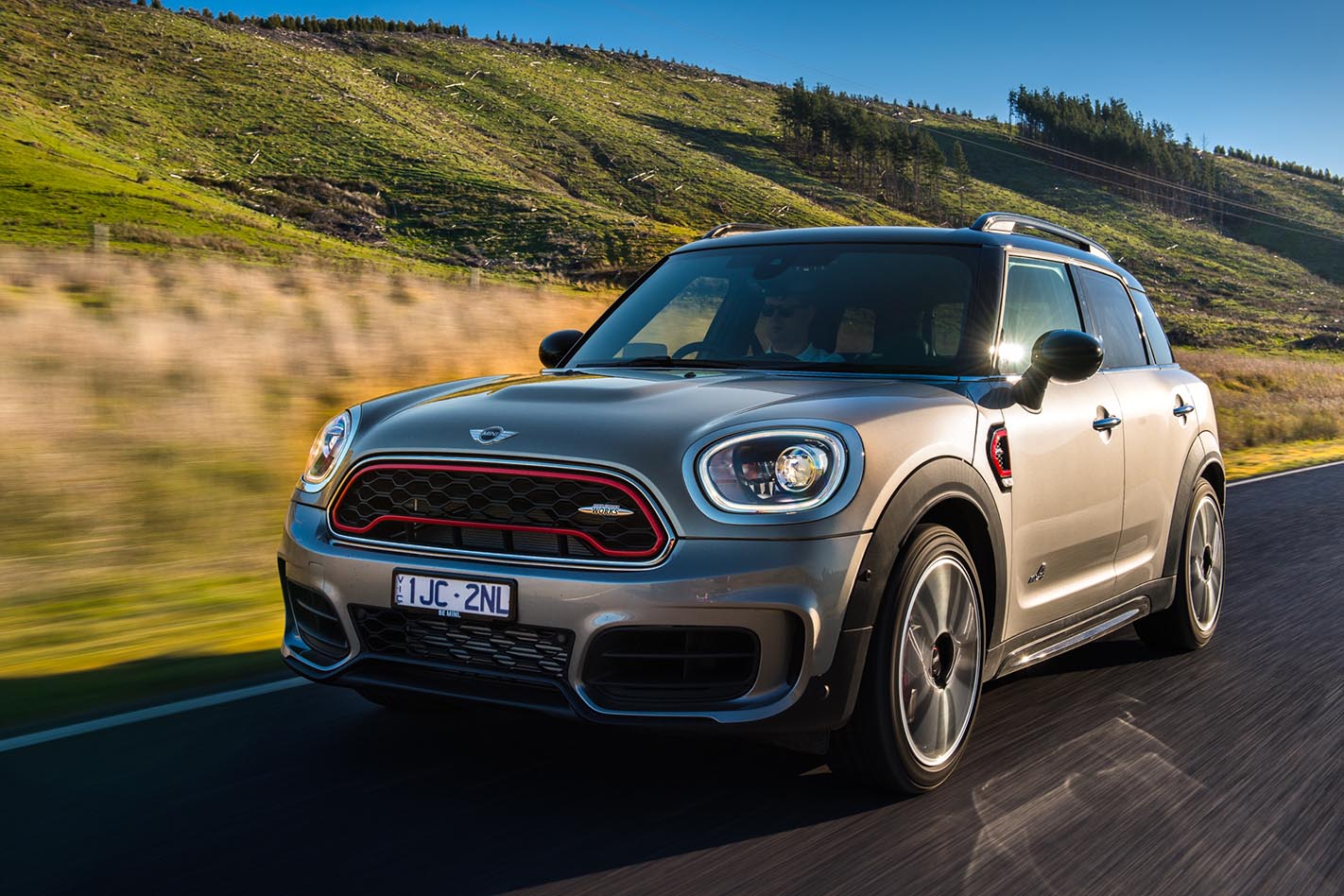
Powered by a 2.0-litre four-cylinder turbo engine, the Countryman JCW produces 170kW and 350Nm (29kW/70Nm up from the Countryman Cooper S). This is sent through an on-demand all-wheel-drive transmission (an eight-speed automatic is standard, while a six-speed manual is a no cost option). 0-100km/h is completed in 6.5sec with either transmission.
Cost is $57,900 before on-roads costs and options are added.
Pros
- The turbo petrol engine is a gutsy unit, which delivers its power in a smooth linear fashion, although it does run out of puff slightly past 4,000rpm. Its acceleration is energetic without being anti-social while the whooshes of turbo noise and exhaust crackle adds a light-hearted character to the driving experience (even if it is a bit muffled inside the cabin).
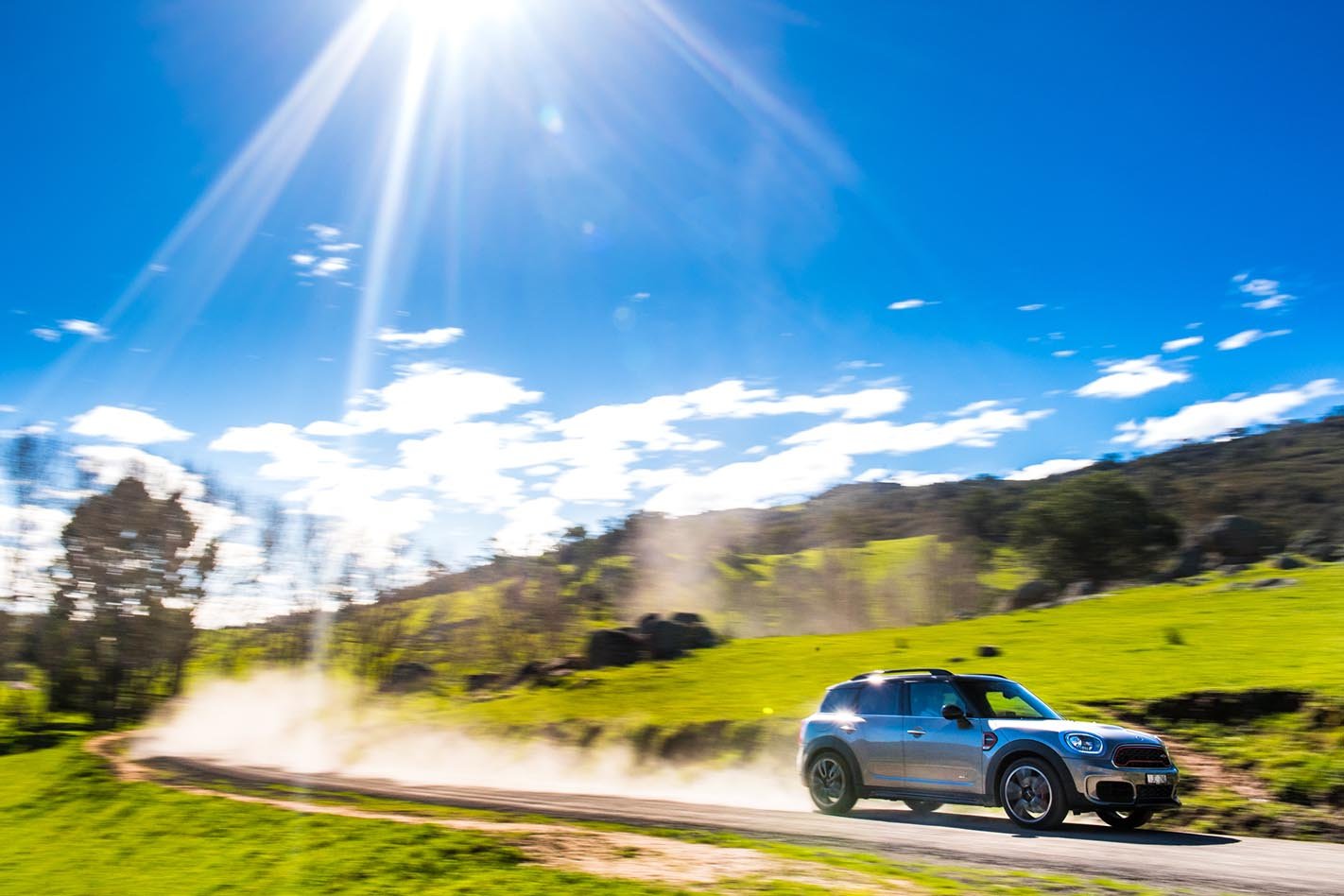
- While hardcore driving enthusiasts will opt for the manual, 90 percent of Countryman JCW buyers will stick with the eight-speed automatic. It’s an intuitive unit, that doesn’t fall out of step with your desires as a driver, whether that is sedated cruising or a more throttle-heavy application. Gears are shifted smoothly, and the two extra ratios over the manual means the automatic is more rewarding with its power delivery in spirited driving.
- The adaptive dampers, which are a standard feature on the JCW Countryman, give it a diversity in ride which allows it to be a liveable prospect for everyday duties, while also holding its own in performance-orientated settings.
Cons
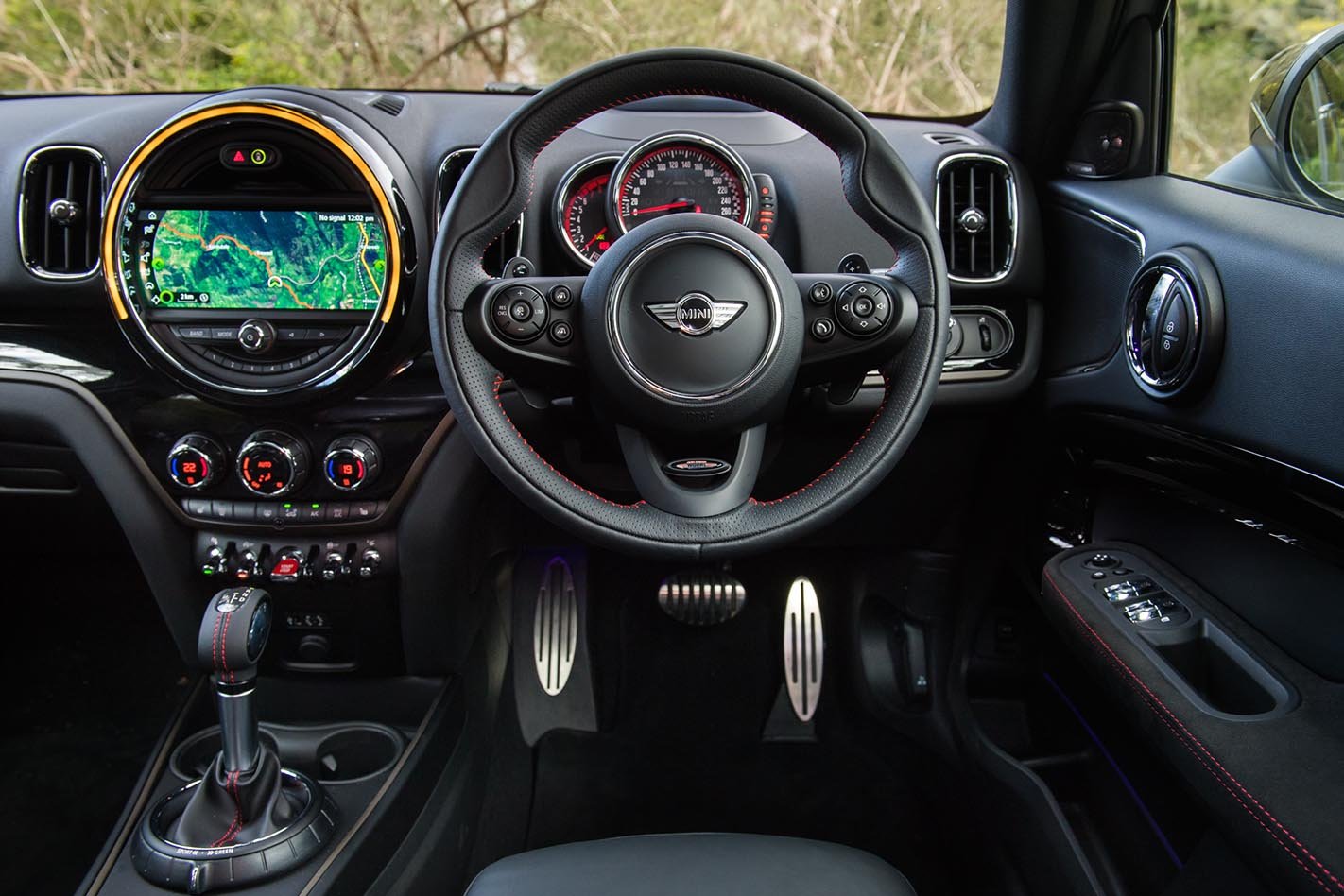
- The steering lacks the necessary feel to truly round out the package. There is a good weight to the wheel in sport and normal mode, but at times there is a disconnect between what the car is doing and feedback being transmitted to the driver.
- While the JCW sports seats provide good lateral support, they are on the firmer side. But there is plenty of space inside the Countryman’s cabin for four adults and associated luggage.
- It’s not a light beast, with the scales tipped at 1630kg.
Main rivals?
Mercedes-Benz GLA250, BMW X1 xDrive 25i, Audi Q2 2.0 TDi Sport quattro, Volkswagen Tiguan 162TSi Highline
What were the Lexus product planners thinking when they conceived the 2012 LF-LC concept car?
Was it a luxury coupe, or a sports car successor to the mighty V10 LFA, or entirely something else?
Created as a styling concept with no production ambitions, so positive was the Detroit show reception to the dramatically styled LF-LC that at the time Wheels’ position was, “Just build it.”
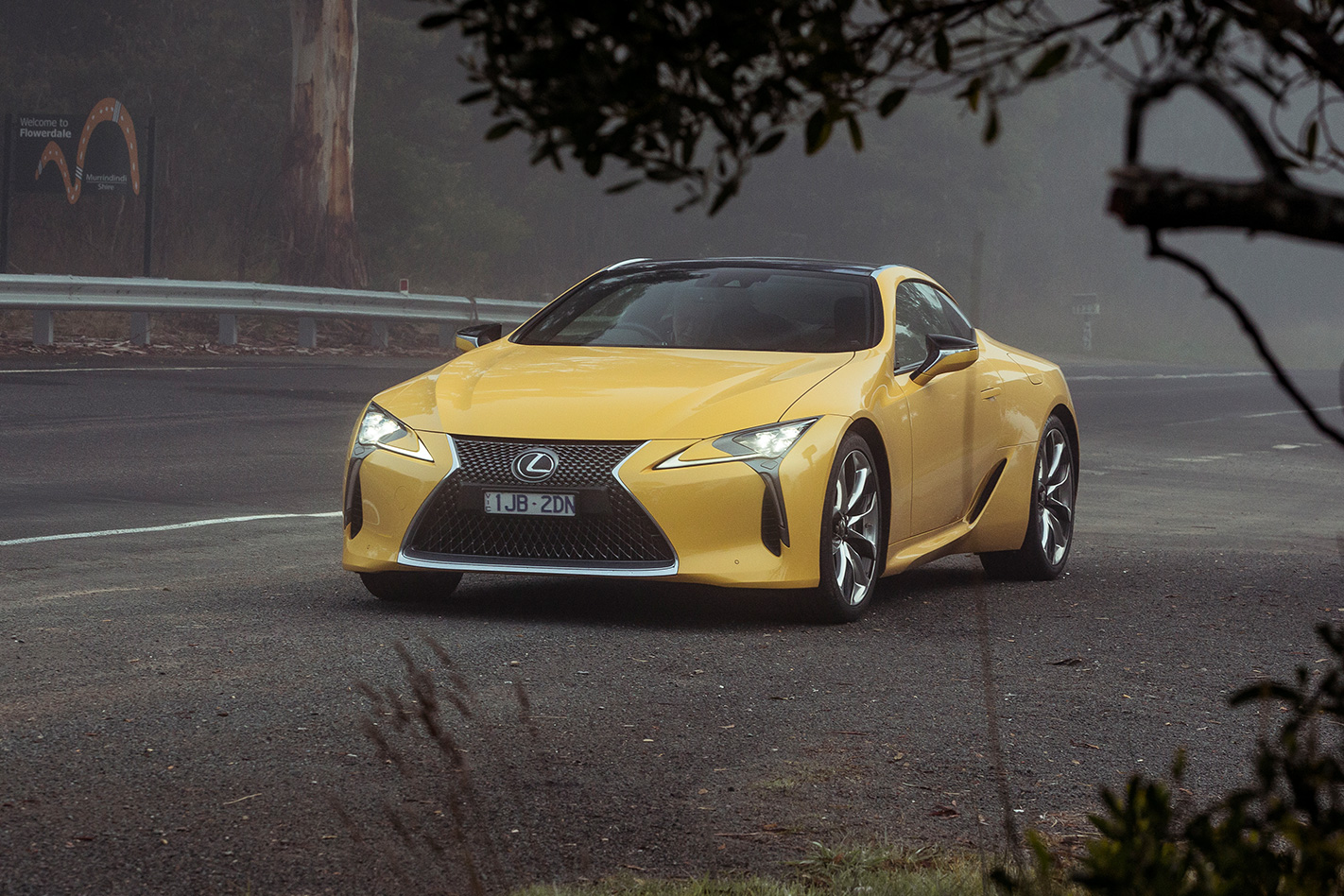
With classic proportions, a forcefully wide stance and a relatively simple shape decorated with lashings of Nike-like swooshes, the LC’s styling remains edgy and distinctive. Aside from the overly large spindle grille, that still resembles an old electric razor and continues to use two totally different cross-hatch patterns, I love the outrageous way this Lexus looks. Confident, proud and truly individual.
Like the car itself. Just don’t expect the most significant numbers to help define its role: the 5.0-litre quad-cam V8 (slightly modified from the GS F and RC F) makes 351kW at 7100rpm and accelerates the coupe from 0-100km/h in 4.7 seconds. Quick, but not supercar-quick and slower than its rivals. The explanation is in another number. The LC 500 is onerously heavy at 1970kg. My subconscious plays with the figures as I point the LC out of Melbourne before turning right at Broadford, our destination some of the great roads that link the Hume Freeway with Mansfield and beyond to Whitfield.
Slowly, while absorbing the ride comfort, the excellence of the seats and driving position, the effortless power and incredibly tall gearing from the 10-speed automatic, and appreciating the need to stir the normally aspirated engine beyond 4500rpm for real grunt, it comes to me. This is no rival for the BMW 650i Coupe or, at the other character extreme, the Porsche 911 Carrera.
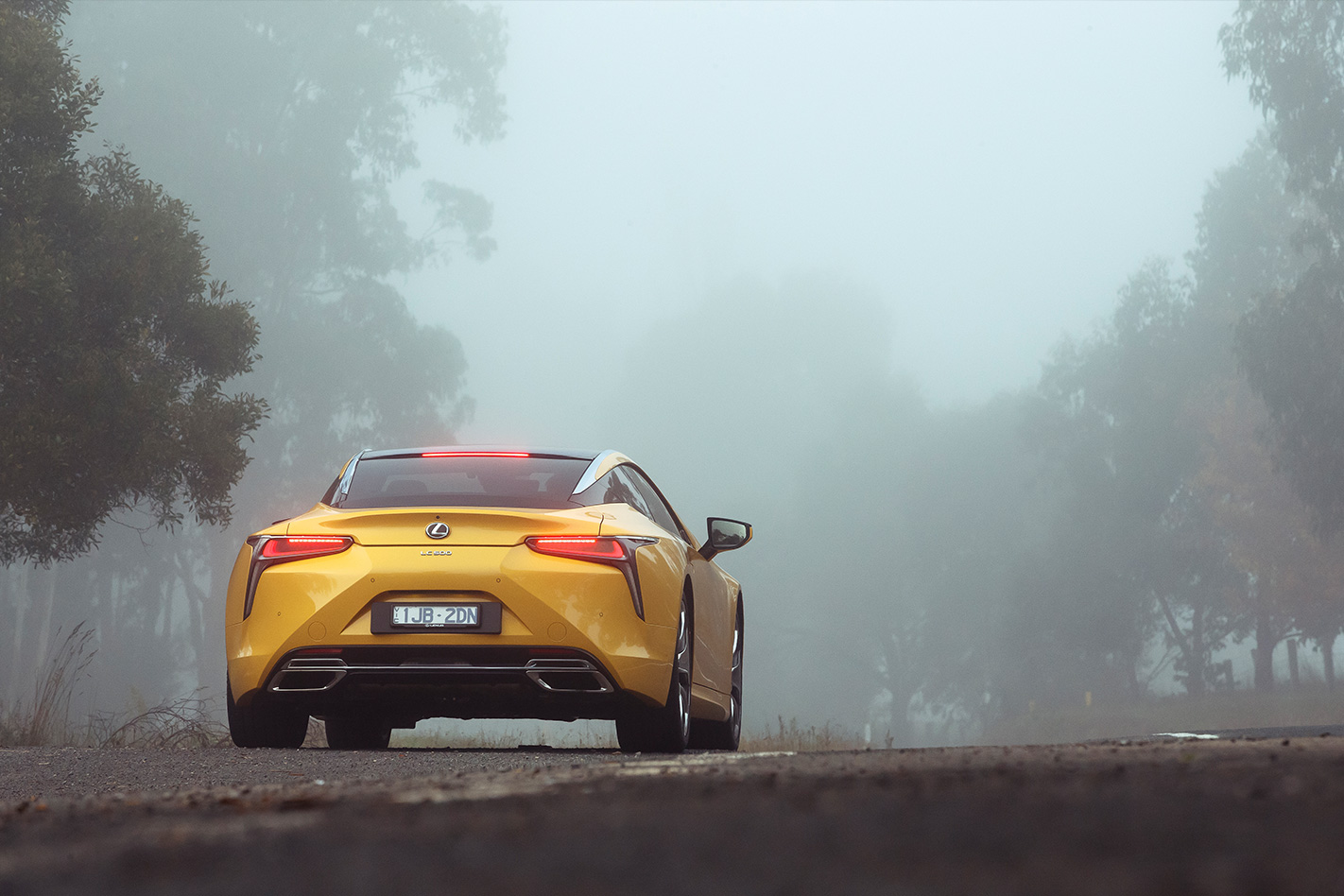
Not for the LC (at least, not yet), is the all new Lexus twin-turbo, 310kW 3.5-litre V6 that arrives in next year’s fifth-generation LS, the only model to share the LC’s new GA-L (Global Architecture – Luxury) platform that utilises steel, aluminium, and some carbonfibre. For the same money, buyers are also offered the LC 500h, a V6-powered hybrid, though take up is expected to be insignificant. Lexus says the philosophy behind the new platform was to create a more dynamic identity with a lower centre of gravity and, by improving the front/rear balance (52/48 weight distribution), enhanced agility. Massive rigidity and no compromises on equipment were obviously more important to Lexus than lowering the weight.
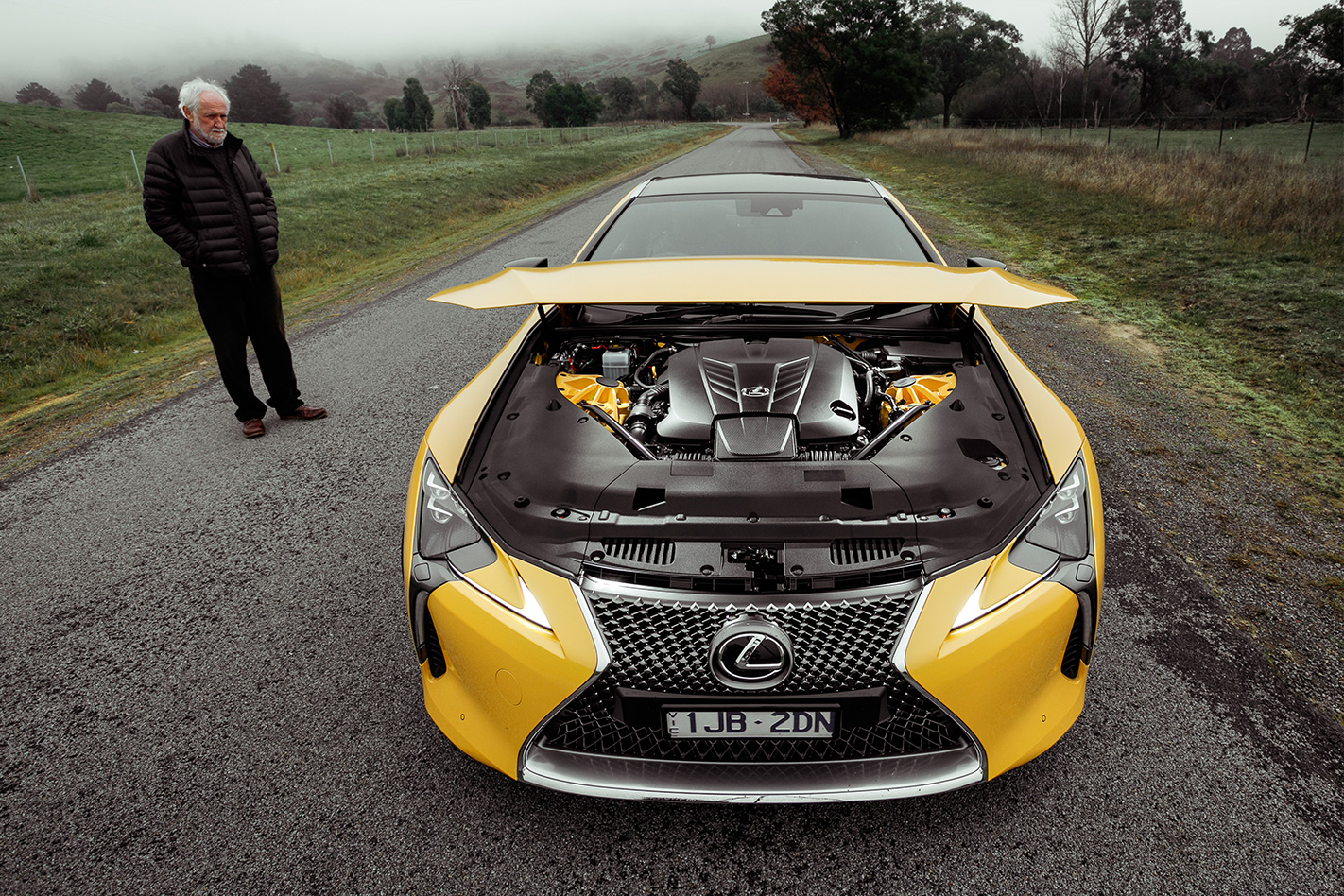
No surprise when peak torque of 540Nm arrives at 4800rpm, and it continues to spin freely to the 7250rpm cutout, when the tacho lights up red. As well as being heavy, the LC lacks a dedicated launch program and the lower gears in the 10-speed automatic could be stacked more closely to help acceleration. Seventh is 1:1 and the gears eight to 10 are fuel-saving overdrives.
At an indicated 110km/h the V8 is spinning at only 1400rpm in 10th. A little experimentation reveals that at 110km/h we could choose any ratio from five to 10.
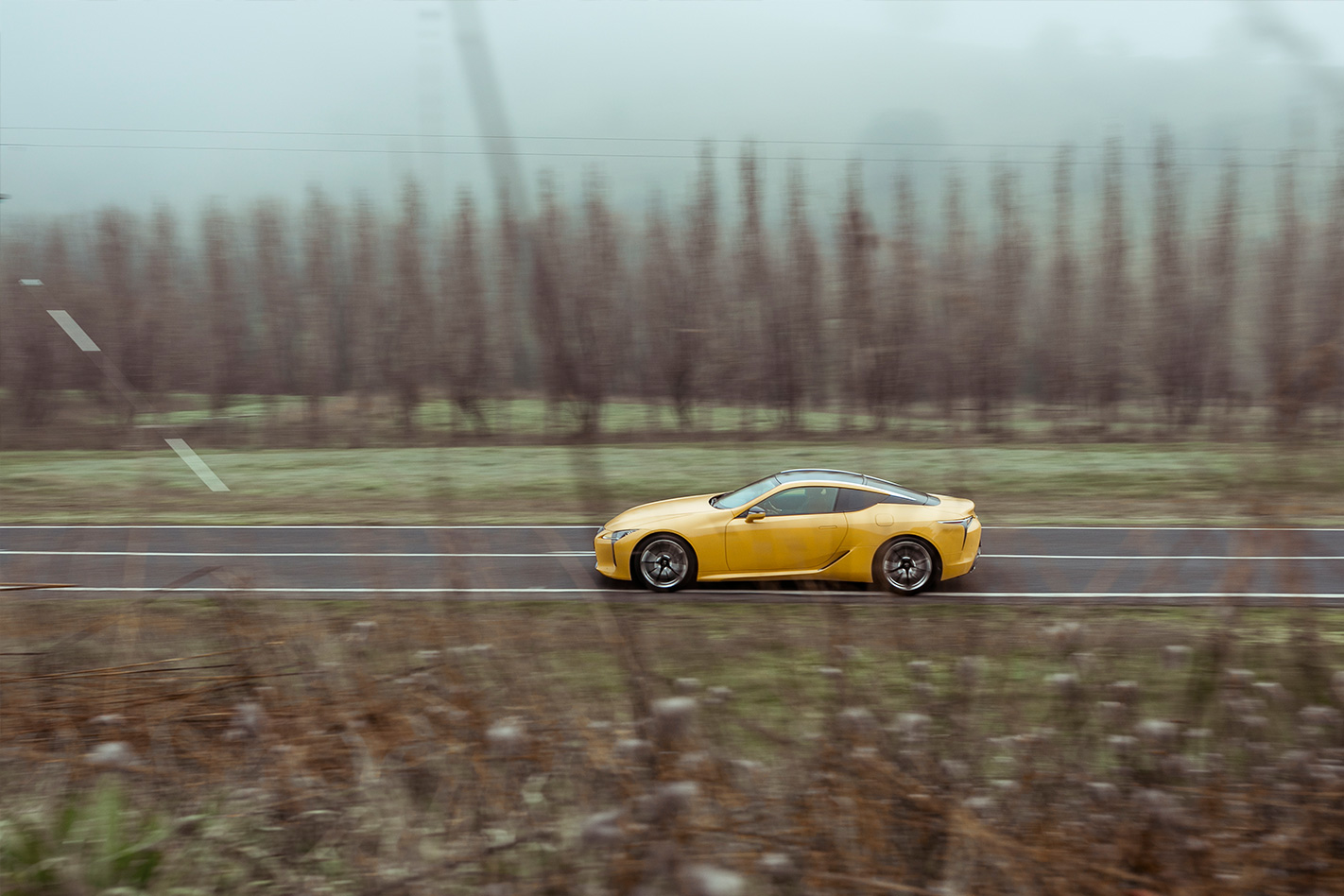
Punting hard, now shifting via the tactile paddles, concentrating on the next corner, the driver has little idea which gear is selected, though eventually you realise such knowledge is irrelevant to the driving experience. Compounding the pleasure, the LC sounds fabulous, especially from the outside, and that V8 burble-to-rumble is delivered to the cabin too, via a resonance tube connecting the intake to the firewall.
Despite the 21-inch wheels with 245/40 front and 275/35 rear Michelin Pilot Super Sport run-flat tyres, the LC’s aluminium-intensive, adaptive-damper-equipped suspension soaks up bumps and thumps like a supple, luxury sedan. Road noise is remarkably low, one differentiator from the 928.
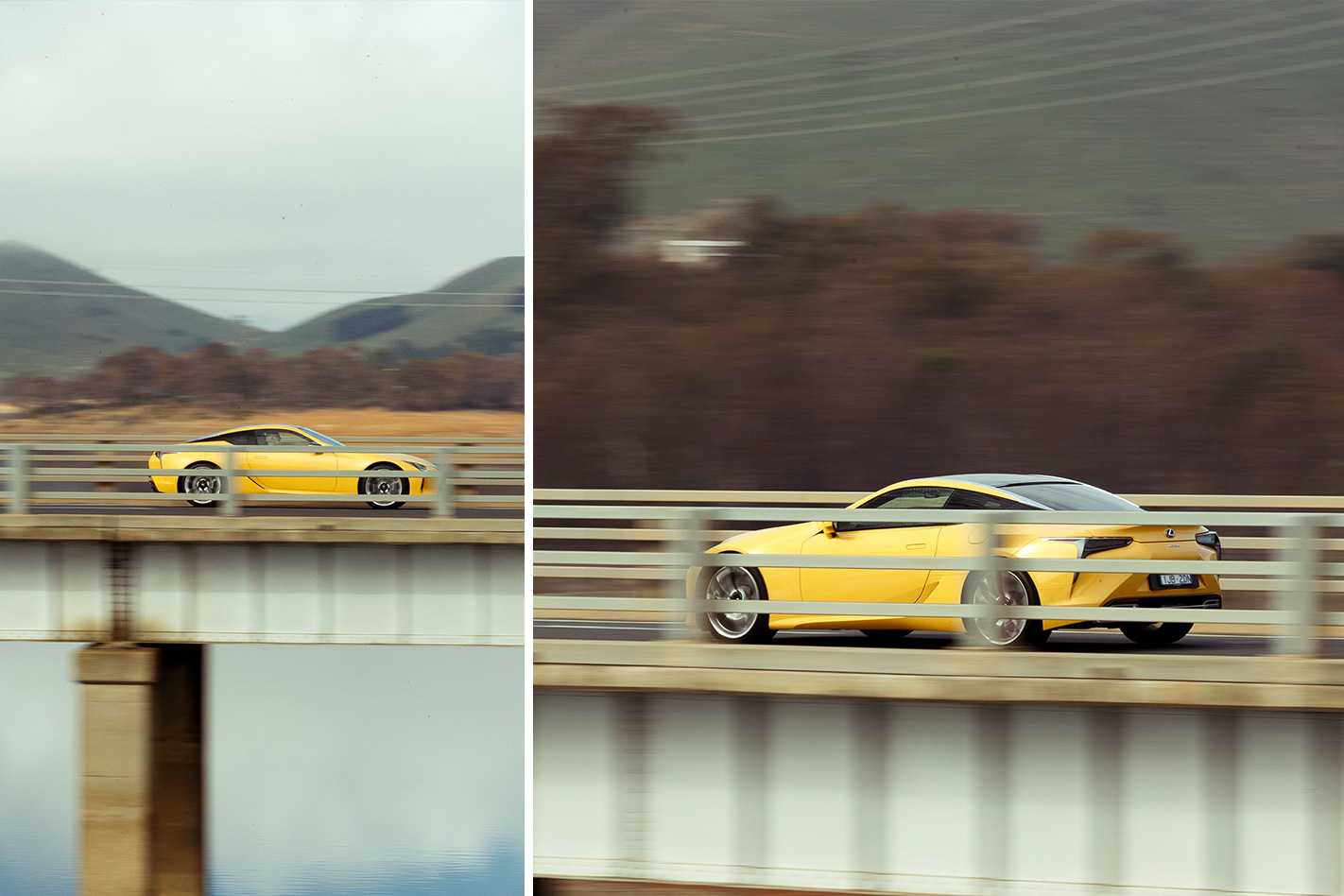
The LC feels crisp, alive and it’s wonderfully easy to find a flowing driving rhythm, with the result that it’s delectable at pace and capable of playing either a laid back grand tourer or a hunkered-down sports coupe, depending on which of the six modes you’ve selected (Eco, Comfort, Normal, Custom, Sport, and Sport+). This is one of those high-performance cars that’s more at home on a smoothly winding road, than scrabbling its way around a race track. There’s a confidence-inspiring sense that the back of the car is moving in harmony with the front, refreshing when so many big-engined German rivals determinedly let the front end do all the work.
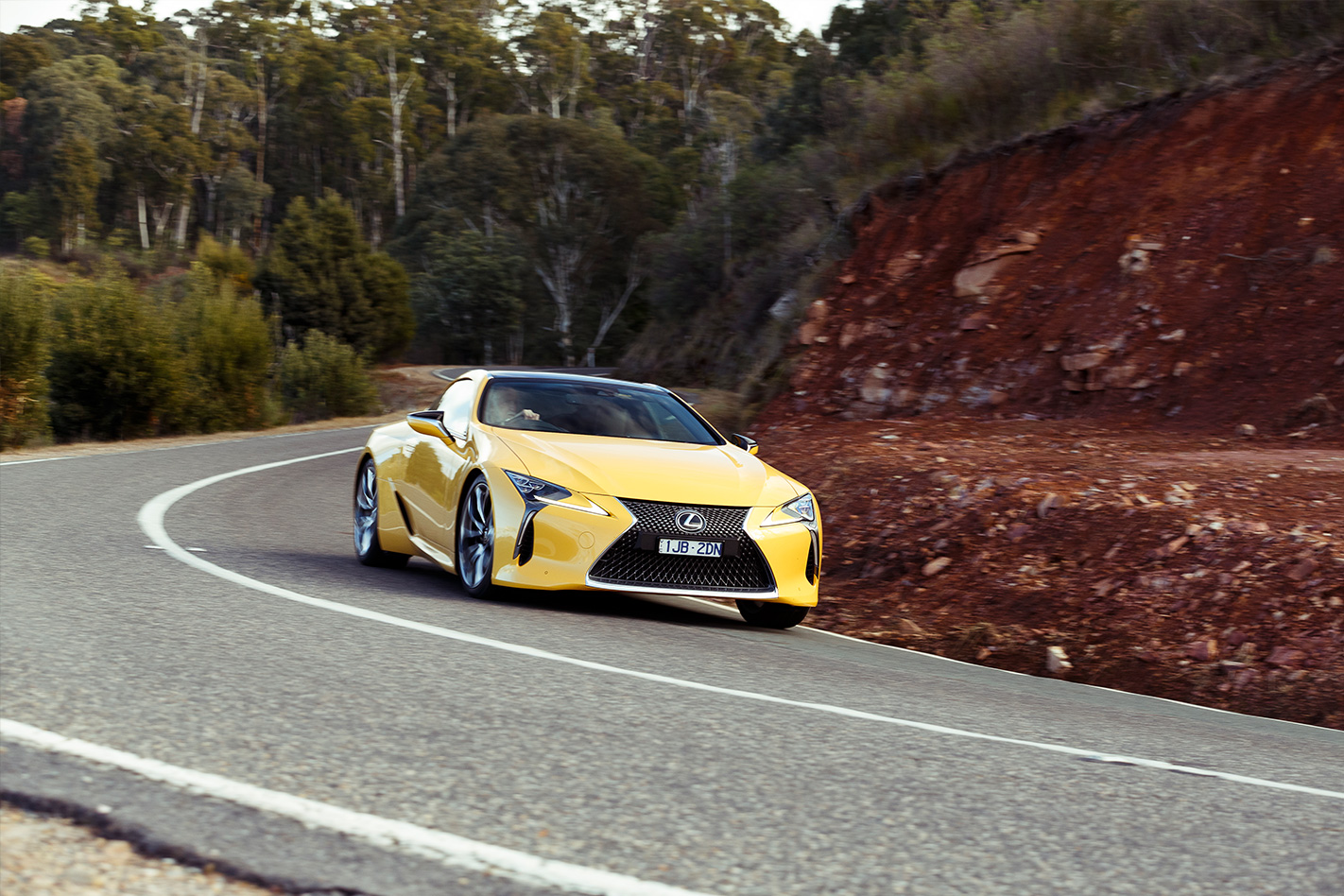
It’s obvious that the LC is not a white-knuckle driver’s car, but one that cossets you, whatever your talent level, by always openly declaring what’s about to happen. You understand that the engineers wanted ultra-stiff underpinnings, and also for the driver to be enveloped with predictably linear, rather than sudden, responses to chassis and suspension movements.
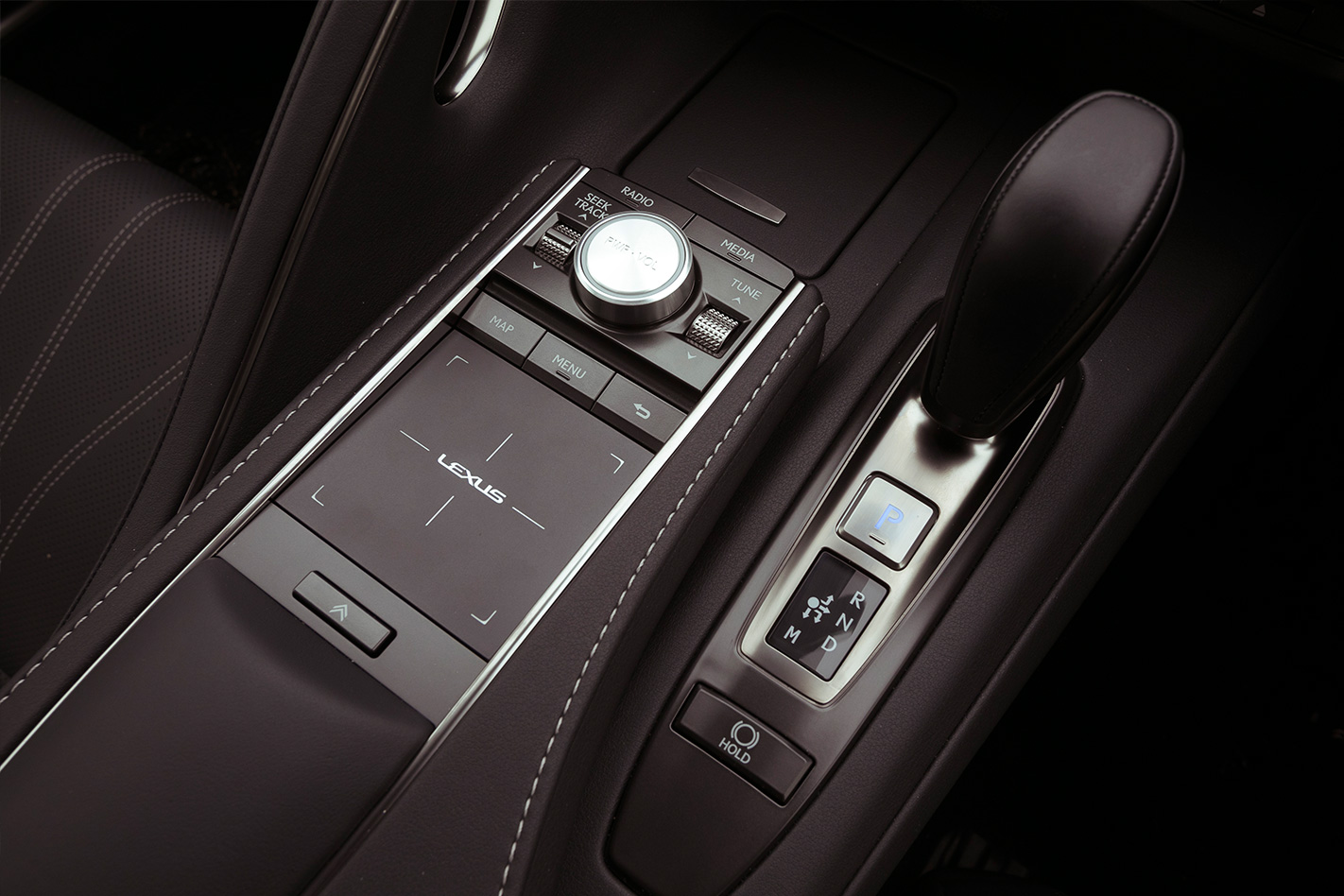
The interior – with a couple of exceptions – is a fabulous place to spend time, either behind the wheel or as a passenger.
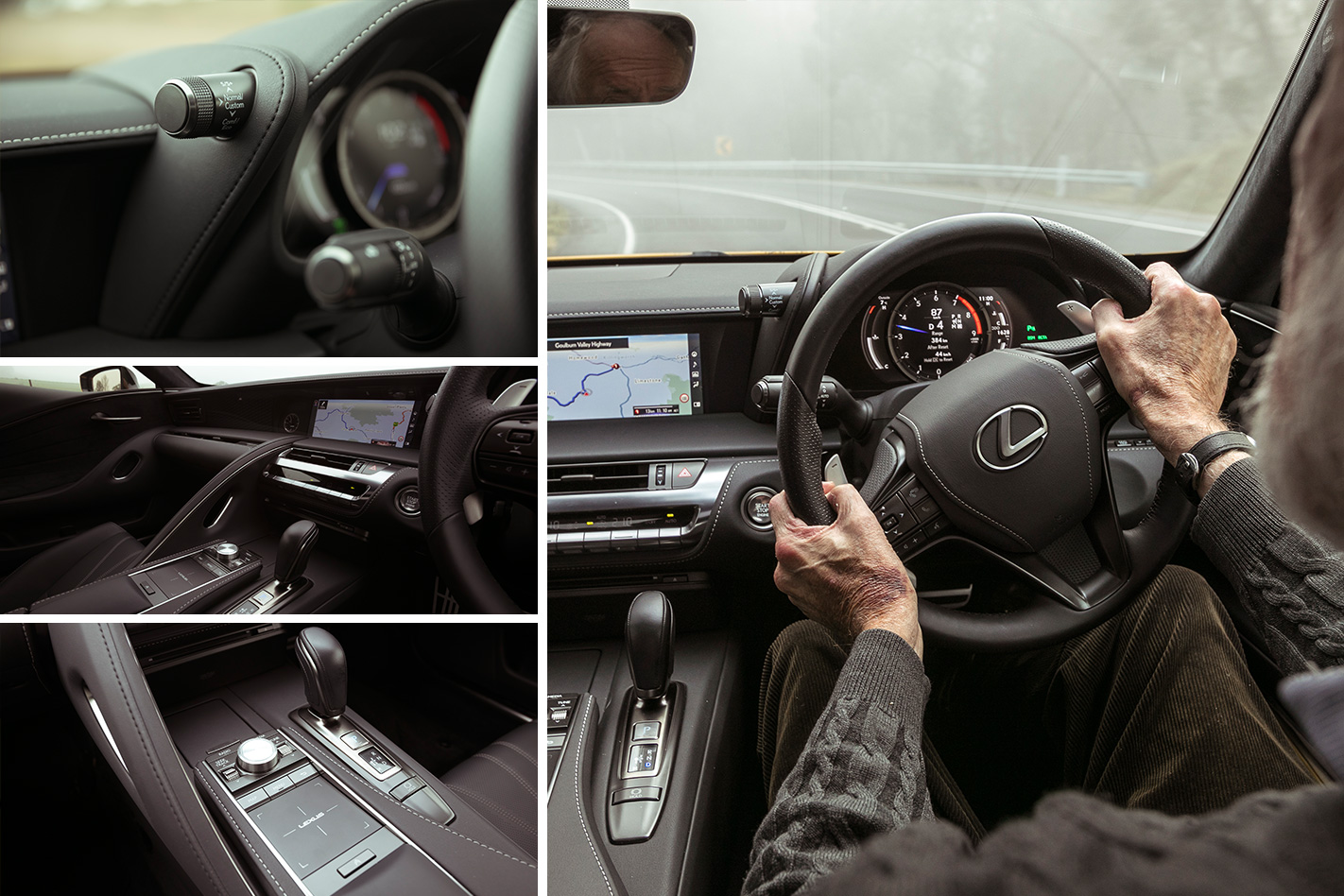
The interior is magnificently finished and looks gorgeous, exuding luxury with swathes of high-quality leather and titanium-toned metal elements. The instrument panel’s latest version of thin film transistor (TFT) display technology – introduced in the Lexus LFA supercar – includes a moving and wonderfully exotic central ring dial that houses a tacho, and changes colour depending upon the driving mode.
The instruments in various menus offer an almost bewildering choice of information. The sweeping lines of the dashboard blend beautifully into the contoured door trims. By coincidence or not, that’s a design idea that first appeared on the 928. The leather-wrapped cocoon feeling is exceptional and highlights the design element of having unique driver and passenger door trims that are not mirror images of each other.
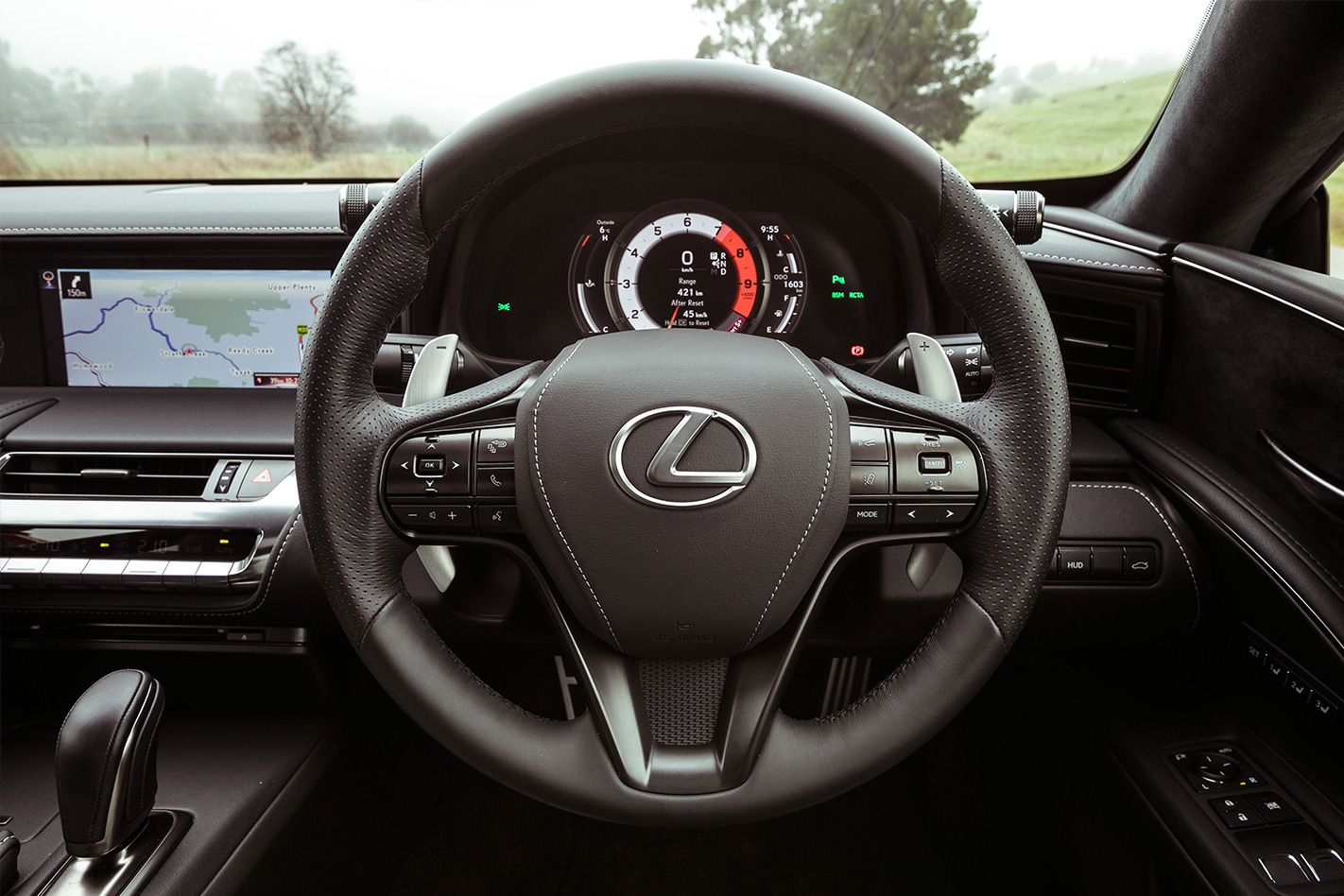
Where the LC fails is with the controller for all things electronic.
Fortunately, basic climate controls are adjusted by actual buttons. Lexus, however, insists on employing something it calls a ‘Remote Touch Interface’ touchpad controller for everything else. The joystick is gone, replaced with a mouse pad.
The pad is flanked by a few shortcut buttons, plus two roller/rockers. All other functions must be accessed with the infuriating touchpad, which blocks access while the car is in motion.
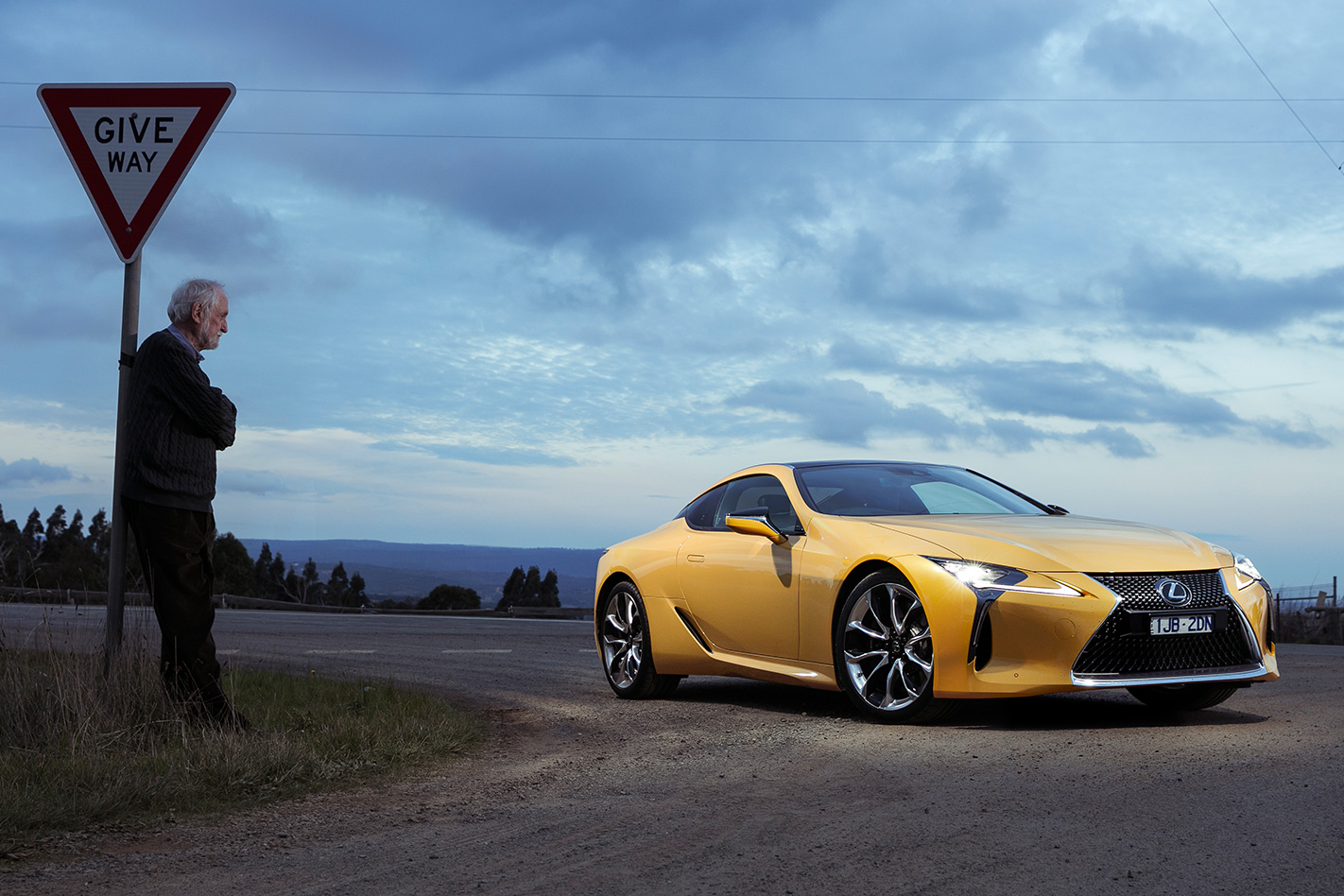
LC stands for Luxury Coupe, which is an entirely accurate description.
Be in no doubt that Lexus has built a car for the wealthy traveller who would rather drive and enjoy the hundreds of kilometres to a posh hotel or chalet, than suffer the tribulations of airports and rental car queues.
I get this car, though Lexus expects not many people will.
The numbers are small: Lexus predicts around 120 local sales annually from a total global production of just 5500 cars a year. Just ignore the comparative performance numbers and instead delight in the serene GT refinement and the car’s rarity, all qualities that rather remind of the Porsche 928.
Vote for the Lexus LC to win the 2018 Wheels Car of the Year Readers’ Choice competition
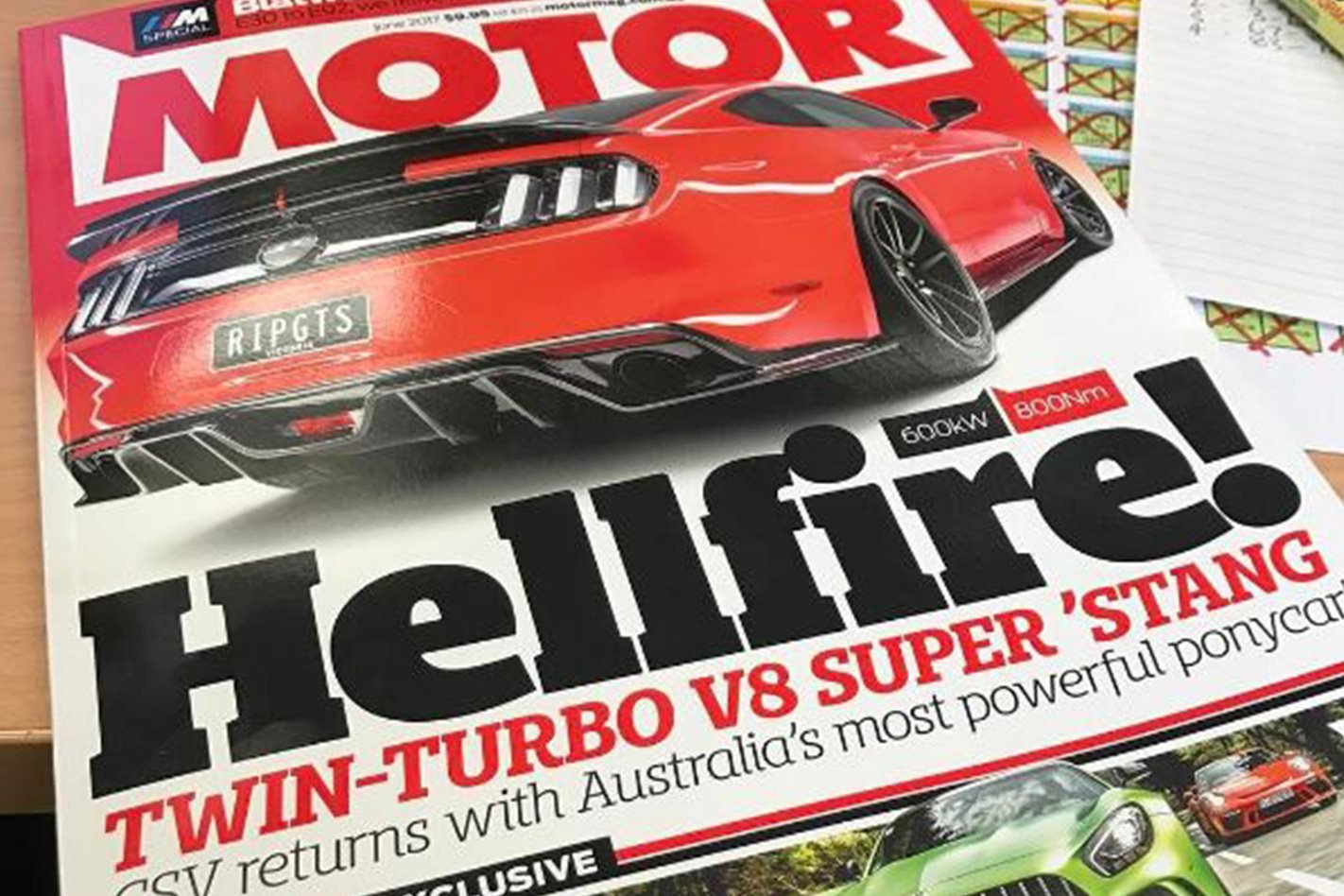
I love books and magazines and reading in general. Always have.
Some of my earliest memories are of Enid Blyton characters and Biggles and comics and any motoring magazine I could get my paws on. My parents, relieved that I might actually be finally learning something, were delighted to keep throwing whatever reading matter at me they could find.
Mind you, my request for a collection of Edgar Allan Poe stories at age nine raised their eyebrows a bit. But I still have that book.

Trouble with that is that the only real growth in the publishing industry is in goddam talking books. Spare me days! Talking books are to literature what a family-sized ham-and-pineapple is to Italian food. The very expression ‘talking book’ makes about as much sense as ‘voluntary conscription’.
Shouldn’t come as any great surprise, of course: When the population would rather make ‘friends’ on a social networking site than by actually getting dressed and leaving their house to find real people and then decide whether they like them or not, you can see how the talking book might be on the rise.
The argument put forward by fans of the talking book is that they’re convenient; you can listen to a book while you’re doing something else. Also – these same lunatics claim – you can gain an appreciation of the nuances of the book by the emphasis and intonations of the narrator.
But what about the skill of the narrator taking the yarn to a new level? Surely to god, just as it’s part of the author’s job to prick your imagination into life, part of the art of reading a story is adding your own interpretations and nuances as it unfolds. It’s called using your melon for something other than keeping your hat from collapsing. Funny that.
So why the rise of the talking book? It’s pretty simple, I reckon – pure laziness. In a society where you don’t even need to get out of your car to collect your lard-burgers, having somebody else do the pesky job of reading the book for you is very appealing.
When groceries are ordered online and delivered to your door (can’t really call it shopping anymore, can you?) why not have a third party read, interpret and relay the story to you?
This all conveniently ignores, of course, that there’s real joy to be had from the act of reading; looking at letters on a page, unscrambling them and finding their meaning, both literal and metaphorical.
Of course, in a world populated by the mentally shiftless, emotionally crippled and imagination-deprived, it probably had to happen.
But I can tell you this, it won’t be happening at my place. Because here’s the bottom line: they’ll be salting the roads in Hell before a CD player or iPod replaces the big stack of car magazines in the man-dunny at 13 Struggle Street.
Thrustmaster T-GT, $1180
(available late 2017)
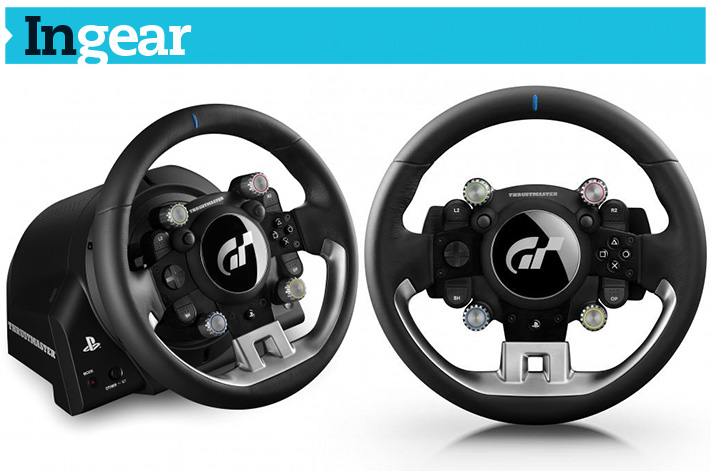
Gone are the days when the only way you could experience forced feedback steering in a driving simulator was to head down to the arcade and jump on Sega Rally at a rate of $2 a pop. Gaming is big business and serious gamers are willing to invest serious cash in their passion – exactly why Thrustmaster has launched its T-GT flagship.
It has a high-grade brushless motor for simulating steering feedback as well as track vibrations and comes complete with alloy pedals and a quick-detach leather-upholstered wheel in case you have a massive stack and need to exit the bedroom in a hurry.
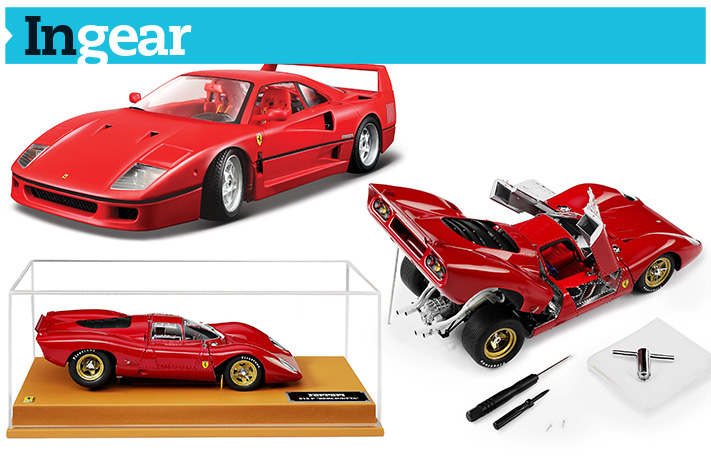
What better way to celebrate a midlife crisis than by taking delivery of your very own Ferrari F40, 30 years after posters of it hit your bedroom wall? But if, like us, your budget falls short by $1,999,820 then you could opt for one of these.
Model car authority Bburago has recast this 1:18 scale F40 from the original dies it used when the F40 was new, for an unrivalled dose of nostalgia and feeling like you haven’t done enough with your life.
With a more handsome budget you could splash out on the Ferrari 312P from CMC, which adds an incredible level of detail and tools, so you can play little pits.
See the words Hogan and shoes in the same sentence and you would be forgiven for immediately visualising crocodile skin boots, but the collaboration between Hogan footware and Aston Martin has produced something a little more sophisticated.
The “ultimate luxury sneaker” was revealed at London Fashion Week and is on offer in a choice of four hide colours, none of which is reptile.

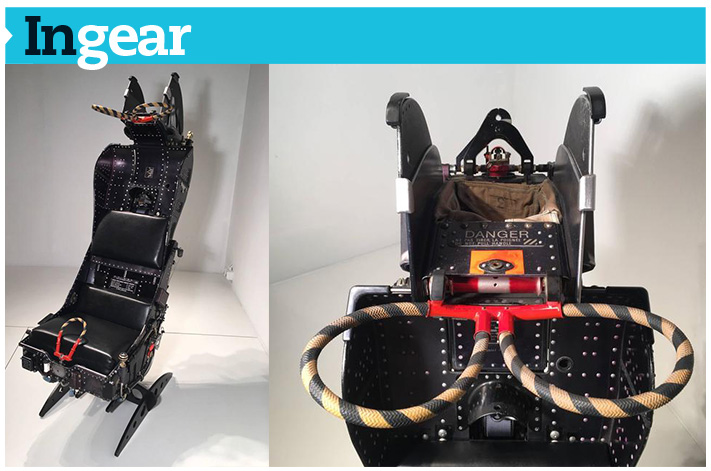
We’ve all been there. You have friends around and someone has just started talking about how cars that can go faster than 100km/h are unnecessary and we should all be driving around in autonomous convoys.
Well that mind-numbing conversation could be a thing of the past with this unusual office chair. As soon as your guests touch a sensitive subject you can immediately launch yourself through the ceiling and hopefully into better company.
The seller reports the ejector seat’s condition is “consistent with age and use” which raises more questions than it answers.
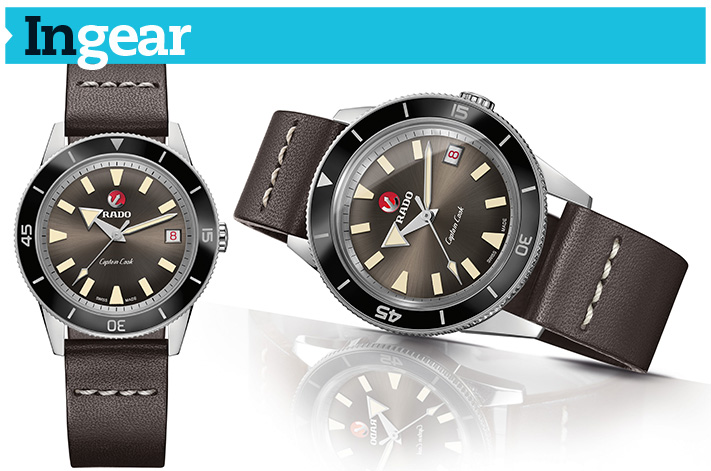
You might not have heard of Rado watches, and to its obsessive fans, that’s exactly the appeal. It is a proper Swiss watchmaker and celebrates its centenary this year. But its under-the-radar image means that its prices have remained semi-sensible by comparison with more mainstream Swiss brands.
It also has a very distinctive ethos, centred on the invention of new, better materials from which to make watches. Even the fanciest Patek will look a bit tired after six months on your wrist, so Rado has developed new scratchproof materials. In recent years (and long before the car industry did) it has focused on ceramics, which are light and hypoallergenic as well as being potentially harder than diamond.
This Rado only has a ceramic bezel, but its cool retro look made it one of the stars of this year’s Baselworld watch show. And there’s an Aussie connection: called the Captain Cook, it’s a reissue of an explorer’s watch Rado first made in the 1960s. If you don’t like the big-watch trend, you can have it in a very trad 37mm diameter. If you do, choose the 45mm version. Either way, fellow Rado-nuts will approve.
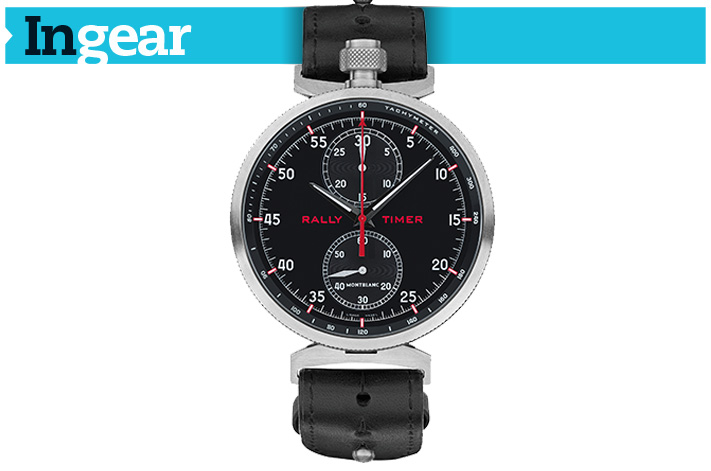
Montblanc is the official timer for the Goodwood Festival of Speed this year. The pen-maker long ago expanded into watchmaking by buying the Minerva factory in the Swiss Jura mountains. Minerva made much-admired dash-mounted stopwatches for early racers.
Montblanc is paying tribute to them with its Timewalker Rally Timer, a chronograph that can be detached from its strap and mounted to a dashboard. It also sprouts tiny legs so you can prop it up and use it as a desk clock. The movement inside is a work of art: which is something else you could buy with the price. More sensibly priced Montblancs are available.
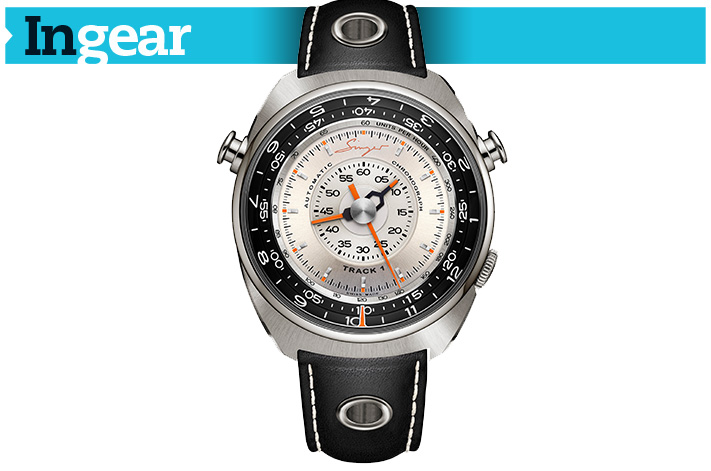
Singer, the Californian creator of the most insanely desirable (and expensive) re-engineered old 911s has now made a watch which is, predictably, insanely expensive and desirable.
Singer’s British-born founder Rob Dickinson has collaborated with a cutting-edge watchmaker and designer to make something which genuinely reflects the nature of his cars. The exterior is vintage racing-driver’s chronograph, with a twist. But inside is a radical reimagining of the mechanical chrono movement which puts the stopwatch function at the centre and relegates the actual time to two rotating discs at the periphery. Useful? Maybe. Cool? Yes.
With the advent of airbags, advanced safety restraint systems, electronic stability control, safety cells, and crumple zones, modern vehicles are very safe places to be, but the latest cars are not just looking after the people on the inside.
As global safety standards become increasingly demanding, modern cars are being developed to minimise injury and harm to other road users as well, including pedestrians, cyclists, and occupants of other vehicles.
Ever wondered why Ford Mustang owners in the US get a pair of tough-looking bonnet vents but Australians don’t? It’s actually down to one of the simplest ways of minimising pedestrian injury in the event of a collision.
The leading edges of vehicles used to be sharp and unforgiving with little room to move if impacted, and the likelihood of pedestrian injury was high. Modern design rules require cars to have larger radius curves on exposed edges and a collapsible construction.
For Australia’s stringent safety standards, the Mustang’s bonnet vents removed an important crush zone that could absorb some of the impact of a pedestrian in a front end collision, so they had to go.
Most cars sold in Australia are assessed for their safety rating by the Australasian New Car Assessment Program (ANCAP) with both passive and active features under the spotlight, but the organisation also tests each car for pedestrian safety.
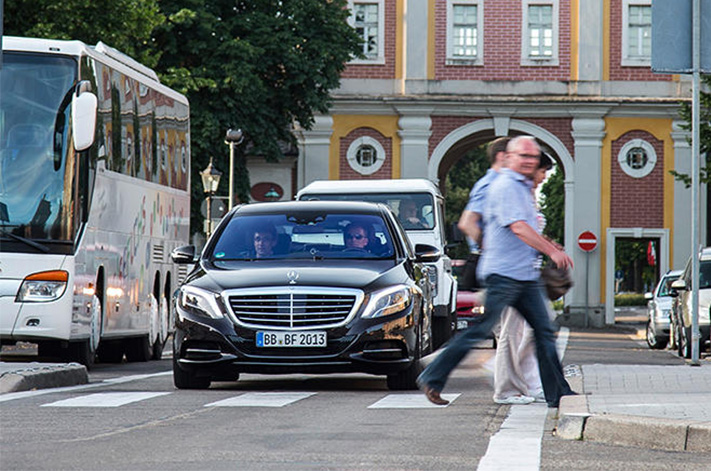
Up to 42 points are up for grabs, depending on how well a vehicle performs with both child and adult impacts simulated in the areas of frontal, bonnet, and windscreen areas.
Crumple zones and deformable structures are a relatively simple technology for reducing the potential for pedestrian injury, but some manufacturers have developed more high-tech solutions such as active bonnets.
Active bonnets systems instantly raise the bonnet a few millimetres the moment it detects a pedestrian coming into contact with the front bumper, thus allowing more empty space above the hard engine component to cushion the impact of a person.
This simple idea can make a significant difference in personal injury but not if the pedestrian also impacts the windscreen area.
Mercedes appears to be going one step further and has recently filed patents for an innovation that addresses the hazard presented by the zone behind the bonnet and, while cabin airbags have been used for in various forms for decades, Mercedes’ idea applies the principle on the outside.
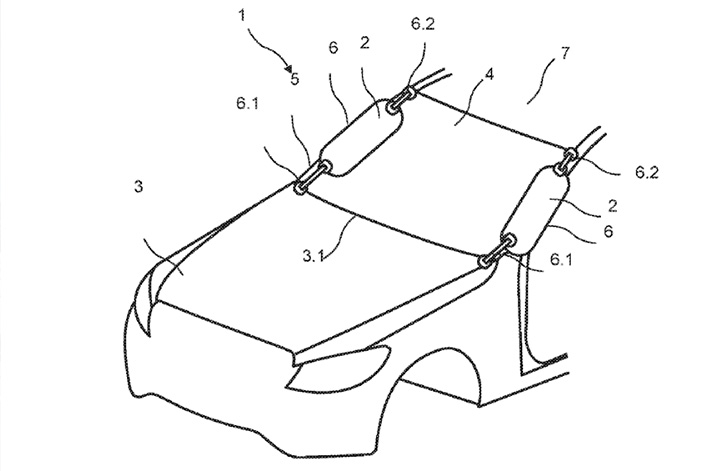
From the basic patent sketches, it appears the German car maker has designed airbags that are concealed in the A-pillars and deploy to cushion the impact more effectively than any idea before it.
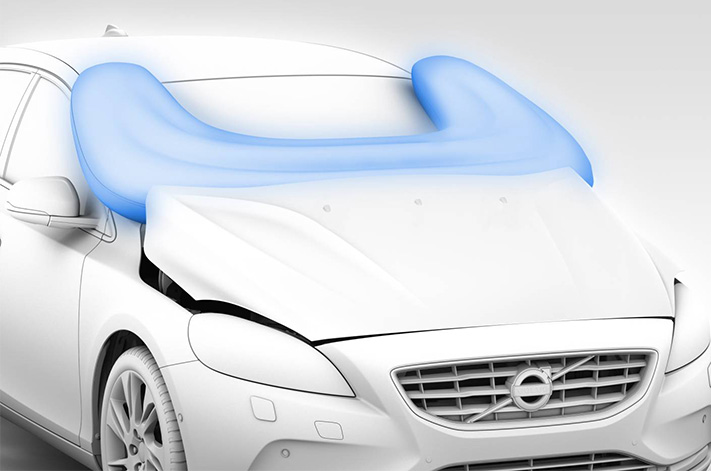
Volvo has already offered a version of the concept with an airbag that is combined with the pop-up active bonnet principle to offer improved protection from the windscreen, but the Mercedes idea focuses on mitigating harm around the stiff A-pillars.
Of course, all these potentially life-saving technologies attempt to make the best of a bad situation and only come into play if a pedestrian collision is unavoidable, but the ideal scenario is avoidance.
With autonomous emergency braking (AEB) finding its way into an increasing numbers of vehicles, the semi-autonomous technology is proving highly effective in preventing pedestrian accidents and collisions with other vehicles.
As vehicle-to-vehicle (V2V) communication starts to gain traction, cars will be able to use other vehicles as their long-range eyes, with information relayed to vehicles in the nearby vicinity before they encounter any potential risks, including pedestrian hazards.
Our roads are becoming busier and more congested, which increases the potential for pedestrian collisions but, thanks in part to the work of vehicle designers and engineers, pedestrian fatalities are slightly lower to the end of July 2017, as compared with the same point in 2016.
Five Australians have scored Formula 1 points. Six men have driven on the moon.
Of the Aussies to have succeeded in motorsport’s top echelon, Ricciardo and Webber spring easily to mind, and world champs Jones and Brabham need nothing in the way of introduction. The fifth usually foxes people. It’s Tim Schenken.
Even more intriguingly, he’s the only Aussie to have ever scored a factory Ferrari drive, albeit in sports cars not Formula 1.
So how did a kid who used to secretly borrow his mum’s Simca for races at Calder end up catching the eye of Enzo Ferrari?
“Because I was good enough,” he deadpans, before breaking into an impish grin.

“They approached me at the 1971 Monza Grand Prix. After the first practice, a woman came up and said ‘Would you come to the Ferrari garage?’ I thought it was a joke so I didn’t take much notice to be honest,” he smiles. “She came again the following day and I still thought someone was pulling a prank here. In the afternoon she returned, and she was really agitated. I thought maybe I’d better go.
I got into the Ferrari truck with Peter Schetty, who was the team manager at the time. He was so angry because Enzo Ferrari had come up the day before to meet me and had to stay overnight. I still had my overalls on, so I got straight into the car and went to a hotel in Lesmo. A bit unwittingly, I’d stood him up.”
Clearly there were no hard feelings from the notoriously testy boss of the Scuderia. “In the back of the restaurant was Mr Ferrari, and he asked if I would drive for them.” Schenken signed for £2000 a race, with nine endurance events. “That was a lot of money back then. I don’t know what the other drivers were on but I knew that £7500 would buy a house in Maidenhead.”
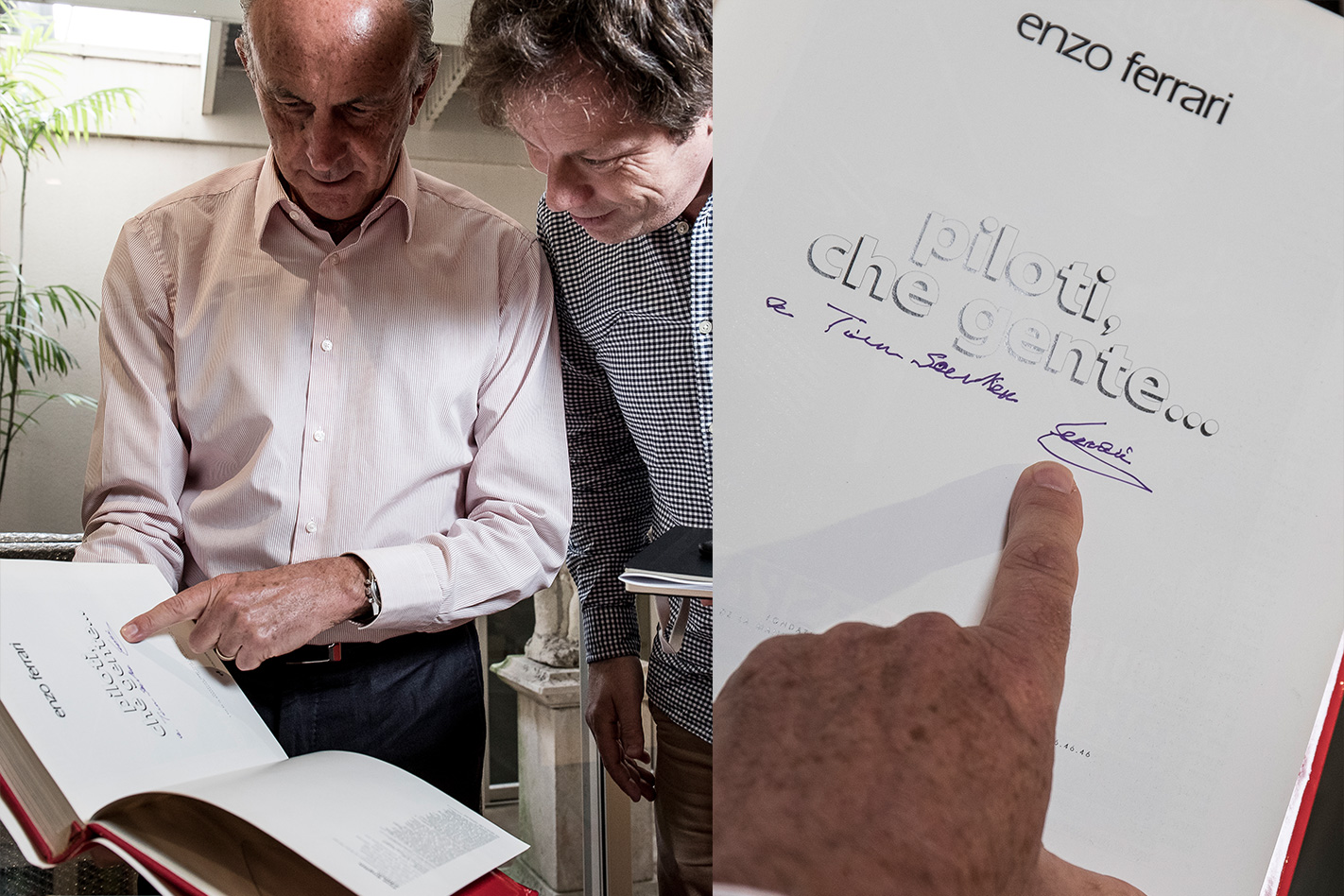
“I met Mr Ferrari quite a few times. Ronnie and I won the first race of the year, the Buenos Aires 1000km, and afterwards we had ten or 12 trophies between us. When we got back to the team bus, I wondered what I was going to do with them all, so Peter Schetty suggested that we give three or four to Mr Ferrari. He loved it. After that, Ronnie and I were always welcomed there, and when we were testing at Fiorano or Monza, Mr Ferrari would always turn up and say hello.
“Ferrari is a great team to be with when they’re winning. When they’re losing, it’s a real struggle, as I found the following year. Matra came with a proper monocoque chassis and expertise from the aerospace industry and Ferrari hadn’t mastered how to build a monocoque. At that stage it was still a tube chassis. There was also the concern that the effort on sports cars would detract from what they were doing in Formula 1.
Fiercely pragmatic, Schenken cared little about the car he was in, just as long as it was the fastest. But it was clear Ferrari wasn’t just another racing team.
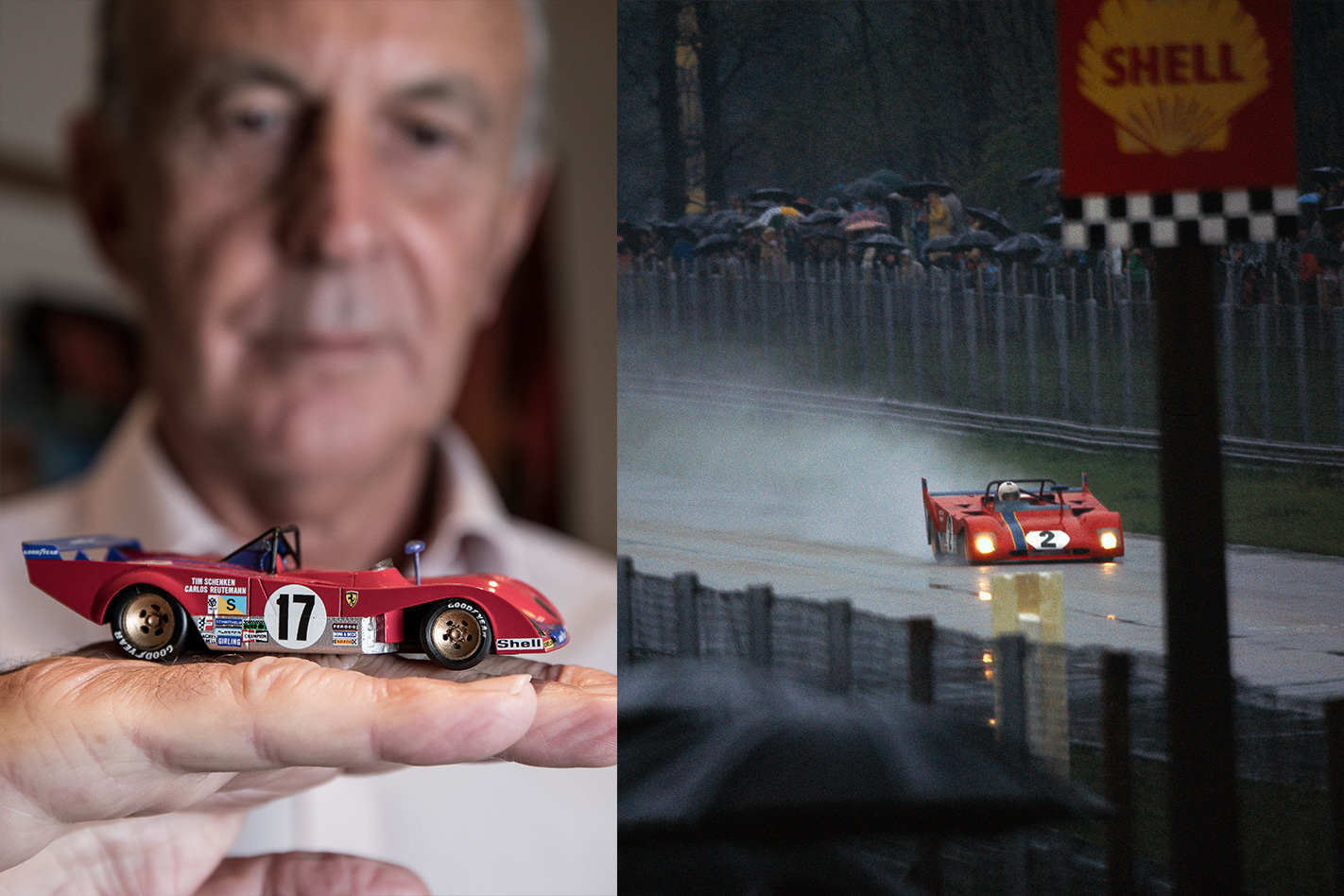
“I didn’t at the time, but when I look back now, I think it was fantastic what we did there at Ferrari. Fiorano had opened in 1971, so we’d take a car for testing and wander around the production line, but you didn’t appreciate it at the time,” he says. The unique nature of Ferrari’s manufacturing had its pluses and minuses. “Ferrari built everything themselves. It wasn’t like they were buying an engine from Cosworth. They built components to suit themselves. But that led to an atmosphere where when they’re winning, it’s the car; when they’re losing, it’s the driver.”
Ferrari wasn’t shy of wielding its huge reputational clout either. “At the 1000km of Monza in ’72 it was horrendous weather. In the warm up, two of our cars went off at the Parabolica. I was driving one. The cars came back with damaged bodywork just before the start of the race. Peter Schetty went to the organisers and told them to delay the start of the race or the Ferraris were going home, so they delayed the start.”
Even Maranello’s muscle could only go so far in mitigating the risks of the era. “At that time, I thought I was better off than Stirling Moss, Mike Hawthorn, Peter Collins and all those other drivers. We had seat belts, we had Bell helmets, we had fireproof overalls, we had a monocoque chassis, and we had bag tanks, so we were better off than they were. There were a lot of fatalities, but if you were worried about those things, you wouldn’t go racing”, says Schenken.
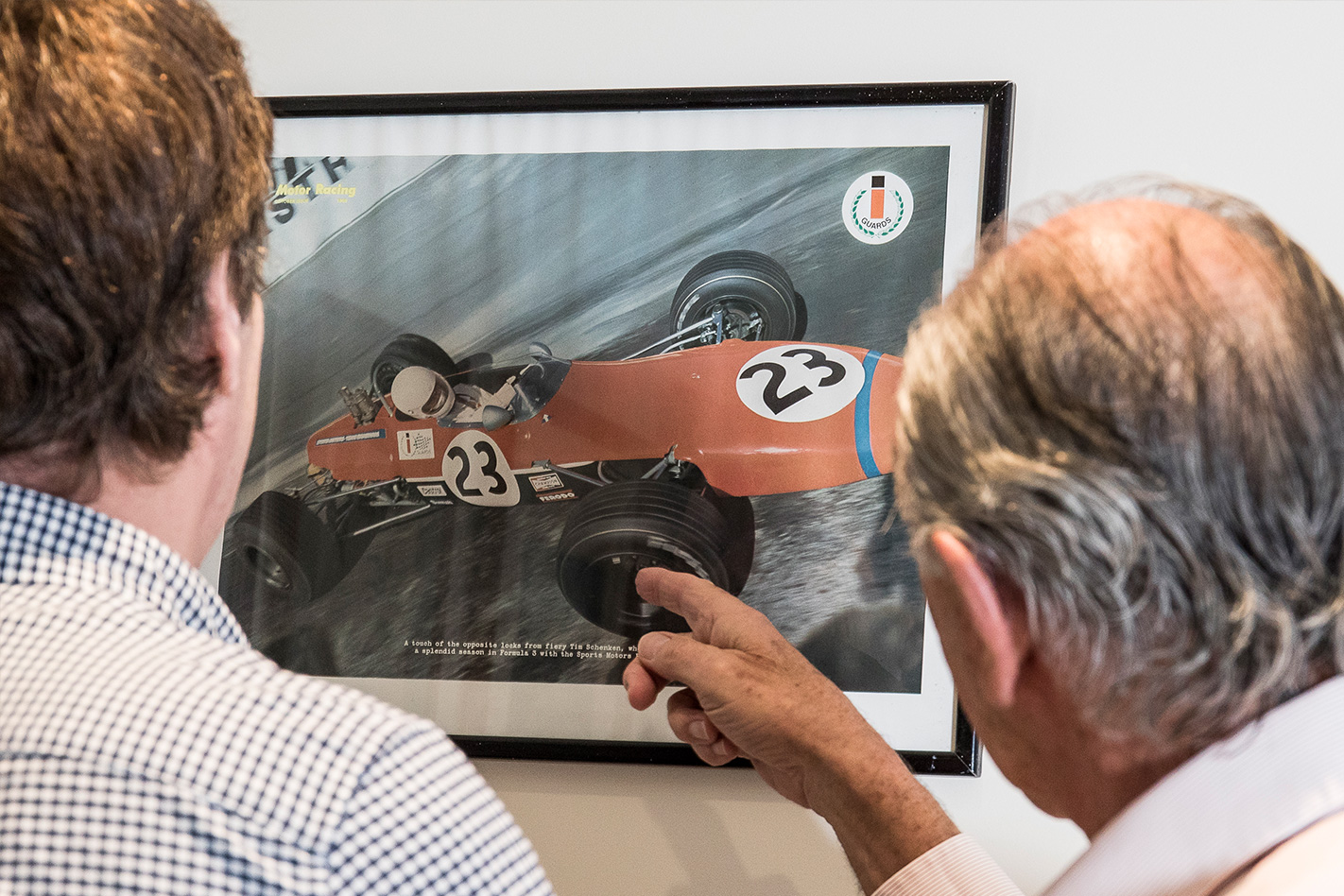
Near misses feature heavily in Schenken’s career, but once in a while, it all hit the fan and not always in the most predictable way.
Take Daytona in ’72.
“Ronnie Peterson and I were staying at the Holiday Inn opposite the track’s main entrance. We got sick and tired of the food there so we asked Mario Andretti where to go for dinner. He said there were some nice restaurants down in Daytona so we went down there and saw cars driving up and down the beach. We decided we’d have a go at that after dinner. I was the idiot driving, and Ronnie yelled, “Turn off here!”, so I swerved off the highway, up a ramp and into the air, finishing with a big slide onto the beach.
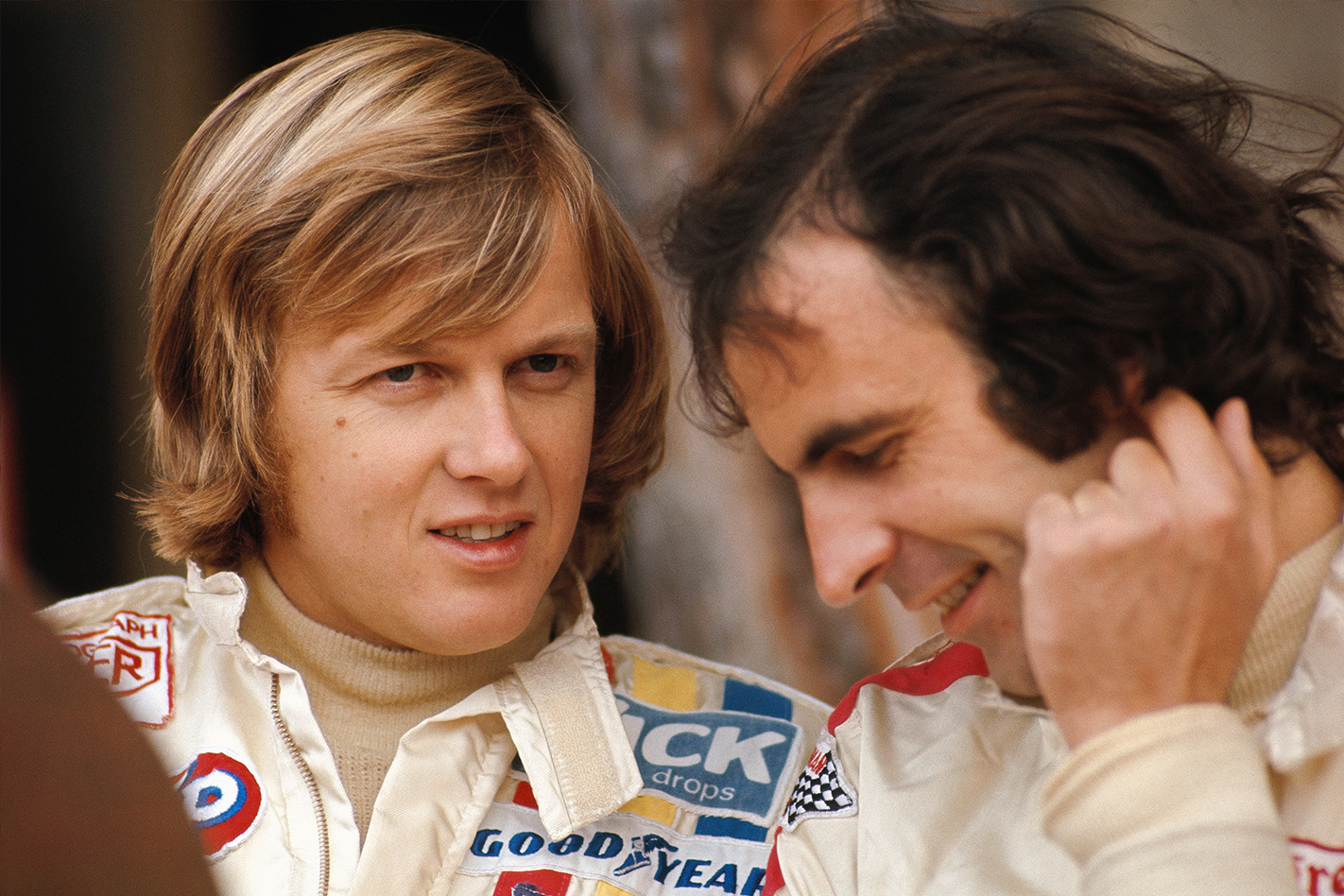
“It just so happened that a police car was driving past. The speed limit was 25mph, so the lights came on and he stopped us immediately. We had no ID at all, just cash. So it was off to the police station and we were taken down into the area where the cells are with the drunks, homeless people and criminals. It occurred to me that Ronnie wasn’t driving and that I was the one in trouble, so I asked if he could go back to the hotel and get some ID. Yes, that’s okay, they said.
“Ronnie being Ronnie, he lit the tyres up going out of the police station car park. He was angry. He took off and immediately there was an all-points bulletin to stop the car. They brought him back very sheepish and weren’t going to release him. “We decided to ring Peter Schetty to see if he could help. We didn’t want to do that because we shouldn’t have been out at midnight the night before the race.
We called him and he rang Bill France (the Daytona Speedway owner and NASCAR founder), who rang the police station and they got us out. The mechanics thought it was fantastic, Mario thought it was a huge laugh but Peter Schetty wasn’t very happy about it at all. We were leading the race the next day but I think we then had some gearbox problems. You only remember the wins!”
After hanging up his gloves, Schenken set up Tiga Racing Cars with Howard Ganley, a successful business that produced around 400 race cars in various formulae, giving drivers like Mike Thackwell, Stefan Johansson and Eddie Jordan an early break.
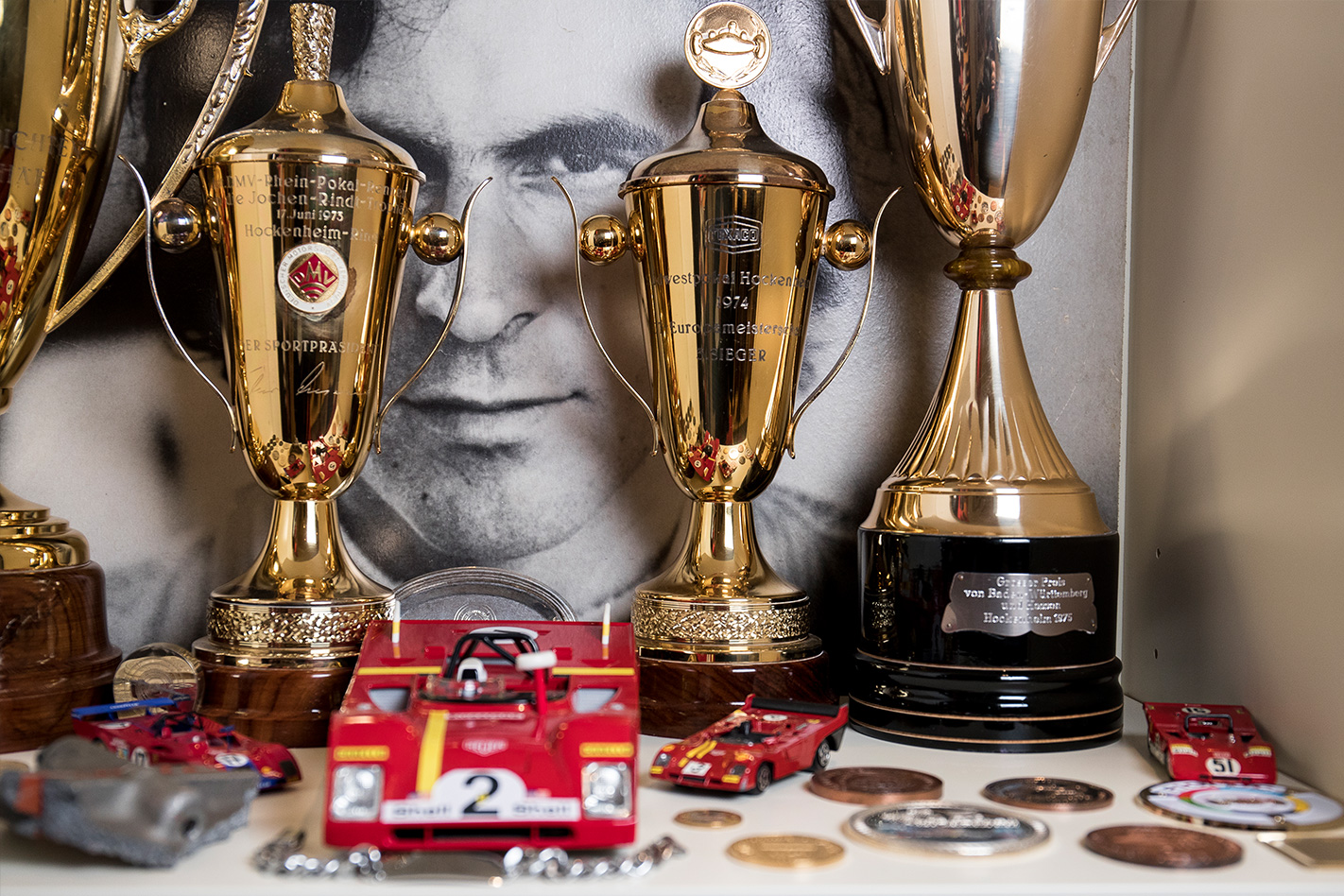
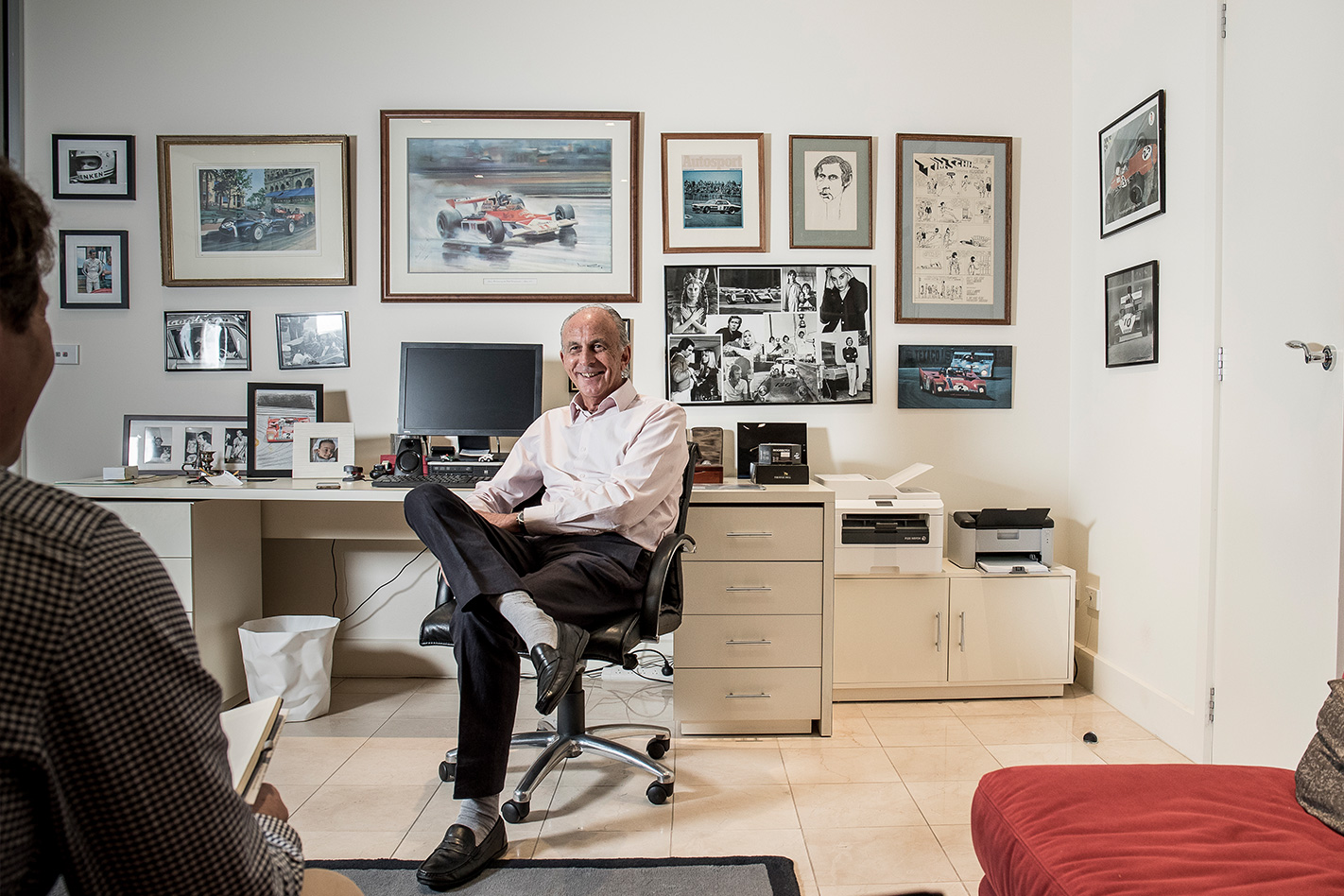
It’s a long way from cannibalising broken parts for an Austin A30 track mongrel, but then making your way as an Aussie at motorsport’s pointy end sometimes requires a little ingenuity.
As we walk out the door, there’s that grin again. “Daytona,” he chuckles, shaking his head. “You’re going to make me out to be a larrikin.”
There’s still a lot of public scepticism over fully autonomous cars, but that hasn’t stopped car manufacturers from looking towards a driverless future.
This includes Ford, which aims to produce a driverless car by 2021 and has recently submitted a patent for removable driving controls – including the steering wheel and pedals.
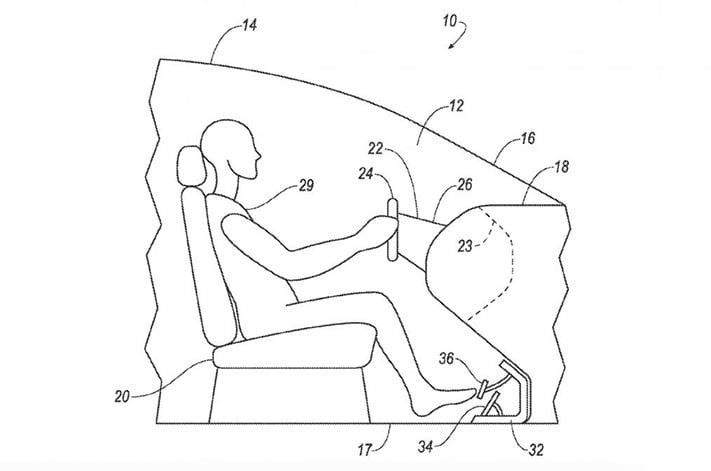
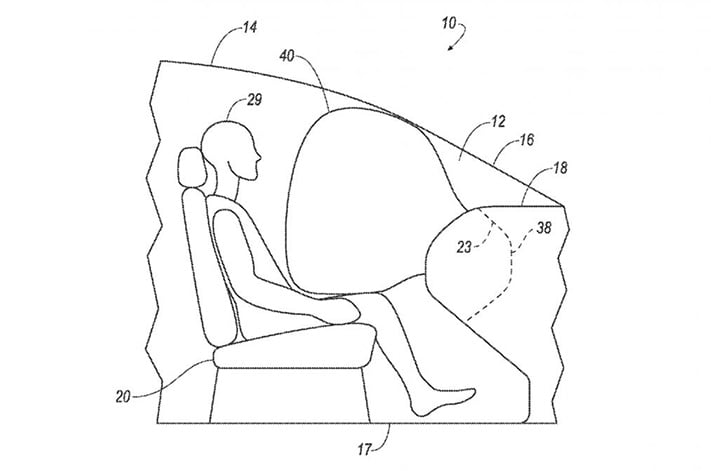
The patent drawings show a car with and without controls, suggesting they can be removed or added depending on the default layout.
They also show how the airbag would be installed to work with both configurations.
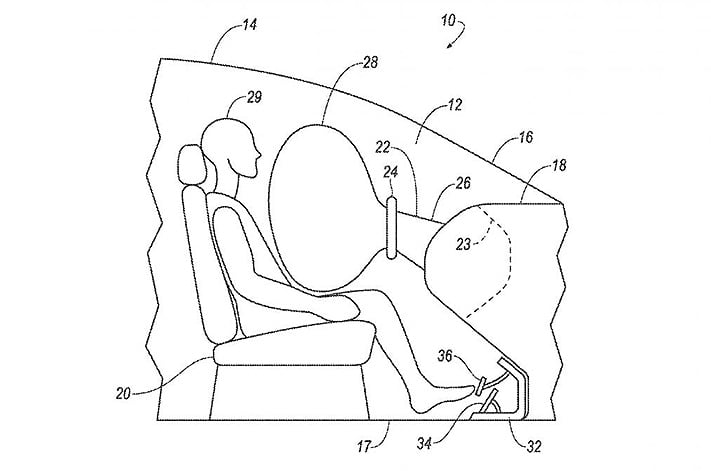
The pedals appear to be mounted on a unit that can slide in and out from under the dashboard. According to Ford, the car would come primarily with no controls, though they would be used for development and testing before being removed with the ability to add them again as a customer option.
The controls would be quickly installed using snap-in spring-loaded fasteners, and once removed, the trim pieces would neatly cover its mounting points.
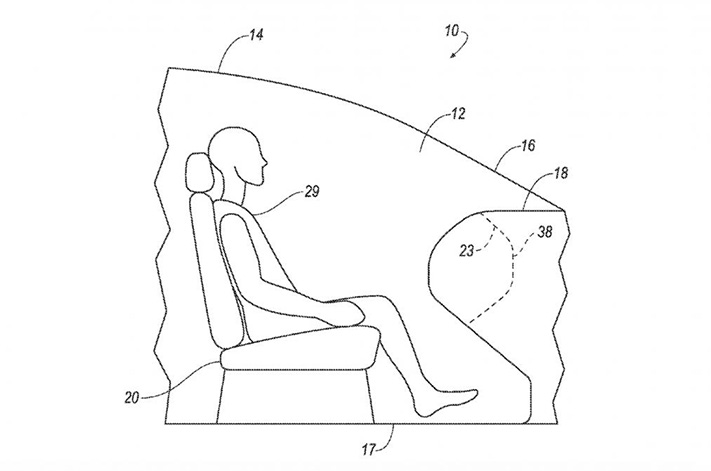
It remains to be seen what are Ford plans for the design and if it will make its way into a concept or production vehicle any time soon.
The company published the patent earlier this month, at the same time Ford’s new CEO Jim Hackett predicted autonomous cars won’t fully takeover our roads.
Speaking at the Ford-sponsored ‘The City of Tomorrow’ symposium in San Francisco, Hackett expected robot-driven taxis to share the road with human-driven cars that will be smarter and less accident prone.
When the original Bentley Continental GT was conceived, sportiness and agility were not yet among the marque’s top brand values.
However, stepping into the new car is like entering a different world. With its DNA now developed in conjunction with Porsche, the new Conti (codenamed BY634) drives like no other Bentley – that’s a promise.
The underpinnings are borrowed from the Panamera, but there’s also a new transmission, suspension layout, all-wheel-drive system and electronic architecture. Oh, and it wouldn’t be a next generation without a boost to power and torque, Bentley extracting a further 31kW/180Nm from its W12.
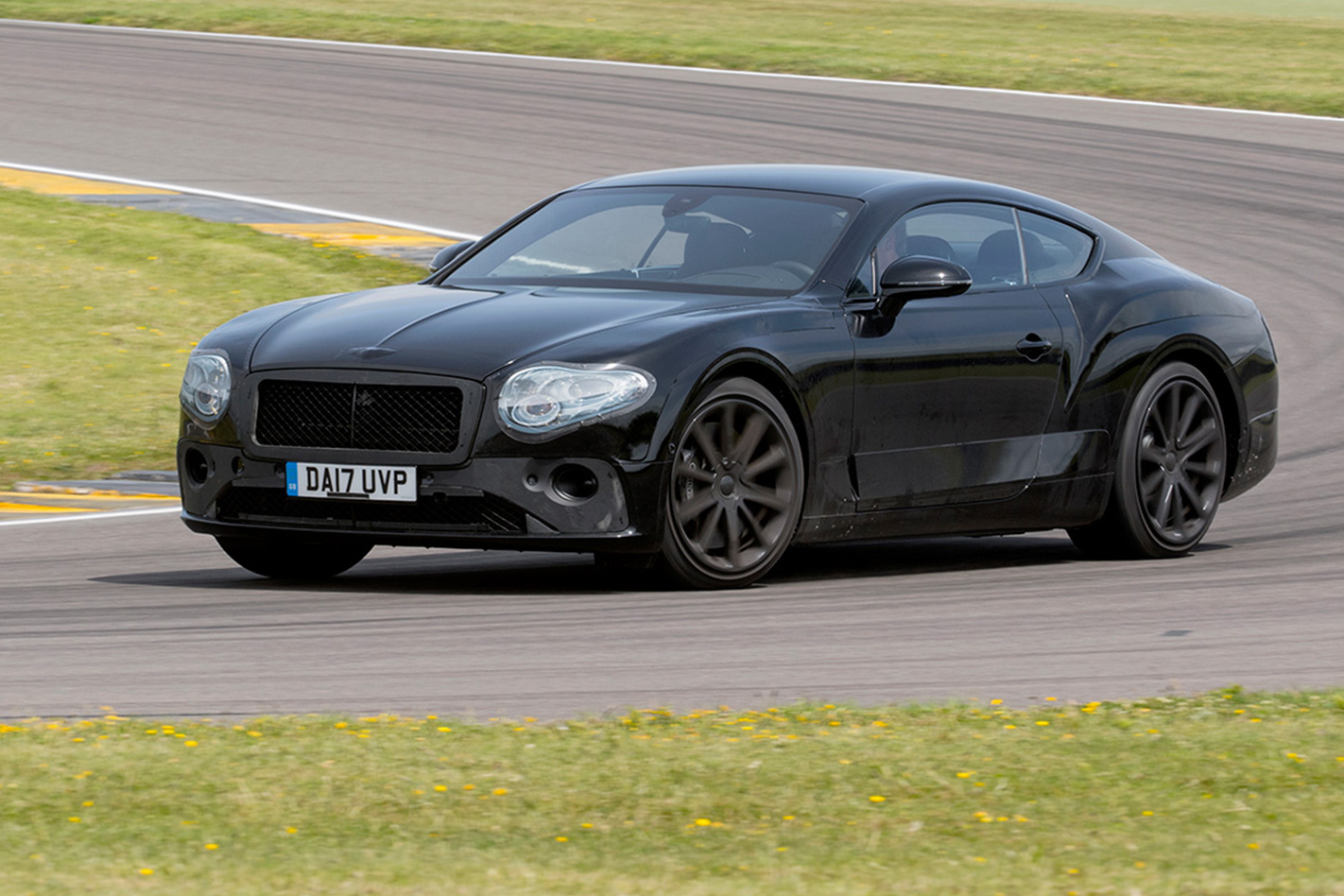
At the same time the on-paper efficiency has improved to 10.4L/100km, which in reality is nowhere near plausible. While the old model might struggle to bridge the gap between luxury cruiser and GT, the 2018 Conti is a proper GT with a sporty twist.
The chassis is a bespoke variation of the modular MSB architecture which is going to underpin all future upmarket Porches, Audis and Bentleys. Weight has been cut by 130kg, despite the addition of uprated three-chamber air suspension, and has been more evenly distributed for improved ride quality and handling prowess.
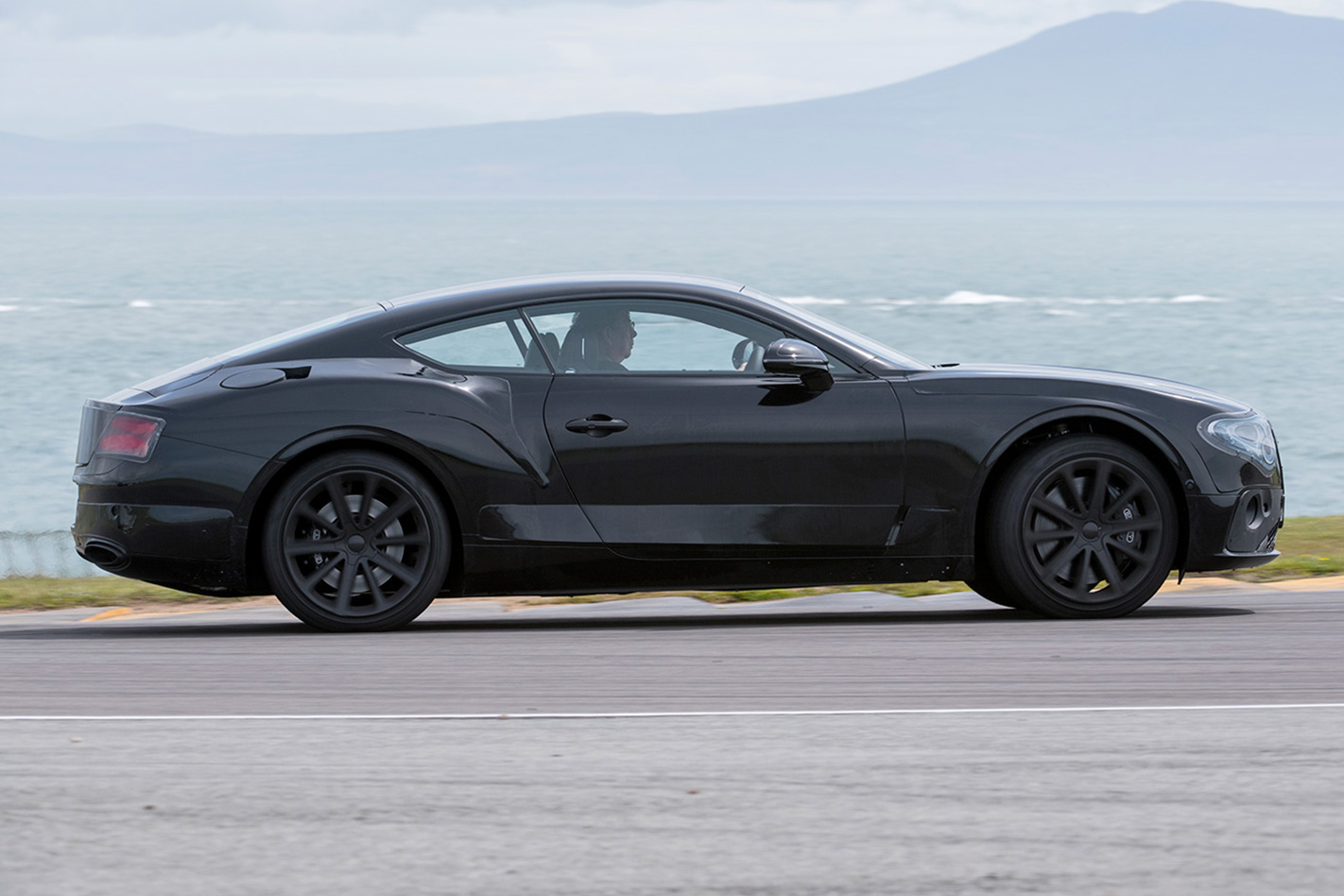
From the start it is clear to see that our pre-production prototype is a proper precision tool. Input equals output as far as direction changes, deceleration manoeuvres and torque feed are concerned.
The electronically-operated anti-roll bars ensure a stable posture, the suppler air suspension fuses comfort and solidity while the electronic aids work much closer to the brink. The rotary drive-mode selector offers three different calibrations of power-steering assistance, throttle response, shift strategy and ride quality: Comfort, Sport and Bentley’s own preferred setting are there to choose from.
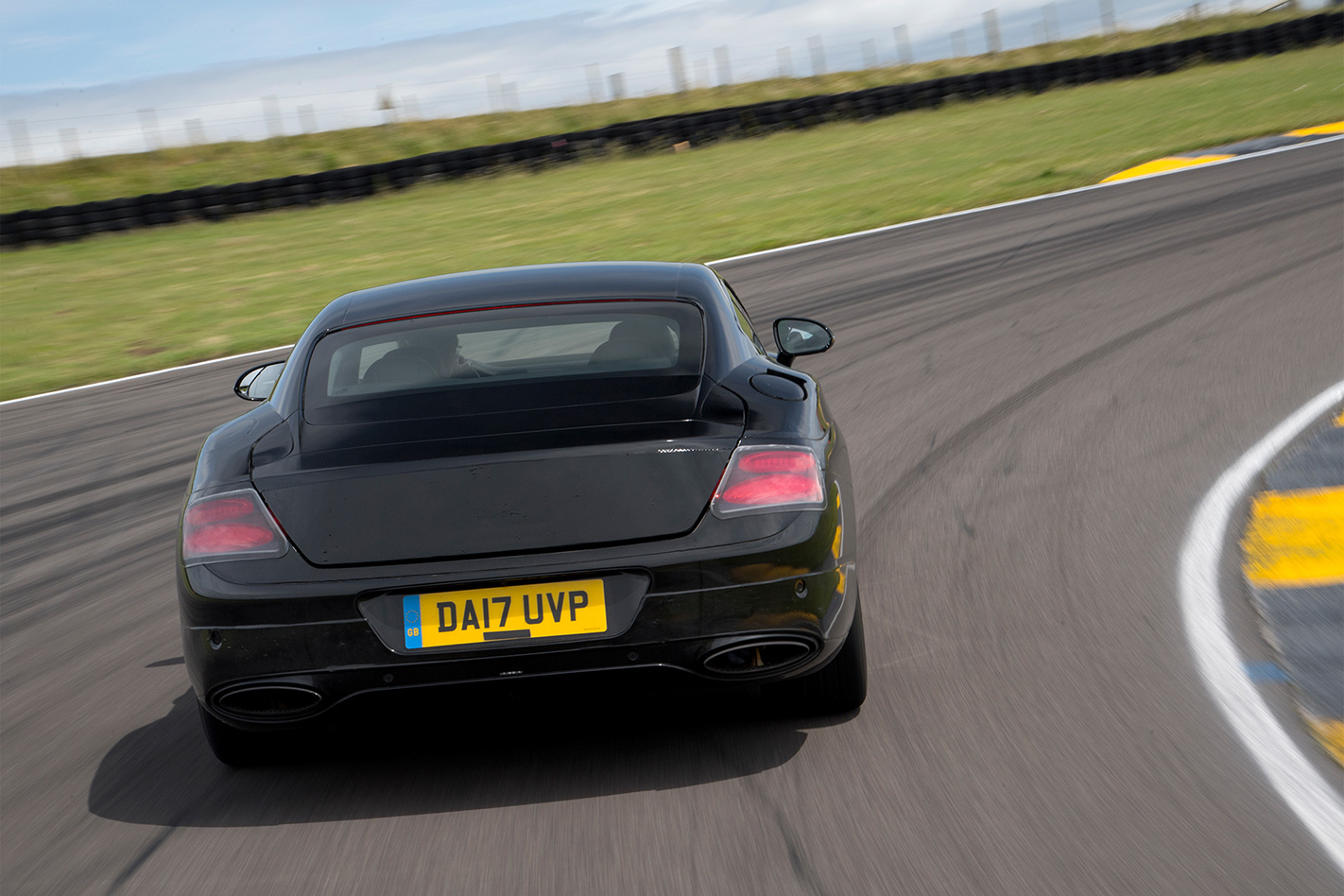
Press on hard and the eight-speed dual-clutch transmission will dial in gears with whiplash vigour and velocity. The first three ratios are now more closely placed, meaning riding the torque curve in higher gears is necessary for effortless, elegant cruising when the mood calms.
On track there’s traces of power oversteer as the big Bentley indulges in smokey second-gear slides and encourages the AWD system to pull 2.2 tonnes out of bends at an incredible rate.
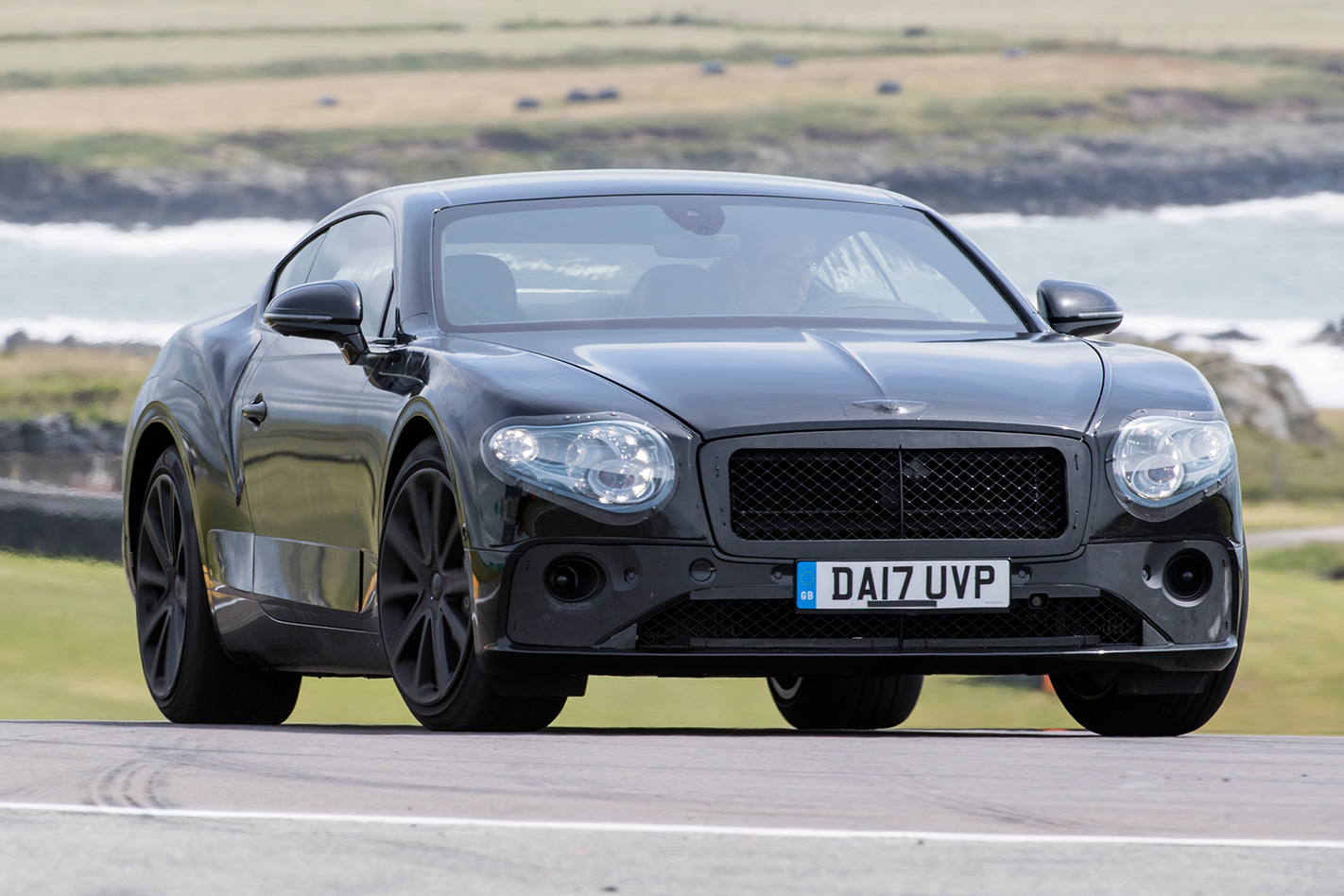
On the open road the GT lives up to its nomenclature by being a superior long-distance express, always alert and very fast, but never pushy.
In essence, this luxury liner is all about refinement and compliance, however it can shed its mink coach when the performance itch needs to be scratched with an abundance of torque. The steel brakes may not be the last word in wisdom when it comes to lap times, but they work fine in traffic where modulation, effort and effect strike a delicate balance.
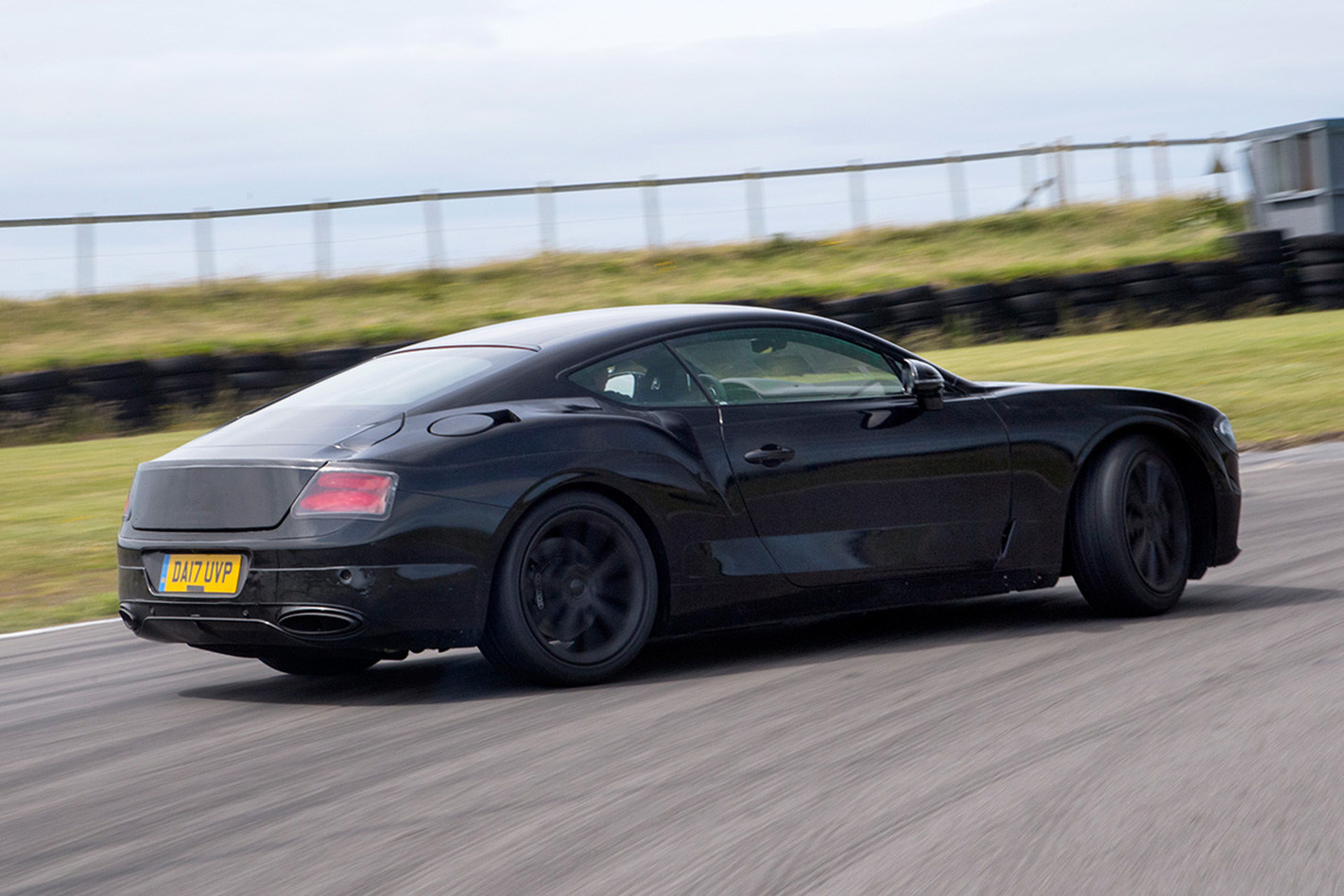
After 14 years, Bentley has at long last reinvented its mainstay model, the Continental GT. The footballers’ favourite has always been a good-looking and beautifully executed motor car.
However, now thanks to the cooperation of Porsche, the driving pleasure is also state of the art.
4 stars out 5 Likes: Newfound dynamic ability; impressive performance Dislikes: Brakes not up to track work; weight
2018 Bentley Continental GT protoype Specs: Engine: 5998cc W12, Dohc, 48v, twin-turbo Power: 465kW @ 6000rpm Torque: 900Nm @ 1700rpm Weight: 2100kg (est.) 0-100km/h: 3.9sec (claim) Price: $430,000 (estimated)
PUNTING the Grand Cherokee SRT comes with a catch – an almost 2.3 tonne catch.
How this five-seat SUV manages to (largely) defy lateral physics is a feat in itself, yet this Yank tank also gets to 100km/h in a launch-control-assisted 4.9sec.
Oh, and it sounds pretty good, too. However, you can add another catch, and that’s the fact it drinks fuel like it’s going out of fashion.
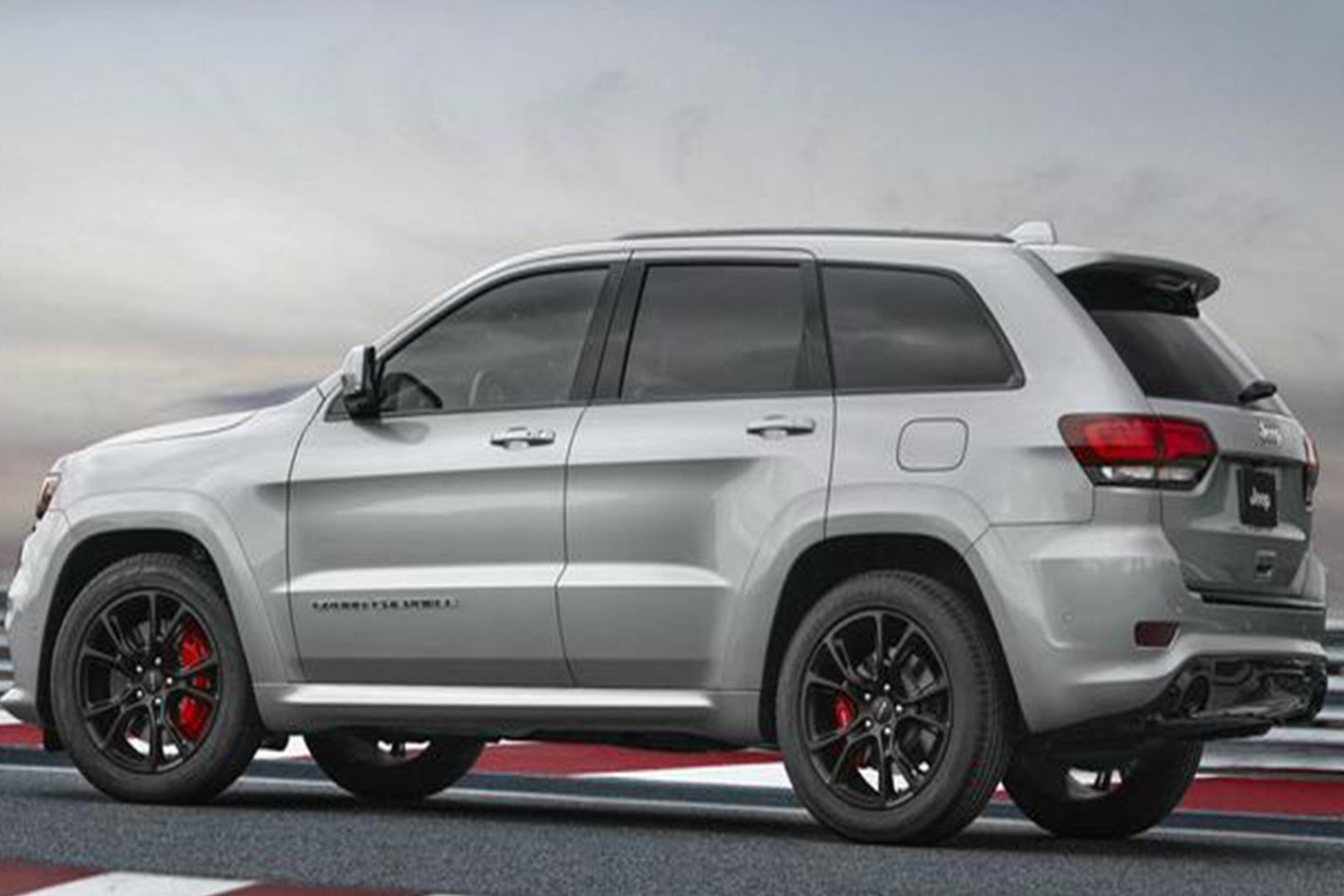
After all, it has loads of space, a three-tonne towing capacity, is well equipped and hits the hip pocket for $91,000.
The SRT has presence in spades, and while some might baulk at the music-video undertones, it’s an undeniably imposing silhouette.

A real LSD at the rear as well as Sport and Track modes (via Selec-Trac) means the SRT can cover ground at an alarming rate and with surprising competency.

The reality is the novelty of the Hemi-powered Jeep can wear thin. But, we’re glad it exists. Did someone say Trackhawk?
2017 Jeep Grand Cherokee SRT Specs: Engine: 6.4-litre v8 Power: 344kw Torque: 624nm Weight: 2289kg, 0-100km/h: 4.9sec Price: $91,000
The Holden vs Ford V8 Utes Series is set to be replaced by SuperUtes, which will see dual cab utes normally seen on worksites taking to the track in a diesel-powered faceoff.
The Holden Colorado has been confirmed for entry into the series, with backing from Holden and a first render of the potential design released.
Currently under construction at Ross Stone Racing in Queensland, the first Colorado SuperUte will be joined on track by Ford Rangers and Mitsubishi Tritons, while the Mazda BT-50, Toyota Hilux, and Izuzu D-Max have all been confirmed eligible.
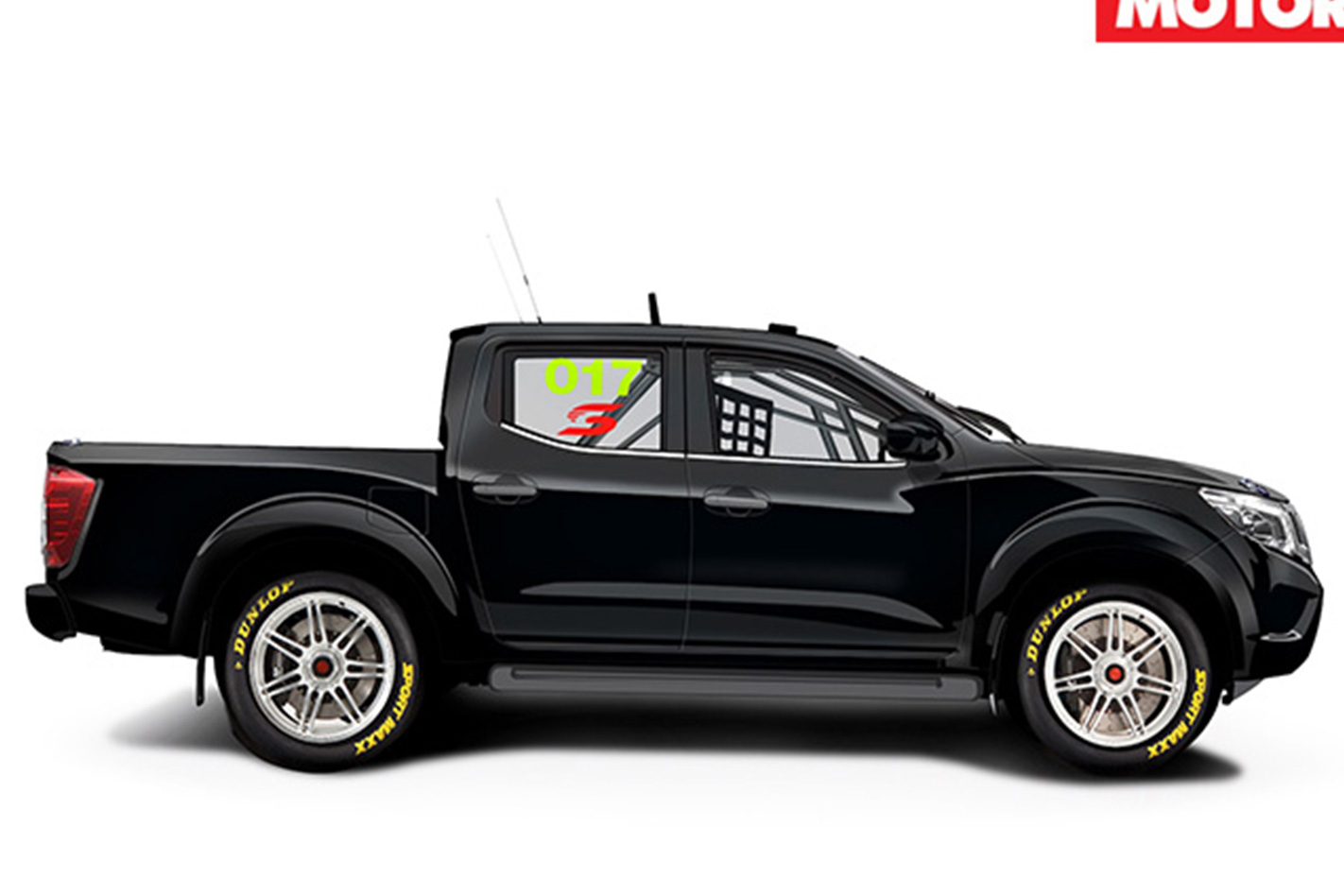
On the addition of the Colorado to the upcoming series, Supercars CEO James Warburton said it made sense for Holden to remain prevalent in the Australian motorsport scene.
“Holden has been such an integral part of Supercars rich history, so it goes without saying that we are delighted to welcome it to the SuperUtes ECB Series,” he says.
“The Holden Colorado is now officially homologated and will take on five different manufacturers in what is shaping up to be an outstanding series.
“With official testing having commenced last week and six models approved for racing, the SuperUtes Series will commence in 2018 with a very strong field and what will be great racing.”
Opinion: Supercars should remain ‘the V8s’
Each homologated model will be able to fill up to six places on the 32-car grid, which means not every manufacturer will be able to enter their full six.
General manager of brand, media, and sponsorship Emma Pinwill is enthusiastic about the Colorado’s entry to the series, so don’t be surprised if you see six of them on track when the series kicks off in 2018.
“SuperUtes is an exciting new racing series and supporting Australian motorsport has been an important part of Holden’s heritage, so we are delighted to homologate Colorado for the series,” she says.
