
Holden’s Commodore Motorsport Edition is not sold out, with dealerships nationwide reserving at least 168 examples and charging buyers as much as $100,000 driveaway.
Although the Magnum ute and Director sedan have actually sold out, just under 10 per cent of the 1200-unit Motorsport Edition remain in dealer stock, according to Holden’s online dealer database, with twenty-three dealers nationwide caught advertising them around $10,000 or more in dealer delivery, government and statutory charges.
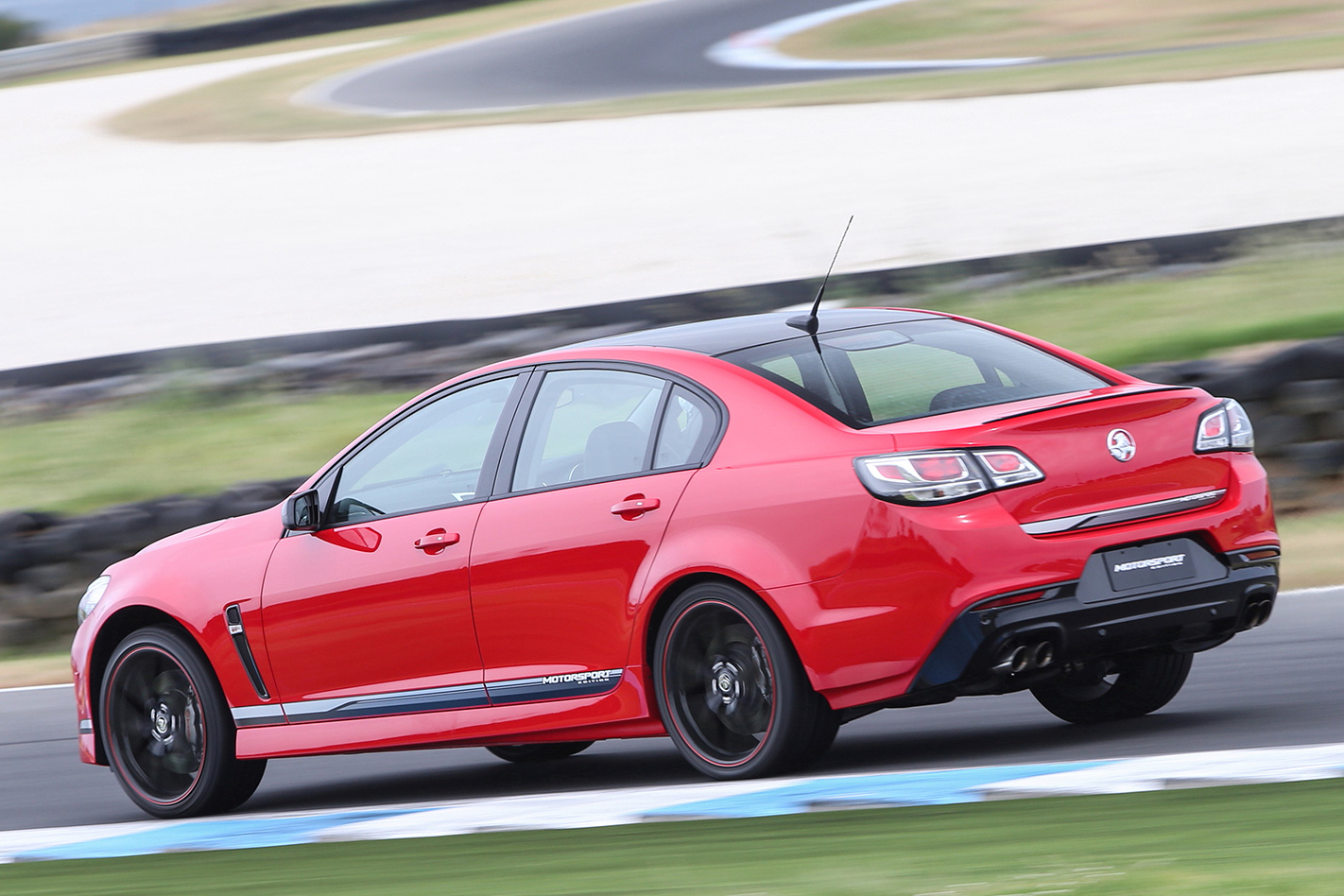
Holden’s official retail price for the special sedan-only version of the SS V Redline – which gets magnetic dampers, larger 20-inch alloy wheels, a sticker pack, a special track cooling pack and upgraded seats with electric adjustment and heating – is $61,790 plus on-road costs for the manual, and $63,990 plus on-road costs for the automatic.
A dealer in rural New South Wales takes the price-gouge walk of shame with a white manual example advertised for $89,990 driveaway – or $34,898 and $28,200 in on-roads, respectively.
Two Western Australian dealers are asking $82,990 driveaway for a black manual, and $82,998 driveaway for a green or white auto.
Two more dealers in Victoria aren’t far behind at $81,990 and $79,990 driveaway, in each case for a red automatic. Even at the latter price, that’s $16,000 in on-roads.
The cheapest advertised price for a Motorsport Edition is at Sunco Holden in Maroochydore, Queensland, at $70,990 driveaway for a black auto – an about-right $7000 in on-road costs.
Overall there are 27 examples in the Sydney metropolitan area, 18 in rural New South Wales, 40 units in Melbourne metro and 10 in rural Victoria; with 16 in Queensland, 15 in Western Australia, 10 in South Australia and a single top-of-the-line sedan in Tasmania.
Holden in February admitted that dealer pricing of the special editions was largely out of its hands, but it appears that early advice to treat customers with respect has fallen flat.
“Clearly demand is outstripping supply, with both customers and dealers grappling with how best to manage that demand given each dealership was allocated only a limited number of cars,” a Holden spokesperson said.
“In a supply and demand market, vehicles are only ever worth what customers are prepared to pay and we are aware of many instances of customers offering well above RRP to secure a car.
“Dealers are within their rights to negotiate pricing and customers are within their rights to negotiate pricing. Holden has reminded all dealers of their obligations to ensure customers are treated in a way to maximise customer satisfaction during this unprecedented period.”
However, given that around 10 per cent of Motorsport Editions remain in showrooms months after the order books opened, it seems demand isn’t outstripping supply – but rather it would appear that several dealers are now holding loyal customers to ransom.
Well, well, well… look at the swotty new kid in the class!
Hyundai’s sportiest iteration of its fourth-generation i30 hatchback, the SR, literally launched a couple of days before BFYB festivities kicked off. And impressively, given its newbie status, it’s managed to rattle a couple of high profile cages along the way.
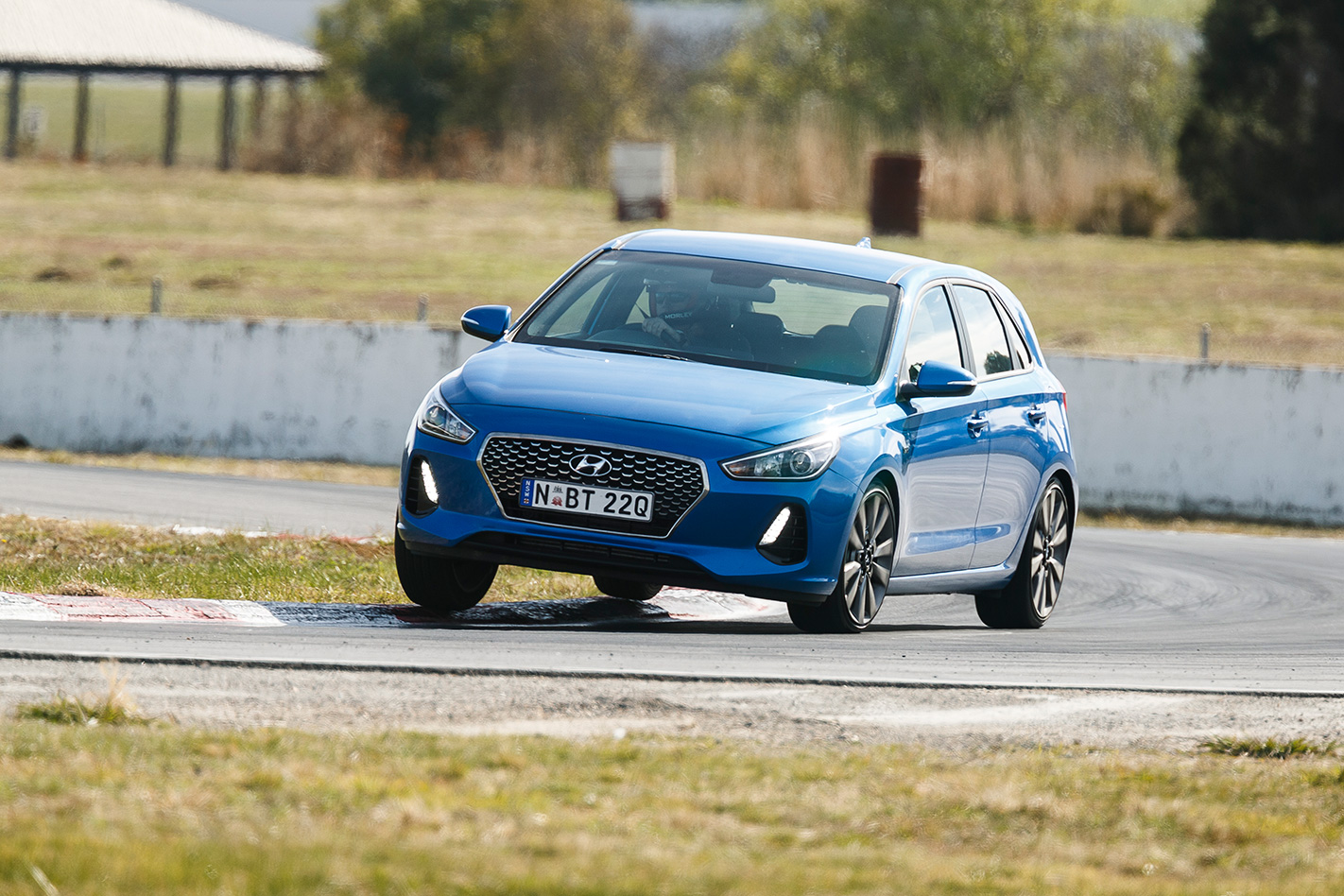
And in a competition that’s decided sometimes by tenths, thus the SR started its quiet march forward towards a top-three spot.
Only in this case, most of those decisions went against the plucky little Korean. It logged the second tardiest 80-120km/h time, for example, in front of only the Fiat 124. Its 1min 44.6sec lap time, too, is the slowest by three tenths to the BRZ. In fact, its best result was in the 100-0km/h braking category…
And yet, the whispers started to circulate about the incongruous-looking blue hatchback amongst our, ahem, esteemed judging panel. Its new chassis is all right, said one; lovely balance, especially through the sweeper. Steers pretty damn well, said another. Those brakes, said a third. No one’s elevating it to dizzying heights, mind you – it’s more of a pleasant surprise than a mind-altering experience.
Out on track, though, the surprised whispers bore truth. This has to be the nicest Hyundai to ever hit a racetrack.
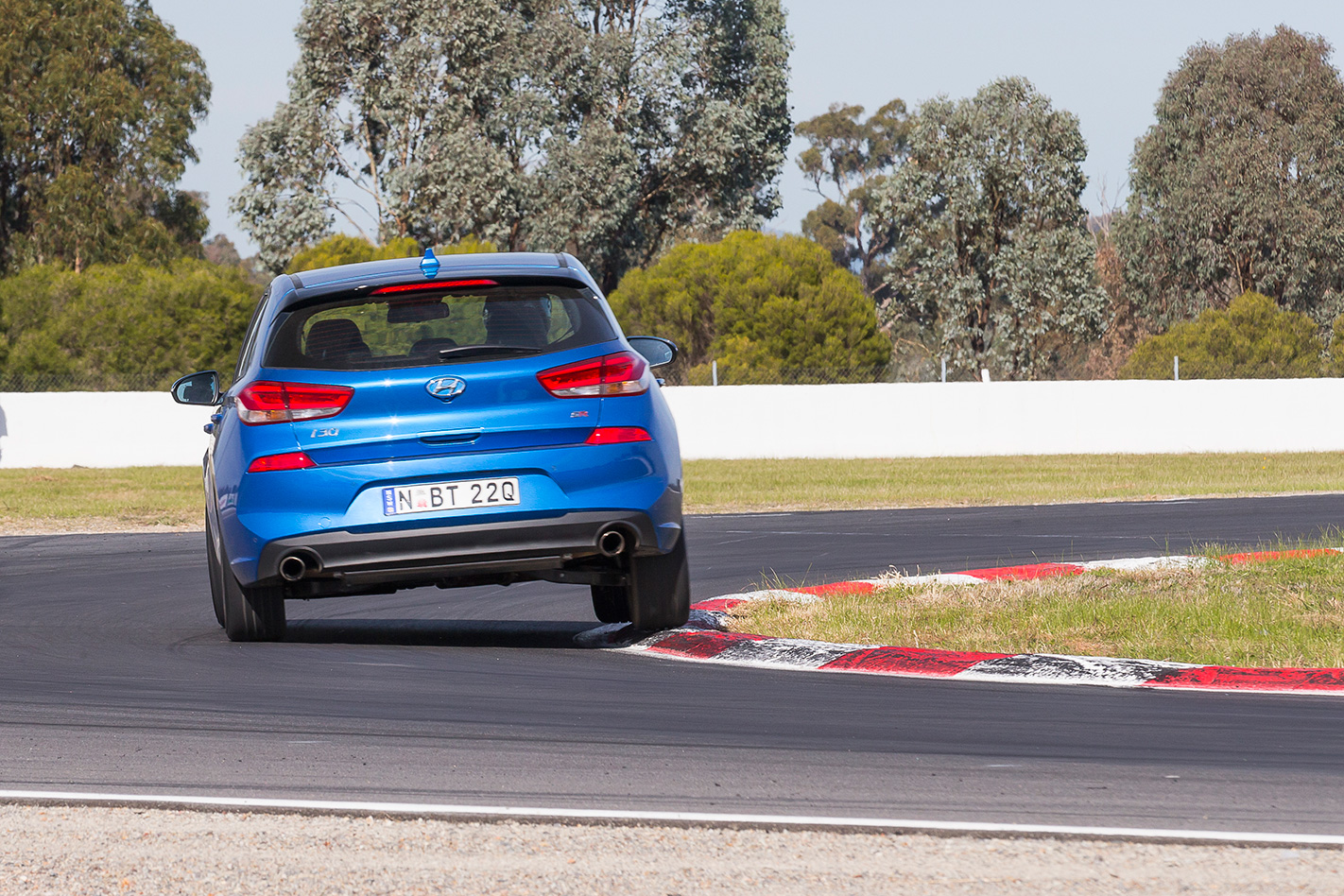
Its archest of arch rivals on the day is the similarly powered, similarly priced Holden Astra, closely followed by the smaller, more nimble, but older Volkswagen Polo GTI. The Astra and the i30 duked it out all day, trading tenths and metres back and forth as BFYB wore down to its conclusion, however, it’s back at Motor HQ where the telling blow is landed.
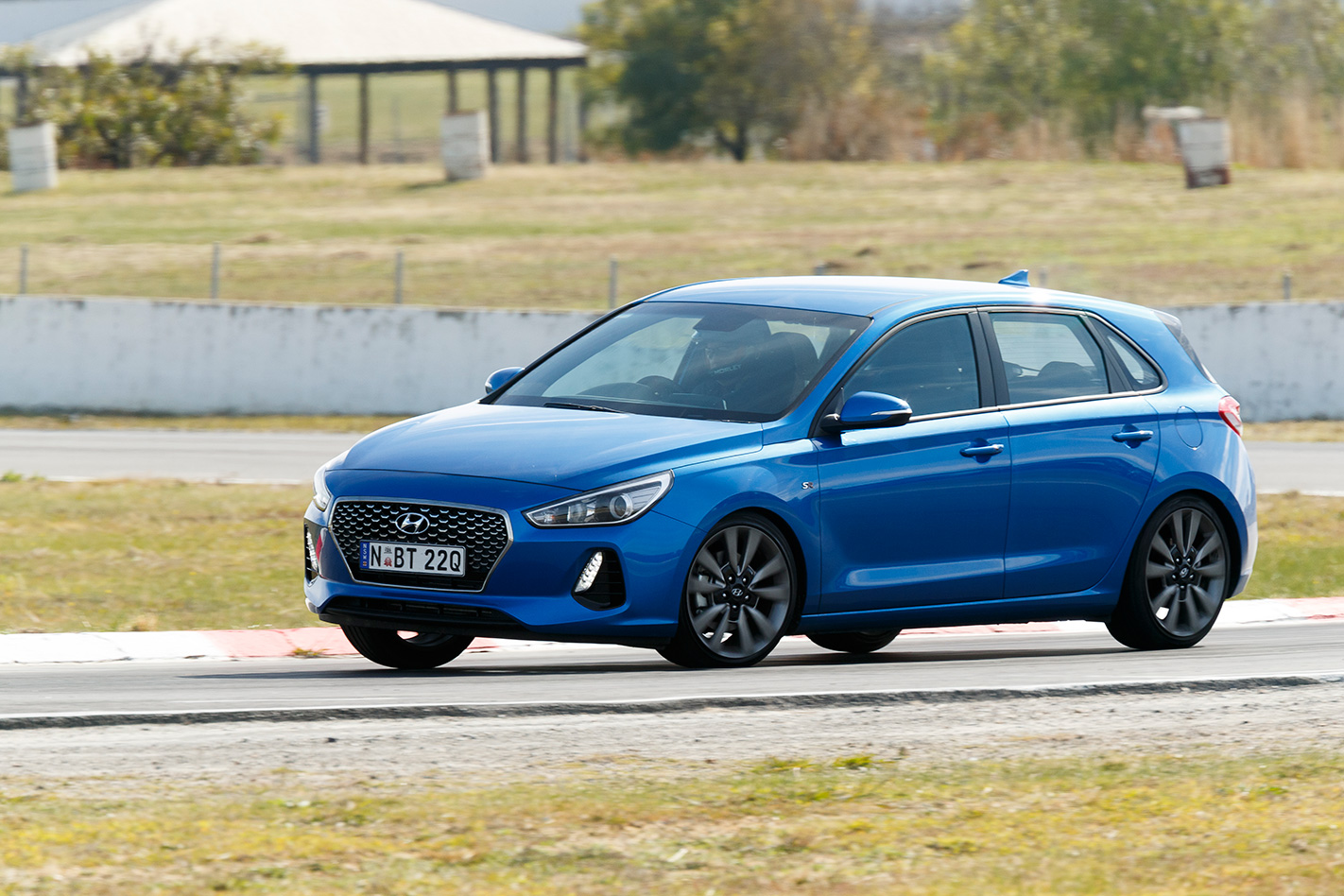
In truth, no one really expected this much from the $25,490 i30 SR, and perhaps that’s why it scored so well with the judges.
SPECS Engine: 1591cc inline-four, DOHC, 16v, turbo Power: 150kW @ 6000rpm Torque: 265Nm @ 1500-4500rpm Weight: 1315kg
TIMES 0-100km/h:7.20sec (5th) 0-400m:15.20sec @ 152.25km/h (5th) Lap Time:1:44.6sec (8th)
SCORES Price: $25,950 Bang Index: 88.1 Bucks Index: 130.6 BFYB Index: 105.1
WARREN LUFF SAYS “It was surprising. You get to the midpoint of the corner, and even when you’re on the throttle, you can actually put more lock on and the thing will respond. It was a pleasant surprise. It was a bit asthmatic in a straight line, that’s the kindest way to put it. “But certainly was a surprise in the tight corners. Even through the sweeper you can turn in with fourth gear and slightly lift at the mid-point, the thing will then rotate nicely, steer through and get back to the second apex with minimal fuss. The chassis and dynamics are there to be had.”
JUDGES NOTES David Morley – 4th: “Another warm, rather than actually hot, hatch. But watch out Japan” Dylan Campbell – 7th: “Would love to hate on it but I can’t. For what it is, it’s actually quite good” Louis Cordony – 8th: “Solid handler but underbaked drivetrain didn’t do it for me” Tim Robson – 4th: ““Sweet little chassis, actually. Best SR Hyundai’s done yet.”
Want more? Check out the rest of 2017 Bang For Your Bucks
WE MAY all have an opinion on which way Formula One should go with its engine regulations.
There can be no doubt whatsoever that F1’s sporting director Ross Brawn is on the receiving end of endless unsolicited opinions from all and sundry in the crazy, ego-propelled world of motorsport.
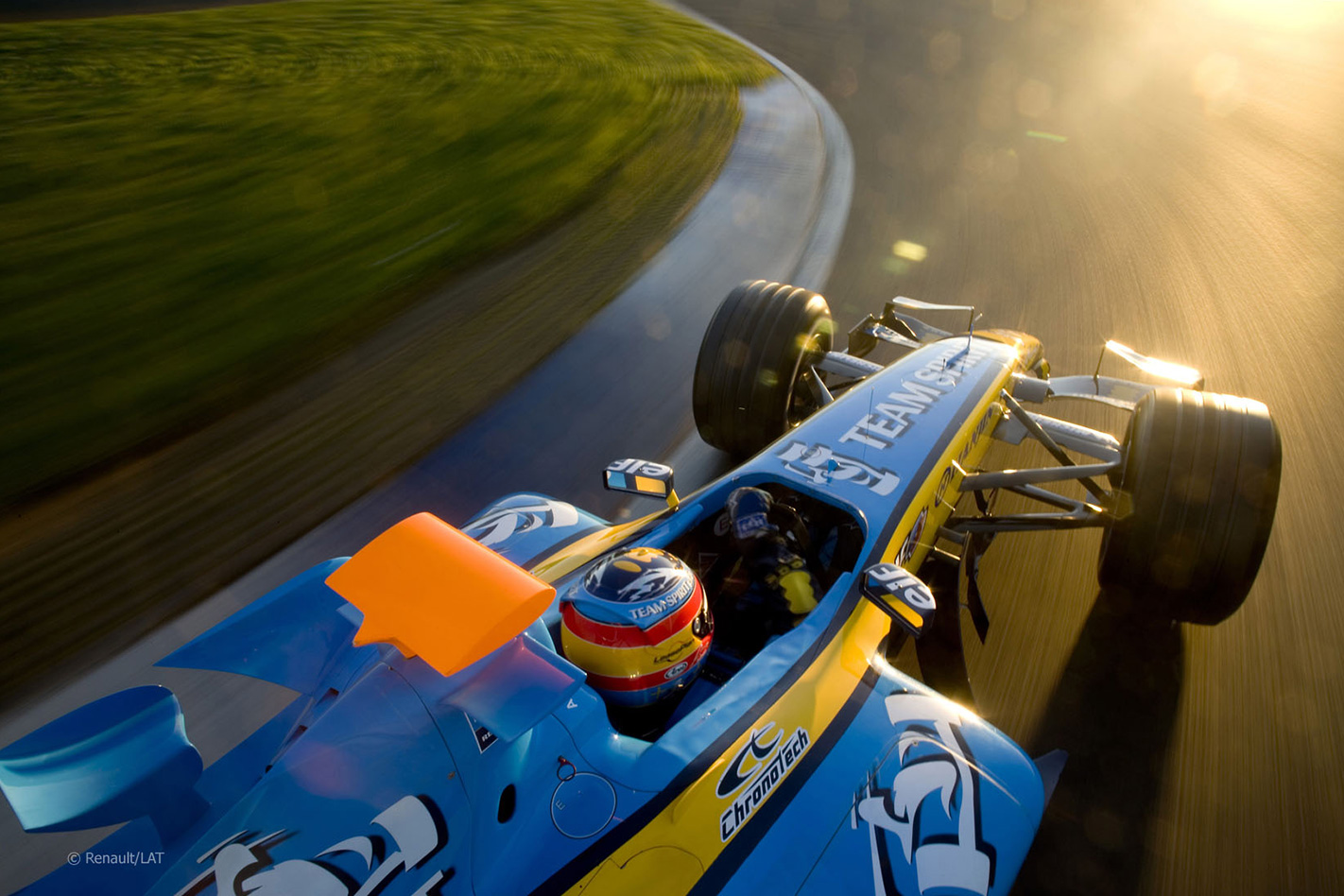
Such is the blinding speed of recant and ongoing change in the automotive business – hybrids, electric cars, the countdown to the death of the internal combustion engine, autonomous vehicles and other stuff we may not know about yet – even car makers admit they don’t quite know where it will all end up.
Red Bull team boss Christian Horner distilled the issue into disarming simplicity when he suggested the sport needed to find the correct balance between road-relevant technology and entertainment. Trouble is, the first part of that task is a moving target.
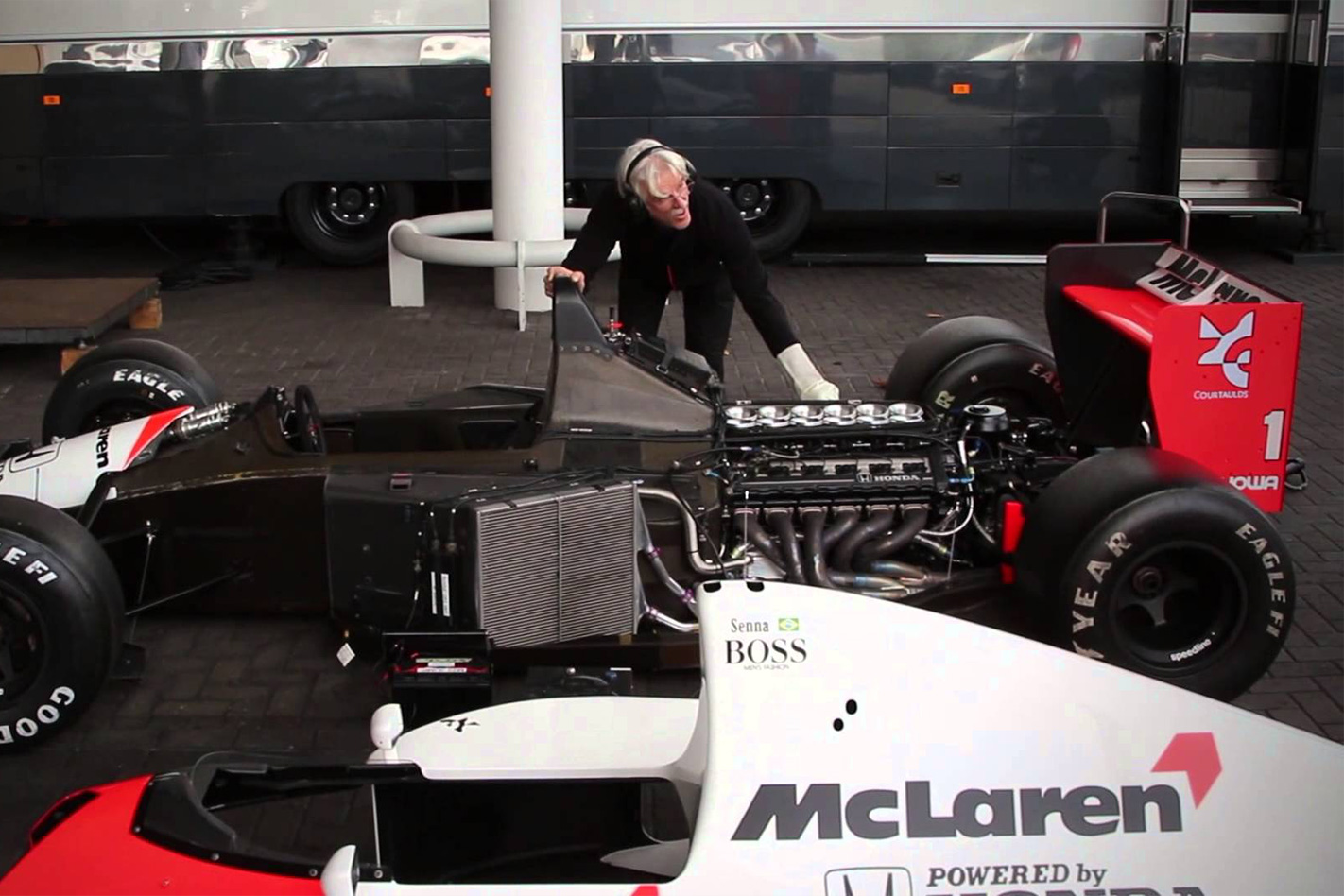
Followers of the sport have vented their opinions long and hard on these regulations.
Brawn is heading up the push to define the new regulations to come into effect in 2021, but Chase Carey, the chief executive officer of F1’s new owner Liberty Media, is also understandably keen to have his say on what he wants to see and hear. Brawn has to keep Carey happy, but Carey needs to keep everyone loving Formula One. Teams, content providers, promoters, governments, and us. The fans.
Carey has praised Mercedes for its excellent job of taking the current regulations to F1 dominance and three championships in the hybrid era.
But he has also declared firmly that the difference in performance across the grid is too great.
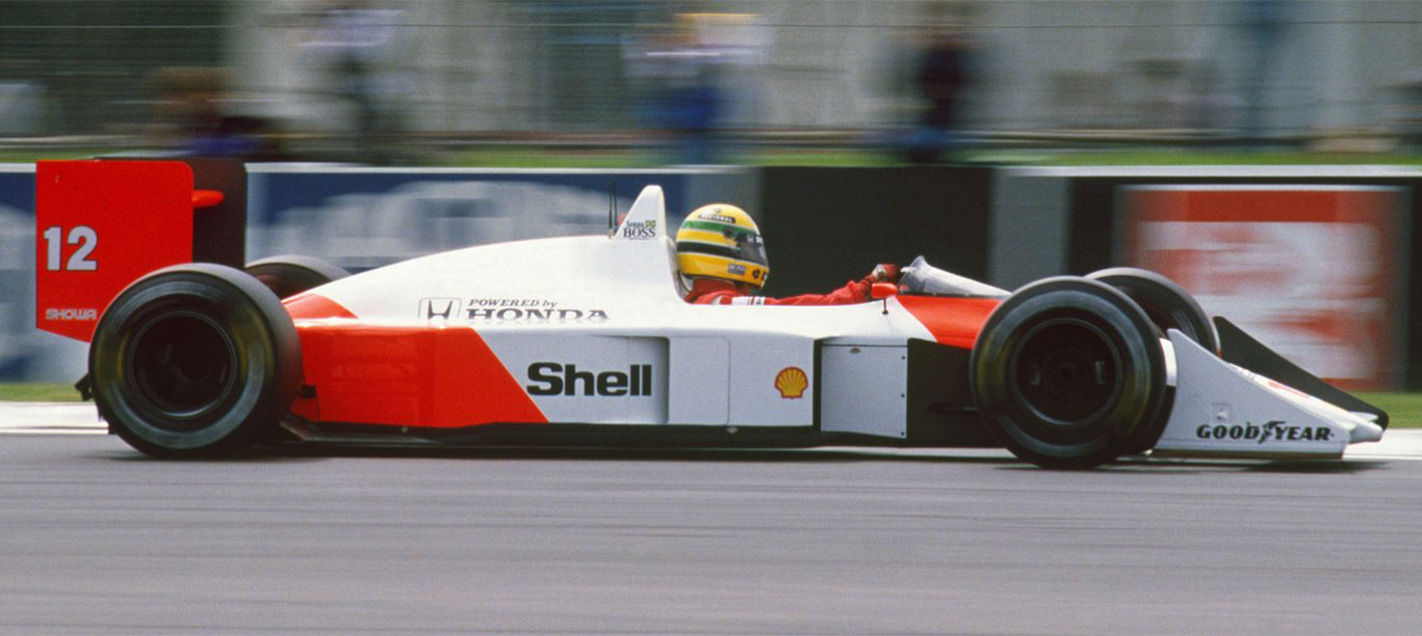
Sounds simple enough. Hey, we all remember the good old days of naturally aspirated V8s and V10s joyously screaming their way to 18,000rpm…
Except that the manufacturers that Brawn and Carey and the new regime want to keep or entice are just not interested in revisiting the past, as glorious as it may have been.
And the Napoleonic head of the FIA, Jean Todt, insists there will be no return to the old atmo eights and 10s. Todt is pushing a green agenda very hard, which is why Formula E is getting lots of help.
Already all-electric Formula E is limiting the choices for F1. It has also pulled some heavy-hitting brands, among them Audi, BMW, Jaguar, Mercedes, Porsche, Renault, DS Auto (part of the PSA Group) and Mahindra, all of which are, or will soon be, part of the E brigade.
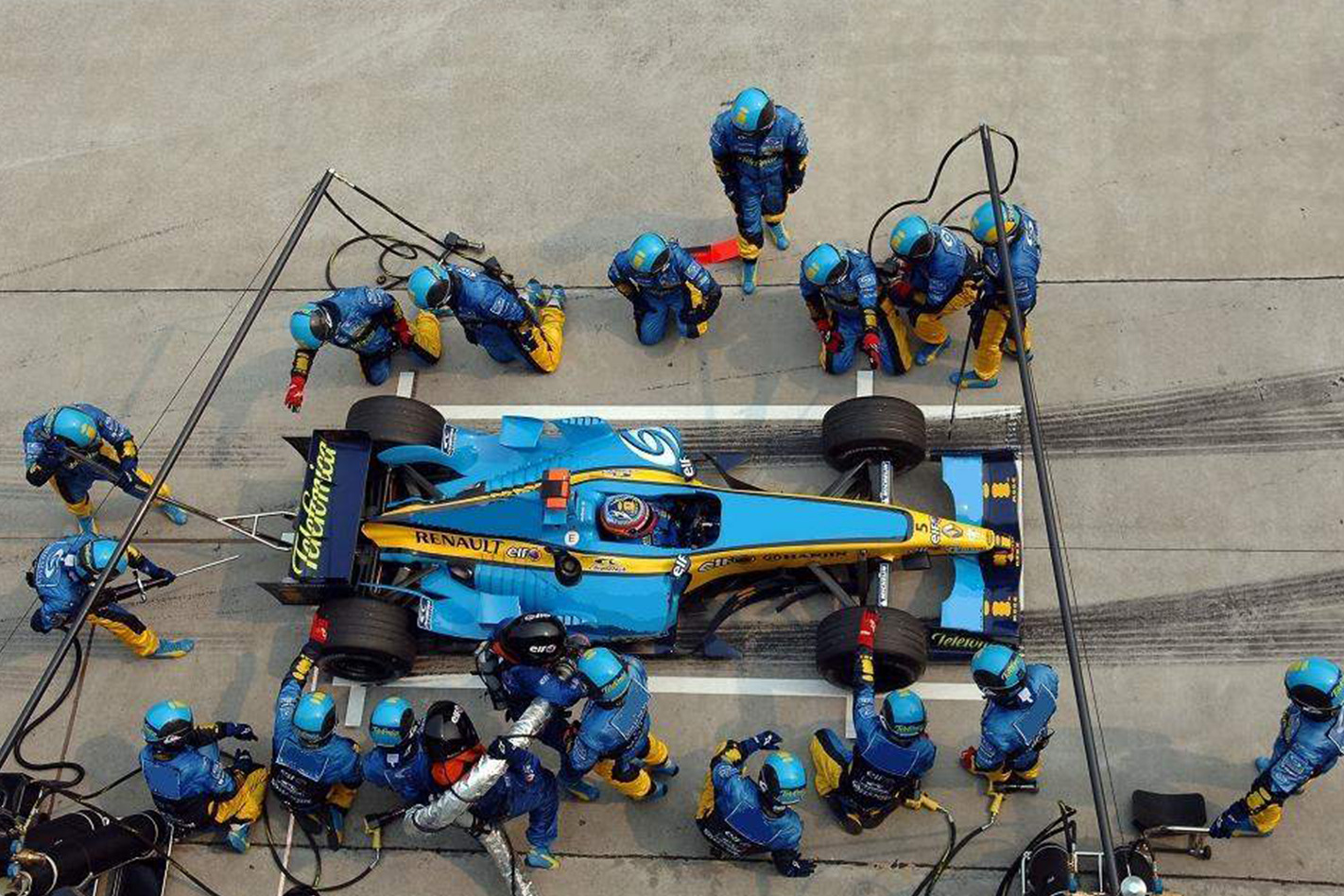
One other desire is to bring back an independent engine supplier, a modern version of Cosworth. Ilmor is interested but not without an automotive partner with a big war chest to develop a powerplant the equal of the big manufacturers.
F1’s other huge task is for cost cuts and a fairer distribution of income across the grid.
“There are teams that spend $US500 million a year right now, while for others it’s $US100 million,” said Carey.
Tellingly he went on to say: “The goal must be that the teams can make money in the sport, but the truth is that at the moment no team is making a profit.”
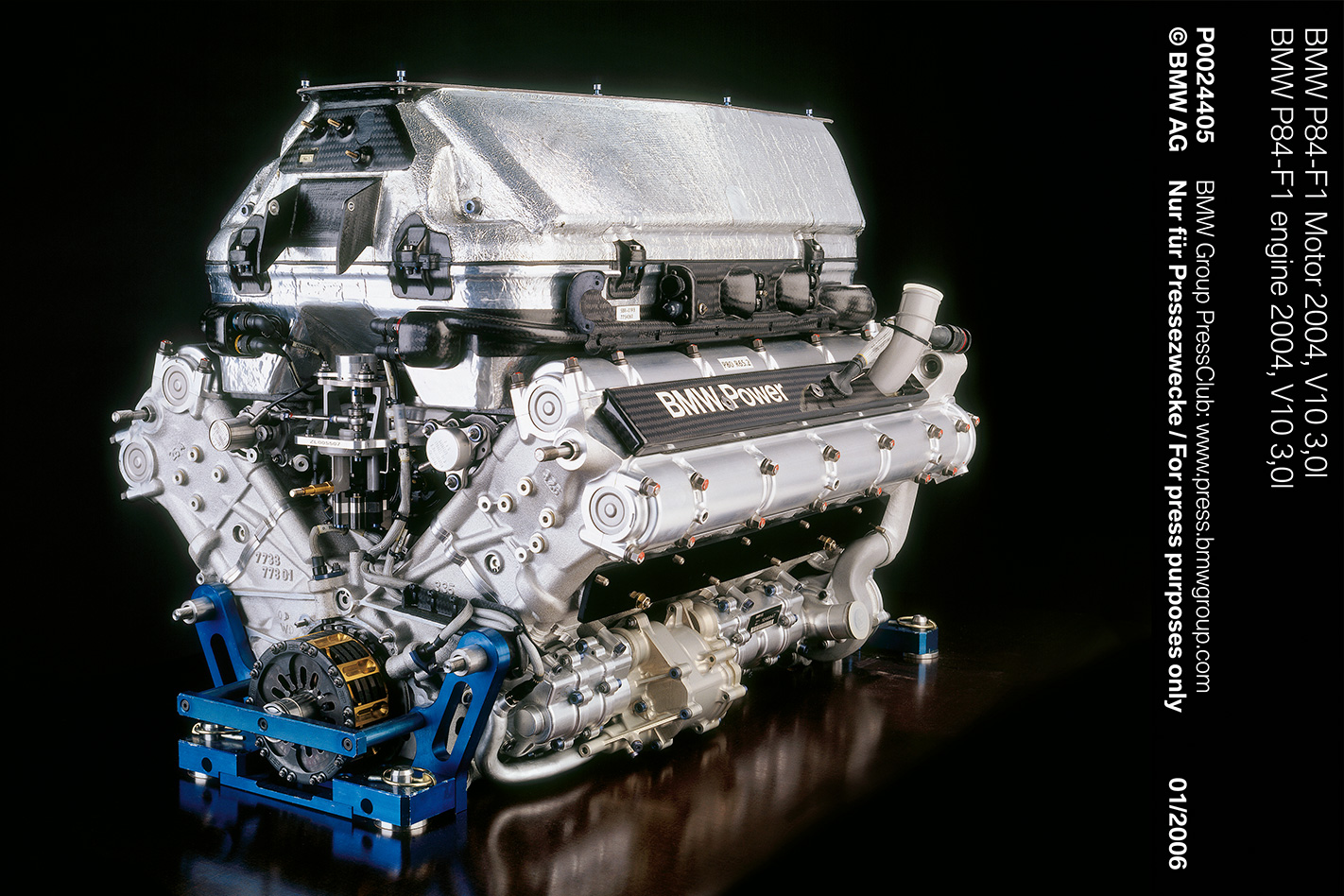
Under Bernie Ecclestone, a form of socialism was never gonna happen.
Carey seems to understand that competition will forever be lopsided in F1 unless the smaller teams are better funded.
He at least understands their economic challenges.
He will go down in history as a Messiah if he can pull off the transformation.
WHAT do you do if you’re a relatively young brand in the automotive world and you don’t have much legacy? In Infiniti’s case, you just make it up.
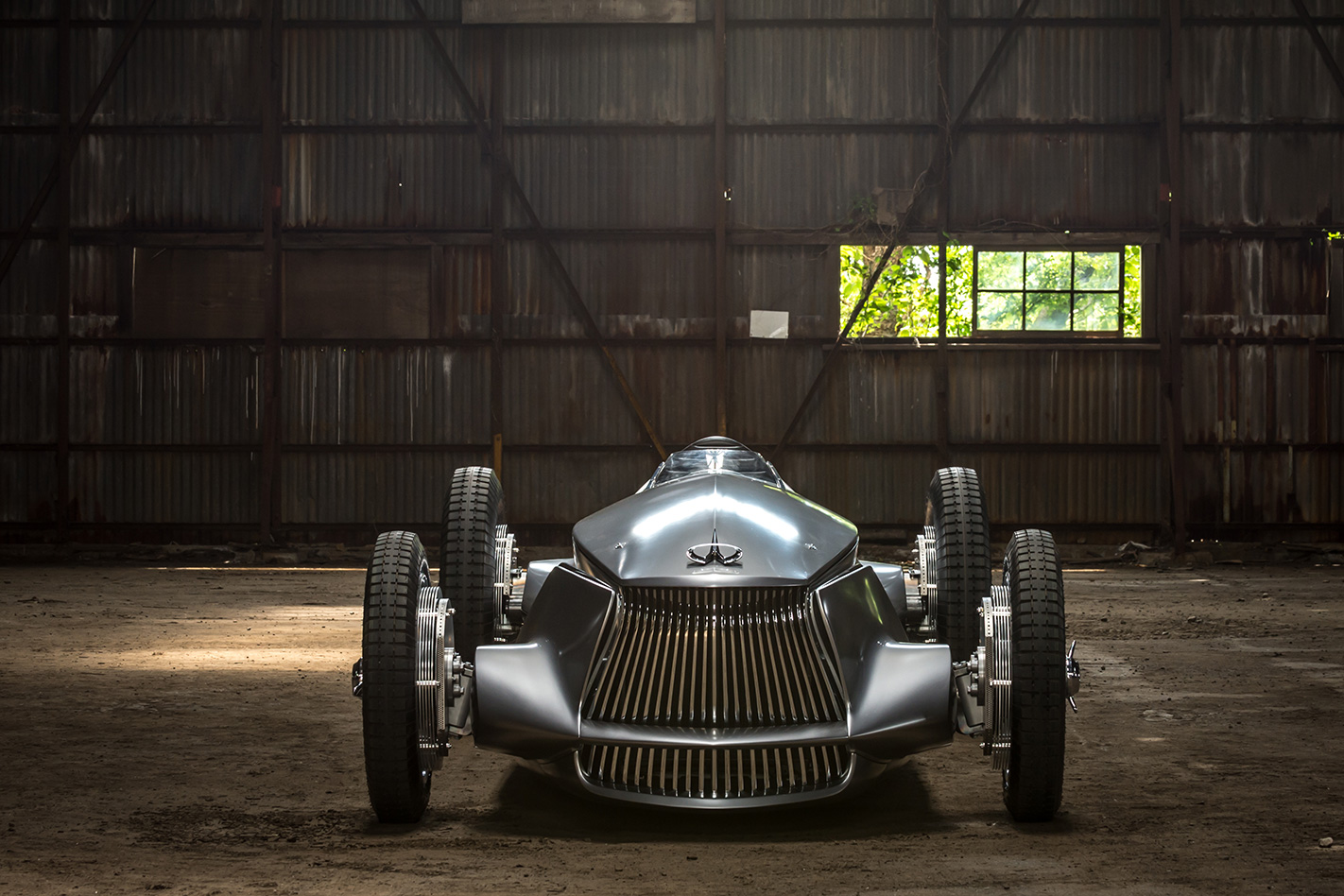
The luxury arm of Japanese car maker Nissan has just unveiled what it calls the Prototype 9, an alien, open-wheeled electric “retro roadster prototype” crafted by Nissan workers as an after-hours labour of love.
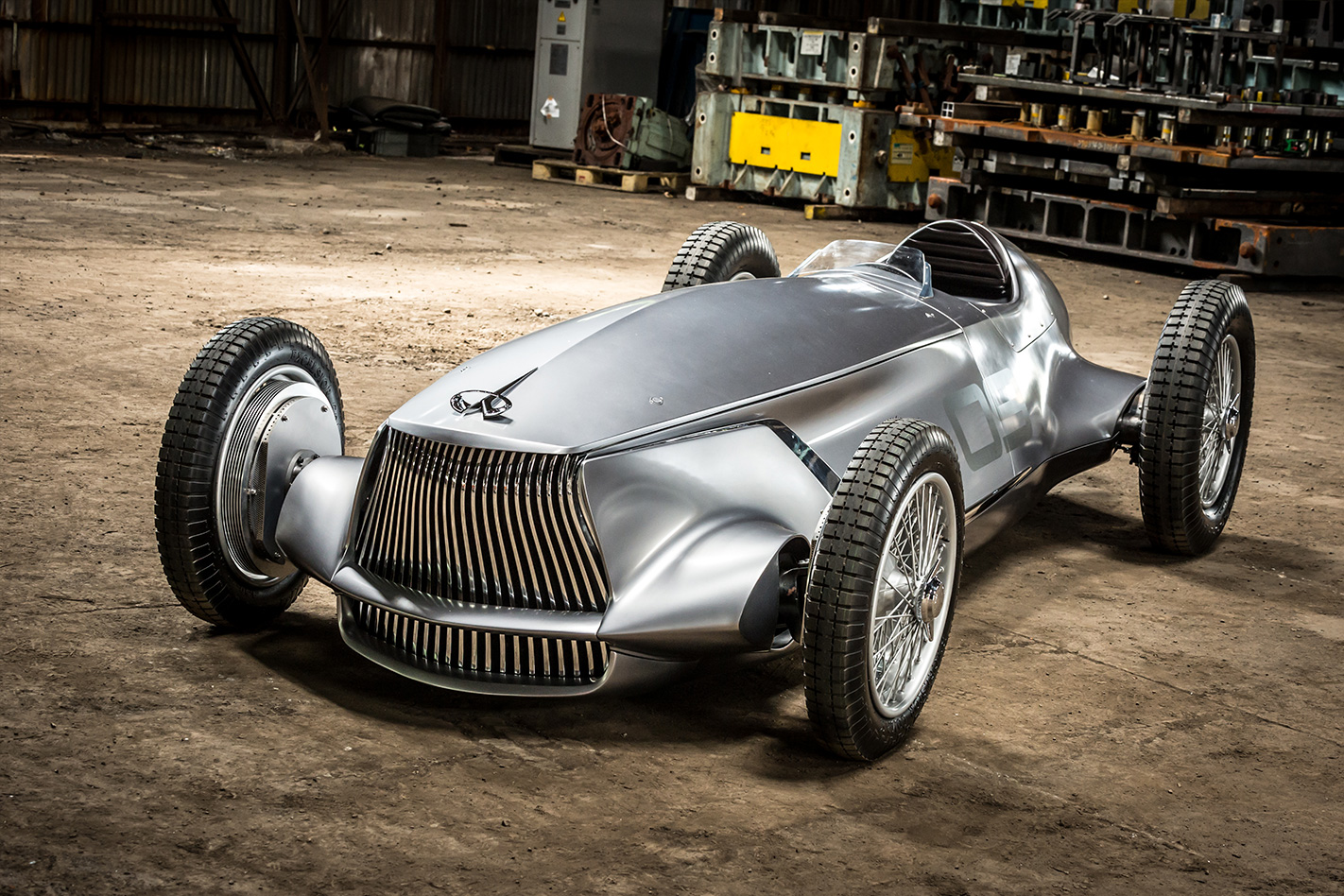
“We discussed the idea of ‘chancing’ upon an unrecognised race car, hidden away for decades in a barn, deep in the Japanese countryside,” global design senior vice-president Alfonso Albasia said.
“We wanted to explore what this looked like, what it would have been made of. Open-wheeled racers of the age were beautiful machines, elegant and powerful and with a wonderful purity of purpose.
“It’s an automotive fantasy, but the notion captured our imaginations enough to put pencil to paper,” he said.
Powering the Prototype 9 is a new-generation 120kW/320Nm electric motor borrowed from Nissan’s Advanced Powertrain Unit, its output well down on the 390kW of a late 1930s-era Auto Union Type C streamliner. Up front the modern-day retro racer uses an inverted leaf spring suspension, while down the rear it uses an era-appropriate de Dion suspension.
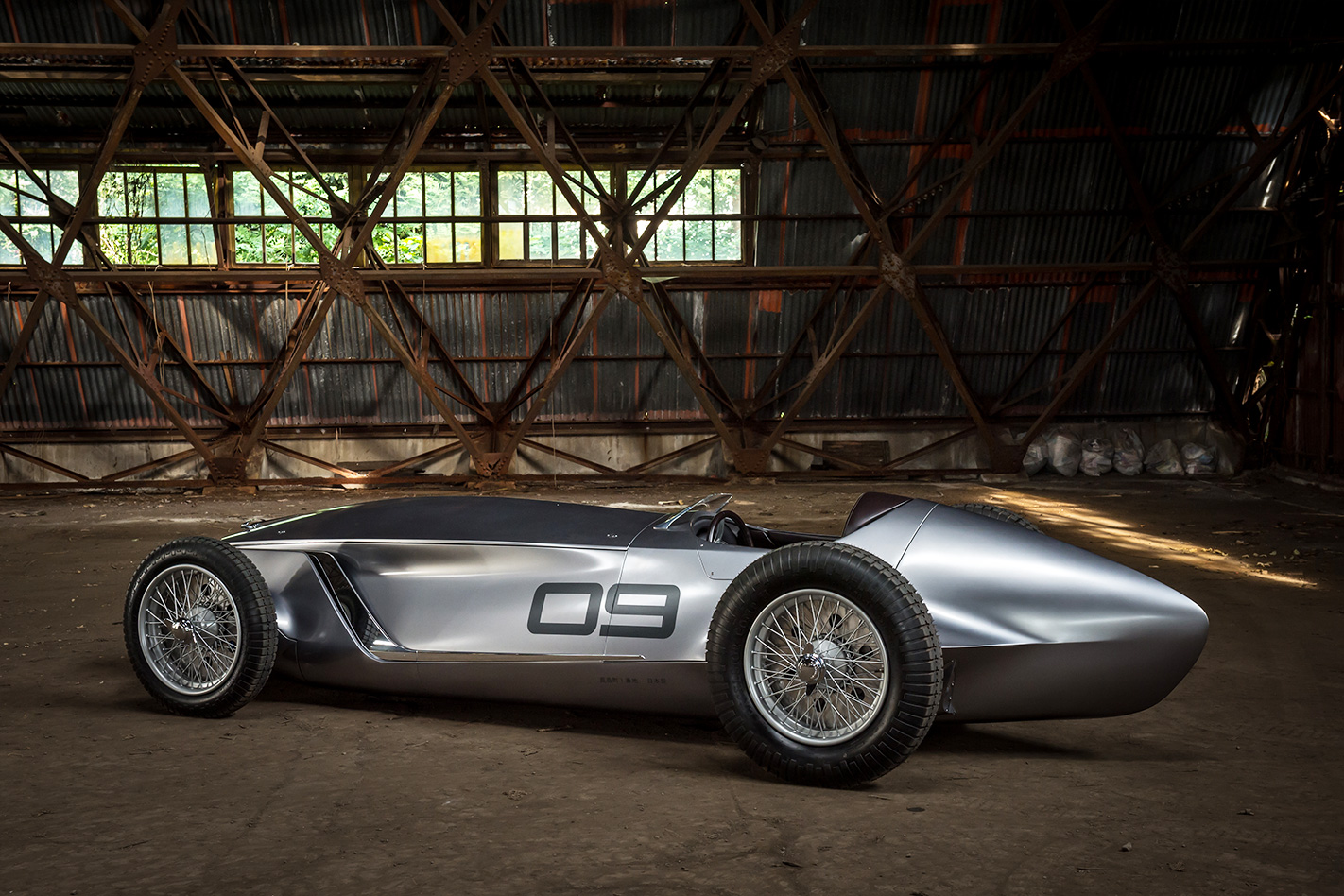
Unlike cars of the era that used lightweight materials, the Prototype 9 is built around a ladder frame and panels that use steel, tipping the scales at around 800kg.
Finishing it all off is that wide Infiniti grille. It’s best to end things here.
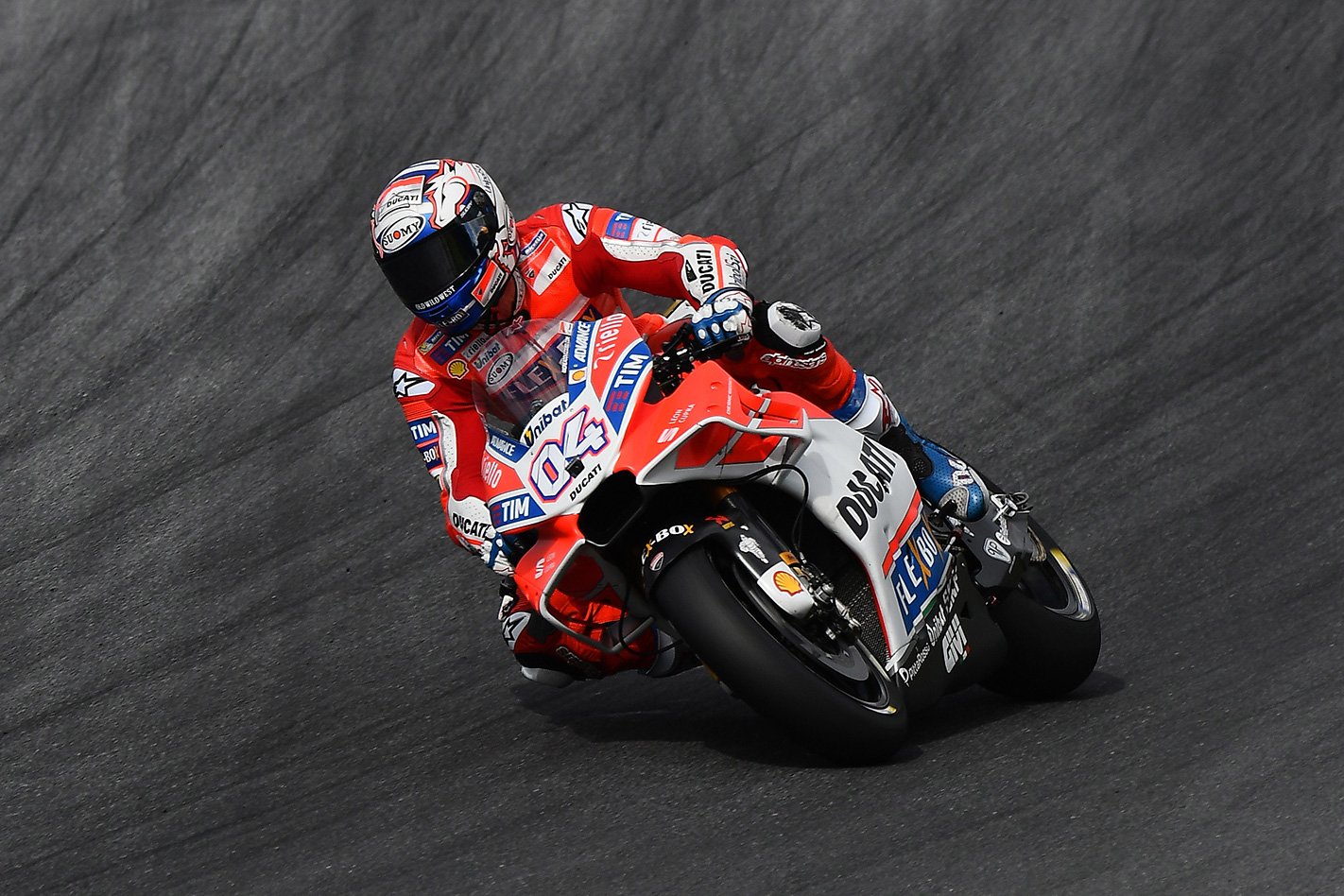
WOW! In a race no-one will forget for a long time, Ducati’s Andrea Dovizioso bested his Honda rival and world championship leader Marc Marquez to score a stunning win in the Austrian GP at the Red Bull Ring circuit near Spielberg.
One of the more amiable riders in MotoGP, Dovi is often cast as the man too nice to really fight hard for a world championship.
No longer. A man of steel turned up in Austria and his fight with the great street brawler of motorcycling showed he is ready to go after the 2017 MotoGP title.

The predictably aggressive effort came in the last corner, with Marquez all crossed up on the outside kerbing.
But Dovi held firm to take a narrow win at the fastest circuit on the MotoGP calendar.
There were hugs and kisses and tears in the Ducati pits, and that was just amongst the blokes.
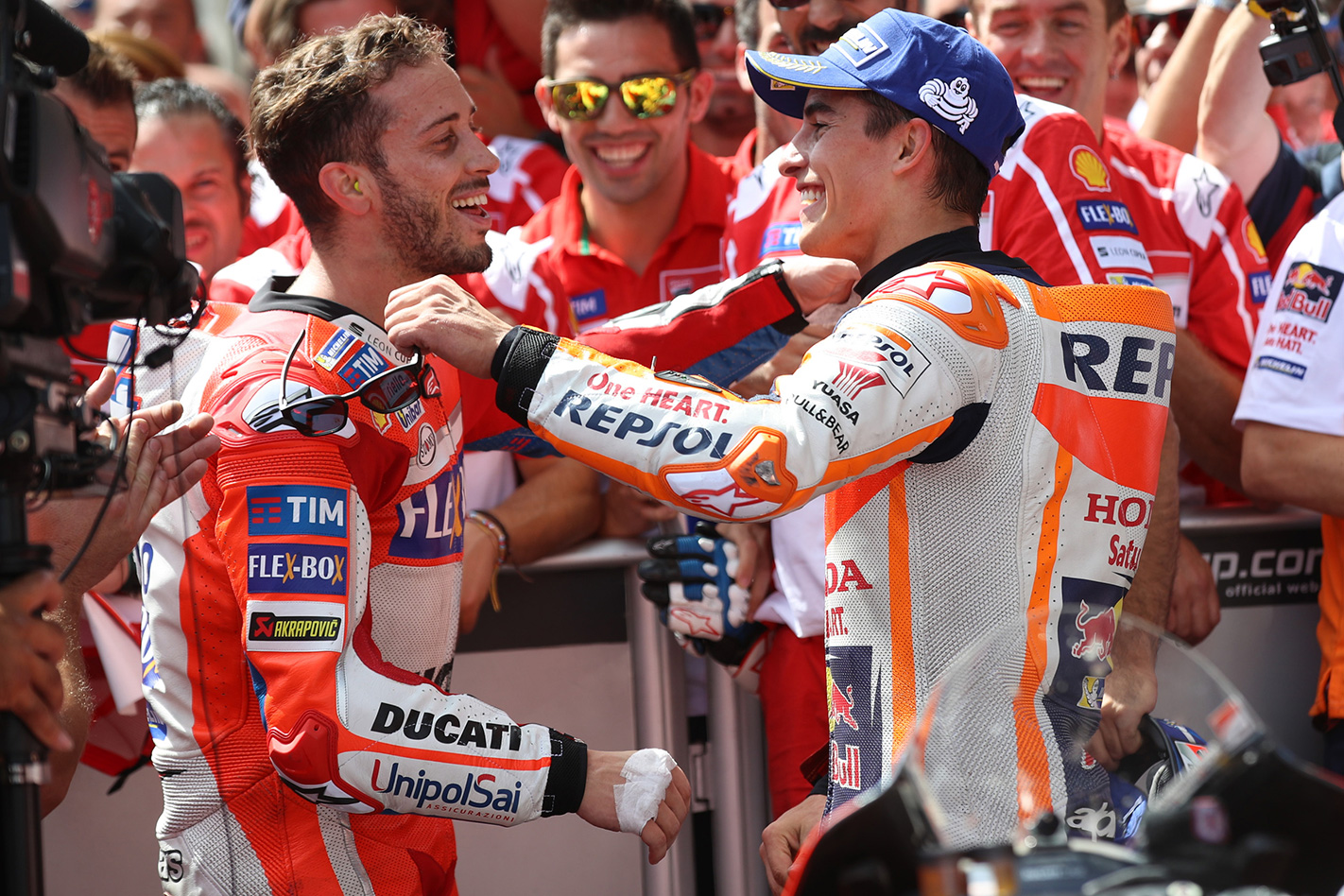
“We had a great race, we’re making up points in the championship, and we’ve got all the right cards to fight for the title.”
Dovizioso started from the middle of the front row, with Marquez on pole and Ducati teammate Jorge Lorenzo third.
Lorenzo used a soft rear tyre to take an early lead from Marquez, Dovi, and Valentino Rossi but no-one cleared out.
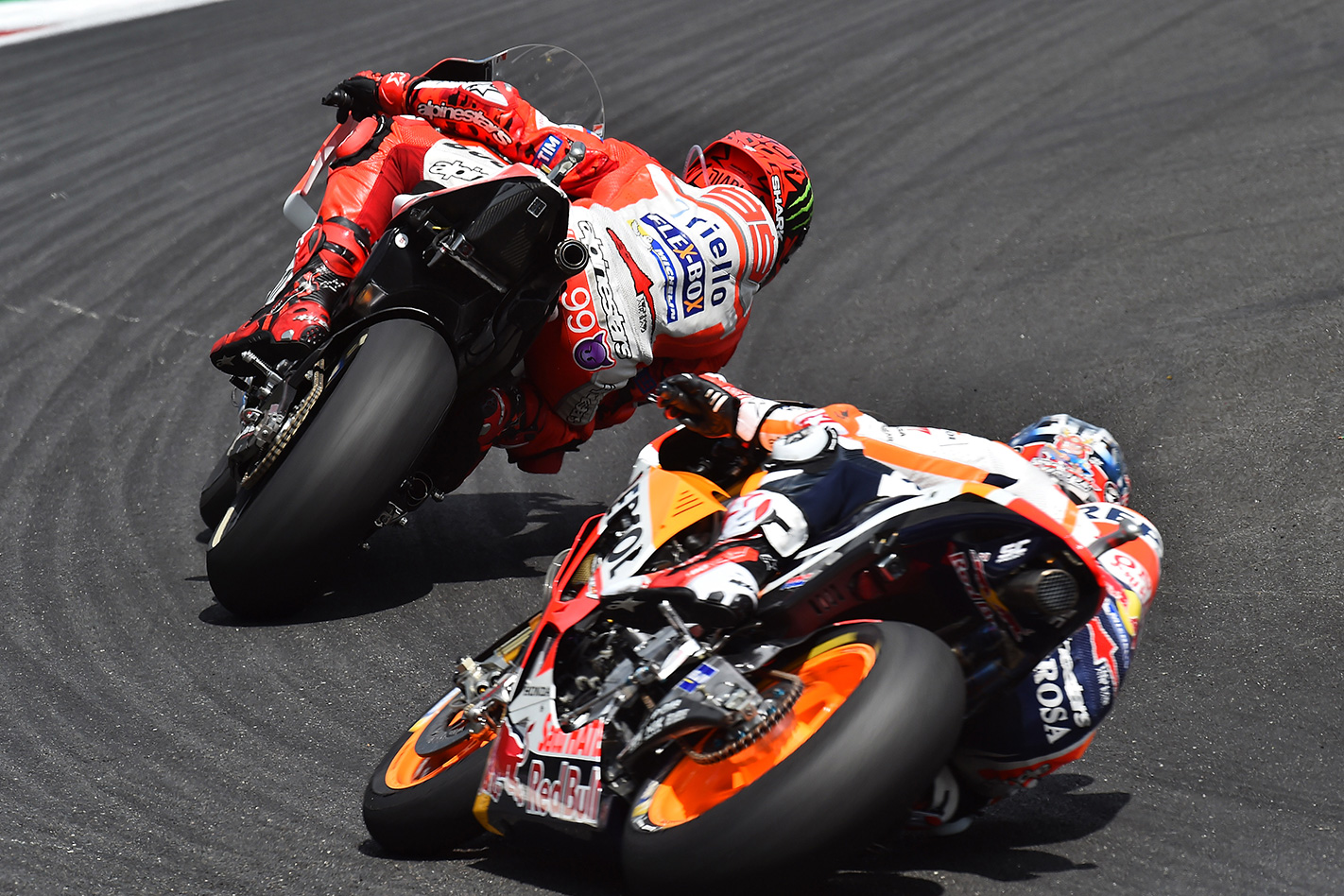
It looked like a Moto3 race. Marquez got to the front on lap 12 and the reigning champion tried to make a break, but Dovizioso wouldn’t let him get away.
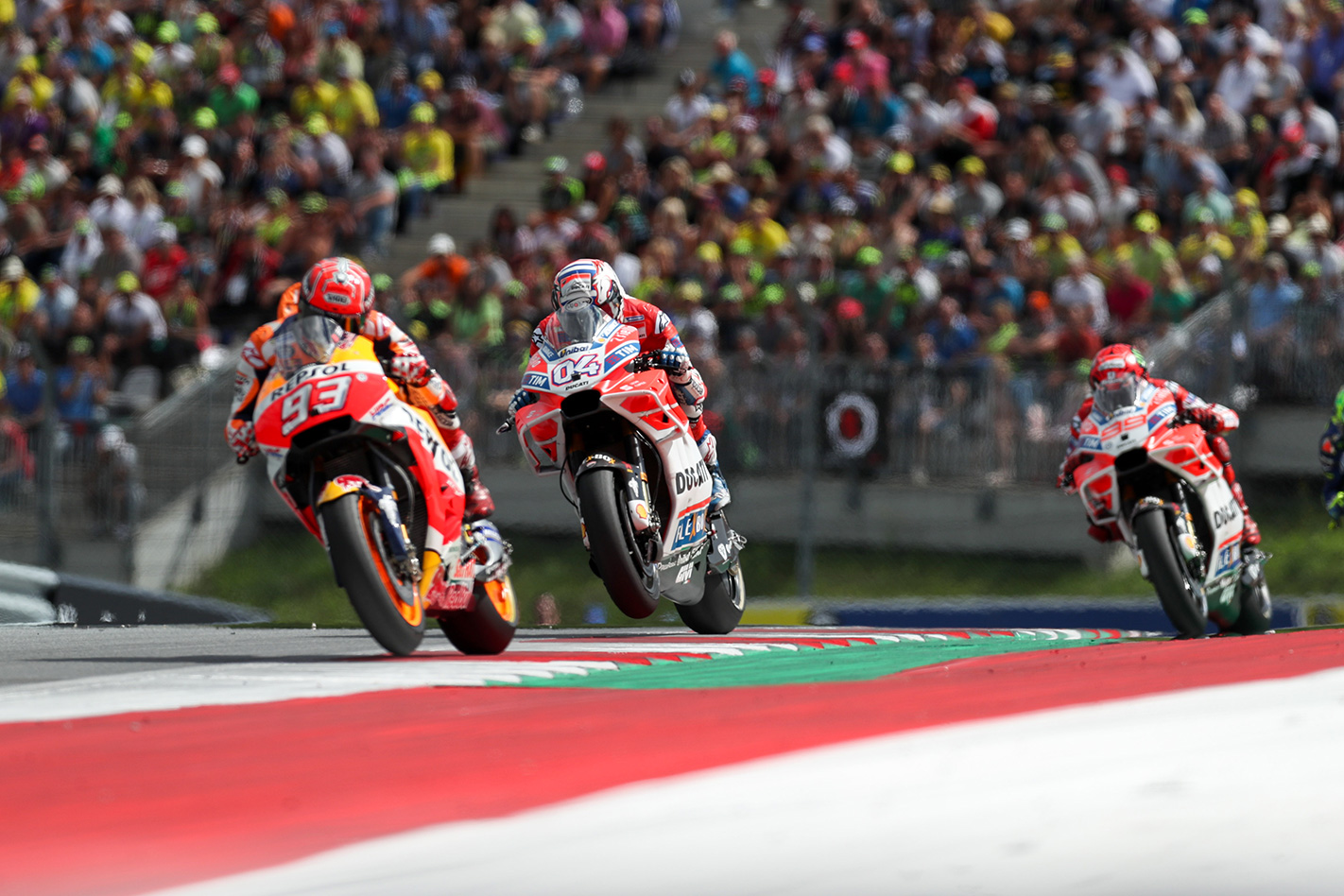
Dani Pedrosa loomed up behind the front pair to make it a three-bike race, as Dovizioso took the lead on lap 18. Marquez fought back to the front, but on lap 22, after a rugged exchange, the Ducati man raced to the front again.
The 90,411 fans trackside then watched as the two combatants produced an incredible last few laps as they changed places numerous times
Dovi’s 25-point haul for the win, his third of the season, moves him into second place in the overall championship standings, 16 points away from Marquez.
Miller has confirmed he is leaving the Honda family, the Queenslander signing a one-year deal with the Octo Pramac Racing team for next season to ride a Ducati Desmosedici GP bike alongside Italian Danilo Petrucci.
The deal, which Miller did directly with Ducati, had been speculated for some time.
Miller will ride a GP17 bike next season. He follows a couple of successful countrymen, Casey Stoner and Troy Bayliss, both of whom won aboard the Italian MotoGP bikes.
We’re seeing a similar dominance in Moto3, where young Spaniard Joan Mir engineered a runaway win from 10th on the grid. It was Mir’s seventh win from 11 races, stretching his lead to 64 points. Philipp Oerlt took a strong second, his first dry race podium, while the injured Jorge Martin fought hard bravely to grab third.
James Davison shines in XFinity NASCAR
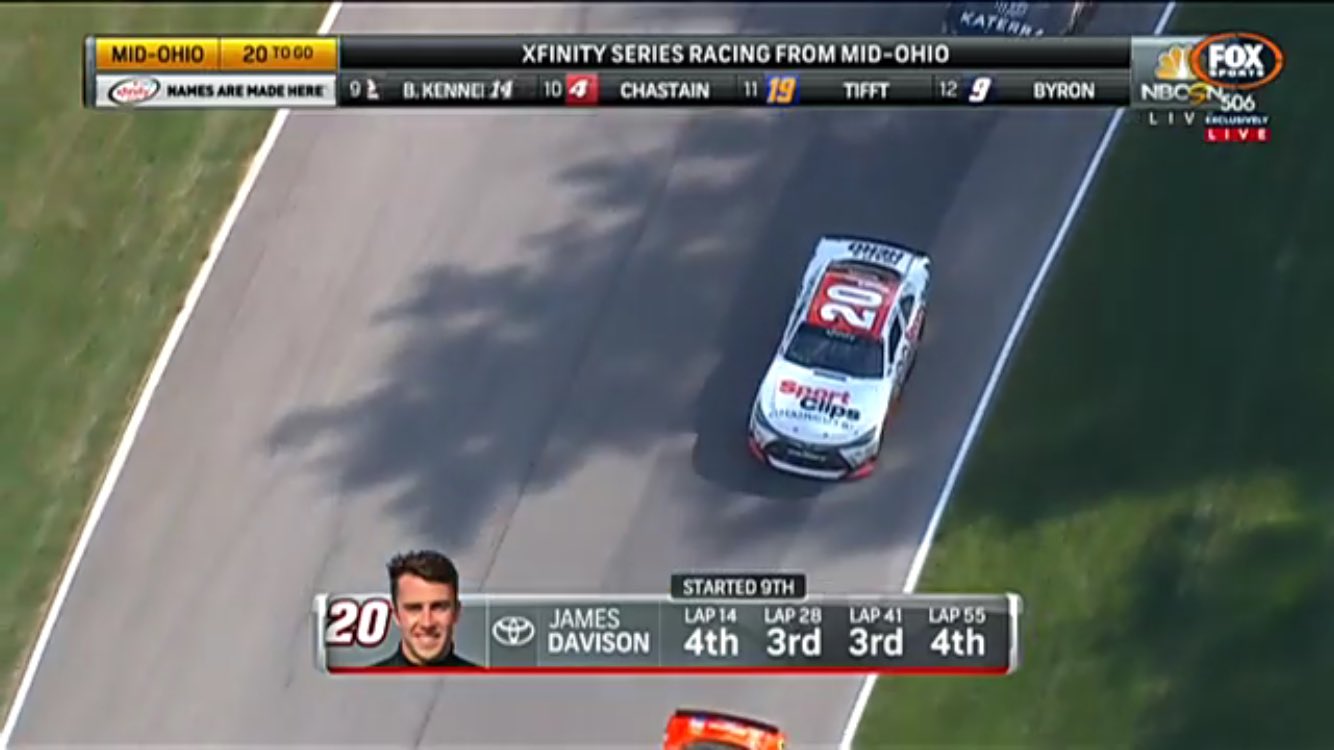
Sam Hornish Jr won a wild fender-bender Xfinity NASCAR road course race at Mid-Ohio on Saturday, but Australian James Davison’s great fourth against the odds demonstrated that he is deserving of a full-time ride.
Following his memorable run in this year’s Indianapolis 500 (where he lead for two laps in the latter stages before being taken out), the versatile 30-year-old worked hard to find the money to fund a few drives with Joe Gibbs Racing in the Xfinity series – one rung below the premier Cup Championship of NASCAR.
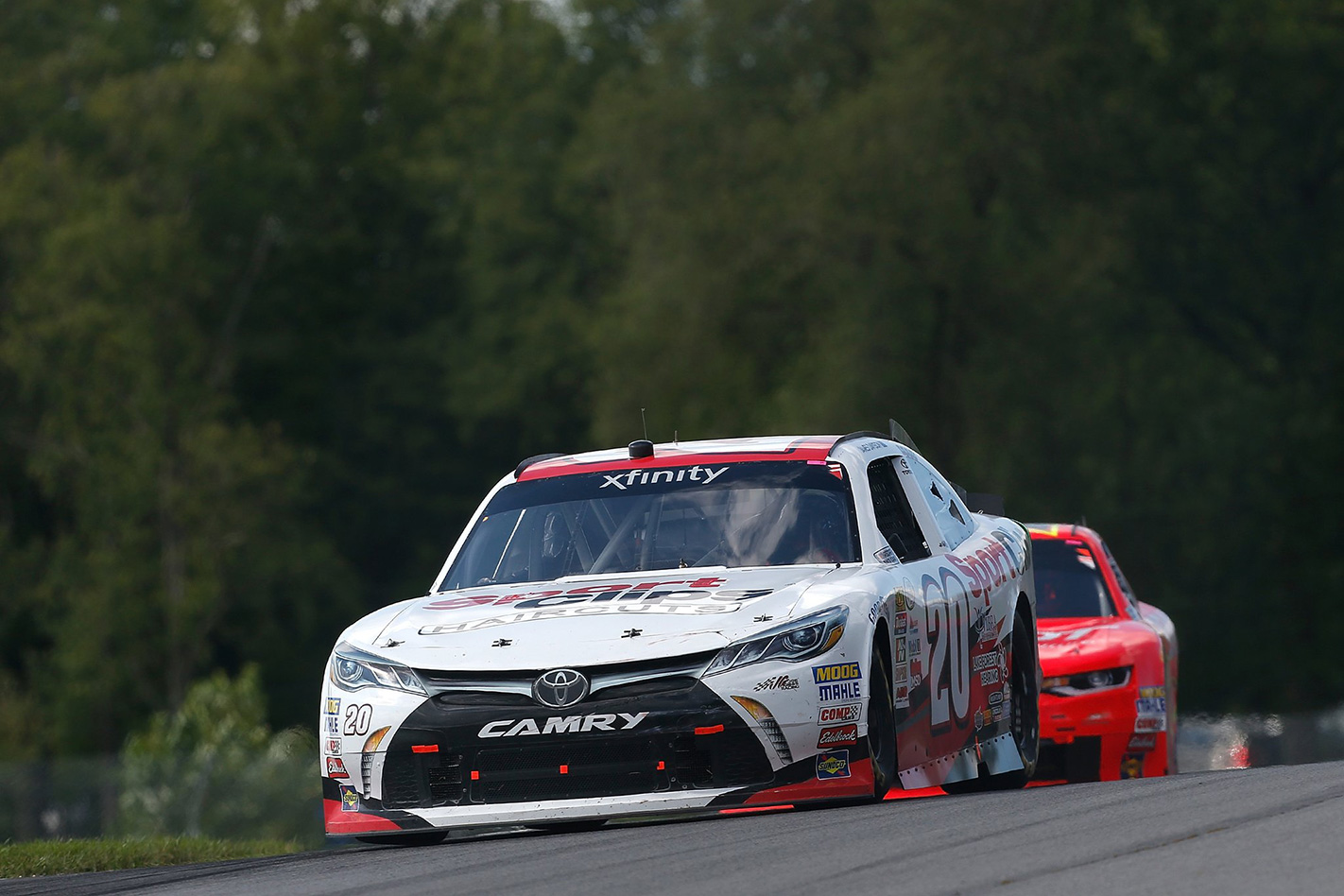
Of the famous Melbourne racing royal family, Davison fought a second gear selection issue from half distance but hung tough through the shunts and ambitious overtaking moves and hard wheel-to-wheel duels.
After qualifying his Toyota Camry 11th in the 40-car field, he ran as high as second and finished within sight of the winner Hornish.
“Pretty awesome experience today,” Davison tweeted afterwards. “Man those cars are tough to drive!”
It was Davison’s second NASCAR start (he raced in the Xfinity series at Elkhart Lake last year).
Daniel Hemric led three times and held on to match his career best in second place. His Richard Childress Racing Chevrolet was 1.335 seconds behind Hornish’s car at the chequer.
Matt Tifft, Davison and Andy Lally rounded out the top five — all three drivers posting career-best finishes in the series.
Davison’s next scheduled outing will be at another road course XFinity event at Road America in less than two weeks.
Back when I joined Wheels as a bright-eyed and bushy-tailed junior staffer, I had a very specific idea of what I needed to do to ‘make it’ as a motoring writer.
Weirdly, given my formative years were spent developing an unhealthy infatuation with Porsches (a favourite, and in retrospect rather embarrassing, pastime was downloading snippets of 911 engine sounds and listening to them over and over), I’d decided that this self-imposed benchmark of success would be achieved when I drove my first Ferrari away from the gates of Maranello.
It seemed an impossible dream at the time – one reserved only for the most wizened and experienced road testers, not pimply uni grads in their early 20s – and also one that I struggled to reconcile.
Aside from one rebellious summer when I plastered an enormous poster of a Ferrari 355 on my bedroom wall, I was firmly in the Porsche camp.
School lunches were spent explaining to friends why a rear-engine layout really was a stroke of genius, and if someone even suggested that the F40 was better than the 959 I started to foam at the mouth. And yet, there it was: If I was offered the choice of visiting Stuttgart or Maranello, I’d have donned a Ferrari cap, painted my face red and shouted “Forza Ferrari!”. Yeah, I didn’t understand it either.
Now, though, I do. Thanks to Wheels’ own Ferrari guru, Peter Robinson, my visit materialised much sooner than I expected.
While in Italy on my honeymoon, a personal introduction from Peter had convinced Ferrari to give me a tour of the factory. Even better was news that after exploring Enzo’s backyard, I’d have my very own Ferrari for a day. Still, despite the promises, I lobbed at the famous gates not really knowing what to expect.
I’d been warned Ferrari could be unpredictable, and that visits are often characterised by long periods of waiting followed by short, intense bursts of activity.
My first glimpse behind the red curtain, however, began almost straight away.
After being ushered upstairs to meet Ferrari’s fearsomely tall PR director, we ventured beyond the red-brick administrative offices to discover a curious world where old gives way to new.
It felt like a small city – the neat and unpretentious single-story buildings of the original factory butting up against the unapologetically modern engine plant and wind tunnel, all of this dissected by a latticework of roads, each bearing the names of Ferrari F1 world champs and cluttered with camouflaged test mules that rushed past.
Inside the assembly plant, red-clad staff calmly fitted components for a daily completion rate of 31 cars (25 V8 models, five V12s, one LaFerrari). It felt a different world from other, volume-focused factories, where miserable workers seem to be contemplating using the drills on their own eyeballs.
At Ferrari, mechanics smile and shout “Ciao!” as you wander by. Then, with the tour over, the moment finally arrived. A red key was pushed into my hand and soon enough I was in the hills above Maranello, a California’s roof retracted, its V8 racing towards 7000rpm as I realised a dream.
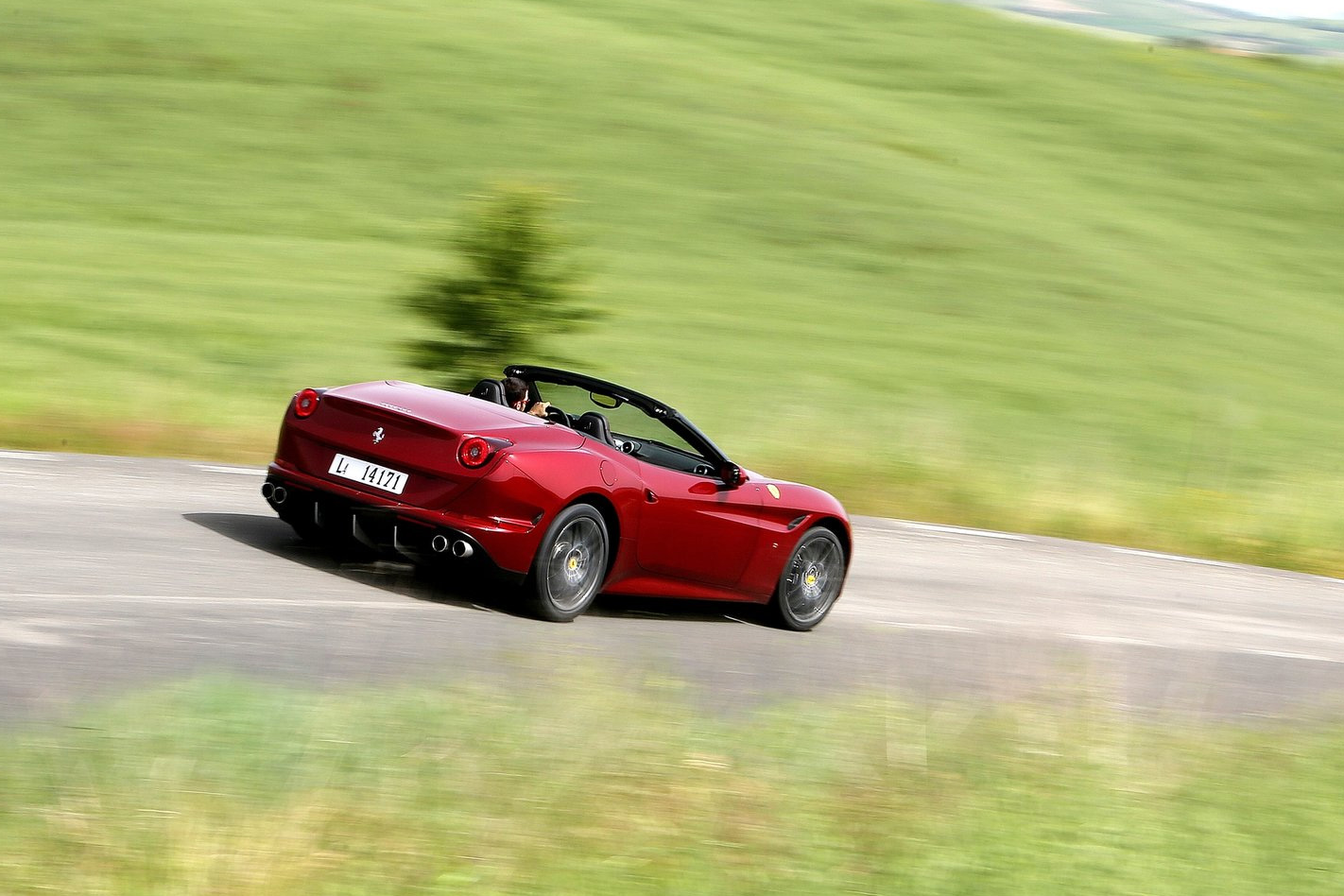
A Ferrari’s appeal stretches beyond how it handles at the limit; it exists as much in the thrill delivered from glancing down and seeing the black horse rearing in the centre of the steering wheel.
And therein lies the magic of Maranello. It goes beyond the cars; it has a mystique unmatched by any other brand. Yes, even Porsche.
The fact that today, 70 years after its inception, Ferrari seems to have forgotten how to build bad road cars and is now producing a V12 flagship capable of stunning the very same wizened and experienced road testers I’d revered earlier in my career, as you’ll discover, is simply an added bonus.
Mazda’s unique G-Vectoring Control system was first had in the facelifted Mazda 3, and will soon find its way to all SkyActiv models.
While the idea was on the backburner for eight years until engine technology caught up, Wheels has delved into the tricky tech to bring to you, this plain and simple explanation.
WHAT IS IT?
Mazda’s interpretation of torque vectoring is a pure software-based function, albeit with very real physical effects, so given a box full of tools and a Mazda 3, you won’t find the G-Vectoring widget, no matter how many parts you remove.
GVC is an advanced program fed into the vehicle’s various electronic systems including engine management and ESC controllers.
Mazda’s approach does not rely on individual wheel braking to ‘vector’ torque, as do many other manufacturers’ systems, instead aiming for a more subtle and efficient method.
WHY DOES IT MATTER?
According to its maker, GVC is as much about comfort as it is about dynamics.
Not only do occupants feel less of the effects of changes in direction for a more relaxing ride, but more precise steering allows easier positioning of the vehicle, which benefits driving enjoyment and performance characteristics. The system is rapidly proliferating the Mazda range and will soon be rolled out to all SkyActiv models.
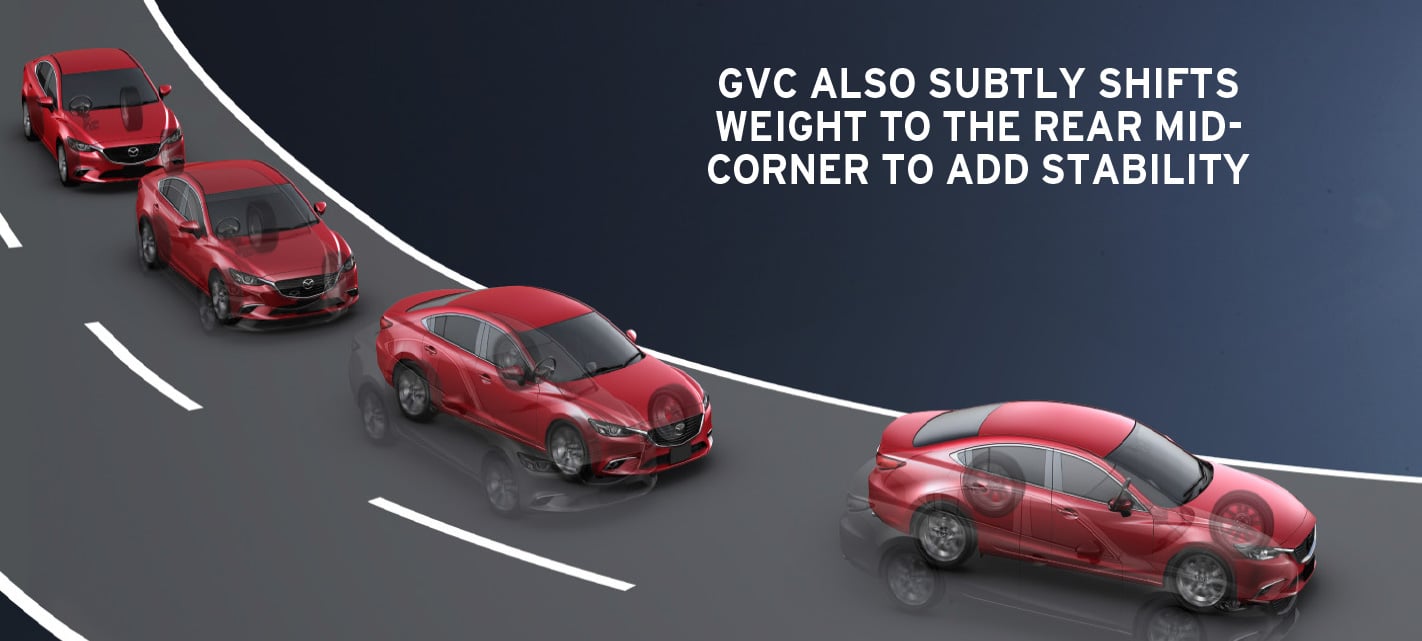
Each time the driver turns the steering wheel (even a small amount) the GVC momentarily reduces the torque output of the engine by rapidly altering the amount of injected fuel. The slight power reduction causes an imperceptible deceleration of the vehicle (usually at or below 0.01g) which loads the outside wheel with an extra 5kg of weight.
These may all sound like insignificant figures, but Mazda says the effect is sufficient to improve the turn-in of the loaded wheel, while not enough to be consciously noticed by occupants including the driver.
The result is more effective steering with fewer corrections to maintain a continuous course, particularly on slippery surfaces.
SLOW BURN
Mazda incubated the G-Vectoring principle for eight years until the latest SkyActiv engine technology allowed a fast enough fuel-injection response for the idea to take off. The first vehicle to be upgraded with GVC was the Mazda 3 when it was treated to a mild facelift earlier this year.
The term ‘limited edition’ tends to flick a switch within performance-car buyers.
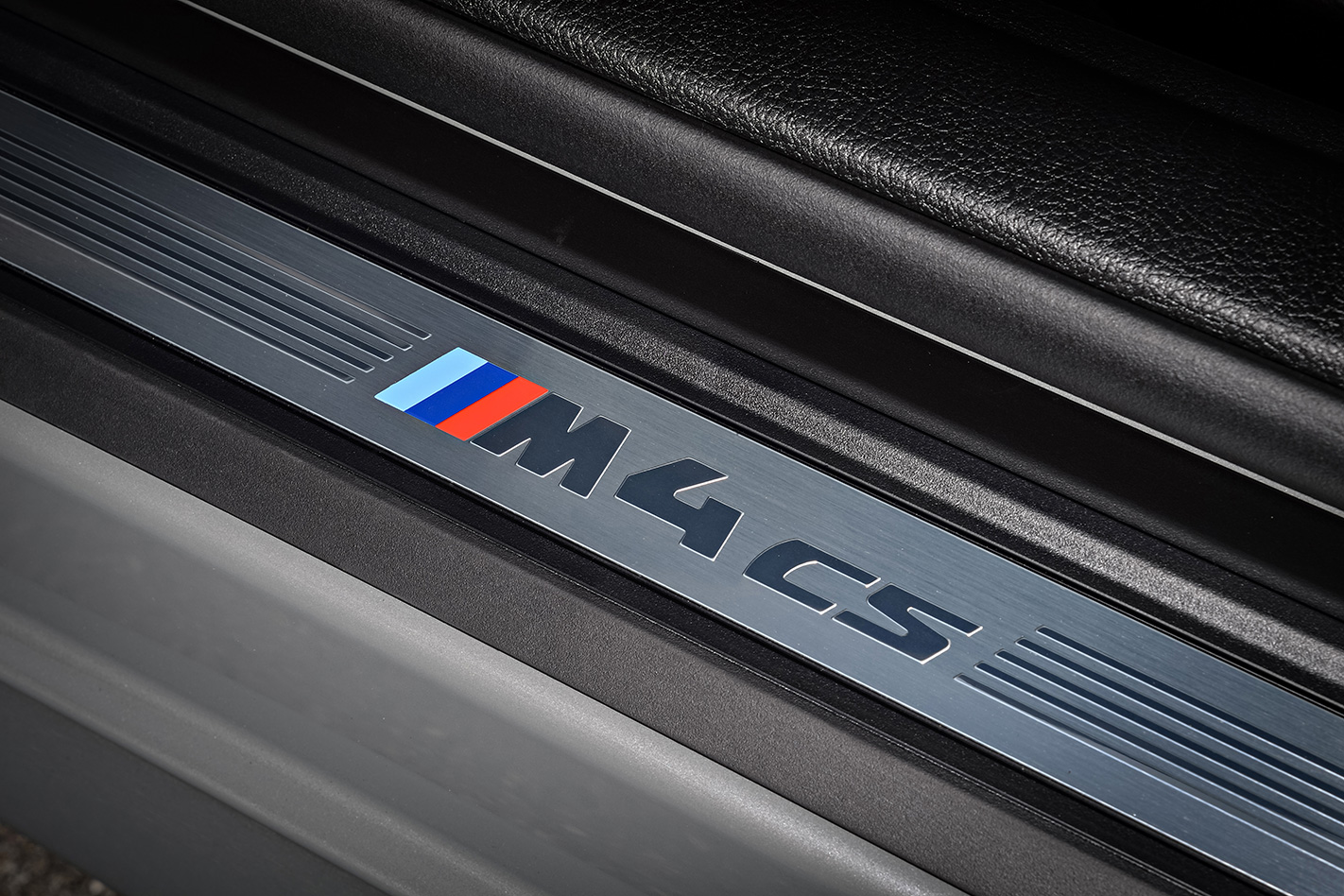
Like any car company, BMW aims for profit margins, so it has historically encouraged its M Division to churn out one sought-after special edition after another. One year after the sold out 368kW/600Nm M4 GTS, BMW is at it again with the gap-filling M4 CS.
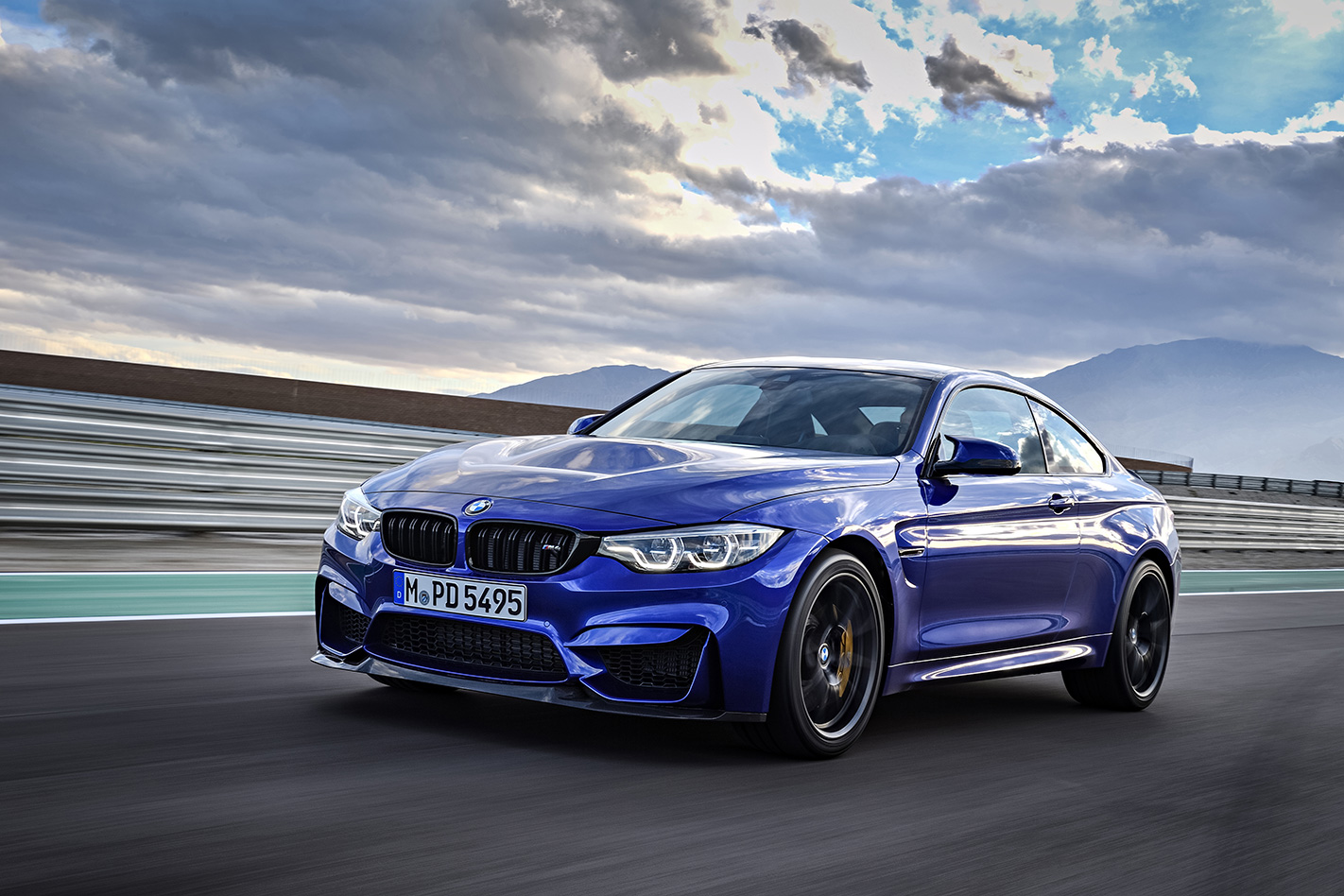
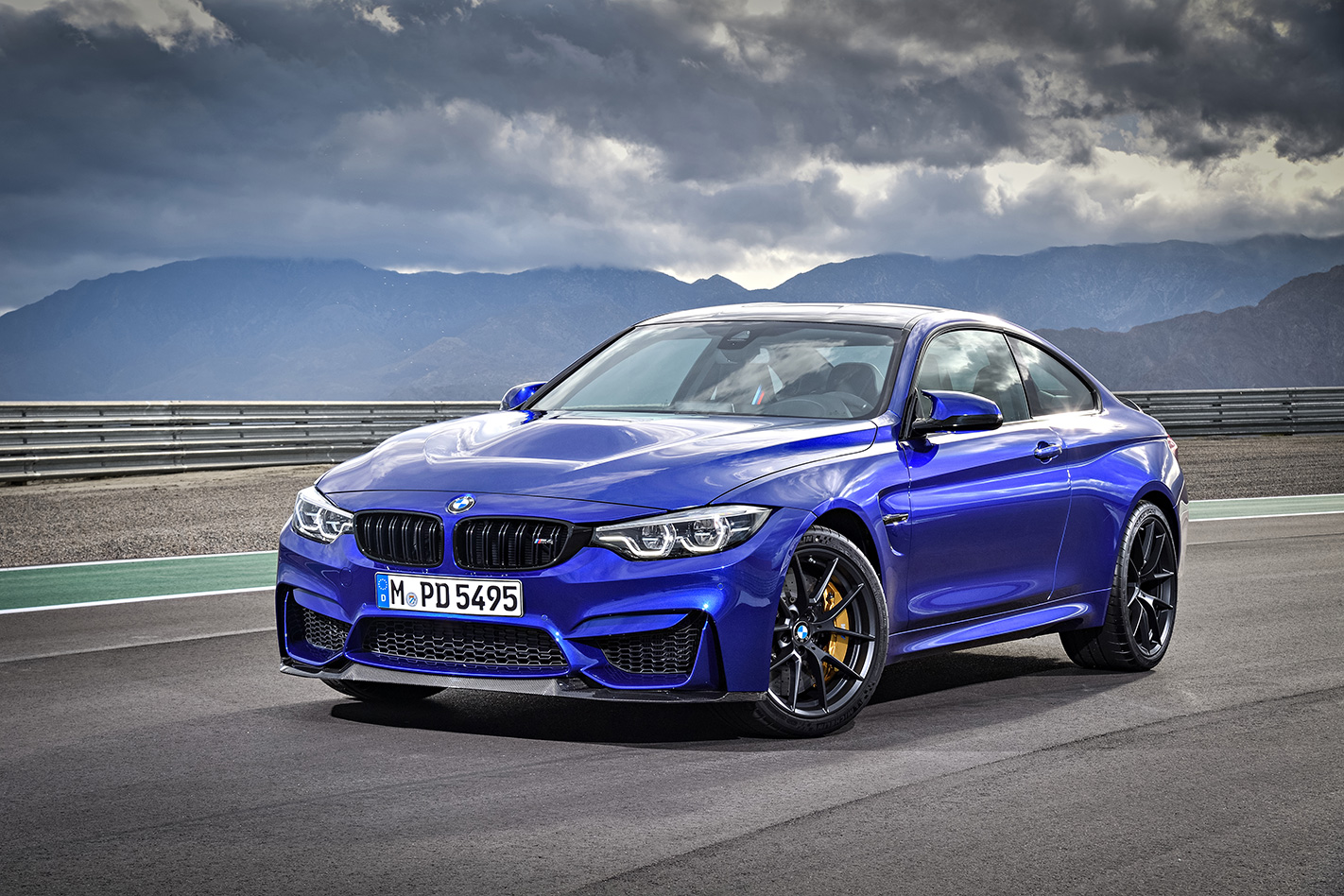
Few performance cars are as sexy as this centrefold coupe sprayed in San Marino Blue.
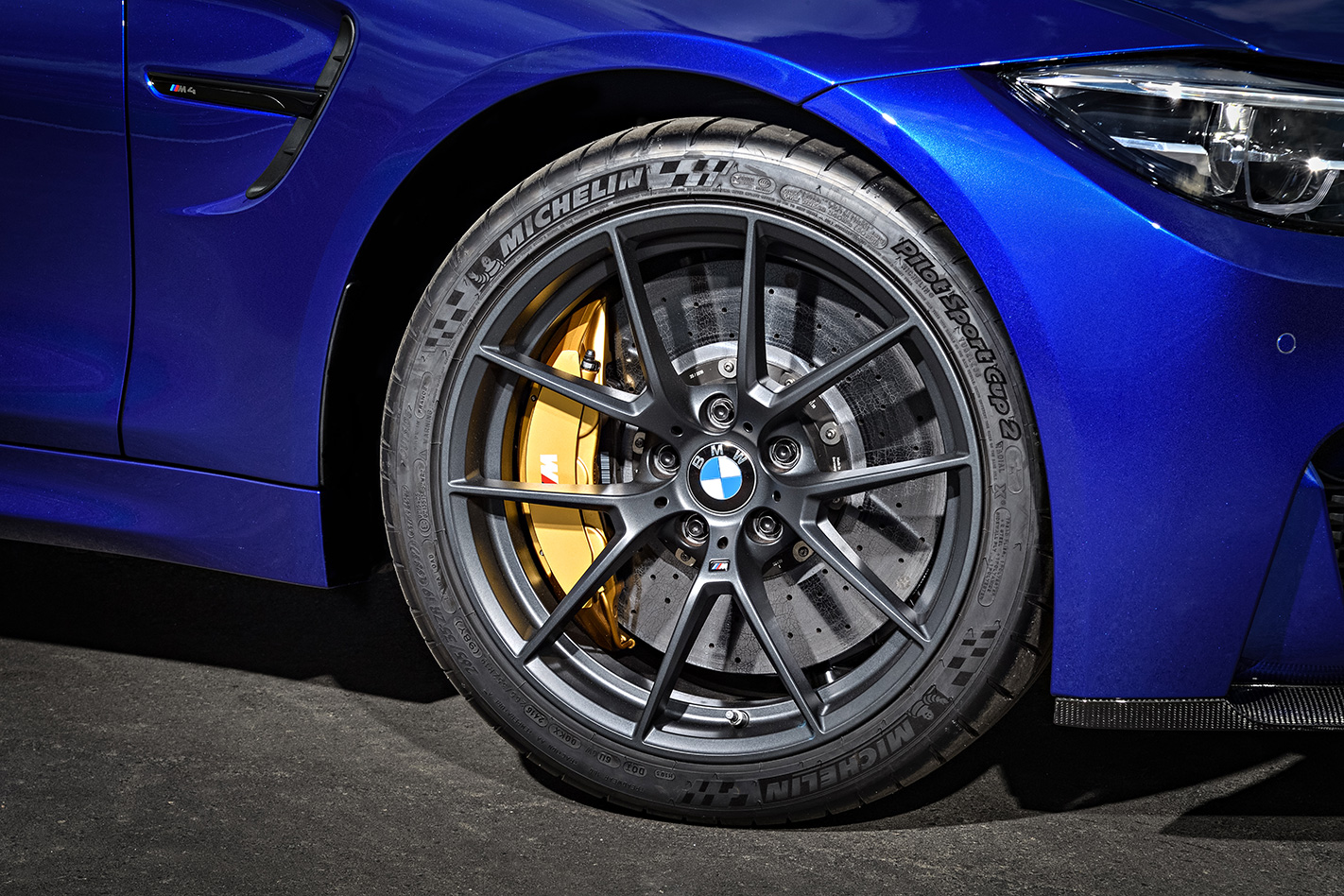
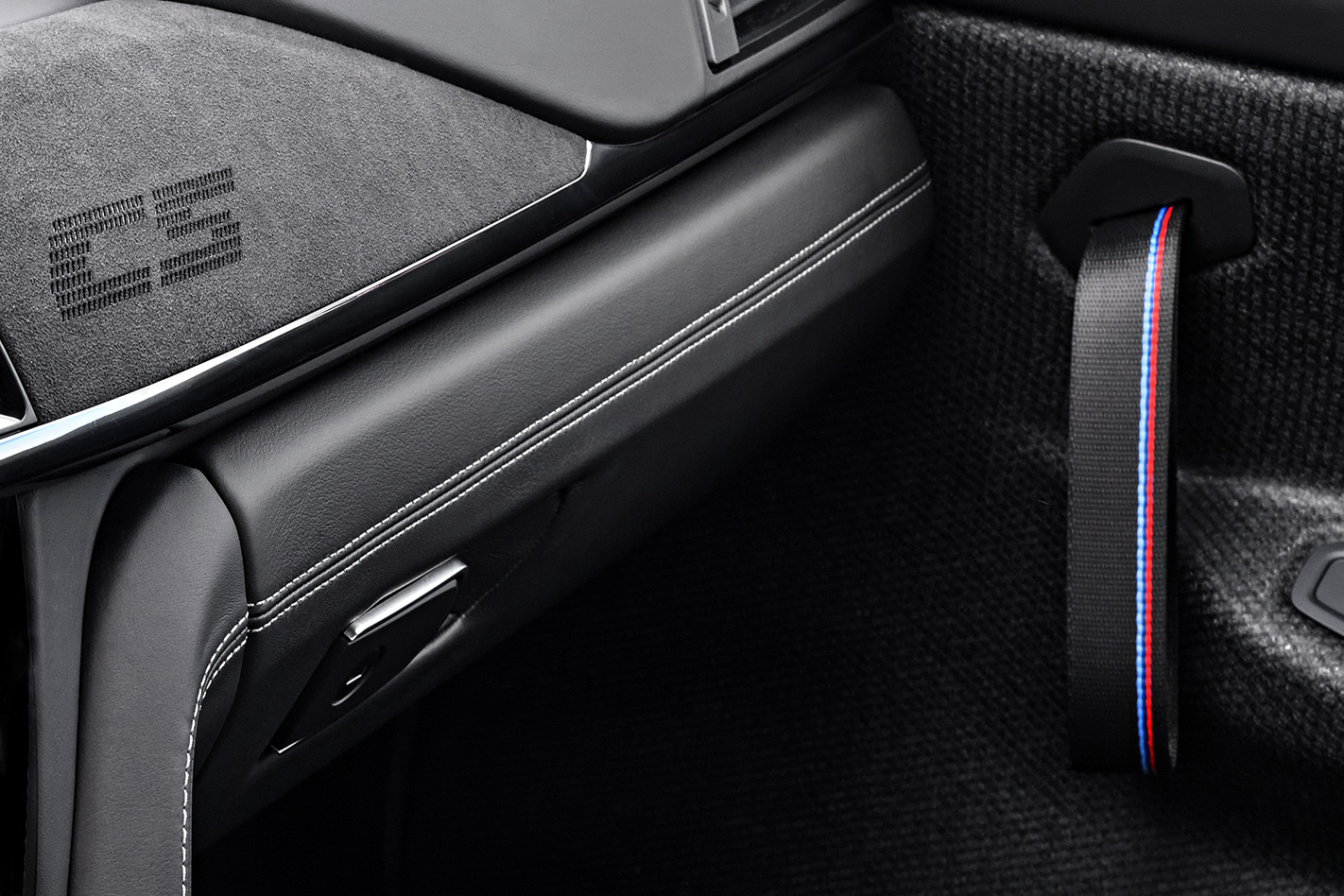
Almost everything on this BMW M4 CS is spot on: the classy matte-pewter finish on the 19- and 20-inch wheels shod with 265/35 and 285/30 Michelin rubber; the redesigned front splitter, roof, apron and rear spoiler baked in carbon fibre; the eye-catching OLED tail-lights; the neatly executed Alcantara trim and the lightweight bucket seats. The two-door coupe certainly has presence.
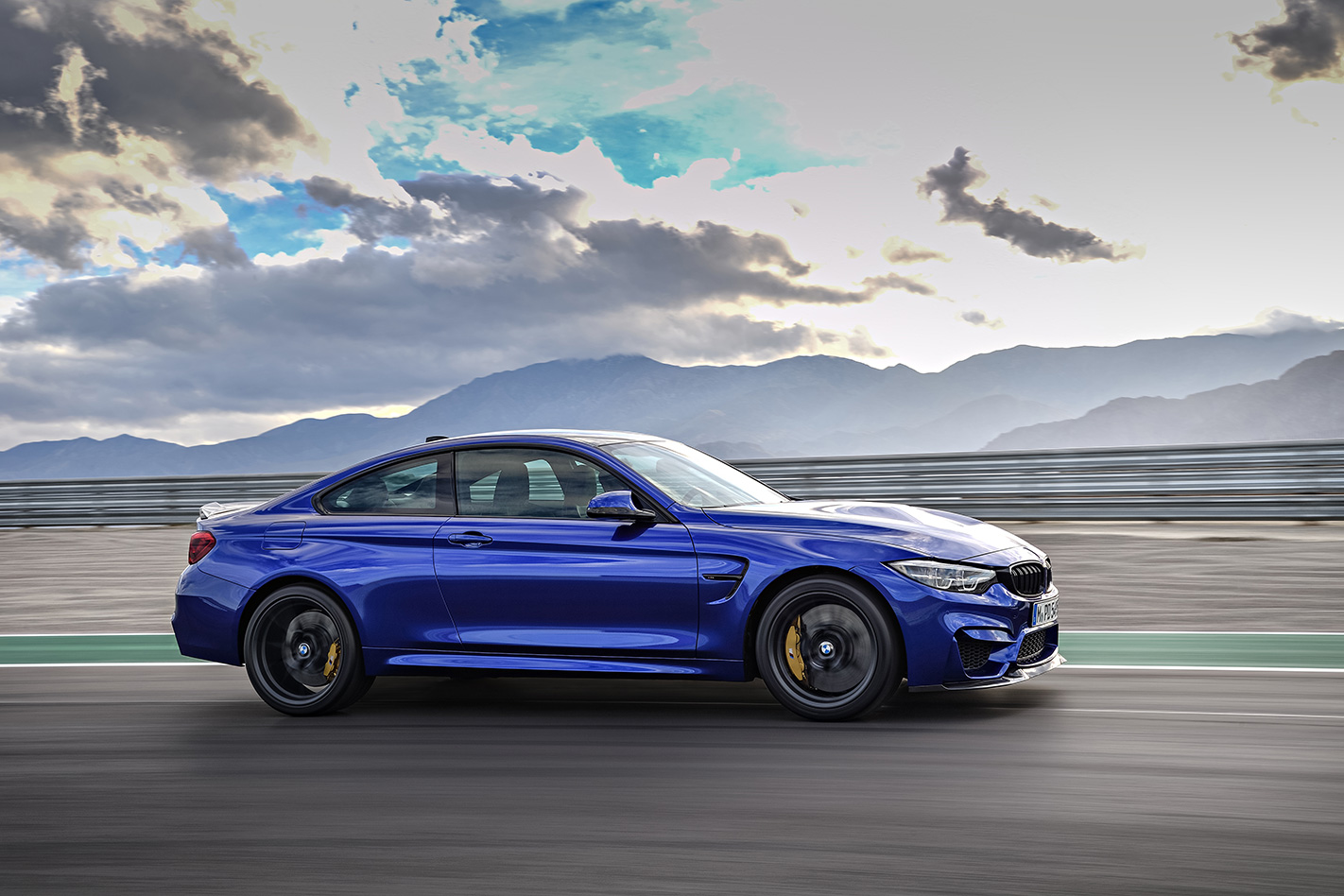
While the 1580kg kerb weight doesn’t scream crash diet, it seems BMW is taking the CS moniker seriously. The theme continues under the bonnet. Redlining at 7600rpm, the 3.0-litre straight-six musters 338kW and 600Nm. Objectively that’s a marginal 7kW increase in power and a plausible 50Nm bump for torque against the Competition Pack.
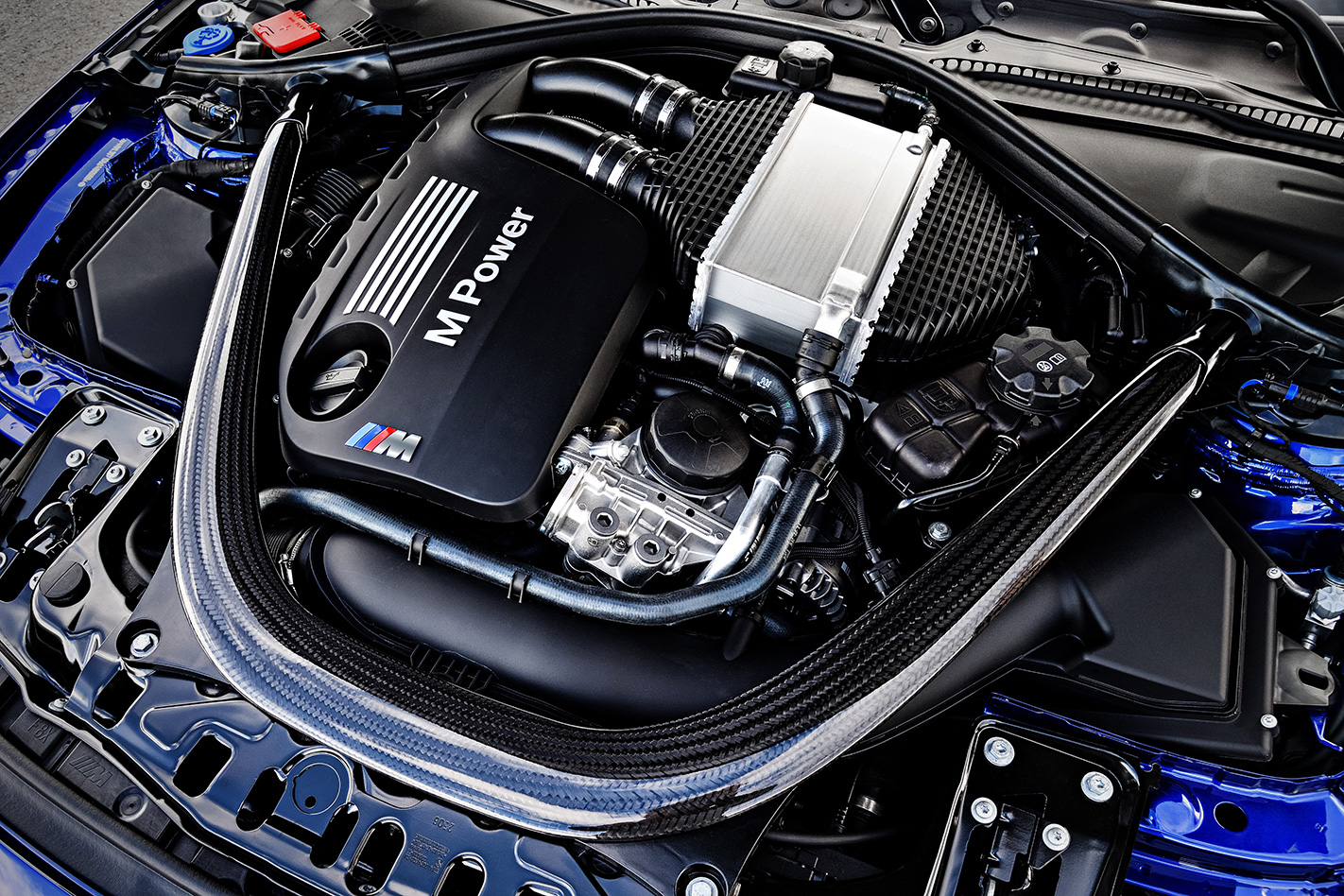
As ever, the twin-turbo six delivers the goods with aplomb. With everything locked in Sport mode, throttle response is phenomenally quick, and the torque wave that follows offers V8-esque urgency.
On a twisty road, the awesome grunt keeps the M differential busy while working the Michelin Pilot Sport Cup 2 tyres to the point where the DSC flagman starts waving yellows.
Acoustically, the M4 CS isn’t BMW’s best work, however we do like the distinctive part-throttle turbo whistle, the full-bodied bass at low revs and the ability to push to the limiter, while in Sport Plus it indulges in all manner of lift-off firework antics.
Like the ’box, the key to having fun in the CS is by being in the right mode for the steering, suspension and drivetrain. Comfort, Sport and Sport Plus are available as well as MDM, short for M Dynamic Mode.
The same can be said for the M4 GTS – despite being a sensational track tool, it will bite and it’s too sharp to qualify as a daily driver. So where does the CS fall in this company? Somewhat unexpectedly, it emerges as the leader of the pack – at least on dry, manicured Bavarian roads. An Aussie verdict awaits.
Even though the CS chassis setup is closely related to the Competition variant, it now has proper suspension compliance, acceptable low-speed ride and first-class body control. Its tenacious roadholding keeps you chortling while the silly amounts of traction make you smile. On a sunny day, the last complication the CS needs is all-wheel drive.
The rear axle, a classic liability of many M cars, has matured so much that the occasional off-putting responses under power have all but disappeared, yet through fast corners the rear wheels can seem to plot different movements. It’s nothing serious, but as it dances along the edge of adhesion, the CS calls for the odd adjustment on the run.
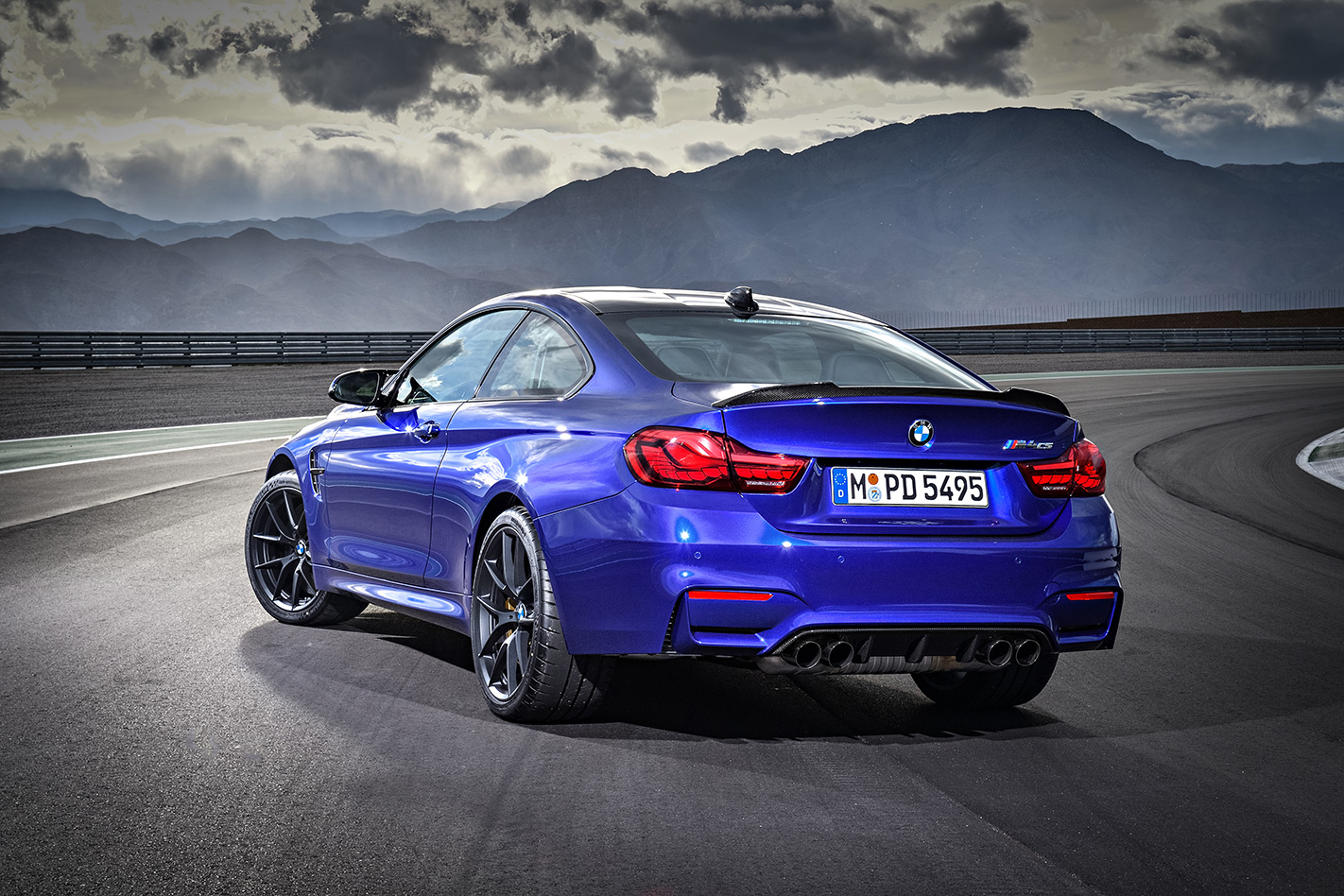
While it lacks active anti-roll bars and rear-wheel steering, the 338kW 4 Series tracks with admirable precision. In many ways it’s what the M4 should have been from the outset as it combines great looks, ample grunt, a sweet chassis and generous specification all in one.
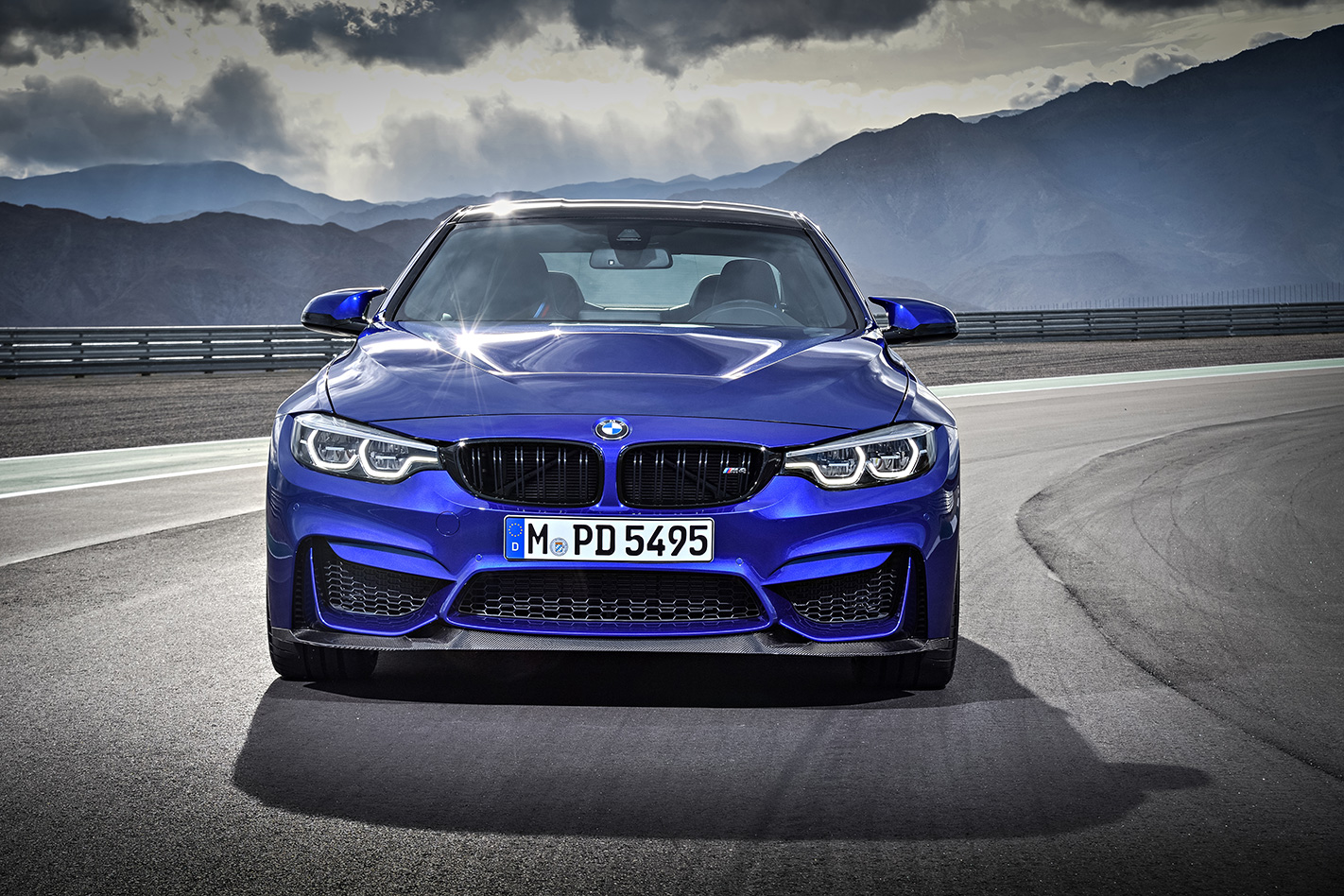
You could factor in the lure of a special edition, which seems to eliminate depreciation despite the higher initial outlay, but we’re talking driving pleasure here, not return on investment. And that’s something the CS has well and truly covered.
4.5 stars out of 5 Like: Huge pace with newfound compliance Dislike: Price premium; still doesn’t sound great
2018 BMW M4 CS Specs Engine: 2979cc inline-6, DOHC, 24v, twin-turbo Power: 338kW @ 6250rpm Torque: 600Nm @ 4000rpm Weight: 1580kg 0-100km/h: 3.9sec (claimed) Price: $211,610
IT FEELS weird that from October this will be it. Holden has quietly shown its rabid Astra VXR the door, and we know the fate of the Aussie Commodore.
Until the rebadged Insignia sedan arrives next year, Holden’s hottest offering will be this warmly baked Astra. Now, while it sports an RS badge and the Polish plant it’s built in nears Germany, there’s no shrieking six-pot or tricky all-paw system underneath.
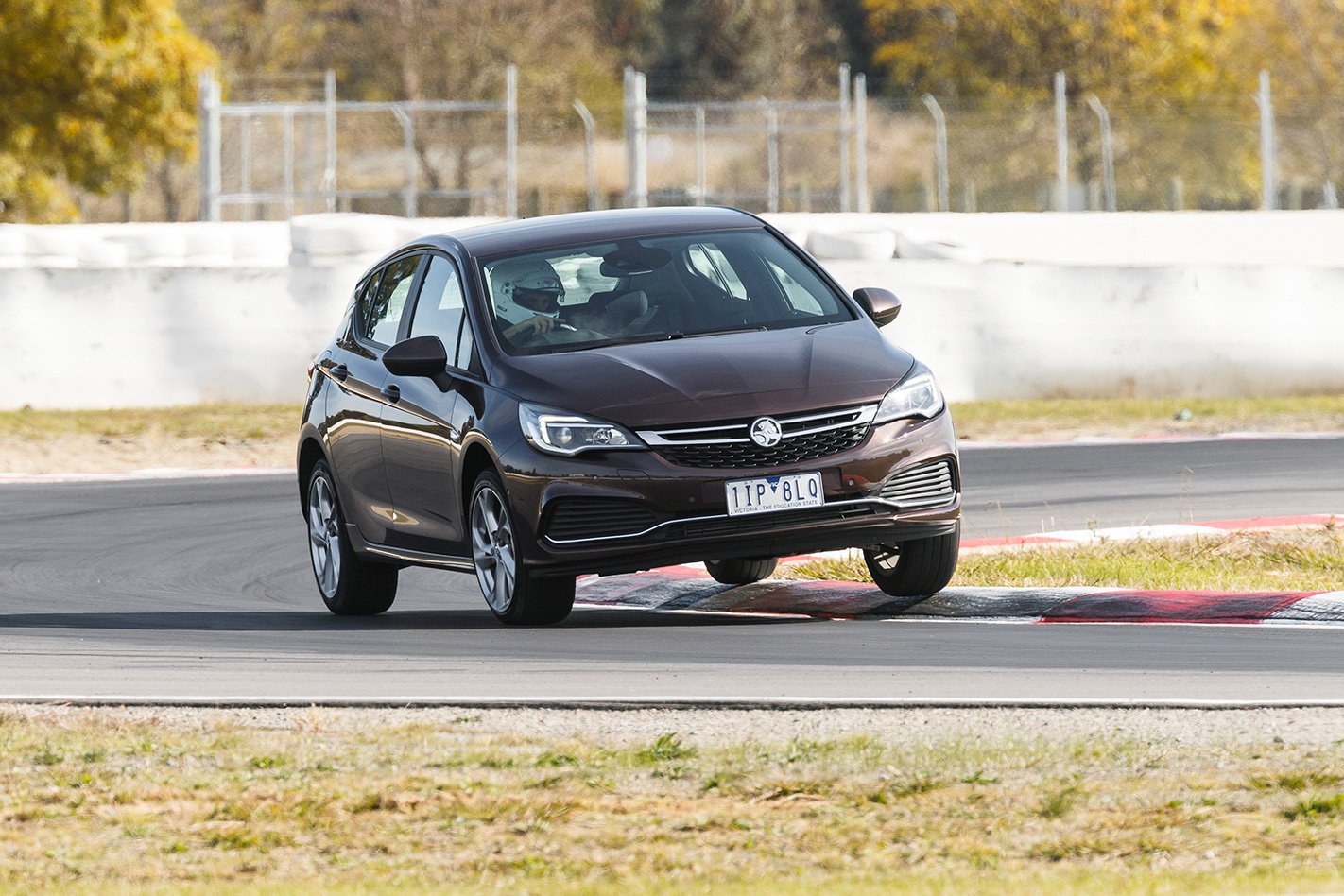
Holden’s global engineers have trimmed a staggering 170kg worth of flab from the old GTC’s frame. At the same time they’ve programmed the turbocharger with an overboost function, which handily slathers on an extra 20Nm between 1700-4700rpm.
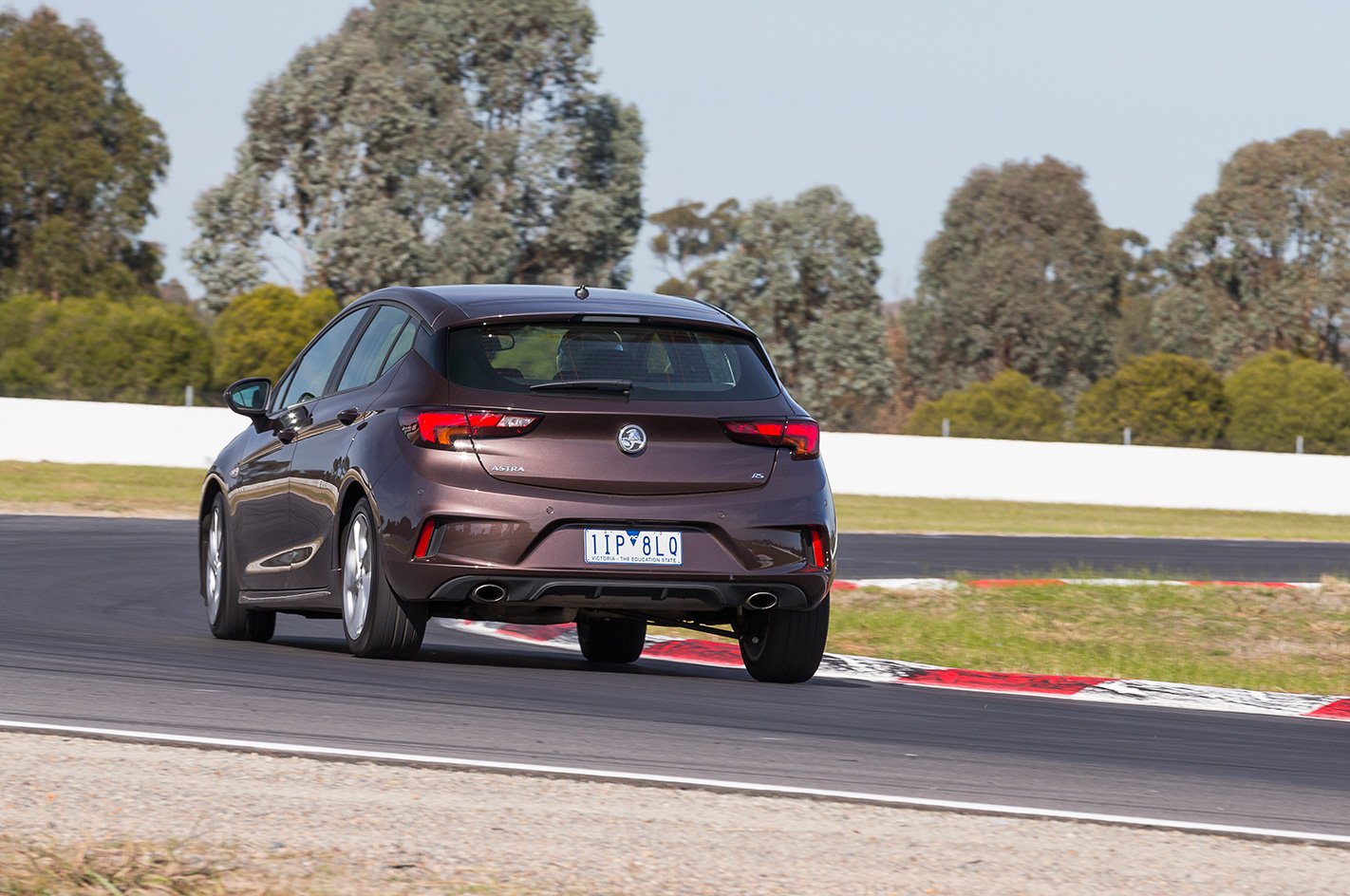
In fact the Astra proves a bit of a dud on the dragstrip. On top of feeling breathless as it nears a 6500rpm redline, it struggles for traction. Those comfort-orientated Michelin Primacy 3’s can’t cleanly ground its overboosted, low-down grunt.
Its scoresheet is buoyed by a strong braking performance and cornering speed through turn four, but a lowly judges ranking destines the Astra for a poor Bang index. Opinions were split on the gearshift, with some ruing the second-to-third action and others thinking it suited the car’s warm-hatch intentions.
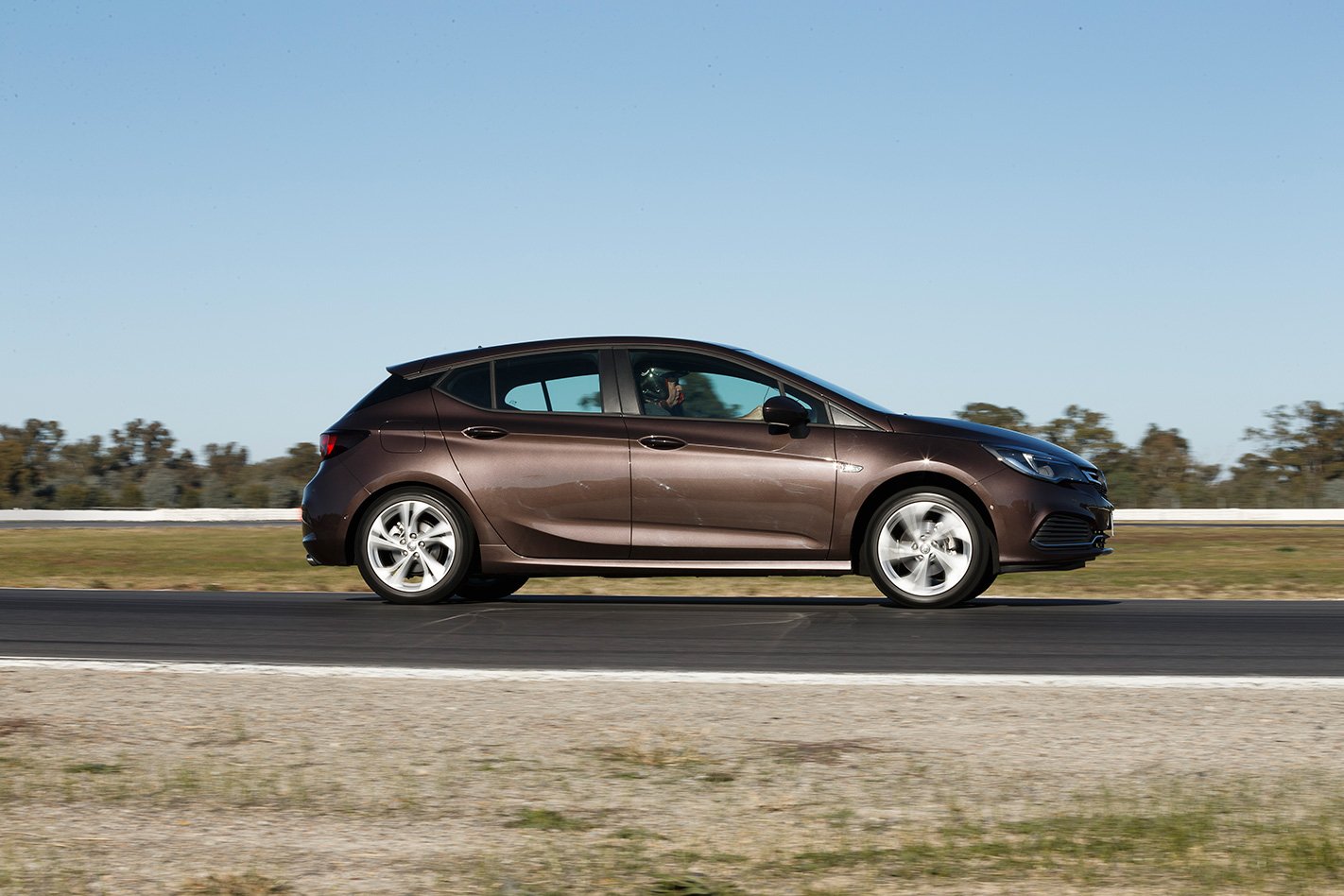
So, how’d it snatch fourth? Price, that’s how. And while we’re on it, the RS feels too expensive as a performance-car prospect. The upside is its decent steering, grippy chassis, and solid interior provide a strong base for a Focus ST fighter.
Which is whispered to be revealed this year. Now, that wouldn’t feel so weird.
SPECS Engine: 1598cc inline-4, DOHC, 16v, turbo Power: 147kW @ 5500rpm Torque: 280Nm @ 1650rpm Weight: 1320kg
TIMES 0-100km/h: 7.37sec (7th) 0-400m: 15.29sec @ 155.96km/h (7th) Lap Time: 1:43.9sec (6th)
SCORES Price: $26,240 Bang Index: 81.2 Bucks Index: 129.2 BFYB Index: 100.4
WARREN LUFF SAYS “A very soft car out there when you start pushing to the limit, you can feel it’s got a lot of body roll on the way into the corner. But surprisingly it doesn’t generate as much understeer you normally equate that to.” “It’s surprising how it uses its bodyroll to help it grip up that outside tyre. Look, it’s not the fastest car here. It’s not the most fun to drive, but for it’s own characteristics it was surprising.” “The engine was not too bad, it definitely starts to run out of puff in the upper rpm. It’s okay.”
JUDGES NOTES David Morley – 7th: “Not the hottest of hatches, but classy and feels high-end.” Dylan Campbell – 8th: “I’m sure it’s a good car but just completely outgunned in this test” Louis Cordony – 7th: “Fast grocery-fetcher feels out of place in this environment.” Tim Robson – 8th: “Fundamentals are there, but it just doesn’t all quite come together.”
WHAT a time to be alive. Cars are faster than ever, and people are buying them at a rate unlike anything we’ve seen before.
Add a booming online car culture and we have a perfect storm for wild, unadulterated motoring indulgence.
Take this video for example, aptly titled “Off-Road McLaren 570 GTs” and uploaded by Mike Tornabene. For the confused, the video does exactly what it says on the box.
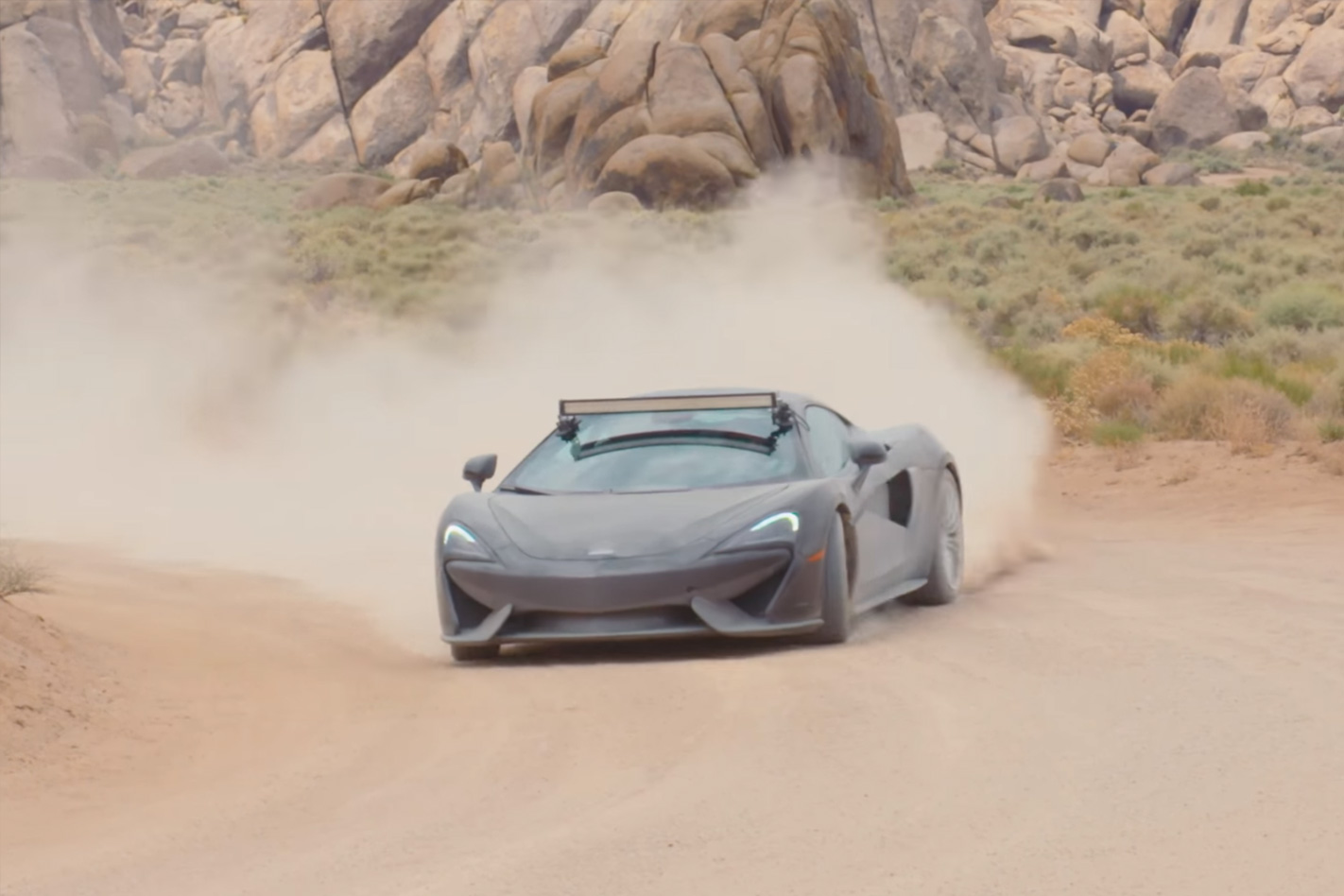
The video starts with an innocent enough premise of having the starring duo attempt to prove the everyday liveability of the McLarens by taking them on a camping trip. But it quickly descends into high-speed shenanigans, and that’s perfectly okay.
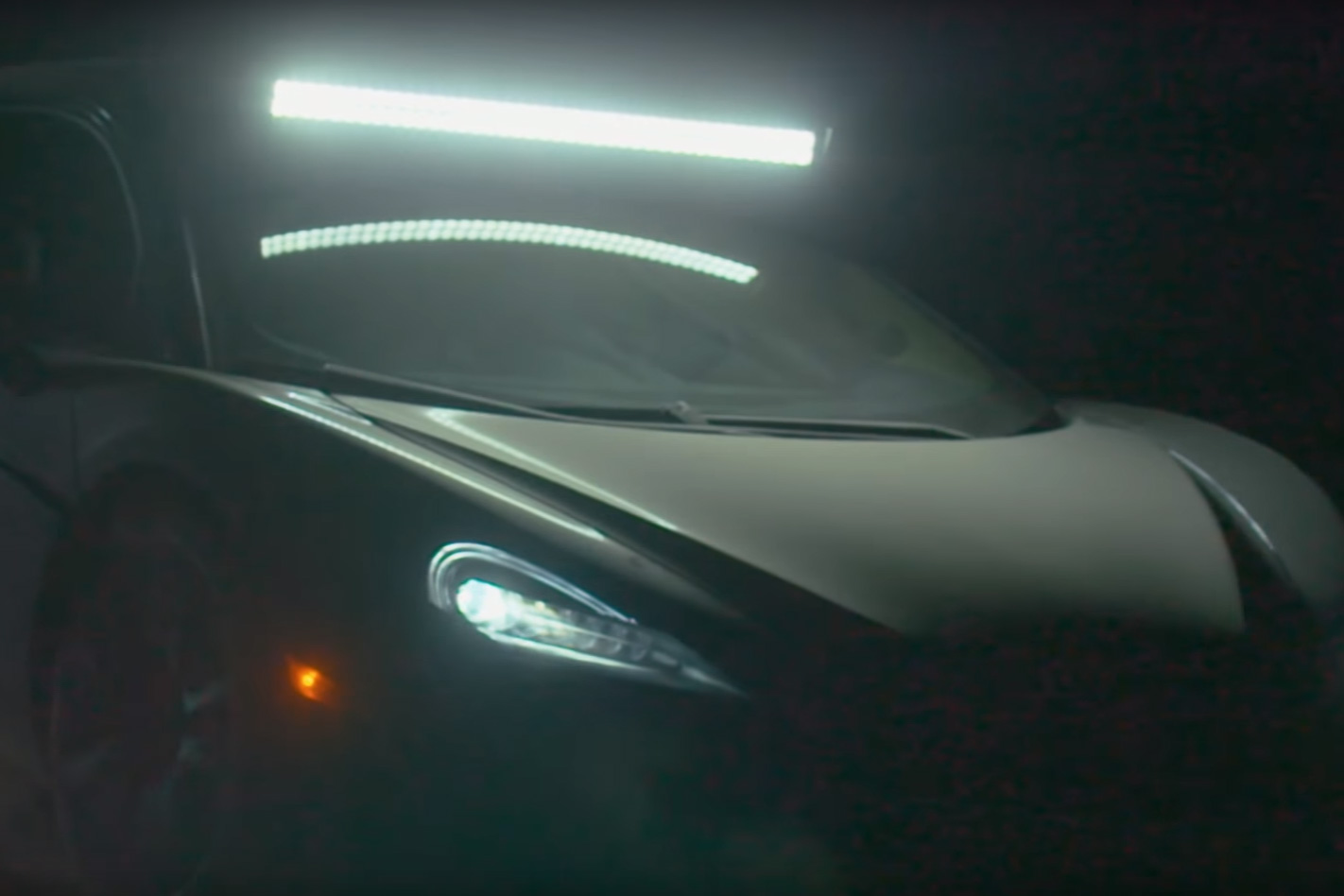
But that doesn’t mean it’s any less entertaining. And before you get on a high-horse about respecting these McLarens, these are no longer the low-number rarities we’ve come to associate the British marque with.
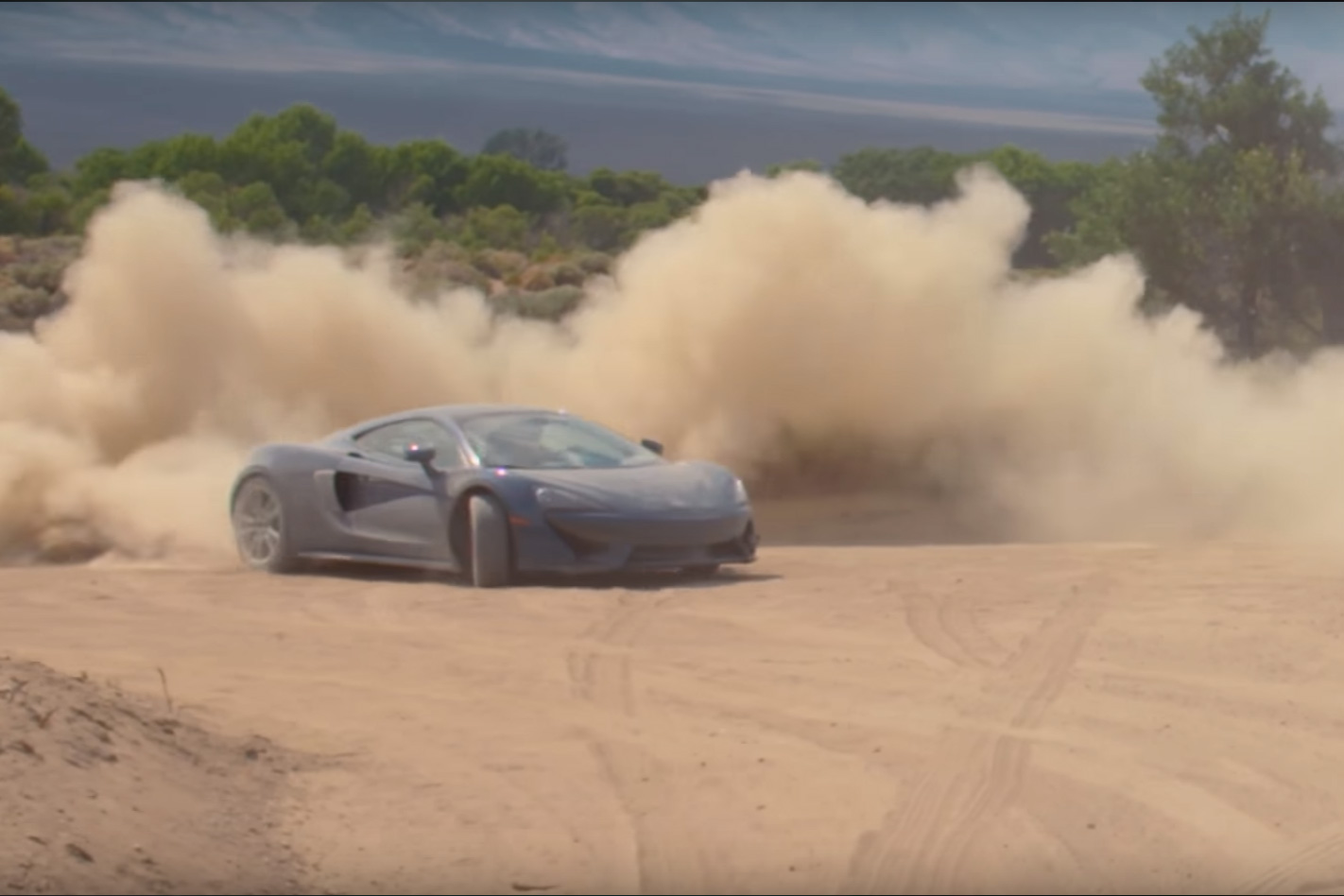
Let the McLarens eat dirt I say!
