It’s the ultimate Aussie muscle car, but what exactly makes the Ford XY Falcon GT-HO Phase III so special?
Strange as it may seem to Blue Oval diehards, the Phase III is now arguably more famous for its value than its abilities. Google ‘Phase III’ and you’ll receive hit after hit of examples being sold for enormous sums. As the name suggests, the Phase III was the third evolution of Ford’s Falcon GT-HO, or ‘Handling Option’.
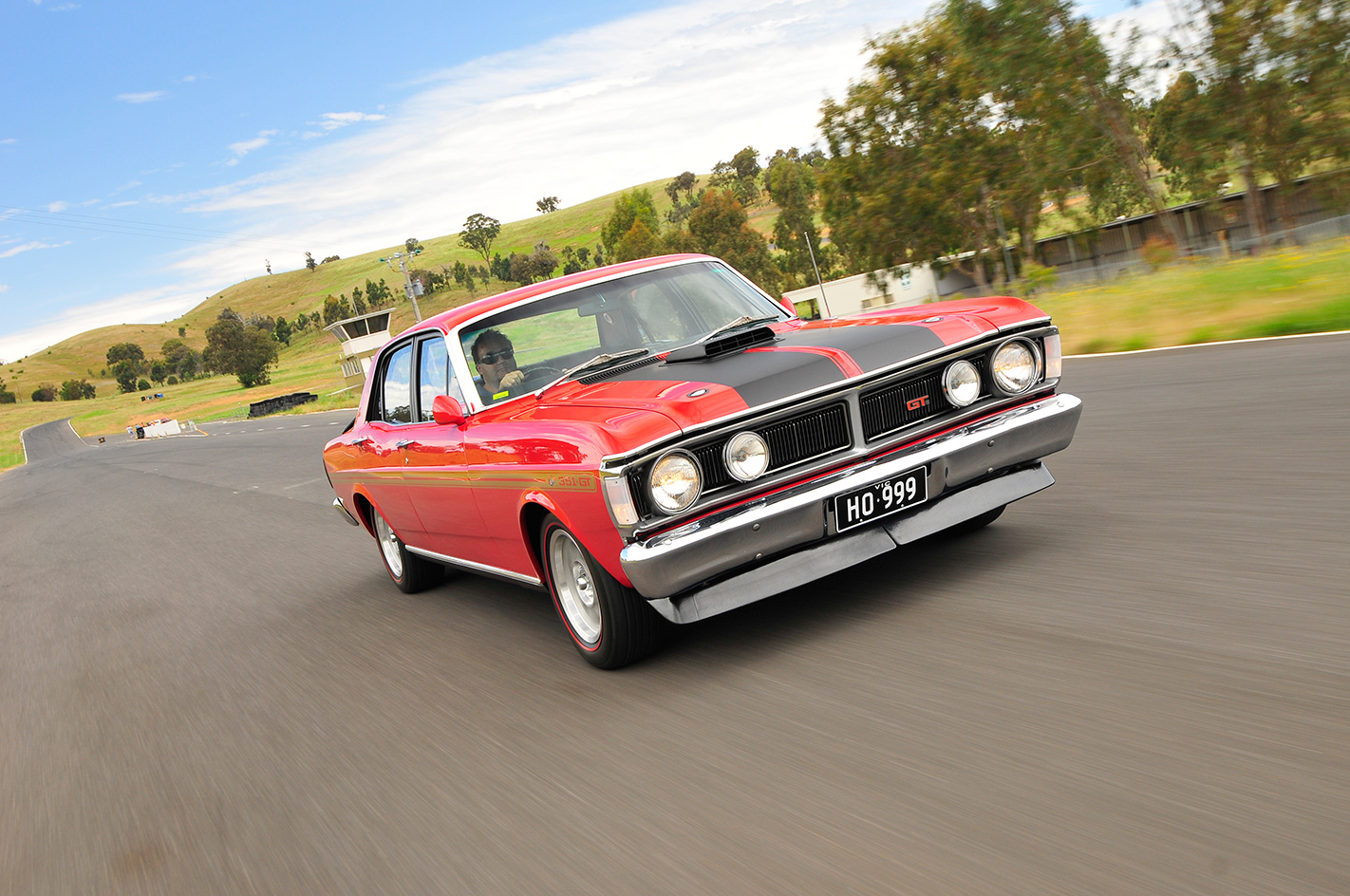
In the hands of our sister mag Wheels the mighty HO, fitted with the 3.25:1 Bathurst diff ratio, recorded 0-97km/h (60mph) in 6.4sec, 0-161km/h (100mph) in 15.2sec and a 14.4sec quarter mile. Neck-and-neck at 100km/h, the Mercedes trailed by two seconds at the 160km/h mark.
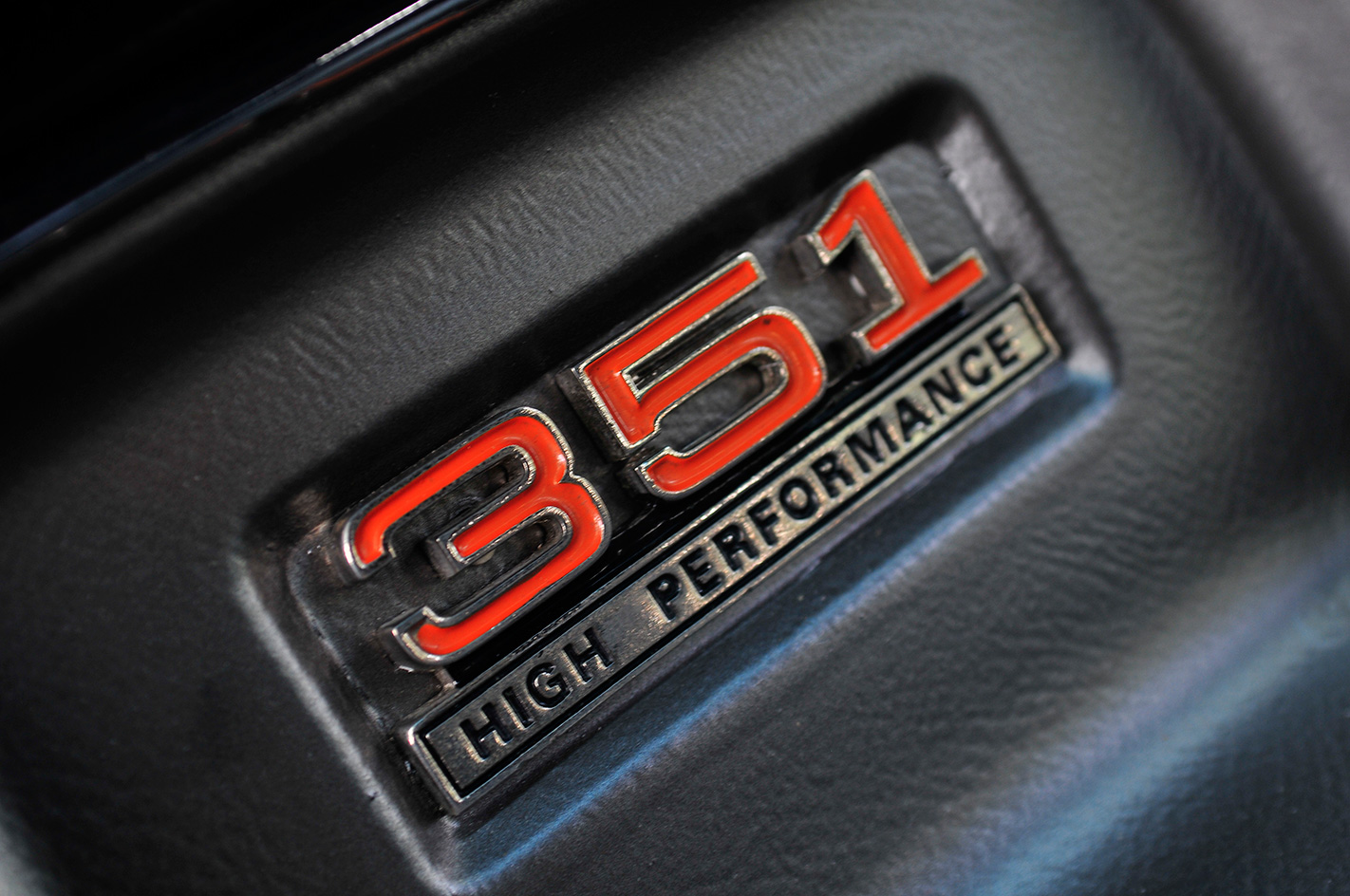
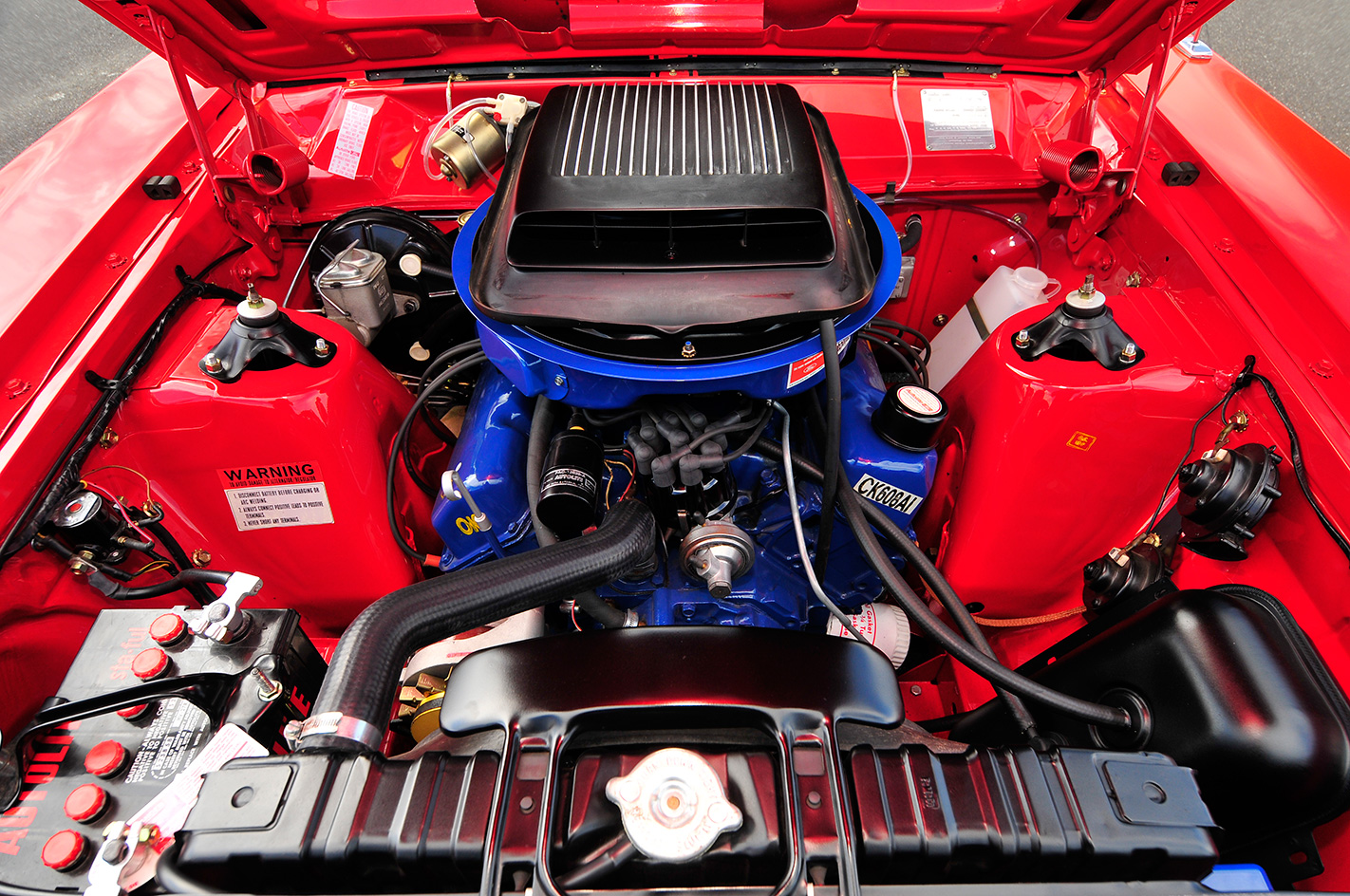
Developments over the Phase II included an improved exhaust, sump baffles, larger 780cfm four-barrel Holley carburettor, tougher crankshaft and bigger radiator, all in the name of improved reliability. Another $250 bought you a QC (quality control) engine, built to virtually the same specs as the race engines.
Higher rate springs and a thicker front anti-roll bar sharpened the handling and larger 15 x 7.0-inch Globe wheels became an option in 1972. Brakes were also upgraded, however, remained extremely marginal for the performance, particularly with soft road-spec pads.
Just 300 Phase IIIs were built and less than half are believed to survive. Vermillion Fire is the most common colour (68 built) with Onyx Black and Vintage Burgundy Metallic the rarest (one of each). Prices today hover around the $500,000 mark.
1971 Ford Falcon XY GT HO Phase III specs: Engine: 5763cc V8, OHV, 16v Power: 224kW @ 6150rpm Torque: 515Nm @ 3400rpm Weight: 1524kg 0-100km/h: 6.6sec (est) Price: new $5250
Volkswagen has released a video showing how the different design and styling elements came together for its all-new T-Roc crossover.
While it could be classed as a teaser, the 3min 40sec video doesn’t reveal much more about the car’s appearance than we’ve already seen, however it does provide an interesting look at how vehicle manufacturers approach designing a whole new model.
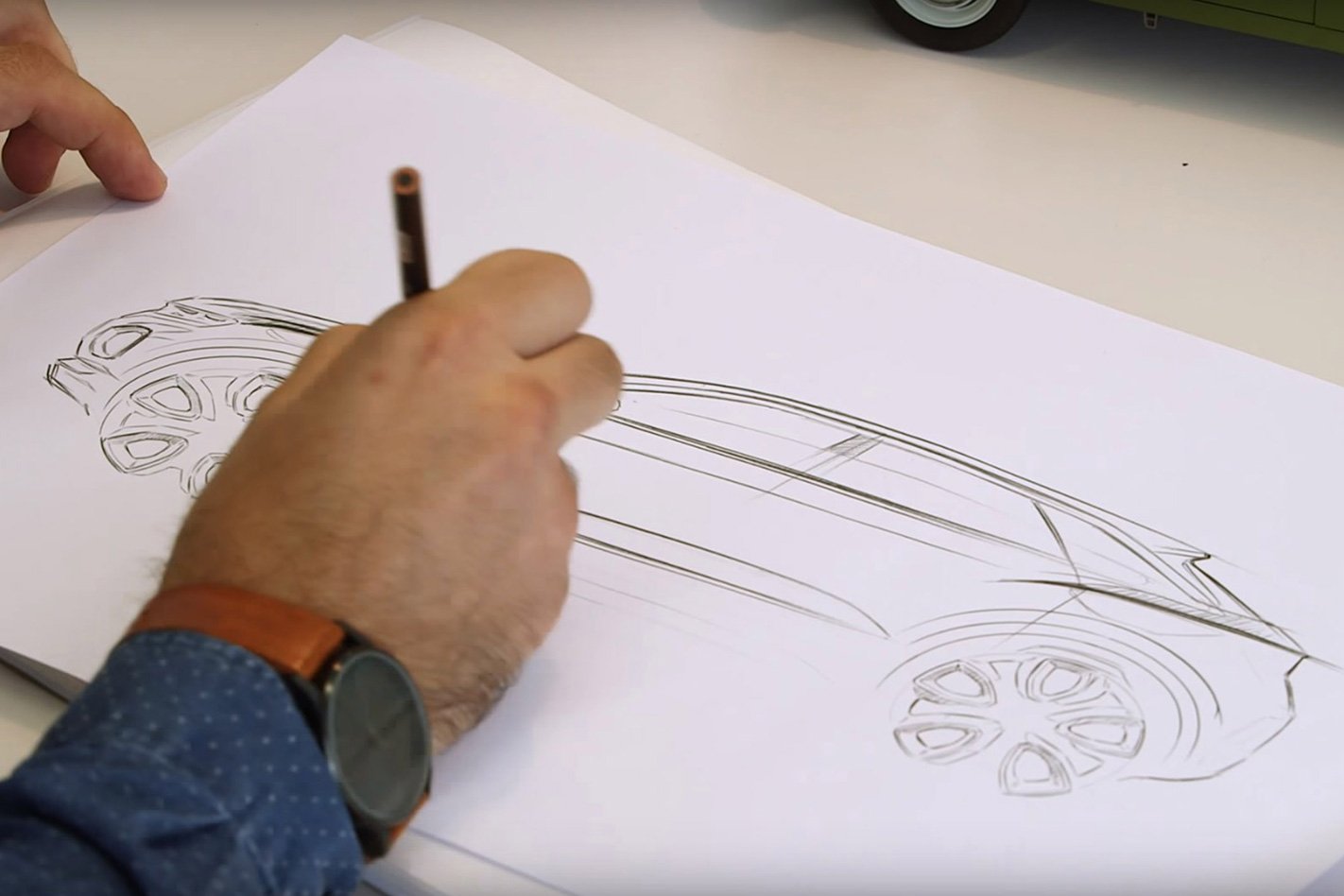
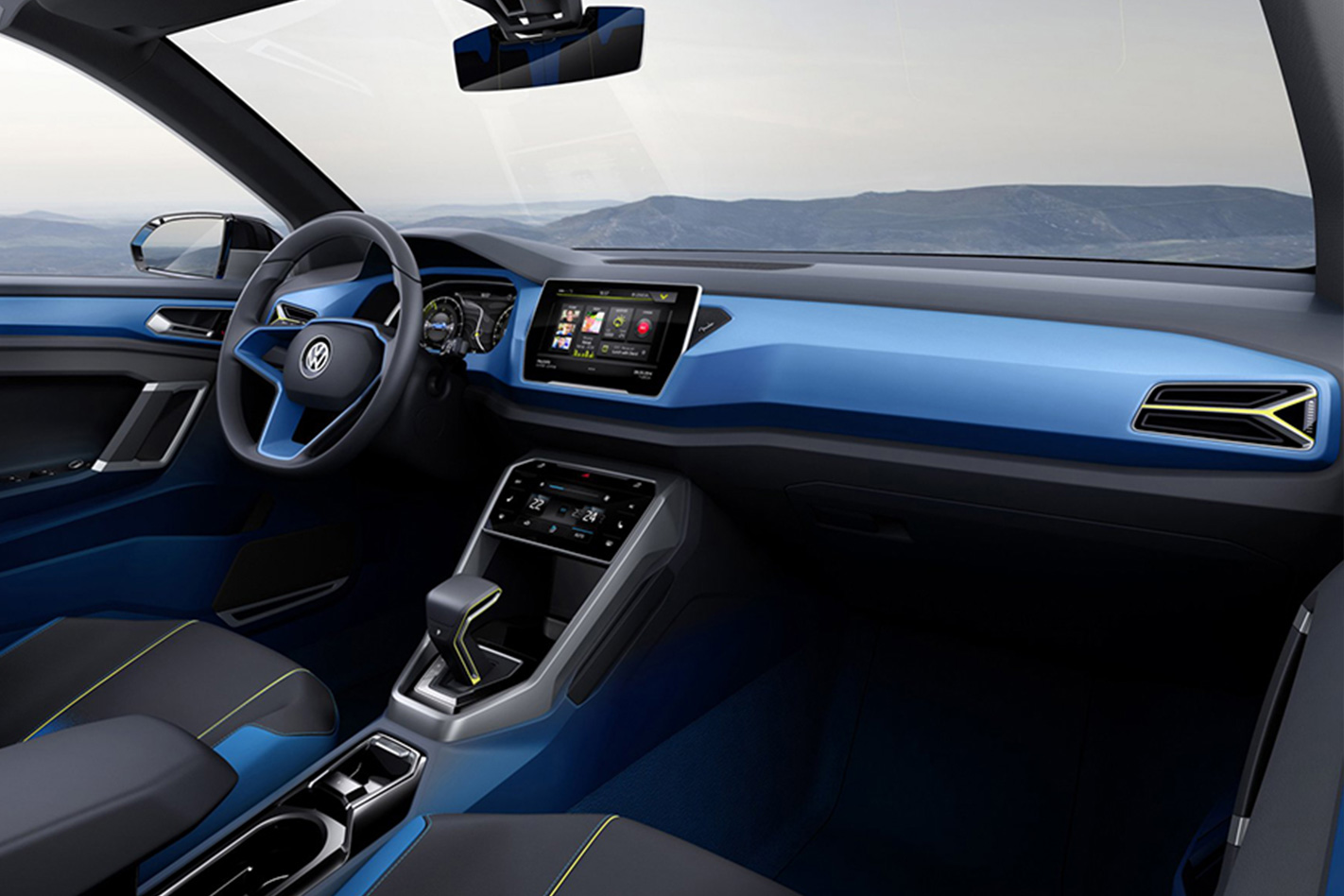
That said, some things to be taken away from the video is that the T-Roc will be a lot flashier than other VW models and will feature flamboyant interior trim, two-tone exterior paint, and an all-digital ‘virtual cockpit’ gauge cluster.
What we do know is the Golf-based T-Roc will be similarly proportioned to its Audi Q2 cousin, which, along with the Golf, shares its MQB platform.
This will allow for Volkswagen’s new 48-volt mild hybrid setup, which will also make its way into Audi vehicles and the all-new Golf due in 2019.
It’s also expected to come with three petrol engine options, including a 1.0-litre three-cylinder engine, and 1.5-litre and 2.0-litre four-cylinder powerplants with the biggest pumping out 180kW.
There will also be 1.6-litre and 2.0-litre four-cylinder turbo diesels.
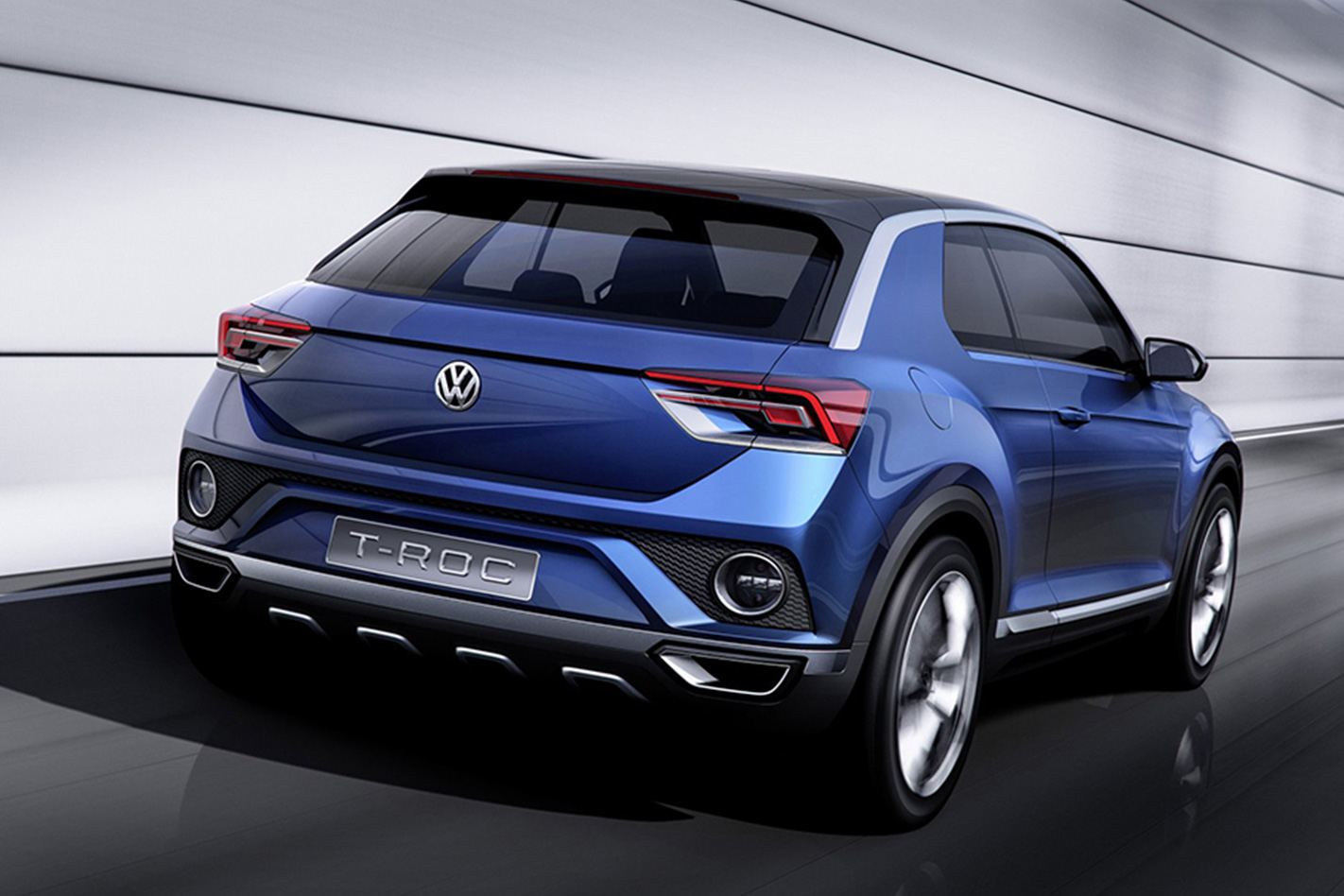
The T-Roc will be a key player in Volkswagen’s plans to expand its SUV line-up in Australia and is expected to be priced directly against the likes of the Mazda CX-3, Toyota C-HR, and Peugeot 2008 when it goes on sale here in 2018.
The T-Roc will make its global debut on August 23 before being shown to the public for the first time at the Frankfurt Motor Show in September.
IN THE wide world of cinema, film makers have an open sandbox to explore wild ideas and fictitious concepts, but while the stories they tell may seem farfetched, some motion pictures have occasionally open a rift into the future and given us a sample of how our cars might evolve.
Luck or prophesy? You be the judge.
Goldfinger
In the 1964 feature film Goldfinger, our dashing British spy 007 appears to use a very early form of satellite navigation to guide his gorgeous Aston Martin DB5 over Switzerland’s equally stunning Furka Pass. Q may have wasted his time with knockout gas fountain pens and electrified walking sticks, but he was really on to something with this.
The Simpsons
Ever wandered the stages of a car show and thought you could have done better than the freshly glinting designs on display? You probably can’t, as Homer Simpson demonstrated in his own inimitable style. Offered the chance to design a car for the average American by his long lost half-brother, the three-fingered loveable klutz pens a car which features everything you could possibly want in a vehicle, except aesthetics that don’t make you want to have an acid eyebath.
The cartoon episode was a poke at the Ford Edsel which fell from the ugly tree in 1958 and hit all of the ugly branches on the way down. Let us see it as a warning though.
Back to the Future II
When some car brands talk about an ‘all new’ model there’s every chance the car in question has a lightly redesigned bumper and extra paint colour choice, but when the Doc Brown gave the DeLorean time machine a mid-life update for Back to the Future II, he really went to town. Instead of a plutonium fission reactor, the second-gen car had been retrofitted with a Mr Fusion home reactor that turns any household waste into the 1.21 gigawatts required to time hop. Time travel may be a few years away, but the idea addresses the inadequacy of combustion power for the high energy demands of future cars.
Total Recall
In the futuristic story of one man’s fight to rediscover something he forgot, Arnie makes the mistake of commandeering a Johnny Cab as a getaway vehicle. After the robotic cabbie fails to recognise either ‘Drive’ or ‘S**t’ as actual destinations, the muscly Austrian decides to vandalise the autonomous taxi and drive it himself, highlighting the need for manual override controls in even the cleverest self-driving cars.
Judge Dredd
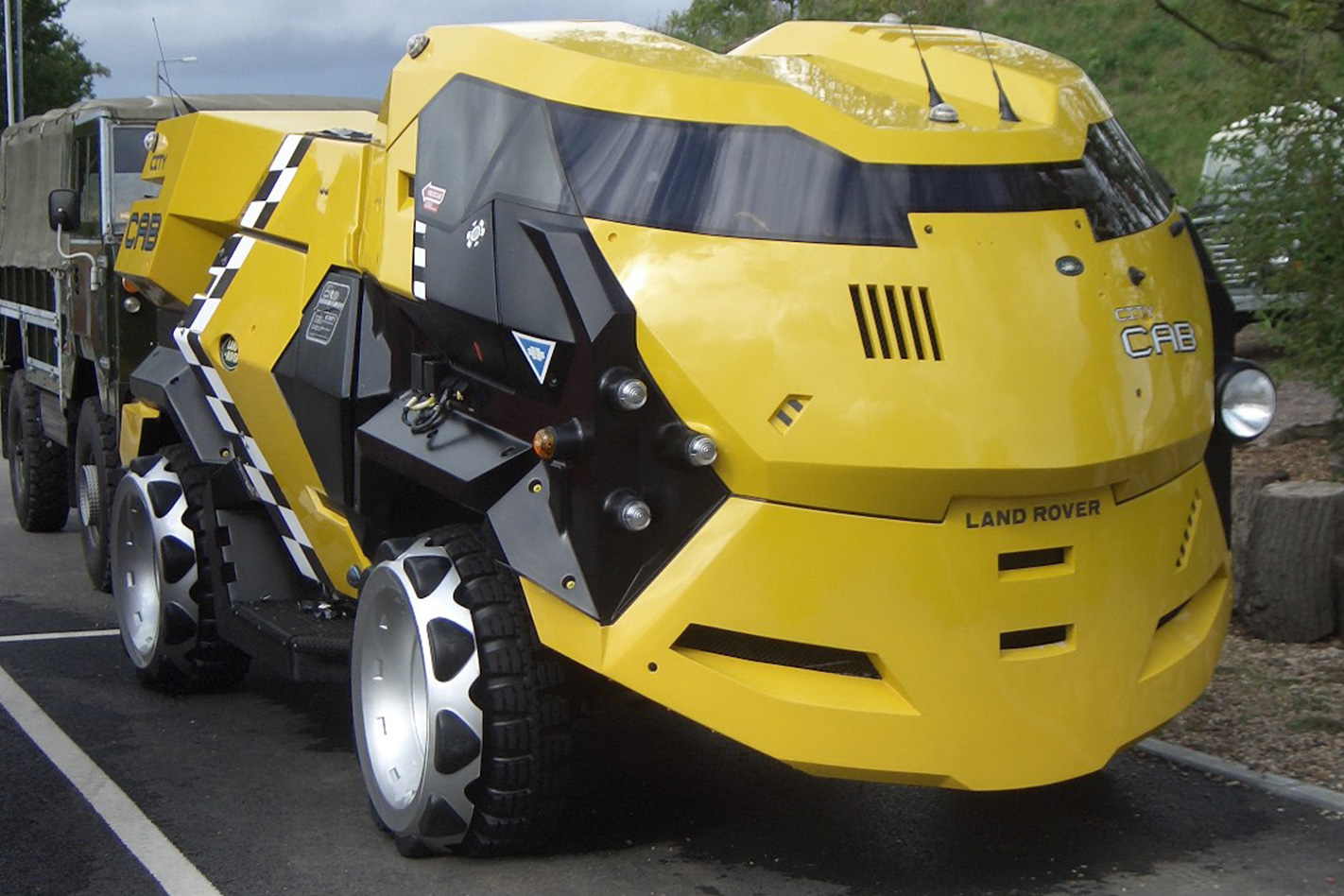
While one film’s vision of the future taxi is a polite self-driving runabout, Danny Cannon’s film Judge Dredd interprets it very differently, giving us a City Cab you certainly wouldn’t want to mess with. Leave a measly tip for this cabbie and its monstrous, bullet-proof shell could chase you through hell and high water. With an increasing number of yellow SUVs replacing the long favourite, but now discontinued, Ford Falcon in Australian capitals, the Judge’s Land Rover 101-based mega taxi might not be that far from a future Uber.
Early safety restraint systems used one airbag to protect just the driver from the steering wheel, but modern cars now have up to eight bags to look after occupants in all rows of seating. What’s next, one massive airbag that fills the entire car? Ha!
Actually, if that is ever a reality, the 1993 Demolition Man film was not far off with its Secure Foam concept. In the event of a serious accident such as crashing mid-air into a police station – an almost daily occurrence in Hollywood – all cabin occupants are cocooned in a rapid setting foam that spares them from even minor injuries. You do need Sylvester Stallone’s arms to free yourself from it though.
Knight Rider
Despite being on every car enthusiast’s wish list since they were nine, a red LED grille strip that traces from side to side is yet to make it into a production car. However, Knight Rider’s loyal steed KITT 2000 (Knight Industries Two Thousand) did preview the voice control systems featured in many modern cars today.
With the rapid advance of artificial intelligence and the rise of Siri, Cortana, Alexa, and Google’s electronic personal assistant services, it won’t be long before modern systems make KITT’s personality look as wooden as his dashboard.*
Cars
What’s that? How can a cartoon about living cars possibly preview anything we are likely to see in the real world? When lighting McQueen turned out of the Los Angeles International Speedway and onto the street without even so much as a tyre or undies change, the charismatic stock car hinted at an age when potent race cars would be legal on public roads. McLaren P1 LM, BMW M4 GTS, Porsche 911 GT3 RS, KTM X-Bow, Caterham Seven 620 R, and Radical SR3 anyone?
I, Robot and Minority Report
Audi’s RSQ autonomous car might have seemed outrageous when it debuted in the 2004 film I Robot, but with the new Audi A8 now capable of level-three autonomous driving, the car maker says that reality is fast approaching. Lexus pulled a similar (and possibly just as pricey product placement) trick in the 2002 feature Minority Report with its 2054 model. We are still waiting for its biometric security but parent Toyota is a long way down the exploration of fuel cell drivetrains that are similar to the film star’s.
Rampage
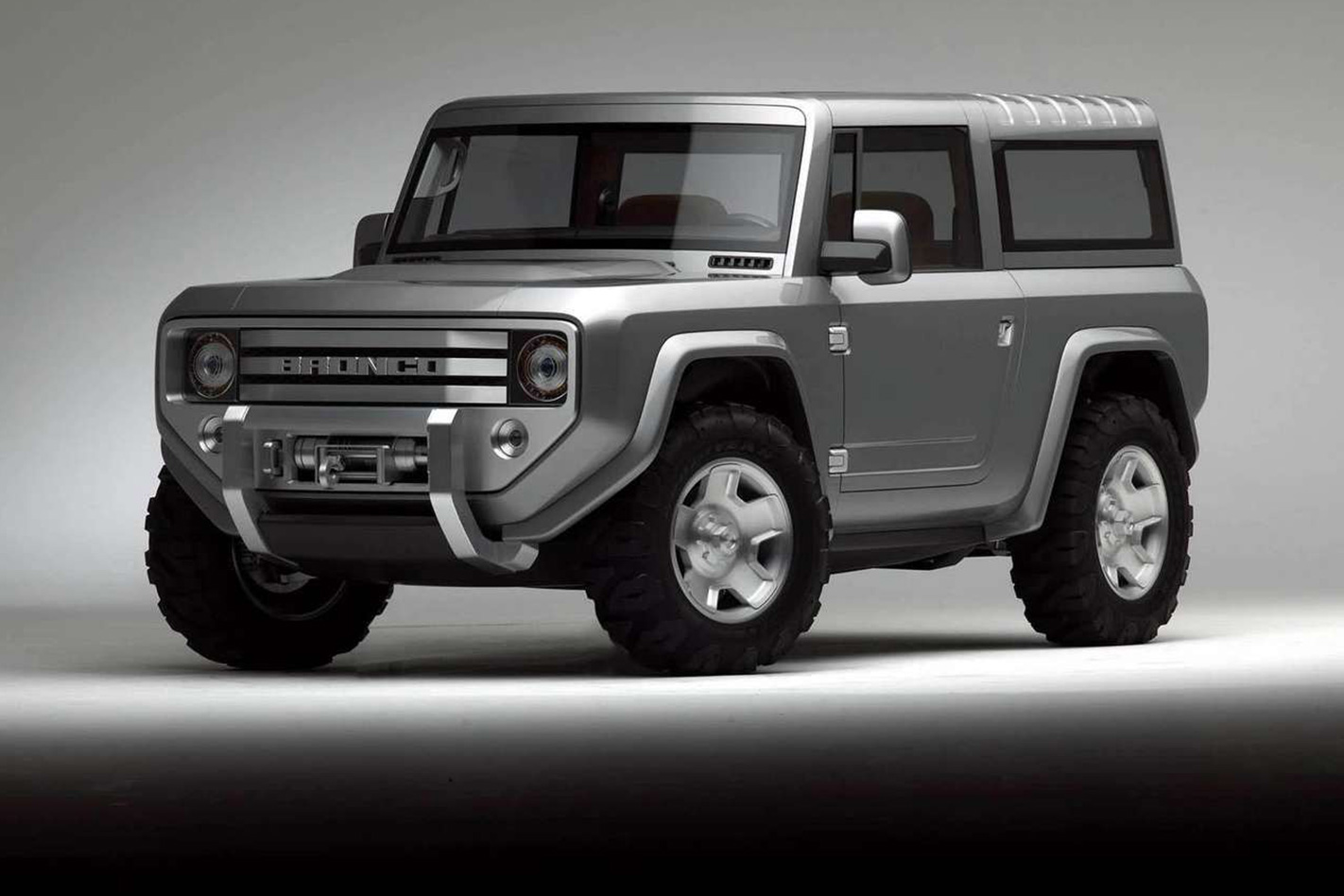
Speaking of wild concepts. Due for release next year, the feature film based on the 1980s computer game of the same name will feature the 2004 Ford Bronco concept, and we can’t help feeling the reappearance of the show car might be hinting at the shape of the next-gen car that is due in 2020. Either way, the performance of a 13-year old inanimate object is likely to be more charismatic than the movie’s lead role played by The Rock.
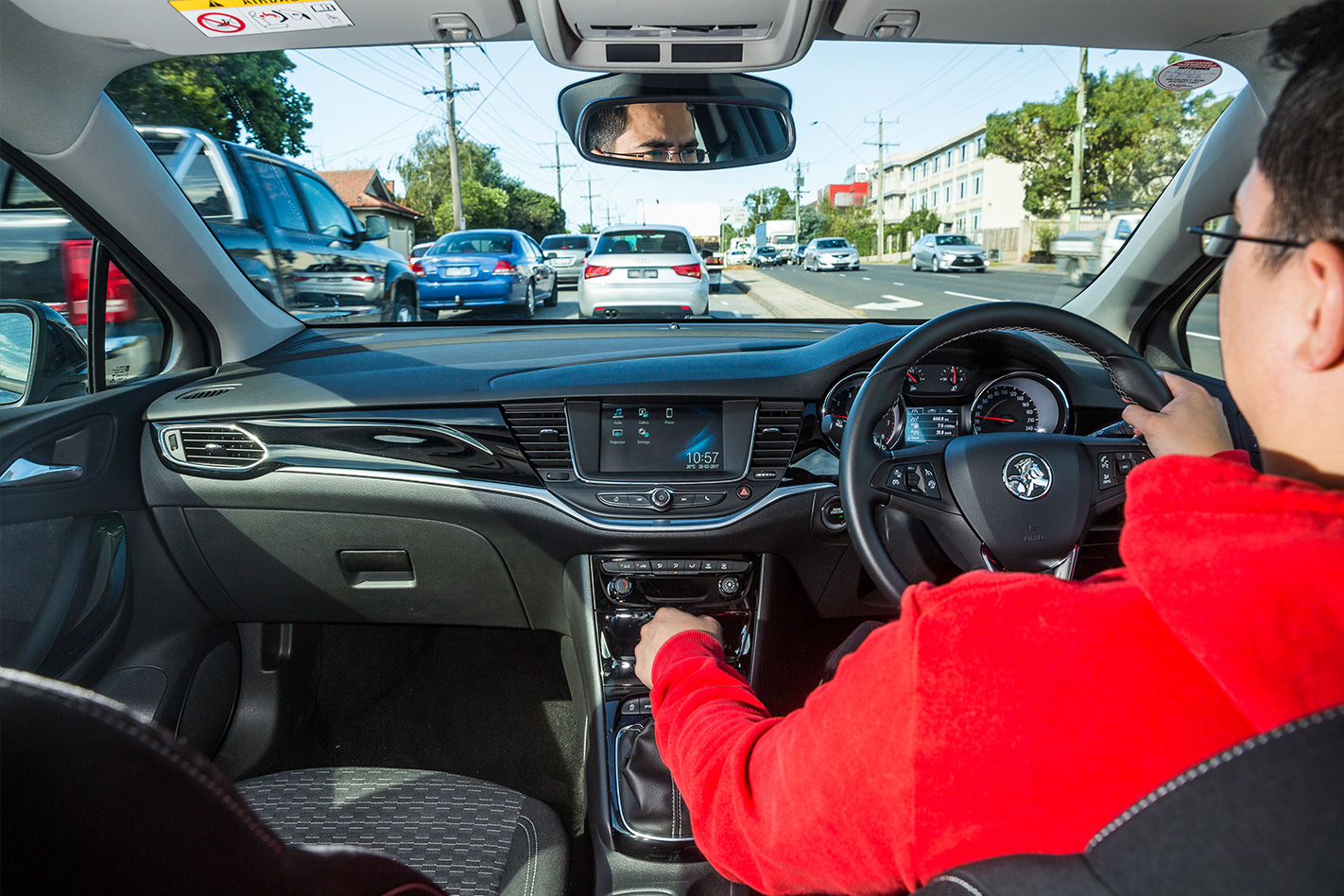
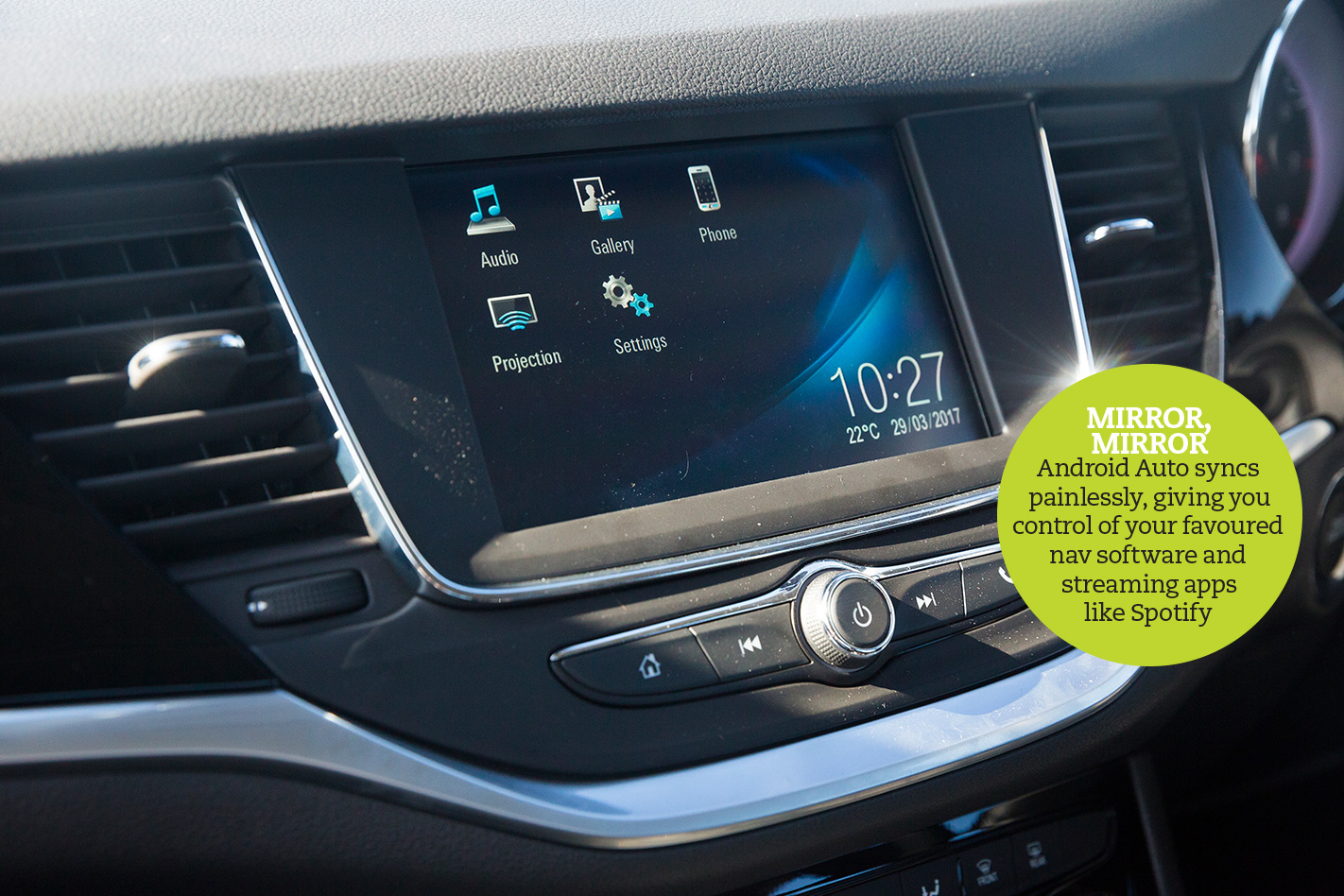
SMARTPHONE mirroring is a godsend in a car that has a touchscreen display but no built-in sat-nav capability, but there are two minor issues with this in the Holden Astra.
Holden (well Opel, really), provides a handy receptacle at the base of the centre stack to hold your phone. Unless you’re a phablet-toting type, you’ll find it to be a thoughtful touch … until you decide to charge the thing or take advantage of Apple CarPlay or Android Auto.
The only USB port in the car is buried in the centre console bin, so if you want to connect your phone and use that nifty slot at the same time, you’ll need a cable long enough to stretch the 60cm gap between port and holder. Which puts a cable right over your cupholders and gearshifter. Which is annoying, especially in a manual.
More irritating, though, are the parking sensors and their habit of shrieking at you when you least expect it. Sitting stationary in traffic? Those ever-vigilant sensors will sometimes chirp as they sense cars in adjacent lanes – even if those cars aren’t moving either.
Have you already finished parking and put the gearbox in neutral and the handbrake up – both clear signs that you intend to stay put? The sensors don’t care about your intent. They’ll squawk if there’s an object within a metre of your perimeter until you hit the off button – an action that will quickly become reflex.
Other qualms become apparent when sitting in the back seats. The seats themselves are fine – great, even, thanks to good under-thigh support, plentiful legroom and a relaxed backrest angle – but those occupying a window pew will be rubbing an elbow against a hard plastic trim panel. No biggie on short trips, but there’s potential for discomfort on longer journeys.
On top of that, there’s also a lack of ventilation for those backseaters. While cars like the Volkswagen Golf and Hyundai i30 give those in the back their own air vents, the Holden Astra RS has no such provision. Not the biggest black mark, given rear vents are still far from universal in the small hatch segment (Mazda 3, Honda Civic and Subaru Impreza omit them too, and they’re some of the better choices around).
It may, however make a difference for people who live in hotter climes than dreary Melbourne.
First published in the August 2017 issue of Wheels Magazine, Australia’s most experienced and most trusted car magazine since 1953.
Read part three of our 2017 Holden Astra RS long-term review here!
SO I’VE read that American entrepreneur Malcolm Bricklin is making yet another comeback to the automotive industry.
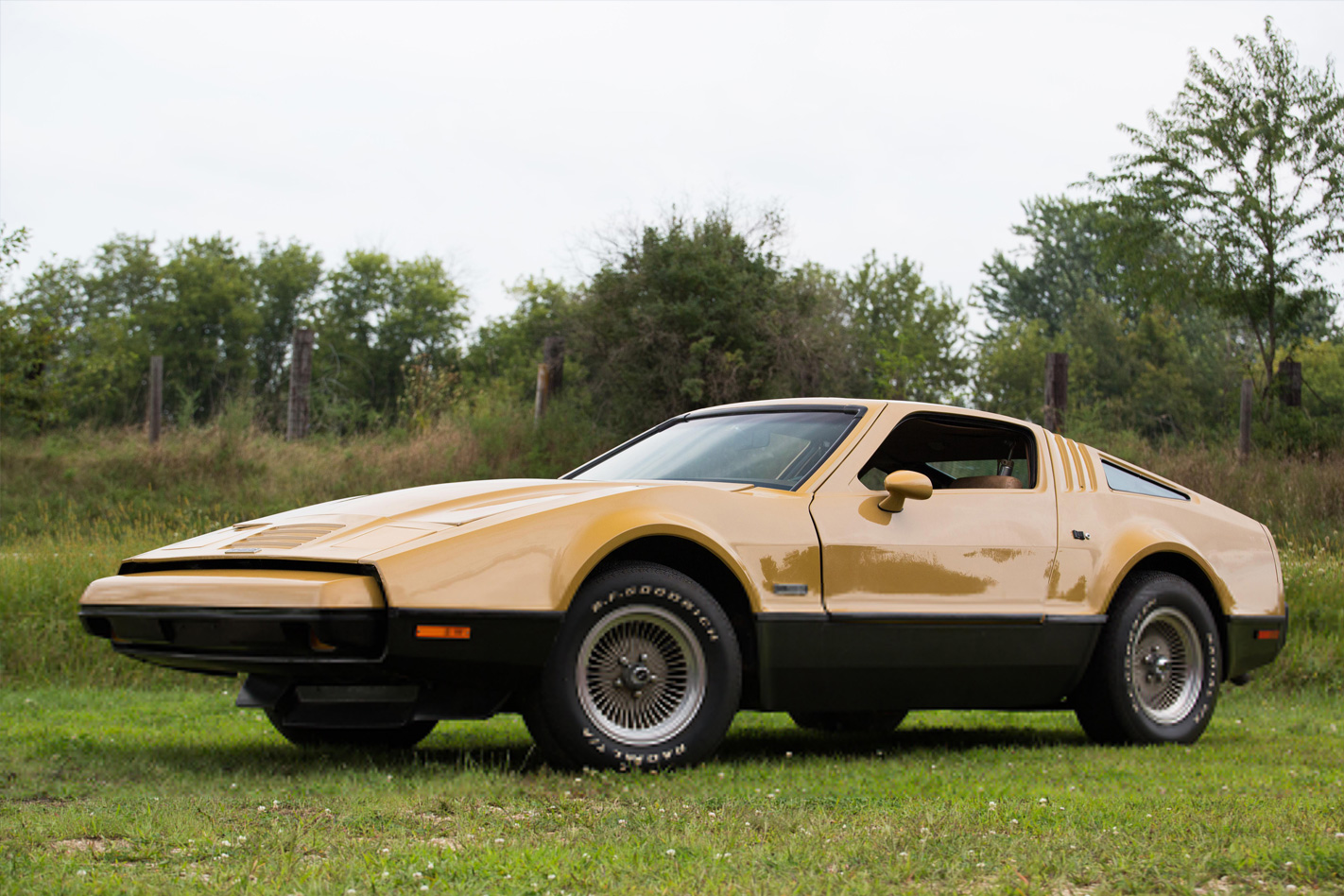
If the name rings a distant bell, it’s probably because of the Bricklin SV-1, a 1974 ‘safety car’ that looked like a clunky Corvette with a roll cage, impact bumpers and hi-vis paint.
Hey, it was the mid-1970s, and Bricklin spotted a wave and figured he could ride it.
The latest venture is about convincing car dealers to invest in franchises to sell high-end artworks (yes, paintings) alongside Bricklin’s latest vehicle idea, a three-wheeler that customers test-drive in a virtual-reality pod on the showroom floor. The one element that doesn’t surprise me is that it’s an electric car.
It made me think how the automotive industry – especially in the US – has always been a magnet for, uh, visionaries. It could be that cars simply arouse so much emotion, or that genuine Gyro Gearloose types are naturally drawn to this most complex of mass-produced products, or that such a huge percentage of car buyers are chumps, or, more likely, all of the above.
This got me wondering about Elon Musk. In terms of market capitalisation, his company, Tesla, recently overtook Ford and General Motors to become the most valuable carmaker in the US, and BMW to become the fourth most valuable carmaker in the world.
Tesla builds fewer than 100,000 cars per year – at a vehicles-per-worker rate about 20 percent that of conventional US car plants – and has never booked a profit in any of its 13 years.
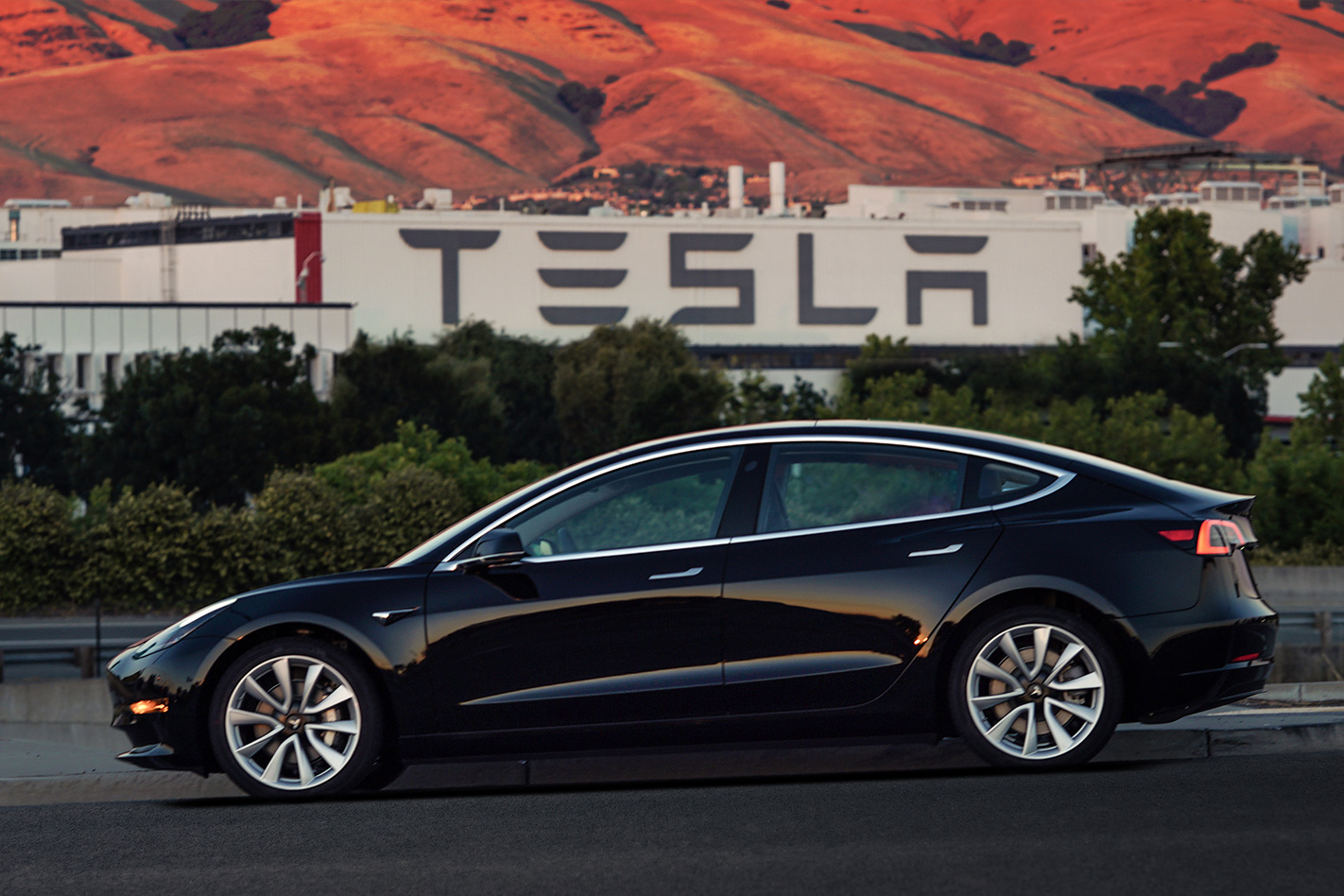
In between came Bricklin’s SV-1 safety car, of which about 3000 were built before the whole company hit the wall at rather more than the designed 5mph. That wrote off US$23m of public money, invested by a local government (New Brunswick, Canada) on the promise of bringing jobs and technological skills.
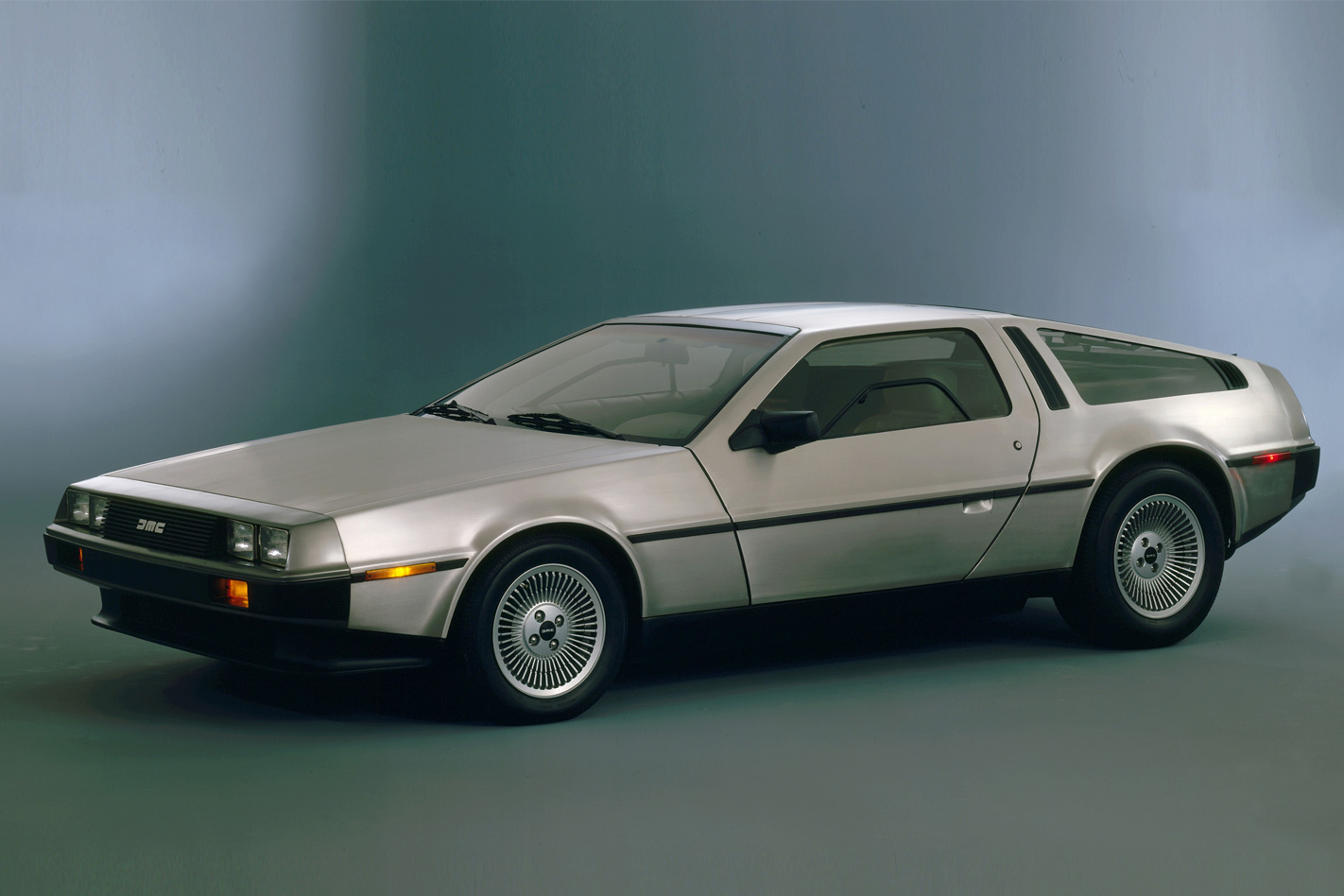
If that sounds – and the SV-1 even looks – familiar, you’re thinking of the DeLorean DMC12. It came just a handful of years later and, by the time it collapsed in 1982, had hoovered £78m of the British public’s money.
So, yeah. Tesla.
I’m as convinced as some sane people I know that its cars are game-changers. I’ve emerged excitedly from the latest V12-this or twin-turbo-that, cooing over all those Swiss-watch cams and cogs and valves, and been suddenly sobered by the image of an iPad.
But this has come at a staggering cost, put at US$4.9bn in 2015, including a US$1.3bn incentive to build a battery plant in Nevada, a 30 percent company tax credit, government rebates as high as US$7500 on electric cars, premiums on selling renewable power to the grid, and so on.
The Wall Street Journal has described Musk’s empire as “a business model that [depends] on the kindness of politicians.”
Musk argues that oil and fossil-fuel industries receive more than 10 times that in incentives and subsidies – to perpetuate old, environmentally dirty energy.
So, what am I saying? I don’t know. I’m just saying.
Sometimes, it’s best to stick with tradition.
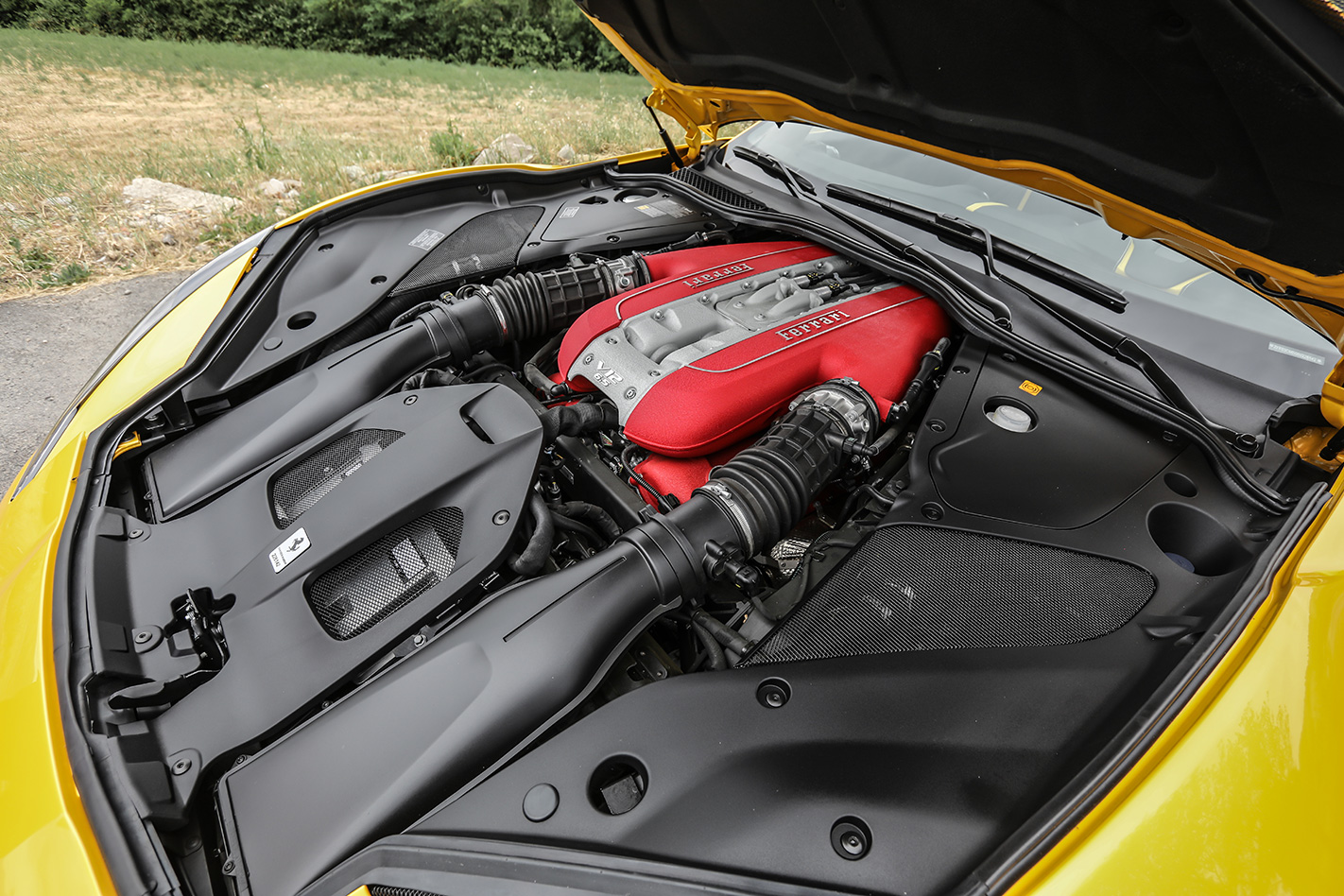
And spoiler alert, the Ferrari 812 is, if the rumour mill is to believed, the pinnacle of front-engined, rear-drive, naturally aspirated Ferrari V12 goodness. We may never see the likes of this watermark Maranello moment again.
Electrification, stringent emissions and fuel-consumption pressures are encroaching on this venerable GT layout.
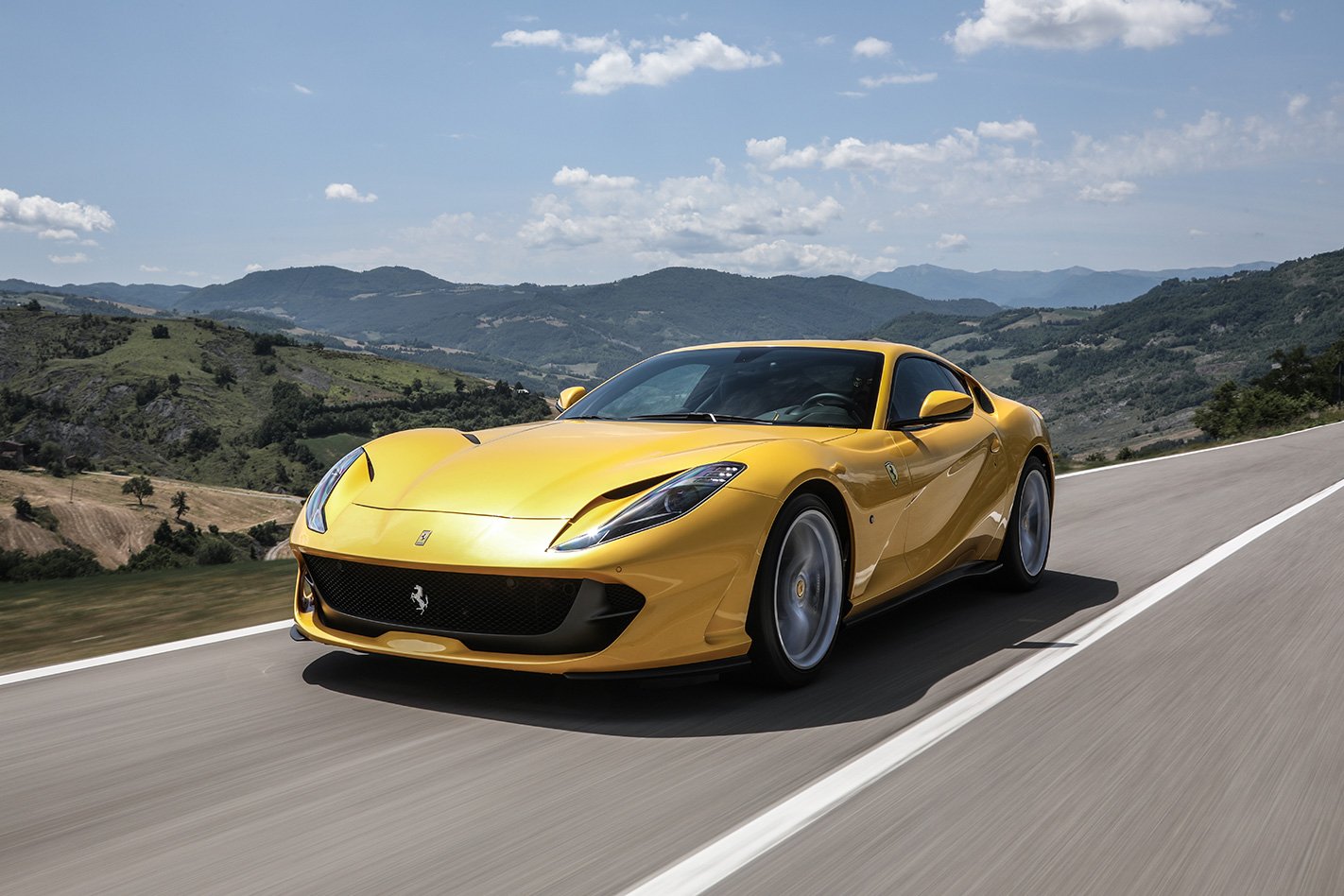
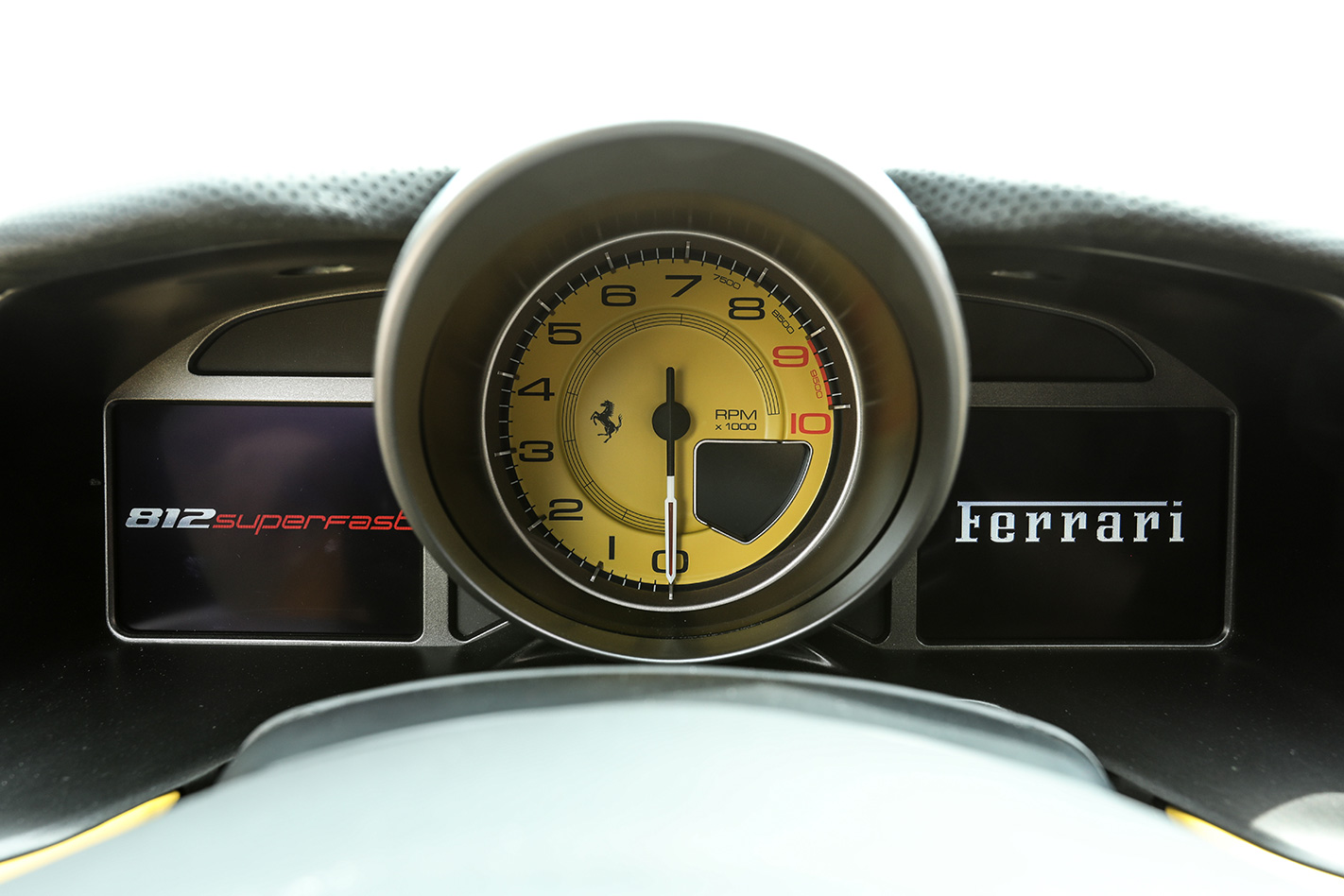
It is, by name and definition, Superfast. The beating heart of this new Italian grand tourer is, in a word, magnificent. With an 8900rpm redline, how could one complain? And it is just as impressive on paper as it is in reality.
The numbers reveal part of the story: 0-100km/h in 2.9 seconds, 7.9 seconds to 200km/h and an Autobahn-crushing top speed of 340km/h. Yet it goes further still as the Superfast is 1.5 seconds quicker around Ferrari’s own test track, Fiorano, than its aggressively styled and set-up F12 forebear.
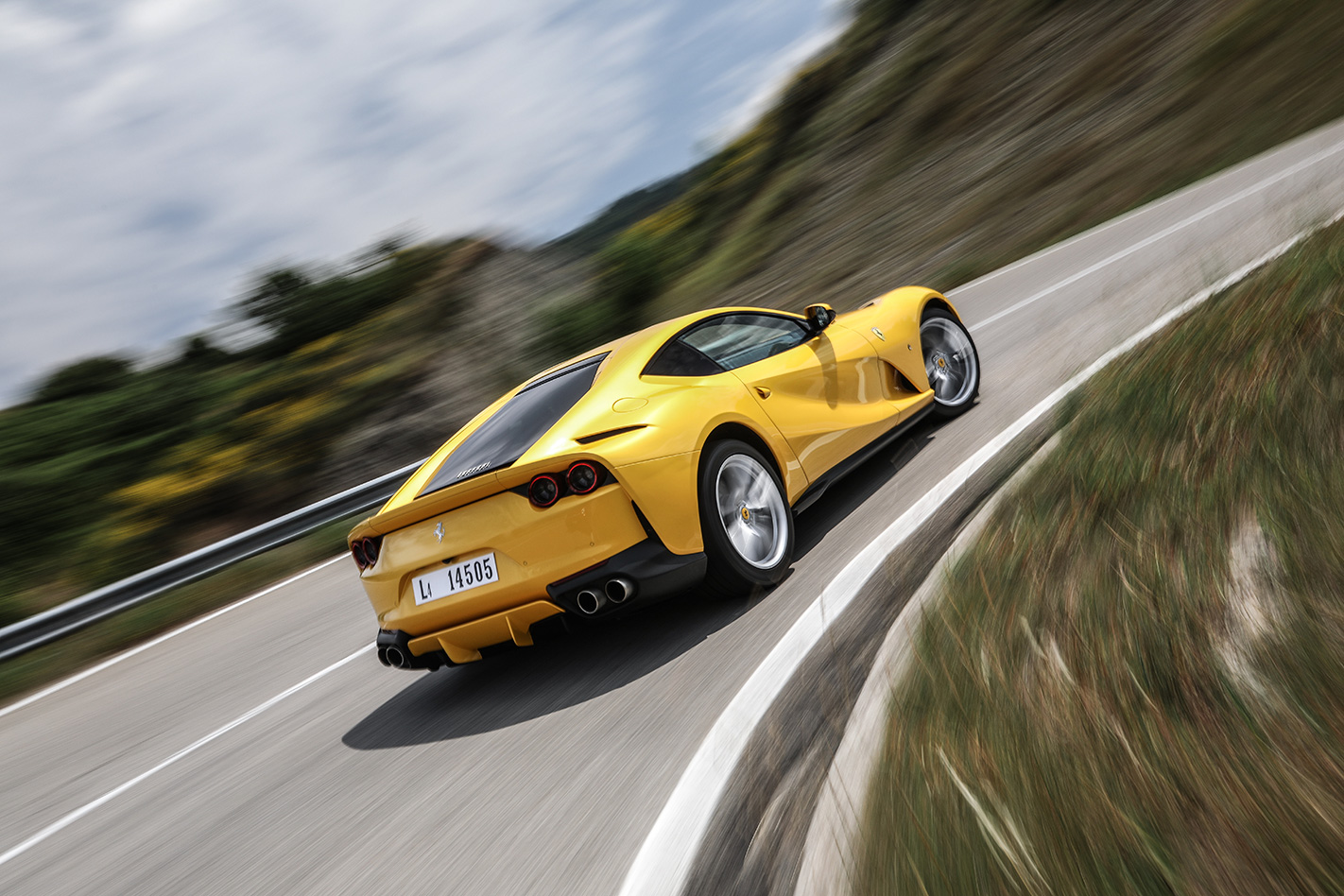
Once seated, the red steering wheel-mounted starter button summons 12 front-mid-engined cylinders before coming to rest at an intense idle-speed hum. What comes immediately to mind is that the ergonomics are, again, dominated by the crowded multi-function steering wheel and there is still no head-up display.
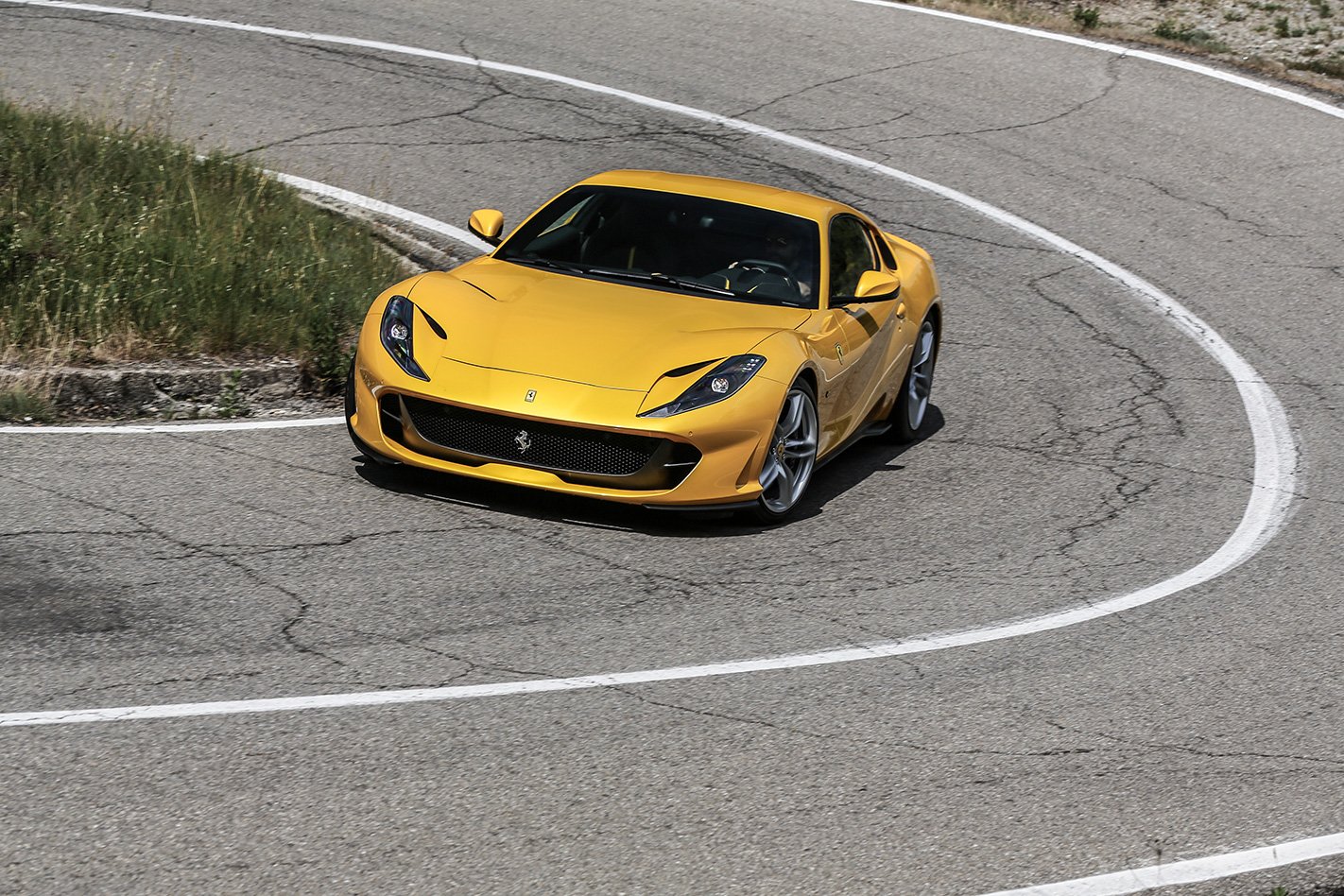
About the only assistance system worth mentioning is the reversing camera. When you leave Maranello in a Ferrari, the only direction keen drivers take is west where the rolling hills, that later become veritable mountains, beckon. Most of the corners are listed landmarks and haven’t been resurfaced in a long time.
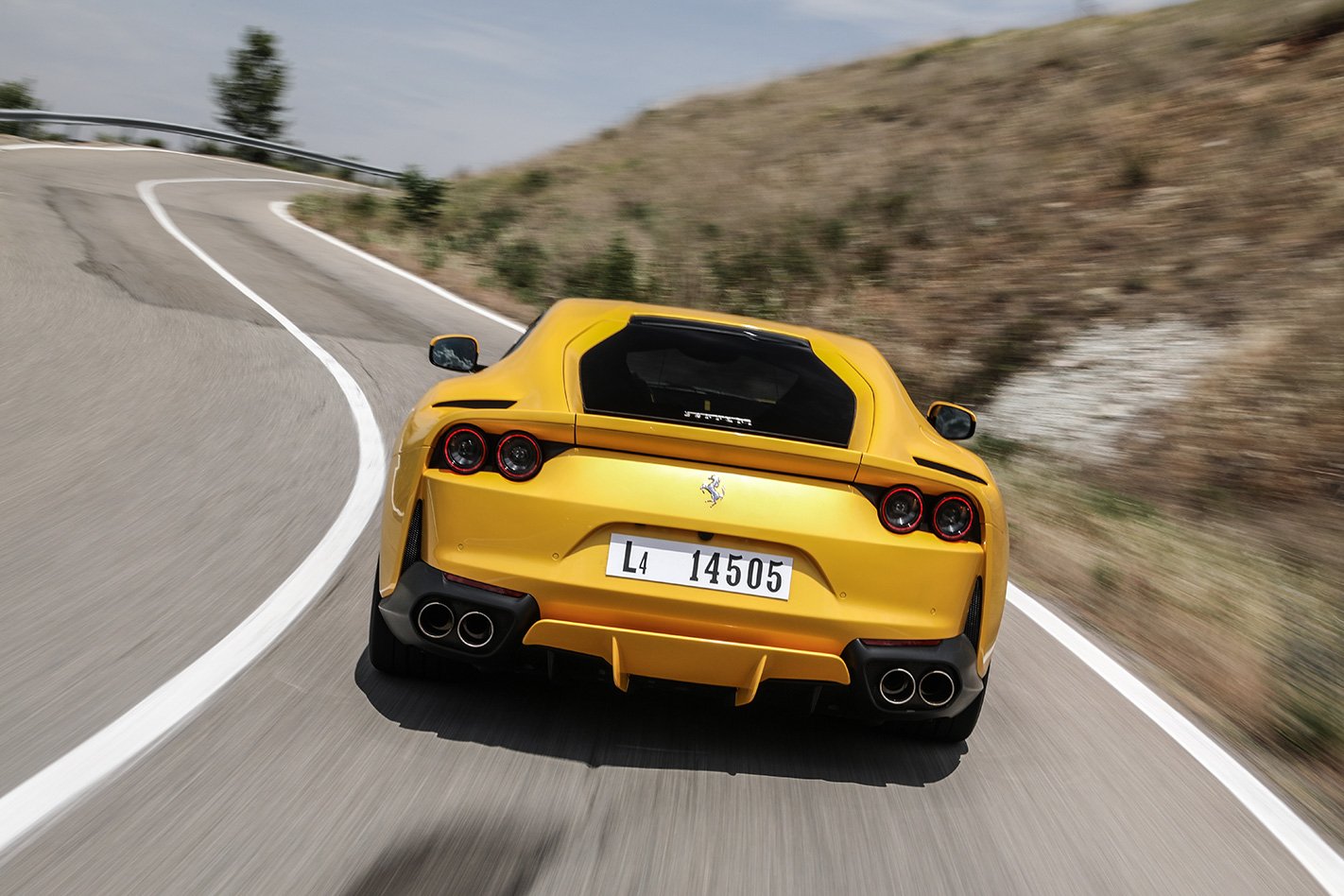
As a first ‘spirited’ attempt, maybe flirt with the modes before turning everything off. In truth, 588kW is about 300kW too much for these vomit-inducing blind summits, roller-coaster dips and sharp turns into the unknown. However, as soon as the road opens up and visibility improves, the 812 powers into another stratosphere.
While the first two thirds of the power and torque curves mimic the F12, the Superfast truly gallops away beyond 6000rpm. From this point the floodgates of the intake manifold are wide open, the exhaust has locked all flaps into the attack position and the 200 extra rpm join forces with the 200cc boost in displacement.
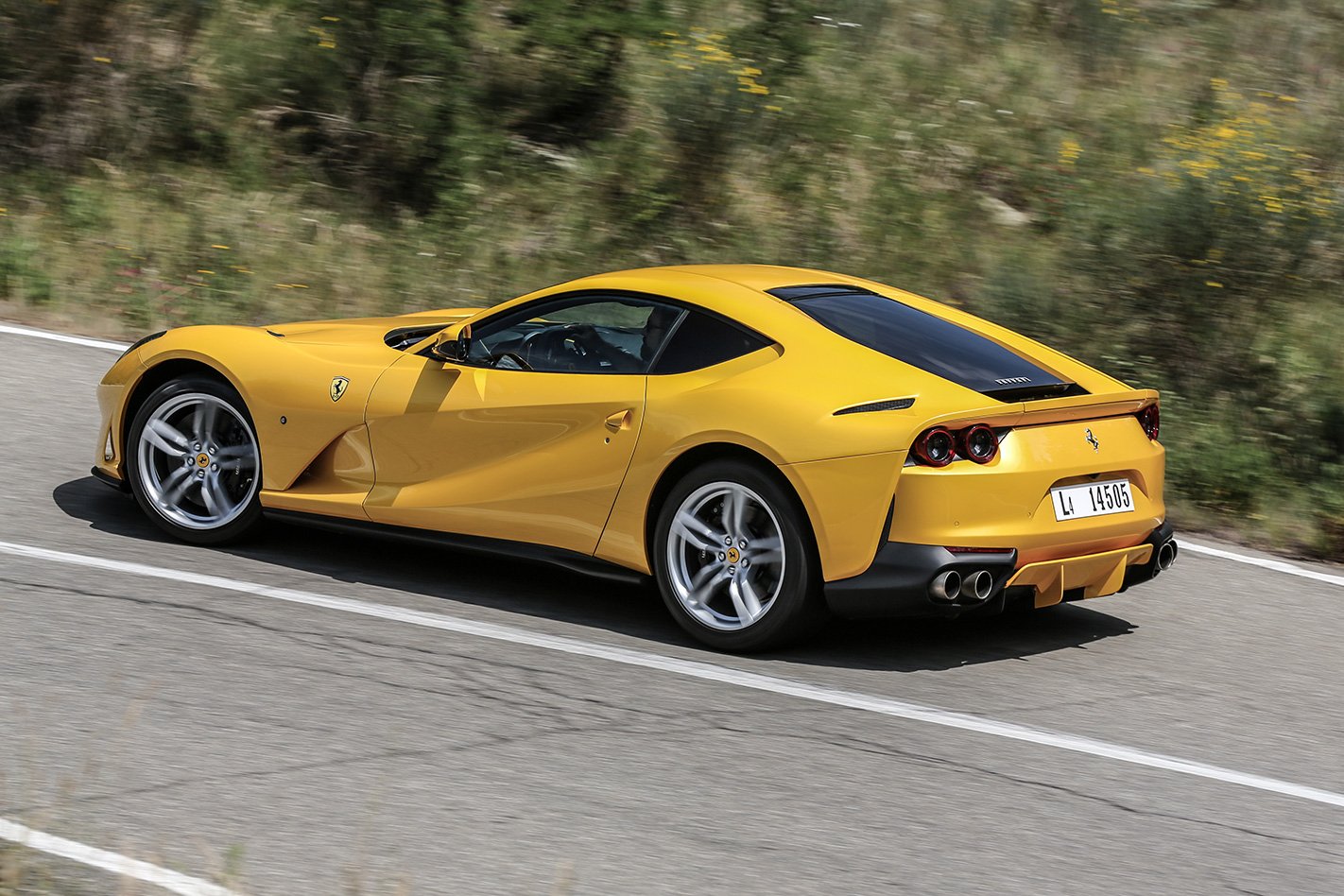
What aren’t in need of numerical confirmation are the lateral g-forces. Press on and the 1630kg mass will eventually morph into a drift which can be held seemingly endlessly. There’s no doubt about it, the 812 Superfast is a drug for the ego and a declaration of war on sanity all in one.
The DNA of the limited-edition F12 Tour de France served as a dynamic role model for the 812; it’s just been fine-tuned for the Superfast. In both cars, a wild ride along the limit of adhesion is escorted by wider front tyres, a more adventurous ESP calibration and, of course, the game-changing rear-wheel steering (RWS).
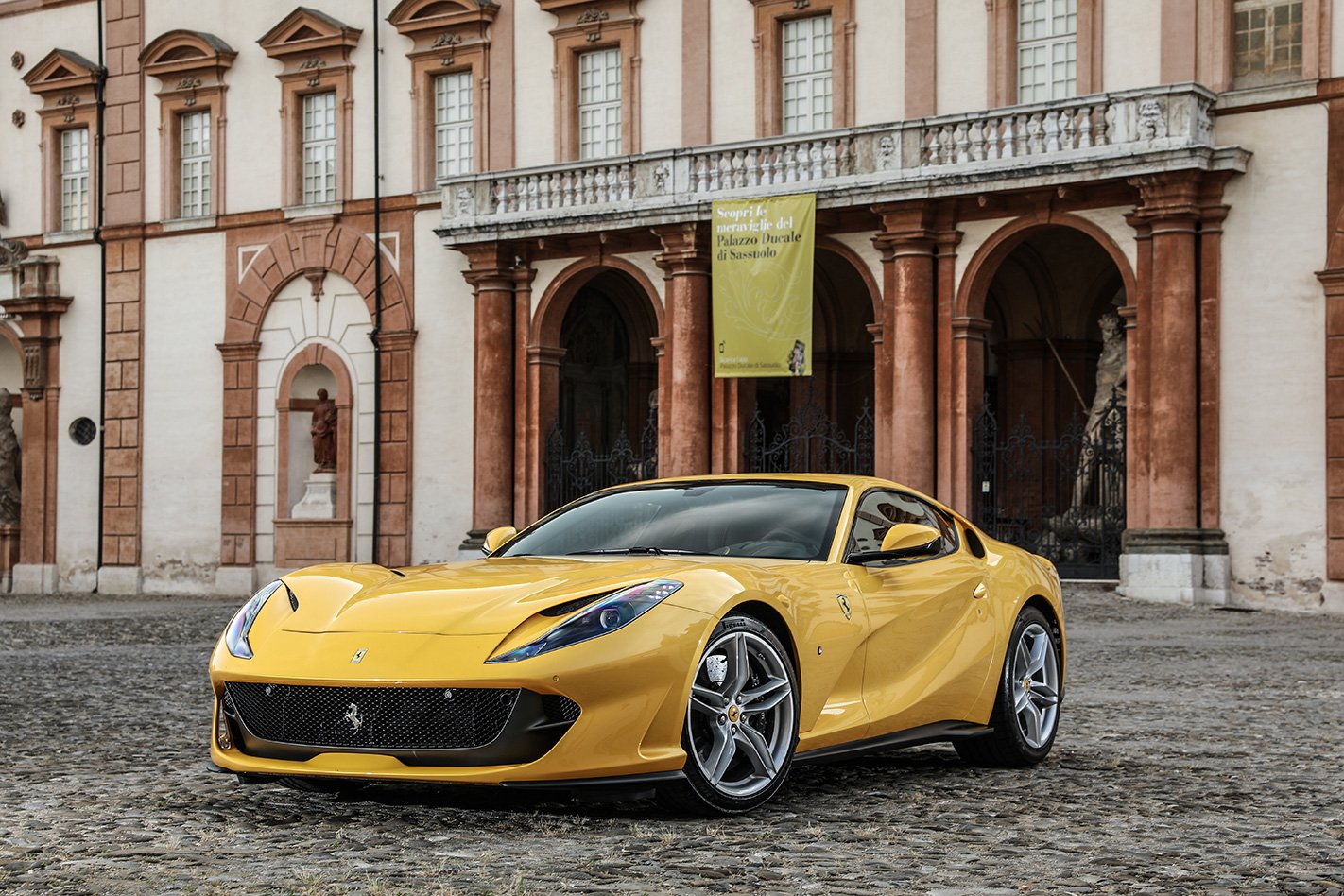
To relish the full effect of the electro-hydraulic system, it’s best to find an evenly surfaced third-gear corner where both axles complement each other in a wonderfully transparent manner. While a small torque input at the apex prepares the driver for things to come, the rear wheels briefly tighten the line before mass and momentum take over, signing the road with two black arcs.
The steering feels a touch meatier now, and although every half inch of rotation at the wheel has an immediate result, there is not a trace of nervousness marring the straight-ahead position. Thanks to time in a wind tunnel, this Ferrari has been taught how to slice the air into tufts while smoothing and accelerating the flow.
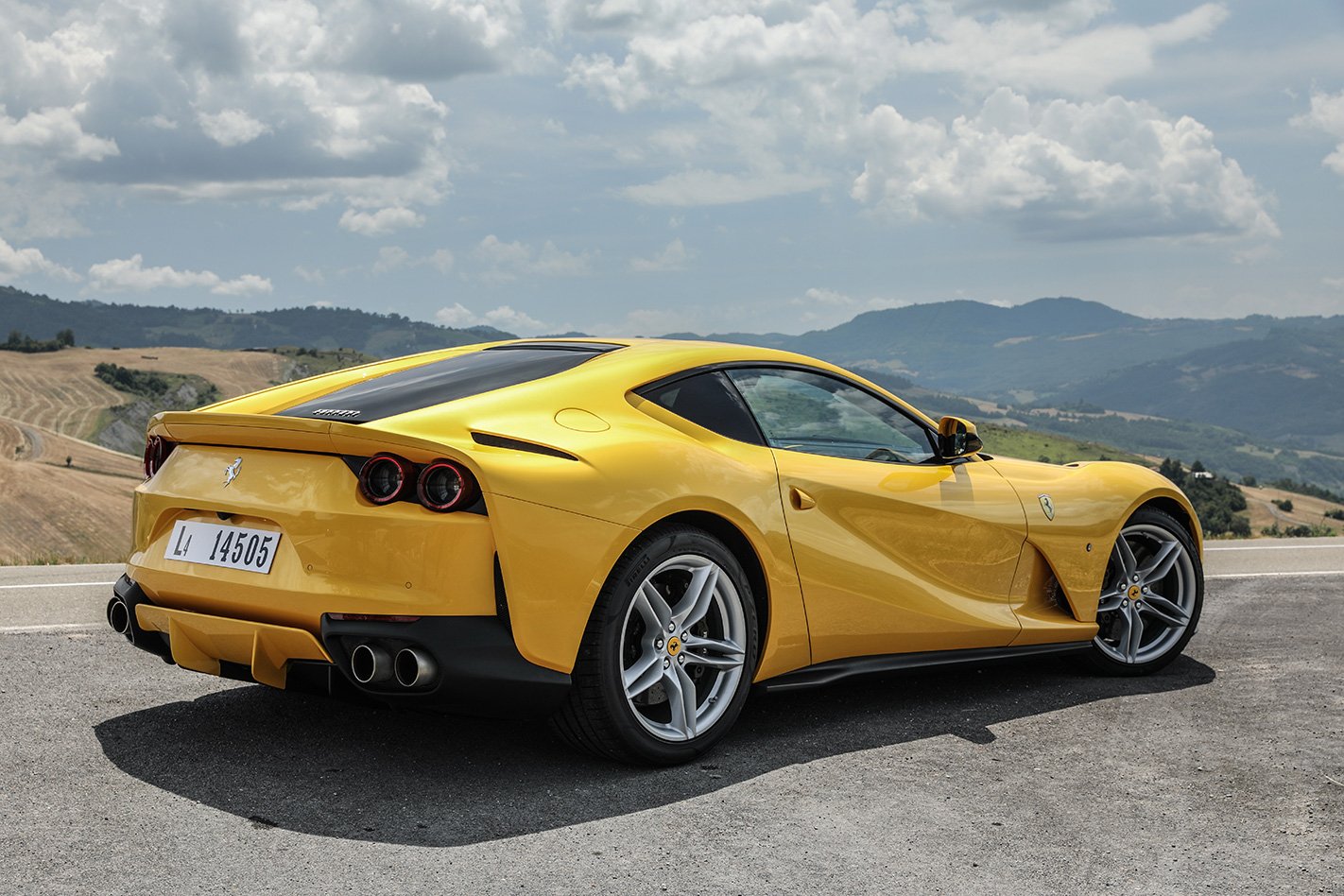
At 200km/h, the aero strategy switches from maximum ground effect to minimum drag resistance. Similar to the transformation of the engine above 6000rpm, the active aerodynamics pull out all the stops to fight the elements in the 200 to 300km/h range.
The launch-control-assisted 0-100km/h time is a cool headline figure, however, it’s relatively insignificant in the real world where awesome in-gear urge makes all the difference. It takes 6000rpm for Dr Jekyll to become Mr Hyde, as the V12 wants to be revved hard.
In more ways than one, the 812 is, indeed, super fast. It responds eagerly to accelerator inputs, its dual-clutch transmission is more closely staggered from first to seventh gear and the overall shift action is 30 per cent quicker.
With the downshift paddle pulled, the 812 will rifle through three ratios in the time it takes the F12 to change down twice. It’s rapid fire and overtly physical, yet totally linear – especially when you hit the brakes at the same time.
Given the potential buyer, the Superfast must also behave in town. And it actually does – sort of – as long as the transmission ambles along in Auto mode. One manual downshift is enough to make stray cats arch their backs, two will rattle hearing aids and three will make coffee cups jiggle.
Judging by our five-hour excursion through the Bologna hinterland, the 812 collected enough snaps to rival the Prancing Horse’s own German hero, Sebastian Vettel. When you peep through the beautiful asymmetrical 10-spoke wheels, the view is almost instantly blocked by massive brake discs – the diameter actually exceeds a long-play record by between 20 (rear) and 30 per cent (front).
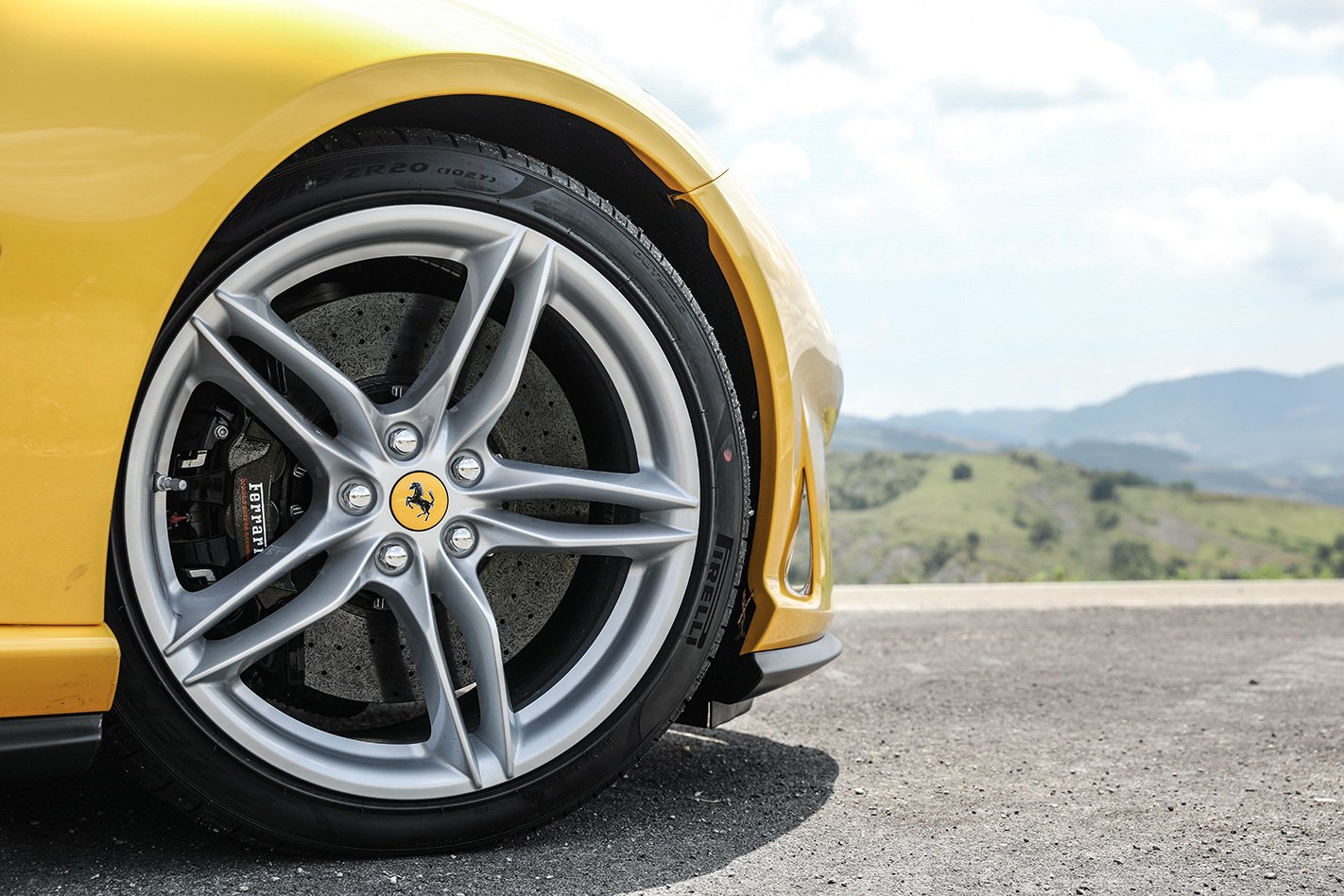
As long as the tyre temperatures warrant sufficient turn-in grip. After 10 laps of the famous Fiorano circuit, braking points were readjusted. As the brake-pedal pressure continued to increase, accurate modulation became more and more difficult. And that initial bite, an important confidence-inspiring factor, was not quite as reassuring anymore.
Apparently this is not only due to normal wear and tear, but also to the more complex brake pedal kinematics. On track the enhanced body control strikes a nice balance between the uncompromising firmness of the Tour de France and the more emphatic articulation of the F12.
Active suspension might also further enhance the composure under pressure. At 14.9L/100km, the Superfast burns less fuel than the model it replaces, which ticks the environmental box, but that fact will be of little concern to the hip pocket of the type of clientele buying the 812.
Although, the list price against the F12 has fallen to $610,000, down from $690,745. And if you must have your Ferrari in red, the new Rosso Settanta hue debuts with the Superfast, along with a range of heritage shades to celebrate the 70th anniversary.
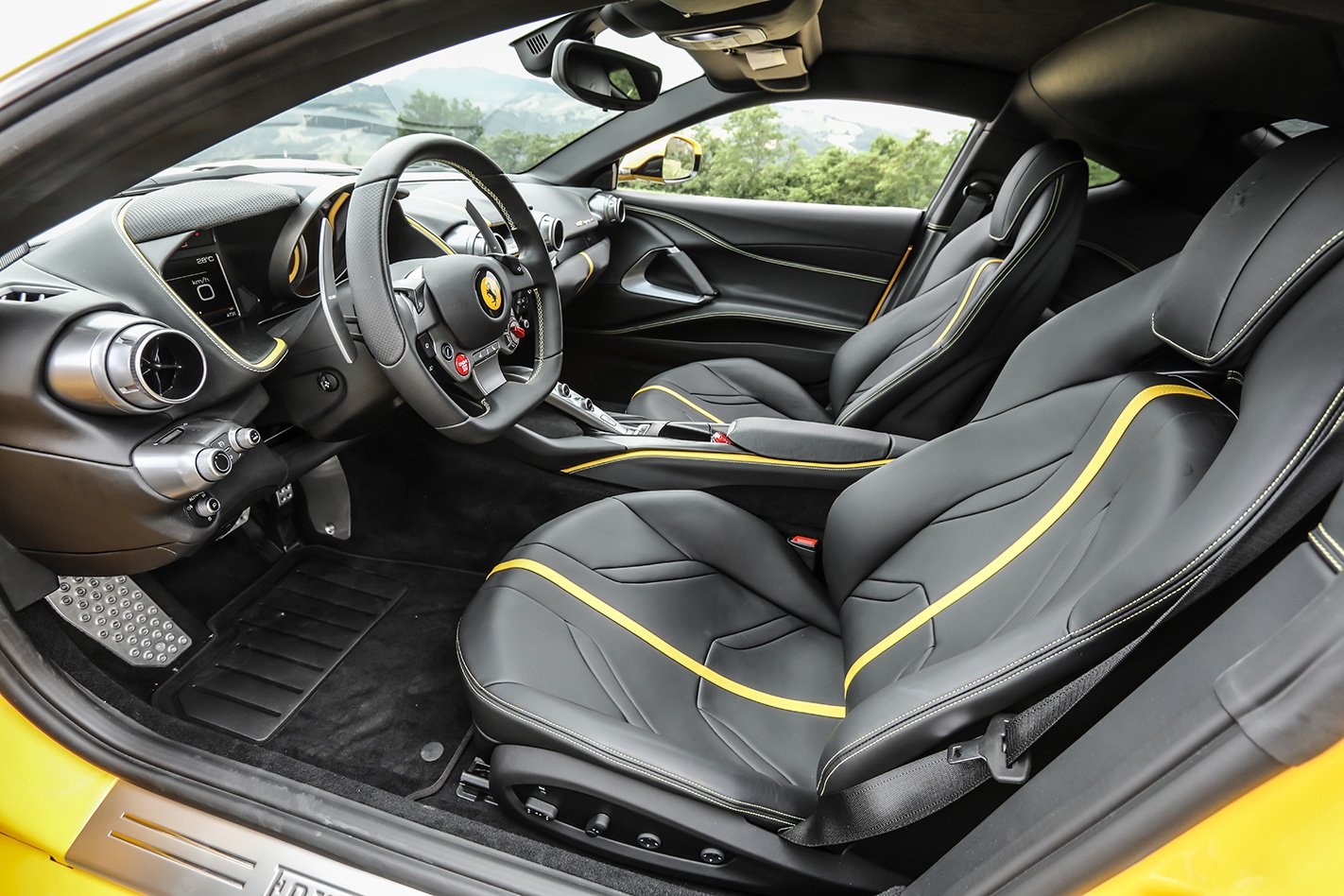
Although beauty is always in the eye of the beholder, purists may struggle with the redesigned rear end which looks cluttered and busy compared to the original. The cab-backward proportions kicked off by the 550 Maranello have just about reached the end of the road, too.
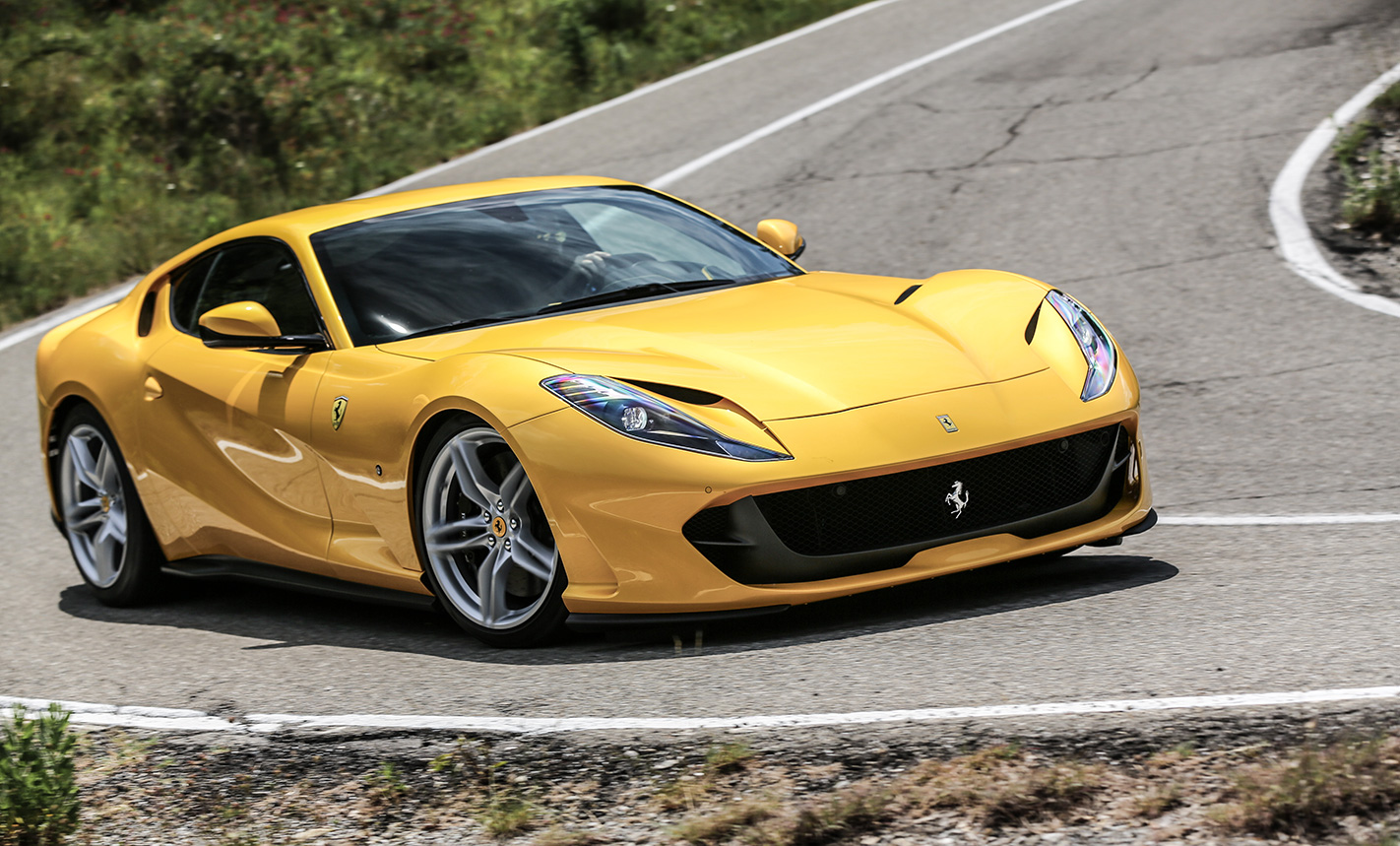
Furthermore, its magical drivetrain does fail in the efficiency stakes and the overall engineering concept is old-school in places. However, all it takes to lose your heart over and over again is a day behind the wheel of this charismatic driving machine.
A toast to those lucky buggers whose credit rating stretches to the dotted line.
5 stars out of 5
Likes: Epic performance; sound; handling Dislikes: Brake bite; options; last atmo V12?
2018 Ferrari 812 Superfast Specs: Body: 2-door, 2-seat coupe Drive: rear-wheel Engine: 6496cc V12, DOHC, 48v Bore/stroke: 94.0 x 78.0mm Compression: 13.6:1 Power: 588kW @ 8500rpm Torque: 718Nm @ 7000rpm Power/weight: 361kW/tonne Transmission: 7-speed dual-clutch Weight: 1630kg Suspension (f): double A-arms, adaptive dampers, anti-roll bar Suspension (r): multi-links, adaptive dampers, anti-roll bar L/W/H: 4657/1971/1276mm Wheelbase: 2720mm Tracks: 1672/1645mm (f/r) Steering: electrically assisted rack-and-pinion Tyre: Pirelli P Zero Price: $610,000
Planning for MOTOR’s 2003 Performance Car of the Year is well under way.
This article first published in MOTOR, February 2003
Hell, it would want to be given that it’s due to hit the news stands in our April issue. In amongst the countless phone calls, emails, applications for Lucky Bastard and fact checking, we stumbled across this little gem; of the seven PCOTY held thus far, four have been won by cars wearing Porsche Boxster or BMW M3 badges.

In a quirk of release dates, the Boxster and M3 are always a year or more apart. And with the PCOTY rules stating that only new or revised models shall be eligible, these two champions have never stepped into the ring on the same year. The streak began in 1997 when the upgraded 3.2-litre E36 BMW M3 took the PCOTY gong.


Porsche’s second-placed 911 Carerra took an impressive, but distant, 332 points – just 83 per cent. And every one of the six judges voted the M3 as the winner – the first and only time there’s been a unanimous PCOTY champ.
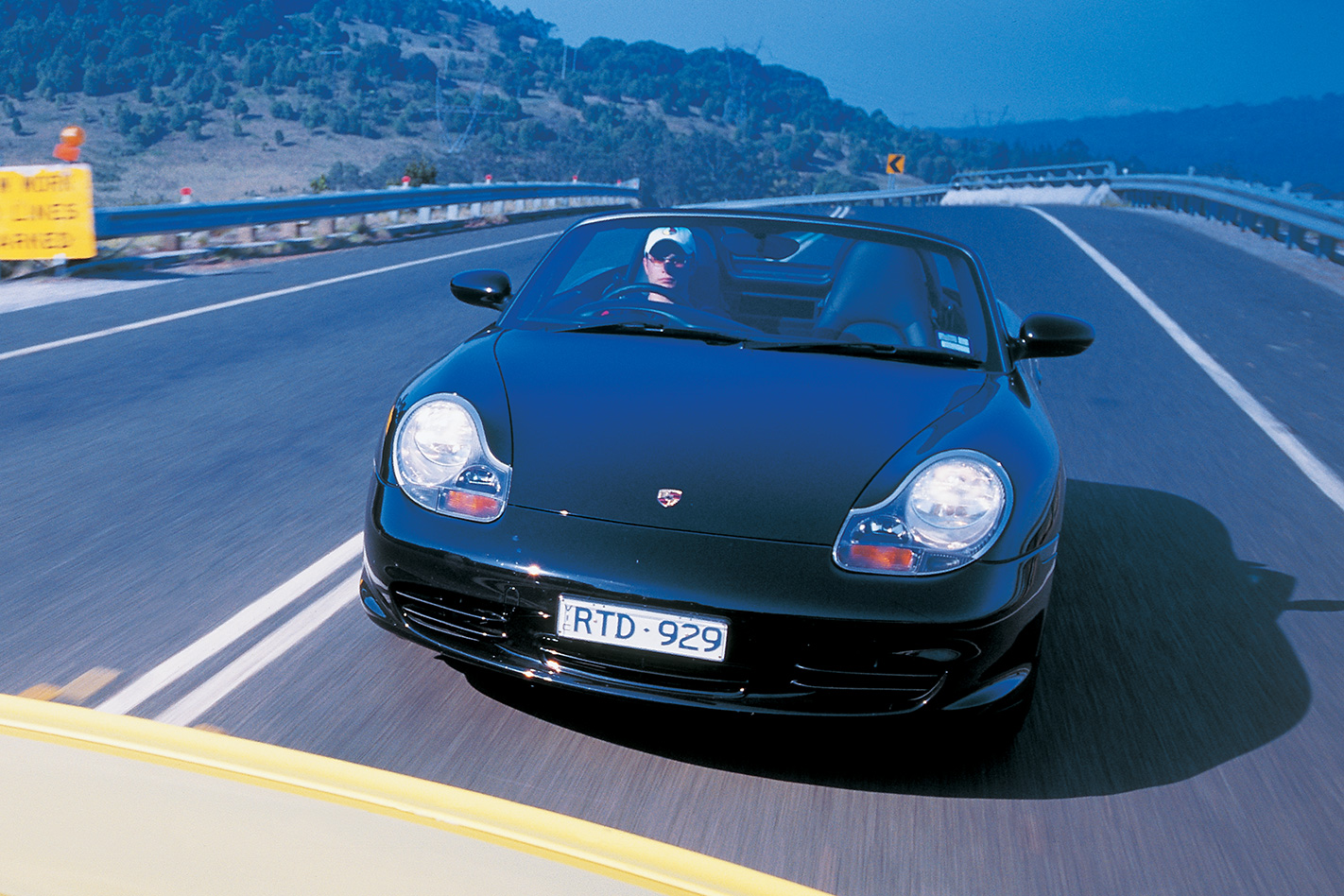
Then the penny really dropped for us MOTOR morons. We’ve raved about them as individuals and they have won loads of comparos against other competition but these two cars have never, ever laid a glove to each other’s jaws. So this is the first time we’ve had them together on the same day under the same conditions.
Now I’m sure there’s someone out there is sitting on the Toto thinking we’ve lost the plot for comparing two cars that, on the surface, are polar opposites. One’s a mid-engined convertible, and the other’s got a lid and the mill under the nose.

Beneath the M3’s bulging alloy bonnet lurks one of the greatest internal combustion engines ever given fuel and spark. Aside from the numbers – 252 kW at 7900 rpm and 365 Nm at 4900 revs – the 3.2-litre inline six is a technical marvel. The bottom end uses graphite-coated, cast-aluminium pistons delivering an 11.5:1 compression ratio.

Six individual throttle bodies are matched to specific length intake funnels to ensure the best of both power and torque worlds. Raw numbers and tech gibberish are nice and all, but how does this all translate?
Turn the key and there’s torque right off the bat – 80 per cent of peak twist is available from an amazingly-low 2000 rpm. Squeeze the throttle open and those onpaper numbers keep building up the scale.

Power for the updated model is 191 kW at a typically-Porsche low 6200 rpm, up from 185 kW. Torque is closer to the M3 money, with 310 Nm at 4600 revs. Like the M3, the Boxster boxer is a high-tech all-alloy affair with an 11.0:1 compression ratio, Porsche’s VarioCam variable cam timing and dry-sump lubrication.
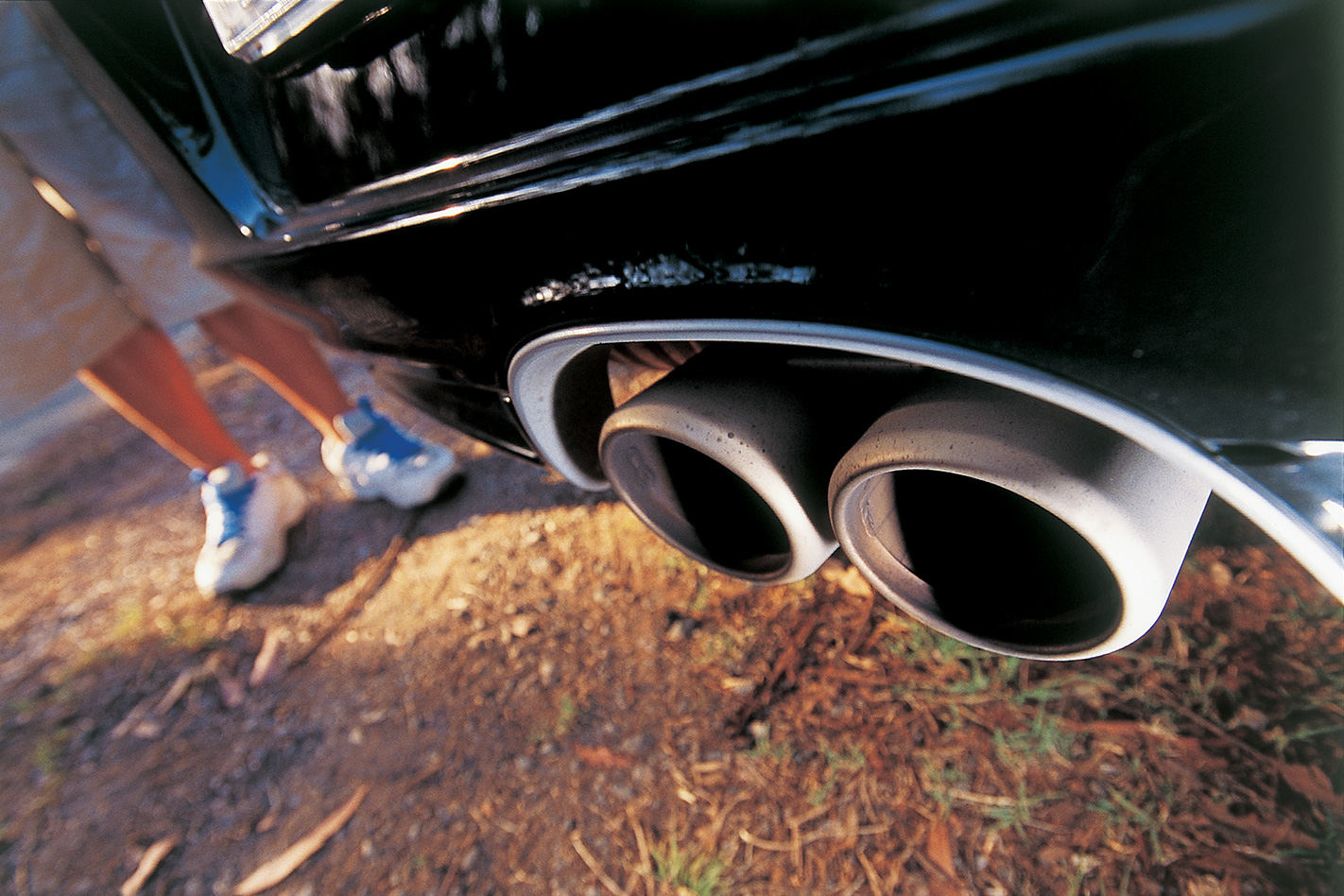
And with the soft top dropped there is unlimited access to the mechanical melody directly behind your ears. Both engines make you question the whole forcedinduction malarky and both six-speed ’boxes make you wonder why anyone would want an auto.

Porsche engineers quite rightly left the sweet six-speed gearbox in the S well alone when they upgraded the car. They did, however, beef up the clutch. Feel is still a strong suit for the left pedal but across the way the throttle pedal is a little too firmly sprung, often requiring a bigger stab to match the revs on the way back down the scale.

The Boxster comes in at just 1320 kg – 205 kg less than the M3 – and that puts them in the same weight-to-power league. Numbers are good for bar room bench marking, but the real measure of a car is on your favourite piece of road.
And both the M3 and Boxster S will make short work of any piece of tarmac – even if that tarmac is bordered by ripple strips and dotted with flag marshals. Remember, the famed green hell of the Nürburgring is in Porsche and BMW’s backyard, and you’d better believe they made full use of the circuit’s 22 kays of winding blacktop when they developed these babies.

About the only criticism you can level at the steering is the one-size-too-big wheel. No such dramas in the M3. The fat-rimmed leather wheel is just right, even down to the raised stitching in M colours. Jumping directly from the Porsche’s hot seat, the BMW steering may be a touch on the light side.
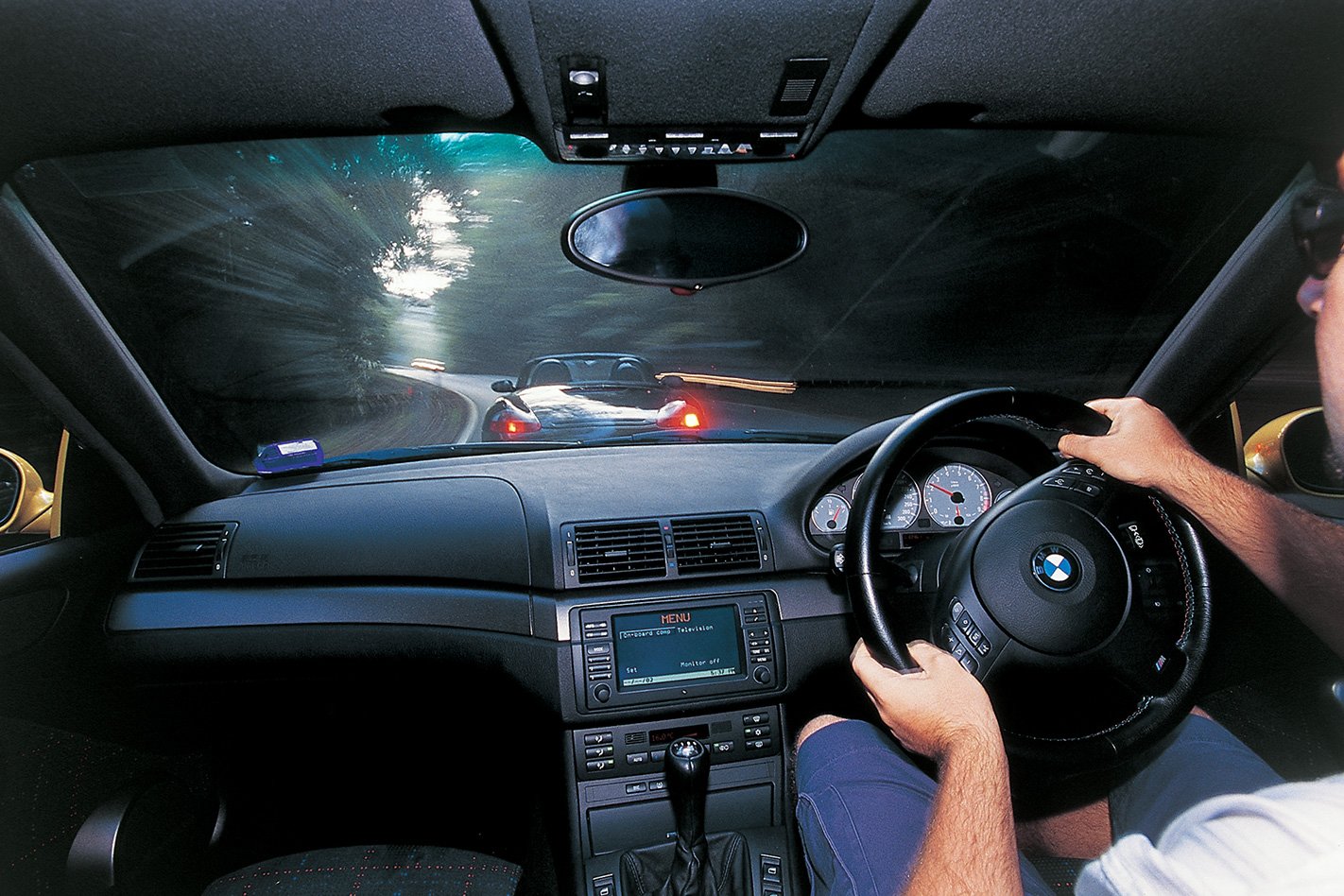
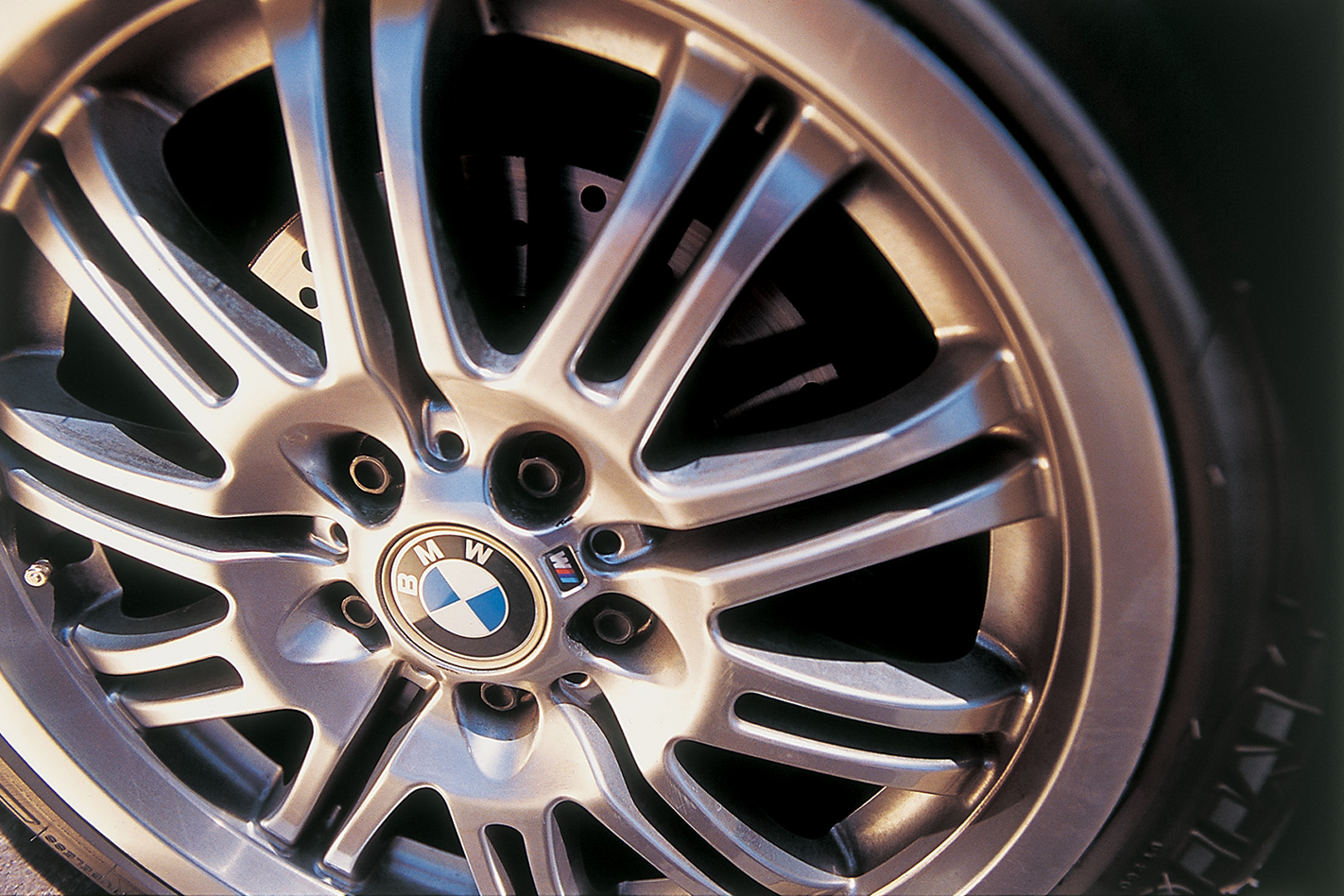
Power down is otherworldly. Arrive at a tight second corner with plenty of revs on board and you can keep piling on the power. In most situations the engine runs out of revs – or you run out of bollocks – before the S runs out of grip.

If you do a lot of high speed driving on ice it might be a worthwhile box to tick, but in normal conditions the Boxster is unflappable.
Unlike most lidless cars, the Boxster’s handling prowess is not affected by body flex. Aside from the odd squeak from the plastic trim behind the seats, there’s no evidence of less than perfect rigidity – no scuttle shake or deflections through the wheel.

Keep shovelling the revs to the back half mid-corner and the tail comes around in a predictable and controllable arc. Of all the cars we’ve driven, the M3 is second to only the Nissan 200SX as the easiest car to get and hold sideways. If the lock stop is approaching and the exit of the corner isn’t, the M3 remains adjustable.
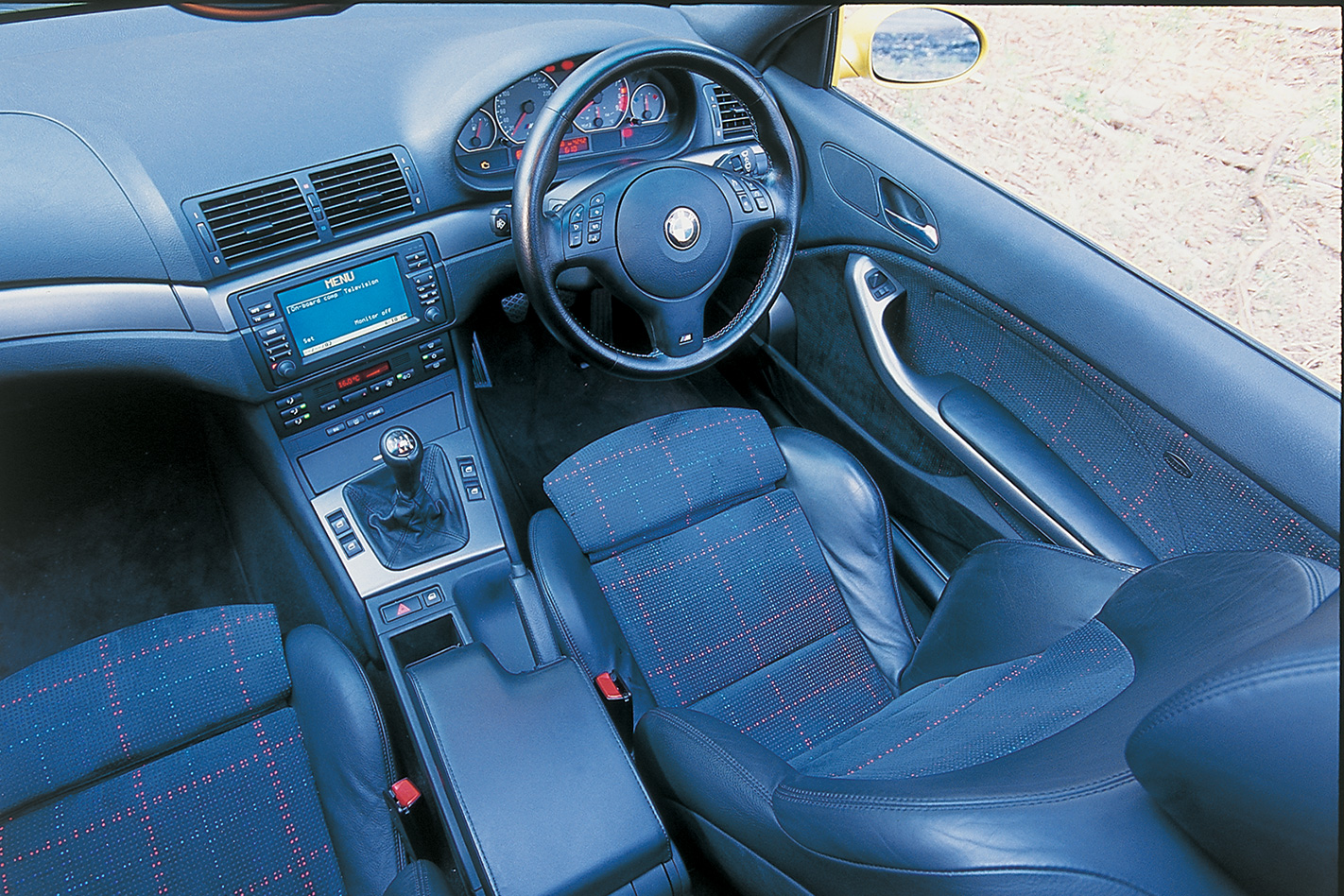
With such a clear advantage at the Jenny Craig meeting, it’s no surprise the Boxster’s brakes are sharper to respond and offer more feel. Measured against everything else, though, the M3 brakes are simply heroic – it finished third in a field of 21 cars during the PCOTY 100-0 km/h testing.
You can dive on the picks long and hard well past the corner entry point in either car and they’ll remain unfazed. With a steel roof, room for four and a sizeable the M3 holds a practicality advantage over the Boxster.

Not that the Porsche is a Sunday-only sportster. It’s got two useable boots – one in the nose and one behind the engine. Oh, and you can drop the roof and catch some rays whenever the mood takes you. And, of course, that will be enough for plenty.
Despite costing $140,000 each, they are excellent value for money. Yeah, I can’t afford one either, but next to one-trick exotic ponies they look like drive-away bargains.

In their first meeting the M3 and Boxster S have fought each other to a standstill after a 12 round bout and you want me to declare a winner? Well I can’t. If you’re in a position to make this choice in real life – not on paper like us poor motoring journos – you can’t go wrong.
Flip a coin and you’d be very happy. The M3’s honour is still intact. It is still our favourite performance car. But then, again, so is the Boxster S.
Arguably the world’s most iconic roadster, the Mazda MX-5 NA (or the Miata/Eunos to some) is about to get a lot more care and attention thanks to its creators.
Mazda is starting a program to restore its lightweight rear-drive drop-tops to original condition if owners wish to send their NAs away for the work to be done.
In a Japanese post on the official Mazda site, the company states that about 120,000 units were sold in Japan, and only about 23,000 remain.
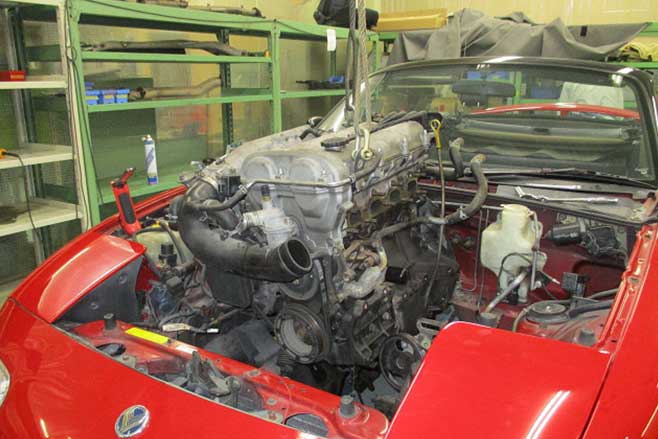
Mazda wants to make sure the survivors have the best chance possible of continuing life on the road.
To paraphrase Yamamoto Nobuhiro, the Mazda representative for the MX-5 (Japanese translation is difficult, even for Google), he says he attended a club meeting for the MX-5 NA fans, and they told him they want to keep driving their cars forever, and want to keep them in original condition.
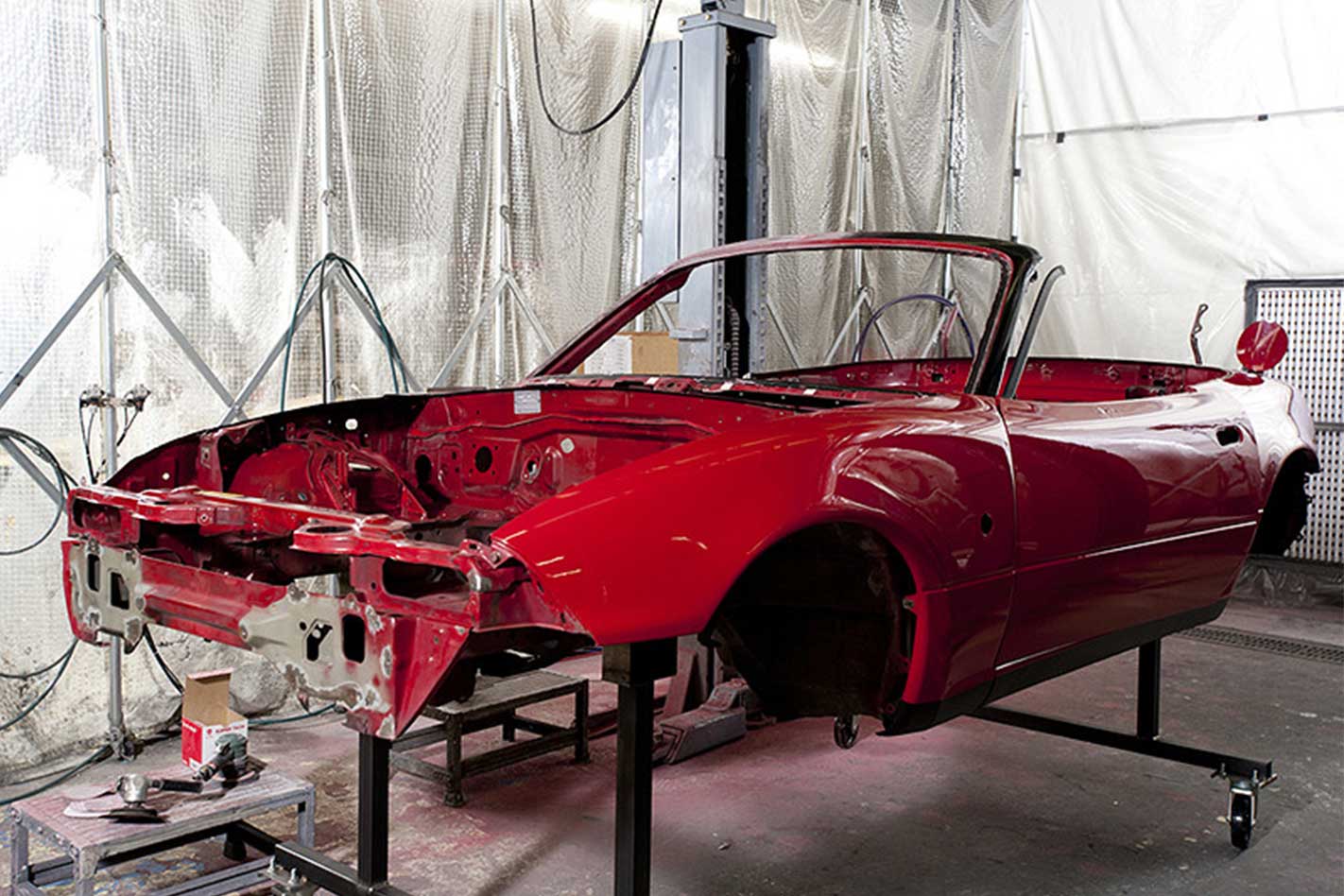
“As a result, we are able to inform you about the prospect of providing restore service to customers with reliable process and quality, and the release of reprint parts,” Nobuhiro writes.
Though the program is set to be underway soon in Japan, any international efforts to resort original MX-5s through official channels are still unclear.
MOTOR will update this story as details of any plans to undergo this program in Australia are uncovered.
People buy cars on many different criteria. For some, price is the most important, others focus on power, and the environmentally conscious might put more weight on its fuel economy.
However, something that can be harder to tell from a spec sheet is just how comfortable a car is.
It’s an important criteria as well, as you could be spending countless hours in a vehicle, so it’s important you don’t get something that leaves you getting out uncomfortable.
While there isn’t a quantifiable metric for comfiness, here at Which Car, we drive numerous different vehicles each month, and have established a good feel for when a car is comfortable for day-to-day use.
We have compiled some of our favourite and comfiest cars you can buy today into a single list, which is divided into two categories for front and rear passengers.
The comfiest cars for front passengers
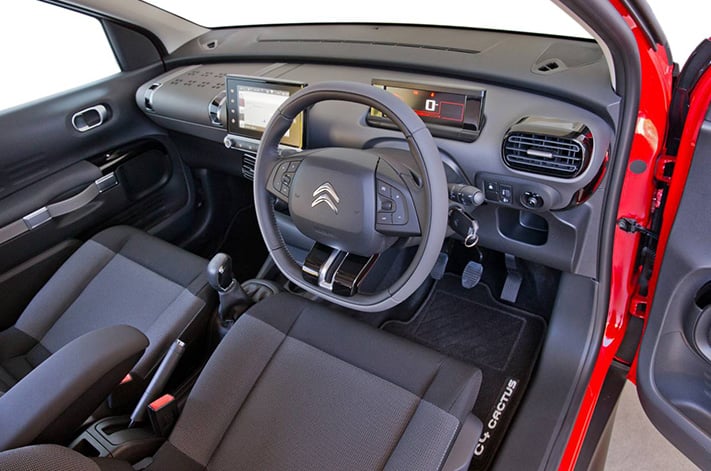
Citroen C4 Cactus
The Cactus has the closest thing to a modern day bench seat. Its large front seats may look simple, but with mattress technology (yes, really) they are sublimely comfortable. Whether it’s a brief drive, or an extended road trip, front passengers in the Cactus will be riding in comfort.
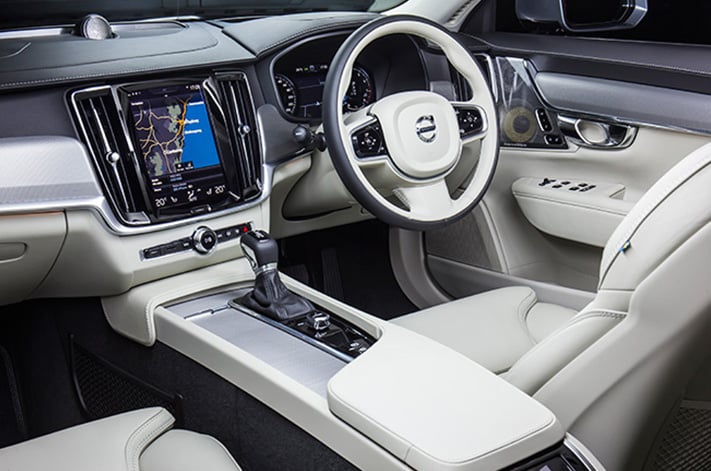
Volvo S90
The Volvo’s front seats are amongst the best available. With plush cushioning and supple leather, you won’t be looking to escape from the cabin any time soon. If the sedan isn’t your thing, the high-riding XC90 SUV is a delightful alternative.
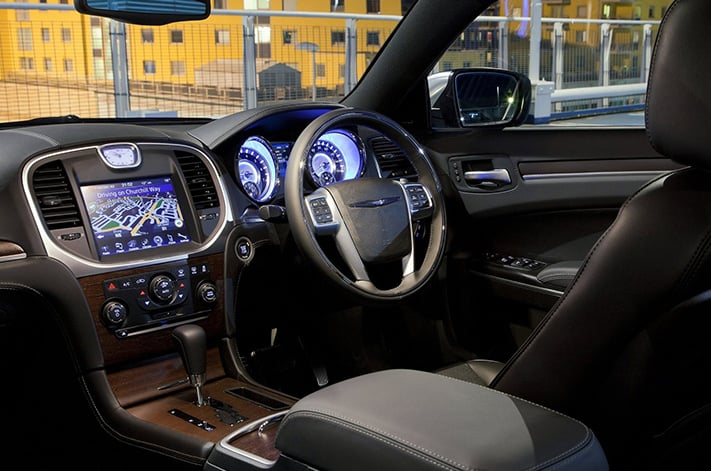
Chrysler 300
If large, well stuffed, American armchairs are your thing, look no further than the Chrysler 300. It doesn’t match the opulence of other cars on this list, but front passengers are treated to a plush pair of pews with a reclining function that never seems to end.
The comfiest cars for rear passengers
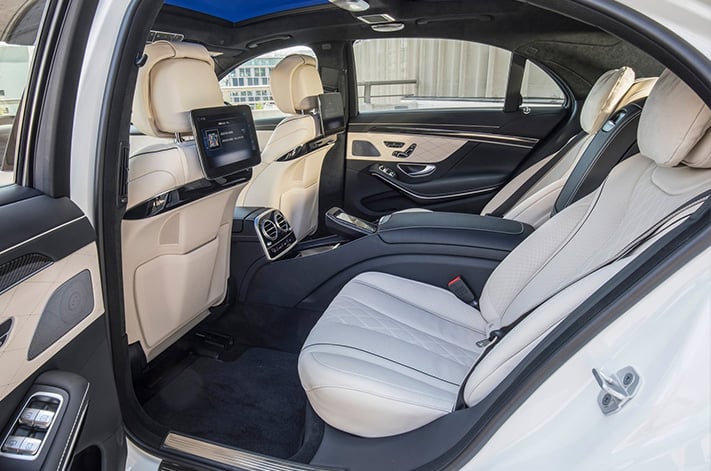
Mercedes-Benz S-Class LWB with Executive Seats option.
It wouldn’t be a list of comfortable cars without the Mercedes-Benz S-Class. The LWB takes this to another level. Throw in the optional Executive Seats, and it is one of the finest rear passenger experiences you can have. Goose down pillows for rear passengers is the icing on a bloody comfortable cake.
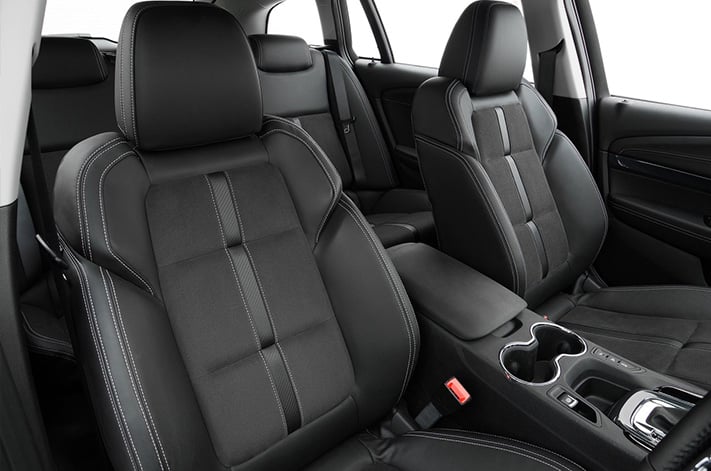
Holden VF Commodore
While there is plenty of fun to be had behind the wheel of a VF Commodore, rear passengers haven’t been forgotten by Holden engineers. You can fit three grown adults across the back row, which is designed for classic Australian road trips. The next-gen imported Commodore won’t be matching the VF’s rear space, so if rear comfort is important to you, we recommend getting in quick.
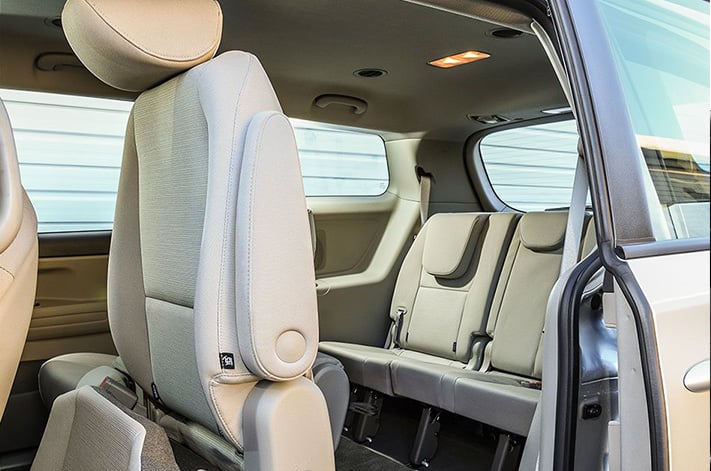
Kia Carnival Platinum
Space can be critical to a good rear passenger experience, and the Kia Carnival has that in spades. The second row in the Carnival is one of the most spacious available, and the third row is still perfectly reasonable for a grown adult. The platinum adds leather upholstery to the experience, to ensure all occupants are ferried in comfort.
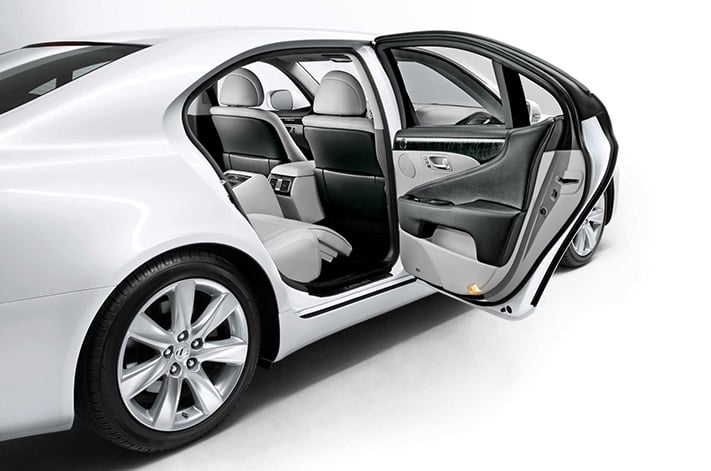
Lexus LS600hl 4-seater
The Ottoman empire isn’t dead – it lives on in this large Lexus limo. Move the front seat all the way forward and rear passengers are treated to an ottoman to rest their feet on.
Wildcard: Range Rover Sport Autobiography
We’ve decided not to include this in either front or rear seat categories, namely because it deserves to be in both. We’ll let our Editor, Alex Inwood explain why:
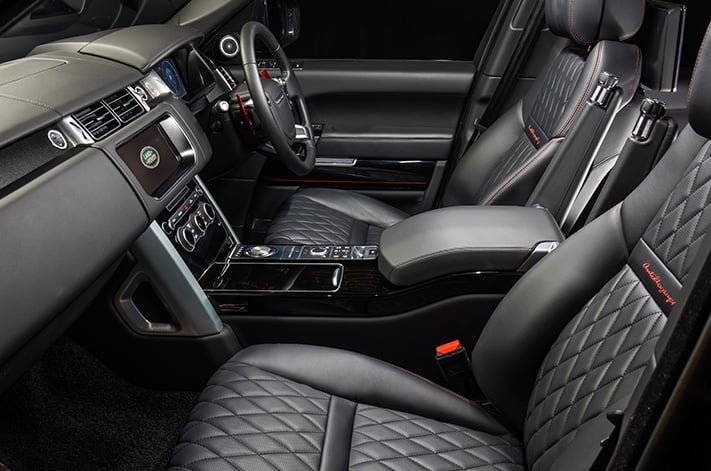
“The comfiest car I’ve driven is the Range Rover Sport Autobiography LWB, which despite being the size of a battle tank, only has room for four inside. The seats, doors, and roof are all clad in sumptuous leather, there are two fridges inside, the seats are heated/cooled and massage you, and the headrests are like clouds.”
High praise from a man who has driven just about every new car available today.
I DON’T ride motorbikes, and if you ever meet me there’s a very simple way to tell…
…if you look really closely, you’ll notice that I still have all my arms and legs attached and I am not eating my lunch through a straw.
But if you assume I dislike bikes, you would be mistaken. I respect the engineering marvel that they are, fawn over their heat-coloured exhausts and dizzying power-to-weight ratios, and the opportunity to wear head-to-toe leather without being reborn as a cow is genuinely appealing.
But every time I consider putting something in the garage that has more power than my first car but with only half the wheels, the idea is immediately dismissed by one of my greatest character traits – cowardice.
In every one of those incidents, I am certain that had I been on something with fewer than four wheels, the only place I would have got a byline published is in the obituaries segment of the Taunton Times. For me, it’s four wheels or walking.
But where to exercise passion on four wheels without risking everything? The Black Spur used to be a hoot but its surrounding woodland is now overrun with men dressed in ghillie suits raising cash for the annual police gala, and the Great Alpine Road’s twisty lanes are probably still smoking from editor Inwood’s two-day extravaganza in an HSV GTSR W1, so let’s hit the road less travelled.
There’s a stretch of road I had heard spoken of with an almost mythical reverence that links the tiny country town of Mitta Mitta in Victoria’s north east to Omeo directly south. For a crow, the journey is 70km, but if you’re bound to bitumen, the section of Omeo Highway is closer to 110km and there’s barely a straight in sight.
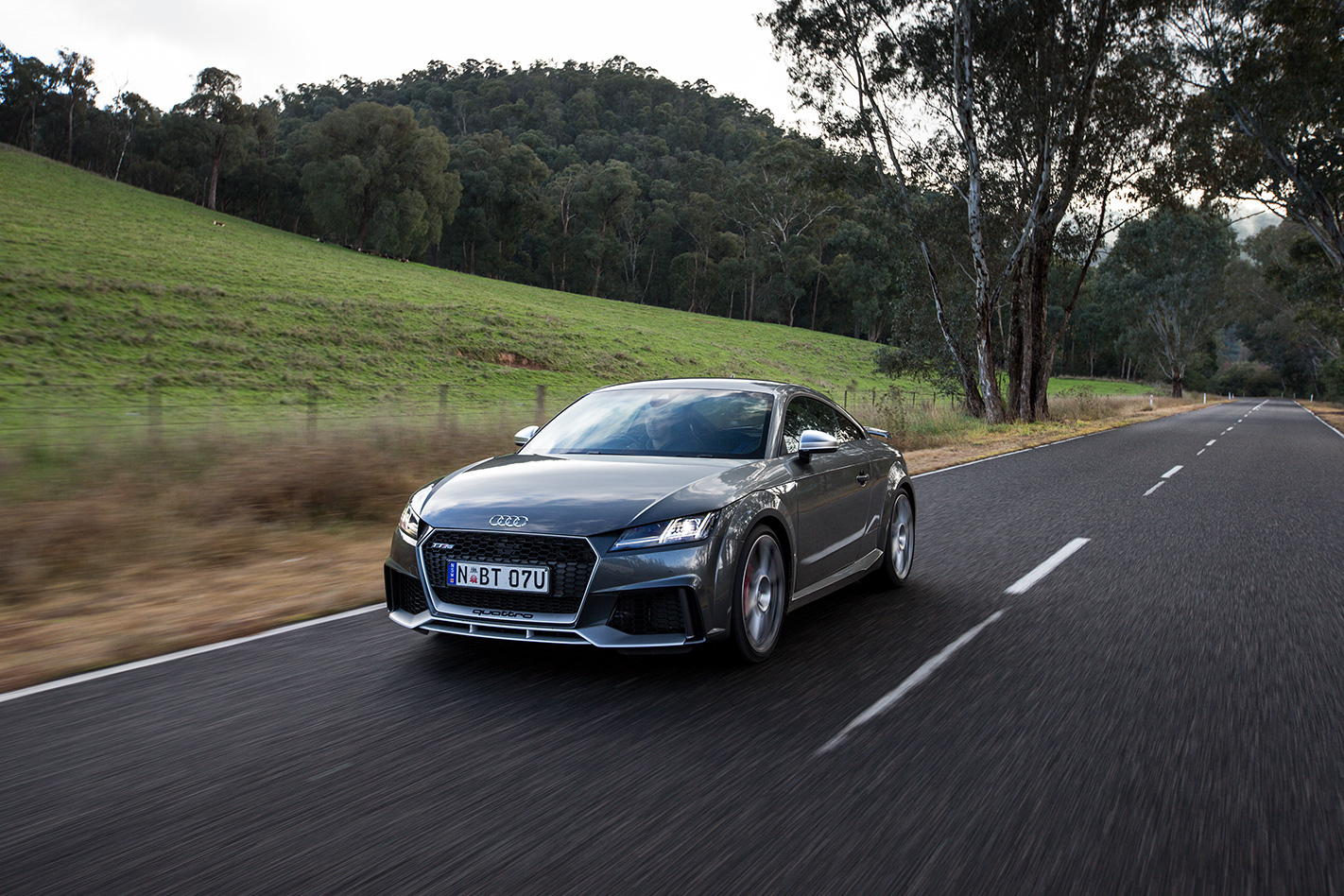
Like an ironic preview to what would hopefully be an energetic and inspiring drive, the three-hour cruise out of Melbourne toward Albury via Beechworth is cripplingly dull. Yes, the scenery is pretty and the weather crisp, but the Audi’s massive 20-inch wheels communicated the Hume Highway’s coarse-chipped surface through to the cabin with the efficiency of a stylus on vinyl.
The ride is also firm. Not firm like a VE Commodore on cut springs, but the RS won’t ever let you forget its sporting intent. A featureless road did allow time to get to know the TT RS cabin though, and to appreciate the quality finish and acres of glossy carbonfibre trim.
The TT’s unmistakable exterior styling has resulted in an unusual driver layout with a distant windscreen and a steering wheel that needs extending all the way out for a taller pilot, but on the outside those aesthetics have just the right effect, drawing lots of admiring glances.
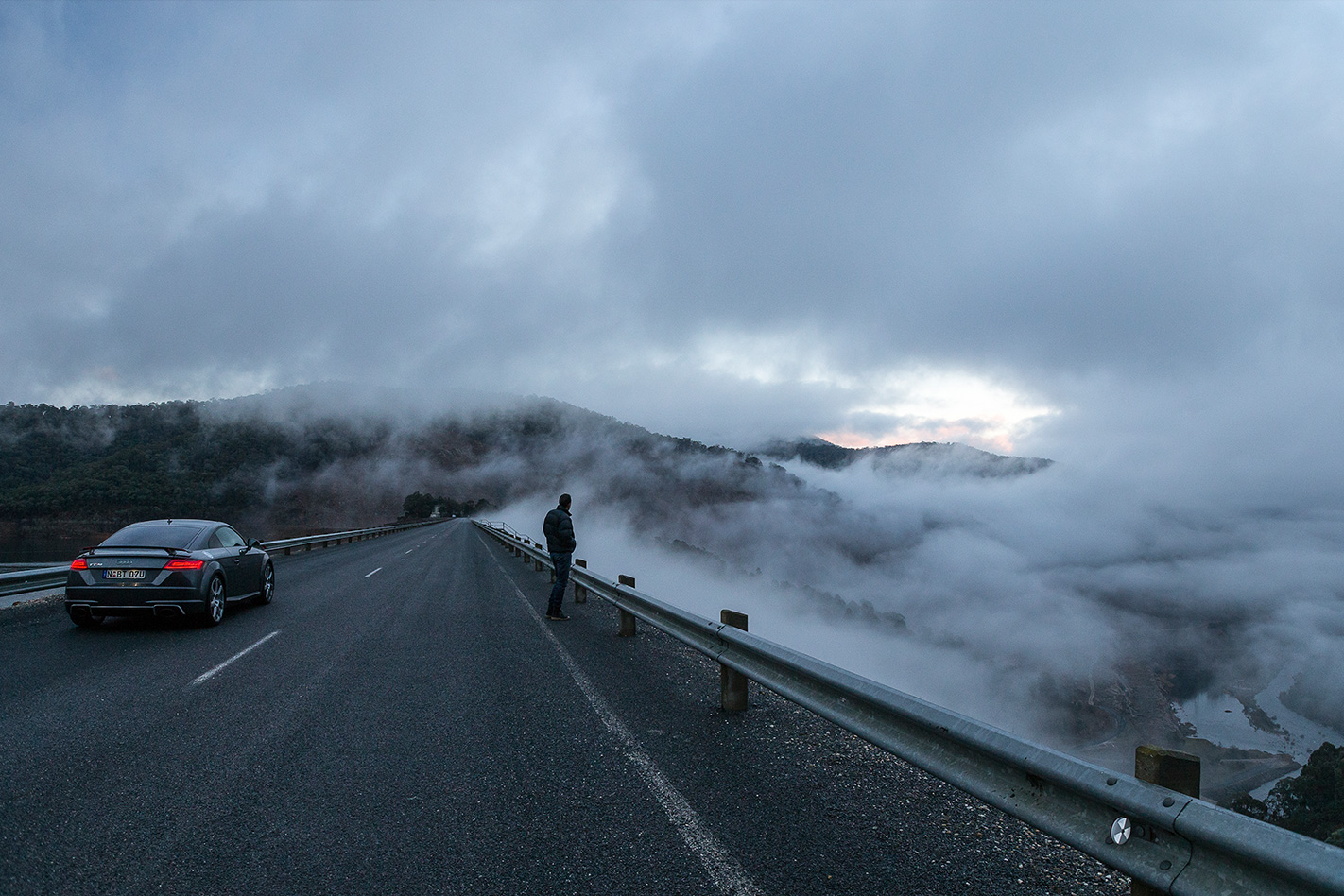
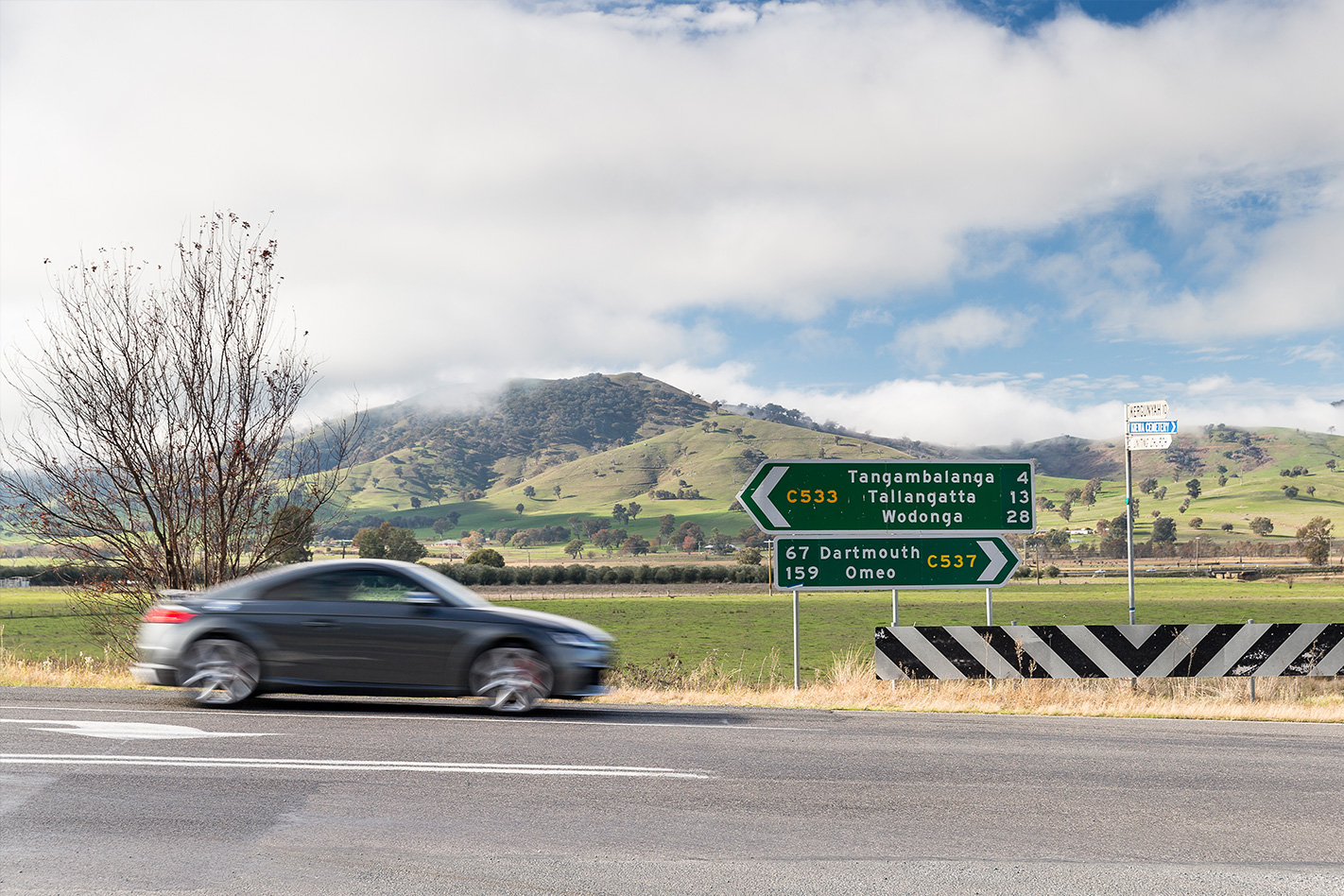
The tiny outposts of Tallandoon and Eskdale preceded my arrival at the town of Mitta Mitta, but not before a small detour to a symbolic start point of the purist’s driving roads and the Dartmouth Dam. From here the immense rock wall towers over the stunning Mitta Valley and my digs for the night.
A final landmark before swinging into Mitta and the quiet unsealed local airstrip prompted a moment of quiet nostalgia for this author, who learned to drive on an abandoned airfield in an Audi quattro. Resisting the temptation to swing open the unchained gates and take the TT for a V-max blast just for old time’s sake was hard, but racing an unexpected Cessna on final approach would have looked bad in retrospect.
Onward then.
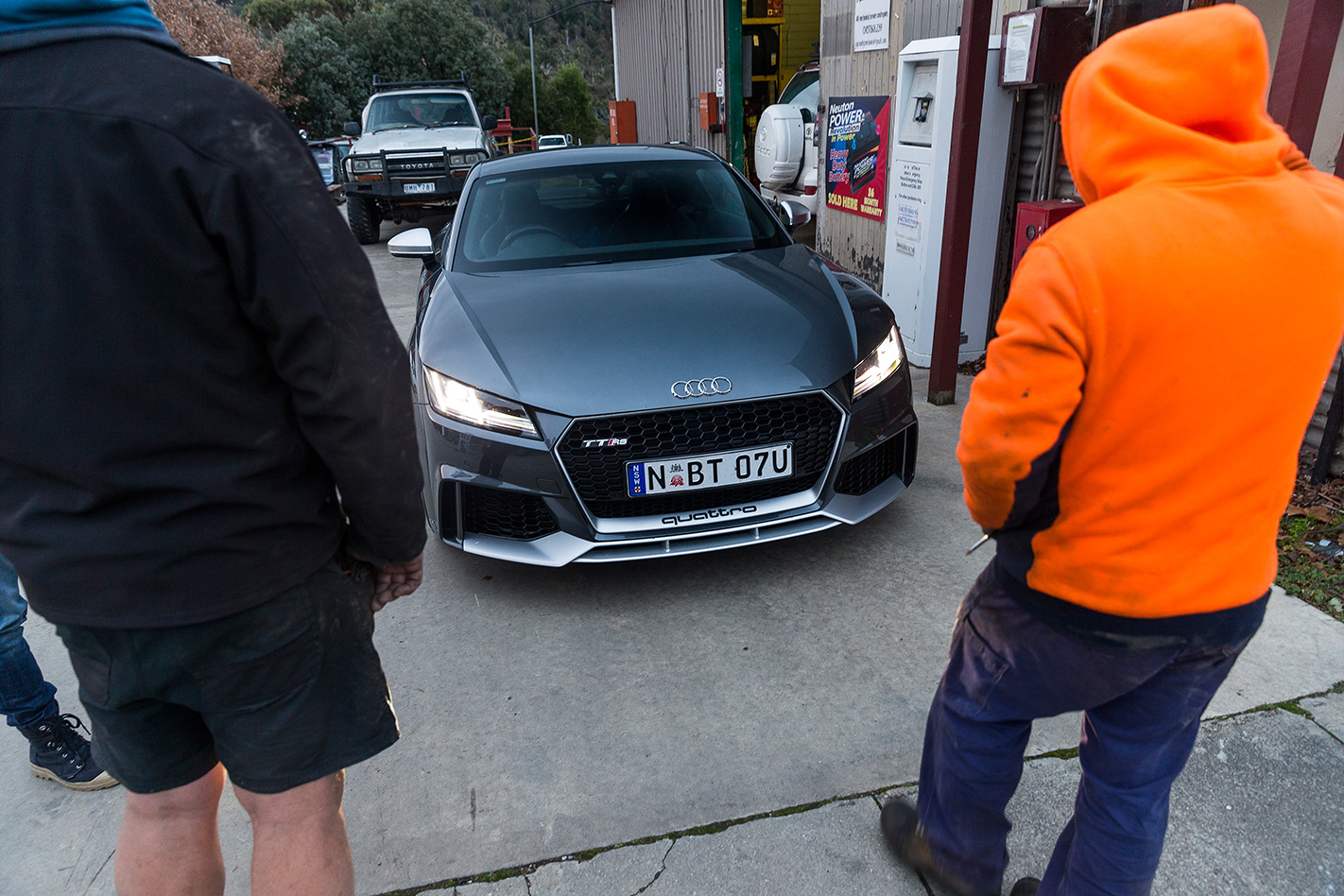
Stay a little later and Heather will wait until you have nearly finished your last pint before telling you she used to be the navigator in an outback off-road racing series. Perhaps she will finish the story next time…
A little dusty the next morning, I stock up on some essentials at the Mitta Store including one of the best brekkie rolls this side of the snow line and bump into local Rob.
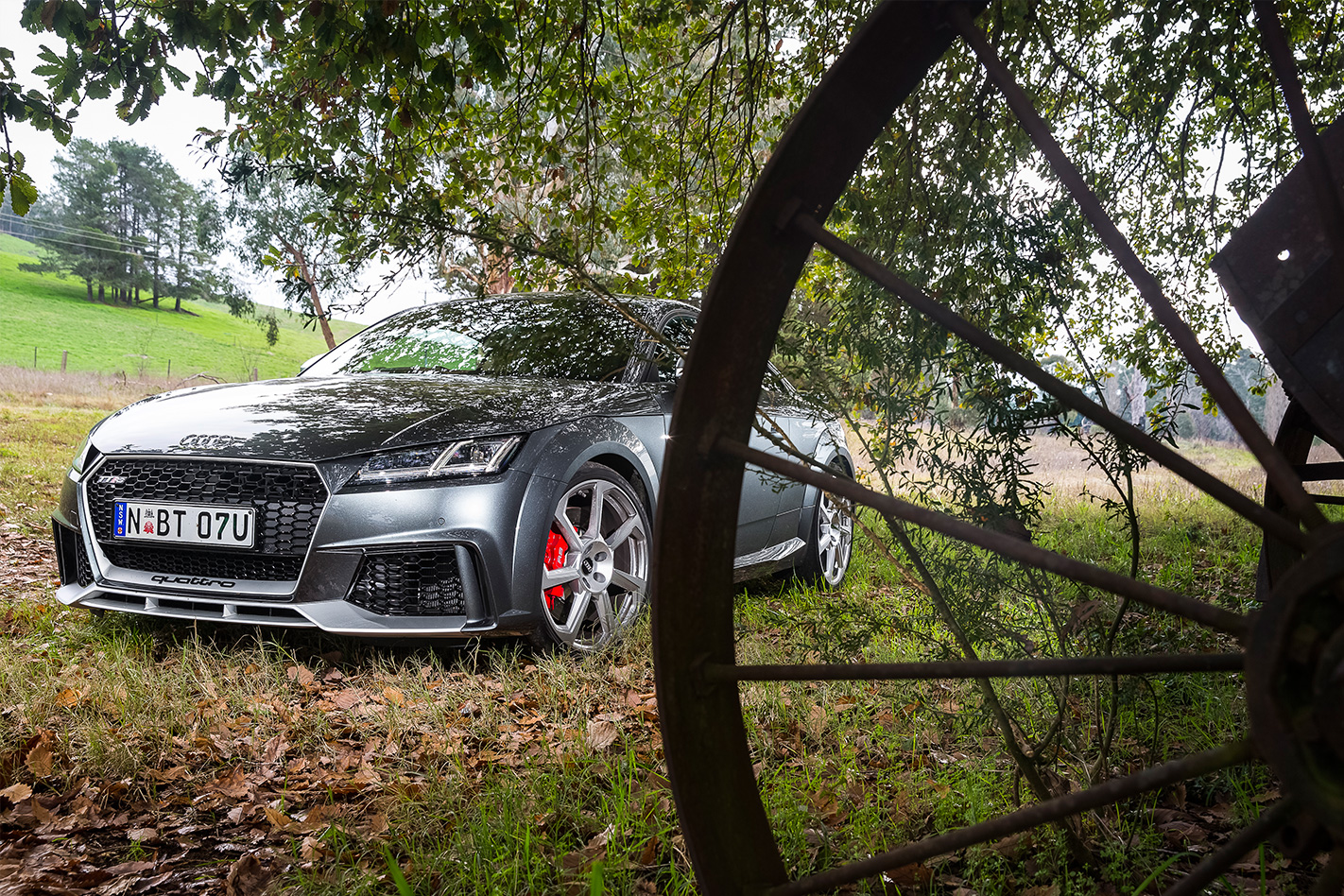
Owner of an Audi A4 S Line (he likes the interior and says it’s “better than a BMW”), the retired national parks manager was drawn to the Daytona Grey TT RS that was an obvious stranger in these parts.
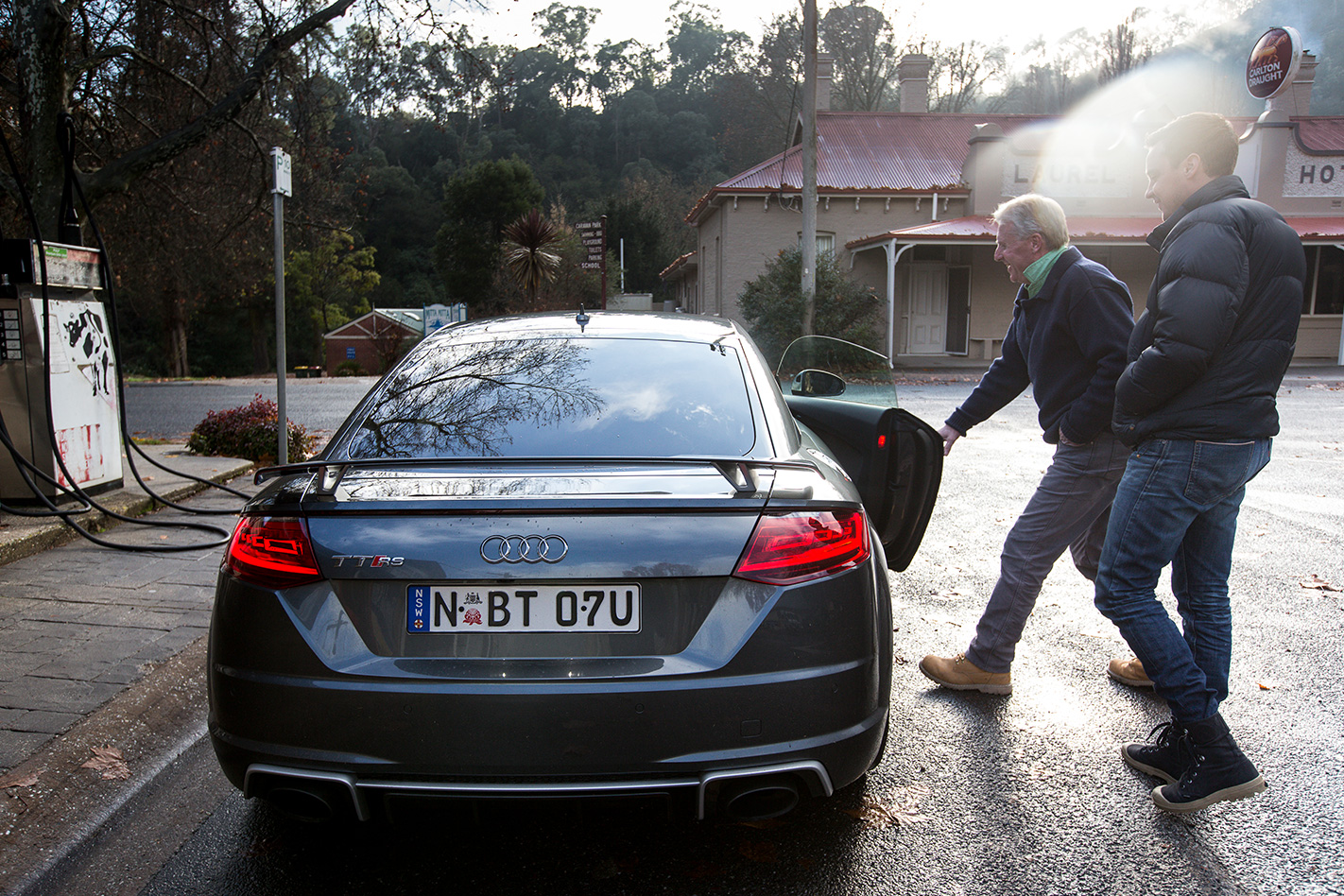
Then it’s time to lash the saddle bags, select the Dynamic drive mode and hit the only road south out of town for the 100km plus adventure to Omeo. Except, it isn’t, because just 30km later, the forecast range in the trip computer has plummeted from a predicted 180km and a half tank to 100km and at this rate I’ll be on the side of the road in near freezing temperatures, faced with a very long walk.
Until now, the TT had been consuming about 8.1 litres per 100km compared with the official 8.4L number, but that efficiency had just fallen off a cliff and was now closer to 14L/100km.
The Audi may have the grunt, grip and go to tear up this kind of remote road, but it is hobbled by its pitiful 55-litre tank.
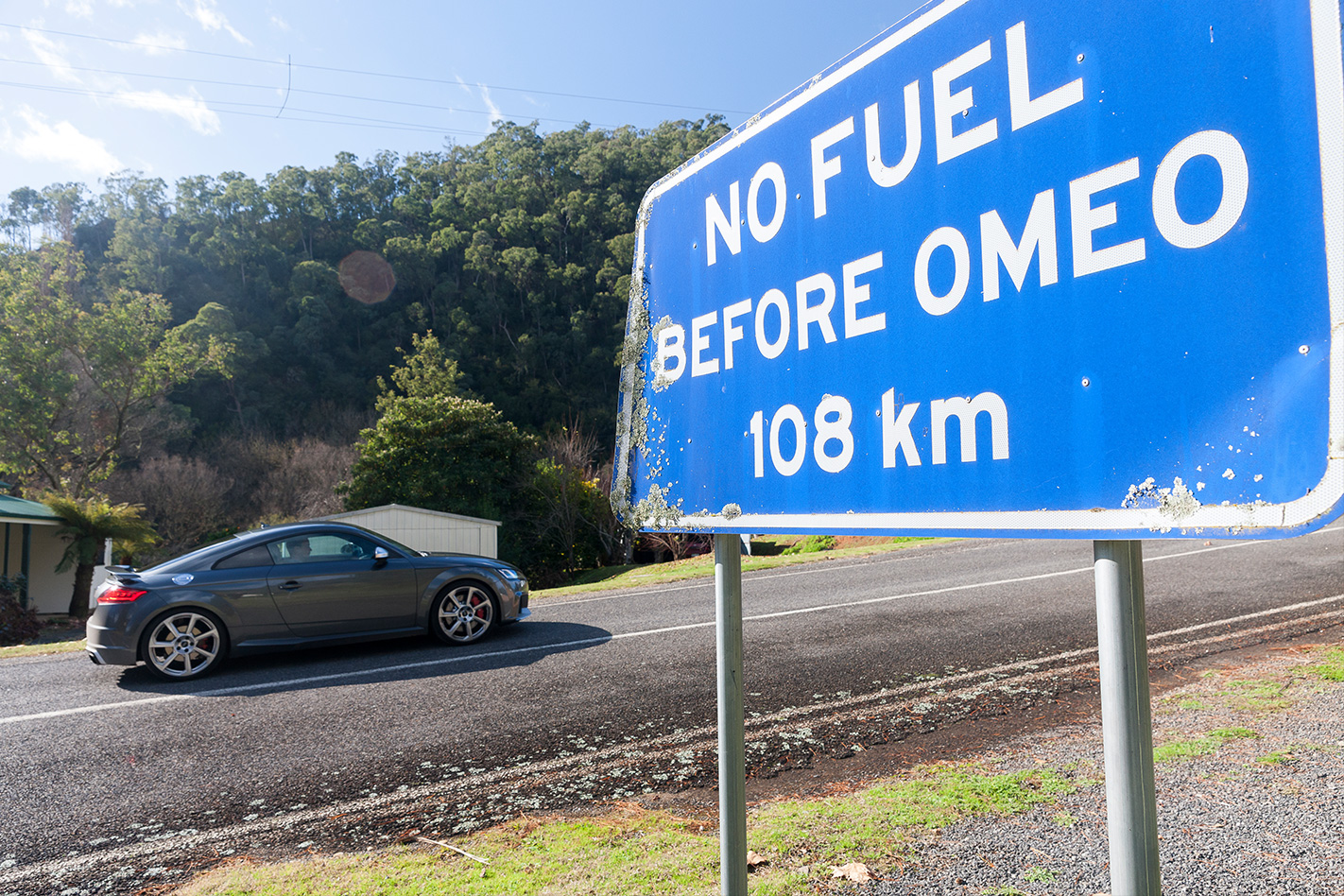
Until now, the roads haven’t encouraged the exploration of the RS’s performance credentials, but as the way ahead turns increasingly winding, steep and remote, the hottest TT feels as if it could be emerging onto its home turf.
The sun has broken through the early fog and the road is largely dry, but the occasional tree-covered section –often on blind corners – is still perilously damp and it becomes clear why this road is popular with two-wheeled machines most of the year but deserted by them today.
For bikes and some high-powered rear-drivers, the sudden patches of lichen and moisture-covered asphalt could end your day – and possibly driving career – early, but Audi’s quattro system cut its sprockets on surfaces like this and lends a level of traction, the limits of which require a considerable degree of fortitude to find, even on the seemingly numberless hairpins of the Omeo Highway.
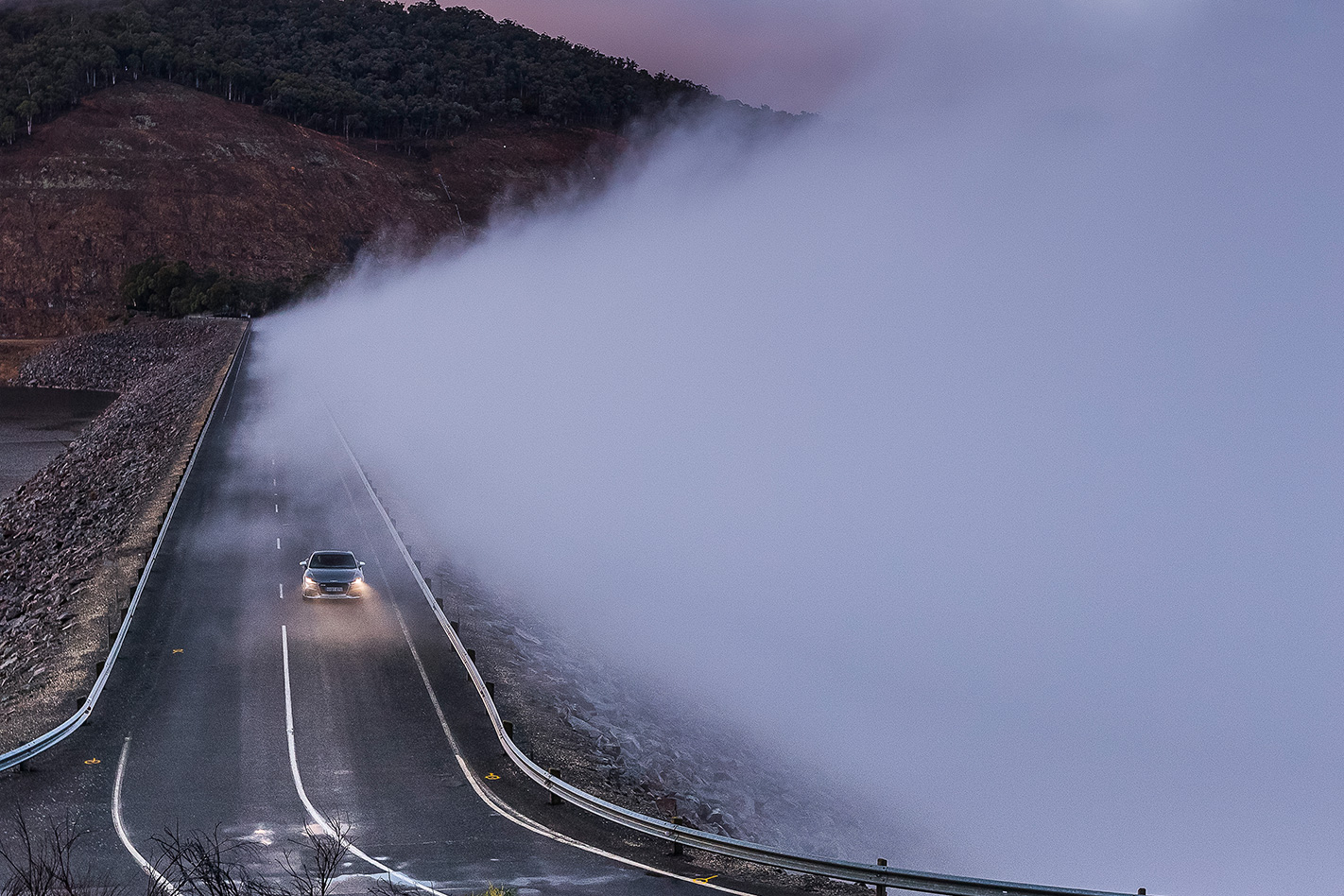
Challenging roads nestled in beautiful scenery aren’t uncommon in the high country, but the Omeo Highway has few rivals for the sheer relentlessness of its corners.
It’s only the Audi’s efficiency at maintaining momentum that negates the need for a rest and therein lies the appeal of the TT RS. For blasting through serpentine asphalt, it’s devastatingly effective, the quattro driveline allowing you to jump on the power early as the 2.5-litre five cylinder fires the car to the next braking point like an anti-tank shell.
Still, I wonder how far behind the RS one of its four-pot siblings would be. So why would you not save a sizeable slab of cash and opt for an entry-level TT or the very rapid Audi TTS?
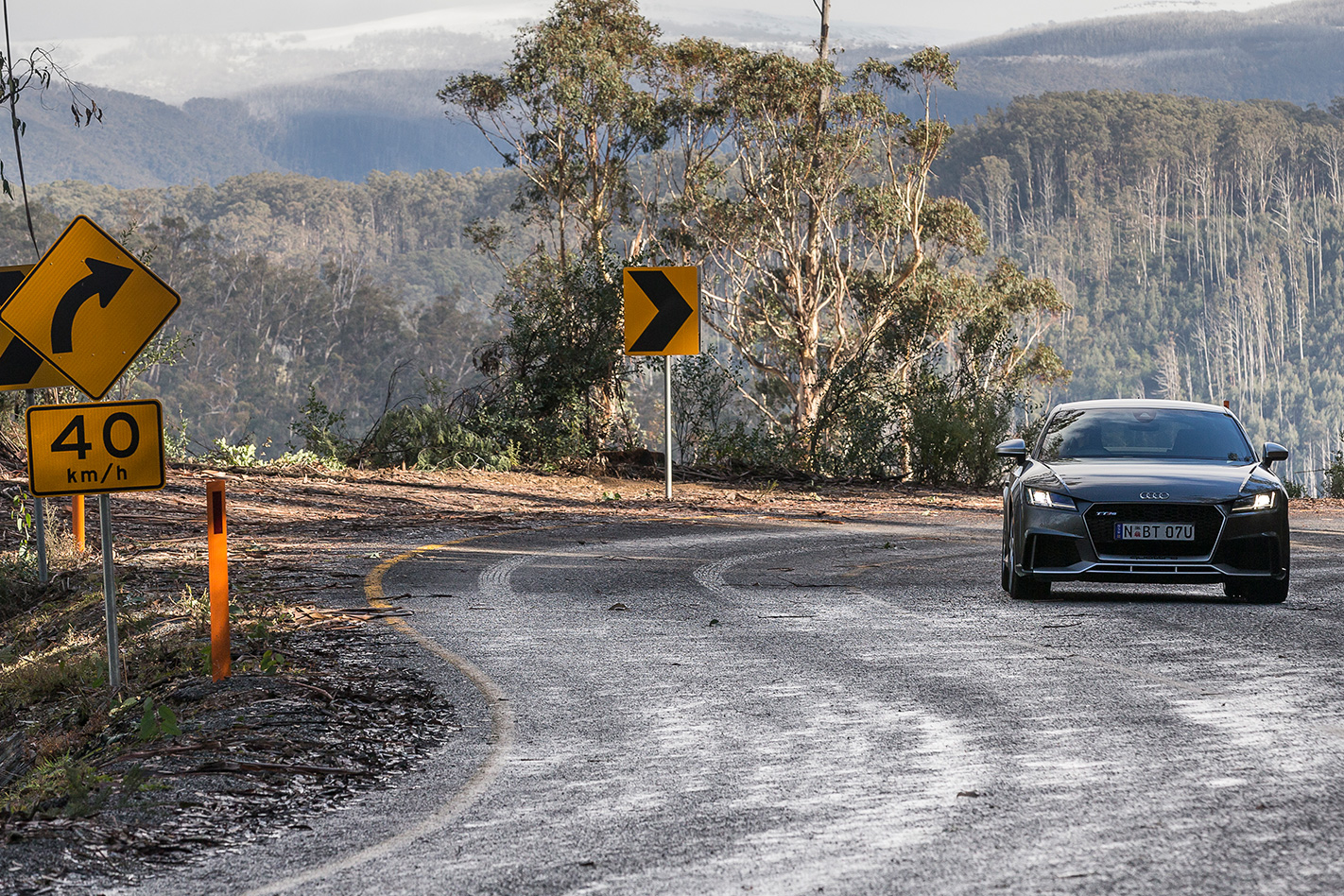
That cacophony puts a spark in the blood of any car lover and the next kilometres seem to flash by with increasing urgency. Turn, point, bury the throttle, punish the brakes, turn again, repeat. The Audi feasts on roads like this with an almost psychopathic efficiency.
Roadholding and grip, while abundant aren’t matched by equally commendable feel. The steering is heavier and chatty with the drive mode set to Dynamic but the RS is almost too clinical in its demolition of distance and a little more tyre-talk would be welcome. The engine encourages the throttle to be stabbed at every opportunity, with a wonderful turbo hiss and guttural wide-open warbling coupled with an addictive unapologetically turbocharged surge from just 2000rpm.
As the white lines turn to yellow and the navigation indicates an altitude of more than 1300 metres, the RS continues to blast through anything I can throw at it with faultless obedience. Yes, a Porsche Cayman would likely return a more rewarding rear-drive experience but the TT’s packaging, turbo punch, pretty design and surprisingly practical load spaces, deliver an almost unrivalled proposition.
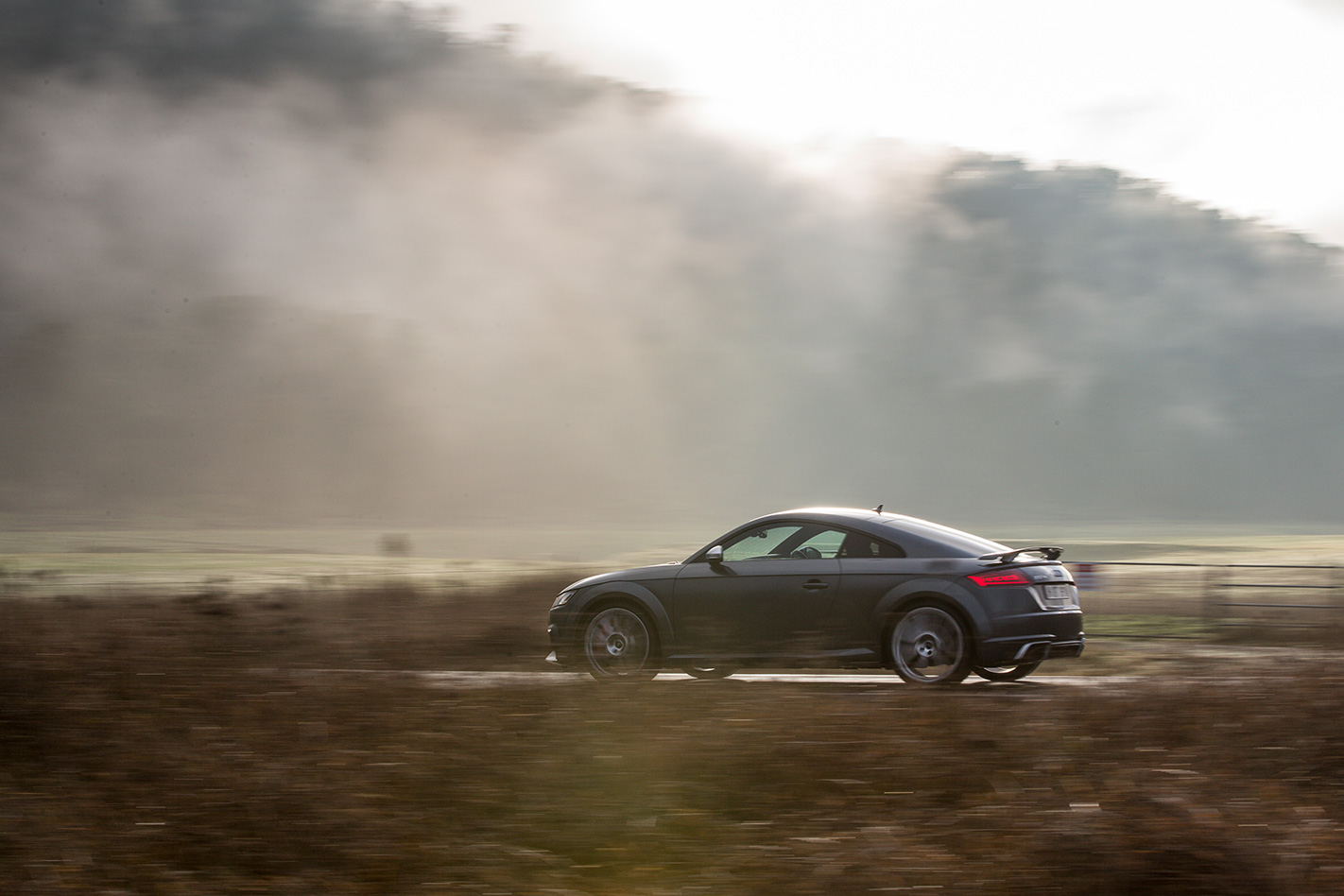
It’s as I ponder this that the corners start to unwind into flowing byways and Omeo’s lights signal an end to the unbelievable road I’ve left in the Audi’s wake. There are few cars in the RS’s price bracket that can cover this manic stretch with the same unruffled speed and composure.
I love the five-cylinder anthem that’s still ringing in my ears and this car’s astonishing point-to-point pace.
More importantly, had I tried to do the same on just two wheels, I am confident the only way I could tell you about it is not in these pages, but in a seance.
The TT RS makes discretion feel a lot like valour. And you know what? I’m good with that.