Keep it to yourself, but some of the best roads in the world are on a wild, windswept, deserted-feeling island at the bottom of the earth.
The only way you can get there, by car, is by vessel, a voyage across one of the most perilous straits of all the seas, beyond the southern, roaring 40-degree latitude so many sailors fear.
And when you get there, it’s inhabited by inquisitive, suspicious creatures, to whom you’re advised not to respond in the affirmative to any enquiries that you’re from some “mainland”. Unless you wish to be watched from the corner of eyes as you roam shops and eat meals.
But when the earth warmed and the waters rose, Tasmania was isolated again, a rocky outcrop sculpted by volcanoes that once spewed great landscape-forming magmas, now extinct.
Lamborghinis, Ferraris, and Bugattis off-roading in mud
This meant that, a geological nanosecond ago, when the white man sailed down on his ships and did unspeakable wrongs to the people already living here, but started building roads between settlements, the only way over all these great undulations was left, then right, then left again.
Fast forward 200 years to a time when you’re wondering about completely abstract things like steering feel and ESP calibration, and these old roads are Nirvana.
But what you might not know is that you can experience Tasmania’s sublime roads for yourself as part of the Targa Tour, as it’s known – sans roll cage, helmet and cops. But not sans speed limit.
It works like this. You get up before the sun does, get inside your car as it rubs its eyes and spews great plumes of steam out its exhausts, drive to the stage with your group, and then cut sick on the closed roads (before the competition cars) with an official car at the front setting the pace.
It cannot exceed 130km/h. In theory. And there are punishments for the official drivers if they are caught speeding. But you can imagine what 130km/h feels like in some corners, and what it feels like in others.
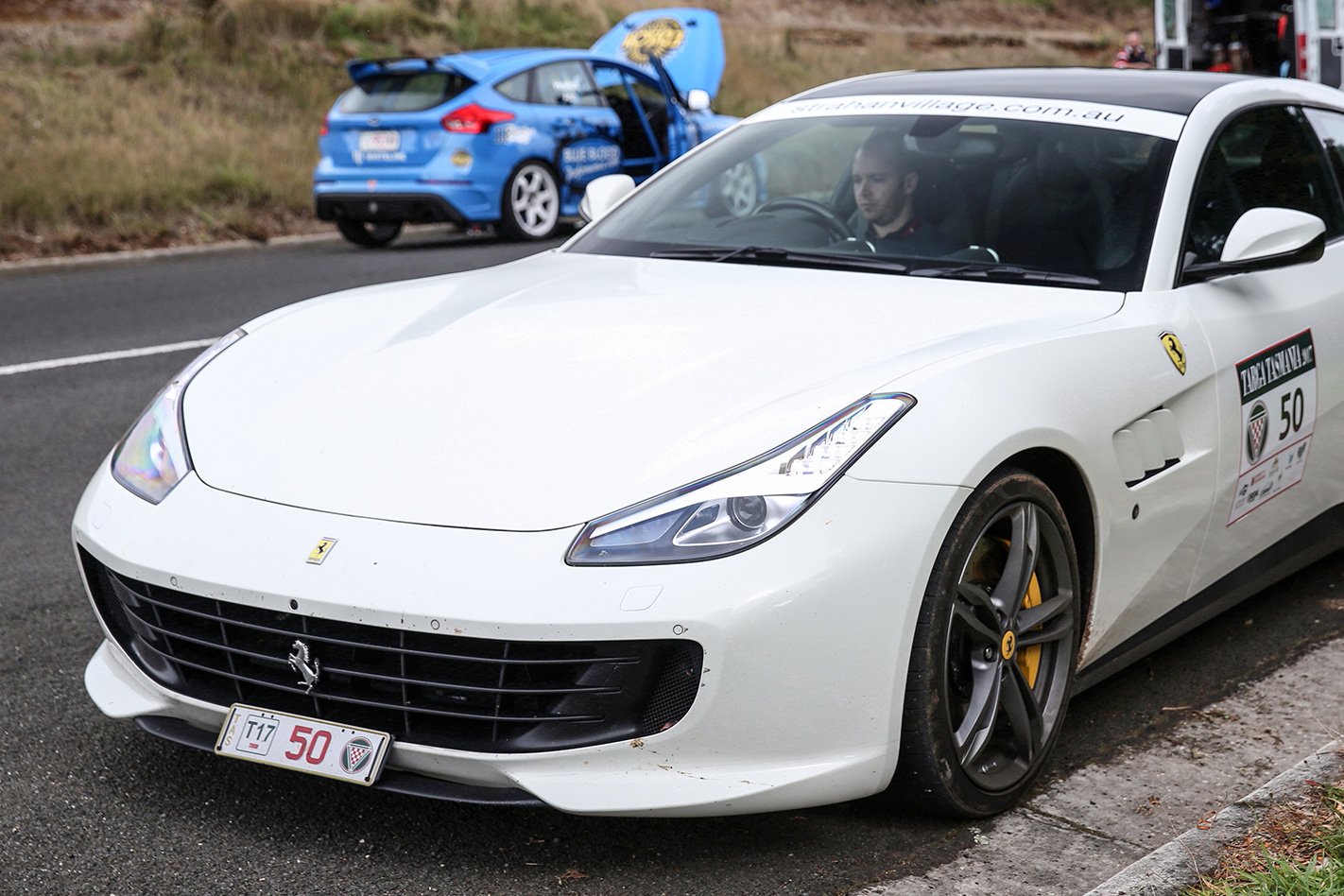
But thankful more for the fact that, while we’d love to be in a 488 or an F12, with the Tour taking place over 2000km, 38 stages and six days, you’re glad for some extra seat padding. And more forgiving dampers. And seat heaters.
There is also the fact the GTC4Lusso is the only Ferrari with front-wheel drive. It mixes this with rear-drive, of course, and is psychologically a nice thing to have in the back pocket while traversing Tasmania and its notoriously capricious weather.
Like its FF predecessor, the GTC4Lusso has a very unique all-wheel drive system. There is no mechanical connection between the front and rear axles.
While power is sent to the rear wheels quite conventionally through a rear-mounted, seven-speed twin-clutch automatic, and then an electronically-locking limited slip diff, power reaches the front wheels via a two-speed gearbox slung off the front of the engine.
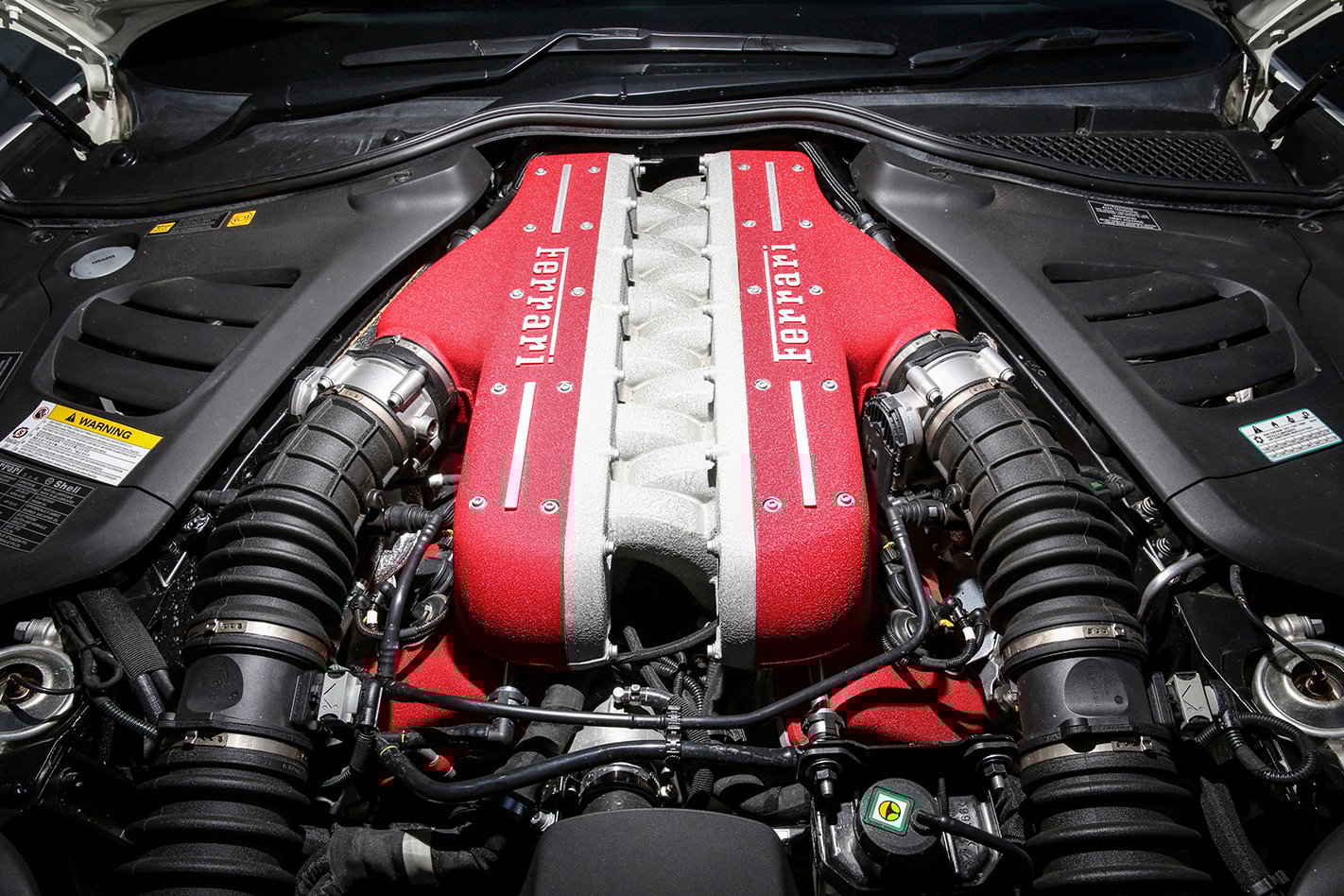
Though it weighs 1920kg and has a wheelbase basically as long as a Holden Statesman (19mm less), the launch control-assisted GTC4Lusso rockets to 100km/h in just 3.4 seconds – or so says Ferrari. Two hundred flashes by in 10.5 seconds on to a bahn-burning top speed of 335km/h.
All while using just 15.3L/100km. (If you do one hard accelerator run and then spend the remainder of the fuel tank slipstreaming a B-double.)
Ferrari has comprehensively overhauled the FF in the evolution to GTC4Lusso, where a slight rebranding is hoped to improve sales of Maranello’s most family-friendly car, one that didn’t bolt off the sales floor quite like originally hoped.
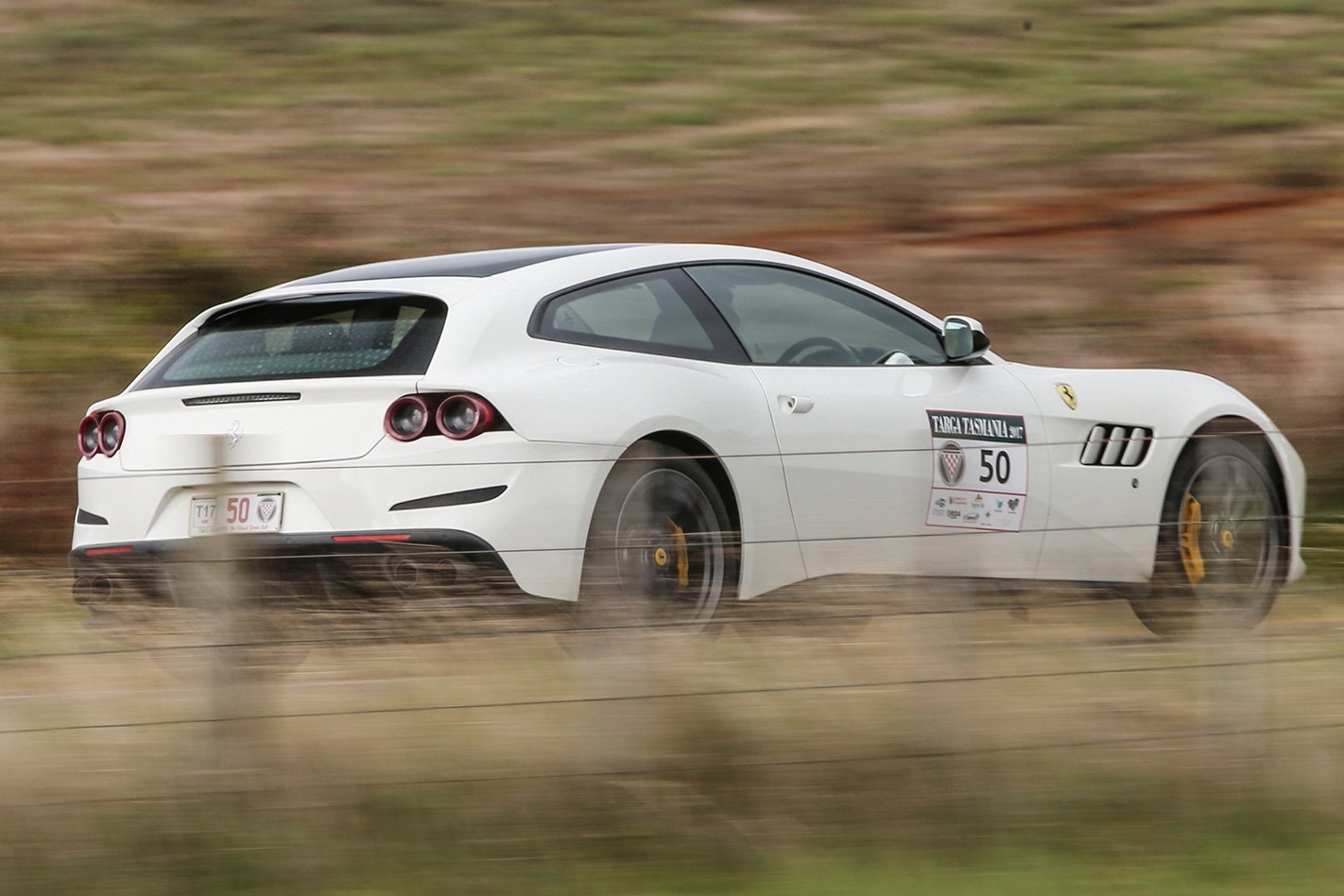
The new name is supposed to be a throwback to cars like the 330 GTC and its two-plus-two sister model, the 330 GT; while also giving a nod to the luxurious 250 GT Berlinetta Lusso. While the big, burly V12 now powers up to 507kW and 697Nm, the interior is completely new, as is the fitment of all-wheel steering.
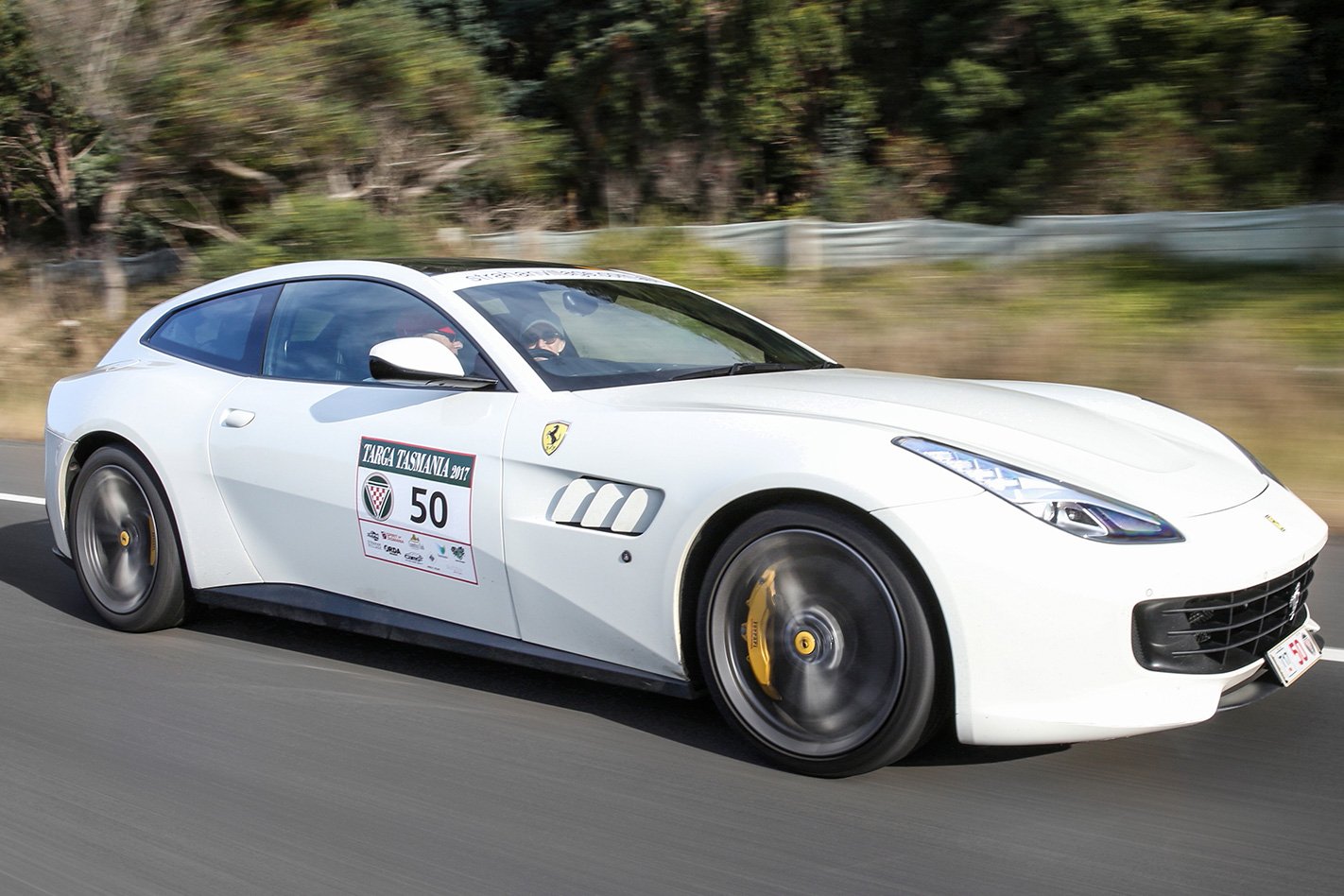
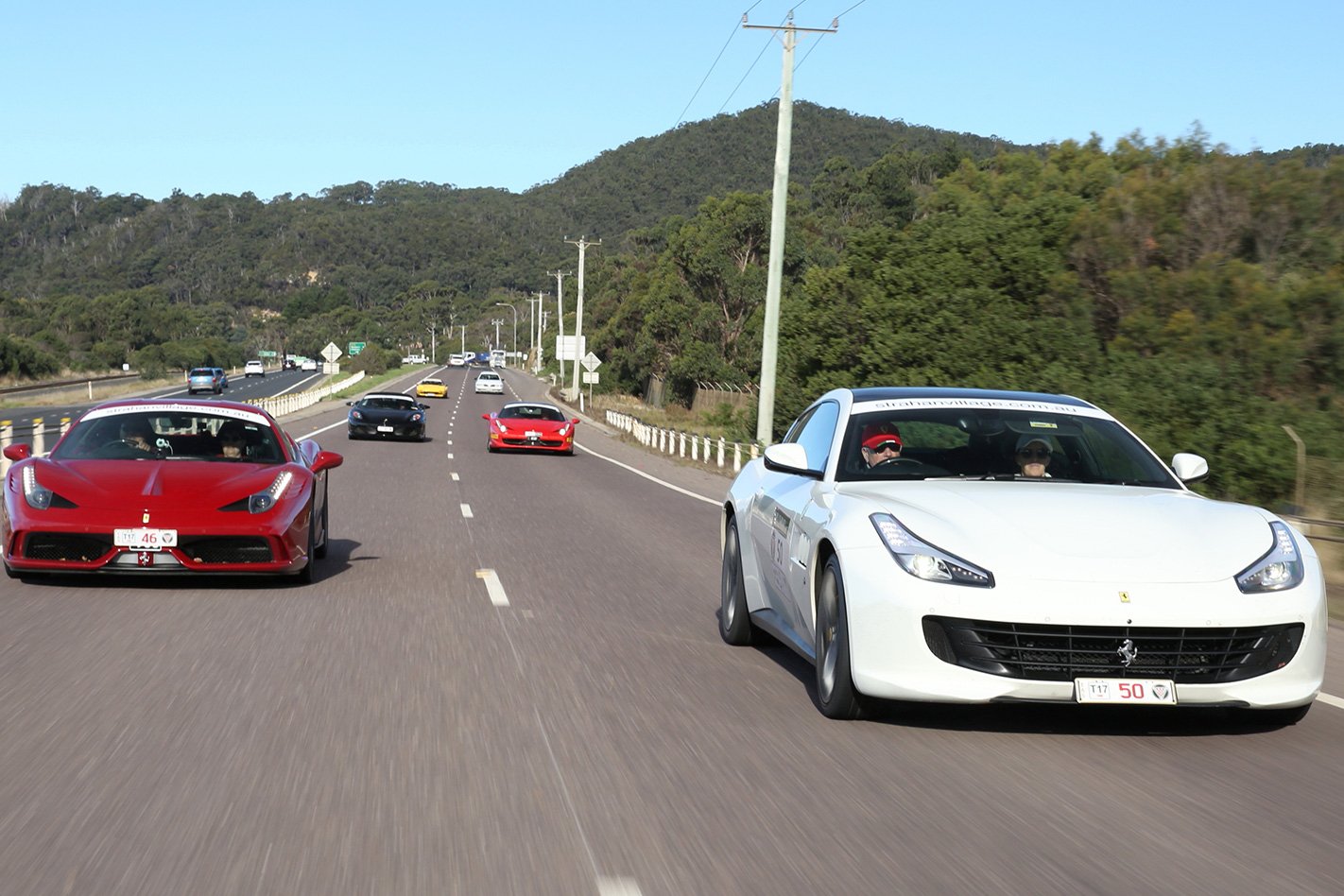
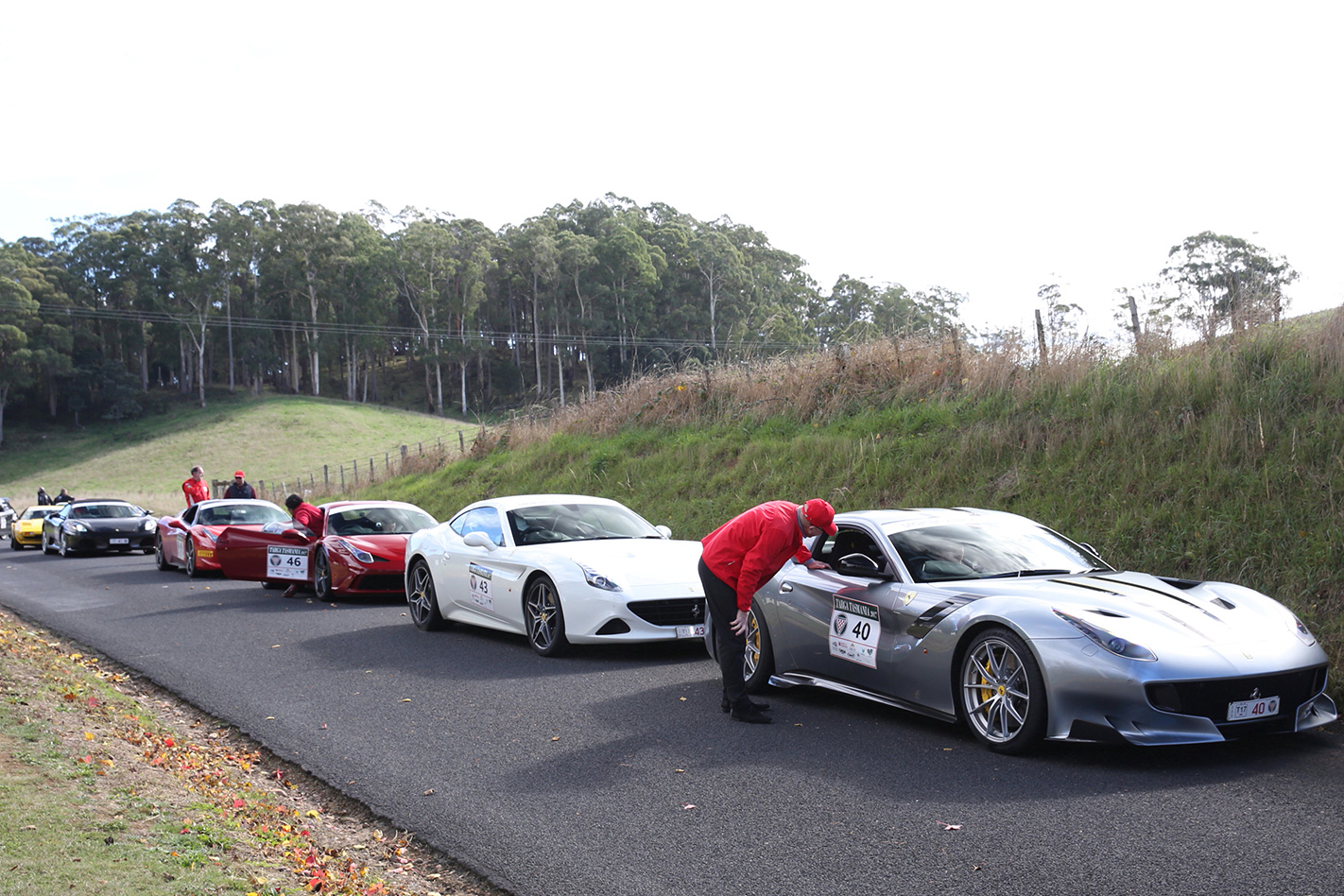
For now, though, in Tasmania, there is just one GTC4Lusso, and we’re sitting in it. In front of us, we’re staring at the gills over the rear haunches of an F12tdf, and behind us, there’s the shark-like grin of a red 458 Speciale.
It’s the first year Ferrari has officially brought an entourage to Targa Tasmania for the Tour, and full credit to them – and their customers – for getting the toys out and putting kilometres – and stone chips – on cars that, elsewhere in the world, are in humidity-controlled museums.
MOTOR is joining halfway through the Tour, taking over the reins to the GTC4Lusso from ex-editor and now Fairfax honcho Andrew MacLean, who had the privilege of not just staring at the aerodynamically-sculpted rears of F12tdfs and Speciales, but also a LaFerrari.
Although unsurprisingly, its owner, a very busy businessman, couldn’t quite spare the six days out of office, and so all MOTOR saw of it was it parked outside a hotel. And all we heard of it was how the owner spun the car while drifting in a town stage, in front of locals, and heroically kept his foot in it as the car pirouetted around to keep going. Perhaps we’ll next see him at Summernats.
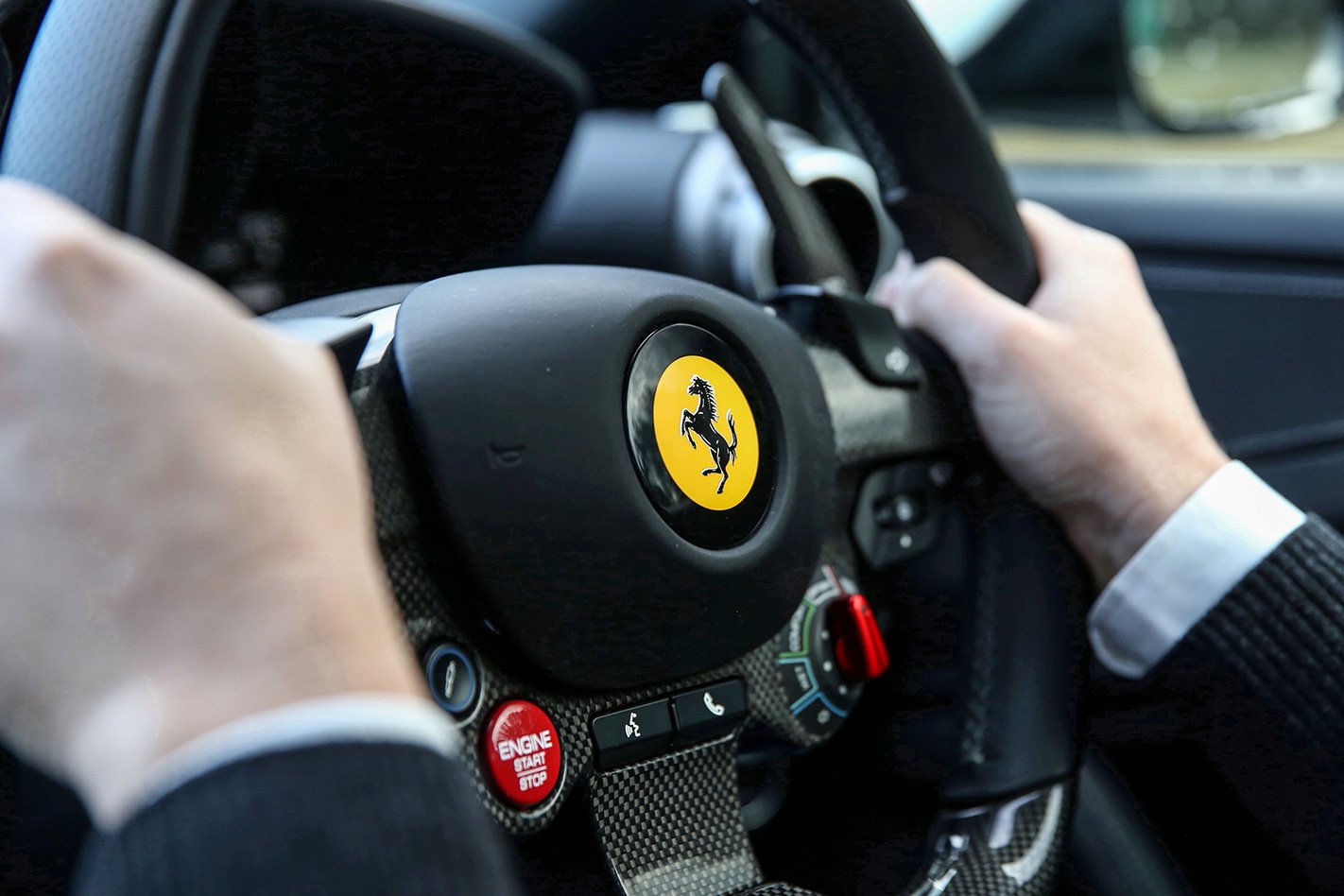
We have that horrible feeling we don’t know what we’re supposed to be doing. Rolling up to the first stage, photographer Cristian Brunelli in the passenger seat acting as navigator (so we’re almost guaranteed to get lost), we turn the manettino into Sport, the transmission into manual and grab first gear.
There have been so many briefings, forms, and we have received so much information and so many warnings and stern talkings-to about safety, that we’re not quite sure what’s about to happen. Having been wound up like a spring, it’s somewhat unnerving – are we about to spectacularly ignore the 130km/h thing, or what?
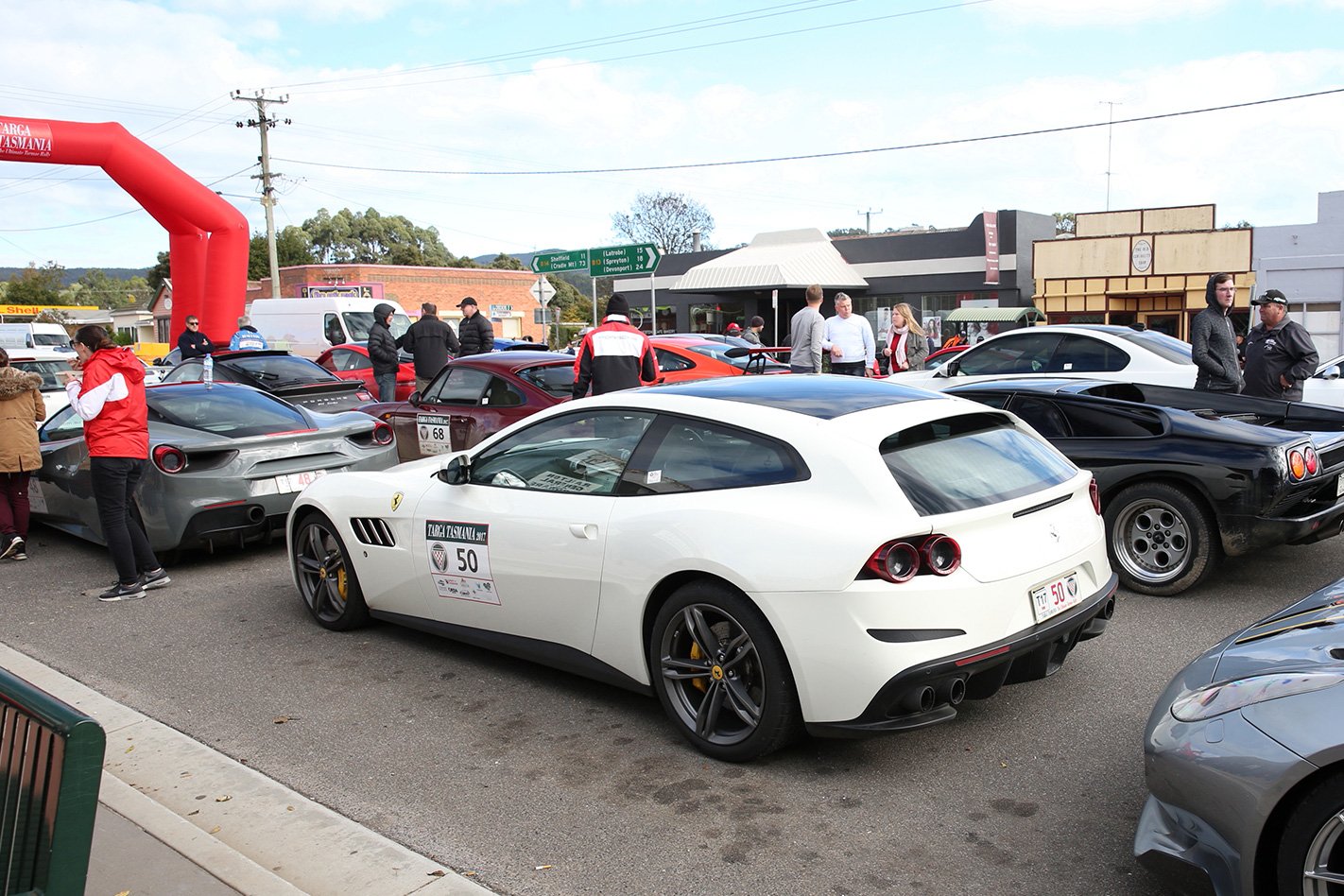
Now, anyone wondering if they should do the Targa Tour should make sure they know what they’re getting themselves into (see breakout for costs, etc). Going as fast as you want on the best roads in Tasmania – closed – driving past Highway Patrol cops giving you the thumbs up?
Err, maybe in the regularity running (the next level up) or, of course, the full Targa Tasmania competition. But if you want to use your road car, without bolting in a cage, or wearing a helmet, it’s the Tour only. Which means 130km/h.
Now, it’s fantastic to experience these roads without your licence quaking in fear in your pocket. But if you’re going to do the Targa Tour, we recommend considering a car that’s going to feel quite fast at 130km/h, like a Subaru BRZ or Mazda MX-5. At 130km/h a GTC4Lusso feels like a Joint Strike Fighter taxiing down a runway.
This is a car that continues to be dominated by its engine. You could feasibly build an engine dyno, centre stage, at the Opera House and rev the GTC4Lusso’s V12 creatively – and people would buy tickets to watch and listen. (This is why I run a magazine, and not an opera house.)
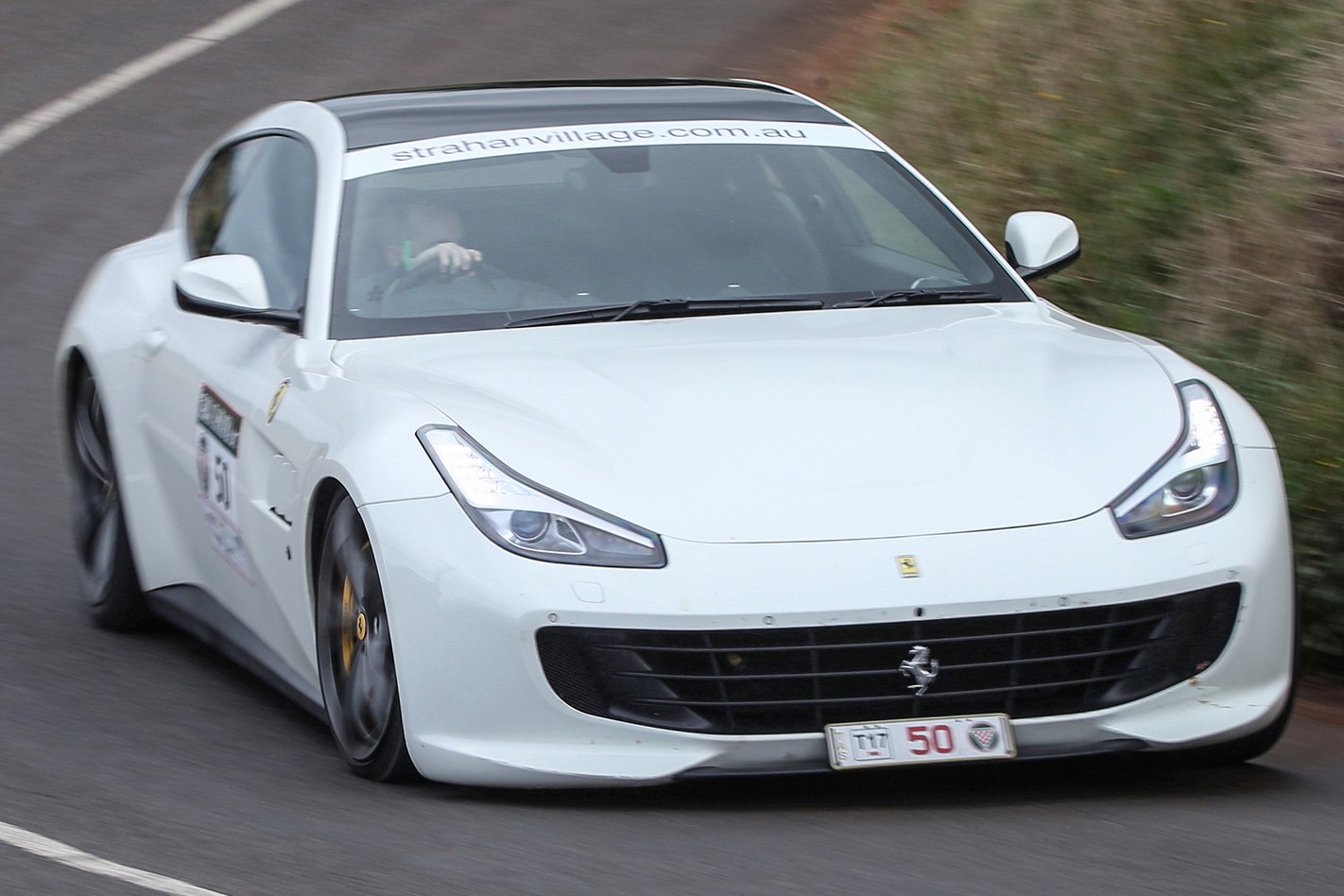
While its enormous, fantastic brakes arrest the GTC4Lusso effectively and without fuss; and while its incredible, potent engine gives your right foot effortless power and thrust; you always have in the back of your mind that the GTC4Lusso is a big car with a lot of mass moving very quickly.
It feels it in the slower corners, too, where the all-wheel steering lends it a little more agility. But ultimately the all-wheel steering is most appreciated at car park speeds.
The GTC4Lusso puts its power down in exactly the way you want. Open the taps from standstill, in Sport mode, and the rear tyres will light up, before the front axle steps in to tidy things up and get you rocketing toward the horizon.
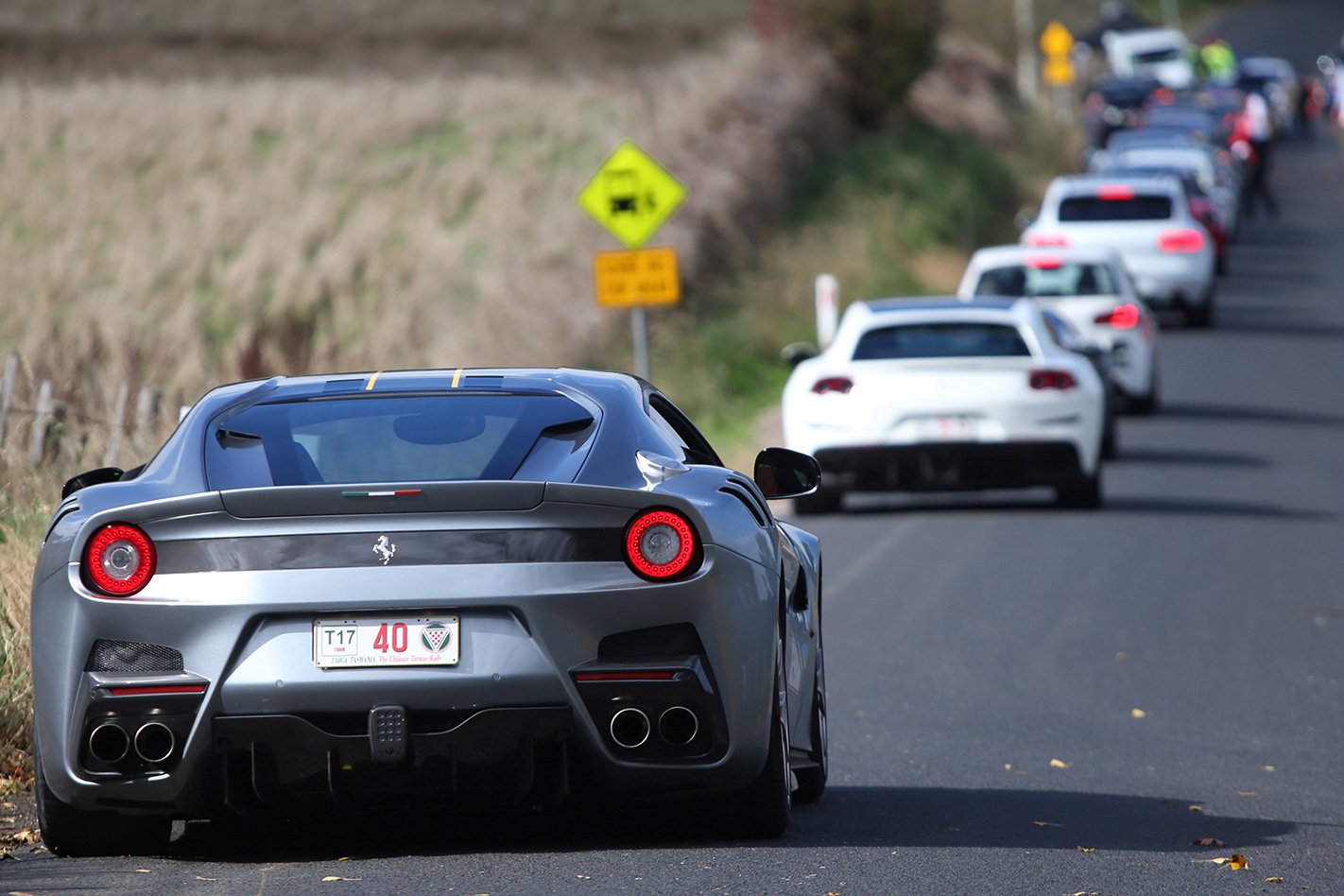
If one thing distinguishes Tasmanian roads, it’s the short straight, careering over a blind crest, where you’ll immediately find a tightening corner and plunging escarpment. And very little sign-posting.
Tasmanian taxpayers should never have to worry that they’re spending too much money on signs that tell you how tight a corner might be. Tasmania is a place that absolutely rewards road knowledge. And you can see how, in the main game competition, strong, accurate pacenotes and the ability to work off them effectively, is crucial to winning.
In Tasmania, you never know what’s around the next corner, or over the next crest. Just ask all the people it’s bitten.
MOTOR’s international team of road testers voted it the most frightening car of 2016. As we are belting up an early morning stage, with lots of tight, first- and second-gear corners – where you don’t notice the 130km/h limit much, if at all – I can’t help but imagine the owner getting out at the end of the stage, hands trembling, lighting up a cigarette and whimpering for mummy. It’s an adult nappy car.
And, with the morning coffee not yet kicked in, makes me glad to have two extra driveshafts. And even then, at Queenstown, where fog reduces visibility to about 50 metres, the GTC4Lusso’s rear end is yawing into its electronics a little quicker than I’d like.
I absolutely cannot imagine belting up here as quick as I possibly can, like 2017 winners Jason and John White, in a car like their Dodge Viper ACR Extreme.
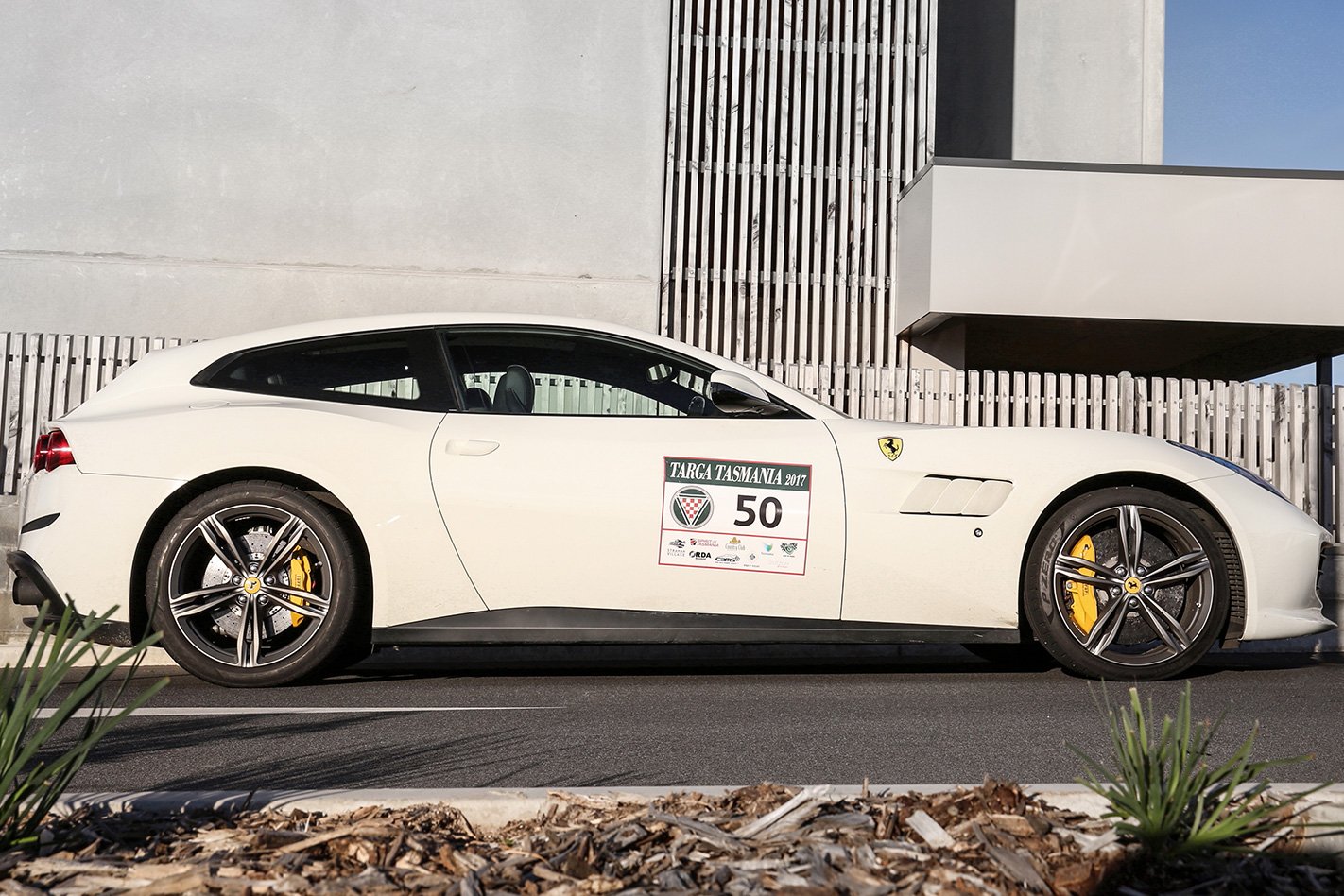
We had two reasons for coming to Tasmania to do the Tour: our first Aussie drive of the GTC4Lusso, and to rate the Tour’s suitability for the average MOTOR reader. The GTC4Lusso has an incredible engine and drivetrain, a nice, now-modernised interior, is spectacularly fast, and capable. But it does feel like a major facelift of the FF rather than a whole new car.
That’s not a bad thing – it’s what the FF needed. The Tour? Make up your own mind based on what you’ve read. Would you invite your partner to ride passenger with you at a track day? Probably not – but you’d have them join you on the Tour.
As part of your ongoing efforts to bring them around to the world of driving, Tasmanian roads alone will be effective. Just don’t tell too many people, okay?
The Ford Ranger is consistently one of Australia’s top-selling vehicles. A large part of this is due to its dual cab model type, whose ruggedness, practicality and interior comfort have found favour beyond the traditional tradie market. Easy to steer and well-equipped the more pricey versions will take the family almost anywhere in relative comfort.
Variants
There are five main Ranger Double Cab ute or pickup variants, including the range-topping Wildtrak. The line-up is stretched by different engines, transmissions and drivetrain layouts.
The Ranger Double Cab range starts with the workmanlike XL which comes in 4×2 ‘Hi-Rider’ or 4×4 versions. The 4×2 is powered by a 2.2-litre four-cylinder or by a 3.2-litre five-cylinder diesel engine while the 4×4 is only available with the latter.
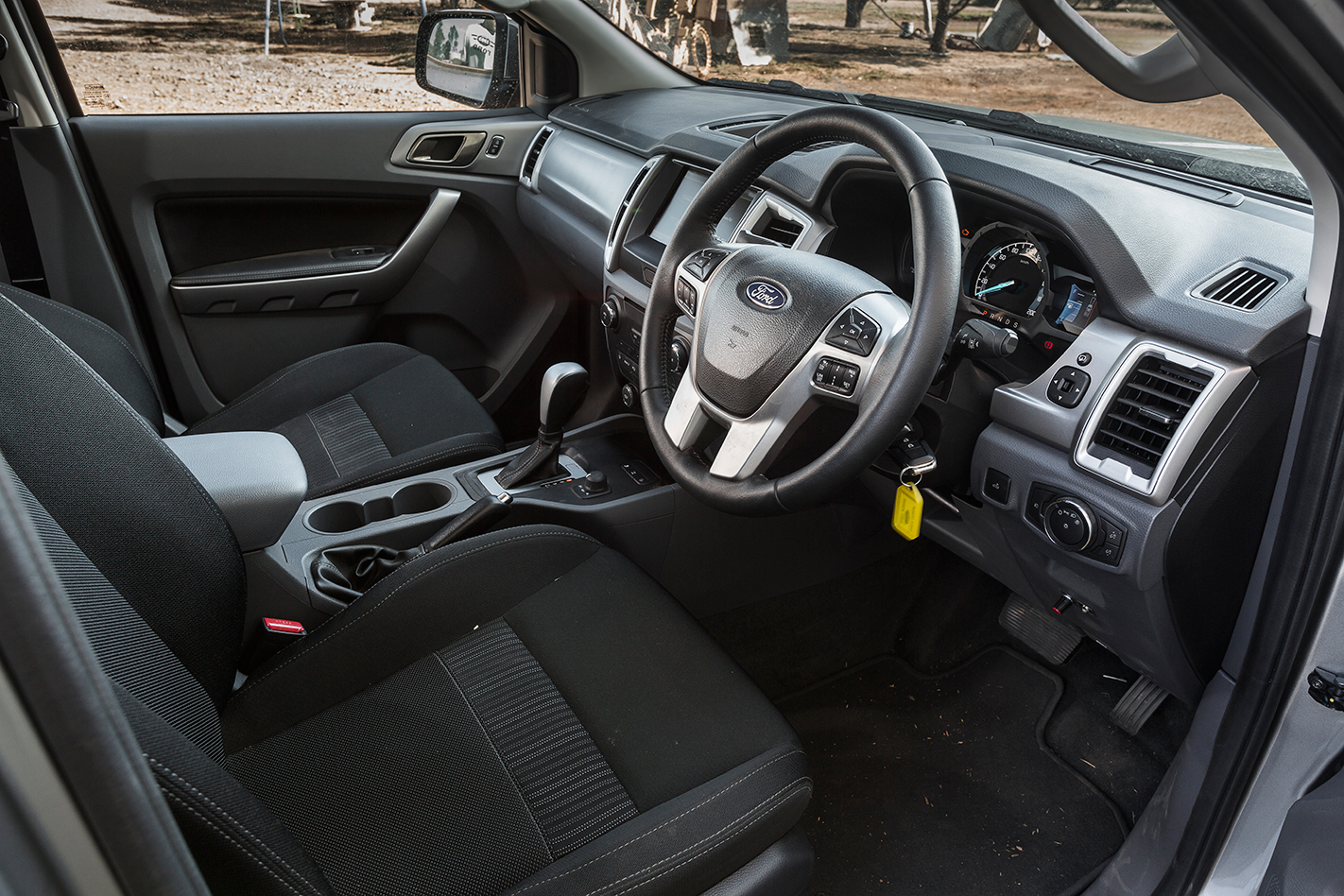
Standard equipment includes cruise control, power mirrors, auto headlights, driver’s seat lumbar support, hill launch assist, trailer sway control, 16-inch steel wheels, rear parking sensors and a 4.2-inch multi-function display that shows driver information. While there’s no touchscreen it does have a reversing camera and Bluetooth audio connectivity with voice control.
The XLS is essentially the same as the XL but only comes in 4×4 form with the 3.2-litre diesel engine and six-speed auto gear box. It also has carpet on the floor and 17-inch alloy wheels.
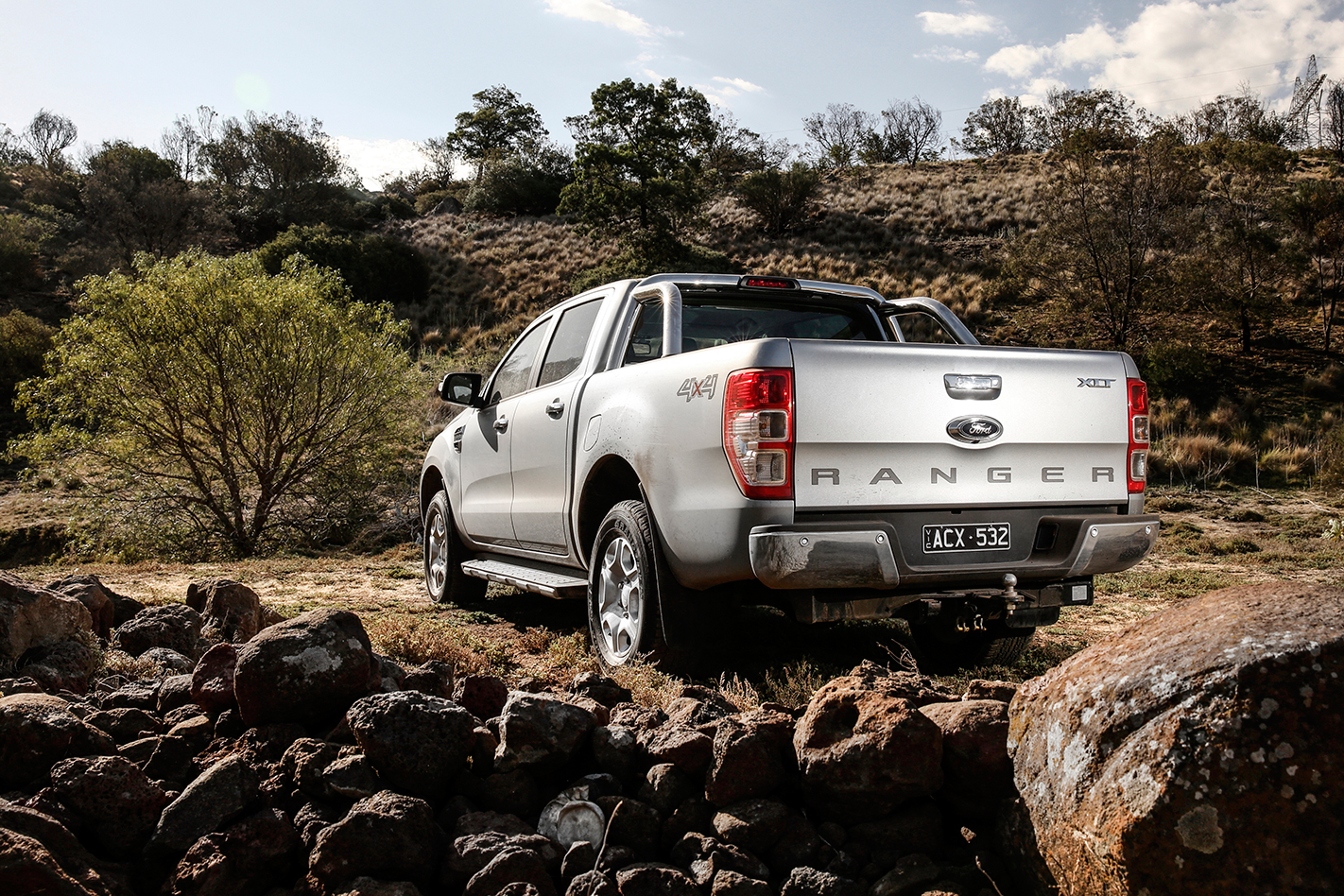
The XLT is the most popular of the Ranger dual cabs and comes only with the 3.2-litre engine with 4×2 or 4×4 drivetrains. It adds a host of creature comforts over XLS including an 8.0-inch colour touchscreen incorporating Ford’s SYNC3 infotainment interface, front parking sensors as well as the standard rear sensors, dual-zone air-conditioning, auto windscreen wipers, rollover bar, tyre pressure sensors, a 12V power outlet in the tray and towbar for up to 3500kg.
The special edition Ranger FX4 Special Edition is essentially a Ranger XLT with leather trimmed seats, 18-inch wheels, roof rails, and beefed-up aesthetics. It’s only available with an automatic transmission.
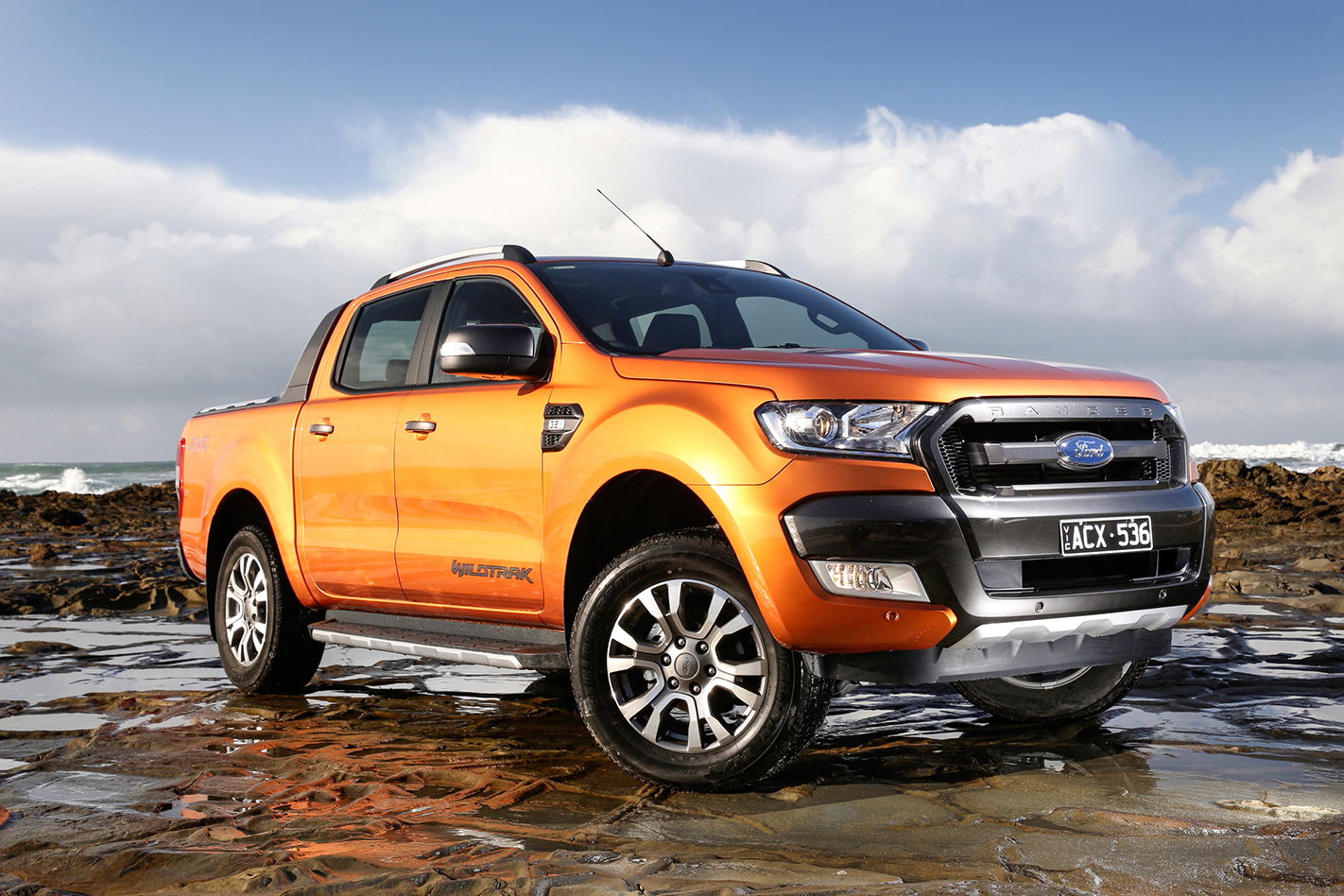
The muscular Wildtrak adds a roller shutter for the load area, heated front seats with leather accents, power-adjustable driver’s seat and external bling.
It also brings a suite of active safety aids including adaptive cruise control, forward collision alert, lane keeping assistance, driver impairment monitor and automatic high beam control. The active safety suite is also available on the XLT and FX4 as a cost option.
The Wildtrak is only available with 4×4 drivetrain and 3.2-litre engine with a choice of six-speed manual or auto gearboxes.
- Ranger XL 4×2, 2.2L manual – $36,390
- Ranger XL 4×2, 2.2L auto – $38,590
- Ranger XL 4×4, 2.2L manual – $44,290
- Ranger XL 4×4, 2.2L auto – $45,890
- Ranger XL 4×4, 3.2L manual – $46,790
- Ranger XL 4×4, 3.2L auto – $48,390
- Ranger XLS 4×4, 3.2L auto – $48,890
- Ranger XLT 4×2, 3.2L manual – $46,490
- Ranger XLT 4×2, 3.2L auto – $48,690
- Ranger XLT 4×4, 3.2L manual – $55,490
- Ranger XLT 4×4, 3.2L auto – $57,690
- Ranger FX4 4×4, 3.2L auto – $58,915
- Ranger Wildtrak 4×4, 3.2L auto – $59,590
- Ranger Wildtrak 4×4, 3.2L auto – $61,790
Our Pick
The XLT Double Cab has most of the features of the Wildtrak without the ‘look at me’ appearance. The 3.2-litre five-pot engine is excellent and unless you’re allergic to mud you’re best going with the 4×4 version. The XLT lacks the Wildtrak’s active safety features as standard but even if you spend $800 on these you’ll still driveaway with $3300 change from the flashier ute’s sticker price.
Available options
- Active safety ‘Tech Pack’ (XLT and FX4) – $800
- Premium paint – $550

REMEMBER that scene in Jurassic Park where Sam Neill first claps eyes on a dinosaur? He’s amazed and enthralled by the giant scaly lawnmower, removing his hat and Serengetis to gape out of a hideous rectangle-headlight YJ Wrangler.
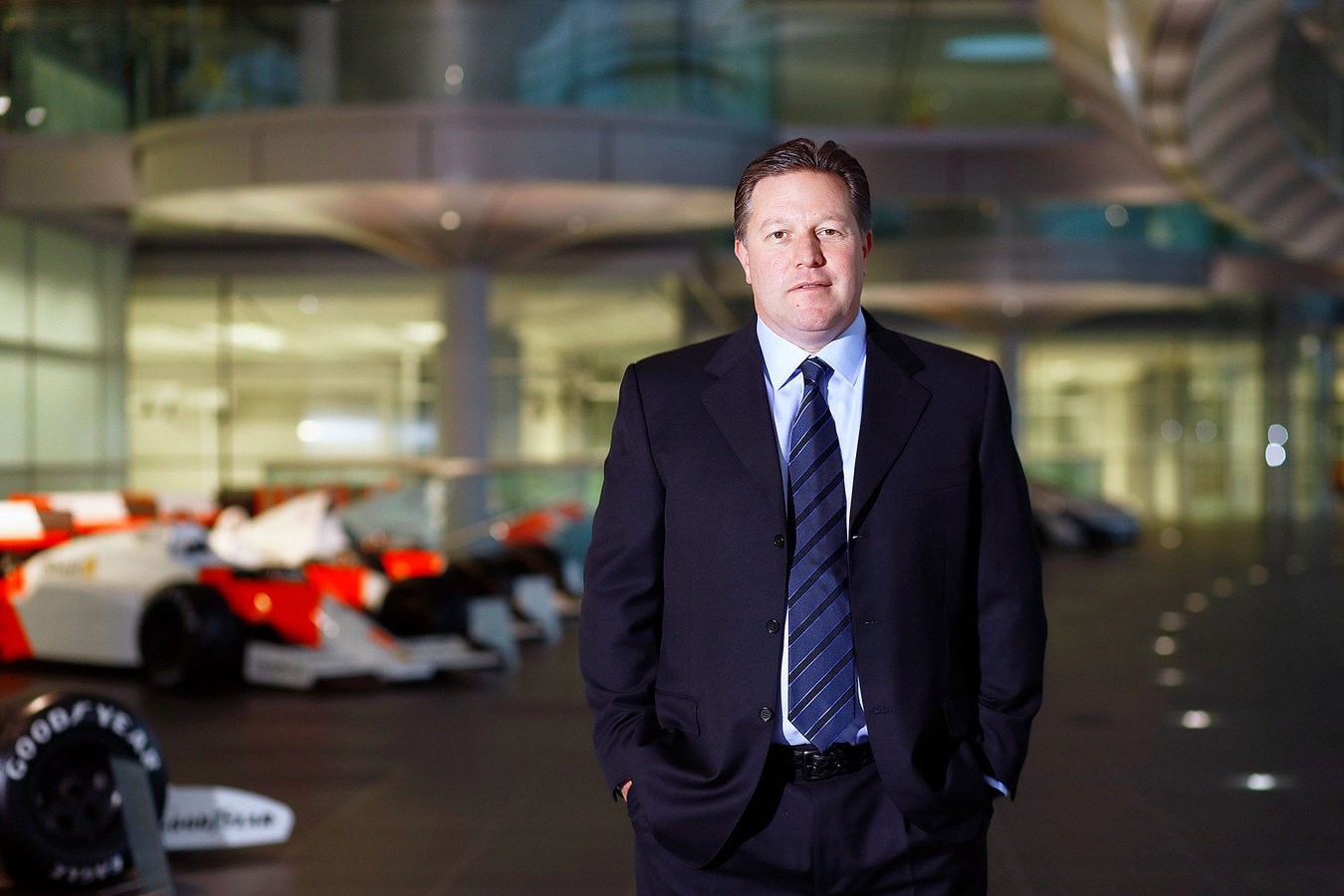
Then, when the sheer scope of the rest of the park is evident, he staggers around for a bit as if he’s suffering the after-effects of a bad souvlaki. You get the same effect when you take in the extent of McLaren executive director Zak Brown’s car collection.
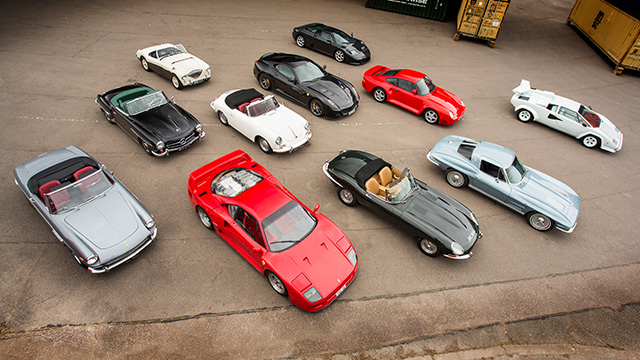
Of course he’s got a Ferrari F40 and a Lamborghini Countach. Hasn’t everyone? That’s just beginner stuff. They mix with newer vehicles like an Aventador SV, a 2017 Ford GT, a Ferrari 599 GTO and he flies the corporate flag with a McLaren 675 LT Spider. Which is nice.
It’s when you start on the older road cars in the collection that you realise Brown is a guy who gets it.
Porsche 959? Yep. Then there’s an original Honda NSX. These are proper car guy cars. The overlooked supercar’s there, the Bugatti EB110. Design icons like the Ferrari 275 GTS, the Mercedes 190SL Roadster, a Corvette C2 Split Window and the Jaguar E-Type show a clear appreciation of a certain refined aesthetic.
But it’s when you begin to realise the depth of his competition car collection that you begin to look for a place to sit down. It’s dizzying.
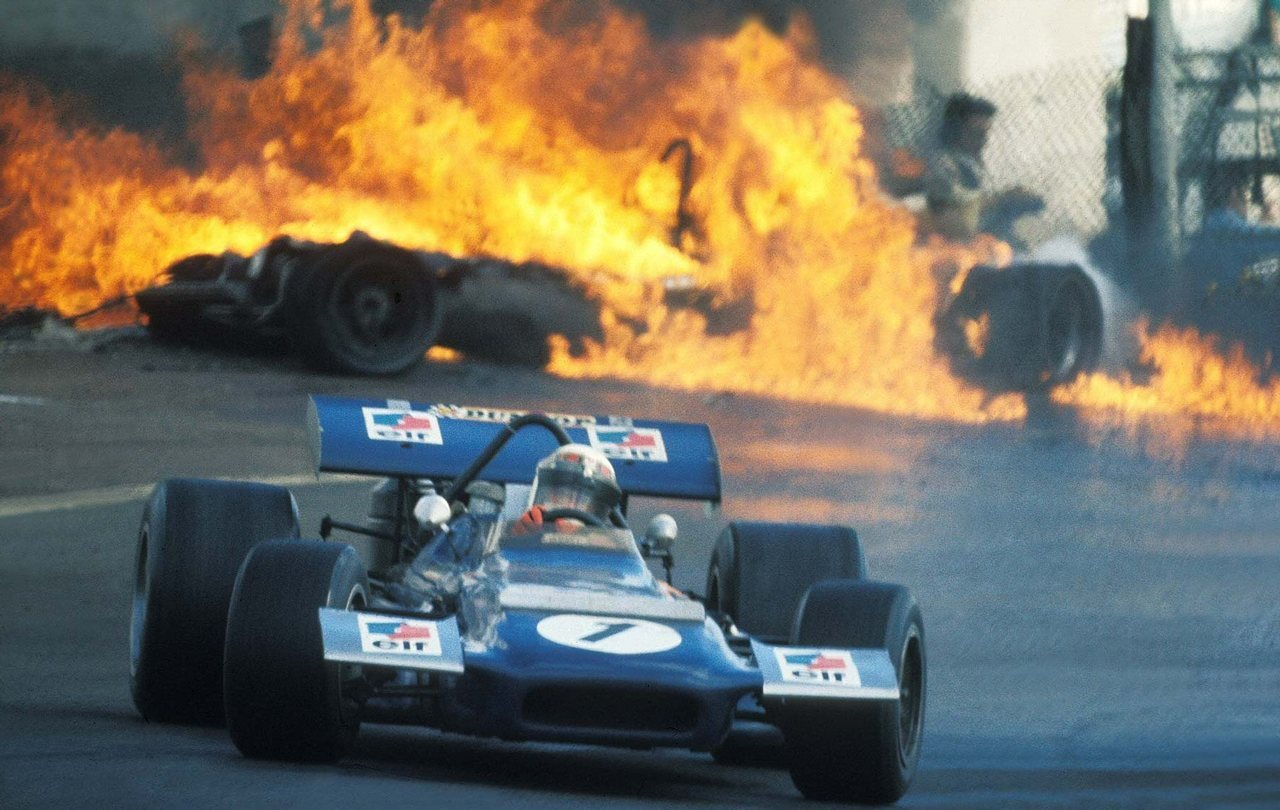
Brown clearly has an eye for a storied provenance. There’s the 1974 Lola T332 of Mario Andretti, Dale Earnhardt’s 1977 Chevy Nova, the Williams FW07B F1 car driven by Alan Jones to kick you off.
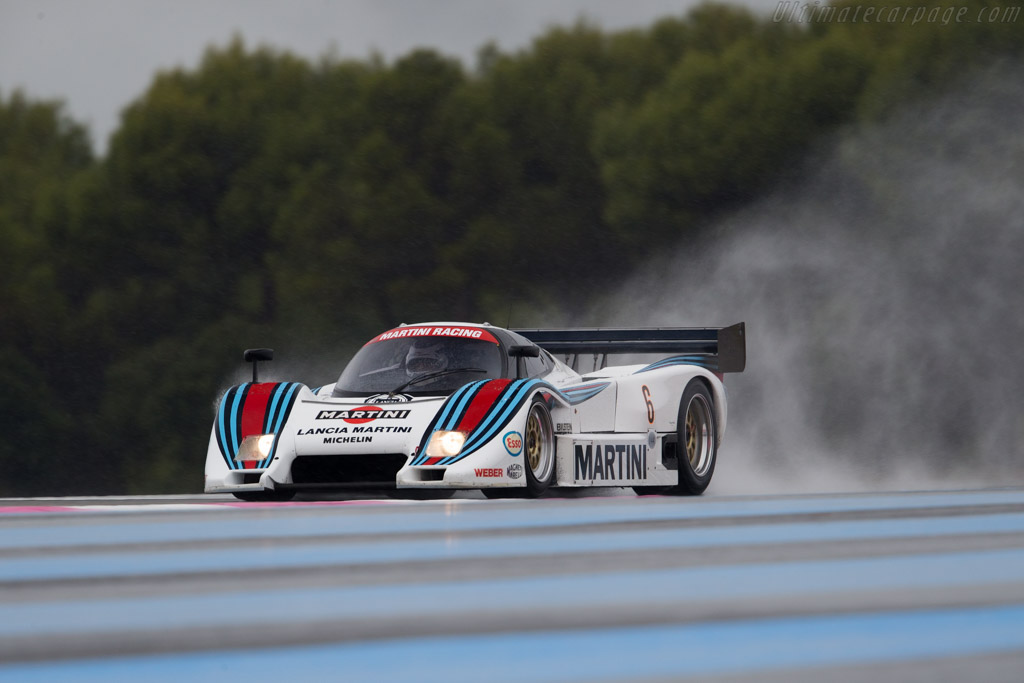
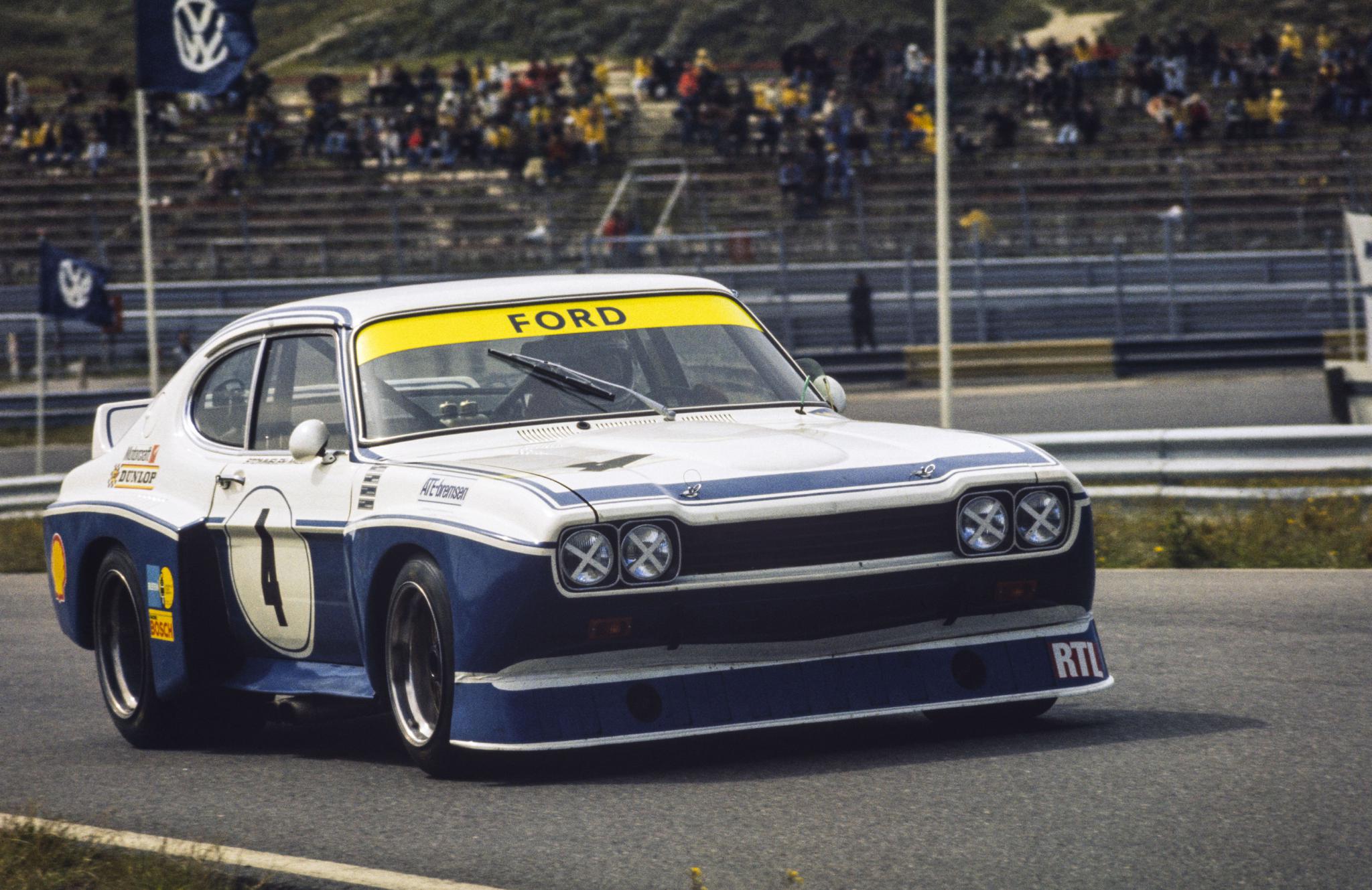
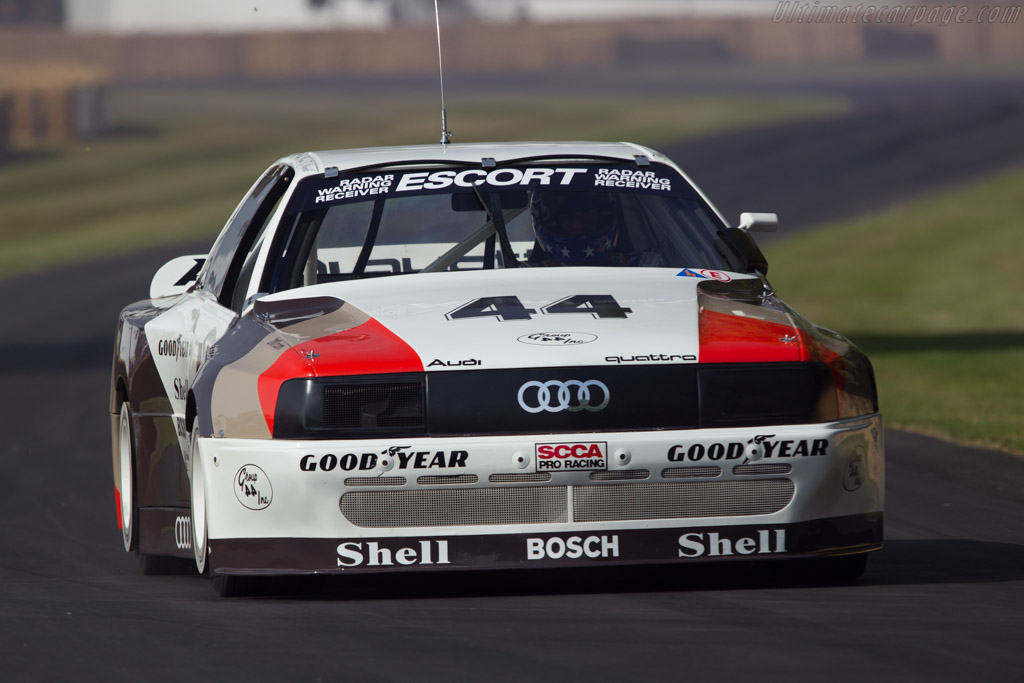
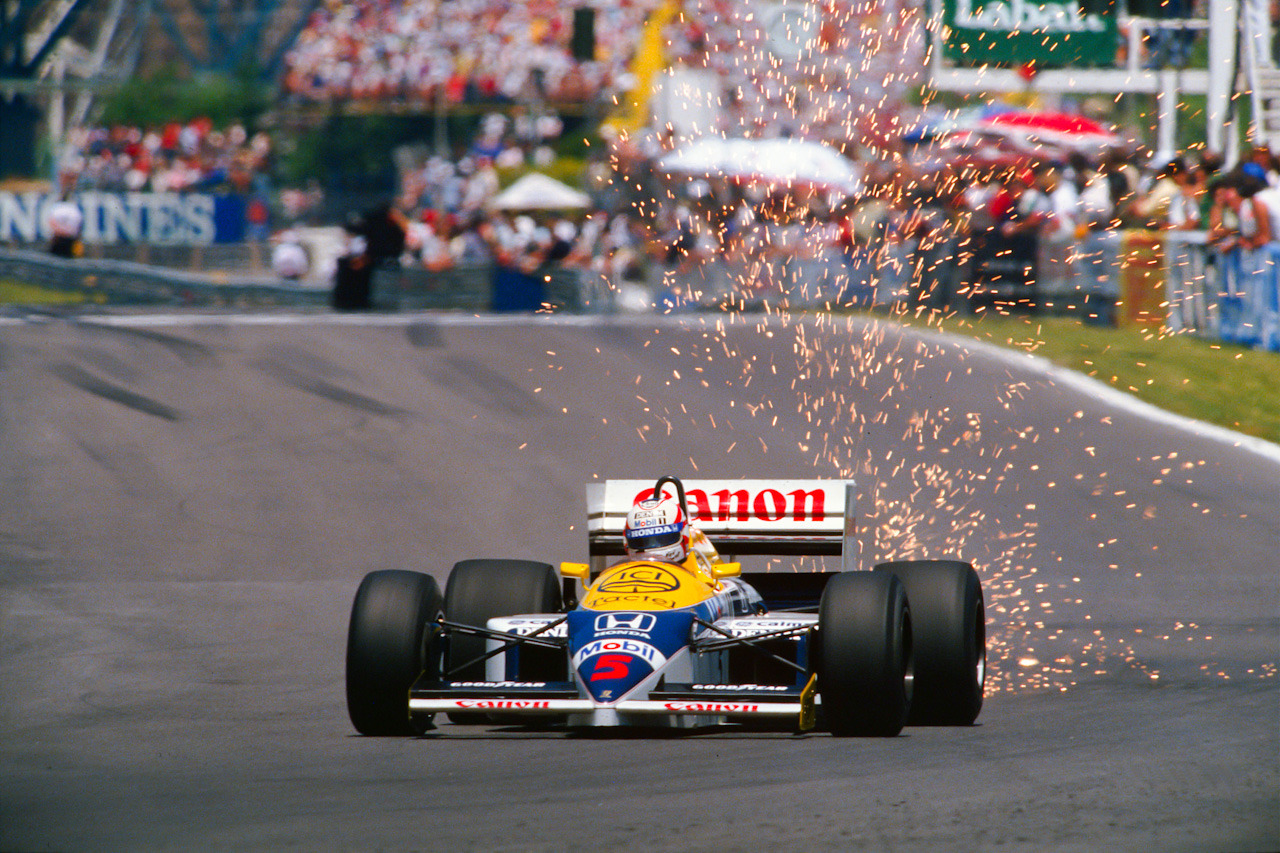
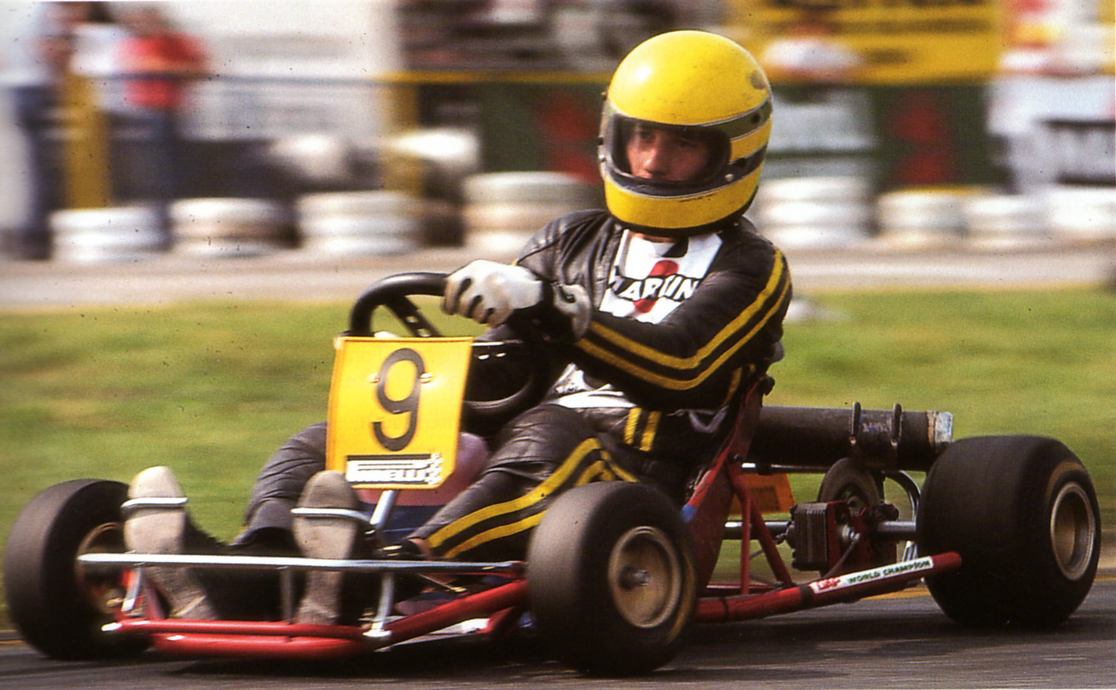
Realising belatedly that he was never going to put food on the table with a racing career, he founded Just Marketing International (JMI) in 1995, which has become the world’s largest motorsport marketing agency. The business was acquired for US$76m in 2013 by CSM Sport & Entertainment.
IN THE absence of government incentives and charging infrastructure that falls far behind the standards of other developed countries, electric vehicles are still failing to gain traction on Australian soil, while many other global regions continue to experience steady growth.
Our first insight as to how many cars Australia’s favourite EV maker Tesla flogs was revealed by a recall last month, and it is now a little clearer just how many (or few) zero-emissions and plug-in hybrid vehicles are finding driveways Down Under.
According to monthly VFACTS sales data published by the Federal Chamber of Automotive Industries (FCAI), to the end of June this year, private buyers registered 200 ‘EVs’, although that figure leaves out Tesla, and takes into account a portion of vehicles that are not solely electric but can travel under electric power alone, which includes plug-ins such as Mitsubishi’s Outlander PHEV.
However, factor in the educated Tesla estimate as published by Wheels in June (1060 cars divided by two, for six months of sales) and the total figure increases to about 730 passenger and SUV vehicles. Add in non-private sales and the number of EVs going into fleets and large businesses, and the number climbs to a little short of 1100.
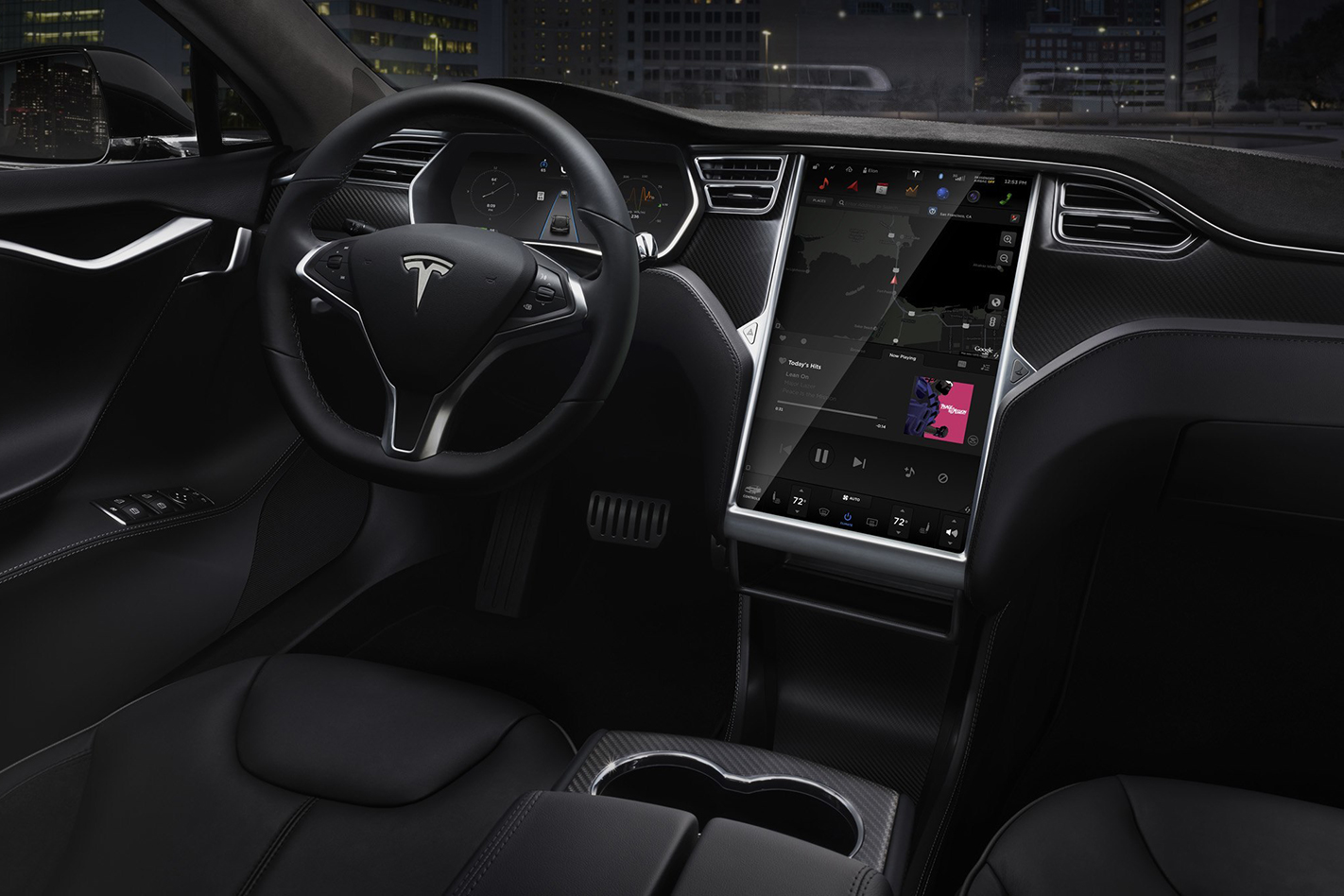
A simplistic estimate would plot a straight line graph to 2200 EV sales at the close of 2017.
Need that putting into perspective? In 2016, more than 645,000 electric vehicles were sold in China, Europe almost equalled that figure, while the United States ranked third with just over 570,000.
You might argue the difference in population of the top three is an unfair pegging against Australia’s 24 million and that a more level playing field would be somewhere like Norway, for example, where in 2016, its population of 5.3 million bought 135,276 electric vehicles.
Last year China bought one EV for every 214 people, Norway bought one for every 39 people and if Australians buy our rough figure of 2200 EVs this year it will be one vehicle for every 11,049 people.
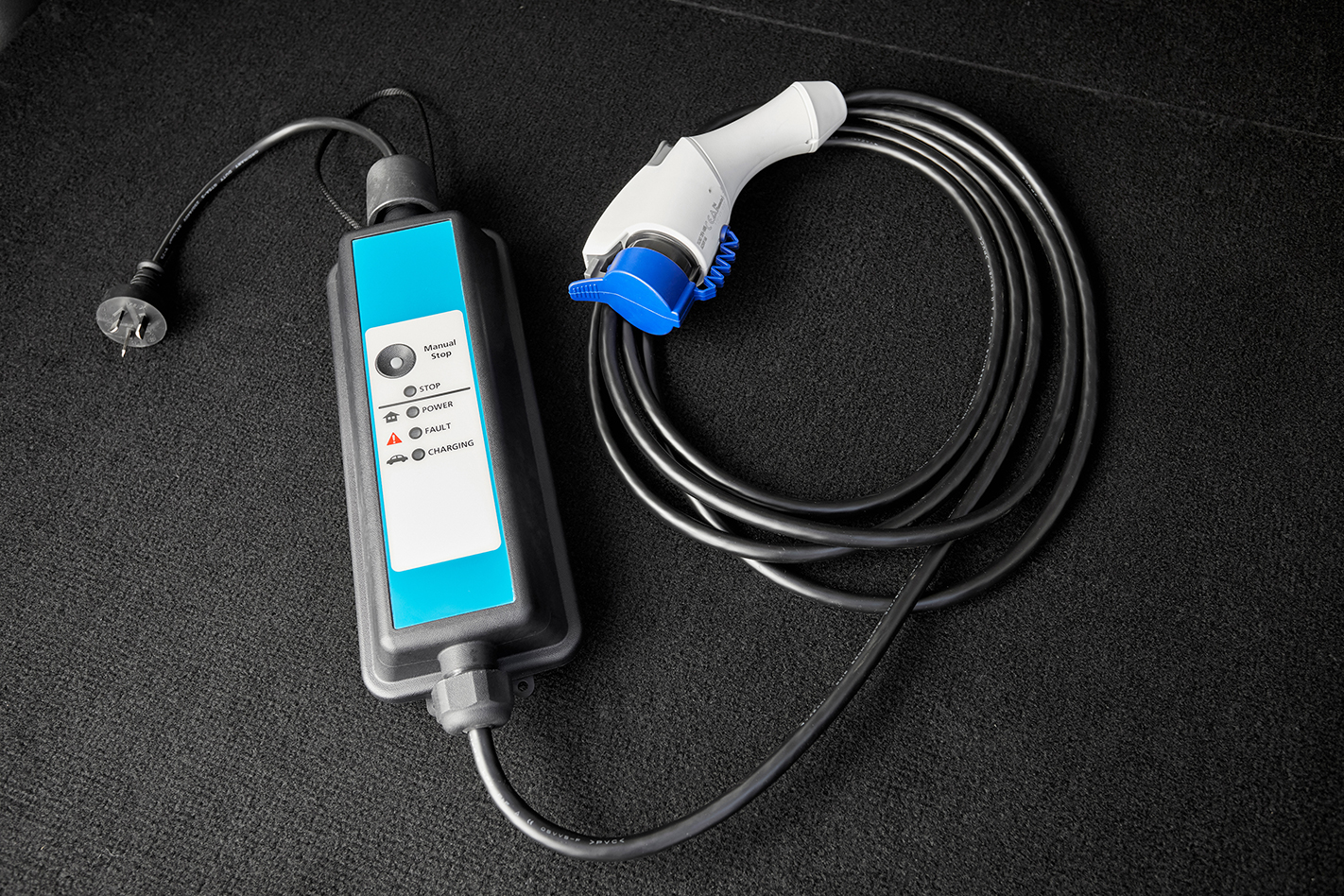
Local fuel prices certainly don’t help and while the cost per litre for unleaded continues to hover around $1.30 compared with £1.15 ($A1.90) or ¥140 in Japan ($A1.60), Australian’s are likely to continue buying large vehicles including one-tonne utes – the most popular segment so far this year.
The almost complete lack of government incentives is also another key reason Australians are not interested in electrified vehicles and if there was ever any doubt of the effect of tax breaks on EVs then look no further than Hong Kong.
On April 1 this year, authorities axed a tax break previously applied to electric vehicles and in the entire month, Tesla – ironically the most popular EV brand in Australia – sold not a single vehicle.
Until the government puts a concerted effort into encouraging low and zero-emissions vehicle sales, along with the infrastructure to support them, it appears that Australia will continue to be the electric vehicle wasteland of the modern world.
Ford has poured cold water on any suggestion it’s developing a faster Focus ‘RS500’.
Ford Australia’s Product Communications Manager Damion Smy told MOTOR: “There are no plans for a more powerful Focus RS.” However, MOTOR has learned that just such a car was extremely close to release.
The hugely positive reaction from both the media and buying public is believed to have led Ford to investigate the possibility of a more focused (pardon the pun) model to fight Europe’s premium hot hatches.
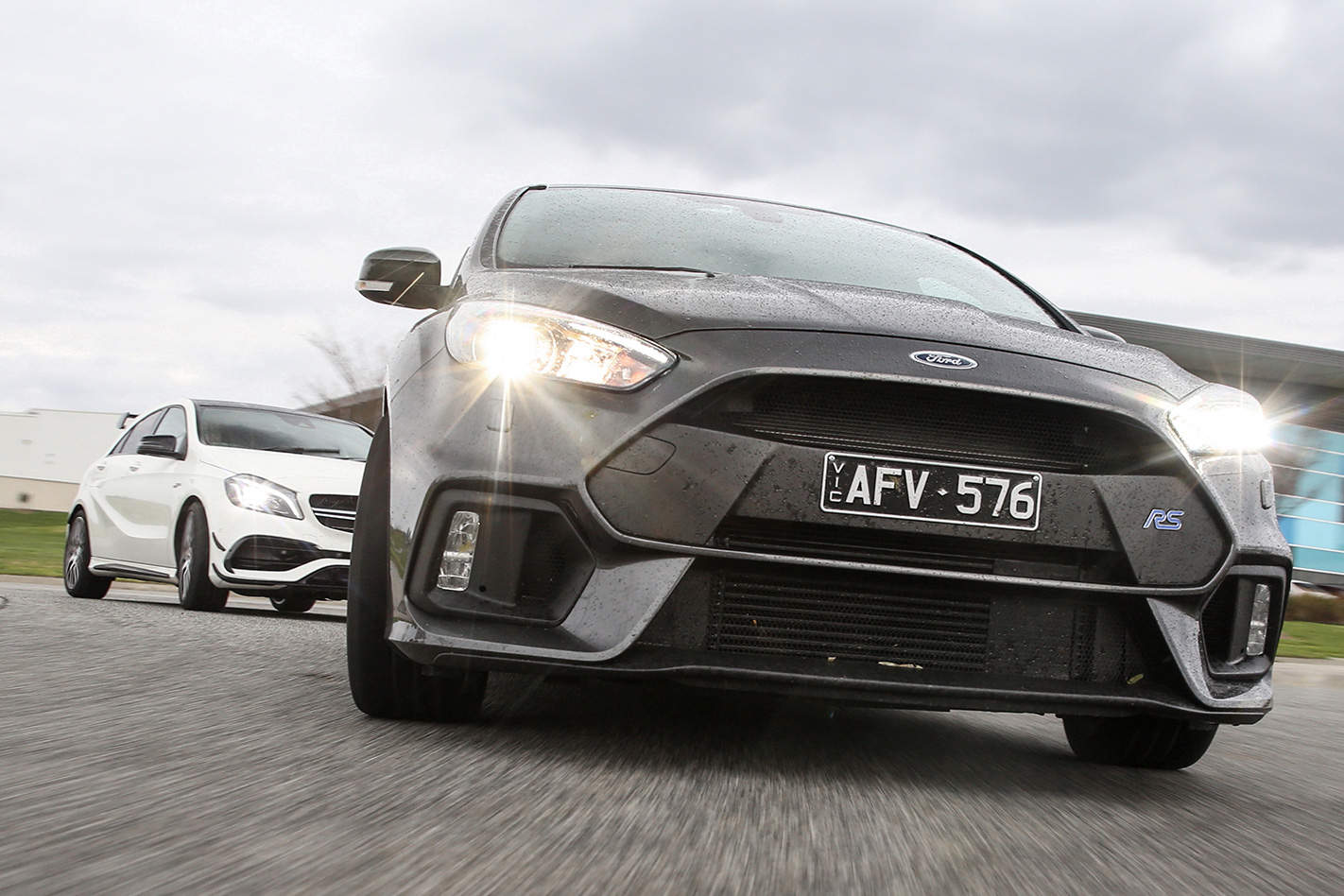
It was expected to have worn a bespoke colour with production starting this month (July 2017) and power figures and price tags suggest the program was at a relatively complete stage, however the reasons for its cancellation are unclear.
Ford produced a limited-edition RS500 late in the lifecycle of the second-generation Focus RS. It lifted outputs from the 2.5-litre turbo five from 224kW/440Nm to 257kW/460Nm and all 500 cars were individually numbered and wore matte black paintwork.
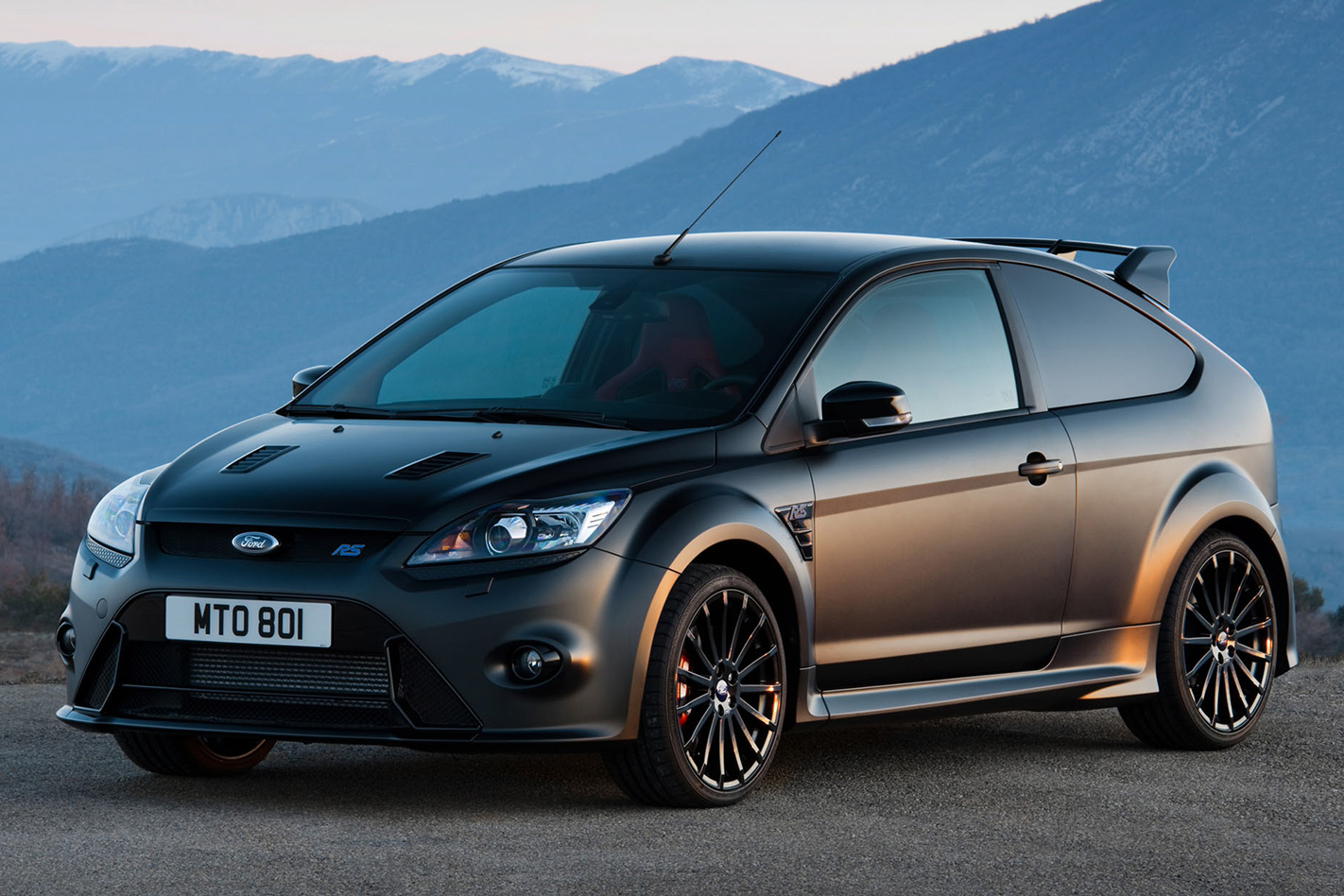
The Focus RS Option Pack is not yet confirmed for local release with Smy only saying it is currently under consideration.
JAGUAR has a new baby SUV called the E-Pace. Don’t go confusing it with the incoming all-electric i-Pace SUV, this model range has conventional combustion engines under the bonnet.
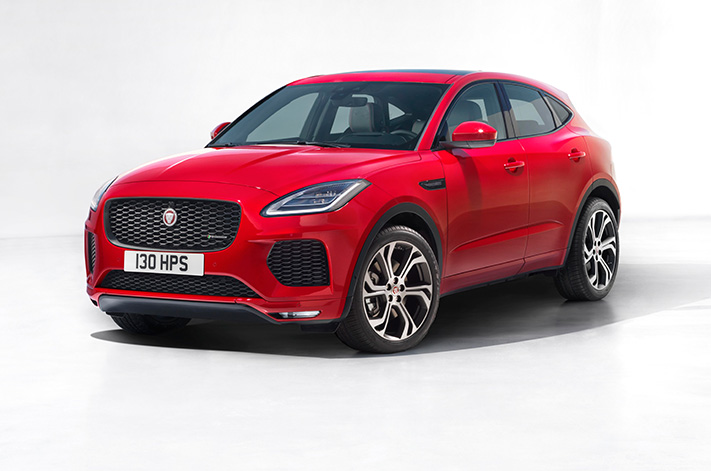
Australian-specific details are as yet unconfirmed, however Jaguar Australia has provided WhichCar with indicative pricing for the Audi Q3 and Mercedes-Benz GLA rival.
Prices for the E-Pace are set to start at $48,000 plus on-road costs when the car arrives in Q2 next year, according to the manufacturer.
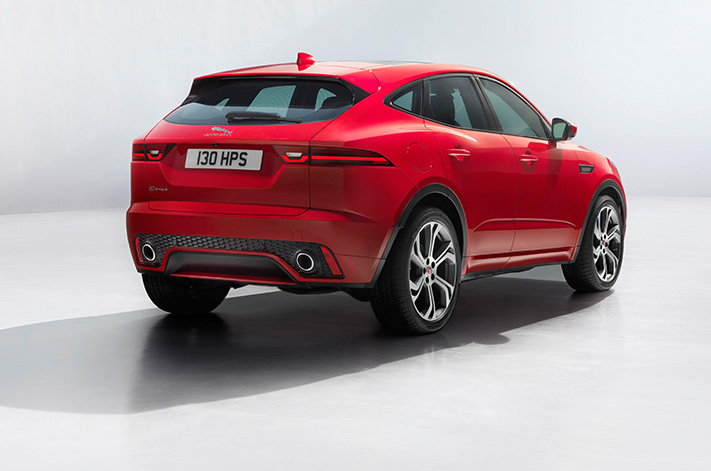
The top of the line models are expected to set you back $85,000. There are five different engines available, however it remains unclear how many will arrive in Australia.
The economy choice is the AWD D150 diesel. It has 110kW and 380Nm. Next is the D180 diesel, which has 132kW and 430Nm. The top of the range diesel is the D240 with 177kW and 500Nm.
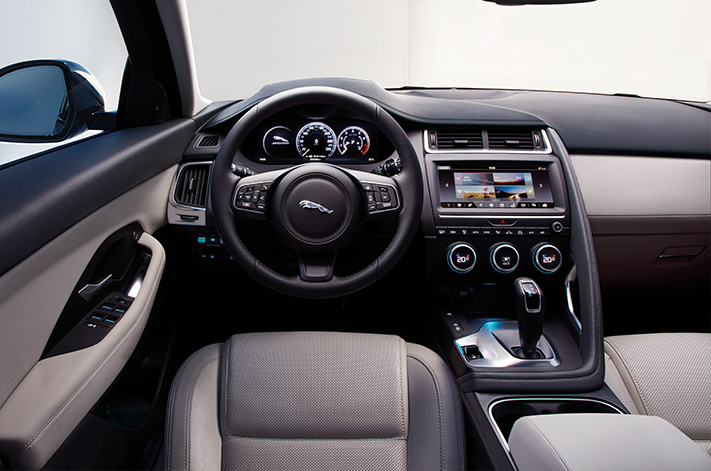
Two petrol engines are available, the first being the P250 with 183kW and 365Nm. The top of the E-Pace range is likely to be the P300, which has 221kW and 400Nm, making it a rival to the Audi RS Q3.
The D240 and P300 models get all-wheel drive, with a trick rear differential to assist in slippery conditions. Each car will have multiple driving modes, along with a touch screen infotainment unit.
The 1280×542 pixel screen can be split to show two different functions at the same time.
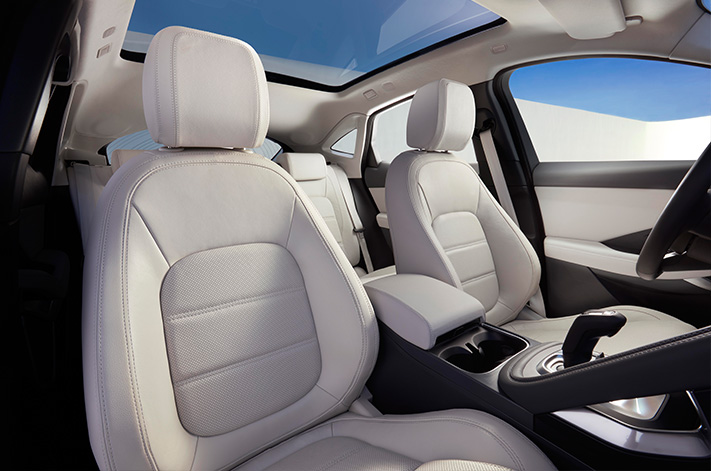
Boot space is an impressive 484 litres, and the rear compartment is one of the widest in the class.
It’s likely that demand will outstrip initial supply for the E-Pace, so you might need to act fast if you want your name on the list for the first imports.
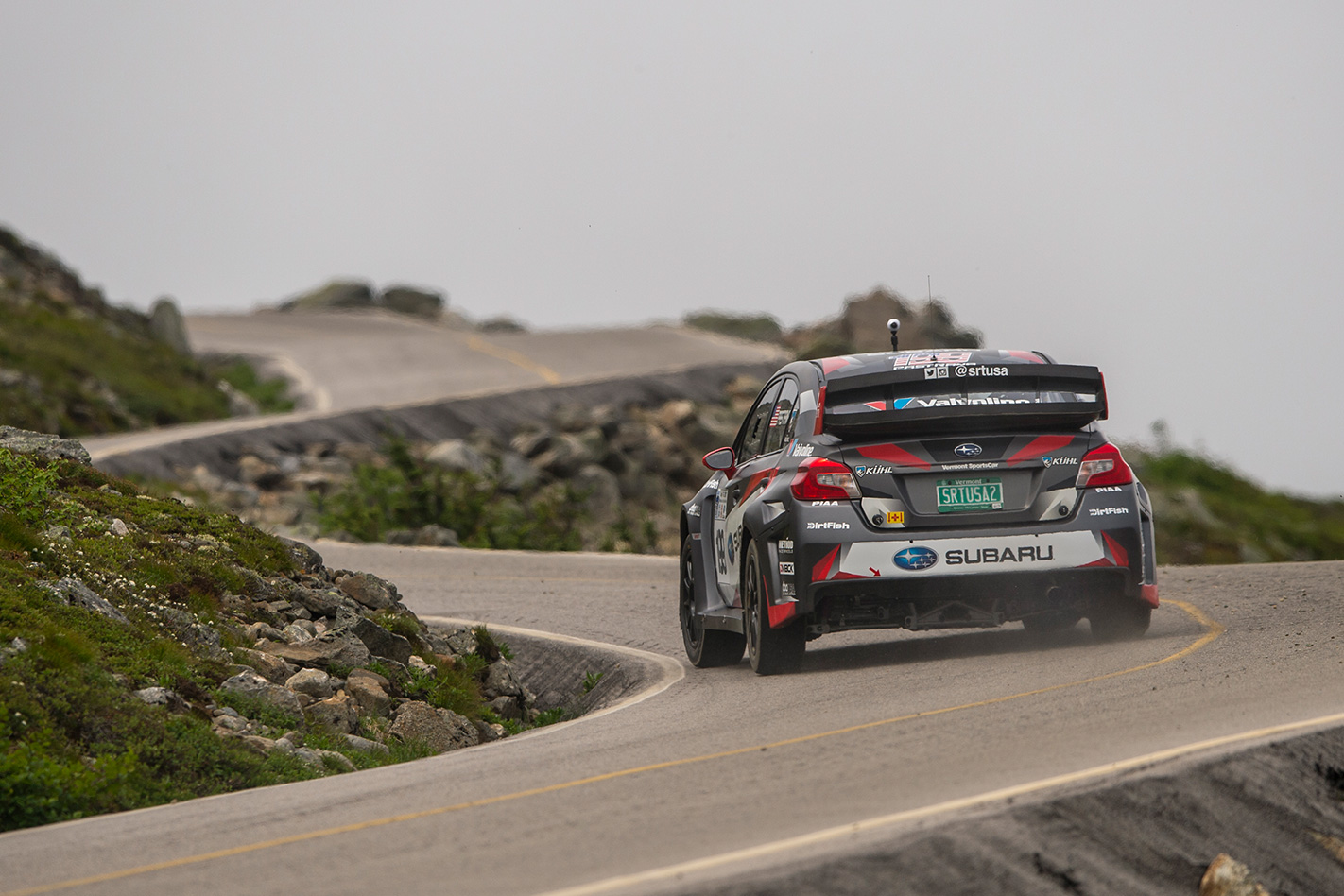
Driving along 12.16km of rough gravel road in 6 minutes and 9.09 seconds is impressive.
It means you’ll have travelled an average of 118.6km/h and that’s not slow when the road underneath you is comprised of dirt and loose rocks.
That’s also impressive when about half of that gravel road is chiselled into the side of a mountain.
What’s even more impressive is that someone just did it 24 seconds faster.
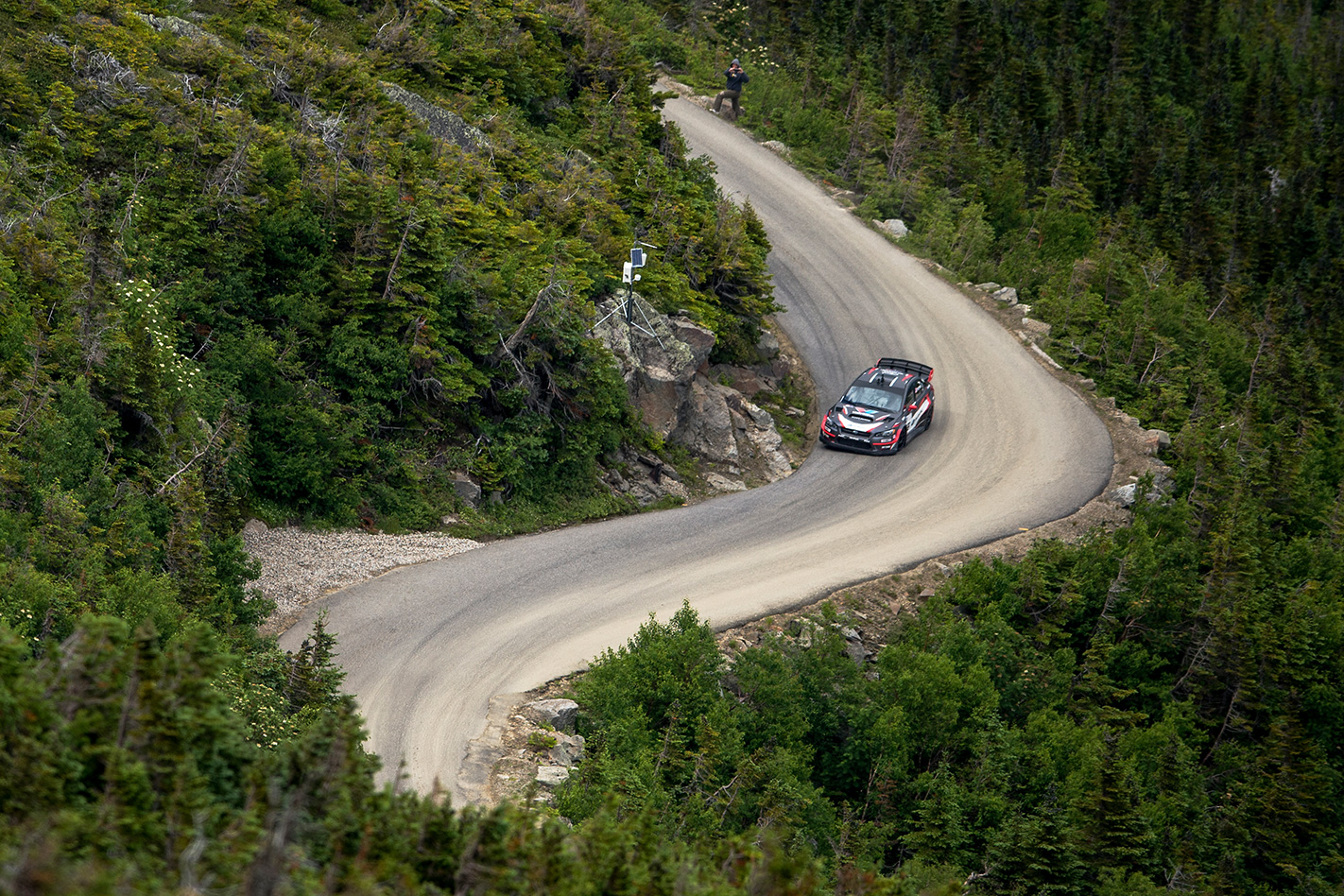
The 450kW rally-spec car has the Subaru WRX STI boxer-four, but tuned and boosted to reach the output which allowed this record-breaking run.
As well as the onboard video (above), Subaru USA recorded the run in 360-degrees, which you can watch below.
If you’re in bandwidth-poor Australia, it might pay to lower the quality so you can see things happening smoothly.
Pastrana says he hopes his record will hold up for a while, though there’s surely some madman out there willing to risk flinging themselves off a cliff in the name of motorsport.
“On our first run I leaned on the tires too much on the bottom half, which made the top half very loose and scary but really fun, I was sideways a lot but I’m sure I lost some time,” Pastrana
Check out more of MOTOR’s news on Subaru
“On the second run I conserved the tires and drove cleaner, I really didn’t expect to drop the record further.
“This road is such a challenge, it’s probably the toughest road to drive flat-out in the world.”
“It was going really well up until it went really bad,” he said.
“If you are going fast enough to win the event you are going fast enough to crash.
“But there is no better person to lose my record to than Travis.”
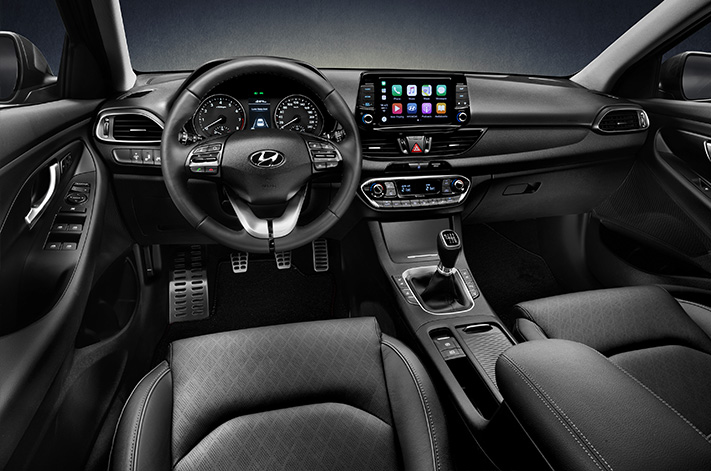
HAVING attracted global attention by finally revealing its highly anticipated i30 N hot hatch last night, Hyundai chucked in a set of steak knives in the form of an i30 Fastback.
The garden variety versions of the slippery looking i30 won’t be coming to Australia, however we are likely to see it when an N badge, with that version about to be signed off.
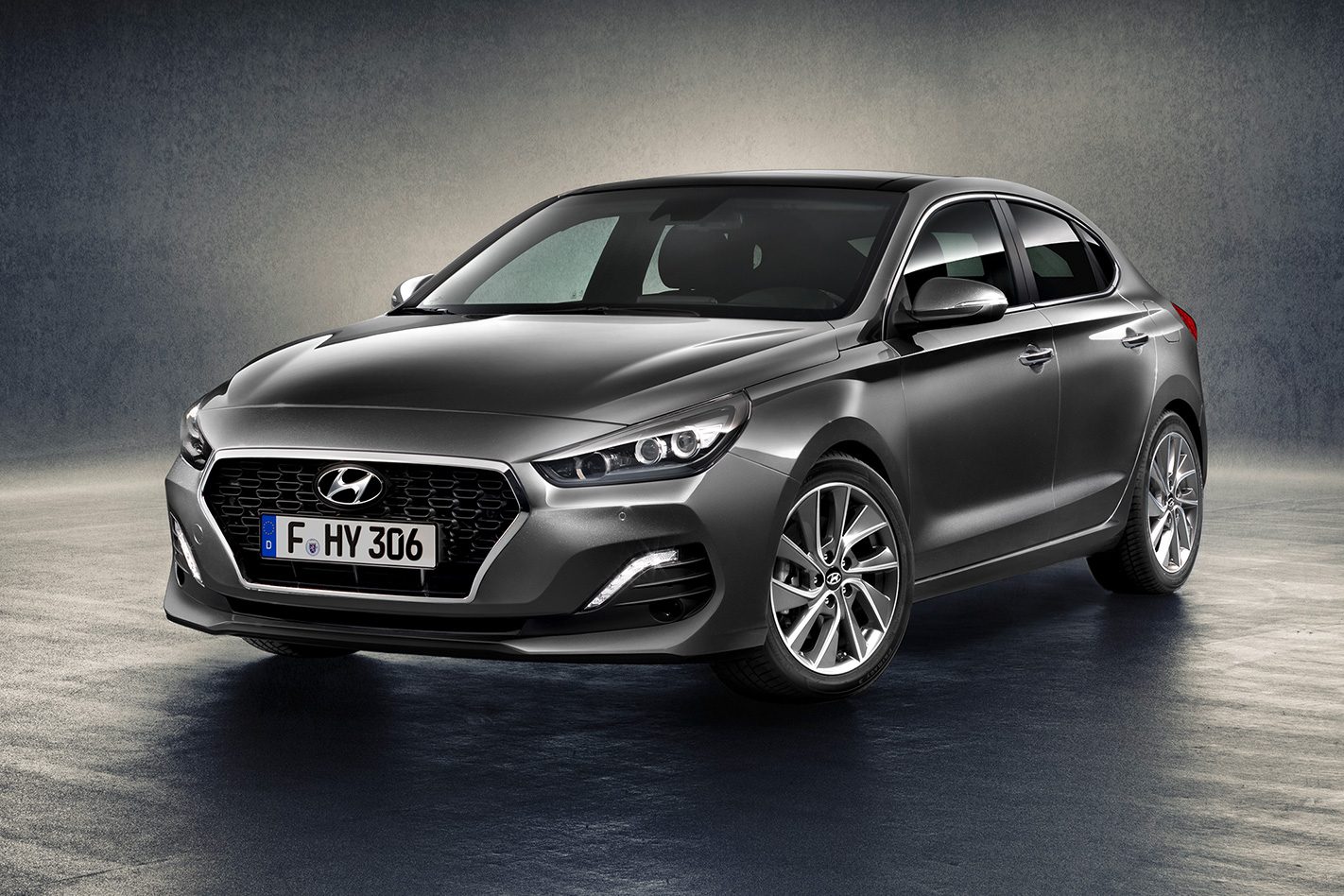
It won’t be a half-baked N car either, and will complement the hot hatch to add volume much in the same way Audi has positioned its new RS3 sports sedan alongside its existing hot hatch.
Hyundai Australia admits it would otherwise be interested in this “excellent looking choice” despite it being very much a niche product in the small-car segment.
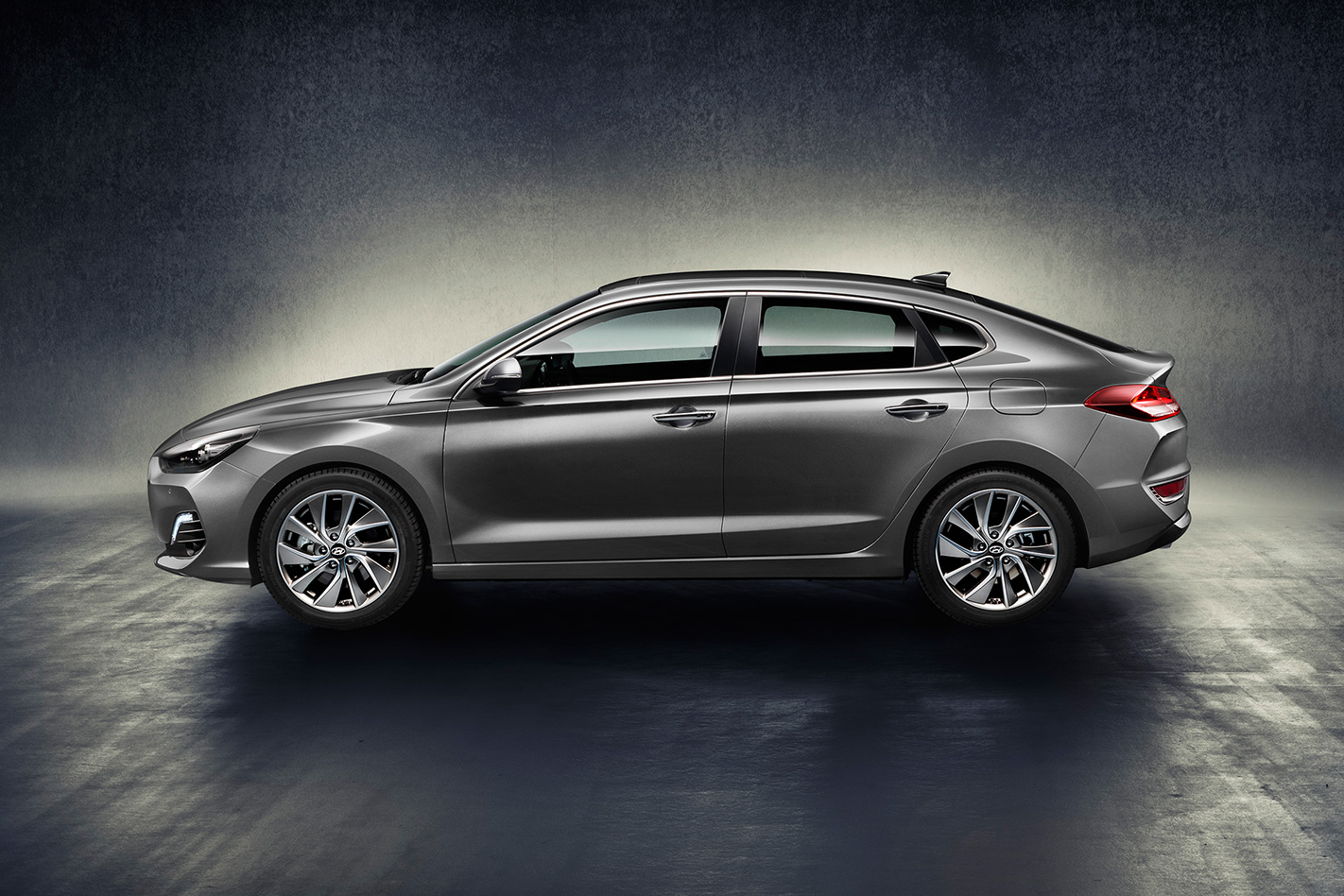
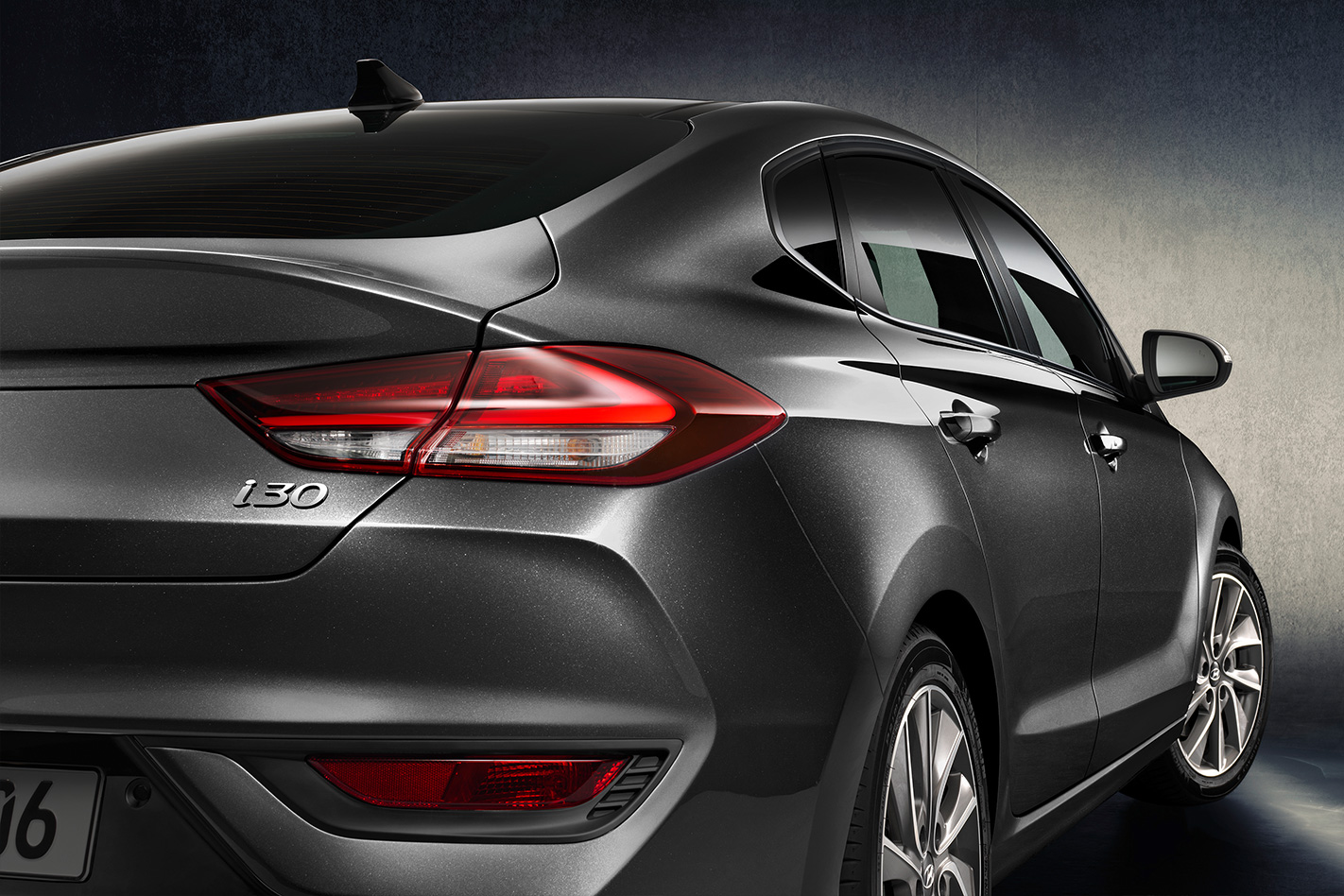
“When designing the i30 Fastback we played with the proportions of the i30 range by reducing the height of the Cascading Grille and lowering the roof line. The elegant silhouette is further emphasised by the generously arched rear spoiler shape.
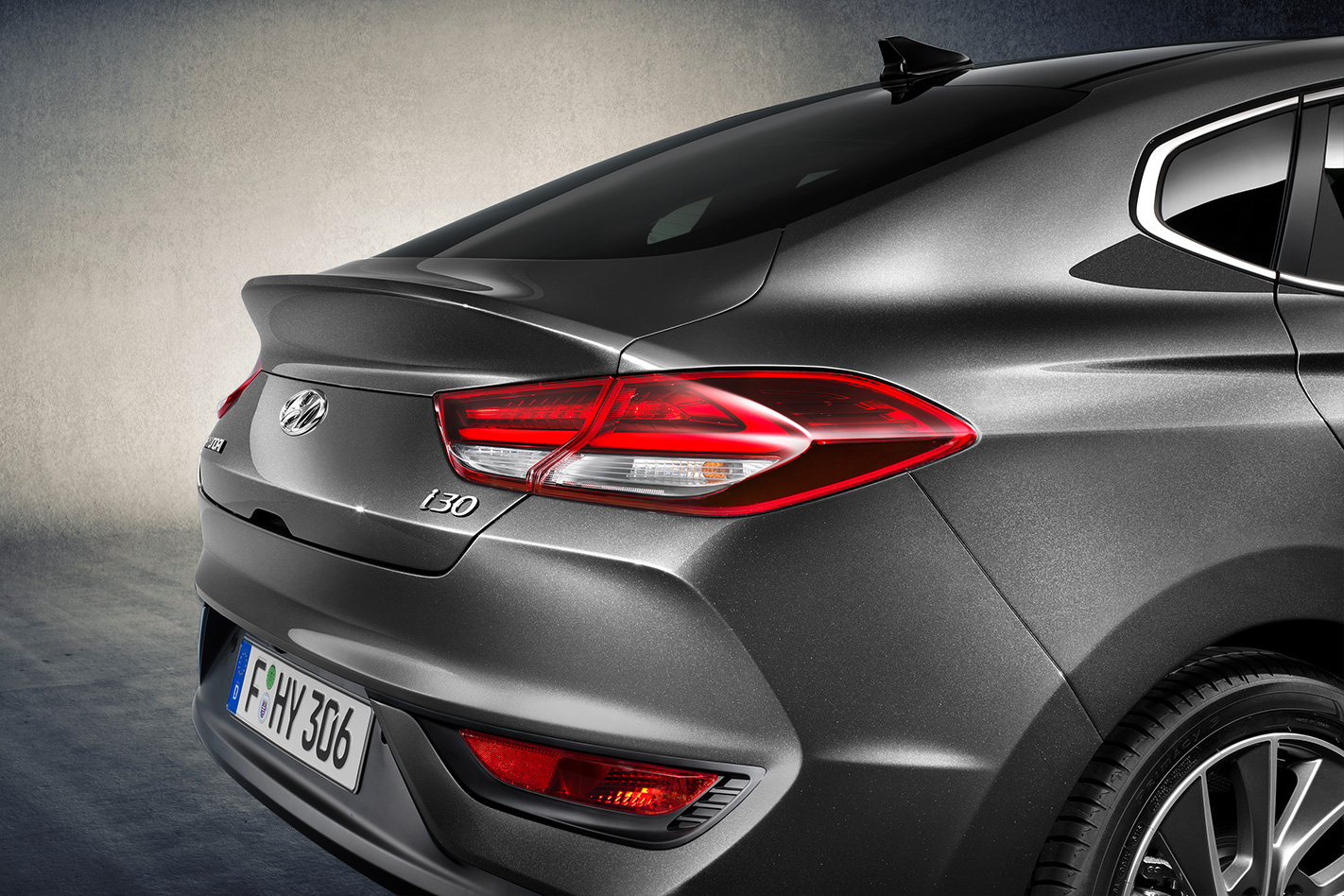
Driving dynamics have been tweaked to accommodate the new design and maintain balance between ride and comfort including lowering the chassis by 5mm and stiffening the suspension by 15 percent.
Overall height is 30mm lower than the hatch resulting in a sportier stance, however its athleticism is undone by an uninspiring choice of two downsized turbocharged petrol engines including an 87kW 1.0-litre three pot and 102kW 1.4-litre four.
You’d hope Hyundai sees sense and introduces a 150kW 1.6-litre powered SR variant at some point.
WE’RE AT a point in time of profound change.
Australian manufacturing is winding down. Electrification is ramping up. And technology is increasingly taking control. The fast road ahead is anything but conventional. And it is here where our protagonists meet.
Watch the full video comparison: Mercedes-AMG E63 S v Tesla Model S P100D v HSV GTSR
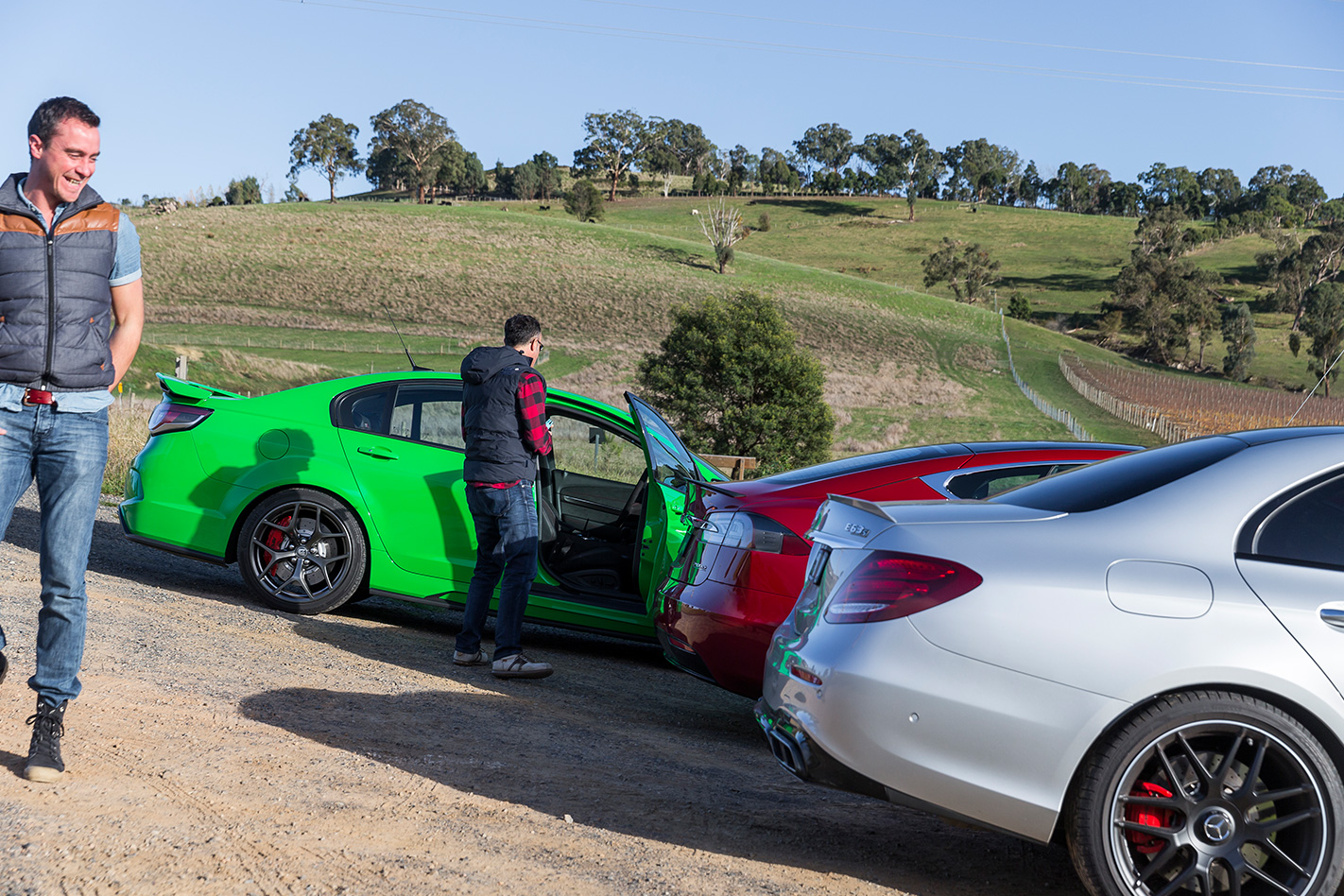
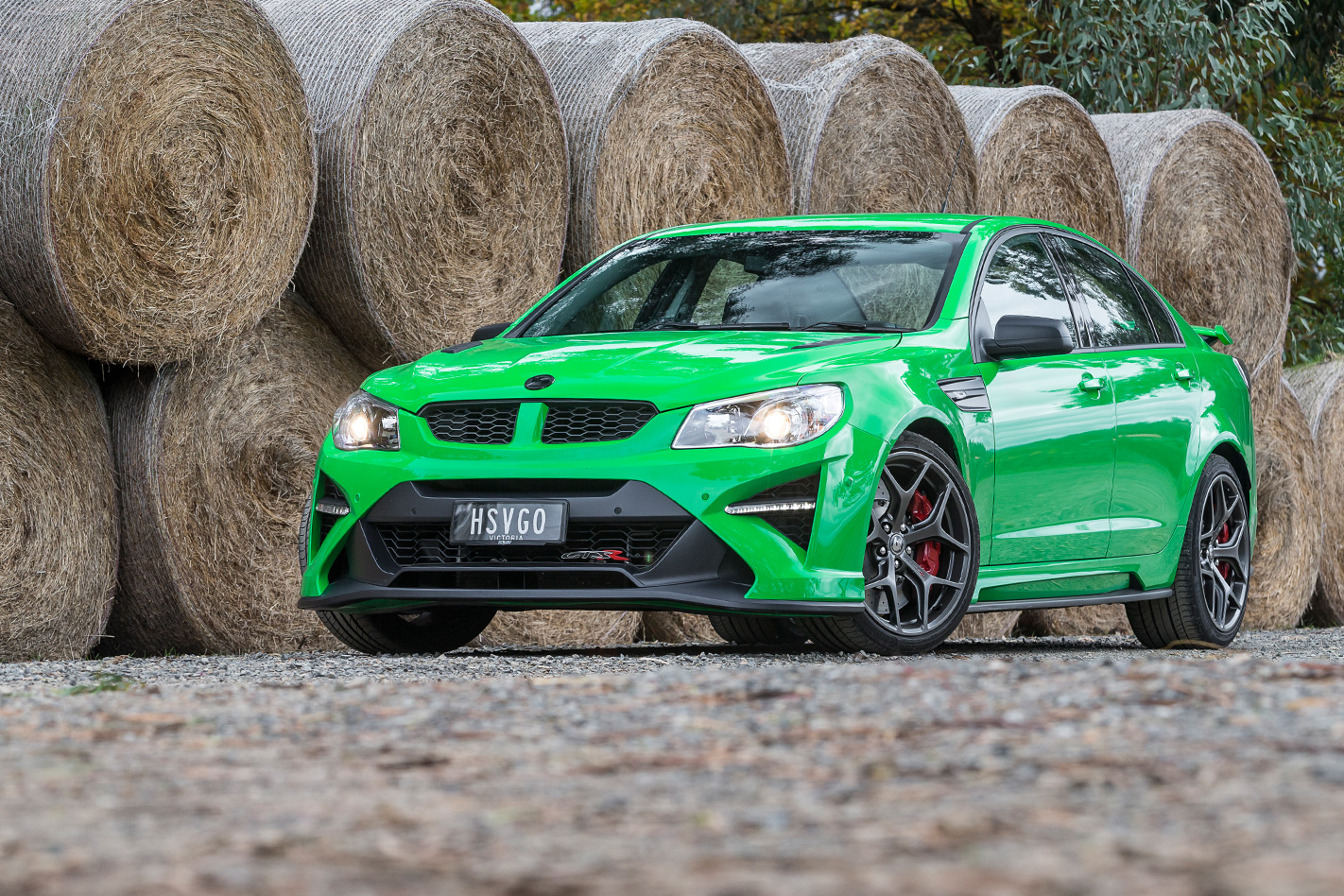
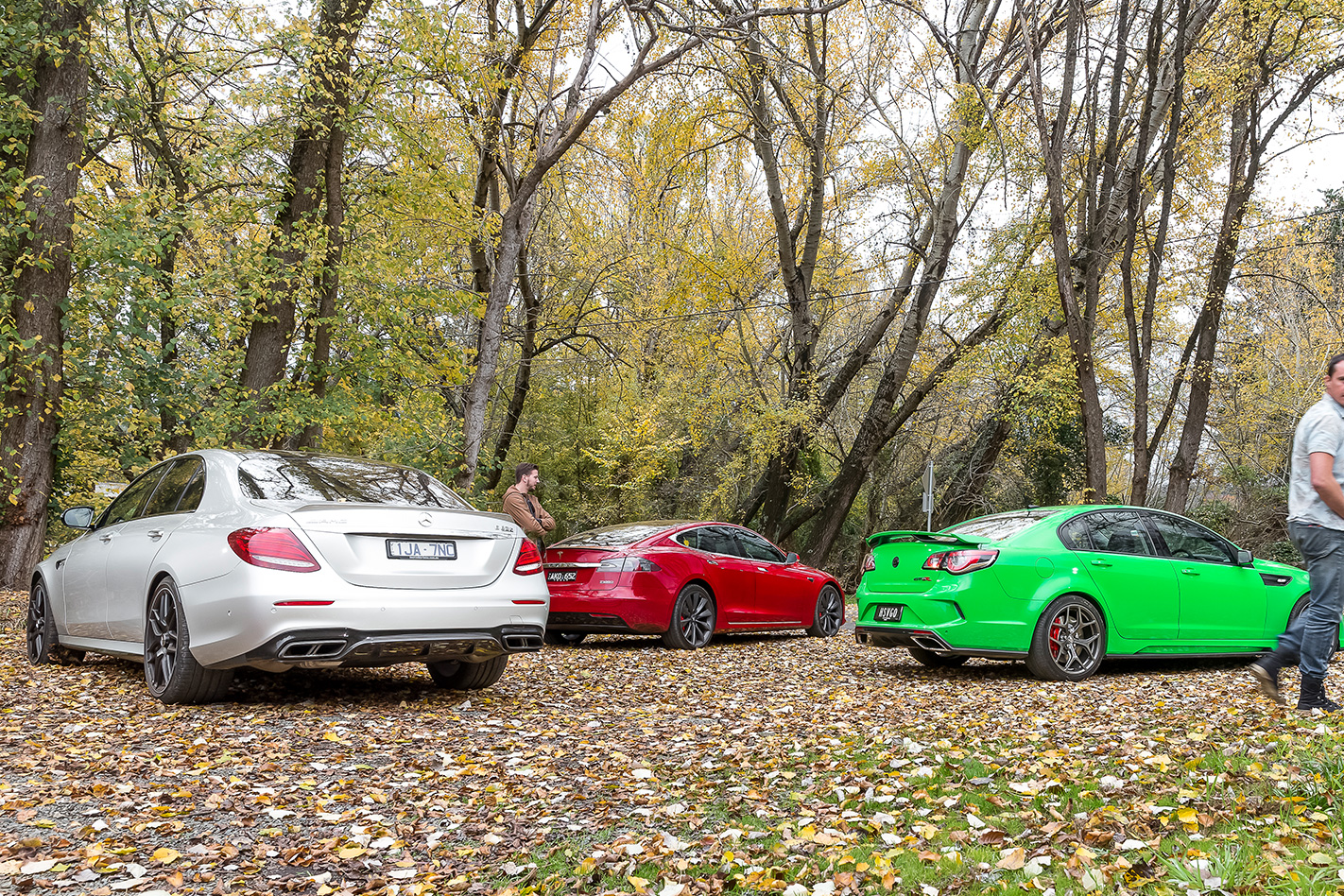
And yet there really isn’t the gaping divide between the rear-drive, supercharged V8 HSV, the all-paw twin-turbo V8 AMG and the all-electric, all-wheel drive Tesla that the specs suggest. Each can warp time and speed while simultaneously accommodating five astonished souls. Each is the ultimate expression of athleticism in their respective spheres. And each one’s worth relative to the other will inexorably alter over time, as evidenced by the values of most chrome-bumper Aussie legends.
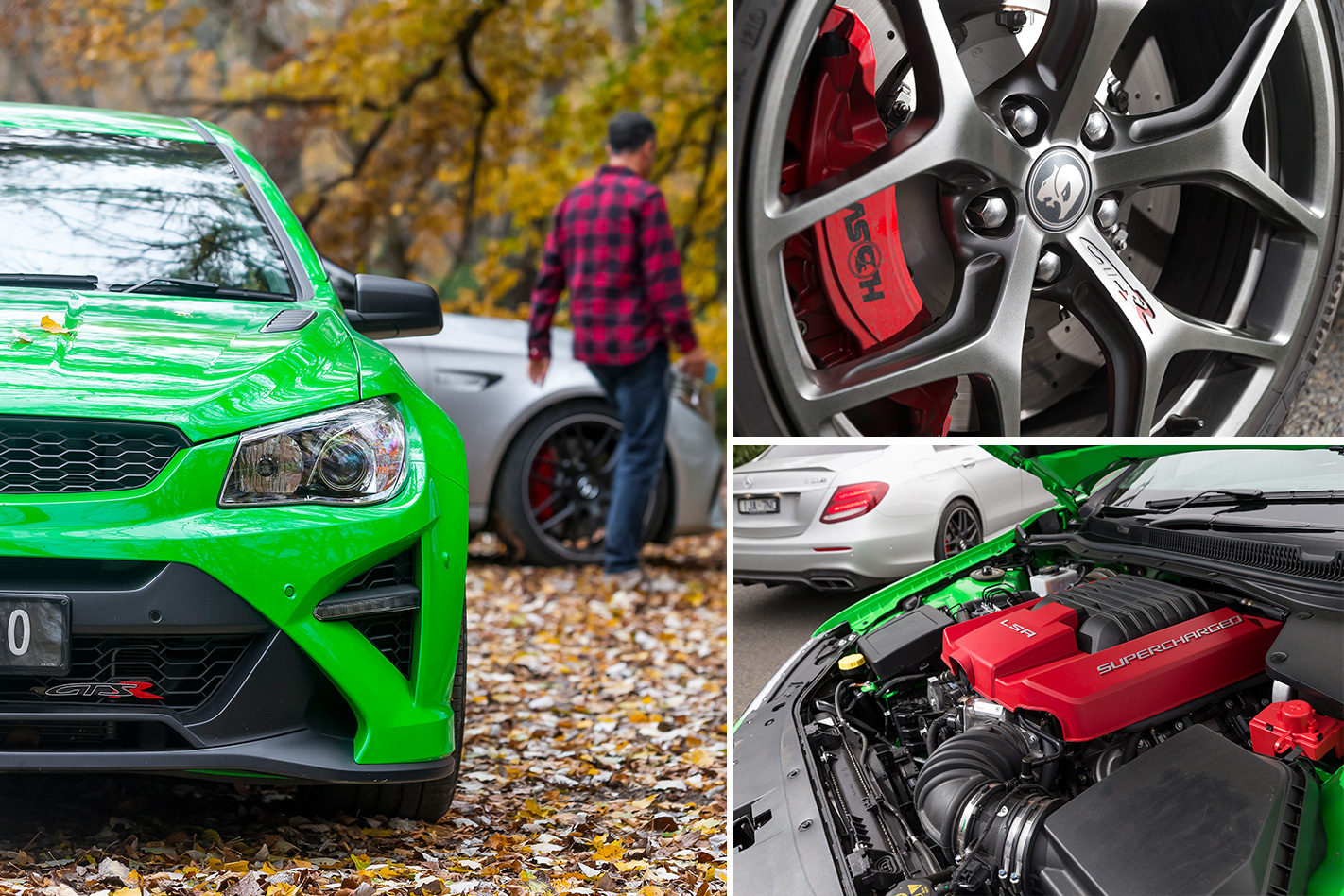
The clock is, of course, ticking for the GTS-R. Get in quick if you lust after one of the 1000 sedans or 600 Maloo utes, both bearing a 5kW upgrade to the US-built 435kW/740Nm 6.2-litre LSA V8. We’d wager the HSV’s value will skyrocket even before local production ceases forever come this October. Especially as greed is already driving the now sold-out $170K W1 with its ballistic 474kW/815Nm LS9 V8 towards $300K and counting…
That’s in contrast to today’s E63, which is probably the most amorphous in a quarter of a century of fast E-Classes, which started with the Porsche-built 500E of 1991. Is it a C220d from behind? What a wasted opportunity, though a unique AMG nosecone does at least create an aggressive visage.
There’s no questioning the menace of what lurks under the bonnet, though.
Tested here in potent E63 S guise, which adds an extra 30kW/100Nm to take total outputs to 450kW/850Nm, the E63’s 4.0-litre twin-turbo V8 is a new high-water mark for the super-sedan breed. Paired to AMG’s nine-speed multi-clutch transmission that sends drive to all four wheels, the AMG’s drivetrain also highlights the unprecedented level of engineering transformation undertaken by the Affalterbach virtuosos.
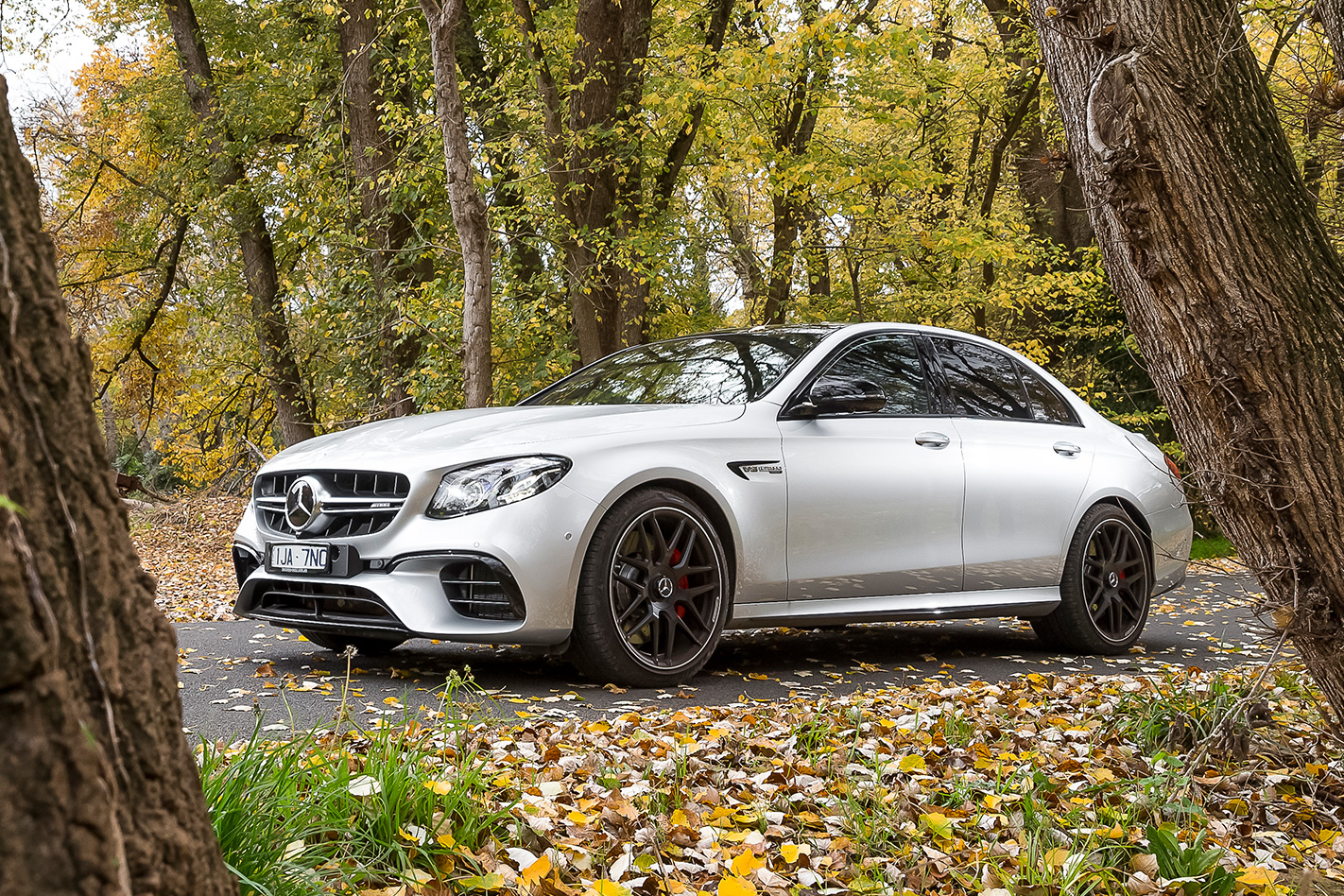
Unique suspension and brake components redefine the ultimate E-Class too, with torque-steer-quelling components for the four-link front axle forged from aluminium. Similarly, dynamic engine mounts change stiffness according to prevailing driving and road conditions, reducing inertia for greater dynamic precision. It’s on the track where such progress really matters, though one Mercedes-AMG insider reckons the E63 S’s greatest achievement lies in its ability to rip through the Nurburgring by day and strut to the opera by night.
But who needs the opera when you have an exhaust that sounds this good? Menacing at idle and deep-throated at full-noise, the E63 S’s soundtrack seems to channel Pavarotti himself.
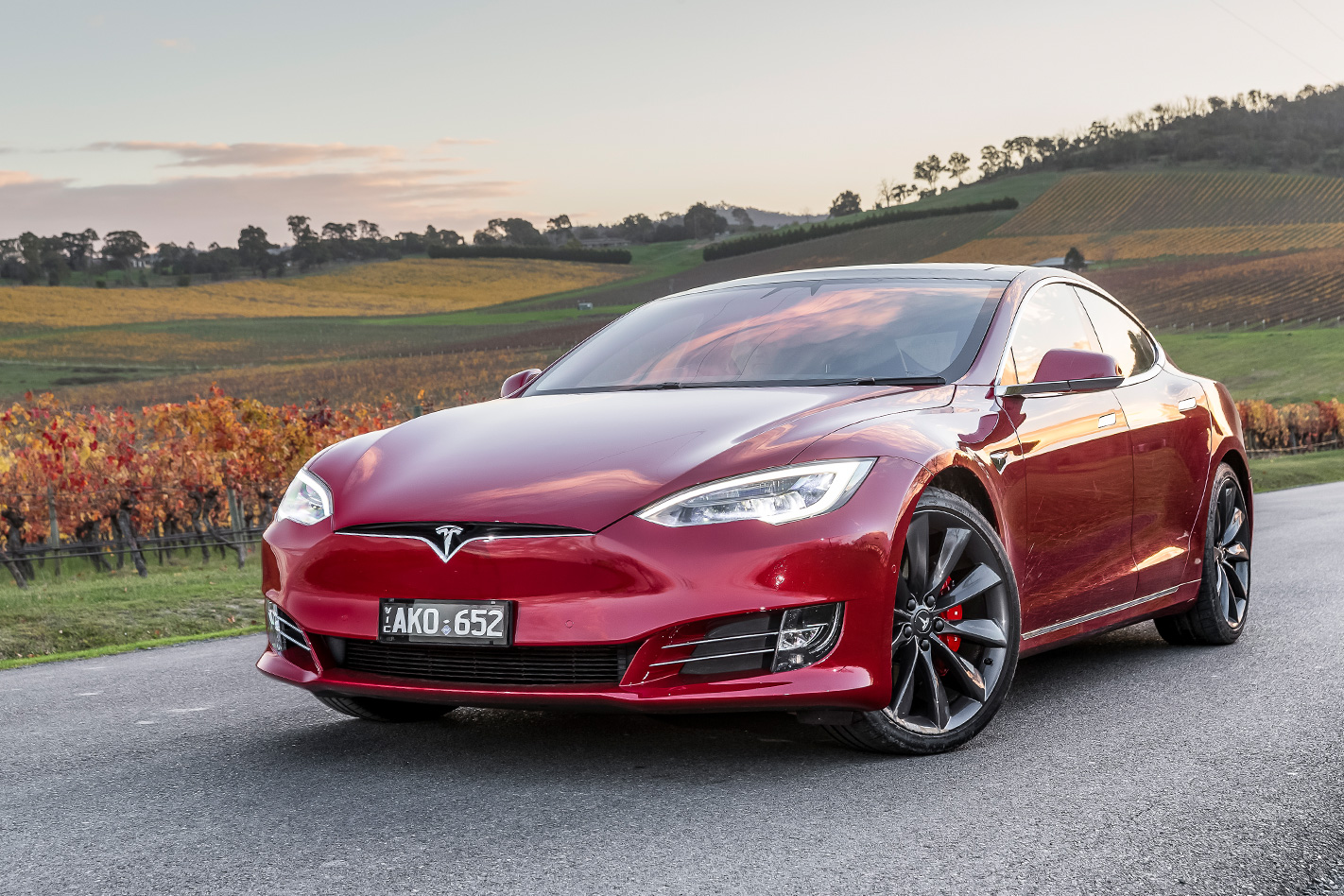
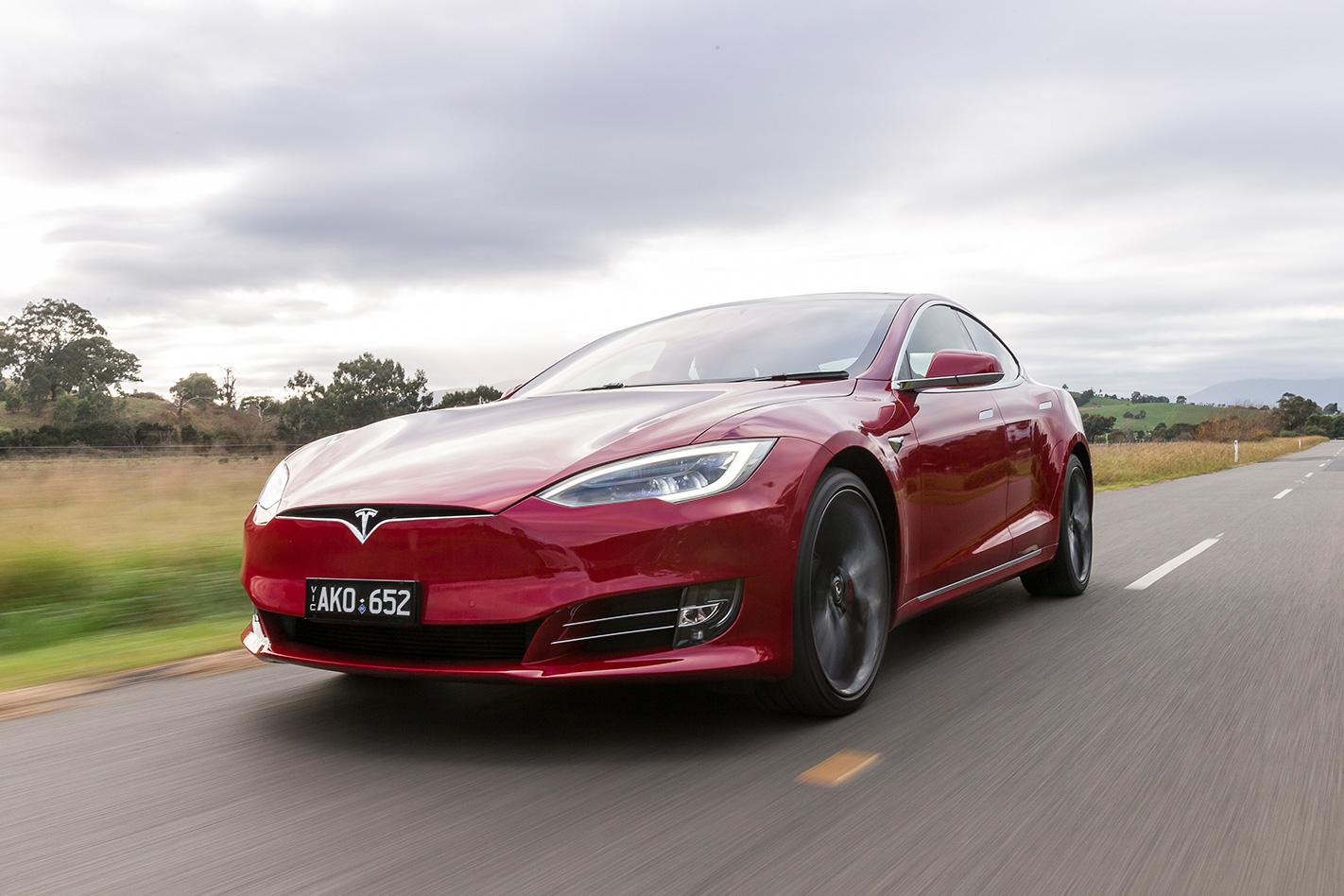
That facelift coincided with the introduction of one of the fastest accelerating production vehicles on the market. The P100D (‘P’ for performance, 100 for 100kWh lithium-ion battery and ‘D’ for dual-motor all-wheel drive) might only be good for 250km/h, but a claimed 2.7-second 0-100km/h sprint is quicker than flagship models from Lamborghini and Ferrari. And with a claimed range upwards of a 600km between charges, the Tesla’s on-paper promise is verging on stupefying.
Unfortunately, the fact our P100D is a customer car that has already been sold meant we couldn’t put Tesla’s lofty performance claims to the test at the dragstrip. But even if we could have, AKO-652 is saddled to the gunwales with weighty options so probably wouldn’t have delivered a representative time. A glass roof, 21-inch wheels, premium seats, high-end audio and a heap more blew our Model S out towards $300K. That’s unscrupulous W1 money.
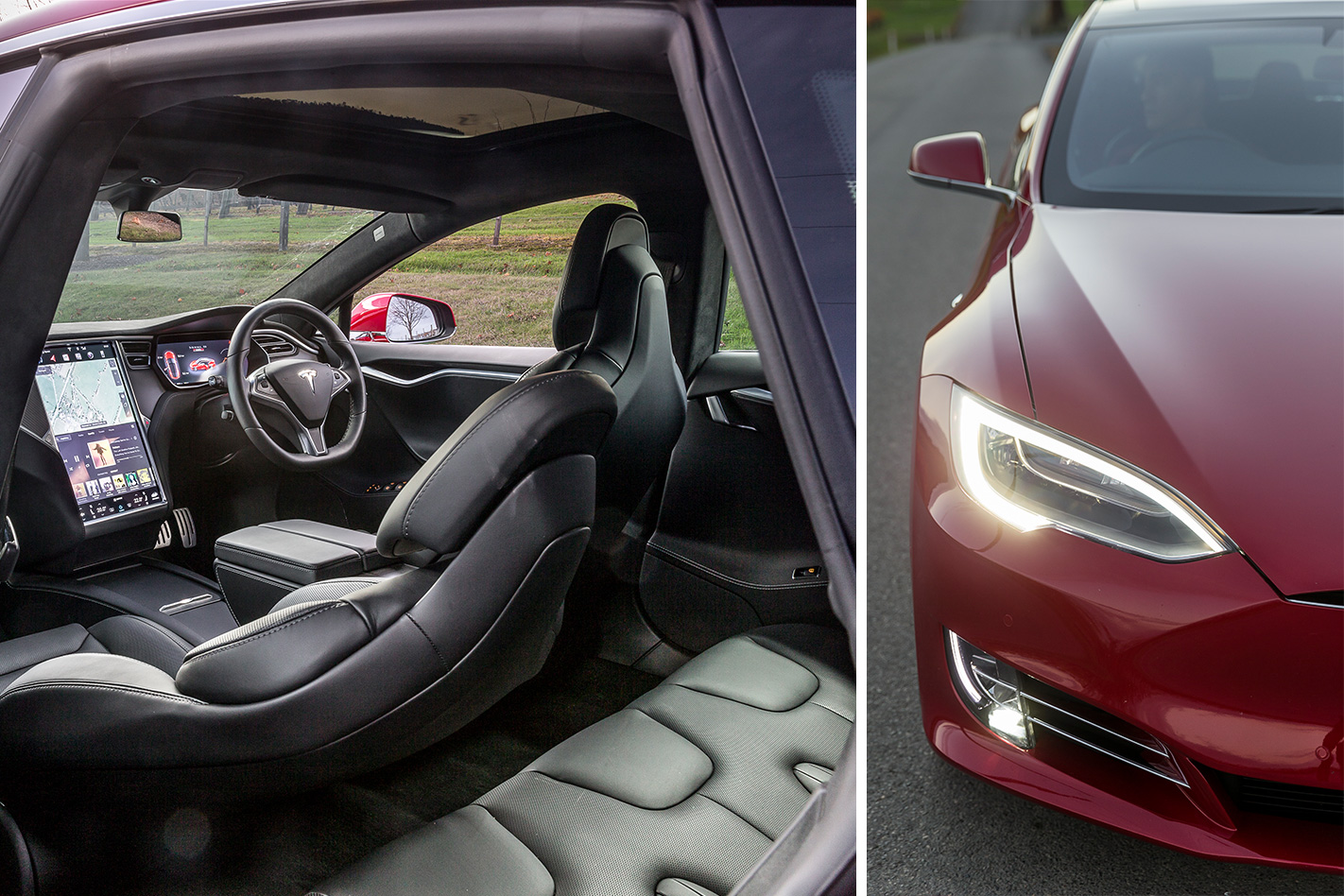
Like most EVs, easing off the throttle immediately engages the regenerative dynamo-like gubbins for an effect akin to deploying a small braking chute. Pivot your right heel forward again and you’re powering on once more. It’s just like foot-operated Scalextric.
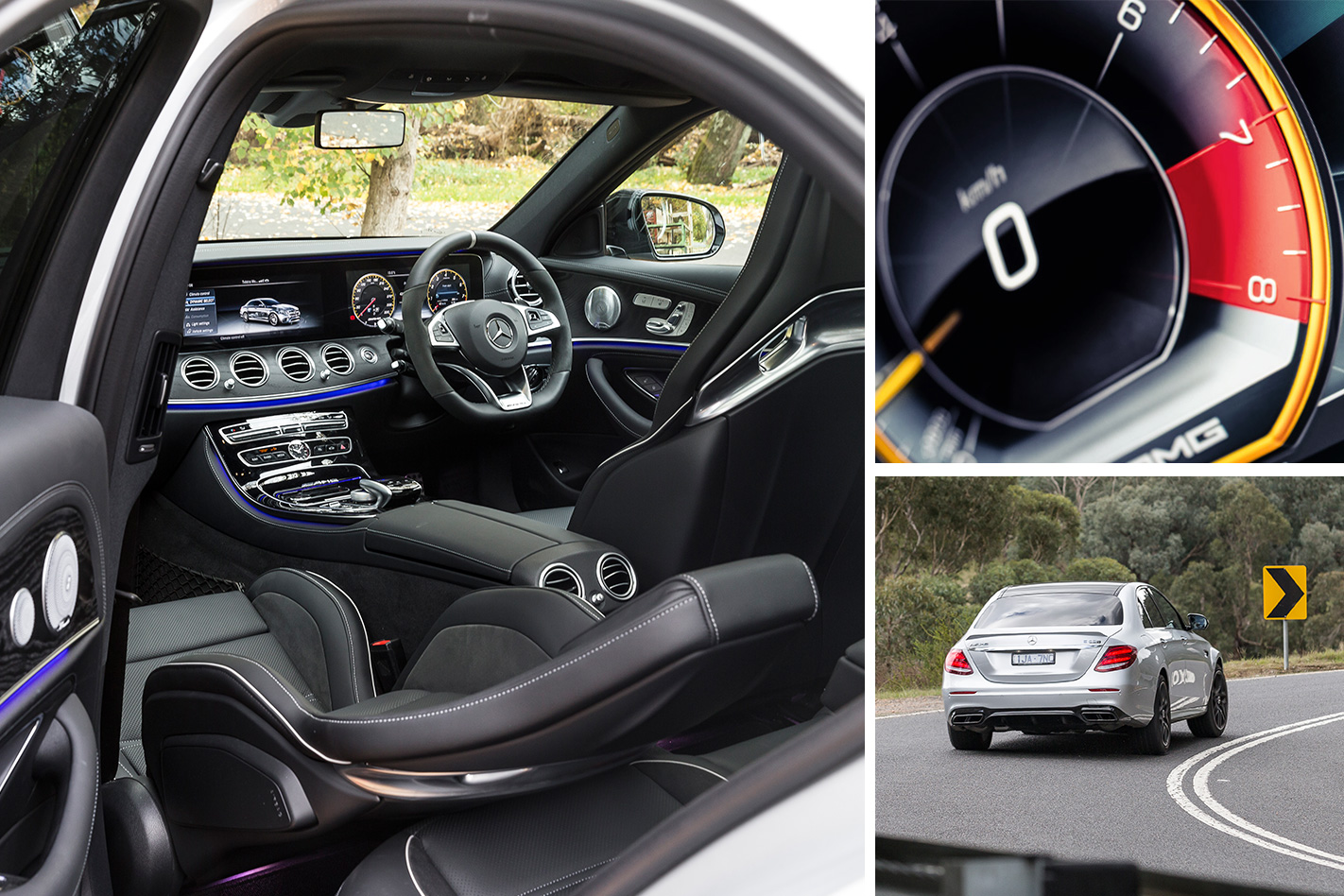
V8 fans will rejoice that the Mercedes feels at least as hungry for speed. A blistering 11.3sec time to 400 metres means it’s probably not too far behind the Tesla. The AMG’s appetite for destroying distances is, if anything, even more theatrical, because of the polyphonic crescendo accompanying each rising rev. Toggle the Drive Mode selector to Sport Plus, and your peripheral vision blurs as the road is reeled in relentlessly.
You’d be forgiven for thinking that in such high-tech company the ageing HSV could feel a little underdone.But if the E63S goes like lightning then the GTS-R is pure pushrod thunder. Its supercharged howl at higher engine speeds is addictively rousing, and while its times at the strip were slightly off HSV’s claims (4.8sec to 100 versus 4.5s), in no way does the GTS-R feel undermined by its comparatively old-tech spec. Its combination of a manual ’box and rear-wheel drive may have seen it scrabbling for a foothold where the AWD AMG would simply hook up and go, but as its 400m time of 12.4s proves, the Holden still hammers.
So, unfortunately, does its yearning for 98RON premium unleaded. Over two days of hard driving, the HSV records an on-test consumption figure of 16.1L/100km, only slightly more than the altogether harder-charging E63’s 15.3L/100km, though the German car does boast a ‘Half Engine mode’ tech, which disconnects cylinders two, three, five, and eight to save juice when under light loads.
From an enthusiast’s point of view, the Model S is ostensibly a grand tourer, not a sports sedan, and the reason why starts and finishes with the steering. No matter which mode you choose – Comfort, Normal or Sport – the wheel lacks sufficient precision. Clearly Tesla has dialled in a ‘sneeze’ factor to ensure minute movements don’t result in any nervousness at speed, but the upshot is dullness. A clearer sense of connection and more road feedback is much needed.
That said, the P100D’s wide track, long wheelbase, AWD and low centre of gravity conspire with the double wishbones up front and multi-links out back to provide wonderfully flat and composed handling, even at comically quick cornering speeds. This thing is remarkably unfazed by sudden shifts in direction. Bodyroll is so minimal to be virtually undetectable.
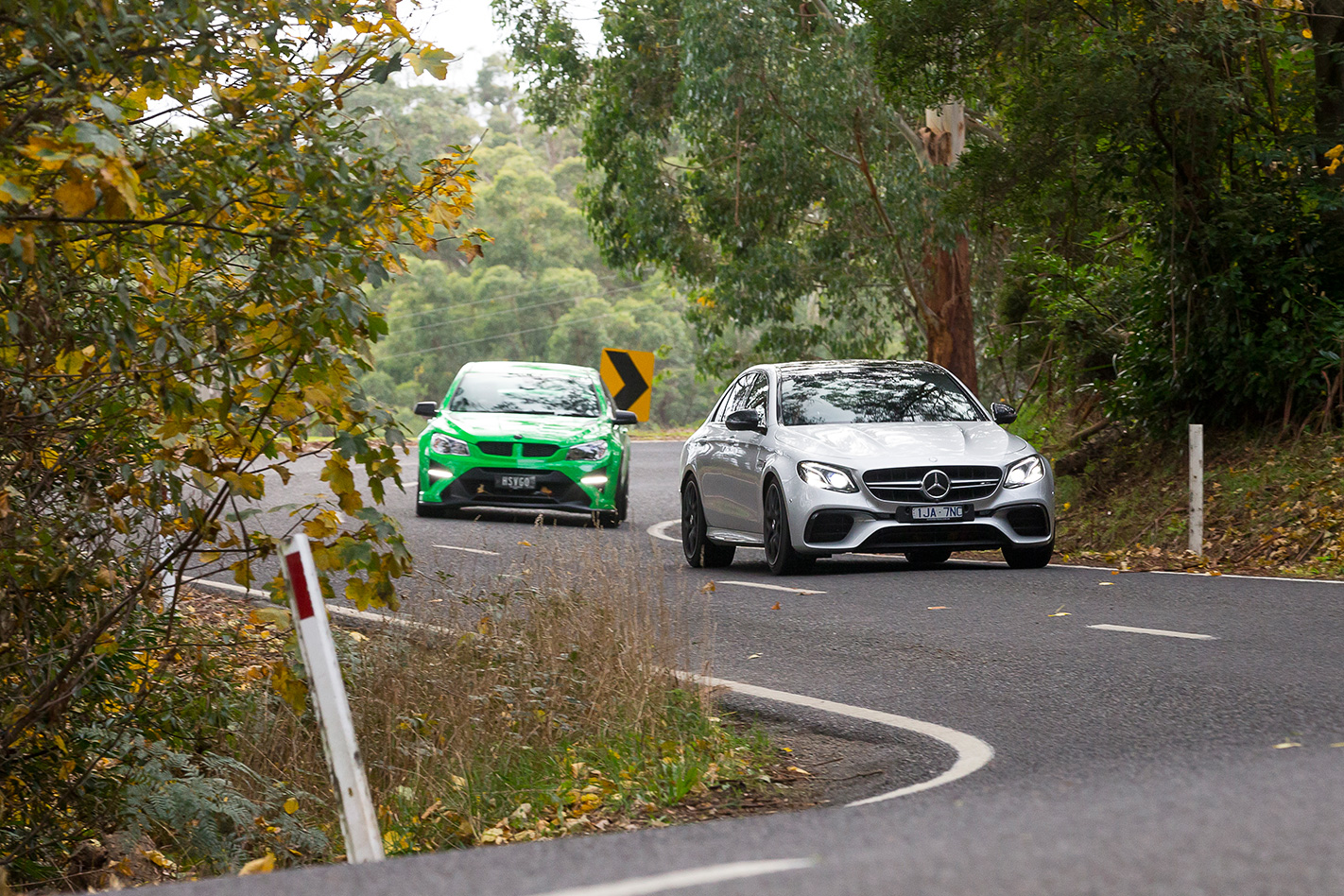
Conversely, the E63 S is an out-and-out and always-on sports sedan, despite Mercedes’ vaunted Air Body Control multi-chamber air suspension. A firm to hard ride, even in Comfort, coupled with ever-present road noise intrusion, underscores the German’s fanatical performance focus. The AMG’s flat-chat autobahn body control compromises the relaxation and refinement you might expect from an E-Class. Never switching off, the AMG is afflicted with performance OCD.
But what commanding and assertive handling traits await. The multi-link rear is toughened and employs a specific rear axle carrier for the wider track. More bracing, better mountings, stronger welds and an AMG GT R-style tubular anti-roll bar aid stability.
The variable ratio steering is crisp in its response too, with the E63 S’s AMG-specific tune providing a reasurring amount of communication. As a connection between road and machine, the AMG is magnetically fluid, imbuing a level of high-velocity confidence and maturity that – whether wet or dry – is both exhilarating and gratifying.
In which case you can activate Drift Mode. The three-stage process for tail-happy fun begins by selecting Sport Plus or Race, then using both hands to pull the paddle shifters. This then kills the ESC and directs 100 percent of torque to the rear axle.
So, after such Teutonic mastery, how can the HSV hope to compete? Even with the GTS-R’s magnetic ride control dampers, that heavy, ageing Zeta platform couldn’t possibly deliver the same dynamic dexterity, right? Well, no. But for cohesion, the local car’s efforts are extraordinary.
Fluent and measured in its reaction and load, the Holden’s helm feels completely in tune with Australia’s unique conditions, being beautifully receptive to inputs and naturally connected. The driver is never in doubt where the front end is pointing.
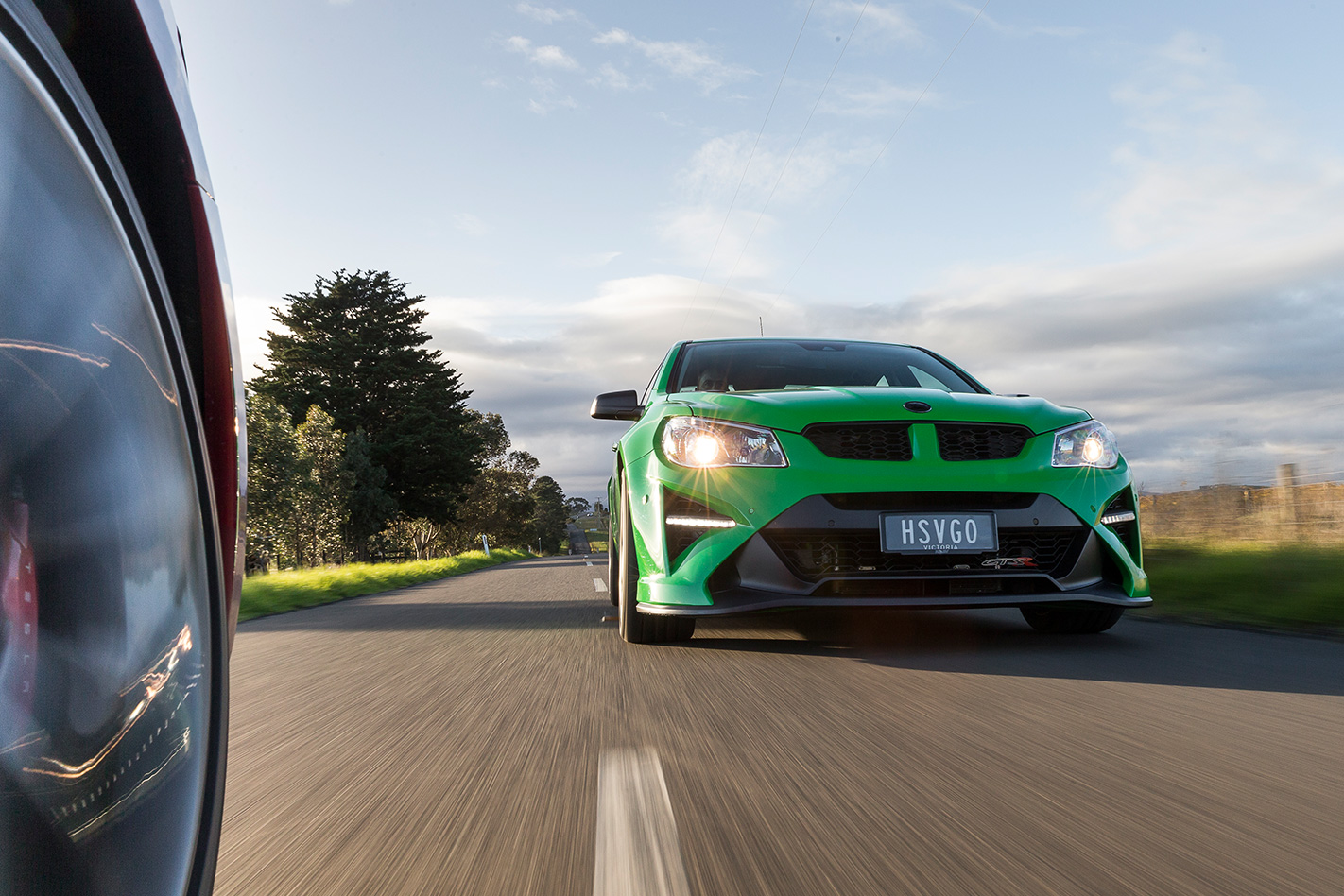
Dynamically the GTS-R is much more than simply 50 percent of the E63 S that its half-price positioning suggests. For this reason alone, it’s hard to argue with the HSV’s value proposition. And while it’s not as quick in a straight line, its underlying compliance and long-distance ability makes it an altogether more cosseting and quieter car than the E63 S.
Fitted with the trio’s best front seats – generously padded and deeply bolstered – the HSV’s cabin is another high point, with a fine driving position and swathes of Alcantara and brightwork lifting the ambience over that of a regular VF Commodore. The GTS-R also sidestepped the squeaks that blighted the Tesla and the Mercedes on test, though a fiddly touchscreen and crude graphics won’t keep Audi up at night.
Things are much more modern in the E63, with its expansive dash screen, multi-configurable multimedia and expensive, glossy materials, though the cheapo column shifter lets it down. There’s space aplenty for adults to luxuriate in, the optional racy sports buckets are firm but pleasingly supportive and all rear seat aspects are pitch-perfect. But the rattles proved infuriating. And there is way too much road noise.
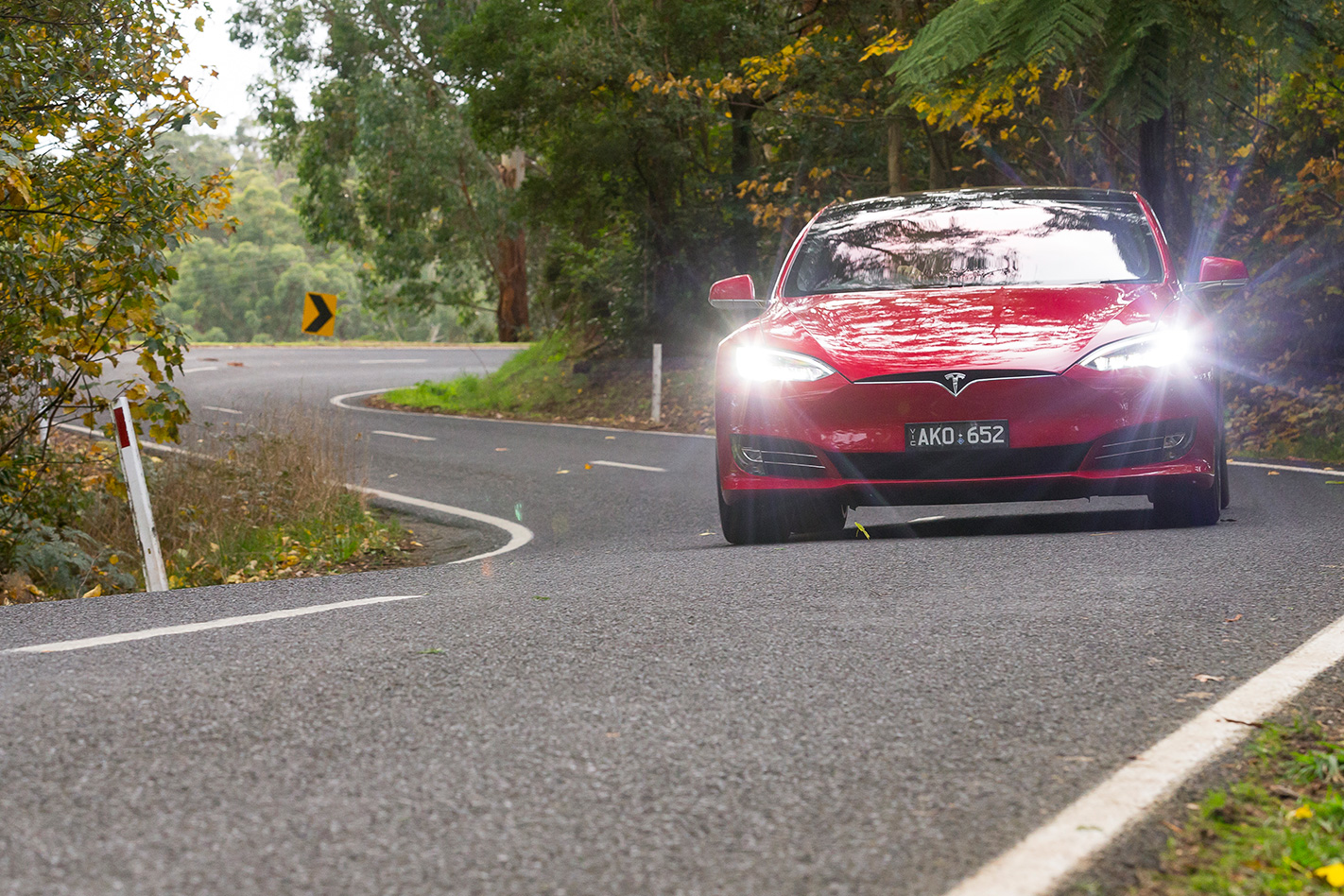
Packaging wise, the Tesla is an enigma. It’s great up front, but the rear seat area gets off to a bad start with low door apertures, and is then compounded by a high floor that the EV battery chassis requires, which dictates an exaggerated knees-up posture. Trust us, taller passengers will moan. Exacerbating this is an oddly angled backrest, scant thigh support and no overhead grab handles, storage or cupholders.
At least the cabin is hushed at speed, and that long and wide hatch area adds another dimension of practicality compared to the traditional boots offered in the AMG and HSV.
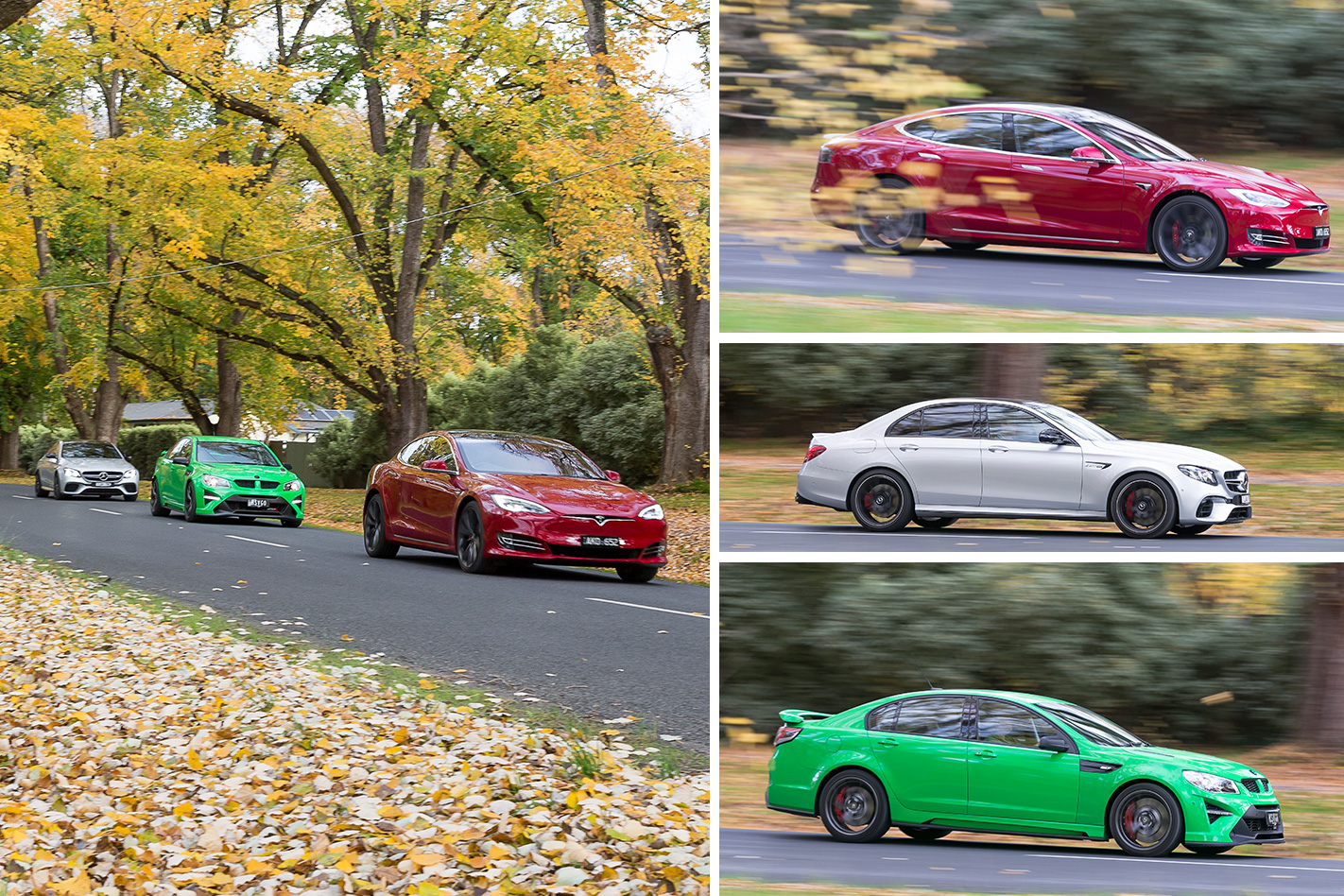
Time is just about up for the GTS-R, but its place at the apex of the Aussie greats scoreboard is assured. The HSV is today’s Torana A9X moment. If you’re in a position to buy but instead dither, you’ll kick yourself in decades to come. Guaranteed. It’s a properly fitting finale.
Which leaves the force-of-nature E63 S. The big German pushes boundaries as effortlessly as it pounds the existing class benchmarks. But there’s no doubt that the convergence of speed, dynamics, safety and, yes, even value, elevate this Mercedes-AMG onto a new plane of super sedan performance.
The new Hyundai i30 N hot hatch has only just been revealed in production form, and already Hyundai has given us more to look forward to.
A slinky coupe-styled version of the Hyundai i30, called the i30 Fastback, was unveiled alongside its punchy hatch sibling.
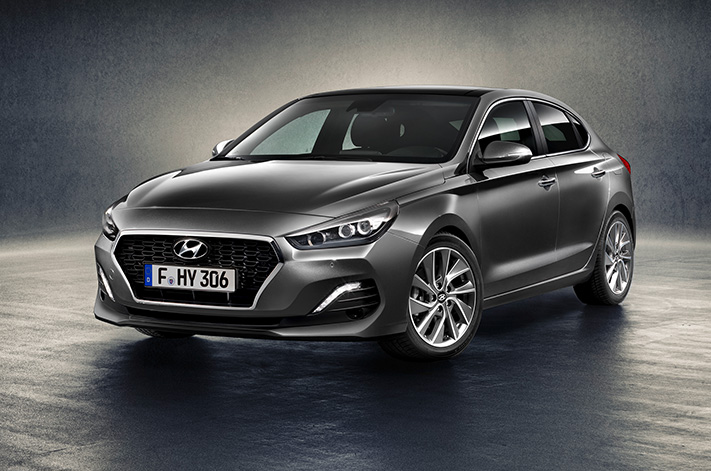
First teased as a silhouette by the Korean brand, and spied testing under heavy camouflage, the i30 Fastback brings a swooping roofline to the family.
From the front, the i30 Fastback looks much like any of its hatch siblings, but the side profile adds the distinctive roofline and extra junk in the trunk.
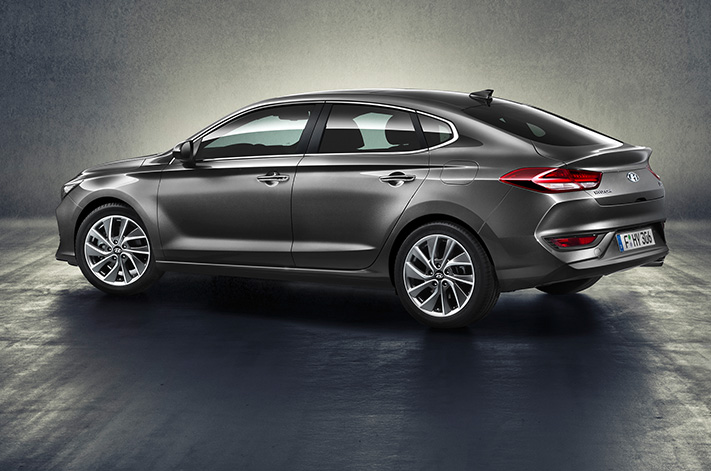
The Czech-built Fastback sits 30mm lower than the hatch, with all the height being lopped out of the vehicle’s glasshouse, but has 115mm of extra length aft of the rear wheels.
Engine options are currently restricted to the same array as the i30 hatch, including the 102kW 1.4-litre turbo petrol, but the Koreans have made some promising noises about developing an N version, with the same 202kW engine from the hot hatch under the bonnet, and it’s that car that is expected to come to Australia.
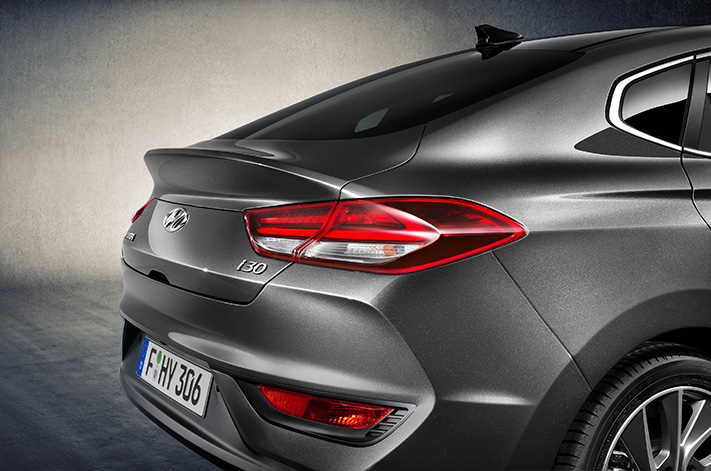
Hyundai claim the Fastback has a sportier stance than the hatch, with 5mm lower springs, and a 15 percent increase in stiffness. “The i30 Fastback is the first elegant five-door coupe to enter the compact segment, underlining our commitment to innovation and customer choice,” Hyundai Europe COO Thomas Schmid said at the launch event in Germany.
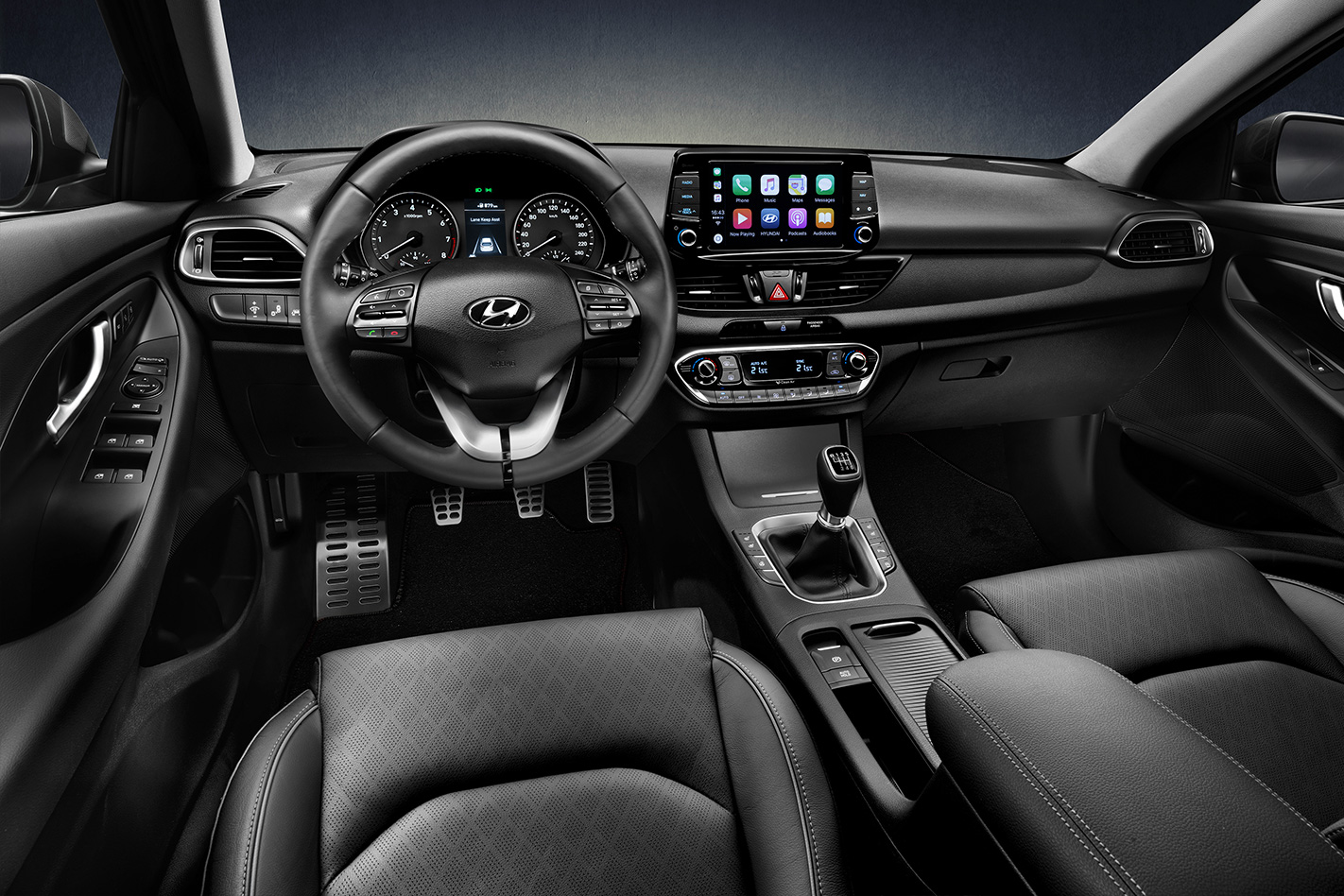
Tech? Well, as you would expect it is much the same as its i30 siblings. Auto-emergency braking, active cruise control, and lane keep assist are all available.

Unfortunately, it is unlikely any ‘regular’ i30 Fastbacks will be coming to Australian shores due to production restrictions at the European factory. Don’t be too sad however, as our demand for performance models should put us high on Hyundai’s priority list for an N version.