
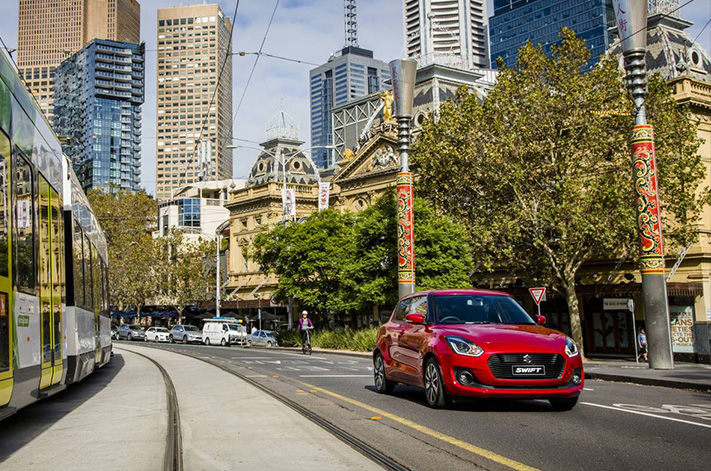
The Suzuki Swift is back in Australia, with the third generation of the Japanese car maker’s global light hatch (the Swift name extends further into the past, but only in select markets) now on sale locally, priced from $16,990 drive-away.
The exterior is a fresh take on the outgoing Swift’s already-distinctive form, and clothes a chassis that isn’t just all-new, but is both lighter and stronger than before. Dimensions have also been massaged to improve interior space, netting more rear headroom and putting more space between the front occupants.
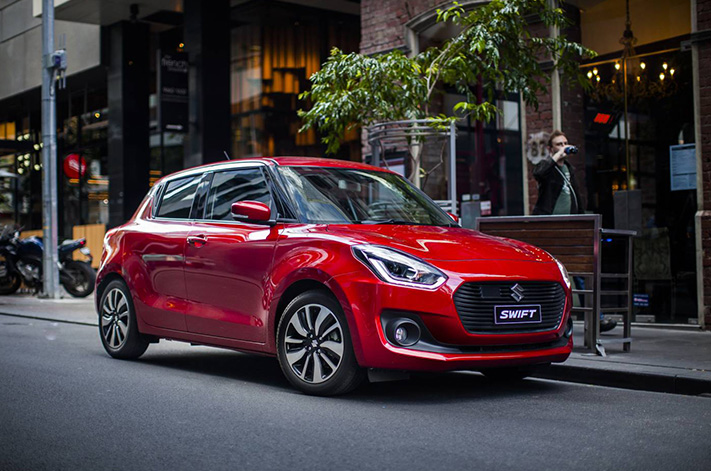
And that’s despite the Swift shrinking by 10mm in overall length, and dropping 15mm in overall height. However, the new version is also 40mm wider than before and has 20mm more distance between the front and rear axles, thus allowing Suzuki to expand the passenger compartment
Boot space has also grown to 242 litres of total room and with a 50mm longer boot floor giving it a 32 litre advantage over the outgoing Swift.
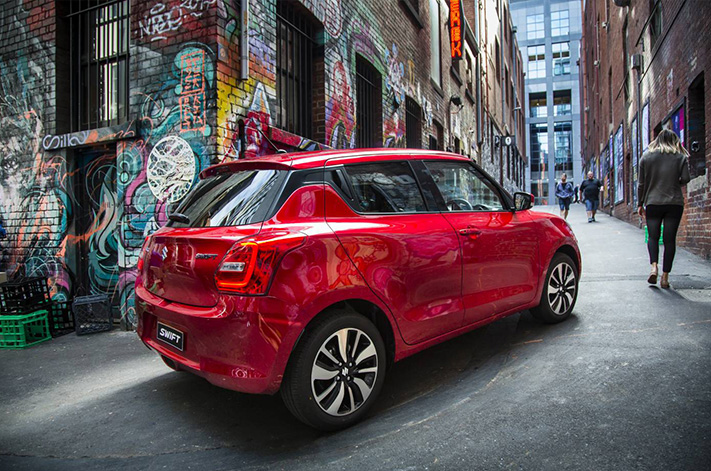
Exterior styling is evolutionary, with a more rounded design and ‘floating’ C-pillar motif, merged with Swift hallmarks such as a blacked-out A-pillar and large triangular headlamps. Wheel sizes range from 15 inch steel items on the base model, to 16-inch polished alloys on the range-topping Swift GLX. The GLX also receives black headlamp bezels, rather than chrome finish on the rest of the range.
The 2017 Swift range encompasses four models, with two engines and three transmissions spread among them. The lower-grade Swift GL, GL Navigator and GL Navigator with Safety Pack are powered by a 1.2-litre naturally-aspirated inline four with 66kW and 120Nm, with the GL sporting a five-speed manual and the GL Navigator and GL Navigator Safety Pack gaining a CVT automatic.
The Swift GLX Turbo is powered by a more muscular 1.0-litre three-cylinder turbo, delivering 82kW and 160Nm to the front wheels via a six-speed automatic.
Official fuel consumption for the manual-equipped GL 1.2L is 4.6L/100km, while the CVT is slightly thirstier at 4.8L/100km on the combined cycle. The turbocharged Swift GLX Turbo, meanwhile, consumes a claimed average of 5.1L/100km.
Features
Swift GL
- Cruise control
- Power windows
- Daytime running lights
- Privacy glass
- Cloth upholstery
- Bluetooth telephony and audio streaming
- USB audio input
- Six airbags
- ABS, EBD, brake assist, stability control
Swift GL Navigator (in addition to above)
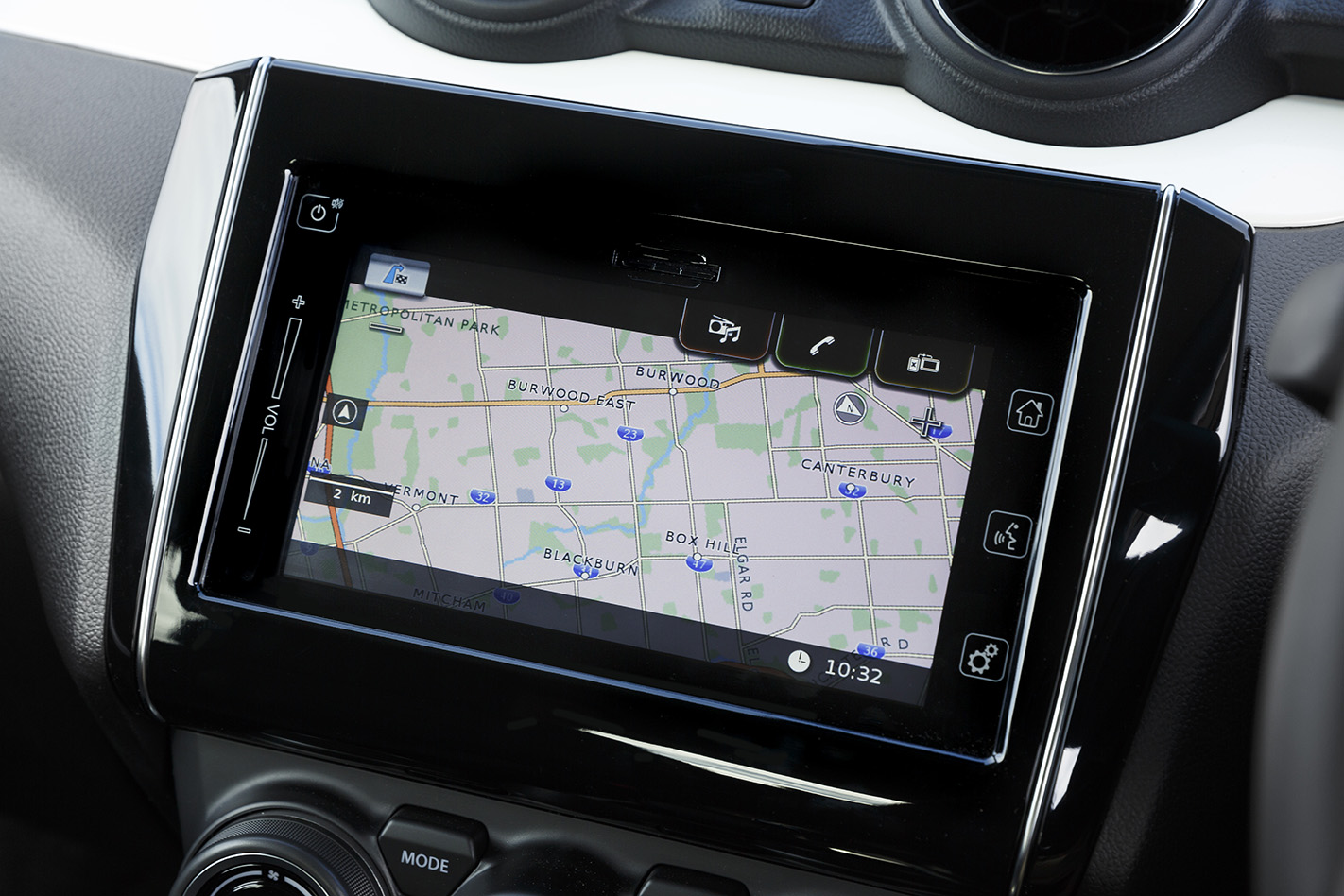
- 7-inch colour touchscreen display with satellite navigation, Apple CarPlay, Android Auto, Bluetooth and AM/FM radio
- Reversing camera
- Front foglamps
Swift GL Navigator with Safety Pack (in addition to above)
- Autonomous Emergency Braking
- Adaptive cruise control
- Weaving (fatigue) alert
Swift GLX Turbo (in addition to above)
- Climate control
- Keyless entry and ignition
- LED headlamps
- High beam assist
PRICING
- Swift GL manual – $15,990 ($16,990 drive-away)
- Swift GL Navigator auto – $17,990 ($17,990 drive-away)
- Swift GL Navigator with Safety Pack auto – $18,990 ($19,190 drive-away)
- Swift GLX auto – $22,990 ($22,990 drive-away)
If you’ve ever thought the Maloo R8 wasn’t quite enough ute, you’d probably be one of very few. But we’ve found someone who’s right there with you.
Nicholas Harry woke up one day and decided he wanted to build an all-wheel-drive Coupe4 ute, so he did.
With a VY Maloo R8 as a base, and a collection of Coupe4 parts gathered over three years, Nick ended up with what he reckons is the first AWD-converted performance ute.
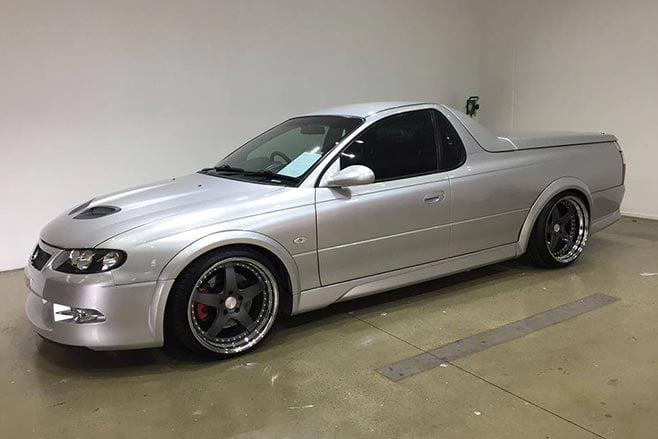
“The seed of that was a VY SS ute that Holden and HSV built as an engineering vehicle for the AWD program for both brands.
“I thought it would be cool to take that idea and take it to the next level which is what you see here: a HSV Coupe 4 Ute built in pretty much every way to look factory yet something that has never been built.”
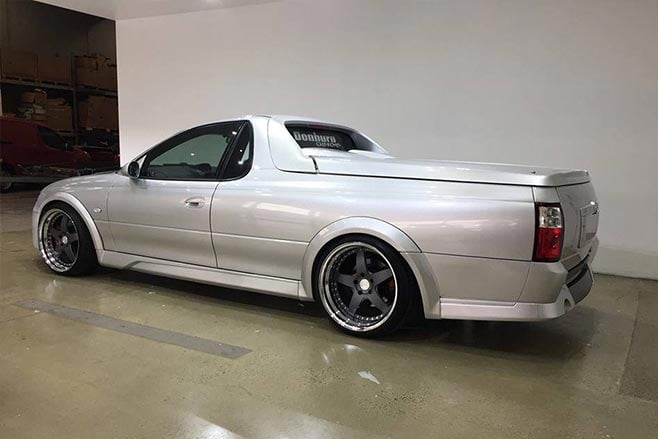
“So over three years I sourced all genuine HSV Coupe 4 pieces and went around creating what you see here.”
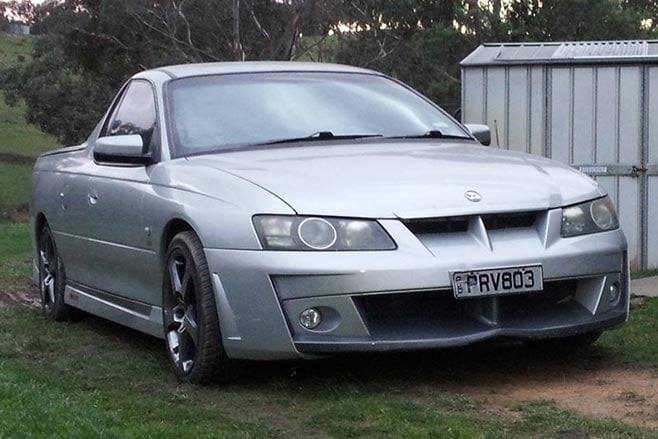
Under the hood, the same 270kW 5.7-litre LS1 that powers a regular Coupe4 is hooked up to all four wheels via a system HSV says “could not be beat”.
Nick reckons he’s onto a winner, saying people have told him nothing like this has ever been done to a Maloo before.
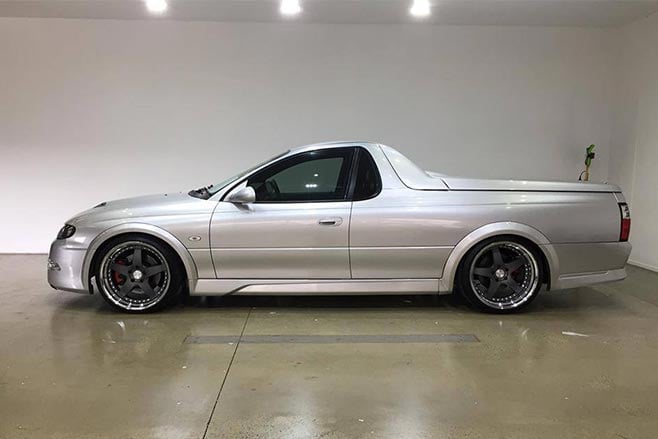
The result? Something even a purist would appreciate.
REJOICE, for Porsche’s Widowmaker returneth. The 911 GT2 RS is making a comeback after a seven-year hiatus and, if our first ride-along in a GT2 RS development mule is any indication, it will be the most mega Porsche 911 ever.
A local arrival isn’t likely to happen until early next year – and we’ve still yet to see the mighty GT2 RS in all of its production-spec glory – but there are still more than a few facts and figures to tide us over until Porsche unleashes all of the official details. Here are a few of the more noteworthy GT2 RS factoids to impress your mates at the pub:
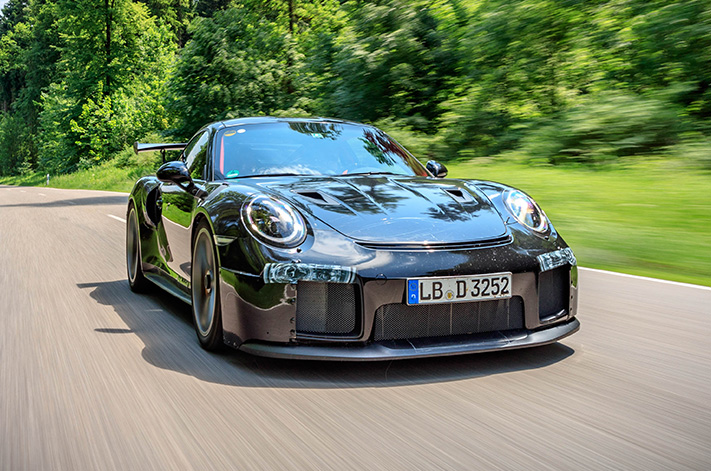
The move to an auto-only offering isn’t surprising when you look at the numbers. Until official homologation papers are in, Porsche can’t actually state precisely how much power the new GT2 RS will boast – it can only say it has more than 480kW and more than 750Nm. That’s the barest minimum we can expect it to have, which puts it 24kW and 50Nm up on the last 911 GT2 RS. Porsche won’t specify weight just yet, except to say that it tips the scales below the 1500kg mark.
Unlike the all-wheel drive 911 Turbo S that it is based on, the GT2 RS will only send power to the rear wheels. More power, less traction – launching from zero to 100km/h should be a wild ride indeed.
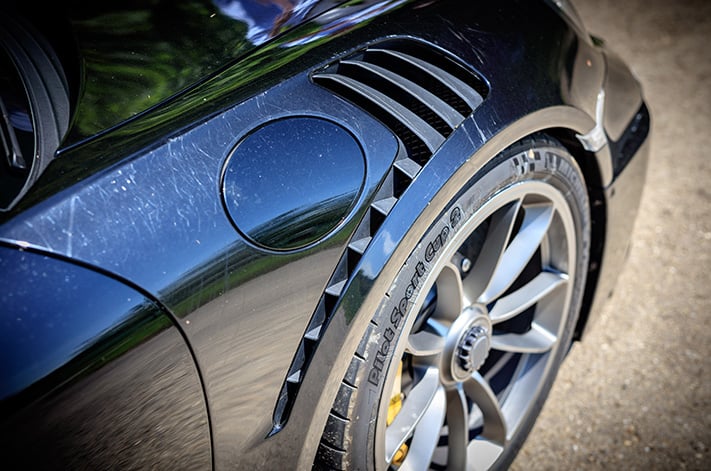
Compared with the twin-turbo 3.8 used by the 911 Turbo S, the GT2 RS’s donk features bigger turbos, unique internal components and a titanium exhaust. That titanium exhaust, by the way, has valves that flip open to flow more gas when the engine is at full noise. Nothing new there, but when they’re open the valves will give those behind you a clear view of the GT2’s glowing catalytic converters. Neato.
Porsche will offer an optional Weissach package, which may as well be called the “track junkie special”. With a host of weight-saving measures, the Weissach option is no sticker pack – it bundles hard-core mods like a titanium roll cage, ultra-light magnesium wheels, a carbon-fibre roof and even carbon fibre suspension components. All up, 30kg is shaved from the kerb weight with the Weissach package – a significant amount for a performance car.

The rear windscreen is made from the same stuff as your phone screen, which gives it toughness and optical clarity that Perspex can’t match, while still being lighter than conventional glass.
SUZUKI is vying for B-segment light-car leadership with a completely redesigned and re-engineered Swift, growing in size, performance, efficiency, safety and value. But has the stylish Japanese supermini lost any of its predecessors’ sporty charm as a result?
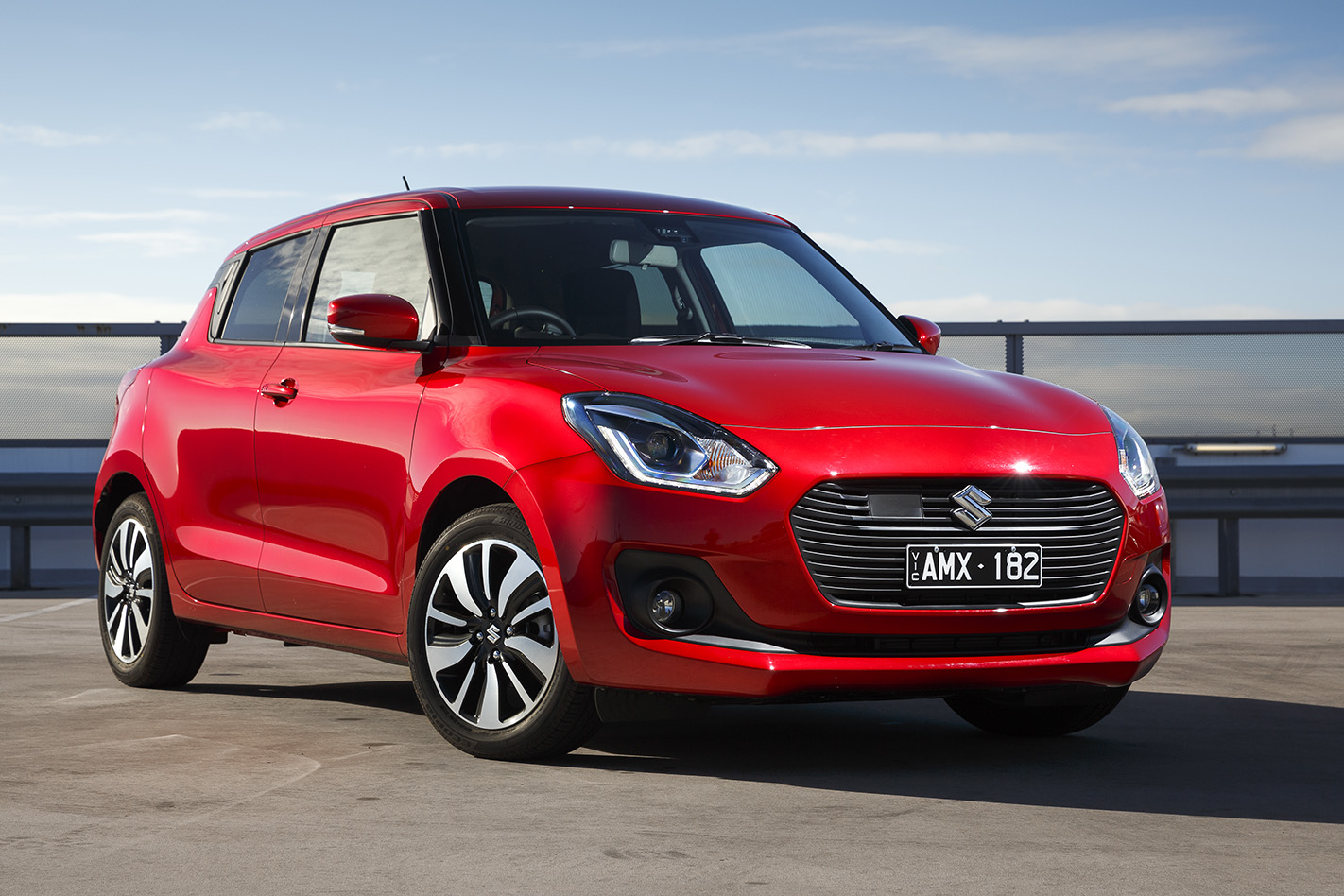
Aimed at the sportier and more style-focused end of the B-segment, against the likes of the Mazda 2, Volkswagen Polo, the Swift has long been the keener driver’s choice, though at the cost of back-seat and luggage space. But now Suzuki hits back with a more rounded proposition that should give even mundane rivals like the Toyota Yaris something to fear.
WHY WE’RE TESTING IT
Suzuki cars have been a rollercoaster ride in terms of comfort, refinement and driver appeal, but the Swift has long been a constant, rising above the dross to mix it with the class best. For this all-new version, the Japanese giant is eyeing both critical and sales leadership, and has pulled out all stops to achieve that. Can’t wait to see how it turns out.
Volkswagen Polo, Mazda 2, Renault Clio, Skoda Fabia, Honda Jazz, Kia Rio, MG3, Ford Fiesta, Hyundai Accent, Holden Barina, Toyota Yaris
THE WHEELS VERDICT:
Suzuki’s third interpretation of the 21st Century Swift is, in almost every sense, appreciably better than its predecessors, especially in terms of interior space, available safety, multimedia technology, powertrain efficiency and overall comfort. It now rests among class leaders alongside the Volkswagen Polo, Mazda 2, Skoda Fabia and Renault Clio. However, the company must be careful to not squander the good will this nameplate has worked hard to win among enthusiasts with no AEB availability on the sole manual version (the cracking base GL) and – more alarmingly – auto-only for the punchy 1.0-litre turbo.
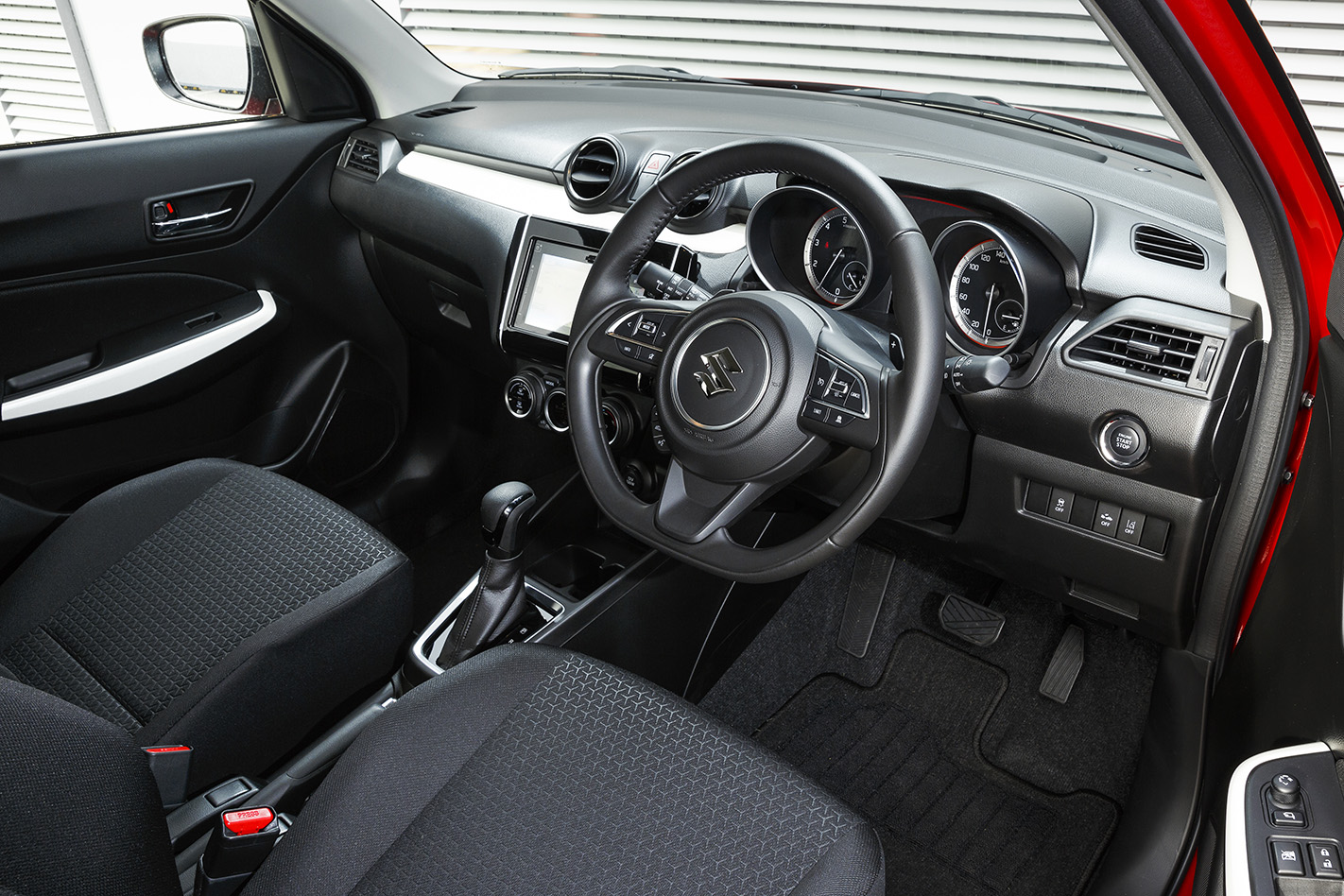
MINUS: No AEB availability on 1.2 manual, turbo manual or digital speedo
THE WHEELS REVIEW
CORPORATE Amnesia. Striking Peugeot in the 2000s (when it forgot how to make beautiful and dynamic cars) and latterly threatening to similarly infect Ford, the fear is that Suzuki might be next after two generations of stylish and sassy Swifts. Everything hinges on how good the latest one is. Deep breath in.
And exhale. Chief engineer Maso Kobori revealed that honing ‘fun and sporty’ was his team’s strident aim when work commenced on the AZ series in 2013, ahead even of the usual noble pursuits of improved efficiency, refinement, safety and driveability.
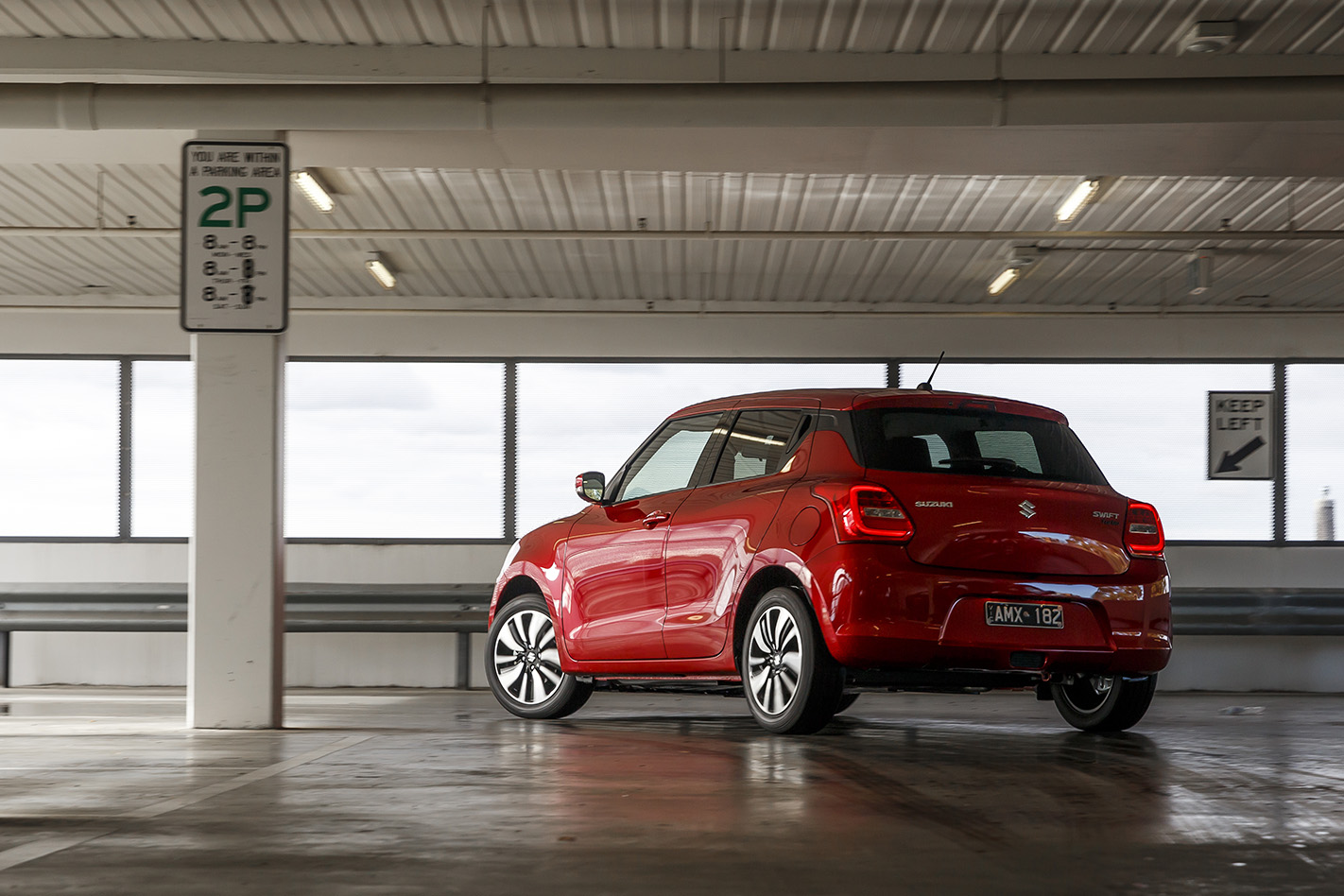
Aided by a circa-20 percent lighter, yet stronger body (boasting triple the amount of ultra high-strength steel), the upshot is a more solid and firmer footing at speed, with better noise isolation to boot. While still quick and crisp, the helm isn’t as nervous as before through faster turns, while bumps neither upset nor divert this Suzuki’s trajectory like they might once have. Progress.
Aside from a hint of rack rattle (admittedly while carving up through craggy corners with gusto and control), the Swift steers, handles and rides like a larger and more sophisticated car. Phew!
On paper, the introduction of a 66kW/120Nm 1.2-litre atmo four as the standard engine might seem like a backward step from the predecessor’s 4kW, 10Nm and 200cc stronger unit. But a 100kg-plus weight drop (76kW versus 70kW per tonne), combined with excellent economy and an infectious propensity to bounce off the 7000rpm cut-out, means this gem’s feisty can-do urge perfectly suits the chassis’ dynamic integrity. Just don’t spare the revs! And fine as the smooth, reactive, and mercifully lag-free CVT is, the five speeder pairing is bliss. All driving schools should switch to Swift manuals this instant. Auto-only drivers don’t know what they’re missing.
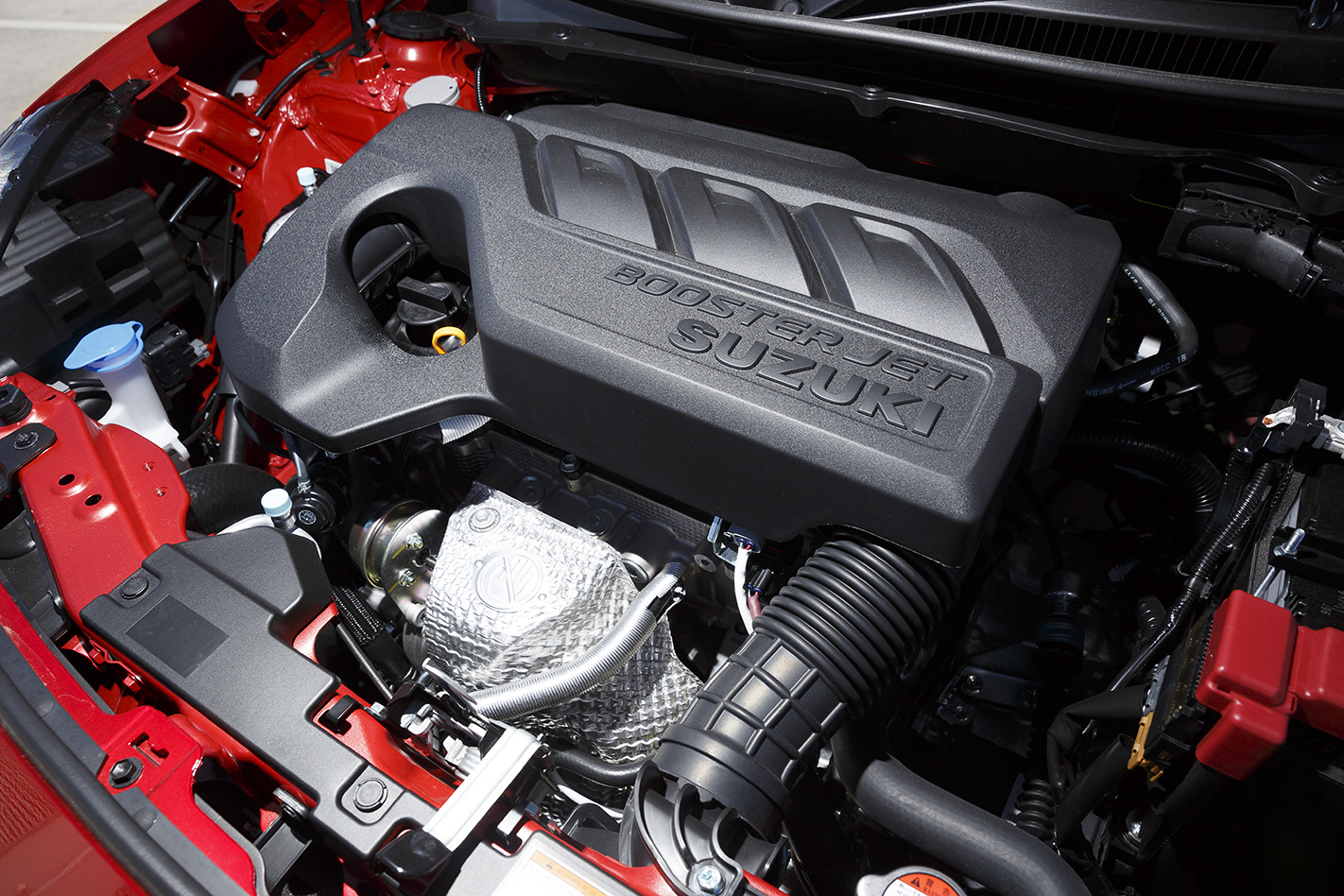
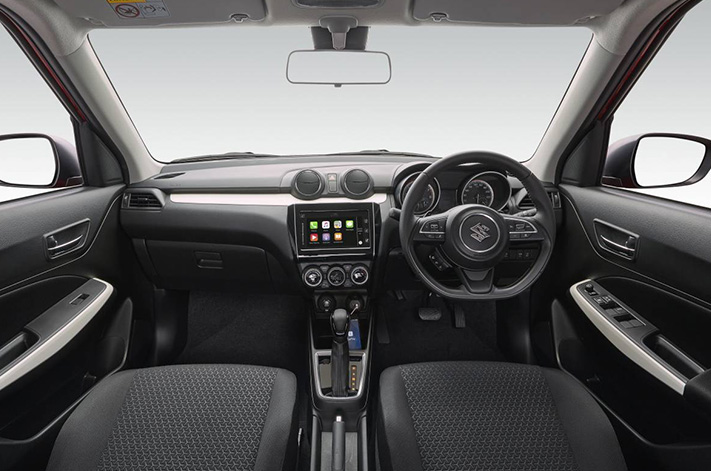
That feeling of quality and class transfers inside what is palpably a roomier as well as quieter cabin than in any previous Swift. The attention to detail is pleasing, from the dashboard’s chic three-spoke wheel, racy analogue instrument dials and colourful multimedia screen to the nicely angled backrest and plentiful storage areas.
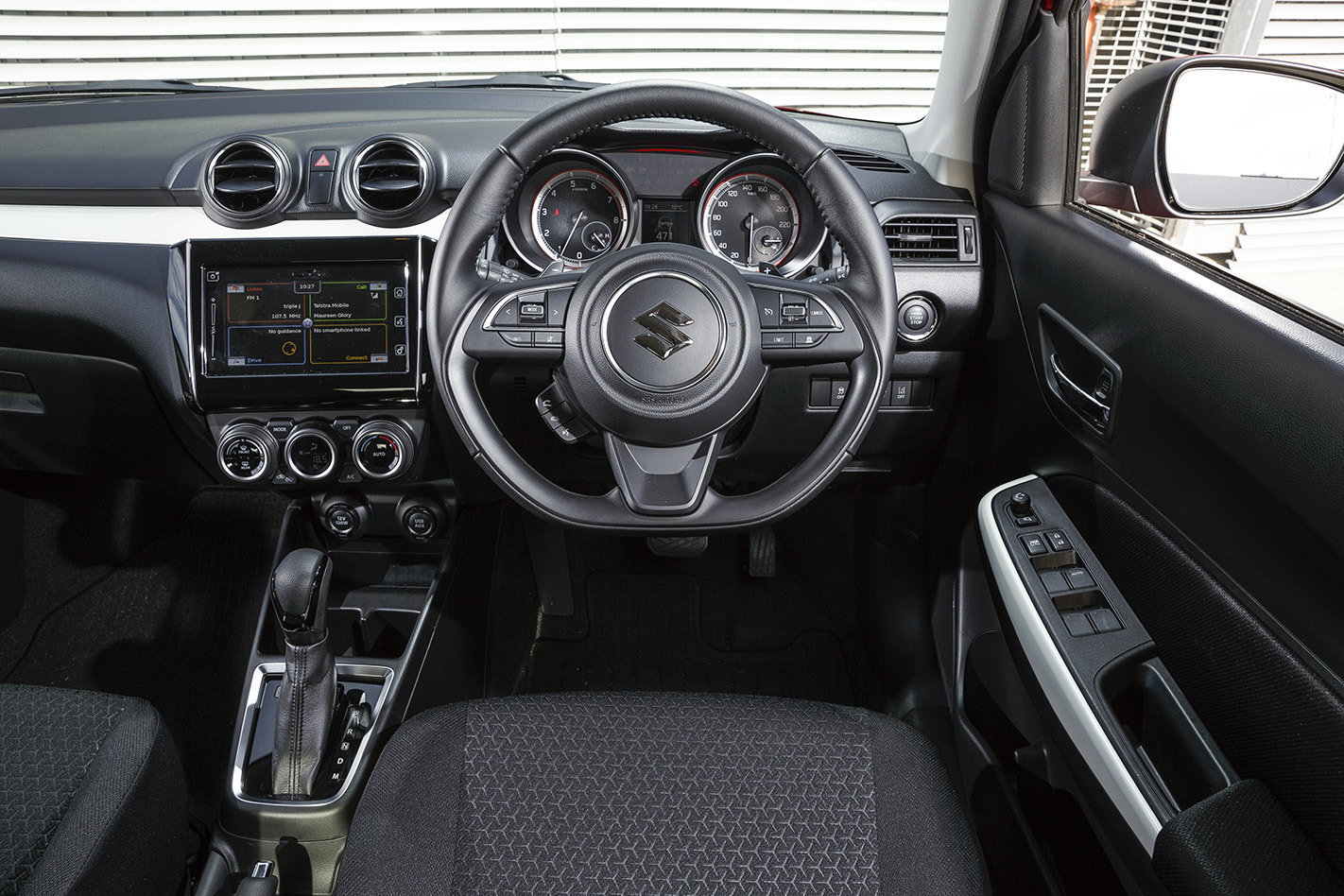
This segues nicely to the issue of value. Choosing to change gears yourself means also forgoing the camera, central touchscreen with Apple CarPlay/Android Auto, sat nav and alloys featuring in the auto-only GL Navigator for just $1000 extra at $17,990 driveaway. Additionally, AEB (part of a $1200 Safety Pack that also brings Lane Departure Warning and adaptive cruise on the latter, but standard in GLX) isn’t available on manual either. Pity.
Vote for the Suzuki Swift to win the 2018 Wheels Car of the Year Readers’ Choice competition
SPECS Model: Suzuki Swift GLX Turbo Engine: 998cc 3-cyl, dohc, 12v turbo Max power: 82kW @ 55500rpm Max torque: 160Nm @ 1500-4000rpm Transmission: 6-speed auto Weight: 915kg 0-100km/h: 10.0s Fuel economy: 5.1L/100km Price: $22,990 (driveaway) On sale: Now
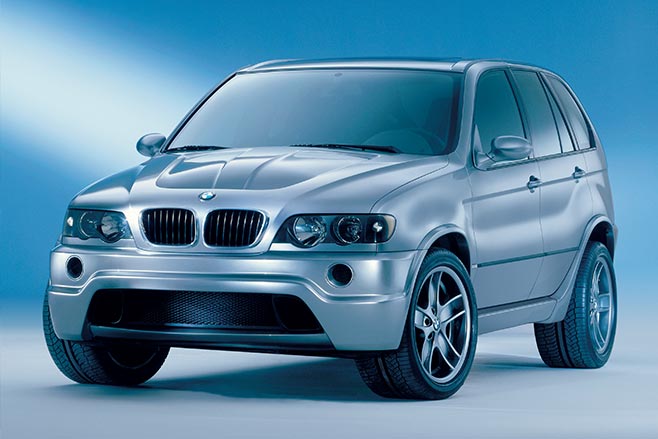
Ever wanted to put an atmo V12 into an X5? Probably not, but BMW did it anyway.
After a victory at the 24 Hours of LeMans in 1999, BMW took the donk out of the racecar and put it into a stripped-out family SUV. Hot-rodding is easy when you’re a huge German company.
Considering the current X5M and X6M claim 4.2 seconds, that’s not at all shabby for the year 2000.
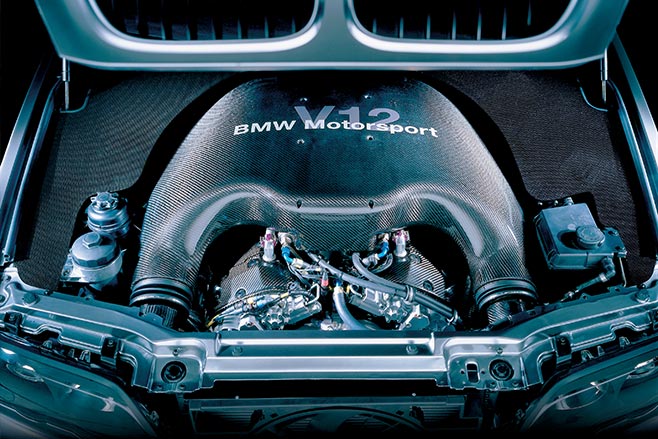
And it sounds glorious. As a V12 should.
In the video at the top of this page – which is in German and looks as old as the X5 itself – BMW put ex-F1 driver Hans-Joachim Stuck in the X5 LeMans and sent him off for a lively run on the Nurburgring.
What is most immediately obvious is that the X5 LeMans is very, very fast.
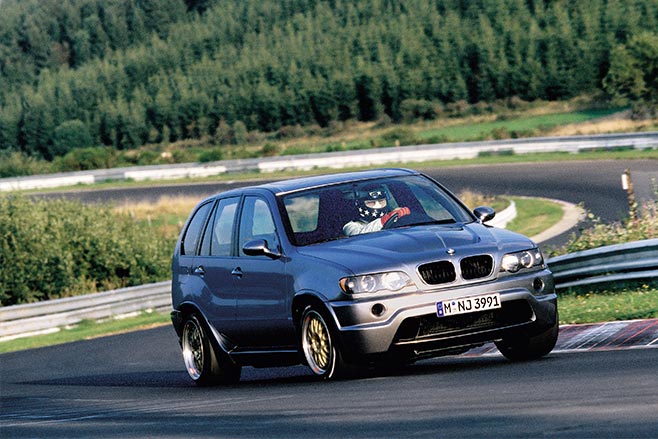
Bonus points to Stuck for getting the thing airborne – check out 2:10 in the video above.
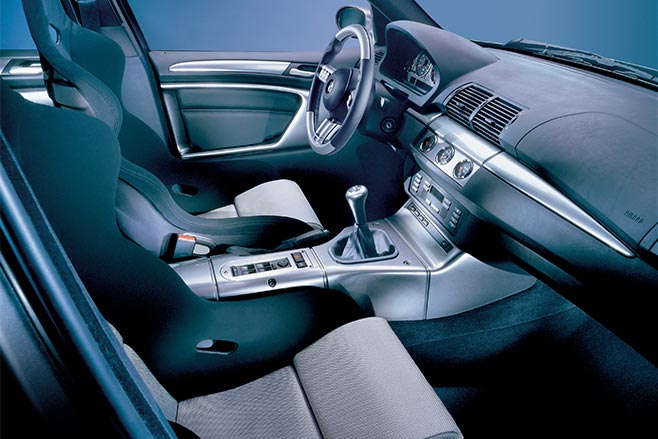
Seven minutes and fifty seconds. In 2000. With a top speed of 310km/h.
For context, the Porsche 911 Carrera S did it in 7:50 as well. But that was in 2008.
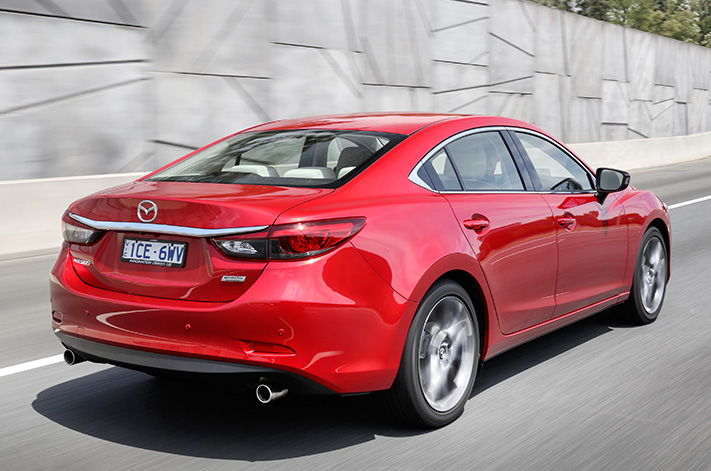
The Mazda 6 has an established reputation for quality that’s backed up by attractive exterior design and an interior that balances elegant styling with practicality. The range-topping Atenza features a plush Nappa leather interior and plenty of technology including a head up display and advanced driver assistance package featuring active cruise control, lane keeping assist and automatic emergency braking.
It’s powered by a choice of 2.2-litre four-cylinder turbo diesel and 2.5-litre petrol four, both coupled to 6-speed SKYACTIV-Drive automatic transmission.
We tested the diesel version with premium Soul Red premium paint, which has a manufacturer’s list price of $48,240.
STRENGHTS
- Looks are subjective, but it’s hard to deny the Mazda 6 sedan is a very attractive car with eye-pleasing dimensions. The wagon looks even better.
- The interior is beautifully put together and the white Nappa leather makes it feel like it has an additional digit on its price tag.
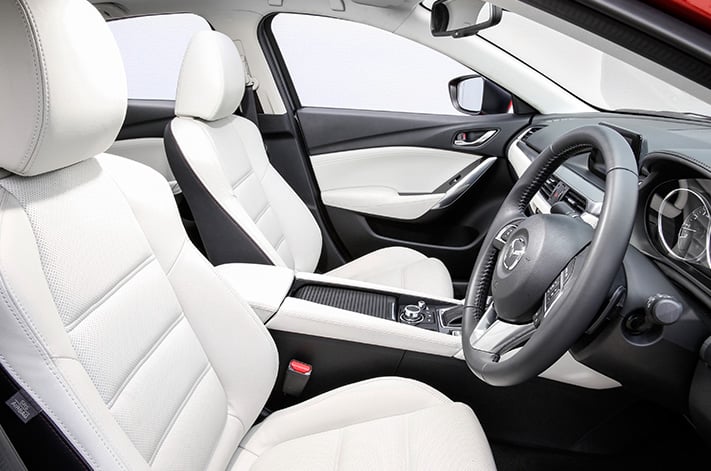
- It’s quiet. That’s not something you can say about every Mazda, but the 6 is well insulated from road and wind noise and absorbs sound well. The diesel engine is a little loud on start up, but hushes up once you start driving.
- It has a host of advanced active safety features including blind spot monitoring, radar cruise control, lane keeping assist and automatic emergency braking up to 160km/h.
- The head-up display projects the car’s speed and sat-nav instructions as well as the speed limit using Mazda’s Traffic Sign Recognition.
- The turbo diesel engine is a little sluggish when you put the foot down but otherwise performs nicely with the six-speed automatic transmission, particularly in Sport driving mode.
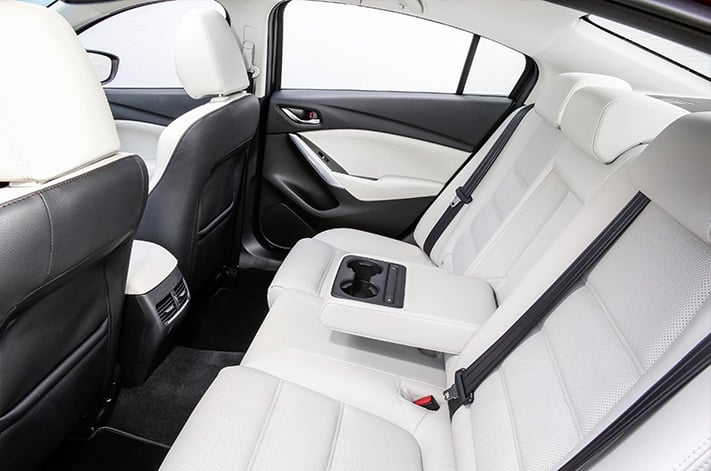
- This is one car you’ll be happy to be a passenger in. The luxurious rear seat sits three adults comfortably and leg and head room is excellent for a mid-sized car.
- Rear passengers also get their own air-conditioning vents.
WEAKNESSES
- The normal driving mode feels sluggish which prompts you to activate Sport mode in all but heavy traffic, which feels much better but takes fuel economy a couple notches above the claimed combined rating of 5.4L/100kms.
- The Atenza’s 19-inch alloys with low profile tyres look good but don’t provide as smooth a ride as the 17-inch alloys on lower spec models, which is a shame in a car that otherwise excels in the comfort stakes.
ANY RIVALS I SHOULD CONSIDER
Higher-spec diesel powered sedan competitors include the Ford Mondeo Titanium TDCI, Infiniti Q50 2.2d S, Peugeot 508 Allure HDi, Skoda Superb 140TDI and Volkswagen Passat 140TDI Highline.
LESS than a week out from the Hyundai Kona’s official unveiling, the Korean car maker has effectively lifted the veil from its edgy compact SUV in a set of official teaser images and video.
Some light Photoshopping is all that’s needed to bring out the detail in these shadowy “teasers” (and we’re using that term loosely here), revealing almost all of the Kona’s final form. Pumped guards lend it a squat stance over a jacked-up ride height, while a multi-element front lamp arrangement recalls the Citroen C4 Cactus, Jeep Cherokee and Nissan Juke.
Around the back, slim tail-light clusters with distinctive LED light bars are paired with a separate combo lamp containing the reversing lights, reflectors and rear foglights. The tailgate apes the design of the front fascia, with the numberplate recess echoing the shape of the Kona’s six-sided front grille.
Side sheetmetal is surprisingly aggressive for a Hyundai, with a pronounced shoulder crease linking its swollen front and rear wheelarches. Black plastic body cladding is de rigeur for the segment, and is used liberally on the Kona’s flanks, while the roof of this car features a contrast colour to accentuate its ‘floating’ C-pillar graphic – much like the new Suzuki Swift, Toyota C-HR and Holden Astra.
Sized to compete with the Mazda CX-3, Honda HR-V and the aforementioned C-HR and Juke, the Kona marks a radical shift for Hyundai. Rather than simply relying on value as a selling point, the Korean car maker is hedging its bets by using edgy design to lure buyers.
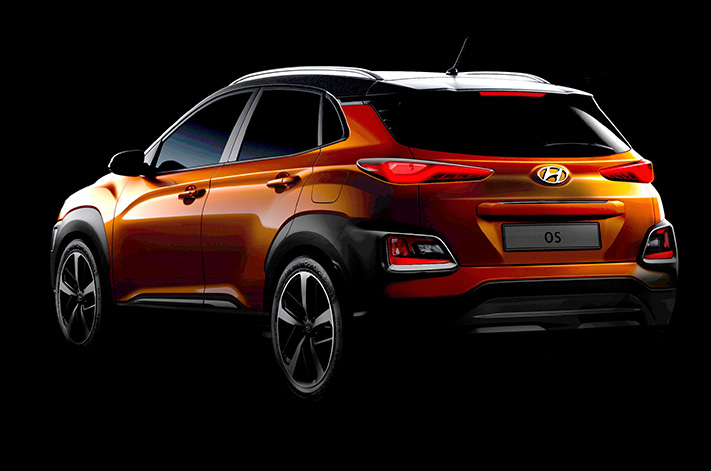
With design and development largely led by Hyundai’s European office (which also did much of the heavy lifting on the new i30), the Kona owes more to the radical Intrado concept of 2014 than it does to Hyundai’s ix25 small SUV, which is pitched at developing markets such as India and China rather than mature markets like Australia.
Hyundai also claims technology will form a key part of the Kona’s arsenal. On top-grade models the Kona will offer an eight-inch colour head-up display, however the car maker doesn’t detail what other cutting-edge features will accompany it. Expect a robust safety suite, however, with AEB expected to be offered range-wide (though potentially as a cost option on the base model).
For Australia, a two-engine line-up is likely with a 2.0-litre petrol engine borrowed from the i30/Elantra powering low-end models, while a Tucson-sourced 1.6-litre turbo petrol is expected for high-grade variants. Pricing is still far from locked in, but we can expect it to align roughly with the Mazda CX-3, which starts from just under $20K and stretches to the $37K mark.
As with the rest of Hyundai’s local offerings, an Australian-specific suspension tune is virtually guaranteed for Oz-bound Konas.
HOLD onto your lederhosen and behold what could be the sexy curves of the BMW M8.
Full disclosure, this isn’t an official rendering. It is the work of Wheels’ resident com-gen guru Brendan Wise, who has mocked up plenty of production car predictions and come scarily close more than a few times.
We set him to task on the camo-clad BMW M8 prototype that was revealed at the Nurburgring 24 Hour last month, and this is what he served back.
With the 8 Series concept as inspiration, Wise has been able to peel back the camouflage and bring to life a realistic prediction of what BMW’s new halo super-coupe will look like.
The M8 will be the cherry on top of the 8 Series’ already distinctive design. As a base, the delicious curves of the 8 Series Concept gives BMW’s stylists plenty to work with, and Wheels understands the family will encompass Coupe, four-door Gran Coupe and drop-top Cabriolet body styles – just like the current 6 Series range.
Sadly, the flagship model won’t be rocking an iconic 12-cylinder engine this time around.
Despite the stillborn M8 project of the 1990s having an orchestral bent-12 under its wedge-shaped snout, the modern iteration will be sticking to a proven twin-turbo eight-cylinder recipe, likely to be plucked from under the bonnet of the upcoming new-generation M5.
The prototype M8 has been filmed revving, idling, and generally shouting at anyone who approaches its snarling maw while on display in Germany.
While not as operatic as an atmo V12, it certainly sounds like the M8 will have the bark to match its hopefully substantial on-track bite.
Before it appears on road, the M8 will debut at Daytona International Speedway early next January in GTE racecar spec. The engine for the racecar is likely to be the same 4.4-litre twin-turbo V8 that powers the M6 GT3 racer.
A facelift, some tweaks, and a little bit of extra Porsche magic, here are the six main changes to the next Porsche GT3 while we wait for the GT2 and the rumoured Cayman GT4 RS.
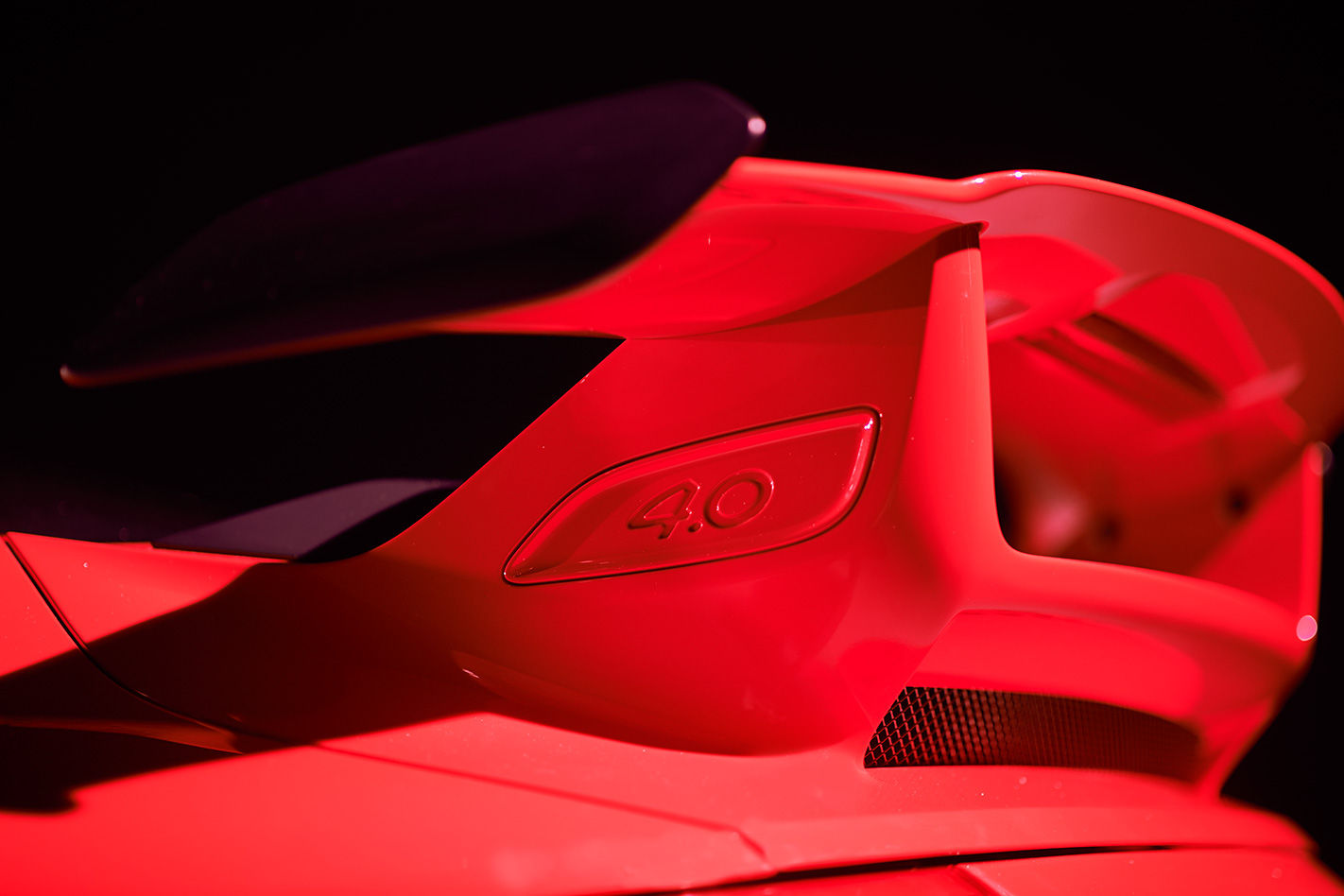
A redesigned rear wing and ram-style air vents look cool and actually work, while drag reduction and downforce has been increased.
Porsche planning Cayman GT4 RS, GT2 RS
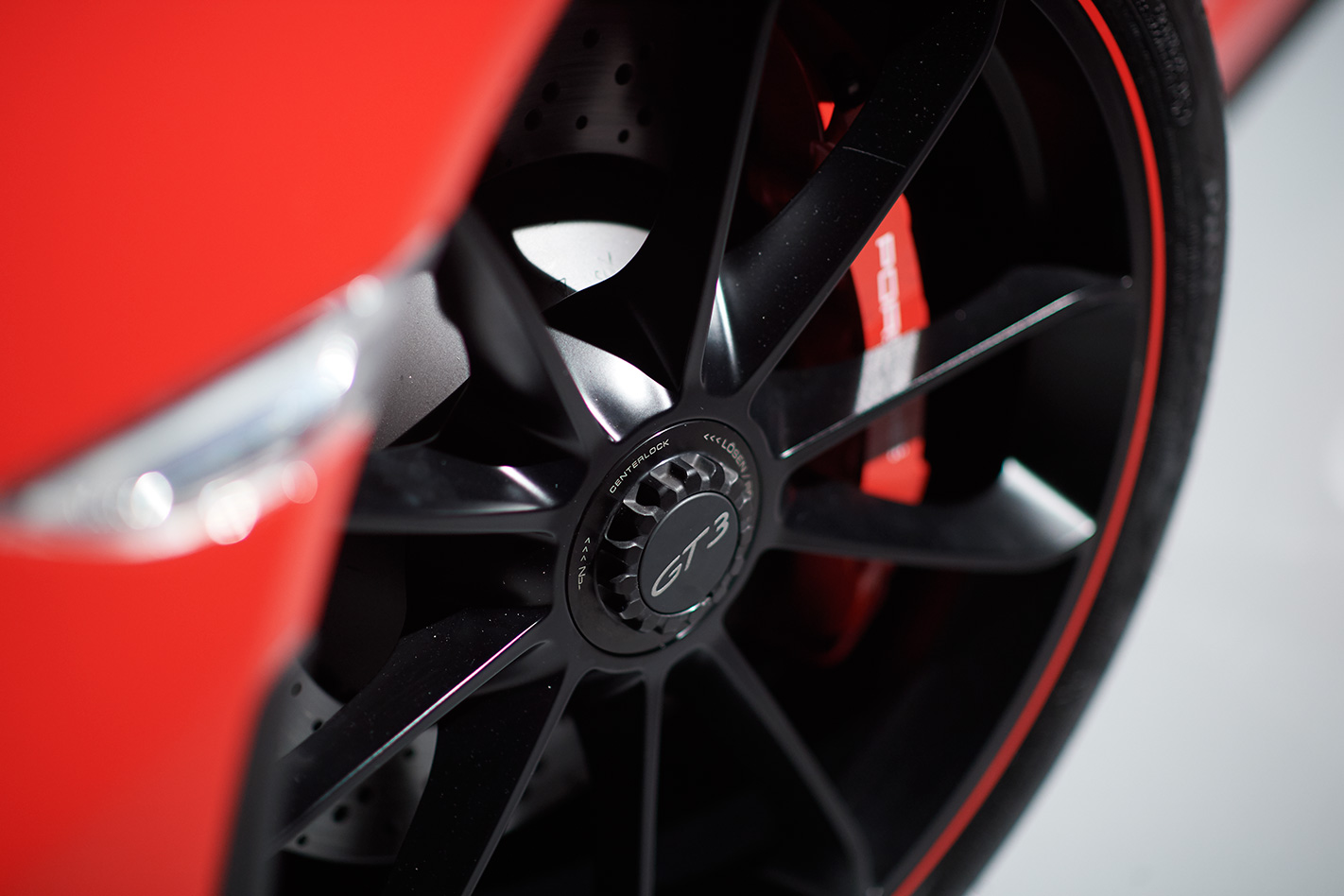
Behind the centre-lock 20-inch wheels, dinner-plate sized carbon-ceramic discs (PCCB) can be optioned for the GT3. They measure a whopping 410mm up front and 390mm at the rear. Standard brakes still use 380mm rotors front and rear.
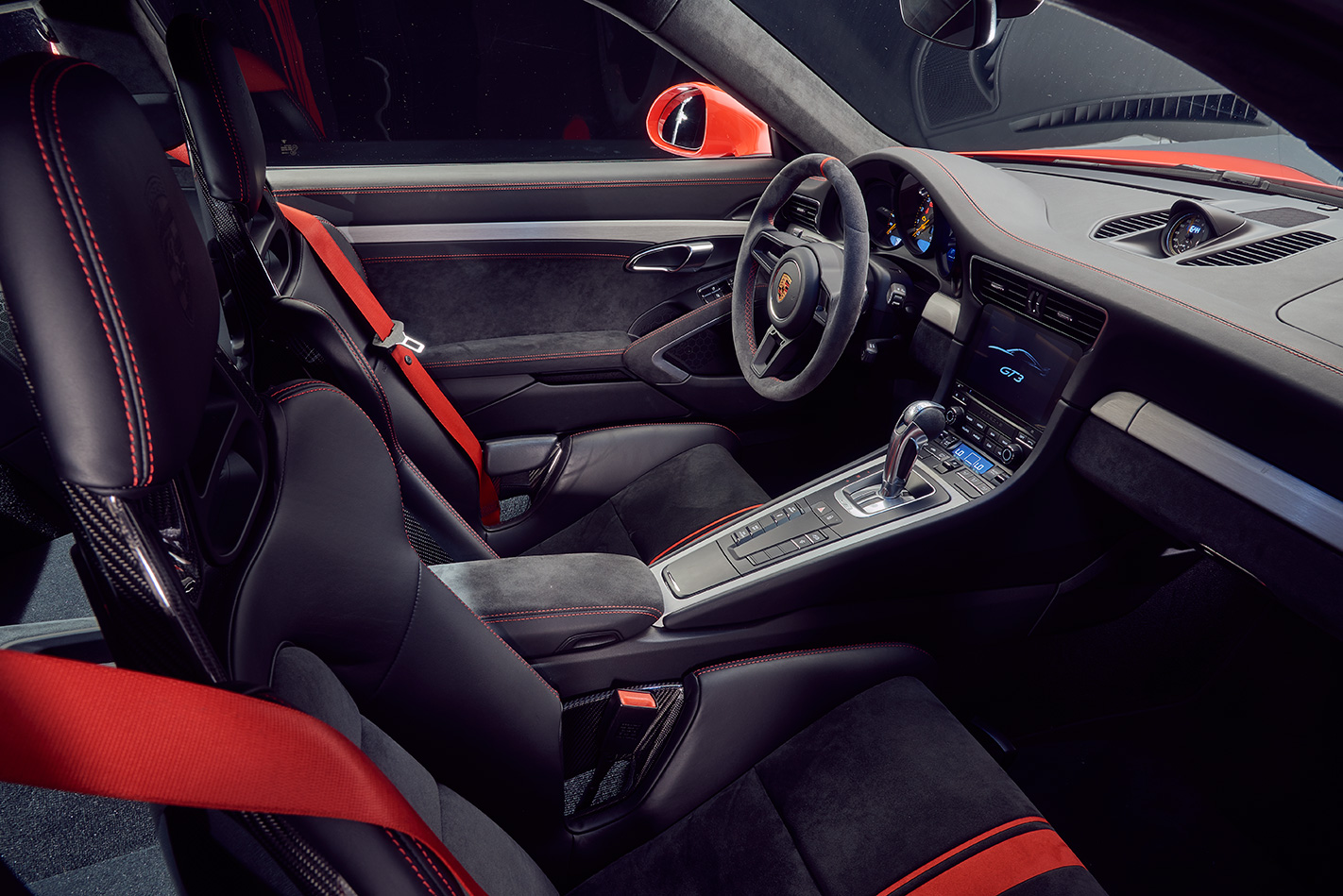
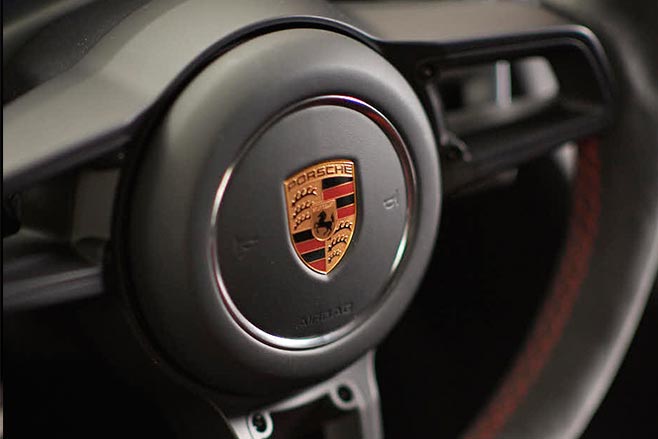
Alcantara, race seats and plenty of go-fast red highlights can accompany a roll cage. Our Euro-man Georg Kacher also says the seat cushion is “appreciably softer than before yet still offers lateral support”. Note that the wheel is devoid of buttons, for that focused driving experience. Wait for the RS for a more stripped-out cabin.
The 991.2 GT3 continues with rear-wheel steering, effectively altering the wheelbase for better agility or stability depending on speed.
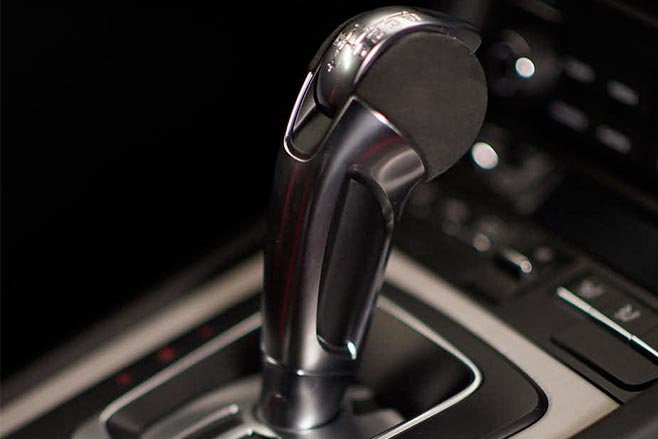
Unlike the Carrera’s seven-speed manual, which is adapted from the PDK, GT3’s short ratio six-speed unit is a bespoke gearbox. It’s half a second slower than the PDK, but it’ll make you feel more connected to the car.
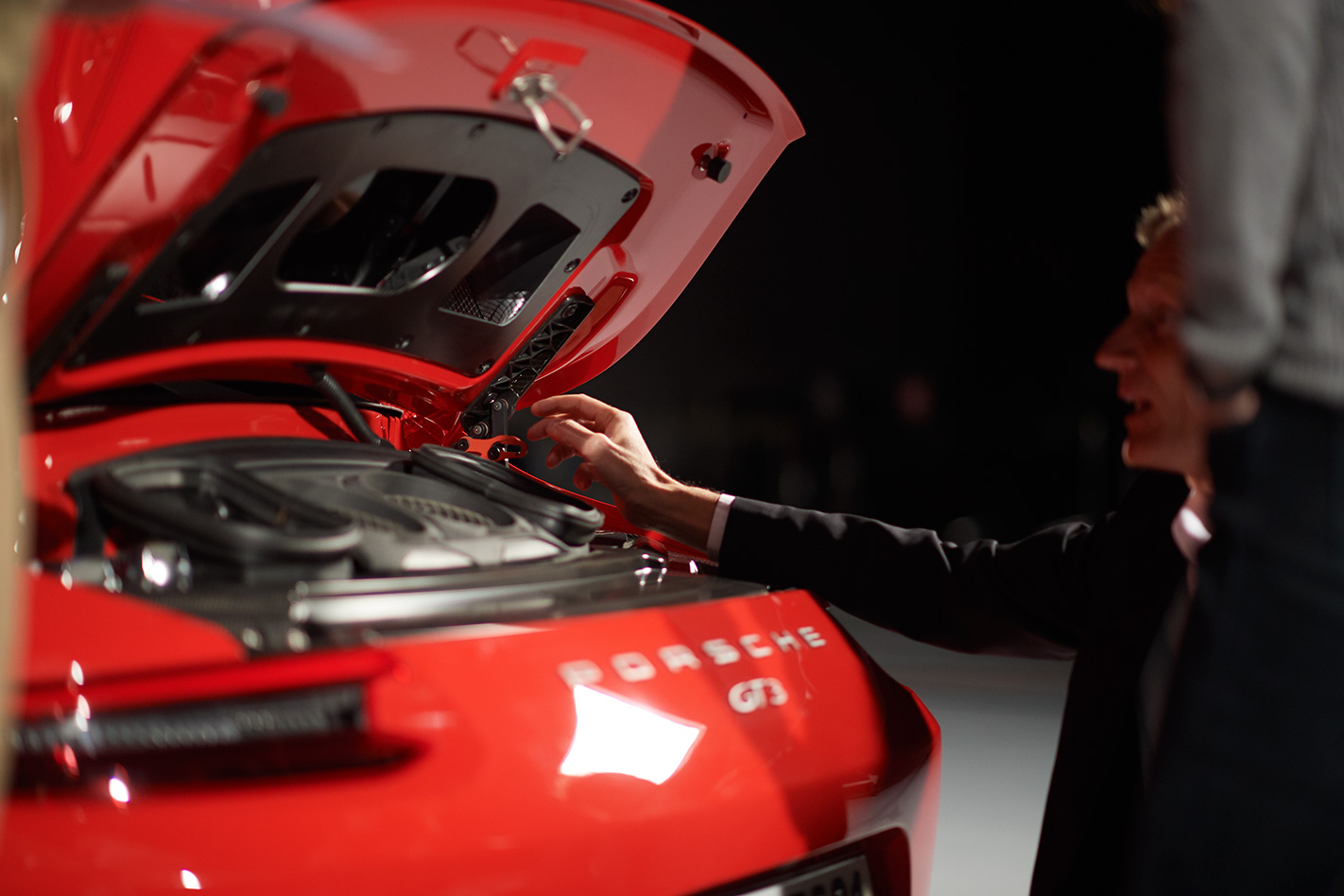
The 4.0-litre, flat-six Boxer engine is heavily revised and improved over the previous donk. It’s a development of the unit used in the GT3 Cup car – but with extra grunt. PDK-equipped GT3s hit 100km/h in 3.4sec. A manual will do 3.9.
Large SUVs are currently the fourth most popular vehicle segment in Australia, even though they are presently being outpaced by mid-sized sports utility vehicles in the sales stakes.
The widening gap, however, is due mainly to falling luxury SUV sales, as large SUVs priced under $70,000 remain steady.
Three of the biggest-selling vehicles in that sub-segment are the Hyundai Santa Fe, Kia Sorento and Mitsubishi Pajero Sport – and all three feature prominently as ‘Best Value’ cars.
With end of financial year deals heading into their final few weeks ahead of 30 June, WhichCar continues its series of Australia’s Best Value Cars – again with the help of sister title Wheels magazine.
Wheels’ Gold Star Car awards scored cars out of 100. Real costs comprising 3-year depreciation and a year’s insurance and fuel expenses accounted for 80 per cent of the score, with 10 per cent each for servicing costs and warranty.
In the Medium SUV categories, Kia’s Sportage had the edge over Hyundai’s Tucson, though the parent company turns the tables here.
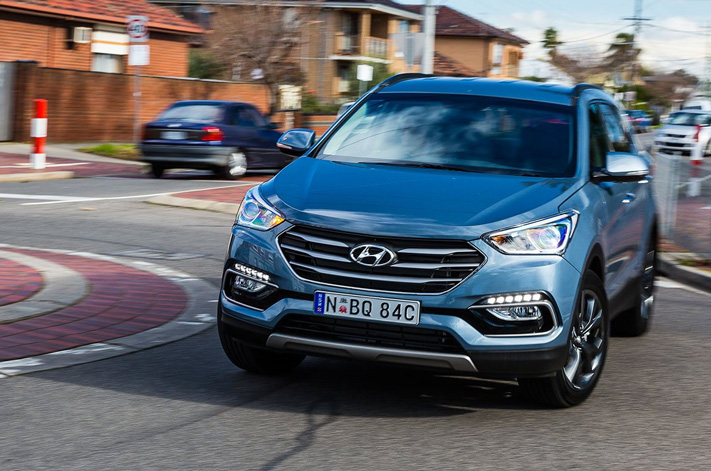
The Santa Fe Active CRDi makes the perfect start with a lower price tag – helped with the availability of a manual gearbox for the same 2.2-litre turbo diesel, where the Sorento Si is auto only. Yet there’s still a $500 advantage with the Hyundai’s optional auto.
The manual also gives the Santa Fe a fuel economy advantage of 1.5 litres every 100 kilometres – 6.3 v 7.8L/100km.
Add in the highest resale value (56 per cent) and cheapest annual insurance ($872), and the Santa Fe Active CRDi is a convincing value winner.
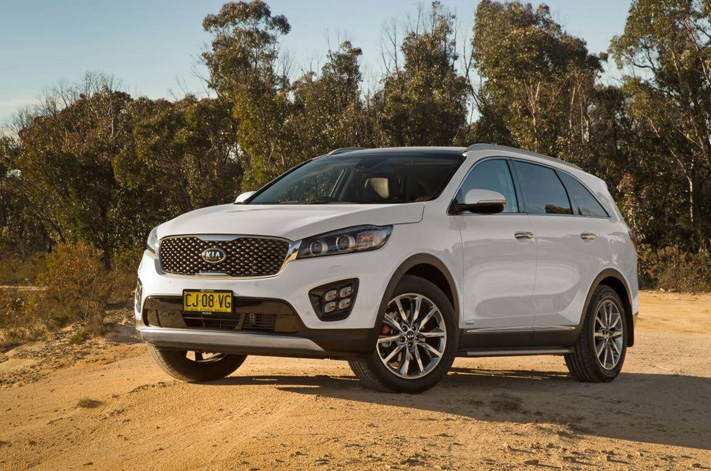
The Kia Sorento Si is offered at a lower price tag in petrol V6 form, though is front-wheel drive to the diesel’s all-wheel-drive set-up. Its biggest positives on the ownership front are a benchmark seven-year warranty and a resale value that’s still strong at just two percentage points below the Santa Fe.
Mitsubishi’s Triton-ute-based Pajero Sport GLX is also predicted to retain more than half its new-car price after three years (52%), and shares the Hyundai’s relative generosity with a five-year warranty.
The highest ownership costs over three years means it’s bronze only for the Pajero Sport, which may also lose appeal against its Korean rivals for those who value a third row. The Mitsubishi is a five-seater only in base GLX form – you’ll need to spend $3500 more for the GLS grade if you want seven seats.
All three models, if not exact specs, are featured in EOFY deals until the end of June.
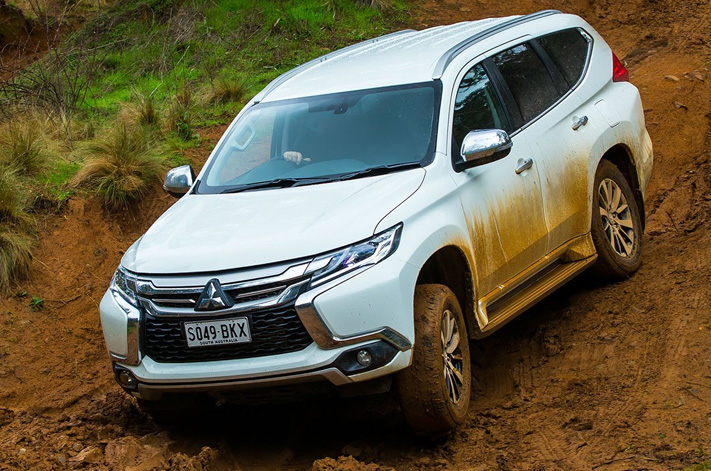
Hyundai’s Santa Fe Active X is powered by a petrol V6 rather than the turbo diesel, but if the engine isn’t a big factor then the $39,990 driveaway offer is good when the model’s RRP is $40,990 before on-road costs.
The Kia Sorento Si is available as a special Limited model with either petrol or diesel engines – adding equipment valued at $3000, which includes leather-appointed seats, 18-inch alloy wheels and wood-look steering wheel.
And Mitsubishi is throwing in a $1500 EFTPOS card with the $47,500 driveaway price of the MY17 Pajero Sport GLX.
