
WE DON’T usually associate Lamborghini with working smarter rather than harder.
The popular image of the Sant’Agata firm is all big noise, loud colours and drama. A more studied, cerebral approach to beating the opposition is a more recent development. Along with developing smart new carbon fibre technology, Lamborghini finds itself at the forefront of production car active aerodynamics. Its Huracan Performante heralds a whole host of methods to massage and marshal air flow, from its splitter with movable front flaps to a rear wing that can channel air through intakes at each side, opening and closing each independently to generate downforce on the inside rear wheel mid-corner.
‘Aerodinamica Lamborghini Attiva’ is far from the first active aerodynamic system. We’ve seen all sorts of developments in this sector from the simple motorised rear spoilers seen on the Mitsubishi 3000 GT and Volkswagen Corrado right through to the dizzyingly complex air management systems of today’s hypercars. We take a look at four of the key exponents here.
Mercedes-AMG GT R
Koenigsegg Agera One:1
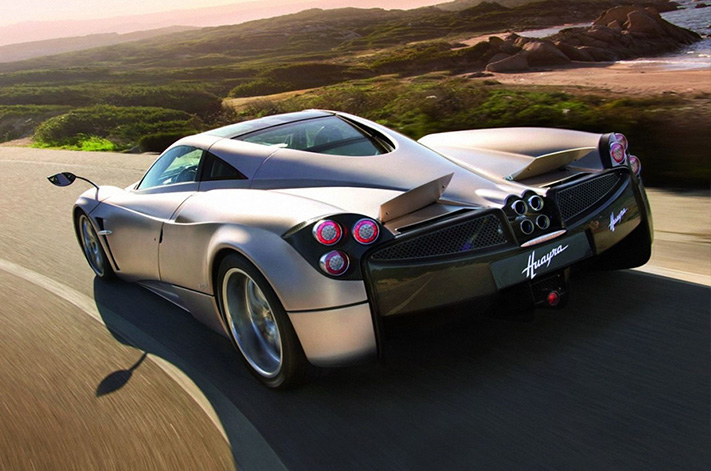
Pagani Huayra
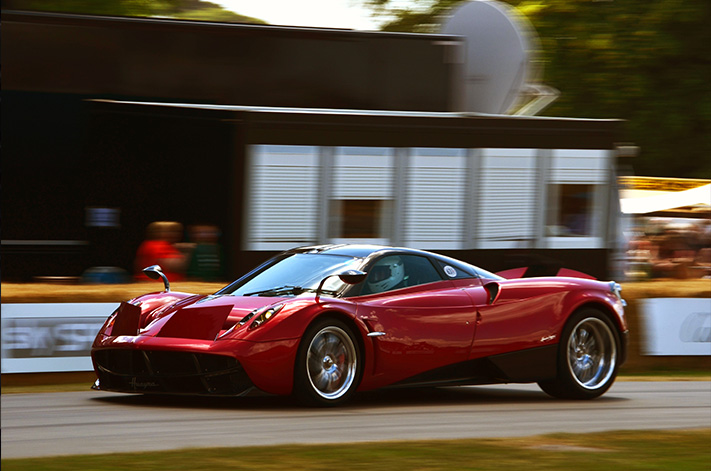
The Huayra’s set of movable flaps front and rear might be the coolest looking active aero on offer, but it’s arguable how effective it is from a vehicle dynamics perspective. The two large flaps at the back are mounted a long way inboard, so the differential drag between the two of them is never going to create a large moment of downforce torque. The software controlling the flaps biases heavily for low drag configurations, so it’s arguable that in slower corners, a more effective downforce model would be to have both rear flaps at maximum height.
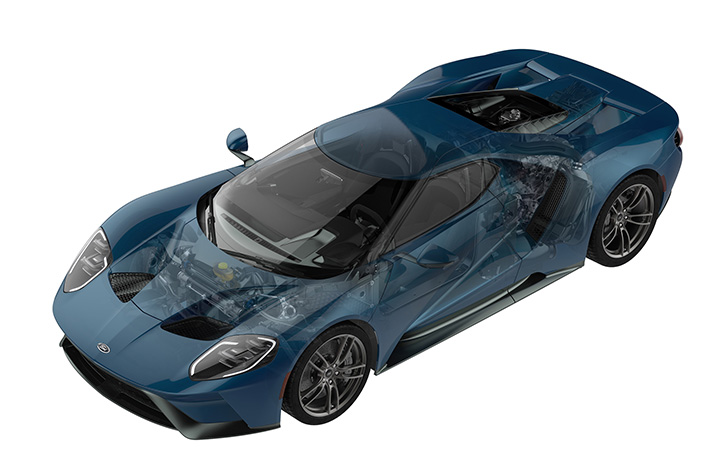
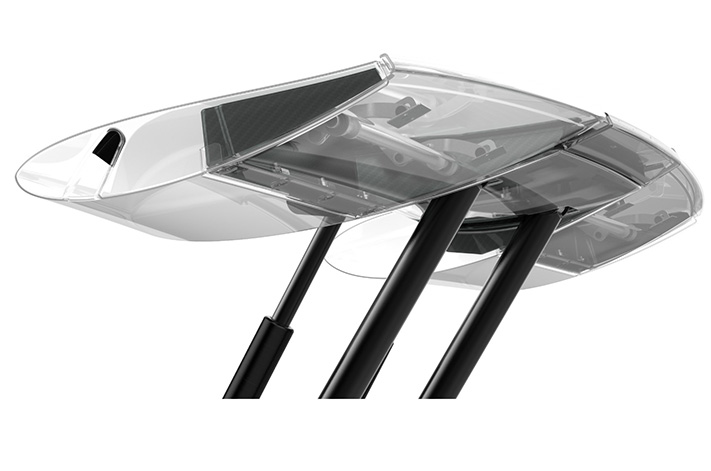
Ford GT
What do you get when you attach a caravan trailer to an Aston Martin, then put an F1 driver at the wheel and point them to the nearest track?
Red Bull Racing wanted to give us a peek at what happens when it introduces a bit of healthy competition between teammates, though we think they may have exaggerated somewhat.
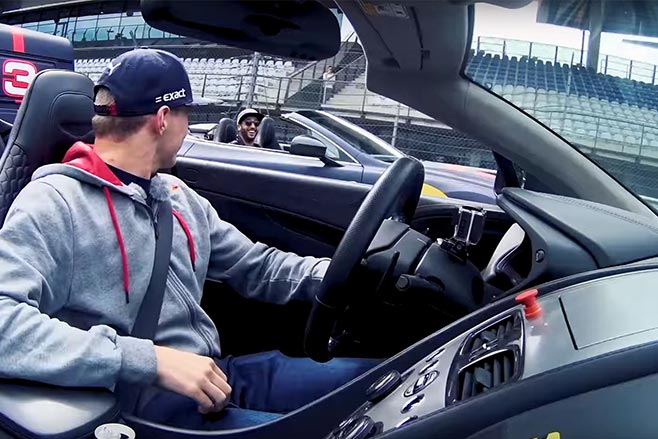
Of course, that still means being at the wheel, they need to remain skilful if they want to keep Ferrari and Mercedes on their toes.
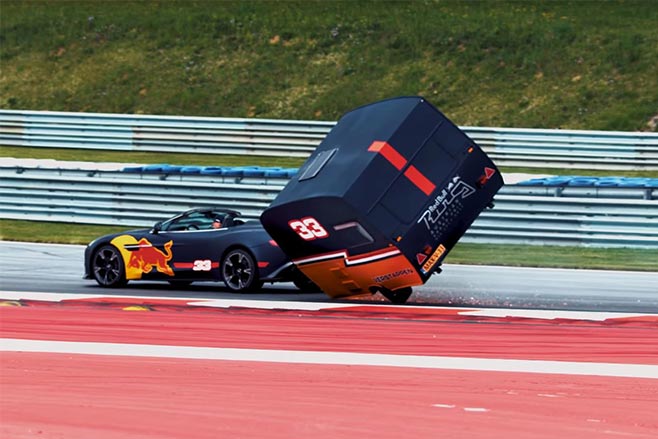
The result is lots of smoke, a caravan on one wheel (before going the full sideways drag), and bits of wood with #33 and #3 all over the track.
Their reactions indicate this may have been the goal all along…
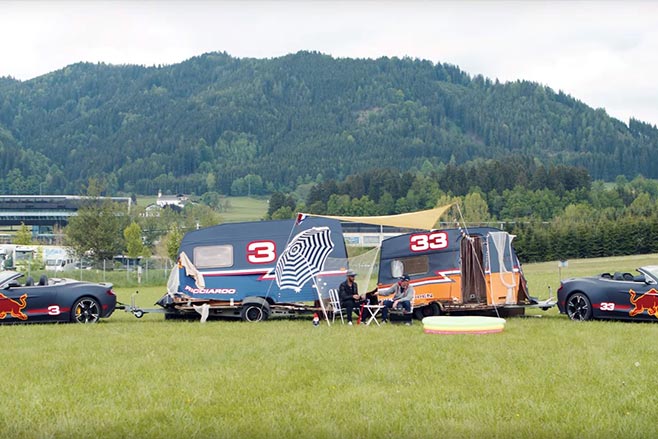
Max and Danny are laughing through the whole thing, and using the skill they’ve accumulated as drivers to produce a lot – really, a lot – of tyre smoke.
Keep an eye out for what seems to be a cameo from Red Bull Racing advisor and former F1 driver Helmut Marko.
The Skoda Kodiaq marks the Czech brand’s arrival into the hugely popular family SUV realm after a decade of offering sensible station wagons and MPVs in Australia.
It’s available as a turbo petrol all-wheel drive automatic version initially, though a 2.0-litre turbo-diesel will join it later.
WHAT IS IT The 2017 Skoda Kodiaq 132TSI is a seven-seater SUV, built on the Volkswagen Group MQB component set – it’s like a stretched Tiguan underneath.
The Kodiaq’s single initial specification sees it offered as an 132kW turbo petrol with all-wheel drive and a seven-speed dual-clutch automatic.
A 200mm stretch and a 110mm wheelbase increase, in a wider body make the Kodiaq roomier than its Volkswagen sibling, with a generous second row and a useful third one.
It is positively loaded with convenience, safety and surprise and delight features which makes it seem great value at $42,990.
WHY WE’RE TESTING IT The Kodiaq will be on the radar of open-minded SUV buyers in the medium and large classes – based on the former (in the shape of the Tiguan), sitting in between them on price, with much of the interior space of the latter. SUVs are finally getting good to drive, and the Kodiaq’s five-seater Volkswagen counterpart is among the best of the breed. A Wheels test just before the Kodiaq’s Australian launch and arrival on sale provided the opportunity to see if the Skoda has the skill set to lure SUV buyers away from the usual suspects.
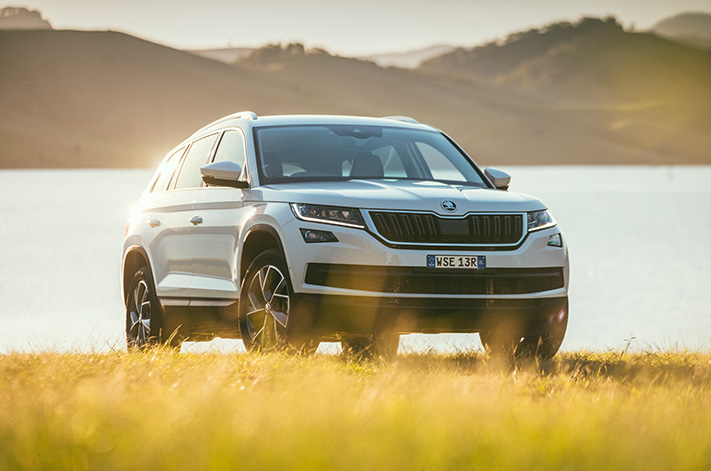
THE WHEELS VERDICT The Skoda Kodiaq is a roomy, refined, reasonably dynamic seven-seater SUV with masses of standard equipment and a five-year warranty, for an alluring $42,990 price.
PLUS: Value; space; refinement; primary ride; handling; ‘surprise and delight’ MINUS: Low-speed ride niggles on standard 19s; no manual paddles
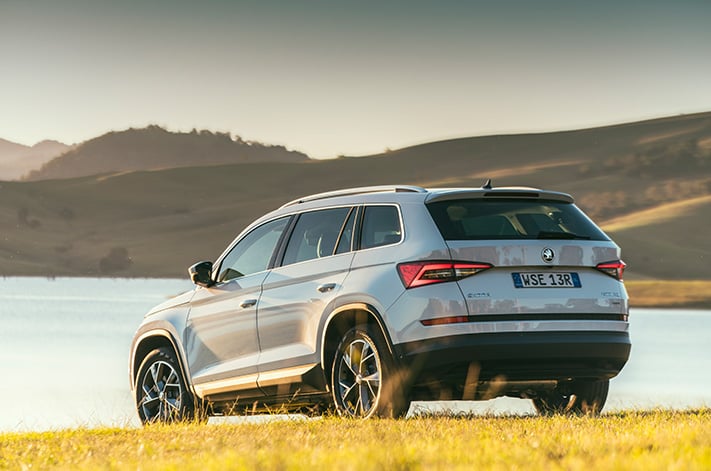
So massive respect, Skoda, for past attempts at giving the average family the vehicle they need, rather than the one they’re asking for in increasing numbers. Mr Jobs has a high five he’d like to deliver from the grave.
Starting with the brilliantly versatile Roomster in 2007 and continuing with the Fabia and Octavia wagons, and baby SUV/MPV the Yeti, the Czech brand has always known that people need, well, the qualities the Roomster offered a decade ago.
But people want family SUVs and Skoda has just sorted that glaring gap in its range with the Kodiaq.
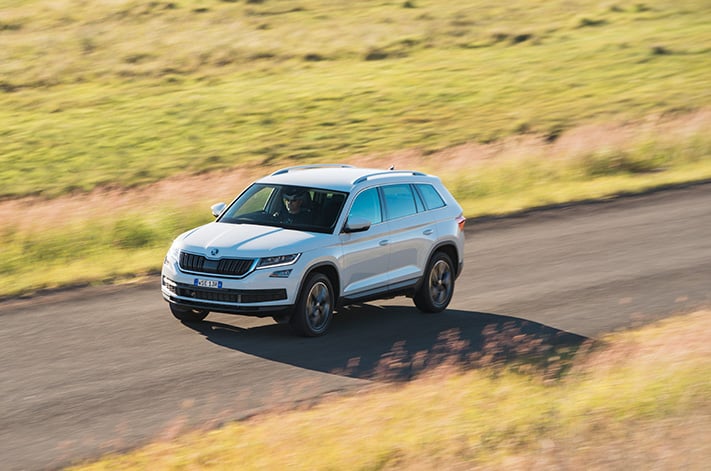
The Skoda is about 200mm longer and 43mm wider than its Volkswagen sibling, with a 110mm-longer wheelbase.
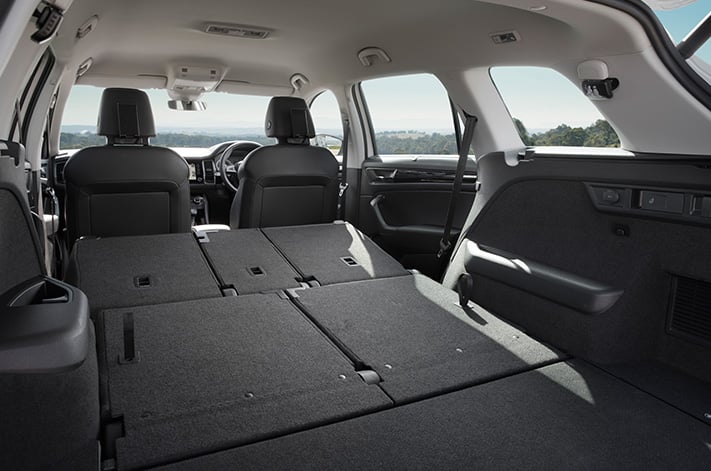
A body almost exactly the size of a Hyundai Santa Fe brings ample space for seven seats. The third row is usable for anyone under 170cm, and the second row’s fore-aft runners let you choose how legroom is apportioned. A 270-litre cargo bay opens up to a substantial 630 litres with the third row folded, and 2005 litres with the second row flipped, too.
The driver’s door thud, comfy driving position, and shove somewhere between a base and a warm hatch provide positive initial impressions. The turbo petrol 2.0 delivers 320Nm from 1400rpm, 132kW from the midrange, and slick refinement hauling the 1677kg wagon via a crisp-shifting seven-speed dual-clutch auto.
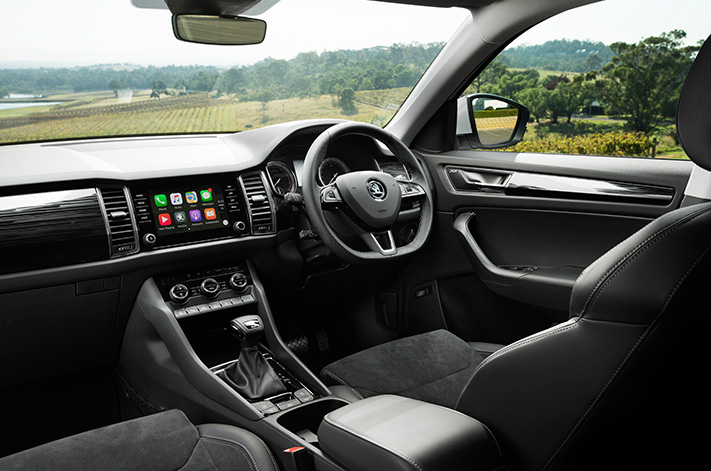
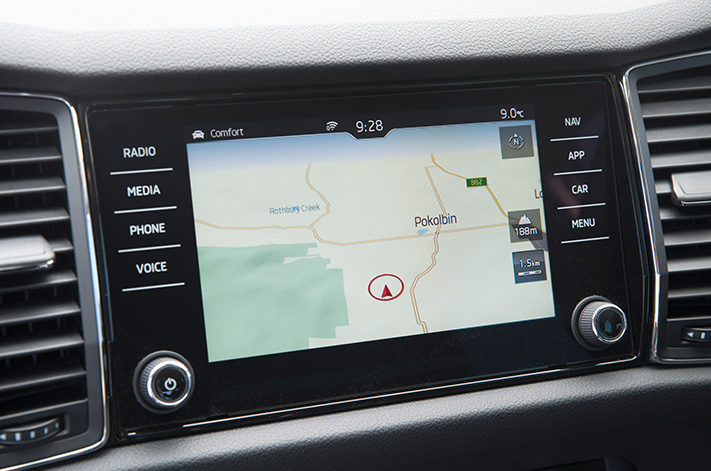
Consider the Kodiaq’s $46,290 drive-away price – roughly mid-spec large SUV money – and what you get, and it’s ripper value. There’s a powered tailgate, rear sun blinds, autonomous emergency braking, rear cross-traffic alert, lane assist, blind-spot detection, nine airbags and front and rear park sensors. Reversing and surround-view cameras, a tyre-pressure monitor, fog lights with cornering function, adaptive cruise control, smart keyless entry, adaptive front lights, dual-zone climate control, sat-nav, Android Auto and Apple CarPlay. Phew. And the list goes on…
Yet the various modes’ damper calibrations are just right. Sport tautens the damping a fair bit for enthusiastic spurts, while comfort slackens it noticeably to provide a calmer primary ride than normal, which makes a good fist of anything from cruising to carving, leaving only the big, 235/50-shod 19s and their jiggly effect on non-smooth roads.
It’s a pretty polished drive, then, and the Kodiaq’s practicality and huge value seal its appeal.
We get that the Roomster was not a cool-looking car, which is no doubt why they didn’t sell like iPods. But much respect for it, all the same, as well as continuing kudos for Octavia RS wagon that serves the enlightened dad.
But an SUV that gives families what they want and what they need? That should be impossible to ignore.
Vote for the Skoda Kodiaq to win the 2018 Wheels Car of the Year Readers’ Choice competition
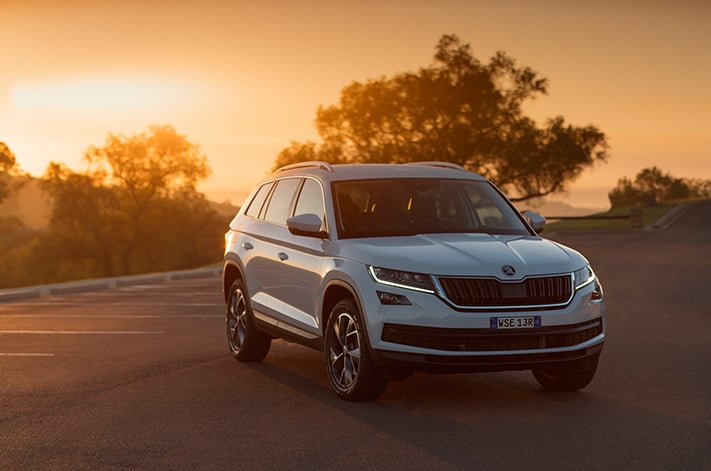
SPECS Model: Skoda Kodiaq 132TSI Engine: 1984cc 4cyl, dohc, 16v turbo Max power: 132kW @ 3900-6000rpm Max torque: 320Nm @ 1400-3940rpm Transmission: 7-speed dual-clutch automatic Weight: 1677kg 0-100km/h: 8.2sec (claimed) Fuel economy: 7.6L/100km Price: $42,990 On sale: Now
SMALL in stature and sporting similarly diminutive price tags, it’s easy to overlook the talents of vehicles in the microcar segment, but delivering a distilled version a manufacturer’s brand values on a tiny budget is a deceptively tough assignment.
Viewing these cars as low-involvement buying decisions for first-time drivers, pensioners and other lower-income types who are too timid to buy second-hand ignores the fact that the latest crop of microcars are good enough in their own right not to damn with any sort of faint praise.
That said, the Aussie love affair with the microcar has been a relatively slow burn, and many buyers will still be tempted to skip to the light car segment above where engines, interiors and cargo spaces are more generous, for an outlay of just a few thousand extra.
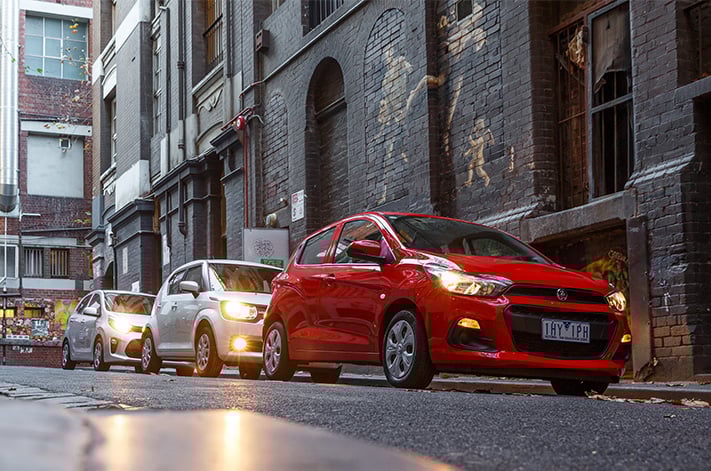
Now in 2017, it’s time to revisit the micro segment, the lineal champ from the red corner facing a sterner test this time. The Picanto is back in new-gen form with more mature styling, even more equipment and a $14,190 retail sticker for the base manual that’s just $200 more than the Spark LS manual. What’s more, the Kia spikes the Spark’s guns with a locally-developed ride and handling tune. Completing the trio is Suzuki’s fresh-faced but big-boned Ignis.
Yes, we know the Ignis is officially classed as a tiny SUV, but would you ever realistically regard it in the same way you would a Mazda CX-3 or Toyota C-HR? We’re going against the ideological grain here and declaring the exclusively front-drive Ignis to be nothing more than a micro hatch with an altitude adjustment. Its $15,990 drive-away price tag puts it in the micro car zone anyhow, though it’s at a modest price disadvantage relative to the Holden and the Kia, so it’ll need to work that bit harder to impress here.
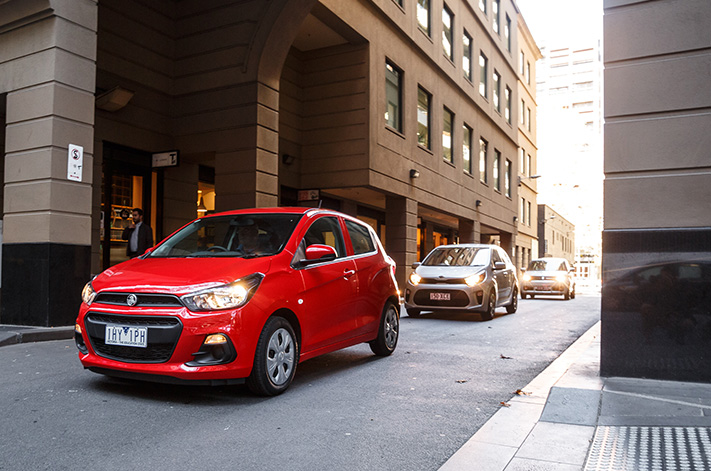
The Spark LS manual tested here retails for $13,990, making it the price leader of this set. The Picanto S manual wears a recommended retail of $14,190, though it balances that with the most generous equipment list here.
The introductions complete, let’s take a closer look at how each of 2017’s micro car contenders shapes up.
SUZUKI IGNIS
Straight away, the Ignis gets your attention with its boxy shape and funky interior. It’s a great example of how deliberately retro throwbacks can look cool rather than cringeworthy – the Ignis has plenty of visual attitude, and that goes a long way in the showroom. It doesn’t hurt to have a design with personality, demonstrating that even at this price point, it’s possible to offer something other than lowest common denominator fare.
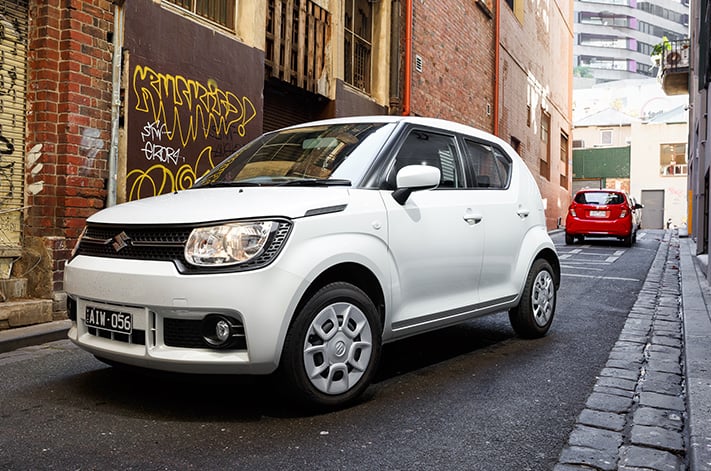
Firmly in the Ignis’ favour is its roomy interior, with stacks of headroom, the most rear legroom and the biggest boot of this bunch. On the opposite side of the ledger is a lack of height adjustment for the driver’s seat, and ironing-board-flat rear seatbacks. At least it’s easy to get into and out of, thanks to wide-opening doors, a high hip-point and generous floor-to-ceiling height.
2017 Suzuki Ignis GL Manual video review
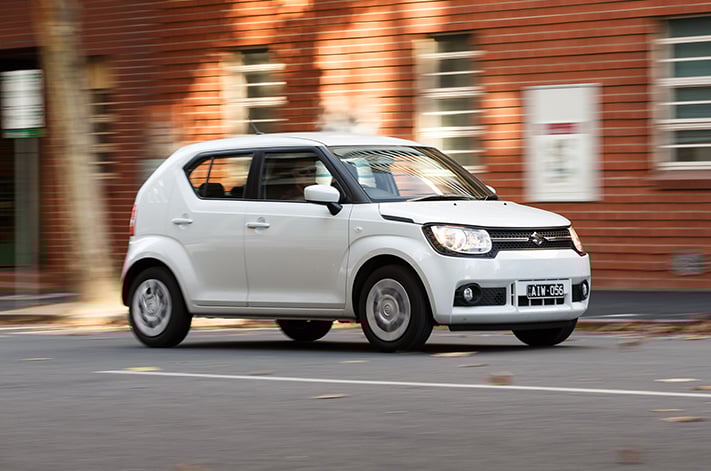
Its powertrain is perky too. Displacing just 1.2 naturally-aspirated litres, the Ignis’ four-pot has a punch that feels more powerful than its 66kW/120Nm would suggest. It loves to rev and delivers power in a delightfully linear fashion. You’re looking at the vehicular definition of “cheap and cheerful” right here.
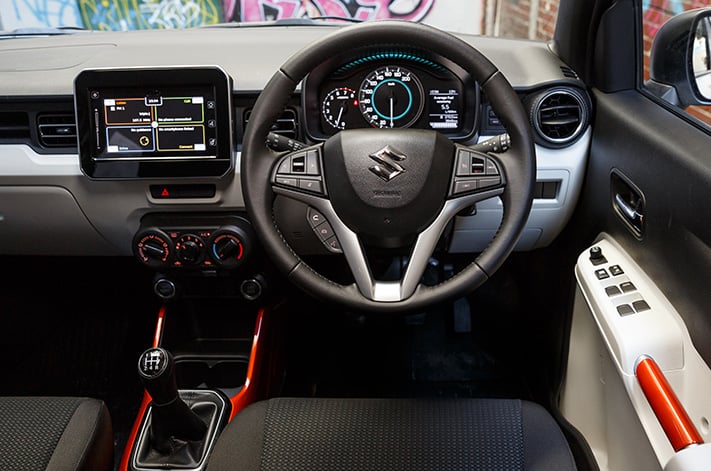
However the Ignis is the only car in this throwdown that doesn’t benefit from a locally-developed tune, and, frankly, it shows. There’s a surprisingly brittle ride for something with so much ground clearance, the chunky Suzi’s suspension being firm and never settled on lumpy roads.
HOLDEN SPARK
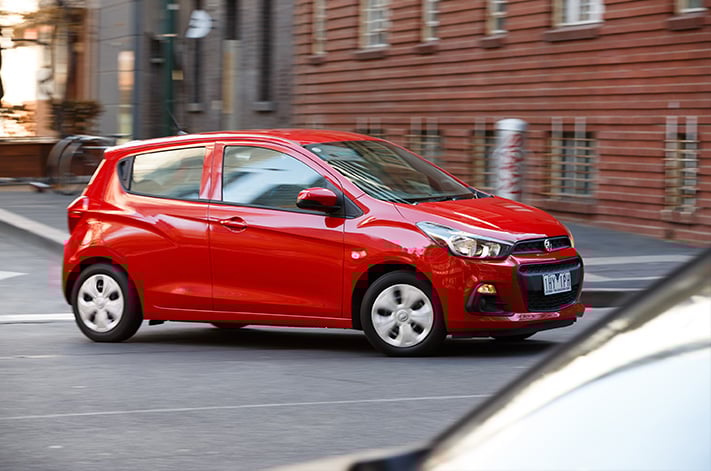
2016’s bantamweight champ still makes a strong case for itself in the pricing and driveability stakes, though it’s easily the most conservative car here in terms of aesthetics. It’s functional but definitely not funky.
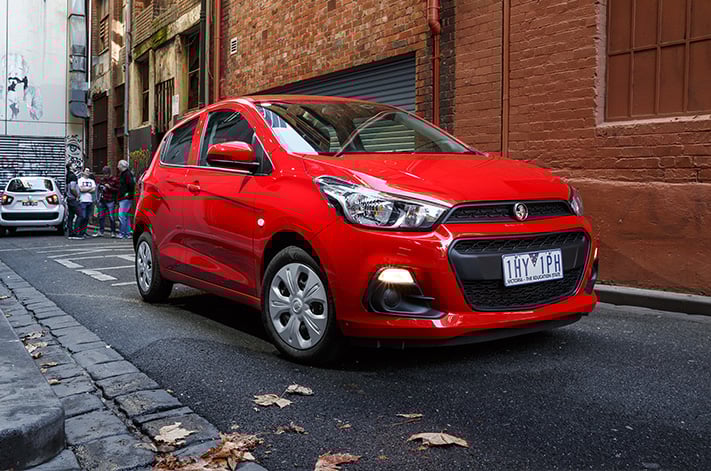
The Holden’s steering feels well-oiled and accurate, reassuringly well-weighted and helped by a suspension calibration that promotes stability and safety. Overall, it’s the Spark that’s the best-handling of the gang as well as the comfiest over most roads.
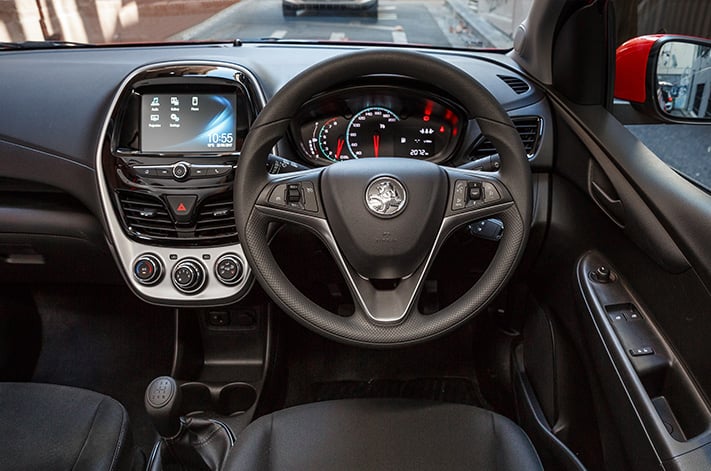
The Holden also clearly prioritises its front seat occupants, with those in the cheap rear seats having to put up with a firm and upright backrest, limited storage and some unimpressive material finishes. Road noise is also prominent in the Holden’s back seat – far more so than the Ignis and Picanto. The Spark may be the cheapest here, but it’s clear that Holden’s attempt to seduce buyers only went as far as the decision makers up front.
The Picanto is the freshest product here, and that’s reflected in the modernity of its European-influenced design – under the aegis of Peter Schreyer in Kia’s Frankfurt studio – and equipment fit-out. When it comes to feature count, the Ignis only betters it with a built-in sat-nav infotainment system. Kit list for kit list, the Kia forges ahead in almost every area.
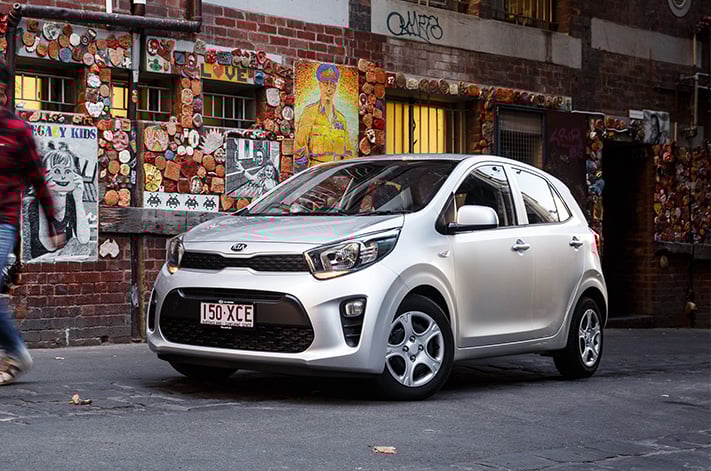
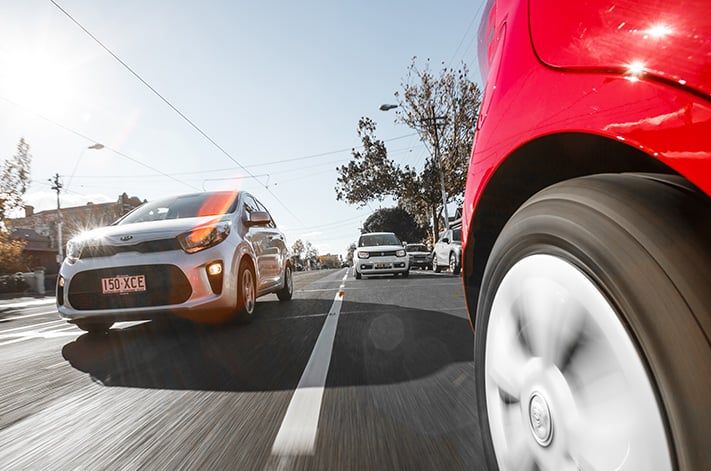
With a calm highway ride and supple damping that successfully deals with some of Australia’s worst road surfaces, the Picanto’s Aus-specific chassis tune works a charm. Remember, the Picanto suffered last year due to a sub-par suspension – this year’s car has no such handicap.
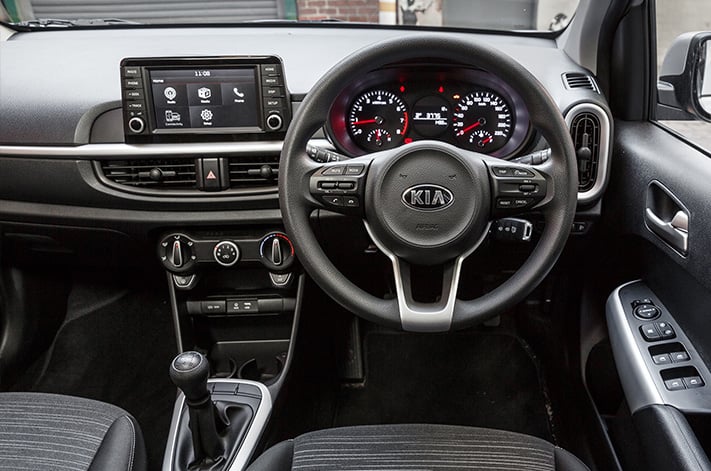
Clutch action aside, the Picanto’s on-road competence is matched by an interior that’s unerringly sensible in its layout and refreshingly modern in its design. It trades the cloying cutesiness of the last-gen Picanto for a more mature treatment, with a raised infotainment touchscreen that would look borderline premium if it weren’t constructed entirely from rock-hard plastics. Even so, Kia goes the extra mile by adding contrasting silver trim on the front and rear door cards to bring some brightness into the cabin, unlike the despondently muted palette of the Spark.
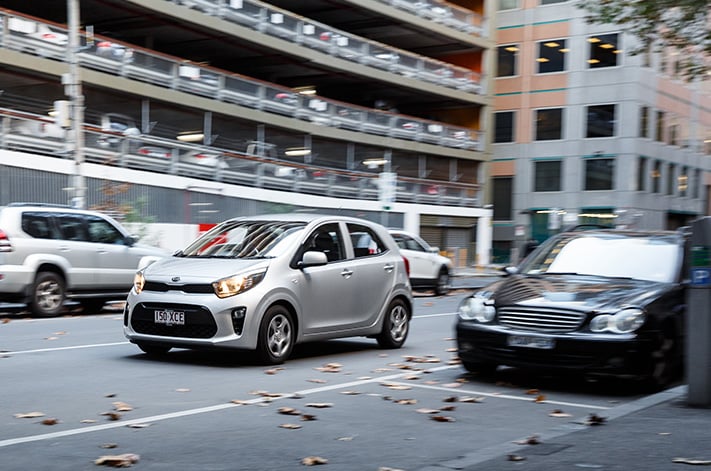
VERDICT – PICANTO
The Picanto may have missed out on a medal last year, but 2017 is its time to shine. Being a fresh-out-of-the-box design obviously helps massively, but that counts for nought if the product isn’t up to snuff. In the Kia’s case, it excels.
It’s the best-balanced car of the three in terms of price, features, comfort and driveability, and while the Spark kept up or even edged ahead in dynamic testing, it was the Picanto’s more welcoming and hushed cabin that always saw its fob vanish first from the key drawer.
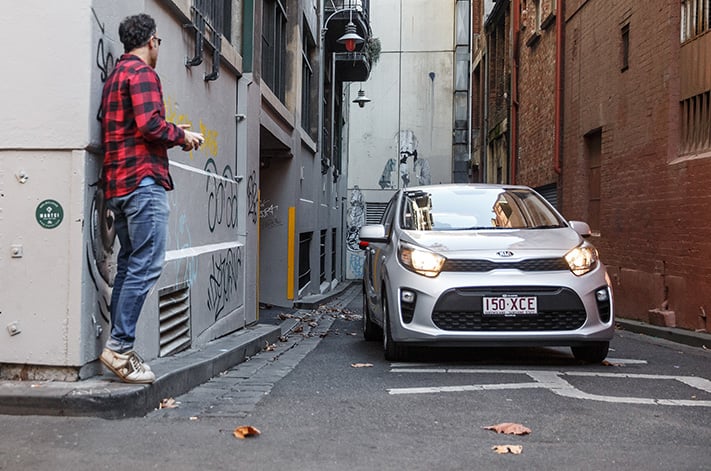
We should note that no cars were equipped with autonomous emergency braking (AEB) as standard. If there’s one criticism that could be levelled at the micro car segment, it’s that this fearsomely price-sensitive end of the market isn’t adopting cutting-edge safety tech with the same speed as bigger cars. That’ll no doubt change as unit costs come down and market resistance to cars without this tech firms up.
Kia promises AEB is coming for the Picanto, which will make it the first micro hatch to feature it since Volkswagen’s short-lived Up – and also increase its lead in the micro car stakes. For now though, even without the help of AEB, the Picanto does more than enough to earn its spurs as the best of this bargain bunch.
Jeep Australia’s promised V8 addicts quite a Christmas present.
The company has confirmed the Grand Cherokee Trackhawk will arrive this December, bringing what it calls the world’s ‘quickest and most powerful SUV’ Down Under.
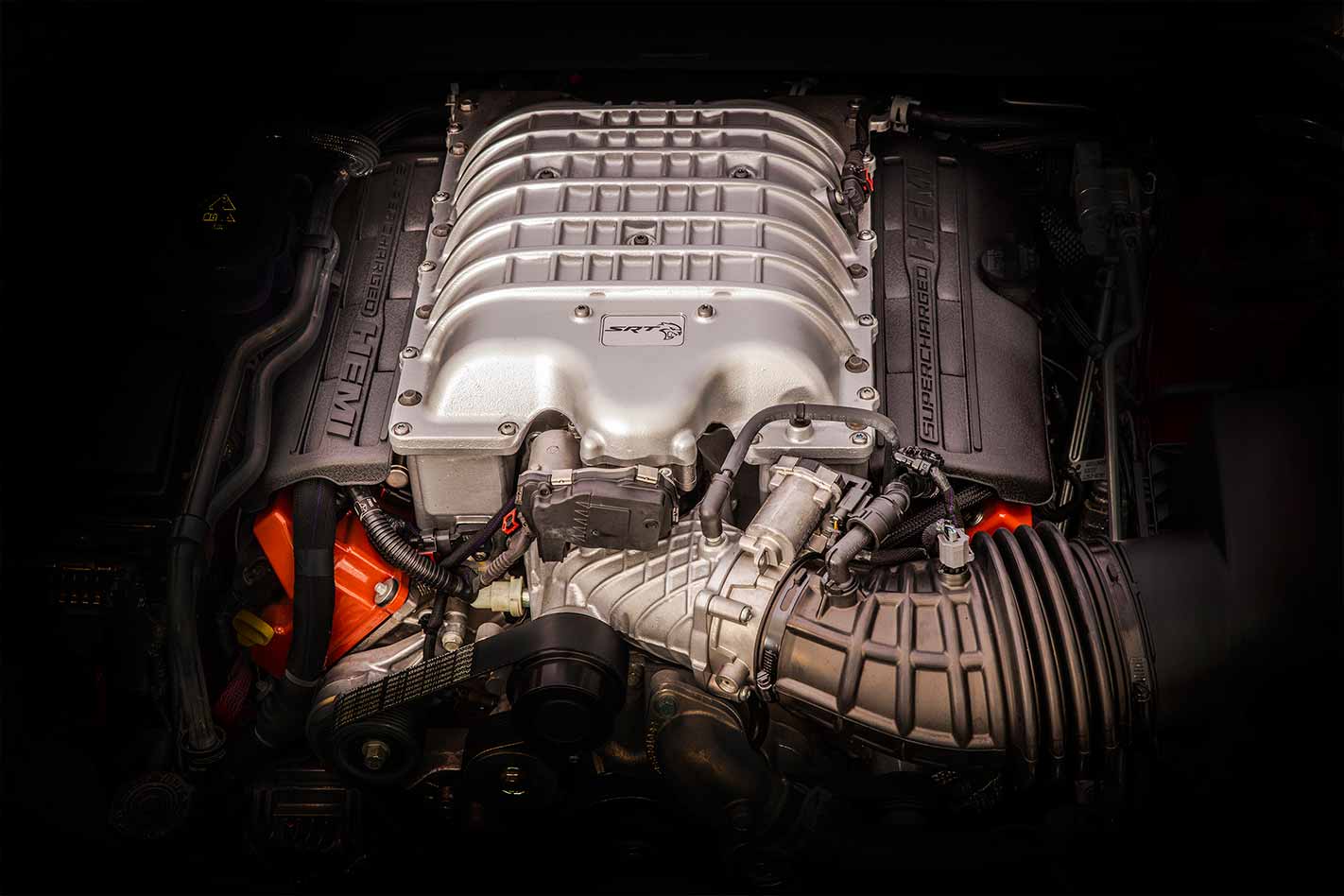
That’s hard to doubt knowing the Trackhawk will smuggle a supercharged 6.2-litre Hemi V8 here in its bonnet. Shared with the Dodge Challenger Hellcat, the unit bursts with 527kW and 874Nm.
“The Grand Cherokee Trackhawk will be on sale in Australia in December, and it will shatter performance SUV benchmarks,” Jeep Australia President and CEO Steve Zanlunghi said in a press release.
Changes to the drivetrain, braking system, and suspension will help it face off with benchmarks like the BMW X5M and Mercedes-AMG GLE63 S.
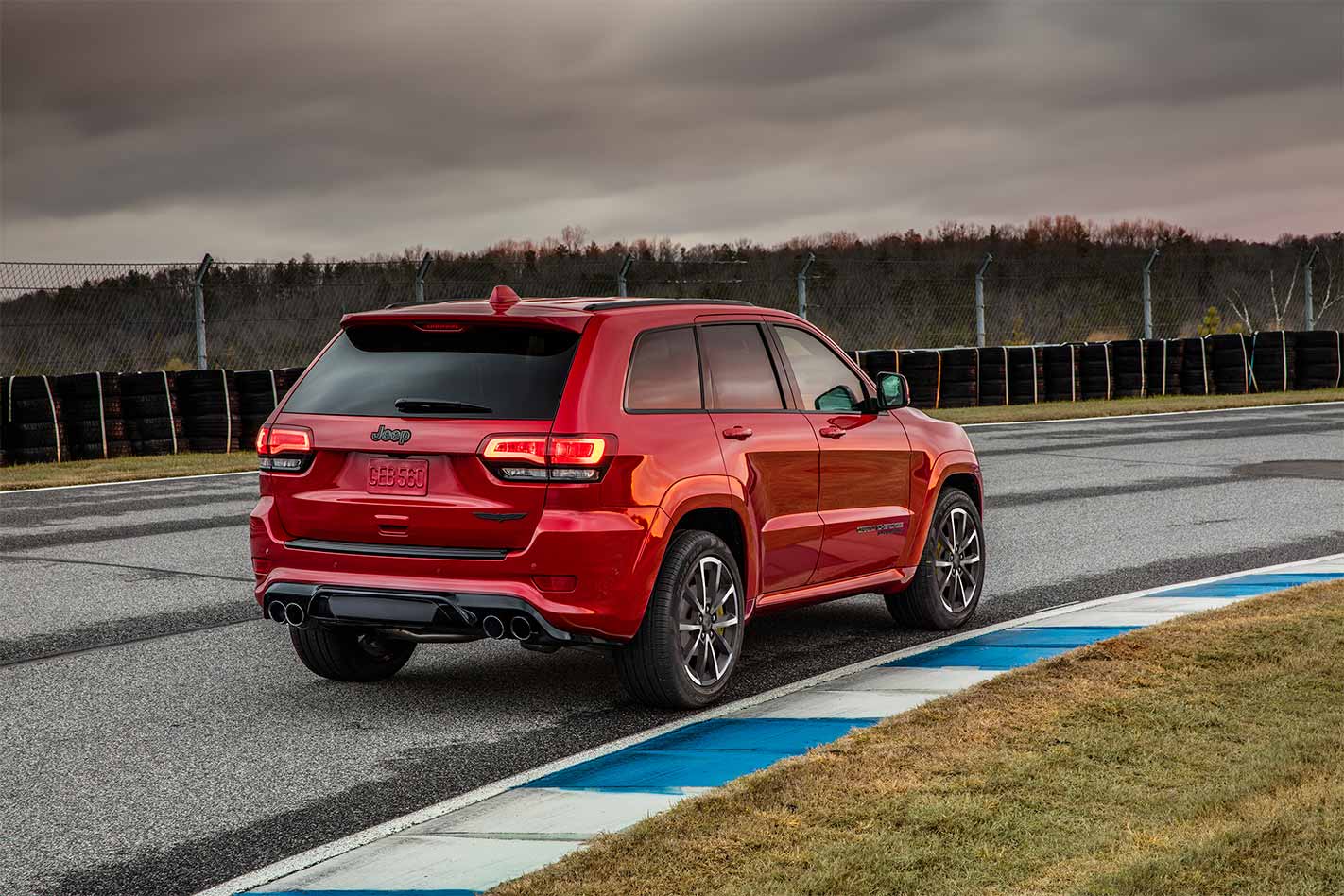
Meanwhile track-tuned Bilstein dampers and higher-speed rated Pirelli tyres are claimed to help the Trackhawk generate .88g on the skidpad. Driver-modes can vary the torque split between 60/40 and 30/70.
Visual differences extend to its calipers, which are painted yellow, and new design 20-inch wheels. Lighter, track-option, alloys are available and shed 5.5kg per wheel.
Elsewhere, ‘Supercharged’ door badges and a ‘Trackhawk’ rear emblem help spot this range-topping Grand Cherokee, as do the unique headlight surrounds and fog-light intakes.
All units also feature a quad-exhaust system and a gloss black bumper insert.
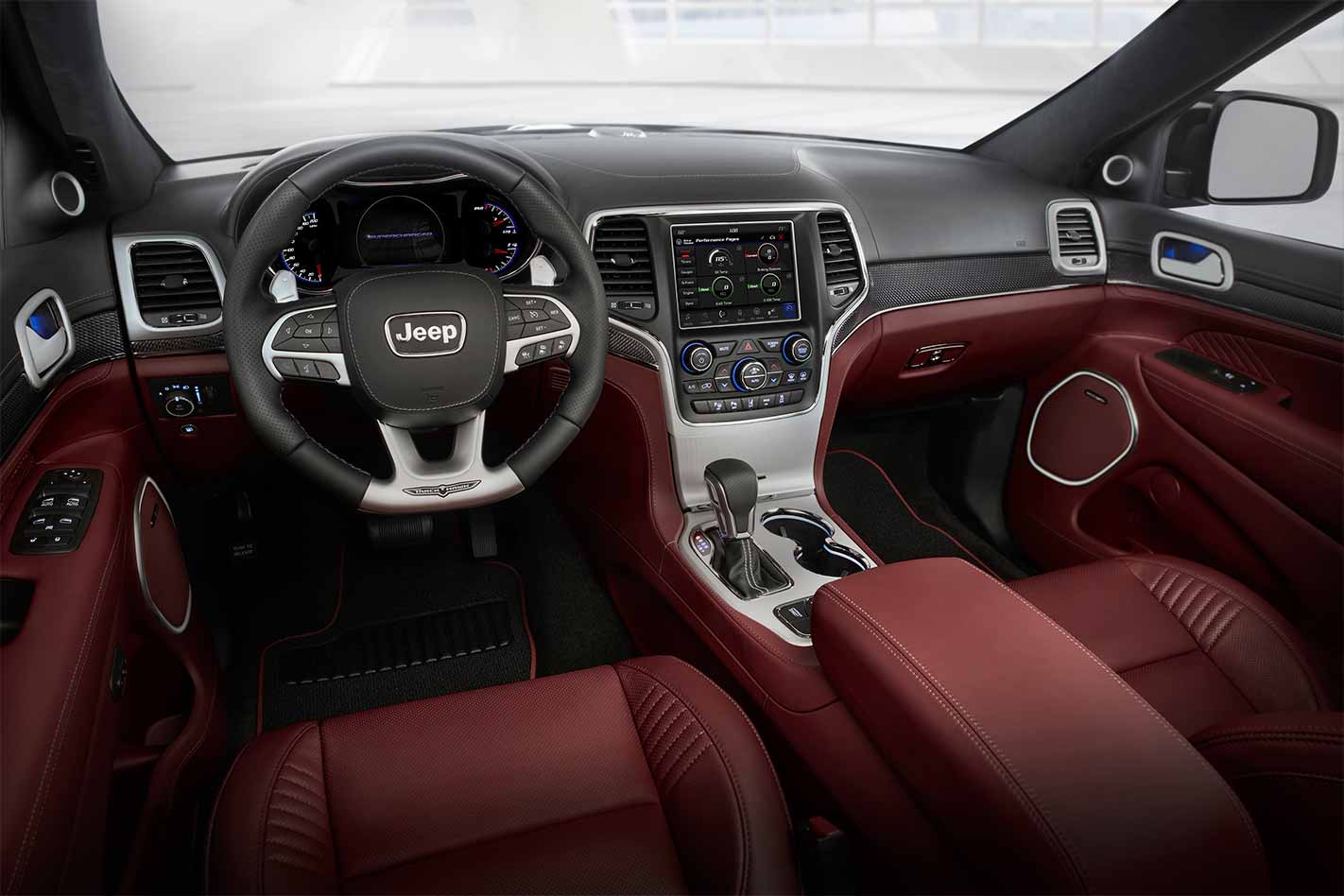
Jeep Australia can’t yet confirm details on final pricing, allocation, or specification. But it has been reported it’s priced somewhere around $140K. Some $30K less than the X5M.
There’s also a good chance our right-hand drive Trackhawk won’t miss out on much compared to its Stateside counterparts, including a colour pallet which includes a True Blue hue.
Stay tuned for more information on the Trackhawk in the coming months.
In early May, we highlighted a number of items that you may have noticed are becoming less common in modern cars thanks to the onslaught of new technology that makes day-to-day motoring simpler, safer and more enjoyable.
One such feature that was once commonplace but now hard to find is the humble gauge.
The theory goes that too much information is confusing or distracting and that when it comes to engine coolant temperature, for example, the average driver does not need notification until something goes awry.
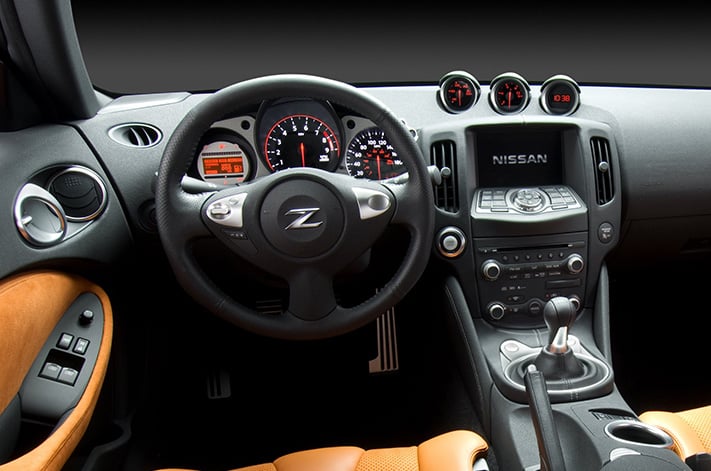
Would you know the implications of a gauge reading of 60 degrees, 90 degrees and 120 degrees?
Many manufacturers have now substituted a graduated scale for a simple normal and red zone, while others have done away with the dial altogether in favour of a warning light that only comes on when the engine overheats.
Older vehicles, particularly high-performance models, often have auxiliary gauges that offer more information for higher-stress engines under greater demand. Here’s what all that information means if you ever get behind the wheel and are faced with a deluge of information, starting with the basics.
COOLANT TEMPERATURE
As the life-blood of your engine, coolant temperature can offer a first warning sign of significant problems before they become serious or cause a breakdown.
Healthy coolant should be a mix of water and an additive but unlike water at atmospheric pressure which boils at about 100 degrees, the sealed cooling system is pressurised and can operate above 100 degrees without boiling. Normal range is between 90 and 110 degrees.
Persistent low temperatures might point to a faulty or failed thermostat, while high temperatures can indicate a whole catalogue of sins including head gasket, coolant pump, radiator or cooling fan problems.
Engine temperature will naturally fluctuate – sometimes into the abnormal range – according to load and atmospheric temperatures.
VOLTAGE
A vehicle’s electrical voltage can change dramatically depending on the health of the battery and alternator (the component that charges the system using the engine), and the use of electrical consumers.
With the engine off, a volt metre should read between 12 and 12.6 volts but that will increase to as much as 15 volts. As various power consumers are switched on such as the headlights, seat heaters and read window demister, the overall voltage will drop.
If the volt reading drops below about 11.5 volts with the engine running, there is a net loss and the battery could be discharged over time. If it spikes to about 15 volts there could be a voltage regulation problem which will damage the battery. Again, both are handy early warning signs if you know what to watch.
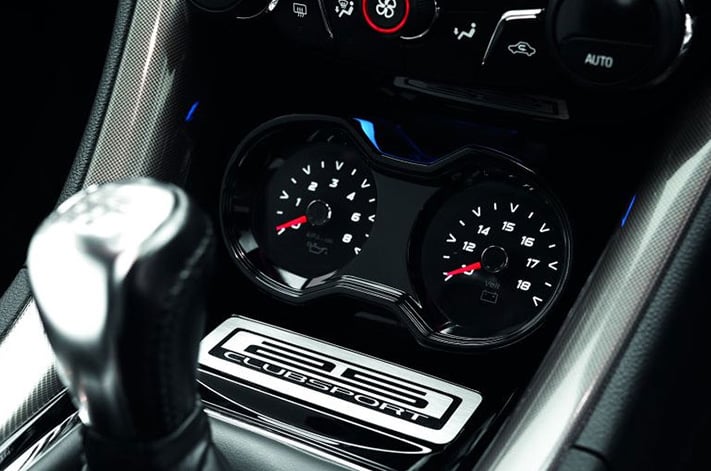
CURRENT
Like electrical system voltage, the amount of current (amperes or amps) drawn from or charging the battery is important and is also an indication of electrical system health.
Unlike a volt metre, the ammeter has both a positive and negative scale. When the amps are in the positive range, the alternator is making a net gain in electrical charge, charging the battery and providing energy for all the electrical systems as well. A drop to the negative scale is not immediately bad but indicates that there is either a component using an excessive amount of current or the charging system is unable to keep up.
A prolonged duration in the negative zone requires investigation before a more serious problem arises. A normal reading is between plus and minus 40 amps, although the starter motor is the largest consumer of current and that figure can jump to a far higher reading during starting.
OIL PRESSURE
Of all of the vital signs you might find a gauge for, nothing causes a problem faster than incorrect or critical oil pressure.
Such is the severity of low (and to an extent, high) oil pressure, that all vehicles are fitted with a low pressure warning light but, like all gauges, an abnormal reading within limits can highlight problems long before the problem becomes serious.
Engine oil pressure rises naturally with engine speed (as indicated by the tachometer or rev-counter) from an idle pressure of about 10psi to a predetermined maximum of about 80 psi although these figures vary depending on the age, temperature and performance of an engine.
Low readings at idle can be a sign of a worn oil pump, low oil level or incorrect oil grade, below normal pressure under load could be a result of worn engine bearings or clogged filter, while excessive pressure can be caused by a faulty regulator, to name just a handful of causes.
OIL TEMPERATURE
Just as coolant temperature can be a barometer of engine health, oil temperature can reveal what is going on at the coal face. While the two are intrinsically linked, oil temperature can offer a more accurate picture of what is going on under your bonnet.
Problems that cause oil and coolant temperature to rise in unison are often different to those that cause one or the other to spike independently.
Depending on engine load and atmospheric conditions, normal oil temperature will sit slightly above coolant temperature under low load but will increase the difference as load and engine speed increases. Normal temperature ranges between 110 and 130 degrees.
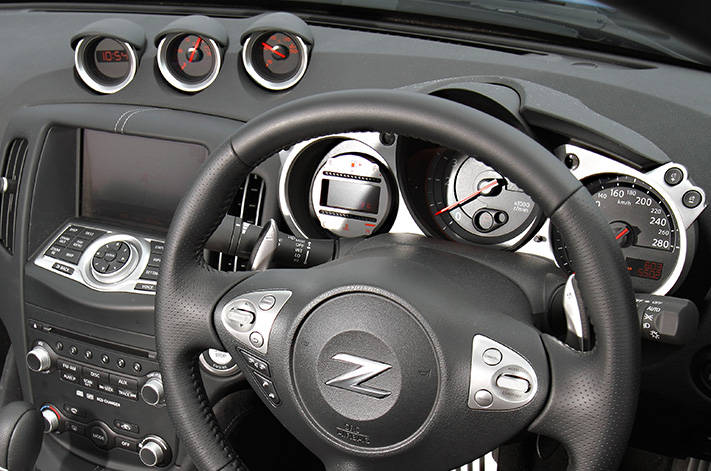
BOOST
Some turbocharged or supercharged high-performance vehicles have an additional gauge to indicate when the engine is benefiting from forced induction, and how much above atmospheric pressure the turbo or surpercharger is working.
Some boost gauges will have a negative region which indicates inlet manifold vacuum or the condition under which the turbo or supercharger has no effect. The zero mark is referred to as the boost threshold or the point at which the manifold pressure equals atmospheric, and everything above that is positive boost pressure.
Depending on the vehicle and state of tune, boost pressures can be in the region of 25 psi or 1.7 bar.
Unusual gauge readings including a spike to maximum pressure before falling back, excessive pressure, low boost and fluctuating needle can be used to diagnose faulty turbochargers, leaking hoses, blocked air filters and many other ailments.
There was a time when rotating a car’s tyres was common practice to ensure the rubber wore evenly, however with so many different specialised tyres on the market it may no longer be necessary, or appropriate, to move your wheels around.
How often should you rotate tyres? As a rule about every 10,000kms or when you notice uneven wear on one or more tyres. See if you can get it done when taking your car in for a service (often manufacturers will do it during scheduled servicing), or take it to a tyre shop and ask them to rotate them along with a wheel alignment. Either option won’t be expensive and will save you plenty of time especially if you only have a standard car jack at your disposal.
That said it is pretty simple to do it yourself, though it’s important to know your tyres and if they can be rotated. You car’s handbook will usually have this information, though as a rule there’s a standard sequence depending on the type of tyres fitted to the vehicle.
Five-wheel swap For cars with a classic set up including tyres that are the same size on the front and rear axles and an full-size spare, go with the following five-way rotation sequences depending if the car is front or rear wheel drive. Four-wheel drive rotation is the same as RWD.
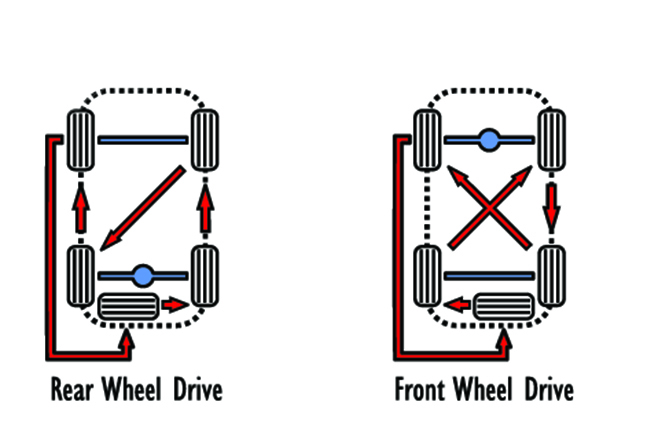
Nothing to spare swap Many cars now have a space-saver spare or a basic steel spare that’s incompatible with the larger fitted alloy wheels, meaning you just need to rotate the four fitted wheels in the following order.
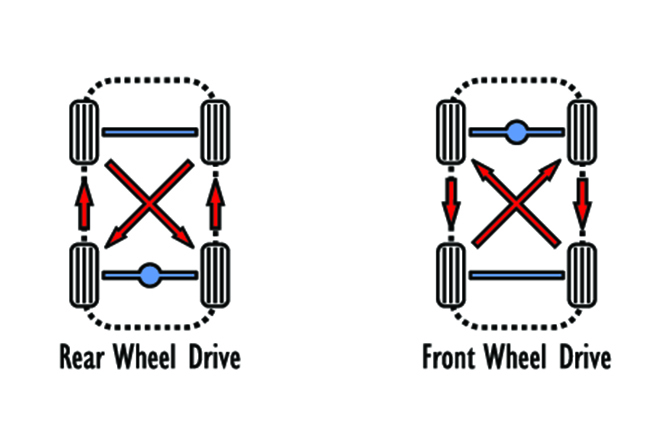
One-direction swap Some tyres have a tread pattern designed to travel one way. Called uni-directional tyres, their preferred direction is usually marked with an arrow on the sidewall. Such tyres can be swapped from front to rear provided they are on the same side of the car – never swap them from left to right, as that will greatly diminish their ability to disperse water.
Fat and skinny swap Some cars place different width tyres on the front and rear, such as high performance rear-wheel drive cars that need some extra rubber on the back to help stick to the road on launch. If the car is equipped with non-directional tyres then you can swap the wheels on the right with those on the left (but obviously never from front to back), but if you have directional tyres you’re fresh out of luck – you won’t be able to rotate your tyres.
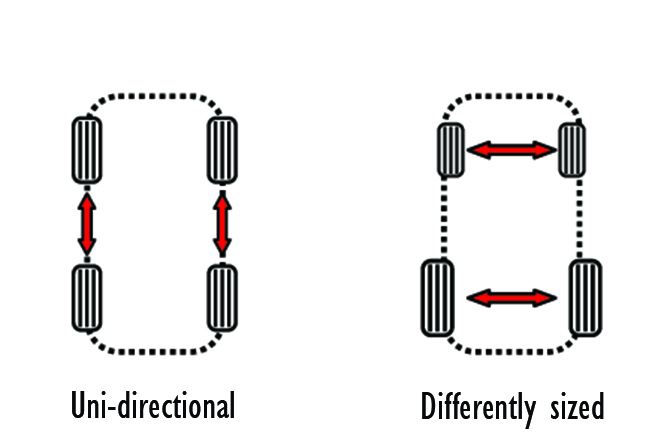
How to change the tyres If you decide to rotate the tyres yourself, make sure the car is on an even surface for the jack to lift it safely. Loosen the wheel nuts before jacking the car up as it’s easier when the wheels can’t spin around – click here for more information on changing tyres.
Other ways to reduce tyre wear. Make sure all tyres are regularly inflated to their recommended pressure and get your wheels aligned regularly. This is probably the best time to get your tyres rotated too as the tyre fitters can do it much quicker and safer – and you won’t have to get your own hands dirty.
Other things can lead to irregular wear such as uneven suspension alignment settings and damaged or worn front-end components such as tie rods or ball joints.
Chinese auto maker and umbrella company for several marques, Geely, is due to take a 49.9% share in Proton, and from Proton a 51% share in Lotus.
Geely Holdings Group, which is also the parent company of Volvo Cars, says it expects the deal wil be finalised by mid-July 2017.
Lotus’ next owners hope to gain more expertise in research and development from the British brand, as well as exploring manufacturing possibilities, and strengthening market presence.

“Reflecting our experience accumulated through Volvo Car’s revitalization, we also aim to unleash the full potential of Lotus Cars and bring it into a new phase of development by expanding and accelerating the rolling out of new products and technologies.”
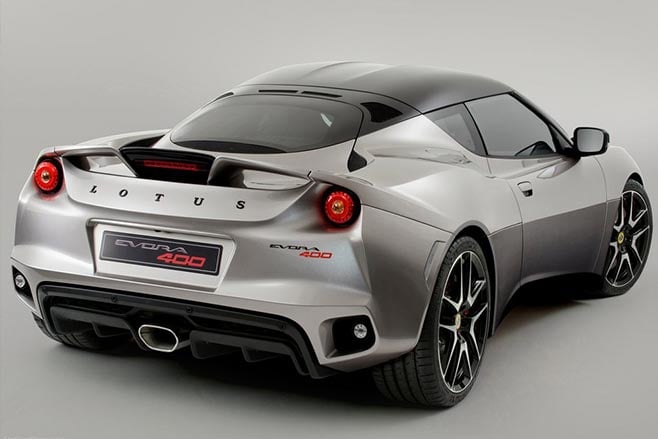
A new owner could mean a better chance for Lotus to survive, as a company with as much investment power behind it as Geely is likely to have no issue throwing plenty of cash in to get as much out of it as possible.
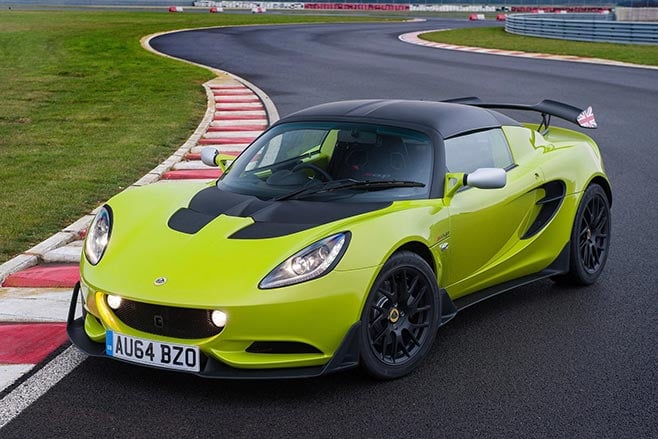
Could this mean we’re about to see a resurgence in the popularity and presence of Lotus? Watch this space…
Welcome to episode four of the Performance Car Podcast.
In this latest episode Editor Dylan Campbell and Associate Editor Scott Newman discuss the Mercedes-AMG C63 S. The previous and current-generation C63 has been a huge contributor to AMG’s incredible popularity in Australia and for good reason – it’s a very good car.
The current Mercedes-AMG C63 placed second at Performance Car of the Year 2016, winning us over with its combination of twin-turbo V8 grunt, rear-drive handling and just all-’round feel-good factor.
Our studio for this episode is, unsurprisingly, the Mercedes-AMG C63 S sedan. In it we discuss our first experience of the previous-generation C63 AMG, our fears when we learned the new car was switching to turbocharging, what we find so appealing about the car and examine why AMG is so popular in Australia.
You can listen to this podcast in audio form on iTunes and Podbean, please subscribe and leave us a rating. Feel free to let us know any cars or topics you’d like us to cover in future episodes, we’ll see you again in a couple of weeks with an episode on the Nissan GT-R NISMO.
The $17K-$25K bracket the covers the middle and upper ranges of Australia’s light-car segment.
It’s for buyers looking for more creature comforts rather than settling for the bare-bones specification, and the additional investment can prove to be worthwhile through slightly superior resale value.
If you’re keen to know which are the three best cars in the class for overall value, WhichCar’s sister brand Wheels got busy calculating key ownership factors and costs.
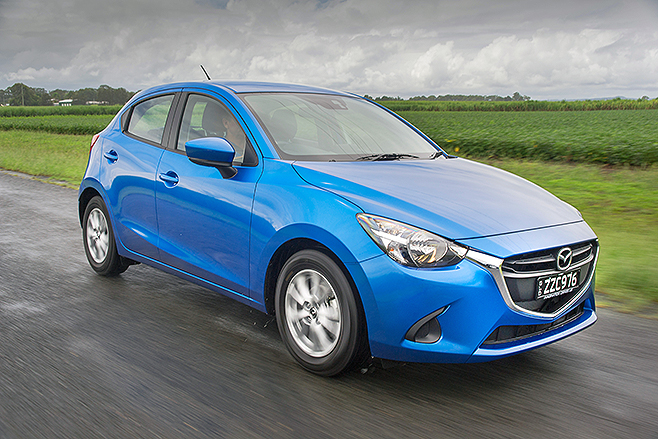
Wheels’ Gold Star Car awards scored cars out of 100. Real costs comprising three-year depreciation and a year’s insurance and fuel expenses accounted for 80 per cent of the score, with 10 per cent each for servicing costs and warranty.
The upshot was victory for one of the most popular light cars – the Mazda 2, here in mid-range Maxx guise.
It asks another $2700 over the base-model Neo, though counters with a marginally better retained value after three years (52 versus 51 per cent).
There are also more goodies on board, plus the Maxx adopts a different tune of the Mazda 2’s 1.5-litre four-cylinder engine. There’s a little extra power (up 2kW to 81kW), while fuel consumption improves from 5.4 to 5.2 litres per 100km.
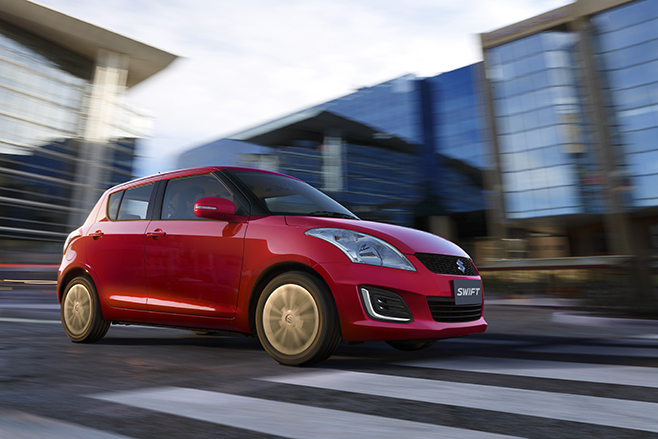
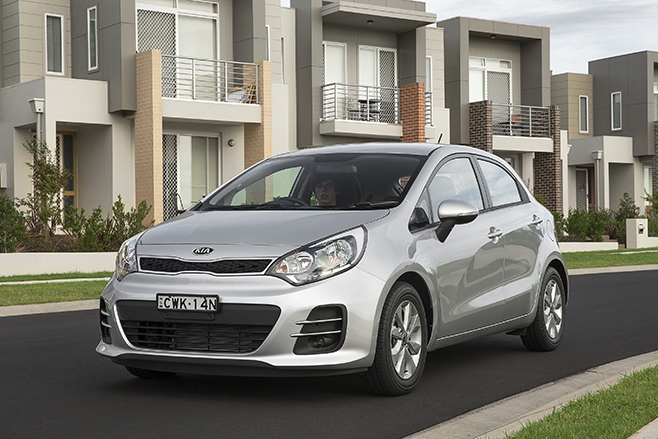
That efficiency can’t be matched by either of the other two podium-sitters here, the Suzuki Swift GL Navigator (5.5L/100km) and now superseded 2016 Kia Rio S Premium (5.7L/100km).
The Navigator trim grade adds $1500 to the regular Swift GL, though brings desirable additions including foglights, a touchscreen display and, as the name suggests, satellite navigation.
Servicing intervals fall three months short of the 12-month industry average, though the Suzuki boasts the strongest resale among our trio – an impressive 55 per cent.
A new-generation Suzuki Swift will be released in June 2017.
The Kia Rio S’s case for a higher placing was hurt by a desire to gulp more unleaded petrol than its closest rivals here when comparing manual gearboxes, as well as the lowest resale value (46 per cent).
However, the Rio is cheap to insure and owners benefit from Kia’s brilliant seven-year factory warranty.
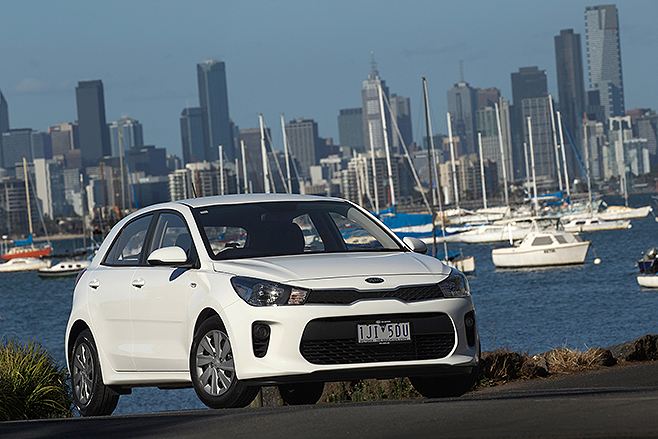
The S Premium model has since been discontinued with the introduction this year of an all-new Kia Rio model. The new Rio has sharper Euro-styling and more premium interior but slightly higher fuel consumption and is priced from $16,990, with S, Si and SLi trim grades.
