
The standard Kia Stinger GT is still yet to reach showrooms, however there are already plans for a faster version.
According to a representative from Kia’s local arm, the Stinger story won’t end with the 276kW/510Nm 3.3-litre twin-turbo V6 GT, with development boss Albert Biermann keen to produce a more focused version of the Korean brand’s first serious performance car.
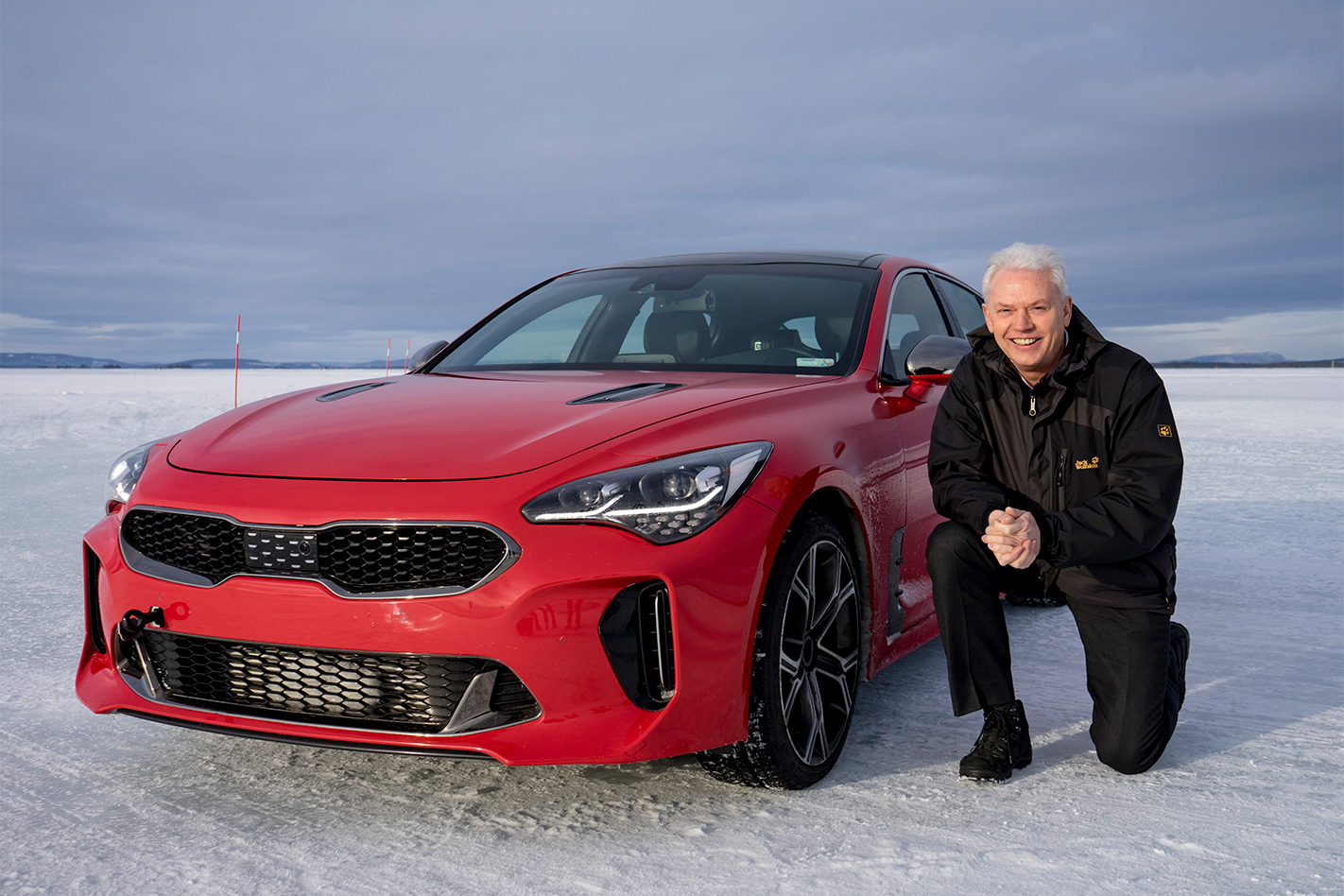
These are encouraging words from a man who formerly headed BMW’s M Division and is now responsible for the fast car ambitions of both Kia and Hyundai through its standalone performance brand N.
Biermann was tight-lipped on exactly what form his “Stinger Special” will take, including whether the modifications would be limited to chassis work or include more power, however his dedication to the project is evident in the fact that local engineering teams will not be allowed to touch the car.
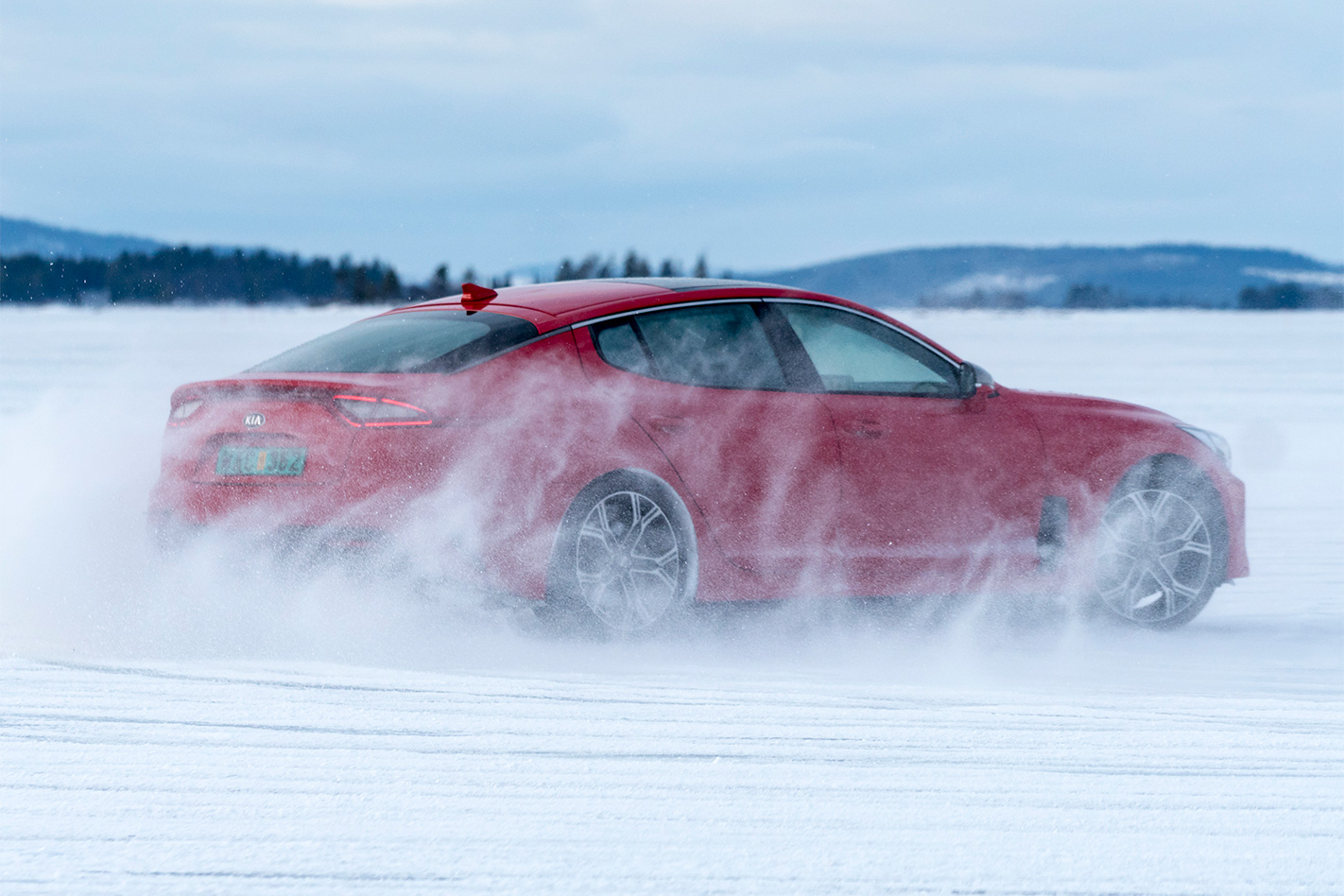
Kia is keen to offer a performance model across its entire range, however has ruled out a dedicated sub-brand like Hyundai’s N. The Stinger arrives locally in September with the GT expected to be priced around $50,000.
THE realisation that you have just lost control of a Porsche 911 Carrera and are now simply a passenger holding a steering wheel in what seems like the world’s longest spin would usually be a perfect time to panic.
But in reality, at least my reality, there was a calm excitement. No internal (or external) screaming and expletives, no reflexive muscle clenching and whitening of knuckles, and no deep churning inside my stomach at the thought of one of Germany’s finest feats of engineering lying beat and broken.
Spinning was all part of the plan.
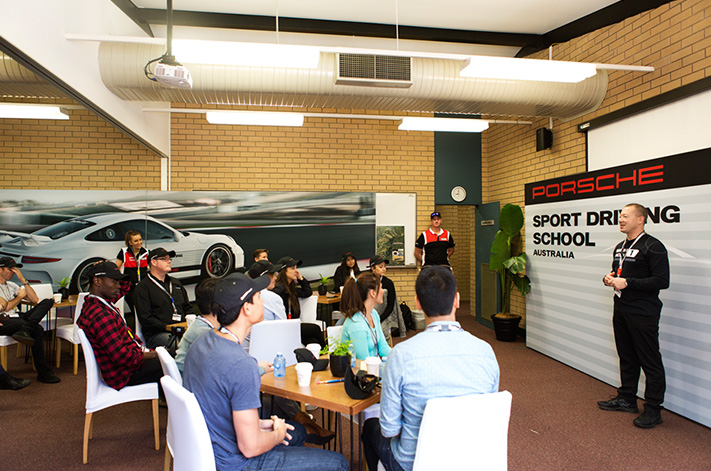
Okay, so maybe not my plan. But it was part of the plan of racing veteran and Porsche instructor Tomas Mezera. The Bathurst 1000 winner runs the Porsche Sport Driving School at the Mount Cotton Driving Centre outside of Brisbane, and had informed me, with no caveats, that I was going to lose control of some of Stuttgart’s finest vehicles.
Spinning a Porsche in most situations would be an unenviable situation, but not today. I was being put through the brand’s entry-level drive experience, meaning closed courses, skid pans, and controlled environments. There was to be no calamity today.
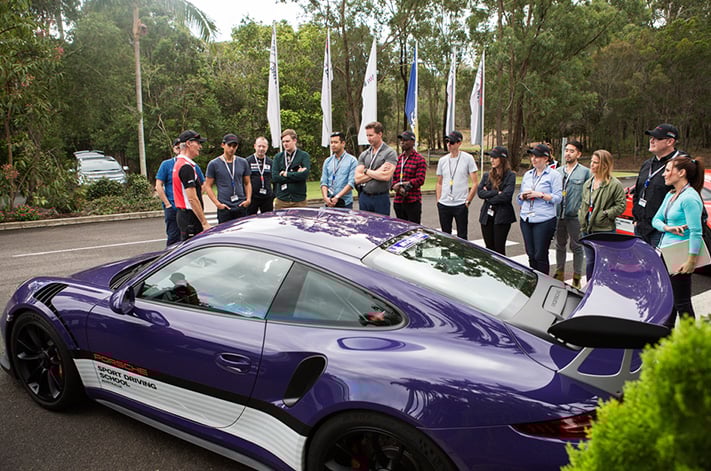
The first stop of the day was Mount Cotton’s skid pan, a huge concrete expanse doused with a healthy offering of water, and a further dosage of slick diesel.
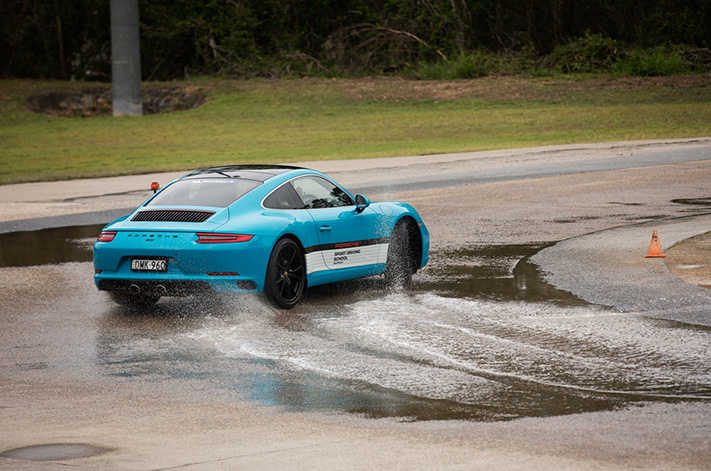
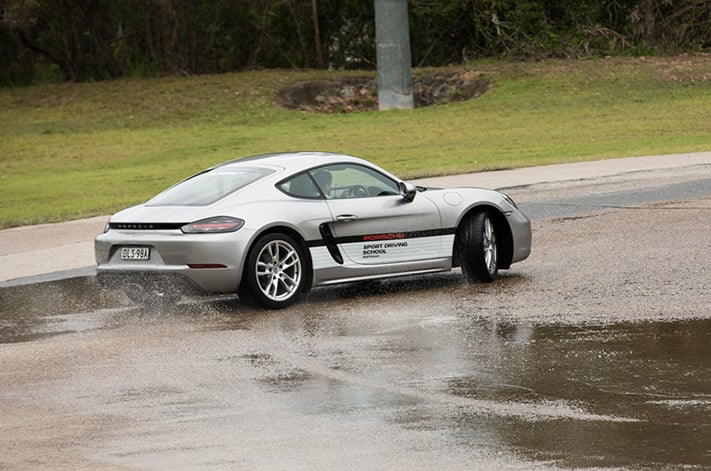
Where the Carrera will kick its rear askew with a brush of the throttle and stay there with gentle dabs of the pedal, the Cayman prefers to understeer initially. But put a solid boot into it, and it arrives at the opposite lock-stop with vigour. You are soon rewarded with large four-wheel drifts with your aggression is balanced just so.
But the skid pan wasn’t the only destination on our itinerary. During the day-long experience we put the stoppers of a Panamera 4S, 718 Boxster, and 911 Carrera Cabriolet to the test under emergency braking and lane-change situations, before taking the Boxster, Carrera and a Macan Turbo through a soaking gymkhana course. As a note, don’t discount Porsche’s baby SUV in a dynamic showdown. It was as capable as its sports car siblings in the challenging conditions.
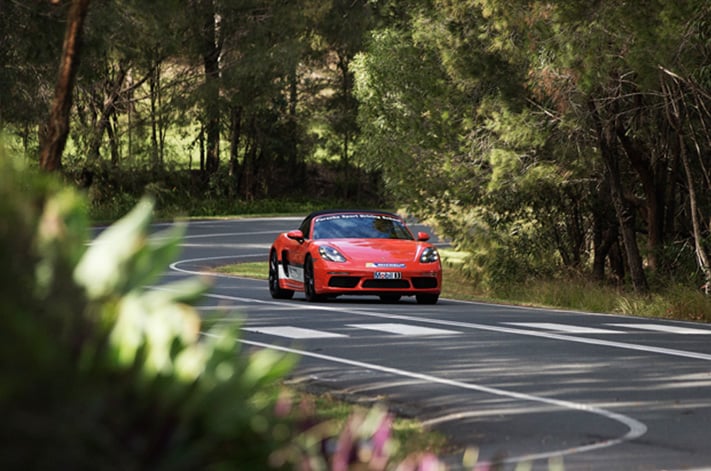
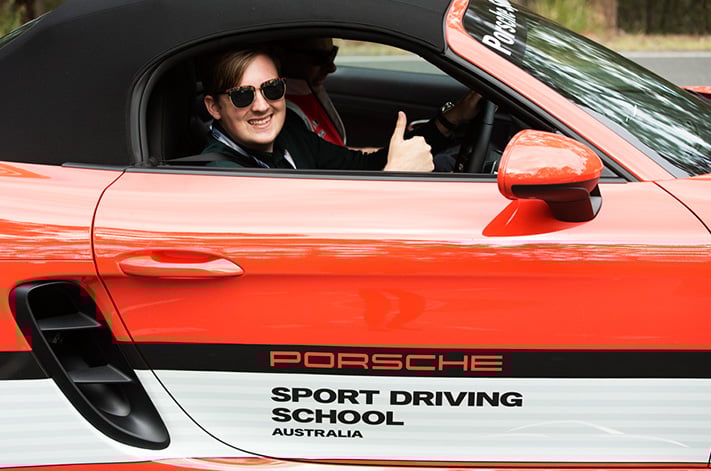
Best of all the Porsche Sport Driving School isn’t the ultra-exclusive, invite-only club you may imagine. If you are willing to cough up the cash ($1,485) you can go and enjoy one of the best money-can-buy automotive experiences in Oz.
Oh, and when you spin, don’t panic, enjoy the excitement.
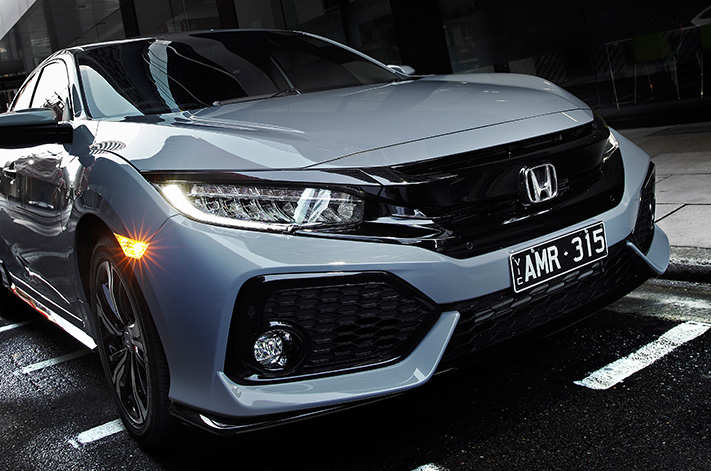
HONDA has just launched a box-fresh Civic hatchback – the first in two generations to actually share most of its DNA with its sedan-shaped sibling – and there’s finally a faint whiff in the air that the Japanese manufacturer is on the cusp of, to use the phrase du jour, “making itself great again”.
It’s about time. Honda, once regarded as one of the world’s most innovative and boundary-pushing car makers, has slipped in recent years. Remember VTEC? Almost every manufacturer now has their own interpretation of variable valve lift tech, but Honda made that four-letter acronym a household name and a synonym for zingy atmo performance.
And it was Honda that took four-wheel steering and used it to transform its Prelude coupe into something far more agile than its front-drive underpinnings would have otherwise allowed. Honda was adept at pushing the envelope and employing emerging technology to better its road cars, that was its USP.
There were some oddball projects too. Company founder Soichiro Honda was an incorrigible nonconformist, relentless inventor, and a true petrolhead – a combination that spurred Honda engineers to design devices like the Motocompo, a collapsible two-stroke scooter that could neatly fit behind the rear seats of a first-generation Honda City hatchback. It’s an idea that resurfaces every few years as a motor show concept, but Honda made it a production reality in 1981.
It wasn’t just any one vehicle that made Honda great though, it was Honda’s way of doing things. Honda cars often represented the intersection of ‘quality’ and ‘cutting edge’, with the fourth-generation Civic small hatch boasting variable valve lift tech AND double-wishbone front suspension, and the NSX combining supercar-level performance with grocery-getter driveability and reliability. Honda just did things better.
But since the mid-1990s that spirit of innovation wilted. The Asian financial crisis mauled many a Japanese carmaker (Nissan, for example, only being saved by Renault’s intervention), and Honda wasn’t immune. Cutting-edge R&D had to make way for conservative, safe-as-houses products, and Honda’s technological lead evaporated as other manufacturers, especially those in Europe, maintained forward momentum.

The same applies to the Civic Type R – formidable, but it adheres to an established pattern.
A change is in the air, however, and the first clue is found in an unlikely place: the boot of Honda’s just-launched Civic hatch. Lift the tailgate and you’ll see it straight away.
It’s the cargo cover. Cargo covers in small hatches are almost universally made of a moulded sheet of furry black plastic, and they all hinge just behind the rear seatbacks so that they lift out of your way when loading groceries. Drop the seats to load big cargo however, and it’s a pain to find somewhere to stow them where they won’t get in the way.
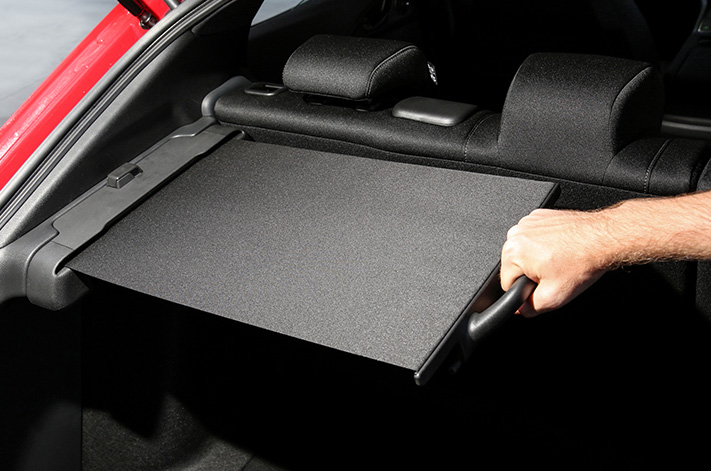
In reality, it can be awkward to use depending on how you grip its handle and it won’t automatically get out of the way when the tailgate is opened. It’s a neat idea though, and a demonstration that Honda is starting to channel the nonconformist spirit of its founder once more. The company could have just phoned it in with yet another slab of furry black plastic, but it didn’t.
And if that’s the way the company is starting to think about its cargo covers, it bodes well for what’s coming down Honda’s product pipeline. It’s a return to “the Honda way of doing things”: defiantly different to the status quo.
Granted, out-of-the-box thinking doesn’t necessarily guarantee greatness, but it does at least mean Honda could once again have a bona-fide point of difference to every other mainstream manufacturer out there. Here’s hoping.
AFTER 24 movies spanning more than half a century, the Bond franchise has brought us some great cars.
Who can forget the iconic Aston Martin DB5 from Goldfinger, the scene-stealing submersible Lotus Esprit from ‘The Spy Who Loved Me’ or the beautiful Toyota 2000GT Roadster in ‘You Only Live Twice’? But for every hero car there’s a whole cornucopia of stinkers. We’ve lined up ten of the best here for your consideration – if you can think of any that are worse than this collection of clunkers, let us know in the comments or email us at [email protected]
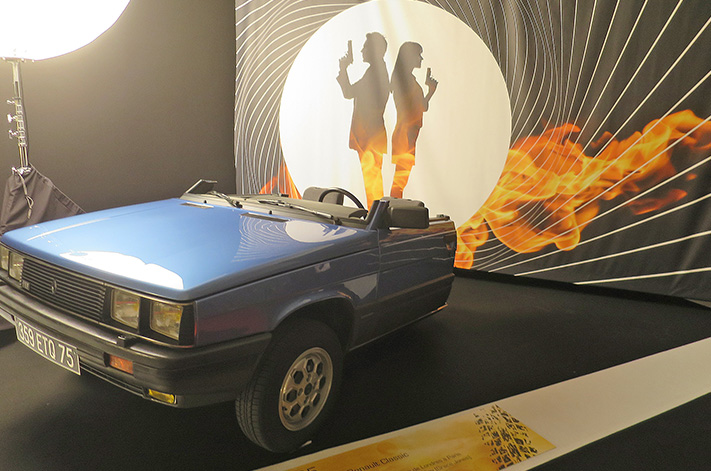
Renault 11 A View To A Kill was never a Bond movie for the connoisseur. Roger Moore’s final outing saw him at his most hackneyed and arthritic, the most entertaining sequences being those where the 57-year-old was forced to run. Moore himself stated that it was his least favourite Bond film, and mentioned that he was mortified to discover that he was older than his female co-star’s mother.
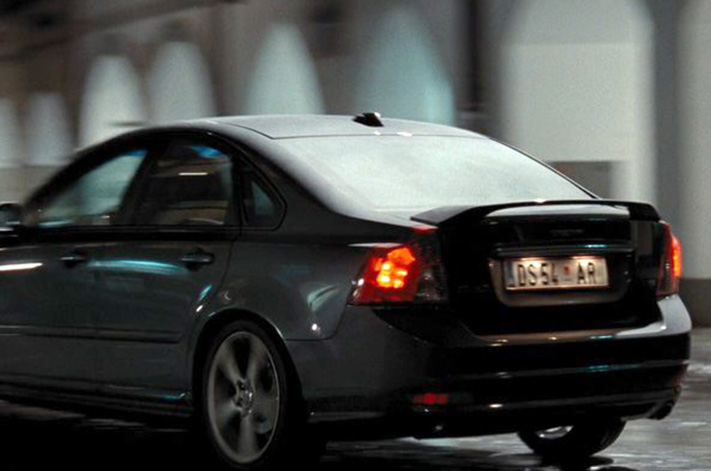
Volvo S40 Prize for most obscure car JB ever drove? That could very well be the unassuming Volvo S40 rental that Daniel Craig drives in Quantum of Solace. Towards the end of the Pierce Brosnan era, Ford went a bit crazy with its product placement, loading the movies with cars from its subsidiary brands, Aston Martin, Jaguar, Land Rover and Volvo. This carried over into the early Daniel Craig films, the Volvo Bond drove to Bregenz being a metallic grey S40 T5 R-Design. In case you were wondering, it was also specified with power seats, an armrest/cupholder, Premium Sound 6 CD player and came with a can of mobility tyre sealant.
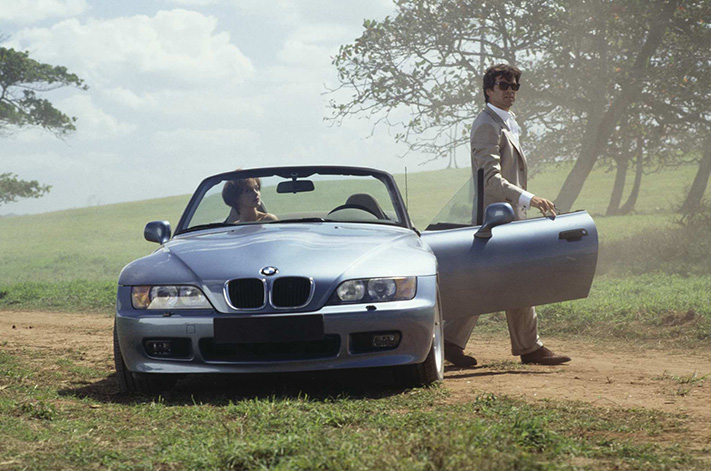
BMW Z3 1.9 Another era, another piece of crass product placement. Powered by a mighty 1.9-litre four-cylinder engine, the BMW Z3 that Pierce Brosnan drove in his debut, Goldeneye, didn’t have enough power to shift a hair from his immaculately-moulded coif. Q branch had considerately made the car bullet proof, fitted Stinger missiles behind the headlights, given it a radar system, a self-destruct mode and an emergency parachute braking system, for when the 103kW became too terrifying.
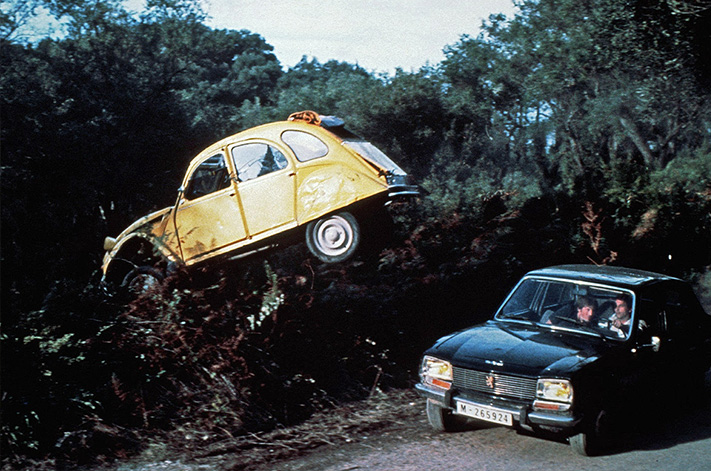
Citroen 2CV Step up a performance bracket from the wheezing Z3 and you arrive at the yellow Citroen 2CV used in the 1981 jaunt For Your Eyes Only. Bond found himself in a 2CV after some crook looked askance at his Lotus Esprit’s wiring loom and the car spontaneously exploded. He chivalrously demotes its crossbow-wielding lady owner to the passenger seat and then proceeds to show her the sort of moves that, for some reason, Victoria Police take offence to when performed in the safe and controlled environment of a McDonald’s parking lot.
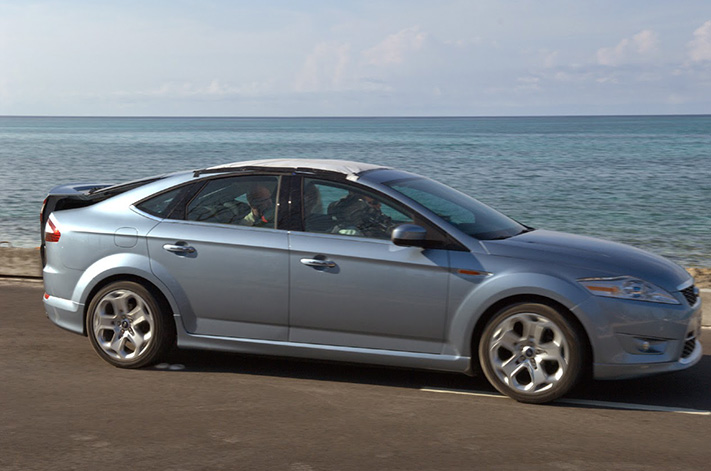
Ford Mondeo 2.5 ST You could see the look on Daniel Craig’s face. “My first Bond film and I’m driving a Ford bloody Mondeo?” Well you could have if he wasn’t wearing sunnies and possessed of all the emotional range of a sponge. Things got better later in the movie when he was upgraded to an Aston, but the opening scene in the Bahamas sees Bond appear in the Ford, like some sort of vacationing key account manager.
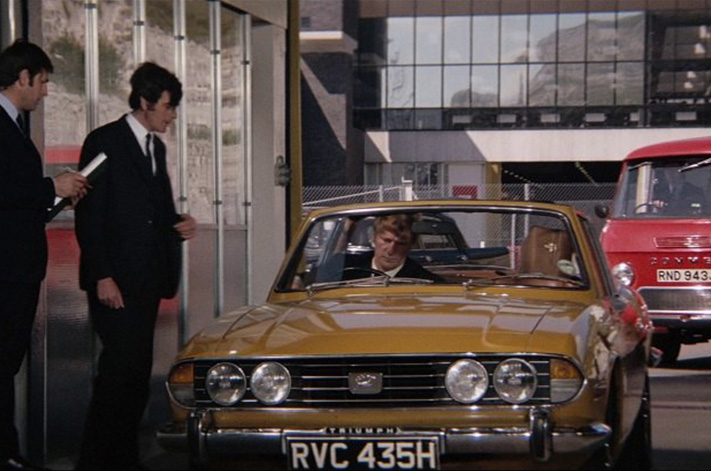
Triumph Stag Sean Connery was one of the pioneers of on-screen identity theft as he ‘became’ Peter Franks in ‘Diamonds Are Forever’, purloining Mr Franks’ Saffron Yellow Triumph Stag and driving it onto a hovercraft. It successfully negotiated the 400 metre journey onto the vessel without overheating, suffering an alternator failure or lunching its valves which marked it as one of the better examples.
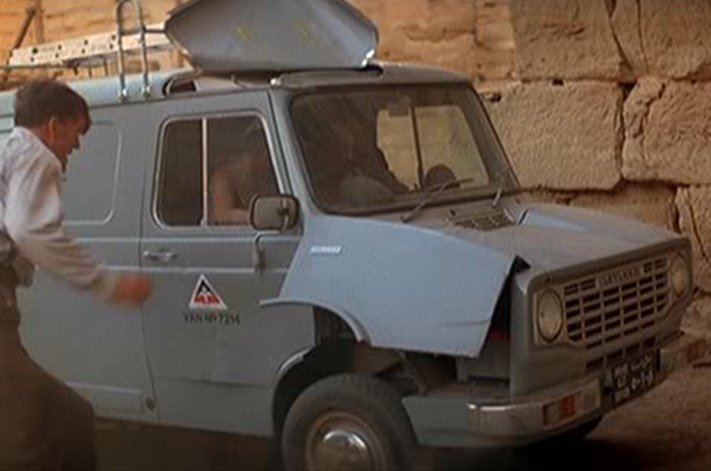
Leyland Sherpa Watching ‘Jaws’ dismember a Leyland Sherpa van in ‘The Spy Who Loved Me’ wasn’t unlike a class trip I remember, where our school’s Sherpa was systematically destroyed from the inside out during a visit to the Science Museum. We didn’t have Roger Moore to casually regurgitate a series of sexist one-liners to Barbara Bach. Instead we had Mr Cunliffe who spent all day walking around the museum with a giant penis drawn onto the back of his shell suit.
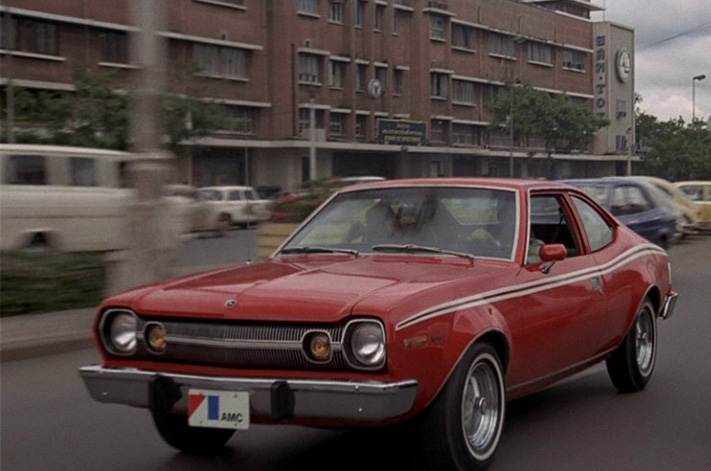
AMC Hornet It’s hard to watch ‘The Man With The Golden Gun’ and not get overly absorbed in Scaramanga’s third nipple, but if you can look beyond this particular show stopper, Bond’s corkscrew jump over a Bangkok klong in an AMC Hornet is well worth your time. Brit stuntman Bumps Williard was relying on the outputs of a Cornell University computer program and a team of experts who had modified the Hornet with a central steering wheel and more suspension compliance.
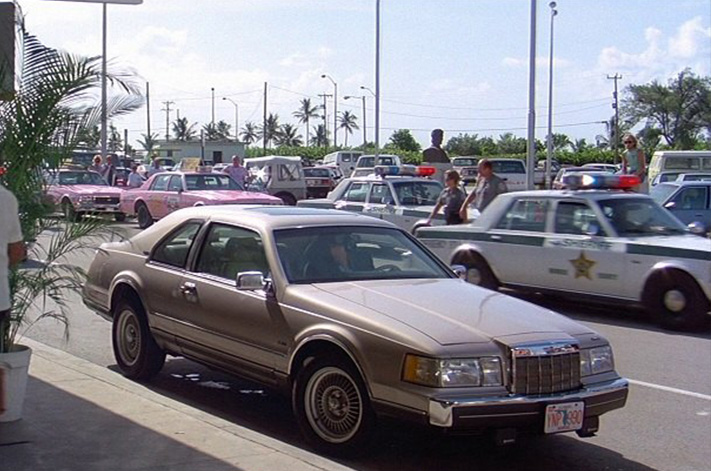
Lincoln Mk VII LSC There are worse cars than the Lincoln Mk VII Luxury Sport Coupe that appeared in ‘Licence To Kill’. On the plus side of the ledger, it had a five-litre V8 and, well, now I’m struggling, but the issue with this car was tone. It just looked so wrong for England’s super-spy to be climbing out of a car that you’d probably more readily associate with a Taco Bell franchisee.
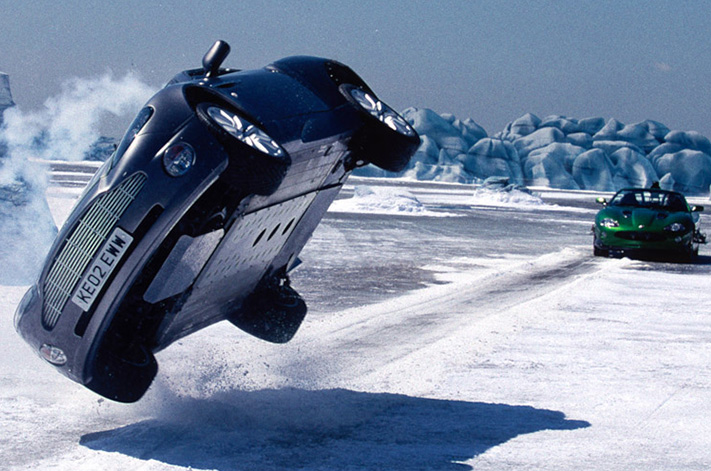
Everything in ‘Die Another Day’ Where to start with this one? ‘Die Another Day’ is a true collector’s piece, the alpha and omega of bad Bond. It’s Brosnan at his cheesiest, with joyously horrible CGI, laugh-out-loud silly stunts, Madonna as a fencing instructor, invisible cars, almost continuous explosions and $70m worth of paid-for product placement. For the ludicrous ice driving scenes, the stunt Aston Vanquish and Jaguar XKR cars were completely stripped of engine and running gear.
THE bits that make up the last remaining jewel in Holden’s crown – its Elizabeth manufacturing plant – are now up for sale.
The car maker has listed 131 separate bits of its manufacturing line on global auction site Maynards under the title “GM Holden Vehicle Manufacturing and Assembly Facility“ – less than five months before the last locally made Commodore rolls off it – as it prepares for a wind-down of the business.
The site says the equipment “is currently in use and will be decommissioned at various stages throughout 2017”.
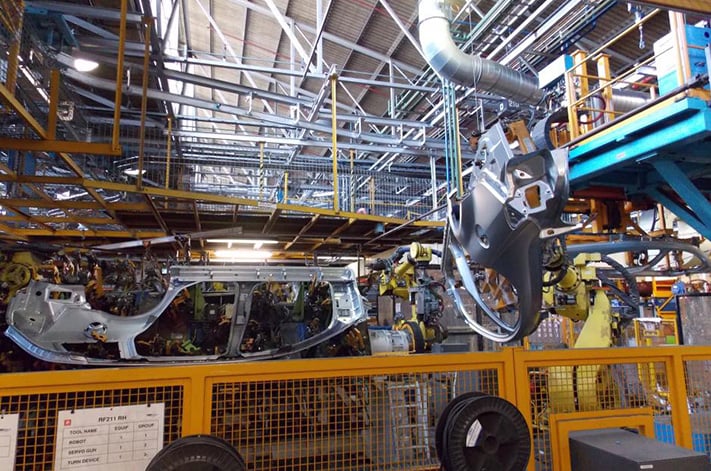
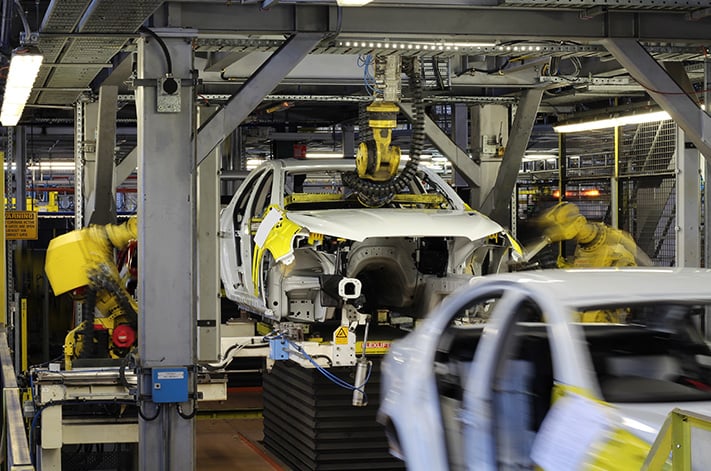
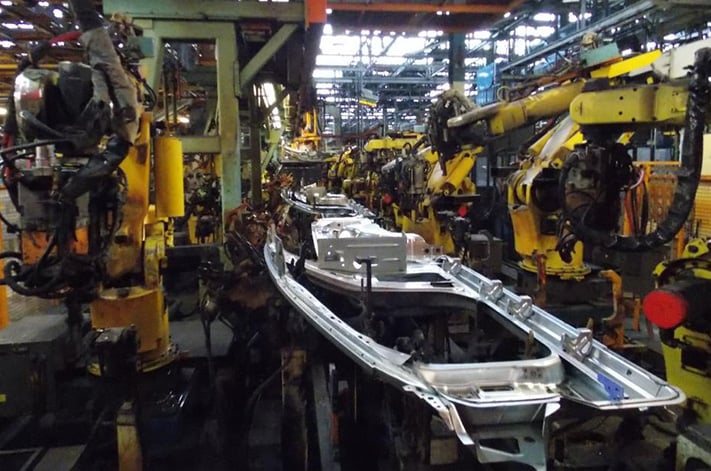
Assets include laser-wielding robots, press lines, plastic injection moulding machines, and almost 800 metres of door assembly line. Of note, the auction site mentions Holden plans to sell off its entire car body assembly line comprising 76 robots and “Zeta … body side assembly fixtures” for both left- and right-hand drive cars.
Holden is working towards the shutdown of almost 70 years of Australian manufacturing – it will be the last of the three carmakers in an industry that collapsed spectacularly in late 2013 scooping up Ford, the first to fall in October last year, and Toyota, which will shutter its production lines on October 3.
Holden will build its last Commodore on October 20.
Unlike previous auctions of the Port Melbourne engine-casting facility, which built its last high function V6 in November last year, the site isn’t showing the current highest bidder.
However, it lists the currency for transactions in Australian dollars, suggesting that whatever money Holden raises from the auction, it will keep.
Holden did have a chance to dispose of the Elizabeth site as a job lot. Early last year Belgian businessmen Guido Dumarey, a specialist at taking over businesses in distress and rebuilding them, proposed buying the car maker’s entire manufacturing operations, but backed away from the deal after deciding jointly with Holden it would become “unviable” to continue building cars.
Holden’s association with the Elisabeth site is a long one. Work started on building the plant in May 1958, with the body hardware plant opening in 1960, and the body and vehicle assembly line in 1962.
It has even hosted royalty; Queen Elizabeth visited and inspected the plant as part of her 1963 Royal visit to Australia.
At one time, the Holden-run plant was considered among the most efficient General Motors-owned factories worldwide.
Holden’s manufacturing fate was effectively sealed in 2013 when then managing director Mike Devereux said he needed to slice $3750 from the cost of making cars here to stay competitive within the GM world, proposing sweeping wage cuts to help it remain viable. He fought hard to make it happen.
And then Ford fell.
Wheels will mark the end of Australian car manufacturing with a special tribute edition.
Haval has revealed its updated H9 seven-seater SUV due to arrive in Australia later this year.
After achieving a meagre four star ANCAP safety rating, the Chinese carmaker says it’s the H9 facelift based on “feedback from local customers and media”.
“Haval has always prided itself on listening to customers and I’m confident the Australian market will see they have clearly responded with the first major model update since launch,” said Haval Australia’s Chief Marketing Officer Tim Smith.
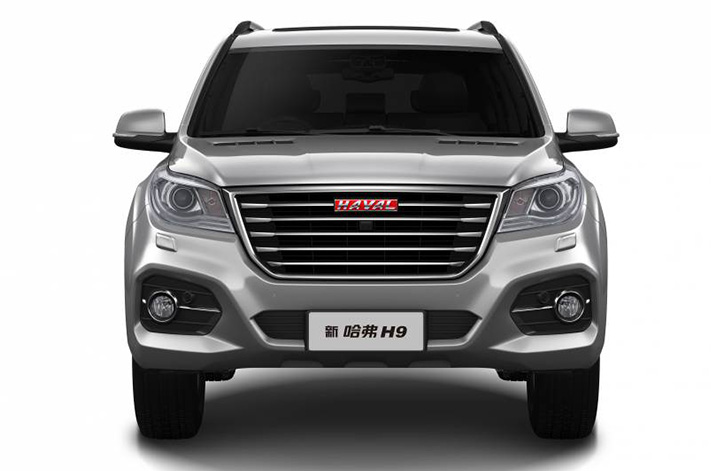
The MY18 H9 update includes upgrades to performance, safety and aesthetics to bring it up to par with its large SUV competitors.
As expected, the new H9 will feature more safety technology, adding blind-spot monitoring and lane departure warning as standard. Not that this addresses the ANCAP criticism of the vehicle’s lack of leg and chest protection.
Haval has also replaced the six-speed automatic transmission with a ZF eight-speed automatic, which is mated to the revised 2.0-litre turbocharged four-cylinder engine resulting in greater power and torque outputs, rated at 180kW (from 160kW) and 350Nm (324Nm).
According to Haval the new engine provides a 20 percent quicker 0-100km/h time (we’re thinking around 10secs) and a drop in fuel economy clocking 11L/100km – although, this fuel figure is still no match for its competitors like the Toyota Prado or Hyundai Santa Fe.
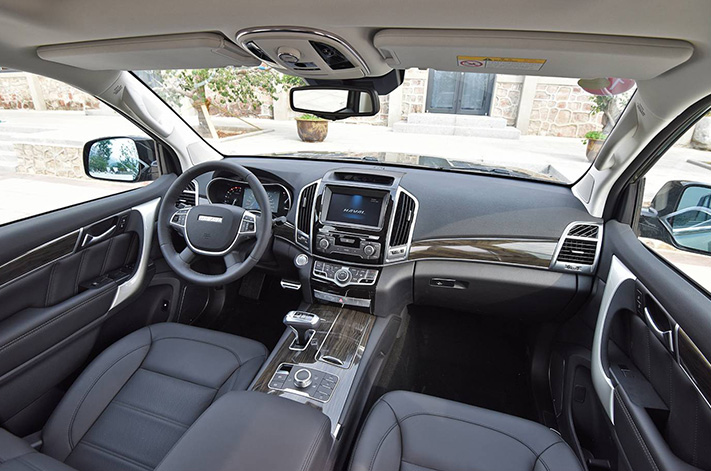
Externally, it carries a slightly new face with a reworked front grille, fog lamps and 18-inch alloy rims.
Inside, both models are fitted with a new instrument panel with digital speed and redesigned centre console, while Lux models also get a panoramic sunroof as standard.
While only 14 models of Haval’s H9 have been sold so far this year, the carmaker remains confident the new model will impress.
“The H9 has already earned its stripes with the motoring media in Australia, where it has continued to surprise them with its impressive off-road credentials. When we asked what changes they would like to see, they listed performance, better economy and new safety technology as key updates.
“We’re confident they are going to be very impressed with the updated H9 when it lands,” Smith said.
It’s now more than $12,000 cheaper to buy a Mercedes-Benz V-Class luxury people mover, with a new model joining the V250d AVANTEGARDE with fewer bells and whistles and less power from the naturally aspirated 2.1-litre four-cylinder diesel engine.
Priced at $74,990, the V220d bridges the Benz eight-seater gap between V250d ($87,200) and the smaller Vito van-based Valente ($58,100).
Like the V250d, the V220d it is powered by a 2.1-litre diesel engine, but with output reduced from 140kW/440Nm to 120kW/380kW.
Senior Manager Product Management and Marketing Mercedes-Benz Vans Australia and New Zealand, Sabine Wagner, said the V220d “provides a solution for customers who don’t need the same level of power and features provided by the V250d AVANTGARDE, but still require the combination of seating for up to eight with the exemplary functionality and typical strengths of Mercedes-Benz vehicles – from quality to comfort, efficient driving pleasure and safety.”
V220d features include:
- Garmin MAP Pilot navigation system with 3D map display
- Audio 20 sound system with touchpad and central media display
- Reversing camera with dynamic guide lines
- Driving Assistance Package including collision warning, blind spot assist and lane keeping assist
As well the above features and extra power, the V250d comes with:
- Latest generation COMAND Online system
- Burmester surround sound system with 15 high-performance loudspeakers, including a bass reflex loudspeaker
- Mercedes-Benz Illuminated door sills panels in brushed stainless steel
- 18-inch five twin spoke alloy wheels
- Anodised roof rails
- Brake calipers with Mercedes-Benz lettering
- Exterior Sports pack
- Waistline chrome strip and chrome trim on tail end
- Chrome strip on lower bumper areas
- 360 degree Surround View camera
- DISTRONIC PLUS autonomous driving technology
- LED Intelligent Light System (ILS) with Adaptive High Beam Assist, LED indicator, cornering lights, LED Daytime Running lights and LED taillights
- Tyre pressure monitoring system
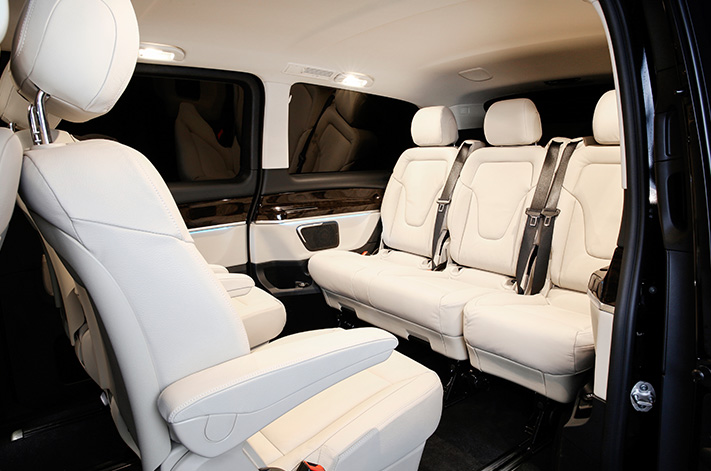
Standard interior trim and equipment in both V-Class models includes Lugano leather upholstery and ambient lighting in three colours. Other highlights include the freestanding central display with touchpad control and 12-button multifunction steering wheel with shift paddles.
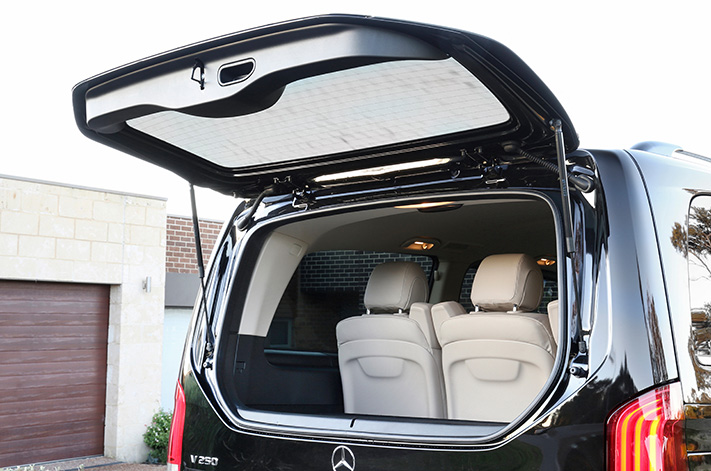
The V-Class models also feature an ‘Easy-Pack’ power-operated tailgate with separately opening window for easier loading.
The V220d is now available for orders from Mercedes-Benz dealers.
Mercedes-Benz people mover pricing
- Valente – $58,100
- V-Class V220 – $74,990
- V-Class V250 AVANTGARDE – $87,200
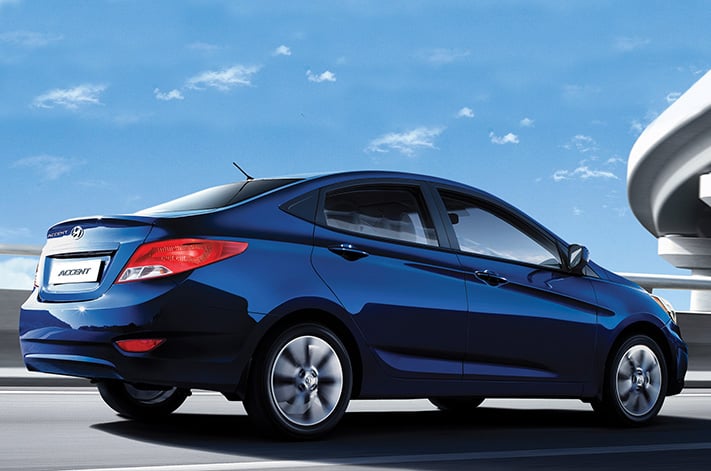
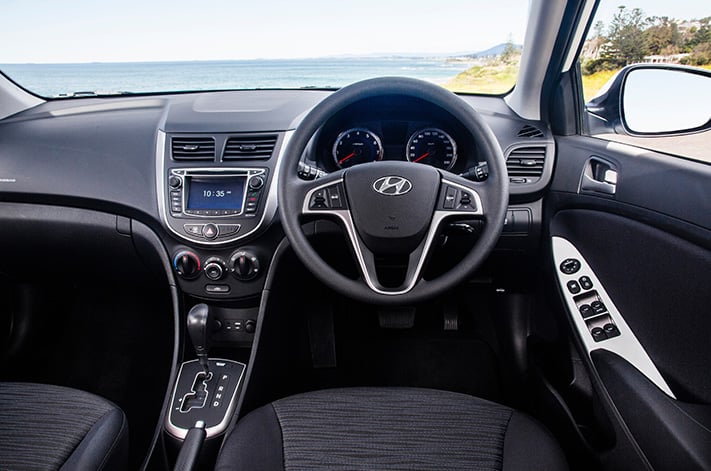
The Hyundai Accent is the top-selling light car under $25,000 in Australia and is one of the bigger cars in its class, just slightly smaller than its Hyundai i30 sibling. It has plenty of luggage space for a city car and some decent standard technology including a five-inch touchscreen display. The Accent is pleasant enough to drive with forgiving suspension and steering feel, though it does feel a little underpowered.
Variants
The Hyundai Accent comes in two main model grades, the Active and SR. The Active comes with hatch and sedan versions and is powered by a 1.4-litre petrol engine with choice of six-speed manual or CVT transmissions. Standard equipment includes cloth seats, five-inch touchscreen with Blutooth connectivity, Apple CarPlay/Android Auto and keyless entry.
The ‘Sportier’ SR is hatch only, with a 1.6-litre engine mated to either a six-speed manual or six-speed automatic gearbox. Standard features on top of the Accent include 16-inch alloys, LED daytime running lights, front fog lamps, projector beam headlights and cruise control.
Hyundai Accent pricing
- Hatch/sedan, six-speed manual – $14,990
- Hatch/sedan , CVT auto – $16,990
- SR hatch, six-speed manual – $16,990
- SR hatch, six-speed auto – $18,990
Our hearts say the SR with the six-speed manual gearbox, however it’s not exactly the most exhilarating car to drive despite the SR badge. We figure most people who buy an Accent is choosing frugality over thrills so best go with the value Active with the CVT auto that helps give it respectable around-town performance and an official combined fuel economy of 6.2L/100km.
The Accent hatch and sedan have their own advantages, though the hatch is arguably better looking. The sedan’s 465-litre boot space is larger than the hatch’s (370-litres), however with the rear seats down you can fit more in the hatch and get it in more easily.
Available Options
- Metallic, Mica and Pearl paint finishes – $495
- Saver Accessory Pack with bonnet protector, headlight protectors and tailored carpet floor mats – $398
- City Accessory Pack with auxiliary cable, ambient interior lighting and 14-inch alloy wheels – $1310
At the time of writing the drive-away price was lower than the above manufacturer list price thanks to dealer discounts, which provides a little wriggle room to up spec.
The City Accessory pack adds some nice touches, though if you’re getting it just for the wheels, perhaps consider a set of five 16-inch SR wheels for $1195.20 and perhaps buy some tailored floor mats separately ($143.50 fitted) with the change.
If you thought finding an R32 Skyline in good nick was impossible, you’re dead wrong.
A good example has appeared in the auction catalogue for Shannons’ upcoming May 22 Autumn Classic in Sydney.
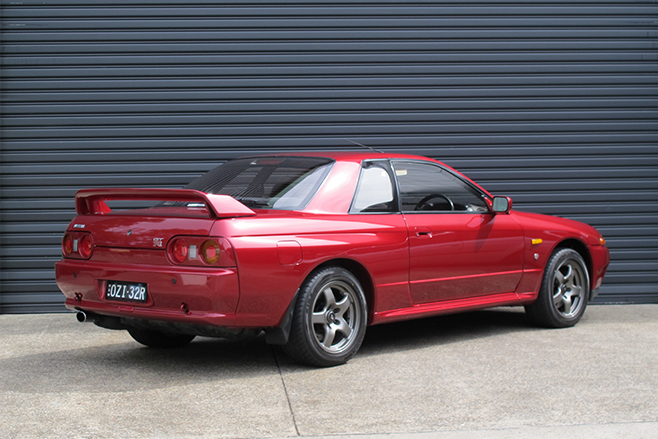
Owners of Australian delivered GT-Rs have apparently been particularly kind to their cars, probably because there were only 100 of them built.
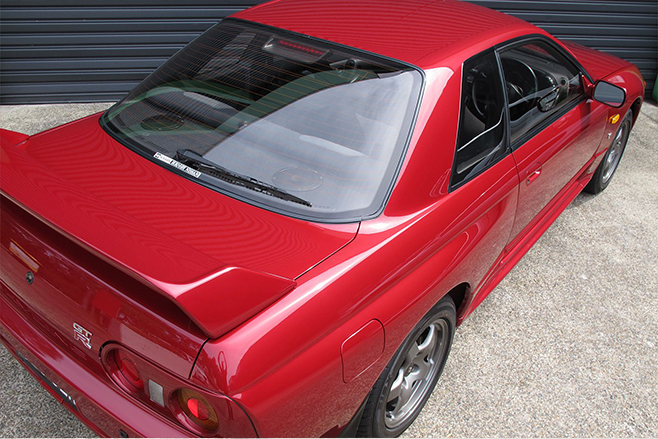
“Vehicle in excellent condition throughout. Runs & drives extremely well,” the assessor found, with the only two detractors being drive belts and headlight aim. Both points were still marked as “good”.
It’s expected to pick up between $65,000 and $75,000, although last year a less original ’91 GT-R auctioned for $69K, and wasn’t in as good condition as this one. It had also travelled 60,000 more kilometres than this one.
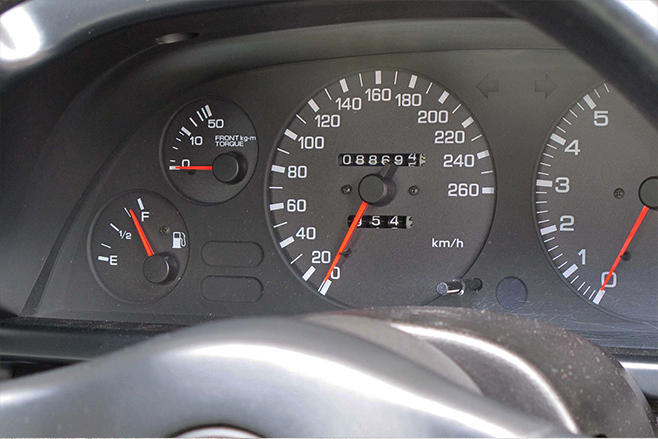
And this one still is, with original wheels, bodywork, exhaust, and ride height, it looks less ‘racecar’ than most regular R32s on the road today.
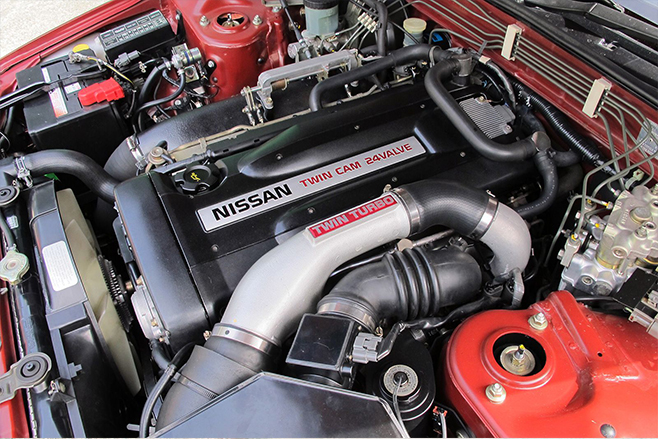
“We understand the car has never been modified nor altered in any way and has recently benefited from a major service carried out by Corse Automotive Services late last year.”
“Owned by a mature enthusiast, for the last few years, the Nissan would ideally suit a collector and will be sold registered in NSW until December 2017. The personal plates OZI-32R come with the car if sold to a buyer in NSW.”
You can check out the lot listing here.
Unless you have been living in the Simpson Desert for the last decade, you will have noticed the snowballing popularity of SUVs on Australian roads. In fact, and somewhat ironically, even if you had been living in the middle of the continent, the few vehicles you would have seen would most likely have been SUVs, so you get the point.
At the affordable end of the spectrum, all of the mainstream brands are clamouring for a piece of the action. But the market is by no means limited to customers with a more modest budget and all but Ferrari and McLaren have confirmed they will weigh in.
For the SUV shopper who wants to sidestep the affordable, mid-range and all but the most opulent options in the high-rider market there are few that can compete with Bentley’s Bentayga, which is now available with the mighty twin turbo W12, or this – the diesel.
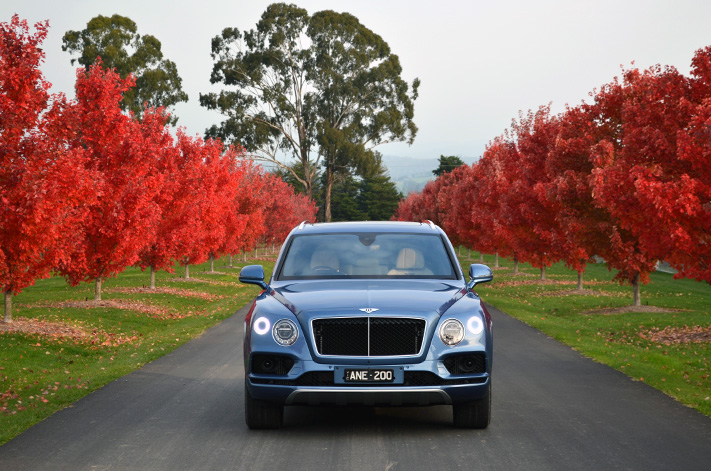
Why go for the diesel? Our trip out to the Yarra Valley for the weekend gave us time to consider why the British car maker decided it was time to welcome spark ignition into the flying-B fold.
For a start, the 4.0-litre V8 is incredibly smooth and is completely silent when cruising and doesn’t even have the option of hiding behind road or wind noise because that is notably absent as well.
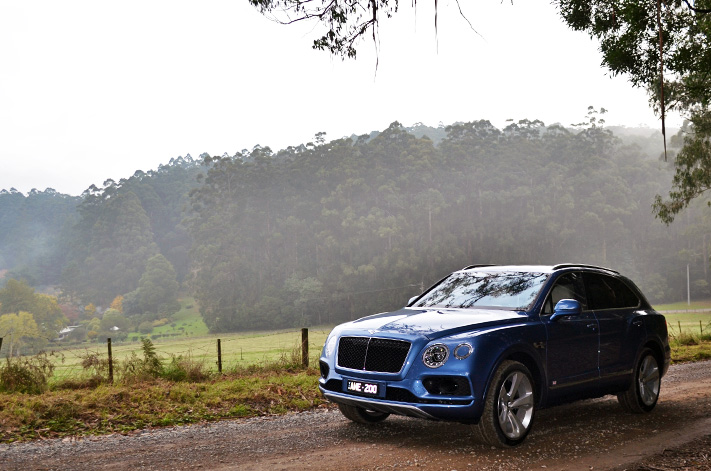
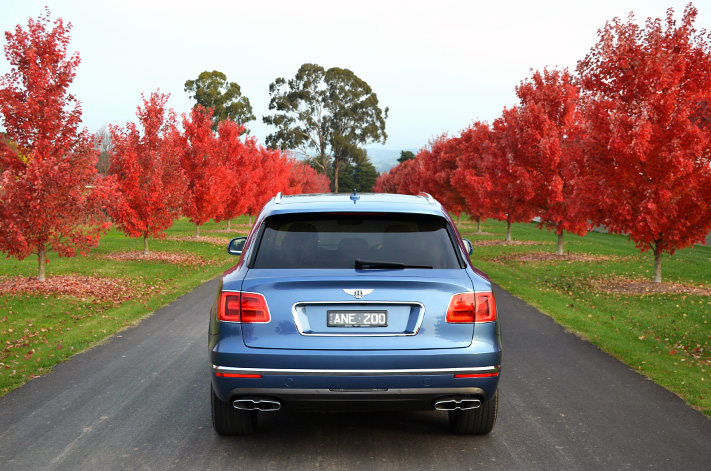
None of Bentley’s typical ride quality and cabin serenity has been compromised by the move to an SUV, and its cosseting cabin was the perfect place to take in the beautiful valley’s turning leaves and a long overdue catch up with a friend.
Our Bentayga had been fitted out with a rich ‘linen’ off-white leather interior which was accentuated with fine optional quilted stitching and leather dash which extended to the door capping and roof lining in black and navy blue.
The cabin and fit-out is every bit a Bentley with only the odd reminder that the Bentayga is related to Audi’s SQ7 such as the shared indicator and wiper stalks, but if you were going to pinch the odd part from a sister vehicle then you could do a lot worse than the hugely impressive Audi large SUV.
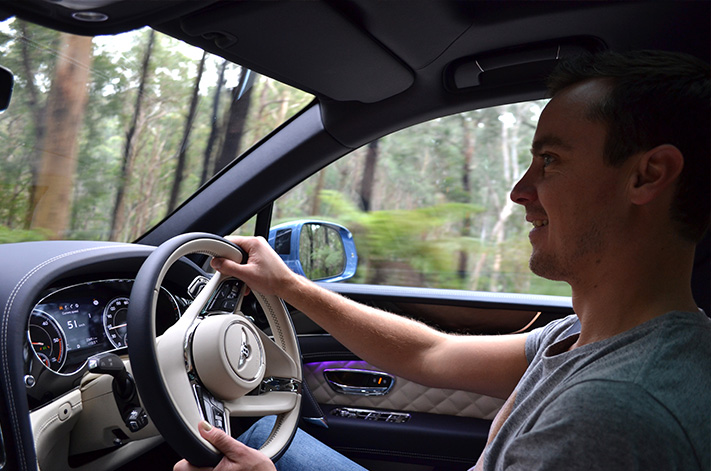
As the hills of the Yarra Valley converge and steepen into the Toolangi State Forest, a spider’s web of meandering unsealed roads permeate away from the black top. Any discerning Bentley or luxury sedan driver might haul up the horses at the prospect of potentially slippery and unpredictable trails, but the Bentayga’s all-paw traction and boosted ride height allows more adventurous options.
That said, the Bentley defies its weight and height on twisty routes such as the excellent winding Chum Creek road where its monumental torque and clever body-roll cancellation systems allow seemingly impossible pace.
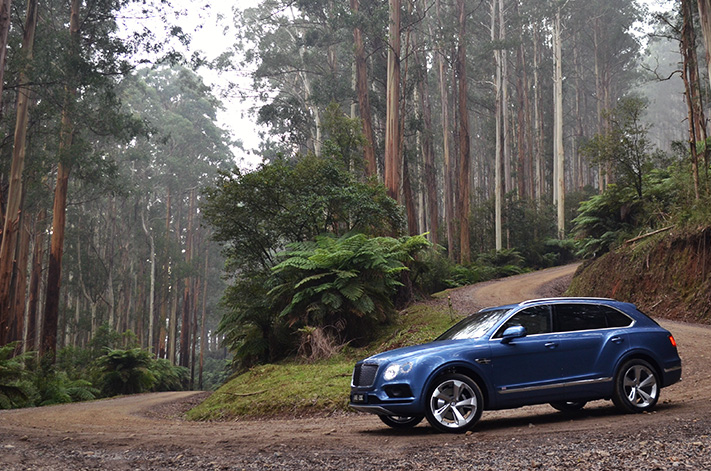
When the asphalt came to an end, we found ourselves climbing out of the fog through the winding forest trails and after a short walk broke through the soupy layer of mist to one of the most panoramic views of the valley courtesy of Mt Saint Leonard. On any normal day, Melbourne’s CBD can be seen 60km to the south west but today the vale was filled with an eerie lake of white cloud.
The one hour round trip on foot was thirsty work and we were glad to tap our boots clean, slide into the Bentayga’s welcoming hide and head off to one of the valley’s multitude of cellar door wine tastings.
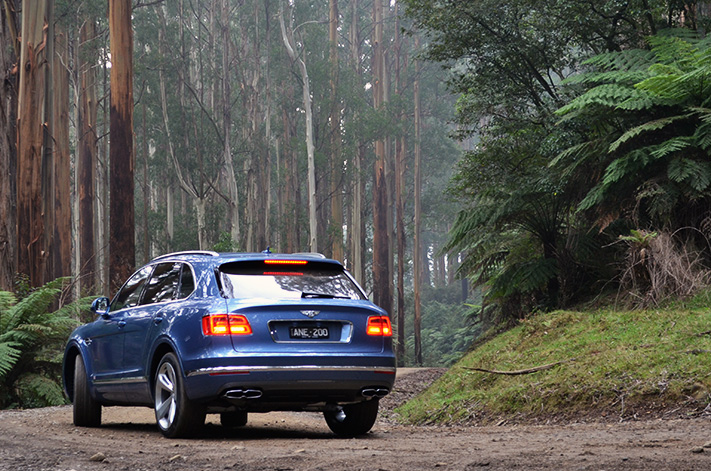
With a full day of touring the many excellent wineries (and lots of spitting to make sure your licence stays yours), the Bentayga has a generous 484-litre boot for stocking up with a few cases and is expandable to 1774 litres if you decide to take the whole vintage.
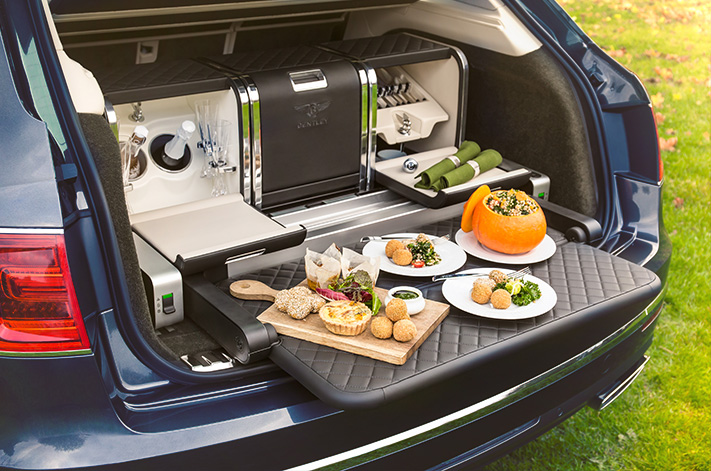
Delightfully, the boot of our car had been fitted out with the ultra-luxurious optional Linley Hamper by Mulliner which houses fine crystal glasses, cutlery, crockery, bottle holders and even a blanket and extendable seat, in custom-fitted leather boxes.
Rather than putting too much faith in Victoria’s changeable weather and a picnic, we headed for the coast for a fish and chip dinner on the beach.
Powering from the valley to the coast in the fading light could feel like a race against time, but the Bentley’s massive 900Nm of torque offers extraordinary pace, and the plush interior is every bit as magical at night thanks in part to the fantastic colour changing ambient lighting.
Before we knew it, we were at Port Phillip Bay’s lapping fringes, polishing off flathead and kicking sand in our chips.
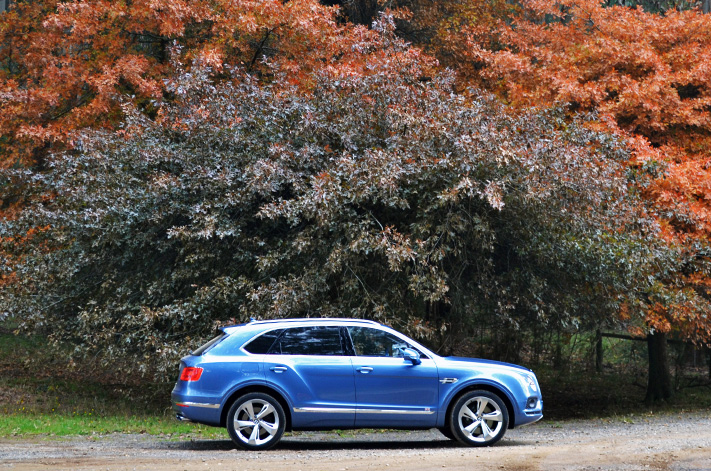
A single weekend is not enough to gauge if the Bentayga is as versatile as Bentley claims, but our brief tour of autumnal Victoria certainly highlighted how easy the big SUV would be to live with day-to-day and its promise of Bentley charm combined with rewarding driving dynamics.
Why would you opt for the diesel and not Australia’s most powerful SUV powetrain? Well for a start there is the $92,300 that will still be sitting in your account after handing over $335,000 for the V8, rather than the $427,300 for the only other option.
Some might argue that with so much in common with the Audi, an extra $181,384 over the German option ($153,616) is hard to justify but it is likely to be a much easier decision for Bentley’s loyal following. It is also worth remembering that this is the most affordable way of putting a new flying-B badged car on your driveway, or boat ramp, or polo field, or stable yard.
Consider also that the impressive torque figure also comes with almost unbelievable fuel economy. With 900Nm on tap and 2.5 tonnes to haul around, we still managed to return an indicated fuel consumption figure of 8.6 litres per 100km.
If you were one of the people to stamp on your hat when Bentley announced it would build an SUV, then you would almost have certainly run around in circles when you heard the model would also pioneer its first diesel.
But, while we acknowledge that both high-riders and oil-burning engines are a dramatic departure from Bentley’s otherwise unfaltering reputation for offering luxury passenger cars with petrol engines, the Bentayga diesel is a pleasantly surprising feather in the winged B’s cap.
