
US PRESIDENT Donald Trump will reopen a sidelined US Government review of the emissions rules that effectively killed off one of Holden’s major export markets.
Speaking at the opening of the $US80 million ($A104 million) Detroit-based American Center for Mobility overnight, Trump said his government would reopen a mid-term review of vehicle emissions caps – the Corporate Average Fuel Economy standards – that were set by the previous Obama government.
The review will potentially overturn a final determination announced by the EPA in January that confirmed fuel economy standards for new cars and pick-up trucks for model years 2022 through 2025 and ruled out the need for the review.
The Environmental Protection Agency-regulated CAFE standards were established under the Obama-led administration, and were aimed at forcing carmakers to lift the fuel economy average across their vehicle fleets to 54.5mpg (4.3L/100km) by 2025. In contrast, Europe has set a target of about 4.1L/100km by 2021.
US carmakers have long argued that the strict CAFE standards do not reflect showroom reality, where buyers are switching off small fuel-sipping cars in preference for larger, more fuel-heavy vehicles, and it needed to be relaxed.
According to Trump, the CAFE standard was costing jobs in the US carmaking industry, and needed to be reviewed.
“I’m sure you’ve all heard the big news that we’re going to work on the CAFE standards, so you can make cars in America again,” Trump said. “There is no more beautiful sight than an American-made car.”
Trump also flagged an announcement his government would make next week, related to US carmaking, that would be “very, very big”.
“Everybody is saying, ‘what is it?’ Let’s keep them guessing back there,” he said. “The assault on the American auto industry, believe me, is over.”
Trump has been pressuring carmakers to pull manufacturing back into the US in an attempt to reclaim Detroit’s status as the world’s carmaking hub. About half the cars sold in the US are made there.
An EPA review into the CAFE standards said introducing the tighter fuel use cap would cost the carmaking industry about $US33 billion, but the economic benefits from the cap – namely the lower rates of fuel demand and the higher energy security – would reap almost $US100 billion in savings for the US economy.
The EPA welcomed the review. “These standards are costly for automakers and the American people,” the environmental watchdog’s administrator, Scott Pruitt, said.
“We will work with our partners at [the Department of Transport] to take a fresh look to determine if this approach is realistic. This thorough review will help ensure that this national program is good for consumers and good for the environment.”
The EPA has until April next year to decide if the CAFE standard should be relaxed.
Not everyone was happy, though. Consumers Union, the lobbying arm of US buyer’s watchdog Consumer Review, labelled the review as “a bad deal for consumers”.
“A decision to withdraw the standards is nonsensical, as it would merely funnel more money to oil companies at consumers’ expense and halt the progress that can be made in both savings for consumers and vehicle efficiency,” Consumers Union policy counsel Shannon Baker-Branstetter said.
“The standards already take the cost into account, and the record shows that they are a reasonable, cost-effective approach to improving fuel efficiency and lowering consumers’ expenses.”
The tougher US emissions standards were one of the reasons Holden’s parent company, General Motors, showed little interest in reviving exports of the Australian-made Holden Commodore – rebadged as Pontiacs before the 2008 global financial crisis killed off the performance sub-brand, and as Chevrolets when low-level exports were kick-started in 2013.
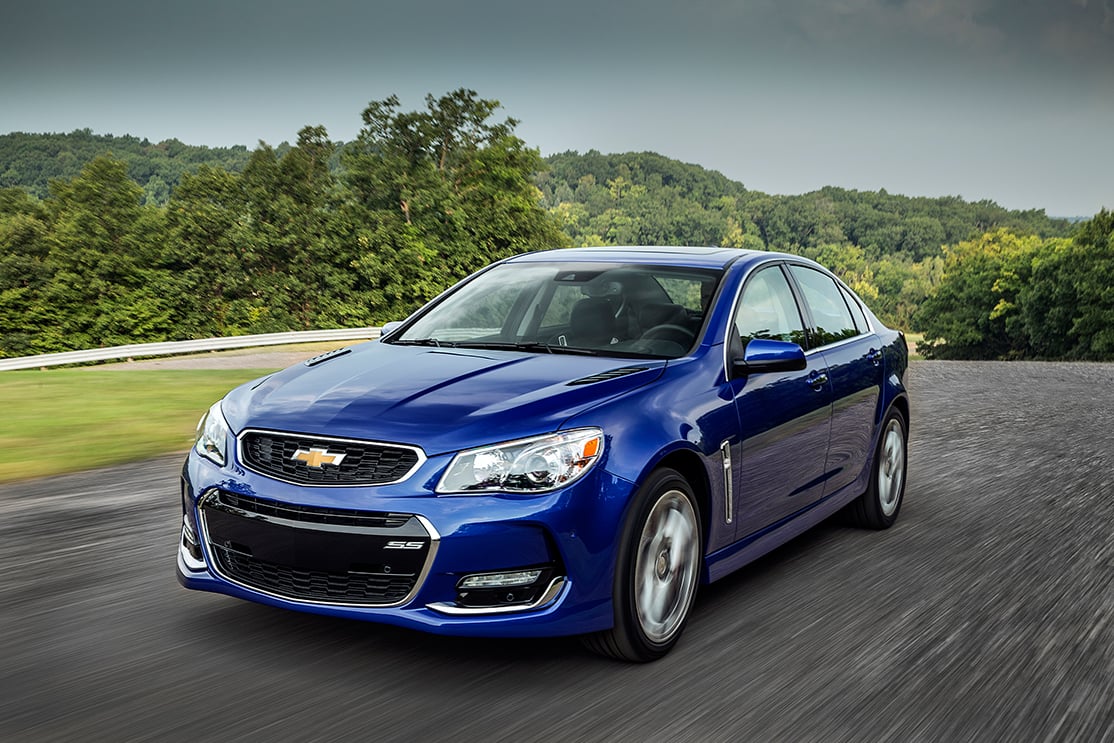
Only about 9000 Chevrolet SS sedans have sold in the US over the last three years, although Holden announced late last year it would build an extra 1000 export cars to meet an expected uptick in demand for the V8-engined four-door.
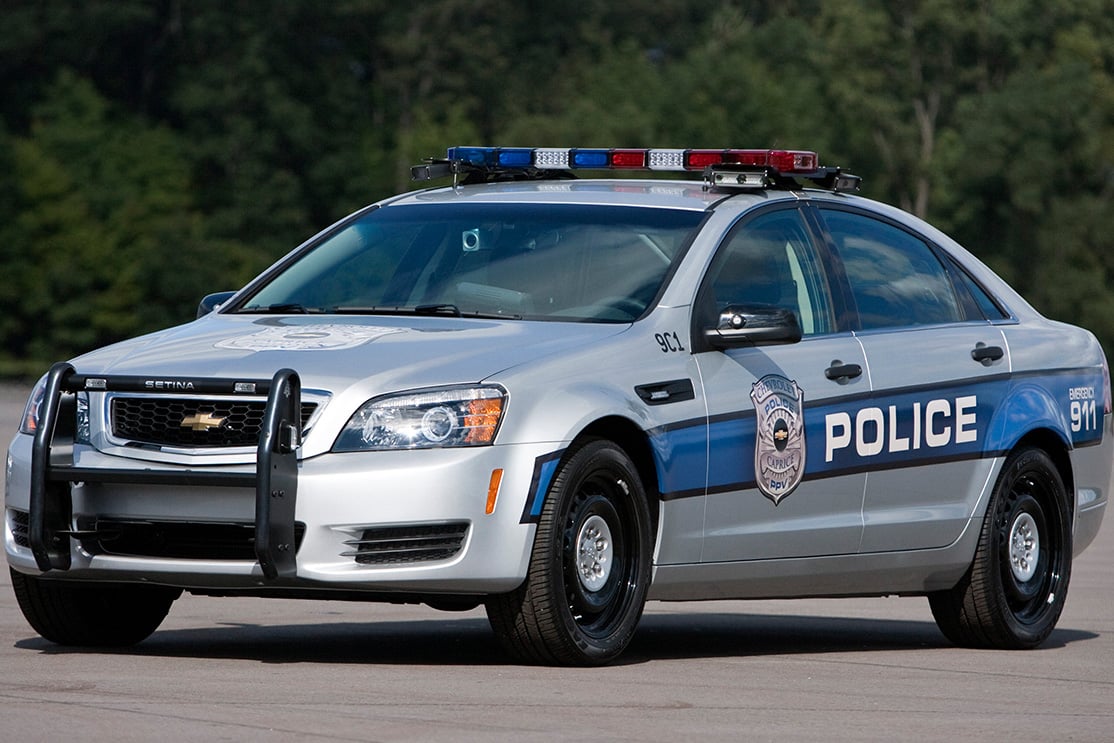
About another 15,000 Holden Caprice long-wheelbase sedans, rebadged as the Chevrolet Caprice, have also been sold to US police forces since 2011.
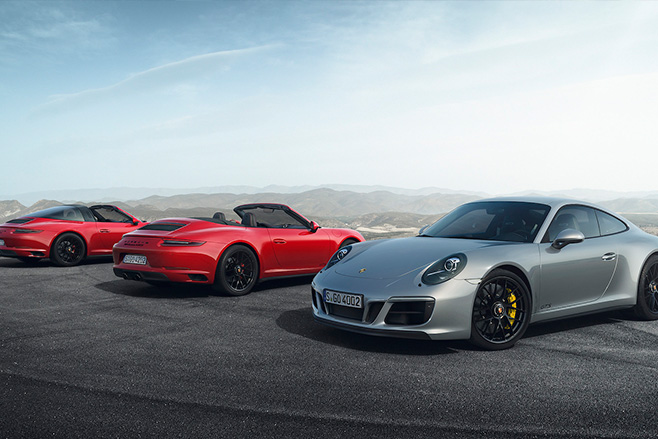
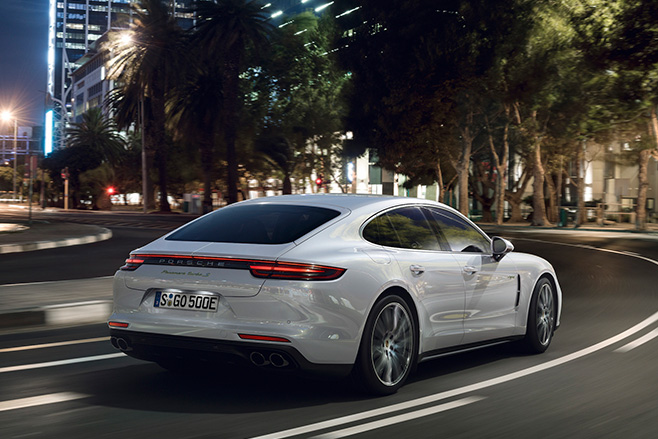
Porsche continues to reel in the cash for the Volkswagen Group, with operating profit rising 13.9 per cent in fiscal year 2016 to €3.9 billion – the highest of any brands.
The German cohort’s sports car brand nabbed its profit from sales revenue of €22.3b, up 3.6 per cent on the year prior, resulting in a remarkable operating margin of 17.5 per cent. In comparison, Volkswagen operates on 1.8 per cent, while Audi manages 5.7 per cent.
However, the Group is still reeling from its diesel emissions scandal that nabbed €1.8bn from Audi alone, with total losses measuring €6.4b. Nonetheless, the VW Group still recorded a €7.1b profit, selling 10.3m cars in 2016 to remain the world’s largest car manufacturer.
Former Porsche boss and current Volkswagen Group CEO Matthias Muller placed the company’s briefly humble nature over the diesel scandal firmly to bed, proudly boasting that “we are back on track” after all brands posted a positive profit result.
“The last year was a challenging yet remarkably successful year for us,” Muller boasted.
In a statement the Volkswagen Group also proudly proclaimed its “best performance despite headwind” with a record 10.3 million vehicles sold globally, almost half (4.0m) of which were as part of Chinese joint ventures, up 12.2 per cent in that country.
In response to the broad-ranging issues over its emissions-cheating diesel engines, Muller stated: “Volkswagen will remain one of the most successful automakers worldwide in 2025. We will be a role model in environmental protection, safety, and integrity.”
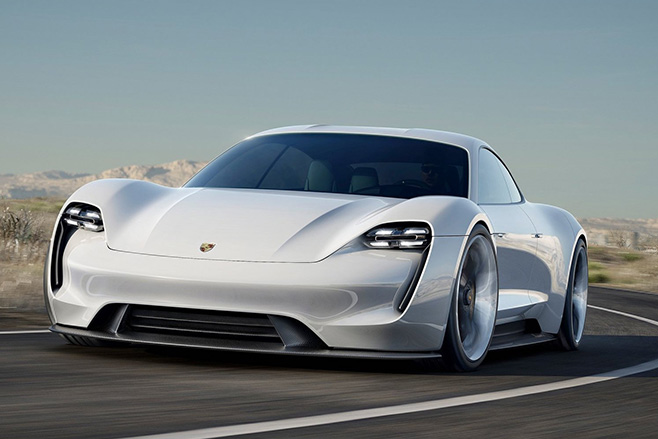
Although Porsche continues to expand its ‘e-hybrid’ models that use the electric motor to boost the dominant petrol engine, how the environmentally-focused plan plays out for the most profitable brand of the Group obviously remains to be seen.
The Hyundai i30 N is getting closer, with the production car anticipated to be released at this year’s Frankfurt Motor Show in September.
As development continues, Hyundai has installed its lead driver in the World Rally Championship, Thierry Neuville, to offer his feedback on this important new model, the first to be launched under Hyundai’s ‘N’ performance brand.
It’ll feature a 2.0-litre turbocharged four-cylinder with 184kW, or 202kW when optioned with the Performance Pack. This will be fed to the front wheels through either a six-speed manual or eight-speed dual-clutch transmission to an electronically-controlled mechanical LSD.
Despite being front-drive only, the ease with which Neuville is able to fling the rear end around gives us hope Hyundai has abandoned its ‘safety first’ dynamics mantra for a more exciting chassis balance to challenge the likes of the oversteer-loving Ford Focus ST.
If not, well at least there’s a manual handbrake, a welcome touch not just for wannabe Ken Block moments but also for daily ease of use.
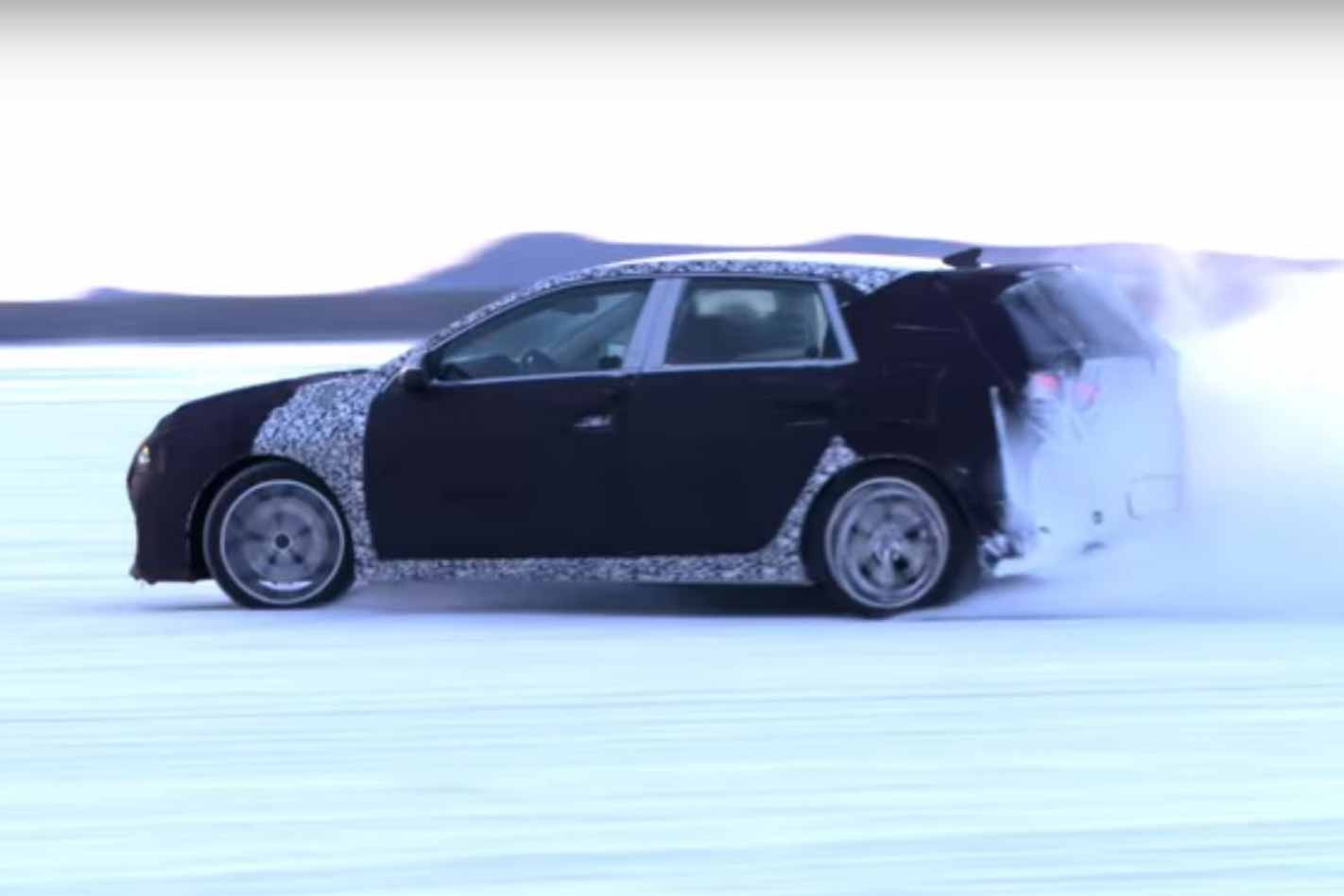
Scheduled to arrive in Australia in 2018, Hyundai’s first true hot hatch will face a tough test in the form of Volkswagen’s updated Mk7.5 Golf GTI. Let the battle commence.
Go shopping for a new car in Australia and you’ll have 55 brands to choose from, with everything from Suzuki to Holden; Ferrari to Rolls-Royce.
But that number could soon drop, with some brands struggling to gain traction and others experiencing dramatic sales drops in what is a fast-evolving market swinging persistently towards SUVs, and also developing a ravenous appetite for premium/luxury.
Are we oversupplied? Industry experts have long referred to the Australian market as one of the most competitive in the world. According to Ian Churchill, a senior analyst at IHS Markit, the 55 brands on sale in Australia is well above the 38 that is the global country average.
But IHS Markit’s data shows Germany (62 brands on sale), Russia (62) and France (59) all have more brands to choose from than Australia, while China’s plethora of largely unheard-of domestic brands pushes its tally to a crazy 149.
That said, Australia’s growing annual sales of about 1.2 million vehicles is well below that of other countries with a broader spread of new cars, especially China, with its annual sales of around 27 million and growing.
Many industry observers believe the competitiveness of Australia means it’s inevitable some brands will die. Indeed, recent history suggests there will be natural attrition. Over the past decade, brands that have disappeared in Australia (and, in some cases, globally) include Daihatsu, Daewoo, Dodge, Hummer, Opel, Rover and Saab.
Here’s a Wheels shortlist of brands under increasing pressure in the Australian market:
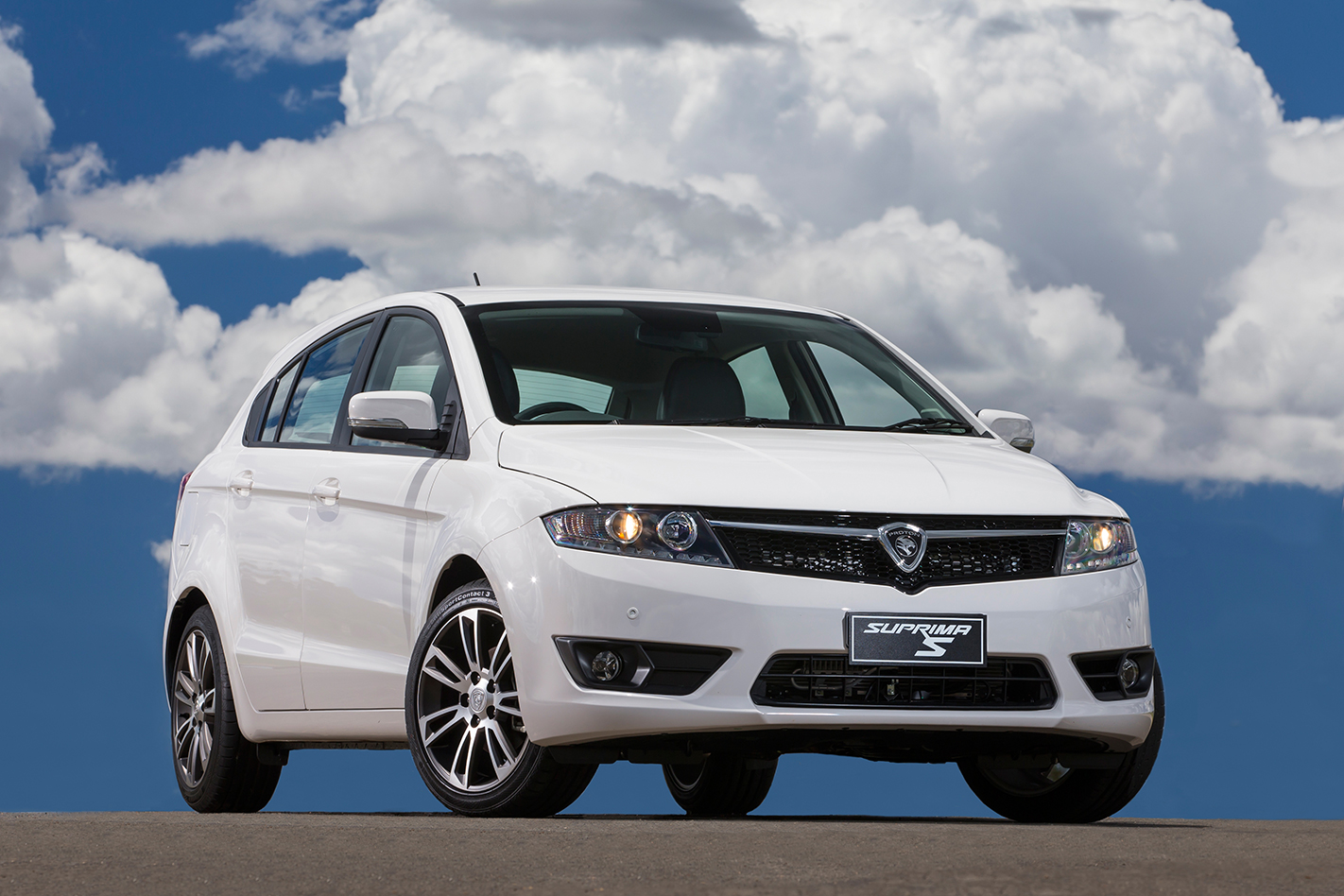
Asian manufacturers such as Ssangyong and Proton are top of the list of brands that may not survive the intense pressure at the cut-throat end of the new-car market. As well as new arrivals, including marques from China, Ssangyong and Proton are dealing with pressure from predominantly Japanese brands bolstering market share with more SUVs and sharp prices. The shift to adopt new features – including active safety gear – is also being won by the big Japanese brands.
Ssangyong and Proton are also struggling with relatively small dealer networks, small model ranges and small sales (371 and 182 respectively in 2016).
In short, there aren’t many people prepared to take a punt on a largely unknown model when there isn’t a decent discount attached to the deal.
In light of this, neither Ssangyong or Proton is currently importing cars, instead clearing current stock.
Ssangyong has delayed the launch of its Tivoli small SUV, in part because the current distributor, Ateco, plans to hand the franchise back. As for who will take it over, the obvious choice is that SsangYong will run the distributorship itself.
As for Proton, they were “too busy” to talk to Wheels when contacted for comment.
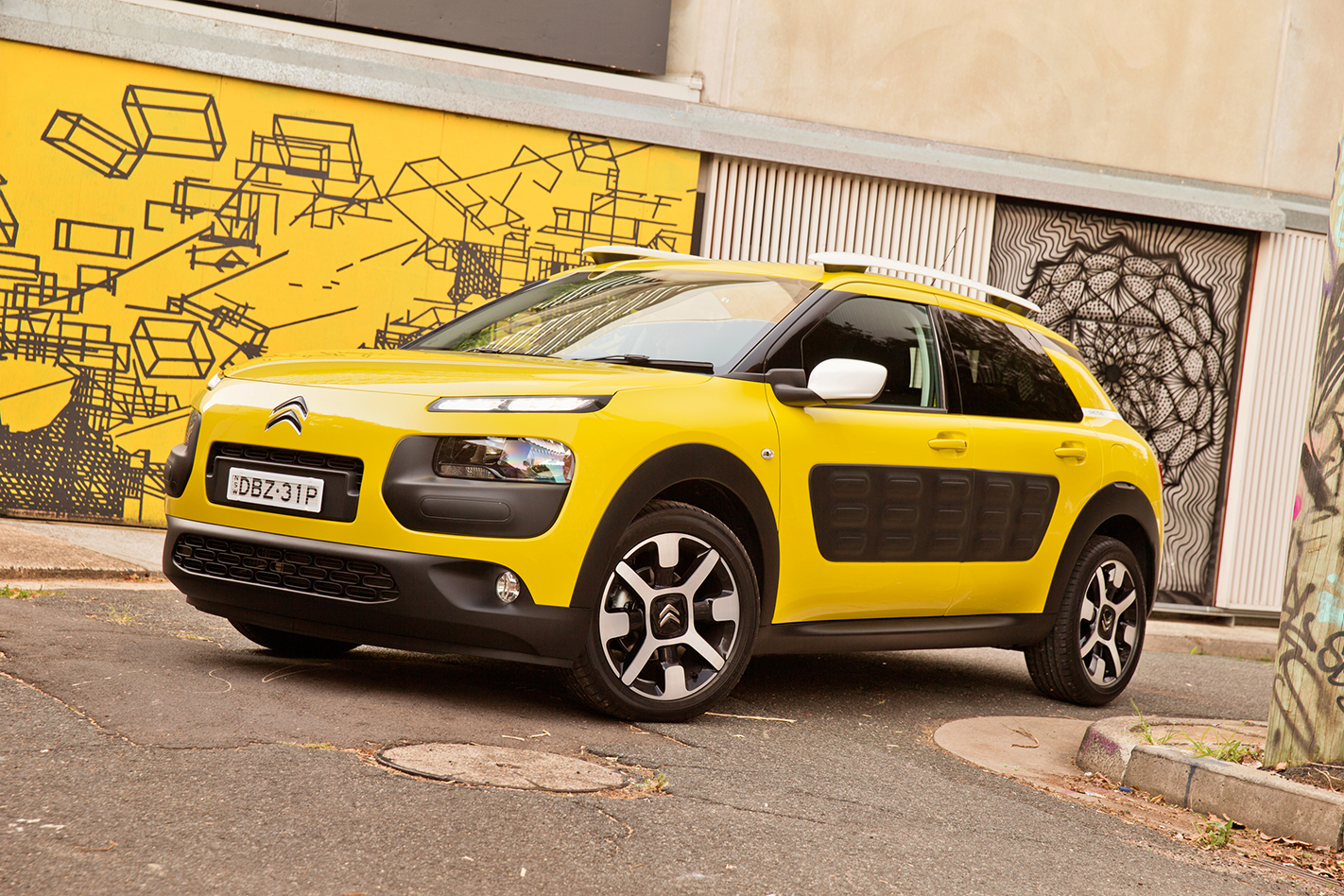
There’s a lot of history with the two French brands in Australia. Citroen has been continuously selling cars here since 1923, while in 1925 it was the first car to drive a lap of Australia, well before a proper road network.
Peugeot began assembling cars in Australia in 1953, the same year it first won the Redex Round Australia Trial.
But history counts for nothing in the modern car market (as Holden can attest) and both Citroen and Peugeot are dealing with declining sales in a growing market.
Peugeot is now outsold by Porsche; the French brand’s 3129 Oz sales in 2016 less than half what it was selling a decade earlier.
Similarly, Citroen tanked to just 462 sales last year, a dismal result.
Further hampering progress are questions over distribution of the brands in Australia. Currently both are handled by Sime Darby, a Malaysian-based multinational. But Wheels has been informed by a reliable source that Sime Darby is looking to offload the brands and that two other importers are currently in the frame. We’ve requested comment.
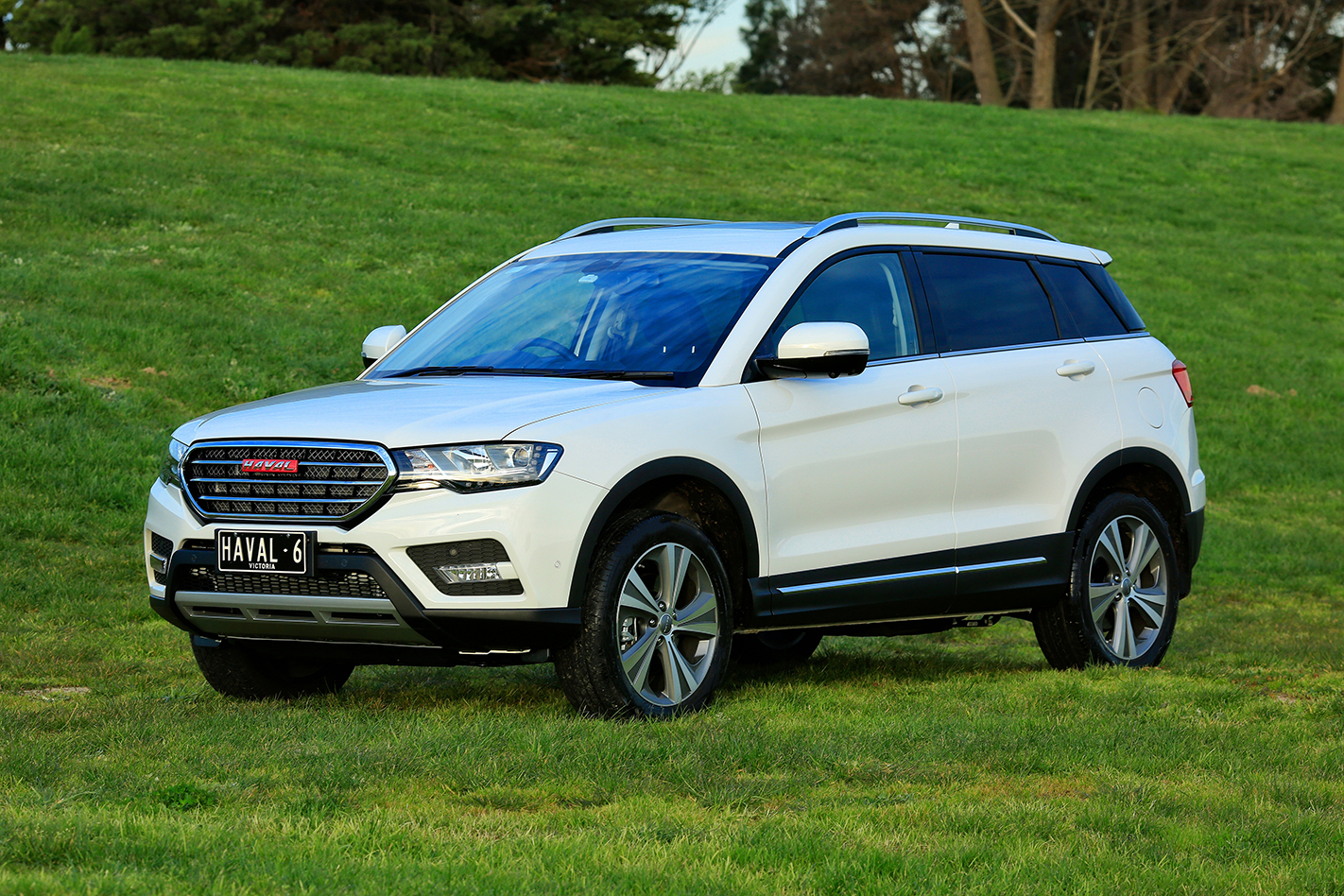
Then it all came to an abrupt halt following a dispute between Ateco and the brand’s Chinese parent, leading to the importation being halted for more than a year.
That hiatus – as well as poor independent crash-test results and anecdotal reports of difficulty obtaining spare parts – burnt many owners.
Combined with increased competition, it’s little wonder Great Wall has struggled to regain ground now it is importing cars here directly, with SUV sister brand Haval alongside.
Despite slow sales, Haval and Great Wall insist they’re here for the long run this time around.
“It was more about our dealer network than sales,” spokesman Andrew Ellis told Wheels. “We started with four [dealers], we’ve just opened our 13th and we’re on track to have 20 by mdi-year − and I think you’ll start to see some traction.”
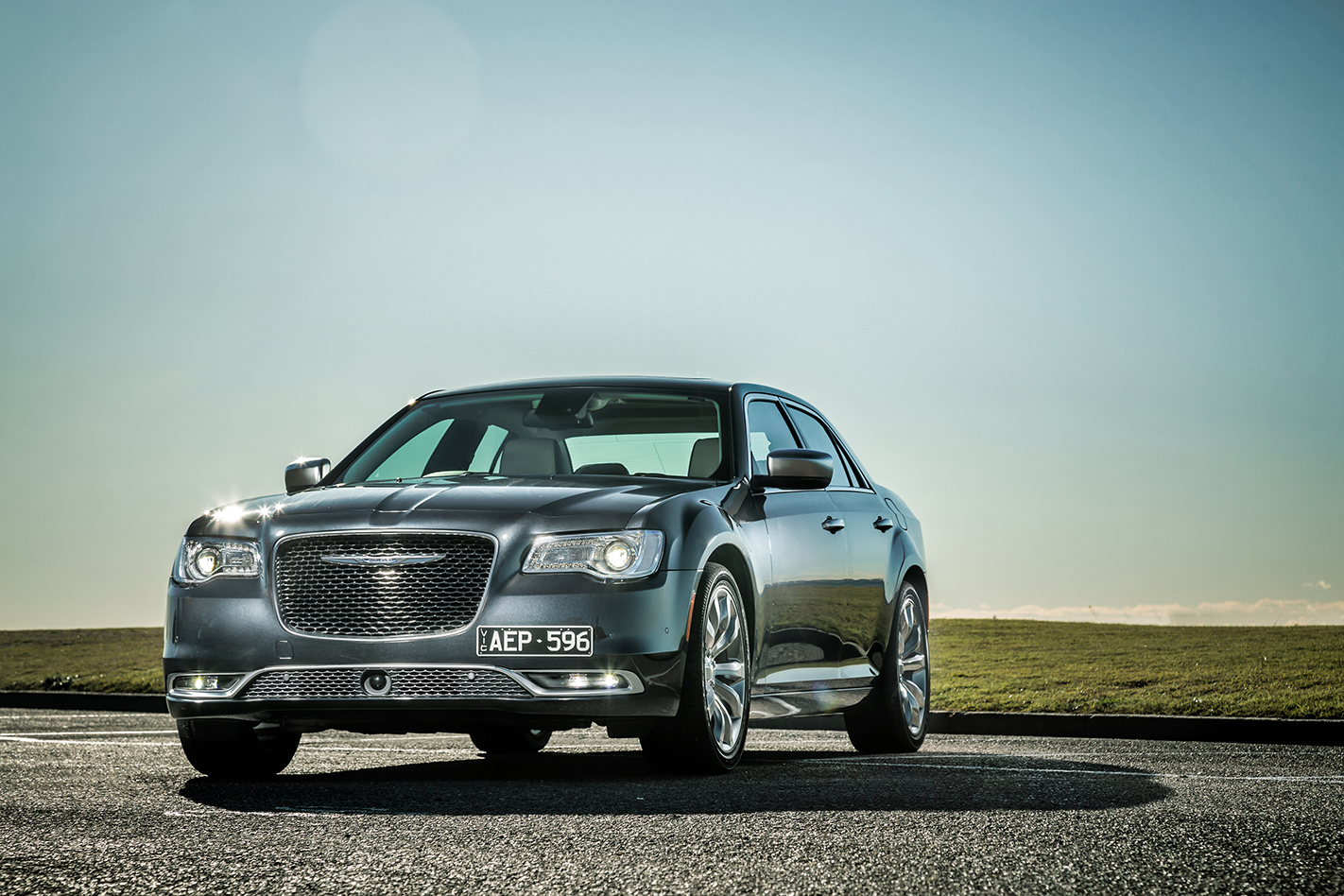
It’s been slim pickings for Chrysler in Australia, with just 462 sales in 2016 – marginally more than Porsche sold 911s.
Put that down to a lack of models. The Voyager people mover was always a slow seller (it plays in a niche market) which leaves the 300 large car to do the heavy lifting.
Despite their appeal with enthusiasts, large, rear-drive cars are on the wane in Australia and the Chrysler 300 is not immune.
Looking forward, it doesn’t look like there’s much product coming down the pipeline, leaving Chrysler locally treading water, at least in the short-term.
That said, Fiat Chrysler Automobiles was open and honest recently in shelving the Dodge brand in Australia. It says it is committed to Chrysler locally.
The local head of the brand, Guillaume Drelon, told Wheels: “Our commitment to the Chrysler brand in Australia is unwavering. We are actively working with head office on the next generation of vehicles, and we will share more information about that at the appropriate time.”
Drelon added that there was a “great opportunity for our 300 and 300 SRT moving forward, in particular regarding the competitive landscape”, following the imminent demise of the rear-drive Holden Commodore.
In the short term it appears some of those 300s could have flashing blue and red lights on their roofs as a replacement for locally-made police pursuit cars.
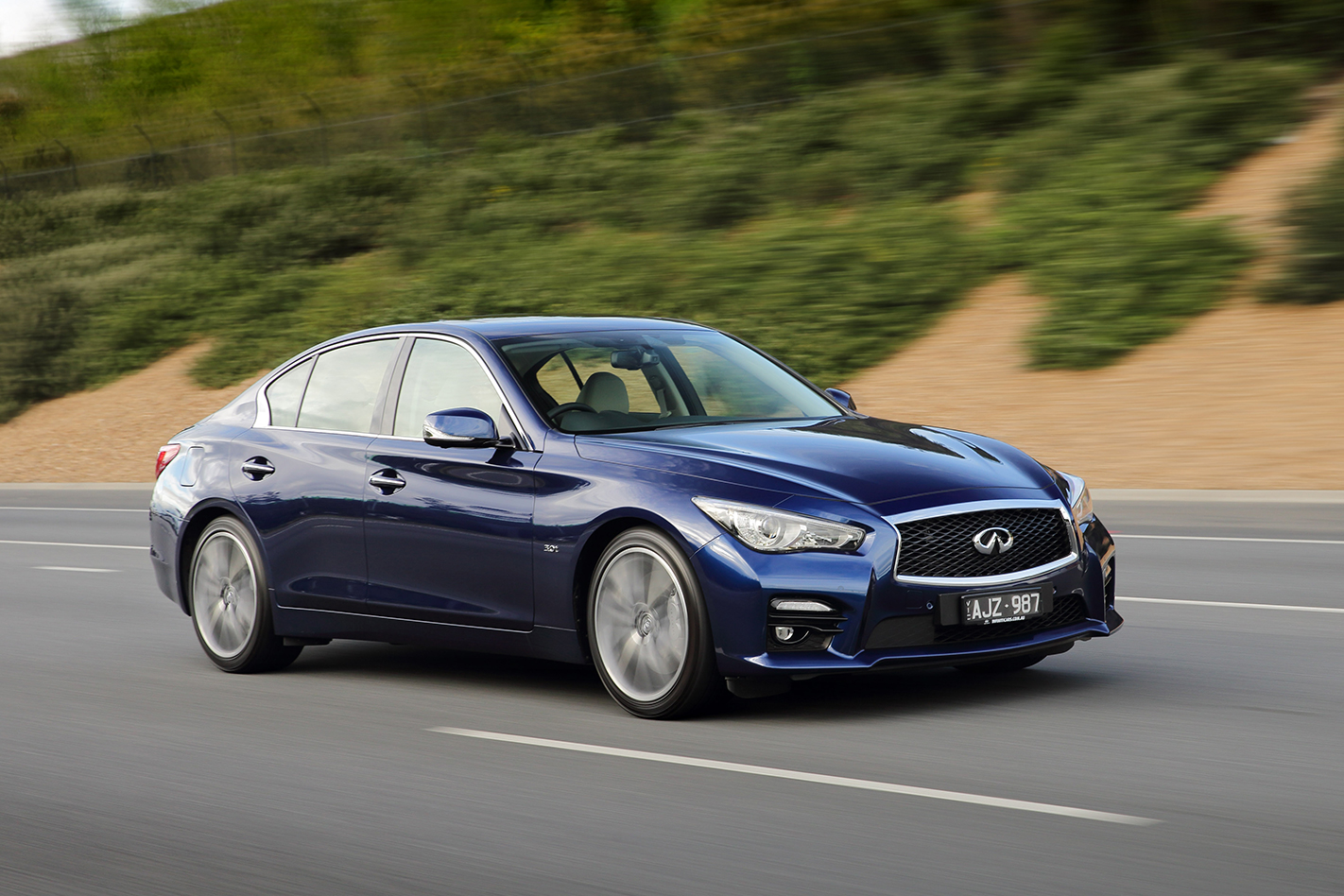
Since 2012 Infiniti has been trying to carve itself a chunk of the booming luxury market that now accounts for more than 100,000 sales in Australia.
It’s been a slow burn, with the Nissan-owned Japanese maker yet to crack the 1000 annual sales rate.
On the surface, then, it seems little chance of survival against the might of BMW, Audi and Mercedes-Benz, each of which sells at least 30 times as many cars.
But Infiniti points to the fact it is growing – and the fact other luxury brands have taken a lot longer to make a real impact.
Infiniti highlights Japanese rival Lexus, saying “they are still in a growth phase” despite approaching its 30th birthday.
“Brand building takes time,” says spokesman Peter Fadeyev, adding that the brand is here to stay in Australia.
An expected update to the Q50 later in 2017 is key to those prospects.
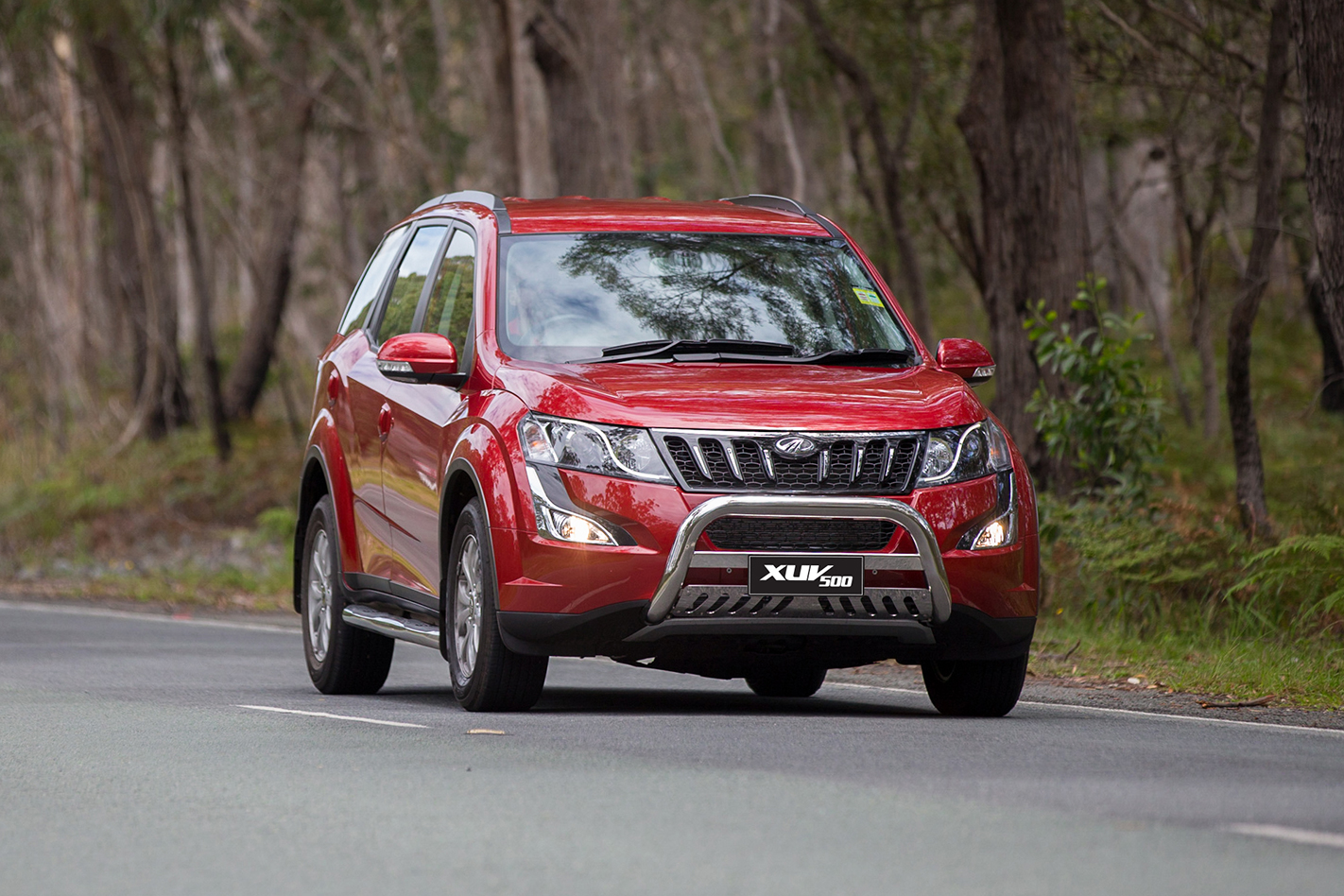
Indian maker Mahindra doesn’t publicly report its sales in Australia, so it’s difficult to get a feel for how it’s going. But the brand admits it is selling fewer than 1000 cars annually, which is not many considering there are 37 dealers.
Indeed, Mahindra is better known for tractors than passenger cars, and despite getting high profile ex-cricketer Matthew Hayden as an ambassador, the XUV500 SUV and Pik-Up ute are still niche vehicles.
Given the competition at the budget end of the market – including from new Chinese brands – it promises to make life even tougher for Mahindra.
The one shining light is the imminent arrival of an all-new Pik-Up late in 2017, something that will hopefully look less, err, challenging than the current car.
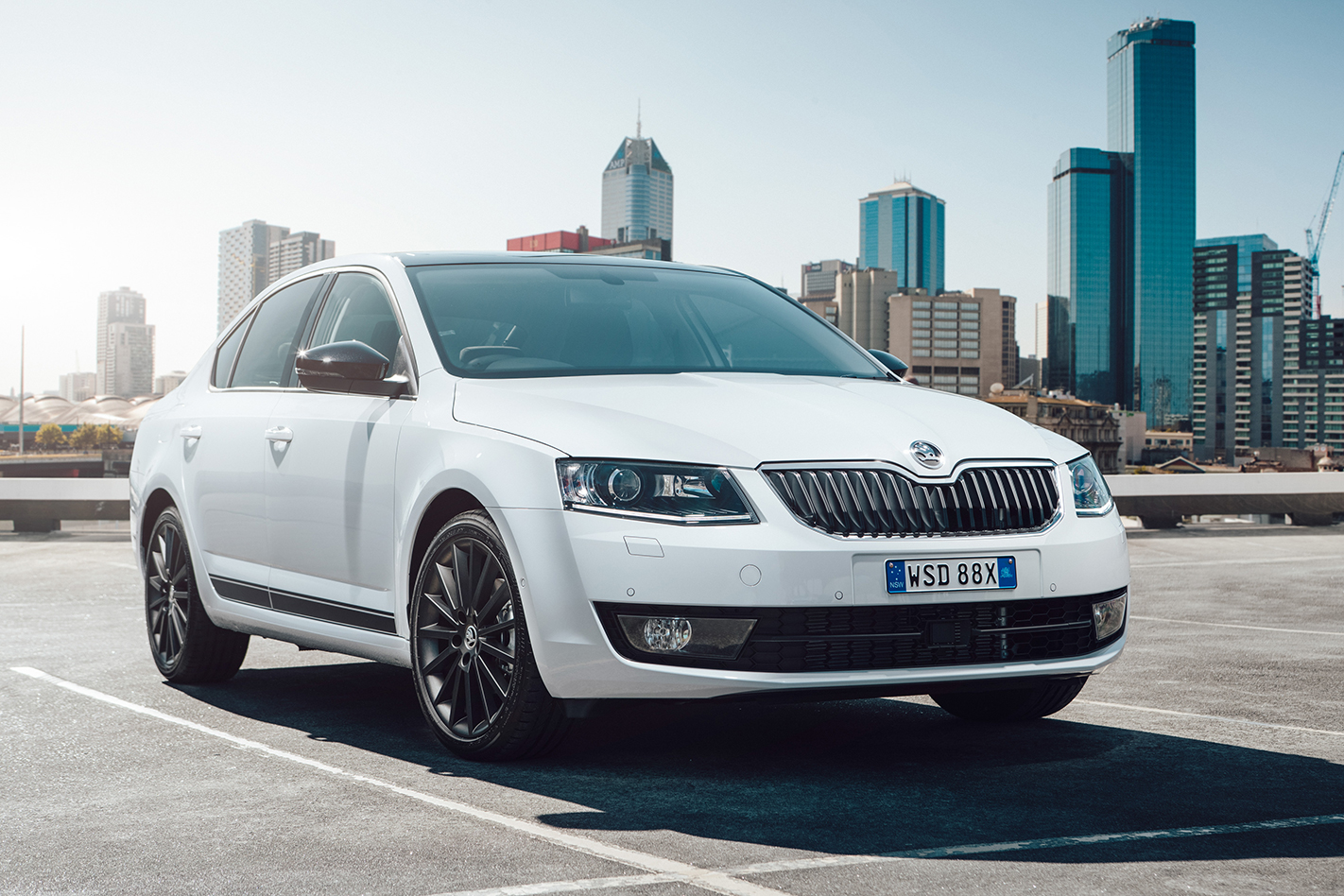
In most parts of the world Skoda is known as Volkswagen’s budget brand, something that gives it a point of differentiation against the cars it shares so many components with (including engines and transmissions).
But Australians don’t go for stripped-out cars, so Skoda has been forced to fight locally with high equipment levels, something that increases prices – in turn diluting one of the key reasons for buying a Skoda over a Volkswagen.
Between that and the relative lack of recognition of the brand sales have been modest, something that has led many to question the longevity of the brand in Australia.
To be fair, Volkswagen locally has stuck with it, although many see the Kodiaq that arrives mid-2017 as a make or break car.
The seven-seat SUV will line up against the likes of the Toyota Kluger and Mazda CX-9.
But Skoda sees the Kodiaq’s European roots as a core appeal. The late-2016 announcement of a five-year warranty also helps in separating Skoda from Volkswagen, among others.
If it works, it could kickstart sales and provide a solid foundation for growth.
“We’ve very confident of breaking the 5000 [sales] barrier and powering out of the niche cul de sac on to the mainstream boulevard,” says spokesman Paul Pottinger.
But if it fails, there will be increased pressure on Skoda’s Australian division.
IN 1969, if you’d hoped to impress friends overseas with Australian cars, you’d have introduced them to the XW Falcon GTHO Phase 1, the HT Monaro GTS 350 and the VF Valiant Pacer. Not a bad bunch of brochures. But all three would have surrendered wall space to a low-riding, low-volume Aussie sexpot, the Bolwell Nagari.
Brothers Campbell, Winston and Graeme Bolwell had tinkered with home-made specials in the late-1950s, before the 20-year-old Campbell launched Bolwell Cars as a kit-car concern in 1963. The first model was a sports racing-styled roadster called the Mark 4, which, atop its steel-tube spaceframe, carried body panels in aluminium and newfangled fibreglass.
About 50 of the Mark 4 kits were sold, which encouraged Bolwell Cars – Graeme joining Campbell in 1966 – to develop subsequent models. The fastback lines of the 1966 Mark 7, designed for six-cylinder Holden mechanicals, predated the Datsun 240Z by four years. Almost 400 kits were sold.
The design matured into the Mark 8, the Nagari. And how: as the first Australian low-volume car designed for a V8 engine (Ford’s 5.0 Windsor), the Nagari was world-class in the construction of its ‘Y’-backbone chassis and one-piece fibreglass body.
A key element was the fact that, during 1966, Graeme spent six months in the UK working at Lotus during the Europa’s development. The Nagari’s body-over-backbone format mimicked the Elan’s, and the handsome Nagari shape likewise incorporated replaceable bumpers.
Its proportions were spot-on, with its 4013mm overall length and 2286mm wheelbase within a thumbnail of an AC Cobra’s, and overall height of the coupe a slithery 1118mm. A roadster, introduced in 1972, was every bit as handsome.
The Nagari was briefly offered as a kit, but Bolwell quickly insisted on building it in-house to control quality. A turn-key Nagari 5.0 ran the standing quarter-mile in 14.8 seconds, making this Aussie sportster equal to the XW Phase I in a straight line. Being a 915kg, front mid-engined coupe with claimed 50/50 weight distribution, it was somewhat more nimble everywhere else.
In truth, it wasn’t a cheap alternative: at $5490, the Nagari was almost $1000 more than the Phase I. The price was nearer to $7500 by October 1974, when new emissions regs demanded Bolwell spend $500,000 to homologate their stock, Ford-engined car.
“So we knew, to the day, when we had to stop building them,” Campbell said. Approximately 128 coupes and 12 roadsters – once described by Wheels as objects of “lust and desire” – had been built.
Bolly would
The all-fibreglass body was moulded in one piece and straddled the fabricated, sheetmetal backbone chassis. Front suspension was by Bolwell’s own wishbones with Falcon uprights and coils, while the Ford live-axle rear end was modified with Bolwell locating links. Wheels were Bolwell alloys, with Ford disc/drum brakes. Rack-and-pinion steering came from the Austin Kimberley.
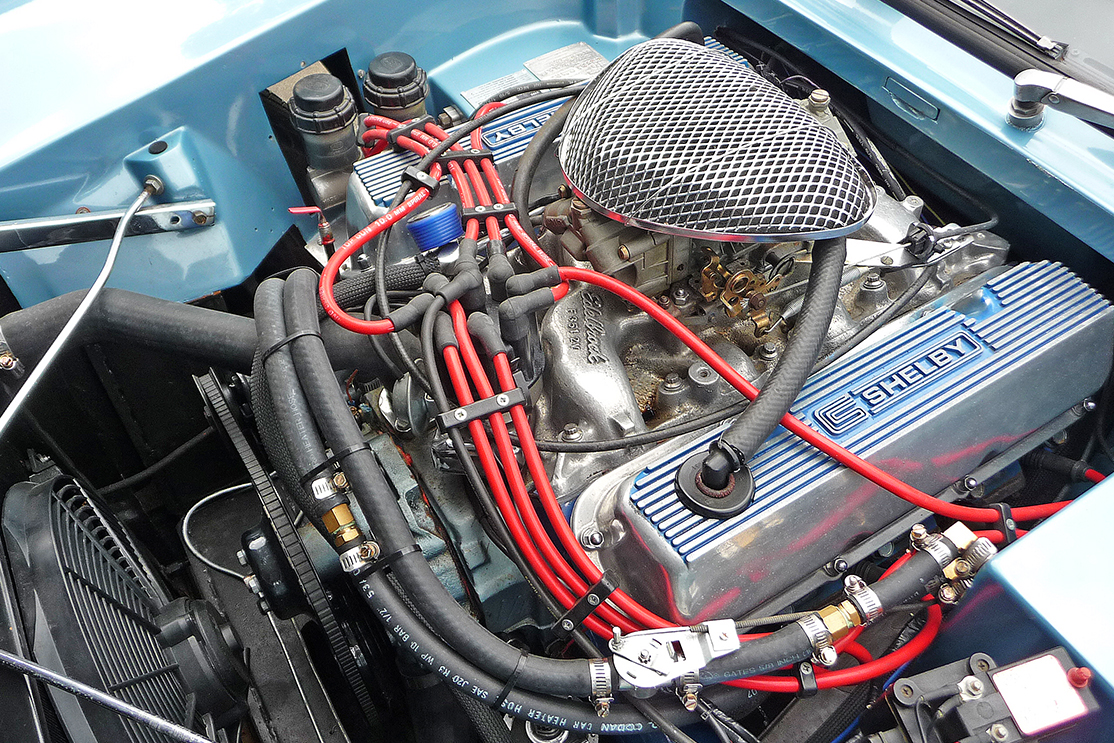
Ford’s 302c.i. (5.0-litre) Windsor V8 and four-speed top-loader made a perfect fit, though many Nagaris were converted to 351s (5.8). Bolwell’s brochure claimed 164kW at 4600rpm and 407Nm at 2600rpm, and 0-60mph in 7.1 seconds and a 14.8 quarter made the ‘Bolly’ a full second quicker than similarly engined Falc XT GT. Fuel consumption, if it mattered to Nagari Man, averaged 12.8L/100km.
How and Y
With both Graeme and Campbell Bolwell standing more than 183cm, the Nagari was reasonably roomy. The tranny tunnel told of the Y-shaped spine beneath, and the woodgrain dash’s switchgear, vents and handles showed Falcon origins. Safety considerations (1969, remember) extended to a collapsible steering column, seatbelts (mandatory from 1969), seat headrests and ‘crash-padded’ dash and pillars … sissy stuff to Nagari Man.

5 Fast Facts
1. Flow-on effect
Nagari came from an Aboriginal word for “flow”. In 2006, Mazda showed a concept named Nagare –Japanese for “embodying motion”
2. Special interest
Campbell Bolwell built his ‘Mark 1’, a special based on a 1937 Ford V8, by wagging school. He failed Year 12
3. Right clique
Individual Nagaris made their way to South Africa, NZ and Europe. The only LHD example built, for a US order, stayed here and became a RHD racer
4. Backing up
Bolwell revived the Nagari name in 2008 for an all-new, mid-engined coupe with supercharged Toyota V6 power. Yours for $150K-plus
5. High-rise
Nagaris were selling for $7200 when production ended in ’74. They’ve seen close to 10 times that figure in recent years
A decade ago the big three of the Australian luxury car landscape – Audi, BMW and Mercedes-Benz – accounted for only four percent of the market. Jump to today, and that margin has doubled to eight percent.
The reason why is pretty clear. Changing Aussie tastes have made premium metal more desirable, and nowhere is this more evident than in the large sedan segment where four-door cars costing anywhere from $80,000 to $150,000 are waiting to woo buyers.
Here are some of the best luxo sedan buys out there, and our tip on which one you should back with your wallet.
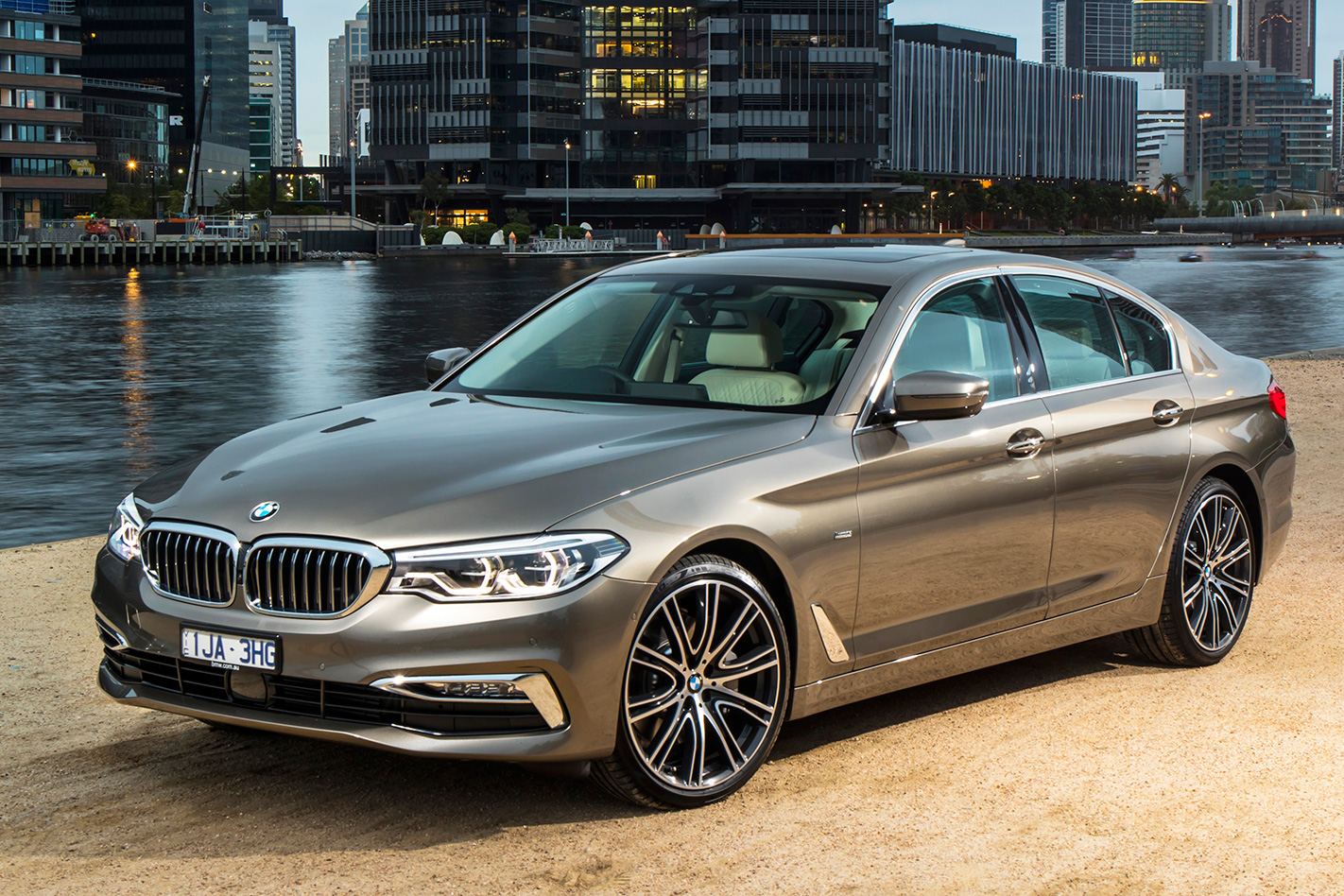
BMW 5 Series Box fresh having just launched on the Australian market in March, the seventh-generation 5 Series arrives as something of a technical tour-de-force. It perhaps doesn’t ride as well as the previous 5 Series, but its combination of a luxurious cabin and cutting-edge electronics – many blended in as driver-assist systems – shine.
The new range starts from $93,900 for the 2.0-litre diesel-engined 520d – it will get a bit cheaper once the price-leading petrol 520i arrives later this year – but we reckon the sweet spot is the 530d ($119,900), powered by a 3.0-litre in-line six-cylinder diesel and sending drive to just the rear wheels.
Surrounding the 5 Series are a pair of forward-looking cameras and six radar-based systems designed to monitor everything happening around the car. It can do things such as read speed signs and feed them into the car’s speed limiter or active cruise control, and can drive by itself, hands-free, for up to 30 seconds right up to the legal speed limit.
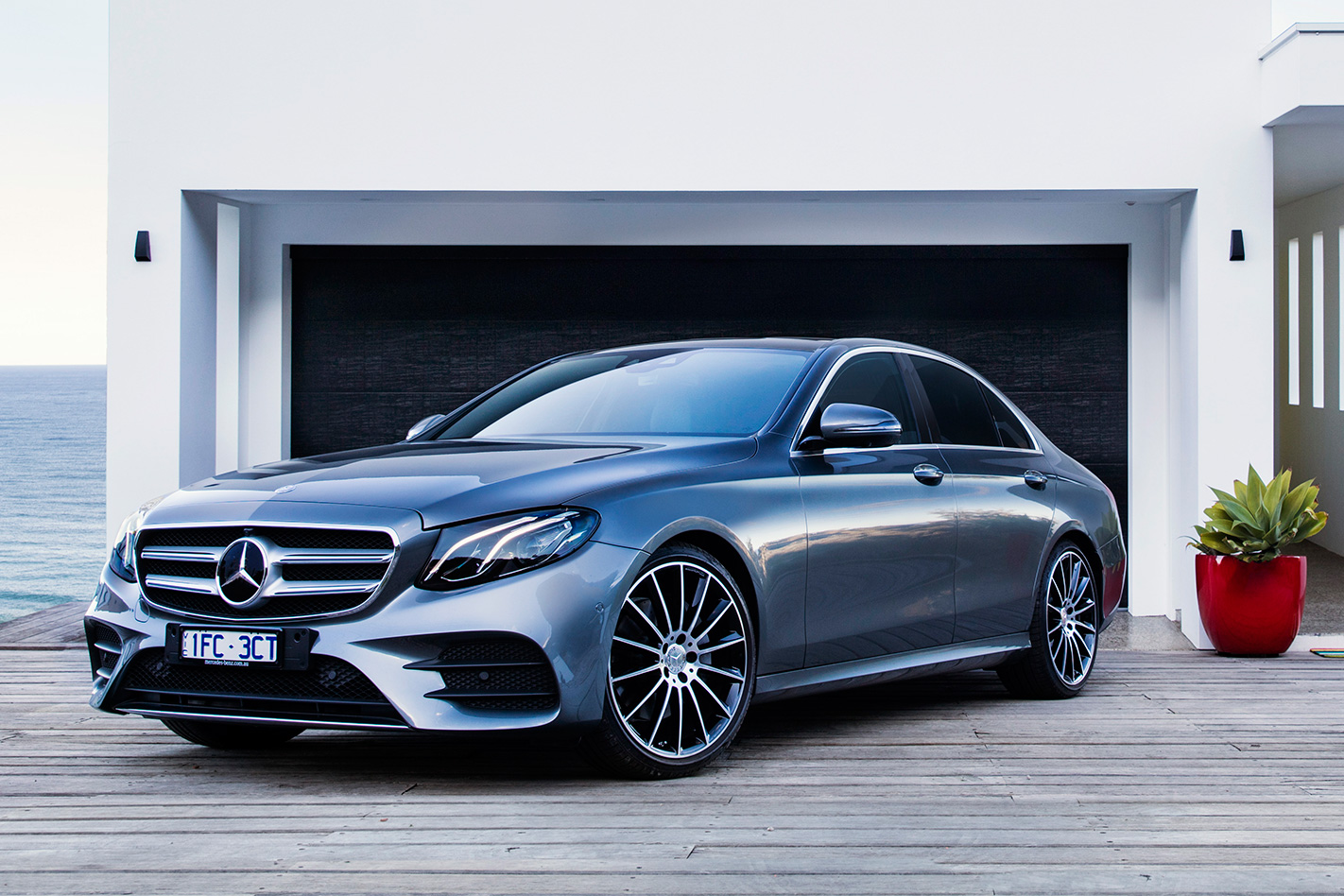
Mercedes-Benz E-Class When it launched in 2016, the all-new E-Class was the most advanced road car on sale in Australia.
The Mercedes-Benz E-Class has revealed itself as one of the most well-rounded performers on the Australian market. It is so good, in fact, that it made it through to the final round of the tough 2017 Wheels Car of the Year award.
Priced from $89,000 for the entry-level E200, the E-Class kicks off with a turbocharged 2.0-litre petrol engine paired with a nine-speed automatic. There’s a new 2.0-litre diesel four-pot that features some clever packaging to make it smaller and lighter, a 3.0-litre in-line six-cylinder diesel, and the two tunes of a powerful twin-turbo petrol V6 in the all-wheel drive E400 and performance-orientated E43.
The E-Class is a bit more expensive compared with the other cars here, but you do get a pleasing level of kit (like the 5 Series is can drive itself for short periods and there’s a huge digital display that spans half the dashboard), and a premium-feel cabin, that goes some way to offset the sticker shock.

Jaguar XF Also new last year, the XF is now into its second generation – and the claws have come out. Lighter and smaller than the car it replaces, and yet with more interior room, it’s a rare example where less does mean more.
What we also liked about the XF is that it has now become a much better car to drive. It’s well-balanced, it communicates with the driver, and the makeover has turned the XF into a much sharper-looking package.
Pricing starts from $89,515 for the entry-level 25t featuring a 2.0-litre four-cylinder engine paired with an eight-speed automatic gearbox. The other engine choices are a 2.0-litre diesel, a supercharged V6 and a diesel V6.
The only downsides to the Jag are a lack of the cutting-edge technology packed into competitors, and the Audi-level cost of some of its options.

Volvo S90 The S90 is the spiritual replacement to the Volvo S80 sedan. Built off an all-new platform shared with the XC90 SUV, it also introduces Volvo’s latest suite of safety innovations.
The S90, priced from $79,900 for a front-drive T5 Momentum fitted with an eight-speed automatic, is elegant inside and out and with a punchy four-cylinder engine that is also respectably fuel-efficient.
All-wheel-drive versions start from $96,900 for the D5 Inscription powered by a 2.0-litre diesel engine. The $98,900 range-topping T6 Inscription uses a turbocharged and supercharged 2.0-litre four-cylinder.
Volvo’s latest luxury flagship doesn’t really move the dynamic game along, but it fights admirably with the big boys while bringing a strong suite of active safety features such as the ability to detect the edge of the road, and automated braking at intersections to the table. It will even tell you where the nearest rest stop is located.

Audi A6 Audi’s fourth-generation A6 may have launched in 2011, but a series of updates along the way – the most significant in 2015 bringing in sharper looks and new drivetrains – means it still holds its own against today’s fresher metal.
The A6 is a restrained-looking saloon with a beautifully crafted interior. We’d probably pass on the uninspiring $80,335 entry-level, front-drive TFSI that comes a bit sparsely equipped with a 1.8-litre seven-speed dual-clutch automatic. Instead, we’d lean towards the $124,885 TDI Bi-turbo featuring a twin-turbo V6 diesel paired with an eight-speed automatic gearbox, yet is frugal enough to slip in under the Luxury Car Tax threshold.
The A6 will be replaced soon, possibly as early as late next year, so you may be able to negotiate hard on price to strike an even better deal.
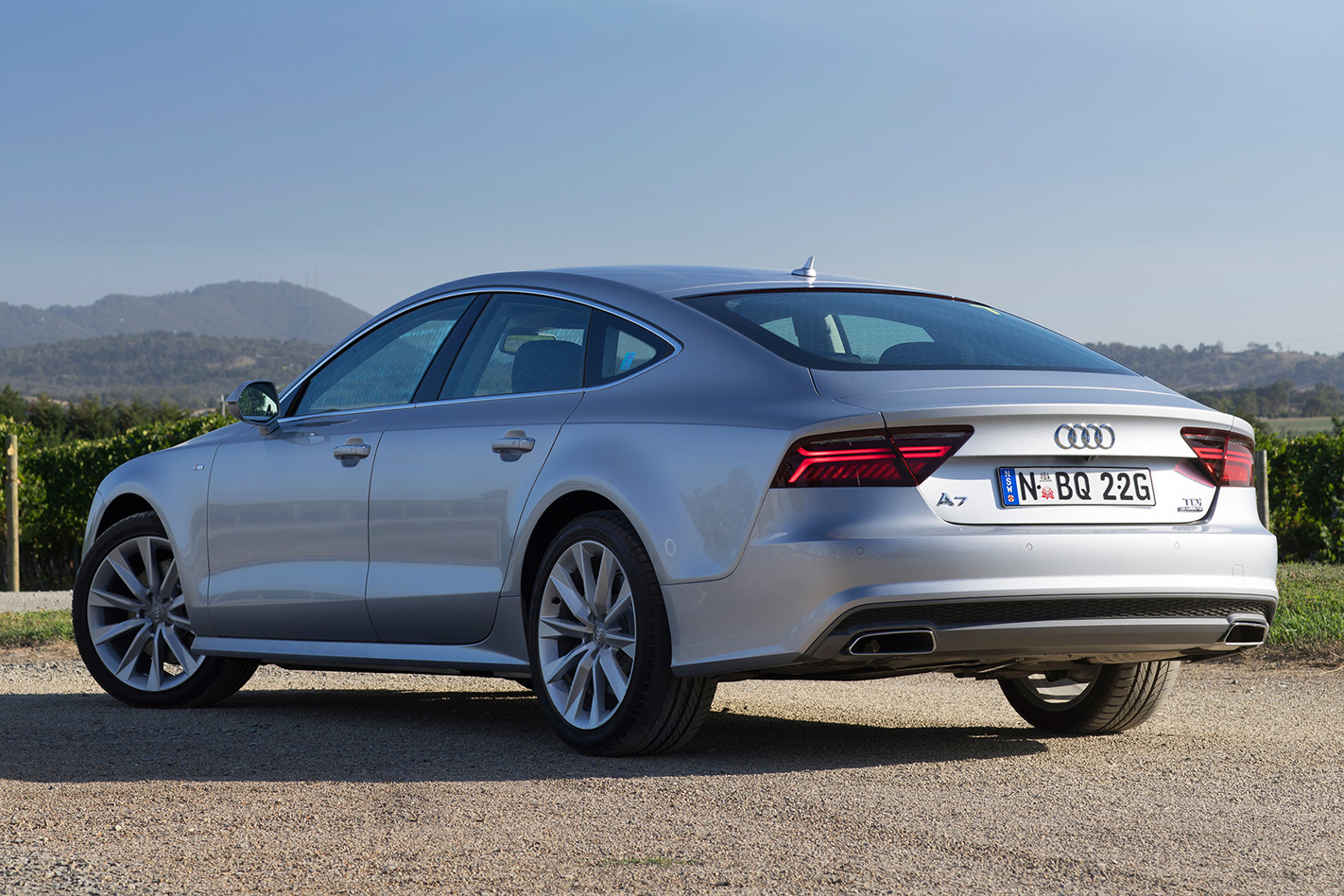
Audi A7 Sportback Audi also has a fastback four-door called the A7 Sportback. The more swept looks of the A7 add $20,000 over the cost of the more traditional sedan, but the more attractive lines go up exponentially compared with it. The A7 comes with the choice of two 3.0-litre V6 diesel engines, and just like with the sedan, it’s the Bi-turbo badge we’d be most interested in.
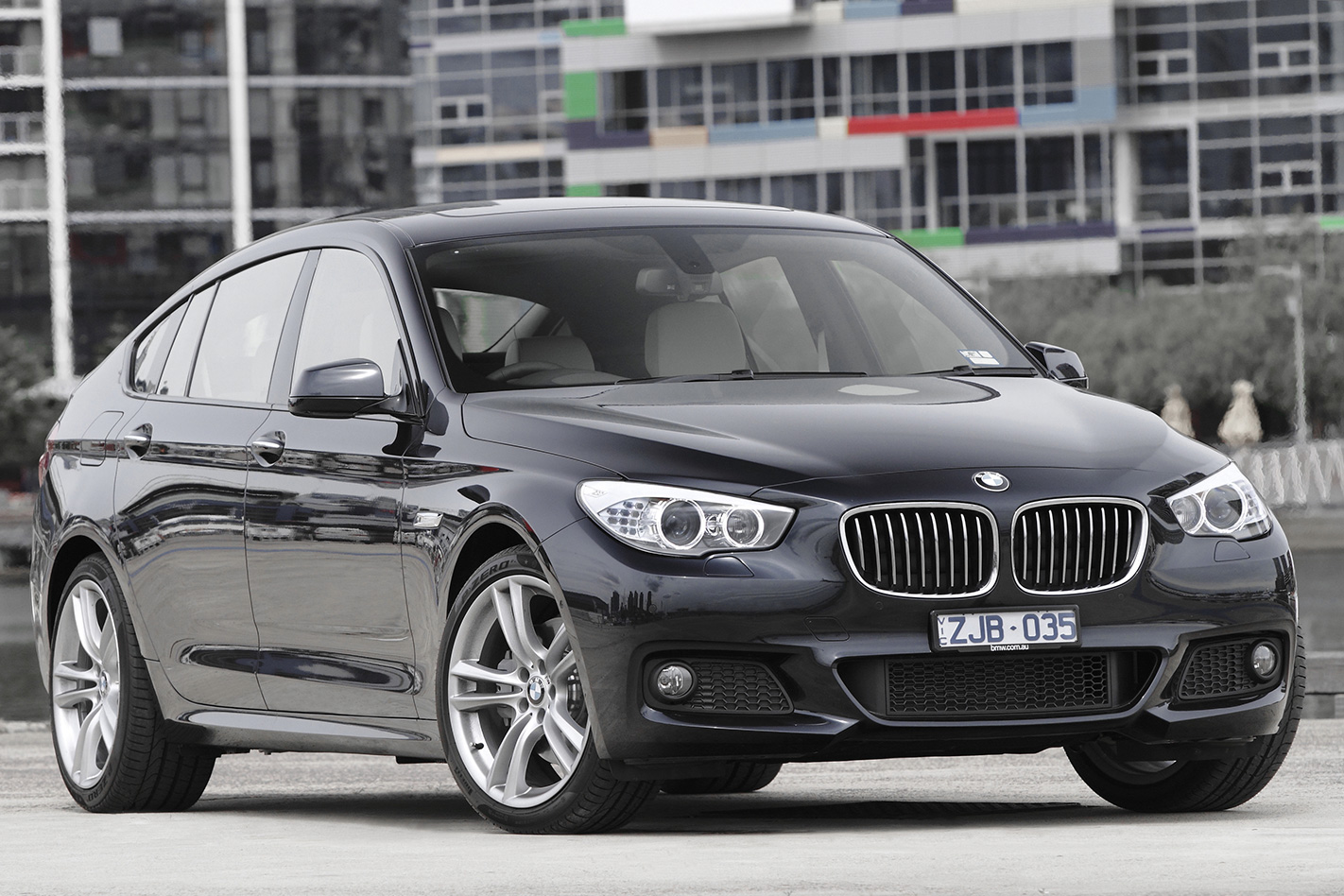
BMW 5 Series GT Like Audi, BMW offers a four-door fastback version of its sedan, priced from a little over the cost of the new 5 Series sedan. Being kind, the 5 Series Gran Turismo looks a little like a sedan that’s been stung on the behind and had an allergic reaction. Its biggest positive, though, is that it has the same wheelbase as the larger 7 Series platform, so rear-seat legroom is generous.

Infiniti Q70 Updated last year as part of a mid-life makeover, the Q70 now features a sportier exterior look (while the interior is largely unchanged) and new technology centred on safety.
Priced from $68,900, it’s better value – especially on the safety side of the ledger – than the model it replaces. In facelifted form, it continues to offer lots of space and equipment and a decent level of interior quality and refinement.
Engine choices are either a 3.7-litre V6, or a 3.5-litre V6 hybrid.
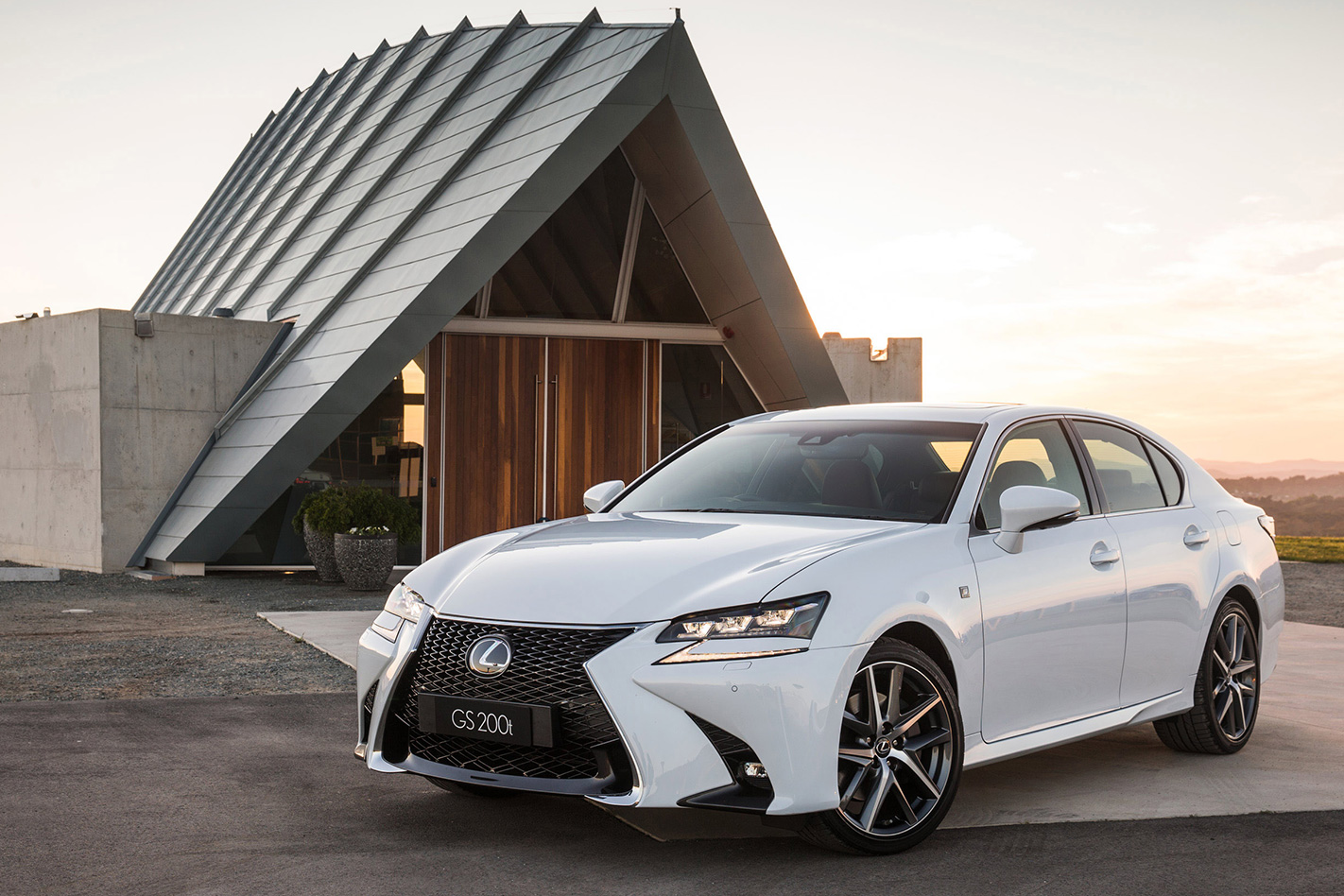
Lexus GS An all-new version, dubbed LS that we’re somewhat excited about arrives in Australia early next year, having just been unveiled at January’s Detroit Motor Show. In the meantime, you should be able to grab a bargain on existing GS stock.
Our pick of the range is the entry-level GS200t, priced from $76,220 and fitted with a turbocharged 2.0-litre petrol engine paired with an eight-speed automatic. It offers a premium limousine experience for a better price than the rest of the GS range, with excellent refinement from its drivetrain and solid road manners.
It’s spacious, well made and has some unexpected flavour in its chassis dynamics, even if it’s not a stand-out class leader.
The answer to the question of what constitutes a performance car is rapidly evolving.
Once upon a time hatchbacks were for going to the shops but the VW Golf GTI changed that, while SUVs were limited to the school run until the likes of the Posche Cayenne Turbo came along.

Toyota jumped the gun with the awful TRD Hilux back in 2008, but Tickford has joined the club with a modified Ranger.

And the verdict is? Well, with rear-wheel drive and so much torque, there is fun to be had in the Ranger, but you’re unlikely ever to want to take it for a sporting drive for the hell of it.

SPECS Engine: 3.2L I5 Power: 169kW Torque: 564Nm Weight: 2200kg 0-100km/h: N/A Price: $75,000 (approx.)
I don’t usually travel into NSW during Christmas or Easter, or any other time when double demerit points apply.
The thought of losing half my licence points at the hands of a predatory highway patrol just doesn’t do it for me. If you’re a NSW-based business that might be missing out on my vacation dollars because of this, feel free to mention it to your local Member.
However, I was recently in New South and managed to catch the latest road-safety-message TV advert. Now, I’m a huge fan of farce, but every other aspect of this ridiculous TV commercial made me want to climb through the screen, throttle the actors and then hunt down and hurt the creative team who generated this rubbish. What’s wrong with it? Glad you asked. Everything.
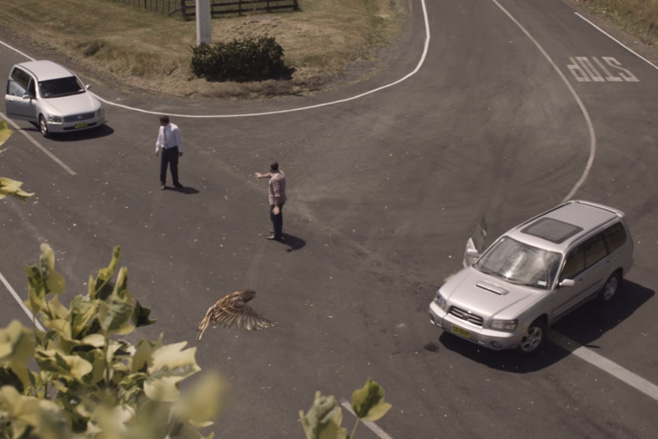
Allow me to explain: Dude A has reached a T-intersection where he is faced with a Stop sign. At the risk of telling you lot how to suck eggs, this means he must stop his vehicle and give way to any other vehicle on the road, particularly one he would be in danger of clobbering. Meanwhile, Dude B is trundling down the road from Dude A’s right, figuring that, since he has right of way, he can safely continue on his way. A not-unreasonable assumption and one we make every day on the road. You can probably guess what happens next: dude A fails to stop at the Stop sign and enters the intersection as Dude B approaches, and suddenly the two cars are on a collision course.
And here’s where it goes wrong for me philosophically. Thanks to the magic of TV, the cars stop in a suspended-reality moment and each driver steps from his car to chat about what’s going to happen next. Dude A (who has driven illegally through a Stop sign, remember) makes the statement that “it was a simple mistake”. Dude B seems to think this is fair enough and suggests that the whole ugly mess could have been avoided if he’d been driving a bit slower. W. T. F!

Opinion: Are Australian speed limits correct?
I could go on. Okay, I will. Dude B’s speedo was showing between 106 and 107km/h which, when corrected for the usual error, means he probably wasn’t speeding at all. But that’s kind of beside the point. See, the moment we take the responsibility off drivers to obey crucial road signals like Stop signs by describing such transgressions as “simple mistakes” then we open the floodgates to idiotic behaviour.
Makes me wonder who the cops would have booked when they attended this potential fatal crash. I hope it was the Stop-sign runner. And I hope it was during the school holidays so the twat scored double demerit points.
Feel a need to comment? I’d be very interested to hear what you think
AUDI has confirmed it will plug another niche in its expanding model portfolio by launching a new Q4 compact SUV in 2019.
Speaking at the annual release of the company’s financial results, Audi board chairman Rupert Stadler (pictured, below) gave a broad outline of plans to offer a range of electric vehicles, as well as two new SUVs starting with the large, style-driven Q8 in 2018.
“In 2019 we will then launch the Q4, entering the segment of compact utility vehicles, or CUVs,” he said.
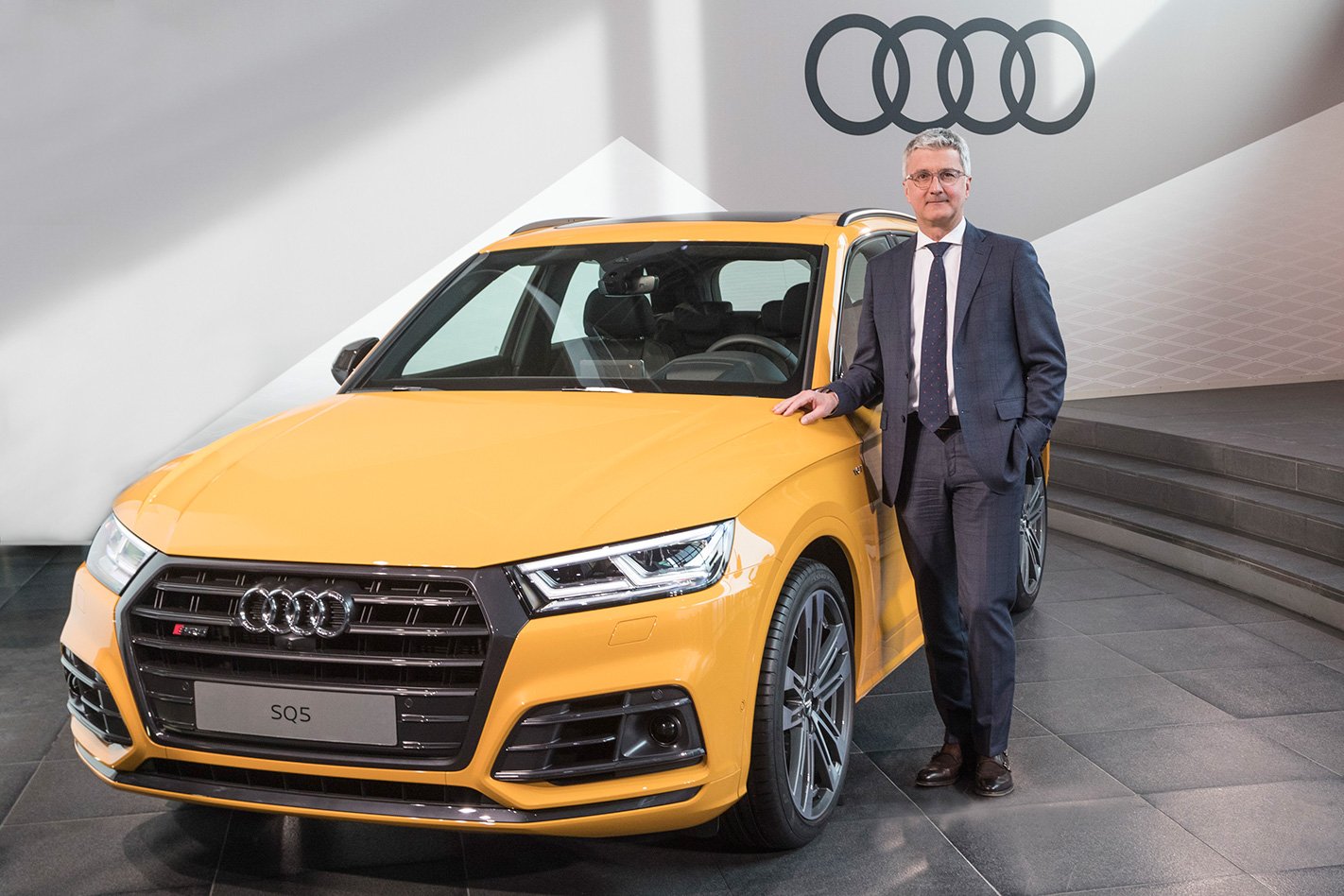
Audi’s move towards producing coupe-like SUVs is a step towards countering the success of BMW’s X6 and X4, as well as the more recent GLE and GLC Coupes from Mercedes-Benz.
It is believed Audi received permission from Fiat Chrysler Automobiles to use the Q4 name, which the American-Italian conglomerate has trademarked for one of its all-wheel-drive systems.
Stadler also said a new A8 large sedan would have its premiere in July, followed by a replacement for the A7 at the end of 2017. It will be followed by a replacement for the Q3 SUV in 2018, which will be followed in turn by the Q4 that uses the same MBA platform.
Audi may seem close to filling its Q-series dance card (although a Q1 and Q6 are obvious omissions) but it is also gearing up for a completely separate range of electric-powered SUVs.
Stadler confirmed Audi’s first all-electric vehicle, as previewed by 2015’s e-Tron Quattro concept shown at Frankfurt will simply be called e-Tron (and yes, the lower-case “e” is deliberate).
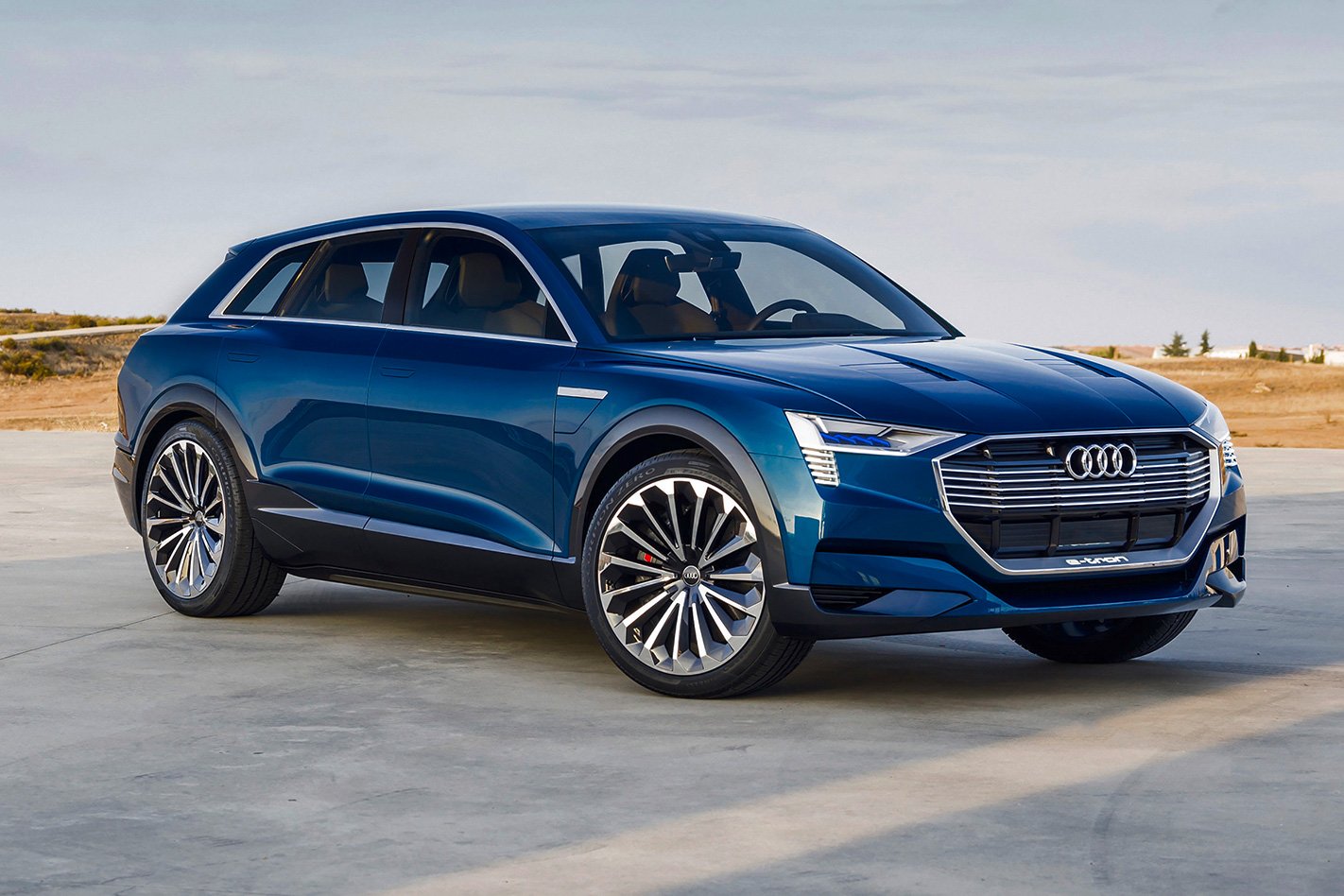
If you thought Audi’s niche-filling plans had reached saturation point, you ain’t heard nothing yet.
“The Audi e-Tron Sportback will follow in 2019,” Stadler said.
“We have designed it as a fastback model with an elevated sitting position. Not an SUV, but higher than a standard sedan.
“And in the following year, 2020, we will offer a premium electric car also in the compact segment. This will be based on the VW Group’s modular electrification platform MEB.”
Audi also plans to offer an electric version of every vehicle from its core model lines starting in 2021.
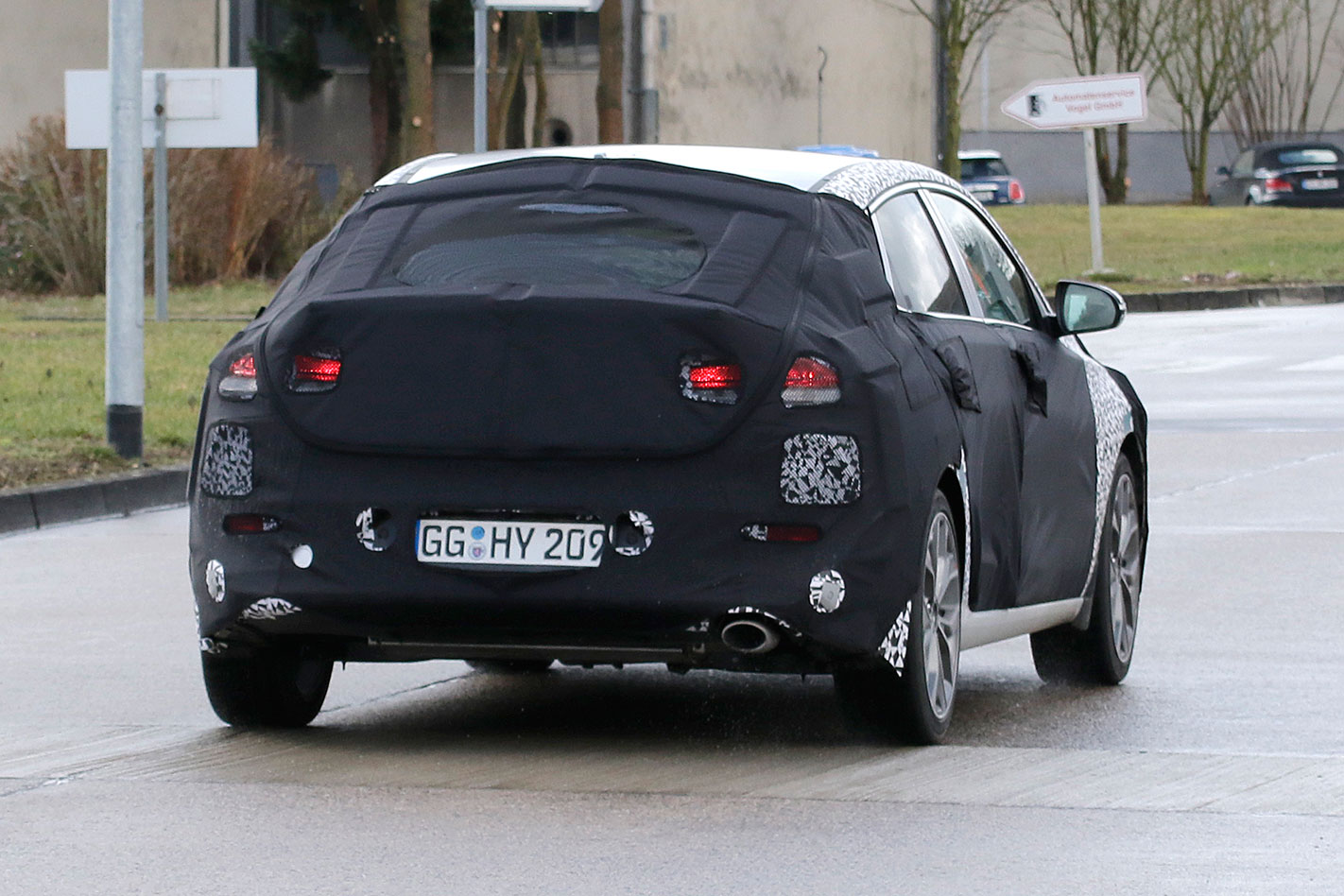
A sleek new body style for the upcoming and all-important second-generation Hyundai i30 has been spotted testing in Europe.
The coupe-styled i30 fastback is the third body style of the PD i30 to be seen, and likely to be the final according to Hyundai chief designer Peter Schreyer.
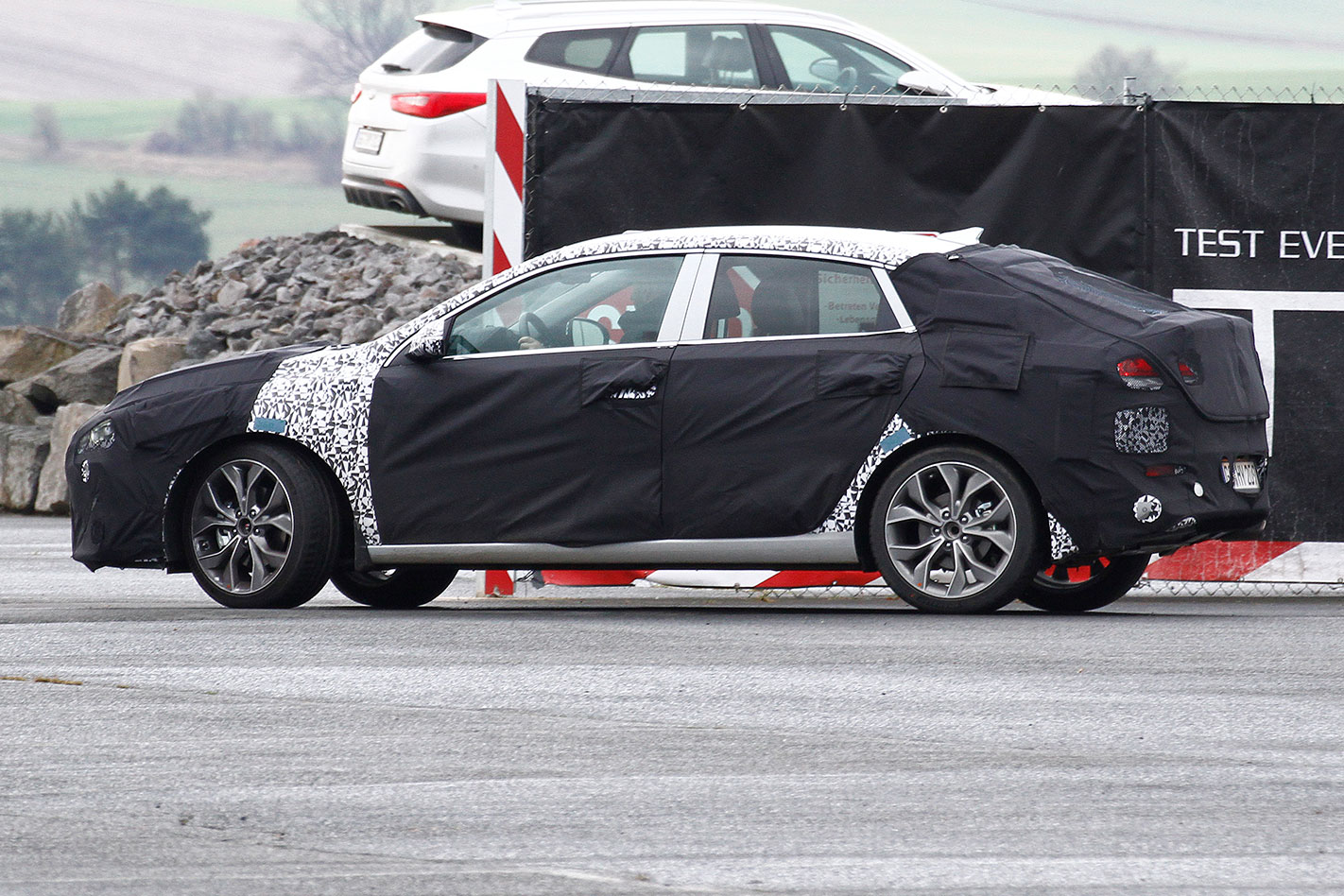
At the 2016 Frankfurt motor show, Schreyer hinted there will be three body styles for the all-new i30, and showed silhouettes of the various configurations.
This fastback testing mule, which will effectively replace the previous-gen three-door i30 that was sold very briefly in Australia, will join the core five-door hatch and the i30 wagon, which was shown at the recent Geneva motor show.
Australia also has an i30 sedan in the form of the Hyundai Elantra, which shares its platform with the popular hatch.
Underneath its camouflage, the sporty looking fastback i30 variant is expected to incorporate the same styling features as the other body types, including a prominent ‘cascading’ grille design and Hyundai’s latest lighting graphics. Drivetrain options are also expected to carry over from other i30 models, and include 1.6-litre and 2.0-litre four-cylinders.
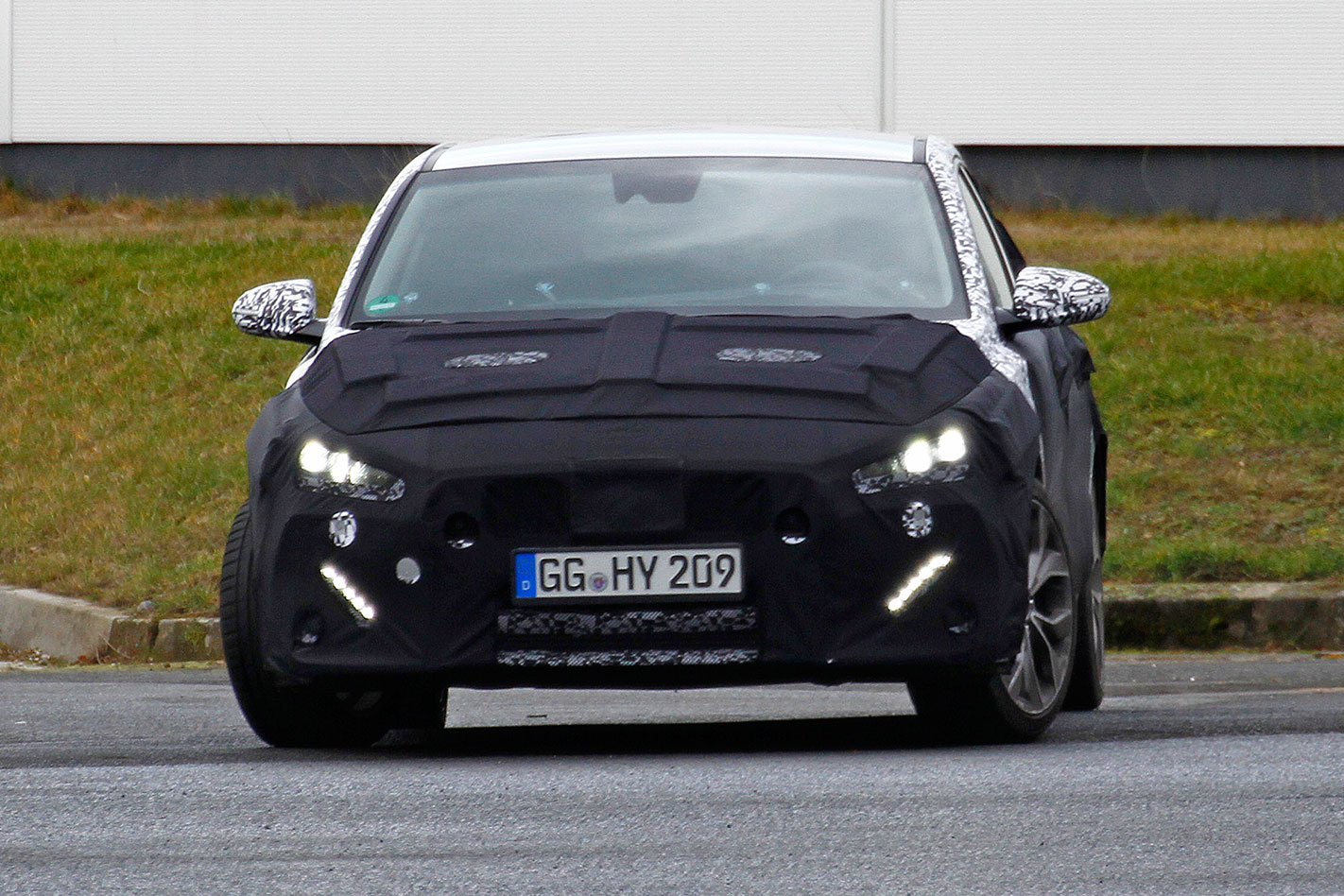
Whether or not this i30 style will come to Australia is still under consideration by Hyundai’s local division. So too is the wagon body style. The big question mark sits around production, and whether or not the fastback will be built outside Europe.
Australia will source all of its next-generation i30s from Korea, though it’s possible the fastback and wagon will only be built at Hyundai’s facility in the Czech Republic. Exchange rate pressure may put paid to any hope we have of seeing it Down Under.
