
New Honda Civic chapter no feel-good hit.
WE’VE been waiting a long time for a class-leading Honda Civic, and it looks like we’re going to have to wait for a while longer. Much is right about the tenth-generation version, yet Car of the Year revealed it to be one of those cars that somehow adds up to slightly less than the sum of its parts.
There are plenty of positives. The new Civic is a bigger car than its lacklustre predecessor, having had a sizeable 104mm increase in overall length, with a much more intelligently designed cabin to turn it from one of the most cramped cars in the segment to one of the most spacious. Exterior design does seem to have got stuck somewhere in the middle of the Pacific – there’s no doubting the fastback styling has been designed for American tastes – but it has created an impressively practical sedan, with 519 litres of load space.
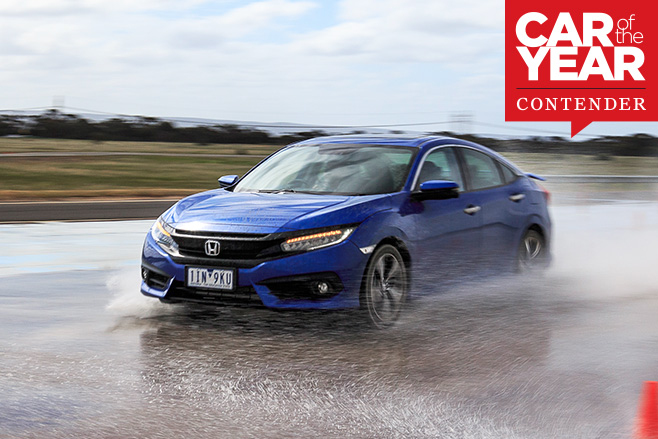
Honda has always adopted a brush and handle approach to product development, normally launching new cars with old engines. That’s only half true here. Yes, the old 104kW 1.8-litre atmo four soldiers on in cheaper versions, but there’s also a new 127kW turbocharged 1.5-litre in the more senior RS, Honda’s first turbocharged petrol engine in Australia. It’s definitely the technical highlight: powerful, responsive and almost lag-free, it makes the 1.8 feel both anaemic and old-fashioned.
Unfortunately both drive through a standard-fit CVT which set the atmo engine droning as it struggled to provide respectable motivation on the gradients of the durability circuit. The turbo’s fatter torque curve makes it better suited to the tranny’s sliding ratios, but it still gets loud when worked hard. We know there wouldn’t be many potential buyers for a manual, but it would be nice to be offered the choice.
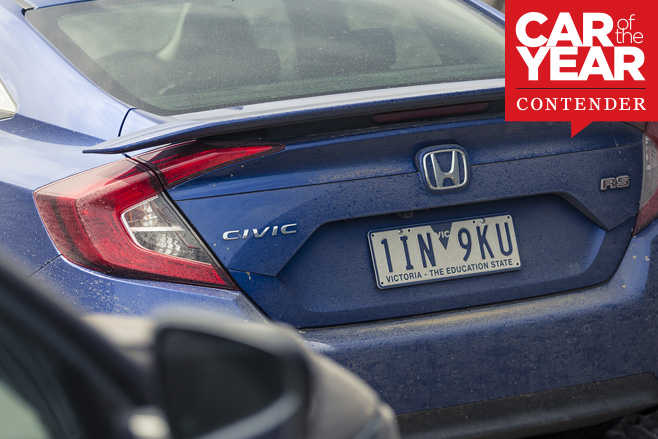
The 10th-gen Civic is a huge improvement over its dreary predecessor and certainly isn’t short of rational appeal. The $24,490 VTi-S looks like conspicuously good value considering its increase in size, although we reckon the turbo Civic (from $28K) is good enough to warrant the additional spend. But buyers, we suspect, will struggle as we did to forge an emotional connection.
Specs
BODY Type: 4-door sedan, 5 seats Boot capacity: 519 litres Weight: 1261 – 1331kg
DRIVETRAIN Layout: front-engine (east-west), FWD Engines: 1799cc 4cyl (104kW/174Nm); 1498cc 4cyl turbo (127kW/220Nm) Transmission: CVT automatic
CHASSIS Tyres: 215/55R16 – 215/50R17 ADR81 fuel consumption: 6.0 – 6.3L/100km CO2 emissions: 140 – 148g/km Collision mitigation: No Crash rating: Not tested
Prices: $22,390 – $33,590
Plenty of entertainment from the cheap seats, as long as you don’t pay too much.
THE RECENT form of small Holdens meant the Holden Spark arrived at COTY free from the burden of high expectations. Indeed, following on from the utterly insipid Barina gave it the underdog status of a pooch wearing a mining helmet. Of course, we’ve already confirmed that the Spark is a vastly better car than its slightly bigger sister – it recently beat the Kia Picanto and Suzuki Celerio to win out as our current pick of the sub-light crop. Despite being on what was effectively enemy territory it coped with You Yangs impressively well.
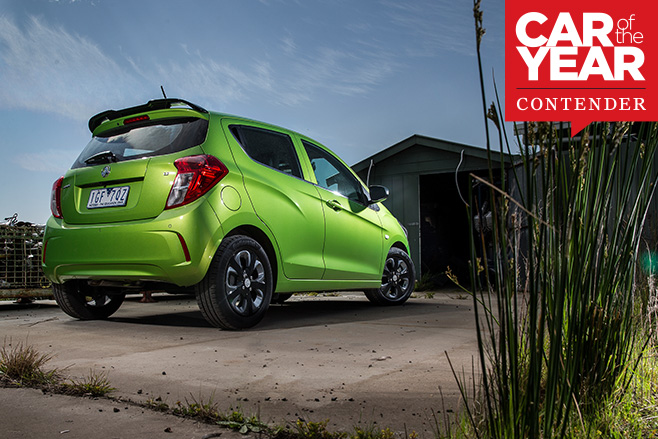
More than one judge got out of the Spark wearing a grin out of proportion with its on-paper specs. It’s certainly no baby hot hatch, and the atmo 73kW engine needs to be whacked out of bed with a bat to give its best, but it still manages to feel bigger and more grown up than either its dimensions or pricetag suggest it should.
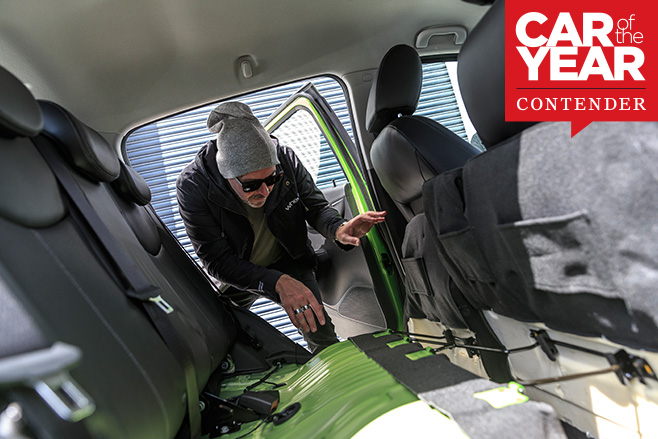
There’s a but, of course. The Spark looks like good value in basic trim, but makes progressively less sense as you ascend the range. The $13,990 LS comes with standard cruise control and a 7.0-inch touchscreen that can run both Apple CarPlay and Android Auto, a strong segment USP for targeting the smartphone generation. And although the rest of the cabin is cheap it’s far from cheerless with some decent design, tough-feeling materials and adult-useable space in the back.
But at $15,690 before drive-aways, the appeal is definitely fading. The senior LT trim keeps the same engine and has the CVT as standard, while adding some coloured interior panels, pretend leather trim that fooled nobody, keyless go and a reversing camera (but no autonomous emergency braking). At $19K (before options or on-roads), the Spark LT is simply too expensive.
Specs
BODY Type: 5-door hatchback, 5 seats Boot capacity: 185 litres Weight: 948 – 990kg
DRIVETRAIN Layout: front engine (east-west), FWD Engine: 1399cc 4cyl (73kW/124-128Nm) Transmissions: 5-speed manual; CVT automatic
CHASSIS Tyres: 165/65R14 – 185/55R15 ADR81 fuel consumption: 5.2 – 5.5L/100km CO2 emissions: 122 – 128g/km Collision mitigation: No Crash rating: 5-star (ANCAP)
Prices: $13,990 – $18,990
The first prototype of the all-new Ford Focus has been spotted in Europe.
Ford has been very tight lipped over its all-new model, but it’s expected to debut late this year or early 2018 at one of the American motor shows.
This will be the fourth generational change to Ford’s popular hatch in its 20 year history and the first since 2011.
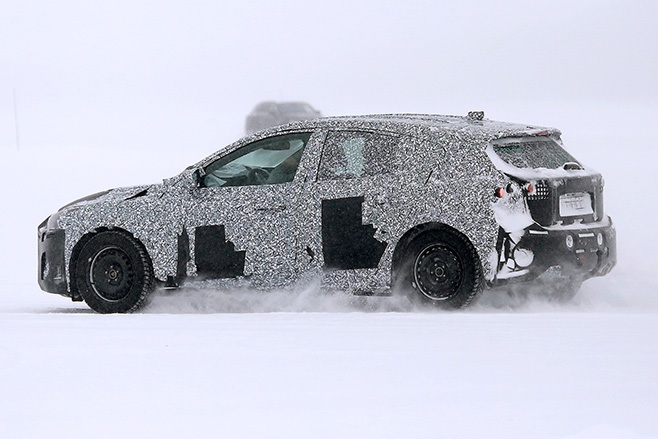
It will be built on an all-new chassis, though the evolution of the current design language can be seen under the camouflage.
Going by the pictures, it’s expected to be bigger than the current car with a longer wheelbase and slightly wider, but appears to sit lower.
The larger footprint and the shorter height should allow for more space inside the cabin as well as a better driving position.
The interior is also set to receive a welcome overhaul – it’s believed the unusually shaped dashboard will be replaced with something more akin to the Ford Mondeo’s cockpit, which would certainly elevate the experience inside the cabin without adding too much to the overall cost of the car.
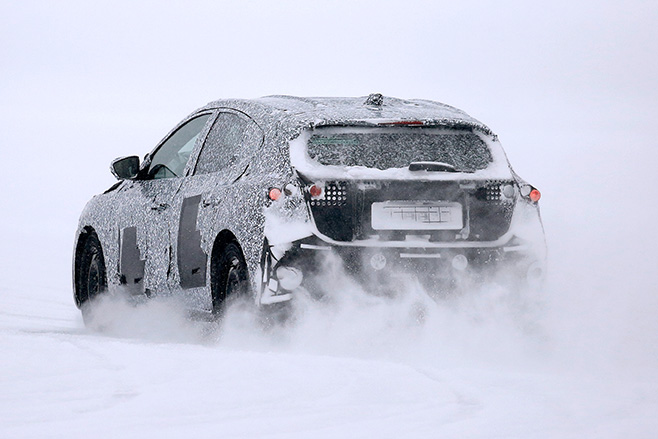
Engine-wise, the all turbo affair will continue with a range of EcoBoost powertrains possibly starting with the 1.0-litre three-cylinder up to an updated version of the 2.0-litre turbo motor in the Focus ST capable of producing up to 280kW.
There is still no word on a new Ford Focus RS but considering the current one came more than five years after the release of the regular Focus, we may have to wait until well after 2020.
While it’s expected to debut later in the year, we don’t expect to see the new Ford Focus in Australian showrooms until later in 2018.
Shoppers looking for a small SUV are spoiled for choice these days. Ever since the Juke burst onto the scene in 2013, there’s been a steadily growing stream of high-riding compact hatches filing into Australian showrooms. The Toyota C-HR is the latest arrival, and after our first experience of it it’s clear that it’s also one of the best in its segment.
Tell me about this car
The C-HR is an all-new model for Toyota and though its exterior dimensions roughly line up with those of the previous-generation RAV4, it’s worlds apart from that car. Sitting beneath the Toyota RAV4 in Toyota’s local SUV lineup it’s the smallest soft-roader on offer by The Big T, while its $26,990 starting price also makes it the most affordable.
That price is higher than most of its segment rivals, namely the Honda HR-V, Mazda CX-3 and Nissan Juke, but is balanced by a generous standard equipment list that actually makes the Toyota a value-packed buy. That’s not the C-HR’s only positive attribute though …
Strengths
1. Willing engine. The C-HR range can only be had with one engine, but it’s a sweet powerplant that boasts exceptional refinement. Making a modest 85kW and 185Nm of peak power and torque, the C-HR’s turbocharged 1.2-litre petrol inline four nevertheless has a strong midrange thanks to a fat torque curve, and is more than adequate for around-town motoring.
2. Handling. Built on Toyota’s new TNGA (that’s Toyota New Generation Architecture) platform, the C-HR benefits from Toyota’s most up-to-date engineering and suspension know-how. With a multi-link rear suspension, the C-HR has a dynamic advantage over most of its rivals, and corners exceptionally well with good body control.
3. Ride comfort. Cars that handle well aren’t always comfortable and vice versa, but the C-HR manages to hit both of those targets. Even on the low-profile tyres of the flagship Koba grade’s 18-inch wheels, ride comfort is great. Bumps are ironed out with ease, and the C-HR feels settled on roads that would have other small SUVs feeling restless (we’re looking at you, Mazda).
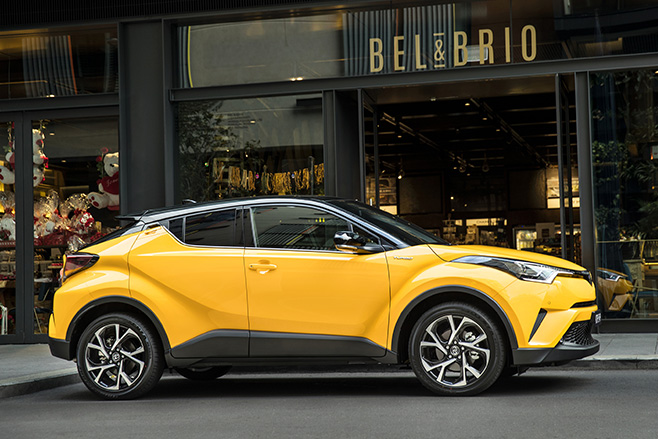
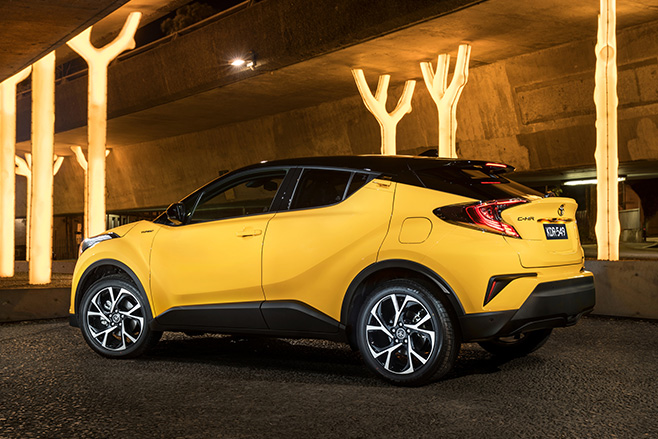
4. Eye-catching design. Toyota, long renowned for being synonymous with conservative design, has performed an about-face with the adventurously-styled C-HR. There are creases and crevices everywhere, and while that could easily lead to a design that’s too busy to be appealing, the end result is actually quite easy on the eye.
5. Upmarket interior. The design story is just as strong on the inside, with the C-HR’s cabin trading traditional SUV pragmatism for some visual sparkle. The high console and asymmetrical dash aren’t necessarily sensible, but they certainly look cool. Meanwhile the tombstone-style infotainment screen and higher-than-average material quality also lifts the cabin ambience above the segment standard.
6. Strong equipment levels. Even the in base model, the C-HR packs plenty of gear. From active cruise control, autonomous emergency braking, and satellite navigation to basics like front and rear parking sensors, rain sensing wipers and dual-zone climate control, the C-HR is very well-equipped for its price. To see the full list of standard kit, check out our Toyota C-HR price and features story.
7. Cabin quietness. On the inside, the C-HR is blissfully quiet. While many SUVs tend to suffer from wind noise thanks to their bluff styling, the little Toyota slips through the air a little easier. Other sources of noise, like the tyres, engine and transmission, are also blissfully mute, and the entry-grade C-HR’s 17-inch wheels deliver the best cabin ambience of all.
8. Surprisingly good rear seat space. Look at the C-HR’s body in profile, and you’d assume that those in the back seat would suffer from a tight, cramped rear cabin. The opposite is true. While that’s certainly true of the similarly-shaped Nissan Juke, the C-HR’s back seat is actually surprisingly generous, with plentiful legroom and headroom for two full-grown adult passengers. There are also cupholders integrated into each door and seatback map pockets, though no rear air vents.
Weaknesses
1. Sluggish off the line. The C-HR’s CVT automatic gearbox is fairly slow to respond to sudden demands for more power, and though it’s slightly more alert when the car is placed in Sport mode it’s still quite a soft drivetrain.
2. Rear passenger vision is limited. As spacious as the C-HR’s rear seat accommodation is, it does suffer from a lack of outward vision. The C-HR’s shoulderline, the boundary between its side sheetmetal and its glasshouse, is very high and tapers upward, meaning the rear door glass is incredibly slim. Then there’s the high-mounted door handle, which sits right at the head height of a seated passenger and further obscures outward vision. If you’re a small kid in the back, you’re not going to be seeing much of the outside world during your journey.
3. Kids may have trouble getting into the back as well. The C-HR’s cleverly hidden rear door handle may give it a clean, coupe-like look, but the handle itself is nearly twice as high off the ground as most other doorhandles, meaning small children will need your help when getting into the back – something that family-bound buyers may want to consider.
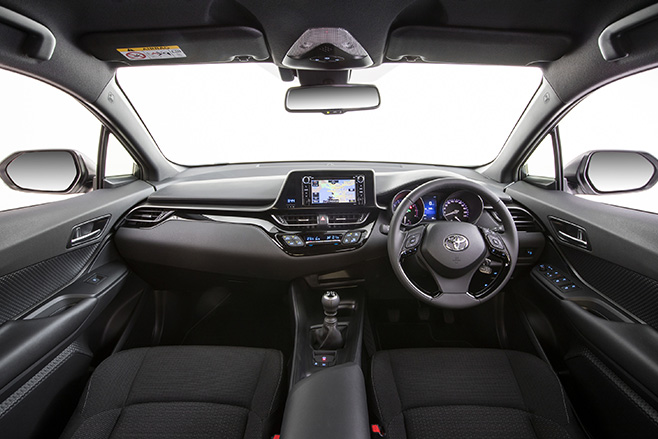
4. Steering is dull. Yes, we know marking down a car like this down for steering feel may seem a bit cruel, but Toyota is making a lot of noise about the dynamic capabilities of its C-HR and it, generally speaking, does deliver on a great deal of those promises. The steering, however, does not. It’s not terrible, mind you, but there’s not much in the way of feel or feedback and given the chassis and suspension beneath the C-HR is so highly-polished, that’s slightly disappointing.
5. Drinks fancy fuel. You’ll need to budget for more expensive 95-octane petrol with this one, as its direct-injected and turbocharged engine requires higher-quality fuel to run at its best.
6. Boot space. Like many of its segment rivals, the C-HR has a fairly compact boot considering its size. Toyota claims a 377-litre luggage volume with the rear seats up, and that looks about right. However, that’s about par with a regular small hatchback. Bear that in mind if you frequently need to carry lots of cargo.
7. Infotainment upgrades. If you spring for the $33k+ C-HR Koba you’ll gain a number of additional features, but sadly an up-spec infotainment display isn’t one of them. Rather, you’re stuck with the same 6.1-inch colour touchscreen as the base model, while other segment rivals gain a seven-inch – or even eight-inch option.
Anything else I should consider?
Absolutely. The compact SUV segment is becoming more and more crowded with each passing year, and there’s more than a few to choose from. The Mazda CX-3 has established a position of dominance since its launch, while the keenly-priced Mitsubishi ASX offers space and practicality in a zero-frills package. There’s also Honda’s versatile HR-V and the funky (but aging) Nissan Juke to consider, with other options including the Suzuki Vitara, Skoda Yeti, Renault Captur, Holden Trax and Ford EcoSport
The 2017 Ford Escape has arrived in Australia, featuring tweaks that should help it turn around the slow sales of the Kuga small SUV it replaces.
The Escape is basically the Kuga with a new look, and features a wider range of models, including one fitted with a turbocharged 1.5-litre petrol engine. Other engine choices run to a 2.0-litre petrol engine, and an all-new turbocharged 2.0-litre diesel that has just appeared under the bonnet of the Ford Edge – a mid-size Ford Territory SUV replacement due on sale here in 2018.
Key to the revisions the Escape introduces is the addition of a $33,000 front-wheel-drive automatic version of the mid-specification Trend model; something that was sorely missing from the Kuga line-up in the eyes of new car buyers.
The eight-model Escape range now starts form $28,490 for the front-drive-only six-speed manual transmission Ambiente, representing a $760 saving over the Kuga-badged car.
Its forced induction 1.5-litre four-cylinder engine produces 110kW and 240Nm, with fuel use officially rated at 6.3 litres per 100 kilometres. The engine is tuned differently for the $1500 more expensive six-speed automatic version, rated at 134kW and 240Nm.
Fuel use jumps to 7.2L/100km for the FWD version, and 7.5L/100km for the $3000 more expensive all-wheel-drive version.
The Ambiente entry-level model is now more feature-rich than the car it replaces. Steering wheel-mounted paddle shifters replace the awkward gear selector toggle that used to be on the side of the gear lever in auto models, the steering wheel is all new, and digital radio and a reversing camera with rear sensors are standard.
You also get cruise control with a speed limiter function, push-button engine starter, front and rear fog lamps and an electric parking brake replacing the Kuga’s manually operated one.
The Ambiente sits on 17-inch steel wheels hidden behind plastic hubcaps.
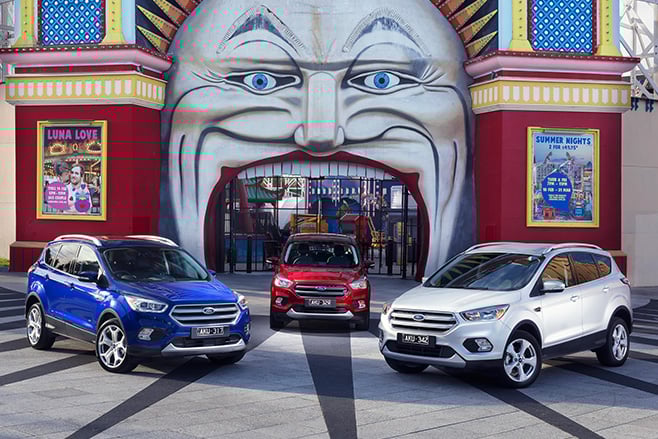
The Trend grade introduces a new front-wheel-drive model featuring the 1.5-litre engine and an automatic gearbox, and is priced from $32,990.
For $35,990, you can step that up to a 178kW/345Nm 2.0-litre petrol engine that will use 8.6L/100km and send its power to all four wheels, or for $3000 more place a 132kW/400Nm 2.0-litre diesel engine under the bonnet.
The Trend adds roof rails over the Ambiente, as well as tinted rear windows and 18-inch alloy wheels.
The windscreen wipers and headlights gain auto-on functions, and the rear-vision mirror will automatically dim at night to reduce glare. The Trend will also keep the lights on for a while after you step out of the Escape at night.
The most expensive model is the all-wheel-drive only Titanium. It is priced from $44,990 for the 2.0-litre petrol version, with the diesel again costing $3500 more.
It sits on bigger 19-inch alloy wheels, and includes keyless entry, power folding mirrors, self-levelling bi-xenon headlamps, leather seat trim, heated front seats with a 10-way powered driver’s seat (if you include the lumbar adjustment), front parking sensors, and a function that will self-steer the Escape in and out of car parks while you control the brake, throttle and gearshift lever.
There’s also a large sunroof extending over the rear seats, an electrically operated tailgate, LED tail-lights, and a more premium nine-speaker audio system.
Safety runs to seven airbags. However, automatic emergency braking that works up to speeds of 50 km/h is not available on the entry-level Ambiente, and is pushed into a $1300 “Technology Pack” for both the Trend and Titanium models.
The pack includes a lane departure warning system that even subtly nudges the car back into its lane, an automatic high-beam dipper, adaptive cruise control, and blind spot and tyre pressure monitors.
Ford sold almost 5000 Ford Kuga-badged SUVs last year, and is aiming for the new front-drive Trend model to pick up even more sales for the Escape-badged version.
It will face even more competition for about April when the segment’s leader, the Mazda CX-5 that sold five times as many cars in 2016, switches to an all-new model.
2017 Ford Escape pricing*
- Ambiente 1.5L FWD (man) $28,490
- Ambiente 1.5L FWD (auto) $29,990
- Ambiente 1.5L AWD (auto) $32,990
- Trend 1.5L EcoBoost FWD (auto) $32,990
- Trend 2.0L EcoBoost AWD (auto) $35,990
- Trend 2.0L Diesel AWD (auto) $38,490
- Titanium 2.0L EcoBoost AWD (auto)$44,990
- Titanium 2.0L Diesel (auto) $47,490
A staggering 500kW power output headlines Porsche’s fastest flagship four-door, the new Panamera Turbo S E-Hybrid set for public debut at the Geneva motor show in early March.
This is the first time the Stuttgart brand has unveiled a flagship model grade – beyond the single-spec 918 Spyder – that uses petrol-electric power … and the results are telling.
The Panamera Turbo’s 404kW/770Nm 4.0-litre twin-turbo V8 engine has been used, but now combines with an electric motor in the Panamera Turbo S E-Hybrid to deliver 500kW/850Nm, the latter available from “just above idle” according to its maker.
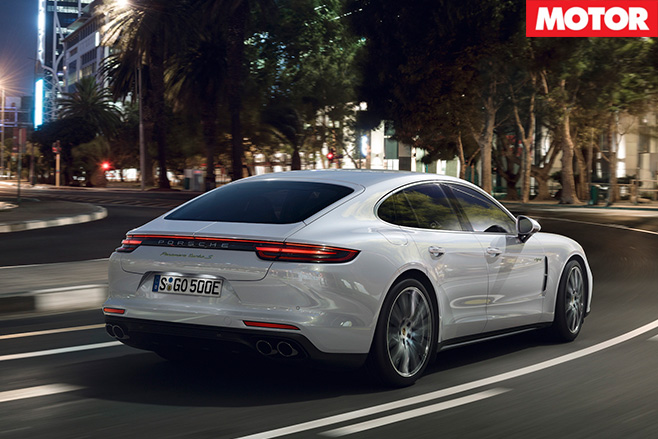
Yet the Porsche can be plugged into your household powerpoint. To separate petrol engine from electric motor, they each in this application deliver 404kW and 100kW respectively.
A lithium-ion battery package is rated at 14.1kWh and can be fully recharged (drawing from a 10-amp outlet) in six hours, or 2.4 hours if an optional fast-charge facility is installed.
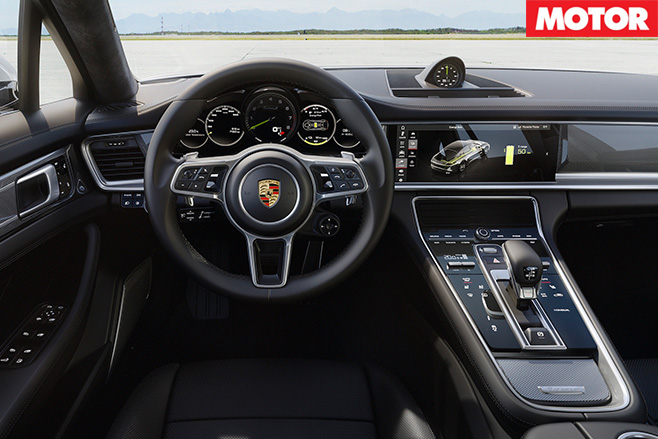
A PDK eight-speed dual-clutch automatic transmission is standard, as is all-wheel drive, adaptive air suspension, carbon-ceramic brakes, torque vectoring and 21-inch alloy wheels.
When the Panamera Turbo S E-Hybrid arrives in Australia in the third quarter of 2017 it will command a hefty $83K premium over its Turbo sibling, with a towering pricetag of $460,100 (plus on-road costs) that’s even $4K higher than a 911 Turbo S.
There’s a new version of the Hyundai i30 on the way. Scheduled to arrive in Australia in late April, the third-generation of this small hatchback aims to be even more popular than the car it replaces. Slightly larger, but way better looking inside and out, the new i30 will also bring a major upgrade in infotainment and driver-assist tech with prices likely to be a little higher than for the current car.
1. Maybe you already knew that ‘Cascading Grille’ is Hyundai’s name for the feature that dominates the face of the new i30. But where did the idea come from? It was, according to Hyundai, “inspired by the flow of molten steel”.
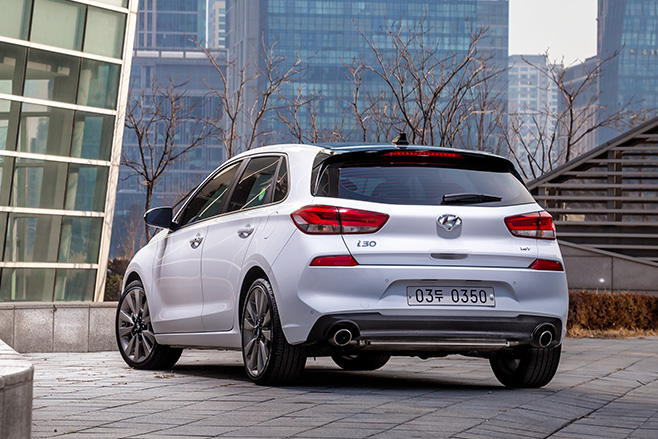
2. The new i30 was designed in Europe, although the cars headed for Australia will be manufactured in Korea. One of the specific objectives of the design team based in Germany was to improve rearward vision compared to the previous model.
3. Exactly 314 pieces of stamped steel make up the core structure of the new i30, or ‘Body In White’ as it’s called in car industry jargon. There were more than 400 in the model it replaces. Fewer pieces bring improvements in assembly accuracy, stiffness, and strength. Better handling and lower noise levels are among the benefits claimed by Hyundai.
4. The 395-litre boot of the new i30 is bigger than a Volkswagen Golf. Hyundai’s engineers aimed to match the German car in many areas, but in some they were able to do a little better.
5. Australia is the biggest market in the world for the i30, according to Hyundai Australia execs. Last year almost 38,000 were sold here. That’s enough to have the Hyundai snapping on the heels of the Toyota Corolla and Mazda 3.
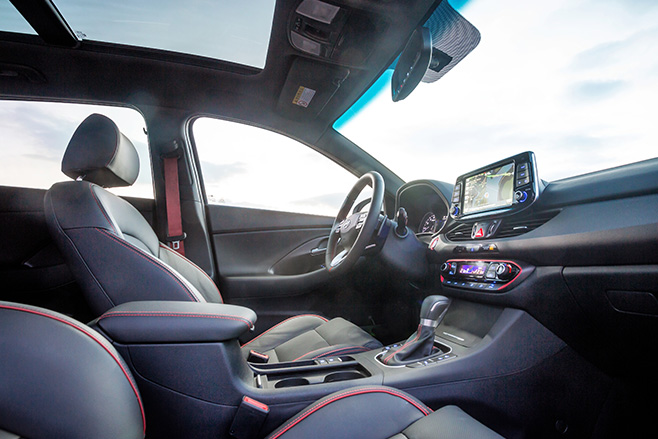
6. The centre armrest of the new i30 is precisely 35mm higher and 28mm longer than in the old car. The changes make it possible for drivers to comfortably reach the shift lever while using the armrest.
7. Floating, tablet-style central touch screen is a stand-out feature of the completely new instrument panel. Upmarket models should get a larger 8-inch screen. All models will come set up for Apple CarPlay and Android Auto.
8. The least costly versions of the i30 will have a 2.0-litre four like the current sporty SR models. The new SR will move to a peppy turbocharged 1.6-litre four. For high-mileage efficiency enthusiasts there will be a turbo diesel engine, using an improved version of the current car’s 1.6-litre engine.
AUDI’S first compact SUV lands in Oz to tackle the premium segment.
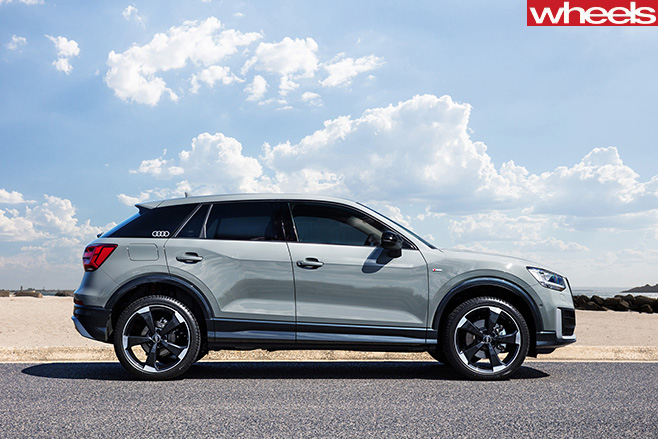
WHAT IS IT? A luxury small SUV with personality, and an angular new look. Audi’s first Q2 SUV is now in Australia with petrol and diesel engines and the same level of fit and finish that the brand’s more expensive models have become known for.
WHY WE’RE TESTING IT A local launch in Victoria offered us the first chance to experience the Australian-delivered Q2 on local roads.
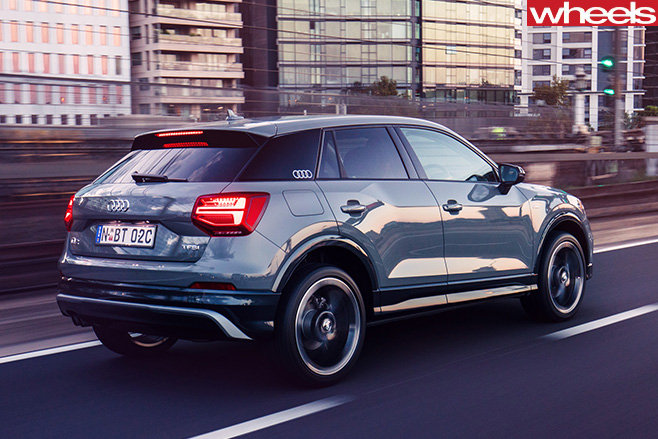
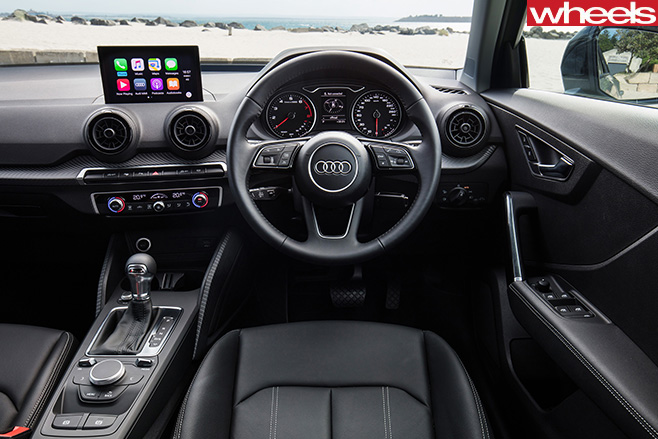
THE WHEELS VERDICT The Audi Q2 is a youthful and friendly small SUV with convincingly premium spec and style. It looks good from the outside, functions well and feels good inside and offers two efficient, effective engine choices.
PLUS: Styling; packaging; efficiency; equipment MINUS: Almost Q3 money but less practical; road noise
THE WHEELS REVIEW AN ONSLAUGHT of SUVs from Ingolstadt is imminent. Audi is throwing the kitchen sink at growing its popular family of Q-models, and the compact Audi Q2 is the first of the new breed to lob in Oz.
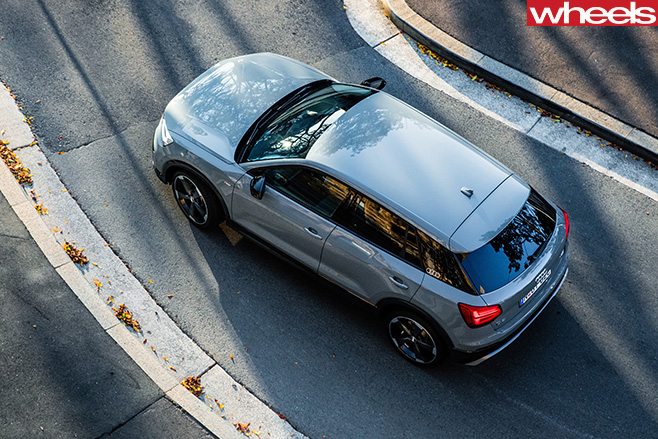
Logically, Q2 slots beneath Audi Q3 in the range and is shorter by 200mm, though most of that is in the overhangs. The two models have wheelbases just 5mm apart, meaning the Q2’s wheels have been pushed further toward each corner to leave enough cabin space for adults to sit in the back. Boot space is on the small side at 405L (more than 50L smaller than Q3), though Audi says Q2 is aimed at young couples rather than small families.
Two model variants are available at launch, starting from $41,100 for Q2 Design – only $1800 less than the cheapest Audi Q3 – powered by a 110kW/250Nm 1.4-litre turbo petrol four-cylinder driving the front wheels.
Both models use a seven-speed dual-clutch gearbox and include autonomous emergency braking, parking sensors and rear view camera, smartphone interface, and Audi’s MMI navigation system. Q2 Sport gets an electric tailgate, sports seats, lane keep assist, larger alloy wheels and premium alloy interior finish on top.
Option packs unlock further flavour (and cost) including a high-res digital dashboard, LED headlights, ambient lighting, keyless entry and start, adaptive cruise control and S line styling packages.
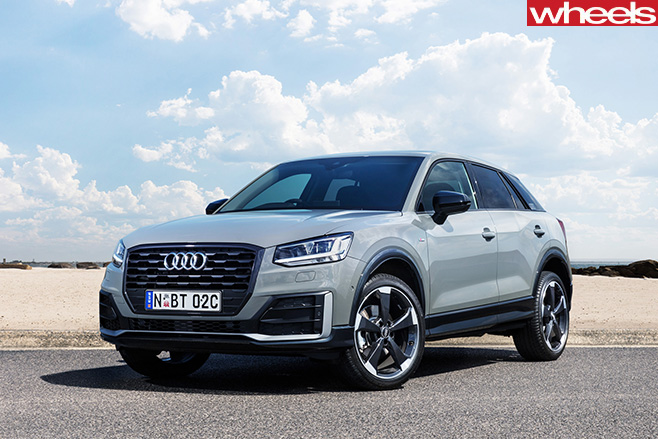
In front-drive guise the base Q2 has only a torsion beam rear end, whereas the quattro diesel gets a multi-link setup. Regardless, throw the 1.4 around and it hangs on willingly. Less weight over the front end means the base Q2 is less susceptible to understeer. Its electromechanical steering is natural and has enough feel to encourage sporty manoeuvring. It’s a more involving drive than the small SUV average.
Audi’s far from fully-grown Q-family contributed more than 40% of the brand’s Aussie sales in 2016. With Q2’s convincing package now on the scene, and more models on the way, expect that number to be a lot bigger by the end of play this year.
SPECS Model: Audi Q2 1.4 TFSI S-tronic Engine: 1395cc in-line 4, dohc, 16v, turbo Max power: 110kW @ 5000-6000rpm Max torque: 250Nm @ 1500-3500rpm Transmission: 7-speed dual-clutch Weight: 1280kg 0-100km/h: 8.5sec (claimed) Fuel economy: 5.3L/100km Price: $41,100 On sale: Now
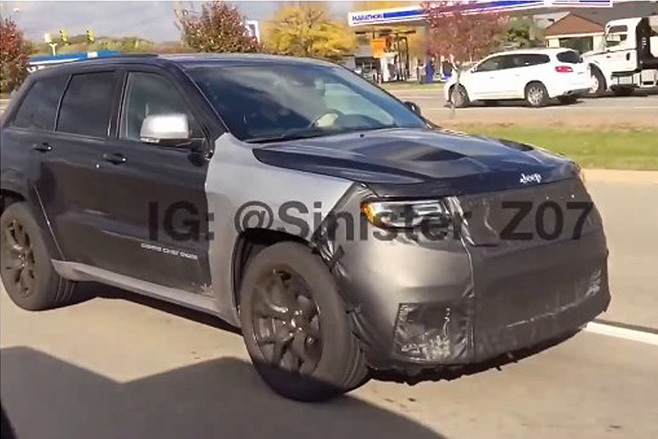
It’s no secret. Jeep has a 500kW-plus Grand Cherokee lurking its wings. And when it’s revealed, Jeep Australia will put “two hands up” for the BMW X5M-eater.
So far Mike Manley, the global boss of Jeep and Ram, has confirmed the car’s existence various times. But it’s Steve Zanlunghi, Fiat Chrysler Australia CEO, who’s given us hope the Hellcat donk might officially make its way Down Under.
Zanlunghi did not deny or confirm what Manley calls the ‘Trackhawk’ during a press conference with Australia journalists, but did drop a hint or two.
After being asked whether Oz would want such a car, he told MOTOR he’d have “two hands up for it,” before adding, “the 707hp engine? [We’d be] jumping up and down”.
He made the comments after outlining three big reveals for Jeep in 2017. The first two are the new Compass and a facelifted Grand Cherokee range, but the last was a mystery he said we had to wait for at the New York Auto Show.
Sweet Dream: Chrysler 300 SRT Hellcat
That last bit of information aligns with US reports that Manley’s Trackhawk, a Grand Cherokee stuffed with the 6.4-litre supercharged Hemi V8 from the Dodge Challenger Hellcat, will debut at the New York Auto Show.
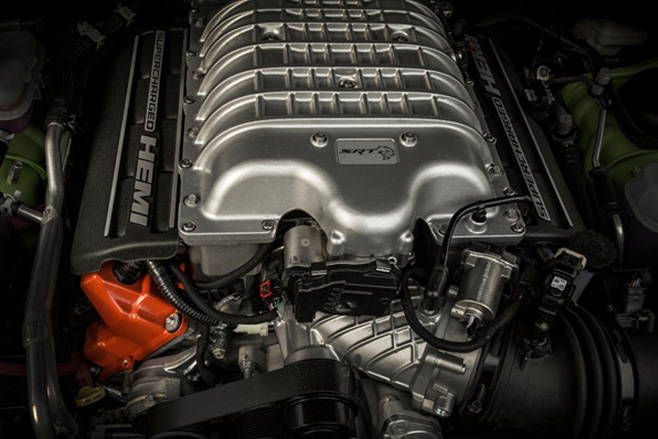
More details are due with the vehicle’s release, and it’s not known whether the Trackhawk will be built in both left-hand and right-hand drive.
In the meantime, Aussies can still get their mitts on Dodge’s steroidal power unit through Crossover Car Conversions, who currently import the Challenger Hellcat and change it to right-hande drive.
Stay tuned for the New York Auto Show which opens to media on April 12.
SOME people might be shocked to hear that Hyundai outsold both Ford and Holden in Australia last year.
Some enthusiasts might be equally surprised to learn that before Santa starts sleigh-ing this year, the South Korean brand will have launched both a twin-turbo V6 rear-drive sedan and a 202kW hot hatchback.
Consider this third-generation i30 as an early taste of the year ahead. More than that, though, in flagship (for now) SR form this latest five-door hatch swaps out the revvy atmo 2.0-litre for a 1.6-litre turbocharged four-cylinder engine with healthy 150kW and 265Nm outputs. A decade ago, the Mk5 Golf GTI developed 147kW/280Nm.
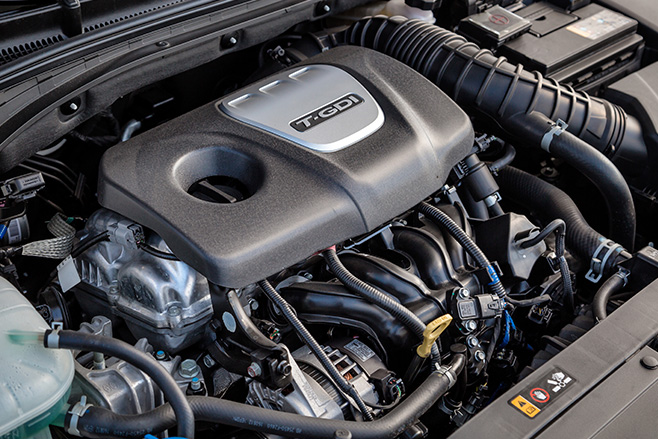
Torsional body rigidity improves by 17.5 per cent compared with the second-gen i30, thanks to a lift in high-tensile steel from 29.5 to 53 per cent. The Hyundai i30 SR finally scores multi-link independent rear suspension (IRS) and either six-speed manual or seven-speed dual-clutch automatic transmissions, in both cases like the Elantra SR.
2017 Hyundai i30 N key specs revealed
On a presentation at Hyundai’s headquarters in Seoul, the company chose two words to sum up what it believes is the greatest leap forward for the new i30: driving dynamics.
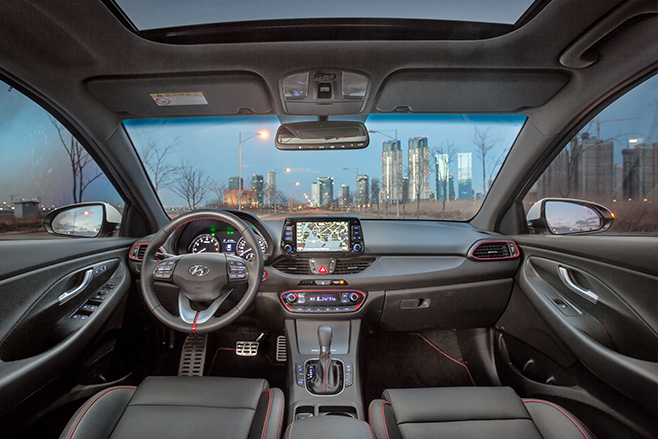
Hyundai claims improved steering and suspension geometry will deliver the goods, and in its native territory that appears to be the case. The electro-mechanical steering is tight on the centre position, decently sharp just off it and consistently weighted as lock is wound on.
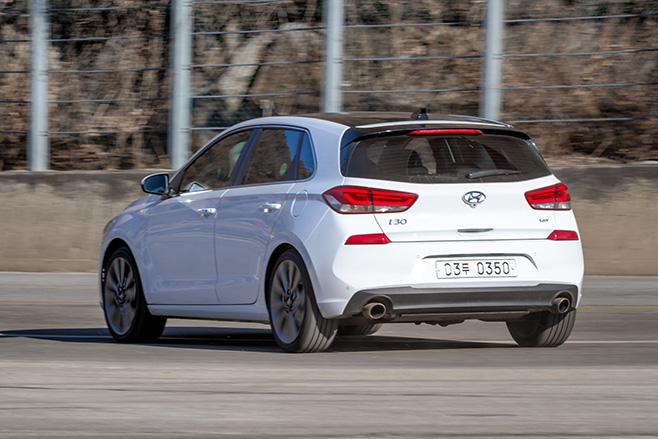
Australia will score local suspension and – for the first time – electronic stability control (ESC) tweaks, but even on Hankook Ventus Evo 2 rubber, front-end response is already pointy, with spring and damper rates that are comfortable yet controlled; even sophisticated.
Check out our 17 hottest fast cars of 2017
It gels with a forced four that doesn’t sound inspiring, but is certainly gutsy and mates with a slick auto that only stumbles around town as the twin clutches slip oddly on quick downshifts.
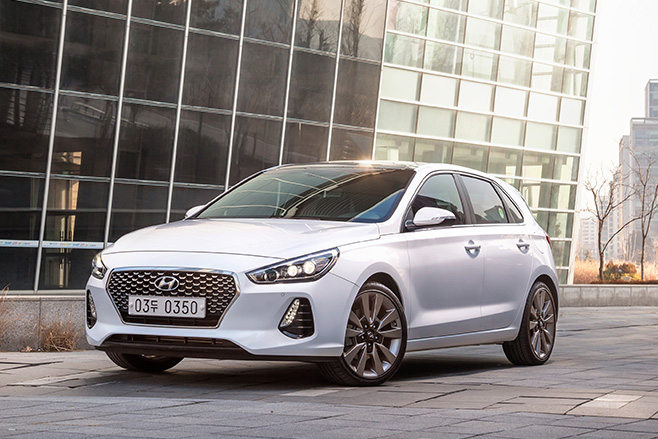
It isn’t quite shock and awe, but the i30 SR is surprisingly very good indeed.
3.5/5
Like: Styling, gutsy engine, great steering and handling Dislike: ESC calibration, tyres could be grippier, noise
SpecsEngine: 1591cc 4cyl, dohc, 16v Power: 150kW @ 6000rpm Torque: 265Nm @ 1500-4500rpm Weight: TBC 0-100km/h: 7.2sec (estimated) Price: $27,000 (estimated)
