
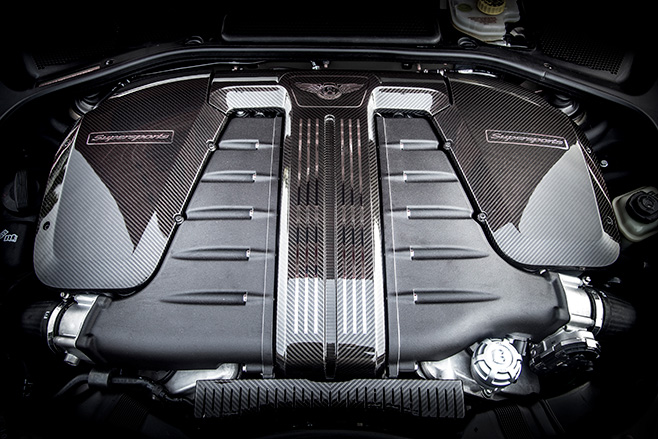
- It’s the fastest and most powerful Bentley road car ever. Its twin turbocharged W12 engine now produces a remarkable 522kW and 1017Nm, firing it from 0-100km/h in just 3.5 seconds, on its way to a top speed of 336km/h.
- It’s also the world’s fastest four-seater, narrowly eclipsing the top speed of Ferrari’s GTC4Lusso, by just one kilometre per hour.
- The Supersports’ 21-inch wheels are made of forged alloy, saving 20kg in unsprung mass compared with those of the regular Bentley Continental GT.
- The standard carbon-ceramic brakes are claimed to be the largest of their type available on any current production car, which is just as well since the car weighs 2280kg.
- The brakes can withstand temperatures of up to 1000 degrees centigrade – which is the same temperature as volcanic lava.
- At full power the Continental Supersports’ 6.0-litre, twin turbocharged W12 engine inhales over 500 litres of air per second.
- At its 336km/h top speed the Supersports covers the length of a football field every second.
It’s common for business deals to be conducted over a round of golf, but we’d settle our executive battles with laps around a racetrack.
And if you come suited up in a BMW M760Li, you’ve got a great chance of sealing a handshake.
The fastest BMW production car built yet nails 100km/h from standstill in 3.7 seconds to promote itself above fellow fast limos including both S-Class AMGs (S65 and S63), Jaguar XJR, and Audi S8 plus.
If it doesn’t feel quite that quick using the launch-control system, the closest Munich will probably ever get to building an M7 is a genuine track performer.
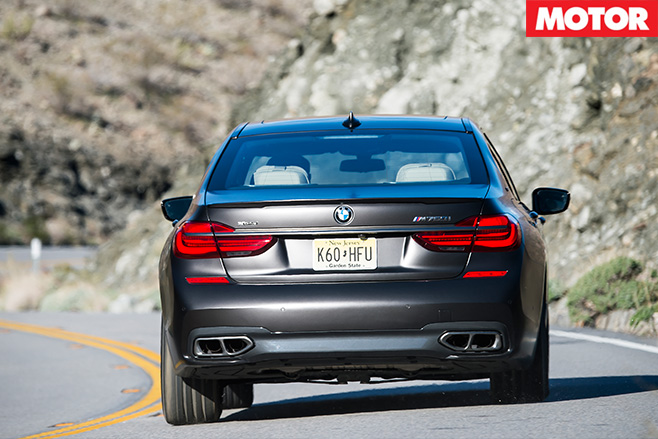
While no BMW M3 or M5, and not exactly shrinking around you, in the relative realms of large luxury sedans the big Bimmer brings that combination of predictable balance, forceful brakes, and tyre stickiness that prompts you to drive as fast as you dare.
The M760Li turns into corners with surprising alacrity, even when emerging from a heavy braking zone. And the understeer that eventually arrives mid-corner once the high limits of the 20-inch rubber start to be exceeded is easily dialled out with a slight lift.
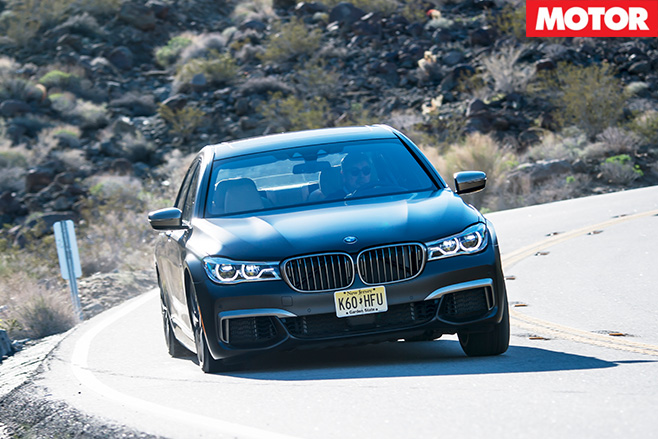
Traction is unquestionably impressive, though even with the DTC (Dynamic Traction Control) button pressed for some extra slippage, we’d expect such an M5 to have a much more emphatic rear-drive bias than the M760Li’s.
Out on the fabulously twisty roads of the Banning-Idyllwild Panoramic Highway, west of Palm Springs, the M760Li feels even more the lithe limo.
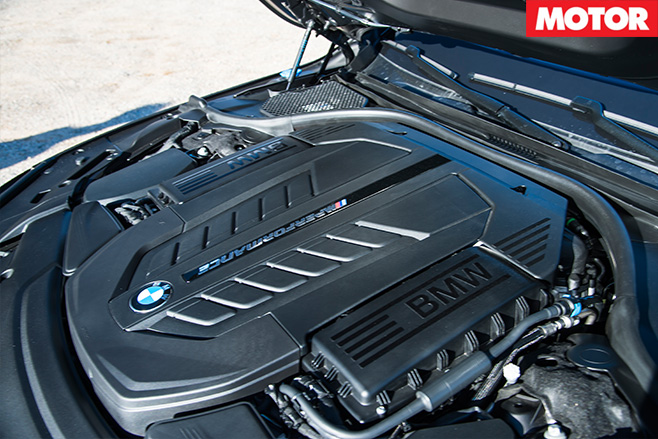
With the car in Sport mode, and the gearlever flicked left to take command of the paddles, the transmission holds gears to the redline and the ratios are swapped with a bit more drama.
The V12 also growls more vocally as a flap in the exhaust system is flipped open.
BMW says the M760Li is calibrated with the most extreme gap between its Sport and Comfort modes, and there’s certainly a softening of everything when you flick to the latter.
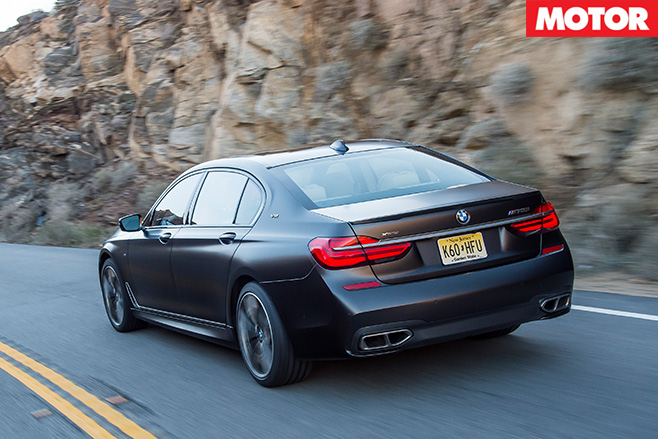
M badges are certainly not prolific. They’re found on the steering wheel, digital instrument cluster and footrest.
Otherwise welcome to the most luxuriously appointed 7 Series, with liberally spread Merino leather, high-pile floor mats, black wood trim and Alcantara rooflining.
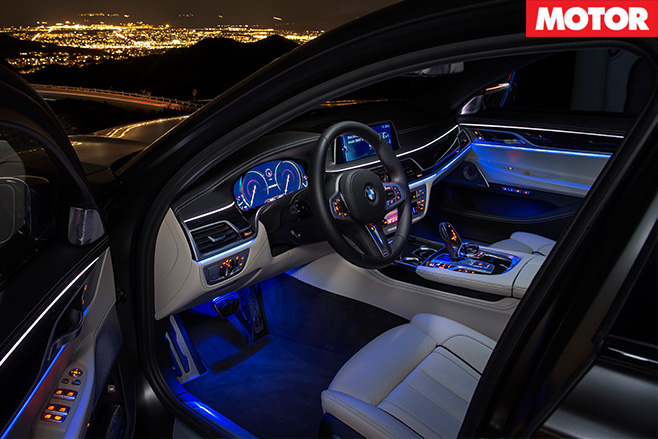
That’s a huge $130K above the V8-powered 750i. Yet if you want absolute power to go with your BMW status symbol, the M760Li is the deal.
4.0 OUT OF 5 STARS
Like: Engine and chassis’ duality of character; track credibility; engaging V12; lavishly equipped cabin
Dislike: Some lag; sizeable price jump over 750i; cabin could be a touch sportier
Specs Engine: 6592cc V12, DOHC, 48v, twin turbo Power: 448kW @ 5500rpm Torque: 800Nm @ 1550rpm Weight: 2180kg 0-100km/h: 3.7sec (claim) Price: $419,000
British luxury car maker Bentley has confirmed that the soft-top version of its new Continental Supersports, the car it claims is the world’s fastest four-seat luxury convertible, will cost more than the median house price in every Australian capital city except Melbourne and Sydney.
Sporting a price tag to match its stratospheric performance, the Bentley Continental Supersports convertible will wear a manufacturer’s recommended retail price of $626,474 when it arrives in Australia in the third quarter of this year.
The car’s hardtop sibling will be a touch more affordable at a list price of $569,522, but even at these heady prices either version of the limited edition Supersports will be hard to get your hands on.
Bentley will build just 710 examples of the 336km/h luxury super cars for the global market, and the cars will be allocated on a first comes basis, said the car’s engineering program director and Bentley board member, Paul Jones.
Speaking at a function outside Lisbon on the eve of the new supercar’s launch to Australian and international journalists, Mr Jones said the build number was in acknowledgment of the car’s stupendous 710 horsepower output.
That’s 522kW in our metric currency, a number overshadowed even by the twin-turbocharged 6.0-litre W12 engine’s prodigious torque figure of 1017Nm. Such epic performance numbers are enough to rocket the all-wheel drive coupe from 0-100km/h in just 3.5 seconds, on its way to a top speed of 336km/h.
British luxury car maker releases the world’s fastest four-seat luxury car.
Seemingly unmoved by criticisms last year of its high-speed stunt in the Northern Territory, that saw racing driver John Bowe controversially max out its Continental GT Speed at 330km/h, British luxury car maker Bentley has released what it describes as its fastest and most powerful road car ever.
In a one-fingered salute to wowsers everywhere, Bentley’s new Continental Supersports eclipses the top speed set by John Bowe on a closed section of the Stuart Highway, and even betters that of Italian maker Ferrari’s GTC4Lusso, to claim the title of ‘world’s fastest four-seat luxury car’.
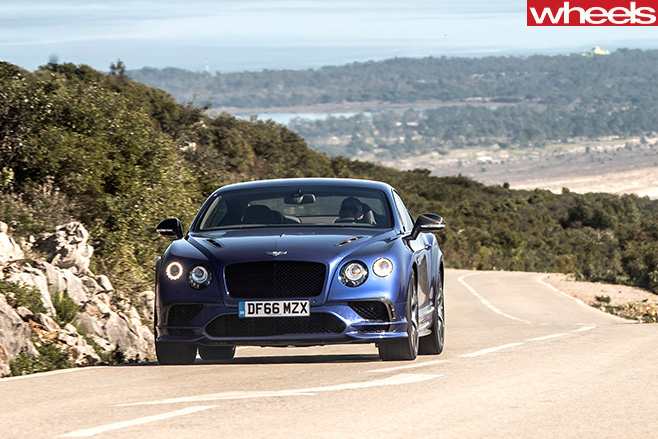
Changes to the turbochargers and intercooler, along with beefed up engine internals, result in an increase of 55kW and 197NM over the current range-topping Bentley Continental GT Speed.
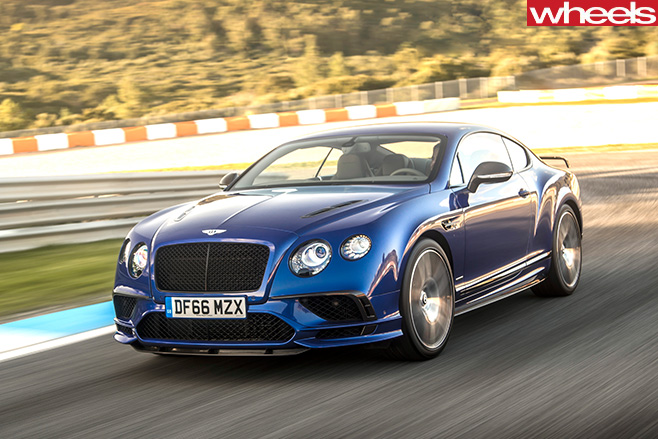
The ballistic Brit also gets a range of styling enhancements to emphasise its performance potential, including 21-inch lightweight forged alloys, carbon-fibre accents on the front splitter and rear diffuser, and an optional fixed rear spoiler, also made of carbonfibre.
“Only Bentley could create a car which combines immense performance and unrivalled luxury in this way,” said Bentley Motors chairman and chief executive Wolfgang Dürheimer.
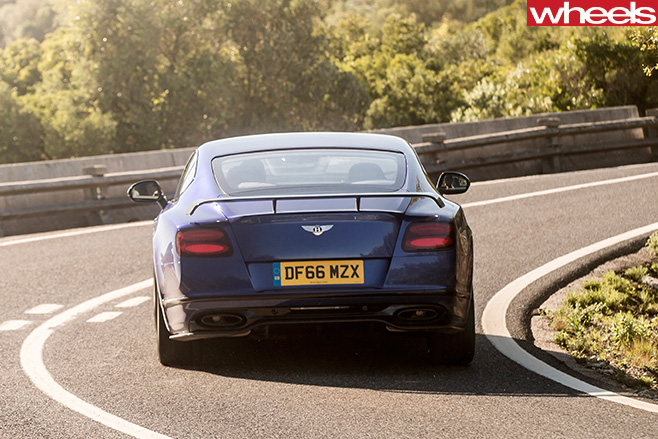
The Continental Supersports is expected to be available in Australia later this year, with pricing yet to be confirmed. However, with the range-topping Continental Speed costing $461,300 (plus on-road costs) in coupe form and $507,300 (plus on-road costs) as a convertible, potential buyers shouldn’t expect much change out of $500,000 for the coupe, or $550,000 for the convertible.
THE Volkswagen Golf, version 7.5, is about to arrive. Is there substance to go with the sizzle?
WHAT IS IT? The mid-cycle update of VW’s global small-car overlord. It’s Golf Mk7 with exterior tweaks and added equipment to keep it fresh before Golf Mk8 arrives around 2020, hence the tag Golf 7.5.
WHY WE’RE TESTING IT When our reigning small car mega-test winner and former COTY winner cops a mid-life upgrade, we need to know: is there real substance to go with the sizzle?
MAIN RIVALS The obvious are our small-car top three: the Ford Focus, the Mazda 3, and the Holden Astra. But this new tech pushes Golf, at the upper end of its model reaches, into entry-level BMW 1 Series territory, or even head-butting VW Group rivals such as an entry-level Audi A3.
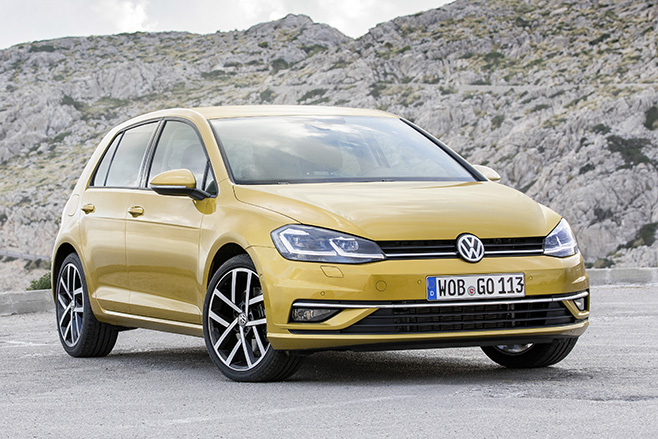
THE WHEELS VERDICT This is a carefully calculated move to shift Golf further upmarket and distance it from rivals on a basis on perceived sophistication and to take a leadership position on key tech that VW reckons customers are hungry for. Fair play, but if Golf is starting to look too tech-heavy and pricey, relax, shop lower, and know you’re still getting the best small car in the biz.
PLUS: More sophisticated tech and driver interface equipment make for an even more mature small car; core fundamentals unchanged. MINUS: Gesture control questionable; some “upgrades” non-essential; GTI a case of once-over very lightly
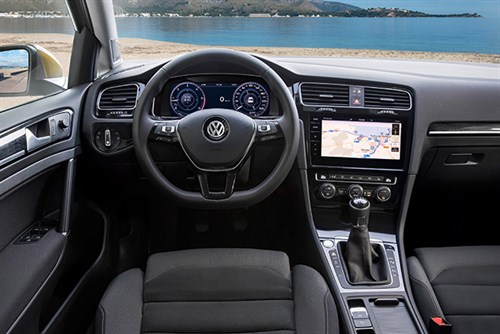
THE WHEELS REVIEW IF THERE’S one sure way to lose your grip on a leadership position, it’s by sitting around on your backside, doing little, whistling whatever ‘Dixie’ is in German, while rivals steadily, quietly, raise their game. Clearly VW has had this thought front of mind, as this is the first time in the history of the Golf that the company has seen fit to update a model comprehensively enough to declare it a ‘point-five’; that is, a specific mid-point in the model cycle, rather than just a facelift. But while the changes are mostly worthwhile and welcome, the question can’t be avoided: are they enough?
Let’s start where, frankly, it matters least: the exterior styling. There was nothing wrong with the Mk7’s taut, pert proportions, and the updates don’t mess with that by any significant degree. It’s the usual bumpers, grille, and headlamp/tail-light tweaks, with the most practical change being the shift to LED headlights, from xenons, on up-spec variants. The headlight housings themselves are different enough to justify new guards to accommodate them, but kudos to the spotter who can tell. The lighting internals, though, are new. You’ll pick a well-specced 7.5 from the rear by its cool, Audi-esque indicators that strobe a progressively illuminating bar of amber LED light as it blinks. Useful detail changes included the relocation of the radar sensor to the VW badge, making it less susceptible to damage. The rest, well, you can make up your own mind.
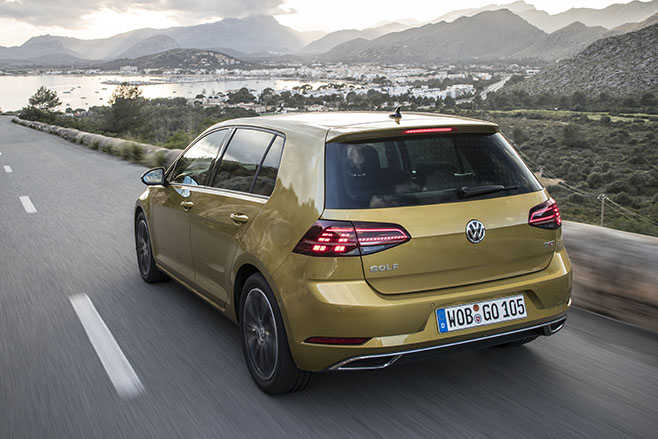
Given the carryover of powertrains, the most significant movement comes at the entry point of the range. VW has deleted what was the base model, the 92TSI on its 15-inch steel wheels and fairly basic trim level (which was offered, in manual form, for $22,990 drive-away.) In its place comes an entry-level model powered by the 110TSI engine, (probably still called Trendline, says VW, but this is to be confirmed), offered with as a six-speed manual or, more commonly, with the seven-speed dual-clutch (DSG) transmission. Standard equipment will include 16-inch alloys (no steelies), an 8.0-inch touchscreen and more up-spec interior presentation than that of the current model. And while the jump of 18kW is significant, more noteworthy, in terms of general drivability, is the torque leap: the 92TSI engine made 200Nm; at 250Nm the 110TSI produces 50Nm more.
However, this reshuffle exposes a disappointing fact: that Australian will not get the new-generation “EVO” 1.5-litre turbo-petrol engine being rolled out as part of the Golf 7.5 release. This engine, making 110kW, features cylinder deactivation and ushers in new levels of efficiency for this class. However, VW Australia claims its complexities make it unviable for the price structure of the new range. We did drive it at the international launch in Spain, and I have to say that I struggled to detect much difference between it and our carryover 1.4. Both produce the same power and torque outputs, both are zingy, sweet-revving units; the 1.5’s real claim is added efficiency, given it’s capable of shutting down two cylinders and running as a twin under light throttle loads.
But back to the 110TSI, and its upgrades. The top-spec touch screen is thing of beauty; big, glossy, wonderfully detailed resolution, and super-responsive to the touch. (We can’t comment on the smaller version, as it was not fitted to any of the cars at the launch.) However, gesture control is less convincing, given it only allows the driver to swipe left or right, to flick through menus, stored radio stations, or music tracks. What is doesn’t do, at this stage at least, is allow touch-free adjustment of volume control, for instance, so if your passenger is inclined to play DJ, they still have to stab at the annoying plus/minus volume buttons as there’s no knob.
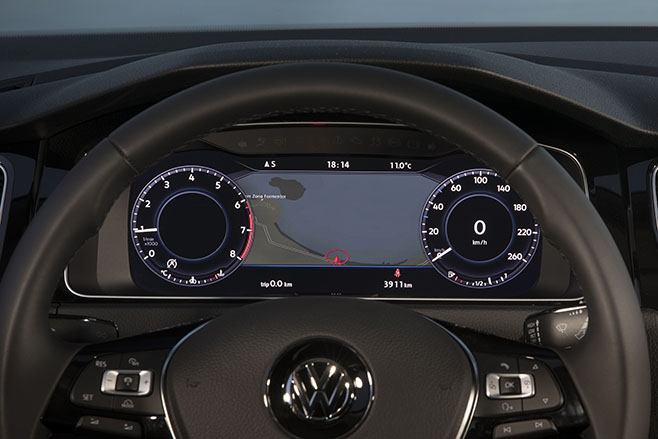
Golf 7.5 also brings Active Info Display on up-spec models, which is VW’s version of what Audi terms Virtual Cockpit, a 12.3-inch customisable instrument display that can be configured into one of five different profiles, including Classic, Performance, Efficiency and Navigation. Again, it’s a cool bit of tech that makes Golf feel even more grown-up, and in a class quite separate from rivals such as the Ford Focus and the Mazda 3. But it’s at its most useful when configured to the sat-nav mode, reducing the size of the speedo and tacho dials, and giving prominence to the map display, and helping you keep your eyes on the road and providing specific turn instructions at a glance. But the fact is, for most people, the need for nav is a relatively uncommon occurrence unless you’re a travelling salesman or an Alzheimer’s sufferer. So hardly a must-have for most owners.
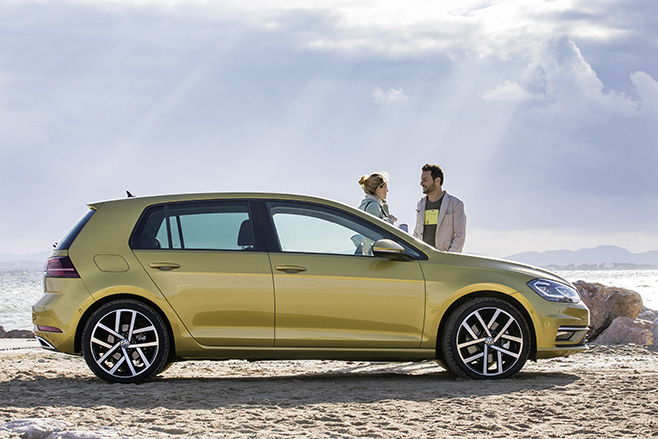
So, to the question is pricing, which we can’t answer accurately because VW Australia is still crunching its numbers. But our estimate would be around $24,000 plus on-roads for the base (bank on Trendline) manual, around $30,000 for the DSG Comfortline, $34,000 for the Highline 110TSI and around $36,000 for the Highline 110TDI. The latter’s 2.0-litre diesel also carries over, making 110kW and 340Nm from 1750rpm, but now comes hooked to a seven-speed DSG rather than a six. It’s unclear if this shaves anything off the acceleration time, but does prune a few drops from the official fuel number, now a claimed 4.6L/100km. Refinement remains excellent; high-speed cruising is even more unstressed and hushed.
When the 2017 Volkswagen Golf arrives on July 3, the hatch will also be accompanied by the wagon, and the Alltrack crossover with its on-demand all-wheel drive (AWD), soft-roading software and body protection. A few weeks later we’ll see the rejigged Golf GTI (power up to 169kW) and Golf R (now cranking out 213kW) and both feeling even more premium and well equipped than before.
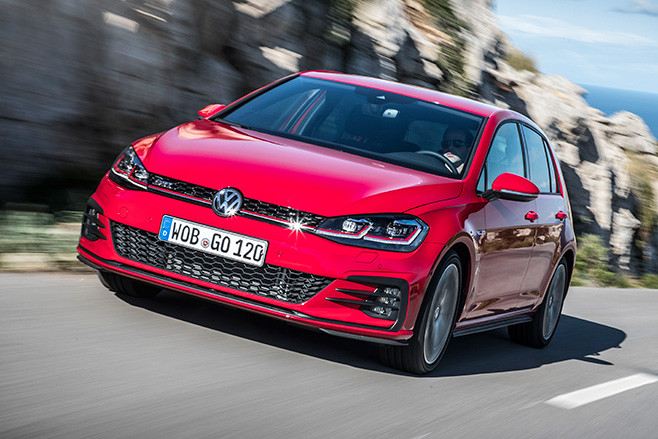
At the launch, VW’s Christian Bauer, the project boss of Golf, told the media “We’ve digitised the Golf”, but that may be a slight stretch. What VW has done is introduce some features that were genuinely needed, and added others that will allow customers to take their Golf into previously uncharted upmarket territory for this class. Fortunately, all the Golf’s more analogue qualities – its pliant, comfortable ride, responsive, obedient chassis, and frugal, refined powertrains – remain as they were. Which, for now at least, is ample to keep Golf sitting in the position to which it’s accustom.
SPECS Model: Volkswagen Golf 110TSI Comfortline Engine: 1390cc 4cyl, dohc, 16v, turbo Max power: 110kW @ 5000-6000rpm Max torque: 250Nm @ 1500-3500rpm Transmission: 7-speed dual-clutch auto Weight: 1245kg 0-100km/h: 8.3sec (claimed) Economy: 5.1L/100km Price: $30,000 (estimated) On sale: July
British marque Bentley has declared its new Continental Supersports the world’s fastest and most powerful luxury four-seater.
The stunning coupe’s top speed of 336 km/h and a 0-100 km/h time of 3.5 seconds snatches the fastest four-seater title from the Ferrari GTC4Lusso by a mere one kilometre per hour. There’s nothing in it really, but up here in the supercar stratosphere, a win is a win is a win.
For fans of open-air motoring, the car’s soft-top sibling, the Bentley Continental Supersports Convertible, is likewise reckoned to be the fastest four-seat convertible in the world, accelerating to 100km/h in 3.9 seconds on its way to a 330 km/h top speed. That’s enough to remove toupees and detach hair extensions, so best keep your head down.
Strengths
- Performance, of course. You wouldn’t buy the world’s fastest four-seater if getting from A to B in double quick time weren’t important to you. Right on cue, the Supersports delivers thrilling levels of acceleration and speed, taking you from 0 to 100km/h in a breathtaking 3.5 seconds, and on to a top speed of 336 km/h.
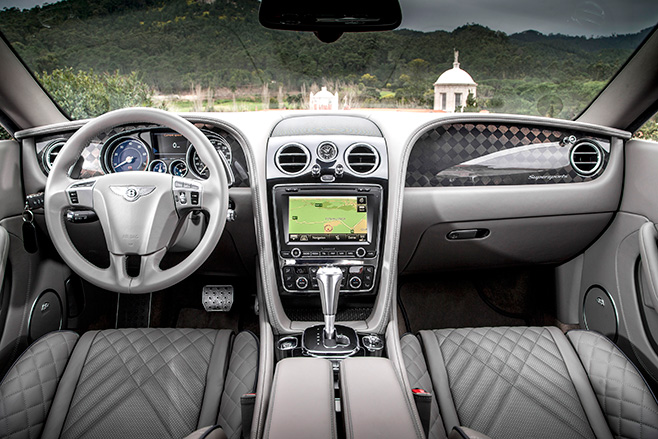
- Beautifully trimmed interiors are a Bentley hallmark and the Continental Supersports is no exception. Bentley’s interior stylists and materials people have spared no expense (or cows) in creating a truly peerless interior, featuring acres of gorgeous leather and real chrome atop the classically styled switchgear. Lux diamond-quilted patterns on the perforated Alcantara-clad seats and door side panels give this the look and feel of a gorgeous Chesterfield lounge on wheels.
- If you can’t find something in the showroom you like, then never fear as Bentley prides itself on offering the widest range of personalisation options to allow customers to create a car that is truly “theirs”. Get busy choosing from more than 90 exterior paint colours, 17 hide colours and 10 different fascia finishes. Or, step up to the “X Specification” pack, with eight more unique duo-tone paint treatments. Then again, you could just chillax and leave it to the folks at Mulliner, Bentley’s bespoke coachbuilding department, to come up with a little something for you.
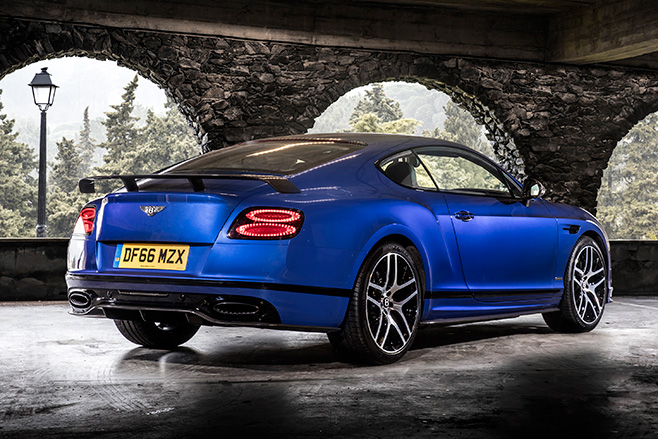
- It looks great… if you’re into that kind of thing. Compared with its cooking model stablemates the Supersports’ sharpened athletic appearance means it’s one tuff-looking lounge suite. Sitting low and wide and looking mean on 21-inch forged alloy wheels, this Bentley features more carbonfibre accents than you’ll find in an F1 garage.
Weaknesses
- Its estimated half-million-dollar price tag is the gross national product of some small countries, so it’s clearly an ostentatious display of your fabulous wealth. Best keep a weathered eye out for car-jackers.
- Despite having dropped around 30kg over its nearest sibling, the Supersports is still a hefty beast, tipping the scales at an SUV-like 2280kg. All that weight and horsepower means fuel bills will be astronomical, as will the speeding fines if you do decide to put its performance claims to the test.
- Even with a $500K price tag, there are still options! At this price you’d think that cool stuff such as a titanium exhaust system to enhance the sound of its unusual W12 engine would be part of the deal, but no such luck.
Anything else I should consider?
The Ferrari GTC4 Lusso may have a terrible name but it’s a brilliant bit of kit with all the visual and aural drama of a genuine Italian supercar. Its 6.3-litre V12 pumps out a highly competitive 507kW/697Nm which, as we now know ain’t quite enough to peg back the Bentley. The Fazza’s $578,888 price tag does, however, top the big Brit brute, so there’s a win!
The Mercedes-AMG S65 Coupe is about as luxe as you can get from the three-pointed star brand, with a $502K price tag and a features list that will give the Bentley a run for its money, and then some. The Benz is also no slouch, thanks to its thumping twin-turbocharged V12 that serves up a mighty 463kW and nice round 1000Nm. It also comes stacked with all the latest cutting-edge driver assist and safety technologies.
The Honda Odyssey people-mover and Honda Jazz city car have both been given a mild update for 2017.
Jazz’s solitary change is the introduction of alloy rims for the entry-level VTi model’s 15-inch wheels, replacing the steel versions previously fitted. Pricing remains at a starting point of $14,990 for a manual-gearbox VTi.
There are more cosmetic enhancements for the Odyssey, which is second to the Kia Carnival in overall, sub-$60,000 people-mover sales but the most popular with private buyers.
The higher-spec VTi-L variant receives a revised front end featuring darkened headlight housings, a black lower grille section, and a dark chrome upper grille.
Privacy glass is also installed for the second and third row windows, as well as the tailgate window.
Inside, the base VTi and VTi-L both gain Isofix child-seat anchorage points for the second-row captain’s chairs, plus new split-pocket storage on the back of the front seats.
A minor change in the body colour range sees Carnelian Red pearlescent paint replaced by Premium Spice Purple pearlescent.
The VTi continues to start at $37,610; the VTi-L’s price increases by $450 to $46,490.
The MY17 Honda Odyssey and Honda Jazz models are available now in showrooms.
Lexus has announced it will launch a hybrid version of its all-new LS 500 at the next month’s Geneva Motor Show.
The LS 500h is the latest addition to the luxury carmaker’s flagship sedan range, which was revealed at the Detroit Motor Show in January with all new underpinnings and a fresh twin-turbo 3.5-litre V6 petrol engine.
The hybrid powertrain is expected to be the Multi-Stage Hybrid System in the LC 500h coupe, which shares the LS 500’s all-new GA-L platform.
As well as greater efficiency, the new hybrid technology will be able to extract greater performance from the 264kW 3.5-litre atmo V6 petrol/electric powertrain, according to Lexus chief engineer Koji Sato.
“In the past, people only associated hybrid with ‘eco’. We wanted to broaden that perception and create a true high-performance powertrain.”
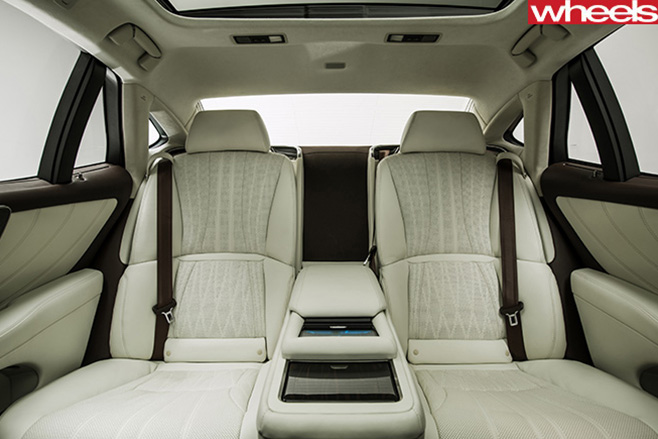
In a conventional hybrid the engine output is amplified by the electric motor via a reduction gear, but the multi-stage system can increase power via the automatic transmission meaning greater power on take-off.
The 2018 Lexus LS 500 range is due in Australia early next year.
LS chief engineer Toshio Asahi said while it will compete against traditional upper-luxury German sedans, its design and technology were inspired by a relatively new kid on the block.
“All the main competitors in this segment were considered – obviously BMW 7 Series, Mercedes-Benz S-Class, and Audi A8 – but in addition to that, we also benchmarked the Tesla (Model S),” Mr Asahi told Wheels.
“We also benchmarked the Tesla’s autonomous technology as well as the Mercedes E-Class’ system.”
THE 2017 Geneva Motor Show kicks off in early March, and we’ve already seen plenty of signs it will feature a broad array of metal.
Last year’s show stunned us with everything from a $5 million Bugatti to Toyota’s new small SUV, the Toyota CH-R, ranging from outlandish to practical. This year’s show schedule should be just as – if not more – diverse. Supercars will rub shoulders with grocery-getters at the Palexpo arena, with plenty of previews of future models in the mix as well.
Here’s what we expect to see unveiled at this year’s show. Don’t forget: Wheels will be there on the ground, reporting live from the floor on March 7 and 8.
Alpine revival
Remember Alpine? We won’t judge you if you don’t, after all, the boutique French sports car brand dropped off the scene in 1995 and hasn’t produced a car since.
Now Renault is resurrecting the Alpine name, and it’s doing so with a bespoke alloy-framed rear-engined sports car that promises to be France’s answer to the Lotus Elise and Alfa Romeo 4C. We can’t wait for this particular French dish to be served up, and we’ll get our first taste of it at Geneva.
Audi RS3 Sportback and RS Q8
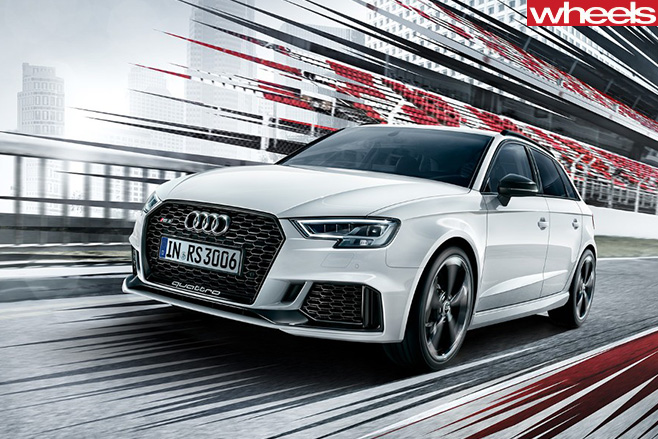
There are also fuzzy rumours of an RS Q8 concept for Geneva, with Audi expected to wheel out a 457kW twin-turbo V8 version of the Q8 Concept plug-in hybrid that bowed at Detroit in January. If that one doesn’t show up, don’t fret – the production version of the regular Q8 is a likely goer for Geneva.
BMW – 5 Series Touring
The all-new BMW 5 Series Touring gets its first public airing at Geneva. We’ve seen the pictures. Expect it to look the same on the show stand, and then dream about the M-badged version that we’ll probably never get.
Bentley Continental Supersports
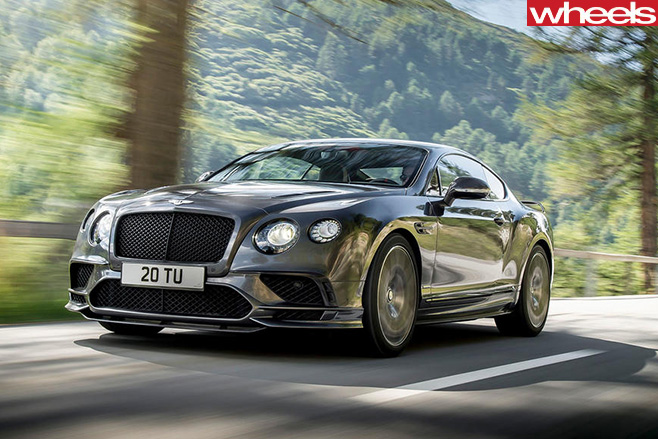
The carbon-enhanced bodywork clothes fettled AWD underpinnings and a 521kW version of the ‘regular’ Continental’s monstrous 6.0-litre W12 engine. Zero-to-hundred happens in 3.5 seconds, pretty swift for such a big bruiser.
Citroen C-Aircross Concept
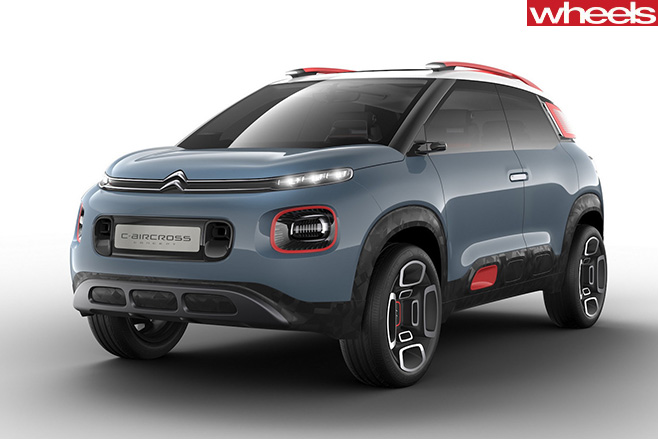
Flaunting a jacked-up C3 bodyshell with soft-roader styling cues like unpainted plastic composite body armour, the C3 Aircross is a clear sign that Citroen wants a slice of the increasingly-popular compact SUV segment. If you like the C4 Cactus, odds are you’ll dig this one.
Ferrari F12 M
M for Mega, that’s the word on the street about Ferrari’s Geneva showstopper, the F12 M. Turning up the wick on the already-brisk Ferrari F12tdf, the F12 M is expected to rock a 588kW/718Nm version of the F12’s 6.3-litre V12, easily eclipsing the F12tdf’s outputs and rocketing it to 100km/h in less than three seconds. Monstrous!
Hyundai – next-gen fuel cell vehicle
The Korean car maker used last month’s US Consumer Electronics Show – the world’s biggest technology showcase – to announce it would have something special to show at Geneva. That something special is believed to be a fuel cell vehicle wrapped inside the Hyundai Tucson small SUV – the successor to its existing ix35 fuel cell demonstrator.
Infiniti – mystery reveal
The luxury arm of Nissan has been something of a tease at Geneva. It promised us excitement in 2014 with the Q50 Eau Rouge concept, a Godzilla-hearted sedan with smokin’ performance, but it all came to nothing. The car maker has booked a presentation slot at Geneva, so they’ll have something to pull the covers off. The question is, what?
Jaguar XF Sportbrake
How do you make a sporty sedan look even sexier? Turn it into a station wagon. There’s something perversely appealing about rear-drive load luggers, and when the base car is the already-stunning Jag XF, a wagon variant is bound to excite the eyeballs. Didn’t warm to the F-Pace SUV? Perhaps try the XF Sportbrake on for size.
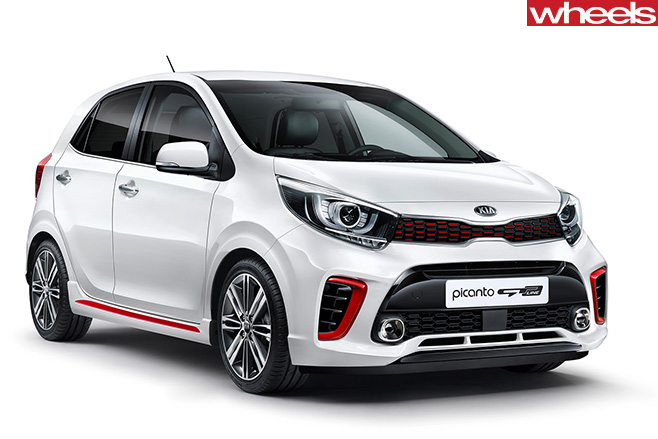
Kia Picanto
Lamborghini Huracan Performante
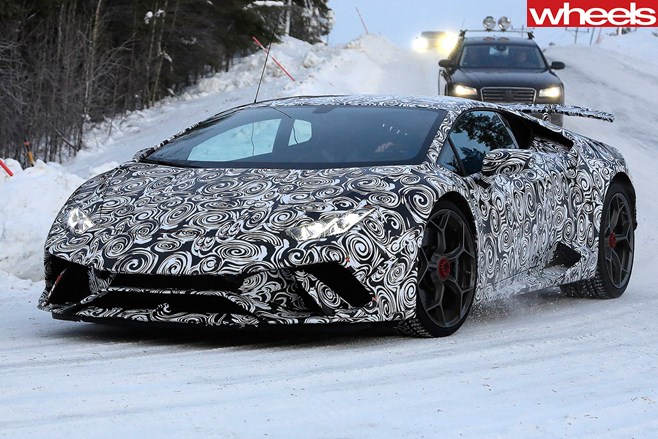
Numbers are still secret, but word on the street is that kerb weight drops by 40kg, outputs rise to around 480kW/630Nm and the zero-to-hundred falls to three seconds flat. Meanwhile, track-tuned active aero keeps you from spearing off into the gravel traps.
Lexus LS 500h
Following on from the new GA-L platformed LS’ debut at Detroit, Lexus will wheel out an electrically-assisted version in the form of the LS 500h at Geneva. Lexus is saving the details for the show, but if you’re keen on parking some large Lexo luxe in your driveway you’ll need to wait until this time next year.
McLaren P14/Super Series
Supercar specialist McLaren will unwrap its successor to the McLaren 650S and 675LT family of cars when it reveals the next-gen Super Series range. All we know is that the new Super Series will be built on the brand’s latest carbon-tubbed architecture, and that it will feature something called “variable drift control”. Ostentatious oversteer will be yours for the taking.
Mercedes-Benz
Oh lordy. Those long, boozy lunches of bratwurst, beer and sauerkraut have spawned the ugliest creation to ever come out of Stuttgart; the V12-engined Mercedes-Maybach G650 Landaulet. A storming luxury off-roader for the wilds of Africa cleverly constructed to allow lions to peel open the back like a banana and eat the occupants.
Mitsubishi Eclipse Cross
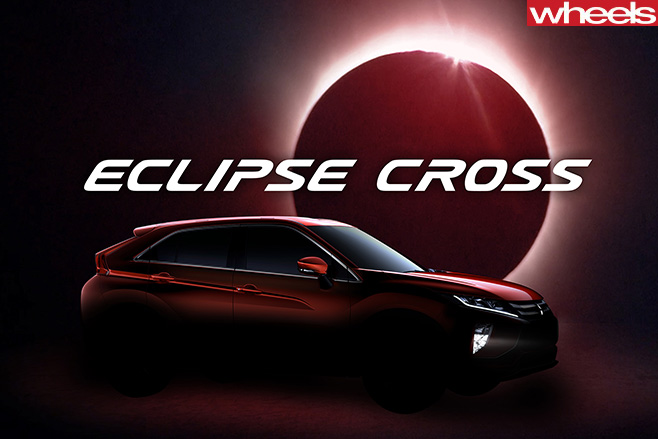
Nevertheless, with SUV sales on an ever-upward trend we can expect the new Eclipse Cross to be pivotal for Mitsubishi, and will set the template for the company’s next generation of family-friendly soft-roaders.
Opel Grandland X
The Grandland X is Opel’s replacement for the Zafira, its fairly unassuming (and unexciting) European-market people-mover. With the Opel Grandland X, Opel has taken its compact seven-seater and given it the crossover treatment courtesy of a raised ride height and black plastic body cladding, but while the Zafira has made it over here before, the jury is out on whether the Grandland X will come our way.
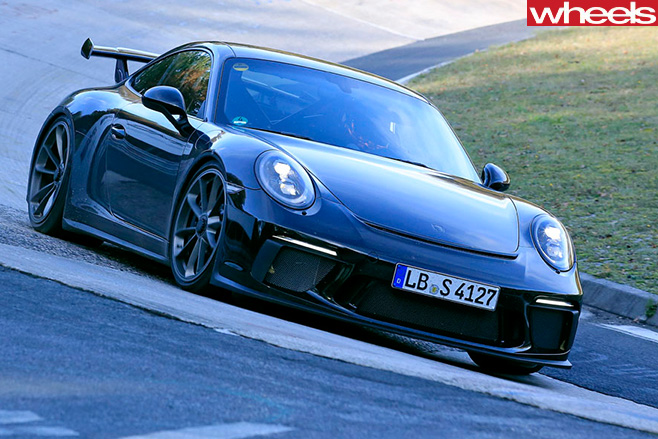
Porsche 911 GT3 and Panamera Sport Turismo shooting brake
Range Rover Velar
Not everyone wants the small shit-carter’s hat look of a Range Rover Evoque. To cater to them, in will step the Velar, a large mountain-climbing coupe to take on the likes of the BMW X6 and the Mercedes-Benz GLE Coupe.
Skoda Octavia RS245 & Kodiaq Scout
In the past, “Scout” was Skoda’s name for a passenger car dolled up as a rugged, off-roading adventure lifestyle-loving SUV. The Kodiaq, Skoda’s all-new SUV, now adds the “Scout” name to become a rugged, off-roading adventure lifestyle-loving SUV. Which it sort of was in the first place. We also expect to see the Octavia RS245 unveiled, revealing ever-so-slightly more power and performance than the car it replaces.
Subaru XV
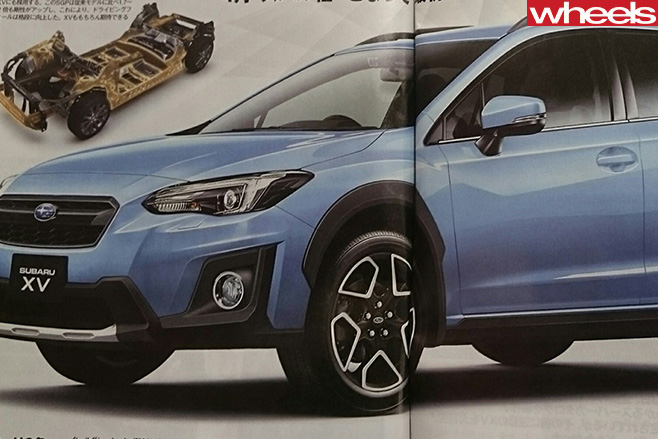
With buyers continuing to migrate from small hatches to compact SUVs, expect to see plenty of XVs on Aussie streets when it launches later this year.
Suzuki Swift
We’ve already seen Suzuki’s brand-new Swift light hatch in Japanese-market form, but its European-market equivalent is set to make its first public appearance at Geneva. With Aussie-spec Swifts expected to largely mirror the European offering, we should learn more about what the next-gen Swift will offer ahead of its local arrival.
Toyota Yaris Gazoo
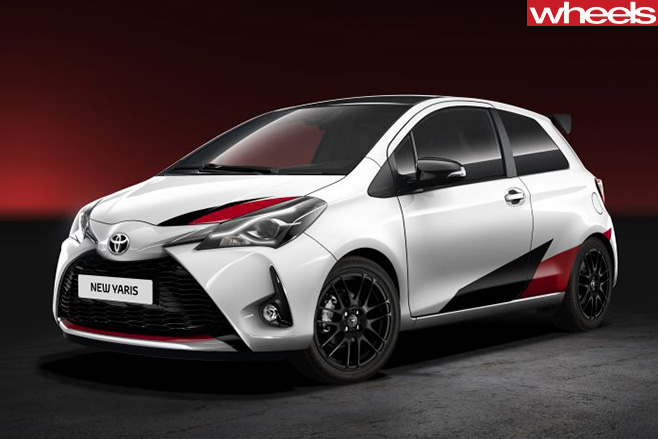
Tentatively named Yaris Gazoo, the three-door boasts a turbo four-pot with 157kW of power, plenty of handling mods and a bodykit to let others know you’re in something a little more potent than your gran’s Yaris. The sad news? We won’t be getting it.
Volkswagen Arteon & compact SUV
The Volkswagen Arteon sounds more like a Japanese manga character than a mash-up of metal, rubber chrome and leather. But it’s VW’s name for its CC four-door coupe replacement that will sit at the pointy end of the Passat sedan range. We’ve only seen drawings, so the real thing will be something of a surprise.
Of greater market relevance is the production version of the T-Roc compact SUV, a Polo-sized soft-roader that will give Tiguan the baby brother it’s always wanted.
Volvo XC60
Volvo’s product revitalisation plan has already borne fruit in the form of the XC90 and S90/V90, but so far the Swedish automaker’s volume-selling XC60 still soldiers on without a box-fresh replacement. That’s expected to change in March, with an all new XC60-sized concept rumoured for Volvo’s Geneva stand.
ASTON MARTIN today announced the technical partners who will help build the highly anticipated AM-RB 001 hypercar, and in the process revealed new details of the project.
The car is being built in conjunction with the Red Bull Racing Formula One team (represented by the RB in the name), and is expected to rival an LMP1 car for speed in track-only spec.
What we already knew is that the car would be powered by an atmo V12, and have a 1bhp per kilo power-to-weight ratio.
It has been revealed Cosworth will design and build a bespoke 6.5-litre V12 for the car, which will be accompanied by a hybrid battery system from Rimac. The Croatian company’s Concept One road car has earned a reputation for decimating hypercars like the Bugatti Veyron and Ferrari LaFerrari in drag races.
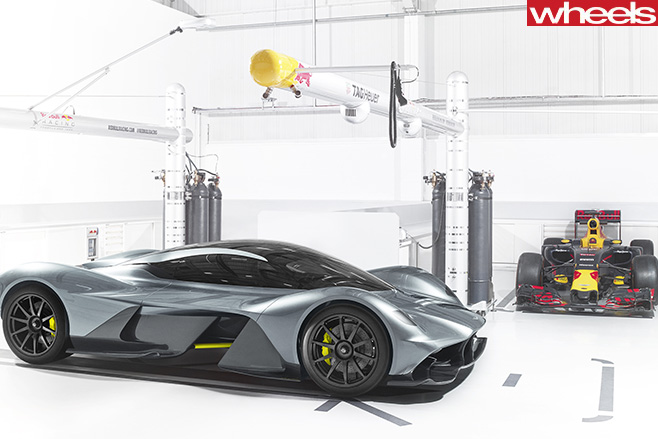
Power will be delivered via a bespoke 7-speed paddle-shift transmission, designed and manufactured by Ricardo Engineering. The unit will be built to specifications set out by Red Bull Advanced Technologies, and F1 technical mastermind Adrian Newey.
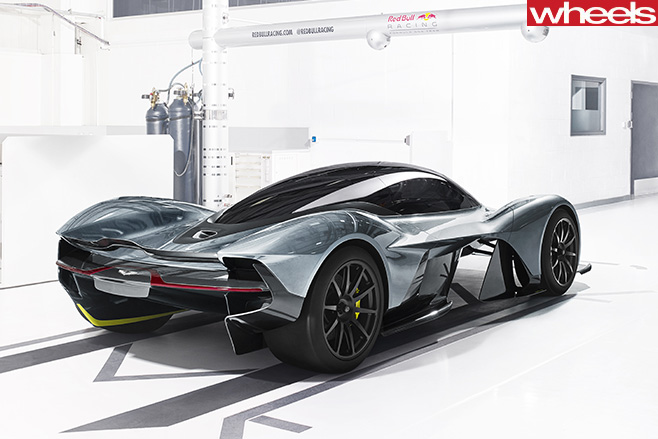
Alcon and Surface Transforms will take care of the car’s braking system, supplying high performance brake callipers and carbon discs to the project.
The ECU, traction control, and ESP will all be developed by electronic experts Bosch, while UK light manufacturer Wipac will take care of the headlights and taillights.
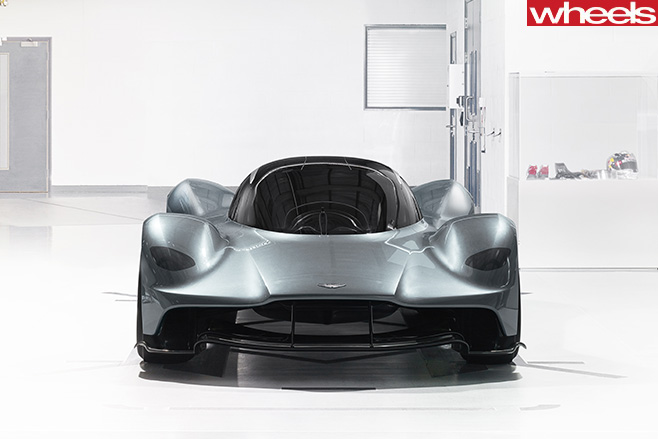
“To achieve great things you need to surround yourself with the best people.”
Only 150 road-going AM-RB 001s will be built, with an additional 25 track-only versions. Aston Martin says first deliveries are due in 2019.
