
There’s no chance that the iPhone is going to get any significant market share.
No chance. It doesn’t appeal to businesspeople, because it doesn’t have a keyboard.” That is Steve Ballmer, former CEO of Microsoft, just before the launch of Apple’s first generation iPhone back in 2007.
Back then, Ballmer was a recognised expert on smartphones – in 2007, Microsoft’s Windows Mobile was the most popular operating system for smartphones, running almost half of the world’s mobiles – and an expert on consumer trends; under his guidance, Microsoft’s annual sales tripled. If you wanted to know what to expect from the iPhone, he was the expert to ask. But, of course, he was wrong.
The new Northern Territory government has announced they’re scrapping the derestricted zone and bringing back the 130km/h speed limits. Not because the evidence shows it’s a good idea, but because that’s always been their policy. Why? Because that’s what their experts recommend.
But ask Steve Ballmer, maybe on his iPhone – it all depends on which experts you ask. People, myself included, love to complain about a nanny state, except when they want government-subsidised child care, which actually is a state nanny. But it’s right and proper that politicians rely on experts – that’s what they should do – and the ones who don’t usually end up as a meme after humiliating themselves on TV.
It’s not like the experts are idiots. There probably are idiotic experts, like the guy who has the world record for smashing watermelons with his head (43 in one minute, fact fans), or the people who keep funding Adam Sandler movies. But as a rule, to be an expert in anything, you have to be pretty smart.
But for any given topic, you can keep shopping around ’til you find an expert that agrees with you. If you ask enough people, you can eventually find someone who will advise you to do what you were going to do anyway.
But is the AMA qualified to say whether you’re more likely to ‘have’ an accident? Is that the AMA’s area of expertise? When it comes to car crashes, the AMA is like the cleaning crew after a wedding reception; they’re more qualified to talk about the clean-up than how to throw a party and you don’t plan a party around making it easier for the janitors.
In July, NT’s then-Chief Minister Adam Giles said: “Of the 11 crashes … during the year-long trial period on stretches of the Stuart Highway, there were no fatalities. And of the one serious injury reported, alcohol and not wearing a seatbelt were factors.” Well, yeah – this is the Northern Territory we’re talking about here. Eleven crashes in 12 months. None fatal.
Are the experts looking at these numbers, or are they simply looking at theory and conjecture?
Another fact for the experts: more people died in car crashes in the Northern Territory in the six years after open limits were first abolished in 2006, than in the six years prior: 307 to 292.
The great thing about getting an expert to tell you to lower the speed limit is that you don’t have to listen to the other expert telling you to spend money fixing the roads.
The NT’s road maintenance budget is stretched tighter than Clive Palmer’s bike shorts, mostly diverted towards sealing dirt roads at the eye-watering cost of $1 million per kilometre – I’m not making that number up – and lowering the speed limit is a get-out-of-jail-free card to avoid upgrading the existing bitumen.
You just need to ask the right experts.
First published in the March 2013 issue of Wheels magazine, Australia’s best car mag since 1953.
Jesse Taylor revisits a painful childhood memory and a great road in the $370,000 Bentley Continental GT V8. It’s still cheaper than therapy.
I’LL SPARE you a photo but I have a scar on the fleshy sub-prime real estate of my upper right thigh. It’s only small but it glows translucent against its already vitamin-D-deprived surroundings. Like a tiny Uluru, it’s roughly triangular and rises a millimetre or two above the epidermis plains. The scar is from the Bylong Valley Way. More correctly, it’s from the searing seatbelt buckle of a 1977 baby-poo-brown Valiant CL station wagon.
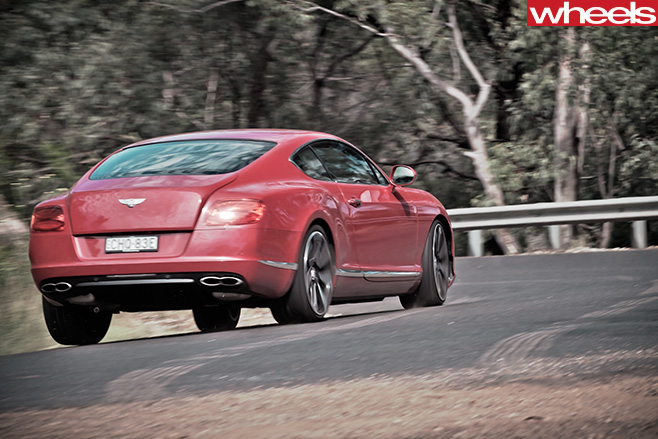
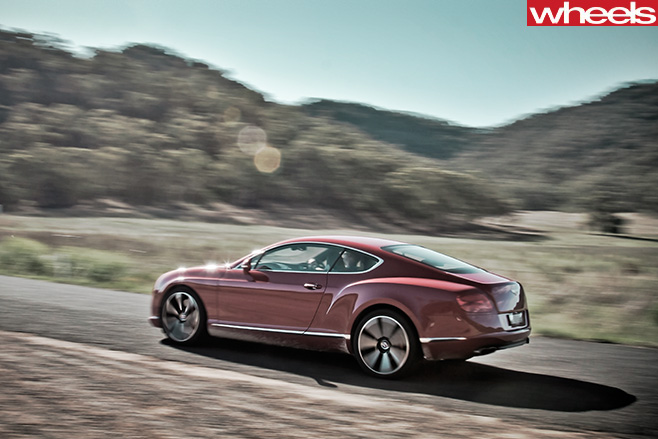
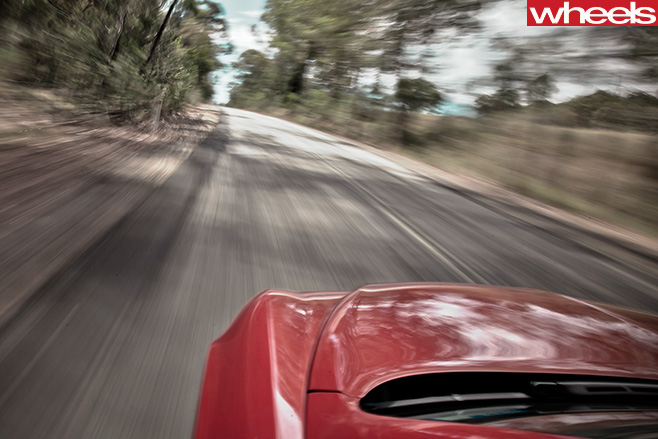
I’d not given the Bylong Valley Way another thought for 20 years until a colleague mentioned it had finally been sealed (in February 2009). But it wasn’t until January last year that I had my first crack on its black-top as a driver. Since then, I’ve fired down its fast and open, and tight and twisty 140km length in a Lexus LFA, Toyota 86, BMW M3, Volkswagen Golf GTI and now, a Bentley Continental GT V8 – take that, shitbox Valiant.
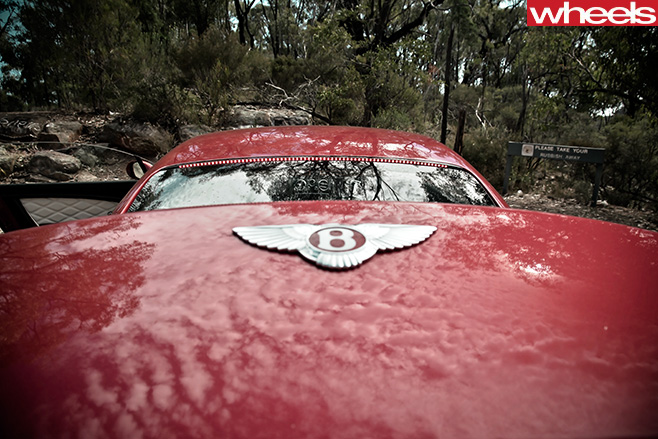
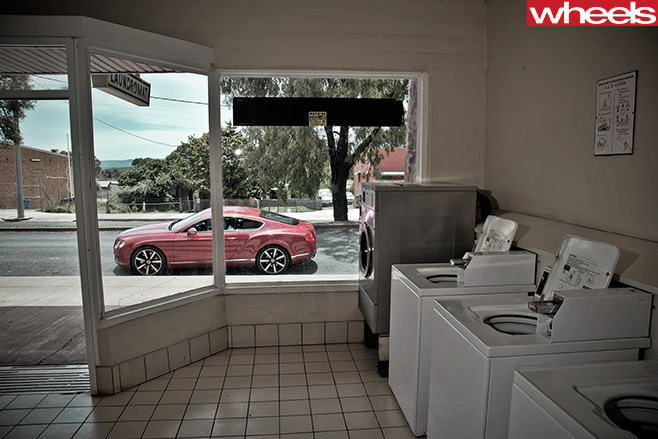
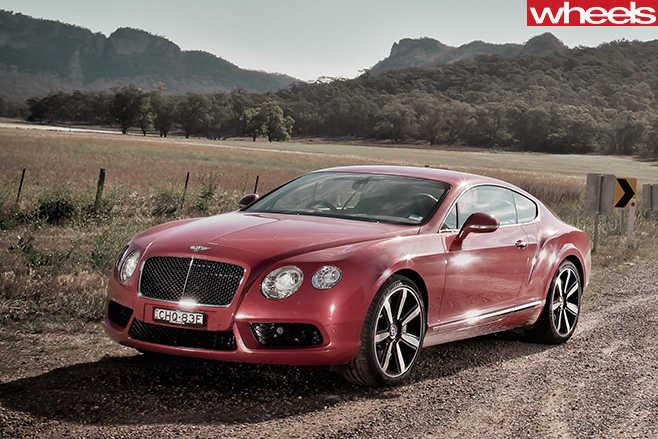
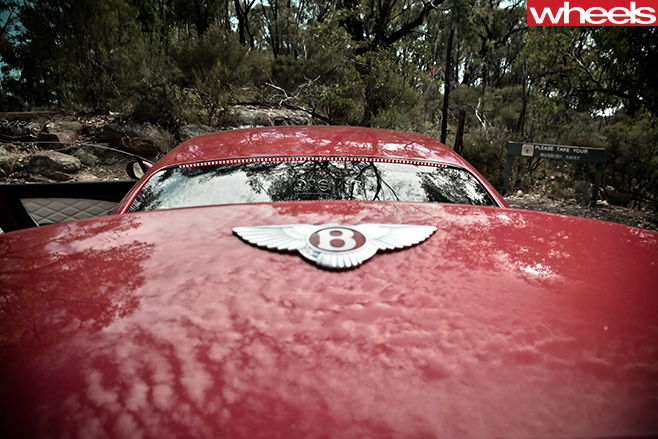
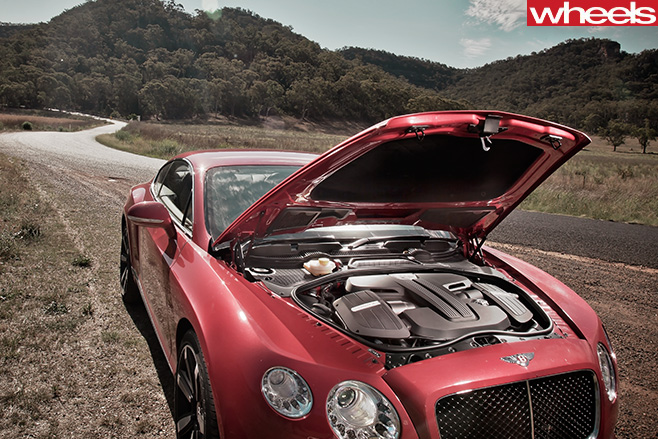
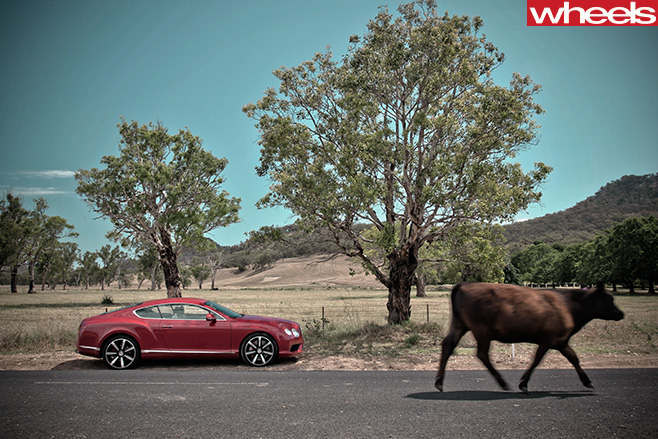
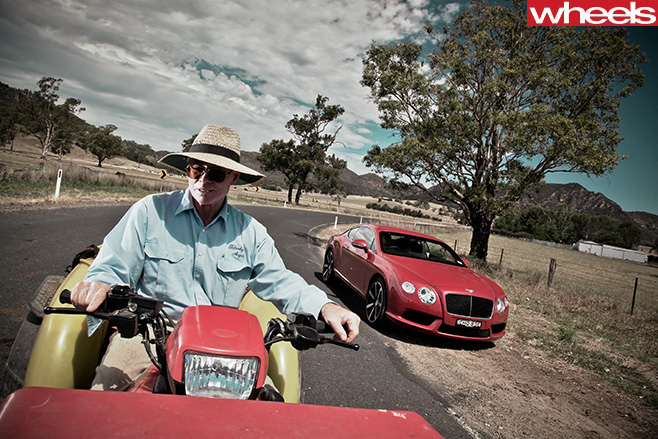
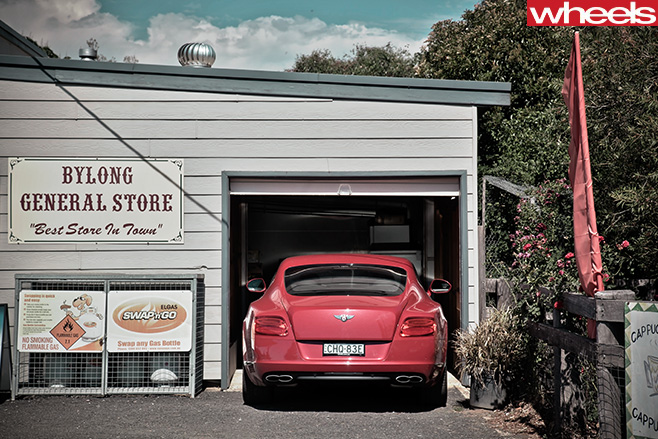
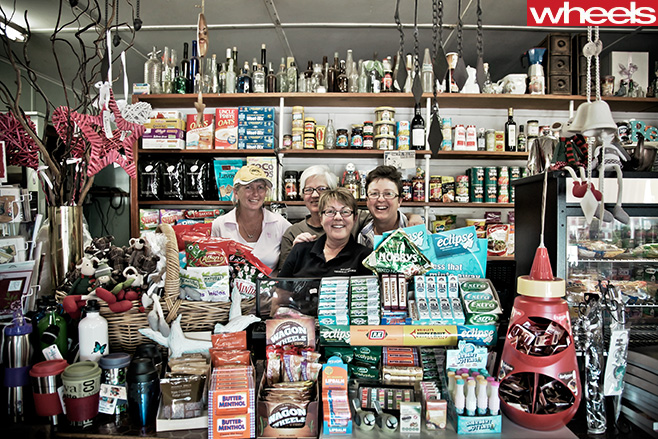
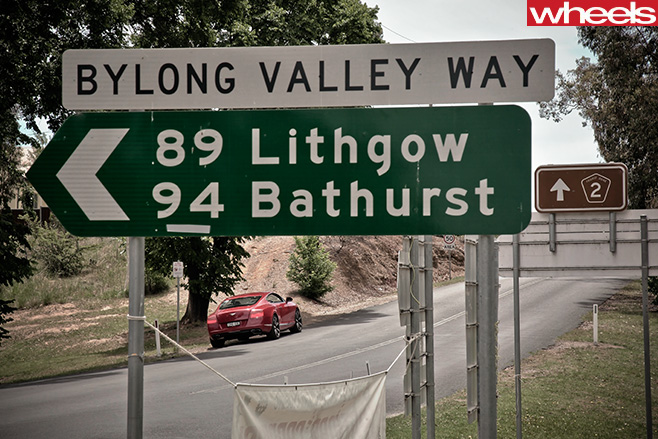
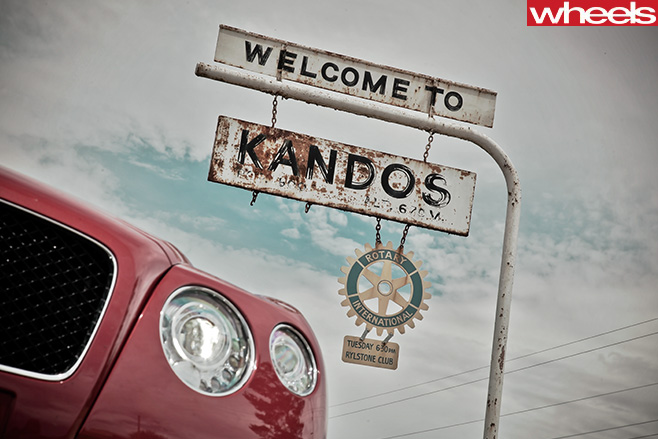
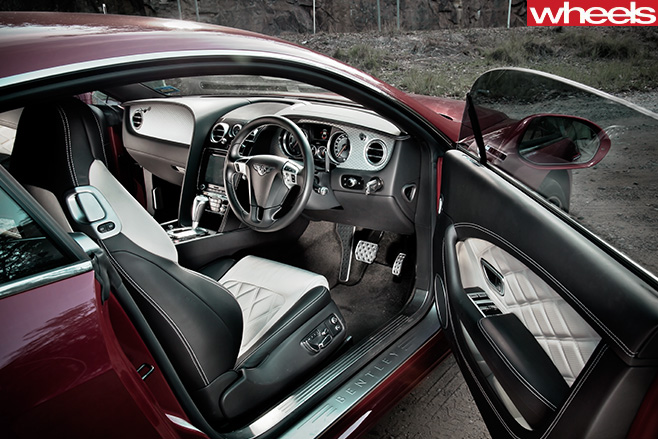
Given its largely flowing nature, the Bylong Valley Way suits big-power cars like the Bentley. It also allows more modestly endowed cars to link the corners together to disguise any lack of mumbo. Power and agility are rewarded on the tighter sections and, while it is now sealed, the surface can be patchy, so it tends to suit cars with a reasonable level of compliance. The grand Bentley GT V8 covers nearly all bases.
Got a day to spare for a good drive? Here’s 980km of (mostly) great roads. There’s no easy way out of Sydney so jump on the Hume and bomb straight to Goulburn. Take the road up through Taralga to Oberon, then the Jenolan Caves Road back to the Great Western Highway east of Lithgow. Turn left to Bathurst via Lake Lyall, Tarana and O’Connell roads. From Bathurst head to Ilford via the Sofala Road, which includes two good hillclimbs. Ilford to Sandy Hollow is via the Bylong Valley Way, then it’s back to Windsor via the Putty Road.
Toyota Australia has lifted pricing for its facelifted 86 coupe to $30,790 plus on-road costs – just as Subaru has lowered entry to its nip-and-tucked BRZ near-twin model.
It’s the first price rise in the four years since the 86 shocked everyone with its affordable $29,990 pricetag, and the $800 hike for the entry GT six-speed manual is the highest of the range. The six-speed automatic rises $600 to $33,090 while the GTS manual is up $500 to $36,490 and the GTS auto shifts $300 to $38,790 plus on-roads.
At the same time Subaru has cut its slower selling single-specification BRZ by $1230 to $32,990 (manual) and $34,990 (auto) plus on-roads.

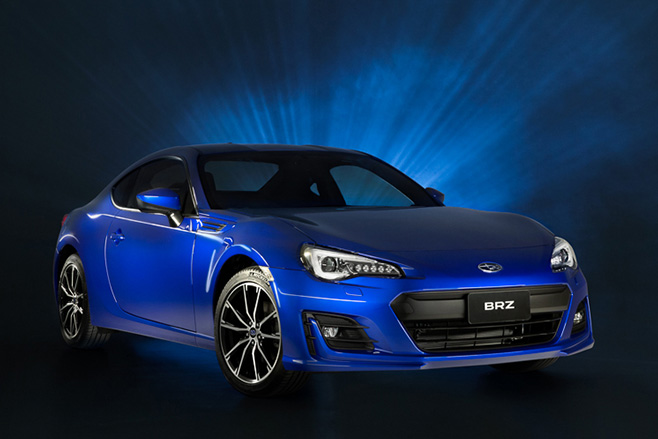
The BRZ continues to be a halfway-house between the 86 GT and 86 GTS, sharing the latter’s 17-inch alloy wheels and dual-zone climate control air-conditioning, but missing its nav and leather/Alcantara heated front seats.
The only difference is that Toyota persists with an outdated touchscreen unit where Subaru has switched to its own, markedly superior StarLink infotainment system; though sadly still sans navigation. Both marques use a smaller leather-wrapped steering wheel and colour trip computer display that now features lap timing, G-force and power/torque graph displays.
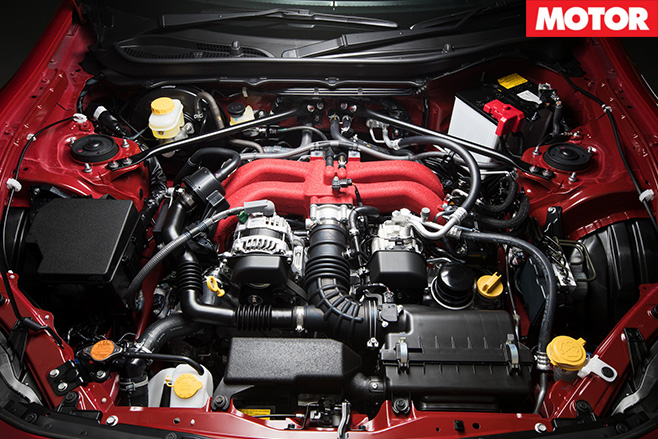
While the GT’s Yokohama 16-inch tyres and GTS’ 17-inch Michelin Primacy rubber remains, the facelifted 86 – and BRZ – are claimed to benefit from increased structural rigidity, allowing engineers to make the suspension softer without affecting handling agility.
Increased poise teams with a new ‘Track’ stability control mode that is far less intrusive than the outgoing ‘VSC Sport’ mode – read more in our overseas 2017 Toyota 86 first drive here.
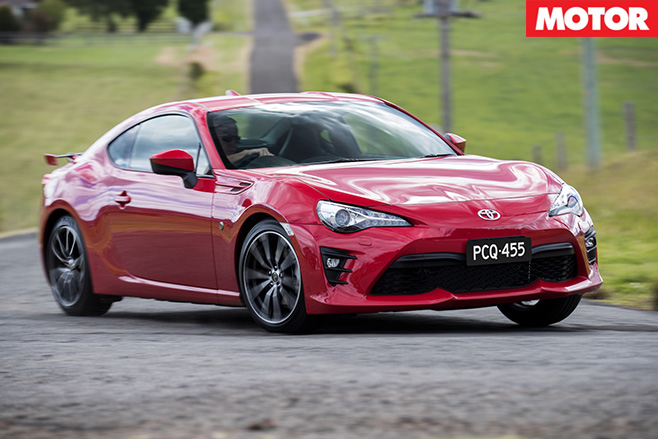
“It demonstrates the passion within Toyota for designing and engineering cars that look great and provide engaging driving dynamics – a passion that is attracting new, younger customers to the Toyota brand.”
Toyota has shifted 17,800 units of the 86 since its 2012 introduction, with the flagship GTS making up 67 per cent of sales.
If you bought a brand new car for $35,000 today, it could be worth only about $21,000 by 2019.
It would be a loss of $14,000 in just three years, and is indicative of the biggest – and least visible – vehicle running cost: depreciation.
Also known as residuals or resale values, they’re responsible for costing you more annually than other motoring expenses such as car servicing, insurance or fuel.
Successive years of million-plus new-car sales has also reduced the market’s average resale value in recent years, according to resale specialist company Glass’s Guide.
“Overall, after three years the entire market [on average] would be sitting at around 40 to 45 percent,” says Glass’s Guide’s Nick Adamidis. “That can fluctuate wildly – by model, by segment. [The average] used to be about 50 to 53 percent years ago.
“That’s just related to the number of new vehicles being sold in the marketplace – over a million for the past six or seven years. It’s constantly putting downward pressure on the used-car market, through auction houses or dealerships.”
Buying a classic car, particularly if rare, is about the only sure-fire way to ensure a vehicle becomes an appreciating asset like a house.
Of course, cars are an emotional purchase and it’s difficult to resist the lure of shiny paintwork and that new-car smell.
And while your new car’s value will start to drop as soon as it’s driven off the dealership forecourt, there are a number of ways to at least slow the rate of its depreciation. Here’s WhichCar’s guide as to how.
10 WAYS TO LIMIT DEPRECIATION ON YOUR NEW CAR
1. Keep it tidy, clean and maintained
Keeping your new car in great condition might be obvious advice to improve its resale, yet judging by many new-ish vehicles we see on the road, it’s also obviously not always heeded. It’s difficult to avoid knocks from doors in car parks, though you can help avoid scratched wheels by parking clear of kerbs. Equally critical is maintaining an up-to-date log book to prove your car’s servicing history.
2. Limit mileageThe lower the kilometres on your car’s odometer, the higher its value is likely to be. Try to keep mileage below the 15,000km-a-year average, if possible. Glass’s Guide says luxury cars in particular can start to suffer in terms of resale once they break the 100,000km mark.
3. Opt for longer/extended warrantiesBuying a car with a warranty longer than the three-year industry average will help boost its value as it provides used-car buyers with some assurance whereas they may otherwise be concerned about potential repair bills. The warranties can be either factory- or dealership-backed, though Adamidis says one tied to a specific dealership is not worth as much. Some brands offer longer-than-standard warranties. Lexus, Infiniti and Tesla offer four years, Haval, Hyundai, Isuzu, Mitsubishi, Proton and Renault five years, Citroen six years, and Kia leads the way with a seven year warranty. Lotus and Lamborghini offer just two years factory warranty.
4. Beware the options listGlass’s Guide has a saying: “Options depreciate twice as fast as the vehicle.” Be especially wary of spending too much to add satellite navigation. It may also be a false economy to purchase the cheapest variant in a range and add some options. It’s worth considering a higher model grade, which might include those options – and be worth more come sale time, balancing out that extra initial outlay.
5. Buy popular vehicles/body stylesSmall SUVs, small cars and light/city cars are among the strongest vehicle segments for resale. SUVs generally are performing well as a result of their unrelenting popularity, whether they are mainstream or luxury models. According to Glass’s Guide, the demand for the latter is affecting the residuals of prestige passenger cars negatively – particularly the large luxury sedans that continue to lose buyers to luxury SUVs.
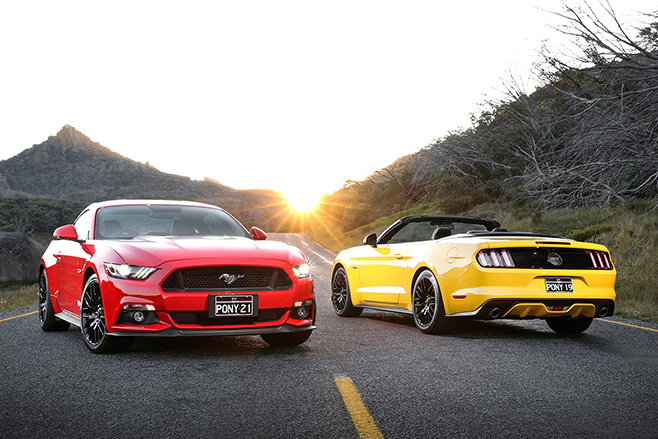
6. Buy a rear-wheel-drive V8The Falcon is gone but for another year or so you will still be able to buy a Commodore V8 – and resale values for models such as the SS are likely to remain strong due to a couple of factors: a) there will be demand in Australia for rear-wheel-drive V8s for at least the next five to 10 years, and b) it’s otherwise expensive to get into such a car, from the likes of the $55,000-plus Ford Mustang V8 to the $150,000 Mercedes-AMG C63.
7. Pick a good colourRed, white, black and silver will always be “safe” colours to choose, though only distinctively trendy hues that can date quickly are likely to significantly adverse your car’s resale value. A unique colour might actually help in some cases if it was limited in production or associated with a particular performance model.
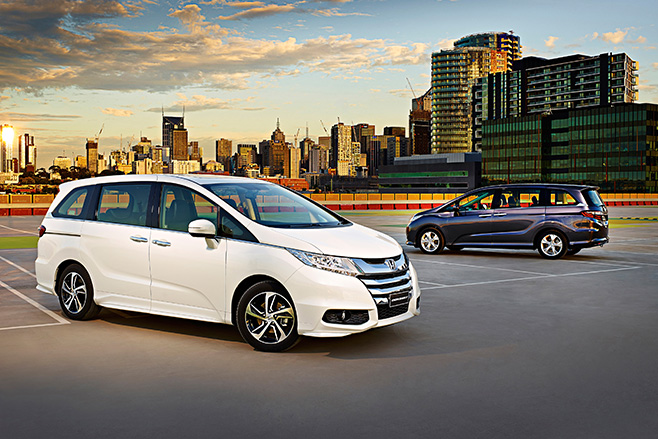
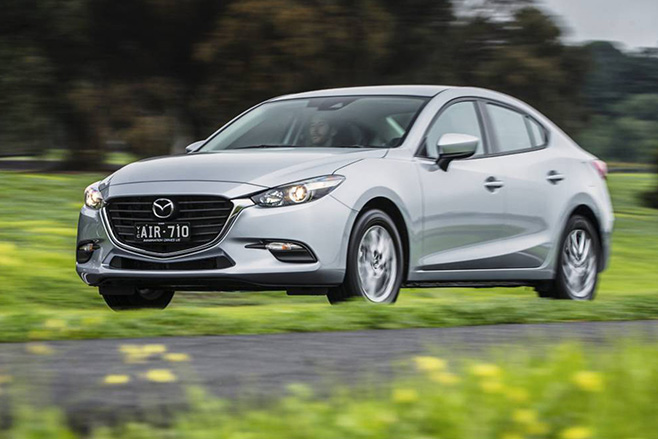
8. Buy a ‘private buyer’ carCars that are sold predominantly to private buyers – rather than companies, governments or fleets – typically stay out of the used car market for longer and are therefore likely to hold their value better. Popular ‘private buyer’ cars include the Mazda 3 small car and Volkswagen Passat medium car.
9. The automatic choiceBecause the vast majority of Australian motorists prefer a self-shifter, there will invariably be less demand for your car if it comes with a manual gearbox. However, there can be exceptions with sports cars or performance vehicles that attract keener drivers who prefer to change gear themselves. Manual versions of V8-powered Ford Falcons and Commodores, for specific examples, can command an extra premium over auto variants. This is particularly applicable to the Ford and Holden utes, which Adamidis says are “quite rare”.
10. Hold onto it longerMany buyers prefer to rotate their cars at least every three years, though one option is to simply own your car for as long as possible and spread the residuals loss over a number of years. Reach a decade of ownership and you will truly have got your money’s worth.
Top 10 Vehicle Resale Values in Australia*
1. VW Transporter TDI340 Crewman 74% 2. VW Multivan Executive TDI450 73% 3. Subaru XV 2.0i-S 71% (other XVs 68-70%) 4. Subaru BRZ 70% 5. Toyota LandCruiser GXL 4×4 diesel V8 69% 6. Audi RS3 67% Subaru WRX STI Premium 67% (STI regular 66%) Hyundai Accent SR 67% (other Accents 64-66%) BMW M240i 67% 10. Honda Odyssey VTi-L 65% (VT-I 64%)
Other notable performers Ford Mustang 64% Mercedes-AMG GT S 64% Mercedes-AMG C43 64% Porsche Carrera 911 64%
*Source: Glass’s Guide, based on 36 months and 60,000km.Glass’s Information Services combines data trends, market analysis and mathematical models to help predict future values of vehicles. It is the market leader in automotive residual value analysis, with over 102,000 vehicles and over one million fields of vehicle data contained in its database.If you want to assess the approximate worth of any new car(s) you are considering, the company provides an online resale forecast tool. It allows you to select the number of years ahead as well as mileage. If you would like to know what the car you own now is worth, Glass’s also offers a Current Value Certificate.
On normal weekdays Berlin is pedestrian heaven and motoring hell. There simply isn’t road space for much traffic. But today there’s our shiny Mercedes-Benz G500 on triple-XL Hot Wheels.
You don’t need a truck licence, but a truckie’s experience in climbing aboard helps. Okay, Mercedes Actros it ain’t but at 2235mm tall and 2190mm wide, you’ll be glad it’s bristling with proximity sensors, Surroundview camera and park aids.
It may not be as big as last year’s 6×6 model but it’s still an intimidating sight. Most gave the €226,100 (AUD$331,276) super G the thumbs-down – or one or two fingers up. To cyclists, the menacing intake rasp and exhaust rumble warns them well before my slipstream shakes them loose of their line.
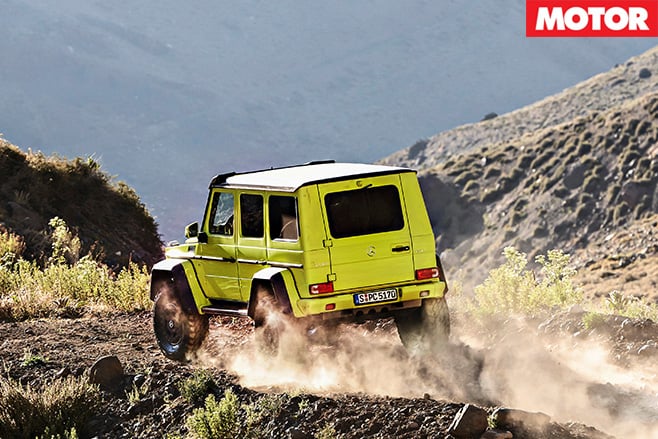
By now I’m in Kreuzberg, where East meets West, and the G500 4×4 Squared feels surprisingly at ease in the shoal of spoiler-laden 3 Series BMWs and MkV Golfs. It’s an ostentatious statement of affluence, a serious CO2 offender, a street-legal tank with heavy-duty portal axles and push-button diff locks.
Parked overnight in a left-wing area, there’d be a fairly high risk it would get vandalised. But on the dimly lit streets of the town’s rough side, where the Russian mafia clashes with rival eastern gangs, my SUV with the tinted windows is given a wide berth. It’s too risky a target.
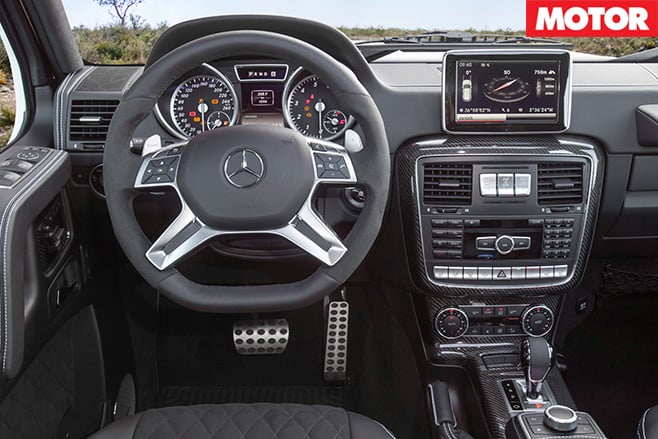
Like every G-class, it’s old-fashioned and idiosyncratic: there’s no space between you and the door yet overhead could house roosting bats; the central locking is incredibly loud and the tailgate slams shut like a vault.
More worryingly, this edition struggles to hold a straight line, accurately follow steering inputs or maintain composure over city tarmac. Then there’s the barge-like 14.3m turning circle.
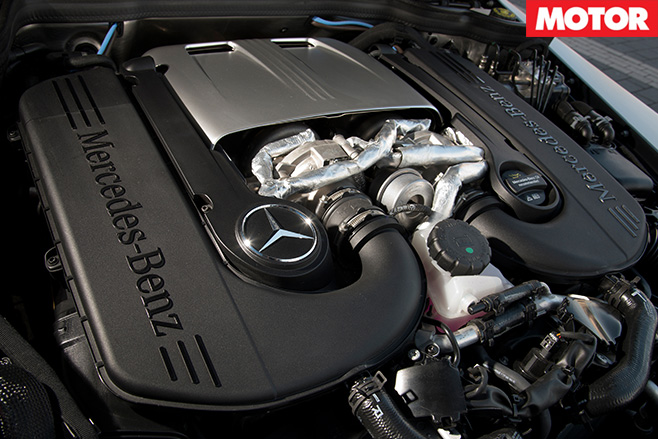
Given the considerable momentum it can build with the power and weight, you’d have to be concerned about stopping but to our delight the upgraded steel brakes have the stamina to control the spider-legged Benz. Admittedly, the drag coefficient of a block of flats helps slow her down, as does engine braking from the feisty V8, the rolling resistance of the clown-sized boots, and the friction inside the four-wheel drive system.
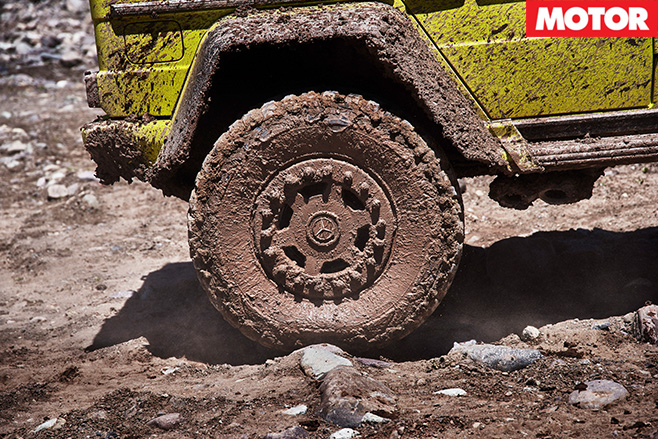
Too tall to spend the night in an underground car park, we found a hotel outside the city where the G could remain outside and safe. In the morning, the hotel staff ventured to take a closer look and they loved it.
But 10 minutes later, on the narrow avenue leading back to the autobahn, we were given the bird – number 16 – by an angry bus driver, even though we were way over to the side of the road to make way for him.
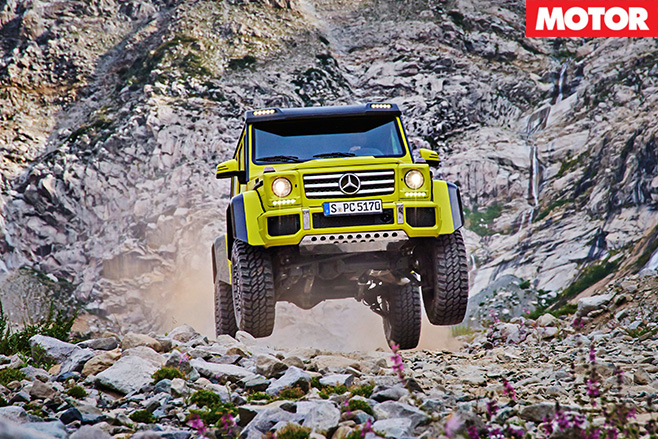
2.0 OUT OF 5 STARS
LIKE: Tonka truck fantasties made real; lovely V8 engine DISLIKE: Terrible in almost every objective way; not available in Oz
SPECS Engine: 3892cc V8, DOHC, 32v, twin-turbo Power: 310kW @ 5500rpm Torque: 610Nm @ 2250-4750rpm Weight: 2996kg 0-100km/h: 6.5sec (claimed) Price: $331,276
HOLDEN is here to stay. Despite pulling out of local manufacturing late next year, the carmaker is still in the new-car sales game, and on the record saying it wants 24 new or refreshed models on the Australian market by 2020.
That means the Holden showroom you see today will be very different to the one you see in three years’ time. In fact, it’s already different; so far, nine all-new or significantly made-over vehicles have joined the Holden horde.
So what will Holden’s new-car line-up look like? There’s some familiar names, a lot of new ones, and yet more that have, or will, fall by the wayside. This is part two of what we know so far; the Holdens that we know are coming but are yet to arrive.
ON THE WAY
HOLDEN ACADIA
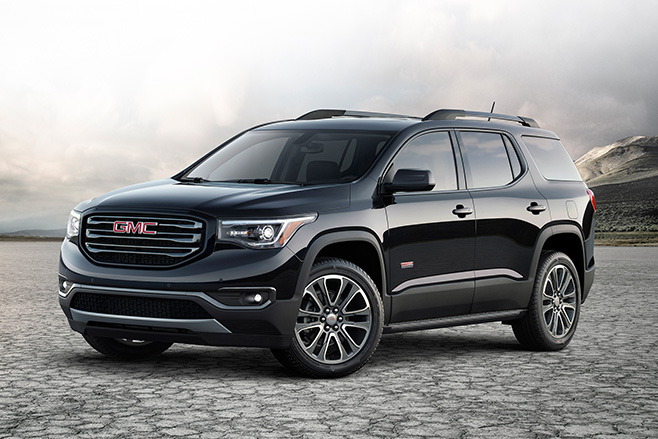
The Holden Trailblazer is a rugged, off-road capable seven-seat car for those of us with a spirit of adventure. For those who don’t want to go past where the bitumen ends, Holden has announced it will bring in a rebadged version of the more comfort-oriented GMC Acadia large SUV. Due in 2018, the Acadia is built on a more car-like foundation, although it will offer an all-wheel-drive option for occasional bush excursions. Expect prices to start around $40,000.
Competitors: Toyota Kluger, Mazda CX-9, Nissan Pathfinder, Hyundai Santa Fe and Kia Sorento
HOLDEN ASTRA WAGON
Although not yet confirmed, an all-new station wagon based on the Opel Astra is a likely starter for Australia. Called the “Sports Tourer”, it combines the front of the Astra hatch with a more swept, fastback roofline that gives the wagon a less boxy look. A highlight of the design is a chrome strip that runs along the roof line and then dives around the back door. A notable item on the equipment list, which Holden is hopefully thinking about, is massaging front seats. Expect it some time in 2017.
Competitors: Hyundai i40 Tourer, Toyota Prius V, Volkswagen Golf Wagon
HOLDEN BARINA
The Holden Barina is due for a facelift any day now that will bring its looks into line with the rest of the General Motors family – if changes made to the US market Chevrolet Sonic are anything to go by. Its gawky quad headlight look will disappear, replaced with a more modern light signature framed in a stylish shovel-nosed front end. Like the smaller Holden Spark, the Barina’s updates are expected to shift the car to the pointy end of smartphone integration – important for the young buyers it’s expected to attract.
Competitors: Honda City; Hyundai Accent; Mitsubishi Mirage

HOLDEN COMMODORE
Holden’s big, locally made sedan, wagon and ute are all expected to get one last update in about March that will carry them through to the end of almost 40 years of production late in 2017. Details are still hard to come by, but expect the carmaker to build excitement with a series of limited-edition models that celebrate the Holden Commodore’s heritage. The locally made Commodore will be replaced by a fully imported European car from early in 2018.
Competitors: Chrysler 300, Skoda Superb
HOLDEN EQUINOX
The unloved Holden Captiva 5 mid-size SUV, and its larger Captiva 7 sibling, will be replaced late next year with a US-sourced model called the Chevrolet Equinox. The Toyota RAV4 rival should have family versatility in mind, featuring sliding and reclining rear seats, plenty of in-cabin storage, six airbags, a reversing camera and keyless entry. The version of the Equinox we will get will be an all-new model potentially featuring some new tricks ranging from denim seat covers to active cruise control.
Competitors: Kia Sorento, Hyundai Santa Fe, Jeep Cherokee, Toyota RAV4
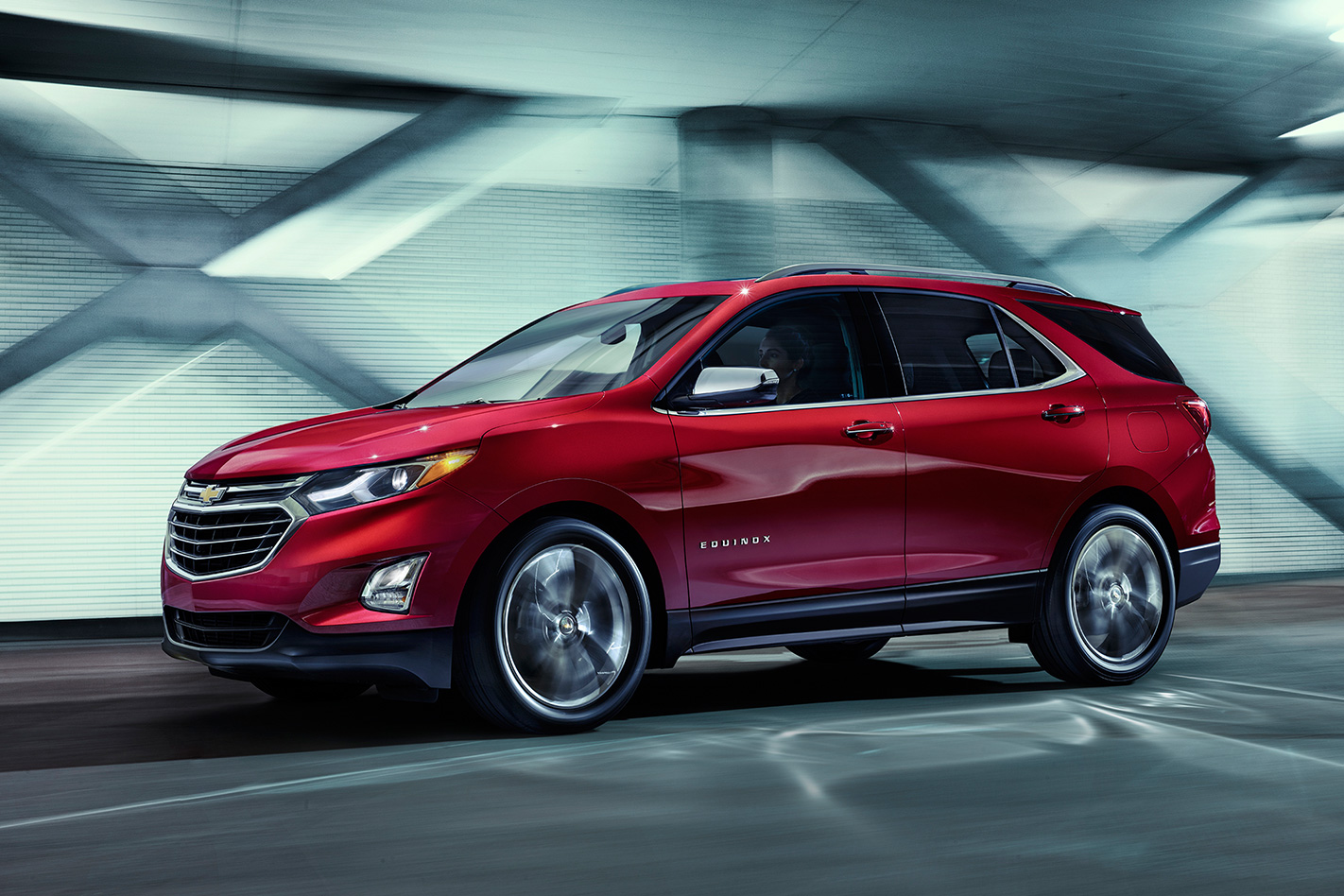
HOLDEN TRAX
Once again, Holden dips into Chevrolet’s product portfolio to find inspiration for a mid-life refresh for its Holden Trax baby SUV. The Mitsubishi ASX fighter is expected to gain the same modern look that gives the US version of the crossover more urban appeal, and a more premium interior that also taps into the technology set via a much improved multimedia interface. The dash is expected to tone down its digital focus for traditional analogue speedo and tachometer dials.
Competitors: Nissan Juke, Nissan Qashqai, Kia Soul, Ford Ecosport
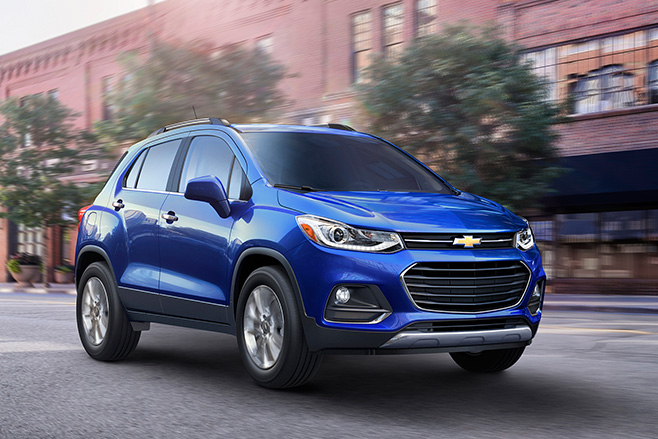
PREVIOUS: The Holden cars on sale now.
NEXT: The Holdens not yet confirmed
Lexus has updated the popular Lexus IS small sedan range by giving it an exterior facelift, a host of interior changes and additional safety tech.
The update includes eight exterior styling changes and 15 within the cockpit as well as the introduction of the complete suite of the Lexus Safety System+ technology.
Many of the design features have been imported from the recently released Lexus RC sports coupe, including its revised grille design, effectively creating a four-door version of that model.
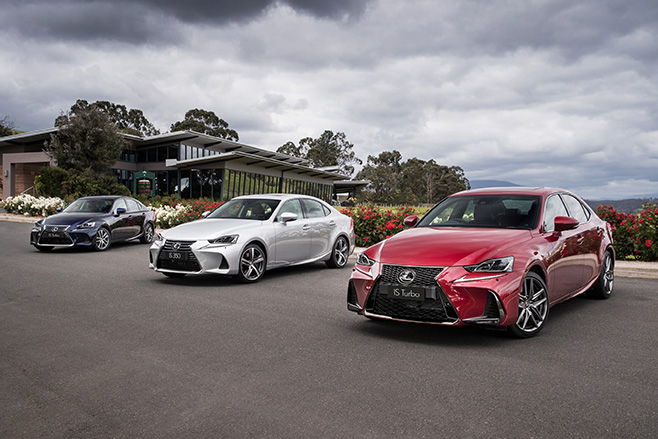
The Lexus IS range is available as the Lexus IS 200t with the recently launched two-litre 4-cylinder turbo petrol engine, the IS 350 powered by a 3.5-litre quad cam petrol V6 and the IS 300h petrol-electric hybrid.All three variants are available in Luxury, F Sport and Sports Luxury grades with varying degrees of specification and equipment.
Exterior tweaks across the range include a new bumper design and a totally repackaged lighting design that substantially increases after-dark visibility.
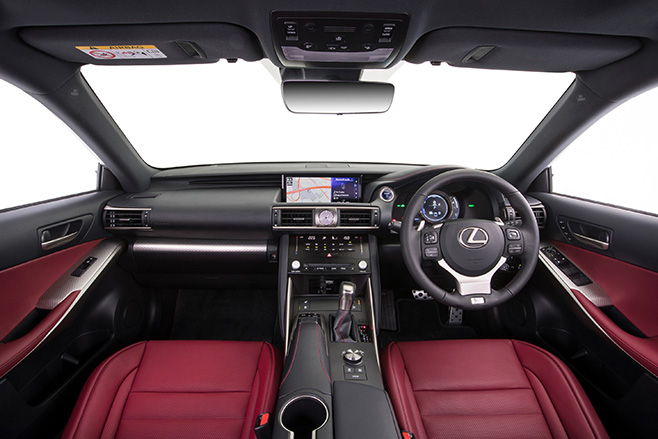
The Lexus IS Luxury and Sports Luxury also score new wheel designs.Inside, the IS has new trim colours and combinations with the standout feature being the new 10.3-inch display audio screen, replacing the previous seven-inch unit in the centre dashboard. Other changes include new instrument gauges and steering wheel control buttons taken from the Lexus RC for more precise control.The Lexus Safety System+ package introduces a sophisticated Pre-Collision System to a suite of electronic control mechanisms including Lane Departure Warning+.
Price rises for the 2017 IS range have been kept below $900 with the entry-level IS 200t Luxury going up $690 to $59,340 while the range-topping IS 350 Sports Luxury comes in at $83,870.
HOLDEN is making the final touches to a louder, angrier version of its high-performance Commodore-based ute that will help to farewell the car.
The collectable tribute car will be the first of three special-edition models that will celebrate the locally made Commodore’s legacy once manufacturing ends late next year.
The last of the limited-run utes is believed to be a bespoke-badged version of a Holden Commodore VFII SS-V Redline, featuring more aggressive aerodynamic tweaks and a much more sinister growl from the bimodal exhaust snaking down from its LS3 V8 engine.
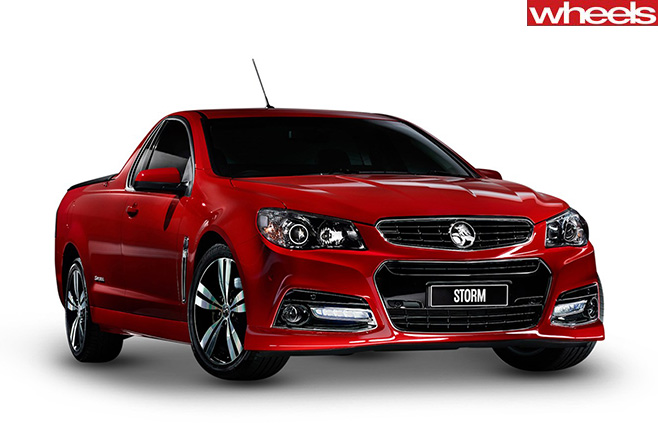
Holden declined to comment on the ute’s existence. However, the carmaker has previously said it would roll out a series of Commodores wearing special badges and celebrating the end to almost 40 years of manufacturing the sedan, wagon and ute line as next year’s production deadline looms.
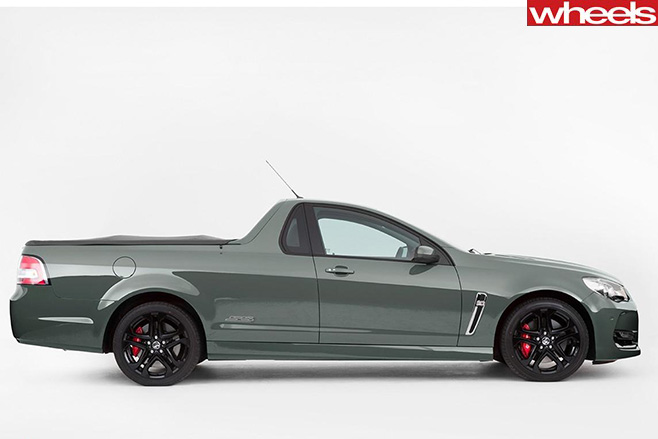
It should also be the last chance to own what is one of Australia’s great driver’s cars – let’s be honest, under its sleek ute-coupe styling the Holden is more two-seat sports car than worksite hack.
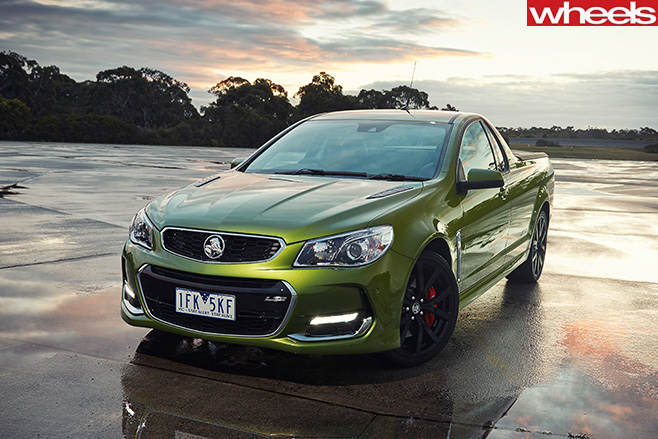
Critically, though, Holden admitted that while the special Bathurst badge had been shelved, the project team that was working on the hi-po send-off for the Commodore had not lost pace.
Caprice, Captiva, Colorado7, Cruze, Insignia, Malibu, Ute.
That’s the roll call of Holden badges that have just been – or soon will be – expunged from the brand’s new vehicle sales lists as the most dramatic rebuild in the General Motors-owned company’s history gathers pace.
The surprise deletion among that lot is Holden Cruze, which has just finished its run as a locally-built model and will not be the name of the small Korean-built sedan Holden will launch early next year.
Instead, Wheels sources insist, it will be badged as an Astra, unifying Holden’s small car contender under one name.
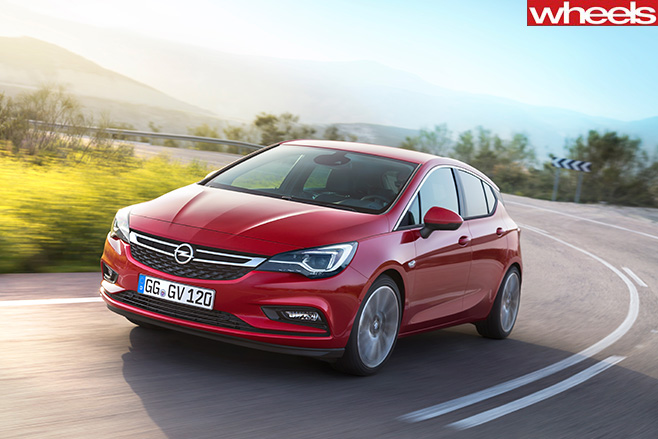
Holden has just launched the latest generation Opel-developed, Polish-built Astra five-door hatchback. It is the ninth of 24 new or updated models the brand will launch by 2020. The Astra sedan is based on the same D2XX architecture.
Much of this model overhaul and renaming is a result of 2017’s end of local manufacturing, which will claim the long wheelbase Caprice, the car-based monocoque Holden Ute and Holden Commodore sedan and wagon – although the latter name carries on into a fifth generation attached to an imported Opel Insignia.
The launch of the Commodore/Insignia signals the death of the current Insignia, sold here only as a turbocharged all-wheel drive VXR, by early 2017.

On the SUV front the already defunct Captiva5 will be replaced by the Chevrolet-sourced Equinox in 2017, while the Holden Captiva7 (now known, again, as simply Captiva) soldiers on into 2018 and its replacement by the GMC-sourced Acadia.
Colorado7 had been facelifted and renamed Holden Trailblazer.
Continuing for the moment are the Cascada hard-top convertible and Astra GTC/VXR three-door, which are based on the old Delta II architecture but still in production in Europe.
Holden executive director of sales Peter Keley said the overhaul of Holden badges – Spark, Barina, Trax and Colorado continue along with Commodore and Holden Astra – represented an opportunity rather than a challenge for the brand.
“What you are going to be seeing is a very cohesive range of vehicles as we move forward,” Keley told Wheels.
“You will see a much more even spread. So you will have a spread of four or five vehicles doing similar volumes or significant volume, and then a second tier of models filling out the range.
Keley said the current cadence of model launches is what we can continue to expect from Holden.
“At the end of the day what you will see from Holden going forward is at least a couple – two or three – brand new cars being launched and a couple of significant facelifts [per year] and that will become the norm.
“As Holden and General Motors have progressed out of bankruptcy … we are now back into being what I call a normal car company, with a very regular cycle of all-new products.
“We haven’t enjoyed that for a while. We have done that this year, we are doing it next year and it will continue on every year and that will become our business as usual.”
Holden needs this model renewal desperately; sales hit a 22 year low in 2015 and are set to drop again in 2016.
“We’ve got plans to grow volume and we are going to do that in a consistent manner because that is how you build sustainability,” said Keley.
“We are not tied to a specific market share or positon in the market place. It’s about hitting our internal targets, sending the right returns to General Motors so we can keep investing consistently in products for the Australian market.”
THE Alfa Romeo Giulia has just gone on sale in Britain. To celebrate, the Italian brand wanted to do something unique.
Now, setting lap records is old hat, and the Giulia already has the Nurburgring sedan record thanks to a highly entertaining lap you should watch here.
Just to be different, Alfa Romeo decided it wanted to set a new lap record at the famous Silverstone circuit – for driving while blindfolded.
The windows of the car used t set the lap record were covered in black vinyl, forcing the official test driver — Ed Morris, the youngest Briton to ever compete at the 24 Hours of Le Mans — to attack the track without any visual aids. He did, however, have a factory driver chasing him in a support car to give directions and guidance over the radio.
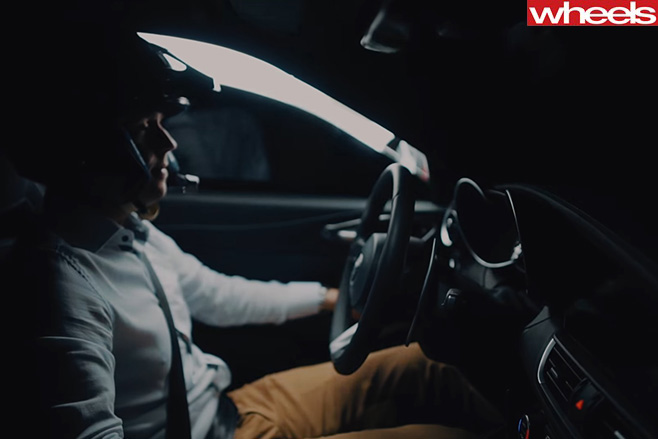
It took two days for both drivers to build up to the record-setting pace, eventually lapping the 2.63-kilometre course in 1:44.2. This matched the time set by F1 World Champion Nino Farina in an Alfa Romeo 159, 65 years ago.
It should be noted, though, that the lap wasn’t completed on the full 5.89-kilometre Grand Prix circuit, but the smaller National Circuit.
The fastest time on that layout is a blistering 58.24 seconds, set by a McLaren P1. However, its driver sure as hell didn’t do it without seeing where he was going.
We note the Alfa Romeo Giulia arrives in Australia in February about the same time as the GT cars tackle Mount Panorama in the Bathurst 12 Hour – perhaps the Giulia can have a crack at the blindfolded lap record there?
