
If you’ve been reading MOTOR for the past few months, you’ll know that the XR8 Sprint is not a perfect car. Not by any stretch. But it makes the number-two slot right here for a couple of reasons.
Firstly, it is, without a shadow of a doubt, the fastest V8 Falcon ever made in this country. Yes, the XR6 Sprint pipped it across the quarter and to 100km/h at BFYB recently, but only by a tenth-and-a-bit on each occasion. Meanwhile, the XR8 showed the turbo-six the way around Winton by more than two seconds and had a higher lap v-max.
On balance, I’ll call that a dead-heat, but for sheer presence and feel-good factor, the blown V8 has the otherwise impeccable six shot to bits. And let’s not forget that the whole fast-Falcon thing was predicated upon Bathurst-winning Falcs bearing bent-eights. Sure, the turbo-six was a ripper and has featured more than once on this list of all-time greats, but if we’re talking heritage and heart-strings, then we’re talking V8s.
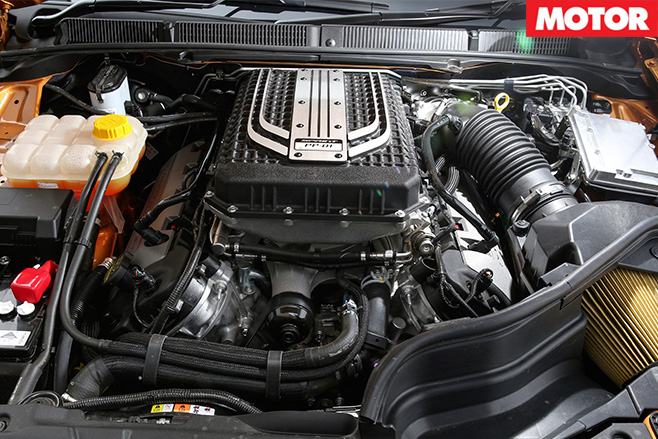
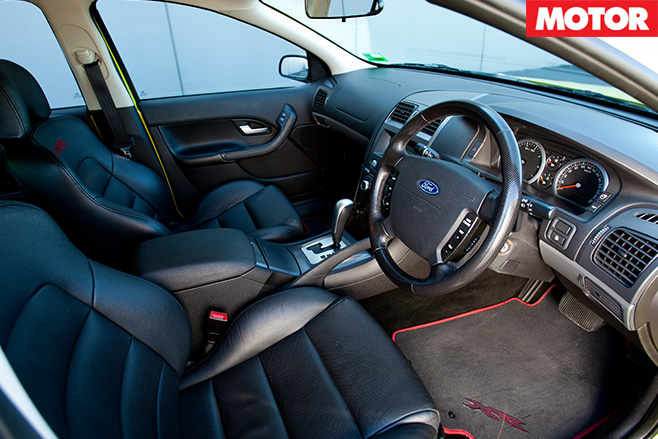
But even forgetting the significance of being the last man on earth, the XR8 Sprint really does it for us as a performance family-car. Nought to 100 will take just on five-dead; the quarter consumes about 13-dead. Not only are those numbers quite sensational for something that doesn’t have a European passport and/or all-wheel drive, they’re positively astounding when you consider the Sprint still maintains that Falcon tradition of being able to do it all day, every day, in 45-ambient with a fishing boat hanging off the back.
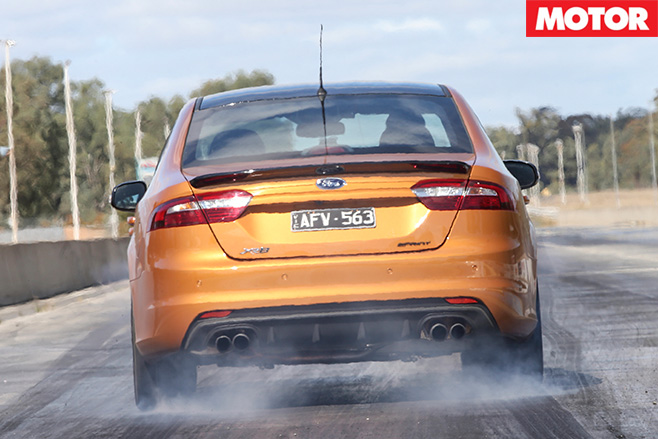
So where did the Sprint go wrong? In a few areas, most notably in the way that power-station of an engine suddenly shows up just how old the basic platform is. Fact is, you won’t really find anything under an FG X that a suspension engineer that worked on the BA Falcon of 2002 wouldn’t recognise immediately. The result is a car with way more engine than chassis. Okay, so a lot of hairy-chested blokes claim to enjoy that, but we’ll take sharper steering and more mechanical grip over balls and bravado any day. Thanks very much.
Meanwhile, perhaps the best thing about the XR8 Sprint is that it’s still attainable. It hasn’t been around long enough for values to be affected by the collectors out there, yet it’s utterly destined to earn the double-edge-sword tag that is ‘collectible’. If you want one, though, grab one as soon as you can; the mood of the market suggests that this is one Falcon that will spend more time in climate-controlled garages than it will on the road. Which is, if you ask us, missing the whole point.
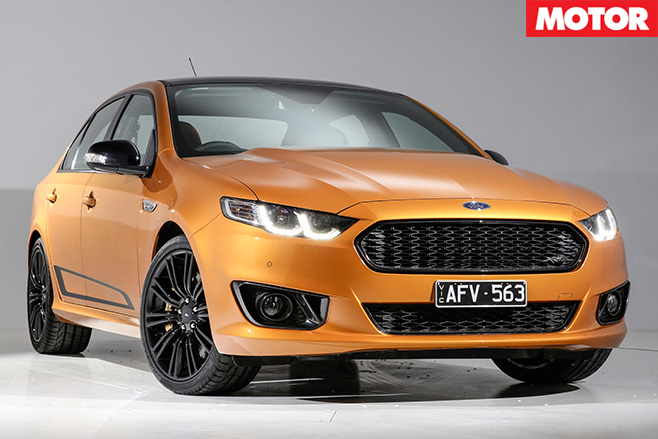
IN DETAIL Engine: 4951cc V8, DOHC, 32v, s/c Outputs: 345kW/575Nm Weight: 1869kg Price: $59,990
What’s our fave Falcon? Check out MOTOR’s take on the top 10 Fast Ford Falcons ever made here.
Some of you will point to the XR8 Sprint’s stablemate, the FG X XR6 Sprint, and suggest that it should occupy this rung on the ladder on the basis that’s it’s the best turbo-six Ford has ever offered.
And while that’s arguably true, the real number three in the pantheon of fast Falcons is the original BA-model XR6 Turbo. No, it wasn’t as fast or as powerful, but it arrived just in time to absolutely rewrite the book on the subject of rapid Falcs.
We Aussies have always had a bit of a soft spot for the straight-six. While the North Americans deride the layout, we’re smart enough to know that the engineering inherent in the I6 gives it perfect primary balance and lots of torque.
And, when it’s a long-stroke design like the Ford 4.0-litre job, then turbocharging it is a natural thanks to its characteristic of tremendous cylinder-fill. But Ford didn’t leave it at that. Nope, it also developed a DOHC head (which found its way onto the atmo version as well) to go with the new-for-2002 six.
Let’s not forget that a couple of our greatest-ever muscle cars have been six-bangers. The Chrysler Charger E38 and E49 twins were giant-killers in their day and, of course, there’s the legendary Torana GTR XU-1 that not only won Bathurst in 1972, but launched the career of one P Brock into orbit in the process. So, yeah, we get a straight-six as a performance powerplant.
The advent of the XR6 Turbo also helped the BA Falcon to erase the memories of the unloved AU – probably the BA’s first task back in the day. But by being such a radical and effective thing, the XR6T did more than that, it cemented the blown BA as an all-time favourite. Almost 15 years of turbocharged Ford sixes later, the impact of that first model simply can’t be ignored and that’s why it’s here, at number three.
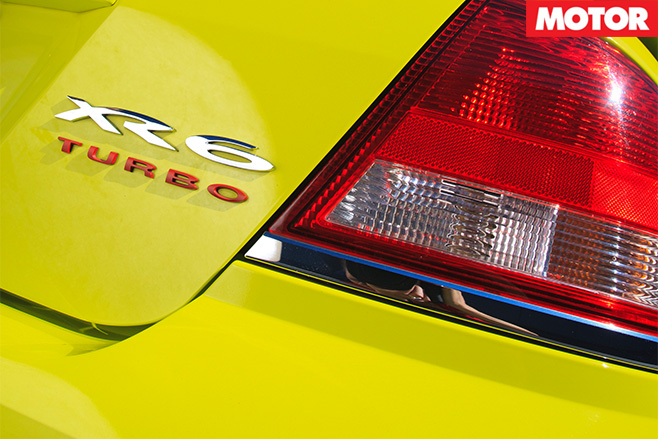
The XR6T in BA guise was still saddled with the old four-speed auto, but that was still preferable to the clunky old five-speed manual. And given the huge torque the engine could summon from low revs, the four-speeder was a ratio short, but only on paper.
The real downside to that relative lack of gearing was obvious when you sidled up to a fuel bowser; it was then you discovered that while the XR6T performed like a good V8, it also drank like one if you had been using the boost. Not that many owners worried, because of vastly more interest was that surging mid-range that gave the XR6T such a muscular feel. You could feel the boost build – although it happened pretty early on – and then it was game on for the next 4000rpm until she finally ran out of puff. Literally.
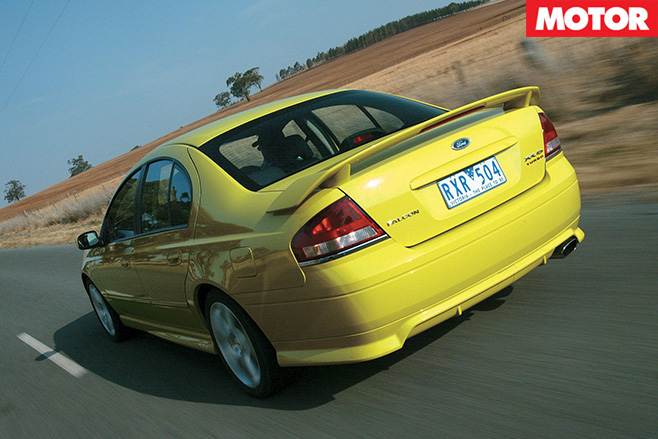
The only other catch was, like any non-FPV-spec BA Falcon, the Turbo was underbraked. One lap of a race-track was all it took for the pedal to go dead, then long. Not only that, but the front rotors themselves had a depressingly short lifespan when bolted to the stub-axles of the XR6T, and most owners soon switched to the FPV stuff or similar. And if that sounds like a shopping guide, it should, because you need to buy an XR6T now. Right now.
IN DETAIL Engine: 3984cc 6cyl, DOHC, 24v, turbo Outputs: 240kW/450Nm Weight: 1690kg Price: $43,965
What’s our fave Falcon? Check out MOTOR’s take on the top 10 Fast Ford Falcons ever made here.
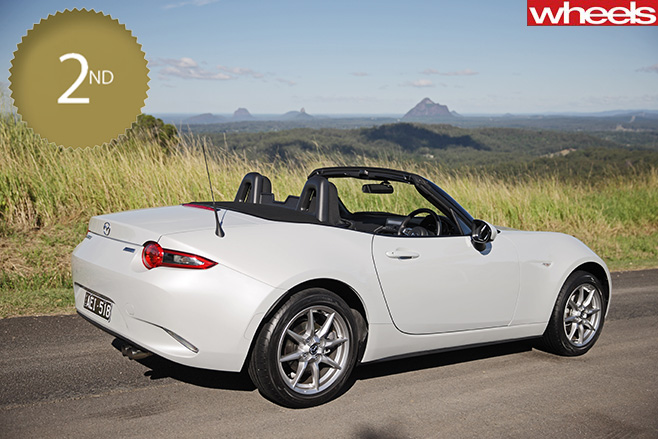
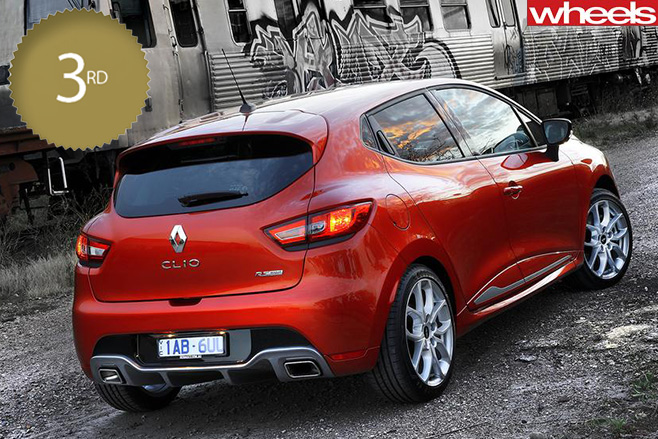
Hair raising performance doesn’t have to empty your wallet. Get the best bang for your buck from the Ford Fiesta ST, Mazda MX-5, and Renault Clio RS200.
Ford Fiesta ST
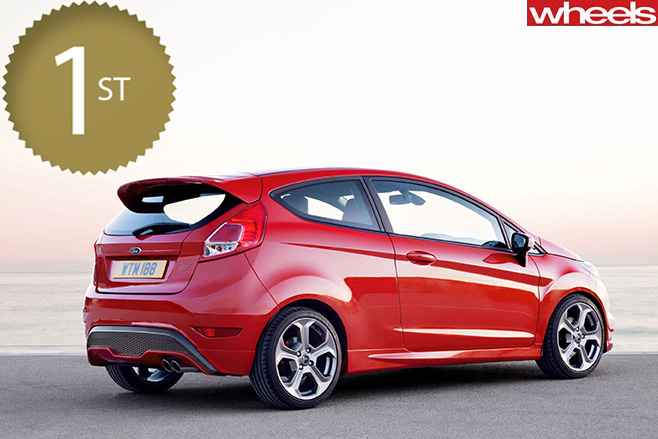
and is cheaper to insure. The Ford’s 52 percent retained value is 10 percentage points worse than the Mazda’s, but the $6K saving on purchase price prevented it from undoing a stellar campaign.
Mazda MX-5
Renault Clio RS200
MORE GOLD STAR COVERAGE
 WHEELS GOLD STAR VALUE AWARDS
What if someone could expose the hidden costs, crunch the numbers, present the data, and draw conclusions about how to best spend your hard-earned on a brand new car? Enter Wheels’ annual Gold Star Value Awards.
Find out more
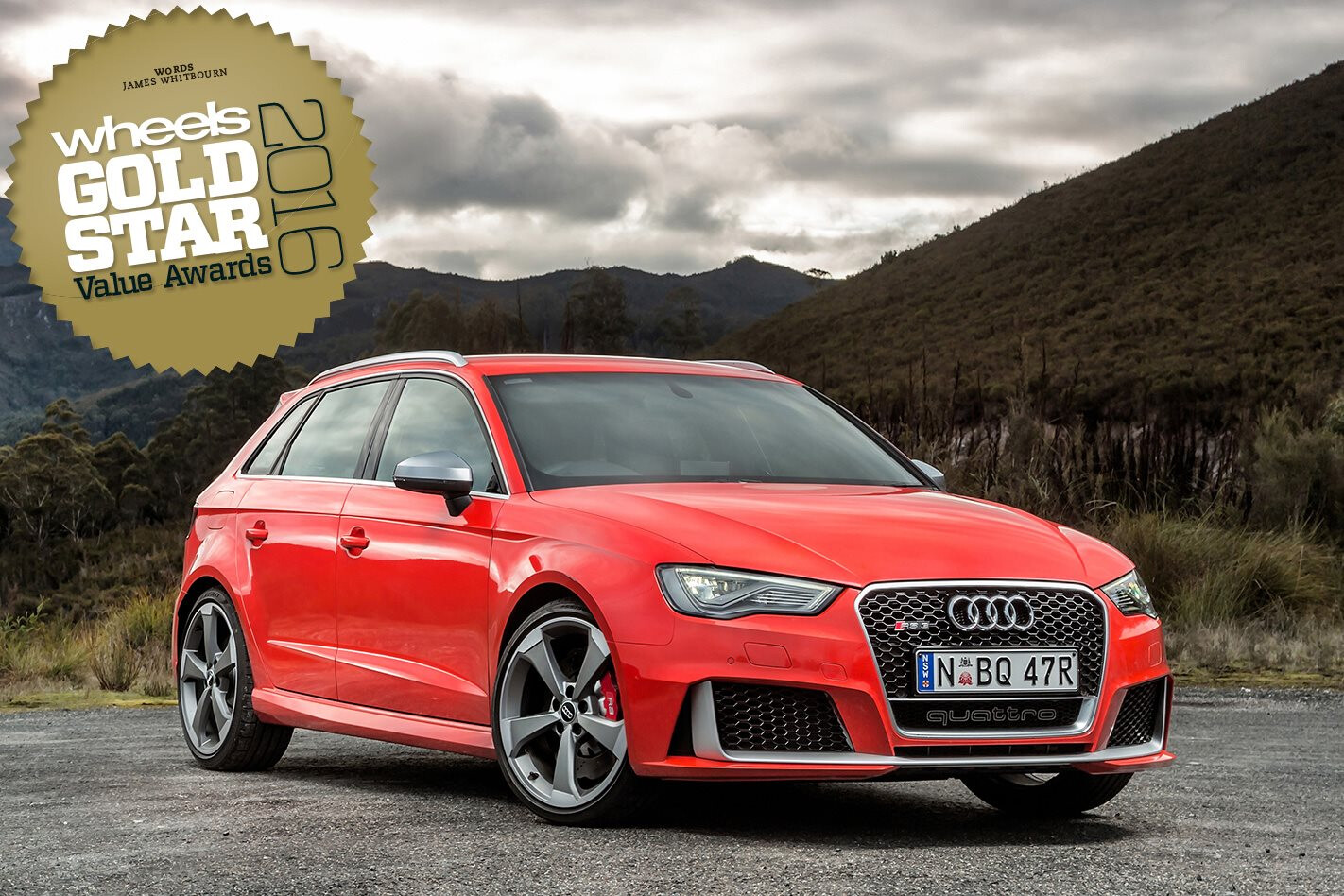 BEST PERFORMANCE CARS $75K to $150K
Don’t hurt your wallet just for some cheap thrills. The Audi RS3, Lotus Elise S, and Alfa Romeo 4C will tickle you in the right spots without breaking the bank.
View the results
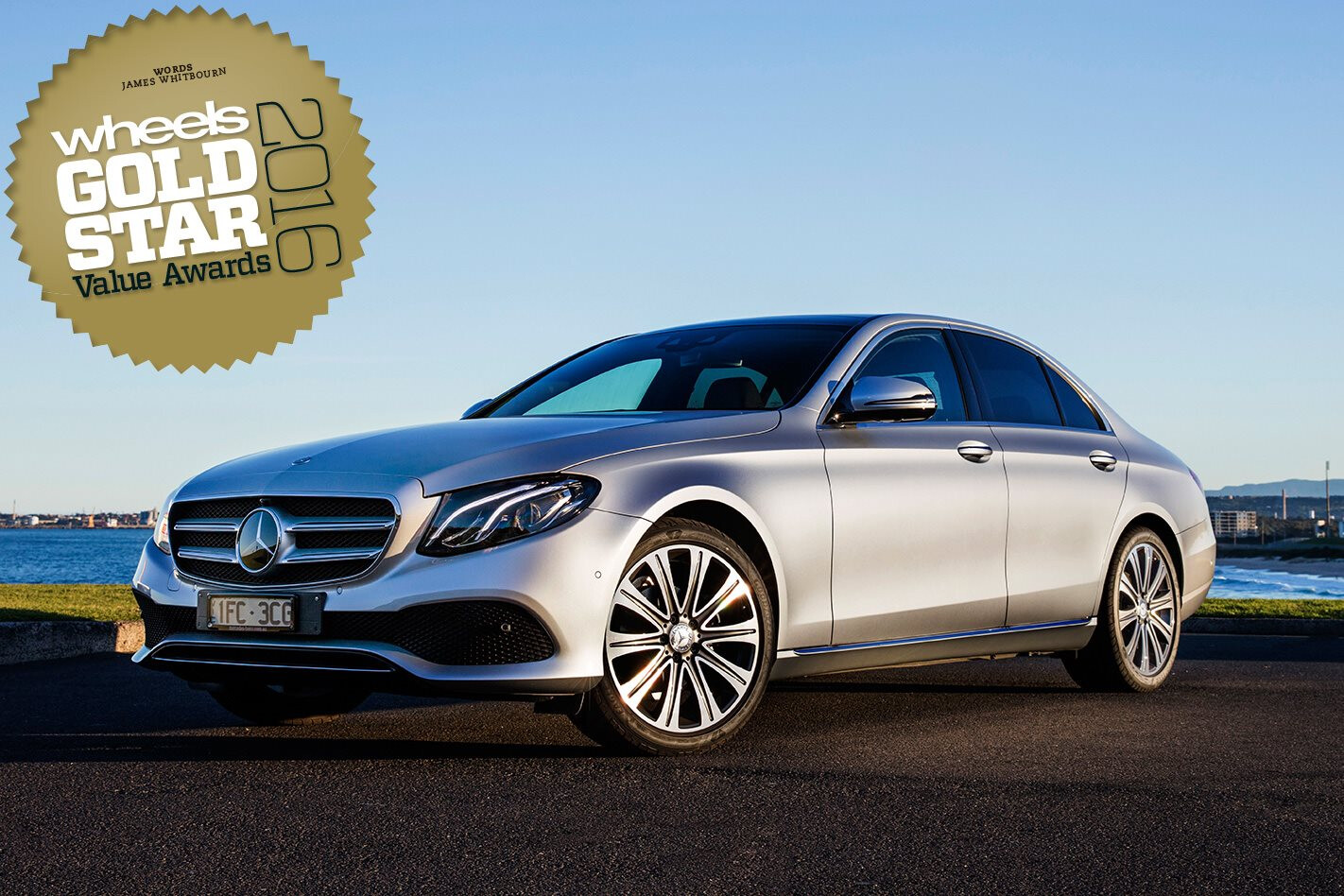 BEST PREMIUM LARGE CARS
Gone are the days when big luxury cars were all gas guzzlers.
View the results
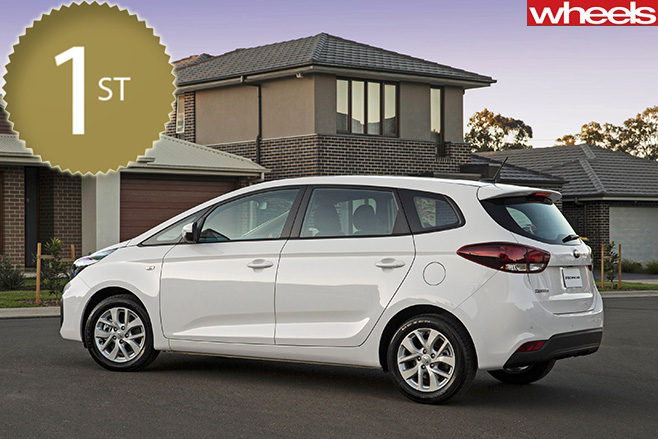
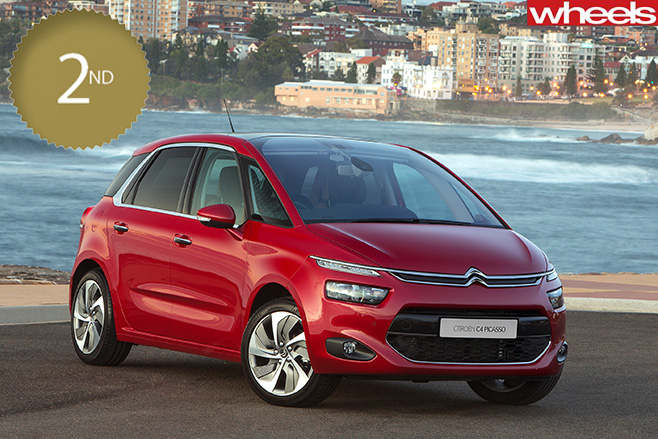
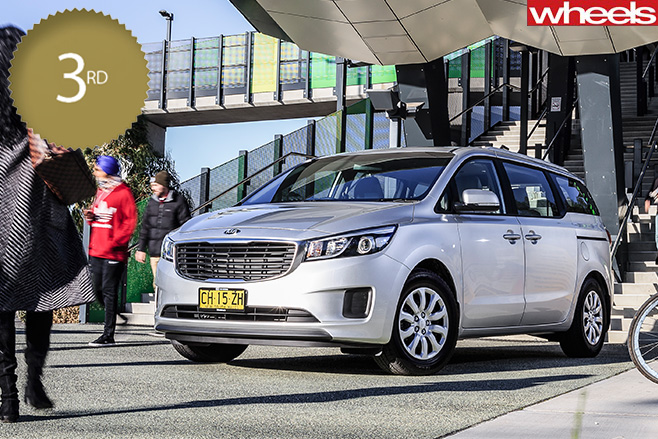
For moving the family on a budget. Introducing the Kia Rondo Si, Citroen C4 Picasso, and Kia Carnival S.
Kia Rondo Si
Citroen C4 Picasso
Kia Carnival S
MORE GOLD STAR COVERAGE
WHEELS GOLD STAR VALUE AWARDS
What if someone could expose the hidden costs, crunch the numbers, present the data, and draw conclusions about how to best spend your hard-earned on a brand new car? Enter Wheels’ annual Gold Star Value Awards.
Find out more
BEST MEDIUM SUV $45K to $65K
If you want it all: the label, the space, and all the tackle then the Kia Sportage, Hyundai Tucson and Range Rover Evoque are worth a look.
View the results
BEST LARGE SUV/4WD
A large SUV or 4WD is a great solution for those with a sense of adventure.
View the results
Subaru has peeled the covers off the Viziv-7 concept at the LA auto show, revealing an all-new seven-seat wagon that will take over from the Tribeca as the Japanese automaker’s largest vehicle.
And it will be huge. Literally.
Measuring just under 5.2 metres long, the Viziv 7 is over half a metre longer than the Forester and 40cm longer than a Subaru Outback. Overall width comes in at 2 metres, nearly 20cm more than the already-sizable Outback.
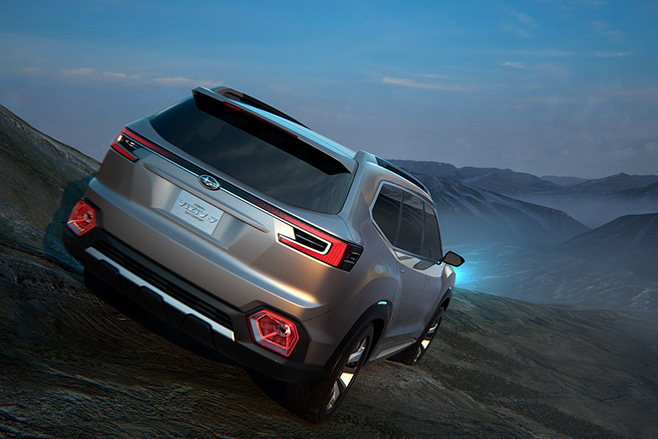
And when you line that footprint up against its major rivals like the Mazda CX-9 or Toyota Kluger, it easily eclipses them. In fact, it’s fractionally larger than a V8-powered Nissan Patrol – one of the largest cars available in Australia.
If you’re struggling to put that into perspective, here’s a clue – the wheels fitted to the concept shown here have a massive 21 inch diameter.
Subaru doesn’t mention what powers the Viziv-7, but WhichCar understands that a production model would most likely be powered by a turbocharged 2.5-litre petrol four-cylinder, a similar strategy employed by the Mazda CX-9. Subaru also has a 3.6-litre naturally-aspirated petrol flat six in its engine portfolio, but tightening emissions regulations may force that motor into retirement.
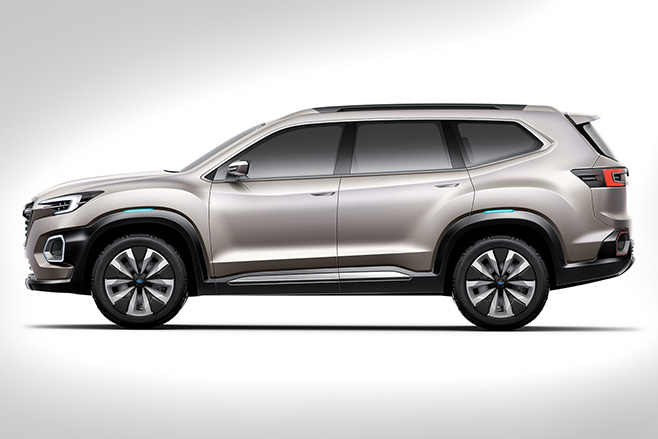
The as-yet-unnamed production version will be built in the United States and will primarily be sold in that market. As far as an Australian release is concerned, the outlook is not good.
Though large seven-seat SUVs are strong sellers Down Under, the need to engineer a right-hand drive variant coupled with anticipated strong demand from American buyers means it’s unlikely we’ll see a successor to the Tribeca roll into local Subaru showrooms.
Subaru expects the Tribeca production line in the US will be maxed out from left-hand drive demand, and there are no plans to build that model in Japan – the current source for all Subaru models sold in Australia. And with the Exiga already having departed our shores and no other seven-seat products in Subaru’s future planning pipeline that means Australian motorists will be forced to look elsewhere for a three-row SUV.
FERRARI Oz is charging towards a record year in sales and it has our burgeoning property markets to thank for it.
As well as being on track to sell more vehicles in this year than any other, Australia has surged past the global market when it comes to the relative amount of first-time owners.
Herbert Appleroth, Ferrari Australasia CEO, has labelled it a “supercar boom” for Ferrari when speaking to the Australian Financial Review, and linked it to Australia’s extremely competitive housing markets.
This boom comes from the new rich, reportedly, with 61 per cent of Ferrari buyers first-timers, which is more than China and Middle Eastern markets.
For instance, Sydney’s median house prices have soared to $1,068,303, double what they were 10 years ago.
According to statistics from the Federal Chamber of Automotive Industries Ferrari sold 147 vehicles by October’s end. Or 1.4 per cent more this time last year.
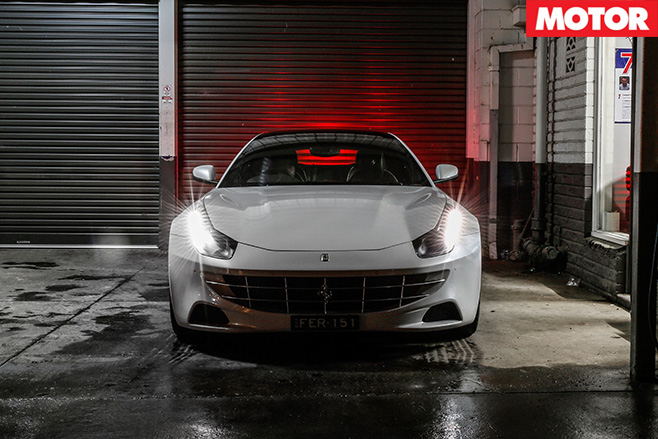
The 147 Ferraris sold so far towers over McLaren’s 59 or Lamborghini’s 120, and is predicted by the CEO to surpass 2015’s total of 167 units.
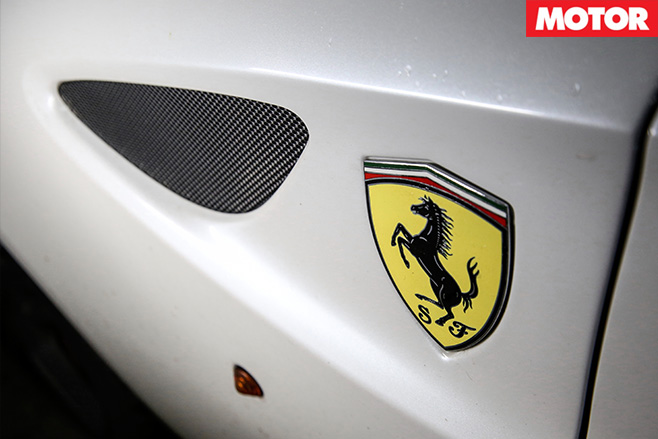
The FF was the first ‘family-friendly’ Ferrari and the GTC4 Lusso ‘T’ variant plans to bring it closer to buyers with the 488’s smaller twin-turbo engine, rear drive, and a more attainable price when its expected to land this month.
Source: Australian Financial Review
Imagine needing fuel but instead of having to waste time finding a petrol station, filling up and telling the cashier you don’t want two Cherry Ripes for the price of one, you can have someone else do it for you.
Volvo is trialling such a service in San Francisco which also includes car washing, servicing and even moving your car to another location for you – which could be handy if you did the right thing and left your car at the pub the night before.
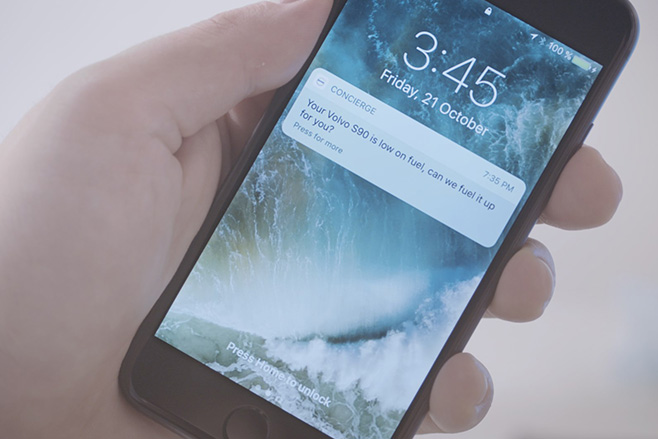
The concierge system is part of the Volvo On-Call mobile app offered to owners of the new Volvo XC90 SUV and Volvo S90 luxury sedan to make their lives even easier.
And though it may seem like the height of laziness, the Swedish automaker reckons there’s demand for such services. Based on research that showed more than 70 percent of customers want fuelling services at their fingertips, Volvo also found 56 percent also wanted their car picked up for routine maintenance while 49 percent would like to be able to have their car moved to another location when desired.
The Volvo owners participating in the pilot can use the app to identify concierge services available in the immediate vicinity and order them via their smartphone.

The app can even communicate with the car and contact the drivers to remind them they need fuel or car servicing and ask if they want someone else to do it for them.
Once booked, the mobile concierge can access the car using a one-time-use digital key sent from the app, which is location and time-specific. When services are complete, the car is locked and the digital key expires.
The car can also be returned to where the customer left it or delivered to a completely new location at the customer’s request.
Volvo handles all the billing and payments to vendors, but hasn’t said how much it will charge on top.
WhichCar has approached Volvo Australia to see if there’s any chance of the concierge service coming here.
As you’d expect, not much that goes in or on a Porsche is put together in a hurry and that goes right down to the tiny crests on their bonnet, which have been handmade and painted since 1952.
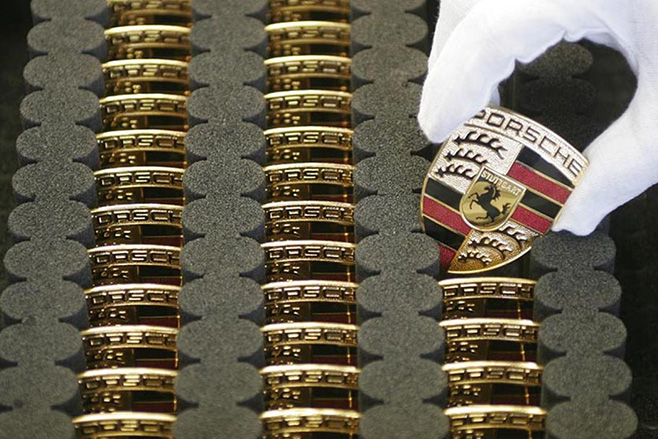
That was the year it was suggested as a quality seal for the Type 356 at a meeting between Ferry Porsche and US importer Max Hoffman back in 1952.
The company’s advertising manager Herrmann Lapper and designer Franz Xaver Reimspieß produced a preliminary design that became the familiar crest still used today, albeit with a few subtle alterations.
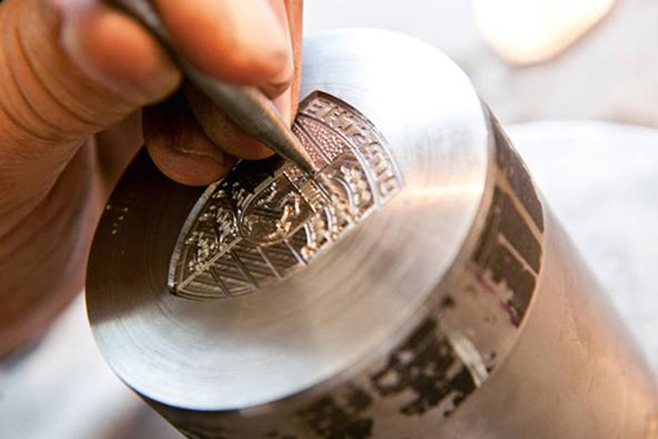
Reimspieß, who is also said to have designed the Volkswagen logo in 1936, sketched a crest the company’s roots and products.
In case you ever wondered, the horse, or ‘Rossle’, at the centre of the shield is taken from the official coat of arms of Porsche’s home city Stuttgart, which is written above it. They are surrounded by the red and black colours and antlers from the coat of arms of the former German state of Württemberg-Hohenzollern before it was incorporated into the merged state Baden-Württemberg.
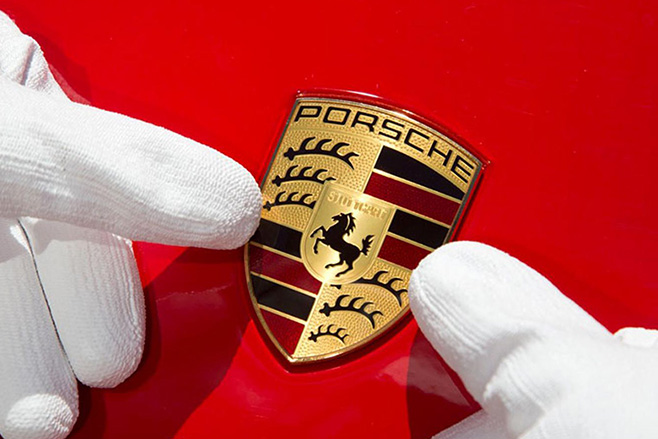
The crest is still produced using special tools with the silver and gold plating applied with the colour and enamelling meticulously applied by hand.
A few years ago Porsche Classic started reproducing the original badge design using tools made from the original drawings for use on early Porsche 911s and 356 restorations.
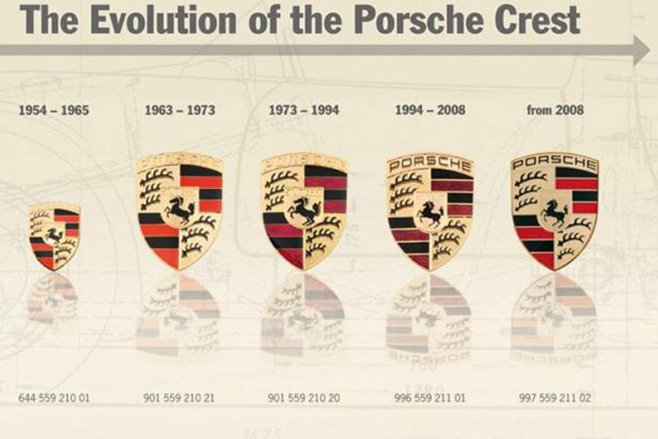
The new “old” crest underwent the same quality tests as the original including a simulated stone impact test at a ballistic firing range and 240 hours in a salt spray chamber.
The video shows the classic badges being made, complete with a Game of Thrones-esque soundtrack.
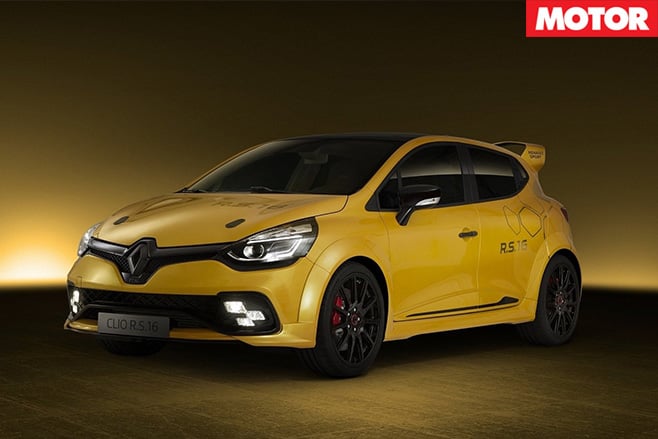
Renault Sport insists it was considering building its concept Clio RS16 with a manual transmission and Megane RS engine – but the news isn’t good for French hot-hatch fans.
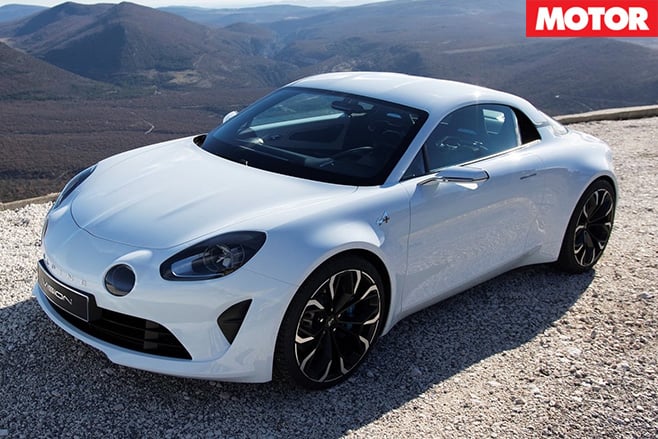
According to Renault’s European press office the decision has been made to not produce a limited batch of Clio RS16 models, with the company focusing on building its reborn Alpine sports coupe rival to the Alfa Romeo 4C and Porsche Cayman.
“Clio RS is built at the Alpine Dieppe [France] plant,” a company spokesperson explained to the UK’s TopGear.
“The option of delaying RS16 until after the start-up of Alpine was considered but this would have meant first-half 2018 [and] too long for customers to wait.”
Based on the timing of the previous-generation production model, the 2006 Clio III RS took seven years to switch to the 2013 Clio IV RS – and that current model would be five years and around three-quarters through its lifecycle by 2018.
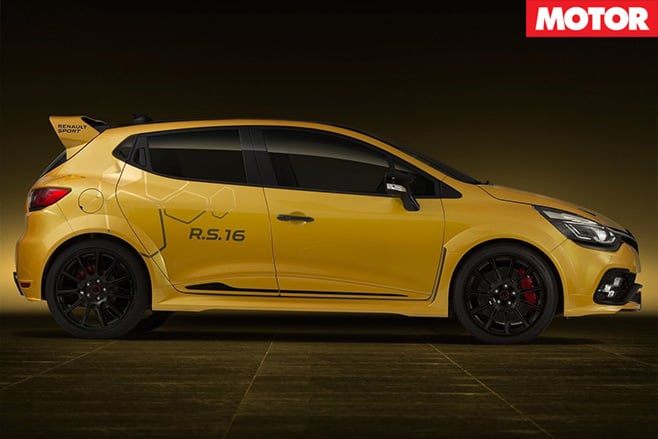
The concept Clio RS16 took the Megane RS275 Trophy-R’s 202kW/360Nm 2.0-litre turbo, six-speed manual and wider front architecture and teamed it with a rear from the Clio R3T rally car. The fattened, wide-body light hatchback even scored adjustable Ohlins dampers and crackly Akropovic exhaust.
All focus is now clearly on the $70K-plus Alpine project previewed in near-roadgoing form by the Vision Concept earlier this year. The production version is expected to debut at the Geneva motor show in March 2017.
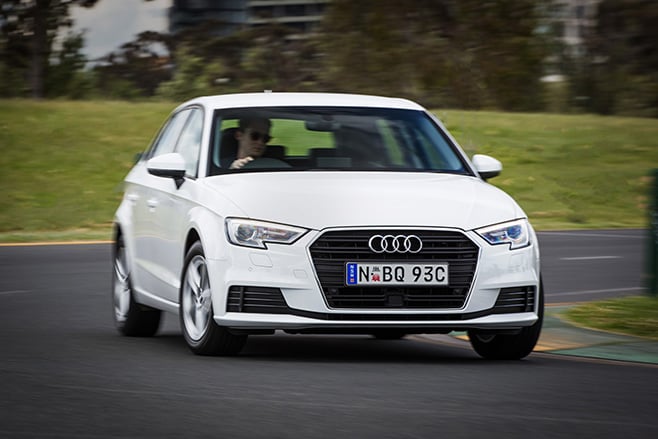
Now halfway through its life cycle, the Audi A3 has come in for a freshen-up, both inside and out. Its exterior plastics have been massaged at the front to mimic the crisp design of the new-gen A4, and there’s now more equipment included as standard.
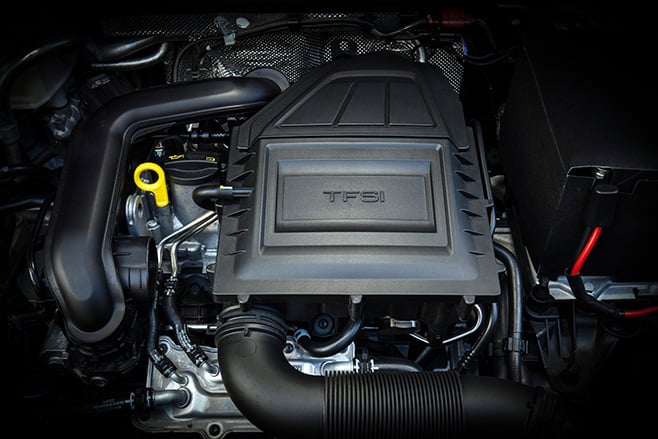
Prices have been fiddled with too resulting in a drop in the price of entry to $35,900, but more significantly Audi has brought out a 1.0-litre three-cylinder engine for its A3 1.0 TFSI base model – the first A3 to be sold in this country with less than four cylinders.
TELL ME ABOUT THIS CAR
The Audi A3 1.0 TFSI Sportback is powered by an 85kW/200Nm turbocharged petrol 1.0-litre three-cylinder engine, developed from the smaller A1 hatch’s three-pot.
There’s also one other substantial mechanical difference at the other end of the car: the A3’s multi-link rear suspension has made way for a less complex (and cheaper to manufacture) torsion beam axle.
So it’s basic, yes, but equipment levels are healthy considering the 1.0 TFSI’s bottom-rung position in the A3 line-up – especially when it’s lined up against key rivals like the Mercedes-Benz A180 and BMW 118i.
STRENGTHS
Equipment levels are strong. The A3 1.0 TFSI’s leather-wrapped steering wheel is new for the 2017 model year, feels great to grip and has better switchgear than the model it replaces; there’s dual-zone climate control as standard; automatic emergency braking is part of its standard safety suite (as it is in all A3 models from now on) and integrated satellite navigation is also factory-fit.
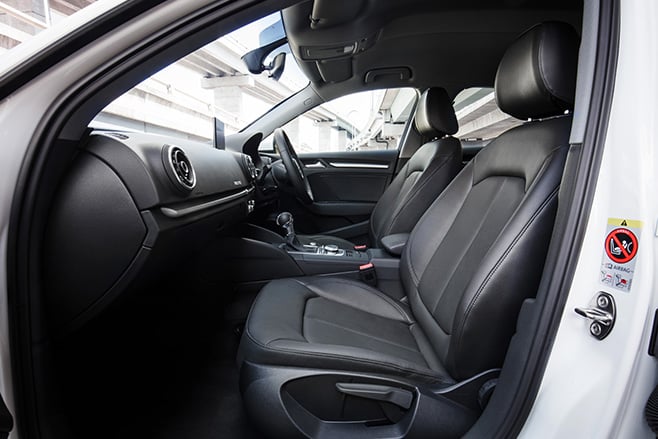
Comfort. It doesn’t suffer for cabin comfort, though its cloth upholstery does mark it out as being the cheapest model in the A3 family – all other A3 models get leather as standard. However, with superb material quality, supportive front seats and a rear bench that’s roomier than those in an A-Class or 1 Series, the A3 1.0 TFSI’s interior is a nice place to be.
Driveability. A single litre of displacement may not sound like much, but the 1.0 TFSI’s 200Nm peak torque figure enables it to punch well above its weight when it comes to driveability. All of that torque is available between 2000rpm and 3500rpm, which is where the engine spends most of its time when being driven normally. That results in relaxed performance that, while not exactly brisk, is more than adequate for day-to-day duty.
Slick gearbox. The A3 might get a simplified engine, but its dual-clutch seven-speed automatic gearbox is cutting edge. Lightning-fast shifts and improved off-the-line refinement deliver near-seamless performance, and with seven ratios to choose from it enables the car to extract the most from its little 1.0-litre motor.
Ride comfort. With a torsion beam axle at the back, you’d expect the A3 1.0 TFSI to have compromised ride quality compared to its independently-sprung siblings. Happily, few will find much fault with how the 1.0 TFSI rides. It soaks up big bumps easily, and there’s enough sidewall compliance on its fat tyres and 16-inch alloys to iron out smaller-amplitude imperfections.
WEAKNESSES
It’s no powerhouse. Yes, it may be easy to drive around town, but overtaking at highway speed requires plenty of space to account for the three-pot’s relatively relaxed acceleration. Bear that in mind before pulling onto the wrong side of the road to get ahead of slower traffic.
Tyre noise. Although fitted with small 16-inch alloys and high-profile tyres, the A3 1.0 TFSI has more tyre noise than we expected on coarse-chip highways. It’s not cacophonous, but it’s elevated considering the compliance of its rolling stock and its luxury positioning.
Start-stop refinement. Like all A3s, the 1.0 TSFI is equipped with automatic engine start-stop as standard. It shuts the engine down when the car is stationary (such as when sitting at traffic lights) and re-starts it when the driver lifts their foot off the brake, however the engine shudders as it fires back into life in a way that is at odds with its otherwise smooth-running nature.
No three-cylinder sedan. If you’re attracted to the idea of an Audi small sedan with triple-cylinder power, you’re fresh out of luck: the 1.0 TFSI engine is limited to the five-door A3 Sportback only. And that’s a shame, not only because the A3 Sedan is one of the more attractive small sedans on the market, but because it would also have allowed Audi to drop the A3 sedan’s price of entry somewhat.
ANY RIVALS I SHOULD CONSIDER?
Luxury small hatch competitors for the A3 Sportback 1.0 TFSI include the Mercedes-Benz A180, Lexus CT 200h Luxury and the BMW 118i, however all are priced higher than the A3.
In the mainstream market, cars like the top-grade Mazda3 SP25 Astina and Volkswagen Golf 110 TSI Highline offer more power and equipment for similar cash to the A3 – but with less badge cachet.
