
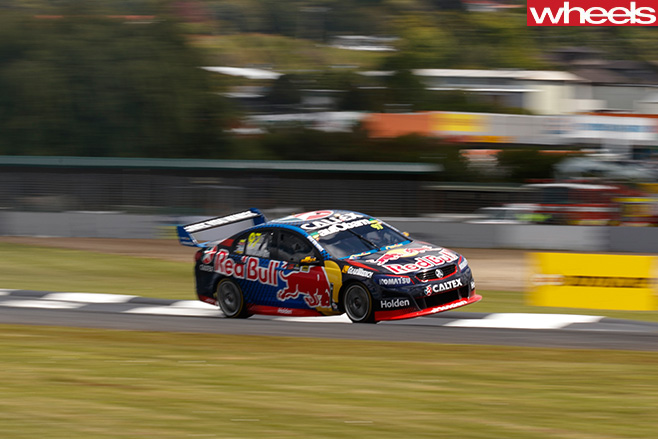
KIWI Shane van Gisbergen is ever closer to securing his maiden Supercars Championship after winning a dramatic four-race ITM Auckland SuperSprint at Pukekohe Park Raceway.
Van Gisbergen used the weekend to extend his lead over teammate Jamie Whincup to 191 points with just one round remaining in Sydney next month.
Van Gisbergen also admitted he was teary as he crossed the line in the fourth race of the weekend, knowing he had won the Jason Richards Trophy awarded in memory of the much loved New Zealand racer who died in 2011.
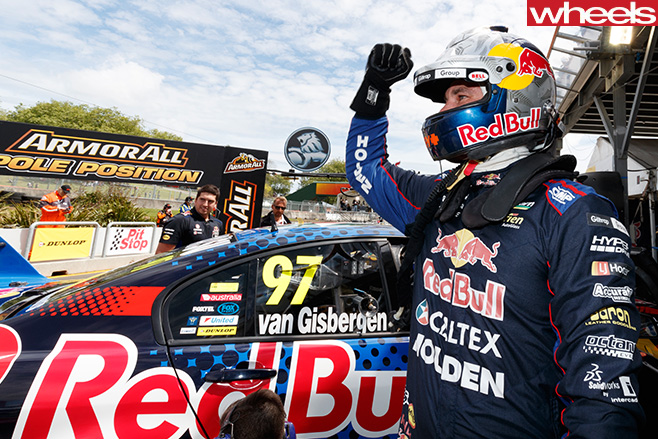
Passing moves within the leading bunch were rare after the opening lap or so of the four 100 km races.
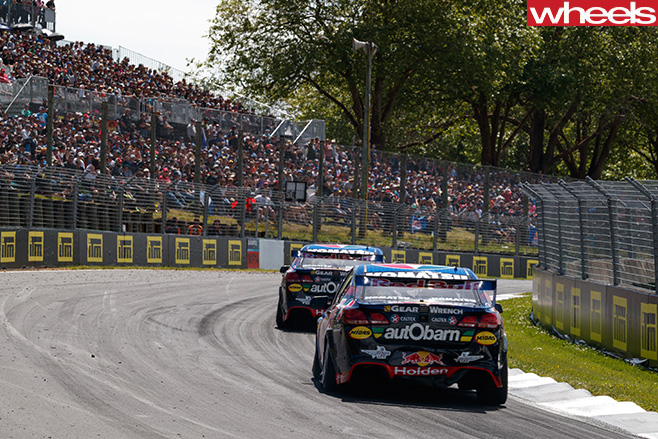
This, of course, doesn’t help the dearth of overtaking on the track…
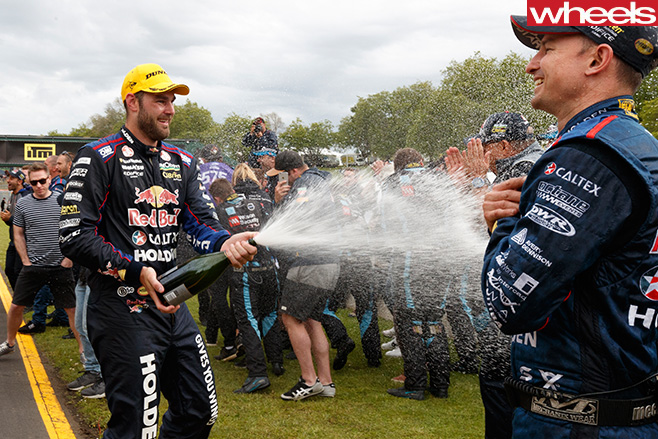
The two Red Bull drivers won a race apiece on Saturday and we were also treated to a couple of laps of torrid and tense high-speed duelling as van Gisbergen and Whincup went at it hard, yet fair, moments after the start of race two. It was precise, centimetre-perfect combat (and respect) rarely seen in touring car racing.
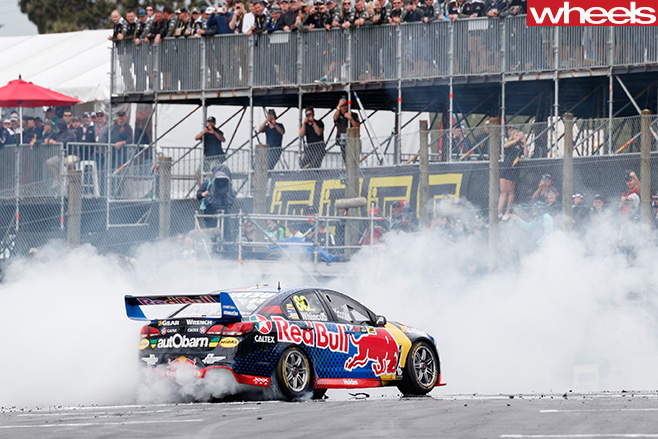
Mark Winterbottom, who had been steady without looking to threaten the Red Bull dominance on Saturday, flew off the line in race three, firing past pole man van Gisbergen and fellow Ford driver Scott Pye to take the lead. He went on to take his second win of the season.
Van Gisbergen recovered to finish third behind Winterbottom and Pye while Whincup was delivered the further bad news of a drive-through penalty which left him 25th.
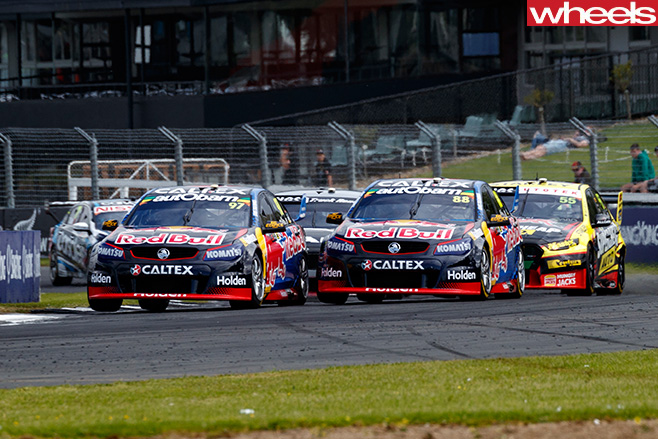
“My car was quick, and I made the mistake and took out my teammate,” said a candid Whincup. “I have apologised; thankfully it didn’t affect car 97 too much and they got a podium. “
Whincup bounced back spectacularly from his disaster to win the fourth and final race of the weekend, but van Gisbergen grabbed second to secure the Jason Richards Trophy.
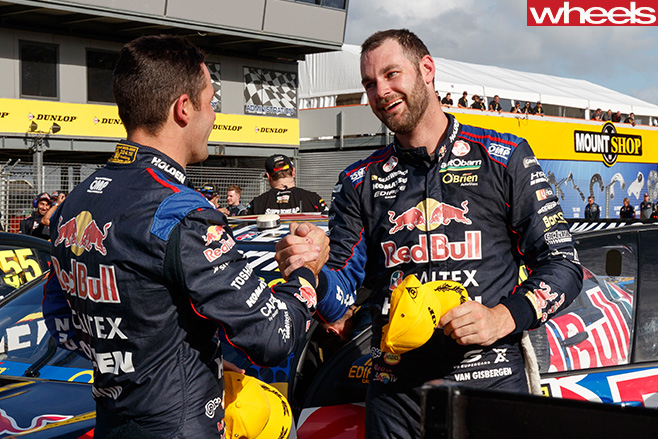
“I am in a pretty special place with the car and the team at the moment, I am very lucky.”
Fortunate, perhaps. But luck isn’t delivering van Gisbergen his success. He is driving brilliantly and not making many mistakes.
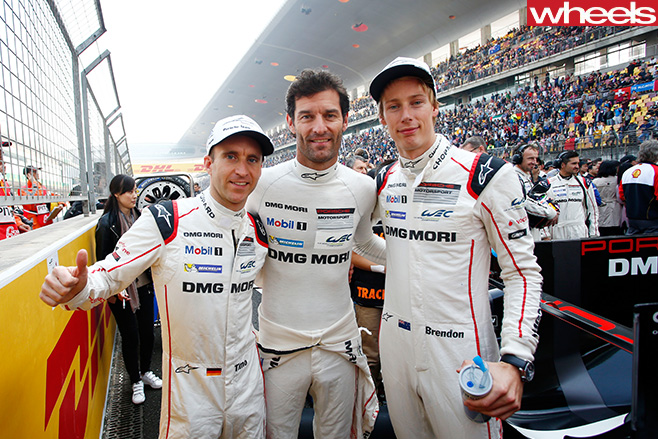
Webber and Porsche take Six Hours of Shanghai
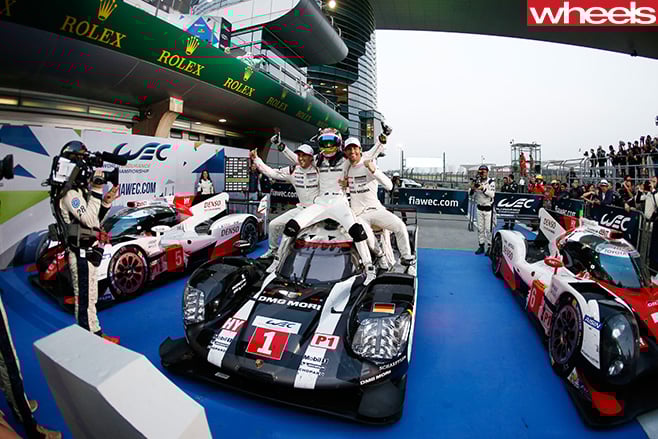
But the quick Number 6 Toyota of Stephane Sarrazin, Mike Conway and Kamui Kobayashi was unlucky not to be right in contention. Just when the Toyota looked very threatening, it was slowed with a puncture 76 minutes from the flag.
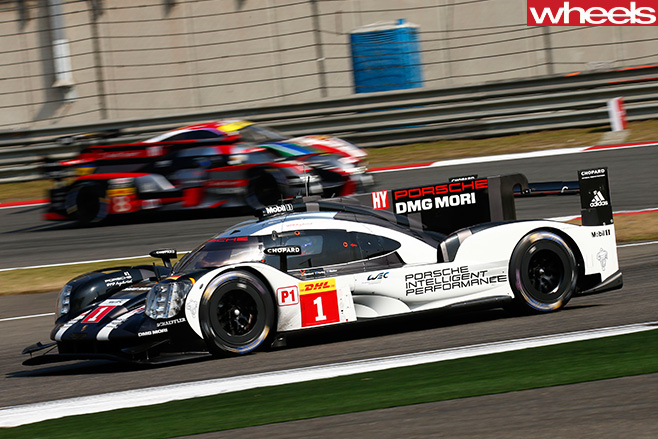
Hartley lost the drag race to turn one at the start, but a crash further back in the pack brought out the safety car and gave the Kiwi the chance to regain the front running.
The only time he and his cohorts were not in the lead was due to slight variations in pit stop strategies.
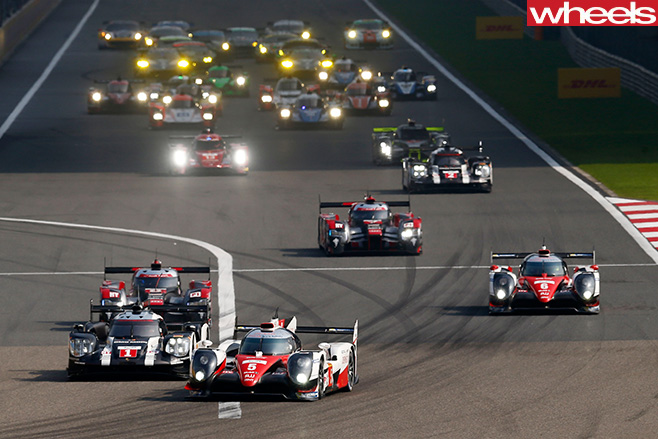
A day earlier Webber and Hartley combined to take pole from the Toyota TS050 Hybrid of Anthony Davidson/Sebastien Buemi/Kazuki Nakajima and the Audi of Oliver Jarvis, Lucas di Grassi and Loic Duval.
A bad-news fortnight for Audi got worse during the Shanghai race when its two R18s collided, dropping them way back.
With Toyotas taking second and third, the fight for the drivers’ title will go to the final race in Bahrain, after which Mark Webber will cruise into retirement.
Matt Close takes Targa High Country tarmac win
Victorian Matt Close has taken his Porsche GT3 to outright victory and GT2 competition class honours after a hard-fought battle at Targa High Country, which finished yesterday at the top of Mt Buller.
Close went into the final day with a one second lead over fellow GT2 competitor, Tasmanian Michael Pritchard, driving a Dodge Viper ACR.
Overnight snow on Mt Buller left all competitors – especially those in two-wheel-drive machines – a little apprehensive about the slippery roads.
Close was one to adopt a cautious approach on the wet and slippery run down the mountain, dropping 16 seconds to his rival.
But the Porsche driver hit back on the next stage, speeding into the lead on the 40-kilometre Jamieson test. With his confidence high and hard tyres now working well, Close pushed on to extend his lead on every stage, finishing the three-day enduro 59secs clear of his rival in the V10-engined Viper.
The Shannons Classic GT win went the way of South Australian Craig Haysman in his thumping 1979 Triumph TR7 V8.
Lindsay Stone led from start to finish in a 1985 Mazda RX-7 to top the Shannons Classic competition.
One of the drives of the event came from Alan Roe, who took the Duttons Garage Early Modern honours in a 2000 Mitsubishi Evo 6.5 RS.
In the RDA Brakes GT4 competition, Trevor Macleod had the highly experienced Steve Glenney calling the notes, and they proved a formidable combination in their 2010 Subaru WRX STI.
Anthony Rizzo continued his great form to take a 1977 Subaru WRX STI to victory In the Mansfield Shire GT Sports Trophy.
After awarding the first ever WhichCar style award to the Alfa Romeo 4C in January this year, our team of experts are now focused on finding the most stylish car from the last year. We’ve narrowed it down to the top 12, but now we need your help!
COMPETITION NOW CLOSED.
Thanks to all those who entered and submitted their vote for the WhichCar 2017 Style Award. Congratulations to the following winners:
First Prize – Merina P. from SA
Runners Up – Christine J. from NSW and Peter L. from NSW
Using the poll below, pick the car you believe should be named the most stylish car for 2017. The top cars, as voted by you, will be assessed by a panel of judges drawn from the Automotive, Design and Publishing industries.
Everyone who votes goes in the draw to win 1 x $500 Visa gift card or 1 of 2 $250 Visa gift cards.
You have until November 21 to cast your vote and go in the draw to win the cash prizes.
WhichCar Style Awards 2016 – Top 12
1. Audi A4 2. Citroen C4 Cactus 3. Ford Mustang 4. Holden Astra 5. Honda Civic 6. Infiniti Q30 7. Jaguar F-Pace 8. Mazda CX-9 9. Mini Clubman 10. Renault Megane 11. Skoda Superb 12. Volvo S90
How did we choose our shortlist? Based on a price limit of AU$100,000 for the base variant of each model along with the five WhichCar Style Award criteria:
- Design Innovation – Does it break new ground?
- Functional Ergonomics – How well does it work?
- Stand-out Features – Is there any X-Factor?
- Value For Money – Does the quality match the price?
- Target Market – Does it meet owner’s wants and needs?
- Justine Cullen – Editor, Elle Magazine
- Tanya Buchanan – Editor, Belle Magazine
- Emma Vidgen – Editor, Real Living
- Michael Pickering – Editor, Men’s Style
- Ged Bulmer – General Manager and Publisher of Bauer Trader Motoring
- Paul Beranger – Automotive Design Consultant, former Head of Toyota Asia Pacific Design
WhichCar is the ultimate new-car comparison site, designed to help Australian’s find the right car for them. The site provides expert, easy-to-understand information and sophisticated search tools to connect users with high quality videos, reviews, specifications and lifestyle content.
Want more? Check out our video from the 2016 Australian Motoring Awards…
Stunned. Like the car was on fire. Like it was feathered. Like they were from the 1600s and had never seen a car before.
But in fairness, these national park workers deep in a state forest a few hours east of Melbourne, had almost certainly never seen a Bentley Bentayga – the fastest, most expensive SUV the world has so far known – let alone one roaring down the quiet, winding dirt road around which they were working.
Bentley’s new super-SUV has only just landed in Australia and it’s ready to take a lot of money off a very few people. Utilitarian might be the SUV’s middle name but now even the very, very wealthy want them – and for versions that properly express their wealth, they’re willing to pay.
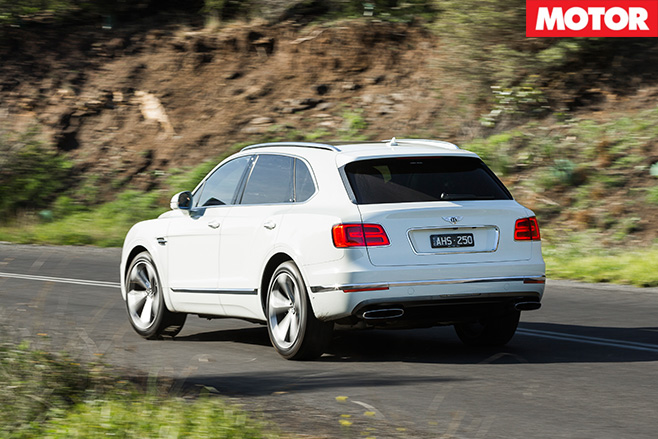
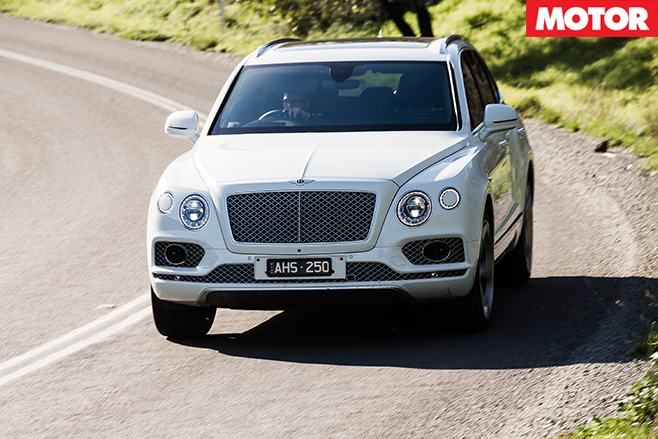
Few cars spark conversation quite like the Bentayga – from even the meekest of people it will draw an opinion. Some think it’s butt-ugly, not big enough and lacking presence. Others are completely besotted by the novelty of a Bentley SUV.
It’s true that if you removed the badges, most punters would have no idea what it is. A white test car didn’t help things, and it’s just as well the show improves when you slip inside.
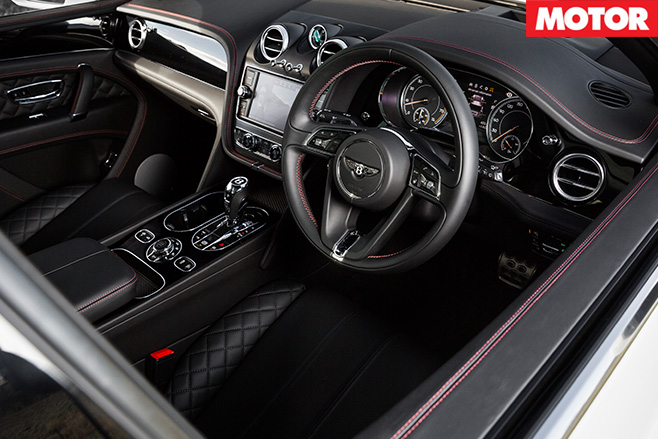
And around town it is blissful. A whisper-quiet cabin exaggerates the tiniest of rattles in our test car while we waft along, sitting high and able to see over traffic – presumably a big part of the appeal for many would-be Bentayga owners.
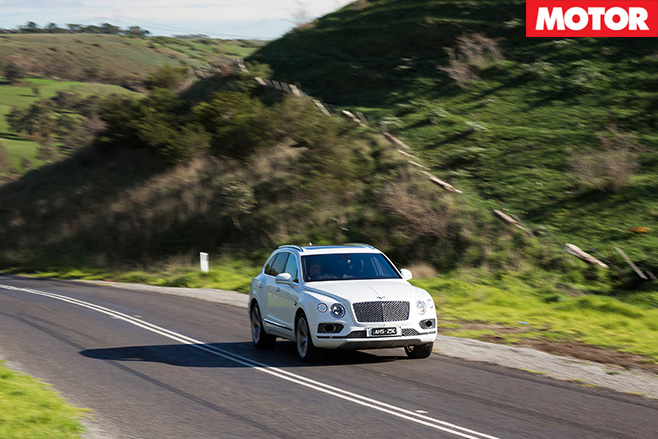
One word will come to mind during your first five seconds of full throttle, and we’re not able to publish it. The Bentayga squats hard onto its rear axle as it rockets towards the horizon.
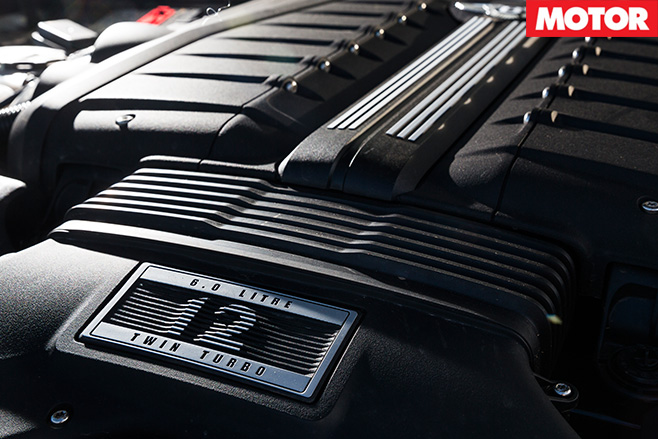
It is certainly eye-opening as you’re still obviously required to guide 2440kg of physics-defying projectile down the road. Though for the excitement of the acceleration, lovers of exhaust notes will be disappointed as that big W12, even at full noise, could be mistaken for a V6.
On dirt the Bentayga is more fun that it should be and can do a decent hot hatch impression, the ESP permitting a quarter turn of corrective lock under brakes into corners. But mostly, in a straight line and up a twisty road, the Bentayga is just devastatingly fast. And overall it’s a pretty damn good car. But we’re not quite sure it’s worth – err, we suggest not taking a large sip of your drink at this moment – $570,000 as-tested.
The interior is nice, but for the money it should feel like you’re meant to be getting fanned by ostrich feathers and being fed grapes by half-nude concubines. For the incredible asking price, it doesn’t feel special enough.
The Audi SQ7 is on its way with a 320kW, 900Nm 4.0-litre twin-turbo diesel V8 good for 0-100 in 4.9sec. Slower than the Bentayga, but at around $160K it’s going to come with air suspension standard and even with options like carbon ceramic brakes, for $200K you’ll have a car that’ll deliver approximately 80 per cent of the Bentayga experience for at least half the price.
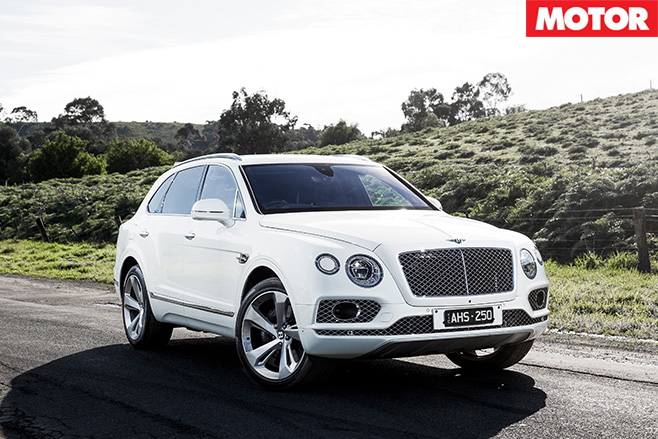
4.0 OUT OF 5 STARS
LIKE: Crazy power; surprisingly good handling; the ultimate cruiser DISLIKE: With price comes expectations the Bentayga just doesn’t meet
SPECS Engine: 5950cc W12, DOHC, 48v, twin-turbo Power: 447kW @ 5000rpm Torque: 900Nm @ 1350rpm Weight: 2440kg 0-100km/h: 4.1sec (claimed) Price: $423,600
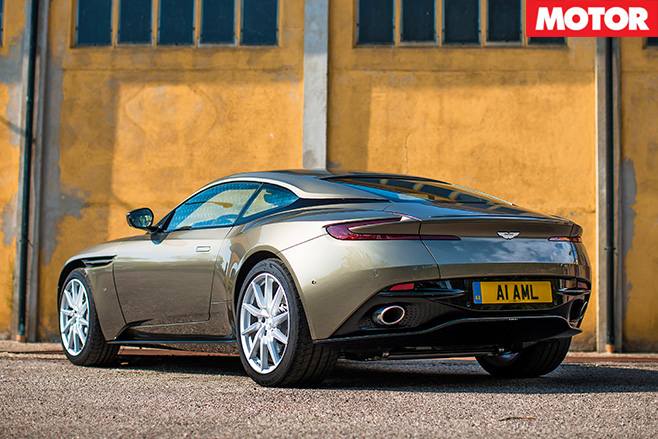
The DB11, as CEO Andy Palmer puts it, is the most important car in Aston Martin’s history.
It’s a big claim, but Aston secured AUD$1.2 billion to make the first four of seven new models – DB11, Vantage, Vanquish and DBX SUV – come to life. Beyond that, incoming revenue must fund the rest.
So the Aston Martin DB11’s really new. There are double wishbones at the front but, for the first time on an Aston Martin, a multi-link setup at the rear. Steering is now electrically, not hydraulically, assisted. There’s also a new Aston-developed 5.2-litre twin-turbo V12, which drives the rear axle via a rear-mounted eight-speed ZF automatic.
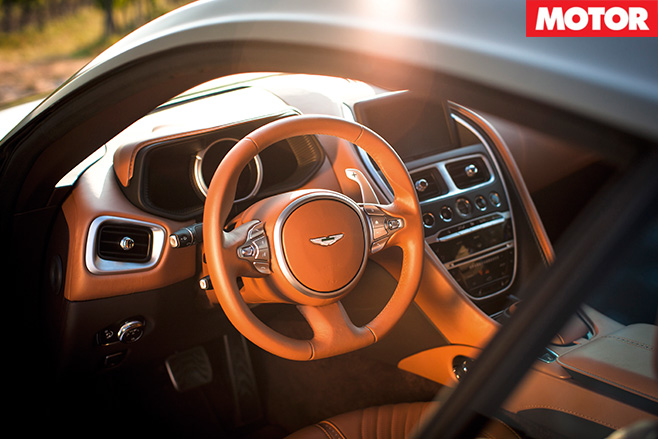
Inside, the materials help things feel most moved-on from a DB9. Aston insists they’re what they seem, not poorer substitutes. Some metal pieces though, like the air vent surrounds, challenge that idea, but the finish is mostly excellent.
It’s in here, too, the Mercedes-Benz connection (MB now owns five per cent of Aston) comes to light. The sole column stalk is pure Mercedes and so is the large central screen. Behind the flat-bottomed steering wheel is a digital instrument array – not Mercedes, disappointingly low in resolution, and sometimes odd in colour, but the easiest Aston dial to read this decade.
Make no mistake, it’s properly fast. Aston’s ‘downsized’ V12 is still a force-fed 5.2-litre, making 447kW at 6500rpm and 700Nm between 1500rpm and 5000rpm. It’ll invoke its traction control in any gear in the wet. There’s hint of turbo lag down low, but there’s so much torque anyway it’s no big deal. And it’ll rev out cleanly and purposefully, should you ask, which you will, because it still sounds like a large-capacity V12.
There are three drive modes – GT, Sport and Sport Plus – that change both the powertrain and chassis independently. The adaptive damping’s so lush you could use all three on the road, however there are some places you’d avoid the last two.
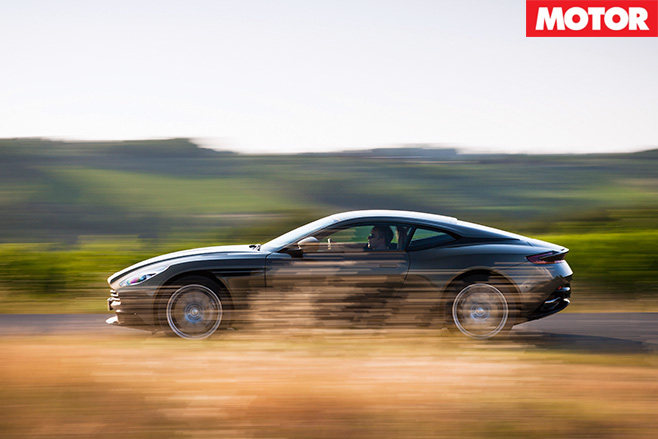
Sometimes in its softest mode you think the chassis has run out of ideas, before you look at the speedo and realise this is a GT in a league of its own. A Bentley Continental would still be wondering what the last crest had done to it while a DB11 would be dealing with your next set of inputs.
Aston’s quickened the steering, but not to Ferrari levels, thankfully. The nose doesn’t need to be as planted in other current V12 Aston Martins to turn-in. Just flick the lightish, accurate steering towards a corner and the DB11 follows. There’s less road feel than in, say, a V12 Vantage S, but there’s also far less kickback – only the odd nibble here and there.
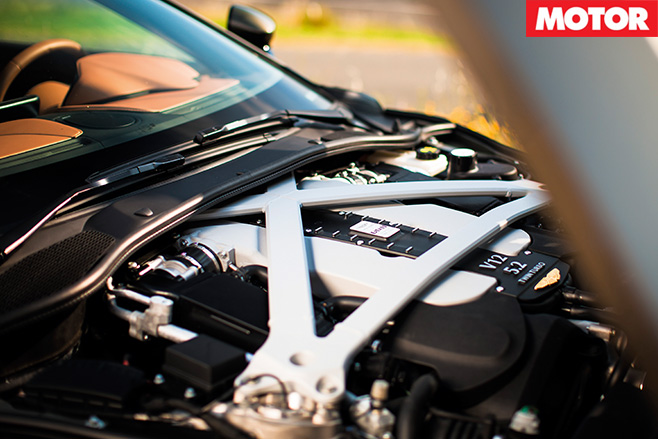
Mind you, one test car we tried had a bit of wind noise. Another had notable amounts of road noise. But these were late pre-production cars. Palmer says he’ll personally sign off the first 1000 customer examples, which means he’s going to be quite busy. On this showing, everyone at Aston Martin will be.
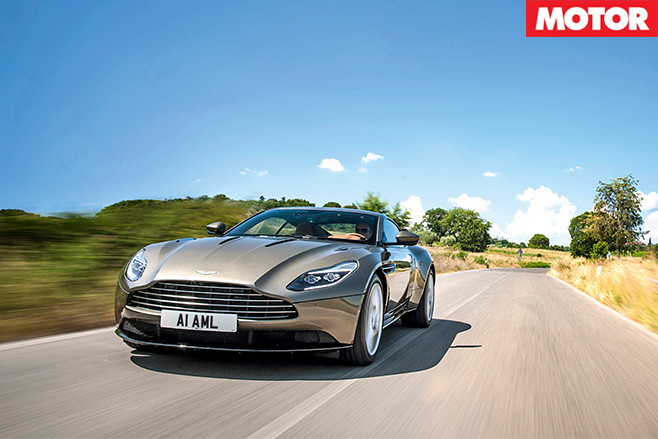
LIKE: Great engine; benchmark chassis; looks DISLIKE: Borrowed Benz interior bits
SPECS Engine: 5204cc V12, DOHC, 48v, twin-turbo Power: 447kW @ 6500rpm Torque: 700Nm @ 1500-5000rpm Weight: 1770kg 0-100km/h: 3.9sec (claimed) Price: $428,032
What stands out?
The styling! You won’t miss the Citroen C4 Cactus in your shopping centre car park. The Airbumps on the doors and bumpers are soft-touch and designed to absorb minor impacts, and you choose from four colours. This small SUV also has a charming and roomy cabin, and excellent petrol and diesel engines.
What might bug me?
The lack of an automatic petrol model.The clunky semi-automatic transmission in the diesel model.The lack of reach adjustment for the steering column.No automatic opening/closing for the driver’s side window.Only a single USB port.The pop-out rear windows: they only open a few centimetres, and don’t roll down.No rear air-vents in the second row.
What body styles are there?
Five-door SUV/wagon only. Every C4 Cactus is front-wheel drive; petrol models come exclusively with a five-speed manual gearbox; diesel models are available only with an automatic.
What features do all versions have?
Only one trim level is offered, with a relatively basic specification compared to similarly-priced vehicles. For instance, there are no power-operated windows in the rear doors – just a pop-out section of glass.That said, 17-inch alloy wheels, fog lamps, LED daytime running lamps, tinted rear windows and the Cactus’ distinctive “Airbump” body protection are all standard.There’s black cloth upholstery and manually-adjustable seats, though a 7.0-inch touchscreen display with satellite navigation is standard. The screen also controls the air conditioning and the AM/FM/DAB audio system.Bluetooth telephone and audio streaming is also standard, and external music players can be connected via a USB port. A 12V power socket is mounted in the boot, helpful if you need to power a portable fridge on long journeys.Cruise control, a digital instrument panel and steering wheel mounted audio controls provided added driver convenience.The Cactus is covered by a six-year unlimited kilometre warranty that includes 24-hour roadside assistance for that period.
Which engine uses least fuel, and why wouldn’t I choose it?
What key features do I get if I spend more?
The Cactus literally comes with 23,184 customisation options, according to Citroen.The Cactus is offered in a choice of 10 colours, with the standard Blanc Banquise (white) the only colour that does not cost extra.For the exterior body colour, there’s also Noir Obsidien (black); Gris Shark (gunmetal); Rouge Aden (red); Gris Aluminium (silver); Blanc Perle Nacre (metallic white); Olive Brown; Hello Yellow; Deep Purple and Blue Lagoon (aqua).Then there’s a choice of colours for the ‘Airbumps’. In addition to the standard Black Airbump, there’s also Dune (a sandy colour), Grey and also Chocolate Airbump colours. These colours come at an additional cost.Not all Airbump colours are available with every exterior colour . Only Black Airbumps are available with everybody colour.You can also option black alloy wheels; pay extra for white roofrails instead of black; option ‘Cactus’ lettering in an array of colours on the rear pillar; or choose from a number of colours for the mirror caps.There are six interior colour combinations to choose from. Three of these are leather; three are cloth.A Panoramic sunroof that’s thermally insulated to filter 99.9 percent of UV rays, according to Citroen. The car maker says that this means it will not heat up the cabin, and subsequently doesn’t need a physical sunshade to maintain a comfortable temperature or prevent sunburn.
Does any upgrade have a down side?
How comfortable is it?
The Cactus is a very comfortable SUV. Its front ‘sofa’ seats have plenty of adjustment, and are wide and supportive. In the driver’s seat, the lack of reach adjustment may compromise the driving position for taller drivers, but there’s plenty of head, leg and shoulder room. The controls are within easy reach, with the cruise control, audio and phone systems operated via the steering wheel buttons.In the diesel, the automatic has shift-paddles, but even selecting drive is easily done by a push-button ‘D’ on the dash.The second row is also spacious, with excellent seats. A downside here, though, is a lack of air-vents, as well as pop-out windows.In terms of storage, there’s an excellent 8.5-litre glovebox in the front dash, as well as generous door bins throughout and map pockets in the front seatbacks. The boot, too, is 358 litres, making it one of the larger sized in its class. It’s also a very practical, easy opening to load the cargo area as well. A 60:40 fold rear seat adds to its versatility.On the road, the ride is comfortable, especially at slow speed. Both engines are refined, and the cabin is very well insulated from road noise, too.
What about safety?
The Cactus comes with six airbags: drivers, passengers, front side airbags as well as curtain airbags.It also comes with ABS, ESC and Emergency Brake Assistance (EBA). The EBA does not bring the Cactus to a complete stop, but does apply additional braking force in the event of an emergency braking situation. It will also flash the hazards during an emergency stop.Two ISOFIX top-tether child-seat anchorage points are standard.A 15-inch spare wheel on all models, as well as a tyre-pressure monitoring system, means that the Cactus will not be forced onto a speed-limited spacesaver spare if it suffers a puncture. Nor will you have an accident as a tyre deflates, as the monitoring system will alert you to the problem.The Australasian New Car Assessment Program (ANCAP) has not tested the Citroen C4 Cactus. It’s not eligible for a five-star safety rating, as it is not offered with Autonomous Emergency Braking, even as an option.A left-hand drive Cactus has been tested by the Euro New Car Assessment Program (Euro NCAP) and given a four-star safety rating. It was rated poorly in the Safety Assist are of the assessment.
I like driving – will I enjoy this car?
Yes. The Cactus is fun to drive, especially the petrol model. Its thrummy three cylinders’ cheerful note matches the cheeky verve of the Cactus and is a competent, strong engine that rarely feels out of breath. Its five-speed manual gearbox has a light-weight shift action, the clutch pedal is not overly heavy and the steering is also well-weighted for good manoeuvrability.The four-cylinder turbo-diesel has more torque, so is the stronger of the two engines, but its semi-automatic means that smooth, comfortable and engaging drive is not on the cards.
How is life in the rear seats?
How is it for carrying stuff?
The Cactus has a 358-litre boot, which is far bigger than the boot in the most popular car in this class, the Mazda CX-3, which has a 254-litre boot. Still, the Jeep Renegade (525L), Honda HR-V (437L) and the Peugeot 2008 (410L) can all boast larger cargo areas.As well as this, the Cactus has a 60:40 split-fold rear seat. The base of the rear seat does not fold, so it’s not as practical as the flat-folding ‘Magic Seats’ in the Honda HR-V, for example.
Where is it made?
The Citroen C4 Cactus is manufactured in Spain.
What might I miss that similar cars have?
The Cactus doesn’t have an auto-up driver’s side window, nor wind-down rear windows. It also doesn’t offer a petrol automatic like most of its rivals, nor a proper automatic diesel model.It also misses out on safety equipment such as Autonomous Emergency Braking.Neither diesel nor petrol models come with a tachometer.
I like this car, but I can’t choose which version. Can you help?
Are there plans to update this model soon?
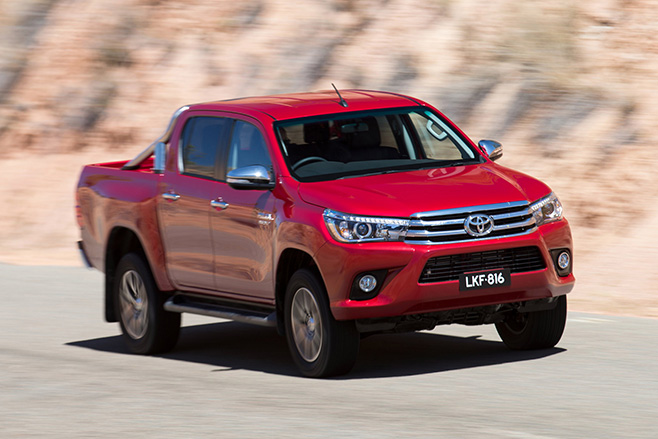
THE two biggest selling vehicles in Australia last month were utes, with the Toyota Hilux and Ford Ranger outselling Toyota’s Corolla small car — the first time two light-commercial vehicles held the top two spots.
Toyota sold 3352 Hilux utes while Ford sold 3217 Rangers; seven more than the number of Corollas to leave Australian showrooms.
October also saw the gap between passenger car and SUV sales continuing to close, with a 5 percent jump in sales of the latter during October compared with 7.4 percent fewer cars.
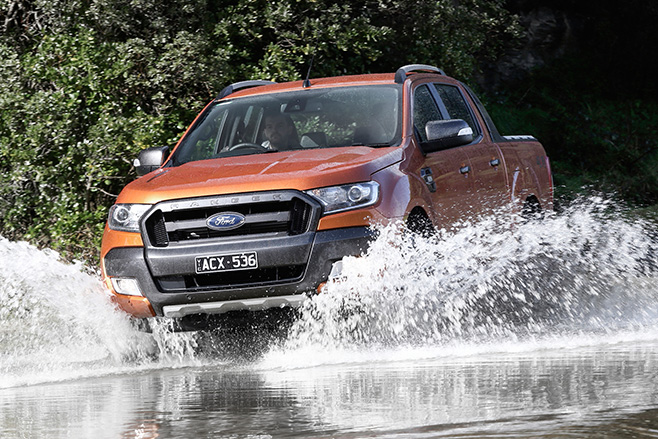
Passenger car sales dropped to 37,817, just 1375 more than the 36,442 SUV sales.
Hilux, Corolla and Camry (2135 sales) held Toyota’s claim as Australia’s biggest selling brand with 16,348 sales for October, led by Hilux and Toyota Corolla.
Hyundai (8704 sales) reclaimed second spot from Mazda (7921) with a 118.9 percent spike in sales of the Tucson SUV (1845) via a sharply priced drive-away deal to lead the highly competitive medium SUV segment.
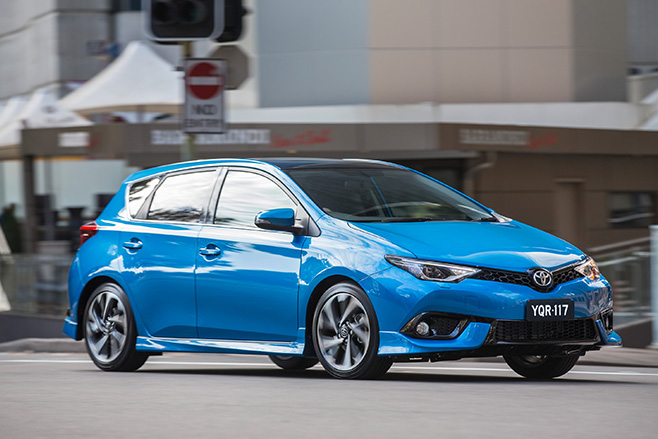
The Hyundai Accent also had a good month, up 30 percent to 2009 to dominate the light car segment, while the i30 slightly increased sales to 2718 to reclaim its position over the Mazda 3 (2191).
Holden maintained fourth spot despite a 7.1 percent drop, with 7531 sales, while Ford made up the top five with 6508 cars sold.
Sentimentality over the Ford factory closures didn’t translate to an increase in Falcon sales with just 428 sold, a slight drop from September, while Commodore sales also fell 6.6 percent to 2101.
An interesting mover in the large car segment was the all-new Skoda Superb. Its sales jumped 477.9 percent to 104.
The Skoda Superb helped large passenger car sales remain in positive territory, with almost every other passenger segment experiencing negative growth. The exception was sports cars, which experienced a 43.2 percent increase, led by the Ford Mustang (584 sales), and an updated Mercedes-Benz C-Class coupe/convertible (276) and Hyundai Veloster (220), which both experienced sales increases of more than 40 per cent.
Top 10 sellers in October 2016
| Rank | Brand | Sales |
| 1. | Toyota Hilux | 3352 |
| 2. | Ford Ranger | 3217 |
| 3. | Toyota Corolla | 3210 |
| 4. | Hyundai i30 | 2718 |
| 5. | Mazda 3 | 2191 |
| 6. | Toyota Camry | 2135 |
| 7. | Holden Commodore | 2101 |
| 8. | Hyundai Accent | 2009 |
| 9. | Hyundai Tucson | 1845 |
| 10. | Nissan X-Trail | 1655 |
Top 10 selling brands in October 2016
| Rank | Brand | Sales |
| 1. | Toyota | 16,348 |
| 2. | Hyundai | 8704 |
| 3. | Mazda | 7921 |
| 4. | Holden | 7521 |
| 5. | Ford | 6508 |
| 6. | Nissan | 5543 |
| 7. | Mitsubishi | 5227 |
| 8. | Volkswagen | 4869 |
| 9. | Subaru | 4140 |
| 10. | Kia | 3543 |
What stands out?
The S90 is a large luxury car with a choice of great four-cylinder engines. There’s also excellent active safety features, including advanced technology that can help avoid a crash. It has a very stylish interior that is quite different to those in the predominantly German rivals. There’s also lots of space and it is very comfortable for long drives.
What might bug me?
Navigating the touchscreen. Its operation is similar to an iPad or other tablet computer, but occasionally an icon can be difficult to find. Or you forget to swipe while you’re trying to push.Thinking you’re breaking the speed limit when you’re not. The S90 has a camera that reads speed limit signs and displays that speed in the instrument cluster. However, it’s prone to false readings about 5-10 percent of the time, occasionally missing a sign or incorrectly deciphering one (such as school zones, where it displays the school zone speed even out of school times).Getting a puncture. The S90 has a space-saver spare tyre, which limits the recommended top speed to 80km/h once fitted.Hitting kangaroos. The S90 has one of the most sophisticated crash avoidance systems on a modern car, with the auto braking calibrated to detect humans and large animals such as horses and cows. However, it’s not yet tuned to detect or respond to kangaroos.Having to drive a four-cylinder; whereas most large luxury cars have the choice of six- or eight-cylinder engines on some models, the Volvo S90 comes only with a range of four-cylinder engines.
What body styles are there?
Four-door sedan only.In 2017 Volvo will also begin selling a wagon version, which will be called V90. The V90 will share the front half of the S90, including its engines.The S90 D5 and T6 drive all four wheels. Late in 2016 the D4 and T5 will join the range; each is front-wheel drive. In 2017 there will also be a petrol-electric hybrid model called the T8, which uses electric motors as well as an engine.The S90 is classed as a large luxury car.
What features do all versions have?
Leather trim and electrically-operated front seats, with memory buttons for the driver’s seat.Adaptive cruise control, which maintains a set distance to the car in front, automatically braking and accelerating the car.Self-parking, which can identify suitable parking spots and automatically steer the car into the space.Alloy wheels, which are lighter and more stylish than steel wheels.A range of safety features, including City Safety, which is an active safety feature designed to avoid crashes. It can identify other vehicles, pedestrians and large animals (such as horses or cows) and automatically apply the brakes to avoid them or reduce the severity of a collision.Lane Keeping Aid, which automatically steers the car to keep it in the lane on a freeway; it is intended as an assistance function so only operates temporarily and will disconnect if the driver keeps their hands off the wheel.Electronic stability control, which can help the driver to control a skidding car. All new cars must have this feature.The ability to read speed signs and display the speed limit in the instrument cluster; the system is far from perfect (it automatically defaults to 40km/h in school zones, for example, regardless of the time of day) but is an extra backup for monitoring your car’s speed.A 12.3-inch customisable computer screen that displays the gauges, such as the speedometer and trip computer.There’s also a 9.0-inch colour touchscreen mounted vertically in the centre of the dash to control the infotainment functions, such as audio and the satellite-navigation.Four-zone automatic air-conditioning, which allows different temperatures to be set for each quadrant of the cabin.Windscreen wipers that operate automatically when water is detected on the screen. Headlights that turn on automatically when in low light.Six airbags; one directly in front of each front occupant; two protecting the bodies of front occupants from side impacts; and side curtain airbags that protect the heads of front and rear occupants from side impacts.The S90 is covered by a three-year, unlimited kilometre warranty.
Which engine uses least fuel, and why wouldn’t I choose it?
Of the two S90 models currently available – D5 and T6 – the 2.0-litre four-cylinder turbo diesel in the D5 is the most efficient, using a claimed average of 5.1 litres per 100km.It’s an impressively low figure, albeit one largely unachievable in everyday driving (as with all fuel figures, it’s calculated in a laboratory and not representative of most driving). Still, you can expect to use less than 8.0L/100km.The engine has lots of pull and makes light work of hills. It’s also very smooth and quiet, cementing the luxury experience.The T6 uses the same basic engine layout but is fuelled by petrol instead of diesel (Volvo diesels are denoted by “D” in their alpha-numeric name, whereas cars with petrol engines have a “T”). It has a supercharger and a turbocharger, each of which forces air into the engine, which creates more power.The T6 has more power than the D5 so is slightly quicker when accelerating. It’s also even quieter.The penalty is you’ll use about 40 per cent more fuel than in the diesel.All Volvo S90s have an eight-speed automatic transmission.
What key features do I get if I spend more?
The D5 and T6 come with exactly the same level of equipment, right down to their 19-inch 10-spoke alloy wheels.However, you can option the Technology Pack, which has digital radio tuning (for clearer sound and access to dozens of additional stations), a 360-degree camera (for a virtual overhead view of all angles of the car), Apple CarPlay connectivity (so Apple devices can be connected and controlled through the main display screen) and a head-up display (which projects the speedo on to a virtual space above the bonnet).As is common with large luxury cars there’s a plethora of options to personalise the car, including larger wheels and tyres and rear DVD screens. You can even get rear iPad holders, which include a USB charger to keep the batteries topped up.There’s also an optional 19-speaker sound system by home hifi specialists Bowers & Wilkins.Another option is pop-up booster seats in the outer two rear seat positions. Release a clip and the seat base rises to better position the seatbelt over the shoulders of children. It’s an excellent feature and can replace a booster seat for children aged between four and eight.Volvo’s performance division, Polestar, also offers a performance upgrade for the D5 engine. It only increases maximum power by about 2 per cent, but Volvo claims more noticeable improvements in everyday driving.Buyers can also option more safety features, including blind spot warning, which monitors other vehicles in the blind spot and alerts the driver if they go to change lanes. There’s also “Pilot Assist”, which maintains a set distance to the car in front and partially steers the car up to 130km/h.
Does any upgrade have a down side?
The T6 is slightly more expensive and uses more fuel.There are 13 standard colours (11 metallics, with black and white the only non-metallic hues).Buyers can also choose between eight interior colour themes, blending light, black or tan leather with various metal and wood trim finishes.
How comfortable is it?
The S90 is very comfortable with lots of space up front. The seats are nicely shaped and supportive, making for excellent long-trip comfort.There’s an elegant simplicity to the presentation of the cabin; authentic finishes such as wood and metal are in abundance and there are very few buttons and knobs, with most reserved for commonly used features such as the sound system volume and controls on the steering wheel to navigate things such as the trip computer and cruise control.The touchscreen is the main point of contact for everything from the digital owner’s manual and navigation system to the ventilation. It is controlled very differently to those in most cars, requiring swiping, pinching and pressing more common on tablet computers and smartphones. Once you get the hang of it it’s easy to use, but there are times you may struggle to locate the menu or screen you’re looking for; that’s where the physical “home” button comes in handy, taking you back to the main screen.Those who appreciate high quality audio systems will like the optional Bowers & Wilkins sound system, which delivers clean, crisp sound with powerful bass.The S90 is also very relaxed on the road. It is quiet and smooth, although the low profile tyres (there’s not much air between the wheel and the road) means there is some sharpness over bumps taken at city speeds.Above 60km/h the suspension is more compliant and large bumps are well controlled.
What about safety?
Safety has long been a Volvo cornerstone and it’s no different with the S90. When it went on sale in the third quarter of 2016 it was the most advanced Volvo ever produced in terms of crash avoidance.Key to its safety artillery is a suite of features called IntelliSafe, which includes auto emergency braking up to 130km/h and a semi-autonomous steering system; that steering includes a feature that detects if the car is about to run off the road and can partially steer and brake the vehicle to reduce any impending impact. There’s also rear cross traffic alert, which warns of people and cars approaching from the side when reversing.The S90 also has full airbag protection, providing frontal and side protection in crashes.The Australian New Car Assessment Program (ANCAP) has not yet rated the S90’s crashworthiness.
I like driving – will I enjoy this car?
While comfort is a clear focus with the S90, it’s also one of the best Volvos when it comes to driving excitement.The four-cylinder engines in the D5 and T6 are excellent.The D5’s engine features a system called PowerPulse, which consists of an air compressor that forces air into the turbocharger when you first press the throttle pedal. It’s designed to reduce the time it takes for the turbo to spin up to its peak operating speed, translating to better response.The result is excellent acceleration as soon as you press the accelerator. The diesel continues that enthusiasm while driving, making for plenty of pull.The supercharged and turbocharged engine in the T6 is even better, with more power and a more enticing sound when you drive it harder. It’s a sweet engine and one that has similar performance to a big six-cylinder engine.Each engine also works well with the eight-speed automatic transmission, with well-calculated shifts; thoseWith the D5 and T6 driving through all four wheels there’s also reassuring surefootedness, even on a wet road.The tyres, too, grip very well and combine with precise yet light steering for fun and confident cornering. Because it is a large car – and relatively heavy – the S90 is more at home on flowing country roads.
How is life in the rear seats?
The S90 has excellent space in the back for adults and large doors make it easy to get in and out. Head room is very good and there’s some space under the front seats for toes.The person in the middle will be less comfortable, though; the seat itself sits higher (the outer two are sculpted, whereas the centre one isn’t) and there is a large hump on the floor for mechanical components underneath.The attention to detail is excellent, though, with the same finishes and elegance as up front. There are also rear temperature controls in the centre with a digital display and touch pad for adjusting it.The built-in booster seats for children are an excellent addition, allowing children who would usually need a car seat to sit slightly higher, better positioning the seatbelt over their shoulder. It’s also very useful for those with friends or family with children who may not want to transfer the child seat from their car to yours.
How is it for carrying stuff?
The S90 has a large, broad boot that easily accommodates large suitcases and bags. There’s also a 60/40 split-fold function to allow long items to protrude through to the cabin.And inside the cabin there are large door pockets and a sizeable centre console for keeping valuables out of sight.
Where is it made?
All S90s are made in Sweden.
What might I miss that similar cars have?
The S90 comes with a very high level of equipment and matches or betters most competitors.Other cars to consider include the Mercedes-Benz E-Class, BMW 5-Series, Audi A6, Lexus GF and Jaguar XF.
I like this car, but I can’t choose which version. Can you help?
The S90 T6 Inscription gets a very nice engine, albeit one that uses more fuel. Still, it’s worth the slight price premium for the extra driving enjoyment.
Are there plans to update this model soon?
The S90 went on sale in 2016, so it’ll be about 2019 before a major update arrives. However, expect a hybrid model (called T8) to join the range in 2017, as well as a wagon, called V90.
THE demise of the Ford Falcon and Territory, along with the Holden Cruze are still fresh in our collective memories.
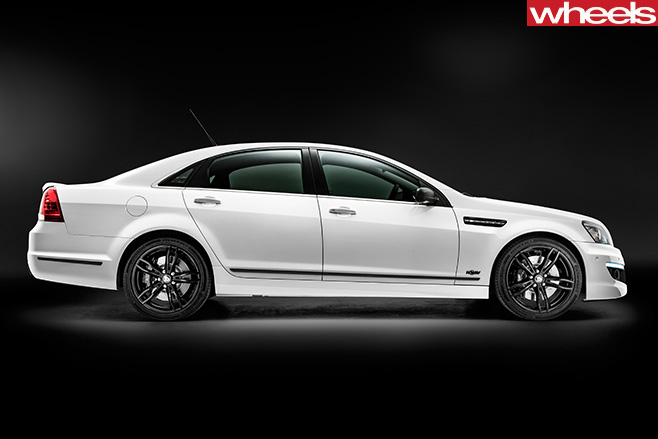
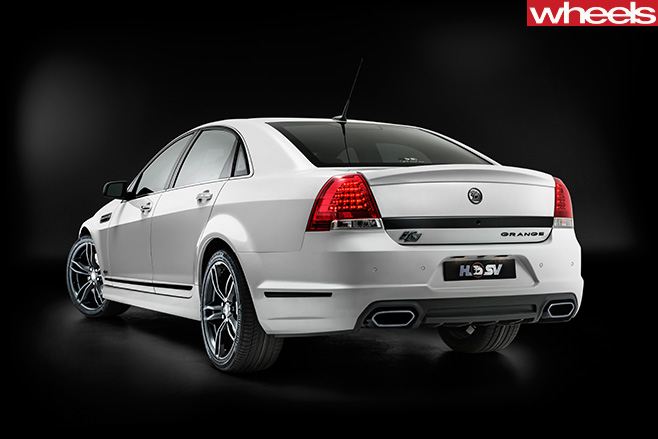
Now, HSV has rolled the last ever Grange off its Clayton production line – the first Commodore-based model to sign off ahead of next year’s factory closure.
The announcement was made with a single photo posted to social media, depicting the last HSV Grange alongside the team that helped put it together.
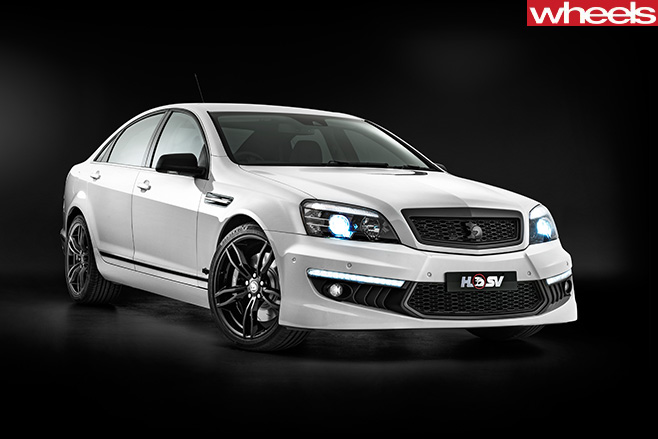
“[The last Grange] has actually been pre-sold by Metro HSV (Thebarton, Adelaide),” Paull told Wheels.
The last Grange marks the beginning of the end of local manufacturing for Holden, which is expected to wrap up completely late next year. The carmaker is yet to set a final date for production, but it is expected to not run longer than October or November next year.
“Whilst we have no intention of utilising this nomenclature on any future vehicle, we will look to retain the trademark for IP /licensing protection purposes,” he said.
According to HSV’s records, the final Grange was build number 2465,all made over a 20-year period.
“HSV will be looking to build Zeta platform-based models through until the end of 2017,” Paull said.
The Grange is powered by a naturally aspirated 6.2-litre LS3 V8, producing 340kW. It is the same engine found in the latest HSV R8 Clubsport Track Edition – of which only 156 will be built.
Range Rover’s fashionable Evoque gets a trendy buzzcut for 2017.
WHY ARE WE TESTING IT? Being an SUV with a retractable roof makes the Range Rover Evoque Convertible unique in the Australian market. Does subtracting a metal roof introduce too many compromises, or does the Evoque convertible’s status as the most attention-seeking member of the Range Rover family compensate for any shortcomings?
MAIN RIVALS It’s the only convertible luxury SUV on the market, but some may cross-shop with more conventionally bodied drop-tops such as the BMW 4 Series Convertible and Mercedes-Benz C-Class Cabriolet.
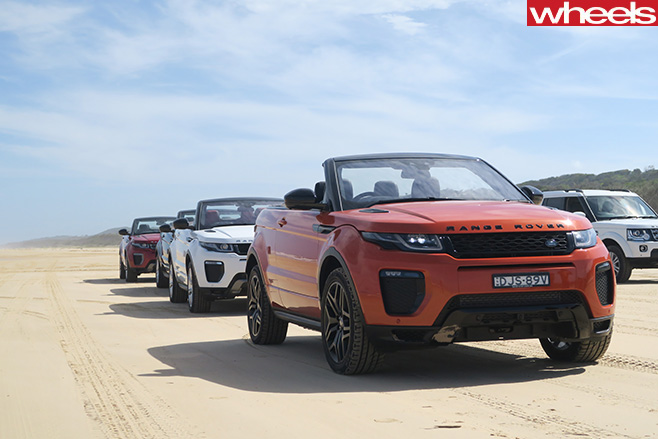
Removing the roof structure adds significant weight that takes the edge off the Evoque’s performance, but it is still more than capable of handling some light off-roading and there’s no more scuttle shake than you’d find in most similarly priced convertibles.
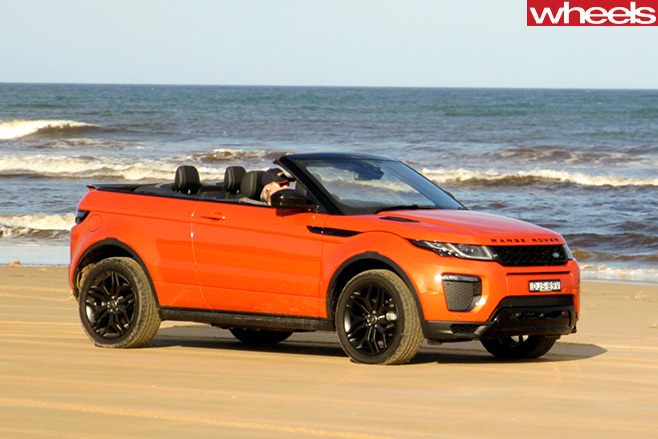
PLUS: It’s a drop-dead gorgeous drop-top; not as floppy as expected; smooth and refined Ingenium diesel MINUS: Top-hinged “tailgate”; pretty porky for a medium SUV; expensive
THE WHEELS REVIEW AS A strong Pacific breeze gently sandblasts our Evoque Convertible’s lurid Phoenix Orange paint with some of Fraser Island’s coarser grades of grit, I come to a surprising realisation: this roofless SUV has left a positive impression.
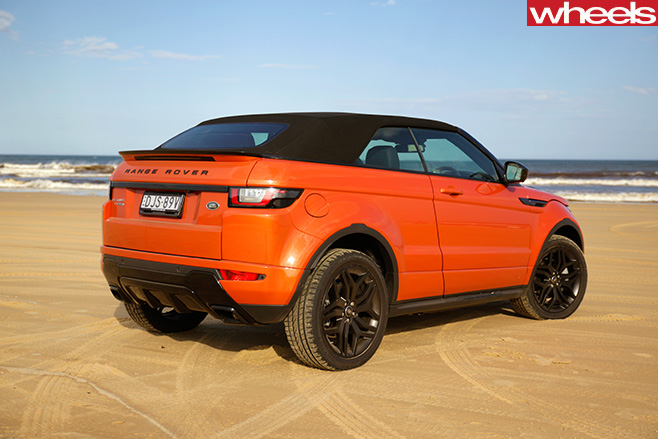
It definitely stands out though, even in shades that are more subtle than retina-blasting metallic orange. Toorak Tractors are rare in this particular part of Australia, and we’d wager this is the first time a roofless one has rolled across the island’s sandy trails.
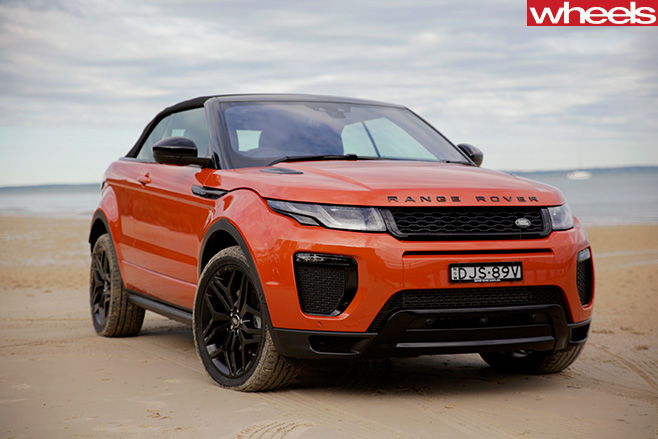
Below the shoulder line the Convertible’s sheetmetal is almost identical to the three-door Range Rover Evoque coupe, and with the roof down it looks fairly dashing. There’s no ungainly “basket handle” keeping the sides from collapsing inward and no rollbars protruding from behind the rear seats to spoil its silhouette. It’s definitely a looker.
The only real annoyance is the convertible’s top-hinged bootlid (enjoy stooping down to locate your luggage) and its $12-16K premium over a comparably equipped Evoque Coupe hardtop.
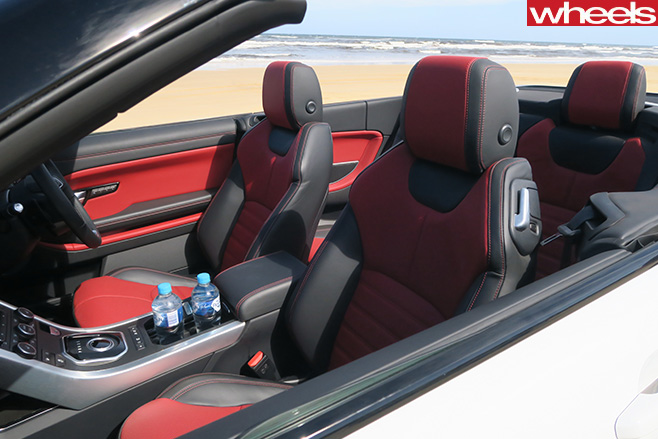
The weight of all those extra braces, and of the folding fabric roof mechanism, and pop-up rollover bars, add up to a substantial 280kg. Straight-line performance is duller than a tin-topped Evoque Coupe as a result.
But that’s the price you pay for a mid-size SUV with genuine four-adult capacity and a power folding fabric roof. If you want to be seen, a roofless Evoque will certainly direct plenty of eyeballs in your direction.
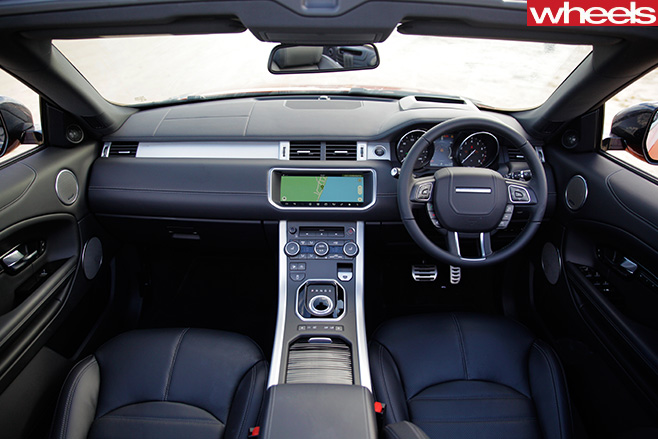
The Si4 petrol engine is a willing unit, and the nine-speed automatic that both petrol and diesel models are equipped with has a huge spread of ratios to cater to any condition. All Evoque convertibles come with an on-demand AWD system as standard, which is part of the reason the range’s starting price is a heady $84,835.
Otherwise, the Evoque Convertible steers and stops in a similar fashion to the hardtop. Besides the extra mass, its mechanical package is, after all, identical.
SPECS Model: Range Rover Evoque Si4 HSE Dynamic Engine: 1999cc 4cyl, dohc, 16v, turbo Max power: 177kW @ 5500rpm Max torque: 340NM @1750-4000rpm Transmission: 9-speed automatic Weight: 1936kg 0-100km/h: 8.6sec (claimed) Economy: 8.6L/100km Price: $92,015 On sale: Now
After 20 years of production, HSV has built its final long-wheelbase Grange model.
The final car is number 50 in its limited-edition run of ‘Grange SV’ models, which wear gloss black 20-inch ‘Rapier’ rims, shadow chrome exhaust tips and various exterior trims pieces all finished in black.
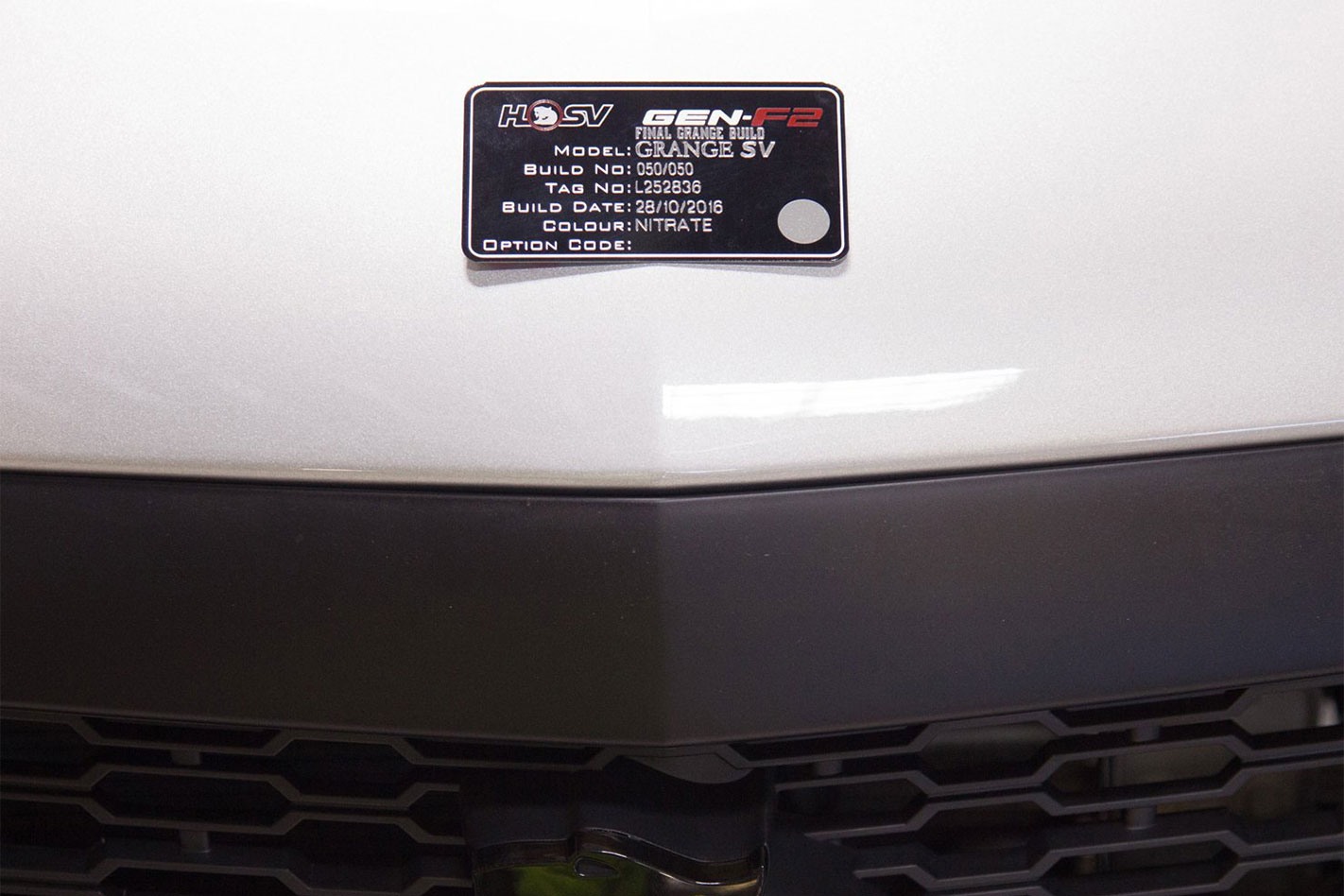
Painted in Nitrate (silver), the car wears a special build plate stating that it’s the last of its kind, finished on Friday, October 28, 2016.
The Grange first appeared in October 1996 as part of the VS Series II range, available with HSV’s 185kW 5.0-litre V8 or 215kW 5.7-litre stroker and a four-speed automatic as the only transmission option.
It has been a fixture of HSV’s line-up ever since, all the way through to the current Gen-F2, which is powered by the 340kW/570Nm version of GM’s LS3 V8, mated to a six-speed automatic.

Holden will reveal its own sports-luxury farewell model, the Director, early in 2017, while HSV is expected to farewell the Commodore with the monstrous 476kW GTS-R W1.
The Walkinshaw Group recently announced it will move facilities, signing a 15-year lease on a larger premises in Clayton South, Victoria, consolidating its many interests under the one roof.
