
In Lamborghini fashion, a cold start in the twin-turbo V8 AMG means a fairly high initial idle and, if the centre-console button with dual-exhaust icon is depressed, enough bass to rattle a neighbourhood that appears to have more interest in efficient public transport than the machismo of AMG’s breathed-upon Mercedes-Benz C-Class.
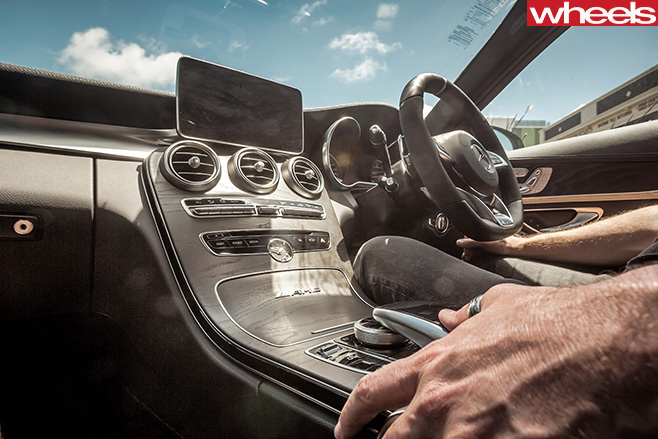
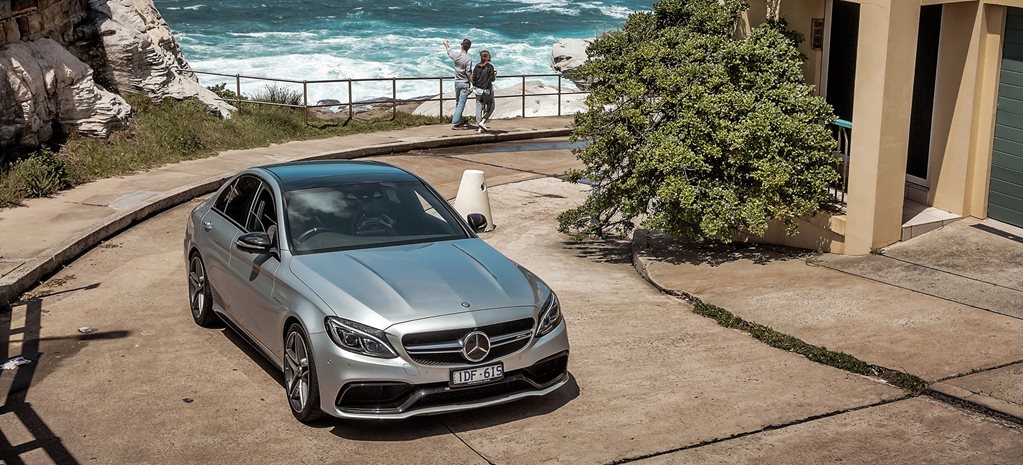
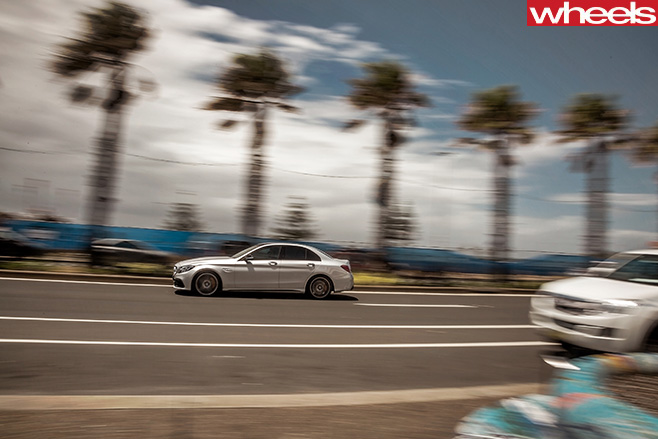
Exhaust rumble aside, this Iridium Silver Mercedes-AMG C63 S has blended into the local landscape a little more politely than the black BMW M4 manual coupe I piloted for four months a year ago. The litany of high-vis-wearing workmen renovating and constructing like crazy in Sydney’s Inner West appear to care less for the AMG’s subtly flared bodywork and ‘stock’ star-shaped 19-inch wheels than they did for the M4’s black-on-black badness, though I reckon that’s a good thing.
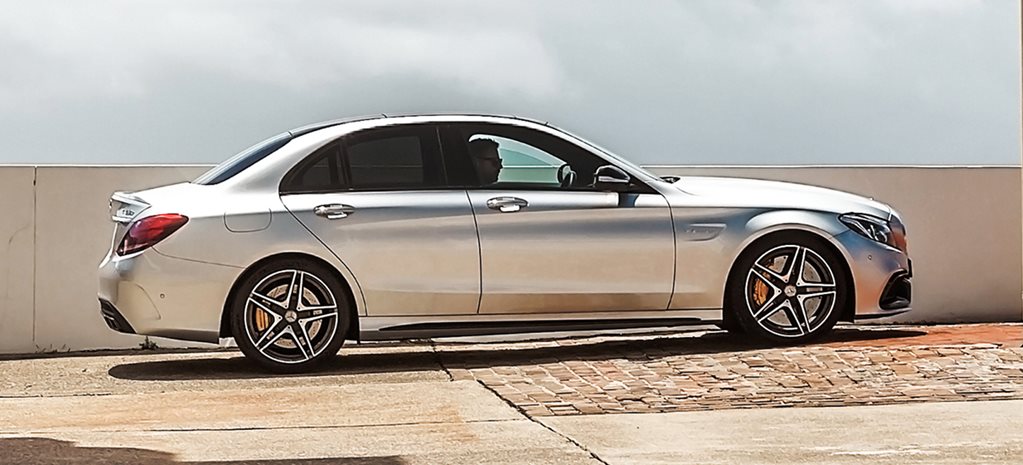
Only those who truly appreciate automotive aggression will spot this C63’s carbon-ceramic front brake rotors ($9900 extra) and four massive bronze-painted calipers, as well as its semi-slick Michelin Pilot Sport Cup 2 tyres ($1200), but that’s part of the beauty of this car. It’s not trying to be anything more than it is, though the sum of its parts produces a pretty stupendous overall tally. A twin-turbo V8, brilliant AMG Performance sports seats, a panoramic glass roof and a thunderous 13-speaker Burmester stereo will do that to a car.
But don’t be fooled by its relatively understated exterior. This is a pretty serious performance car – certainly more serious than I’d expected. Given I was coming into this long-term loan cold (I hadn’t even sat in a W205 C63), its very disciplined ride, even in Comfort mode, and sports-focused transmission came as something of a surprise.
The C63’s ride is fine for my tolerant cheeks, though others have expressed a desire for greater compliance. And the Speedshift-MCT seven-speed transmission takes some getting used to. In Comfort drivetrain mode, it always starts in second gear, which means off-the-line getaways require a fair amount of right-foot travel to muster all that turbocharged torque into action. And if you’re in a hurry, it can be inordinately slow to obey commands and get moving. The more you try and rush it – particularly when engaging reverse – the slower it seems to be … which sounds just like me getting ready to go out. Snap!
The carbon brakes have proven superbly effective in town, without any screeching or dead-pedal response, even when cold. And while the semi-slicks require some care during a Sydney rain dump, they’re grippier than you’d think. That said, even in the dry, with ESP Sport hiding in the wings, the C63 S has more than enough muscle to break traction.
When I collected 1DF-6IS from Mercedes-Benz’s warehouse in December, it was parked in front of a white Edition 1 Estate, with black 19s, red accents and all the toughness I’d have probably ordered myself had a $165K performance car been on the shopping list. But I now really appreciate this silver sedan’s understated menace. Especially after my gauche Christmas ride (see below). Here’s hoping the police view it the same way when I inevitably tackle the Putty Road to the Hunter Valley in the coming weeks.
UPDATE #1
By Nathan Ponchard
UNHEALTHY as it is, consuming a gullet-load of drinks and washing it down with some fast-food gloriousness at 1am is a great way to bond with fellow humans. Some of the finer conversational details may be lost in the process but there’s a warm-and-fuzzy feeling associated with letting rip in fine company that can seal a friendship.
That’s how I feel about the Mercedes-AMG C63 S. Initial misgivings over its brusque and unforgiving nature – especially when tackling low-speed traffic snarls and bumpy urban roads – have transitioned into a much more tolerant, almost lovey-dovey relationship phase.
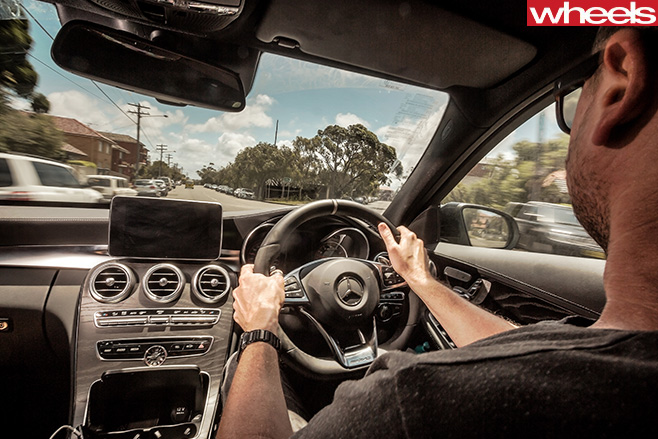
Having fully stretched 1DF-6IS’s muscular legs over the past two months and 1700 kays, including a soon-to-be-published comparo, I now fully comprehend what this 375kW slingshot is capable of.
It’s an intensely serious sports sedan – the polar opposite of gentlemanly older AMGs – and the trade-off for that focus is low-speed firmness. It will surprise nobody that the faster you go, the better the C63 S gets.
I’ve found a solution for its urban driveability issues. Instead of defaulting to ‘Comfort’ mode and quietly cursing the laborious off-the-line slurring as it starts in second gear, I now drive the C63 solely in ‘Individual’, mixing Comfort dampers with a livelier Sport drivetrain setting, a rumbling sports exhaust note and a more forgiving ‘ESP Sport’ safety net for the stability control.
In conjunction with semi-slick tyres, you’d think it was a step too far for standing-start traction but that isn’t the case. The Speedshift-MCT seven-speed holds onto gears a smidge too long at times in Sport but it makes the C63 feel genuinely quick. Sure, there has been the odd oversteer moment when plugging traffic gaps but at least its flow isn’t being spoiled by electronics.
About the only thing that can’t be remedied by pushing a button is the steering. Given that Sport, Sport + and Race are all too stiff for road driving in Australia, and group together all dynamic adjustments, there’s no chance of upping the meat of the steering while leaving the dampers ‘cushy’.
One particular corner on my work commute – a smooth, downhill left-hander just past Redfern station – makes the steering feel kinda slack, almost as if lane-assist is trying to make directional corrections, especially if the front treads aren’t bang on 38psi. And selecting Sport doesn’t cure it.
Yet when the C63’s vast roadholding reserves are fully explored, its steering becomes faithfully crisp and communicative, allowing this wonderfully poised little groover to be placed with precision.
Could it be related to our optional semi-slick tyres? When the Michelin Pilot Sport Cup 2s get swapped for regular road rubber in the coming weeks, we’ll know for sure.
S express
Unlike other markets, Australia exclusively receives the range-topping 375kW C63 S, hence its firmly focused, ultra-sporting personality. Yet for what most punters do, the marginally more forgiving 350kW C63 riding on 18-inch wheels would be a more sensible and comfortable choice.
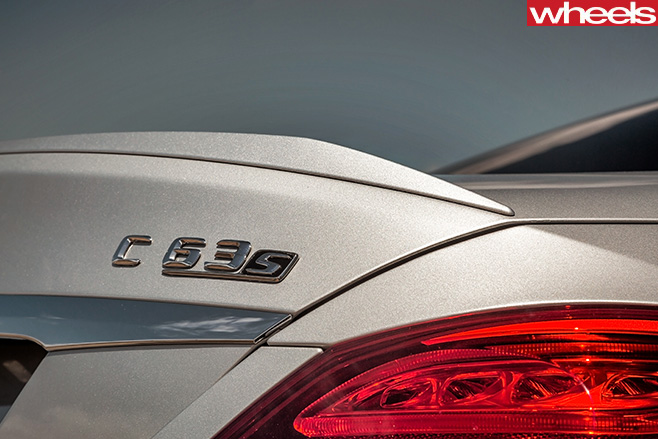
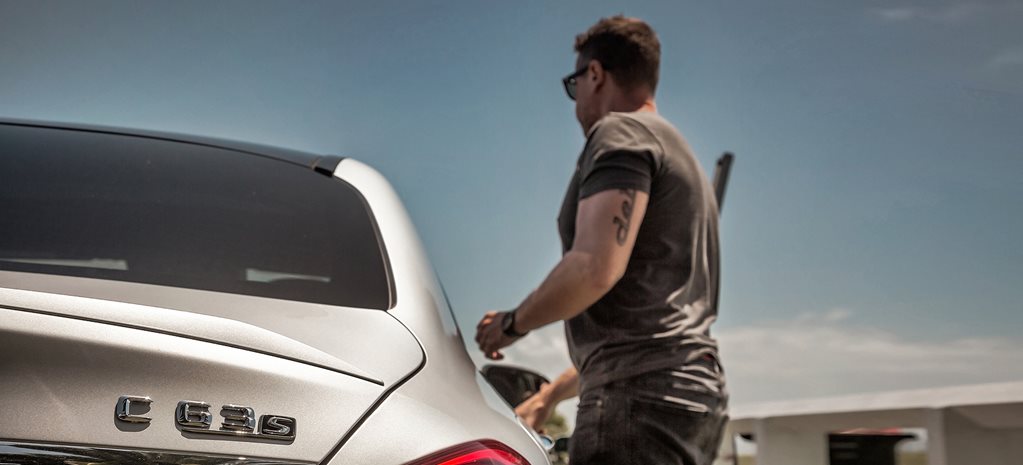
But Aussie AMG buyers can’t bear the thought of someone else having more power than they do, hence the ‘S’ on our C63’s bootlid. Wonder how owners will feel when the even more hardcore C63 S Coupe lobs in June?
Update #2
By Nathan Ponchard
AFTER last month’s thrash-and-dash extravaganza, all to the tune of the C63 S’s bent-eight rumble, it was back to humdrum urban duties for the AMG’s penultimate month on fleet.
A Mother’s Day blast up the M1 reminded me just how luscious the C63 can be when chewing up distance, but it’s a different beast when traversing the obstacle course of shopping-centre car parks.
Experience has shown that relying on the drivetrain’s Comfort mode, and thereby cancelling out first gear, is anything but comfortable for the C63. As the transmission slips and slurs trying to channel enough torque to the rear wheels, the Mercedes-AMG C63 simply hangs about, wondering what’s going on. It’s especially hard-going in Sydney’s tight inner-city parking stations, where steep ascents and brutal speed humps leave the C63 struggling to transfer all its rev flaring into smooth forward momentum.
The solution, as I’ve mentioned before, is Sport mode. And having relied solely on this set-up for months now, I reckon it’s both more economical and a more relaxing experience than the ironically named Comfort.
Direct drive to first gear means the C63 steps off the line beautifully, supported by surprisingly progressive throttle response that ensures the rear boots don’t instantly turn into whirly-birds in the wet.
And the Speedshift-MCT transmission doesn’t needlessly hold onto gears like so many two-pedal cars when switched to Sport. Instead, progression up its seven-ratio set mirrors how you might upshift in a manual, all to the tune of an angry nudge from the exhaust as it upshifts under load.
The Sport-primed transmission also eviscerates the top gear-obsessed Comfort setting by proving that you can have your cake and eat it too. Sport has no qualms settling into sixth or seventh, yet as soon as you call for instant forward thrust, AMG’s gearbox is immediately on the case, briskly shifting down with dual-clutch-rivalling haste.
If you buy a car like the C63 S and only ever drive it in the city, you’re missing out on soooo much of this car’s richness.
Leaving the parents’ joint, there’s a right turn at a tight roundabout, followed by an uphill on-ramp leading straight into a 100km/h zone. It’s like dropping a green flag in front of the C63. With ESP Sport engaged, I flattened the aluminium throttle pedal and the C63 simultaneously grabbed the lowest gear possible and the hotmix surface below, shoving both occupants in the back as it turned that incline into something more like a downhill ski run.
Then there’s the addictive sideways nudge from the tail as it barks into third, a not-so-subtle reminder that 375kW and 700Nm are doing the talking.
Even knowing what’s up its sleeve, the C63 S never fails to surprise and satisfy.
Update #3
By Nathan Ponchard
THE warnings came like the sky was about to break: severe weather right down the east coast, nailing Sydney and its surrounds right about when I needed to point the Mercedes-AMG C63 north to attend a mate’s boozy LA homecoming.
Now, the sensible Nathan lurking somewhere deep inside would have ignored the Cup-tyred AMG sitting in the backyard and chosen the soothing suppleness of the Ford Mondeo Titanium Ecoboost parked out front. Believe me, I did consider it. But what kind of test would that be for this four-door sports car wearing the summeriest of summer tyres?
Orthopaedic pillow packed and tunes prepped – Madonna’s Like A Prayer has stood the test of time better than you’d think – the C63 casually thundered and threaded its way, at the sat-nav’s insistence, via the Lane Cove tunnel and up through Ryde to the Pacific Hwy and the M1. Nice change, I thought, even though I have a deep mistrust of sat-nav.
Besides the rejection of Madge’s vocal stylings by the centre dash speaker, its grille buzzing to each beat as if being put through interrogation, the trip to Wamberal was uneventful. A pleasantly brisk and tuneful 120km/h cruise up the freeway, a duck into Dan’s in West Gosford for refreshments, a servo stop for chewy, and an hour and 20 minutes later I was parked. Only the speed hump I accidentally nailed at 60km/h on Old Gosford Road invaded the calm.
The way home, on the other hand, was a different story. It began innocently enough, cruising down Ocean View Drive feeling slightly dusty, intending to catch a glimpse of the raging surf, but instead treated to blankets of salt spray and a wall of white. Terrigal Drive threw a fallen tree into the mix, while Erina offered up some flash flooding, like we were in an AAMI commercial, which the Benz barged its way through.
Then came the freeway and a pounding from above. For 30 minutes from Kariong to Wahroonga, the C63’s wipers never once cooled off from maximum thrust. I had the cruise set at 120km/h but the steep climb from Mooney Mooney Bridge saw rivers of water washing across the road, making any level of auto-pilot feel disconcerting, so I flicked it off, locked my thumbs onto the wheel spokes and hyper-focused.
Soon 120 became 110, then 85 as the C63 enjoyed moments of aquaplaning and the occasional drift of the right wheels into the breakdown lane. Nothing too serious, but enough for the odd intake of breath.
To maintain our pace on a road relatively free of traffic, I stuck to the centre lane through corners just in case 120km/h of forward momentum added an unwanted diagonal component to the mix, but the C63 did a top job of keeping its cool and powering through Mother Nature’s treachery.
The living end
Having spent nearly 3000km in a BMW M4 Coupe a year ago, the difference in liveability between the M car and the AMG is quite stark.
Despite its manual transmission (which I loved), the M4 seemed the sweeter of the two in full urban conditions. Softer seat padding, a slightly less rigid ride and a properly round steering wheel made up for the greater difficulty manoeuvring the M4’s longer doors. But the C63’s bad-boy personality and greater dynamic finesse are hard to beat.
Update #4
By Nathan Ponchard
ACCORDING to a UK survey, moving house is more stressful than divorce. Having just done exactly that – the house bit (for the fifth time in six years), not the divorce part – I reckon that’s probably stretching the truth a bit. The actual moving part isn’t the issue. It’s the aftermath of dust, boxes, clutter and mind-boggling mess. Did I mention dust?
Given the chaos of winter 2016 in our household, it’s no wonder the Mercedes-AMG C63 S has been restricted to commuting and ferrying duties. But in doing so it proved there’s a lot to be said for the often-ignored practicality of a roomy medium-sized sedan.
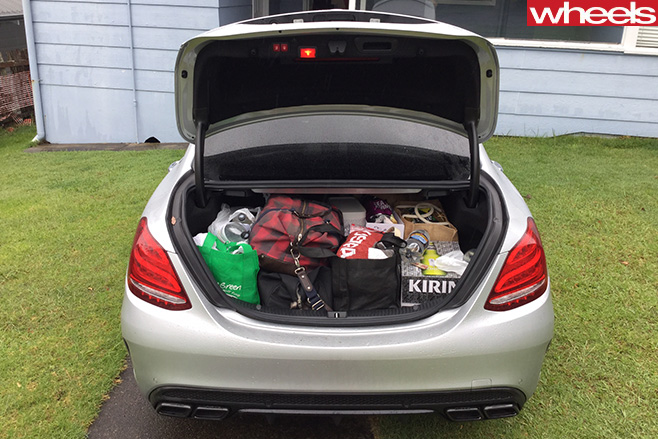
In the C63, full pack-horse duty requires a press of the boot button (either on the driver’s door, the keyfob, or squeezing under the numberplate plinth) before it electrically opens, then flicking a latch on each side under the rear parcel shelf to drop the 60/40 split backrest to a near-flat position.
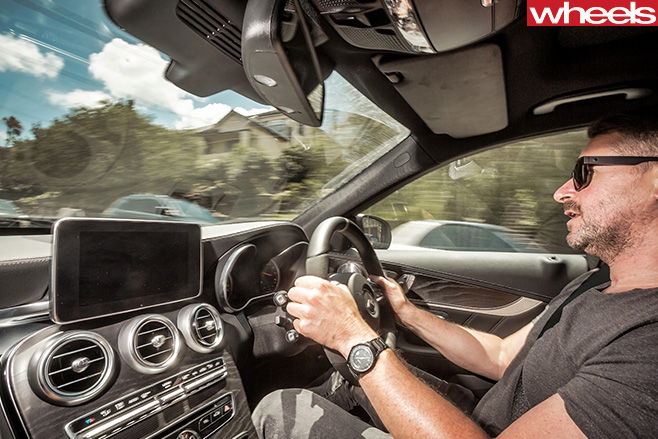
In this configuration, the AMG carted around the original spare wheel for my ’63 Galaxie, assorted car parts, our electronic recycling dump (goodbye Bowers & Wilkins Zeppelin with redundant iPhone 4 connect), 200 bucks worth of Kennards moving boxes and, ahem, our front windows.
My haste to get the century-old wooden sash windows in our bedroom restored, and the domino effect of discovering missing counterweights and ill-fitting glass panes, meant I spent days running around Sydney like our carpenter’s PA (admittedly, in an AMG). I went to Bunnings three times in four hours, so if you noticed the C63’s heinous fuel consumption this month, there’s a reason why. Frustration. But boy does that engine and its exhaust note soothe the pain.
Unfortunately the AMG had to be sidelined for my final PA job. Picking up our beautiful primered window frames with 12 new rectangular panes of glass puttied in place was a task too big for the C63’s ride. I simply couldn’t risk driving at snail’s pace trying not to break a window when a perfectly acceptable Honda Civic VTi-S was available, waving its far superior ride quality in my face.
The contrast was startling, for more than one reason. Yes, the Honda’s ride was comparative bliss, smoothing the speed humps and concrete-slab joins in our street like the ‘turbo’ putty plugging the imperfections in our refreshed windows, but its boot lacked the usefulness of the AMG’s.
A smaller cut-out through to the cabin, more intrusive panelling in the boot sides and rear-seat backrests that don’t fold as flat unexpectedly marked the new-gen front-drive Civic sedan as inferior to the more practical, better-trimmed, rear-drive C63 S. Honestly, who knew?
Hard and fast
That describes the C63’s ride alright, though because it’s so well-damped you don’t get that springy, vertical pitching sensation that was the Audi S4’s nemesis for so many years. This baby is tied down as tight as a drum, though at times it feels like an air-sprung billycart.
Besides the brilliant winged-back driver’s seat and its sophisticated layers of Nappa leather, there’s little cushioning between tyres and buttocks. But so long as you treat speed humps, potholes and road joins with respect, the C63 is a loveable rogue.
Update #5
By Nathan Ponchard
THERE’S one validation of a car’s greatness that isn’t always discussed, and that is the difficulty in saying goodbye. Like anything in your life, if you treasure your time together, separation smarts. Nine months in a twin-turbo Mercedes-AMG C63 S with ceramics and semi-slicks will do that to a person, yet I’m glad it has come to this. Mutual appreciation (I hope!) and a bond ’til the end of days.
What began as a slightly frosty introduction has grown to the point where I honestly feel like this Iridium Silver C63 S is mine. All mine, I tell you! I baby it like a doting father, parking it away from other cars in multi-storey lots, and as close to the gutter as possible in our narrow street without kerbing its star-spoke 19s. Admittedly, the front-right does have the odd small nick, where I’ve reversed in with lock on and ‘rested’ it on the gutter, but there are no scrapes to be ashamed of. And I’ve grown highly tolerant of the C63’s ride.
Our new digs (in yet another one-way street where everyone folds their mirrors in) is accessed via a mostly concrete-slab surface, and several of them don’t line-up properly. Not the AMG’s forte at all, yet its hard ride somehow cops the hits with dignity and integrity. Ditto the litany of speed humps populating my back way to the Sydney office.
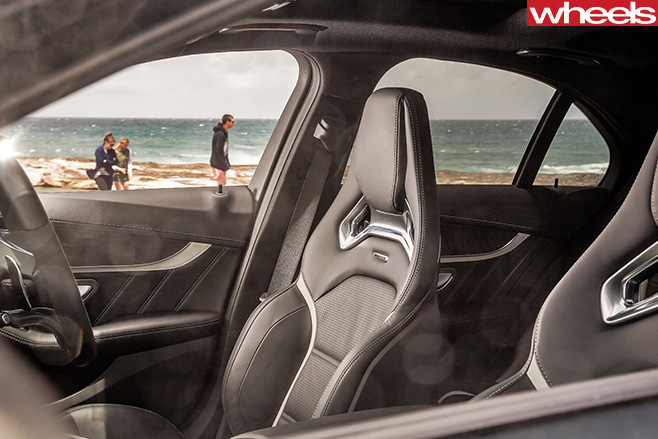
The C63’s cabin maintained its class and superb user-friendliness to the end, tempered slightly by a short-cushioned rear seat and the rather odd shape of its flat-bottomed, part-microfibre steering wheel. I frequently drove the C63 only touching the wheel’s leather bits, rather than dirtying its fluffy surfaces, and I often wondered why the hell you’d want a non-round wheel in a road car. At least my HJ Kingwood’s ‘oval’ wheel (with boomerang spoke shape) was designed to accommodate a beer gut.
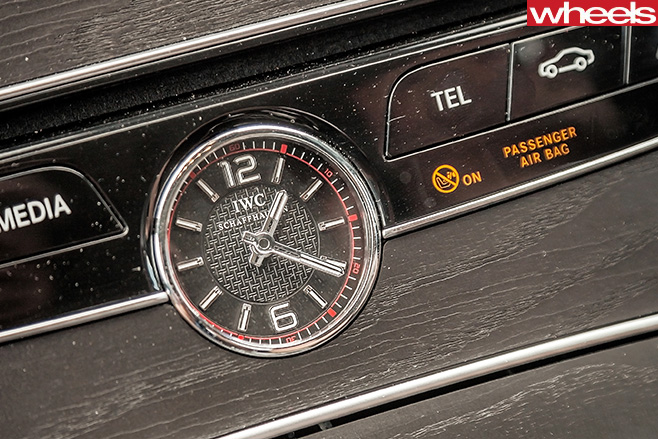
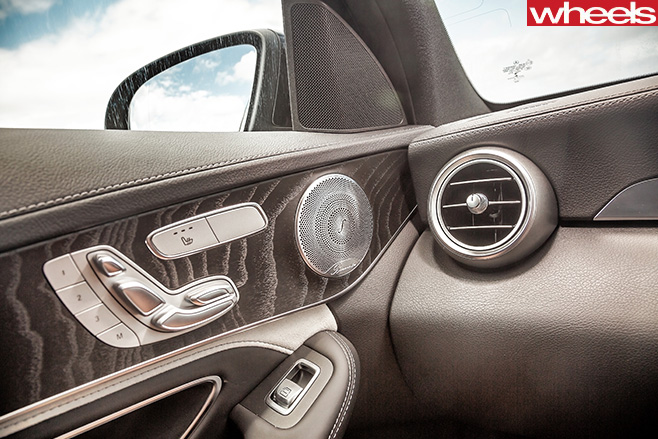
I wasn’t necessarily won over by the C63’s ‘standard’ 13-speaker, nine-channel, 590-watt Burmester stereo. Despite being simple to use, with digital radio a constant companion throughout our time together, the Burmester didn’t live up to the sound quality promised by its gorgeous perforated-metal speaker grilles. An audiophile mate and I both agreed it sounded too ‘bright’, and dialling back the treble couldn’t fix it. The centre dash speaker also developed a trim buzz, though only if you cranked the volume (via either a wheel button or a brilliant metal barrel dial on the centre console, easily accessed by either front occupant).
If you approach the C63 well aware that this is a highly focused sports sedan, not a cushy straight-line brawler, then its charms can’t help but get under your skin. It’s an impossibly hard car to fault – especially if you have a work fuel card, and don’t mind leaving its drivetrain in Sport – with the dynamic excellence and prodigious performance worthy of a modern AMG classic.
So, yeah, I’m really gonna miss relaxing to rolling thunder and feeling a bit spesh in this C63 S. Its Holden Spark LS replacement better enjoy taking speed humps at 50.
Fuelling the fire
In full city gridlock, the C63’s thirst can be borderline fearsome (two tanks averaging 24.7L/100km and 25.2L/100km confirmed as much), though a more even mixture of urban motorway and city commuting levels the AMG’s thirst out at around the 13-15L/100km mark.
Best of the lot over 4381km of enthusiastic motoring was a pair of 10s during my round trip to Dubbo a few months back (10.7L/100km on a fast four-hour blast back to Sydney being a commendable highlight). But if you really care about fuel economy, best avoid anything with an AMG badge. And ignore this car’s official combined number of 8.6L/100km.
Medium heat works best
In much the same way that the original Commodore was arguably the perfect size for a family sedan, the C63’s W205 Mercedes-Benz C-Class architecture makes it a four-door sweet spot.
While the C’s short-cushioned rear seat appears to have been designed to steer punters into an E-Class if you’re chasing serious lounging comfort, there’s plenty of legroom back there, and at 1877mm wide (owing to its pumped guards), the C63 strikes a not-too-narrow, not-too-wide balance that suits our cities like a beer garden on a summery Friday arvo. It’s also reasonably trim length-ways (4750mm) but squeezes a leggy 2840mm wheelbase beneath.
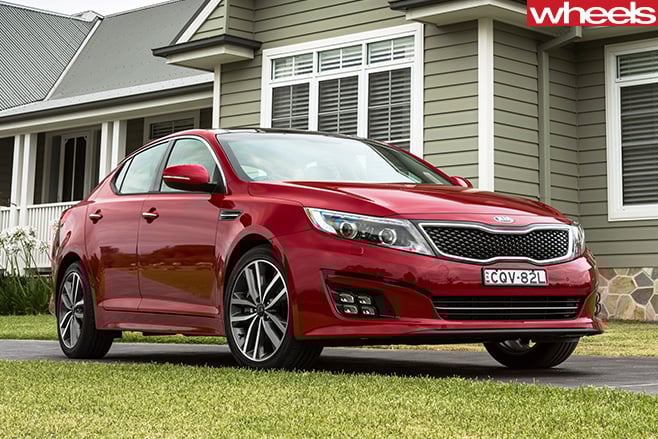
COULD I be happy with a highly equipped u2013 and I mean loaded u2013 Korean car? Itu2019s something Iu2019ve long wondered, yet I always thought I knew the answer (erm, no).But along the way things have changed. First of all, today’s Korean car is a generally far more solid, much better handling machine that those of a decade ago. I’ve changed too. With kids, I’ve slowed down a bit, and living in Sydney’s inner ring means I now prioritise comfort and conveniences; dynamics don’t matter so much when the road is inevitably a car park.
However, I can only take this view because I not only have the luxury of a dedicated daily driver – the Kia Optima – but also a pair of cheap, lightweight, once-were-performance cars for relief. To put it another way, if I only had one car, well, it would have to have a manual gearbox to keep me sane for starters (which, in the Optima, isn’t even an option).
To recap the history of the Optima briefly, the model got relatively sexy in the 2010 transition from the second to third generation (with the arrival of a new design chief, former Audi man Peter Schreyer), but it still had little in the way of engine or dynamic appeal. This new fourth-gen model brings a GT option with turbo torque and more polished dynamics, but doesn’t look quite as sharp.
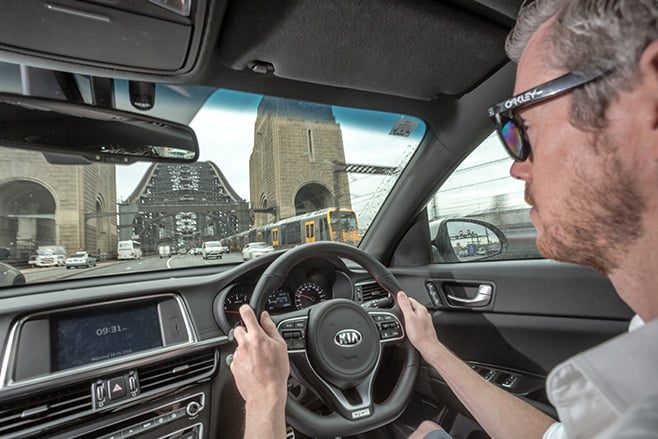
Then there’s the GT you see here. At $43,990 – almost 10 grand more than the Si – it feels kinda pricey; you can have any Passat you like for less than $50K, for example.
A 2.0-litre turbo engine endows it with 180kW and 350Nm, sent to the front wheels via a six-speed automatic, and marks a big grunt improvement over the atmo 2.4-litre petrol four in the Si (and previous-gen Optimas). But those outputs aren’t nearly as effective in a 1605kg sedan as they would be in something 200kg lighter (say, a Skoda Octavia RS).
Aurally, the engine doesn’t inspire, which it probably should, at least a bit, in the context of the (seemingly misplaced) GT badge. And, not unexpectedly, it’s seems a bit thirsty in urban driving.
The Optima steers surprisingly heavily – and that’s before you press the system into Sport mode – and the ride is firm, though not uncomfortable. The handling, meanwhile, is better than the old one, and the current-gen Si.
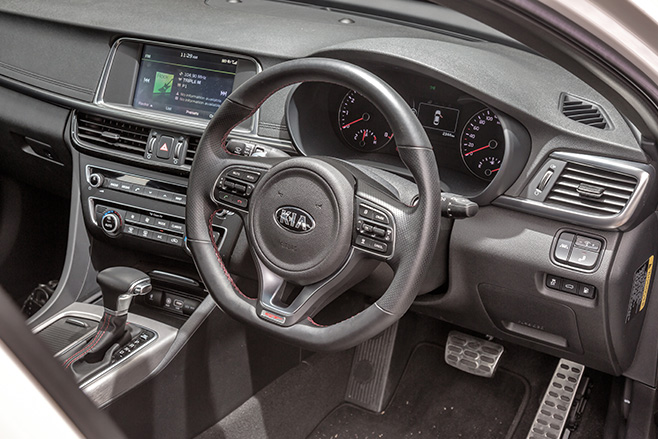
I’m quick to direct friends towards a new Kia because, if they’re happy with the way it drives – which is pretty well if the Optima is any guide – the rest of the package is full of positives; solid build, attractive styling, well-finished cabins, high equipment levels and, not least, a seven-year warranty.
But would I buy one myself? I’ll be a lot closer to knowing the answer at the end of six months with the Optima GT.
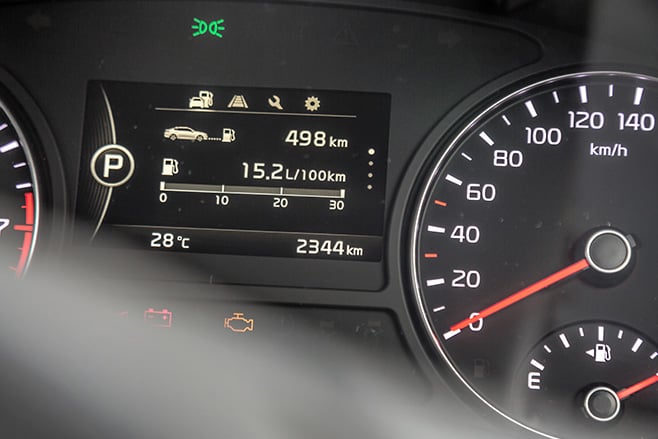
Eyebrow-raising fuel consumption
Update #2
EASTER brought the opportunity to use the Optima in the way that its GT badge and spacious rear seat suggest it is intended – as a family tourer.
The decision to take the Kia to Nan’s in Katoomba instead of our family wagon, a 2004 Subaru Liberty GT, was pretty easy. The Subaru is none too economical, even on the highway, and with 165,000km on the clock it doesn’t ride brilliantly – even, annoyingly, after I had four new dampers fitted last year. I had little doubt the Kia would be more economical and comfortable.
Being a wagon, the Subaru has more cargo space, and it’s more easily accessible, but this trip would provide a good test for the Kia’s boot. I think the Liberty is marginally more fun, but that wouldn’t be a factor on a double-demerits weekend. Putting the Optima to the obligatory wife-and-kids test would be more interesting.
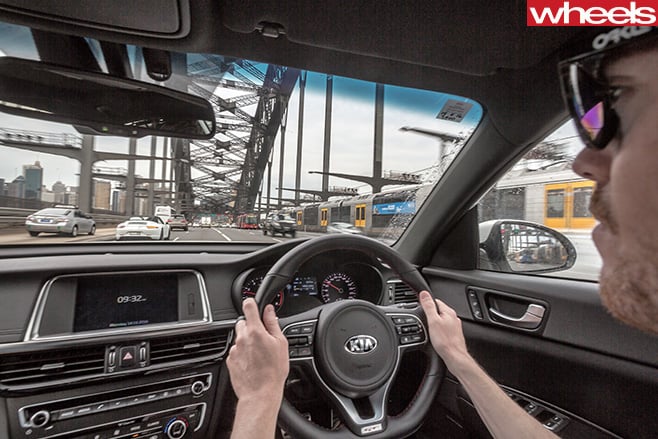
Five minutes of fiddling with preferences paid off and for 100km there was peace, with no complaints from the girls. Even when little Lucy cracked it, the problem was not Kia-related. We were supplying snacks, just not of the required quality or quantity, apparently. A stop to play at a park and a chocolate egg fixed it.
On resumption, as the trip computer fuel average continued to tumble from urban highs near 15L/100km, I was enjoying the drive. The GT rides with the expected level of comfort and shuts out tyre and suspension noise well, though the density of holiday-goers on the road limited any assessment of the dynamics or the engine’s upper reaches.
The Kia’s various driver assistance systems work largely unobtrusively, other than the radar cruise control. While doing as it should and reducing speed to maintain the gap to the car ahead, I actually wanted to overtake a L-plater doing 80km/h, not slot in behind him. And I could have done without automatic braking when I knew the car ahead was about to exit the motorway, but the system didn’t.
Doing the reverse trip with a full tank and five up (Nan joined us) sealed the Kia’s credentials as a decent and efficient family tourer, with country figures in the high fives; the old Liberty would be in the sevens.
Update #3
DRIVING a long-termer might seem at odds with the motoring journo’s job of testing lots of models, but it’s the other cars I drive that give me a better perspective on the Kia.
A recent run of hot-rodded German, Japanese and local medium/large sedans contributed to this month’s low kay-count. And the halving of torque from 700Nm (Mercedes-AMG C63 S) to the Optima’s 350Nm, with the simultaneous loss of premo-Euro interior finish, would surely be quite a come-down.
Turns out it wasn’t too bad, though. Given a slight adjustment in expectations to account for the fact the Kia costs less than a third of the Benz, the cabin only offended one out of five senses (though I didn’t lick anything – see breakout). And the Kia’s ride was certainly more forgiving.
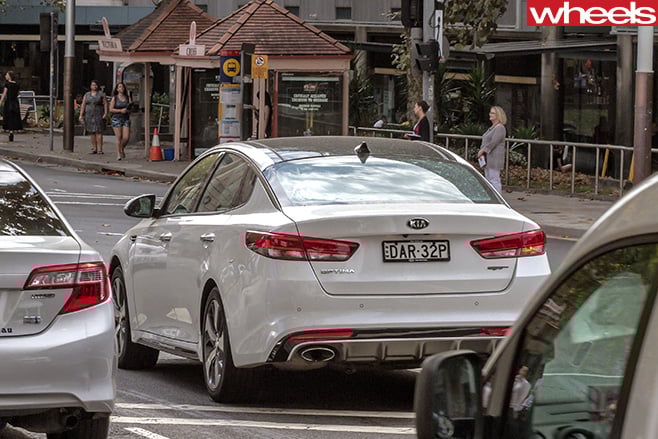
By comparison, the Kia benefits from a torque-converter automatic transmission and not having to overcome the inertia of a beefy engine and drivetrain; it fairly whizzed up to speed in the urban rush-hour zone. It hadn’t occurred to me that the 1600kg Korean sedan is actually quite lively until back-to-backing with the Germans.
I can’t help but take my old Subaru WRX to the office at least once a week. It’s desperately lacking in active and passive safety – I’ve almost backed into cars when reverse parking because I half-expect to hear warning beeps – but it frequently demonstrates how much less fun cars have become. The low-speed engine NVH is woeful, but the glaring lack of refinement comes in a reasonable trade-off for the unfailing involvement. Hey, I want to drive, not go along for the ride.
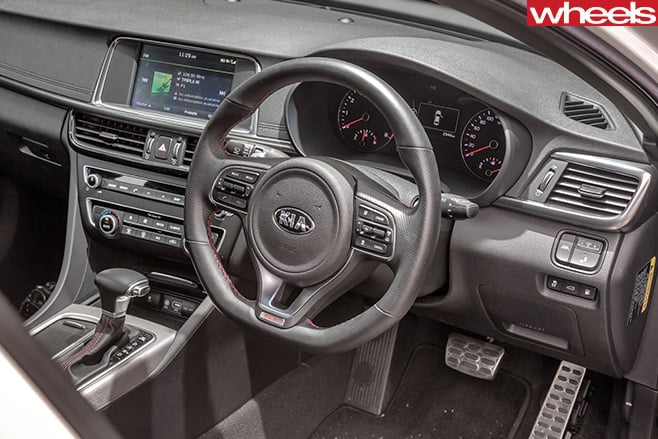
By comparison with everything I’ve driven lately, the kids seem miles away from me in the back seat, and a big, solid car is exactly what I want for family duty.
The flipside is that I feel I’m shoehorning the Optima through the urban rat-run I blitz regularly in the Rex – the Optima is about the same size as a VZ Commodore, while the tinny, tiny Subie is smaller than a VB.
Update #4
CHANGES of environment proved revelatory this month. I jumped into an Optima Si for the first time, and spent a couple of weeks in it while my GT was thrown into a Wheels mid-size megatest.
Stepping from GT to Si spec is officially a downgrade, but I was much happier in the ‘base’ Optima than I expected to be. The two-tiered line-up means the Si isn’t a base model in the sense of basic equipment level. At $34,490, it’s mid-spec Camry money, and this is a Korean after all so I shouldn’t have been surprised to discover how much gear it has.
I appreciated still having a reversing camera, front and rear parking sensors, dusk-sensing headlights, rain-sensing wipers and sat-nav. And it’s nice to know that autonomous emergency braking, automatic high-beam headlights and a tyre-pressure monitor are still part of the deal.
The Si is a decidedly conservative-looking package, and the first suggestions that this is no flagship are the lack of a smart key and start button. That said, I think the steering column barrel still makes a logical place to slot your key.
You also lose the GT’s Harman Kardon audio, powered driver’s seat and sunroof, as well as the blind-spot detection, lane-change assist and rear cross-traffic alert systems, but that’s fair enough.
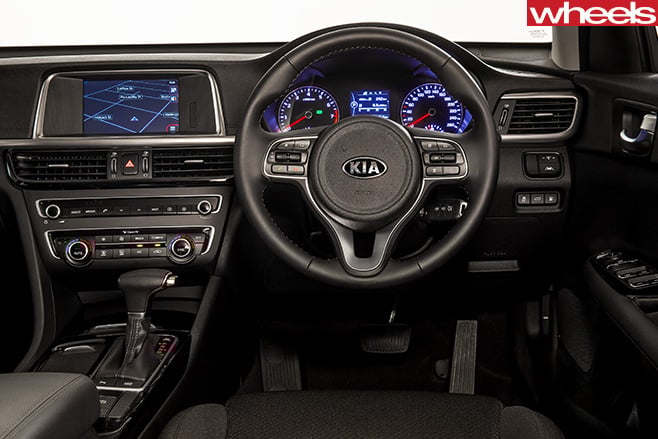
The Si’s steering wheel doesn’t feel cheap or anorexic, and there are still paddle shifters, which is great. The column-mounted electric motor-assisted power steering detracts from feel, which isn’t a GT strong suit anyway, while the transition to mainstream 215/55R17 tyres from the GT’s adhesive 235/45R18 Michelin Pilot Sport 3s adds to ride comfort and removes very little in the ’burbs.
The Si, which at 1585kg weighs about 65kg less than the GT, gets different gear ratios from first through to fourth (they’re slightly taller) and the 241Nm atmo 2.4-litre four has enough low-rev torque that it goes just as well as the 2.0 turbo GT in the city. Both have enough for the job, yet neither tickles the senses.
While the megatest’s results will be revealed in a forthcoming issue, suffice to say that when the Kia Optima GT is put on some of NSW’s best country roads, where it’s possible to give it a hustle, well… let’s just say it becomes a very different machine to the one I know.
Farewell
BACK when I had my first car, I waged war on unnecessary equipment. As a 19-year-old in a Mazda RX-7 of the same age, these included the jack, spare wheel and washer bottle. This made it a stripped-out, race-ready special, you see.
Part of that personal philosophy has always stayed with me. The average modern car, by my purist’s rationale, is chock full of flagrantly useless crap. While I wasn’t about to rip out the Optima GT’s heated front seats or steering wheel or blind-spot monitor, I vowed never to use such weight-adding, performance-sapping luxuries designed for people lacking my resolve and skill.
But I’ve been infected by the insidious disease that is the convenience feature. “The heaters are already there, contributing to the Kia’s 1605kg kerb weight, Jimmy,” went my subconscious. “Go on, indulge!”
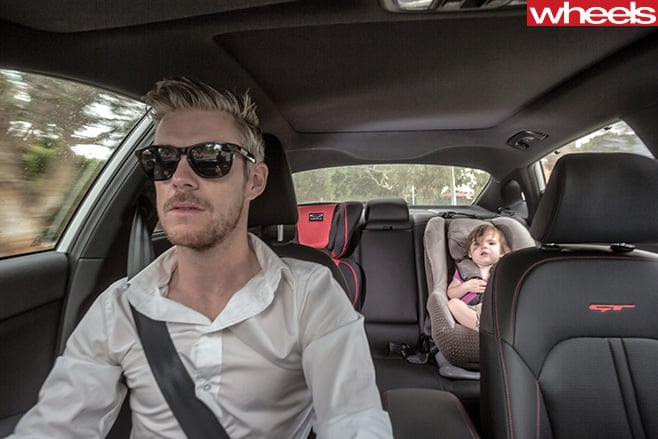
It turns out that the headline features – the ones in my mind are where modern cars have given up and gotten fat – are the ones I’ve started to like the most. But there are still others that reaffirm my hardcore stance on excess stuff.
While reversing the Kia Optima into my driveway the other day, I pressed the button to disable the parking sensors so as not to wake my daughter sleeping in the back. Then the phone rang, so I reached to bar the call on the multimedia screen, only to discover that the reversing camera display meant I couldn’t do this. I slotted the gearbox into drive to exit the reversing camera screen (I could’ve pressed the button on the wheel, but the pressure of keeping her ladyship asleep removed the possibility of quick, logical thought), barred the call, then slotted back into reverse. At which point the parking sensors started their merry beeping…
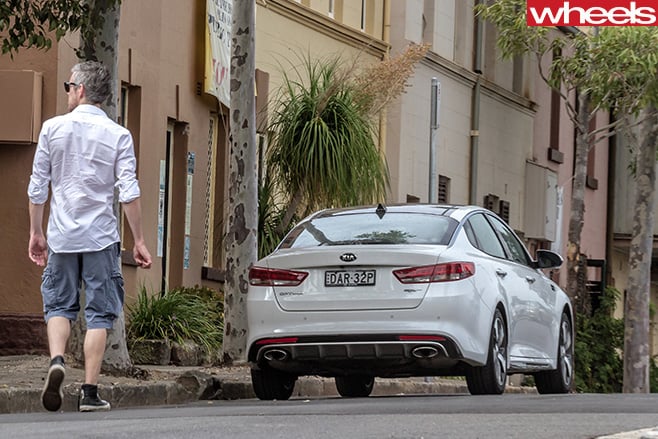
Thankfully, Little Miss slept through it all, including the cursing and shouting, leaving me to dream up my ideal tarmac-rally Optima RS, which would have no spare, washer bottle or equipment… but I’ll keep the heated steering wheel and driver’s seat.
If you ever needed proof that the motor industry is a fast-moving critter, just hold this year’s BFYB results up against last year’s. See the BMW M135i last year?
Top of the pops in its class. This year? Not so much. In fact, the little BMW has gone from rooster to feather-duster in the biggest way, slipping all the way back down the charts to ninth.
Is the M135i no longer any good? Has it been messed with and ruined? Nope, not at all. What’s happened is simple: the rest of the BFYB world has caught up with it. It hasn’t all been advancements from the opposition either; BMW’s own M2 re-writes the book on performance-per-dollar and the M135i has kind of been left out in the cold.
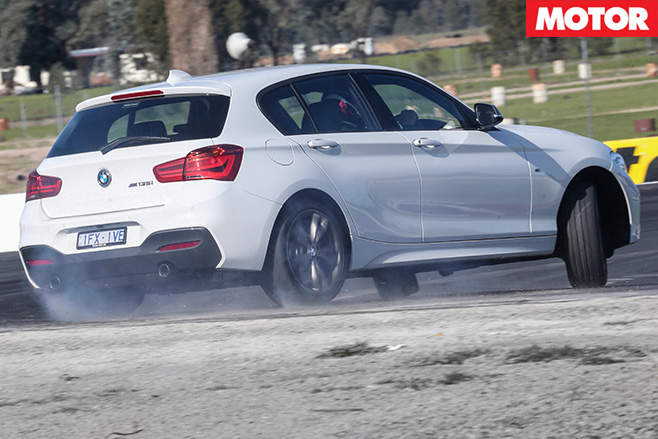
See, the BMW is quick. From rest, it’ll clobber 100km/h in under five and it gets across the first 400m in a low-13, so there’s no problem there. Neither is it lacking flexibility, because it’s able to smash from 80-120km/h in less than three ticks. Nope, it just doesn’t seem to get around the bends as swiftly as it probably should have and that’s the story of its ninth place.
As for causes, well, the overall footprint isn’t huge and it was nothing stellar in the braking tests either. But, clearly, part of its lack of corner pace was down to the fact we couldn’t seem to get the ESP to completely disengage. Or if it was, then the same electronics that act as the limited-slip diff were messing things up.
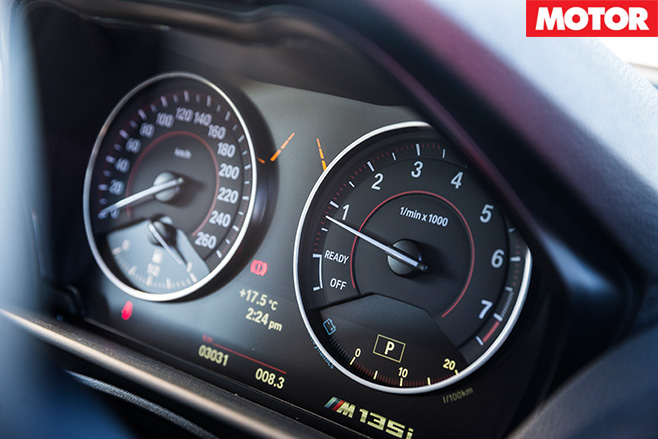
In a wow-factor sense, the M135i was a bit disappointing. It’s very refined but, as Luffy put it in his own inimitable way, it can be “too refined”. Is that being a bit hard on it?
Maybe, but the fact remains that the little hatch was a bit distant and remote; eager to please, but not at all costs. I’ve got to take issue with the look of the thing, too. It’s a bit too Fisher Price for mine and I don’t think I was alone in that. So there you go, from hero to zero in 12 short months. BFYB can be a cruel mistress.
JUDGES’ COMMENTS 05. David Morley “Wouldn’t matter how good it was, I can’t cop the look of it.”
04. Dylan Campbell “I like this car a lot. Grunt and rear-drive – my kind of hot hatch.”
06. Louis Cordony “Hot-hatch mutant all class and properly enjoyable to fang.”
05. Scott Newman “Ninth a harsh result for what remains a brilliant hot hatch.”
SCORES Price: $62,900 Bang Index: 62.8 Bucks Index: 112.4 BFYB Index: 129.0
WARREN LUFF SAYS 06. “This thing is so glued and controlled it takes away some of the fun”
“You can feel there’s a great chassis there, but the engine probably doesn’t live up to what its probably capable of.
“I think lap times could have been faster [if the stability turned off completely] but it’s everything you expect from BMW – it has good brakes, it’s got a good engine in terms of torque and driveability, top-end power. If anything it’s probably just a little bit too refined, “But in terms of giving you the confidence to go faster, it’s got huge amounts of grip – it’s just a matter of finding where that grip is.”
Want more? Check out the rest of 2016 Bang For Your Bucks.
First the V8 was dropped from its title and now Supercars are going racing in 2017 with a SuperUtes category featuring four-cylinder diesel production pickups.
Supercars issued digital renderings of what the proposed SuperUtes may look like, with modelled examples including the Ford Ranger, Toyota HiLux, Volkswagen Amarok, Nissan Navara, Holden Colorado and Mitsubishi Triton, despite a lack of manufacturer support.
Next year only Nissan and Holden will officially support the Supercars series, however MOTOR spoke with representatives of those brands as well as Ford, Mitsubishi, Toyota and Volkswagen, all of whom indicated there are no plans for an official SuperUtes entry.
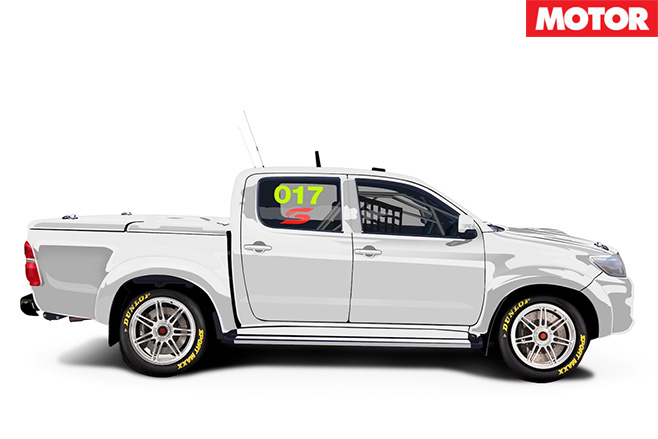
“V8 Utes has been a popular and entertaining category but with the changing automotive market it’s important that the Utes series becomes more market relevant,” Supercars managing director Matt Braid said in a statement, referring to the overwhelming popularity of dual-cabs in the local market.
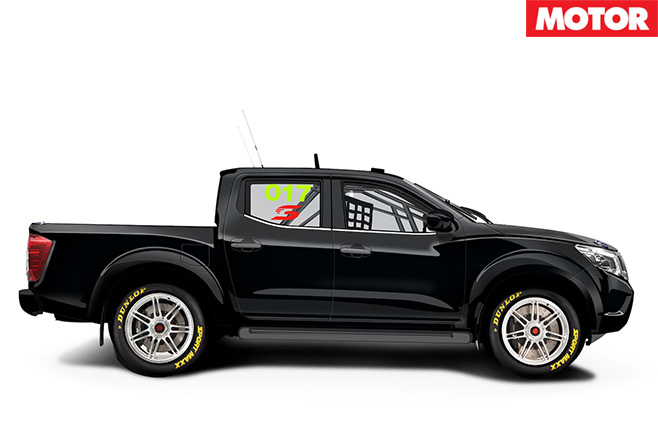
It will cost racers an estimated $60,000 beyond the price of a production dual-cab ute to conform to control specifications for the series.
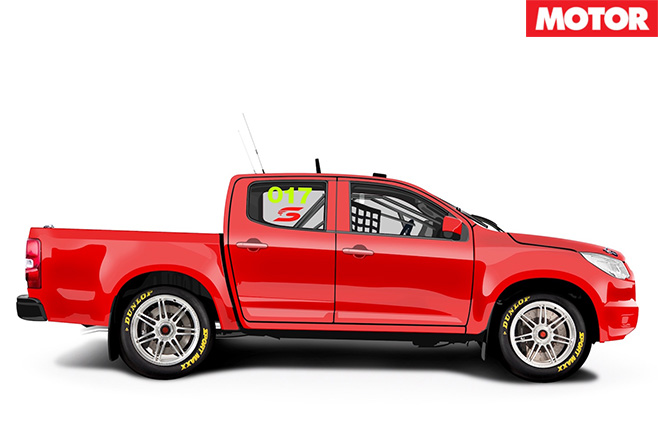
Supercars also announced the SuperUtes will run next year at five rounds including Bathurst, Gold Coast, Ipswich, the new Newcastle street circuit and a final unnamed event.
This year to September 2016, the dual-cab ute class tallied 110,359 sales – far greater than Falcon and Commodore utes that numbered just 5741 over the same period.
1. The Renault Trafic has been wearing the market leader mantle as the top selling mid-sized commercial in Europe for over 17 years. It currently holds a 15 percent slice of the European LCV pie.
2. The longer you have the keys to a Trafic the more cubbyhole storage you find. A flap in the steel bulkhead lifts up allowing long articles to be poked through under the passenger seats from the load area. The passenger seats also flip forward to reveal another out of the way storage area. It can make finding your sunglasses somewhat of a challenge at times.
3. The wheel and stripe package of the Sport are reportedly homage to Renault’s Formula One successes. Silver body highlights, side steps and metallic paint are all an effort to make the load-lugger less box-on-wheels and a little more sporty. Renault Australia is unsure as to whether the stripes will make it down under due to our harsh sunshine.
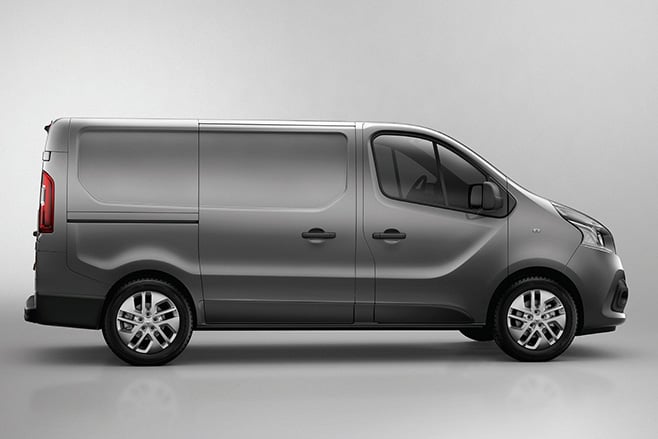
4. This LCV platform was developed in conjunction with GM, though the Renault-Nissan Alliance sees Trafic manufactured at the Renault’s Sandouville factory in France along with a Nissan badged version called the NV300. The same platform is also manufactured in the UK by Vauxhall and sold under the Vivaro name. Opel variants for Western Europe are also manufactured at GM’s Luton UK plant. Not to be left out of the action FIAT also use the Trafic/Vivaro platform as the basis for its Talento van.
5. Flipping down the passenger sun visor of the Trafic Sport can be a disturbing experience. A convex blind spot mirror for looking down the left hand side of the van from the driver’s seat comes in handy. But the passenger gets a grotesque distortion of their own face reflected back at them.
6. Renault’s 1.6-litre common-rail turbo-diesel engine is a perfect example of the global engine down-sizing trend. This engine is nearly half the size of the market leading Toyota HiAce’s 3-litre engine yet puts out more power.
7. Twin-turbocharging is often called Bi-Turbo. In the case of the Trafic it’s really sequential turbocharging where a smaller turbo provides boost lower in the rev range, while a larger turbo kicks in as more oomph is needed. This prevents turbo lag at low speeds.
Far from scaling back, Steven Richards’ life has become even busier since his retirement from full-time V8 Supercar competition at the end of 2011.
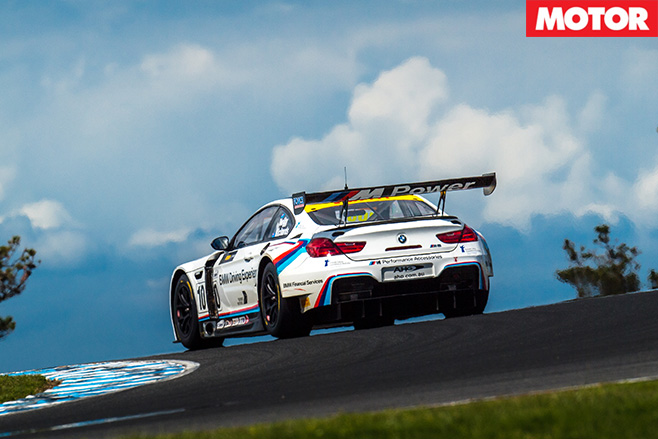
As well as continuing as a sought-after co-driver, including two further Bathurst 1000 victories in 2013 with Mark Winterbottom and 2015 partnering Craig Lowndes, he has competed in the Carrera Cup (winning the 2014 title) and entered the Australian GT Championship in 2016 running a factory-supported BMW M6 GT3 under his own Steven Richards Motorsport banner.
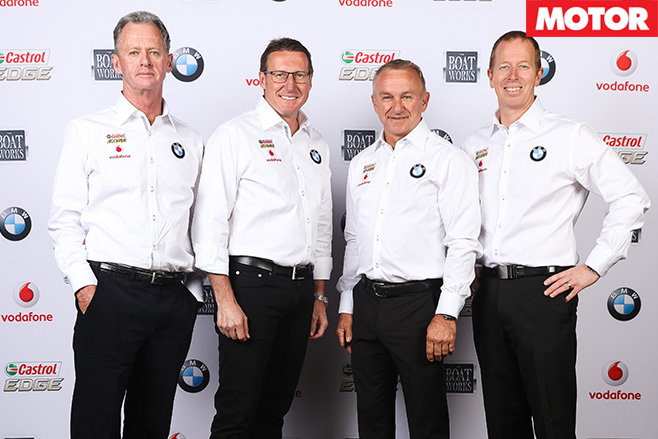
At the 2017 Bathurst 12-Hour he’ll be wearing two hats, overseeing Team SRM operations as well as trying to knock Ingall, Skaife and Longhurst off the top step of the podium from behind the wheel of the sister M6 GT3.
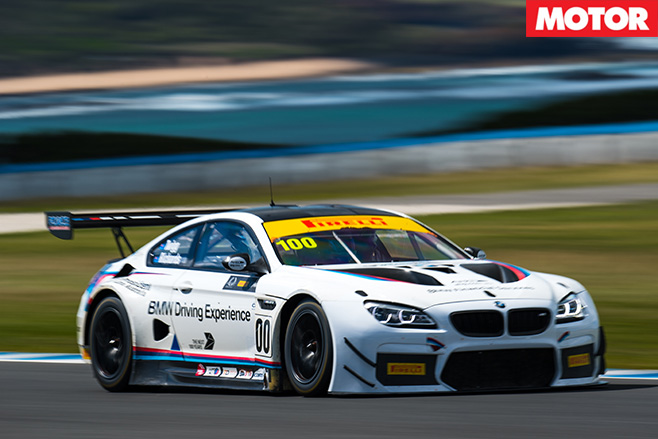
“We’re rolling out a program that includes Challenge Bathurst at the end of November and also an exclusive day that BMW have booked up there. By the time we get to the 12-Hour we’ll have a raft of knowledge and simulation and expertise based on extracting the maximum performance out of the car for that event.”
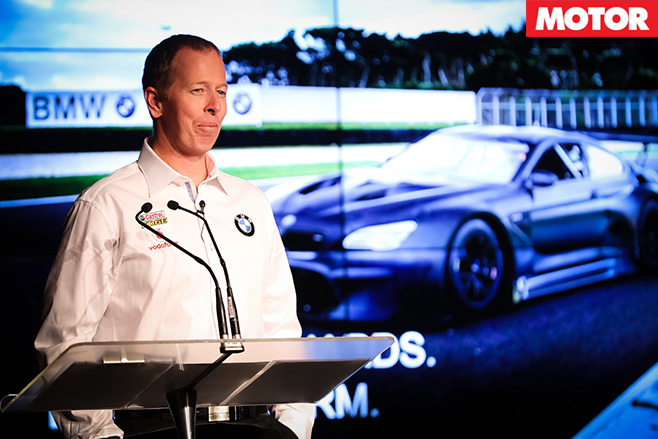
“I still train hard, I do all the things that I used to do when I was a full-time V8 Supercar driver, I guess I’ve got more responsibility outside the car with our own team now and I’m finding it really rewarding. It’s funny, you always look to where your career and your life is beyond the driver’s seat and it just evolved into this.
The Richards family has a strong history with BMW, Steven’s father Jim winning two ATCC titles in 1985 and 1987 with the Munich marque, and this connection played a strong part in the team’s choice of GT3 car.
So is dad Jim going to get a steer at some point? “I’ve got no doubt that we’ll have dad in the car at some point,” grins Richards. “Not competitively, but just out for a run; he hasn’t driven a car with ABS and that amount of downforce and paddle-shift and all that sort of thing; I think it’ll be a great story.”
YOU probably know Rauno Aaltonen as the Finn who won Bathurst in 1966 at the wheel of a Mini Cooper S.
Perhaps you also know of his win at the Monte Carlo Rally or his string of six second places in the Safari Rally. Or possibly as a pioneer of left-foot braking. Or as a child powerboat racing prodigy. Or as the man who brought science to the study of vehicle dynamics. Suffice to say, the guy’s got quite a resume.
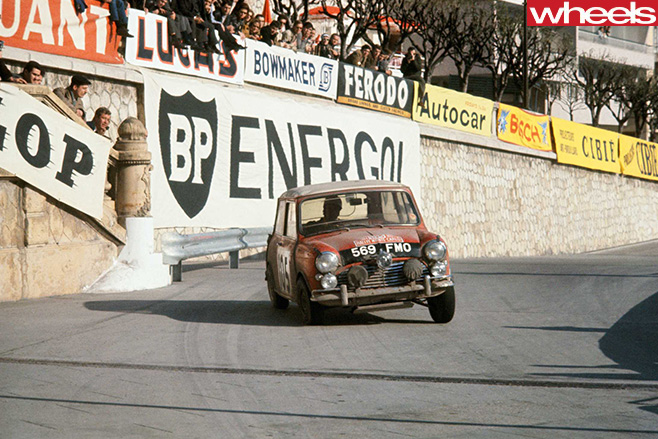
“‘Rauno, in Australia primarily as a guest of honour at the Southern Cross Rally Festival, joined Wheels for breakfast at the MINI Motorclassica.” We had to ask him about Bathurst – how could a Mini win the Great Race? “The key factor was the tyres. We put the hardest tyres we could find on the car. The roadholding was not the best and the steering was a little vague, but it meant that we could stay out so much longer than the rest,” Aaltonen explains. “Along Conrod Straight it was like a train at times. You would have one Mini slipstreaming another and the following car was reluctant to lift off the throttle so you just had bump-bump-bump as they tapped each other! We recorded the highest engine temperatures there because the car was flat out with little cooling.”
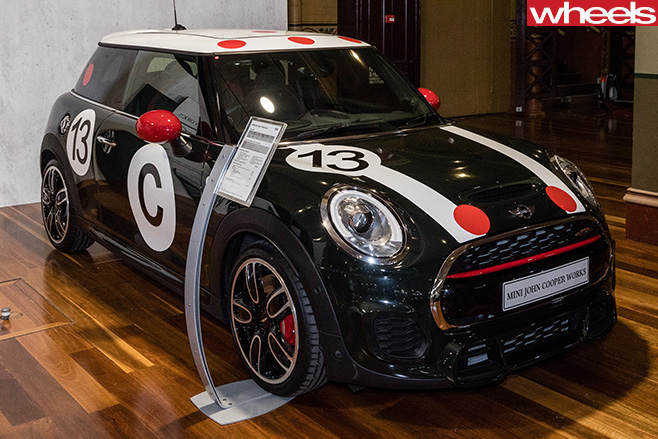
Aaltonen speaks with some authority on maximising the advantages of the Mini’s layout in international rallying. “It turns in very swiftly, reaching optimum slip angle before a big rear wheel drive car. Very polar moment of inertia. For example, we discovered that just by removing the metal lighting bar from the front of the car, this would give us 1.5 seconds per kilometre. We’d take it off during daylight stages and attach it for the evening ones.” Marginal gains like these were key.
“Yes,” Aaltonen chuckles. “People were always asking me how a 100hp Mini could compete with a nearly 200hp Porsche. Ten-inch wheels against fifteen-inch in soft snow. This is not something many people can understand. Theoretically impossible to beat the Porsche in a Mini but we did it frequently,” he says.
“Then you need a team that understands rallying. A normal engineer, designer, mechanic – they’re totally useless for rallying. You can’t take a racing team – they don’t understand rallying. Likewise a rally team don’t understand racing. And BMC had a genius, the boss Stuart Turner, and he was a journalist who had no mechanical aptitude, that was just detail. His job was to manage the people, motivate them to make the best possible car. For instance, he had a system where one man built the whole car, the engine and everything apart from electrics. The preparation was unique. No manufacturer in the world had that level of preparation.
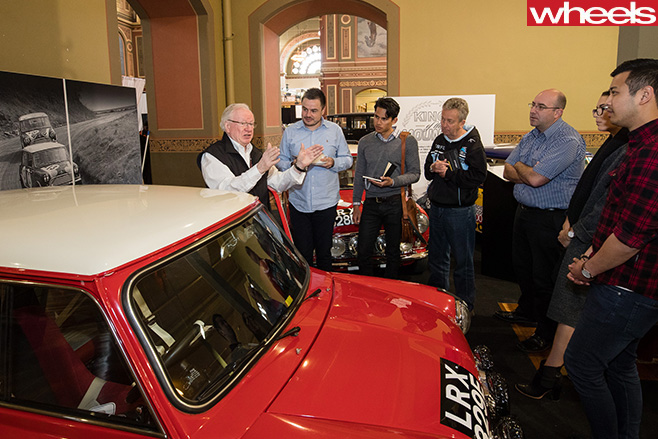
Aaltonen’s win at the ’67 Monte Carlo Rally was greatly aided by a huge slice of luck. Trailing Vic Elford’s Porsche by more than two minutes after being caught in a freak snow squall, Aaltonen drove the wheels off his Mini on the Col de Turini before he ran out of physics, sliding on smooth, glassy ice.
“It was quick decision. There on the steep, high speed downhill, everything is white and you feel as if you’re going out [terminally understeering]. I had a tenth of a decision to decide. Shall I purposely crash into a concrete block which would stop us 100 per cent safely but that’s the end of the rally, but if you fly off the edge, maybe there’s a chance. So I made the choice to fly off and hope,” he says. Aaltonen landed in deep snow on a steep slope, bounced down the hill and rejoined the stage on the next switchback.
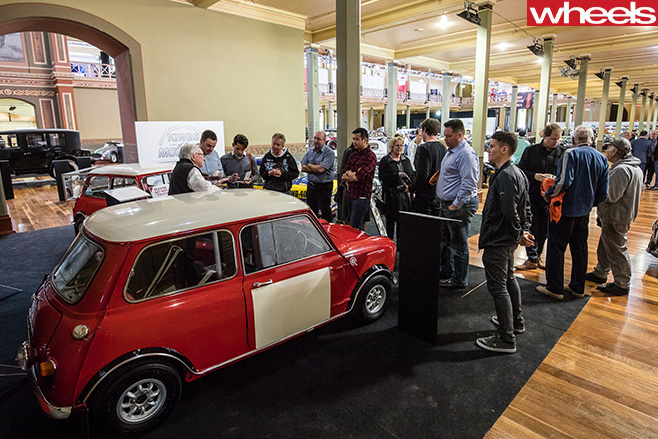
We see. Did he ever go back to find where he soared out into the white? “I’ve been there after that many times. I drove ’68 in the same rally but I couldn’t find the exact spot because the railings were there and in ’67 they weren’t there. I know within an accuracy of 100m where it is, but not exactly which gap.”
Does it annoy him that he finished second for six occasions in the Safari Rally? “No. What annoys me is that one year we were the winners for two days and they changed the regulations so they stole our victory. They were, in my opinion, dishonest. In Safari, people place bets on the winner and the people in the organising committee had placed bets on Shekhar Mehta and he was second so they would have lost their money. This upsets me – people being dishonest, not the loss of the position.
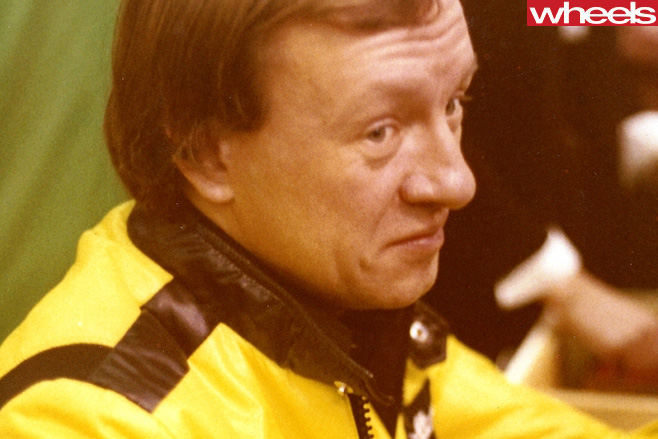
Dubbed ‘The Rally Professor’ by his peers, Aaltonen has an instinctive understanding of going quickly, which started with racing hydroplane boats in Finland when he was 12 or 13. “When a man controls something, it’s an emotional job. It’s your feelings combined with your thinking, with priority on the thinking. You have to think of the theory of moving dynamics, the forces and how they affect that equipment, motorcycle, boat, sailing yacht. And cars.”
And which of the more recent crop of drivers does he most admire? “Loeb. That’s easy. And Ogier,” he says.
Aaltonen might be 78 years old, but he’s still pretty handy behind the wheel. He’s driving in the Southern Cross Anniversary Rally this year, the finish in Coffs Harbour on November 19 coinciding with the running of Rally Australia, the final round of the 2016 FIA World Rally Championship. Some competitors have been invited to drive some of the Rally Australia special stages ahead of the WRC cars and Aaltonen’s being reunited with a Cooper S. No matter how nostalgic he gets, just don’t pelt it with rocks.
Images of the first-ever Mercedes-Benz ute leaked online prove that not all utes are created equal.
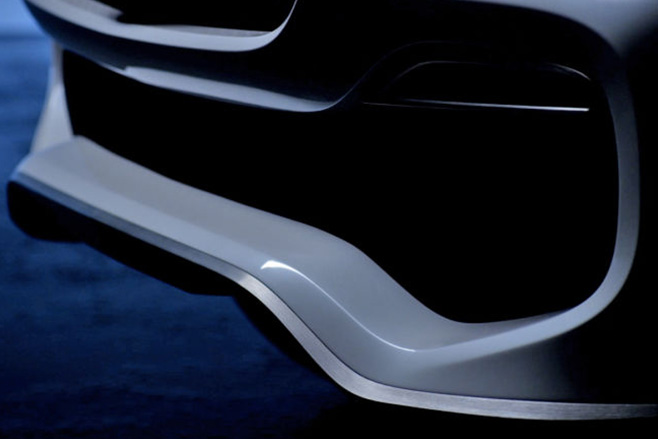
Despite being based on the Nissan Navara NP300, the Mercedes-Benz Pickup is closer to what you’d expect from the luxury carmaker, just with the addition of the tray.
From a side profile, the Navara’s genetics are obvious, under the skin the one-tonne ute is expected to see its biggest changes with new suspension, a more powerful V6 engine, revised styling inside, and slight design changes on the exterior.
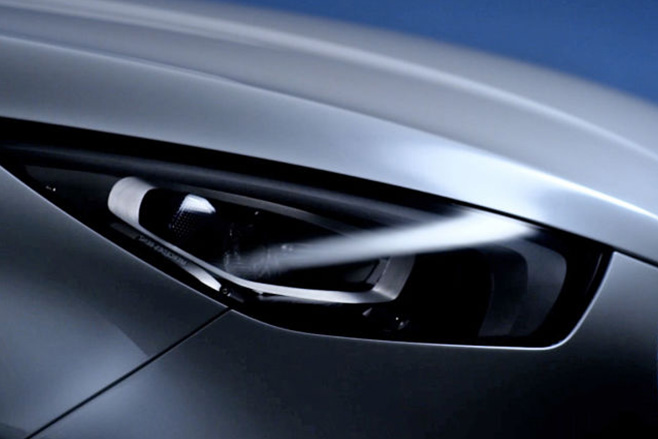
The teaser video released before its official reveal in Stockholm this week, gives a glimpse into this stylish ute. A curvaceous and sleek body, with a Mercedes-esk front air-splitter and stylish headlights makes the Benz-with-a-tray a more luxurious ute than we’ve seen in recent years.
Expected to be called the GLT, there’s the possibility of an AMG version also coming into production. The German brand has also alluded to the GLT being the safest ute ever, with more safety technology than we’ve previously seen in a commercial vehicle of this kind.
At this stage, however, the released clip uses the word ‘concept’ suggest Mercedes-Benz may change the design or the release of this anticipated truck.
WhichCar will be on Swedish ground on October 25 for the world debut of the ‘GLT’ at a special event. Stay tuned for more details.
The all-new Subaru Impreza range is set to touch down on Australian soil in December, and the Japanese company has already opened the order book for its incoming small sedan and hatch.
Pricing at the bottom end hasn’t changed, with the base Impreza 2.0i continuing to retail for $22,400 in sedan form (hatch bodystyles carry a $200 premium). However, in terms of added value, the base model now comes with an automatic transmission, 17-inch alloys and a 6.5-inch touchscreen with Apple CarPlay/Android Auto as standard.
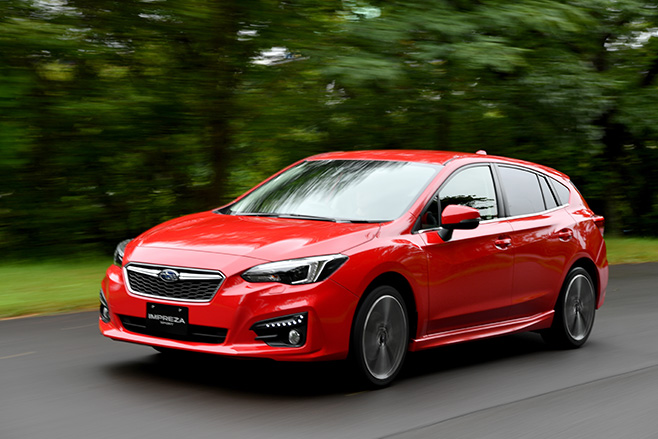
However while the sticker cost of that model stays static, other Impreza variants experience a slight price jump. There’s also more choice than before, with a fourth model being added to the range.
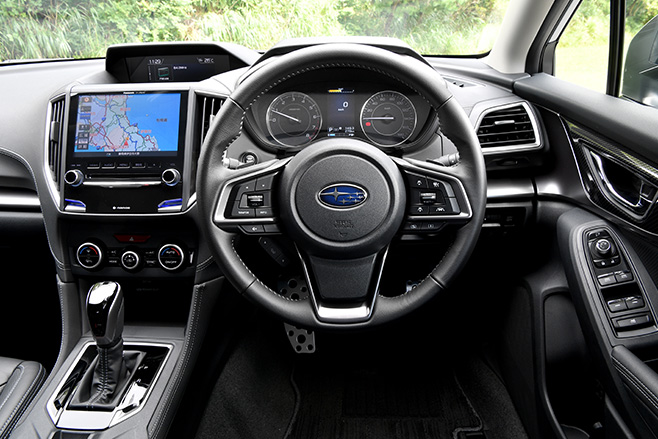
The 2.0S replaces the 2.0i-S flagship, but there are now two models between the base Impreza and the range-topper. The 2.0L, priced at $24,490 as a sedan, brings an 8-inch colour touchscreen display, higher-grade cloth upholstery, electric folding mirrors, dual-zone climate control, leather-trimmed steering wheel and shifter, front foglamps, daytime running lamps, an upgraded trip computer and Subaru’s EyeSight active safety suite.
The 2.0P is specced almost identically to the 2.0S, but adds a power glass sunroof and satellite navigation as standard.
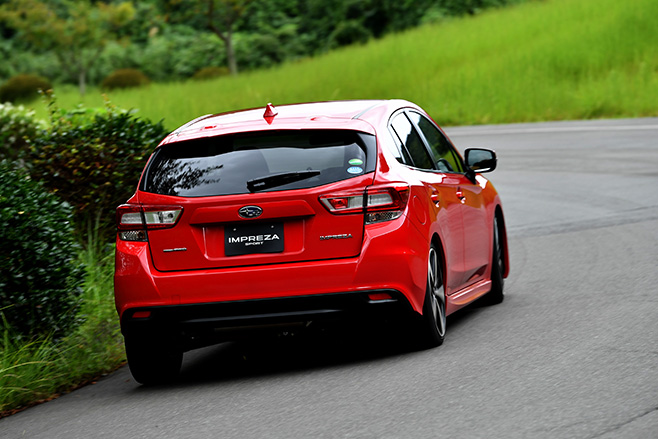
Meanwhile the full-fruit 2.0S comes packed with the most equipment, with leather upholstered seats (heated up front), a powered driver’s seat, active LED headlamps, 18-inch alloys, heated mirrors, rain-sensing wipers, dusk sensing headlamps and a bodykit offered as standard.
In addition to the EyeSight tech that’s included on every model from 2.0L up, the 2.0S also scores blind spot monitoring, lane change assist and rear cross traffic alert.
Mechanically, the big news is the entirely new platform that sits beneath every 2017 Impreza. There’s no carryover with the soon-to-be-superseded model – in fact, the only shared parts are a handful of generic nuts, bolts and plastic clips. While the benefits of the new platform won’t be immediately obvious to both, the structural and suspension improvements improve the Impreza’s handling, comfort and crash safety.
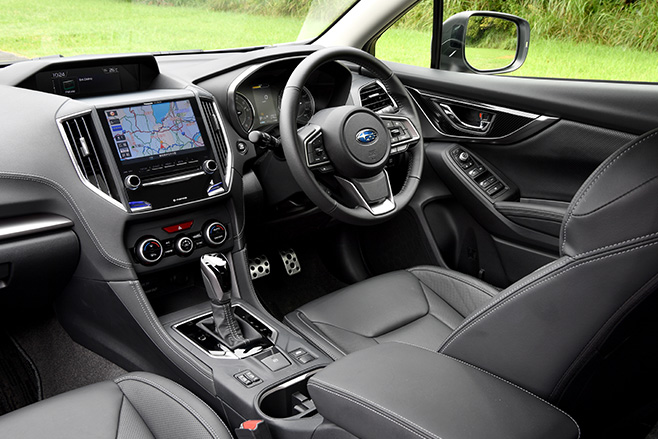
It also allows a bigger interior. The 2017 Impreza boasts 29mm more front shoulder room and 29mm more rear legroom. Luggage capacity measures 345 litres for the hatch and the hatch opening has been widened by 100mm, though sedan boot figures are still to be announced.
All Impreza variants are powered by the same naturally-aspirated, direct-injected 2.0-litre petrol flat four. Developing 115kW of power and 196Nm of torque its outputs are average for the segment –and only 5kW higher than the outgoing car – however the Impreza’s standard-fit automatic and AWD drivetrain are unique selling points.
The 2.0S has an extra trick up its sleeve in the form of active torque vectoring, which brakes the inside wheels during cornering to send more drive to the outside wheels, helping the car rotate and thus improving grip and handling.
Pricing:
Impreza 2.0i sedan – $22,400 Impreza 2.0i hatch – $22,600 Impreza 2.0L sedan – $24,490 Impreza 2.0L hatch – $24,690 Impreza 2.0P sedan – $26,290 Impreza 2.0P hatch – $26,490 Impreza 2.0S sedan – $28,990 Impreza 2.0S hatch – $29,190
A capped price servicing scheme has also been introduced for the Impreza, with the first three years of scheduled servicing topping out at $1298 – amounting to a saving of just under $920, according to Subaru Australia.
Servicing intervals have also been increased, with Subaru now doubling the time interval from the old car’s six months to a less onerous 12 months. Distance intervals remain 12,500km.
THE venerable Toyota LandCruiser 70 Series has finally received a five-star ANCAP safety rating.
However, the five-star ANCAP rating applies only to single-cab chassis variants – the remaining variants are as-yet unrated.
The 2017 upgrade of the 70 Series single-cab chassis includes new head-protecting side curtain airbags, a driver’s knee airbag, seatbelt pre-tensioners, changes to the bonnet and seat designs, and structural improvements to the chassis and occupant cabin – a thicker new frame and thicker side rails.
“[The 70 Series] receives important safety and emissions updates that are required by many customers – as well as regulators – to enable Toyota to continue selling the 70 Series in the Australian market,” said Tony Cramb, Toyota Australia’s executive director of sales and marketing, when news broke of the upgraded Cruiser back in June this year.
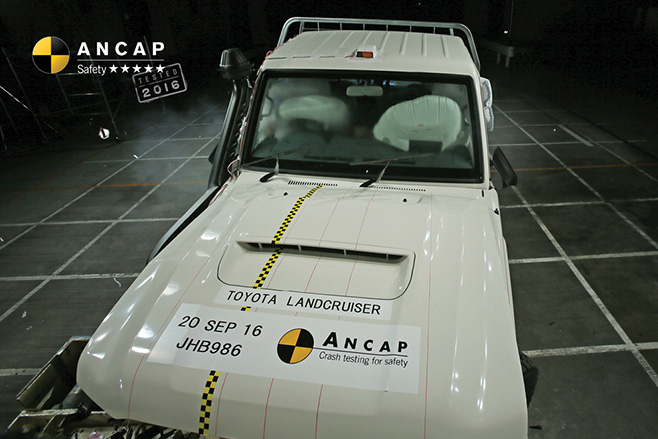
2017 safety upgrades for the entire 70 Series range includes stability control, traction control, hill-start assist and electronic brakeforce distribution (EBD).
“It is encouraging Toyota has responded to consumer demand, particularly from commercial and fleet buyers, and implemented design changes and safety upgrades to improve the LandCruiser safety rating,” said James Goodwin, ANCAP’s chief executive officer.
“Safety is a key consideration for everyday consumers and corporations with a significant proportion of businesses requiring minimum five-star vehicle standards for not only their own fleets but also their contractors.
“This competitive pressure has resulted in a two-star jump for the LandCruiser 70 and will have a tangible effect on the safety of worksites and more broadly, Australasia’s vehicle fleet,” Goodwin said.
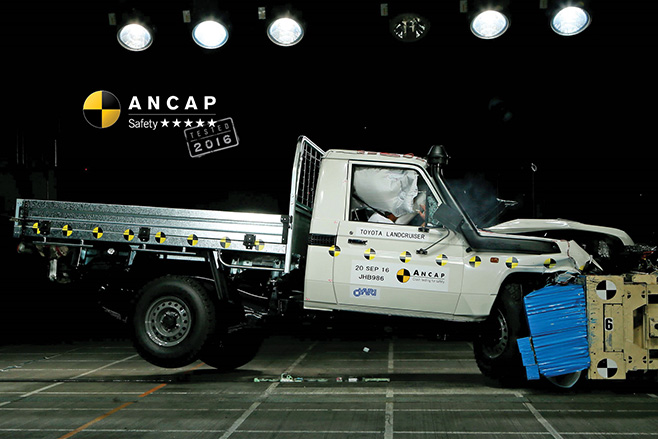
The ANCAP rating applies to all single-cab chassis variants built from September, 2016.
For the frontal offset test the Cruiser scored 14.75 out of 16, losing minor points for chest and lower leg protection; while for the side impact test it received a perfect score of 16.
After the rigorous testing process the Cruiser came away with a cumulative score of 35.75 out of 37.
The upgraded 70 Series also retains the famous 4.5-litre V8 turbo-diesel engine, but receives piezo injectors to improve response at low engine speeds.
