
The 2017 Renault Megane five-door hatch range has officially arrived in Australian showrooms, with the French hatchback flaunting a new platform, improved efficiency, more in-car technology, a fresh new design and a new engine for the flagship Megane GT.
The range comprises four different variants priced between $22,490 and $38,490. The entry-level Megane Life in manual form kicks off the line-up priced $490 more than the outgoing Megane Authentique. The mid-grade Megane Zen and high-grade Megane GT-Line follow, with the performance-oriented Megane GT topping off the range.
All models bar the Megane GT are powered by a carry-over 97kW/205Nm turbocharged 1.2 litre, with a six-speed dual-clutch automatic being the standard transmission for Zen and GT-Line. The Megane Life has a six-speed manual as standard, but a six-speed auto can be optioned for an extra $2500.
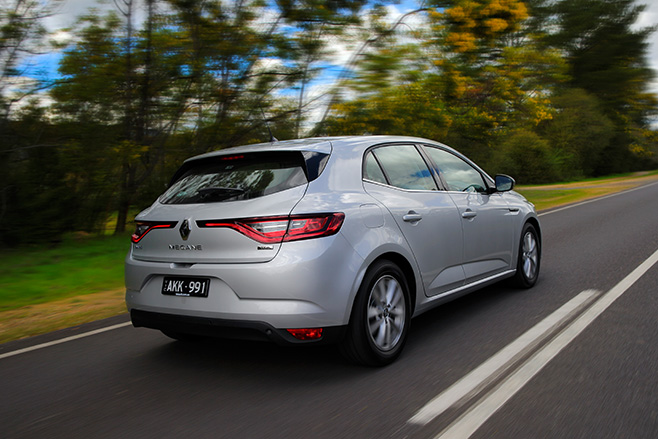
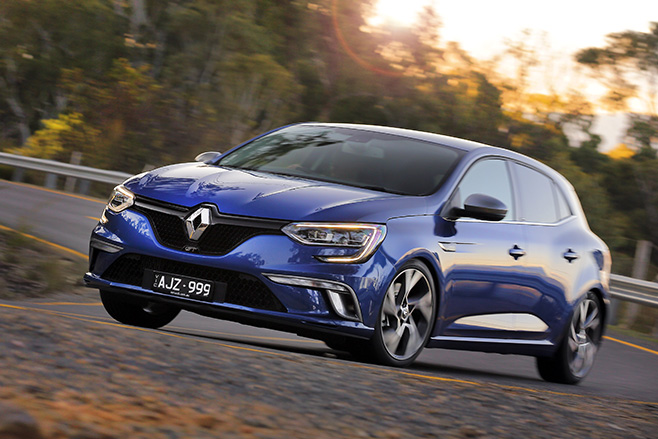
For the Megane GT, which replaces the 2.0-litre manual-only Megane GT220, Renault has equipped a 151kW/280Nm 1.6-litre turbocharged inline four and seven-speed dual-clutch automatic. Though it has 11kW less power and 60Nm less torque than its predecessor, the 2017 Megane GT is half a second quicker to 100km/h (7.1 seconds).
Fuel economy is also markedly improved for the GT, with that model recording a claimed average consumption of 6.0L/100km against the GT220’s 7.3L/100km. The 1.2-litre Meganes don’t improve their thirst figures compared to the outgoing model, however, with the 1.2 automatic’s 5.6L/100km average being unchanged.
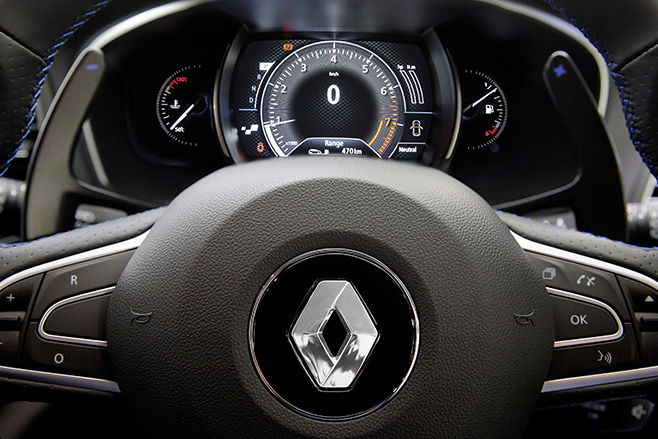
The Megane GT also benefits from an active rear-wheel steering system that improves handling, as well as a lowered, sportier suspension tune. It’s also the only model in the range to feature paddle shifters for its automatic transmission, as well as launch control.
Equipment levels have been boosted with the inclusion of a reversing camera, rear parking sensors keyless entry/ignition, dual-zone climate control, auto headlamps, rain-sensing wipers and front and rear LED daytime running lamps across the range.
Life, Zen and GT-Line are equipped with a seven-inch colour touchscreen display running Renault’s new R-Link 2 infotainment system, incorporating Bluetooth phone and audio connectivity as well as an eight-speaker AM/FM/CD/USB stereo.
The Life gets fabric upholstery and a leather-wrapped steering wheel and gear knob, along with 16-inch steel wheels. Step up to the Zen grade and the steel wheels are swapped for 16-inch alloys, sat-nav gets added to the R-Link 2 system, front parking sensors become standard and an electric parking brake replaces the Life’s handbrake.
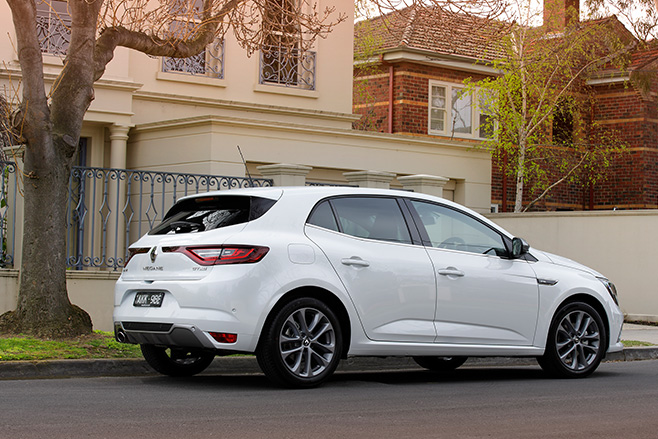
The GT-Line brings even more standard equipment, including a sporty bodykit, an electric panoramic glass sunroof, electric folding wing mirrors, Alcantara-upholstered front sports seats, blind spot monitoring, parking assist, multiple drive modes and 17-inch alloys.
Besides its more powerful drivetrain, paddle-shifted seven-speed auto, performance suspension and rear-steering setup, the flagship Megane GT is specced similarly to the GT-Line model. Exceptions to that are the standard 8.7-inch portrait-format touchscreen display (which is a cost option on the GT-Line), 18-inch alloys, dual-exit exhaust, alloy pedals and black/blue Alcantara upholstery.
The 2017 Renault Megane range is on sale now, with pricing as follows:
PRICING
Megane Life manual: $22,490 Megane Life EDC automatic: $24,990 Megane Zen EDC automatic: $27,490 Megane GT-Line EDC automatic: $32,490 Megane GT EDC automatic: $38,490
Jest if you will, but the Hyundai Elantra SR Turbo offers a genuinely serious glimpse into the abilities of Korea to make a car handle
LET’S be honest. As a car company, Hyundai hasn’t really yet cracked the code for producing a device that can set the smile-o-meter binging off the charts. It reckons, though, the its new Elantra SR Turbo will change all that.
It scores a lightly made over version of the 1.6-litre four-cylinder direct-injection turbocharged engine from the Veloster Turbo, along with multi-link rear suspension that will be seen on the upcoming i30.

Worringly, it makes just 150kW at 6000rpm and 265Nm of torque from 1500 to 4500rpm, which is the same output as the Veloster Turbo, despite a new, larger intercooler, a bigger turbocharger and electric turbo wastegate.

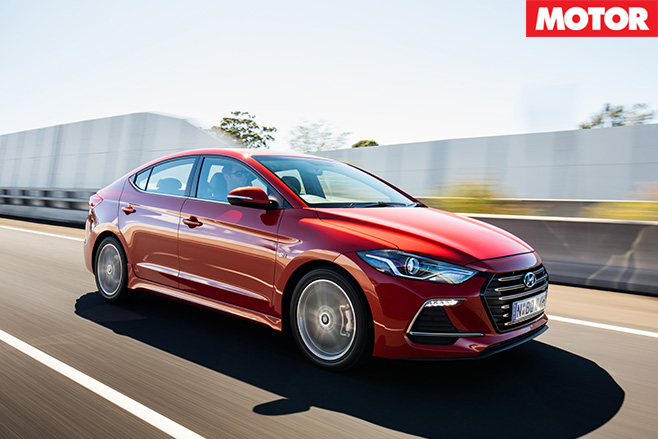
The seven-speeder is the combo that suits the SR Turbo down to the ground. It feels more settled and planted across the front axle than the manual, the small amount of extra weight working with the much more finely tuned set-up to help the SR turn in and hold a line with surprising enthusiasm.
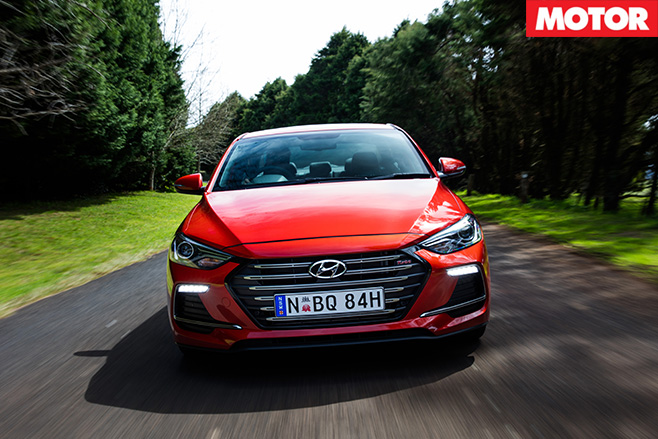
If this is a taste for what’s coming in Hyundai’s N line, the line starts here.
3.5 OUT OF 5 STARS
LIKE: Frankly astonishing depths of chassis controls… in an Elantra? DISLIKE: Lacks last bit of poke and tyre grip to truly make the most of the chassis
From ‘rock star’ to long-time guardian of Ford’s racing flame.
DICK Johnson became a national identity in 1980 when, while leading Bathurst, his ex-police Ford XD Falcon – literally home-built and home-funded – was taken out by a rock on the track. A spur-of-the-moment ‘telethon’ raised $72,000, a figure immediately matched by Edsel Ford II. As a frustrated Allan Moffat left the Ford fold, Johnson became the blue knight.
“That was just bestowed on me, unintentionally,” reflects Johnson, now 71. “I was sorta the last man standing amongst those that were competitive. I’ve always been a loyal person and once I got into the Ford side of things, that’s where I’ve remained … There was no-one else really trying to hold the [Ford] mantle and I thought, for the good of the category, there needed to be somebody there.”
The son of a Holden salesman, Johnson raced an FJ, EH and XU-1 in his 20s before switching to Falcons in 1976 and becoming synonymous with Ford as the successes mounted. He stuck solid with the Blue Oval brand through Group C, Group A and V8 Supercars.
Johnson was never the official Ford representative, but he earned great relationships with Ford hierarchy such as motorsport manager Howard Marsden, Motorcraft division boss Doug Jacobi and motorsport marketing man Peter Gillitzer.
Beginning in the mid-’80s, Johnson attempted to respond to Holden’s off-track success with HDT and HSV. His Ford Falcon SVO projects produced some admirable prototypes, but the only sniff of success came in 2004 with the DJR 320, of which just 25 were built.
“My only regret on that side is that it cost a lot of money to get nowhere,” he says. “I think we had a name that was recognised through the motoring world and they could have made something of it – as Holden did with Brock. But the DJR 320s were really good cars, they’re still fought over.”
Understandably, he’s saddened by this month’s events. “Ford used to have assembly plants in every capital city in the country and now we’re going to having no manufacturing plants, everything’s imported and they’re going to these ‘world cars’ that are very similar to each other.
“It’s very disappointing because it was always great to have your local brands here. The Falcon’s been a car that, with the Holdens, really held the whole thing together.”
Johnson is a man who has stripped countless cars to their bare shells and analysed the core engineering in building them up to be tough endurance racers.
“I can honestly tell you – and just with what short experience I’ve had with cars manufactured outside of Australia – you just don’t realise how good these current cars are that Ford has been building here. It’s a credit to the ability of the Australian engineers and the way that the factory is operated. Those latest Falcons are ripper cars. The quality is equal to anything in the world.”
Dodging pies
Falcon legend Dick Johnson says his DJR Team Penske will definitely be racing Falcons again in 2017 – but after that? “We’ll just have to see what rolls out. One never knows what the Car of the Future’s going to bring.” Will it be a Ford? “I would hope so, or I won’t be able to go to a race meeting – they’ll be throwing pies at me.”
Hyundai Australia’s first sporting four-door demonstrates the power of persuasive tuning.
WHAT IS IT? The ‘warm-sedan’ sporty flagship of the 2016 AD Hyundai Elantra line, complete with a development of the 1.6-litre direct-injection turbo-petrol four that powers the Veloster coupe. But this is more than just an engine transplant. Proper multi-link independent rear suspension and a host of go-fast goodies promise a wolf in sheep-wearing-trainers clothing.
WHY WE’RE TESTING IT? Presented with one of the most challenging (bitumen) drive loops you’ll find anywhere in the world – east from Albury airport via Anglers Rest, then down then coast to Bairnsdale – the Elantra SR Turbo carries a lot of weight on its shoulders. And that includes the DNA for next year’s new-generation Hyundai i30 SR warm hatch and i30 N hot hatch.
MAIN RIVALS Anything with a semi-sporting bent, including trusted steeds like the Mazda 3 SP25 and all-new, similarly priced metal like Holden’s 147kW Astra RS. Can’t forget the Honda Civic RS either, though it shoots itself in the foot somewhat by only being available with a CVT transmission.
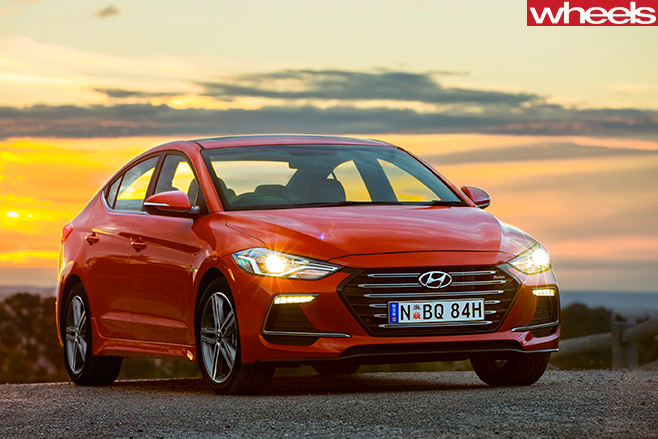
PLUS: Excellent rear suspension; terrific chassis balance; polished ride; boosted engine’s strong mid-range; neat steering wheel; rear-seat legroom; boot space. MINUS: Still a very conservative design; front seats don’t go low enough; manual lacks the DCT’s sports steering tune; steering response not decisive enough off-centre
THE WHEELS REVIEW THERE’S a strong chance that if you’ve ever considered buying a performance sedan, you’ve never considered a Hyundai Elantra. Across six generations spanning 25 years, there’s never been one worthy enough. Until now.
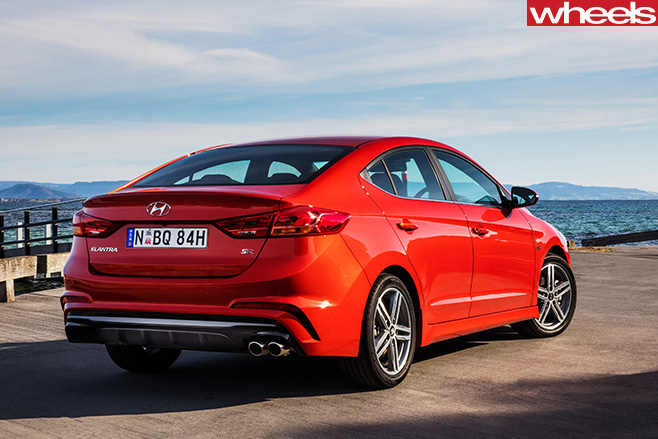
More consistent control of boost pressure means the Elantra SR’s revised donk achieves optimum boost earlier, and can maintain boost pressure without fluctuation. And the result is a seriously chubby engine for a ‘warm sedan’, with an impressively fit and thrummy mid-range making up for any lack of elasticity in the top-end.
Terrific new six-speed manual shift too – also set to feature in next year’s new-gen i30 SR and Hyundai i30 N hatches – though possibly a little too gappy between second and third ratios. If you want really snappy gearing, you’ll need an extra $2300 for the seven-speed dual-clutch version, though the engine’s torque reserves keep the Elantra SR charging strongly.
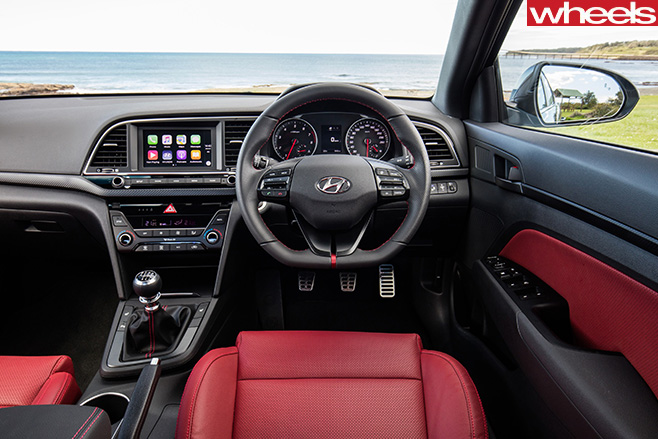
Its steering lacks the decisiveness we’d like off-centre, but once there’s a quarter-turn of lock on, the SR carves impressively neat, quick and confident cornering lines. For once, here’s a car that is more than the sum of its parts. Even the 225/45R17 Hankook Ventus tyres do their bit for Elantra’s dynamic cause because they rarely undermine its great balance or its unexpected driver involvement.
What the manual misses out on is the DCT’s ‘Drive Mode’ set-up, meaning just the one steering and throttle calibration. A tad more steering weight and slightly sharper throttle response wouldn’t go astray, but you only notice those things after swapping out of the dual-clutch.
Either way, both share abilities beyond expectation, and a level of equipment and finish that is very persuasive for the price. Add in quality seats and a relatively polished ride and you have one of the dark horses of 2016.
SPECS Model: Hyundai Elantra SR Turbo Engine: 1591cc 4cyl, dohc, 16v, turbo Max power: 150kW @ 6000rpm Max torque: 265Nm @ 1500-4500rpm Transmission: 6-speed manual Weight: 1360kg 0-100km/h: 7.0sec (estimated) Fuel economy: 7.7L/100km Price: $28,990 On sale: Now
MORE: Hyundai Elantra Range Review MORE: Hyundai Elantra Specs, Range & Price
1. The new 94Ah battery is the same physical size as the old 60Ah one. BMW’s eggheads have squeezed more electrolyte into the existing cells, and along with software tweaks to minimise power losses, real-world range between charges has increased from around 130km to around 200km.
2. BMW will sell the $63,990 60Ah version of the BMW i3 alongside the $2000 more expensive 94Ah version. It will also sell the $69,900 60Ah i3 REx – fitted with a two-cylinder petrol-powered generator – alongside the $2000 more expensive 94Ah version.
3. That extra $2000 also buys you a fast DC charger that can top up the i3’s battery in about 40 minutes. However, there is only one of these DC fast chargers in Sydney, and two in Melbourne. Western Australia will soon have a dozen of them allowing electric vehicle owners to drive from Perth to Margaret River.
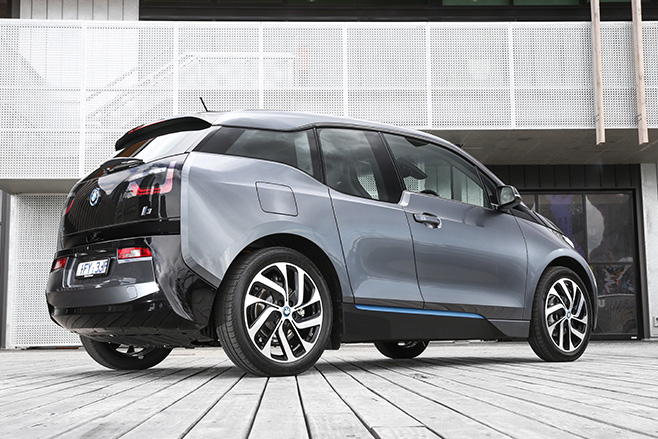
4. If you buy a 60Ah i3, that fast DC charger will cost you an extra $769.
5. BMW says adding the DC fast charger to the 94Ah i3 future-proofs it for the day that more of the rapid chargers come on board.
6. BMW says the average daily commute is around 40km. If you buy the less energy-dense i3 battery you’re going to be charging it about every three days. Buy the bigger one and you only need to recharge it about every fifth day.
7. Because it has more electrolyte in it, the i3 94Ah’s battery weighs 50kg more. It’s the equivalent of carrying an extra passenger compared with the 60Ah version.
8. Germans who own the 60Ah version of the i3 can upgrade their battery to the new 94Ah one to get more range. BMW Australia says it is looking at how it can do the same thing here.
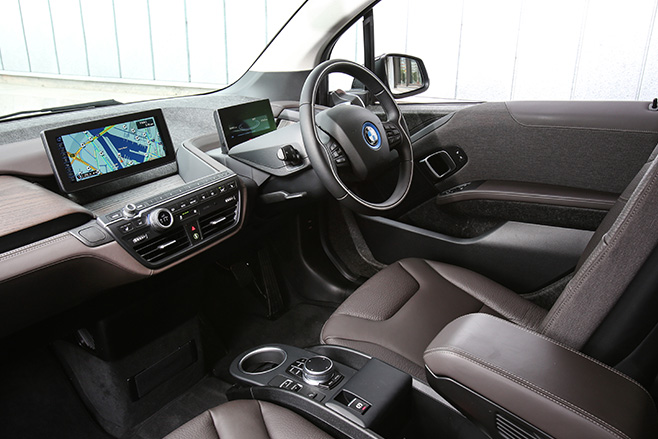
9. The i3’s dash is pretty strange to look at. Stringy and mottled grey, you’d swear it was a felt-like surface. Touch it, though, and it’s hard plastic.
10. The i3’s leather seats are stained dark using an extract of olive oil leaves. Cloth seat covers are 40 percent wool.
11. In ordinary city driving, the i3’s regenerative braking converts the energy usually lost during braking into electricity to top up the battery. It kicks in quite severely, so lifting off the accelerator is like putting a foot lightly on the brakes. In slow-moving traffic you don’t even need to touch the brake pedal.
13. Aussie car buyers appear to remain anxious about “range anxiety”; the name given to the fear that the battery will run out of juice short of the destination. It expects sales to skew 70 percent to the range-extended car, and 30 percent to the battery-only version.
14. The generator on the range extender is powered by a two-cylinder 660cc petrol engine. It produces 28kW, or about the same as a small motorcycle, and weighs 75kg.
15. Each tank of fuel on the i3 REx lasts about 120km.
Discussion paper suggests future cars plying Australian roads will automatically dob in law-breaking drivers to police.
AUSTRALIA’S highest road transport authority has imagined a day in which there’s no need for police to watch our roads – because there will be an electronic cop hard-wired into every car.
A discussion paper released this week by the National Transport Commission imagines a time when cars will be able to police themselves.
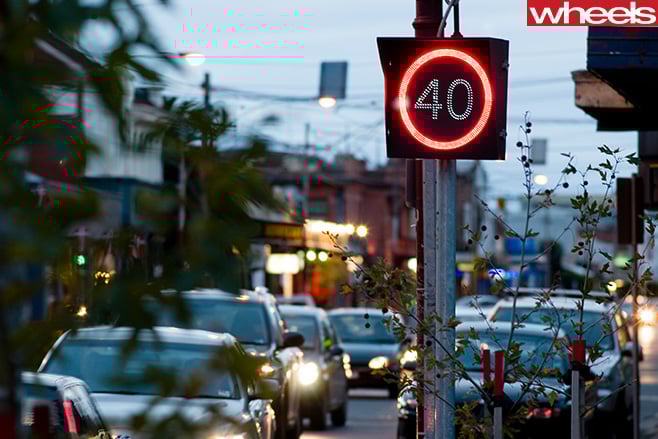
“Indeed, with automated vehicles on our roads that are each equipped with a full array of sensors and detectors, there may be little need for on-road enforcement at all,” it says.
“Each and every automated vehicle could stream footage and other data of illegal or unsafe behaviour direct to enforcement personnel.”
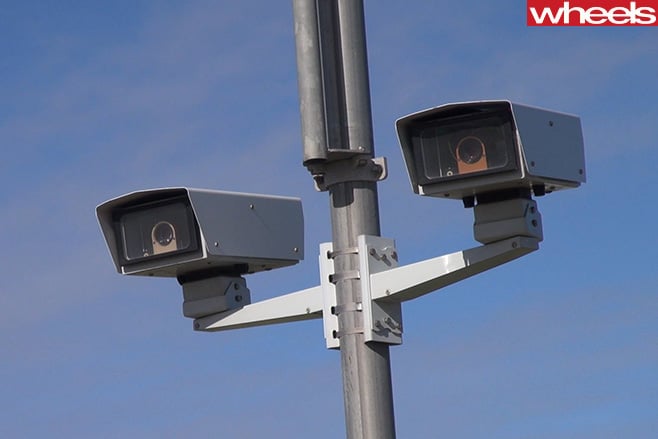
Statistics show that last financial year, the NSW government earned $103 million from speeding fines and $71.8 million from red light camera offences, adding almost $176 million to the state’s coffers. In the first two months of this financial year, the state has already collected more than $38.4 million.
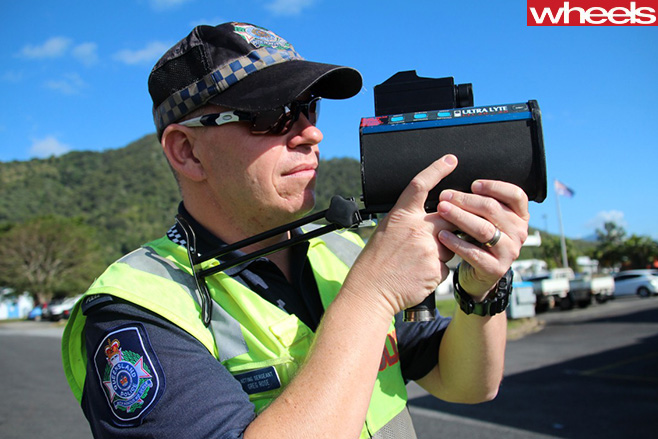
The paper identifies automation, shared mobility, the use of data and a shift in consumer demand as key factors likely to drive how our roads will look, and flow, in 2040.
The discussion paper will be used to kick-start government into thinking about future transport needs and the framework needed to make it happen.
While you may need to squint to see the changes there’s a lot to like about the new BMW 5 Series, which was revealed this week headlined by a twin-turbo V8-powered performance variant capable of reaching the 100km/h in four seconds flat.
The BMW M550i xDrive caps off the seventh-generation 5 Series range, which features new turbocharged petrol and diesel engines that provide better fuel efficiency without trading in performance.
And BMW’s announcement of the M550i is good news for anyone not willing to wait for the 2018 M5, due late next year. With a twin-turbocharged 4.4-litre V8 engine delivering 340kW at 5500rpm and 650Nm of torque from 1800rpm to all four wheels via an 8-speed Speedtronic transmission, performance should be scintillating.
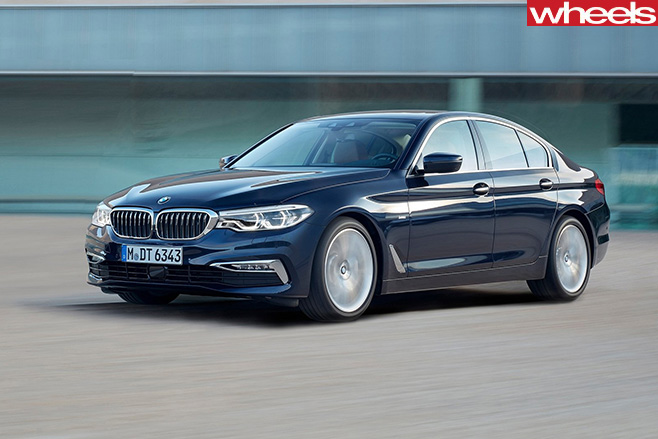
While these powertrain numbers are a modest improvement on the figures generated by the F10 550i it replaces, the M550i’s 4.0 sec 0-100km time is 0.6 secs quicker and even beats the current model BMW M5 Pure by a not-insubstantial 0.3 secs. Claimed fuel economy, meanwhile, is a restrained 8.9 l/100km
Exciting stuff, however you’ll have to wait until March at the earliest for the seventh-gen 5 Series to roll into Aussie showrooms
All models in the new 5 Series range benefit from BMW’s EfficientLightweight design concept, which helped the seventh-gen 5 Series shed around 100kg, while improved aerodynamics result in a drag coefficient reduction of 10 per cent: setting a new sedan benchmark of 0.22.
While the V8-powered M550i commands the most attention, the range will initially be comprised of more sober models:
- 530i, with a 185kW/350Nm 2.0-litre four-cylinder petrol engine
- 540i, with a 250 kW/450Nm 3.0-litre straight-six petrol engine – this is no slouch either, with a 0-100km/h time of 4.8secs.
- 530d, with a 195 kW/620Nm straight-six diesel
- 520d, with the familiar 140kW/400Nm four cylinder diesel
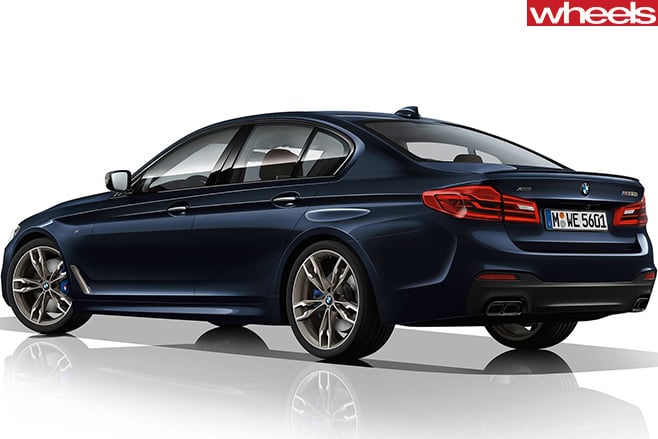
- 530e iPerformance plug-in hybrid with a 185kW/420Nm 2.0-litre four-cylinder petrol engine and BMW eDrive electric drive system, with electric range of 45km and combined fuel economy of 2.0 litres/100 km
- 520d EfficientDynamics Edition powered by a 140kW/400Nm 2.0-litre four-cylinder diesel engine that drinks 3.9litres/100km combined.
Aesthetic differences include a more pronounced shoulder line, wider headlights and a slightly narrower kidney grille, while the boot is further integrated into the redesigned C-pillar.

It also features plenty of new tech to help take it one step further to full automation. Lane Change Assistant and Lane keeping Assistant are available on the new 5er, and give it the ability to autonomously change lanes at speeds up to 180km/h while also self-steering around obstacles before returning to the correct lane position.
Optional active cruise control comes with extended functions including optional Intelligent Speed Assist which is capable of relieving the driver of acceleration, braking and steering duties from a standing start up to 210km/h.

The head-up display is 70 percent larger with a sharper resolution, and all versions will come with BMW’s Professional Media system as standard, featuring a 10.25-inch display with touch control and the latest iDrive set-up.
Apps include Car-to-X technology, which allows the car to communicate with other BMWs and sharing traffic and weather information, which BMW says is another step towards full automation.
Other interior upgrades include a new instrument cluster, acoustic glazing for the windscreen and an optional Bowers & Wilkins sound system.
BMW has yet to release Australian specifications and pricing.
RENAULT has released its fourth-generation Megane onto the Australian market. The sharply styled hatchback is expected to win over more new car buyers for the French brand in the hugely important small car segment.
TELL ME ABOUT THIS CAR
The 2017 Renault Megane is all-new, and built on the same modular platform that underpins its larger sibling, the Renault Koleos SUV. Compared with its predecessor, the fourth-gen Megane is 57mm longer, 25mm lower, has shorter overhangs, and is 29mm longer between the front and rear axles.
The five-door Megane’s bodywork has also transformed from ‘anonymous’ to ‘glamorous’, with a sharper set of panels and distinct front and rear LED light elements giving the hatchback a bolder look to help it stand out from the small hatch crowd.
Four model grades are offered – Life, Zen, GT-Line and GT – and two engines power the range. The Life, Zen and GT-Line all receive a 97kW/205Nm 1.2-litre turbo inline four, while the range-topping GT receives a 151kW/280Nm 1.6-litre turbo similar to the one used in the Renault Sport-tuned Clio RS 200.
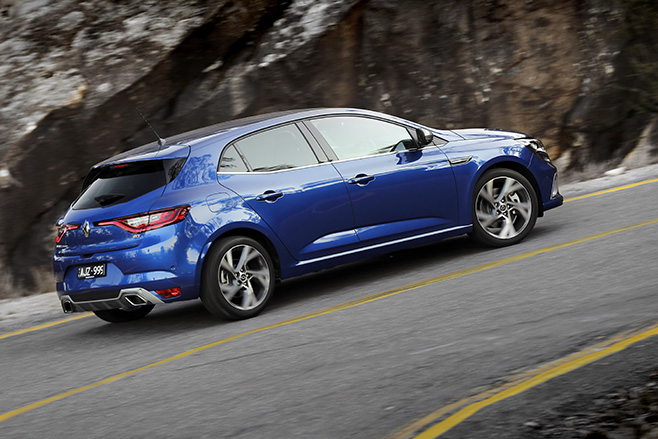
All models power the front wheels, with the 1.2-litre models using a six-speed dual-clutch automatic (the base Life also has a six-speed manual option). The Megane GT uses a seven-speed dual-clutch auto.
Prices range from $22,490 for the Megane Life manual (add $2500 for the auto), through to $27,490 for the mid-grade Megane Zen, $32,490 for the Megane GT-Line and $38,490 for the range-topping Megane GT.
STRENGTHS
- Design is a standout feature of the entire Megane range, with every model benefiting from an assertive and stylish look that’s bookended by C-shaped LED daytime running lights at the front and a W-shaped LED tail-lamp graphic that spans almost the full width of the car. In traffic, there’s no mistaking it for any other small car.
- Driveability is surprisingly good on the 1.2-litre models, even though its 97kW power output is significantly behind many rivals in the segment. The 1.2’s 205Nm of turbocharged torque gives the engine more twist than a 2.0-litre Mazda 3, and enough pull to keep up with traffic.
- The Megane GT is a wolf in sheep’s clothing. Its 1.6-litre engine produces 151kW and a stout 280Nm. Drive goes to the front wheels via a seven-speed dual-clutch auto, with rear-wheel steering helping agility. The GT also features launch control and grippy Continental tyres, plus a unique suspension tune to help it hang on in corners.
- Fuel economy is a respectable 5.6L/100km for the 1.2-litre automatics and 6.0L/100km for the 1.6-litre Megane GT.
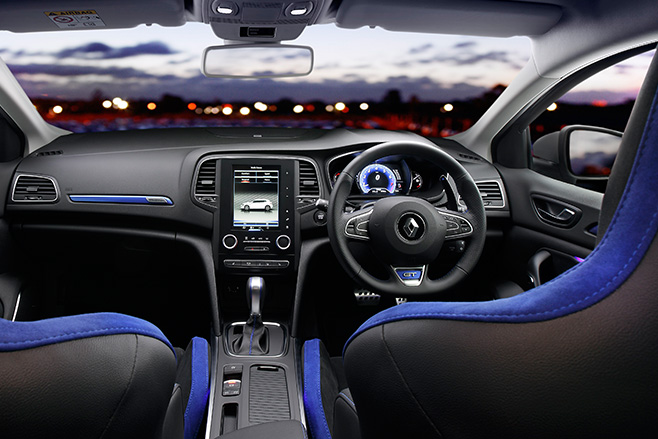
- Go for the GT-Line or GT, and you score a pair of supportive and deeply-bolstered front seats. Sculpted to hold you tightly in corners, they also offer great long-distance comfort and complement the Megane’s superb driving position.
WEAKNESSES
- Interior quality is variable. While the upper dash is made of finely textured soft-touch plastic, the lower dash is hard, shiny and coarse-grained. The glovebox lid is also a poor fit, with misaligned gaps on either side.
- The Megane’s glovebox is laughably small, while its front cupholders are also fairly undersized and shallow. These are typical French car complaints.
- Renault claims rear-seat accommodation has improved, but knee and foot room still could use some improvement. Headroom isn’t huge, either, but things are not as tight as some rivals.
- Renault’s new R-Link 2 infotainment system is responsive, intuitive and offers plenty of customisation, but some buyers may lament the omission of Apple CarPlay and Android Auto smartphone mirroring. On the flipside, sat-nav is standard on all models bar the base Life.
- Though European-market cars have auto emergency braking and active cruise control as available equipment, Aussie-delivered cars don’t have the potentially life-saving tech as yet. It’s expected to become available later in 2017.
Key rivals for the Megane range include French fare such as the Peugeot 308 and the very polished Mazda 3 range, though it’s the Volkswagen Golf that is its stiffest mainstream-premium competition.
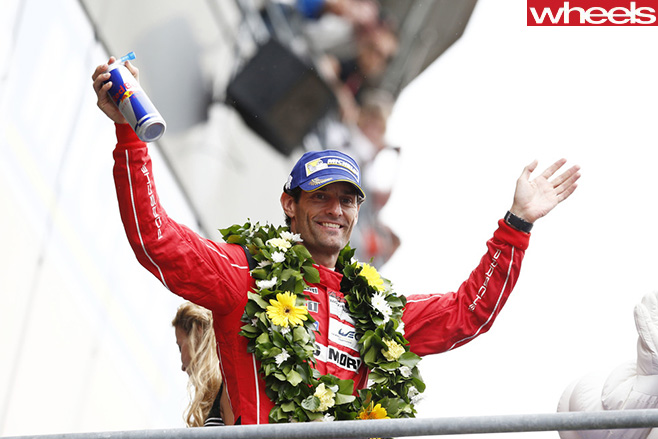
Formula One race winner and World Endurance Champion Mark Webber will be hanging up his helmet at the end of the year.
“I have arrived where I belong”, said Webber, who has been a factory Porsche driver in the World Endurance Championship since the start of 2014, driving a 919 LMP1.
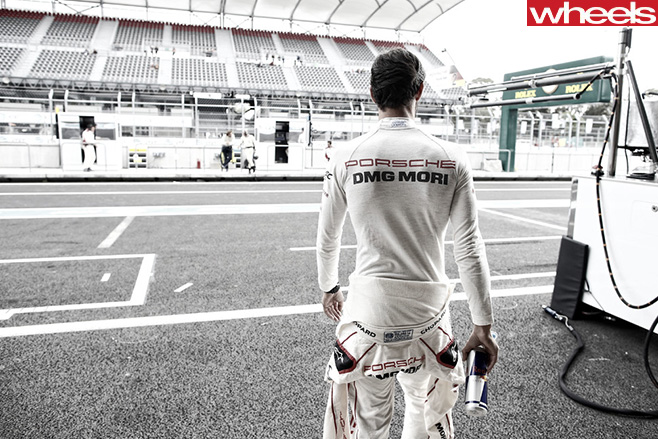
The Aussie said he was glad to be able to finish his career with the German brand.
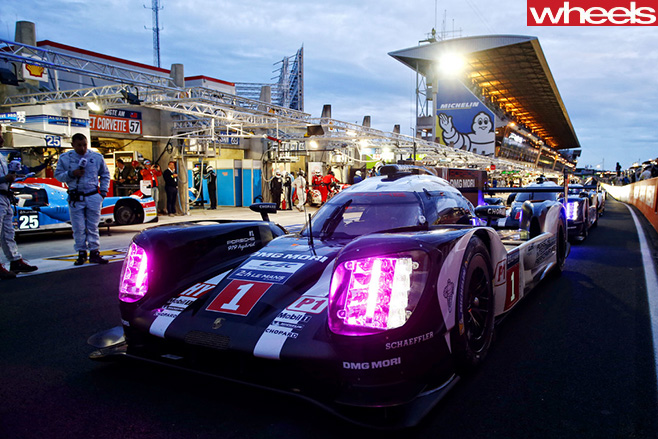
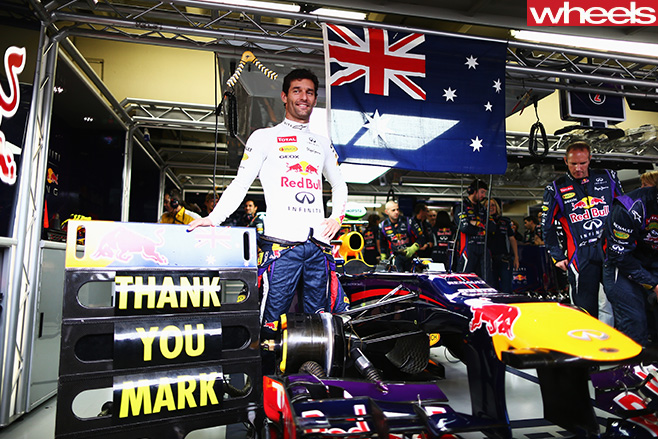
The 6 Hours of Bahrain is poised to be Weber’s final career race. The 40-year-old says the thrills of racing at the top will be hardest to farewell.
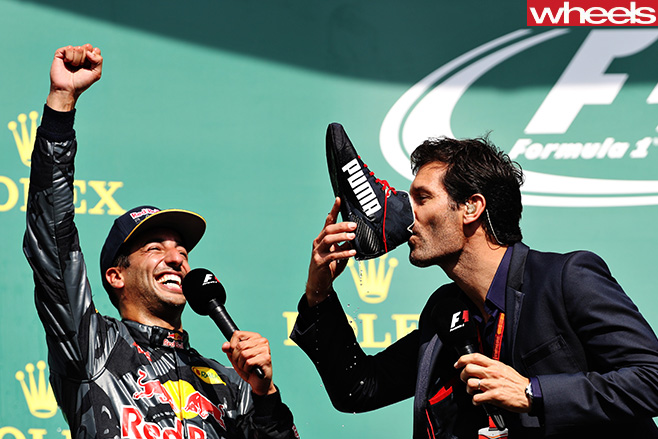
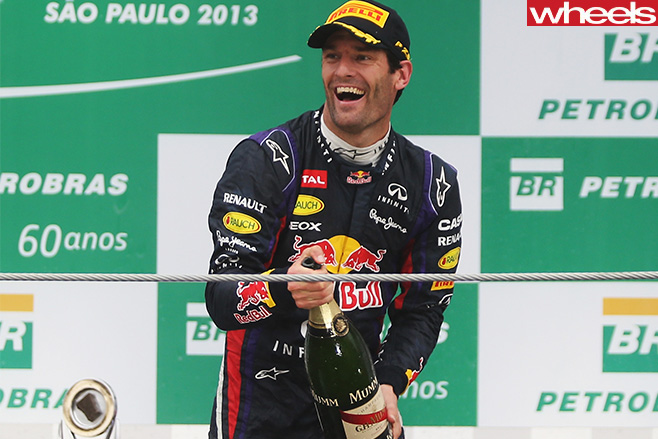
Webber raced for Minardi, Jaguar, Williams, and Red Bull in a Formula One career which spanned 11 years and 215 Grands Prix.
“It was a big change from F1 to LMP1 and an entirely new experience,” said Webber. “But it came at the right time for me.
“It will be strange getting into the race car for the very last time in Bahrain, but for now I will thoroughly enjoy every moment of the remaining races.”
Ford Mustang production has been idled this week in response to softening US sales, despite Australian buyers having to wait up to nine months for the in-demand sports car.
According to US industry website Automotive News Ford’s Detroit plant in Michigan will resume Mustang production on October 17 as 3702 factory workers continue earning a wage over the shutdown period.
Stateside sales are down by 9.3 per cent so far this year (with a still-incredible 87,258 tally to September) and the Chevrolet Camaro briefly surpassed it in monthly sales for the first time since the reborn Pony car lobbed (although 54,535 year-to-date sales still pales).
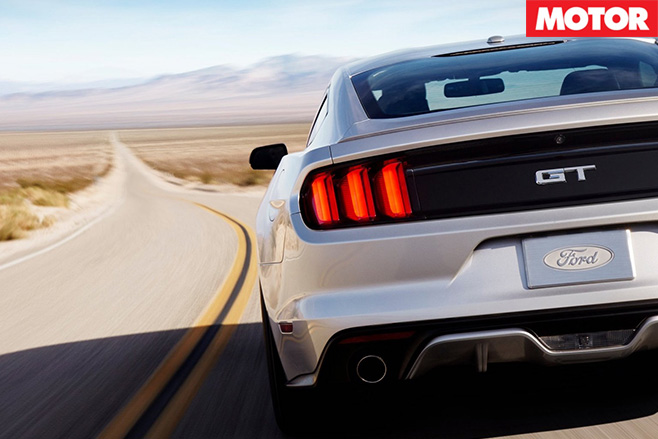
Yet local buyers can still expect a delayed delivery time of between seven to nine months for the overwhelmingly popular Mustang V8 GT coupe and convertible, while the $10K-cheaper four-cylinder turbocharged EcoBoost equivalents can halve the wrist tick-tocking to four months.
This has come down from April’s wait time, when Ford Australia announced it had secured an additional 2000 Mustangs beyond an unspecified number to cope with a waiting list that back then stretched beyond 12 months thanks to a 6000-strong order bank.
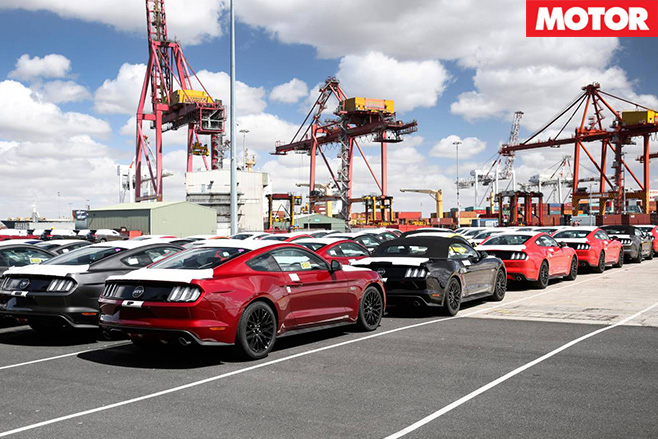
“We increased our 2016 allocation because of the massive demand for Mustangs and in 2017 we’re working on increasing that allocation again,” Smy told MOTOR.
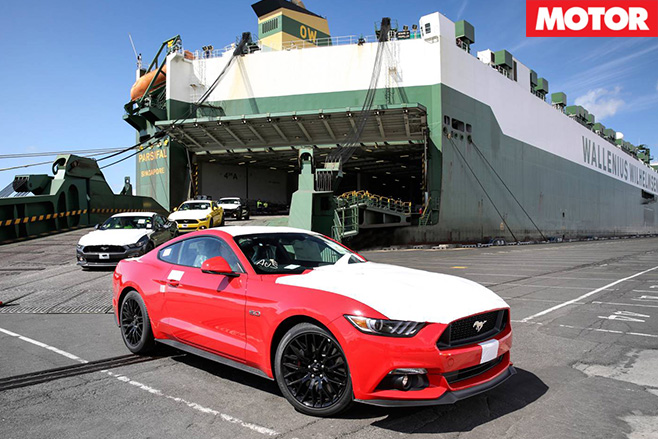
During the first half of 2016 an overwhelming 71.4 per cent of Mustangs sold locally have had a V8 underbonnet. However, the turbocharged four-cylinder EcoBoost has actually gained popularity over time – in December 2015 the pre-launch orders had the larger atmo unit snaring an 86 per cent sales share.
