
If we learned anything from the 2017 Paris motor Show, it’s that pure electric cars are shaping up as a sound bet for the future.
Numerous countries worldwide offer incentives for buying and driving electric vehicles (EVs), but as yet Australia’s Federal Government offers no motivation to own one.
It’s for this reason manufacturers see little merit in selling pure electric cars in Australia. Only three EVs are available for sale here: the Tesla Model S, the BMW i3 and the Nissan Leaf.
TESLA MODEL S
The Tesla Model S has been available in the US since 2012 and in Australia since mid-2014, and now, with the release of two new variants this year, there are six options available: 60, 60D, 75, 75D, 90D and P90D. The new models, the Model S 60 and 60D, offer buyers a new entry-price option for those wanting a Tesla. Where buyers would have to fork out $128,578 previously for the then entry-level 75, the 60 now means the Model S starts from a more affordable $100,800.
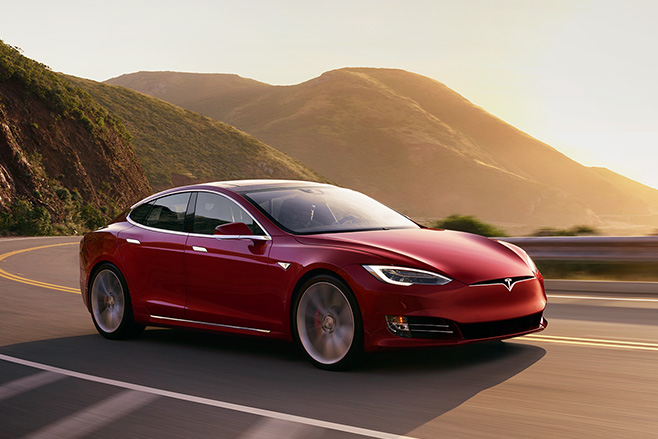
The range-topping P90D will cost closer to $206,692, offering an electric car that’ll drive supercar-fast in Ludicrous mode.
PROS:
Biggest range available, travelling up to 475km at 80km/h on an average 20-degree spring day. It’s also the fastest EV available, accelerating 0-100km in as little as 2.7 seconds (claimed). It also offers “Autopliot” driver-assist functions.
CONS:
Entry price. It doesn’t come cheap.
BMW i3
At $63,900, the BMW i3 is less expensive that its Tesla competitor. It’s also available in a hybrid variant which costs $69,900. Recently updated this year, BMW added two new models, 94Ah and 94Ah Rex, to the i3 line-up, offering bigger batteries for an extra $2000 to boost the range to a possible 390km.
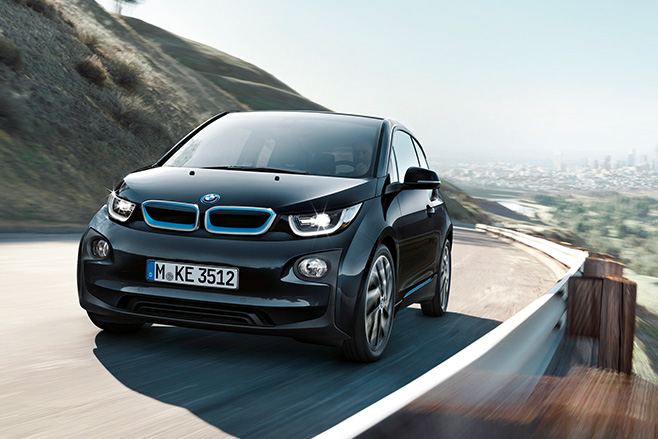
Aside from its obvious head-turning exterior, the i3 comes with three interior designs; Loft, Lodge and Suite; so buyers can choose a style that suits them.
PROS:
The BMW i3 comes with more range than ever, offering a claimed 300km to 390km range.
CONS:
At $63,900 for the base model, it’s still an expensive option for a small car.
NISSAN LEAF
The Nissan Leaf is only available as a hatchback and is priced as the cheapest EV option in Australia from just $39,990. Despite a lower price than its two competitors, however, Nissan has threatened to pull it from the market if buyers don’t support it.
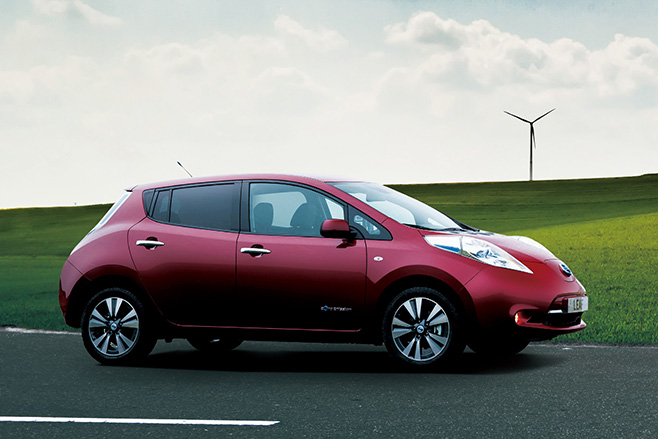
Unlike the i3 and the Tesla, the Leaf offers less range and isn’t quite as quick as its competitors in the traffic light drag race, but at such a low entry price, it’s a surprise the Nissan-badged EV is not doing better in the Australian market.
PROS:
It’s the cheapest EV vehicle in Australia with an entry price that rivals even standard cars its size.
CONS:
It’s not quite as brisk and offers less range than the others.
It appears the downsizing trend isn’t limited to supercars and muscle cars, with Ford reportedly considering a high-output 1.0-litre turbo three-cylinder engine for the next-generation Fiesta ST.
UK outlet Auto Express spoke to Ford Europe’s small car boss, Darren Palmer, who said “We’re seeing more and more of what we can do with the 1.0-litre engine…it sounds brilliant and there’s loads of torque.”
The current Ford Fiesta ST uses a 1.6-litre turbocharged four-cylinder engine producing 134kW/240Nm, or 147kW/290Nm on overboost, but similar outputs are believed to be achievable from the tiny triple.
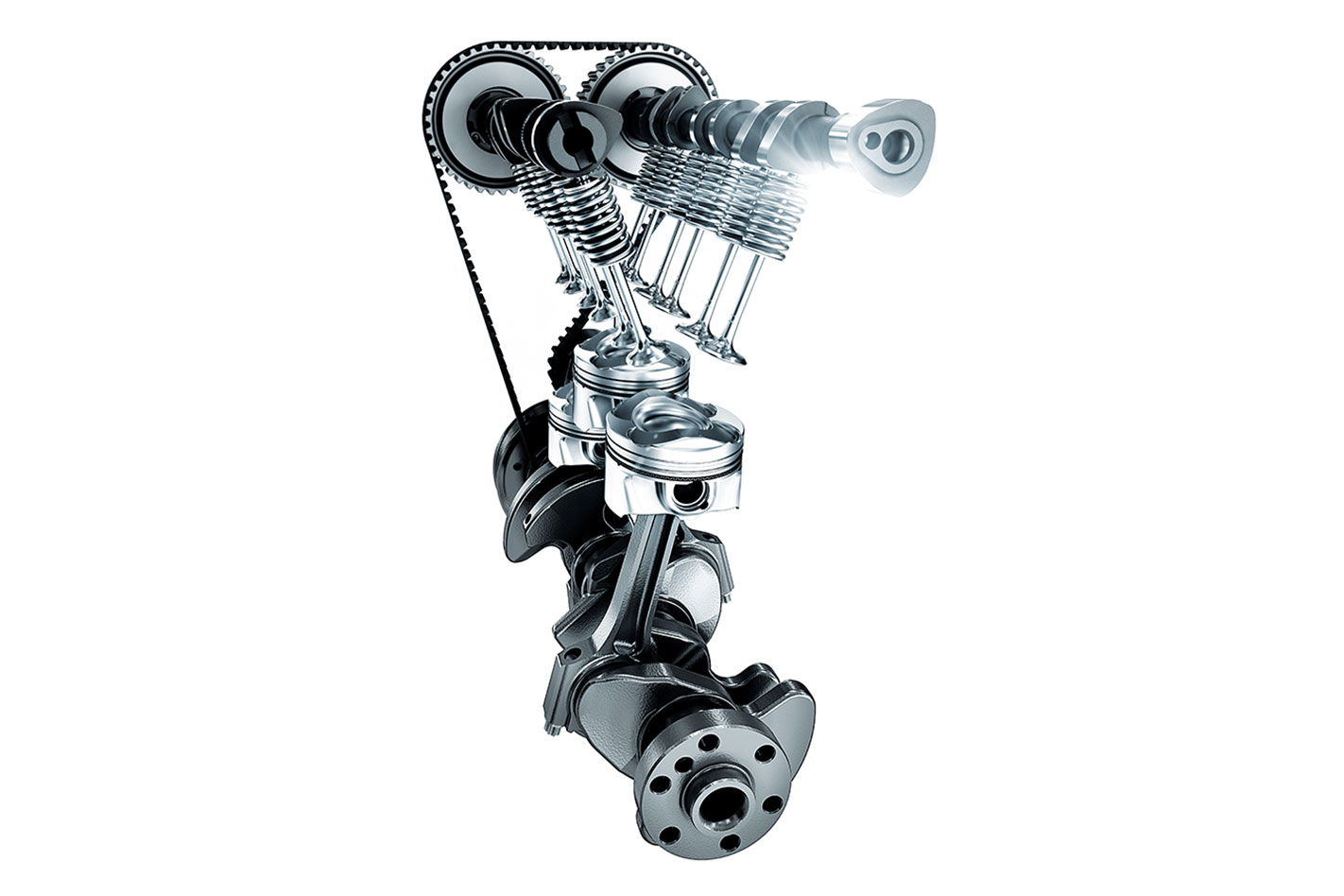
A powered-up Ecoboost three-pot was also installed in a road-going Formula Ford where it produced an impressive 147kW, matching the maximum output of the current Fiesta ST.
The tiny three-cylinder – its engine block fits on an A4 piece of paper – will also bring benefits in terms of economy and handling, with less weight over the nose promising even keener turn-in than the already enthusiastic current model.
The next-generation Fiesta is set for an international debut in the first half of 2017, so we’d expect the ST, which has been a huge hit, to appear shortly after for a possible late-2017/early-2018 local launch.
Ford is expected to move its popular small car slightly upmarket. The current car’s platform will be retained, but a higher quality interior and more equipment, headlined by Ford’s latest SYNC3 infotainment system, are high on the ‘must improve’ list.
The current Ford Fiesta ST is one of MOTOR‘s favourite hot hatches, scoring a podium placing at Performance Car of the Year 2013 and twice a victor in our Bang For Your Bucks shootout.
THE Toyota CH-R will introduce the Japanese carmaker’s 1.2-litre turbo engine when it arrives in Australia early next year to take on city-sized SUVs including the Mazda CX-3, Honda HR-V and Suzuki Vitara.
The small and light petrol engine generates 85kW and 185Nm from 1500rpm to 4000rpm, which is considerably more than the 80kW/141Nm produced by the conventional, non-turbo 1.5-litre four used in the Toyota Yaris.
The smaller engine is capable of producing more power and torque via turbo technology incorporating direct injection, water-cooled turbines and expanded variable valve-timing.
Toyota’s two-pint turbo isn’t the first engine of its size to pack such a punch. Volkswagen’s 1.2-litre turbo engine in the Polo city runabout generates up to 81/175Nm, while Renault’s 1.2-litre turbo pumps out 88kW/190Nm in the Polo-fighting Renault Clio and 97kW/205Nm in the size-larger Megane GT-Line.
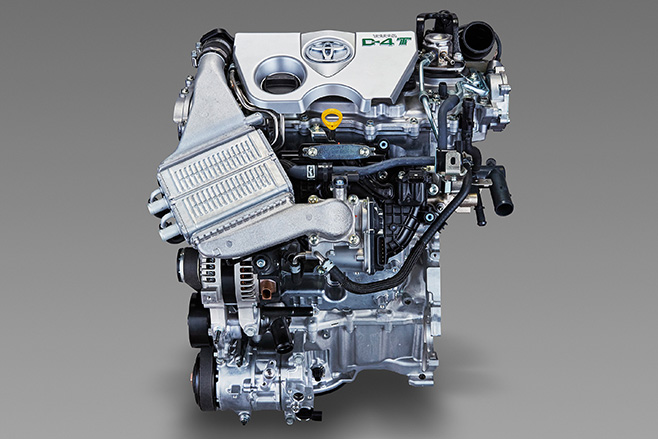
One difference with Toyota’s offering is expected to be greater economy. Toyota hasn’t released fuel efficiency figures yet but it’s expected to compare well with the 4.8L/100km figures of the Volkswagen Polo, thanks to its ability to alternate between the conventional Otto cycle during normal driving and the highly efficient Atkinson cycle under low engine loads.In the CH-R the 1.2-litre turbo will be mated to the Multidrive S continuously variable transmission with two modes – fully automatic, seamless shifting or a sequential, stepped seven-speed Sport mode. A six-speed manual transmission will also be available on the C-HR front-drive variant.The C-HR, which is Toyota’s long-awaited entry into the small SUV market to take on the likes such as the Mazda CX-3, Nissan Juke and Mitsubishi ASX, will be offered in two premium grades, C-HR and C-HR Koba – the latter being a tribute to the car’s global chief engineer, Hiroyuki Koba.Local models will come with advanced safety features such as a pre-collision system with autonomous braking, adaptive cruise control, lane departure alert with steering control, automatic high beam and a reversing camera.
More details and prices for Toyota’s first foray into the small SUV segment – it will sit in Toyota’s showroom beside the strong-selling RAV4 mid-size SUV — will arrive closer to launch, expected to be in the first quarter of 2017.
Volkswagen is farewelling it’s underappreciated Volkswagen Scirocco R hot hatch with a limited run Wolfsburg edition, which goes on sale here from November 14.
The 150 cars will have unique trim, Wolfsburg badges and a choice of Oryx White Pearl Effect or Rising Blue Metallic paintwork complemented by black 19-inch Lugano alloys and black wing mirror housings.
Interior extras include motorsport bucket front seats, premium multi-function colour display and limited edition numbered plaque.
Power comes from the familiar 2.0-litre direct injection turbo petrol four, which develops 188kW and 330Nm. Most of them will come with a six-speed DSG dual-clutch automatic transmission, with just 30 manuals.
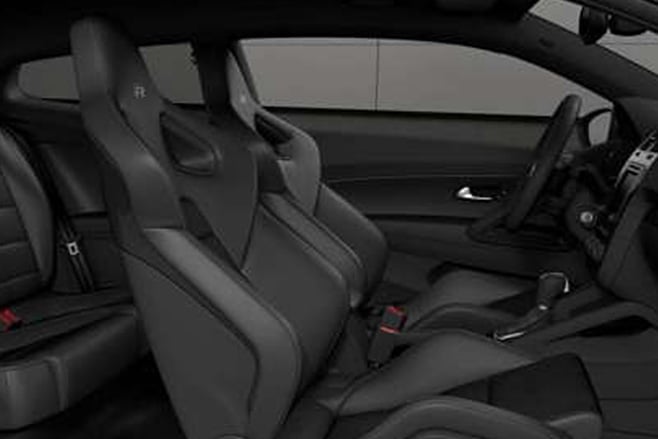
The Wolfsburg name celebrates VW’s global headquarters. It was recently used on the very frisky Golf R wagon and is expected to be rolled out for more special edition performance models next year.
“It’s fitting that we see off the Scirocco in such spectacular fashion,” Volkswagen Group Australia Managing Director Michael Bartsch said.
“This limited edition is one to keep enthusiasts happy at track days or on winding, weekend drives for many years to come.”
Volkswagen called time on the ageing Scirocco, instead of going ahead with its planned 2017 upgrade, as part of a rationalisation process that has also claimed the Beetle and Eos.
While its demise leaves a hole in VW’s performance range, Bartsch said this will be filled by this month’s introduction of the Passat 206TSI and the January launch of the Tiguan 162TSI SUV, which shares an engine with the Golf GTI.
“And our hot hatches, from Polo GTI through to Golf R, are outselling rivals by comfortable margins.”
The Volkswagen Scirocco R Wolfsburg will retail at $49,490 for the manual and $51,990 for the DSG auto. Add another $1750 if you want the panoramic glass sunroof.
It’s time to replace your car with a new one, so are you better off selling your car privately and getting the best possible price or trading it in for less to save you the hassle?
Firstly it depends on what you’re trading in.

If it’s a reasonably new, desirable or unique car that’s in demand you’re probably better off selling it privately and sticking to your guns on your desired price.
How to write an effective used car sale ad
If it’s a common car with a few miles on the clock or needs work it’s probably worth wearing the lower price of a trade-in to avoid the cost and effort needed to sell it, like getting a roadworthy/safety certificate, dealing with niggling maintenance issues and organising the transfer paperwork.
That said if you decide to trade there are ways to ensure the transaction benefits you in securing the best deal on the new car.

Getting the best trade-in price
Do your homework to find out a fair price for your trade in. Be realistic about this – the dealer won’t share any sentimentality you have for the car and they need to turn a profit on it.
One way to find the price of your car is via automotive data services such as Glass’s Guide which provide online valuations of almost any car for $19.95, which includes private sale and trade-in values.
Alternatively you can check out private sales of similar cars, remembering there are subtle differences among the same models such as the type of transmission and engine size and factory extras such as leather interior and sunroof, mileage, their condition, and even location.
Once you see a price that fits your car take about 10 percent off for a trade-in price. In reality it’s more likely to be 15 to 20 percent less, but go with about 10 per cent off should the dealer ask how much you want and give yourself some wriggle room.
Confessions of a car dealer: Five top tips for getting the best deal
Preparing your car for trade-in
While it’s possible to arrange a trade-in for a car sight unseen, most dealers will insist on seeing the car before offering a trade-in deal and may want to fully appraise it.
Dealers are looking for something that can be sold on quickly, either to a customer or another car yard so they could be fussy when it comes to service history and anything requiring costly repairs.

While it’s important for it to appear neat inside and out, don’t bother detailing it to showroom condition. A bit of dirt isn’t a deal breaker. And if you rock up to a car dealership in a very clean car you’re telling the dealer you’re there to seal a deal, which makes playing hard to get difficult.
Be prepared for their hard luck stories such as how your car isn’t a great seller or even how they’ll be doing you a favour by getting the car off your hands at a cost to them.
Should you buy a new or used car?
As with getting the best price when buying a new car, be prepared to shop around for a fair trade in.
Be aware that it’s usually not worth the effort and money of servicing, detailing or fixing up your trade-in. More often than not you’ll be spending more money in fixing your trade-in than you would get in return trade-in value. Of course, making sure the car is presentable yourself by washing or adding touch-up paint is always a good idea.

Using the trade-in for a better price on a new car
If you’re bargaining on the price of the car you want to buy, don’t mention the trade in until you get into a price range you like. Then tell the dealer a trade in will seal the deal and see what they offer for your car.
Even if they won’t budge further on the price of the car you want to buy, they may be able to sweeten the deal by giving you a better trade in offer – this is where having a good idea of what your car is worth comes in handy.
AFTER Falcon and Commodore have taken their final bows, what on earth is MOTOR going to write about? It’s a question we’re occasionally asked. And I’m happy to share a theory. Hint: I’m still getting my eight hours a night…
Disregarding the countless cars that aren’t $60K, V8 and rear-driven, for the second time in as many months we have an American muscle car on our cover. And for good reason – we find they’re attracting attention.
We’ve been more than a bit surprised by the warm welcome Mustang’s received with Aussie fast car buyers. And more recently we’ve seen a heightened interest in the maniacal muscle cars produced by Dodge for the American market.
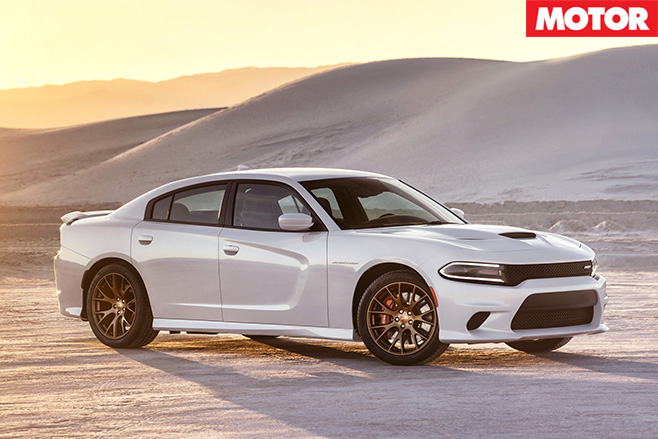
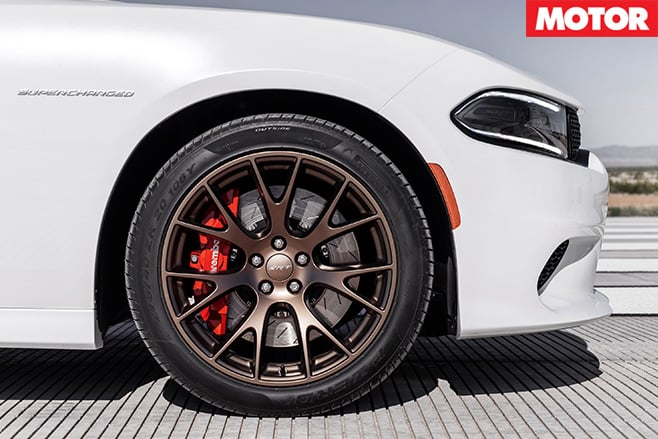
It must be said, we’re talking more the next-gen Hellcats due in three or four years as there’s surely no chance of a factory right-hand drive program for the current model. But still, Aussie interest percolates, and the connection to the E49 Charger in particular is a tempting and not unfair one.
Now, don’t get me wrong, I’m rooting for globalisation to work in our favour rather than cheering on a bunch of imports coming in and cutting our lunch. I’ll be as devastated as anyone to see Falcon and Commodore go.
But that ship has unfortunately sailed and so long as we share common motoring tastes as Americans and vice versa, comparatively tiny Australia will continue to offer a surprisingly healthy market for prospective muscle car sellers. So there’s plenty for us to bang on about yet. And in the years to come, plenty to keep you V8, rear-drive lovers biting your fist.
Wheels pitches 10 of the biggest sellers in the medium-to-large car segment to see which is the best of the current crop. Here’s number 9, the Subaru Liberty.
Can’t wait to see the final score? Jump to the verdict now.
CHOOSING a new Subaru used to mark the happy coincidence of logic and lust, and that was before you even reached Subaru WRX territory. Near to offering the complete package, Libertys of old delivered personality with reliability and safety, intertwined with sportiness and a penchant for slippery surfaces (thanks to full-time AWD).
In a homogenised age in which characterful all-rounders are rare, these qualities might have seen a modern-day Liberty prevail, just as they helped earlier generations conquer COTY in 1994 and ’98. But while all-wheel drive and a flat-four engine continue in today’s Liberty, the boxer’s off-beat charm has vanished, and the symmetrical all-paw chassis’ talent is buried.
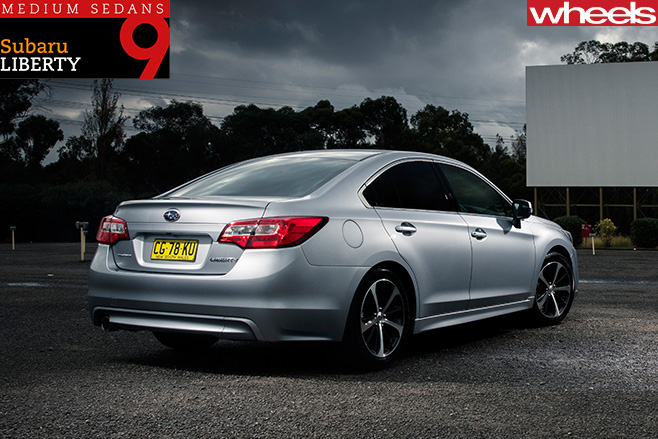
However, you have to pare back the layers to unearth that chassis talent in the 2016 Liberty 2.5i Premium. The worst offender is gluggy steering that, until you press on, removes any sense of front-end eagerness. Which, with the horizontally opposed engine’s modest weight sitting low in the chassis, does actually exist.
While the Europeans have mastered effortless, flexible, efficient and swift low-capacity turbo fours for every occasion – take the Volkswagen Passat’s sterling 1.8 as a prime example – the Liberty still suffers from a typically Japanese lack of engine diversity, or of one standout powertrain. The 129kW 2.5 is a modest performer, yet it only delivers average economy (10.0L/100km on test). The punchy 3.6-litre flat-six alternative, meanwhile, loves a drink.
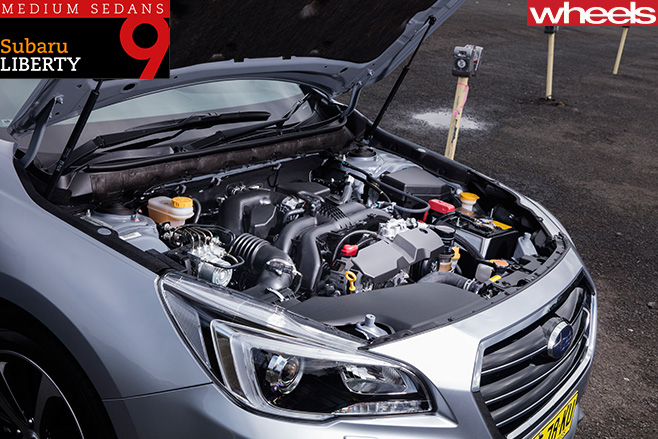
Whether you’re working the boxer manually or leaving the CVT to its own mapping, though, there’s no escaping the Subaru’s relative gutlessness, along with its numb steering, as a buzz-killing double-act.
Then there’s the ride, which, while innocent enough on smooth-ish urban surfaces, proves noisy and jiggly on any average coarse-chip country road. It’s enough to irritate over time, and to take the shine off the touring experience, once a Liberty strong suit.
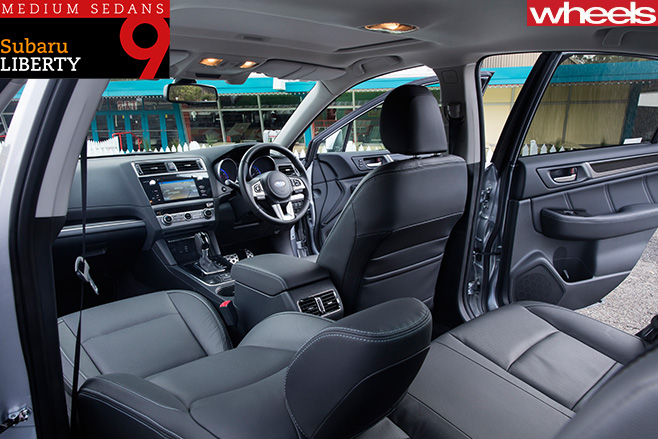
The $36K 2.5i Premium, the least-expensive car here, splits the $30K Liberty 2.5i and the $42K 3.6R, and gets a dose of desirable kit over the already well-specced base car (see breakout). But despite its undeniably strong value equation, a core lack of spirit, unexciting wrapping and a lack of ride polish seals second-last place for Subaru’s former star.
Liberty with egality
Even the entry-level Liberty 2.5i offers compelling value, with dual-zone climate control, automatic headlights and wipers, a reversing camera, 18-inch alloys, seven airbags, no-cost metallic paint and Subaru’s Eyesight active safety suite, which includes AEB, lane-departure warning and adaptive cruise. To this the Premium adds a smart key and start button, leather trim, heated power-adjustable front seats with memory for the driver, an upgraded infotainment system with sat-nav, electric sunroof, high-beam assist, blind-spot monitoring, lane-change assist and rear cross-traffic alert systems.
Want to compare the field? Check out all the Family sedan finalists.
SPECS
- Price: $35,990
- Engine: 2498cc flat 4, dohc, 16v
- Power: 129kW @ 5800rpm
- Torque: 235Nm @ 4000rpm
Transmission: CVT automatic - Dimensions (L/W/H/W-B): 4795/1840/1500/2750mm
- Weight: 1568kg
- Cargo capacity: 493 litres
- Tyres: Dunlop SP Sport Maxx 050 225/50R18 95W
- Test fuel cons: 10.0L/100km
- 0-100km/h: 9.2sec
- 0-400m: 16.7sec @139.9km/h
- 80-120km/h: 6.3sec
- 3yr resale: 57%
- Plus: Price and equipment; grip and handling poise
- Minus: Lack of charisma; dull steering; irritating ride
- Verdict: 5.5/10
Factual errors, absurd racing and clumsy story-telling see Brock’s son, James, dismiss the show as “disrespectful crap”.
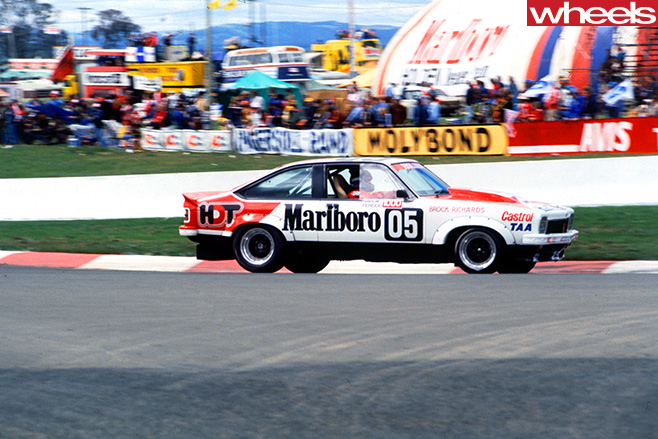
THE two-part telemovie Peter Brock that aired over the past two nights has drawn criticism over its portrayal of the Bathurst legend, and for good reason.
While recognising the show was a so-called docu-drama that by necessity took creative short-cuts, such as merging different characters into one, it came off as a clumsy effort that tried to cover too much ground in too short a time. It has been panned as being B-grade at best, despite some sharp casting (especially Matt Le Nevez as Brock and Steve Bisley as Harry Firth).
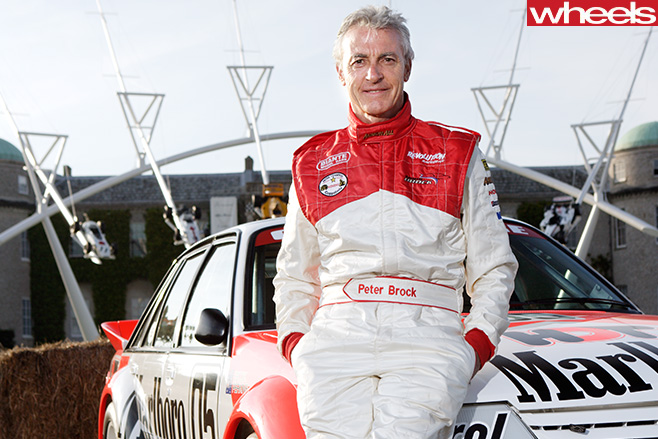
Bev Brock told me she had signed a confidentiality agreement in order to see the script, but I know she felt sick prior to the screening and is probably feeling the same now. She surely deserves to feel angry at her portrayal, which is arguably the show’s greatest injustice.
That’s not just creative writing, it’s unfair and irresponsible. No wonder she withdrew her support when she saw where the production was going.
Her son James rarely speaks on such subjects, but was yesterday moved to describe the show as “trash” and “disrespectful crap”.

David Hassall was Peter Brock’s authorised biographer and is a veteran motoring writer. Read his feature on Peter Brock in the October issue of Wheels here.
- Introduction: Love at first drive
- Update 1: Bringing down the roof
- Update 2: Hard-earned rewards
- Update 3: Posh Spice
- Update 4: Sunday Service
Introduction: Love at first drive
Another case of wheels within Wheels. By: Damion Smy
IT STARTED at the pub. “Damo, do you want to drive my new long-termer?” Wheels skipper Butler offered. “It has two seats,” he says, swilling another mouthful of beer with a cheeky grin. Surely this is a stitch-up: Why is the boss giving away a sports car? It better not be a Hyundai iLoad…
There was no catch. A stunning Sunset Red Mazda MX-5, sultry lines and all, was mine for a few weeks. And it could easily be yours because this $31,990 base car – the 90kW 1.5-litre, six-speed manual – has no options beyond the deep rich paintwork (an extra $250). Utterly affordable.
Within metres of having collected the COTY champ from Mazda, I thought, “What a fool; who gives up a car this good?”, as the lightness, tactility of the steering and instant response of the Mazda MX-5 became immediately apparent. “Surely Butler has some kind of hyper-ship, maybe an aircraft carrier or a spy plane, because it doesn’t get much better than this,” I pondered as I drove away.
As soon as the roof was lowered on that bright summer morning, the MX-5 immersed me in my surroundings like no other car. A Porsche Boxster? It’s a brilliant machine, but not as small and connected to the environment around you. That’s a big call, but looking down the glossy bonnet with its flicked-up edges, enjoying the smell of the ocean as I wafted along the beachside past Luna Park, there was no place I’d rather have been. This car makes you feel grateful to be alive – seriously – and what’s more it’s not an uber-priced pose-pouch.
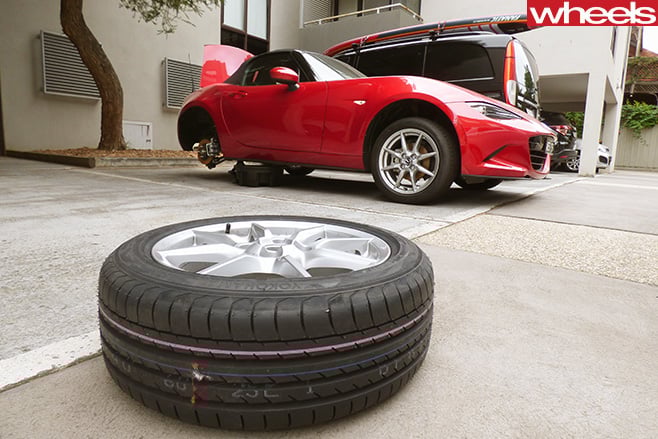
Then it was suddenly all over. Early on Boxing Day, the MX-5 and I had our first tiff. The tyre-pressure warning light popped on, like a thief in the night, and it stole summer. How? Well, there’s no spare wheel. Not even a space-saver. Just a can of goo. And, being only a few kays from home, I was reluctant to use the sticky stuff. Bad call.
Turns out that a 16-inch 195/50 Yokohama is a rare thing, especially over the New Year break. The right-rear was completely flat by daylight, the car undriveable. Luckily I had my trusty Ford Focus long-termer, whose spacesaver spare was placed under the MX-5’s sill as I used the scissor jack to take the wheel off.
The tyre shop deemed it unrepairable. Mazda roadside assistance offered to carry the car to a holding yard (umm, no) as they “don’t do tyre repairs”. The local dealer only had tyres for the previous model. Gulp. So there it was; all that Kodo design, all that garb about horse and man as one, stranded. Sure, a spare adds weight, but when your sports car is sitting, paralysed, you don’t care about the Jinba Ittai philosophy and the extra mass diluting your experience, because right there and then I wasn’t experiencing the MX-5 at all.
The perfect storm of a puncture, public holidays and a unicorn of a tyre conspired against the car. If I owned it, and it was my only car, it would have ruined my holiday.
Weeks later, with the MX-5 back on its feet, it was only seconds before I once again succumbed to its charms. Like Homer Simpson hugging the TV, I thought, “How can I stay mad at you?” It delivers so much driving pleasure, I found myself deliberately driving to suburbs I’d never been to for groceries, just to have another chance to duck through traffic, tackle a few more corners and breathe in the summer air. Finally, the MX-5 and I became one.
Then, at the pub, Butler asked for it back.
Pay your money, take your choice
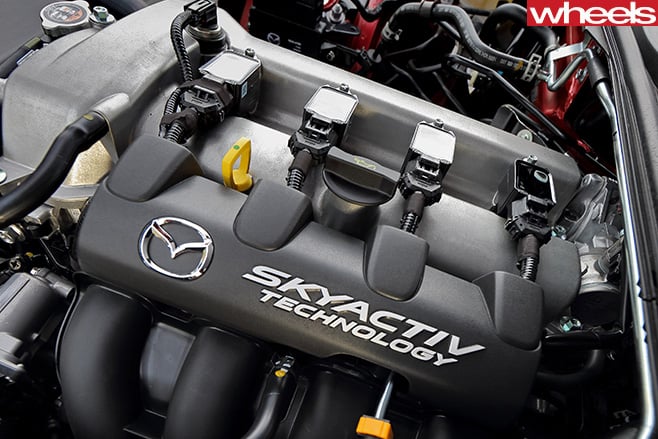
Mazda MX-5 1.5 Roadster Price as tested: $32,240 Part 1: 1032km @ 5.9L/100km Overall: 1032km @ 5.9L/100km Odometer: 6961km Date acquired: December 2015
Update 1: Bringing down the roof
Wheels explores the joy of going topless, though raising the roof also raises some interesting questions. By: Glenn Butler
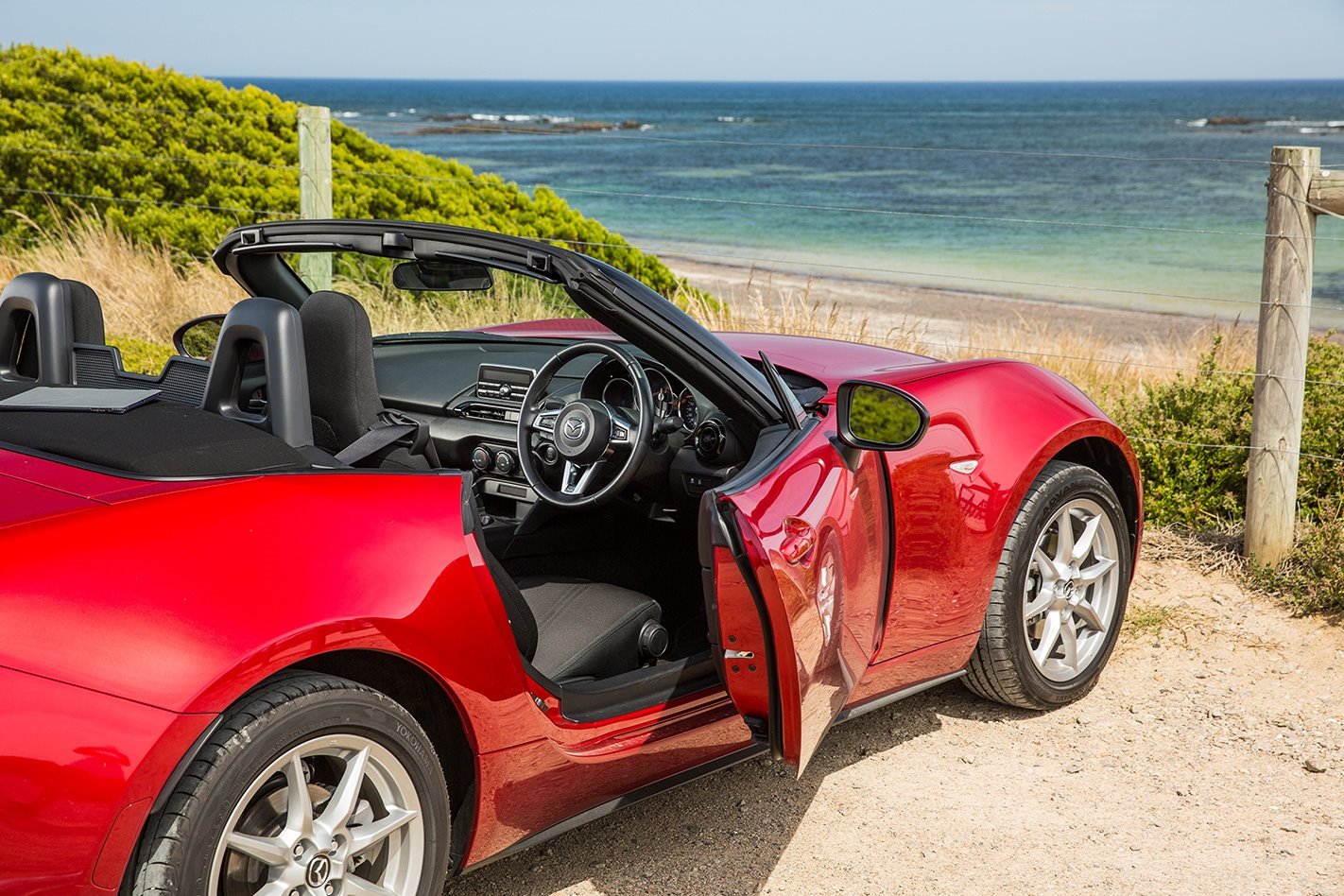
WHAT’S the protocol with leaving the roof open when parked?
When parking at a coffee shop, can I get my morning take-away and expect my work bag will still be on the passenger seat when I come back?
What about when I go to the barber’s for my monthly mop lop? Okay, in this instance, I’m not naïve. But what if there’s nothing in the cabin? Can I leave the roof down and expect to not find a cigarette butt or litter in the cabin (both of which have happened)?
These are the weighty first-world conundrums I tackled after taking over our long-term Mazda MX-5 Roadster 1.5. It was also a month of compulsory roof-down motoring. Every single trip the lid was off, unless it was raining.
Putting the roof down is a cinch: undo latch, hurl roof back, push down until it clicks. And to re-roof the roadster, a latch between the seats pops the light cloth lid up from its hideaway so it’s easy to reach. No longer do you need Mel Gibson’s ability to dislocate your own shoulder.
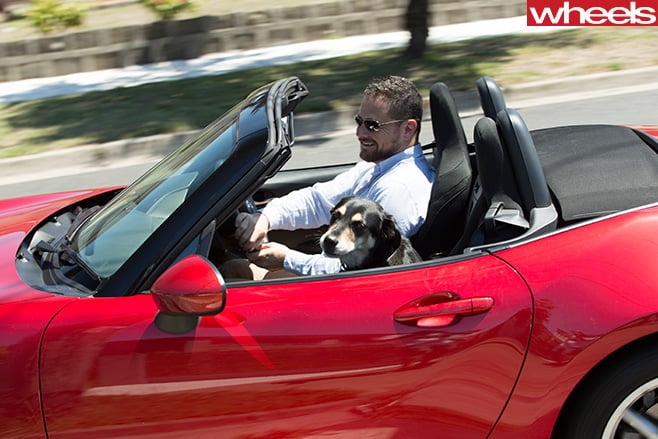
My dog likes travelling roofless as well. She gets that wind-on-her-tongue feeling without having to hang out the window. Her fur, however, swirls around everywhere in the cabin, and it’s a bugger to vacuum out.
I put the roof up for one particular drive, despite the clear blue sky and warm late summer sun. A weekend away with friends up the King Valley involved a 3km dirt private roadway to the property, and no amount of journalistic curiosity could convince me to drive that stretch roof-down.
I may have driven that dirt road a little faster than I should have, but the MX-5 made me do it. It’s such a sweet, chuckable little roadster that drifts with balletic precision and wondrous ease. The anaemic little 1.5 had no troubles kicking the butt out under power – with the ESC off, obviously.
So. Much. Fun. Every one of the five times I tackled ‘my’ special stage.
Getting the dirt out, however, is not so much fun. It didn’t get into the cabin too badly, but there was a light covering over the dash and in the vents. And while it didn’t get past the boot’s dust sealing at all, it’s pure hell getting a rag in and around the hinges. Still, fun has a price, right?
Mazda MX-5 1.5 Roadster Price as tested: $32,240 Part 2: 1752km @ 8.1L/100km Overall: 2784km @ 7.3L/100km Odometer: 8713km Date acquired: December 2015
Update 2: Hard-earned rewards
It’s beer o’clock for our 1.5-litre Mazda MX-5. By: Glenn Butler
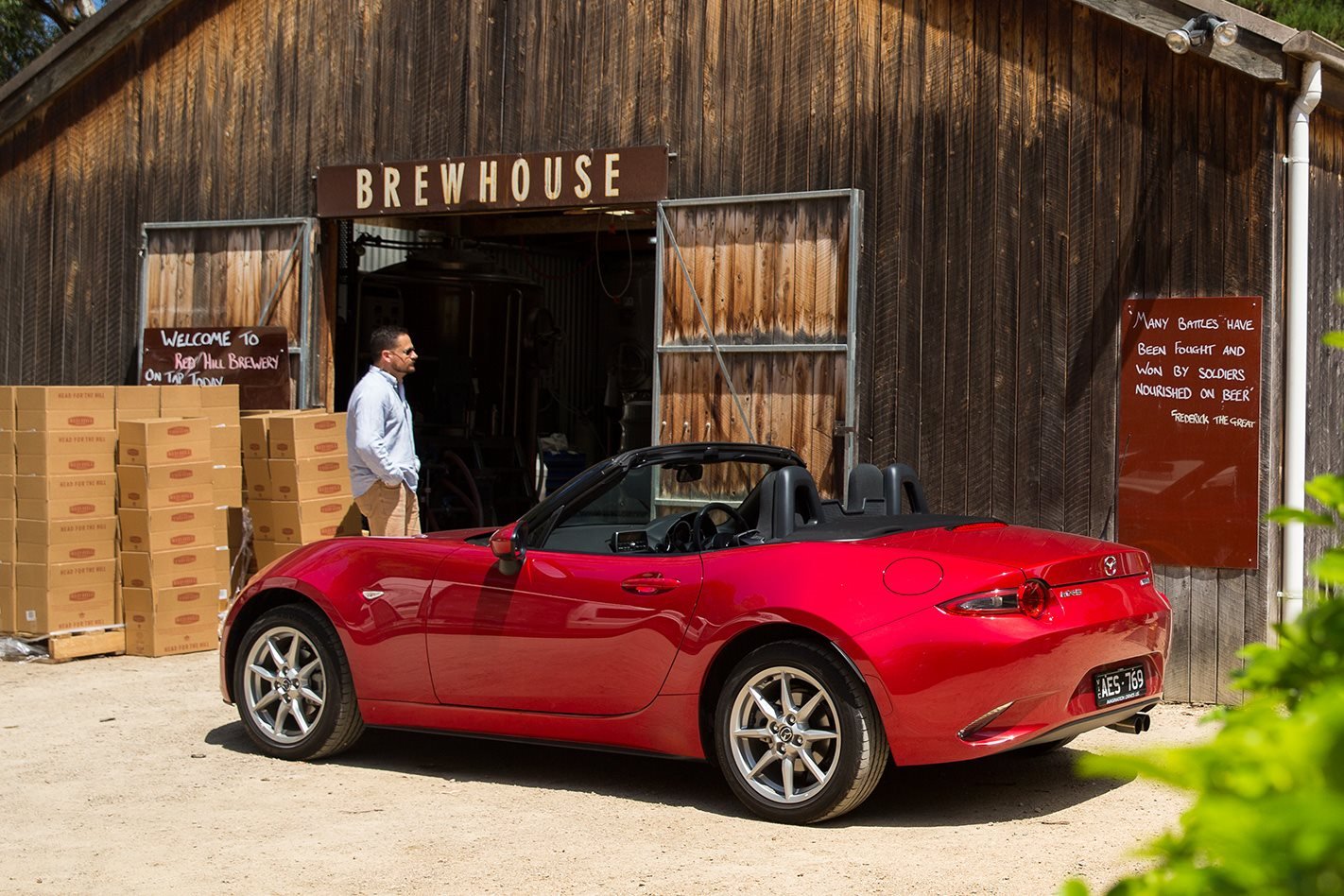
YES, that is a brewery in the photo. No, Wheels is not advocating drinking and driving; we’re all mature enough to know right from wrong, right?
That’s the Red Hill Brewery on the Mornington Peninsula, which also happens to have fantastic roads ideally suited to the Mazda MX-5. So when the time came for one last fang in the 1.5 before swapping into the 2.0,
I gravitated to my favourite set of roads.
My first half dozen COTYs etched these roads into my memory, sharing laps with Carey, Ponchard, Bulmer, Robbo and other judges evaluating that year’s contenders on the lumpen curves of Arthurs Seat and long undulations out to Flinders.
Custom decreed that each judge drive the loop in every car. With weekend visits in other test cars, or my motorbike, I’ve done it at least 200 times. I know every bump, and I lament their passing when road gangs iron them out in the name of progress.
Last week I climbed Arthurs Seat with 5.2 litres of V10 Lamborghini Huracan Spyder around me, and I’d like to apologise to the residents for the banshee wail that followed us up the hill that evening. No shortage of poke there. In fact, that roofless, ruthless Italian possessed more than enough of everything to humble the mighty Arthurs Seat.
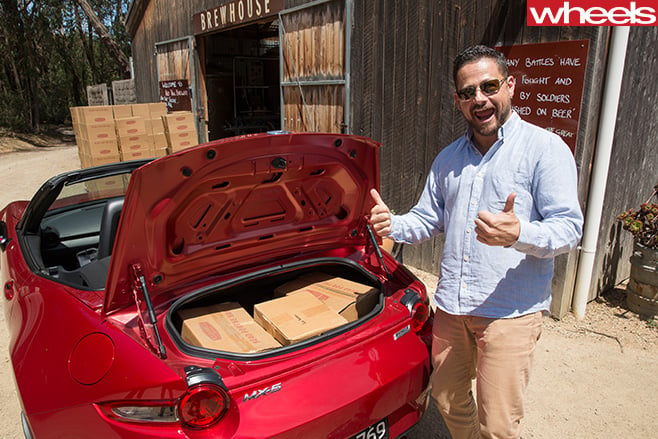
A week earlier was my visit to the brewery, which I’d reached via Arthurs Seat. I won’t pretend the $32K Mazda felt just like the $500K Lamborghini, but comparing the two was illuminating. Both carve up corners like a master chef, one wielding its light, lithe chassis with scalpel-like precision, the other leveraging massive rubber and all-wheel drive to bludgeon the bends. The 455kW Lambo’s biggest advantage is the way it devours straights with a hunger the 96kW Mazda cannot hope to match. The MX-5 requires effort and focus to retain every possible increment of hard-earned velocity. Picking the best line is crucial, steering as little as possible lest an overly greedy turn-in bleed speed.
There was a great sense of elation when I peaked in the Lamborghini – how could there not be in such a thunderous and theatrical Italian steed – but the Mazda gave me a greater sense of accomplishment, more satisfaction. Dare I say it… like a hard-earned beer. A few minutes later I had one, a clean and cold Red Hill Pilsner, to accompany the action replay running through my mind.
I gained three things from that drive: a load of Red Hill beers; a better appreciation of the MX-5’s ability to use its dynamic prowess to overcome a lack of horsepower; and a hunger to come back as soon as possible in the 2.0-litre MX-5.
Idiosyncrasies
My Samsung Galaxy S6 refused to connect with the MX-5 via Bluetooth. Initialising the handshake via the phone, or via the car, made no difference. They wouldn’t play nice together. Until Mazda Australia told me to stop using the dials and use the infotainment system’s voice commands instead. Success! Turns out the non-satnav-equipped system uses older software that has this glitch. The new version, as fitted on next month’s Mazda MX-5 2.0-litre GT, will not have the same problem, Mazda assures me.
Read part two of our Mazda MX-5 long-term car review.
Mazda MX-5 1.5 Roadster Price as tested: $32,240 Part 3: 885km @ 8.2L/100km Overall: 3669km @ 7.5L/100km Odometer: 9598km Date acquired: December 2015
Update 3: Posh Spice
Does stepping up to a GT raise the temperature? By: Glenn Butler
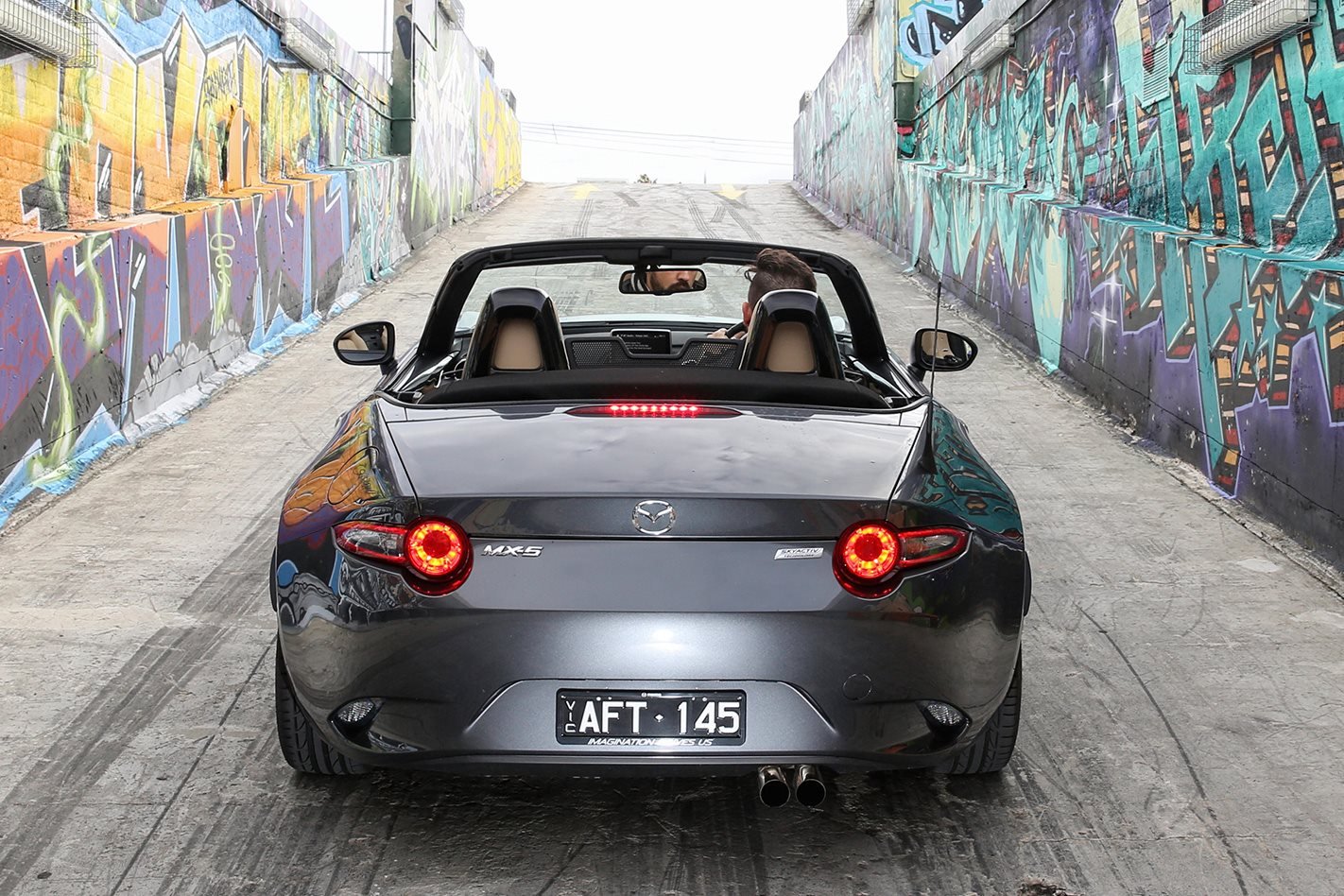
FOR the second half of the MX-5’s six-month stay in our garage I’ve moved from a 1.5-litre manual base model to the top-spec Mazda MX-5 2.0-litre GT auto. That’s a step up in many areas, and a step down in a couple as well, surprisingly.
I thought having extended exposure to both drivetrains would help me choose a favourite, but four weeks into big-bore heaven and I’m even more confused.
Part of this is the fault of the automatic transmission. This six-speed Aisin unit makes day-to-day driving easier, no question, and it’s a smooth, competent cog-swapper. But it doesn’t suit the intent or character of this car, even with paddles to manually manipulate. The Mazda MX-5 is a driver’s car, and paying an extra $2000 to be less involved doesn’t gel with the purist’s perspective.
I can see why some might consider $2K a fair tariff to free up your left arm and leg, but I never found using the manual to be tiring, even in peak-hour traffic. And that’s on top of having to row it more enthusiastically to make the most of the 1.5’s torque deficit. So for me it’s a step backwards. It’s also detrimental to the MX-5’s mechanical soundtrack, although to be fair, even with a manual gearbox the 2.0-litre doesn’t sound as zippy as the little 1.5.
Will I change my mind when we tackle a Sunday drive together? I was totally convinced by the 911 GT3 RS’s paddle-shifting ways, but then in that car a driver needs all attention on the rapidly approaching horizon. The MX-5’s fun happens at a slower, more easily digestible pace. And while my top-spec test car is a claimed 48 kegs heavier than the base manual, I suspect the 2.0-litre’s extra power and torque (up 23 and 33 percent respectively) will easily overcome that five percent weight handicap. And slightly bigger brakes and tyres will also help in that regard. But by opting for the auto,
I lose the manual’s limited slip diff… hmm…
But that’s for next month.
Now, what about the bells and whistles that additional $9560 has bought me? Putting all the mechanical differences aside, the step up from 2.0-litre Roadster to 2.0 Roadster GT is actually $5060, which is partly justified by the more upmarket infotainment and sat-nav system (see breakout).
The added seat heaters in the meantime are making Melbourne’s single-digit winter mornings much more tolerable. But no amount of investigative spirit will make me go topless on those mornings; I’m hoarding every degree I can get.
Equipment upgrade a mixed bag
There are two MX-5 equipment levels: Roadster and Roadster GT. The GT’s infotainment screen is a boon, and is generally easy to use – although it insists on sucking in my smartphone’s contact list every time (is 853 names too many for it to remember?). The beefier Bose sound system is well worth having, as is climate control. As for functions like auto headlights and wipers, auto-dimming mirror and heated wing mirrors, they’re nice to have but weren’t conspicuous by their absence on the cheaper model.
Read part three of our Mazda MX-5 long-term car review.
Mazda MX-5 2.0 Roadster GT Price as tested: $41,710 Part 4: 1116km @ 8.2L/100km Overall: 1116km @ 8.2L/100km Odometer: 4960km Date acquired: May 2016
Update 4: Sunday Service
Tackling the tarmac in our long-term Mazda MX-5 GT while the rest of the world sleeps By: Glenn Butler
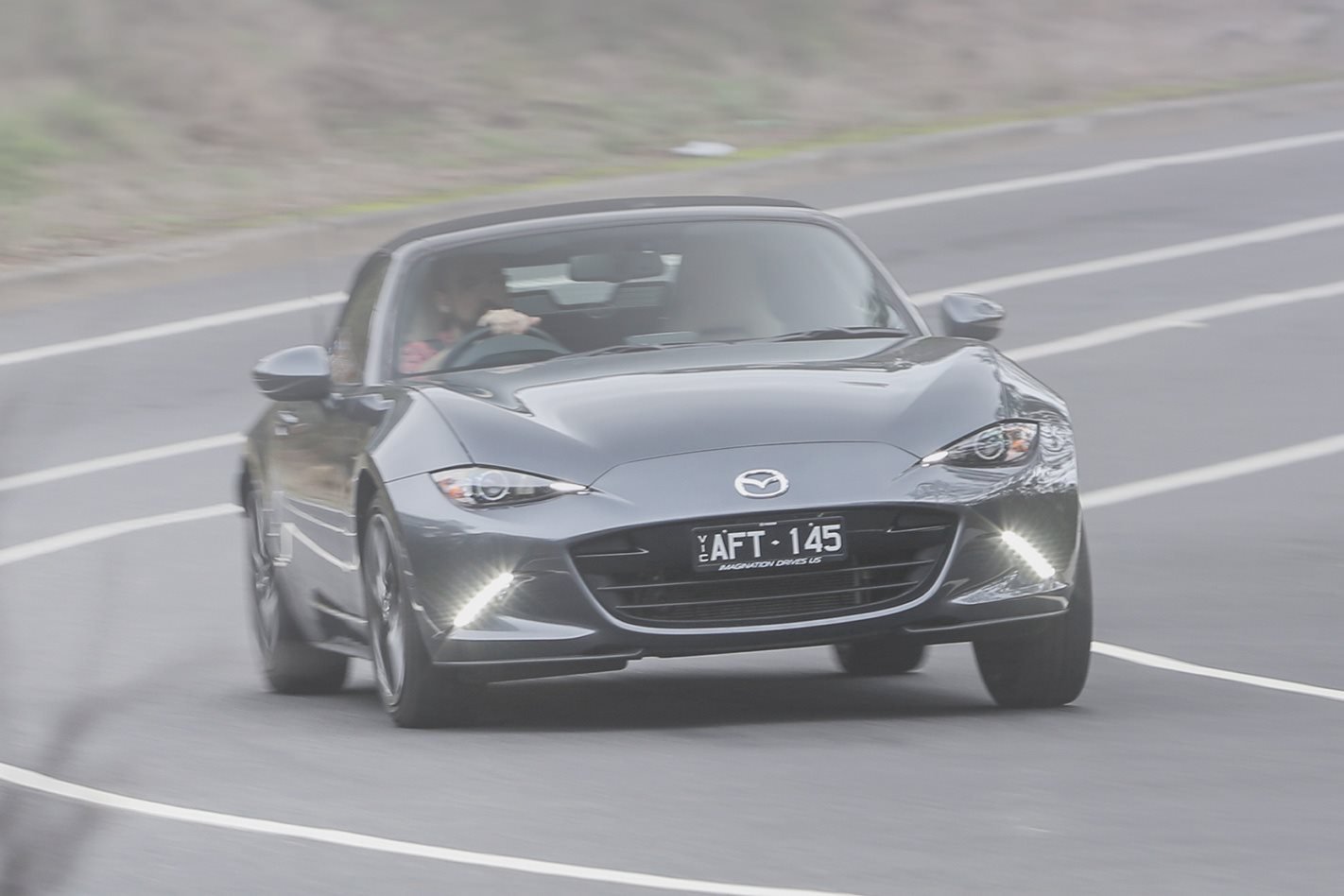
MY FIRST thought as I shake off the fog of sleep is to slap the alarm and stay in bed. What kind of idiot rises voluntarily at 5.30 on a wintry Sunday morning? Instead, I swing quickly out of bed, knowing that to pause is to fail. Don some clothes, slam down an espresso, grab the Mazda key and go. Six minutes since the alarm; a new personal record. Out the door and into…
It’s blacker than black. Darker than 5.36am on a winter morning should be. The Mazda MX-5 is the barest hint of a silhouette in my driveway. The night is still and there’s a fog so thick that the lone street lamp outside my house struggles to penetrate. Also, it’s wet. Am I mad? If it’s foggy and wet at sea level, what are the Dandenongs going to be like? At least it’s not raining. Anyway, I’m here now.
Slide in, then lean out to close the door. I can’t reach the handle without my head hitting the roof rail, so the window’s leading edge is my regular ‘door-pull’. Is this a design flaw in the car? Didn’t think my arms were abnormally short.
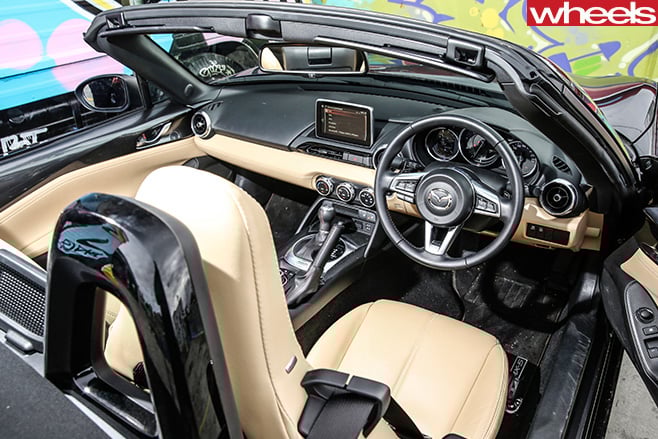
Somewhere along the way, and for reasons best known to meteorologists, the fog leaves off. Perhaps it prefers leafy bayside suburbs to rolling hills. The wet road shines in headlights that make mossy patches look like super-smooth hotmix. Treachery by deception?
Weirdly, the conditions make the drive. The grip is tenuous and the MX-5’s speed is far from electrifying, but the combination has my eyes on stalks, my nerves on high alert. I sense-feel every little shimmy and slip, and respond before each becomes a problem.
It’s an intense collaboration. It feels like I’m hardwired into the tyre tread, front row at each combustion cycle, hand-holding the brakes, feeding the steering rack. It’s a slow-speed, low-grip, sensory immersion in a world that ceases at the edge of the headlight beam.
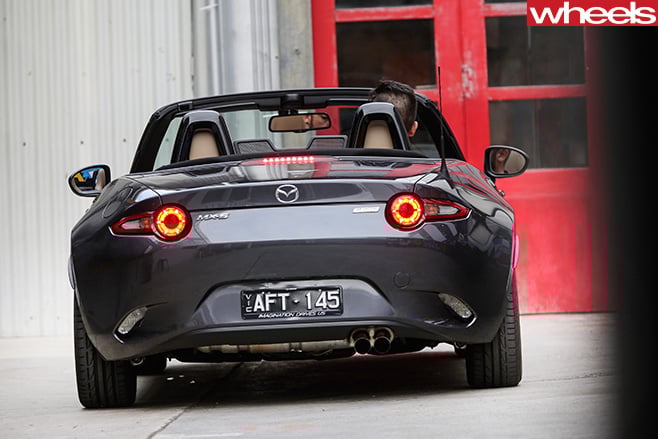
Another lap, then another. On our third trip round the mountain, the sun crests the horizon and shatters the dream like my alarm had two hours earlier. Time to return home. Another hour later, I’m at a café, still energised, smiling quietly, watching the rest of the world in bleary-eyed pursuit of bacon and eggs.
Sundays are like that. But some Sundays are better than others, if you can just get up a little earlier.
Sales soar, then time flies
The life of a test car is never pretty. This MX-5 has spent more than its fair share of time in the Tullamarine long-term car park as its ‘owner’ ventured beyond borders and over waters. It’s most recent sojourn on Level 3, Section G was while I was in Japan for an Infiniti conference. I was surprised how few MX-5s I saw on Tokyo’s roads, though Mazda claims 826 of these COTY-winning roadsters are sold there each month. Australia’s running rate is about 120 a month, though it falls away as the car ages.
Read part four of our Mazda MX-5 long-term car review.
Mazda MX-5 2.0 Roadster GT Price as tested: $41,710 Part 5: 1004km @ 7.6L/100km Overall: 2120km @ 7.9L/100km Odometer: 4960km Date acquired: May 2016
A BEWINGED Mercedes-AMG C63 Coupe has been caught lapping the Nurburging, prompting speculation of an even faster AMG variant to sit above the S.
The racier-looking AMG two-door also features a prominent front splitter and a seemingly lower ride height.
And is the black bootlid that contrasts with the mule’s blue bodywork a pointer to a weight-reduction program including carbon fibre?
The mystery surrounding the model deepens as AMG boss Tobias Moers told Wheels at last month’s Paris motor show that there was no intention to use the R badge from the upcoming GT R for any other model.
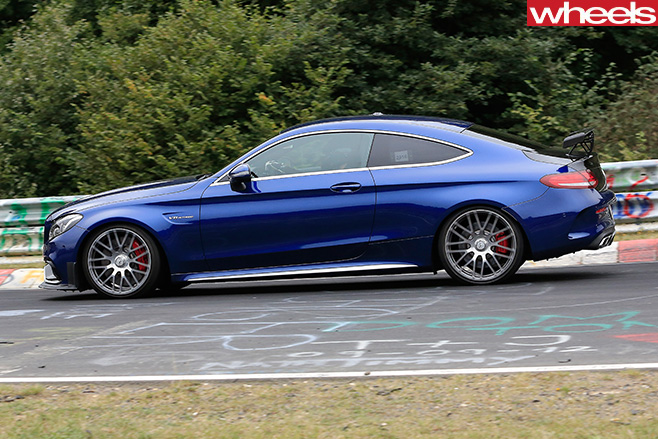
History, however, suggests it’s far too early for a Black Series, which is typically introduced towards the end of a model’s lifespan. The C63 Coupe was released only this year.
Indeed, Moers said AMG is “still collecting ideas” about the best Black Series platform, and that he didn’t know when it would happen.
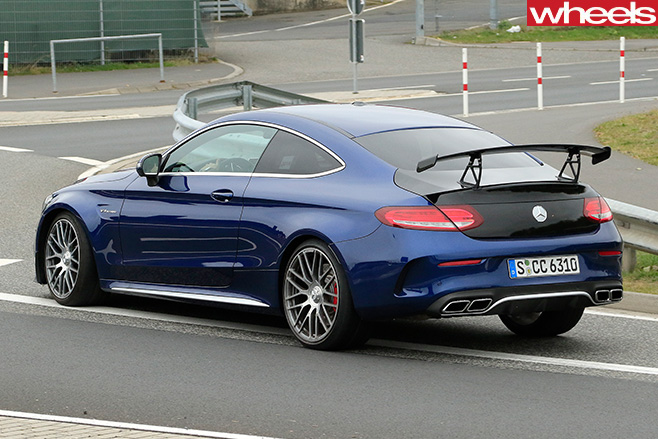
Mercedes would surely love to have a rival for the track-focused BMW M4 GTS, though it’s possible these spy shots simply reveal a new optional aerodynamics package for the C63 – similar to what AMG offers with the A45 hot-hatch.
As for power, Moers is on record with Wheels saying the C63 S’s 375kW output is at the limit for what its rear-wheel drive platform can handle. An AMG-calibrated version of Merc’s all-wheel-drive system, though, is already used on the AMG C43 with a rear-biased torque split of 69:31.
