
Scotty is a an excellent hand, but there’s also plenty of life in Garth.
The Walkinshaw Racing team’s decision to grab free agent Scott Pye to line-up with already re-signed James Courtney next season is easy enough to understand. Pye, cut loose from DJR-Team Penske for 2017, has shown great speed, is articulate and well presented, and has youth on his side.
Except for the age factor, all of those positives could also be attributed to Garth Tander, the highly credentialed long-time servant of HSV Walkinshaw who will depart HRT/Walkinshaw after 12 years at Clayton.
For me the decision is a bit like seeing Tony Cochrane drive over a cliff with one of my good mates – there is an aggravating mix of blessing and regret.
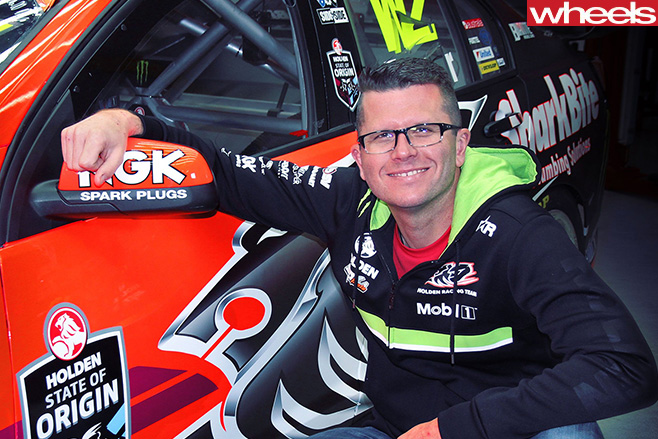
And is there anyone more impressive at slicing through the pack from a rearward grid slot? Don’t answer: I already know.
I’m more than pleased that Pye has found a good seat for the future. He has plenty to offer. But surely GT is still among the best six or eight drivers on the Supercars grid.
The timing of the decision to go for Pye over Tander was not terrific, coming just a few days after the veteran and Warren Luff combined to brilliantly win the Sandown 500.
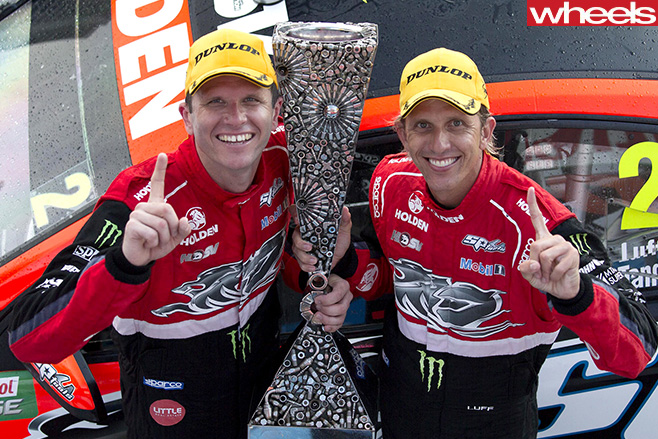
He feels that at 39 he has plenty more to add to his 50 race wins, a V8 Supercars crown (2007), two Bathurst 1000 successes (2009, 2011) and the Sandown 500.
For sure, Tander will find a job next year, and let’s hope it’s with a competitive Supercars team.
He has been linked to a return Garry Rogers Motorsport, where it all started for him in 1998.
Perhaps a slot may emerge for Tander at Brad Jones Racing, just a couple of hours up the Hume.
When it comes to exclusive Australian muscle cars, this is one of the rarest and most desirable you’re likely to ever find – and it’s for sale.
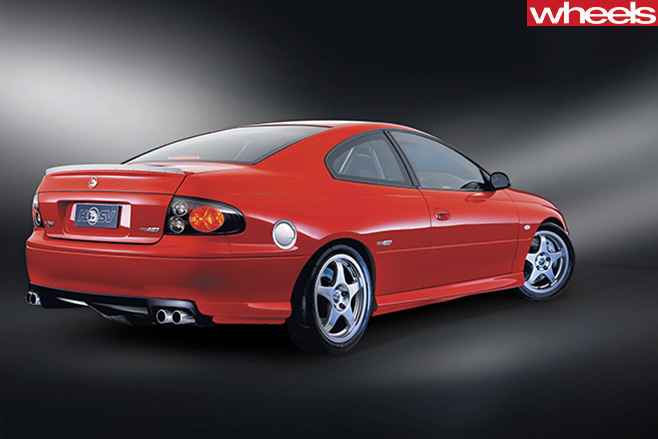
Don’t be fooled by the blood-red HSV HRT 427’s relatively modest exterior – beneath the skin lurks a heavily-modified Monaro with a 420kW heart, bespoke suspension and monstrous brakes, all designed to allow it to compete against extreme-performance European cars like the Porsche 911 GT2.
Built in 2002, it was the first time HSV shoehorned a 7.0-litre V8 into a road car, something the Clayton-based manufacturer wouldn’t do again until the VE-based W427 touched down in 2008. The HRT 427 also went on a serious diet, purging its air conditioning, radio, rear seats and airbags in the quest for more performance.
Further modifications include a vented carbon-fibre bonnet, unique front and rear bumpers, rear lip spoiler, rollcage, fixed-back racing seats with four-point harnesses, a flat-bottomed steering wheel
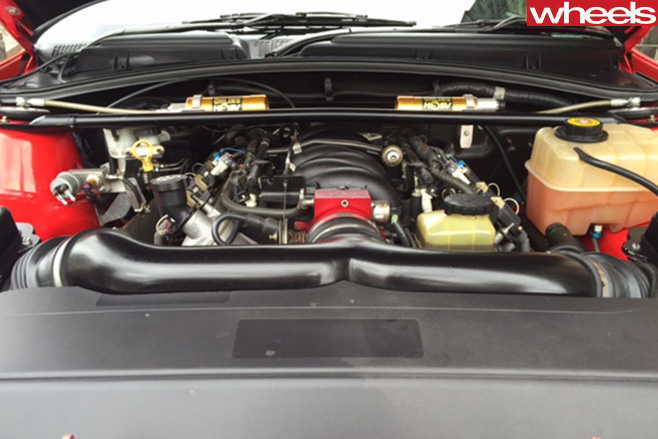
However, only the second prototype received the carbon inlet; the car on sale has a more road-friendly inlet manifold and air filter.
The suspension was bespoke, ditching the standard Monaro’s MacPherson strut front setup and installing a billet alloy double A-arm arrangement. At the back, a 4.11:1 diff ratio and beefed-up multilink suspension took power to the ground.
And it would have been a limited-run Aussie muscle car hero, had it not been killed by beancounters in 2003.
Back in the day, HSV reckoned it would have cost around $300k if the project had actually received the green light ($412k in today’s money, adjusted for inflation). This car? The current owner won’t part with it for anything less than $650k.
And the current owner is Jim Markos, a man with an extensive collection that’s mostly made up of high-end Euros like Ferraris, Lamborghinis and classic Porsches.
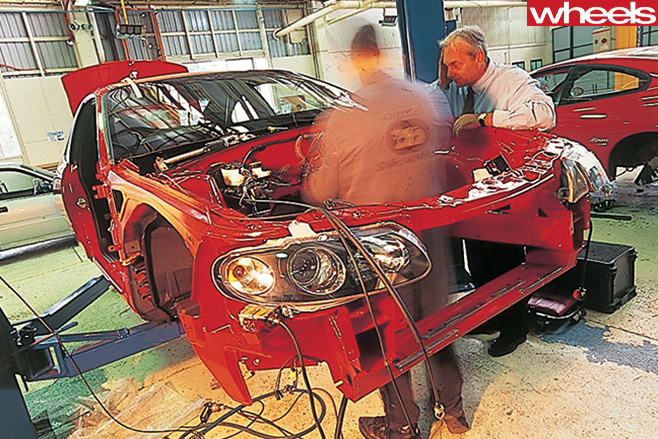
“It’s definitely one of my favourites, there’s no doubt about that.”
“They really put a lot of gear into this car, a lot of effort to develop the car and make it something special. A lot of magnesium parts, a lot of carbon fibre parts, great brakes, great lightweight wheels – the seats are perfect for the car’s purpose.”
But now it’s time for a new owner to hop behind the HSV HRT 427’s Sparco steering wheel. Who’s got the cash – and the courage – to own one of Australia’s fastest and rarest performance cars?
When it comes to the top end of the ute market, the Volkswagen Amarok and Ford Ranger sport plenty of showroom appeal. The Ford Ranger vastly outsells the Amarok, but let’s ignore the popularity contest and delve into which is the better car out of the flagship Amarok Ultimate and Ranger Wildtrack – two of the ute segment’s most civilised 4×4 dual-cabs.
Price and equipment | Winner: Ranger
At $61,790 for the Ranger Wildtrack automatic, Ford’s ute commands a price tag that could get you into BMW 3 Series. The Volkswagen Amarok TDI 420 Ultimate, however, is even more expensive at a whopping $63,990 with the standard eight-speed auto. Is the Amarok worth the extra?
In a nutshell: not really. There are few things that the high-grade Amarok gets that the Ranger doesn’t, and both share features like sat-nav, dual-zone climate control, heated part-leather seats, parking sensors and rear view cameras.
The Ranger wins the safety competition though, with lane departure warning, lane keep assist, active cruise control and curtain airbags being standard kit. More gear for less money.
Interior and versatility | Winner: Ranger
These are utes, and versatility is the essence of their being. The Ranger boasts a slight edge though, with its three in-cabin 12V power outlets and three-prong 230V power outlet in the rear cabin allowing tradies to keep their tools charged up while away from the home or workshop.
Both cabins are spacious enough for five passengers, but it’s the Ranger’s interior that’s the more practical one. Then again, the Amarok has more impressive fit and finish, making the result here a tie.
An updated interior is due for the Amarok later this year though, which is worth keeping in mind if you’re able to wait.
Performance and economy | Winner: Ranger
The Ranger Wildtrack has displacement on its side, with 3.2 litres of turbocharged five-cylinder capacity delivering 147kW of power and 470Nm of torque. Average fuel consumption is a claimed 8.9L/100km.
Amarok’s 132kW/420Nm 2.0 litre twin-turbo inline four is under greater stress, with peak outputs that are eclipsed by the Ranger. On the other hand, fuel economy is slightly better at 8.3L/100km on the combined cycle.
If you want to tow, though, the Wildtrack is your steed with a 3500kg maximum towing capacity.
A more muscular Amarok is on the way with a 165kW/550Nm 3.0-litre turbodiesel V6, but until that car arrives (it’s scheduled for November this year), the Ranger is the top performer in this head-to-head.
Ride and refinement | Winner: Amarok
This is where the Amarok starts to fight back. The Ranger Wildtrack might be more feature-rich and powerful, but it’s the Amarok that rides better.
With civilised handling and excellent bump and vibration isolation, the Amarok is the most car-like 4×4 ute on the market. The Ranger is far from rough – it actually boasts an excellent ride of its own – but the Volkswagen takes ride and refinement to the next level.
Steering and handling | Winner: Amarok
Both cars are equally accomplished here, with the Amarok’s car-like suspension tune again giving it the edge in on-road assessment. Off-road, where a great proportion of 4×4 utes tread, the Ranger’s dual-range transfer case and locking rear diff offer a mechanical advantage.
The Amarok’s eight-speed compensates for the absence of low-range gearing somewhat and it too comes with a lockable rear differential, while its 4WD system is always on – meaning there’s one less button to press when the ground gets soft.
Verdict | Winner: Ranger
The Amarok is the ute you get when you don’t want something that feels like, well, a ute, but it’s the Ranger that fills the brief as a high-end 4×4 utility. It’s comfortable and well-equipped, with excellent on-paper credentials backed up by genuine off-road and on-road nous.
That said, the Amarok offers outstanding refinement for the segment. It’s expensive, yes, but from behind the wheel it feels as though the extra outlay is justified. For the bulk of the population though, the Ranger offers more ute for your money and is the deserving winner of this head-to-head.
TELL ME ABOUT THIS CAR
It’s the new and much improved Volkswagen Tiguan, which is a medium-sized SUV that rivals the hugely popular Mazda CX-5 and Hyundai Tucson. It’s one of the most important models Volkswagen will launch in Australia this year and offers improved space, polished dynamics and one of the best interiors in its class.
STRENGTHS
- Size and practicality. The original Tiguan, which was based on the Volkswagen Golf, had a tight interior and a small boot, but this new model is larger in every dimension and rides on a 77mm longer wheelbase. This has improved passenger space and comfort, and boosted the Tiguan’s boot to one of the largest in class. It measures 615L with the sliding second row all the way forward.
- Dynamics. The new Tiguan’s handling is among the best of any mid-size SUV and boasts smooth steering, predictable and precise dynamics and a nicely-judged ride on rough roads. A new performance-orientated 162TSI model will join the line-up in early 2017 and will use the same 2.0-litre turbocharged engine as the iconic Golf GTI hot-hatch that produces 162kW/350Nm.
- Interior quality and design. Tiguan might be slightly more expensive than its Asian rivals (more on this below) but its interior is class-leading and every variant scores a beautiful leather steering wheel, comfortable seats and excellent vision. A rich mix of high-quality materials enhances the premium feel, and there’s plenty of standard equipment too, like a standard 8.0-inch touchscreen, cruise control, rear air vents and auto wipers and headlights. Safety gear is also top notch and every Tiguan scores Autonomous Emergency Braking as standard.
- High starting price. Unlike some of its Asian rivals, which have starting prices below $30,000, the Tiguan range starts at $31,990 and stretches to $49,990. This could deter some buyers initially, however the Tiguan’s refinement, strong dynamics and class-leading levels of equipment ensure it’s still good value.
- Snoozy design. While top-spec models look handsome and stylish thanks to larger wheels and sportier body kits, entry-level versions can look boxy and appliance like, especially when rolling on 17-inch wheels.
The Tiguan lands in the middle of one of Australia’s most popular categories and faces some stiff competition. Mazda’s CX-5 dominates this part of the market, and offers a cheaper starting price, well-judged dynamics, oodles of equipment and a striking exterior design. The Hyundai Tucson is also cheaper than the Tiguan and has decent handling, though its interior isn’t up to the Volkswagen’s standard. Other mid-sized SUVs worth considering are the new Renault Koleos, Subaru Forester, Ford Kuga and Nissan X-Trail.
Click here to read the full review on the Volkswagen Tiguan range.
Since Tesla arrived to the automaker scene in 2003, it’s lit the way for fully electric cars. But now there’s a new kid in town, as McLaren’s P1 supercar enters the race.
But Tesla doesn’t have to worry because this version of the P1 supercar isn’t your ordinary exclusive offer from the British automaker – it’s a pure-electric toy for kids aged three to six years of age.
Even though it carries the toy label, this isn’t any playroom gig.
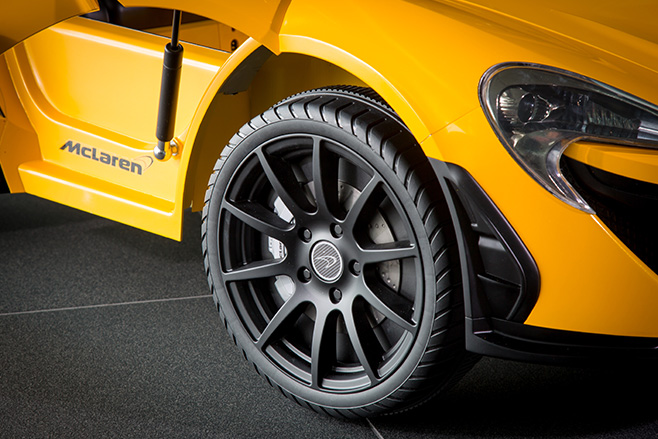
The McLaren P1 looks almost like the real deal plug-in hybrid hypercar (and we emphasise almost), with ‘dihedral’ doors (aka doors that open vertically), an electric motor, and three speed transmission including a reversing function.
It also features an on-board MP3 player and speaker system, lights, push-start button, and air-conditioning unit. Volcano Yellow is its colour choice.
But it’s missing the hypercar’s twin-turbo V8 engine, only has one seat, isn’t made of expensive carbon fibre and has also lost its roof. And it comes in a much smaller size than the one currently found in dealerships and won’t require buyers to take out a second mortgage to buy it.
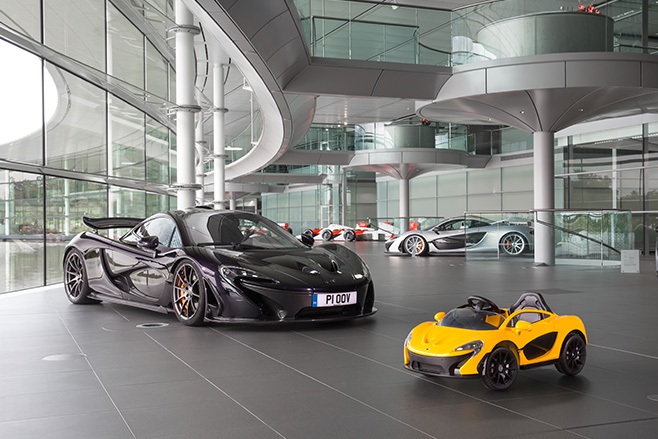
The Ride On McLaren P1 is due to go on sale at McLaren dealers around the world by the end of October for £375, which converts to around $635 in Australia.
We can’t wait for all the ultra-cute Instagram photos of kids attempting this miniature supercar.
If McLarens aren’t your kid’s thing maybe you can get them the new ride-on Mercedes-AMG roadster, which the company also revealed this week.
Can’t get enough? Now read about the US-only Tesla Model S for kids.
ALFA Romeo’s Giulietta line-up will be rebadged and spruced up for 2017 while losing manual options for the mid- and top-spec variants.
The Progression, Distinctive and QV variant names will be replaced by ‘iconic nameplates’; Super, Super TCT and Veloce, with only the base model Super equipped with a clutch.
The Super will cost $29,900, up from the $29,000 for the Progression that currently kicks off the range. While it gets a few visual tweaks, things remain the same under the bonnet with the 110kW/250Nm, 1.4-litre four-cylinder turbo paired with a six-speed manual gearbox.
The Super TCT, which replaces the Distinctive, now only comes with a six-speed TCT automatic transmission between the front wheels and the 125kW/250Nm, 1.4-litre turbo four-cylinder engine. The lack of a manual option means you’ll have to fork out $34,900 if you want the extra power and features, up from $33,000 for the Distinctive manual. On the plus side it’s $100 less than the Distinctive auto.
Same goes with the Alfa Romeo Giulietta Veloce range topper, which doesn’t have the manual option but at $41,900 is $100 cheaper than the QV auto. This comes with a 1.8-litre four-cylinder turbo engine that generates 177kW and 340Nm paired with a six-speed TCT transmission that will see it hit 100km/h just 6.0secs and reach a top speed of 244km/h.
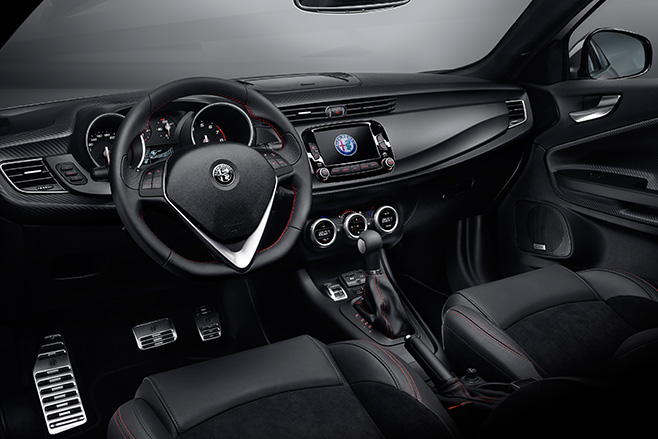
It’s a shame this kit will no longer be available with a manual gearbox, though there are flappy paddles and Alfa’s DNA (Dynamic, Natural and All Terrain) driving modes to add some spice to the drive.
While there’s no new equipment across the range, each variant comes with revised front-end styling that includes a new version of the honeycomb grille, piano black bumper inserts and revised headlight and fog lamp surrounds.
Other aesthetic changes include two new alloy wheel designs and revised tail pipes, while inside has revised seat upholsteries, dashboard and door panel finishes.
Standard equipment in the Alfa Romeo Giulietta includes dual-zone climate control, the DNA selector, rear parking sensors, halogen headlights, LED daytime running lights and U-Connect infotainment system, with the Super stepping up to 16-inch alloys and a five-inch touch screen.
Extras in the Super TC include 17-inch alloys, a 6.5-inch touch screen, front and rear parking sensors, while the top-spec Veloce gets leather and Alcantara seats with integrated headrests, red Brembo front brake calipers, sports suspension, bi-xenon headlamps and flat-bottomed steering wheel.
The 2017 Alfa Romeo Giulietta range will be available in showrooms across Australia from October 1.
Nothing in the saga of Australian cars and car magazines approaches Ford versus Holden, blue versus red for longevity, significance or volume.
Through almost six decades, these comparisons became the core element of the magazine and its cover.
Read former Wheels editor Peter Robinson’s story of how Ian Fraser came to write this classic tale.
You must go back exactly 56 years to find the first. The October 1960 issue carried only the Ford Falcon on the cover, but in a “special test”, Wheels compared Ford’s all-new Falcon and Holden’s FB.
In the story’s subheading, editor Ian Fraser conveyed something of the behind the scenes dramas, admitting: “This story is not listed on the contents page of this issue, as it was prepared after earlier sections of the magazine were printed. It is a ‘stop press’ feature we know every reader of Wheels magazine is waiting to read; a reliable road test under identical conditions of Australia’s two most talked about cars.”
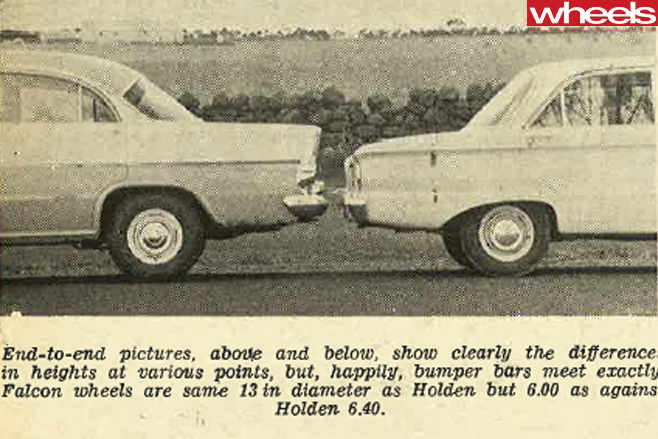
Side-by-side photographs of the two cars tell the story. The Falcon looks at least a generation ahead of the Holden in terms of styling. Which it was, given the FB was a heavy facelift of the 1956 FE, mostly to introduce a wraparound windscreen and vestigial tail fins.
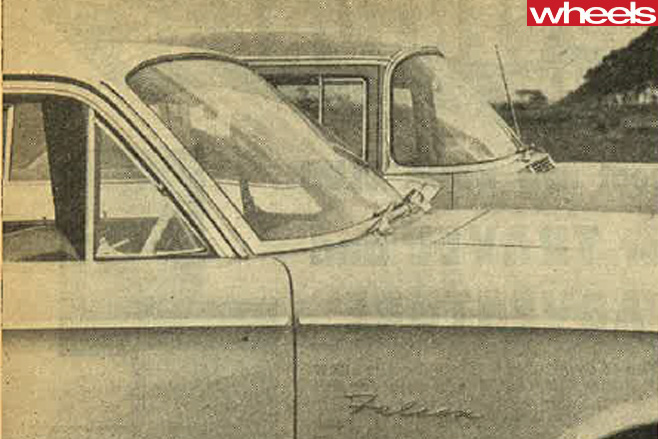
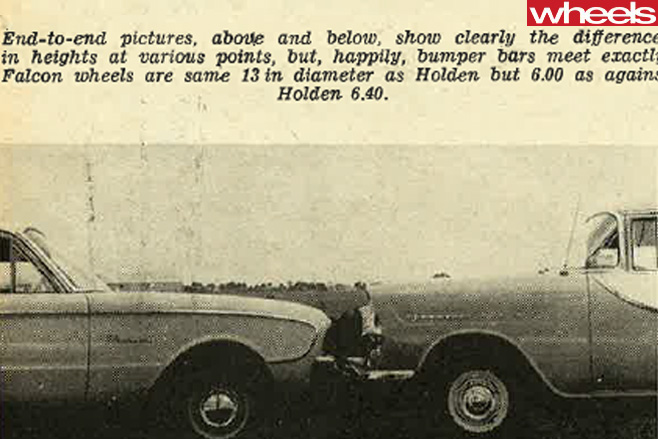
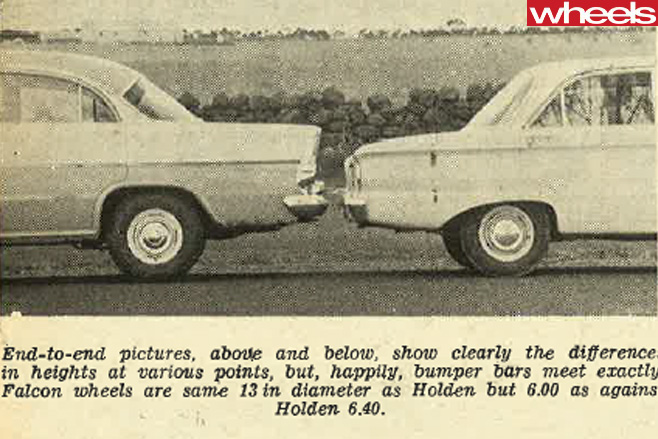
You’ll find no tail fins on the Falcon, however. Ford also preferred a far more contemporary and huge multi-curved screen. Their respective heights confirm the Falcon’s design lead: it’s a massive 136mm lower than the upright Holden, while the Ford’s wheelbase (at 2781mm it’s just 57mm shy of today’s FG X Falcon) is 114mm longer, despite a difference in overall length of just 9mm.
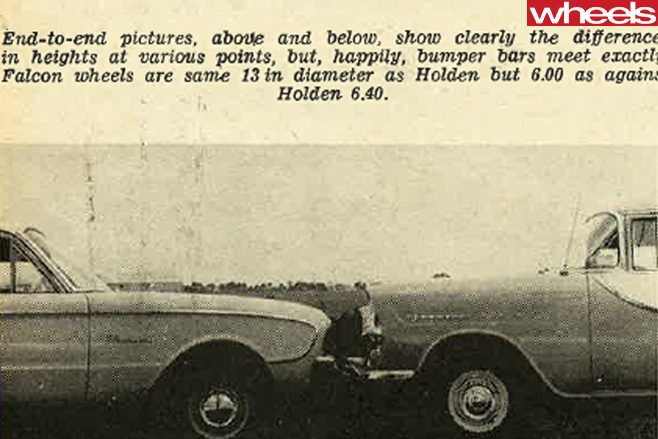
Fraser’s stopwatch recorded a standing quarter-mile (400 metres) time of 20.5sec for the Falcon, against 22-neat for the Holden. The difference in economy on test was even more profound: 11.1L/100km for the Ford versus 13.3 for the thirsty Holden.
Away from the test track, Fraser preferred the handling of the Holden, mostly because of the Falcon’s low-geared steering. With five turns lock to lock, he wrote that it “seems unnecessarily low, to put it very mildly … it has no basis in the realms of sensible design on a car that weighs only a ton (1041kg, or 90kg lighter than the FB)”.
What was Fraser’s conclusion, as printed in the introduction? “After we had completed the tests we seriously asked ourselves which was the better car overall. We concluded that the Falcon was slightly superior in most aspects, some of them so subtle that many people would not even notice.”
First published in the October 1960 issue of Wheels magazine, Australia’s best car mag since 1953.
The question on the lips of the majority of Australian motorists at the moment is “how do the Ford Falcon and Holden FB compare?
To find out exactly, WHEELS staffmen put both cars through rigorous tests, side by side.
Read Ian Fraser’s classic story, as published in the October 1960 edition of Wheels.
To an extent, perhaps, the findings are largely personal opinions which have been discussed and argued out by the writers.
One of the first things to realize is that both the cars are substantially the same, designed to do the same kind of job and costing very much the same. Neither car is a revolutionary design, both being very sound examples of conventional automobilism.
Holden has the advantage of having had the current series in production for several years and the standard of finish and workmanship has evolved through sheer excellence. Against this, the Falcon is something new for Ford and it is being manufactured in a new plant. Nevertheless its standard of finish is good, but not up to that of the Holden. Eventually it will be.
After we bad completed the tests we seriously asked ourselves which was the better car overall. We concluded that the Falcon was slightly superior in most aspects, some of them so subtle that many people would not even notice. And of course, the Falcon should be good since it was designed by one of the biggest motor companies in the world and it was designed very recently. It is also a car which will not date quickly since the style is not radical, Ford has made the effort to manufacture a car to compete directly with Holden and have spared no effort to make sure it does. As you can see in the various sections there is not much to pick between them.
Falcon: So much speculation has cropped up about the price of the Falcon that the professional, educated guessers made estimates from £20 less than the Holden to £100 more. Ford, naturally enough, kept very silent about the whole business until release day, then popped the answer to the question Australian motorists have been asking for months – £30 more than the Holden in every case. However, the price list was supplemented by additional figures for the automatic transmission version – £119 more than the standard gearbox models.
Ford has insisted on advertising their new baby at the list price without tax, so here it is: The cheapest version sells for £909, or £1137 with tax fob Ford plants. Deluxe goes off for £959, or £1199 with tax, fob Ford plants.
For automatic transmission prices just add £119 to the tax inclusive price.
Holden: General Motors is a little less fussy about how their prices are described, usually quote only the total figure. The standard Holden sells for £1107 and the Special for £1169. So far there is no auto transmission available for the Holden, but when there eventually is one, it will probably cost about the same as the one fitted to the Falcon.
Why isn’t the Falcon the same price as the Holden, or maybe even cheaper? Firstly, that would have probably started a price war which no one would want and GMH would probably be the only ones who could afford it.
Secondly, I think Ford hopes that the slightly greater price will influence people into thinking that the Ford’s long awaited, much talked-about Falcon costs more because it is a better car. Well, maybe that angle will work, maybe it will not – time will tell.
Seriously, though, these cars are in direct competition with each other — £30 makes absolutely no difference specially when you consider that most cars will be bought on hire purchase and the difference is then reduced to about £6.
PERFORMANCE
Falcon: The acceleration and top speed figures recorded on the performance page speak for themselves. The Falcon is definitely fastest and that is all there is to it.
The short stroke engine is smooth and flexible, but no more so than that of the Holden. Being low-geared, the Falcon will pull up very steep gradient in top gear with ease, even when fully laden.
Holden: Well, the Holden is not going to be as good in traffic-light drag racing as it used to be. If there is a Falcon in sight, the Holden had better step back.
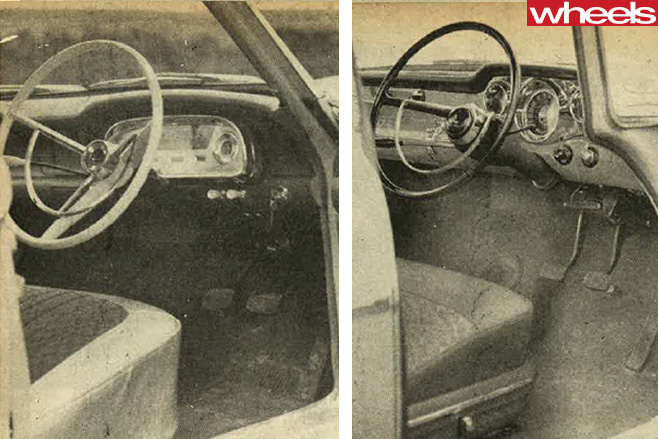
Falcon: About the first thing a new driver (new to the Falcon, that is) realises when he slips behind the wheel is that he is sitting low and the controls are all in easy reach.
The steering wheel is big, but also too close to the driver for him to stretch his arms out. Tall people would probably like the steering column shortened by a couple of inches. It is dished and has a horn ring.
The safety element is smartly contradicted by sharp edge of the dashboard in front of the driver. Crash padding – too thin to be of much value – is an optional extra.
Instrumentation is simple – a speedo without trip, temperature gauge and fuel gauge. Warning lights do the rest.
Various types of interior trim are available to the customer’s own choice and it is all comfortable to sit on.
There is ample headroom in the front, but if a six-footer sits upright and leans back in the rear seat, his head is bound to touch the roof.
The Falcon’s seating position is a little like that of a sports car because the driver sits low and looks over a long bonnet which has a power bulge dead centre.
The gear change worked beautifully and felt something like that of a Ford Zephyr – precise with short movements.
Holden: Compared with the Falcon the Holden makes the driver feel as though he is well up in the air He certainly gets a commanding view of the traffic, although the pillars of the windscreen are rather too thick and cause a blindspot.
The steering wheel comes nicely to hand and the gear lever is well placed and in typical fashion works very well apart from shaking badly on rough roads. For speed and smoothness I think the Holden’s cog swapping arrangements are superior to those of the Falcon.
Visibility is generally very good and both the rear fins are clearly visible through the large rear window – a great asset when parking.
There is more headroom in the Holden and the trim is very good, superior to that of the Falcon. Instruments comprise of a speedo with yellow band marker, a fuel gauge and warning lights for oil pressure, temperature and generator.
Like the Falcon, the Holden has vacuum wipers, not notably satisfactory in either car.
Although the FB looks as though it has crashing padding because the top of the dashboard is painted matt black it has the same head-cracking features of the Falcon.
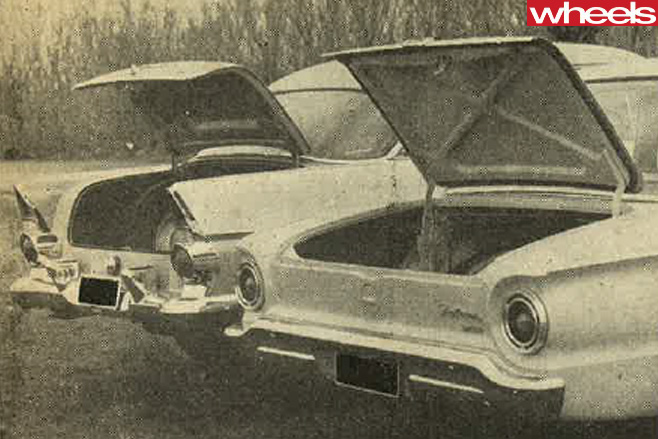
Falcon: Most people are going to say straight off that they prefer the Falcon. It is a modern car, designed specifically for the world market of 1960-61. It has also been designed to look very attractive with as few compromises as possible. The aim has been to fit five or six people in a reasonably comfortable car. This has certainly been achieved and it would appear that the Falcon would be one of the very few popular cars to be released in the world for several years not to have tail fins.
Ford has also been game enough to do away with the complete wrap around windscreen in favor of multi-curved piece of glass through which the driver gets excellent visibility.
The rear window is pretty much the same and while it is certainly practical from most points of view and looks excellent, there is one serious drawback – the summer sun.
I visualise Falcon fans slowly frying in the sun because the stylists have swept the glass at such an angle that it is almost as much overhead as it is dead ahead. Ford will probably make a small fortune selling style-destroying exterior visors and blinds for the rear window.
The Falcon is lower than Australians are used to in big cars. It stands more or less at chest height which, for the record is 55 inches. It is also 181 inches long on a wheelbase of 110 inches.
One major objection put up by saloon-bar theorists is that the Falcon is so low that it is hard to get in and out. In actual fact this is not so. Deliberately looking for this fault, I tried heaving myself in and out in very imaginable way and I must admit that I personally could find no reason to believe that the car was awkward.
All four doors are wide and hinged from their leading edges.
Holden: Let’s face it. The Holden is somewhat dated in spite of various modifications which have been made progressively over the years. The wrap around windscreen, redesigning of the color division and the interior trim have not saved the situation.
Sitting on a wheelbase of 105 inches, the FB Holden has a body 176 inches long and 61 inches high – six inches higher than the Falcon.
Certainly, it is easier to get in and out of the Holden, but that would not be a factor likely to be seriously considered by many potential car buyers.
Getting in and out of the front seat of the Holden is hampered by the dog-leg part of the windscreen frame which threatens the knees of the careless.
However, in spite of the things people are saying about the Holden’s styling it is practical in every respect and passengers are less likely to fry half to death in the summer.
Falcon: By American car standards the Falcon handles very well indeed. By anyone’s standards, satisfactorily most of the time. Being low geared and powerful, the Falcon will come barrelling out bends in a very nippy manner, but the big bug-beat is that low geared steering. Light to use, it is so low geared that even a hero would hesitate to throw the machine around on a gravel road.
Certainly the car sticks well, but when It does eventually let go it is more than a full time job to get the tail back in line. The slow steering just does not permit the driver to keep up with things.
This combined with the car’s inherent understeering characteristics can keep a driver busy if he likes motoring that way.
Body roll is slight and tyre scream is at a minimum. It feels stable on most kinds of corners and the only thing likely to un-nerve passengers is the necessity to wind that wheel.
Holden: General Motors has had plenty of chances to make the Holden handle well and they have.
The steering is more highly geared than the Falcon’s and this factor alone permits the FB to be hustled through corners faster than its opponent.
On test we took careful note just how hard we could push both cars through a given bend on our test circuit. The Holden won by between three and five mph.
However, just how important these factors are to the average motorist is something only he can decide. We were pushing to the limit all the time to get these results. Not many other people would have the inclination or opportunity to do the same thing.
Taken overall, I do consider that the Holden handles better than the Falcon. This is something which is a combination of personal opinion (basically, road tests always are) and actual facts.
Falcon: To get it clearly on record, neither the Holden nor the Falcon have particularly brilliant brakes.
With a 114.3 square inches of brake lining area, the Falcon stops much better than the Holden from high speeds the first couple of times you do it, but after that fade definitely occurs, pedal pressure becomes higher and the pedal itself feels soft.
Small brake drums are a legacy of small wheels which in turn are necessary for low overall height. (Vauxhall in England recently took an unprecedented step by fitting the new Cresta series with bigger wheels so that they could have larger brakes).
Naturally the brakes are hydraulic and the handbrake is mechanical. The latter is a useless affair and on the models we tried was incapable of seriously retarding the Falcon from 30 mph. Strictly a parking brake, I would not like to rely on it alone on a steep gradient.
To the credit of the Falcon, the foot brake is very light and pleasant to use. The handbrake is under the dashboard on the right hand side. Of the twist and release type, I found it was not particularly well placed mainly because of the necessity to reach well forward to get at it.
Holden: In the past we have often shot at Holden for its brakes. Slightly heavier than the Falcon, the FB’s brakes are also slightly less in area with 112.5 square inches of area. Under the same conditions as the Falcon, the Holden suffered more braking problems, but like the Ford, recovery was fairly quick.
The handbrake worked better and was easier to reach. It could slow the FB with a little more efficiency than the Falcon.
In both cars the pendant-type pedals were too high, necessitating too much of a lift from the accelerator to the brake – could be troublesome in an emergency.
More pedal pressure was required to stop the Holden than the Falcon, but certainly it was not the class of heavy braking as we imagine it in cars made prior to 1950.
This seems a good chance to fire a rocket at quite a few manufacturers who produce cars with brakes which could easily be a lot better.
STEERING
Falcon: This is where the Falcon seems likely to derive the major part of what criticism is thrown at it.
The enthusiast is certain to think dark anti-American thoughts as soon as he takes the Falcon through his first curve.
The five full turns needed to go from lock to lock seem unnecessarily low, to put it very mildly.
To say it more strongly, the low steering ratio seems to have no use greater than being a sop to the vulgarians who imagine that being a motor car driver begins and ends with a glamorous white wheel that is wagged from side to side like an excited dog’s tail on straight roads and whirled like a high performance top on even the mildest corner.
It has no basis in the realms of sensible design on a car that weighs only a ton and has a turning circle of 38 feet.
In fairness it must be said that the low ratio makes parking a low-energy job, but despite the appearance of the centres of our major cities, motorists do not spend all their time parking their vehicles.
One does get used to the steering after a while and makes adjustments for its disadvantages. But on this one point, if no other, Ford could have done a lot better.
Holden: This is one point where Holden wins hands down. Its steering is quit direct and only a fraction heavier than the Falcon’s.
The Holden has a moderate lock-to-lock of 3.8 turns, which seems about ideal for a car of its size and weight. It would be just about right on the Falcon, too.
Holden’s turning circle is 36 ft, a good 24 inches shorter than its rival from Ford.
SPARE PARTS AND SERVICE
Falcon: This is an aspect of motoring where a firm attempting any serious challenge to Holden’s king size grip of the market, has to do things properly.
Over the years since its inception, the Holden has built an outstanding and fully justified reputation for availability and moderate cost of spare parts and service.
The one factor that defeated the original prejudice in the minds of many Australians against the Holden (it was “too small” or “wouldn’t stand up to hard going” or “didn’t have a chassis) was the realisation that came quite quickly that Holdens were easy to fix, did not cost too much in repair bills and could be repaired at almost any garage in any part of Australia.
Volkswagen realised the importance of spare parts availability and efficient service. That is one of the major reasons behind the continued success of the Beetle. Ask any panel beater which are the two most practical cars in Australia. The answer is the same every time – Holden and Volkswagen, because the parts are cheap and always available everywhere.
Ford seem to have realised this important fact ,too. As long ago as mid-July, the Ford company issued every Ford dealer in Australia (and there are more than 600 of them) with a complete stock of Falcon spares. More than 150,000 items went out in what proved to be a massive and successful delivery job.
More than that, Ford seem to have priced their spares right. Indeed, for most items, Ford have gone all the way in their effort to match and beat Holden.
Here is a list of a few typical spare parts for the Falcon, with the Holden prices for similar parts:
| u00a0 | Falcon | Holden |
| Short motor | u00a367/5/- | u00a366/10/- |
| Clutch plate | u00a35/7/6 | u00a35/5/- |
| Front wheel bearing | u00a3116/9 | u00a3117/3 |
| Front shocker | u00a33/17/ – | u00a0u00a33/17/6 |
| Headlamp assembly | u00a34/ 18/- | u00a0u00a36/10/ |
| Front fender | u00a315 | u00a316 |
| Water pump | u00a34/15/- | u00a35/15/- |
| Crankshaft | 26/10/- | u00a326/15/- |
And so it goes on down the parts price list. There is little more than a few shillings difference in the price of comparable bits and pieces of the two models.
On service, too, Ford seem to have taken the logical, sensible, approach.
They are following the trend pioneered in this country by Volkswagen, or issuing coupon booklets for the various services for the first 30,000 miles. The prices charged for each service are set out on each coupon and the exact points to be serviced are listed.
From now on it is up to Ford. They have started well and if they can make certain that their spares prices are strictly policed, that the parts themselves are always available everywhere and that the standards of service provided by their dealers are nothing but the highest, the Falcon cannot fail to do well.
Holden: GMH will not be taking the spares and service aspect of the fight lying down.
On September 1, they began issuing all new Holden owners with service booklets similar to those Volkswagen have been supplying since 1951 and Ford are providing with every Falcon right from the start.
HOLDEN will rush through an extra 1000 left-hand-drive Commodores before the end of the year as US orders for the performance version of the four-door sedan stack up – and the sales numbers here crunch.
The move comes as the carmaker alerts its Australian sales network that from next year, unless there’s a buyer signed up for a Holden Commodore, it won’t be built.
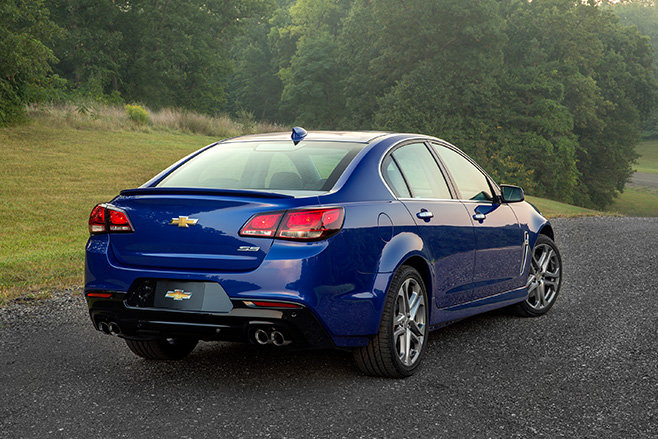
“Due to excellent reviews and increased customer demand in the US, Holden has received an additional export order for 1000 Chevrolet SS cars,” Holden said in a statement this week.
“The cars are the left-hand drive/export version of the current VFII Commodore, which we’ve been exporting to the US as a Chevrolet SS since 2013,” it said.
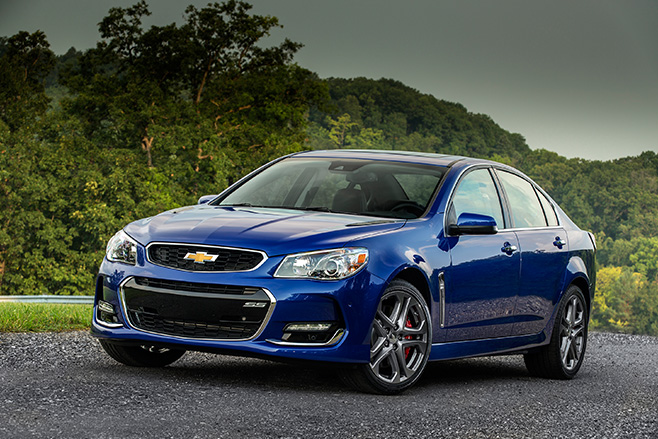
According to Holden, the extra cars for the US market need to fill an order due by the last quarter of this year. It also means some of the assembly line workers who were due to leave Holden once production of the Holden Cruze ended next week will be kept on to help fill the extra Chevrolet order.
The Chevrolet-badged version of the Commodore, loosely based on an SS-V with a few HSV-sourced extras thrown in, was only expected to be a niche model in the US, with Holden originally estimating it would only build about 2000 units a year.
Last year, Chevrolet sold 2895 SS-badged Commodores, with sales for the first eight months of this year on track to match 2015’s numbers.
The batch order – the equivalent of about a third of the annual supply of the SS – also gives Holden the buffer it needs to start producing the rumoured 476kW LS9-powered version of the Commodore as a final send-off for the car. This is also expected to make its way to the US as the equivalent of a four-door Chevrolet Camaro.
The good news about the extra Chevrolet exports comes as Holden flags plans to slow down the Commodore’s line rate at its Elizabeth factory from 2017, so much so that it will only build cars to order.
“Essentially, they’ll build customer-sold orders and anything that’s left over will be allocated to dealers based on sales volume (big volume dealers will get the most stock),” a source told Which Car.
“This is the fairest way, especially if they can’t build enough stock.”
According to the source, dealers have also been told that customers can no longer order a base Commodore SV6, SS or SS-V, with the Black Edition-badged versions now the only choice. Previously, customers were able to order a regular Commodore model if they requested one.
Holden is yet to set a date for the closure of its Elizabeth-based car assembly line and Port Melbourne-based engine casting and assembly plant, but has flagged that it will be late in 2017.
The company has previously said it will roll out a number of limited-edition versions of the Commodore to keep buyers interested in the car up until the end of its life.
The closure of Holden’s Cruze assembly line on October 7 coincides with Ford’s last day as a manufacturer in Australia.
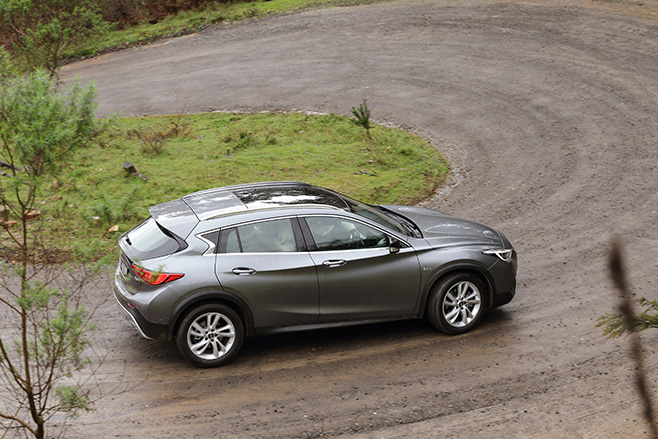
The lack of reversing cameras on entry- and mid-spec models of the 2016 Infiniti Q30 small hatch and the base model 2016 Infiniti QX30 small SUV is an omission, the luxury carmaker has admitted.
Infiniti Cars Australia has included a reversing camera only offered in the top-spec Q30 Sport Premium model, leaving the entry-level GT (a $38,900 car, mind you) and mid-spec Sport specification levels to get by on reversing sensors alone.
The same applies for the $48,990 Infiniti QX30 GT.
Company spokesperson Peter Fedeyev admits this is something the company intends to rectify.
“We acknowledge the safety benefits of a reversing camera, and we intend to make this standard equipment in the near future,” Fedeyev said.
So how did the premium brand make what seems to be such a glaring spec omission?
“We always seek to deliver the highest specification level possible, but that’s not always [the case]. However, we always listen to the market and respond wherever we can,” Fedeyev said.
Infiniti would also not be drawn on the timing of how soon reversing cameras could be made standard on the luxury cars, but suggested it would not necessarily have to wait until the Q30 and QX30’s facelift.
“We can implement running changes,” Fedeyev pointed out.
So once this occurs, will existing customers be able to have a camera retro-fitted?
“This has not been looked at, and is often not possible,” Fedeyev said.
A recent Department of Infrastructure and Regional Development study reveals that 66 children were killed and 380 seriously injured by vehicles in Australian driveways between 2003 and 2010, with 70 percent of them aged less than four years.
