
The north west of Scotland. There may be other places in the world as well-designed to showcase the talents of the new Porsche 911 R, but not many and certainly none in the United Kingdom.
Almost unbelievably, I have the car to myself. There’s no colleague next to me, stabbing at an imaginary brake pedal and thinking only of what might be the earliest viable opportunity to suggest now it is his turn to drive.
I am utterly alone in one of this kingdom’s few remaining true wildernesses equipped only with what, on-paper at least, appears to be the car of my dreams. There’s no route that’s been carefully configured to play to the car’s strengths; I can go where I like, how I like and, within reason, for as long as I like.
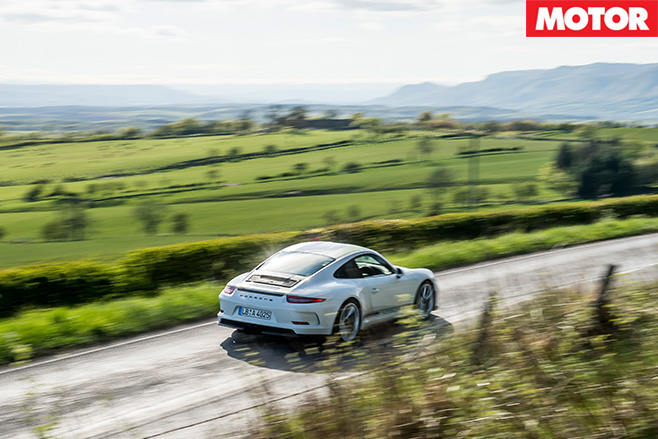
But the machine now at my disposal is essentially a 911 GT3 RS complete with its 368kW/460Nm 4.0-litre engine and all the lightweight bits such as its magnesium roof and carbon wings and bumpers, but shorn of its downforce-generating bodywork and wings. Because it is no longer capable of adding hundreds of kilos to its own weight at speed, it doesn’t need super stiff ride-robbing spring rates to support the body under forces it will never experience.
Most important, there is a new six-speed manual gearbox, developed from the seven-speeder available on normal 911s but with bespoke ratios and a completely different action. Other changes we’ll get to as and when, but for now let’s take a closer look at what’s in front of us.
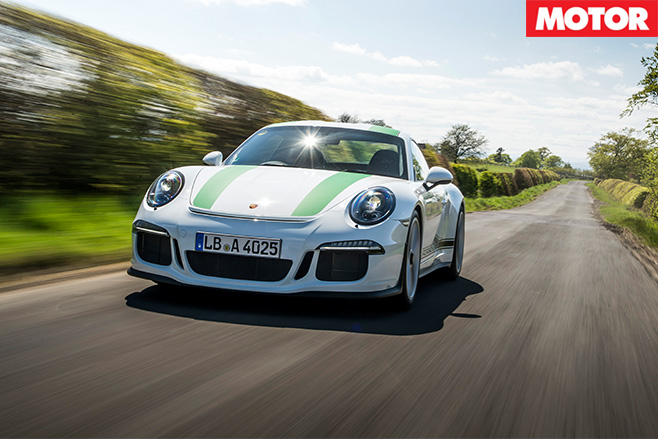
But while today’s 911 R is neither as powerful relative to other 911s today as was the first 911 R back then, nor quite so insanely obsessive about weight saving at any cost (it at least has sun visors), the back to basics approach is the same. Then as now, the 911 R is the lightest 911 on sale.
The cabin is even better than the exterior. I’m sure Porsche didn’t intend the great holes in the centre console where the nav screen and its associated switches and controllers would live to seem so exciting – but they are. They speak to me of the car’s potential, and its designers’ no compromise attitude to saving weight.
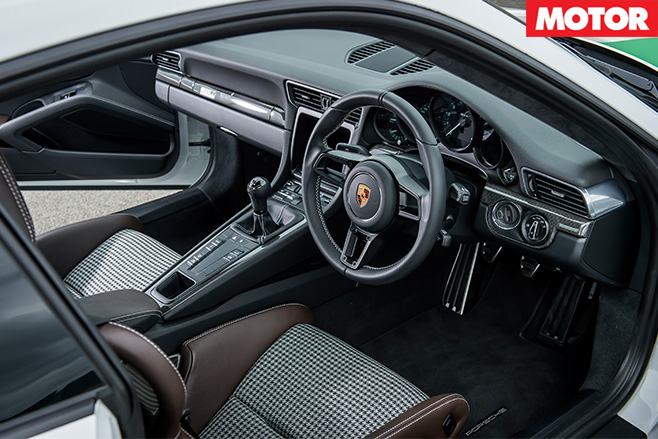
The seats have leather sides but tartan cloth inserts and remind me faintly of those in my Mk1 VW Golf GTi, which is an entirely good thing. This actual car is used for signing-off right hand drive production, so when you look at its little lightweight plaque you see it is numbered 000/991.
It can never be sold and the fate of most such cars is a one way journey to the crusher, but I hope and trust this one is spared and sent to the museum or earns a quiet retirement elsewhere in the Porsche empire.
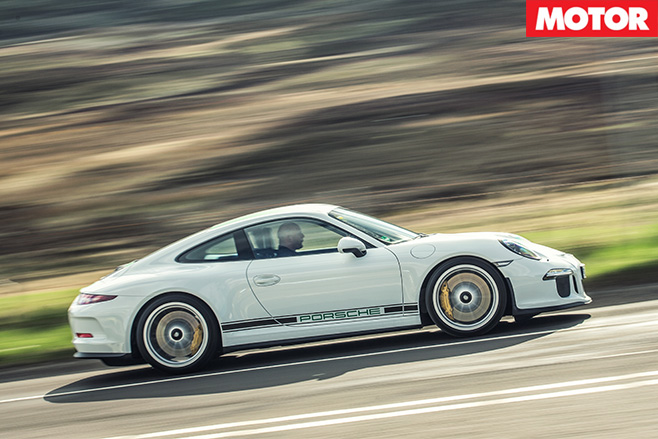
Why? Because the R offers the tantalising prospect of showing even 911 drivers something new, reaching a level of pure driving pleasure she or he may have until that very moment not realised existed.
For that is what it was designed to do: it’s not an all purpose weapon like a GT3, or a track-honed warrior like the RS – its one and only reason for being is to put a smile on the face of those with both the means, motive and opportunity to drive it the way its makers intended.
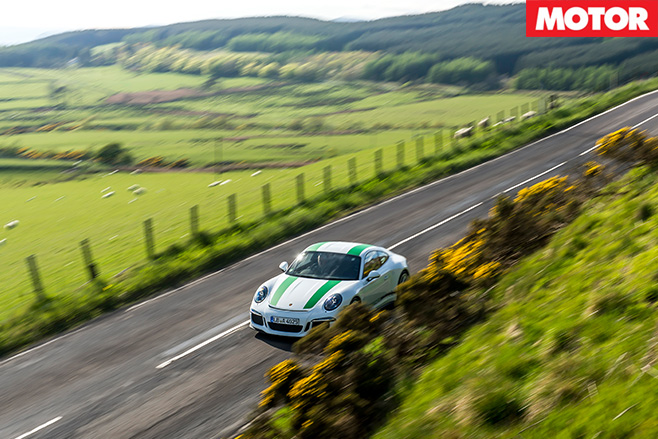
Differences to the GT3 RS, other than the visual, are apparent before you’re even out of the car park. The steering is lighter, the ride more pliant. On the suspension side the 911 R has standard GT3 spring rates (which makes them effectively stiffer because they have less mass to control), bespoke damper settings and a rear tyre 305mm wide, some 20mm less than that of the GT3 RS. Porsche has also retuned the rear wheel steering system to suit the R’s unique dynamic requirements and remapped the electric power steering as well.
It’s meant to be noisier than the GT3 RS. I thought Porsche had already pulled out all the sound deadening for the RS, but it found more some that could be deleted for the R. If there is extra noise, it is when the engine is at full-chat, at which point you usually have other more pressing issues on your mind.
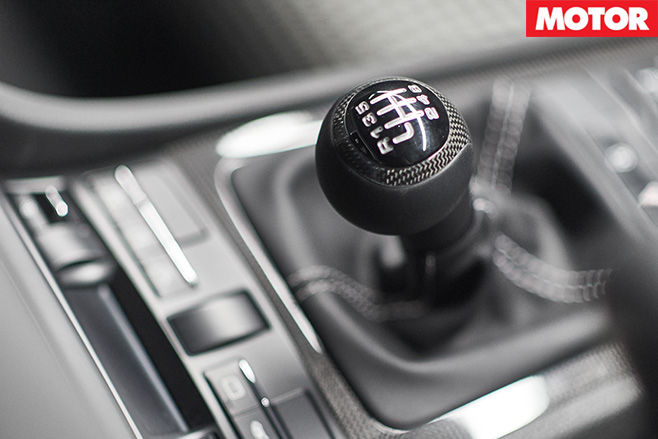
Surprised it’s that fast when the GT3 RS will only reach a piffling 311km/h? It’s all in the wings, or lack thereof. The lever slips around the ’box with a weighty, mechanical precision and instantly you feel more connected to the car because, very literally, you are.
The road is open and deserted. If you select Sport mode it will perfectly rev-match your down changes, but I prefer to do that myself. Drop a ratio with a hopefully well-aimed stab of the right foot, hear the revs climb to meet the lower gear, nail the throttle and wait for the reaction. It doesn’t take long to arrive.
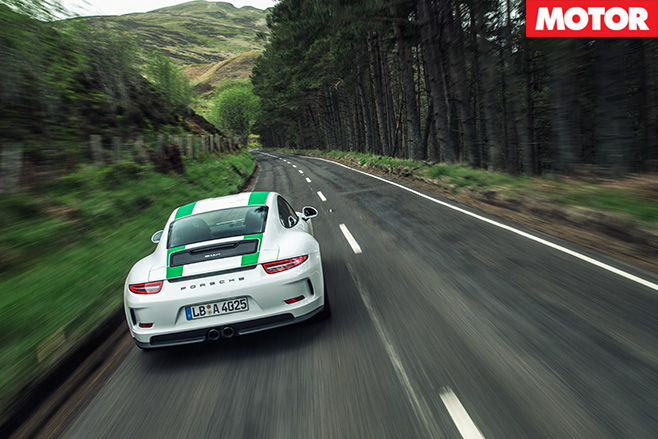
We’re travelling quite quickly now. While the RS follows the contours of the road like a bloodhound’s nose follows a scent, the R allows itself the luxury of some space. There’s enough compliance in its springing to let the body breathe with the road, allowing just a little vertical movement. It’s never enough to be classified as float, but more than sufficient to absorb the lumps and bumps that would be felt by the RS driver and might even unsettle the car a little. Out here in the middle of nowhere, you need a little compliance and the R has it.
It helps you feel what the car is doing too, because the body’s movements and consequent weight transference make their presence felt through the steering and chassis. You can tell when the nose is running short of grip because the steering tangibly lightens, naturally encouraging you add the requisite corrective lock. But really, it’s the flood of data coming through the suspension and tyres and seat to your backside that makes you feel so deliciously at one with this machine.
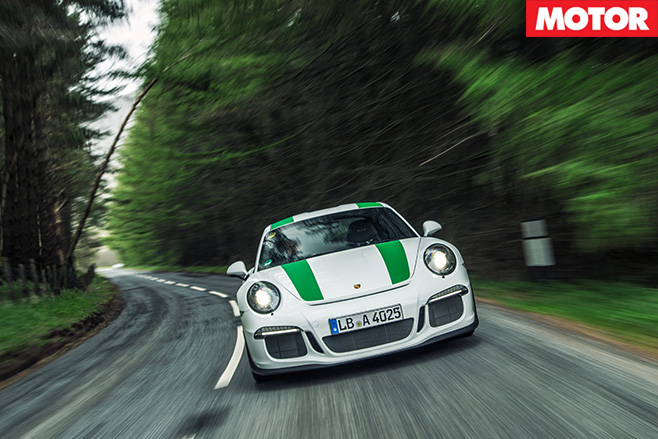
Even with its narrow tyres relative to the GT3 RS, its largely absent wings and street-specification suspension, this is a massively rapid cross country machine. If you drove 100 random people at the point-to-point speed this car will manage quite safely and comfortably, at least 99 of them and probably all 100 would simply not believe it possible.
The idea then of pushing this car so far and fast in public that you get to the stage where you discover what appetite or otherwise it might have for fighting back, is fanciful at best and dangerous at worst. It is precisely why the GT3 RS exists, a car to take you up to and beyond the limit on the track, and if you want a 911 that fights back at that stage, you may even find the GT3 RS a little too happy to oblige.
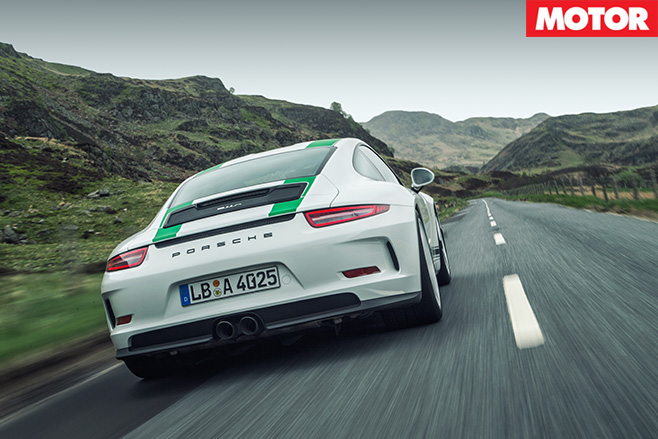
Of course it would be easy to be cynical about this car, particularly as stories of them changing hands for $1 million become increasingly common. It is a car that no normal Porsche buyer would ever be offered by the factory and if you don’t already own a 918, even the most loyal Porsche customer is unlikely to make the cut. And for what: An RS-powered manual GT3, lightened a little and with a little electronic and aerodynamic retuning here and there to suit. Sounds crazy, doesn’t it?
And so it will remain until you go and drive it. I prefer to judge such cars by the results, not the means by which they were arrived at. I fear I am unable to do adequate justice to just how much additional driving pleasure is provided by that manual gearbox, but more than any other factor, it transforms the car for the better.
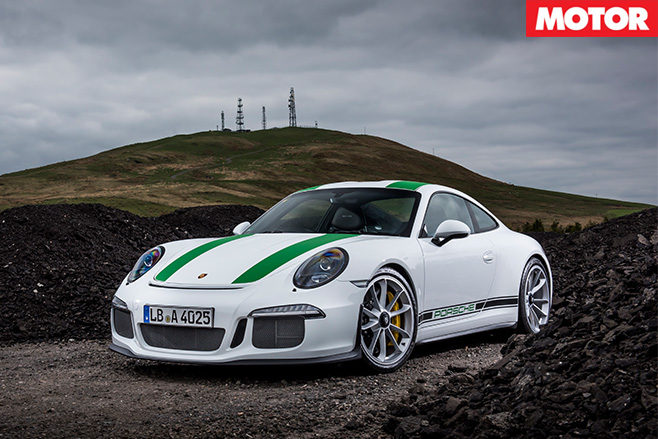
The good news is that this is no cameo appearance for the manual ’box on a GT-specification 911. Next spring we’ll see the new second-generation 911 GT3 and it will be available not only with a choice or two or three pedals, but to a far wider range of Porsche-philes who want one.
5 OUT OF 5 STARS
PROS: Possibly the perfect 911 CONS: All sold, and we haven’t bought one
SPECS Body: 2-door, 2-seat Drive: rear-wheel Engine: 3996cc flat-6, DOHC, 24v Bore/stroke: 102.0 x 81.5mm Compression: 13.2:1 Power: 368kW @ 8250rpm Torque: 460Nm @ 6250rpm Power/weight: 269kW/tonne Transmission: 6-speed manual Weight: 1370kg Suspension(F): struts, coil springs, anti-roll bar Suspension(R): multi-links, anti-roll bar L/W/H: 4532/1852/1276mm Wheelbase: 2475mm Tracks: 1551/1555mm (f/r) Steering electrically-assisted rack-and-pinion Brakes(F): 410mm ventilated/drilled carbon-ceramic discs, 6-piston calipers Brakes(R): 390mm ventilated/drilled carbon-ceramic discs, 4-piston calipers Wheels: 20 x 9.0-inch (f); 20 x 12.0-inch (r) Tyre sizes: 245/35 ZR20 (f); 305/30 ZR20 (r) Tyre: Michelin Pilot Sport Cup 2 Price as tested: $404,700 (sold out)
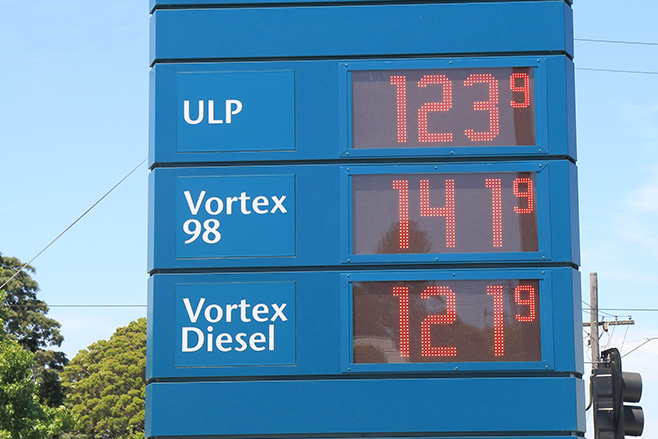
PETROL is cheapest it’s been since 2002 because of a drop in global oil prices, but according to the Australian Competition and Consumer Commission (ACCC) motorists are being taken for a ride by fuel retailers who are not passing on the full discount.
The ACCC’s latest report on the Australian petroleum industry shows average petrol prices in 2015–2016 were at their lowest levels since 2002. However, ACCC chairman Rod Sims is concerned that gross retail margins have increased to their highest levels.
The average price for petrol across Sydney, Melbourne, Brisbane, Adelaide and Perth in 2015–16 was 121.7 cents per litre (CPL), the lowest annual average since 2001–02 when adjusted for inflation.
The gross retail margin – the difference between retail prices and published wholesale prices -increased 1.2 CPL on the previous quarter, to average 11.2 CPL in 2015–16. This was the highest gross retail margin level since the ACCC began monitoring them in 2002.
“We remain concerned about the petroleum industry’s high gross retail margins, which indicate motorists are not reaping the full benefits of lower international crude oil and refined petrol prices,” Mr Sims said.
“Bowser prices for motorists last year were the lowest they’ve been on average for 14 years, but this report suggests that in order for there to be more competitive pressure on retailers, consumers need to shop around and reward those offering the best-priced fuel.”
The national body representing fuel retailers, the Australasian Convenience and Petroleum Marketers Association (APACMA), has criticised the ACCC report for being “somewhat selective”.
“We fully respect the ACCC’s price monitoring role of industry but we are getting increasingly concerned at the ACCC’s apparent inability to provide balanced commentary on the core factors increasing retail petrol prices in this country”, said ACAPMA CEO Mark McKenzie.
ACAPMA pointed out the ACCC report is focussed on the Gross Retail Margin which is different to Gross Retail Profit.
“The Gross Retail Margin is the difference between wholesale and retail prices and includes both cost and profit. It therefore follows that the Gross Retail Margin could be going up because costs are going up for fuel retailers”, Mr McKenzie said.
“There are a number of factors that are pushing up costs for fuel retailers in Australia and it is surprising that these factors do not get any mention in this latest ACCC Report.”
According to ACAPAMA a significant part of this increase likely includes a narrowing of profit margins earned from convenience store sales and the increasing cost of State/Territory government regulation.
“All of this new legislation brings increased investment and compliance costs for fuel retailers and we believe that we may now be seeing the impact of these costs flow through to motorists”, McKenzie said.
In 1971, Wheels gained an exclusive first drive of the car conceived by Ford to win Bathurst, the Ford Falcon GT HO Phase 3 – and using that now-famous doctored photo. Even today, this edition stands out as the magazine’s biggest-selling issue.
First published in the October 1971 issue of Wheels magazine, Australia’s best car mag since 1953.
ON PAPER, there’s little difference between last year’s Falcon GT HO and the new Phase Three HO. The engineers at Ford’s Special Vehicles Division spent their hours merely making detail changes to the crankshaft, exhaust, cooling, sump, head gaskets, brakes and equally subtle alterations to the suspension.
The refinement job is good. It is designed to let the HO rev more easily for sustained higher speeds, run smoother, cooler and more reliably. Which may or may not be the success story for Bathurst, ’71.
But entirely regardless of what happens on the race track, this new, sophisticated HO turns out to be a far superior car on the road to its predecessor.
The engine refinements, while not producing great bags of power over the old HO, make it smoother, more flexible and less of a “strain-at-the-leash” beast.
It is now approaching the realm of an acceptable town car and is even more desirable as the quickest open-roader Australia can offer.
The changes to the engine are: greatly improved extractor exhaust, sump baffles, bigger 780 cubic feet per minute, Holley four-barrel carburettor (750 cfm in the Phase Two). The head gaskets are also new, and more importantly the crankshaft is now specially toughened and its damper has been enlarged. The radiator is bigger and overall cooling more efficient.
On the road cars, an electrical cut-out limits revs to 6150 – the track cars, properly blue-printed and balanced, should run to 7000 without complaint. Ford is still rather naively saying the bhp is the same as that of the standard GT – 300 at 5400 rpm. It is probably nearer 380 bhp.
Another important development in the Phase Three is the availability of close and wide ratio gearboxes, and three diffs – 3.25, 3.5 and 3.9 to one (the Bathurst cars will run the 3.25 ratio).
There have been slight alterations to the front and rear suspension, the rear brake drums, the front callipers and there’s now a power booster vacuum reserve tank.
Ford Special Vehicles man John Gowland says simply: “There are no big changes – we’ve just ironed out a lot of little things, smoothed the car out.”
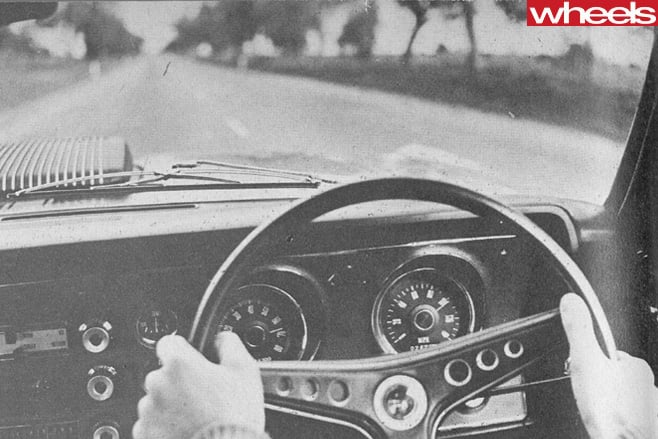
The “smoothing out” process is obvious. The engine idles at 900-1000 rpm, considerably lower than that of an average Phase Two, and is nowhere near as lumpy.
Drivers may still blip the throttle at the lights, but the only real reason for this is to listen to the magnificent engine sound.
There is now no great drama about moving the car off from the lights, either. Where the old HOs needed care and a slipped clutch to stop them stalling, the new one asks for nothing more than everyday clutch and throttle action.
It is a remarkably easy car to drive considering the incredible performance that’s only a throttle push away.
In city traffic, we trundled the HO up to 2000 rpm gearchanges (that’s 16 mph in first, 24 mph in second and 34 in third) before dropping into top just under the 35 mph speed limit. It’s here the Phase Three shows its better manners – it will crawl along from 1500 rpm in top, although, of course, such a high performance 11 to one compression engine doesn’t entirely hide its displeasure; This sort of low speed flexibility was non-existent in top in the old car. It bucked and shook at 40 or below.
The new smoothness continues right through the rev range with the only thing approaching a cammy feel at just over 5000 rpm. And then it’s not nasty, just a greater surge forward.
Our test HO had the 3.25 to one Bathurst diff, but ran the wide ratios. The tacho was 500 rpm fast, showing 6700 when the true rpm had stopped at 6150 because of the limiter.
In top, the HO runs to its 141 mph limit incredibly easily – for instance, 100 mph to 120 takes only 6.8 seconds and 120-140 8.9 – and holds it, straining at the bit for more rpm.
Getting off the line for performance runs, we found dropping the clutch at 2700 rpm was critical. Three grand was too much, resulting in the wheels spinning hard for more than 200 yards, and 2500 was not enough, letting the car bog down and wasting time.
Even so, the car was much easier to boot away hard than we’d expected. There was just one side twitch, held easily by a twist of opposite lock, then it was away with a magnificent sonic boom to lay 14.7 quarters (little better than Phase Two times) but a phenomenal 0-100 mph time of 15.2 seconds.
As a very fast touring car, the HO is superb. We found it easier to drive than a standard GT, mainly because of its greater precision, better, tauter handling and .the ultimate in sensitive power application.
It hangs on incredibly in the wet (our test car ran Dunlop Aquajets at 30 psi all round), and only a fool booting the power on hard in a tight bend or a low gear would get the rear to snake. Understanding and respecting the power is the name of the game.

The steering is lighter than an ordinary GT, a point that contributes, along with the light clutch, gearchange and light brake pedal, to the easy-to-drive feeling.
The ride is firmer than a standard GT, too, but we preferred it that way for the assured feeling it imparts. It is still comfortable.
Things we didn’t like about driving such a fast car were the lack of a headlight flasher for the otherwise excellent lights, and the long reach to the windscreen washers and wipers.
The fuel bill will also cause a few headaches – hard-pushed, the car does a neat 8 mpg. With slightly quieter driving it- will give 10.4 mpg – don’t expect much more.
As a fine, ultra-high performance car that will be beaten by nothing under $20,000, the only problem area we found was the brakes. While they stop the car fast and true in normal circumstances, two hard stops will have them fading badly. We brought this up with Ford and it says the reason is that the road cars are running much softer linings than will be used at Bathurst because of the hard linings ‘ high pedal pressures. Nonetheless, we think anyone who buys a HO (and one dealer at Orange in NSW has sold four already) would be well advised to fit the harder linings.
CARS
AS WE WALKED through the car park to leave the You Yangs proving ground after the TC Cortina press release (full test next month), I happened to ask Don Deveson, now manager of Ford’s Broadmeadows plant, what was in his new Falcon. Was it just a Phase Three HO?
“Nup,” he grinned, opening the door. “Phase Three plus. She put out 232 bhp at the rear wheels on the dyno yesterday.”
Luckily, Mr Deveson’s arm is twistable, and he agrees to run a Melbourne journalist and I several laps around the You Yangs high-speed bowl.
Trundling down the bowl’s approach road at 30 mph in first (because the 11 to one compression engine doesn’t like being under 40 in second or third) Deveson turns down the eight-track stereo to tell us about his latest toy – it’s running a Cobra Jet cam, manifold and 850 cfm carbie, a 2.92 diff instead of the normal Phase Three’s 3.2 and big, big Kleber radials. Six QI spotlights hide the grille, inside an air condjtioner complements the stereo and at the back there’s a tow bar to pull his boat at weekends.
After two warm-up laps run at a quiet 75 mph in third, Don’s left hand drops to the gearstick and he pulls it back into second slot. The nose lifts and the howl is unbelievably magnificent as the 351 flies to 80 mph in second with plenty in reserve. Into third, and we go around the banking once more in this gear – but this time the tach is reading 6500 rpm and the speedo (which is dead accurate) is saying 130. Yet the car is far from flat – having the air conditioner means fan belts won’t stay on above 6500 rpm, although the motor is designed to run at 7000 rpm for Bathurst.
At last it’s in top, and equally as Deveson’s foot eases down on the throttle, the speedo needle climbs. At 140 it runs out of graduations on the standard GT dial; and when it nestles where 145 should be, Don levels off momentarily. The clinical, totally controlled conditions of the track, the car’s incredibly tight feel on the road and Deveson’s smooth driving make it seem like it’s all happening in slow motion, so all you can do is listen awe-struck to the exhaust note rising and watch the speedo needle climbing again with incredible speed. Finally the tach stops at 6500 rpm and we are doing precisely 160 mph.
On the deceleration lap, Dev drops back to second and runs the engine to 7000 rpm – just once, to show us how effortless it is, V8 and all. And leaving the track we all smile as we see the three attendants who have been standing stock still for 10 minutes just listening to the boom echoing from the speed loop walls. We don’t know it then, but two miles away 50 Cortina press release people have streamed from their luncheon tent to listen, too, and wonder.
But nothing they say will sum up this incredible sedan like the comment of the journo from Melbourne, who said when Deveson first started the engine: “Could you turn the stereo down, please? I can’t hear the exhaust.”
Check out Wheels Archive online now for other great Ford Falcon features and more from decades past!
Simply log in here using your existing MagShop account or create a FREE account and select this article from the homepage.
Don’t have a MagShop account?

Have a MagShop account?

WHILE it’s difficult to single any cars out from the endless dream fodder on display at Pebble Beach at the weekend, here’s our pick of the fresh metal and carbon fibre on show.
1. Lamborghini Centenario
This is the topless version of the Centenario Coupe that was revealed earlier this year to celebrate what would have been the 100th birthday of Ferruccio Lamborghini – and it really is the stuff of a hundred birthday dreams.
Its carbon fibre monocoque is built on the underpinnings of the Lamborghini Aventador, and surrounds a 6.5-litre naturally aspirated V-12 that produces 566kW (51kW more than the Aventador Roadster).
The most powerful engine to be built by the iconic Italian brand, it takes the Centenario Roadster from 0-100km/h in 2.9 seconds (just 0.1secs slower than the coupe). Lamborghini reckons it can reach 350km/h, aided by an aerodynamics package that includes an active rear wing, which can extend up to 150mm and rotate up to 15 degrees.
The good news is this isn’t just a concept – it’s going into limited production and selling for around A$3 million. The bad news is they’re only making 20, which have already been sold. It’s available in an awesome new colour, Argento Centenario, but customers can choose from any Lamborghini hue.
2. Mercedes Maybach Vision 6
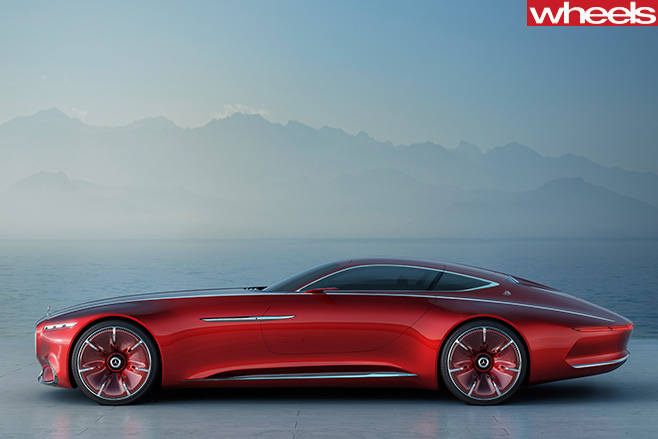
The motors are fed by an 80kWh underfloor battery pack enabling a 320km-plus driving range and a quick charge feature allows an extra 100km of range to be zapped in after just five minutes. The battery can either be charged via a cable connection or wirelessly, via an electromagnetic field.
Gullwing doors open to what looks like futuristic boudoir with two inbuilt seats and an ‘augmented reality’ windscreen with crystal-look displays and gesture controls replacing buttons. Under the padded leather, sensors monitor the occupants’ vital functions and set comfort features, such as climate control and a massage function, accordingly.
Sadly it’s just a concept, but a positive reaction at Pebble Beach could hopefully lead to the Maybach badge being applied to a bespoke production coupe.
3. Cadillac Escala Concept
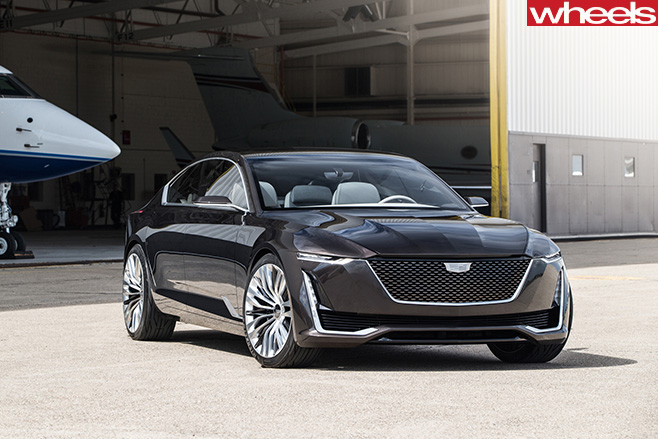
As concept cars go it’s pretty tame and rather than being the product of designers with time on their hands, it represents Cadillac’s “return to the pinnacle of premium”.
It looks a little like a four-door Camaro, and purists will be happy to know it’s powered by a new 4.2-litre twin-turbo V8 engine that’s a prototype for a powerplant that will make its way into future GM models.
Inside is a central control module that works via voice or gesture commands with displays shown on three curved OLED screens that merge the traditional driving gauges and “centre stack” into one integrated unit.
4. BMW 2002 Hommage
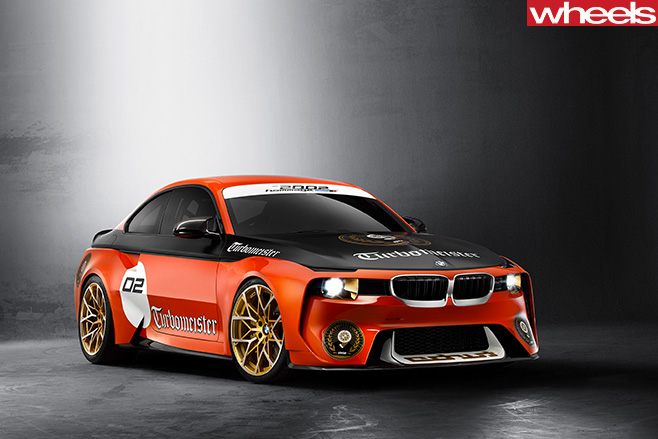
The 2002 Homage is an M2 with a body resembling the 1973 BMW 2002 turbo, which became the first series-produced vehicle in Europe to feature turbo technology. This tribute, complete with bulging wheel arches and shark nose, first appeared Concorso d’Eleganza Villa d’Este in May in civilian M colours, but arrived at Pebble Beach sporting an orange livery based on the Jägermeister Racing Team, that was prominent throughout the 1970s.
Where’s not sure if it’s political correctness or just a clever pun, the liquor brand isn’t actually mentioned on the car, with Jägermeister replaced by “Turbomeister” on the side.
5. Kode57
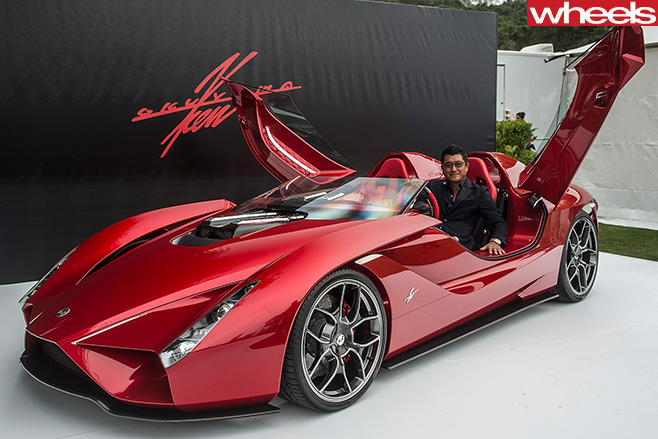
The Kode57 sits atop an aluminium chassis believed to be taken from a Ferrari 599 GTB and is powered by a front-mounted 6-litre, V-12 engine that produces 447kW.
The carbon-fibre body panels are designed with cut outs to enable clean airflow and while there are fenders over the front wheels you can see them, open-wheeler style, through apertures running parallel with the bonnet. Reverse opening doors top off the striking design.
The suspension developed by Ferrari tuner Novitec Rosso adding to its Prancing Horse pedigree.
The “57” in the name pays homage to the year 1957, but this is certainly no retro design. Okuyama says he chose the name because that was a great year for iconic cars.
Orders are being taken and while there’s no confirmation on numbers and prices, there are reports that boxer Floyd Mayweather has dropped around A$3.3 million for the first one to come off the production line.
6. Aston Martin Vanquish Zagato Volante
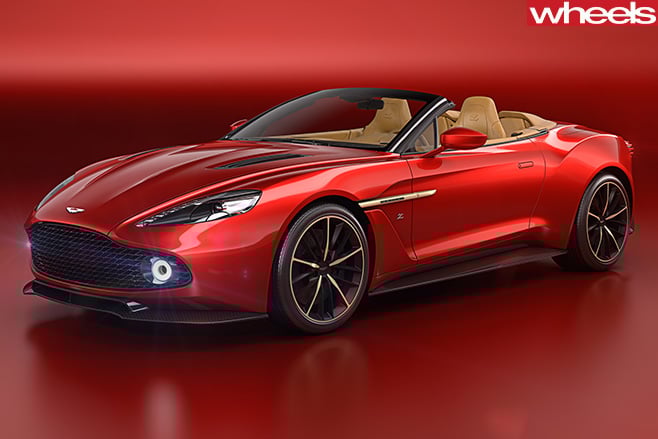
The Vanquish Zagato Volante shares its proportions with the Coupe, including round tail light reflectors that use the same ‘bladed’ LED technology as the Aston Martin Vulcan supercar and a carbon fibre ledge around the lower body.
As you’d expect it’s pretty impressive inside too, with highly luxurious finishes including herringbone carbon-fibre, anodized bronze detailing and Bridge of Weir leather. The Volante features the unique signature ‘Z’ quilt pattern stitch on both seat and door sections, as well as the celebrated trademark Zagato ‘Z’ embossed on the headrests and stitched into the centre console.
Previous Aston Martin Zagato convertibles have included the striking V8 Vantage Volante, first shown in Geneva in 1987 and the DB7-based DB AR1 in 2003. Like the DB ARI the Vanquish Zegato Volante will be limited to 99 cars with delivery commencing next year.
Chances are most of them were sold at the weekend.
It’s a battle of plug-ins, with the futuristic BMW i3 Range Extender facing off against the more conventional Audi A3 e-tron to see which makes the better premium small hybrid.
Damn Toyota, and damn the Prius. The poster car of hybrid technology just won’t go away. Alongside it in the greening 2016 new-car landscape there have never been so many options to tempt those hoping to eke another few millennia out of Mother Earth.
Some are bland and underwhelming (take a bow Mitsubishi for the Outlander PHEV; and Porsche, you can do better with hybrids) while others are genuinely exciting and enticing, such as the COTY-winning BMW i3.
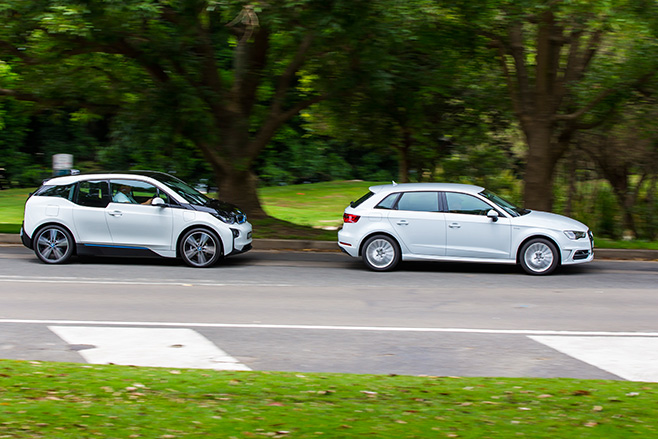
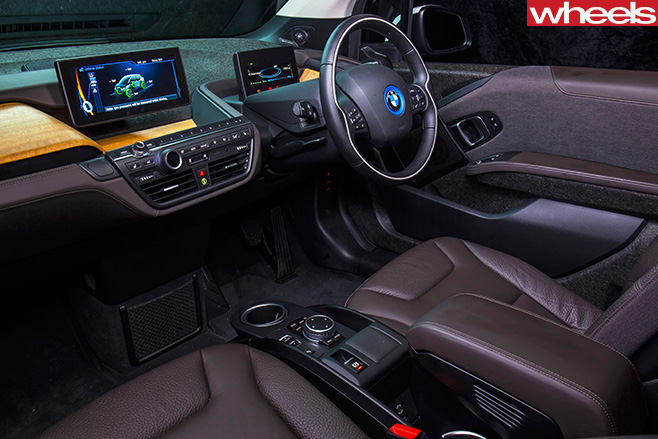
Park your money in the Munich corner and you get a peculiar looking four-seater with rear hinged back doors. The body is carbon fibre making for a lightweight 1240kg frame – and that’s when fitted with the two-cylinder 647cc scooter engine that is a built-in generator. The unpainted matte finish of the grey-ish carbon is an authentic reminder every time you open the door.
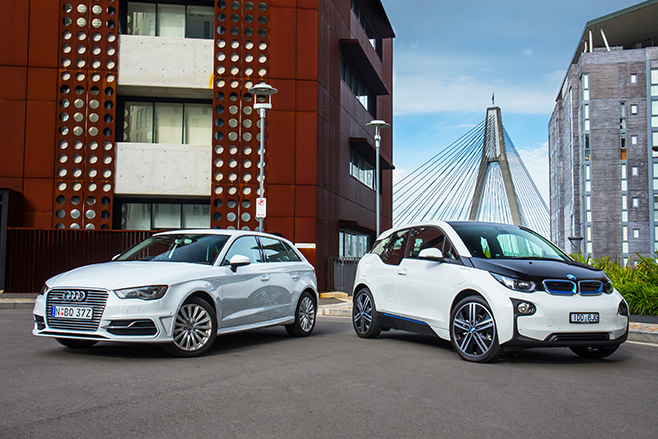
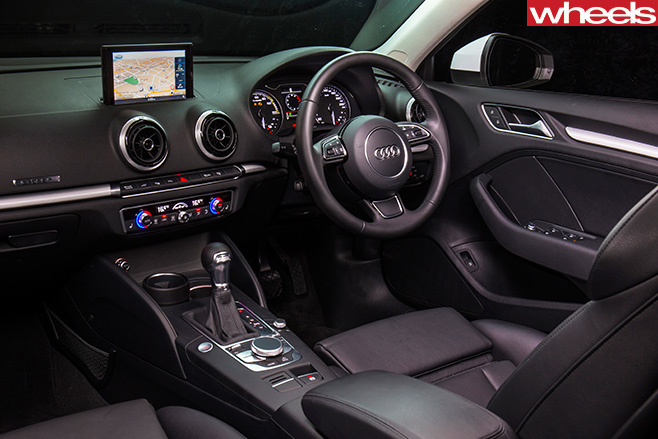
From Ingolstadt the A3 e-Tron trumps that with dual-zone ventilation and the same spread of sat-nav, reversing camera, parking sensors, digital radio tuning and leather trim. But it misses out on the BMW’s auto wipers, and the lack of a USB input is inexcusable (it’s circa $100 for a USB adaptor in the Audi-specific plug).
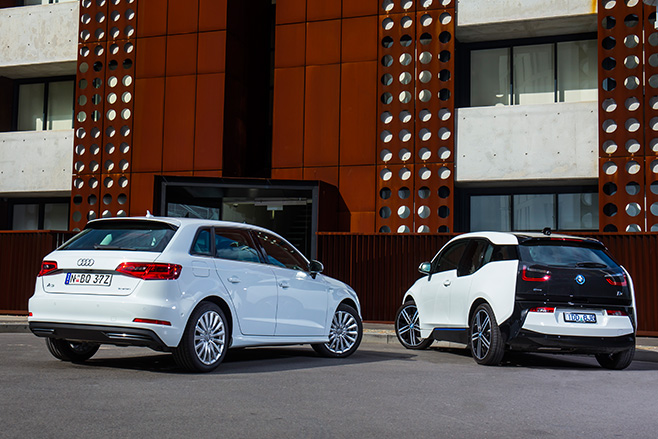
It’s an early tick to the Audi, then, something backed up with space. The Audi A3 body – which shares its MQB underpinnings with the Volkswagen Golf – liberates another seat in the rear, albeit for the skinnier in society. Rear seat leg room is also more palatable, while the boot will swallow more than the Beemer’s.
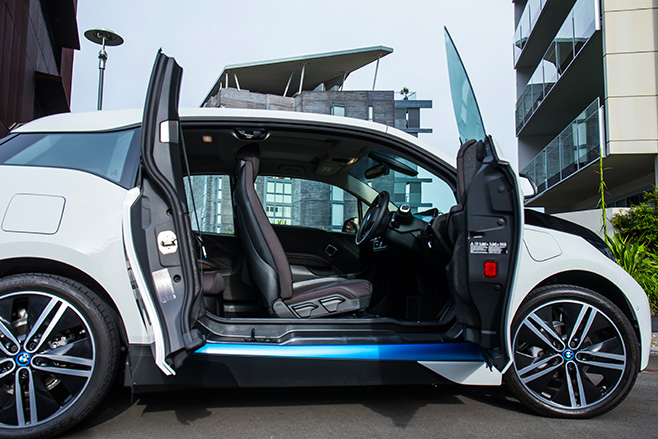
Yet the Audi looks cleaner and more clinical; its unique dash displays and “EV” button the only giveaways the e-Tron is hiding some tricky tech.
Hit the road and the BMW quickly wins back points. The steering is super direct, and the super tight turning circle makes city prowling a snip. But the 45/55 weight balance leaves little over the skinny front tyres, which quickly degrade into understeer on the limit. Bumps aren’t the i3’s friend, either. There’s short suspension travel that can have it rearing angrily.
The Audi is more predictable, if lacking flair. The steering is vanilla, adding spice once Sport mode is dialled into the Drive Select button, and there’s decent grip, while mid-corner bumps aren’t nearly as much of a wild ride.
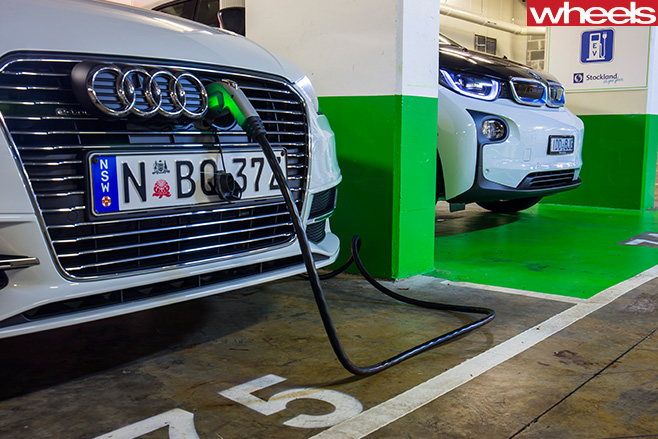
Just don’t push the accelerator all the way to the firewall or you’ll wake the petrol engine when you may not want to. If you did, though, the e-Tron pulls out both guns to deliver 150kW and 350Nm. On the surface it looks like an easy performance win to the Audi, but at 1540kg it’s not light, and acceleration really only starts to out-do the BMW once you’re in licence-losing territory.
There’s also plenty to love about the BMW’s drivetrain. Unlike the Audi, the electric motor is the only thing driving the wheels. Its 125kW electric motor punches hard with 250Nm the second you stab the accelerator and in the i3’s diminutive frame it makes for delectable acceleration. The i3 is entertaining, brisk even.
Indeed the BMW makes less sense the further you take it from its next charge. But in everyday driving that’s typically about 120km, triple that of the Audi’s electric-only range. For most urban motoring it’s more than enough.
And people aren’t shopping these cars to do the Big Trip. Sure, they can do it, but they’re more about zapping around town and consuming electrons rather than fossil fuels.
But there’s an ordinariness to its personality that’s out of step with its high tech ways.
The BMW does it with more pizazz and flair – and, importantly, more electric range. It oozes innovation and demands a second glance. It looks and feels like a science experiment at every turn, but one that has gone right.
As an object that waves the environmental flag laced with futuristic tech it trounces the Audi. And it shows just how far the green race has advanced since those early Prius days.
SPECS
Model: BMW i3 Range Extender Engine: 647cc two-cylinder petrol Max power: 28kW Max torque: 56Nm Transmission: Single-speed automatic Weight: 1315kg 0-100km/h: 7.9 seconds Fuel economy: 0.6 l/100km (claimed) Price: $69,900
Model: Audi A3 e-tron Engine: 1395cc four-cylinder petrol Max power: 110kW Max torque: 250Nm Transmission: 6-speed dual-clutch automatic Weight: 1540kg 0-100km/h: 7.6 seconds Fuel economy: 1.6 l/100km (claimed) Price: $62,490

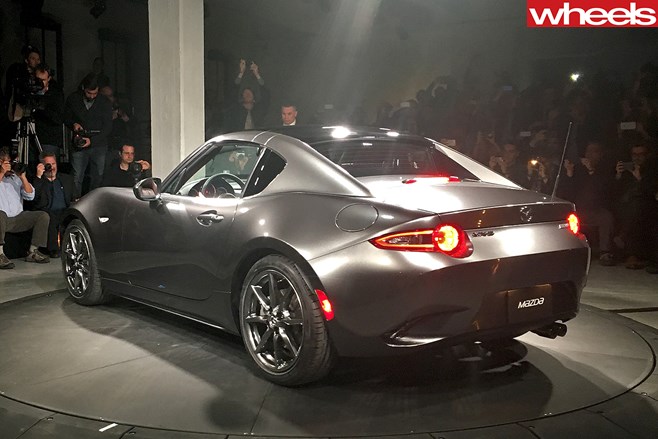
FERRARI isn’t the only carmaker that likes to pick and choose its buyers. Mazda has jumped on the bandwagon, announcing a special limited run of its targa-topped Mazda MX-5 RF will only be sold to the customers it thinks are worthy.
The Mazda MX-5 RF, a hard-topped version of the 2016 Wheels Car of the Year, will soon go on sale in North America. But the carmaker has announced it will only sell the first 1000 “Launch Edition” models to names picked from its list of most loyal customers.
The RF, unveiled earlier this year at the New York Motor Show, will initially launch in the US as a limited-run model featuring Machine Gray metallic paint, leather interior trim with a hand-painted black roof panel, and kitted out at the top-spec Grand Touring trim level.
“Initially, Mazda North American Operations will open up the pre-orders to a select group of customers who will be notified via email and will have a specific window of time to preorder the MX-5 RF Launch Edition before ordering opens to the general public,” the carmaker said.
The 1000 customers buying the Launch Edition will also receive a numbered, custom-designed Tourneau watch – a special feature introduced by Mazda Australia for the 25th Anniversary edition of the previous-generation MX-5 that was limited to just 40 units.
The MX-5 RF will officially launch early next year in North America, although Launch Edition customers appear likely to receive their cars before the more widespread on-sale date.
And before you get too excited, Mazda Australia has no plans to roll out an invitation-only version of the targa-top MX-5 here. Instead, it will open the showroom doors to anyone from day one, a spokesman said.
Honda has confirmed the new Civic Type R will land locally in 2017 with a sub-$50,000 sticker and manual transmission, but with the Focus RS and not the Golf GTI in its sights.
“It’s got to be in the forties [thousand dollars],” Honda Australia managing director Stephen Collins exclusively revealed to MOTOR following a media event in Sydney this week.
“It will certainly be on-sale next year and it will be competitively priced [and] we really think this will deliver on all the sporty attributes that Type R is famous for … performance wise it will be outstanding,” he added at the event.
Despite the sub-$50K expected ask, however, performance of the new model – which is due for imminent global release – would be comparable to the $50,990 Ford Focus RS, according to Honda Australia customer and communications general manager Scott McGregor.
“I would imagine it’s more playing with Focus RS and that kind of area. With the current car when you look at lap times and such, that’s the area it plays in.”
Honda Australia passed on Europe’s current Civic Type R, citing a short wait to the new model as a reason for the decision. McGregor admitted “the current discussion” was that the next Civic Type R will debut at next month’s Paris motor show, but it was unconfirmed.
Local chief Collins, meanwhile, said the new Civic Type R will offer a “substantial change” compared with the existing Europe-only model. That vehicle used a 2.0-litre turbocharged four-cylinder engine producing 228kW and 400Nm (complete with 7000rpm redline), linked to a six-speed manual driving a front axle packed with a limited-slip differential.
“Our enthusiast base is crying out for a manual performance car so in that particular [hot hatch] segment that’s the configuration that’s going to work best for us,” said McGregor.
“I don’t think it [lack of an automatic] is necessarily going to affect the volumes we’re going to do [and] if we went the other way and only brought an auto in, I don’t think that would be acceptable to the marketplace either.”
Front-drive with LSD is also all but confirmed to remain, although Honda will be looking to improve the 7min 50.63sec Nurburgring lap time of the next Civic Type R, which briefly set a world record for a front-drive car lapping the famous German track. It beat the 7:54.36 time of the former record holder, the Renault Sport Megane Trophy-R, but was then eclipsed by the 7:49.21 time of the Volkswagen Golf GTI Clubsport S.
“We’ve had customers on social media and through dealerships for the last couple of years … we’ve had enquiries [and] I very much expect when we put the pre-registration site up that’s going to go bananas as well,” he added.
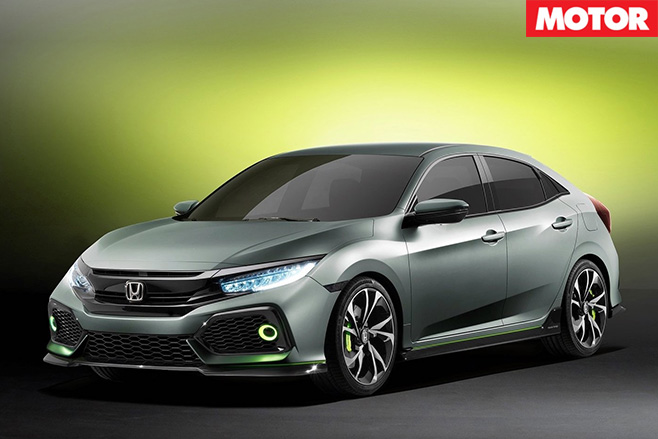
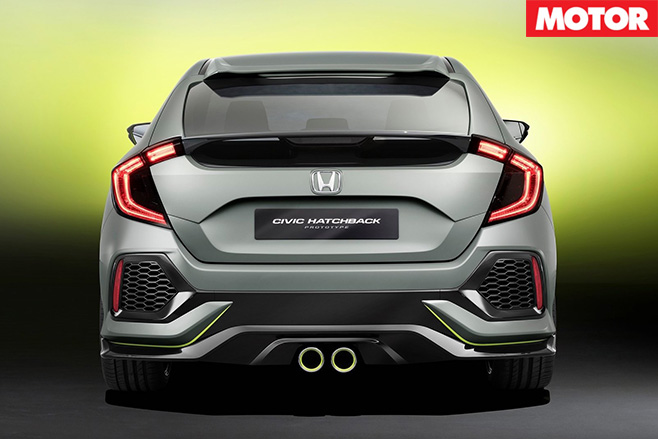
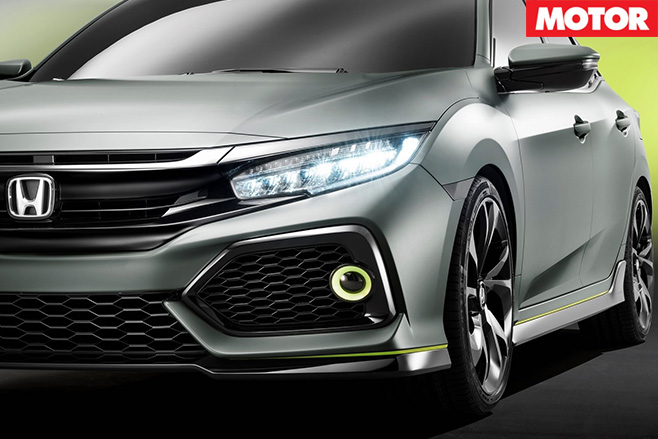
So far the new Honda Civic Type R has only been previewed by the Civic Hatchback Concept (pictured) shown at March’s Geneva motor show.
An interesting mix of new cars are due in Australia in the next couple of months. The most interesting is a hybrid version of the Audi Q7 large SUV that blends an already frugal 3.0-litre turbo diesel V6 engine with a battery-powered plug-in system. The Q7 will drive almost 60km on its batteries alone, which is more than enough for the daily school run.
Also joining the SUV rush is the Haval H6, a high-riding five-door coupe in the manner of the Range Rover Evoque. It may be a Chinese brand, but the H6 should bring some premium appeal, including a six-speed dual clutch automatic gearbox. Then there’s the compact Infiniti Q30 SUV that will take on the Mercedes-Benz GLC-Class, and a fastback version of Merc’s GLC, unimaginatively called the GLC Coupe.
The most glamourous, though, should be the Volvo S90 sedan and V90 wagon. This car introduces the first traditional passenger cars spun off the same platform that underpins the stylish Volvo XC90, so expect good things from the svelte Swede.
NEW MODELS ON SALE AUGUST-SEPTEMBER
- Audi A4 Allroad quattro and Q7 e-tron
- BMW M2, M240i, M140i, M3, M4 Competition and M4 GTS
- Fiat 124 Spider; Ford Edge and Fiesta ST facelift
- Haval H6
- Holden Colorado facelift, Cruze sedan and Trailblazer
- Hyundai Elantra SR
- Infiniti QX30 and Q50
- Mercedes-Benz E-Class, GLC Coupe, GLE 500e, S-Class Cabriolet and SL/SLC facelift
- Nissan GT-R
- Renault Koleos and Megane
- Subaru BRZ facelift
- Toyota LandCruiser 70 Series facelift
- Volvo V40 facelift and S90
Hustling 2.5 tonnes of luxury SUV was always going to be taxing on the fuel gauge. The GLE500e addresses this problem by sandwiching an electric motor between the twin-turbo V6 and nine-speed automatic transmission to provide about 30 kays of petrol-free driving. Combined fuel use will be around a Prius-embarrassing 3.3L/100km.
WRC: Ogier blitzes Germany
This was more like the Seb of old
Ending an unusual win-less steak which lasted for six events, Volkswagen’s Sébastien Ogier was unstoppable on the challenging tarmac of Rally Germany, turning an opening day deficit into a comfortable win.
“This is great,” Ogier said at the finish. “I haven’t had a chance to win on the recent rallies and I was missing that feeling for sure. It’s been really exciting and a long time since I was battling like this for a win. I really had to push to beat the guys around me.”
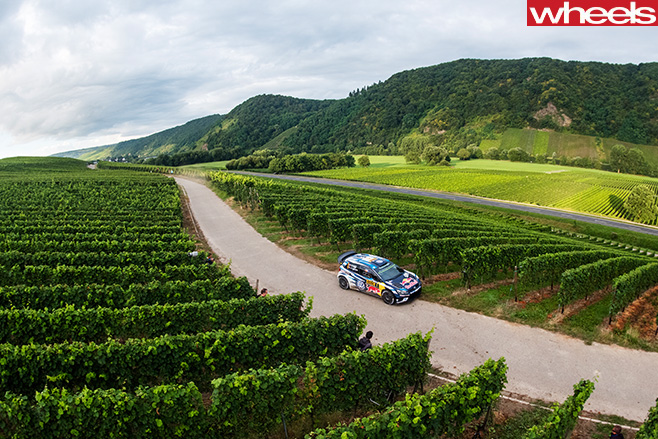
The three-time world champion started the second day trailing Volkswagen team-mate Andreas Mikkelsen by 4.3s. But nine stages later – five of which were run on the tricky Baumholder military proving ground – Ogier emerged with a stunning 33.4s advantage.
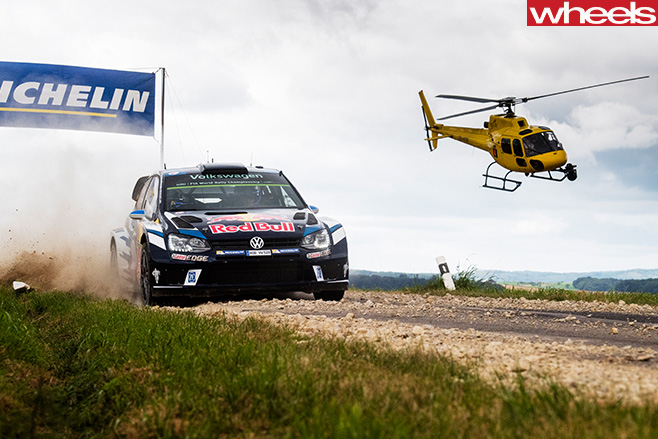
Mikkelsen held the position until Sunday’s first stage, but he was steadily reeled in by the Hyundai i20 WRC pair of Sordo and Thierry Neuville as their superior speed told.
Only 4.1s separated the three drivers entering the 14.84km Power Stage.
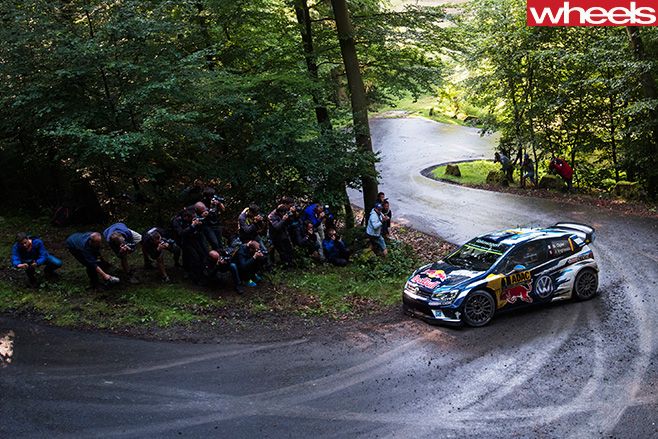
Ogier has extended his lead over Mikkelsen in the driver’ championship, 169 points to 110.
Daring tyre choice helps Crutchlow create MotoGP history
First Brit to win in a premier class world championship GP for 35 years
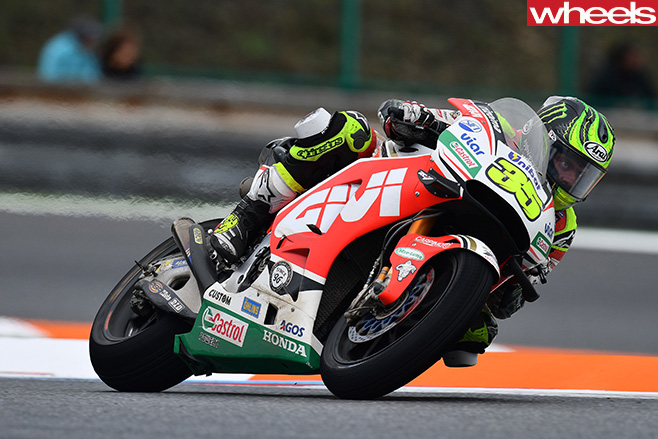
Relentless torrential rain had swept the early Moto2 field, but the downpour had eased when the big guys from MotoGP headed out on a still-saturated track, making tyre selections awkward, and increasing the possibility of a flag-to-flag race (when riders switch to their second bikes fitted with different rubber).
But there was no flag-to-flag pitlane scramble; instead Crutchlow (LCR Honda) sliced through the field in one of the most spectacular victories in recent years, helped by his clever choice of hard compound wets. And smart riding in the conditions.
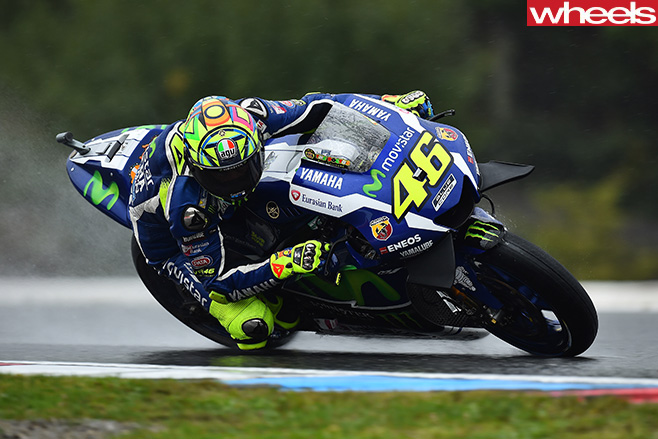
Anticipating the track to dry out which would necessitate a jump to slicks mid race, much of the field opted for soft wet-weather Michelins. But, not convinced the track would ever be grippy enough for slicks, Crutchlow went for the hard compounds, a masterstroke as it turned out. Rossi and Lorenzo had a bet each way, opting for hard rears and soft fronts.
Crutchlow, Rossi and Lorenzo struggled early while the Ducatis of Andrea Iannone, Andrea Dovizioso and Scott Redding escaped at the front, with Marquez on the factory Honda cruising a little further back
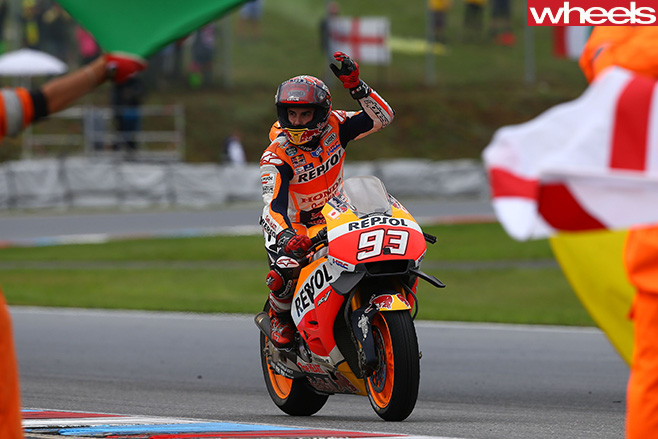
Rossi too surged forward to claim second, while Marquez cleverly managed his wearing soft rubber to pinch third.
As for Lorenzo…what was he thinking? Initially, he slipped back through the field but when his tyres began to work he was one of the quickest out there. Then with seven laps remaining, Lorenzo made what appeared to be a bizarre decision to change to his second bike fitted with slicks. He did one lap than swapped bikes again.
He later revealed the front tyre on the first bike was too damaged to continue.
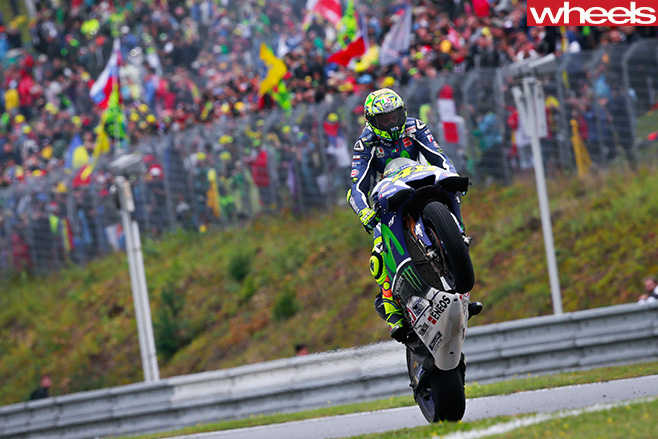
MotoGP is the sport that never stops giving, never stops enthralling.
And we didn’t have to wait for the race to start for Marc Marquez to leave us mesmerised by a stunning, unbelievable save in FP2 on Friday, returning on Saturday to snatch a head-shaking pole on his final lap.
About that miracle save though; he lost the front in turn 13 at Brno, the Honda slipping to a lean angle of 67.5 degrees. Marquez reported he could feel the heat in his elbow and that he kept using his knee to push up the buckled-under front. A slo-mo replay confirmed the detail.
German Jonas Folger claimed an incredible Moto2 win in torrential conditions at the Automotodrom Brno, taking his first win in more than a year from Alex Rins and Sam Lowes.
Rins and Lowes have each carved big chunks out of championship front-runner Johann Zarco’s lead as the Frenchman crossed the line in only 11th place.
There were lots of fallers in the appalling conditions, but the two Aussies Ant West and Remy Gardner survived. Acknowledged rain master West, a wildcard, dragged his three-year-old Suter from dead last to 10th, while Gardner stayed on board to finish 21st.
In Moto3, also held in the rain, Scotland’s John McPhee showed his wet weather prowess to notch his maiden GP win. It was only his second podium since he debuted in 2010.
Championship leader Brad Binder was holding a handy advantage when he slid off five laps from the flag.
WRC Rally China 2016 cancelled
Weather damage to the route could not be repaired in time
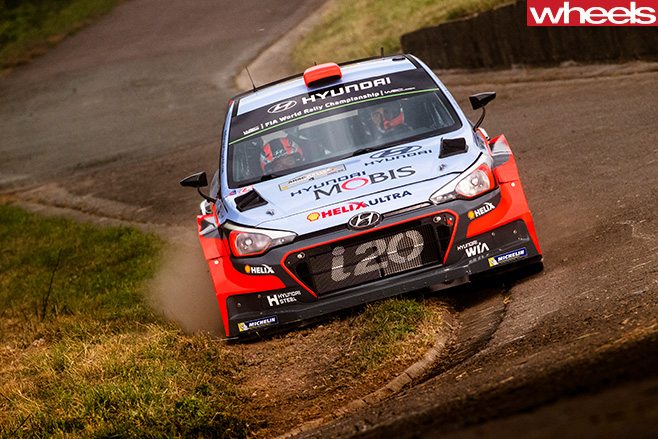
Despite a last minute visit to China last week by representatives from the FIA and the promoter of the WRC, and a determination to see a solution, it was decided that it would be impossible to affect the necessary repairs for the event to run safely.
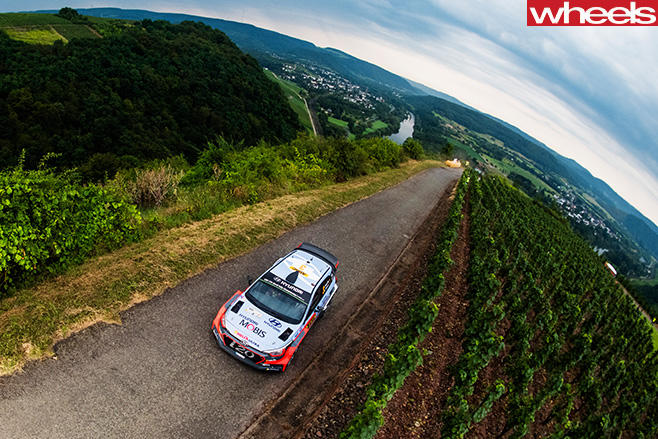
Some of the worst floods in China for many years forced tens of thousands of people to evacuate their homes in the north of the country, prompting authorities to introduce ongoing emergency measures in the region.
Australia’s Mawson still on top
German F4 crossed the border to perch in Holland for a weekend
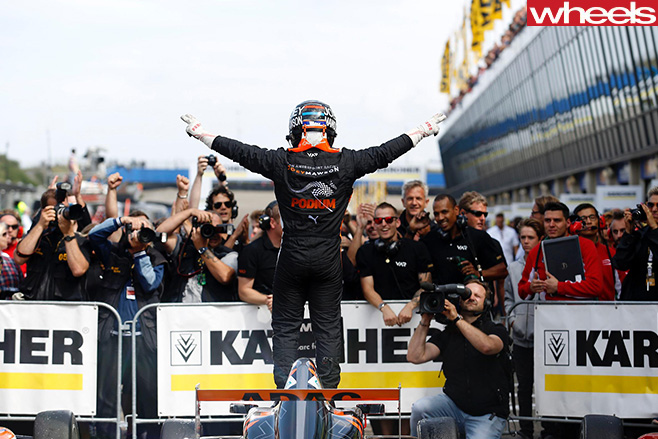
With one round remaining, and a maximum of 75 championship points up for grabs, the Podium-backed driver now sits 39 points clear of Schumacher in the chase for the crown.
Mawson began the weekend perfectly, converting his pole position to an all-the-way victory punctuated by a safety-car period which wiped away his handy margin. Still, at the restart, Mawson motored away from Mike Ortmann and Schumacher to land the win.
Race two was a different story, after Mawson clipped the rear of a rival and broke his front wing. No points.
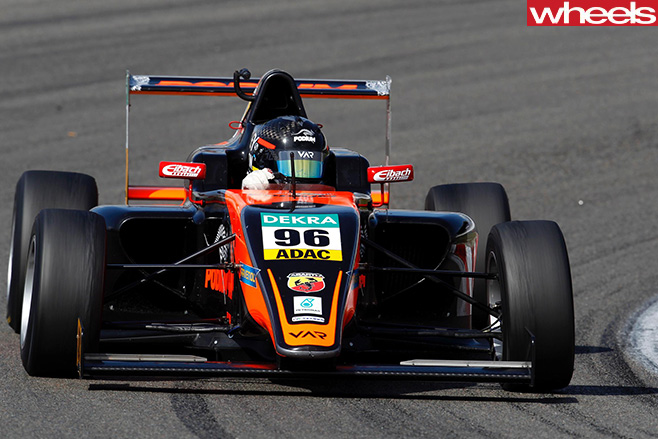
After two attempts to get it happening, and less than two laps of green flag racing, a multi-car pile-up caused the race to be red flagged and declared with half championship points awarded.
“I leave the weekend with very mixed feelings, it was great to get the win in race one but I wasn’t able to capitalise on our speed in races two and three,” said Mawson.
With one round remaining, Mawson heads the standings on 324 points with Schumacher second on 285.
Reeves trumps the kiwis
NZ belted us in the rugby, but not in final round of the New Zealand Rally Championships
Australian combo Brendan Reeves and Rhianon Gelsomino have taken out the final round of the New Zealand Rally Championship (NZRC) held on the north island.
Invited to participate in a Mazda 2 entered by Force Motorsport, Reeves took a convincing win though he’s never driven on the roads around Thames and Coromandel.
With the NCRC already decided, Reeves went into the Gold Rush Rally of Coromandel finale with the objective of having fun in a field of NZ’s best crews.
Reeves and Gelsomino led from the start and won six of the rally’s 10 stages. Their winning margin was just over a minute.
Rejoice, Ford GT fans. Ford’s stretched its Ferrari-fighter’s production run by two years, to four years total, to satiate demand soaring above supply.
Over 6500 customers applied to buy a GT, however, only 500 of them were actually successful in securing one. The announcment now reignites hopes for the other 6000, who were told rather bluntly last month they didn’t make cut.
Ford says the third year of production will serve those placed on a wait list, while rejected and new applicants are slated for cars made in the fourth year.
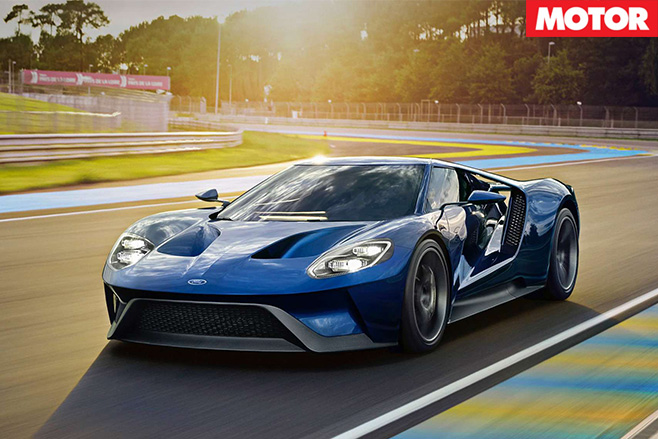
And if the application process is anything like the first, having US$450K (AU$600K) in your bank account won’t be enough to secure a GT. You may need to fill out the questionnaire Ford first used to assess, and then prioritise, each customer’s relationship with the company.
“While we can’t build enough Ford GTs for everyone who has applied, we are going to produce additional vehicles in an effort to satisfy more of our most loyal Ford ambassadors,” says Dave Pericak, Ford Performance’s global director.
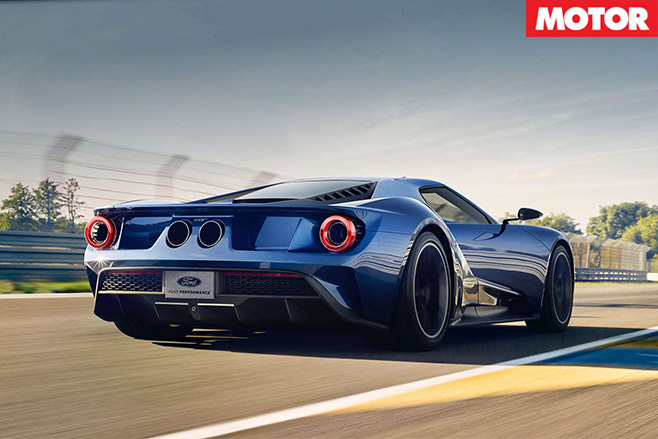
The announcement also supports the brand’s four-year campaigns in both the American IMSA championship and World Endurance Championship, the latter gifting Ford a class win at the Le Mans 24 hour this year.
So, you have a year-and-a-half to refine your application. And if you fancy yourself in with a chance, why not nail down the exact spec of your GT on Ford’s configurator? It might make the time go faster.
