
Anyone who feared that Honda might lose its way and allow its obsession with high-technology to steal the driving thunder of the all-new NSX can take a deep breath and relax.
The new petrol-electric hybrid NSX is undoubtedly a technological marvel, but it’s also a true driver’s car. It’s capable of churning your guts into soup with the visceral thrust of its ferocious launch mode and straining your neck muscles with the lateral G of cornering forces generated by a superbly balanced chassis.
Over a session of nine laps in the four drive modes of the twin-turbocharged V6 hybrid supercar, we can confirm that Honda is well on the way back to rediscovering its fabled mojo.
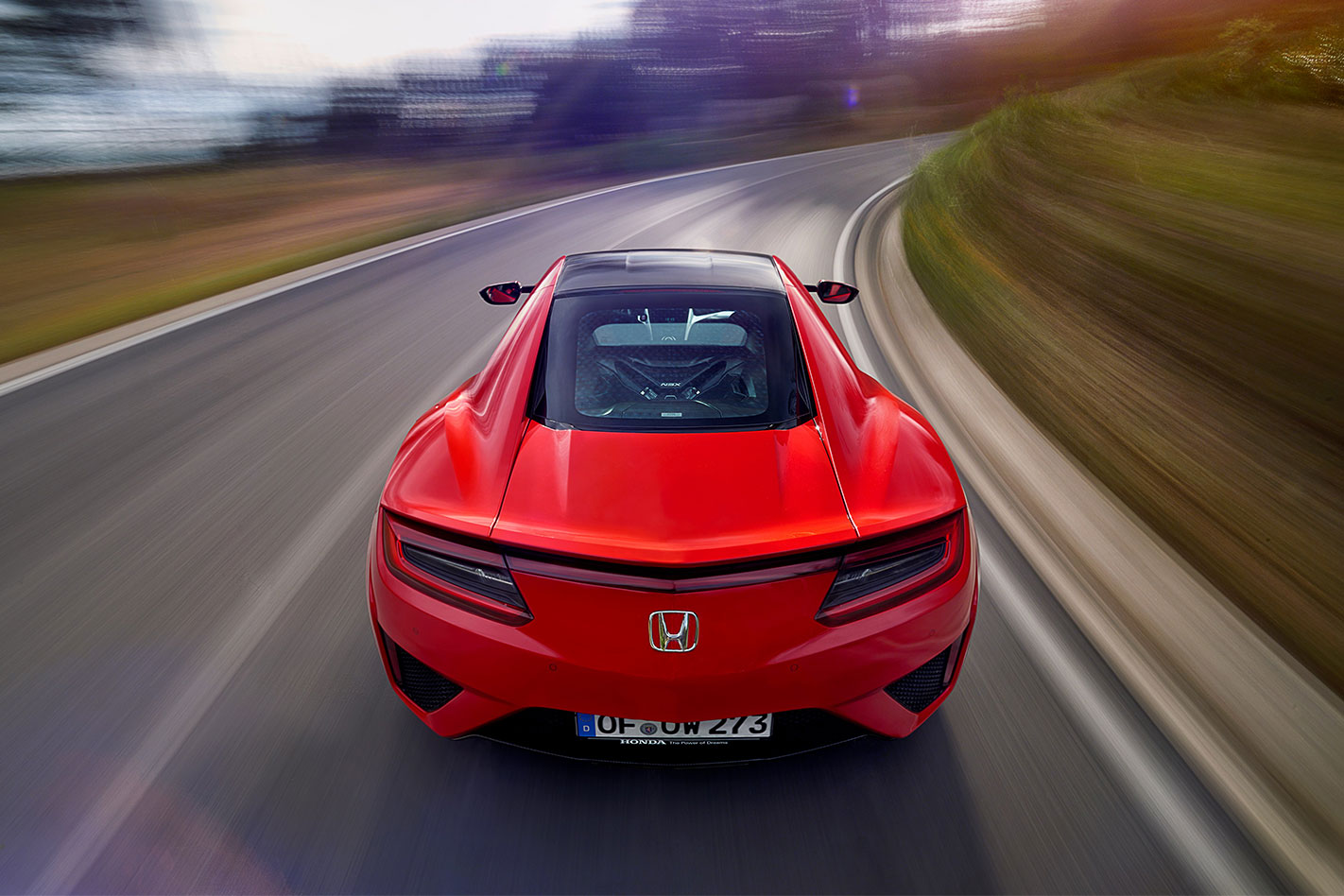
Truth be told the new NSX is actually several cars in one: from the quiet, green creep of its all-but silent pure electric mode, through to the fully-unhinged and linear ferocity of its ballistic launch control, it’s a car with a depth of talent and a breadth of capability that a single day at the wheel could not possibly hope to fully explore.
But we did our best and came away from the track session amazed at the ease with which the 1780kg supercar can be flung around a circuit, at its impeccable balance and at the sheer technological smarts of seamlessly integrating a trio of electric motors with a twin turbocharged V6 and a bespoke nine-speed twin-clutch transmission.
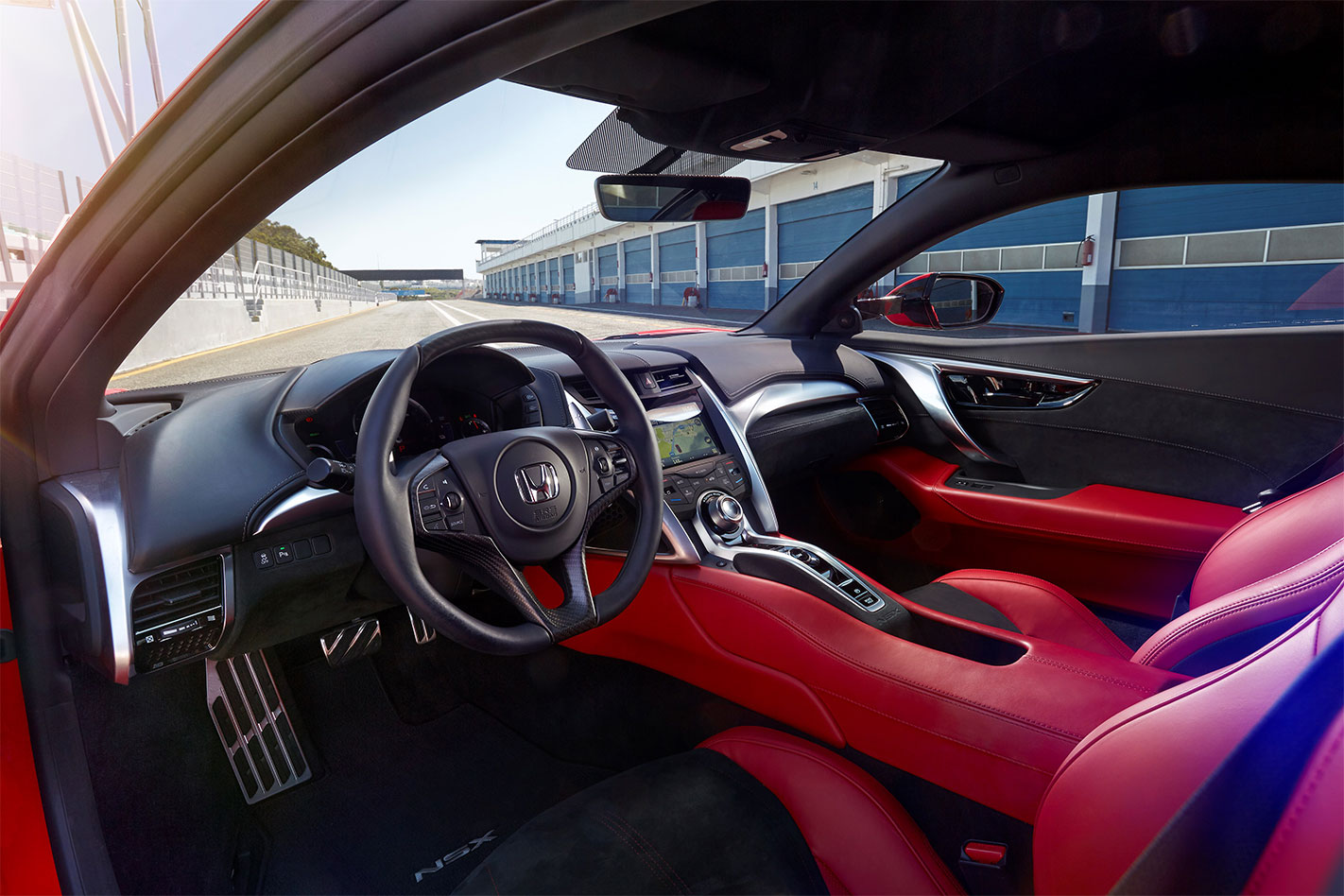
The trio of electric motors and attendant lithium-ion battery pack accounts for fully 160kg of that weight. It’s only due to the extensive use of aluminium, carbon-fibre and exotic steel in the car’s structure that weight didn’t blow out further.
Obviously wary of the weight and attendant criticisms, Honda executives claimed that out on the road or track, the NSX doesn’t ‘feel’ anywhere near that heavy. Turns out they were right. The dramatically styled mid-engine-coupe seemingly defies physics by managing to accelerate, stop, turn and change direction in a manner that renders any on-paper speculation about weight as a non-issue.
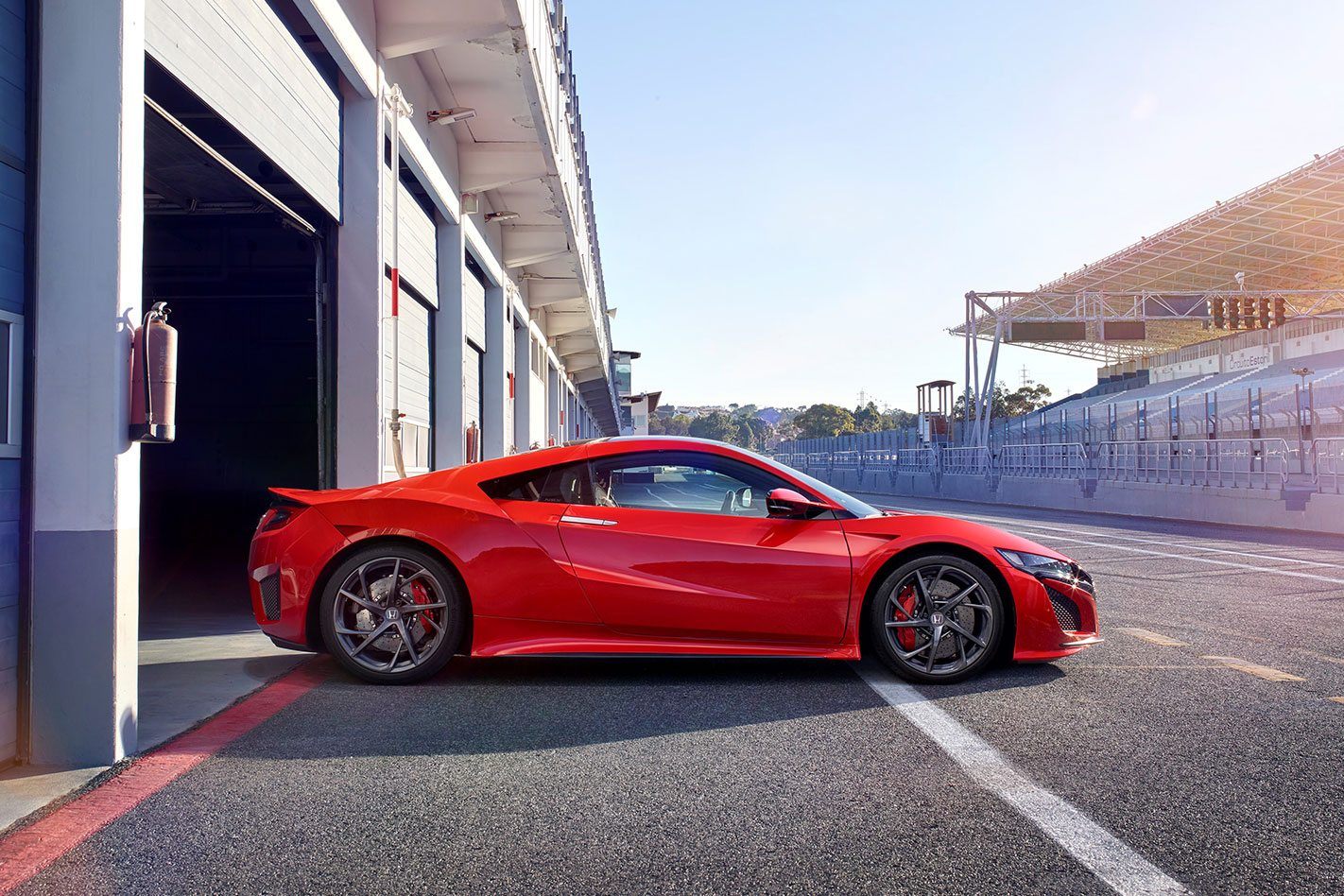
Designed by Honda Japan, assembled by Honda USA and featuring a block and heads manufactured by Cosworth in the UK, the dry-sump V6 was engineered specifically for the NSX and features electronic wastegate actuators, both direct and port injection, a high 10.0:1 compression ratio and a 7500rpm redline.
It’s a serious bit of kit, to be sure, but it’s not the only player in the NSX’s star-studded drivetrain show. An electric motor directly coupled to the V6’s crank provides instantaneous torque in every gear, ensuring that while the V6 is revving and the turbos are spooling up, there is already a shot of instant torque available for instant acceleration.
Honda’s so-called Super Handling All-Wheel Drive, or SH-AWD technology has been seen before on Honda’s Legend luxury sedan, but the NSX takes the tech from the rear to the front axle, where it splits engine torque left to right to create yaw moment when turning.
Because it’s electrically driven, the NSX’s direct yaw control works when the driver is on or off the throttle, helping trace tighter cornering lines and enabling earlier throttle applications.
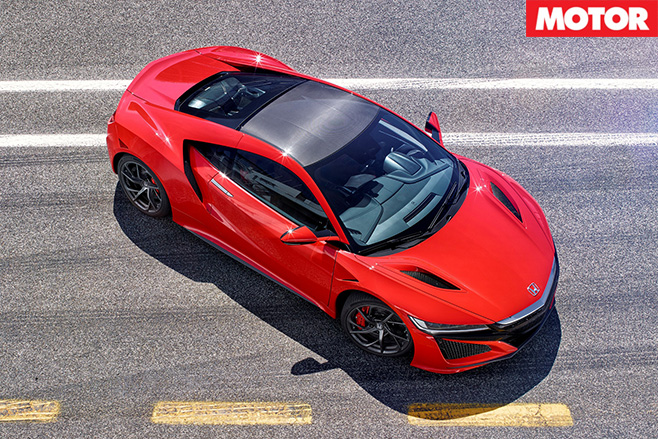
Whether it’s quite as good as the Porsche system remains to be seen, but the Honda ’box is undeniably brilliant, delivering lighting fast and incredibly intuitive shifts up or down the ratios and effectively rendering the paddle-shift actuated manual mode redundant.
Drop the hammer at any speed, in any gear and in any one of the four available drive modes and the sleek supercar responds with instant urge, its rapid-fire reflexes permitting absurdly optimistic open road overtaking manoeuvres.
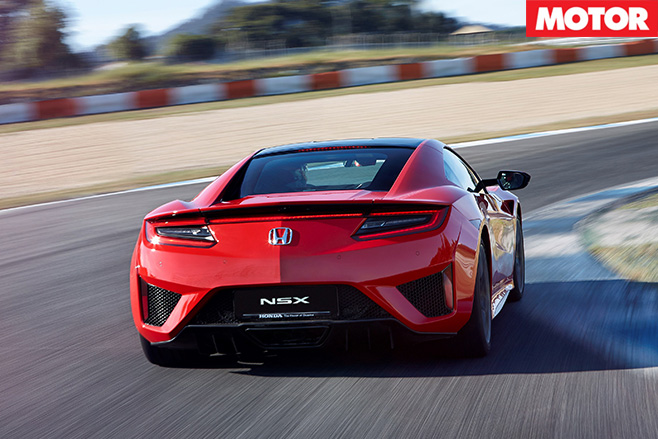
This is a supercar that harnesses technology in a way that flatters the average driver, yet has a level of depth to it that will tempt and enthral even the most capable of steerers.
Of course, there’s much more to talk about with a car that can genuinely be described as a technological tour de force, but that can wait for our full first drive review.
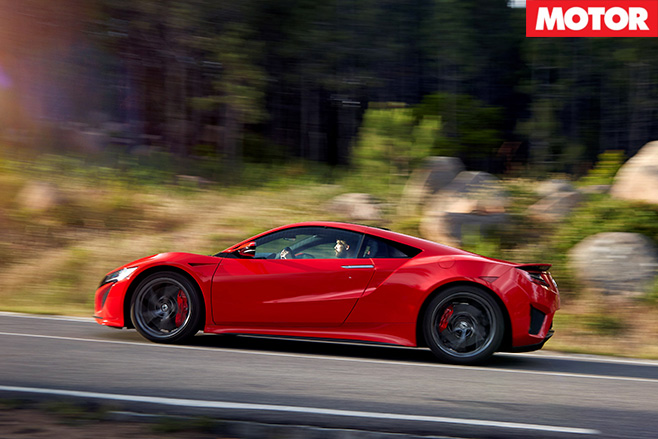
Honda NSX Technical Specifications
Engine: 3493cc V6, DOHC, 24v, twin-turbo, electric motors Power: 427kW (combined) Torque: 645Nm (combined) Weight: 1698kg 0-100km/h: 3.0sec (est.) Price: $420,000 (est.)
HONDA Australia has revealed its AWD hybrid hero car, the 2016 Honda NSX, will wear a gargantuan $420,000 price sticker on its windshield when the first cars arrive in local dealerships in November.
That’s around $14,000 more than a Porsche 911 Turbo PDK, more than $30,000 over an Audi R8 V10 Plus and a huge $40,000 more than a McLaren 570S – all of which promise similar straight-line performance to the NSX, with 0-100km/h sprint times in the low three-second range.
What’s more, Honda Australia will sting you an extra $1500 if you opt for metallic paint, or a mega $10,000 if you tick the box for Valencia Red Pearl, the new NSX’s hero colour.
However Honda Australia claims the NSX presents a better value-for-money proposition than many of its key rivals. Spec some of the above cars to the same level as the Honda, and the company claims between $15-35k would need to be added to their retail prices.
The new NSX is also as bespoke as a Honda is ever likely to get. Each 373kW turbocharged V6 engine takes seven hours to be hand-assembled at Honda’s North American engine plant in Anna, Ohio, which also builds the 2.0 litre turbo for the Honda Civic Type R.
With its turbo V6 working in concert with three electric drive motors (one on the rear axle to assist the engine plus two up front to make it AWD), the NSX makes a sizable 427kW. Honda won’t say how fast it’ll sprint to 100km/h, but describes its performance as “competitive” against its supercar peers.
$420k is a lot of money for a Honda regardless of its performance, but as far as Japanese supercars go it’s far from the priciest – that award goes to the Lexus LFA, which launched here in 2011 at a whopping $700,000.
The Australian NSX is, however, substantially more expensive than its Acura-badged US-market relative. Optioned to its highest level, American customers would only need to drop US$201,000AU – or AU$264,000 – on an Acura NSX. A Porsche 911 Turbo S also retails for $188,100 in the ‘States, however, so at least Australians aren’t the only ones that are paying relatively big money for the NSX.
The good news is that Australia-bound NSXs will only be available in a single high-specification model, with carbon-ceramic brakes and carbon fibre trimmings offered as standard in Australia.
“It’s arriving fully-equipped,” Honda Australia Director Stephen Collins said.
“For example we’ve made the carbon fibre exterior and interior packages standard, along with carbon-ceramic brakes. It’s a highly competitive supercar package,”
Lightweight carbon fibre will adorn everything from the rear diffuser, front underspoiler, side skirts, roof, engine cover and the spoiler, with more carbon weave throughout the interior. Eight exterior colours and four interior colours will be offered.
The bad news? Buyers should be prepared for a wait before their NSX appears in their driveway. Though there will only be one specification offered, cars will still be built to order – besides a couple of press and demo cars that are due to arrive in November, Honda Australia won’t be holding any NSXs in inventory.
The waiting list may also be substantial. A small number of customers have already slapped a deposit down on a new NSX without having driven it, and the queue forms behind those early-adopters. The order book for Australian NSXs officially opens on August 22.
Plus, with US customers already facing a two-year waiting list and Honda’s Marysville Ohio assembly plant only able to build eight cars a day, wait times for Aussie orders may be lengthy. Honda says those who get in line early can expect to wait between seven and nine months for their cars to arrive.
Only five dealers nationwide are able to sell and service the NSX too, with one each in Victoria (Yarra Honda), NSW (Scotts Honda), Queensland (Austral Honda), South Australia (Nordic Honda) and Western Australia (Burswood Honda).
Korean automakers Hyundai and Kia will throw their hats into the increasingly competitive – and highly lucrative – small SUV segment next year, with both due to launch their own baby crossovers before the end of 2017.
If you don’t count Kia’s genre-straddling Kia Soul hatchback, it will be the Korean company’s first tilt at the segment. The fourth generation Kia Rio hatch is expected to make its debut some time next year, and the rumour mill says a pint-sized SUV will spin off the Rio’s platform to take the brand into new territory.
Kia’s head of Western European operations John Kim was quoted by UK mag Auto Express over the weekend saying a Rio-based small SUV will launch into showrooms sometime next year as a companion to the Sportage compact SUV and Sorento medium SUV.
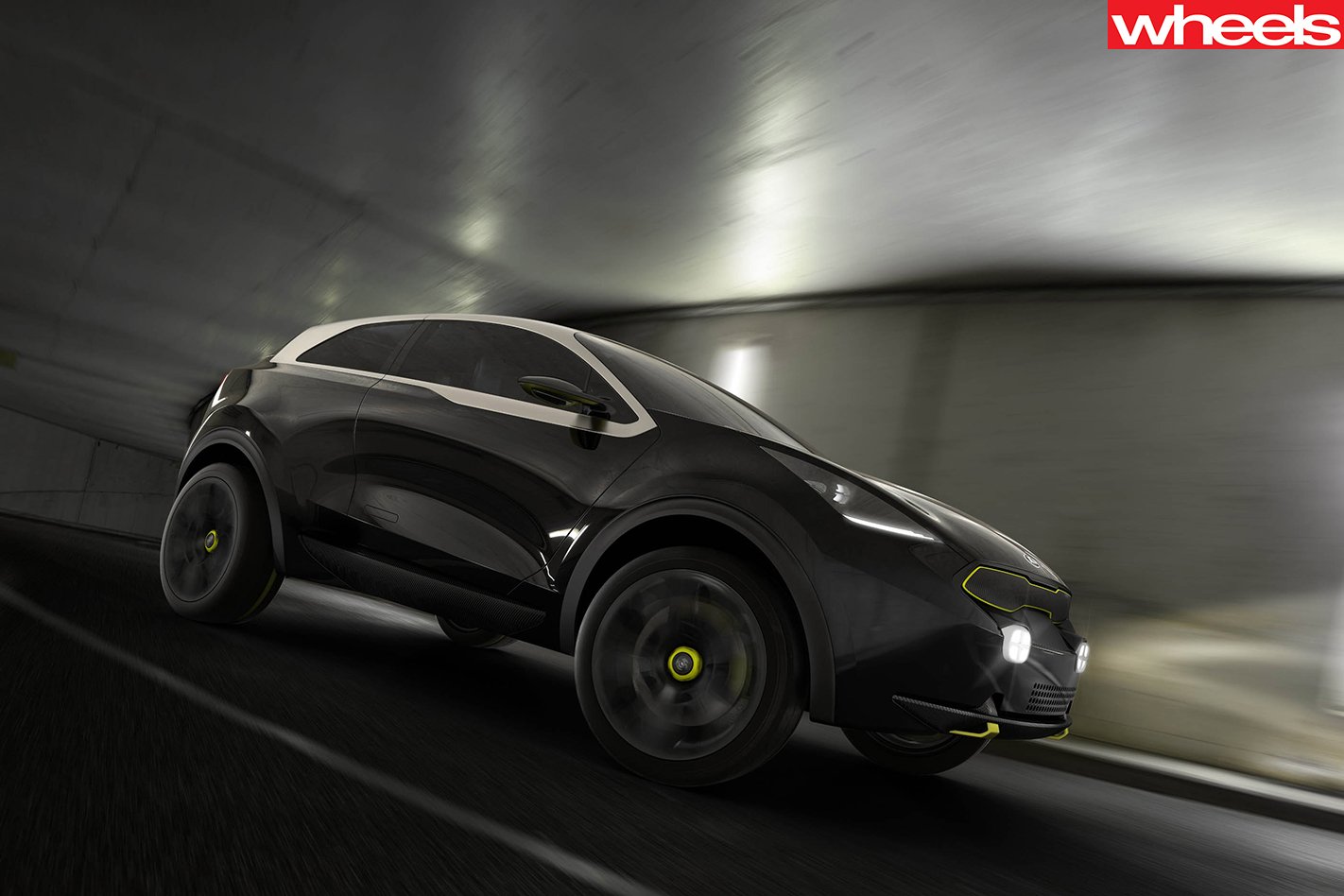
According to Auto Express, a plug-in hybrid powertrain may also make the cut.
While there’s no official confirmation of Kia’s plans for an entry-level crossover, there’s substantial enthusiasm for such a model to join the local range
Speaking with Wheels, Kia Australia’s head of PR Kevin Hepworth said booming appetite for small SUVs in Australia meant local dealers would welcome another Kia-badged softroader with open arms.
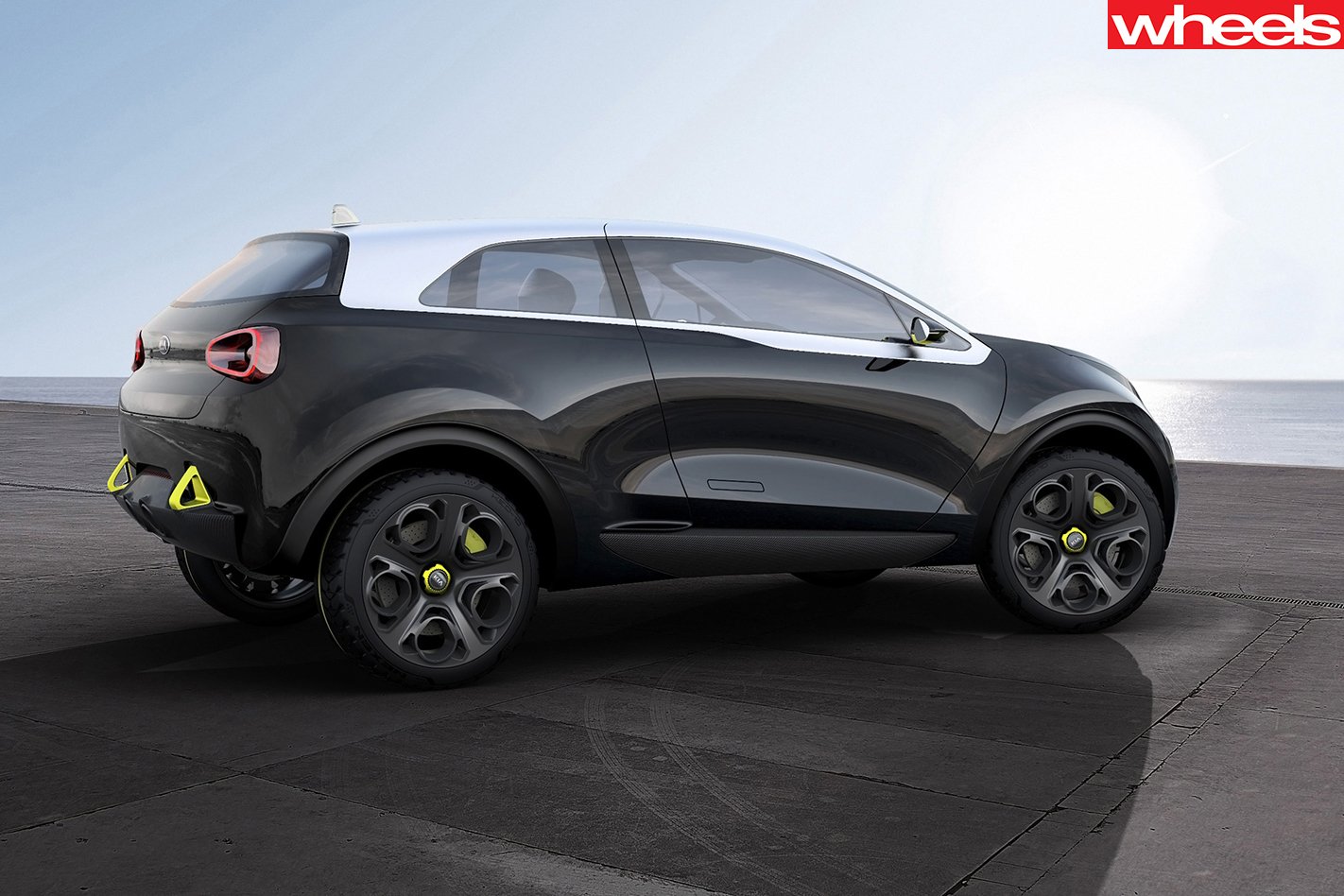
However, a plug-in variant would be less welcome:
“It’s got to have a business case,” said Hepworth, “and the trouble with hybrid is cost.”
“Because you’ve got to have both an internal combustion engine and a battery pack it becomes very expensive.”
Compatriot Hyundai is no stranger to small SUVs, having achieved consistently high sales with the ix35; it only abandoned that segment in the middle of 2015 when it replaced the ix35 with the slightly larger Tucson.
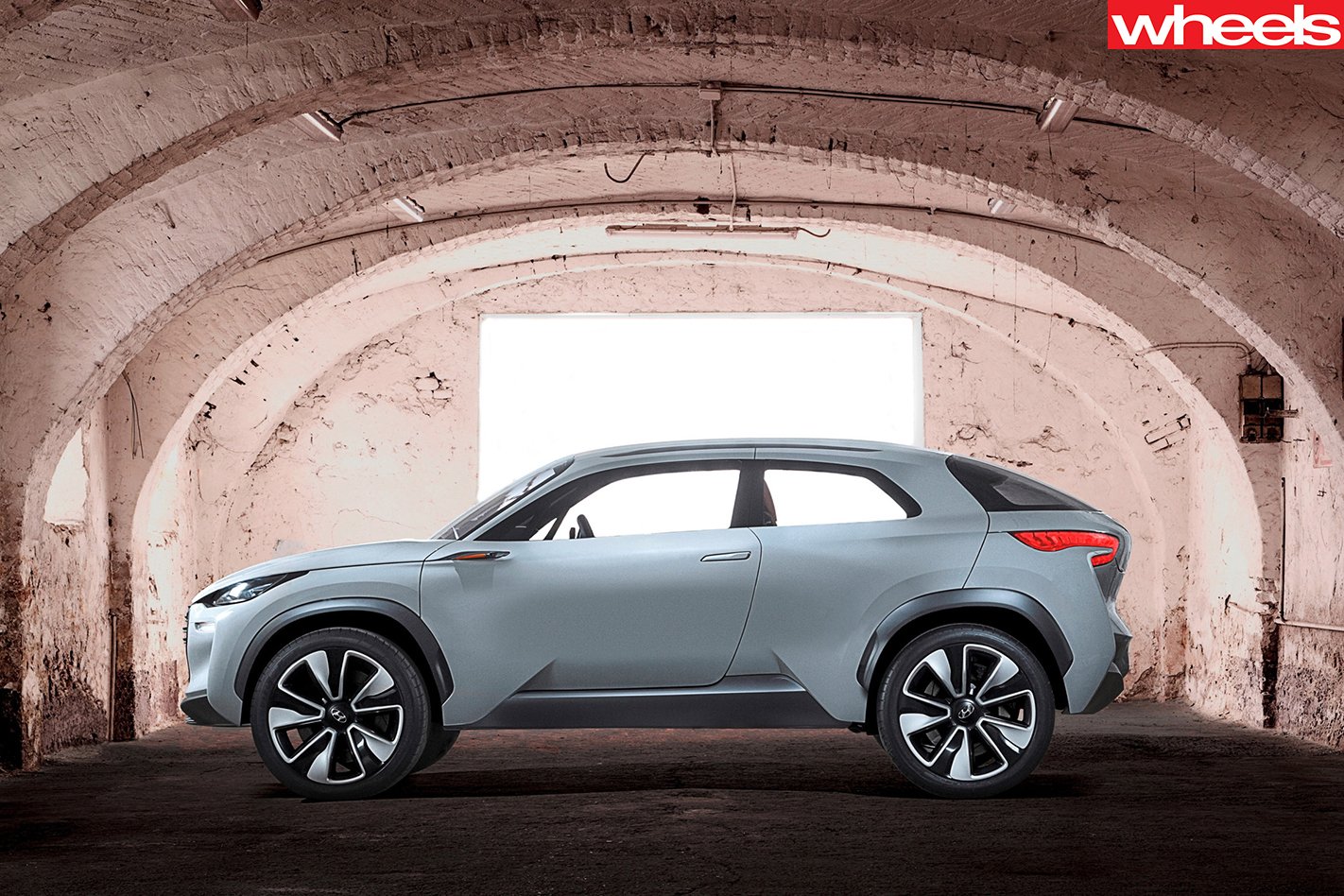
Hyundai hasn’t officially announced its intent to re-enter that space either, however Wheels understands an all-new Hyundai small SUV will go on sale in Australia in 2017, most likely in the latter half of the year.
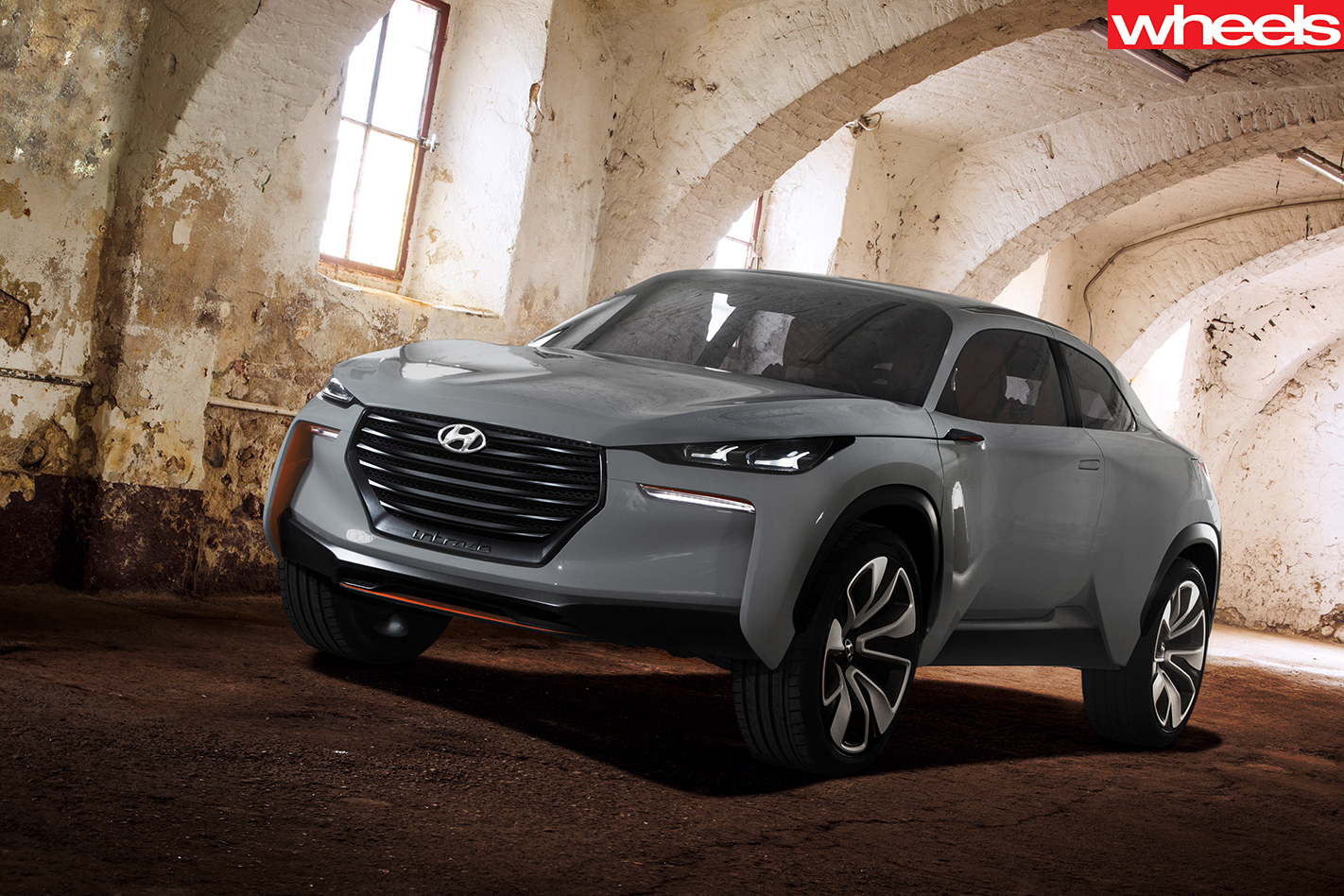
It won’t, however, be a rehash of the ix25 or Creta softroaders that are currently sold in China and India – those cars will stay in those markets. The car destined for Australia will, as we understand it, have a distinctly European flavour.
Both cars will be pitted against strong rivals like the Honda HR-V, Mazda CX-3 and Mitsubishi ASX, and allow both Kia and Hyundai to tap into ever-growing demand for small SUVs as buyers continue to jump out of small hatchbacks and sedans and gravitate towards higher-riding crossovers.
MEDIUM-SIZED SUVs are big business, coming second only to small cars as the most popular form of new vehicle Australians buy nowadays.
They’ve essentially replaced the old Ford Falcon and Holden Commodore as the quintessential family car in this country.
Here we look at Australia’s three leading medium AWD SUVs, in most popular (Mazda CX-5), our favourite all-rounder (Subaru Forester) and newest challenger (Kia Sportage) guises.
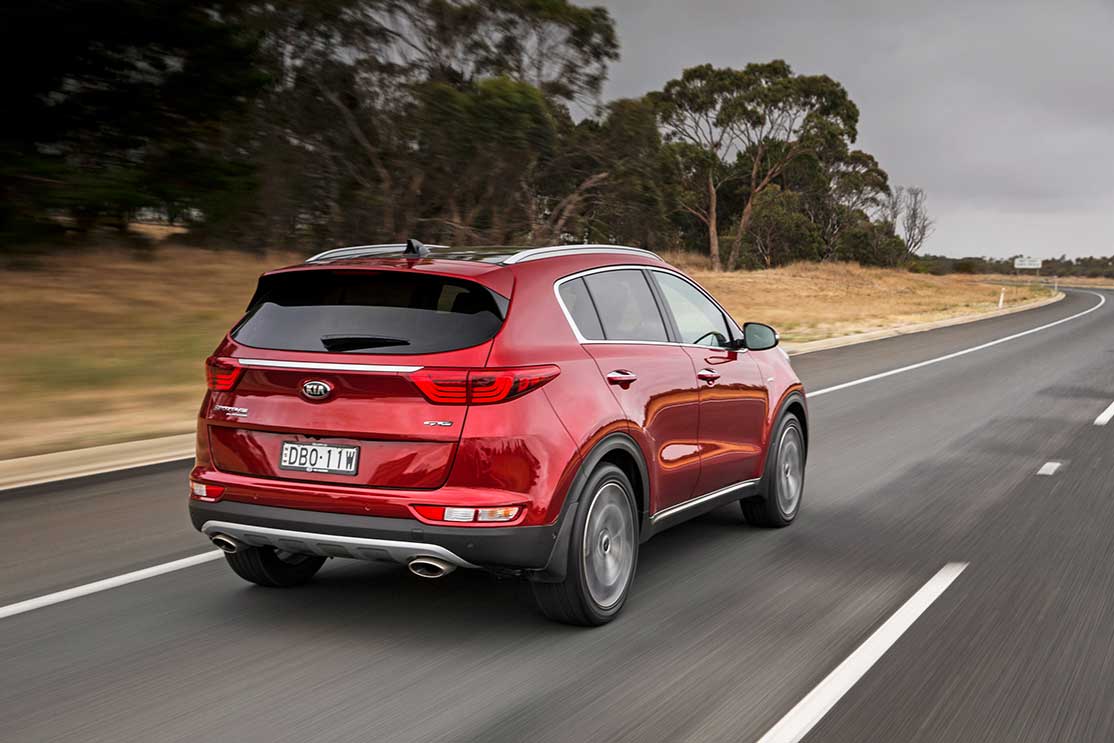
Korea’s other mainstream brand (with Hyundai) is going from strength to strength, and it’s easy to see why with the fourth-generation Sportage.
Released early in 2016, it hits the ground running with very pleasing design, an up-to-date interior of exceptional functionality and ease, a comfy ride, and plenty of standard features – including rear-seat vents! There’s also a decent amount of space to revel in, with heaps of cargo room to boot.
Much work has gone into ensuring the Kia handles our tough road environment, with confident steering and great roadholding being the result. However, the ride might be a bit on the stiff side for some.
The 2.0-litre four-cylinder turbo-diesel is the pick over the rather lacklustre petrol-powered alternative, because of its effortless low-down torque, high economy, and overall refinement. Note, though, as with all the vehicles here, this AWD is for on-road only use.
Finally, can anybody ignore an industry-leading seven-year warranty? Great to own, engaging to drive, and cheap to run, the good-looking Sportage is the very essence of the thoroughly modern medium SUV.
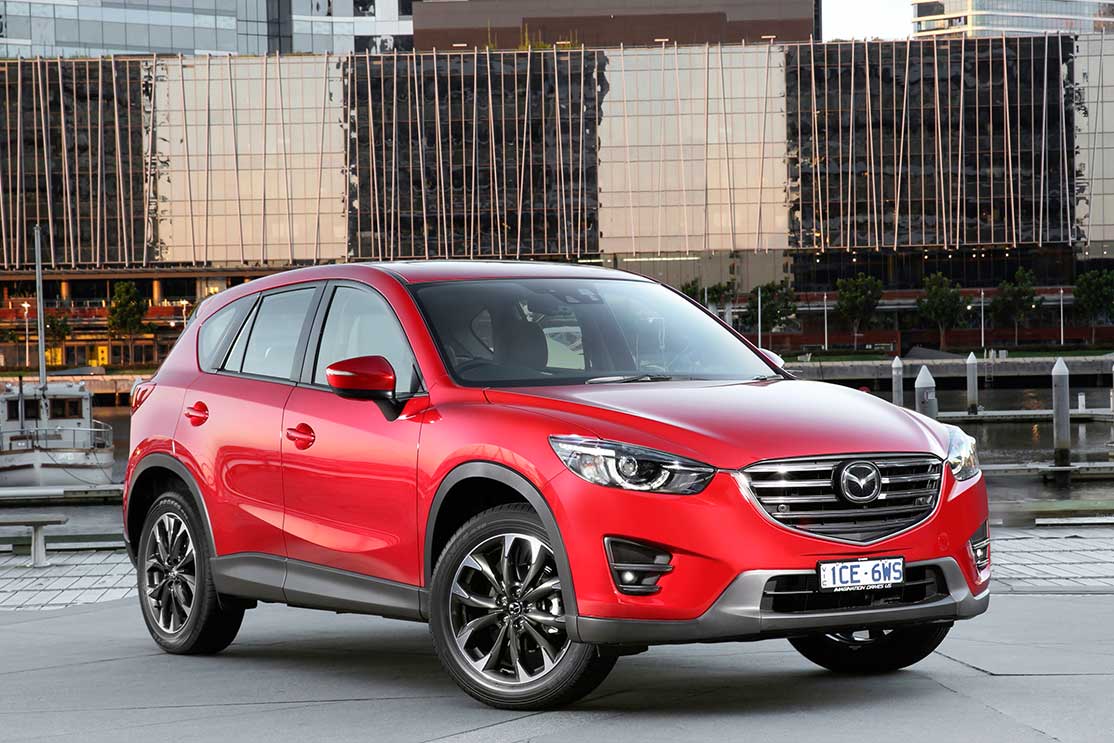
Australia’s bestselling medium SUV is there for a reason, and not just because it’s still such a handsome beast after nearly five years.
Why? Smart packaging is a start – the size is perfect, with a family-friendly cabin offering space and practicality. A beautifully laid out dash, classy instruments, supportive seats, and nice quality finishes suggest an affordable SUV that borders on the premium.
The Series II update released early in 2015 ushered in a quieter interior, upgraded multimedia, and improved functionality, but while the latest CX-5 is better than ever to travel in, it still does not offer
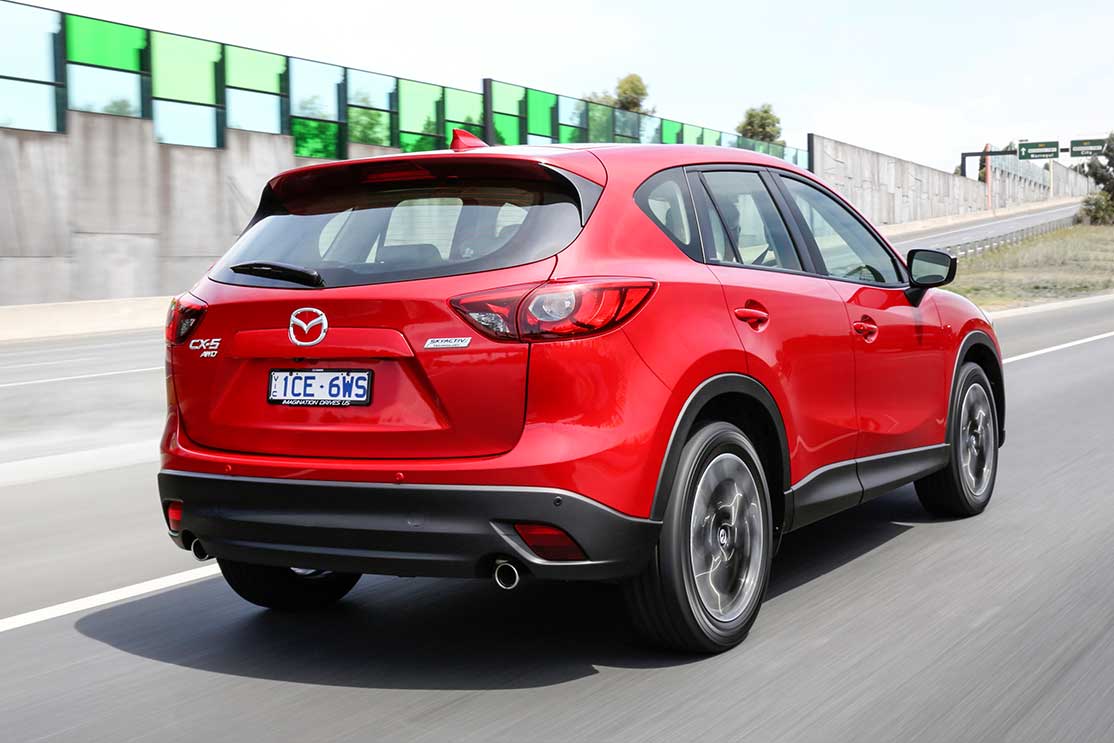
rear-seat face-level air-vents, while the ambience back there is a bit sombre.
Luckily the driving experience will lift driver’s spirits, thanks to a muscular (if quite vocal) 2.5-litre engine that accelerates strongly and yet is remarkably frugal. Brilliantly responsive steering and very car-like dynamics are further enticements, though the ride is a little on the firm side.
Not perfect then, but easy to understand why Aussies love the CX-5 so much. And excellent residual values are the cherry on top.
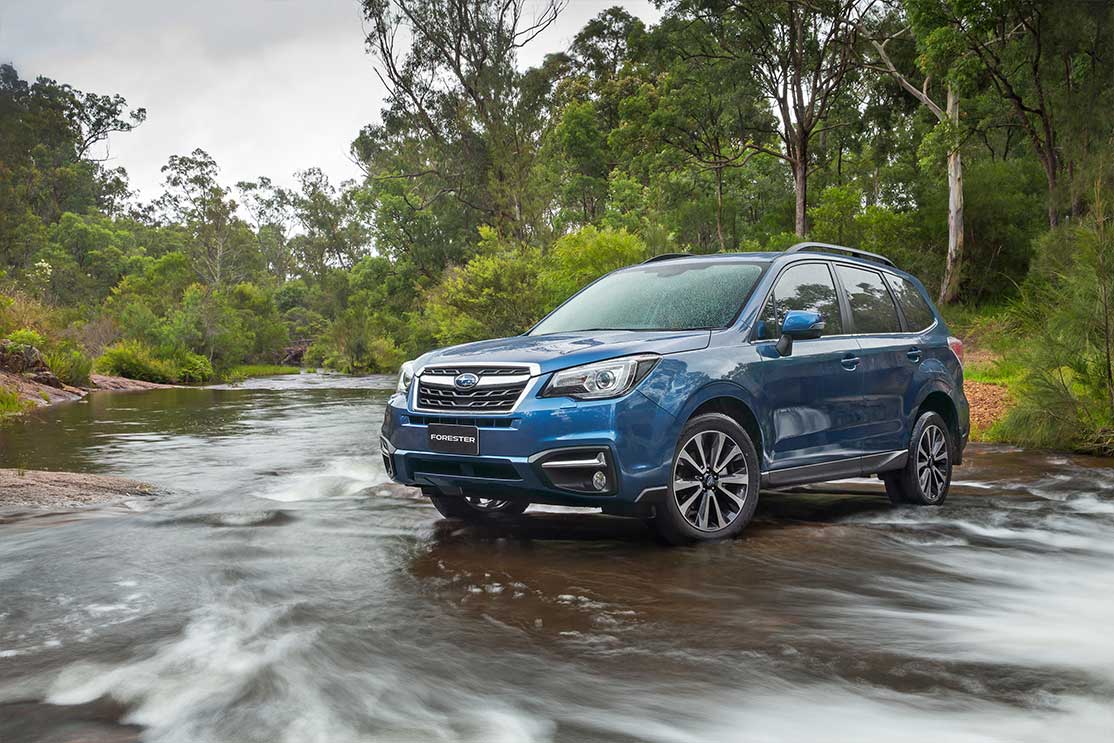
Though getting on a bit, the Forester is far from long in the tooth, thanks to a combination of talents that makes it a fine compact all-rounder.
Perched up high, the Subaru’s occupants enjoy clear views out, in an interior that is high on build quality and sensible layout. Comfy seats, easy controls, and heaps of storage underline how user-friendly this SUV is.
However, the dash is starting to date, the plastics look a bit low-rent, the rear cushions don’t slide, the back seat has no face-level vents, and the cargo floor isn’t completely flat owing to a full-sized spare.
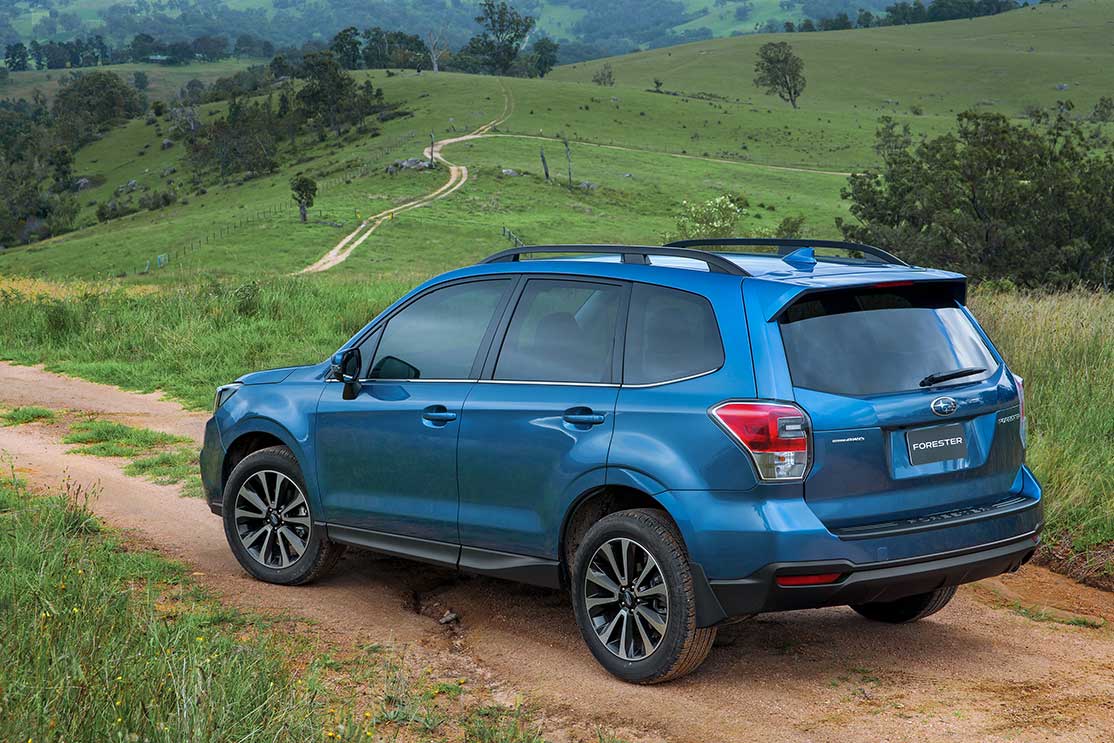
Still, keen drivers should appreciate the 2.5-litre flat-for boxer engine/CVT auto’s tractable yet frugal smoothness, the steering’s poise for car-like handling (aided by a clever all-wheel drive system), and the cushy ride. Plus, equipment levels are generous, with active safety tech available in mid-spec models under $40,000.
Throw great resale in the mix, and it is easy to see why the Forester is a consistently strong seller, as well as one of our favourites.
No motorsport starting grid has ever been as diverse as that of Le Mans. The flagship 24-hour race in the World Endurance Car Championship has a history that stretches back to 1923, and while earlier cars may have conformed to a similar format (albeit with variants in cylinder count, and engine placement), modern Le Mans cars differ wildly.
To illustrate just how far the Le Mans field has evolved, Donut Media has put together a brief video showing 10 race-winning cars in profile; going from the Bentley 3 Litre Sport right through to the 2014 Audi R18 – with legends like the Ford GT40 and Porsche 917 in between
How far has the top-tier Le Mans field come? In 1924 the Bentley 3 Litre Sport made 52kW of power and weighed over 1.8 tonne. The Porsche 919 Hybrid that won this year’s race, meanwhile, generates around 670kW from its petrol/electric hybrid powertrain and weighs in at 875kg.
Then there’s the 4.0 litre diesel-electric hybrid Audi R18 that has been a consistent top performer at Le Mans, and last year’s front-engined 3.0-litre twin turbo petrol and quasi-AWD Nissan GT-R LM Nismo. In modern times, the pointy end of the Le Mans field is remarkably eclectic.
Petrol, diesel, number of driven wheels, number of cylinders, and position of the engine all are variable in the world of Le Mans – even the capacity of batteries used by the hybrid racers can be altered, provided the combustion engine’s output is adjusted to suit.
Piston engines aren’t mandatory either – in 1991 Mazda clinched outright victory with its rotary-engined 787B, proving that a conventional engine wasn’t a prerequisite for success at France’s Circuit de la Sarthe.
The video is just a minute long, but definitely worth a squiz if you’re a fan of the most famous endurance race on the planet.
Want more? Check out the anatomy of a Le Mans prototype racer.
TELL ME ABOUT THIS CAR
Hyundai has made great inroads to the Australian car market, with many of its models being hits in their respective classes. One model that hasn’t quite become a household name is the mid-sized i40, which has plenty of tough competition, with the Toyota Camry, Kia Optima and even the Hyundai Sonata sitting next to it in showrooms.
The i40 was also one of the more bland-looking Hyundai’s when compared to stablemates such as the Elantra. But that’s changed with the Series II, which comes with a tasteful facelift that gives it graceful sweeping lines, pretty teardrop headlights and a big-bold grille.
It has more technical features than the petrol-powered Sonata and comes with a very economical 1.7-litre turbo-diesel engine.
The features-packed, top-spec Premium model is a lot of car for a sub $50,000 drive away price. It will be interesting to see how this and future models sell once the last Aussie-built family cars stop rolling off the production lines.
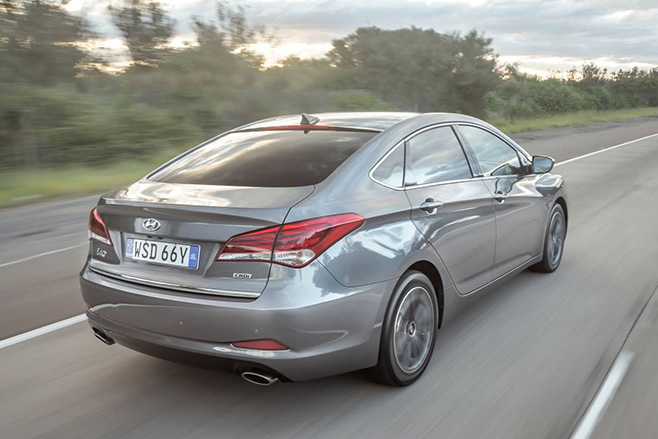
STRENGTHS
- The interior: This is a very pleasant place to be, with the large panoramic sunroof adding to the ambience. The dashboard is nice to look at, with a futuristic design including angular air vents that lead to the seven-inch touchscreen that shows entertainment, phone, reverse camera and sat-nav functions.
- Comfort: The leather-appointed seats are firm and take a bit of getting used to but once you do you’ll enjoy the back support. The driver’s seat has 10 electronic adjustments and both front seats have heating. The back seat has plenty of leg and head room for a medium car. Back-seat passengers have their own air vents and a fold-down armrest in the middle with drink holders and storage space under a flip-up lid.
- Storage: The centre console has a nice big bucket under the arm rest along with a couple of cup holders. There’s a nice deep aperture in front of the gear stick where you can put and plug in your phone to USB and auxiliary sockets. You can also put your keys in there, which is good for a car with push button start. The boot is huge – its 505-litre capacity is bigger than the Holden Commodore.
- Tech: i40 comes with plenty of tech including Auto Hold (which engages the electronic park brake when stopped on an incline), Park Assist sensors, Emergency Stop Signal, Lane Keeping Assist System, and Smart Park Assist, which automatically steers the car into a parallel parking spot.
- Economy: The 1.7-litre four cylinder diesel turbo engine is incredibly economical, with a published combined economy rate of 5.1L/100km – less than Toyota’s Hybrid Camry. By direct comparison, the 2.0-litre petrol i40 Tourer wagon has a combined rating of 7.5l/100km
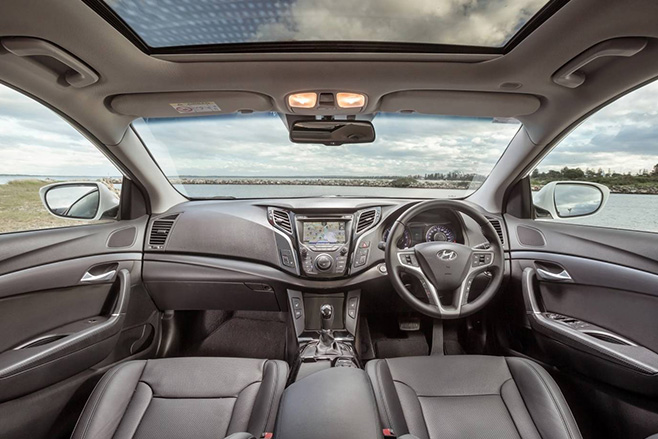
WEAKNESSES
- Performance: There is a noticeable lag if you stomp on the pedal, particularly from a standing start – be very careful at busy roundabouts. It’s a lot happier once you get moving and the seven-speed automatic transmission gets you up to speed smoothly.
- Engine choice: While the i40 Tourer wagon comes with petrol and diesel options the sedan only has comes with the diesel. With low fuel prices seeing a decline in diesel car sales Hyundai have missed a good opportunity to make a bigger dent in the medium car market.
- The Kia Optima is the most obvious answer even if they are no longer a direct comparison – there is no diesel Optima yet and the i40 sedans only come with the diesel engine. The Kia has long had the wood over the i40 in terms of looks and popularity but the i40 can now stand toe to toe but doesn’t quite land a knock-out blow even with the smaller price tag.
- Incredibly, one of the i40’s biggest competitors is the Hyundai Sonata, but the i40 now has the edge with updated styling, more tech and the economical diesel engine for about the same price. The petrol-only Sonata is a little bigger.
MITSUBISHI has launched a limited-run 4×4 dual-cab Triton called the GLX+.
The new Mitsubishi Triton adds extra gear over the GLX on which it’s based, at no additional cost.
Priced at $36,990 (plus on-road costs) as a six-speed manual, the Triton GLX+ 4×4 dual-cab gets 16-inch alloy wheels, a rear-view camera, display audio with 6.1-inch colour touchscreen, and a rear step bumper over the GLX spec.
Other standard equipment includes: a black grille; side steps; seven airbags; tilt-and-reach steering wheel adjustment; hill-start assist; trailer stability assist; and an electronic control transfer shift dial.
The GLX+ is also available with the five-speed auto option for an additional $2500, making it a $39,490 proposition (plus on-road costs).
The Triton, which arrived in its latest guise in May 2015, had a stellar month in June on the sales charts.
It overtook both the Holden Colorado (2302) and Nissan Navara (1319) to shift 2533 units. It also had the best month-to-month sales increase (1274).
June topped off a remarkable first half of the year for Mitsubishi, with the Japanese manufacturer breaking its all-time SUV and LCV sales record.
MMA’s executive director of marketing Tony Principe said: “The LCV and SUV market continues to perform above the total market average and we’re pleased to see Mitsubishi achieve record sales in these areas.”
This achievement coincides with the overall 4×4 and cab-chassis market, with SUVs jumping 8.9 per cent on year-on-year sale. Sales of LCVs also increased 5.9 per cent on June last year.
Honda Australia has confirmed Australian pricing for its new NSX, the hybrid supercar to cost $420,000 before on-road costs.
This puts the new NSX directly in line with the likes of the Lamborghini Huracan, McLaren 570S, Porsche 911 Turbo S and Ferrari 488 GTB in the fiercely competitive supercar segment.
In its previous guise, the NSX was more of a 911 Carrera competitor, costing $245,500 for the coupe and $256,500 for the Targa at its 2002 release.
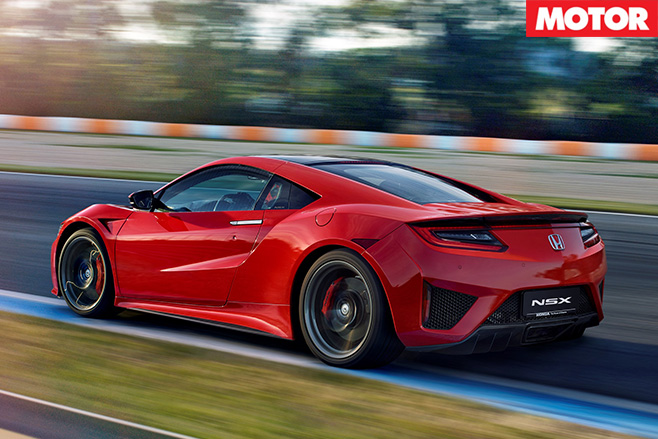
As you’d expect at this price point, the NSX comes fully loaded with equipment that’s optional overseas, including carbon-ceramic brakes and carbon fibre packages for the exterior and interior. Only three colours are available as standard though, with metallic paint $1500 extra and two premium finishes an extra $10,000.
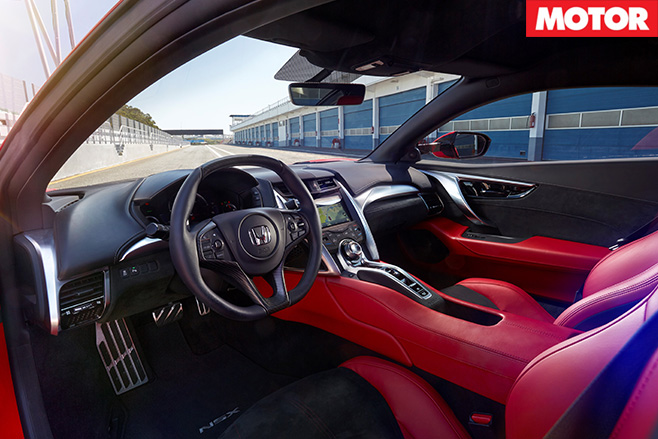
Check back tomorrow at 9am to read our first drive review of the new Honda NSX.
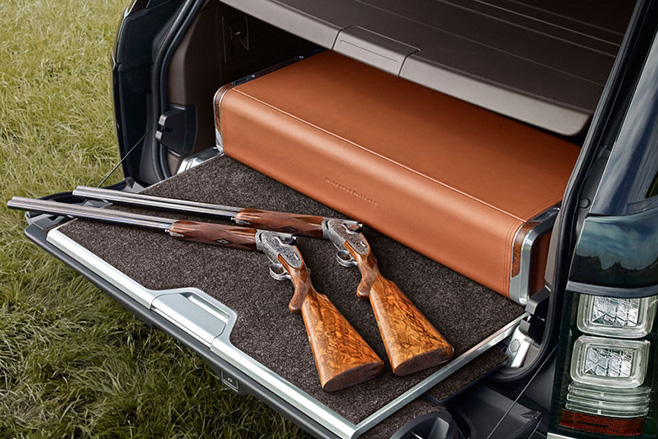
1. RANGE ROVER GUN BOX
Nudging $500K if sold in Oz, Rangie paired with gun brand Holland & Holland to create a firearm-themed SUV. The most expensive Range Rover ever came with boot-mounted gun chest but sadly missed the swivelling roof-mounted spottie.
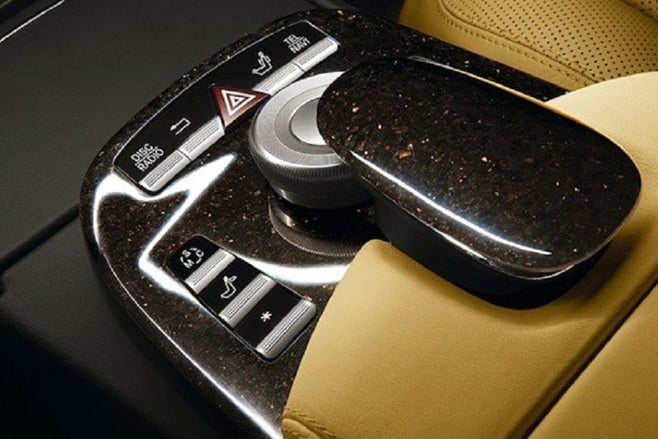
2. STONE INTERIOR TRIM
Most car makers are desperately trying to dump weight to meet tightening emissions regs, but Mercedes is happy to laden its high-end vehicles with, err, granite. Though applied in wafer-thin sheets, it’s one car you wouldn’t fit a carbonfibre bonnet.
3. CARBON WHEELS
If paying $295K – double the cost of a regular M4 – for the hardcore GTS isn’t enough, you can spend an extra $21,560 on Carbon Compound wheels to save another seven kilograms. Or you could just lay off the tinnies for a bit.

4. LEXAN WINDOWS
Some of the more impractical options have at least the redeeming virtue of being kind of cool. Lexan windows? Judge for yourself, but on your 695 BiPosto, Abarth will sting you $7K for the privilege. Drive-throughs would be interesting.

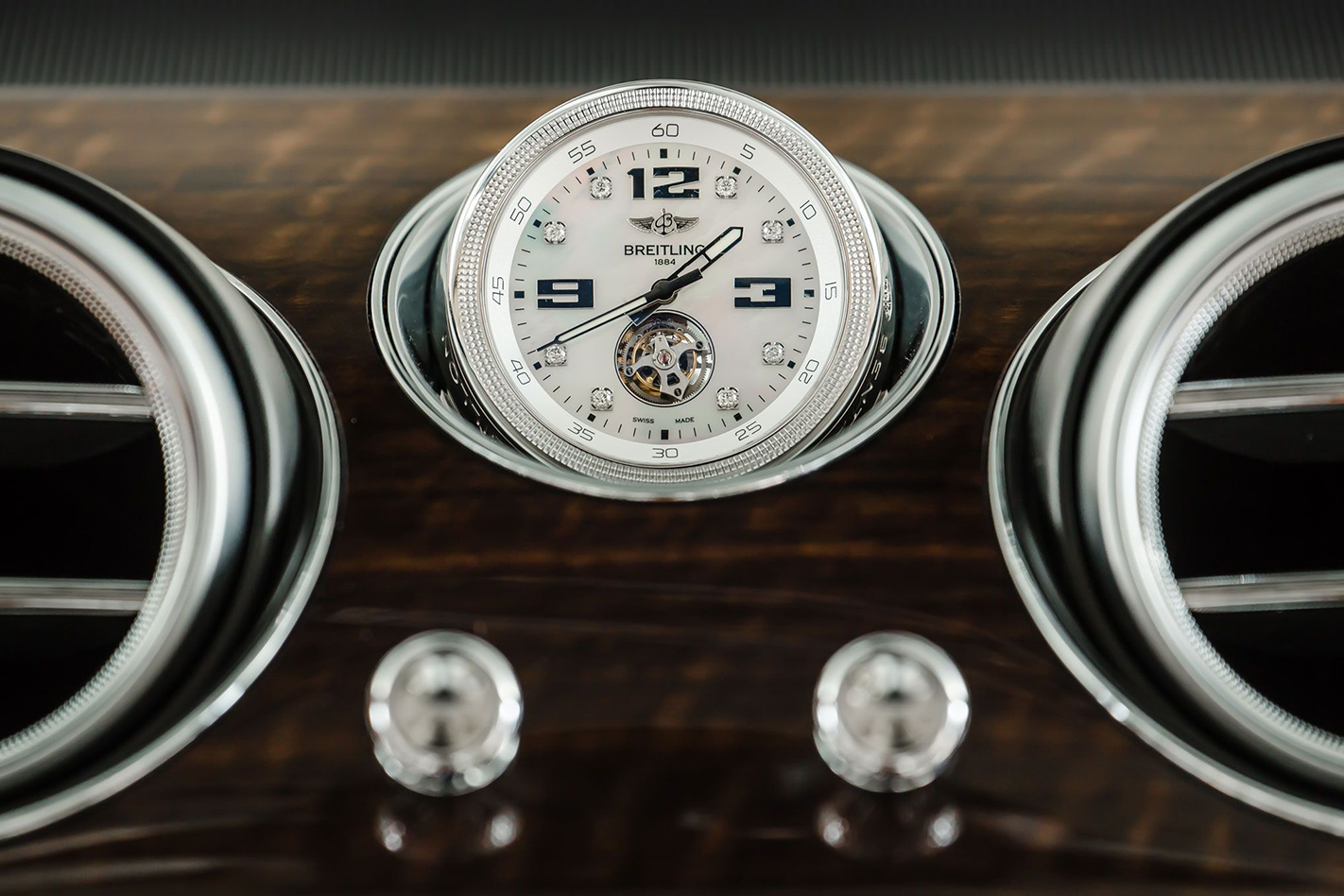
5. $300K BENTLEY CLOCK
Draw a graph with one line denoting taste and the other wealth and you might see an ‘X’ pattern emerge. Bentley must know this to be true about its own customers – its $423K Bentayga SUV can be optioned with this $300,000 Breitling clock. Not a typo.
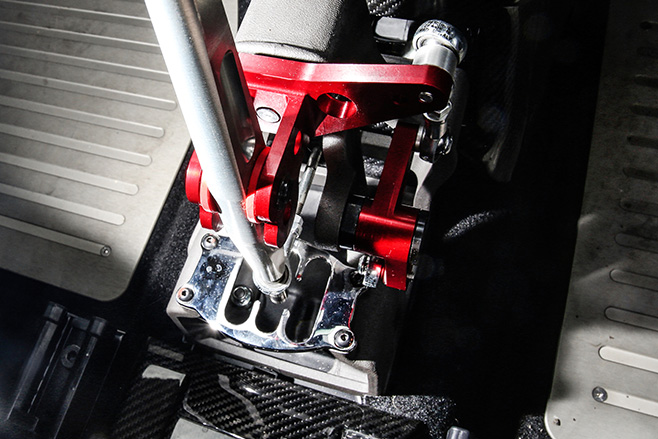
6. ABARTH DOG ’BOX
Don’t get us wrong, we like the idea. Straight-cut gear whine, lightning-fast changes. But the Abarth 695 BiPosto’s $15K optional dog-ring gearbox is bipolar – either awesome, or cranky. You’ll be in the latter camp too after a stint in traffic.
7. PASSENGER DISPLAY
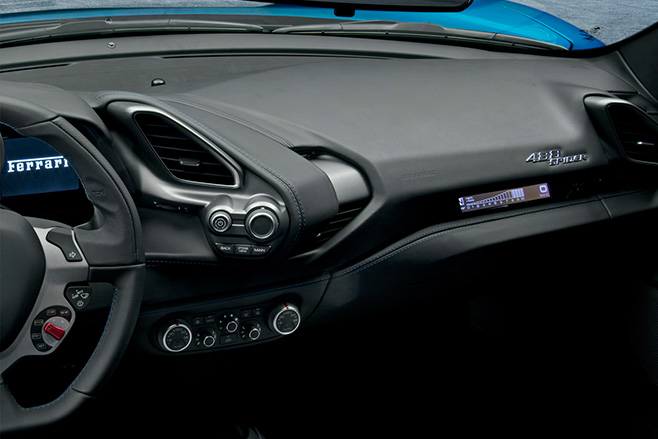
Like the FF and F12, the Ferrari 488 has a little screen for the passenger revealing rpm, speed and gear. It can be turned off, and we suppose it’s of interest, and not just for the passenger – better to spot the self-appointed co-drivers early.
8. EXPENSIVE STICKERS
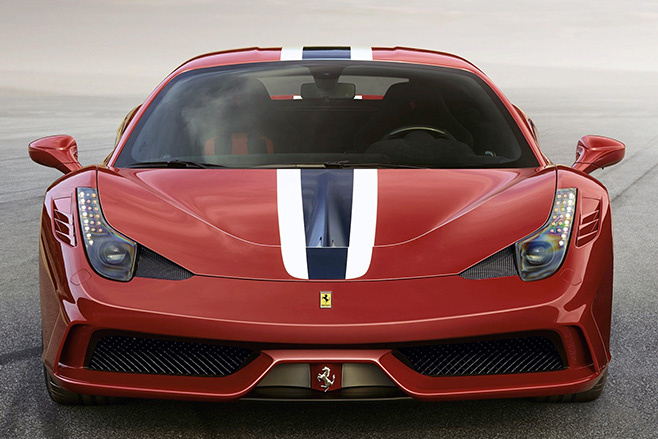
The Ferrari 458 Speciale will go down as one of the best cars our sister publication MOTOR has ever tested. In truth, we don’t mind these N.A.R.T stripes, a nod to the classic racing Ferraris of the North American Racing Team. But an extra $15K is a bit rich.
9. TAILGATE SEATS
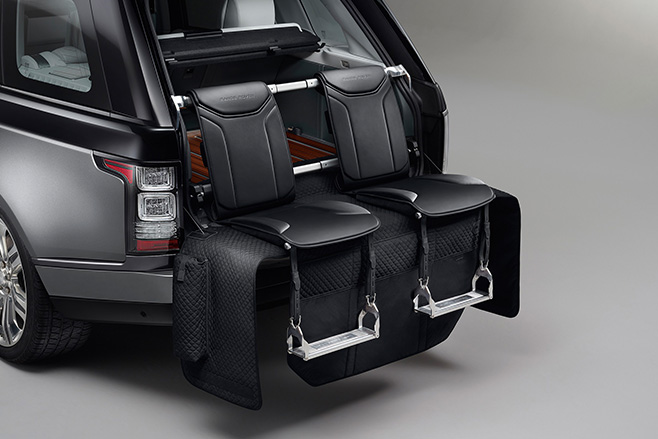
The $368K Range Rover SV Autobiography comes with what it calls “Event Seating”. Folding out for equestrian shows and the like, but also front row seats to quite a show if strapped in on the autobahn. For people you don’t like, obviously.
MAZDA reckons it listens, which is why the facelifted 3 is here with an emphasis on improving the popular small car’s ride, refinement, value, and functionality, while pushing safety and tech boundaries with standardised AEB and cornering-enhancing G-force Vectoring Control.
WHAT IS IT?
The third-gen Mazda 3 mid-life makeover runs deeper than expected, due to greater sound deadening, revised steering and suspension components and a big step-up in safety standards. Plus, new powertrain software known as G-force Torque Vectoring improves driveability. All up the Japanese car’s value, even if – base Neo apart – prices rise slightly.
WHY WE’RE TESTING IT
Dream runs don’t come smoother than the Mazda 3’s, residing at the pointy end of the sales charts for a dozen years. The third-gen version launched in 2014 has copped criticism for being noisy and rowdy compared to the Volkswagen Golf. But Mazda says it’s listening, and this is the result – the quieter, smoother, safer, better-value, and more dynamic Series II.
MAIN RIVALS
Ford Focus; Holden Astra; Holden Cruze; Honda Civic; Hyundai Elantra; Hyundai i30; Kia Cerato; Mitsubishi Lancer; Nissan Pulsar; Peugeot 308; Renault Megane; Skoda Octavia; Subaru Impreza; Toyota Corolla; Volkswagen Golf; Volkswagen Jetta.
THE WHEELS VERDICT
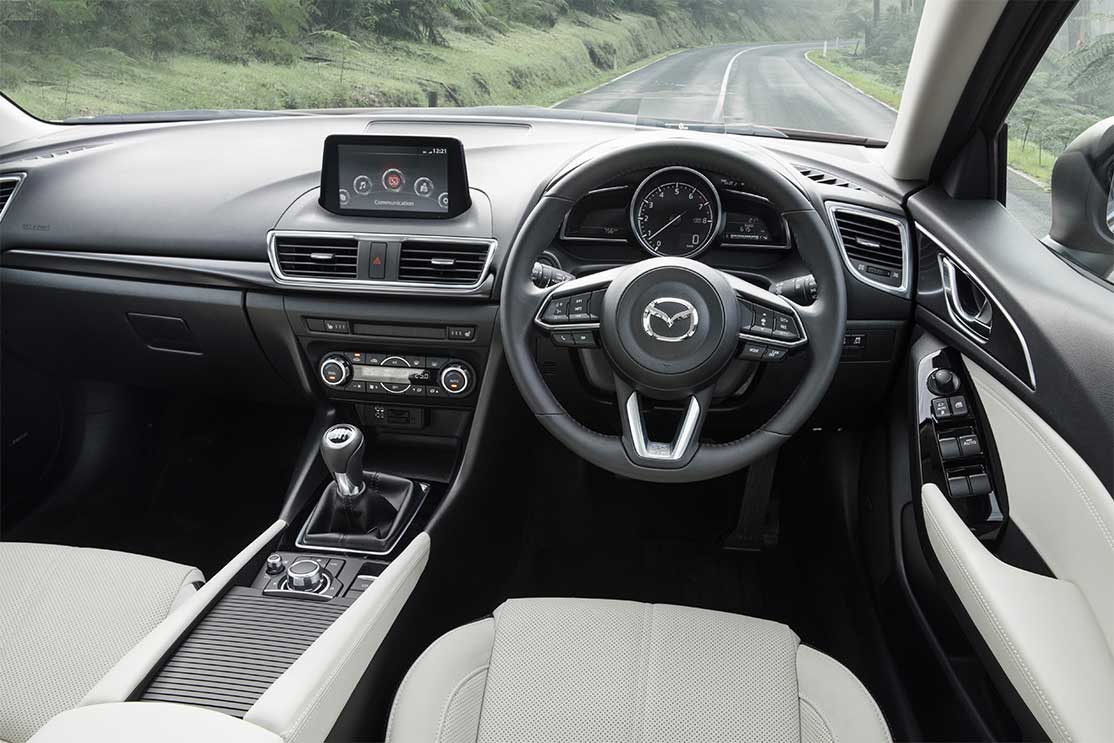
That’s better. The Series II goes some way to righting most of the original third-gen 3’s wrongs by being quieter, better riding, a little more fluid dynamically (partly due to G-force Vectoring Cornering), and actively safer with standard AEB. Bravo Mazda. We’re also glad that attention has been paid with larger door pockets and more pleasing instrumentation. But while the newcomer has progressed, it remains mechanically noisy under load, there’s still noticeable tyre rumble, and none of the poor side vision issues have been addressed due to no sheetmetal changes. With the impressive new Honda Civic gaining traction, and fresher rivals like the completely redesigned Hyundai i30 waiting in the wings, Mazda cannot afford to rest on its laurels.
PLUS: Safety; dynamics; performance; value; smoothness; efficiency; economy; choice
MINUS: Still a bit rowdy; dour rear-seat ambience; no more diesel; no hot-hatch option
THE WHEELS REVIEW
AUSTRALIA’S motoring sweetheart, the Mazda 3, has long been a likeably lusty little performer. But even brand loyalists would admit that the Japanese C-segment diva can get a bit mouthy – rowdy even – mainly due to excessive road noise.
Happily, Hiroshima has been listening, so welcome the Series II. Like so often with your partner’s haircuts, the changes need pointing out, so please notice the wider grille, “more horizontal” bumpers, and altered front air intakes and rear diffuser. Apparently.
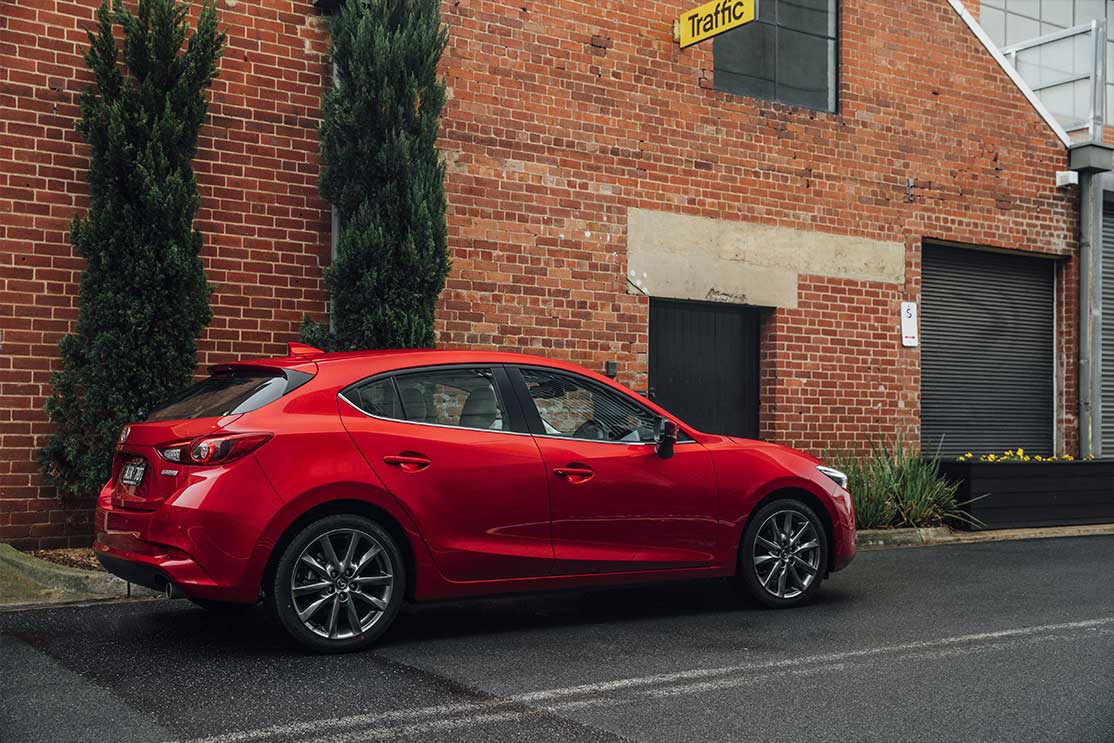
Yet the obvious mods are mostly so inside, since the slimmer-spoked wheel feels better, the redesigned instrument markings look better, and there’s more storage. From the mid-spec Touring model up, the handbrake gives way to an electronic toggle (sadly), the GT and Astina’s head-up display is clearer and more informative, and the CD player is history range-wide.
More importantly, there is less droning emanating from the rear, thanks to a significant boost in sound-deadening in the floor, roof, and pillars. And while the 91 RON unleaded-ready stop/start engine (unchanged in both 114kW/200Nm 2.0-litre and 138kW/250Nm 2.5-litre guises) can still seem vocal when extended, the overall experience is more peaceful.
Meanwhile autos gain ‘Sport’ mode, which alters the shift patterns, for livelier responses – another good move, as the 2.0-litre auto previously felt a tad lethargic low-down. Note though, it can hold lower ratios for too long, which is tiresome in traffic.
The electric power steering has been retuned for a more natural feel, aided by modifications to the dampers and rear suspension, mainly to boost ride comfort, but also handling confidence.
To demonstrate these as well as the benefits of the G-force Vectoring Control, which alters engine torque delivery to the front wheels for better and smoother traction, Mazda had us driving otherwise identical-spec old and new 3s through a series of slaloms; the more fluid, planted, and predictable handling of the latest model was clearly discernible. And on real roads, the cars continued to impress with their poise and control.
Following Volkswagen’s lead with the Skoda Octavia range revamp, Autonomous Emergency Braking is standard, meaning the old $1500 safety pack has been deleted, along with the slow-selling XD Astina Diesel. Pity.
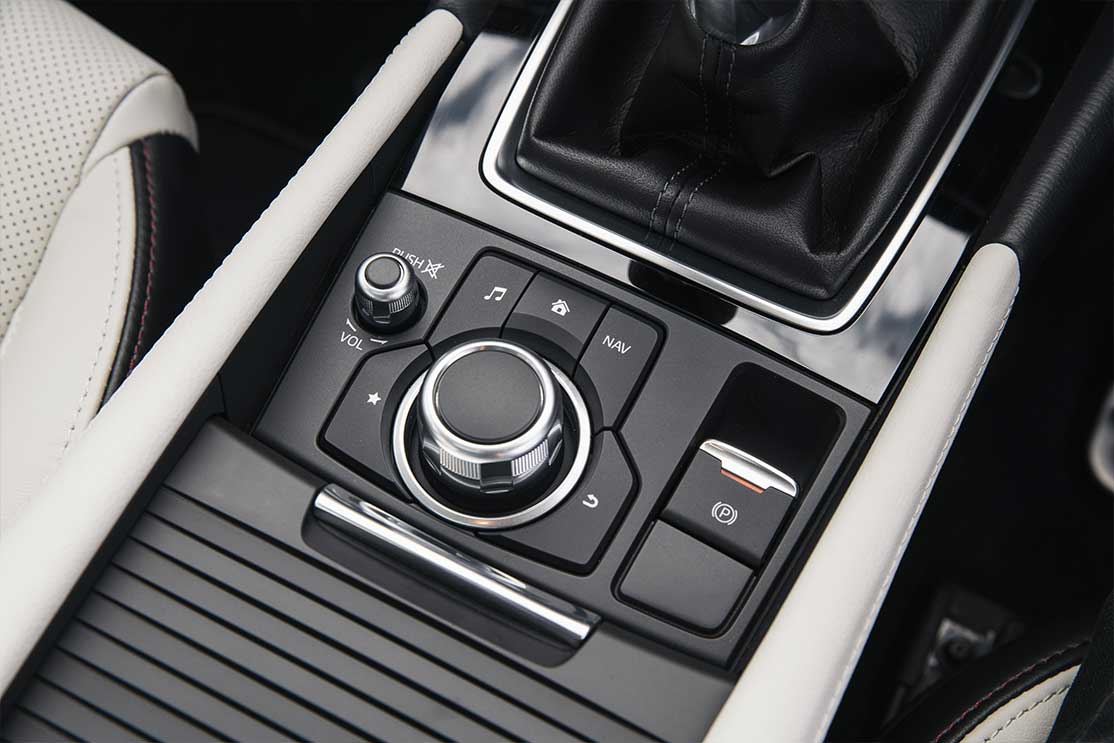
The entry Neo remains the same at $20,490 (though no touchscreen means no integrated reverse camera – that’s what the popular Maxx from $22,890 is for), and most of the others cost only about $500 extra yet gain additional safety like blind-spot monitoring, Rear Cross Traffic Alert, and – on the SP25 GT – Traffic Sign Recognition tech, while the SP25 Astina is now $1500 less but scores Lane-Keep Assist and Adaptive LEDs.
All ought to help keep the better equipped, safer driving, comfier, and quieter 3 sweet with Aussie small-car buyers. This one deserves success.
SPECS
Model: Mazda 3 Neo Series II 5DR Engine: 1998cc 4-cyl, dohc, 16v Max power: 114kW @ 6000rpm Max torque: 200Nm @ 4000rpm Transmission: 6-speed automatic Weight: 1296kg 0-100km/h: 9.2sec Fuel economy: 5.8L/100km Price: $22,490 On sale: Now
