
Victorian Police are considering new technologies to get motorists to put down the phone while driving.
A new high-tech device being used in New York, dubbed the textalyser, could be used in a similar way to breathalysers, in a bid to reduce the number of motorists using a phone.
The plan is the latest in a string of attempts by Police to reduce the number of incidents caused by using a phone while behind the wheel, which is one of Australia’s biggest accident-causes along with people not wearing seatbelts and drunk-driving. An alarming number of 34,000 Victorians were caught using a mobile phone while driving last year. Disturbingly, inexperienced L and P-platers were among the worst offenders.
The test analyser system – created by Israeli company Cellebrite – scans a mobile phone to see if it was being used at the time of an accident, but due to privacy laws, it’s unable to identify the specific content. It can also scan for web browsing, as well as call and message logs.

“All of our state-wide operations have a mobile phone component, as do regular police patrols. The recently launched Operation Motus (which targets motorcyclists) has had a particular focus on mobile phone use behind the wheel,” a spokesperson for the Victoria Police said.
“Distracted motorists pose particular dangers to vulnerable road users and patrolling on motorcycles gives us a great vantage point to see what motorists are doing behind the wheel.”
At this stage, the authority has said there are no concrete plans to bring the device to Australia but it is always considering new technologies to make the roads safer.
“We are interested in anything that could support us in our road to zero lives lost on Victorian roads. We are constantly assessing technologies from all over the world to advance our road policing efforts.
“Victoria Police continues to explore methods of detecting people breaching the road rules and using mobile phones is no different.”
Currently, the penalty for using a mobile phone or other visual display units while driving in Victoria is a $455 fine and 4 demerit points.
Finke’s notoriously tough desert race track has been described as an “eye opener” by Team Wheels co-driver Bernie Webb, who has just had his first taste of the track that snakes south of Alice Springs and down near the fringe of the Simson Desert.
I spoke to Webb yesterday about the start of our on-track preparation for the toughest off-road race in the country – and one I’ll be in the hot seat for.
Webb is a seasoned rally co-driver, both on tarmac and gravel, but says the Finke challenge is like nothing he has attempted before.
For yours truly, too, it will be new territory. My racing highlights are limited to things such as a one-make production car series in the 1990s and a few other production car races. I’ve also competed in the Bathurst 12 Hour, which may match Finke on intensity but will be nothing like it in terms of terrain and ruggedness – or the car we’ll be driving, which is a near-standard Mazda BT-50 dual-cab ute.
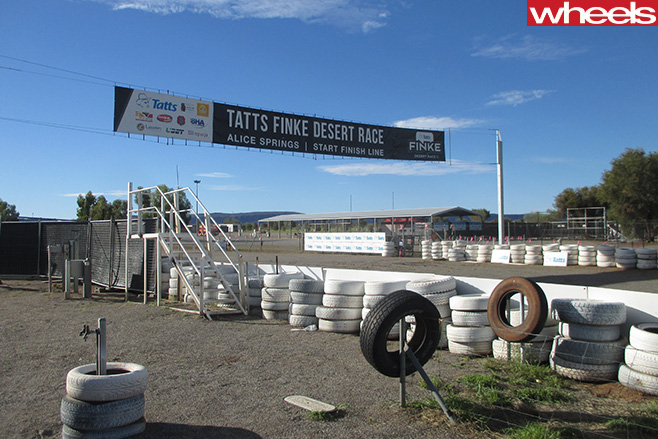
The good news is our race car – complete with great Wheels livery – has arrived in Alice Springs, along with the support cars, tools, spare parts and some of the people who’ll be working on our desert attack.
On Sunday, Webb and team co-ordinator Robert Chadwick surveyed much of the 226km route with the view to making pace notes for Wheels’ inaugural crack at the Finke Desert Race in our near-standard Mazda BT-50.
As it turns out, though, corners won’t be the issue. Bumps – or woops, as successions of them are known – will be.
“It’s all about what the surface is doing,” Webb told me, adding that much of his work is about assessing the bumps that could potentially catch us out.
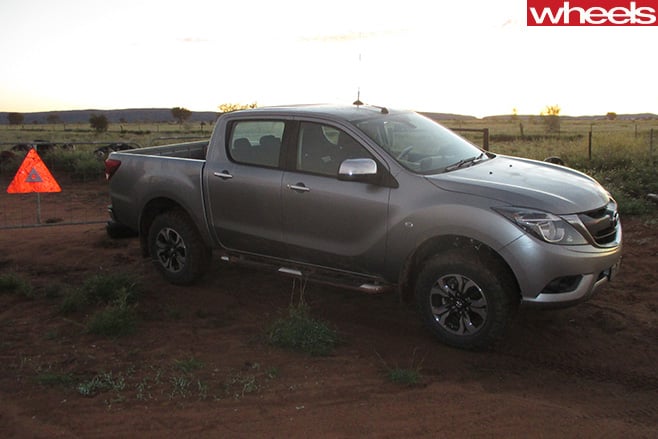
The good news is that the BT-50 seems to be dealing well with the bumps and lumps. The car doing the recce – or pre-run, as the off-road racers call it – is almost identical to our race car, albeit without a roll cage, the chunky Toyo off-road tyres and the modified shock absorbers. The guys report it’s not bottoming out, and on some of the woops, can get into a nice rhythm.
That’s one major advantage we have in the lead up to the event: the car we’re using in the days leading up to the event is so close to the one that we’ll be racing, whereas most people will be in something completely different.
The challenge, though, is picking the right speed to suit the car.
“It’s all about the frequency,” Webb explains. “If you get the right wave form for that wheelbase and that suspension geometry, the thing will ride over them really nicely.”
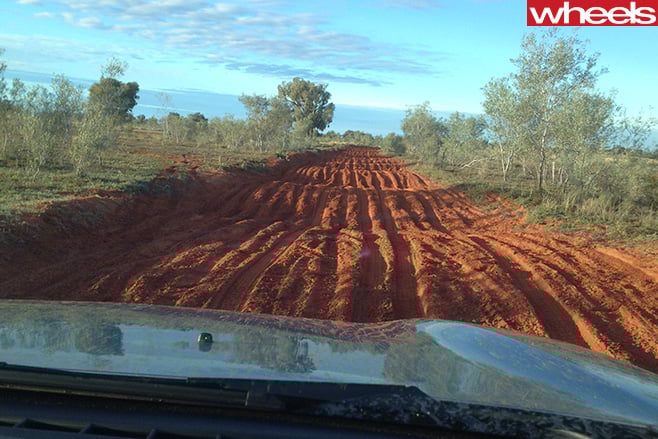
“You’ll have 500 metres of good road then 500 metres of crazy, crazy rough stuff.”
Webb says it’s all about picking where we can potentially make up some time and buttoning off when we have to take some more aggressive bumps more slowly.
Throttle response is another thing we have to learn to manage. Like any turbo diesel, the 147kW/470Nm 3.2-litre five-cylinder has some lag. That’s because it’s all about building plenty of grunt for towing and lugging a load around, not racing. Yet for Finke, we’ll be on and off the throttle constantly adjusting for the terrain.
One big variable is how much the course could change throughout the week.
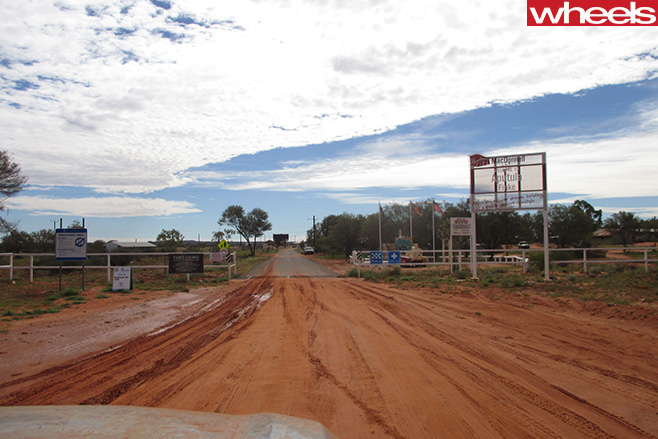
Unpredictable, then.
But we’ll have more chances throughout the week to keep track of it all and come up with a plan on how to finish what is a gruelling event.
Webb says it’ll be a huge challenge, but one that’s achievable.
“It’s going to come down a lot to maintaining intensity.”
Keep track of Wheelsmag.com.au this week for more updates as we take you inside our inaugural Finke Desert Race attack. We’ll bring you stories throughout the week as well as updates of our progress throughout the race.
A new, high-tech Mercedes-Benz E-Class is due to arrive in Oz later this year, but it will cost around $10,000 more than the old one.
Prices will start at $89,990 for the entry-level E200 with a 135kW/300Nm 2.0-litre four-cylinder petrol engine; $92,900 for the E220d and its 143kW/400Nm 2.0-litre four-cylinder diesel, and $134,900 for the E350d powered by a 190kW/600Nm 3.0-litre six-cylinder diesel.
Benz is upping E-Class prices due to a higher level of standard equipment, meaning buyers won’t need to tick as many boxes for optional extras.
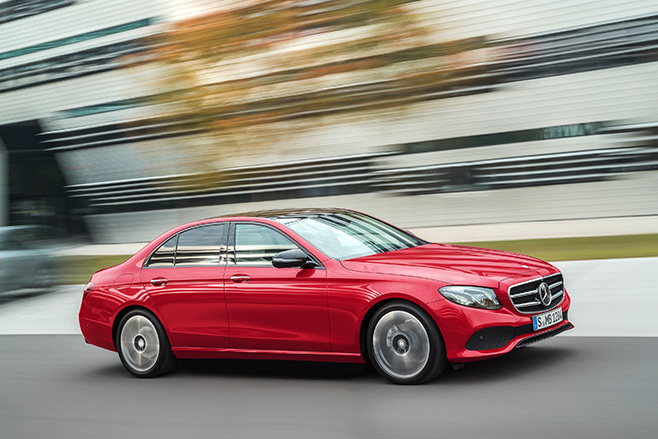
“We decided to make the things customers want standard, along with the nine-speed [gearbox], because that’s what people order,” said Mercedes-Benz Australia spokesman David McCarthy.
The new E-Class is more technologically advanced than the most expensive Mercedes-Benz, the S-Class. It includes a full suite of advanced safety systems, a widescreen digital dash display, 360-degree cameras, wireless charging for mobile phones, steering wheel touch controls, electric seats with memory, and LED lighting.
“The equipment that we put in is what customers have told us that they want. It makes things easier for us and for the customer and the dealer.”
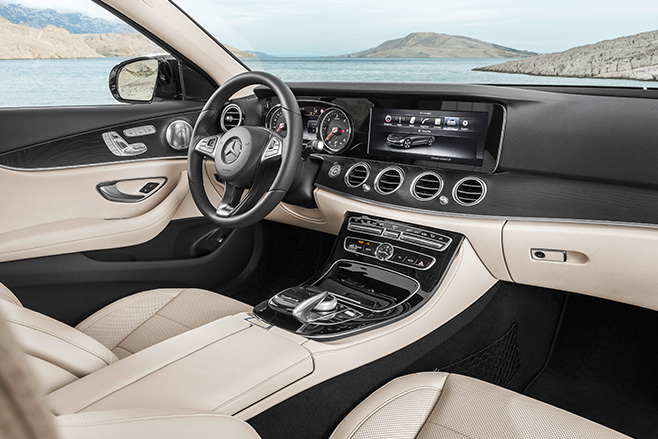
“We know the category of customer pretty well. E-Class has led the segment for a couple of generations in Australia. It’s not our intention to surrender that.”
Five more E-Class sedans are on the way to complete the range. We should see two new petrol models – the E300 and E400, and the E43 AMG performance model arrive before the end of 2016.
Next year, the plug-in hybrid E350e and top of the range E63 AMG models will land on our shores, followed by E-Class Estate variants.
Aussies are well familiar with the concept having to choose between red and blue.
Whether it’s cars (Ford vs Holden), football (Queensland vs NSW), beer (Tooheys/Cascade) or, back in the day, smokes (Winfields), most folks tend to naturally form a preference for one side or the other.
But Australia doesn’t have a monopoly on this match-up. The fight between Subaru’s WRX STI and Mitsubishi’s Lancer Evolution might not have the history of our local dust-ups, but the battle lines are equally clear: fast Lancer fans aren’t likely to join the boxer brigade, and vice versa.
With the arrival of the Lancer Evolution Final Edition, however, the contest is nearly at an end. Given that makes the WRX STI the last man standing, you could argue the Subaru is the winner by default, but is the Mitsubishi able to land one last knockout punch, in the manner of Mickey Rourke in The Wrestler?

The latter is here as a representative rather than a competitor, to test, do our Oriental protagonists still bring anything to the table in the wake of this Euro onslaught? Or have they been overwhelmed by the technological superiority of the Germans?
After 24 years and 10 generations, the Final Edition is the swansong for the Lancer Evolution. Sadly, the mouth-watering 353kW Final Concept has been significantly watered down for production, however this is not just a badge-and-stickers job either. ECU fiddles and sodium-filled valves for improved cooling liberate an extra nine kilowatts at the top end and add 48Nm of mid-range punch, bringing totals from the 2.0-litre turbo four to 226kW/414Nm.

Subaru also recently updated the WRX STI for MY16, however the changes are limited to increased safety and convenience features on Premium models. The venerable EJ25 2.5-litre turbo flat-four continues with 221kW/407Nm, sent through a six-speed manual gearbox. Subaru claims an impressive 4.9sec for the 0-100km/h sprint, however extracting numbers continues to be as cruel and brutal as the opening scenes of Saving Private Ryan.
The only way to get the STI off the line is to use as many revs as possible, dump the clutch and hope the drivetrain doesn’t blow itself to smithereens. Wetting the tyres helps slightly, reducing the shock load and allowing a little wheelspin to keep the car on boost. It jumps off the line like it’s been stabbed and then it’s a matter of changing gears as quickly as possible, something the synchros aren’t too fond of. Crunch.
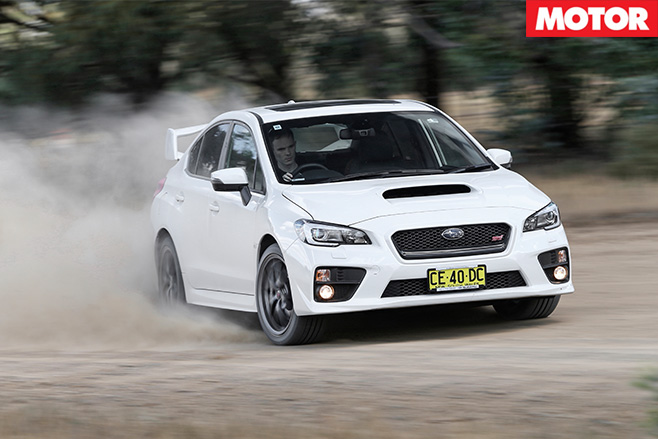
Anyhow, the Evo requires a similar technique, but an artificial 5500rpm rev limiter when stationary limits the violence with which it can launch. That’s not enough, and the Mitsubishi bogs down slightly, losing three-tenths to the Subaru by the time the pair hit 40km/h. Interestingly, trying the same wet-tyre trick as the STI sends the Evo’s active all-wheel drive system into conniptions, spinning either the front or rear wheels like mad and crabbing down the strip like a wonky dog.
It still trails slightly at 100km/h (5.61sec) but from there the two are virtually neck and neck, the Lancer crossing the 400m mark in 13.67sec at 164.78km/h, a mere 0.05sec and 0.20km/h behind the STI. Of course, the best European hot hatches are more than a second up the road these days, and even price rivals like the VW Golf R are at least half-a-second clear, but we’ll continue.
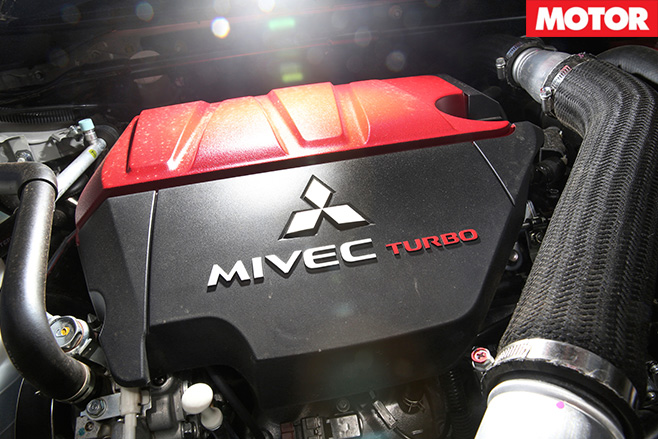
While effective, the 4B11 is laggy by today’s standards; we’ve become spoiled by new-gen turbo engines that pull from idle. It also sounds strained at higher rpm – chasing the 7000rpm redline sounds like you’re hurting it – and devours 98RON at a tremendous rate. Combined with a tiny 55-litre fuel tank, the Evo’s thirst results in a pathetic touring range; fill-ups in 350km or less are commonplace.
It’s not helped by ill-conceived gearing. With Mitsubishi’s SST dual-clutch ’box having ended production a while ago, the Final Edition is only offered with a five-speed manual, and in an effort to force buyers into the then-new whizz-bang self-shifter, the manual Evo X was seemingly saddled with whatever cogs were left on the shelf.
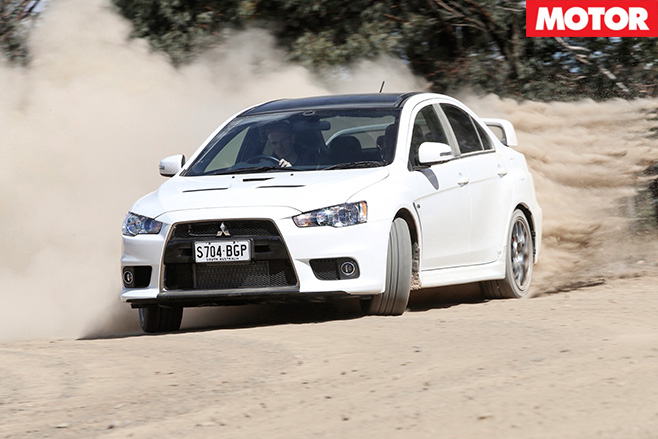
Unfortunately, the Subaru is a very difficult car to drive smoothly; it’s all too easy to get out of ‘sync’ with the car and end up looking like you’re on your third driving lesson. Without fail, everybody who drives it stalls it, too. Thankfully, it’s at its best when you’re driving it like it was designed to be driven.

Any under or oversteer at road speeds is usually the result of driver error; the latest STI is massively stiffer both in terms of bodyshell and suspension set-up than its predecessor, and while this does bugger-all for the ride quality, it has made it a much sharper cornering tool.
So far, so good, however the fly in the Subaru’s ointment is its steering. The weighting is about right and there’s enough feedback, but it’s very sharp just off centre and feels strangely ‘springy’ with lock applied. Far worse, though, is its behaviour over mid-corner bumps; the rack rattle sounds like the bolts haven’t been done up properly and the kickback has the wheel bucking and writhing in your hands. It’s a major dynamic flaw and costs the STI dearly on the very roads it should shine brightest.

The steering is quick and accurate and the Mitsubishi peels into turns like a rear-driver; you can also trail the brakes to move the rear slightly but on exit the result is the same – total traction bar a hint of oversteer. Thrown around on the dirt for Brunelli’s camera, the STI is great fun, but feels edgy and unpredictable compared to the smooth fluidity of the Evo. No matter how ambitious the entry or aggressive the oversteer angle, you always feel like the situation can be recovered.
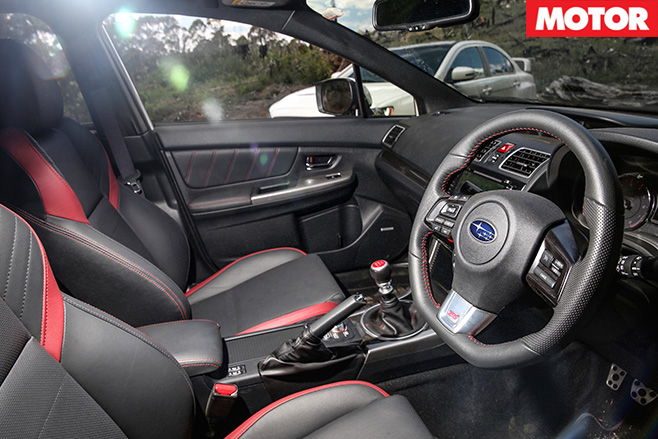
The Subaru sets no benchmarks, however the MY16 update brings welcome improvements. The new 7.0-inch touchscreen is fast-acting and looks slick, miles better than the clunky old unit shared with myriad Toyotas.
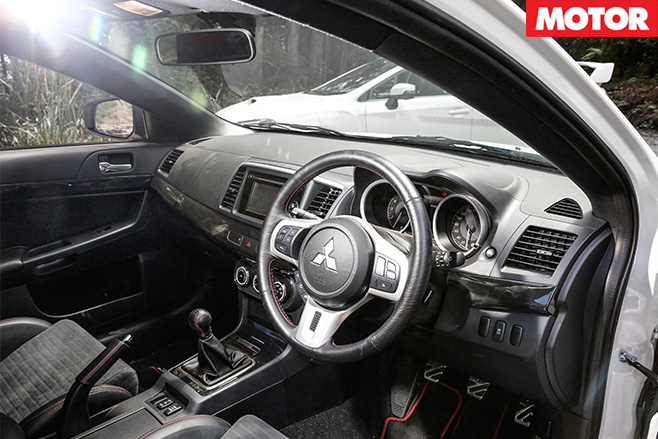
Of our two winged warriors, the Mitsubishi is clearly the less competitive 2016 package. Ironically for a model called Evolution, the Mitsubishi has suffered from a lack of investment and would need a serious overhaul of its interior, transmission and engine efficiency to battle today’s best.
Its dynamics are still right up there, and act as a reminder that these cars were once as much designed to fly through the forest as they were to do the weekly shop, which only makes it more upsetting that it will not get that chance. Mitsubishi says the market doesn’t want high-powered all-wheel-drive turbo cars, which must be why Ford just spent a bomb developing the Focus RS and the Mercedes-AMG A45 continues to be a sell-out success.

Subaru has expended a lot of effort in trying to make the STI more liveable day-to-day and has succeeded to a point, but it’s barely any faster than it was 15 years ago while everything else has made huge strides forward. It retains a pass mark by offering the raw involvement of a Renault Megane RS with the all-weather ability of the VW Golf R, but it could face a tough test with the mid-year arrival of the Ford Focus RS.
| u00a0 | LANCER EVO FINAL EDITION | SUBARU WRX STI |
| Body | 4-door, 5-seat sedanu00a0 | 4-door, 5-seat sedan |
| Drive | all-wheel | all-wheel |
| Engine | 1998cc inline-4, DOHC, 24v, turbo | 2457cc flat-4, DOHC, 16v, turbo |
| Power | 226kW @ 6500rpm | 221kW @ 6000rpm |
| Torque | 414Nm @ 3500rpm | 407Nm @ 4000rpm |
| Transmission | 5-speed manual | 6-speed manual |
| Weight | 1565kgu00a0 | 1537kg |
| L/W/H | 4510/1810/1480mmu00a0 | 4595/1795/1475mm |
| Steering | hydraulically-assisted rack-and-pinion | hydraulically-assisted rack-and-pinion |
| Price as tested | $53,700 | $55,390 |
| Pros | Awesome all-wheel drive system | Sharp handling; improved interior |
| Cons | Dated interior; poor transmission | Flawed steering; should be faster |
| Star Rating | 3/5 | 3.5/5 |
Thrilling battle as Rossi dominates Marquez, and Iannone takes out Lorenzo.
BOUNCING back in the best possible way after his cruel engine failure at Mugello, superstar Valentino Rossi was in brilliant touch in the Grand Prix of Calalunya, destroying the three Spanish threats on their home track.
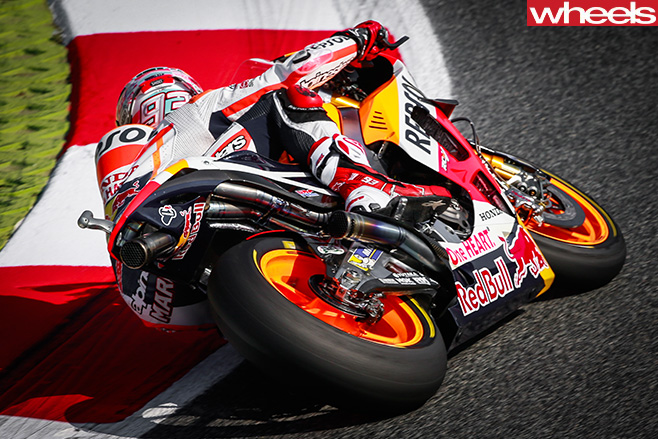
Another poor start upped Rossi’s degree of difficulty. From fifth on the grid, he slipped to eighth in the usual scramble into the first corner. His Yamaha teammate Jorge Lorenzo led the field away with Honda pair Marc Marquez and Dani Pedrosa pushing hard as Ducati’s Andrea Iannone charged through from further back.
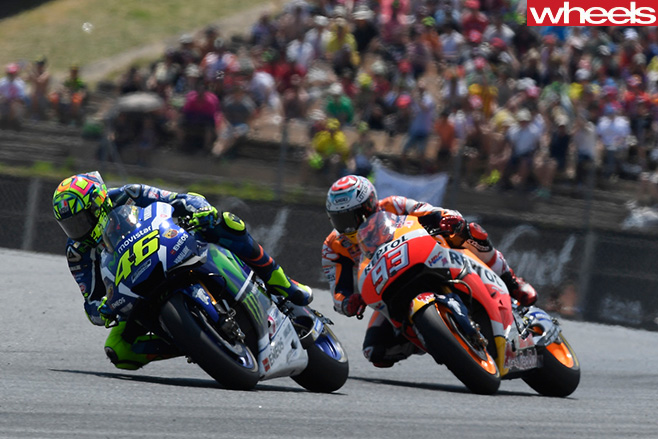
On lap seven, Rossi claimed the lead from Marquez, but the Spaniard wasn’t easy to shake. It was nail-biting, on-the-edge stuff as they gapped the rest.
It was about to get worse for the reigning champion. On Lap 17 Iannone’s rash passing move on the Yamaha went very wrong, and both crashed heavily. Lorenzo was rightly furious, a points haul gone. Stewards penalised the contrite Iannone, who will now start from last place in Assen.
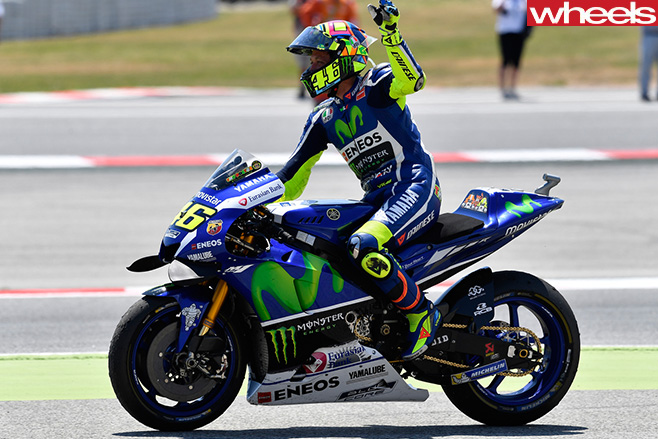
The pair, bitter enemies following an incident last year, sportingly shook hands afterwards, the sad death of Moto2 rider Luis Salom on Friday possibly a bonding agent. Marquez has a consolation prize; he now again leads the world championship.
Reigning world Moto2 champ Johann Zarco was at his thinking, strategic best at Catalunya, pouncing past early leader Alex Rins in the closing stages to romp away to an easy win. Zarco seems destined to graduate to MotoGP next year, either with Suzuki or Tech3 Yamaha.
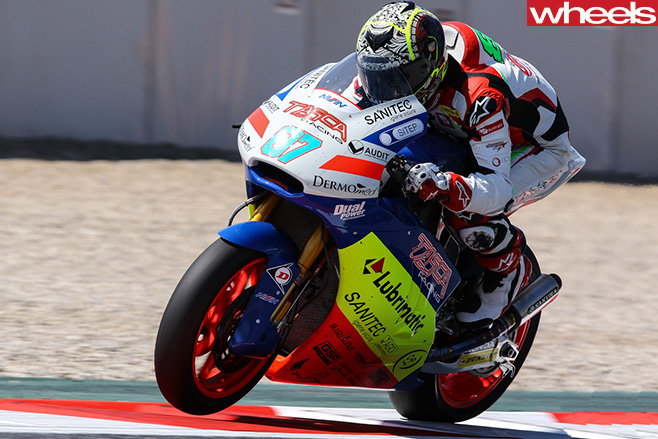
The typical small-class action lasted down to the flag in yet another thrilling Moto3 race, with Jorge Navarro taking a breakthrough victory from Brad Binder and Enea Bastianini.
IndyCars: Montoya talks the talk, Power walks the walk
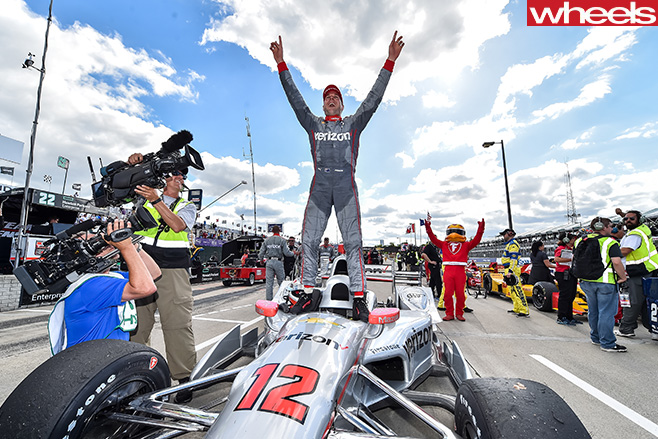
On Saturday, Montoya condemned an overly bold overtaking move by the Aussie during the opening leg of the weekend’s double header, delivering a verbal serve.
Montoya, who finished third behind Sebastien Bourdais and Conor Daly Penske in the Dual 1 race, believes Power “is a little desperate right now for results,” creating some extra tension among the four-driver Penske squad.
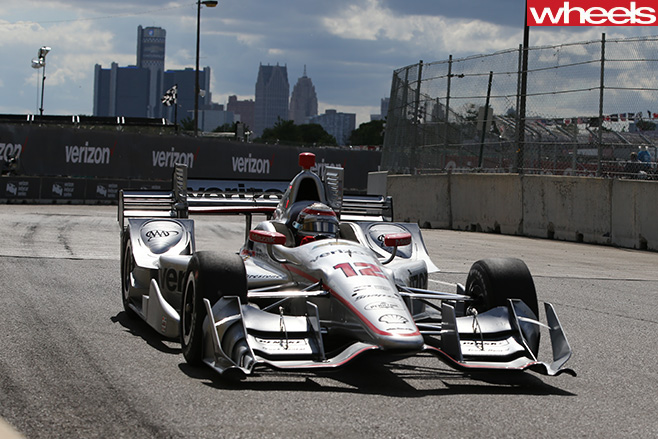
“He actually nearly ruined my race, (but) I was smart enough to know how aggressive and how far he’s willing to go. It’s kind of crazy, but it’s his choice,” Montoya told the Indy Star.
Power was classified 20th after his right rear wheel lug nut came off.
A day later, Power raced to victory in the second leg of the Dual in Detroit…and Montoya crashed out.
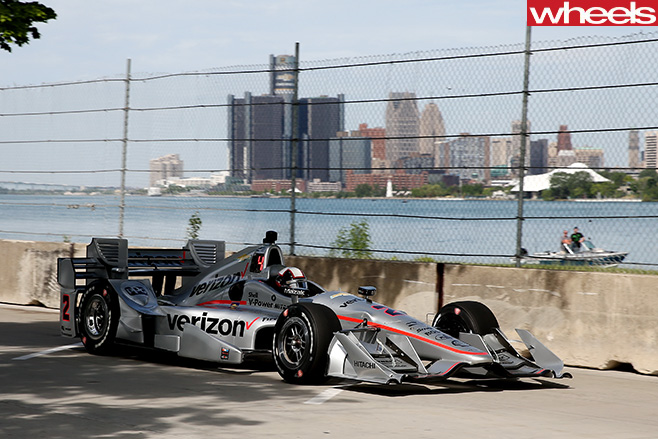
Teammate Pagenaud was elevated to pole and led the buzzing pack away.
A series of incidents turned the race on its head, upsetting some race strategies, particularly that of race leader Helio Castroneves. Pitting under the safety car, he slipped to 14th.
Power passed Pagenaud soon after the restart. Athough the Frenchman pushed hard on the final lap, the Aussie hung on to record his first win of the season.
Moto2: Spanish star dies after practice crash
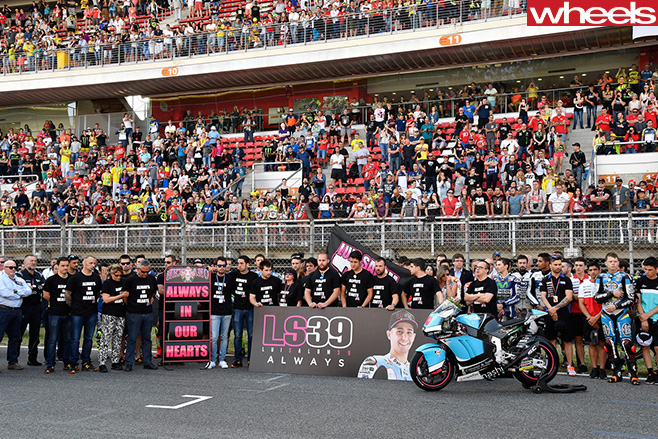
Medical help was immediate, and Salom was treated trackside for some time before being relayed to the nearby Hospital General de Catalunya. On arrival, he underwent surgery, but despite the best efforts of the trauma team, he died at 4.55pm local time.
Salom was a talented rider. He made his world championship debut at Jerez in 2009 in the 125cc category and finished on the podium in 25 races, including nine victories in the Moto3 world championship. He finished the 2012 Moto3 World Championship in second position in the standings and a year later was third overall after battling with Maverick Vinales and Alex Rins down to the final round in Valencia.
Salom also finished on the podium three times in 41 appearances in the Moto2 world championship, including a second place in the opening round of 2016 in Qatar.
The tragedy prompted the FIM to take the decision on Friday night to reconfigure the circuit to include the chicane used by Formula One.
Le Mans 24hr: Aussies in final shakedown
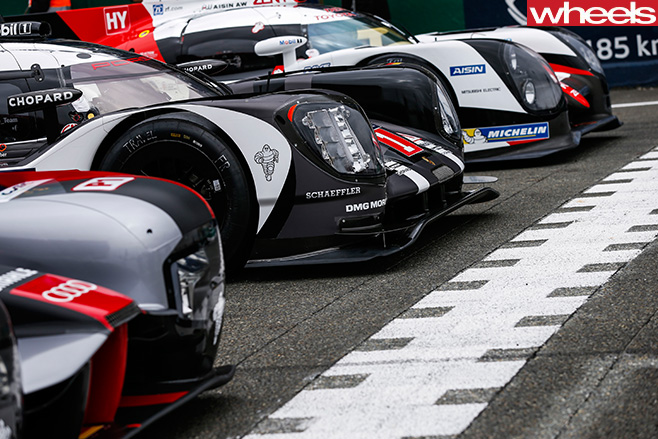
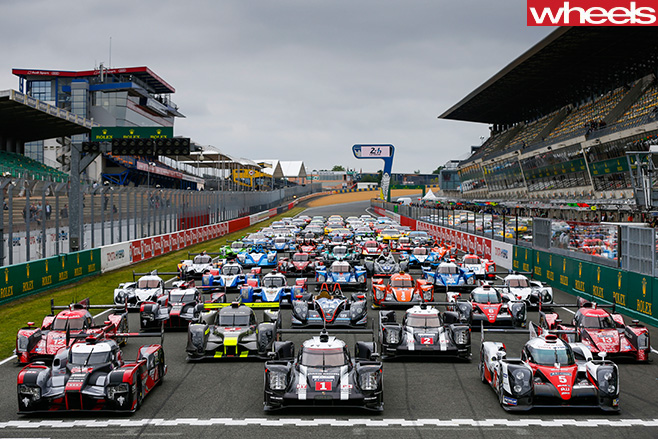
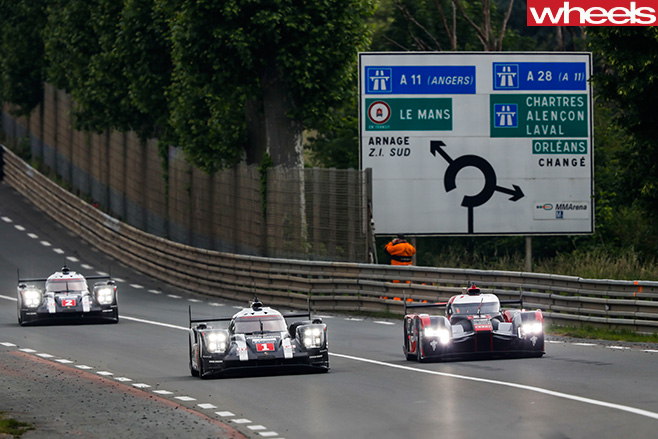
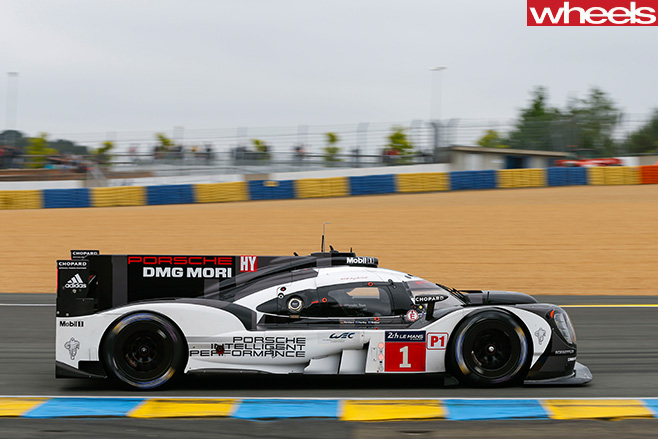
Webber is part of a three-man crew driving a works Porsche 919 Hybrid LMP1 prototype. Big guns Porsche, Audi and Toyota all have two-car teams entered for the 24 Hour race.
Briscoe is driving one of four LM GTE Pro Ford GTs for Chip Ganassi Racing.
Audi topped the practice times on a day when the main objective was to give the teams the opportunity to properly test their cars on the 13.629km Le Mans 24-Hours circuit. The Webber Porsche was second-fastest.
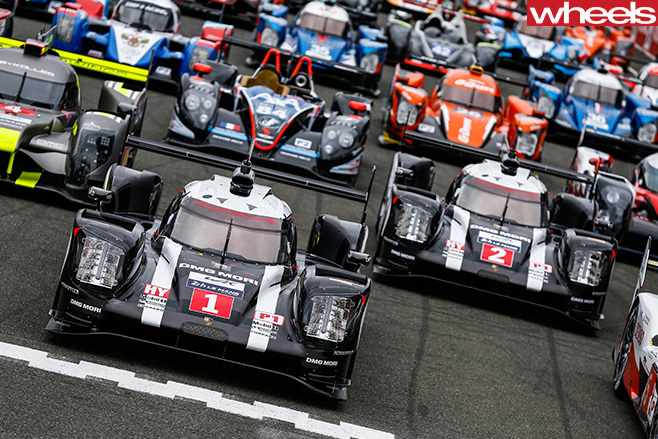
The compulsory test day was reserved exclusively for the cars entered in the race, and for those drivers who have never raced in the Le Mans 24 Hours or have not been on the list of confirmed drivers since 2011.
The headliners are no doubt Webber, Nick Heidfeld, Bruno Senna, Sebastien Bourdais, Jan Magnussen, and Kamui Kobayashi – all with grand prix starts on their CV. At the test day too were familiar names from sportscar and formula racing – Briscoe, Brendon Hartley, Romain Dumas, Nelson Piquet Jr, Rene Rast, Sébastien Buemi, Romain Dumas, Benoît Tréluyer, and Lucas di Grassi.
In other news, Porsche has reverted to last year’s specification of battery for Le Mans and the remainder of the 2016 World Endurance Championship.
Blaming a production problem, Porsche said the decision to go back to an older spec of cells used in 2015 was an easy one, reliability being a priority at Le Mans.
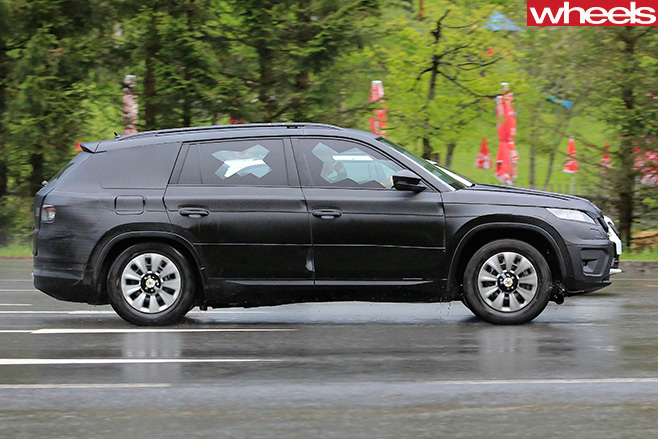
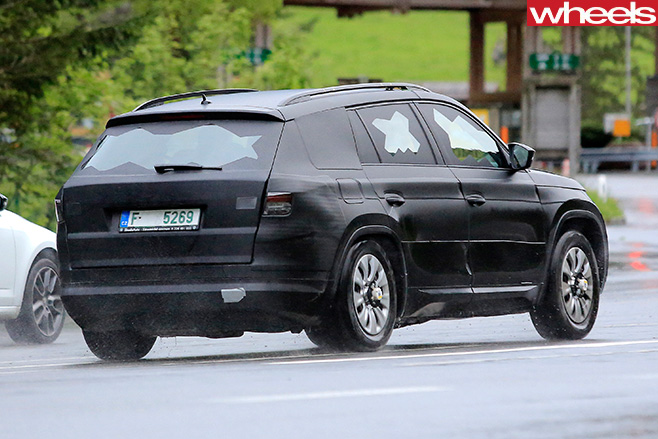
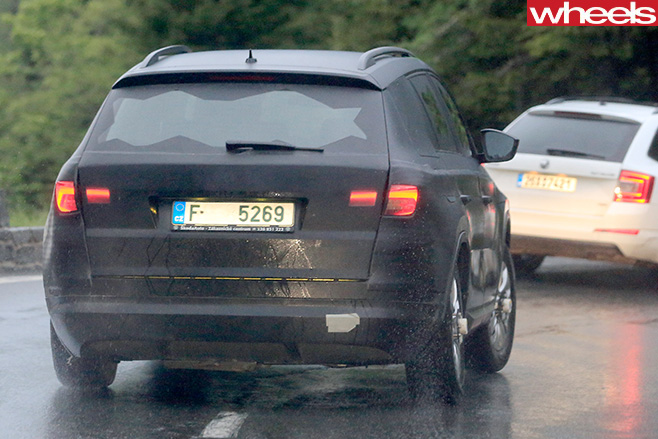
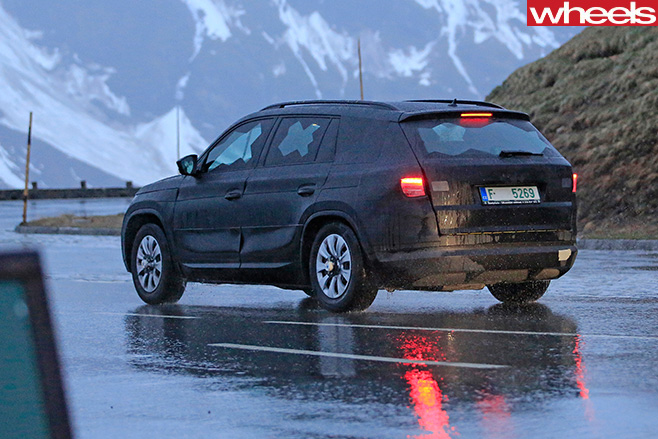
SPRUNG undergoing final testing prior to a world premiere in Paris in September is the Skoda Kodiaq, the Czech brand’s long-awaited weapon against the Kia Sorento, Toyota Kluger, Hyundai Santa Fe and imminent all-new Mazda CX-9.
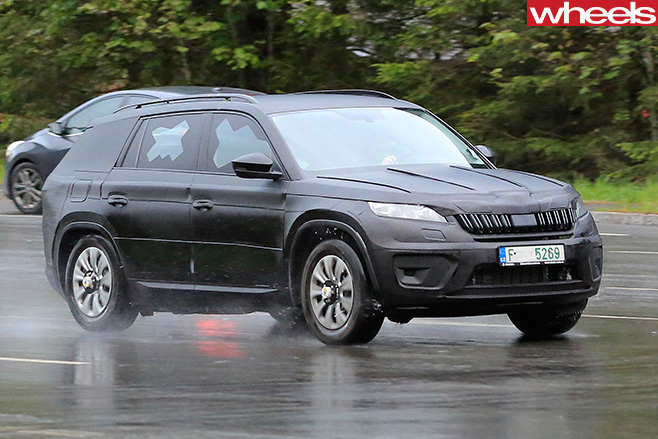
As the prototype reveals, the newcomer bears most of the design and proportion hallmarks of the ‘VisionS’ concept that appeared at the Geneva Motor Show in March.
A 1.4 TSI hybrid with plug-in electric assistance is also on the cards from about 2019, though it remains to be seen whether that makes it Down Under.
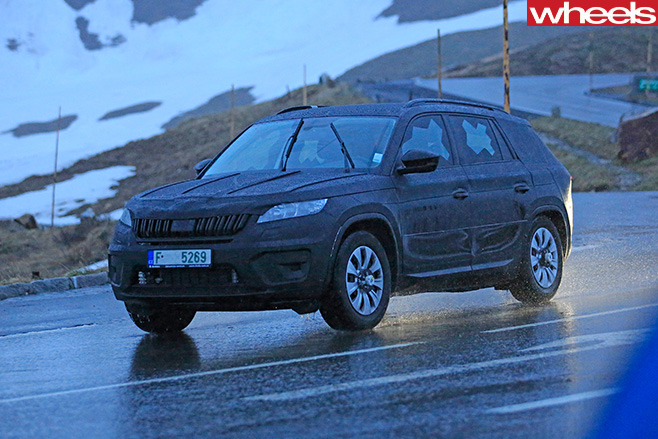
The Kodiaq name refers to a type of Alaskan bear.
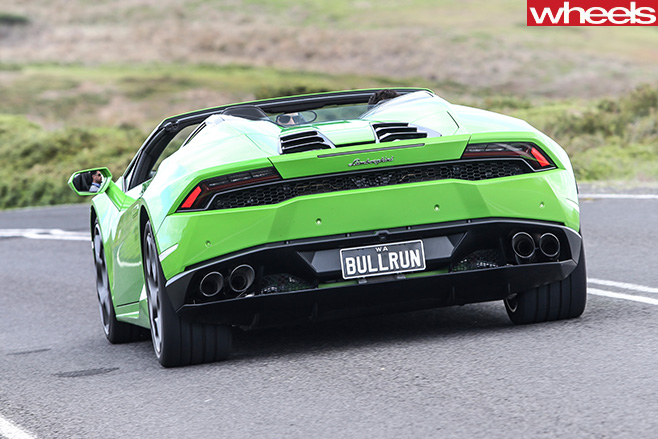
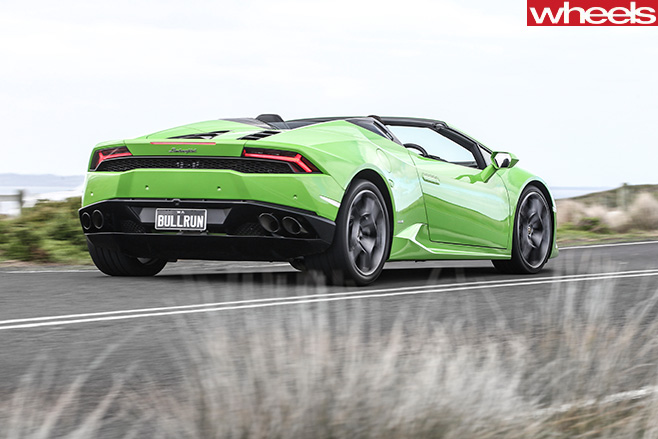
Losing the roof simply adds to the appeal of the already awesome Lamborghini Huracan supercar
WHAT IS IT? The Lamborghini Huracan LP610-4 Spyder is the convertible version of Lamborghini’s entry-level supercar. It shares some of its underbody architecture with the Audi R8 but adds a serious helping of Italian flair and personality, and eschews some of the Audi’s everyday friendliness for peak performance – both the straight-line and racetrack variety. All that, and the wind in your hair…
MAIN RIVALS Audi R8 Spyder, Ferrari 488 Spider, McLaren 650S Spider
THE WHEELS REVIEW IF THE thought of blow-drying your hair from 0-100km/h in 3.4 seconds interests you, or upping your vitamin D intake 17 seconds after the electric folding hardtop does its thing, the Lamborghini Huracan LP 610-4 Spyder could be the car for you.

Lower the narrow rear window between cabin and engine bay and the sound will smash you from two directions at once like a Wallaby double-tap.
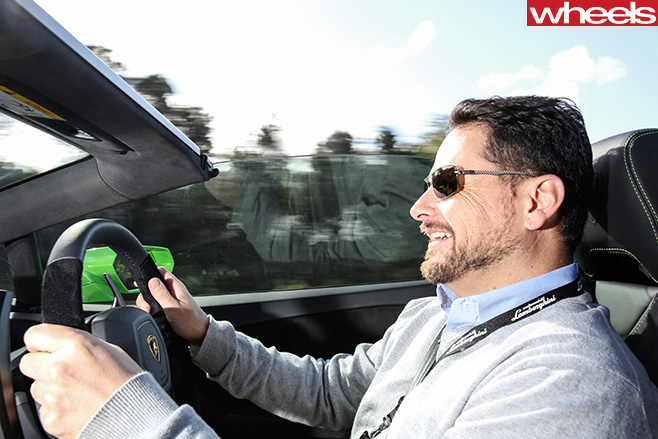
It’s also a reason you drive roof-down on a wintry Melbourne morning risking frostbite. And it’s a reason to change your opinion of tunnels from smog-filled hellholes to cavernous amplification devices.
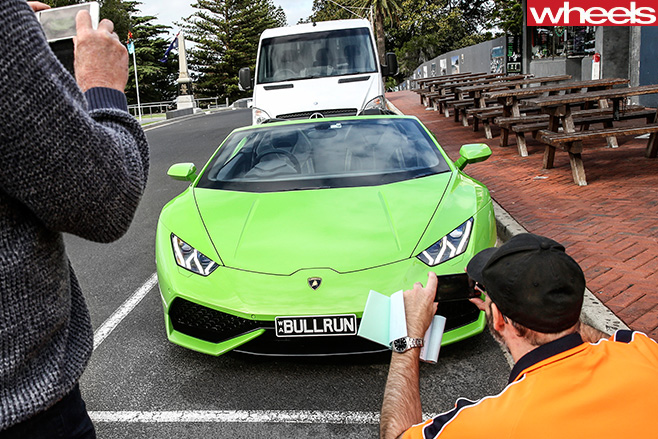
Lopping the roof off a performance coupe can often dilute dynamics due to lost rigidity or the additional weight of extra chassis members. With the Huracan, going roofless sacrifices little of the Coupe’s considerable dynamic talents.
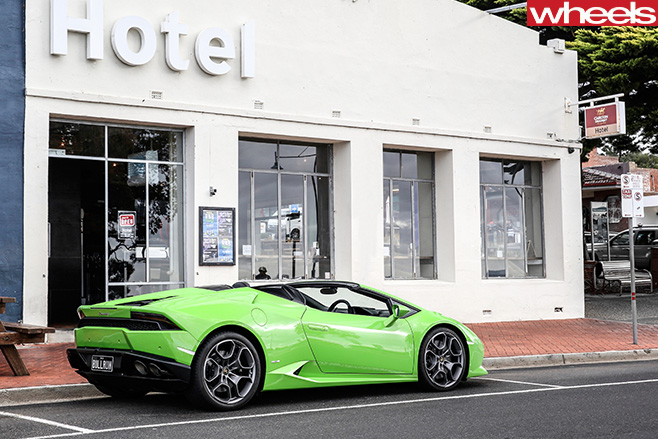
It has the same instantaneous throttle response from its 449kW mid-mounted V10 that only non-turbocharged engines can deliver. And it’s delivered through the seven-speed dual-clutch auto with a finesse that doesn’t corrupt the car’s balance unless you’re seriously clumsy. All-wheel grip is still prodigious, the steering still feels sharp and involving, turn-in is still ferocious, and corner-exiting acceleration is still neck-snappingly wonderful.
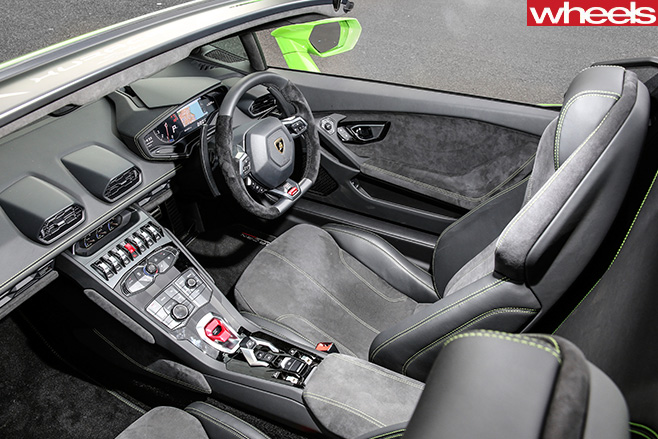
Crucially, the Huracan Spyder has the most important of the Coupe’s character traits: it never feels intimidating. This is a raging bull, sure, but a compliant one nonetheless that encourages you to enjoy its considerable performance chops.
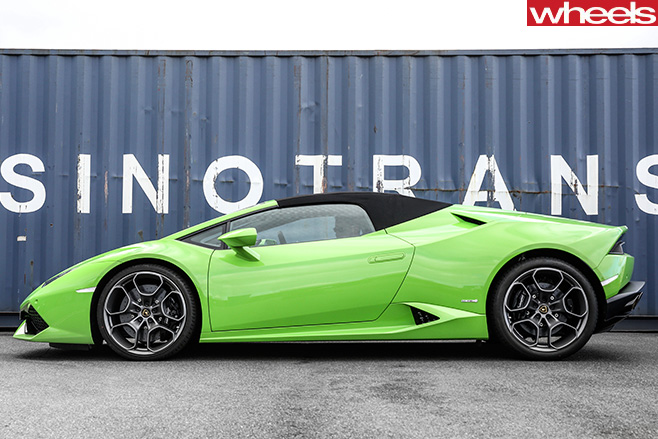
Combine that with the charismatic – and now even more enjoyable – soundtrack and the negligible loss in real-world performance, and it’s easy to see why Lamborghini felt no need to justify the extra cost with additional equipment. Choosing between the Coupe and the Spyder is a decision without a wrong answer.
SPECS Model: Lamborghini Huracan LP610-4 Spyder Engine: 5204cc V10 (90°), dohc, 40v Max power: 449kW @ 8250rpm Max torque: 560Nm @ 6500rpm Transmission: 7-speed dual-clutch Kerb weight: 1524kg 0-100km/h: 3.4sec (claimed) Fuel economy: 12.3L/100km (EU) Price: $471,000 On sale: November 2016
More racing success beckoned for the second-generation Camaro.
IT WAS never going to be easy responding to Ford’s mighty Mustang, but Chevrolet’s Camaro of 1967 had done a good job. By 1969, helped by its SCCA Trans-Am racing successes, Camaro was getting a lasso around the runaway Ford, selling 243,000 to Mustang’s 300,000.
Chevrolet had a dramatically styled successor waiting in the wings.
The new-for-1970, second-generation Camaro carried over the same F-body platform, but the stylists had taken cues from Ferrari (and perhaps Jaguar’s XJ) and penned a front end with raised pontoons and a gaping, egg-crate grille. A fastback coupe body – there was no convertible – with circular tail-lights helped the Maranello mirage.
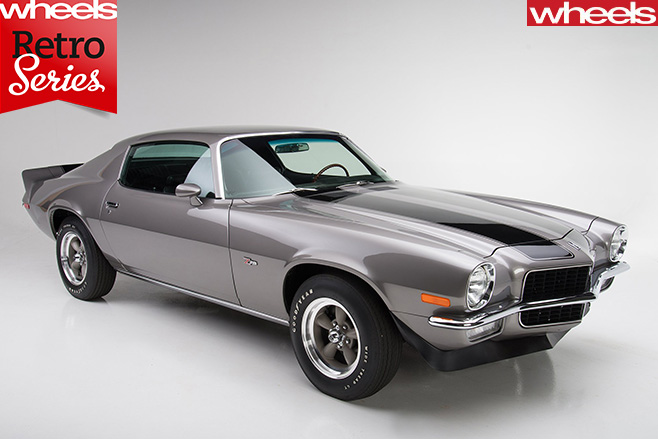
But the panels proved to be a nightmare for the toolmakers at GM’s Fisher Body division, splitting and wrinkling in the draw dies.
New tooling delayed the car’s production by four months. Its introduction in February 1970 led many punters to refer to this generation as the ‘1970½’.
Even in the face of Ford’s newly muscled-up Mustang range, the ’70 Camaro earned rave reviews. The Euro-coupe styling could be enhanced with a Rally Sport trim option (Z22). This, in turn, could be stacked with Super Sport (Z27), bringing better tyres and brakes and an invitation to the 6.6-litre (‘396’, though actually 402 cubic inches) big-block V8.
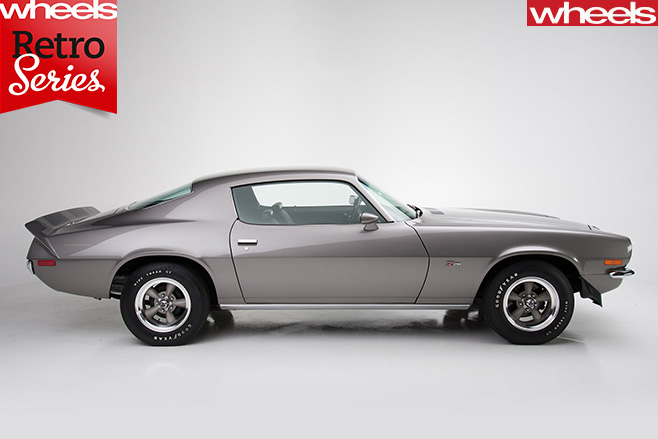
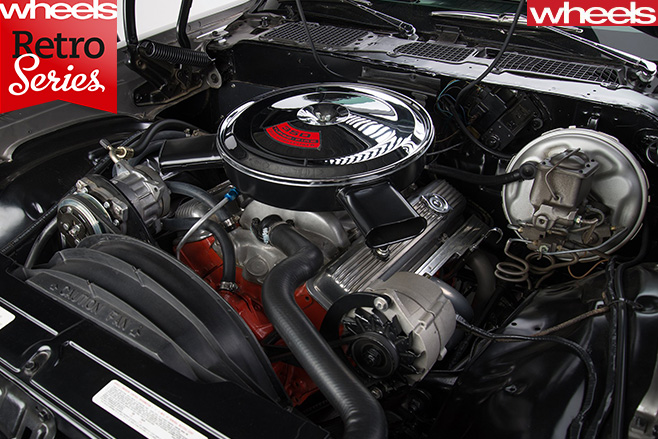
For the king of Camaros, however, one ticked the box marked Z28. That brought a Corvette-derived 350 LT-1 engine producing 269kW (versus the RS 350’s 224kW) and much tougher internals. The Z28 was an homologation special, designed to extend GM’s two-year reign in the Trans-Am and take advantage of new regs that allowed de-stroking larger engines to the 5.0-litre (305ci) race limit.
US mags raved over the new Z28’s tractability, especially after the ’69 car’s highly strung 302. An auto Z28 became available for the first time. Car & Driver clocked a four-speed manual at 0-60mph (97km/h) in 5.8sec, and a quarter-mile in 14.2.
The toughness through the Z28’s driveline, suspension and brakes made it an instant street/strip/circuit classic. But the pony-car market was galloping towards a ravine.
Many regard the 1970 Z28 as the high point for Camaro. The high-compression heads and 12-bolt rear-end were only used in this model year. Tightening emissions regs soon prompted GM to lower compression ratios; the ’71 Z28 would drop 22kW.
The ’70 Camaro was late to the party, but this generation hung around for 12 years. The first – the 1970 Z28 – remains the best, and only 8733 were built.
Against the woodgrain
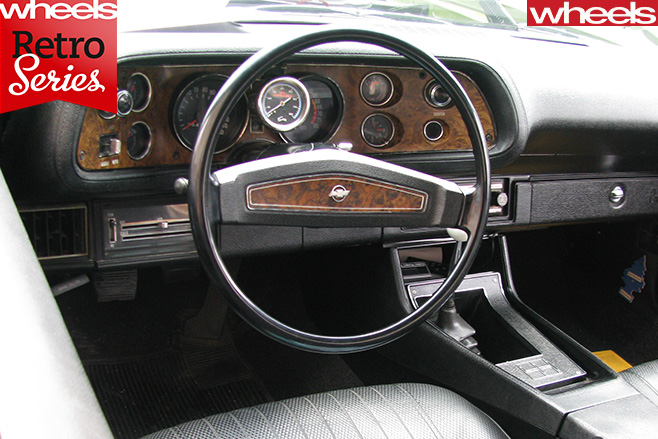
New Camaro was dubbed the ‘Super Hugger’ by GM marketing. Interior was dominated by huge transmission tunnel to accommodate big-block options. Bucket seats in 1970 were distinctive low-back items. Wraparound instrumentation had feeble, fake woodgrain. Manual and auto Z28s got an 8000rpm tacho and trick Hurst shifter. SS option brought ‘hide-a-way’ wipers, black-out body treatment and interior detail SS badging.
F trooper
The second-generation Camaro was built on the previous F-body wheelbase, albeit with a longer, lower body and wider tracks. In Z28, the double A-arm front and solid-axle, leaf-sprung rear suspension copped the F-41 pack with extra rear leafs and thicker anti-roll bars, 11-inch front discs and 9.5-inch rear drums, and optional Positraction LSD.
Peachy, and keen
Camaro Z28’s LT-1 350 was a peach. High-compression (11:1) heads, a Holley 780cfm on a high-rise manifold, forged pistons, solid-lifter cams, forged steel crank, four-bolt main bearings and baffled sump were all race-ready. Result: 269kW @ 6000rpm and 515Nm @ 4000rpm. A four-speed Muncie manual was standard, three-speed TH400 auto optional.
Fast & factual
1. Back to third
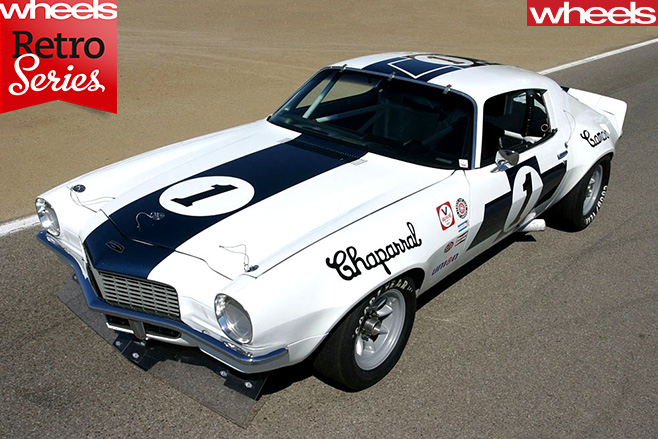
2. That sinking feeling
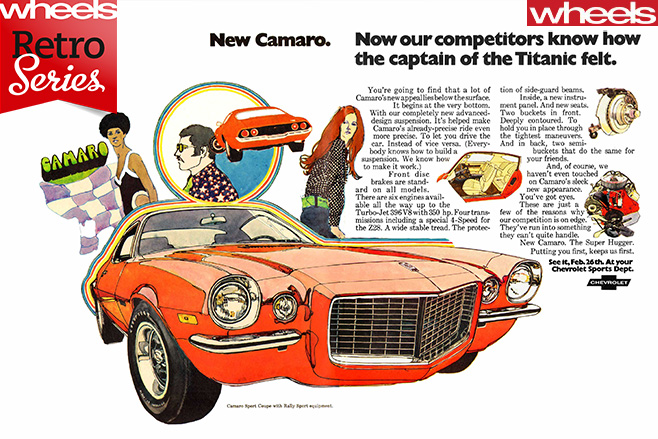
3. Slash the slash
The Z/28 option debuted with the first-generation Camaro in 1967, with a 302 engine for racing. The 1970 Z28 gained cubes, lost the slash.
4. Frankly dominant
Aussie international Frank Gardner dominated British tin-top racing with a Z28 in 1972-73 and directly inspired Kevin Bartlett’s 1979 car.
5. Let the sun shine in
The Camaro was only offered as a coupe. The Hurst ‘Sunshine Special’ was one of three ’70 Z28s built by the famed race-shifter supplier with an experimental sunroof.
One newton metre – piffling, but enough for the new Falcon XR6 Sprint to pip its XR8 sibling for the title of Australia’s torquiest engine ever, 576 v 575Nm.
It’s fun to imagine this was deliberate. Ever since the XR6 Turbo arrived with the BA in 2002, Blue Oval powerbrokers have kept the V8 Falcons on their pedestal, protected from any threat externally – and internally. The 4.0-litre, much-loved, venerable ‘Barra’ inline-six has always played second fiddle to the V8s by power, performance and price.
But with the Sprint program, Ford engineers were freed from any previous pecking order policies and allowed, within the constraints of what the driveline could handle, to unleash the Barra’s full potential. And in doing so they might’ve chanced upon an awkward truth, that if you’re going to make the best performance Falcon ever, the turbocharged six-pot might be the better donk for the job.
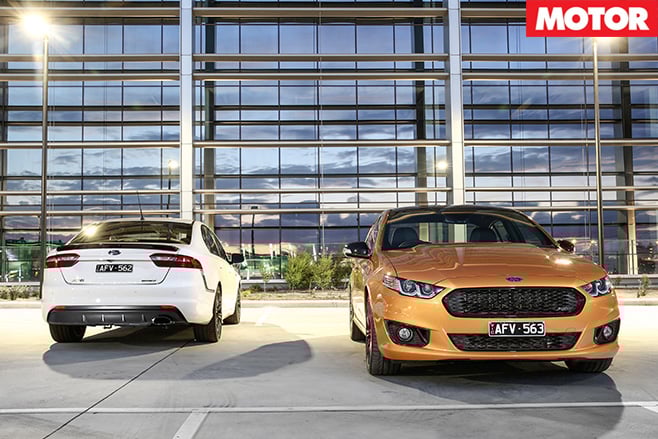
The XR8 Sprint is plainly the best, most-polished V8 performance Falcon ever.
Unfortunately it’s the same old story as you get in the car, your first instinct being, oh, the seat is really adjusted quite high, and the steering wheel quite low. No problem, I’ll just adjust one down and one up. Oh.
Ford’s SYNC software in the centre stack screen is the only thing reminding you, too, that you’re in 2016. Everything else feels straight from 2008 because, literally, it is. And the cruise control buttons, wiper and indicator stalks look terrifyingly similar to those in the BA Falcon launched in 2002. When it comes to interiors the Falcon’s been left behind.
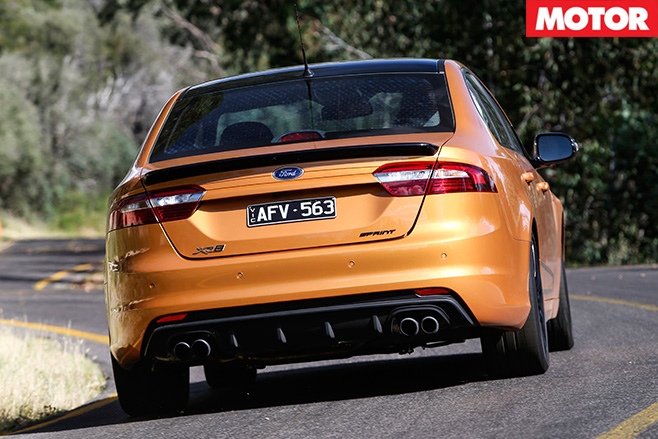
Ford’s engineers did the best job they could with the resources they had, and that meant powering up both cars, fitting new rubber and completely overhauling the existing suspension, as you’ve already read.
In the XR8 in particular, the ride has been significantly improved. The base FG X XR8 jiggles over small bumps and thuds over bigger ones, making for quite the firm and busy ride, but the Sprint is far more calm and comfortable without giving up crucial body control. Finally, the XR8 has the suspension to keep up with its engine, stable and cool in the high speed stuff and in bumpy corners, expertly working undulations letting you get on with the business of attacking.
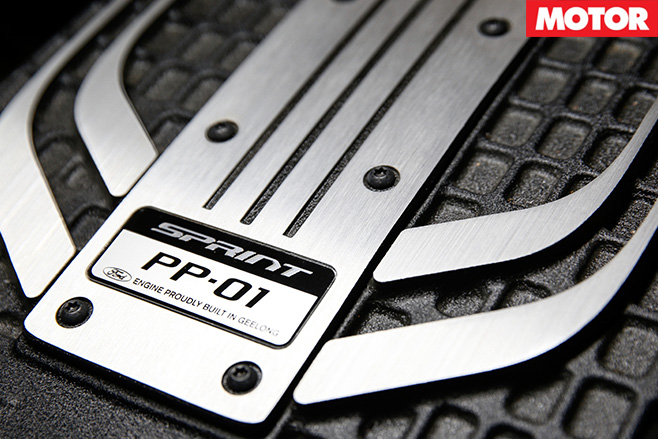
And it can put its power down with a cleanliness and effectiveness unmatched by V8 Falcons past. Even with ESP off, stall the auto XR8 Sprint up to about 2000rpm on its brake, let off and the rear 265/35s will hardly wheelspin as the power is put to the ground, even at full throttle.
Ford’s not claiming 0-100km/h times as per company policy but it reckons while more difficult to launch, the manual will be faster. We’ve been told already if we get a 4.6 from the manual and a 4.7 from the automatic we should keep trying. To the tune of about another tenth. And six or eight, to the tonne they’re as fast as each other.

With a clunky change and heavy-ish clutch, the XR8 Sprint is not the greatest manual in the world and the auto seems to suit its personality better. Gearchanges in the automatic’s manual mode are hardly twin-clutch quick and the down-changes are pretty average with some mean lurching and no rev-matching, but, as is the also the case in the XR6, up-changes are quicker than ever and accompanied by a cool spark-cut brap.
Grabbing a new gear just before redline, the acceleration uninterrupted, is terrific fun. Numbers? We will absolutely run them for an upcoming issue. And we’ll use the time to make a proper call on just how positive an effect those Pirelli P-Zero tyres have had.
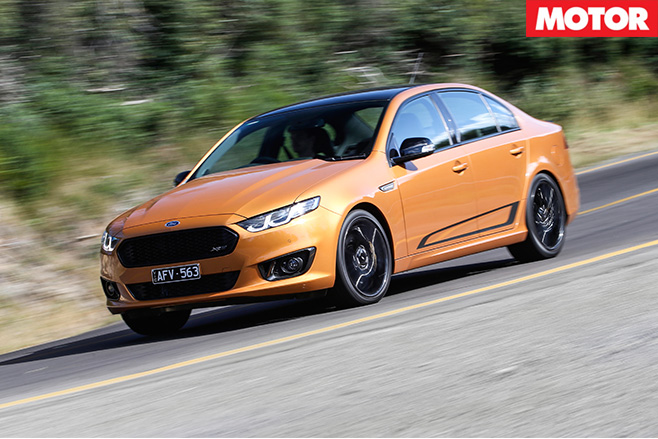
Ford showed us some impressive graphs that suggested the XR8 Sprint’s pivot point has been moved much further back in the car, hopefully helping to get rid of some of that unwelcome front-end vagueness. Initial impressions seem to be they’ve had success, although how much we can’t be completely sure.
But we wouldn’t need more time in the car to declare it the best V8 performance Falcon ever. It’s certainly the most polished V8 performance Falcon we’ve driven, with grown-up ride, serious grunt and more fun than ever, too.
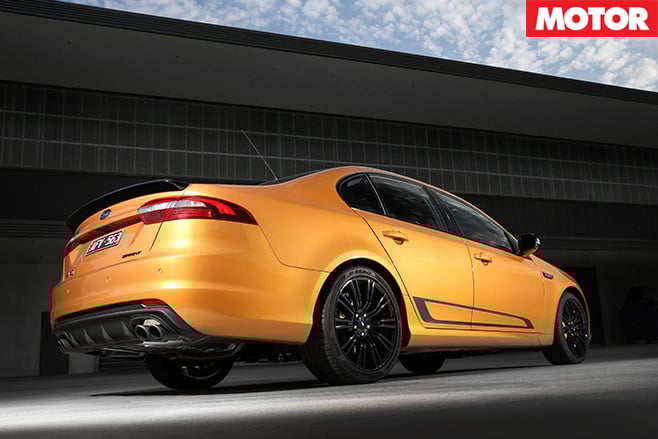
Yeah, the XR8 Sprint is still no BMW M5-eater, it will get utterly smoked by a new C63 and the HSV GTS is probably still more polished in corners (owing much to a more modern steering system), but the XR8 costs significantly less than all of them and even if it was $100K we’d still love it. Far from perfect, it has an enormous personality and that most difficult of traits to engineer – it’s loveable. Truly, few new performance cars are loveable these days, let alone likeable.
The XR8 Sprint will go down as one of the greatest fast Falcons ever. But the best? Well, there’s a problem.
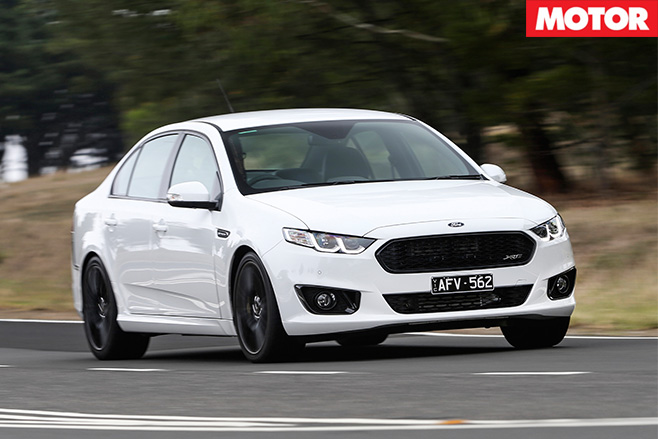
The effect is increasing urge as you go up the gears. From down in the revs the XR6 Sprint pulls with steam-train levels of torque, enthusiastic and strong all the way to redline where another gear can enter the breach uninterrupted. Where other cars will start to peter out, the XR6 Sprint just keeps charging. Its acceleration makes you want to keep your foot buried in it to see where it stops, but this is a game of chicken you will lose.
All the while the 370kW-on-overboost XR6 Sprint is emitting a satisfying straight-six growl, the turbo also hissing away under power. And shut the throttle under load and there’s even a hilarious blow-off valve flutter at just the right volume. This is by far the strongest Ford 4.0-litre inline-six we’ve driven, but also we’ve not known a Barra with a bigger personality.
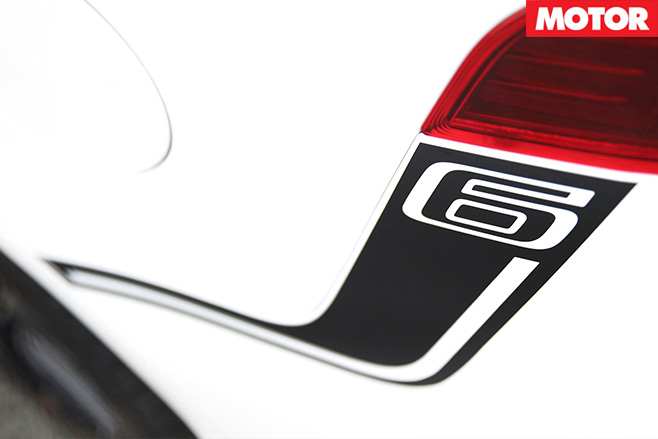
Though the Barra six is just 23kg lighter than the Miami eight (iron versus alloy block) those sticky Pirellis have 54kg less to deal with overall. In theory, this should make the XR6 Sprint the sharper cornering device. Despite not being able to attack a corner in anything less than third gear on the launch, our experience so far seems to back this up, but we will reserve judgement until we drive them on our terms.
Customers are hardly hanging around to find out which Sprint we think is best. Ford expects a near fifty-fifty split for manual and auto sales of the XR8, the former $59,990 and the auto $62,190. By the time you read this, production would have kicked off with cars on-sale May. Ford plans to build 1400 Sprints – 850 XR8s and 550 Turbos – but, err, if you’ve got this far and you’re mentally figured out you could afford one if you sold this or went without that, we’ve got some awkward news. The XR6 is sold out, so is the XR8 manual, and there were just a “handful” auto XR8s available as MOTOR went to press this March.
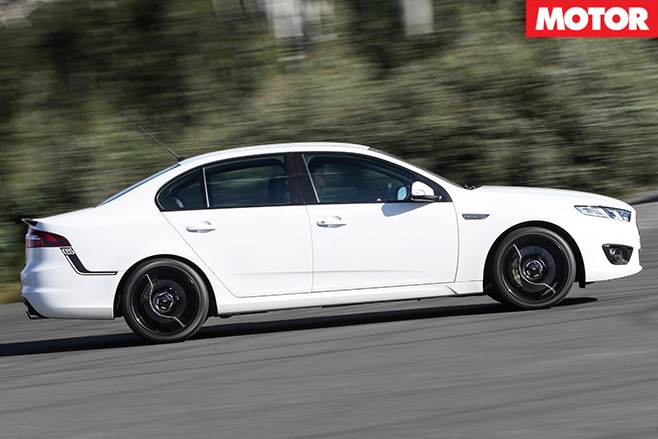
It’s an awkward truth we’ll look to confirm in a future issue before the Falcons are gone forever, but while both Sprints will go down as greats, the best performance Falcon ever could be a six. Maybe Ford knew it all along.
| u00a0 | FORD FALCON XR8 SPRINT | FORD FALCON XR6 SPRINT |
| Body | 5-door, 5-seat sedan | 5-door, 5-seat sedan |
| Drive | rear-wheel | rear-wheel |
| Engine | 4951cc V8, DOHC, 32v, supercharger | 3983cc inline-6, DOHC, 24v, turbocharger |
| Bore/stroke | 92.2 x 92.7mm | 92.3 x 99.3mm |
| Compression | 9.3:1 | 8.76:1 |
| Power | 345kW @ 5750rpm (400kW on overboost) | 325kW @ 6000rpm (370kW on overboost) |
| Torque | 575Nm @ 2220-6250rpm (650Nm on overboost) | 576Nm @ 2750rpm (650Nm on overboost) |
| Power/weight | 185kW/tonne (manual); 184kW/tonne (auto) | 179kW/tonne |
| Transmission | 6-speed manual or automatic | 6-speed automatic |
| Weight | 1869kg (manual); 1872kg (auto) | 1818kg |
| Suspension(F) | A-arms, coil springs, anti-roll bar | A-arms, coil springs, anti-roll bar |
| Suspension(R) | multi-links, coil springs, anti-roll bar | multi-links, coil springs, anti-roll bar |
| L/W/H | 4950/1868/1493mm | 4950/1868/1493mm |
| Wheelbase | 2838mm | 2838mm |
| Tracks | 1583/1598mm (f/r) | 1583/1598mm (f/r) |
| Steering | hydraulically-assisted rack-and-pinion | hydraulically-assisted rack-and-pinion |
| Brakes(F) | 355mm ventilated/drilled discs, 6-piston calipers | 355mm ventilated/drilled discs, 6-piston calipers |
| Brakes(R) | 330mm ventilated/drilled discs, 4-piston calipers | 330mm ventilated/drilled discs, 4-piston calipers |
| Wheels | 19.0 x 8.0-inch (f); 19 x 9.0-inch (r) | 19.0 x 8.0-inch (f); 19 x 9.0-inch (r) |
| Tyre Sizes | 245/35 R19 (f); 265/35 R 19 (r)u00a0 | 234/35 R19 (f); 265/35 R19(r) |
| Tyre | Pirelli P-Zero | Pirelli P Zero |
| Price as tested | $59,990 (manual); $62,190 (auto) | $54,990 |
| Pros | Grunt; noise; value; personality u2013 best V8 Falcon ever | Near-supercar straight-line urge; high-speed stability |
| Cons | Ancient interior; lacking tech; handling question marks | Has fallen behind in interior and tech; steering |
| Star Rating | 3.5/5 | 4/5 |
Ford called on British firm GKN for its brilliant Focus RS drivetrain.
Even more than the engine, it’s the rear axle of the Ford Focus RS that makes it the brilliant car that it is. This electronically controlled piece of torque-vectoring genius makes the fab Ford handle better than any other all-wheel-drive hot hatch.
You can really sense it driving the outside rear wheel to sharpen turn-in and quell power-on understeer. It’s also largely responsible for the hilariously smoky effectiveness of the Focus RS’s world-first Drift Mode.
Yet it’s not Ford hardware. The rear drive unit of the Focus RS is made by GKN. The global component supplier, with its headquarters in the British Midlands, markets it as the Twinster. The name is a reference to the unit’s pair of independently controlled clutches, which can dole out torque to each rear wheel with incredible speed and absolute precision. Twinster’s superiority to Haldex-type all-wheel-drive tech, especially in a high-performance application, is massive.
The Ford Performance people working on the Focus RS figured this out for themselves. Vehicle engineering manager Tyrone Johnson, who led the development team, recalls obtaining an early Twinster and bolting it into a prototype. Land Rover was the first carmaker to use it, in the 2014 update of the Range Rover Evoque, and that’s what Ford got its hands on. They broke it, Johnson admits, but not before realising it had the potential to make the Focus RS a much better car.
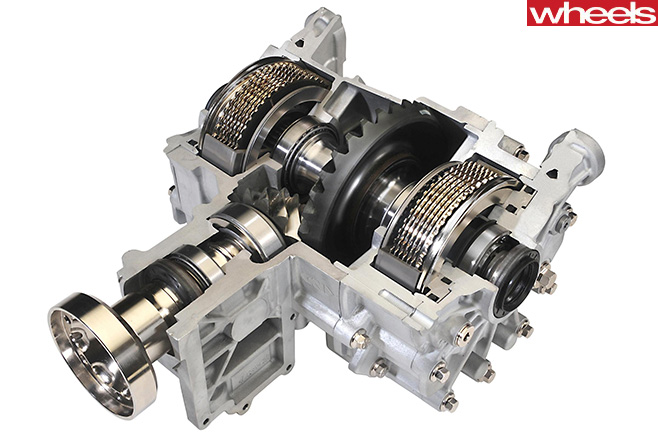
This was a surprise to me, though I was familiar with the name GKN. It was the logo on the waxy paper that wrapped greasy universal joints I bought for British-designed machinery I owned in the ’70s and ’80s (an MG Midget Mk III and a Land Rover 110 County diesel, if you must know).
My obviously out-of-date image of GKN was as a maker of simple but failure-prone parts. Developing innovative technologies and working with a carmaker to meet a tight launch deadline simply wasn’t part of the picture. GKN, it turns out, has changed more than a little over the decades. In fact, as I learned, it’s regularly rolling out clever stuff. The list of recent cars featuring GKN hardware is deeply impressive.
The role of major automotive component makers is easily overlooked. Only a handful are anything like household names. But as the case of GKN shows, there are times when the brilliance of a car is owed as much to some almost anonymous outfit as the company whose name is on its badge.
Space to grow
The top five customers for GKN’s automotive wares are VW, Fiat Chrysler, Ford, Nissan Renault and GM. Carmakers are GKN’s biggest income source.
Aerospace is the other major area of activity. GKN supplies airframe and engine components to name brands including Airbus, Boeing, GE and Rolls-Royce.
