
1. The Outback is one of Subaru’s top selling models, second only to its SUV sibling the Subaru Forester.
2. There are three engine options – a 2.0L four-cylinder diesel, a 2.5L four-cylinder petrol, and a more powerful 3.6L six-cylinder petrol.
3. The all-wheel drive system in the Outback sends power to all four wheels constantly, which differs from other SUVs which only send power to the rear wheels when the front wheels lose traction.
4. 2015 was a record breaking year for the Outback in sales, selling almost 11,000 vehicles.
5. Outback has a generous 512-litre boot, that grows to 1801-litres with the back seats folded flat.
6. It’s classed as a light duty off-roader, meaning it’s not about to tackle difficult 4×4 tracks, but it will cope comfortably with gravel or snow-covered roads.
Click here to read the full review on the Subaru Outback range.
THE federal government has flagged it will get a quarter of a billion dollar bonus from the luxury car tax over the next four years.
Budget papers tabled by treasurer Scott Morrison last night show the government expects to earn almost $3 billion from the controversial tax up until the 2019-20 financial year, thanks largely to Australia’s appetite for high-end metal.
Hidden in it is a $240 million bonus for the government as a consequence of Australia’s growing appetite for luxury vehicles.
Controversially, too, the government expects a big $30m jump in luxury car tax earnings in the wake of equally controversial plans to open up the Australian market to parallel imports in 2018 – with private buyers still expected to stump up LCT on vehicles they bring in directly from overseas.
“LCT receipts are forecast to grow by 11.5 percent in 2015-16 in line with stronger-than-expected sales of vehicles subject to LCT,” the budget papers say. “Since the 2015-16 MYEFO [Mid-Year Economic and Fiscal Forecast], forecast LCT receipts have been revised up by $240m over the four years to 2018-19.”
Part of that is an expected $60m jump in LCT revenue this financial year alone.
The papers show the tax is expected to stay relatively flat until the 2018-19 financial year, at around $570m, before making a sharp jump to about $600m in 2018-19. The financial year after that we can expect another big hit, with LCT revenue jumping another $30m to $630m.
Australia is racing towards another record year for car sales, with the market almost four percent ahead compared with the first four months of last year.
Luxury car sales are becoming a significant part of the Australian market’s landscape. After occasionally pushing into the Top 10, in April Mercedes-Benz jumped another rung to become the ninth-largest brand for the month, pushing ahead of mainstream brands including Kia, Honda and Subaru.
The 33 percent luxury car tax – which also happens to reel in high-performance sports cars and lumbering off-roaders as well as the cushy limousines its name implies – was introduced as part of sweeping reforms to the Australian tax system in 2001 that also introduced the GST.
Pegged to inflation, the new-car price threshold at which the tax applies is adjusted at the start of each financial year.
For 2015-16, the tax applies to cars costing more than $63,184. However, in a deal brokered with carmakers worried that the tax would discourage buyers from paying more for fuel-efficient technology, the government has set a higher $75,375 threshold for vehicles using no more than 7.0L/100km.
Motorists will gain some benefit from the new budget handed down last night, with $3 billion set aside for future infrastructure projects.
Victoria will be the main winner, with $500m previously earmarked to build an east-west tunnel to be diverted to the Monash Freeway. As well, $350m will go towards widening the Western Ring Road and $345m improving rural and regional highways in the state.
Melbourne and other urban areas will benefit from a $75m war chest to help fight congestion.
Queensland is the only other state to gain a significant investment in its roads. The budget papers allocate $200m to upgrade the Ipswich Motorway in the state’s south-east.
VOLKSWAGEN has announced a facelifted Amarok ute that is expected to lob in Australia late this year.
The big news is that the one-tonne German gets a 3.0-litre turbo-diesel V6, which will make it the only diesel V6 in its segment.
A full litre bigger than the current four-cylinder turbo-diesel, the new V6 jumps 44kW and 130Nm in high-output guise to 165kW and 550Nm. That’s at least 50Nm more grunt than the Holden Colorado, Mazda BT-50 and Ford Ranger.
The bigger engine results in the towing capacity increasing by 500kg to 3500kg, which now matches its main rivals.

European-spec V6 Volkswagen Amaroks will come in three power outputs – 120kW, 150kW and 165kW – and it’s likely the same options will be available in Oz.
The range-topping 165kW model gets bigger brakes, while all models feature VW’s Post-Collision Braking System, which automatically brakes the vehicle when the airbag sensors detect that a collision is occurring, to help prevent a secondary impact.

Inside, the new Amarok features a fresh dashboard and seats, while the outside is distinguished by new wheels and revised front styling.
Amarok gets speed-dependent steering for the first time.
A body-coloured sports bar, 20-inch wheels, LED lighting, bi-xenon headlights and a reversing camera with Park Distance Control will be available.
If Porsche’s online 911 configurator let you not only choose paint and trim options but pick the juiciest mechanical parts from the entire range, chances are you’d end up with something like the new 911 R.
A last hurrah for the 991-series before the production lines dedicate themselves completely to the new 991.2 models, the 911 R is a lightweight, limited-edition special that stuffs the best bits from Porsche’s motorsport-derived GT cars into a more subtle, retro-inspired package.
Describing the car as “authentic, honest and transparent”, Porsche’s motorsport boss Andreas Preuninger explains the 911 R exists “because there are clients who want to experience driving pleasure in its purest form.” The name is a clue as to its focus, for the 911 R is one of Porsche’s rarest and most revered models – just 20 of the powered-up, stripped-back road-racers were built in 1967 for events such as the Targa Florio.
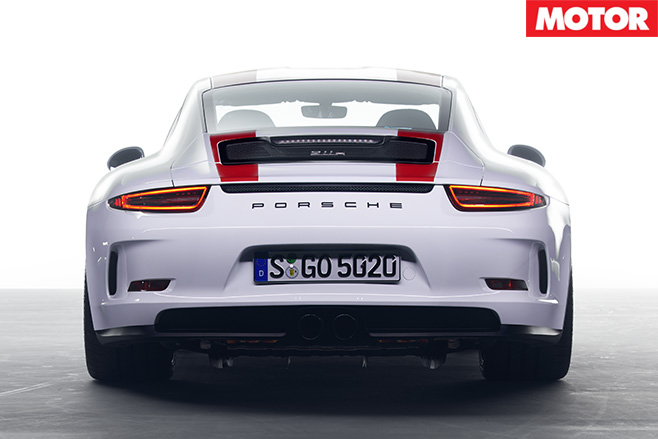
There are no rear seats, an extra 4.5kg of sound deadening has been turfed compared to even the track-focused GT3 RS, air-con and a radio move to the no-cost options list and a titanium exhaust and carbon-ceramic rotors (410mm front; 390mm rear) are standard.
However, despite the bare-bones standard specification, this is not intended as some stripped-out track-day special. The seats are 918-style carbon buckets, but they are trimmed in a mixture of leather – a choice of brown or black – and pepita cloth upholstery; the green instrument faces are bespoke to the R and carbon fibre is scattered around the interior, including on the dash, centre console and gear lever.
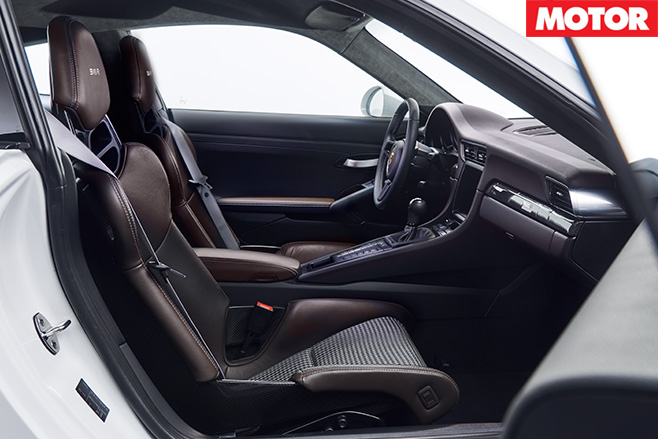
A single-mass flywheel saves a further five kilograms and re-introduces some of the 911’s signature idle rattle that went missing with the move to PDK.
Powering the 911 R is the 4.0-litre flat-six from the GT3 RS producing 368kW at 8250rpm and 460Nm at 6250rpm. The manual gearbox lifts the claimed 0-100km/h to 3.8sec – which seems extremely conservative – but the sleeker body gives it a 323km/h top speed, or 201mph in the old money. With the wings deleted, a new rear diffuser keeps the rear end sucked to the ground while the GT3 front splitter eradicates any lift.
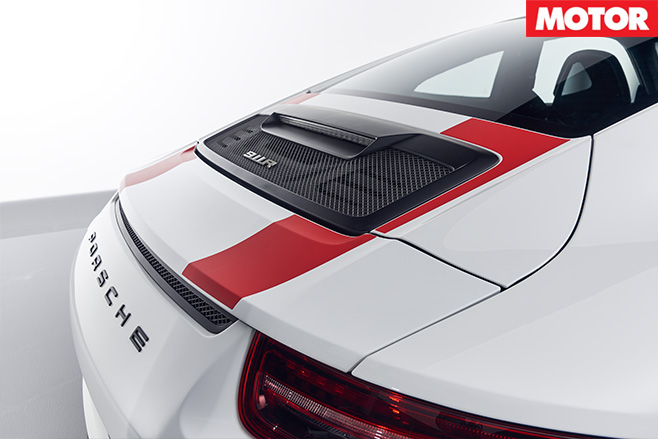
Spring rates are the same as the GT3, however the PASM adaptive dampers have been recalibrated for road use; likewise, the GT3 donates its rear-wheel steering system, however it has been tweaked to offer even more agility, the 911 R moving closer to the Cayman GT4 in feel according to boss Preuninger.
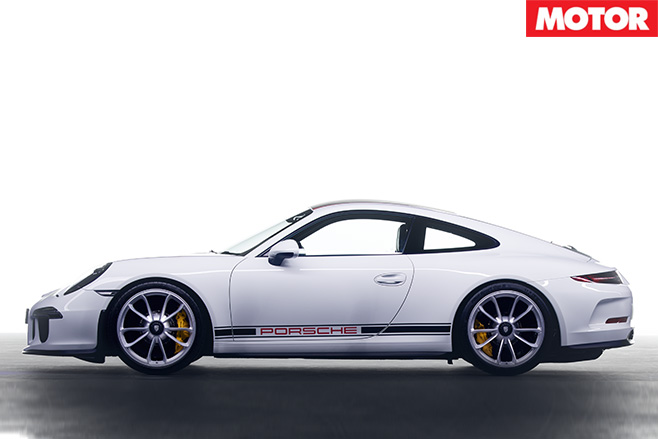
Thankfully, there are still enough enthusiasts out there with the resources and influence to keep the purist sports car dream alive – we can’t wait to drive it.
My dog has owned three teddy bears in the course of her years on the planet. And not one of them has died of natural causes.
Teddy One is, we think, at the bottom of a farm dam and Teddy Two bailed off the back of a ute somewhere between Albury and Wagga (I reckon he was pushed, but the dog denies it).
Teddy Three met an untimely end by being buried in the garden next to the lemon tree and rotting away long before I noticed his one remaining leg sticking up out of the ground. Ted’s dead, baby. “He was fine when I saw him last,” the dog shrugged when I questioned her.
But I can’t get too cranky, because when it comes to cars, my brother and I have a track record similar to la dawg’s inability to get a stuffed toy into middle age. We started young (of course we did) doing stupid things to elderly Volkswagen Beetles back in the days when you could get a pair of rat-bugs for a crisp fifty if you collected ’em from the horse paddock yourself.
After combining all the best bits from half a dozen Beetles, we eventually had ourselves one pretty good one which we plastered with P-plates and drove like berserk warriors. That ’66 Dak Dak finally met its end at my brother’s hammy fists when he cocked up his oppy-lock correction and sent us off the road, over a spoon-drain and into a rather stout tree. And that was just his first confirmed kill. He killed so many bugs that we ended up calling him Mortein.
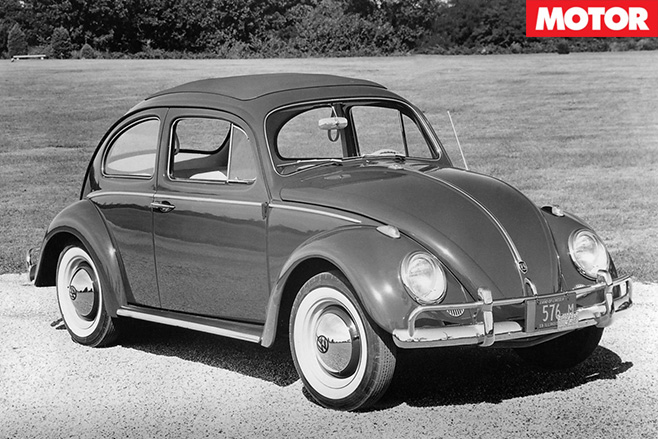
Performance was explosive. So was the engine (sadly) which – at about 4000rpm in top gear – decided it didn’t need all four conrods and hurled one into the mulga. A similar fate as that met by Teddy Two, I’d say.
The difference being that I know precisely where my conrod was jettisoned as the crankshaft, being torn out of its bearings, made a slightly bigger noise than a plush toy biting the Olympic Way. It’s equally doubtful that Ted Two dumped five litres of semi-synth all over the road, either.
I’ve also made a pretty big mess of the odd motorbike. My defence here is that with all that power-to-weight going on, big road bikes are asking for it, no? Still and all, when they hit the deck they do tend to come apart like a borrowed outboard.
I like to think I’ve matured a little in this department, but my brother is just as bad as ever. His latest murder rap came a few months ago when he somehow managed to get two tonnes of LS1-powered Statesman off the road and on to its roof.
Apparently, he got the big girl into a retrieval-proof tank-slapper and that was about that. By the time he’d worked out that he’d backed a loser, the world was upside-down and it was raining Kool Mints inside the Stato. Yep, another one sent to the knackers yard on a banana-back.
But I’m not sure our behaviour is all bad – surely it’s better for a car to go out swinging (quite literally in the case of the ex-Statesman) rather than to simply rust away in a driveway with moss growing all over it and four flat tyres. And just as Muttley knows all too well, once Teddy goes to the big toybox in the sky, you get to go shopping and choose a new one.
YOU may have heard of the global ‘Big Mac Index’, a quick way to make exchange-rate theory a bit more digestible. Burgernomics, if you will.
Buyers of Aussie classic cars have their own convenient yardstick of how heated the market is and it’s the transaction price of a Ford XY Falcon GT-HO Phase III. Sorry if the name’s not quite so snappy, but as a bellwether to the health of the market this really is the gold standard.
So it was with some interest that a 1971 Phase III rolled onto the block at Shannons auctions on Monday, subjected to the hard-headed valuation of Melbourne’s gimlet-eyed car dealers. It wasn’t just any Phase III, either, having been with the same owner for a quarter of a century, undergoing a nut-and-bolt restoration in 1998, and subsequently taking out the GT Nationals in 1999 and 2003. In short, it was about as good as you’ll find.
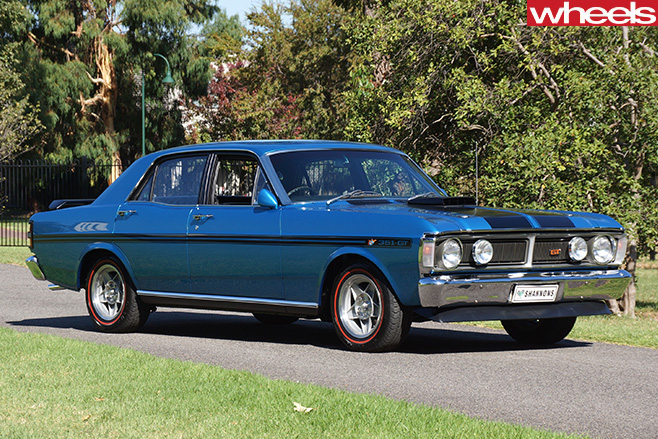
Shannons’ Christophe Boribon said he was “a little disappointed” that the car failed to meet reserve, adding that it was “a special and correct car with good provenance” and that he believed it was worth half a million dollars. Negotiations are continuing between the vendor and potential buyers.
Phase III values peaked in 2007, when a car traded for $750,000 and others were said to have sold for even more privately. Many predicted it would become the first Aussie million-dollar classic.
Subsequently, the market contracted to a low in 2010, when Phase IIIs were changing hands at just over $300,000, before bouncing back. But prices have been heading gradually south this year.
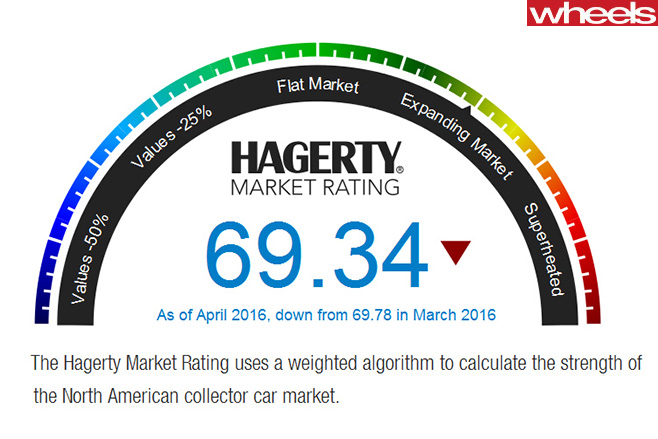
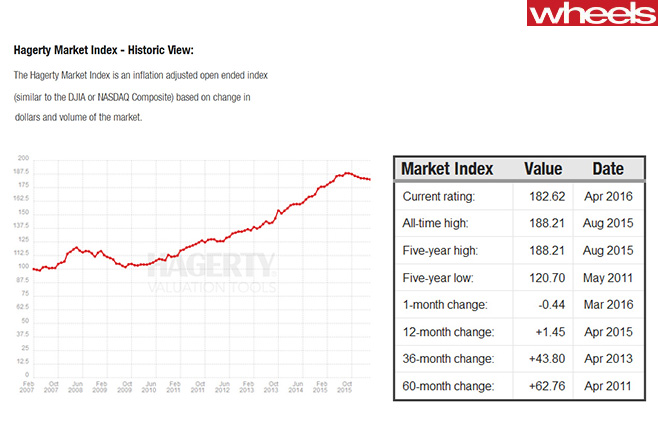
The Hagerty Market Rating tool attempts to measure the heat of the US market with a weighted algorithm to fifteen data points in eight categories, and the rating has dropped for nine of the past 12 months.
“The key differentiator is that the Hagerty Market Rating isn’t based simply on public data like auction sales, which only make up three percent of the annual transactions in the classic car world,” Hagerty CEO McKeel Hagerty said.
“A large component of this rating is based on private-owner-to-private-owner sales, which is the most elusive and difficult data to obtain. We developed this as a tool to allow anyone who is serious about treating collector cars as investments to immediately take the temperature of the classic car market and truly understand the factors that cause it to move up or down.”
There has also been a marked softening of prices and interest in Europe.
BMW’s first road-registered BMW M1 had a pre-sale range of €550-650K but struggled to €510K, while an immaculate red Porsche 964 Turbo, previously thought of as a bulletproof investment, realised €152K against pre-sale estimates of €195-220K.
All 13 Ferraris on offer laboured to meet expectations, ending up on average just 86.4 percent of median pre-sale estimates. And 11 of the 13 failed to meet even the lowest figure of the range.
FERRARI VALUES: COYS TECHNO CLASSICA – ESSEN 2016
| LOT | YEAR | CAR | ESTIMATE | SALE PRICEu00a0 | % OF MEDIAN ESTIMATE |
| 112 | 1992 | 512 TR | u20ac115-160K | 120 | 87.3 |
| 118 | 1986 | 308 GTS | u20ac60-70K | 62 | 95.4 |
| 119 | 1992 | Testarossa | u20ac115-120K | 98 | 83.4 |
| 120 | 1985 | 308 GTS | u20ac55-60K | 52 | 90.4 |
| 129 | 1967 | 330GT 2+2 S2 | u20ac280-300K | 270 | 93.1 |
| 137 | 1997 | 550 Maranello | u20ac82-95K | 64 | 72.3 |
| 162 | 1996 | 456GT | u20ac58-66K | 53 | 85.5 |
| 171 | 1989 | Testarossa | u20ac90-110K | 84 | 84.0 |
| 178 | 1997 | F355 GTS | u20ac65-75K | 58 | 82.9 |
| 180 | 1968 | 330 GT/C | u20ac600-700K | 550 | 84.6 |
| 196 | 1983u00a0 | BB 512i | u20ac290-320K | 260 | 85.2 |
| 200 | 1965 | 330 GT 2+2 S1 | u20ac240-260K | 220 | 88.0 |
| 206 | 1981 | Testarossa | u20ac60-70K | 59 | 90.8 |
Things don’t appear too bad in Australia, but there has clearly been a slight softening of values, many cars previously thought of as blue-chip investments struggling to make the low end of expectations.
Shannons sold a 1973 Torana GTR XU-1 on Monday for a bargain $47,000 which was at the low end of the $45-55K estimate, but it wasn’t concours by any measure. On the other hand, anything with a Jaguar badge attracted frenzied bidding and the night closed with a very strong 91 percent clearance rate.
While now might be the time to leap into clueless speculation, collectors looking at the long game will be prepared to ride out any fluctuations. Serious cars will always attract serious collectors, many of whom buy when everybody else is trying to offload.
Warren Buffet had it right when he said, “Be fearful when others are greedy, and greedy when others are fearful.” We’ll raise a Big Mac to that.
CAUGHT! The Mercedes-Benz GLT-Class ute has been sprung testing for the first time, giving early clues as to how the three-pointed star will shape its own spin on its Nissan Navara-based load-lugger.
Clearly evident are plumped, more rounded guards and the familiar wide Benz grille framed by slimmer, more swept headlights.
However, there are still plenty of clues pointing to its Nissan Navara origins, including the wing mirrors, doorhandles, tail-lights and the handle for the tailgate.
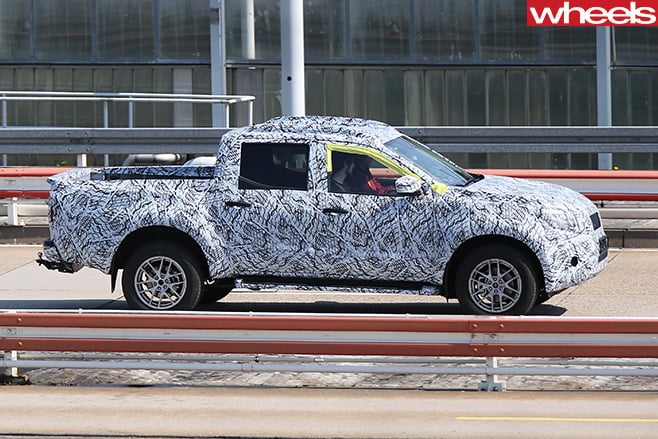
That said, the shark-fin antenna mounted between the roof rails suggests the Navara’s exterior is copping the full Mercedes-Benz makeover to help it stand apart in the paddock.
Inside, the GLT is expected to replicate the cabin of the commercial van-based V-Class rolled out in Australia last year. That includes a large, centrally mounted colour LCD screen and a dash-mounted dial used for the ‘Comand’ multimedia interface.
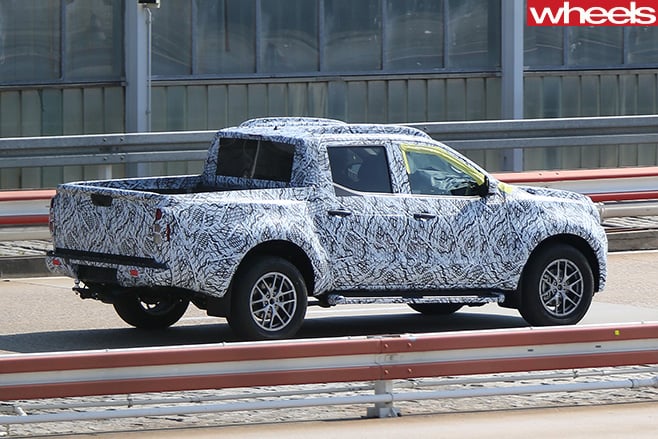
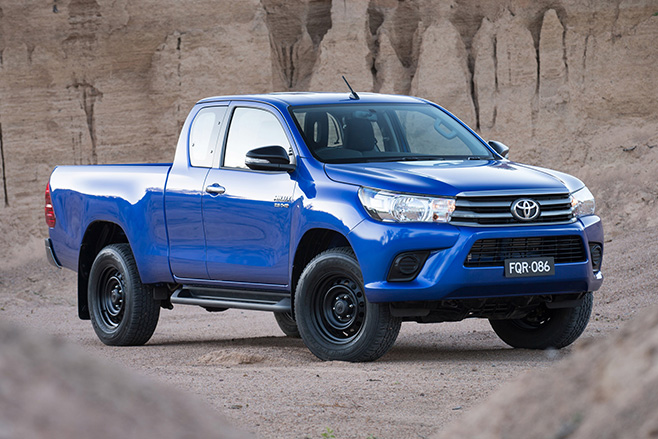
In contrast, the four-pot is expected to compete with high-end four-door models from more mainstream brands, including the Toyota Hilux SR5, Ford Ranger Wildtrak and Holden Colorado ZR1, giving it a potential price tag of about $60,000.
Of interest to us, though, is the potential for AMG to fettle a more performance-honed version of the GLT. We’re not expecting any tweaks under the bonnet, but instead a bodykit and suspension enhancements designed to give more on-road presence and improve roadholding.
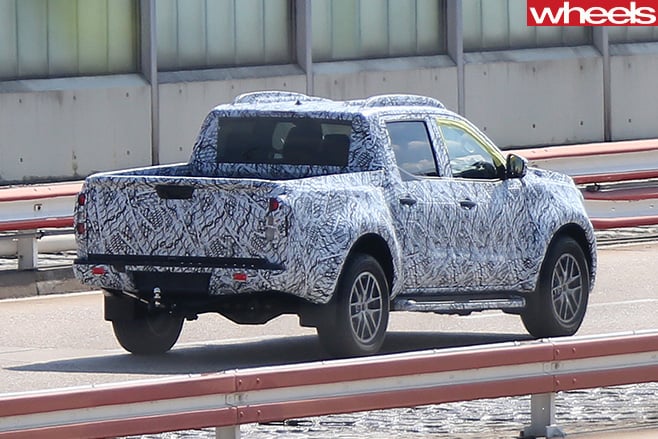
We’re likely to see it in production form in late September ahead of the Paris motor show, with the first Australian deliveries likely in late 2017 or early 2018.
Given that one in five sales here last year were trade utes, and that we account for one in 10 globally, expect us to be one of the first markets to see the GLT in Mercedes-Benz showrooms.
The Hyundai i30 Korean hatchback was the best-selling vehicle in April with 4143 sales, according to the latest official industry figures.
A year-to-date sales total of 12,654 propels the i30 into a widely contested battle for the No.1 spot for 2016.
The i30 trails the Mazda 3 and Toyota Corolla by just 74 and 130 units, respectively, despite the i30 nameplate being disadvantaged by the lack of an alternative sedan body style. Hyundai calls its small sedan the Elantra.
With the Japanese small cars faltering relatively in April – both posting results below 3000 units – the more consistent Toyota HiLux ute has moved into the leader position.
With 3384 sales for April placing it second for the month, its 12,883 pushes it ahead of the Corolla (12,784), 3 (12,733) and i30 (12,654).
The Ford Ranger ute placed third for April with 2973 sales, and even outsold the Toyota HiLux in the 4WD ute segment.
The Mazda CX-5 continues to be Australia’s favourite SUV, with 1675 units for April, though it was only 71 units ahead of its smaller sibling, the Mazda CX-3.
Hyundai completed the top 10 for April with another model benefiting from a strong driveaway deal. The Accent city car is currently available for $14,990, with an upgrade to an auto available for about half the usual price, at $1000.
SUV sales outgrew passenger car sales again for April and continue to be on track to become Australia’s preferred vehicle style by the end of the year. The gap between the segments is now less than 15,000 units, having been nearly 40,000 this time last year.
April’s total of 87,571 was a record for the month, up 7 per cent on April 2015. The industry new-vehicle total of 372,899 is up 4 per cent year on year, and set to be another record year.
TOP 10 MOST POPULAR VEHICLES – APRIL 2016
| Rank | Model | Sales |
| 1. | Hyundai i30 | 4143 |
| 2. | Toyota Hilux | 3384 |
| 3. | Ford Ranger | 2973 |
| 4. | Toyota Corolla | 2959 |
| 5. | Mazda 3 | 2512 |
| 6. | Holden Commodore | 1908 |
| 7. | Volkswagen Golf | 1811 |
| 8. | Mazda CX-5 | 1675 |
| 9. | Mazda CX-3 | 1604 |
| 10. | Hyundai Accent | 1555 |
RACE FOR 2016’S NO.1 SALES SPOT
| Rank | Model | Sales |
| 1. | Toyota HiLux | 12,883 |
| 2. | Toyota Corolla | 12,784 |
| 3. | Mazda 3 | 12,733 |
| 4. | Hyundai i30 | 12,654 |
Volkswagen now holds the title of fastest front-drive production car around the Nurburgring following the release of the Golf GTI Clubsport S.
German racing driver, 28-year-old Benny Leuchter, steered the three-door manual-only two-seat Golf GTI Clubsport S around the 20.8km Nurburgring Nordschleife in seven minutes, 49.21 seconds.
The lightweight and powered-up limited edition model beat outgoing record holder the Honda Civic Type R by just eight-tenths, while soundly trumping 2014’s record holder the Renault Sport Megane Trophy-R by 5.15sec.
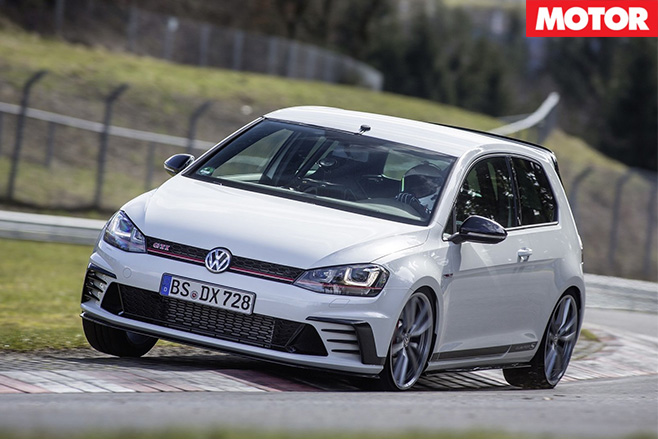
The lightest local GTI weighs 1313kg but lacks this model’s limited-slip differential, 19-inch alloy wheels with Michelin Pilot Sport Cup 2 rubber, “special” brake pads with aluminium brake covers and unique exhaust that “produces a wonderful and deliberate ‘backfire’ under braking”.
The coolest feature of all, however, is a special ‘Nurburgring’ mode hidden within the standard adaptive suspension settings.
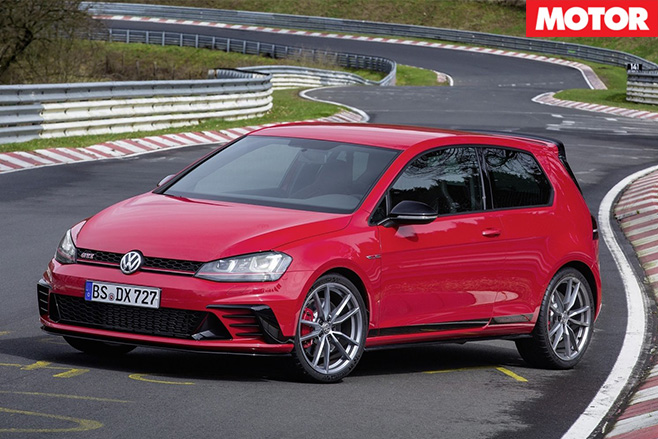
The Nurburgring function is not merely a hard suspension setting, explains Volkswagen: “If a car is fine-tuned for driving on a normal racetrack, where the suspension is very stiff, this isn’t helpful on the Nordschleife. The car needs to be fairly soft vertically, but at the same time stiff when it comes to lateral damping.”
“This is exactly what the Volkswagen engineers managed to take into account when fine tuning the spring/damper package for the DCC (Dynamic Chassis Control) system,” the company adds.
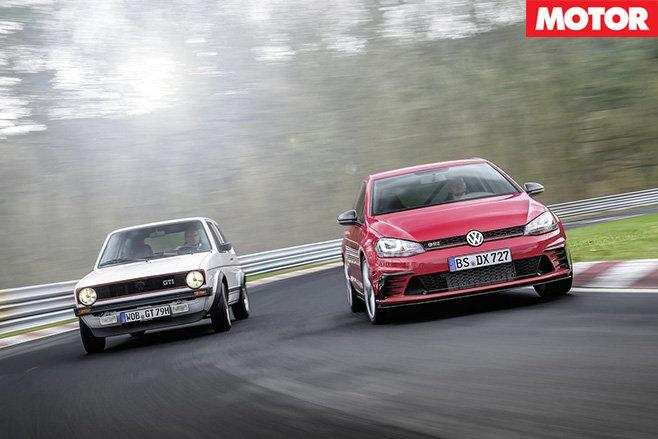
Timed for release at the annual Volkswagen Festival held at Wörthersee, Austria, only 400 Golf GTI Clubsport S models will produced, with 100 reserved for the German market. Only a variation of the regular model is yet confirmed to arrive locally, in five-door automatic form in Australia named Golf GTI 40 Years.
FORD has clawed its way back to fourth in the monthly vehicle sales race according to April car sales figures to be released today.
The unexpected result for Ford – on the back of strong sales of the Mustang sports car and Ranger ute – relegated arch rival Holden to fifth, its worst-ever sales result.
It is the first time Ford has outsold Holden since January 1999, the last year Ford led the local car market. In recent years Ford has been languishing in fifth place and in 2015 it finished in sixth, the company’s worst result on record.
Ford owes much of its fortunes to the Mustang, the latest darling in the sports car world. In April the American muscle car registered 690 sales, making it the biggest seller in the Ford line-up behind the Ranger ute.
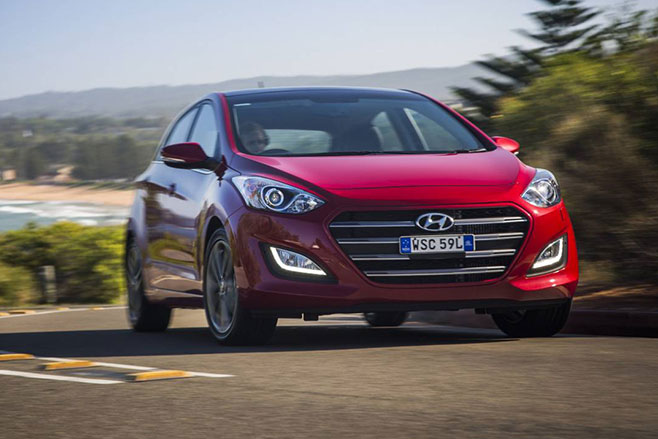
Hyundai once again held the mantle of the top-selling car courtesy of $19,990 drive-away deals for its i30 automatic, cementing the small hatchback (above) as top seller for April with 4143 sales.
Sales for April surged 7.2 percent to 87,571, but the figures were skewed because the Easter holidays – traditionally a quiet time for car dealers – fell in March this year, whereas last year it was in April.
The 3.8 percent increase in sales year-to-date is more representative of the strength of the new-car market, which is on track to surpass last year’s record of 1,155,408 vehicles.
Holden’s 29,229 sales for the first four months of 2016 have relegated the once dominant brand – it famously held 50 percent of the car market in its heyday – to fourth, behind clear market leader Toyota (63,060), second-placed Mazda (38,910) and Hyundai in third (33,045)
However, it’s utes that are shaking the pointy end of the best sellers.
The Toyota Hilux finished second with 3384 sales, while the Ranger was third with 2973.
The only two imported cars ever to top the local sales figures over a calendar year – the Toyota Corolla and Mazda 3 – finished fourth (2959) and fifth (2512) respectively.
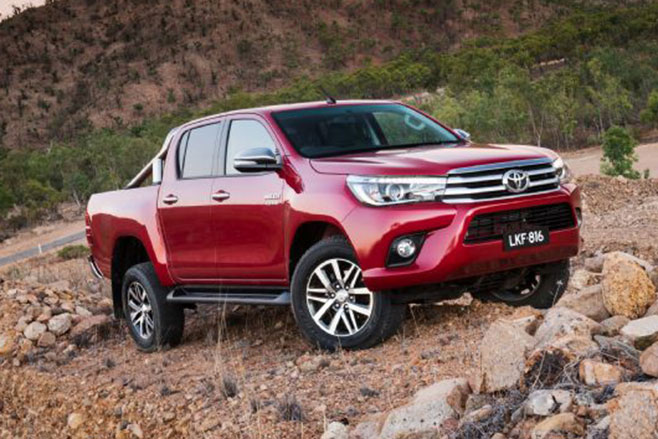
The Hilux’s result has catapaulted it to the top of the sales charts so far for 2016, with 12,883 sales, marginally ahead of the Corolla (12,784), Mazda 3 (12,733) and i30 (12,654).
Last year Wheels predicted in 2016 the Hilux could become the first ute to top the sales charts, something it is currently on track to achieve.
Luxury brands also posted strong gains in April.
Once again Mercedes-Benz topped the luxury sales charts, selling 3303 vehicles (up 24.5 percent for the month), enough to make it the ninth best-selling brand, ahead of Kia, Honda and Subaru.
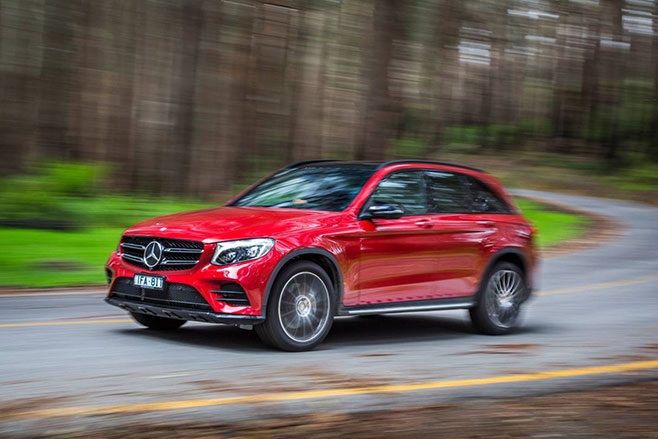
The new GLC small SUV (above) has provided much-needed support in the SUV category, helping build Mercedes-Benz’s lead over arch rivals Audi and BMW.
BMW also had a huge month, selling 2456 cars – with particular strength across its SUV line-up – for 58 percent growth.
Audi’s result was more subdued with a rare drop in market share; sales of 1756 vehicles resulted in growth of just 0.7 percent, well below the market’s 7.2 percent jump.
Porsche, too, suffered a rare recent sales drop, down 11.2 percent for the month with only 336 sales.
Other brands to post big percentage drops – but small numbers – were Ferrari (down 23.5 percent with 13 sales), Lamborghini (down 50.0 percent, 8 sales), McLaren (down 66.7 percent, 2 sales) and Rolls-Royce (down 50.0 percent for 3 sales).
But Lexus (up 23.6 percent for 802 sales) and Volvo (up 57.4 percent, 406 sales) both went well.
Top 10 passenger cars in April
| Rank | Model | Sales | Year to date 2016 |
| 1. | Hyundai i30 | 4143 | 12,654 |
| 2. | Toyota Hilux | 3384 | 12,883 |
| 3. | Ford Ranger | 2973 | 11,006 |
| 4. | Toyota Corolla | 2959 | 12,784 |
| 5. | Mazda 3 | 2512 | 12,733 |
| 6. | Holden Commodore | 1908u00a0 | 8040 |
| 7. | Volkswagen Golf | 1811 | 6844 |
| 8. | Mazda CX-5 | 1675u00a0 | 7833 |
| 9. | Mazda CX-3 | 1604 | 6131 |
| 10. | Hyundai Accent | 1555 | 5334 |
Top 10 brands in April
| Rank | Brand | Sales | Change (%) | YTD 2016 | YTD change (%) |
| 1. | Toyota | 16,567 | +8.3 | 63,060 | -1.9 |
| 2. | Hyundaiu00a0 | 8643 | +19.9 | 33,045 | +7.2 |
| 3. | Mazda | 8461 | +4.9 | 38,910 | +7.0 |
| 4. | Ford | 6842 | +32.5 | 25,483 | +18.2 |
| 5. | Holden | 6710u00a0 | -5.1 | 29,229 | -8.2 |
| 6. | Volkswagen | 4732 | +3.5 | 19,311 | -0.4 |
| 7. | Mitsubishi | 4178 | +2.5 | 22,385 | +8.1 |
| 8. | Nissan | 4044 | -3.4 | 21,407 | -2.0 |
| 9. | Mercedes-Benz | 3303 | +24.5 | 13,366 | +16.5 |
| 10. | Subaru | 3156 | +3.4 | 14,924 | +11.5 |
An earlier version of this story said the last time Ford beat Holden was in 1997. The mistake was made because of incorrect figures supplied by the FCAI.
